Jiří Kolář Exhibition Diary

Kolar7

Kolar1

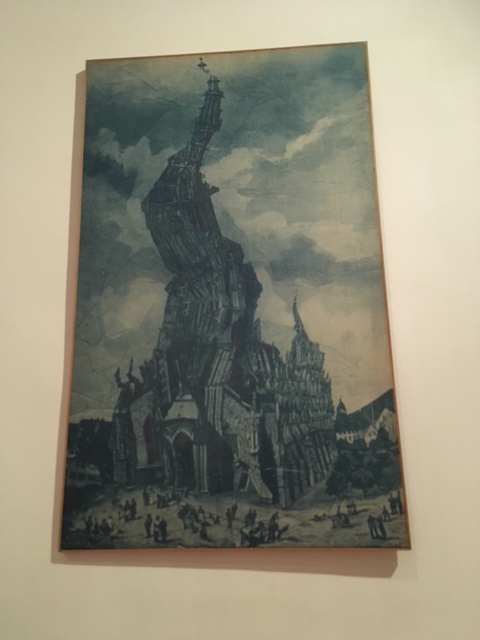
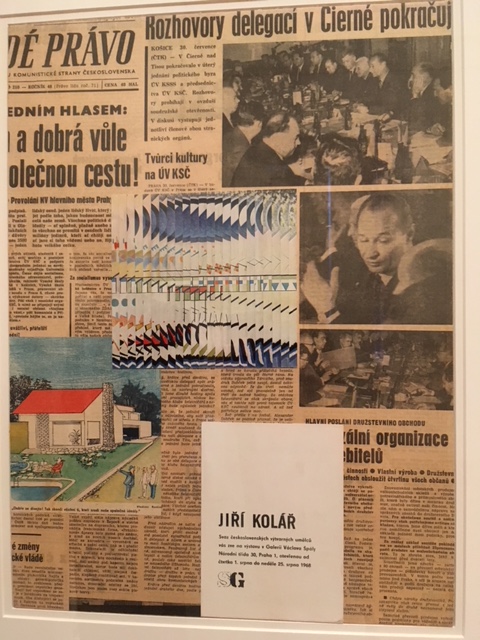
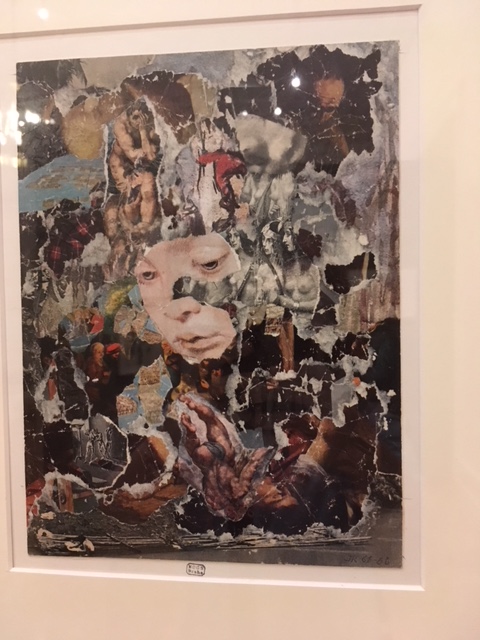
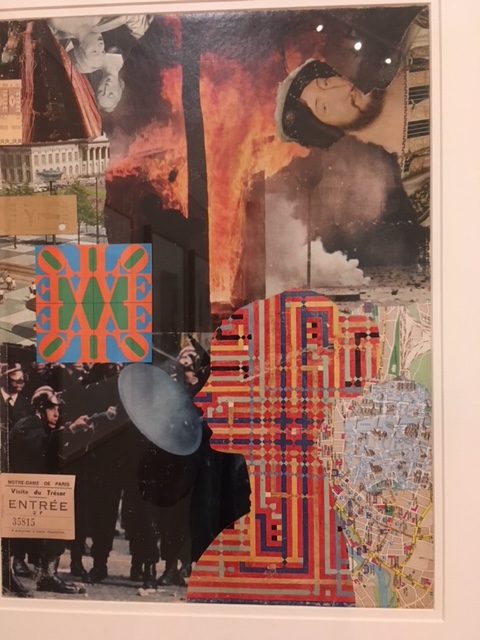
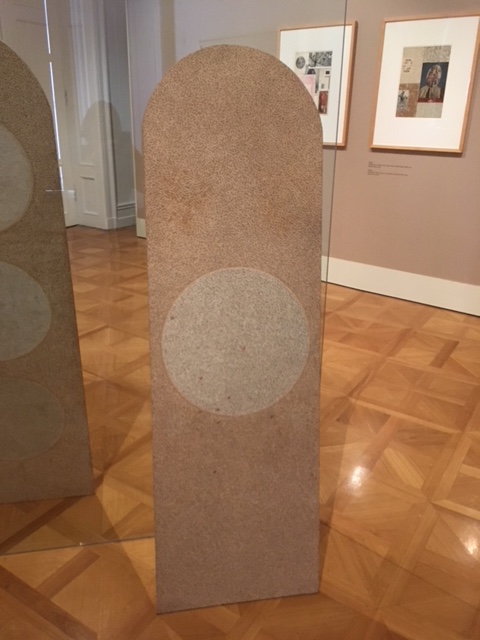
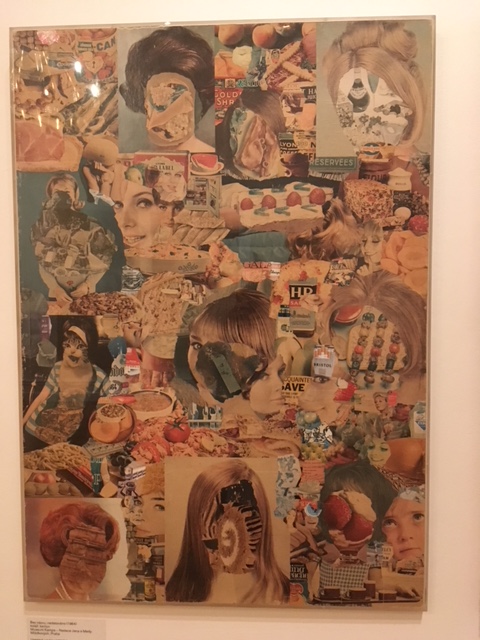
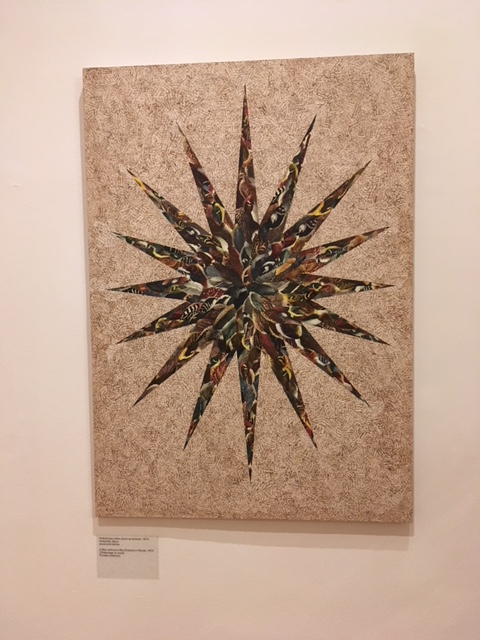
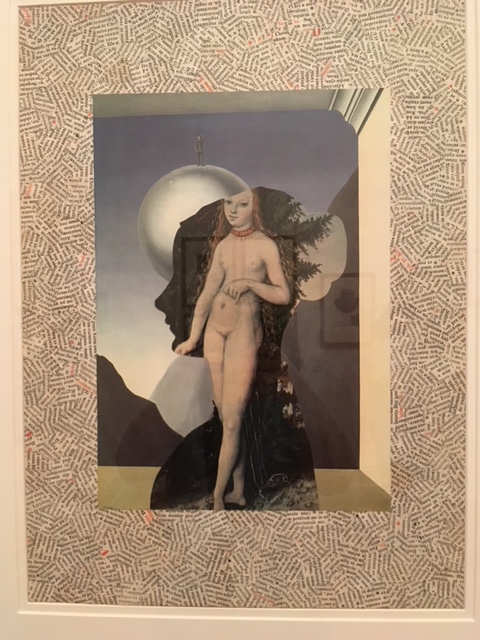
I recently saw an exhibition of artist Jiří Kolář’s breathtaking collages and other works at the Kinský Palace in downtown Prague and was very moved by Kolář’s emphasis on freedom, personal expression and democracy. Many of his works were created when Czechoslovakia was oppressed during the totalitarian regime. His 66 political collages from 1968, after the Russians sent in the Warsaw Pact tanks to crush the liberal reforms of what was called “Prague Spring,” poignantly show how the Soviets had strangled Czechoslovakia in what would lead to an era of normalization, which encompassed rigid totalitarian reforms. Kolář confronts viewers and challenges their perceptions by often combining images that do not necessarily seem to correlate. He distorts and destroys images, expressing the cruelty of the Communist era and the longing for democratic ideals.

Kolar2

Kolar5

Born in 1914 in the decaying Austro-Hungarian Empire that enforced Germanization, Kolář witnessed the establishment of a democratic Czechoslovakia at the age of four. While he took up cabinet making initially, he would go on to become one of the most significant poets, writers, painters and translators. Even an injury that resulted in him losing a finger did not stop him from making a difference on Czechoslovakia’s literary and art scene. For a while, he took on odd jobs, working as a construction worker, butcher, waiter, security guard and bartender, for example.

Kolar4

Kolar10

The country was introduced to his collages as early as 1937. During 1942, he joined the Group 42 existentialist artists that greatly influenced Czechoslovak culture. It was not until 1943 that he started to devote all his time to writing and, soon after, to editing as well. His brief stint in the Communist Party, during 1945, lasted less than a year.

Kolar12

Kolar13

Certainly, the Communist regime was far from kind to him. When the Communists took control of Czechoslovakia in 1948, Kolář became a banned author. While he was not allowed to publish, he scribed poetic diaries and authored manuscripts such as Prometheus’ Liver and Aesop from Vršovice. In the early 1950s, he was even imprisoned for nine months after the authorities found at his home a samizdat work written by a fellow dissident.

Kolar11

Kolar17

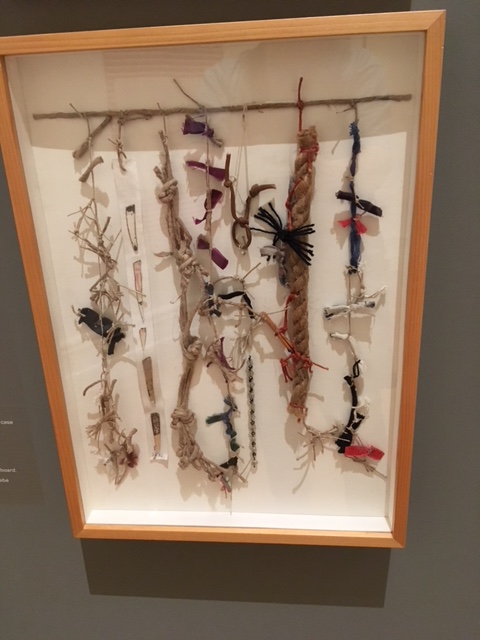
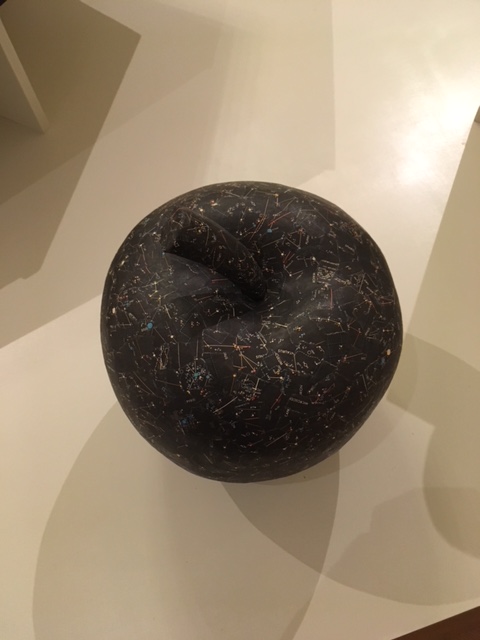
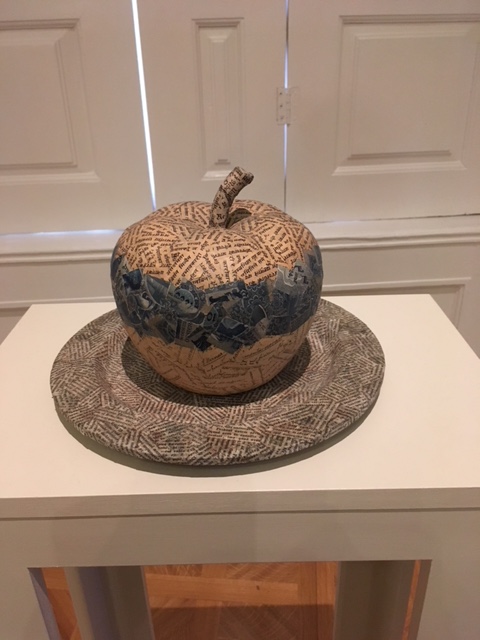
During the 1960s, he took up experimental poetry, writing literary collages, and was one of the most influential artists to frequent the Café Slavia in Prague, where he met a young Václav Havel and others who voiced opposition to the Communist regime. His work was seen abroad during the 1960s, too. Some of his collages from this time included items that seemed misplaced, such as string, keys and shavers. He also started placing apples in his collages and designing apples of various sizes in various colors. The apples might symbolize temptation and the fact that all fruit looks similar, a powerful reminder of mass society in the modern world.

Kolar9

Kolar14

Kolar16

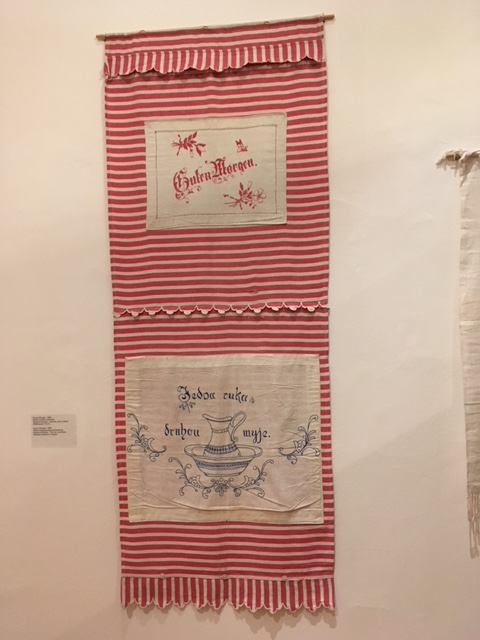
Kolář experimented with various techniques of collage, even using textile and paper in his works. It was also during that decade that he mixed poetry with painting, finding a powerful and provocative voice by using both forms of expression that combined visual and literary art in a masterful way. He made collages of pictures he cut out of magazines and utilized excerpts of texts that epitomized the fragmentation of his country and the world. By doing so, he created new thought-provoking images.

Kolar8

Kolar3

Even after the Soviets invaded Czechoslovakia during 1968, he continued to support freedom and democracy despite the rigid era of normalization that followed. He even signed Charter 77, a document drafted by dissidents, calling for human rights in Czechoslovakia. The Communist regime made sure there were severe repercussions for anyone brave enough to put their John Hancock on the proclamation.

Kolar18

Kolar19

The Communist authorities forced him to emigrate, not allowing him back in his homeland after a stint in West Berlin. From 1980, he resided in Paris, though his Czech wife was not permitted to visit him there until five years later. He obtained French citizenship in 1984.

Kolar20

Kolar21

After the 1989 Velvet Revolution that toppled the Communist regime, he visited Prague often. When he became severely ill in 1998, he moved back to Prague and even had to relearn how to walk. At the age of 88, in 2002, he succumbed to the spinal injury that had kept him hospitalized for the last years of his life.

Kolar22

Kolar24

Kolář’s creations have entranced me for decades. I was introduced to his work in the early 1990s. I admire his direct confrontation with the viewer. He combines images that I would have never thought could be grouped together, challenging my view of the world. His messages often deal with harsh reality, but he also yearns for personal and national freedom.

Kolar25

Tracy A. Burns is a writer, editor and proofreader in Prague.

Prague’s Botanical Gardens in Troja Diary

PragueBG14

PragueBG15frog

PragueBG30

I had visited Prague’s Botanical Gardens in the Troja district about 15 years earlier, but, for some reason, every time I thought of going back, the weather was bad or I did not have time. I love botanical gardens in foreign cities I have visited, such as Madrid. Why hadn’t I spent more time in the botanical gardens in the city where I lived? I chided myself one day in 2018.

PragueBG31

PragueBG17

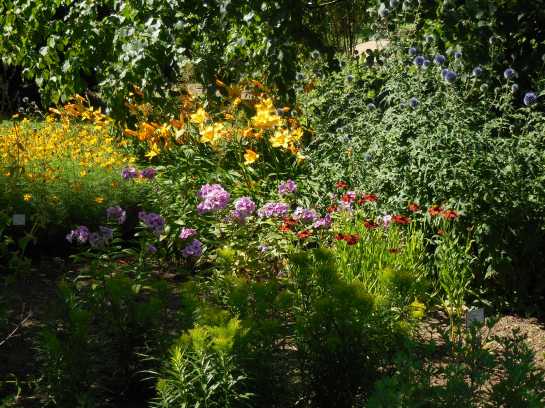
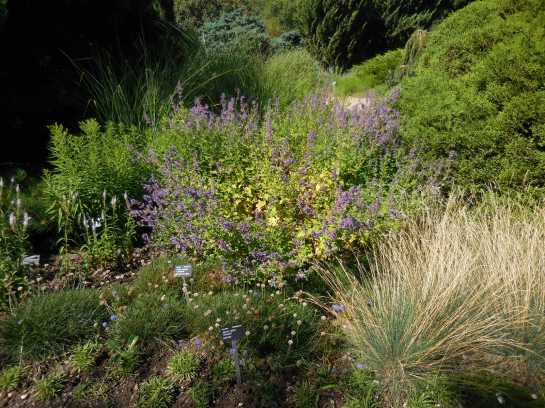
I finally got there again in the summer. I went with a friend in the morning, before the humidity and heat became too much to bear. The botanical gardens in Troja is vast. It measures more than 20 hectares with a greenhouse that had not been there when I last visited and an outdoor area divided into the southern and much larger northern parts.

PragueBG7

PragueBG9

PragueBG10

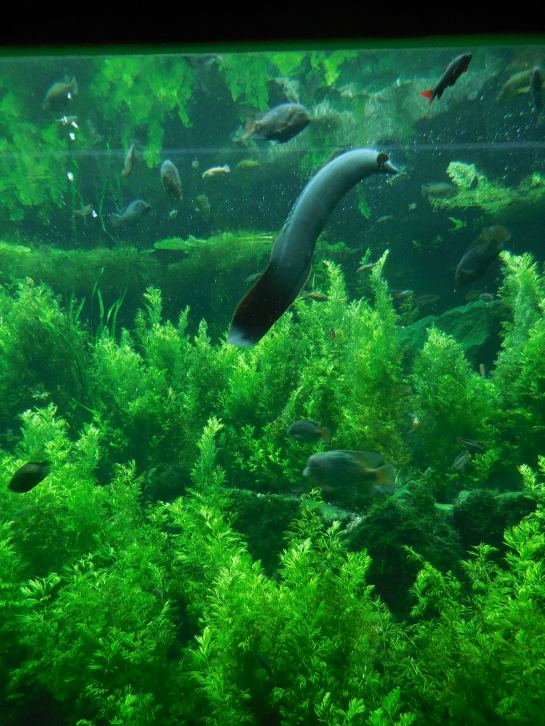
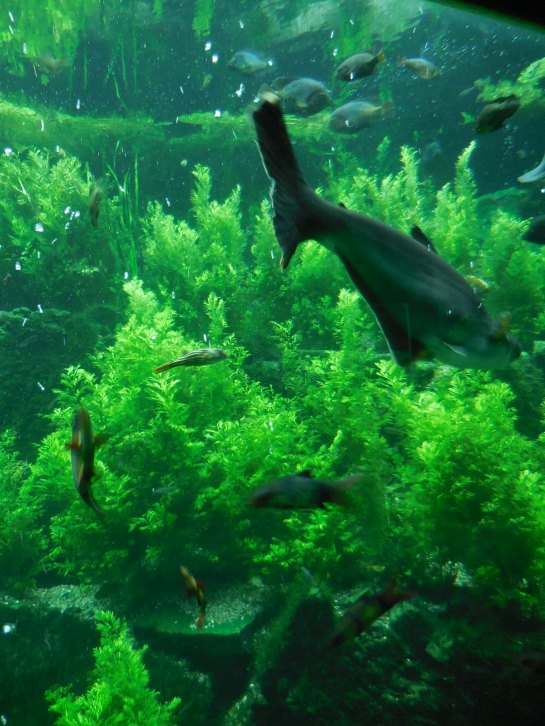
First, we explored the greenhouse that was erected in 2004. It is 130 meters long and 17 meters wide. Inside was a tropical forest. I loved the small bridge surrounded by foliage. The structure looked like it had jumped straight out of a Monet painting. I loved watching the fish in the glass tunnel that divided the freshwater pond into two sections. The fire eels and iridescent sharks were amazing. I would not like to stick my hand in that tank. I’m sure it would have been bit off right away. We also saw meter-long arowanas, angelfish and archerfish. We wanted to see some butterflies, but we only managed to set our eyes on two, but they were two beautiful butterflies!

PragueBGgreenhouse5

PragueBGgreenhouse9

In the greenhouse, there is a lowland rainforest section with species from Australia, Africa and Vietnam, for instance. The biggest section features lowland rainforests of tropical areas in America, Asia, Australasia and Africa. Here we saw deciduous trees, lianas, coniferous trees and palms. We saw some well-known plants, such as begonias, but there were many rare species as well. One section of the greenhouse features vegetation from subtropical and tropical regions, which often experience dry seasons. We saw plants from Australia, Central America, Madagascar and places in Africa. The smallest section is dedicated to tropical regions found in the high mountainous regions. Only a few greenhouses in Europe have a cooled section that could support such species in that kind of climate. The air in this part is humidified by mist.

PragueBGgreenhouse12

PragueBGgreenhouse16

Intriguing species that we saw include the Dutchman’s pipe, which is one of the most endangered species in the world. Its brown flowers look like mushrooms. It is located in the wild only in seven places in Central America. The giant fern is one of the oldest plants in the world. Its leaves can grow up to seven meters long. The trunk can be as much as three meters tall and one meter in diameter. The climbing pandanus, which can grow to 20 meters in height, is found in the wild in the Luzon Island of the Philippines. We also saw cocoa trees, which were once sacred to the Aztecs, who considered it to have seeds that are the food of the Feathered Serpent. I loved the turquoise color of the jade vine, which is found in the wild only on three islands in the Philippines. The torch ginger flowers, red with yellow edges, were beautiful. It is from Southeast Asia, and paper can be produced from its stems. We also saw the marsh pitcher plant, native to the mountains of Venezuela.

PragueBG35

PragueBG38

PragueBG39

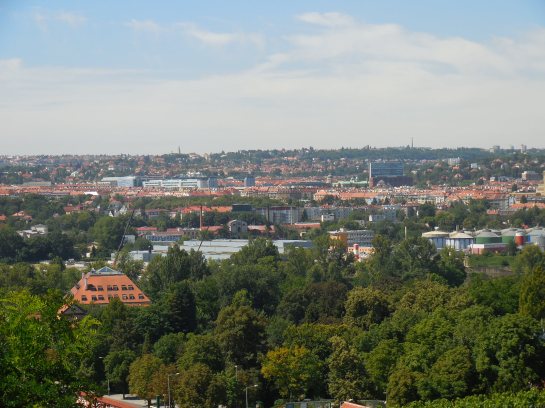
Then we visited the southern part of the gardens. I loved the Ornamental Garden best with its large, colorful flowerbed. The Japanese Gardens dotted with azaleas is another delight. A wine press, a wine shop and Mediterranean vegetation are also located in the southern section. In addition to the Ornamental Garden, my favorite feature was the view of St. Claire’s Vineyard and Troja Chateau, a place dear to my mother and me. The Baroque chateau had been built from 1679 to 1685, its desin inspired by Roman villas. The chateau’s French garden boasted superb statuary. From the Botanical Garden the views of the city and of the chateau were breathtaking.

PragueBG29chateau

Baroque Troja Chateau

PragueBG20view

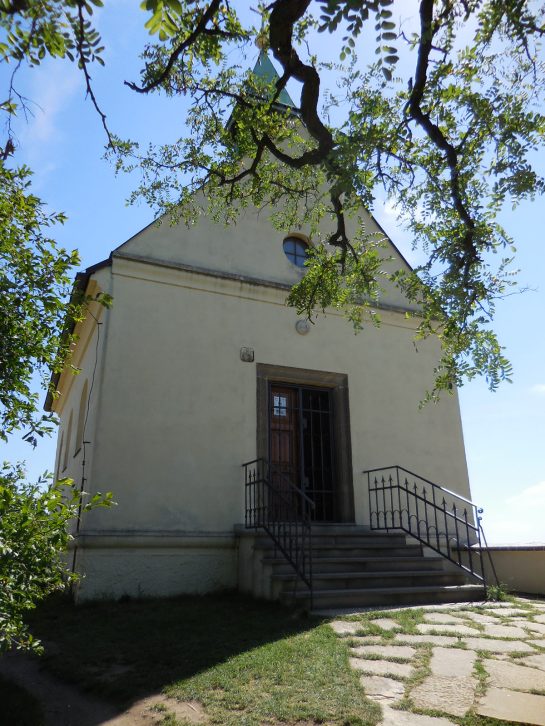
PragueBG24chapel

PragueBG26intchapel

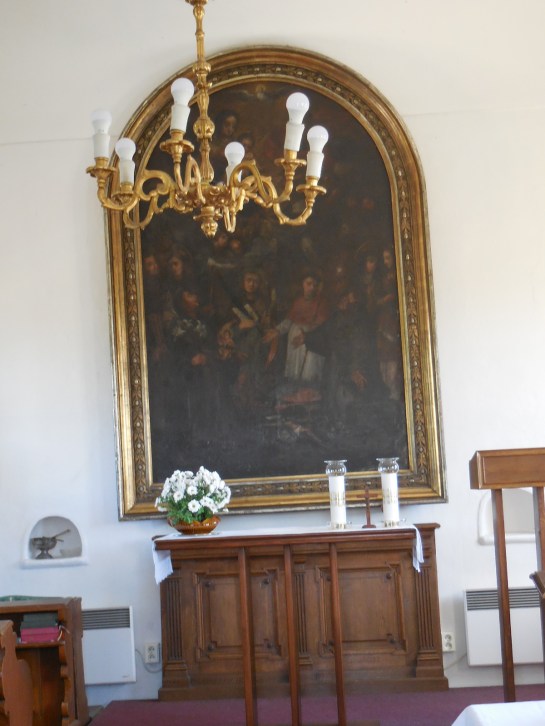
St. Claire’s Vineyard, which we saw from the top of a hill, has a long history that goes back to the 13th century. You can buy wine made from its grapes in the wine shop, but I do not drink alcohol, so I have not tried it. We saw the Baroque chapel of St. Claire, too.

PragueBG32

PragueBG22view

Alas, it became too hot and humid to continue after a few hours, so I did not get to the northern section during this visit, though I did go there when I first came to the gardens. I have to go back to see the variety of gems that it offers – a Mediterranean garden, forest biotopes from Asia and North America, a North American prairie, a cacti section, wetlands, a lake and a semi-desert section. I saw a picture of the peony meadow, and it was so enchanting. I will definitely go back there when the weather is not scorching hot. The northern part is so big that I do not know if I could see everything in one visit.

I was very glad that I had begun to get acquainted with Prague’s botanical gardens again, and I am sure I will be back to discover more of its treasures.

Tracy A. Burns is a writer, proofreader and editor in Prague.

PragueBG42

PragueBG28

PragueBG1

2017 Travel Review Diary

PUGLIAMaterasassi5

Sassi in Matera, Italy

My travels during 2017 made my year very special. I went to Italy twice and spent time exploring the Czech Republic on day trips, taking jaunts to numerous chateaus and a basilica, for instance.

Trentocastle1

Castle in Trento

Treviso10canal

Treviso

During my first trip to Italy in 2017, I saw a wonderful Impressionist art exhibition in Treviso. I visited the impressive castle and picturesque streets of Trento. I also ransacked a few good bookstores in Treviso and picked up a year’s worth of reading in Italian. (I took advantage of the fact that we were traveling by bus.) I especially enjoyed discovering the charming town of Bassano del Grappa with its wooden Palladian bridge and, most importantly, its superb collection of paintings by Jacopo Bassano and others.

BassanodelGrappaCM17

Civic Museum in Bassano del Grappa

BassanodelGrappaCM27

Civic Museum in Bassano del Grappa

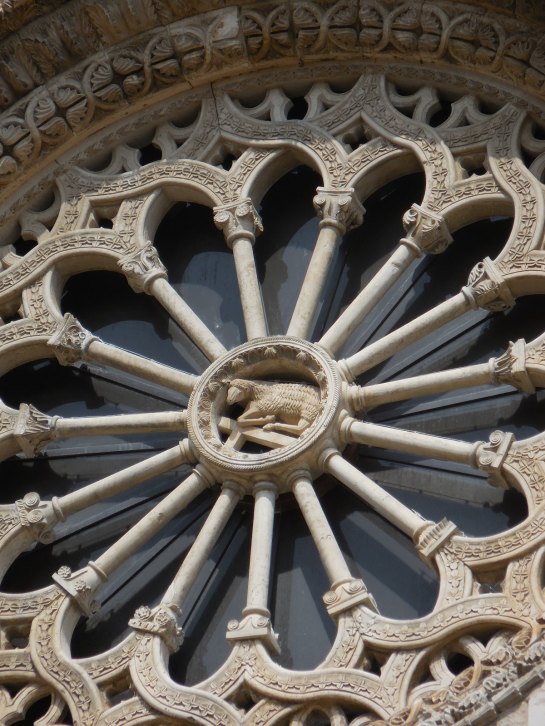
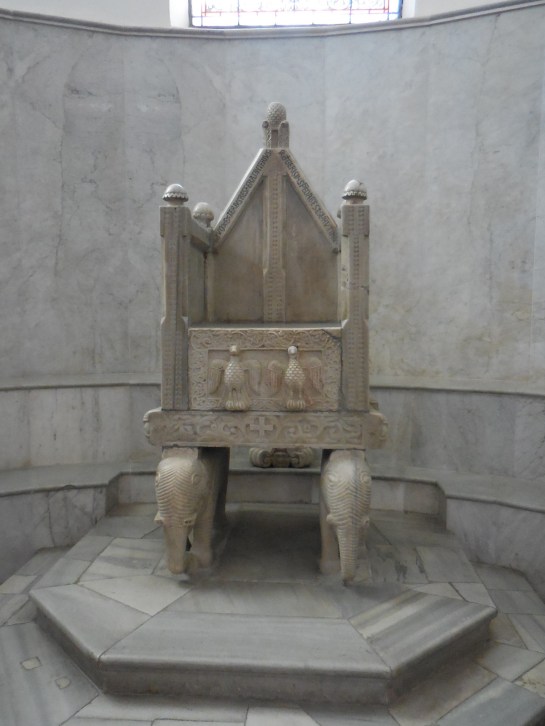
In June, I took one of my best trips ever, to the lesser known and lesser travelled regions of Puglia and Basilicata. Most of the sights were not so crowded. We saw many charming, sleepy towns, refreshingly not inundated with tourists. I was entranced with all the Apulian-Romanesque cathedrals. The intricate design of the main portal of the cathedral in Altamura and the rose window surrounded by lions perched on columns on the Cathedral of Saint Valentine in Bitonto are only two of the many gems designed in this rich architectural style. The bishop’s throne from the 12th century in Canosa di Puglia featured two elephant figures for legs and was a true delight.

PUGLIAAltamuracathrosette3

Altamura, cathedral

PUGLIACanosacathchair1

Bishop’s throne in cathedral in Canosa di Puglia

Lecce with its Baroque wonders, Roman theatre and Roman amphitheatre left me speechless. The Baroque craftsmanship of Lecce’s most notable architect, Giuseppe Zimbalo, was breathtaking. The Cathedral of Our Lady the Assumption, one of many Baroque gems, had a stunning side façade and 75-meter tall belfry with balustrades, sculptures and pyramids. Inside, the structure was no less amazing. The gilt coffered ceiling over the nave and transept and the 18th century marble main altar decorated with angels were just a few of the awe-inspiring features of the interior.

PUGLIALeccecathint18

Ceiling of cathedral in Lecce

PUGLIALeccechurch35

Altar in church in Baroque Lecce

A castle buff, I was also more than intrigued by the octagonal Castel del Monte and the way the number eight was so symbolic in its architectural design. I was impressed with the French windows, Romanesque features and mosaic floor, for instance.

PUGLIACasteldelMonte2

Castel del Monte

PUGLIACasteldelMonte15

Castel del Monte

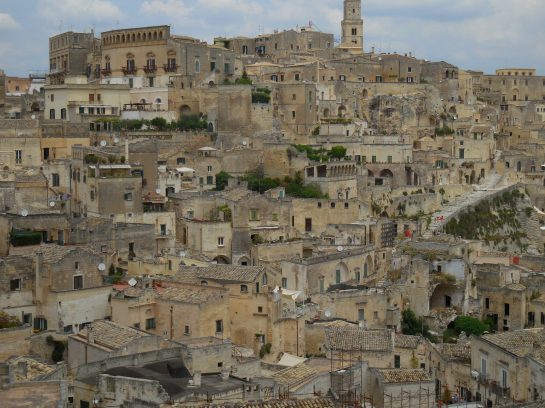
What fascinated me most of all on that trip was the rock town of Matera with its two “sassi” districts. I have never seen a place that is so unique and moving, except for Pompeii. I explored the Sasso Caveoso. Its structures were dug into the calcareous rock on different levels of a hillside. They were cave dwellings that had been turned into restaurants, cafes, hotels and sightseeing gems. It was difficult to believe that, until the 1950s, the sassi had been poverty-stricken, riddled with unsanitary conditions and overcrowding.

PUGLIAMaterasassi19

Sassi Caveoso in Matera

The Rupertian churches especially caught my attention. They boasted frescoes from the 11th and 12th centuries. The Santa Maria de Idris Church had a main altar made of tufo and chalk and decorated with 17th and 18th century frescoes. The rocky churches had actually been places of worship until 1960.

PUGLIAMaterasassi24

Sassi Caveoso in Matera

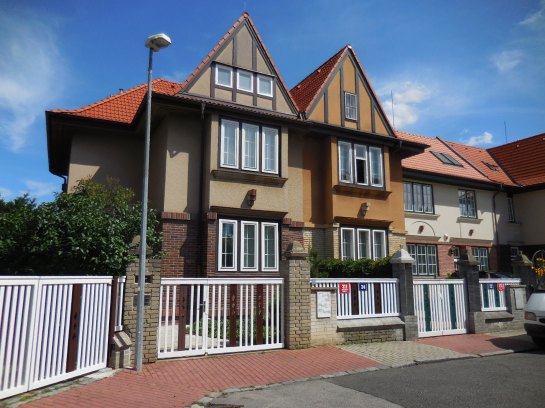
I also explored two neighborhoods of Prague, parts of the city that I have always loved. In Hanspaulka I became more familiar with the various types of villas – Neo-Classical and Neo-Baroque, functionalist and purist, for example. I saw the villas where actress Lída Baarová had lived and where her sister had committed suicide as well as the villa where comedian Vlasta Burian had resided. I love the Art Deco townhouses in the area.

HanspaulkaArtDeco13

Art Deco townhouses in Hanspaulka

HanspaulkaBurian25

The villa where actor Vlasta Burian once lived, Hanspaulka

There are just as beautiful Art Deco townhouses in the nearby Ořechovka district, where I saw villas created by the well-known Czech modern architect Pavel Janák and many former homes of famous Czech artists. The Rondocubist dwellings with their designs inspired by folk art also excited me. I loved the folk art elements in Rondocubism. My favorite place in the quarter is Lomená Street. The 1920s townhouses are modelled after English cottages.

Orechovka14

Lomená Street in Ořechovka

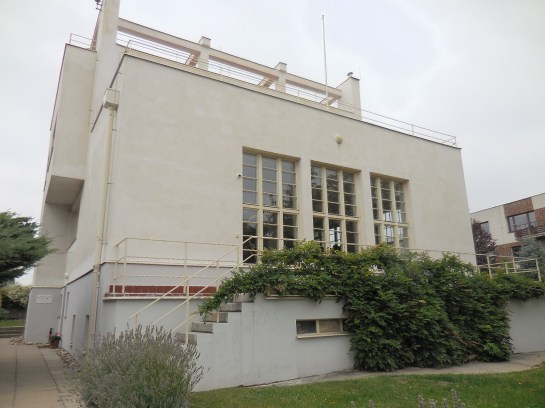
I also visited the Winternitz Villa, designed by Viennese architect Adolf Loos and his Czech colleague Karel Lhota, situated in Prague’s fifth district. Winternitz, a lawyer by trade, was forced to leave with his family in 1941 due to their Jewish origin. His wife and daughter miraculously survived Auschwitz. The villa features the Raumplan, Loos’ trademark, in which every room is on a different level. I also saw two apartments designed by Loos in Pilsen. The Brummel House with its bright yellow furnishings and Renaissance fireplace amazed.

Winternitzext1

Exterior of Winternitz Villa, Prague

Winternitzint3

Living room of Winternitz Villa

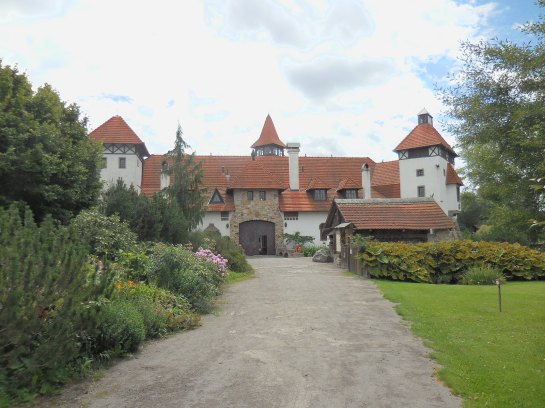
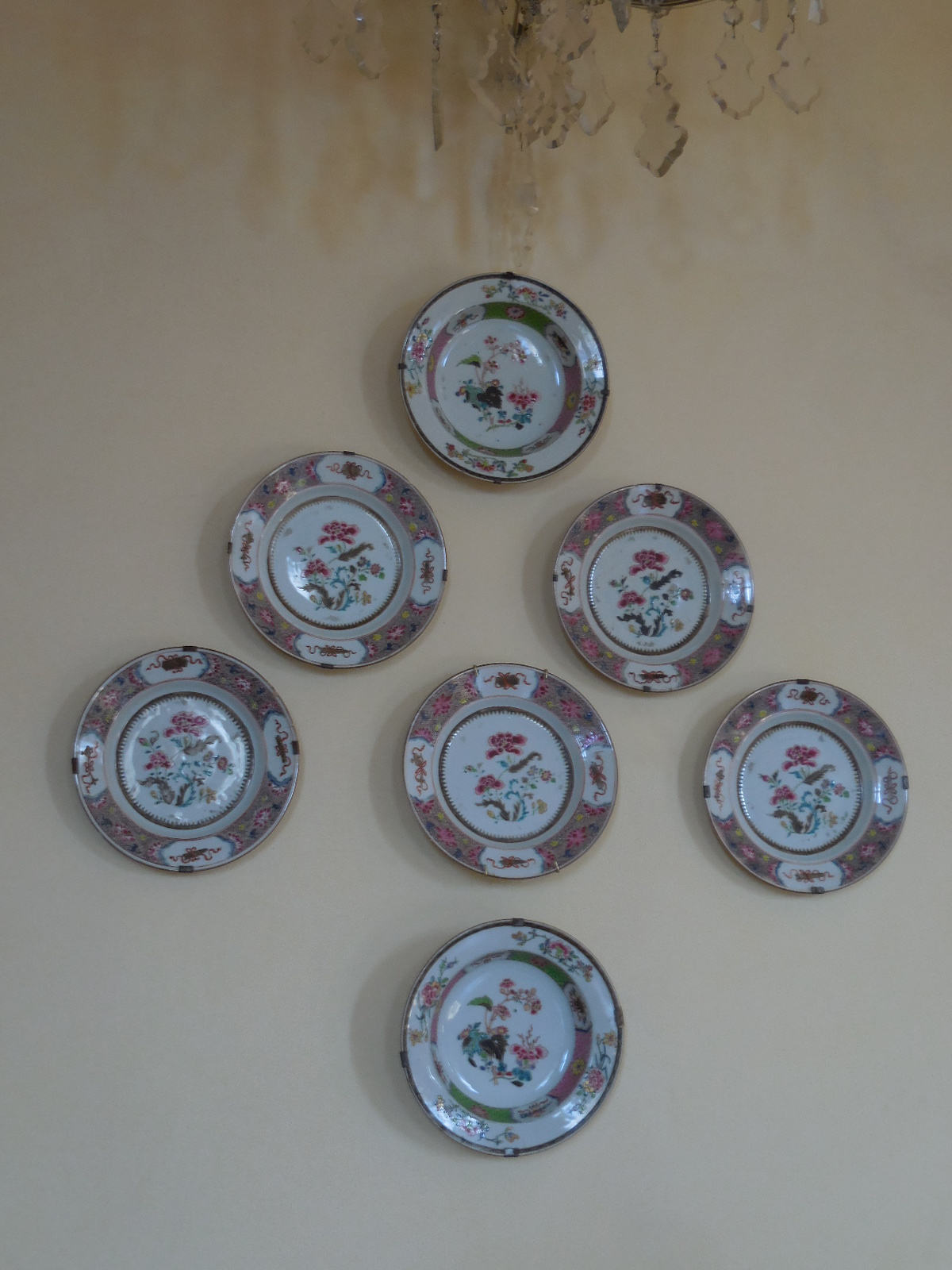
I took many day trips outside of Prague. Červený Újezd Castle, only built in 2001, looked like it belongs in a medieval fairy tale. The park and open-air architectural museum were just as appealing. Braving the D1 highway that is partially under construction, my friend and I made our way to Telč. I admired its Renaissance burgher houses lining the main square and its chateau that features a Renaissance gilded coffered ceiling in the Golden Hall, 300 Delft faience plates on a wall in the Count’s Room and an African Hall with a gigantic elephant’s ear.

CervenyUjezd1

Červený Ujezd Castle

Telcsquare6

Burgher houses on the main square in Telč

At Zákupy I was entranced by the ceiling paintings of Josef Navrátil. Its Chapel of St. Francis sparkled in 17th century Baroque style with frescoes on the ceiling. I finally made it to the Minor Basilica of St. Zdislava and St. Lawrence in the tranquil north Bohemian town of Jablonné v Podještědí. The main altar is in pseudo-Baroque style while the pulpit and the baptismal font hailed from the 18th century. One chapel’s altar is Rococo, adorned with a late Gothic statue. The stained glass windows amazed me.

Zakupyintchapel8

Interior of chapel at Zákupy Chateau

Jablonnebasilicaint22

Interior of Basilica of St. Zdislava and St. Lawrence

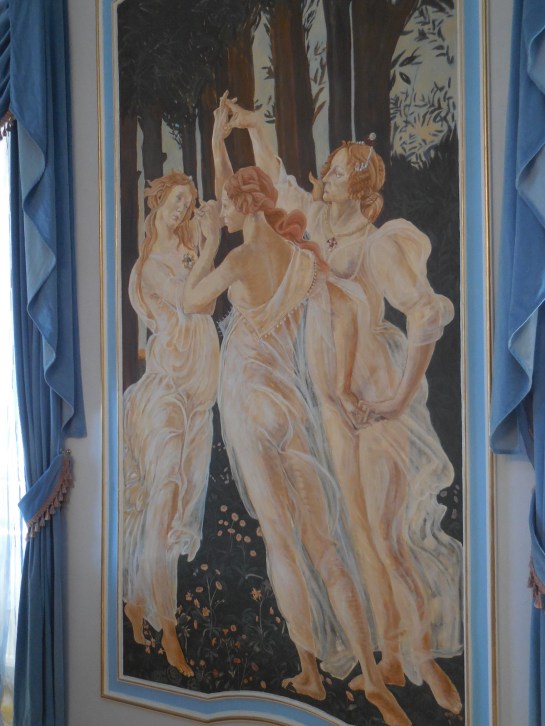
The chateau of Dětenice in late Baroque style had an interior that mostly dates from the 18th century with rooms small enough to give an intimate feel but large enough to hold many architectural delights. In the Blue Dining Room the wall paintings were made to look like works by Botticelli. The tapestries in the Music Salon were wonderful. The Golden Hall was unbelievably breathtaking.

Detenice17int10

Interior of Detěnice Chateau

Detenice17int44

Interior of Detěnice Chateau

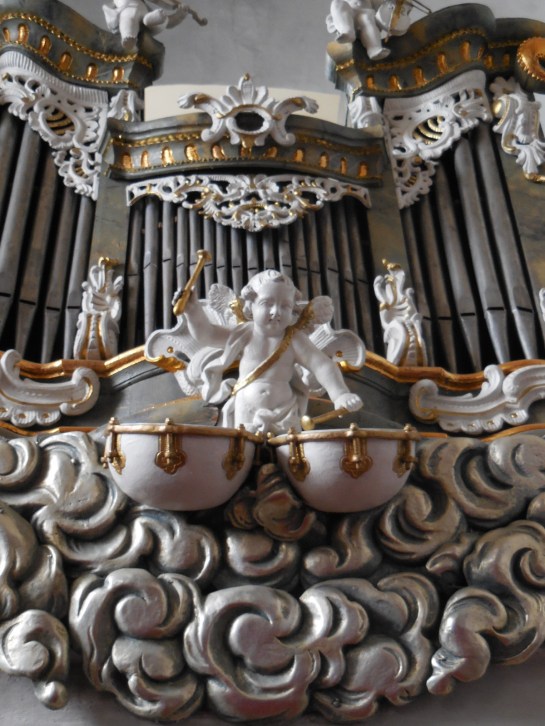
My favorite chateau of this past year’s trips is Hrubý Rohozec, which I have toured many times. It is filled with original furnishings and objects – lots of them – that I found captivating. Most of all, I loved the lively history that made the chateau unique and unforgettable. Bullet holes can still be seen in the Main Library. A thief on the run had barricaded himself in the room, and the policemen had to shoot the door open. Before World War II, the two sons of the castle’s owner were caught reading erotic magazines in the Children’s Room. There were bars on the window to prevent them from throwing chairs into the courtyard at midnight.

HrubyR17int10organ

Organ in chapel of Hrubý Rohozec Chateau

HrubyR17int64BlueSalon

Blue Salon of Hrubý Rohozec Chateau

The Porcelain Museum at Klášterec nad Ohří held some delights. The Birth of the Virgin Mary Church in Doksany charmed in Baroque style with much stucco decoration. I admired many other chateaus as well, including Orlík and Březnice with its spectacular chapel.

Breznicechapelint12

Interior of chapel at Březnice Chateau

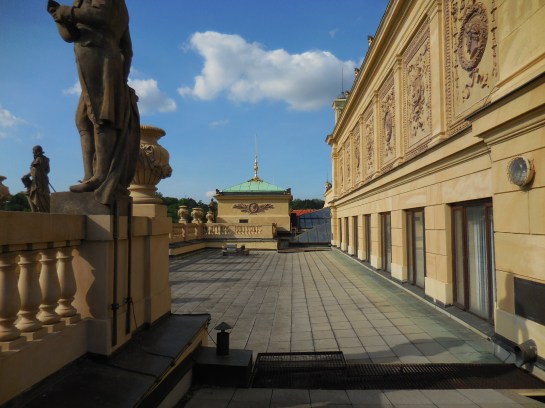
The year was extra special because my parents were able to visit me. We toured the Rudolfinum concert hall in Prague, where I have season tickets for three cycles. The concert hall has played a role in Czechoslovak history. Democrat statesman Tomáš Garrigue Masaryk was elected president three times in its large Dvořák Hall during the 1920s and 1930s, when the Rudolfinum was the home of Czechoslovak Parliament. The statuary and view of Prague Castle on the roof were splendid, and the Conductors’ Room boasted various styles of furnishings, black-and-white photos of well-renowned musicians and an impressive Petrov piano.

Rudolfinum5

Dvořák Hall, Rudolfinum

Rudolfinum11

Rudolfinum, upper level

We also toured Nelahozeves Chateau near Prague, a place that has been dear to me for many years. For me the highlight of visiting this chateau is superb collection of art, especially Pieter Brueghel the Younger’s painting of a winter scene. The painting by Rubens was a delight, too. I also loved the small 18th century table inlaid with 20 kinds of wood. The exterior was captivating as well. The graffito on one wall and the Renaissance courtyard were two stunning architectural elements.

Nelahoz26

Renaissance courtyard of Nelahozeves Chateau

Nelahoz22

Sgraffito on wall of Nelahozeves Chateau

I took my parents on a trip around Hanspaulka and pointed out one of the Baroque chapels, the chateau and other sights. We admired the villas of various styles. We ate paninis in the local café.

Hanspaulkachapel1

Chapel in Hanspaulka

Perhaps the highlight of their visit was seeing a Czech play in the Žižkov Theatre of Jára Cimrman. We laughed along to the music of Cimrman in the Paradise of Music, which focuses on the operatic works of the fictional legendary Jára Cimrman, who was an unlucky man of all trades – inventor, philosopher, teacher, self-taught gynecologist, to name a few of his many professions. The opera in the second half of the play involves a Czech engineer introducing the great taste of pilsner beer to India. The British colonel in the play is so impressed with the taste of Czech beer that he wishes he had been born Czech. It was terrific that I was able to introduce my parents to the character of Jára Cimrman, who has played such a major role in Czech culture and folklore, even though he is not real.

CimrmanMus13bust1

Almost featureless bust of Jára Cimrman

I was thankful that I had my best friend, my black cat Šarlota Garrigue Masaryková Burnsová by my side throughout the year. She is happy here, much happier than she was in a shelter four years ago.

SarlotaApril1710

Šarlota Garrigue Masaryková Burnsová

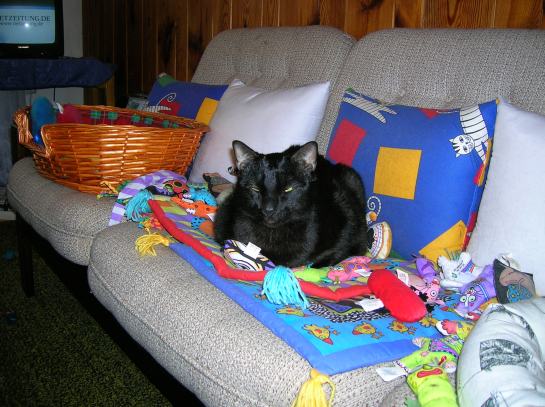
Every day I think of Bohumil Hrabal Burns, my feisty and naughty black cat who died three-and-a-half years ago. He remains with me in spirit every moment of my life. I know that somewhere in Cat Heaven, he is vomiting for fun on white rugs and playing with Fat Cat toys.

Bohous on boogie-mat

Bohumil Hrabal Burns, 1999 – 2014

Those were my travels of 2017. I look forward to more adventures this year. I have planned one trip to Italy and will soon jot down a list of day trips I would like to take.

Tracy A. Burns is a writer, proofreader and editor in Prague.

PUGLIALecceS.Croce12

Santa Croce Church in Lecce


Rudolfinum Diary

Rudofinum1

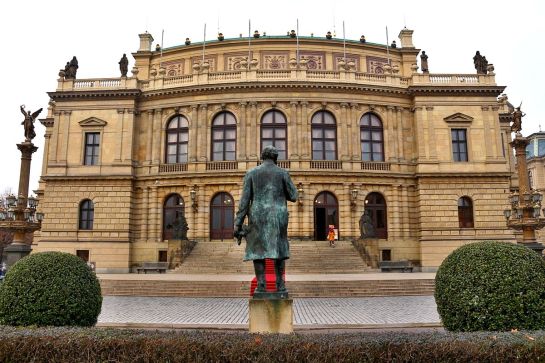
The Rudolfinum with the statue of Antonín Dvořák

Back in college, on a whim I took a classical music course, and soon I was hooked. Beethoven’s Pastoral Symphony and Dvořák’s New World Symphony enthralled me, but I became a fan of many other composers as well – Rachmaninoff, Vaughan Williams, Smetana, Charles Ives, Aaron Copland, Martinů, Mozart, Chopin, Bartók. Even the dissonance of Arnold Schoenberg captured my undivided attention. During my university years, I would take the bus from Smith College to Springfield, Massachusetts in order to attend Springfield Symphony concerts once a month.

Rudolfinum3

In Prague I would sometimes admire the statue of Dvořák in front of the Rudolfinum, and, occasionally, I would visit the art gallery in the building to see intriguing contemporary exhibitions. However, for some reason, I did not go into the concert hall of the Rudolfinum for a long time. I assumed all the concerts would be too expensive, and everything would sell out immediately.

Rudolfinum2

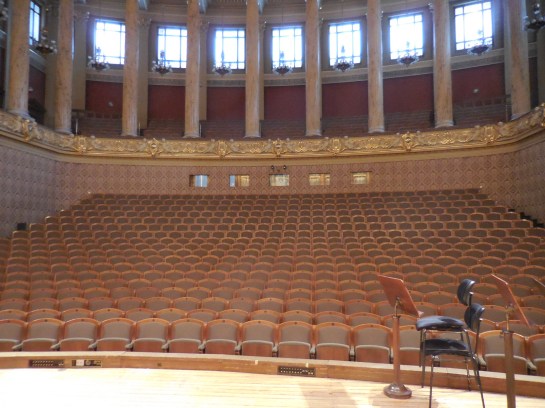
Then, a few years ago, in the midst of a classical music craving, I went to a piano recital in the Dvořák Hall of the Rudolfinum. I just had to go back. Again. And again. I went as often as I could, both to concerts in the large Dvořák Hall auditorium and to chamber concerts in the Suk Hall.  Dvořák Hall, one of the oldest in Europe, has the capacity of 1,148 places with 1,104 seats. Standing room is big enough for 40 concertgoers, and there are four places designated for the wheelchair-disabled.

Rudolfinum10

The following year I purchased season tickets to three cycles. Attending concerts not only allows me to hear worldwide acclaimed musicians but also to relieve stress and get my mind off any worries or concerns for a few hours.

Rudolfinum11

Although I studied piano for fun in college, my favorite instrument is the violin. In Prague, I discovered the masterful interpretations of Czech violinists Josef Suk, Jiří Vodička and Josef Špaček. The violin enchants me, all the more because it is an instrument I know I could never even hold properly let alone play.

Rudolfinum4

I did not know that there were tours of the Rudolfinum until I wrote to the box office and asked. I recommend all tourists interested in Czechoslovak history to take the tour, which is available in English. The story of the Rudolfinum is not only the story of Czech and Czechoslovak music but also the tale of Czech and Czechoslovak history. The Rudolfinum is not merely another music venue in Prague. It is a remarkable Neo-Renaissance building in which Czechoslovak history has been played out.

Rudolfinum13

The Rudolfinum opened its doors February 7, 1885. It was designed by architect Josef Zítek and his student Josef Schulz and named after Crown Prince Rudolf of the Habsburg clan. The Crown Prince was present at the inaugural performance. The Czech Philharmonic played here for the first time on January 4, 1896, in a concert that Dvořák himself conducted. The Czech Philharmonic has called the building home since 1946.

Rudolfinum8

However, the Rudolfinum has not only been a captivating venue for concerts. From 1919 to 1939, the seat of Czech Parliament was here. In Dvořák Hall during 1920, 1924 and 1934, Tomáš Garrigue Masaryk was elected President of Czechoslovakia. Sometimes, waiting for a concert to start, I try to imagine the atmosphere of those elections playing out in the very same hall where I am seated.

Rudolfinum9

Because I like to know something about the history of the orchestra I am seeing perform, I looked up information about the various conductors of the Czech Philharmonic.

Rudolfinum5

After Czechoslovakia was founded in 1918, Václav Talich became the main conductor and would serve in that capacity until 1941. His tenure lasted almost 1,000 concerts. Thanks to Talich, the Czech Philharmonic received worldwide acclaim. He first conducted with the Czech Philharmonic in 1917 at age 34.

Rudolfinum6

Talich’s personal history is colorful. He was put in jail after World War II, accused of collaborating with the Nazis, but there was no proof to support the charge. After the Communist coup in 1948, he found himself immersed in troubles again. The Communists forbid him from conducting in any public place until 1954.

Rudolfinum12

From 1942 to 1948, Raphael Kubelík worked as the main Czech conductor with the Philharmonic, but he also was known for his accomplishments as a composer and as a violinist. He was an expert on pieces created by Czech and other Slavic composers. He also was known for his interpretations of compositions by Gustav Mahler and Béla Bartók. He emigrated after the 1948 Communist coup, when the Communists took over the Czechoslovak government.

Rudolfinumbighall1

Karel Ančerl’s biography is fraught with tragedy. He was making a name for himself as a conductor when World War II changed everything. The Nazis forced him to work as a forester, and then incarcerated him. During 1942, he was transported to Terezín, where even the depressing atmosphere of a concentration camp could not stop him from continuing musical endeavors. Two years later, Ančerl was sent to Auschwitz. He was the only member of his family to survive the war. Ančerl took over the Czech Philharmonic in 1948. He would stay for 20 seasons, until he emigrated after Russian tanks invaded Czechoslavkia, crushing the liberal reforms of the Prague Spring in 1968.

Rudolfinumbighall2

For the past few seasons, I had watched Jiří Bělohlávek at the helm of the Czech Philharmonic. His interpretations of music received praise throughout the world. He worked with the Prague Philharmonic from 1994 to 2005 and then conducted with the BBC Symphony Orchestra from 2006 to 2012. He first held the post of main conductor with the Czech Philharmonic from 1990 to 1992. He rejoined the Czech Philharmonic again in 2012. His interpretation of the third and fourth symphonies of Bohuslav Martinů earned him a nomination for a Grammy in 2005. In April of 2012, he received the medal of the British Imperial Order. Unfortunately, he died May 31, 2017. I am honored that I was able to attend so many of his concerts.

Rudolfinumbighall5

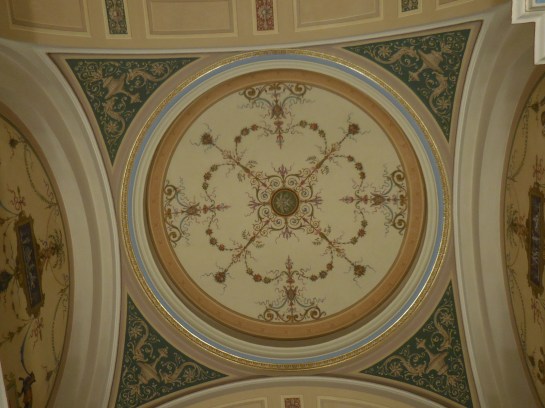
The tour of the Rudolfinum takes music enthusiasts onto the stage of the Dvořák Hall where one can appreciate the rich decoration on the balustrades and painted ceiling with elegant chandelier. I loved the bright blue color in the superb ceiling painting. On the balcony, there is an intimate reception room for special guests. On the roof I saw many statues as well as beehives. (The National Theatre also makes its own honey, by the way.) I admired the superb views of Prague Castle.

Rudolfinumbust1

Rudolfinumbust2

Rudolfinumpic1

On the first floor, I took note of the busts of various Czech musicians and conductors. I took a photo of the bust of Karel Šejna, who was a double bassist with the Czech Philharmonic who served as main conductor in 1950. That year he led the Czech Philharmonic in concerts in England as well as East and West Germany. He was known for his interpretations of the music of Hector Berlioz, Richard Strauss and Gustav Mahler.

Rudolfinumconductorrm3

The Conductor’s Room

Rudolfinumconductorrm4

Rudolfinumconductorrm5

I was also entranced with the black-and-white photos of Czechs who made great contributions to musical history. Some of the photos were even autographed. I especially liked the Conductor’s Room. The blues and reds of the carpet appealed to me as did the various styles of furniture. I could imagine one of the former conductors playing a Mozart melody on the Petrov piano, deep in thought. The photos of musicians on the walls gave me the feeling the space was imbued with historical resonance.

Rudolfinumroof1

Rudolfinumroof2

Seeing the building from a tourist’s perspective was enlightening. Still, I am most content as a concertgoer in elegant Dvořák Hall, listening to musicians warm up their instruments, anticipating the concert soon to come.

Tracy A. Burns is a writer, proofreader and editor in Prague.

Rudolfinumroof4

Rudolfinumroof5

Rudolfinumroof8

Rudolfinumviewfromroof1


Winternitz Villa Diary

Winternitzext1

I had relished my visits to Prague’s Müller Villa, designed by Viennese Adolf Loos and Czech Karel Lhota. Therefore, I was very excited to be touring the Winternitz Villa, on which those same two architects cooperated from 1931 to 1932. The three-floor house is located at Na Cihlářce 10 in Prague’s Smíchov district, perched on a hill from which there are superb views of the city.

Winternitzintphotos

Adolf Loos and Karel Lhota

Lawyer Josef Winternitz and his wife, son and daughter lived there until 1941, when they were sent to concentration camps, eventually winding up in Auschwitz. His wife and daughter miraculously survived. (His wife, Jana, would die in 1979 while the daughter, Susanne, would pass away in 1991.) In 1943 the villa was transferred to the city of Prague and became the home of a kindergarten. It was used in this capacity until 1995.

Winternitzext2

In 1997 the family’s request for restitution came through after a six-year battle. The villa underwent a three-year reconstruction period starting in 1999. Then the owners rented it to private companies because they needed the money. During 2017 the great grandson of Josef Winternitz decided to open the villa to the public for one week. The response was tremendous. About 5,000 people came to see it. The villa was open to the public on a permanent basis in April of 2017.

Winternitzint7

Shelves designed by Adolf Loos

Winternitzintvacuum

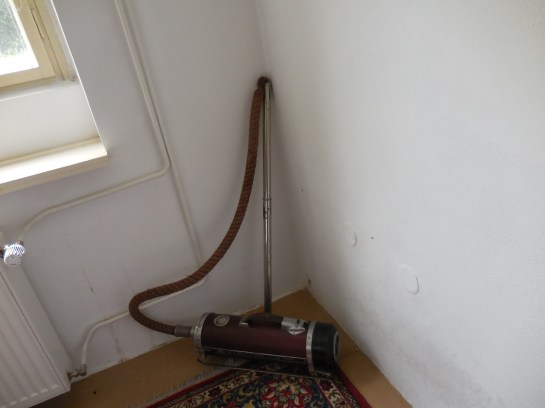
Vacuum cleaner from 1930s

Winternitzintfridge

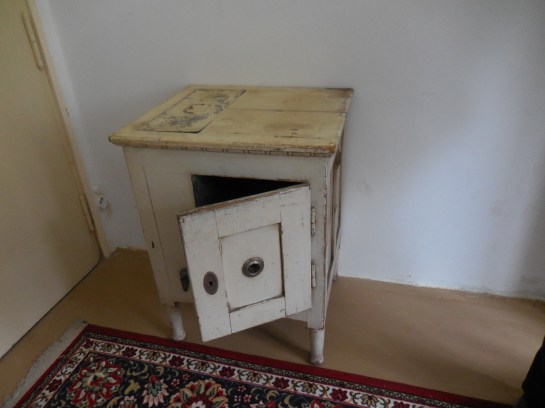
Refrigerator designed by Loos

The exterior of the villa is similar to the Müller Villa. It is an austere cube-like shape without ornamentation of any kind, a trademark of Loos’ architecture. I admired the symmetry of the north façade and windows. However, for Loos the most important characteristic of this villa was not symmetry but incorporating the Raumplan, which involves each room being situated on a different level. There were six levels of complicated spaces.

Winternitzint1

The living room

Winternitzint2

Living room

Soon, it was time to go inside. I walked down a narrow, dark corridor that opened onto a light, airy living room. I recalled the living room of the Müller Villa, which also was airy, light and a big space. The living room of the Winternitz Villa was 56 meters squared in size with a high ceiling measuring four meters. It was on a lower level than the dining room and small salon, which were both smaller rooms. The wooden floor of the living room was original as were the fireplaces and heaters. However, the furniture throughout the villa was not original. It had been lost during the war. The Müller Villa, though, had original furniture.

Winternitzint4

The small salon

The small salon had cabinets with small shelves inside. Both the small salon and dining room were symmetrical. Although the library was connected to the salon, it was not possible to go inside because it was a private space.

Winternitzint5

The dining room

On the next level, I loved the yellow and blue doorframes. Loos so often employed bright colors in his designs. Even the bright yellow fence outside was its original color. I recalled the bright colors of the children’s room in the Müller Villa. The red floors of this space in the Winternitz Villa also appealed to me. The first floor terrace offered some intriguing views of Prague. This terrace, though, had only been used by the kindergarten, not by the Winternitz family.

Winternitzint8

Winternitzint9

On the second floor, I particularly liked the small room where portraits of the family members hung. Seeing the faces of the family members made the experience of touring the villa more intimate. Thanks to the photos, I felt a certain connection to the family. I could imagine them in this villa, the kids coming home from school, the parents listening to the radio. One picture that was not a portrait showed the villa in 1995, at the time when the kindergarten was closed. It had been in such poor condition. I could not believe the difference between the condition of the building back then and the condition of the villa now. By the way, the grandson of Josef Winternitz designed the reconstruction that followed.

Winternitzintbedroom1

Winternitzintbedroom3

The second floor terrace had been used by the Winternitz family. The stunning views were framed by horizontal beams that came out onto the terrace. There did not seem to be a reason for having these beams there. At one time, it was possible to see Vyšehrad hill from the terrace, but a big building now got in the way. From the terrace, I saw the large high-rise in Pankrác, an eyesore to say the least. I could also see the National Theatre and Týn Church on Old Town Square.

Winternitzintphotos2

Pictures of the Winternitz family

Winternitzintphotos3

The condition of the villa in 1995, when the kindergarten closed

The villa had been well worth visiting, especially after having toured the Müller Villa. Even though the furniture in the Winternitz Villa was not authentic, the pieces fit the style of the villa well. It was still possible to imagine the family members in those rooms, even without original furnishings. The villa was a perfect example of Loos’ Raumplan feature, so characteristic of his designs. The austerity of the outside contrasted the comfortable, intimate atmosphere of the interior. This was another trademark of Loos’ work. For those interested in modern architecture, this villa is sure to please.

Tracy A. Burns is a writer, editor and proofreader in Prague.

Winternitzview2balcony1

The second floor terrace

Winternitzview2balcony7

View from the second floor terrace with Týn Church and the National Theatre in the background

Ořechovka Diary


OrechovkaZlomena12During 2017, I went on a walk through the Ořechovka section of Prague with Praha Neznámá or Unknown Prague tour company. The guide was excellent, the tour comprehensive. If you speak Czech, I recommend discovering parts of Prague with this agency. However, it was far from my first visit to the area.

Orechovka22

The villa-dotted Ořechovka quarter of Prague’s sixth district is one of the most picturesque parts of the city. For years, I have loved taking walks through the area, admiring the various styles of architecture. Some centuries ago, the property belonged to Jan Kryštof Bořek, who had a superb chateau built in a French style garden that was dotted with sculptures. The chateau was destroyed in wartime during 1742. The land was later used for other purposes, and, after Czechoslovakia was born in 1918, the first villas were constructed there thanks to architects Jaroslav Vondrák and Jan Šenkýř. The duo was especially inspired by English garden towns. The villas often consisted of apartments, from one-room accommodations to flats of four rooms. Many prominent artists settled in Ořechovka.

Orechovka15

The villas that intrigued me the most were the ones designed by Czech modernist architect Pavel Janák, whose creations include the functionalist plan for the Baba Housing Estate, also in Prague’s sixth district. He designed three of the 32 houses in Baba. Janák also drew up the plans for reconstruction work at Prague Castle and made innovative Cubist ceramics. His Kafka Villa – no, it has nothing to do with Franz! – was constructed for sculptor Bohumil Kafka whose works include the Monument to Jan Žižka in Prague’s Žižkov district. That sight ranks as the world’s largest equestrian statue. Inspired by the works of Auguste Rodin, Kafka favored symbolism and secession. Situated at 41/484 Na Ořechovce Street, this villa combines various styles as I noticed features of symbolism, naturalism and impressionism. It also is adorned with a superb Art Nouveau sculpture.

Orechovka20

Janák also cast his magic spell with the villa for painter Vincenc Beneš, a painter influenced by French modernism as well as Cubism and Fauvism. Later works included stylized figural creations and battlefields as well as landscapes for the National Theatre. Located at Cukrovarnická 24/492, this house flaunts a distinctive Dutch style and features coarse brickwork that appealed to me. (The villa for painter, graphic artist and illustrator Václav Špála also is dominated by the Dutch style that shows off coarse brickwork, though it was not designed by Janák.)

Orechovkasquare6

The third villa that Janák contributed to Ořechovka consists of two villas together, built for Cubist painter, graphic artist and sculptor Emil Filla and his father-in-law, psychologist, philosopher and politician František Krejčí, in the 1920s. The structure of these villas is similar to the Beneš Villa.

Orechovka18

Filla’s story is intriguing. Inspired by Picasso, Braque, Munch and Van Gogh, he was noted for his Cubist painting and sculpture. Before World War I, he traveled to Paris and then fled to the Netherlands when war erupted. After the war, he came back to Prague, and traits of surrealism could be found in his works, which included painting on glass. On the first day of World War II, he was arrested by the Nazis, along with other prominent Czechs. He spent time in several concentration camps during the war, but somehow survived. After the war Filla took up teaching at Prague’s Academy of Arts, Architecture and Design and created mostly landscape paintings.

Orechovka14

OrechovkaZlomena10

My favorite street in the quarter and also my second favorite street in Prague – my favorite is a short, dead-end street in Prague 6, where I lived for 10 happy years – is called Lomená Street. The design of the 1920s townhouses by Vondrák and Šenkýř resemble English cottages. They are so quaint and have an intimate atmosphere that immediately makes me feel calm and at ease despite the world’s turmoil and with my own problems, be they big or small. I love the triangular gables. Other characteristics are narrow, rectangular windows and high chimneys.

OrechovkaRondocubism9

Another one of my favorite places in Prague is the Rondocubism triangular area made by Dělostrelecká and Klidná streets. Similar to Art Deco, Rondocubism is unique to the Czech Republic. Janák paired with fellow architect Josef Gočár to create works in this nationalistic, folk-inspired style. The bright colors make the homes even more lively and dynamic. I like to imagine the time period when these townhouses were constructed, a few years after Czechoslovakia had been christened a new country in 1918. So much hope and positive energy was in the air. I would not mind calling one of these architectural gems home.

Orechovkasquare8

Now the main square of Ořechovka is depressing and dilapidated with only a few small shops, but back in 1926, when it was completed, the central building featured not only shops but also a cinema (which was only recently shut down), restaurants, a café and doctors’ offices. In 1927, the building was extended with a theatre, dance hall and library. I remember seeing the film Kolya, which won an Oscar in 1996 for best foreign film, at the small, intimate movie theatre there. The movie directed by Jan Svěrák and starring his father, Zdeněk, remains one of my favorite films. Back in the late 1920s, the square must have been quite the gathering place, bustling with activity and excitement.

Orechovka24

There is another reason Ořechovka is dear to me. Back in the 1990s, when war was causing havoc in former Yugoslavia, I was teaching English to two girls, a 9-year old and an 11-year old, living in Ořechovka. They resided in a beautiful townhouse resembling an English cottage. Their father worked for the Czech Embassy in Belgrade, but the children and their mother had been sent back to Prague because it was deemed too dangerous for them in Belgrade.

Orechovka27VH

The late Václav Havel, president of Czechoslovakia and the Czech Republic for 13 years, resided in the villa pictured above. His widow still lives there.

I have not taught many children. I had previously taught only two youngsters. I do not have any children and do not understand them well. However, these two girls opened their hearts to me. They were such kind and decent people, obviously influenced by their mother, who was a wonderful human being. I looked forward to the lessons because it was so pleasant to teach them. Moreover, with each lesson, I learned a little better how to communicate with children. I remember they loved learning about the US presidents. I had flash cards, one for each president, and we used to create games with them. Therefore, Ořechovka is a place I associate with genuinely good people who have influenced my life. I often wondered what ever happened to those girls. Are they living in Prague or abroad? Do they have families? Did they keep up with their English studies?

Orechovka21Eichmann

This villa was once the home of high-ranking Nazi Adolf Eichmann.

Unfortunately, not only good people have called Ořechovka home. The most evil person to live in the quarter was Adolf Eichmann, who took up residence in a neoclassical villa that had belonged to Jew Rudolf Fišer. Eichmann fled in April of 1945, and the previous owner was allowed to return to the villa but only to rent a few rooms.

Orechovka3

Ořechovka remains dear to me, and I love taking walks there whenever weather permits. Along with Hanspaulka, it is one of my favorite parts of Prague. I recommend travelers take walks through these villa-dotted quarters in order to get out of the crowded center and experience a more tranquil side of Prague.

Orechovka4statue

Tracy A. Burns is a writer, proofreader and editor in Prague.

Hanspaulka Diary

Hanspaulkachapel1

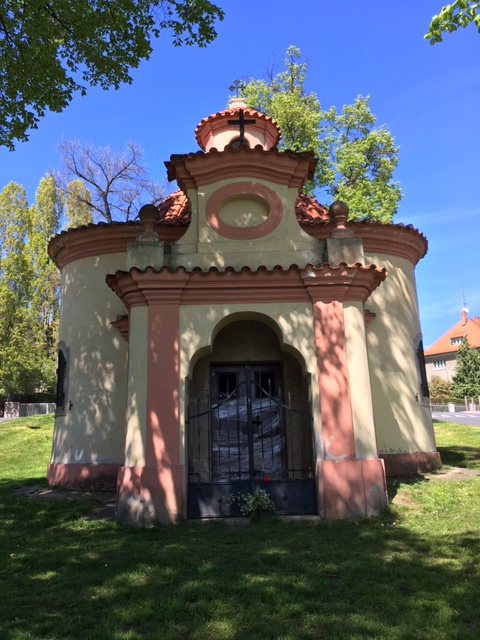
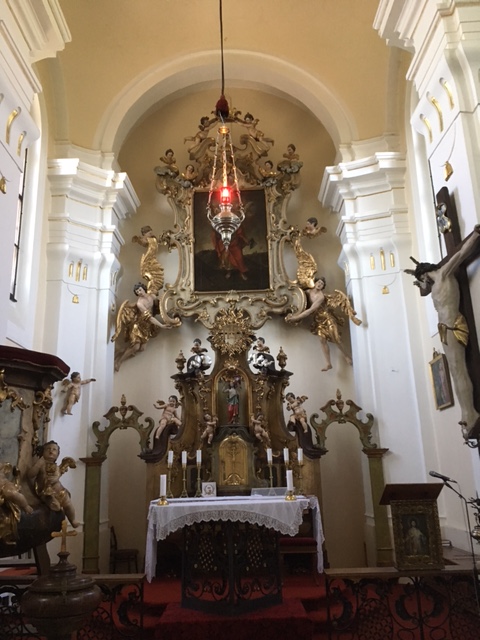
Baroque Chapel of the Holy Trinity, Nad Komornickou Street

One of my favorite pastimes in Prague is taking long walks through architecturally intriguing sections of the city. My favorite quarter in Prague is the villa-dotted Hanspaulka area in Prague’s sixth district, which is ideal for long walks on sunny days.

Hanspaulka17

HanspaulkaJuly179

The quarter gets its name from Jan Pavel Hippmann, inspector of the archbishop’s farms during the 18th century. In German his name was Hans Paul, and his nickname was “Hanspaul.” He built a Baroque-Rococo chateau in the area and lived there for 40 years. His chateau was dubbed “Hanspaulka.” The section has been known as Hanspaulka for more than 200 years.
Hanspaulka19

Hanspaulka20

HanspaulkaJuly1713

The quarter has not always been dotted with villas. From the 14th century, it was a section of vineyards and six small chapels to which residents from all over the city flocked. (Two of these chapels are still standing.) Today’s main street, Na Pískách, was filled with sand. It gets its name from the Czech word for sand – “písek.”

Hanspaulka6

Hanspaulka25

HanspaulkaJuly171

HanspaulkaJuly1711

Before the Thirty Years’ War, there were about 120 vineyards in Hanspaulka. The war did a lot of damage, to put it lightly. After 1627 many owners decided to try their luck abroad, abandoning their vineyards. During 1637 only 50 vineyards remained. The vineyards were devastated by war again in the middle of the 18th century, and only two were revived. There are no vineyards in the section now, but many streets are named after former owners of vineyards.

Hanspaulka26

While the first villas cropped up in the 19th century, the architectural boom of villa construction occurred in the 1930s. Well-known architects, such as Karel Lhota, designed many of the luxurious homes there.

Hanspaulkachateau1

Baroque chateau

The chateau is definitely one of the main sights in the area. It has a late Baroque façade. After World War I it became an archeological museum. In 1996, it was sold to a private company. Now it houses the institute of former Czech president and long-time politician Václav Klaus.

PavelJanak

Pavel Janák, photo from Brněnský architektonický manuál
HanspaulkaStMatthewsChurch1

The interior of St. Matthew’s Church

HanspaulkaStMatthewsChurch2

The pulpit of St. Matthew’s Church

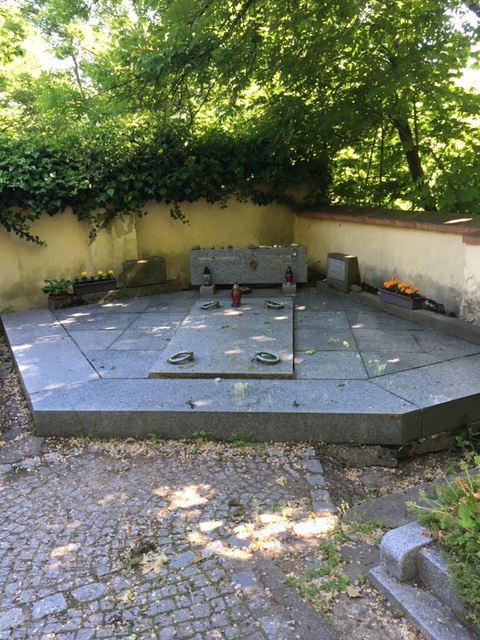
St. Matthew’s Church was originally a rotunda. The church came into being in 1404, but the original structure was demolished in 1770. Its current appearance dates back to the late 1800s. Legendary film and theatre actor Josef Kemr and architect Pavel Janák are buried in its cemetery. I remember seeing Kemr on stage, and I even owned some films in which he had performed. I admire Janák’s Cubist and Rondocubist styles of architecture. I recalled that he designed Prague’s Adria Palace and some villas in the Střešovice quarter of Prague’s sixth district. He had also drawn up the plans for the functionalist Baba Housing Estate near Hanspaulka. Janák also contributed to the architecture of Prague Castle.
HanspaulkaKemrgrave

Josef Kemr’s grave

Hanspaulka18

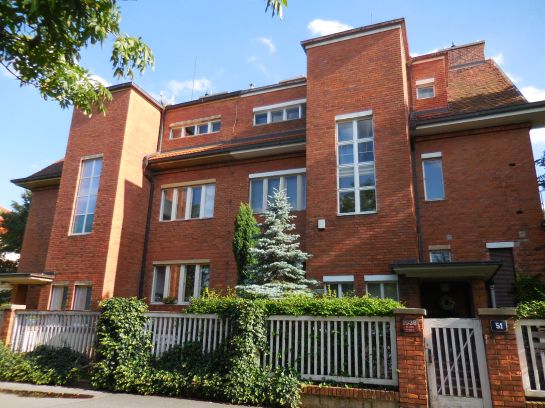
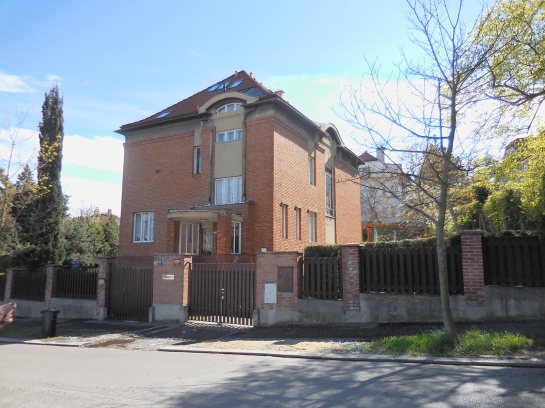
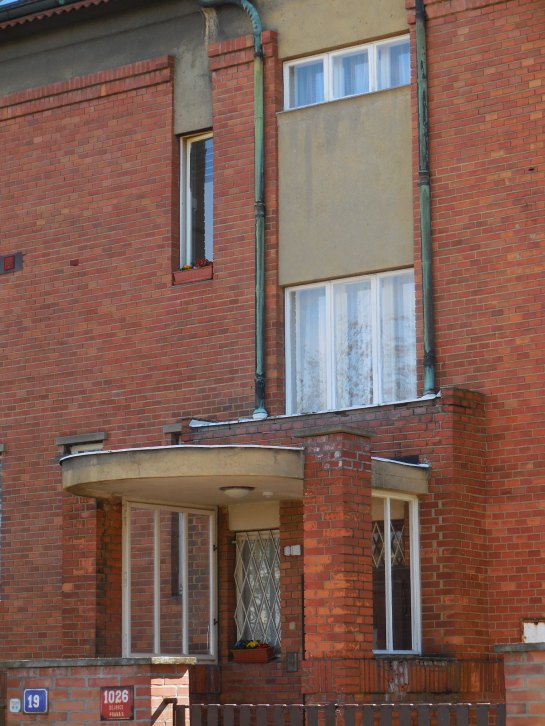
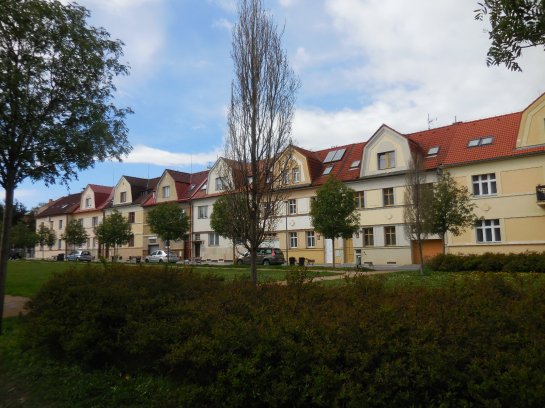
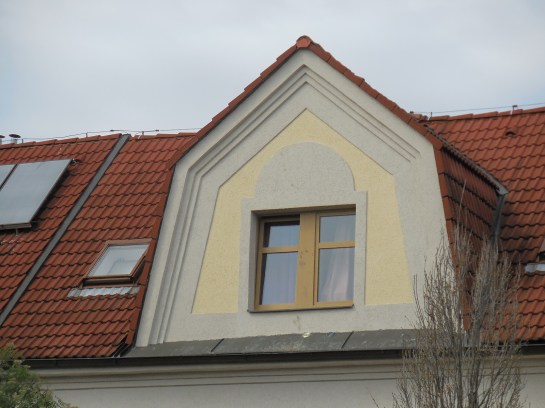
The buildings in Hanspaulka show off a variety of architectural styles. You will come across a Neo-Baroque villa with balustrades, oriels, dormer windows and small towers and a Neo-Classicist villas, too. A former popular pub was built in geometric Secession style. Another former pub served as a meeting place for underground artists during the Communist era, and today a plaque commemorates the establishment. Art Deco townhouses as well as villas with sculptural decoration and ceramic veneers are sprinkled throughout the quarter. Hanspaulka was not always a quarter catering to the wealthy. In the 1930s members of the working class would take out mortgages to buy the Art Deco townhouses. They were allowed to live in one room, always opting for the kitchen, until the mortgage was paid off.
HanspaulkaArtDeco13

HanspaulkaArtDeco14

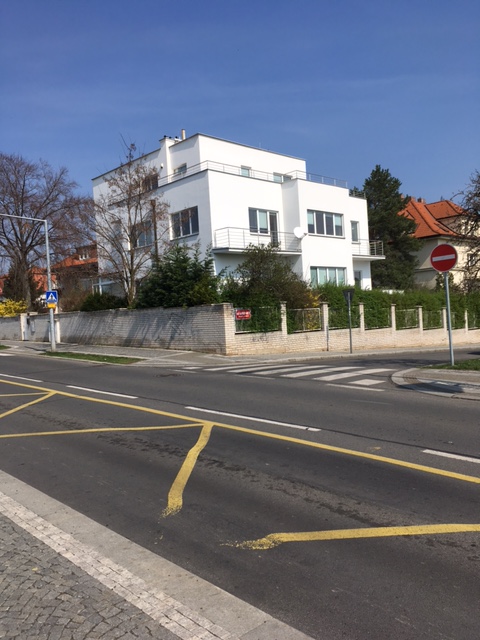
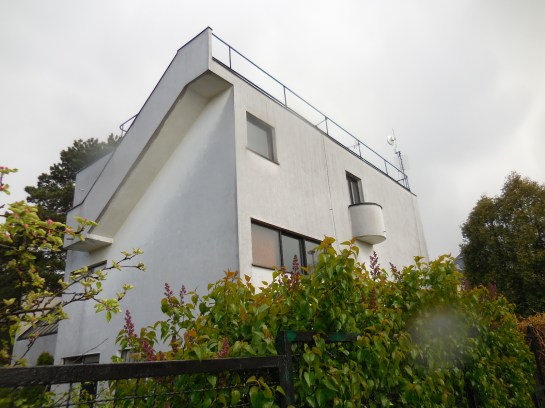
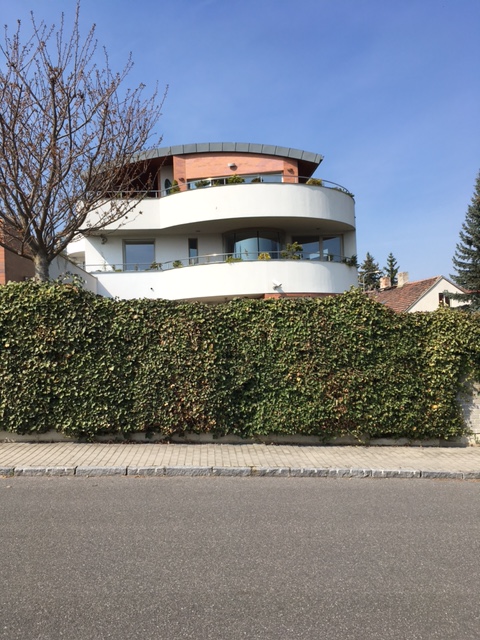
Functionalism and Purism are no strangers to Hanspaulka. In fact, the first functionalist villa in Prague was built in Hanspaulka. The design of this villa was greatly influenced by the works of Le Corbusier. It features a semi-circular balcony and a roof terrace. A former French high school, built from 1930 to 1934, features classrooms lit from both sides and terraces where classes can take place if weather conditions permit. While I admire a variety of styles from Romanesque to Neo-Gothic, functionalism is not my cup of tea. Still, I admire the architectural characteristics of these villas.
Hanspaulka5

The Linhart Villa, the first functionalist villa in Prague

Hanspaulkanew20

The former French school

Unfortunately, not all the buildings are so elegant. One structure was constructed during the early 1950s in the style of social realism, which prevailed under Communism. The two sections of the building have house signs that glorify the working class.

Hanspaulkasocialrealism9

The house sign glorifying the working class, social realist architecture

Demolished in 2014, the Hotel Praha was another eyesore in a style that may appear to fit into the social realist realm but really has Western characteristics. It was built from 1975 to 1981. An exquisite chandelier hung in the foyer, and the terrace offered magnificent views of the city. Until the Velvet Revolution of 1989, the hotel served as accommodation for guests of the Communist government. Now it is a garden that is not open to the public. An international school will be constructed on the premises in the near future.

HotelPraha

The Hotel Praha, now demolished, from Pintarest

Many famous Czech personalities have lived in Hanspaulka – Nobel Prize-winning poet Jaroslav Seifert and actress Lída Baarová, who was Nazi Minister Joseph Goebbels’ mistress for two years while she was residing in Berlin. I recalled discovering Seifert’s poetry as I delved deeper and deeper into my studies of the Czech language, when I was a student at Prague’s State Language School.

LidaBaarovalidovky

Lída Baarová, photo from lidovky.cz

HanspaulkaJuly1715

The villa where Lída Baarová lived – Her sister committed suicide here.

Baarová certainly had led an intriguing life. Hitler ordered Goebbels and Baarová to end the affair and banned Baarová from acting. At a premiere of one of her films in Berlin, paid moviegoers shouted insults at her, and the screening had to be cancelled. Baarová could not take it anymore. After having a nervous breakdown, she moved back to Prague and then to Italy. However, the end of the war did not mean the end of her problems. Back in Czechoslovakia after the war, the authorities suspected her and her family of collaborating with the Nazis. Her mother died while being interrogated, and her sister committed suicide. Though she was never charged, Baarová spent a year and a half in custody. When freed, she moved abroad. She died during 2000 in Salzburg. Baarová is buried in Prague.

SmoljakMurderinPCar

Jaroslav Weigel on the left, Ladislav Smoljak on the right, from Murder in the Parlor Car, Divadlo Járy Cimrmana, photo from filmer.cz

I know that the late film and theatre director / actor Ladislav Smoljak, best known for his roles at the Jára Cimrman Theatre, lived in the area because I used to see him with his adorable dog at the local vet.
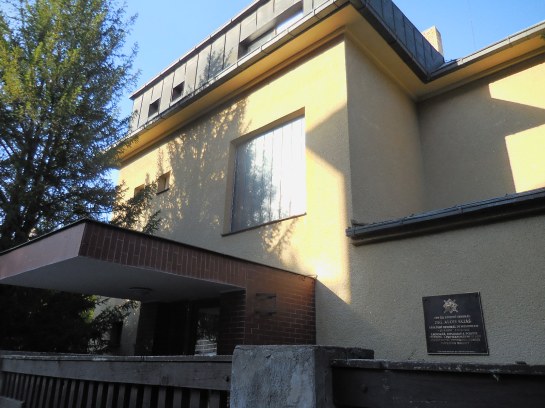
HanspaulkaJuly17Eliasvilla

The villa of Alois Eliáš

HanspaulkaJuly17Elias

A plaque commemorating Alois Eliáš is situated on his former home.

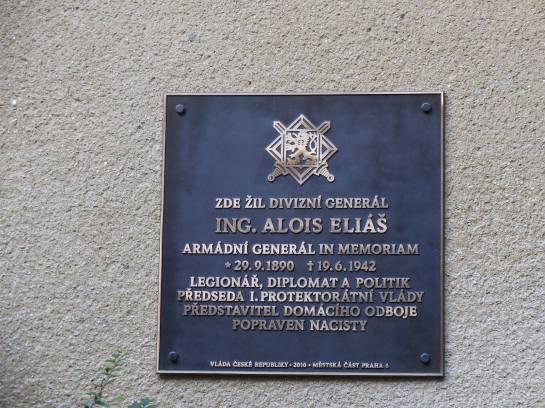
Czech politician and General Alois Eliáš, who was deeply involved in the resistance movement during World War II, lived in this area. He was executed by the Nazis.
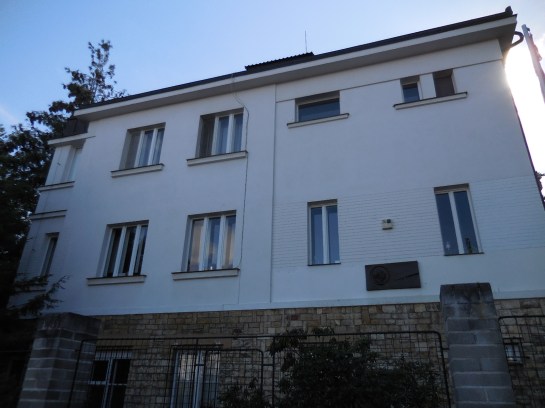
HanspaulkaBurian25

Vlasta Burian’s villa

I was most intrigued by the fate of Vlasta Burian, who had a luxurious villa with a swimming pool, gym and tennis courts in the area.  Burian made a name for himself as a film and theatre actor during the First Republic, which lasted from 1918 until 1939. I have enjoyed watching all his films available on DVD. I admire his comedy for its improvisation, black humor and satire. From 1923 to 1956, he made four silent films and 36 with sound.

PicVlastBurian2

Vlasta Burian, photo from revueidnes.cz

Unfortunately, Burian suffered from manic depression. He also had his share of trials and tribulations. Burian was branded a Nazi collaborator after World War II because he had performed a small role in one radio play spouting Nazi propaganda. During these bleak times, he wound up serving several prison terms, working in the mines and later serving food in a cafeteria, as he wound up destitute. The Communists had taken away all his property and belongings. The authorities confiscated his villa during the 1950s, when the Communists placed a nursery school there.

HanspaulkaBurian24

Plaque commemorating Vlasta Burian on his villa

Burian was rehabilitated in 1994. After the Velvet Revolution, his grandson was given the property and now rents it. The villa is once again luxurious, though without a swimming pool. The tennis courts are still standing. A plaque commemorating Burian was placed on the house in 1998.
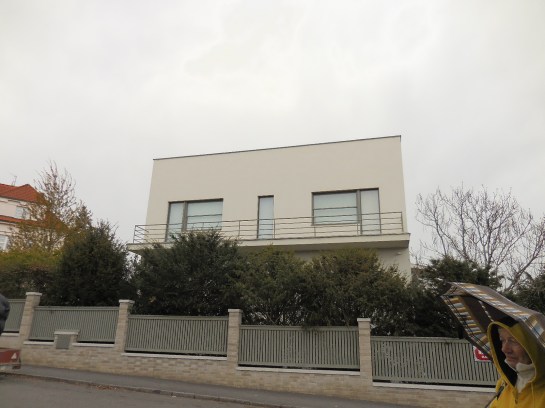
Hanspaulka1

Hanspaulka3

Sometimes, when I am taking my walks, I ponder over Hanspaulka’s role in the 1945 Prague Uprising, when the Germans were retreating. One-third of all the German soldiers were housed in Dejvice, the area that includes Hanspaulka, as the Nazis had their military headquarters in this district. German officers occupied many villas in Hanspaulka, taking over those, which had belonged to Jews.
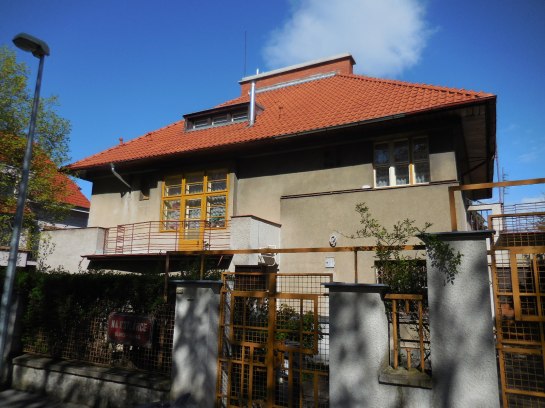
Hanspaulka21

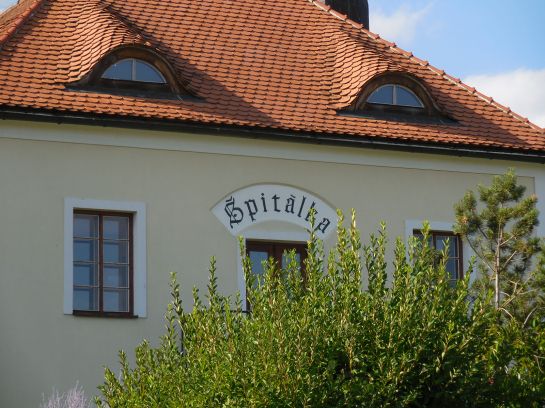
HanspaulkaJuly176Spitalka

On May 4, 1945, Hanspaulka residents were hugging in the streets, rejoicing that the Germans could not win the war. But things were not that easy. The residents cut off important streets from the Germans and put up about 45 barriers in the quarter. At first, they had few weapons, but then they were able to confiscate weapons from 60 German officers whom they arrested. The Czech inhabitants also obtained weapons from German trucks and cars and prevented Germans from escaping. The Nazis had their area headquarters at Hanspaulka’s elementary school, where they stashed their weapons and had their barracks.
Hanspaulka28

HanspaulkaJuly174

Even when Praguers had overcome the Germans in many parts of the city, the fighting in Hanspaulka continued. Germans set fire to houses, pillaged homes and killed Czechs. They fired on any villa where Czechs lived, especially at homes displaying the Czechoslovak flag. While one high school student named Náďa opened her window to see what was going on, the Germans shot her dead. The resistance fighters created a makeshift hospital with 24 beds and four doctors plus 24 nurses. Someone had to guard the corpses piled in an abandoned building on Na Hadovce Street to prevent people from stealing the deceased’s coats, shoes and other clothing. Two of the dead left there were German women who had gassed themselves when they realized their country had lost. In the early morning hours of May 9, the Soviets liberated Hanspaulka and took over the school.

Hanspaulkahostinecumelcu12

A plaque marking the site of a former pub where underground artists gathered under Communism

I would think about how peaceful it is in Hanspaulka now and how chaotic and horrific it must have been during the uprising – villas on fire or pillaged, piles of corpses, Germans shooting at homes displaying Czechoslovak flags. Usually, my thoughts during my walks are not so bleak. I admire the beauty and elegance of the quarter today, and the variety of architectural styles never fails to dazzle me. I take note of the functionalist, Neo-Classicist, Neo-Baroque and Art Deco architecture. I like the Art Deco style best. On the main street there are several quaint cafes with outside seating in the summer, and I sometimes stop there and enjoy the sunshine. During my walks, I also am able to sort out my own problems and feel at peace after a stressful day or week.

More photos to come as the weather becomes more agreeable!

Tracy A. Burns is a writer, proofreader and editor in Prague.

Hanspaulkachapel2

Baroque Chapel of Saint Michael, Na Pernikářce Street
Müller Villa Diary

MullerVilla1

The Müller Villa

NOTE: Visitors are only allowed to take pictures of the exterior of the villa from the street. Visitors are not allowed to take photos of the interior.

I first visited the Müller Villa with my parents when it first opened in 2000. I remember being impressed by the lavish interior and innovative spatial design. I like the location, too. The Střešovice quarter of Prague’s sixth district is home to many attractive villas, several even on the same street as the Müller Villa.

I already knew some of the background information that the guide explained at the beginning of the tour. Viennese architect Adolf Loos and Czech architect Karel Lhotka built the villa for František Müller, who co-owned a construction company, as a family residence from 1928 to 1930. This was a time period when villas were cropping up in Prague and Brno. The Rothmayer Villa in Prague and the Tugendhat Villa in Brno were also erected during this era. Even though construction on the Müller Villa began in 1928, Loos was not able to obtain a building permit until 1929. Loos’ design caused quite a fuss because, thanks to its spartan cube-like façade, the villa stood out distinctly from the other homes in Střešovice.

Tugendhat1

Tugendhat Villa in Brno

I was familiar with the name Adolf Loos, who was born in Brno and was awarded Czech citizenship by Czechoslovak President Tomáš G. Masaryk. His significant contributions to modern architecture include his conception of the Raumplan. This type of design emphasizes the cube form. Also, each room in the villa is on a separate floor, another trait of the Raumplan. Loos greatly admired classicist modern architecture, which emphasized simplicity and symmetry and was inspired by the designs of ancient Greece and ancient Rome. He is known for his lack of decoration on exteriors and for using expensive materials such as stone, marble and various types of rare wood.

I had yet to visit the Loos House in Vienna, but I certainly would make an effort to get there whenever I got a chance to return to Vienna. Besides living in Vienna, Loos spent time in the USA, Paris and Dresden, for instance. He completed his studies in the Czech lands and contributed designs to west Bohemia’s Pilsen, where he created structures during1907, 1908 and 1930. They had not been open to the public when I had visited Pilsen, and I think Loos’ works there are now only open several days a year.

OLYMPUS DIGITAL CAMERA

OLYMPUS DIGITAL CAMERA

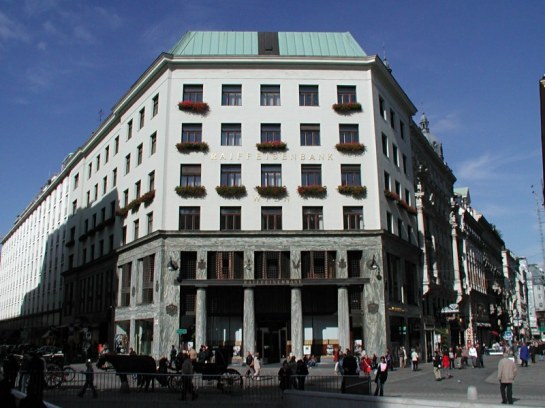
Looshaus in Vienna, 1909, from en.wikipedia.org

Soon it was time for the tour to begin. The professional and erudite guide explained that now the villa looks like it had in 1930, when it was constructed. She emphasized that Loos employed bizarre color schemes, a characteristic that I admired. In the hallway, I was drawn to the original emerald green tiles. I could see a difference between the original tiles and those made during reconstruction. It was not possible to replicate the exact hue of the originals. In the hall I liked the red color of the radiators, as they were exposed as elements in the design. I tried to imagine what the reception room had looked like in 1930, with yellow lacquered furniture and purple-painted walls. I would have loved to have seen those clashing colors. Unfortunately, the furniture had not survived the trials and tribulations of the last nine decades.

Next came the first floor. After going up a dark spiral staircase, we came to a large, light and airy space – the living room. It was divided into three parts. Mostly low furniture filled up the two sides. I especially liked the English velvet gray and salmon-colored low armchairs. The middle section was empty. It had once been used as a dance floor. I loved the clear division of the three parts. There was a sense of logic in the design. The order and efficiency appealed to me. One unique element employed by Loos involved having pillars on one side instead of a wall, making the space open. Two fish tanks made the room more dynamic. The fireplace with a Neo-Classical relief also added charm to the space. There were so many different features to this room. They did not fit together, yet that is exactly why they did fit together. Loos’ penchant for using rare woods was evident here as well. I also liked the 19th and 20th century landscapes on one wall. I am a big fan of landscapes. Loos had used rare Cippolino de Saillon marble on the walls and pillars, which gave them a majestic air.

AdolfLoos

Adolf Loos from http://www.mak.at

The dining room was very different. It was dark and low, not even reaching three meters in height. The coffered ceiling was impressive. It was covered in mahogany wood. While the round table sat six people, it could be extended to make room for 18 guests. Of the 14 Chippendale chairs, only one was original. The others were copies made in Prague. I liked the paintings by Jan Preisler on one wall. I noticed that one exquisite painting showed a girl with horses. Numerous plants made the space feel lively, too.

I liked the Ladies’ Boudoir because it was divided into two distinct parts. On one side there was a bed where Mrs. Müller could take afternoon naps while the other section showed off a couch that was shaped like two-thirds of a circle and a round Oriental table as well as a window overlooking the living room. The window was intriguing; it slid up and down like a window on a train. The golden color of the lemonwood furniture and paneling grabbed my attention. It made the space feel cozy.

LoosPilsenHusova58

Loos’ design for Husova 58 in Pilsen from http://www.adolfloosplzen.cz

The library was not only a place for keeping books but also a place to hold business meetings. Above a fireplace was a mirror that I could imagine covered in soot. I loved the blue-and-white Dutch tiled stove. The couch, covered in leather, looked very comfortable. I felt like curling up on it and reading a good book, perhaps a British mystery or a Czech novel. There was an innovative contraption in the desk – a slot where letters could be placed. The correspondence could then be retrieved from the desk by opening a small door on the other side.


I found the master bedroom fascinating because of the blue-on-cream French wallpaper that had the same pattern as did the curtains and bedspread. The design showed boats, ancient towers, people dragging boats into the water and people rowing. There was a fantastic view from the large window. I could see the city I called home with its stunning orange rooftops.

Pragueviewfromcastlestairs5

Enchanting orange rooftops of Prague

The bedroom was flanked by the men’s dressing room and the women’s dressing room. The men’s dressing room was designed by Jan Vaněk, an architect based in Brno. I loved the moveable drawers that were very practical. The ladies’ dressing room was lighter than the men’s, featuring maple wood. There were moveable drawers in this space, too. I loved the closet for hats. The writing desk with a collapsible mirror was exquisite.

The children’s room had a bizarre color scheme of yellows, blues, greens and reds. The room was divided into a playroom and bedroom. There were three beds, one for the daughter Eva, another for the nanny and a third behind a curtain for Eva when she was sick. It must have been so claustrophobic spending all day and night in a bed behind a curtain. I would feel cut off from the rest of the world or trapped as if I were in a cage.

We also glimpsed the rooms Mrs. Müller was allotted from 1959 to the end of her life, in 1968. Her flat consisted of two small rooms and a bathroom. Her furniture and paintings had been stored in the bathroom and library. Some of the furnishings were sold to private collections. The State Pedagogical Publishers took over the rest of the villa at that time. (Interestingly, the Nazis had not confiscated the villa from the Mullers. The family was half-German.)

After the Velvet Revolution the villa was returned to Eva, who was then no longer living in Czechoslovakia. She sold it to the Municipal Office of the City of Prague, and the villa became the property of the City Museum of Prague in 1995. Loos’ masterpiece was declared a National Cultural Monument that same year.

MullerVilla2

The Müller Villa

I liked the summer dining room even better than the living room. It was decorated in Japanese style with a Japanese lantern hanging over a table and Japanese-inspired upholstery on the chairs. The furniture was green and black while the wallpaper was silver, providing an interesting contrast. I loved the view of Prague from the window adjoining the terrace. I could have stared at the cityscape for hours.

The next space served as an exhibition room that focused the Müller family and the restoration work on the villa. There was information on Loos’ architectural style – for example, the exhibition stressed that his work featured cubes and coherent, continuous spaces; that each floor was a different height and that Loos emphasized the importance of economy and efficiency in his creations.

I was struck by the very high windows in the kitchen. Loos believed that women should not be allowed to look outside while they were cooking. He obviously never cooked, one female visitor remarked, drawing chuckles from the others. The boiler room was the place where Mr. Müller died when he accidentally inhaled carbon monoxide while stoking the boiler.

We also saw the laundry room, the drying room and the garage, where Mrs. Müller’s black Praga automobile was on display. It looked like a car from an old black-and-white film. The laundry room had once held an electric washing machine and spin dryer, very modern appliances at that time.

RothmayerVilla1

Rothmayer Villa in Prague

Once again, I was very impressed with the Müller Villa. The contrast between the spartan exterior and the luxurious interior was fascinating. The summer dining room with its Japanese décor and green-and-white color combination was my favorite space. I wished it had been summer, so we could have gone out on the terrace. I liked this villa even more than I liked Brno’s Tugendhat Villa, an outstanding piece of architecture. I was especially drawn to the lavish furnishings, such as the low furniture in the living room. The paintings also caught my undivided attention – the landscapes and Jan Preisler’s works were dear to me. What perhaps intrigued me the most were the various rare woods used in the décor. The wallpaper in the master bedroom was remarkable, too.

I looked forward to touring other villas – the Rothmayer Villa in Prague and the Stiassi and Loew-Beer villas in Brno. I hoped I would manage a trip to Loos’ famous villa in Vienna and would have a chance to see the master architect’s designs in Pilsen. Even people who are only somewhat interested in architecture would enjoy touring this villa.

MullerVilla3

Tracy A. Burns is a writer, proofreader and editor in Prague.


Rothmayer Villa Diary

RothmayerVilla1
NOTE: It is not permitted to take photos inside the villa. Photos can only be taken outside from the street.
I was excited about my trip to the Rothmayer Villa in Prague’s Břevnov quarter of the sixth district. I had never been there, even though the villa had been open to the public since the fall of the previous year (2015). In fact, I had not even heard of the architect, Otto Rothmayer before I came across the listing of the villa in a Prague cultural guide. This definitely would be a new adventure.
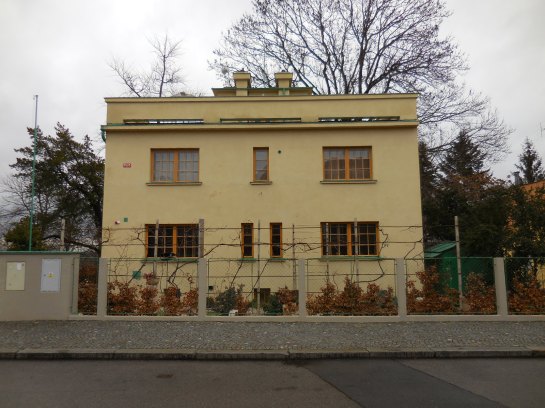
When I first set eyes on the Rothmayer Villa on the corner of a tranquil street next to a hospital, I was surprised at how small it was. I had thought it would be bigger because I had visited the much larger Müller Villa a few days earlier. I was also surprised at the lack of decoration on the façade, which had symmetrical windows and a spartan cornice. Yet even the simplicity of the rectangular design exuded a sense of elegance. Certainly, the classicist-modernist style was not my favorite. I preferred styles with some ornamentation, such as Art Nouveau. Still, it was intriguing, and I appreciated the sobriety of the design.
OttoRothmayer

Otto Rothmayer, photo from bydleni.idnes.cz
Otto Rothmayer built this house for his family during 1928 and 1929, a time when the Tugendhat Villa was under construction in Brno, designed by legendary architect Ludwig Mies van der Rohe and a time when work on the Müller Villa, designed by Adolf Loos and Karel Lhotka, was underway in another section of Prague 6. Many villas in Prague were erected during the interwar years.
The guide started off by providing information about Rothmayer’s life and work. Rothmayer took up carpentry at a young age. He turned to architecture before World War I, studying under Slovenian architect Jože Plečník at Prague’s Academy of Applied Arts. Plečník’s creations would inspire Rothmayer for the rest of his life. After World War I, Rothmayer finished his studies and worked in the studio of Cubist architects Pavel Janák and Josef Gočár. He also cooperated with Janák and Gočár on the design of a pavilion for an exhibition in Lyon during 1920. In 1921 he took up the post of assistant architect at Prague Castle with Plečník as his boss and colleague. Rothmayer held the position until 1958, when he retired. After 1930 Plečník left Prague Castle while Rothmayer continued to work there.

RothmayerVilla2
Rothmayer’s impressive designs at Prague Castle includes renovating the apartment of the first president of Czechoslovakia, Tomáš Garrigue Masaryk. He also created plans for some of the courtyards and improved the appearance of the Theresian Wing of the Old Royal Palace. He designed the Staircase Hall using what was then a new material, faux marble. His style was also visible in interior renovations of the New Royal Palace.
Yet Rothmayer’s designs were not limited to Prague Castle. He designed three other family houses, all with porches so they would allow residents ready access to the outdoors. One of his creations was a weekend house for sculptor Otakar Hátlý. Rothmayer also served as a professor of Decorative and Applied Arts from 1947 to 1951. He stopped teaching because his ideas clashed with the social realism philosophy of the era. He also designed exhibitions for the Museum of Applied Arts and was responsible for installations of various exhibitions at the Museum of Decorative Arts and National Literary Monument. A side altar for the Church of the Most Sacred Heart in the Vinohrady quarter of Prague is another example of his work.

Plecnikvila-stadion-1928

Vila Stadion, 1928, from http://www.renton.si
The guide told us that Plečník’s Villa Stadion in Ljubljana inspired Rothmayer’s design of his family villa. I was familiar with the name and creations of Jože Plečník, whose style could be said to fit into the category of Art Nouveau while Rothmayer’s work was much simpler in design. There was a huge exhibition of Plečník’s architectural gems at Prague Castle many years ago. Also, when I had visited Ljubljana, I had made a trip to his studio. Plečník was responsible for the modern look of Ljubljana, designing architectural masterpieces throughout the city. For example, his creations there included the Triple Bridge, the Slovene National and University Library, a cemetery and parks. Elsewhere in Europe, he designed many structures in Vienna and his style can be found in Belgrade, too.

JozePlecnik1933

Jože Plečník, 1933, from http://www.dieselpunks.org. Photo by Karel Repa
Plečník’s works at Prague Castle under Masaryk’s tenure as president included reconstructing the first and third courtyards and reconstructing the appearance of the southern gardens. Plečník spent three years doing renovations on Masaryk’s apartment at the Castle, and Rothmayer took part in this project as well. Plečník’s distinctive style can also be seen in the Spanish Hall and Bellevue Summer Palace. Yet his designs are not limited to the Castle. He also designed structures in Vinohrady and the Old Town of Prague, for example. Outside of Prague he worked on the president’s summer residence at Lány and at Křivoklát Castle.

Kostel Nejsvětějšího srdce Páně

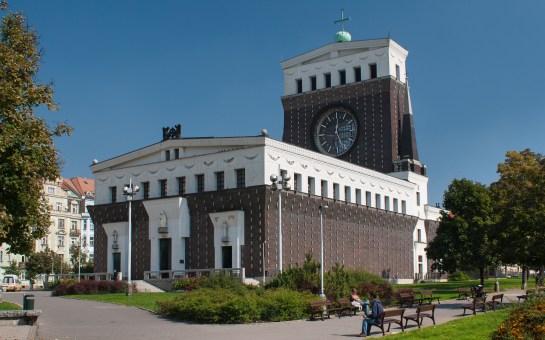
The most beautiful church in Prague Heart, designed by Plečník, photo from newchurcharchitecture.wordpress.com.

After explaining to the group about Rothmayer’s background, the tour guide drew our attention to black-and-white photos on an ash wood table designed by Rothmayer. The guide pointed out one photo in which Otto’s wife Božena had a short haircut and wore pants, signs that she was a modern woman. Another photo showed the villa surrounded by fields. Rothmayer had built it on an isolated plot of land. Now other villas flanked the street, and the villa was right next to a huge hospital. We also learned some basic information about the villa. It had a rectangular plan with a cylindrical shape that was the large, impressive spiral staircase connecting the floors. It was intriguing that the family had not owned a car. They walked to town, which was quite a distance away.

RothmayerVilla3
Like Plečník, Rothmayer favored wood for his furniture as was evident in this room. Other furnishings were created from spruce and pine. Jan Vaněk was responsible for the design of four impressive Windsor chairs. I was familiar with his designs. He was a Brno-based architect who had also collaborated on the Müller Villa not far from here. The floor was original, made of cork. A unique teapot in the space had once belonged to Plečník. The guide also commented that when the house was constructed, small heaters that used coal had been placed in each room. There was also a simple yet elegant white tiled stove in the space; these tiled stoves were sprinkled throughout the villa.
Božena’s room, currently the ticket office, was next. I saw examples of her embroideries with folk art themes framed on the walls. Her creations included clothes, including pants for women, plus purses and jewellery. She also set up an exhibition about the modern woman. I was drawn to the small bust of Božena Němcová, a 19th century Czech writer who is credited with founding modern Czech prose. She also wrote fairy tales and travelogues, for example. Her best known work is her novel, The Grandmother, based on memories of her happy childhood in the countryside. In the book the grandmother represents love, goodness and morality. Her literary masterpieces greatly contributed to the Czech National Revival movement. I certainly understood how a modern woman like Božena Rothmayer could be inspired by this author.

RothmayerVilla4
Then we came to the room where Otto had worked and slept. He had made all the furniture for this space, which had once been full of belongings – drawings, paintings and books. The desk was mobile; it could move back and forth to get the best light. The drawers in the desk could move from side-to-side. It reminded me of the moveable drawers in the closets designed by Vaněk for the Ladies’ Dressing Room at the Müller Villa.
The Children’s Room, where their son Jan Rothmayer (1932-2010) had slept, included an audio system that Jan had designed. He was an electrotechnician who had also taken up photography, inspired by family friend and legendary photographer, Josef Sudek. who had often visited in the 1950s and 1960s and had taken many pictures of the house and garden. Sudek was best known for his photos of Prague, such as the interior of St. Vitus Cathedral and panoramas of city. His style could be described as neo-romantic. Sudek was able to take such beautiful photographs, even though he had use of only one arm.

JosefSudek

Josef Sudek, photo from http://www.afuk.cz
In this room we watched an intriguing video about the Rothmayer family and their work. The photos taken by Jan were particularly intriguing. My favorite showed a lit candle next to a half-full glass of wine. Sudek’s still lifes had certainly been an inspiration for this picture.
The room on the highest floor was once the Winter Garden Room and became the Summer Study during the 1950s. I had expected that there would be more books on the shelves. I was drawn to the small sculptures that also decorated the space. At one time, the small terrace had included a herb garden.
Last, we went to the basement, which included a carpentry workshop where Otto had made his furniture. There was also a guest room, where Sudek had slept. The armchair and table were designed by Plečník.

RothmayerVilla5
Then we were free to go outside into the garden, which was sprinkled with glassware and rocks. Rothmayer had worked with glass artists. A big, blue vase caught my attention. The garden, like the villa, was simple yet elegant. I liked the white garden furniture made from rough steel. It had been very popular at the time.
Because the family had lived there until 2009, many of the furnishings were authentic. Also, the Museum of Decorative Arts in Prague had some furniture from the villa in its collection, so many of the furnishings were preserved. The villa had remained private property under Communism, when many places had been nationalized.

RothmayerVilla6cornice
I was surprised that the rooms were small and that the style of the furniture was so simple. Yet the simplicity was by no means a negative aspect. It had a certain elegance to it. I had expected the villa to have a lavish interior because I had visited the Müller Villa several days earlier. Designed by Viennese architect Adolf Loos, who also had Czech citizenship, and Czech Karel Lhotka from 1928 to 1930, the Müller Villa was much bigger, with a sober, unornamented exterior shaped like a cube. However, the interior greatly differed from the Rothmayer Villa in its extravagant decoration. Both villas, though, made use of wood as a key material for furnishings. Yet Loos had also utilized marble and stone, which were expensive materials.
Visiting this villa greatly improved my understanding of modern architecture. I became familiar with the lives of Otto Rothmayer and his family as well as with their contributions to Czech architecture, photography, fashion and textile design. I appreciated the simple, practical style. I would certainly recommend this villa to tourists interested in modern architecture.

RothmayerVilla7
Tracy A. Burns is a writer, proofreader and editor in Prague.

Lobkowicz Palace Diary

Lobkowicz2
It was one of those places I had been meaning to visit for a long time, but I had just never gotten around to it. Tomorrow. . .this week. . .next week. . .I would always stay home and write instead of visiting the Lobkowicz Palace. Friends and family raved about the museum. In August of 2015, I finally went to check out the Lobkowicz Museum, which opened in 2007.

The beginning of the audio guide tour had me hooked. William Lobkowicz, the current owner of the palace, did most of the narrating. His grandfather Max was married to a British citizen, Gillian. When World War I started, Max had been a very affluent man. During World War II he served as ambassador of the Czech government in exile in London. He was fervently against the Nazis and was an avid supporter of the democratic First Republic of Czechoslovakia. The Nazis disliked Max not only for his anti-Nazi activities but also because he had a British wife. After the Communists took control of the country in 1948, Max found himself trapped in Czechoslovakia. His wife sent him a letter from London, telling him she was gravely ill. She wasn’t, but the ploy worked. The Communists gave Max two days to visit her. With only his coat and the clothes he was wearing, Max fled from his homeland to join his wife in London. He left behind 13 castles. William’s father had been 10 years old at the time and had been sent to live in the USA.

Max Lobkowicz from lobkowicz-palace.com

Max Lobkowicz from lobkowicz-palace.com


What a story! It sounded like something out of a spy novel or film! It must have been so difficult to leave so much property and so many possessions behind. Thirteen castles! It must have been heartwrenching.

Then I found myself in a large room full of family portraits, starting with those of nobility from the house of Pernštejn. The portraits were not merely faces staring at me. Each portrait told a story about an individual thanks to the information on the audio guide. The people came alive as I listened to intriguing facts about their lives. When I was looking at the Pernštejns, I fondly recalled my visits to Pernštejn Castle in Moravia. It was one of my all-time favorites. I wonder if that had been one of the 13 castles grandfather Max left behind.
Lobkowiczportrait
Vratislav Pernštejn, born in 1530, held the distinction of being the first Czech to receive the Order of the Golden Fleece, achieving this feat at the tender age of 25. Later, many more Lobkowiczs would be honored with the award. The Lobkowicz clan was related to King Philip II of Spain, whose tenure on the throne lasted 40 years. His territories even included Central America, the Caribbean and parts of what is today the USA. At one time he was even the King of England. Nicknamed “Philip the Prudent,” he was the son of Holy Roman Emperor Charles V and Infanta Isabella of Portugal. The Philippine Islands were named after him. He founded the first trans-Pacific trade route between America and Asia. He also made sure the Ottomans would no longer be a formidable enemy of his lands. He also helped his empire get back on its feet in times of financial crises.
Lobkowiczint1
I wished I could trace my family tree back so many centuries. I knew that I was of Slovak heritage on one side of the family, had a grandmother of Czech ancestry and a grandfather of Scottish origin, but I did not know any details. My ancestors from Moravia were named Mareš, a common Czech surname. My grandmother’s maiden name had been Šimánek, also a common name. I think my decision to move to Prague had something to do with filling up a vast emptiness about my family’s past, wondering who my ancestors were and what they were like. In Prague I felt in touch with a past I had never known, and that was one of the reasons Prague felt like home.

I was reminded of a Diego Velázquez exhibition I had seen in Vienna about a year ago when I gazed at the portrait of Infanta Margarita, then a four-year old member of the Spanish royal family. I recognized her from Velázquez’s masterpiece, Las Meninas. While Margarita was immortalized in portraiture, she did not enjoy a long life. She died during childbirth when she was only 22 years old.

I found the Lobkowicz’s involvement in the Defenestration of Prague fascinating. One painting showed the historical event, when Protestant nobles revolted against the Catholics and threw two Catholic ministers and a secretary out a window. This event triggered the Thirty Years’ War. Luckily, the three fell onto a pile of dung and did not die. Two of them took refuge in Lobkowicz Palace. According to legend, Polyxana Lobkowicz hid them under her skirts.
Lobkowiczint4
In the next room I was surrounded by fine porcelain. I saw majolica service from Lombardy picturing a calming landscape of coastal scenes with mountains. It dated back to the 17th century and was made in Italy. I was also enamored by service from Delft, dating back to the late 17th century. I had always been fond of porcelain made in Delft.

The painting in the next room captivated me. Lucas Cranach the Elder had rendered Mary and the Christ child in a painting hailing from 1520. Saint Catherine and Saint Barbara also made appearances. I found out that Ferdinand Lobkowicz had been an avid art collector.
Lobkowiczint3
In a separate space stood a processional reliquary cross, Romanesque in style. Hailing from north Germany in the beginning of the 12th century, it was made of gilded copper and adorned with 30 crystal cabochons. I couldn’t believe I was looking at something that ancient and in such good condition. Whenever I saw Romanesque churches, for instance, I could not believe I was standing in a structure built so many centuries ago. I briefly thought back to the Romanesque church with the fascinating façade in Regensburg.

Then I entered a room filled with weapons and knights’ armor. While I was impressed that the Lobkowiczs possessed such a superb armory, weapons were certainly not my cup of tea. I moved on and soon found myself surrounded by musical instruments, especially violins. I love classical music, and the room calmed me while the armory had made me anxious.

I stared for some minutes at the original score of Part III of the Messiah by Handel as arranged by Mozart. I also saw original scores by Beethoven and Mozart, two of my favorites. The first printed edition, dating from 1800, of the score for the oratorio of The Creation by Haydn also caught my attention. My mind wandered back to those classical music classes at Smith College, where I first became enamored with the above-mentioned composers and many more. An entire new world had opened up for me. I also spent some time gazing at the violins and clarinets, wishing I could play an instrument. I had taken beginners’ piano lessons in college for a year, but that was it. In college I always dreamed of being able to play an instrument well enough to major in music. But it had been just a dream. I wasn’t talented enough, and I had concentrated on my writing.

Haymaking by Pieter Bruegel the Elder, 16th century. Photo from www.wga.hu

Haymaking by Pieter Bruegel the Elder, 16th century. Photo from http://www.wga.hu


Soon I set my eyes on one of my all-time favorite paintings by my favorite artist, Pieter Bruegel the Elder. It was his rendition of Haymaking, one of only six panels representing the 12 months of the year. Each panel represented two months. Haymaking depicted June and July. I remembered gaping at the Bruegel collection in Vienna’s Kunsthistoriches Museum, where I had admired The Gloomy Day (Early Spring), The Return of the Herd (Autumn) and the Hunters in the Snow (Winter.) Bruegel’s paintings of the seasons had played a significant role in Western art. It was the first time that landscape was the main subject of the painting. Before, landscape had been utilized as a backdrop for religious figures. I admired how nature played a role in the lives of the people depicted in the paintings. Their daily activities were dictated by the seasons. I loved the way Bruegel depicted the common man in everyday activities and put so many details in his paintings. The landscape was stunning and idyllic, too.
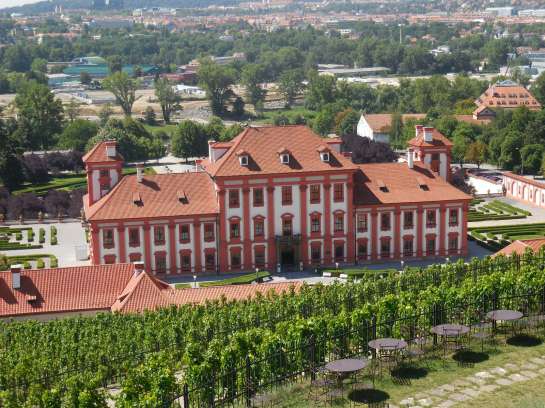
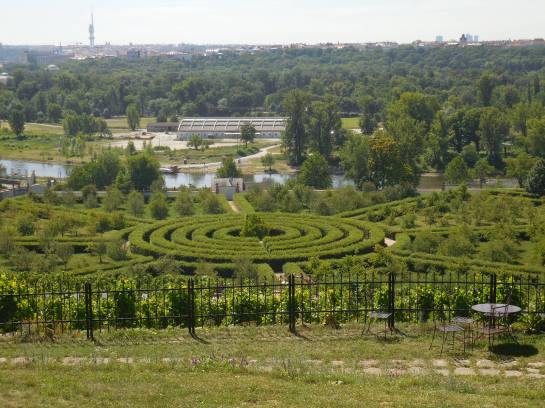
The Croll Room was breathtaking. Carl Robert Croll had painted over 50 works for Ferdinand Joseph Lobkowicz during six years in the 1840s. I recognized Jezeří Castle, which the Lobkowiczs sold to the Czech state in 1996. I had visited Jezeří some years ago, but the chateau was in need of major reconstruction. Its location on a cliff was romantic, but restoring the interiors was going to take a lot of time. I wondered how far the restoration work had come during the past years. I also recognized Roudnice Chateau, shown Italian Baroque style from reconstruction that took place from 1653 to 1677. I had been to the art gallery at Roudnice Chateau some years ago, but most of the chateau was under reconstruction. Nelahozeves, also seen here, was one of my favorite chateaus due to its impressive art collection. Not far from Prague, I always recommended that visitors take a day trip there. I had even written a post about it for my blog.

City of London from River Thames with St. Paul's Cathedral on Lord Mayor's Day by Canaletto

City of London from River Thames with St. Paul’s Cathedral on Lord Mayor’s Day by Canaletto, Photo from http://www.wikiart.com


LobkowiczDogRm
Then I saw what have to be two of the most beautiful paintings in the world – two views of London by Antonio Canaletto. I loved Canaletto’s work because he brought out the atmosphere of the place he was painting. I could really feel as if I were looking at London and the Thames in his City of London from River Thames with St. Paul’s Cathedral on Lord Mayor’s Day from 1748 and in The River Thames Looking Toward Westminster from Lambeth from 1746-47. I recalled the extensive Canaletto exhibition I had seen in Aix-en-Provence during June. I loved the details of the boats and sails.
LobkowiczBirdRm
On the first floor I saw a portrait of Princess Ernestine Lobkowicz clad in brilliant red and portraits painted by the princess in the 17th century. I wondered how many female portrait painters there had been in the 17th century. The Bird Room featured pictures of birds made with real feathers. On the audio guide William’s wife, Alexandra Lobkowicz, mentioned that she had found the pictures infested with insects and that they took almost a year to conserve. In the Dog Room I focused on a painting of two dogs proudly seated on velvet cushions in 1700. They looked so spoiled with their luxurious light blue and gold collars. Then again, I had always spoiled my cats.
Lobkowiczint2
Lobkowiczint5
The Firanesi Room was filled with engravings of ancient and modern Rome, one of my favorite cities in the world. I recalled showing my parents the Colosseum, one of my most treasured memories of time spent with my Mom and Dad. The Oriental Room proved a delight as well. It featured nine Chinese embroidered silk panels hailing from the 18th century. I loved Oriental rooms in castles and chateaus. They were so elegant, and the wallpaper was always so beautiful. There was also a Chinese Room in the palace. It had a distinctive Oriental flair and dated from 1900. I loved the bright colors, too.
LobkowiczRococo1
Meissen porcelain in a Rococo cabinet

Meissen porcelain in a Rococo cabinet


Next came the Rococo Room, where two Rococo display cabinets displayed various objects, such as snuff boxes, exquisite fans and Meissen porcelain. I admired the rich carving of the woodwork on the cabinets. Seeing the Meissen porcelain reminded me of the Museum of Porcelain in Dresden, where there was so much Meissen to behold that it had been overwhelming for me. The superb display cases dated from the 18th century.
An allegorical fresco in the Dining Room

An allegorical fresco in the Dining Room


The Dining Room flaunted portraits and ceiling frescoes that enthralled me. I saw the Allegory of Europe, the Allegory of Asia and the Allegory of America, for instance. Poseidon and Bacchus appeared in several frescoes. I loved ceiling frescoes in chateaus, especially ones with mythological figures. The elderly attendant in the room described the various frescoes to me enthusiastically. It was nice to meet a museum attendant proud of the place where she was working.
Lobkowiczfresco2
I punched in a number on the audio guide and listened to how the Lobkowiczs watched the Berlin Wall fall and the Velvet Revolution unfold on television. They returned to Czechoslovakia in 1990 and wanted to make the country their home. Under the first law of restitution, the Lobkowiczs had less than a year to find all the objects that belonged to their family and to make a list of them. It certainly had not been an easy process, but, luckily it had a happy ending.
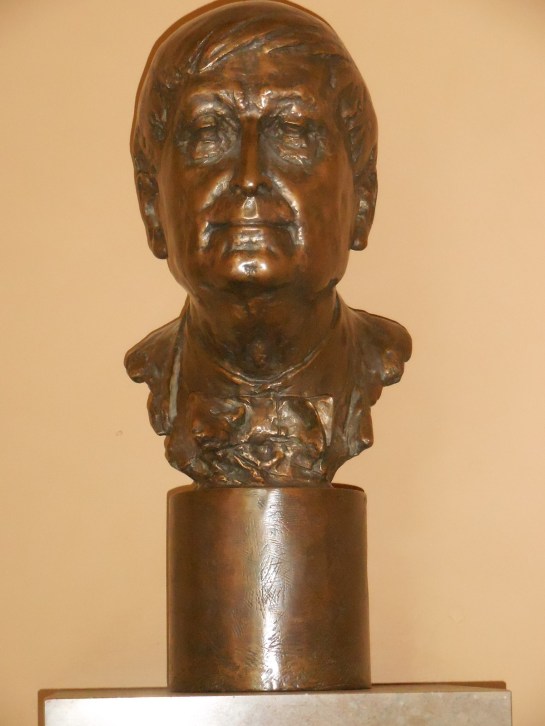
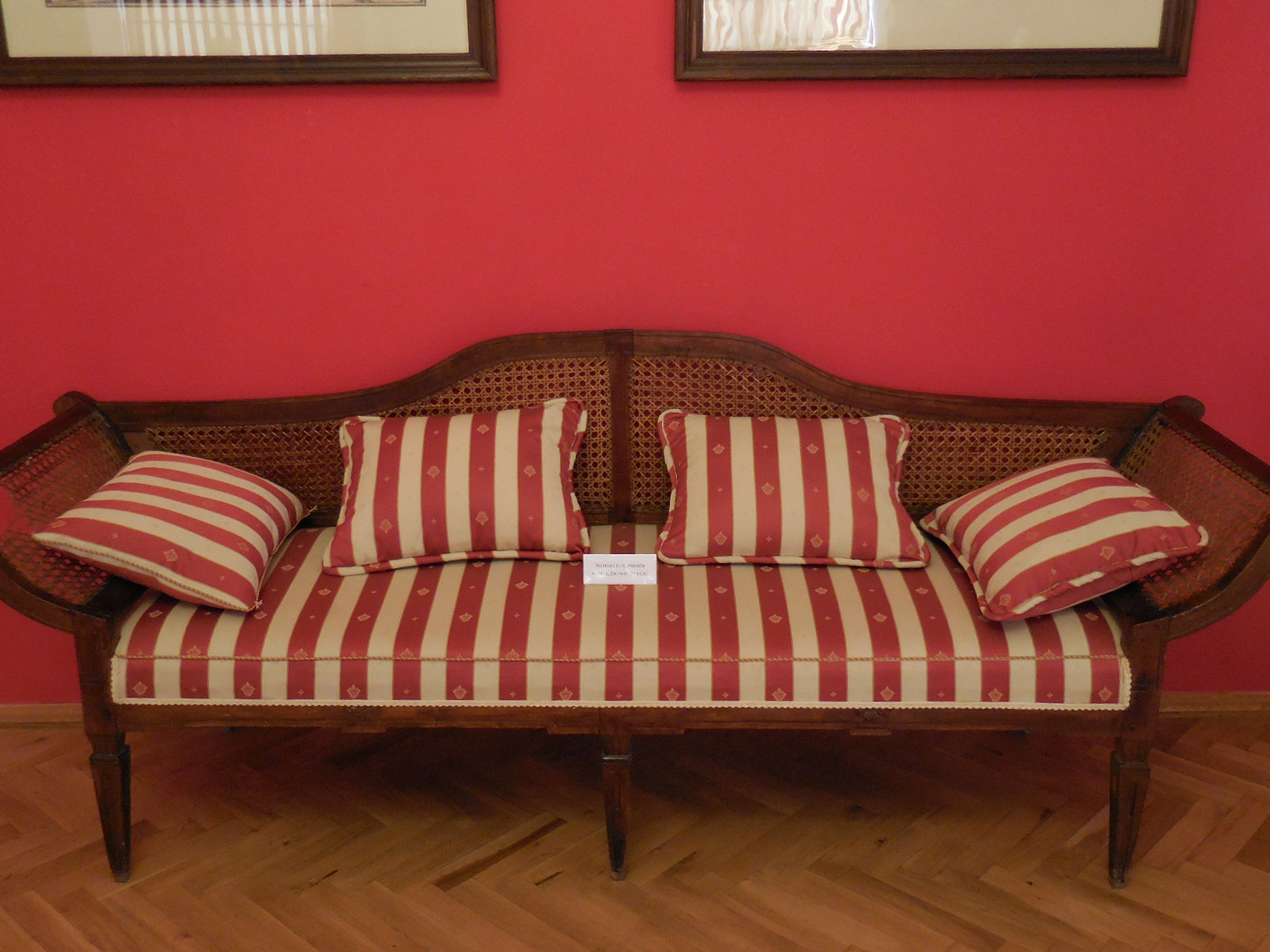
At the end of the tour I walked by a small concert hall. It would be delightful to attend a concert in such an intimate space in a lavish palace. I would have to come back again to go to a concert. Classical music had played a role in the family history, so perhaps it was only fitting that they had a space for concerts.
Lobkowiczfresco4
I was very impressed with both the palace and the narration on the audio guide. Lobkowicz Palace had a bit of everything – exceptional artwork from various centuries, impressive furnishings, ceiling frescoes, porcelain, musical instruments, original musical scores, weaponry and of course, portraits. I liked the variety of furnishings and pieces of art that I was able to see from various eras – a Romanesque processional reliquary cross and Rococo display cases, for instance. And the family history was so intriguing! What an ordeal William Lobkowicz’s grandfather had gone through! His possessions had not been taken away from him once, but twice – first by the Nazis and then by the Communists.

Now that I knew what an intriguing place the palace was, I was sure I would be coming back for another visit and for a concert sometime soon.
Lobkowiczfresco6
Tracy A. Burns is a proofreader, writer and editor in Prague.
NOTE: No photos were allowed on the second floor, only on the first.