Jaroměřice nad Rokytnou Chateau Diary

The first time I visited this chateau in Moravia, back in the late 1990s, it had been an adventure to get there. The train broke down just as it was nearing the town. All the passengers had to disembark. It was too far to walk there. I happened to see a taxi, rare in those parts, driving by the main street, and I flagged it down. After a short ride, I came upon the large Baroque chateau, one of the biggest in the country. I was amazed at its beauty and elegance. When I visited the chateau for the second time during 2025, on a tour bus, the ride was thankfully sans adventure. Walking toward the main entrance, I was just as fascinated as I had been during my first visit so many decades earlier.
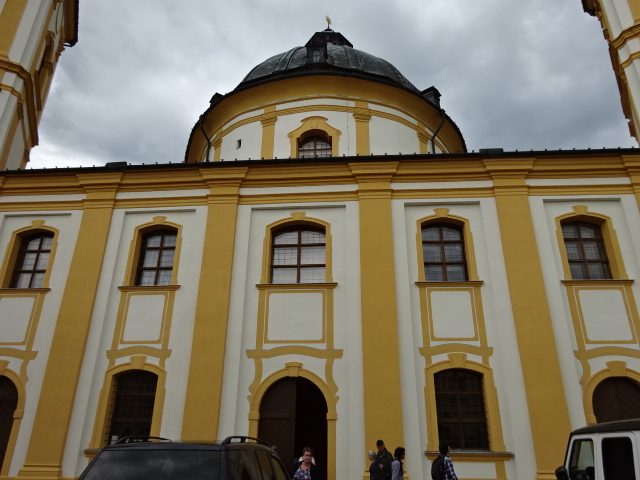
The stunning chateau began as a medieval fortress. The Meziříčtí family of Lomnice transformed the structure into a Renaissance castle during the early 17th century. This clan fought for the Protestants in the Czech Estates Uprising, and, when the Protestant nobles lost, the chateau was given to Gerhard of Questenberk. He died in 1646.
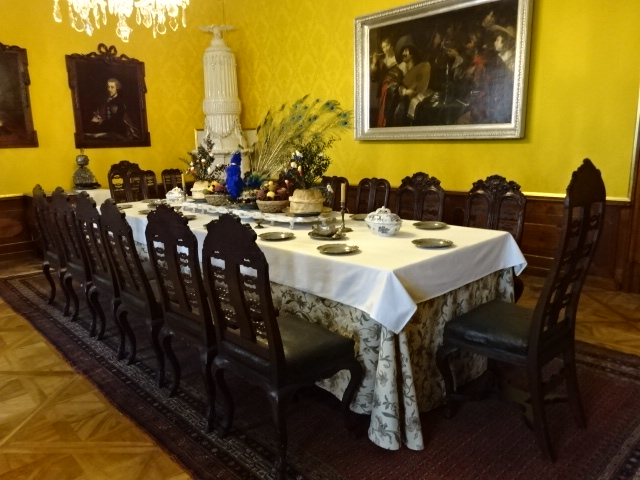
His grandson, Count Jan Adam of Questenberk, would be responsible for the major reconstruction in 1700, and his name would forever be connected to the glory days of the chateau’s existence. After extensive travel throughout Europe, Count Jan Adam decided to call Jaroměřice his home. He was fascinated by the Baroque style and was determined to make his chateau a Baroque gem. Reconstruction ended in 1737.
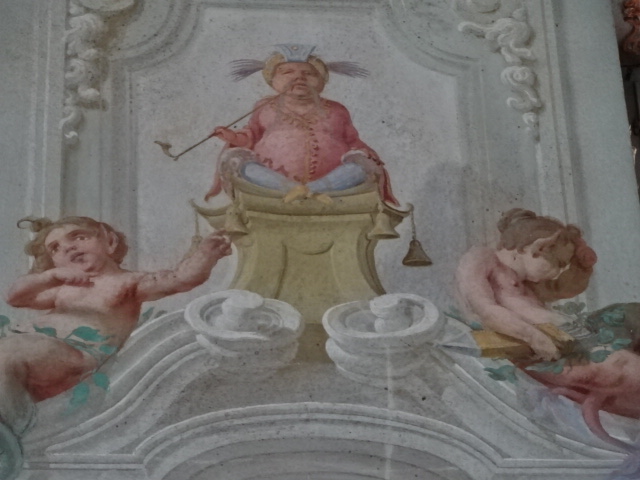
Dance Hall fresco

Jan Adam loved the arts, particularly music and theatre. The chateau became a bustling center for these passions. He created a theatre group in Jaroměřice, and musical concerts as well as operas were performed there, too. Children’s plays also made up the repertoire. Italian operas were the count’s favorites. Masterfully made Baroque theatre sets were utilized as well as elaborate costumes. A large theatre came into existence from 1731 to 1739. Music and theatre came alive in stellar performances on this stage.
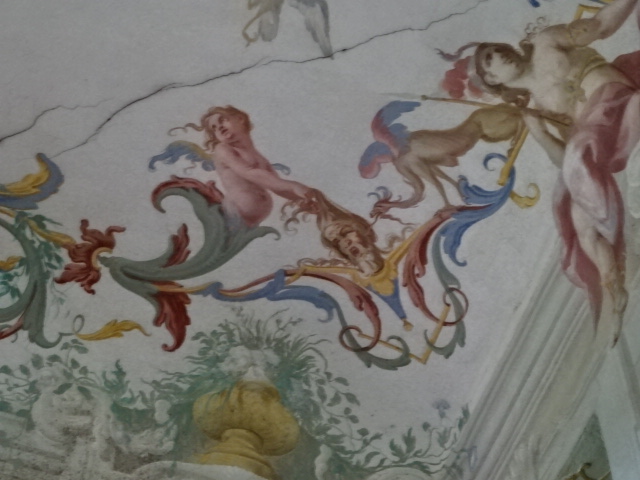
Dance Hall

However, when Jan Adam died in 1752, his widow did not continue the music and theatre traditions of her late husband. The glory days were gone. With Jan Adam’s death, the Questenberk lineage also ended.

Several families controlled the chateau after Questenberk’s passing, but no major changes were made. The chateau today is a testament to Jan Adam’s dedication to architectural elegance as it is punctuated by charming and astounding spaces.
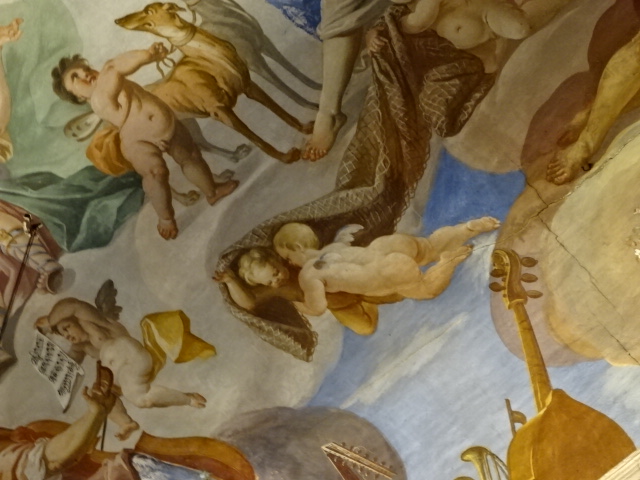
Ancestral Hall ceiling fresco

The rooms that impressed me the most were the Ancestral Hall, the Dance Hall, the small but intricate Chinese Salon and the last place on the tour, the amazing Salla Terrana with adjacent Roman baths.
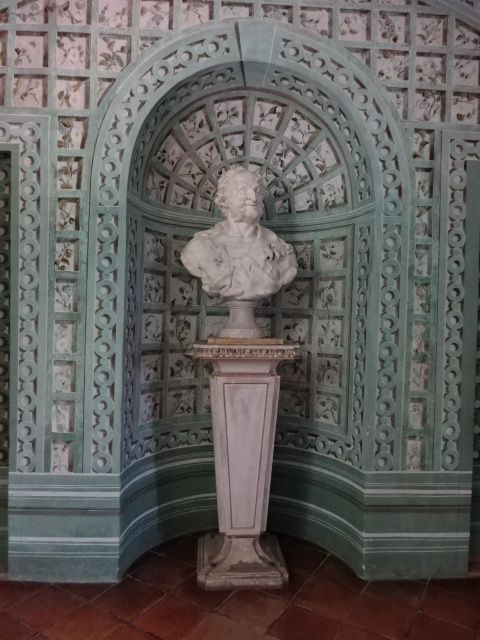
The grotto

What I noticed first in the Ancestral Hall was the masterful wooden panels on the wall, Baroque in style. The colossal portraits filled me with awe. The Corinthian pilasters added to the elegance. However, the best part about this space was above me: the ceiling fresco focused on allegorical figures in a pictorial narration of the founding of the town. Olympian gods, including goddess of the hunt Diana and god of time Chronos, surrounded Prince Jaromír on his hunt. Passions of the count were depicted as allegories of theatre and music. Gods also represented the four seasons.
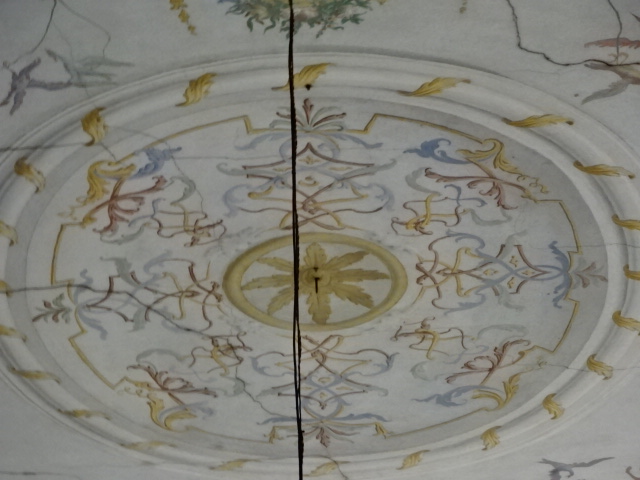
Dance Hall

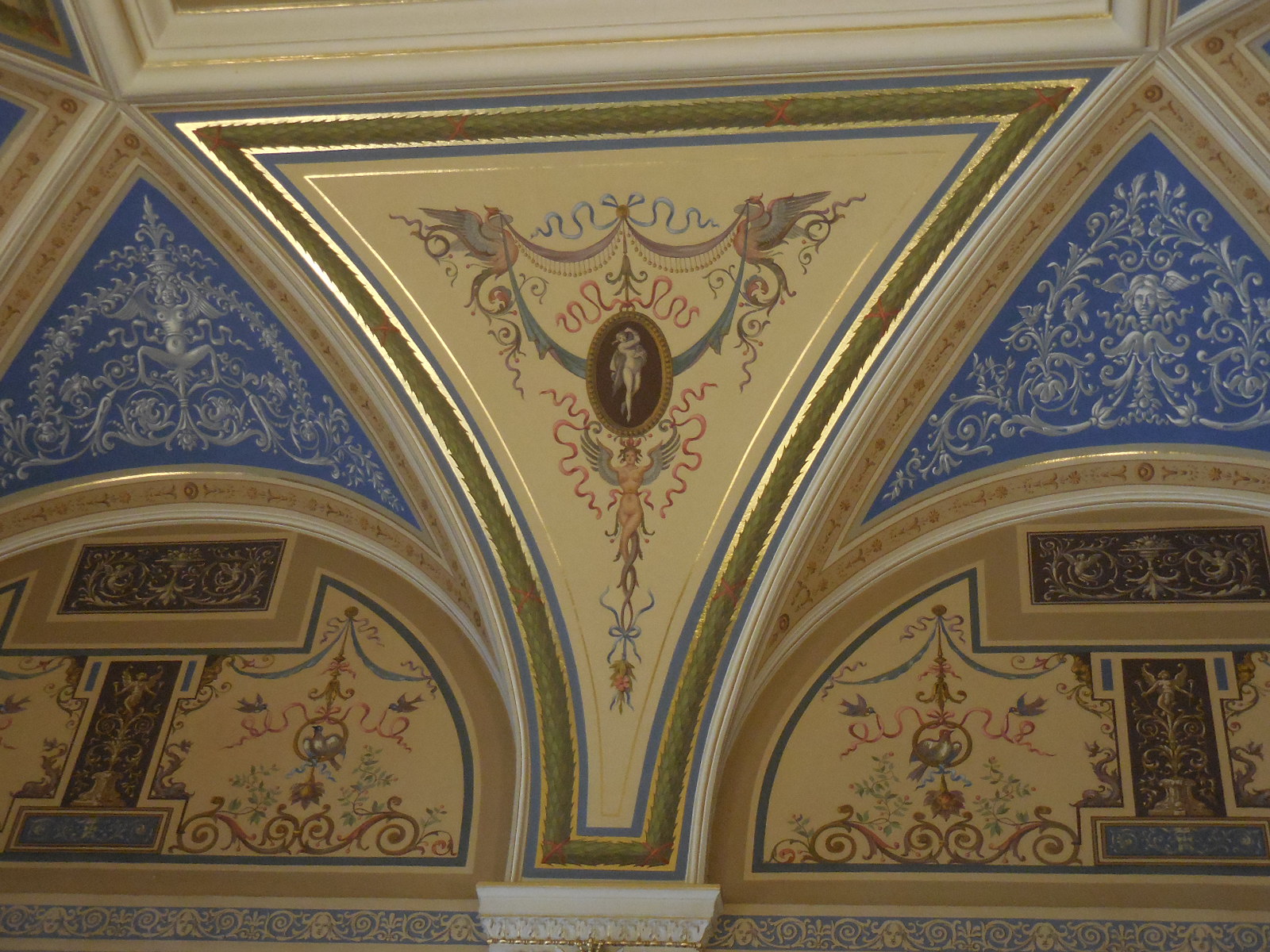
The light and airy Dance Hall fascinated me with its fresco decor. The grotesque made appearances on the walls and ceilings in an early Rococo creation from the 1730s. The fresco took my breath away as I almost became dizzy with emotion.
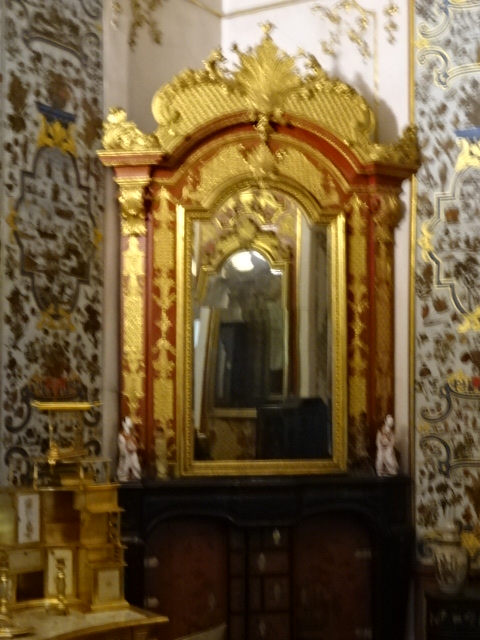
Chinese Salon

It wasn’t possible to go into the Chinese Salon. I could only peer at it behind a rope. Still, I could tell that it was very elaborate and elegant. Various colored woods made up the flooring. The walls were richly decorated, and gold carvings gave it an opulent feeling. I also saw Oriental vases and a gold-and-red large frame of a mirror. The red and gold colors appealed to me.
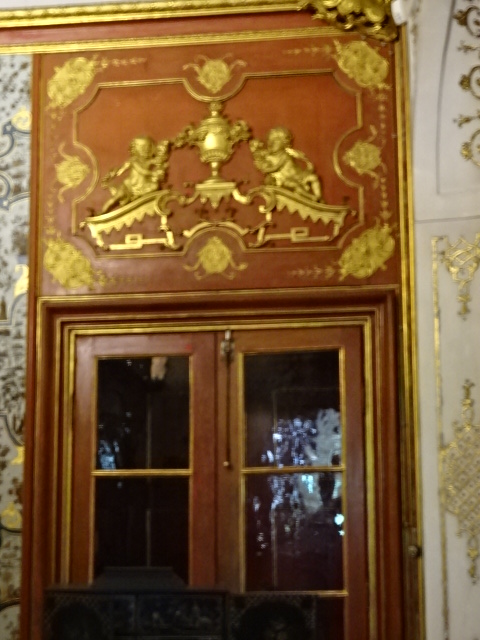
Chinese Salon

The Sala Terrana was the last space on the tour. The green-and-white ceiling decoration, plants and busts made for a stunning and vibrant atmosphere. The walls included masterful illusory paintings of a plant-filled pergola. I found the light green color that dominated the space to be soothing and tranquil. I considered this to be a place where I could truly relax.
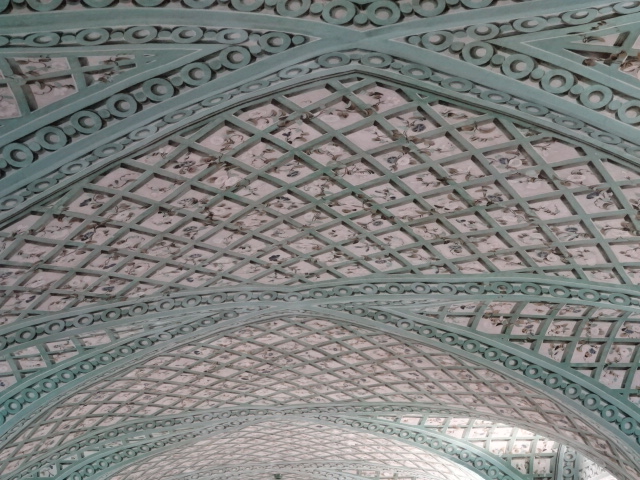
Grotto

The Roman baths also captured my interest. On the walls around the wooden pool was plaster inlaid with shells and lava. Medallions showed portraits of fictional Roman emperors. The decoration was captivating.
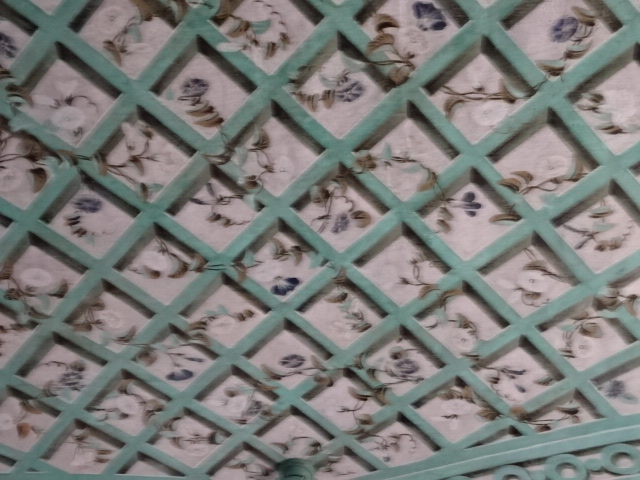
Grotto

There was more, much more. The Blue Salon, utilized as a picture gallery, included some Baroque landscapes, my favorites. Impressive Dutch, German and French painters from the 17th to 19th centuries were represented.
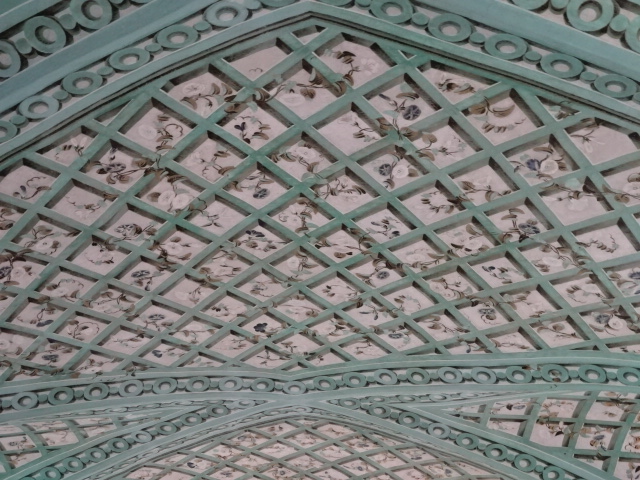
Grotto

The Ladies’ Salon was decorated with yellow furniture that reminded me of the yellow kitchen in the townhouse where I spent my childhood and part of my adulthood. I had many light-hearted as well as serious conversations with my mother in that kitchen while I grew up from a five-year old to an adult. My mother doesn’t live there anymore. I can never go back to that yellow kitchen.
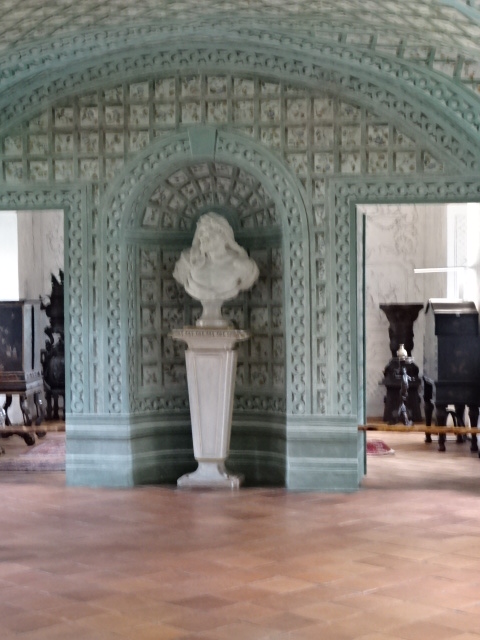
Grotto

The Count’s Study featured allegories of countries represented in four large late Renaissance paintings. No less than three salons in Empire and Biedermeier styles represented Jan Adam’s love of music with collections of astounding musical instruments used during the Baroque era.
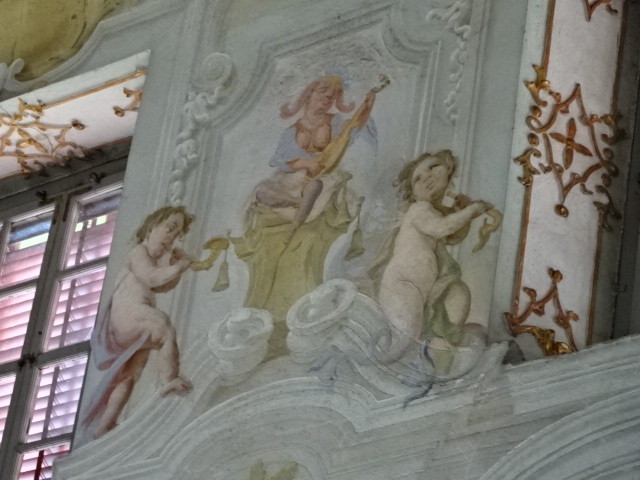
Dance Hall

The chateau gardens were just as splendid, even though on this day there were spattering of rain. Of course, the gardens were Baroque. A theatre made from nature was situated on an island with an English park, and there were French style gardens, too. Altogether, the gardens measured 10 hectares. Statues from the 1730s depicted ancient deities.
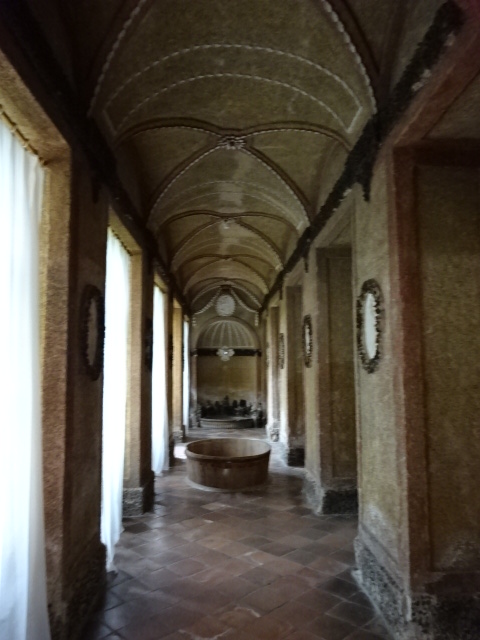
Roman baths

I was enthralled by everything, most of all by the Ancestral Hall, Chinese Salon, Dance Hall and Sala Terrana with Roman baths. I didn’t do much exploring in the gardens due to the temperamental weather.

Next on the itinerary was the Church of Saint Markéta, another gem that would bring me immense joy.

Tracy A. Burns is a writer and teacher in Prague.
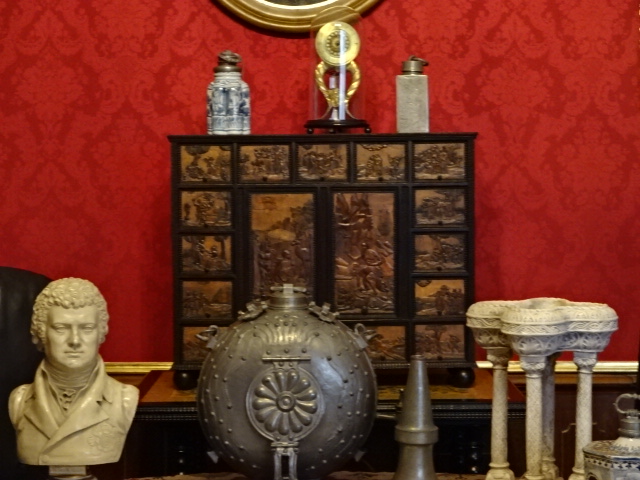
Rudolfinum Diary

Rudofinum1

The Rudolfinum with the statue of Antonín Dvořák

Back in college, on a whim I took a classical music course, and soon I was hooked. Beethoven’s Pastoral Symphony and Dvořák’s New World Symphony enthralled me, but I became a fan of many other composers as well – Rachmaninoff, Vaughan Williams, Smetana, Charles Ives, Aaron Copland, Martinů, Mozart, Chopin, Bartók. Even the dissonance of Arnold Schoenberg captured my undivided attention. During my university years, I would take the bus from Smith College to Springfield, Massachusetts in order to attend Springfield Symphony concerts once a month.

Rudolfinum3

In Prague I would sometimes admire the statue of Dvořák in front of the Rudolfinum, and, occasionally, I would visit the art gallery in the building to see intriguing contemporary exhibitions. However, for some reason, I did not go into the concert hall of the Rudolfinum for a long time. I assumed all the concerts would be too expensive, and everything would sell out immediately.

Rudolfinum2

Then, a few years ago, in the midst of a classical music craving, I went to a piano recital in the Dvořák Hall of the Rudolfinum. I just had to go back. Again. And again. I went as often as I could, both to concerts in the large Dvořák Hall auditorium and to chamber concerts in the Suk Hall.  Dvořák Hall, one of the oldest in Europe, has the capacity of 1,148 places with 1,104 seats. Standing room is big enough for 40 concertgoers, and there are four places designated for the wheelchair-disabled.

Rudolfinum10

The following year I purchased season tickets to three cycles. Attending concerts not only allows me to hear worldwide acclaimed musicians but also to relieve stress and get my mind off any worries or concerns for a few hours.

Rudolfinum11

Although I studied piano for fun in college, my favorite instrument is the violin. In Prague, I discovered the masterful interpretations of Czech violinists Josef Suk, Jiří Vodička and Josef Špaček. The violin enchants me, all the more because it is an instrument I know I could never even hold properly let alone play.

Rudolfinum4

I did not know that there were tours of the Rudolfinum until I wrote to the box office and asked. I recommend all tourists interested in Czechoslovak history to take the tour, which is available in English. The story of the Rudolfinum is not only the story of Czech and Czechoslovak music but also the tale of Czech and Czechoslovak history. The Rudolfinum is not merely another music venue in Prague. It is a remarkable Neo-Renaissance building in which Czechoslovak history has been played out.

Rudolfinum13

The Rudolfinum opened its doors February 7, 1885. It was designed by architect Josef Zítek and his student Josef Schulz and named after Crown Prince Rudolf of the Habsburg clan. The Crown Prince was present at the inaugural performance. The Czech Philharmonic played here for the first time on January 4, 1896, in a concert that Dvořák himself conducted. The Czech Philharmonic has called the building home since 1946.

Rudolfinum8

However, the Rudolfinum has not only been a captivating venue for concerts. From 1919 to 1939, the seat of Czech Parliament was here. In Dvořák Hall during 1920, 1924 and 1934, Tomáš Garrigue Masaryk was elected President of Czechoslovakia. Sometimes, waiting for a concert to start, I try to imagine the atmosphere of those elections playing out in the very same hall where I am seated.

Rudolfinum9

Because I like to know something about the history of the orchestra I am seeing perform, I looked up information about the various conductors of the Czech Philharmonic.

Rudolfinum5

After Czechoslovakia was founded in 1918, Václav Talich became the main conductor and would serve in that capacity until 1941. His tenure lasted almost 1,000 concerts. Thanks to Talich, the Czech Philharmonic received worldwide acclaim. He first conducted with the Czech Philharmonic in 1917 at age 34.

Rudolfinum6

Talich’s personal history is colorful. He was put in jail after World War II, accused of collaborating with the Nazis, but there was no proof to support the charge. After the Communist coup in 1948, he found himself immersed in troubles again. The Communists forbid him from conducting in any public place until 1954.

Rudolfinum12

From 1942 to 1948, Raphael Kubelík worked as the main Czech conductor with the Philharmonic, but he also was known for his accomplishments as a composer and as a violinist. He was an expert on pieces created by Czech and other Slavic composers. He also was known for his interpretations of compositions by Gustav Mahler and Béla Bartók. He emigrated after the 1948 Communist coup, when the Communists took over the Czechoslovak government.

Rudolfinumbighall1

Karel Ančerl’s biography is fraught with tragedy. He was making a name for himself as a conductor when World War II changed everything. The Nazis forced him to work as a forester, and then incarcerated him. During 1942, he was transported to Terezín, where even the depressing atmosphere of a concentration camp could not stop him from continuing musical endeavors. Two years later, Ančerl was sent to Auschwitz. He was the only member of his family to survive the war. Ančerl took over the Czech Philharmonic in 1948. He would stay for 20 seasons, until he emigrated after Russian tanks invaded Czechoslavkia, crushing the liberal reforms of the Prague Spring in 1968.

Rudolfinumbighall2

For the past few seasons, I had watched Jiří Bělohlávek at the helm of the Czech Philharmonic. His interpretations of music received praise throughout the world. He worked with the Prague Philharmonic from 1994 to 2005 and then conducted with the BBC Symphony Orchestra from 2006 to 2012. He first held the post of main conductor with the Czech Philharmonic from 1990 to 1992. He rejoined the Czech Philharmonic again in 2012. His interpretation of the third and fourth symphonies of Bohuslav Martinů earned him a nomination for a Grammy in 2005. In April of 2012, he received the medal of the British Imperial Order. Unfortunately, he died May 31, 2017. I am honored that I was able to attend so many of his concerts.

Rudolfinumbighall5

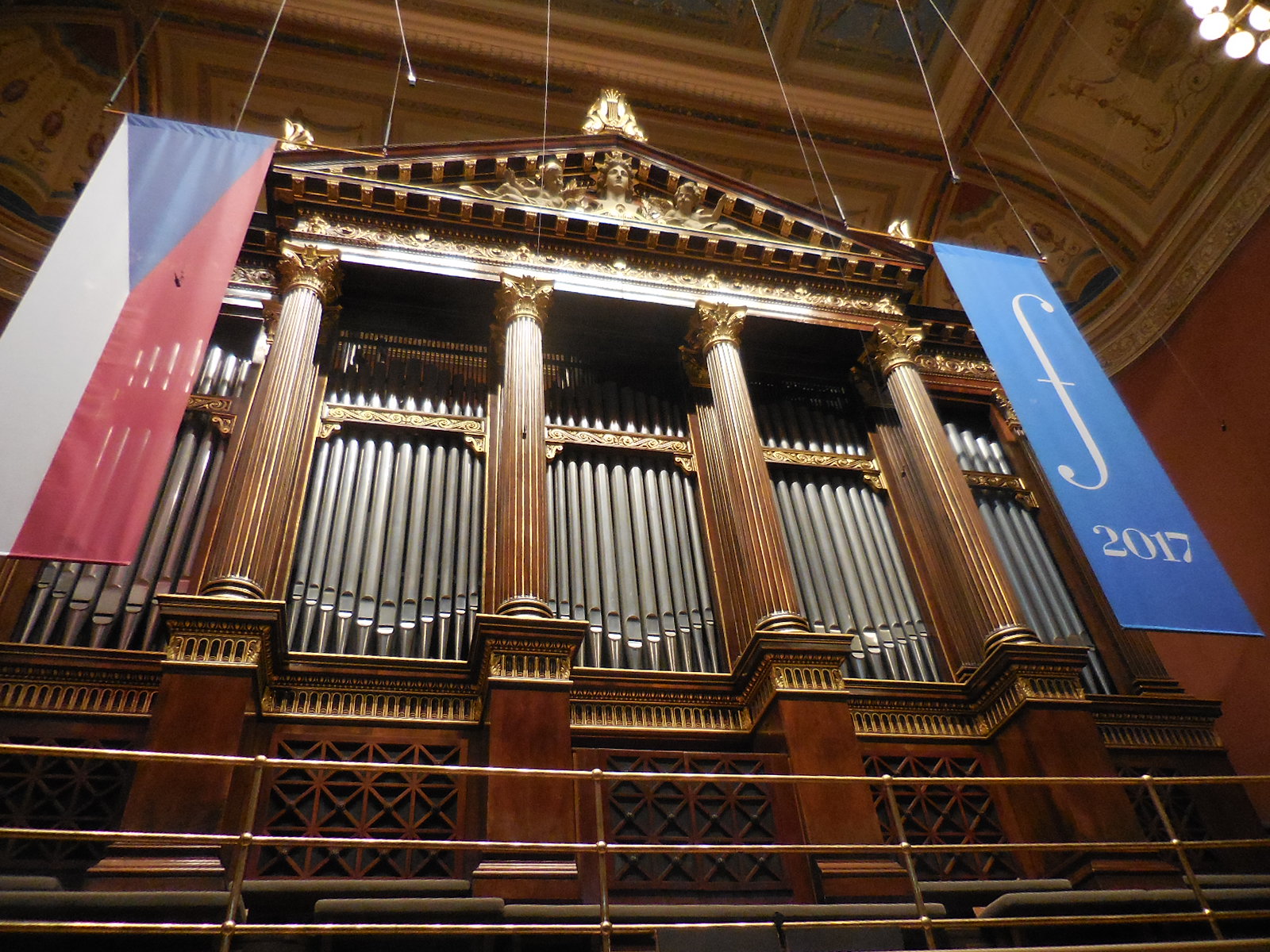
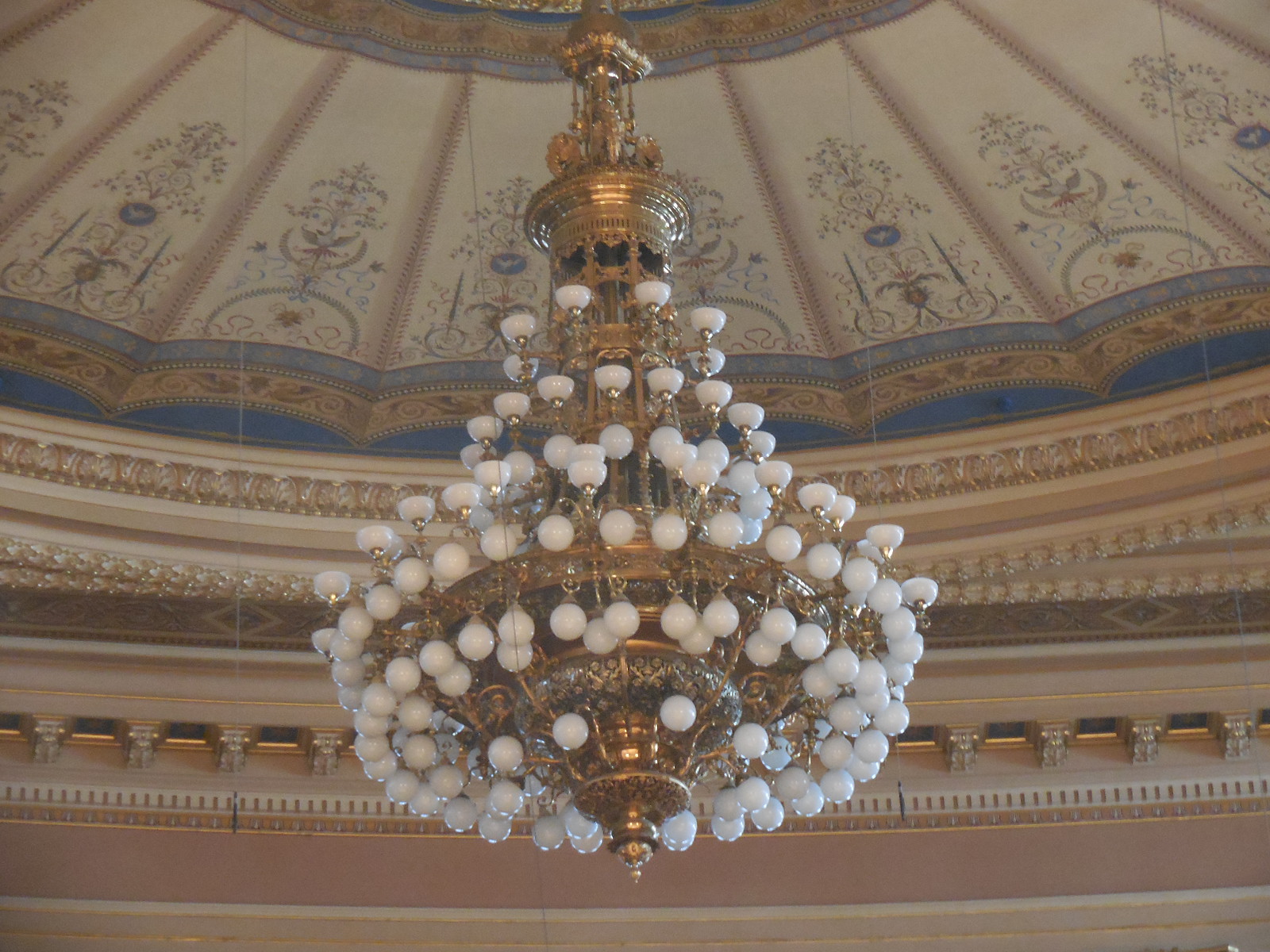
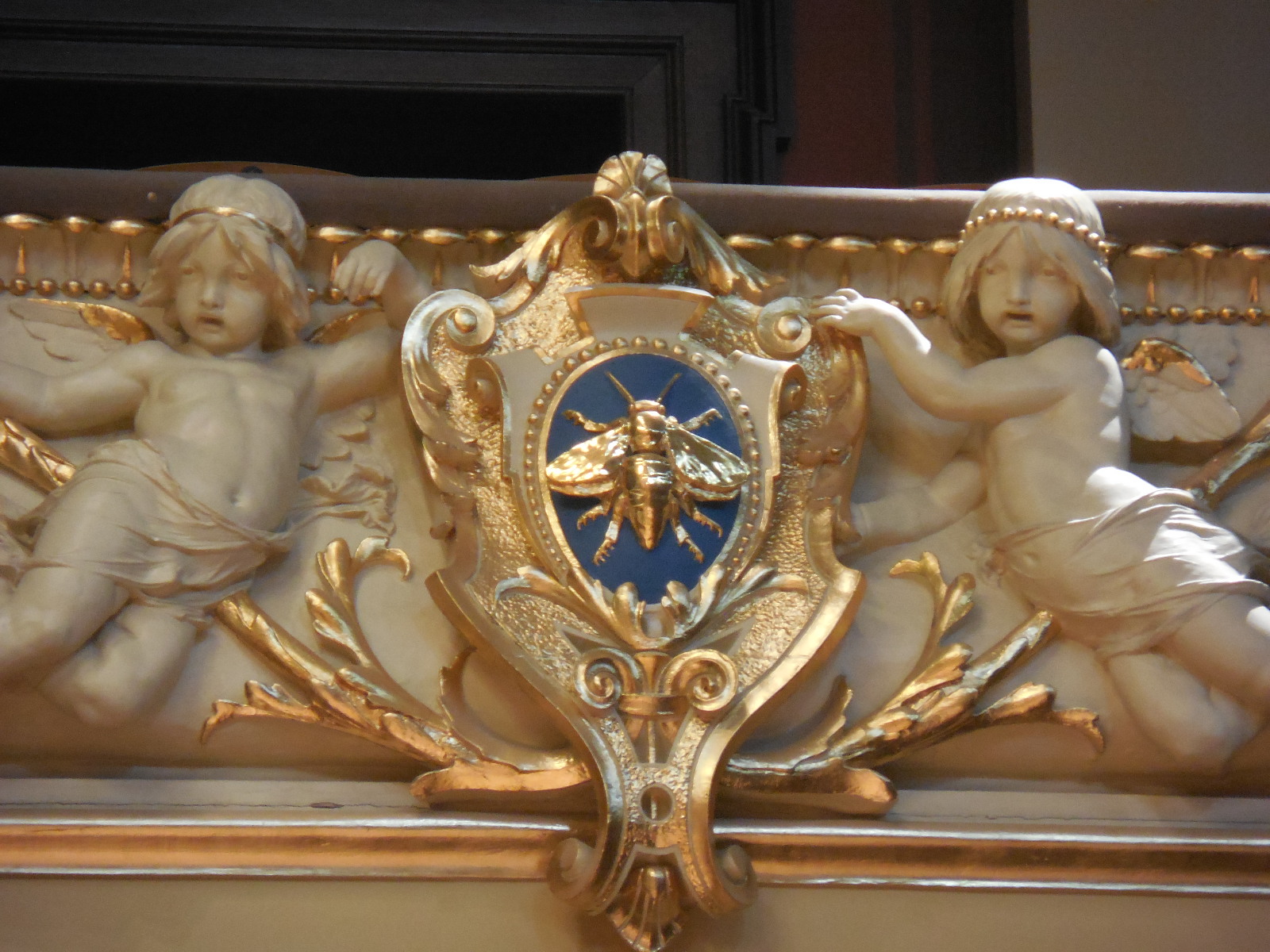
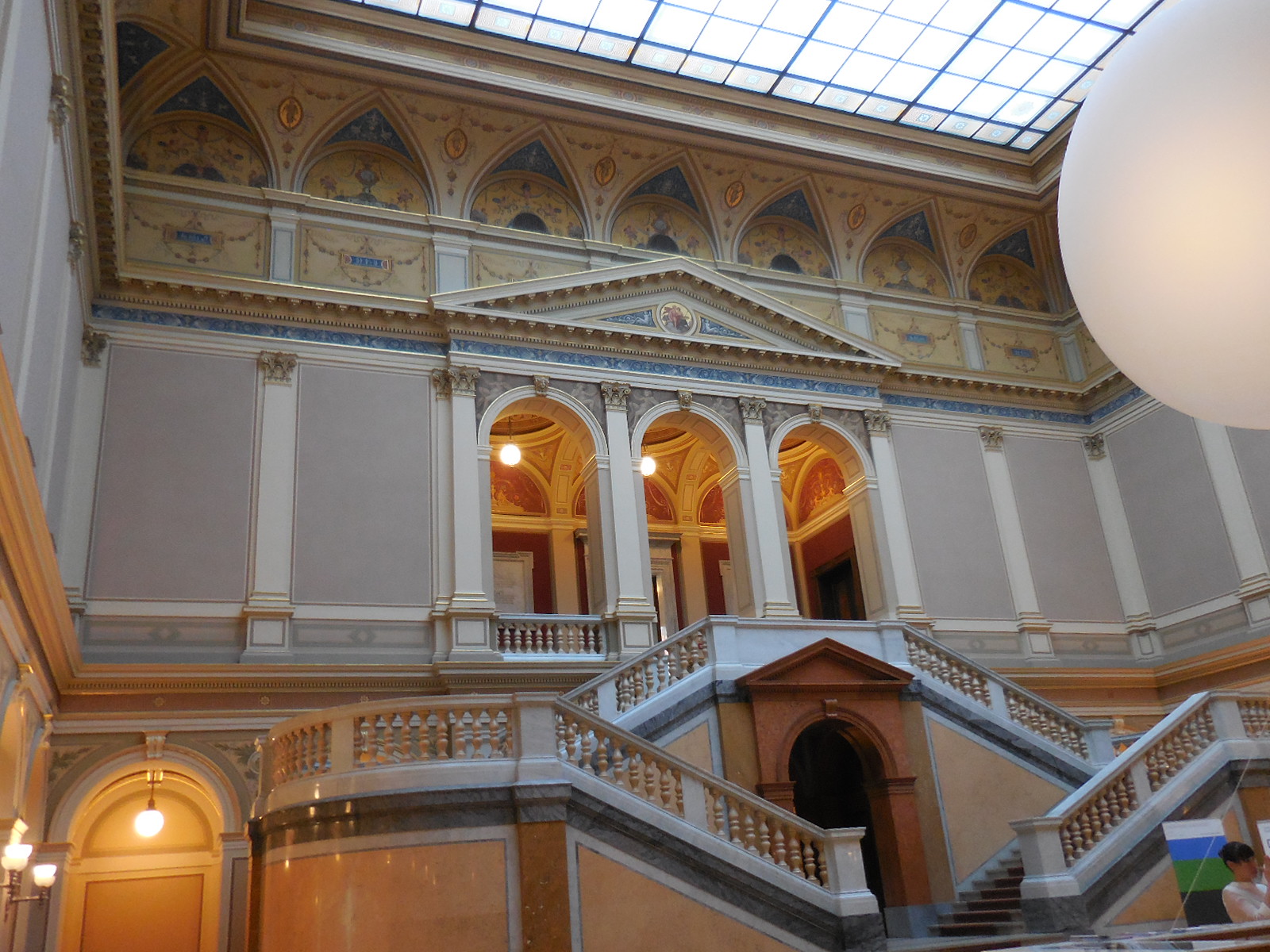
The tour of the Rudolfinum takes music enthusiasts onto the stage of the Dvořák Hall where one can appreciate the rich decoration on the balustrades and painted ceiling with elegant chandelier. I loved the bright blue color in the superb ceiling painting. On the balcony, there is an intimate reception room for special guests. On the roof I saw many statues as well as beehives. (The National Theatre also makes its own honey, by the way.) I admired the superb views of Prague Castle.

Rudolfinumbust1

Rudolfinumbust2

Rudolfinumpic1

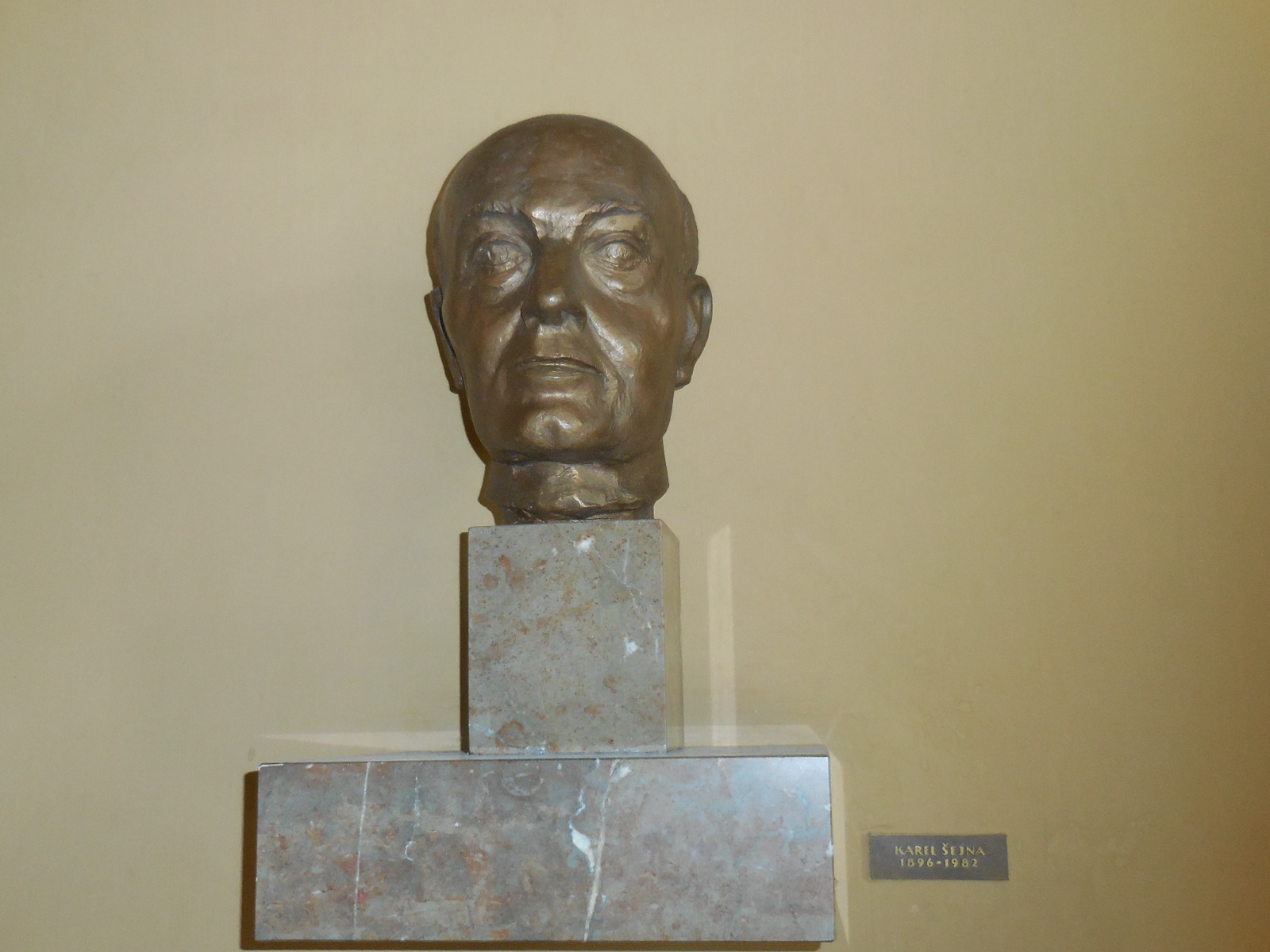
On the first floor, I took note of the busts of various Czech musicians and conductors. I took a photo of the bust of Karel Šejna, who was a double bassist with the Czech Philharmonic who served as main conductor in 1950. That year he led the Czech Philharmonic in concerts in England as well as East and West Germany. He was known for his interpretations of the music of Hector Berlioz, Richard Strauss and Gustav Mahler.

Rudolfinumconductorrm3

The Conductor’s Room

Rudolfinumconductorrm4

Rudolfinumconductorrm5

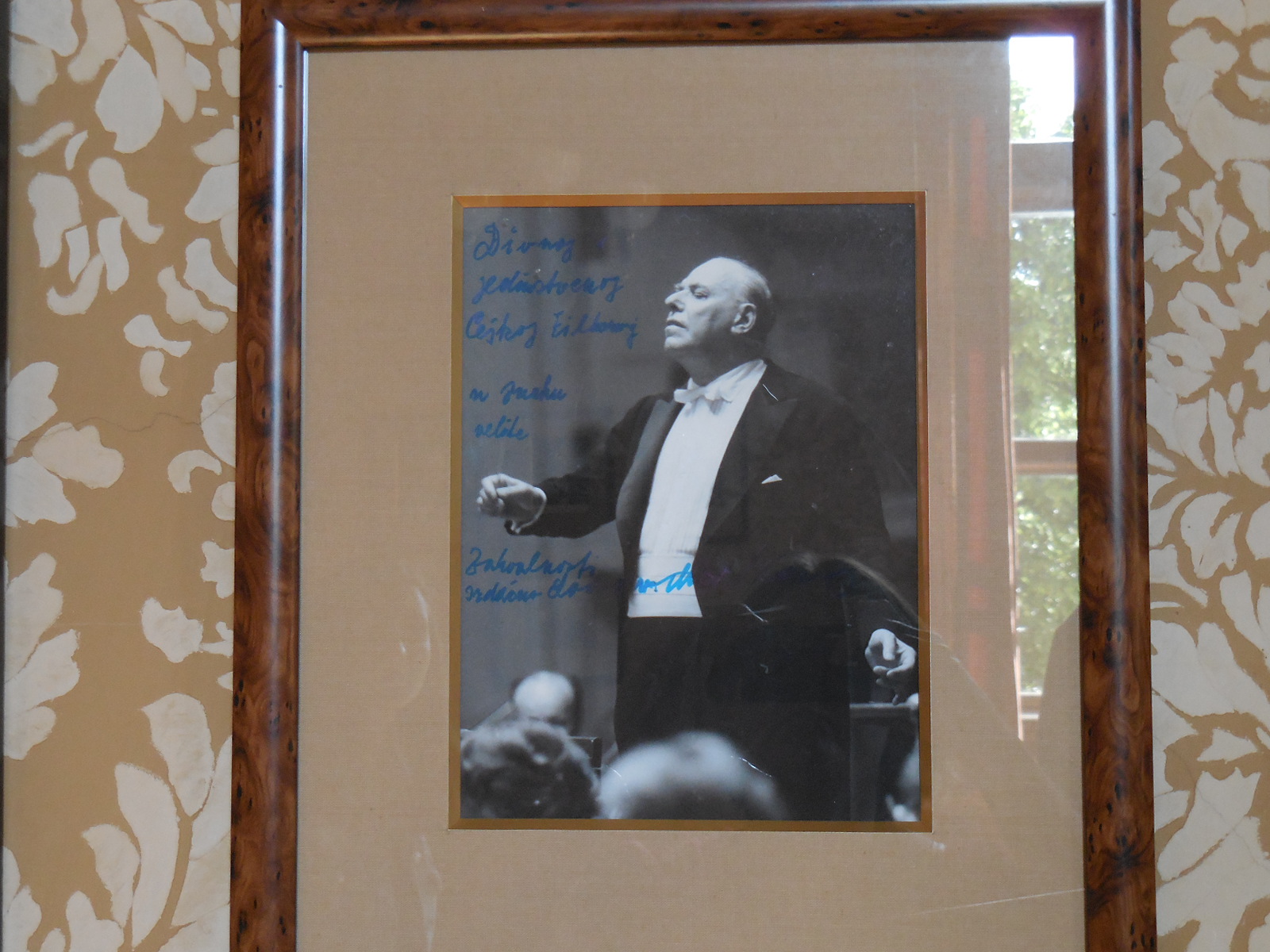
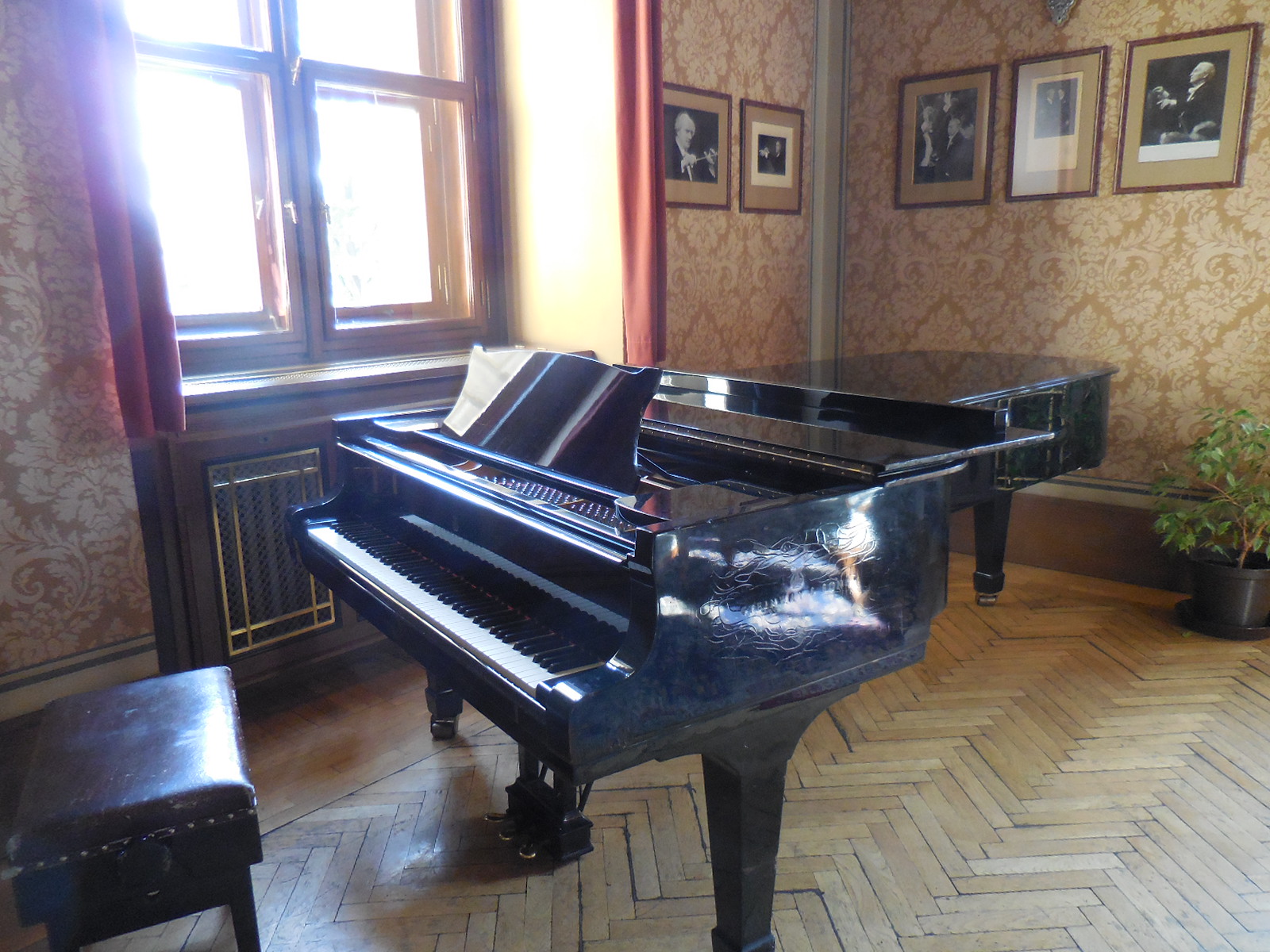
I was also entranced with the black-and-white photos of Czechs who made great contributions to musical history. Some of the photos were even autographed. I especially liked the Conductor’s Room. The blues and reds of the carpet appealed to me as did the various styles of furniture. I could imagine one of the former conductors playing a Mozart melody on the Petrov piano, deep in thought. The photos of musicians on the walls gave me the feeling the space was imbued with historical resonance.

Rudolfinumroof1

Rudolfinumroof2

Seeing the building from a tourist’s perspective was enlightening. Still, I am most content as a concertgoer in elegant Dvořák Hall, listening to musicians warm up their instruments, anticipating the concert soon to come.

Tracy A. Burns is a writer, proofreader and editor in Prague.
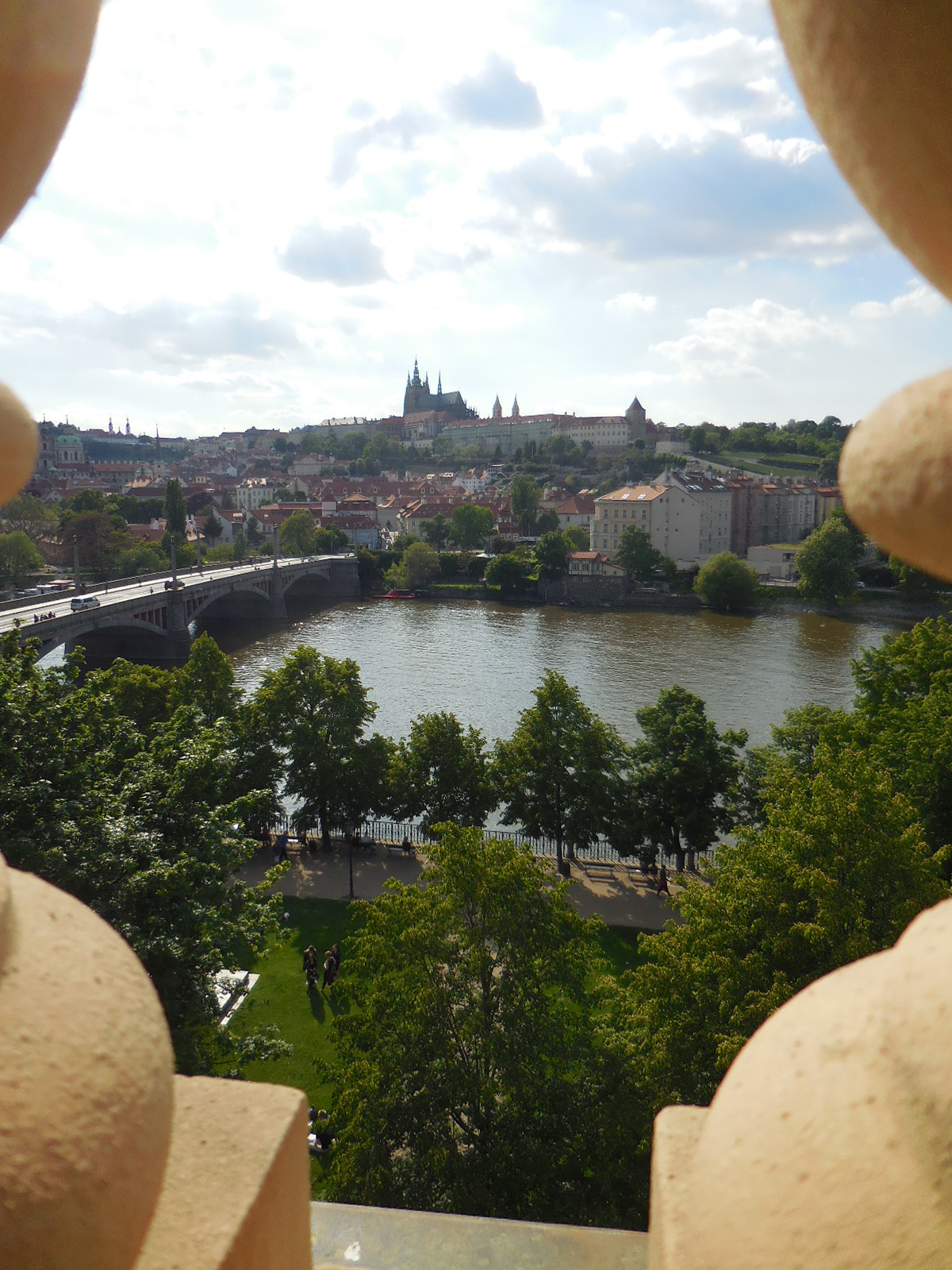
Rudolfinumroof4

Rudolfinumroof5

Rudolfinumroof8

Rudolfinumviewfromroof1