Jaroměřice nad Rokytnou Chateau Diary

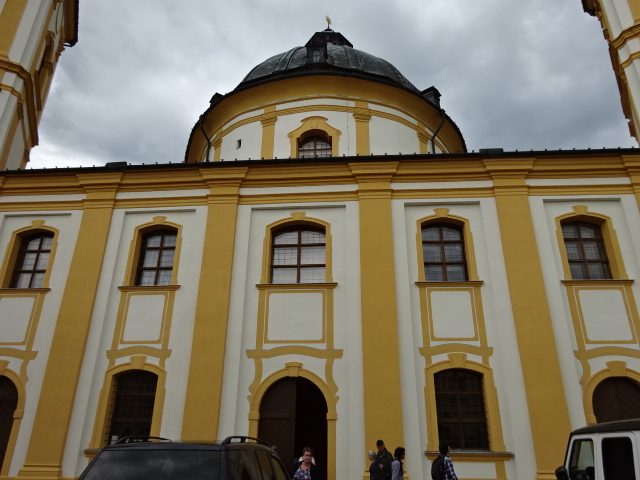
The first time I visited this chateau in Moravia, back in the late 1990s, it had been an adventure to get there. The train broke down just as it was nearing the town. All the passengers had to disembark. It was too far to walk there. I happened to see a taxi, rare in those parts, driving by the main street, and I flagged it down. After a short ride, I came upon the large Baroque chateau, one of the biggest in the country. I was amazed at its beauty and elegance. When I visited the chateau for the second time during 2025, on a tour bus, the ride was thankfully sans adventure. Walking toward the main entrance, I was just as fascinated as I had been during my first visit so many decades earlier.
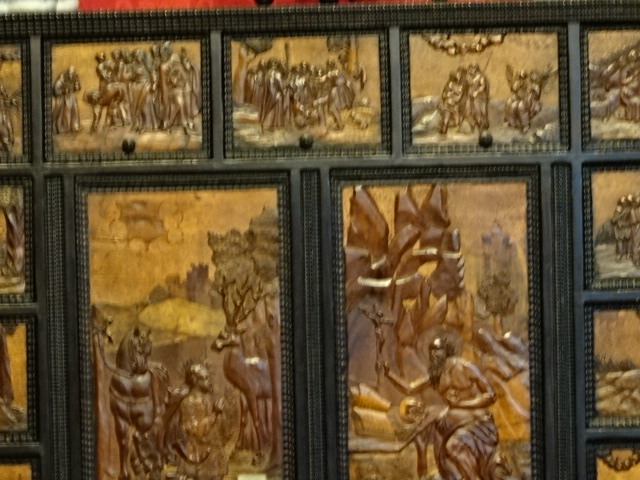
The stunning chateau began as a medieval fortress. The Meziříčtí family of Lomnice transformed the structure into a Renaissance castle during the early 17th century. This clan fought for the Protestants in the Czech Estates Uprising, and, when the Protestant nobles lost, the chateau was given to Gerhard of Questenberk. He died in 1646.
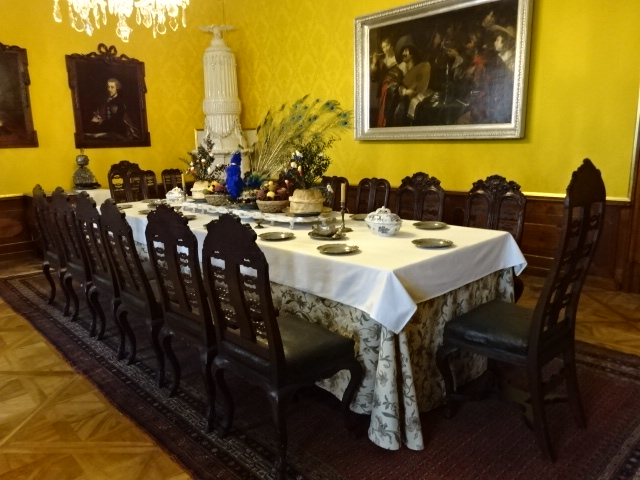
His grandson, Count Jan Adam of Questenberk, would be responsible for the major reconstruction in 1700, and his name would forever be connected to the glory days of the chateau’s existence. After extensive travel throughout Europe, Count Jan Adam decided to call Jaroměřice his home. He was fascinated by the Baroque style and was determined to make his chateau a Baroque gem. Reconstruction ended in 1737.
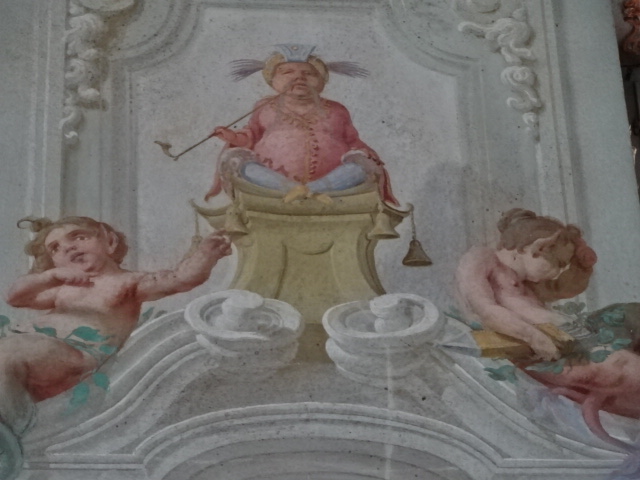
Dance Hall fresco

Jan Adam loved the arts, particularly music and theatre. The chateau became a bustling center for these passions. He created a theatre group in Jaroměřice, and musical concerts as well as operas were performed there, too. Children’s plays also made up the repertoire. Italian operas were the count’s favorites. Masterfully made Baroque theatre sets were utilized as well as elaborate costumes. A large theatre came into existence from 1731 to 1739. Music and theatre came alive in stellar performances on this stage.
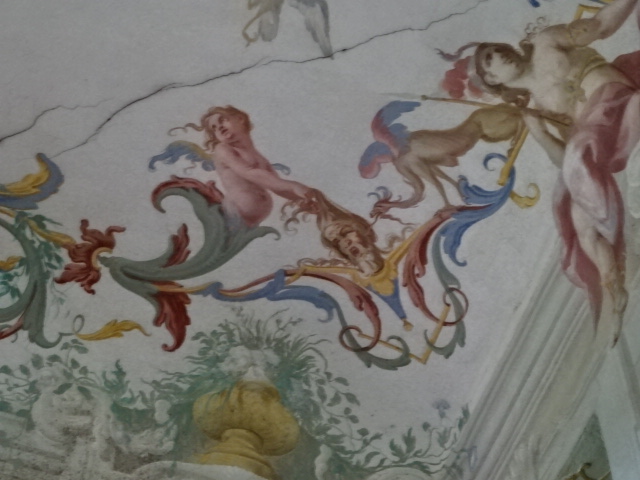
Dance Hall

However, when Jan Adam died in 1752, his widow did not continue the music and theatre traditions of her late husband. The glory days were gone. With Jan Adam’s death, the Questenberk lineage also ended.

Several families controlled the chateau after Questenberk’s passing, but no major changes were made. The chateau today is a testament to Jan Adam’s dedication to architectural elegance as it is punctuated by charming and astounding spaces.
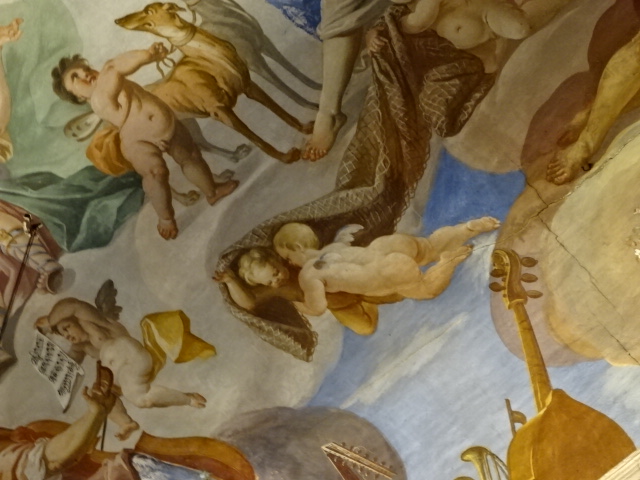
Ancestral Hall ceiling fresco

The rooms that impressed me the most were the Ancestral Hall, the Dance Hall, the small but intricate Chinese Salon and the last place on the tour, the amazing Salla Terrana with adjacent Roman baths.
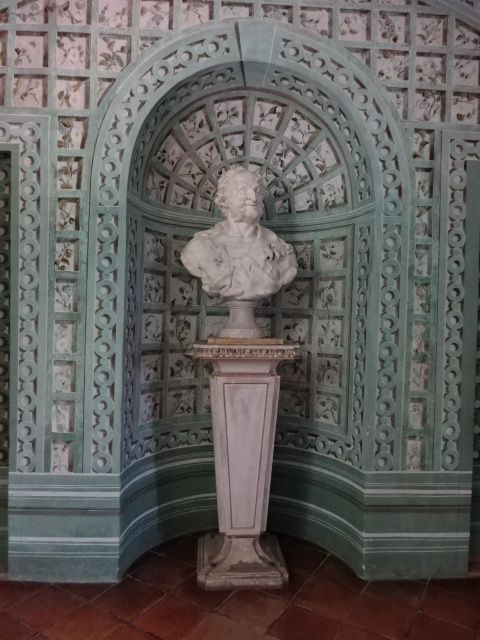
The grotto

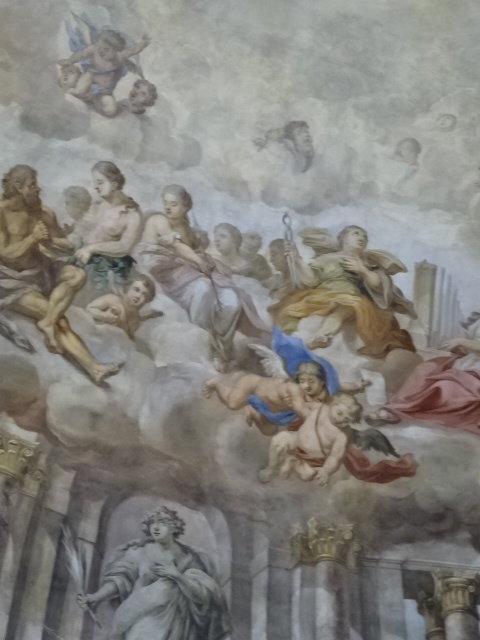
What I noticed first in the Ancestral Hall was the masterful wooden panels on the wall, Baroque in style. The colossal portraits filled me with awe. The Corinthian pilasters added to the elegance. However, the best part about this space was above me: the ceiling fresco focused on allegorical figures in a pictorial narration of the founding of the town. Olympian gods, including goddess of the hunt Diana and god of time Chronos, surrounded Prince Jaromír on his hunt. Passions of the count were depicted as allegories of theatre and music. Gods also represented the four seasons.
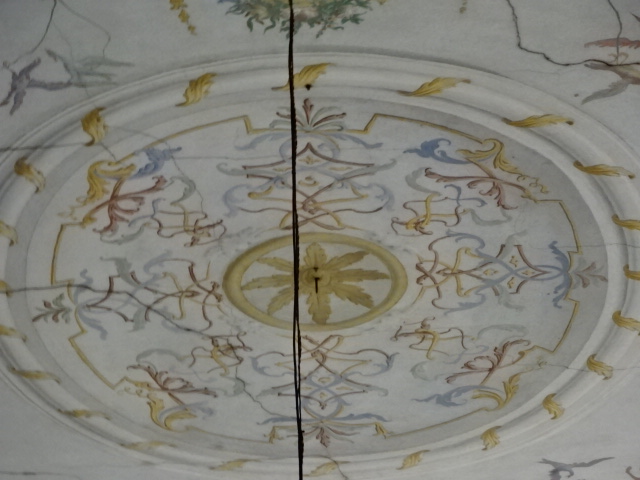
Dance Hall

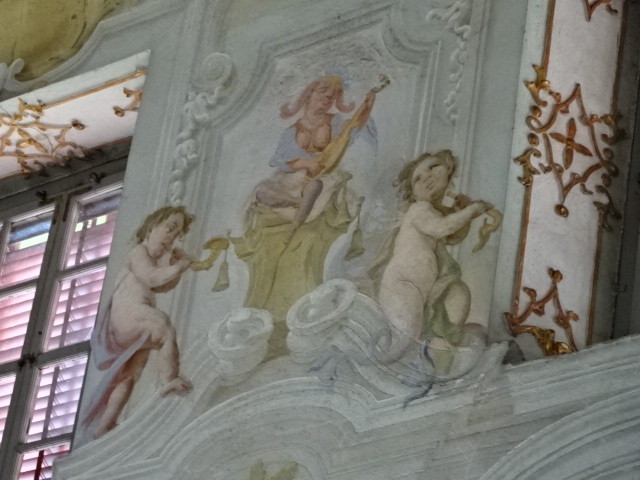
The light and airy Dance Hall fascinated me with its fresco decor. The grotesque made appearances on the walls and ceilings in an early Rococo creation from the 1730s. The fresco took my breath away as I almost became dizzy with emotion.
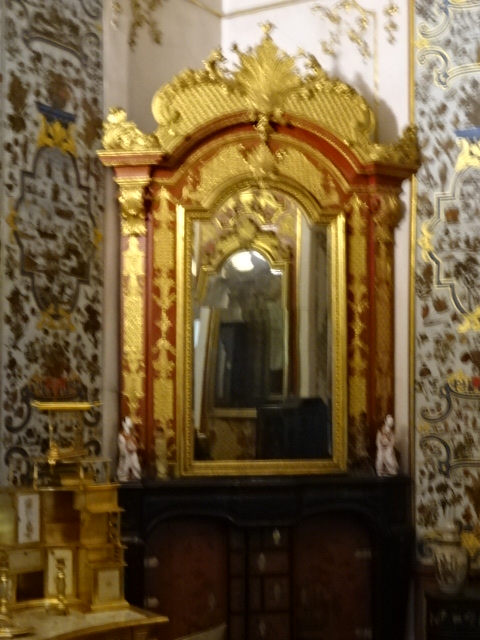
Chinese Salon

It wasn’t possible to go into the Chinese Salon. I could only peer at it behind a rope. Still, I could tell that it was very elaborate and elegant. Various colored woods made up the flooring. The walls were richly decorated, and gold carvings gave it an opulent feeling. I also saw Oriental vases and a gold-and-red large frame of a mirror. The red and gold colors appealed to me.
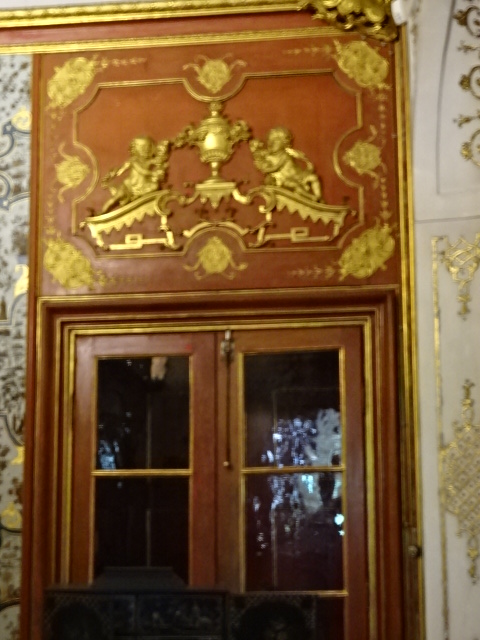
Chinese Salon

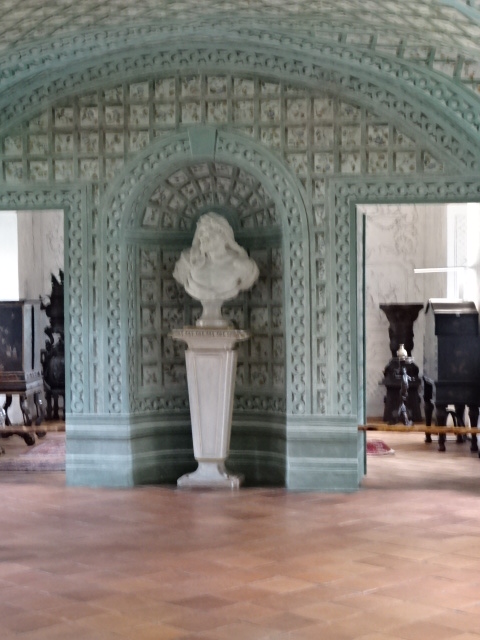
The Sala Terrana was the last space on the tour. The green-and-white ceiling decoration, plants and busts made for a stunning and vibrant atmosphere. The walls included masterful illusory paintings of a plant-filled pergola. I found the light green color that dominated the space to be soothing and tranquil. I considered this to be a place where I could truly relax.
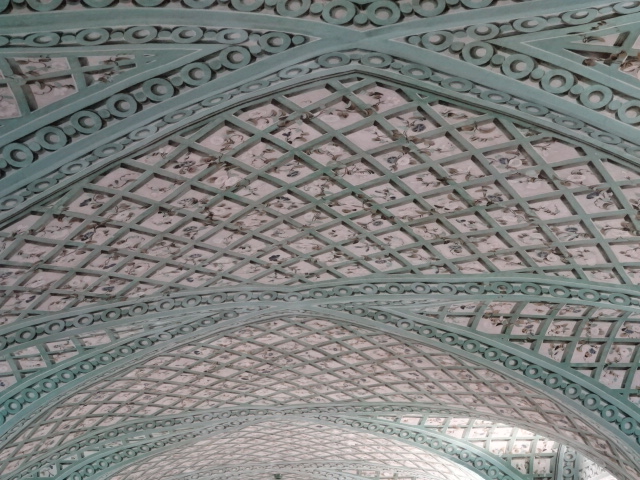
Grotto

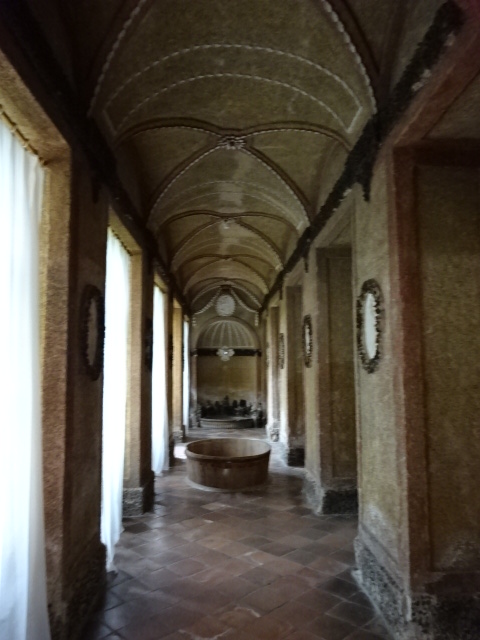
The Roman baths also captured my interest. On the walls around the wooden pool was plaster inlaid with shells and lava. Medallions showed portraits of fictional Roman emperors. The decoration was captivating.
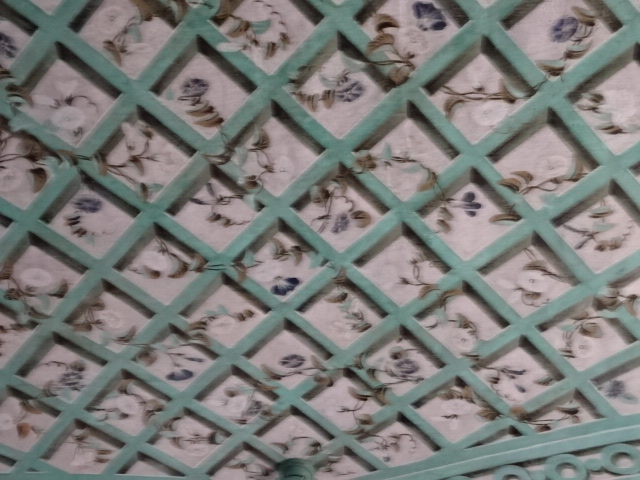
Grotto

There was more, much more. The Blue Salon, utilized as a picture gallery, included some Baroque landscapes, my favorites. Impressive Dutch, German and French painters from the 17th to 19th centuries were represented.
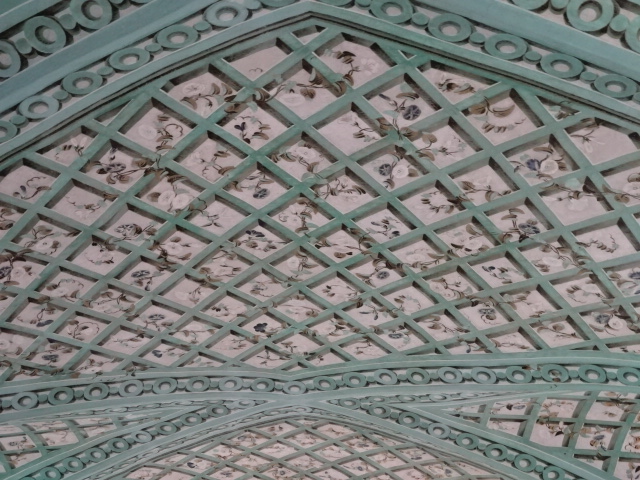
Grotto

The Ladies’ Salon was decorated with yellow furniture that reminded me of the yellow kitchen in the townhouse where I spent my childhood and part of my adulthood. I had many light-hearted as well as serious conversations with my mother in that kitchen while I grew up from a five-year old to an adult. My mother doesn’t live there anymore. I can never go back to that yellow kitchen.
Grotto

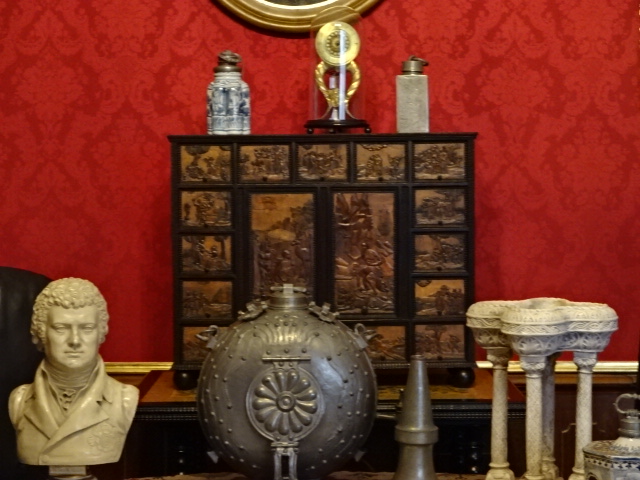
The Count’s Study featured allegories of countries represented in four large late Renaissance paintings. No less than three salons in Empire and Biedermeier styles represented Jan Adam’s love of music with collections of astounding musical instruments used during the Baroque era.
Dance Hall

The chateau gardens were just as splendid, even though on this day there were spattering of rain. Of course, the gardens were Baroque. A theatre made from nature was situated on an island with an English park, and there were French style gardens, too. Altogether, the gardens measured 10 hectares. Statues from the 1730s depicted ancient deities.
Roman baths

I was enthralled by everything, most of all by the Ancestral Hall, Chinese Salon, Dance Hall and Sala Terrana with Roman baths. I didn’t do much exploring in the gardens due to the temperamental weather.

Next on the itinerary was the Church of Saint Markéta, another gem that would bring me immense joy.

Tracy A. Burns is a writer and teacher in Prague.
The Church of Saint Markéta in Jaroměřice Diary

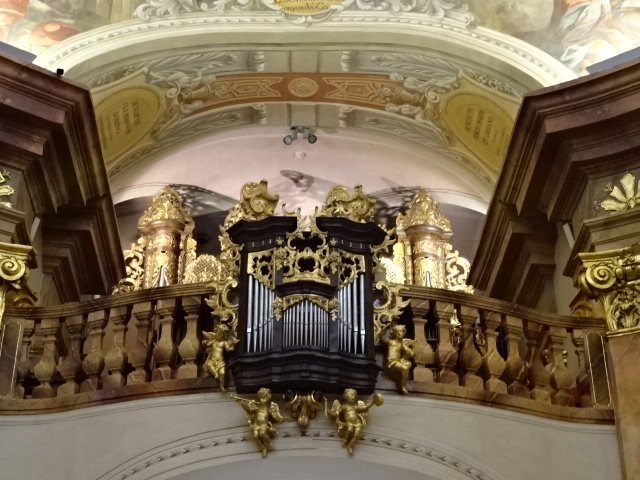
I visited this church, which became a national monument in 2002, for the very first time during 2025. The tour guide, who played for us the exquisite organ, narrated the history of the holy building. The first church on the premises was destroyed by a fire during 1631. The chateau, town hall and some houses also burned down during that catastrophe. There was only one object that survived the fire: a book about the church tower that was erected in 1562. This was not the only fire that would decimate the town during this era. The chateau’s owner Jan Adam of Questenberk, responsible for Jaroměřice’s golden era, promoted the reconstruction for the current church, built in 1737.

The church was in disrepair during the recent 2000s, but much reconstruction occurred from 2019 and lasted until 2022, taking three years to revive the structure that had been so dilapidated. A new sacristy was installed. Electrical and heating systems were redone.

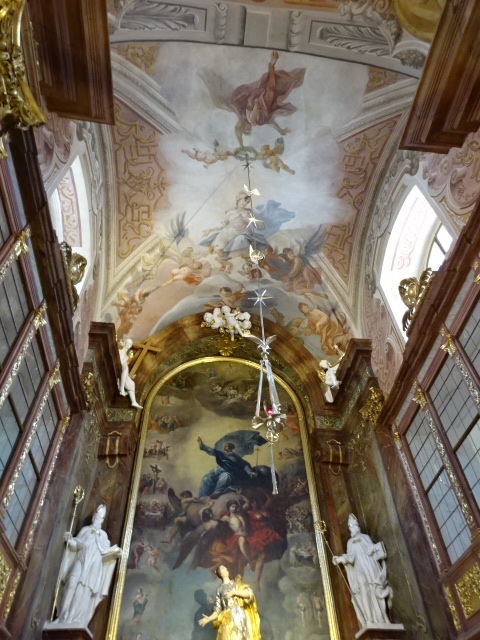
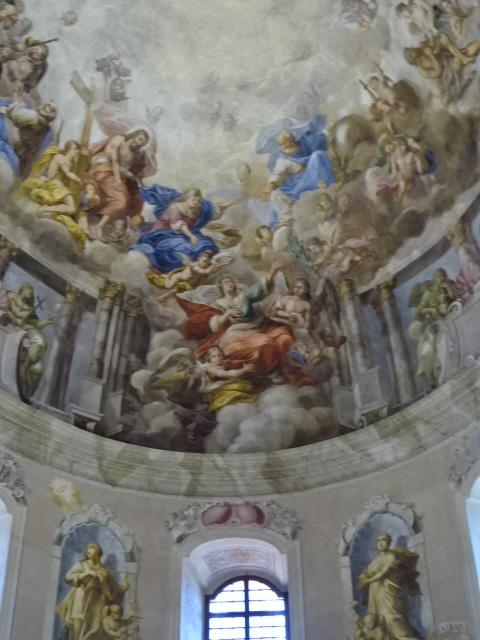
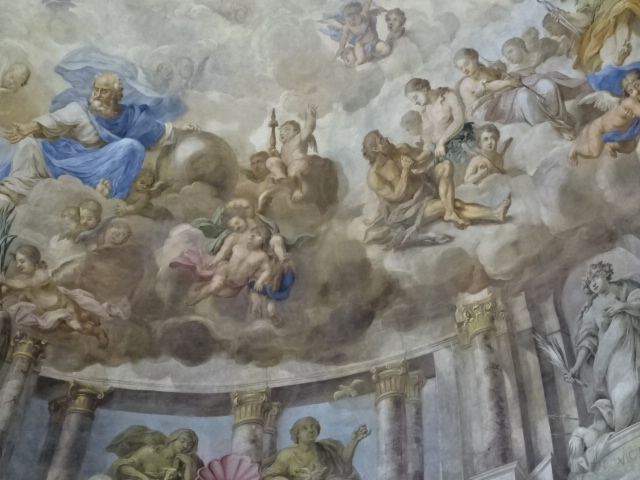
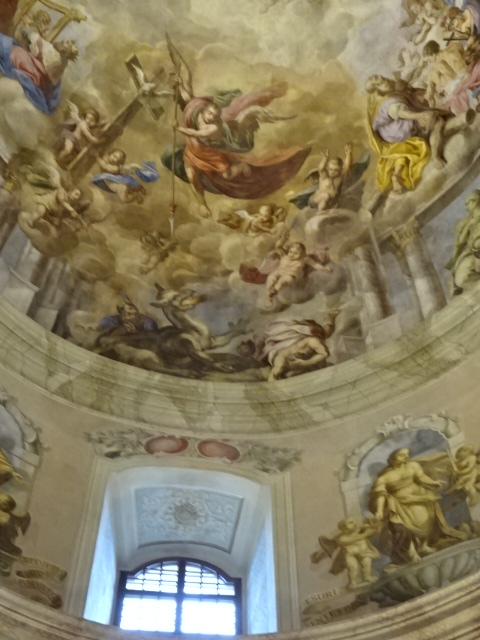
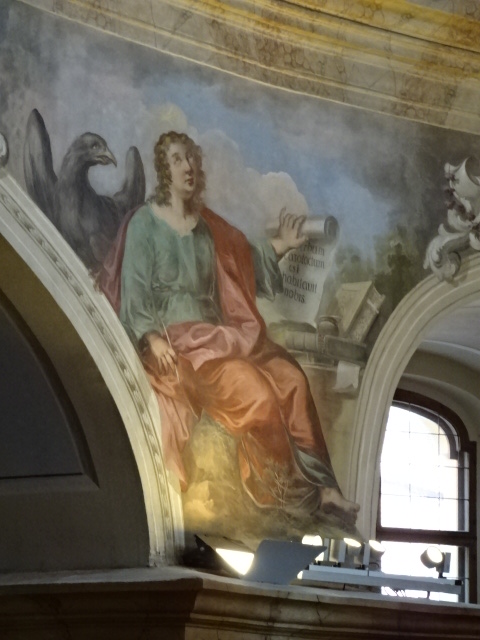
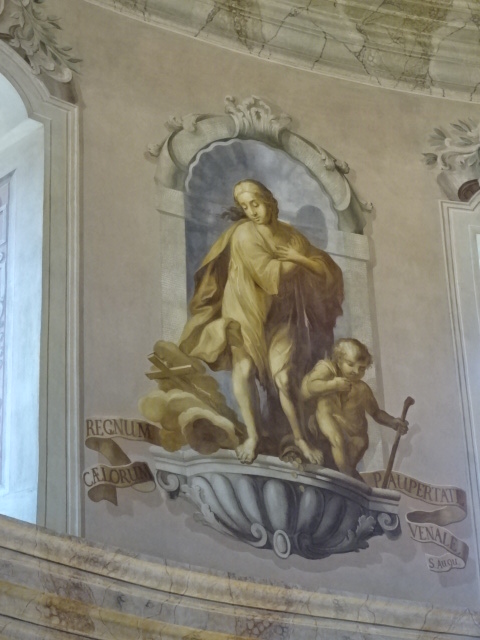
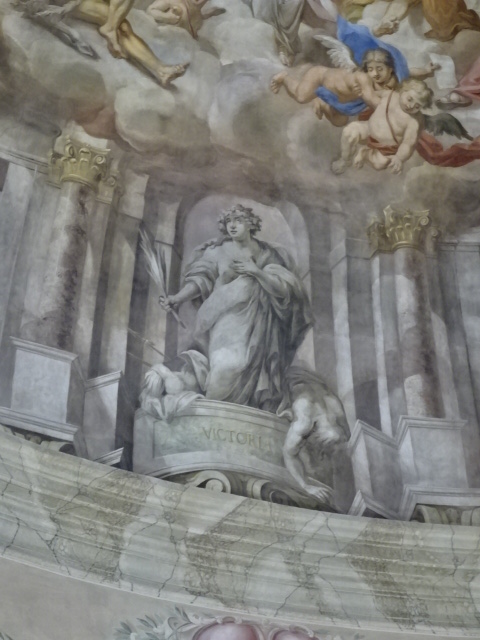
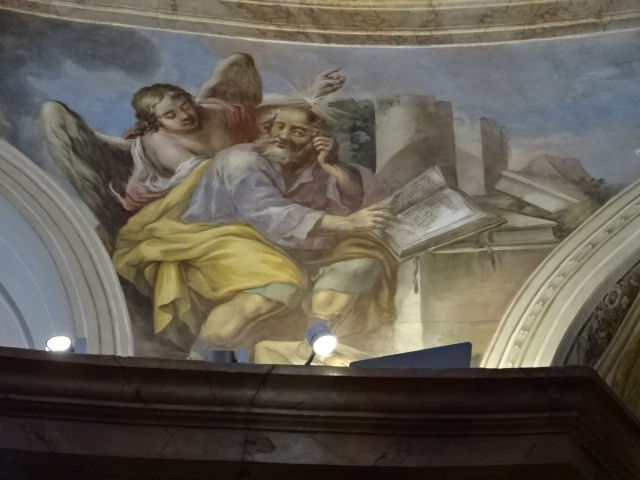
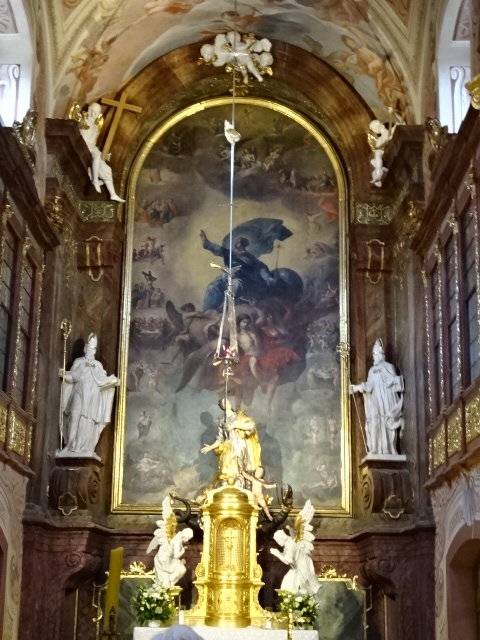
I inspected the main altar. The painting showed fluttering angels surrounding Saint Markéta as they placed laurel wreaths on the holy figure’s head. The creation of light was a major theme in this artwork. I was overwhelmed by the ceiling fresco, which measured 450m2. Painted by Karel František Tepper in 1737, it showed off Saint Markéta in all her glory and celebrated the town of Jaroměřice.

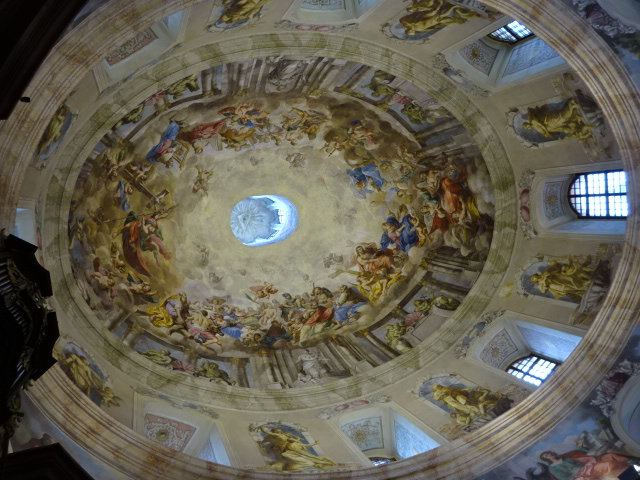
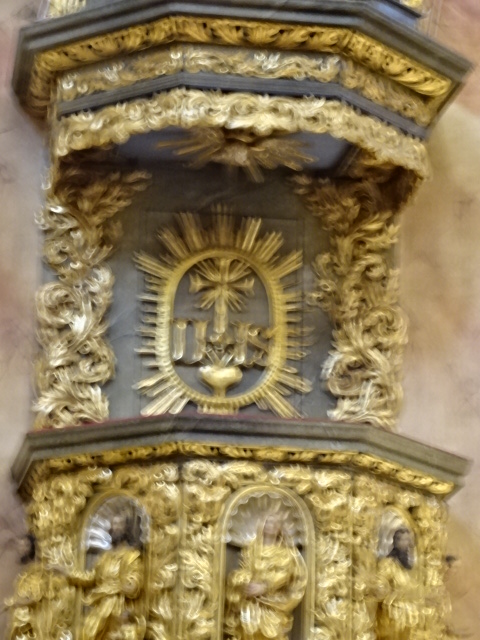
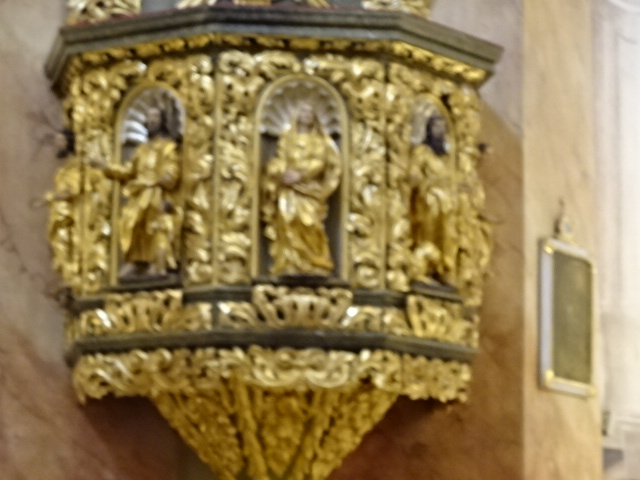
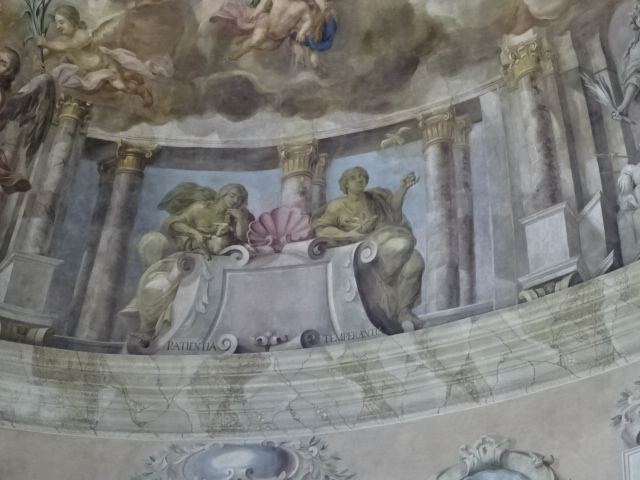
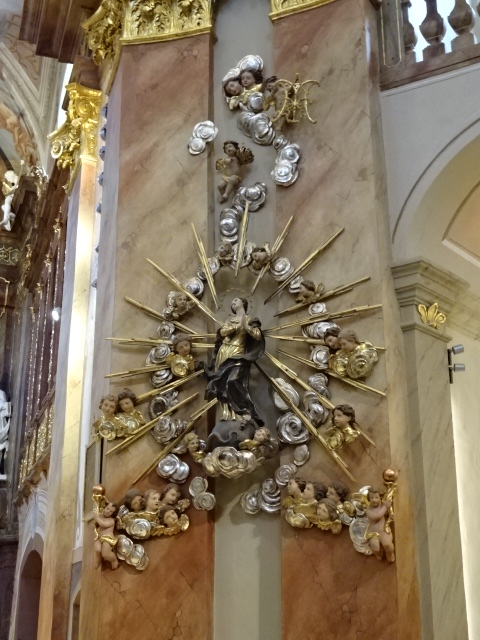
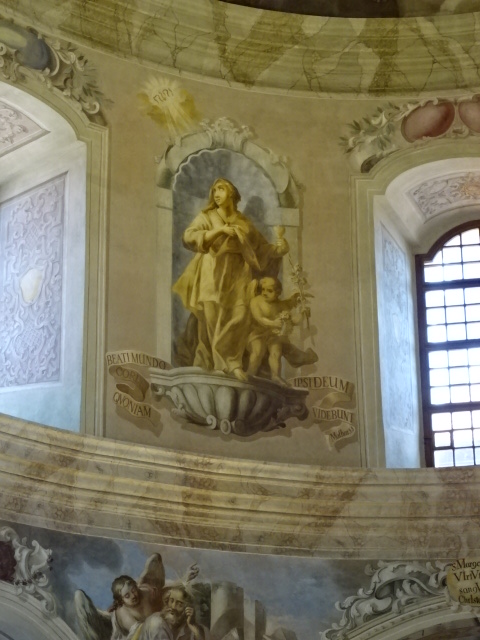
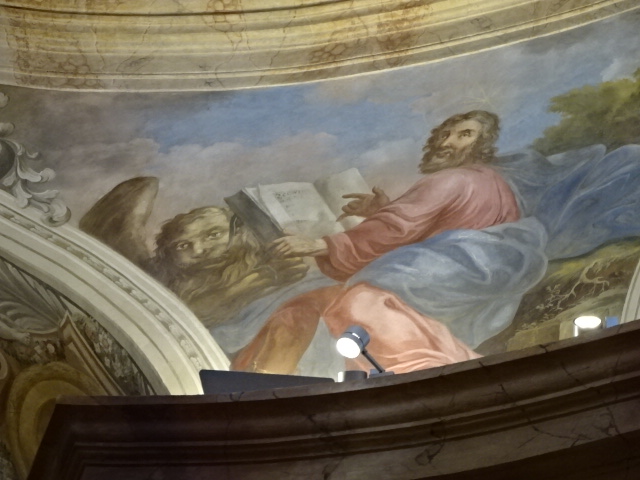
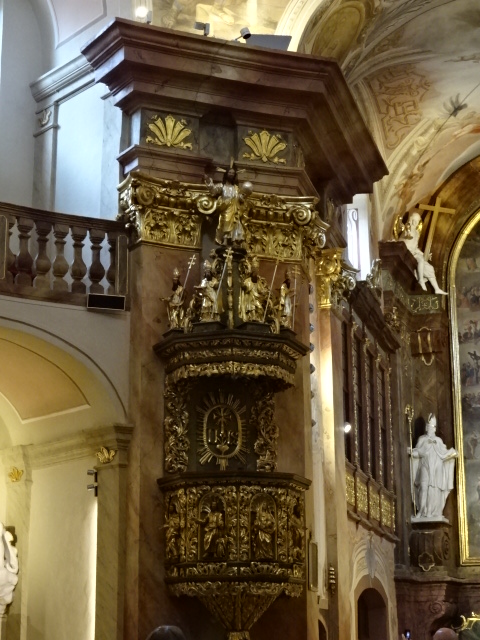
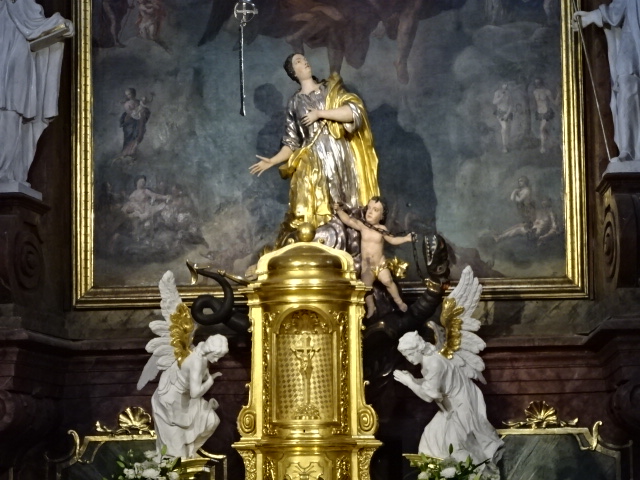
I counted seven side altars and marveled at the paintings of the Evangelists and Roman gods on the upper walls of the church. The remains of Saint Vincent and Saint Rupert were in impressive reliquaries. The pulpit was astounding, too. An astounding altar of Saint Anna took my breath away, too. The church had two square towers, both more than 40 meters in height and each with two floors. I did not overlook the beauty of the exquisitely painted cupola, either. The baptismal font is new, from the most recent reconstruction.

I was dazzled by the church’s overwhelming beauty and was so thankful that I had had this chance to see it. I especially loved the stunning ceiling fresco and decoration on the upper walls. Another highlight was the tour guide playing the organ. The music permeated the church, and I had a great appreciation for the glory days of this church during Questenberk’s Jaroměřice. I was so impressed by the music that seemed to soar through the church and by the town that was seeping with historical importance.

Tracy A. Burns is a writer and proofreader in Prague.
Otakar Březina Museum in Jaroměřice Diary

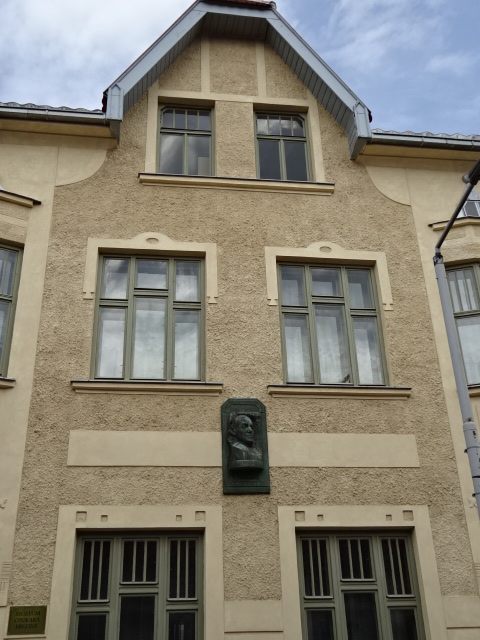
Although I hold a M.A. in Czech literature, I wasn’t very familiar with the poetry and essays of Otakar Březina before visiting the museum, located in the three-room apartment where he had lived and died. (I had focused on the Czech fiction of four writers for my master’s thesis.) I was excited to get to know about the life and work of a Czech writer whom I only knew by name. The guide even mentioned that Březina had been in the running for the Nobel Prize eight times, but hadn’t ever won.

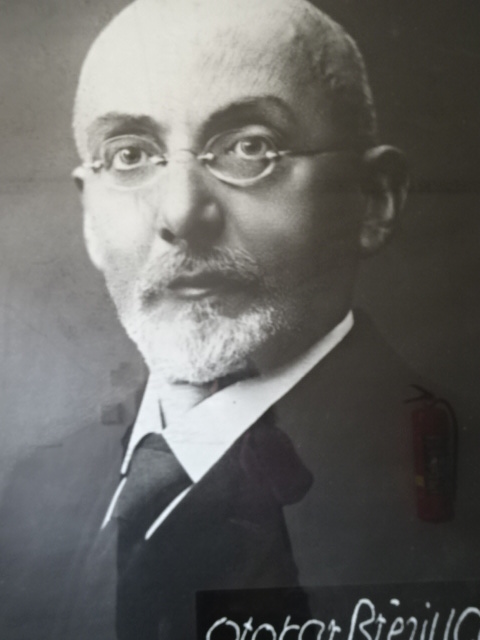
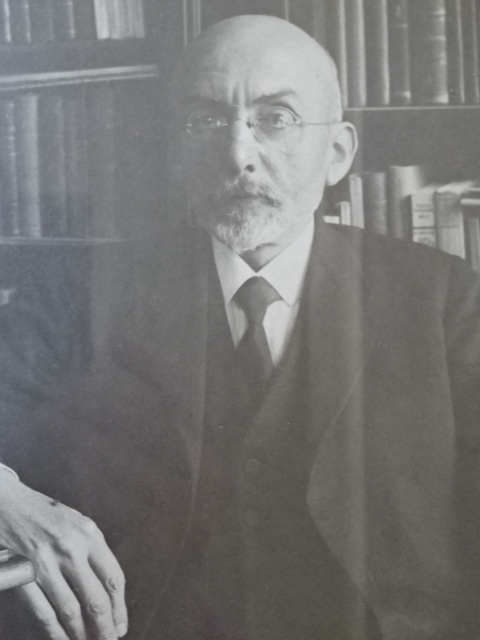
Otakar Březina

The man who would greatly influence 20th century poetry was born Václav Ignác Jebavý in the village of Počátky on March 25, 1929. After graduating from high school in Telč, he became a teacher, working for a while in Nová Ríše. However, all was not rosy. His feelings of isolation and solitude from this time would make major appearances in his poetry. He got his teacher’s degree in Prague and taught in a Moravian town from 1888 to 1901.

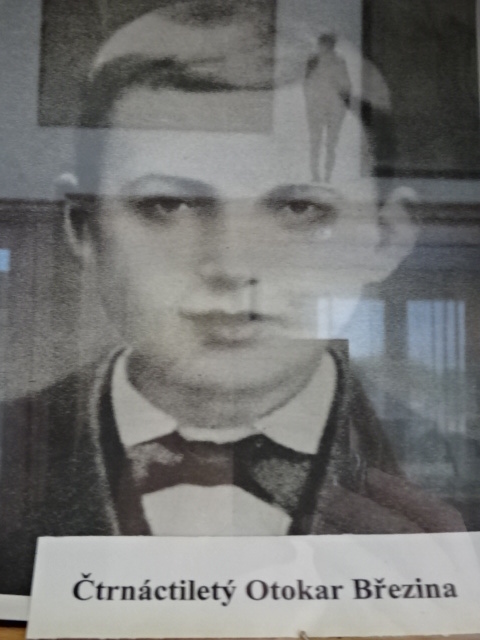
14-year old Otakar Březina

Then double tragedy hit. Březina was devastated when both his parents passed in one week during February of 1890. At this time, he experienced severe bouts of depression, loneliness and solitude. These tragedies played roles in his writings and thought processes, too.

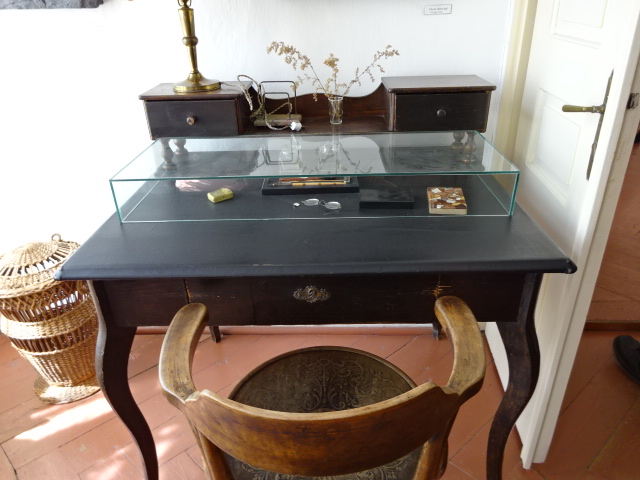
The desk of Otakar Březina

In 1901 he moved to Jaroměřice. Březina got to know many writers, including Karel Čapek, who had visited Jaroměřice on more than one occasion. He also made friends with poet, prose writer and priest Jakub Deml as well as philosopher and novelist Ladislav Klíma, who, like Březina, was influenced by Arthur Schopenhauer and Friedrich Nietzsche.

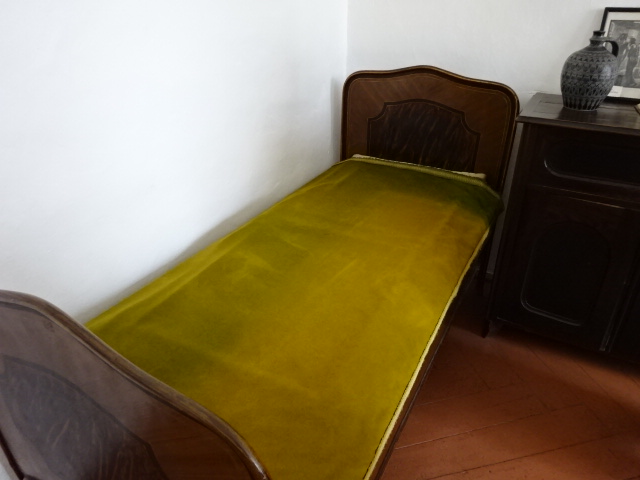
The bed where Otakar Březina died

Březina retired in 1925. Four years later, he would die of heart complications in the narrow, single bed that I saw in his former home. The President of Czechoslovakia, Tomáš G. Masaryk sent Březina a doctor who said that nothing could be done. Březina died in his narrow single bed two days later. He was buried in the nearby cemetery. Bílek designed his impressive grave.

Painting in the flat of Otakar Březina

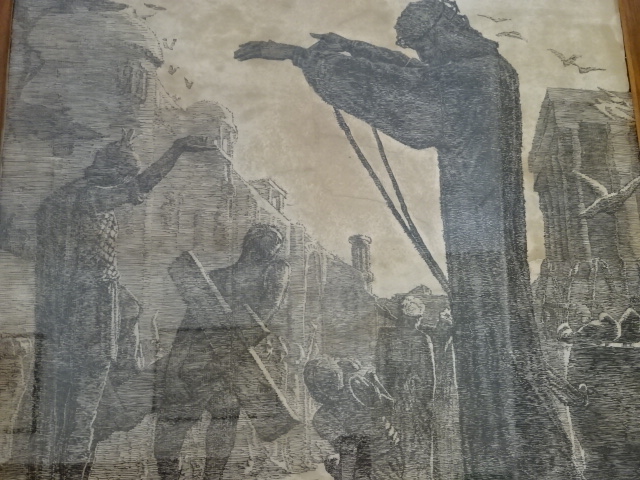
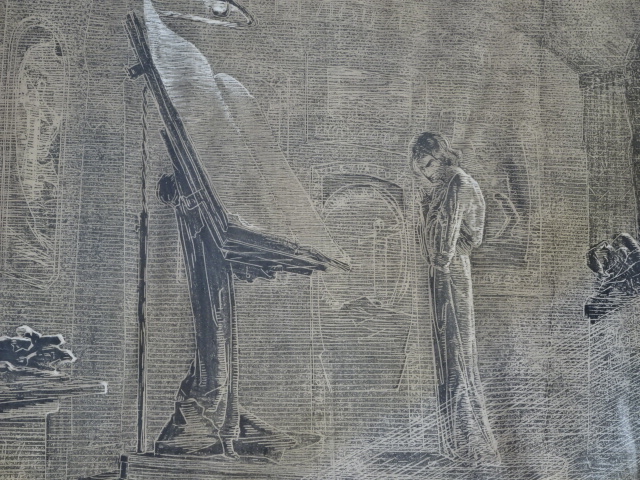
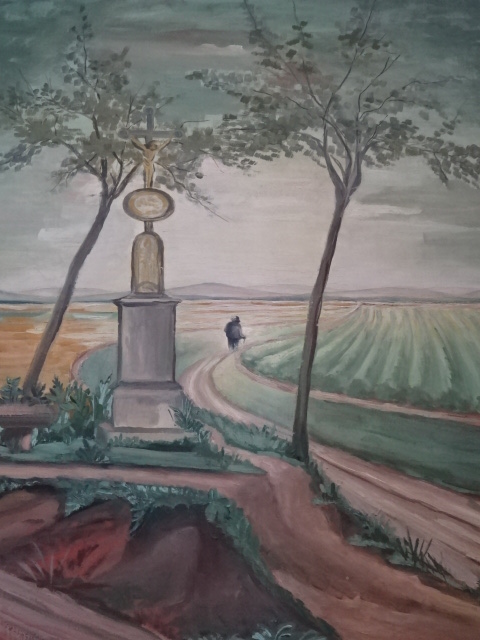
In the first floor flat, I saw intriguing furniture, paintings, graphic art, photos, correspondence, diplomas and editions of Březina’s books as well as biographies about him.  More than 4,500 volumes of his work were housed in a museum in Brno, the capital of Moravia. In this museum, though, the collection of volumes was noteworthy. In fact, downstairs there was a small library dedicated to the Symbolist writer. In the display cases of his first floor apartment, I spotted several of his books in English as well as many old Czech editions. I studied the pictures of him as a child and teenager. I had read that he had experienced much suffering as a child because he had no one to help him. He had to do everything for himself.

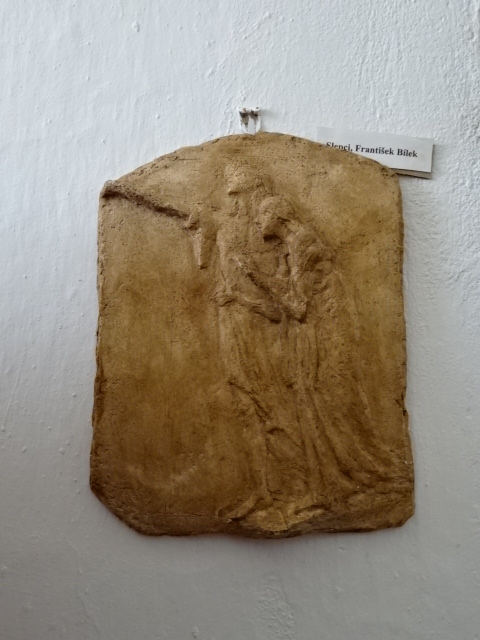
Art by František Bílek in the flat

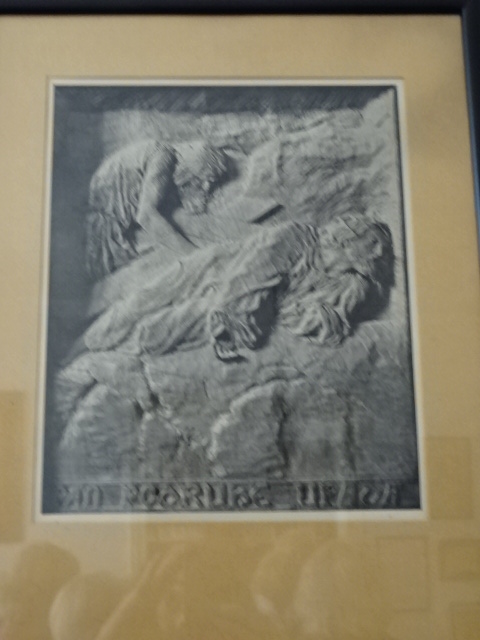
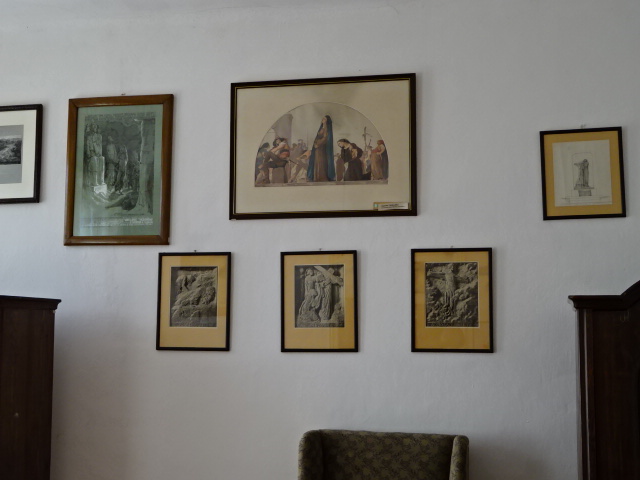
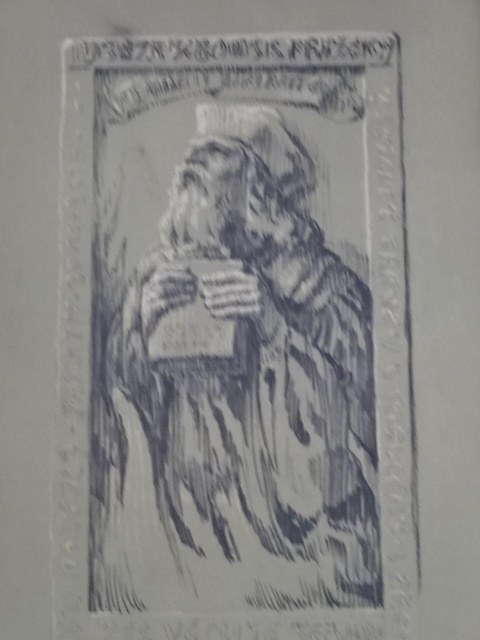
I liked best the artwork in his flat, especially that by Symbolist sculptor František Bílek, who had been a close friend. I fondly recalled my many visits to Bílek’s villa in Prague. It was an architectural gem punctuated by his sculpture, furniture and more. His works were emotional, symbolic, religious and mystical.

Another artwork by Bílek in the flat

Bílek, born in 1862, initially wanted to become a painter but switched to sculpture because he was colorblind. He would wind up making a name for himself not only for his evocative sculptures but also for his prints, architectural designs, ceramics and books, for instance. A man of many talents, he was very religious, and the works of the Catholic Modernists greatly influenced his works. He later worshipped at a Czechoslovak Hussite Church, inspired by the teachings of Czech martyr Jan Hus who was burned at the stake for heresy in 1415.

More art by Bílek in the flat

I had also visited Bílek’s hometown of Chýnov in south Bohemia, where his villa there housed more of his fascinating creations. It was easy to find his grave in the cemetery there – a huge sculpture marked the spot. Bílek passed away during the Nazi Occupation, in 1941.

Another work by Bílek in the flat of Otakar Březina

Back to Otakar Brezina. He started writing during high school in Telč from 1883 to 1887. Back then, he penned stories and feuilletons with a small town environment. His poetry was first published in the magazine Vesna during 1886. As a young author, he was inspired by Jan Neruda, who made his characters come alive in stories about the Lesser Quarter in Prague, for instance. The small town atmosphere was prominent in Neruda’s writings. The future leader of Symbolist poetry decided to use the pseudonym Otakar Březina after he spotted the name on the door of a house, and from 1892 he wrote under that name.

Another masterpiece by František Bílek in the flat

His poetry was philosophical, symbolic, mystical and religious with complex metaphors. The theme of looking for God played a prominent role. He often wrote about depression, suffering, sadness as well as the conflict between dreams and reality.

Art in the flat of Otakar Březina

At first Březina wrote mostly prose, often dealing with death and loneliness. This period of his career was greatly influenced by the passing of his parents. Březina suffered bouts of depression and had a negative attitude to reality, shaped by Schopenhauer’s ideas. Březina used symbolism more often in his works and turned to poetry. His poems were punctuated by secrets, symbolism, mysticism and religion. His search for God was symbolic. He believed that death symbolized a new beginning and opened up a new path. He wrote about the material and spiritual worlds, faith and love, and sometimes he addressed the social problems of his era. Březina also wrote essays in magazines during the early 1900s, focusing on art and life.

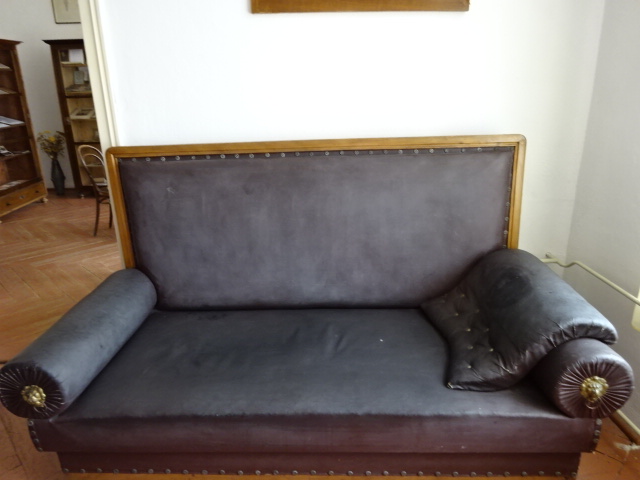
Furniture in the flat

After World War II, the town of Jaroměřice owned Březina’s former apartment. In the 1950s the Communists had all the artifacts moved to a museum in another town. The building was in poor condition and remained that way for a long time. After the 1989 Velvet Revolution, reconstruction took place, and the museum was revived. The newly-opened home of the Symbolist poet was inaugurated September 11, 1993, owned by the Society of Otakar Březina. In 2005 the museum received more recognition, becoming a cultural monument.

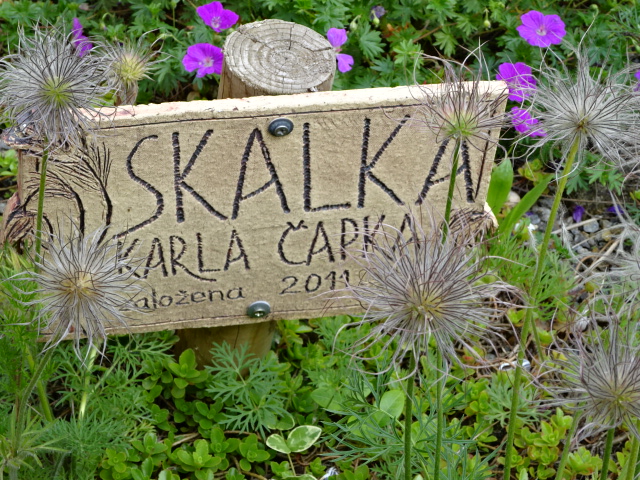
Part of the garden dedicated to Karel Čapek

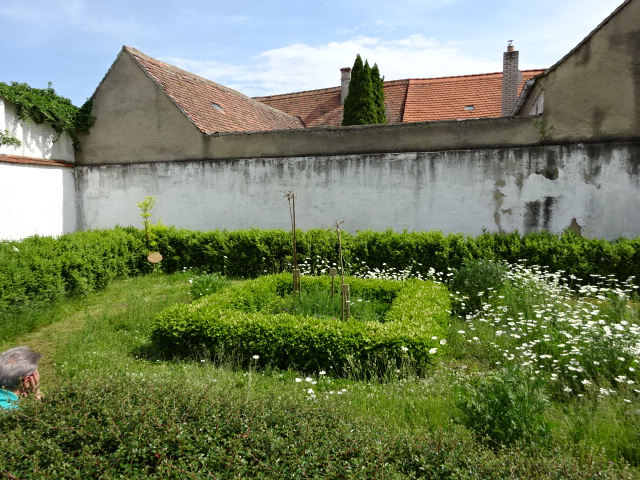
The Garden of Symbols

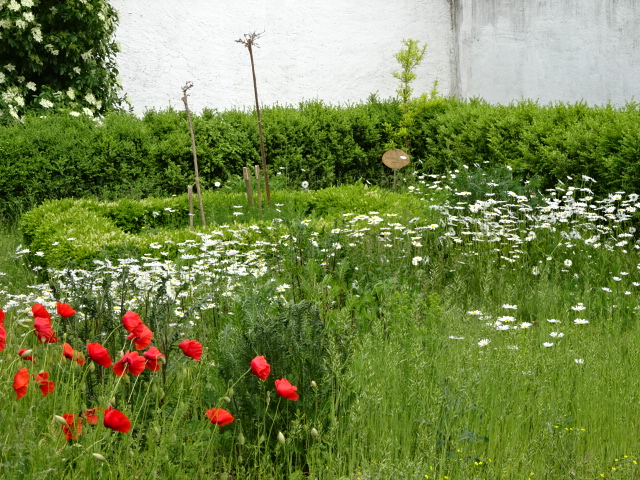
In 2011 the museum opened the Garden of Symbols in its small but impressive garden dedicated to Otakar Březina, Jan Adam Questenberk (who owned the town’s chateau during its heyday), Bílek and Karel Čapek, for example. A path through the garden looked like it came to an end when it suddenly continued to the left, symbolizing immortality because the path did not end just as death did not end in Březina’s philosophy. Reconstruction of the garden took place in 2017 and 2018, the year it opened again. It was masterfully planned to represent Březina’s works, writing style and life as well as acknowledging other famous historical figures who had influenced Březina and the town.

The sign denoting the tree dedicated to Jan Adam Questenberk, the owner of the chateau during its golden age

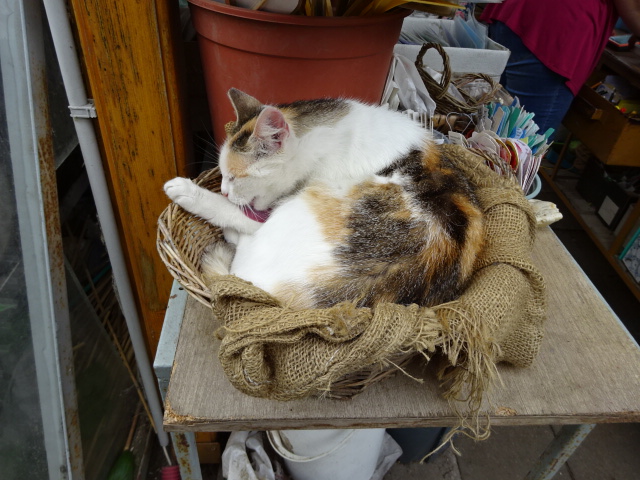
We also went to a gardening center that first opened in 1901, a store where Karel Čapek had bought plants. Still in business, it offered customers a wide variety of plants in a large space. Cats reclined in baskets near the cash register.

One of the cats at the gardening center

This was one of the best sights I had visited, even though it contained only three rooms. Literary landmarks were close to my heart. I learned so much about Březina and saw so many astounding artworks. We also saw the chateau and the Church of Saint Markéta that day, making for a wonderful trip.

Tracy A. Burns is a writer and proofreader in Prague.
Otakar Březina

Otakar Březina

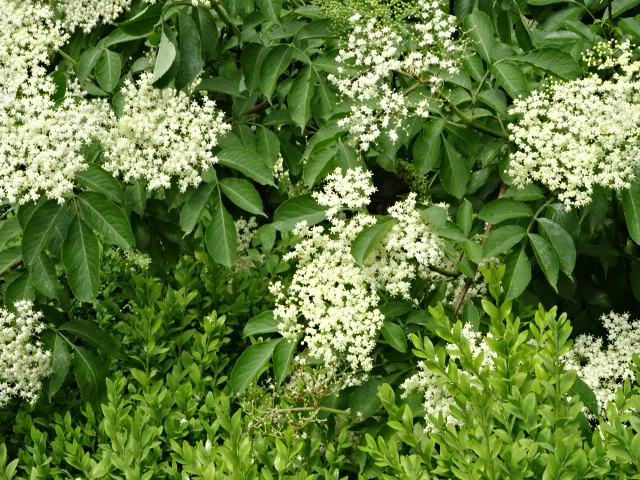
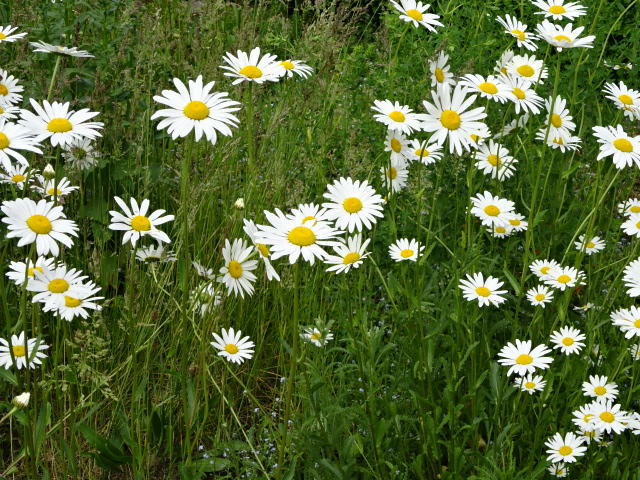
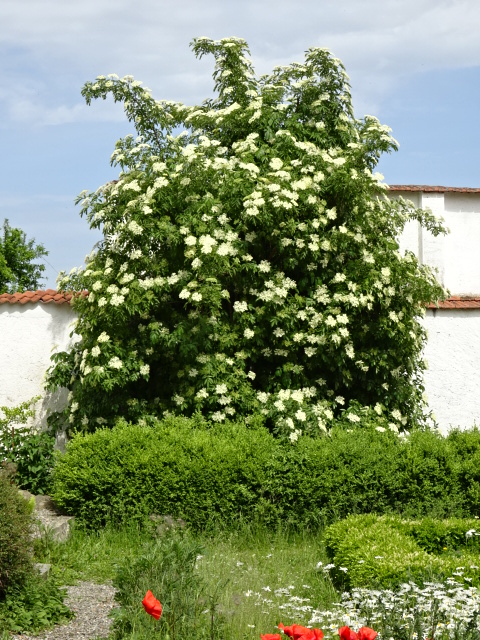
Flowers in the Garden of Symbols