Nuremberg Diary

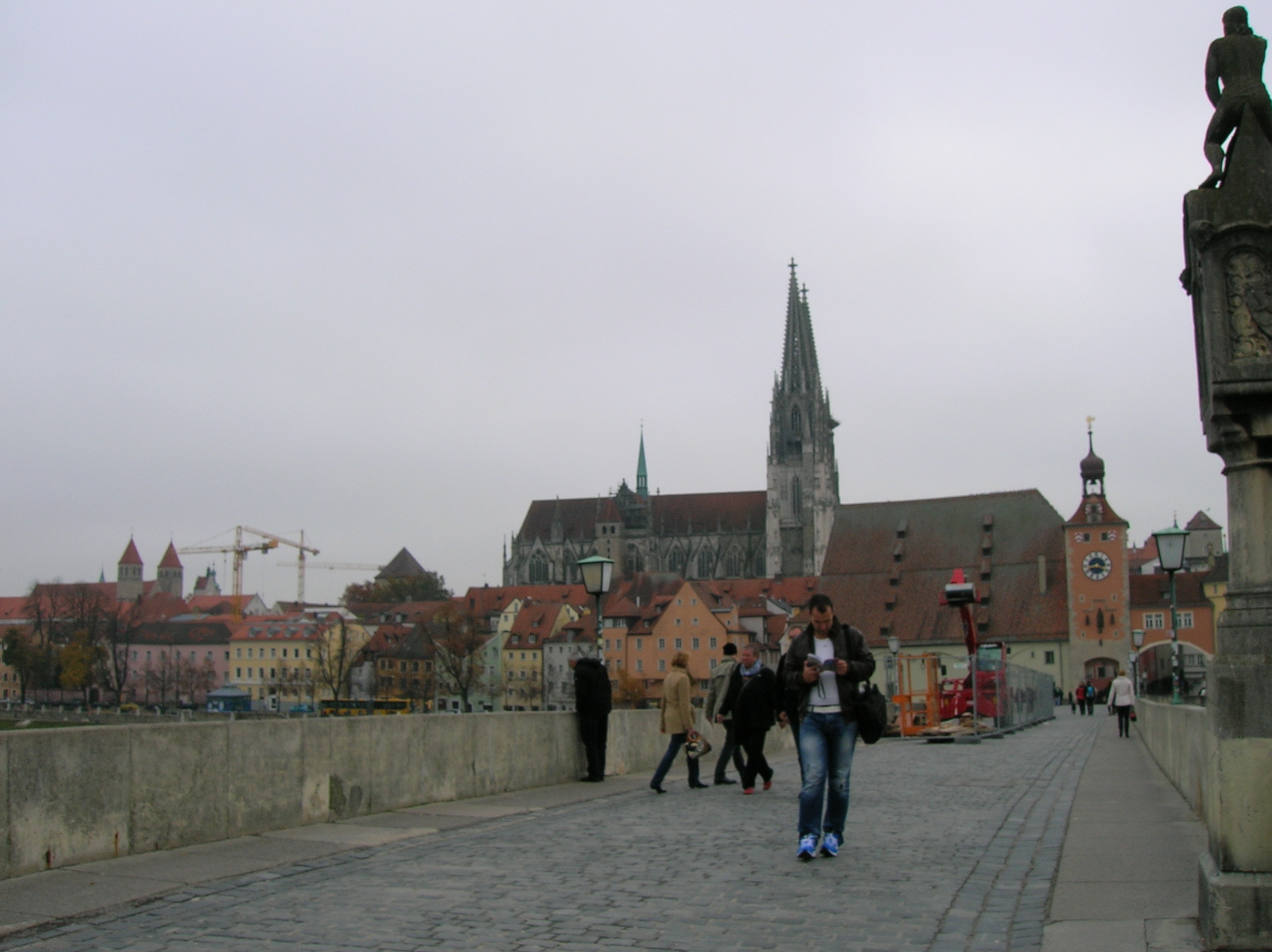
Romantic view of the Holy Ghost Hospital from a bridge

Romantic view of the Holy Ghost Hospital from a bridge

I had just returned from almost a week in Bavaria, and I was going back on White Saturday to Nuremberg for a day trip with arsviva, the Czech travel agency I sometimes used. I had traveled with them to Bamberg, where I had been enchanted with the fishermen’s houses of Bamberg’s Little Venice, the gushingly Baroque Böttingerhaus, the Early Gothic nave of the Imperial Cathedral with its Christmas Altar and the majestic New Residence Palace with its ornate Imperial Hall. The same guide that had put us under Bamberg’s magical spell was leading us through Nuremberg, which now was biggest city in the Franconia region, with a population of 500,000.
On the bus the guide gave us some background about the city. Nuremberg started out as a fortress in the 11th century. While medieval Nuremberg was an important town along the trade route to the east, it was not without its problems. A pogrom in 1349 wiped out almost half of the Jewish population in the town. The pogrom took place after it was decided to demolish the Jewish quarter in order to make room for a central square.

A historical building in Nuremberg

A historical building in Nuremberg

The year 1356 brought prestige to Nuremberg, which became an imperial city thanks to Holy Roman Emperor Charles IV’s declaration of the “Golden Bull.” The emperor also declared that the first imperial diet when the seven electors were choosing a new German king would take place in Nuremberg. Emperor Charles IV also visited Nuremberg more than 50 times. The imperial crown jewels were stored at the castle in Nuremberg from 1424 to 1796. Nuremberg favored Protestantism from the 16th century. The seven electors held the imperial diet there until 1542.
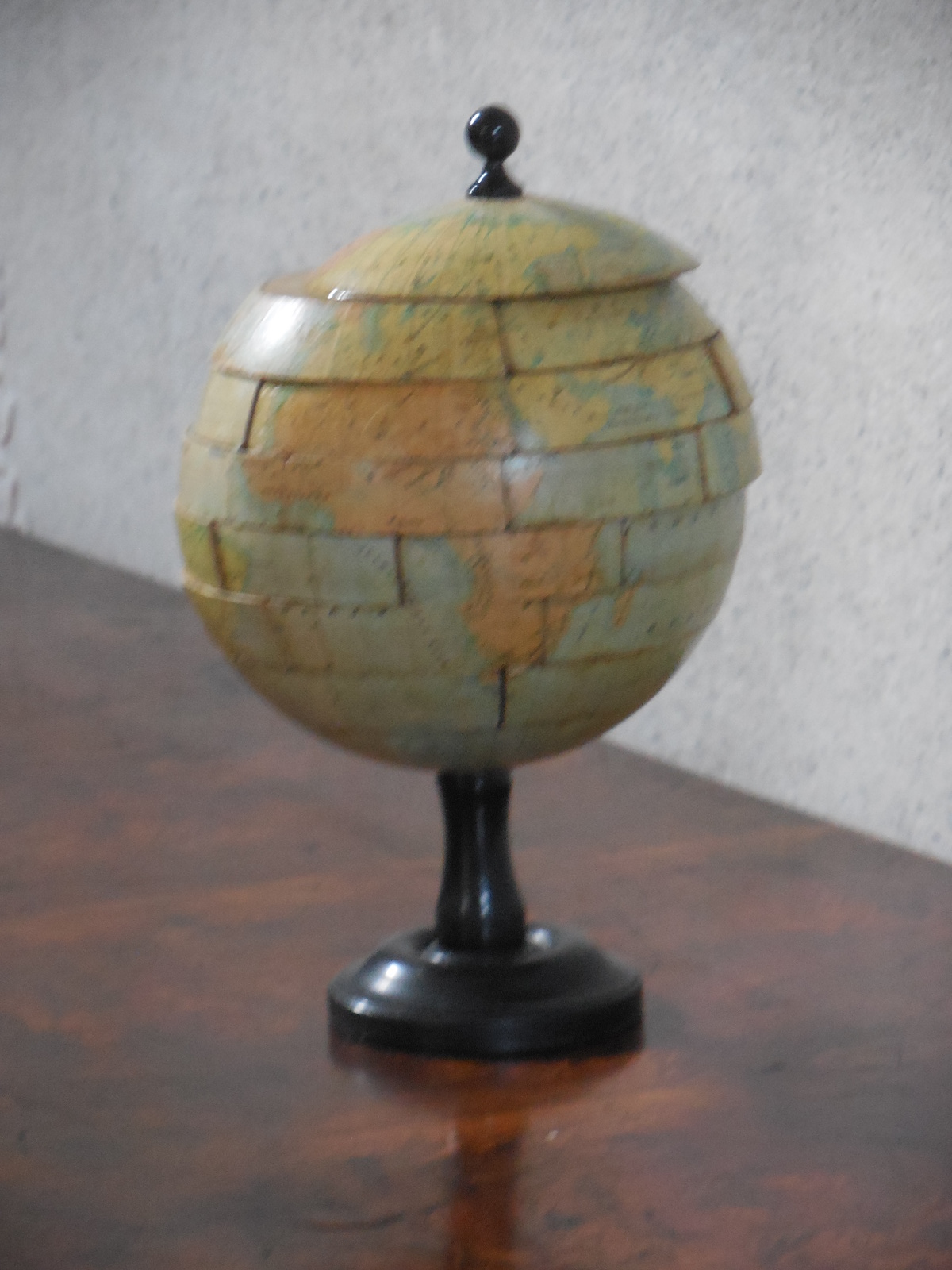
Many inventors and artists lived in Nuremberg. Albrecht Dürer worked there in the early 16th century. Sculptors Adam Kraft, Veit Stoss and Peter Vischer decorated the town with their magnificent medieval creations. Martin Behaim invented the first globe, and Peter Heinlein made the first pocket watch in Nuremberg.
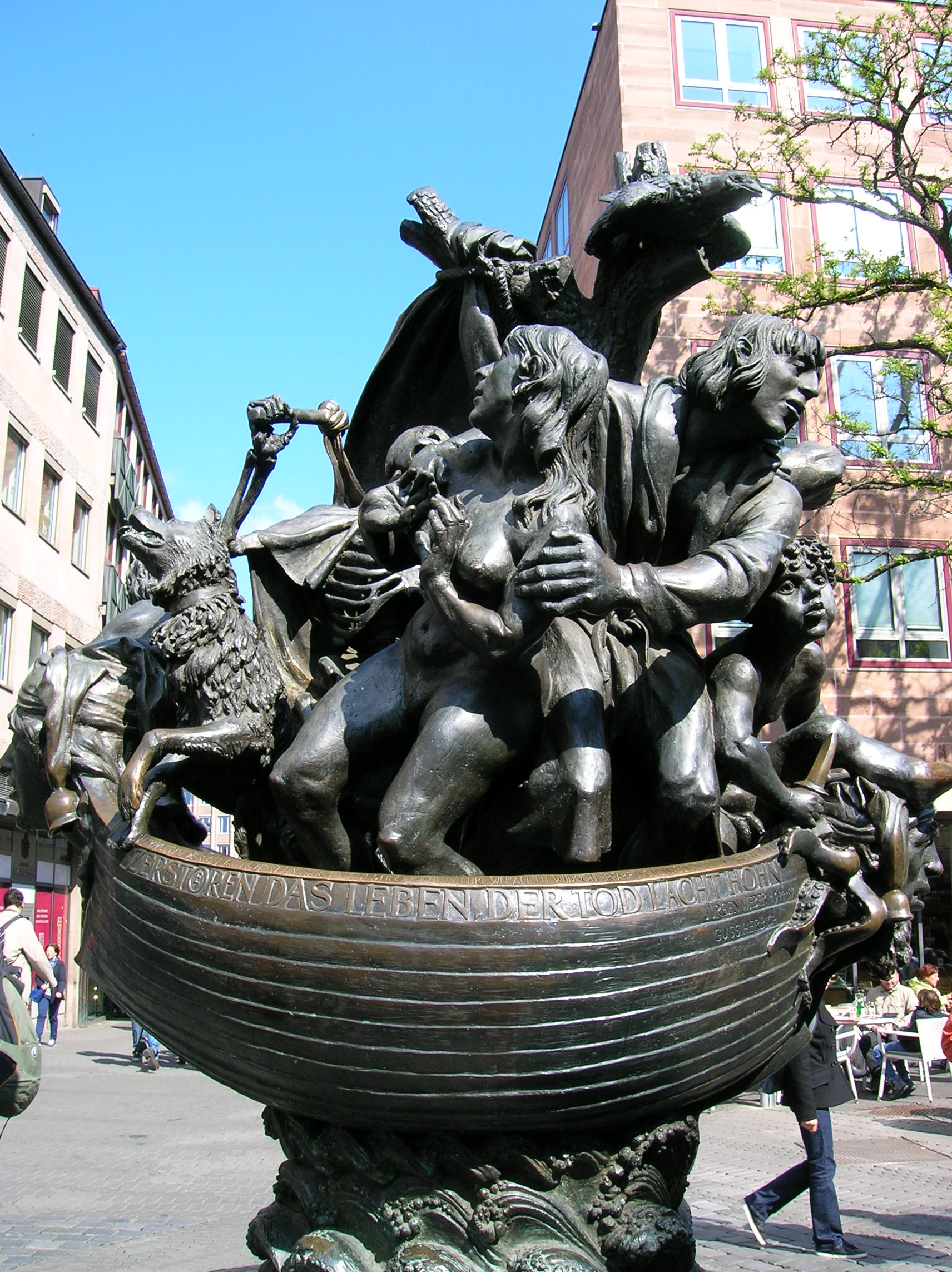
One of Nuremberg's unique fountains

One of Nuremberg’s unique fountains

The Thirty Years’ War brought devastation to the town, even though Nuremberg remained neutral. Then the town experienced financial problems and soon found itself broke. Nuremberg was made part of the Bavarian kingdom in 1806. During the 19th century, the town focused on industrialization.
Nuremberg would become the site of the National Socialist Party’s rallies in 1927. The Nuremberg Laws, enacted in 1935, denied Jews basic rights and German citizenship. Adolf Hitler was very fond of the city. The Allied Forces’ air attacks in January of 1945 destroyed 90 percent of the historical center and more than 2,000 people lost their lives. Many of the artworks had been moved to the Art Bunker under the castle, and thus were saved. The Nuremberg Trials that put the leaders of the Third Reich on the stand took place from 1945 to 1946.

The Congress Centre

The Congress Centre

First, we stopped at the gray, massive grandstand, where the Nazi Party Rallies had been held from 1933 to 1938. Bigger than Rome’s Coliseum, it included 60 hectares and had 28 40-meter high towers. We saw the exterior because on a day trip we did not have time to go inside the Documentation Center of the National Socialist Party Rally Grounds, where there is an exhibition about the Third Reich. Albert Speer’s architecture was so dehumanizing. Gray, drab and disintegrating, it lacked any human feeling, any feeling of life. Speer’s buildings did not even last 50 years, and they were meant to last forever.
I would have loved to have visited courtroom 600 in the Palace of Justice, where the Nuremberg Trials had taken place. I wondered what it would have felt like to have been in that courtroom during the trials, to have watched death sentences being handed out to Wilhelm Frick, Hans Frank, William Keitel and others. Even the death penalty was not a harsh enough sentence for what these Nazis had done.

The facade of the former arsenal

The facade of the former arsenal

Then we got back on the bus, and soon we were left off at the German National Museum, which was on the itinerary much later in the day. As we walked from the German National Museum to St. Lawrence’s Church, we passed Mauthalle or the former imperial customs office dating from 1500. Opposite it was the façade of the Renaissance former imperial arsenal, adorned with coats-of-arms and dating from the 16th century. I took notice of its two round dome towers. The guide pointed out a magnificent oriel on one building. There were about 80 oriels in the city.
On the way to the church, we passed by many stalls in the Easter Market that made the town lively, even jubilant. The sun was shining, and it would have been impossible not to feel cheerful in this environment. Stalls offered vegetables, flowers, postcards, soft pretzels and much more. I was especially drawn to the huge soft pretzels, which I had devoured during my stay in Munich the previous week.

The facade of St. Lawrence's Church

The facade of St. Lawrence’s Church

Soon we came to St. Lawrence’s Church. During the 13th century, a Romanesque basilica had stood on this site. The rose window between the two 82-meter towers fascinated me. The tracery of the window was remarkable. A wreath surrounded the window. Certainly one of the most beautiful Gothic facades I had ever seen, the façade dated from the mid-14th century. The buttresses and spires that looked like pinnacles made a strong impression on me, too. A decorative gable was situated above the rose window. The main entrance boasted such elaborate sculptural decoration and reliefs. The sacristy, two stories high, had a stunning relief on the façade. I noticed a sundial, too. One sculpture from 1912 showed a monkey reading The Bible.

The interior of St. Lawrence's Church

The interior of St. Lawrence’s Church

When we went inside, I was so overwhelmed by the spaciousness and weightlessness that I just stopped in the choir, ignoring the group for some minutes, and just stared. The Late Gothic choir and the Gothic vaulting amazed me and made me dizzy with awe. Everything seemed so harmonious.
What dazzled me was the choir carving of the Annunciation, with larger-than-life size statues suspended from the vaulted ceiling. It was the work of master sculptor Veit Stoss. I noticed Gabriel and the Virgin Mary, a dove fluttering over her head. Four angels seemed to float over this grouping. Fifty roses decorated the wreath framing the scene. The rosary beads included 63 pearls. Reliefs also adorned the ornate wreath. The flowing golden drapery of the figures also caught my attention. To see the carving suspended gave me an even greater feeling of weightlessness. It was as if the sculptural grouping was ascending to Heaven, rather than rooted on the ground, on Earth.

A precious artwork from St. Lawrence's Church

A precious artwork from St. Lawrence’s Church

The High Altar was stunning with a crucifix from the 16th century. The tabernacle, more than 20 meters high, entranced me. Pinnacles represented a crown of thorns. The reliefs were remarkable. I was awed by the latticework and tracery.
One of Nuremberg’s oldest sculptures, the Beautiful Madonna, showed the Virgin Mary and Baby Jesus with bright smiles as the Virgin Mary looked lovingly at Jesus. The pulpit was Neo-Gothic. The Late Gothic brass chandelier in the nave was authored by Peter Vischer in 1489. Life-size Apostles also made appearances. It is possible that Stoss created the stunning sculpture of Archangel Michael wielding a sword in his right hand. I was especially drawn to the folds in the figure’s drapery and to the curls in his hair.
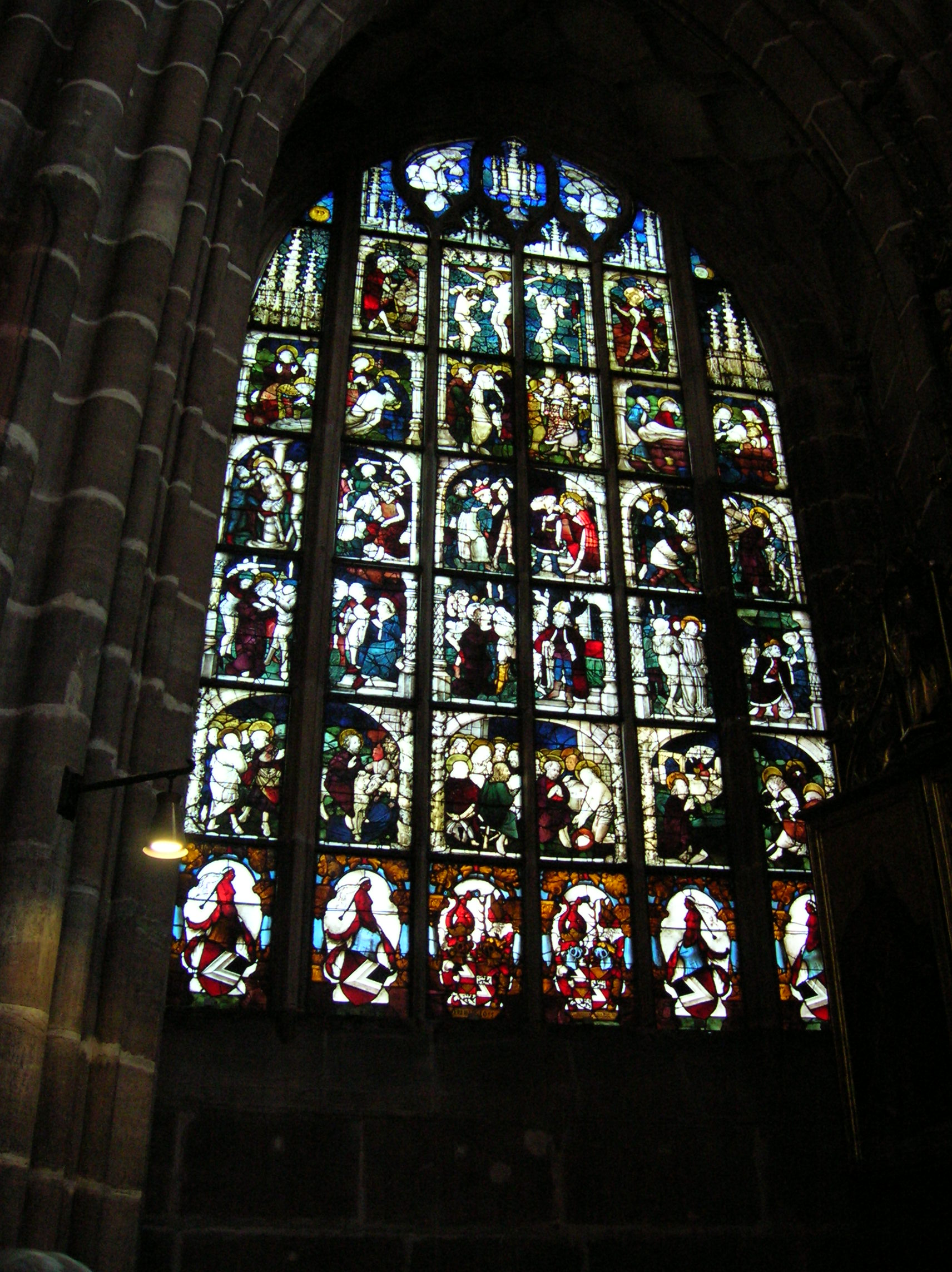
An exquisite stained glass window in St. Lawrence's Church

An exquisite stained glass window in St. Lawrence’s Church

Stained glass windows hailed from medieval days, reminding me of the cathedral in Regensburg with its brightly colored windows that brought light and knowledge. The stained glass of the rose window boasted decorative designs. The background of the Krell Altar showed the oldest rendition of Nuremberg, dating from 1472 to 1483. The town looked so realistic and detailed for that time period. I recalled the 17th century maps and vedutas at Mělník Castle near Prague, and how realistic and detailed they had looked.

The vaulting with the Annunciation carving suspended from the ceiling

The vaulting with the Annunciation carving suspended from the ceiling

During World War II the sculptures and other artworks were hidden in the Art Bunker rock cellar under the Imperial Castle. Although the building was damaged in the Allied Forces’ attacks, the two towers, the western façade and the walls remained standing.
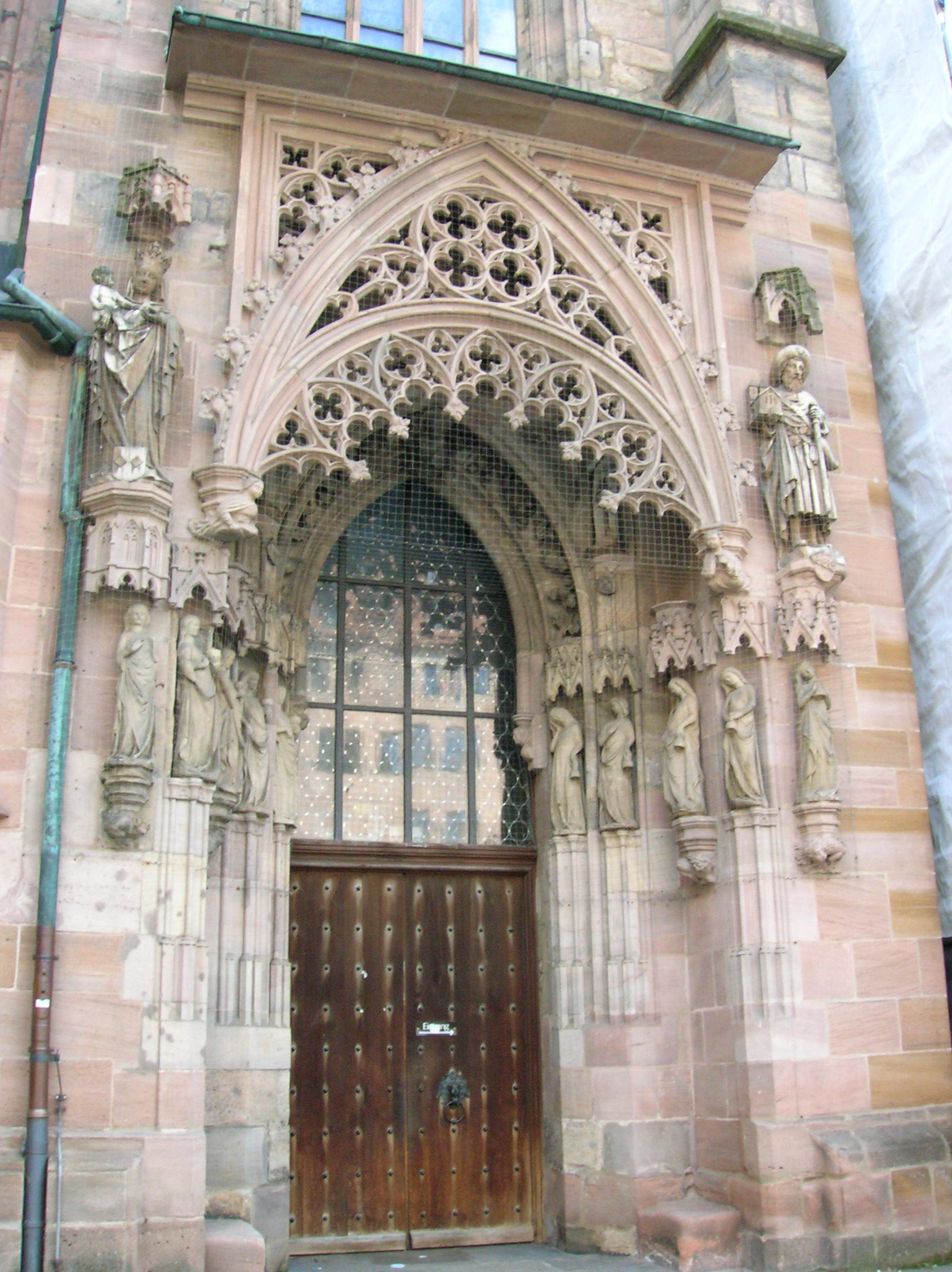
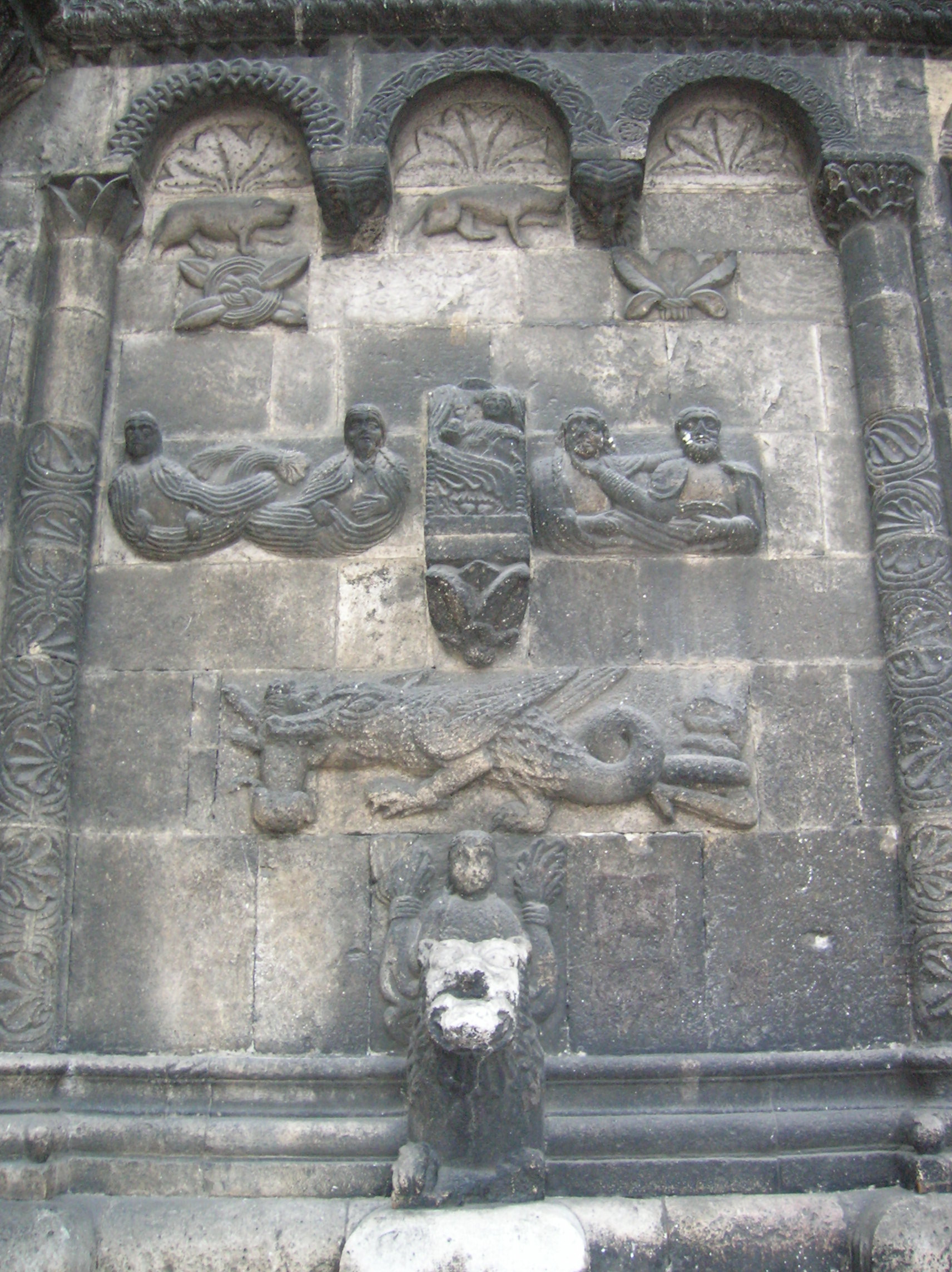
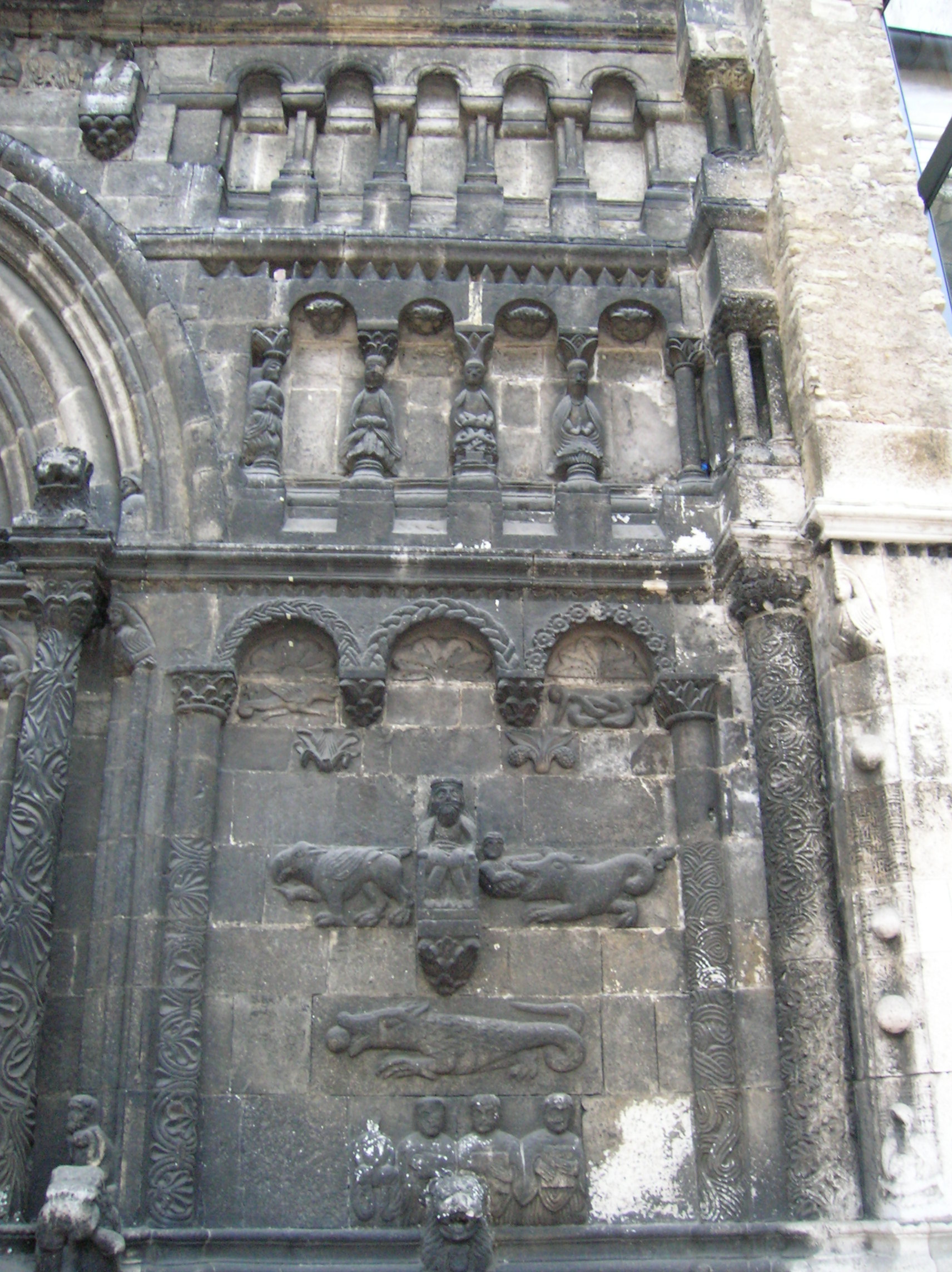
A portal of St. Sebald's Church

A portal of St. Sebald’s Church

Next we visited St. Sebald’s Church, which was founded in 1230. The stained glass windows left me in awe. I saw another relief by Kraft, this one depicting the legend of the Holy Cross. The bronze font hailed from 1430. Below it I saw a relief of apostles and saints while the four Evangelists were positioned above the font. But the highlight was St. Sebald’s Tomb, almost five meters high. It took 11 years to build this masterpiece by Peter Vischer. The Gothic reliquary hailed from the 14th century. The tomb was decorated with portrayals of four dolphins and 12 snails, for instance.

St. Sebald's tomb

St. Sebald’s tomb

The figures of Mary, John and the crucifix on the main altar were the work of Stoss. I was enamored by the glass stained windows, some of which dated back to the 14th century. It was a bit disappointing that the upper part of the windows consisted of panes of smoked glass. On one of the memorial tablets there was a view of Bamberg, another Bavarian city that was dear to my heart. St. John and Apostle Andrew were depicted, and I marveled at the curls in Andrew’s hair and the folds in his drapery.
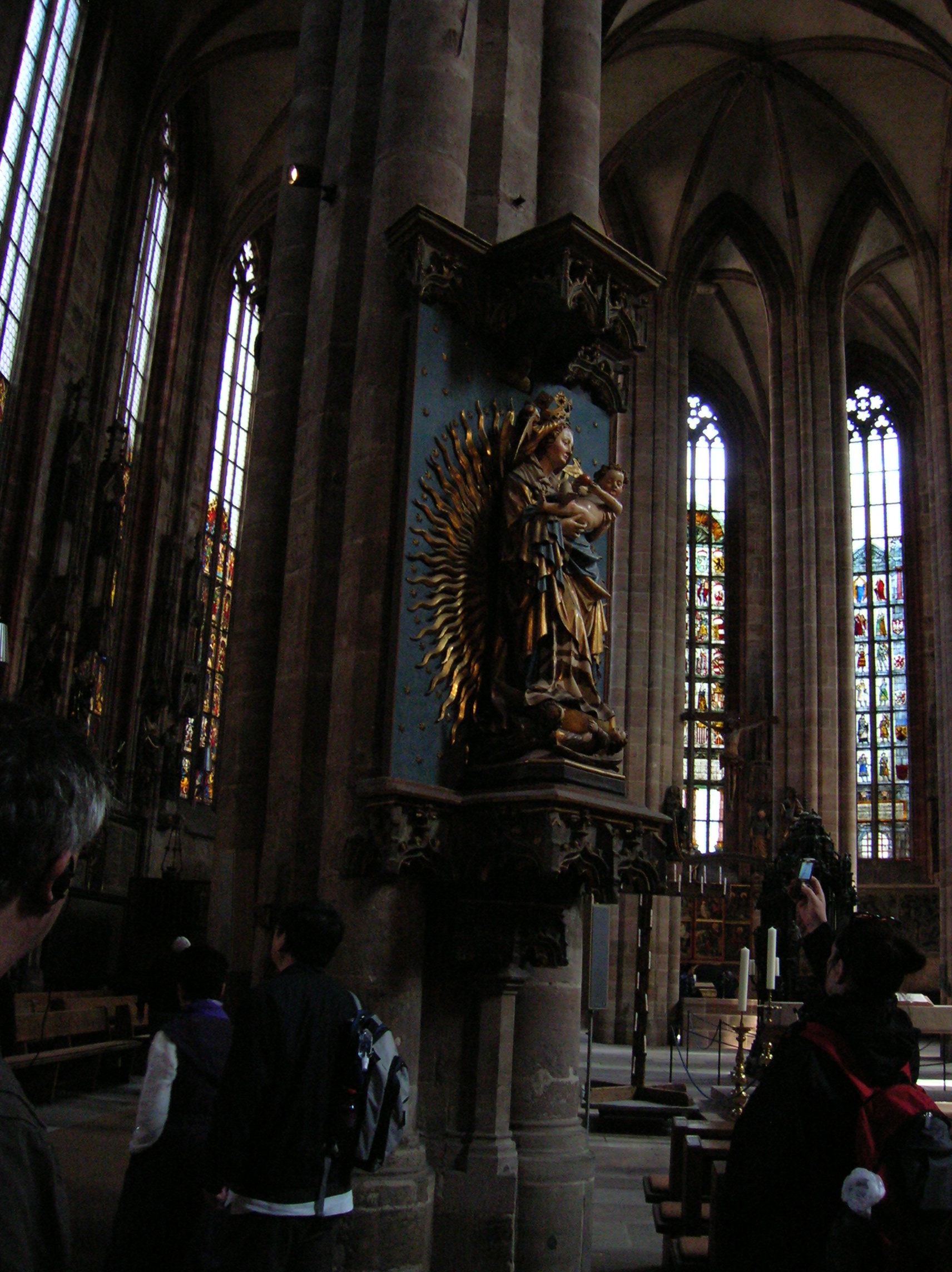
A Madonna statue at St. Sebald's Church

A Madonna statue at St. Sebald’s Church

We came to the main square, bustling with Easter stalls. In front of us was The Church of Our Lady, built on the site of a synagogue that was demolished in the early 14th century, when the Jewish quarter, which had been located here, was abolished, and half of its inhabitants were murdered. It was hard for me to believe that Emperor Charles IV, the beloved King of Bohemia, had permitted the demolition of the Jews’ homes or, most shockingly, did not stop the 1349 pogrom that resulted in the deaths of so many Jews. Yet I had read that the Christian prelates supported anti-semitism, and his actions toward the Jews probably made him seem pious and dutiful to many of his subjects.
The architect of the Church of Our Lady was Peter Parler, who had been responsible for completing St. Vitus’ Cathedral in Prague, among other significant works. He had certainly left his mark in the Czech lands. While the church had been damaged in the Allied Forces’ bombing of the city in 1945, part of its exterior remained intact. The west façade, the portal, the choir, some of the outer walls and the sacristy did not suffer the terrible fate of its other sections.
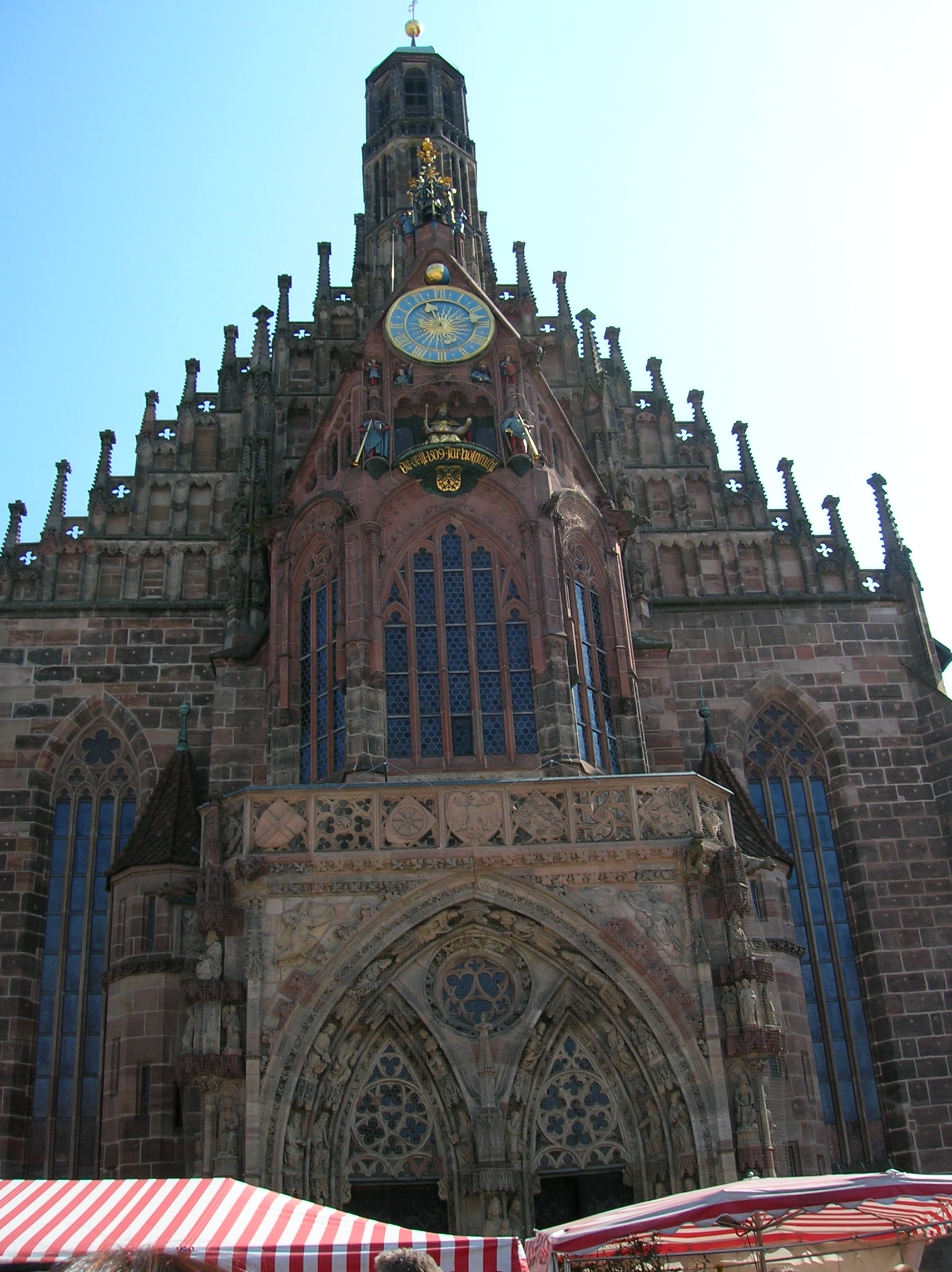
The exterior of the Church of Our Lady

The exterior of the Church of Our Lady

We spent some time studying the exterior. It boasted a stepped gable and neo-Gothic pinnacles plus a five-story tower. In the center the Virgin Mary was depicted with Jesus. Other figures surrounding them included Adam and Eve. Emperor Heinrich III stood out with his crown, orb and scepter. The German imperial eagle made an appearance on the balustrade. The portico boasted gilded statues, and the tympanum was richly decorated. We came to the north side with the depiction of the Foolish and Wise Virgins.
The building was one of the first hall churches in Franconia. Inside, a Star of David decorated the floor, symbolizing the expulsion and murder of the Jews during the 14th century. The main attraction, though, was the Tucher Altar, from the mid-15th century. It was one of the most significant artworks in the time period before Dürer. I loved the gold background of the triptych. It represented the divine and also gave the panel painting a certain vibrancy that attracted me. In the central panel I saw a crucifixion scene. Mary and John were depicted below it. John seemed mesmerized by the scene with Jesus.
On the right inside panel two holy hermits were talking to each other. I wondered what they were saying. Were they complaining that they were lonely and did not like being so isolated from the rest of the world? Or were they happy that they were recluses? I tended to be alone, and sometimes I wondered if I was really happy or if I had just accepted it as my fate. The gilded tabernacle at the base only dated from the 1980s. It was made to look like a torah roll in recognition of the pogrom.
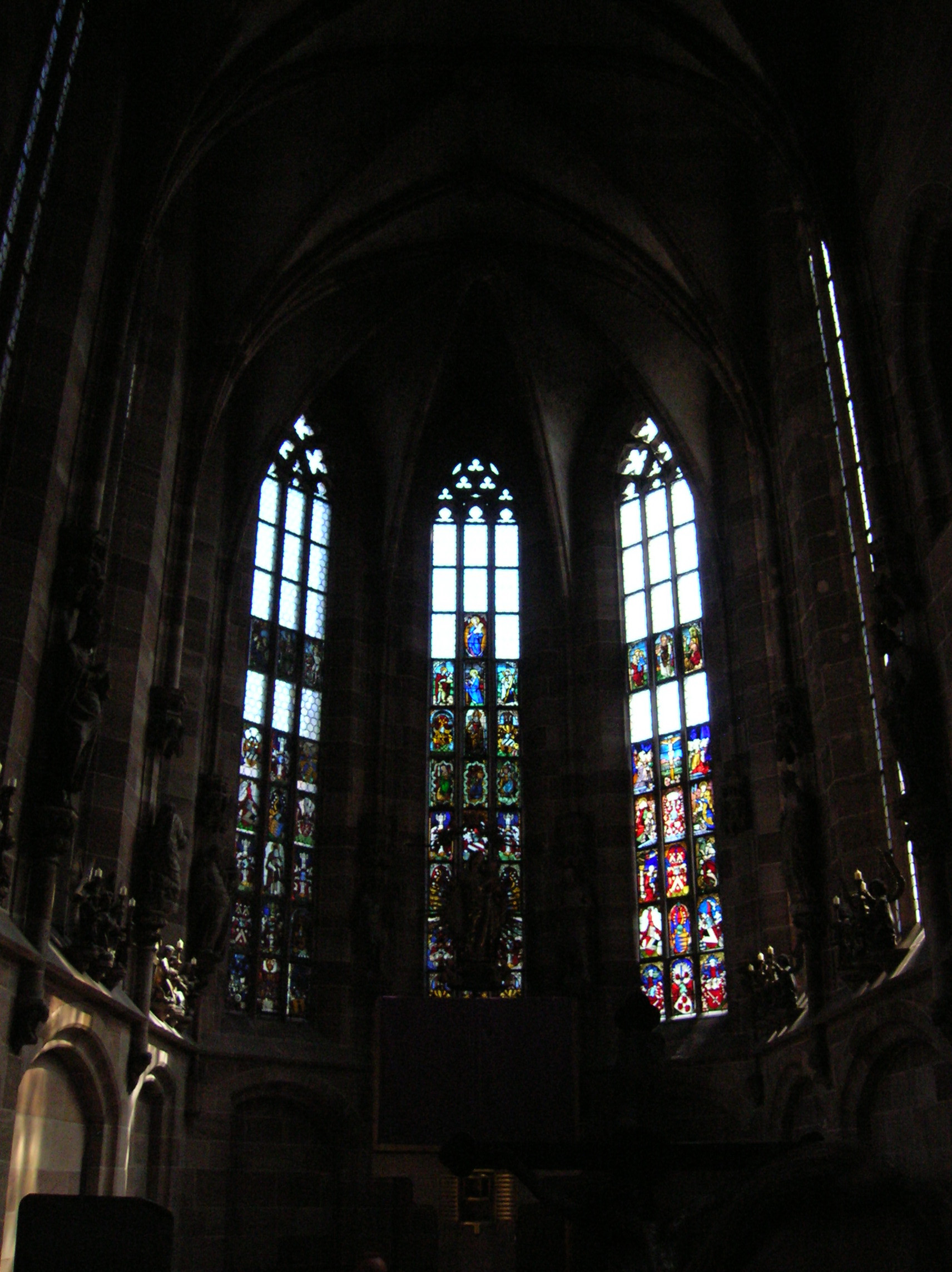
The stained glass windows of the Church of Our Lady

The stained glass windows of the Church of Our Lady

The choir featured life-size statues. Our guide pointed out to us Saint Ludmila and her grandson Saint Wenceslas, Czech saints. Wenceslas’s mother, a pagan named Drahomíra, had Ludmila, a Christian, killed because Ludmila had taught Wenceslas to be Christian. Wenceslas became duke of Bohemia and had a rotunda built to St. Vitus – later it would become Saint Vitus’ Cathedral. It was not so strange that Czech saints were represented in the German church. Emperor Charles IV, who established the church, was also King of Bohemia, and his mother came from the Přemyslid family, a dynasty that had ruled Bohemia from the ninth century to 1306. Besides, Bohemia had been a mixture of many peoples, cultures and languages.
In the center of the choir I saw the 15th century creation Madonna with Rays as rays of the sun shone on the Virgin Mary and Jesus. In the portrayal the Virgin Mary was stepping on a human face as she stood on a crescent moon. There were also 18 sculptures of tranquil angels gripping candlesticks on the sides of the choir. One of the keystones featured a rare scene of Jesus going to school as Jesus was portrayed as human. In the nave I found some epitaphs by Kraft.
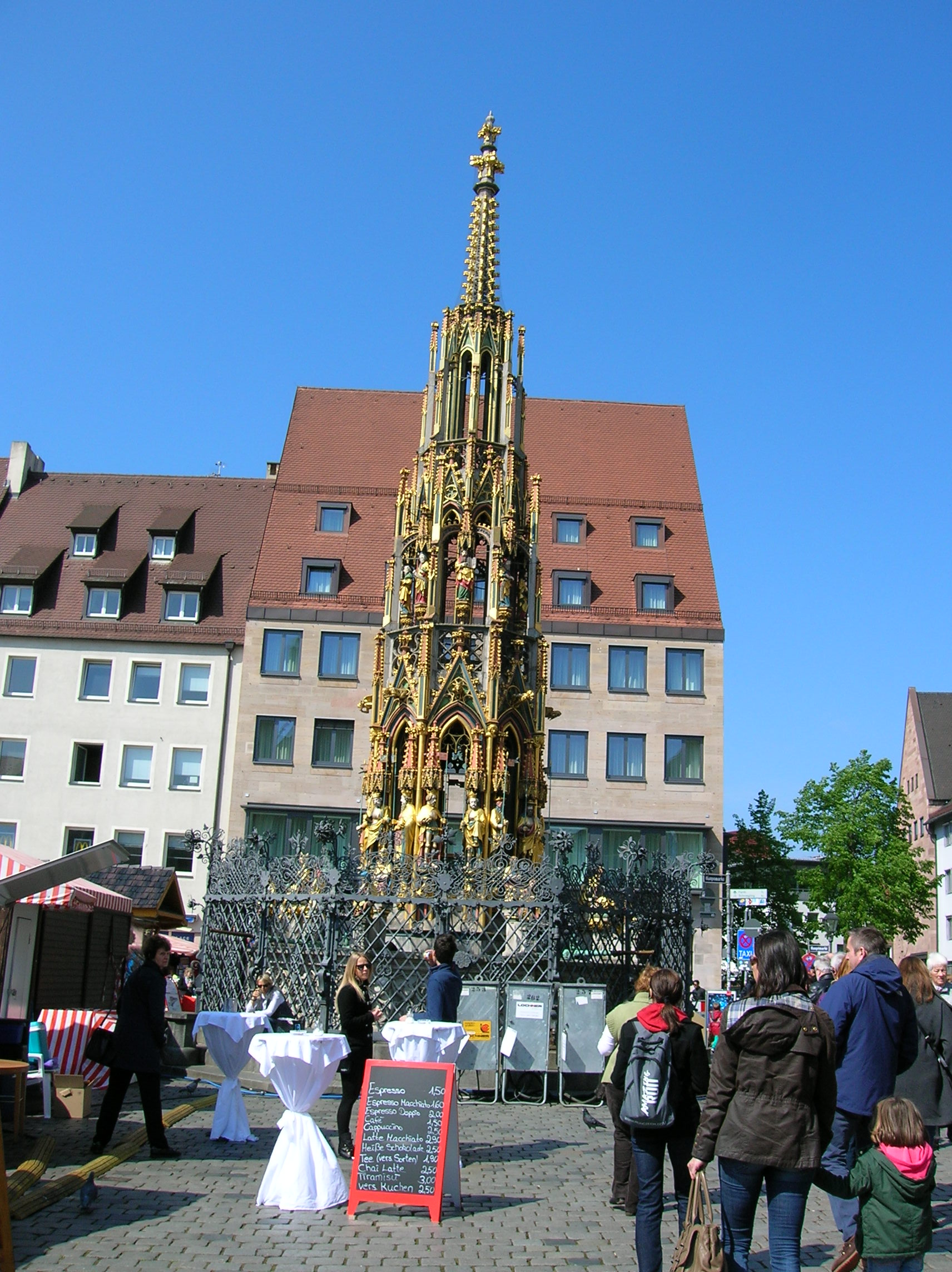
The Beautiful Fountain on the main square

The Beautiful Fountain on the main square

We had some minutes before the noon scene at the clock, so we admired the Beautiful Fountain, constructed at the end of the 14th century. Over 17 meters high, it boasted 40 stone figures on four levels. At the bottom there were the seven arts and philosophy. The Four Evangelists made an appearance, too. The seven electors, Hector, Alexander and Julius Caesar were also sculpted in the central part. Old Testament figures were also present along with Charlemagne and King Arthur. The top part showed Moses and the seven prophets. The well was a copy from the early 20th century. The original was in the German National Museum. I admired the decoration and latticework. There was also a Wishing Ring that could be turned, and many gathered around the well climbed up the steps to turn the ring three times for good luck.
We watched the noon scene at the clock tower. Trumpeters announced the arrival of Emperor Charles IV, and the seven electors paraded around him three times, symbolizing the “Golden Bull” decree that made Nuremberg the seat of the first imperial diet when the seven electors selected a new German king. It was nice to see King Charles IV appreciated in a country other than the Czech lands. I decided I must come to the famous Christmas market in this square someday. It must be enchanting. I tried to imagine knights’ tournaments that had taken place in the square so many centuries ago. Or I tried to imagine the days when the imperial crown jewels had been shown to the public on this square. History sure seeped through the heart of this city.

Old Town Hall

Old Town Hall

Before lunch we went to admire the Italian Renaissance style Old Town Hall, which hailed from the 17th century. The figures of Wisdom and Justice adorned the façade. We even got inside to the Great Council Chamber, which was not often open to visitors. Renaissance in style, it was 40 meters long. I admired the timbered ceiling. It was a reconstruction. The original had had burned down in 1945. I thought of all the council meetings, trials, balls, imperial assemblies and signing of peace treaties that had taken place here over so many centuries. If only I could have been a fly on those walls! Another Old Town Hall dated from 1330 and was an example of Gothic architecture. Visitors could tour the dungeons underneath it.
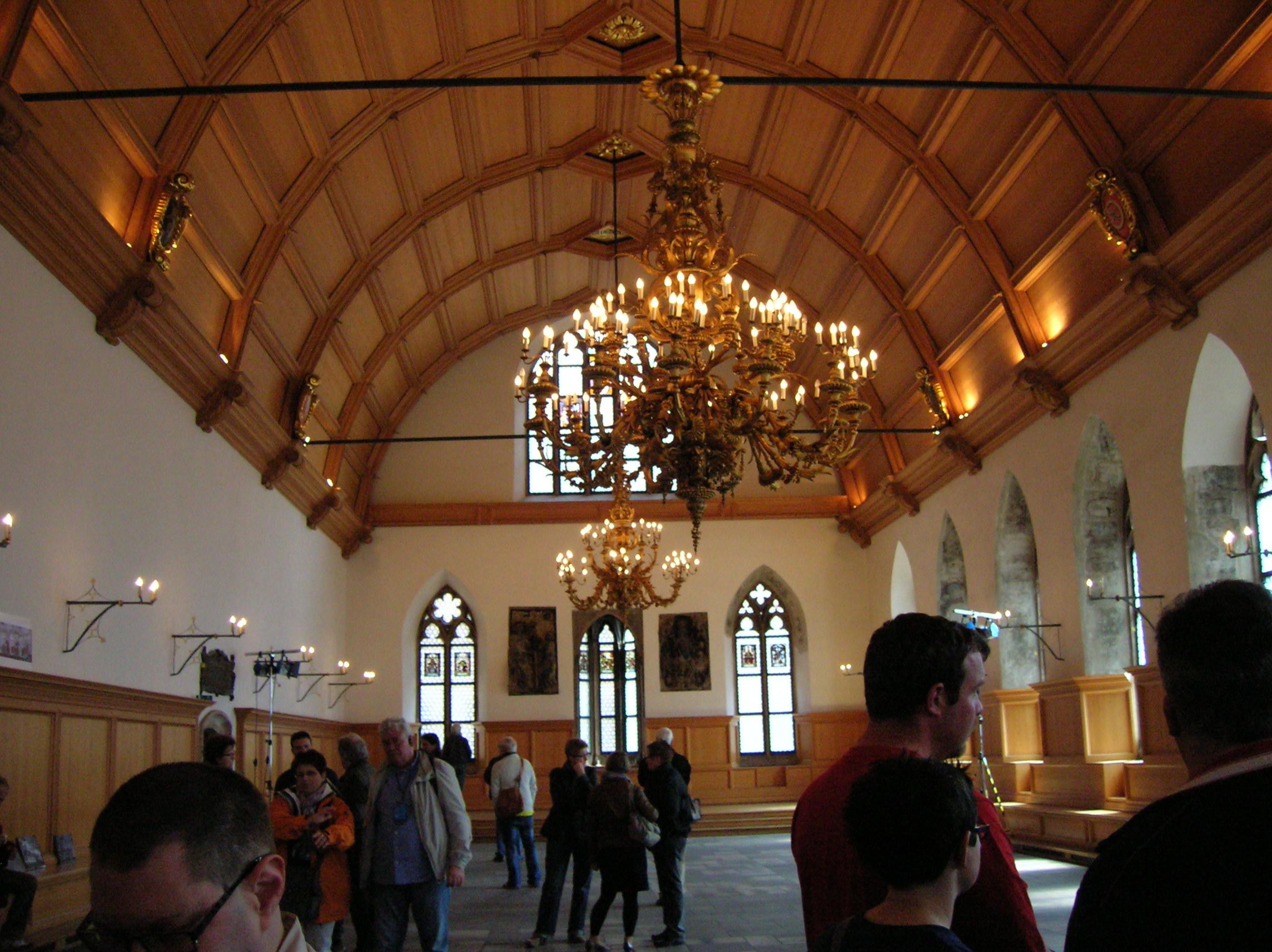
The interior of the Old Town Hall

The interior of the Old Town Hall

For lunch I found a small café where I could munch on a sandwich after devouring a large soft pretzel from a stall.
Next up was the medieval castle. Dominating the city, it looked romantic, perched on a rocky hill. The castle dated from the founding of the city, before 1050, when a fortress was situated on the site. Every German emperor set foot in this structure from 1050 to 1571. The imperial crown jewels had been stored in this fortification with four towers.

While walking uphill toward the ticket office, the views of the rooftops and town were superb. Half-timbered buildings were on the premises, too. I liked the look of these buildings; they reminded me of cottages and had a very intimate quality. It was possible to climb Sinwell Tower, though I did not feel like trying to conquer my fear of heights on this day.

Nuremberg Imperial Castle

Nuremberg Imperial Castle

Soon we entered the Imperial Palace. The highlight of the interior was the Romanesque double chapel, hailing from the 12th century. Twin chapels, featuring a hall structure with two spaces on top of each other, are rare; there are only about a dozen in all of Central Europe. The emperor and his entourage entered from the Gothic portal of the upper level while the commoners came inside from the outer courtyard. On one capital there was a grotesque decoration of animals’ heads spouting leaves. A 15th century statue of the Madonna was on the main altar. Statues of four rulers were also present in the chapel. In the gallery above there were three bays with groined vaulting.

Part of Nuremberg Imperial Castle

Part of Nuremberg Imperial Castle

What impressed me most in the other rooms were the ceilings. The Knights’ Hall had an impressive massive joist wooden ceiling with no less than 30 crossbeams. Wall paintings from 1490 decorated both sides of the Late Gothic portal. Christ represented as a ruler was portrayed above the arch. The Emperors’ Hall featured a black-and-yellow ceiling with depictions of the imperial double eagles. Coats-of-arms adorned the ceiling, too. A small green stove caught my attention, too. Allegories of the liberal arts and portrayals of emperors decorated it. The Imperial Reception Hall had a painted imperial eagle painted on its ceiling. Its wall paneling was adorned with rosettes. The ceiling hailed from the 15th century, and the furnishings were Renaissance in style.

A tower at Nuremberg Imperial Castle

A tower at Nuremberg Imperial Castle

An exhibition featured how the emperor interacted with the empire and with the city. It explained the Golden Bull’s significance, the role of the electors and how Nuremberg had flourished during the Middle Ages.
After the tour of the castle, the other members of the group went to the German National Museum, the largest museum of German art and cultural history. I opted to visit Dürer‘s former home, a 15th century house that now was a museum dedicated to the artist. Dürer was so dear to my heart. I also did not think that two hours was enough time for me to visit the German National Museum, where the largest collection of pianos plus paintings and sculptures through the ages, were exhibited. I was also tired. I had woken up at 3 am, and I wanted to visit the museum when I had more energy and would appreciate the exhibits better.

Statue of Albrecht Durer in Nuremberg

Statue of Albrecht Durer in Nuremberg

The Dürer Museum displayed reproductions of the artist’s copperplates, portraits, etchings, sketches and woodcuts. The furniture hailed from the period when Dürer lived there, from 1509 until his death in 1528. It was a small, though intriguing, museum, and I also learned about Dürer’s life. I did not know that at the German National Museum originals of his work were displayed, but I was glad I had gotten a glimpse into the life and work of an artist I truly admired.
I had about a half hour free after that, so I sat at the outdoor seating of a restaurant and had one of my favorite foods, a hamburger. I watched the comings and goings of people at the Easter Market, which was filled with such joy and celebration. I loved seeing the city while a market was taking place. It gave the town even more energy. Then I walked down a few of the narrow, picturesque streets before heading to our meeting place, the German National Museum.
I was more than satisfied with the day trip. We had had a superb guide, and the sights had been remarkable. I loved the churches the most, especially the rose window and the Annunciation grouping suspended from the ceiling. I bought a booklet about the city and found out that there was much more to see –a tour of underground Nuremberg and the Art Bunker ranked high on my list along with the German National Museum. Yes, I knew I would be coming back to Nuremberg.

Tracy A. Burns is a writer, editor and proofreader in Prague.

The magnificent vaulting at St. Sebald's Church

The magnificent vaulting at St. Sebald’s Church

Pilsen (Plzeň) Museum of West Bohemia and Pilsner Urquell Brewery Diary

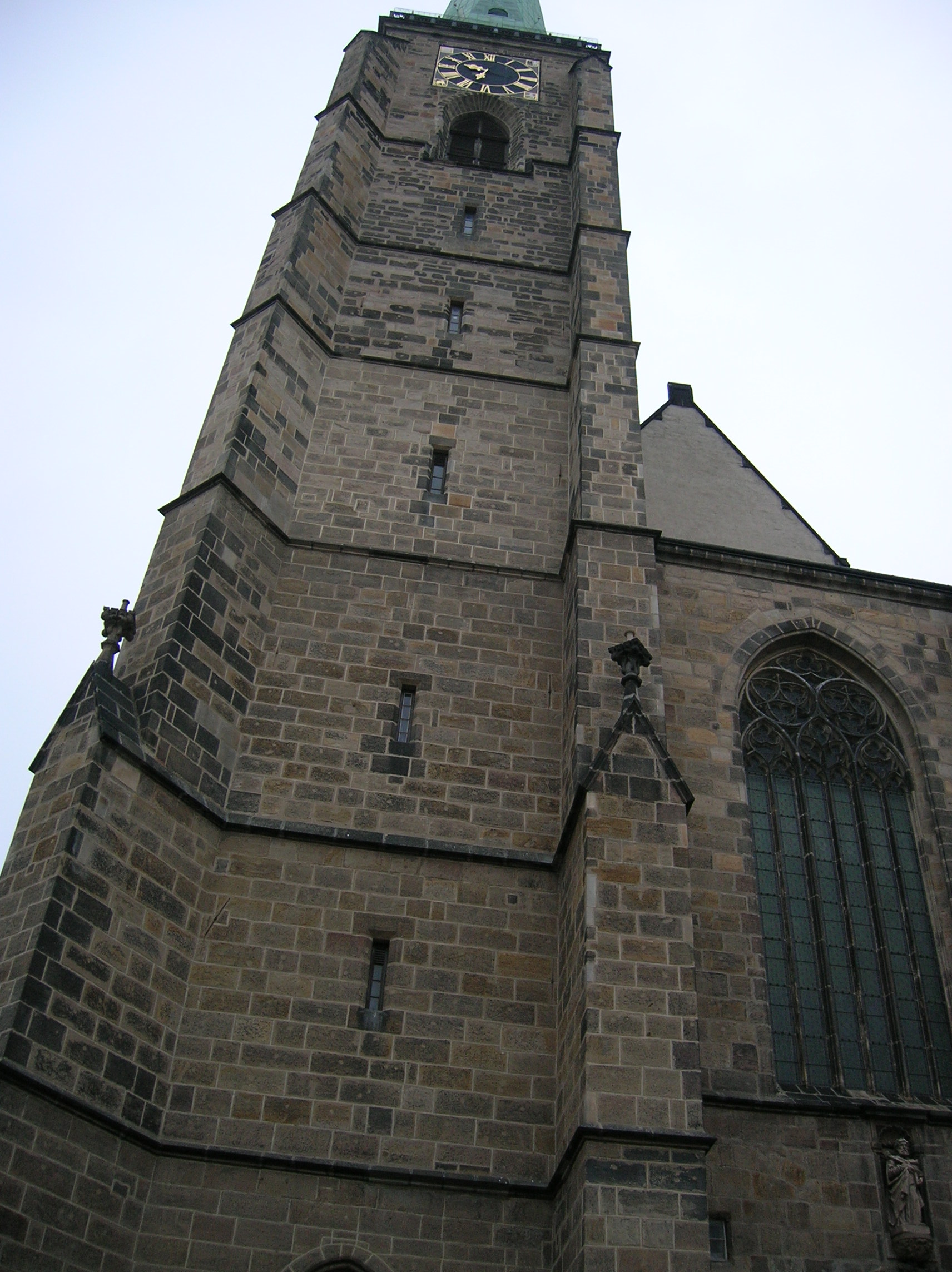
The Cathedral of Saint Bartholomew, a landmark in Pilsen

The Cathedral of Saint Bartholomew, a landmark in Pilsen

I had been to Pilsen many times. After all, it was only an hour away via the comfortable Student Agency bus service. I had even spent several days in the town, staying in a pension above a beer hall-restaurant, but I did not do much sightseeing. I had been in town for a theatre festival and found myself in various theatres the entire time. Indeed, I was ashamed that did not really know Pilsen well after having lived in Prague for more than 20 years. It had always been one of those places where I changed trains.
I would soon find out that Pilsen certainly is worth visiting. It was even selected the European Capital of Culture for 2015. With a population of more than 170,000 inhabitants, Pilsen is the fourth biggest city in the Czech Republic.
A travel blogger on Twitter mentioned that he had really enjoyed the tour of the Pilsner Urquell brewery. Although I rarely drink alcohol, I thought it would be intriguing to see how beer had become an integral part of the town’s history. I wondered what processes were entailed in brewing it.

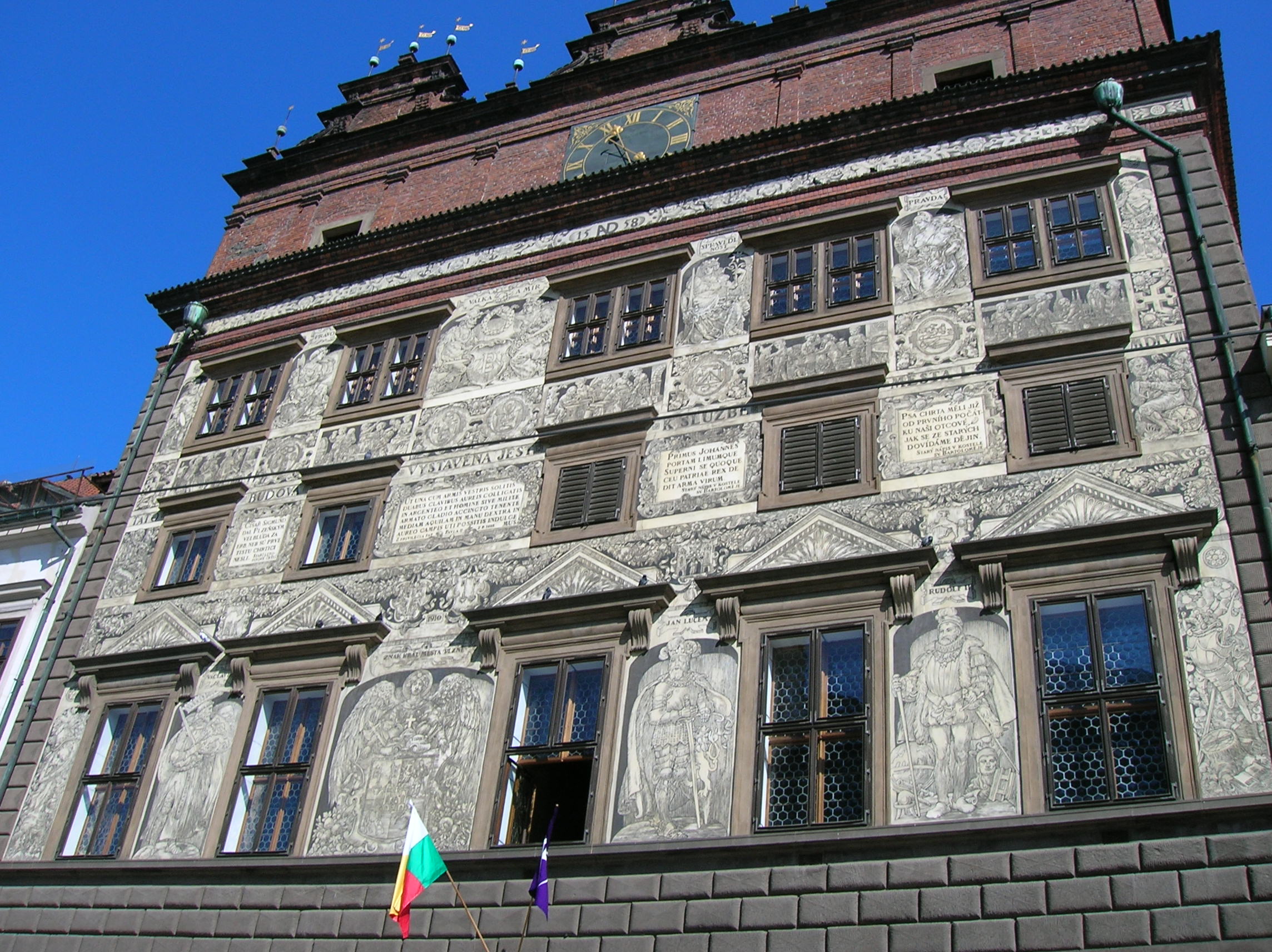
The town hall with its sgraffito Renaissance facade

The town hall with its sgraffito Renaissance facade

Before my tour of the brewery, I made a stop at the Museum of West Bohemia, where I visited an exhibition on the city’s history from medieval times to the 19th century. First, I explored other areas of interest in the museum. The Gothic armor in the armory was impressive, and the Meissen collection certainly caught my attention. I was especially drawn to a bowl with the entire surface covered in three-dimensional, handmade flowers with leaves. The handle looked like a tree branch. Dating from 1739, it was truly exquisite.
Then it was time to concentrate on the history of the town in context with the events that had so greatly affected this land. The exhibition also focused on everyday life from the various centuries. There was an exposition of a medieval, rural house, for instance and recipes from the 15th and 16th centuries as well as a section on food and textiles in the Middle Ages.

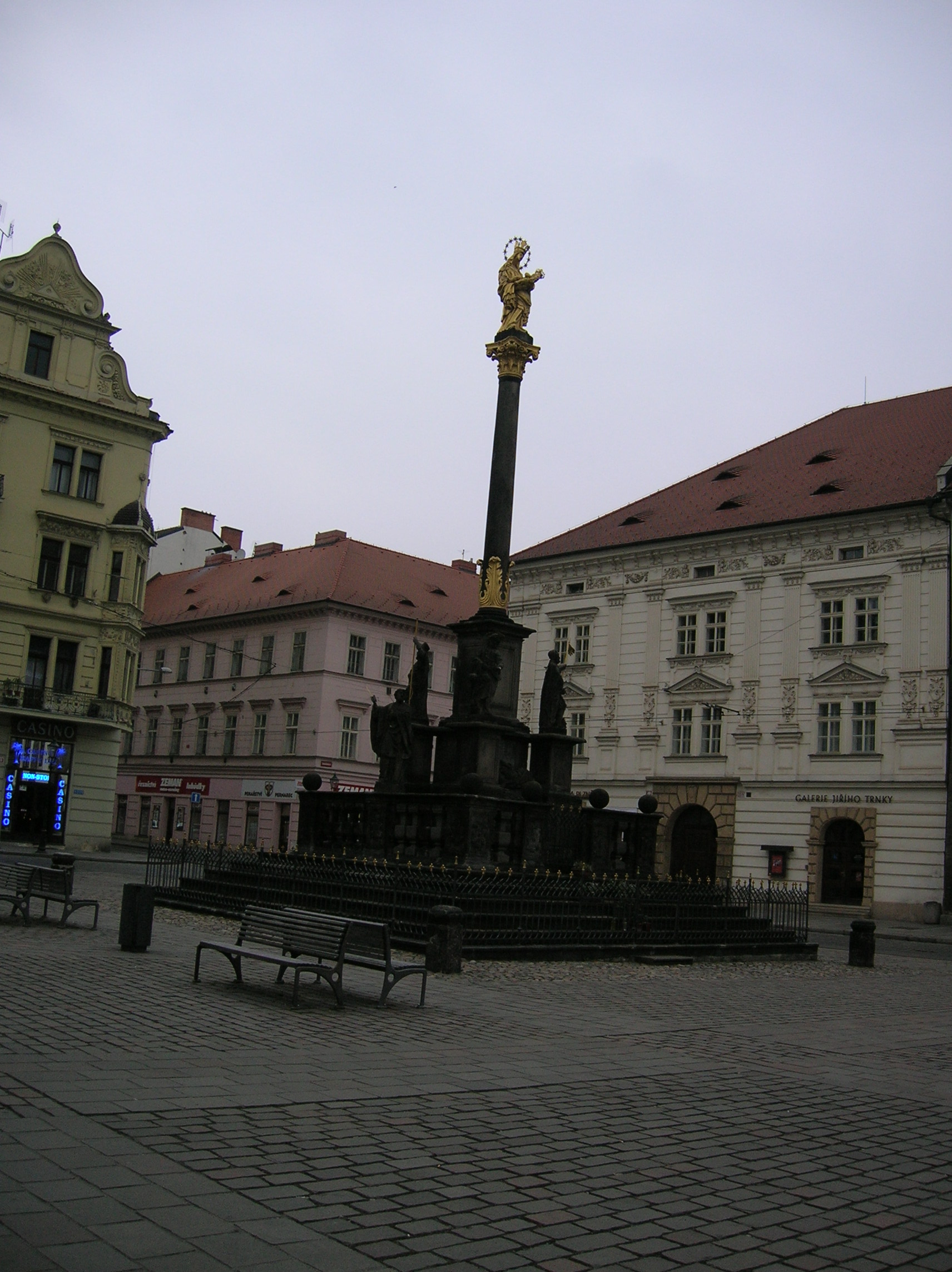
The Plague Column in Pilsen

The Plague Column in Pilsen

This is what I learned: Pilsen was established in 1295 by King Wenceslas II. It was designed in a regular Gothic ground plan with a rectangular square that was 193 meters x 139 meters. In the beginning about 3,000 people lived in 290 houses. The town was significant because it was situated on a trade route from the German borders to Prague.
When the Hussite wars ravaged the lands during the 15th century, the town at first supported the revolutionaries but then turned toward the Catholics in 1420. Pilsen was never conquered.
During the second half of the 15th century, Pilsen became a regional center. It had a Catholic majority, most of whom spoke Czech. Because the town was located on an important route to Germany, there was much trading with Germans. Non-Catholics wanted to teach Pilsen a lesson for taking such a strong Catholic stance, so they set fires deliberately and destroyed part of the town. This happened, for example, in 1507. During the 16th century, because the city had a Catholic majority, it supported the monarch.

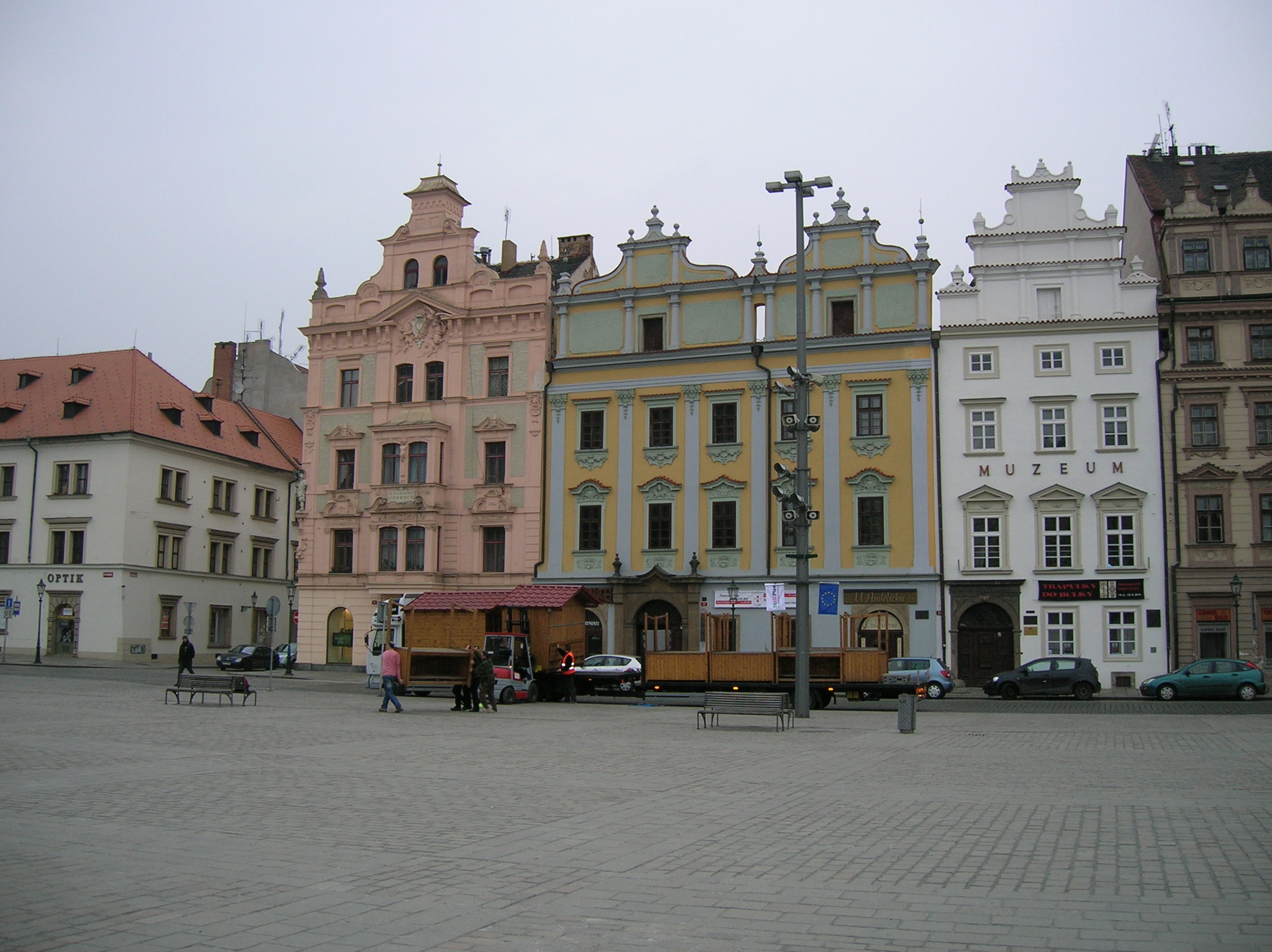
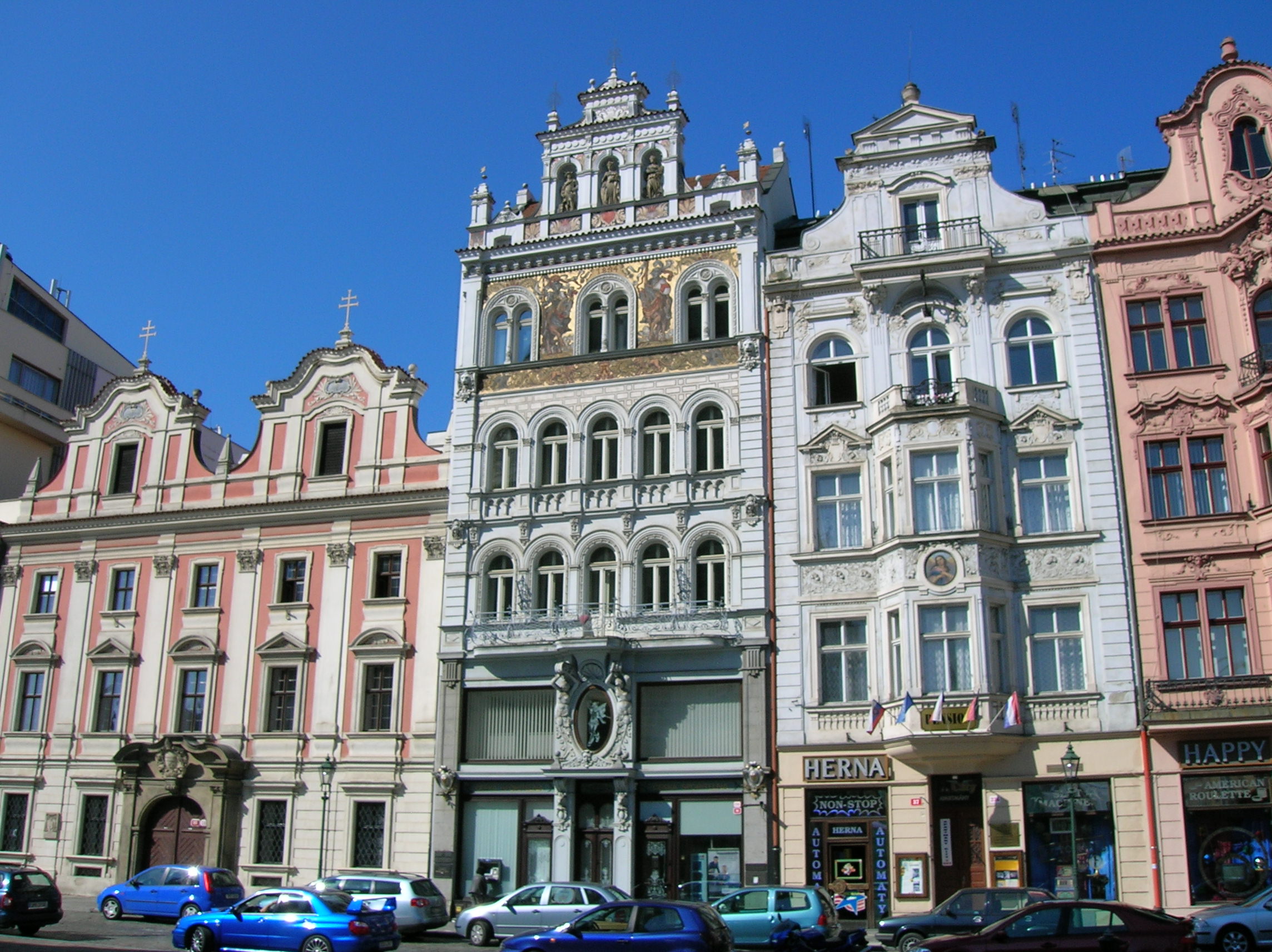
The exquisite facade of a building on Republic Square

The exquisite facade of a building on Republic Square

In the mid-16th century Pilsen ranked third among the biggest cities in Bohemia. The town flourished by buying villages and creating ponds. The beer brewing industry also proved successful – but more about that later. By 1557 Pilsen was ranked as the second wealthiest town after Prague. The inhabitants were mostly from Bohemia. At the end of the 16th century, Emperor Rudolf II took refuge in Pilsen when the plague epidemic spread through Prague.
During the 17th century Thirty Years’ War, Pilsen, not surprisingly, supported the Catholics, who were victorious, so the town was not punished after the war. However, the 17th and 18th centuries were not all that rosy. In 1623 a fire destroyed parts of the town. The plague made its way to Pilsen in the 17th and early 18th centuries. There was another fire in 1729.
Pilsen soon found itself as a provincial town. The population decreased, and the city experienced financial problems. In the middle of the 18th century, many immigrants came to the town. Some of the newcomers were officers for the administration of the city.
At the beginning of the 19th century, Pilsen contributed to the National Revival, a movement to revive the Czech language, improve Czech culture and emphasize Czech national identity. Pilsen was one of many places where this revival was successful. Czech schools were established. Theatres put on performances in Czech. There were Czech technical organizations, and Pilseners contributed to Czech literature. Yet there were hardships, too. In the 1830s, ethnic controversies riddled the town. Poor harvests and financial crises did not help matters.

Republic Square

Republic Square

In 1848 Pilseners were among the Czechs who demanded national democratic and constitutional rights in the monarchy. At the end of the 18th century and at the beginning of the 19th century, Pilsen was a town oriented in trade and agriculture and had promise in the industrial sphere as well. The food industry grew thanks to breweries, mills and distilleries.
The 19th century brought major developments in the city. For instance, Škoda Works was established by Emil Skoda and became the top arms producer in the Austro-Hungarian Empire. Later the company became a leading engineering enterprise. The brewery brewed its first batch of beer on October 5, 1842. The Pilsner Urquell brand and the pilsner type of beer would capture worldwide attention. But more about that later.
One feature I really liked in the history section of the museum was the focus on individuals who had made a difference during these centuries – people who were not necessarily famous. I learned about Joseph Vojtěch Sedláček, for example. Active during the National Revival, he collected art-related objects for Prague’s National Museum. While he taught math and physics at a monastery, he also scribed poetry. He is also the author of the first Czech textbooks on math, geometry and physics.

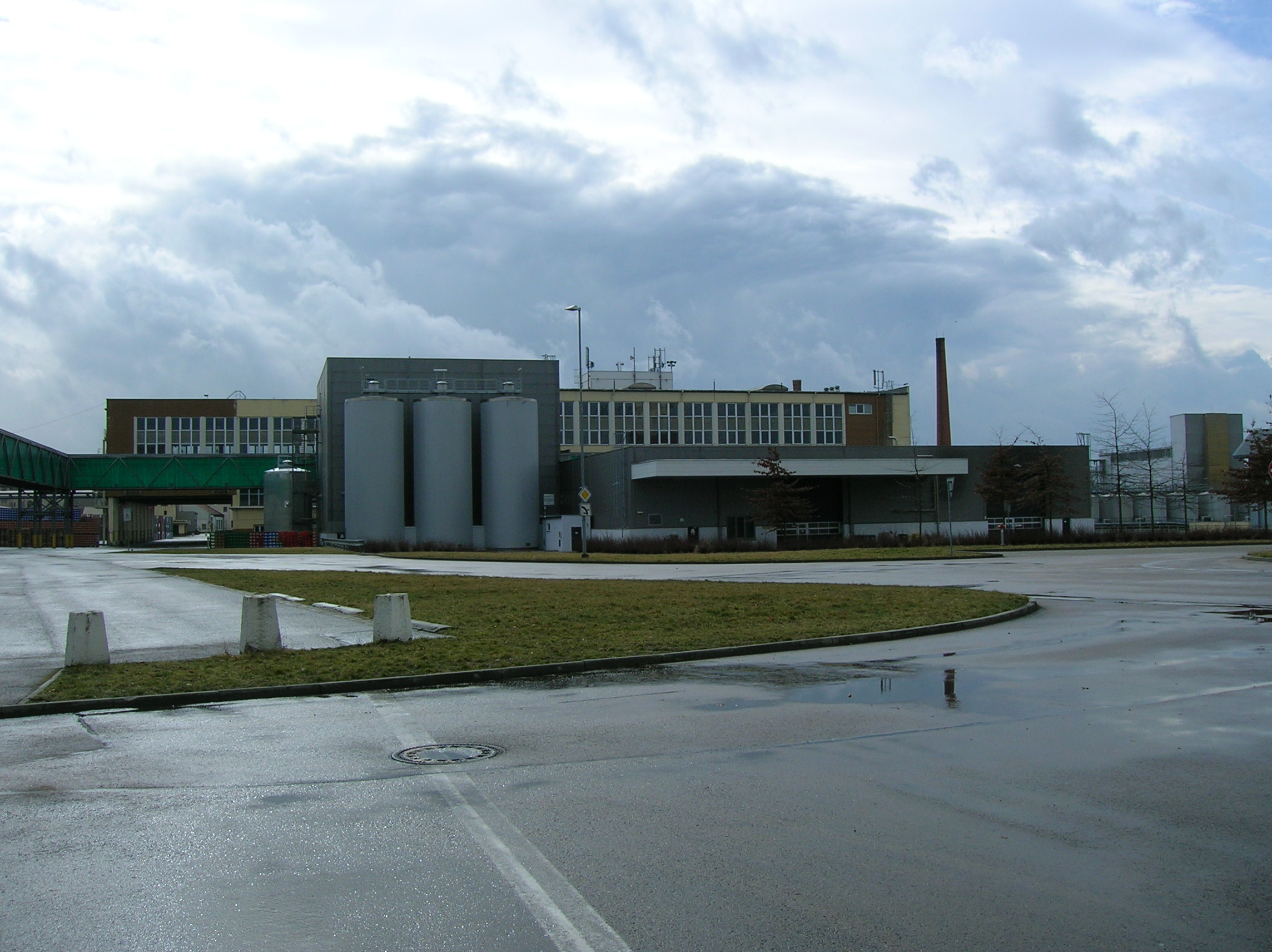
Part of the Pilsner Urquell Brewery complex

Part of the Pilsner Urquell Brewery complex

Now it’s time to get to the main topic: beer. If there is one thing that symbolizes the city, it is beer. The beverage was first brewed there at the time of the founding of the city in 1295. King Wenceslas II gave 260 townspeople the right to brew beer in their homes. The quality of beer was controlled by town councilors in the entrance of the town hall. The town magistrate poured beer on oak benches. Then councilors would sit on the benches for an hour. If their leather britches did not stick to the bench when they stood up, the beer was deemed undrinkable.
In 1838, 36 barrels of undrinkable beer were spilled out in front of the town hall, an event which compelled some brewers to set up a brewery. The Burghers’ Brewery opened on October 5, 1842, when the very light, bottom-fermented Pilsner Urquell came into existence.
Pilseners have the then 29-year old Bavarian brewer Josef Groll to thank for their internationally-acclaimed beer. He’s the one who put local ingredients of soft Bohemian water, very pale malt and Saaz hops into the mixture using a new method to produce bottom-fermented beer and then came across the new type of beer – the pilsner type — by accident on October 5, 1842.

Historic barrels in the brewery cellars

Historic barrels in the brewery cellars

Two of the Czech Republic’s most famous brands of beer, Pilsner Urquell and Gambrinus, are made at the vast complex near the center of town in buildings that had been constructed on a former executioners’ site. I picked up my ticket in the Visitors’ Center, where an original wort barrel is displayed. The place was crowded with tour groups. It was not possible to tour the Gambrinus brewery. For some reason there were no tours in March.
When it was time for my English-speaking tour to start, we stepped outside, and the guide pointed out a few landmarks. The water tour hailed from 1907 and was 47.2 meters high. It reminded me of a lighthouse that I remember seeing as a child while on vacation near Freeport, Maine. As a young child I had wondered if some evil person had inhabited that lighthouse. The Pilsen water tour is no longer used.
There was also a decorated historical gate built on the 50th anniversary of the brewery, in 1892. By the way, that year 462,550 hectoliters of beer were brewed there, and the brewery had more than 600 employees. The cellars even already had electrical lighting. The gate brought to mind the historical gate at the entrance to the town of Mělník, where I had visited a chateau a week earlier. The guide elaborated on the history of the brewery, mentioning Josef Groll and the 1838 barrel-spilling event, for example.
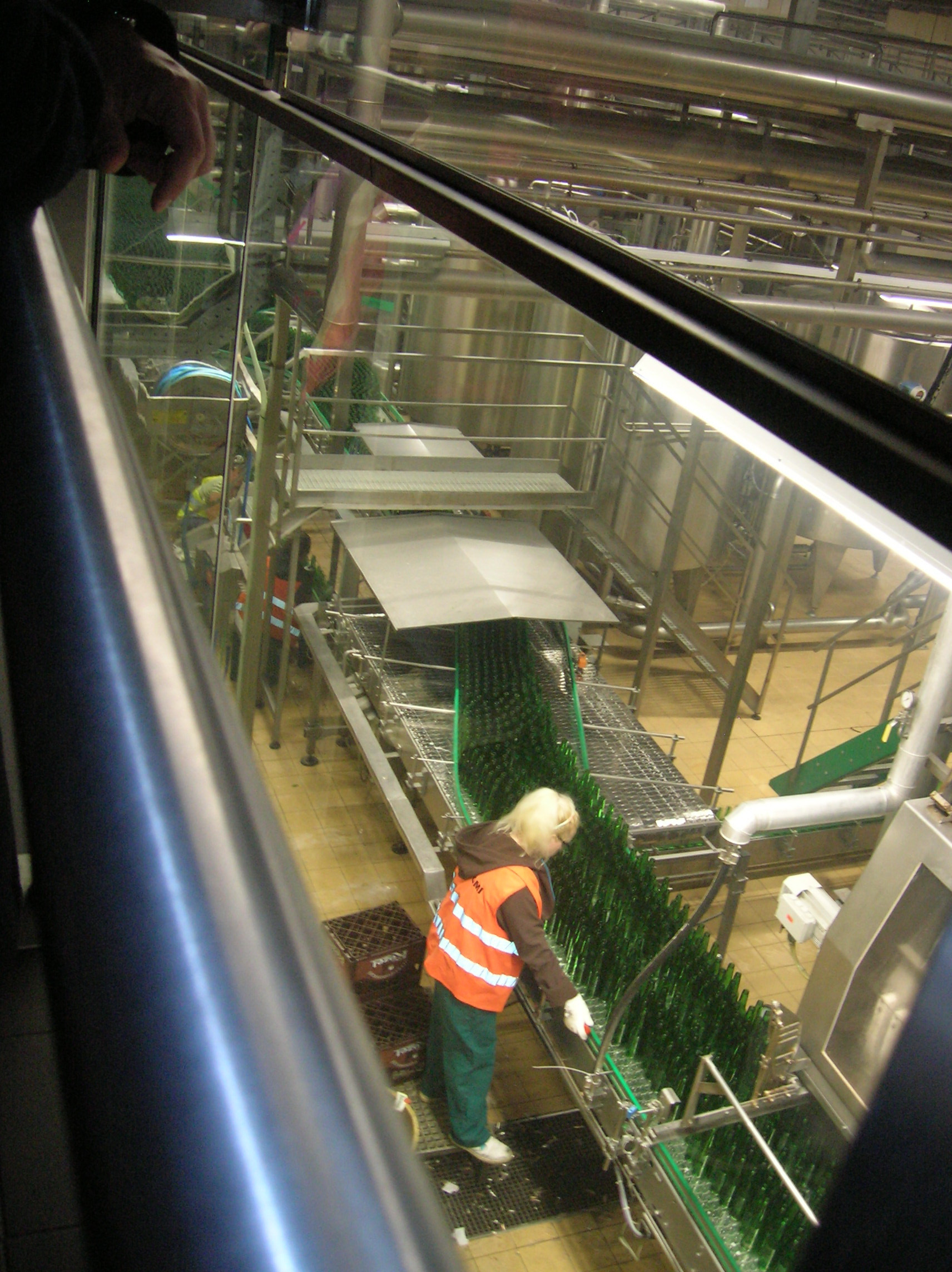
Then we got on a shuttle bus and went to the packaging hall, where we would see the bottle lines in action. The packaging hall was modern, hailing from 2006. There were four lines, one reserved for cans. On the premises was a washing machine as well as a camera that takes a picture of each bottle to show if it is clean. The bottles were filled, warmed at 25 degrees Celsius, dried and then labelled. We saw the huge bottle lines from above, behind glass. At that time two lines were working.

The bottle lines at the packaging plant

The bottle lines at the packaging plant

Everything was so mechanical, so efficient. And to think that I only saw several people in the room while all this action was taking place! I almost expected to see Charlie Chaplin running from one side to the other as in Modern Times. It also made me think of Karel Čapek’s science fiction play R.U.R (Rossum’s Universal Robots) in which robots made by man take over the world, bringing about the extinction of the human race. Everything was so mechanical. It was as if an army of bottles were marching into battle.
The process also reminded me of one of my favorite episodes of I Love Lucy, when Lucy and Ethel are stuffing chocolates into their mouths, picking them off the conveyor belt at the chocolate plant. That scene had such a human quality to it, though. I missed seeing many people in the hall. I tried to imagine it back in the days when people had worked at the belts. It both impressed me and saddened me that technology was so advanced.

A bottle line at the Pilsner Urquell Brewery

A bottle line at the Pilsner Urquell Brewery

Then we took the bus to another location and saw some cylindrical tanks outside. They were used for the fermentation and saturation of the beer. The guide mentioned that there were 20 cylindrical tanks outside and 110 in the building. A green-and-white train from 1952 stood to my right. At one time it had been used to take beer to the brewery. We went inside and got onto the largest passenger elevator in the country with room for 72 passengers.
We watched a short film about beer production in a panorama cinema with a revolving floor. One of the things I learned from the film is that it takes about five weeks to make the beer. Then we went to an exposition on barley and the stages of malt production. You could hold the barley in your hand and sniff it. You could also see how yeast looks through a microscope and taste hops that came out of a machine that looked similar to a soap dispenser. The Saaz hops had a subtle aroma. An exposition explained about granulating the hops. It told how they had to be dried, ground and boiled.

The packaging plant

The packaging plant

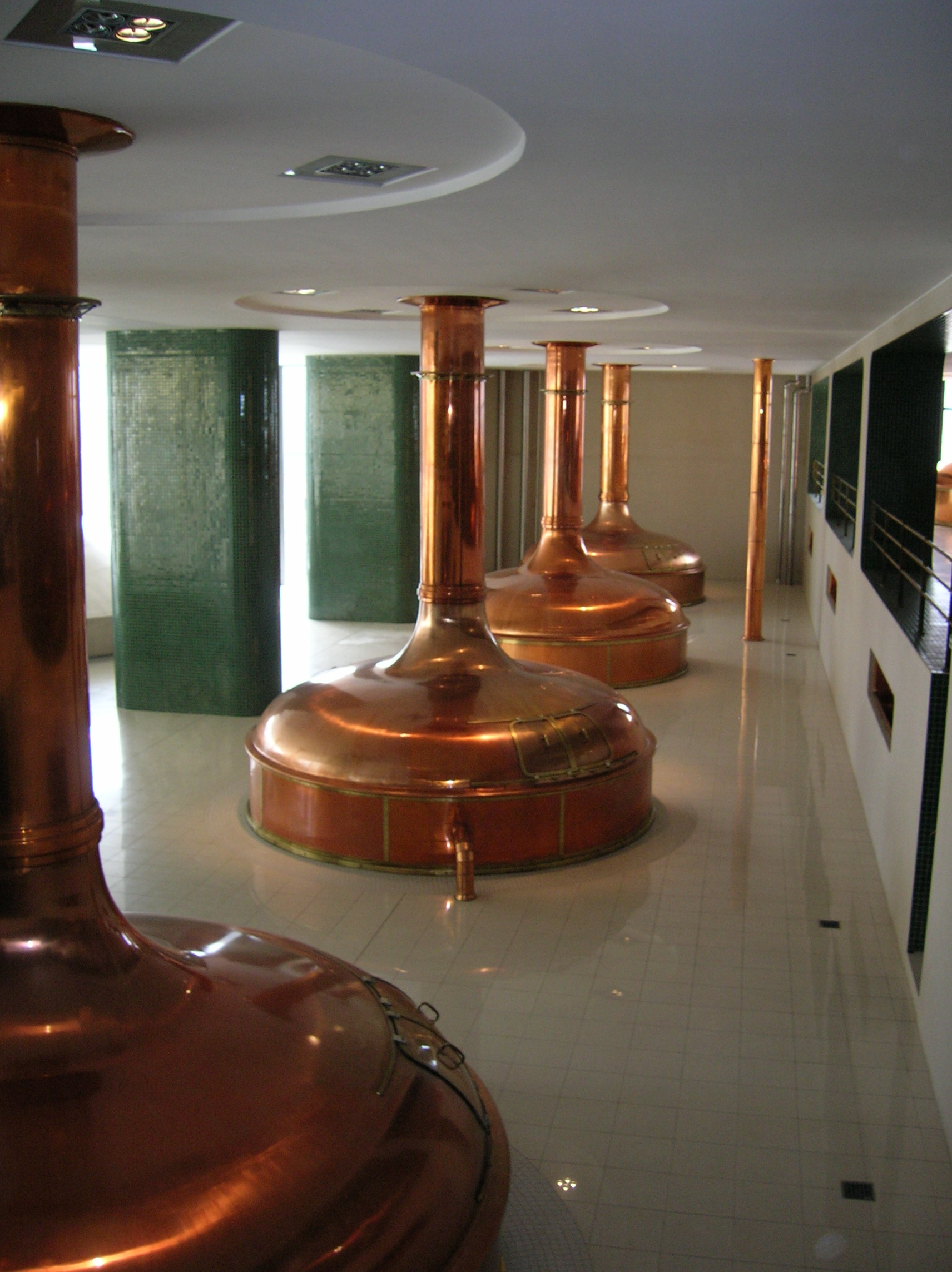
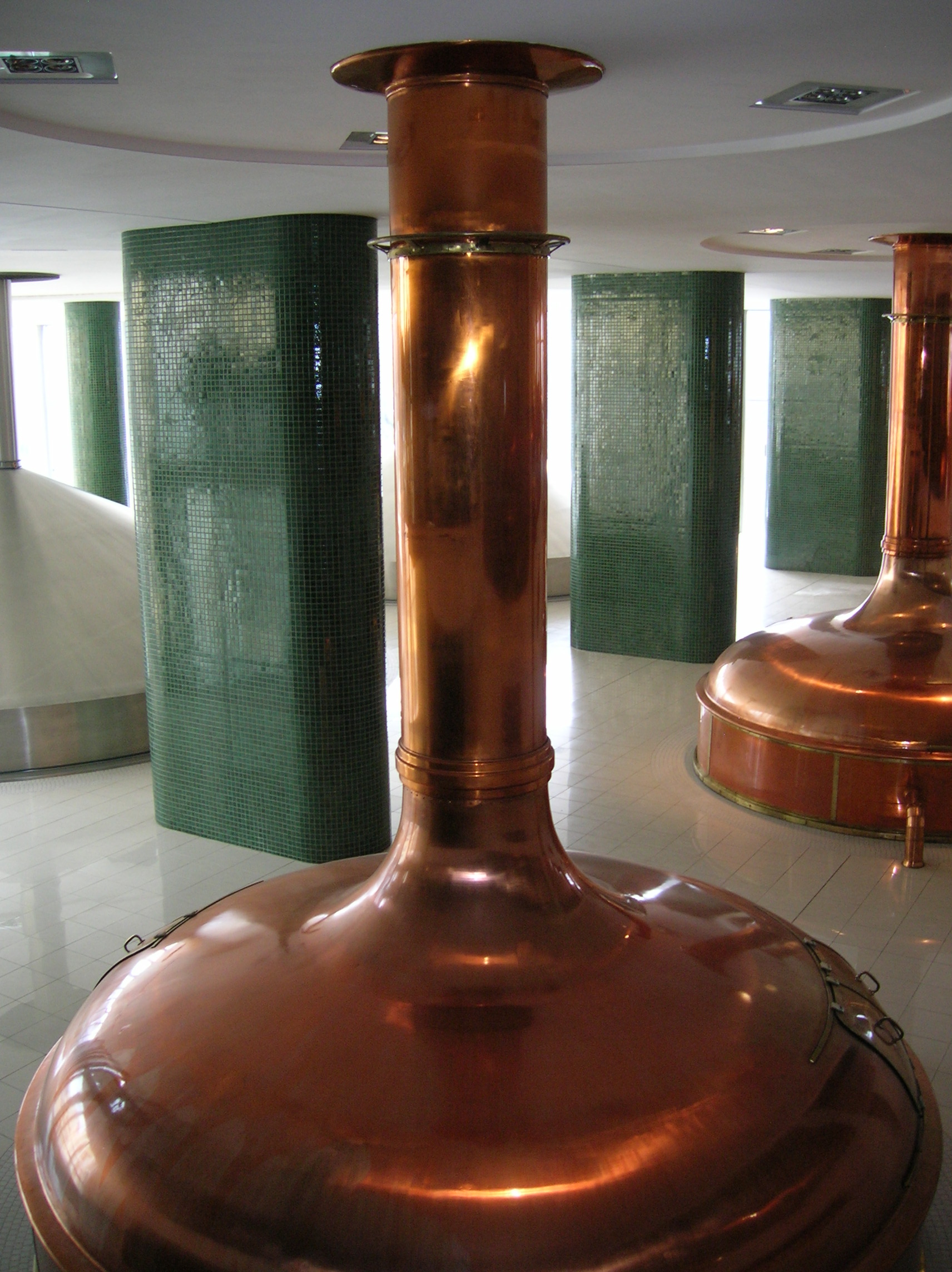
Then we went to the old brewhouse in a 1930s era building and the new brewhouse above it, which has been used since 2004. The former brewhouse had been used for 75 years. During that time five million hectoliters of beer had been brewed there. The tanks used in the brewhouse looked like alien space ships and brought to mind the TV serial Mork and Mindy and the movie E.T.

The old brewhouse

The old brewhouse

Two million hectares of beer are produced in the new brewhouse annually. The filtration process, for example, takes two hours, and the boiling process lasts 90 minutes. After that, the wort is chilled to six degrees Celsius. Only two people seated in a small office behind a glass wall controlled the mechanisms. Such a complicated process and only two people are needed to monitor it! Again I viewed technology as both awesome and disheartening.

The brewhouse

The brewhouse

From there we went to the room called The Hall of Fame, where the brewery’s trophies and various awards are shown off. A copper bin on display once held the first batch of Pilsner Urquell. Habsburg Emperor Franz Joseph, who reigned from 1848 to 1916, had penned his name in the visitor’s book, but his handwriting was messy. The guide mused that the ruler of the Austro-Hungarian Empire might have been drunk when he signed it. I thought about the suicide of Franz Joseph’s son, Crown Prince Rudolf, and the assassination of his wife, Empress Elisabeth, nicknamed Sisi. To be sure, Franz had good reason to drink!
Nineteenth century Czech poet Jan Neruda even wrote a feuilleton praising the brewery after his visit. It was published in Hlas on May 5, 1863.

Emperor Franz Joseph signed the visitors' book at the brewery.

Emperor Franz Joseph signed the visitors’ book at the brewery.

The guide also mentioned that the oldest house where beer had been brewed is at number 58, but I do not remember the street. Now the Beer Museum is located in that building. I had hoped to get there that day, too, but I would not have enough time.
Then we explored the cellars. They were nine kilometers long, with a size of 32,000 square meters. Of course, we did not walk through every passage! I thought of how difficult it must have been to have built this vast underground area – it must have taken many people to make all these tunnels. No machines had been used to make the cellars. It had all been accomplished by hard, sweaty manual labor. I wondered who had done this sort of work. Poor people who needed the money? Prisoners? Maybe both.

The barrels in the cellar

The barrels in the cellar

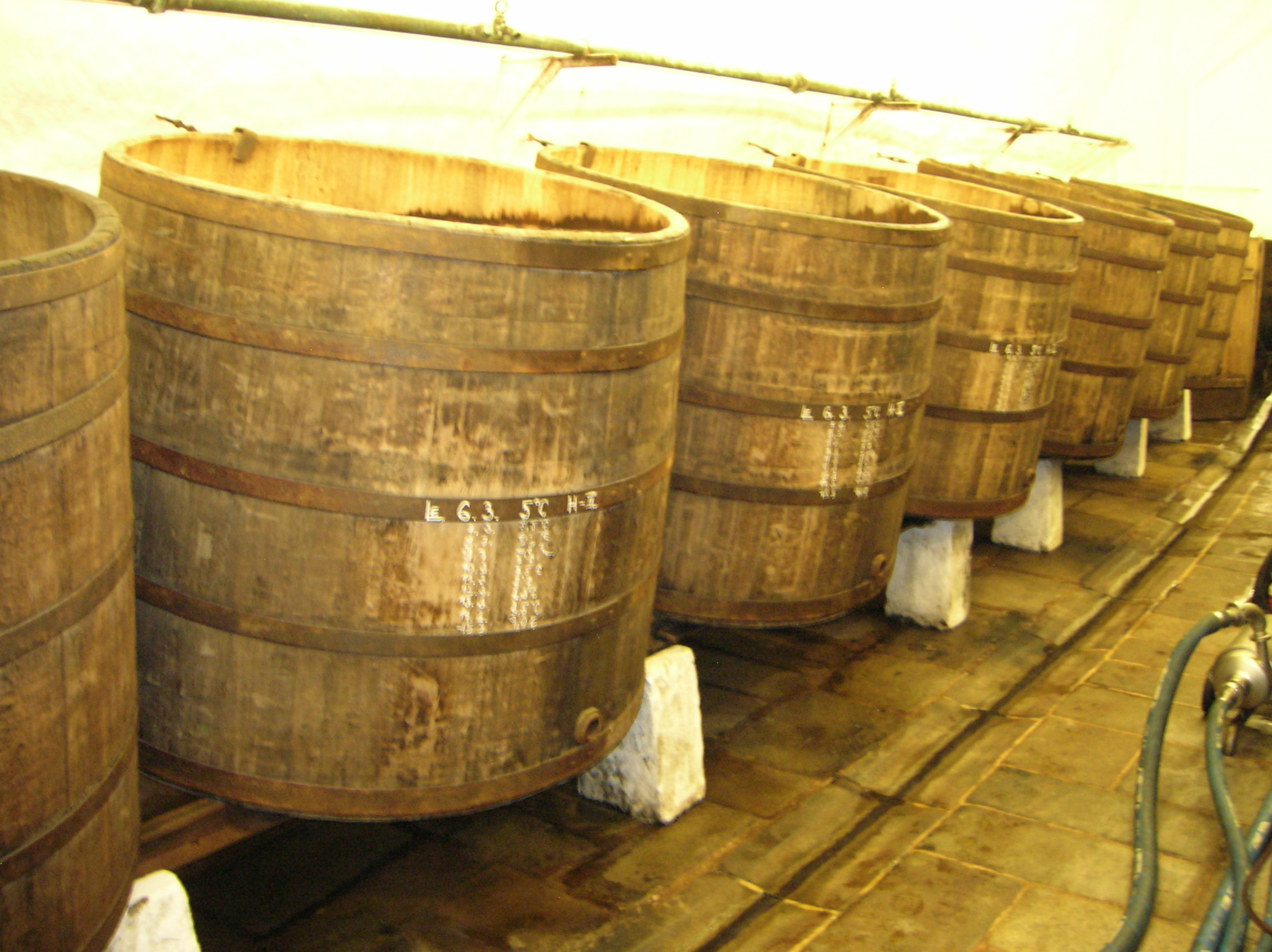
These underground spaces were once used for the fermentation and saturation processes. We saw storage areas with big, historic barrels. We walked through an ice room, too. In the second half of the 19th century, they used to cut ice from rivers and ponds to keep the place cold.
At the end of the tour, we tasted unfiltered and non-pasteurized Pilsner Urquell beer. It was tapped straight from an oak lager barrel. The beer was very good, but since I am not much of a beer drinker, I am not enough of an expert to compare it with other brands. I tended to like black beer, but this light brew was as good if not better than any of the dark beers I had tasted.

Republic Square

Republic Square

After the tour I went back to Republic Square in the center of town, where there are three modern gold fountains with black Chinese basins. I liked the gargoyles from which the water spewed. (I’ve always been a fan of gargoyles and the grotesque.) There was a 17th century Plague Column, too.
For years I had wanted to go inside the Cathedral of Saint Bartholomew on the square, but it was never open when I was in town. It was only open certain months during weekdays. I had read that a Neo-Gothic altar featured the Madonna of Pilsen showing the Virgin Mary with a very expressive and sorrowful look on her face. I loved gazing at the Renaissance town hall with all the sgraffito decoration on its façade that dates from 1558.
I was very hungry, and I decided to eat lunch at my favorite eating establishment in Pilsen – the famous U Salzmannů restaurant around the corner from the square. During the 19th century this had been the most significant pub in the city. A famous event in Pilsen’s history was connected with this former beer hall. In April of 1843, the original owner of the place, Martin Salzmann, sent some beer to his close friend in Prague, a tailor named Jakub Pinkas. The tailor was so impressed with the taste that he decided to hang up the scissors and open a pub, U Pinkasů. The pub still serves Pilsner Urquell beer.

A tower of the Cathedral of Saint Bartholomew

A tower of the Cathedral of Saint Bartholomew

Supposedly, Salzmann had been quite a character. He was known as a very grumpy and unpleasant man. He would place a coaster on the table for each customer and put the mug of beer on it. If he became disgruntled with a customer who was too drunk and too loud, he would take away the coaster and kick the guest out of the pub.
There was another way to lose your coaster. If you clinked glasses – Salzmann hated it when customers did this – you also lost your right to drink in the establishment. Salzmann also disliked students and deterred them from visiting his pub because they often did not have enough money to pay for their drinks.
After my late lunch, it was time to head back to the bus station. I vowed to come back to tour the underground areas of the city and to wander through the Beer Museum. I now am very aware that there were many sights to see in Pilsen, and I want to visit as many as possible.


Tracy A. Burns is a writer, proofreader and editor in Prague.

The new brewhouse

The new brewhouse


Chyše Chateau Diary

Chyse
I had come across Chyše chateau by chance while flipping through my old Kamenný klíč publication of castles and chateaus. When I read that the tour included an exposition about Karel Čapek, I was hooked.
Karel Čapek had been perhaps the greatest Czech writer ever, a master at all kinds of genres – science fiction, mysteries, novels, poetry, fairy tales, nonfiction, travelogues and more. I had studied his works for my master’s degree in Czech literature and was eager to see an exhibition about him. I had never known that he had worked as a tutor at the chateau. Curiously enough, I had never heard of Chyše before that, even though it had been opened to the public since May 30, 1999.

Karel Čapek writing

Karel Čapek writing

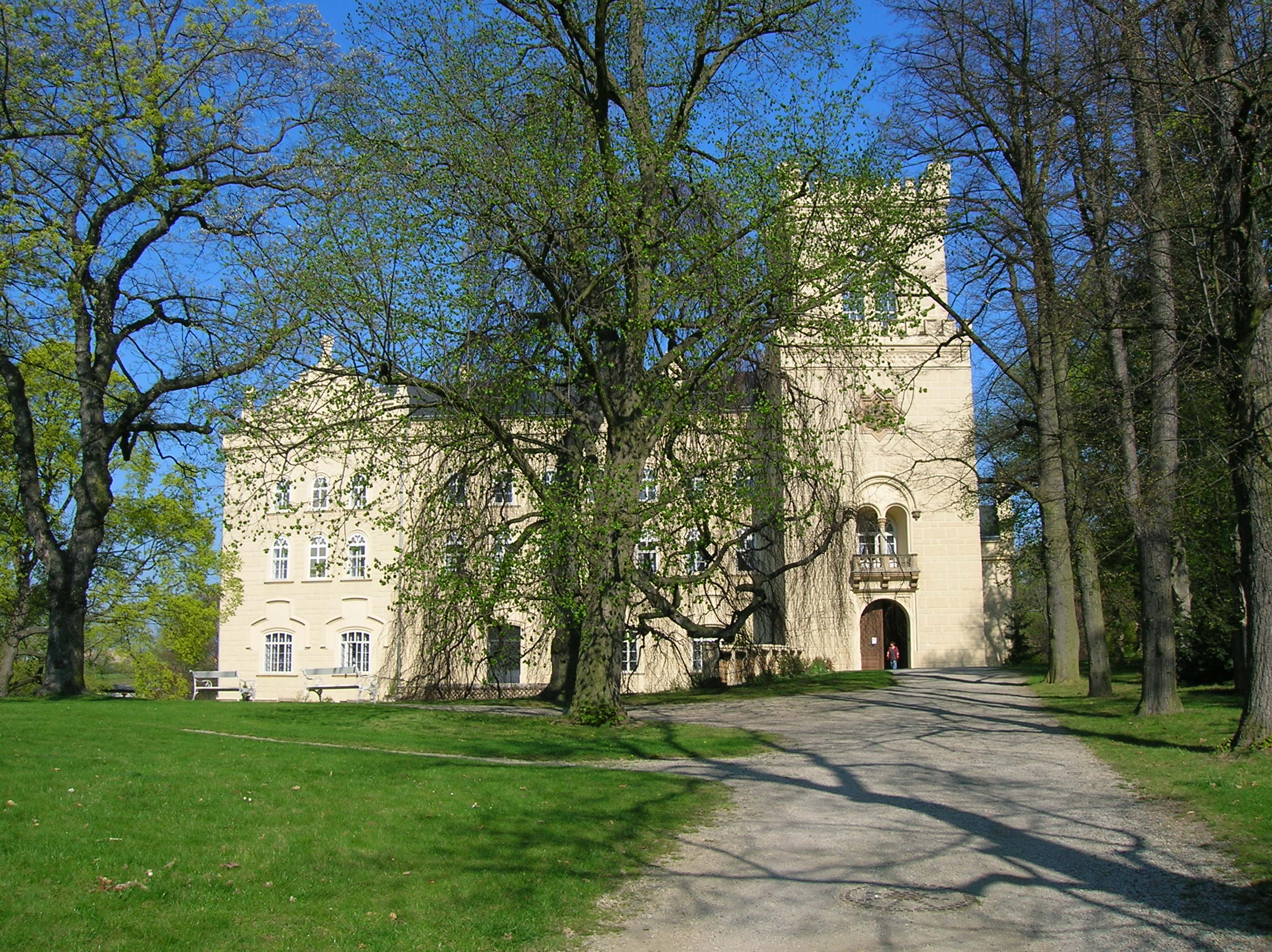
The only public transportation was by train through Rakovník, but I would only have five minutes to change trains, or I would have to wait two hours for the next train. The transportation back to Prague was awful as well. So, I went to Karlovy Vary again and took a taxi to the chateau that would charm and bewitch me as soon as I set eyes on its romantic, Neo-Gothic façade (I love Neo-Gothic facades!) and impressive park. I also hoped to visit the brewery next door. I had heard that Chyše made a decent beer.

Chysechateau2
The history of Chyše Chateau was enthralling. It stretched back to the second half of the 12th century, when the then medieval fortress was owned by the Odolenovic clan for 200 years. The castle was destroyed by the Hussites during the Hussite wars in 1422. (Lasting from 1419 to around 1434, the Hussite wars pitted the Radical Hussites against the Moderate Hussites, Holy Roman Empire, the Pope, Hungary and others. Neither party was really victorious.)
Six years later, its new owner Burián z Gutštejn restored it and built a hospital and a church as well. Although he died in 1489, his descendants manned the castle until the 16th century when it fell into the hands of the Lobkovicz family. It was Mikuláš from Lobkovicz who changed the appearance from Gothic castle to Renaissance chateau in 1578, but a year later he sold the chateau to Bohuchval Berka from Dubé.

Chysechateau3
Unfortunately, the chateau was confiscated after Bohuchval revolted against the Emperor in the early 17th century. The Michna family gained control of the chateau and retained it for almost 90 years, though there was a 20-year gap when the family did not own it. The Michnas were responsible for much valuable construction at the chateau and in the town. Thanks to them, a monastery was erected, the Carmelite church was renovated, another church was built and the chateau was transformed into Baroque style. It was under their supervision that legendary Czech Baroque painter Petr Brandl executed the biblical ceiling fresco called “The head of son Saul is brought to King David.”
A turning point in the chateau’s ownership came when Count Prokop Lažanský obtained it during 1766. Chyše would stay in his family until it was confiscated due to the Beneš decrees that took property from German citizens in 1945, as the owners at that time had German citizenship. From 1946 to 1976 the chateau served as several types schools, but in 1976 it was closed and became decrepit and dilapidated. Chyše was put up for sale in 1993. During 1996 it was saved thanks to the efforts of Vladimír Lažanský from Děčín, who bought it for 10 million crowns. The chateau was open to the public in 1999.

Chysechateau4
The first room of the tour presented pictures of the chateau in a dilapidated state during 1996, when Lažanský bought it. It seemed a miracle that it had been transformed into such magical beauty during three years, I thought to myself. Even the well-manicured park had looked like a jungle back then.
We walked through one room that exhibited a spectacular Renaissance ribbed vault as well as black-and-white graphic portraits. The next room would become one of my favorites. Baroque master Brandl’s fresco with a biblical motif swirled above me in vibrant colors. I also was impressed by the enticing stucco work in the space as well as the coat-of-arms above the fireplace. From there we entered the space in which concerts and weddings are held. The white Baroque stucco decoration included cherubs, shells and swirls. I was fond of the pink, Czech tea service. The Baroque closet and dresser also amazed.

Chysechateau5
The Venetian porcelain in the following room was one of the most exquisite and fascinating works I have ever seen in a chateau. The blue tea cups were decorated with white lace, it seemed. Even in a close-up examination, the decoration looked like lace. But it was really painted onto the cups. The wooden chandelier also got my attention.
There was Czech porcelain from the early part of the 19th century in the Summer Dining Room. I saw an exhibition of porcelain and pots in the small space where they prepared food near a hallway that led to the kitchen. In another hallway was a lush carriage from 1913. It had been used for weddings.
Then we went upstairs. I was taken in by the painted, diamond shapes on the ceiling in the hallway. The apartment of Prokop II Lažanský included portraits of his great grandparents and a 400-year old fireplace that dazzled. A clock with what looked like gold griffins on its sides dated back 150 years. A portrait of Count Vladimír Lažanský, who had employed Karel Čapek, hung in the portrait gallery. I noticed that he had a puffy moustache, beard and oblong face. Two tables were set with delicately painted Easter eggs, as it was a few weeks before Easter when I was there.

Chysechateau6
The small library contained 30,000 volumes. In it I saw a black-and-white fireplace in Second Rococo style; it appeared to be made of marble. The piece of furniture that got my attention in the children’s room was a dresser that marked the end of Rococo style and the beginning of Classicism. A bedroom was decorated in white – a white bed, a white dresser, a white chaise lounge. It emitted a feeling of purity. The furniture in this room was about 200 years old.
Then we came to Karel Čapek’s modest room which only got sunlight in the early morning, not providing optimal writing conditions. The furniture consisted of a small, wooden bed and a desk on which was an old bottle of Mattoni water with a German label, a white porcelain cup, about 10 books, an inkpot and a porcelain dog.

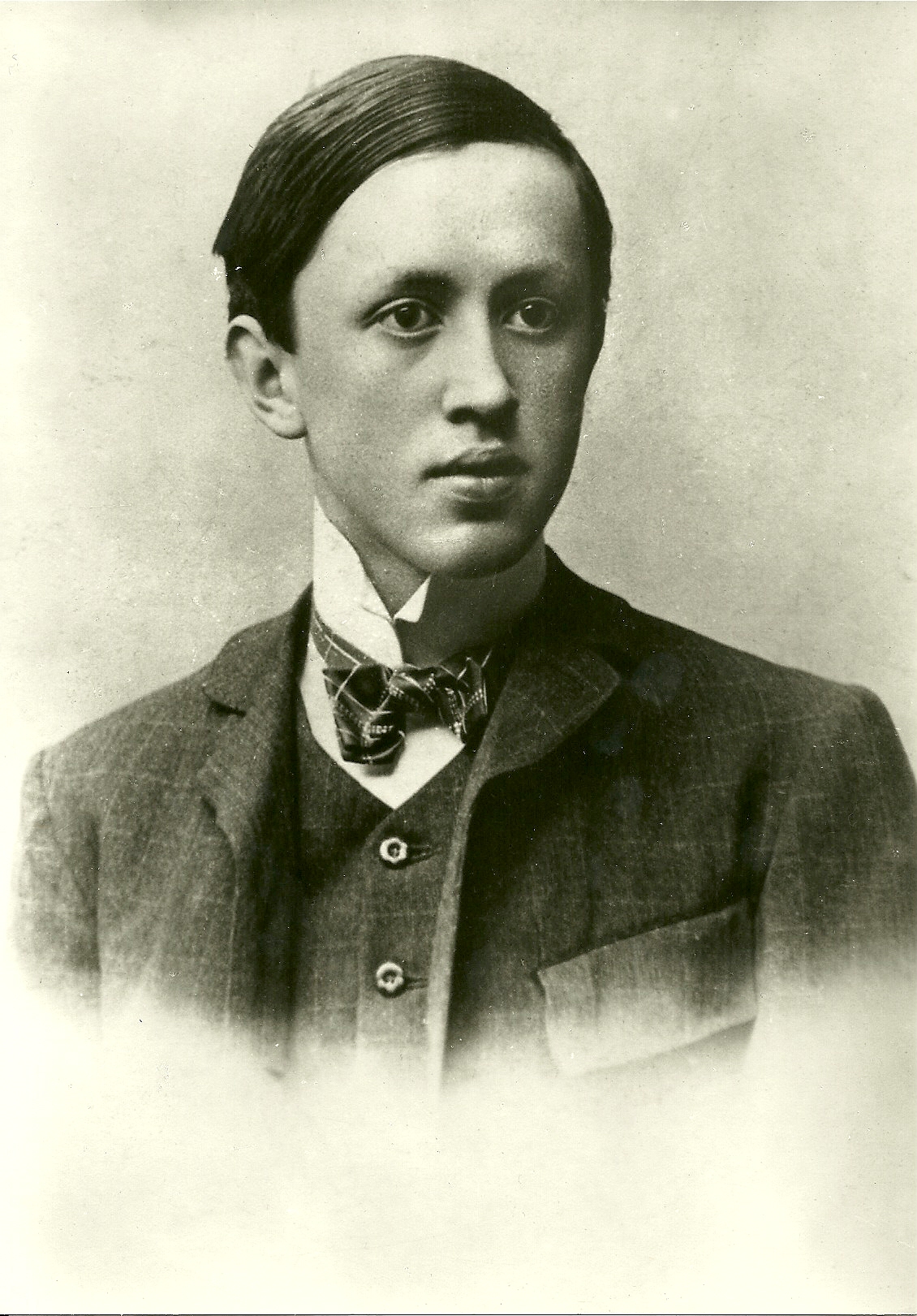
A young Karel Čapek

A young Karel Čapek

Čapek had taken the job as home tutor to the often misbehaving 13-year old Prokop IV Lažanský in 1917 when he was 27 years old, a year and a half after finishing his university studies. He had wanted a job that entitled writing, but could not find anything as an editor or journalist. (That fact astonished me and gave me some hope as I at the time could not find much work in writing or publishing.)
Čapek spent five months at Chyše Chateau, having tutored the boy in Prague for two months prior to his stay there. In his letters the to-be renowned author complained about not having time for his writing, though he did get some inspiration. During his tenure there a factory employing 14- and 15-year old teenagers exploded. Perhaps that influenced his decision to write Krakatit in 1933. He also spent time chatting with the gardener, as he was a lover of gardening and even wrote a book about the subject.

The prominent author Karel Čapek

The prominent author Karel Čapek

I could not believe that I was actually seeing a place where Karel Čapek had lived! He had walked on these floors, slept there, wrote there, woken up to the sun shining through the window there. This small, modest room was the highlight of the tour for me. I felt as if I was stepping on holy ground in this almost claustrophobic room.
After leaving Čapek’s room, I saw hunting trophies – a zebra decorated a wall as did the heads of antelopes. A boar hung above the doorway while a leopard skin rug decorated the floor. I am not too fond of anything to do with hunting, though.

Chysechateau7
Soon the tour was over, and it was time to visit the Karel Čapek exposition in part of the chateau’s ground floor. I stared for a long time in awe at the round, wooden desk and blue- with-white decorated chair where Čapek had written the philosophical, third volume of a trilogy called An Ordinary Life. The chair did not look especially comfortable, and I wondered if Čapek had suffered from a bad back.
I read information about Čapek’s tenure at Chyše Chateau on the walls. The then aspiring author had earned 100 crowns monthly for his tutoring of Prokop IV. That was almost nothing today. I wondered if it had been a substantial amount back in 1917. After his seven months in Prague and Chyše, he did become an editor, by the way.
I also saw reproductions of photos of Čapek, the chateau and 13-year old Prokop. Vladimír Lažanský sported a top hat and big moustache. I also looked at an aerial view of the town. The reproductions of Čapek’s letters were intriguing. In one correspondence with Czech writer S.K. Neumann, he complained that he had no time for writing here.

Chyše Chateau park

Chyše Chateau park

Various editions of a book about Capek’s sojourn there, called Kruh mého času and authored by Marie Šulcová, also decorated one wall. On the walls I also took notice of quotations from An Ordinary Life and scenes from his plays such as The White Plague and The Makropolis Thing. His time during 1932 in Karlovy Vary was documented as well. There, Čapek had worked on the second volume of his trilogy, Meteor.

But that was not all Chyše had to offer. I also saw the brewery next door. While beer-brewing in this town dates back to the 16th century, this brewery was constructed between 1839 and 1841. Behind the brewery is what remains of Renaissance walls from the original building. The chateau’s brewery closed down in 1932 due to its inability to keep up with other brands . It was used as a granary and then boiler house. In 1994 the place began to deteriorate.

A statue at Chyše Chateau

A statue at Chyše Chateau

Then, during 2003, the Lažanskýs bought it, and restoration began. Even the cellars were restored to their Renaissance appearance. The brewery opened again June 1, 2006. I found the beer very tasty. It was a golden color, not too light and not too dark. I tend to drink gold-colored or dark beer, so it was perfect for my palette.
After I had walked through the dazzling park, I had lunch in the brewery restaurant as I devoured chicken with ham and cheese and, of course, diet Coke. I was happy that day as I made the journey back to Prague, via taxi and Karlovy Vary, with a two-hour Student Agency bus ride that did not feel long at all.

Chysechateau8
Tracy A. Burns is a writer, proofreader and editor in Prague.

Mělník Chateau Diary


The Renaissance arcades of Mělník Chateau

The Renaissance arcades of Mělník Chateau

This was my second visit to Mělník Chateau, located less than an hour from Prague by bus. I was enthusiastic about getting reacquainted with the interior that I had so admired during my first time here. Back then, there had been no guided tours. Visitors were given a text to read while they walked through the chateau’s rooms. This time I would have a tour, so I was excited about seeing the chateau from a new perspective.
I knew a bit about the history of the chateau already, and what I did not remember I perused in a booklet that I had bought at the box office, which also served as the souvenir shop. Mělník’s history is closely connected with Czech legends. Supposedly, Princess Ludmila often resided in the town while raising her grandson, Wenceslas (Václav), who would later become a well-respected duke of Bohemia and after his death the patron saint of the country. The original wooden structure was changed into a stone castle during the 10th century. Spouses of Bohemian princes owned the castle, which got a Gothic makeover in the second half of the 13th century.
The castle became home to Bohemian queens during Holy Roman Emperor Charles IV’s reign. Emperor Charles IV, who was responsible for building Prague’s New Town, the Charles Bridge and Charles University, supported winemaking in Mělník and the surrounding areas. He even imported burgundy grapes. Queen Elisabeth Přemyslid, the last wife of Emperor Charles IV, resided in the castle for a lengthy period and died there. She was responsible for building the chapel. The Přemyslid dynasty had ruled Bohemia from the 9th century to 1306.
The castle was given Late Gothic features in the late 15th century. During the following century, it was changed into a Renaissance chateau. The reconstruction was finished during the 17th century. While the castle became decrepit during the Thirty Years’ War of the 17th century, it was soon repaired.


One wall of Mělník Chateau

One wall of Mělník Chateau

Then, in 1753, one of the most significant events in the chateau’s history occurred. Marie Ludmila Countess Czernin wed August Anton Eusebius Lobkowicz. The castle would remain in the Lobkowicz family until 1948, when it was nationalized after the Communist coup that instigated 40 years of totalitarianism in Czechoslovakia.
I envied the fact that the Lobkowiczs had played such prominent roles in Czech history. In the early 15th century Nicolas was given the village of Lobkovice nad Labem by King Wenceslas IV, and he took the name of the village. George Popel Lobkowicz of Vysoký Chlumec held the post of the highest chamberlain of Emperor Rudolph II. Zdeněk Vojtěch became the highest chancellor of the Bohemian Kingdom. His son, Wenceslas Eusebius, served as the highest chamberlain in the kingdom and as president of the secret services during the 17th century.
In the following century John George Christian was made a prince due to his military achievements. Anton Isidor was one of the founders of what is now Prague’s National Gallery. George Christian served as supreme marshal of the Bohemian Kingdom and was a member of the Bohemian Parliament during the 19th century.
But there would be dark, turbulent times for the Lobkowicz clan. During World War II the Nazis took over the chateau. The family took refuge in Prague. Then came 1948 and the Communist coup. The Lobkowiczs fled the country, and the chateau was put in the hands of the state. The present owner of the chateau, George John Prince Lobkowicz, moved to the homeland of his ancestors from Switzerland in 1990. He has been owner of the chateau since 1992 and currently resides there.
I also envied the fact that the Lobkowiczs could trace their ancestry so far back. I knew that my Slovak ancestors had been potato farmers in east Slovakia. I even met a few very distant relatives about 10 years ago, but, unfortunately, they do not keep in touch with me anymore. On the Czech side of the family, I know that my great-grandparents were from somewhere near Prague or from Prague itself. They had a common surname – Šimánek. I also know that I had ancestors from somewhere in Moravia, with the popular Czech surname Mareš.
I moved to Czechoslovakia in 1991 partially because I felt a strong association with the country of my roots and intuitively felt that it was a part of my personal identity. If only I knew more about my ancestors, and if only they had played such prominent roles in Czech history as had the Lobkowiczs! Yet, at the same time, I was not sure that I wanted to know more about my ancestors. I had visited the village in east Slovakia where my great aunt had come from, and I was going to look for an inhabitant with the same – not common – last name as my great aunt’s maiden name. But I decided not to because I was scared. While I wanted to meet long lost relatives, I was also scared of finding them. Scared they might not like me or that I might not like them. What if they had been Communists? What if they were mean people? What if they hated Americans or wanted money from me because they thought all Americans were rich?


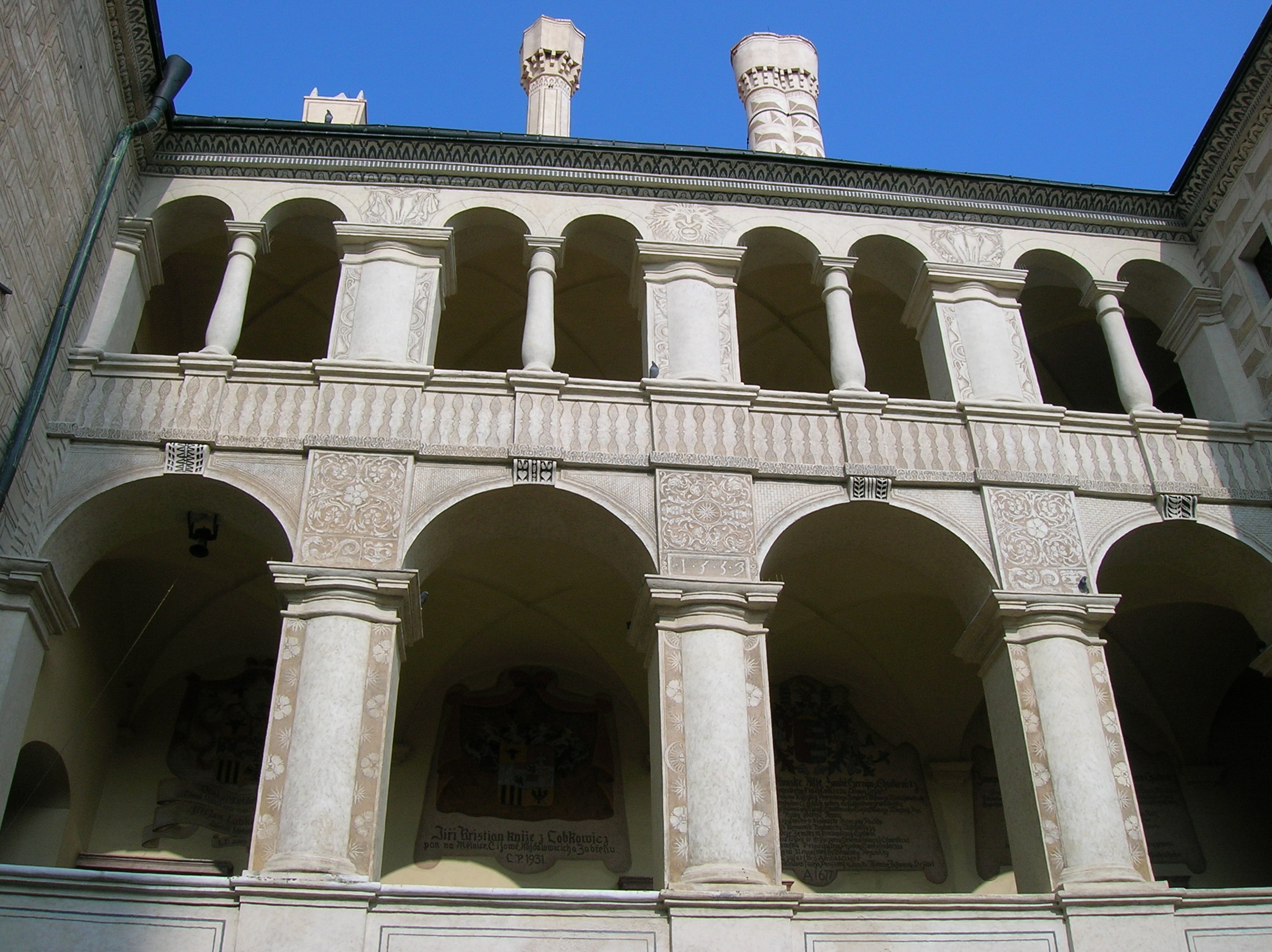
The elegant Renaissance arcades

The elegant Renaissance arcades

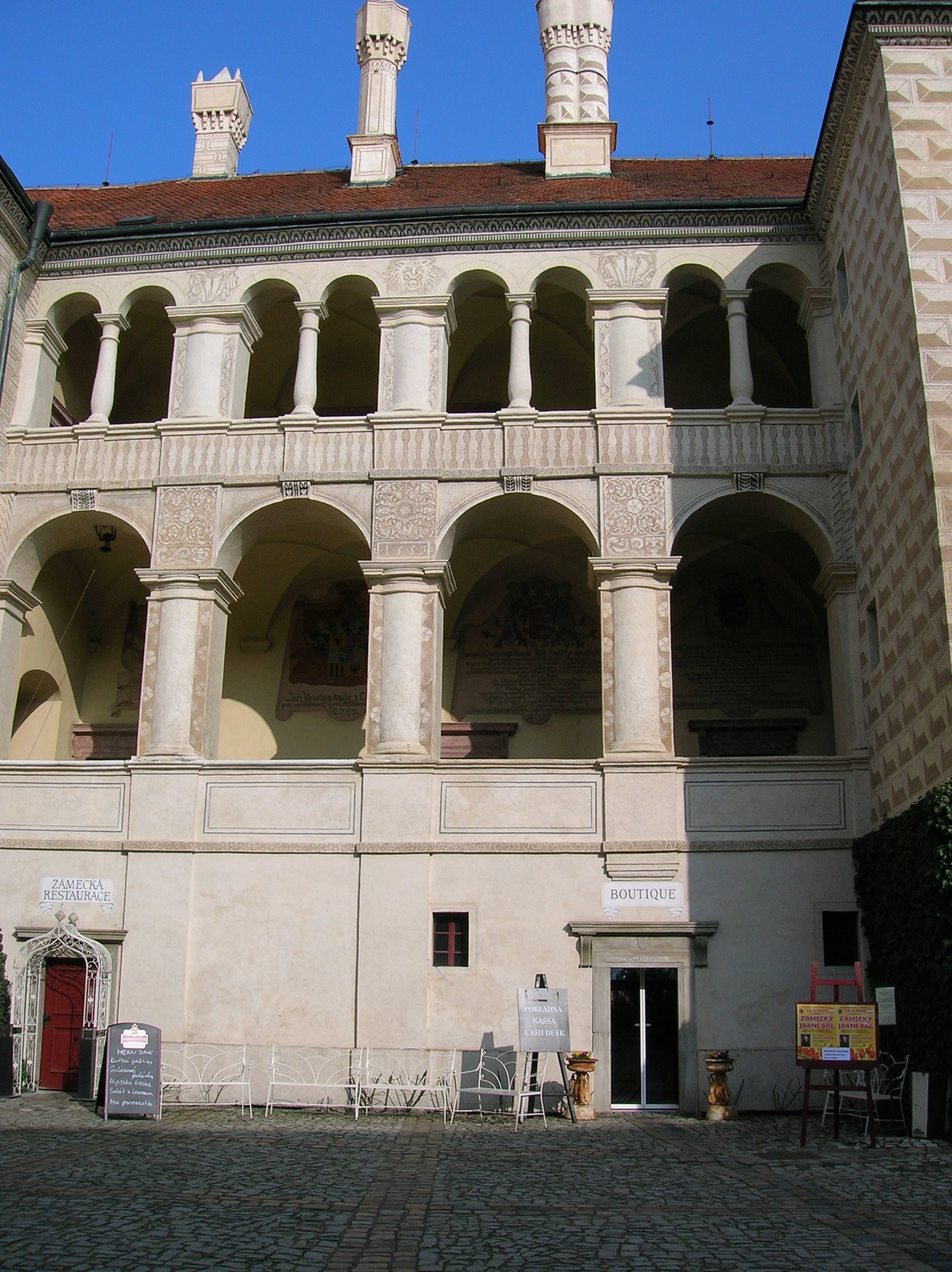
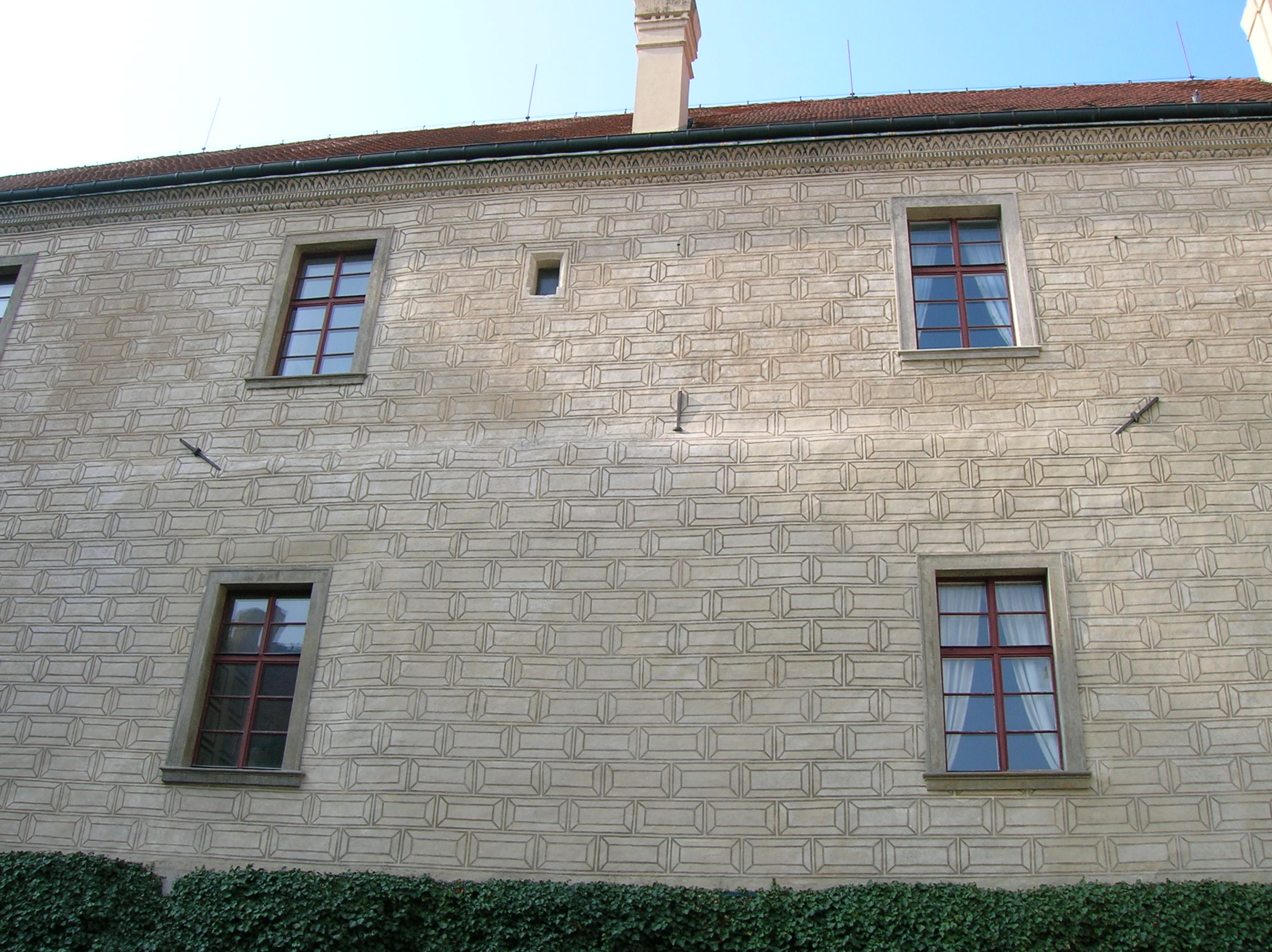
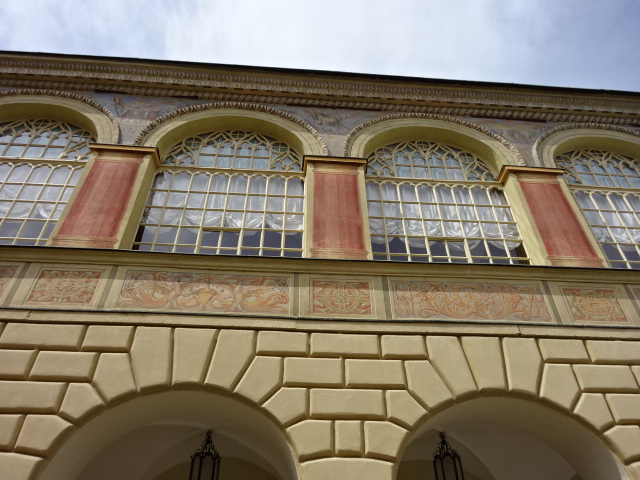
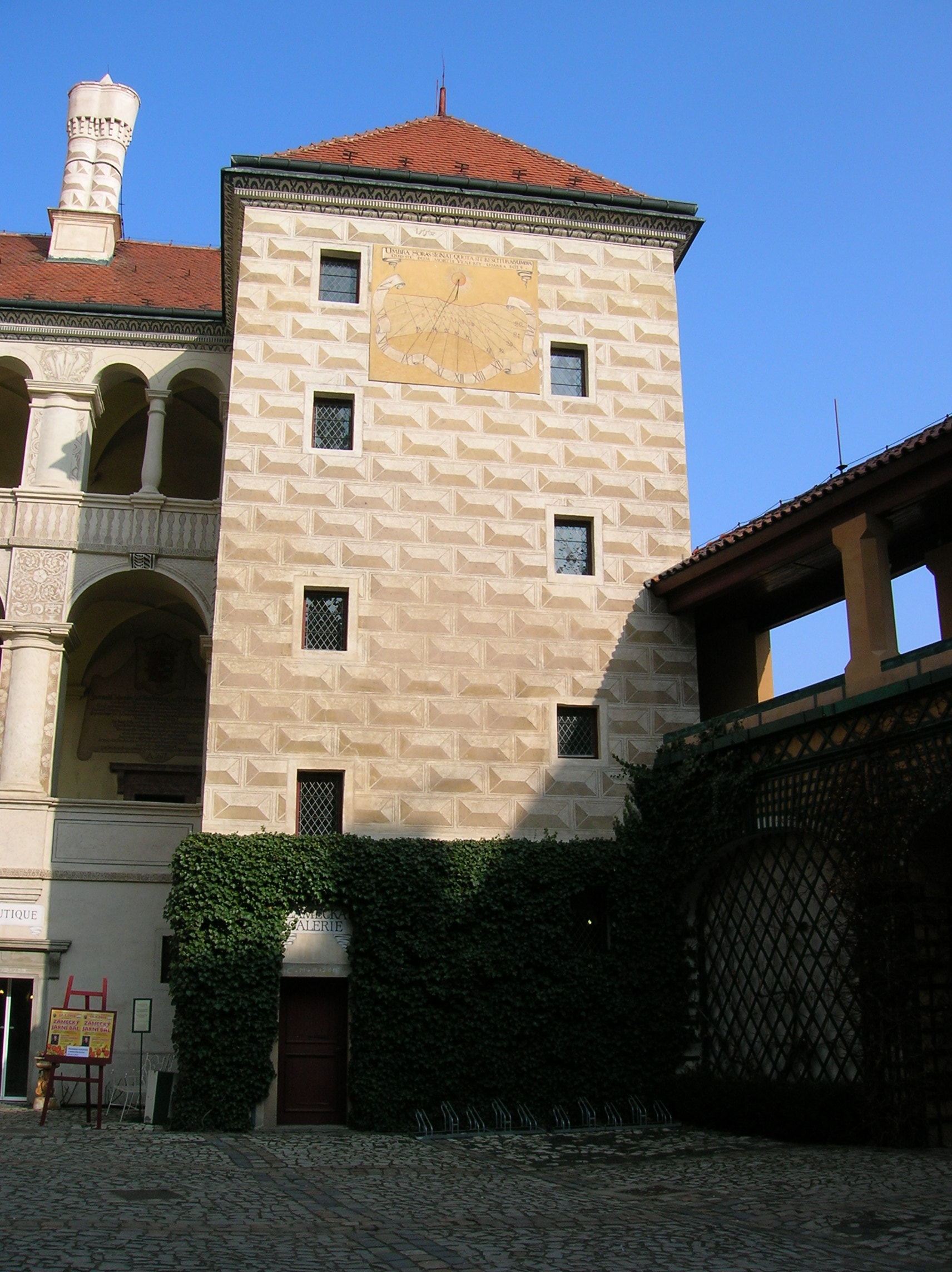
I studied the impressive exterior of the chateau. I loved the elegance of the Renaissance arcades with decorations on the walls. A sundial also adorned the façade. There was sgraffito, too, which I adored. The other wing was built later, in the 17th century, in Baroque style. After admiring the Renaissance arcades for a while, I noticed that it was time for the tour to start and I entered the souvenir shop, ready for what I was sure would be an impressive walk through the ages of Mělník’s top sight.
The guide, a serious and well-dressed woman, described some of the background of the chateau and Lobkowicz family, and it was clear that she was very professional and knowledgeable. The first room was called the Bedroom of George Christian, named after a Lobkowicz who died tragically at the age of 25 in a racing car accident in 1932. I was reminded how we have to treasure each moment in our lives and see the beauty in daily life because we never knew when our time will be up.
I was captivated by a Baroque closet flaunting intarsia. The painted decoration high on the walls showed plant leaves with vases in green and brown. The colors seemed to go well with the 17th century Baroque furniture. On the headboard of the Baroque bed was a painting of a Madonna that appealed to me. I also took note of the richly carved wood of the bed. Portraits of the Lobkowicz family adorned the room, too, and one of the paintings had been executed by master Czech Baroque artist Karel Škréta.
August Longin’s Study was named after a Lobkowicz who had befriended Johann Wolfgang von Goethe, a visitor of Mělník. The room featured two exquisite French desks – one hailing from the 17th century and the other from the 18th century. The older one was inlaid with tortoiseshell, plated brass and tin in ebony wood, made in the Boulle style. The 18th century desk, celebrating the Rococo style, was made of gilded bronze and plated brass. I particularly admired the gold decoration on the younger desk, the one that had been stolen during the totalitarian era. It had wound up in an office at the Ministry of Culture.
However, that was not all the room had to offer. An 18th century table with mother-of-pearl hailed from Japan and had designs of fans on its top. There was also a portable 18th century toilet near the room. Small portraits of Habsburg rulers hung on one wall. I spotted Holy Roman Emperor Joseph II and Empress Maria Theresa right away.


The sundial on the facade

The sundial on the facade

The next room was the Children’s Room with toys from the 19th century, including dolls and a puzzle. Porcelain in a cabinet hailed from Hungary. The 18th century bed in the room was short, but it was standard size for adults at that time. People slept sitting up because they were afraid they would die if they lay down. I admired the rich, wooden carving of the bed and the Madonna on the headboard.
The Big Dining Room featured two Baroque bureaus from the 17th century. They were inlaid with tortoiseshell and adorned with gilded decorations. Some of the pictures painted on them focused on seascapes with ships. The chairs were upholstered with tapestries. The guide pointed out two valuable 17th century lunettes by Škréta; they were part of the story of the life and death of Saint Wenceslas, who, according to legend, had resided in Mělník when he was a child. Other breathtaking paintings rounded out the room’s décor.
The Grand Drawing Room featured 18th century furniture. I noticed two 18th century Rococo tables with gilded brass angels decorating the legs. Portraits of the prominent politician George Christian and his wife Anna were rendered by Czech painter František Ženíšek, who had also decorated the National Theatre. More astounding works of art adorned the walls, some portraits of the Lobkowicz family, others biblical paintings and still others sporting themes from antiquity. I spotted Helen of Troy in one rendition.
I was drawn to the white furniture and pale green walls. It looked airy and light and exuded an atmosphere filled with joy. Chinese and faience porcelain as well as ceramic vases from Asia made up the room, too.


Another view of the sundial

Another view of the sundial

The hallway was adorned with a bust of Parliament member George Christian. It had been created by Josef Václav Myslbek, a master of modern sculpture working in the 19th and early 20th century. Engravings featuring carriages decorated one wall, too. I was drawn to other works of art – the pictures of romantic 18th century Prague, especially to Old Town Square, my favorite part of the capital city. I remember the first time I stepped onto Old Town Square. I felt an unexpected electricity, a strong connection with the city and country. I was only a tourist at the time, but at that moment I knew I had to return to live in the homeland of my ancestors.
Perhaps the most astounding room was the Big Hall with Maps and Vedutas that came next. The maps and vedutas hailed from the 17th century. I noticed maps of Italy, France and the Netherlands. Then there were all the big vedutas of European towns on the walls. It was so breathtaking that it was almost overwhelming. The veduta of Prague featured only one bridge, the Charles Bridge, without any statuary decoration. Strasbourg, Nuremburg, Regensburg, Venice, Florence, Seville, Madrid and Brussels were just a few of the other cities represented. The detail of the maps and vedutas was more than impressive. Most of them were made in Amsterdam.
Perhaps I was so drawn to this room because I loved maps so much. I used to buy maps of Czech towns I had never been to and wondered what each building and each street looked like as I took a an imaginary walk through the town. Two large maps decorated my living room – one of the Czech Republic and another of Slovakia, as I treasured memories of Czechoslovakia. I often traced the routes from Prague to various chateaus and impressive towns and thought about my adventures there.
On the map of Slovakia I found Špišský Castle, below which some very distant ancestors were buried, and traced paths to Poprad, Kežmarok and Bratislava. I found Morské Oko in the Vihorlat, near my great aunt’s home village, and traced the path to Košice and Michalovice, where I had heard that some of my other ancestors had hailed from. I found more places I had visited – Humenné, Levoča and Trenčín, for example, and recalled moments of happiness and discovery.
Melnikchateauarcades5Back to the tour. The Knights’ Hall featured 16th century suits of armor on the walls. An 18th century oak table also caught my attention. In the Small Hall with Vedutas, various weapons from the 17th to 19th century were displayed. However, what really caught my attention where the black-and-white vedutas of European cities during the early 18th century. I was entranced by the vedutas of Prague and Brno. Some military equipment on display came from 17th century Turkey. I also admired the richly carved Chinese furniture. I have always been an admirer of wooden Chinese furniture.
The vast Concert Hall was still used for concerts, balls and other events. It was situated in the Baroque wing of the chateau, but the construction of this part had not been finished until 2005. There was an original 16th century wall with sgraffito decorations that delighted me. I’ve always been a big fan of sgraffito! The opposite wall was a copy made in this century, but, faithful to the original plan, it complemented the authentic side. I looked up and saw a painted coffered ceiling. Vedutas of Versailles and its park from the 17th century adorned another wall. Drawn to these works of art, I thought back to my visit to Versailles, during a warm February afternoon and how impressed I had been with the vast French chateau.
Then we went downstairs, passing by colored lithographs of Prague sights from 1792 and 1793. We wound up on the first floor in the lavish Grand Dining Room. Exquisite Baroque paintings adorned the walls. I loved the gold-and-white decoration on the pink-colored ceiling. The silverware hailed from the 18th century, and the guide pointed out Viennese porcelain as well as white Sèvres porcelain. The highlights of the room, though, were two paintings. One was another lunette from the cycle of Saint Wenceslas by Škréta. There was also a spectacular painting called “Christ with Veronica” by Paolo Veronese. It portrayed Christ on the cross with a self-portrait of the painter as the carrier of the cross.


The town hall on the main square

The town hall on the main square

The chapel was last. It hailed from the 14th century, built by Queen Elisabeth, the fourth wife of Emperor Charles IV, and was originally dedicated to Saint Louis. During the Thirty Years’ War, the chapel was so badly damaged that it had to be rebuilt, and this time it was consecrated to Saint Ludmila. A painting of Saint Ludmila’s baptism adorned the main altar. Impressive paintings dotted the chapel. Two portraits – of Saint Andrew and Saint Bartholomew – by my favorite Czech Baroque artist, Petr Brandl decorated the space. There was even a painting of an apostle, created by Peter Paul Rubens.
Then the tour ended, and I was thankful that I had been led through the chateau by such a professional guide who had given such detailed information about each room. I was very impressed with her knowledge and enthusiasm. I knew how disappointing tours could be if the guides were not good, though most of my experiences with tour guides in this country has been positive. It was much better to have a tour guide than to be given a text and walk through the chateau by yourself, I mused. The guide helped bring the chateau alive. Her words gave life to the chateau that had played roles in Czech history and legends.
I think it was possible to tour the wine cellars as well, but I do drink much alcohol and am not very interested in wine. However, there are three floors of historical wine cellars below the chateau: Emperor Charles IV had them built. The Lobkowiczs have a family tradition of presenting a new-born with a new wine barrel. The barrel would be filled a year before the young Lobkowicz turned 18. It was remarkable that wine had played such a prevalent role in the family history.
Winetasting tours were available, and if I had liked alcohol, I would have been enthusiastic about taking one of these trips to the cellars with original, wooden barrels.
Instead of sampling wine, I ate a delicious meal in the chateau’s restaurant, though they did not offer my beloved chicken with peaches and cheese. Still, I was pleased with the food and the service.


The picturesque houses on the main square

The picturesque houses on the main square

I walked around the town and noticed the impressive Renaissance and Baroque houses on the large main square, especially the town hall, which hailed from the late 14th century. Next to the chateau was the Gothic Church of Saints Peter and Paul. Unfortunately, it was closed, but the ossuary was open. I found out that the next tour of the ossuary would not start until after my bus left for Prague. What a pity. I knew I would have to come back someday, to tour the chateau again and to visit this ossuary that I had not known about before this trip.


The Gothic Church of Saints Peter and Paul

The Gothic Church of Saints Peter and Paul
Soon I walked through the decorated gate from 1500 and made my way to the bus station. I immediately caught a bus bound for Prague. When I disembarked at the Holešovice bus station in Prague 7, I was truly happy. I had had another positive experience at another impressive Czech chateau. My day had been filled with making new discoveries and gathering new perspectives on the Lobkowicz family history, the history of the chateau and my own personal history.


Tracy A. Burns is a writer, proofreader and editor in Prague.

The gate dates back to 1500.

The gate dates back to 1500.

In 2022 I visited Mělník again, this time with a friend who was seeing it for the first time. The chateau was awe-inspiring, and I could tell that my friend was very impressed. We took a few moments to take in the views from the chateau. The panorama was riveting.

I was in luck because the Church of Saints Peter and Paul was open. It was Gothic in structure with some Romanesque elements. The altars and pulpit were Baroque, though. In the 16th century, well-renowned architect Benedikt Reid was responsible for reconstructing the church. He had designed part of Prague Castle to much acclaim. I was very impressed with the church. It was a pleasant surprise.
Even though the food and parking downtown were expensive, the trip was enlightening. It was another day well spent.

Častolovice Chateau Diary


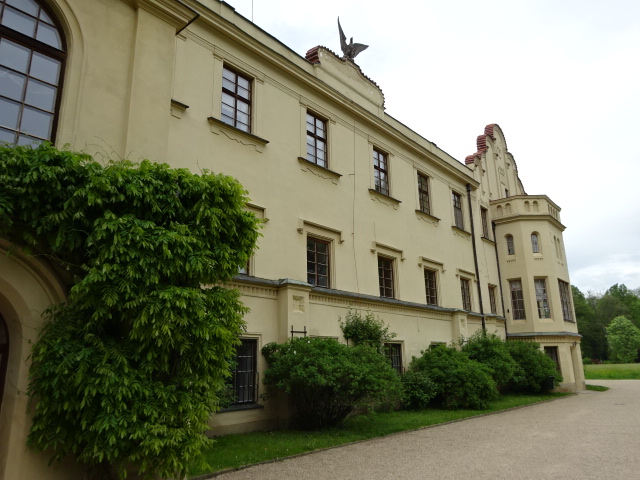
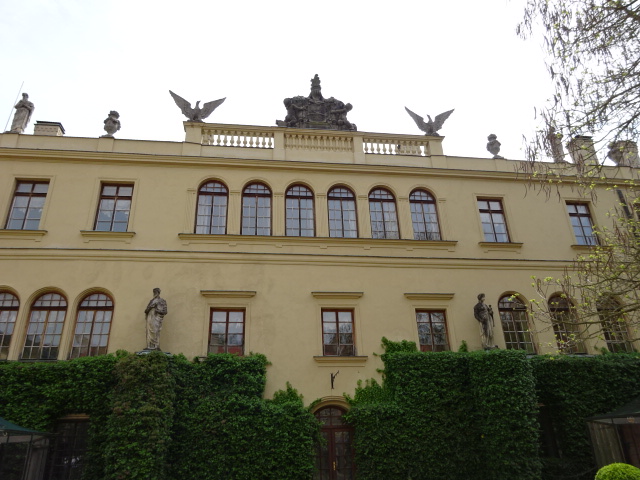
The facade of the chateau

The facade of the chateau

I had visited Častolovice about 10 years earlier, but I did not remember many details of the interior, though I had fond recollections of the picturesque courtyard. For some reason I had fixed in my mind that the chateau was on rather large main square with a pub on one corner, so I expected that the direct bus from Prague would drop me off there.  It turned out to be a three-hour trek to Častolovice, located in northeast Bohemia near the Orlické Mountains, via Hradec Králové, but the trip didn’t actually take so long. There was a 40-minute layover in Hradec Králové, which is only 30 kilometers away.


When the bus arrived in Častolovice, I did not recognize it at all. “This is where I get off?” I asked the elderly woman sitting next to me. She answered affirmatively. I couldn’t believe my eyes. There was no big square with a pub. The main square was hardly a square at all, just a few buildings along the main street with a small parking lot.  I got off the bus, feeling utterly lost. Luckily, a passerby pointed out how to get to the chateau. It was hardly more than a stone’s throw away. I walked by a decent-looking restaurant. I wondered if it was the only one in town. I hoped I would be able to get a table there later in the day.

The Baroque fountain

The Baroque fountain

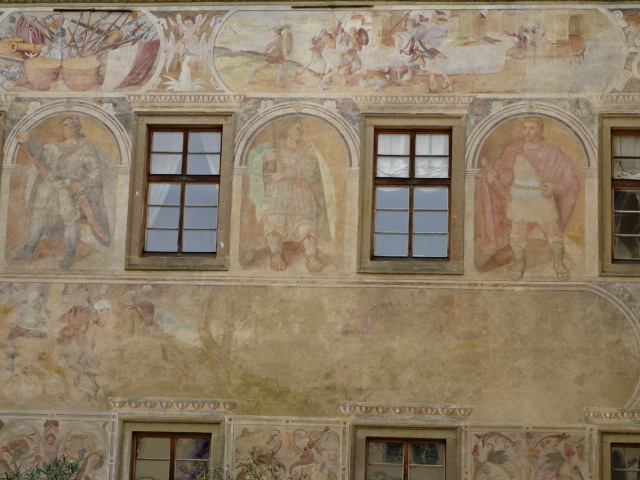
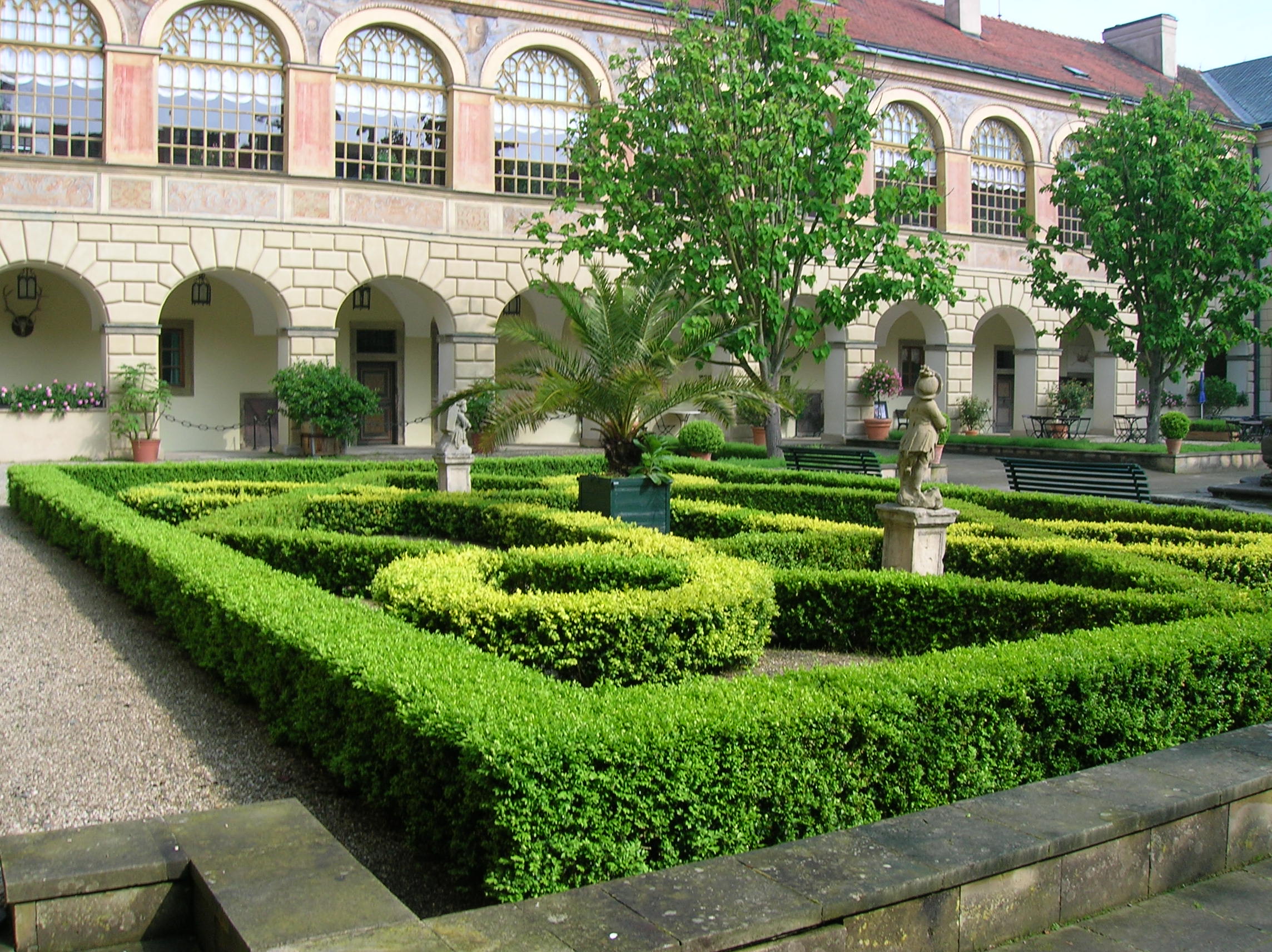
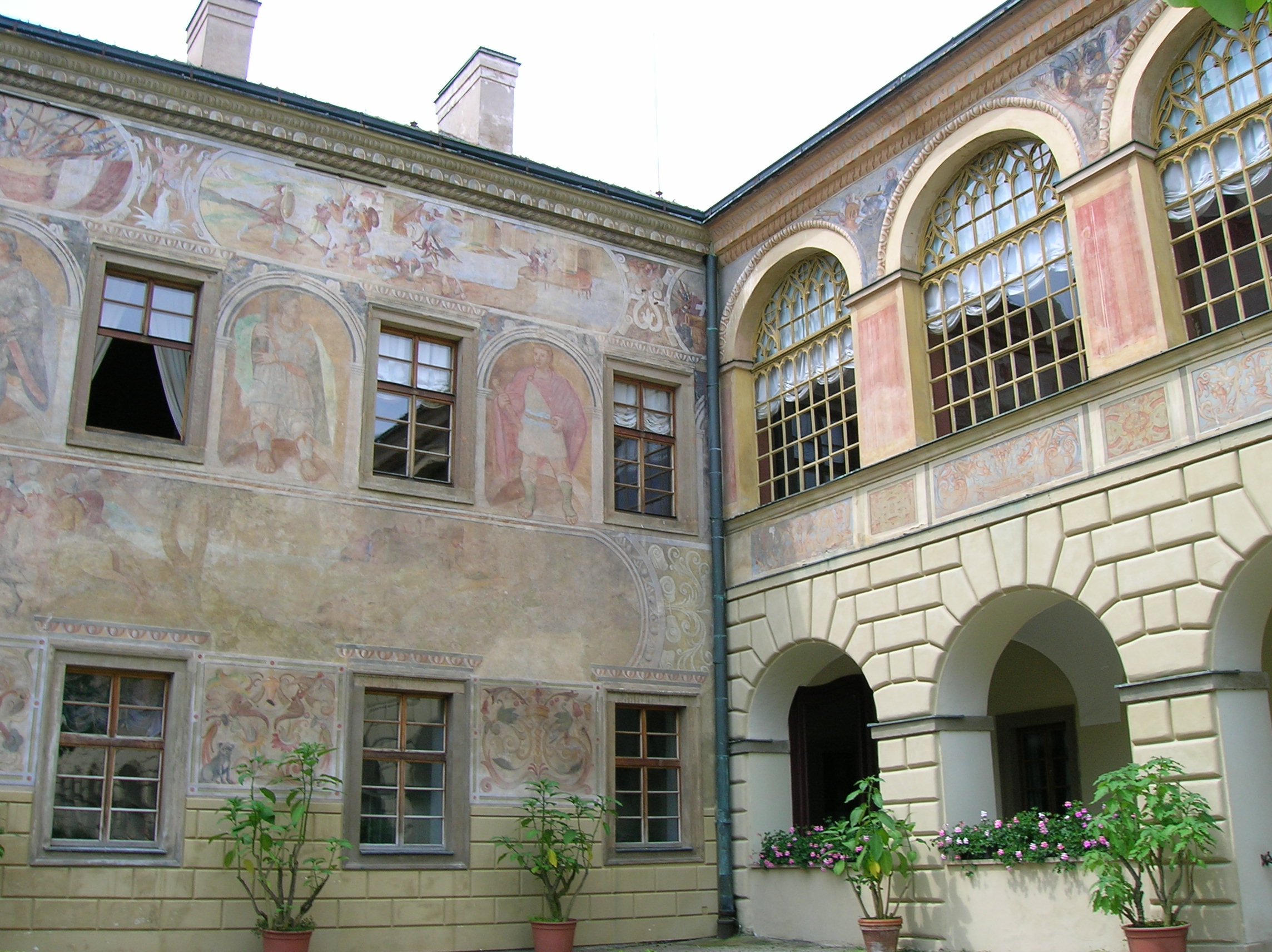
I entered the main gate of the chateau, eager to become reacquainted with the place. A Baroque fountain charmed me in the chateau’s courtyard, where birds in an aviary fluttered while singing pleasant melodies. The gentle, soft tones of classical music also filled the air. The atmosphere made me feel at ease on this sunny, warm, spring day.  I noticed that the wall of the chateau facing the fountain was covered in what I would later find out were 16th and 17th century frescoes depicting six Roman emperors and a battle. Tourists sat idly at the courtyard’s outdoor café.

The 16th and 17th century frescoes of six Roman emperors and a battle

The 16th and 17th century frescoes of six Roman emperors and a battle

After going to the box office, where the attendant announced that I would have a private tour at 11:00 o’clock because I was writing about the chateau, I followed an arcade to the 19th century English park that featured a rose garden, pond and small animal farm with an intriguing combination of ostriches, pheasants and pigs.  I sat on a bench and read a David Hewson mystery in English for a while, feeling relaxed and enthusiastic, after walking to the pond with gazebo. The flowers in the garden were ravishing, in full bloom, bringing vibrant colors to the natural setting.


I still had time to kill, so I went inside the café, as all the outdoor tables were taken. The establishment featured plush couches and armchairs, one of which I sunk into. The pastel colors decorating the space were lively, vibrant. It was also very quaint. I sipped a cappuccino before heading for the box office to start my tour.


The guide told me about the chateau’s long history, much of which was dominated by the Sternberg dynasty. While the first written records of what was then a stronghold dated back to 1342, the chateau was transformed into Renaissance style in the 16th century, renovated into a Neo-Gothic style during the 19th century and then changed back to Renaissance style at the beginning of the 20th century.

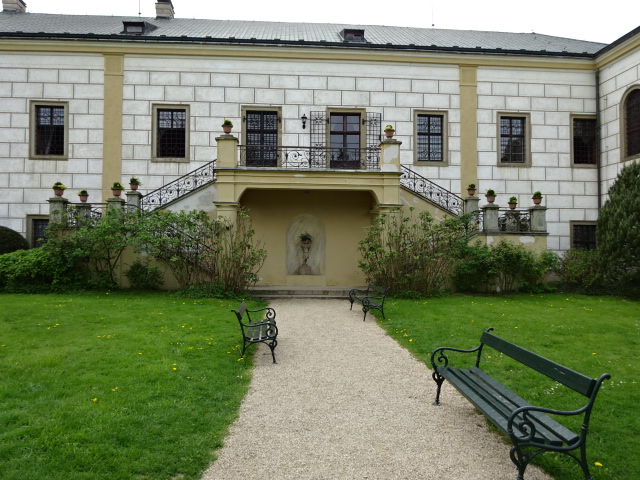
The picturesque courtyard

The picturesque courtyard

The Sternberg family has owned the chateau for 11 generations, dating back to 1694, when Count Adolph Vratislav Sternberg, the Highest Burgrave in Bohemia, purchased it. From 1694 to 1948 – not counting the Nazi Occupation of the country – Sternbergs have lived here. During the 15th century, it was Zdeněk of Sternberg who guided the Catholics in their battles with the Hussites and their king, Jiří of Poděbrady (also a former owner of Častolovice).


I hadn’t realized what a mark the Sternbergs had made on Czech culture. Franz Josef Sternberg founded the National Gallery and, along with his cousin Casper Maria Sternberg, established the National Museum. The chateau was returned to interior designer Diana Phipps Sternberg in 1992, and at that time she was residing in one wing where she also had a pension. Even during Communism visitors had a chance to see the chateau’s interior as one wing of the chateau was open to the public while the other served as a school for refrigerator repairmen and repairwomen.

Soon it was time to see the interior of the Renaissance architectural masterpiece. It featured furnishings from the 16th to the 19th century, and the many family portraits attested to the significant role of the Sternberg dynasty.  To be sure, the interior was more than impressive: Take the Gallery of the Bohemian Kings, for instance. Or the Knight’s Hall, one of the largest of its kind in Bohemia. And I certainly didn’t overlook the small, though exquisite, chapel.

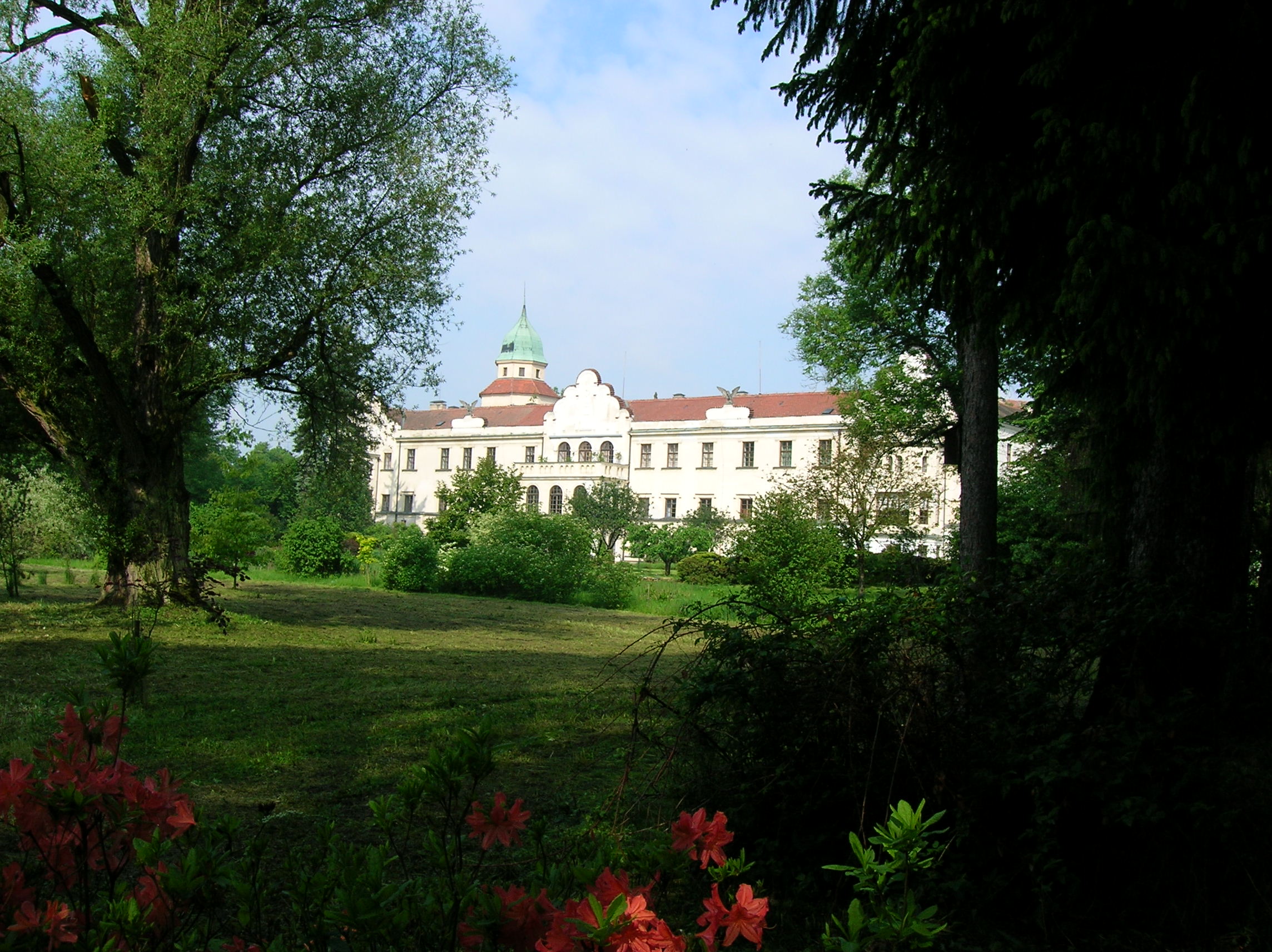
The view from the park

The view from the park

In the Dining Room overwhelming, mammoth portraits of four Bohemian kings filled me with awe. I felt so small compared to the vast portraits. These included the black-armor clad Jiří of Poděbrady, who was King of Bohemia, leader of the Christian Hussite movement and owner of the chateau during the 15th and 16th centuries. Breathtaking as well were the portraits of seven Habsburg Emperors who ruled from 1526 to 1705. Two portraits of the Spanish side of the Habsburg dynasty plus three others hung nearby.  What is more, the painted coffered ceiling, another architectural thrill, illustrated a biblical scene from the Old Testament.


The Knight’s Hall was decked with many portraits of Sternbergs, including one of Kateřina Sternberg, also called the Black Lady of Častolovice, because, as a result of an unhappy love affair, she became the chateau’s ghost. I was particularly drawn to her painting. I gazed up at the coffered ceiling, which shows 24 pictures from the Old Testament.  I noticed that the marble fireplace had a bronze relief in the middle; it showed a woman praying.  Another portrait depicted Emperor Charles V, a Great Dane by his side.  In yet another, a woman donning a serious expression and dressed in black stood next to blooming pink roses. I found the juxtaposition of her black attire and the pink roses intriguing.

The park

The park

The adjoining chapel was a real gem, too. The painted doors depicted the 12 apostles, and the painted pews were adorned with floral decoration, which immediately caught my eye. The green and yellow tiles on the floor were original, some bearing imprints of dogs’ paws. I thought this was an impressive, unique touch. The wooden altar dated from 1601, and one of the frescoes inside the chapel harkened back to the Late Gothic period.

While family portraits were scattered throughout the chateau, there were other intriguing paintings as well. Two noblewomen in shepherds’ attire were the work of Czech Baroque master Karel Škréta or one of his students. Škréta was definitely the artist of the 17th century work, “The Young Huntsman,” who gazed confidently at the viewer. Two small pictures of an elderly woman in the Coat-of-Arms Room were from the Peter Paul Rubens’ School, possibly executed by Jacob Jordaens. A copy of a portrait by Rubens, depicting his second wife, Helen Fourment, hailed from 1640.

One painting that drew me into its artistic power was the head of Medusa, with bulging eyes and blue and golden snakes slithering around her head; it was another painting after Rubens. The gem “The Temptation of Anthony” by Flemish artist David Teniers was painted on wood in the Empire Room.

One huge portrait shows a red-robed Vilém Slavata, who was thrown out a window of Prague Castle during the Defenestration of Prague in 1618, when Protestant nobleman rebelled against the Catholic hardliners in an event that would in part trigger the Thirty Years’ War. Slavata lived through the ordeal as he landed on a pile of manure, but was then arrested. The ordeal reminded me of the black humor in the stories and novels by Czech legendary writer Bohumil Hrabal.

Another shot of the frescoes

Another shot of the frescoes

Paintings of Venice, specifically of St. Mark’s Square, the Doges Palace and the Rialto Bridge, decorated the Tower Room and brought to mind my happy days as a tourist in that jewel of an Italian city. Realistic paintings from the Netherlands adorned the chateau, too. I have been fascinated by art from that country ever since taking a course about it in college. In one small portrait, a poor man is eating fish, the bones and head left on the plate he is holding. This work captured the man’s miserable existence – the despair and hopelessness of his life. Another picture from this era depicted a man reading, though he seems lost in thought.

The guide pointed out four portraits of women representing the four seasons. Dating from the middle of the 18th century, they included a woman holding grapes for autumn and one holding a flower for spring. If you look closely, the guide explained, it was possible to discern that one woman was the subject of all the portraits, and she aged as each season went by. I was intrigued by these four unique works of art.

Numerous other objects of interest cropped up in the chateau.  There was a 150-year old Mignon portable folding typewriter and a portable, folding Napoleonic desk in the Empire Room, both of which caught my attention. The Biedermeier Room boasted furniture of that style. I noticed a small statue of Austro-Hungarian Emperor Franz Joseph I and his wife Elizabeth of Austria along with a large portrait of General Leopold M. Sternberg. I was impressed by the many military medals that the general donned.

The frescoes and the arcades

The frescoes and the arcades

The State Bedroom featured a stirring portrayal of a figure bringing a drink to his guest in the Flemish tapestry “Welcome to Guests” from the end of the 16th century. I loved Flemish tapestries! Two mirrors seemed to be decorated with small gem stones in the frames, but it was just imitation, painted under the glass. In the Ladies Sitting Room, I noticed that Meissen porcelain birds were suspended from the wall. I found it to be a nice, elegant touch to the interior.

The Wallpaper Room gets its name from gold-and-black wallpaper that imitated leather, though it was made of paper. In the library, which contains political and religious books as well as novels and poetry written in Latin, English, German, French and Czech, I saw a tapestry showing Cleopatra and Mark Antony. It was Flemish, from around 1600. Another thrill for me!

The flowers bursting with color in the garden

The flowers bursting with color in the garden

The Renaissance arcaded Gallery, with its vibrant dark pink walls and flourishing plants, featured lavish silver-framed mirrors that dated from the Second Baroque period.  I marveled at the elegance of the elaborate silver frames. The Ladies Sitting Room also was home to an intriguing item – a small watercolor, on the back of which is a note of condolence by Empress consort of the Holy Roman Empire and Queen of Bohemia Maria Theresa of Austria on the occasion of the death of Francis Phillip Sternberg’s wife. The Children’s Room also moved me. It was almost all white, with dolls, portraits of children and a dollhouse, exuding a sense of purity.

After the breathtaking tour, I walked to the only restaurant in sight and found a table outside. Again I was able to order my favorite – chicken with peaches and cheese – plus a Diet Coke. After a delicious lunch, I made my way to the bus stop to wait 20 minutes. I always arrived early because I was always nervous I would miss my  bus. I stood at the small ČSAD sign, watching cars and trucks drive by.

The chateau from the park

The chateau from the park

Finally, after two o’clock, it was time for the bus to come. And it did. I watched it whiz by the other bus stop, without even slowing down. I was at the wrong stop! I chided myself for being so stupid. I had thought the bus would come to this stop and turn around. I sure felt like an idiot!

Then I thought that maybe it was a blessing in disguise. There was another bus in two hours, so I went back to the chateau and sat outside at the café. I read about another murder in front of the Baroque fountain.

The bus was slated to arrive after four o’clock. So, I got there at 3:30, determined not to  miss this bus as it was the last direct one to Prague. Shortly after I arrived, five others with big duffle bags and shopping bags gathered there, too. Then, a little after 3:30, a bus to Prague showed up. Bewildered at the timing of its arrival, I got on and made my way back to Prague. I wondered if it was a bus run by a private company that wasn’t listed on the schedule posted on the Internet.

Curiously enough, the bus driver told me that no bus comes through the town after four o’clock.

Tracy A. Burns is a writer, editor and proofreader in Prague.


The stunning chateau from the park

The stunning chateau from the park


Hukvaldy Castle Diary

The breathtaking view from Hukvaldy Castle

The breathtaking view from Hukvaldy Castle

A bus took me directly from Frýdek Místek to Hukvaldy, where I embarked on the uphill, demanding 20-minute walk in the scorching heat. The moment I reached the entrance to the castle ruin in northern Moravia, I was beside myself.

The castle ruins

The castle ruins

The views to the gentle, green Beskydy Mountains, which loomed in the distance, were magnificent. Supposedly, one could even sometimes see as far as the Jeseníky Mountains and Praděd Mountain in the Jeseník region. I saw picturesque, romantic villages in undulating valleys, the lush green of the mountains surrounding the dots that made up the small towns.  I wondered if I could see the Polish or Slovak border.

The views from the castle ruins are breathtaking.

The views from the castle ruins are breathtaking.

Another breathtaking view

Another breathtaking view

Upon entering the castle ruins, I was in for an even bigger surprise. The castle ruins were just as romantic and picturesque as were the views from the wall at the entrance. The music of Leoš Janáček, a native of this village, kept racing through my head. All those compositions inspired by Moravian folk music, the unique melodies and specific, repeating motifs. Before I came to the castle, I had stopped at the local school, where Janácek was born, the ninth child out of 13, on July 3, 1854.

The castle ruins

The castle ruins

The castle dates from the 13th century.

The castle dates from the 13th century.

I skimmed over a brochure about the castle’s history. The monument dates from around 1285. Olomouc bishops gained ownership of the castle in the middle of the 14th century, then the castle changed hands several times before King Jiří of Poděbrady bought it during 1465 in order to return it to the bishops. From that point on, the Olomouc bishopric and later archbishopric were almost continually the owners of Hukvaldy until it became state property in 1948.

The ruins even have their own ghosts.

The ruins even have their own ghosts.

The castle became a ruin in the 18th century.

The castle became a ruin in the 18th century.

The once vibrant castle became a ruin in 1762, when a fire broke out after lightning struck the fortress. Yet the Chapel of Saint Ondřej remains almost untouched since its construction during the end of the 17th century. Decorated with statues of Jan Nepomuk and František Xavier, it is a real, though small, gem.

Hukvaldychapel1

Hukvaldychapel2Hukvaldy even has its own ghost named Světlík, who was killed by a hejtman that wanted to marry his beautiful daughter. Světlík refused to let him do so. The castle had a famous prisoner, too. Philip Dambrovsky was accused of poisoning four Olomouc bishops.

A view through the ruin

A view through the ruin

Another view of the ruin

Another view of the ruin

As I walked through the gates and courtyards, strolled around the bastions, peeked into the cellars and took note of the destroyed buildings that were once occupied by the burgrave, I felt energized from the power that was emitted by the stone walls and fragments, as if this place had a significant story to tell and was telling that story as I stepped through its magical gates.

Hukvaldy is, indeed, magical.

Tracy A. Burns is a writer, proofreader and editor in Prague.

You can almost hear Janáček's music coming from the ruins.

You can almost hear Janáček’s music coming from the ruins.

A statue of a fox commemorating Janáček's opera, The Cunning Little Vixen.

A statue of a fox commemorating Janáček’s opera, The Cunning Little Vixen.

The views of the mountains in the distance are sure to amaze.

The views of the mountains in the distance are sure to amaze.

The magical countryside

The magical countryside

Mnichovo Hradiště Chateau Diary

MnichovoHchateau3

I had taken this train many times before, usually to Turnov, which was one stop further than today’s destination – Mnichovo Hradiště. The last time I had taken this route, the train had been furnished with new, comfortable seats, though the exterior had appeared dilapidated. This time, the seats were the usual ugly, red, vinyl kind divided into compartments that looked dirty. After riding the pleasant Viamont train to Bečov nad Teplou, I guess I had become a bit spoiled concerning train travel.

The trip took about an hour and 45 minutes, and it took another 15 minutes to walk through the pleasant town to get to the chateau. I remembered the chateau’s exterior from my visit here about 10 years ago, but it looked as if the walls had seen a few fresh coats of paint since my first time here. There were three parts to the tour – the Empire style theatre for about 50 or 60 spectators, the interior rooms with mostly 18th century furnishings and the lapidarium where 25 statues were kept in the church and chapel of a former convent.
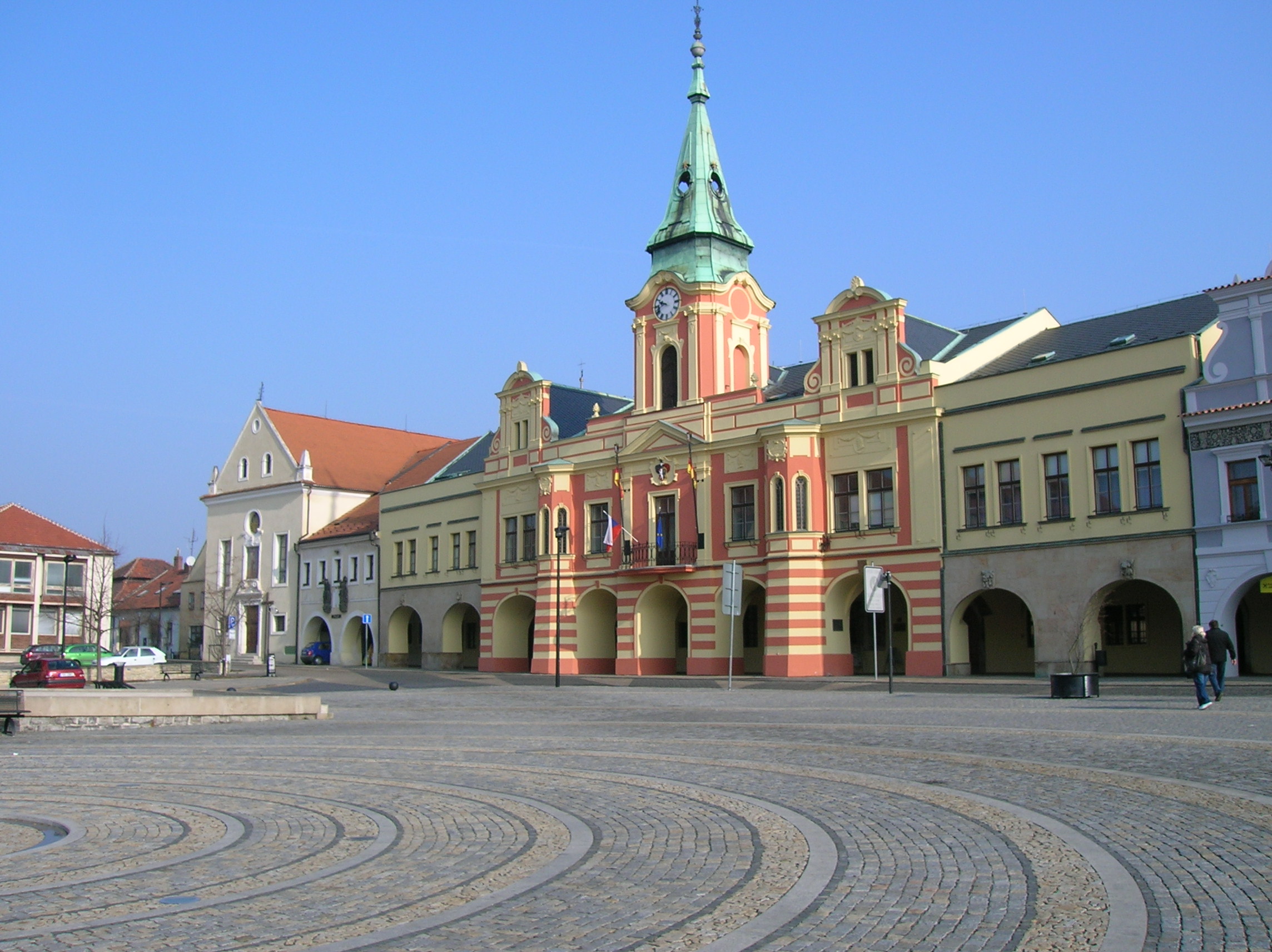
The guide and I started with the tour of the theatre.  On the way there, we stopped in a hallway where I saw large portraits and Baroque bureaus. A huge painting traced the genealogy of the Waldstein family, the clan who had owned the chateau for generations. I picked out Vilém Slavata from Chlum and Košumberk in a long, red robe and big, red cap in one portrait. I had visited enough chateaus to know that this nobleman and writer had been thrown out a window of Prague Castle during one of Prague’s defenestrations. Thankfully, he had fallen on a heap of manure.  Passing the Hunting Hallway, I glanced at black-and- white graphics of various animals and noticed a depiction of a deer with one antler. Then we came to a machine that made the sound of wind. By turning a lever, the round, wooden contraption with a white sheet over it moved to produce the sound.

MnichovoHchateau6Then we entered the Empire style theatre. I took a seat on a bench that resembled the original seating. While the theatre was first mentioned in archival documents during 1798, it was renovated and given an Empire style appearance in the early 1800s on the occasion of the Holy Alliance negotiations, when Austrian Emperor Franz I, Russian Tsar Nicholas I and Prussian Crown Prince Frederick William discussed how to handle the revolts taking place throughout their lands, during 1833. The first play performed here was Carlo Osvaldo Goldoni’s The Servant of Two Masters, performed in German and Czech by actors who came from Prague. Three theatre groups from Prague’s Theatre of the Estates gave performances here for three nights. In the second half of the 19th century, the theatre fell into disrepair and was used as a furniture warehouse. It was not open for the public until 1999. The curtain was restored in 2001.
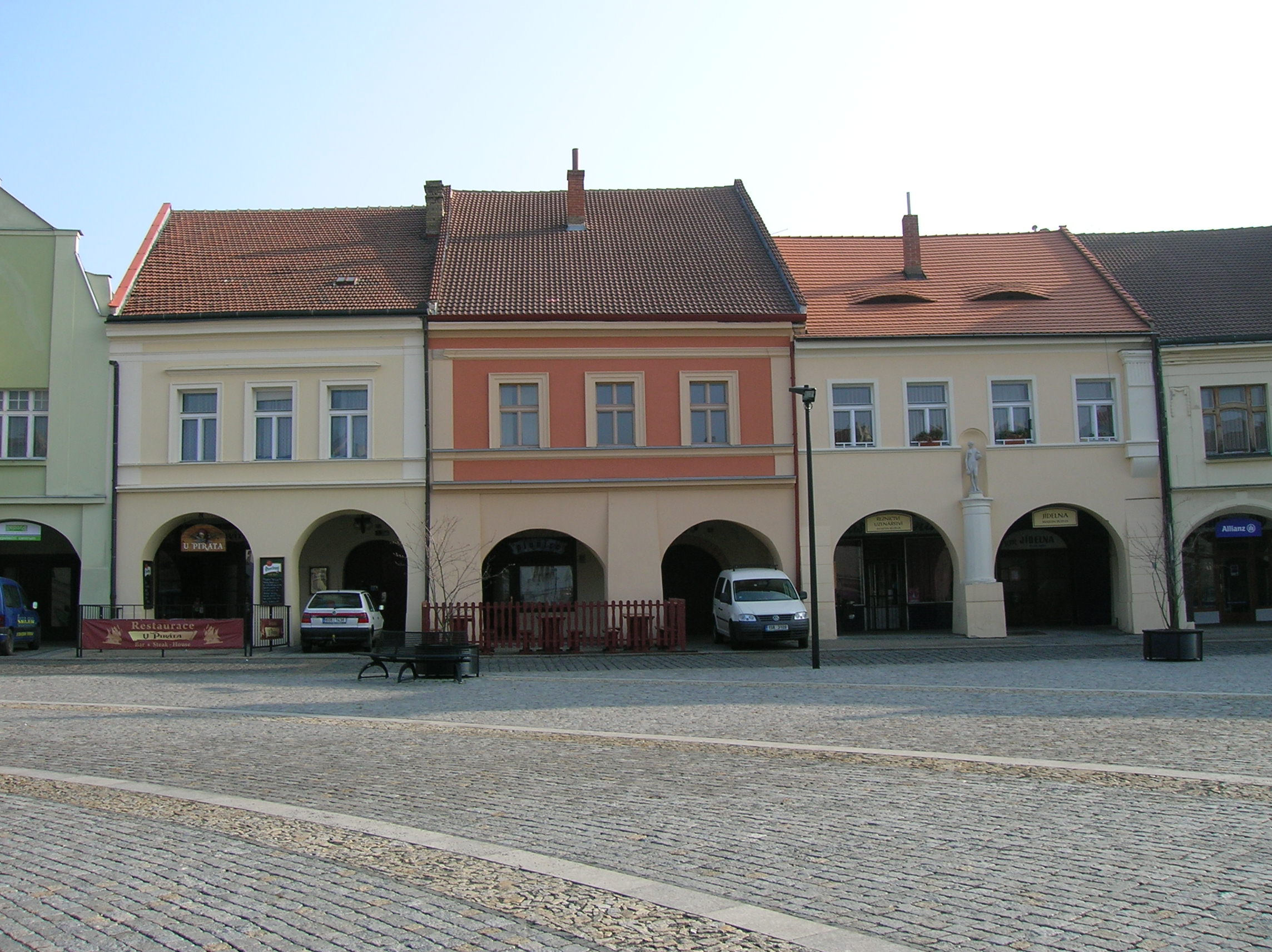
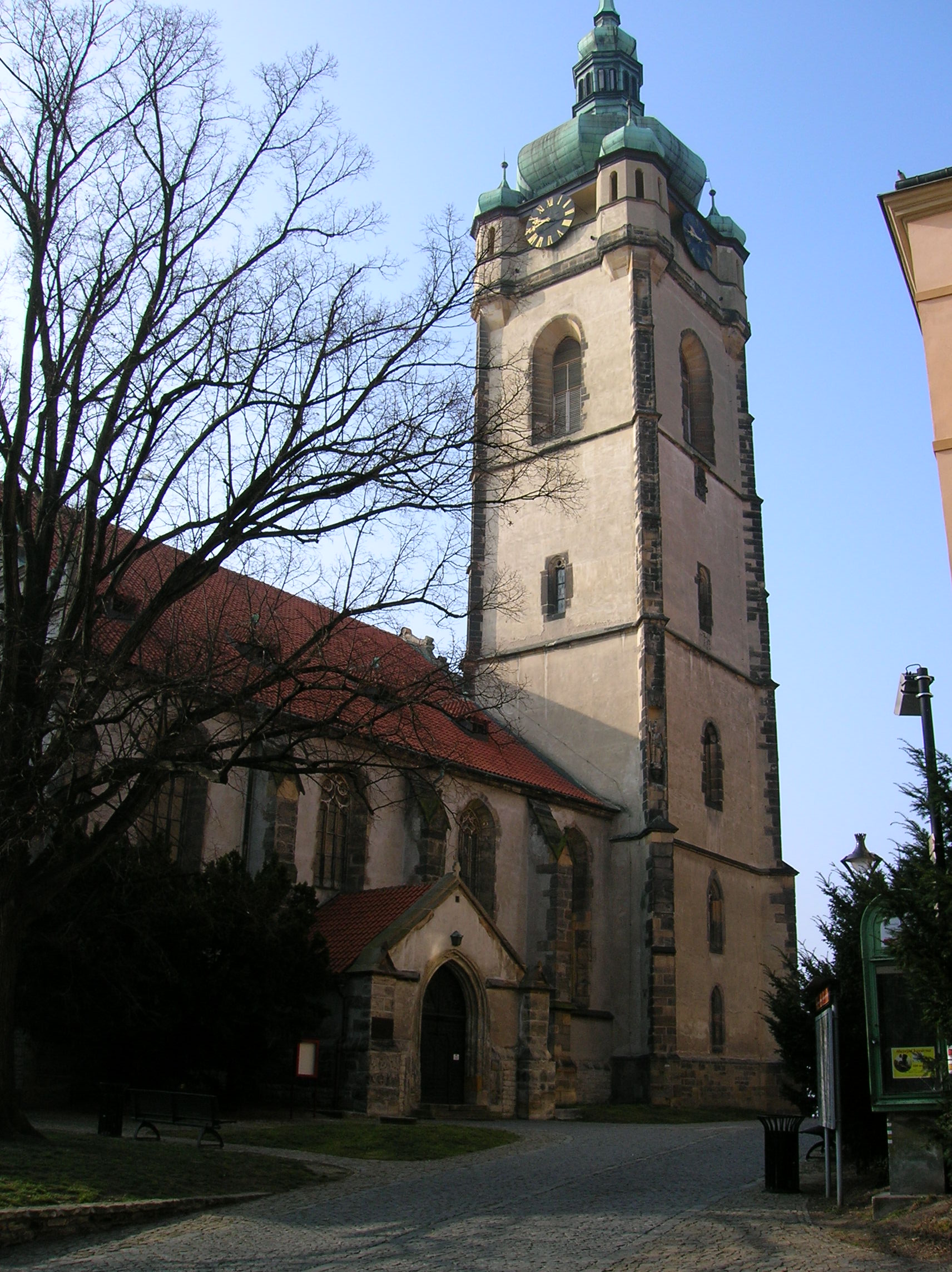
 I was enthralled by the romantic landscape backdrop that was currently on display. It gave me a soothing, calm feeling. Some of the 11 plain, flat backdrops that the theatre possessed included a street view, a castle, a hall with columns and Prague Castle with the Lesser Quarter and Charles Bridge. The stage was 32 feet wide, 28 and a half feet deep and four feet high while the proscenium opening was 22 feet wide and 13 and three-fourths feet high. The theatre had one curtain and 54 wings, which were set at an angle to the stage instead of being placed parallel to it, as was the usual custom. The theatre did not use a mechanized wing system or wing trolley, either, but rather employed a groove system that utilizes upper and lower grooves to assure that the wings will stay upright. Also, the wings in this theatre were double-sided and therefore could be reversed easily. On the back wall behind the balcony a large genealogy painting of the Waldstein family, complete with cherubs, caught my attention. It celebrated the family’s pride of its heritage. The theatre is still on occasions used today.

The chateau had an intriguing history. It was built in the 17th century, during Renaissance times. The owner Václav Budovce of Budov joined forces with other nobles in a revolt against the emperor and was executed on Old Town Square in Prague during June of 1621. In 1623 the chateau was confiscated and subsequently bought by Albrecht Eusebius of Waldstein.  In 1675 Arnošt Josef of Waldstein purchased it and kept it until the middle of the 20th century. The chateau was given a Baroque appearance in the early 1700s, although some rooms were given a Rococo makeover around 1750.

In a hallway full of portraits, I spotted the pointed beard of Albrecht of Waldstein, the one who had bought the chateau in 1623. A large painting explained the genealogy of Emanuel Arnošt of Waldstein. The guide said that when the researcher could not find all the ancestors of the Waldsteins, he made them up. The large, grey, puffy wig that Maximilian of Waldstein was wearing caught my attention, too. I also noticed that Count Vincenc had only one eye open. There was also a room to the side, roped off. Leaning over the rope, I glimpsed a tiny chapel with a Baroque altar of Saint John of Nepomuk and a Madonna with child. The altar was flanked by black Corinthian columns with golden tops.

Next came the Countess’ Antechamber. Someone had installed a 20th century telephone and placed it on a Baroque bureau, a sight which vividly contrasted the two eras, so far apart in technology and time. A still life painting adorned one wall, and a laundry basket with an exquisite floral pattern and muted yellow background sat on the floor. The stunning green, blue and brown chandelier symbolized the four seasons. I noticed that grapes stood for fall.

The oldest painting in the chateau, showing an old lecherous man and a young woman whom I suppose was very naive, hung on a wall of the Countess’ Bedroom. I noticed how both figures had baby pink skin. Why a countess would want such a painting in her bedroom is beyond me. In the visitors’ book, a thick, red book on an ancient desk, I could read the names of nobility such as Schwarzenberg and Lobkowicz.

MnichovoHchateau4The Italian Salon enthralled me with its stunning mural spanning three walls. The painter had never visited the Italian town presented; rather, he had painted it from an etching. From the embankment of the town pictured, one could see Naples and Venice in the distance. Two men and a woman were talking in one section, nobles had gathered in another, and in yet another part two men manned the oars of a small boat.

The Study, which later became known as the Music Salon, featured a piano with the white and black keys reversed. I had never seen a piano with this unique trait. The Baroque white tile fireplace was decorated with two sea monsters that were supposed to be dolphins, as they slivered through the water with their heads pointed down.  Small portraits also adorned the Music Salon. One showed Habsburg Empress Maria Theresa dressed in black, mourning the death of her husband.

The small picture gallery was roped off, which disappointed me. I wanted to study each painting in minute detail, but only was afforded a side view of the three walls totally covered in art. I noticed a woman reading while holding a skull and other paintings boasting hunting themes.

Next came the Hunting Salon. The three walls were covered in a mural painted in shades of dark green and featuring a forest, dogs and hunters. I noticed that a backgammon game consisted of pieces with faces carved on them.  The ceiling fresco was devoted to Diana, goddess of the hunt. She held an arrow; one of her plump breasts was bare. The room also boasted a secret door.

The biggest room in the chateau was the Dancing Salon or Reception Salon, Rococo in style. A mirror sat flat on a round table that looked like a three-tier table for cakes wheeled around in luxurious restaurants. Porcelain figures decorated the three tiers while murals decorated two walls. I spotted this very chateau in the background of one part of the mural. Men clad in red with dogs were seen in a forest as a woman stood in the doorway, something having caught her sudden attention.

The Ladies Salon featured murals on four walls. They showed a countess posing in different professions. She was portrayed as a dancer, a flower-seller, a hunter, a fisherwoman and a traveler, among others. In the depiction of the countess as a flower-seller, I took note of the English park in the background and the flowers that decorated her hat. I was enamored by the backs of the chairs on which landscapes had been painted. The floral cushions were exquisite as well.

MnichovoHchateau2The most beautiful room in the chateau, in my opinion, was the Delft Dining Room that is immersed in blue-and-white Delft Faience porcelain from the 17th to 19th century, all original and handmade. I noticed some geometrically shaped vases and admired the wooden compartment ceiling, too. The Waldstein gold with blue coat-of-arms decorated the center of the Renaissance ceiling. I noticed some plates on a wall featuring windmills while a tray depicted a park with a fountain and statue.

The Oriental Salon was full of Japanese and Chinese porcelain. I admired the orange and blue swirls of one Chinese plate hanging on a wall. The table and chairs were made of bamboo. Four vases represented the four seasons. A Japanese painted partition also adorned the room.

The table in the Meissen Dining Room was set for breakfast with its blue-and-white porcelain taking center stage. Yet what astounded me about Meissen craftsmanship were the chandeliers. Hailing from the beginning of the 19th century, this particular chandelier featured floral decoration colored green, pink, yellow and orange.

Although the library was composed of three rooms, a gate with bars prevented visitors from entering. This was the library where Giacomo Casanova had served as librarian during the 18th century, the guide reminded our group. His letters and manuscripts made up a significant part of the chateau archives, as did material from the Thirty Years’ War. I wished I could see more of the 22,000 volumes inside the gate as the shelves were decked with fiction as well as specialized literature, such as legal and historical works. Many books focused on alchemy, too. They were written in a variety of languages, including German, Latin, Czech, Italian and Hebrew. Two big globes stood in the foreground while a smaller globe and telescope could be seen in the background of the closest room.

Walking through a hallway before descending the stairs, I spotted a large portrait of an armor-clad Albrecht of Waldstein on a gray, spotted horse. Then it was time to visit the lapidarium.

The church and chapel of the former Capuchin convent appeared to be plain, nondescript. The exterior was even dilapidated. What was inside, though, proved absolutely stunning and breathtaking. As we first entered the Church of the Three Kings that joined the Chapel of Saint Anne, I saw about six small statues in a dark, small space. This will be disappointing, I remember thinking to myself. Then we turned the corner, and the room came alive with 25 statues of Baroque, Rococo and Empire style twisting and turning, dynamic and vibrant, most made of sandstone.

Home to these statues since 1966, the lapidarium featured monuments that had been deteriorating in the outdoors. Our group stood in front of the headstone of Alburtus de Waldstein, the name engraved prominently on one wall in what looked like marble. Then I walked through the room, my head spinning from all the dynamic and expressive movement flowing from the statues. I inspected the altar of the Saint Anne Chapel and noticed that Saint Anne had a child on her lap as they were reading, cherubs fluttering above. Next to them a figure seemed to be holding a painting.

MnichovoHchateau5Then I took in the statues. In a sandstone work hailing from the third quarter of the 18th century, the Virgin Mary had her hands clasped to her breast. A Saint John of Nepomuk portrayal by Josef Jelínek the Elder, dating from the second quarter of the 18th century and made of polychrome wood, featured that saint as a sort of visionary, peering into the distance, determined and confident. I noticed the dynamic folds in his white drapery. It looked as if they were fluttering in the wind. Another statue, named the Angel with the Attribute of Christ’s Suffering, had been erected in the early 1720s out of sandstone. I was stunned by the angel’s huge wings as the angel seemed to be moving toward the viewer, about to trample him or her. I also noticed the angel’s crushed nose and wished the statues were in better condition. If I was a millionaire, I would donate money to preserving Czech chateaus and castles, so that fascinating statues such as these could be restored.

The Lion and Putto, by master Ignatius Francis Platzer, was made of sandstone and hailed from the 1750s or 1760s. Putto, clutching a shield, was riding on an enormous lion. Perhaps the best known statue in the collection was Matthias Bernard Braun’s Perseus, a sandstone work from the early 1730s. Perseus appeared calm, not at all tormented, and I took note of his fluttering drapery and twisting body. Then I walked over to Saint John of Nepomuk with Two Angels by Karle Josef Hiernle, a sandstone piece from 1727. John of Nepomuk was flanked by two angels. One angel lightly touched the sleeve of John of Nepomuk’s garment. An angel held a finger to his lips, while the other pointed toward Heaven. Cupid heads decorated the bottom of the sculpture. John of Nepomuk ‘s head was leaning to the right, his hands were clasped and his eyes closed as if he were meditating.

After thoroughly enjoying my inspection of the statues, I went to lunch, where I ate my favorite chicken with peaches and cheese. Soon afterwards, I took a bus from the main square directly to Prague. Once again, I was fascinated by everything that I had seen in the chateau, and I needed time to process all the information and all the beauty that had surrounded me.

Tracy A. Burns is a writer, proofreader and editor in Prague.

MnichovoHchateau1

Kačina Chateau Diary

Kacina121

My friend and I went to the chateau by car, driving a little over an hour to the sprawling white-columned, two-floor chateau of Kačina, sporting an elegant tympanum on its main façade. I would visit again, in 2020, also by car.

Kacina2020ext11Kacina2020ext13

The huge chateau – the biggest 19th century Empire style chateau in the Czech lands – boasts not only representative rooms in 19th century Empire, Biedermeier and Classicist styles but also a 19th century library, theatre and pharmacy plus an agricultural museum. An unfinished chapel is on the vast grounds as well. The chateau was built from 1802 to 1822.

Kacina2020ext10

The balanced Empire style hails from the early 19th century when symbols and decorations were influenced by ancient Greece and Rome. Biedermeier style, from 1815-1845, refers to furniture that is simple yet elegant with very little decoration. During this period ebony, cherry, ash and oak woods were often used. The Classicist trend can be defined as symmetrical, proportional and geometrical, taking its name from the style utilized in Classical antiquity and that of ancient Rome.  Architecture of this style is very well-organized with columns, pilasters, lintels, hemispheric domes and niches.

Kacina2020ext2

I was lucky that I had a guide who was so enthusiastic and knowledgeable about the place. When I came back in 2020, I had another terrific guide. In fact, I had always had the best guides at this chateau: they were enthusiastic and animated, not merely uttering words they had memorized from a text. Their zeal was contagious. They were exactly the kind of guides I wished I had had on every tour I had taken. The details of each room just spewed spontaneously from this tour guide’s mouth. She even took me to parts of the chateau that were usually off-limits to tourists.

Kacina2020ext15

First, we hit the representative rooms. The ground floor consisted of the spaces used for social occasions and guest rooms while the first floor, which cannot be visited, had been made into a family residence.

Kacina124

The first room we walked into took my breath away. This hallway with a roundel or circular window that is 16 meters high was so light and airy yet elegant that it reminded me a bit of the Pantheon in Rome. I remembered sitting across from the Pantheon at a restaurant for my fortieth birthday dinner, an experience I shared with my parents. That was one of my most treasured travel-related memories. We continued into a hallway with some hunting trophies and black-and-white British lithographs sporting hunting and horse-jumping themes.

Kacina2020int2

The first three rooms, formerly guest rooms, gave background information about the chateau and explained the history of the Chotek family, who had chosen this chateau as their summer residence during the 19th century. Models of chateaus adorned each room, such as the blood red model of Veltrusy, destroyed by the 2002 floods, the chateau where the Choteks had once had their family residence. In a portrait Jan Rudolf Chotek, the founder of Kačina, looked as if he was harboring a secret he would never reveal.

Kacina2020int3

First, you need some background about the Chotek family. Veltrusy Chateau was their family residence from 1716 to the 20th century. Jan Karel served the emperor as an armorer, and his youngest son Rudolf worked as the highest chancellor in the Czech lands. Because he did not have a son, his nephew Jan Rudolf took over in the 18th century. Jan Rudolf was a man of many achievements. He built the magnificent park in Veltrusy and Kačina chateau in the 19th century. He was responsible for the construction of many embankments and parks throughout the Czech lands.

Kacina2020int4chandelier

His youngest son Karel spent 17 years as the highest Czech burgrave and built the highway between Karlovy Vary and Mariánské Lážne. He even learned Czech from legendary historian František Palacký. He also established a residence at Velké Březno chateau, built from 1842-1854, in northern Bohemia – a charming building that looks like a hunting lodge or villa. I fondly recalled my trip to Velké Březno, where I had looked out the window at the park, suddenly feeling free of stress as if I had been cleansed of my worries. Ferdinand Maria Chotek, the fourth son of Jan Rudolf, was the Olomouc archbishop for four years. Žofie Chotková married František Ferdinand d’ Este, both of whom were assassinated in 1914.

Kacina2020int5

The last male Chotek was Karel, who along with his wife Lívie became German citizens after World War II and emigrated to Germany. During the war the chateau was sold to the Germans, and the HitlerJugend resided there. The chateau was nationalized after the war according to the Beneš decrees, which gave property owned by Germans during the war to the state.  In 1950 the chateau belonged to the Ministry of Agriculture, and it became an agricultural museum. Now the chateau looks as it did when Jan Rudolf lived here. The coat-of-arms for the Chotek family shows a half wheel, a gold bear in a blue field and a black imperial eagle on gold.

Kacina2020int6

The ladies’ wing was first, then the men’s wing. The Ladies’ Study boasted pink and grey decor with white ornamentation. Family portraits adorned the walls as did pictures of three summerhouses that once graced the park, founded as far back as 1789 and now composed of 20 hectares with 61 kinds of trees and 20 kinds of bushes. An oil painting depicted knights readying for a tournament on Chotek property. I gazed at a square, gold clock in a gold frame, positioned high on a wall. I was drawn to the geometric symmetry of the square design.

Kacina2020int9

Next was the Pink Salon. The original chandelier was second Rococo in style, gilded with gold and dominated by Czech crystal. An Empire style small black table with gold legs and a circular table with the same decoration got my attention. Pink and white porcelain dominated a circular table in the middle of the room. Corinthian columns were painted on the walls.

Kacina2020int10

The Ladies’ Bedroom included some magnificent intarsia furniture. A picture with cupids was carved into a wooden bedframe.  I immediately took to the Empire style black-and-purple closets for accessories in the Ladies Changing Room. A light pink chair and couch complemented a Venetian mirror decorated with black and pink. The purple, pink and black colors went together superbly, I mused.

Kacina2020int17

The Small Dining Room, still used for concerts, included an Empire style table and a Biedermeier side table plus a gold chandelier. The Dance Hall was 22 meters long, 12 meters wide and 16 meters high with fantastic roundels. A crystal chandelier captivated me. The brown parquets on the floor sported circular and diamond shapes. For a moment we stood on the terrace and took in the vastness of the park land around us.

Kacina2020int11

The Men’s Salon had a Baroque pool table, but it was the Renaissance brown tiled stove that entranced me. The unique feature of the room was the oak leaf motif. I recalled that oak was often utilized in the Biedermeier style. Wooden circles with oak leaf motifs decorated the ceiling and the tops of the walls. Frames were also covered in wooden oak leaf ornamentation. The couch and chairs were Second Rococo in style. I noticed that the armchairs where the Choteks sat when playing cards were very low.  I wondered what sort of conversations had taken place there while the Choteks had played cards. What had they talked about? What were their interests and worries? What events had brought them joy? Vienna porcelain and Czech glass also lit up the room.

Kacina2020int15

The white stove in the Music Room had white décor and hailed from the Second Rococo period. I also noticed a Baroque bureau and two big portraits of Jan Rudolf Chotek and his youngest son Karel, both wearing prestigious golden medals around their necks. Jan Rudolf was holding a plan of Kačina in one hand while Prague dominated the background of Karel’s portrait.

Kacina2020int19


The furniture in the Men’s Study or Smoking Room was captivating as well. The green couch and chairs were Empire style as was the chandelier. The desk hailed from the Biedermeier period. I notice a small statue of Empress Elizabeth, fondly called Sissy, on a desk top. I thought about how she had loathed the strict regimen of royal life and how she danced to the beat of her own drum. She had become a symbol of individual identity during her 44-year reign as the longest reigning Austrian empress. She had been so independent, traveling around the world. And she had had to deal with so many tragedies. A large portrait of her husband, Austro-Hungarian Emperor Frantisek Josef I, also hung here – in the painting he was a young man with many medals on his uniform. The young man in that painting would become the most respected and most beloved member of the Habsburg dynasty, ruling the Austrian Empire and then Austro-Hungarian Empire for 68 years, the third longest reign in the history of Europe.

Kacina2020int26

On another wall was a huge brown map of the Chotek property as of 1734. The guide pointed out that the fields were numbered. There was also a secret door to the south colonnade, but we went downstairs instead to see the former bathroom, which was a large hole in the dilapidated floor. The person taking the bath used to sit on a chair in the tub while servants poured water over him or her.

Kacina2020int29

We trekked upstairs again, this time to the Men’s Bedroom. The prayer stool was made with intarsia, wooden with wood decoration. Paintings with religious themes also adorned the room. Plants made the room come alive. In the Men’s Changing Room there were small paintings of Italian towns on the walls. The chandelier hailed from the Empire period. The Hunting Salon was dominated by a polar bear rug. I noticed the animal’s sharp teeth.  A white tiled stove boasted white ornamentation with two female figures on its sides. Oriental chairs also made up the space. The furniture was Baroque and pseudo-Baroque and included a Baroque bureau.

Kacina2020int30

The Big Dining Room featured a folding table that usually sat 24 guests during the Chotek’s days. The table was decorated with a green clover motif. Each chair had the coat-of-arms of the Chotek family with a crown on top. The rich wooden décor on the wooden sideboard got my attention. Ceramics and the Chotek coat-of-arms were displayed on the superb piece of wooden furniture. A Second Rococo mirror had a lavish gold frame with the coat-of-arms prominent at the top. The high walls were decorated with gilded wood, and an exquisite crystal chandelier hung from the ceiling. There was also a secret door.

Kacina2020intlib1

Next came the library, my favorite part of the tour. Roundels or circular windows with painted cupolas and stylized squares allowed light to stream into the three sections, onto the colored shapes on the floor. The library from the turn of the 19th century reminded me of a structure out of antiquity. The fake grey marble columns gave the place a dignified air. Tall bookcases were crammed with books, some of which looked like they had golden spines. A gallery above held magazines and newspapers. The Chotek coat-of-arms was present on all 40,000 volumes, the guide said. Mostly written in German, the books also included publications in French, Spanish, Italian and old Czech. Some of the volumes were older than 1500 – the oldest was a book of Russian psalms hailing from 1480.

Kacina2020intlib4

Among the most significant in the space was the 18-volume complete set of the French Description of Egypt from 1809-1818, which consisted of encyclopedias that documented everything French military leader and political leader Napoléon Bonaparte had seen in Egypt, from plants to pyramids. There were only two other complete sets in the world: one was in the Louvre and the other in the King’s Library in England. These books were printed specifically for European rulers. 

Kacina2020intlib2

The editions in the breathtaking space also included 398 handwritten manuscripts, 38 handwritten maps and 250 catalogues. Among the books, I saw downstairs in the first part were S. Dionysii Opera, a fat two-volume set and collections of Lumír magazine, established in 1851 and written by Czech patriots such as Karel Havlíček Borovksý, who is considered the founder of Czech journalism, satire and literary criticism. Tall medical books stood nearby.

Kacina2020intlib8

The second part of the library was a study with small statues of Czech rulers and one of Michelangelo. Among the 19th century statues, I spotted the mythical Libuše who prophesized the founding of Prague; Jiří of Poděbrady, a Czech king who ruled from 1458 to 1471; Emperor and Czech king Charles IV, who reigned from 1346 to 1378 and was responsible for founding Charles University, the New Town in Prague and the Charles Bridge; and Holy Roman Emperor and Czech king Rudolf II, who was in charge from 1576 to 1611 and is known for his love of alchemy and cultural pursuits.

Kacina2020intlib19

Then the guide showed me the object that enthralled me the most during my visit. It was a globe put together in eight layers. There were top and bottom layers and then six layers representing the continents. On one side was a picture of a continent, and on the other side there was information about it. I spotted a polar bear on one picture. It seemed to me to be an excellent visual teaching aide for young students.

Kacina2020intlib12

The third part was dominated by a huge vase with ornate décor. I could see Romulus and Remus with a wolf in relief on the exquisite object. Then the guide showed me an Empire style card catalogue, with a card for each book. The golden writing on the cards had been scribed in flowing, fancy script.

Kacina2020intlib17

Then we went up a narrow staircase to the gallery, a part that was usually off-limits to tourists. I spotted editions of the newspaper Prager Zeitung and sheets containing information about new publications in the Austro-Hungarian Empire. Illustrated magazines were also kept here.

Kacina2020intlib16

The guide even led me through the back study rooms. Paintings adorned the walls, and I spotted a grey tiled stove with white ornamentation. Each painting hung in one space had been executed with a different technique. A display case illustrated the technology of painting and materials for painters, such as paraffin. In another display case I saw handmade paper and an ancient book made from handmade paper.

Kacina2020intlib14

Yet another space featured brightly colored, dynamic scenes of Divoká Šárka Park in Prague, one painting for each month, though the set here was not complete. I was entranced by the green hills of the park I loved so much, where I felt so at home, one which reminded me a bit of Vermont. I was glad I lived so close to that park. It made me feel relaxed and worry-free.

Kacina2020intpharmacy1

Soon we came to the 19th century pharmacy. One exhibit showed how to dry herbs, another displayed various baskets. A machine for mixing syrup was on display, too. I saw a press for making fresh herbs and a press for making tablets as well. The jars behind the counter and old scale came in various colors. A large book about herbs dated from 1920. Ceramic jugs also decorated the room.

Kacina2020inttheatre1

The theatre, on the opposite side of the chateau, hailed from 1851. It had never been open to the public. It was used only by the Choteks and their good friends. The Chotek family wrote the plays themselves in German and acted them out. Jan Rudolf’s 15 plays on then current themes are now in Prague’s National Museum. The group had even prepared plays by William Shakespeare, tailoring them to their own needs. How I would have loved to have seen those plays!

Kacina2020inttheatre2

The stage was made of wood, but it was not original. The walls were made of imitation marble on the lower section while stylized painting adorned the upper half. A compartment seated four people in the middle of the back wall. The two balconies boasted gold and black decoration. There was an orchestra pit, and there were pulleys above the stage. A crystal chandelier hung from the ceiling that had been partially damaged by water during the 1960s. Some set designs had been saved. The gallery now contained wooden benches, but it had consisted of comfortable chairs back in the Chotek days. There were bleachers for standing room at the top level. On the relatively new ceiling I spotted the two bears holding a coat-of-arms.

Kacina2020inttheatre3

Last but not least we visited the unfinished chapel, which was occasionally decorated with flowers and candles and used for weddings. What had been initially planned to be a crypt was only a hole because it was never completed. In the 1950s the floor had been cemented. Before that, it was made of earth. The cross-shaped structure was composed of rock with brick so it could be dry. I imagined how breathtaking the chapel would have looked if it had been finished in a simple and elegant Empire style, for instance.

Kacina2020inttheatre4

Then it was time to say goodbye to one of the best guides I had ever met. I thanked her profusely and my friend and I went to nearby Kutná Hora, where a sumptuous chicken lunch awaited me. We walked briefly through the picturesque town, up the hill to Saint Barbara’s Cathedral and along the bridge flanked by statues. All too soon, though, it was time to head back to Prague.

Tracy A. Burns is a writer, proofreader and editor in Prague.

Kacina2020int22Kacina2020intlib5Kacina2020intlib7

Anti-nuclear Bunker Diary

A Communist banner with the hammer and sickle symbol

A Communist banner with the hammer and sickle symbol

The tall, thirtiesh man clad in a 1980s-era uniform of a Czechoslovak army officer approached me at the reception desk of the Hotel Jalta on Wenceslas Square. He introduced himself and said he would be my guide through the Museum of the Cold War. This was my first visit to the five-star boutique hotel, but I knew it had catered to Western tourists long before the Velvet Revolution of 1989. I had often passed by the 1950s style building so strongly influenced by Soviet architecture, taking for granted that it was part of the cityscape of Prague.

I have to admit that seeing the guide in a Communist era uniform made my stomach lurch as it brought to mind the rigid authority and terrors of the totalitarian regime that had lasted for some 40 years in former Czechoslovakia.

I followed the fair-haired, smiling man down the stairs until we were about 20 meters below the hotel, in spaces that were once part of an anti-nuclear bunker. 

When we reached the museum, the guide described the bunker’s design. Currently, there were only several small rooms with displays, but the bunker itself, completed in 1958, consisted of three floors. It was made specifically to protect about 150 high-ranking Communist officials for as long as two months, if nuclear war was declared. 

Communist era uniforms

Communist era uniforms

The guide talked about the history of the Hotel Jalta. It was constructed from 1954 to 1958 on the site of a building that was bombed by the Allied Forces in 1945. The spaces belonged to the Ministry of Defense until 1997. Now the hotel owns the bunker. The museum was relatively new; it had opened in November of 2013.

Nuclear war never broke out, but the Communists did set up a listening post on the premises. The Secret Police listened to conversations of hotel guests and employees. They had planted bugs in the rooms.

The guide explained that steel slabs were constructed to protect people from radiation. The concrete walls were two meters thick. Upon entering the first space, I faced a red socialist banner with a picture of former Czechoslovak President Antonín Zápotocký, who had influenced the design of the hotel. 

I cringed. Zápotocký had helped establish the Communist Party of Czechoslovakia back in 1921. He was the country’s Prime Minister from 1948 to 1953, taking over the position after the Communist Coup in February, 1948. That was when Klement Gottwald became the first Communist president. Zápotocký took up the presidential post after Gottwald’s death in 1953 and served in that capacity until 1957. The leader of the country during the harsh 1950s, Zápotocký really played second fiddle to hardliner Antonín Novotný, who was the First Secretary.

Zápotocký had a chilling past. He had spent time in the Sachsenhausen concentration camp during World War II. When he was released in 1945, the Dutch accused him of war crimes, claiming that he helped execute their citizens during World War II.

On the wall to my right, I scanned a poster featuring various Communist propaganda writings about Czechoslovakia. I think I would have gone crazy if I had had to listen constantly to all that socialist advertising with all those empty phrases. On another wall there were copies of posters from totalitarian days. Of course, they all celebrated and glorified socialism, announcing “Socialism for a better life” and similar slogans. One poster advertised the 15th anniversary of the Pioneers’ youth organization that had an emphatically Soviet slant. I wondered how children had felt about being sent to Pioneers’ camps. Did they accept the socialist preachings as part of their lifestyle and tradition, or were they disgusted with this athletic mouthpiece for the Communist regime?

One of the two tunnels

One of the two tunnels

The guide then showed me an entrance to a tunnel that leads to some place on Wenceslas Square, but no one knows exactly where. Another tunnel was connected to an adjacent building. I felt claustrophobic enough in the bunker itself. There was no way I could have ever crawled through one of those tunnels, even if my life had depended on it.

After passing through a small medical examining room, we came to a section dominated by a mannequin dressed in the uniform of a Communist border control guard finding smuggled jewelry in a suitcase he has opened. I realized that, as a child, I had thought of people living behind the Iron Curtain as mannequins, as people without souls, unable to feel joy or pain. I had been a big fan of the TV sitcom Get Smart that featured a bumbling American secret agent battling wits with the KGB. Back then, when I was about eight years old, my world had been black-and-white. The Americans were the good people. Russians and other nationalities living in totalitarian countries were the bad people. As a child I had viewed the lands behind the Iron Curtain as eternally covered in a thick mist that was impossible to see through.

It did not occur to me back then that people in Communist countries experienced the same feelings that all people do – they fell in love, sobbed hysterically, smiled brightly, laughed heartily. Back then I did not realize that some Czechoslovak citizens had joined the Communist Party out of fear. What if they wanted to send their children to university? What if they were blackmailed? As a kid, I had yet to learn that there were a lot of gray areas. Still, I now know that a lot of Czechs and Slovaks had not joined the Party despite the consequences. Those were some of my heroes.

A figure of a border guard finding smuggled jewelry

A figure of a border guard finding smuggled jewelry

The guide put a 1950s-era machine gun in my hands. It felt heavy and awkward. I could not imagine shooting anyone, ever. I could not even imagine owning a gun. I recalled the first and only time I had gripped a real pistol. I had been studying theatre in Vermont, and my classmate Steve and I were practicing a scene from a play by American playwright Sam Shepard. Steve had brought his gun to the classroom so I could use it as a prop. It felt so heavy, and my hands got clammy when I held it.

A small bust and a portrait of first Communist Czechoslovak President Klement Gottwald decorated the room. In the portrait Gottwald looked like a loving father and husband, smoking a pipe, seemingly such a gentle, kind man proud of his family. But anyone who has studied Czechoslovak history knows that Gottwald was far from kind. He orchestrated the Communist coup of 1948 that made the last democracy in Eastern Europe into a totalitarian country. After the war Czechoslovaks wanted solid ties with the Russians, who had liberated them. However, the Communist members of government became ruthless in their control of the police and security forces. The nonCommunist ministers resigned, certain that the democratic President Edvard Beneš would be able to create a new government that would exclude the Communist Party.

A medical room

A medical room

Their strategy failed. Instead, Communists reacted violently. Since the Army was controlled by a Communist General, there was no way to stop the brutal attacks unleashed by the Communists, who even beat students advocating democracy in a protest in the Lesser Quarter’s Nerudova Street. Then Prime Minister Gottwald threatened President Beneš that he would engineer a general strike and nonCommunists would be punished if Beneš did not sign the Communists’ proposal for a new government.  Beneš succumbed to Gottwald’s pressure.

Under Gottwald’s presidency, Soviet Union Prime Minister Joseph Stalin called the shots, and Czechoslovakia carried out the largest show trials in Eastern Europe. From 1949 to 1954, Communists and nonCommunists were tortured and executed for crimes they did not commit. Military leaders, Jews, Catholics, democrats –they all became victims in this horrific display of injustice. Over 180 people were executed in these trials that were scripted and rehearsed. One victim of this terror was democratic politician and resistance leader Milada Horáková, executed in 1950 for allegedly planning to overthrow the regime.  The international community was irate over her execution.

Yet the trials were not restricted to those supporting democracy. High-ranking Communist officials were purged, too. Communist official Rudolf Slánský was made a scapegoat, accused of high treason and espionage and labeled a Titoist, someone who supported the Marshal Josip Broz Tito-led Yugoslav government, which did not adhere to the dictates of the Soviet Union. Slánský was tried with 13 others and sentenced to death in 1952. His ashes were scattered at a construction site near Prague.

Back to the exhibits. A display on one wall described the responsibilities of the Czechoslovak border guards. The pictures showing dead bodies sprawled near the electric fence that delineated the border of the country deeply affected me. Those brave people had been mere meters from freedom when they were gunned down. I marveled at how much courage it took to try to escape. I wondered if I would have had that much courage. Probably not.  These people were heroes. They died for freedom. The freedom to have your own opinions and make them heard. The freedom to be whoever you wanted to be, to live the life you chose rather than one that was chosen for you. These are only a few of the things I had taken for granted until I moved to Prague in 1991.

Art on the Berlin Wall

Art on the Berlin Wall

The pictures also brought back memories of my visit to the Berlin Wall in 1991, when I was fresh out of college. I recalled how being so physically close to the Wall made me realize that it was much more than a physical barrier between two drastically different worlds. I thought about people who had risked their lives trying to get over that Wall. I recalled the November 9, 1989 TV footage of Germans scrambling over it when East Germans were granted the right to visit West Germany. Still, until I came face-to-face with the Wall, those TV images remained mere images. When I saw the Wall for myself, those images became real. I could see the people climbing higher and higher to the very top, reveling in the ecstasy of experiencing freedom for the first time. The art gallery on one section of the wall transformed it into a vibrant and dynamic celebration of color that made poignant statements about society and the value of freedom.

Still engrossed with the pictures of the fallen near the electric fences, I also pondered over stories Czech acquaintances had told me. One waiter at a restaurant I had frequented told me how he and his brother had planned to escape. However, when he showed up at the agreed meeting place, his brother was not there, so he went home. Later, he found out that his brother had escaped a day earlier without telling him.

The Berlin Wall, 1991

The Berlin Wall, 1991

Another acquaintance was punished for his brother’s defection to America. The authorities confiscated his spacious flat in Vinohrady and gave him an efficiency apartment in a district far from the center. He became so desperate to escape that he tried to hijack a plane to take him to the West. Because there were always Secret Police agents on flights, he was quickly apprehended and imprisoned.

The next room was decorated with various uniforms of the border guards from the 1980s. There was an old tape recorder, a megaphone, a shield and a helmet – I wondered if these very items had been used when the police beat demonstrators on National Avenue during the 1989 Velvet Revolution. A portrait of President Gustáv Husák was prominently place in the room. Husák had been president during the rigid Normalization era that had followed the Soviet invasion. The tanks rolling into Czechoslovakia’s capital on August 21, 1968 had put an abrupt halt to the Prague Spring that had brought liberal reforms to the country. For two decades Husák controlled the country with an iron fist, fiercely loyal to the Soviet Union.  After the invasion Husák had felt no mercy for the reformers. As First Secretary of the Party in 1969, he also purged Communists who had supported a more liberal stance during the Prague Spring.

A Communist official reading a Communist paper

A Communist official reading a Communist paper

Husák became President of Czechoslovakia in 1975. During the 1970s and 1980s, dissidents were even more oppressed, often arrested and imprisoned. He also punished people who did not believe in adhering to the principles of Communism by forbidding them to get a higher education or not allowing them to travel abroad, for instance. Many people lost their jobs. The Communist Party kept track of the activities of all citizens, following them and persuading citizens to denounce each other. Czech and Slovak culture suffered horribly during Husák’s tenure.

Coincidentally, Husák had served time himself. He was imprisoned during World War II for promoting Communism, which was illegal at that time. Then in 1950, when the high-ranking Communists and others were purged, he was ordered to spend the rest of his life behind bars. Later, in 1963, Husák had been allowed to join the Communist Party again. He resigned November 24, 1989 when the Presidium of the Communist Party left their posts, defeated by democracy. Husák was expelled from the Communist Party in 1990 and died in 1991.

A telex from the 1980s

A telex from the 1980s

But I was not only thinking about the crimes of the Czechoslovak government during the dismal 1970s and 1980s. The old-fashioned tape recorder brought back memories of an entirely different nature. It reminded me of my own tape recorder, the one I used as a teenager to do interviews with members of the Washington Capitals, when I dreamed of becoming a journalist. What a different world I had lived in during the 1980s! And I had taken it as a given that my writing would not be censored.

While the hotel was never used as an anti-nuclear bunker, the Secret Police did take over the rooms during four decades, the guide reminded me. A large switchboard showed how they had set up a listening post to eavesdrop on hotel guests’ and employees’ conversations. During the 1970s, the Secret Police also had eavesdropped on conversations in West Germany’s embassy, then situated in the same building. A display case showed brushes for shoes and clothes and other items where the bugs in the hotel rooms had been placed.

An old telephone

An old telephone

The guide played a taped English conversation between a Czech resident of Prague and an Austrian who was in Prague to enjoy the city without his wife. The Austrian asked the Czech advice about where to find a prostitute, and the Czech told him he would have to pay in Western currency. I remembered the days of the early and mid-1990s, when Czechs had always wanted dollars rather than crowns. I had to pay my rent in dollars for several years. Since then the dollar had taken a turn for the worst, and the exchange rate was no longer 40 crowns to one dollar but rather around 19 crowns per dollar.

I thought about how paranoid I would have been if I could not speak openly in my own house. A former dissident whose house had been bugged once told me that the authorities had been able to listen in on his conversations, but they could never take away what he believed in his heart.

I was musing about that when the tour ended, and the guide led me back upstairs to the lobby. I walked onto the large square, relishing the beautiful feeling of freedom. I would go home to an apartment that was not bugged and would write an article that would not be censored. And for that I am forever thankful.

Tracy A. Burns is a writer, proofreader and editor in Prague.


Gas masks

Gas masks

Regensburg Diary

A view of the town from the Stone Bridge

A view of the town from the Stone Bridge


My boss at a languageschool where I had taught had praised Regensburg back in 1997. Ever since then, I had wanted to visit the historic town, but the trip kept being postponed. Then I went on a one-day excursion with arsviva to Bamberg, Germany and got my first taste of the wonders of Bavaria. (I only have faint memories of my visit to Munich when I was nine years old.) I was so enthralled with Bamberg that I just had to explore other towns in Bavaria. So, during October of 2013, the next time I had a few days off work, I took the train to Regensburg.

The direct train only took a little over four hours to get to the only preserved medieval town in Germany. On the train I acquainted myself with the history of this architectural gem. A UNESCO World Heritage site since 2000, Regensburg did not experience much destruction during World War II, enabling it to keep its medieval character. A Roman military camp was located there as far back as 179 AD, and the Romans would greatly influence the town for 300 years. During the Middle Ages, emperors, dukes and kings had frequented the town. After it became a part of the Carolingian Empire, Charlemagne visited Regensburg three times. Regensburg acquired the status of a Free Imperial City in 1245 and also was a bustling trade center. The town lost its independence and became part of the Duchy of Bavaria in 1486, but soon the tables turned again, and Regensburg regained its independence.

The facade of an architecturally intriguing building in Regensburg

The facade of an architecturally intriguing building in Regensburg

When the Turks overtook Constantinople, this Bavarian city was no longer a gateway to the East, triggering financial hardships. As a result, according to the unwritten law that blamed minorities for economic difficulties, the Jews were expelled in 1519. During 1542 Regensburg became a Protestant town. The town became a household name once again when the Imperial Diet political gatherings took place there for 150 years, from 1663 to 1806, when the assembly of estates held conferences at the Old Town Hall. Electors and princes were among those present for the meetings.

During Napoleon’s reign the town found itself in dire straits. The Imperial Diet was cancelled in 1806, and Regensburg was stripped of its independence once again. In 1810 it became a part of the Kingdom of Bavaria. From 1945 to 1949, the town was the site of the largest displaced persons’ camp in Germany, with mostly Ukrainians in residence. And to think that throughout all those centuries, throughout all those trials and tribulations, Regensburg never lost its medieval flavor!

The Hotel Kaiserhof across from the cathedral

The Hotel Kaiserhof across from the cathedral

My hotel, the pistachio-colored Hotel Kaiserhof, was situated across from St. Peter’s Cathedral, a Gothic wonder. The clean, no-frills, comfortable room sported a double bed, even though I was paying for a single room. I had stayed in other singles the size of a closet in various hotels throughout Europe. It was refreshing to find myself in a room that was spacious enough, though not large.

After unpacking the necessities, I headed straight for the St. Peter’s Cathedral. The first cathedral in the town had hailed from the end of the eighth or ninth century, but it fell victim to a fire in 1273. Then this cathedral was erected in a Gothic style inspired by France.  However, there were interruptions, and the cathedral was not completed until 1872, some 600 years later. The west façade boasts two towers while the cathedral has a triple-choir design. The nave is short and has five bays. I had read that the architectural design of the cathedral had influenced Peter Parler’s plans for Prague’s St. Vitus Cathedral, my favorite cathedral in the world.

St. Peter's Cathedral

St. Peter’s Cathedral

The medieval sculptural decoration on the façade, which dated from around 1400, was breathtaking.  On the train I had learned that this sculptural adornment ranked among the most impressive artistry of the Middle Ages. I gazed up at the main portal with its stunning tympanum and the 22 reliefs focusing on the Virgin Mary’s life.

On the south portal I was awed by a scene showing St. Peter being scooped out of prison by an angel.  I could hardly believe that the relief hailed from 1320. The tympanum of the south façade boasted plentiful rich sculptural ornamentation as well. Reliefs decorated the buttress fronts, too. I spotted St. Peter in a boat, a rendition that I knew appeared on the current coats-of-arms for the cathedral chapter.

However, it made my stomach churn when I saw a sculptural figure of Jews suckling from a pig. I recalled reading that Jews had been expelled from the town in the 16th century. The anti-Semitic artwork reminded me of the anti-Semitic and racist portraits of a Jew, an Arab and a black man stricken with diseases in the library of the Hrádek u Nechanic Chateau in Bohemia. I also recalled eating in a pizzeria in downtown Prague a few years ago, when a waiter told me that Neo-Nazis were marching through the Jewish Town. I also thought of the prejudice against Roma in Czech society today. So many centuries later and religious and racial tolerance were still serious concerns.

The rich ornamentation on the facade of the cathedral

The rich ornamentation on the facade of the cathedral

Upon entering the cathedral, I was instantly transported back to the Middle Ages. It was dark and gloomy except for the light that the stained glass windows let in, giving the cathedral an airy quality. Made from 1300 to 1370, the windows had a mystical aura. I felt as if the light cleansed me spiritually, as if it cleansed my soul. I was so entranced. I could not believe I was looking at original Gothic stained glass. I had read that one window portrayed scenes from Christ’s childhood while another showed scenes from the lives of St. Peter and St. Paul. Pictures of saints decorated the windows, too. Some of the stained glass came from the original cathedral that had burned down. That part was in Romanesque style, dating from 1230.

The vibrant colors inside the cathedral

The vibrant colors inside the cathedral

Then I took notice of sculptural figures of St. George and St. Martin on horseback. They were remarkable works of art hailing from the 14th century.  I also saw something I had never seen before – creepy creatures with human heads in niches near the main entrance. Called the Devil and his Grandmother, the figures supposedly kept away any evil spirits that might try to wander inside. Bishops’ tombs also made up the interior. A stone sculpture of a Madonna and Child above one altar was created in 1320. A huge colored wooden crucifix dated from the 16th century. The main altar was silver and was made glorious by busts of St. Mary and St. Joseph as well as Saints Peter and Paul.

On one section there was a relief of St. John of Nepomuk, a Czech saint who was thrown into Prague’s Vltava River from the Charles Bridge on the order of Bohemian King Wenceslas IV, who was married to Joanna of Bavaria. The Queen’s confessor, John of Nepomuk would not tell the king what his wife had said to him in confidence. I thought of the many times I had walked by the five-haloed statue of St. John of Nepomuk on the Charles Bridge. Once again focusing on this cathedral, I was amazed by the ribbed vaulting designed with crossing piers. There was a Late Gothic pulpit, and exquisitely carved Baroque stalls adorned the nave.

One of the side altars in the cathedral

One of the side altars in the cathedral

Another highlight of the interior for me was the Smiling or Laughing Angel, one of the Annunciation figures. Enthusiastic about bearing exciting news for Mary, the angel was absolutely jubilant, and the sense of pure happiness that emanated from the sculpture made me joyful and thankful for everything I had in life. The joy was characterized by a sense of innocence, and it brought to mind the happy moments of my childhood. Opening Christmas presents in my grandparents’ house as Grandpa pretended to be Santa Claus, striking out batter after batter in Little League baseball, riding my sleigh in the fresh snow near our townhouse, reading Paddington the Bear books over and over, holding my Paddington and Snoopy stuffed animals, receiving an autographed picture from one of my favorite baseball or ice hockey players, hugging my mother and knowing that everything would be okay. I was amazed that a sculptural figure from the late 13th century could depict emotions so poignantly.

Downtown Regensburg

Downtown Regensburg

Then I walked around the center of the town, admiring the large patrician houses, some even with towers. One building dating from the 14th century even had a fresco of David and Goliath, created from 1570 to 1580. Dating back to the 12th century, the Stone Bridge measures 30 meters in length and includes 15 arches. I tried to imagine knights of the second and third Crusades marching over the bridge on their way to the Holy Land. The views of the river and town from the bridge were incredible. I loved the small street called Kramgasse, next to my hotel. Once home to shops of grocers and junk dealers, now it flaunted luxurious shops. The oriels on the buildings intrigued me. 

There were other delights in this colorful, vibrant town, too. The Fountain of Bishop’s Court was built in 1980 and showed a priest giving a sermon to geese while a fox nabbed one goose by the neck.  In the tale the priest is an impostor, the Devil pretending to be a man of the cloth. It made me think of the false friends I had known through the years, the times I felt betrayed by people I had trusted.

View from the Stone Bridge

View from the Stone Bridge

I explored Neupfarrplatz, where the homes of 500 Jews had once been located until their expulsion in the early 16th century. The homes were gone now, and stylish shops lined the square. A reminder of the Jewish presence in the town, a relief showed the floor plan of a Jewish synagogue that had once stood near the middle of the square. I felt an emotional connection with the relief. It was modern and fresh, yet also represented the lost history of the town.

The Goldener Turm, built from 1250 to 1300, included the highest patrician tower in the city. Part of the Old Town Hall dated from the 13th century and had a tower, too. I was intrigued by its Gothic windows. Patrician houses also lined Haidplatz Square. Emperor Karl V had been a guest at the architecturally captivating Goldenes Kreuz building. I also gazed at the Porta Praetoria Roman gate from 179 AD with its stone arch and side tower. As I walked through the center of town, I was surprised that Regensburg had so many tea shops and bookstores. A teetotaler and a literature addict, I wandered through each one. The varieties of teas offered were astounding.

In the morning I ate croissants in the hotel’s quaint breakfast room and headed for the Collegiate Church of Our Lady of the Alte Kapelle. A farmer’s market was in progress in the square where the church was situated. All the fruit and vegetables looked delicious. 
The interior of the Alte Kapelle

The interior of the Alte Kapelle

I knew the church dated from 875, when a grandson of Charlemagne had it erected. The medieval sculptures decorating the main portal did not prepare me for the strikingly different interior. I gaped at the 18th century Baroque and Rococo ornamentation. This was definitely one of the most beautiful chapels I had ever seen.  It was light and airy, full of vibrant colors that emitted joy and hope. The main painting depicted the Pope handing Holy Roman Emperor Henry (Heinrich) II a picture of the Virgin Mary.  It was only possible to see the two naves and six bays through an iron grille, unfortunately. I longed to walk through the chapel and peer closely at each decoration.
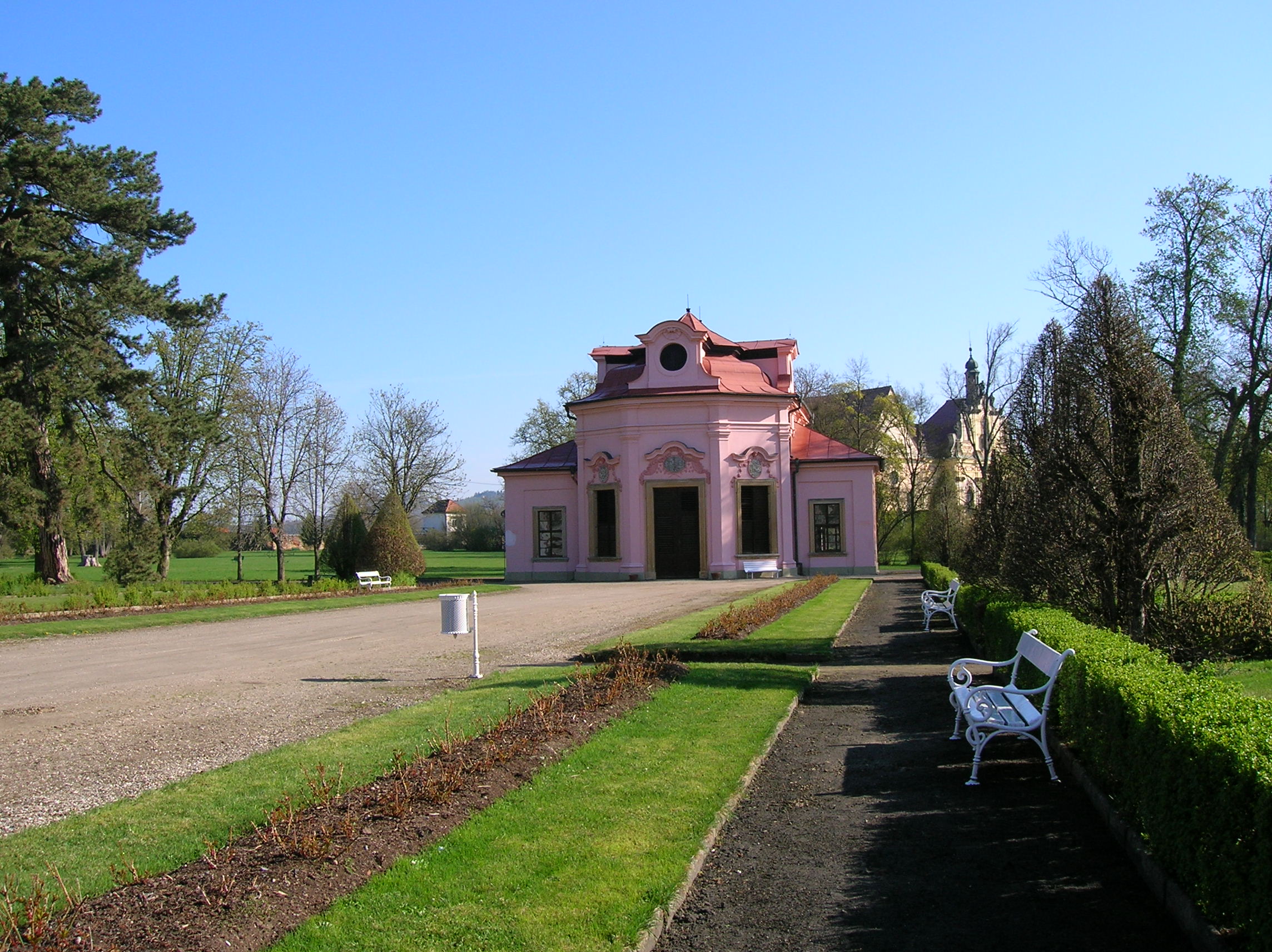
The Alte Kapelle

The Alte Kapelle

The stucco work was astounding, and the white walls were adorned with putti. The frescoes narrated described the legend of how the church came into being. They also celebrated the Virgin Mary as the patron saint of the church and glorified the founders of the church, Emperor Henry II and Empress Cunigunde of Luxembourg. Emperor Henry II had believed in centralized authority and had strongly supported the Catholic Church. Due to his devotion to the Catholic Church, Pope Eugene III canonized him in 1146. He was the only German bestowed this honor. His wife Cunigunde was involved in politics, participating in the Imperial Diets in Regensburg. She is said to have performed miracles, such as walking over flaming irons. One fresco showed the Virgin Mary as the Queen of Heaven, surrounded by angels and saints. The main altar was decorated in rocaille and focused on the Virgin Mary. God the Father was perched on a globe above her, and a dove symbolizing the Holy Ghost also appeared.

It fascinated me that this church retained elements of the Middle Ages and at the same time celebrated the Baroque and Rococo periods with a flourish. I could not get over how the 18th century styles gave the chapel a sort of weightlessness and airiness that so poignantly represented joy and hope for me.  It was uplifting. I was in an ever better mood when I left the chapel, after staring through the grille for at least a half hour.

Next I found my way to the Emmeram Abbey. I would be touring the Thurn und Taxis Palace adjacent to it later in the day. The monastery had gained independence from the bishopric in 975 and did not lose its independence until 1803. Then, at the beginning of the 19th century, the abbey was secularized. The King of Bavaria gave the Thurn und Taxis family the monastery because the postal services that they had managed for centuries had been nationalized. I had read that the stone reliefs on the north portal, dating from the Middle Ages, were the oldest north of the Alps.

Religious ornamentation on the facade of a building

Religious ornamentation on the facade of a building

The complex was named after the bishop Emmeram, who had lived in Regensburg in the 700s. Inside frescoes told his exciting life story: He had worked as a missionary for Theodo I, the Duke of Bavaria and was much respected throughout the realm. Then the duke’s unwed daughter confided in him that she was pregnant, and she did not want to tell the duke who the father was. Emmeram advised her to lie and say that he was the father. Then he set off on a pilgrimage to Rome.

When the duke’s daughter told her father the news, he had his son and followers chase Emmeram. When they caught the pious missionary, the duke’s followers tied him to a ladder and chopped him into pieces, slowly torturing him. Then the duke found out that Emmeram was not the father of his daughter’s child and ordered his body to be bought back to Regensburg. Emmeram was made a saint.  I also saw fascinating altars and a crypt dating from 780, showing off masterful Romanesque architecture.  The high altar hailed from 1669.

My next stop was the palace. I had to use an audio guide at the palace because the tours were only in German.  I was disappointed that the Electors’ Fountain was covered in scaffolding. I wanted to see the sculpture of Emperor Arnulf bearing a scepter and shield and the eight coats-of-arms standing for the Holy Roman Empire and the seven electors who selected the emperor.

The architecture of Regensburg

The architecture of Regensburg

Upon entering the palace, we came to a monumental marble staircase. The guide spoke animatedly for some minutes before my audio guide started. The German-speaking tourists were enthralled with whatever he was saying. Then we went up one of the 14 marble staircases in the complex that was the largest residential palace in Germany. It included more than 500 rooms. A ceiling  painting looked as if it was about to burst with color above the staircase.

The Thurn und Taxis clan dated back to the 13th century when the family was named Tasso. During the end of the 15th century, Francesco Tasso created the first postal system going from Innsbruck to Brussels. It took a week for the mail to reach its destination. The key to its success was that the rider and horse were changed at each postal station. For his ingenuity, Tasso was given nobility status by Emperor Maximilian I and thus became Franz von Taxis in 1512. By the end of the 18th century, the postal system was flourishing.

Then bad times came. At the beginning of the 19th century, most of the postal service was nationalized. The French Emperor Napoleon Bonaparte put an end to the Thurn und Taxis’ control of the postal service in 1815. After the Napoleonic era, the family managed the postal service once again, but only until Otto von Bismarck became Chancellor of the North Germany Federation in 1867. A very conservative politician and nationalist who did not favor democracy, the prominent Prussian statesman was responsible for forming the German Empire in 1871.

A fascinating facade in downtown Regensburg

A fascinating facade in downtown Regensburg

I was intrigued by the grotesque figures on the ceiling of the Conservatory, also called the Winter Garden. Female figures represented the seasons, though winter was conspicuously absent. I noticed that a sickle and grain stood for summer. The Brussels’ tapestries in the Large Dining Room were astounding. The Throne Room featured a throne from the 18th century and tapestry decoration. The Ballroom took my breath away. Its wall paneling, frames, balustrades and stucco ceilings boasted Rococo and Neo-Rococo styles. Faience Neo-Rococo stoves were present, too. The Ballroom, created in 1730, had been transported from Frankfurt to Regensburg in 1890, when the Thurn und Taxis clan moved to Regensburg. Even the glass chandeliers had been equipped with electric lighting at the end of the 19th century. I liked the idyllic landscape paintings hung high on the walls and the rich white decoration that included garlands and putti as well as plant and ribbon motifs.

I noticed a portrait of Elizabeth of Austria, often called Sisi, in the Balcony Room. Because her sister Helene was married to Crown Prince Maximilian Anton von Thurn und Taxis, she had often stayed here. The sisters’ father had been a Bavarian Duke while their mother was the daughter of the Bavarian King. I had read how uncomfortable Sisi had felt around the ceremony of royal life and how she had been a free spirit who had traveled around the world. I thought about Franz Joseph intending to propose to Helene but changing his mind and asking for Sisi’s hand in marriage instead. And I thought of Sisi’s assassination in Geneva, when an Italian anarchist stabbed her while she was taking a walk. And I remembered reading about the lavish funeral with all the pomp and ceremony that she had despised.

The gate to the Stone Bridge

The gate to the Stone Bridge

The Silver Room featured a silver chandelier with cupids holding candles. The tapestry with a battle theme in the Gobelin Salon got my attention as well. The Yellow Salon exploded with color. It was decorated in Rococo style and dated from about 1740.  I tried to imagine members of the noble family playing music here, the tinkling of piano keys or rich melody of a clarinet. I was happy whenever I saw yellow because it was my Mom’s favorite color and the color of the kitchen walls in my parents’ house. I recalled all the earnest conversations I had with my Mom, seated at that circular kitchen table, sipping green or black tea.

The Green Salon had served as a bedroom for Princess Therese from 1812. I was mesmerized by the bed decorated with four swan figures on its legs. I loved the detail of the feathers and long necks of the swans. A curtain was adorned with gold bees. Both the swans and bees were characteristics of the French style that dominated this room. In the Czar Nikolaus Salon a portrait of Princess Theresa von Thurn und Taxis showed the 37-year old clad in a chemise dress and wearing pearls in front of a forest. I noticed an exquisite blue with gold tea set in another room.

Then we came to a contemporary art exhibition of portraits of the living family. The portraits of four women and one young man had blinking eyes. I thought it was a good idea to put portraits of the current family in the exposition, but I did not understand why their eyes were blinking. I guess it was meant to emphasize that they were living, that the tradition of the family continued, but it seemed out-of-place with the décor of the other rooms. Then I saw the House Chapel that had once been a bedroom for Crown Princess Helene. After the Princess’ death in 1890, her son Prince Albert I had it reconstructed into a chapel. The alloyed coats-of-arms decorating the windows impressed me.

Regensburg's cathedral dominates the skyline.

Regensburg’s cathedral dominates the skyline.

Next we entered part of the cloister. I imagined monks walking through the round Romanesque arches while singing hymns. I saw statues dating back to 1200. I imagined how the room had looked in the Middle Ages with its then colorful decoration depicting biblical stories. I admired a Neo-Gothic tomb chapel as well. Another wing featured high and thin Gothic arches. The cloisters were certainly full of architectural wonders!

After touring the palace, I visited its museum. I saw a Japanese lacquered cabinet from 1690 and took special notice of the exquisite Asian landscape scenes on the front. White gold porcelain featured floral motifs. A ceremonial carrying chair also caught my attention. Medals from the chivalry Order of the Golden Fleece that was founded in 1430 and 55 richly decorated 18th century snuff boxes also made up the exhibition. One room was decorated with Biedermeier furniture, dating from 1815 to 1848. The furniture was not positioned against the walls in order to encourage communication. The highlight, though, was the white with gold porcelain service set from the early 1700s, made by a Viennese manufacturer that had only been in existence for 30 years. It was the only complete service of this manufacturer in the world.

The Old Town Hall

The Old Town Hall

I had a late lunch at an otherwise empty café near the monastery. It was decorated plainly and appeared to be a place for locals as the menu of five entrees was written only in German. I imagined that the restaurant would be packed on weekdays. I chose the Wiener Schnitzel and received a generous portion. It was delicious. I had dessert at the oldest coffeehouse in Germany, the Café Prinzess, where I managed to find a free table despite the crowd. I ordered almond cake and green tea. Surprisingly, service was not slow. The cake and the green tea were excellent.

Soon it was time for the English tour of the Old Town Hall across the street from the coffeehouse. I got a free ticket because I have a press pass and would be writing about the exhibition. However, only the torture chambers in the cellar were open that day. The lavish rooms once used for the Imperial Diet were closed for a conference. Two tourists complained that they had to pay full price for their tickets, even though the Imperial rooms were off limits that day. They decided to come back the following day when both parts of the tour would be open. I was leaving the next day, so I had no chance of seeing the Imperial rooms on this trip.

For almost 150 years from the 17th to the beginning of the 19th centuries, the Imperial Assembly had held political meetings in this building. But the Imperial history of the town was above, in those lavish rooms that I could not see. I descended into the torture chamber, which helped paint a portrait of the history of the town. I peered down at a dungeon that was three meters deep with no light. A Jewish gravestone served as the toilet seat, another reminder of the rampant anti-Semitism that had riddled the town. Once again, I recalled the 1519 expulsion of the Jews.

An ancient door at the Old Town Hall

An ancient door at the Old Town Hall

I also saw a so-called spiked rabbit, consisting of spikes on a wooden chair. I could not imagine the pain a person would feel seated on those spikes. It was too awful to think about. Some prisoners were locked in a neck iron, exposed to the public in a pillory. I also saw a timber cell without any light.  Prisoners sentenced to death stayed in the Dead Man’s Cell, where there was light and fresh air. An opening allowed family members to touch the incarcerated’s hands before the execution. A big beam balance from the 16th century kept the merchants honest. If merchants cheated customers, they went to the pillory.

The instruments had been used from 1530 to 1781, during three centuries. It was difficult for me to imagine that such horrific methods had been used for such a long time. Then again, in in today’s world there is waterboarding. When the accused was detained, he or she might have heard a concert taking place in one of the Imperial rooms above, but the prisoners were never tortured to musical accompaniment.  

The Romanesque portal at St. James' Church

The Romanesque portal at St. James’ Church

I walked around town for the rest of the day, the history of the town seeping into my soul. The next morning I had a little time before I headed to the train station. I was disappointed that I did not have a chance to visit any of the museums, especially the Historic Museum that told the tales of the town from as far back as Roman times.

First I walked to the Church of St. James, which was built by Scottish monks in 1150. The church still retained its Romanesque style. The entrance portal was pure Romanesque, richly decorated with sculptural figures and grotesque symbols. The architectural gem was encased in glass, so there was a physical barrier between the viewer and the object. I could understand the need to protect such an ancient treasure, but the glass barrier restricted the visual communication with the viewer. I gaped at the entrance portal for about a half hour. The interior was austere but beautiful.

Next, I headed for Dachauplatz, trying to find the remnants of the Roman wall as they were marked on my map. A small section of the wall that did not even come up to my knees disappeared into a parking garage. Modernization had destroyed some of the historical roots of the town, replacing significant reminders of the past with an eyesore common in the contemporary world. I was very disappointed that a car park had been built in the historical center of the town, marring the cityscape. I had read that in the past a monastery had been on the premises.

The decoration on the Romanesque portal

The decoration on the Romanesque portal

As I had made my way to Dachauplatz, I had taken note of all the various architectural styles of the buildings and the artwork adorning the facades. Standing on the square, facing the Historic Museum, I tried to imagine what it would have been like to have been present in 1945, near the end of the war. Residents had taken part in a demonstration, eager for the Americans to take over the city. Some protestors were executed in that same square.

Soon it was time to take the train back to Prague. I yearned to visit the town again and to get to know Bavaria even better. On the train a pleasant surprise awaited me. I began chatting with the woman seated across from me, an American world traveler in her sixties on her way to Prague. It turned out that she also loved reading mysteries and adored cats. As we discussed many topics, I realized that the best thing about traveling is the people you meet on the way to your destination. We would keep in touch, for sure.

I returned to Prague, elated, ready to face the long winter ahead with energy and enthusiasm and ready to plan a spring trip back to Bavaria.

Tracy A. Burns is a writer, proofreader and editor in Prague.


Another look at the Romanesque portal of St. James' Church

Another look at the Romanesque portal of St. James’ Church