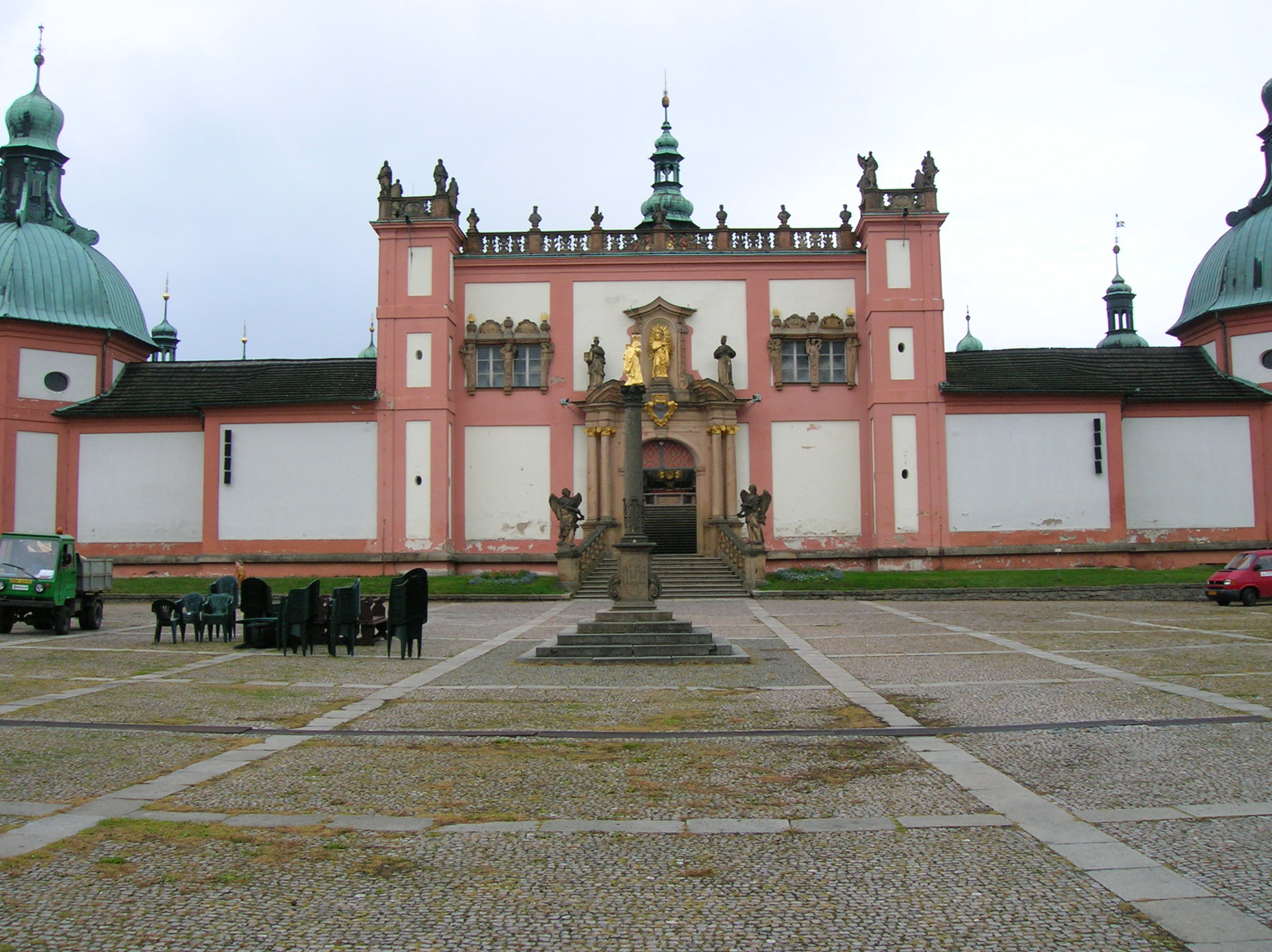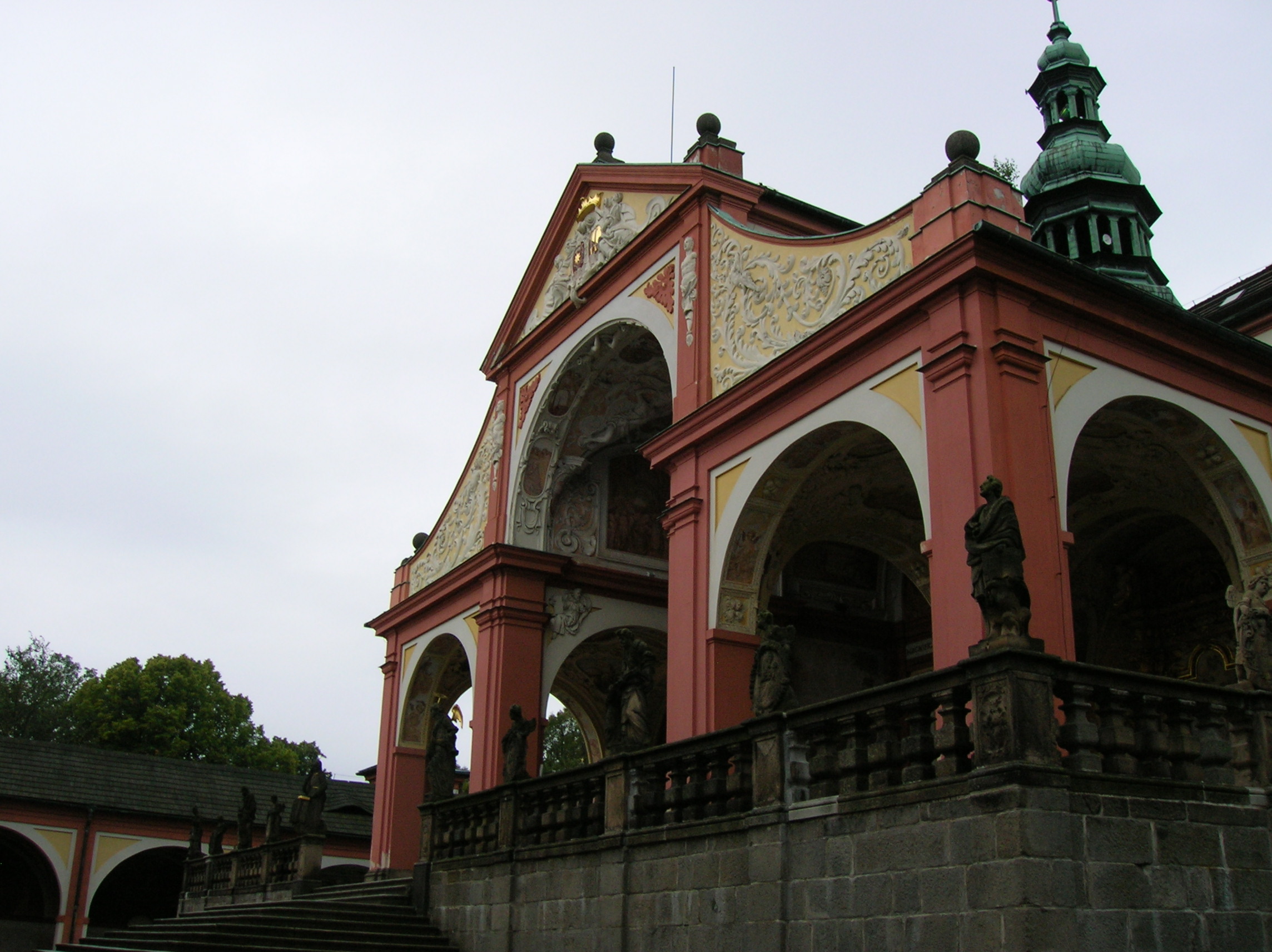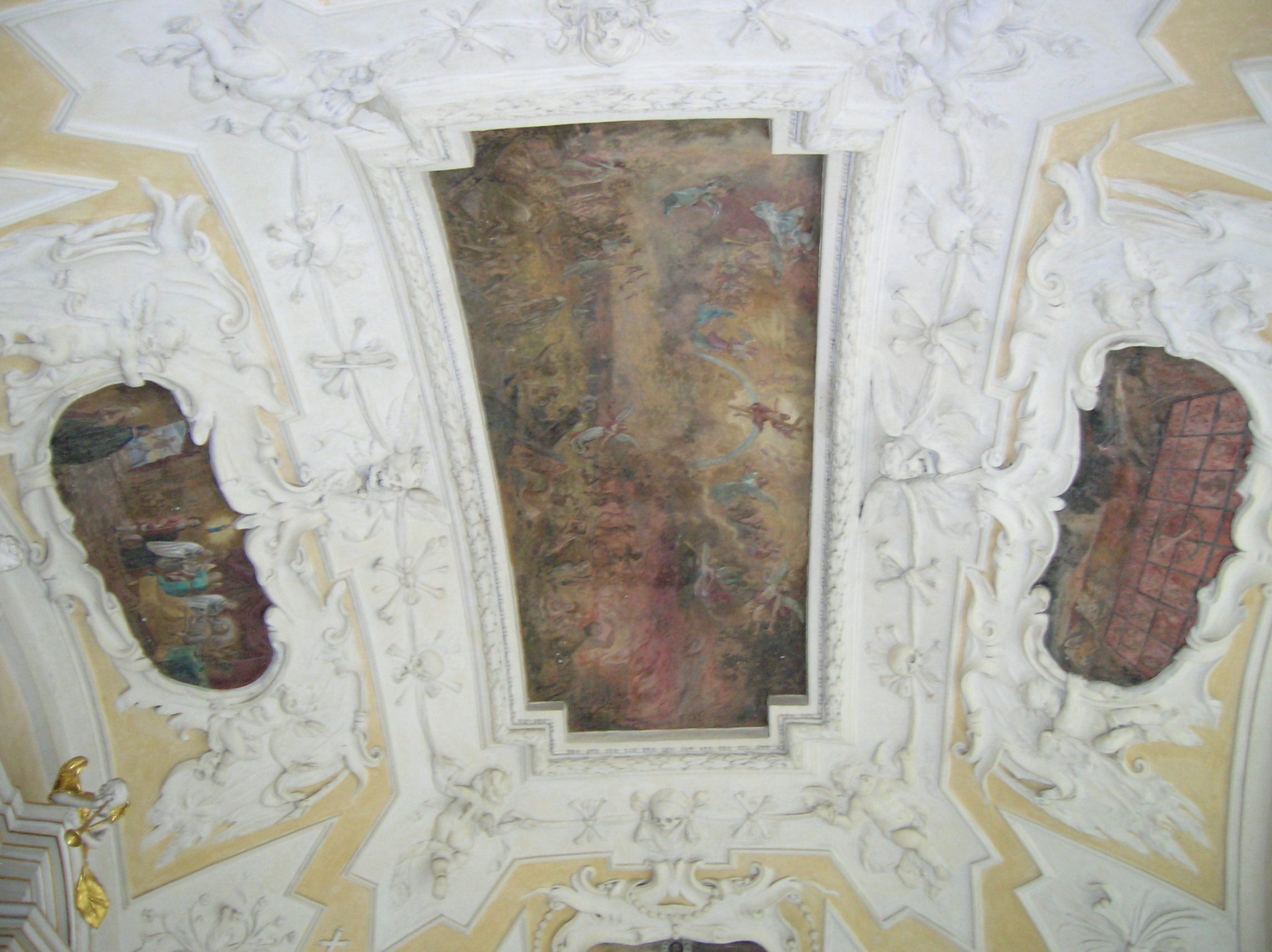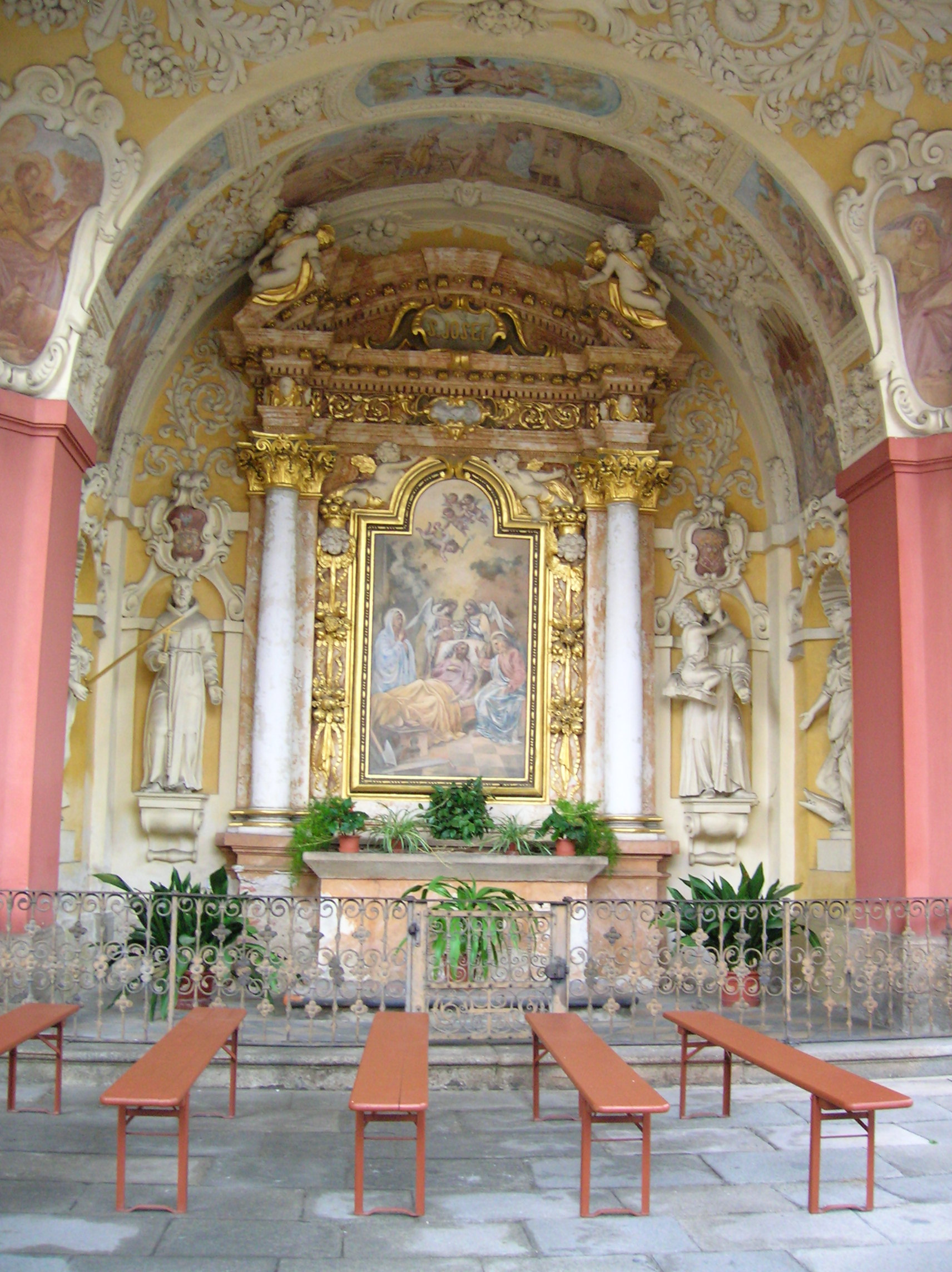
Kutná Hora Diary

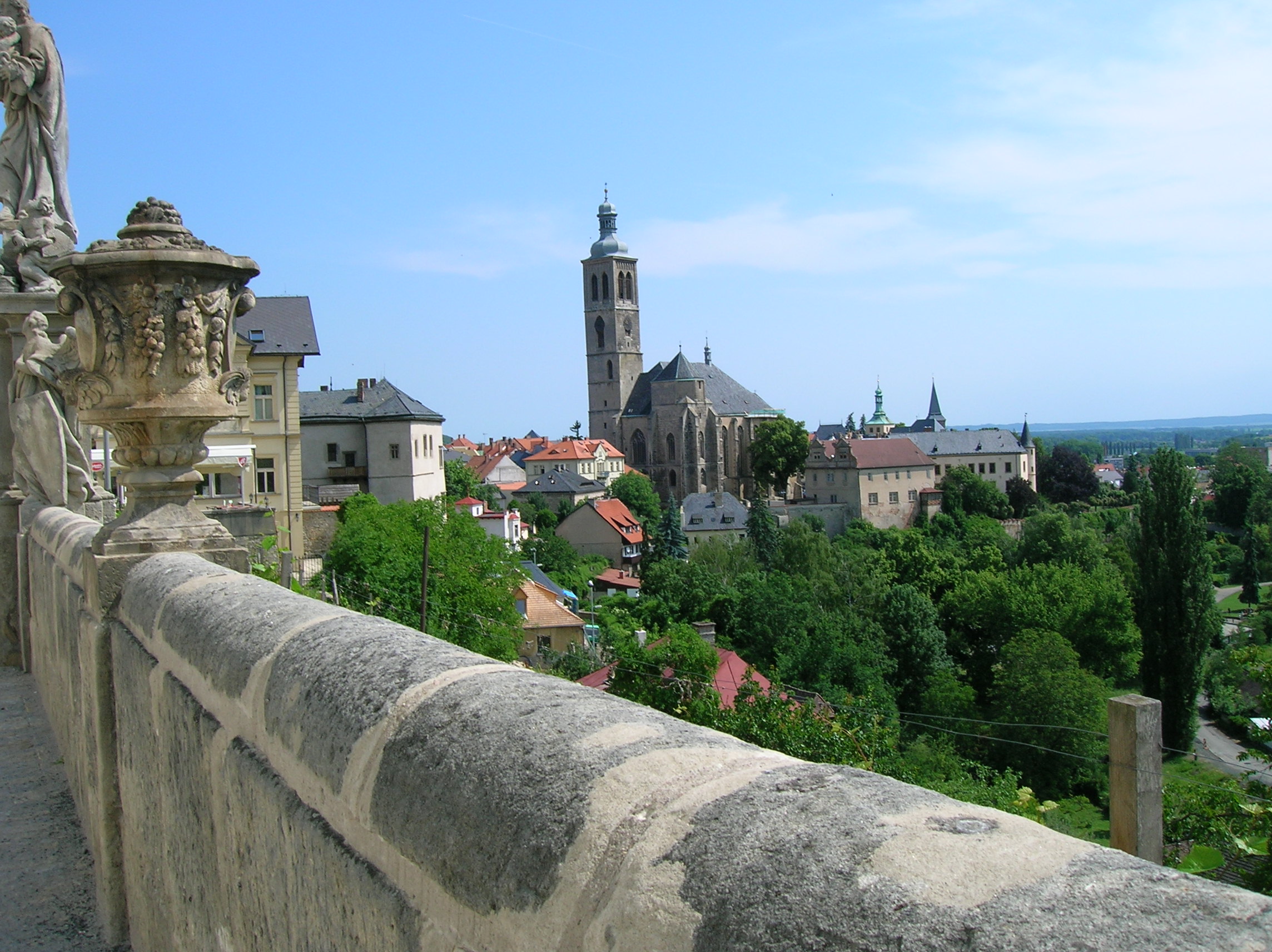
A view of the town

A view of the town

I had visited to the medieval, former mining town of Kutná Hora back in 1992. I recalled exploring the mines, touring the awe-inspiring cathedral and gazing at the Italian Court.  I could not forget my visit to the creepy ossuary with shapes made out of human bones. Still, it had been a long time ago. So, in 2012, I decided to return to this special place that for some reason I had not made time for during so many years.

 I sharpened my knowledge of the town’s history during the one and a half hour bus ride on that perfect, sunny morning. Kutná Hora gained recognition thanks to its silver mines from the 13th to 15th centuries. At one time, the town’s mine in was the deepest in the world. There was an international demand for its silver, which was exported to one-third of Europe. During Kutná Hora’s golden days of the Middle Ages, the Prague Groschen, a significant currency in Europe, was produced here. Even after the turbulent years during the Hussite Wars in the 15th century and during the Thirty Years’ War of the 17th century, mining in Kutná Hora preserved. The mine was not even shut down from World War II to 1991.

Plague Column in Kutná Hora

Plague Column in Kutná Hora

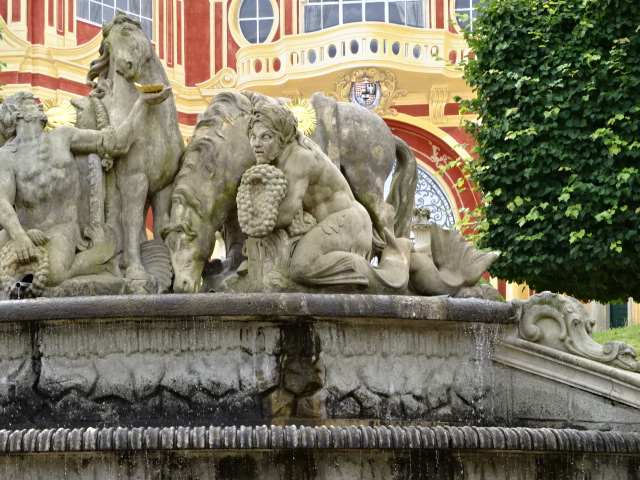
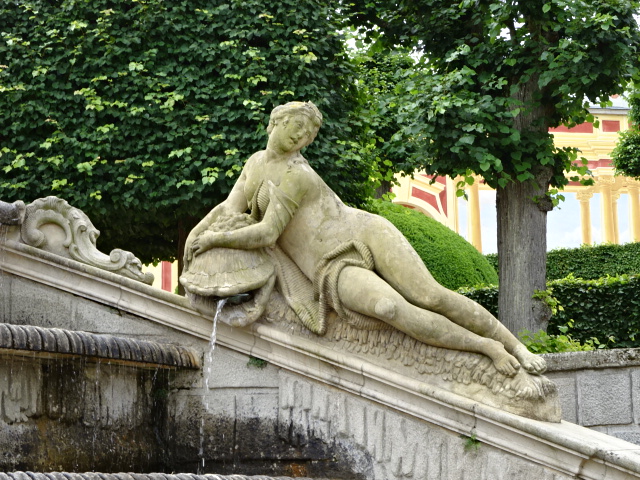
I came to the downtown area and soon found myself at the plague column where impressive statues twisted and turned. Then I headed for Saint Barbara’s Cathedral, passing the art museum in the former Jesuit College that hailed from the 18th century. Unfortunately, I did not have time to peruse the art collection during that excursion, but I promised myself to make another trip there in the near future. Too many other sights awaited me on that day. I admired 12 statues of saints, forged from 1650 to 1716, on the way to the impressive cathedral.

A statue on the way to St. Barbara's Cathedral

A statue on the way to St. Barbara’s Cathedral

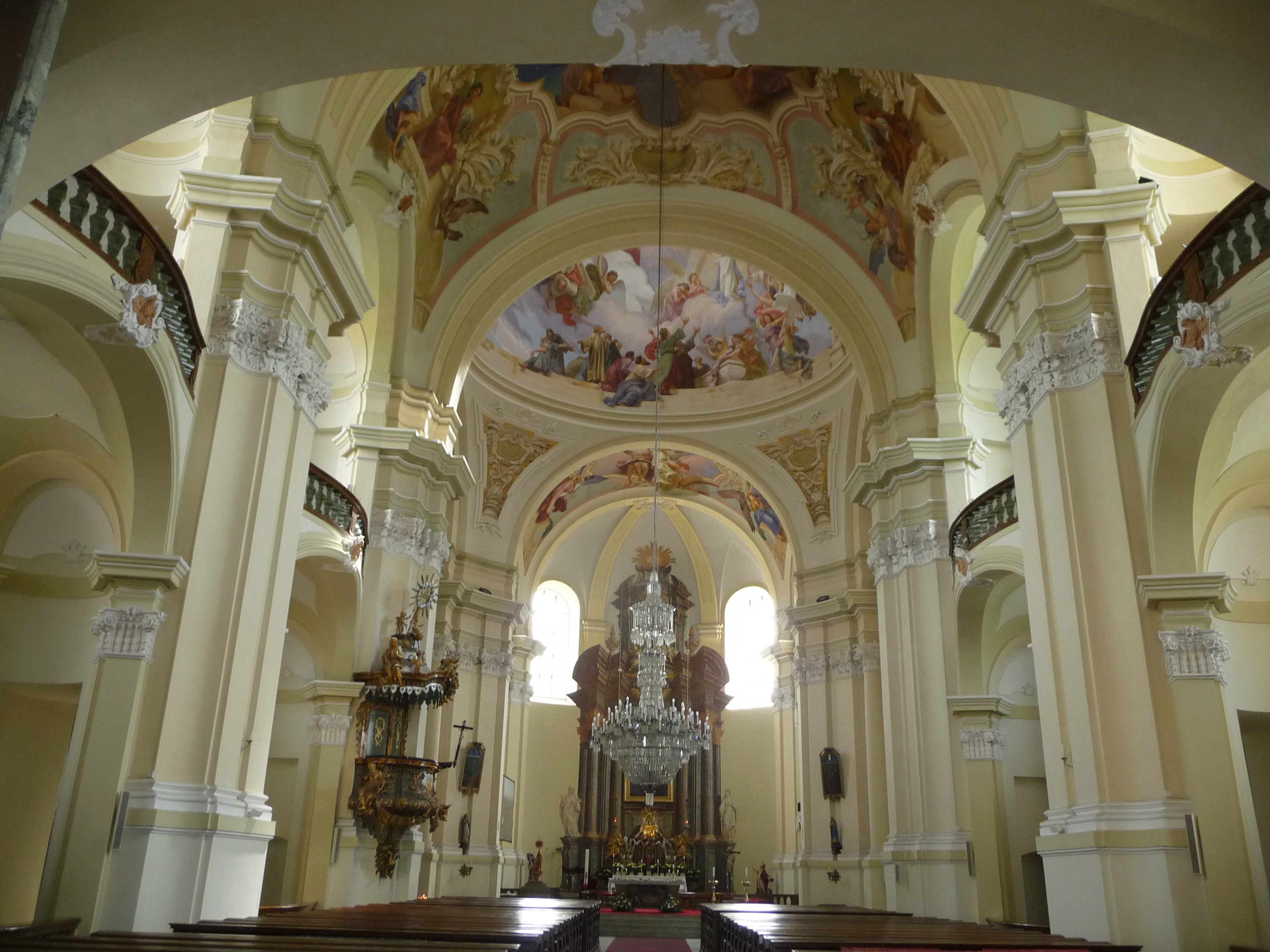
I could not help noticing the cathedral’s outer buttresses. The gargoyles and monsters on the neo-Gothic façade were imposing, defending their holy site from evil. (By the way, I love Neo-Gothic!) I had familiarized myself with the history of Saint Barbara’s. Its past had much to do with mining. The cathedral was even named after the miners’ patron saint, Barbara. Although construction started on the cathedral in 1338, it was not completed until 1905. The building was as I had remembered it  – absolutely stunning. Once again I marveled at the many Baroque works of art, including three Baroque chapels and a magnificent Baroque organ case.


St. Barbara's Cathedral

St. Barbara’s Cathedral

I was particularly drawn to the oldest piece in the cathedral, a statue of Our Lady Enthroned, hailing from 1380. Flanked by two angels in mid-flight, the gold-clad Our Lady gripped a golden orb. The stained glass windows did not disappoint, either. They were exquisite, dating from the end of the 19th century and the beginning of the 20th century. I spotted the cathedral in the background of two of the windows. I also noticed soldiers on horses raising their swords.

KHsvBarb10Then I came to the unique late Gothic frescoes focusing on the mining profession. I had not seen art with a mining theme anywhere else. In the Mint Chapel frescoes from the 15th century depicted miners making Prague Groschens, striking the coins with mallets. That made me think of how my favorite painter, Pieter Bruegel the Elder, portrayed people at their trades or in scenes from everyday life. A few weeks earlier I had visited the Kunsthistorisches Museum in Vienna, where I had feasted my eyes on 12 canvases by the masterful Bruegel the Elder.

 “The Battle between Carnival and Lent” came to mind. In this depiction celebrating humanity and peasant life, the artist set the scene at a market and church squares. Mass had just ended, and the churchgoers carried their chairs out of the holy building.  Crippled people begged for money in front of the church. A corpulent man dressed in pink and yellow stockings was playing a guitar and wearing what looked like a ceramic pot on his head. Bruegel the Elder’s “Seasons of the Year” cycle was another of my favorites. It focused on activities in the countryside. I thought of the depiction of winter, “Hunters in the Snow,” and the hunters in the scene that visually and poetically described man’s relationship to the last season of the year.

The main altar in the cathedral

The main altar in the cathedral

“Peasant Wedding” also showed the lower class at their trades. A servant was filling mugs with beer, for example. Rich in tradition, it depicted the bride without the groom, seated at the table with her head crowned in a small wreath. A child tried the creamy porridge, licking the bowl. Everyday people were engrossed in what were for them everyday activities, some profession-related, others focusing on leisure. The portrayal of the common man as a miner minting coins was, in my mind, connected to the Flemish and Dutch canvases celebrating everyday life. A statue of a miner appeared in the cathedral as well, which made the relationship with Dutch and Flemish works of art even more apparent.

The exquisite stained glass windows in the cathedral

The exquisite stained glass windows in the cathedral

In another Chapel the Smíšek family huddled around an altar. Saint Christopher carried a child on his shoulders in one large fresco. Then I meandered to the other side of the cathedral, where I saw a mural with a different theme:  Created in 1746, “The Vision of Saint Ignatius Wounded in the Battle of Pamplona” showed off angels fluttering through pink clouds. I was also entranced by the stone pulpit, built in 1560. The 17th century ornate wooden pews caught my eye, too.
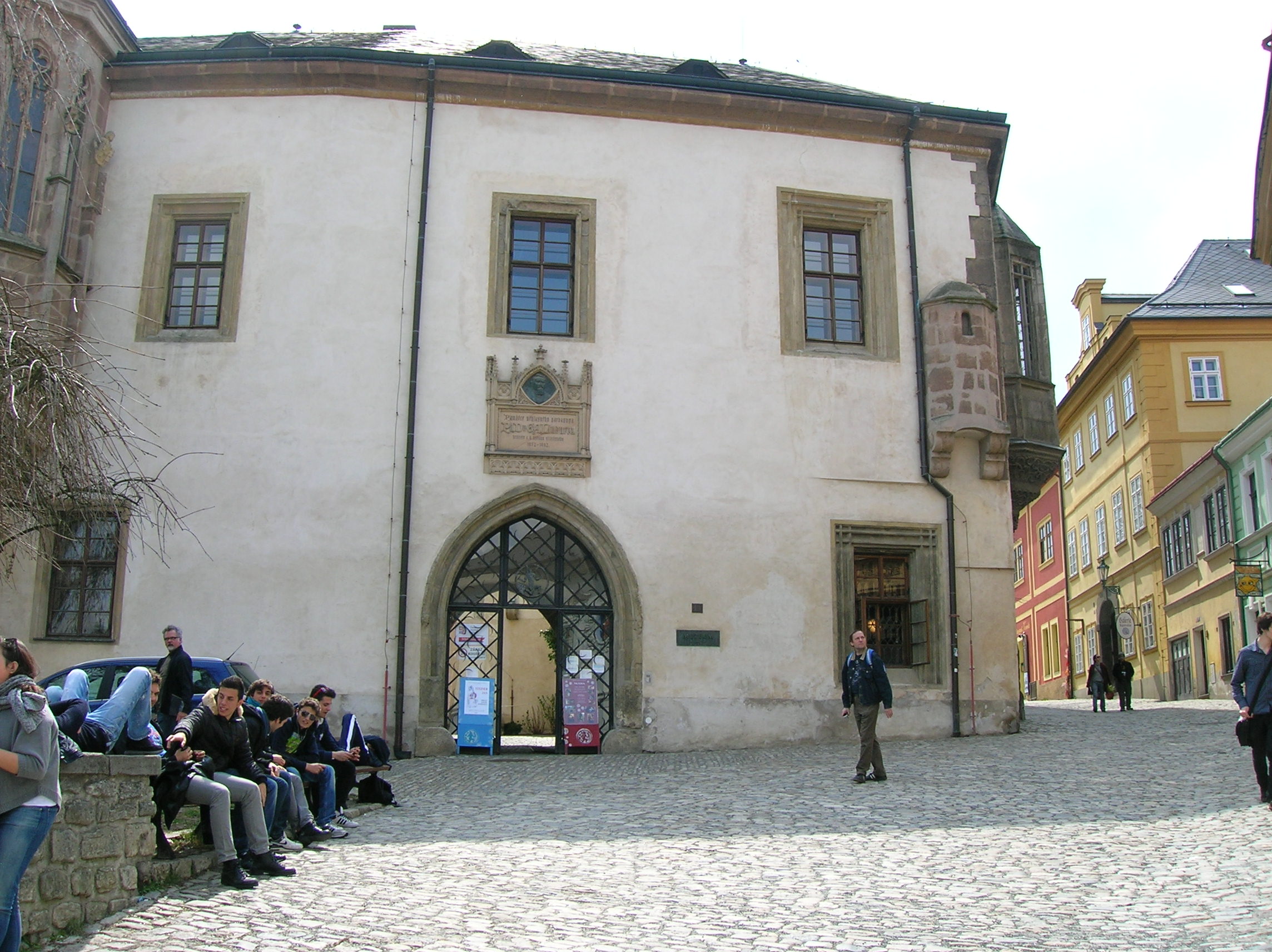
Hrádek, a museum about the town, mining and silver

Hrádek, a museum about the town, mining and silver

After exploring the interior of the cathedral, I was hungry. I stopped for chicken on a skewer at a restaurant with outdoor seating in a courtyard on Ruthardka, a romantic and picturesque street cutting through the center of town. After lunch I stopped by Hrádek or The Small Castle and was eager to see the museum about the town as well as the history of mining and silver in Kutná Hora’s past. The entranceway was full of  teenage tourists enthusiastically chatting to each other. I did not want to visit the mines again – I was too claustrophobic – so I asked for the short tour. The man at the box office said he did not think there would be a short tour that day, but maybe he would have one around four p.m., when I had to be back in Prague. I was disappointed as I had read that the former royal residence was decorated with a Renaissance coffered ceiling from 1493 and consisted of halls featuring late Gothic ribbed vaulting. The medieval Saint Václav Chapel boasted wall paintings of Czech saints, I had read.  This museum would have to wait until another time.

I carried on to the Stone House, which harkened back to the era before the Hussite period of the 15th century, though it was last reconstructed at the turn of the 20th century. I was fascinated by its richly decorated Gothic façade, even though it dealt with the grim theme of death. I spotted Adam and Eve under a tree in the gable.
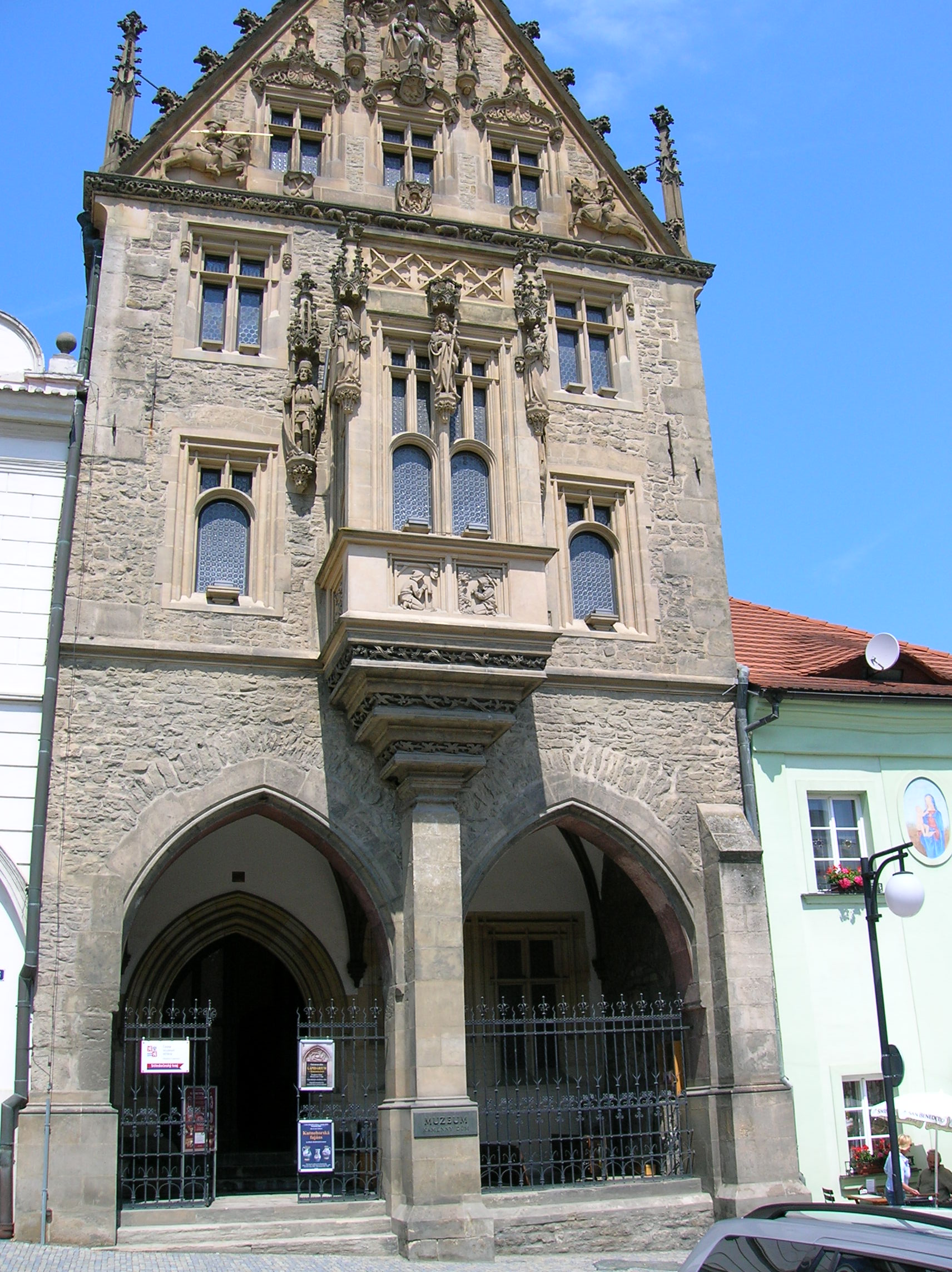
The Stone House

The Stone House

First, steep stairs led me down into the lapidary in the basement, which was part of the pre-Hussite structure. The collection boasted stone fragments from medieval times. I was especially enthralled by the pieces of the outer buttresses of the Cathedral of Saint Barbara, especially with the stone set in a fleur-de-lis pattern. I also saw pinnacles, finials and crockets. The angels that had originally decorated the cathedral entranced me, too.

Then one of the guides, a cheerful woman in her forties, gave me a tour of the first and second floors. Part of the first floor was devoted to objects representing the city’s former guilds throughout the centuries. This I what I liked about small museums. They often contained pleasant surprises.  I had never seen an exhibition dealing with guilds. One artifact looked like a griffin sticking his tongue out. Two lions and a crown represented another guild. The symbols of the guilds were intriguing.
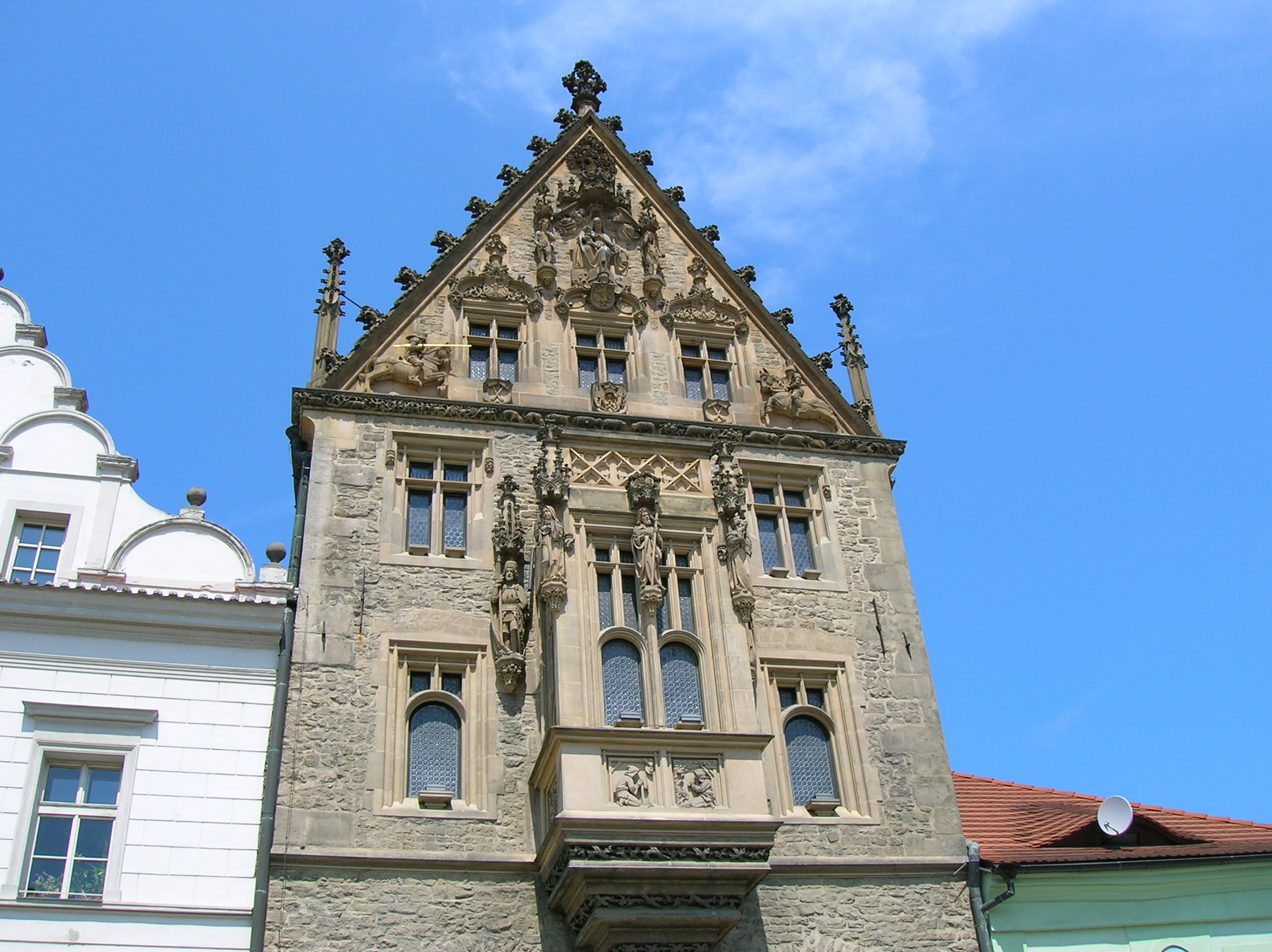
A closeup of the Gothic facade of The Stone House

A closeup of the Gothic facade of The Stone House

In the hallway stood a painted wardrobe and chest with folk themes. I loved folk art, so rich in tradition. Another space featured Baroque and Biedermeier furniture as well as a forte piano from the 19th century. The Baroque desk and wardrobe from the 18th century caught my attention.

On the second floor relics from religious orders greeted me. A New Testament hailed from 1677. I also saw a silver reliquary and pewter altar vase. Especially intriguing was the small, woodcut relief of Madonna and Child from the 19th century. A Pieta scene from the 18th century captivated me as well. My favorite, though, was a sculpture of Saint Mary surrounded by miners. She wore a star-studded golden halo, her hands clasped in prayer. Bruegel the Elder also dealt with everyday people’s relationship to religion. I thought of the canvas featuring Carnival and Lent again.
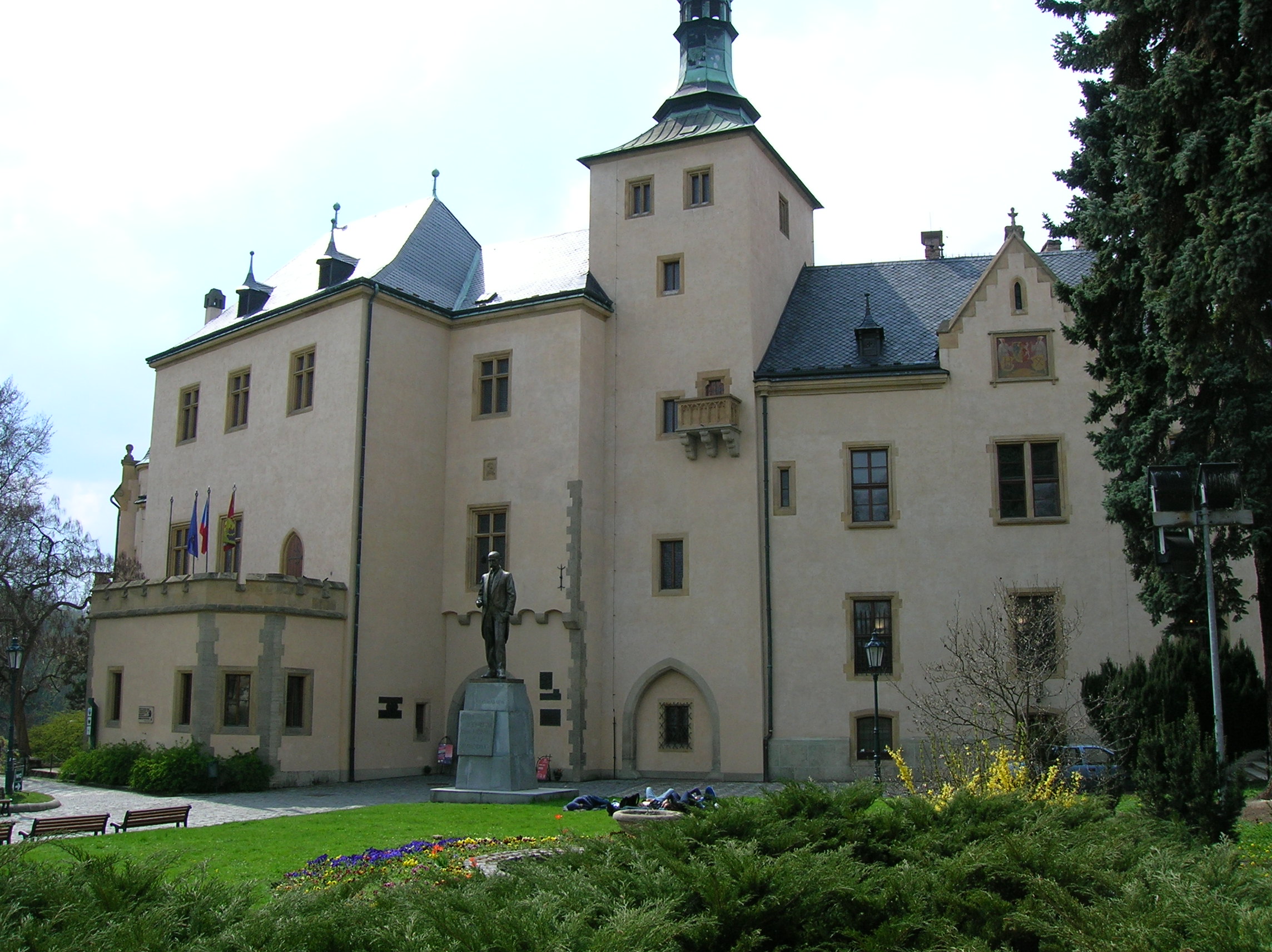
The Italian Court

The Italian Court

I did not have time to go to the Italian Court that day, but I would come back again soon to visit it. I recalled its royal chapel in Gothic style with Art Nouveau decoration. The Italian Court, hailing from the end of the 13th century, had played a significant role in the town’s history. The Prague Groschen was first minted there. Kings of Bohemia had stayed at the Italian Court, and Vladislav of Jagollen had been voted King of Bohemia there during 1471.

A chandelier made out of human bones

A chandelier made out of human bones

I knew that the 12-sided stone fountain was under reconstruction, so  I headed for the suburb of Sedlec , where there was an ossuary and cathedral. A 20-minute walk took me to the ossuary with a cemetery, hailing from the 13th century, the resting place of many plague victims and fallen soldiers from the Hussite wars.

The ossuary in Sedlec

The ossuary in Sedlec

The ossuary in the All Saints’ Chapel went back to the 14th century.  I remembered the space being bizarre and morbid yet fascinating at the same time. The Schwarzenberg clan had purchased the ossuary in 1784. They arranged the 40,000 bones and skulls into various shapes. Before that, architect Jan Santini Blažej-Aichel had renovated the space in his unique Baroque Gothic style, which I deeply admired. I gazed at the bones forming a huge chandelier, a Gothic tower and a chalice.


The Schwarzenberg coat-of-arms

Another decoration in the ossuary

I was enamored with the Schwarzenberg coat-of-arms. Bones depicted a severed Turk’s head and a raven. The chandelier was my favorite, though. I also gazed in wonder at the skulls from soldiers during the Hussite wars of the 1420s in one display case. I could hardly believe that I was looking at skulls that were so many centuries old, skulls that had once been heads of living human beings.
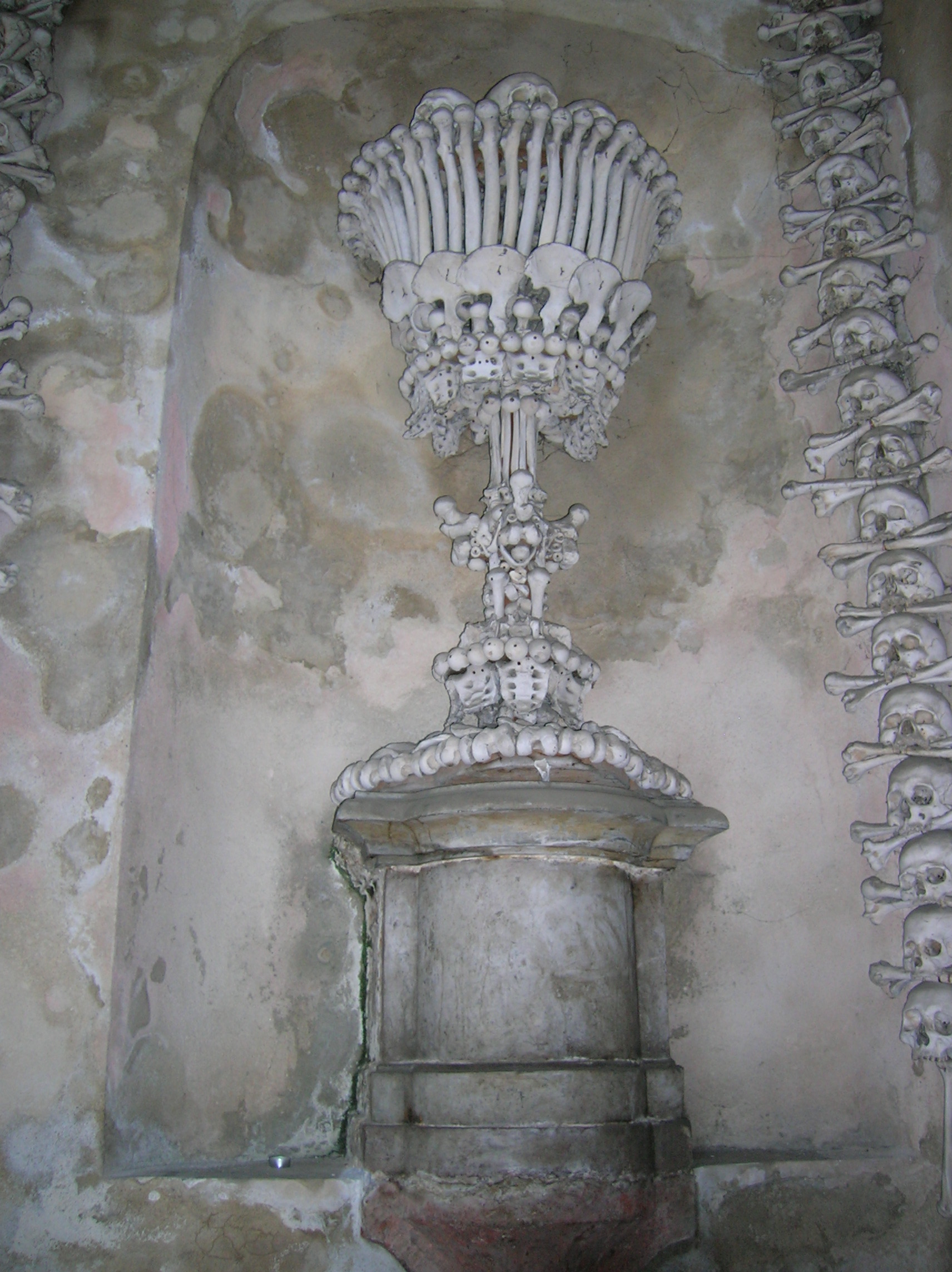
A chalice made out of human bones

A chalice made out of human bones

Last but not least I visited the oldest cathedral in the country. The Cathedral of the Assumption of the Virgin Mary and Saint John the Baptist has been a UNESCO site since 1995. It was constructed from 1282 to 1320 and got a makeover in Baroque Gothic style by the brilliant Santini Blažej-Aichel.
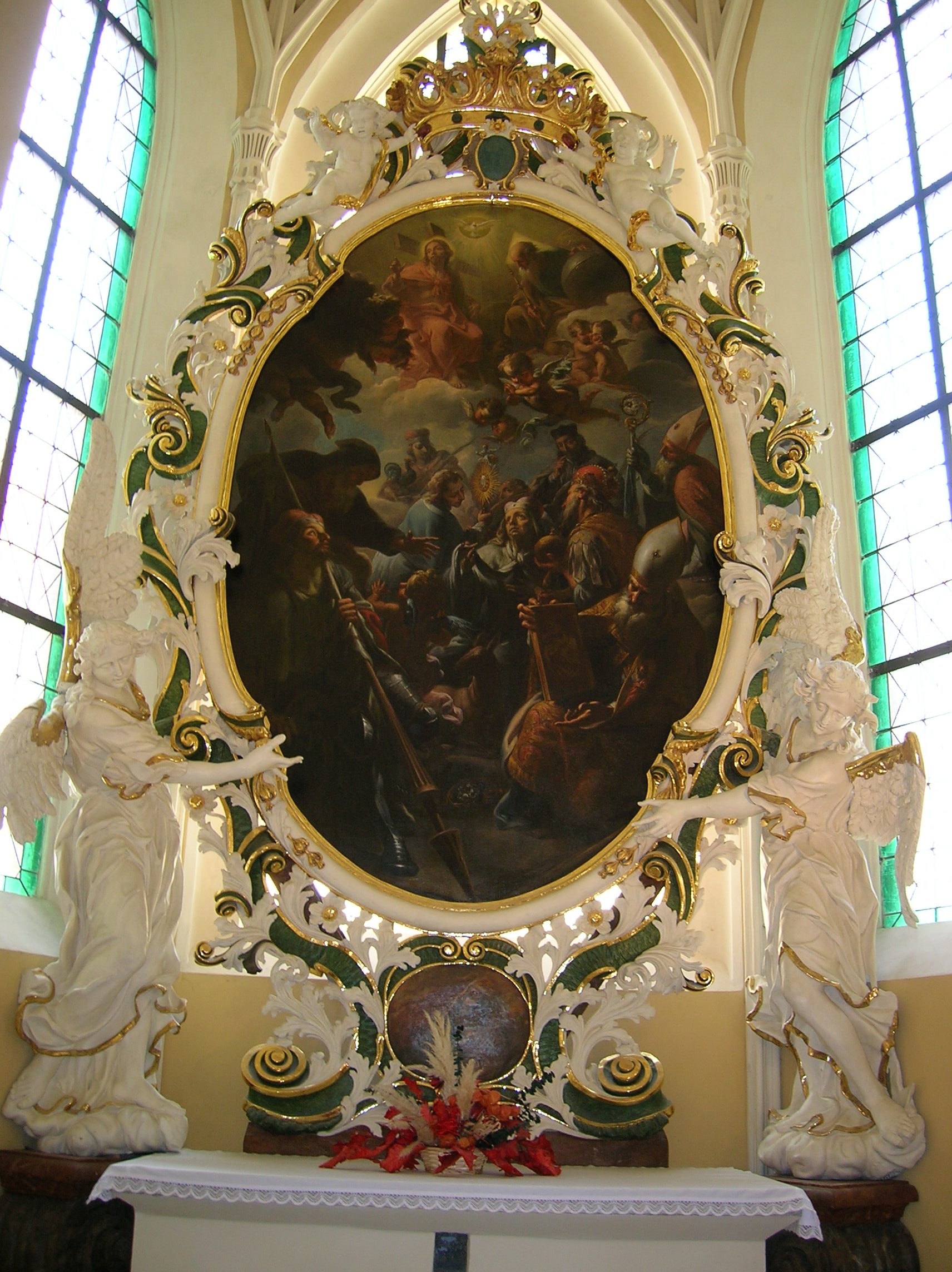
The cathedral flaunts Baroque artworks

The cathedral flaunts Baroque artworks

I was astounded by the seven chapels and the renderings of saints. I was very excited to see three paintings by my favorite Czech Baroque painter, Petr Brandl, whose works evoked such strong emotions in me.
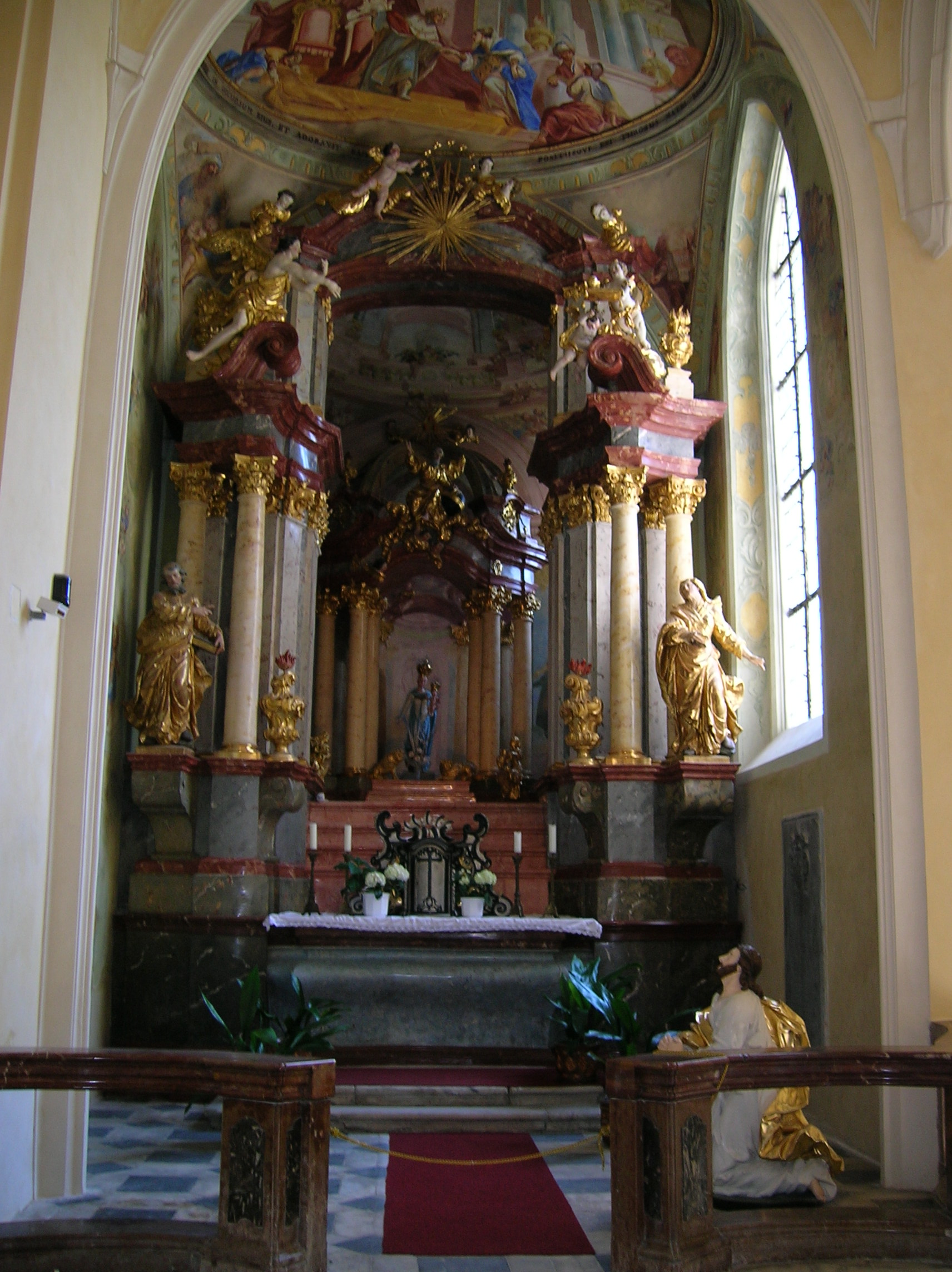
An impressive chapel

An impressive chapel

I admired the Baroque confession booths, hailing from 1730. Saint Vincent’s and Saint Felix’s relics, donated by Pope Benedict XIV in 1742 on the 600th anniversary of the monastery, were also fascinating. The Chapel of the Virgin Mary of Sedlec was impressive with its elaborate Ionic columns and plump putti with angels. The statues originally on the west front of the building intrigued me, too. My favorite was a haloed Saint Benedict gripping an open book. I thought of how literature had opened up new worlds for me, especially the Slovak writings of Václav Pankovčín and his penchant for magic realism.

Once again, Kutná Hora had cast a magical spell on me. I had strolled down medieval streets, toured two cathedrals, visited an ossuary and a museum- all delightful  and inspiring experiences. Now it was time to catch the bus back to Prague. One thing was for certain:  I would definitely be coming back here. Soon.

 Tracy A. Burns is a writer, proofreader and editor in Prague.

A picturesque street in Kutná Hora
A picturesque street in Kutná Hora
Mníšek pod Brdy Chateau Diary

MnisekpodBrdy20124


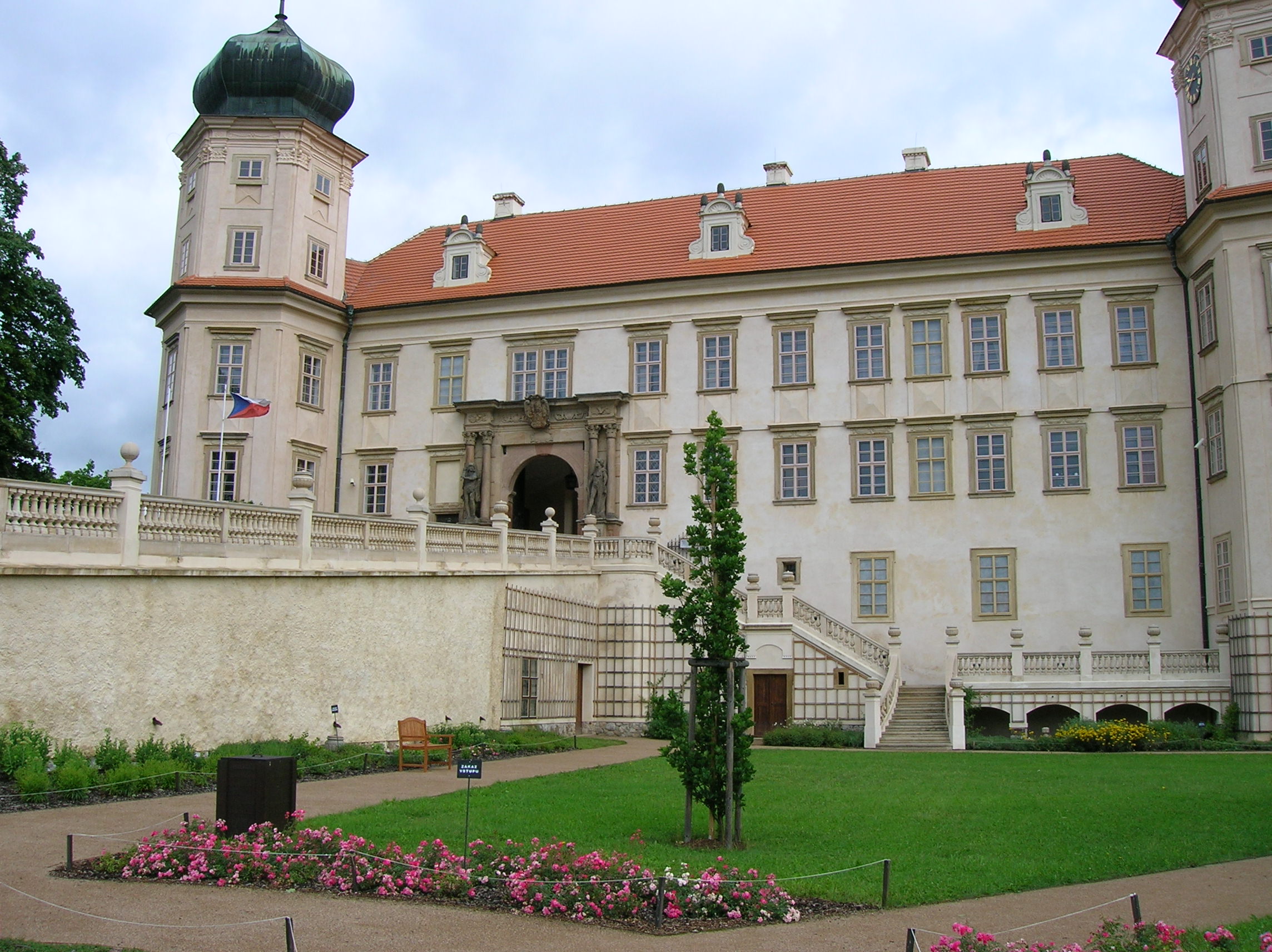
I took a bus from Prague’s Smíchov train station to Mníšek pod Brdy, where the chateau was close to the main square. The ride lasted only a half hour. It was my second time here. During my first visit in 2004, only one tour had been available. Then, in 2011, the chateau began offering two routes. I was eager to see what awaited me on the new tour.

Because I had already been here, I knew the basic history. The castle was first mentioned in 1348. Jan Vratislav from Mitrovic became its owner during 1487, and Mníšek pod Brdy stayed in his family for 168 years. During the Mitrovic era the castle was turned into a Renaissance chateau. However, the history of Mníšek pod Brdy Chateau was not all rosy. The chateau was almost destroyed in 1639 during the Thirty Years’ War.

Luckily, when Servác Engel from Engelsfluss purchased it in 1655, he transformed the ruins into a Baroque masterpiece.  Several other clans claimed ownership before the Kasts took over. Because Baron Kast had collaborated with the Nazis during World War II, the chateau was put in the hands of the state during 1945. Once utilized as an archive for the Ministry of the Interior, Mníšek pod Brdy Chateau was taken over by the Ministry of Culture in 2000. It was reconstructed in 2001 and opened to the public a few years later.

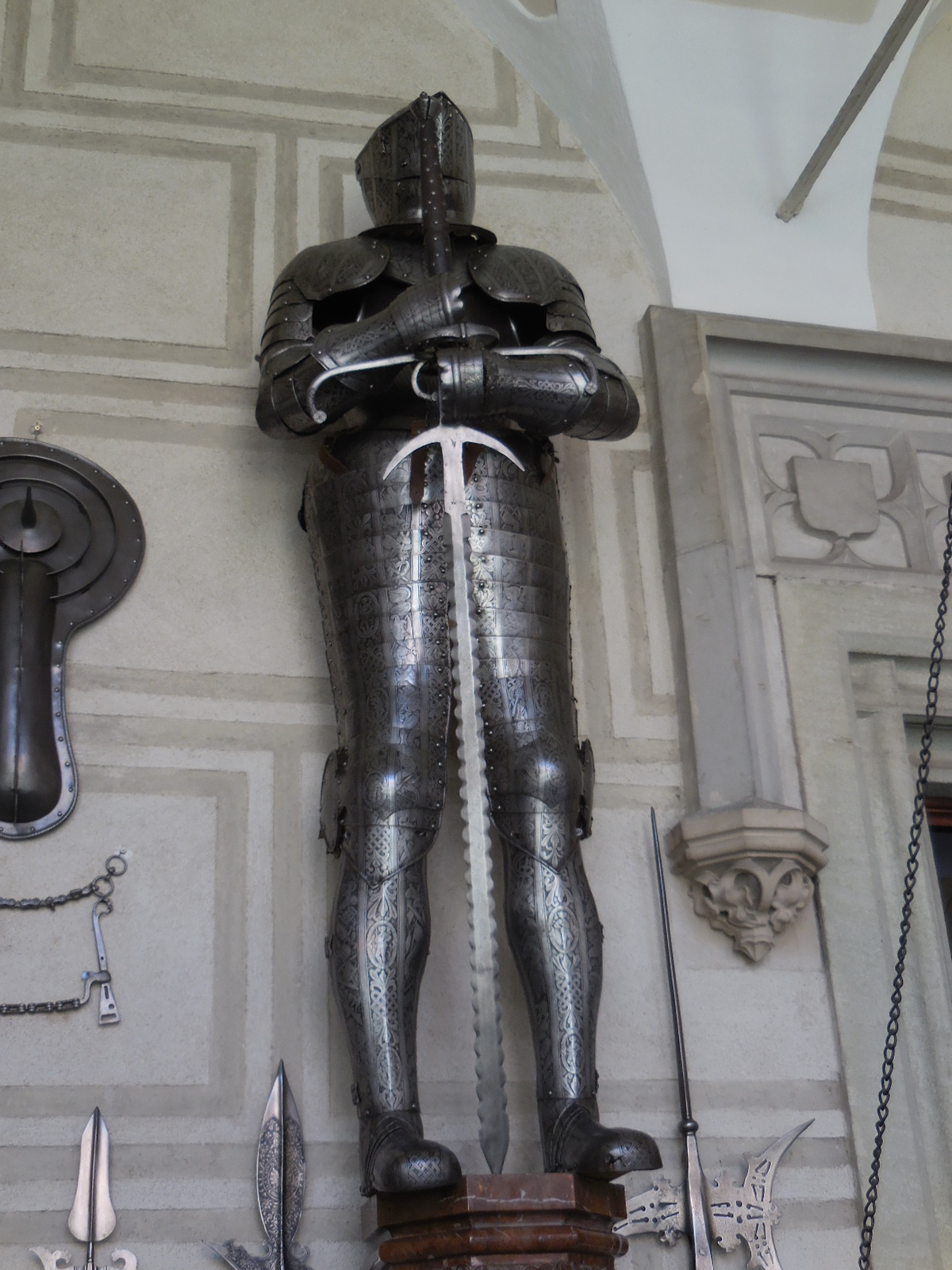
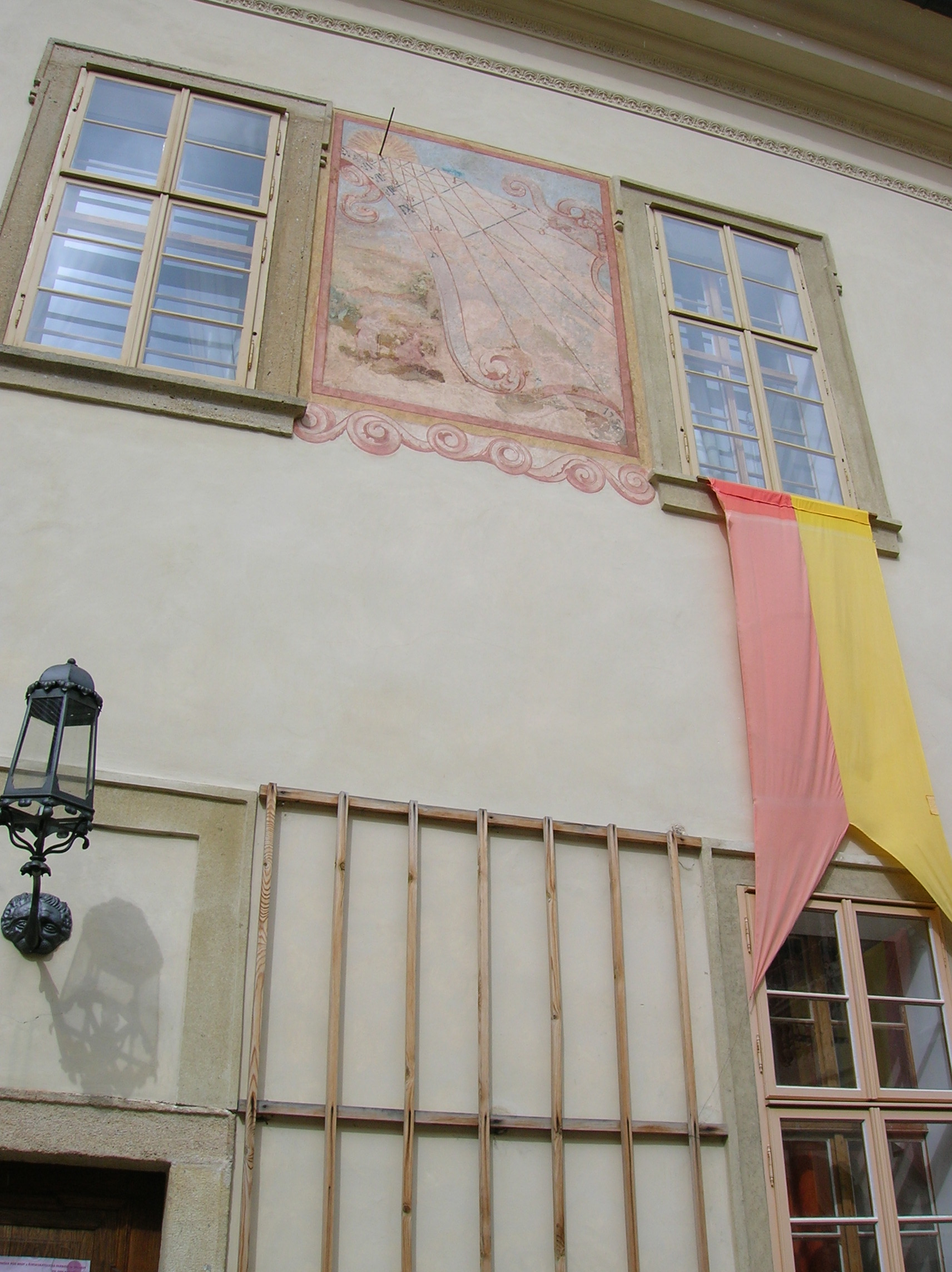
MnisekpodBrdy20125Even the entranceway did not disappoint. The knight’s armor on the wall hailed from the Thirty Years’ War. A Baroque closet, designed with intarsia, was charming. Portraits of family members who owned the castle during the 19th century also adorned the space.

The moment I set my eyes on the knights’ armor, I thought of my first visit here, with Pavel, whose job involved restoring artifacts in castles and chateaus in central Bohemia. He had proudly pointed out that he had repaired that suit of armor, and he had been the one who told me about this chateau in the first place. We had met at Frýdlant v Čechách Castle and Chateau a month earlier. He had explained that he had a girlfriend, but she did not really like visiting castles. So he often traveled alone. I was alone as well. I appreciated his friendship. Then he had showed me around Kutná Hora, his hometown. The next time we saw each other, we came here. We were captivated by the chateau and then had lunch in a pizzeria in Prague.

The Winter Dining Room was first on the itinerary. I admired a closet that hailed from the second half of the 17th century. The impressive ceiling painting also dated from that period. There were three sculptures in the chapel. An angel in a dramatic pose stood out on black, swirling columns. I was drawn to the landscape paintings on a wall in the Dining Room. I loved landscape paintings and how they depicted nature’s moods. Some works portrayed the land as idyllic while others emphasized that nature could be intimidating and even cruel. I also admired a jewel chest with intarsia. On one wall colorful plates with Oriental motifs dated from the 18th century. The chantry in front of the chapel was the work of legendary Czech artist Karel Škréta.

MnisekpodBrdy20127The Big Dining Room was only used for special occasions. Four huge paintings represented earth, water, air and fire, according to the enthusiastic guide with a contagious smile and strong voice. In the allegory of the earth, the man dominating the picture wielded an axe, looking quite intimidating. The white tiled stove shaped as a pyramid exuded the Classicist style. The bottom part of a closet was false, hiding a stairway. Holy Roman Emperor Charles VI made an appearance, too, in a painting depicting a moment in front of the Czech court, shortly after his coronation during 1722. Candlesticks sported designs of swirls and green leaves. I loved the details in objects found in castles and chateaus. The decoration on the candlesticks was just one example of those details that made the object unique and intriguing.

The Servery, where food was prepared, included a closet made in Baroque style at the beginning of the 20th century. Flowers and birds dominated wall paintings. The delicate porcelain on the table was created in Vienna during the first half of the 19th century. There was also an 18th century depiction of a big, white rooster with a colored face and brilliant feathers. The striking colors of the feathers caught my attention. This certainly was a piece that stood out. I had never seen a rooster portrayed this way. The wall flaunted a floral pattern on a tan background with the delicate flowers appearing in pink and blue hues.

The Great Salon was next. The furniture hailed from the first half of the 19th century. A picture above the door showed Mníšek and its surroundings with a church. The symbols of hunting were very pronounced: A bear, sword, horn and rifle, among others, adorned the landscape. Across the space, on the wall above the entrance to the clock tower, more scenery of Mníšek was portrayed, this time accompanied by medical symbols such as a mask, an arrow and birds. Above the door leading to the following room, I could see what Mníšek Chateau looked like at the beginning of the 20th century.

In the clock tower to one side of the space, there were four grandfather clocks. The one with red, black and brown decoration attracted me the most. The red complemented the black and brown colors and gave the clock a certain vibrancy. In the next room a jewel chest from 18th century Japan was captivating, designed with pictures of the countryside and birds. I marveled at the exquisitely painted drawers.

MnisekpodBrdy20128The stucco ceiling of the Smoking Salon had original plastic ornamentation from the 18th century. A pelican was one dominant figure. I do not think I had ever seen a pelican on a stucco ceiling of a chateau. I loved the surprises this chateau offered, first the rooster with the brilliant feathers and now a depiction of a pelican. I loved tours that held surprises for me. The dark crimson color of the walls was also appealing. A card table with indentations for money hailed from the first half of the 18th century. A still functional bright red gramophone dated from 1890.

Then we entered the Ladies’ Salon. The paintings on the wall were framed in Secession style. The décor on the walls showed putti as well as people relaxing in the countryside alongside red and green flowers. Meissen porcelain went back to the 18th century. A toiletry table intrigued me. If you turned up the central part, there was a mirror. Set down, it became a desk.

The library, with 2,000 books, hailed from the Kast family’s era in the chateau. The volumes were in English, French and German. The decoration on the ceiling captivated me. One section showed Venus’ engagement and the other portrayed Venus and Mars, accompanied by fluttering angels, with their son Eros. I loved how mythology was often represented in castle and chateau decorations. Greek and Roman mythology had intrigued me ever since I took a course on that subject at university. All the different attributes for the gods, the captivating stories and their morals – they fascinated me. A unique bell was also in the room. It was shaped like a round, pudgy woman.

MnisekpodBrdy20129We had a 20-minute break before the second tour. I wondered if Pavel had already been on the second route. He probably had, I mused. I thought back to our conversation in the pizzeria in Prague after we had seen this chateau. He told me that he had broken up with his girlfriend, and he had time to visit me every weekend in Prague.

I had valued our friendship, but I did not want to date him. He was much younger than I was and a bit naïve about the world. I stressed that I was only looking for a friend, not a boyfriend, and he was suddenly quiet as he picked at his lasagna.

How many times had a man I was interested in told me that he just wanted to be friends? Or how many times did a man I like express no interest in me at all? It happened to me all the time, and it was painful. But I could not lie to Pavel because I cared about his feelings.

After some minutes, he smiled – a forced smile – and began talking about a chateau near Brno where he planned to go some time the following month. He did not invite me to go with him. I was so lost in thought that I did not hear the guide announce the beginning of the second tour. I was one of the last people to enter the first room.

MnisekpodBrdy20126The second route featured the private apartments of Theodorich Kast and his wife. Framed embroideries complemented small, family photos. I wondered if his family life had been complicated as were my relationships. The family photos had an idyllic quality about them. It looked like Kast had a happy family, free of worries or tension.

The guide showed us one intriguing invention. A doll with a wide dress could be placed over a kettle to keep the water hot. This was another pleasant surprise for me. I had never seen such an object before. Yes, Mníšek pod Brdy was full  of surprises. I noticed that the woman dressed in blue in one portrait closely resembled legendary 19th century Czech writer Božena Němcová with her fragile, round face. Like Němcová she wore a sad but resilient expression and had sorrowful eyes and straight, black hair. I had read Němcová’s The Grandmother several times and had seen the play by Brno’s Divadlo Husa na provázku and film versions as well.

The following room belonged to the husband Theodorich. A jumble of black-and-white photos decorated the walls. The old telephone had no numbers, only a receiver. A heart with a black outline was carved into the headboard of the wooden bed. This was another example of a detail that captured my attention. The heart decoration made the bed unique and exquisite.

The next room showed off photos and paintings of horses. I had never been enthusiastic about horses. I was afraid of them. I would never ride a horse because I would be too scared that I would fall off or be thrown off. I thought of a friend whose teenage daughter had been thrown from a horse and had died, only 15 years old. Yet I knew many people were enthusiastic about the sport and did not get injured. I focused on the tour again. Two small cases resembled hat boxes, but they weren’t. Instead, they were meant to be used on picnics. One hid a jug that could be kept warm while the other was really a chemical toilet.

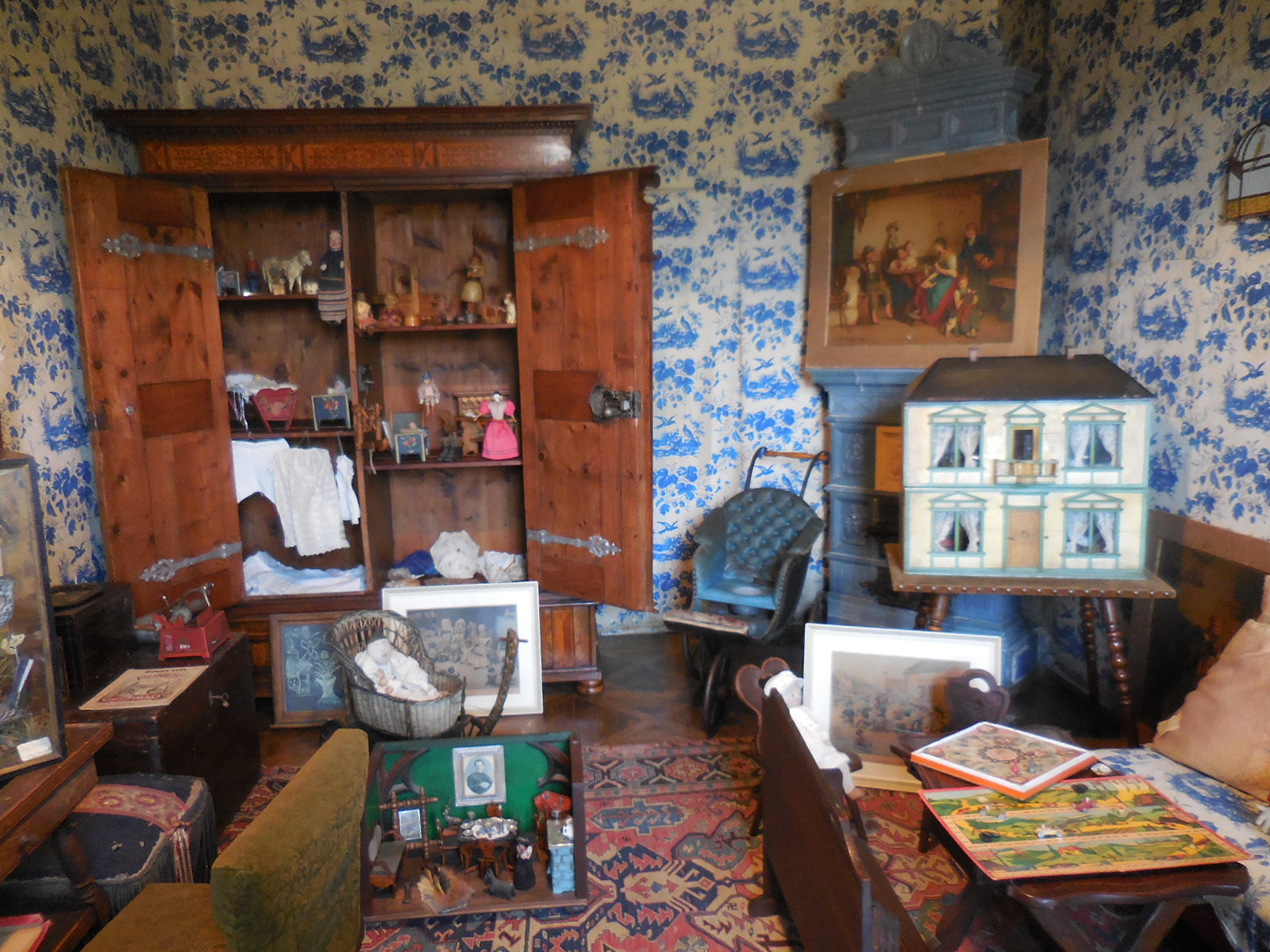
MnisekpodBrdy20123The Children’s Room was decorated in white. Three dolls from the beginning of the 20th century sat on a children’s sofa. Two glass parrots that look like owls served as electric lamps above the desk. In a doll house I was drawn to the colorful decorative lamp shades. A model of a school could be seen in one corner of the room. Inside, I noticed wooden benches, a podium, a blackboard and pictures of animals on a miniature wall. I recalled how simple life had seemed when I had been a grade school student and how complex it had become when I had reached adulthood. Sometimes I longed for those simple days when the world was black-and-white, everything was good or evil. There were no gray areas to confuse or upset me.

The next room was meant for a mother and a small baby. I noticed another tea doll. Exquisite clothes for an infant were displayed on the crib. An 18th century Venetian mirror also made an appearance. I admired the simple gold design on the headboard of the bed as well as the gold decoration on a closet.

The Ladies’ Bathroom included not only a flushing toilet, bidet and narrow tub, but also a selection of women’s and children’s shoes. The purple women’s footwear stood out. I remembered my outing to the extraordinary shoe museum in Zlín in Moravia a few years back. I had never realized that footwear could be so fascinating. Hat boxes took up space on the highest shelf.

MnisekpodBrdy20122We left the rooms after passing by graphics in the hallway. Once again, I was charmed by the chateau with its modest, though extremely appealing, décor. Mníšek pod Brdy had a romantic flair. No object in the chateau really stood out from the others. All the artifacts complemented each other to give a breathtaking impression. I loved the small details on the artifacts. Mníšek pod Brdy Chateau was a place I would love to visit once a year, I decided.

It was a sunny, summer day. The weather was perfect. I was happy. I was even happy to be here alone. Part of me missed Pavel’s presence, but I realized that it had to have played out the way it did. At some point during the second tour, I had stopped wishing Pavel and I could have gone on being just friends and had accepted what was. It was fate. Suddenly, for a short time, life seemed simple. As simple as the life represented by the dollhouse and model of the school in the Children’s Room. If only life could always be this simple! I headed to the nearby main square, where I ate my favorite chicken with peaches and cheese before catching a bus back to Prague. Yes, I was happy.

Tracy A. Burns is a writer, proofreader and editor in Prague.

Mnisek pod Brdy

Frýdlant Castle and Chateau and Hejnice Basilica Diary

P1080993

For the first time in a long while I went on a trip by car. Since my friend did not have a highway sticker that permitted her to drive on the highways, we had to take side roads that made the trip to northern Bohemia’s Frýdlant Castle and Chateau more than three hours long but much more scenic and intriguing.

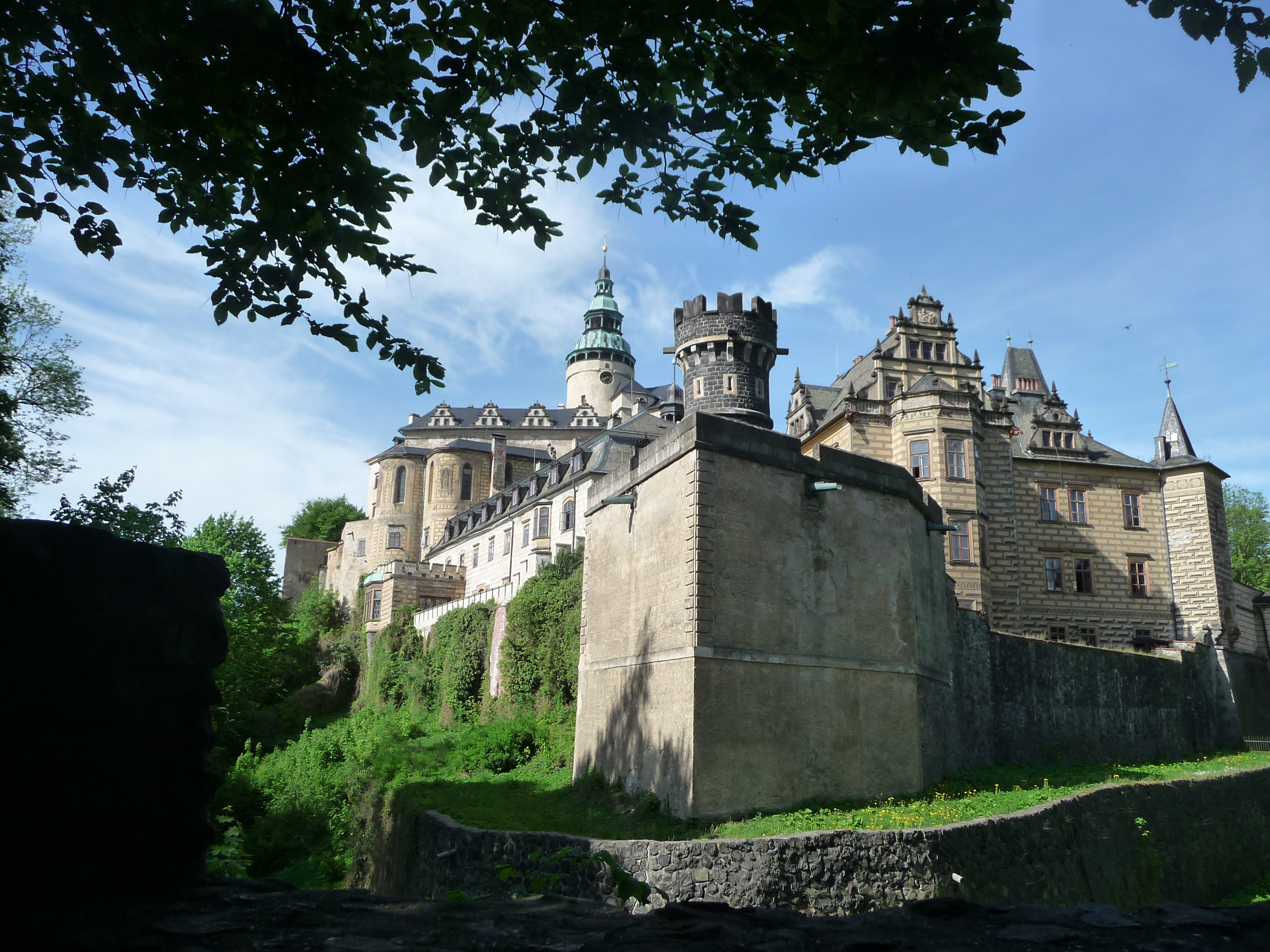
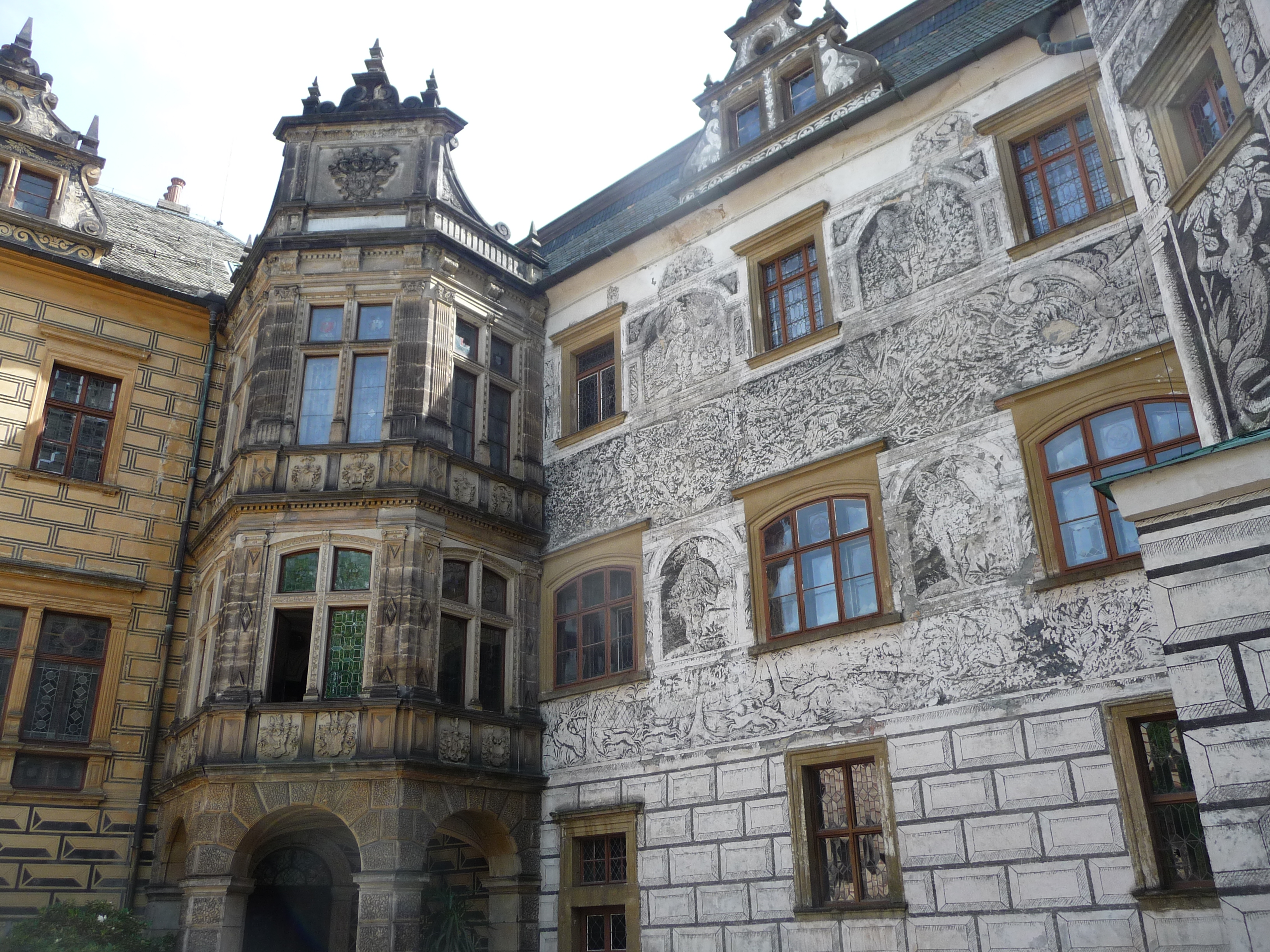
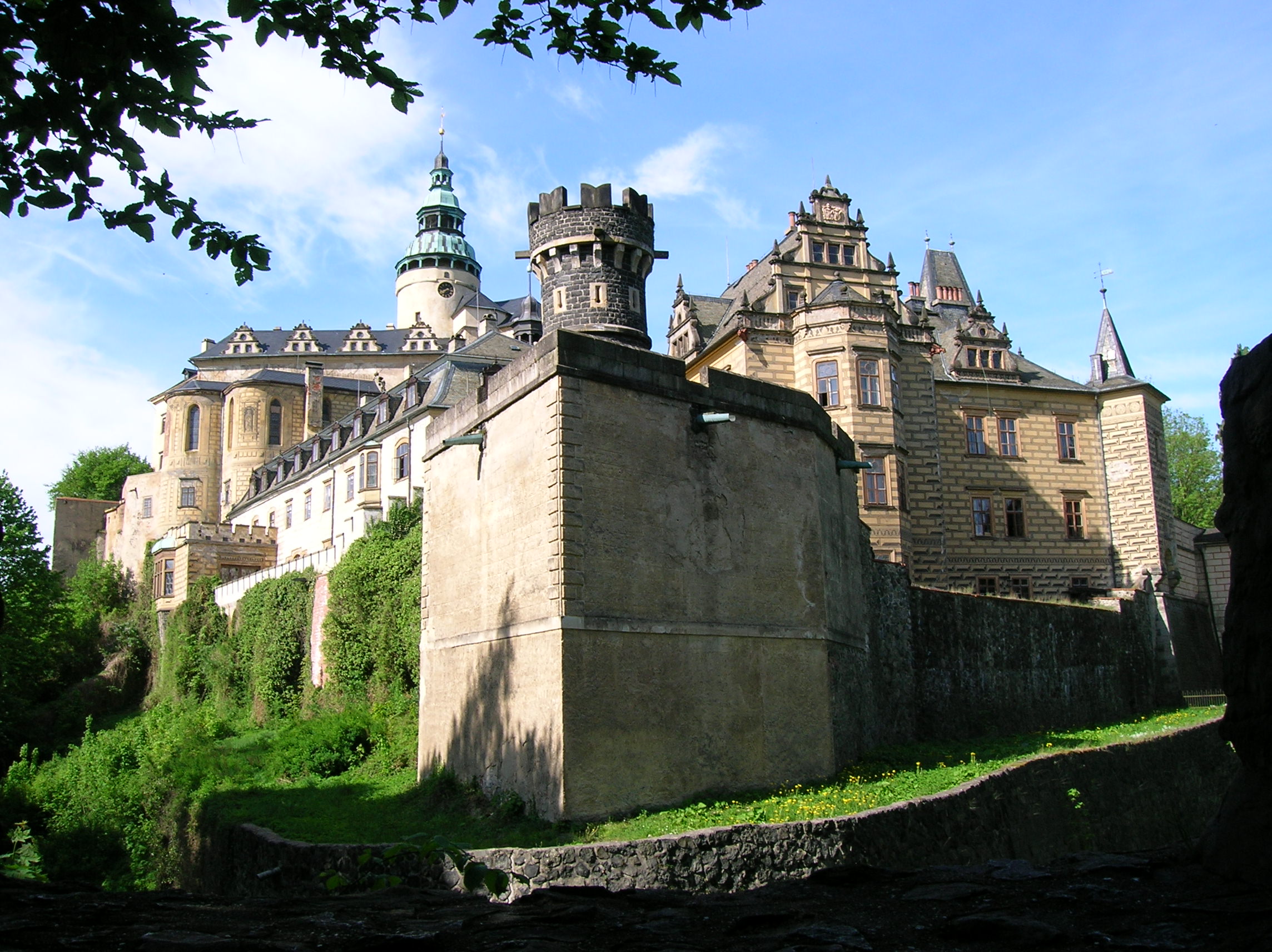
I already was familiar with the history of the mammoth castle and chateau complex, as I had visited it eight years earlier.  The first reference to the impressive sight went back to 1278, when the castle was sold to the Bibrštejn clan who ruled here for 300 years. During the 15th century Hussite wars, the Hussites did not capture the castle, as it was spared the Hussites’ wrath that had destroyed so many sites throughout the Czech lands. The chateau came into existence at the beginning of the 17th century, when Catherine of Redern had it constructed with sgraffito decoration. She also was responsible for adding the exquisite church.

P1080996

Protestant noble Kryštof of Redern participated in the uprising against the Catholics during the Battle of White Mountain in 1620, and after the Protestants lost, Frýdlant was confiscated. Albrecht von Wallenstein, commander of the Habsburg armies and a major player in the Thirty Years’ War, bought the place during 1622. However, Holy Roman Emperor Ferdinand II started to distrust him and in effect gave him a pink slip. When the Protestants notched some victories over the Catholics, Ferdinand asked him for help again, and help he did. Yet, when in 1633 Wallenstein did not attack the enemy during a battle, he was accused of high treason. Unhappy with the way the emperor treated him, he had also been thinking about joining the Protestants. But he would not have the chance. Emperor Ferdinand II had Irish army officer Walter Devereux assassinate Wallenstein in Cheb during 1634.

P1080999

Then Wallenstein’s General Matyáš Gallas took over the castle. The Gallas family owned Frýdlant until 1759, when the Clam-Gallas family became the owners. The castle museum opened in 1801.  In 1945 Frýdlant was confiscated due to the Beneš decrees that ceded all property held by Germans to the state, and it was nationalized.

P1090084

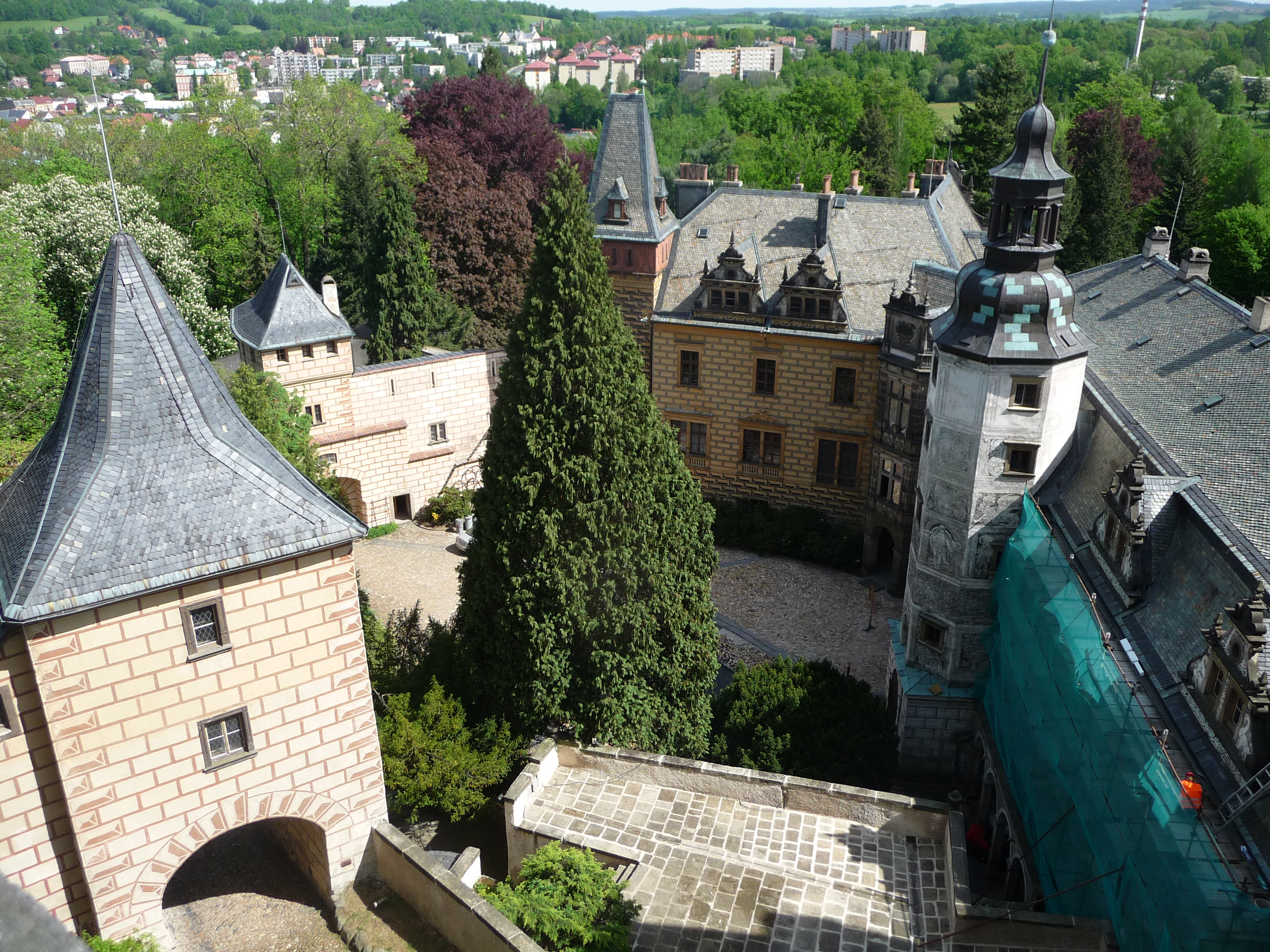
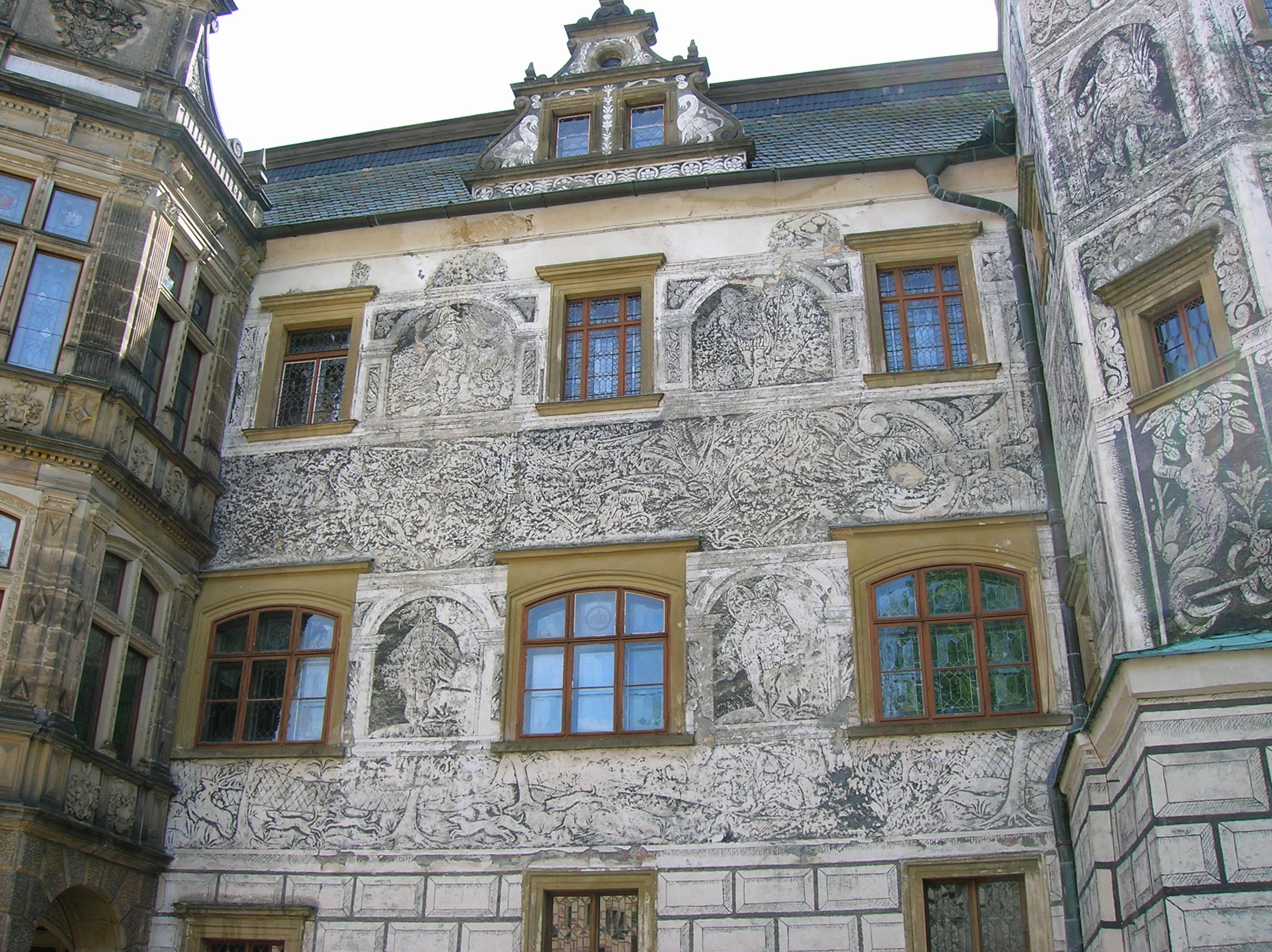
As we approached the castle, it was impossible not to notice the high circular wall that had been built by the Swedes in 1647. After entering the front gate, we walked over the drawbridge to what was called the Swedish courtyard, taking its name from the 17th century occupation by the Swedish army. Then we came to the courtyard of the chateau and negotiated a steep path to the castle. In the castle courtyard we peered at a 13th century round tower and saw Renaissance sgraffito on part of the castle’s wing. One part of the sgraffito portrayed a deer hunting theme.

P1090020

I was glad that my friend and I were the only people on the tour. We went inside. What impressed me the most in the first room were not the huge portraits of the Redern family but rather the richly carved Renaissance chairs and the Renaissance chest. The green and white tiled stove also caught my attention. In the next room a portrait of Albrecht von Wallenstein showed a man with a serious expression, a small beard and moustache. One painting in the room depicted his assassination. In the dramatic rendition Devereux stabs the unarmed Waldstein in the stomach with a halberd.

P1090022

Next came the Portrait Gallery, which boasted of huge paintings of Gallas family members. The Baroque fireplace astounded me with the Clam-Gallas coat-of-arms, cherubs and golden crowns adorning it. In the museum part of the exhibition, the legendary Czech nobleman and Austrian Marshall Jan Radecký of Radče was featured in several displays. His light blue uniform was on display as was a circular portrait of Radecký with gray hair and a gray moustache. A picture of Emperor Franz Joseph I’s wife, Empress Elizabeth (Sissy), who was assassinated in 1898, decorated a cup. A likeness of Emperor of Austria and King of Bohemia Franz Joseph I adorned a silver medal.

P1090031

Then we entered a room featuring many uniforms for the servants during the 19th century. I was surprised that the summer clothing for the carriage driver was so warm and heavy. He must have been burning up inside that thick attire. The embroidery on the sleeves and shoulders for the estate’s clerks was detailed and exquisite as well.

P1090032

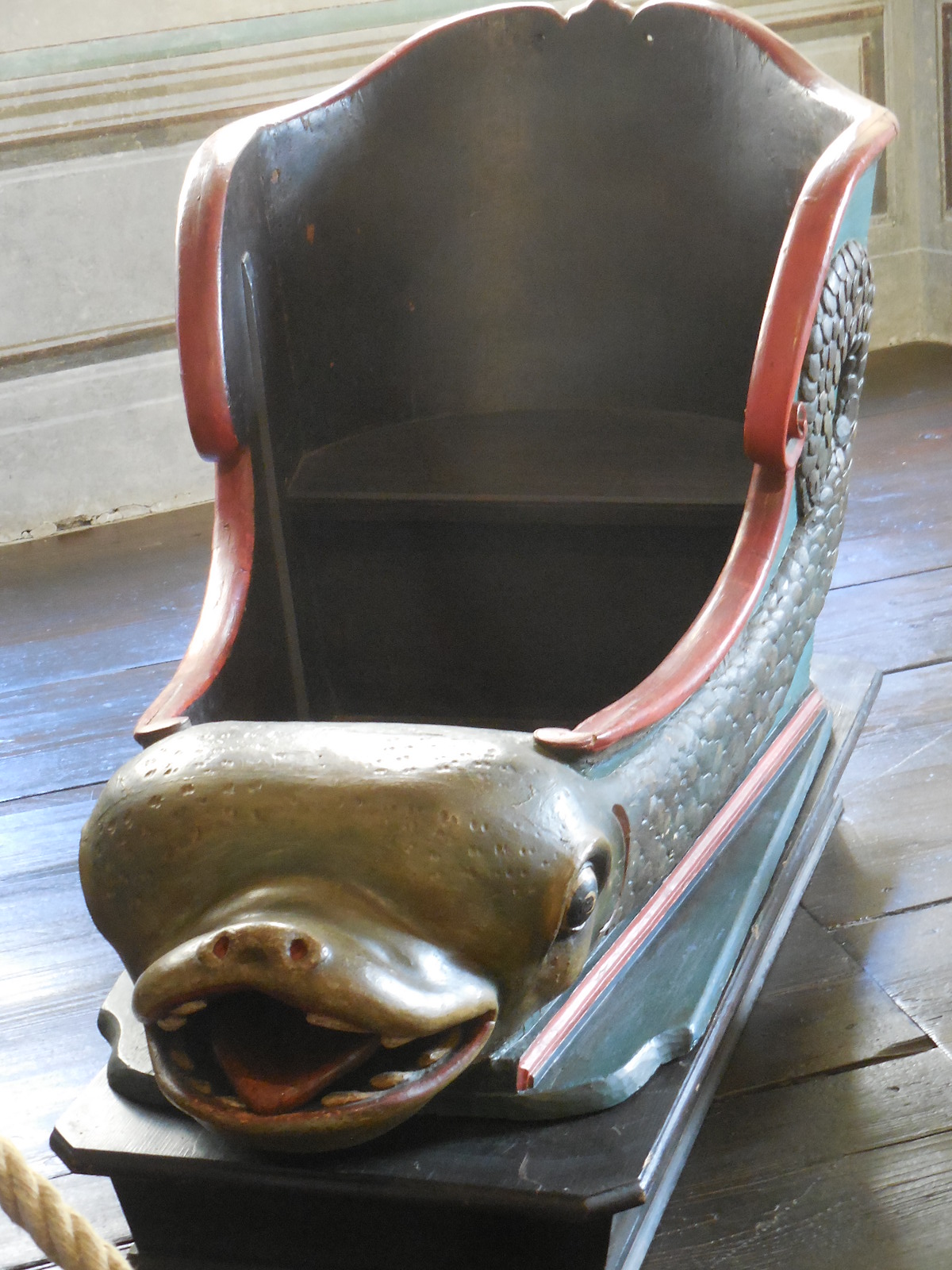
Following the guide, we saw a narrow, yellow women’s carriage. A Baroque sleigh was decorated with a dolphin that looked like a dragon – that was how the dolphin was rendered during those days. The Hunting Salon featured a table of 130-year old wood. In the Dining Room I saw a vibrant Baroque light green and yellow tiled stove. I particularly noticed the emperor’s eagle carved on the back of a black chair that also sported a golden crown.

P1090039

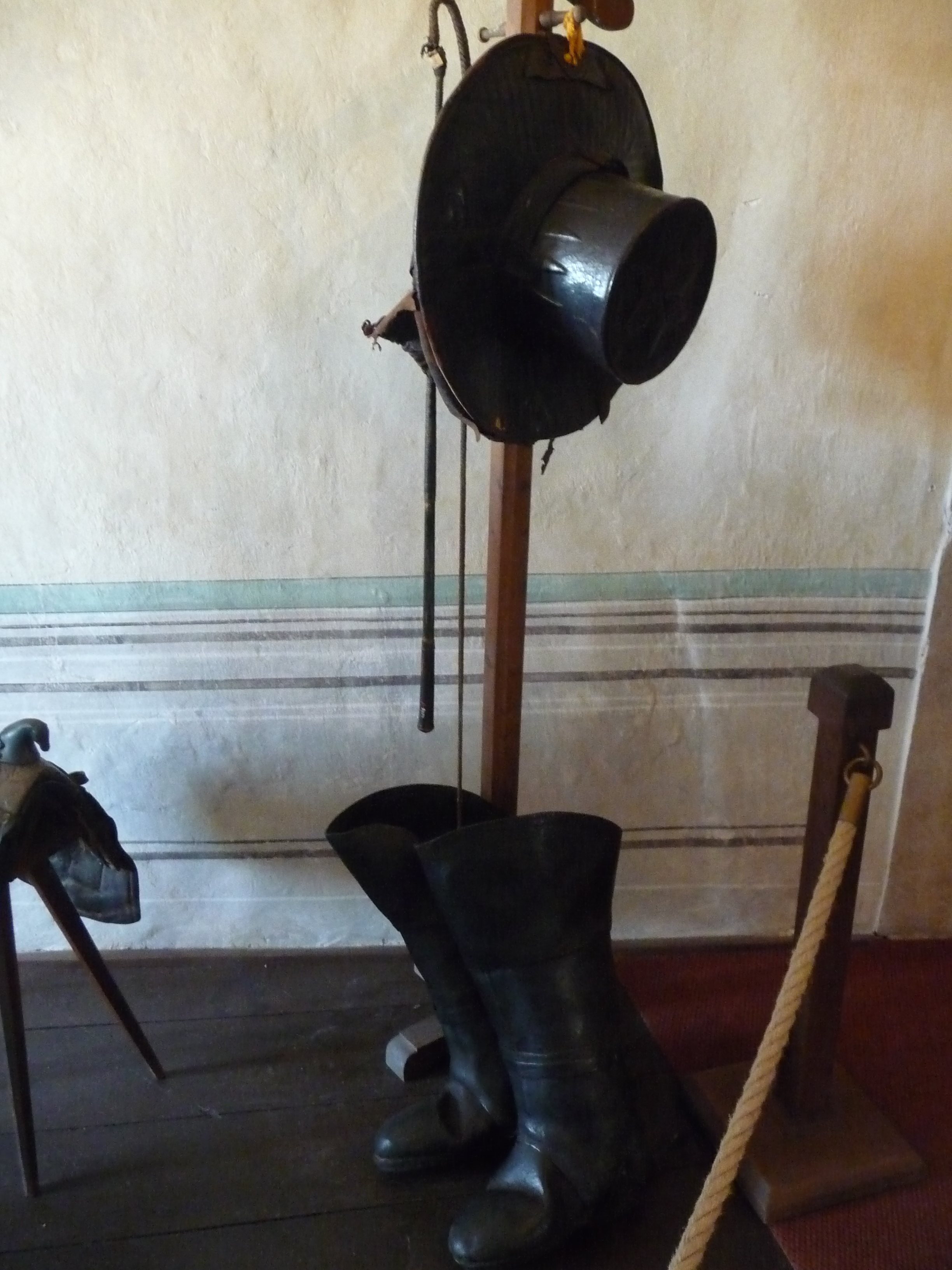
The armory was a treat for those interested in weaponry. Even I was enthralled by it, though weapons are certainly not my cup of tea. Helmets, cannons, spears and knights’ armor adorned the rooms. Some of the spears came from the 15th century Hussite wars; it was hard for me to grasp that I was looking at spears that were so old. Muskets also made appearances as did rifles from the 17th century Thirty Years’ War. What intrigued me the most in the spaces was not a weapon but rather the huge hat and large boots that couriers had worn. The hat was so big because the messenger needed to store the letters inside it in order to keep them dry when it rained.

P1090048

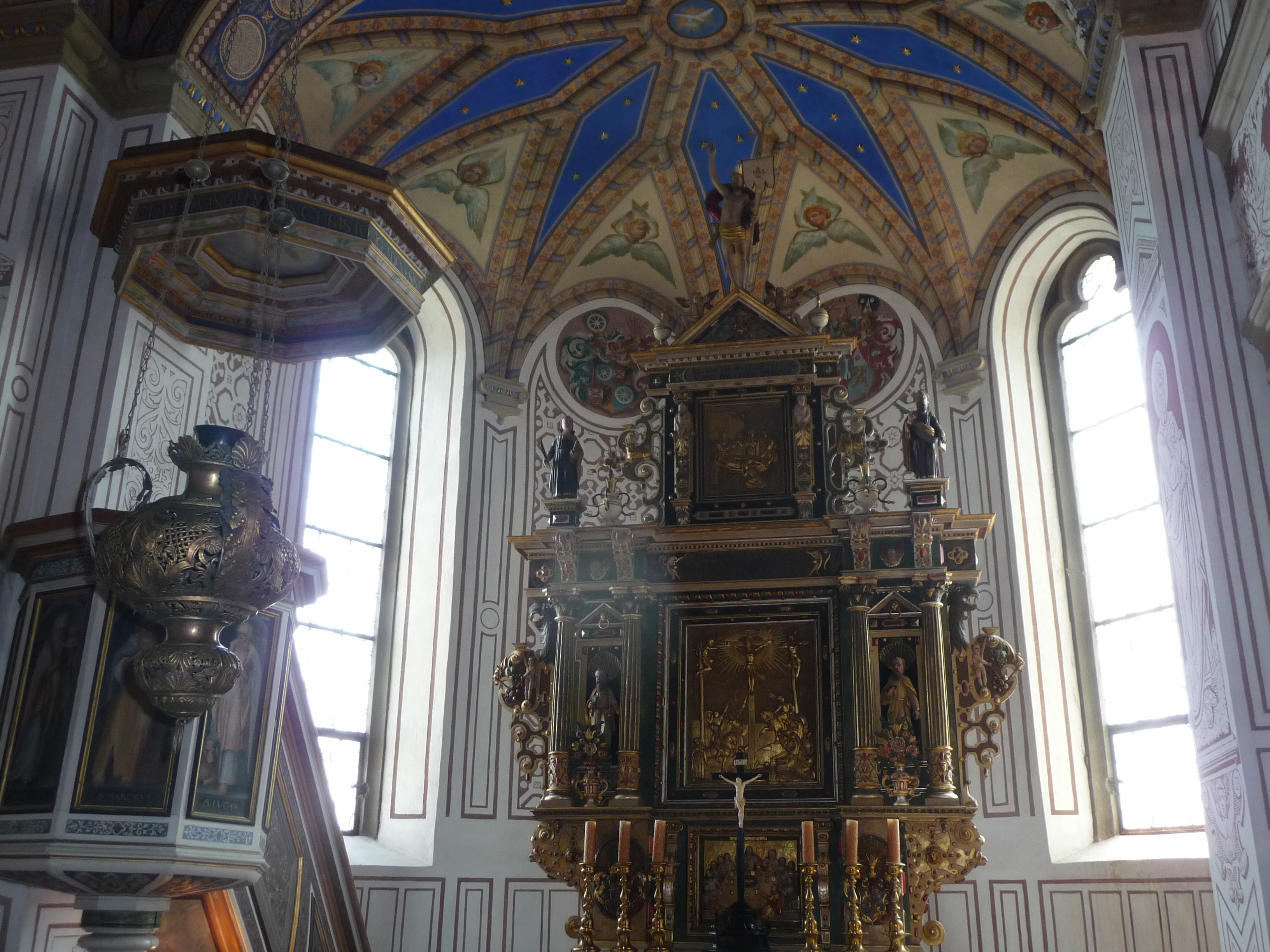
Soon we arrived at the exquisite, stunning chapel. The black and gold altar practically glimmered in the space. While the chapel was built in the 16th and 17th centuries, it now had a 19th century appearance. A gold Renaissance altar also greeted me with its ornate Renaissance pulpit. Saints were gathered around the Baroque altar. A stained glass window added even more ambiance to the room.

P1090050

Next we came to the attic of the chateau, where rooms were designed as they had looked in the 19th century. In the servants’ room the 19th century suitcases looked more like bulky chests. The children’s room was intriguing. It included a model of the castle and chateau plus wallpaper made from the comics section of old newspapers, reminding me of today’s wallpaper featuring the Czech Little Mole character or Disney figures.

P1090056

The space below was called the women’s floor, primarily decorated in blue because that was the color attributed to women during the 19th century. One room was fashioned after a military tent with a blue and white painted ceiling and wallpaper of the same design. A blue and white tiled stove also contributed to the atmosphere. A Baroque closet also adorned the space.

P1090066

The Small Salon featured blue and white floral decorated furniture and a display case with women’s hats from the 19th century. What intrigued me most were the two Baroque cabinets with painted drawers. One drawer was decorated with pictures of animals while two others flaunted countryside scenes. The toiletry area was unique as well. There was a lounge chair that reminded me of a chair at a dentist’s office. I had never seen such a piece of furniture in chateau, let alone in a toiletry space. From the space in front of it, I could see all the rooms in the women’s section all the way down to the exquisite Flower Salon at the end.

P1090070

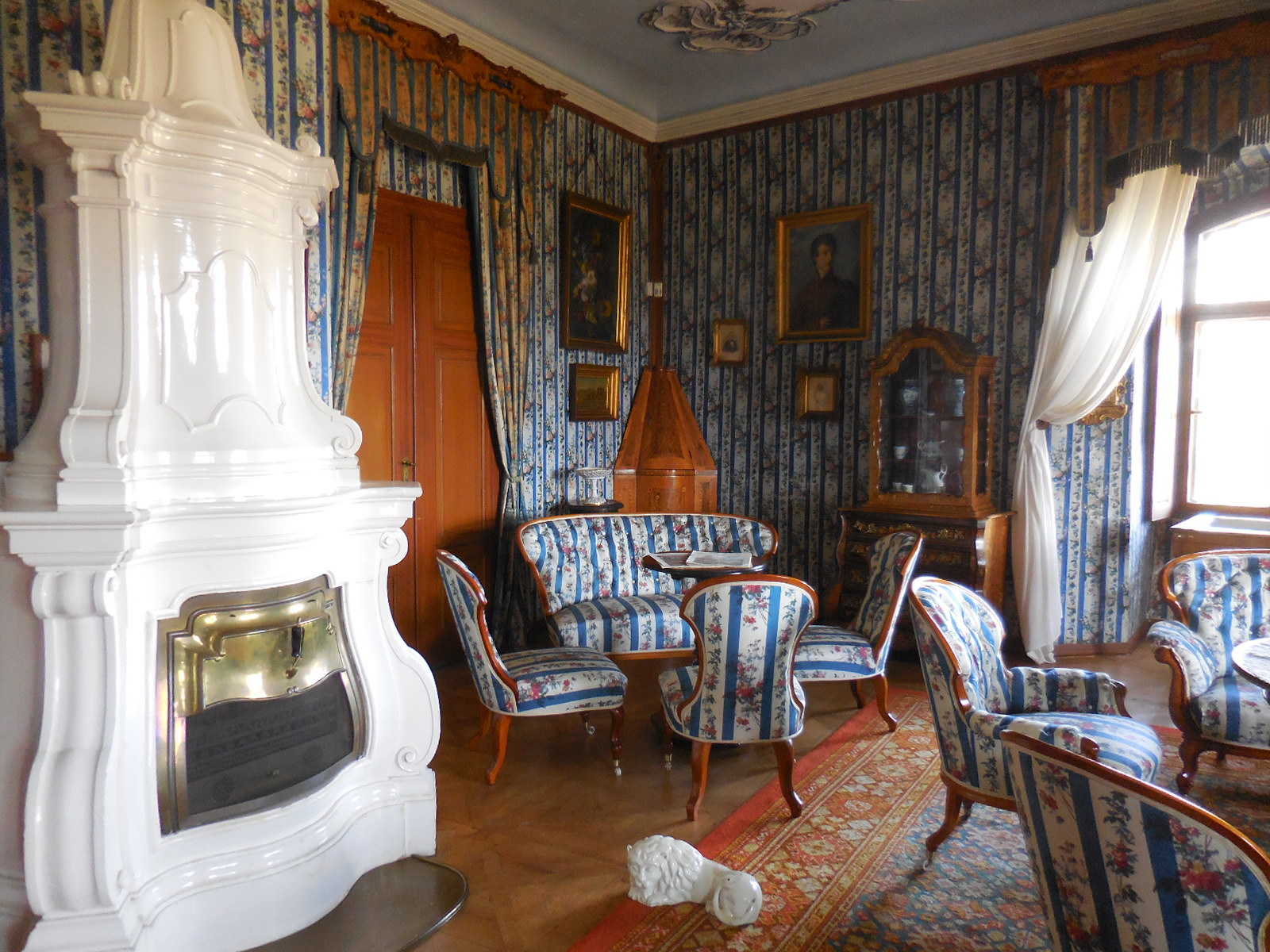
The Flower Salon made me practically dizzy with its blue and white delights. The blue and white floral wallpaper complemented the blue and white striped armchairs, making for an intimate and cozy decor. A while tiled stove also stood in the room. The lovely tea set was Rococo, hailing from the 19th century. To give the room an even more dignified touch, a violin was set on a chair. The marble brown table with white ornamentation also entranced. Plants decorated the room, too, bringing it to life, so that it became more than a museum space.

In the hallway of the Castellan wing, I noticed an engraving of Rome from the 18th century. I could see the Coliseum, which evoked fond memories of showing that sight to my parents a few years earlier. In the entertainment room hung two renderings of battles from antiquity.

P1090069

The Morning Drawing Room would not have been my ideal place to spend my mornings or any other part of the day for that matter, because it was decorated with hunting still lifes that featured dead birds. Birdwatchers would no doubt be enthused, though, as some of the dead birds portrayed were no longer found in the Czech lands. Another painting that did not impress me featured a dead deer. Certainly not my idea of how to start off the day.

But the Women’s Bedroom did not disappoint. The intarsia table, jewel chest and Baroque dresser with intarsia charmed me. Yet another room was decorated with furniture from the 19th century in Biedermeier style.

P1090077

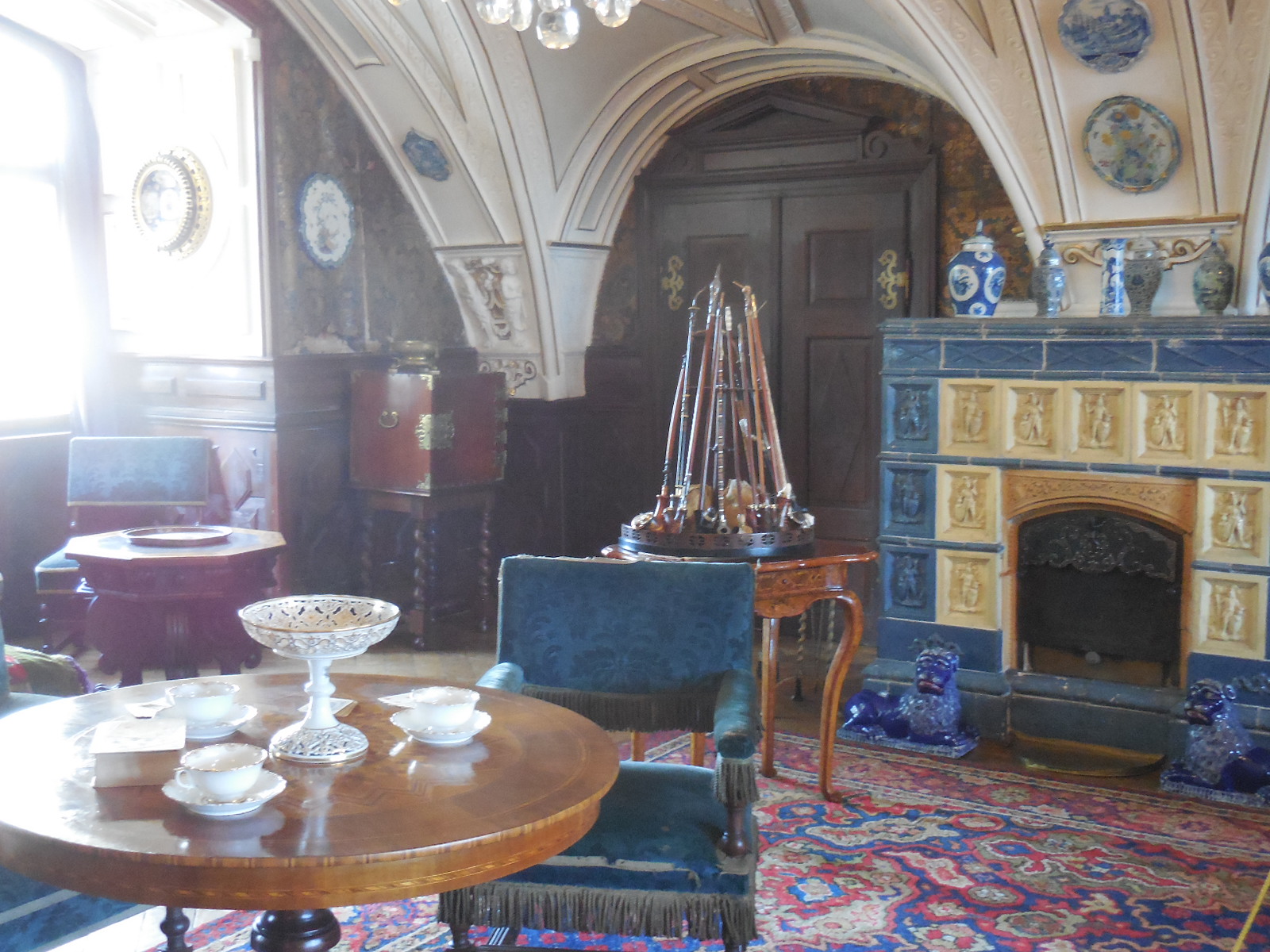
Next was the men’s floor. The Men’s Bedroom featured a hidden door that led to the women’s floor above and a lovely Baroque closet. The leather wallpaper in the Smoking Salon was gold with green in a floral pattern. The next room was decorated with leather wallpaper and English style blue furniture. A red and blue carpet made the room cozy yet lively as well.

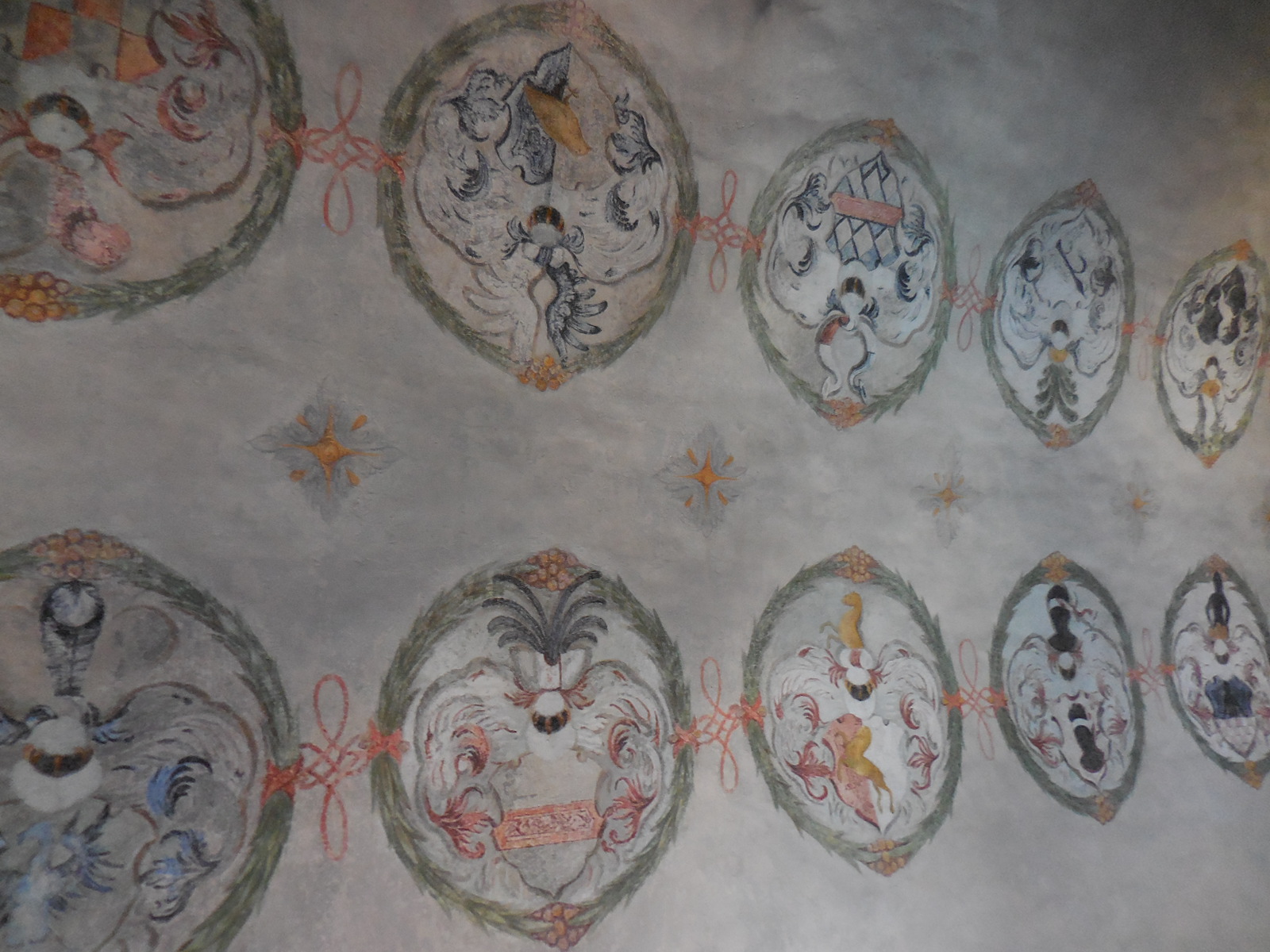
The Coat-of-Arms Salon enthralled me. The dark green fireplace with white columns had a dignified air. On the walls I saw the coat-of-arms of the families that had owned the castle and chateau from the Berka and Dub clan to the Clam-Gallas group. I noticed the blue and yellow wheel on the Redern dynasty’s coat-of-arms and the yellow and light blue stripes of the Gallas family’s coat-of-arms.

P1090079

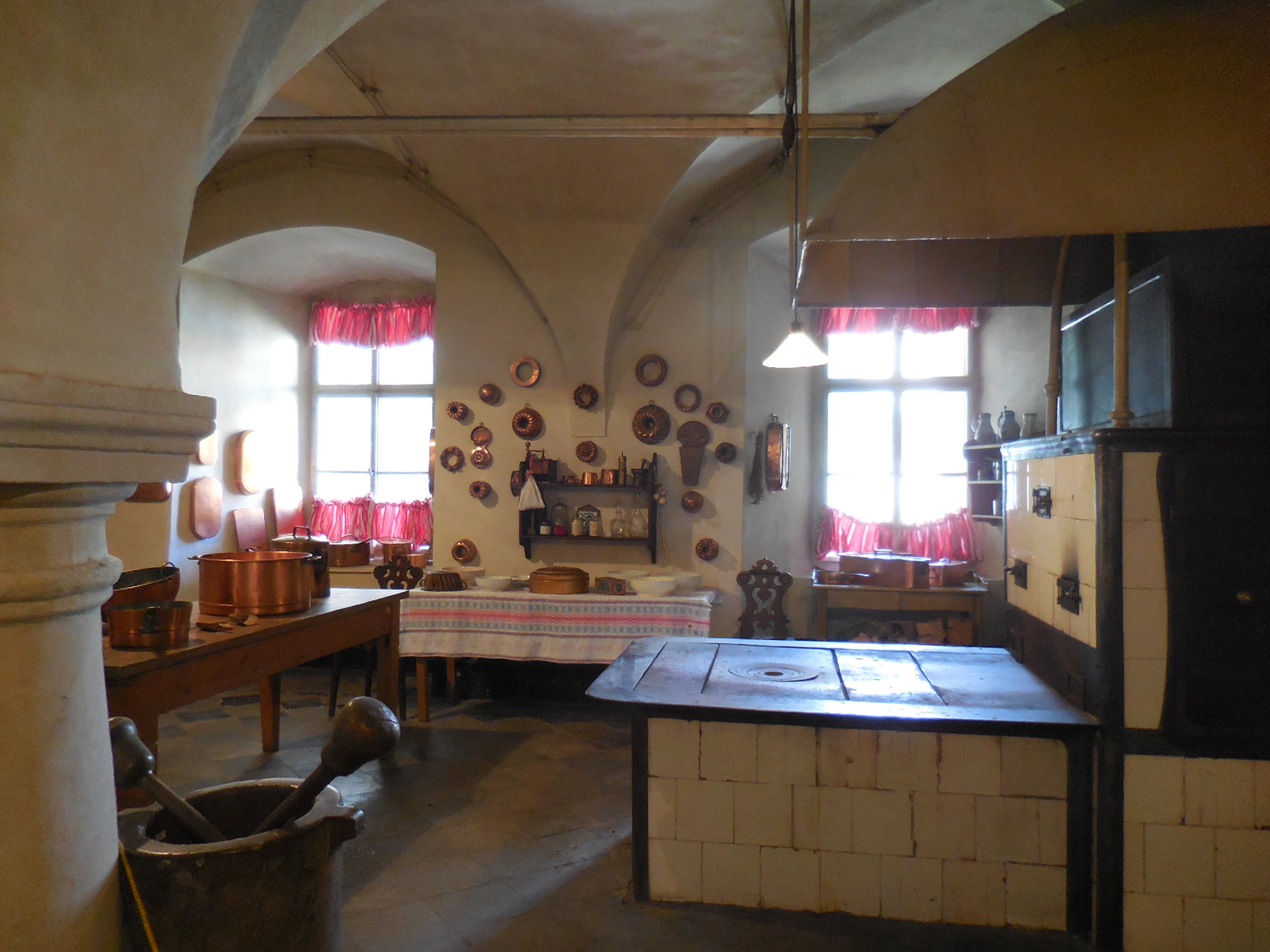
The Dining Room was one of the last rooms on the tour. Velvet chairs with comfortable cushions and a red and blue carpet gave the space a lush appearance. The ornate green tiled stove was decorated with blue and yellow figures. Blue and white porcelain hung from the top of the walls. What I loved most about the space, though, was the richly carved wood paneling. The Baroque bureaus with intarsia greatly impressed me as well. In the still functioning large kitchen areas downstairs I was enamored by what was the largest collection of copper dishes I had ever seen, perhaps the biggest in the Czech Republic.

The tour took almost two hours. I loved long tours of castles! I would be happy to be on a tour that lasted four or five hours! I could spend all day in a castle or chateau. Thanks to our knowledgeable guide, we enjoyed the tour immensely.

P1080992

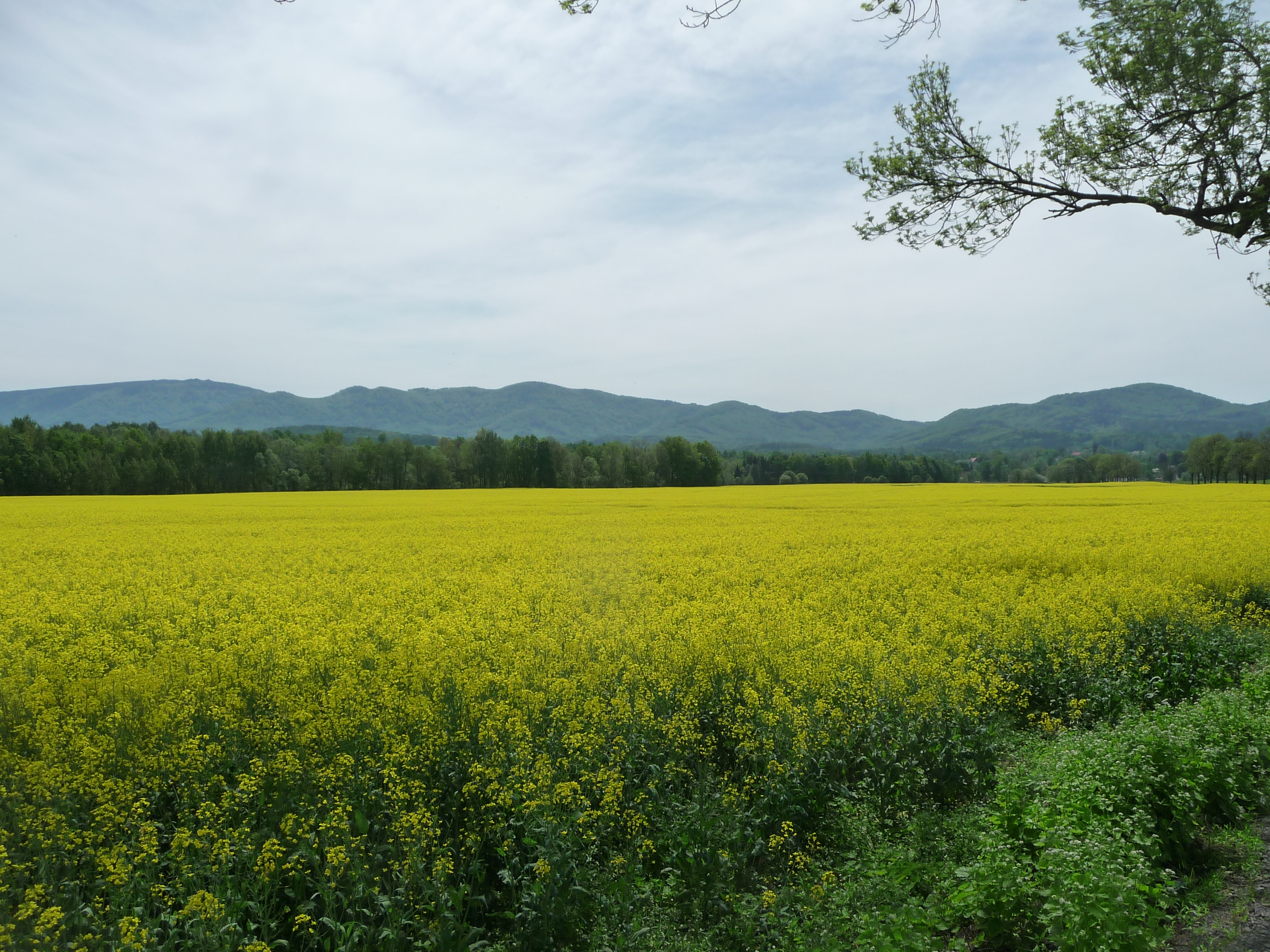
After visiting Frýdlant, we made our way to the basilica in a village called Hejnice, but we often got lost one-lane roads with two-way traffic. The scenery in the Jizerské Mountains was breathtaking.  At one point we were driving down a narrow road flanked by trees, yellow and green fields surrounding us. It was so peaceful and tranquil, just as I imagined the road to Heaven. So relaxing, putting my mind entirely at ease –until a truck came straight at us on the one-lane road. We moved over to the side, partially on the grass and let it pass us. Still, we did not get much of a warning on that winding road whenever a car would come at us from the other direction.

P1090091

Traveling through the Jizerské Mountains, I realized how devastated the area had been by the floods of the previous year. Whole villages had been practically destroyed, homes in ruins. Barriers put up along rivers were now bent and deformed. The roads were in awful shape, too. I thought back to the floods of 2002 in Prague and the devastation that the natural disaster had unleashed on the capital city.  I felt as if I was riding through an area that had just witnessed a war.

It brought to mind the damaged chairs and tables littering the sidewalks of Prague during 2002, so many homes and businesses destroyed. And thoughts of my good friend’s flat decimated in Prague’s Karlín district. It was still hard for me to believe that the flat where we had spent much time discussing anything and everything over cups of Earl Grey tea had been destroyed. I thought of the damaged theatres where I had worked, too. And I thought of the damage in my own flat because workers had been repairing the roof when the downpour had accompanied the floods. Mold everywhere, wet, wool sweaters destroyed, my cat traumatized – at least my home had survived in one piece, and most of my belongings had been saved. Riding through the destruction wrought by those floods in the Liberec region made me realize how quickly we can lose something precious to us and how we have to value each moment in life because drastic change can come at any time, anywhere.

P1090094

Hejnice Basilica seemed to magically appear in a village nestled in the Jizerské Mountains. The Baroque masterpiece used to be, back in the 13th century, a stone chapel with Gothic vaults. Ambulatories were built around the Gothic church in 1676. By 1725, the church was able to hold 1,000 pilgrims. Between 1699 and 1725 there were 1,381,176 people who came here to pray to Our Lady. After suffering a fire in 1761, the religious site was rebuilt during only 18 months. By the beginning of the 19th century, though, the church was plundered and all its valuable items stolen.

Interior of Hejnice Basilica

Interior of Hejnice Basilica

But restorations took place, and in 1936 the church was proclaimed basilica minor. After the war, however, Germans living in Hejnice were expelled from the country, including the Franciscans who lived in the church’s monastery. In 1950 all monks there were arrested and forced to leave the basilica, and the monastery became a concentration camp of sorts under the Communist government. Later, the monastery served as a school cafeteria and a kindergarten. Not surprisingly, the place that was once a glorious pilgrimage site found itself in ruins during the 1970s and 1980s. Thankfully, the church was renovated and restored after the Velvet Revolution of 1989.

P1090098

One step inside and the frescoes and main altar enthralled me with their beauty and charm. I could hardly believe that the main altar was illusionary. An architectural feat, it was painted onto the wall rather than three-dimensional. The ground plan of the basilica took the form of a long cross. At the entrance I admired the two towers with a central convex buttress. In a niche I noticed the statue of the Hejnice Madonna.

P1090100

The vastness of the space awed me. The basilica is the biggest cathedral in northern Bohemia, measuring 50 meters long in its southward cross and 37 meters wide. The cupola is 35 meters high. The central cupola fascinated me. Supported by four Corinthian columns, it was decorated with frescoes portraying events in the life of the Virgin Mary and Jesus Christ. Above the main cupola scenes depicting the crucifixion and the Assumption bewitch the viewer with a swirl of movement of angels along with clouds and sharp light. A group of Apostles filled with awe watch the Assumption. Some angels raise the lid of the coffin while others carry the Holy Cross to Heaven.

The main altar in Hejnice Basilica

The main altar in Hejnice Basilica

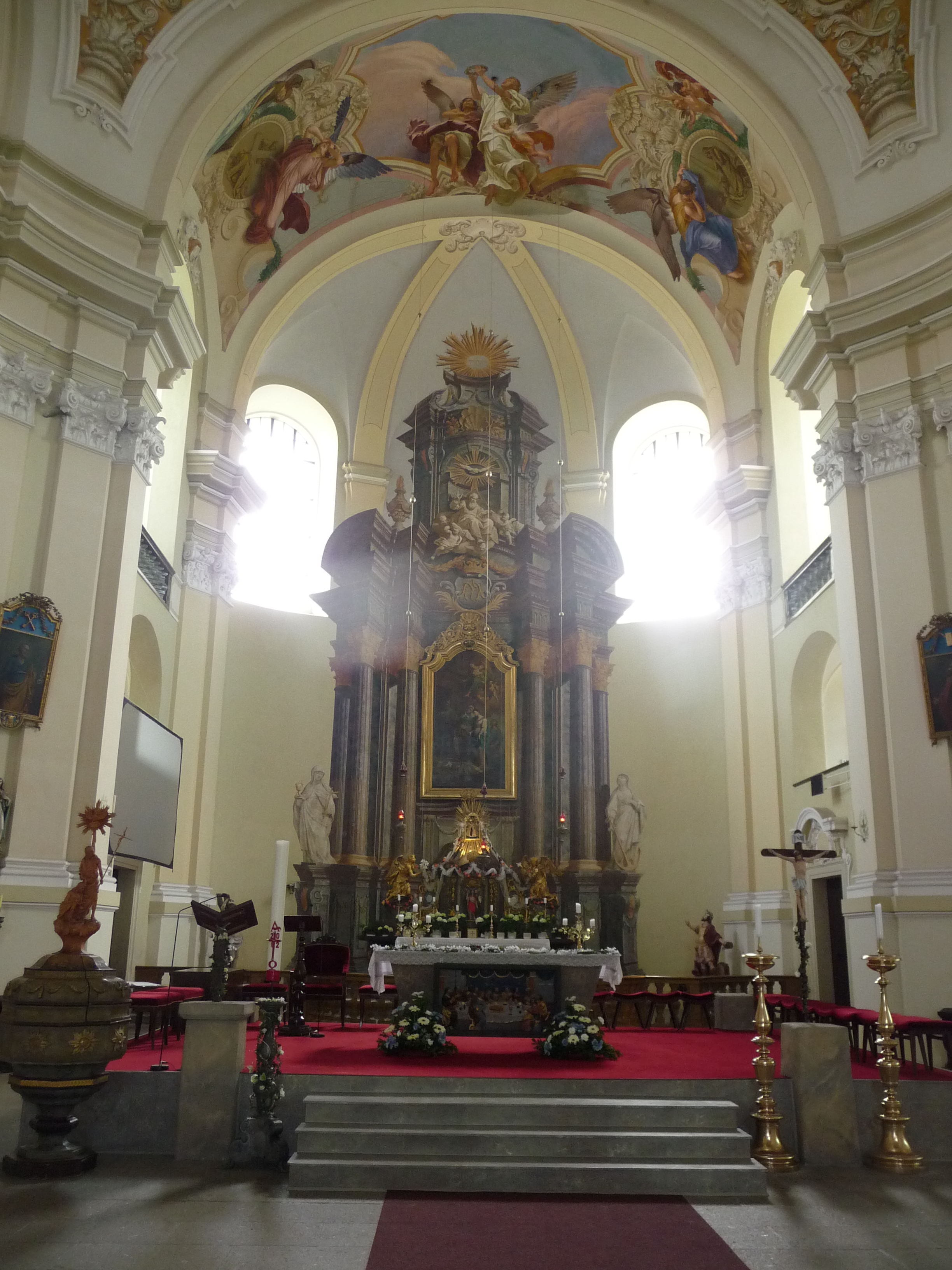
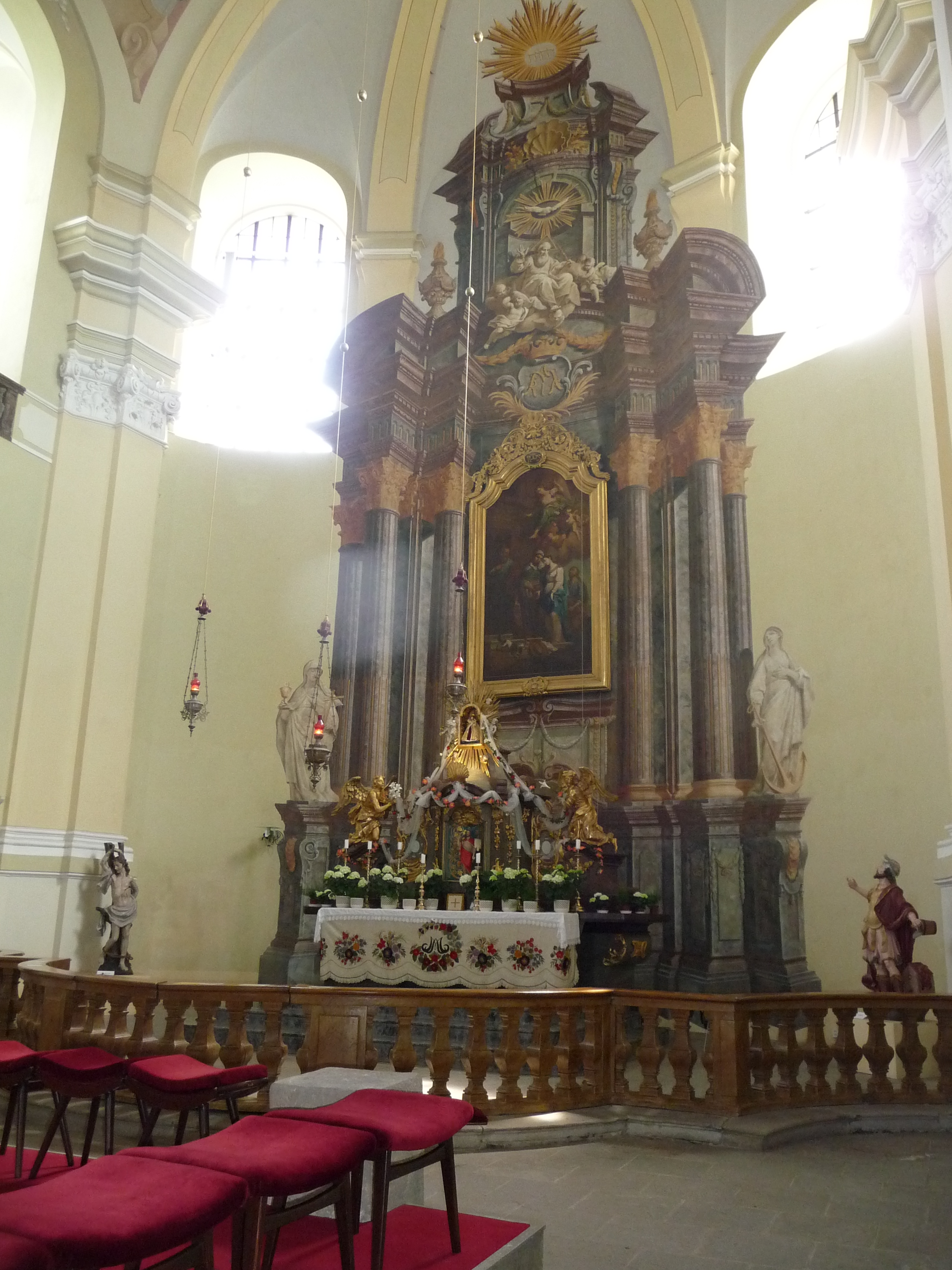
The main altar can be divided into parts. There is the fresco of the illusionary altar, which depicts allegorical figures representing belief, hope and love. In the middle of the altar, a large altar-piece portrays Saint Elizabeth and the Virgin Mother. The lower part is a stone altar that includes relics of saints and a tabernacle. A Madonna made from lime wood dominates, called the Mater Formosa or Sleek Mother. It was hard to believe that the Madonna hailed from as far back as the 13th century. I also took special note of the pulpit, dating from 1740. Along with evangelists there was a hand holding a cross with Christ. A large chandelier also hung from the rafters.

P1090105

Going back through the Jizerské Mountains, along the narrow lane flanked by trees and surrounded by fields, I admired the fantastic scenery that seemed to belong in a film. We made our way to Dubá, where we stopped at an intriguing church and then to Mělník and finally to Prague. It had been a fantastic day during which I had learned how important it was to appreciate what I had in life, to not take anything for granted.

The interior of the church in Dubá

The interior of the church in Dubá

Tracy A. Burns is a writer, proofreader and editor in Prague. Some of the photos in this blog were taken by Lenka Hilbertová.

Some of my photos of Frýdlant from a 2022 visit, which includes pictures from the new Children’s Tour.

Segesta, Sicily Diary


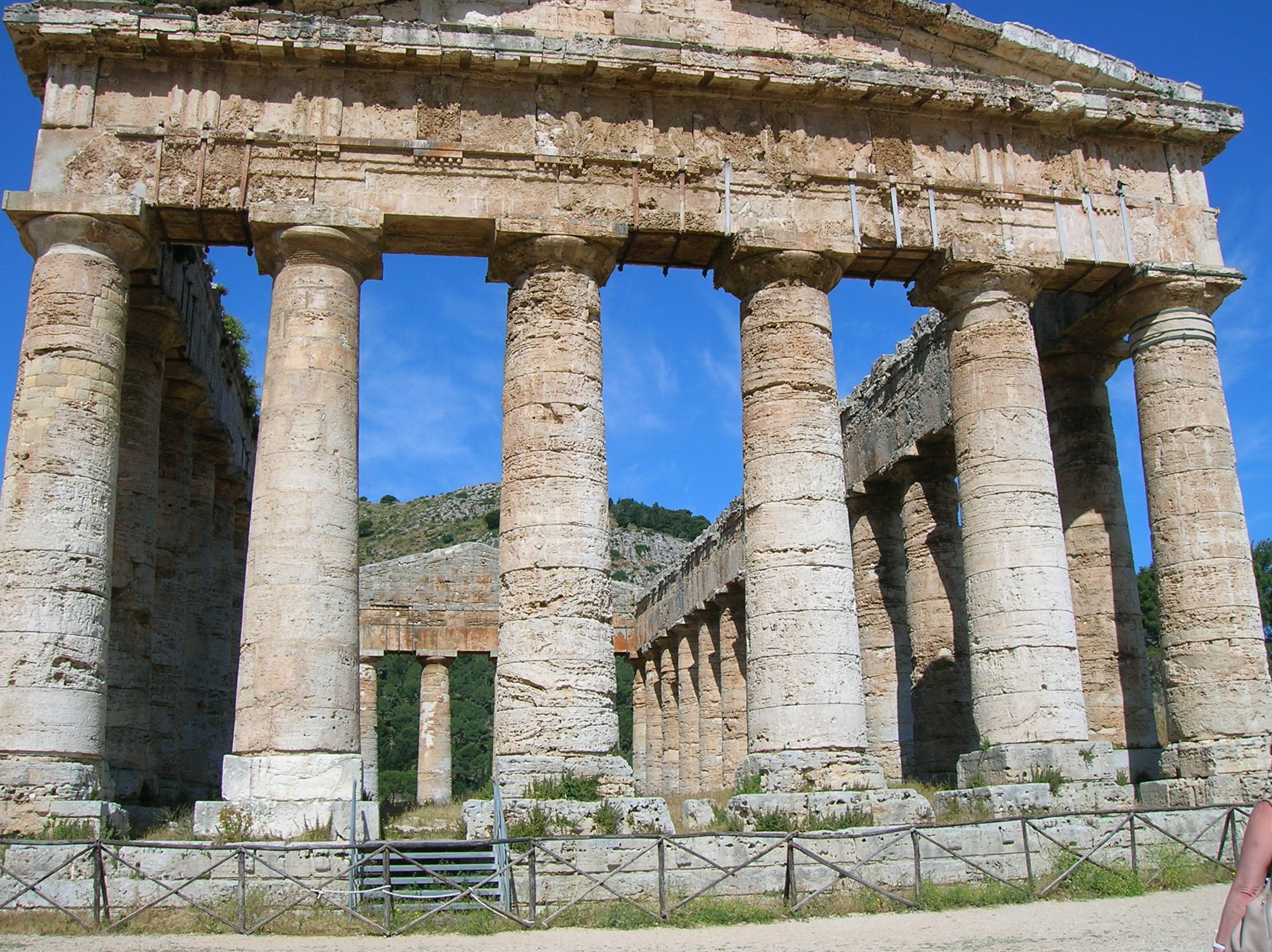
The temple at Segesta

The temple at Segesta


Before I arrived at the ancient monuments of Segesta, Sicily, I acquainted myself with its war-riddled history, which I found fascinating. According to the Aeneid, Aeneas, the hero of the Trojan Wars, founded Segesta on his way to establish the future Rome, and the first settlers came from Troy. During the Greek era, the town fought again the Sicilian towns of Selinute and Syracuse.

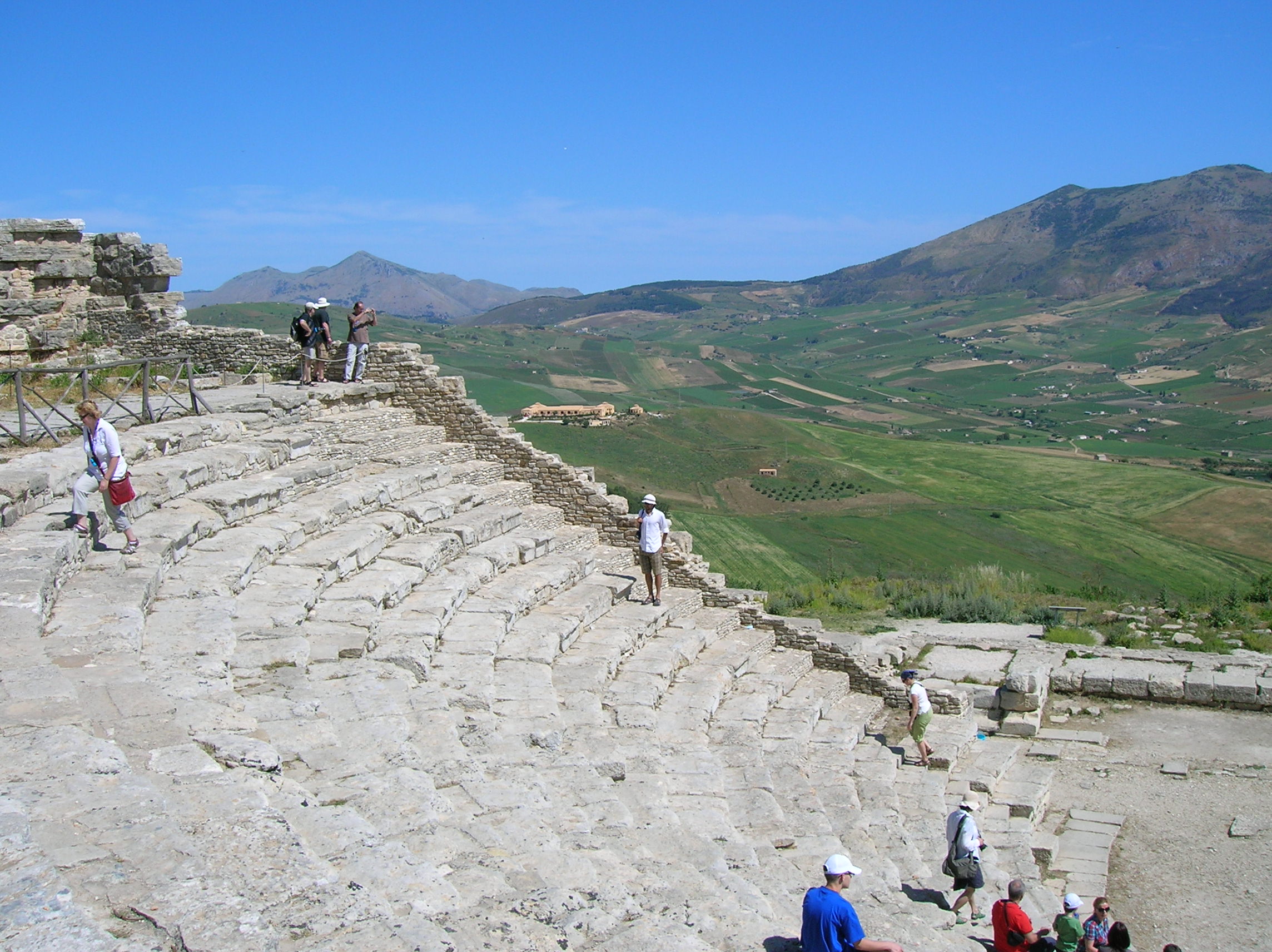
View of the countryside from the amphitheatre

View of the countryside from the amphitheatre

The tyrant Dionysus – not the god – brought terror to Segesta when he took over. One tale that the people used to tell during his tenure as the horror-spreading leader: Dionysus knew that everyone in Segesta prayed that he would die, so his actions became even more ruthless. Then he found out one old woman always prayed that that he would be healthy. He invited her to his palace and asked her why she did not wish him to die as the others did. She told him, “Before you, your predecessor was bad. You’re much worse. So I’m thinking that someone who comes after you might be horrid. That is why I hope you live as long as possible!”

The amphitheatre at Segesta

The amphitheatre at Segesta

In 307 BC, when Segesta refused to give money to the tyrant of Syracuse, Agathocles got revenge on the town. He tied Segesta citizens to chariot wheels pulled by horses, launched inhabitants from catapults and cut off their heels, then ordering them to run. He also placed residents of Segesta on a bronze slab and roasted them alive. The survivors set fire to the city, opting to die by flames rather than by torture. The merciless leader was eventually poisoned with a toothpick and died at the stake after a 20-year tenure of terror.

During the Roman era, slave revolts threatened the stability of the republic. The Segesta leader Gaius Verres stole artistic masterpieces, such as a revered statue of Artemis (Diana). Cicero did not mince words and accused Verres of being corrupt and ruthless.

A view of the countryside from Segesta

A view of the countryside from Segesta

Clearly, Segesta had not had a rosy time in its heyday. Its history made the struggles in my own life seem petty and insignificant. I was worried about things that should not faze me; I felt stress when I should remain calm. I was thankful there were no tyrants like Dionysus or Agathocles in my life.

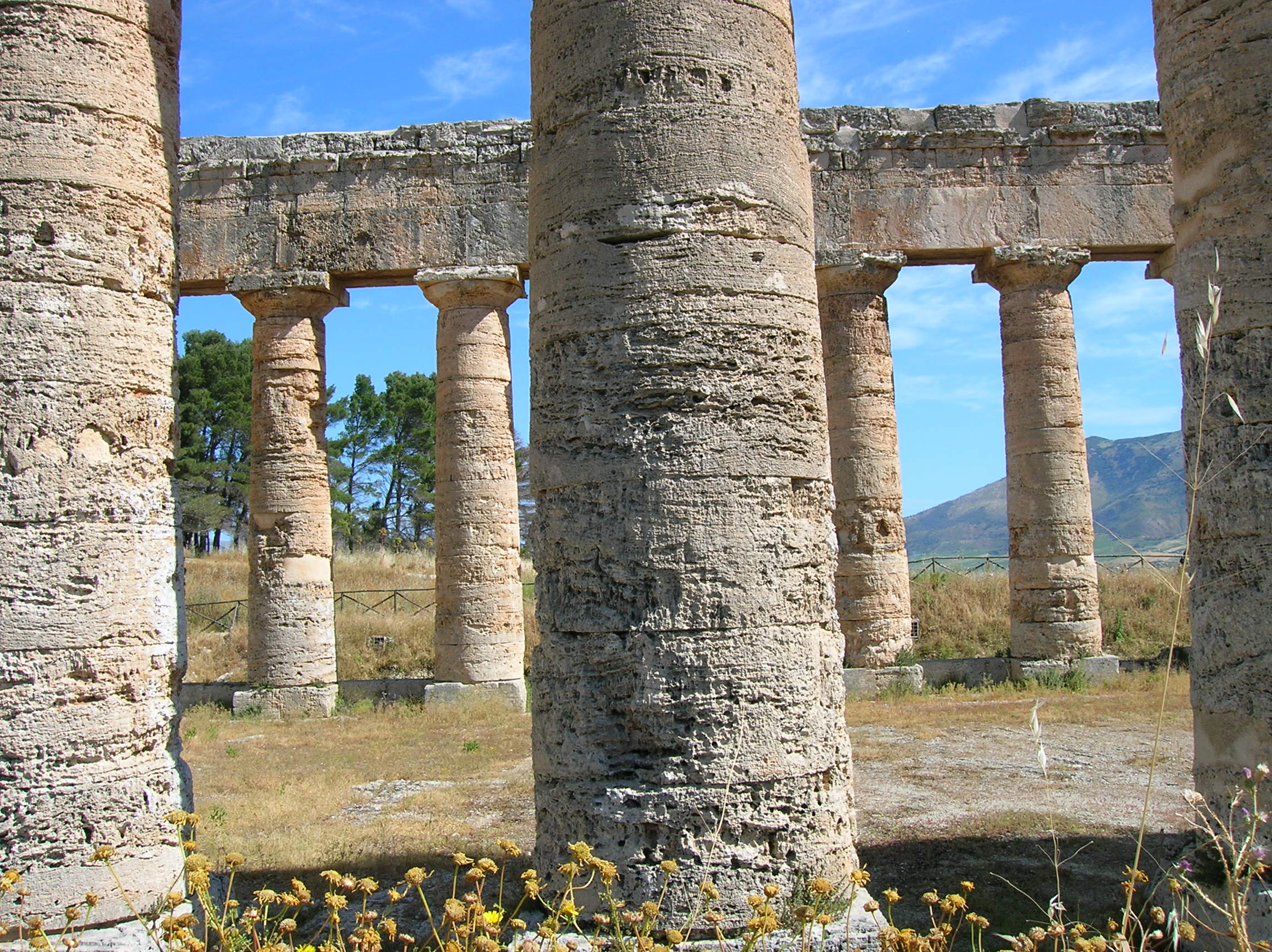
SicilySegesta3When I approached the Doric temple at Segesta, I was speechless. The limestone Doric columns, six on the temple’s short side and 14 on its long side, were crowned by a clear, blue sky as birds fluttered through the empty interior. The backdrop consisted of rich browns and greens, making the well-preserved temple at Segesta resemble a painting that had come alive. The elegant and majestic structure gave me a feeling of freedom, tranquility and independence. The Boston Marathon bombings, the death and destruction in Syria – for the moment it was as if these tragedies had never happened, and the world was a peaceful place.

The temple at Segesta

The temple at Segesta

I still cannot fathom that the temple dates back to 430-420 BC.  The barrenness of the inside cleansed me as the harmony of the Classical Age monument blended in with the natural beauty of the landscape. For a moment I closed my eyes and was convinced I was daydreaming. Then I opened them and realized that this beautiful temple from antiquity did really exist. I wanted to climb to the top of one of the columns and look down on the world with a fresh perspective on all the evils and dangers in the world today. Of course, that was not possible.

The amphitheatre at Segesta

The amphitheatre at Segesta

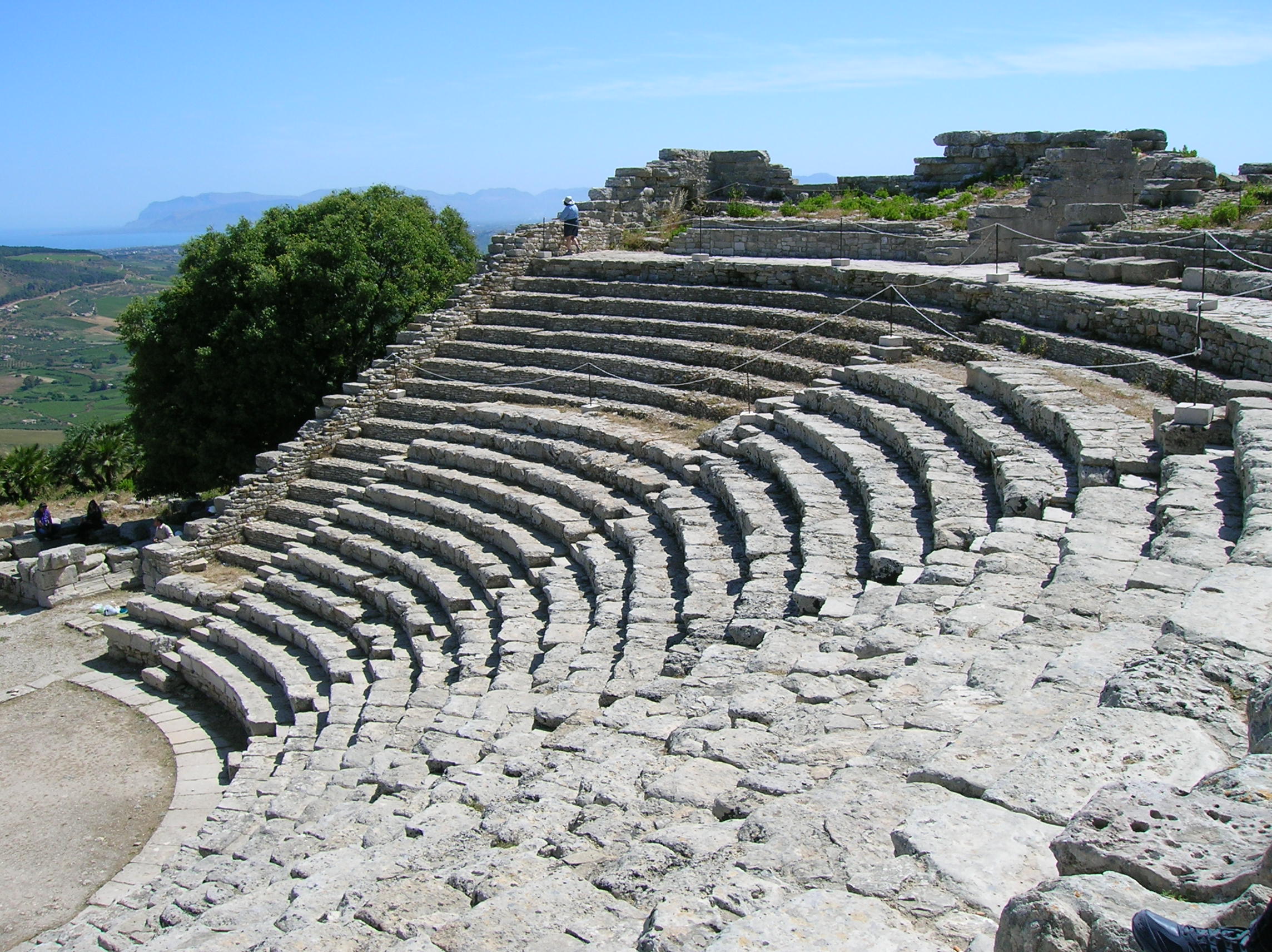
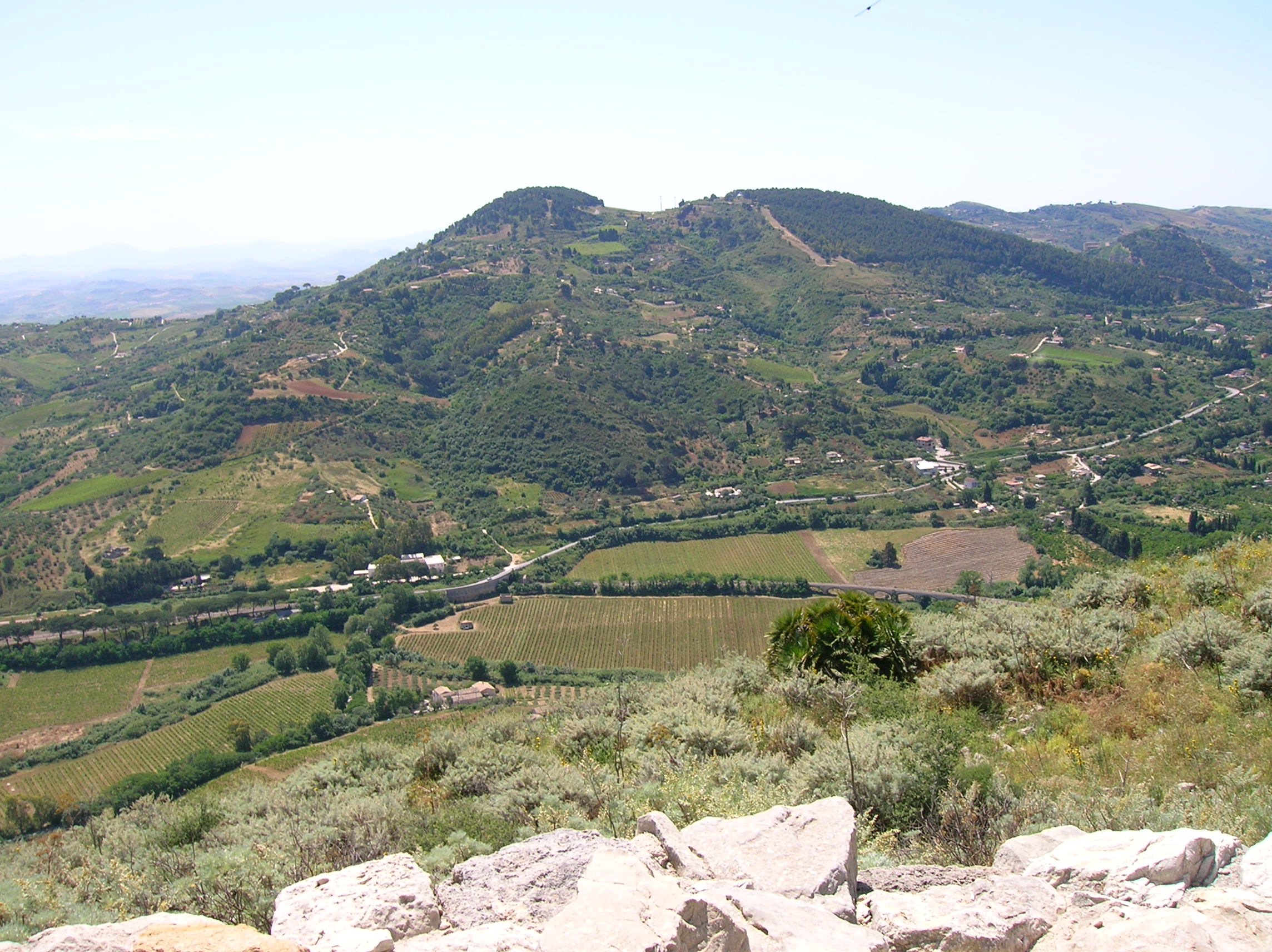
But the temple would not be the only sight in Segesta to make a profound impression on me. The Greek theatre, built in the third century BC, also boasted artistic mastery with a serene landscape offering views of the gulf of Castellmare. Towns also dotted the countryside. It was if the Greek theatre was one with nature. I could almost see the chorus conductor making a sacrifice to the deity Dionysus (not the tyrant!) on the altar before the plays began at dawn, when the trumpeter would blow his horn to announce the beginning of a full day of tragedies, comedies and satires. I could imagine the artists in their masks in front of painted scenery with the breathtaking landscape as a stunning backdrop.

Now, more than six months after my visit to Segesta, whenever I get stressed or worried, I think of these magnificent sights in Sicily, how they gave me a sense of freedom, as if I were floating over the world, gaining a new perspective. Visions of the Doric columns and amphitheater complementing the awe-inspiring landscape give me a sense of hope when I feel that a dilemma is futile and a sense of calmness when I feel extremely stressed.

Tracy A. Burns is a writer, proofreader and editor in Prague.

A view of the countryside from Segesta

A view of the countryside from Segesta

Czech Caves Diary


Koněprusy Caves

Koněprusy Caves

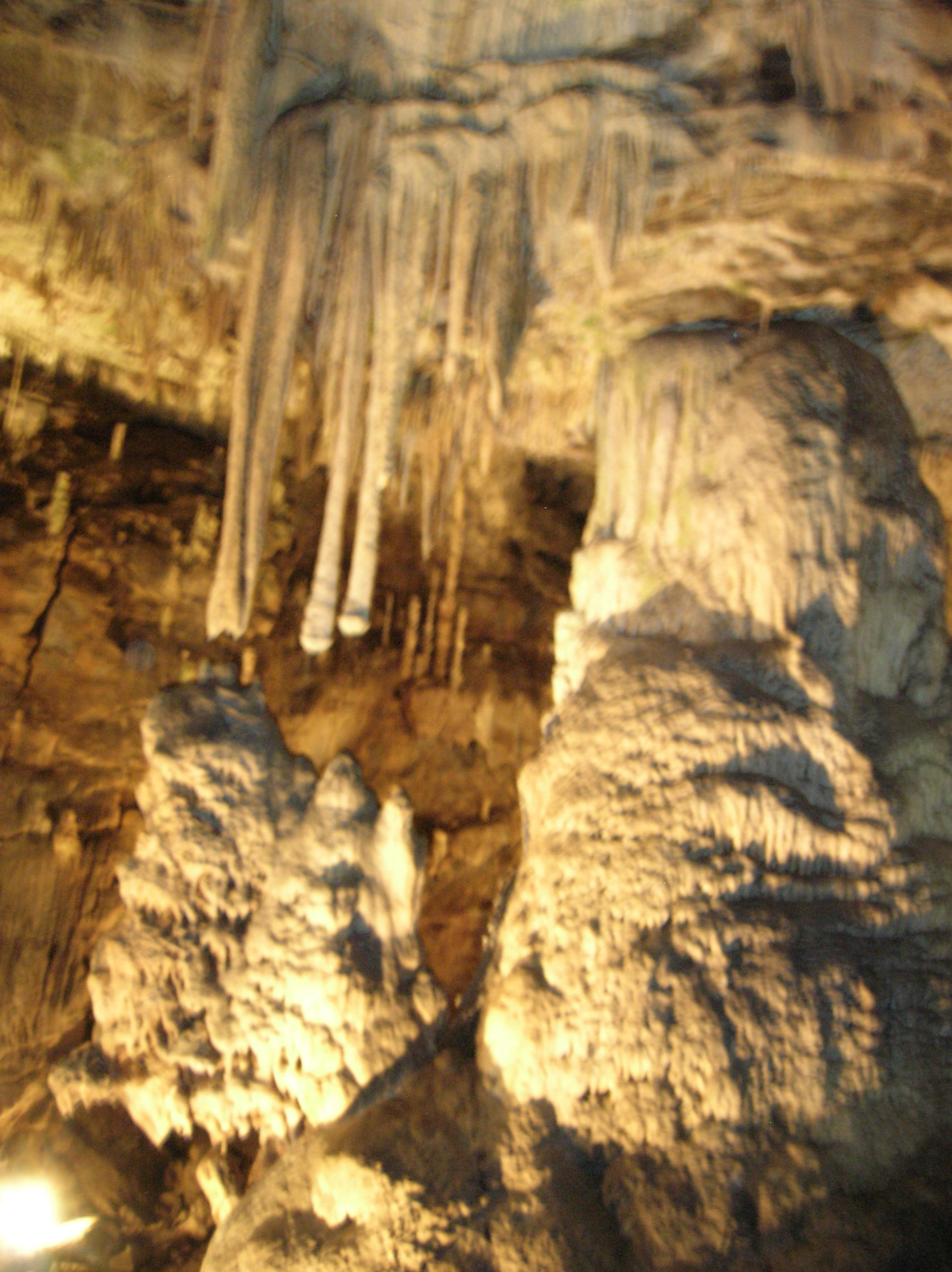
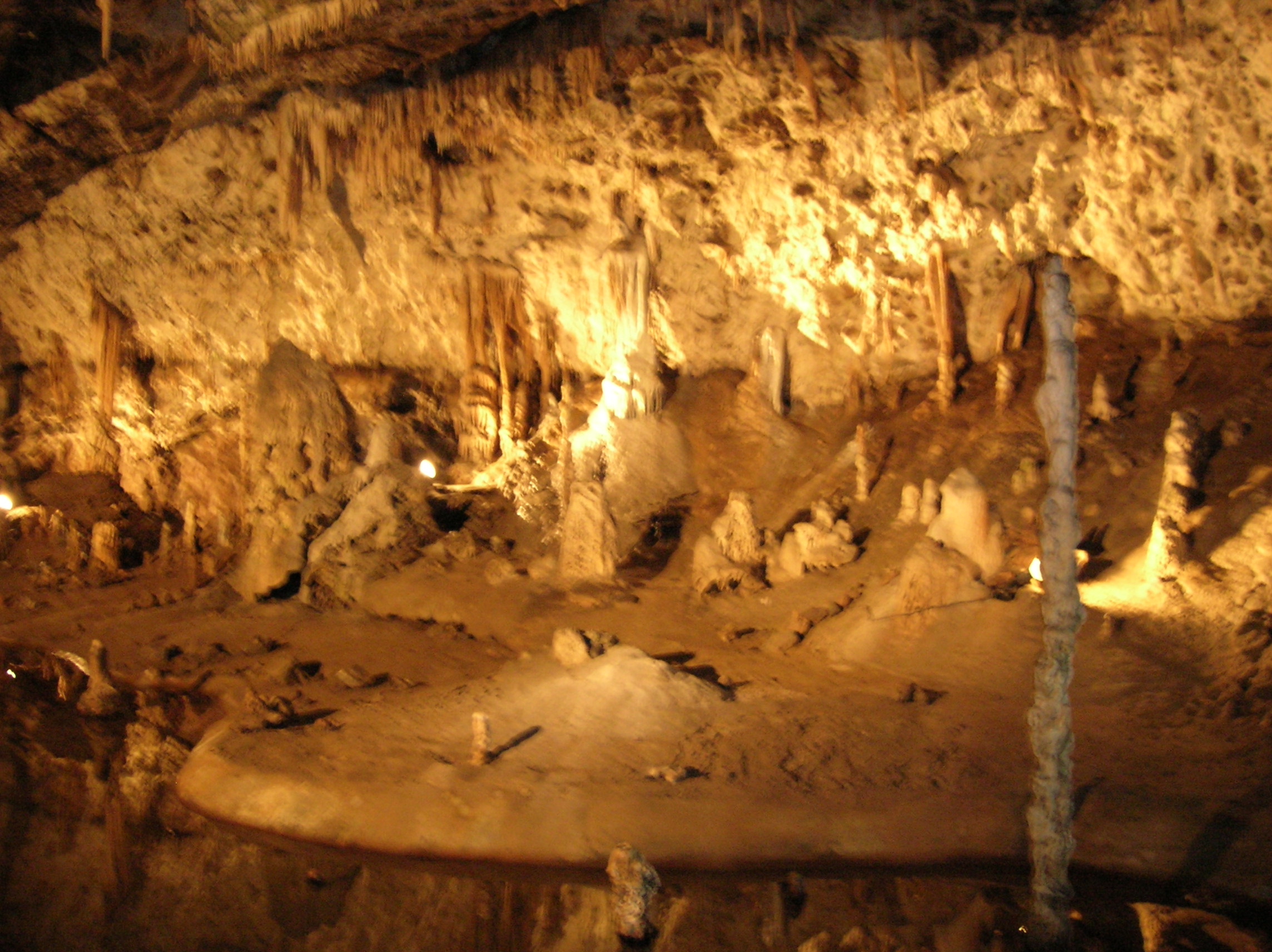
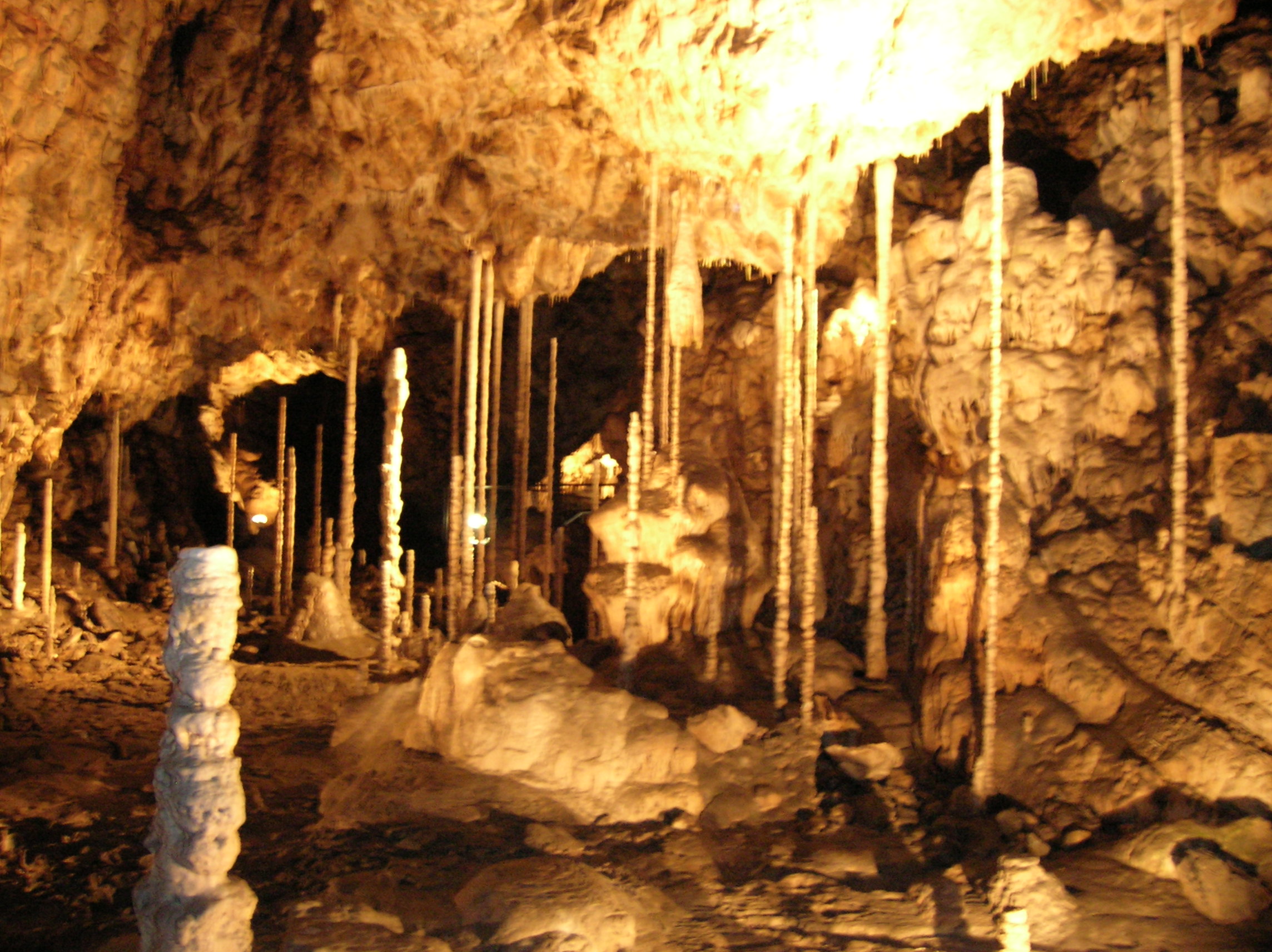
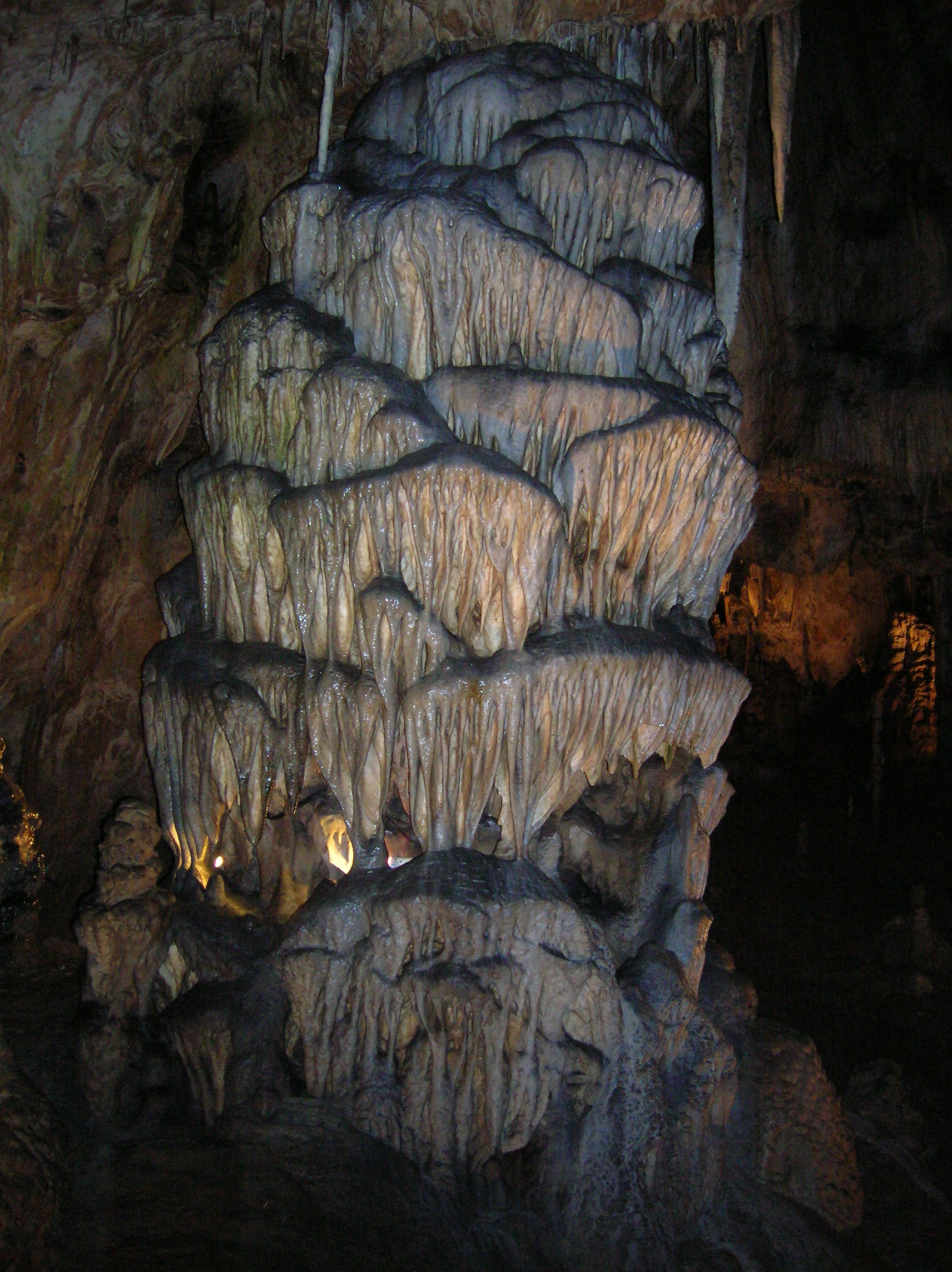
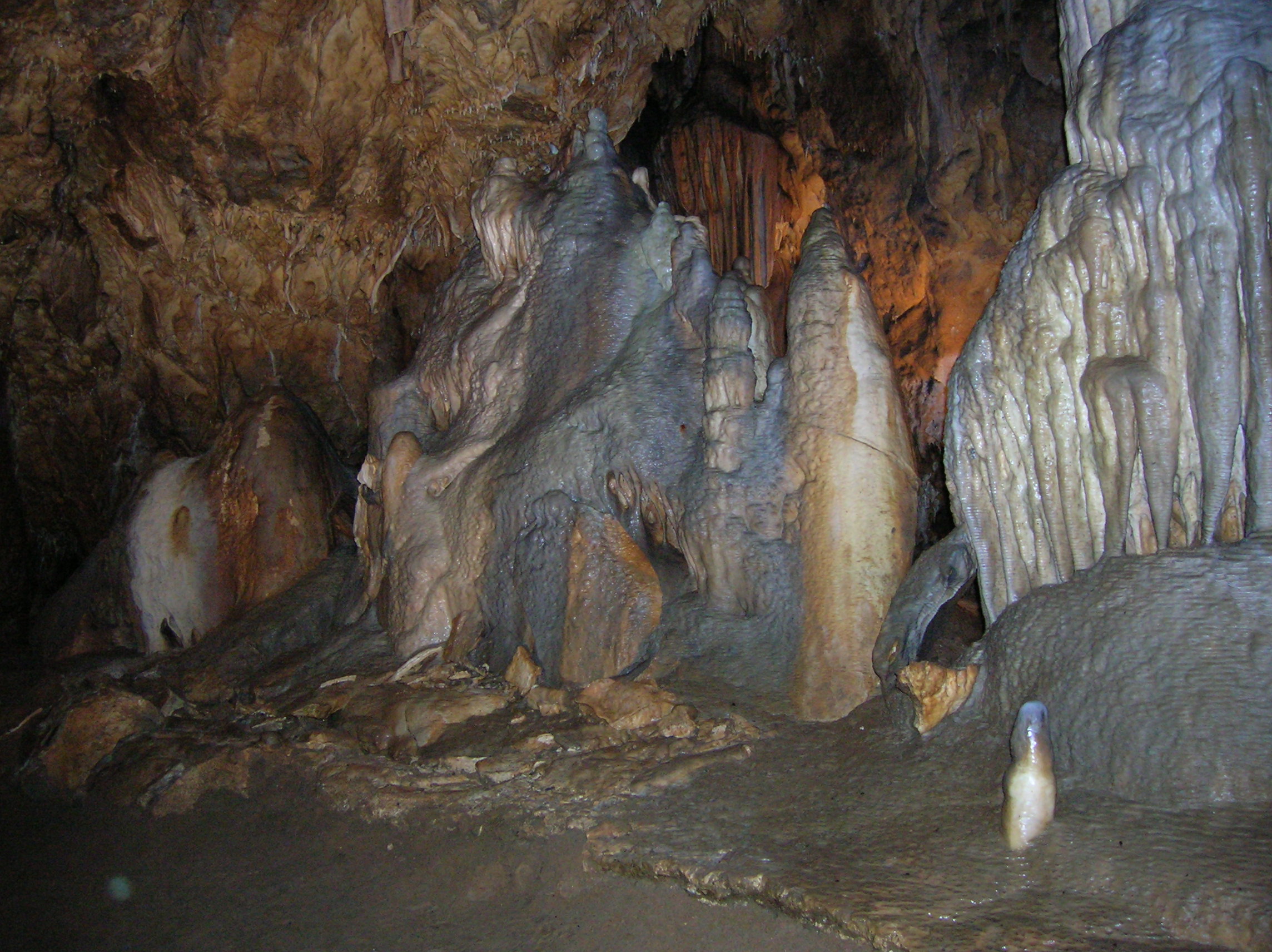
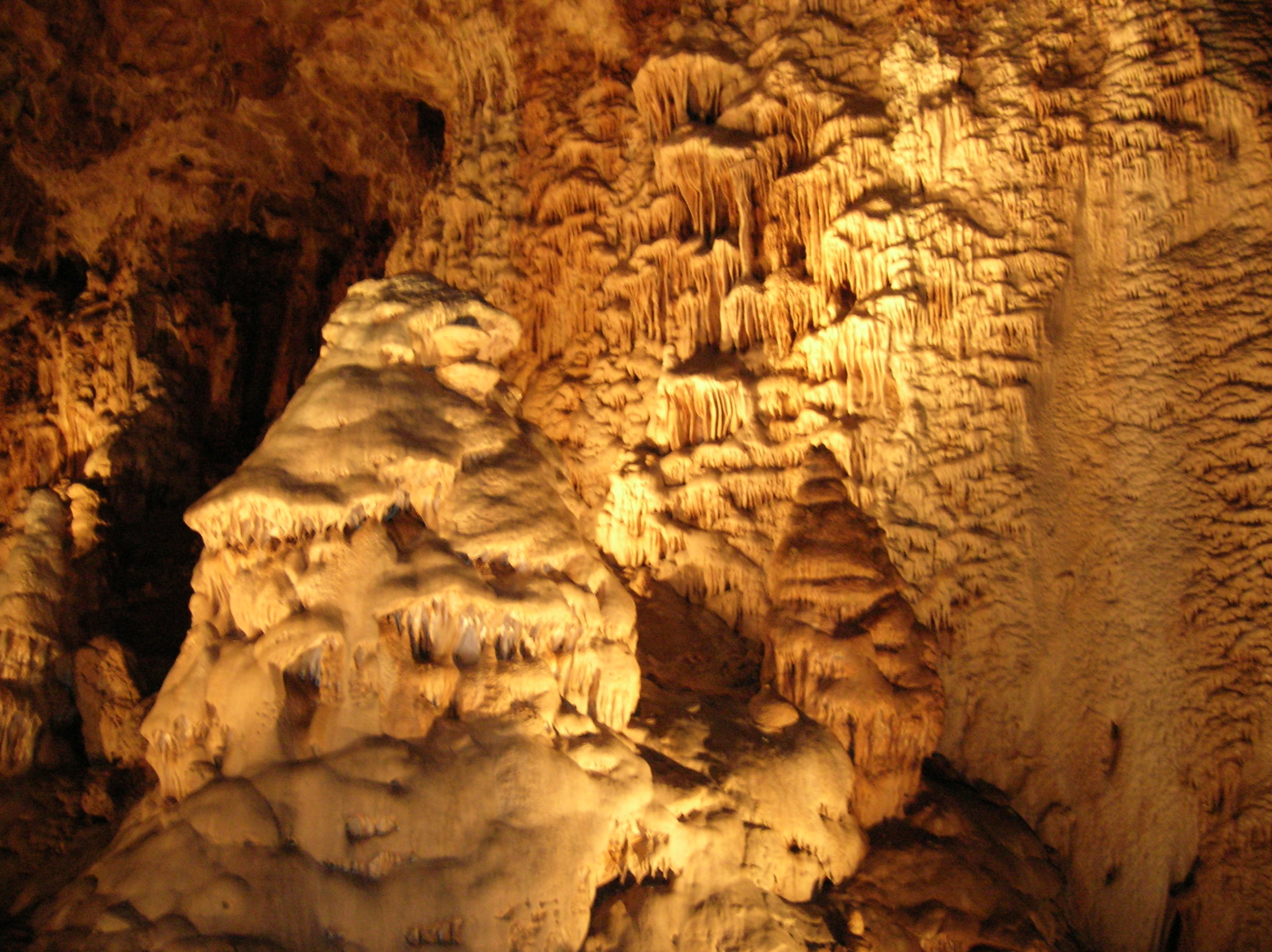
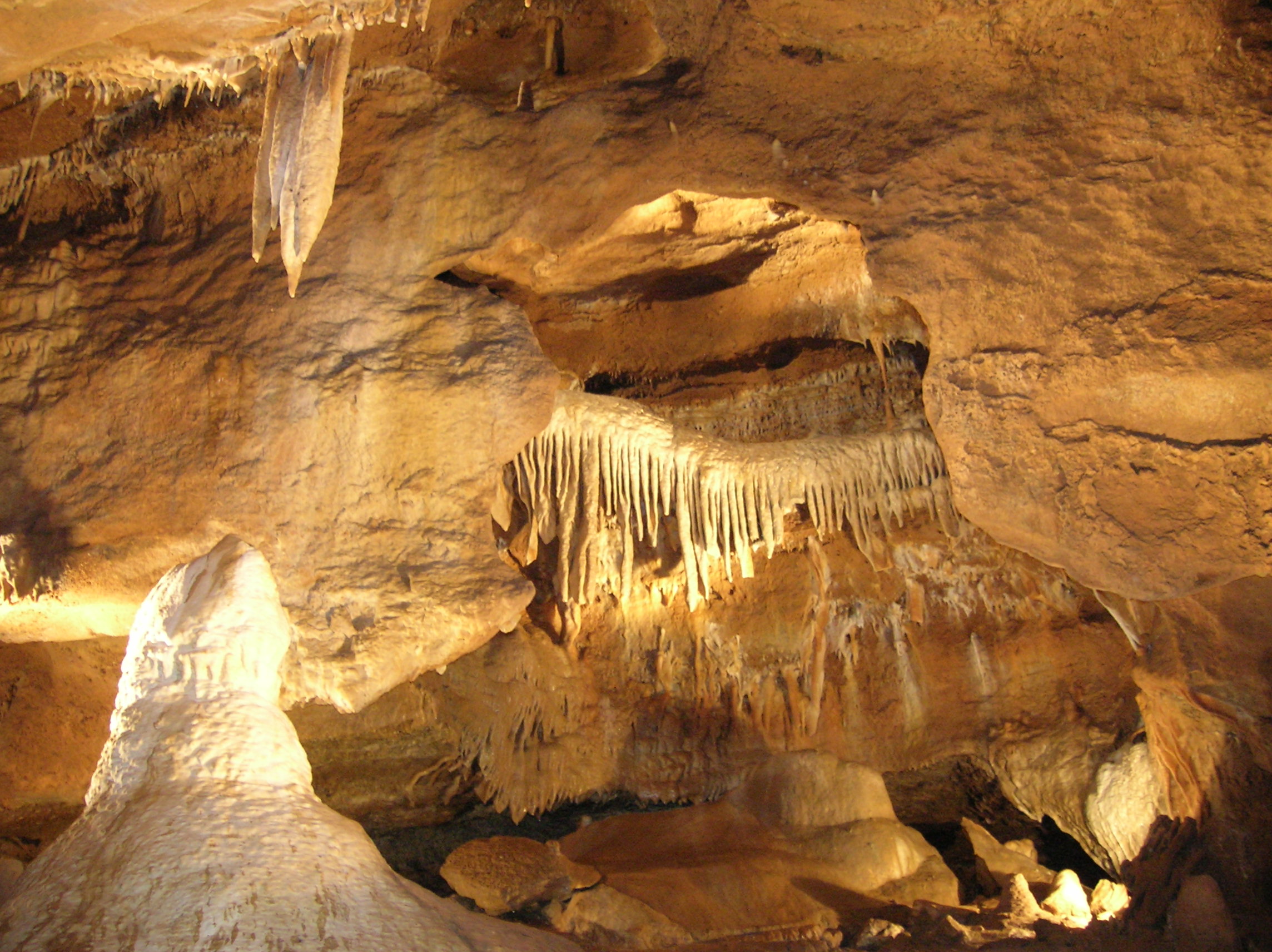
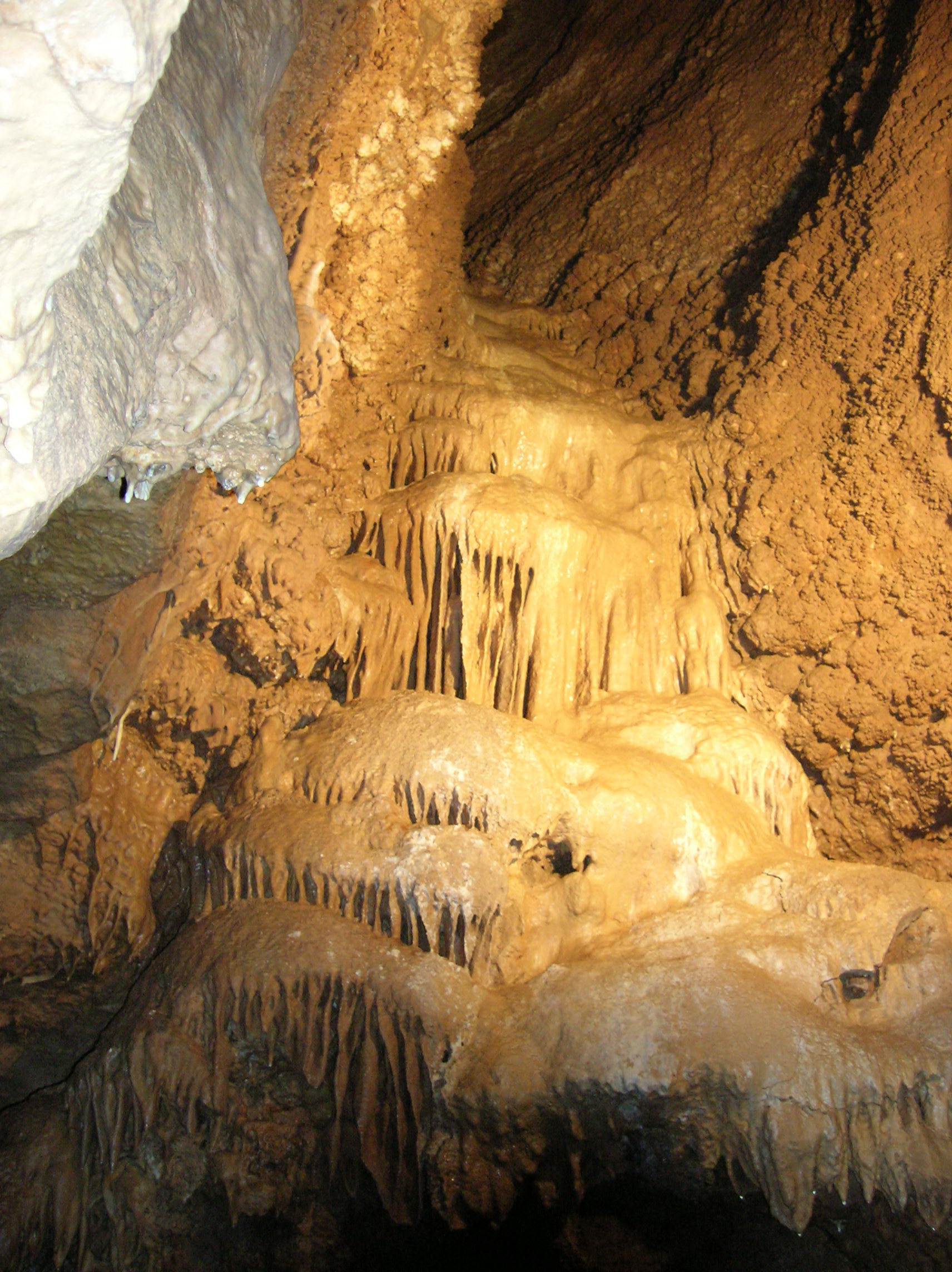
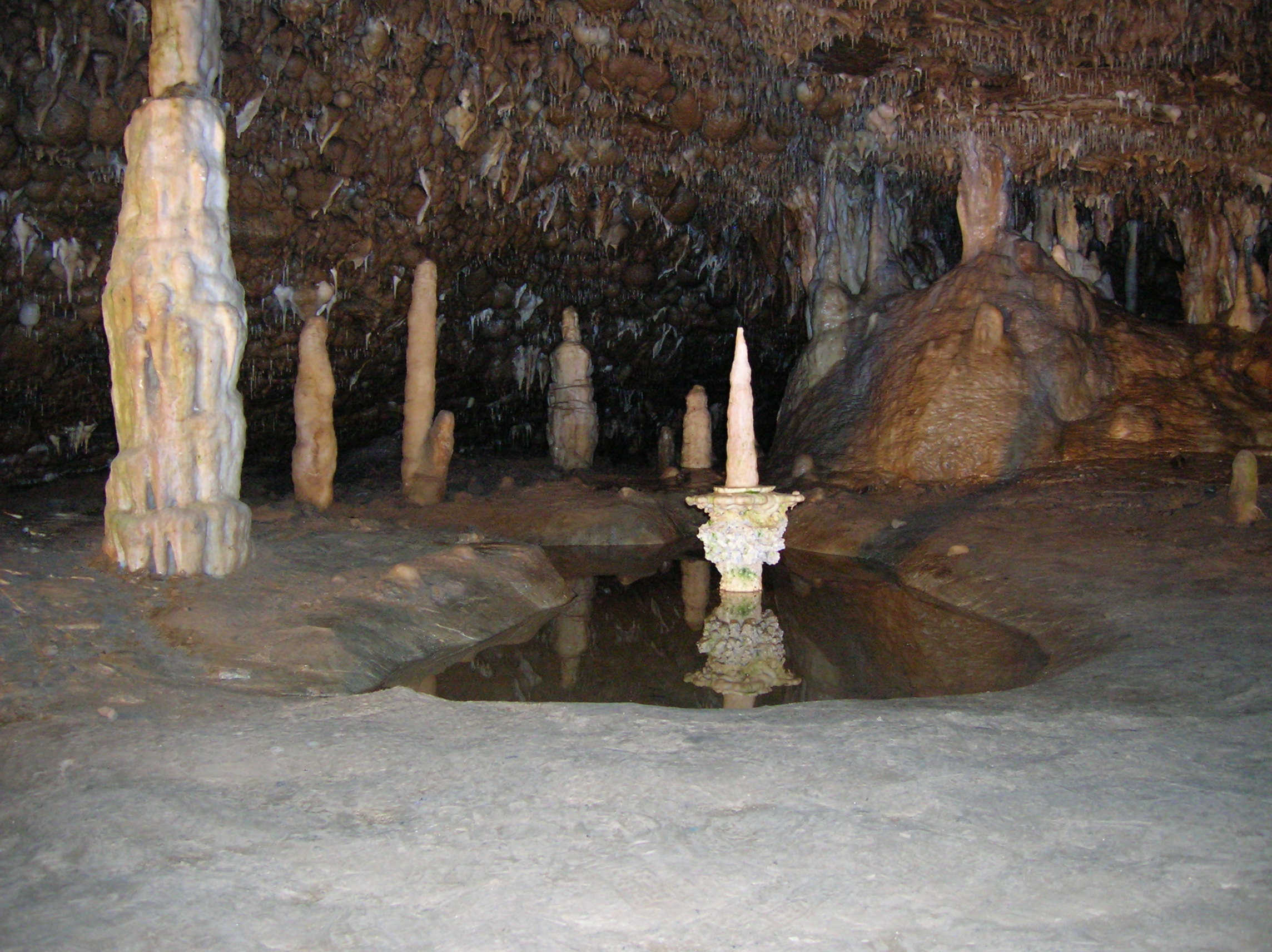
When I finished touring the Bozkov Dolomite Cave (Bozkovské dolomitové jeskyně), I had achieved my goal: I had finally visited all 14 caves accessible to the public in the country. The plethora of caves fascinated me with rich stalagmite and stalactite decoration, often taking grotesque forms in an Alice in Wonderland type of setting. Breathtaking rock formations resembled waterfalls, castle ruins and owls, for example.  There are almost 3,500 caves in the Czech Republic. While not all of them excited me, in many cases, it was well worth exploring the depths that whisper about the long-ago past and even contain remains of prehistoric man.  First, a little cave vocabulary is in order: stalactites hang down from the roof of a cave, while stalagmites point upwards from the floor of a cave.

PUNKVA CAVES

I have visited the Punkva Caves (Punkevní jeskyně)in the southern Moravian Karst region twice, once way back in 1992 and again in 2008. (The Moravian Karst region is known for its breathtaking caves. There are about 1,100 caves in the area, but only five are open to the public.) The first time I went to the Punkva Caves a friend drove me. For the second visit I took the train from Brno to Blansko (a short trip) and then took a bus to the information center near the caves. Back in the early 1990s, it wasn’t necessary to make a reservation in advance, and tickets were sold at a small kiosk. Now it is essential for visitors to make a reservation.

Punkva Caves

Punkva Caves

These caves are the most popular in the country. They are mentioned in many guide books and swamped with tourists from around the world. Discovered between 1909 and 1933, the Punkva Caves took me to the bottom of the Stepmother Abyss (Macocha), from which I felt the power and strength of the chasm, as if I was being swallowed up by its size.

Punkva Caves

Punkva Caves

Not only did I see stunning ornamentation, but I also enjoyed a magical motorboat ride through the Masaryk Cave and others. To be sure, fairy tale settings and grotesque shapes abound. Some of my favorite moments during the hour-long tour include the decoration of the wall of the Front Cave; the stalagmites and stalactites in the Mirrored Lake boasting Two Owls, A Castle on a Cliff and a Turkish Minaret, and the fantastic decoration of the Angel’s Cave.

Punkva Caves

Punkva Caves

KATEŘINA CAVE

Located near the Punkva Caves is Kateřina’s Cave (Kateřinská jeskyně), a short distance from the information center that hadn’t been there when I first visited the area in 1992. The 45-minute tour covers 430 meters. The name of the cave comes from a legend that enthralled me: The shepherd Kateřina entered the cave looking for one of her sheep that had gone astray. Unfortunately, she got lost and never saw daylight again.

Kateřina Cave

Kateřina Cave

At the beginning of the tour, I learned that the Main Dome is the biggest publicly accessible natural underground space in the country; concerts are even held there, the guide informed our group. In this space I felt swallowed up by its vastness just as I did in the Stepmother Abyss. Some shapes of intriguing stalagmites that I saw included Two Owls and The Shepherd Kateřina. I noticed many exquisite, tall stalagmites and stalactites, especially in the part of the cave nicknamed the Bamboo Forest. I especially liked one formation, in which stalactites appear as an angry storm cloud with claws.

Kateřina Cave

Kateřina Cave

SLOUP-ŠOŠŮVKA CAVES

Not far, in the same region of southern Moravia, are the Sloup-šošůvka Caves (Sloupsko-šošůvské jeskyně). I took a bus there from Blansko; they run every hour. The bus dropped me off 200 meters from the cave itself. The short tour covers 890 meters, while the long tour covers 1,670 meters. The total length of the underground corridors reaches 4,200 meters. Of course, I took the long tour.

Sloup-šošůvka Caves

Sloup-šošůvka Caves

I was fascinated that remains of Neanderthal man have been unearthed there. I crossed a bridge that allowed me to gaze to the bottom of Nagel Chasm, 80 meters in depth. That was something to remember! Some of the decoration that awed me included the rich ornamentation of the stalactites in the Gallery and a four-meter high formation called the Waterfall.

Sloup-šošůvka Caves

Sloup-šošůvka Caves

I also saw cave bear bones, and a vertical abyss that is 64 meters deep. In the Big Three Hall three huge stalagmites resemble a snow mountain, a waterfall and a fortress. I also imagined shapes of a spiraled totem pole and a spiraled tower as well as a gigantic top hat and swords stuck firmly in the cave floor. 

Sloup-šošůvka Caves

Sloup-šošůvka Caves

BALCARKA CAVE

Also nearby in the southern Moravian Karst region, the Balcarka Cave (Jeskyně Balcarka) features two floors of unique stalactite and stalagmite decoration, such as that exhibited in the Gallery. Since I did not have a car, I could not combine this visit with my trip to the Sloup-šošůvka Caves, even though the two are not that far apart. I went by bus from Blansko to Ostrov u Macochy. Buses ran every hour, so I did not have to wait long.

Balcarka Cave

Balcarka Cave

I was in awe that stone and bone instruments dating back to the Stone Age as well as bones of Pleistocene animals have been discovered there. One shape in the cave looked like an elderly hand with knobby, long fingers pointing downward, as if it was about to gently touch something.

Balcarka Cave

Balcarka Cave

Shapes similar to ruined castles and towers fascinated me as well. Some lumpy forms reached out with tentacles to touch the stalactite quills above.  Other ornamentation took on the appearance of a spiraling tower with a steeple on top. I saw many fragile-looking stalactites hanging from the roof of the caves, too.

Balcarka Cave

Balcarka Cave

JAVOŘÍČKO CAVES

As fascinating as the Punkva Caves are the Javoříčko Caves (Javoříčské jeskyně) near Litovel and Olomouc in central Moravia. Discovered in 1938, these caves boast some of the most exquisite stalactite and stalagmite decoration in the Czech Republic. In all, 788 meters are accessible to the public. Visitors can choose from a 40-minute or 60-minute tour. The short route takes one 450 meters, while the long one covers all 788 meters.  I chose the 60-minute version.

Javoříčko Caves

Javoříčko Caves

Perhaps this system of caves is the most grotesque, appearing to be part of a horrific fairy tale filled with monsters. Yet it was difficult to get to; I went by car from Olomouc, the historic town where I was staying. I could not find any suitable public transportation.

Javoříčko Caves

Javoříčko Caves

Some intriguing formations featured a stalagmite shaped as a pagoda, with what appeared to be a Rococo doll seated on it. Pastel colored limestone spikes took on the appearance of waterfalls, named Niagara Falls and the Falls of the Elbe. The Curtain, which appeared to be fringed with lace and measured more than two meters in length, fascinated me the most. It looked as if the curtain was almost flapping, captured in a single moment. Crystallizing calcite surfaces made up the lace while the red tint came from ferrous compounds.
The Sacred Hole has a spellbinding history. Banned religious groups used to gather there in the Middle Ages; I saw black stains on the ceiling that had resulted from torch smoke. The most beautiful decoration I saw, though, was in the Scree Dome and the Dome of Giants. The Scree Dome featured a unique-shaped mound sprinkled with what looked like white icing or virgin snow. The breathtaking ceiling was a composite of fragile, thin exquisite stalactite spikes.

Javoříčko Caves

Javoříčko Caves

In the Fairy Tale Cave there was even more astounding decoration of stalactites pointing down from the ceiling. In the Dome of Giants one shape looked like a monster with a multi-layered crown on his head. Another formation I liked featured stalactites hanging from the roof, looking like a cloud with droplets of rain frozen in the sky. One more intriguing characteristic about these caves is that some stalactites and stalagmites called heliotites grow against the laws of gravity.

MLADEČ CAVES

The Mladeč Caves (Mladečské jeskyně) are also located near Olomouc, not far from the Javoříčko Caves. I went by car the same day I visited the Javoříčko Caves. It was not easy to get to these caves, either, and I was there on a weekend, which made it even more complicated to go by public transportation.

Mladeč Caves

Mladeč Caves

Remains of prehistoric man have been found here, including many skeletons of people from the Early Stone Age. I saw skeletal-like formations in the Cave of the Dead while Nature’s Temple was dominated by what looks like it was once a shimmering white waterfall. In the Virgin Cave the shapes took on forms of hills with towers and castle ruins. One figure that impressed me looked like a mummy.

Mladeč Caves

Mladeč Caves

KONĚPRUSY CAVES

The Koněprusy Caves (Koněpruské jeskyně), only an hour or so from Prague and seven kilometers from Beroun, boast the largest system of caves in Bohemia. The caves were discovered in 1950 and opened to the public in 1959. They are easy to get to as well. I took the train to Beroun, about an hour from Prague, waited about an hour and then went by shuttle bus to the caves. I was impressed that bones of prehistoric animals have been unearthed there. The stalactite and stalagmite ornamentation was thrilling; one cave even used to be a medieval money forgers’ workshop in the 15th century. According to the guide, between 5,000 and 10,000 fake coins were made there using copper sheets and an amalgam of silver. I saw copies of the equipment the forgers used.

Koněprusy Caves

Koněprusy Caves

I took note of some stalactites shaped like an organ; Eternal Desire is composed of stalactite and stalagmite spikes that are almost touching; and another formation appeared as white gushing water, stopped in time. Perhaps Prošek’s Dome astounded me the most. In this cave I set my eyes on the 1,500-year old Koněprusy Roses stalactite formation. It fascinated me that this is the only place in the world where this sort of ornamentation has been discovered.

Koněprusy Caves

Koněprusy Caves

In another cave a certain formation could depict a rock-made window frame overlooking a grotesque landscape of quills, resembling swords, pointing down from the roof. Nearby a stalagmite appeared to me as a sandcastle, seemingly so fragile that it could be broken with the slightest moment. A shape on the ceiling looks like a gaping mouth about to swallow the visitor.

Koněprusy Caves - The Waterfall

Koněprusy Caves – The Waterfall

In the waterfall I saw the droplets of water gushing down, stopped for eternity. Also, in the Organ Hall, I noticed stalagmites taking the form of a small town made of cliffs. Replicas of bones unearthed in Prošek’s Dome were exhibited in the Empty Dome; for example, I took note of the skull of a woolly rhinoceros and part of a human skull, both 13,000 years old.

BOZKOV DOLOMITE CAVE

There are other caves that I liked, too. I went by bus to Semily and then took another bus about one kilometer from the Bozkov Dolomite Cave, but it can be difficult to find public transportation that goes there. This cave, in the foothills of the Giant Mountains of northern Bohemia, boasts the longest cave system in the country formed on dolomite limestone as well as the largest underground lake in Bohemia in the Lake Cave. Discovered in the 1940s, it is the only publicly accessible cave in northern Bohemia.

Bozkov Dolomite Cave

Bozkov Dolomite Cave

For me, the underground lake of glinting green water framed by rock formations was the thrill of this tour. Some of the rocks even formed an archway through which the water seemed to flow into the horizon. I saw other rich stalactite and stalagmite decoration on the tour, too. For example, I imagined that a squid was moving sideways in a strong current when setting my eyes on one formation. I was a bit frightened when I peered down a chasm into the depths of darkness. In another cave I took note of a waterfall bulging at its bottom.

Bozkov Dolomite Cave

Bozkov Dolomite Cave

NA POMEZÍ CAVES

I stayed in the spa town of Jeseník in northern Moravia when I visited the Na Pomezí Caves (Jeskyně Na Pomezí). I took the bus from Jeseník, but times were irregular. The Na Pomezí Caves have the largest cave system in the country.

Na Pomezí Caves

Na Pomezí Caves

While exploring the 530 meters of these caves, I saw a curtain-like formation that appeared to be made with coarse material. Cascades and large stalactites adorned the caves. I imagined one grotesque shape as someone’s dentures about to bite into two muffins. Some of the caves that enchanted me here included the Ice Dome, the Weeping-Willow Cave and the Roman Bath corridor.

Na Pomezí Caves

Na Pomezí Caves

There are other caves in the country, but those are the ones that excited me the most. Whenever I descended the steps and walked into the depths of a cave, I felt as if I was looking deep into my soul. When I listened to the legend of Kateřina getting lost in the cave of the same name, I thought about feeling lost myself, how I didn’t want to be an English teacher anymore, but for the time being couldn’t find another job that suited me. I felt that I had yet to find myself, and I was nearing 40.

Sloup-šošůvka Caves

Sloup-šošůvka Caves

In other caves I mused about my life as well.  I pondered over whether I should have had children. I wondered if I would be happy being single all my life as the few men I had loved hadn’t loved me. I thought about many things during those visits to caves, and I always felt enlightened by the time I exited each cave, leaving the darkness of my musings for the joyous light of day.

Tracy A. Burns is a writer, proofreader and editor in Prague.


Looking up at the Macocha Abyss from the Punkva Caves

Looking up at the Macocha Abyss from the Punkva Caves

Žleby Chateau Diary

Zleby3

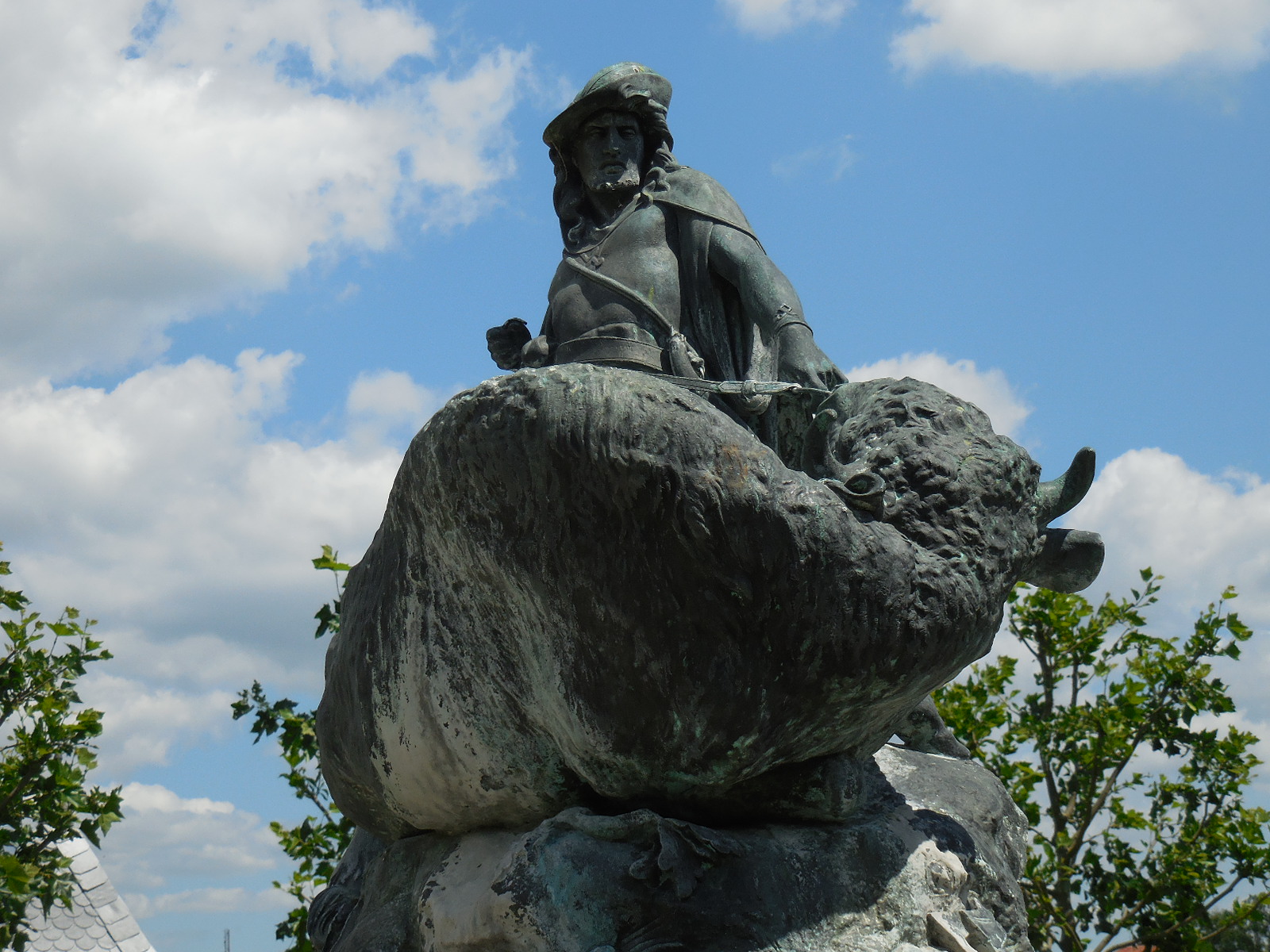
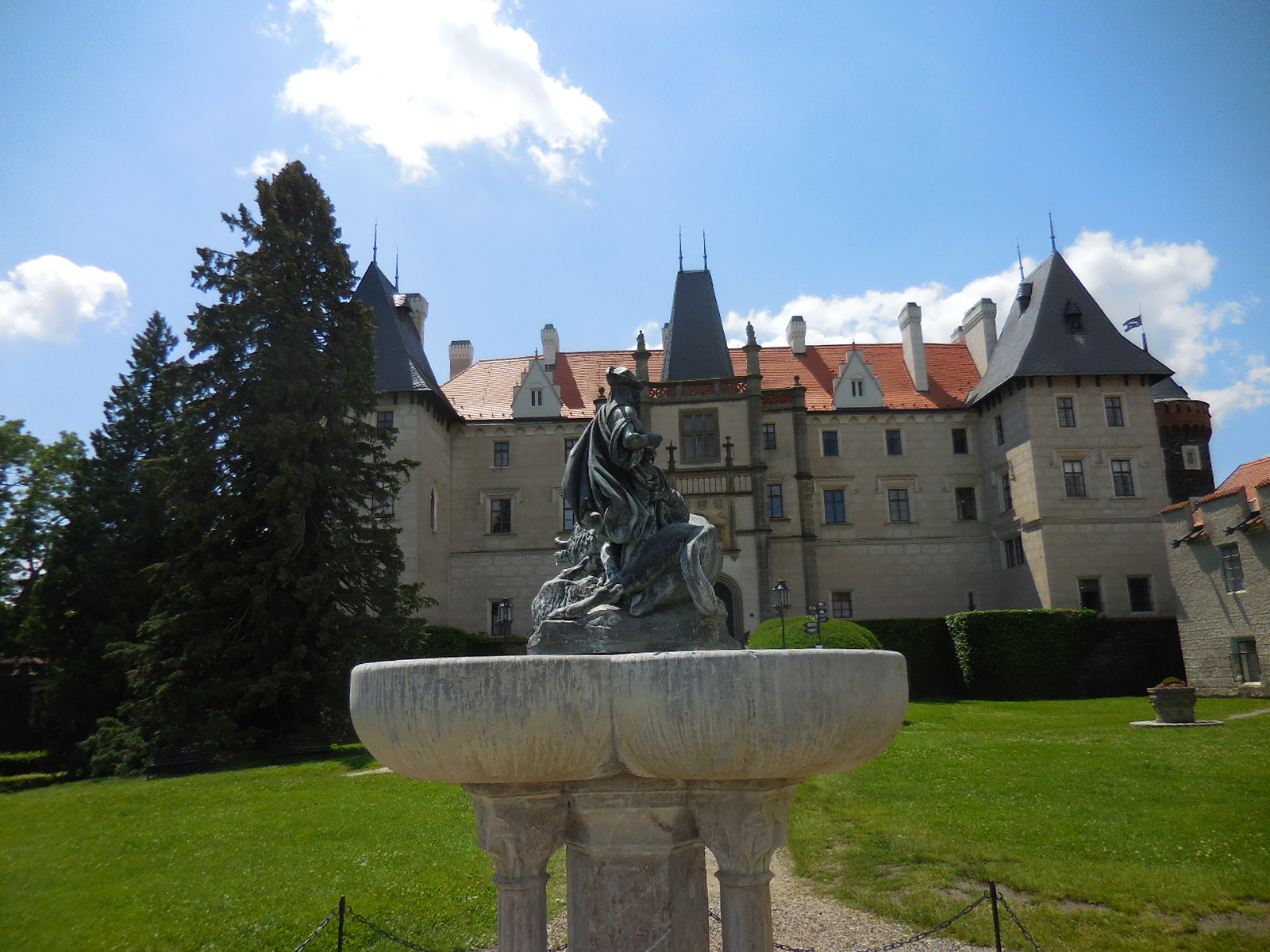
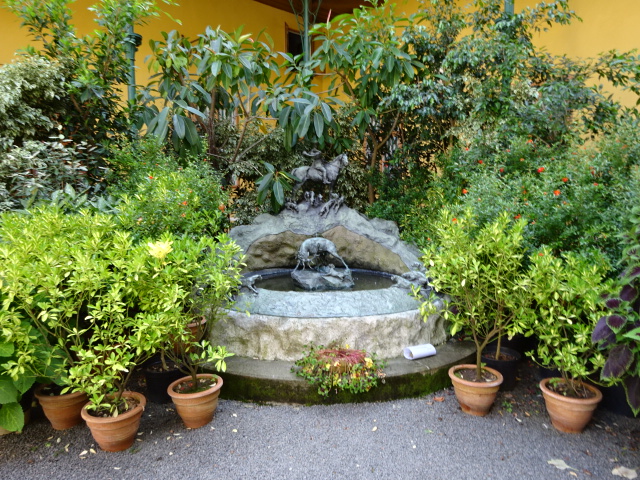
Miraculously, I made the train connection in Čáslav with four minutes to spare and not long afterwards found my way from the train station in the village of Žleby to the chateau. To say Žleby is majestic and romantic is a vast understatement. The chateau looks as if it has emerged from a fairy tale. I inspected the fountain in front of the chateau. It dates from 1860 and shows a member of the Auersberg family, who owned the chateau for over 200 years, grappling with a bison. As I bought my ticket, I was a bit disappointed, though. A 90-minute tour was available, but a third tour did not open until May. So, I would miss the chateau theatre and lower floor library, unfortunately. (I saw these during my 2020 visit by car.)

Zleby2020ext3Zleby2020ext5

While I waited for the tour to begin on that freezing April morning, I familiarized myself with the history of the chateau as described in a booklet I had purchased. Žleby was first mentioned in writing during 1289. The Lichtemburks owned Žleby until 1356, when Holy Roman Emperor Charles IV gave it to Markvart from Vartenberk. During the Hussite wars, the castle was razed, sharing the same fate as many other places in Bohemia during that bloody era. Then Jiří from Dubé and Vizmburk restored the castle in Late Gothic style. It was changed into a four-winged Renaissance chateau with an arcaded courtyard at the end of the 16th century and the beginning of the 17th century under another owner. During the first part of the 18th century, Baroque renovations began.

Zleby2020ext9Zleby2020ext27

In 1746, while the Schönfelds owned the chateau, their daughter Kateřina married Jan Adam from Auersperg. When Kateřina died, the Auersberg line took over ownership of the chateau, and the family would retain Žleby for 200 years. Baroque restorations continued, and the Auersbergs also designed Rococo interiors. Some years later, owner Vincenc Karel Auersberg and his wife Princess Vilemína Colloredo-Mansfield would become responsible for many changes that gave the place a romantic makeover as they were influenced by English architecture from the first half of the 19th century.

Zleby2020ext12Zleby2020ext33Zleby2020ext34

Thus, from the 1840s Žleby took on a more romantic air. The Auersberg couple wanted to give the chateau more of a Gothic character and added a prison and bastions. They fitted the interior with leather wallpaper, wood furnishings, weapons and historic furniture, all of which can be seen in the chateau today. In 1849 Vincenc bought land for the future park. In 1942 the chateau changed hands, and after the war it was nationalized.

Zleby2020int68

zleby2020int69-e1594564857806.jpg

Zleby2020int70

The chapel was first on the list. Upon entering the tiny, quaint two-floor chapel, the narrow, high and oblong stained glass windows behind the altar of the Annunciation of the Virgin Mary caught my attention. The windows bewitched me with their dynamic, bright colors. I then studied the main altar and was drawn to the bright red of an angel’s cloak. The chapel was the youngest part of the chateau, in 19th century Neo-Gothic style, the guide – probably a university student – explained. It dated from 1853 to 1858. Still, there were a few items that went back farther than the 19th century. For instance, a side altar hailed from the 15th century. The triptych showed the Virgin Mary with a sculptural grouping of a Pieta in the middle of two statues. I noticed the trickles of blood on Jesus’ crossed hands. The oldest item in the entire chateau was here – a 15th century richly engraved baptismal font. Statues of saints were positioned high on the side walls of the chapel. I spotted the flapping drapery of Saint Elizabeth.

Zleby2020int35Zleby2020int37

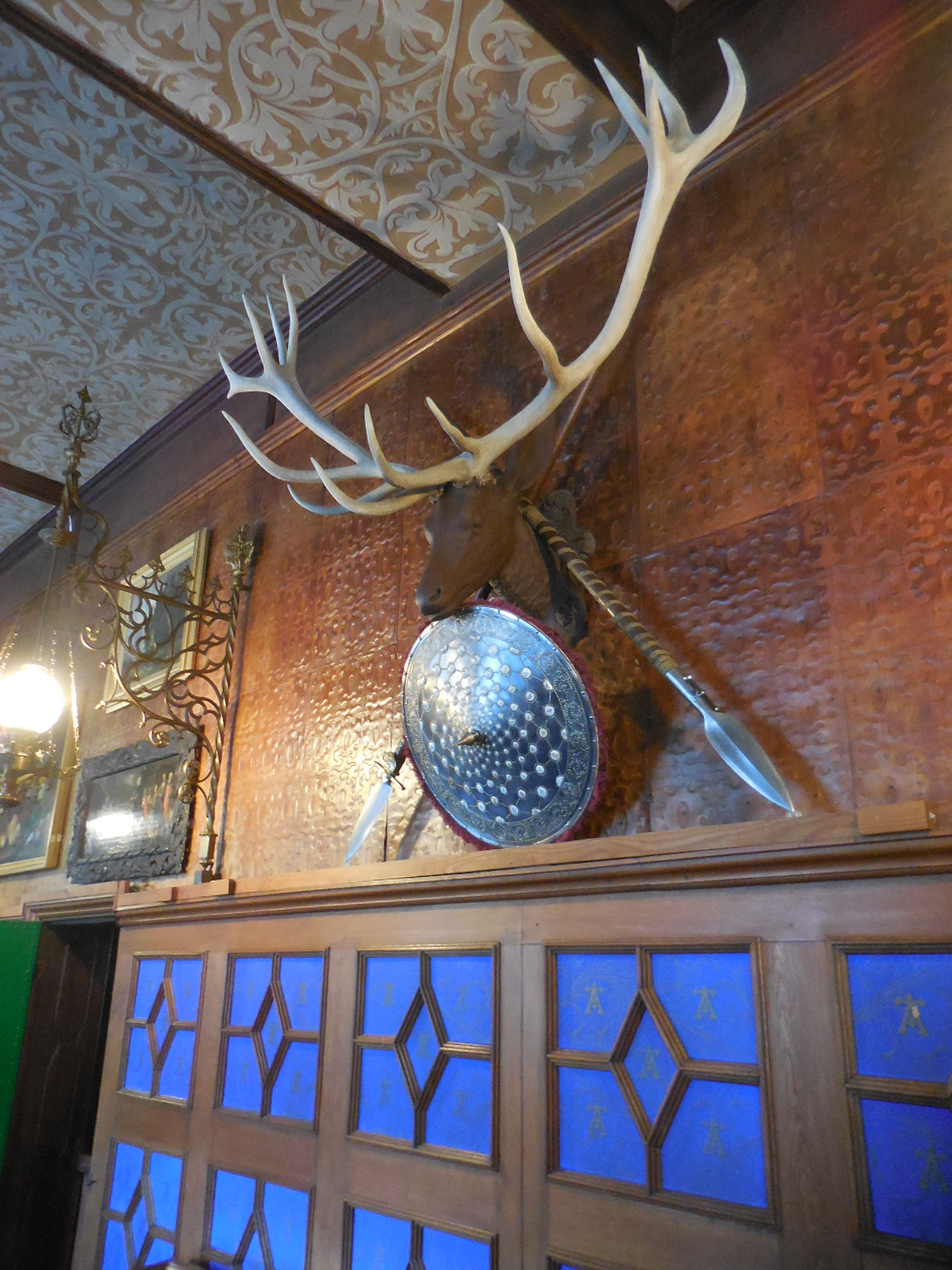
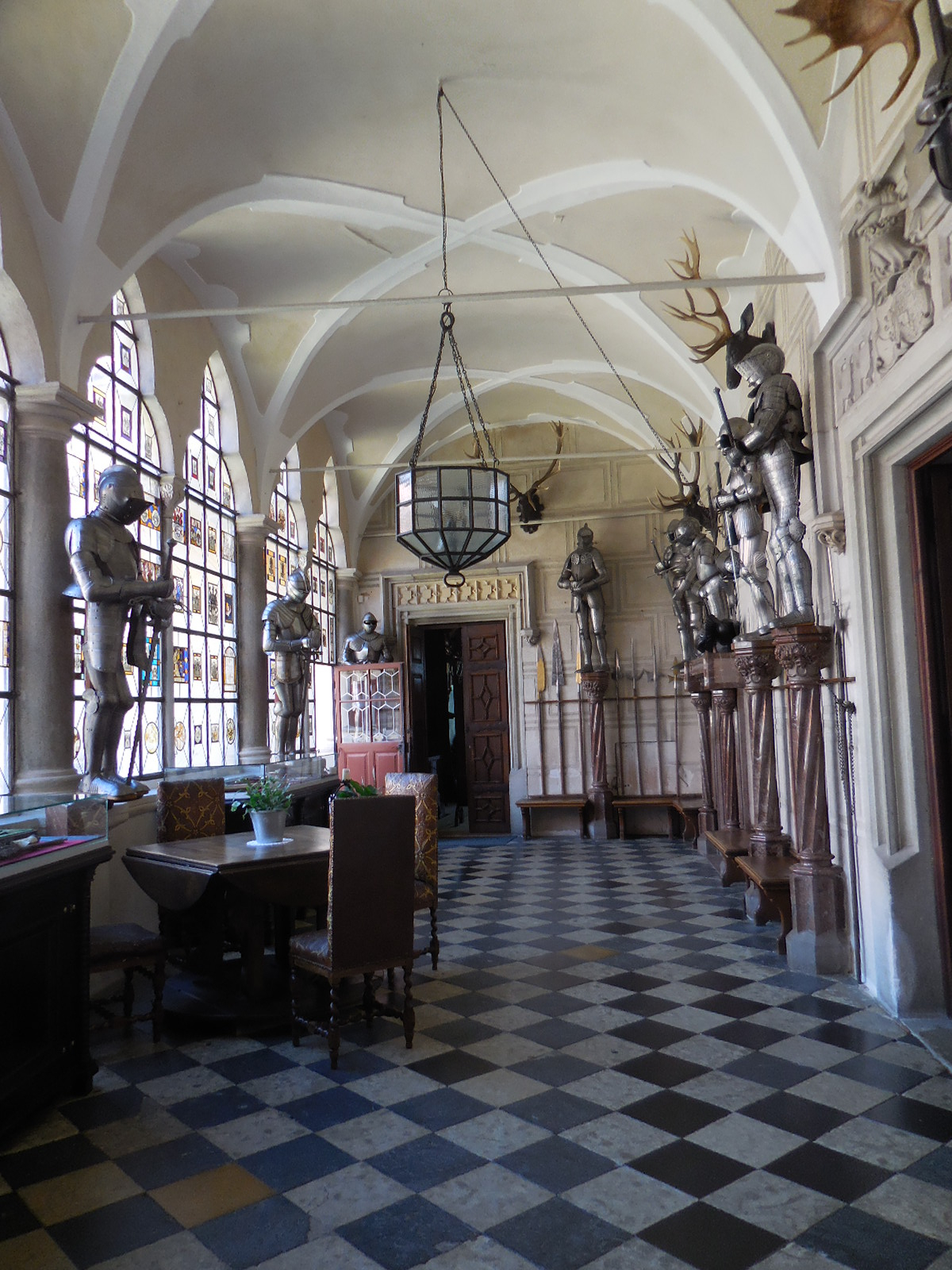
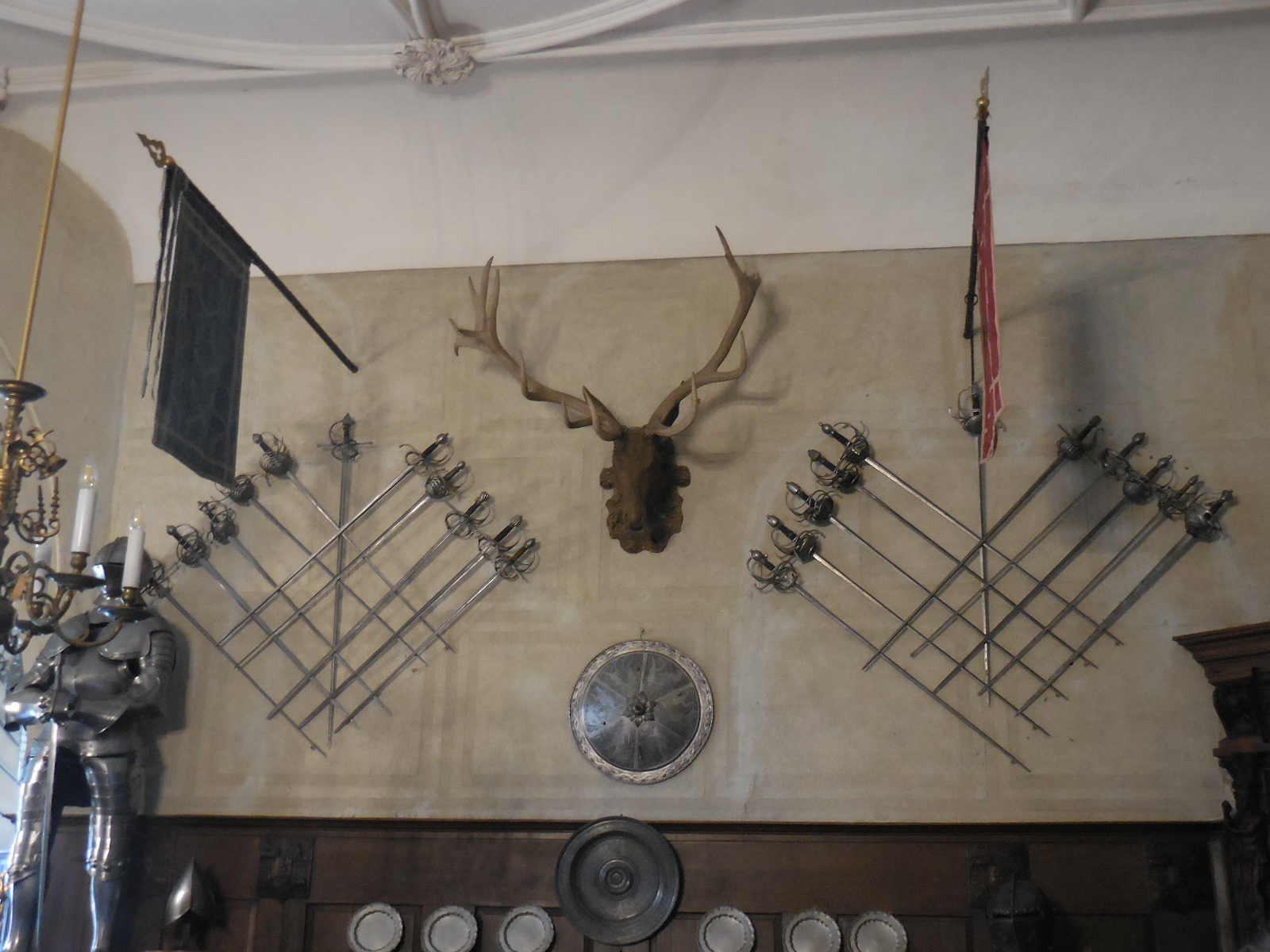
Then we left the interior and walked through the courtyard with its breathtaking Renaissance arcades to another entrance. The inside hallway was dominated by a 16th century knight in armor on the model of a horse cloaked in red. The guide said that the knight weighed 40 kilograms, the horse 20 kilograms. On the walls were very wide moose antlers. I also noticed slits for eyes in some helmets, the shoulder boards and the neck guards of armor, a two-handed sword and a rapier.

Zleby2020int2Zleby2020int4

As we made our way up the Renaissance stairway, the young man leading our group pointed out that the chateau had the second most weapons after Konopiště, a popular chateau located about an hour from Prague. Indeed, on the walls leading up to the next floor I saw many weapons. Ancient rifles covered one wall, and in another place I spotted a white ivory horn with detailed engravings, once used by Polish King Jan III. Sobiesky, who liberated Vienna from a Turkish threat in 1683.

Zleby2020intKnightsHall2Zleby2020intKnightsHall3Zleby2020KnightsHall5Zleby2020KnightsHall11

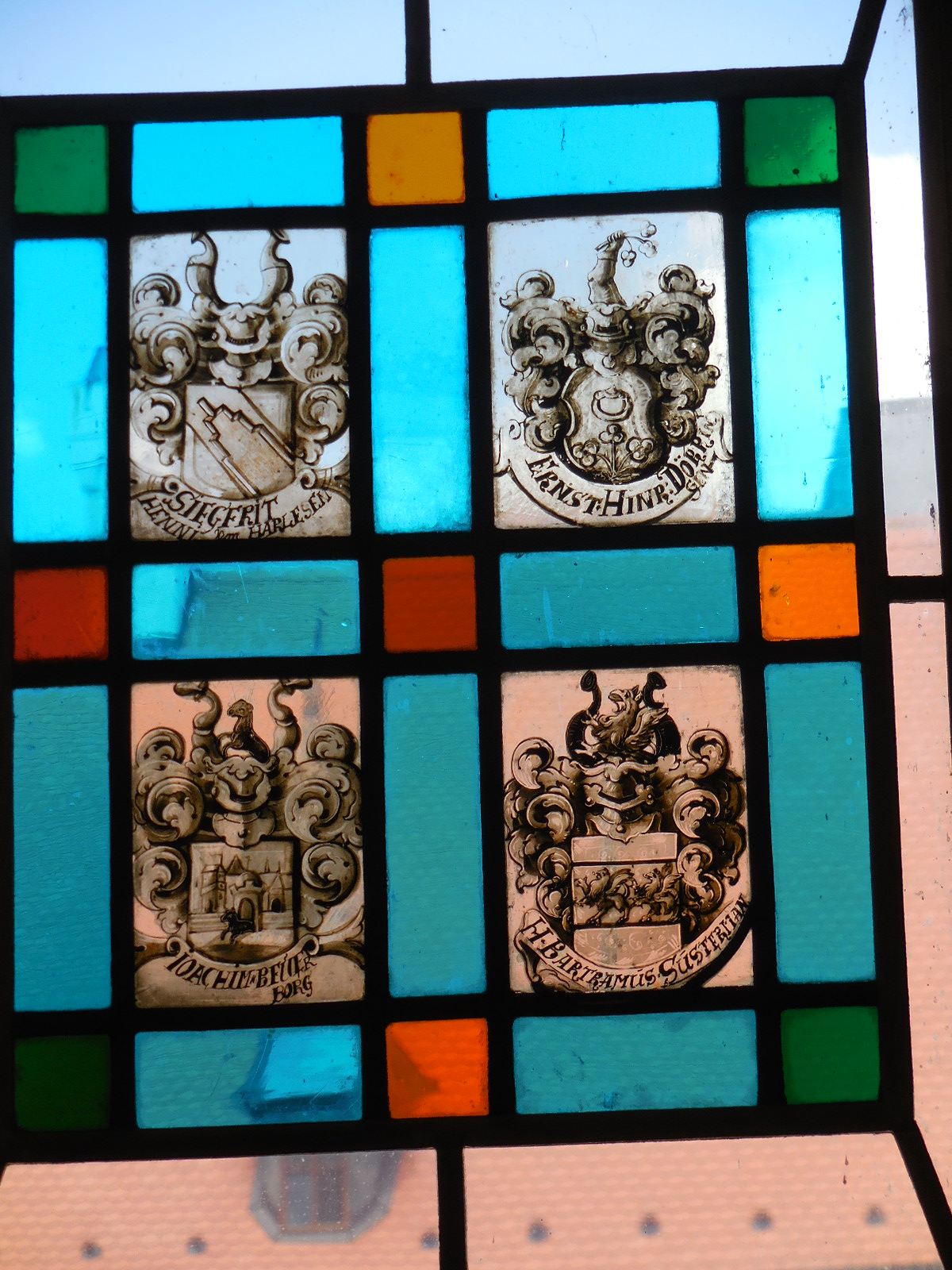
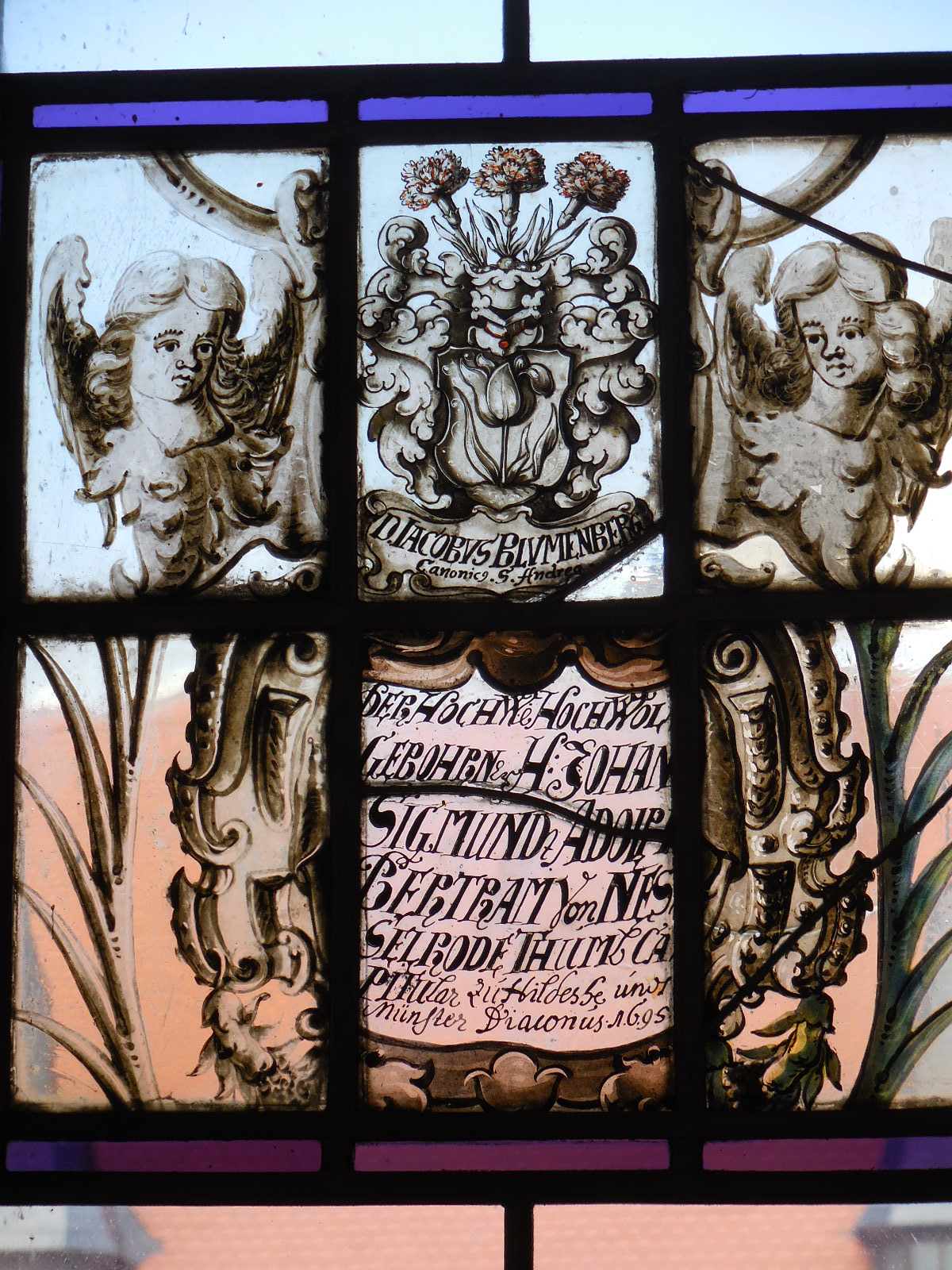
We entered the Knights’ Hall, which was decorated with 14 knights’ armors from the 16th century, hunting trophies, pistols and swords –  one with red and green gem decoration in the hilt caught my eye –  as well as 188 painted glass pictures covering one wall. These glass paintings hailed from 1503 to 1749 and were decorated with allegorical figures, biblical scenes and coats-of-arms. I spotted the coat-of-arms of the Auersberg family above the doors. Three paintings from the beginning of the 16th century showed tournament and banqueting scenes. The ceiling featured stucco designs. An intarsia-designed credence was a delight, too.

Zleby2020int23Zleby2020int24Zleby2020int30Zleby2020int32

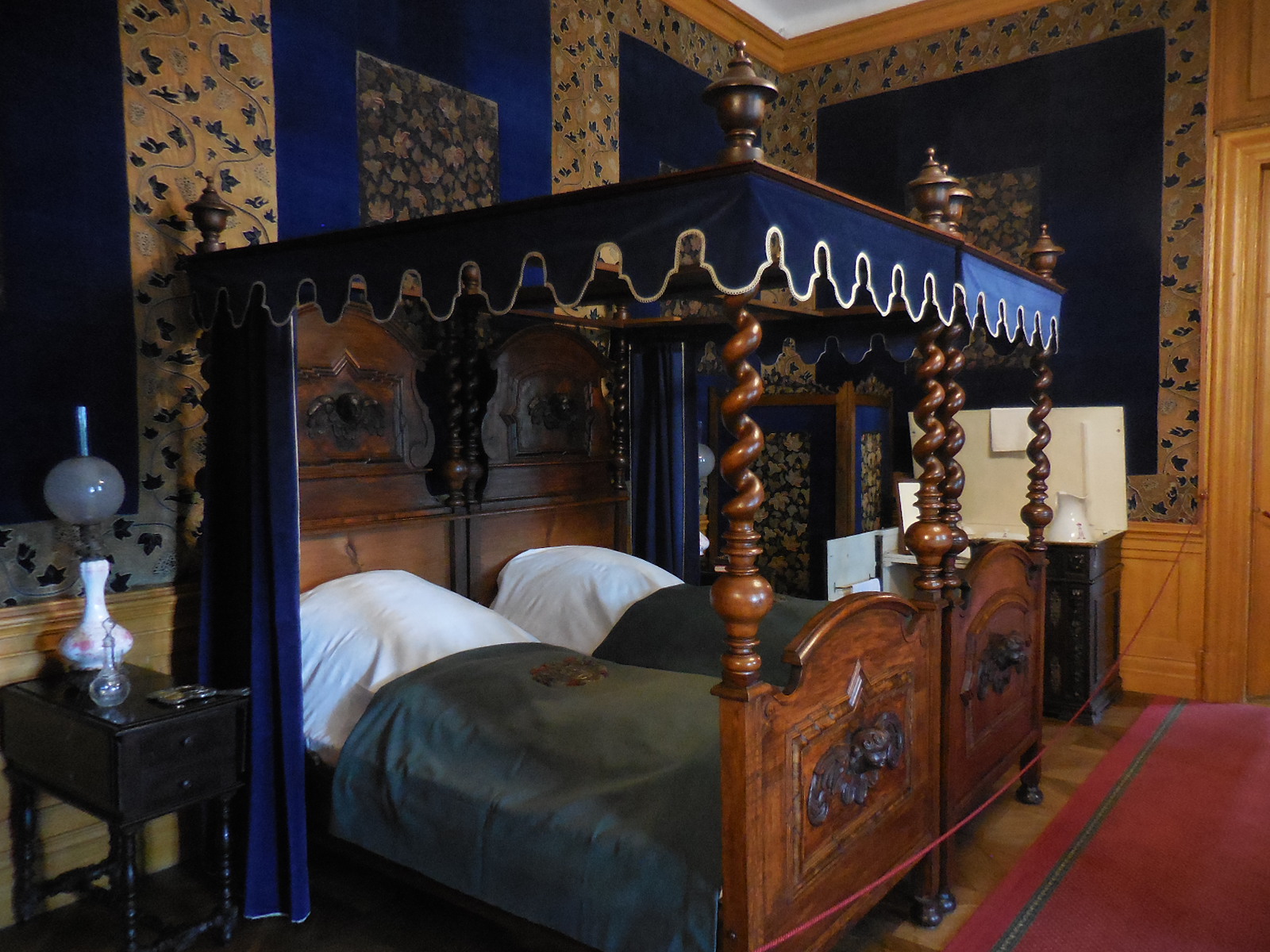
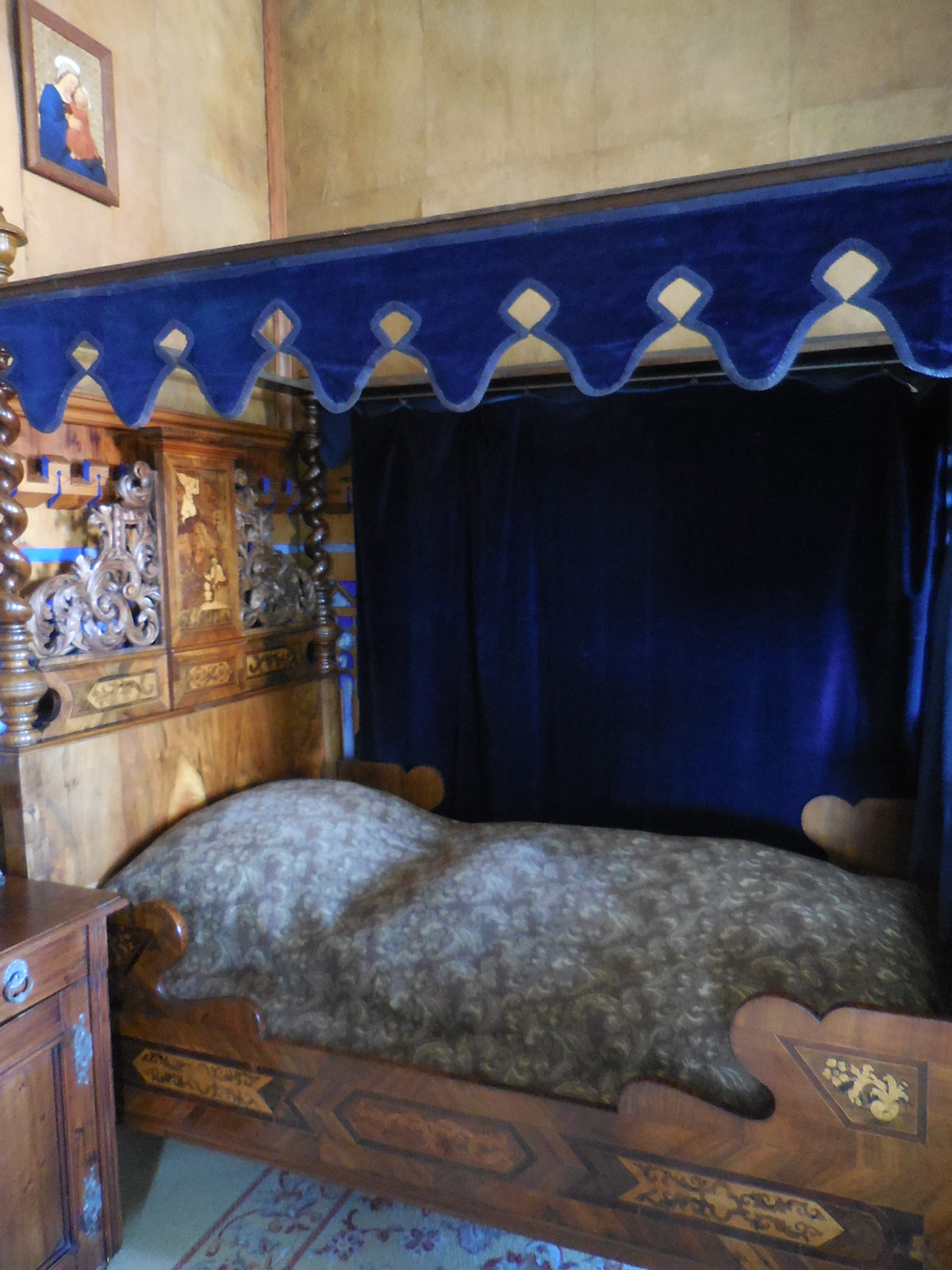
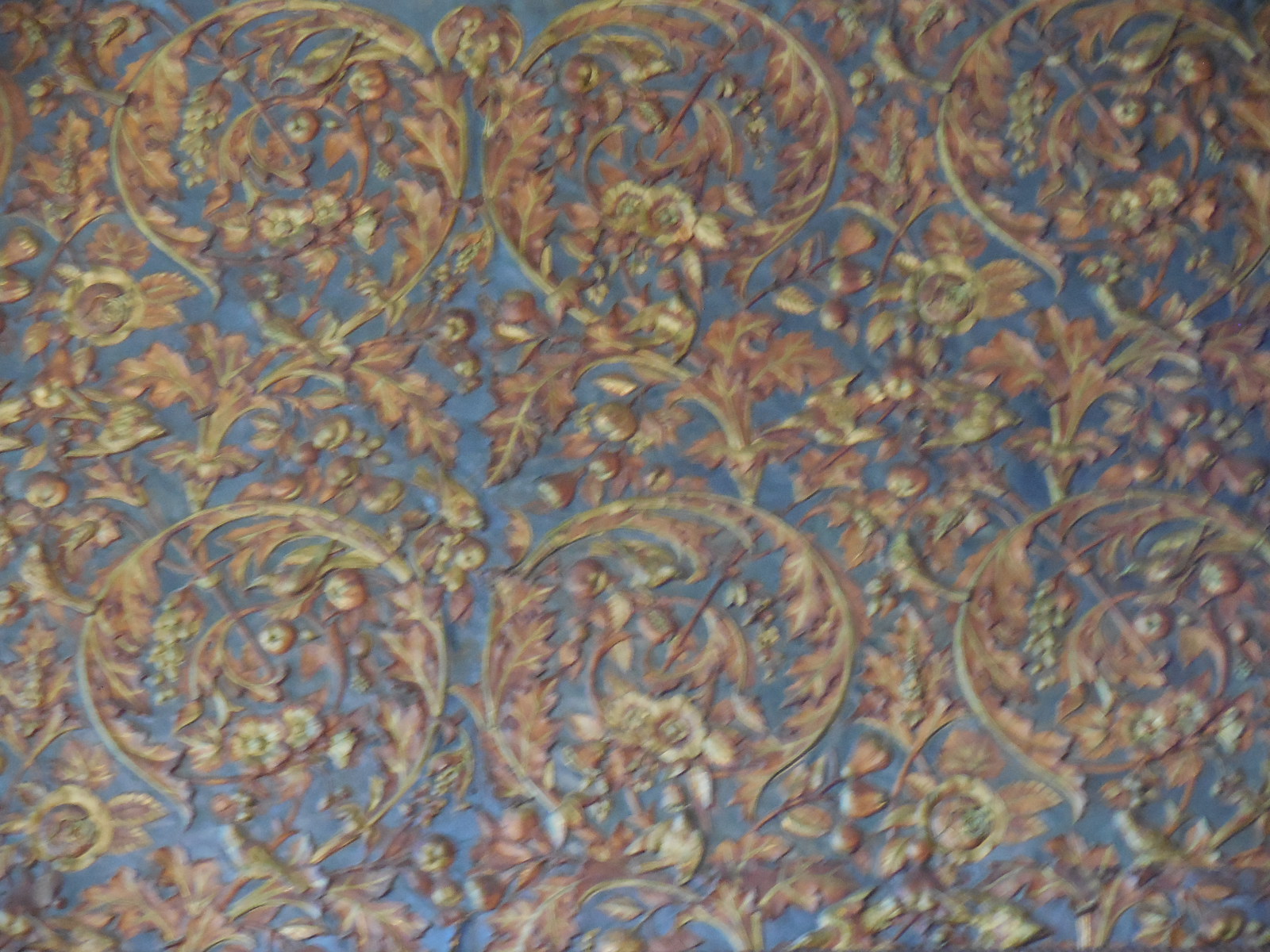
We went through the Emperor’s Room with its white swirls and flowers on brown wallpaper and dark brown table with white swirl decoration on the top. Then we moved on to the bedroom, where a brilliantly colored triptych from the 15th century entranced me. The gold and red colors complemented each other. A huge Baroque bed featured columns and a canopy. On the white tiled stove I saw scenes in nature. I noticed the sea, cliffs and a castle in the landscapes. A black and gold jewel chest was riveting as was an intarsia brown table. The golden wallpaper made an everlasting impression on me. Made with leather, it showed flowers with greenery and golden grapes. Little did I know that even more fascinating leather wallpaper awaited me in other rooms.

Zleby2020int78Zleby2020int82Zleby2020int90

The Prince’s Study was next on the agenda. The velvet leather wallpaper, colored dark blue and decorated with flowers, also heated the room. An intarsia closet was exquisite. In the Travel Room, silverware was packed in a box that fit into a portable chest that could be lugged around during journeys. The bed itself was enthralling – it could be packed up, appearing as a closet with intarsia design. A travel toilet in a box resembled a crate.

Zleby2020int14Zleby2020int16Zleby2020int20Zleby2020int21

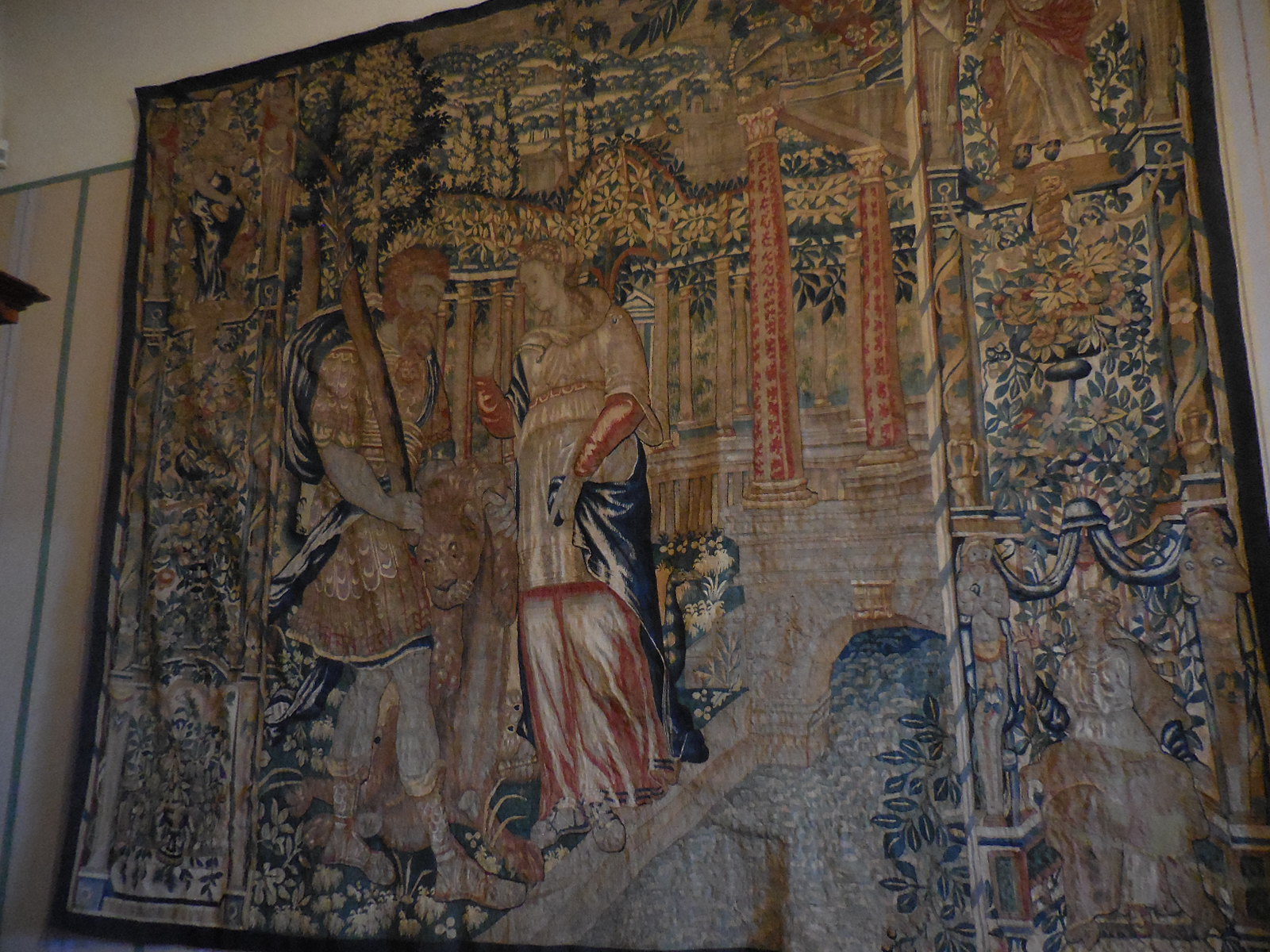
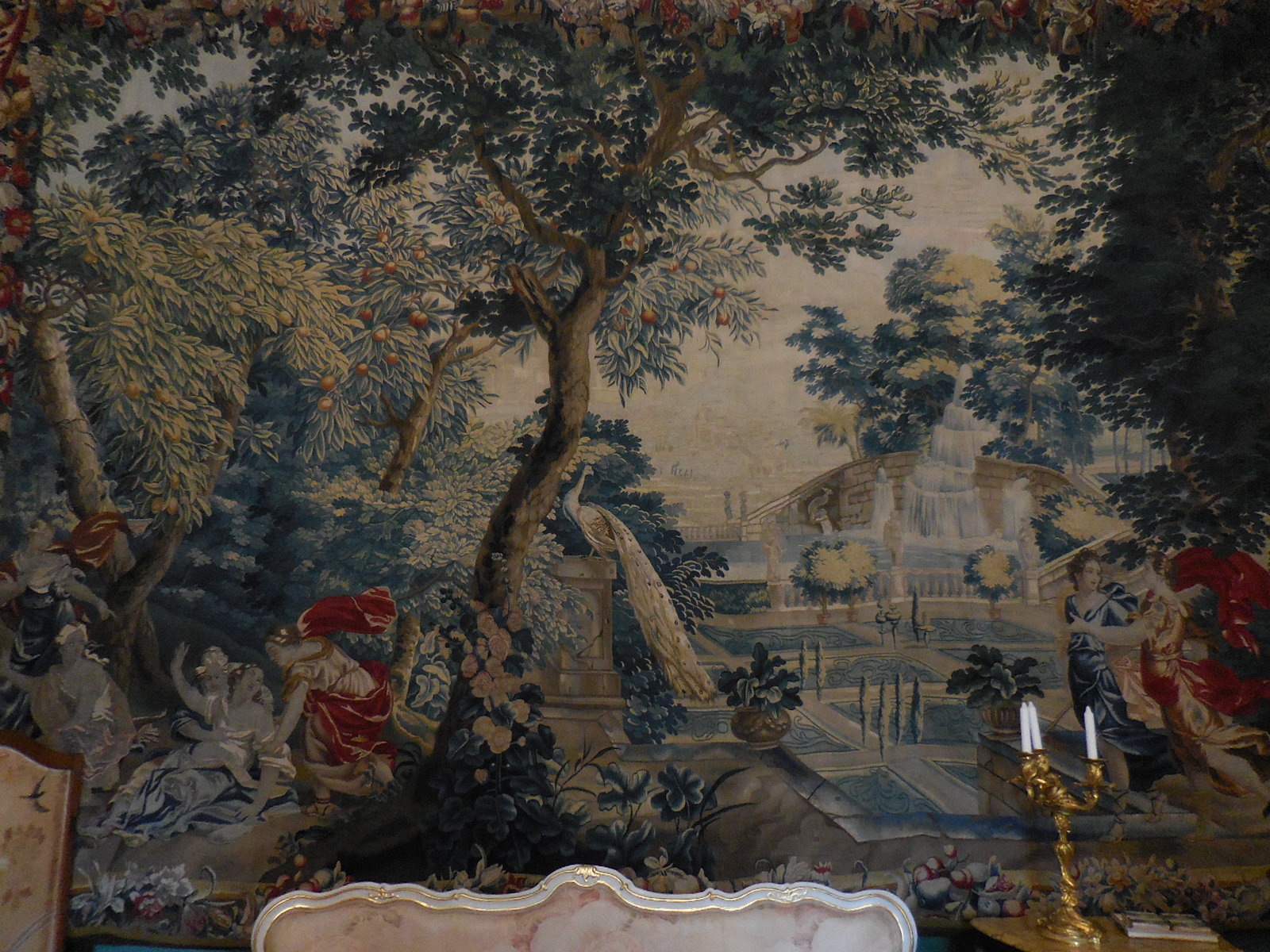
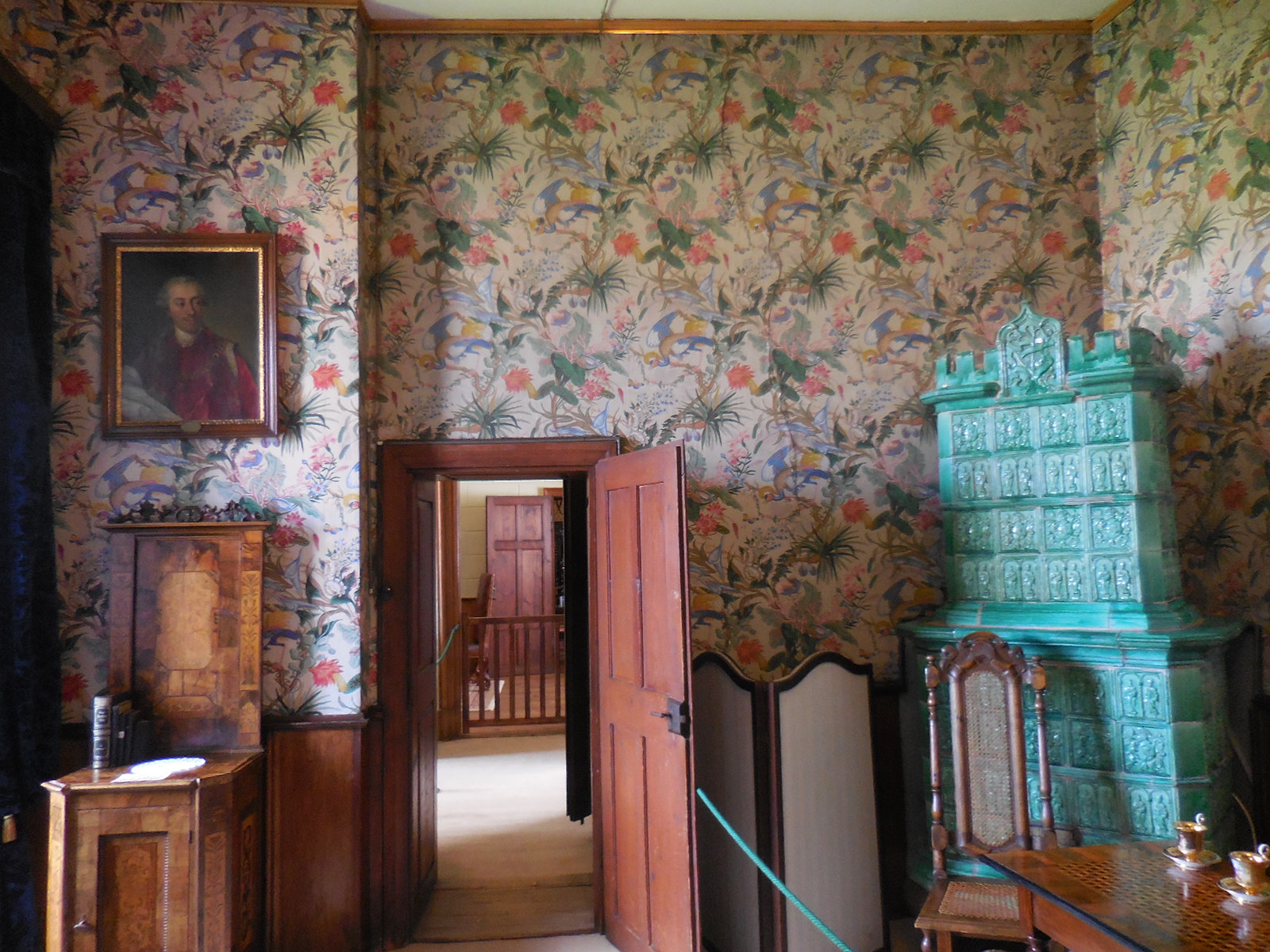
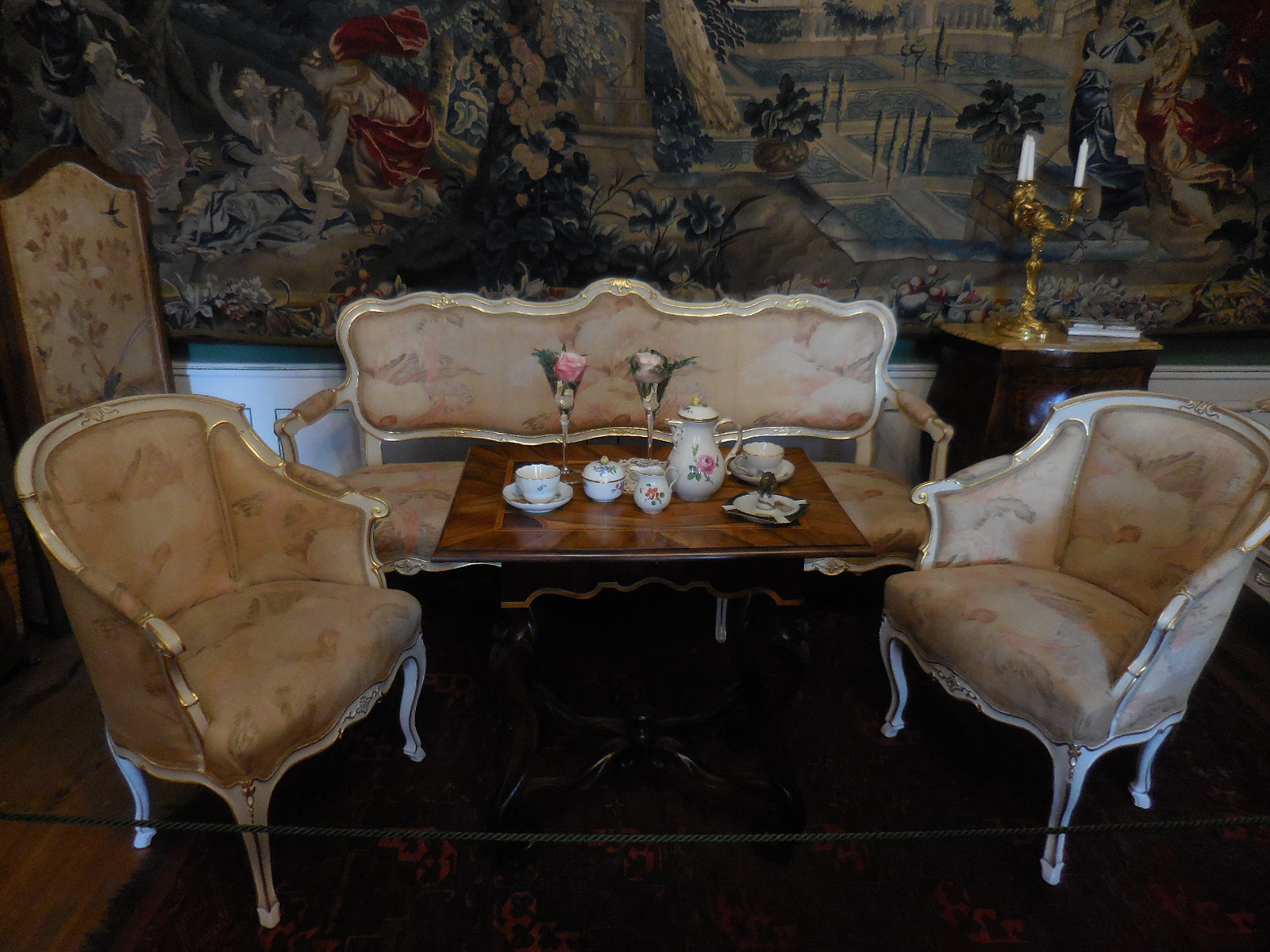
The Rococo Salon was dominated by a tapestry featuring fountains, trees, apples, peacocks and well-dressed women taking a stroll through the idyllic scenery. Again, the wallpaper amazed me. This time it was decorated with flowers and birds. The leather wallpaper in this chateau brought to mind that fascinating leather wallpaper at Šternberk Castle in central Moravia.

Zleby2020int51Zleby2020int54

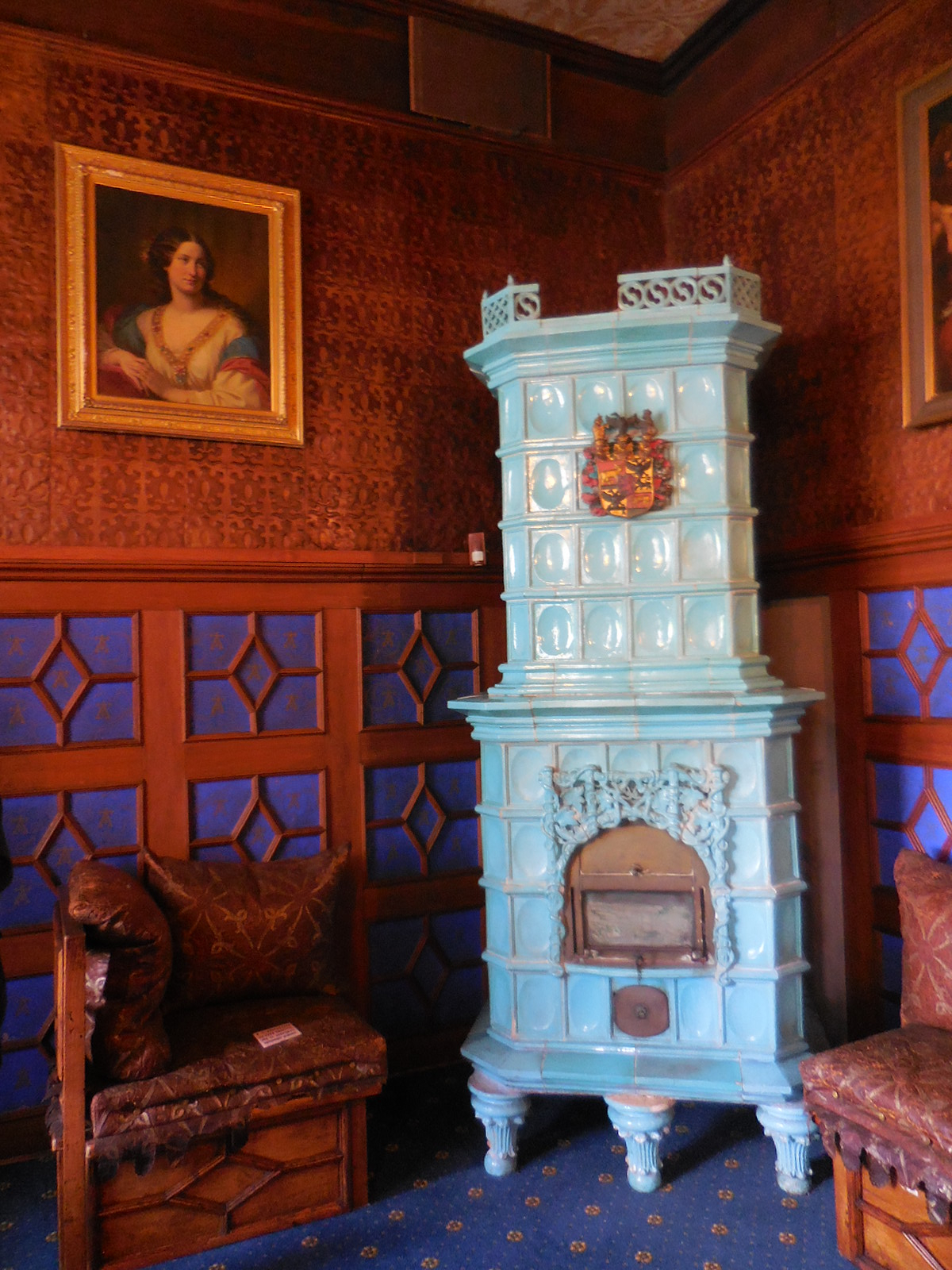
Soon we came to the Small Men’s Study with its daiquiri tiled stove that boasted coat-of-arms – just one of many tiled stoves that would bewitch me with its beauty. The leather wallpaper above the desk consisted of royal blue and brown swirls. I also peered at ancient books with delicate, brown and gold bindings.

Zleby2020int38Zleby2020int40


From there we entered the representative rooms. In the hallway the chairs had carved, wooden figures in their backs, and the bench also had a finely carved back displaying coats-of-arms. In the Thirty Years’ War Room the walls were covered in Late Gothic carved wood paneling with swirls cut into the wood. Elegant, dark chairs complemented ivory rifles and swords as well as helmets. There were two secret doors in the room – one led to a dry toilet and the other to the downstairs library.

Zleby2020int75Zleby2020int79Zleby2020int80Zleby2020int86

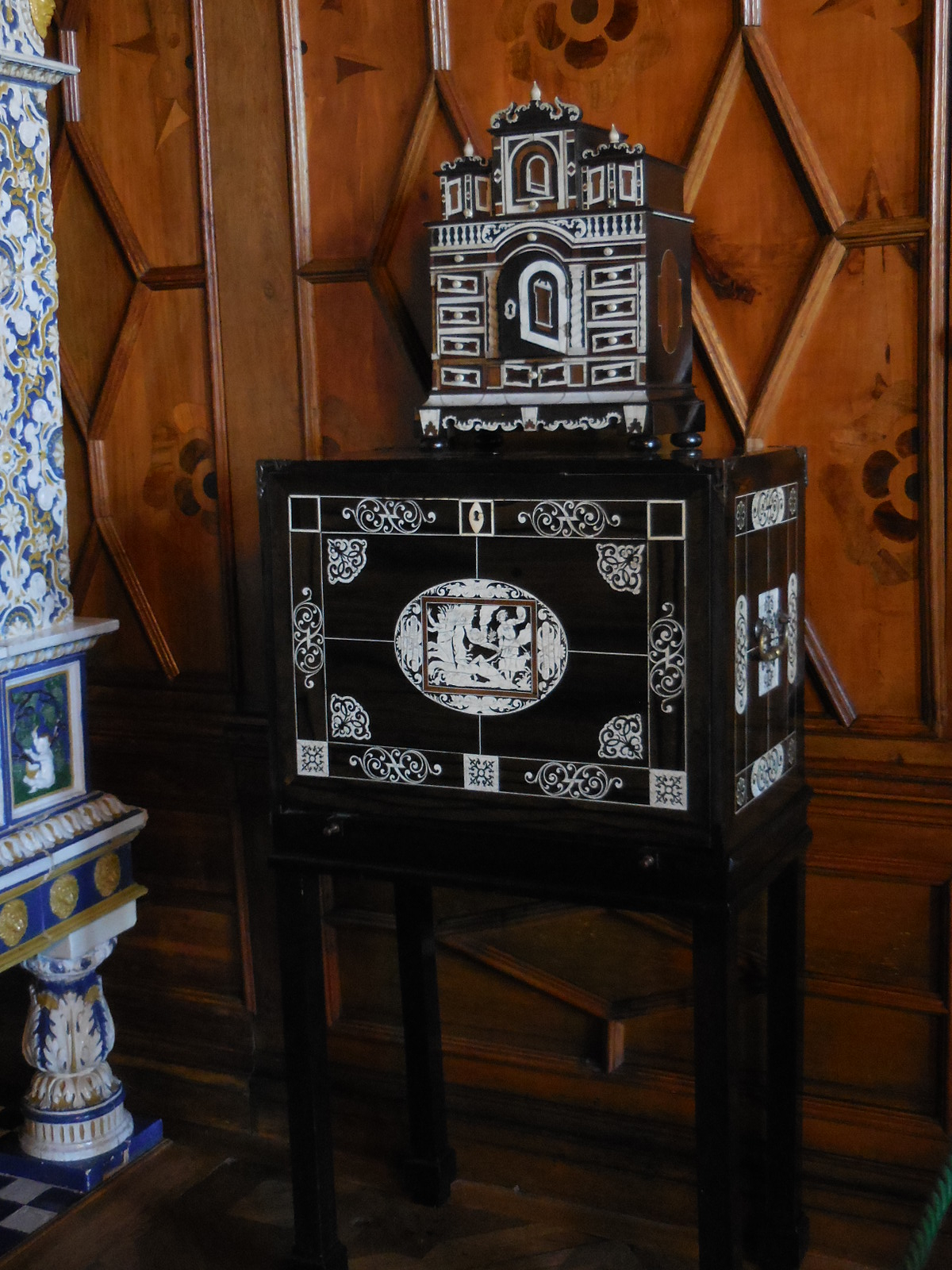
The upper floor library consisted of 6,000 books and 6,000 engravings. The big books had beautiful spines. Smaller books were set on shelves high on the walls. The Gallery enthralled as well. Engravings made up one display case. Paintings on the walls included those with animal scenes and a delicate still life of fruit. The leather wallpaper came from 72 deer. The walls were decorated with wood paneling featuring the geometric motif of the Auersberg “A”. There was also a Renaissance dagger that caught my attention. The coronation sword of Emperor Ferdinand I was compelling, too. A Baroque ebony bureau was made of ivory and tortoiseshell.

Zleby2020int91Zleby2020int94Zleby2020int97

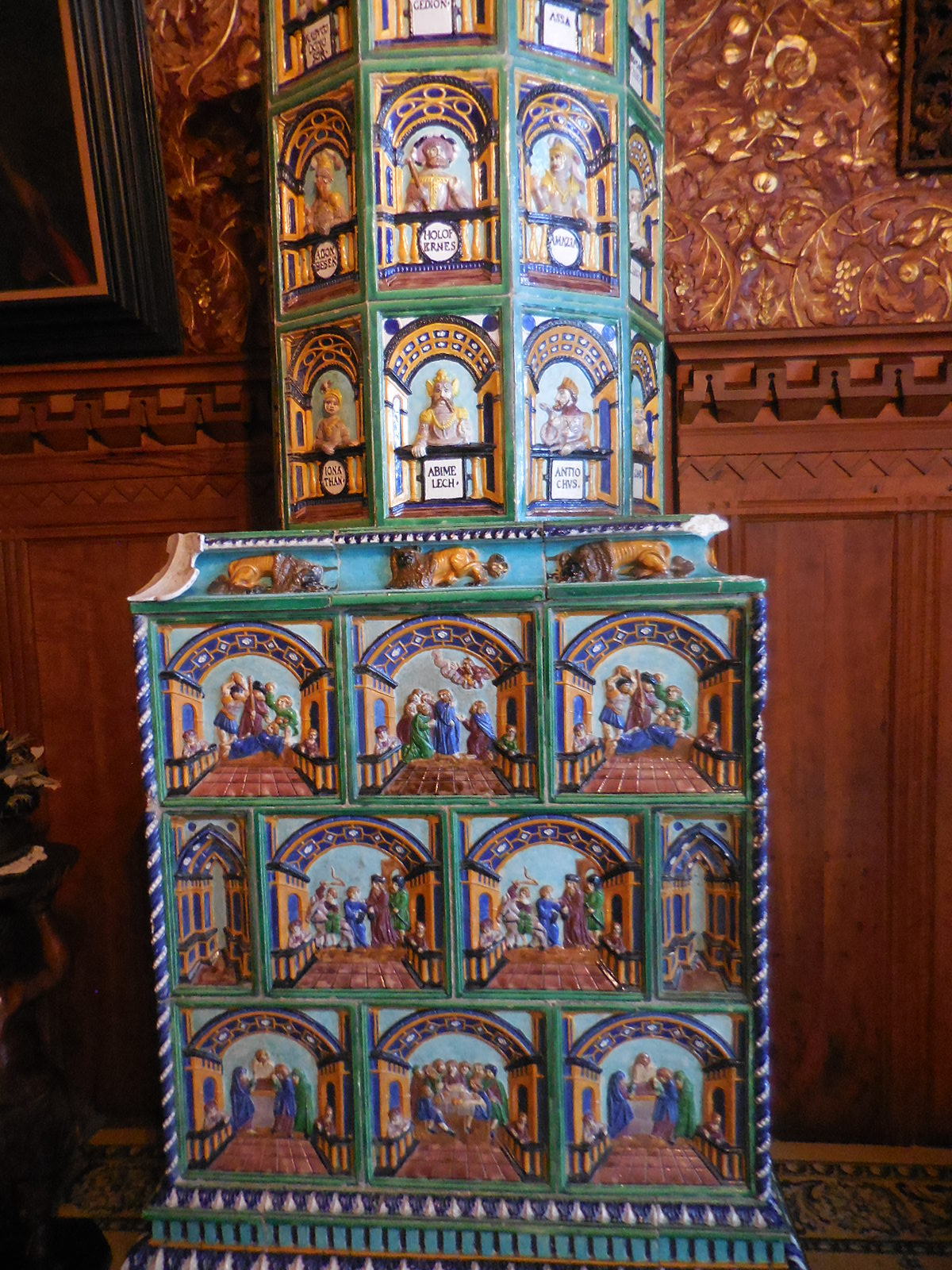
The Red Room, though, had the most enticing wallpaper, with its gold and red ornamentation. A painting on the ceiling showed fluttering cherubs.  The Late Renaissance tiled stove from the 16th and 17th century featured Old Testament scenes in the upper part and New Testament scenes in the lower section. The green and brown colors made it attractive as well. The door with intarsia dated from the Renaissance, from 1573 to be exact, and used to be part of the Jihlava town hall. Above me was a beautiful, coffered ceiling.

Zleby2020int11Zleby2020int15Zleby2020int16

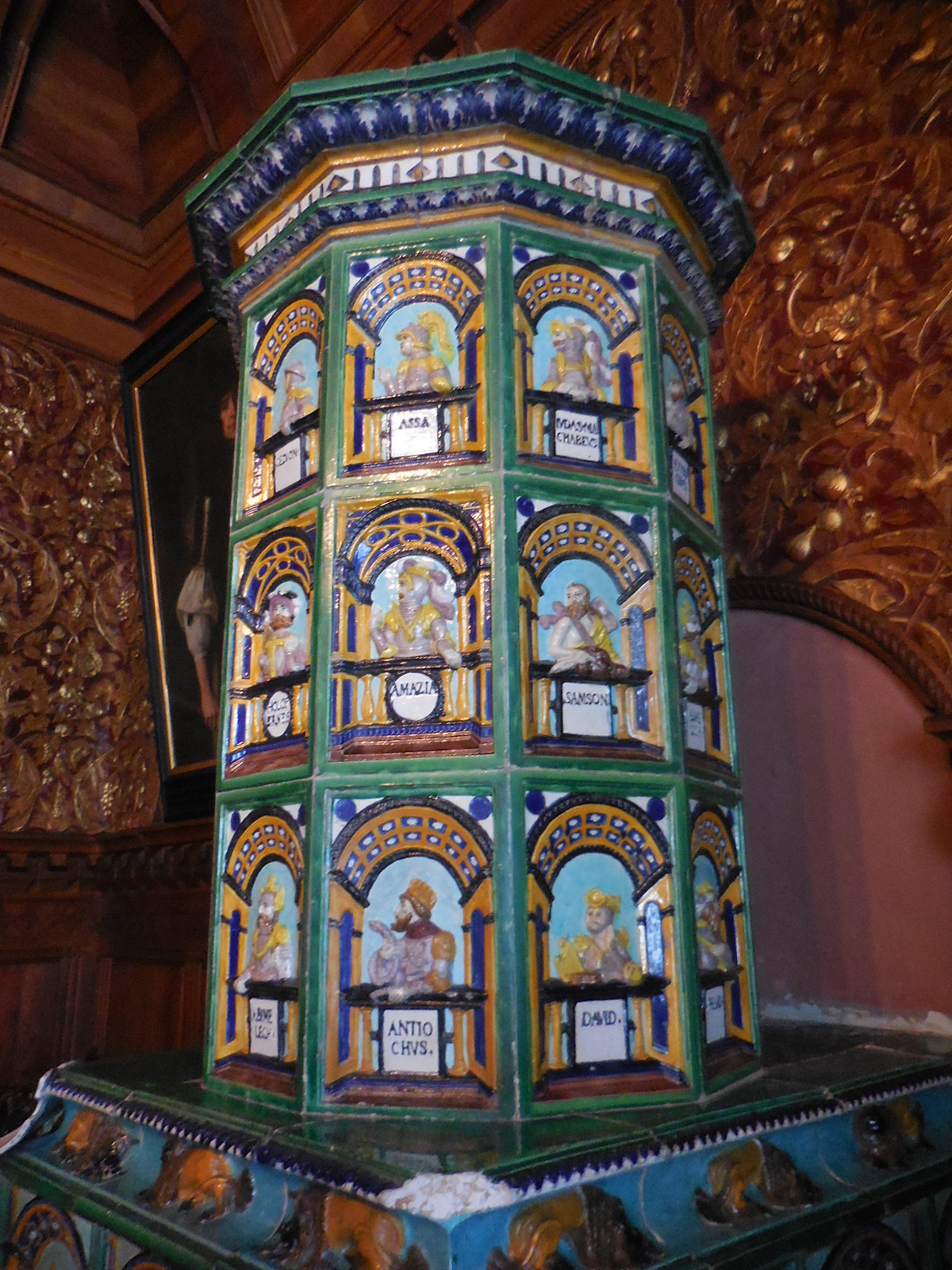
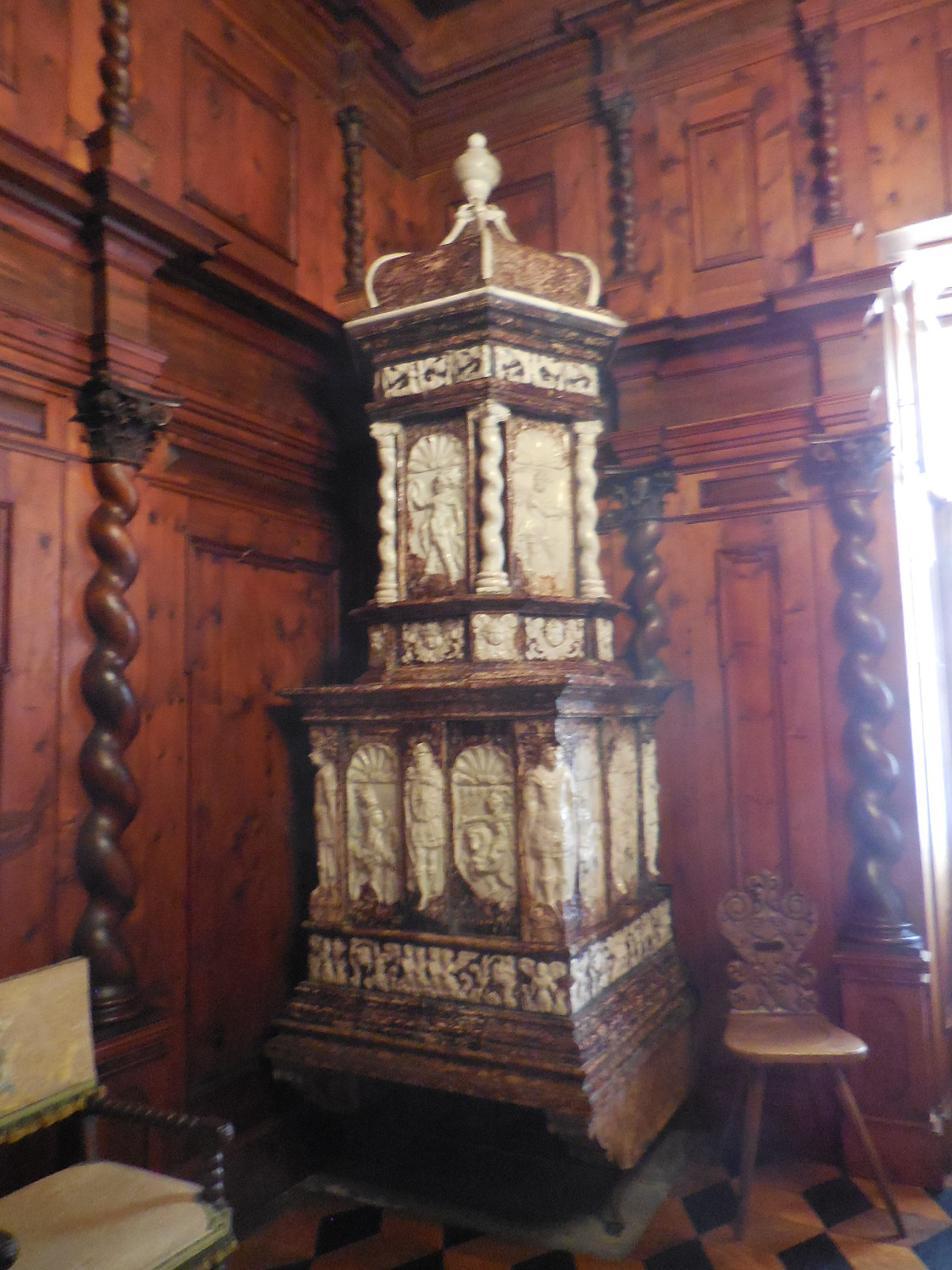
The Tyrol Room boasted a Baroque tiled stove from the Tyrol region that was just as captivating as the one in the Red Room. The brown stove showed scenes from mythology in white relief. The swirling, white columns on the stove were complemented by the swirling, pine wood columns in the wood paneling hailing from the Tyrol. A wooden Rococo sleigh for children looked precious. A Delft fajan vase was exquisite, and on the walls were impressive fajan plates.

The stunning Blue Salon was decorated with the biggest tiled stove in the chateau, a blue, white and mustard yellow piece hailing from Bavaria and featuring grape harvest scenes from that region. A rare black desk was complemented by gemstones. A Spanish-Moorish bureau from the 17th century graced the room as well. A  Baroque ebony cabinet hailed from 17th century Germany. The walls in the lower half of the space were decorated with light wood panels while the upper part included blue and gold leather wallpaper. I looked up at the wood, coffered ceiling. It was astounding.

Zleby2020int98Zleby2020int99Zleby2020int102Zleby2020int103

The Knights’ Dining Room did not disappoint, either. The biggest space in the chateau included an intarsia closet and rare hand-painted goblets with colorful figures. Swords and hunting trophies covered the walls. Another bureau in the room was decorated with an ivory engraving of a man on a horse, spearing a boar.

Zleby2020int100Zleby2020int101

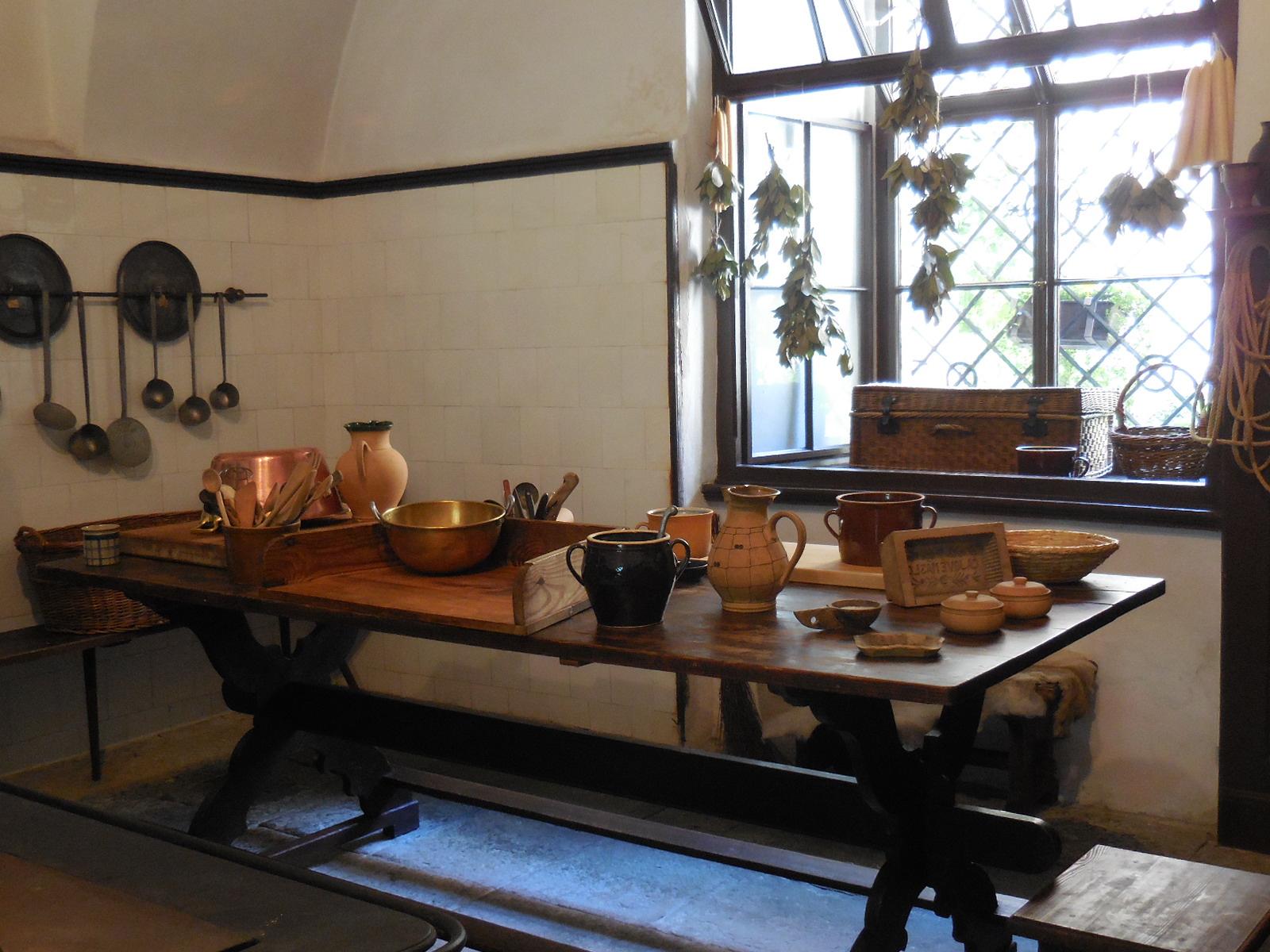
Blue-and-white porcelain dominated the space where meals were prepared, and rare rose porcelain from Slavkov in Moravia was exhibited in the kitchen itself with its huge, astounding brickwork. Blue-and-white English porcelain was displayed on a table. A unique, 19th century, cylindrical grill stood out. The kitchen smelled like a bakery. Chateau employees in historic dress were baking bread. A boiling house and smoke house were attached, too. The stove dated from the 19th century.

Zleby2020int104Zleby2020int105Zleby2020int106

After the 10 of us on the tour sampled some homemade Easter bread, the eloquent and enthusiastic guide said goodbye. I took a few more photos of the romantic, fairy tale façade with elegant gate before heading to the park. Then I walked down the street to a pub for a fattening, yet tasty, lunch of beef and dumplings. From the pub window I gazed at the chateau. I felt as if I was a trance. I was so drawn to the chateau. I knew that soon I would have to wake up from my trance and get on the train to Čáslav, where I would switch to a Prague-bound train. Looking out the window at the chateau, I decided that I had had a great day. I just wished that more tourists would visit the chateau that was located only 18 kilometers from Kutná Hora, a major attraction.

Tracy A. Burns is a writer, proofreader and editor in Prague, Czech Republic.

Zleby2020int39Zleby2020int57Zleby2020int58Zleby2020int60Zleby2020int61Zleby2020int62

Bauer Villa and Czech Cubism Diary


Bauer Villa

Bauer Villa


I had traveled with Arsviva, a Czech tour company that specialized in trips that emphasized art and architecture, to Sicily for 11 days in May and had enjoyed a thrilling experience full of breathtaking sights, all made more fascinating thanks to a terrific guide. This time I was on a day trip to sample Cubist architecture in central Bohemia. As we started out at seven in the morning, I thought to myself how I had always been attracted to Cubism and to the way the style assembled shapes in abstract forms utilizing many perspectives. I had found the Pablo Picasso museums in Paris and Barcelona to be breathtaking. Georges Braque’s work also bewitched me, especially in the Centre Georges Pompidou. In terms of Czech Cubism, I was most drawn to the paintings of Josef Čapek, who had also, along with his exceptionally talented brother Karel, scribed some impressive plays.

First, we went to the Evangelist church in the village of Pečky. The monument to Jan Hus near the church reminded me of the first time I had seen the monument to the 15th century martyr on Prague’s Old Town Square, a place where I immediately felt a sense of belonging during my visit as a tourist in 1991. Hus had been a Czech priest, reformer, philosopher and teacher who was burned at the stake on July 6, 1415 for not preaching according to the doctrines of the Catholic Church; he stands out as a leading light of the Bohemian protestant reformation.

Evangelist church interior

Evangelist church interior

Designed by Oldřich Liška, the Cubist interior dated from 1914 to 1919. The church was adorned in new modern style with Cubist features. The pews, the pulpit and the organ all exhibit Cubist tendencies.  Inside the church I was especially captivated by the four Cubist chandeliers and the star patterns engraved on the sides of the wooden pews. The Cubist elements blended in with the relatively stark interior, not making a glaring, loud appearance but rather embracing the church in a subtle, sensitive style.

Cubist chandeliers

Cubist chandeliers

Next, the bus took me and the other 40-some passengers to another village called Libodřice, where, all of a sudden, a Cubist villa magically appeared.  No other Cubist villa was located in the Czech countryside, I would find out. I was instantly reminded of a Cubist villa in the Vyšehrad district of Prague. I had walked by it every day on my way home from the when I lived below Vyšehrad hill. Passing by such an architectural wonder every day made me feel calm, momentarily at peace with the world and all the wonders it brings.

I was especially drawn to the framed windows of the Bauer Villa, decorated in star patterns. The large mansard roof blended into the design as well. The abstract, broken shapes appealed to me.  The villa boasted block stereometric articulation. Stereometric encompasses forms such as the cone, cube, pyramid and sphere – geometric shapes. Three polygonal buttresses were combined on one side of the villa. I was impressed with the slanted form of the main cornice, too. There were not just Cubist elements apparent inside and outside the villa; the entire building embraced the style in a form that did not disturb the tranquil landscape.

Windows of the Bauer VillaLegendary Czech architect Josef Gočár, who made a name for himself during the early 20th century in the Czech lands, designed the Bauer villa early in his career, between 1912 and 1914. Later, this pioneer of architecture would devote time to the styles of Rondocubism, Functionalism and Constructivism. His works are scattered throughout the Czech landscape, featured in Prague, Pardubice and Hradec Králové, for instance. Gočár had studied under the tutelage of famous Czech architect Jan Kotěra, who had was influenced by late 19th century styles along with Modernism. In 1911 Gočár chaired the Cubist Group of Visual Artists. Its members included Pavel Janák (who had also worked with Kotěra); the Čapek brothers; Otto Gutfreund, a renowned sculptor who also fought in the Foreign Legion during World War I; and Vlastislav Hofman, who was accomplished in architecture, painting, graphic art, furniture design and writing. Hofman even designed about 400 sets for plays, including 200 for Prague’s National Theatre.  A year later Gočár helped set up the Prague Art Workshops, designing Cubist furniture with Janák, who is best known for designing the Baba colony residential area in Prague’s sixth district.

Gazebo at Bauer Villa

Gazebo at Bauer Villa

Gočár’s first major projects included a staircase for the Church of the Virgin Mary on a square in Hradec Králové during 1909 and 1910. In 1910 he also designed the living quarters of a cavalry barracks in Bohdaneč. In Pardubice during 1909 to 1911 he designed the Winternitz automated mill and also concentrated on the Wenke department store in Jaroměř.  In 1912 he was one of many Czech artists to convert to Cubism, utilizing simple geometric shapes juxtaposed without illusions of classical perspective. He teamed up with Janák to build the first Czech Cubist building in Prague – the reinforced concrete House of the Black Madonna, which featured angular, bay windows, a Baroque double roof and Cubist ironwork on the balcony. Like the Bauer Villa, the House of the Black Madonna did not interfere with the atmosphere. Instead, it complemented the historic environment of downtown Prague.

The Bauer Villa was constructed for Jewish entrepreneur Adolf Bauer, who owned the manor farm estate. The investor and his family lived there from 1914 to 1929, when Bauer died of diabetes. Bauer’s widow remarried and moved to Prague with her two daughters, and from 1931 Antonín Illmann took care of the villa and the farm. The Jewish Bauer family was sent to their deaths during World War II. In 1941 Nazi Augustin Juppe moved in to what had been the Bauer family home. After the war the villa was occupied by administrative offices of the City Council. A hairdresser’s salon, a library and a few apartments also took up space in the villa.

The back of the Bauer Villa

The back of the Bauer Villa

Finally gaining recognition, the Bauer Villa was accorded the status of a cultural monument in 1987. Despite that, it became more and more dilapidated. Its poor condition finally led the municipality to sell it in 2002 to the Foundation of Czech Cubism. Extensive reconstruction costing approximately 25 million Czech crowns took place, and the Cubist creation was open to the public during 2008.

The expositions in the villa featured Cubist furniture, ceramics, paintings and sculptures as well as informative displays about the Bauer family, Gočár and about Czech Cubism in general. Today there is not much original furniture in the villa, though a few pieces had been salvaged – the fireplace, a wooden closet and the bathroom tiles.

The central staircase hall had been inspired by British villa architecture. I was reminded of the staircase hall in Dušan Jurkovič’s villa in Brno. At the beginning of the tour, I was impressed with a unique coat rack in Cubist style and two chandeliers, one made by Janák and another by Ladislav Machoň, who would become a prominent exponent of Art Deco and Functionalist styles. Machoň’s designs dot Prague. His interior of the Law Faculty of Charles University is probably his best known work. There was also a dark, gloomy painting of Faust on one wall of the Bauer Villa. I wondered how the theme of Faust fit in with the Cubist movement, if indeed it did.

 In the bedroom I noticed a still life painting with a goblet by František Volf and a bewitching, black Cubist chandelier. The bedroom was joined with a bathroom on the ground floor. Usually, during that period, the bedroom and bathroom would be situated on the first floor. The living room featured furniture made by Hofman in 1911 and 1912, a wall clock and chandelier. I was especially intrigued by the Cubist flower pot with its cover in the same style. Then, again in the hallway, I admired the linocuts by Václav Špála and Josef Čapek, two of my favorite Czech Cubist artists.

The Bauer Villa

The Bauer Villa

Then we went upstairs via a  beautiful staircase. Exhibition Room II featured furniture by Gočár and sculptures by Gotfreund. In his sculpture “Anxiety” I was aware of a certain tension permeating from the female’s drapery. This work, made between 1911 and 1912, was considered the first Cubist sculpture, though the one in the room was not the original. Other objects on the first floor included tea cups, metal and brass boxes and vases designed by Hofman and Janák. The bedroom was Hofman’s design from 1912 to 1914 with a black Cubist bed, more sculpture by Gotfreund and a chandelier hailing from that era. The study featured the style of Rondocubism, an offshoot on Cubism born after the creation of Czechoslovakia in 1918. Rondocubism featured folk and nationalistic themes with curls, circles and folkloristic elements. I was especially impressed with Janák’s green chair made of walnut.

Our guide had been informative and enthusiastic, and I was excited that I discovered another gem in the Czech Republic. I thought this would be a good half-day trip from Prague for foreigners visiting the capital city, but I doubted any tour agency offered such an excursion.  The arsviva tour company’s excursions were in Czech, so it would only appeal to foreigners who were fluent in the language. I understood why Karlštejn Castle and Konopiště Chateau drew so many crowds, but still it was, I felt, highly regrettable too that such an extraordinary Cubist villa in the countryside should remain relatively unknown.

Kotěra Chateau

Kotěra Chateau

Next on the itinerary was the Ratboř Chateau, also called the Chateau Kotěra, built between 1910 and 1913 for Bernard Mandelík, who owned a manor farm estate and sugar refinery. The new chateau (as opposed to the old chateau also on the estate) was designed in Czech modern style by Kotěra and served as a restaurant and hotel.  It is notable architecturally for its vestibule, staircase and entrance to the restaurant as well as for its guest rooms. The building is frequently used for weddings and conferences, too, and it had its own parkland.

A large, circular fountain stands in front of the façade. The cupola is decorated with two statues by legendary Czech sculptor Jan Štursa, who founded Czech modernist sculpture and was also an influential pedagogue. He began his career inspired by the symbolism of the Viennese Secession, and after World War I concentrated on depicting the horror and tragedies of wartime. He created a Cubist relief for the Mánes Bridge in Prague.

Fountain at the Chateau Kotěra

Fountain at the Chateau Kotěra

In the first guest room we saw a bookcase that had been designed by Adolf Loos, who was known for his lack of ornamentation. A severe critic of the Viennese Secession when the movement had been in full swing, the Brno-born architect who had spent much time in Austria had focused on purism and minimalistic design. The walls were decorated in green and blue with a lovely plant motif.

Cubist furniture

Cubist furniture

Another space featured original furniture, including a bed with canopy, table and bookcases. From the terrace there was an impressive view of the fountain and surrounding greenery with sculptures. It was also possible to see the statues on the cupola from a riveting, close perspective. A medallion sporting the letter “M” standing for the Mandelíks in green with dark brown wood decorated the railing. In another bedroom I was impressed with a Cubist bedframe and a Cubist chandelier that spoke of simplicity with a sense of style.

Cupola of Chateau Kotěra

Cupola of Chateau Kotěra

After lunch we visited Cubist creations in Kolín and Poděbrady. In Kolín I saw the main square for the first time, and the Neo-Renaissance town hall caught my attention as did the Baroque facades, plague column and fountain. We gazed at Rondocubist apartment buildings dating from 1921 to 1923, the former town savings bank from 1926, the municipal theatre dating from 1937 to 1939 and a high school with magnificent Cubist elements, especially the windows, designed in 1924. The bridge across the Labe River was architecturally impressive and had been built during the 1920s.

Cubism in Kolín

Cubism in Kolín

In the spa town of Poděbrady, we walked through a beautiful park and a neighborhood rich with villas with Cubist elements. At our second to last stop, in Poděbrady, we were able to admire the Amálka Villa from 1910, the Kouřimka Villa from 1909 to 1910 and the Obereigner Villa from 1898. We also took in the spa buildings on the promenade, fascinating structures designed by František Janda from 1907 to 1911. Previously, I had only changed trains or buses in Poděbrady, never realizing how much there is to see here.

Cubism in Poděbrady

Cubism in Poděbrady

While we were in Poděbrady, we had extra time to spend in a café famous for its desserts. Unfortunately, it was also famous for its poor service as it took the waiters an agonizingly long time to fetch coffees and cakes. I was joined by a friendly and interesting family, an adult son with his parents.  He had given his parents this trip as a Christmas present the previous year. I talked to them about my baseball and ice hockey careers growing up, attending Jaromír Jágr’s summer training camp in Slaný and sights I had seen in the Czech Republic.  The father and I reminisced about Czech and Slovak hockey players who had defected to the NHL some decades ago. For me the names Peter Šťastný and Milan Nový brought back childhood memories. In my opinion, the highlight of any tour was meeting nice people, no matter how exciting the particular excursion might be. I have had some negative experiences in the country over 21 years, but meeting kind Czechs always has always made the hardships worthwhile.

Cubist facade in Poděbrady

Cubist facade in Poděbrady

On the way back to Prague, we stopped at the Beniesova Villa in Lysá nad Labem. The villa, created by Emil Kralíček for the owner of a sugar refinery, is known for its big entrance hall with light roof window in the shape of the Star of David and crystal motives that denoted the process of manufacturing sugar. It was sad, though, to find the villa in such a dilapidated state.  The villa was fenced off; there was no possibility to see what sounded like a ravishing interior. If only someone had donated enough money to restore it to its original beauty. . . . If only. . . . It depressed me to think that people could let such architectural wonders fall into such poor condition, that there was not enough money to restore significant buildings to their former splendor.

My depression ceased by the time we returned to Prague around seven in the evening.  I felt grateful that I had had the opportunity to make new friends and to go on such a fascinating excursion.

Tracy A. Burns is a writer, proofreader and editor in Prague.


Beniesova Villa

Beniesova Villa


Slatiňany Chateau Diary

 Image

I was excited. I was actually travelling to a chateau I had never been to. This was not a return visit after a 10 or 12-year absence. I had not even known that Slatiňany existed before I flipped through a book listing all the castles and chateaus in the land and came upon the page by accident. Then, at Žleby Chateau, I heard the chateau’s name connected to the Auersperg family, who owned both properties for more than 200 years.


Slatinany10124

The tranquil Winter Garden as seen in 2024

This time I had to change trains at Pardubice, an hour from Prague, and then I had about 20 minutes before the next train. For the first time I took the Student Agency Regio Jet and found that company’s trains to be just as comfortable and relaxing as their conspicuous yellow buses.  Student Agency got me to Pardubice on time, a little after 8:30. I had time to use the public restroom at Pardubice’s train station and was surprised that at the station of a relatively good-sized city the toilets did not flush. But I guess that is just life traveling through the Czech Republic.


Slatinany2524

The large painting with a hunting theme in the Big Dining Room

I caught the local train – a new one with a clean interior – without any delay and was in Slatiňany in about half an hour. From the miserable little train station there, it was a short, straight walk to the chateau. I arrived there a bit before 10 am, when the place would open.  I admired the side of the chateau facing the walkway. It was white with painted squares that reminded me of the Renaissance sgraffito façade of Litomyšl Chateau, though it was not at all that extravagant.

Slatinany8I also had time to take a peek at the small church nearby. Very quaint and intimate, it was designed with a partial rotunda. I peered through the open door, but it was dark inside. Still, I did make out a stunning altarpiece and some impressive paintings. I would have loved to go inside this church because the intimate atmosphere of the small, relatively plain but compelling interior made me feel at ease. It seemed to be a good place to meditate about life and its problems.


Slatinany2624

A look at the interior as viewed in 2024

At 10:00 am I entered the courtyard of the chateau. A statue with natural rock at its base showed off a small sculpture of a man on a horse. At the ticket office I paid for a ticket to the chateau interior exhibition – there was also a hippology tour – and bought a guidebook. I read about the background of the chateau while I waited for the caretaker give the tour.


Slatinany2224

Beautiful furniture as seen during a 2024 visit

At the end of the 13th century, a medieval fortress had stood on this spot, and the first owner, František of Slatiňany, managed the stronghold from 1294 to 1297. One of the later medieval owners even had a claim to fame. Václav of Slatiňany had been one of the signatories on a petition arguing against killing Jan Hus, who was accused of heresy against the Catholic Church and burned at the stake in July of 1415. (Hus was a key player in the development of the Protestant movement.)


Slatinany224

From 2024 trip to the chateau

Slatiňany was destroyed by fire several times. When Bohuslav Mazanec of Frymburk purchased the medieval fortress in 1575, he began to give the place a Renaissance makeover, and the renovations continued after his death in 1589. Not only was the chateau designed in Renaissance fashion but a mill, vineyard, brewery and malt house were also added.

A turning point in Slatiňany’s history came when Josef František, Count of Schönberg, bought the chateau in 1732 and had it rebuilt in Baroque style. A key event occurred when his only daughter, Marie Kateřina, married Jan Adam of Auersperg in 1746.


Slatinany424

From 2024 trip

Then the chateau became the property of the Auersperg family, who would rule here for 200 years, until World War II. The chateau got its present appearance from 19th century renovations during the Auerspergs’ tenure here. In 1942 the chateau became the property of Dr. Josef Karel Trauttmansdorff, who was from an Austrian noble family. After the war, it was nationalized, according to the Beneš decrees, which took away property possessed by Germans during the war. Since Trauttmansdorff had been Austrian, his properties had to be nationalized, the decrees declared.

Slatinany1In the tiny entranceway hung portraits of horses – there was a horse farm and a hippology museum on the chateau land as well. Another black-and-white portrait showed a bald, distinguished looking mustached man who the guide referred to as the popular and significant František Josef, Count of Schönberg. A bison featured prominently on the family’s coat-of-arms that was placed above the portrait. The caretaker explained that this is where the Auerspergs had lived – it was a sort of family home – as opposed to Žleby Chateau, which functioned more as a museum for all those weapons and tiled stoves among its monumental interior. Three of František Josef’s five children were born here – Kristína, Karolína and Ferdinand.  


Slatinany524

From 2024 trip

The guide also emphasized that Slatiňany was a modern chateau. There had been heaters in the place since 1925. A boiler room, a dumb waiter and flushing toilets also made up the modern conveniences.  As the guide opened a door off the entrance that had once led to the park and now contained many plants, he mentioned that in the mid-19th century there had been tennis courts, a small house for dolls and a small chapel on the grounds. Now there was only a small chapel and lake in the impressive park that features many kinds of trees.


Slatinany924

From 2024 trip

We walked up the small, narrow main staircase after putting on house slippers. Upstairs the pristine-looking, white hallway boasted pink chairs plus two tables with green and white décor and brown tops. White, porcelain horses manned by riders in hunting dress were featured in a display case. I was entranced with a mirror’s frame – it was silver but also with pink and light blue decoration. The room was indeed modern with its radiators and porcelain light switch. The pictures in the room showed views of Vienna. I immediately spotted the Graben with its Plague Column.

Slatinany7The next room was used for official visits, the guide said as he expounded on the family members in the portraits. I was also very interested in the history of the objects in the small room with many items. The first thing I noticed when I entered the room, however, was not an object but rather a smell – the stench of horse dung. Horses grazed nearby on the property, and the windows were open. I tried to concentrate on the details all around me. Maroon chairs and a couch made the space look cozy, and brown bureaus seemed to include intarsia. I admired the mirror with the ornate gold frame – it had to be Rococo. The doors and walls were white with gold décor, giving the place a light and airy feel that contrasted in a positive way with the maroon color. I also admired a red, white and blue bowl on a brown table.


Slatinany624

The outdoor sculptural fountain in 2024

The following room was used for unofficial visits. Facing me was a huge picture of a rider on a horse with a blue landscape and trees in the background. I stood near a brown dresser with intarsia and noticed a desk with intarsia, too. The rocking horse looked as if it had real horse hair for its mane. The white with gold tiled stove had a decorative gold jug on its top. In a portrait Vilemína Auersperg, František Josef’s wife, was clad in a black dress and pearls. Blue and white porcelain also featured prominently in the room as did a picture of a one-year old František Josef.


Slatinany724

The sculptures of dogs on the outdoor fountain of the chateau in 2024

The bedroom included a lovely white desk with a white chair partially covered with lace. Religious paintings decorated the back of the bed. The white tiled stove with the blue décor had to be Rococo. Black-and-white engravings covered one wall. I noticed a quaint family scene with a mother, child and dog in one picture. Vilemína’s daughter Kristína had been born in this room on November 11, 1878. There were two secret doors in the space. One hid a flushing toilet. Behind the other was a toiletry corner with porcelain items that bore the stylized A for Auersperg. The guide showed us a small, elongated bowl from Karlovy Vary. What was it for? Women were supposed to urinate in it. Another narrow, elongated porcelain case was made for a toothbrush.


Slatinany1824

The interior during 2024

In the Small Dining Room there was no table. However, there was a huge chandelier made in Murano. Hailing from the 18th century, the lavish light fixture boasted green, pink, blue and white glass, with blue and white flowers and green leaf formations. A compelling tapestry depicted a scene in nature with a sculpture in the middle of a fountain.  I was especially fond of the black-and-white jewel chest across from me. The grandfather clock had a beautiful, gold face. Black-and-white engravings with landscape scenes and portraits of animals covered the walls of the adjacent study.


Slatinany1124

The chateau decor in 2024

Bookshelves lined two walls of the library, and there was a secret door in a bookcase. In one photo Ferdinand, František Josef’s youngest son and the last of the Auersperg clan, looked like a member of the Mafia in a bowler hat. The caretaker remarked that very few people had attended Ferdinand’s funeral in 1942.


Slatinany1224

A bedroom of the chateau in 2024

The Big Dining Room was dominated by a painting that was longer than the wall on which it was hung. It depicted red coat-clad hunters preparing for a hunt as the hounds played in one corner, the background filled with a lush, green landscape. Dark green cups of various sizes stood out among the tableware. The white tiled stove boasted brown flower buds and green leaves.


Slatinany1524

One of the beautiful tapestries in the chateau during 2024

Then we went down to the kitchen in the cellar. On a high shelf white with brown vases boasted the Auersperg A. We also went into the boiler room, though the small and big boilers were no longer functional. The technology of the boiler room hailed from the First Republic in Czechoslovakia during the early 20th century.


Slatinany1324

As furnished during 2024

There was also a museum of hippology at the chateau, though I did not have time to visit it. The founder of Czech zootechny and prominent geneticist František Bílek had founded it. After World War II, during 1945, there were not suitable stables or pastures for all the horses in the area, so some were sent to Slatiňany, where there were vast grasslands and stables built by the Auerspergs at the end of the 19th century. Because there was a hippological tradition in eastern Bohemia, Professor Bílek decided to base the museum here. It included three sections: three representative rooms, five rooms of a scientific section and an exhibition of the horse in art. The scientific section focused on paleontology, zoology, anatomy and domestication. Another part centered on how the horse contributed to culture and society. The exhibits come from 122 Bohemian and Moravian castles and chateaus. The segment featuring the horse in art forms opened in 1950 while the scientific section was inaugurated two years later.


Slatinany1624

An exquisite canopied bed on display during 2024

I was sorry I did not have time to tour the second exhibition, but I had to have lunch and catch two trains back to Prague before the evening. I had to admit that horses had never been my cup of tea, but the tour sounded exciting nonetheless. Instead of waiting around, I found a restaurant with an inconspicuous sign on the main street. The interior, though, was delightful. Some backs of chairs were carved as figures of knights. Others featured coats-of-arms. My chair had a picture of a reindeer on it. The restaurant was dark with an almost romantic ambience, though the loud children were hardly romantic. The chicken was delicious as was the honey cake I had for dessert.


Slatinany1724

The interior as it looked during a 2024 visit

Then I headed for the dingy train station, and the train arrived soon. I was facing a dilemma, though. If this local train was on time, I would have seven minutes to change trains to Prague at Pardubice. If not, I would have an hour and a half to kill at the train station without flushing toilets. Even the chateau interior from the First Republic had flushing toilets! Why couldn’t the ones at the train station flush?


Slatinany1924

Decor of the chateau in 2024

The local train did not let me down, and I was glad because I had to go to the bathroom. I made my connection in seven minutes, and I have never been happier to use a toilet on a train.

Tracy A. Burns is a writer, proofreader and editor in Prague.

Slatinany2024

From a 2024 visit

An exquisite chandelier made in Murano

The black kitchen with its early 20th century appliances

The large black kitchen

Dobříš diary


Image


I loved the cheerful red and yellow façade of this charming chateau only a half hour from Prague. The captivating exterior always put me in a good mood. The short bus ride had taken me into a different and exciting world.

Because it was my third visit to Dobříš, I was well aware of its history. Unlike many other chateaus, Dobříš did not emerge as a Gothic castle or medieval fortress. It was built as a Renaissance chateau at the end of the 16th century when travelers stopped in the town on their way from Prague to Italy. The chateau was purchased by royal hunter Bruno Mannsfeld in 1630, beginning its long ties to that clan. It got a Baroque makeover at the end of the 17th century, when its lush French and English gardens came into being. Although a fire devastated the chateau in 1720, the Baroque jewel was reconstructed by 1765.

ImageThe Colloredo family came into the picture when Marie Isabella, the daughter of Jindřich Pavel Mannsfeld, married František Gundakar Colloredo in 1771, and the new name of the owners became Colloredo-Mannsfeld. World War II brought dark days to the chateau. In 1942 Dobříš was confiscated by the Nazis and served as the seat of acting Protector of the Reich Kurt Daluage, who succeeded the assassinated Reinhard Heydrich that same year. Vikard Colloredo-Mannsfeld, the owner of the chateau during this turbulent time, refused to become a German citizen, taking a stance against the Nazis and targeted as an enemy of the Reich.

In 1945 the chateau was taken over by the state and became the property of the Writers’ Syndicate. As the Writers’ Home from the 1950s to 1990s, the chateau housed scribblers for stays that lasted a week or months. Writers’ conferences were held here, too. A stormy legal battle began in 1992 when Jerome Colloredo-Mannsfeld wanted the chateau and both parks returned. Six years later he got his wish, but he died that same year. Now his descendent, also Jerome Colloredo-Mannsfeld, owns the chateau.

ImageBoth representative rooms and former guest rooms make up the 11 spaces on the tour that lasted an hour and depicted the chateau during the Rococo and Classicist eras. This time I had my own guide, which is the way I preferred to see the interiors. We began in the Salla Terrena where the glazed doors once served as an entrance to the stunning French garden I loved so much. Both the captivating statues in the room and those in the park were the work of legendary 18th century Czech sculptor František Ignác Platzer, who also designed the statue of Saint Norbert on the Charles Bridge and the ornamentation of Saint Nicholas Church in Prague’s Lesser Quarter. The walls of this space were decorated with hunting scenes.

The Hunting Lounge featured 18th century wallpaper with hunting motifs. Admiring the hand-painted décor, I spotted three hunters relaxing in lush scenery, accompanied by a dog.  I took note of the mixture of Classicist, Rococo and Louis XVI styles evident in the pieces of furniture. I found it intriguing that the legs of a chair fit into the Rococo style while the top part exuded Classicism. The exquisite chandelier hailed from Murano. Photos of the chateau from 1910 appeared throughout the rooms.

ImageThe Master Bedrooms were next. Although the furniture flaunted Classicist style, the desk in the space was Baroque. I was particularly drawn to the 18th century armchair upholstered with Gobelin tapestry that showed Venus coming out the sea as she was born. I also adored the gilt Japanese vase that depicted scenes from the life of Buddha. The oldest picture in the chateau, dating from the 16th century, showed Saint Jerome with a skull. The guide explained that St. Jerome was the patron saint of the Colloredo-Mannsfelds. Weird pictures on the drawer of an 18th century ebony bureau depicted angels with instruments of torture.

DobrisChateauThe picture on an easel in the Italian Lounge was called Canal Grande an original rendition by 18th century Venetian painter and printmaker Canaletto. I thought back to my short trip to Venice five years ago and recalled how I was bursting with energy each day. I wish I had that much energy now.  How I had loved meandering down the deserted streets on a Sunday at 7 am! That was when I became hooked on cappuccino.

There were other paintings of Venice in the room, too, as I spotted a gondola and a carnival in full swing. Views of Naples and Messina also adorned the space. A Classicist screen held a compartment for letters. The 50-kilogram chandelier hailing from Murano was light blue and white with floral ornamentation. I loved Italian chandeliers. The tan furniture with black stripes fell into the Classicist category.

ImageI tried to imagine an afternoon tea party in the Ladies’ Rocco Lounge with women relaxing on the maroon Rococo seats and sipping tea from Meissen porcelain cups while recounting anecdotes, telling jokes and complaining about their husbands. A display case with Dresden porcelain had a unique shape – it looked like a carriage. I imagined all the conversations that must have taken place under the Bohemian crystal chandelier hailing from the days of Holy Roman Empress Maria Theresa. Paintings of pastoral scenes rounded out the attractive room.

The first thing I noticed in the Ladies’ Bedroom was that the white bed with shell ornamentation looked too short, but I knew from other tours that people used to sleep sitting up or half-sitting. They were afraid they would die if they lay down, or women did not want to mess up their elaborate hairstyles. I was surprised to hear that the bed is actually two meters long. Ludwig XVI style furniture, harkening back to the 18th century, was featured in this opulent décor. A copy of Raphael’s Madonna hung in the room. The guide told me a legend about the Venetian mirror:  People who look into it will have their wishes fulfilled as long as they do not gaze into another mirror for a year.

ImageThe next room was totally different, seemingly from another world. This Writer’s Room was decorated the way the room would have looked when the chateau belonged to the Writers’ Union, from the 1950s to the 1990s. The space featured a modern bed, a typewriter, a record player and a modern bathroom with two tubs. The corridor in the chateau was home to intriguing, 18th century pictures of Prague and Vienna. I spotted graphics of Schönbrunn Palace and its surroundings plus a forest with a church and a pond. In the section focusing on Prague I recognized Old Town Square with a plague column in the center and Týn Church’s spires in the background.

Dobrischateau15Measuring 220 square meters, the Hall of Mirrors was the largest room on the tour. It was also the most astounding. It was often used for weddings and concerts, and I recalled attending a concert here in the early 1990s when the chateau’s rooms were not open to the public. Certainly this fresco-filled hall was suitable for weddings with its stucco ceiling décor and other ornamentation dating back to the 18th century. Craning my neck to see the ceiling fresco, I peered at a blue sky with angels fluttering to and fro. Allegories of the four seasons were painted above the door. The frescoes above the balcony represented the five senses.  Eight Venetian chandeliers captured my attention. Two marble fireplaces on opposite sides of the room and two Czech crystal chandeliers added to the room’s opulence. Above one fireplace, Josefína Czernínová held a small dog in one hand. Opposite her, Jindřich Pavel Mannsfeld gripped construction plans in his right hand.

Dobrispark1The Gobelin tapestry room charmed me with its tapestry upholstery on the furniture. I noted the armrests portraying scenes from Italian commedia dell’ arte performances. I especially admired the semi-precious stones in the 18th century jewel chest made of black ebony. In a portrait Marie Isabella Mannsfeld wore an attractive pink dress and had her hair up in a bob. Vases with Oriental motifs were also enticing.

DobrisgardensThe Rococo Room or Music Room featured Rococo stucco wall décor. Vases dotted the room – some Japanese and others made of Viennese porcelain and sporting floral designs. I took special note of the four Venetian mirrors with gold frames. I loved Venetian mirrors despite their opulence!  Above a dominating marble fireplace, a portrait of Joseph II showed the distinguished Holy Roman Emperor with one hand on his hip. Two Czech crystal chandeliers added to the noble atmosphere. An aquarium was unique. The big bowl showed off designs of orange fish and flowers.

Dobrispark6The oldest book in the library was open on the table – a German Bible from the 16th century. I admired its bewitching Gothic script. The 3,600 books on the dark wooden shelves were written in German, English and French with a few in Czech, and most hailed from the 18th and 19th centuries. The collection included the volumes of the History of the Czech Nation in Bohemia and Moravia by legendary Czech 19th century historian, František Palacký. Other valuable items were many books by Alexandre Dumas as well as the Encyclopedia Brittanica. Portraits of the Mannsfelds and Colloredos also adorned the room. I recognized one painting as a copy of the original I had seen in the Prado – Diego Velázquez’s “Portrait of the Spanish Infanta Margarita Teresa.”  Dolls had been placed throughout the rooms as part of a special exhibition, and in this space there were 50 doll figures from novels. Madame Bovary made a memorable appearance.

Dobrispark11The Dining Room boasted of 20th century Neo-Renaissance traits. The 12 chairs made of leather had armrests sporting the eagle on the coat-of-arms of the Colloredo family. Portraits of the Colloredo-Mannsfelds also decorated the walls. In one portrait Josef Colloredo-Mannsfeld was seated on a red chair, with books on a nearby table, perhaps symbolizing his vast knowledge obtained while he had traveled around the world.  The vases from Delft added ambience as did the stucco décor on the ceiling.

After touring the 11 rooms, I paid a visit to the JCM family Gallery. Family portraits and Baroque 17th and 18th century works by Italian painters dotted the walls of the small, intimate spaces. I noticed many biblical and mythological scenes as well as historical themes and landscapes. Salvatore Rosa executed “Saint Peter Fishing” in the 17th century while a portrait of Holy Roman Emperor Leopold II hailed from the end of the 18th century. Other works addressed topics such as the judgment of Paris and the murder of Saint Wenceslas. Leonardo Bassano’s depiction of the Last Supper from 1605 graced a wall, too.

Dobrispark13A temporary exhibition in the gallery featured the work of Belorussian painter Alexandr Iljuščenko. I admired one modern landscape with many greens and browns and his depiction of a tram over a bridge. I could almost hear it clattering over the tracks. An alley flanked by trees during the fall also caught my attention. In another work I saw a green pasture and hills. The people rendered in the paintings appeared too modern for me and took something away from the magical atmosphere of the scenery.

Next I walked into the bewitching French park of nearly two hectares. It was one of my favorites. Founded during the 1770s when the chateau got a Baroque makeover, the French park now boasts of Rococo style. Five terraces, an orangery and a fountain with a Baroque sculptural grouping of horses created by Platzer around 1760 were just a few of the pluses.  I also viewed allegorical statues of the seasons. I spotted Poseidon with a crown and Nares with an oar and ocean wreath, too. In the orangery I took note of the four statues of figures from mythology, including Apollo and Aphrodite.  The English park was much larger, spanning 30 hectares with a pond and stream. Three artificial caves were located here as well.

I had an appetizing lunch of chicken on a skewer in the quaint and busy chateau restaurant and then made my way to the nearby bus stop for the half hour ride back to Prague.

Tracy A. Burns is a writer, proofreader and editor in Prague.

Dobrischateau11

Return Trip to Dobříš Chateau in 2024

After learning that the chateau had changed its interior, I returned to Dobříš only to be disappointed by the transformation. Formerly richly decorated rooms had become bland spaces with panels narrating the history of the Colloredo-Mansfield clan, who, I recalled, had come into the picture during a 1630 purchase. The information about the family was intriguing as were the objects associated with each member, but these spaces did not compare with the Baroque and Rococo décor of the past. Several rooms were still lavishly adorned – but just a few. The Writers’ Room remained the same, thankfully, showing off objects from the Communist era. The fresco-filled Hall of Mirrors with eight Venetian chandeliers was roped off, so I could only take a few steps into the beautiful space.

Photos from the Writers’ Room, showing portraits and statuettes of Communists and furnishings from the totalitarian era

However, the park was as stunning as ever. The orangery had been reconstructed with illusionary wall painting. The five terraces, the fountain with Baroque statuary and the floral arrangements were just as I remembered them. Walking through the park on a sunny day was a real thrill.

Photos from other spaces in the interior

From the park

The orangery with wall painting

The orangery main gate

Illusionary wall painting on the orangery

More illusionary wall painting on the orangery

Holy Mountain (Svatá Hora) Diary

Image

The bus from Prague to the central Bohemian town of Příbram, 54 kilometers southwest of the capital, took about an hour. When it made a stop on the main square in Dobříš, I remembered visiting that lovely chateau with the quaint restaurant in its courtyard. I got off in Příbram and walked uphill for a while until I reached the Holy Mountain (Svatá Hora) pilgrimage site, a former Baroque monastery complex that included ambulatories, open altars, closed corner chapels and a basilica with three open altars on its loggia. On the bus I read some historical information about the place to which the devout had been flocking for centuries.

According to one legend, the original chapel was constructed courtesy of Knight Malovec in 1261 as his way of showing thanks to the Virgin Mary, who had protected him from robbers at the site. Another legend claims that the first Archbishop Arnošt of Pardubice, had the chapel erected during his tenure in that function from 1344 to 1364. (The first Archbishop also had been an active diplomat during Emperor Charles IV’s reign.) Some speculate that the original chapel may have been built in the 15th century or at the beginning of the 16th century.

ImageThe statuette of the Holy Virgin, now placed in front of the silver main altar of the basilica, is Bohemian, from the Gothic period, probably created in the 14th century. Pilgrims had begun traveling from afar to see the Madonna in the first half of the 16th century. The figurine was hidden in the tunnels of mines and other places during the Hussite wars of the 15th century and then returned to Holy Mountain, which witnessed dismal days again during the pillaging and destruction of the Thirty Years’ War in the 17th century. During those battle-ridden times, the statuette had been transported from place to place again. The chapel had even been used as a stable when the Emperor’s troops took over Holy Mountain.

The blind beggar Jan Procházka dreamed of regaining his sight at Holy Mountain in 1632, and his dream came true.  The popularity of Holy Mountain soared, major repairs were made and even Emperor Ferdinand II paid homage there on several occasions.

After the Jesuits took control of Holy Mountain in 1647, the Baroque complex was built. Chapels and ambulatories were erected, and the place was decorated with stucco and paintings. In 1732 the statuette was allowed to don a crown made of gold, as one of the Virgin’s titles is Regina Coeli, Queen of Heaven.

ImageIn 1773 the Jesuit Order was abolished because European leaders felt threatened it, and Pope Clement XIV succumbed to the secular demands. The Order only carried on in Prussia and Russia. In other countries it was suppressed for 40 years. In 1773 the state took over Holy Mountain. The site became dilapidated. The Redemptorists came into the picture during 1861. Extensive restoration was carried out in the early 20th century.  Pope Saint Pius X raised the status of the church to a basilica in 1905. After Czechoslovakia was created in 1918, Holy Mountain continued to be a favorite pilgrimage site.

But Holy Mountain once again faced difficult times during the Occupation and Communism.  Under the Nazi regime the Redemptorists had been allowed to carry out a limited number of activities, but in 1950, during the Communist era, the Redemptorists were expelled from the site. On April 13, 1950 the Communists closed down all the monasteries in the country and transported the monks and friars to internment camps or put them in prison. Still, that did not stop the devout from making the arduous journeys to the complex. Then, in April of 1978, a fire destroyed part of the site. The police claimed some mischievous children had accidently started the blaze. When the complex was returned to the Redemptorists in 1990, extensive reconstruction took place. Now there are six priests who take care of Holy Mountain.

ImageAs I approached the Holy Mountain complex of buildings, I noticed how austere the exterior looked. I stopped in front of the main gate, called the Prague Gate, which was created in the early 18th century in collaboration with the legendary architect Kryštof Dientzenhofer.  The statuary adorning the gate was spectacular. Seven statues of prophets from the Old Testament and seven busts of saints decorated the balustrade. I spotted Saint Wenceslas, the Czech patron saint, and Saint George, among others.

ImageThe basilica was situated on a terrace in the middle of the courtyard. The terrace was decorated with spectacular statuary. Surrounding the basilica were ambulatories with 16 arcades and four closed, corner chapels. Many open chapels adorned the ambulatories that also featured 21 lunette paintings focusing on the legends and history of Holy Mountain. The 100 paintings on the vaults of the ambulatories portrayed tragedies in which the Holy Virgin of Holy Mountain saved the believers in acts of miracles and grace. One ambulatory featured falling from a tower and falling from a horse, for instance. Other vault decoration portrayed the dangers of the plague, fire and lightning. Catastrophes triggered by water were also represented. The stucco work on the ambulatory chapels was original, though the altar paintings were redone by Jan Umlouf during the late 19th century.

The first closed chapel that we came to was the Prague Chapel, named after the capital city because the Old Town, the New Town and the Lesser Quarter of Prague had contributed funds to have it built. The coats-of-arms from these towns prominently decorated the chapel that harkened back to the late 17th century and early 18th century. The exquisite stucco decoration enthralled me as did the eight paintings of saints on the ceiling, but what really got my attention was the painting decorating the main altar.

ImageIt had been created by my favorite Czech Baroque artist, Petr Brandl. I loved the detail of the fluttering angel clad in dynamic drapery in Brandl’s energetic work, “The Annunciation of the Virgin Mary.” The angel’s gaze at the Virgin Mary appeared so protective, yet so fragile. The cupola featured portrayals of eight Czech saints with Saint Wenceslas and Saint Ludmila among them. On one wall I saw a painting of the Saints Cyril and Methodius, Byzantine Greek brothers, who, during the 9th century, introduced the Slavic language to the area that is now the Czech Republic and other regions. I also admired the stucco decoration with garlands and putti.

ImageI explored the open chapels. The Nativity of the Virgin Mary Chapel hailed from the 17th century, with a painting on that theme in the center of the altar.  Saint Catherine and Saint Wenceslas fIanked the main altar. I liked the appearance of the spiraling columns at the sides of the central panel and the white stucco on the ceiling adorned with exquisite, small paintings.

I also studied a painting of a pilgrimage from Prague to Příbram, a journey which had taken three days during the 17th century. I recognized Prague Castle and the Charles Bridge in the background. Those were two sights I rarely visited these days but adored despite the never-ending flow of tourists.

ImageThe Triumphant Virgin Mary Chapel from 1674 was certainly unique. General and Count Jan (Johann) von Sporck had it decorated with symbols of war, such as weaponry.  A general of the Habsburg armies famous for his successes during the Thirty Years’ War of the 17th century, Sporck had certainly proved himself as a military leader, but he was also known for his avarice and cruelty. Serfs disliked him so much that they were convinced he knew witchcraft and had ties with the Devil. His son Count Frantíšek Antonín von Sporck was well-respected for his patronage of the arts.

On the altar Jan von Sporck emphasized the theme of war to the extreme. The paintings featured battles showing the defeated Turks. The central panel featured a soldier wielding a sword and shield showing the head of a Turk.  White with gold stucco decoration included a child fighter armed with a sword in one hand and the head of a Turk in the other. I found the war themes appalling, especially the depiction of the child as a soldier holding a severed head. 

ImageSeeing the altar made me think about all the wars in which the United States had been embroiled during recent years. I have always been against the war with Iraq. I remember watching the beginning of the Iraq war unfold on CNN through the early morning hours, my gaze glued to the battles on the screen, horrified by what I saw, yet unable to turn away. It made me feel sick to my stomach. I did not think that the USA should get involved in Syria’s conflict, though the situation was far from simple. I wondered if there would ever be a time again when the USA would not be at war and if I would be alive to see America at peace.

The open chapel showing the engagement of the Virgin Mary to Saint Joseph portrayed the Holy Virgin receiving Saint Joseph’s ring in the central panel.  Landscapes adorned with stucco were featured on the walls. Landscape depictions during the Baroque period were rare, the guide told me. We also passed musical instruments made of stucco, the violins and trumpets getting most of my attention. Another painting showed a procession of pilgrims with children approaching Holy Mountain.

The closed Březnice Chapel hailed from 1665. The stucco work was impressive. I gazed at the ceiling paintings, showing the flight into Egypt, the burial of Christ, soldiers guarding Christ’s Tomb and other scenes. I wondered who had painted them – the artist was unknown.

I noticed skulls decorating a column of another open altar. Scenes from Hell and sudden death were depicted on the vaults of the ceiling and walls. Another chapel featured the death of the Virgin Mary surrounded by paintings of the 12 apostles on the wall and ceiling.

ImageThen we came to a closed, corner chapel named after the west Bohemian town of Pilsen. The main altar featured a painting of the patron saint of Pilsen, Saint Bartholomew, holding a book. The Virgin Mary of Pilsen and Saint Michael also made appearances. I noticed that Saint Nicholas was clad in elegant, golden robes. Angels accompanied the saints, playing various instruments. I also noticed the exquisite carvings on the benches.

Next we went outside the ambulatories and down to the Chapel of Mary Magdalene, which looked like a cave thanks to artificial stalactites, created in 1665. A statue of Saint Mary Magdalene, who, according to a medieval legend, had lived in a cave for 30 years after Christ’s resurrection, made up the main altar while scenes from her life were painted on the cupola. Figures of other saints surrounded her. The effect of the cave-like room was eerie and creepy, but stunning all the same.  I had never seen anything like it except for a church in a cave in Palermo, Sicily. Outside the guide pointed out one of the 12 crosses on the Stations of the Cross that the devout could follow, saying prayers at each station, symbolically following in the footsteps of Christ to the Cross.

Don’t let me forget the closed chapel called Mníšek. It dated from the late 17th century and early 18th century. Its altar painting showed Saint John of Nepomuk kneeling before the Virgin Mary and hailed from 1871. Statues on the balustrades of the chapel featured saints and angels.

ImageWe continued to the basilica in the middle of the courtyard. I admired its balustrade with impressive statues of Bohemian patron saints and angels. There were three open chapels in the loggia. I liked the Coronation Chapel the best. It hailed from 1667 with stucco adornment, paintings and a marble altar. Twelve paintings representing the 12 sections of the prayer “Ave Maria” caught my attention. Czech saints, apostles, prophets from the Old Testament and archangels were gathered on the ceiling vault. On one side a painting showed the 1732 coronation ceremony of the statuette of the Holy Virgin of Holy Mountain. I wondered what it would have felt like to be at such a formal, lavish celebration during the 18th century. It must have been enthralling to see the figurine decked in golden armor. The ceremony still takes place once a year.

Impressive painting and stucco decorated the Chapel of Saint Joachim and Saint Ann. Paintings showed scenes from the life of the Holy Virgin’s parents. The Chapel of Saint Joseph, which hailed from 1667, featured the altar painting “The Death of Saint Joseph” from 1873.

ImageThe interior was amazing. The Chapel of Saint Ignatius featured 10 paintings of scenes from the life of Saint Ignatius of Loyola. I noticed a coat-of-arms with a star and eagle and knew it stood for the Šternberk clan, who owned Šternberk Castle not far from Prague. That family had helped finance the building of this altar. Another chapel called the Assumption of the Virgin or the Chapel of Saint Wenceslas featured exquisite stucco adornment and ceiling paintings from the life of Saint Wenceslas.  Silver statues of saints also decorated the space. The Chapel of Saint Elizabeth had exquisite stucco decoration, and the ceiling painting featured Saint John the Baptist with his parents.

The main altar was the big treat, though. Divided into tiers, it glittered silver. The statuette of the Holy Virgin looked so delicate inside the silver box. Silver figures of kneeling angels and Baroque reliefs added to the decoration. The antependium on the front of the altar could be traced back to 1686, and the tabernacle was constructed two years later.

I went to check out the other entrance, the south Březnice Gate. Above the portal was a stone replica of the Holy Virgin of Holy Mountain. Six stone busts from 1707 included Mary Magdalene. The sculptural adornment was undoubtedly impressive.

I said goodbye to the guide and descended the hidden staircase of more than 300 stairs that connected the complex with downtown Příbram. The Jesuits built it from 1727 to 1728 to protect pilgrims from bad weather. It was very austere, without decoration. After exiting the tunnel-like staircase, I walked down some picturesque, narrow streets with ceramic shops and small cafes. Then I came to the main square, where I found a restaurant that served my beloved chicken. After lunch I walked to the bus stop, and transportation to Prague came within five minutes.

 Tracy A. Burns is a writer, proofreader and editor in Prague.

Image