Manětín Chateau Diary


Image

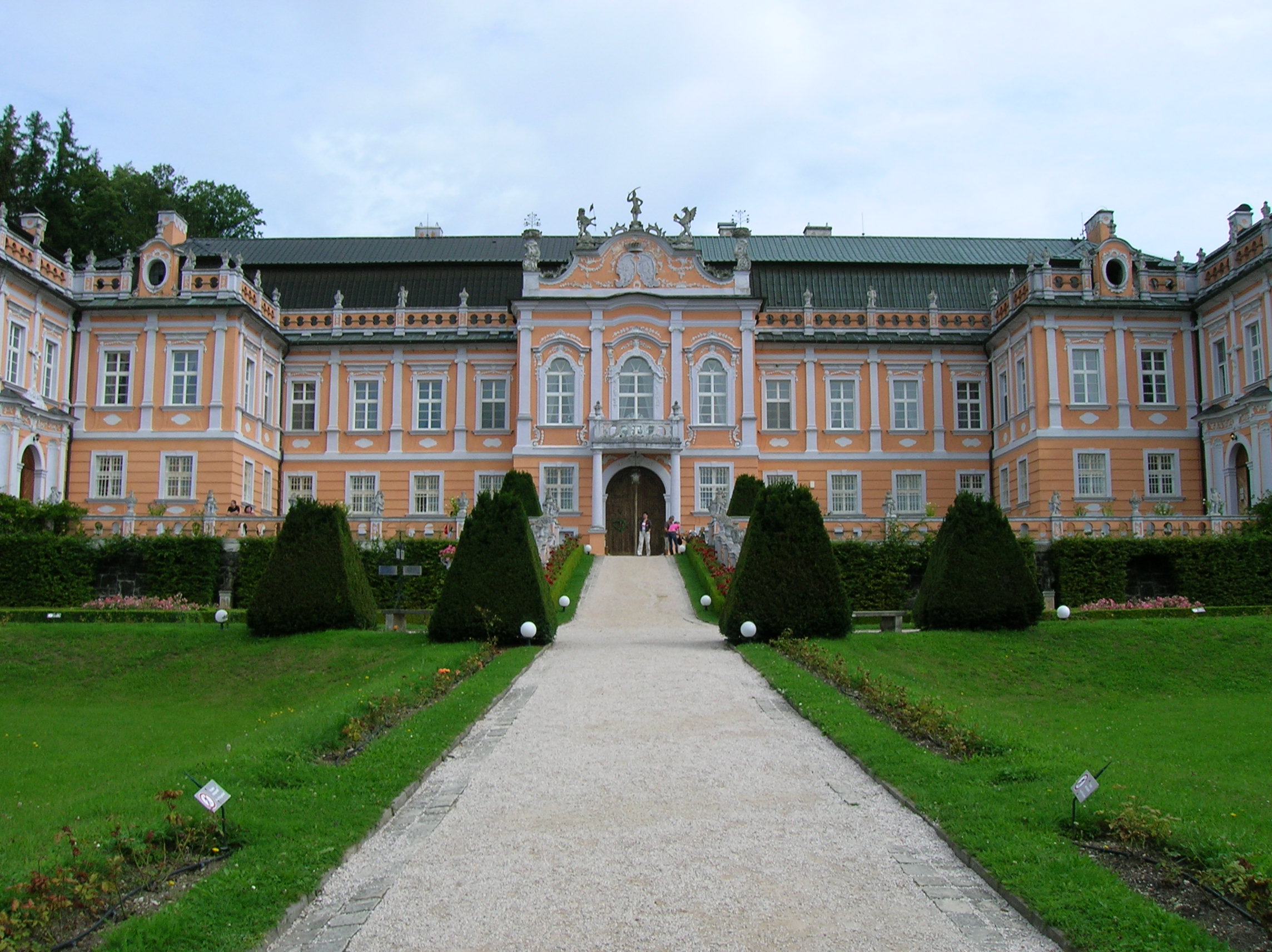
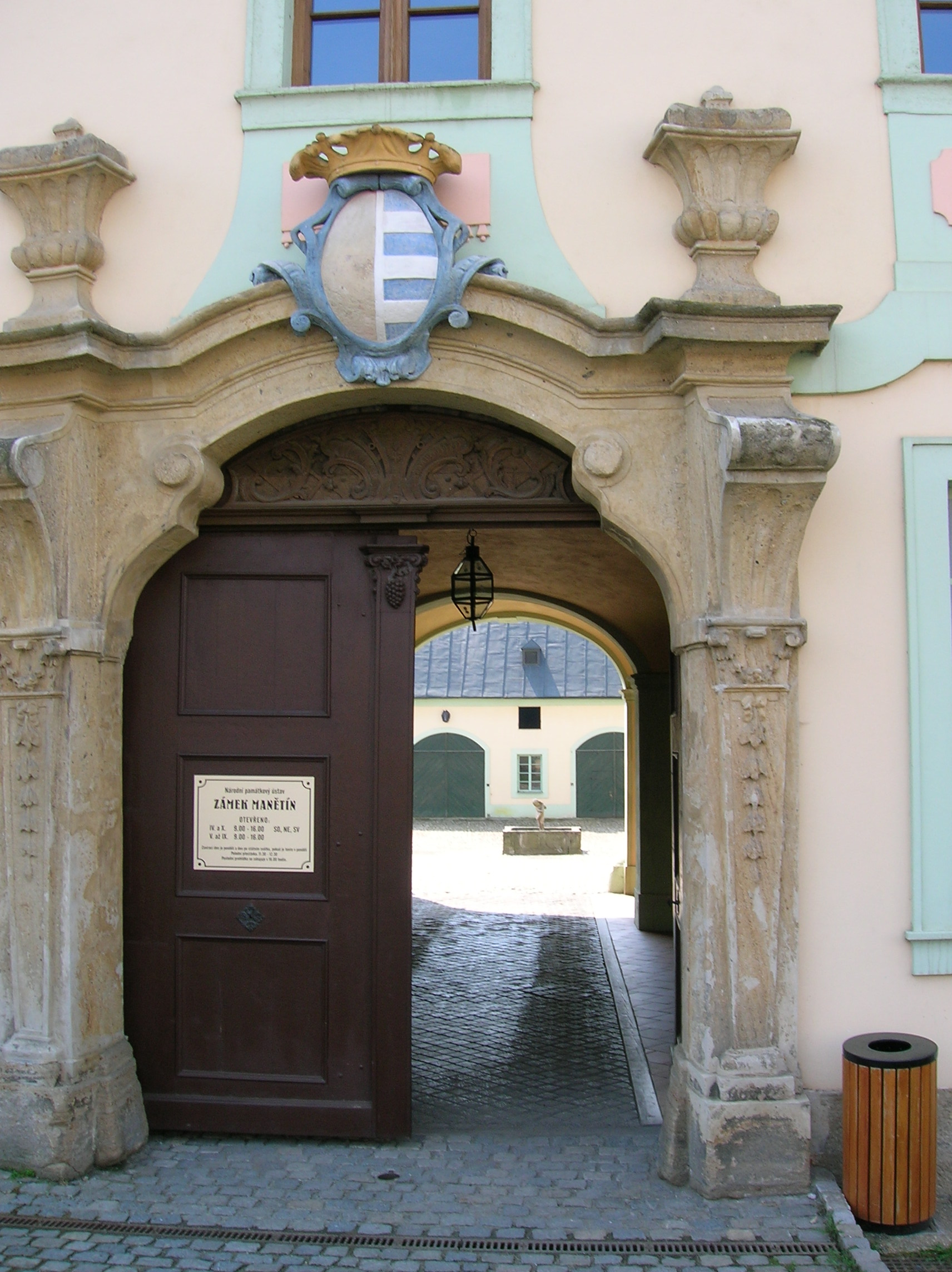
I had wanted to visit the Baroque chateau Manětín, about 45 minutes from Plzeň by car in Western Bohemia, for many years, but for some reason I had been under the impression that it was closed to the public. Only while I was at Chyše Chateau did I find out that Manětín had been open to the public since 1997. Today I would finally see it with my own eyes. I was very excited about the trip. I had to go by car as there was no public transportation that went to Manětín. We drove through the bewitching countryside and passed many haystack-dotted fields.

Manetin1

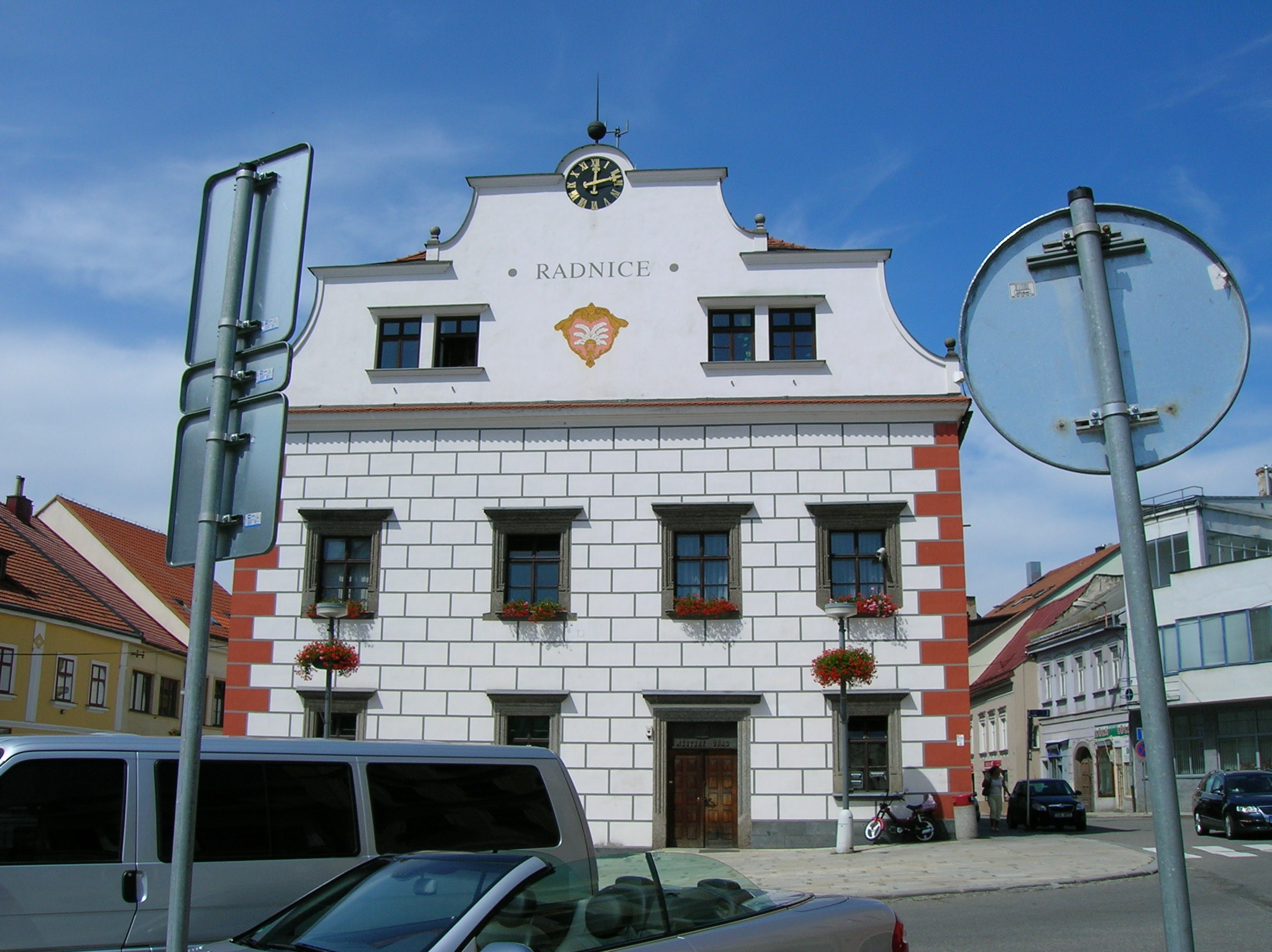
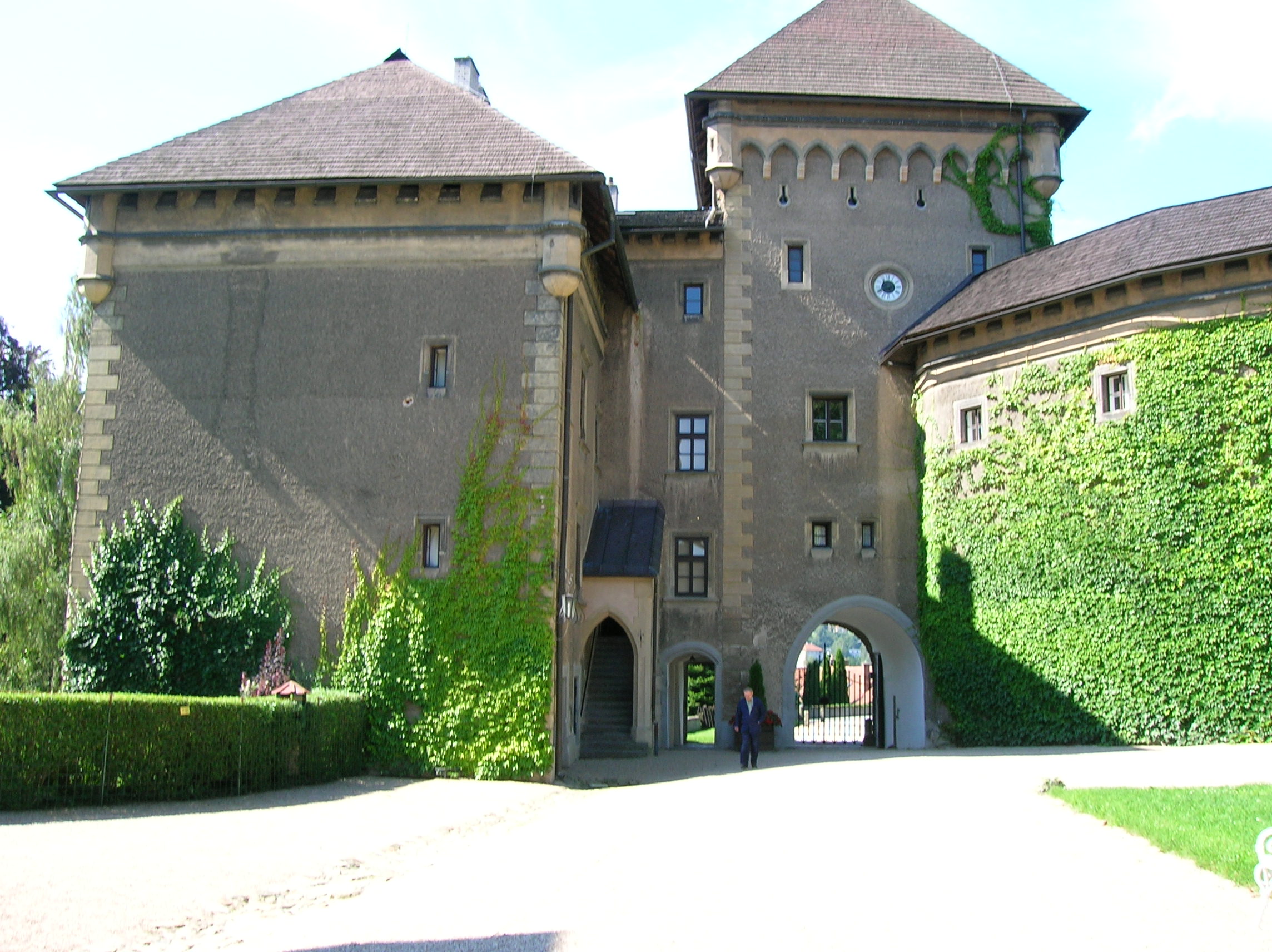
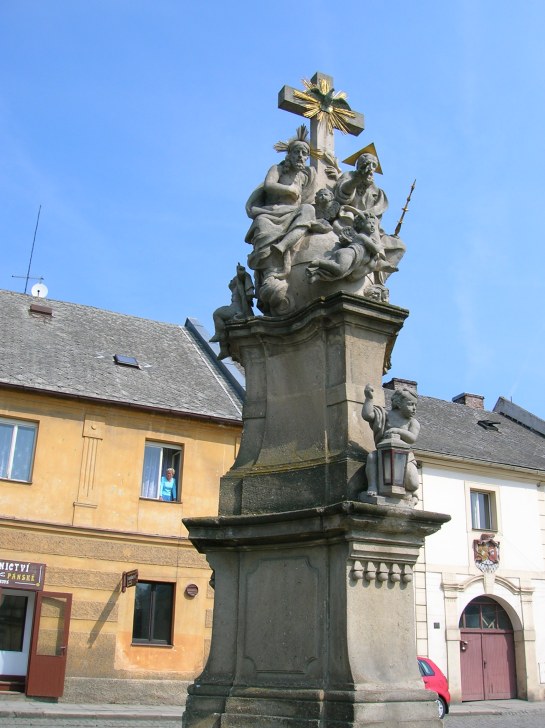
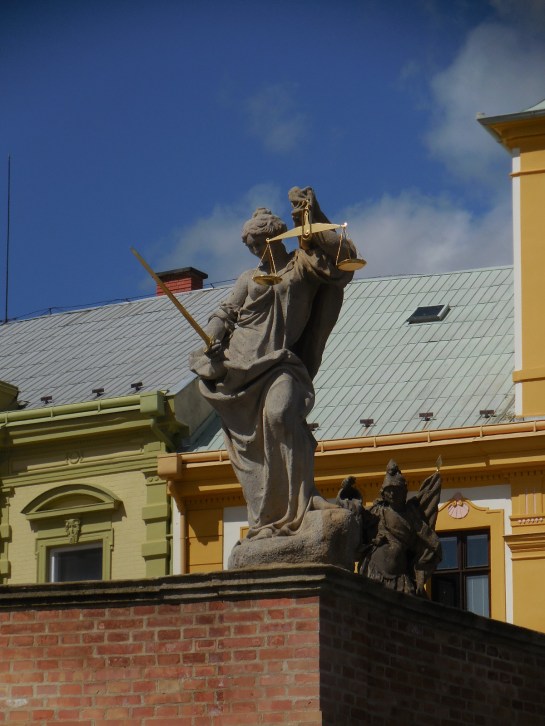
When I arrived at Manětín, I was bewitched by the Baroque statues and a sculptural grouping of the Holy Trinity in front of the main square. A road led down to the Baroque chateau itself, situated behind the statues. At the small white church next to the chateau a group of six or seven musicians were playing funereal music on trumpets. People dressed in black walked solemnly into the church.

Image

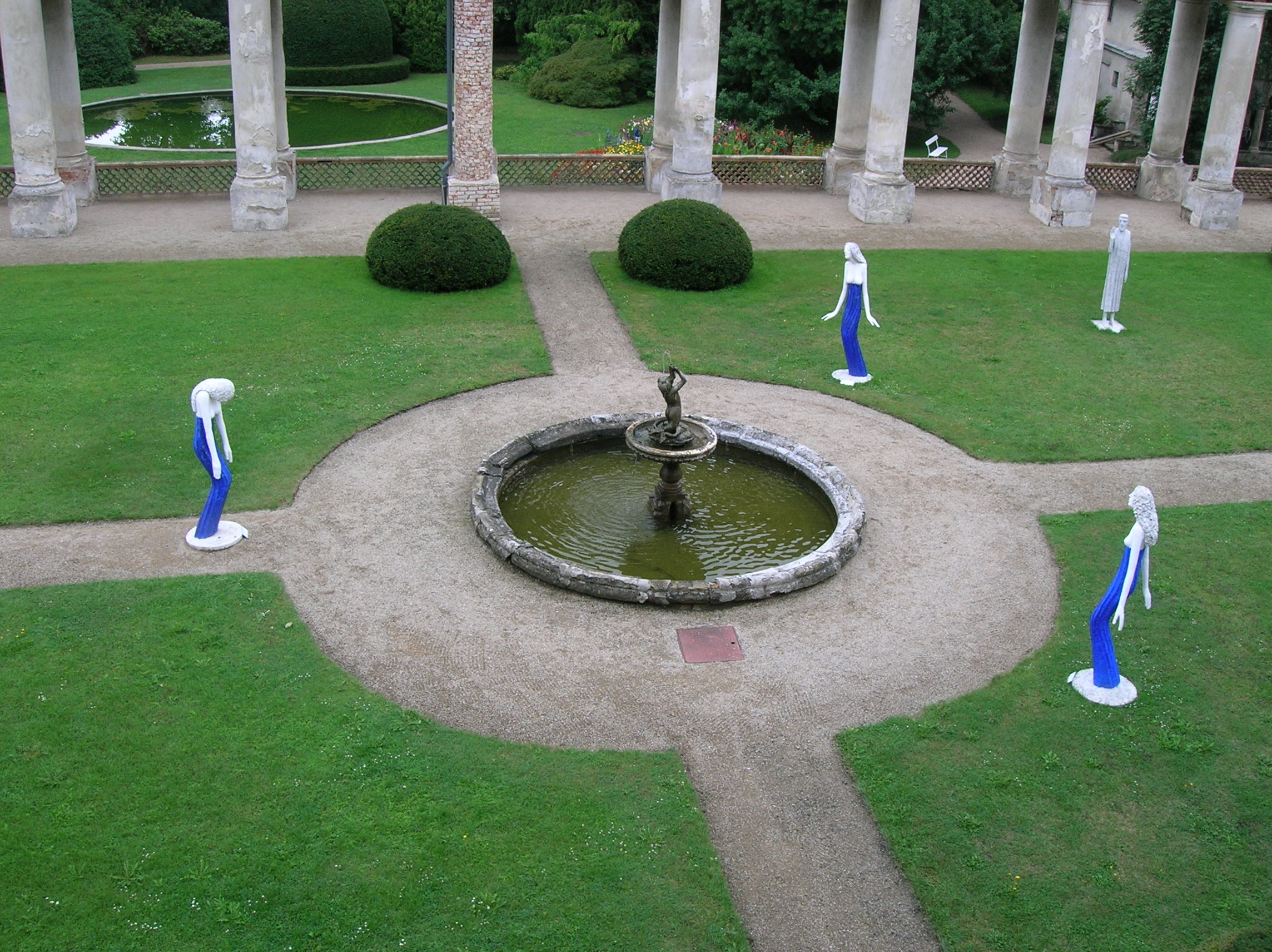
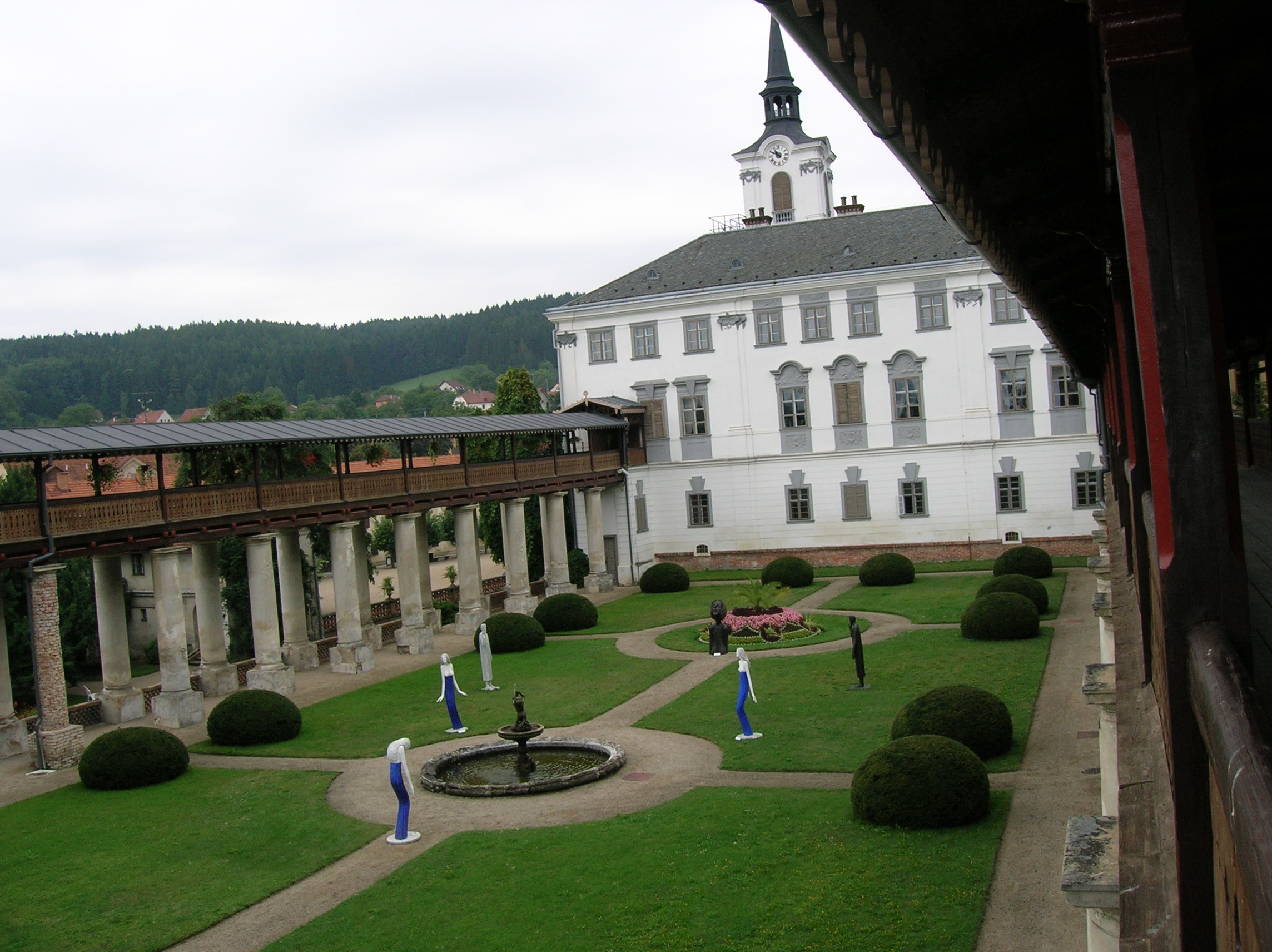
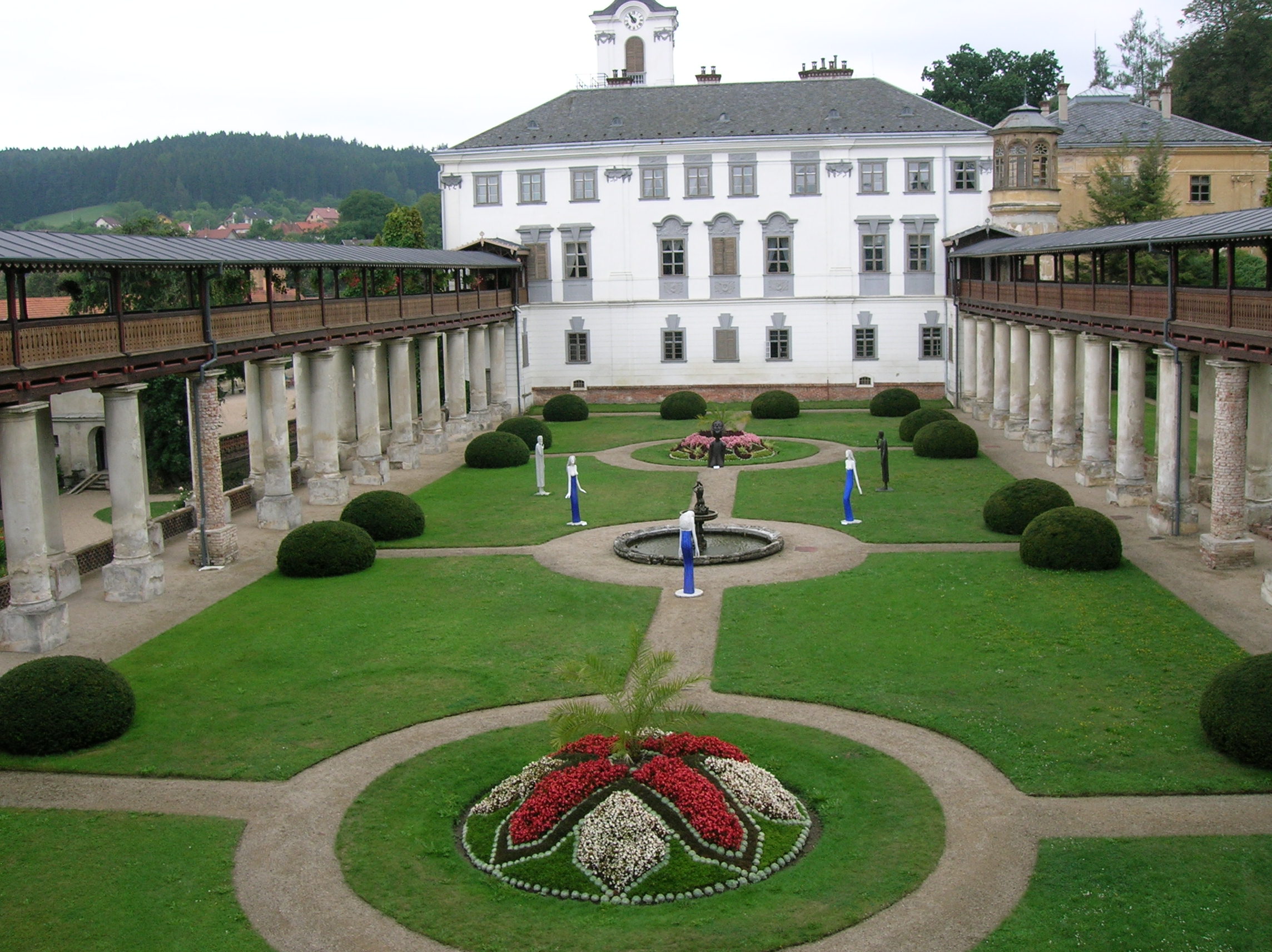
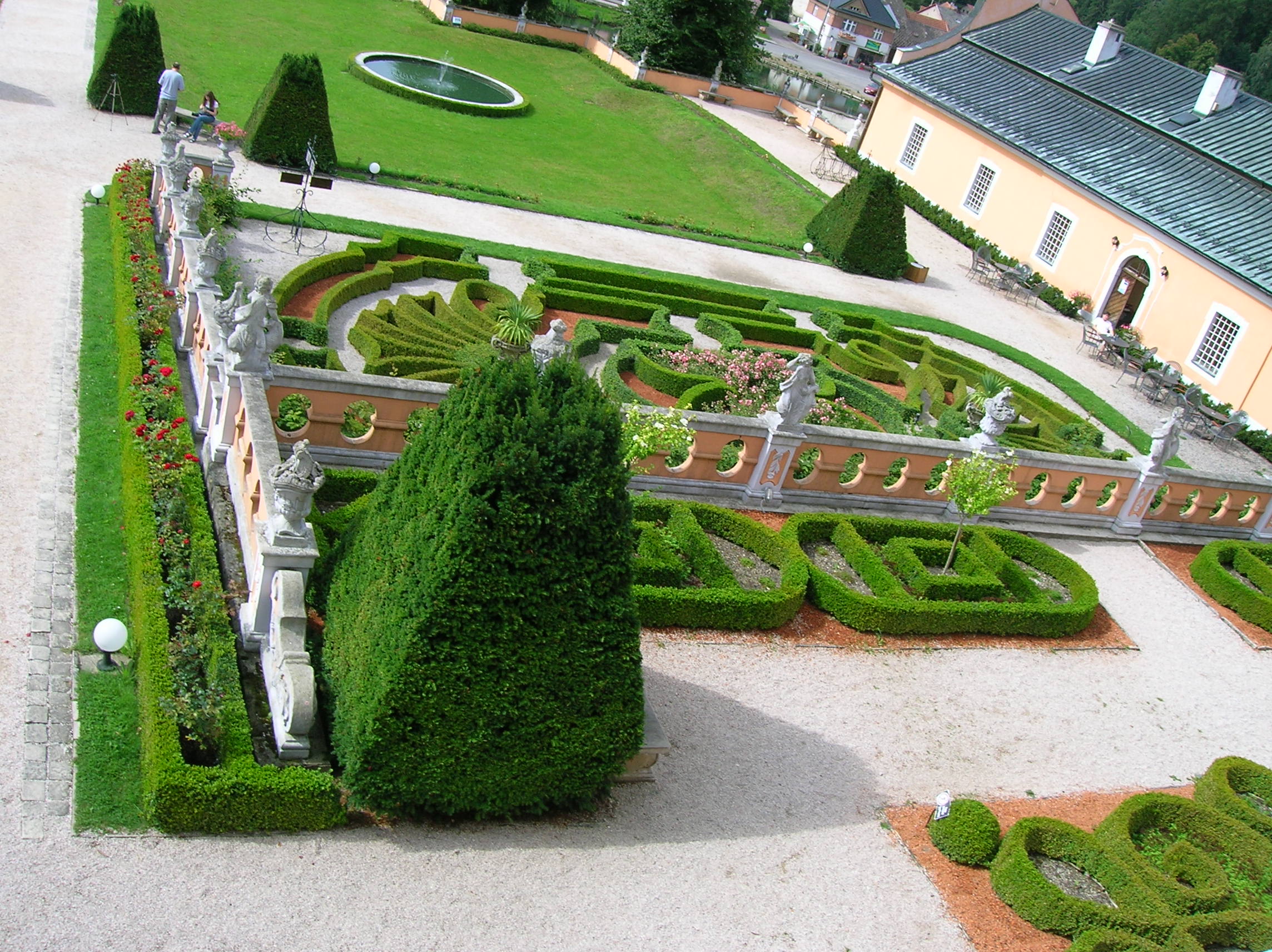
It was almost 10 am, and my tour began at the top of the hour. I had a few minutes to pop into the park. The Baroque and English park looked elegant and well-kept, very different than it must have looked between 1945 and the 1990s, when it was in a decrepit state. It had been restored in the 1990s to appear like it had during 1790.

Manetinext4

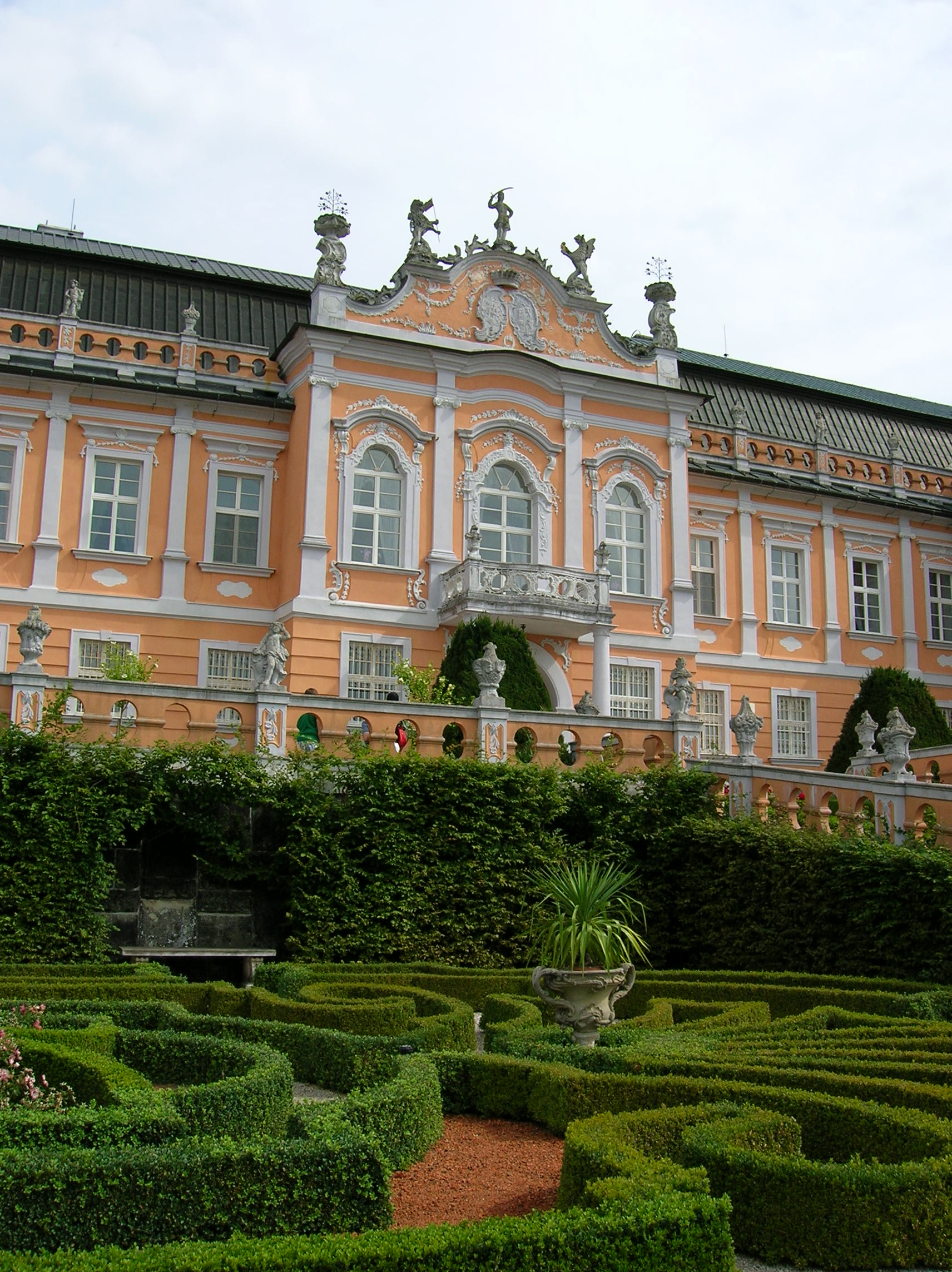
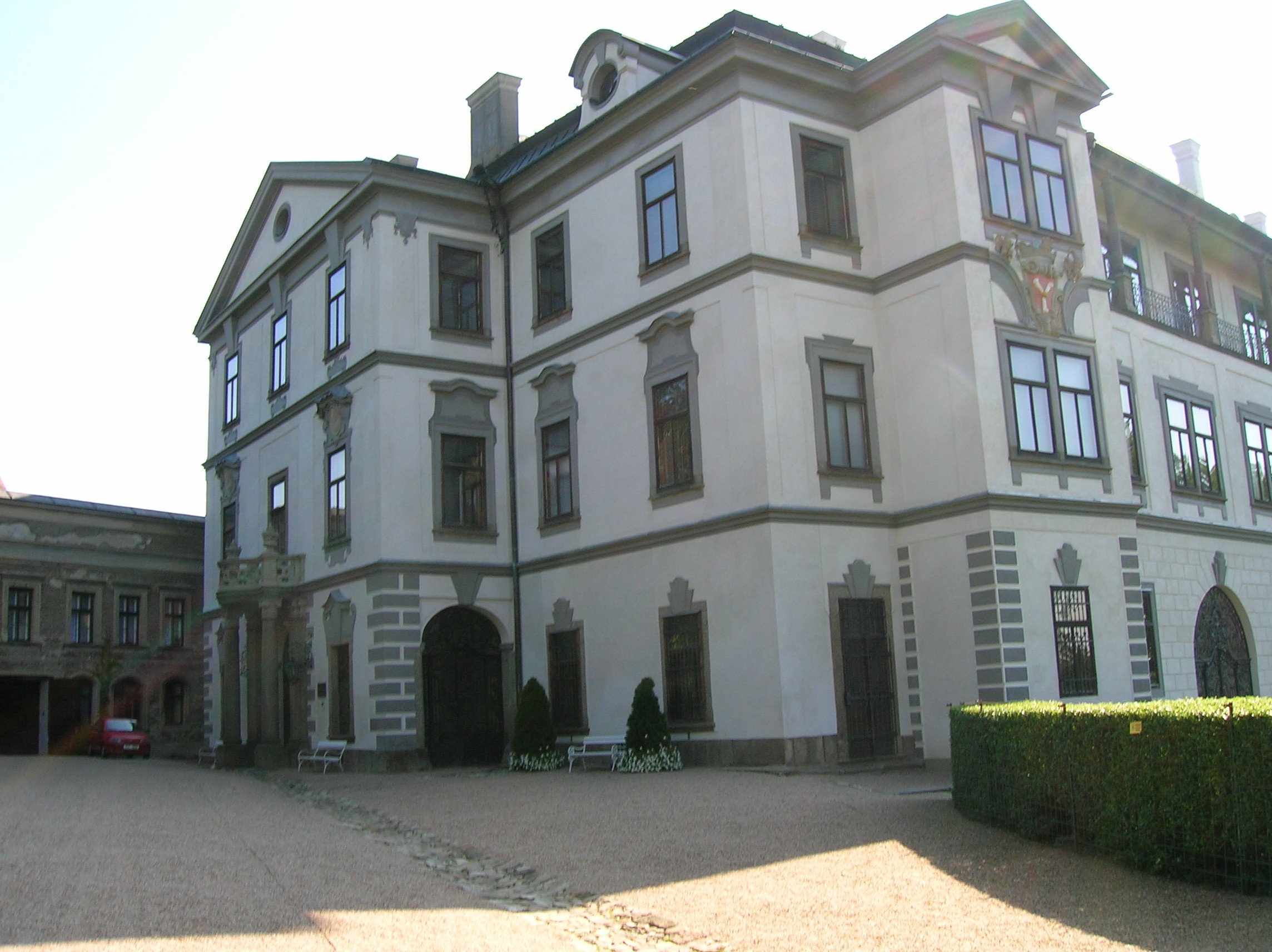
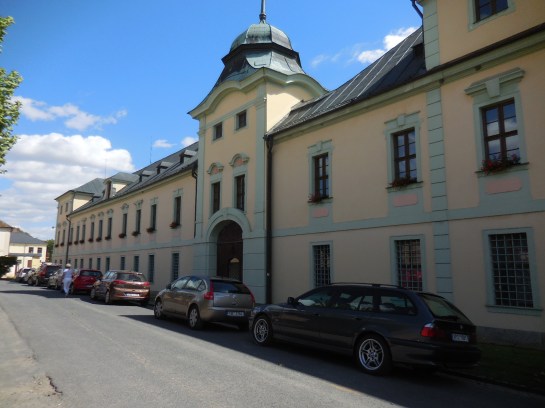
Then it was time for the tour. The knowledgeable young man acquainted me with the history of the chateau that had been first mentioned in 1169. The chateau that had begun as a medieval fortress had been transformed into Renaissance style before 1600. After a devastating fire in 1712, it was reconstructed with a Baroque appearance thanks to the then owner, Marie Gabriela Lažanská.

Manetinext3

The chateau had been confiscated several times.  Volf Krajíř z Krajku owned the place from 1544 to 1547, when it was confiscated because he had rebelled against Holy Roman Emperor Ferdinand I.  Following The Battle of White Mountain in 1620, which pitted the Protestant nobles against the Emperor and Catholic Habsburgs, the defeated nobles lost their property. The chateau was confiscated for the second time in 1622.
ImageThat was when Ester Mitrovská from Nemyšle, born Lažanská from Bukova, bought the chateau. When she died, the chateau came into the hands of her brother, Ferdinand Rudolf Lažanský. The Lažanský family would keep the chateau for more than 300 years. Times of cultural prosperity followed, especially when Václav Josef Lažanský and Marie Gabriela Lažanská manned the chateau.
Manetinext9


After World War II, though, the chateau was confiscated for the third time, becoming the property of the state because two Lažanská women in charge of the chateau had married two Austrian brothers.  Thus, the chateau had been in part the property of the Austrian family. Due to the Beneš decrees that took away property from Germans and even expelled them from the country, Terezie Lažanská, one of the women who had married an Austrian, was deported to Austria. Some rooms were open to the public as early as 1959, and the chateau became a national monument in 2002.

Manetinint4Manetinint5

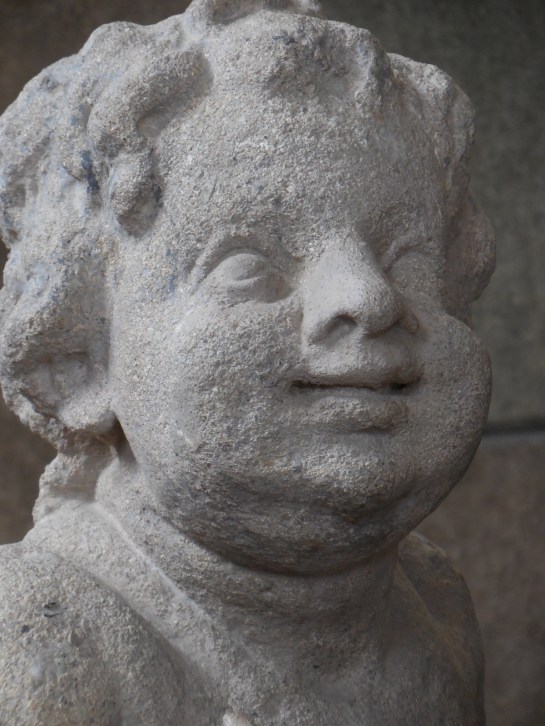
Upon entering the hallway, I was enthralled by the sculptures dotting the staircase as well as the ceiling fresco.  The four statues with putti on the staircase represented the four elements. One cherub was holding a fish, representing water. Another was depicted with a cannonball and decked in an old-fashioned fireman’s helmet that looked more like military headgear. This was Fire. Earth was portrayed by a cherub with a melon and snake, and Air was depicted by a putti flying on a bird. I could almost imagine the cherub whizzing through the cold, damp chateau air on the big bird.
Manetinint3Manetinint2

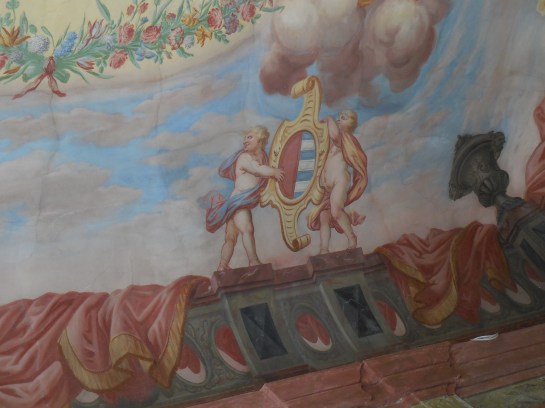
A portrayal of what the chateau was supposed to look like in the 18th century took centerstage in the ceiling fresco. Allegories of architecture and painting also adorned the fresco as did the coat-of-arms of Marie Gabriela Lažanská, perhaps the most influential of the Lažanský owners. (The guide mentioned that Marie Gabriela had been addicted to card playing. In fact, more than once she had put the chateau at stake when she had made her bet.)
Manetinint6

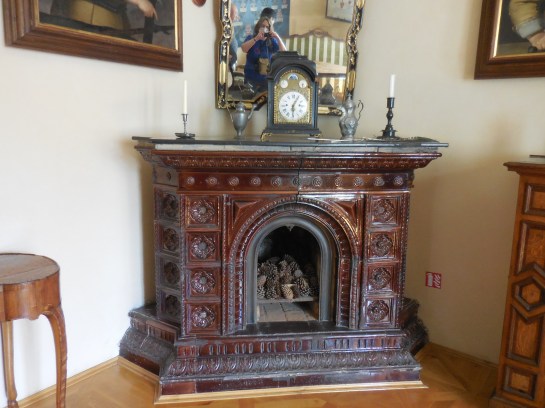
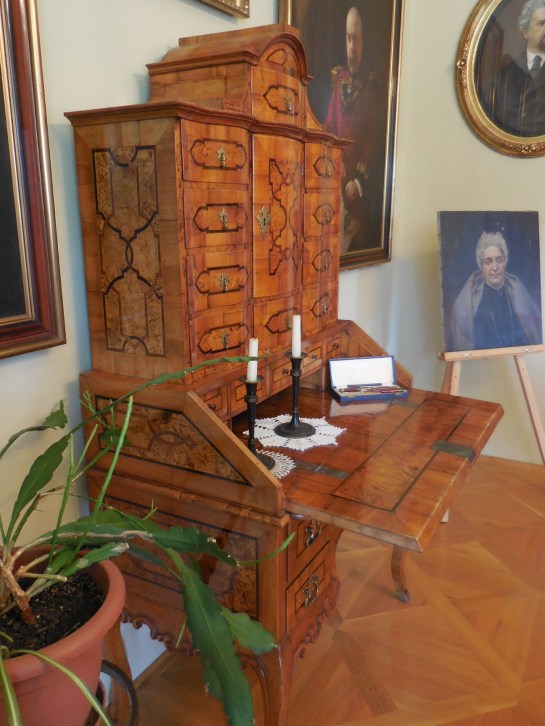
In the Reception Room there were four paintings depicting soldiers during the Thirty Years’ War, which lasted from 1618 to 1648 and started due to religious disputes. One held a spear, another a sword. The oldest piece of furniture in the chateau stood in this room as well; it was a 1640 bureau, dating from the Thirty Years’ War as well. I paid particular attention to the elegant, brown fireplace and gold with black clock and vases, all in lavish Rococo style. I liked the gold with black décor.
Manetinint7Manetinint8

The portrait of the young woman depicted in black was Terezie, who was killed in a hunting accident when she was 21 years old. (Note that this is a different Terezie than the one who was deported to Austria.) But perhaps it hadn’t been an accident at all, the guide conceded. Some say she was killed on purpose so she could not get married. Supposedly, her lover hated the man to whom she was engaged.

Manetinint12Manetinint13

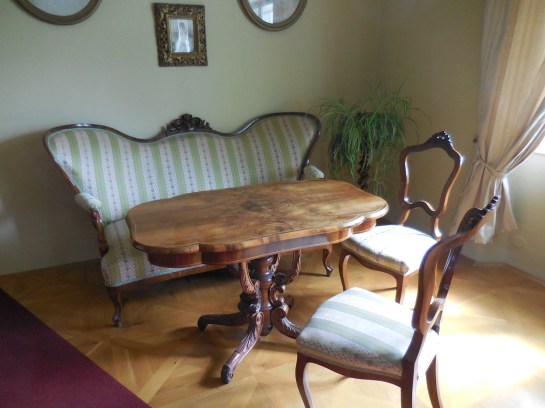
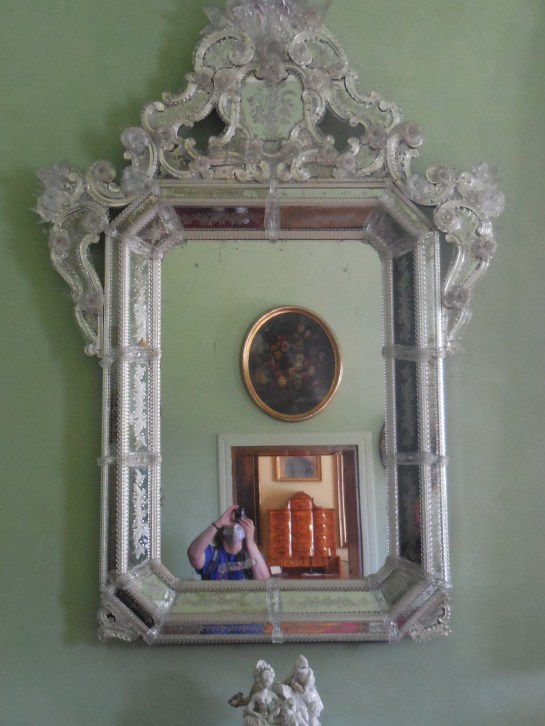
In a corner of the next room, a window was painted onto the wall. The guide explained that there had been originally a window there, but it had been filled when new rooms had been added in the 19th century. An 18th century chaise lounge, a Venetian mirror made in Morano and a group of white, Viennese porcelain also adorned the room. On the ceiling there was a small fresco of part of a boat, dating from the first part of the 18th century; most of the fresco had been destroyed, though. I tried to imagine what it would have looked like if the entire fresco had been visible. A port with boats and nobility strolling along an embankment on a crisp afternoon? I wondered.

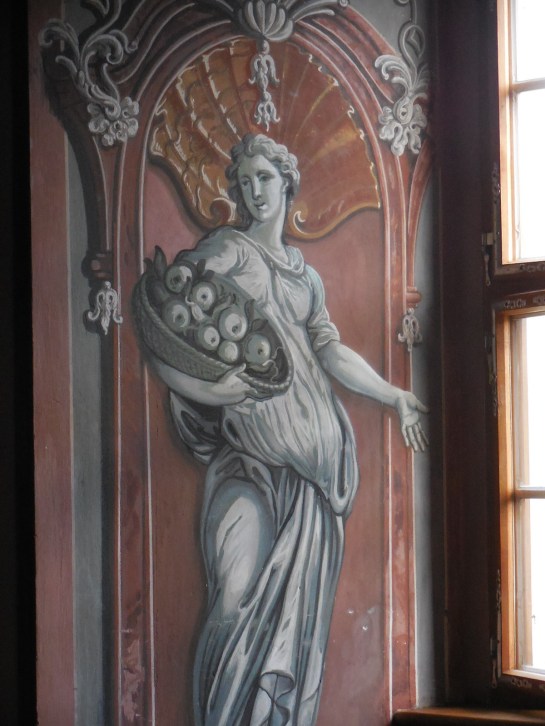
I loved the way the porcelain cups were displayed on small black shelves set at different levels on the wall. In a round portrait Marie Gabriela, clad in a silver dress, appeared strong-willed and somber with a no-nonsense expression. A light wood, Baroque desk hailed from the 18th century while the tapestry covering one wall showed a scene from the Old Testament with Moses. The two dressers, both green with floral patterns, were intriguing, for their irregular, curving shapes and color. A view of Venice was painted on each one. I recognized the Doges Palace on one and thought back to the thrilling time I toured the palace during my first day in that magical city.

Manetinint14

The next hallway was decorated with green pictures of castles, chateaus and various places – the pictures had been cut out of magazines. I recognized the chateau of Blatná, as two people rowed a small boat around it. Another scene showed woods in Karlovy Vary. Still others showed the castles Orlík, Točník and Žebrák. Then we came to a room with a hunting theme. Nineteenth century guns, petrified hawks and a woodpecker made up the décor. The Baroque desk, closet and dresser looked out of place.
Manetinint20

In the room where the nobility had gathered, the paintings on the wall showed boats at sea and hailed from 18th century Holland. A black Baroque table and bureau from the same era also adorned the room. The glass chandelier caught my attention.  It was exquisite. Made in Venice’s Morano, the chandelier was decorated with glass flower buds that looked almost as if they were icicles taking on decorative shapes. There was also an Italian mirror with a simple, gold frame.
Manetinint19

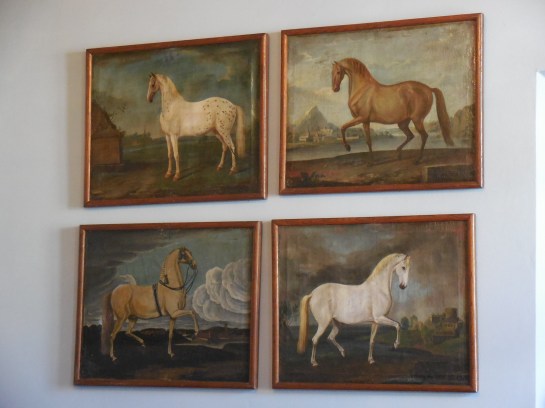
Decorating another hallway were more green pictures of castles, chateaus and places. I saw Plzeň, a major city now, as a 19th century village and Roundice nad Labem before its chateau had become dilapidated. A room with a horses’ theme was decked with small paintings of horses, a clock with four, white columns, a desk with cards and a German newspaper dated 1859.

Manetinint21

Then we came to a room with unique paintings on the walls. They did not depict the nobility, but instead the servants and clerks who had worked at the chateau. A rarity in chateaus, this collection included 13 portraits from 1716 to 1717 hanging in several rooms and in a hallway. They were painted by Václav Dvořák, whose life remains mostly a mystery. All the people portrayed in this room were dressed in black. Two carriage drivers next to a carriage wore tall, fluffy hats with big feathers. In one portrait a solemn-looking priest stared back at me. He had written a chronicle of Manětín in three languages, the guide said.

Manetinint22

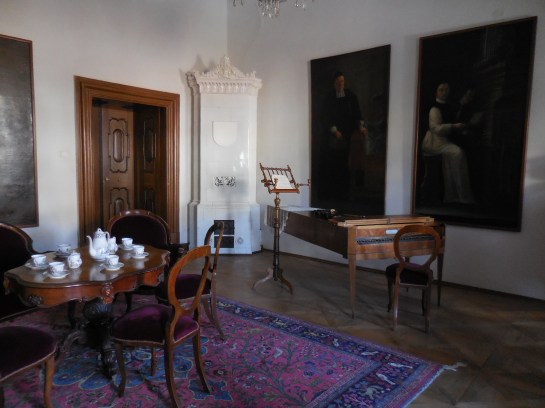
Objects in the next room proved to be rarities as well. The space boasted a complete collection of porcelain, plates with tea and coffee service sporting white with brown decoration. It was not often that a chateau had a complete collection; usually there were only pieces of a collection featured.  In the former Billiards’ Room, there was no table, but there were more paintings of servants and clerks. Three men donning large, white wigs gazed at me. There were also portraits of a doctor, the chateau’s caretaker and the priest who was also a historian. An elderly woman held keys in one hand; she was responsible for the keys to the chateau and to the food storage rooms. The yellow tile stove with squiggly brown vertical lines appealed to me. A small device that functioned as a bell was there, too.

Manetinint26Manetinint28

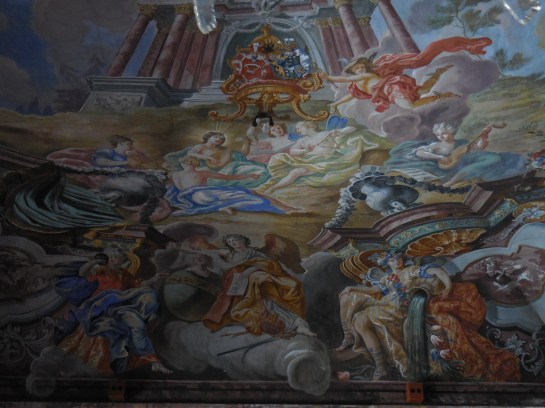
The biggest room was now used for weddings and concerts. The 1730 ceiling fresco boasted its original, vibrant colors and portrayed three figures showing God’s qualities in the center. I spotted the one in red with the heart as Love. The female clad in blue represented Strength. The third portrayed a girl pouring water from a jug onto a coat-of-arms. This was symbolic of Luck or Fortune. In the corners of the ceiling, the painted figures represented the four seasons.  Fall showed a naked girl with grapes and Bacchus, the god of wine. Summer was represented by a girl donning a big, straw hat and weilding a sickle as well as a woman holding a parasol. Spring: One girl was pouring water while another was holding a parrot.
Manetinint30

Winter had two symbols. One was Death as an angel, but there was also a woman in a black mask to depict winter as a time of social gatherings and parties. When I went back to the chateau in 2020, the black mask triggered thoughts of the coronavirus pandemic as cases were increasing in the Czech Republic. In America, where my octogenarian parents lived, the situation was horrendous with over 1,000 dying every day. In the Czech Republic we didn’t have to wear masks anymore, though I still did because I wanted to be as careful as possible. I had spent the first three weeks of lockdown in my apartment, afraid to go out, before I started taking walks and calming down. Thoughts of the coronavirus and my parents’ and friends’ health often kept me up at night.
Manetinint32

Mythological events were also portrayed on the ceiling. I spotted Poseidon and a falling Icarus. There were two portraits of the Lažanský family in this room as well. One showed Marie Gabriela and her daughter along with a black servant. In the portrait of her husband with their sons, the painter put himself in the work, holding a palette and brushes.
Manetinint31Manetinint40

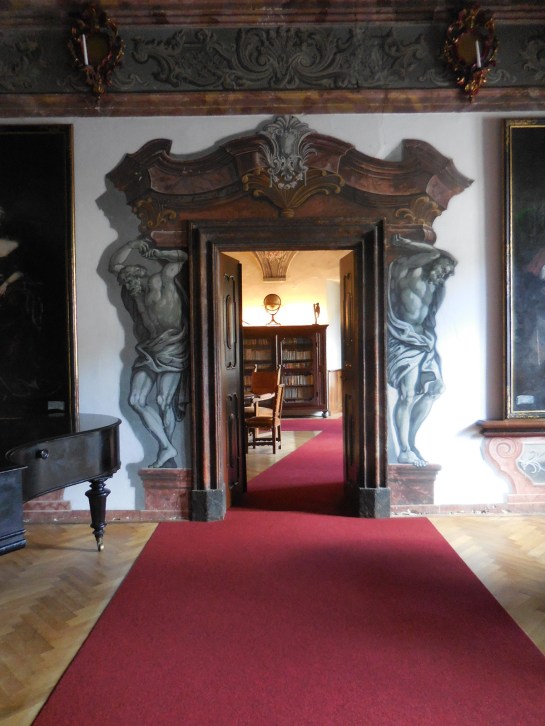
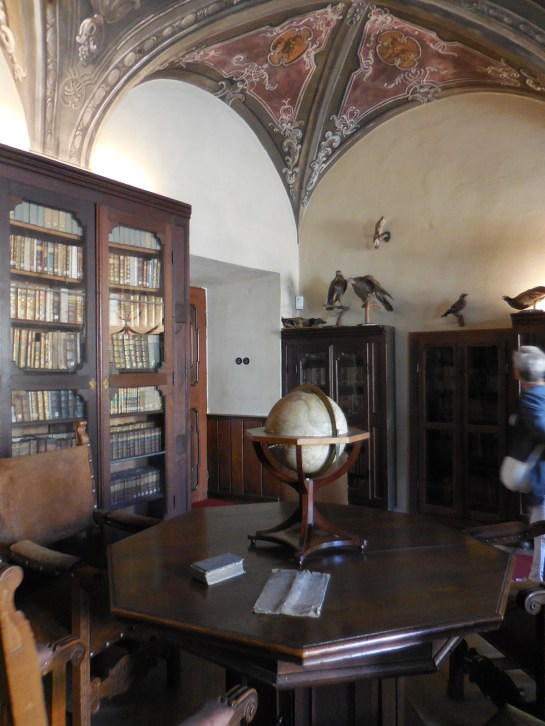
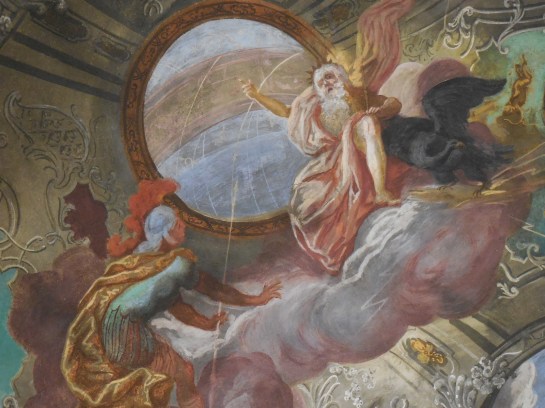
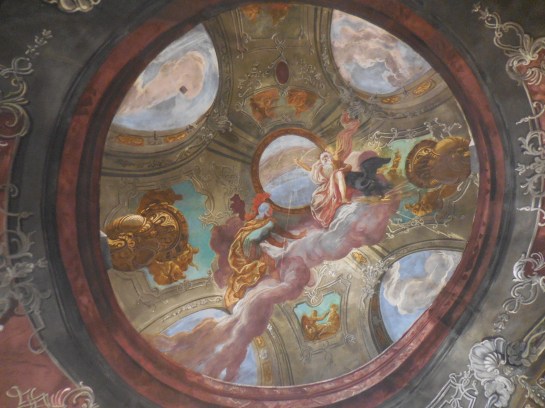
 Painted Baroque statues flanked the doorway that led to the magnificent library, which held 5,000 books, many with golden spines.  Most were in German and dealt with economy, but books by Johann Wolfgang von Goethe and Johann Christoph Friedrich von Schiller also graced the shelves. There were also books in English, Italian and French, for example. Only two books in Czech were in the collection, and both described how to make beer. Topics of other books included fishing, fruit growing, history and theatre. There was even a Turkish textbook. Above me was a fresco of Zeus and his daughter Pallas Athena, the goddess of war. The ceiling had been reconstructed in the 20th century due to a fire that had erupted because a tile stove had not been closed properly.

I found the remaining two portraits of servants in the hallway. One showed a cook and woman washing dishes in the chateau kitchen. Another showed a woman pouring water into a basin. Since there was no hot or cold water back then, the water had to be boiled in the kitchen, the guide explained. The woman pouring the water was decked in a traditional folk costume.

Manetinint45Manetinint44

We saw the chapel from the oratory behind glass. The main altar painting was by Baroque master Petr Brandl, my favorite Baroque artist. He also created two paintings on side altars. Brandl actually came to the chateau to paint the works during 1716.
Manetinint42Manetinint41

After the intriguing tour I went outside to take photos of some of the 30 Baroque statues that sprinkled the town and hailed from 1680 to 1780. I still could not enter the Baroque church next door. A simple, wooden coffin was placed in a black van, followed by a procession of people dressed in black, along with two decked in purple and white robes. I did not see the Church of Saint Barbara, either, though I later read it was Baroque in style and featured eight wooden statues of saints.

The St. John the Baptist statue, now situated at a church, had suffered much turmoil. It originally stood in front of an administrative building. Then it was placed on a small bridge. In 1944 it was severely damaged by the Nazis. Then children did more damage to the statue. After the Russians came in 1945, it was tied to a telephone pole. In 1954 it was moved to its current location.
Manetinstatue3

I went to the chateau restaurant and had my favorite excursion lunch of chicken with peaches and Cola light. Then I got back in the taxi and headed for the smallest town in Europe called Rabštejn nad Střelou, situated only nine kilometers away.
Manetinext6

Tracy A. Burns is a writer, editor and proofreader in Prague.


Rájec nad svitavou Diary

Image

The train trip from Brno to Rájec nad svitavou took about an hour. I chatted with four young women from Vancouver during the short ride. They got off at Blansko, heading toward the Punkva caves in the Moravian Karst region. I recalled waiting for that same bus during my exciting journey to the most beautiful caves in the region. Other astounding caves were accessible by bus from Blansko, too. By now I had seen all 14 Czech caves accessible to the public. Today I was enthusiastic about visiting Rájec again. Ten years ago I had been bewitched by the chateau’s interior. I expected to be enamored again.

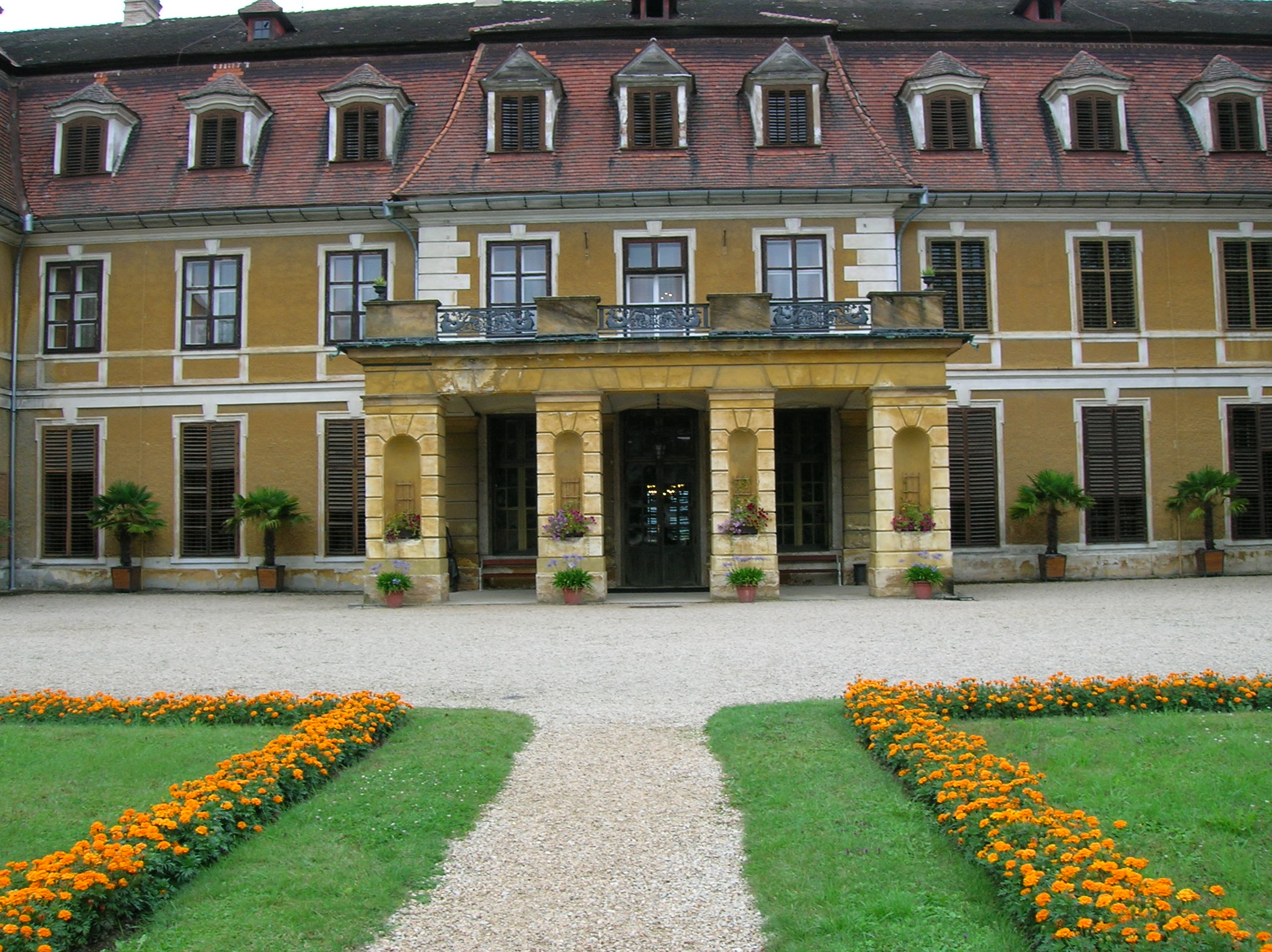
I found my way from the train station in Jestřebí to the chateau in Rájec without getting lost, for a change. One glance at the rectangular courtyard decorated with blossoming orange flowers, and I recalled my thrilling visit all those years ago. I saw flashbacks of the big library, Hall of Ancestors and the Big Dining Room. Then I gazed straight ahead at the three-winged, elegant building, its entranceway sporting a balcony passage. The chateau was crowned by a high mansard roof. A dormer window and a clock tour made up other significant architectural features. To my left was the chateau’s chapel.

I was psyched by the time I entered the box office. I introduced myself and told the dark-haired, frowning woman manning the computer that I was a journalist writing about the chateau, that I had set up a 90-minute tour by email and that I had sent a confirmation a few days earlier.

Her belligerent response caught me totally off-guard. “I don’t care if you are a journalist. You have to wait until there are 10 people interested in a tour before you can see our chateau,” she screamed at me. There were circles under her eyes. I wondered if she had gotten enough sleep the previous night. This woman clearly had anger issues she was not dealing with. An older, smiling woman stood next to her, and a teenage boy in a scruffy T-shirt and jeans organized some pamphlets behind the belligerent brunette, ignoring her outburst as if it was nothing new to him.

“But I reserved a tour. I contacted you a month ago and sent you a confirmation on Saturday. I will be happy to wait up to an hour, but it is customary for journalists to get private tours if there is no one else interested in a tour at that time.” I spoke calmly, careful not to make the woman angrier.

“I never got any email from you.” Her tone was aggressive, vehement even, as her eyes bore into me. The boy kept his back to her, and the round-faced woman with short, grey hair kept smiling.

“If you did not get it, why did you answer it?”

“I did not get any email from you. I certainly did not get any confirmation,” She said, skirting the question.

“I sent you the confirmation on Saturday. It is Wednesday. Surely, you have received the email by now.”

“I will go look at our computer and call the caretaker, even though she is on vacation. Give me your email address.” I wrote it down for her, and she left the building. I gathered it was not possible to look it up on the computer in the box office.

Her calm, forever smiling colleague said that of course everything would be all right, and I would get a private tour if no one else was interested in seeing the chateau now. I found the email confirmation on my mobile phone and showed it to her. The teenager, who I assumed was a summer tour guide, answered the phone next to the cash register and announced, “She already found your email. Everything is okay.”

If everything was okay, why did it take the woman another 10 minutes to return?

ImageFinally, she stood behind the computer, which once again became the imposing physical barrier between us. The smiling woman left the room as the chateau leader in her forties announced, “I did not get any email from you. I called the caretaker, and she knows nothing about you.” I showed her the email confirmation that her colleague had seen. I noticed that her hair looked unwashed and uncombed. The young man was placing brochures in a drawer.

“I never got any email from you.”

“Then why did you answer the email I sent you a month ago and write me that you were looking forward to my visit?” I persisted.

“I do not even know what publication you are writing for.”

“You just read the name and link two seconds ago.”

The calm woman had returned and dared to speak up, stating that the guide should give me a tour, but the belligerent woman interrupted her, yelling, “We have decided you can spend 60 minutes in our chateau, but no more. You cannot spend all day with our tour guide.”

 “I requested the 90-minute tour, and I do not want to spend all day with your tour guide. I just want the 90-minute tour.”

“Sixty minutes. That’s all.” She said, her gaze threatening me to challenge her.

I set off with the young man, disappointed that I would only get a 60-minute tour. We were both silent until he opened the main entrance. “What do you want to take pictures of?”

“I never said I wanted to take any pictures. I said I wanted the 90-minute tour.”

“Oh, then that’s different. I have to go back and ask them if that is possible.”

About to give up and return to Brno, I waited another five minutes for the scruffy teenager. “If you want the 90-minute tour, you need to wait 10 more minutes.”

Why not? I had already waited 30 minutes. What did 10 more minutes matter? I felt as if I was a character in an absurd play.

At the designated time, a small group gathered around the entrance, and the guide introduced himself. There were seven people in our group. The woman had told me that there had to be at least 10 visitors for a tour to take place.

I knew I should be angry. No one had spoken to me so rudely for a long time. No administrator of any monument I had visited during my 21 years here had treated me so badly. I inferred that the people running Rájec did not make an effort to encourage tourists to visit their chateau and did not care what impression they made on journalists. The entire experience was so Kafkaesque, so typical for this country.

I recalled other Kafkaesque experiences, such as when I had to go to customs in Prague to pay tax on a package my mother had sent me. She had written that the cat litter box liners cost 11 USD, and the customs officer was convinced it read 1,100.00 USD. While I was able to persuade her it was not that expensive, she still made me pay tax. Each time it became my turn at the five customs counters, the officers on duty went on coffee breaks.

I tried to concentrate on the tour. First, the guide gave some insight into the history of the chateau. The community of Rájec was established during or before the 12th century while a stronghold was situated at the settlement probably from the 13th century, though it had not been on the site of the current chateau. The seat of the Lords of Rájec was destroyed twice – during the 14th century and again during the Hussite wars of the 15th century. 

The most significant clan to own the chateau was the Salm-Reifferscheidts, who obtained it in 1763. They would remain the owners until 1945. This chateau was built in 1769. The member of the family who would most influence the chateau was Count Hugo František Salm-Reifferscheidt, who became the owner in 1811 and was responsible for furnishing the interior. He expanded the library and the chateau gallery. However, dark days came to Rájec when the Nazis took control of the chateau during World War II – the reason why the state confiscated the building in 1945 under the so-called Beneš’ decrees. Now the chateau mostly flaunts the style of 19th century Romanticism.

ImageThe tour began. The Neo-Renaissance Dining Room featured a carved cassette ceiling supported by two Corinthian columns. I marveled at the colorful handsewn tablecloth sporting 126 coats-of-arms. The colorfully upholstered chairs also lent a certain charm and energy to the room. A closet from 1667 featured rich woodcarving.

After passing by impressive Oriental vases – there were a lot of them at this chateau -, we came to the Corner Room, which displayed the prince’s crown trimmed in white fur above a blood red color. It was given to the Salms on the coronation day of Holy Roman Emperor Leopold II during October of 1790. The guide showed us the bronze door knocker featuring the god Neptune. This was the only furnishing in the chateau that hailed from its Renaissance days.

The Engravings Cabinet enthralled me. The wooden wall panels were decorated with engravings inspired by works of prominent artists, such as Peter Paul Rubens. Each wall showed off engravings with a different theme. I was especially drawn to the works dealing with life in the Vatican, though the ones focusing on French rulers also grabbed my attention. I was especially impressed with the 18th century Holland Baroque furniture with floral and plant motifs. I recalled admiring this style in the Český Šternberk Castle not far from Prague.

The stunning Hall of Ancestors contained 40 portraits of former owners and their families. I knew that each portrait told the story of a life, of dreams that did or did not come true, of love, of troubles and of pain. As I gazed around me at the portraits, I wondered what each person’s story was. I also noted the blue and white Meissen porcelain decorating the room. A jewel chest and two tables glittered gold.

The octagonal Ceremonial Hall featured Classicist illusive wall painting that covered the 18th century Rococo frescoes with mythological themes. I wondered what exactly the frescoes had looked like. A chandelier gave the illusion that it was gold.

The Rájec library, covering three rooms, contained 60,000 volumes, making it the largest chateau library in Moravia. Its possessions included medieval manuscripts pertaining to black magic. It dated back to the 1770s and was adorned in Empire style. What really caught my attention were the three standing skeletons in the second room. Two skeletons had one arm on each of their skulls. I wondered if they were scratching their skulls because they were puzzled by the box office brunette’s behavior.  The other skeleton was headless.

ImageNext we ascended to the first floor. The blue and white Meissen porcelain in the Dining Room was exquisite, and in the Big Hall I admired the detailed woodcarving on the gramophone from World War I. In a bedroom there were two intriguing maps – one showed Central Europe in the 1830s while the other was an administrative map of the Czech lands, delineating the different districts, from 1720. I was disappointed we did not get more time to peruse the maps.

In the study three African shields entranced me. On a desk from the 1830s there was a model of a hand that could be used as a paperweight. The Oriental Antechamber included a 17th century jewel chest with Chinese landscapes painted in detail on the drawers. In another bedroom I saw a tapestry decorated with 120 coats-of-arms and some seascapes with raging waves.

Last we visited the chapel, in another building. The Empire style painting of the Virgin Mary was the only intriguing piece inside. Otherwise, it was barren and depressing.

I took a short stroll through the English park, established in 1767, with ponds and a waterfall. I was still puzzled by the anger the woman had unleashed at me as I walked on a narrow path, thick with trees. I pondered on how all my life I had always taken the path less traveled by, the path to adventure, the path that would lead me to get to know myself better as a person. Growing up I had played baseball and ice hockey with boys, for instance.

At a university in America shortly after the Velvet Revolution, I had become enamored by Czechoslovak theatre and the life and works of playwright-turned-president Václav Havel. After graduation I moved to Czechoslovakia, with a modest job teaching English, not knowing the language and not knowing anyone in the country. So much had changed since then. I was not even the same person anymore.

Then I wondered if my memory of this chateau would forever be associated with the rude remarks of that nasty woman at the box office and the Kafkaesque absurdity associated with it. Most probably it would, unfortunately. I remembered reading one travel blogger’s post about how unfriendly and cold Czechs had been to her in Prague. She ended the article by stating she would never return to the Czech Republic. I hoped that someday I would return here, have a positive experience and be full of the enthusiasm I had felt when I first visited this chateau some years ago.

I noticed dark clouds hovering in the sky and glanced at my watch. It was time to head back to the train station.

Tracy A. Burns is a writer, editor and proofreader in Prague.
 Image


Lysice Chateau Diary

Image

When I first set my eyes on Lysice’s chateau and garden 10 years ago, I knew that someday I would be back. The two exceptional tours and extensive park enhanced by colonnades had captivated me.  I was certain that this chateau was one of the most underrated sights in the Czech Republic.

It had been a short bus ride from Brno, and the bus stop was near the chateau. As usual, I had written to administrators at the chateau, informing them that I would be arriving at 9 am on this Wednesday to take the tours and write about them. The woman at the box office greeted me warmly, and soon I was starting the first tour, guided by an enthusiastic, young man with a contagious smile.

ImageThe guide filled me in on the history of the chateau and its owners. Its history may go back as far as the 13th century, and there was a fortress at Lysice in the 15th century. It became an early Renaissance water fortress in the 16th century. At the end of that century, the country house there had been transformed into a castle with arcades in the courtyard and a terraced park.  Baroque changes had occurred in the 18th century. At this time a grotto had been created in the park along with allegorical figures representing the months of the year.

ImageWhen Antonia Piattis married into the Dubský  family, the Dubský dynasty at Lysice had begun. They owned the chateau from 1807 to 1945, when it was taken away due to the so-called Beneš decrees because the family had had Austrian citizenship during World War II. Count Emanuel Dubský was a significant member of the clan and made a name for himself in industry. His wife Matylda of Žerotín established the first children’s hospital in Moravia. It still exists today. Tragedy marked their lives as three of their sons were killed in military action, and another was murdered. Yet another died at the age of 45. Only Ervin, the second eldest, remained. He had distinguished himself as a Vice Admiral of the Austrian Navy. Ervin had also traveled all over the world. Many exhibits at the chateau came from his travels.

ImageThe interior of the chateau underwent much reconstruction in the 19th century under Emanuel’s guidance. In the 1830s the elegant colonnade was built in the park. Disaster struck at the beginning of the 20th century when, in 1902, the chateau theatre burned down. It was never rebuilt. After the chateau was confiscated by the state in 1945, much reconstruction took place. It became a national monument in 2001.

Now it was time for the tour to begin. First, we came to the Baroness Marie von Ebner-Eschenbach’s library, named after the prominent Austrian author who was related to the Dubský clan. She had been known for her psychological novels and was considered one of the most significant German-language writers of the late 19th century. The space established during the 1860s now housed many manuscripts of plays that had been performed at the chateau’s former theatre. There were impressive busts of artists on one wall. Those representing William Shakespeare, Alighieri Dante and Friedrich Schiller caught my attention immediately. The richly carved wood paneling of the veined bookshelves hid the 7,000 volumes in this Pseudo-Renaissance style room. I looked up at the ceiling, dizzy with delight. The carved cassette type ceiling was stunning, inlaid with silver and gold.

ImageThe Grand Dining Room flaunted Second Rococo style, and I was drawn to the wooden, gilt chandelier that could hold 30 candles. The guide instructed me to look down, too. The parquet floor was deeply inlaid with the intarsia woodworking technique that involved fitting together wood pieces to give a mosaic appearance and an illusion of depth. The Small Dining Room was Classicist in style with two exquisite, white marble tables.  Bohemian glassware and plates made of aragonite from Karlovy Vary (Karlsbad) and Belgian marble stood out in the room. The Meissen candlestick that could hold four candles was an exquisite pink and white color combination.

ImageThe Grand Representative Parlor featured illusive stucco painting on the ceiling. Japanese and Chinese colorful vases in the space were souvenirs from Ervin Dubský’s travels. The Neo-Gothic chapel hailed from the 1870s, but the Baroque altar featuring the Virgin Mary and Jesus was from the beginning of the 17th century. A richly carved rendition of the Holy Trinity caught my attention. The portable Baroque organ weighed 100 kilograms.

The highlight of the Ladies’ Parlor for me was the large Meissen porcelain clock, featuring flowers that represented nature and dating from the second half of the 19th century. It represented human life and the transience of time. Gazing at the clock reminded me of how I had changed as a person since I had moved to Prague in 1991, when I had been much more extroverted and had taken more chances. Sometimes I wanted to go back to that time, when everything in what was then Czechoslovakia was new and fresh. Other times I was glad I was wiser and no longer naive.

ImageI was also I was captivated by the copy of the Black Madonna of Saint Tome above the Baroque bed. Ervin Dubský had installed a ship telephone that one blew into. The Girls’ Room was dominated by stunning lithographic prints of Vienna and its surroundings. It soothed me to see pictures of Vienna. I felt comfortable there and always enjoyed my visits to the Austrian capital that reminded me a bit of Prague. I was intrigued by a doll of a nun on a shelf. I had read that dolls dressed as nuns were often devotional and given to young girls to try to convince them to take the veil when they grew up.

ImageThe highlight of the first tour was the Oriental Salon with its treasures from Turkey, Japan and China and other places. Four small Turkish tables were inlaid with pearls. I also saw Islamic prayer rugs plus Chinese and Japanese vases. Part of the display emphasized Japan. Imari porcelain was bright blue and orange, a pleasing color combination, I mused. A partition decorated with motifs of flowers and plants was made of silk on silk.

The Samurai armor intrigued me. I knew that armor plates were attached to cloth or leather and that it was considered to be lightweight. It looked like the armor had hand-woven, colorful cloth padding protecting its front and sides. The bright colors made it vibrant. A Chinese chandelier was exquisite, showing off painted scenes of everyday life in a home. What really grabbed my attention were the four black-and-white paintings by an unknown Chinese artist. The figures had such grotesque features and reminded me of commedia dell’arte characters.

We stepped onto the first floor outer hallway, from which I had a stunning view of the courtyard with its arcades below. I noticed the coats-of-arms decorating the walls facing the courtyard. We walked by frescoes celebrating hunting themes. Next on the itinerary was the armory, featuring a collection of weapons dating from the late Gothic era to World War I.  One sword was made of sawfish bone.  It was interesting that the execution swords had blunt points. There were also swords that had been used by the Swedish Guard in the Vatican. The oldest sword in the collection hailed from the 14th century and had been found near Lysice.

ImageThe Ervin Dubský Secession style library, the biggest space in the chateau, was impressive. Even though it was larger than the other library, it contained fewer books with 5,000 volumes, mostly concerned with military and nautical themes. I hovered over the miniature portraits in frames. Sailors had taken them on their journeys to remind them of the loved ones they had left behind. I was sure that behind each portrait there was an exciting story, perhaps for a short story or even a novel. Inspired by his navy days, Dubský had the cassette style ceiling built to look like a ceiling on a boat. Ervin had been not only a traveler but a painter as well. In the room Dubský had depicted himself on canvas as a wise man from the Renaissance period.

The second tour, covering the second floor, was next. The Hall Staircase had once been the theatre, the former home of the largest costume collection in Central Europe. I wondered what that theatre had looked like before it had burned down. On one wall I spotted an Oriental raincoat made of bamboo, something I had never seen before.

ImageThen we entered the private apartments.  I noted the low ceiling, which gave the spaces a more intimate feel. The Biedermeier furniture, which was the rage from 1815 to 1848, was exquisite. The style emphasized simplicity and elegance with minimal decoration. In the Count’s Parlor I was intrigued by a quill shaped as a green and white snail. The 19th century games in a display case included a wooden card shuffler. There was also a drawing of Pernštejn Castle, one of my all-time favorites, which I had visited last year.

I was drawn to the painting of Saint Peter’s Square at the Vatican in the Gentlemen’s Social Parlor. Women had been banned from this room. I recalled spending my fortieth birthday touring the Vatican and Saint Peter’s. I remembered walking to Saint Peter’s on that wintry morning around 7:30 am, watching the sun come up. The sunrise had looked so romantic, yet I had been alone.

ImageThe Small Shooting Gallery contained 13 hand-painted shooting targets, the oldest ones hailing from the 18th century. One target had a butterfly in the middle, others were decorated with crowns and still others showed off landscape scenes. The Reception Room was another space featuring Biedermeier decor. I loved the paintings showing Habsburg Emperor Franz Joseph I and his wife, fondly called Sisi, at the celebration of their Golden Wedding anniversary. 

ImageIn the next room the guide drew my attention to a June 1906 issue of Simplicissimus magazine and showed me an advertisement for an operation to make ears smaller. I was surprised that such surgery had existed so early in the 20th century. The Tapestry Salon featured tan furniture with a pink and green floral motif. The room got its name from the tapestries used to upholster the furnishings that had even been used in the shooting of Miloš Forman’s legendary film, Amadeus. The furnishing had been transported to Barrandov studios in Prague for the filming.

The last room was the Big Shooting Gallery, where there were 40 targets along with figures. Most of the inscriptions were German or Latin rhymes or proverbs. Only one target had Czech writing on it. I noticed that on a figural target of a scantily dressed woman there was a bullet hole through her left nipple.

I had been totally enthralled during these tours. The guide said that many foreigners have visited the chateau, but very few of them were Americans. I thought it was such a shame that Americans did not take the time to come to such an amazing chateau. I would recommend that Americans stay a week or five days in Brno and take day trips to various castles, chateaus and caves. I was also glad that my tour guide had been so enthusiastic, interesting, energetic and proud of the chateau.

ImageThen it was time to see the terraced park that I had fallen in love with during my last visit. It had been drizzling earlier, but it was no longer raining. Since there were no guided tours at this time, I walked around by myself, dazzled by the flowers, colonnades and bridge that offered excellent views of the park and gardens. On the lower terrace I saw a romantic so-called kitchen garden, based on geometric patterns and hailing from the 19th century. I loved the sunflowers and pink roses, though in late August some were wilting. A pond was decorated with allegorical sculptures of America, Asia and Europe.

In the middle terrace I was bewitched by the colonnade, raised flower beds and terracotta vases that dotted the terrain. I took note of the paint-chipped columns making up the colonnade. If I were a millionaire, I would donate money to restoring castles and chateaus in the Czech Republic.

ImageThe romantic upper terrace hailed from the 19th century. Decorating a wall niche was a Madonna statue. I also discovered a grotto that hailed from the 18th century. I spotted sculptures representing the months of a year. I did not go into the castle hothouses and orangery this time, but I remembered how stunning they had been. This park was tied with the castle parks in Kroměříž and Opočno as my favorite, I decided.

I left the chateau hesitantly. I wished I had more time to spend in the park, but the bus back to Brno was to leave soon. I knew that someday I would be back again.

 Image

Tracy A. Burns is a writer, proofreader and editor in Prague.

Buchlovice Chateau Diary

Image

The bus from Brno to Buchlovice left me off on the highway. For a moment I panicked. Where was the underpass? I found it quickly, though, and soon came upon the magical chateau that immediately captured my heart. I loved chateaus most of all. Massive, Gothic castles were impressive but also cold and intimidating while chateaus had an intimate quality and a fragility that spoke to me.

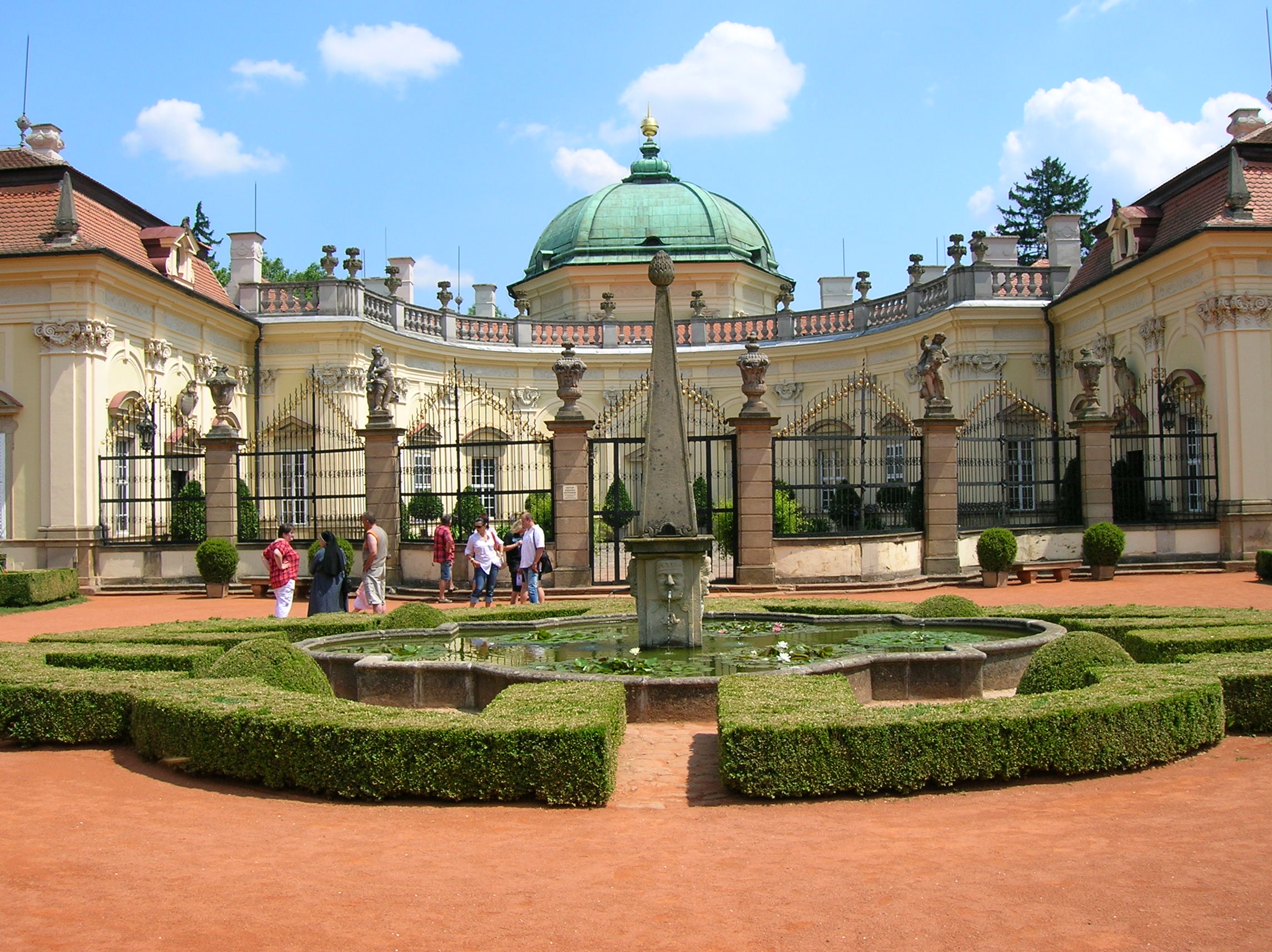
Buchlovice Chateau was composed of separate lower and upper sections shaped as semicircles. The chateau flaunted the Baroque style, resembling an Italian villa from that period. Crowned by a cupola, the lower part incorporated the main building with representative rooms. The upper building hosted temporary exhibitions and was home to offices. I also was eager to explore the beauty of the garden with its stunning statues and flower species I had read about.

ImageAfter I bought my ticket, I took a few snapshots of the lower chateau and the fountain with an obelisk in the middle, situated in the courtyard. Then I joined the group of about 15 people on this sunny day in early July.

Buchlovice was built in the first half of the 18th century by Jan Dětřich of Petřvald for his wife Anežka Eleanora of Colonna-Fels. The Petřvalds owned nearby Buchlov Castle, too. Even in those days the lower chateau had been the most important structure, and back then the upper chateau had served as a farmstead.

After the Petřvalds, the Bertcholds gained the property, along with Buchlov Castle. The chateau was renovated in the 1920s. The Bertcholds held on to it until 1945, when the estate was nationalized under the so-called Beneš decrees that made it state property. The decrees stated that Germans, Nazi collaborators, traitors and others living in Czechoslovakia had to relinquish their Czechoslovak citizenship and property without compensation. The guide did not specify the reason why the Berchtolds had to give up Buchlovice, but I assumed it was because they had had German citizenship.

ImageBuchlovice was the seat of a significant meeting in European history at the beginning of the 20th century when the Czech lands belonged to the Austro-Hungarian Empire. Alois Lexa of Aehrenthal, the Austrian-Hungarian Minister of Foreign Affairs, met with Alexander Petrovich Izvolskii, the Minister of Foreign Affairs for Russia. Leopold II Berchtold, as Austrian-Hungarian envoy in St. Petersburg, persuaded them to hold the talk there.

The two discussed the political turmoil in the Balkans, especially the push for independence of non-Turkish nationalities under Turkish rule. Neither politician wanted war. The Austro-Hungarian Empire aimed to annex Bosnia and Herzegovina while the Russians wanted their ships to be able to travel freely through the Dardanelles. However, Aehrenthal did not confer with the Council of the Empire in Vienna on the annexation issue of Bosnia and Herzegovina along with the Russian considerations. Emperor Franz Joseph I announced the annexation of Bosnia and Herzegovina during October of 1908.

ImageAs I entered the first room on the tour, I was dazzled by the delicate color scheme, exquisite furnishings and sense of intimacy. I felt as if I were stepping into the distant past, into someone’s home. I almost expected a member of the Petřvalds or Bertcholds to enter the space. The canopy bed captured my attention. The canopy was decorated in a pleasing pink, brown and white floral design. The wallpaper was stunning and cheerful, too, featuring pink flowers. A 17th century jewelry box from Spain had a special compartment for love letters. I wondered who had written to whom, and what exactly had been discussed in that correspondence. Did the recipient wind up marrying the writer? Or were the letters full of passionate goodbyes or passionate dreams that would never be realized?

Left with those thoughts, I continued to the Small Dining Room which featured Rococo furnishings. Even though it was lavish, I liked the flamboyancy and playfulness of the Rococo style. Yet I also appreciated Gothic and Renaissance styles, so strikingly different from Rococo. There was one unique object in the room. It was a small car that looked like a wheelchair with a steering wheel and headlights. I wondered if children played in it or if adults used it to get from room to room.

In one bedroom a painting of Madonna and Child proved a copy of a work by Raphael. The furniture was Baroque. I loved the pink and white theme in the children’s bedroom. The wallpaper featuring pink ribbons on a white background was exquisite. The Silver Salon featured silver on the wood paneling. Bright yellow furnishings brought cheer to the room. In a side room the motif of a peacock decorated the furniture.

ImageThe oval Music Hall was stunning with its frescoes. The room had two storeys divided by a gallery with gold-plated metal railings. The walls and cupola featured stucco decoration. The elliptical ceiling fresco showed the genius of the arts presenting the completed castle to Anežka, Jan Dětřich’s wife. Fortune showers her with flowers. At the top of the cupola were allegories of the personality characteristics of Anežka – justice, innocence, fortitude and love of the arts.  The frescoes of the four seasons were breathtaking, too. Then there were the four allegories of the elements. I was drawn to the angry, tall waves in the fresco depicting the allegory of water. I also noticed polychrome coats-of-arms and Corinthian columns in the majestic space.

In the library that housed Frantisek Palacký’s The History of the Czech Nation in Bohemia and Moravia as well as English, German and French books, I noticed a painting of Buchlov Castle above elaborate gold frames of portraits. I would visit Gothic Buchlov after wandering through the garden here. I knew it would be a totally different experience than the tour of this Baroque chateau.

ImageThe Big Dining Room featured red chairs with Hungarian porcelain. Two large, colorful Asian vases caught my eye. The chapel housed the oldest paintings in the chateau, dating from around 1600, and white stucco on the walls and ceiling. On the second floor I was enthralled by the bedroom of Leopold II Berchtold as the space was decorated in Napoleon style with the bed covered by what looked like a military tent.

The guide mentioned that Buchlovice was also home to an impressive collection of graphic art of the 16th to 19th centuries with 6,378 artworks. These renditions were situated in the depository, which was not part of the tour.

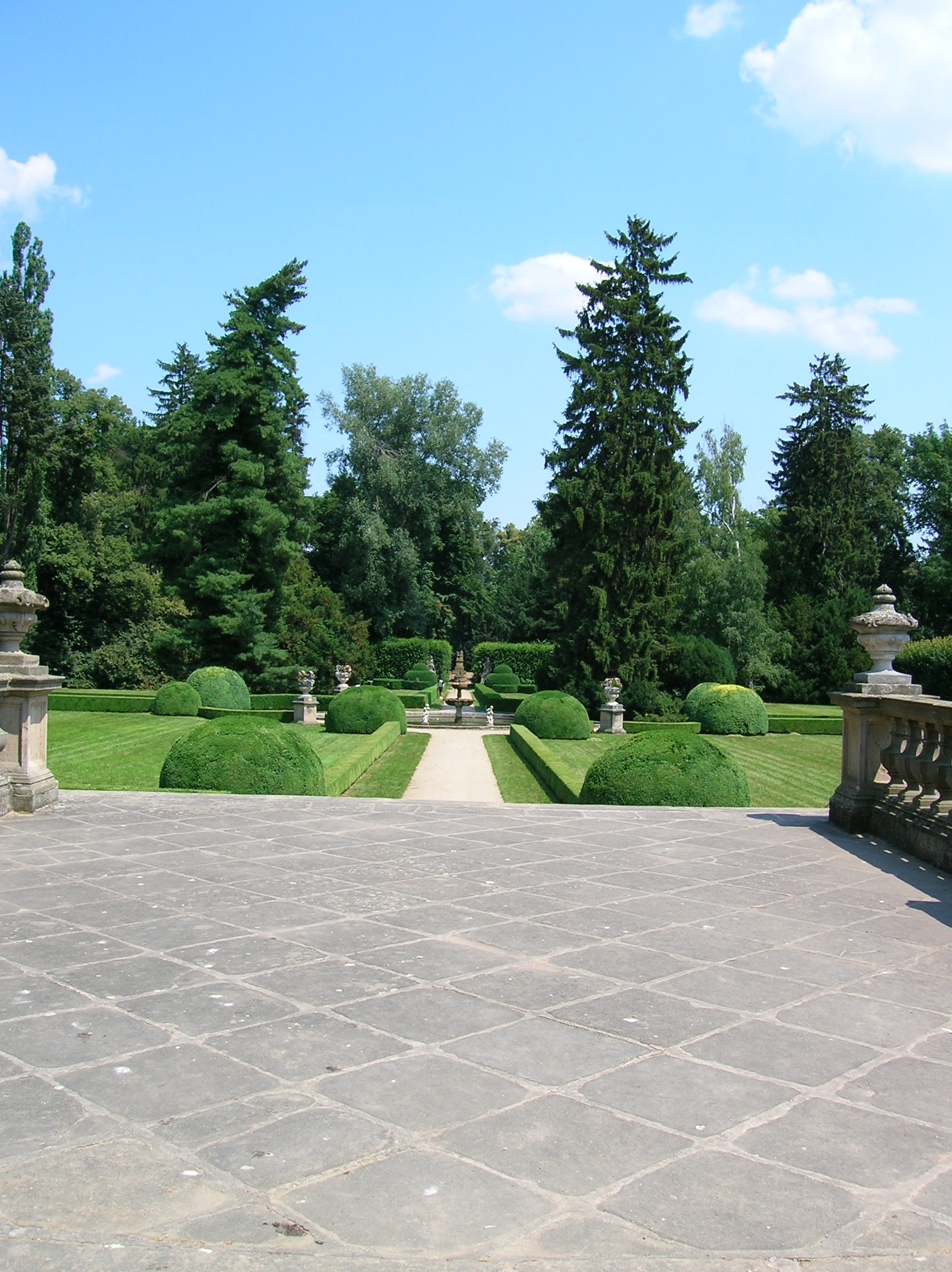
ImageNow it was time to explore the English style garden, created at the beginning of the 18th century. Sloping from west to east, the garden was divided into terraces. A bridge over a stream led to a large stairway with a vase-bearing balustrade. On the lower terrace I saw four statues of musicians and vases with masks of satyrs. Four statues featuring allegories of the continents also called the garden home. More than 800 species and varieties of fuchsias and numerous rhododendrons were also grown in the garden that contained exotic and rare woody species.

After a walk through the impressive garden terraces, I was eager to make my way to Buchlov. Peering at my watch, I wondered if I had enough time to walk through the forest paths to the Gothic gem and make the tour in time to return to Buchlovice for the bus back to Brno.

I would soon find out.

 Image

Tracy A. Burns is a writer, editor and proofreader in Prague.

Buchlov Castle Diary

Image

I had wanted to walk through the forest from Buchlovice Chateau to Buchlov Castle, but I did not have enough time before my bus back to Brno left from Buchlovice. I went to the information office and asked if there was any way I could get to Buchlov and have enough time for the 90-minute tour. The young, blond woman suggested I call a local man who gives rides back and forth. Since the information office recommended him, I thought it would be safe. The stout, bearded man came within 10 minutes, and soon massive, Gothic Buchlov loomed above me, overpowering me with its sheer size and strength.

First, the guide, a lanky man wearing a T-shirt that pictured the castle, explained that the history of Buchlov went all the way back to around 1300, when it was first mentioned in writing. At that time, Buchlov was royal property, but Moravian noble families were put in charge of it. The design of the Early Gothic chapel, forged in the 1370s, was inspired by Sainte-Chapelle Chapel in Paris. Unfortunately, it was mostly destroyed by Hungarians in an attack during 1468 and later abolished. The first private owners of the castle were the Lords of Žerotín, who took it over in 1520. Their tenure at Buchlov was short-lived, however, and the Zástřizly nobility called it home for 100 years, from 1544 to 1644. During this era Renaissance reconstruction took place.

In 1644 the Petřvalds came and would own Buchlov until 1800. The Petřvald family made some Baroque changes in the 17th and 18th centuries. From 1800 the property was transferred to the counts of Berchtold, who would become major players in the castle’s history. The two half-brothers Leopold I Berchtold and Dr. Bedřich Berchtold had been world travelers, and many of the souvenirs they had collected on their trips were displayed in the castle. Dr. Bedřich had another claim to fame: he had been the co-founder of the collection at Prague’s National Museum. The older brother, Leopold I, was known for setting up schools and a poor house, among other achievements.

The family kept it until 1945, when the so-called Beneš decrees made it state property. The Beneš decrees stated that Germans, Nazi collaborators, traitors and others living in Czechoslovakia had to relinquish their Czechoslovak citizenship and property without compensation. The guide did not specify the reason why the Berchtolds had to give up the property, but I guessed it was because they had had German citizenship. Much reconstruction took place during the second half of the 20th century and into the 21st century.

ImageAn intriguing legend is associated with the linden tree situated in front of the Dancing Hall, home to 18th century furnishings and Baroque portraits. According to the legend, some 400 years ago the tree was planted with its roots upward and its crown in the ground.  It was said to be proof that a man sentenced to death for poaching was really innocent.

After passing through a gate hailing from the middle of the 16th century, our group arrived at the third courtyard. In the black kitchen I marveled at the oldest architectural feature in the castle – the Late Romanesque arch dating back to 1340s. The pots and utensils were copies of those used in the Middle Ages.

The armory offered an intriguing perspective on the battle-ridden history of the castle. Some weapons dated back to 1421, when the Hussites tried to conquer Buchlov, and others hailed from the 17th century Thirty Years’ War when the Swedes did much damage. Buchlov survived that war only because a ransom was paid. There were weapons from all over the world – from Asia as well as Central and South America, for example.

ImageOn the first floor we entered the Baroque library, which was home to about 10,000 volumes. Books that promoted Protestantism were removed after the Thirty Years’ War Battle of White Mountain in Prague during 1620. The Bohemian Protestant rebels were defeated by the armies of Holy Roman Emperor Ferdinand II, who was devoutly Catholic, and the German Catholic League.

In the early 17th century the majority of the Bohemian nobility had been Protestant. When die-hard Catholic Ferdinand II was crowned Holy Roman Emperor and King of Bohemia, it meant serious trouble for the Protestants. After the Battle of White Mountain, the Czechs would find themselves under Habsburg rule, and German would become the prominent language of the lands. The books in Czech mostly came from the Czech National Revival, an 18th and 19th century movement that strived to promote the Czech language, Czech culture and national identity.

 I saw an intriguing architectural detail of an Early Gothic portal where the chapel from the 1370s was situated, now an empty space with spectacular views of the countryside.  Then we came to the Buchlov Madonna, whose expression seemed to be asking, “Is this kid mine?”  The statue dated from the first half of the 14th century. Another Madonna appeared to be trying to keep her son from wriggling away.  There was also a rendition called “The Last Supper of the Lord,” a double-sided painting, part of a winged altar, which is composed of a central panel and two side panels. It dated from the end of the 15th century. It always astonished me that artifacts from the 14th or 15th century could survive to the present day.  It fascinated me how they were tangible connections with the distant past.

ImageThe Knights’ Hall featured cross vaulting and reticulated vaulting. These architectural elements were decorated with the coats-of-arms of significant Moravian clans. Then we came to a room decorated with an ornate tiled stove that flaunted cherubs and floral motifs in brown, green, yellow and white. A complete knight’s armor from the 16th century weighed 30 kilograms. I could not imagine wearing it. I do not think I would even be able to stand up in that armor. I was intrigued by the calendar from the Middle Ages. I learned that February of 1693 had had 31 days.

The next section was the castle museum. It had been opened by Count Zikmund I Berchtold in 1856. Zikmund I had revolted against the Habsburgs in Hungary during 1848 and 1849. The rebellion was unsuccessful, and he got the death penalty. The court reduced his sentence to house arrest for life, so he organized the family museum. I saw plumed helmets, weapons of American Indians and the skins of a zebra, polar bear, grizzly bear and alligators. There were also human skeletons and a collection of shoes ranging from sandals to boots. In a jar was an embryo of a baby pig with eight legs and two tails. It made me think back to the revolting human embryos that Peter the Great had collected, now gathered in Saint Petersburg. My stomach had violently churned when I had seen them during that freezing April morning several years ago.

ImageThen the guide explained that after the Battle of Slavkov in 1805 the nearby Buchlovice Chateau had been used as a hospital where military personnel and civilians had received free medical attention. Leopold I Berchtold caught typhus there and died at the relatively young age of 50. On the wall was a picture of a woman in the third stage of syphilis. She had large empty sockets for eyes, and her nose was black. Her teeth made her look sinister and dangerous. It was absolutely horrifying. She looked like a monster, not like a human being. I thought of people with cancer and how the horrible disease could make people look so emaciated. I felt lucky that I did not have cancer and that my father had survived two bouts with the terrifying illness. I knew I would keep the image of that woman, stripped of human dignity, in my mind for a long time.

The next room was totally different. It featured an Egyptian mummy in a coffin made of cedar wood. It was about 2,300 years old. The illusive wall painting dated from the first half of the 19th century and made me feel as though I was inside an Egyptian tomb.

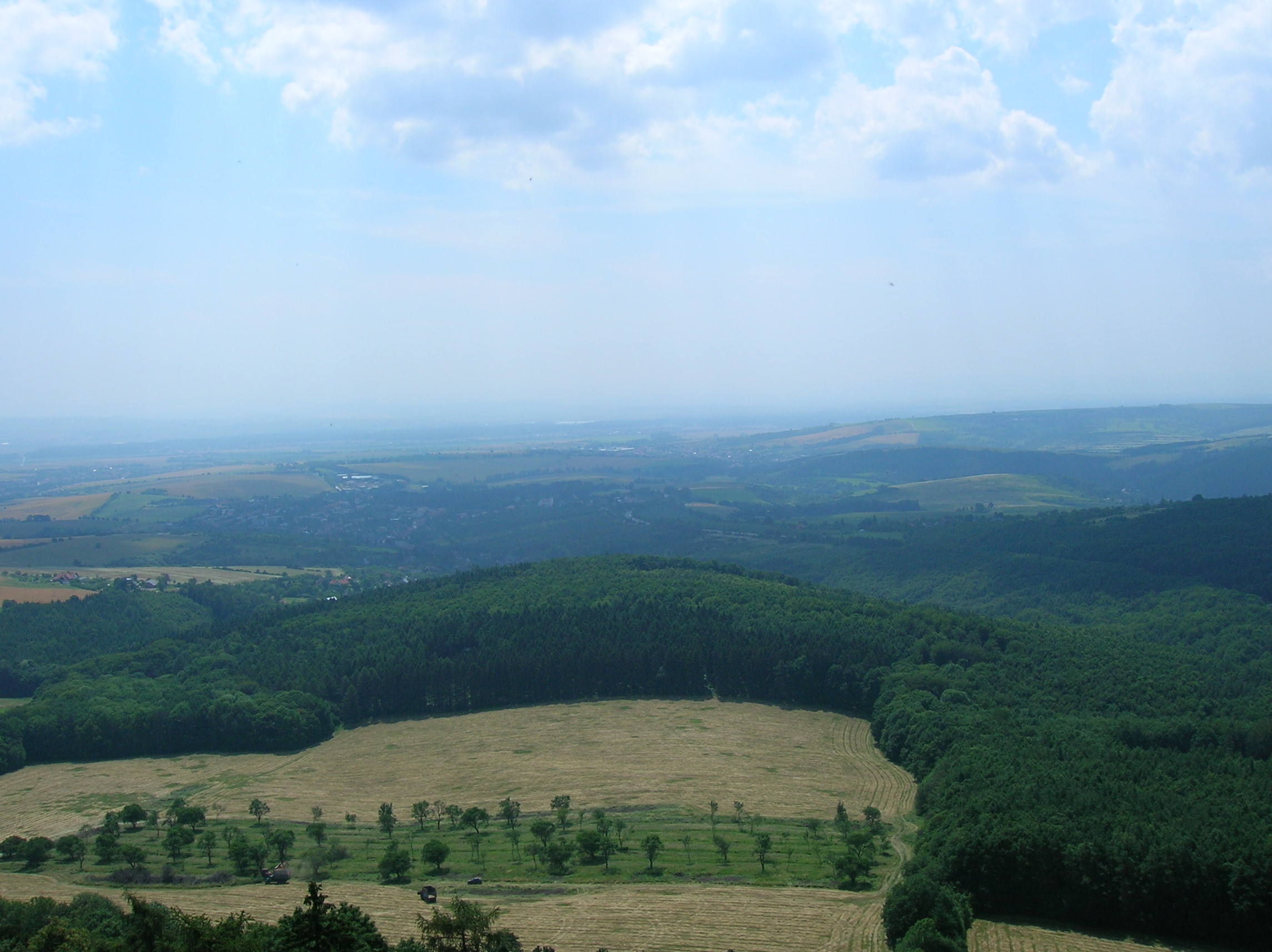
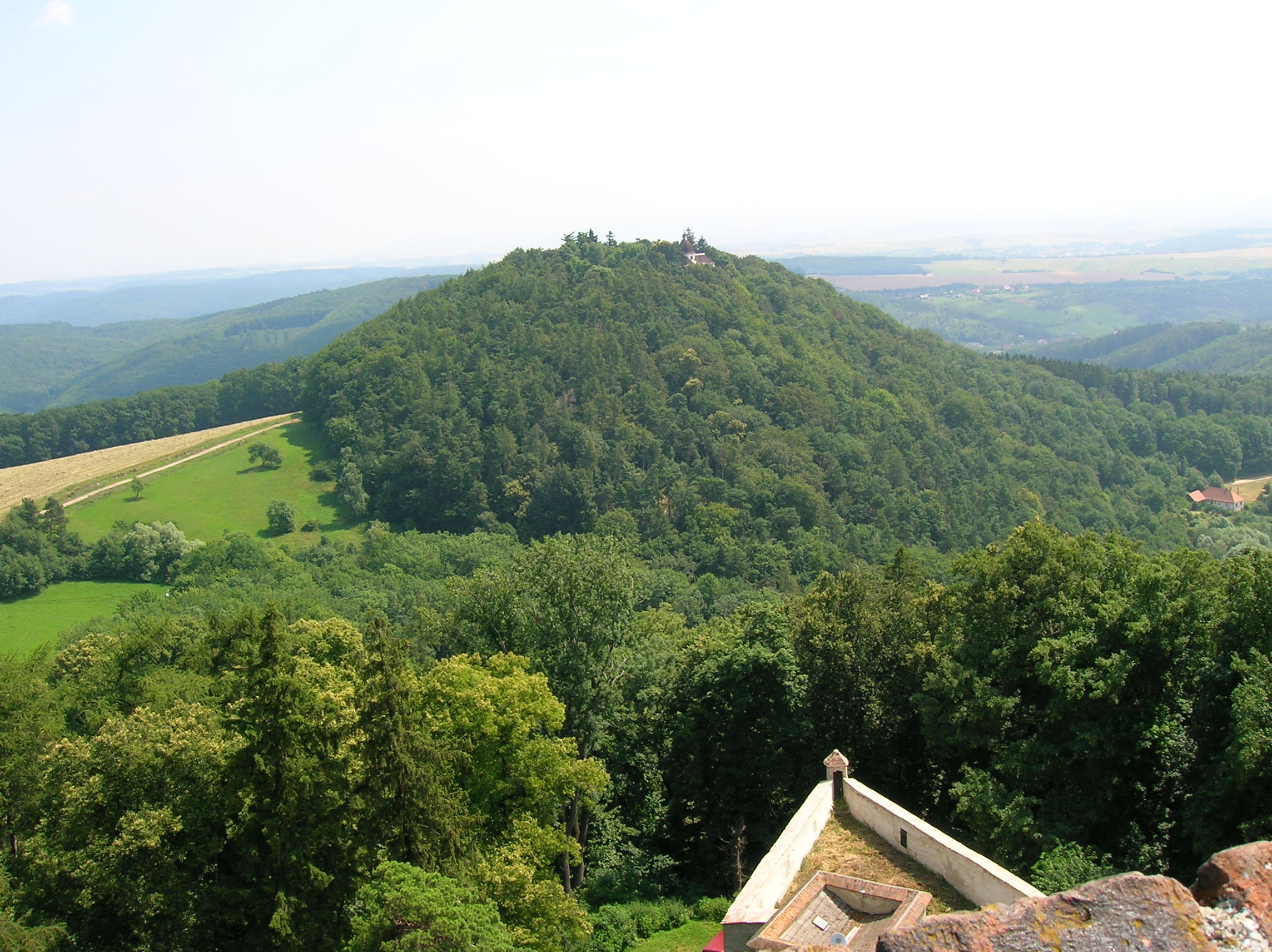
Last, we climbed the tower and saw astounding views of the south and east Moravian countryside. I could also see the church where the family tomb of the Petřvalds and Berchtolds was located, but it was not nearby, and we did not go there. We descended many steps and came to the locked door. For a moment I was disoriented and lost sight of the guide. Then he appeared and opened the door with one of his many large keys. We all filed out, into the sunshine. When I turned around to thank the guide, he had disappeared.

My driver came for me, and soon I was back in Buchlovice, standing at the bus sign on the highway as car after car sped by me. The bus did arrive on time, though, and before long I was back in Brno.


Tracy A. Burns is a writer, proofreader and editor living in Prague, Czech Republic.

Image

Nové Hrady near Litomyšl Chateau Diary

Image

About eight years ago I mentioned to several English students how I loved traveling to castles and chateaus on the weekends. “Have you been to Nové Hrady near Litomyšl? You have to go there!” my 25-year old female student blurted out, explaining that she was from a nearby town. I had visited Nové Hrady Castle in south Bohemia, but I had never heard of a Nové Hrady Chateau in east Bohemia. I could not find any public transportation at a convenient time, so I put this chateau on the back burner and explored others. Then, on a Friday in 2011, I was so eager to see the Rococo chateau I had looked up on the Internet, that I took the Student Agency bus to Hradec Králové, and then made the one-hour trip to Litomyšl.  From there a friend who owned a cottage nearby gave me a lift to Nové Hrady.

The history of Nové Hrady began with the construction of a church on this site in the 12th century. After the Hussite Wars in the 15th century, a Gothic castle called “Nový Hrad” or “New Castle” was erected there. In the 16th century the castle was transformed into a Renaissance chateau, but during The Thirty Years’ War it was plundered and destroyed. Duchess Anna Barbara Harbuval de Chamaré bought it in 1750, and Nové Hrady got its Rococo appearance from 1773 to 1777, when her son, French nobleman Jean-Antoine Harbural de Chamaré made it his summer residence.

ImageBack then it was dubbed the “Small Schonbrunn” or “Czech Versailles.” The French garden, English park and chateau chapel were created at this time, too. In 1935 Knight Bartoň of Dobenín purchased it and carried out the needed repairs. During the Second World War, the SS and Hitlerjugend occupied the chateau. In 1948 it became the property of the state. One wing of the chateau was turned into an elementary school, which existed here until the 1980s. An exhibition of Rococo art was placed in another wing. During the 1950s the chateau’s situation became even more desolate: Its basement was transformed into a fattening farm for pigs.

Reconstruction was carried out in various phases, but the chateau was still in a very decrepit state when it was returned to its original owner’s grandson, Josef Bartoň, in 1990. Unfortunately, he did not renovate the chateau. Instead, he put it up for sale. In 1997 the Kučera family from Prague purchased it. It finally opened to the public in 2001.

Now it looked so majestic that it was impossible for me to imagine the chateau in such terrible condition. After going through a three-part gate, I walked through a Rococo garden with fountains and ascended a lavish staircase studded with statues. I liked the coral orangish color of the chateau that made the exterior appear playful, cheerful and vibrant.

ImageI had visited enough chateaus to I know a little about the Rococo period. The key word for this style was ornate. Small sculptures often appeared as did lavish mirrors and tapestries. Rococo was even more extravagant than the Baroque style that had preceded it.

The tour began in the hallway below a monumental staircase enriched with putti statues. The side walls of the entrance hall were decorated with hunting trophies. We entered the large Main Hall with its creamy yellow walls and white rich stucco décor. The yellow and white colors made for an airy, joyful combination. The white tile stove was original, in Late Baroque style, and a white piano stood nearby. The crystal chandelier from Empress Marie Theresa’s era used 64 light bulbs and weighed 180 kilograms.

One window looked out to the Classicist circular gazebo with Baroque theatre of evenly sheared high bushes. In the wall the guide showed us two doors that opened outward to reveal a bar. From the terrace I saw the Rococo garden I had passed through to get to the box office.  The staircase looked even more elegant from this perspective.

ImageNext we entered a Baroque bedroom. The pillowcases on the Baroque bed had delicate, lace patterns. A brown table, oak closet and desk featured intarsia. A kneeler also hailed from the Baroque era. In the following room there was a grandfather clock that the guide claimed was impossible to repair. A kneeler featured an engraving of a house and trees using the intarsia technique. A Baroque intarsia table from Holland with motifs of flowers, birds, butterflies and vases rounded out the room.

Then came the Rococo Salon. The table and armchairs had a white floral design. The table impressed me the most with the ornate, gold ornamentation of its legs and sides. A white wardrobe decorated with green laurels was pleasing to the eye. The couch and chairs were pea green with yellow, flaunting a floral pattern. The green color combined with yellow gave the furniture a cheerful appearance.

Unfortunately, original Rococo chapel had been destroyed. The present chapel was sparse.  It featured two stained glass windows and a large carving of Jesus Christ on a cross.

ImageThen it was time for another Rococo style room featuring intarsia. The tops of two dressing tables were decorated with beads shaped into green swirls on a blue and black background. The space also contained two intarsia dressers decorated with floral motifs and a kneeler boasting intarsia.

In the former kitchen the 18th century grandfather clock, varnished in red, was engraved with Oriental themes, one feature of the Rococo period.  A desk featuring Oriental themes, depicting Chinese people and nature, caught my eye. The two jewelry boxes were Chinese, too.

The next room was called the Classicism Room. Classicism relied on order, symmetry and simplicity and began after 1765 as a reaction to Baroque and Rococo. It was connected with the French Revolution. The striped grey with tan couch and two chairs certainly fit the Classicist description. In a display case there were two elegant fans.

However, a clock glittering with gold made me think of the Empire Style that would be featured in the next room. After all, the gold and black color combination was one trait of the Empire style that corresponded with the era of Emperor Napoleon and his military maneuvers into Egypt during 1796. Oriental themes also played a part in the Empire style. Sure enough, in The Empire style room, black and gold freely mingled. A black clock featured two black men wearing gold loincloths and sporting heads of golden hair. Another gold clock was decorated with a seated angel. The furniture featured Oriental and animal themes.

ImageThe next room was set up in the Biedermeier style, from the first half of the 19th century. Carving and intarsia still appeared in smaller objects. A picture of a semi-circular square flanked by columns showed a passion for symmetry and order. I wondered if the painting depicted a place in Rome. The striped chairs and couch featured a simple yet elegant style.

The Smokers’ Salon was all about green. The rug was green, the cushions on the brown chairs were green, a partition was green, and a loveseat was decorated with green and tan stripes. This room was designed in the Art Nouveau style from the beginning of the 20th century.

ImageAfter the tour I explored the garden. There was a pond to my left, near the road. One part consisted of trees and plants on a slope, rising in tiers. It looked wild and untamed. Purple flowers lined a path behind the back gate that had its private garden. I spotted the Baroque theatre of shrubbery and the Classicist garden summerhouse. Further on, there was a hotel, an orangery, a paddock for horses, and an area where deer were bred.

I was very impressed with the Rococo exterior of the chateau, and it had been intriguing for me to see furniture and objects from various periods inside. The tour enlightened me as to the differences between eras. My understanding of the various time periods was enriched. I loved the black with gold combination of some objects. I wish the chateau had more paintings, though. A painting gallery of Baroque and Rococo art would have really added to the already stunning tour.

Soon I got back to Litomyšl, where I ate some chicken with peaches and cheese – my favorite – and then hurried to catch the 1 pm bus back to Hradec Králové. Upon arriving there, I ran to the other side of the terminal, where the Student Agency bus was about to leave for Prague. I made it just in time.Image

Tracy A. Burns is a writer, proofreader and editor living in Prague.

Velké Meziříčí Chateau Diary

Image

The direct bus from Prague to Velké Meziříčí – believe it or not – arrived early: It got in at 8:45 instead of the scheduled 8:55, and on a weekday, too. Almost two hours from Prague, the south Moravian town is on the bus routes to Jihlava and Brno.

Dating back to the 1330s, the chateau boasts some intriguing legends and is connected with some significant historical events. According to one legend, a week before the 1723 fire that ravaged the town and chateau, at noon the chateau clock tolled 102 times instead of 12 times. A week later 102 buildings had incurred damage from the fire, including the town hall. Another legend concerns one of the former owners of the chateau – Duchess Marie Eleanora from Guastalla and Sabionetta. After dying tragically in a horse riding accident, she began to haunt the chateau as its so-called “White Lady.”

Historical events also took place here.  In August of 1415, chateau owner Lacek of Kravaře ushered Moravian nobility to the chateau, trying to convince them to sign a protest against the incarceration of legendary Czech priest, philosopher and reformer, Jan Hus, who had been accused of heresy against the Catholic Church.

The chateau went through several renovations. It was Jan the Younger from Meziříčí who changed it from a Roman Gothic castle to a Renaissance chateau in the 16th century. Later, in 1733, Baroque elements were added. Owner Rudolf Lobkowicz gave the chateau a Neo-Gothic flair.

ImageOther former owners made their mark in the chateau’s history as well. For example, Marie Eleanora Liechtensteinová also served as Lady of the Bedchamber for Holy Roman Empress and Sovereign of Bohemia Maria Theresa of Austria. She became a close friend of the Empress’ daughter, French Queen and Navarre Queen Marie Antoinette, who also was the Archduchess of Austria. During the 18th century French Revolution, Marie Antoinette gave her good friend her exquisite, wooden desk. The chateau also obtained Empress Maria Theresa’s unique, black glass funereal necklace, which she had worn after her husband, František Štěpán Lotrinský, died. I was enamored with both items in the former Dancing Hall.

Former owners Rudolf Lobkowicz and František Harrach were world travelers, bringing back souvenirs from Asia, for example. These are displayed in the Oriental Salon. Some objects from Japan that caught my attention included a black and gold wardrobe, a jewelry box for traveling and a red chest. I also saw silk-topped paintings. The picture of a pagoda was exquisite. A precious Baroque table was decorated with a picture of the town.

Known as a collector, traveler, poet, press editor and economist, Harrach was also an aide to Archduke Ferdinand Karl Joseph of Austria-Este, better known as Archduke Ferdinand d’Este. In September of 1909, Harrach hosted d’Este plus Emperor of Austria and King of Bohemia Franz Joseph I and German Emperor and Prussian King Wilhelm II as well as other historical figures during military field maneuvers. The bedroom where Emperor Franz Joseph I slept was one of the many highlights of the tour. I marveled at the ornate wooden décor of the bed frame and gazed at Emperor Franz Joseph’s portrait hanging nearby.

But perhaps Harrach is better known for his participation in one particular historical event. When Archduke Ferdinand d’Este was assassinated in Sarajevo on June 28, 1914, Harrach was sitting next to him but escaped injury. Harrach swabbed blood from Ferdinand’s fatal wound with his handkerchief, and at the chateau I saw the blood on a white background in a black frame marked with the date and year of the tragedy. That was the most impressive feature of the Serbian Salon, which also was home to many photos of Archduke Ferdinand d´Este and Emperor Franz Joseph I.

When Harrach died, his daughter Josefa inherited the chateau, but she was forced to emigrate in 1948, after the February Communist coup. The chateau was nationalized and served various functions in the 20th century – it has been and still is a museum; it also has served as a state archive and a maternity hospital. In 1995 the chateau was returned to the family. Now Josefa’s three sons look after it.

ImageOther items that particularly impressed me were the life-size portraits of nobles on the landing. I felt as if the portraits could swallow me up. Three coats-of-arms with Baroque golden frames also enriched the landing. The Men’s Salon featured an exquisite brown tapestry of leaves, fruit and branches as well as a jewel box made of tortoise shell and silver. A unique stand for cigars also decorated the room. The chandelier was unique as well – it was made out of deer antlers and brass.

The former Dancing Hall held more treasures than Marie Antoinette’s desk and Maria Theresa’s necklace. I also saw Rococo furniture and a Baroque black closet decorated with ivory. The Rococo Dining Room was light and airy and used for concerts. The frescoes on the walls showed Czech streams, bridges and cottages, a sort of idyllic country life. Another fresco portrayed the chateau in Baroque style and still another depicted a town celebration. I gaped at the Venetian chandelier. It had diamond-shaped glass pieces. I loved Venetian chandeliers!

Then I came to the museum section of the chateau. I was impressed that the museum hosted a very eclectic collection of items. With displays ranging from Cubist furniture to town life during the last 600 years, every room held a different surprise.

In the hallway there was an intriguing sculpture exhibition by Velké Meziříčí native Jiří Marek, who lived from 1914 to 1993. His large wooden figures twisted in agony. I could almost feel the pain portrayed in the sculptures. The pain was almost tangible. In one sculpture Marek had created a limp hand so realistically. His figures reminded me somewhat of those created by legendary Czech sculptors Frantisek Bílek and Franta Uprka.

ImageIn the Velké Mezíříčí town exposition the uniform top of the Pioneers Communist youth organization from the 1980s got my undivided attention.  In a display case was a light blue shirt with a red scarf that I have come to associate so well with the Pioneers’ organization. Because I hadn’t experienced Communism, the uniform shirt captivated me. I wondered if the parents of the child who had worn these clothes had actually believed in Communist ideology or if they had dressed their child this way out of fear.

The exposition also showed what kind of clothes townspeople wore during the 19th century and what sort of furniture could have been found in their homes. Tapestries depicting scenes from town life hung on the walls.

Soon I came to the Cubist rooms – a Cubist living room in one space and a bedroom of that style in another. The Cubist furniture was designed by well-known architect Pavel Janák and the famous Artěl group in Prague for a prominent Czech mathematician and physicist. Janák’s box with a top, its black stripes on white almost hypnotizing me, was in one display case. What impressed me the most was the Cubist couch. The back was composed of three triangular shapes, the middle one at a different angle than the outer two.

ImageThen I made my way to the Jewish synagogue, which was strongly advertised on the town’s Web pages. (Later I found out the advertised synagogue was a different one, which is now used as an exhibition space.) The red brick façade was beautiful, but the inside was a disappointment. Vietnamese sold their goods in the interior, as row upon row of cheap clothing littered the spaces. I saw a straw hat with the words The Czech Republic written on the brim and packs of underwear as well as backpacks hanging from a wall. I had expected that this synagogue would be a sort of museum open to the public, possibly with tours and information about Jewish life in the town. I soon left the synagogue and continued toward the main square.

On the main square there was a quaint church, an impressive town hall and stunning sgraffito on the façade of several buildings. I ate lunch – turkey in some gross-looking but thankfully tasteless sauce – in a garden restaurant where the service was slow.

Then I headed back to the bus station to get the one o’clock back to Prague. I was the only person at the stop, which made me wonder if I was standing in the right place. I became nervous. When the bus didn’t show up by 1:10 pm, I was worried. It did come, though, at 1:20 pm, and soon I was on my way home, with fond memories of the chateau’s representative rooms and the diverse displays of its museum.Image


Tracy A. Burns is a writer, proofreader and editor living in Prague.

Dušan Jurkovič’s Villa Diary

Image

I was able to go by car to the villa where Slovak architect Dušan Jurkovič lived from 1907 to 1919. It was in a tranquil village near Brno, the capital of Moravia.  The architectural gem had opened in 2011. I did not know much about Jurkovič except that he was responsible for much of the stunning décor in the Coffer Room of the Nové Město nad Metují Chateau as well as the renovation of that chateau’s two-tiered garden.  While visiting the villa, it would become clear to me that Jurkovič was one of the leading architects in the Czech lands during the 19th century and that this house was his most prominent work.

This leading Slovak architect had been inspired by Austrian architects Josef Maria Olbrich and Josef Hoffmann, both of whom, along with artist Gustav Klimt and others, co-founded the Viennese Secession or Art Nouveau movement at the end of the 19th century.  Jurkovič had especially been influenced by Olbrich’s Secession style Darmstadt Artists’ Colony, where Art Nouveau artists lived and worked. One of the Secession features on the houses included the decoration at the entrance with its gold-plated floral motifs. Olbrich’s style mixed British tendencies with central European qualities. Hoffmann’s Hohe Warte Artists’ Colony, launched in Art Nouveau style, was another influence. Jurkovič had originally intended that his villa would become part of an artists’ colony, and he even opened the villa with an exhibition of 119 artworks, many his own, in 1906.

First, I walked through the garden, bursting with color and featuring pergolas and trelliswork. The view of the house from the garden confirmed that Jurkovič had created his own unique style by meshing several styles together. The house was a mixture of English Arts and Crafts, Art Nouveau and traditional Moravian folk architecture. During the 19th century, the Habsburgs of the Austro-Hungarian Empire supported European folk art because it united its regions. Folk art would play a major role in architecture during that century.

ImageAs I understood it, the English Arts and Crafts movement had emphasized simplicity and had employed romantic and folk styles. The materials used were also accented. Also British architects often featured a staircase hall, which dominated Jurkovič’s main achievement. The movement reached its peak from 1860 to 1910.

Jurkovič’s villa looked like it belonged in a fairy tale. I expected princes and maidens to stick their heads out its windows. I loved the playfulness of its design as if it had popped out of a story book. It was no wonder that it had been dubbed “the Fairy Tale House.” The villa was made of stone, wood and cork with lime-coating on the exterior and plaster on the interior. It resembled a country house or cottage in England.

At the entrance gate there was a mosaic of two peacocks standing opposite each other. There used to be a mosaic showing a scene from The Shephard and the Dragon fairy tale, but it was destroyed because it had been made on a cork rather than plastered base. The mosaic that replaced it lit up at night. The entrance loggia featured the statue, “The Thinker,” by sculptor Jan Štursa, who had helped define modern Czech sculpture. It was one of the few original pieces that were now in the villa. The house had been renovated to look as it had when Jurkovič and his family had lived there from 1907 to 1919, when the architect returned to Bratislava, Slovakia, where he died in 1947.

Soon it was time for my tour, which had to be booked in advance. My tour guide and I entered the main room of the villa, the Staircase Hall. It was dazzling. I especially loved the folk elements of traditional Moravian architecture, such as the red, white and blue abstract wallpaper on one side. The folk-oriented carpet featured reds and blues, too. The wine red and forest green colors represented in the room also symbolized Moravian folk art. I thought they complemented each other well and gave the place a cozy atmosphere. I recalled that in the Coffer Room at Nové Město nad Metují, reds, greens and browns played major roles.

Ceramics and tapestries also filled the room. The tiled stove was dark green, and the doors took on the same hue. The wallpaper was not the only part of the room to have blues in it. Even the exquisite, wooden table had a stunning, blue tone.  The chandelier, though, was pure Art Nouveau and had featured light bulbs, as the villa had utilized electric lighting.

ImageThe alcove, designed for Jurkovič’s wife Božena, was light and airy in contrast to the dark central section of the room.  I admired the tapestries in the alcove. One showed a log cabin with mountains in the background. The others shared the countryside theme, depicting fields and cross stations. The room was assembled like a gallery of Jurkovič’s work. He had also designed the furniture. I realized that the villa itself was an exhibit with smaller exhibits inside.

Jurkovič’s former study rooms featured a temporary show of furniture designed during the middle of the 20th century. Artists Zdeněk Plesník and Miroslav Navrátil used materials experimentally. Their armchairs were made from bent lamellas, which were fine sheets of material positioned in the shape of gills. The armchairs could be put into several positions. They could function as chairs or as a bed, if all three were placed together. I was surprised to find out that Navrátil had created the chairs on trams. Even now, trams 1, 3 and 11 in Brno were equipped with the style of chairs that he had created. I often took tram 1 to the center, so I had actually sat on a chair that he had designed!

Other spaces that used to serve as a bedroom, children’s bedroom and bathroom were now decorated with pictures of Jurkovič’s other designs, interactive materials and furniture from his other buildings. I found out that he had also designed the interior of the Vesna boarding house in the Czech lands. The bedroom there boasted vibrant hues of greens, yellows and reds. Jurkovič also incorporated a dovetail motif. I saw a stunning wooden chair with a dovetail masterfully carved on its back.

ImageJurkovič would also design a diner and hostel in Wallachian Pustevny in triumphant folk architectural style. The diner boasted an interior with a turquoise hue illuminated by side windows. The walls were covered with pictures of Czech figures, such as the country’s patron Saint Wenceslas and the Radegast pagan mountain god.

Jurkovič’s designs for the Luhačovice spa town were harshly criticized by Brno architect Karel Hugo Kepka and the editorial board of Architektonický obzor journal, which caused his commissions there to cease after 1914. Today, though, residents of Luhačovice are very proud of Jurkovič’s work there. He also designed a house in the Bubeneč district of Prague 6, using concrete instead of wood and constructing an elevated gable.

During World War I he designed about 40 cemeteries for fallen Austrian soldiers in what was then Galicia. After the war he concentrated on war memorials, and in the late 1920s he began to experiment with the functionalist style. Jurkovič moved out of this villa in 1919, after democratic Czechoslovakia was created because he wanted to help reshape his native, reborn Slovakia. So he moved back to Bratislava, where he died in 1947.

I loved the red color with floral pattern of the wooden beams on the ceiling. It had a log cabin appeal and gave the beams a vibrant folk architecture appearance. The entire villa exuded a warmth and coziness that I had also felt at Nové Město nad Metují’s Chateau. 

I was impressed with the tour, but disappointed that only the Staircase Hall looked as it had when Jurkovič had lived there. I understood that Jurkovič had sold a lot of the furniture. The Staircase Hall had such a dynamic quality. It was so vibrant, so cheerful, yet at the same time intimate. I wished that more than a few pieces of the original furniture and ornamentation had been preserved. While the temporary exhibition and spaces documenting Jurkovič’s works were intriguing, the Staircase Hall was definitely the highlight of the tour.

 Image

Tracy A. Burns is a writer, editor and proofreader living in Prague.
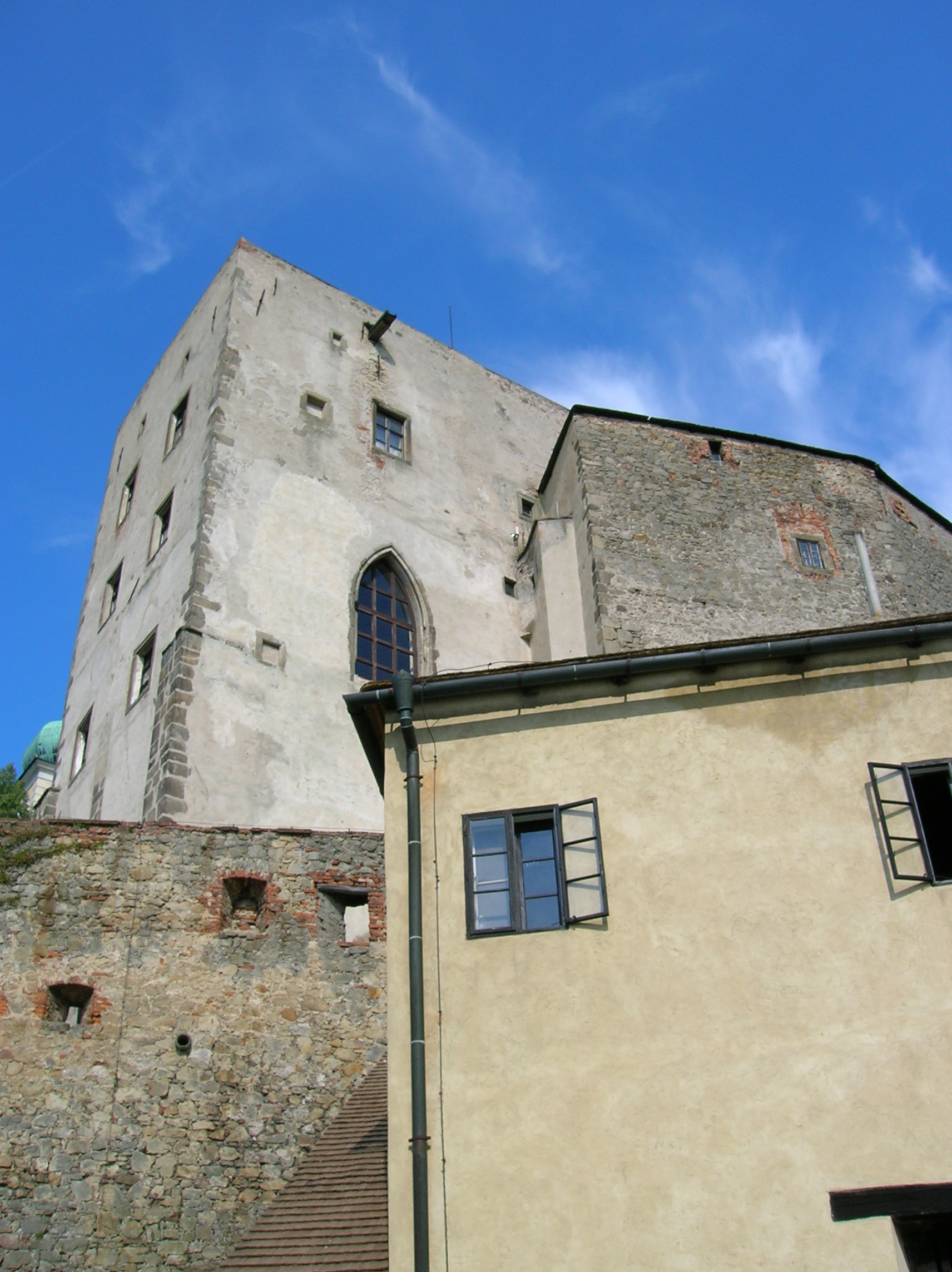
Zlatá Koruna Monastery


Image

I traveled by a very comfortable train to the monastery of Zlatá Koruna (“The Golden Crown”) one summer morning. When I got off the train, I almost panicked. I was in the middle of nowhere. Soon, though, I got my bearings, found the village and made my way to my destination. The monastery is situated only six kilometers from the historical, romantic town of Český Krumlov, in a picturesque setting next to the Vltava River.

The monastery of Zlatá Koruna was founded by King Otakar II of the Přemyslid dynasty in 1263 for the Cistercian Order. Legend has it that King Otakar II promised to establish a monastery and dedicate it to the Virgin Mary if he won the Battle of Kressenbrunn in 1260. Though burned down by the Hussites during the Hussite Wars in 1420, the monastery was reconstructed in the 17th and 18th centuries. Zlatá Koruna suffered again, though, when, at the end of the 18th century and the beginning of the 19th century, it housed various factories.

It looks nothing like a factory now, I thought to myself as the tour of the three-aisled basilica, big and small convent buildings and chapel began.

The elaborate Rococo stucco décor and exquisite Rococo wall paintings throughout the monastery astounded me. I was impressed by the refectory, the former monastery dining room, which housed three early Baroque frescoes dating from 1685. The painting at the door of the refectory showed prophet Habakkuk with an angel. The middle fresco took up the Holy Trinity theme. Another fresco was devoted to Hagar with his son Ishmael and an angel. The entranceway to the refectory was decorated by a huge canvas that told the story of Josef in Egypt.

The Chapel of Guardian Angels was the oldest preserved part of this monastery, dating back to the late 13th century and, I soon realized, a gem of early Gothic architecture in the Czech lands. In 1763 painter František Prokyš adorned it with beautiful Rococo frescoes.

The Chapter Hall, built in 13th century Gothic style, featured Rococo paintings depicting religious allegories. In the Cruciform Passage area of the Big Convent, my eyes were drawn to the rich Rococo stucco decoration and stunning frescoes by Lukáš Plank. These works illustrated scenes from the history of the Cistercian Order, the guide told our group.

The Church of the Annunciation of the Virgin Mary was also dominated by stucco ornamentation. The main altar dated from the late 18th century and was adorned with sculptures by Jakub Eberle. I did not miss the High Gothic rose window in the transept, either.

Other sights that enthralled me included the epitaph of Přemysl Otakar II.  An empty coffin was opened by the God Saturn, Pallas Athena standing at his side. Designed circa 1772 by Jakub Eberle, the epitaph showed off a black coffin surrounded by rich sculptural ornamentation and dynamic, twisting figures as well as white and gold decoration.

During the 1700s the monastery served as a school for children, and part of the tour highlighted teaching aids in the form of small pictures depicting significant personalities from Czech history. Other pictorial learning tools included pictures of a carpenter’s workshop and a blacksmith’s workshop, for instance. An exhibition about literature in southern Bohemia rounded out the tour. A Czech literature enthusiast, I was enthralled with the displays.

Afterwards, I took a walk across the bridge to the other side of the Vltava and relaxed on the embankment. I thought about many things – happy and sad moments, failures and successes – as I gazed at the monastery from the opposite embankment. It was a sunny summer day, the perfect weather for traveling. I watched many people canoe down the gentle river. Before long, though, it was time to get lunch and then head for the small shack that served as a train station. While waiting for my train back to Prague, I stared at the monastery in the distance. Then I boarded the train, and the monastery disappeared from sight. View from Zlata Koruna

Tracy A. Burns is a writer, proofreader and editor living in Prague.

Rabštejn nad Střelou Diary

Image

After visiting the chateau in Manětín not far from Plzeň in west Bohemia, I had to go by car to get to nearby Rabštejn nad Střelou, the smallest town in the Czech Republic and allegedly the smallest in Europe. As I entered the town, I noticed a pub on the right-hand side. I think every town in the Czech Republic has at least one pub. I had tried to visit the town the week before, but the only road to the town had been closed due to construction work.
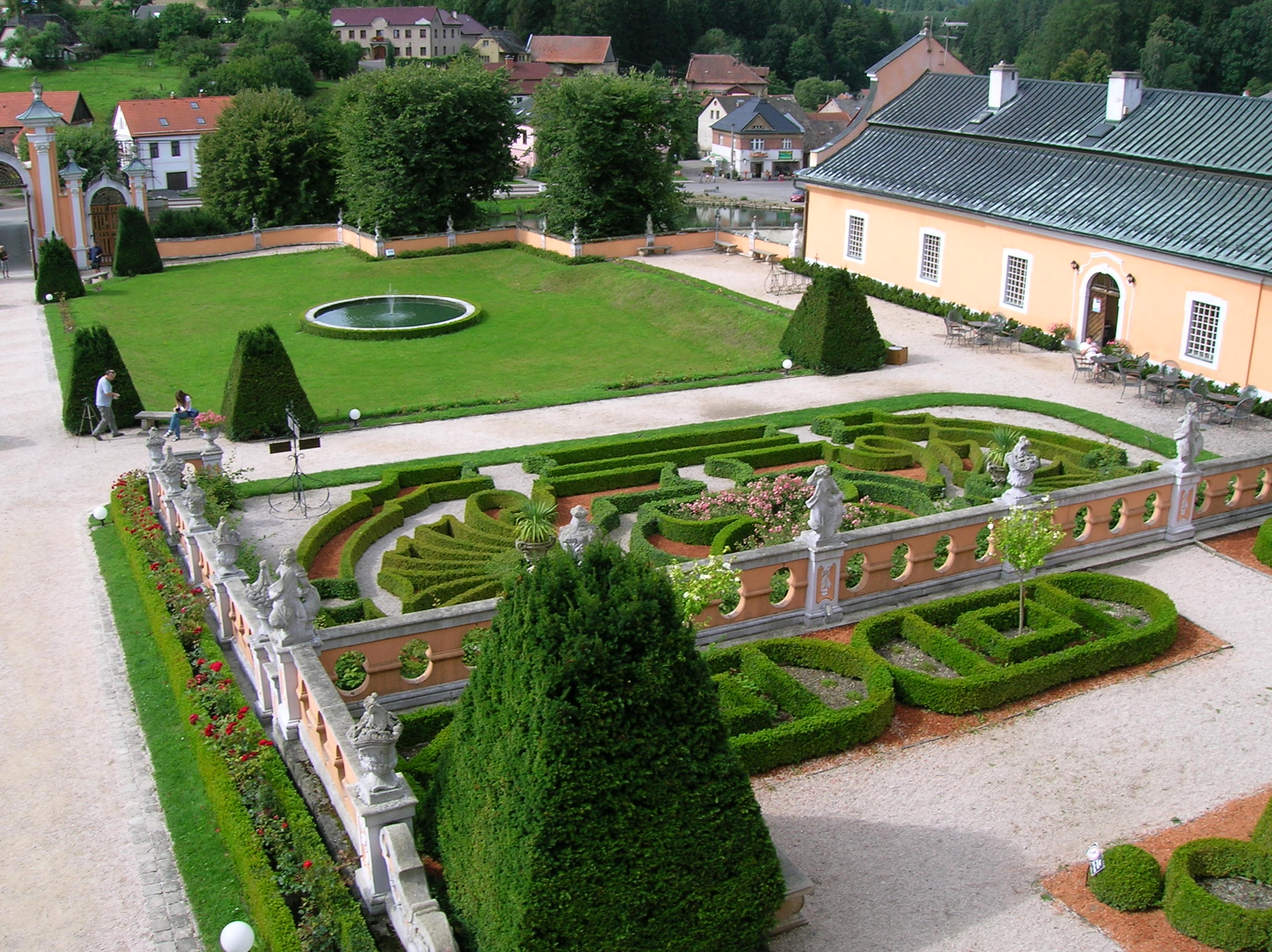
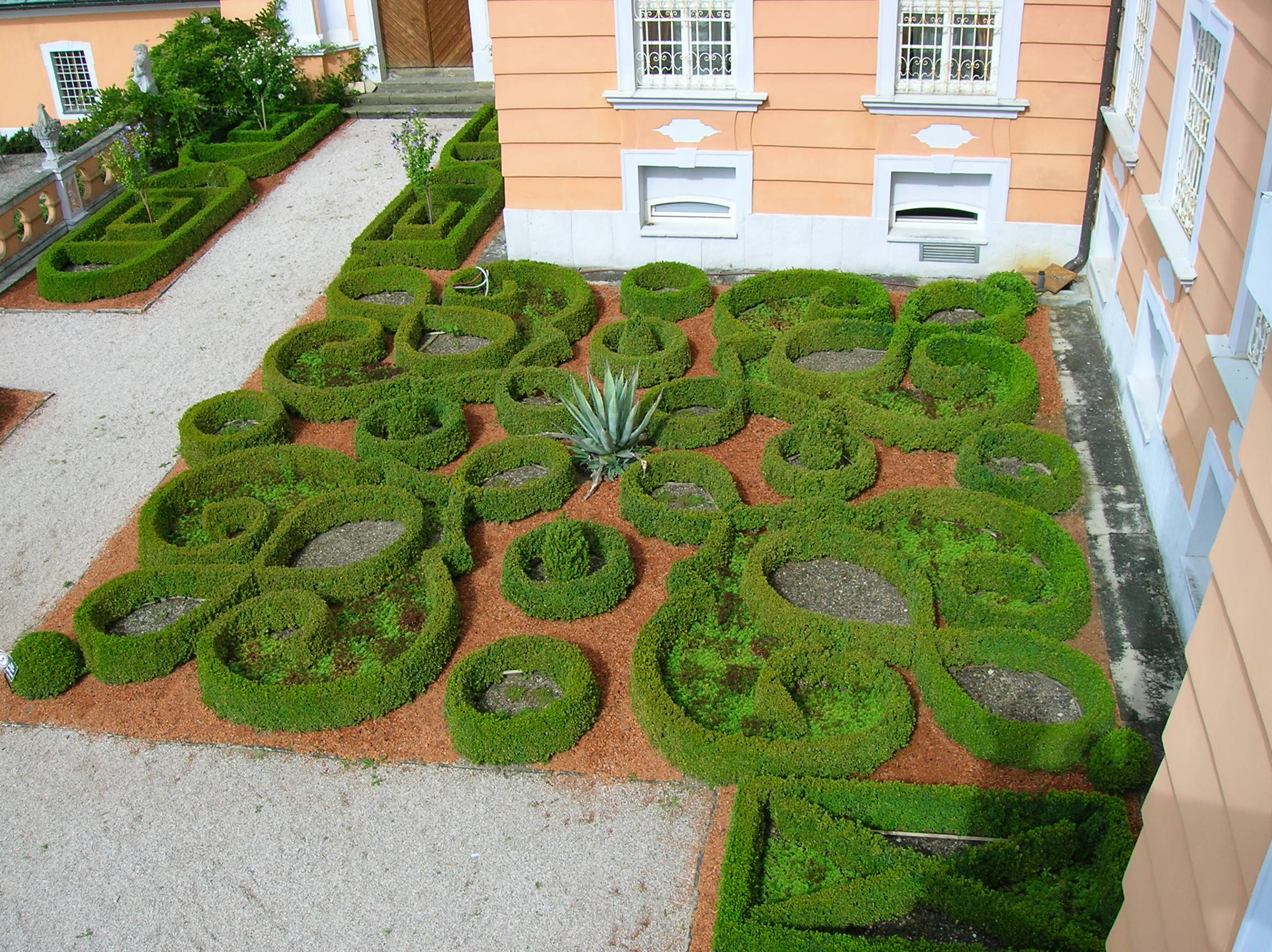
I expected to see four or five houses, maybe one church, but it was bigger than that. There was a yellow and white church on a hill and next to it a chateau behind a gate. A sign stated that it was private property. The façade was impressive and the lawn meticulously well-kept.  Situated next to the site of a former castle hailing from around 1260, the chateau was built in Baroque style in 1705. The castle originally had a high cylinder tower and walls around it but was severely damaged in the 16th century. Now some of the walls and the foundation of the tower are all that is left of the castle.

ImageThe road dipped down suddenly, and I came to the main square. About five men were struggling to put up a maypole as the May 1 holiday approached. Branches flaunted fluttering, colored ribbons. There was a decrepit building behind me and another one with an old, battered sign above the doorway in German. It read “LIEDFELDERHOF.” I wondered what it meant and if it hailed from World War II or even from the Austro-Hungarian Empire. Later I would find out that the word stood for “Sorrowfields’ Inn,” with “sorrowfields” probably being the surname of the innkeepers.

The sign in German attested to the influence that Germans had had on this town since settling in the region during the 12th century. Even the name of the town derived from the German words “rabe” for raven and “stein” for stone. The town was the property of Germans for many centuries. In 1631 military leader and politician Albrecht von Wallenstein became the owner. Wallenstein played a major role in the Thirty Years’ War, allying himself and his army with the Holy Roman Empire. Under the rule of the Habsburgs, he became supreme commander of the Habsburg armies. Wallenstein was assassinated in the west Bohemian town of Cheb after quarreling with Emperor Ferdinand and considering allying himself with the Protestants.

After World War II, when the Beneš’ decrees came into effect, most of the Germans were banished from the country, and Czechs came to live in the town. In 1930 Rabštejn had a population of 344. By 1950 it had dwindled to 77.

ImageI also wondered what the town had looked like in the Middle Ages. I was impressed that the history of this town could be traced all the way back to the 13th century. I had read that in medieval times two rows of houses surrounded an irregularly-shaped square. How had people lived long ago? I knew that in the past inhabitants had taken up making handicrafts, weaving, painting playing cards and glass as well as producing roof slate.

ImageFarther down were several timbered cabins, one painted black with green, another mostly white with black. They looked like they belonged to another century. It was strange when I saw a man open the door of one of these homes and go inside. It was as if a person from the 21st century was entering another time period.

ImageAt the end of the town was a restaurant with picnic tables outside. Seven bikers were sitting there, drinking beer while engaged in animate conversations. There was an old stone bridge, dating most likely from 1335-1340. Under it flowed the Střela River. The body of water meandered through a forest, gurgling softly. A thick forest made up the background. It appeared as if this could be the backdrop for a landscape painting, as if I were looking at a canvas rather than real life. The forest was romantic, but it felt comforting and dangerous at the same time.

ImageI had read about a former brewery that only put out 700 hectoliters of beer during a year, but I did not see anything resembling a brewery. I did not see a former monastery, either, but there had been several in this town over the centuries. One dated back to the end of the 15th century but was destroyed in 1532. A new one was built in the 17th century, but it was abolished in 1787. There were several churches in the town during the 19th century, and legend has it that one of them was damaged in 1856. Workers had to dismantle the cross from the top of the church and reinstall it. While they were doing this, people celebrated below.  The workers drank some wine in the tower and threw a wine glass down. It fell but did not break.

 Image