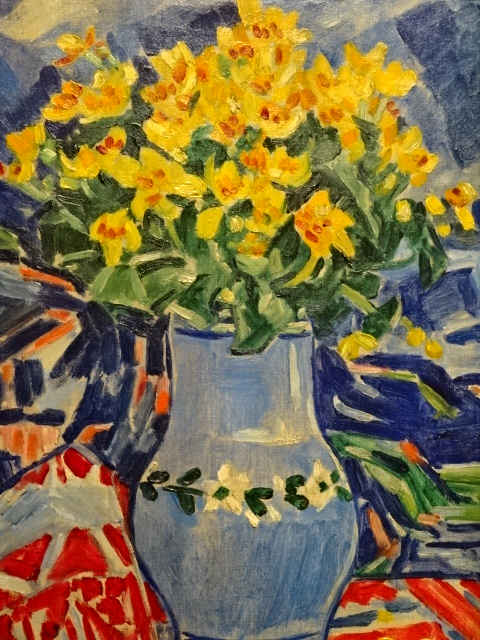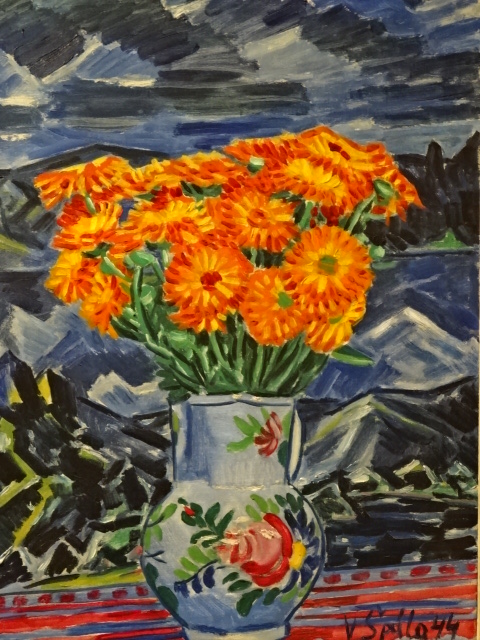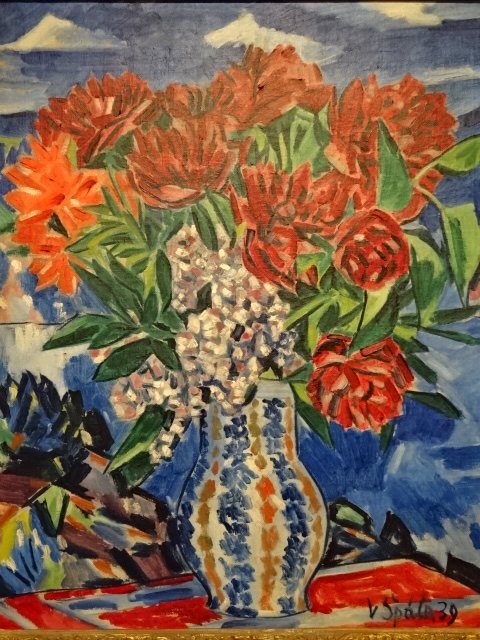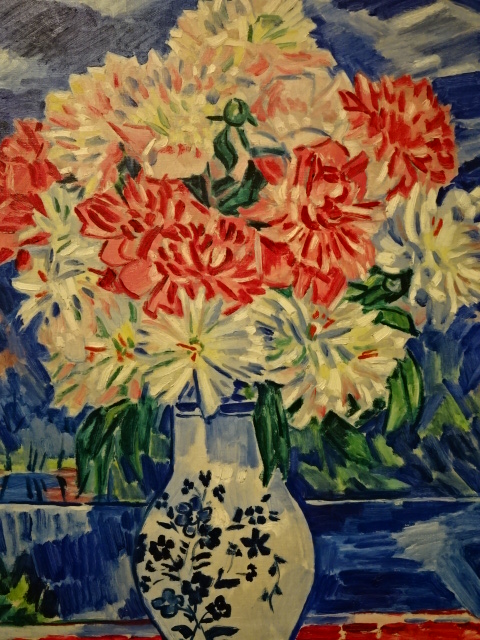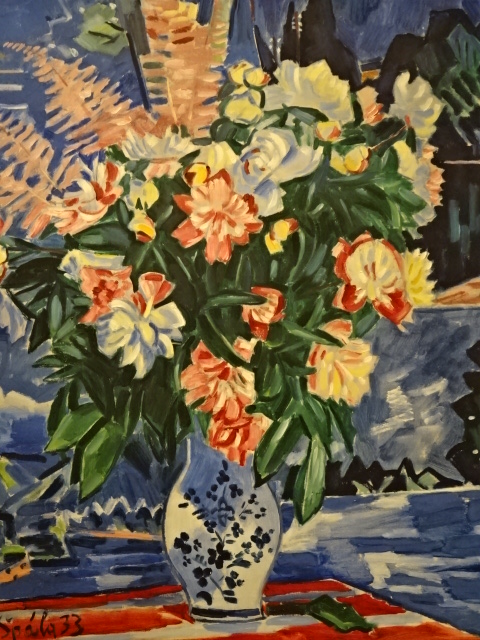
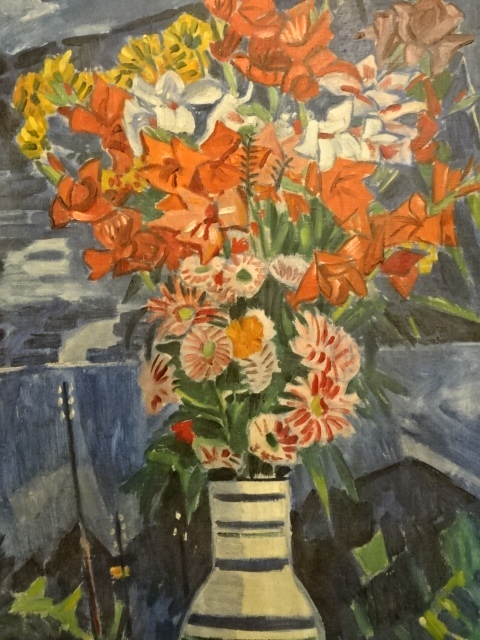
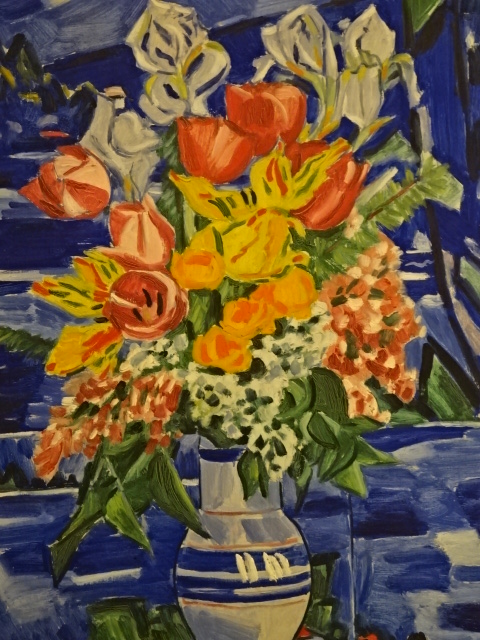
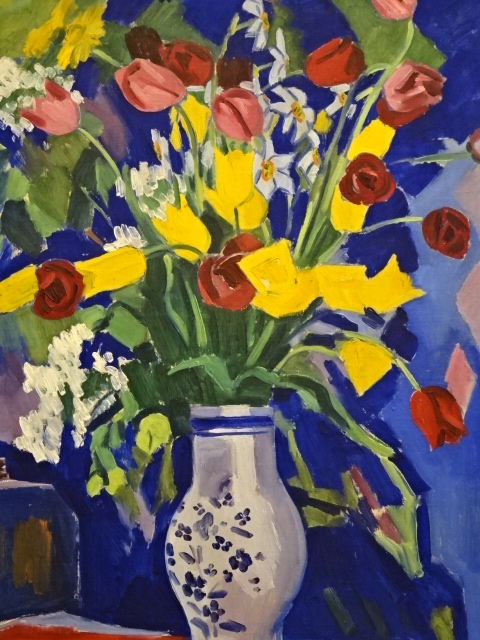
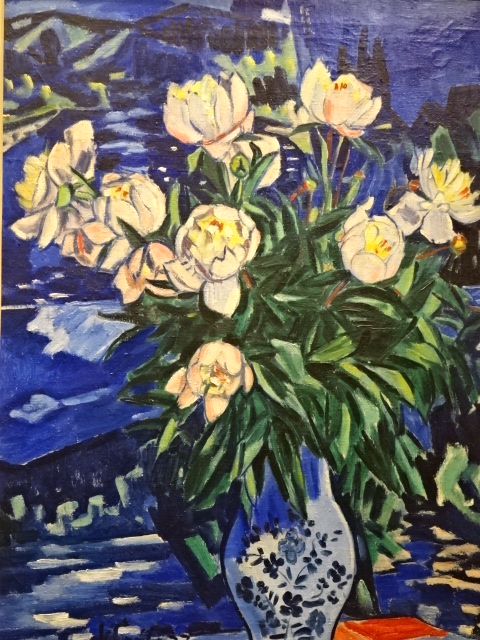
For decades Václav Špála’s landscapes have tugged at my heartstrings to the extent that he has become one of my most revered artists. Still, before the exhibition of his floral still lifes at Museum Kampa during early 2026, I had not fully appreciated his art. His flowers – tulips, lilies, carnations, roses and so many more – almost burst through the canvas as if I could touch them. I could actually smell their fragrances.
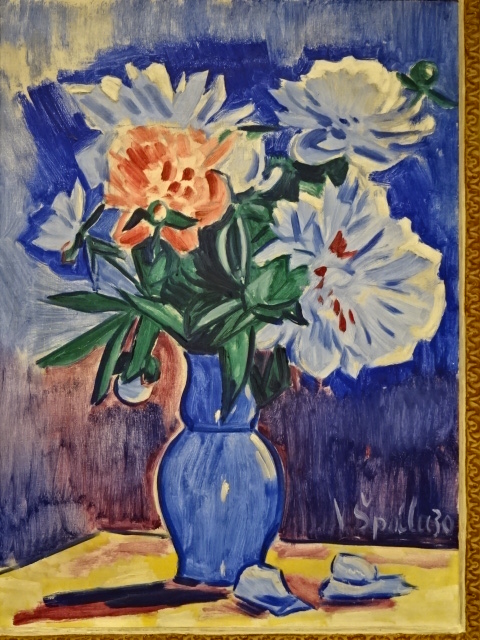
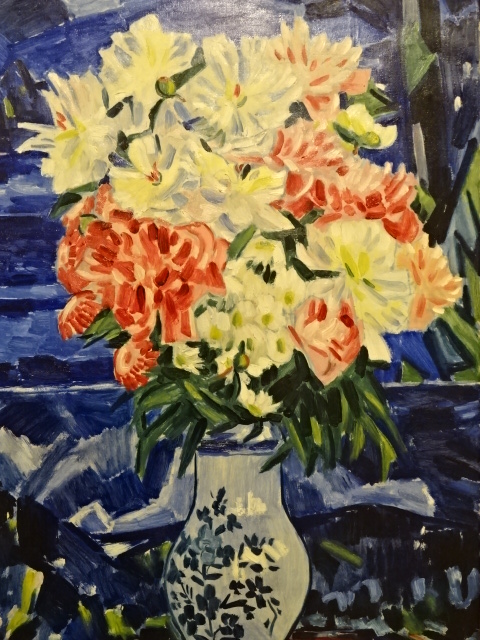
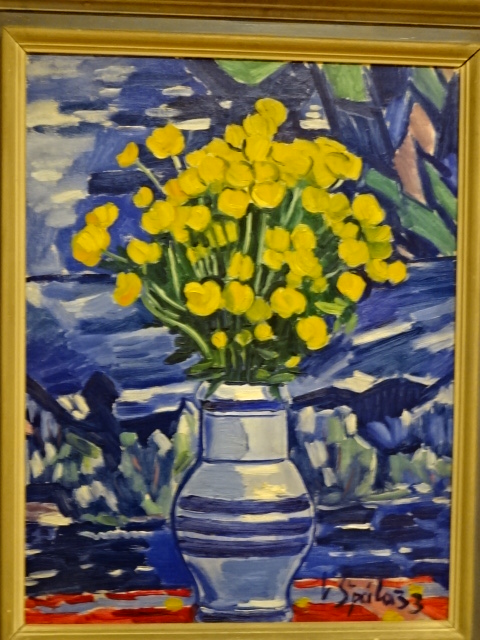
This was one of the best art exhibitions I had ever seen, and Špála’s penchant for Fauvism dominated. (During a stint in Paris, the artist became influenced by Cubism, too.) Starting in the early 1920s, he devoted much of his time to landscapes and later also to floral still lifes. Many of his still lifes were created after 1930, and the colors blue, red, yellow and green punctuated the floral renditions.
One of nine children, Václav Špála was born on August 24, 1885 in a village in east Bohemia. He originally intended to be a locksmith, He made an unsuccessful attempt to get into the School of Decorative Arts in Prague. Then, in 1903, he found himself at the Prague Academy with classmates such as Vincenc Beneš, Emil Filla, Willy Nowak and Otakar Kubín, all of whom would become prominent modern Czech artists.
During those early years, an exhibition of works by Edvard Munch and another displaying the art of the French Impressionists greatly influenced young Václav. However, he did not graduate.
He moved to the village of Sobotka, one I remember fondly from a day trip to Humprecht Chateau a few years ago. On the main square, we found an excellent restaurant after our visit to the chateau. That I traveled there with a friend who no longer can walk made it all the more memorable.
The year 1910 was key because Špála took a trip to Dalmacia. I loved his seascapes painted there, all seeping with features of Fauvism and Expressionism. The colors were brilliant, vivacious and dynamic.
Špála fought in World War I, but his poor health kept him in the hospital rather than on the battlefield. In 1918 he became a member of the artistic group The Obstinate. He also got married and would have three children. Špála moved to Prague’s Střešovice district in 1932, where he resided in a villa containing a studio. There, he created numerous portraits as well as other genres of paintings. Špála often yearned for east Bohemia and spent a lot of time in the countryside from which he hailed.
From 1920 he also created works for the Artěl organization that was known for small artistic objects rather than paintings. Špála became the chairman of the Mánes Association in Prague during 1936 and retained that position until 1939.
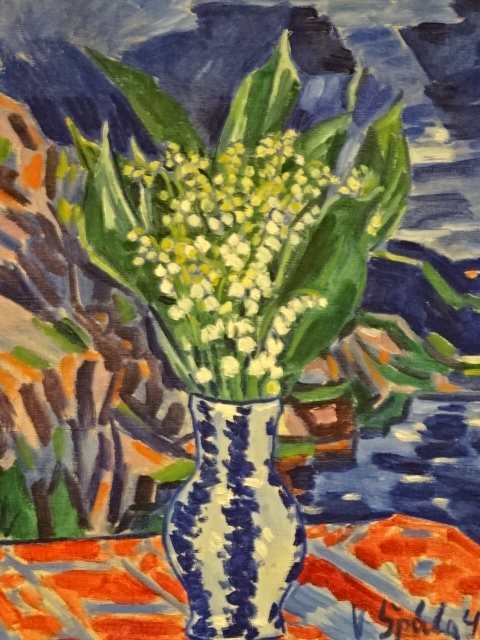
During World War II, he lived in Prague as well as in the countryside. Špála painted many still lifes during wartime. He was touted a National Artist in 1946. Unfortunately, the renowned artist succumbed to stomach cancer the following year. Špála was given a state funeral and is buried in Prague’s Vyšehrad Cemetery, where the graves of many who had carved a place for themselves in the country’s history can be found.
Tracy A. Burns is a writer and teacher in Prague.