Romanesque and Gothic South Bohemia Diary

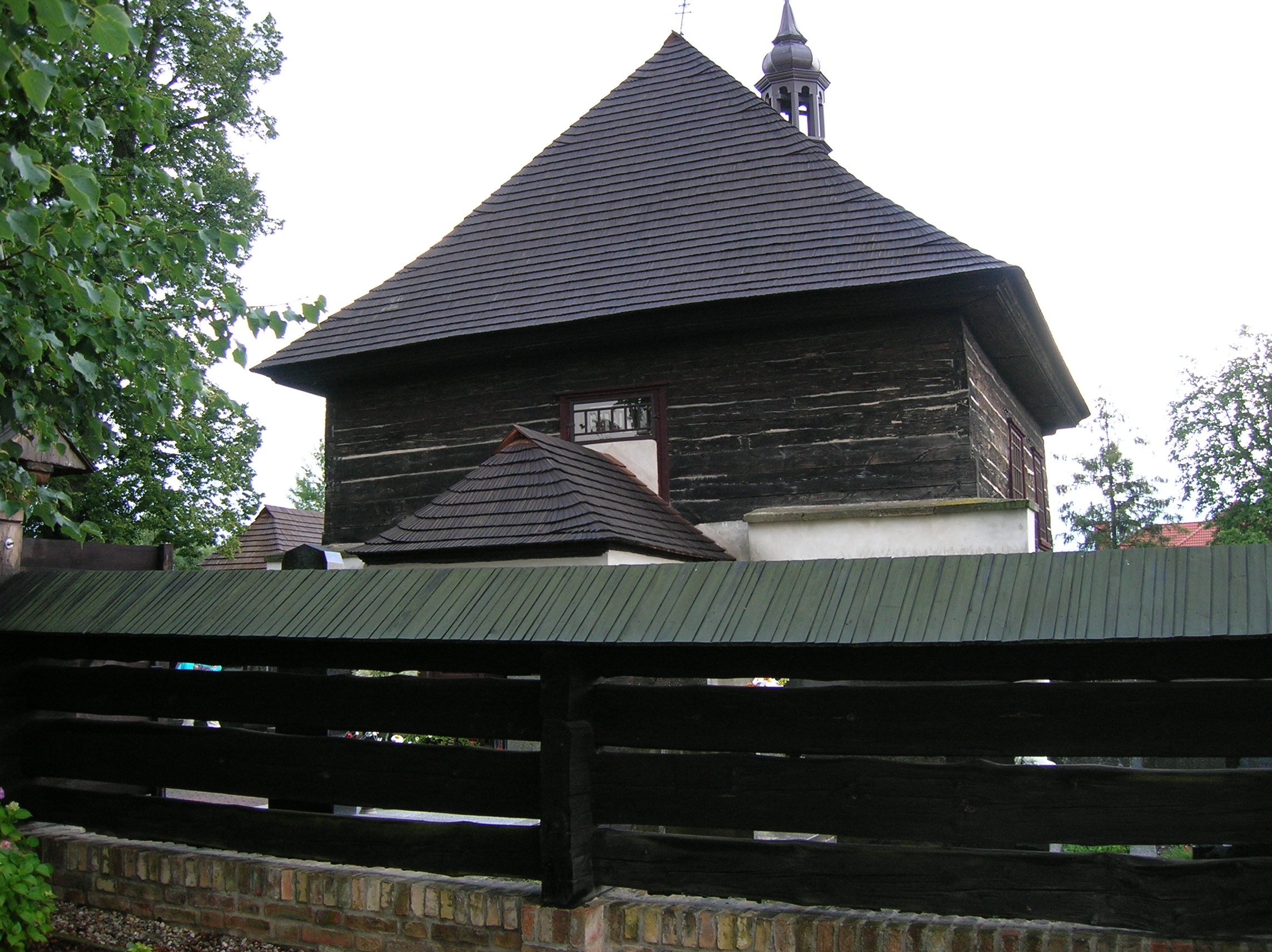
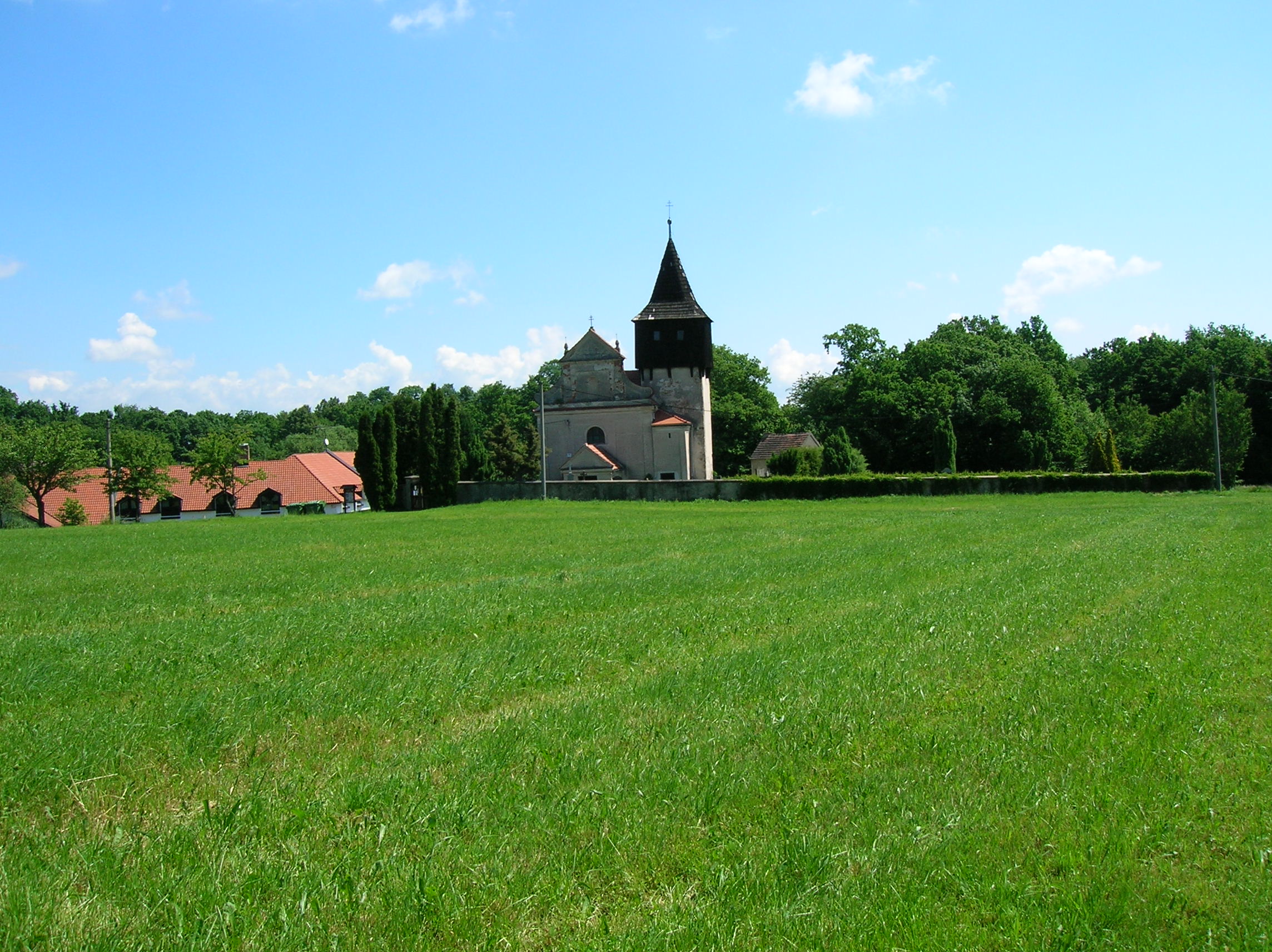
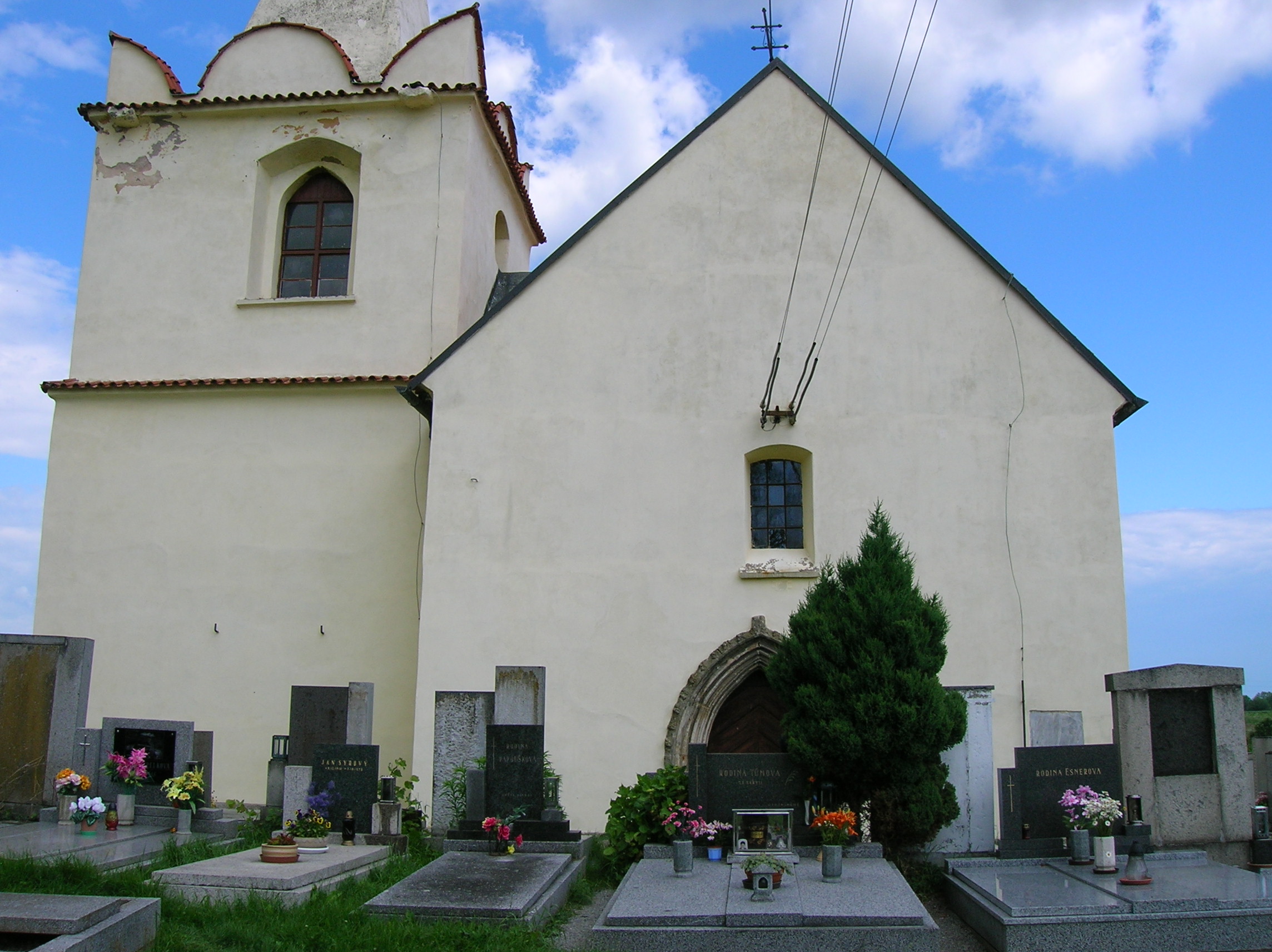
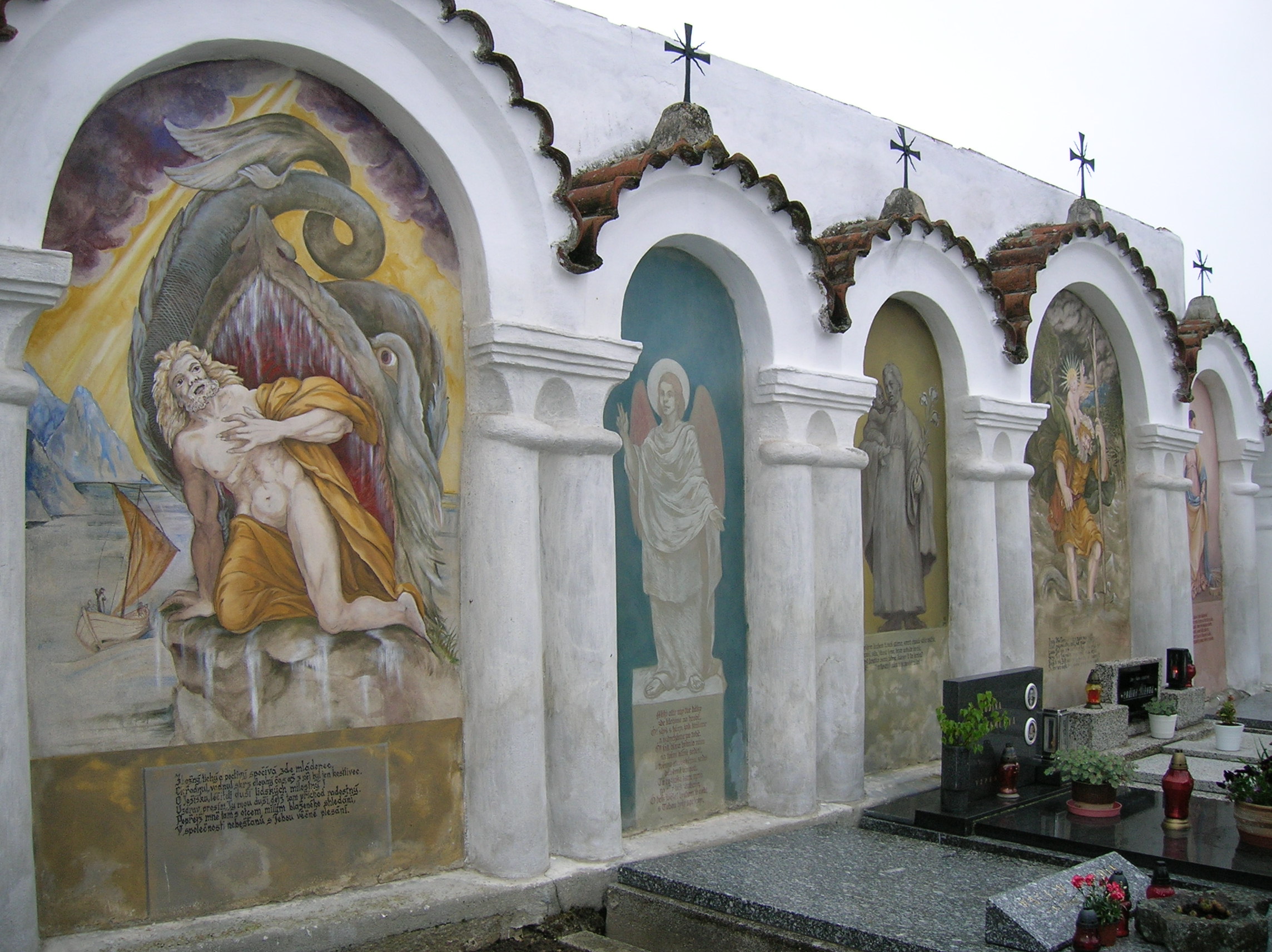
Albrechtice nad Vltavou church cemetery

Albrechtice nad Vltavou church cemetery

I went on another tour with the Czech travel agency arsviva at the beginning of May in 2014, this time concentrating on Romanesque and Gothic architecture in south Bohemia. We would explore many churches in villages, and I would finally see more than the bus station in Písek. After so many years in the country, I had seen all the most popular sights. I yearned always to always something new, something that would give me a new perspective on life and art, and I thought that traveling to Romanesque and Gothic churches in villages and visiting Gothic castles would be just the way to do that.
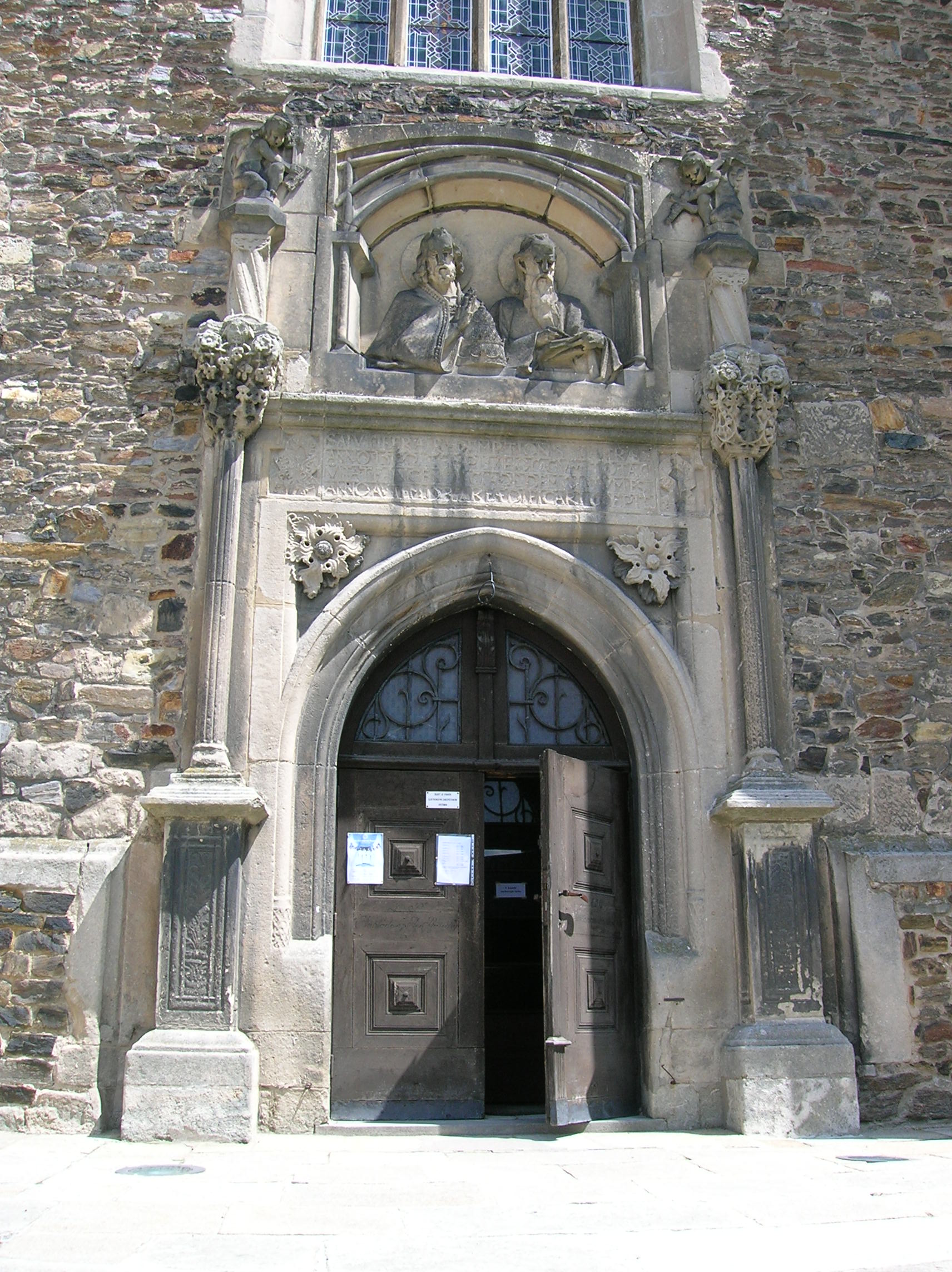
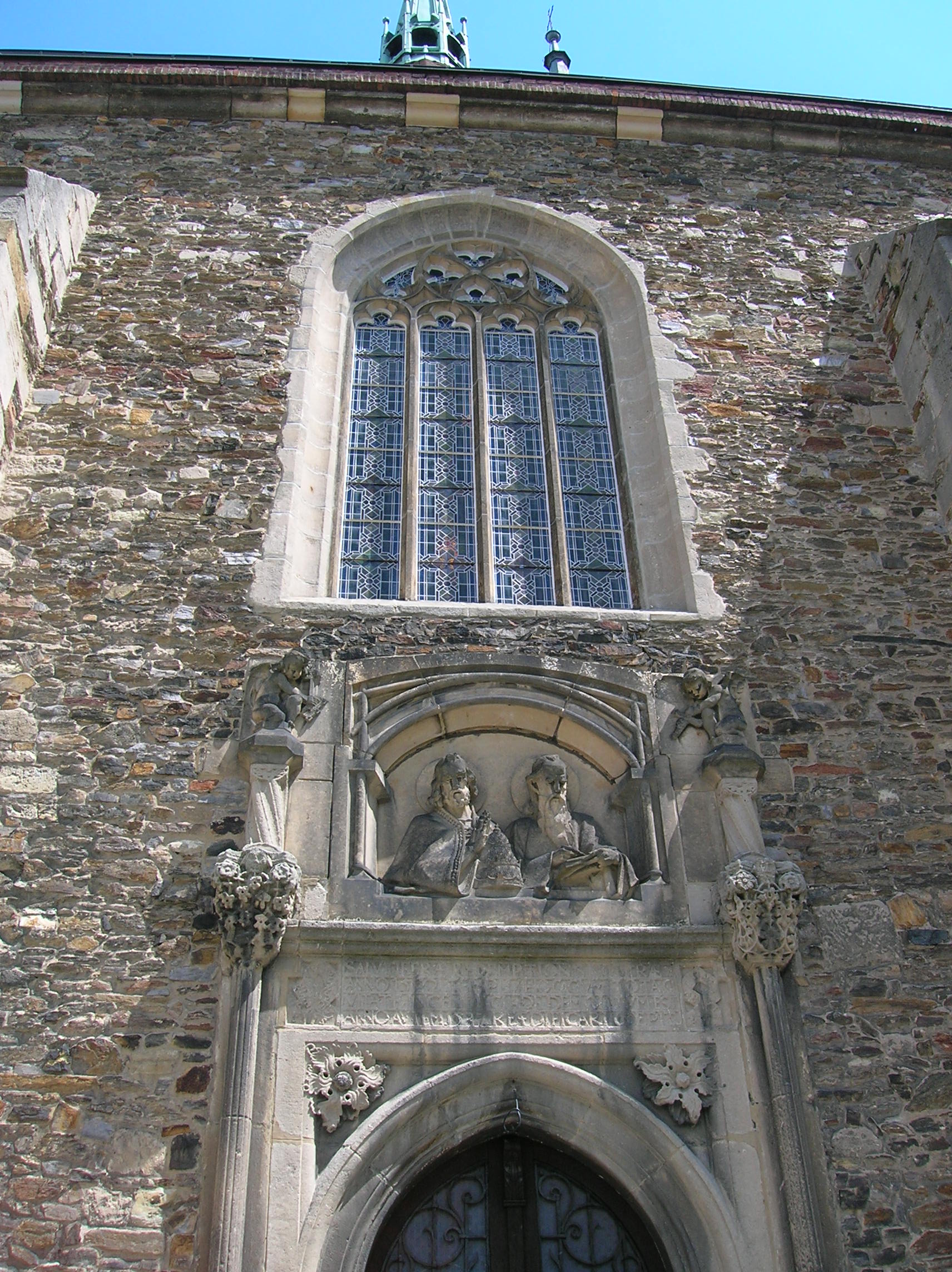
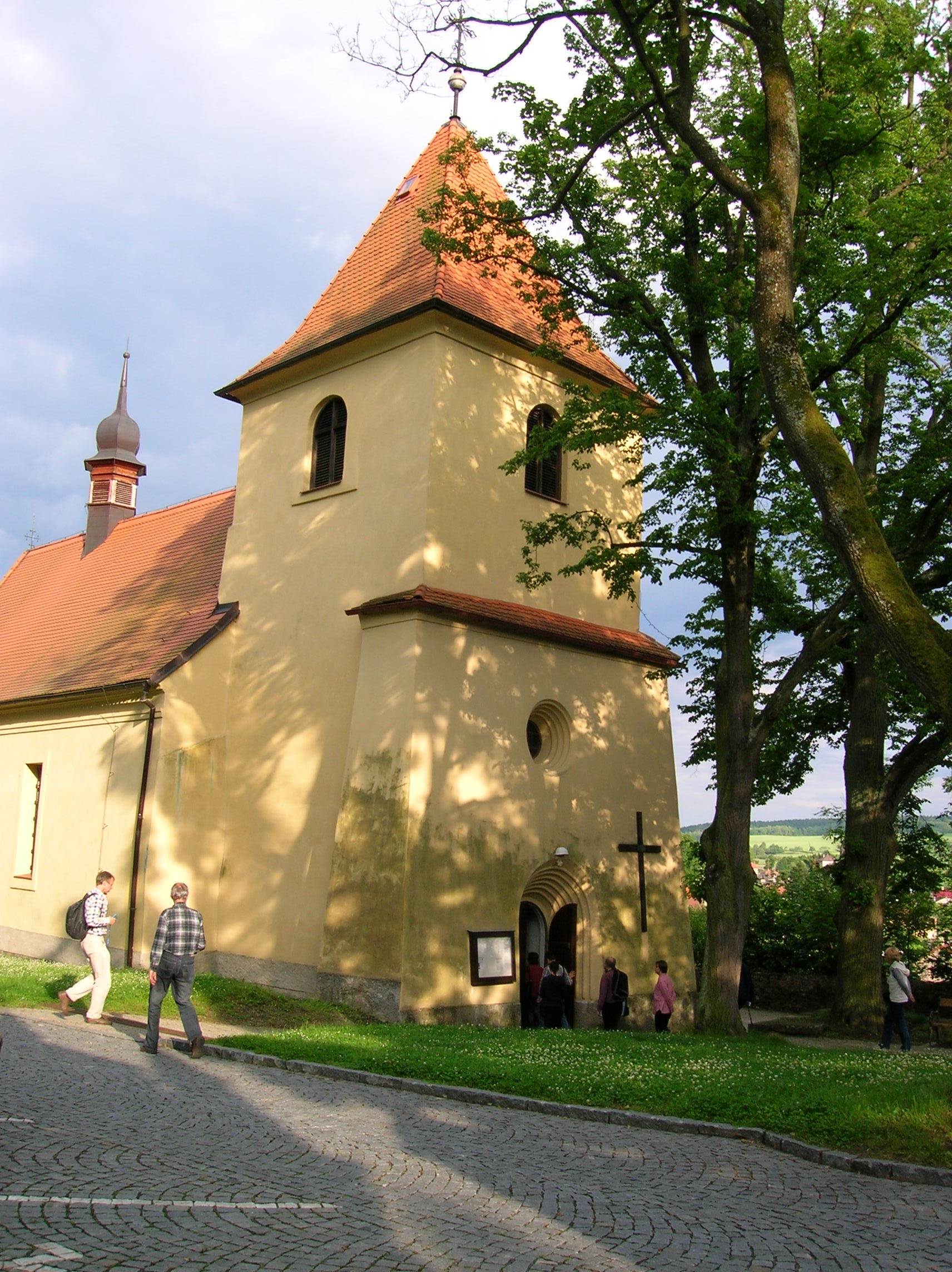
First we stopped in the village of Mirotice, which happens to have two main squares. Most villages have only one. The bus stopped across from the new town hall, which was only about 50 years old. We walked to St. Giles’ Church, Romanesque in style. There are not many churches in south Bohemia with Romanesque features. It hailed from the middle of the 12th century. I admired the lattice Romanesque window on the tower.
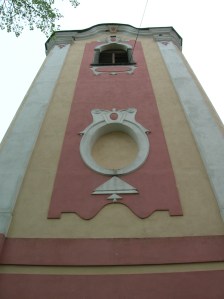
St. Giles' Church, Mirotice

St. Giles’ Church, Mirotice

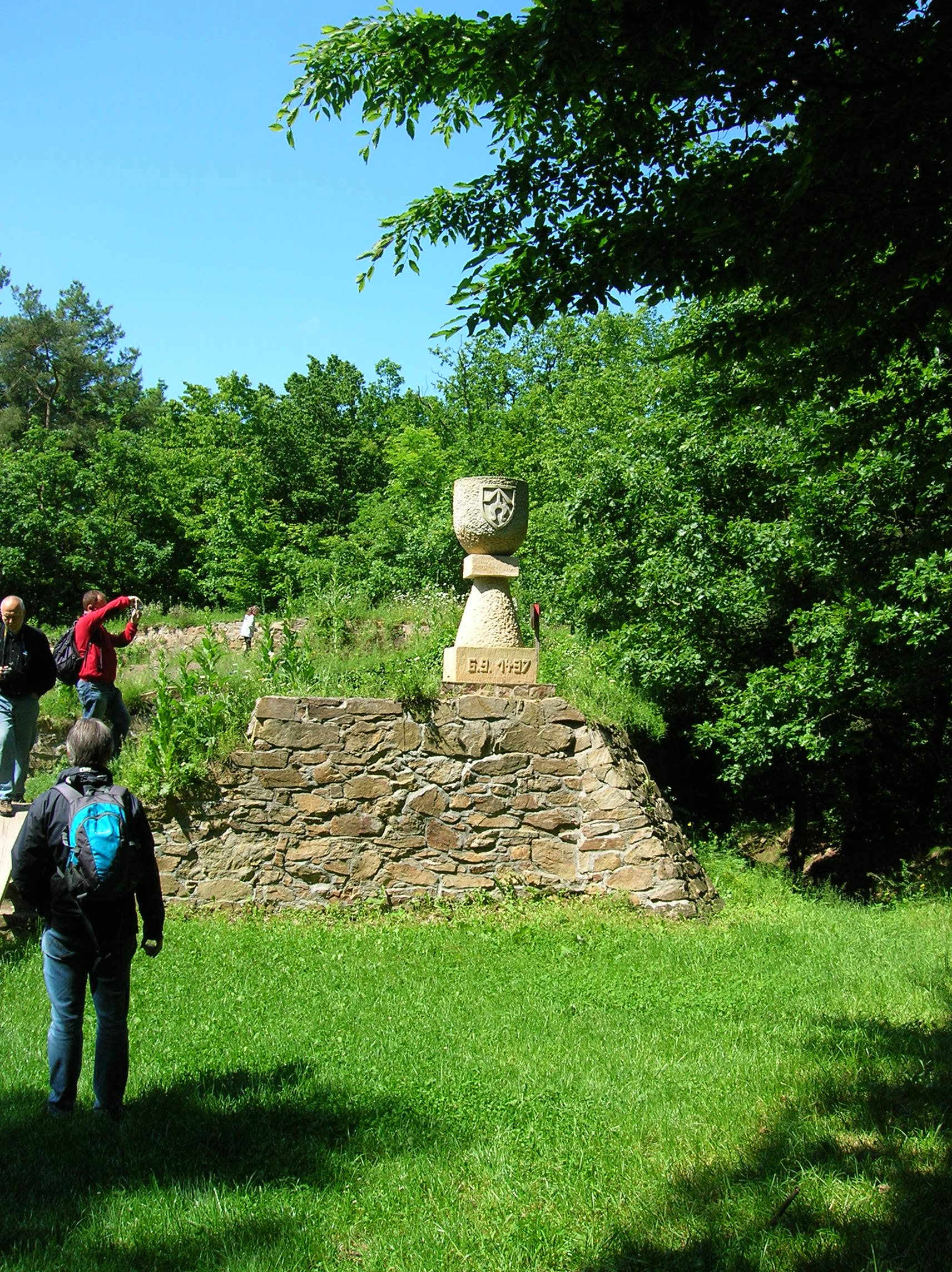
The church had an intriguing past. In 1497 the worshippers had been of the Utraquist faith, who had been Hussites asserting that both the bread and wine should be given to worshippers during the Eucharist, but from 1664 to 1694 Catholics had prayed there. I recalled that the Utraquist branch of Hussites had triumphed over the radical Hussites during the 15th century Hussite wars.
Unfortunately, it was not possible to go inside (we would visit the interiors of most of the churches on our itinerary, though, thanks to our guide), but a Baroque makeover occurred in 1694. PseudoRomanesque reconstruction followed, from 1870 to 1872. I loved seeing elements of Romanesque and Gothic architecture. It amazed me how Romanesque and Gothic elements could survive so many centuries, through all the trials and tribulations of Czech history.
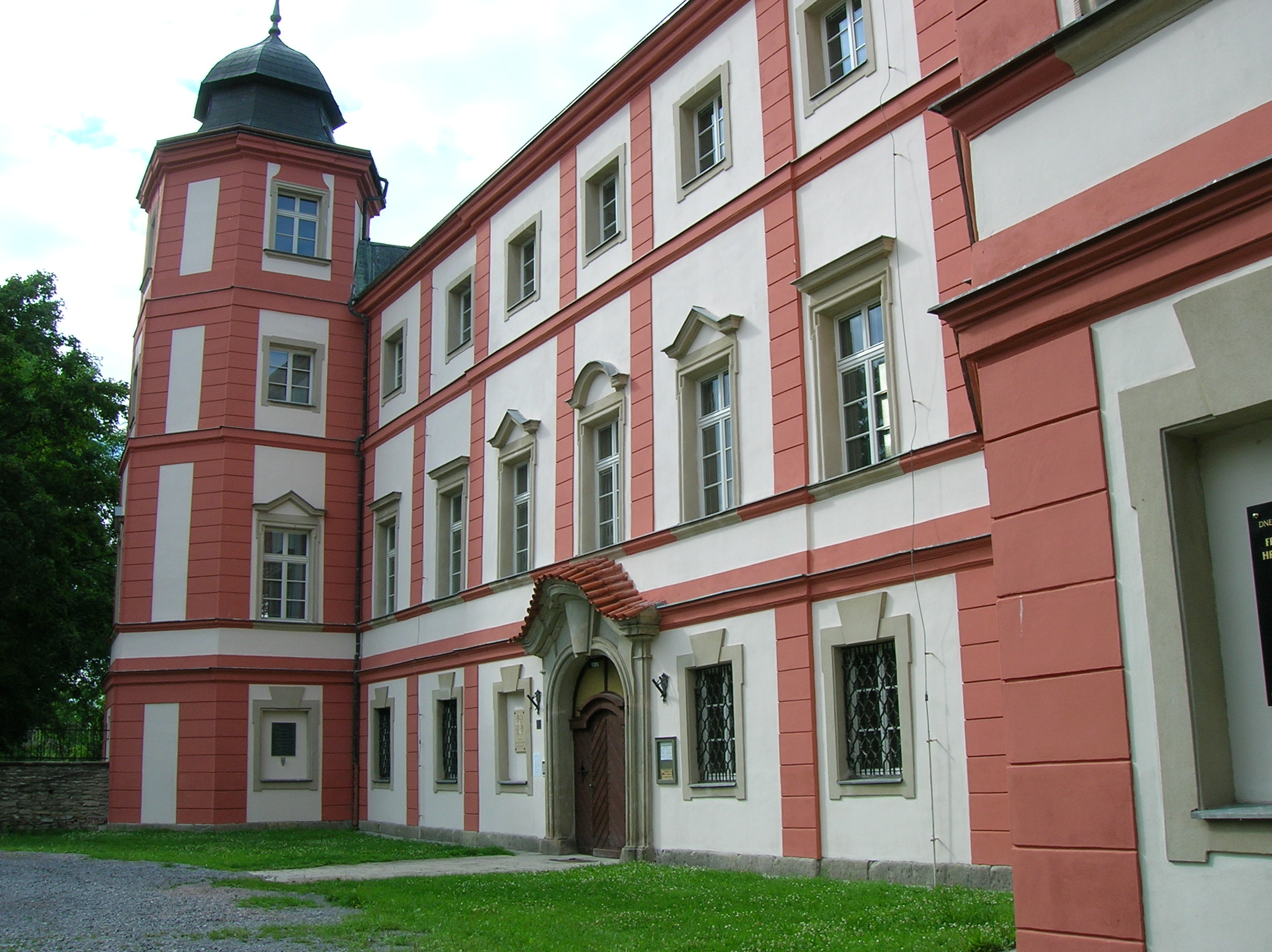
Then we meandered along some narrow cobblestone streets to a museum on the site of the former building where artist Mikuláš Aleš had been born. Aleš had made a name for himself as one of the top 19th century Czech painters and illustrators, among other accomplishments. It fascinated me that in such a small village there could be any intriguing sights, let alone two. I felt as if the village was revealing its secrets to me.
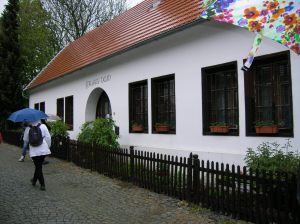
The museum on the site where Mikuláš Aleš was born

The museum on the site where Mikuláš Aleš was born

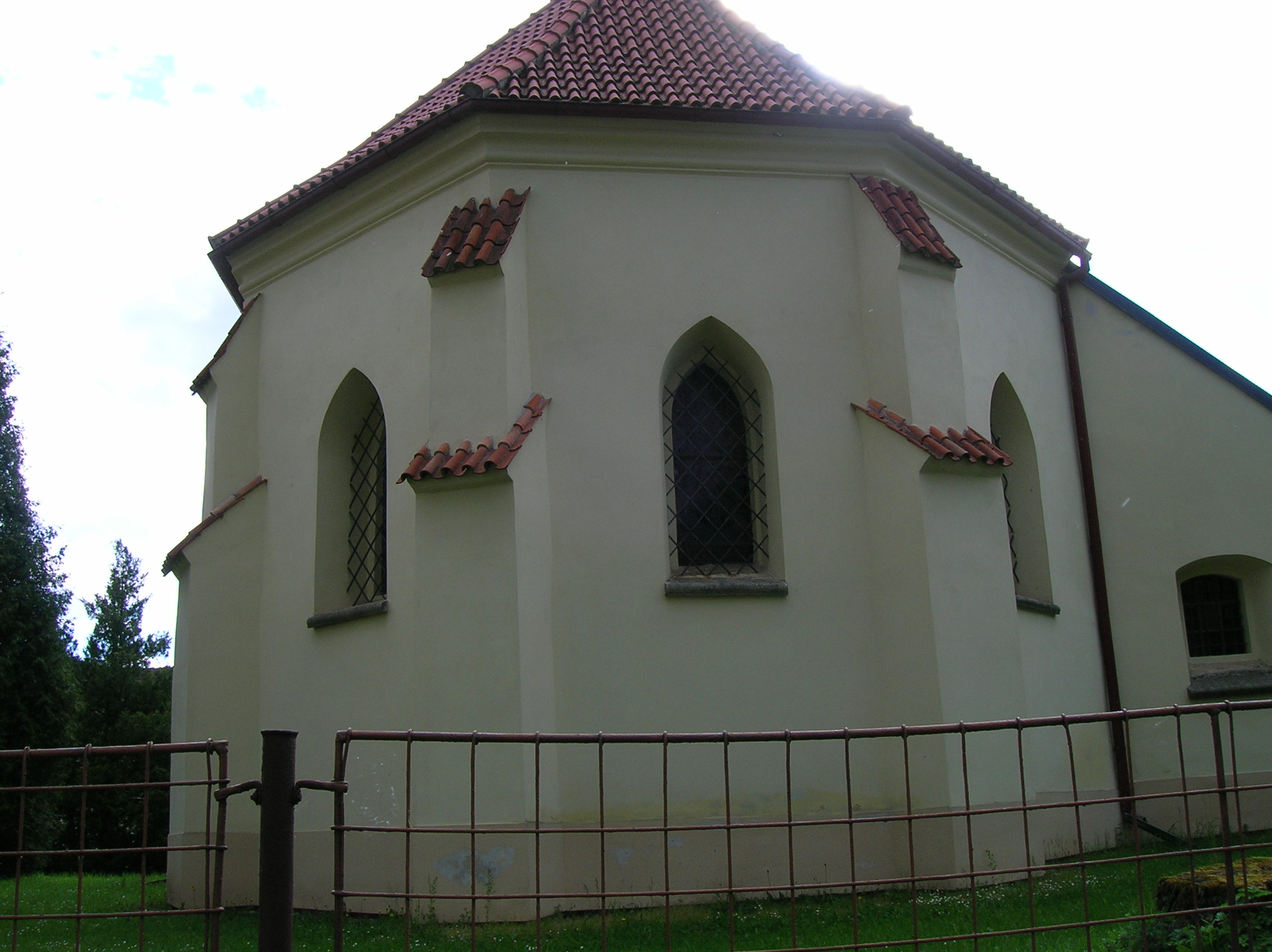
The next church we visited was dramatically perched on a hill by itself rather than in the midst of a village. The Church of Saint James the Greater in Čížová boasted a ground plan with early Gothic masonry and Late Gothic supporting pillars. It had never had a tower, which was an oddity. Baroque decoration greeted visitors inside, but we did not have the chance to see this interior. The churches we were visiting were not open for the general public. It was difficult to obtain official permission, so that someone would open them for us. Just seeing the exterior was breathtaking enough. And later we would see many interiors.
There is another intriguing feature of the church as well. The tombstones of Knight Ludvík Lorecký and his two sons, who were murdered by serfs in 1571, are in the church. I wondered if the serfs had revolted because they were hungry or overworked. I wondered who the knight and his sons were. Did they hail from this village or did they just happen to die here? How did Lorecký become a knight? Were his two sons knights, too? How old were they when they died? I fascinated me how so many questions could arise from a church in such a small town.

The Church of St. James the Greater in Čížová

The Church of St. James the Greater in Čížová

I was very excited about the next stop, the town of Písek, where I had only been at the bus station. For many years I had wanted to explore Písek, but I just never had the time or had never made the time. Actually, I had been under the impression that there was not much to see except for the Stone Bridge that was the oldest bridge in the country, even older than the Charles Bridge in Prague. In Central Europe only Regensburg’s bridge was older. I fondly recalled my several days discovering stunning medieval architecture and visiting a lavish palace in Regensburg not that long ago.
Písek’s history may go back to the 12th century. There was a castle in Písek, built by Czech King Wenceslas (Václav) I, before the middle of the 13th century. The town was first mentioned in writing during 1243. During the Middle Ages, in the 14th century, Písek prospered because gold was found there. Wenceslas’ son Přemysl Otakar II continued to expand the town during the 13th century, and Písek also played a significant role in the Czech lands under Charles IV’s rule during the 14th century. Czech kings often stayed in Písek.
In the 15th century, during the Hussite wars which were fought between various branches of Hussites, with monarchs helping out the moderate Hussites, Písek was controlled by the Hussites, followers of Bohemian priest and reformer Jan Hus who were battling against the moderate Hussites and other world powers, until 1452. The town flourished during the 16th century, becoming very wealthy.
During the Bohemian Revolt from 1618 to 1621, the town supported the Protestants, who lost to the Catholics, so Písek was severely punished. (Some of the Protestant nobles had protested when the staunchly Catholic Ferdinand of Styria became King of Bohemia, triggering the revolt.)

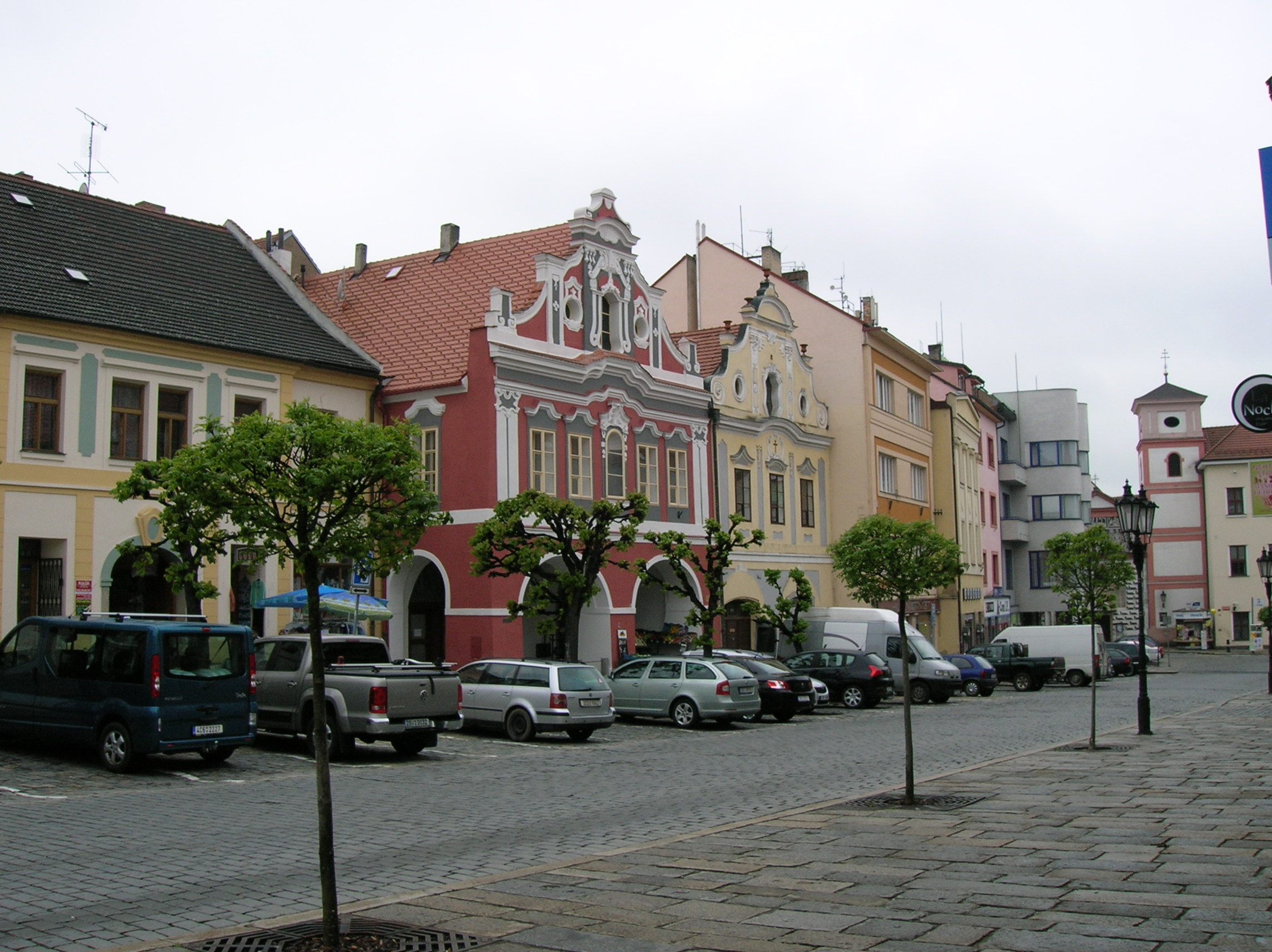
Buildings on a square in Písek

Buildings on a square in Písek

The 18th century brought the plague while during the 19th century there were more positive developments, namely the National Revival, a cultural movement promoting the Czech language, Czech culture and Czech nationalism. More Czech cultural groups and Czech schools were built during that golden age.
Písek focused on industrialization during the second half of the 19th century and even holds the honor of being the first Czech town with permanently installed electric public lighting. While Písek experienced rosy days during the democratic First Republic, the tragic era of Nazi rule followed. On May 6, 1945, the US army liberated Písek. Under Communism factories dotted the town. Písek was badly damaged during the 2002 floods that ravaged the country.

Church of the Birth of the Virgin Mary, Písek

Church of the Birth of the Virgin Mary, Písek

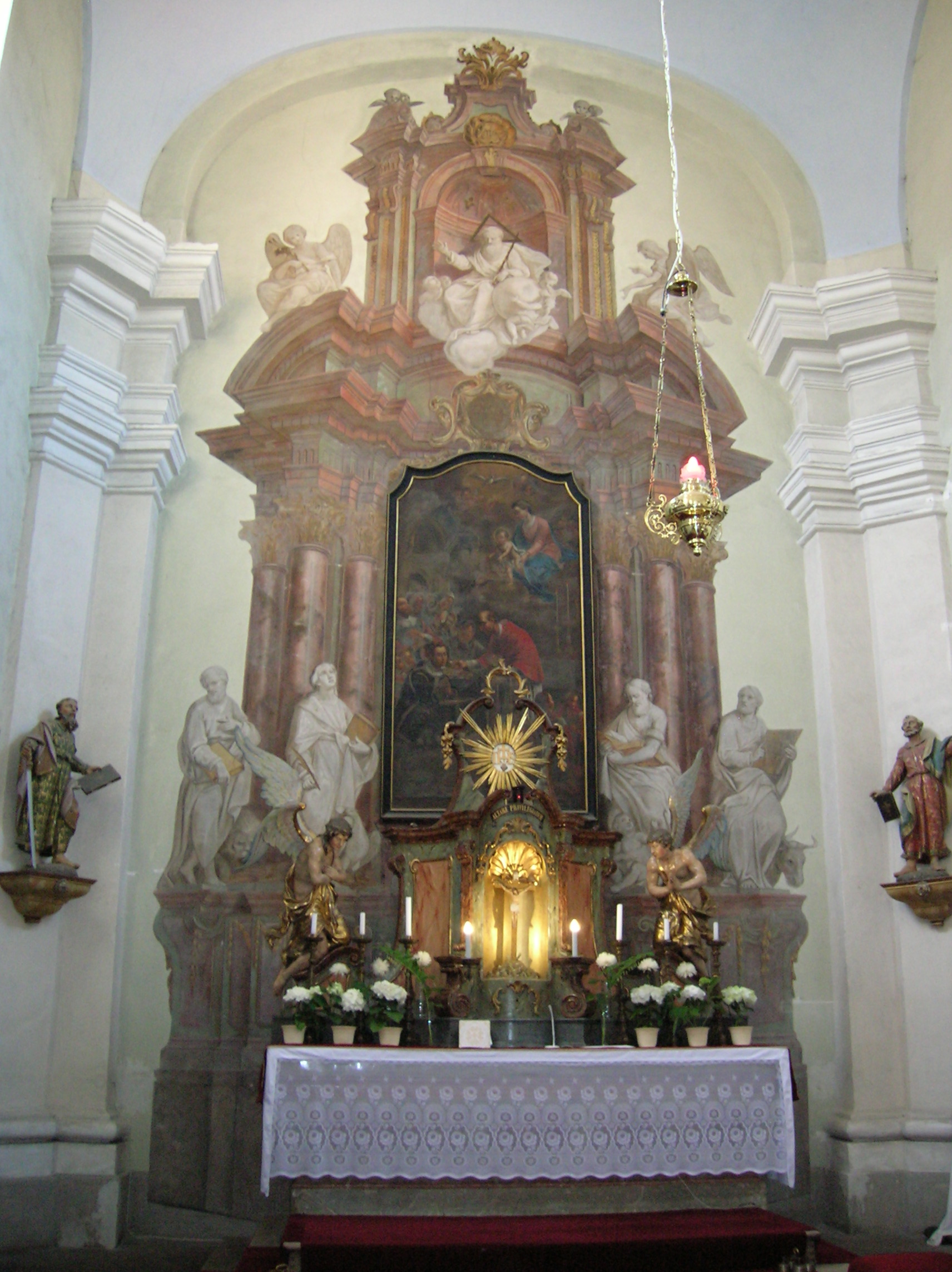
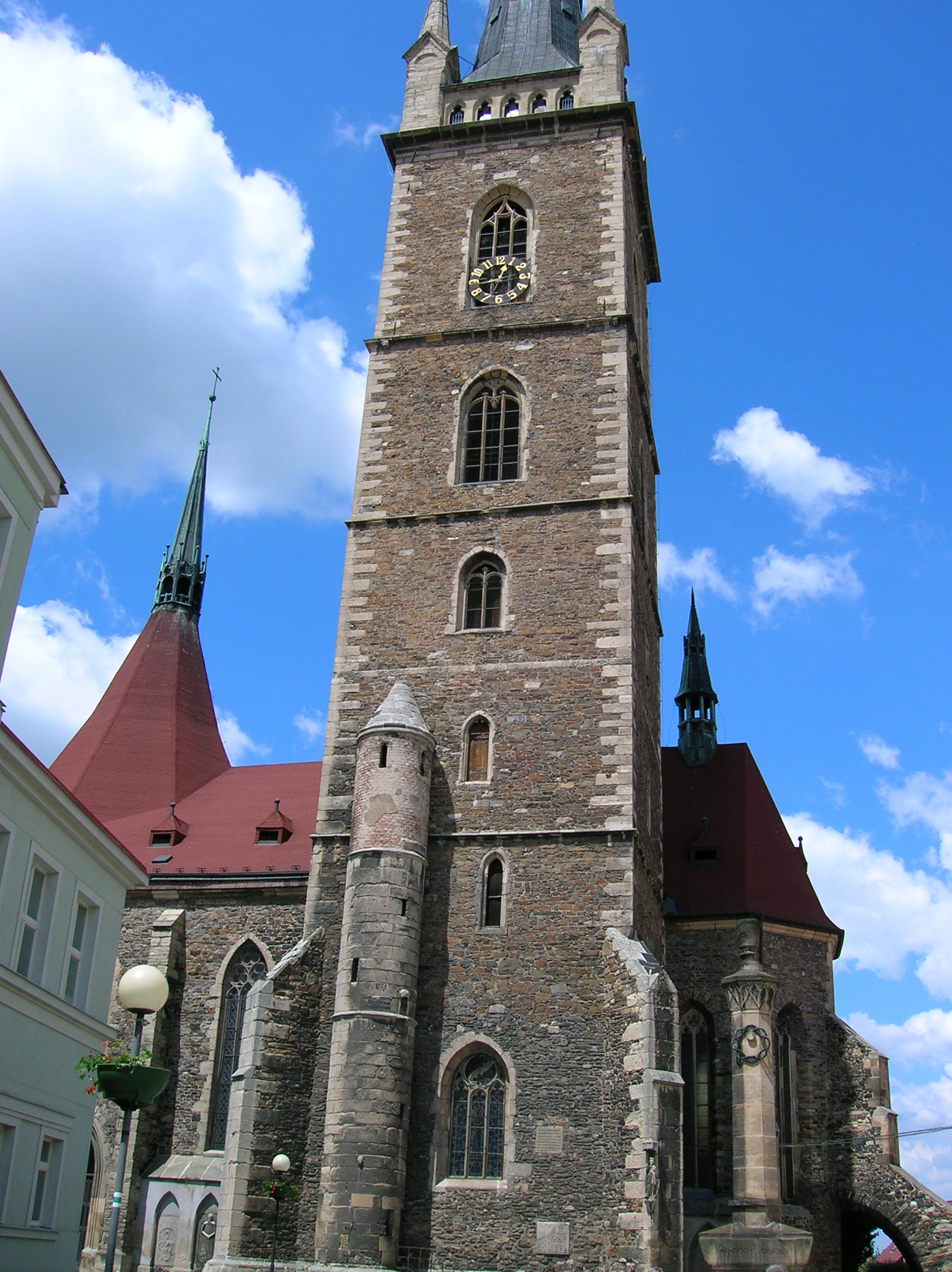
First, we visited the deanery’s Church of the Birth of the Virgin Mary, which hails from the second half of the 13th century and was constructed as a pseudobasilicia with three naves and a five-sided presbytery. Its tower reaches 72 meters. Inside there was an astounding 18th century Baroque chapel dedicated to John of Nepomuk, a Bohemian saint who drowned in the Vltava River, murdered on the order of King Wenceslas in 1393. Above the altar in this chapel I saw vedutas of the town.

The Church of the Virgin Mary in Písek

The Church of the Virgin Mary in Písek

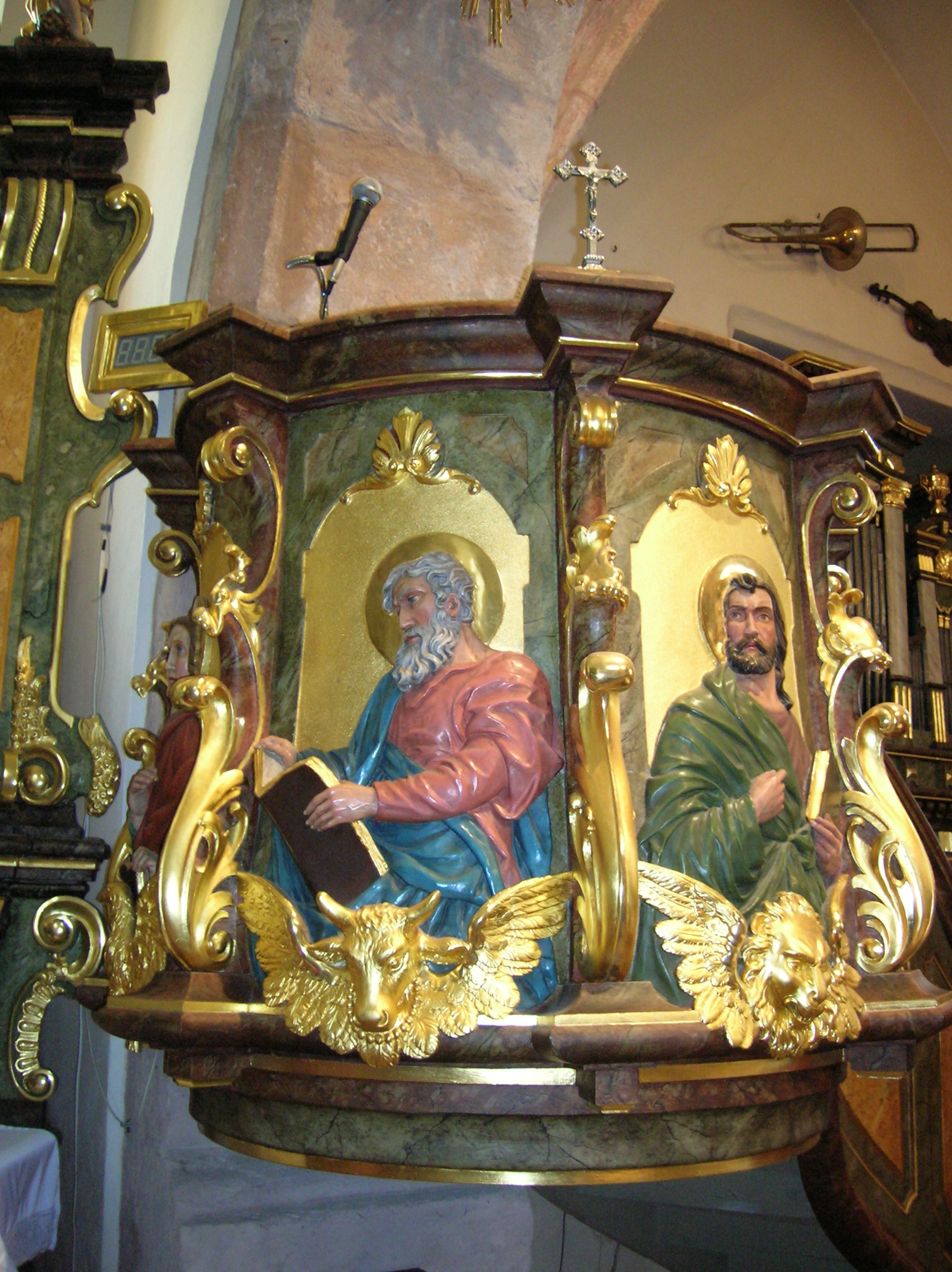
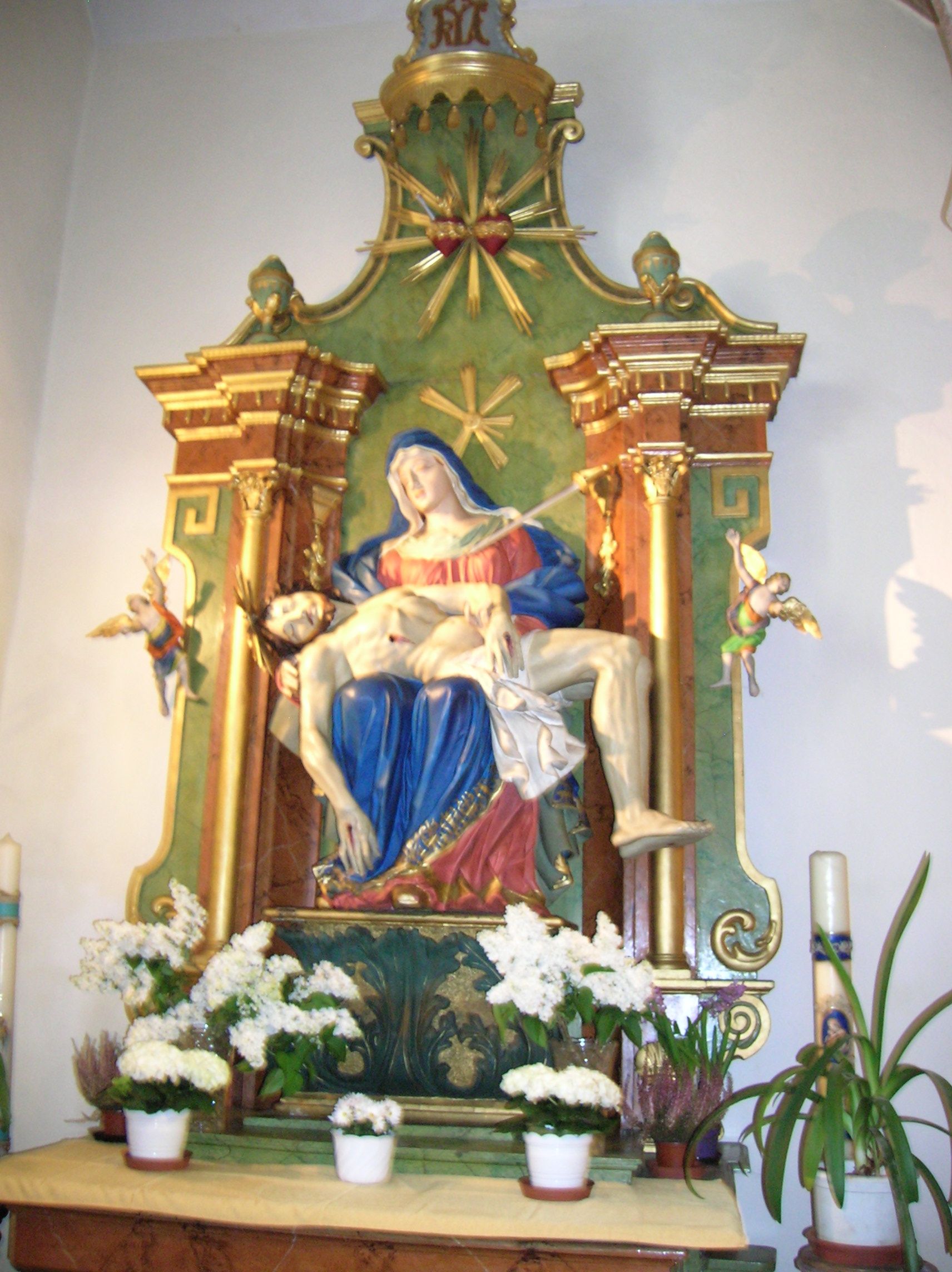
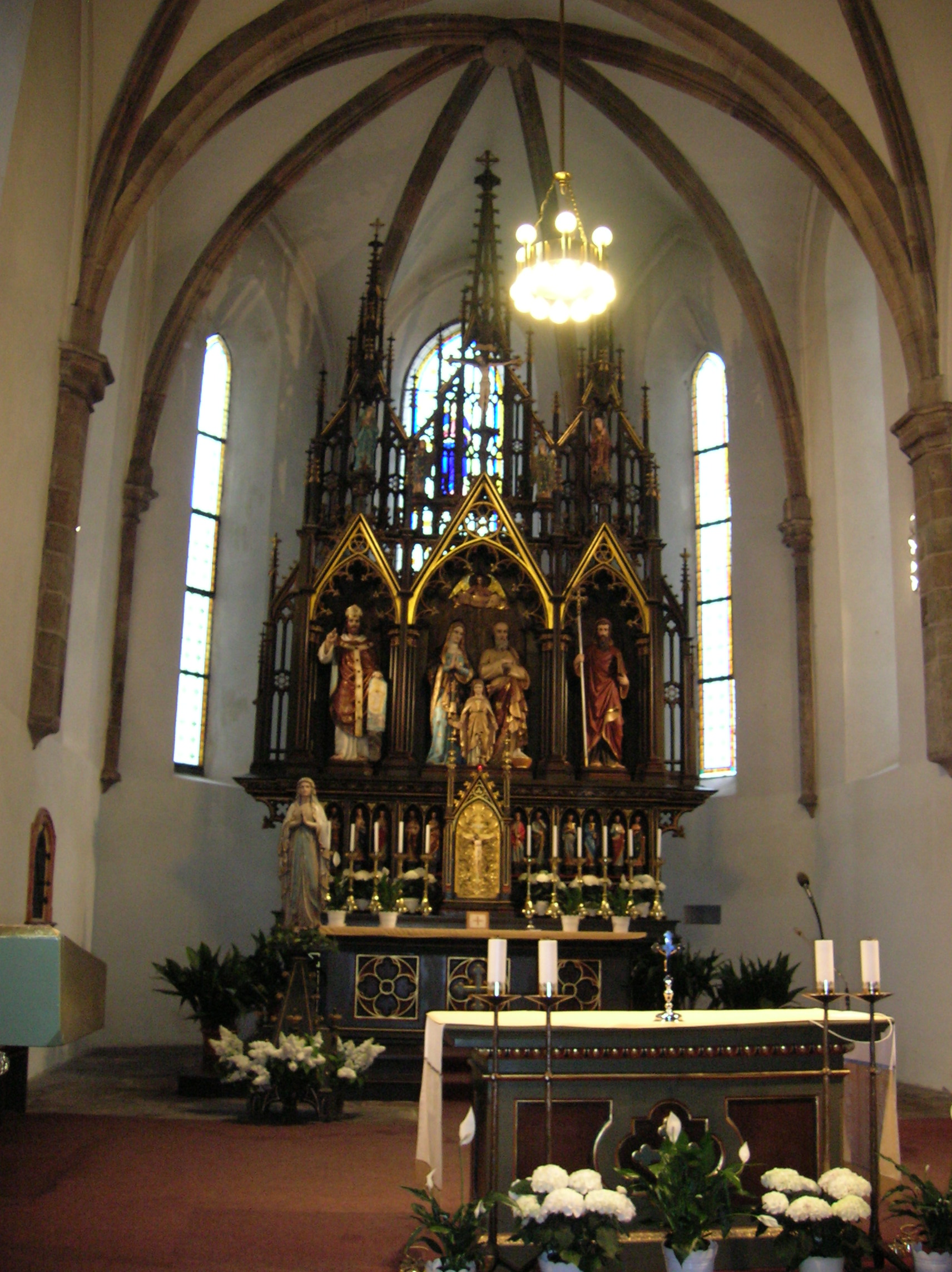
The main altar of the church was Neo-Gothic, from the 19th century. A copy of the statue referred to as the Písek Madonna was located on a side altar. The original, dating back to the 15th century, was stolen in 1975. The pulpit hailed from 1887, and its six-sided cover featured sculptures of five angels. I noticed that one was holding a harp and another was playing the flute. The organ loft went all the way back to the beginning of the 16th century, while the organ was much younger, dating from the early 20th century. I also admired the richly carved 17th century Baroque candelabras. The pewter baptismal font was in Renaissance style, from 1587.
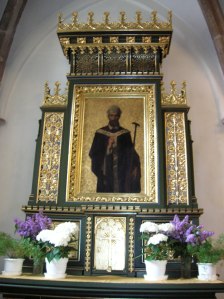
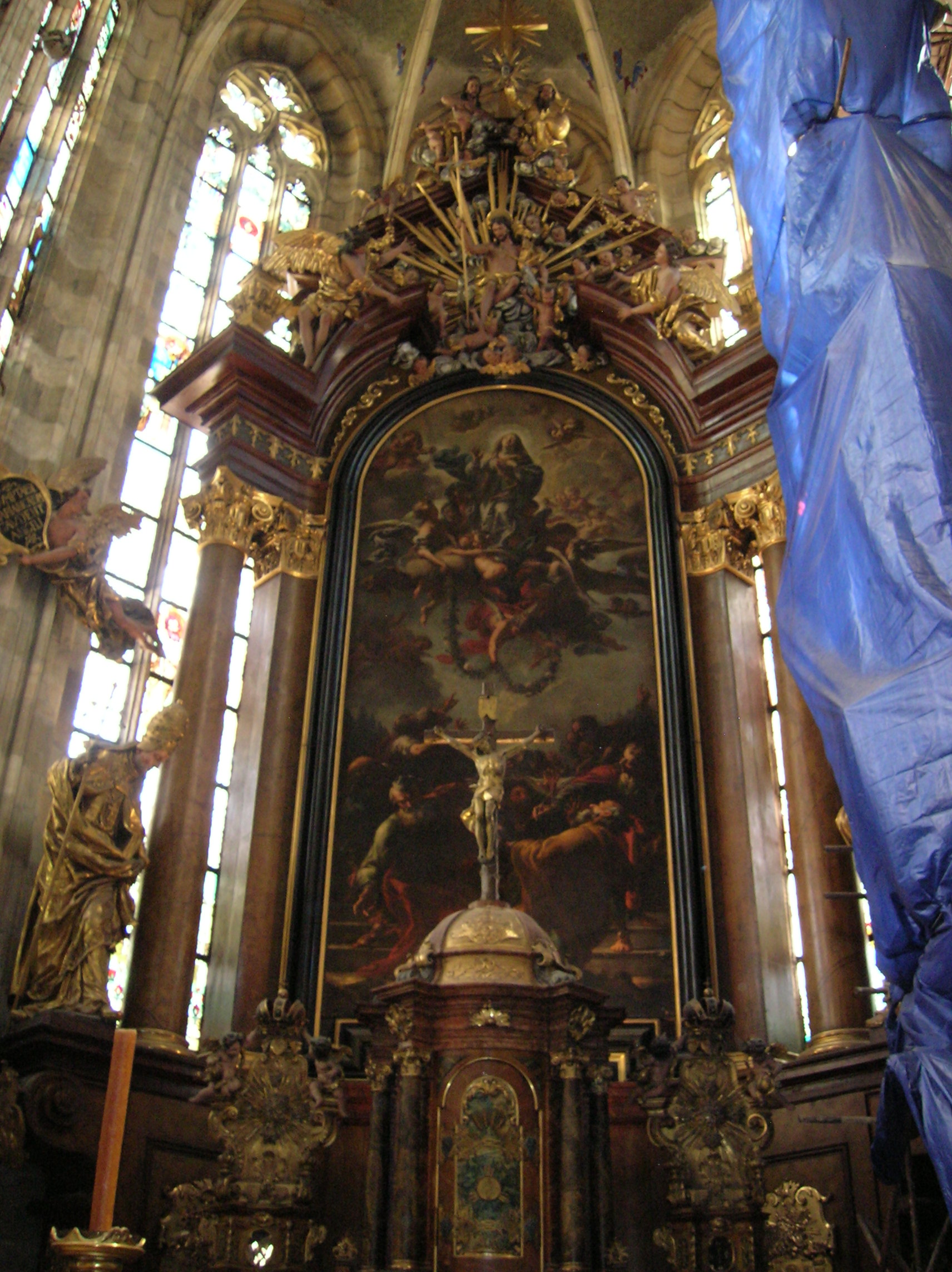
An altarpiece at the Church of the Birth of the Virgin Mary in Písek
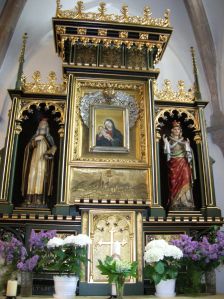
An altarpiece at the Church of the Birth of the Virgin Mary in Písek

The interior of the Church of the Birth of the Virgin Mary in Písek

The interior of the Church of the Birth of the Virgin Mary in Písek

The interior of the Church of the Birth of the Virgin Mary

The interior of the Church of the Birth of the Virgin Mary

There were many Gothic characteristics of the church as well. It boasted sturdy, early Gothic ribs and portals. The presbytery, the northern tower and the three naves hailed from the second part of the 13th century, and the sacristy dated from around 1300 while the southern tower could be traced back to 1489. One of the windows was forged in the 13th century. The Gothic wall paintings were spectacular. I could hardly believe that they dated from around 1270. I peered closely at the 13th century rendition of a suffering Christ with figures of angels carrying a cross, nails, scourge and a crown of thorns. The triumphal arch was painted during the first part of the 14th century.

The interior of the Church of the Birth of the Virgin Mary, Písek

The interior of the Church of the Birth of the Virgin Mary, Písek

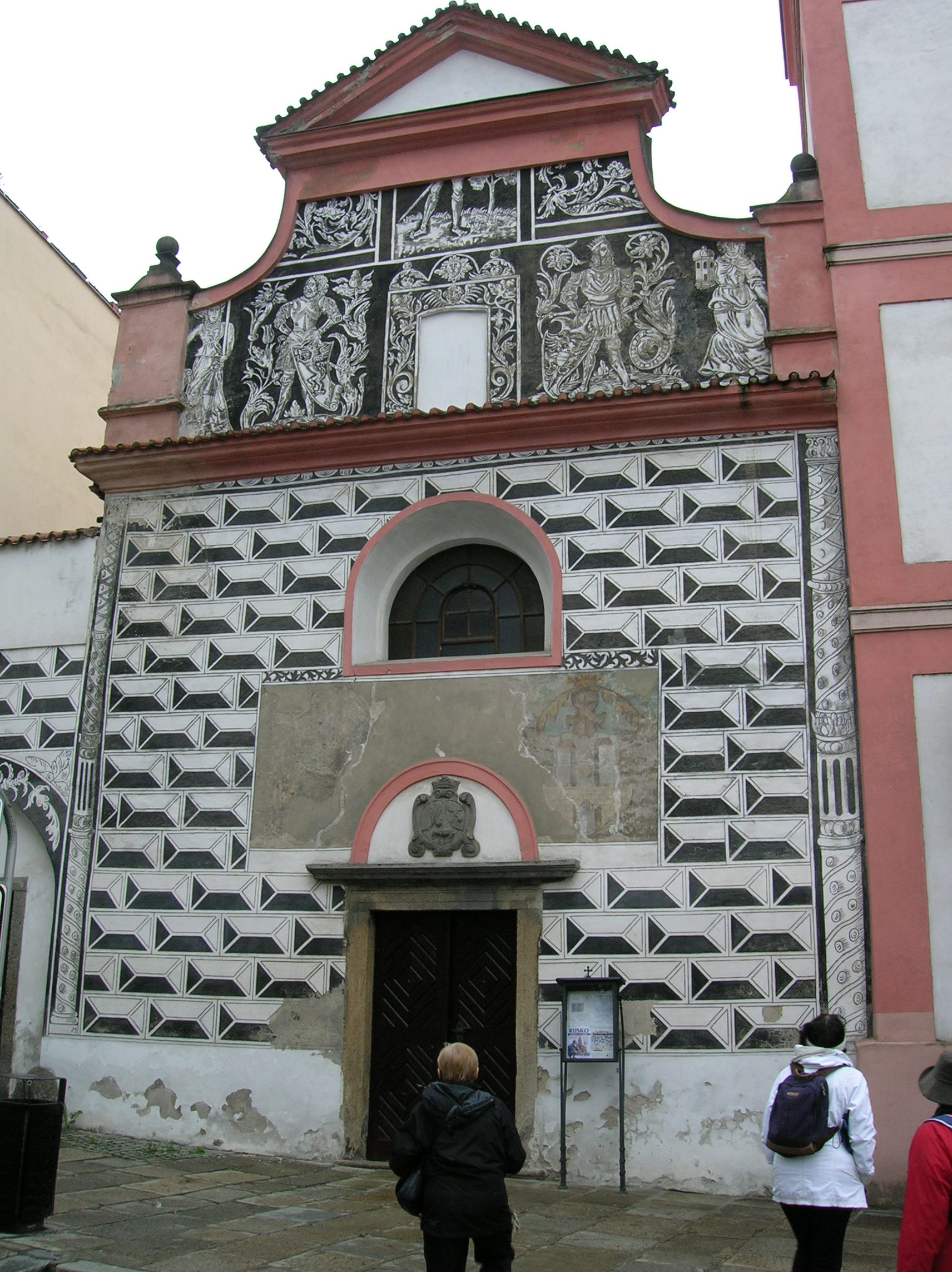
Some participants followed the guide to the castle, but I joined a group of women to get a bite to eat. We found a basement pub with cozy wood paneling. After lunch we walked through the town for a short while. I noticed a small Renaissance church with amazing sgraffito on one of the three main squares. It was called The Church of the Elevation of the Holy Cross and had a very short tower. The church was all that was left of a monastery founded at the same time as the town itself. It had been destroyed in 1419 during the Hussite wars, when Písek was full of Hussite supporters. Unfortunately, it was not possible to walk through the church; we had to look through a grille. Still, the interior was more than impressive.

The Renaissance Church on a main square in Písek

The Renaissance Church on a main square in Písek

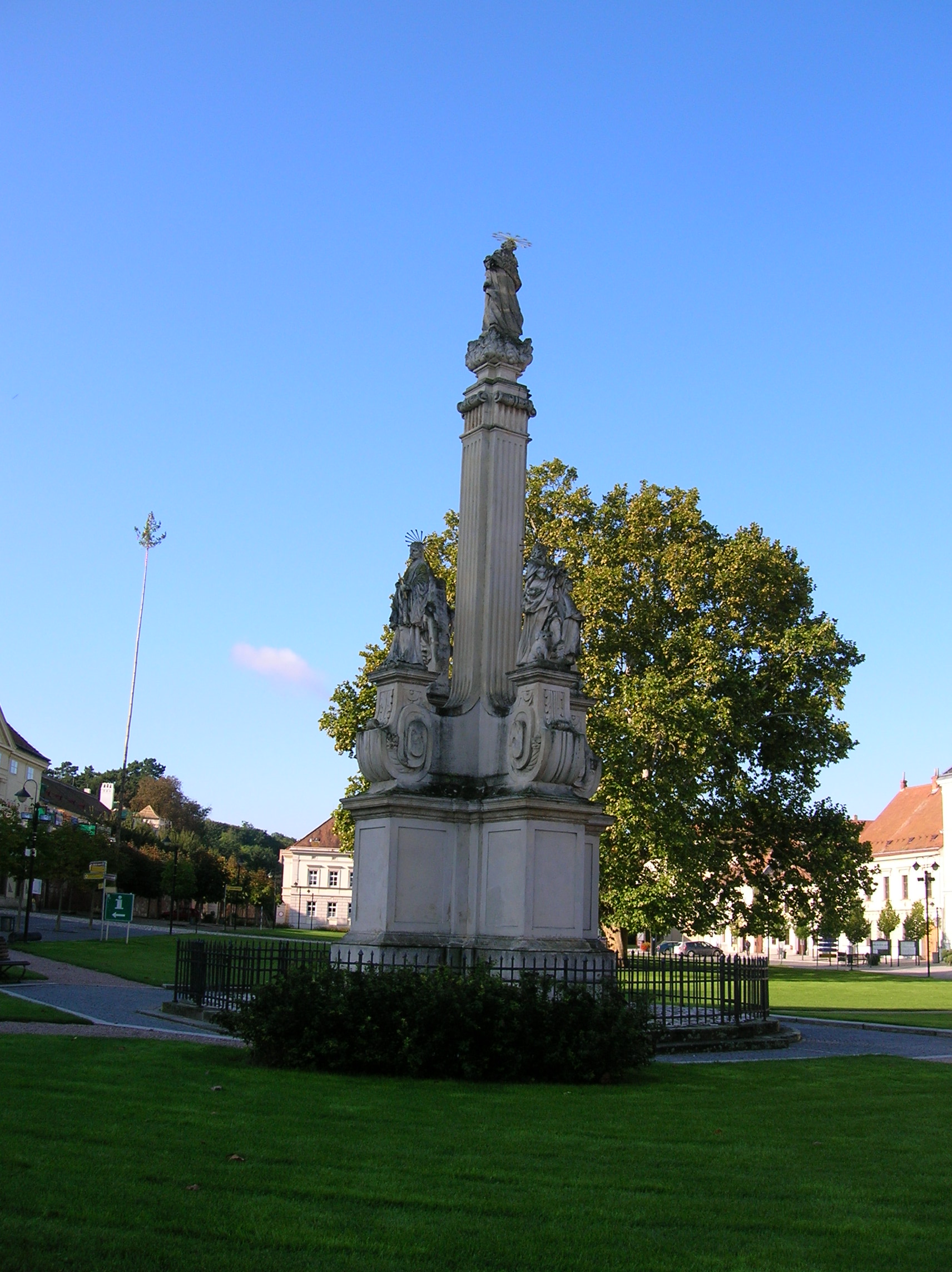
The Plague Column nearby hailed from 1715 and was crowned by a statue of the Virgin Mary with a total of nine saints making appearances. The town hall was Late Baroque, built from 1740 to 1750. We did not have much time before we had to meet at the Holy Trinity Church in the cemetery park, but we did get a quick look at the medieval castle, now a museum with a variety of exhibits. I tried to imagine what it must have been like when, so many centuries ago, King John the Blind (Jan Lucemberský) declared Písek a free royal town at this very castle. (By the way, there was nothing wrong with John the Blind’s sight. The term “the blind” refers to “fighting blindly” or not giving up.)

The castle in Písek

The castle in Písek

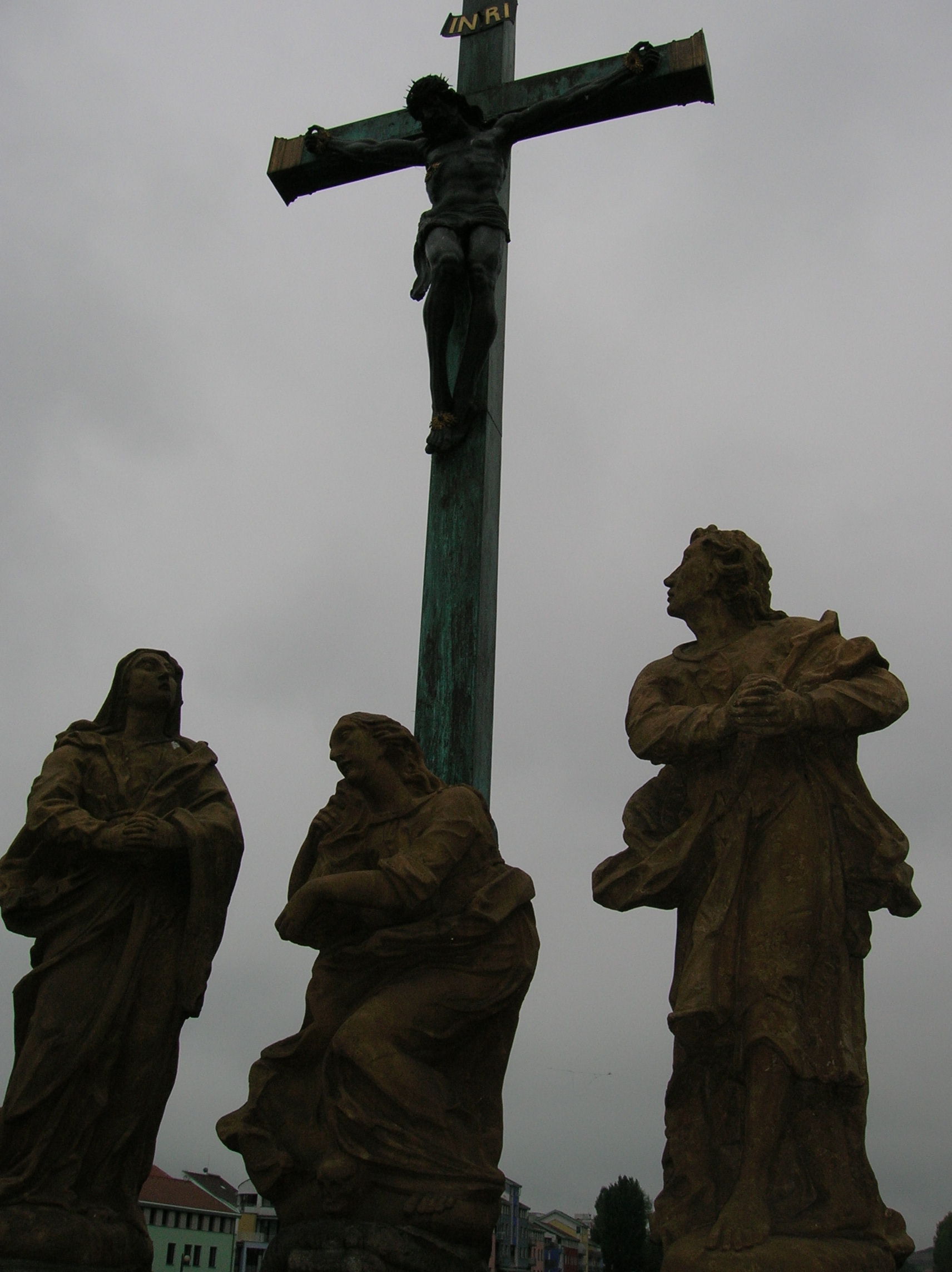
We had time to walk through the exhibition about the Písek countryside during the 19th century and then went downstairs to the space with the larger-than-life portraits of Czech rulers. Oddly enough, the painter had depicted all the Czech leaders with the same serious expression, nose and chin. The original sculptural groupings from the Stone Bridge were kept here as well. I had trouble taking my eyes off them. They were astounding.
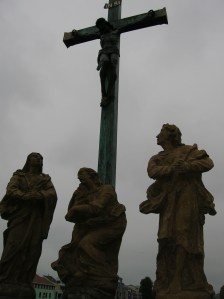
Statuary on the Stone Bridge in Písek
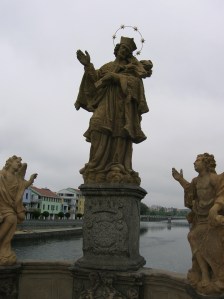
Statuary on the Stone Bridge in Písek

A statue on the Stone Bridge in Písek

A statue on the Stone Bridge in Písek

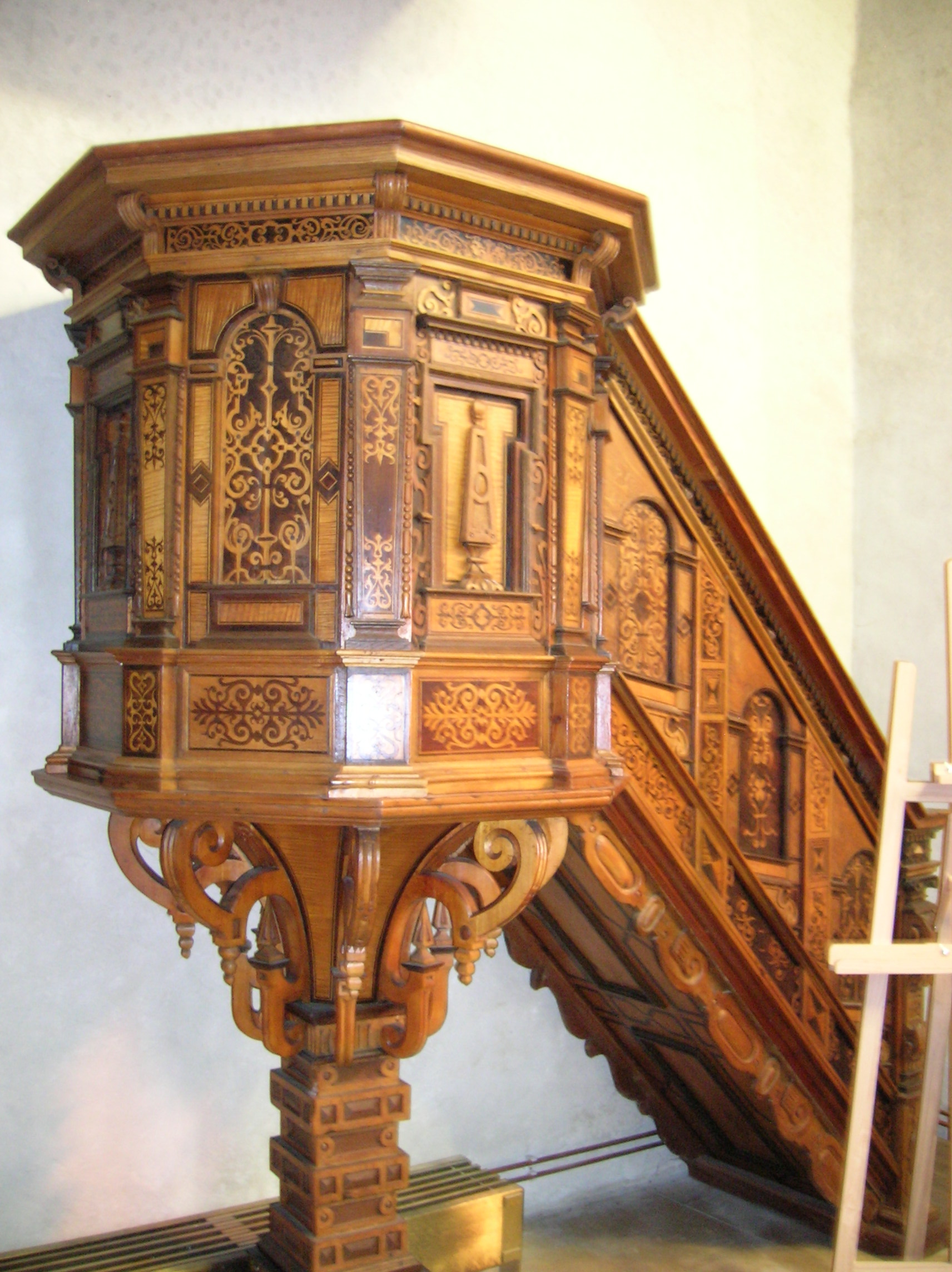
Then we left the museum and crossed the Stone Bridge over the Otava River. The oldest bridge in the country was like a miniature Charles Bridge with evocative statuary. The town cemetery had been founded in 1549, and the deceased were buried there until 1950. It was changed into a park during 1975. The Holy Trinity Church, mostly used for concerts, had a very different sort of interior than the others we had visited. It was decorated with brightly colored, abstract wall hangings and a new organ, donated by the 20th century world traveler and author, Jiří Hanzelka, who was best known for his travels to Africa and South America. There was also a remarkable pulpit with intarsia.
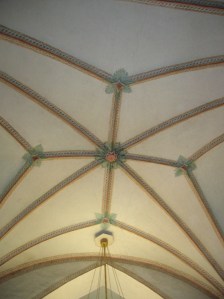
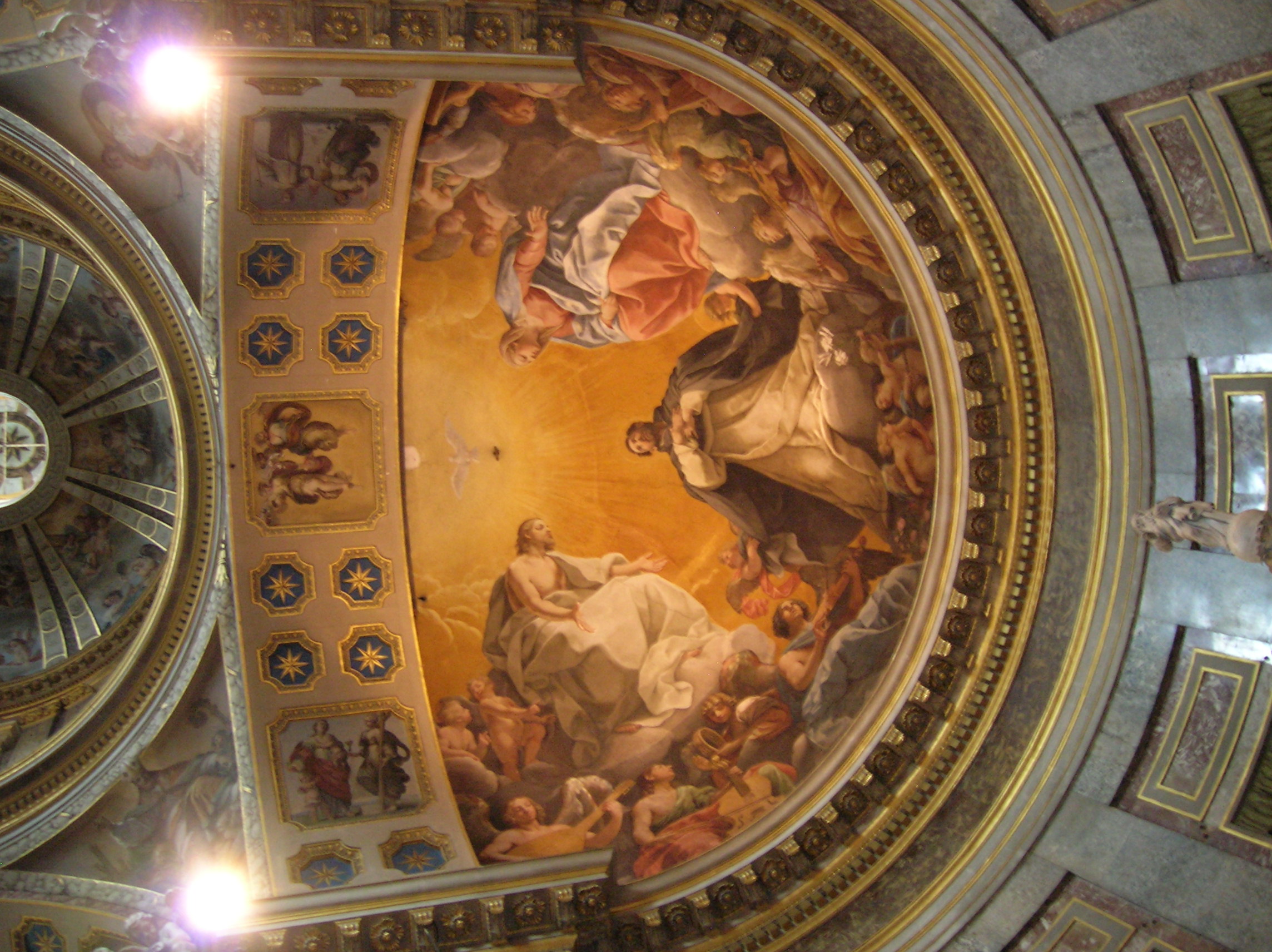
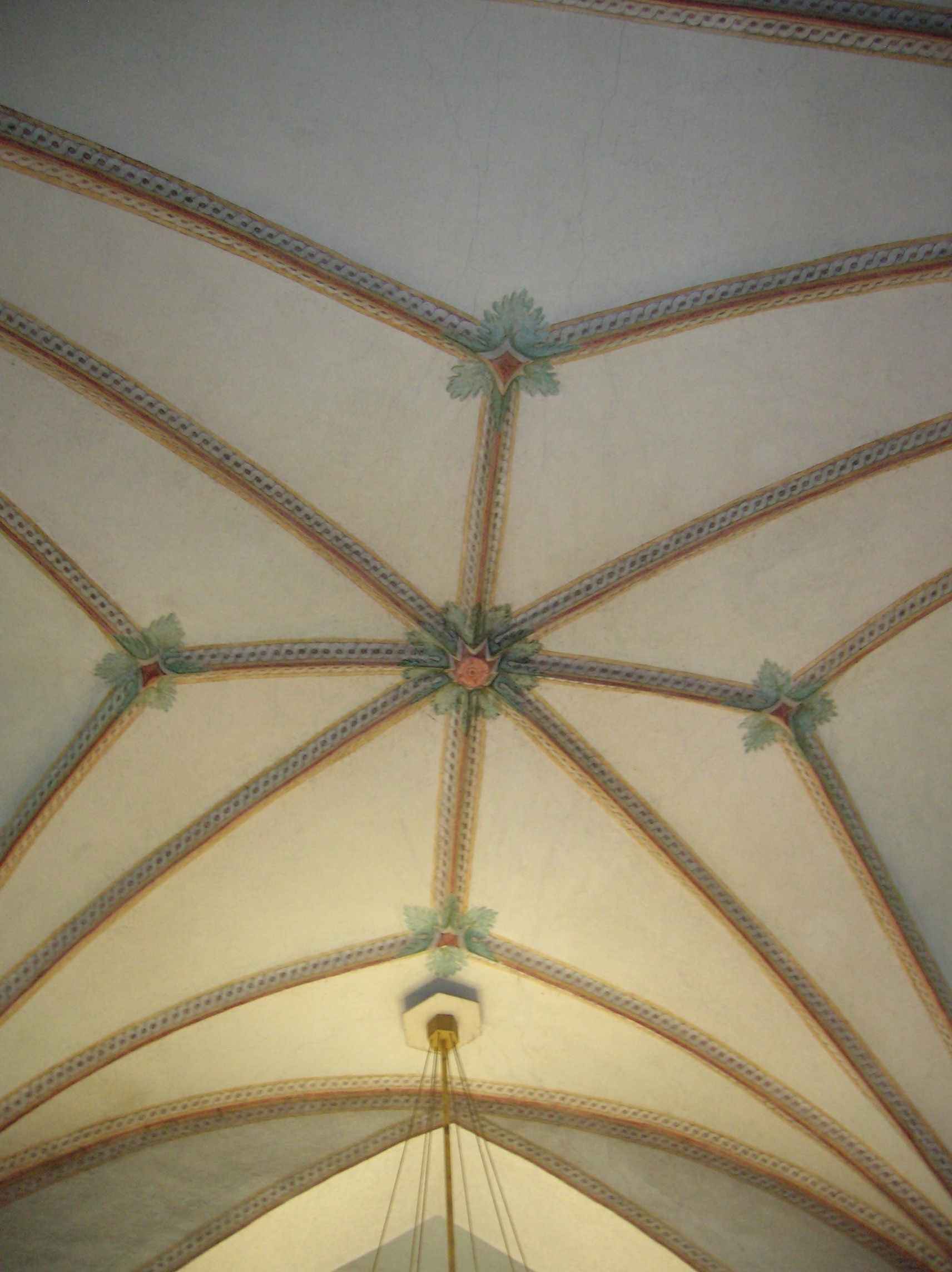
The ceiling of the church

The ceiling of the Holy Trinity Church

The holy place had become a concert and exhibition hall during the 1980s as the Communists had stripped it of its Renaissance identity, destroying the main altar and other furnishings, including the Renaissance organ loft. This destruction was just one example of the Communists’ lack of respect for religion and art. I am so glad I had not had to live through totalitarianism. Later, thankfully, the church’s Renaissance wall paintings had been restored.
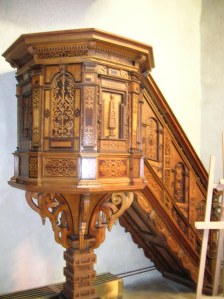
The pulpit with intarsia in the Holy Trinity Church

The pulpit with intarsia in the Holy Trinity Church

In the bell tower we saw tombstones from the 1300s. Renowned Czech historian August Sedláček was buried in this cemetery, too. He compiled the 15-volume work Castles, Chateaus and Fortresses in the Czech lands, which was published at the end of the 19th century and the beginning of the 20th century.
The next stop was Putim, probably most famous for being mentioned in Jaroslav Hašek’s mammoth, early 20th century, anti-militaristic novel, The Good Soldier Švejk, featuring soldier Josef Švejk, who exhibits passive resistance and may or may not be an idiot. Scenes from the 1957 film based on Hašek’s satirical masterpiece set during World War I in the Austro-Hungarian Empire had been shot in this town that was founded in 1205.
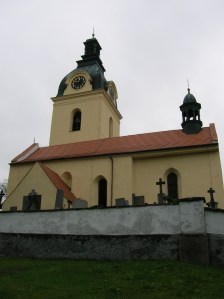
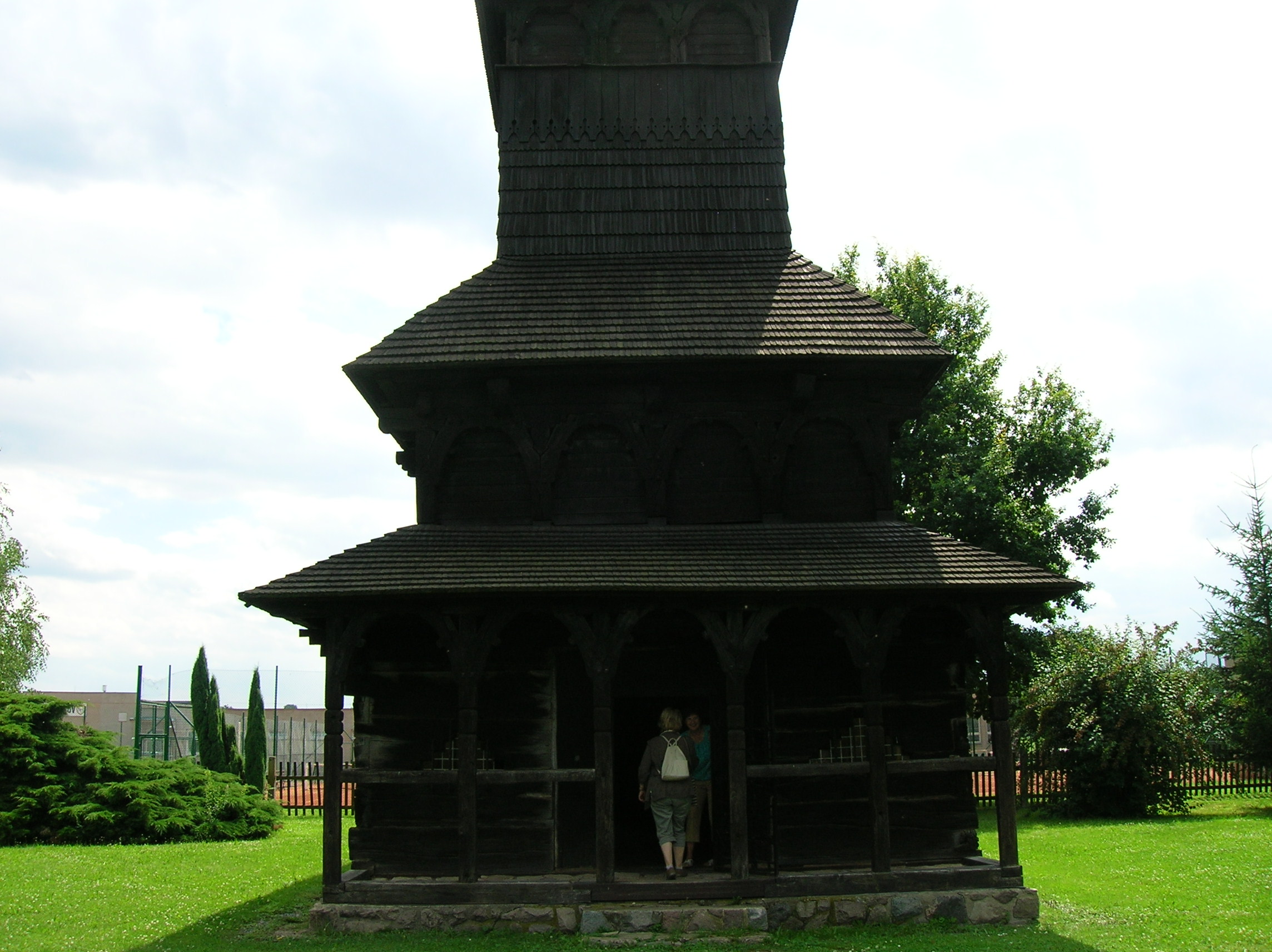
The church in Putim

St. Lawrence’s Church in Putim

But that was not Putim’s only claim to fame. The 1908 film Jan Cimbura was based on the life of a Putim farmer by the same name. I saw his modest but impressive grave from 1898. The movie, adapted from a novel by Catholic priest Jindřich Šimon Baar, takes place from 1848 to 1898, examining 50 years of the life of a good Christian and farmer in south Bohemia.

Jan Cimbura's grave in Putim

Jan Cimbura’s grave in Putim

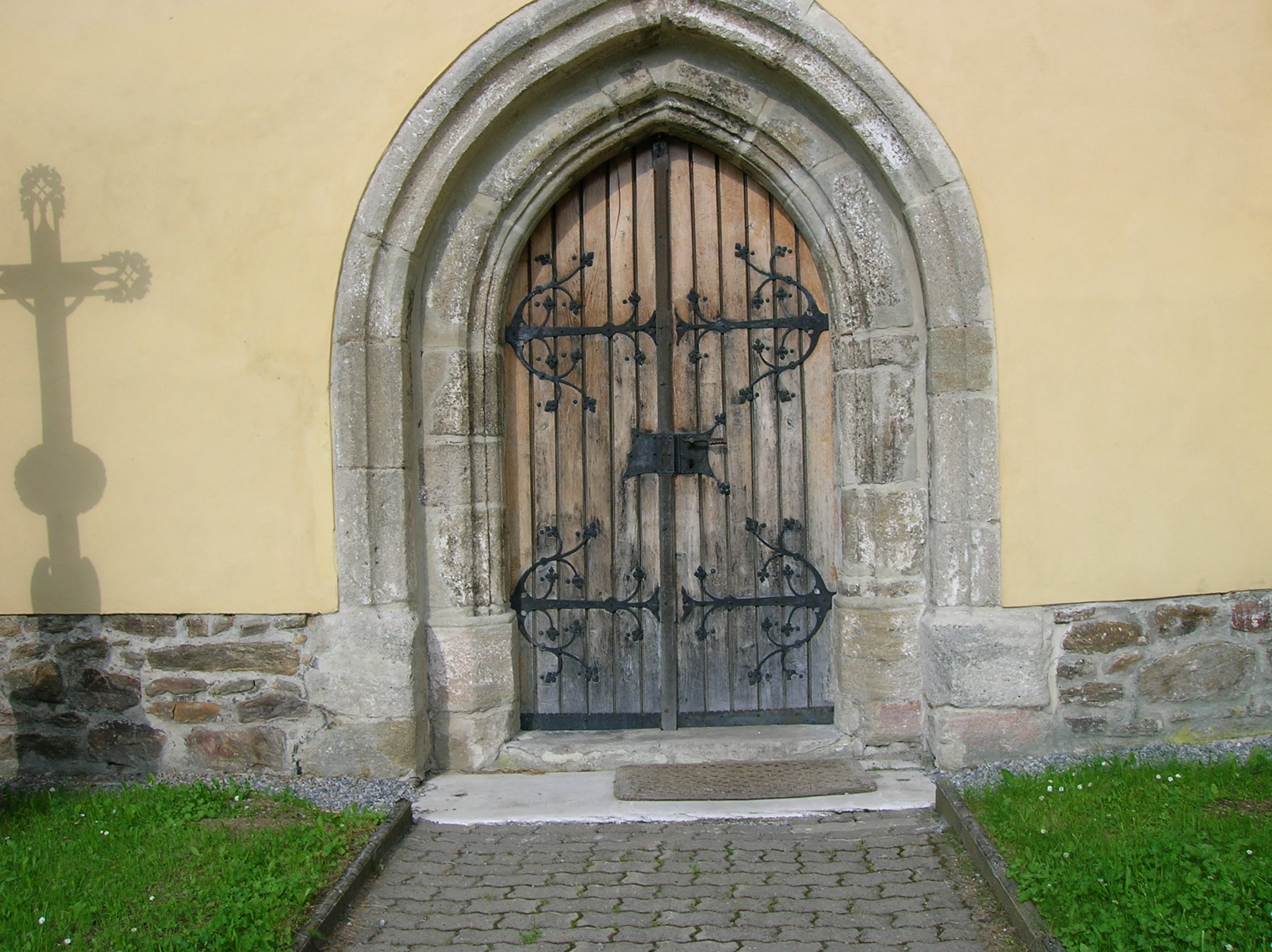
In St. Lawrence’s Church I admired a Gothic window, wooden Gothic vaulting, Gothic masonry and a 13th century portal. The furnishings were much younger, though. The main altar was probably created around 1650, and the other parts of the interior most likely were made around 1700. The impressive tombstones inside the church dated from approximately 1600. One of the bells, called St. Andrew, was original and hailed from 1553.
This church had a characteristic that I had never seen anywhere else. It had two main altars with different seating arrangements for each altar. It fascinated me how it appeared to be two churches built into one. I read that one part of the church had been for Catholics while the other part had been designed for Utraquists, It certainly had an intriguing ground plan.
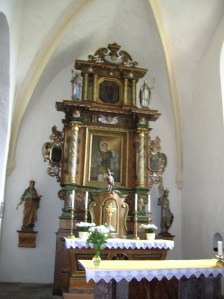
The interior of St. Lawrence's Church

The interior of St. Lawrence’s Church

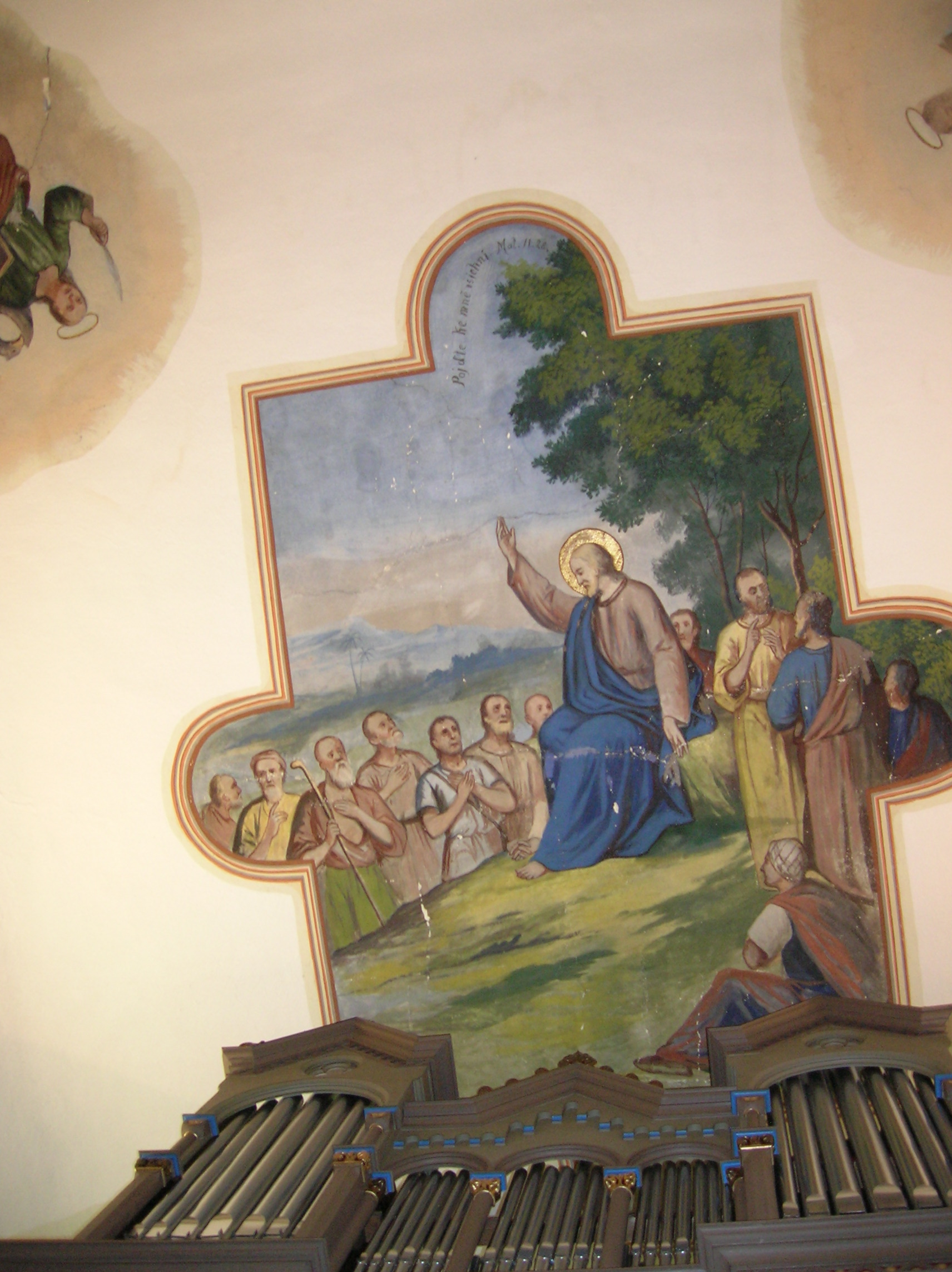
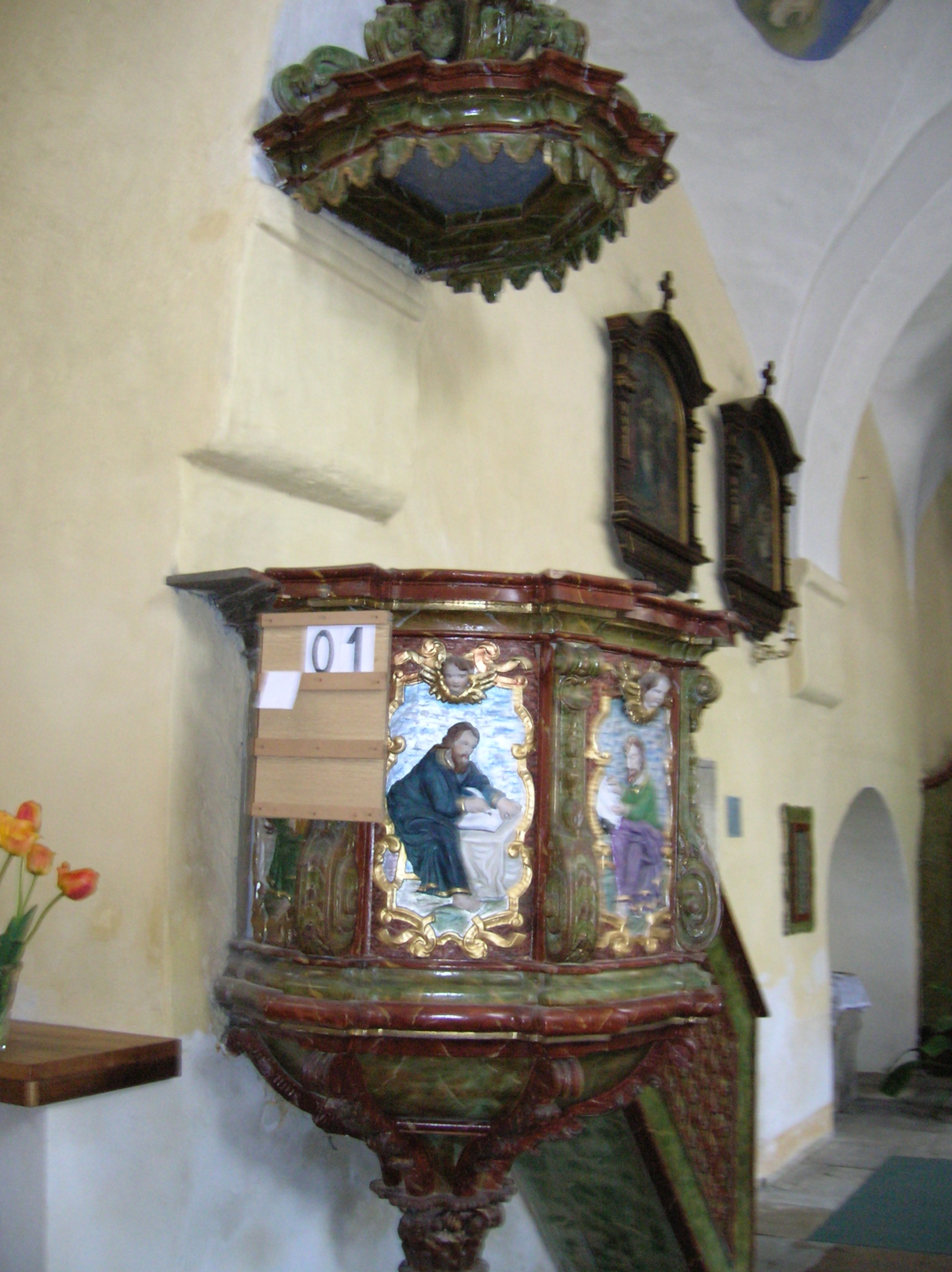
St. Giles’ Church in Heřmaň also boasted Early Gothic construction. The western tower dated back to the beginning of the Middle Ages. While the village was first mentioned in writing during 1227, the church was founded in 1254 as it was originally late Romanesque. The furnishings were much younger, though. The interior was Baroque from 1720 to 1721. Two elegant white columns framed the painting at the main altar, Classicist in style, dating from the 1800s.

The pulpit in St. Giles' Church in Heřmaň

The pulpit in St. Giles’ Church in Heřmaň
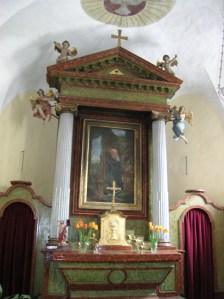
St. Giles' Church in Heřmaň

St. Giles’ Church in Heřmaň
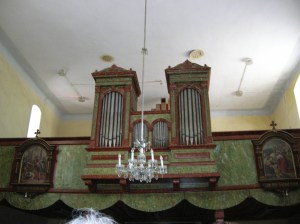
The organ of St. Giles' Church

The organ of St. Giles’ Church

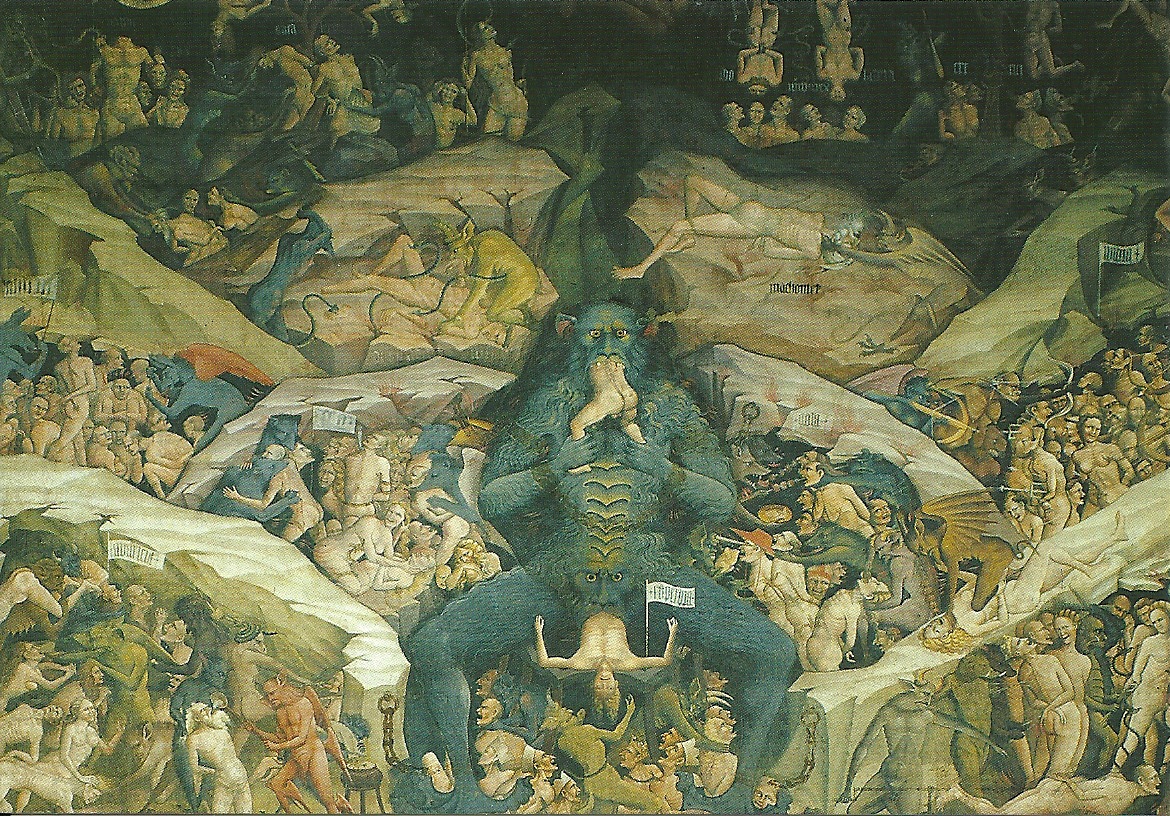
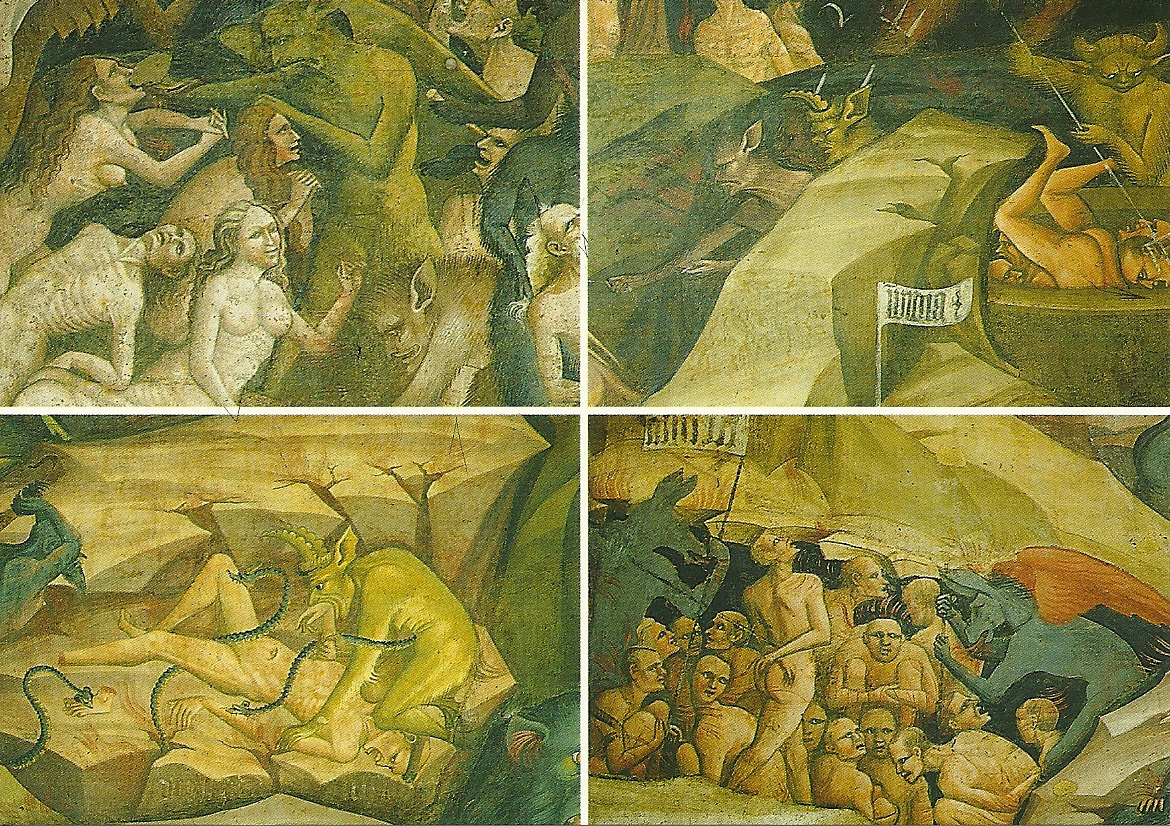
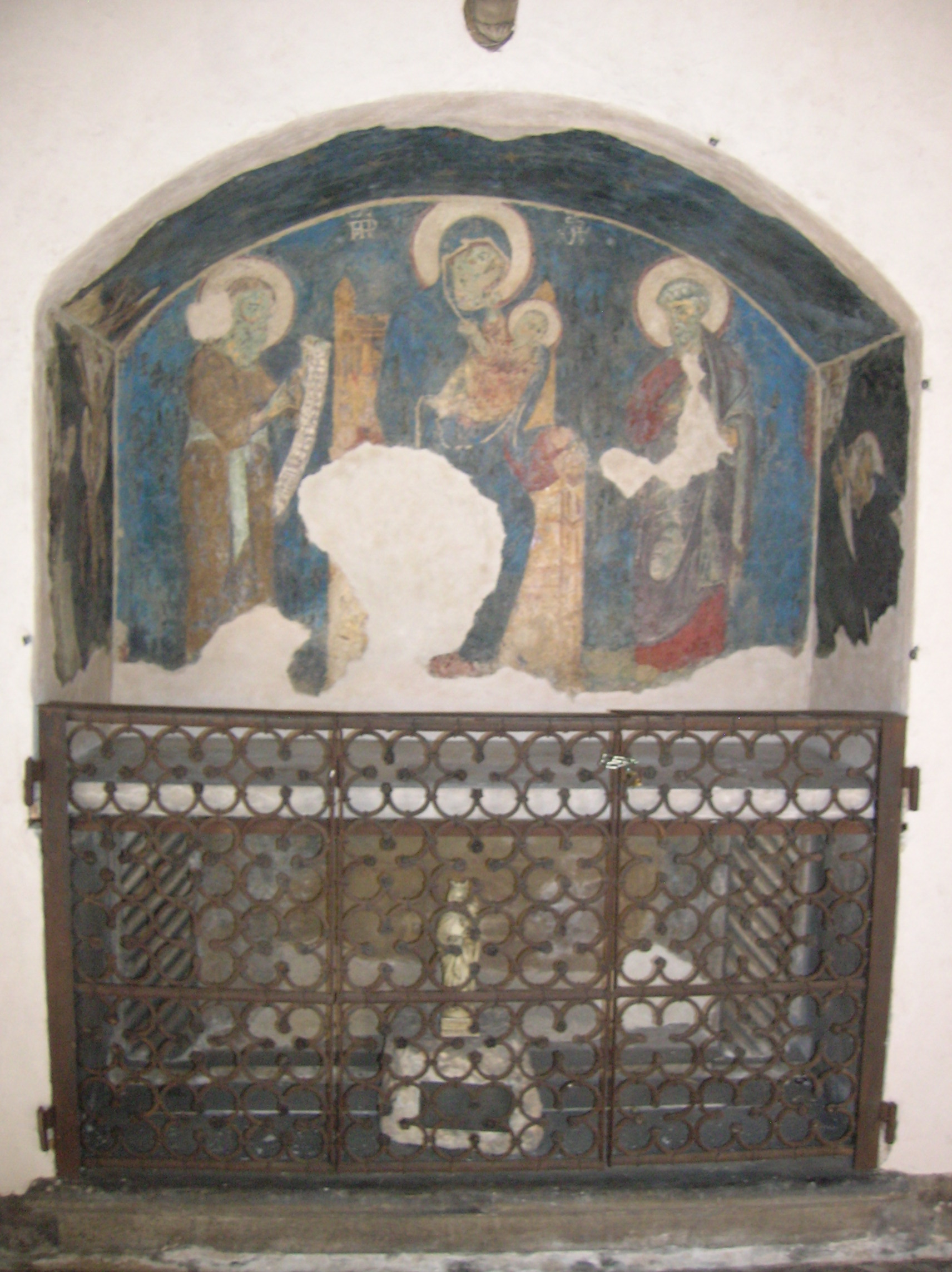
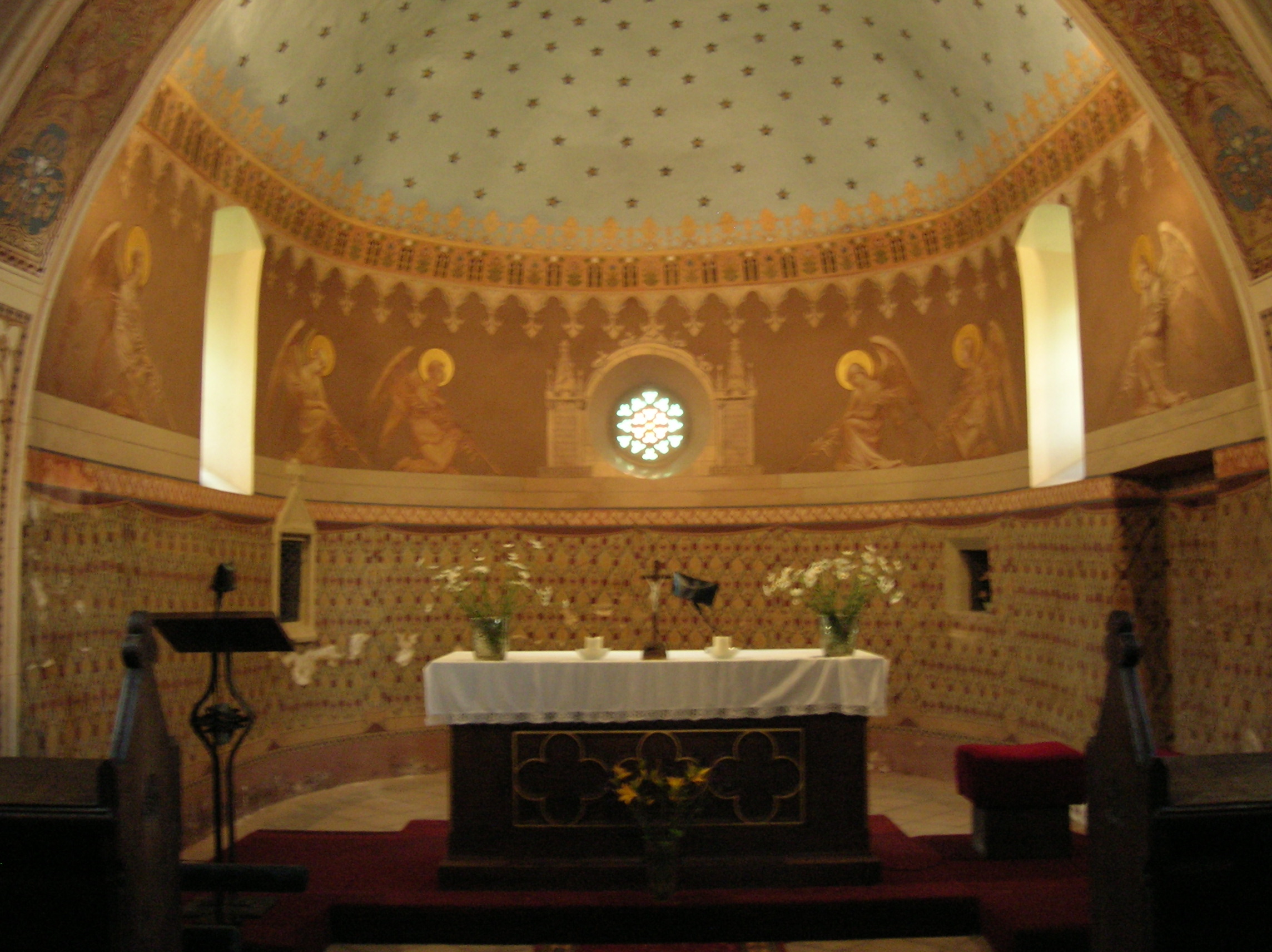
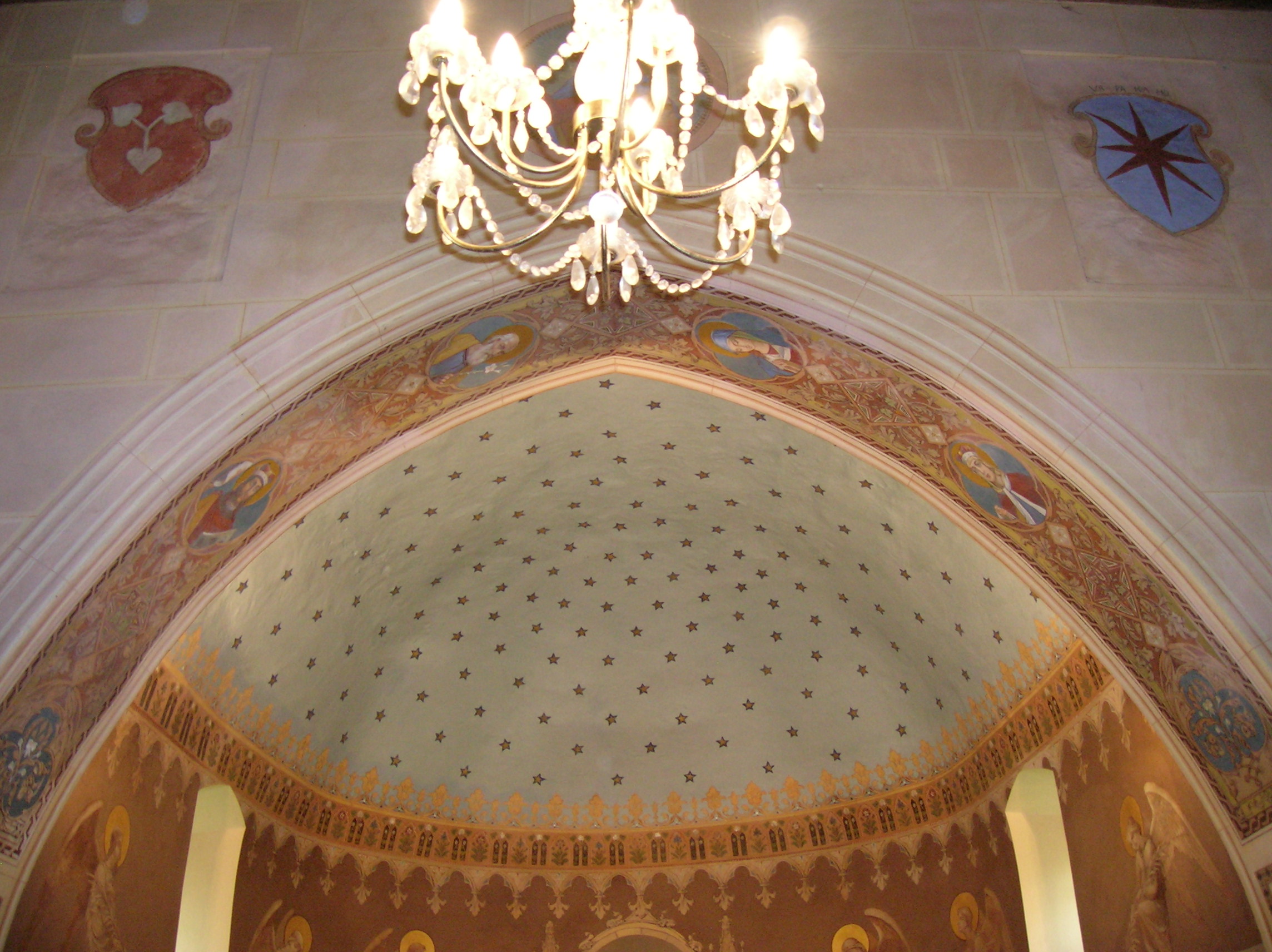
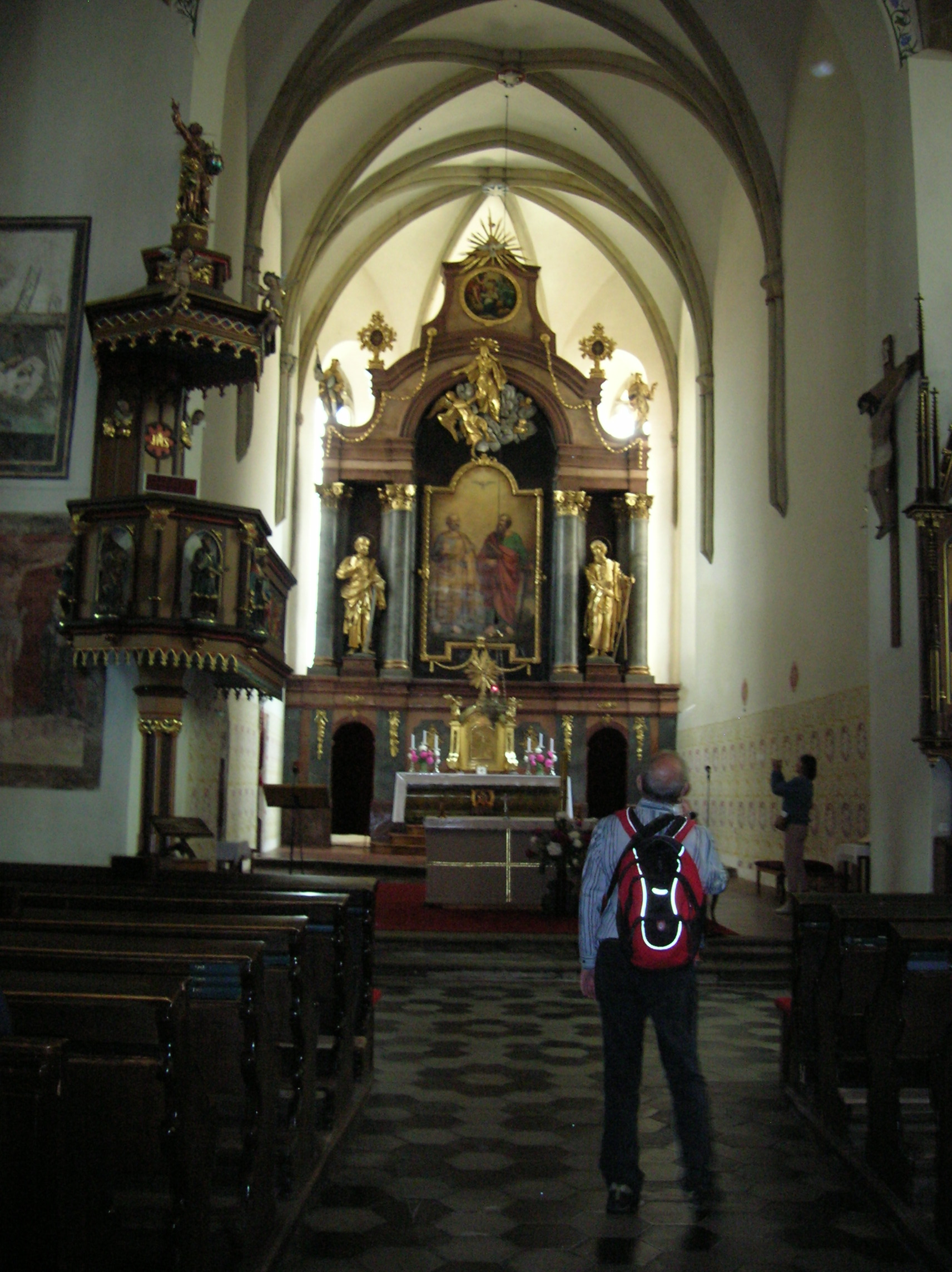
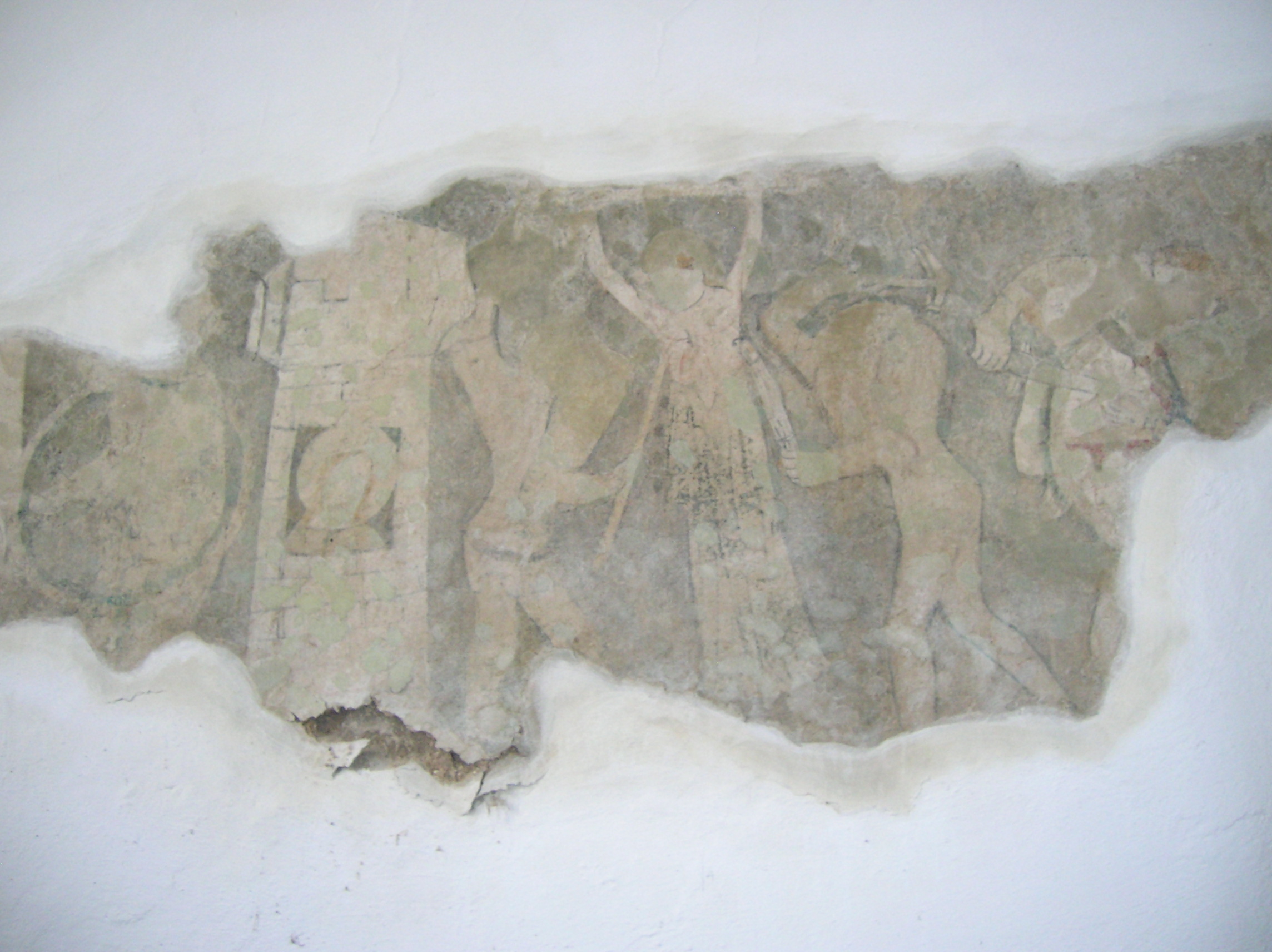
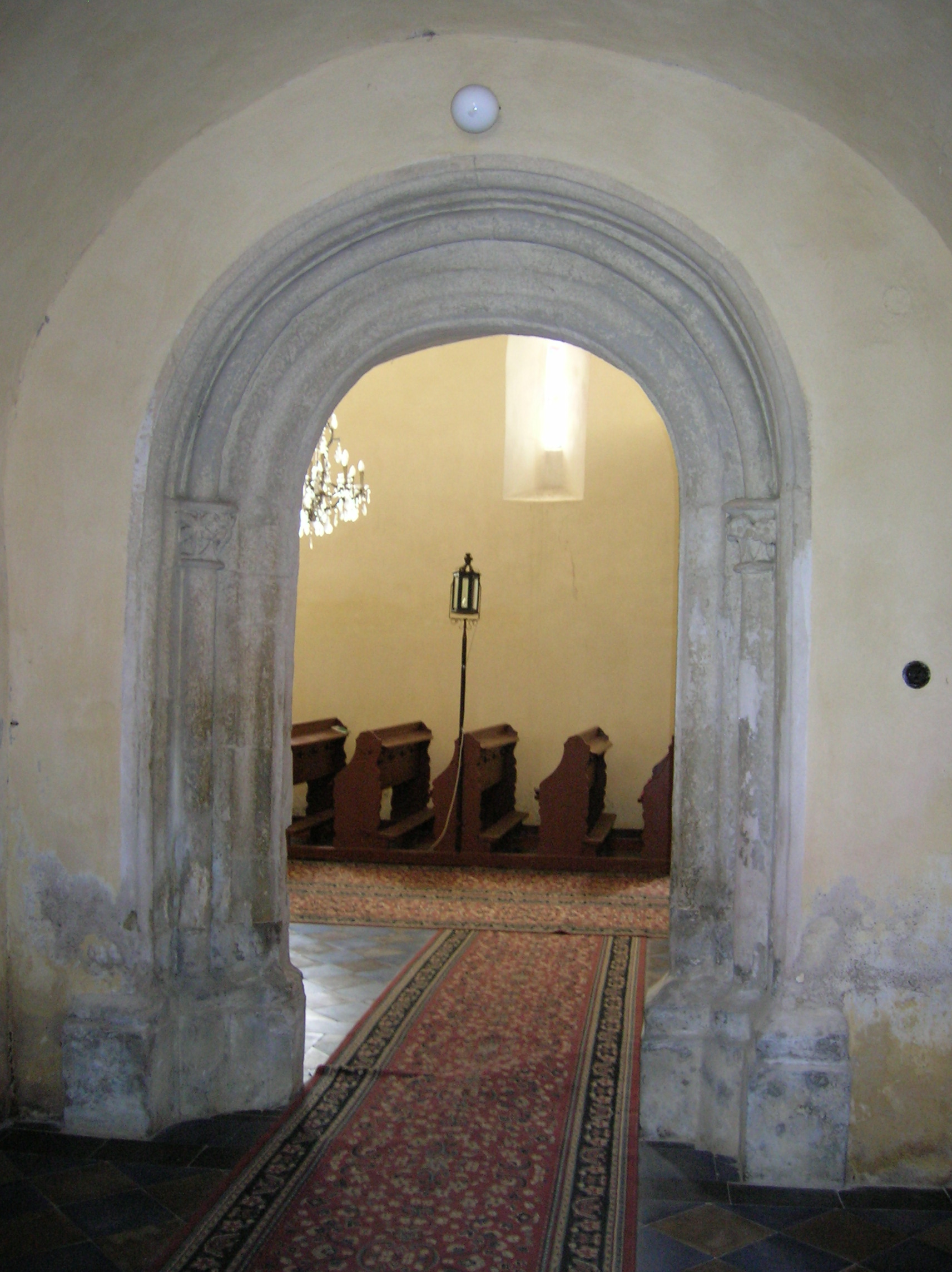
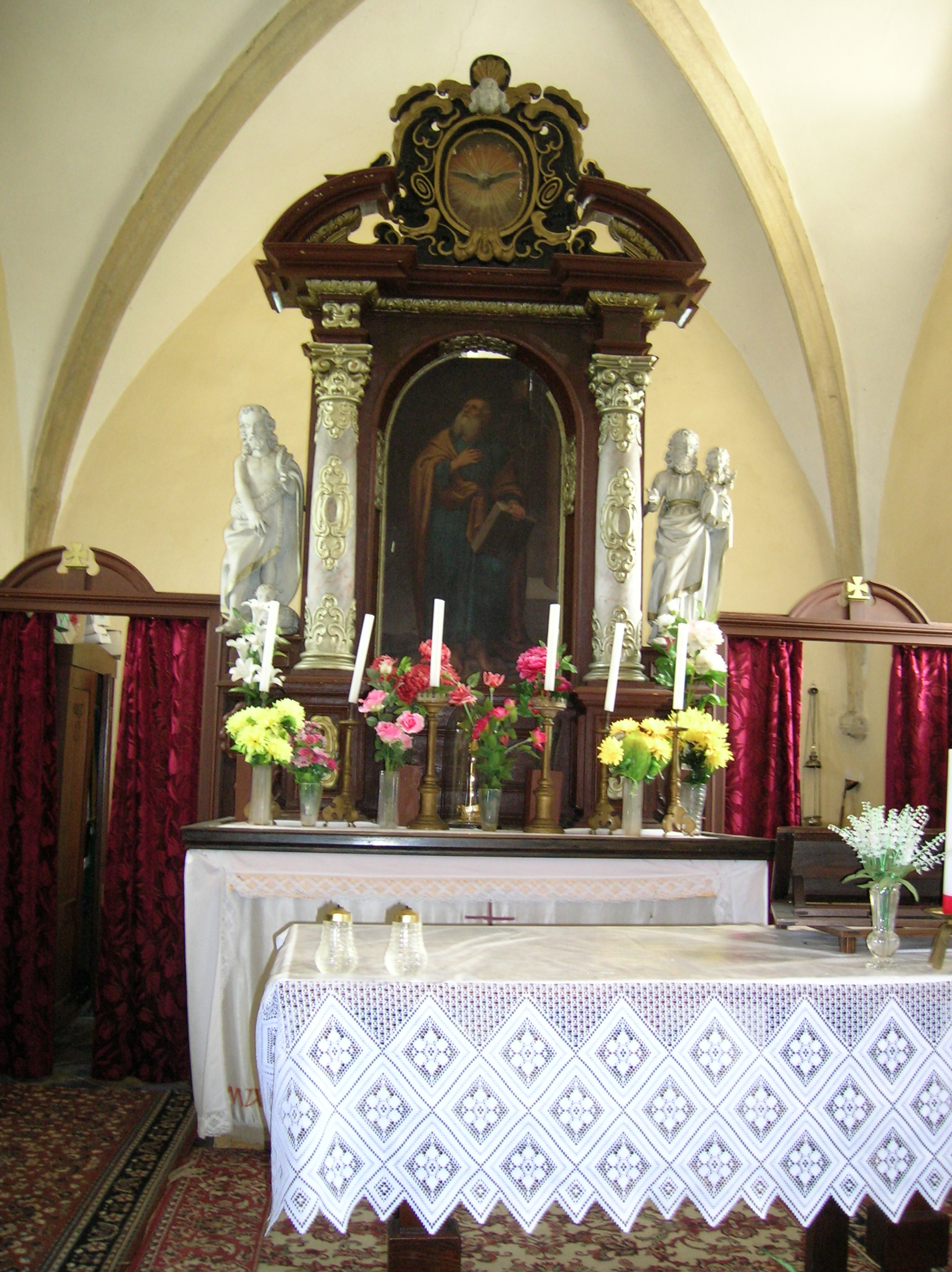
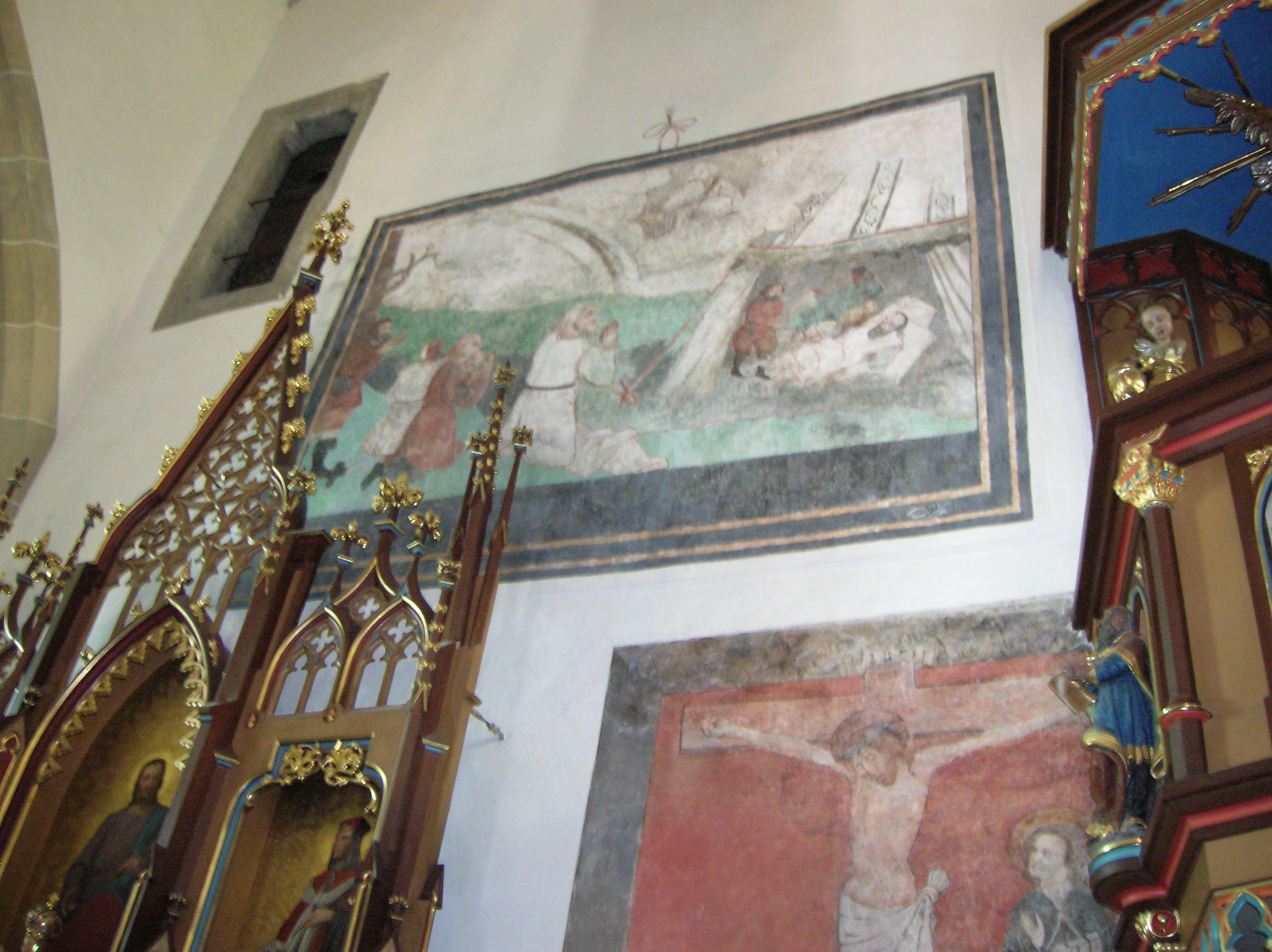
Then our itinerary took us to the Church of Saint Havel in Myšenec, which also had experienced a Romanesque birth. On what is now the sacristy was originally a Romanesque church with apse from the 11th century. There was a Gothic window, too. What impressed me most were the Gothic frescoes on the walls and the vaulting of the sacristy. They dated from 1340 to 1350. In the presbytery Hell was pictured with a burning tower and the devil, and Heaven made an appearance, too. On the north side the life of Saint Catherine was depicted. I loved the stars and angels on the ceiling.

The interior of the church in Myšenec

The interior of the Church of Saint Havel in Myšenec

Gothic paintings in the Church of Saint Havel

Gothic paintings in the Church of Saint Havel

In the small sacristy there were more Gothic wall paintings. The figure of a prophet had been rendered on an arch. On part of one wall there was a pictorial narrative of the legend of Saint Markéta along with the figure of the devil. Arcades and pillars appeared in the renditions, too. Our guide, who had extensive knowledge of Gothic and Romanesque architecture, explained that the paintings in the sacristy had not been created by the same painter who decorated the presbytery. I wondered if there were even more than two contributors to the artwork, who they had been and how they had come about to decorating the church’s interior.
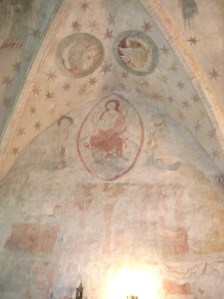
Gothic wall painting at the Church of Saint Havel

Gothic wall painting at the Church of Saint Havel

That was not all there was to see in Myšenec. Between homes 54 and 8, we gazed at the remnants of a castle and the arch of a gate. The castle had been established by the Přemysl dynasty in the 13th century. I wondered what it would be like to have part of a 13th century castle ruin joined to one’s modern house. It reminded me that history was so connected with the present and how ancient history made up such an important part of each village’s identity. It was fascinating how the two different architectural styles of modern and Gothic played off each other. The Gothic walls and arch looked like an odd extension of the house. They were certainly unique.

Gothic painting in the Church of Saint Havel in Myšenec

Gothic painting in the Church of Saint Havel in Myšenec

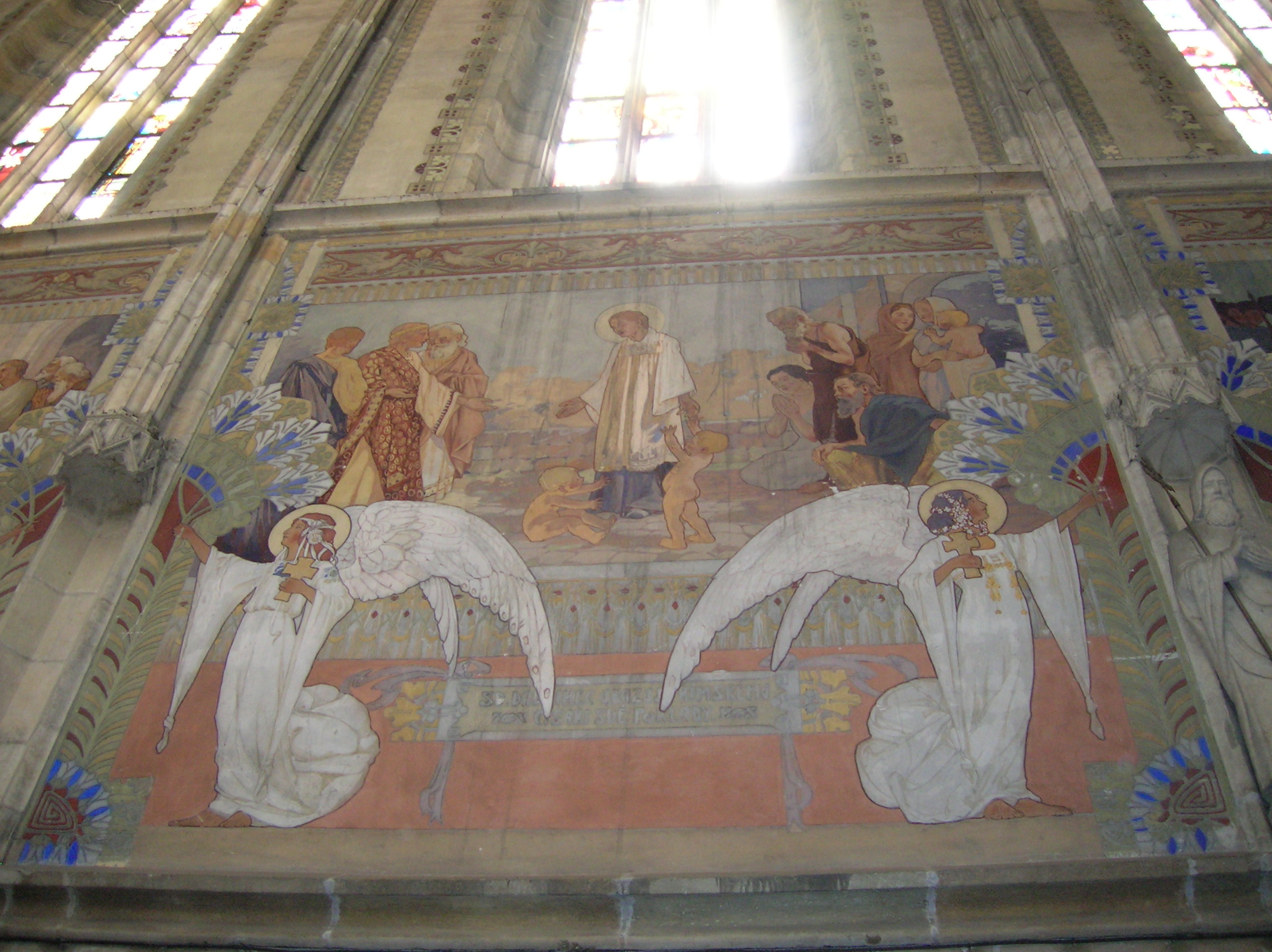
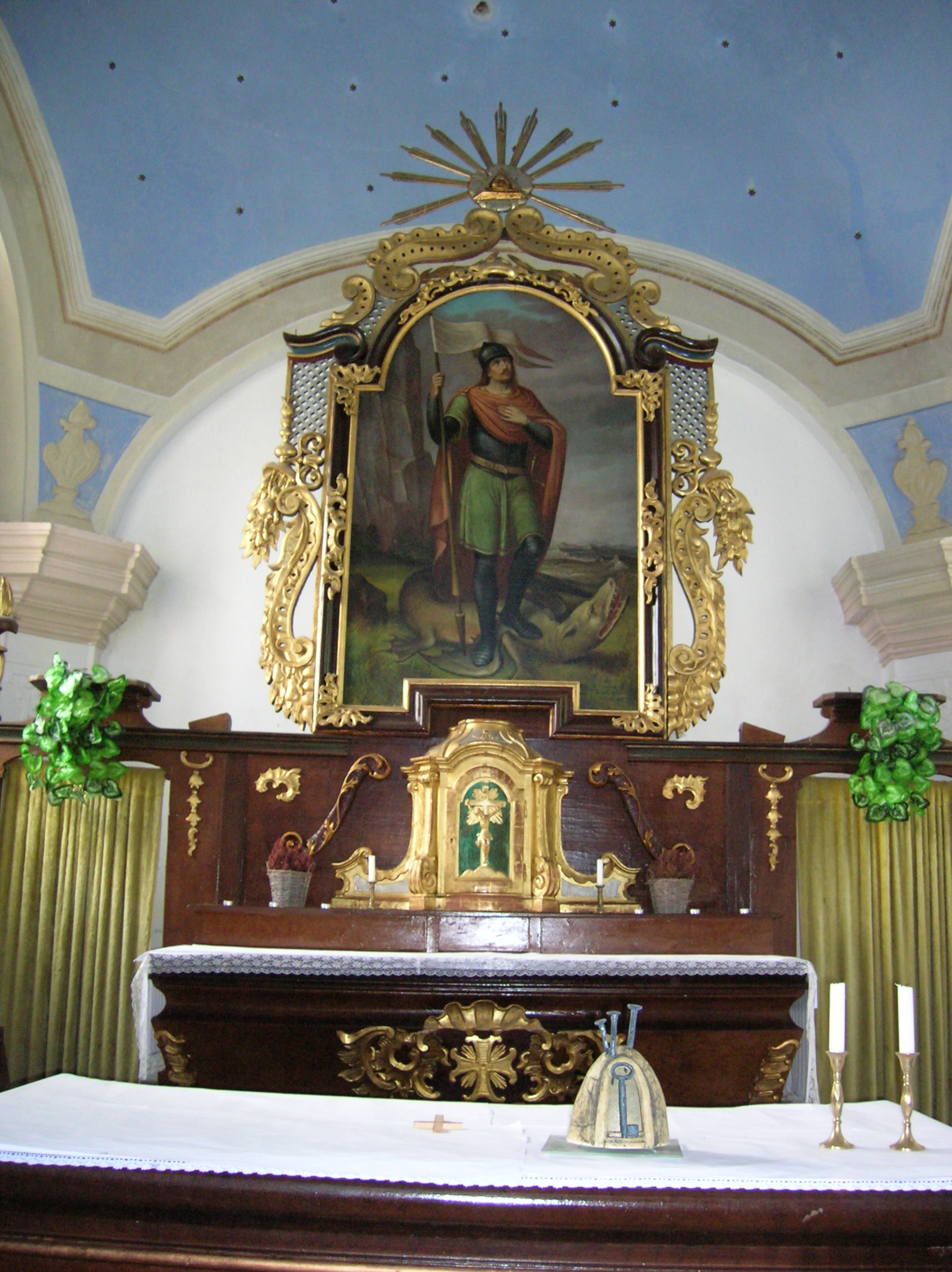
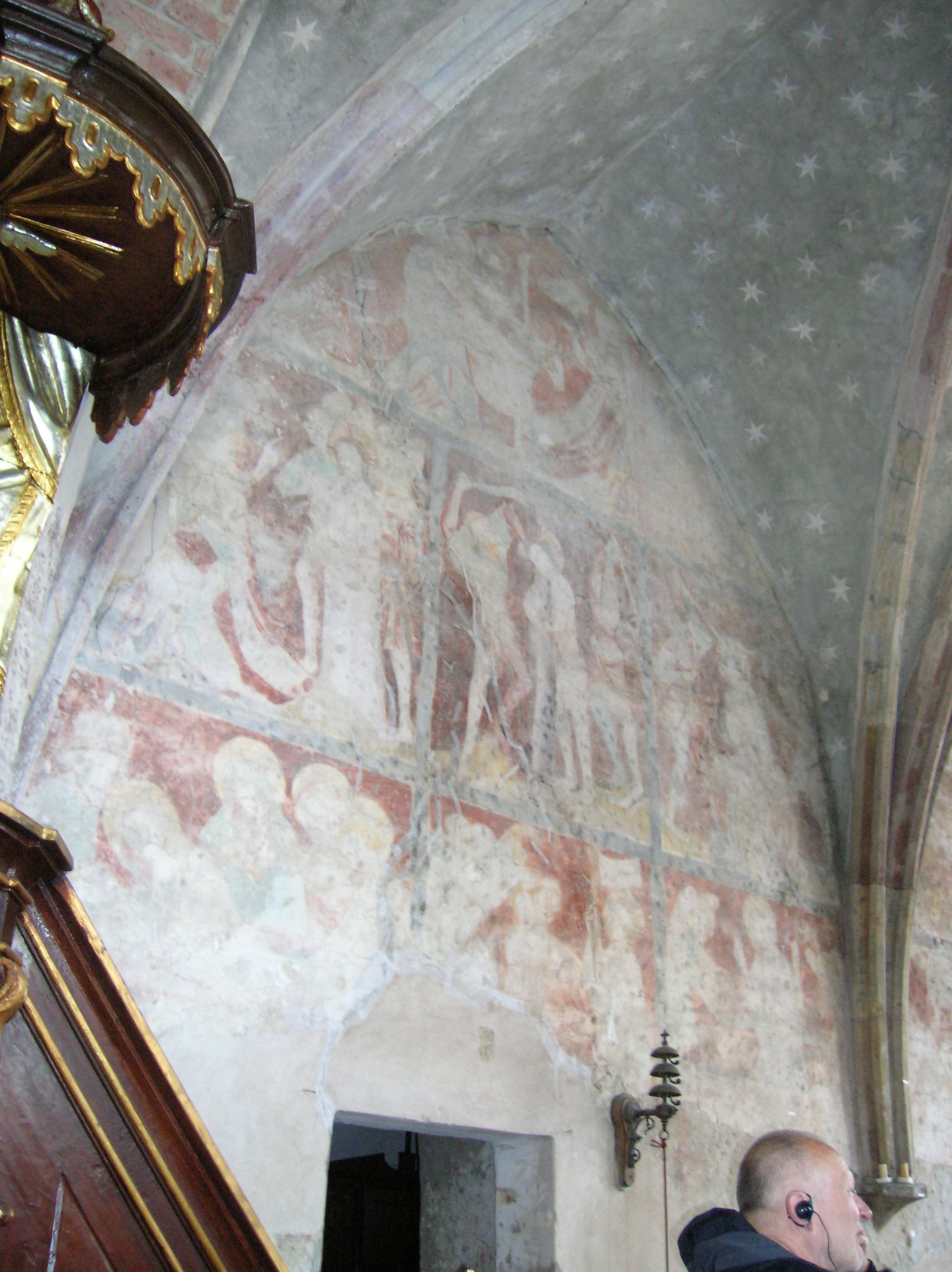
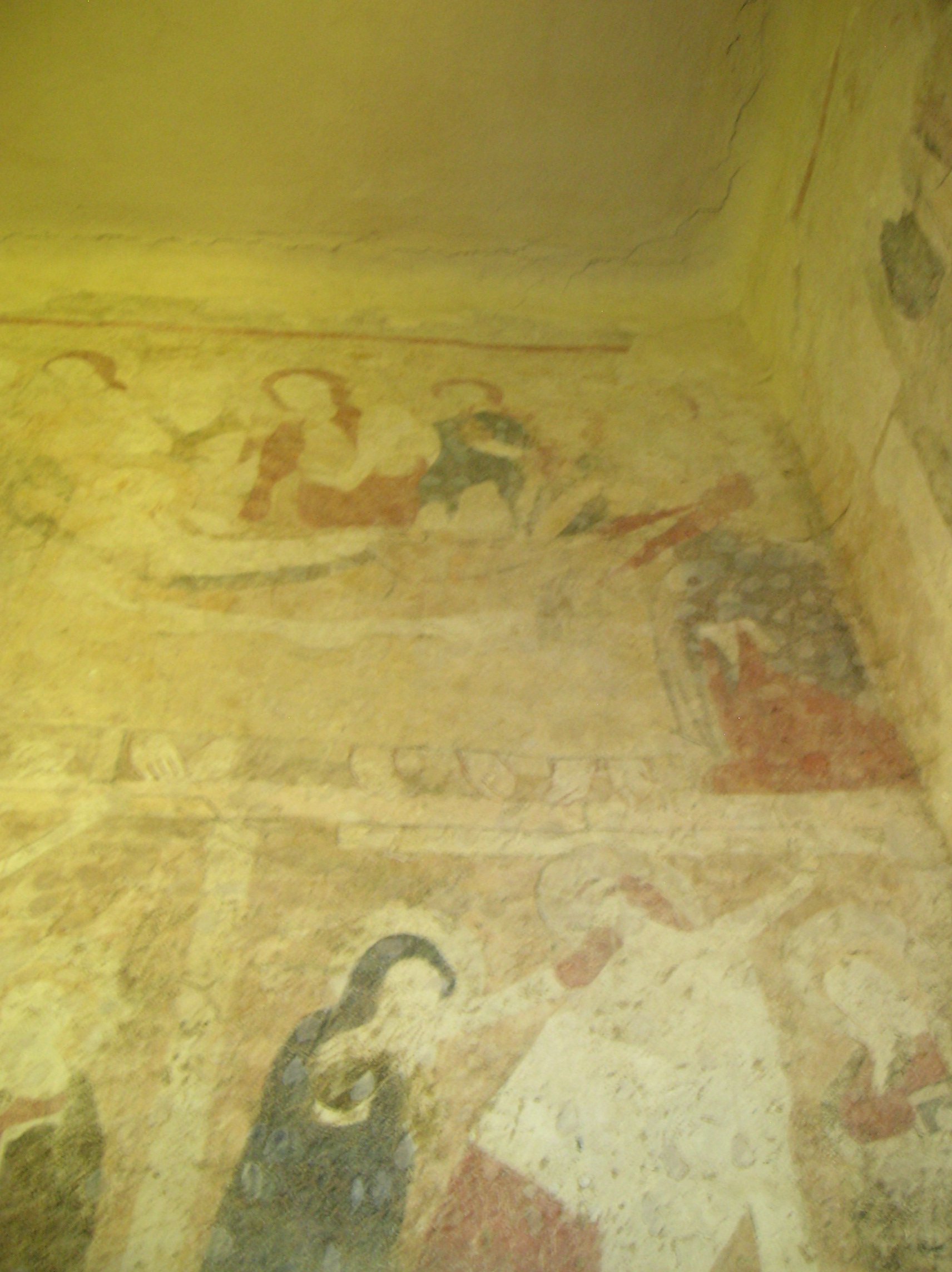
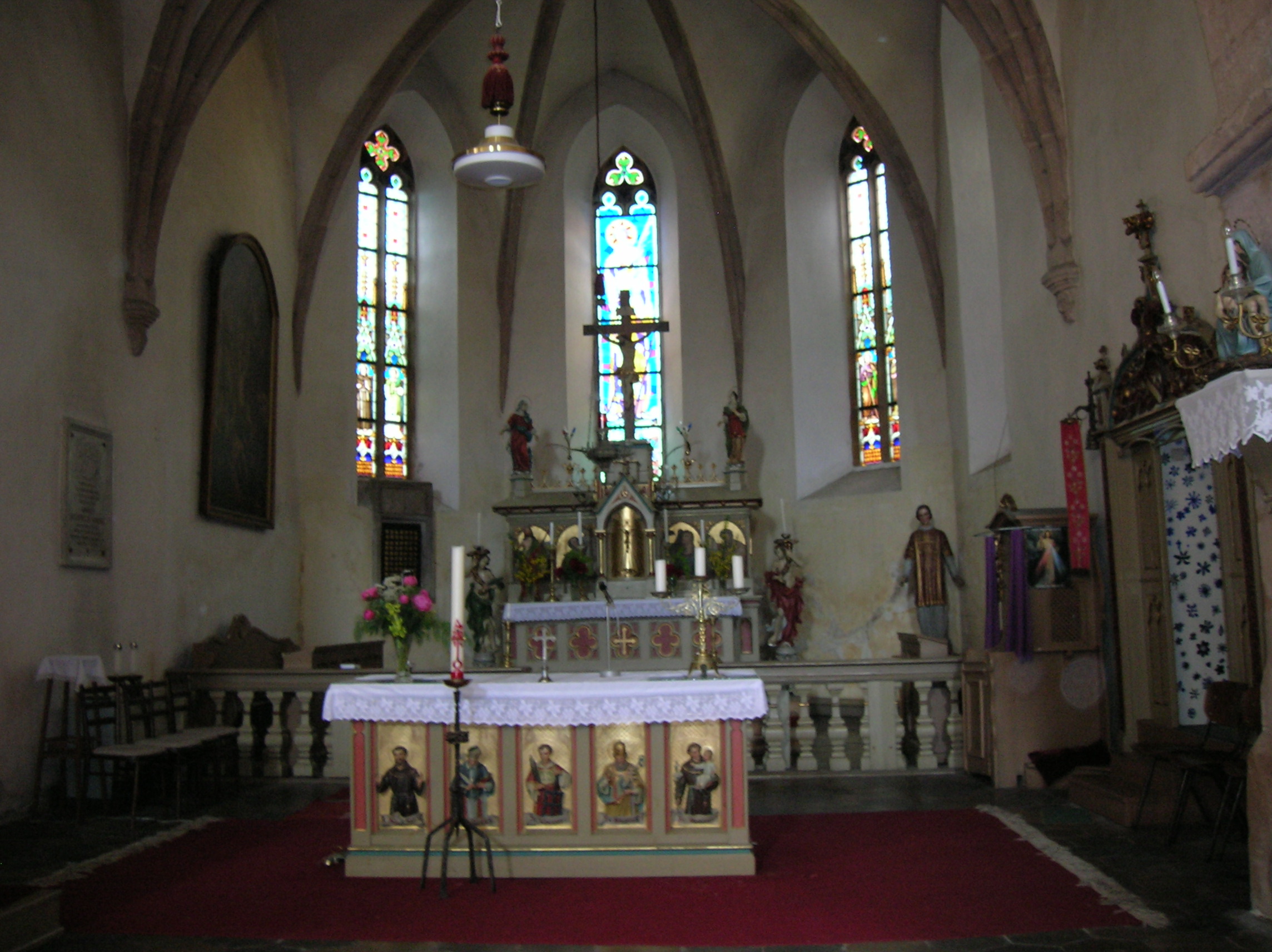
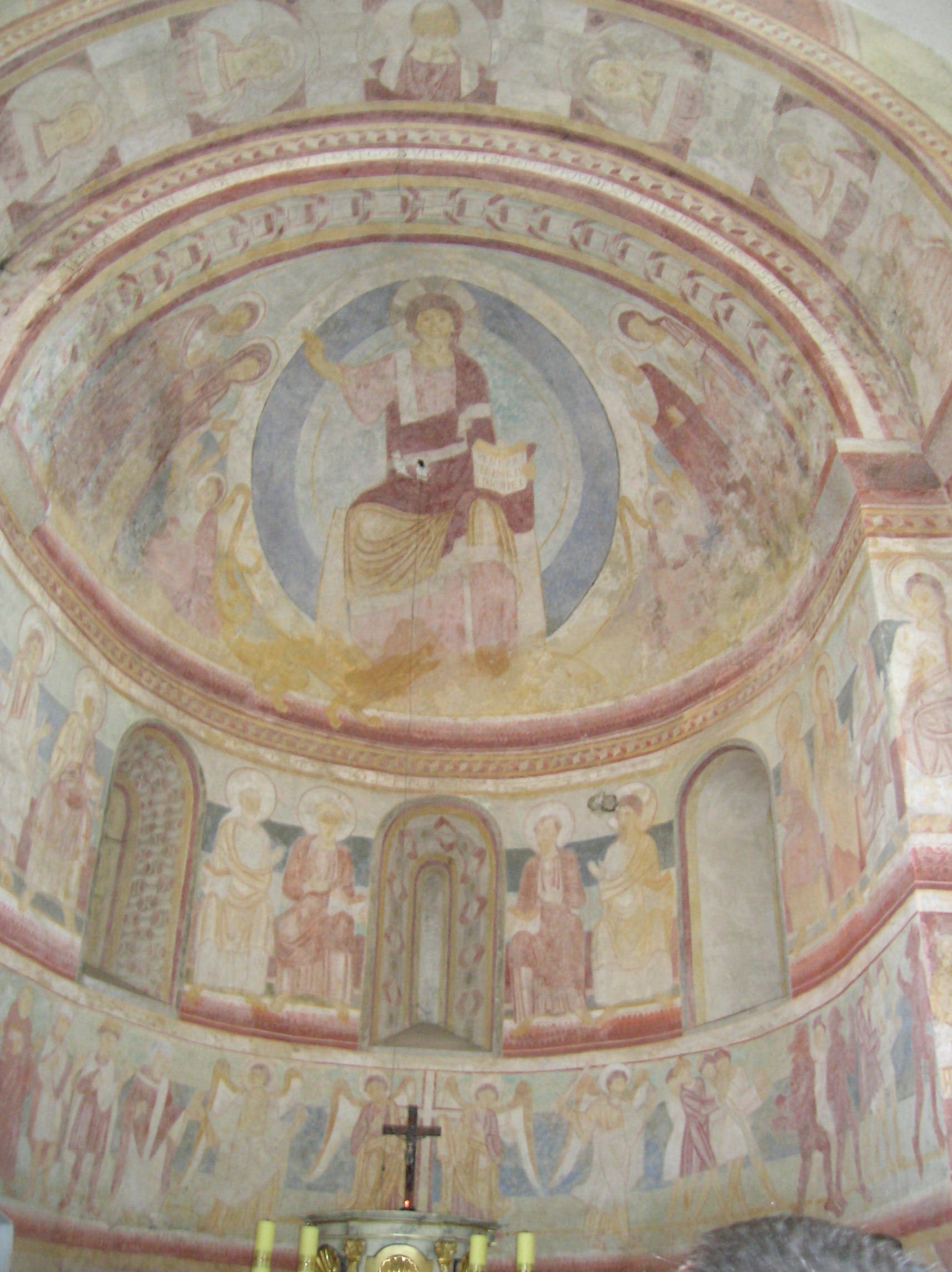
The Church of Saints Peter and Paul in Albrechtice nad Vltavou was a real gem, perhaps my favorite, if it was possible for me to choose one sight over the others. The church was originally Romanesque from the 12th century and still boasted Romanesque masonry. The tower was Romanesque in style, too. The Romanesque wall painting inside was incredible, dating from 1200 or earlier. On the triumphant arch there were frescoes of The Last Judgment with Hell and Paradise. You could see pictures of Christ rising from the dead. The wall painting was restored during the Nazi Occupation, from 1941 to 1942. I hadn’t been aware that any reconstruction occurred in churches during the Protectorate. There were small, exquisite Gothic paintings in the church, too.

The wall and ceiling painting in Albrechtice

The wall and ceiling painting in Albrechtice

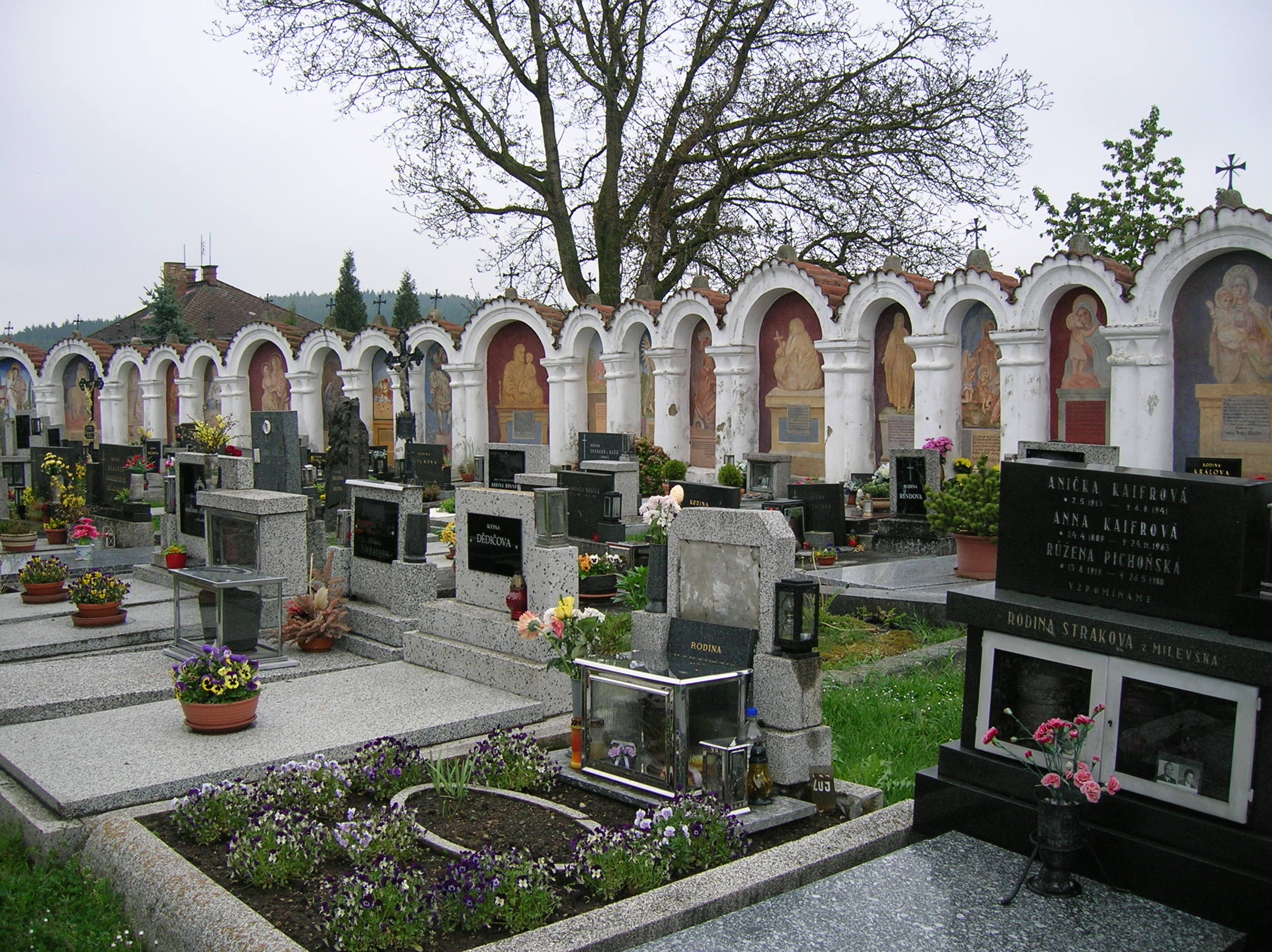
But that was not all the church had to offer. It was surrounded by 85 small chapels behind each gravestone. Each one was unique. They jumped out at the viewer with their bright colors and vitality. Parish priest Vít Cíza, who served there from 1819 to 1854, had had the innovative chapels built. The first chapels were erected in 1841 and took five years to complete. Renovation took place in the middle of the 19th century. I had never seen a cemetery that actually looked cheerful. By erecting these chapels, it was as the cemetery was celebrating the lives and the individuality of the people rather than merely mourning their loss. This was the first time I had visited a cemetery and had not been depressed.

The murals at Albrechtice

The chapels at the Church of Saints Peter and Paul, Albrechtice

The small chapels at Albrechtice

The small chapels at Albrechtice

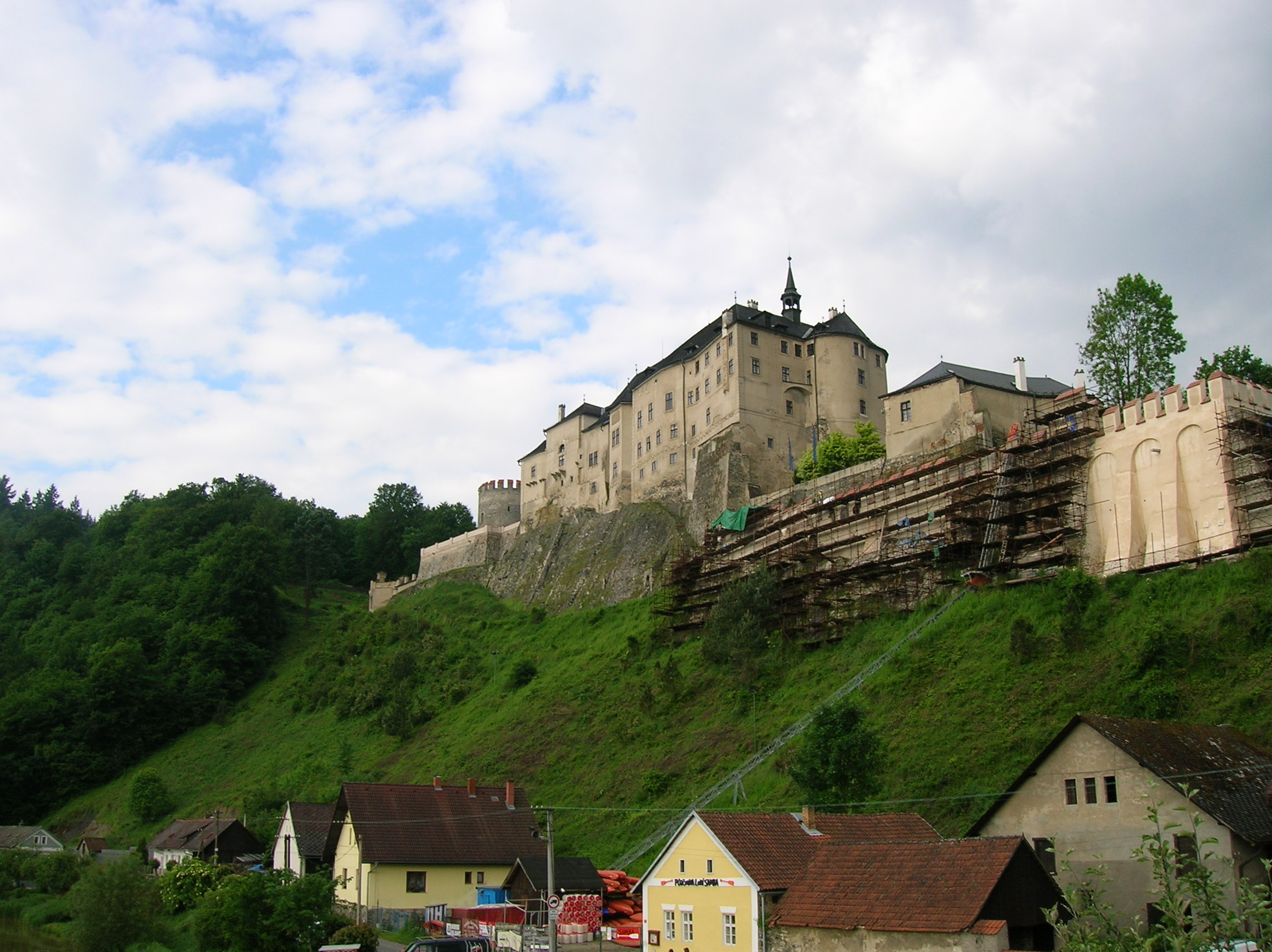
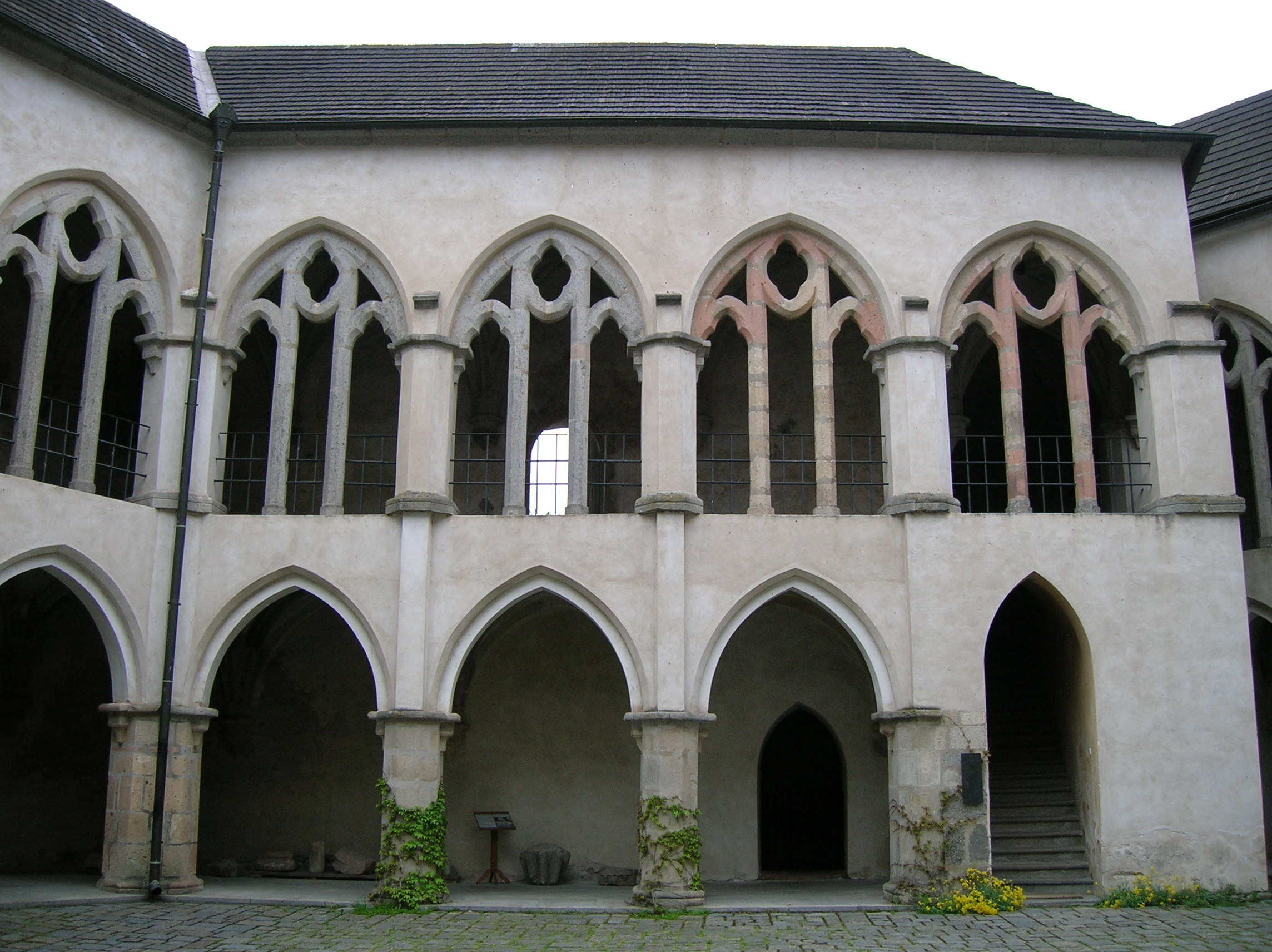
Next we visited Zvíkov Castle, which I had seen several times during my long-time stay in the Czech lands. I was glad to have the opportunity to visit it again as I had not been there for at least 10 years. Like the castle in Písek, Zvíkov had a royal palace, four wings and an inner arcade in the courtyard. The crown jewels were even stored there until Karlštejn Castle was finished under Emperor Charles IV’s rule during the middle of the 14th century.
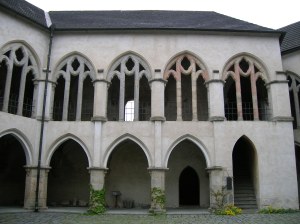
The arcades in the inner courtyard of Zvíkov Castle

The arcades in the inner courtyard of Zvíkov Castle

Set on an island, Zvíkov was first mentioned in writing during 1234. King Wenceslas (Václav) I started to build it in the first part of the 13th century. Construction on the Royal Palace began around 1250. Emperor Charles IV had it renovated during the 14th century. After that there were several owners, including the notable Rožmberk and Švamberk clans. Then came darker days. It was conquered during the Thirty Years’ War, and then Zvíkov was used as a warehouse. It was not until the Schwarzenbergs took control of it in 1719 that renovations occurred. In the 19th century the castle became dilapidated again, but reconstruction in 1880 put Zvíkov back on the Czech castle map.

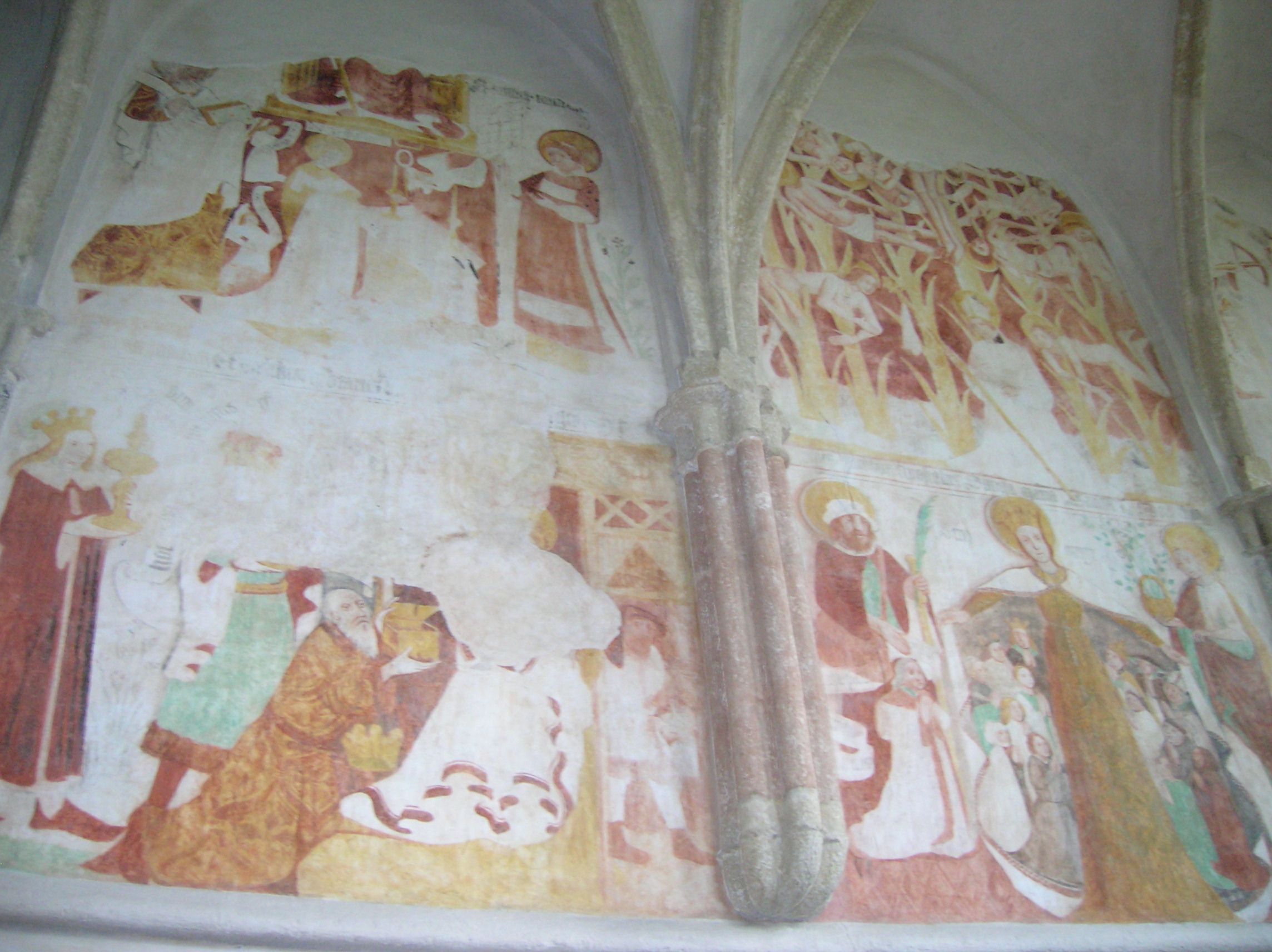
The Gothic paintings in St. Wenceslas Chapel

The Gothic paintings in St. Wenceslas Chapel

Wall painting at St. Wenceslas Chapel

Wall painting at St. Wenceslas Chapel

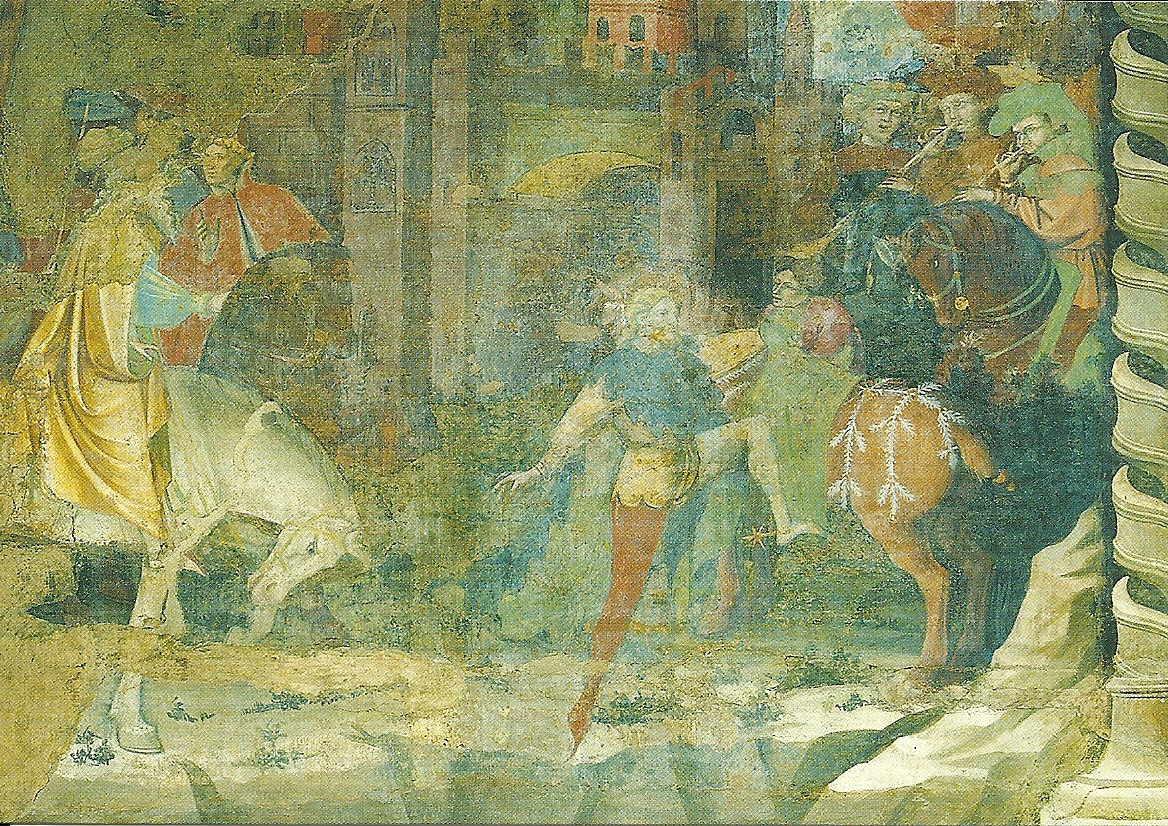
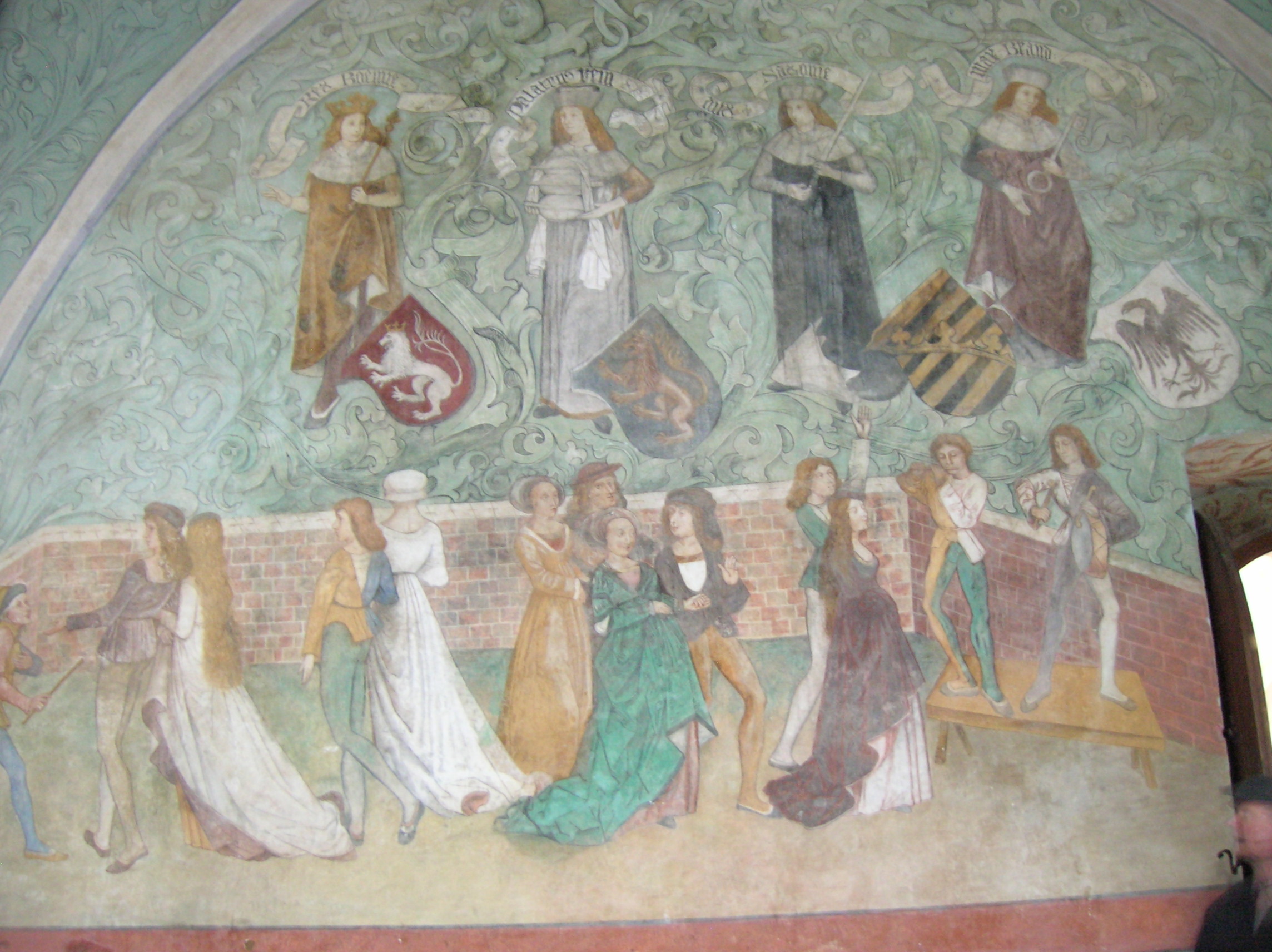
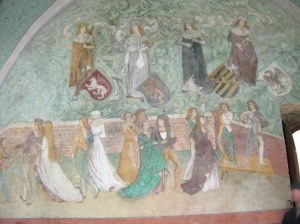
I was most mesmerized by the bright, vibrant Gothic wall paintings in Saint Wenceslas Chapel. They dated from 1480 to 1500. There were also exquisite 15th century frescoes in the Dance Hall. They showed a festive, dancing scene below pictures of the four electors of the emperor, including the Czech king. I admired the Lombard chairs, seating with high decorated backs, in the Knights’ Room. That furniture hailed from Renaissance days, and I thought it looked so distinguished. The Gothic altar was also very impressive.

A Gothic altar at Zvíkov Castle
A Gothic altar at Zvíkov Castle

The 15th century wall painting in the Dance Hall

The 15th century wall painting in the Dance Hall

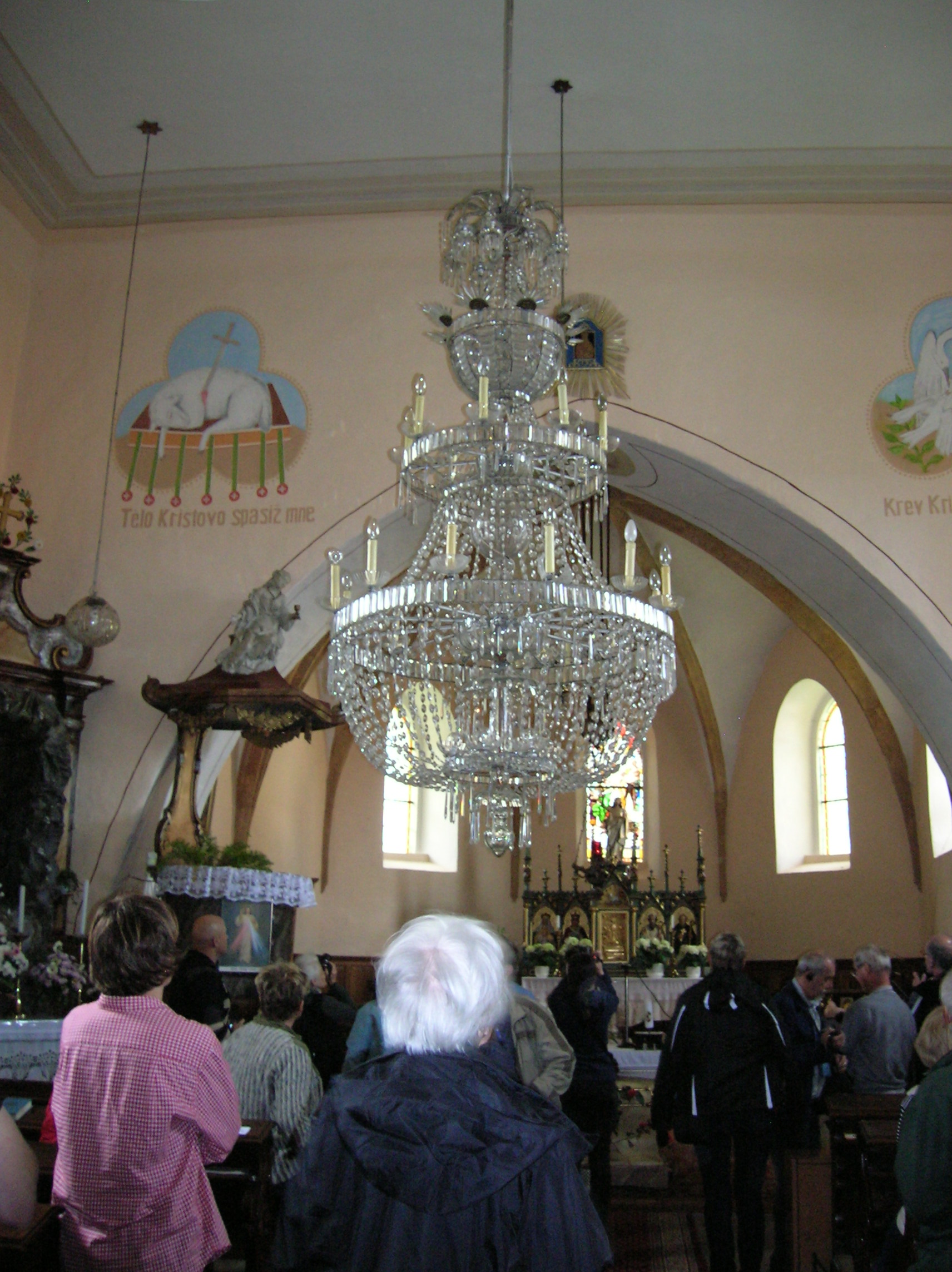
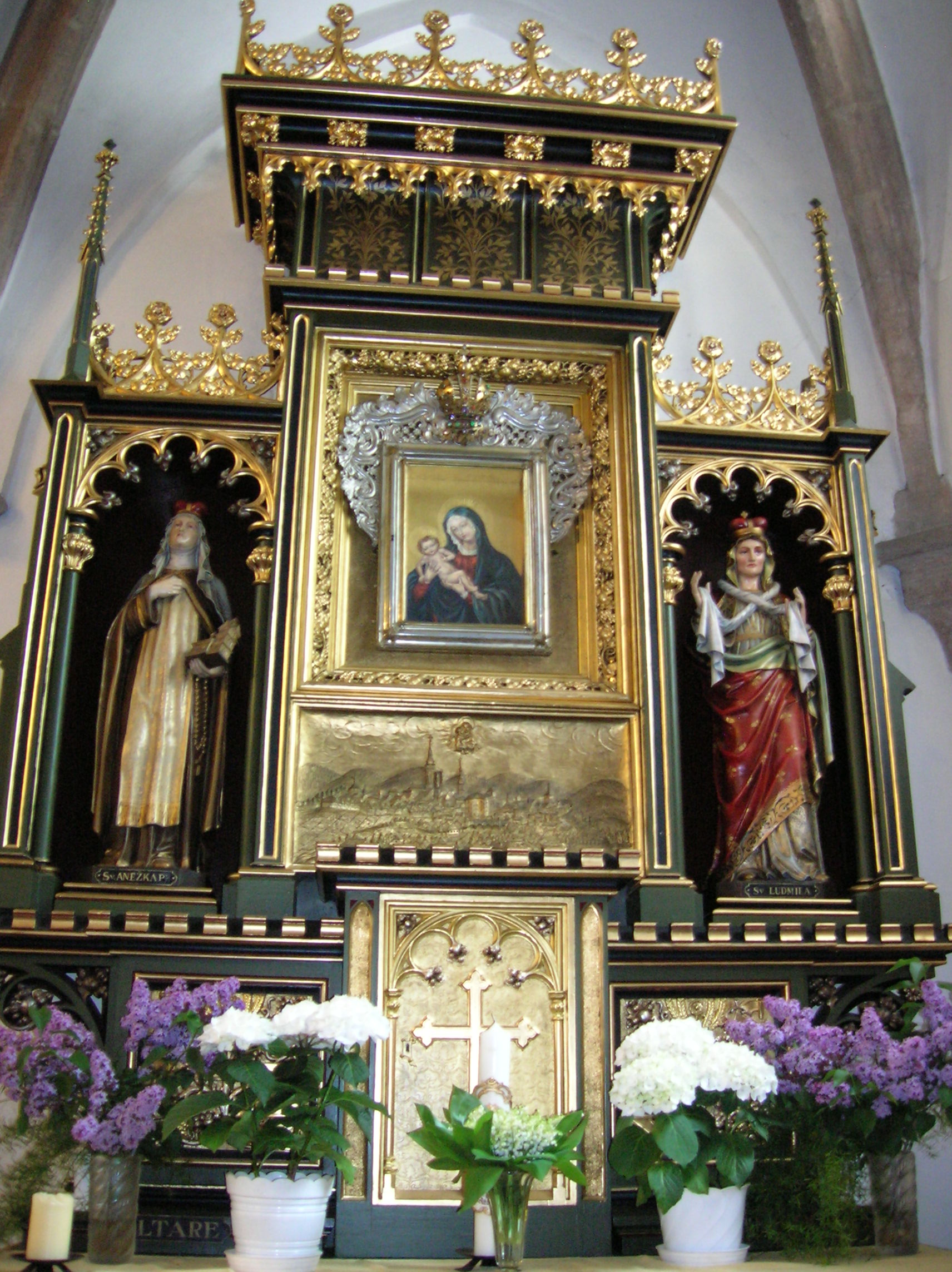
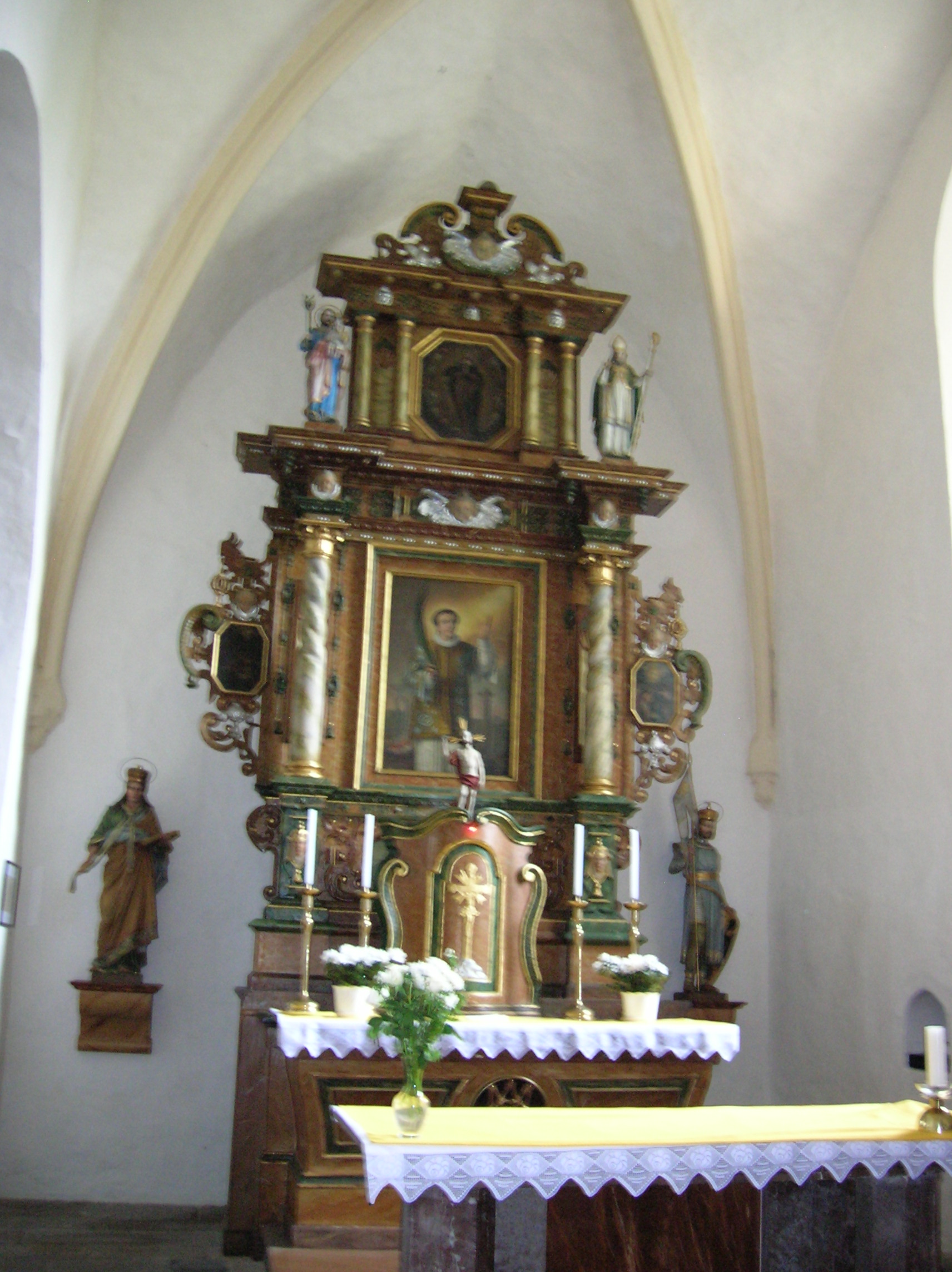
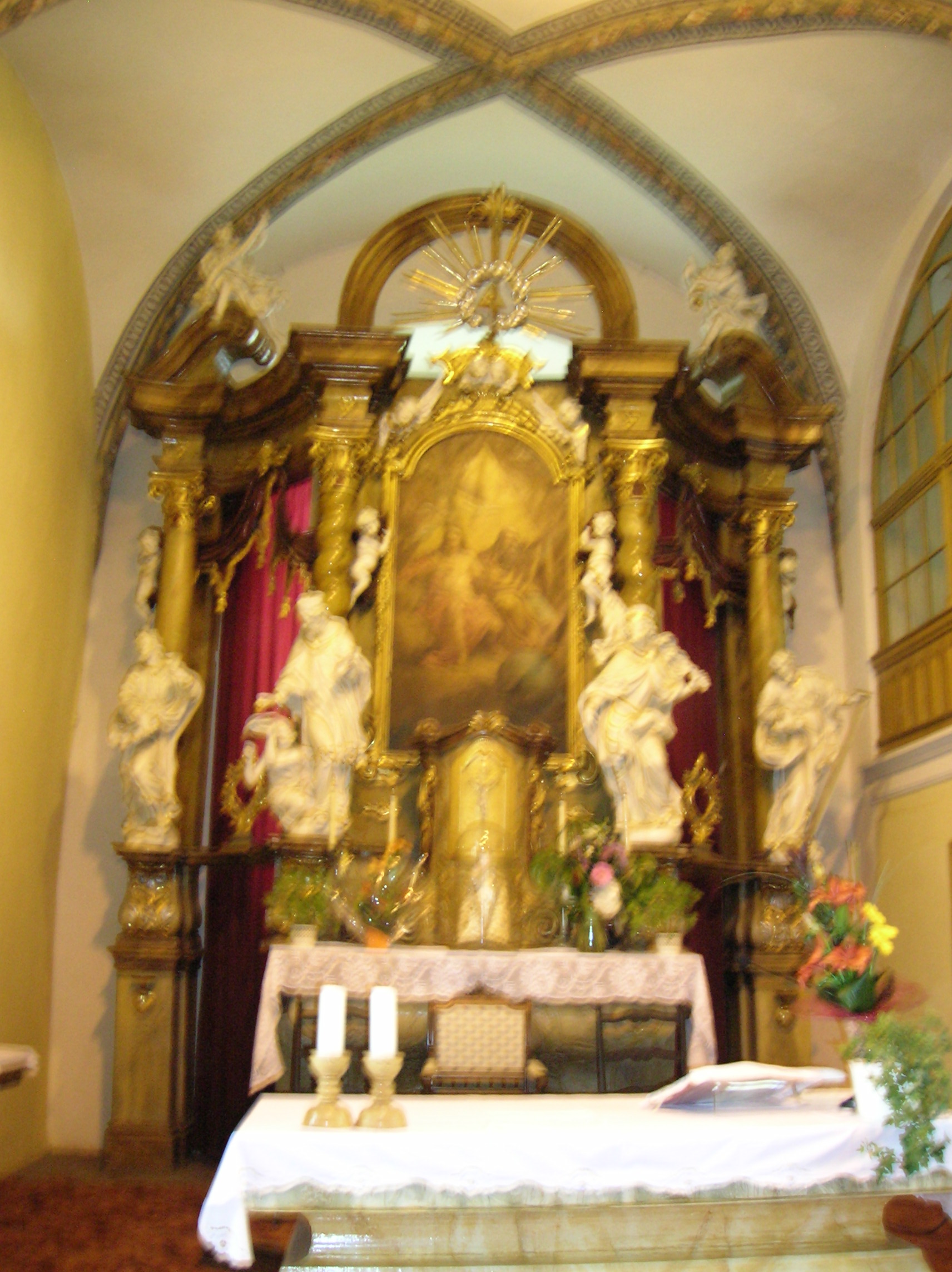
Our last stop was the Holy Trinity Church in Čimelice, which had Gothic masonry but was furnished in the Baroque style of the 18th century. However, the stunning Gothic Madonna on a side altar dated from the second half of the 15th century. The ceiling was from the Renaissance era, resembling the ceiling of the cemetery church in Písek. The tower had been erected in Empire style during 1821. The altars and sculpture hailed from the second half of the 18th century. The Baroque Chapel of Saint Barbara was stunning, going all the way back to the first half of the 18th century. Then we were in for a real treat. The man in charge of the church played the 15th century organ for us. Its rich, colorful sound filled the holy space.

The main altar in Čimelice
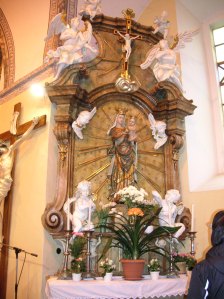
The main altar in Čimelice

The Gothic Madonna in Čimelice

The Gothic Madonna at the Holy Trinity Church in Čimelice

The ceiling in Čimelice

The ceiling at the Holy Trinity Church in Čimelice

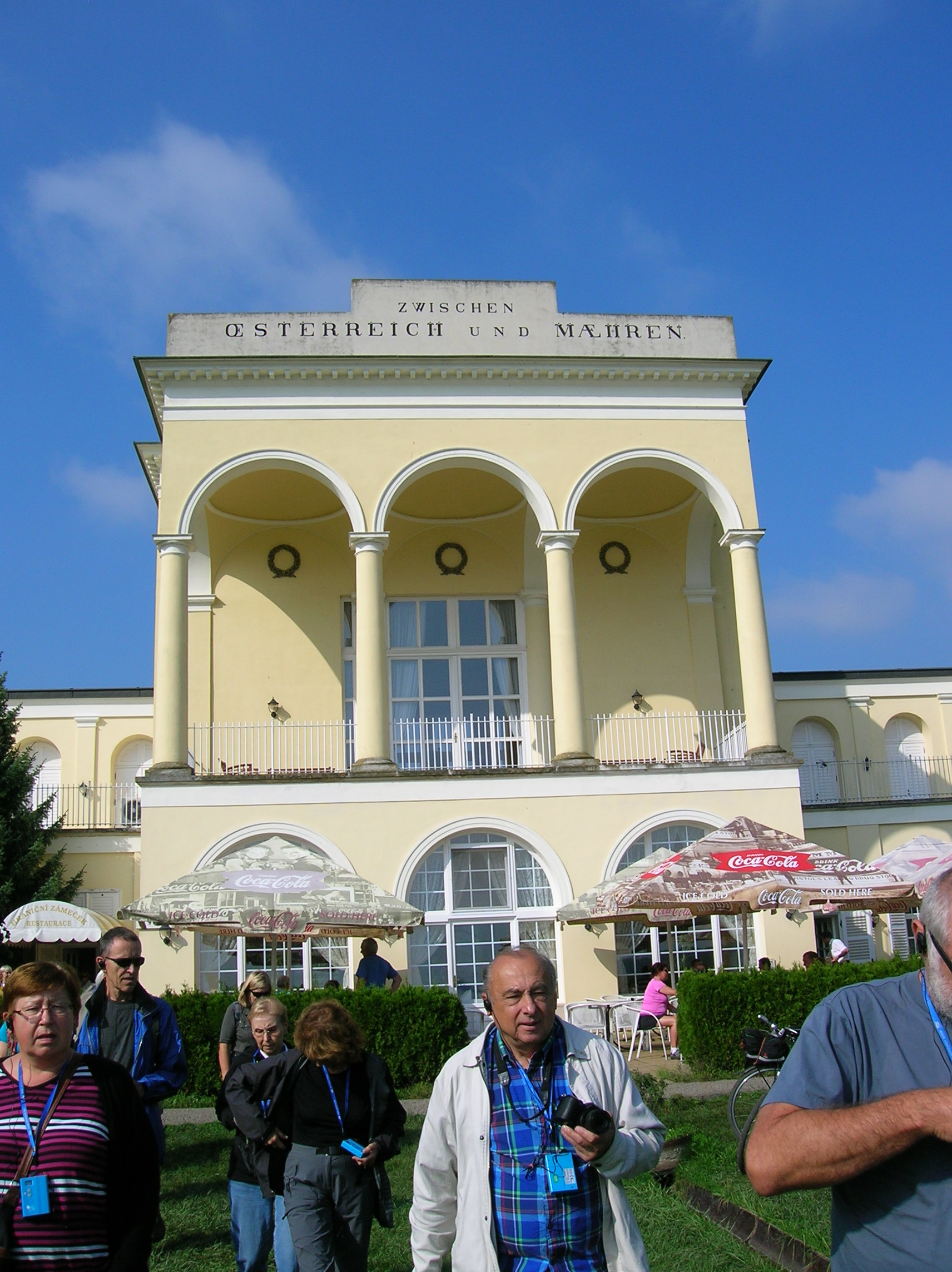
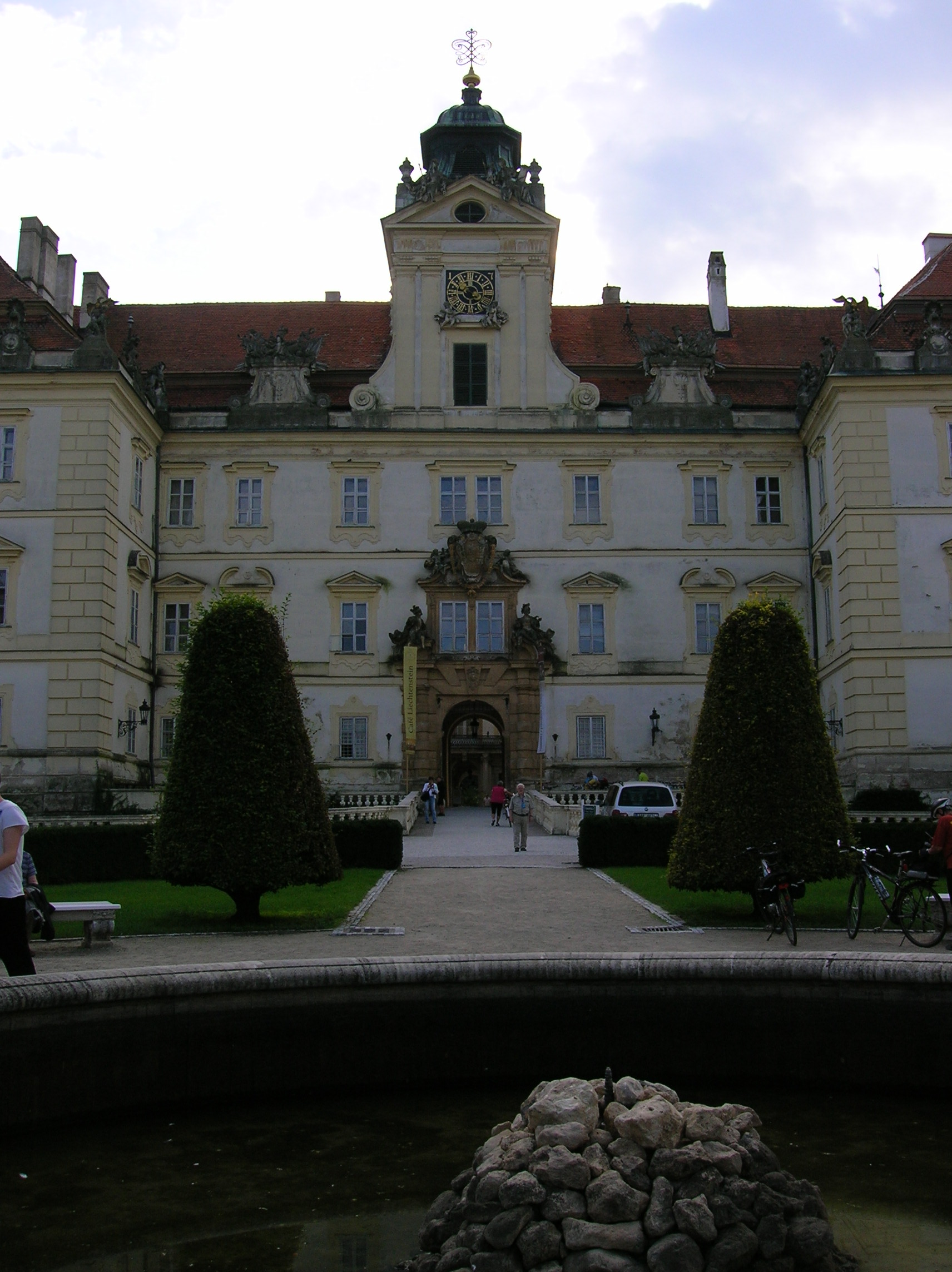
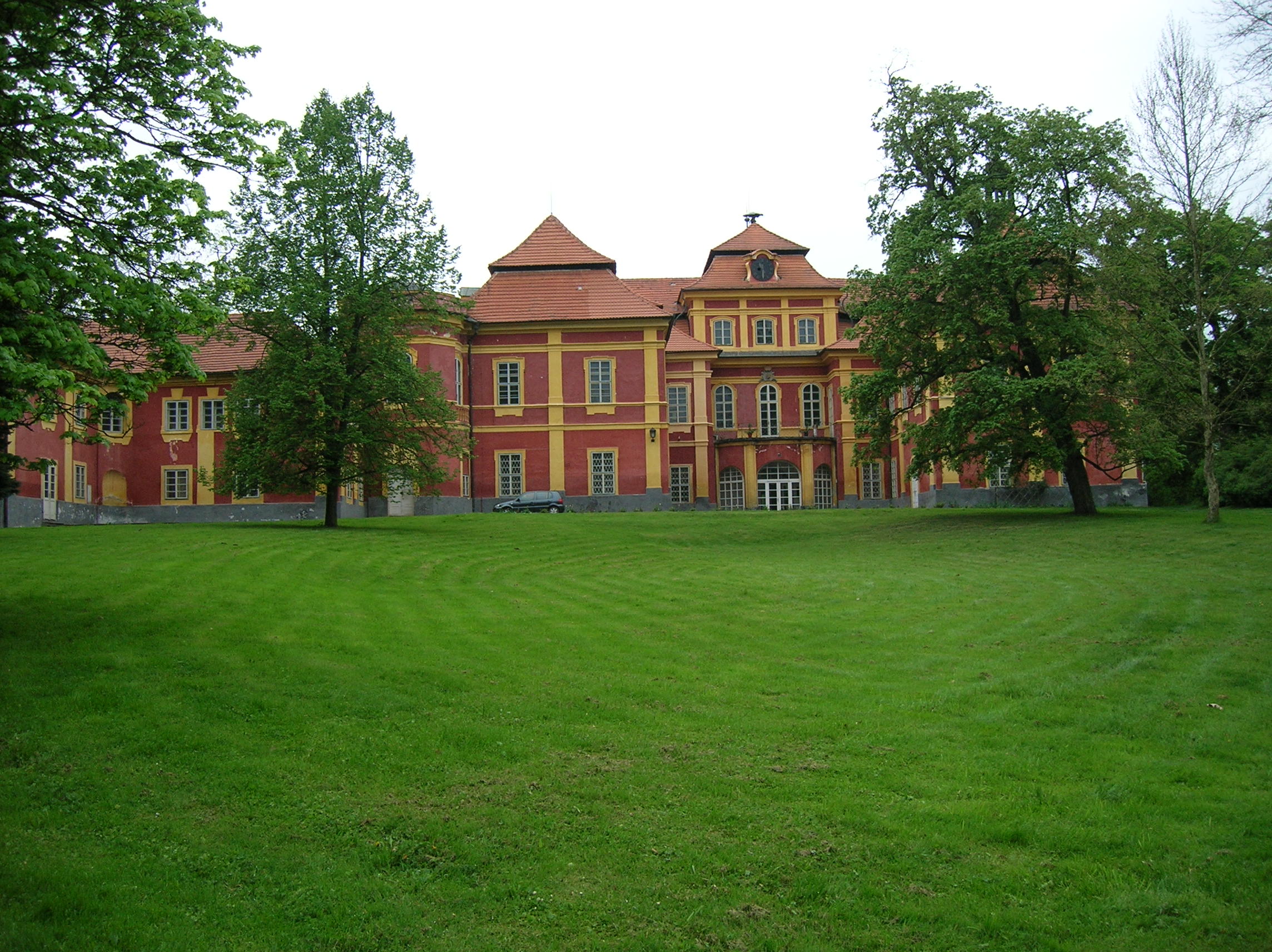
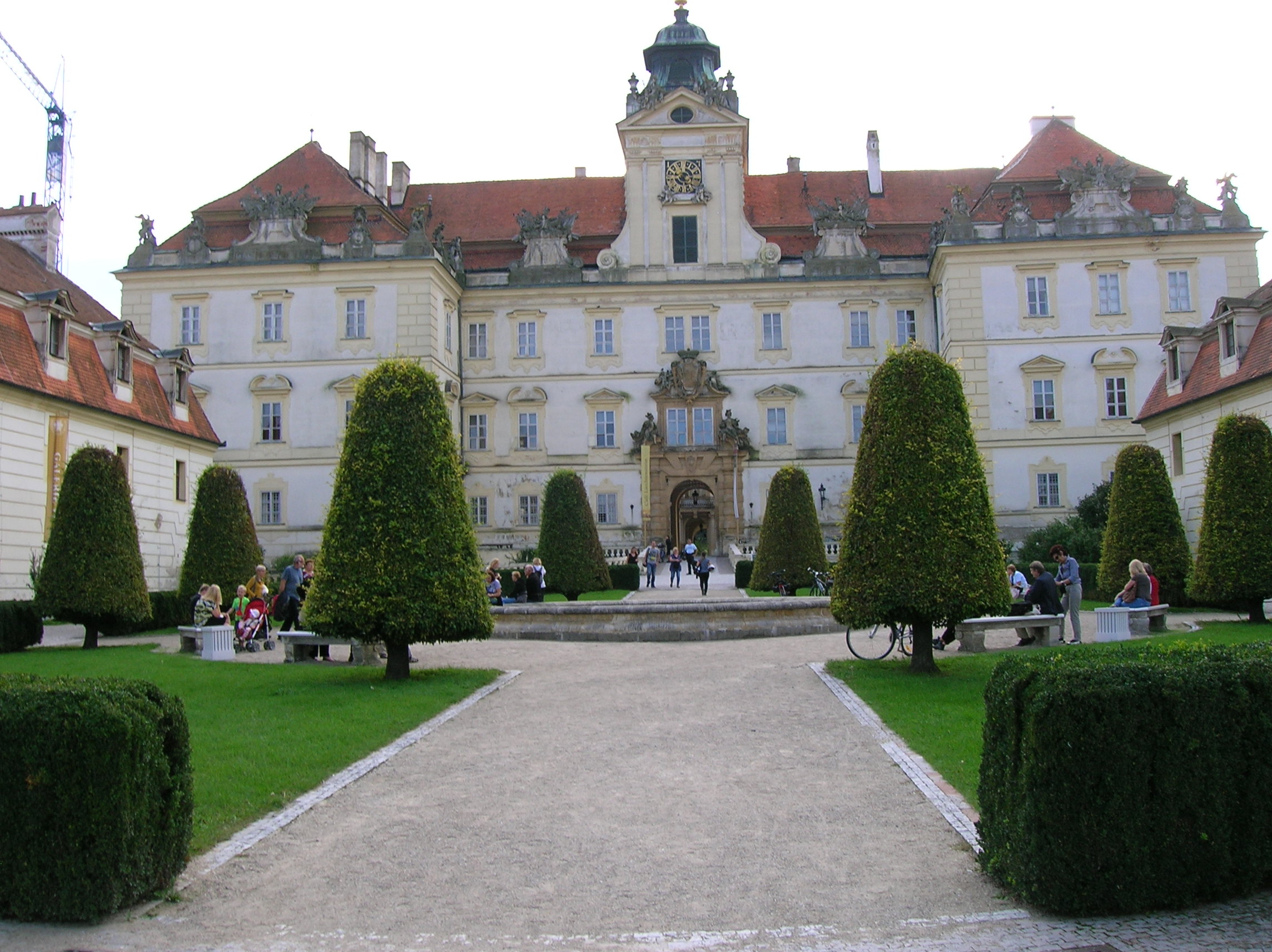
We also saw a chateau and pond belonging to the Schwarzenbergs, but the chateau had not been restored or was not open the public. The red and yellow colors of the façade reminded me of the magnificent exterior of Dobříš Chateau near Prague.
I had found this tour fascinating. I had learned so much about the Czech lands as well as about Romanesque and Gothic architecture and art, thanks to our remarkable guide, who was so knowledgeable and well-organized. I had never realized that villages had so much history. Each village had its own character, its own identity, its own story to tell. It amazed me that the history of these villages was rooted in Romanesque or Gothic eras. I have lived in the Czech lands for more than 20 years, and it still is difficult for me to fathom that Gothic and Romanesque art and architecture could survive so many centuries, so much turbulent history, so many wars.
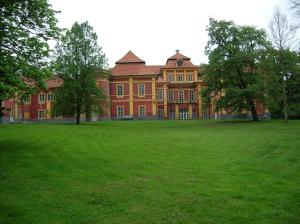
The chateau in Čimelice

The chateau in Čimelice

During the tour I was most impressed with the Gothic wall paintings, especially in Zvíkov’s Saint Wenceslas Chapel, in Myšenec and in Albrechtice nad Vltavou. I also was enamored by the stunning arcades and vaulting at Zvíkov Castle. I was enthralled with the stunning arcade chapels on the cemetery walls at Albrechtice. I could not believe that a cemetery could be so full of life. I also was glad that I had seen parts of Písek other than the bus station. Písek really was a charming town.

A Madonna statue in Myšenec

A Madonna statue in Myšenec

During my many years in the country, I had seen the major castles and sights in south Bohemia – Hluboká nad Vltavou Chateau, Český Krumlov Chateau, Třeboň Chateau, Vyšší Brod and Zlatá koruna monasteries and others. But I had never explored the villages. I had never even thought they were worth exploring, to tell the truth. Now I knew that every nook and cranny of the country had its own rich history, its own secrets to reveal.
Tracy A. Burns is a writer, proofreader and editor in Prague.
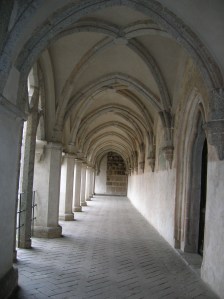
Arcades at Zvíkov Castle
Arcades at Zvíkov Castle
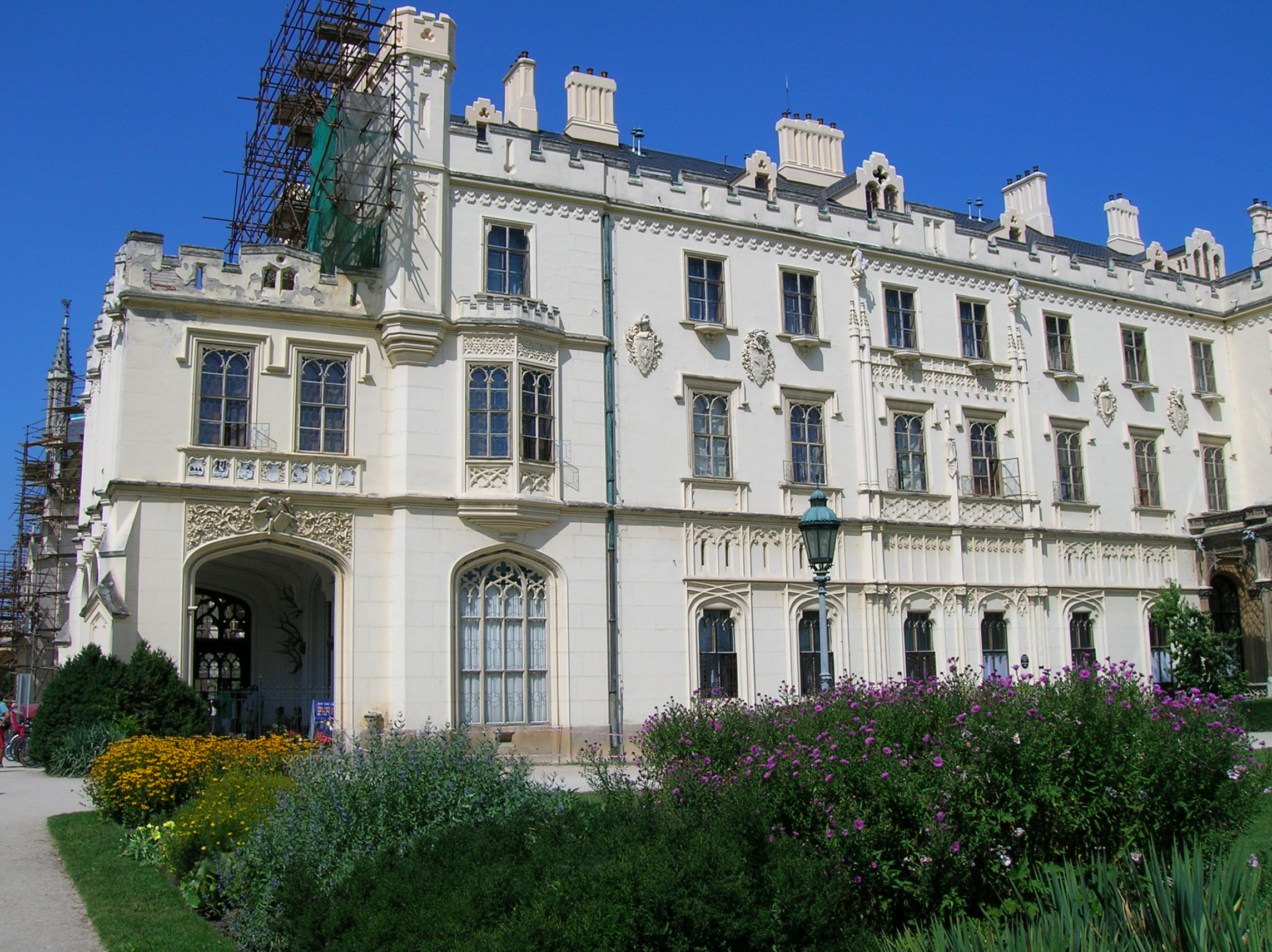
 

Palace Linderhof and Neuschwanstein Castle Diary

Neuschwanstein Castle and its fairy tale appearance
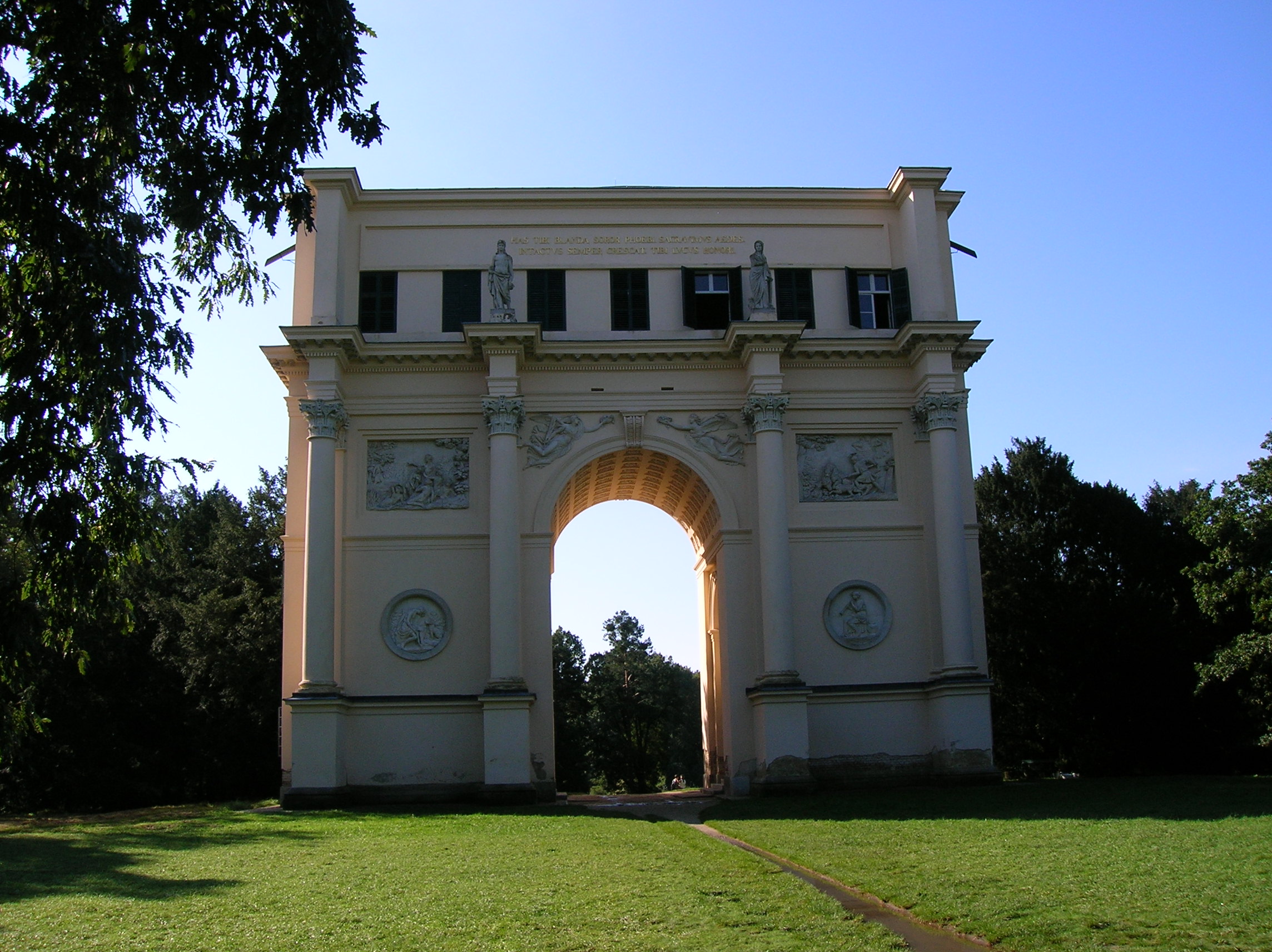
Neuschwanstein Castle and its fairy tale appearance

During my stay in Munich in April of 2014, I could not pass up the opportunity to fulfill one of my lifelong dreams – to visit Neuschwanstein Castle, a fortification I had been first drawn to as a Disney-crazed child. Back then, while watching Sleeping Beauty and other fairy tales, I never imagined I would someday see it with my own eyes. After I moved to Czechoslovakia in 1991, I quickly became a castle addict, and Neuschwanstein always ranked high on my list of the places I wanted to visit.
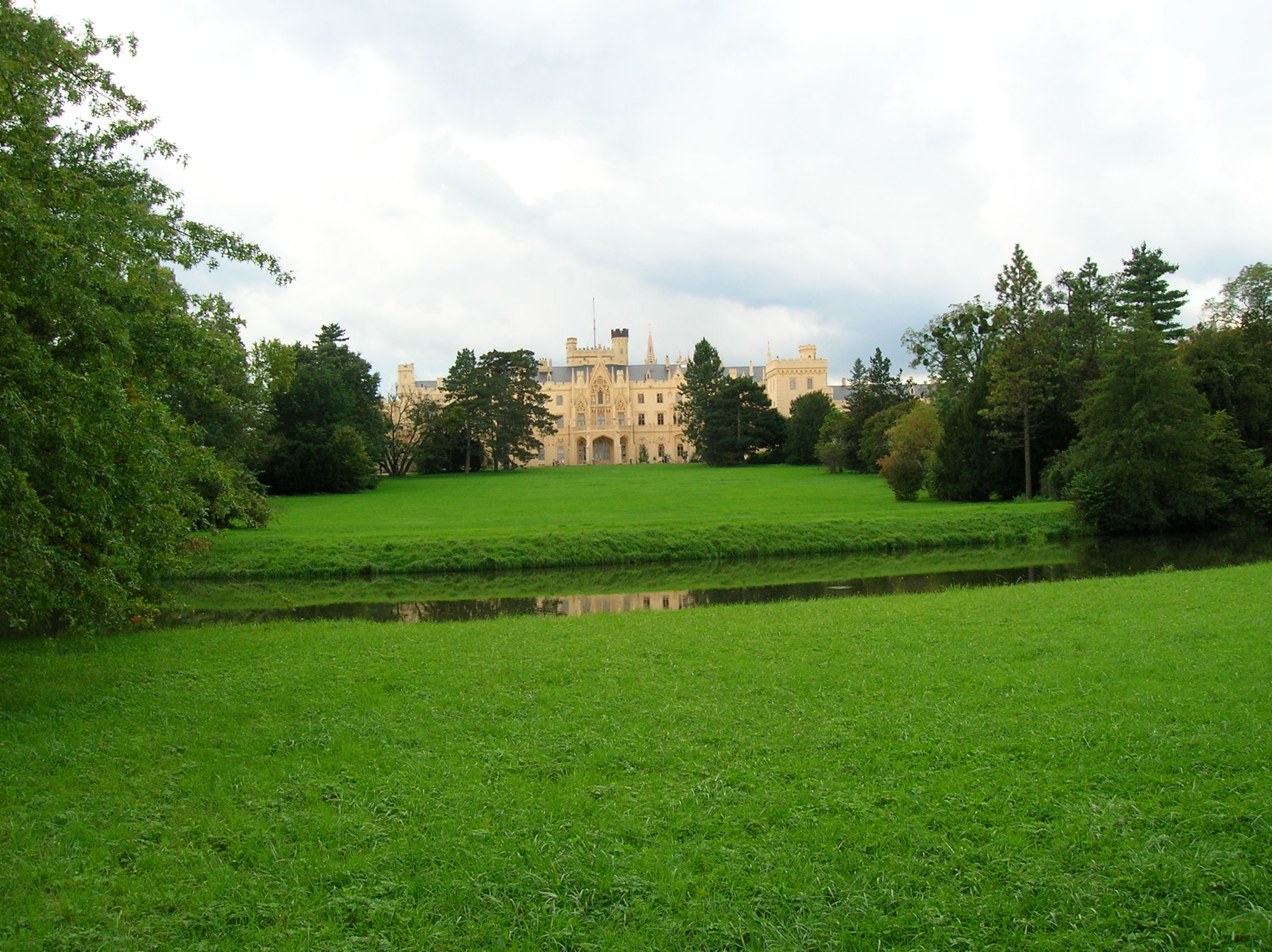
I also had desired to see Linderhof Palace for many years. When I was nine years old, on vacation with my parents near Munich, my Mom and Dad went on a trip to Linderhof Palace while I opted to stay with our family friends and play with my ever-growing collection of smurfs. As an adult I would long to see the opulent Bavarian palace.
I took Gray Line Munich Tours on a one-day excursion to both locations. While waiting in line for the bus to arrive, I met two Americans, the retired couple of Gary and Brenda. I was always thankful to meet kind people during my travels.

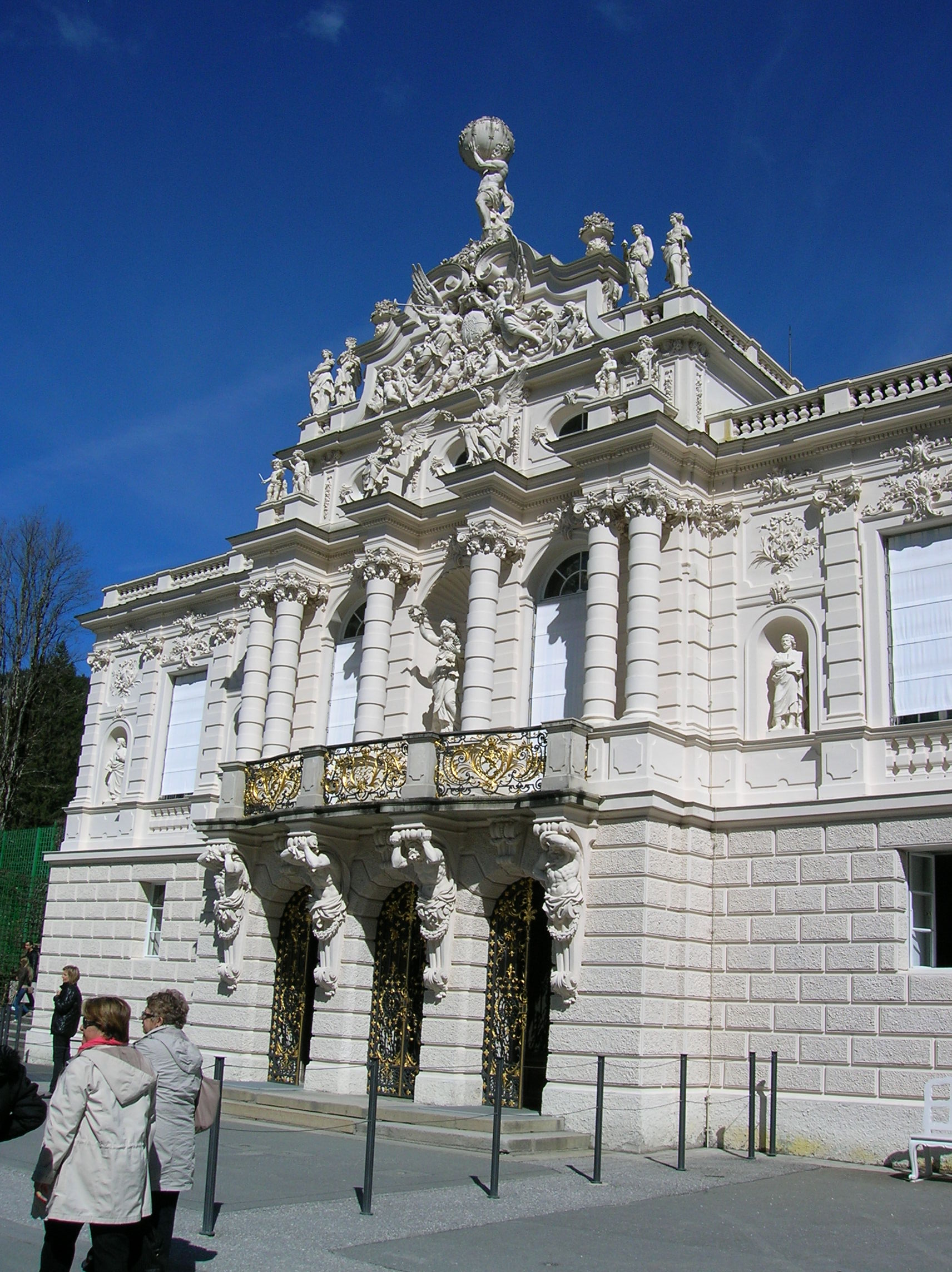
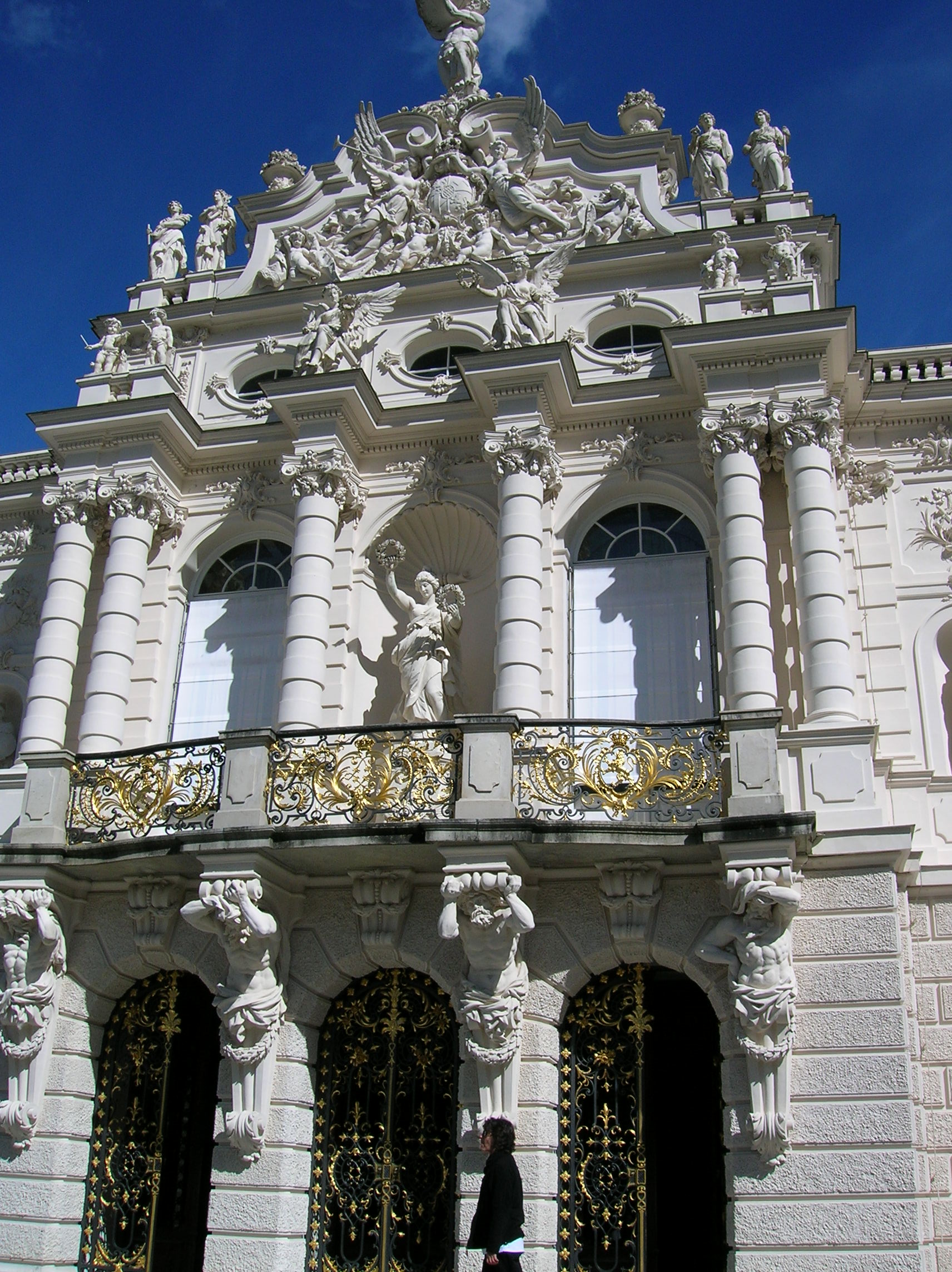
The facade of Linderhof Palace

The facade of Linderhof Palace

However, they were not the only nice people I met. A 17-year old American high school senior named Caleb sat next to me. When I told him I lived in Prague, he apologized that he had never heard of that place. It was clear to me that Caleb was intelligent. I wondered how much emphasis the American school system – Utah, in this instance – put on teaching students about events in Central and Eastern Europe – not much, it seemed. That was a big mistake, in my opinion.
On a whirlwind one-week trip to Europe with his parents and four siblings, Caleb was set on becoming a pediatrician. It was rare that I met teenagers who were motivated and focused. I recalled teaching some classes of teenagers English in Prague. Some read magazines in the back of the classroom or slept with their heads on the table during the entire class. Others just sat there, not doing any work, just hoping knowledge would come to them without having to make any effort. It made me so happy to meet a teenager like Caleb. Of course, I had taught some motivated teenagers, but not many.

The facade of Linderhof Palace

The facade of Linderhof Palace

Our guide, Lucy, provided us with background information about Bavarian King Ludwig II, who had the palace and the castle built. King Ludwig II created his own fantasy world because he was dismayed that he could not be an absolute monarch. He really did not have great power in the government, which was administered in Berlin. Ludwig II could not accept his royal post in a constitutional monarchy. He idolized French King Louis XIV, who led France for 72 years as the most powerful decision-maker in that realm. The Bavarian king also adored Richard Wagner’s operas, and art dealing with themes from the German composer’s works dominated Neuschwanstein. Soon after Ludwig became king, the government experienced a financial crisis, and Ludwig II withdrew from society, hiding in his own special, imaginative and theatrical realm.
On trial on June 8, 1886, the king was declared mentally ill and legally incompetent to rule. The statements for his defense were not taken into consideration. His death was mysterious. It seemed to jump out of a Sherlock Holmes whodunit. Five days after hearing the verdict, Ludwig took a walk with his doctor. He did not have any of his guards accompany them. What happened next? Nobody knows. Later both bodies were found in the water. The mystery may never be solved as the Wittelsbach clan will not allow Ludwig II’s corpse to be exhumed.
The only palace of Ludwig II that was completed during his reign, Linderhof Palace was designed according to small French summer palaces. Ludwig spent eight years there. The moment I saw Linderhof, I was gaping at its Baroque façade. Yet even the beautiful exterior did not prepare me for what I saw inside. To say the Second Rococo style interior was ornate was a drastic understatement. I was dizzy, overwhelmed by the lavishness of the palace.
The park at Linderhof Palace

The park at Linderhof Palace

We walked up a majestic marble staircase flanked by two lions sporting the Bavarian coat-of-arms. First came the Music Room, adorned with a richly decorated gold-with-white harmonium, officially termed an Aeolodicon pianino. It resembled an upright piano. I tried to imagine watching Ludwig play Wagner’s compositions on it. He must have been so passionately moved by the music as if in a trance. Actually, Ludwig had presented the harmonium to Richard Wagner as a gift, but the composer had rejected it.
The Music Room was sometimes also referred to as the Western Tapestry Room, though there were no tapestries in the space. The Rococo wall hangings only looked like tapestries. I noticed a life-size figure of a peacock; Ludwig had adored peacocks. The stucco ceiling adorned with gilded gold leaf also captured my attention.
In the Silver Waiting Room there was an impressive picture of Versailles. I knew that Ludwig had been captivated by that French chateau. I thought back to my trip to Versailles, that warm February afternoon about six years ago. I had been on cloud nine. The Small Throne Room was opulent, too with a Bavarian coat-of-arms embroidered above the throne. I liked the second waiting room because it was decorated in purple silk that gave the space a certain vitality.

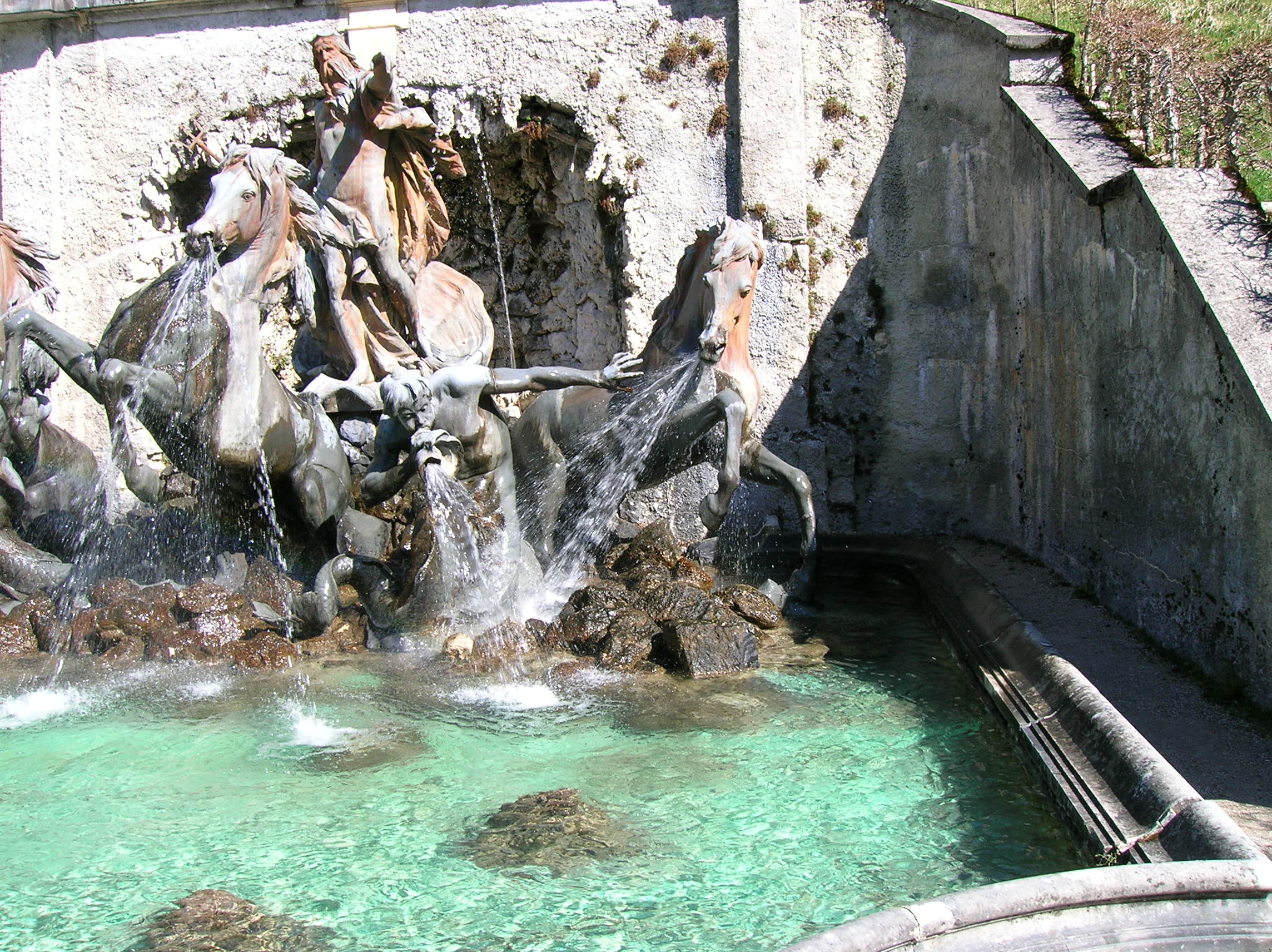
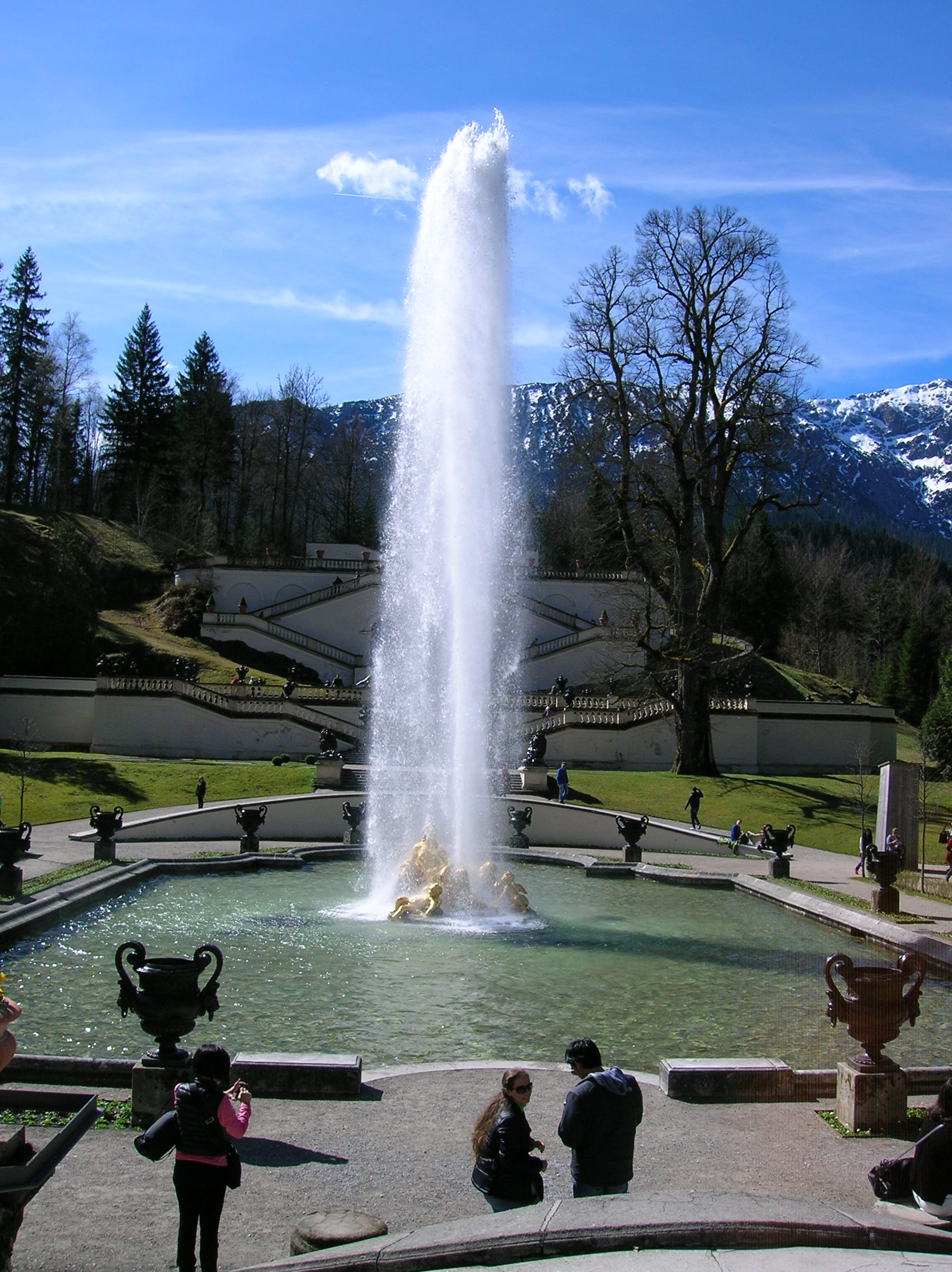
A spectacular fountain at Linderhof Palace

A spectacular fountain at Linderhof Palace

Ludwig’s favorite color, blue, dominated the King’s Bedroom. The bed and canopy were covered in blue velvet. The combination of dark blue with gold embroidery strongly appealed to me. The bed was huge – eight feet long. Ludwig had been 6 foot 4 inches tall. The half-ton chandelier could hold 108 candles. The frames of the Meissen mirrors were decorated with figures of birds, angels and flowers, for instance. Apollo greeted visitors from the ceiling painting.
Since Ludwig was a recluse, the Dining Room was set for only one person. It made me think about how many times I ate lunch alone and how I actually enjoyed being by myself in a restaurant, not hurrying through the meal, sipping tea while reading a book or studying a foreign language. Everybody in the Czech Republic thinks it is so strange to see a woman seated alone. I wondered if Ludwig enjoyed eating alone, too.
However, I read that often there were four or five places at his table because Ludwig often had imaginary guests, among them King Louis XIV of France. (No, I have never had imaginary guests while at lunch) The dining room table could be lowered to the ground floor, similar to a dumb waiter. Large Meissen vases also adorned the space. I recalled the collection of Meissen that had impressed me so much in Dresden’s Museum of Porcelain the previous year. I noticed a pineapple at the top of the Meissen chandelier. It was a delicate touch.
The East Tapestry Room did not consist of any tapestries, either. Just like the West Tapestry Room, it flaunted wall paintings rendered on coarse canvas that resembled tapestries. The wall paintings took on themes from Ovid’s book The Metamorphoses. Apollo and Aurora made appearances in the space, too.
The Hall of Mirrors was breathtaking. This was where Ludwig II used to settle down with a book about France. Or he would peruse poems written by Friedrich Schiller or Alexander Pope. The Bavarian king even let his pet chamois loose in the room for a while but put a stop to it when the exotic pet broke a mirror.

The remarkable fountain at Linderhof Palace

The remarkable fountain at Linderhof Palace

The ornate golden mirrors gave the impression that I was looking down an endless corridor, as if I were looking into a seemingly never-ending hallway I had to walk through to get to the next stage in my life. It was beautiful and terrifying at the same time. I tried to imagine the room at night during Ludwig’s reign. It must have looked so dramatic and eerie with so many candles burning. As if that wasn’t enough to gawk at, there were also 94 vases decorating the walls. (There used to be 97, but three were stolen.) Nymphenberg style porcelain rounded out the room. The most valuable object in the palace was the white chandelier carved with Indian ivory – a truly exquisite piece.
Soon the tour ended, but we still had time to take a look at the gardens, though not to examine them closely. The 19th century garden was a mishmash of Renaissance and Baroque styles, featuring three terraces, cascades, and wooden pavilions, for instance. There was a grotto, a Moorish pavilion and a chapel on the premises, among other places. We saw the gold-plated bronze fountain featuring the goddess Flora, who was accompanied by cherubs. A fountain spewed water 30 meters into the air. I would have loved to have seen the grotto, but there was not time.

A stunning fountain at Linderhof Palace

A stunning fountain at Linderhof Palace

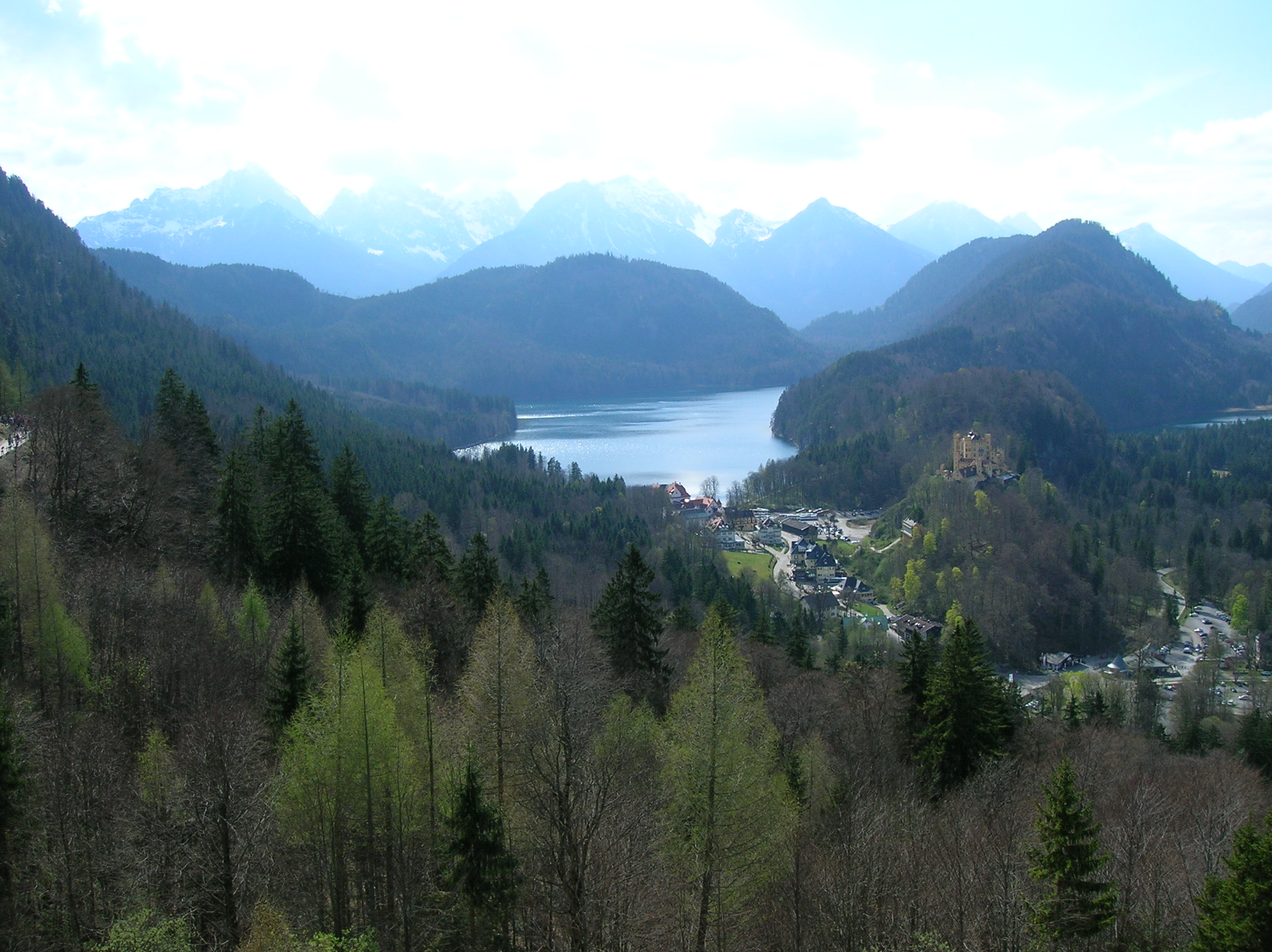
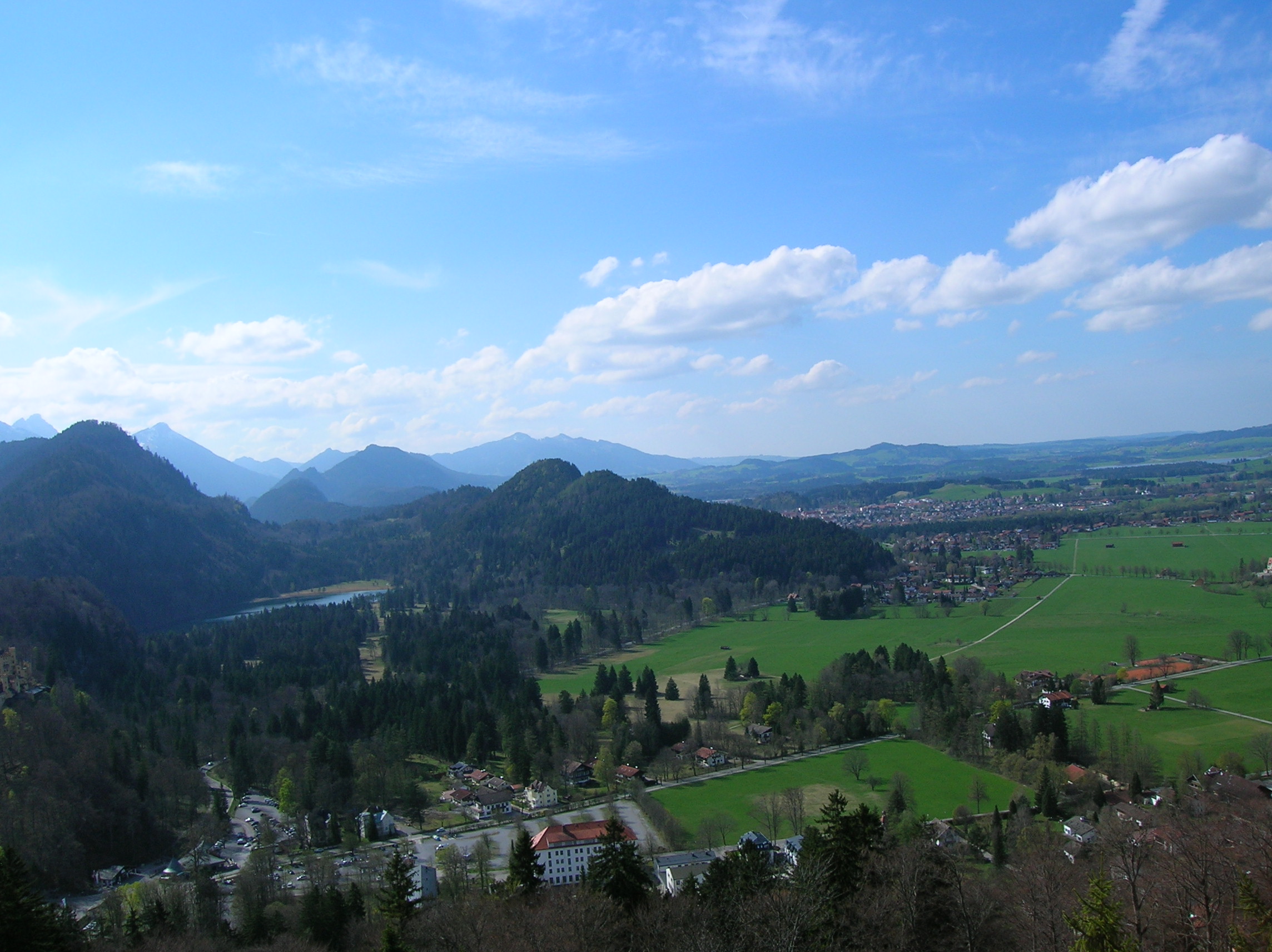
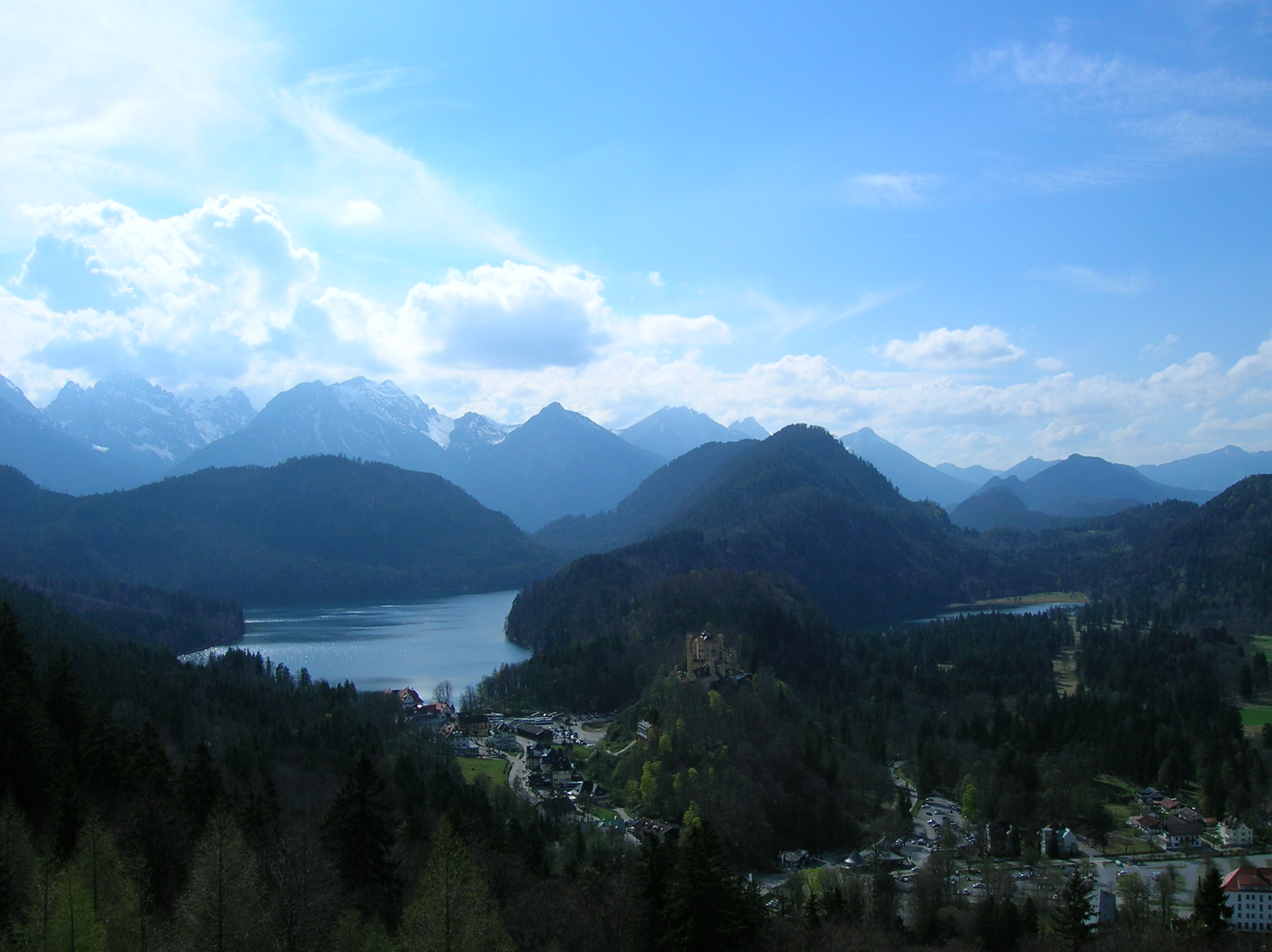
Next we were off to the castle I had dreamed about for decades. We had to walk up a steep hill to get there, and it reminded me of the approach to Karlštejn Castle near Prague. On the way I admired captivating views of the countryside. Hohenschwangau Castle, where Ludwig’s parents had lived, was visible, too. I wondered if Ludwig enjoyed living so near to his mother or if sometimes it was too close for comfort.
Neuschwanstein Castle, was built from 1869 to 1892 in Romanesque Revival style and is still unfinished. The interiors were completed by 1886. Ludwig paid for the castle’s construction with his private funds, and he borrowed some money for his fantasy home. The 19th century was a popular time for castle building or rebuilding, and the historicism style which copied older styles was trendy. Ludwig II moved into this fairy tale abode in 1884, but he only actually lived there 172 days.

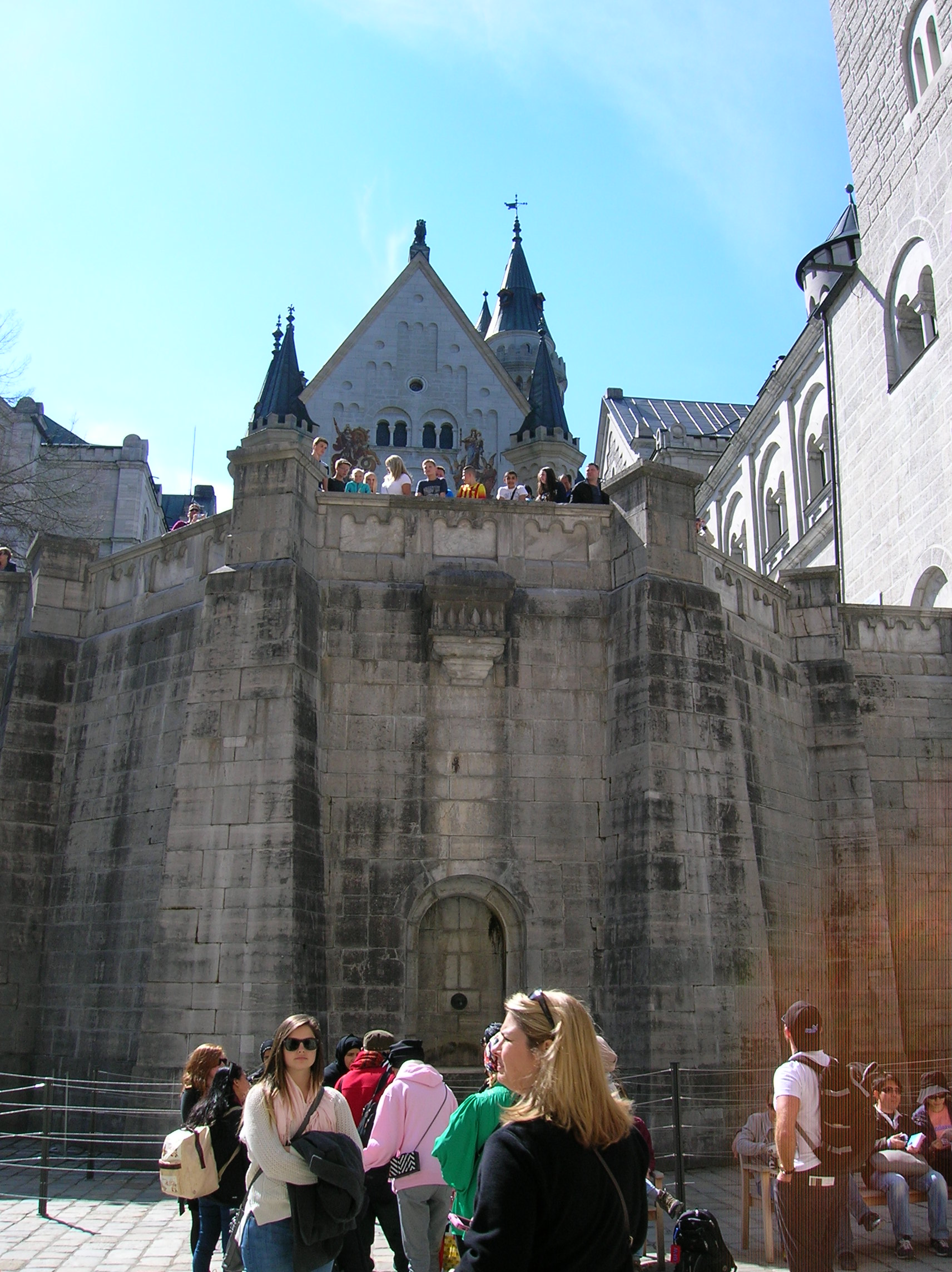
Looking at the upper level from the courtyard

Looking at the upper level from the courtyard

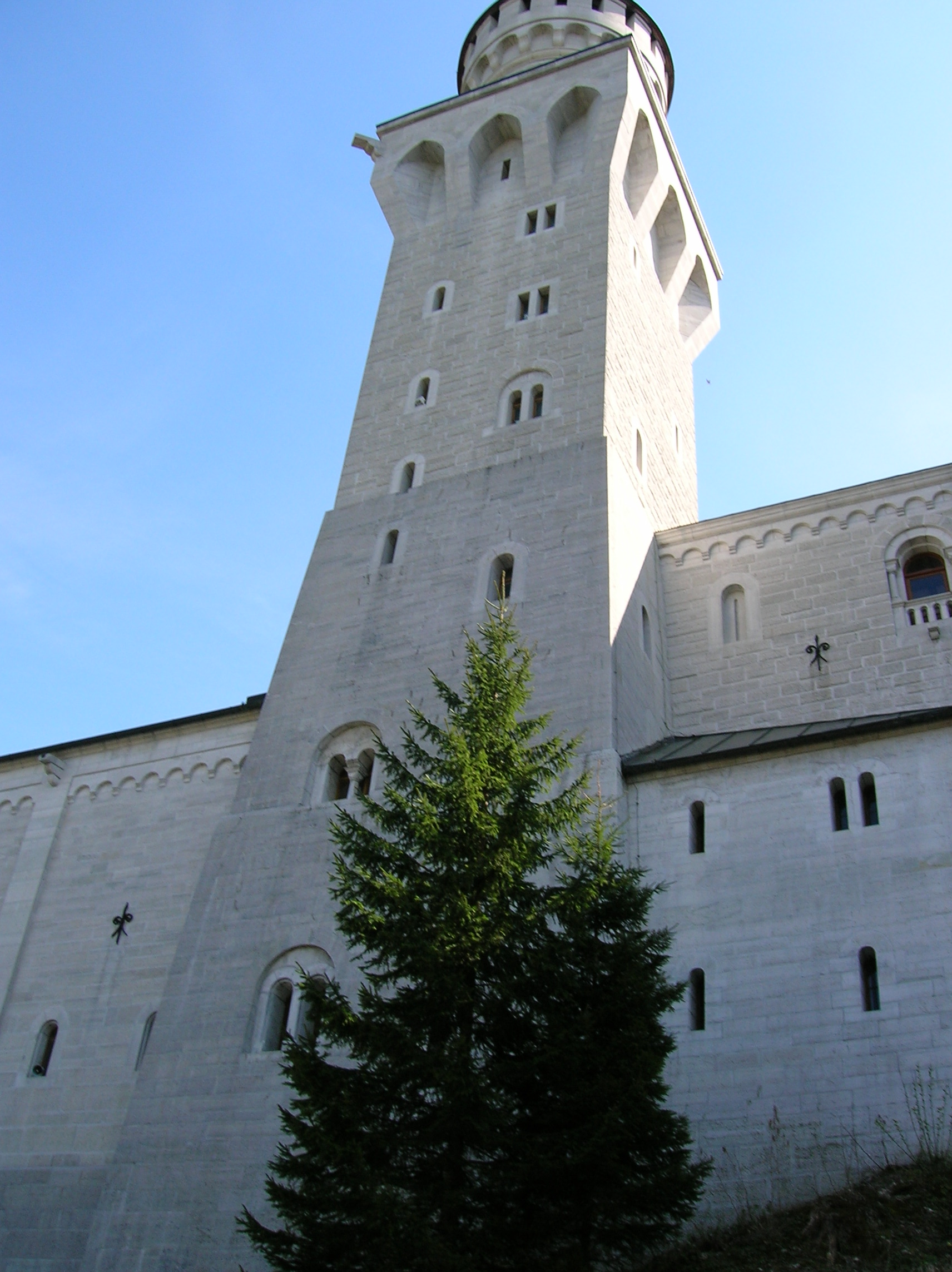
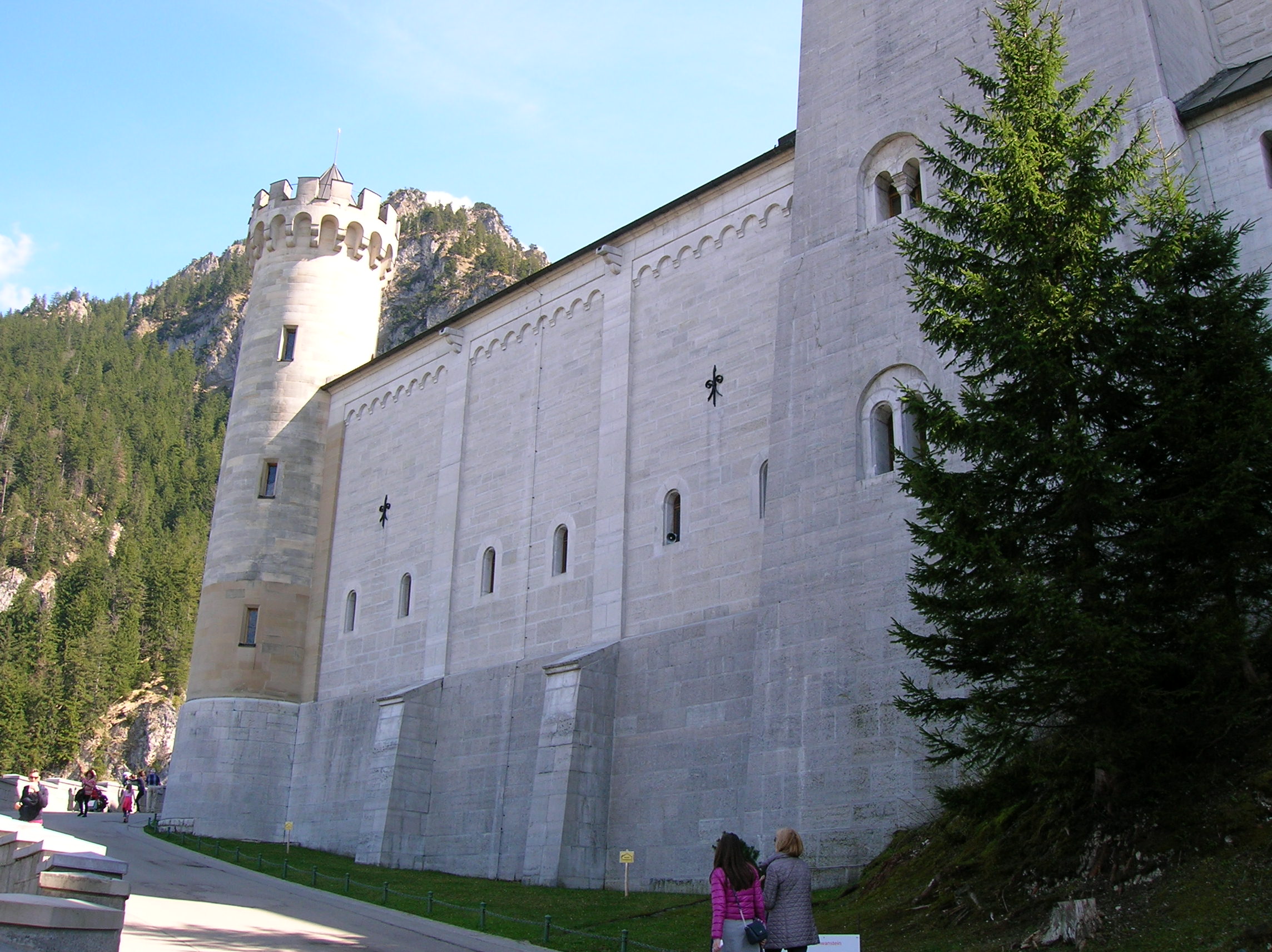
Ludwig’s creation looks like a castle should look, I thought to myself, passing through the gate sporting the Bavarian coat-of-arms. Towers, turrets, balconies, pinnacles, gables, sculptures, frescoes – the exterior seemed to resemble a stage set. In fact, the plan for the castle was made by a stage designer – Christian Jank, though Eduard Riedel served as the architect. I loved the simple geometric Romanesque forms and the Gothic style that made me feel as if I had stepped back into the Middle Ages. I almost expected to see knights jousting in the courtyard or King Ludwig II reading a declaration from a balcony. Ludwig, indeed, had transformed the theatrical world into a reality of marble, brick, limestone and sandstone, for instance. The castle courtyard was even based on a stage set from Lohengrin, a medieval fairy tale opera by Wagner. I loved the rugged cliffside location that was so romantic.

Neuschwan4
The main courtyard consisted of two levels. The Rectangular Tower in the upper courtyard soared 45 meters into the sky. The Knights’ House encompassed three storeys while the massive Palas was five storeys high. After admiring the exterior for about a half hour, it was time for the tour to start. I was so enamored with the exterior and could not wait to see what the inside beheld.
The Throne Room had no real throne, but it did hold many other artistic delights. The space was designed in the style of a Byzantine Church. A rendition of the sun dominated the cupola. Beneath it were figures symbolizing pre-Christian cultures, such as those of Rome and Greece. On one wall there was a large painting of Jesus Christ with six European holy kings below him. I spotted the Czech patron saint, Wenceslas, among them. On another wall Saint George was slaying the dragon. The 12 Apostles also made appearances. The room was decorated with red silk and gold embroidery. The gilt bronze chandelier weighed 2,000 pounds and was four meters high. Made of Bohemian colored glass, it held 96 candles. Even the floor was a masterpiece, decorated with motifs of animals and plants.

The main gate at Neuschwanstein Castle
The main gate at Neuschwanstein Castle
What impressed me the most in the King’s Bedroom was the Neo-Gothic bed’s richly carved wood canopy of pinnacles that resembled Gothic church spires. A Madonna and Child painting adorned the headboard. The sink was shaped like a swan, a design inspired by Lohengrin, the Swan Knight in Wagner’s opera. Ludwig had fantasized about becoming this knight of the Holy Grail. The furnishings in the room featured blue silk embroidered with designs of lions and swans.
The wall paintings depicted scenes from Wagner’s operas. They were so colorful and vibrant. In the King’s Bedroom scenes from Tristan and Isolde decorated the walls. I recalled learning in college that the score of this romantic opera by Wagner steered Western music in a new direction, away from tonal harmony. The castle’s guide told us that it was in this very room that Ludwig was informed that he had been declared mentally ill and could no longer rule.

Massive Neuschwanstein Castle

Massive Neuschwanstein Castle

The Dressing Room featured an illusionistic ceiling painting of a garden scene. The curtains were made of violet silk, richly ornamented, embroidered with gold. The king’s jewelry box was impressive, too. The murals depicted scenes from the lives and verses of Walther von der Vogelweide, the most prominent Middle High German lyric poet who lived from 1170 to 1230 and Hans Sachs, a 16th century poet, singer and playwright.
The Living Room was all about Lohengrin. Wall paintings inspired by the opera dominated the walls. A swan figure featured prominently in the room. Even the door handles were shaped as swans, an exquisite detail, I mused. A vase was swan-shaped, too.
There was an artificial cave grotto, too. It resembled a stage set for one of Wagner’s operas. When Ludwig ruled, it had been equipped with electric lighting and even had a waterfall. The guide told us that, though the castle had a medieval appearance, it incorporated modern technology of that time period. There were two telephone lines, one to the post office and another to Ludwig’s mother. The toilets had automatically flushed, and the stove had modern features. There was running hot water, too.

Neuschwan7
In the Study the wall paintings were based on the Tannhauser opera in which Knight Tannhauser had been obsessed with Venus, caught under her spell. Then he wants to marry Elizabeth, but he cannot tell her about his evil deed. In a singing contest he praises Venus, and the others are disgusted with him. Tannhauser takes off for Rome to ask the Pope for forgiveness. The ending is not very uplifting. Both Tannhauser and Elizabeth die.
Soon we came to the most important room, the Singers’ Hall. I gazed in awe at the 96 pine wood panels with paintings of the zodiac. Scenes from the legend of Parsifal, a knight who searches for the Holy Grail, adorned the walls. I also admired the coffered ceiling. Interestingly, the space was not furnished during the king’s lifetime.

Neuschwan8
I was flabbergasted at the unique and lively interior. It was as if I were walking through a dream. I could not believe that these fairyland furnishings were for real. It was like something out of a Disney film filled with knights, kings, bards and maidens in distress. Then we went down many stairs, stopping on the way to take photos of some of the most breathtaking views I have ever seen.
Finally, we reached the kitchen, so large for making meals for one person. It had groined vaulting, and the stove occupied the central area. There was a roasting oven, a small spit and a fish tank, for instance.
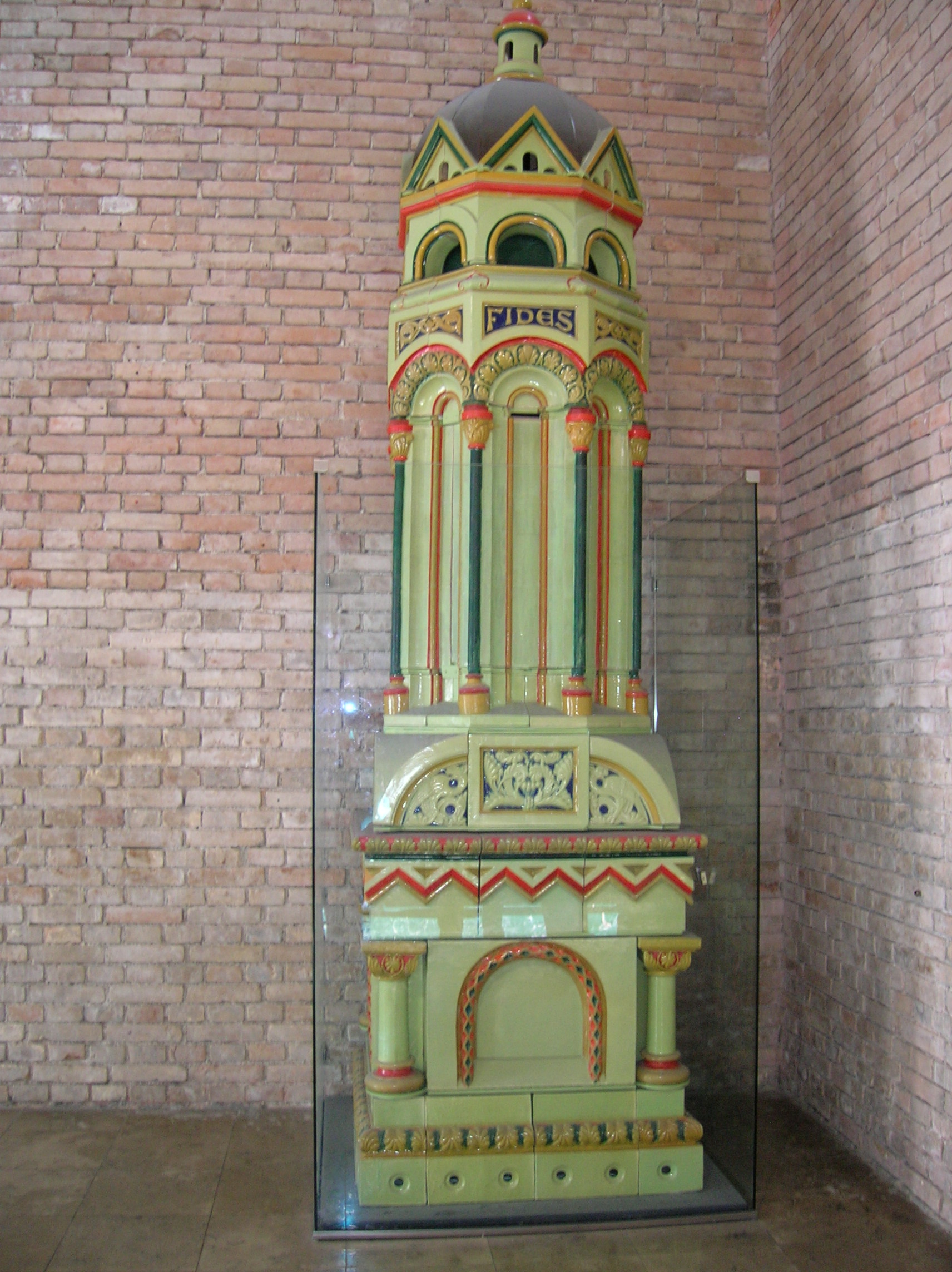
Below it we came upon one of the most beautiful decorated tiled stoves I had set my eyes on – it was made of colored glazed tiles from 1880, designed by Julius Hofmann. The exquisite object resembled a tower and was crowned with a lantern dome.

A magnificent tiled stove at Neuschwanstein Castle

A magnificent tiled stove at Neuschwanstein Castle

It was hard to leave the castle of my dreams and say goodbye to all those turrets, towers and gables. I was happy that I had realized one of my dreams, and I had just visited two of the most fascinating places I had ever seen. On the bus I was seated next to friendly people with Brenda and Gary to one side and Caleb on the other. I knew I would always remember this beautiful, sunny day. I felt as if nothing could go wrong.

Something did, though, but not to us. At about 6 pm our bus had to stop on a road in the Bavarian countryside because there was an accident ahead. Traffic was at a standstill in both directions. I saw a motorcyclist on the ground, his leg oddly twisted. He was trying to move his head up, so he was conscious. The driver of another stopped vehicle was seated Indian-style next to him. Someone from another car hurried to the injured man and covered him with a blanket.

The spectacular view of the countryside from Neuschwanstein Castle

The spectacular view of the countryside from Neuschwanstein Castle

Pieces of his motorcycle littered the road. It had been smashed to smithereens. The car he had hit head-on was in a field where a farmer rode on his tractor as if nothing had happened. It took 10 minutes for the ambulance to arrive. The police also came onto the scene. Caleb had finished his first aid training a year earlier and explained how the bystanders and then the ambulance workers were treating the motorcyclist.

Me on the upper level at Neuschwanstein Castle

Me on the upper level at Neuschwanstein Castle

Then I felt guilty for enjoying my day and realized once again how life can change at any moment. Just think how that moment of impact with the car changed that motorcyclist’s life. Who knew if he would walk again? What if he died on the way to the hospital? What if he went into a coma and never woke up? And here I was, having fulfilled a life-long dream, still overwhelmed by the breathtaking sights and remarkable tours of the palace and castle. And I was surrounded by nice people I had been lucky to meet.

The countryside surrounding Neuschwanstein Castle

The countryside surrounding Neuschwanstein Castle

Our guide Lucy approached each person, apologizing, saying there was nothing she could do and asking if people had any urgent connections to make in Munich. She stayed calm and knew how to handle unexpected situations – that was clear. I had been so impressed with her during this trip. That was something else to be thankful for – I had had a great guide who introduced me to these amazing places.
It turned out that we only had to wait about an hour before resuming our trip back to Munich.

When we got there, we said goodbye and I saw Caleb’s father gathering his family in front of the bus. I mentioned to him that he had such a wonderful son, so intelligent and so intrigued with the world, determined and willing to learn. I told him how I had come across teenagers who were lazy, rude and lacked any sort of motivation or interest in gaining knowledge. I had tears in my eyes as I spoke to him. I was that moved by meeting a teenager who I am sure would make the most of the bright future ahead of him.
I was so exhausted that, while walking back to my pension, I tripped in the middle of a street. The cars were stopped, but I fell on my knees and the joints of three fingers. My knees were sore, and my joints were bleeding. Still, I was able to walk without any pain, I had not fallen on my face and my glasses were not broken. I felt very lucky and very thankful.

The view from Neuschwanstein Castle

The view from Neuschwanstein Castle

Tracy A. Burns is a writer, proofreader and editor in Prague.

Museum of Antiquities Photo Diary

Image
In April of 2014 I visited Munich’s Museum of Antiquities (Antikensammlungen) with its majestic façade of Corinthian Columns and the proud figure of Bavaria protecting the artistic creations. I was entranced with the diversity of objects. I looked in awe at Greek vases, bronze statuettes, jewelry, gems, sculpture, terracotta figures, ceramics and gold work as well as artifacts made of metal and glass. The time periods covered ranged from the Cycladic Culture of the Aegean region from the 3rd century BC to the Late Antiquity era from the 5th century AD. I was especially bewitched by the sculpture and Greek vases, but each object had its own exciting story to tell.

Image

Image

Image

Image

Image

Image

Image

Image

Image

Image

Image

Image

Image

Image

Image

Image

Image

Image

Image

Image

Image

Image

Tracy A. Burns is a writer, proofreader and editor in Prague.

Glyptothek Museum Photo Diary

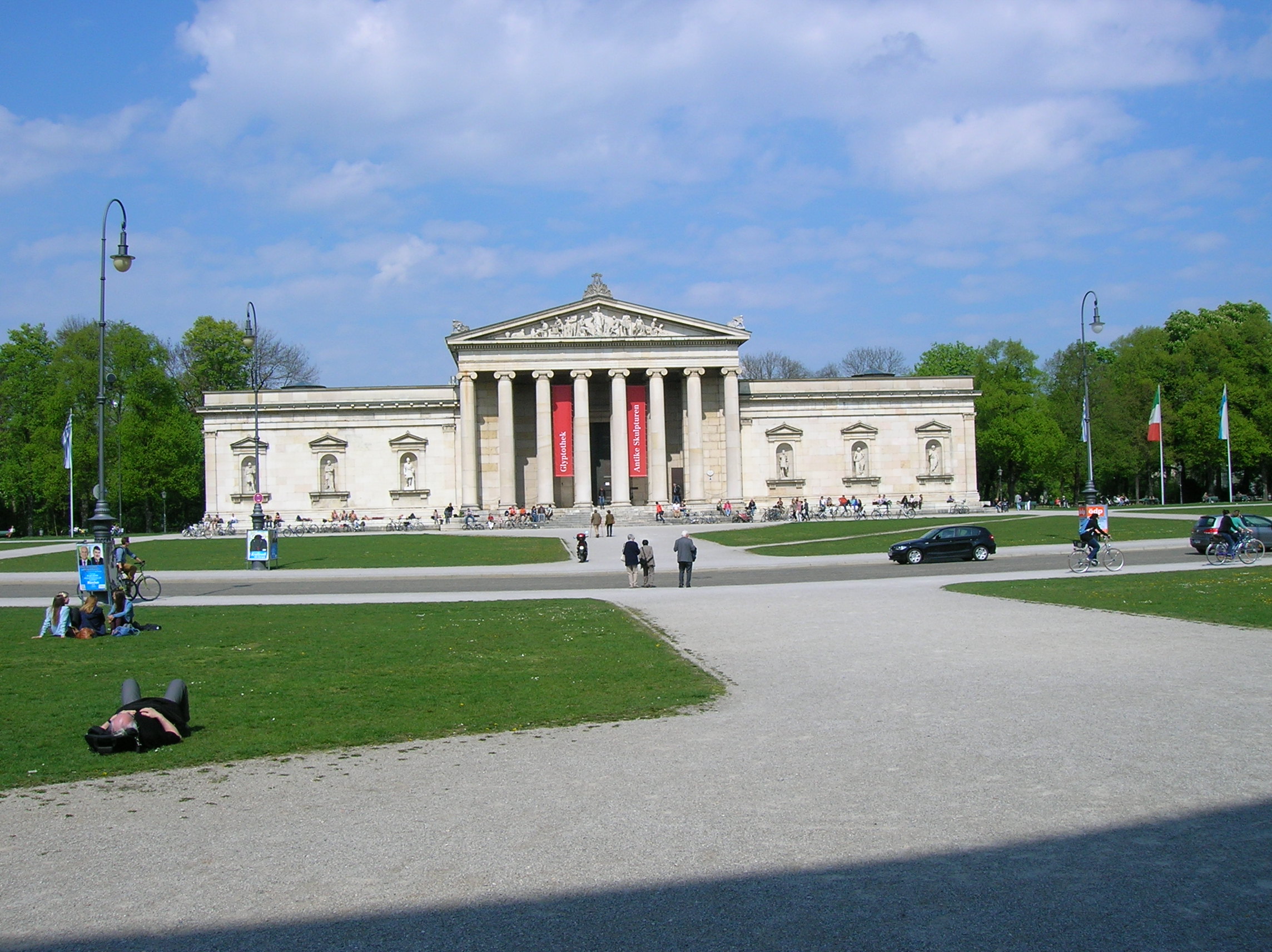
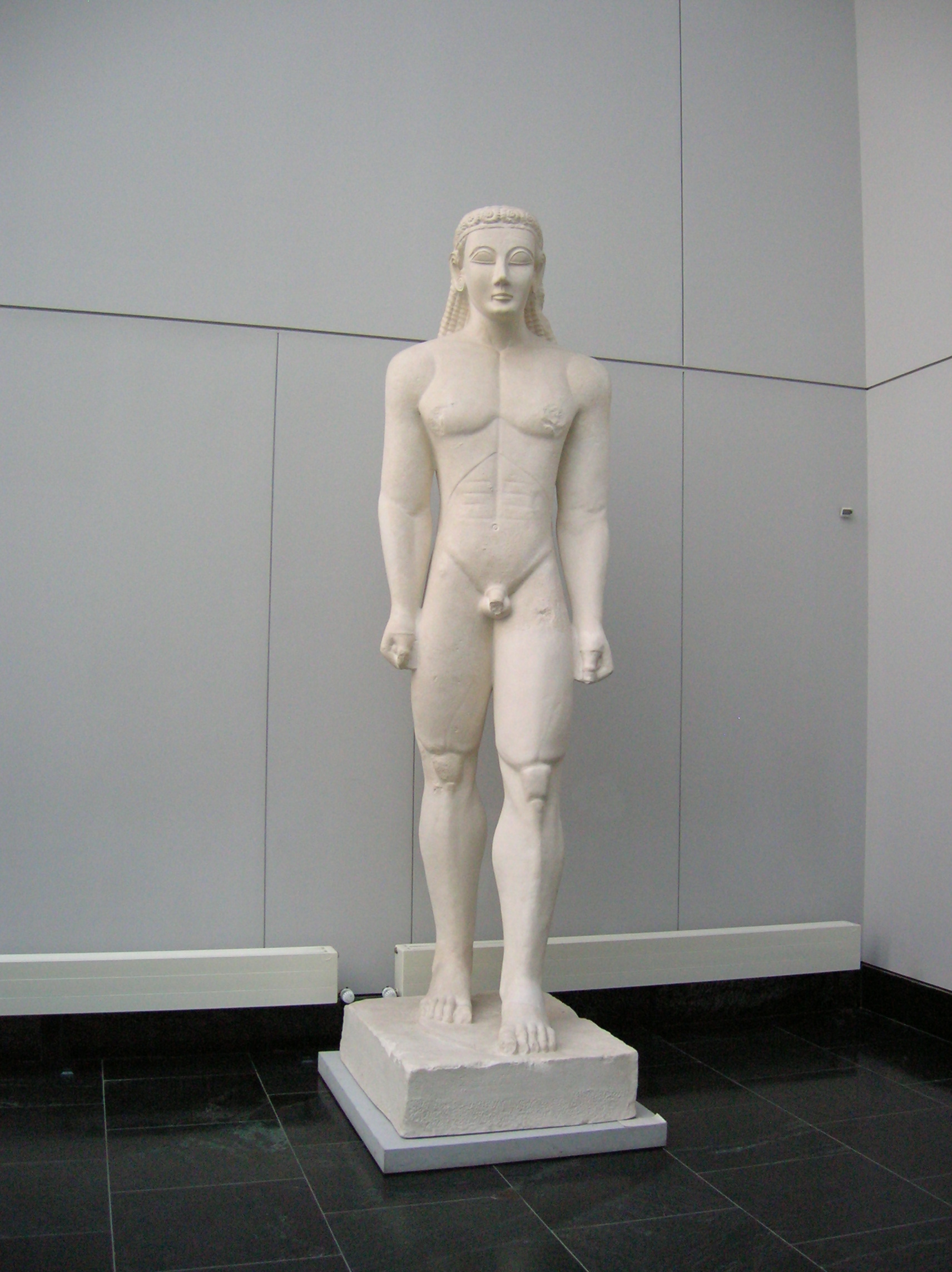
During my stay in Munich during April of 2014, I visited the Glyptothek Museum, which features Greek and Roman statues. The marble masterpieces hail as far back as the Archaic period of 6th century BC through the Roman Empire and the Late Antiquity period from the 1st to 5th century AD. The façade of the museum fittingly looks like a Greek temple. The interior is modelled after the design for buildings at a Roman bath. Vaulted ceilings and large windows punctuate the 14 halls in which the sculptures are creatively placed, free-standing. The spatial depth of the rooms made me feel a certain intimacy with the ancient treasures. There was no barrier between me and the works of art. I admired their beauty and skillful craftsmanship from various angles as if it were alone with the sculptures, as if the sculptures were speaking only to me.

Image

Image

Image

Image

Image

Image

Image

Tracy A. Burns is a writer, proofreader and editor in Prague.

Nuremberg Diary

Romantic view of the Holy Ghost Hospital from a bridge

Romantic view of the Holy Ghost Hospital from a bridge

I had just returned from almost a week in Bavaria, and I was going back on White Saturday to Nuremberg for a day trip with arsviva, the Czech travel agency I sometimes used. I had traveled with them to Bamberg, where I had been enchanted with the fishermen’s houses of Bamberg’s Little Venice, the gushingly Baroque Böttingerhaus, the Early Gothic nave of the Imperial Cathedral with its Christmas Altar and the majestic New Residence Palace with its ornate Imperial Hall. The same guide that had put us under Bamberg’s magical spell was leading us through Nuremberg, which now was biggest city in the Franconia region, with a population of 500,000.
On the bus the guide gave us some background about the city. Nuremberg started out as a fortress in the 11th century. While medieval Nuremberg was an important town along the trade route to the east, it was not without its problems. A pogrom in 1349 wiped out almost half of the Jewish population in the town. The pogrom took place after it was decided to demolish the Jewish quarter in order to make room for a central square.

A historical building in Nuremberg

A historical building in Nuremberg

The year 1356 brought prestige to Nuremberg, which became an imperial city thanks to Holy Roman Emperor Charles IV’s declaration of the “Golden Bull.” The emperor also declared that the first imperial diet when the seven electors were choosing a new German king would take place in Nuremberg. Emperor Charles IV also visited Nuremberg more than 50 times. The imperial crown jewels were stored at the castle in Nuremberg from 1424 to 1796. Nuremberg favored Protestantism from the 16th century. The seven electors held the imperial diet there until 1542.
Many inventors and artists lived in Nuremberg. Albrecht Dürer worked there in the early 16th century. Sculptors Adam Kraft, Veit Stoss and Peter Vischer decorated the town with their magnificent medieval creations. Martin Behaim invented the first globe, and Peter Heinlein made the first pocket watch in Nuremberg.

One of Nuremberg's unique fountains

One of Nuremberg’s unique fountains

The Thirty Years’ War brought devastation to the town, even though Nuremberg remained neutral. Then the town experienced financial problems and soon found itself broke. Nuremberg was made part of the Bavarian kingdom in 1806. During the 19th century, the town focused on industrialization.
Nuremberg would become the site of the National Socialist Party’s rallies in 1927. The Nuremberg Laws, enacted in 1935, denied Jews basic rights and German citizenship. Adolf Hitler was very fond of the city. The Allied Forces’ air attacks in January of 1945 destroyed 90 percent of the historical center and more than 2,000 people lost their lives. Many of the artworks had been moved to the Art Bunker under the castle, and thus were saved. The Nuremberg Trials that put the leaders of the Third Reich on the stand took place from 1945 to 1946.

The Congress Centre

The Congress Centre

First, we stopped at the gray, massive grandstand, where the Nazi Party Rallies had been held from 1933 to 1938. Bigger than Rome’s Coliseum, it included 60 hectares and had 28 40-meter high towers. We saw the exterior because on a day trip we did not have time to go inside the Documentation Center of the National Socialist Party Rally Grounds, where there is an exhibition about the Third Reich. Albert Speer’s architecture was so dehumanizing. Gray, drab and disintegrating, it lacked any human feeling, any feeling of life. Speer’s buildings did not even last 50 years, and they were meant to last forever.
I would have loved to have visited courtroom 600 in the Palace of Justice, where the Nuremberg Trials had taken place. I wondered what it would have felt like to have been in that courtroom during the trials, to have watched death sentences being handed out to Wilhelm Frick, Hans Frank, William Keitel and others. Even the death penalty was not a harsh enough sentence for what these Nazis had done.

The facade of the former arsenal

The facade of the former arsenal

Then we got back on the bus, and soon we were left off at the German National Museum, which was on the itinerary much later in the day. As we walked from the German National Museum to St. Lawrence’s Church, we passed Mauthalle or the former imperial customs office dating from 1500. Opposite it was the façade of the Renaissance former imperial arsenal, adorned with coats-of-arms and dating from the 16th century. I took notice of its two round dome towers. The guide pointed out a magnificent oriel on one building. There were about 80 oriels in the city.
On the way to the church, we passed by many stalls in the Easter Market that made the town lively, even jubilant. The sun was shining, and it would have been impossible not to feel cheerful in this environment. Stalls offered vegetables, flowers, postcards, soft pretzels and much more. I was especially drawn to the huge soft pretzels, which I had devoured during my stay in Munich the previous week.

The facade of St. Lawrence's Church

The facade of St. Lawrence’s Church

Soon we came to St. Lawrence’s Church. During the 13th century, a Romanesque basilica had stood on this site. The rose window between the two 82-meter towers fascinated me. The tracery of the window was remarkable. A wreath surrounded the window. Certainly one of the most beautiful Gothic facades I had ever seen, the façade dated from the mid-14th century. The buttresses and spires that looked like pinnacles made a strong impression on me, too. A decorative gable was situated above the rose window. The main entrance boasted such elaborate sculptural decoration and reliefs. The sacristy, two stories high, had a stunning relief on the façade. I noticed a sundial, too. One sculpture from 1912 showed a monkey reading The Bible.

The interior of St. Lawrence's Church

The interior of St. Lawrence’s Church

When we went inside, I was so overwhelmed by the spaciousness and weightlessness that I just stopped in the choir, ignoring the group for some minutes, and just stared. The Late Gothic choir and the Gothic vaulting amazed me and made me dizzy with awe. Everything seemed so harmonious.
What dazzled me was the choir carving of the Annunciation, with larger-than-life size statues suspended from the vaulted ceiling. It was the work of master sculptor Veit Stoss. I noticed Gabriel and the Virgin Mary, a dove fluttering over her head. Four angels seemed to float over this grouping. Fifty roses decorated the wreath framing the scene. The rosary beads included 63 pearls. Reliefs also adorned the ornate wreath. The flowing golden drapery of the figures also caught my attention. To see the carving suspended gave me an even greater feeling of weightlessness. It was as if the sculptural grouping was ascending to Heaven, rather than rooted on the ground, on Earth.

A precious artwork from St. Lawrence's Church

A precious artwork from St. Lawrence’s Church

The High Altar was stunning with a crucifix from the 16th century. The tabernacle, more than 20 meters high, entranced me. Pinnacles represented a crown of thorns. The reliefs were remarkable. I was awed by the latticework and tracery.
One of Nuremberg’s oldest sculptures, the Beautiful Madonna, showed the Virgin Mary and Baby Jesus with bright smiles as the Virgin Mary looked lovingly at Jesus. The pulpit was Neo-Gothic. The Late Gothic brass chandelier in the nave was authored by Peter Vischer in 1489. Life-size Apostles also made appearances. It is possible that Stoss created the stunning sculpture of Archangel Michael wielding a sword in his right hand. I was especially drawn to the folds in the figure’s drapery and to the curls in his hair.

An exquisite stained glass window in St. Lawrence's Church

An exquisite stained glass window in St. Lawrence’s Church

Stained glass windows hailed from medieval days, reminding me of the cathedral in Regensburg with its brightly colored windows that brought light and knowledge. The stained glass of the rose window boasted decorative designs. The background of the Krell Altar showed the oldest rendition of Nuremberg, dating from 1472 to 1483. The town looked so realistic and detailed for that time period. I recalled the 17th century maps and vedutas at Mělník Castle near Prague, and how realistic and detailed they had looked.

The vaulting with the Annunciation carving suspended from the ceiling

The vaulting with the Annunciation carving suspended from the ceiling

During World War II the sculptures and other artworks were hidden in the Art Bunker rock cellar under the Imperial Castle. Although the building was damaged in the Allied Forces’ attacks, the two towers, the western façade and the walls remained standing.

A portal of St. Sebald's Church

A portal of St. Sebald’s Church

Next we visited St. Sebald’s Church, which was founded in 1230. The stained glass windows left me in awe. I saw another relief by Kraft, this one depicting the legend of the Holy Cross. The bronze font hailed from 1430. Below it I saw a relief of apostles and saints while the four Evangelists were positioned above the font. But the highlight was St. Sebald’s Tomb, almost five meters high. It took 11 years to build this masterpiece by Peter Vischer. The Gothic reliquary hailed from the 14th century. The tomb was decorated with portrayals of four dolphins and 12 snails, for instance.

St. Sebald's tomb

St. Sebald’s tomb

The figures of Mary, John and the crucifix on the main altar were the work of Stoss. I was enamored by the glass stained windows, some of which dated back to the 14th century. It was a bit disappointing that the upper part of the windows consisted of panes of smoked glass. On one of the memorial tablets there was a view of Bamberg, another Bavarian city that was dear to my heart. St. John and Apostle Andrew were depicted, and I marveled at the curls in Andrew’s hair and the folds in his drapery.

A Madonna statue at St. Sebald's Church

A Madonna statue at St. Sebald’s Church

We came to the main square, bustling with Easter stalls. In front of us was The Church of Our Lady, built on the site of a synagogue that was demolished in the early 14th century, when the Jewish quarter, which had been located here, was abolished, and half of its inhabitants were murdered. It was hard for me to believe that Emperor Charles IV, the beloved King of Bohemia, had permitted the demolition of the Jews’ homes or, most shockingly, did not stop the 1349 pogrom that resulted in the deaths of so many Jews. Yet I had read that the Christian prelates supported anti-semitism, and his actions toward the Jews probably made him seem pious and dutiful to many of his subjects.
The architect of the Church of Our Lady was Peter Parler, who had been responsible for completing St. Vitus’ Cathedral in Prague, among other significant works. He had certainly left his mark in the Czech lands. While the church had been damaged in the Allied Forces’ bombing of the city in 1945, part of its exterior remained intact. The west façade, the portal, the choir, some of the outer walls and the sacristy did not suffer the terrible fate of its other sections.

The exterior of the Church of Our Lady

The exterior of the Church of Our Lady

We spent some time studying the exterior. It boasted a stepped gable and neo-Gothic pinnacles plus a five-story tower. In the center the Virgin Mary was depicted with Jesus. Other figures surrounding them included Adam and Eve. Emperor Heinrich III stood out with his crown, orb and scepter. The German imperial eagle made an appearance on the balustrade. The portico boasted gilded statues, and the tympanum was richly decorated. We came to the north side with the depiction of the Foolish and Wise Virgins.
The building was one of the first hall churches in Franconia. Inside, a Star of David decorated the floor, symbolizing the expulsion and murder of the Jews during the 14th century. The main attraction, though, was the Tucher Altar, from the mid-15th century. It was one of the most significant artworks in the time period before Dürer. I loved the gold background of the triptych. It represented the divine and also gave the panel painting a certain vibrancy that attracted me. In the central panel I saw a crucifixion scene. Mary and John were depicted below it. John seemed mesmerized by the scene with Jesus.
On the right inside panel two holy hermits were talking to each other. I wondered what they were saying. Were they complaining that they were lonely and did not like being so isolated from the rest of the world? Or were they happy that they were recluses? I tended to be alone, and sometimes I wondered if I was really happy or if I had just accepted it as my fate. The gilded tabernacle at the base only dated from the 1980s. It was made to look like a torah roll in recognition of the pogrom.

The stained glass windows of the Church of Our Lady

The stained glass windows of the Church of Our Lady

The choir featured life-size statues. Our guide pointed out to us Saint Ludmila and her grandson Saint Wenceslas, Czech saints. Wenceslas’s mother, a pagan named Drahomíra, had Ludmila, a Christian, killed because Ludmila had taught Wenceslas to be Christian. Wenceslas became duke of Bohemia and had a rotunda built to St. Vitus – later it would become Saint Vitus’ Cathedral. It was not so strange that Czech saints were represented in the German church. Emperor Charles IV, who established the church, was also King of Bohemia, and his mother came from the Přemyslid family, a dynasty that had ruled Bohemia from the ninth century to 1306. Besides, Bohemia had been a mixture of many peoples, cultures and languages.
In the center of the choir I saw the 15th century creation Madonna with Rays as rays of the sun shone on the Virgin Mary and Jesus. In the portrayal the Virgin Mary was stepping on a human face as she stood on a crescent moon. There were also 18 sculptures of tranquil angels gripping candlesticks on the sides of the choir. One of the keystones featured a rare scene of Jesus going to school as Jesus was portrayed as human. In the nave I found some epitaphs by Kraft.

The Beautiful Fountain on the main square

The Beautiful Fountain on the main square

We had some minutes before the noon scene at the clock, so we admired the Beautiful Fountain, constructed at the end of the 14th century. Over 17 meters high, it boasted 40 stone figures on four levels. At the bottom there were the seven arts and philosophy. The Four Evangelists made an appearance, too. The seven electors, Hector, Alexander and Julius Caesar were also sculpted in the central part. Old Testament figures were also present along with Charlemagne and King Arthur. The top part showed Moses and the seven prophets. The well was a copy from the early 20th century. The original was in the German National Museum. I admired the decoration and latticework. There was also a Wishing Ring that could be turned, and many gathered around the well climbed up the steps to turn the ring three times for good luck.
We watched the noon scene at the clock tower. Trumpeters announced the arrival of Emperor Charles IV, and the seven electors paraded around him three times, symbolizing the “Golden Bull” decree that made Nuremberg the seat of the first imperial diet when the seven electors selected a new German king. It was nice to see King Charles IV appreciated in a country other than the Czech lands. I decided I must come to the famous Christmas market in this square someday. It must be enchanting. I tried to imagine knights’ tournaments that had taken place in the square so many centuries ago. Or I tried to imagine the days when the imperial crown jewels had been shown to the public on this square. History sure seeped through the heart of this city.

Old Town Hall

Old Town Hall

Before lunch we went to admire the Italian Renaissance style Old Town Hall, which hailed from the 17th century. The figures of Wisdom and Justice adorned the façade. We even got inside to the Great Council Chamber, which was not often open to visitors. Renaissance in style, it was 40 meters long. I admired the timbered ceiling. It was a reconstruction. The original had had burned down in 1945. I thought of all the council meetings, trials, balls, imperial assemblies and signing of peace treaties that had taken place here over so many centuries. If only I could have been a fly on those walls! Another Old Town Hall dated from 1330 and was an example of Gothic architecture. Visitors could tour the dungeons underneath it.

The interior of the Old Town Hall

The interior of the Old Town Hall

For lunch I found a small café where I could munch on a sandwich after devouring a large soft pretzel from a stall.
Next up was the medieval castle. Dominating the city, it looked romantic, perched on a rocky hill. The castle dated from the founding of the city, before 1050, when a fortress was situated on the site. Every German emperor set foot in this structure from 1050 to 1571. The imperial crown jewels had been stored in this fortification with four towers.

While walking uphill toward the ticket office, the views of the rooftops and town were superb. Half-timbered buildings were on the premises, too. I liked the look of these buildings; they reminded me of cottages and had a very intimate quality. It was possible to climb Sinwell Tower, though I did not feel like trying to conquer my fear of heights on this day.

Nuremberg Imperial Castle

Nuremberg Imperial Castle

Soon we entered the Imperial Palace. The highlight of the interior was the Romanesque double chapel, hailing from the 12th century. Twin chapels, featuring a hall structure with two spaces on top of each other, are rare; there are only about a dozen in all of Central Europe. The emperor and his entourage entered from the Gothic portal of the upper level while the commoners came inside from the outer courtyard. On one capital there was a grotesque decoration of animals’ heads spouting leaves. A 15th century statue of the Madonna was on the main altar. Statues of four rulers were also present in the chapel. In the gallery above there were three bays with groined vaulting.

Part of Nuremberg Imperial Castle

Part of Nuremberg Imperial Castle

What impressed me most in the other rooms were the ceilings. The Knights’ Hall had an impressive massive joist wooden ceiling with no less than 30 crossbeams. Wall paintings from 1490 decorated both sides of the Late Gothic portal. Christ represented as a ruler was portrayed above the arch. The Emperors’ Hall featured a black-and-yellow ceiling with depictions of the imperial double eagles. Coats-of-arms adorned the ceiling, too. A small green stove caught my attention, too. Allegories of the liberal arts and portrayals of emperors decorated it. The Imperial Reception Hall had a painted imperial eagle painted on its ceiling. Its wall paneling was adorned with rosettes. The ceiling hailed from the 15th century, and the furnishings were Renaissance in style.

A tower at Nuremberg Imperial Castle

A tower at Nuremberg Imperial Castle

An exhibition featured how the emperor interacted with the empire and with the city. It explained the Golden Bull’s significance, the role of the electors and how Nuremberg had flourished during the Middle Ages.
After the tour of the castle, the other members of the group went to the German National Museum, the largest museum of German art and cultural history. I opted to visit Dürer‘s former home, a 15th century house that now was a museum dedicated to the artist. Dürer was so dear to my heart. I also did not think that two hours was enough time for me to visit the German National Museum, where the largest collection of pianos plus paintings and sculptures through the ages, were exhibited. I was also tired. I had woken up at 3 am, and I wanted to visit the museum when I had more energy and would appreciate the exhibits better.

Statue of Albrecht Durer in Nuremberg

Statue of Albrecht Durer in Nuremberg

The Dürer Museum displayed reproductions of the artist’s copperplates, portraits, etchings, sketches and woodcuts. The furniture hailed from the period when Dürer lived there, from 1509 until his death in 1528. It was a small, though intriguing, museum, and I also learned about Dürer’s life. I did not know that at the German National Museum originals of his work were displayed, but I was glad I had gotten a glimpse into the life and work of an artist I truly admired.
I had about a half hour free after that, so I sat at the outdoor seating of a restaurant and had one of my favorite foods, a hamburger. I watched the comings and goings of people at the Easter Market, which was filled with such joy and celebration. I loved seeing the city while a market was taking place. It gave the town even more energy. Then I walked down a few of the narrow, picturesque streets before heading to our meeting place, the German National Museum.
I was more than satisfied with the day trip. We had had a superb guide, and the sights had been remarkable. I loved the churches the most, especially the rose window and the Annunciation grouping suspended from the ceiling. I bought a booklet about the city and found out that there was much more to see –a tour of underground Nuremberg and the Art Bunker ranked high on my list along with the German National Museum. Yes, I knew I would be coming back to Nuremberg.

Tracy A. Burns is a writer, editor and proofreader in Prague.

The magnificent vaulting at St. Sebald's Church

The magnificent vaulting at St. Sebald’s Church

Pilsen (Plzeň) Museum of West Bohemia and Pilsner Urquell Brewery Diary

The Cathedral of Saint Bartholomew, a landmark in Pilsen

The Cathedral of Saint Bartholomew, a landmark in Pilsen

I had been to Pilsen many times. After all, it was only an hour away via the comfortable Student Agency bus service. I had even spent several days in the town, staying in a pension above a beer hall-restaurant, but I did not do much sightseeing. I had been in town for a theatre festival and found myself in various theatres the entire time. Indeed, I was ashamed that did not really know Pilsen well after having lived in Prague for more than 20 years. It had always been one of those places where I changed trains.
I would soon find out that Pilsen certainly is worth visiting. It was even selected the European Capital of Culture for 2015. With a population of more than 170,000 inhabitants, Pilsen is the fourth biggest city in the Czech Republic.
A travel blogger on Twitter mentioned that he had really enjoyed the tour of the Pilsner Urquell brewery. Although I rarely drink alcohol, I thought it would be intriguing to see how beer had become an integral part of the town’s history. I wondered what processes were entailed in brewing it.

The town hall with its sgraffito Renaissance facade

The town hall with its sgraffito Renaissance facade

Before my tour of the brewery, I made a stop at the Museum of West Bohemia, where I visited an exhibition on the city’s history from medieval times to the 19th century. First, I explored other areas of interest in the museum. The Gothic armor in the armory was impressive, and the Meissen collection certainly caught my attention. I was especially drawn to a bowl with the entire surface covered in three-dimensional, handmade flowers with leaves. The handle looked like a tree branch. Dating from 1739, it was truly exquisite.
Then it was time to concentrate on the history of the town in context with the events that had so greatly affected this land. The exhibition also focused on everyday life from the various centuries. There was an exposition of a medieval, rural house, for instance and recipes from the 15th and 16th centuries as well as a section on food and textiles in the Middle Ages.

The Plague Column in Pilsen

The Plague Column in Pilsen

This is what I learned: Pilsen was established in 1295 by King Wenceslas II. It was designed in a regular Gothic ground plan with a rectangular square that was 193 meters x 139 meters. In the beginning about 3,000 people lived in 290 houses. The town was significant because it was situated on a trade route from the German borders to Prague.
When the Hussite wars ravaged the lands during the 15th century, the town at first supported the revolutionaries but then turned toward the Catholics in 1420. Pilsen was never conquered.
During the second half of the 15th century, Pilsen became a regional center. It had a Catholic majority, most of whom spoke Czech. Because the town was located on an important route to Germany, there was much trading with Germans. Non-Catholics wanted to teach Pilsen a lesson for taking such a strong Catholic stance, so they set fires deliberately and destroyed part of the town. This happened, for example, in 1507. During the 16th century, because the city had a Catholic majority, it supported the monarch.

The exquisite facade of a building on Republic Square

The exquisite facade of a building on Republic Square

In the mid-16th century Pilsen ranked third among the biggest cities in Bohemia. The town flourished by buying villages and creating ponds. The beer brewing industry also proved successful – but more about that later. By 1557 Pilsen was ranked as the second wealthiest town after Prague. The inhabitants were mostly from Bohemia. At the end of the 16th century, Emperor Rudolf II took refuge in Pilsen when the plague epidemic spread through Prague.
During the 17th century Thirty Years’ War, Pilsen, not surprisingly, supported the Catholics, who were victorious, so the town was not punished after the war. However, the 17th and 18th centuries were not all that rosy. In 1623 a fire destroyed parts of the town. The plague made its way to Pilsen in the 17th and early 18th centuries. There was another fire in 1729.
Pilsen soon found itself as a provincial town. The population decreased, and the city experienced financial problems. In the middle of the 18th century, many immigrants came to the town. Some of the newcomers were officers for the administration of the city.
At the beginning of the 19th century, Pilsen contributed to the National Revival, a movement to revive the Czech language, improve Czech culture and emphasize Czech national identity. Pilsen was one of many places where this revival was successful. Czech schools were established. Theatres put on performances in Czech. There were Czech technical organizations, and Pilseners contributed to Czech literature. Yet there were hardships, too. In the 1830s, ethnic controversies riddled the town. Poor harvests and financial crises did not help matters.

Republic Square

Republic Square

In 1848 Pilseners were among the Czechs who demanded national democratic and constitutional rights in the monarchy. At the end of the 18th century and at the beginning of the 19th century, Pilsen was a town oriented in trade and agriculture and had promise in the industrial sphere as well. The food industry grew thanks to breweries, mills and distilleries.
The 19th century brought major developments in the city. For instance, Škoda Works was established by Emil Skoda and became the top arms producer in the Austro-Hungarian Empire. Later the company became a leading engineering enterprise. The brewery brewed its first batch of beer on October 5, 1842. The Pilsner Urquell brand and the pilsner type of beer would capture worldwide attention. But more about that later.
One feature I really liked in the history section of the museum was the focus on individuals who had made a difference during these centuries – people who were not necessarily famous. I learned about Joseph Vojtěch Sedláček, for example. Active during the National Revival, he collected art-related objects for Prague’s National Museum. While he taught math and physics at a monastery, he also scribed poetry. He is also the author of the first Czech textbooks on math, geometry and physics.

Part of the Pilsner Urquell Brewery complex

Part of the Pilsner Urquell Brewery complex

Now it’s time to get to the main topic: beer. If there is one thing that symbolizes the city, it is beer. The beverage was first brewed there at the time of the founding of the city in 1295. King Wenceslas II gave 260 townspeople the right to brew beer in their homes. The quality of beer was controlled by town councilors in the entrance of the town hall. The town magistrate poured beer on oak benches. Then councilors would sit on the benches for an hour. If their leather britches did not stick to the bench when they stood up, the beer was deemed undrinkable.
In 1838, 36 barrels of undrinkable beer were spilled out in front of the town hall, an event which compelled some brewers to set up a brewery. The Burghers’ Brewery opened on October 5, 1842, when the very light, bottom-fermented Pilsner Urquell came into existence.
Pilseners have the then 29-year old Bavarian brewer Josef Groll to thank for their internationally-acclaimed beer. He’s the one who put local ingredients of soft Bohemian water, very pale malt and Saaz hops into the mixture using a new method to produce bottom-fermented beer and then came across the new type of beer – the pilsner type — by accident on October 5, 1842.

Historic barrels in the brewery cellars

Historic barrels in the brewery cellars

Two of the Czech Republic’s most famous brands of beer, Pilsner Urquell and Gambrinus, are made at the vast complex near the center of town in buildings that had been constructed on a former executioners’ site. I picked up my ticket in the Visitors’ Center, where an original wort barrel is displayed. The place was crowded with tour groups. It was not possible to tour the Gambrinus brewery. For some reason there were no tours in March.
When it was time for my English-speaking tour to start, we stepped outside, and the guide pointed out a few landmarks. The water tour hailed from 1907 and was 47.2 meters high. It reminded me of a lighthouse that I remember seeing as a child while on vacation near Freeport, Maine. As a young child I had wondered if some evil person had inhabited that lighthouse. The Pilsen water tour is no longer used.
There was also a decorated historical gate built on the 50th anniversary of the brewery, in 1892. By the way, that year 462,550 hectoliters of beer were brewed there, and the brewery had more than 600 employees. The cellars even already had electrical lighting. The gate brought to mind the historical gate at the entrance to the town of Mělník, where I had visited a chateau a week earlier. The guide elaborated on the history of the brewery, mentioning Josef Groll and the 1838 barrel-spilling event, for example.
Then we got on a shuttle bus and went to the packaging hall, where we would see the bottle lines in action. The packaging hall was modern, hailing from 2006. There were four lines, one reserved for cans. On the premises was a washing machine as well as a camera that takes a picture of each bottle to show if it is clean. The bottles were filled, warmed at 25 degrees Celsius, dried and then labelled. We saw the huge bottle lines from above, behind glass. At that time two lines were working.

The bottle lines at the packaging plant

The bottle lines at the packaging plant

Everything was so mechanical, so efficient. And to think that I only saw several people in the room while all this action was taking place! I almost expected to see Charlie Chaplin running from one side to the other as in Modern Times. It also made me think of Karel Čapek’s science fiction play R.U.R (Rossum’s Universal Robots) in which robots made by man take over the world, bringing about the extinction of the human race. Everything was so mechanical. It was as if an army of bottles were marching into battle.
The process also reminded me of one of my favorite episodes of I Love Lucy, when Lucy and Ethel are stuffing chocolates into their mouths, picking them off the conveyor belt at the chocolate plant. That scene had such a human quality to it, though. I missed seeing many people in the hall. I tried to imagine it back in the days when people had worked at the belts. It both impressed me and saddened me that technology was so advanced.

A bottle line at the Pilsner Urquell Brewery

A bottle line at the Pilsner Urquell Brewery

Then we took the bus to another location and saw some cylindrical tanks outside. They were used for the fermentation and saturation of the beer. The guide mentioned that there were 20 cylindrical tanks outside and 110 in the building. A green-and-white train from 1952 stood to my right. At one time it had been used to take beer to the brewery. We went inside and got onto the largest passenger elevator in the country with room for 72 passengers.
We watched a short film about beer production in a panorama cinema with a revolving floor. One of the things I learned from the film is that it takes about five weeks to make the beer. Then we went to an exposition on barley and the stages of malt production. You could hold the barley in your hand and sniff it. You could also see how yeast looks through a microscope and taste hops that came out of a machine that looked similar to a soap dispenser. The Saaz hops had a subtle aroma. An exposition explained about granulating the hops. It told how they had to be dried, ground and boiled.

The packaging plant

The packaging plant

Then we went to the old brewhouse in a 1930s era building and the new brewhouse above it, which has been used since 2004. The former brewhouse had been used for 75 years. During that time five million hectoliters of beer had been brewed there. The tanks used in the brewhouse looked like alien space ships and brought to mind the TV serial Mork and Mindy and the movie E.T.

The old brewhouse

The old brewhouse

Two million hectares of beer are produced in the new brewhouse annually. The filtration process, for example, takes two hours, and the boiling process lasts 90 minutes. After that, the wort is chilled to six degrees Celsius. Only two people seated in a small office behind a glass wall controlled the mechanisms. Such a complicated process and only two people are needed to monitor it! Again I viewed technology as both awesome and disheartening.

The brewhouse

The brewhouse

From there we went to the room called The Hall of Fame, where the brewery’s trophies and various awards are shown off. A copper bin on display once held the first batch of Pilsner Urquell. Habsburg Emperor Franz Joseph, who reigned from 1848 to 1916, had penned his name in the visitor’s book, but his handwriting was messy. The guide mused that the ruler of the Austro-Hungarian Empire might have been drunk when he signed it. I thought about the suicide of Franz Joseph’s son, Crown Prince Rudolf, and the assassination of his wife, Empress Elisabeth, nicknamed Sisi. To be sure, Franz had good reason to drink!
Nineteenth century Czech poet Jan Neruda even wrote a feuilleton praising the brewery after his visit. It was published in Hlas on May 5, 1863.

Emperor Franz Joseph signed the visitors' book at the brewery.

Emperor Franz Joseph signed the visitors’ book at the brewery.

The guide also mentioned that the oldest house where beer had been brewed is at number 58, but I do not remember the street. Now the Beer Museum is located in that building. I had hoped to get there that day, too, but I would not have enough time.
Then we explored the cellars. They were nine kilometers long, with a size of 32,000 square meters. Of course, we did not walk through every passage! I thought of how difficult it must have been to have built this vast underground area – it must have taken many people to make all these tunnels. No machines had been used to make the cellars. It had all been accomplished by hard, sweaty manual labor. I wondered who had done this sort of work. Poor people who needed the money? Prisoners? Maybe both.

The barrels in the cellar

The barrels in the cellar

These underground spaces were once used for the fermentation and saturation processes. We saw storage areas with big, historic barrels. We walked through an ice room, too. In the second half of the 19th century, they used to cut ice from rivers and ponds to keep the place cold.
At the end of the tour, we tasted unfiltered and non-pasteurized Pilsner Urquell beer. It was tapped straight from an oak lager barrel. The beer was very good, but since I am not much of a beer drinker, I am not enough of an expert to compare it with other brands. I tended to like black beer, but this light brew was as good if not better than any of the dark beers I had tasted.

Republic Square

Republic Square

After the tour I went back to Republic Square in the center of town, where there are three modern gold fountains with black Chinese basins. I liked the gargoyles from which the water spewed. (I’ve always been a fan of gargoyles and the grotesque.) There was a 17th century Plague Column, too.
For years I had wanted to go inside the Cathedral of Saint Bartholomew on the square, but it was never open when I was in town. It was only open certain months during weekdays. I had read that a Neo-Gothic altar featured the Madonna of Pilsen showing the Virgin Mary with a very expressive and sorrowful look on her face. I loved gazing at the Renaissance town hall with all the sgraffito decoration on its façade that dates from 1558.
I was very hungry, and I decided to eat lunch at my favorite eating establishment in Pilsen – the famous U Salzmannů restaurant around the corner from the square. During the 19th century this had been the most significant pub in the city. A famous event in Pilsen’s history was connected with this former beer hall. In April of 1843, the original owner of the place, Martin Salzmann, sent some beer to his close friend in Prague, a tailor named Jakub Pinkas. The tailor was so impressed with the taste that he decided to hang up the scissors and open a pub, U Pinkasů. The pub still serves Pilsner Urquell beer.

A tower of the Cathedral of Saint Bartholomew

A tower of the Cathedral of Saint Bartholomew

Supposedly, Salzmann had been quite a character. He was known as a very grumpy and unpleasant man. He would place a coaster on the table for each customer and put the mug of beer on it. If he became disgruntled with a customer who was too drunk and too loud, he would take away the coaster and kick the guest out of the pub.
There was another way to lose your coaster. If you clinked glasses – Salzmann hated it when customers did this – you also lost your right to drink in the establishment. Salzmann also disliked students and deterred them from visiting his pub because they often did not have enough money to pay for their drinks.
After my late lunch, it was time to head back to the bus station. I vowed to come back to tour the underground areas of the city and to wander through the Beer Museum. I now am very aware that there were many sights to see in Pilsen, and I want to visit as many as possible.


Tracy A. Burns is a writer, proofreader and editor in Prague.

The new brewhouse

The new brewhouse


Chyše Chateau Diary

Chyse
I had come across Chyše chateau by chance while flipping through my old Kamenný klíč publication of castles and chateaus. When I read that the tour included an exposition about Karel Čapek, I was hooked.
Karel Čapek had been perhaps the greatest Czech writer ever, a master at all kinds of genres – science fiction, mysteries, novels, poetry, fairy tales, nonfiction, travelogues and more. I had studied his works for my master’s degree in Czech literature and was eager to see an exhibition about him. I had never known that he had worked as a tutor at the chateau. Curiously enough, I had never heard of Chyše before that, even though it had been opened to the public since May 30, 1999.

Karel Čapek writing

Karel Čapek writing

The only public transportation was by train through Rakovník, but I would only have five minutes to change trains, or I would have to wait two hours for the next train. The transportation back to Prague was awful as well. So, I went to Karlovy Vary again and took a taxi to the chateau that would charm and bewitch me as soon as I set eyes on its romantic, Neo-Gothic façade (I love Neo-Gothic facades!) and impressive park. I also hoped to visit the brewery next door. I had heard that Chyše made a decent beer.

Chysechateau2
The history of Chyše Chateau was enthralling. It stretched back to the second half of the 12th century, when the then medieval fortress was owned by the Odolenovic clan for 200 years. The castle was destroyed by the Hussites during the Hussite wars in 1422. (Lasting from 1419 to around 1434, the Hussite wars pitted the Radical Hussites against the Moderate Hussites, Holy Roman Empire, the Pope, Hungary and others. Neither party was really victorious.)
Six years later, its new owner Burián z Gutštejn restored it and built a hospital and a church as well. Although he died in 1489, his descendants manned the castle until the 16th century when it fell into the hands of the Lobkovicz family. It was Mikuláš from Lobkovicz who changed the appearance from Gothic castle to Renaissance chateau in 1578, but a year later he sold the chateau to Bohuchval Berka from Dubé.

Chysechateau3
Unfortunately, the chateau was confiscated after Bohuchval revolted against the Emperor in the early 17th century. The Michna family gained control of the chateau and retained it for almost 90 years, though there was a 20-year gap when the family did not own it. The Michnas were responsible for much valuable construction at the chateau and in the town. Thanks to them, a monastery was erected, the Carmelite church was renovated, another church was built and the chateau was transformed into Baroque style. It was under their supervision that legendary Czech Baroque painter Petr Brandl executed the biblical ceiling fresco called “The head of son Saul is brought to King David.”
A turning point in the chateau’s ownership came when Count Prokop Lažanský obtained it during 1766. Chyše would stay in his family until it was confiscated due to the Beneš decrees that took property from German citizens in 1945, as the owners at that time had German citizenship. From 1946 to 1976 the chateau served as several types schools, but in 1976 it was closed and became decrepit and dilapidated. Chyše was put up for sale in 1993. During 1996 it was saved thanks to the efforts of Vladimír Lažanský from Děčín, who bought it for 10 million crowns. The chateau was open to the public in 1999.

Chysechateau4
The first room of the tour presented pictures of the chateau in a dilapidated state during 1996, when Lažanský bought it. It seemed a miracle that it had been transformed into such magical beauty during three years, I thought to myself. Even the well-manicured park had looked like a jungle back then.
We walked through one room that exhibited a spectacular Renaissance ribbed vault as well as black-and-white graphic portraits. The next room would become one of my favorites. Baroque master Brandl’s fresco with a biblical motif swirled above me in vibrant colors. I also was impressed by the enticing stucco work in the space as well as the coat-of-arms above the fireplace. From there we entered the space in which concerts and weddings are held. The white Baroque stucco decoration included cherubs, shells and swirls. I was fond of the pink, Czech tea service. The Baroque closet and dresser also amazed.

Chysechateau5
The Venetian porcelain in the following room was one of the most exquisite and fascinating works I have ever seen in a chateau. The blue tea cups were decorated with white lace, it seemed. Even in a close-up examination, the decoration looked like lace. But it was really painted onto the cups. The wooden chandelier also got my attention.
There was Czech porcelain from the early part of the 19th century in the Summer Dining Room. I saw an exhibition of porcelain and pots in the small space where they prepared food near a hallway that led to the kitchen. In another hallway was a lush carriage from 1913. It had been used for weddings.
Then we went upstairs. I was taken in by the painted, diamond shapes on the ceiling in the hallway. The apartment of Prokop II Lažanský included portraits of his great grandparents and a 400-year old fireplace that dazzled. A clock with what looked like gold griffins on its sides dated back 150 years. A portrait of Count Vladimír Lažanský, who had employed Karel Čapek, hung in the portrait gallery. I noticed that he had a puffy moustache, beard and oblong face. Two tables were set with delicately painted Easter eggs, as it was a few weeks before Easter when I was there.

Chysechateau6
The small library contained 30,000 volumes. In it I saw a black-and-white fireplace in Second Rococo style; it appeared to be made of marble. The piece of furniture that got my attention in the children’s room was a dresser that marked the end of Rococo style and the beginning of Classicism. A bedroom was decorated in white – a white bed, a white dresser, a white chaise lounge. It emitted a feeling of purity. The furniture in this room was about 200 years old.
Then we came to Karel Čapek’s modest room which only got sunlight in the early morning, not providing optimal writing conditions. The furniture consisted of a small, wooden bed and a desk on which was an old bottle of Mattoni water with a German label, a white porcelain cup, about 10 books, an inkpot and a porcelain dog.

A young Karel Čapek

A young Karel Čapek

Čapek had taken the job as home tutor to the often misbehaving 13-year old Prokop IV Lažanský in 1917 when he was 27 years old, a year and a half after finishing his university studies. He had wanted a job that entitled writing, but could not find anything as an editor or journalist. (That fact astonished me and gave me some hope as I at the time could not find much work in writing or publishing.)
Čapek spent five months at Chyše Chateau, having tutored the boy in Prague for two months prior to his stay there. In his letters the to-be renowned author complained about not having time for his writing, though he did get some inspiration. During his tenure there a factory employing 14- and 15-year old teenagers exploded. Perhaps that influenced his decision to write Krakatit in 1933. He also spent time chatting with the gardener, as he was a lover of gardening and even wrote a book about the subject.

The prominent author Karel Čapek

The prominent author Karel Čapek

I could not believe that I was actually seeing a place where Karel Čapek had lived! He had walked on these floors, slept there, wrote there, woken up to the sun shining through the window there. This small, modest room was the highlight of the tour for me. I felt as if I was stepping on holy ground in this almost claustrophobic room.
After leaving Čapek’s room, I saw hunting trophies – a zebra decorated a wall as did the heads of antelopes. A boar hung above the doorway while a leopard skin rug decorated the floor. I am not too fond of anything to do with hunting, though.

Chysechateau7
Soon the tour was over, and it was time to visit the Karel Čapek exposition in part of the chateau’s ground floor. I stared for a long time in awe at the round, wooden desk and blue- with-white decorated chair where Čapek had written the philosophical, third volume of a trilogy called An Ordinary Life. The chair did not look especially comfortable, and I wondered if Čapek had suffered from a bad back.
I read information about Čapek’s tenure at Chyše Chateau on the walls. The then aspiring author had earned 100 crowns monthly for his tutoring of Prokop IV. That was almost nothing today. I wondered if it had been a substantial amount back in 1917. After his seven months in Prague and Chyše, he did become an editor, by the way.
I also saw reproductions of photos of Čapek, the chateau and 13-year old Prokop. Vladimír Lažanský sported a top hat and big moustache. I also looked at an aerial view of the town. The reproductions of Čapek’s letters were intriguing. In one correspondence with Czech writer S.K. Neumann, he complained that he had no time for writing here.

Chyše Chateau park

Chyše Chateau park

Various editions of a book about Capek’s sojourn there, called Kruh mého času and authored by Marie Šulcová, also decorated one wall. On the walls I also took notice of quotations from An Ordinary Life and scenes from his plays such as The White Plague and The Makropolis Thing. His time during 1932 in Karlovy Vary was documented as well. There, Čapek had worked on the second volume of his trilogy, Meteor.

But that was not all Chyše had to offer. I also saw the brewery next door. While beer-brewing in this town dates back to the 16th century, this brewery was constructed between 1839 and 1841. Behind the brewery is what remains of Renaissance walls from the original building. The chateau’s brewery closed down in 1932 due to its inability to keep up with other brands . It was used as a granary and then boiler house. In 1994 the place began to deteriorate.

A statue at Chyše Chateau

A statue at Chyše Chateau

Then, during 2003, the Lažanskýs bought it, and restoration began. Even the cellars were restored to their Renaissance appearance. The brewery opened again June 1, 2006. I found the beer very tasty. It was a golden color, not too light and not too dark. I tend to drink gold-colored or dark beer, so it was perfect for my palette.
After I had walked through the dazzling park, I had lunch in the brewery restaurant as I devoured chicken with ham and cheese and, of course, diet Coke. I was happy that day as I made the journey back to Prague, via taxi and Karlovy Vary, with a two-hour Student Agency bus ride that did not feel long at all.

Chysechateau8
Tracy A. Burns is a writer, proofreader and editor in Prague.

Mělník Chateau Diary


The Renaissance arcades of Mělník Chateau

The Renaissance arcades of Mělník Chateau

This was my second visit to Mělník Chateau, located less than an hour from Prague by bus. I was enthusiastic about getting reacquainted with the interior that I had so admired during my first time here. Back then, there had been no guided tours. Visitors were given a text to read while they walked through the chateau’s rooms. This time I would have a tour, so I was excited about seeing the chateau from a new perspective.
I knew a bit about the history of the chateau already, and what I did not remember I perused in a booklet that I had bought at the box office, which also served as the souvenir shop. Mělník’s history is closely connected with Czech legends. Supposedly, Princess Ludmila often resided in the town while raising her grandson, Wenceslas (Václav), who would later become a well-respected duke of Bohemia and after his death the patron saint of the country. The original wooden structure was changed into a stone castle during the 10th century. Spouses of Bohemian princes owned the castle, which got a Gothic makeover in the second half of the 13th century.
The castle became home to Bohemian queens during Holy Roman Emperor Charles IV’s reign. Emperor Charles IV, who was responsible for building Prague’s New Town, the Charles Bridge and Charles University, supported winemaking in Mělník and the surrounding areas. He even imported burgundy grapes. Queen Elisabeth Přemyslid, the last wife of Emperor Charles IV, resided in the castle for a lengthy period and died there. She was responsible for building the chapel. The Přemyslid dynasty had ruled Bohemia from the 9th century to 1306.
The castle was given Late Gothic features in the late 15th century. During the following century, it was changed into a Renaissance chateau. The reconstruction was finished during the 17th century. While the castle became decrepit during the Thirty Years’ War of the 17th century, it was soon repaired.


One wall of Mělník Chateau

One wall of Mělník Chateau

Then, in 1753, one of the most significant events in the chateau’s history occurred. Marie Ludmila Countess Czernin wed August Anton Eusebius Lobkowicz. The castle would remain in the Lobkowicz family until 1948, when it was nationalized after the Communist coup that instigated 40 years of totalitarianism in Czechoslovakia.
I envied the fact that the Lobkowiczs had played such prominent roles in Czech history. In the early 15th century Nicolas was given the village of Lobkovice nad Labem by King Wenceslas IV, and he took the name of the village. George Popel Lobkowicz of Vysoký Chlumec held the post of the highest chamberlain of Emperor Rudolph II. Zdeněk Vojtěch became the highest chancellor of the Bohemian Kingdom. His son, Wenceslas Eusebius, served as the highest chamberlain in the kingdom and as president of the secret services during the 17th century.
In the following century John George Christian was made a prince due to his military achievements. Anton Isidor was one of the founders of what is now Prague’s National Gallery. George Christian served as supreme marshal of the Bohemian Kingdom and was a member of the Bohemian Parliament during the 19th century.
But there would be dark, turbulent times for the Lobkowicz clan. During World War II the Nazis took over the chateau. The family took refuge in Prague. Then came 1948 and the Communist coup. The Lobkowiczs fled the country, and the chateau was put in the hands of the state. The present owner of the chateau, George John Prince Lobkowicz, moved to the homeland of his ancestors from Switzerland in 1990. He has been owner of the chateau since 1992 and currently resides there.
I also envied the fact that the Lobkowiczs could trace their ancestry so far back. I knew that my Slovak ancestors had been potato farmers in east Slovakia. I even met a few very distant relatives about 10 years ago, but, unfortunately, they do not keep in touch with me anymore. On the Czech side of the family, I know that my great-grandparents were from somewhere near Prague or from Prague itself. They had a common surname – Šimánek. I also know that I had ancestors from somewhere in Moravia, with the popular Czech surname Mareš.
I moved to Czechoslovakia in 1991 partially because I felt a strong association with the country of my roots and intuitively felt that it was a part of my personal identity. If only I knew more about my ancestors, and if only they had played such prominent roles in Czech history as had the Lobkowiczs! Yet, at the same time, I was not sure that I wanted to know more about my ancestors. I had visited the village in east Slovakia where my great aunt had come from, and I was going to look for an inhabitant with the same – not common – last name as my great aunt’s maiden name. But I decided not to because I was scared. While I wanted to meet long lost relatives, I was also scared of finding them. Scared they might not like me or that I might not like them. What if they had been Communists? What if they were mean people? What if they hated Americans or wanted money from me because they thought all Americans were rich?


The elegant Renaissance arcades

The elegant Renaissance arcades

I studied the impressive exterior of the chateau. I loved the elegance of the Renaissance arcades with decorations on the walls. A sundial also adorned the façade. There was sgraffito, too, which I adored. The other wing was built later, in the 17th century, in Baroque style. After admiring the Renaissance arcades for a while, I noticed that it was time for the tour to start and I entered the souvenir shop, ready for what I was sure would be an impressive walk through the ages of Mělník’s top sight.
The guide, a serious and well-dressed woman, described some of the background of the chateau and Lobkowicz family, and it was clear that she was very professional and knowledgeable. The first room was called the Bedroom of George Christian, named after a Lobkowicz who died tragically at the age of 25 in a racing car accident in 1932. I was reminded how we have to treasure each moment in our lives and see the beauty in daily life because we never knew when our time will be up.
I was captivated by a Baroque closet flaunting intarsia. The painted decoration high on the walls showed plant leaves with vases in green and brown. The colors seemed to go well with the 17th century Baroque furniture. On the headboard of the Baroque bed was a painting of a Madonna that appealed to me. I also took note of the richly carved wood of the bed. Portraits of the Lobkowicz family adorned the room, too, and one of the paintings had been executed by master Czech Baroque artist Karel Škréta.
August Longin’s Study was named after a Lobkowicz who had befriended Johann Wolfgang von Goethe, a visitor of Mělník. The room featured two exquisite French desks – one hailing from the 17th century and the other from the 18th century. The older one was inlaid with tortoiseshell, plated brass and tin in ebony wood, made in the Boulle style. The 18th century desk, celebrating the Rococo style, was made of gilded bronze and plated brass. I particularly admired the gold decoration on the younger desk, the one that had been stolen during the totalitarian era. It had wound up in an office at the Ministry of Culture.
However, that was not all the room had to offer. An 18th century table with mother-of-pearl hailed from Japan and had designs of fans on its top. There was also a portable 18th century toilet near the room. Small portraits of Habsburg rulers hung on one wall. I spotted Holy Roman Emperor Joseph II and Empress Maria Theresa right away.


The sundial on the facade

The sundial on the facade

The next room was the Children’s Room with toys from the 19th century, including dolls and a puzzle. Porcelain in a cabinet hailed from Hungary. The 18th century bed in the room was short, but it was standard size for adults at that time. People slept sitting up because they were afraid they would die if they lay down. I admired the rich, wooden carving of the bed and the Madonna on the headboard.
The Big Dining Room featured two Baroque bureaus from the 17th century. They were inlaid with tortoiseshell and adorned with gilded decorations. Some of the pictures painted on them focused on seascapes with ships. The chairs were upholstered with tapestries. The guide pointed out two valuable 17th century lunettes by Škréta; they were part of the story of the life and death of Saint Wenceslas, who, according to legend, had resided in Mělník when he was a child. Other breathtaking paintings rounded out the room’s décor.
The Grand Drawing Room featured 18th century furniture. I noticed two 18th century Rococo tables with gilded brass angels decorating the legs. Portraits of the prominent politician George Christian and his wife Anna were rendered by Czech painter František Ženíšek, who had also decorated the National Theatre. More astounding works of art adorned the walls, some portraits of the Lobkowicz family, others biblical paintings and still others sporting themes from antiquity. I spotted Helen of Troy in one rendition.
I was drawn to the white furniture and pale green walls. It looked airy and light and exuded an atmosphere filled with joy. Chinese and faience porcelain as well as ceramic vases from Asia made up the room, too.


Another view of the sundial

Another view of the sundial

The hallway was adorned with a bust of Parliament member George Christian. It had been created by Josef Václav Myslbek, a master of modern sculpture working in the 19th and early 20th century. Engravings featuring carriages decorated one wall, too. I was drawn to other works of art – the pictures of romantic 18th century Prague, especially to Old Town Square, my favorite part of the capital city. I remember the first time I stepped onto Old Town Square. I felt an unexpected electricity, a strong connection with the city and country. I was only a tourist at the time, but at that moment I knew I had to return to live in the homeland of my ancestors.
Perhaps the most astounding room was the Big Hall with Maps and Vedutas that came next. The maps and vedutas hailed from the 17th century. I noticed maps of Italy, France and the Netherlands. Then there were all the big vedutas of European towns on the walls. It was so breathtaking that it was almost overwhelming. The veduta of Prague featured only one bridge, the Charles Bridge, without any statuary decoration. Strasbourg, Nuremburg, Regensburg, Venice, Florence, Seville, Madrid and Brussels were just a few of the other cities represented. The detail of the maps and vedutas was more than impressive. Most of them were made in Amsterdam.
Perhaps I was so drawn to this room because I loved maps so much. I used to buy maps of Czech towns I had never been to and wondered what each building and each street looked like as I took a an imaginary walk through the town. Two large maps decorated my living room – one of the Czech Republic and another of Slovakia, as I treasured memories of Czechoslovakia. I often traced the routes from Prague to various chateaus and impressive towns and thought about my adventures there.
On the map of Slovakia I found Špišský Castle, below which some very distant ancestors were buried, and traced paths to Poprad, Kežmarok and Bratislava. I found Morské Oko in the Vihorlat, near my great aunt’s home village, and traced the path to Košice and Michalovice, where I had heard that some of my other ancestors had hailed from. I found more places I had visited – Humenné, Levoča and Trenčín, for example, and recalled moments of happiness and discovery.
Melnikchateauarcades5Back to the tour. The Knights’ Hall featured 16th century suits of armor on the walls. An 18th century oak table also caught my attention. In the Small Hall with Vedutas, various weapons from the 17th to 19th century were displayed. However, what really caught my attention where the black-and-white vedutas of European cities during the early 18th century. I was entranced by the vedutas of Prague and Brno. Some military equipment on display came from 17th century Turkey. I also admired the richly carved Chinese furniture. I have always been an admirer of wooden Chinese furniture.
The vast Concert Hall was still used for concerts, balls and other events. It was situated in the Baroque wing of the chateau, but the construction of this part had not been finished until 2005. There was an original 16th century wall with sgraffito decorations that delighted me. I’ve always been a big fan of sgraffito! The opposite wall was a copy made in this century, but, faithful to the original plan, it complemented the authentic side. I looked up and saw a painted coffered ceiling. Vedutas of Versailles and its park from the 17th century adorned another wall. Drawn to these works of art, I thought back to my visit to Versailles, during a warm February afternoon and how impressed I had been with the vast French chateau.
Then we went downstairs, passing by colored lithographs of Prague sights from 1792 and 1793. We wound up on the first floor in the lavish Grand Dining Room. Exquisite Baroque paintings adorned the walls. I loved the gold-and-white decoration on the pink-colored ceiling. The silverware hailed from the 18th century, and the guide pointed out Viennese porcelain as well as white Sèvres porcelain. The highlights of the room, though, were two paintings. One was another lunette from the cycle of Saint Wenceslas by Škréta. There was also a spectacular painting called “Christ with Veronica” by Paolo Veronese. It portrayed Christ on the cross with a self-portrait of the painter as the carrier of the cross.


The town hall on the main square

The town hall on the main square

The chapel was last. It hailed from the 14th century, built by Queen Elisabeth, the fourth wife of Emperor Charles IV, and was originally dedicated to Saint Louis. During the Thirty Years’ War, the chapel was so badly damaged that it had to be rebuilt, and this time it was consecrated to Saint Ludmila. A painting of Saint Ludmila’s baptism adorned the main altar. Impressive paintings dotted the chapel. Two portraits – of Saint Andrew and Saint Bartholomew – by my favorite Czech Baroque artist, Petr Brandl decorated the space. There was even a painting of an apostle, created by Peter Paul Rubens.
Then the tour ended, and I was thankful that I had been led through the chateau by such a professional guide who had given such detailed information about each room. I was very impressed with her knowledge and enthusiasm. I knew how disappointing tours could be if the guides were not good, though most of my experiences with tour guides in this country has been positive. It was much better to have a tour guide than to be given a text and walk through the chateau by yourself, I mused. The guide helped bring the chateau alive. Her words gave life to the chateau that had played roles in Czech history and legends.
I think it was possible to tour the wine cellars as well, but I do drink much alcohol and am not very interested in wine. However, there are three floors of historical wine cellars below the chateau: Emperor Charles IV had them built. The Lobkowiczs have a family tradition of presenting a new-born with a new wine barrel. The barrel would be filled a year before the young Lobkowicz turned 18. It was remarkable that wine had played such a prevalent role in the family history.
Winetasting tours were available, and if I had liked alcohol, I would have been enthusiastic about taking one of these trips to the cellars with original, wooden barrels.
Instead of sampling wine, I ate a delicious meal in the chateau’s restaurant, though they did not offer my beloved chicken with peaches and cheese. Still, I was pleased with the food and the service.


The picturesque houses on the main square

The picturesque houses on the main square

I walked around the town and noticed the impressive Renaissance and Baroque houses on the large main square, especially the town hall, which hailed from the late 14th century. Next to the chateau was the Gothic Church of Saints Peter and Paul. Unfortunately, it was closed, but the ossuary was open. I found out that the next tour of the ossuary would not start until after my bus left for Prague. What a pity. I knew I would have to come back someday, to tour the chateau again and to visit this ossuary that I had not known about before this trip.


The Gothic Church of Saints Peter and Paul

The Gothic Church of Saints Peter and Paul

Soon I walked through the decorated gate from 1500 and made my way to the bus station. I immediately caught a bus bound for Prague. When I disembarked at the Holešovice bus station in Prague 7, I was truly happy. I had had another positive experience at another impressive Czech chateau. My day had been filled with making new discoveries and gathering new perspectives on the Lobkowicz family history, the history of the chateau and my own personal history.


Tracy A. Burns is a writer, proofreader and editor in Prague.

The gate dates back to 1500.

The gate dates back to 1500.

In 2022 I visited Mělník again, this time with a friend who was seeing it for the first time. The chateau was awe-inspiring, and I could tell that my friend was very impressed. We took a few moments to take in the views from the chateau. The panorama was riveting.

I was in luck because the Church of Saints Peter and Paul was open. It was Gothic in structure with some Romanesque elements. The altars and pulpit were Baroque, though. In the 16th century, well-renowned architect Benedikt Reid was responsible for reconstructing the church. He had designed part of Prague Castle to much acclaim. I was very impressed with the church. It was a pleasant surprise.

Even though the food and parking downtown were expensive, the trip was enlightening. It was another day well spent.

Častolovice Chateau Diary


The facade of the chateau

The facade of the chateau

I had visited Častolovice about 10 years earlier, but I did not remember many details of the interior, though I had fond recollections of the picturesque courtyard. For some reason I had fixed in my mind that the chateau was on rather large main square with a pub on one corner, so I expected that the direct bus from Prague would drop me off there.  It turned out to be a three-hour trek to Častolovice, located in northeast Bohemia near the Orlické Mountains, via Hradec Králové, but the trip didn’t actually take so long. There was a 40-minute layover in Hradec Králové, which is only 30 kilometers away.


When the bus arrived in Častolovice, I did not recognize it at all. “This is where I get off?” I asked the elderly woman sitting next to me. She answered affirmatively. I couldn’t believe my eyes. There was no big square with a pub. The main square was hardly a square at all, just a few buildings along the main street with a small parking lot.  I got off the bus, feeling utterly lost. Luckily, a passerby pointed out how to get to the chateau. It was hardly more than a stone’s throw away. I walked by a decent-looking restaurant. I wondered if it was the only one in town. I hoped I would be able to get a table there later in the day.

The Baroque fountain

The Baroque fountain

I entered the main gate of the chateau, eager to become reacquainted with the place. A Baroque fountain charmed me in the chateau’s courtyard, where birds in an aviary fluttered while singing pleasant melodies. The gentle, soft tones of classical music also filled the air. The atmosphere made me feel at ease on this sunny, warm, spring day.  I noticed that the wall of the chateau facing the fountain was covered in what I would later find out were 16th and 17th century frescoes depicting six Roman emperors and a battle. Tourists sat idly at the courtyard’s outdoor café.

The 16th and 17th century frescoes of six Roman emperors and a battle

The 16th and 17th century frescoes of six Roman emperors and a battle

After going to the box office, where the attendant announced that I would have a private tour at 11:00 o’clock because I was writing about the chateau, I followed an arcade to the 19th century English park that featured a rose garden, pond and small animal farm with an intriguing combination of ostriches, pheasants and pigs.  I sat on a bench and read a David Hewson mystery in English for a while, feeling relaxed and enthusiastic, after walking to the pond with gazebo. The flowers in the garden were ravishing, in full bloom, bringing vibrant colors to the natural setting.


I still had time to kill, so I went inside the café, as all the outdoor tables were taken. The establishment featured plush couches and armchairs, one of which I sunk into. The pastel colors decorating the space were lively, vibrant. It was also very quaint. I sipped a cappuccino before heading for the box office to start my tour.


The guide told me about the chateau’s long history, much of which was dominated by the Sternberg dynasty. While the first written records of what was then a stronghold dated back to 1342, the chateau was transformed into Renaissance style in the 16th century, renovated into a Neo-Gothic style during the 19th century and then changed back to Renaissance style at the beginning of the 20th century.

The picturesque courtyard

The picturesque courtyard

The Sternberg family has owned the chateau for 11 generations, dating back to 1694, when Count Adolph Vratislav Sternberg, the Highest Burgrave in Bohemia, purchased it. From 1694 to 1948 – not counting the Nazi Occupation of the country – Sternbergs have lived here. During the 15th century, it was Zdeněk of Sternberg who guided the Catholics in their battles with the Hussites and their king, Jiří of Poděbrady (also a former owner of Častolovice).


I hadn’t realized what a mark the Sternbergs had made on Czech culture. Franz Josef Sternberg founded the National Gallery and, along with his cousin Casper Maria Sternberg, established the National Museum. The chateau was returned to interior designer Diana Phipps Sternberg in 1992, and at that time she was residing in one wing where she also had a pension. Even during Communism visitors had a chance to see the chateau’s interior as one wing of the chateau was open to the public while the other served as a school for refrigerator repairmen and repairwomen.

Soon it was time to see the interior of the Renaissance architectural masterpiece. It featured furnishings from the 16th to the 19th century, and the many family portraits attested to the significant role of the Sternberg dynasty.  To be sure, the interior was more than impressive: Take the Gallery of the Bohemian Kings, for instance. Or the Knight’s Hall, one of the largest of its kind in Bohemia. And I certainly didn’t overlook the small, though exquisite, chapel.

The view from the park

The view from the park

In the Dining Room overwhelming, mammoth portraits of four Bohemian kings filled me with awe. I felt so small compared to the vast portraits. These included the black-armor clad Jiří of Poděbrady, who was King of Bohemia, leader of the Christian Hussite movement and owner of the chateau during the 15th and 16th centuries. Breathtaking as well were the portraits of seven Habsburg Emperors who ruled from 1526 to 1705. Two portraits of the Spanish side of the Habsburg dynasty plus three others hung nearby.  What is more, the painted coffered ceiling, another architectural thrill, illustrated a biblical scene from the Old Testament.


The Knight’s Hall was decked with many portraits of Sternbergs, including one of Kateřina Sternberg, also called the Black Lady of Častolovice, because, as a result of an unhappy love affair, she became the chateau’s ghost. I was particularly drawn to her painting. I gazed up at the coffered ceiling, which shows 24 pictures from the Old Testament.  I noticed that the marble fireplace had a bronze relief in the middle; it showed a woman praying.  Another portrait depicted Emperor Charles V, a Great Dane by his side.  In yet another, a woman donning a serious expression and dressed in black stood next to blooming pink roses. I found the juxtaposition of her black attire and the pink roses intriguing.

The park

The park

The adjoining chapel was a real gem, too. The painted doors depicted the 12 apostles, and the painted pews were adorned with floral decoration, which immediately caught my eye. The green and yellow tiles on the floor were original, some bearing imprints of dogs’ paws. I thought this was an impressive, unique touch. The wooden altar dated from 1601, and one of the frescoes inside the chapel harkened back to the Late Gothic period.

While family portraits were scattered throughout the chateau, there were other intriguing paintings as well. Two noblewomen in shepherds’ attire were the work of Czech Baroque master Karel Škréta or one of his students. Škréta was definitely the artist of the 17th century work, “The Young Huntsman,” who gazed confidently at the viewer. Two small pictures of an elderly woman in the Coat-of-Arms Room were from the Peter Paul Rubens’ School, possibly executed by Jacob Jordaens. A copy of a portrait by Rubens, depicting his second wife, Helen Fourment, hailed from 1640.

One painting that drew me into its artistic power was the head of Medusa, with bulging eyes and blue and golden snakes slithering around her head; it was another painting after Rubens. The gem “The Temptation of Anthony” by Flemish artist David Teniers was painted on wood in the Empire Room.

One huge portrait shows a red-robed Vilém Slavata, who was thrown out a window of Prague Castle during the Defenestration of Prague in 1618, when Protestant nobleman rebelled against the Catholic hardliners in an event that would in part trigger the Thirty Years’ War. Slavata lived through the ordeal as he landed on a pile of manure, but was then arrested. The ordeal reminded me of the black humor in the stories and novels by Czech legendary writer Bohumil Hrabal.

Another shot of the frescoes

Another shot of the frescoes

Paintings of Venice, specifically of St. Mark’s Square, the Doges Palace and the Rialto Bridge, decorated the Tower Room and brought to mind my happy days as a tourist in that jewel of an Italian city. Realistic paintings from the Netherlands adorned the chateau, too. I have been fascinated by art from that country ever since taking a course about it in college. In one small portrait, a poor man is eating fish, the bones and head left on the plate he is holding. This work captured the man’s miserable existence – the despair and hopelessness of his life. Another picture from this era depicted a man reading, though he seems lost in thought.

The guide pointed out four portraits of women representing the four seasons. Dating from the middle of the 18th century, they included a woman holding grapes for autumn and one holding a flower for spring. If you look closely, the guide explained, it was possible to discern that one woman was the subject of all the portraits, and she aged as each season went by. I was intrigued by these four unique works of art.

Numerous other objects of interest cropped up in the chateau.  There was a 150-year old Mignon portable folding typewriter and a portable, folding Napoleonic desk in the Empire Room, both of which caught my attention. The Biedermeier Room boasted furniture of that style. I noticed a small statue of Austro-Hungarian Emperor Franz Joseph I and his wife Elizabeth of Austria along with a large portrait of General Leopold M. Sternberg. I was impressed by the many military medals that the general donned.

The frescoes and the arcades

The frescoes and the arcades

The State Bedroom featured a stirring portrayal of a figure bringing a drink to his guest in the Flemish tapestry “Welcome to Guests” from the end of the 16th century. I loved Flemish tapestries! Two mirrors seemed to be decorated with small gem stones in the frames, but it was just imitation, painted under the glass. In the Ladies Sitting Room, I noticed that Meissen porcelain birds were suspended from the wall. I found it to be a nice, elegant touch to the interior.

The Wallpaper Room gets its name from gold-and-black wallpaper that imitated leather, though it was made of paper. In the library, which contains political and religious books as well as novels and poetry written in Latin, English, German, French and Czech, I saw a tapestry showing Cleopatra and Mark Antony. It was Flemish, from around 1600. Another thrill for me!

The flowers bursting with color in the garden

The flowers bursting with color in the garden

The Renaissance arcaded Gallery, with its vibrant dark pink walls and flourishing plants, featured lavish silver-framed mirrors that dated from the Second Baroque period.  I marveled at the elegance of the elaborate silver frames. The Ladies Sitting Room also was home to an intriguing item – a small watercolor, on the back of which is a note of condolence by Empress consort of the Holy Roman Empire and Queen of Bohemia Maria Theresa of Austria on the occasion of the death of Francis Phillip Sternberg’s wife. The Children’s Room also moved me. It was almost all white, with dolls, portraits of children and a dollhouse, exuding a sense of purity.

After the breathtaking tour, I walked to the only restaurant in sight and found a table outside. Again I was able to order my favorite – chicken with peaches and cheese – plus a Diet Coke. After a delicious lunch, I made my way to the bus stop to wait 20 minutes. I always arrived early because I was always nervous I would miss my  bus. I stood at the small ČSAD sign, watching cars and trucks drive by.

The chateau from the park

The chateau from the park

Finally, after two o’clock, it was time for the bus to come. And it did. I watched it whiz by the other bus stop, without even slowing down. I was at the wrong stop! I chided myself for being so stupid. I had thought the bus would come to this stop and turn around. I sure felt like an idiot!

Then I thought that maybe it was a blessing in disguise. There was another bus in two hours, so I went back to the chateau and sat outside at the café. I read about another murder in front of the Baroque fountain.

The bus was slated to arrive after four o’clock. So, I got there at 3:30, determined not to  miss this bus as it was the last direct one to Prague. Shortly after I arrived, five others with big duffle bags and shopping bags gathered there, too. Then, a little after 3:30, a bus to Prague showed up. Bewildered at the timing of its arrival, I got on and made my way back to Prague. I wondered if it was a bus run by a private company that wasn’t listed on the schedule posted on the Internet.

Curiously enough, the bus driver told me that no bus comes through the town after four o’clock.

Tracy A. Burns is a writer, editor and proofreader in Prague.


The stunning chateau from the park

The stunning chateau from the park


Hukvaldy Castle Diary

The breathtaking view from Hukvaldy Castle

The breathtaking view from Hukvaldy Castle

A bus took me directly from Frýdek Místek to Hukvaldy, where I embarked on the uphill, demanding 20-minute walk in the scorching heat. The moment I reached the entrance to the castle ruin in northern Moravia, I was beside myself.

The castle ruins

The castle ruins

The views to the gentle, green Beskydy Mountains, which loomed in the distance, were magnificent. Supposedly, one could even sometimes see as far as the Jeseníky Mountains and Praděd Mountain in the Jeseník region. I saw picturesque, romantic villages in undulating valleys, the lush green of the mountains surrounding the dots that made up the small towns.  I wondered if I could see the Polish or Slovak border.

The views from the castle ruins are breathtaking.

The views from the castle ruins are breathtaking.

Another breathtaking view

Another breathtaking view

Upon entering the castle ruins, I was in for an even bigger surprise. The castle ruins were just as romantic and picturesque as were the views from the wall at the entrance. The music of Leoš Janáček, a native of this village, kept racing through my head. All those compositions inspired by Moravian folk music, the unique melodies and specific, repeating motifs. Before I came to the castle, I had stopped at the local school, where Janácek was born, the ninth child out of 13, on July 3, 1854.

The castle ruins

The castle ruins

The castle dates from the 13th century.

The castle dates from the 13th century.

I skimmed over a brochure about the castle’s history. The monument dates from around 1285. Olomouc bishops gained ownership of the castle in the middle of the 14th century, then the castle changed hands several times before King Jiří of Poděbrady bought it during 1465 in order to return it to the bishops. From that point on, the Olomouc bishopric and later archbishopric were almost continually the owners of Hukvaldy until it became state property in 1948.

The ruins even have their own ghosts.

The ruins even have their own ghosts.

The castle became a ruin in the 18th century.

The castle became a ruin in the 18th century.

The once vibrant castle became a ruin in 1762, when a fire broke out after lightning struck the fortress. Yet the Chapel of Saint Ondřej remains almost untouched since its construction during the end of the 17th century. Decorated with statues of Jan Nepomuk and František Xavier, it is a real, though small, gem.

Hukvaldychapel1

Hukvaldychapel2Hukvaldy even has its own ghost named Světlík, who was killed by a hejtman that wanted to marry his beautiful daughter. Světlík refused to let him do so. The castle had a famous prisoner, too. Philip Dambrovsky was accused of poisoning four Olomouc bishops.

A view through the ruin

A view through the ruin

Another view of the ruin

Another view of the ruin

As I walked through the gates and courtyards, strolled around the bastions, peeked into the cellars and took note of the destroyed buildings that were once occupied by the burgrave, I felt energized from the power that was emitted by the stone walls and fragments, as if this place had a significant story to tell and was telling that story as I stepped through its magical gates.

Hukvaldy is, indeed, magical.

Tracy A. Burns is a writer, proofreader and editor in Prague.

You can almost hear Janáček's music coming from the ruins.

You can almost hear Janáček’s music coming from the ruins.

A statue of a fox commemorating Janáček's opera, The Cunning Little Vixen.

A statue of a fox commemorating Janáček’s opera, The Cunning Little Vixen.

The views of the mountains in the distance are sure to amaze.

The views of the mountains in the distance are sure to amaze.

The magical countryside

The magical countryside