Jiří Kolář Exhibition Diary

Kolar7

Kolar1

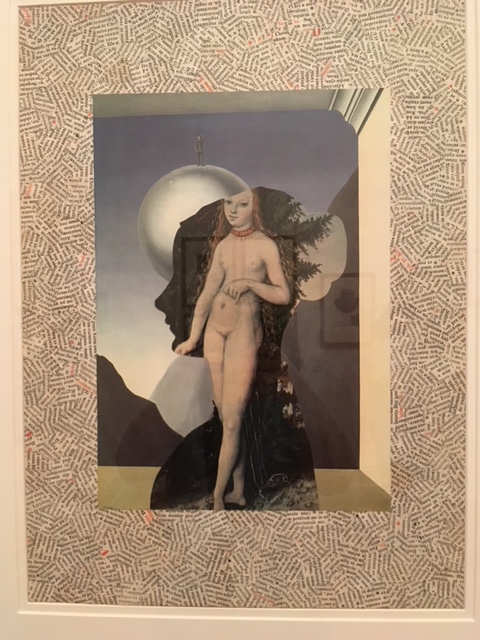
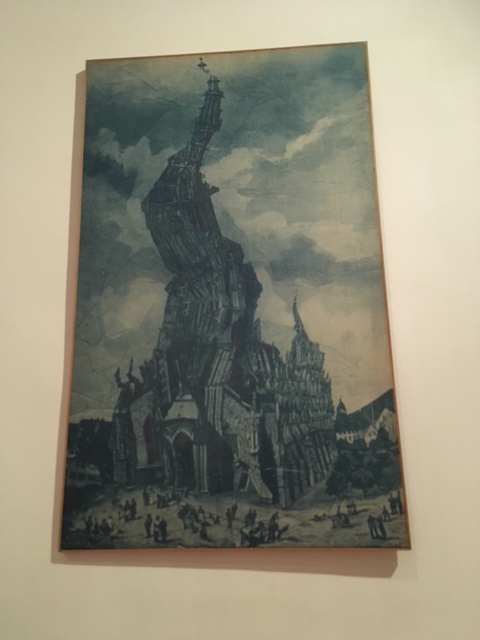
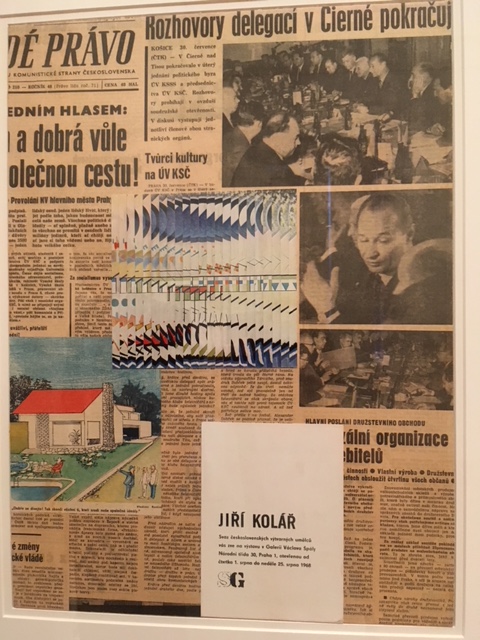
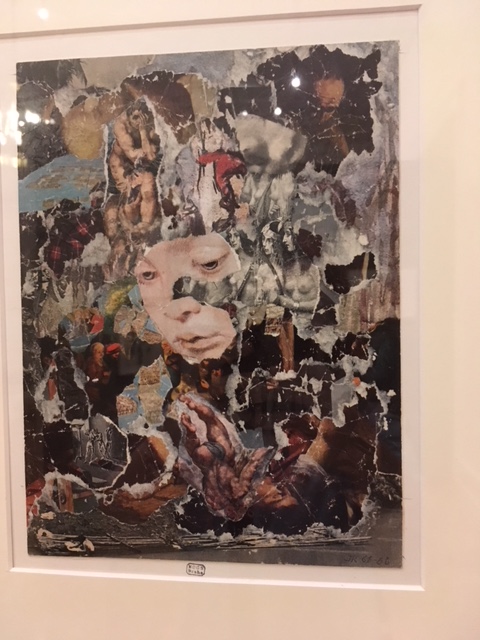
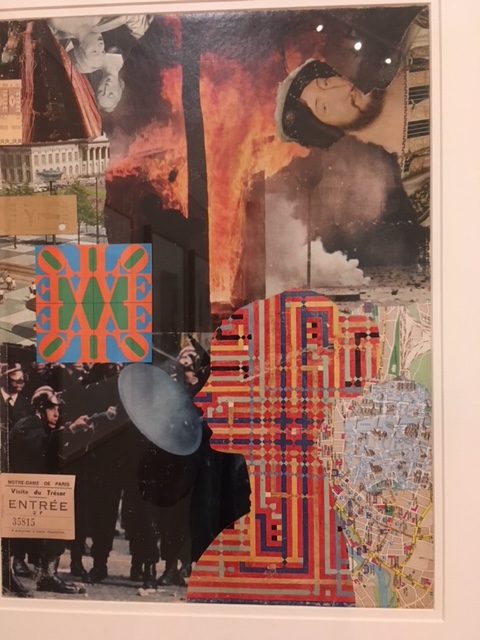
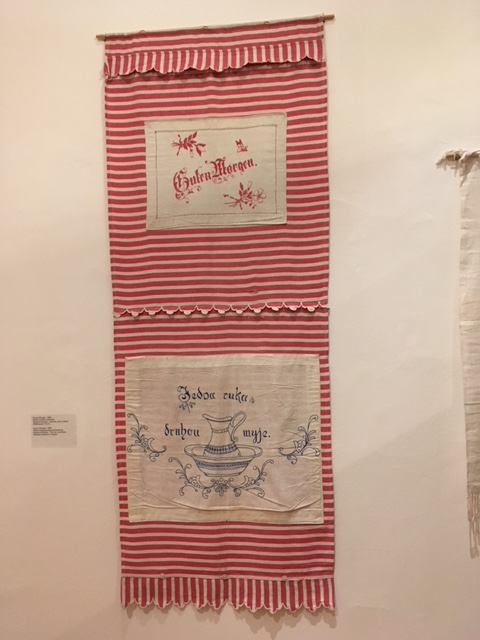
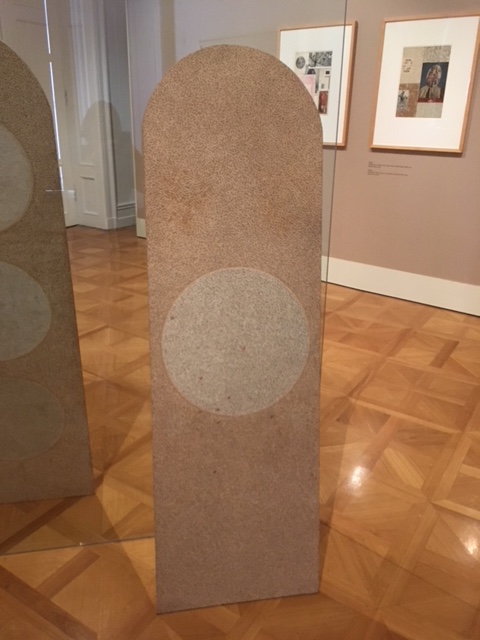
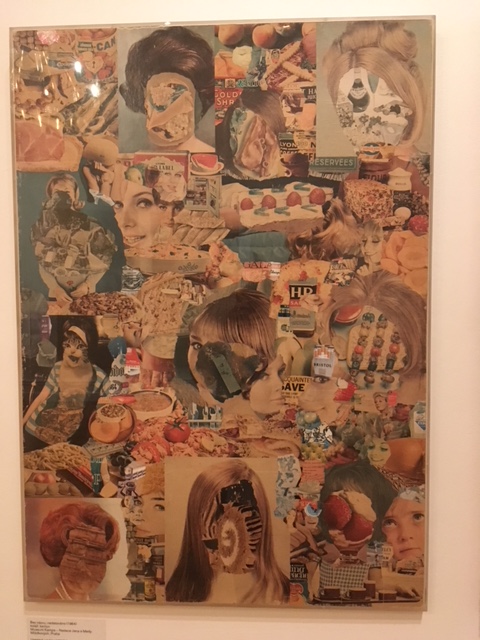
I recently saw an exhibition of artist Jiří Kolář’s breathtaking collages and other works at the Kinský Palace in downtown Prague and was very moved by Kolář’s emphasis on freedom, personal expression and democracy. Many of his works were created when Czechoslovakia was oppressed during the totalitarian regime. His 66 political collages from 1968, after the Russians sent in the Warsaw Pact tanks to crush the liberal reforms of what was called “Prague Spring,” poignantly show how the Soviets had strangled Czechoslovakia in what would lead to an era of normalization, which encompassed rigid totalitarian reforms. Kolář confronts viewers and challenges their perceptions by often combining images that do not necessarily seem to correlate. He distorts and destroys images, expressing the cruelty of the Communist era and the longing for democratic ideals.
Kolar2

Kolar5

Born in 1914 in the decaying Austro-Hungarian Empire that enforced Germanization, Kolář witnessed the establishment of a democratic Czechoslovakia at the age of four. While he took up cabinet making initially, he would go on to become one of the most significant poets, writers, painters and translators. Even an injury that resulted in him losing a finger did not stop him from making a difference on Czechoslovakia’s literary and art scene. For a while, he took on odd jobs, working as a construction worker, butcher, waiter, security guard and bartender, for example.
Kolar4

Kolar10

The country was introduced to his collages as early as 1937. During 1942, he joined the Group 42 existentialist artists that greatly influenced Czechoslovak culture. It was not until 1943 that he started to devote all his time to writing and, soon after, to editing as well. His brief stint in the Communist Party, during 1945, lasted less than a year.
Kolar12

Kolar13

Certainly, the Communist regime was far from kind to him. When the Communists took control of Czechoslovakia in 1948, Kolář became a banned author. While he was not allowed to publish, he scribed poetic diaries and authored manuscripts such as Prometheus’ Liver and Aesop from Vršovice. In the early 1950s, he was even imprisoned for nine months after the authorities found at his home a samizdat work written by a fellow dissident.

Kolar11

Kolar17

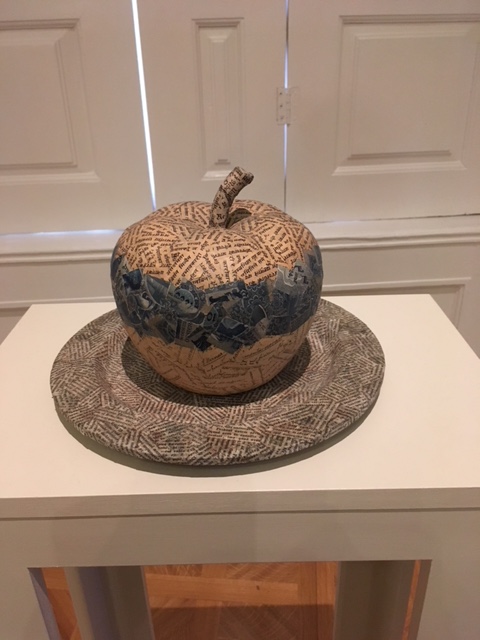
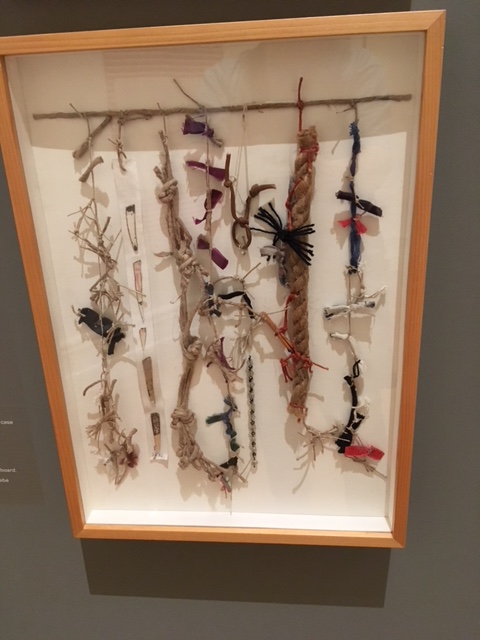
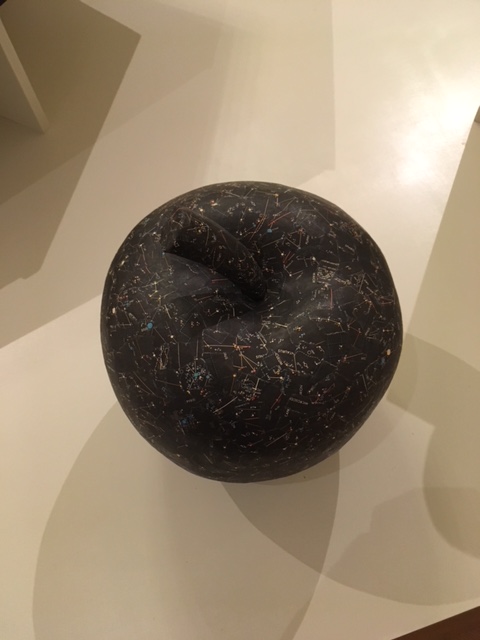
During the 1960s, he took up experimental poetry, writing literary collages, and was one of the most influential artists to frequent the Café Slavia in Prague, where he met a young Václav Havel and others who voiced opposition to the Communist regime. His work was seen abroad during the 1960s, too. Some of his collages from this time included items that seemed misplaced, such as string, keys and shavers. He also started placing apples in his collages and designing apples of various sizes in various colors. The apples might symbolize temptation and the fact that all fruit looks similar, a powerful reminder of mass society in the modern world.
Kolar9

Kolar14

Kolar16

Kolář experimented with various techniques of collage, even using textile and paper in his works. It was also during that decade that he mixed poetry with painting, finding a powerful and provocative voice by using both forms of expression that combined visual and literary art in a masterful way. He made collages of pictures he cut out of magazines and utilized excerpts of texts that epitomized the fragmentation of his country and the world. By doing so, he created new thought-provoking images.
Kolar8

Kolar3

Even after the Soviets invaded Czechoslovakia during 1968, he continued to support freedom and democracy despite the rigid era of normalization that followed. He even signed Charter 77, a document drafted by dissidents, calling for human rights in Czechoslovakia. The Communist regime made sure there were severe repercussions for anyone brave enough to put their John Hancock on the proclamation.

Kolar18

Kolar19

The Communist authorities forced him to emigrate, not allowing him back in his homeland after a stint in West Berlin. From 1980, he resided in Paris, though his Czech wife was not permitted to visit him there until five years later. He obtained French citizenship in 1984.

Kolar20

Kolar21

After the 1989 Velvet Revolution that toppled the Communist regime, he visited Prague often. When he became severely ill in 1998, he moved back to Prague and even had to relearn how to walk. At the age of 88, in 2002, he succumbed to the spinal injury that had kept him hospitalized for the last years of his life.
Kolar22

Kolar24

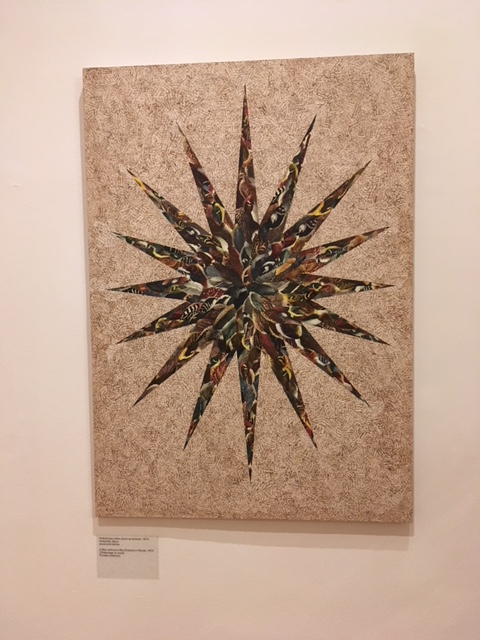
Kolář’s creations have entranced me for decades. I was introduced to his work in the early 1990s. I admire his direct confrontation with the viewer. He combines images that I would have never thought could be grouped together, challenging my view of the world. His messages often deal with harsh reality, but he also yearns for personal and national freedom.
Kolar25

Tracy A. Burns is a writer, editor and proofreader in Prague.
Prague’s Botanical Gardens in Troja Diary

PragueBG14

PragueBG15frog

PragueBG30

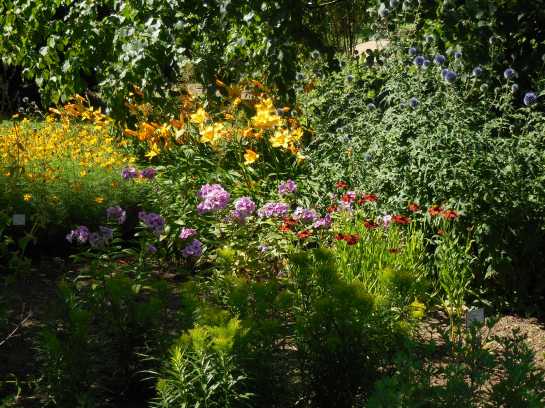
I had visited Prague’s Botanical Gardens in the Troja district about 15 years earlier, but, for some reason, every time I thought of going back, the weather was bad or I did not have time. I love botanical gardens in foreign cities I have visited, such as Madrid. Why hadn’t I spent more time in the botanical gardens in the city where I lived? I chided myself one day in 2018.

PragueBG31

PragueBG17

I finally got there again in the summer. I went with a friend in the morning, before the humidity and heat became too much to bear. The botanical gardens in Troja is vast. It measures more than 20 hectares with a greenhouse that had not been there when I last visited and an outdoor area divided into the southern and much larger northern parts.

PragueBG7

PragueBG9

PragueBG10

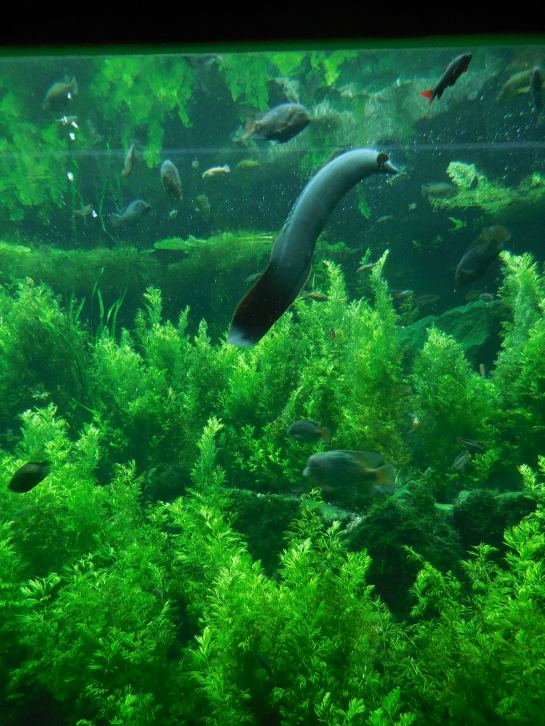
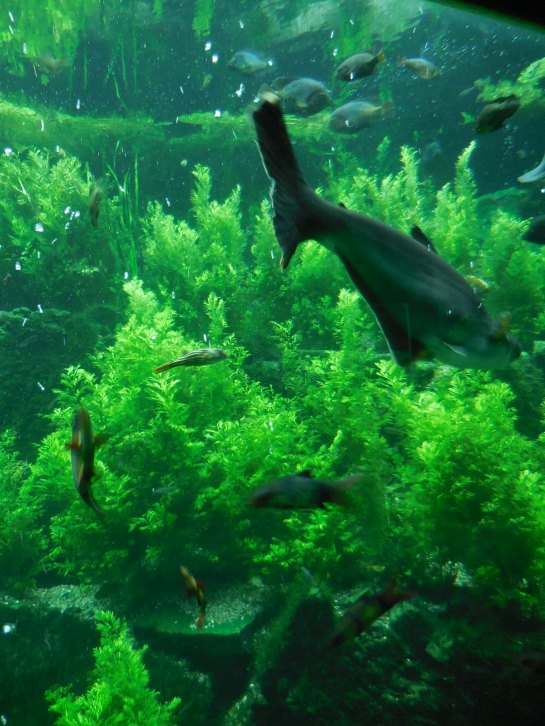
First, we explored the greenhouse that was erected in 2004. It is 130 meters long and 17 meters wide. Inside was a tropical forest. I loved the small bridge surrounded by foliage. The structure looked like it had jumped straight out of a Monet painting. I loved watching the fish in the glass tunnel that divided the freshwater pond into two sections. The fire eels and iridescent sharks were amazing. I would not like to stick my hand in that tank. I’m sure it would have been bit off right away. We also saw meter-long arowanas, angelfish and archerfish. We wanted to see some butterflies, but we only managed to set our eyes on two, but they were two beautiful butterflies!

PragueBGgreenhouse5

PragueBGgreenhouse9

In the greenhouse, there is a lowland rainforest section with species from Australia, Africa and Vietnam, for instance. The biggest section features lowland rainforests of tropical areas in America, Asia, Australasia and Africa. Here we saw deciduous trees, lianas, coniferous trees and palms. We saw some well-known plants, such as begonias, but there were many rare species as well. One section of the greenhouse features vegetation from subtropical and tropical regions, which often experience dry seasons. We saw plants from Australia, Central America, Madagascar and places in Africa. The smallest section is dedicated to tropical regions found in the high mountainous regions. Only a few greenhouses in Europe have a cooled section that could support such species in that kind of climate. The air in this part is humidified by mist.

PragueBGgreenhouse12

PragueBGgreenhouse16

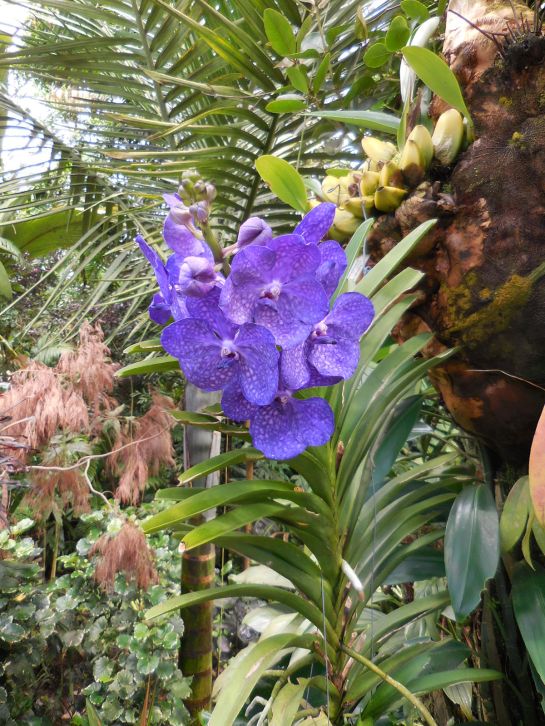
Intriguing species that we saw include the Dutchman’s pipe, which is one of the most endangered species in the world. Its brown flowers look like mushrooms. It is located in the wild only in seven places in Central America. The giant fern is one of the oldest plants in the world. Its leaves can grow up to seven meters long. The trunk can be as much as three meters tall and one meter in diameter. The climbing pandanus, which can grow to 20 meters in height, is found in the wild in the Luzon Island of the Philippines. We also saw cocoa trees, which were once sacred to the Aztecs, who considered it to have seeds that are the food of the Feathered Serpent. I loved the turquoise color of the jade vine, which is found in the wild only on three islands in the Philippines. The torch ginger flowers, red with yellow edges, were beautiful. It is from Southeast Asia, and paper can be produced from its stems. We also saw the marsh pitcher plant, native to the mountains of Venezuela.

PragueBG35

PragueBG38

PragueBG39

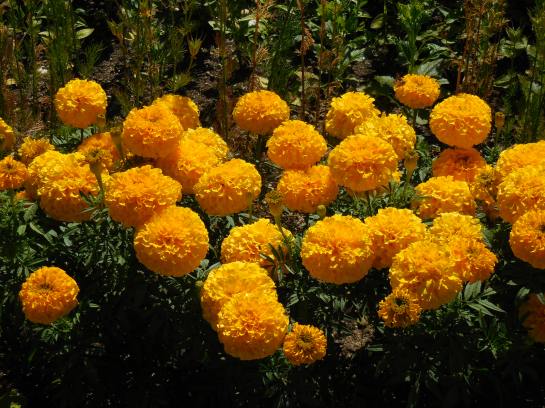
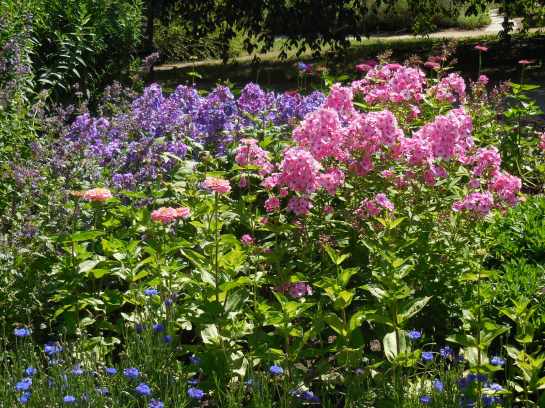
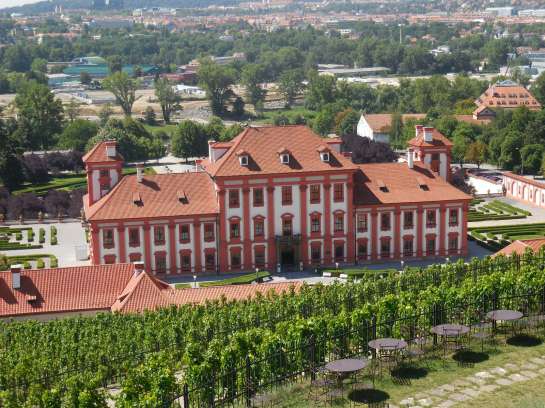
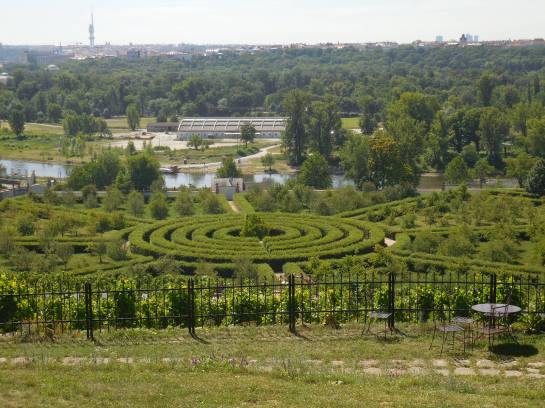
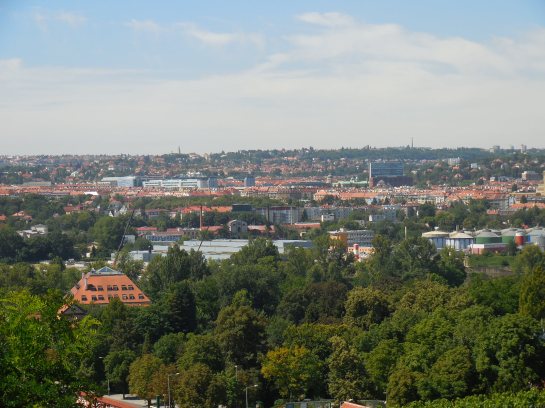
Then we visited the southern part of the gardens. I loved the Ornamental Garden best with its large, colorful flowerbed. The Japanese Gardens dotted with azaleas is another delight. A wine press, a wine shop and Mediterranean vegetation are also located in the southern section. In addition to the Ornamental Garden, my favorite feature was the view of St. Claire’s Vineyard and Troja Chateau, a place dear to my mother and me. The Baroque chateau had been built from 1679 to 1685, its desin inspired by Roman villas. The chateau’s French garden boasted superb statuary. From the Botanical Garden the views of the city and of the chateau were breathtaking.

PragueBG29chateau

Baroque Troja Chateau

PragueBG20view

PragueBG24chapel

PragueBG26intchapel

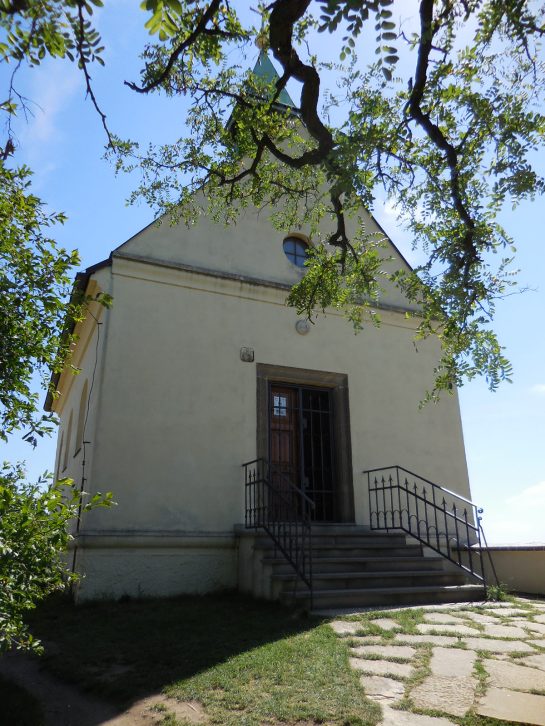
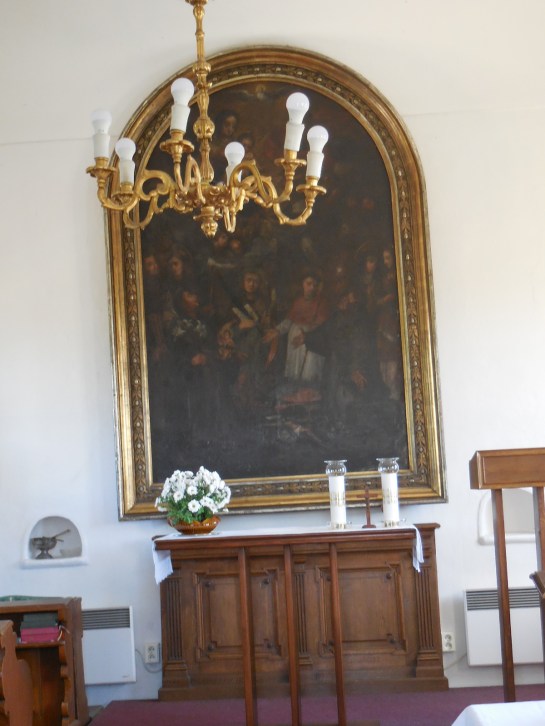
St. Claire’s Vineyard, which we saw from the top of a hill, has a long history that goes back to the 13th century. You can buy wine made from its grapes in the wine shop, but I do not drink alcohol, so I have not tried it. We saw the Baroque chapel of St. Claire, too.

PragueBG32

PragueBG22view

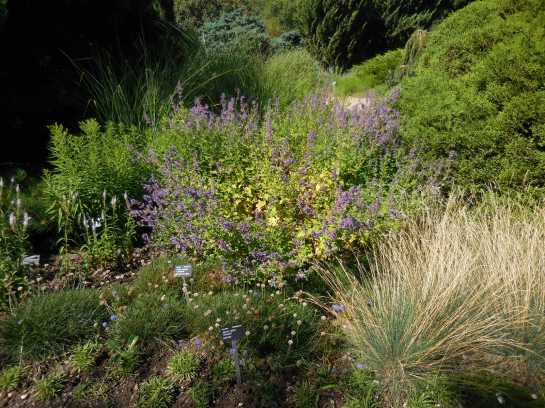
Alas, it became too hot and humid to continue after a few hours, so I did not get to the northern section during this visit, though I did go there when I first came to the gardens. I have to go back to see the variety of gems that it offers – a Mediterranean garden, forest biotopes from Asia and North America, a North American prairie, a cacti section, wetlands, a lake and a semi-desert section. I saw a picture of the peony meadow, and it was so enchanting. I will definitely go back there when the weather is not scorching hot. The northern part is so big that I do not know if I could see everything in one visit.

I was very glad that I had begun to get acquainted with Prague’s botanical gardens again, and I am sure I will be back to discover more of its treasures.

Tracy A. Burns is a writer, proofreader and editor in Prague.
PragueBG42

PragueBG28

PragueBG1

Museum of Decorative Arts in Berlin Diary

BerlinMDA38

BerlinMDA3

BerlinMDA22

BerlinMDA2

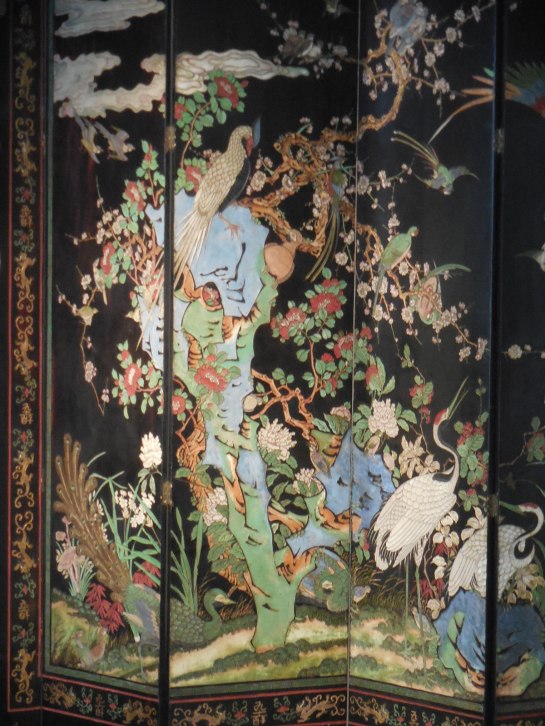
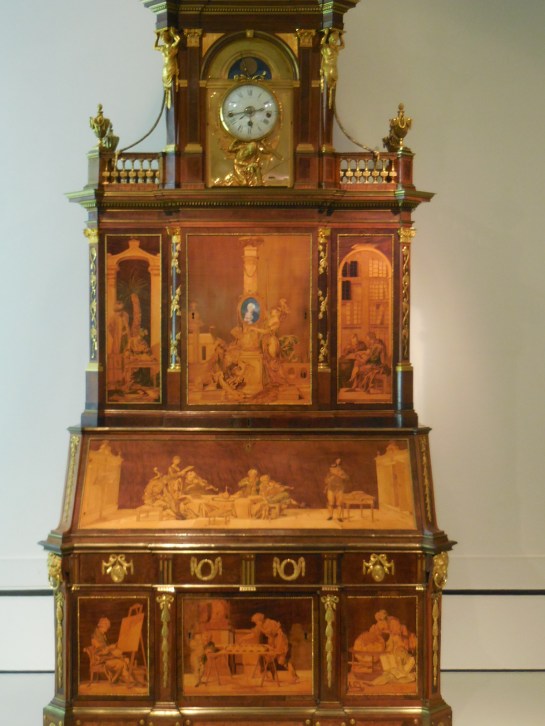
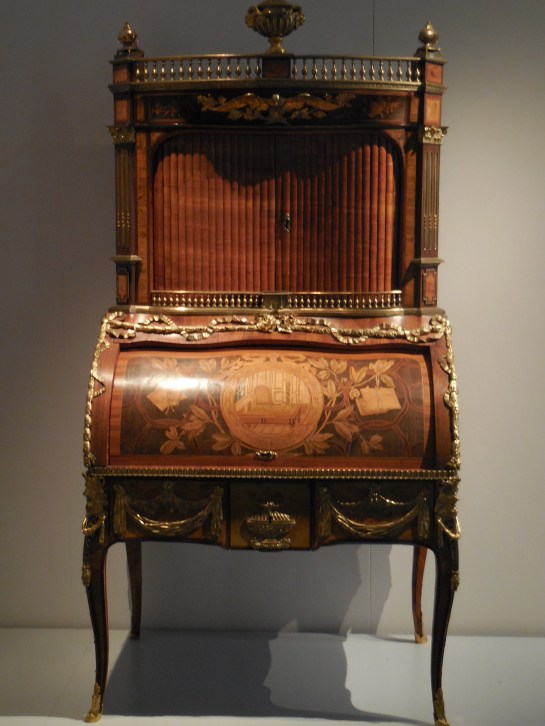
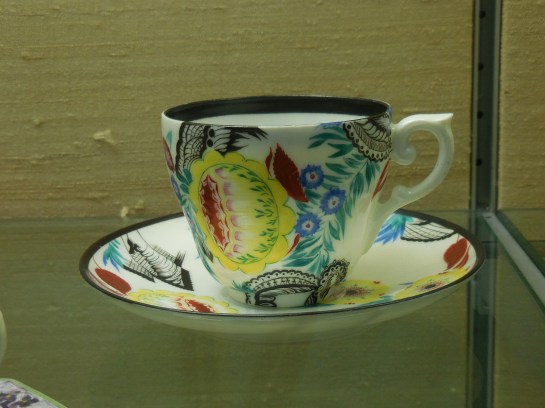
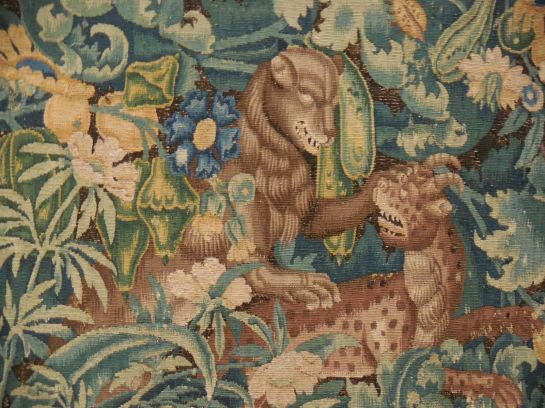
Located next to the Gemaldegalerie of painting masterpieces, the Museum of Decorative Arts(Kunstgewerbemuseum) in the Kulturforum complex holds a very underrated and impressive collection of top-notch exhibits in fashion, design and object art from the Middle Ages through the Art Deco period. I was particularly impressed with the monumental Renaissance tapestries.

BerlinMDA28

BerlinMDA29

BerlinMDA30

BerlinMDA36

BerlinMDA19

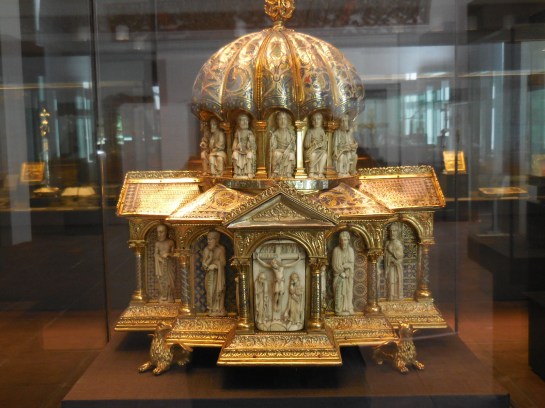
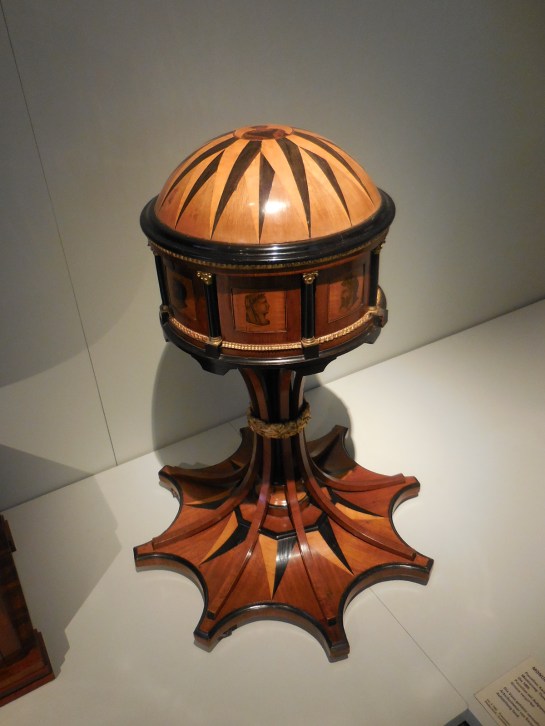
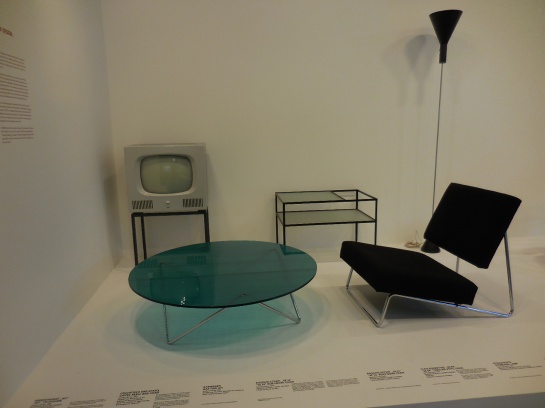
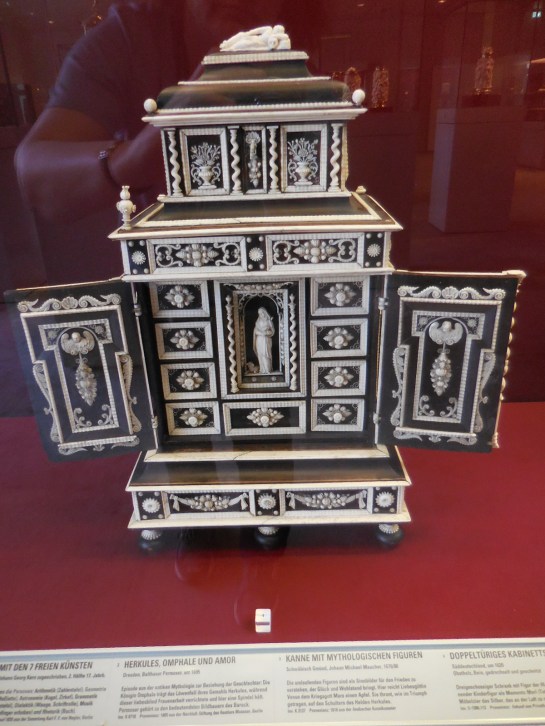
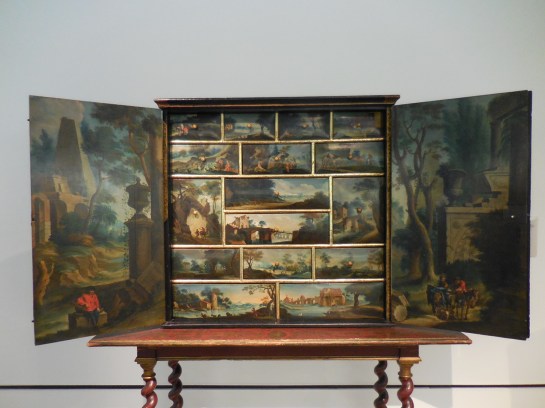
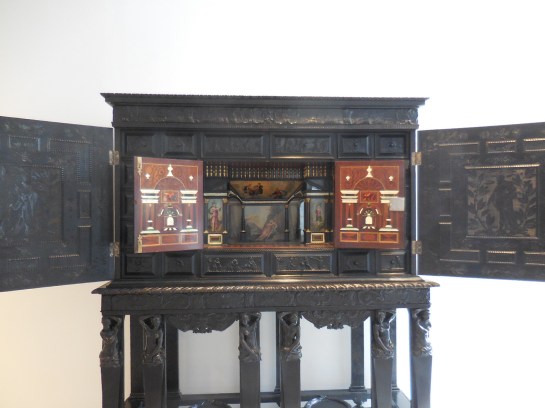
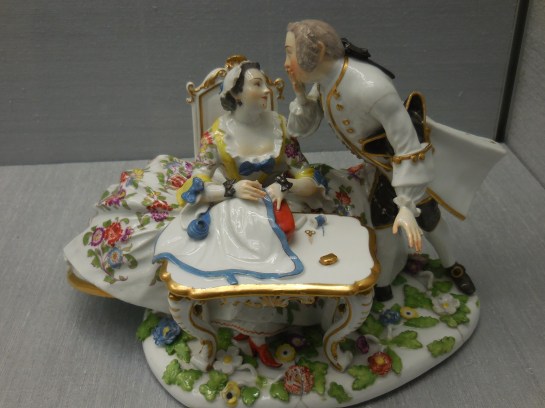
To be sure, the medieval and Renaissance art was astounding, especially the Guelph Treasure from the 12th century. Objects from the Baroque era also stood out, including furnishings and a cabinet of curiosities from that era. Rococo porcelain, such as Meissen, is well-represented, too. The Art Nouveau and Art Deco collection spans from 1900 to 1920. I was drawn to the Art Deco vases and the furniture in both styles.

BerlinMDA16

BerlinMDA17

BerlinMDA27

BerlinMDA26

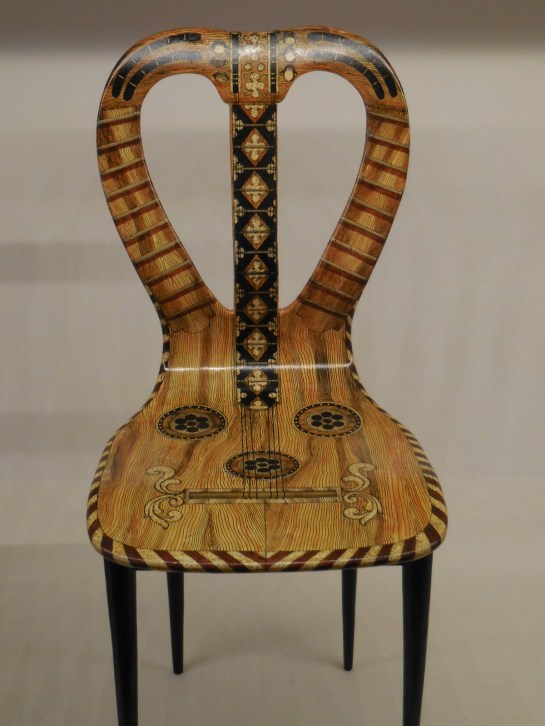
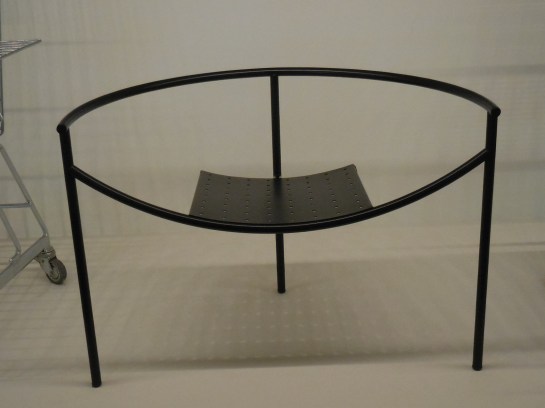
On the lower level, there is an intriguing exhibition of chairs from the 19th century to the present. It was fascinating to see how chair design had developed through the ages. One chair was made of what looked like wire; I could not imagine how painful it would be to sit on it. Another resembled an ice cream cone in a playful yellow with white color combination.

BerlinMDA40

BerlinMDA41

BerlinMDA42

BerlinMDA43

BerlinMDA44

BerlinMDA45

BerlinMDA46

Normally, I am not interested in fashion at all, but this collection caught my undivided attention. I loved the stunning evening dresses plus the older fashions from 1700 to 1850. I could never wear a corset! This museum outdid my expectations, and I came away with a fonder appreciation of fashion, design and art in general.

BerlinMDA37

BerlinMDA4

BerlinMDA5

BerlinMDA6

BerlinMDA7

BerlinMDA8

BerlinMDA9

BerlinMDA35

BerlinMDA10

BerlinMDA12

BerlinMDA13

BerlinMDA14

BerlinMDA15

BerlinMDA18

BerlinMDA20

BerlinMDA21

BerlinMDA23

BerlinMDA25

BerlinMDA32

BerlinMDA33

Tracy A. Burns is a writer, proofreader and editor in Prague.

Berlin Wall Memorial Diary

BerlinWallM3

Part of the original Wall at Bernauer Strasse

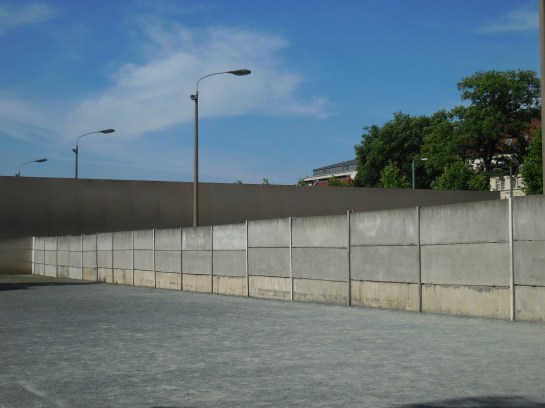
Seeing the 220 meters of the original Berlin Wall at the memorial on Bernauer Strasse during 2018 triggered memories of my first visit to that city, in 1991, when long stretches of the Wall had yet to be taken down. Back then, on a jaunt to Europe after college graduation, I had been amazed at everything I saw in the city. Even though I had done much research about Berlin and the history of the Wall as a student, I saw the Wall with emotional detachment. During 1991, I could not truly realize what the Wall represented. I knew it divided East and West Berlin from 1961 to 1989, and I remembered watching the joyous moments of the Berliners climbing the Wall in October of 1989 as a new era was ushered in and no one would look at the Berlin, Germany, Europe or the world the same way again. I knew there had been escape attempts, some thwarted, others successful, some resulting in death, others resulting in new beginnings in the West. But I hadn’t felt the history the way I did this time, at the Bernauer Strasse memorial during 2018.

BerlinWallM9

Poles mark where the Wall once stood at Bernauer Strasse

Here’s a little background information. The Wall, built in August of 1961, divided East and West Berlin until October of 1989. Some 156.4 kilometers of Wall bordered West Berlin and consisted of concrete walls lined with pipes at the top. There were 186 observation towers and 20 bunkers plus fences built 100 meters from the Wall. The area between the metal mesh fence and concrete wall was a clearing called the death strip, and border guards had a clear view of anyone trying to cross it. The Wall area also included signal fencing, trenches to deter vehicles from trying to cross, barbed wire and beds of nails under balconies of apartments over the death strip.

BerlinWallM6

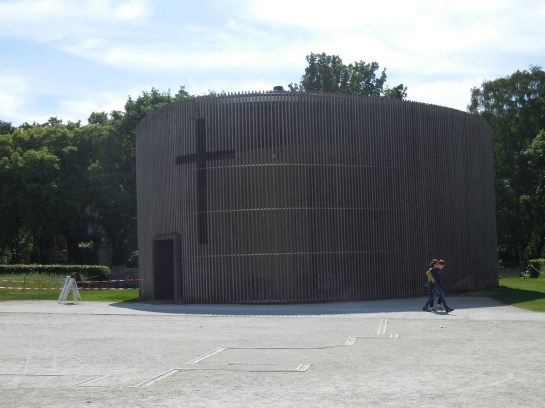
Sculpture at the Chapel of Reconciliation

One reason I had a different perspective during 2018 was because I had spent more than 20 years living in Czechoslovakia and the Czech Republic. I had scores of friends who told me harrowing stories of life under Communism – about the physical hardships and especially about the mental hardships of having one’s life inundated with the Communist ideology day in and day out. Looking at that small section of the Berlin Wall and the posts that marked where it had continued up and down Bernauer Strasse, I felt almost as if I knew the pain and anguish of the East Berliners, even though I had grown up in middle class America as a spoiled only child. This time, I could feel the history, and it seeped through my body, almost making me nauseous from my thoughts of life in East Berlin, behind that Wall, where now a group of teenagers gathered as they studied their mobile phones, seemingly oblivious to their surroundings, as if the Wall were nothing more than a wall.

BerlinWallM4

Another reason the memorial affected me so strongly was the poignancy of the exhibition about the Wall in the Documentation Center. It featured stories of individuals who had tried to escape, worked as escape helpers or served as informers for the secret police. I looked into each face, read each name and felt as if I had met each person.

CCI06192018

Postcard of the Berlin Wall around the Brandenburg Gate

There was Siegfried Uhse, a hairdresser who had resided in the West area of the city since 1960. He became an informant a year later. By pretending to look for an escape route for his girlfriend and her family, he was able to contact escape helpers who believed his lies. Because of Siegfried, five escape tunnels were betrayed from 1961 to 1963. Because of Siegfried, 89 refugees and escape helpers were arrested. Despite all the bad things that had happened in the world during my lifetime, it still amazed me that someone could do something so evil.

BerlinWallM10

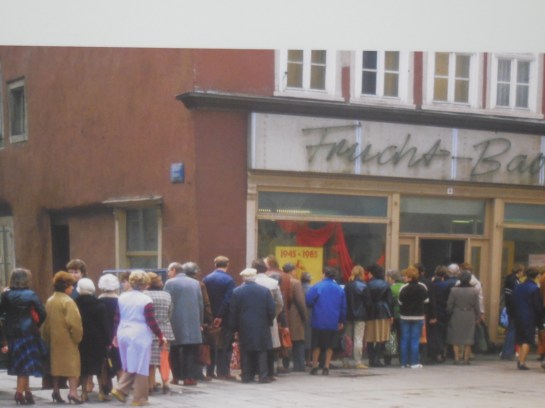
Photo of a line for food in the DDR from exhibition at Documentation Center

One of those arrested was Harry Seidel, a racing cyclist who could not participate in the 1960 Olympics because he lived in East Germany. He made it to West Berlin and even got his wife and baby out as well. Then he wanted to help others gain the same feeling of freedom he was able to experience. He dug escape tunnels in 1962. Once he was almost ambushed; it was a close call, but he made it. However, in November of 1962 he was not so lucky. It was a trap. The secret police were waiting for him at an escape tunnel because of Siegfried’s intel. He was sentenced to life in prison. Before his arrest, he had helped 100 people flee to the West. That, I mused, was what real heroes were made of.

I also learned about Hartmut Richter, a railroad worker who tried to escape in 1965. His hopes were dashed, though, and he was convicted with a suspended sentence. In 1966, he did succeed in escaping. From 1971 to 1975, he was an escape helper. Then, in 1975, he was caught and received a 15-year prison sentence. He only served five years in jail, though, as West Germany paid ransom for his release during 1980.

BerlinWallM2

A watchtower at the Wall

I also learned about an escape attempt at the Invalidenstrasse border crossing – I had walked down that bustling street on the way to Bernauer Strasse. Eight young Berliners tried to drive a bus through the border. Fate was not kind to them. They were gravely injured by the 138 shots fired by border guards and arrested. They all spent many years in prison.

CCI06192018_0002

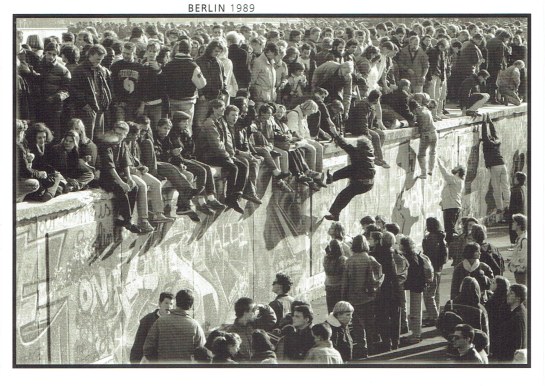
Postcard showing the fall of the Berlin Wall on November 10, 1989 near Brandenburg Gate

I read about the VW Beetle that drove at top speed through the barbed wire fence erected on the first day the wall was built, August 13, 1961. It stopped in West Berlin, and the driver was free to open a new, exciting chapter in his life.

BerlinWallM5

The Chapel of Reconciliation

Residents of Bernauer Strasse had been very innovative in their escape attempts. Some had jumped into rescue nets of fire engines from West Berlin after making calls to the fire department, others had jumped from their roofs to the West, and still others had slid down ropes from their apartments on the border.

CCI06192018_0001

Postcard showing the fall of the Berlin Wall, November 10, 1989

I saw remnants of the inner wall with green area behind it, a place where youngsters leisurely kicked a soccer ball. I imagined a guard in the watchtower being ready to fire on anyone trying to make a dash for it through No Man’s Land, which afforded the border guards a clear line of fire. I could imagine patrol cars driving by and anti-vehicle trenches preventing cars from crossing. I could almost hear the fierce barking of the dogs, their teeth barred, as they spotted a refugee in the border area.


BerlinWallM7

Interior of the Chapel of Reconciliation

I remembered watching American President Ronald Reagan speaking at the Brandenburg Gate, commemorating the 750th anniversary of Berlin, on June 12, 1987 and declaring, “Mr. Gorbachev, tear down this wall.” I had just graduated from prep school and took the concepts of freedom and democracy for granted. I hadn’t been interested in my Czech and Slovak roots back then. I had never thought about life behind the Iron Curtain. That was some mysterious place I was sure I would never go.

I did not stay as long as I had hoped at the memorial because I began to feel sick as I tried to put myself in the shoes of those East Berliners who had dreamed of freedom. I wound up retreating to a museum in the city center. I hope to go back to the Berlin Wall Memorial and spend more time there on a future visit. There is a lot of history to soak in, and one visit does not do the place justice.

Tracy A. Burns is a writer, proofreader and editor in Prague.

berlinghm71.jpg

Section of Berlin Wall in Museum of German History


Bode Museum Diary

BerlinBode1

BerlinBode2

BerlinBode4

BerlinBode5

Inaugurated in 1904 as the Kaiser-Friedrich-Museum, the building was designed by Ernst Eberhard von Ihne, and construction lasted seven years. In 1956, the museum got its current name, in honor of the first director, William Bode, whose trademark was showcasing a variety of artworks – sculpture, painting, coins, medals, crafts. Indeed, what I liked best about the Bode was the variety – the sculptures, paintings and crafts all mixed together, sometimes even in one room. The collections were full of surprises that made me enthusiastic about each work I came across.

BerlinBode6

BerlinBode10

BerlinBode11

BerlinBode15

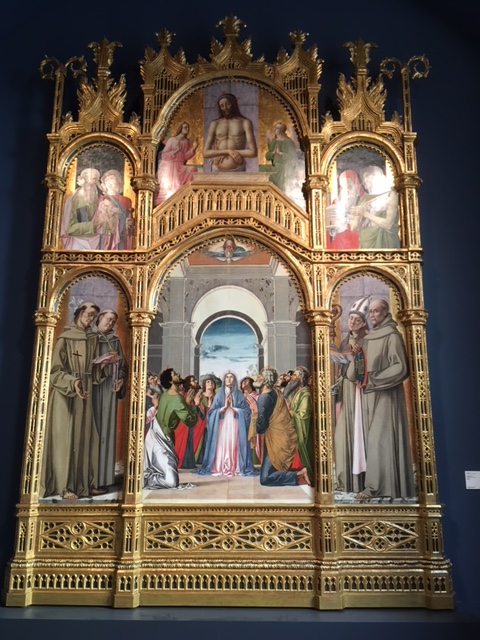
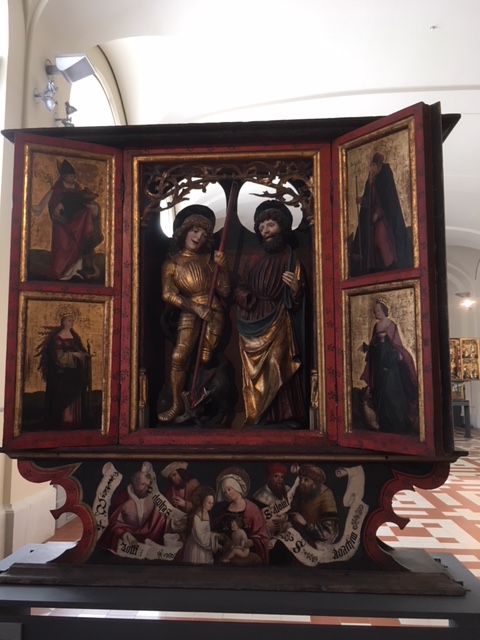
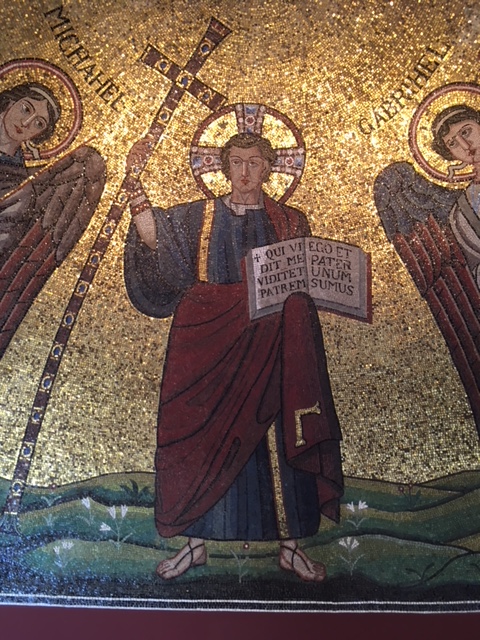
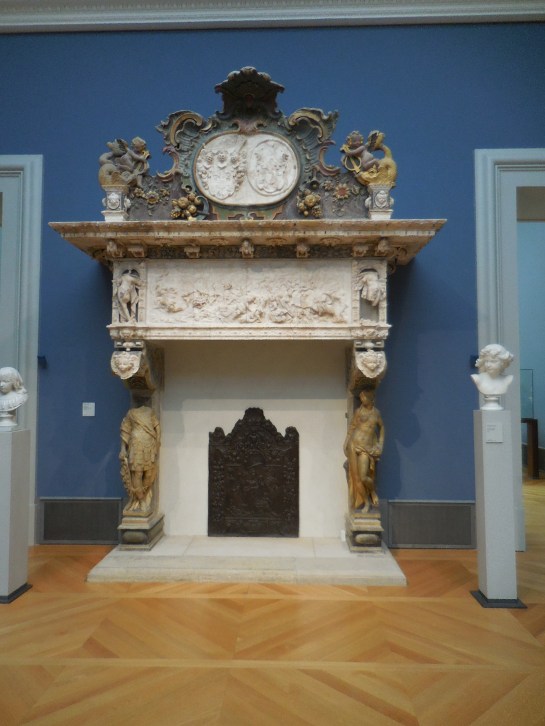
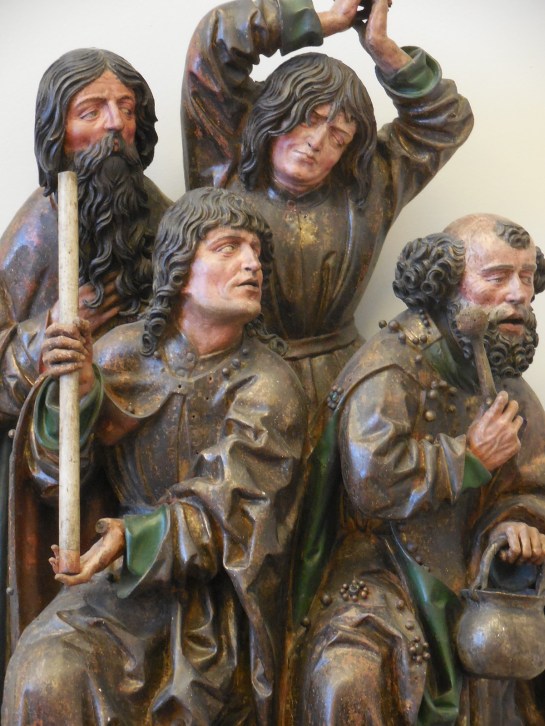
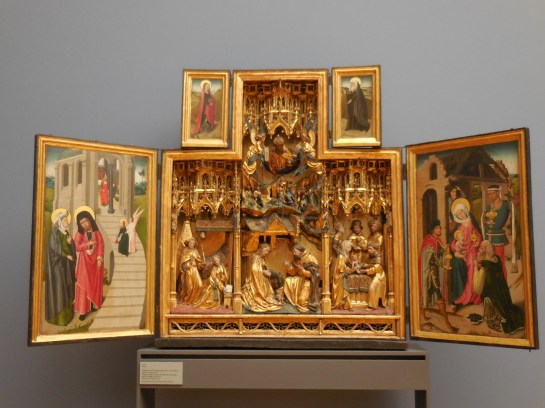
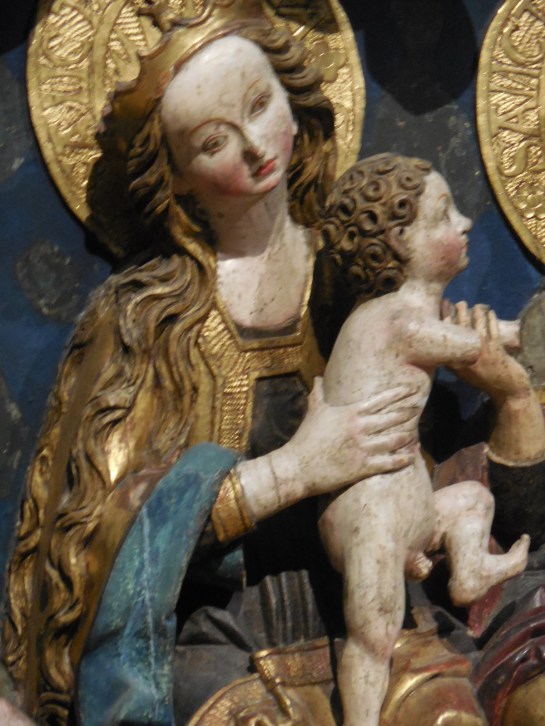
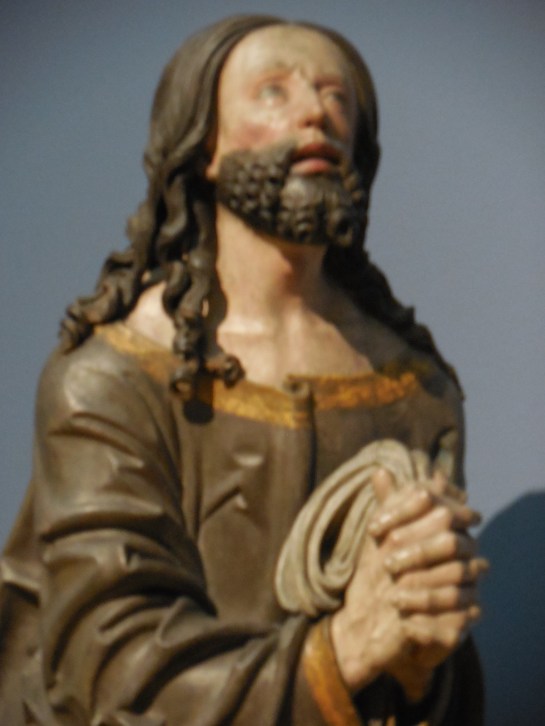
I especially liked the sculpture collection. The medieval sculptures moved me the most. The large triptychs were overwhelmingly beautiful. Byzantine art played a major role in the collections. The art from Ravenna reminded me of my trip there as I had been dazzled by mastery of the works there. One of the largest collections of sculpture in the world, the pieces date from early medieval times to the late 18th century. Donatello, Lorenzo Bernini, Giovanni Pisano – they were just a few of the creators represented in this unbelievable array of artistry. Architectural sculpture included a Romanesque tribune from Germany. Glazed terracotta was also on display as were small sculptural works from bronze, alabaster and ivory. I also saw mosaic icons and artifacts from Egypt. The museum itself was a work of art with fireplaces and rich decoration hailing from the Italian Renaissance.

BerlinBode20

BerlinBode21

BerlinBode24

I was intrigued by one display in particular. I learned that the artworks from this museum had been stored in a bunker in Berlin-Firedrichshain during World War II, but a fire broke out in May of 1945, destroying many of the sculptures. I imagined furious flames engulfing so many precious works of art and thought how formidable the collection would have been with even more dazzling sculptures. It was a great loss, for sure.

BerlinBode26

BerlinBode28

BerlinBode29

I was in awe as I took in all the artifacts from Roman sarcophagi to silver sculpture to Byzantine works from Italy and Turkey to German Late Gothic sculptures. The mixture of different kinds of art from various periods gave the museum a dynamic quality and unique character.

Tracy Burns is a writer, proofreader and editor in Prague.
BerlinBode36

BerlinBode47

BerlinBode25

BerlinBode17

BerlinBode18

BerlinBode19

BerlinBode7

BerlinBode16

BerlinBode22

BerlinBode23

BerlinBode27

BerlinBode30

BerlinBode31

BerlinBode32

BerlinBode34

BerlinBode35

BerlinBode38

BerlinBode39

BerlinBode40

BerlinBode41

The Pergamon Museum Diary

BerlinPergamon2

The Ishtar Gate

BerlinPergamon5

BerlinPergamon6

BerlinPergamon16

Built from 1910 to 1930, the Pergamon Museum on Berlin’s Museum Island is one of the most visited museums in the country. One of its highlights, the Pergamon Altar, is closed for a lengthy period. Still, there’s a lot to see.

BerlinPergamon12

The Market Gate of Miletus

BerlinPergamon9

BerlinPergamon10

BerlinPergamon13

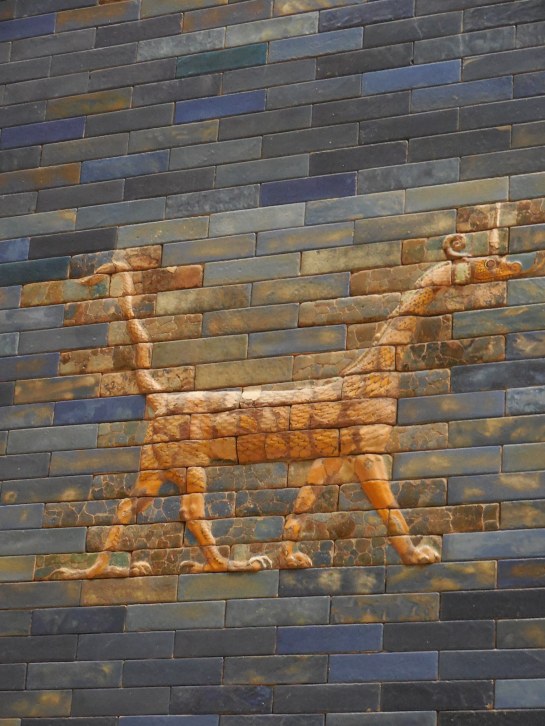
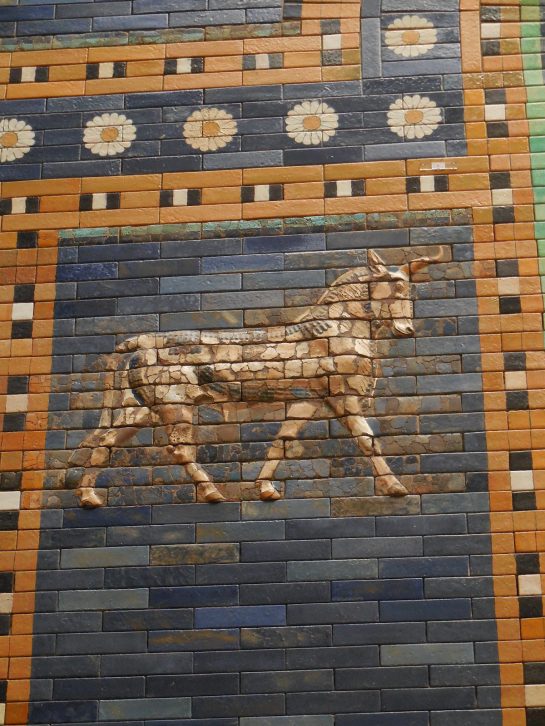
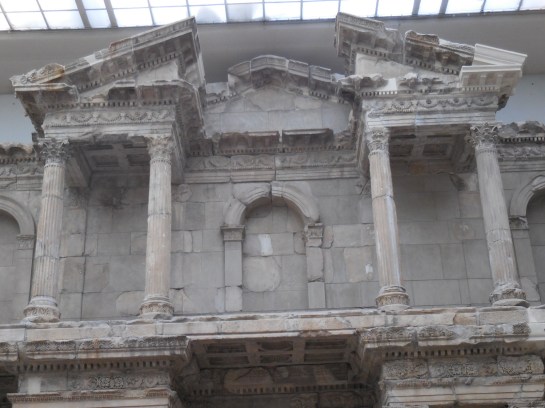
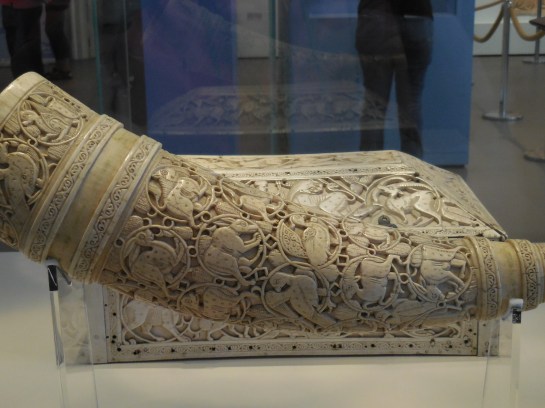
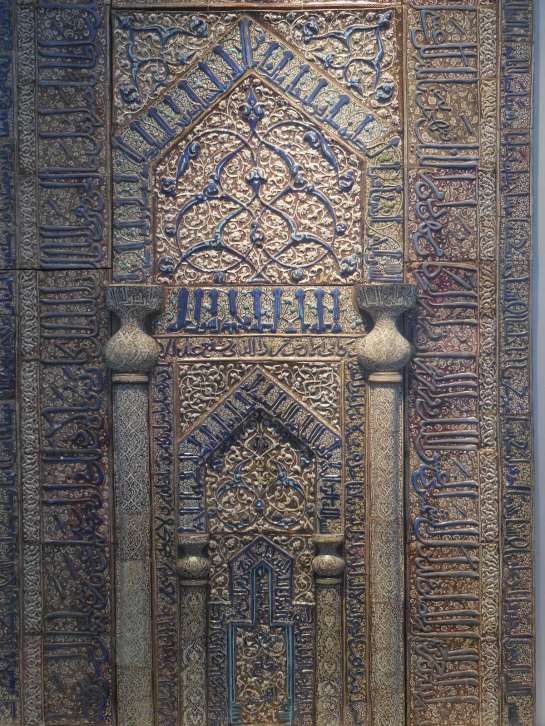
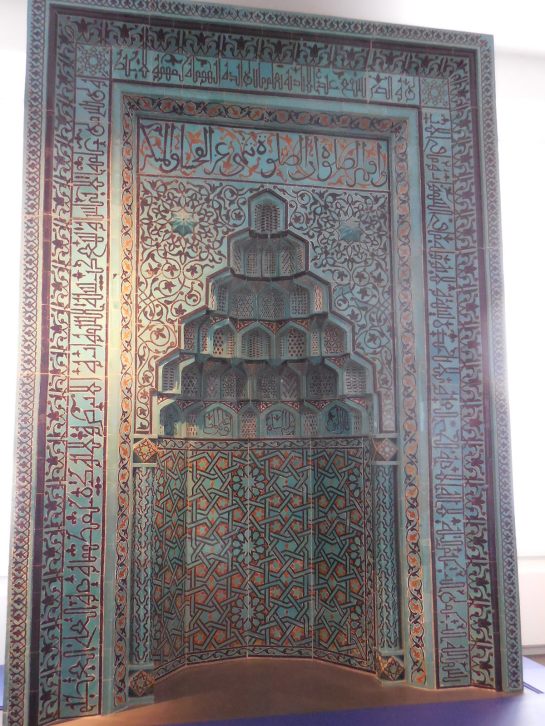
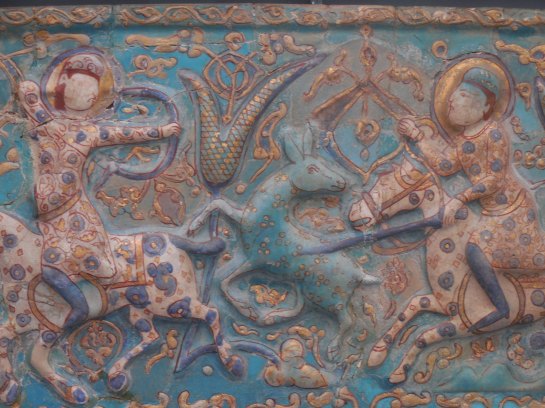
I especially was enthused by the Ishtar Gate in that dynamic blue color. Originally located in Babylon, it hails from 575 BC. The Market Gate of Miletus, dating from 2 AD, also overwhelmed me. I was very impressed with the wide range of Islamic art, too.

BerlinPergamon34

The Aleppo Room

BerlinPergamon35

My favorite exhibit is the Aleppo Room, a richly adorned red reception room from a house in that city. I had only seen pictures of present day Aleppo in ruins. It was difficult to imagine that something so beautiful had once stood in that city. I realized it was once a city of grandeur, though now, unfortunately, reduced to rubble. I felt the tragedy of the war deeply. Before, I had become almost numb to it, seeing so many pictures of the ruins on TV so many times. The exhibit made the war real, way too real.

BerlinPergamon17

BerlinPergamon19

BerlinPergamon21

BerlinPergamon23

I was also intrigued by the museum’s history. It was damaged during World War II, and, shortly afterwards, Russian soldiers took most of the items in the collection back to Russia. Most of it was returned in 1958 – yes, it took that long!, – but some of the objects are still in Russia. They are on display in St. Petersburg and Moscow.

Tracy A. Burns is a proofreader, writer and editor in Prague.

Islamic Art Collection

BerlinPergamon25

BerlinPergamon26

BerlinPergamon27

BerlinPergamon28

BerlinPergamon30

BerlinPergamon32

BerlinPergamon33

Rovereto and the Depero Futurist House of Art Diary

Roveretoext17

Roveretoext4

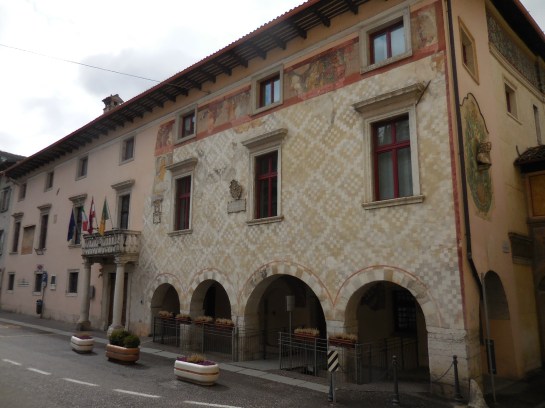
It was the perfect way to spend the last day of my trip to the Veneto region. I had travelled with arsviva travel agency to Vicenza for an art exhibition and to Padua for some sightseeing. The town of Rovereto, below the Dolomites and near Lake Garda, was even more enthralling than the Palladian villas I had seen. The narrow, picturesque streets and quaint squares gave the place a romantic flair. The town had a distinctive poetic quality. I loved the cafes, where I could have sat all day while sipping cappuccinos and eating paninis. There was a lot to see, and, unfortunately, we only had a few hours before the long bus trip back to Prague.

RoveretoDepero24

Roveretoext1

Roveretoext3

Roveretoext11

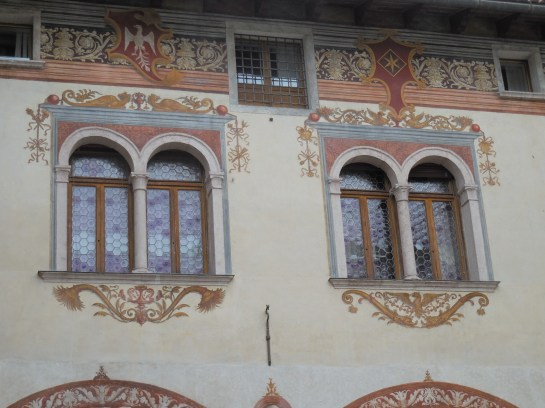
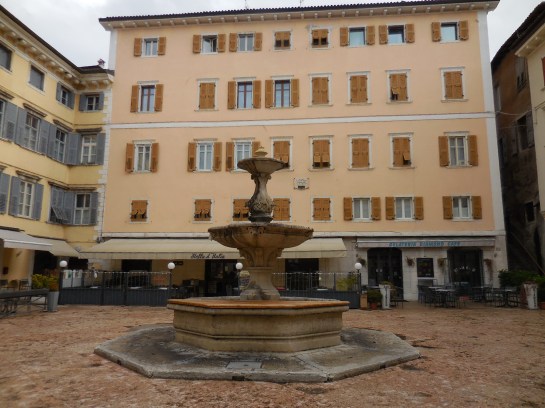
The facades of the buildings caught my undivided attention. I especially liked the floral motifs on the façade of the Palazzo Del Ben-Conti d’Arco behind a fountain on one of the main squares. Other facades showed religious decoration. The town had made a name for itself in history, too. Prominent personalities had set foot in Rovereto, especially during the 18th century. Goethe had visited in 1786, Pope Pius VI in 1782. Mozart gave his first concert in Italy there during 1769. Indeed, I could almost hear Mozart’s lively music as I meandered along the charming streets.

Roveretoext15

Roveretoext5

There’s more. The Public Library holds the distinction of being the location of the longest nonstop reading session ever – 53 hours long. There are intriguing churches while a castle housing a military museum looms above the town. The Bell of the Fallen is the largest bell in the world, made of bronze of cannons from all countries that saw action in World War I.

Roveretoext16

Roveretomuseumext1

When we came to the Depero Futurist House of Art (Casa d’Arte Futurista Depero), I took one look at the building and knew I had to go inside. Elements of modern architecture somehow accented the medieval character of the structure. The building reminded me of the House of the Stone Bell (Dům U kammeného zvonu) in Prague, an exhibition space in a medieval building that is seeping with history. This was the only Futurist museum in Italy, and I wanted to familiarize myself with the movement in which Fortunato Depero (1892-1960) had played a prominent role.

RoveretoDepero1

RoveretoDepero21

RoveretoDepero18

RoveretoDepero12

First, I needed some background information about Depero. He grew up in Rovereto, working with marble and creating art, so it was only fitting that in 1919 he chose this town as the location for the museum that would eventually contain as many as 3,000 of his works. Depero made a name for himself as a painter, sculptor, writer and graphic designer. While living in Rome, he wrote a futurist manifesto and created stage sets and costumes. In 1928, he tried his luck in America, settling in New York City, where he designed costumes for the theatre and created covers for magazines. After a stint of several years, he returned to Italy. Depero remained loyal to the futurist movement, even though it was not as well respected in the 1930s and 1940s because many artists working in that style became fascists during those decades. Due to futurism’s negative image, many abandoned the movement. Not Depero. After World War II, he moved back to the USA, residing in Connecticut. In 1949, he returned to his boyhood home of Rovereto, and he would stay there for the remainder of his life. He was ill for two years before passing in 1960 at the age 68.

RoveretoDepero3

Wall decoration of interior

RoveretoDepero6

It wasn’t until I came to the museum that I became familiar with the movement of Futurism, a movement that was born in Italy during the early 20th century. Futurism rejected the past and celebrated modernity and technological advances. Often its artists portrayed urban environments and industrial cities. Cars and airplanes made frequent appearances. Vehicles were shown in motion, not standing still. However, futurists also tended to praise violence and war. Artists of this movement took up diverse fields – painting, sculpture, ceramics, graphic design, theatre, film, literature and others.

RoveretoDepero17

RoveretoDepero15

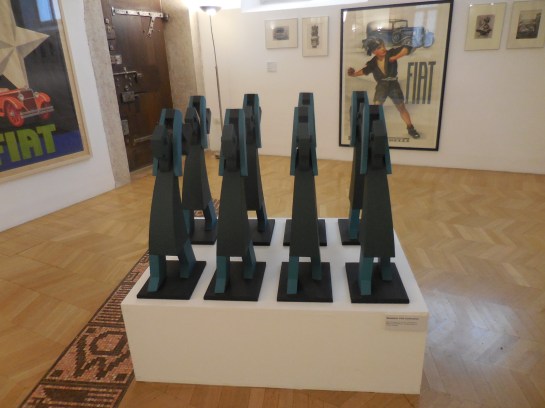
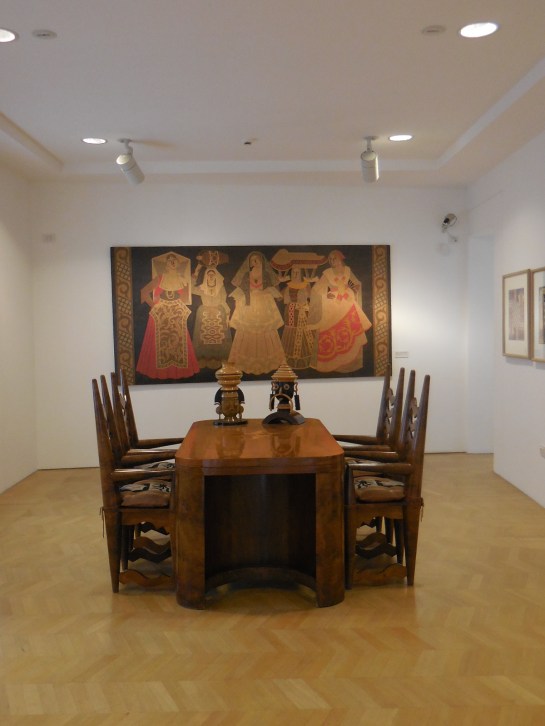
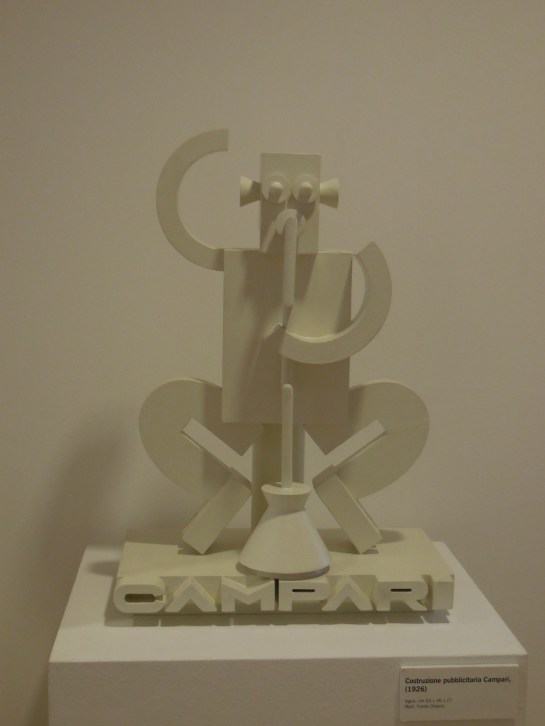
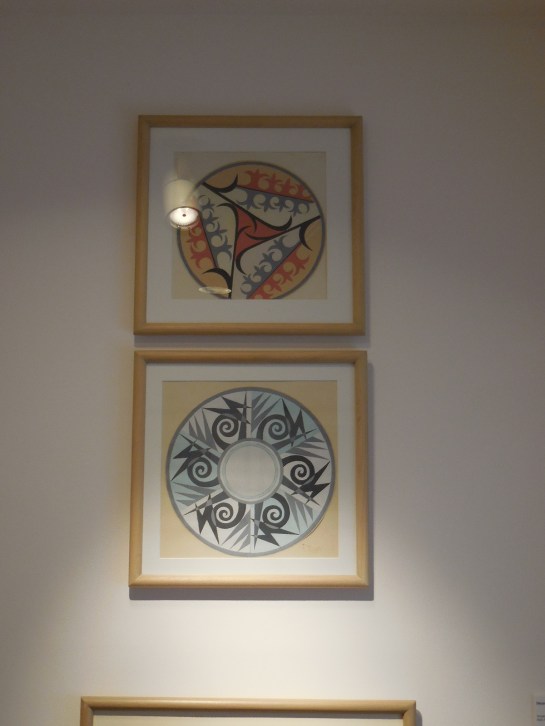
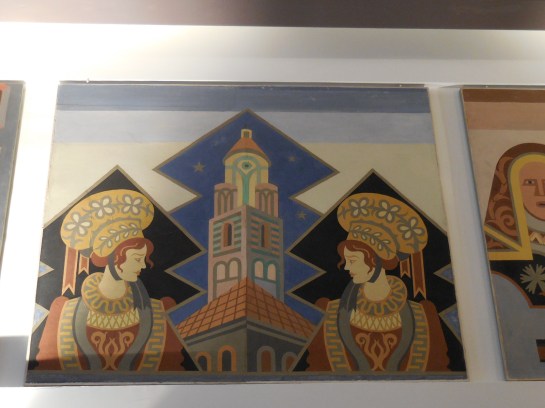
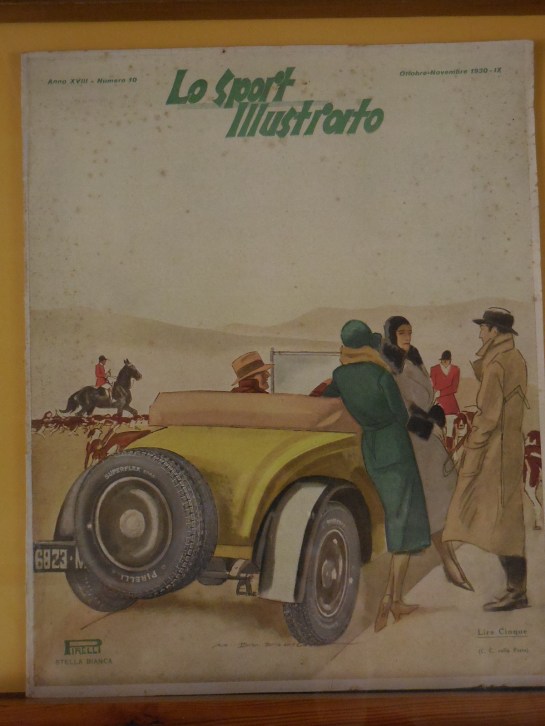
The museum was eclectic with furniture, paintings, tapestries, cloth material, drawings, collages, posters, toys and a film, for instance. I loved the dynamic colors, especially the bright orange of one painting and bright pink hues of others. The works indeed looked as if they were in motion. I could see elements of Cubism in the designs. I especially thought of Josef Čapek’s mechanical figures in his paintings, and I could see characteristics of primitive art, too. I was struck by the way some figures resembled machines. In one sculpture in particular I could see the figures in motion. It was as if the sculpture was not standing still, but, of course, it was.

RoveretoDepero7

RoveretoDepero8

RoveretoDepero10

RoveretoDepero11

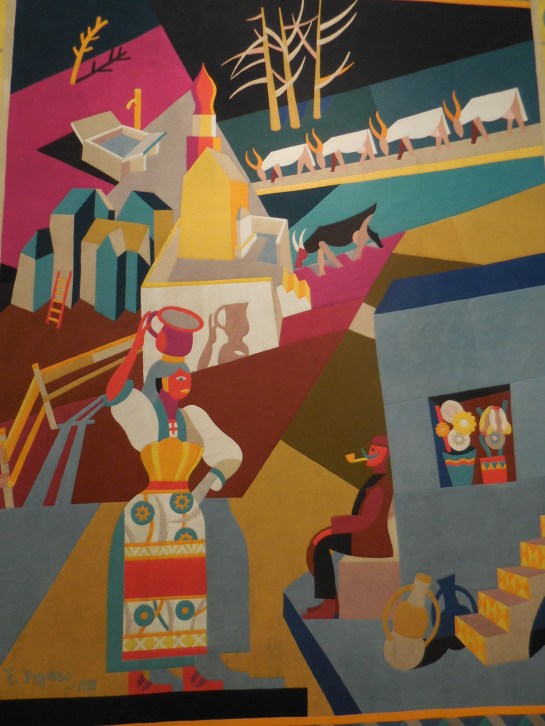
There were tranquil scenes, such as a woman with a pink face holding a pot on her head, having stopped to talk to a figure smoking a pipe. Some of the furniture seemed to have designs resembling folk themes. In some paintings I saw a dangerous, impersonal city, sharp as a sword. It was as if the buildings themselves had swallowed up humanity. Of course, these are just my personal impressions. I do not know if they are the impressions Depero wanted viewers to have.

RoveretoDepero2

RoveretoDepero5

RoveretoDepero14

I liked the unique museum because it had both a modern and medieval character architecturally, and the many artifacts introduced me to a movement I had known nothing about. I especially was drawn to the pastel colors of some of the works. I learned about an artist who never gave up on futurism, even when many others had given up on the movement. It was somewhat ironic to have a museum dedicated to art that stressed modernity and despised anything old in a town of rich historical content. It was interesting that Depero chose a medieval building as the place to exhibit his works. The exhibition’s location stressed that the old was fused into the new and vice versa, not that the new rejected the old.

Perhaps the irony was part of the beauty of it all, too.

Tracy A. Burns is a writer, proofreader and editor in Prague.
RoveretoDepero19

RoveretoDepero20

RoveretoDepero22

RoveretoDepero23

Scrovegni Chapel Diary

PaduaScrovegni18

One of the highlights of my day trip from Vicenza to Padua was seeing the Scrovegni Chapel, which had been decorated with amazing frescoes by Giotto di Bondone during the 14th century. I was familiar with Giotto’s masterful work. I had toured the Basilica of San Francesco in Assisi several times and had been captivated by his masterful creations there.

PaduaScrovegni4

Built for Enrico Scrovegni, the chapel, christened Our Lady of the Annunciation, had once been connected to a palace, but it was demolished in 1827. The name of the architect is not known. We had to follow a path outside of the impressive and comprehensive art gallery near the chapel, which stood on its own. It was raining heavily and immediately after taking shelter inside the documentation room, we saw a short, instructive film about the chapel.

PaduaScrovegni17

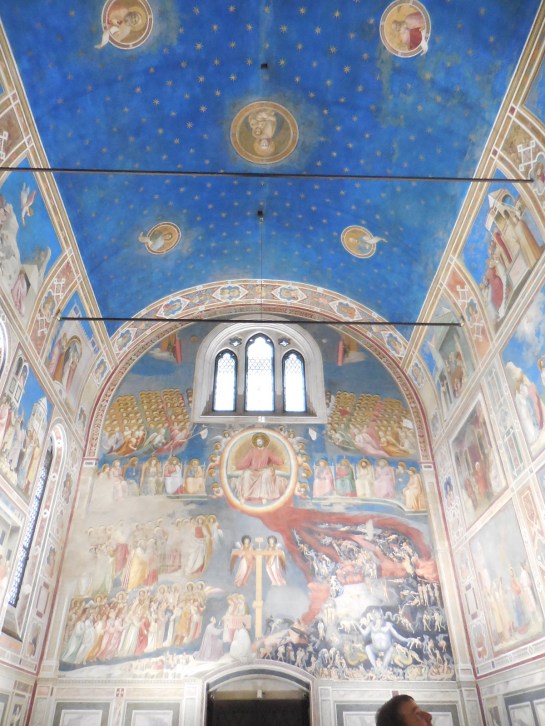
Upon entering the chapel itself, I was overwhelmed by the 38 panels of frescoes covering three walls on three levels. The star-studded ceiling vault in its brilliant blue hue was one of the first features to capture my attention. The blue was so vibrant. Scenes from the Old Testament abounded. Allegorical figures of the Seven Virtues and Vices made prominent appearances. I inwardly celebrated with Mary’s parents when the Virgin was born in a modest cottage. In the Annunciation, I noticed the chiaroscuro effect on Mary’s robe. A comet stood out in the Adoration of the Wise Kings.

PaduaScrovegni14

PaduaScrovegni13

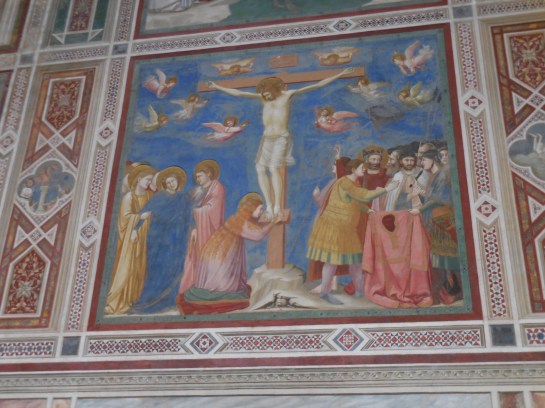
In the Flight into Egypt, Mary was holding Jesus so tightly, so protectively while Joseph glanced behind him at the family for which he felt a fierce love. The white bodies of the dead babies were chilling in the Slaughter of the Innocents. In the Kiss of Betrayal, I could feel my body tense as I noticed the look between Judas and Christ. In the Weeping over the Body Christ, a solitary tree with bare branches captured my attention. As an architectural buff, the six Gothic windows in the Pentecost panel intrigued me.

PaduaScrovegni10

PaduaScrovegni11

The Vices and Virtues also made a lasting impression. Ire was violently tearing her robe apart, exposing her chest, and I saw a serpent slivering out of the mouth of Envy.

PaduaScrovegni12

PaduaScrovegni7

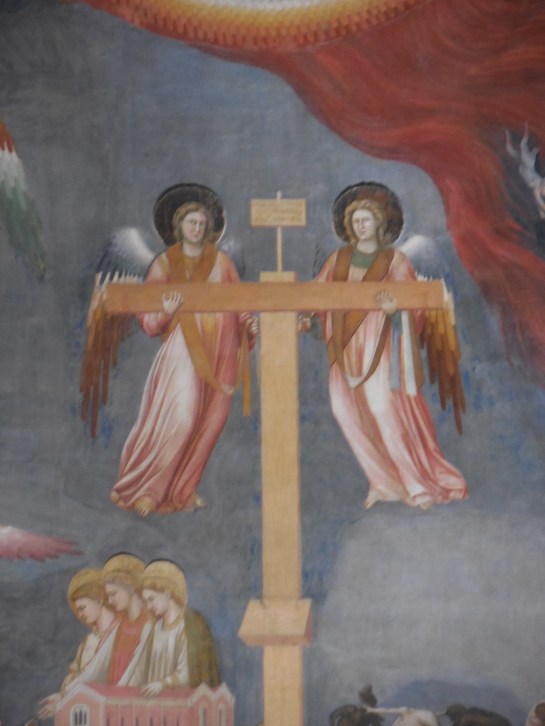
My favorite part of the frescoes was the Last Judgment. Christ, of course, took up a central position. Giotto even put himself in the fresco. Enrico presents the Virgin Mary with a model of the chapel. Then there is Hell, with a dancing, consuming fire as the tormented, writhing figures descend toward Lucifer, a monster feeding upon the damned. I could feel the torment of the figures.

PaduaScrovegni1

PaduaScrovegni2

Soon, though, it was time to leave, and it was difficult to say goodbye to such a masterful work. I could have stared at Giotto’s magnificent frescoes for hours, analyzing each one. I had felt the same way in the basilica in Assisi.

PaduaScrovegni5

PaduaScrovegni8

I would see more impressive sights in Padua, such as the Basilica of the Saint, a vast structure dedicated to Saint Anthony and the stunning Hall of Justice. Still, whenever I think of my time in Padua, the first images that comes to mind are the riveting frescoes in this chapel.

Tracy A. Burns is a writer, proofreader and editor in Prague.

PaduaScrovegni16

PaduaScrovegni19


Palazzo Leoni Montanari Diary

VicenzaGIint18ceiling

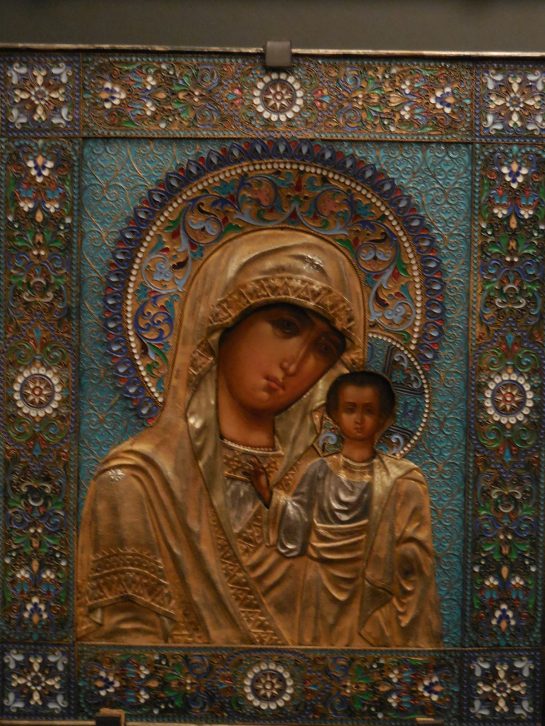
My visit to the Gallerie d’Italia in the Palazzo Leoni Montanari of Vicenza proved to be one of the most enthralling art experiences I have ever experienced. The gushingly Baroque palace was built in the 1670s, commissioned by Giovanni Leoni Montanari. The combination of statuary, stucco and fresco decoration in the building enhanced my great interest in the exhibitions. Owned by Intesa Sanpaolo bank and opened in 1999, the gallery houses a collection of vases from Attica and Magna Graecia, 18th century Venetian painting, a unique 17th century Carrara marble sculpture and the most impressive collection of Russian icons I have seen outside of the Russian Museum and the Hermitage in St. Petersburg. In this post, I am concentrating on the interior of the gallery itself and the exhibition of Russian icons as well as a temporary show of Soviet era icons.

VicenzaGIint19

While the palace is by no means as vast as the Hermitage or Prado, it certainly made an everlasting impression. In fact, its size allows for an intimate atmosphere in which the visitor can become well-acquainted with its displays without feeling overwhelmed, though the gallery is by no means small.

VicenzaGIint21

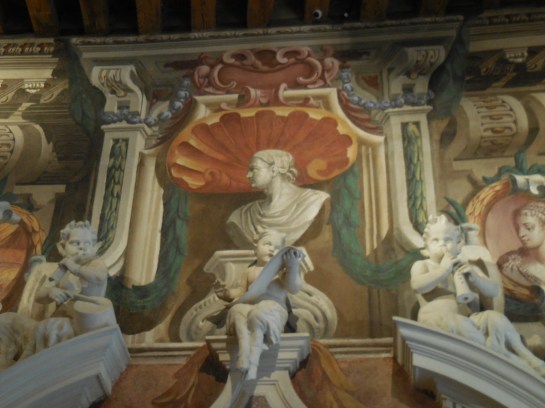
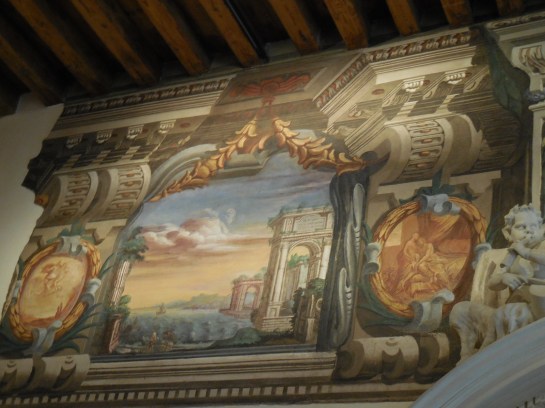
This definitely is one of my favorite art galleries in the world, ranking up there with the Doria Pamphilj in Rome or Lazaro Galdiano Museum in Madrid. The Baroque palazzo is a work of art itself. Indeed, the palace ornamentation is unbelievably rich. The inner courtyard with loggia features a superb statue of Hercules clubbing a monster to death. Just looking at the statue makes one feel imbued with the mythological character’s strength and determination. I was reminded of the theme of Hercules that was promoted in the Teatro Olimpico, an architectural gem designed by Andrea Palladio and a breathtaking sight I had visited earlier that day. In addition, in the palace courtyard I saw five frescoes sporting classical themes.

VicenzaGIint23

VicenzaGIint24

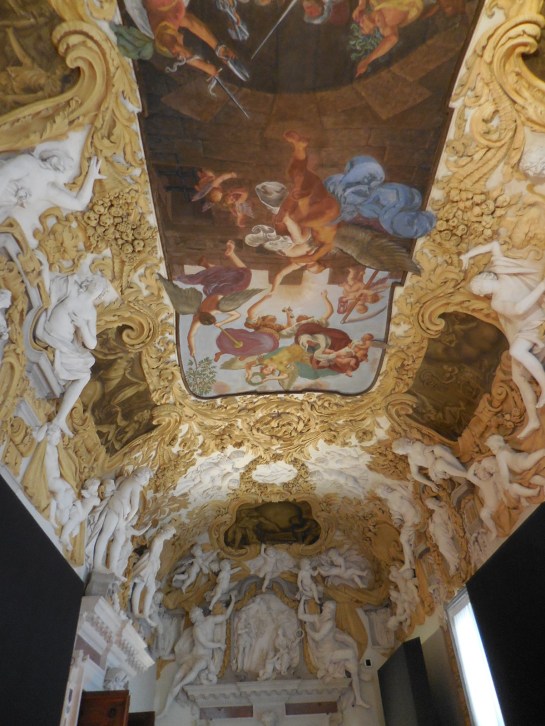
Sculptural adornment greets the visitor in the entrance hall as dragons and hideous creatures make appearances in stucco forms. One space near the main staircase is designed as a sort of grotto with exquisite painting decoration. The Hall of Apollo celebrates that deity as well as Hercules. It features tapestries and stucco portrayals of protagonists from The Iliad, too. The Room of the Old Testament and the Room of Ancient Rome have stunning friezes.  The Room of the Four Continents prominently displays stucco figures of America, Africa, Asia and Europe above the entrances. Frescoes take on historical themes, such as Aristotle mentoring a young Alexander the Great in geography. Allegorical statues also add eloquence to the space.

VicenzaGIint26

VicenzaGIint27

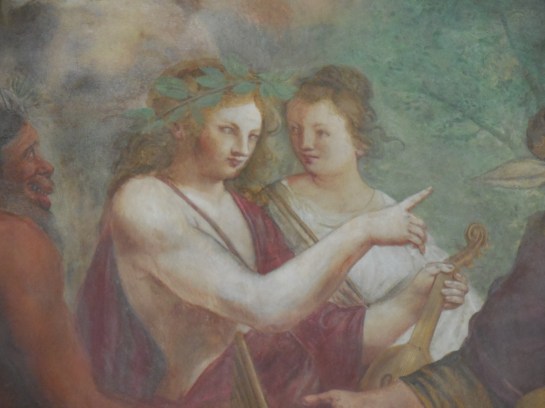
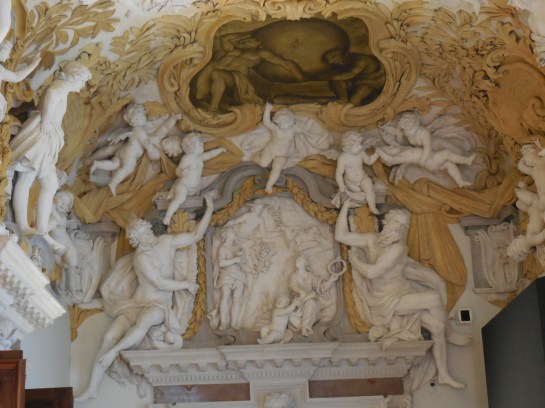
The Gallery of Truth is the room that most amazed me. I could not look away for a long time, as I was so mesmerized with the stucco and fresco decoration that covers the entire ceiling. The central fresco celebrates the triumph of truth. Nine muses are represented, too. Putties and garlands abound, and grotesque creatures join in the exuberant fray. The paintings show the feats of Hercules. In this room, I saw him slaying serpents, freeing Prometheus from the rock and holding up the world for Atlas.

VicenzaGIint28

VicenzaGIint31

VicenzaGIint33

While ceramics are not usually my cup of tea, this collection did feature an impressive 500 items, many unearthed in Ruvo di Puglia, a town in Puglia I had visited the previous year and one of the most tranquil places I had ever seen. It brought back memories of that astounding trip to Apulian Romanesque churches and tranquil settings without hordes of tourists. Puglia had given me a sense of serenity and a feeling of peace. I was reminded of those feelings, as I better comprehended the ancient history of Ruvo di Puglia.

VicenzaGIint34

VicenzaGIint35

VicenzaGIint36

VicenzaGIint41

VicenzaGIint42

VicenzaGIint43

VicenzaGIint52

VicenzaGIint53

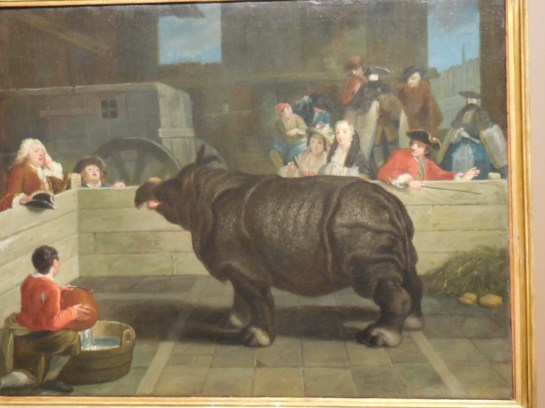
The 18th century Venetian paintings brought back memories of my trip to Venice, just one of many places in Italy to which I longed to return. The 14 paintings of everyday life in the society of the Venetian nobility by Pietro Longhi triggered thoughts of a Prague exhibition of works by Rococo painter Norbert Grund, who was a masterful observer of his era. Yet Longhi did not only paint common scenes. I also admired his portrayals of exotic animals surprising and enthralling an audience.

VicenzaGIint37

VicenzaGIint39

VicenzaGIint40

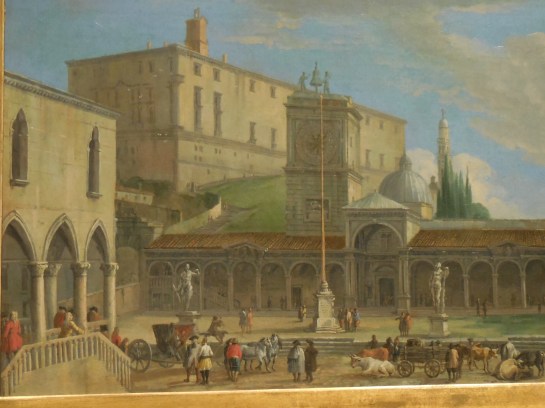
I was entranced with the works of Canaletto and his contemporaries. The Venice landscapes spoke to me. I recalled the exhibition of Canaletto’s works I had seen in Aix-en-Provence a few years earlier. I also thought of the Canaletto painting that I had admired in Nelahozeves Chateau and later in the Lobkowicz Museum in Prague.

VicenzaGIint46

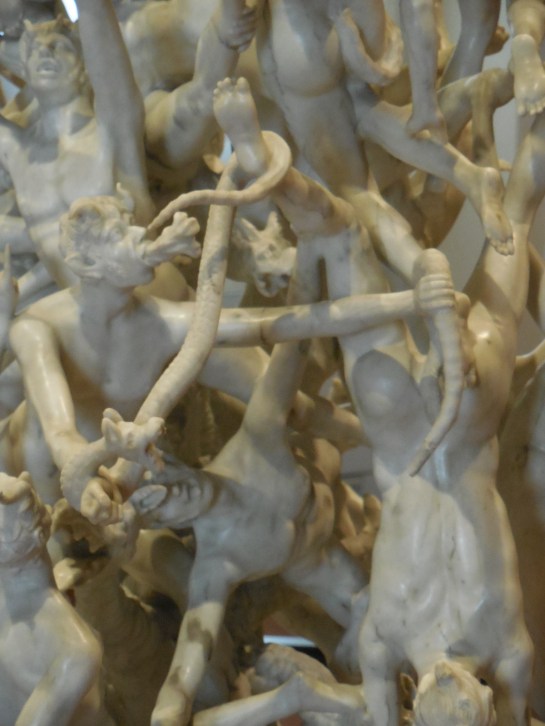
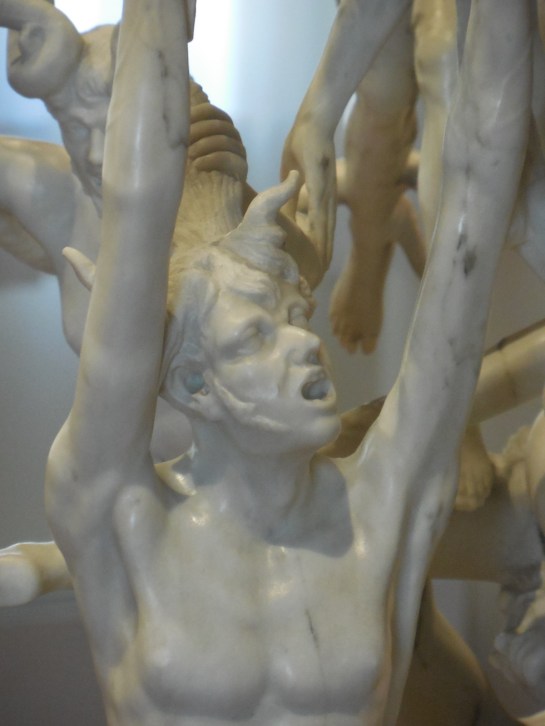
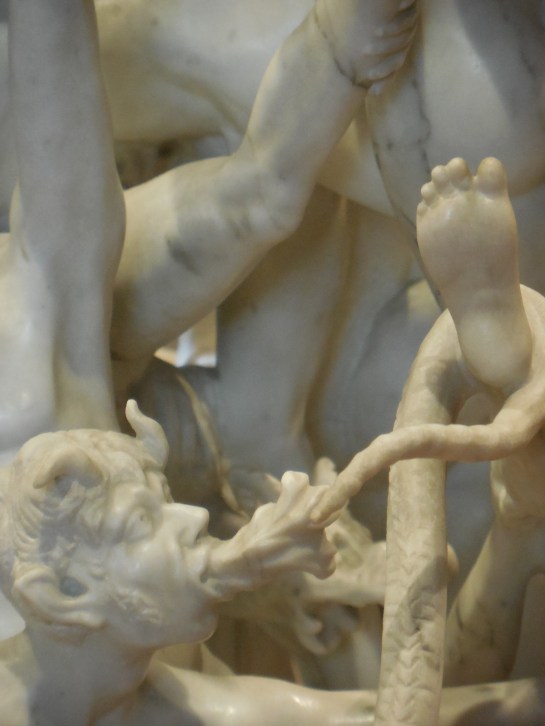
In a room punctuated by stucco decoration, I admired the unique sculpture “The Fall of the Rebel Angels” by Agostino Fasolato, created in the 18th century. Shaped as a pyramid, the sculpture features 60 intertwining figures, all twisting and turning, carved from one piece of Carrara marble. Once on display in Padua, the plethora of figures exhibit a great attention to detail as masterful as that in paintings by Pietor Brueghel the Elder. I was entranced with the dynamic sense of movement attained by the sculptor. The sculpture, indeed, seemed to be in motion as figures wiggled and writhed.

VicenzaGIint47

VicenzaGIint49

VicenzaGIint50

VicenzaGIint51

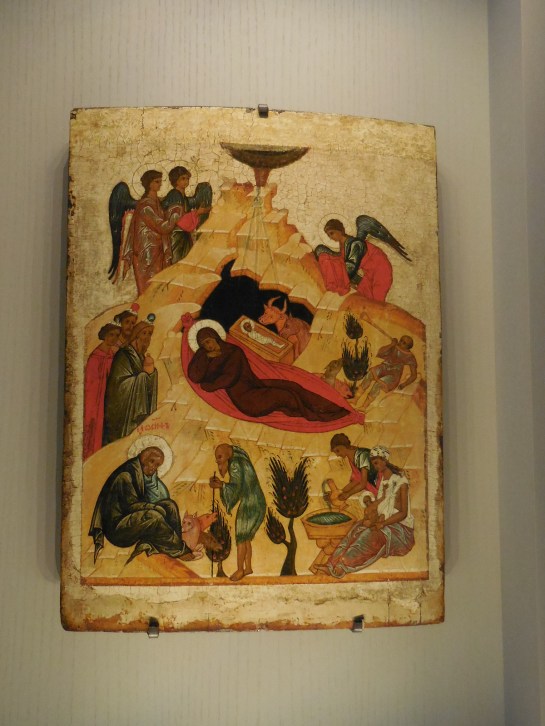
The Russian icons enthralled me so much that I was just as astounded by this gallery as I was by the comprehensive Van Gogh exhibition at the Palladian Basilicata with its elegant arches and arcades. At this gallery I saw 140 icons ranging in age from the Middle Ages to the 20th century and giving a superb overview of the history of the icon in Russian society throughout the centuries.

VicenzaGIintRus12

VicenzaGIintRus3

VicenzaGIintRus5

VicenzaGIintRus7

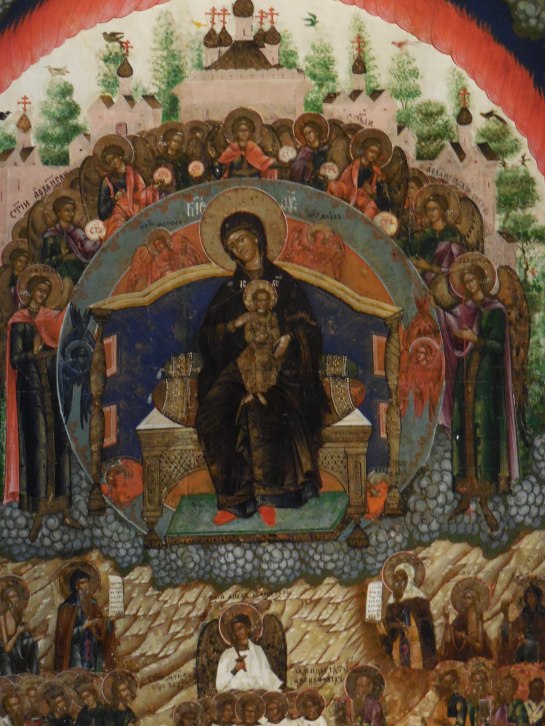
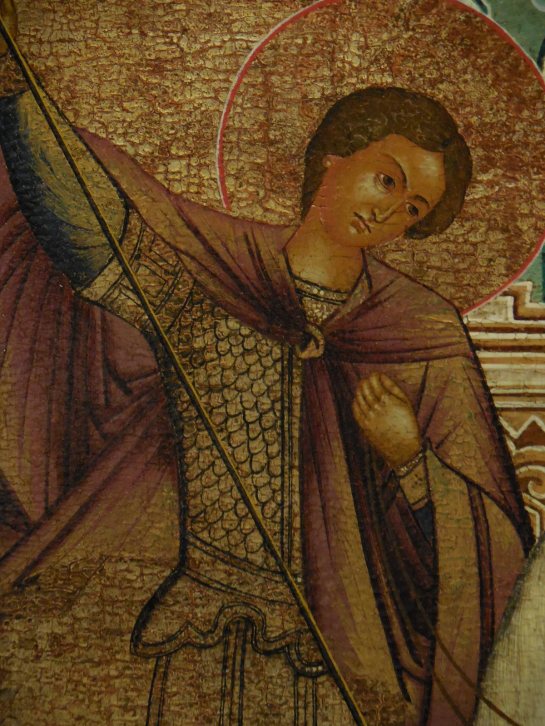
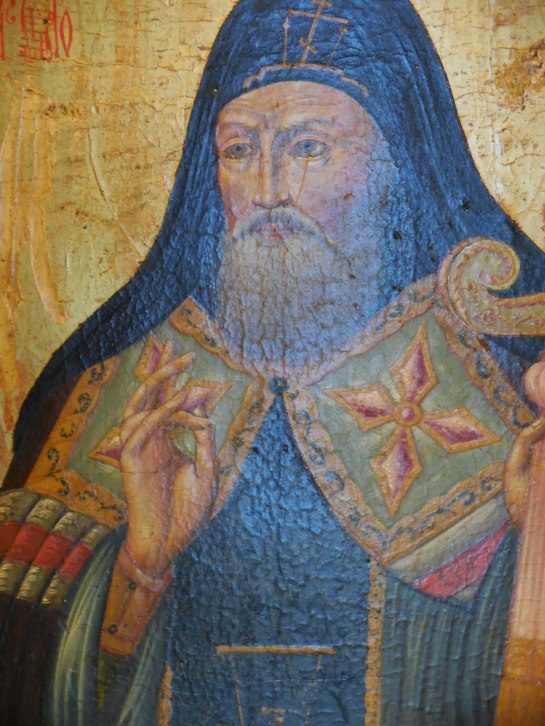
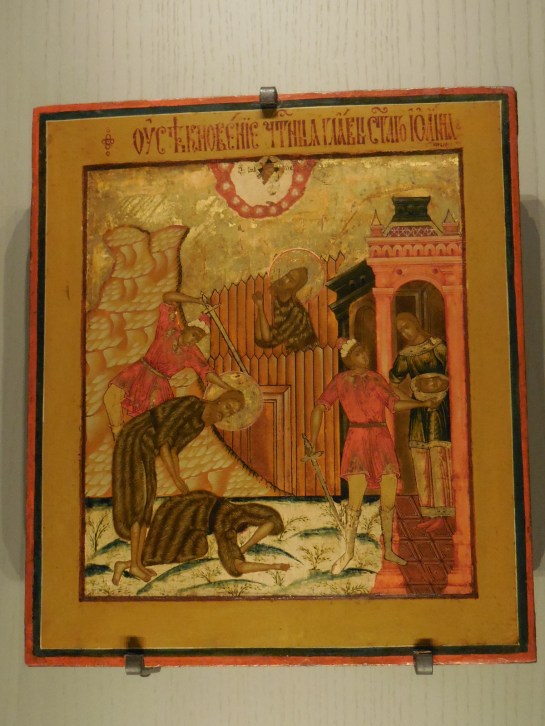
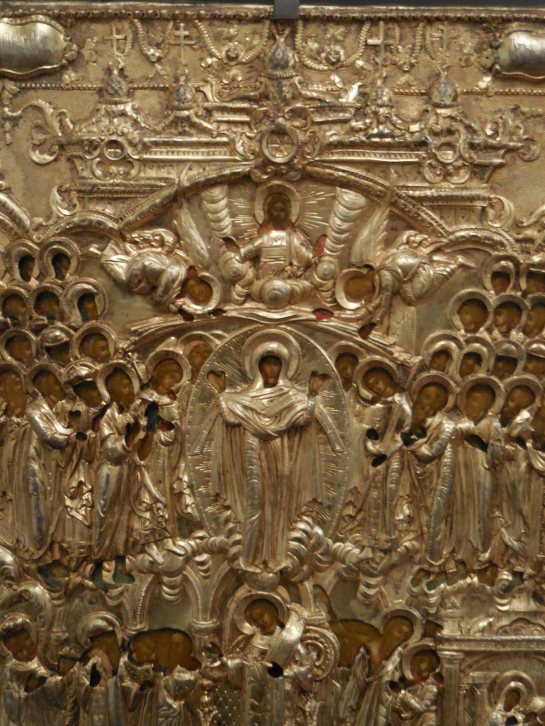
The icons boast various themes. They are inspired by the Bible, legends, liturgical hymns, theological texts and feasts, for instance. The Mother of God and Saint Nicholas are featured in some of the artistic creations. Icons of saints and monks, some with monasteries in the background, make many appearances. I also saw frames and covers for icons made with precious materials. A mastery of the goldsmith trade also is illustrated in some items. The schools represented include Moscow, Novgorod and Vladimír. The icons are organized by subject matter, which was helpful and intriguing.

VicenzaGIintRus8

VicenzaGIintRus11

VicenzaGIintRus12

VicenzaGIintRus13

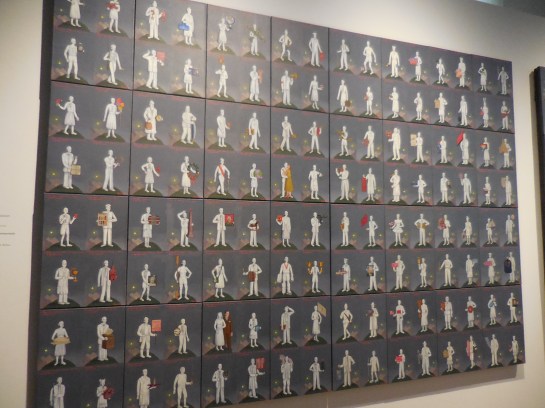
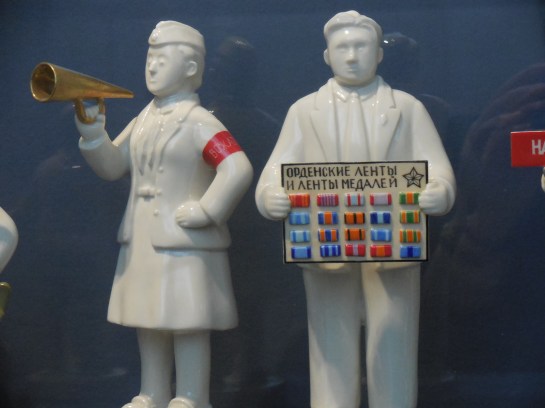
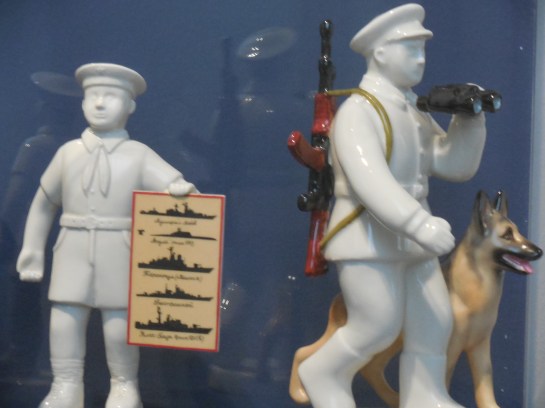
I also found the temporary exhibition of Soviet icons by Grisha Bruskin to be very impressive. A monumental painting called “The Fundamental Lesson,” created in 1945, features 256 white figures. The painting stresses the significance of statues in the Soviet Union as each person represented has an ideological meaning. Instead of a celebration of saints, Madonnas and monks, I saw workers, pioneers, athletes, functionaries, astronauts, soldiers and doctors exalted onto ideological pedestals. Small sculptures of these figures are also displayed. There are 25 porcelain pieces and 49 renditions in bronze.

VicenzaGIint1

“The Fundamental Lesson”

VicenzaGIint2

VicenzaGIint5

VicenzaGIint7

I remembered how, as a child growing up in America, I had been taught by society that Russia was the enemy, all Communists were bad people, and everything was black-and-white. Russia was evil, we were good. I had wondered what life was like in a Communist country. Did people ever cry with joy or truly feel happy and at peace with themselves and with the world? I wondered what people ate, what people wore, what people were thinking about.

VicenzaGIint9

VicenzaGIint11

VicenzaGIint13

Overall, I was most impressed with this exhibition because it exposes the dangers of Soviet ideology. It impressed upon me how Soviet society had been inundated by the ideological myths represented by the painting and small statuary.

More Russian icons from the permanent exhibition:

VicenzaGIintRus15

VicenzaGIintRus16

VicenzaGIintRus17

VicenzaGIintRus18

I came away from this gallery with a heightened appreciation of having grown up in a free, democratic society. I had attained a deeper understanding of the art of Russian icons. I had seen a unique sculpture carved with precision. The visit had triggered golden memories of Venice. I had examined Venetian society in the 18th century thanks to Longhi. I had seen artifacts from one of my favorite Apulian towns, Ruvo di Puglia and had thought about that unforgettable trip. I had experienced all this in a building that was a masterful work of art, the Gallery of Truth being my favorite space.

Tracy A. Burns is a writer, proofreader and editor in Prague.

VicenzaGIintRus19

VicenzaGIintRus20

VicenzaGIintRus21

VicenzaGIintRus22

VicenzaGIintRus23

VicenzaGIintRus24

VicenzaGIintRus25


Teatro Olimpico Diary


VicenzaTeatroOint17I cannot choose one place as the highlight of my trip to the magical world of Palladian architecture in Vicenza, but certainly seeing the Teatro Olimpico ranks right up there. Recognized by UNESCO, this is one of the three Renaissance theatres in existence. The 72-year old Andrea Palladio designed what is now the oldest covered theatre in Europe, and construction began in 1580. When Palladio died in August of that year, Vicenza-born architect Vincenzo Scamozzi took over.

VicenzaTeatroOint9

Still, the theatre clearly features many Palladian characteristics. For instance, the plan for the theatre was based on classical architecture. As usual, Palladio had found inspiration in the writings of Roman architectural guru Vitruvius, who lived during 1 BC. Indeed, I felt as if I were seated in a theatre dating back to antiquity. The classical forms gave the Teatro Olimpico a very majestic quality.

VicenzaTeatroOint11

The theatre held its first performance on March 3, 1585, as actors who were at the time well-known performed Oedipus Rex, a play chosen for its classical theme. The costumes were extravagant. About 1,500 spectators watched, and the play was a huge success. However, the theatre was only used for a few performances.

VicenzaTeatroOint13

Palladio had had his work cut out for him. The theatre was built on the site of a former prison, which had a box-like shape. Palladio was able to turn the audience hall into an oval shape, and the seating was sloped steeply, as if it were a Roman amphitheatre. The amphitheatres I had visited in Taormina, Segesta and Syracuse, Sicily and in Arles, France came to mind. I also thought of the Roman amphitheatre I had seen the previous year in Lecce, Puglia.

VicenzaTeatroOint18

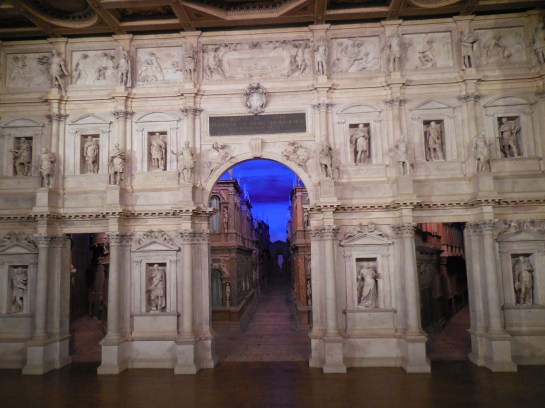
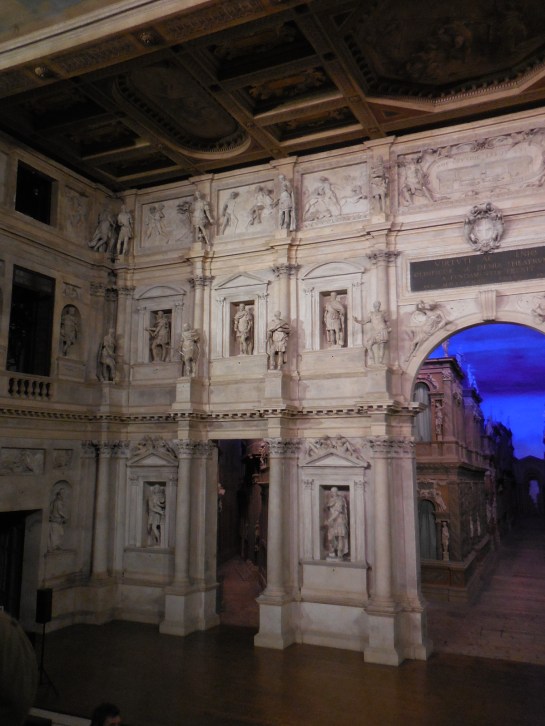
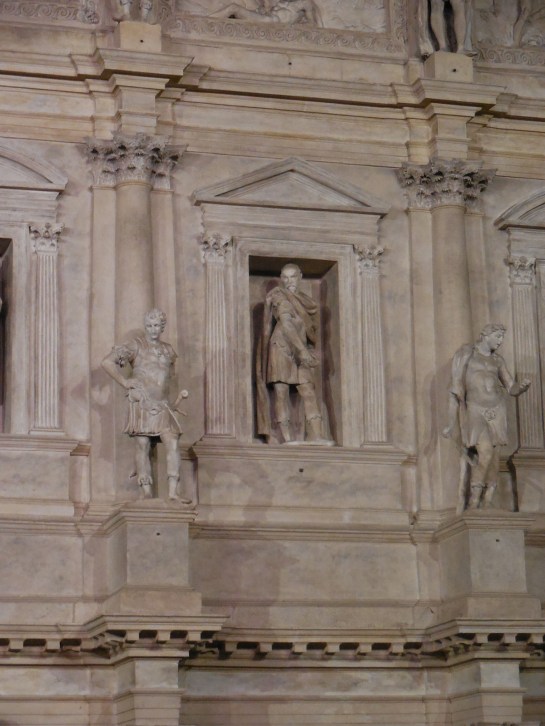
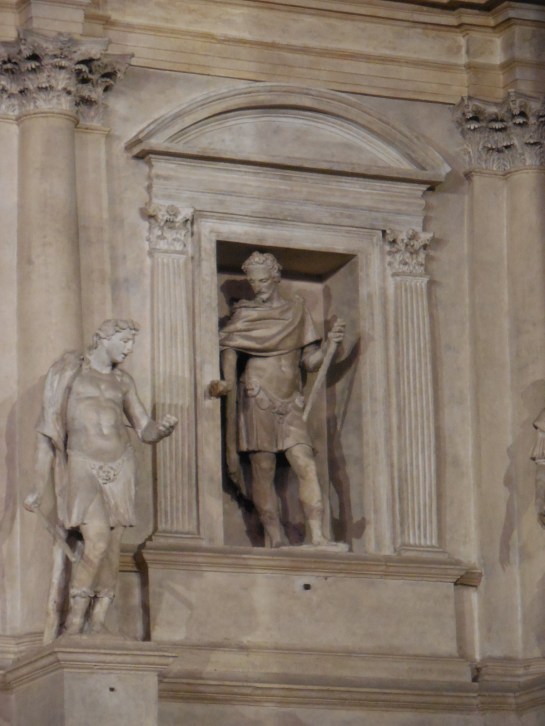
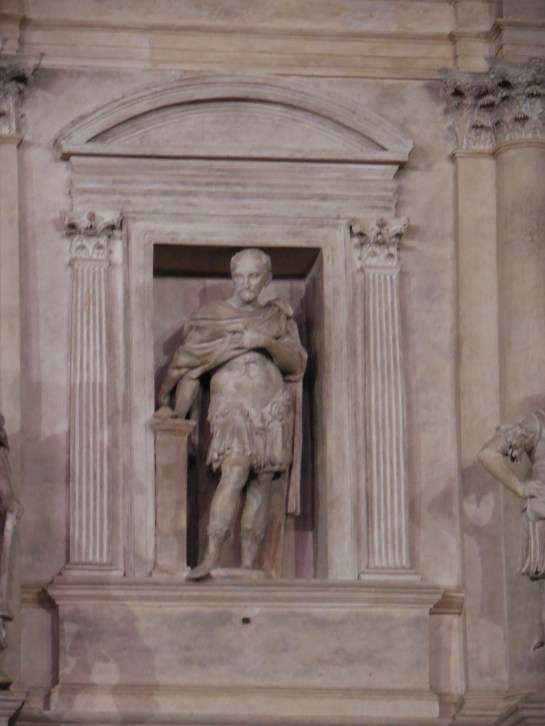
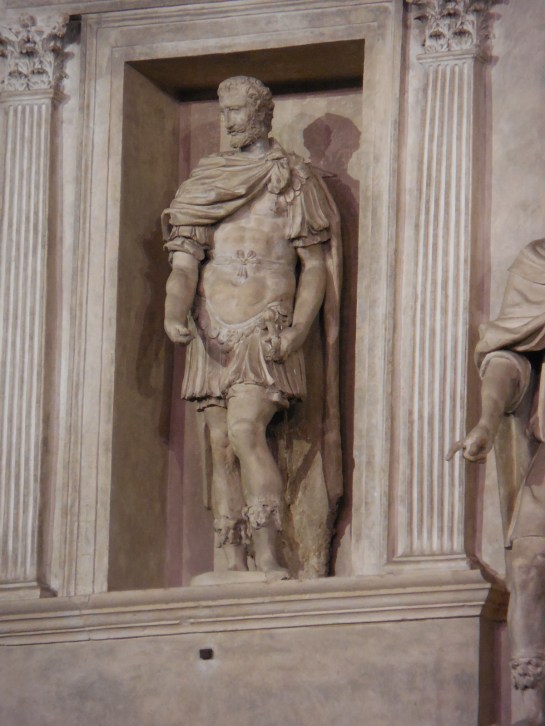
The classical architecture and statuary captured my immediate attention. Three orders of columns decorated the proscenium. The 41 statues that adorned the theatre on the proscenium and in the wings looked as if they were made of stone. That was just one of the many illusions in this theatre. In reality, the statues were sculpted from swamp reeds, tow, earthenware and mortar. While the statues showed off aristocrats from the 16th century, these figures were clad in classical attire, often wearing armor or long gowns. Thus, they were not portraits but likenesses set in a past time period. Because Leonardo Valmarana had been an ardent supporter of the Habsburgs, his statue has a face similar to that of Emperor Charles V.

VicenzaTeatroOint19

Notably, there were no women represented. Still, some of the men rendered had distinctive feminine features. Initially, some of the statues had been designed to show female figures, but they were changed into men. This produced some hilarious results. In the upper tier, the statue of Gerolamo Forni sports a beard but has a female body.

VicenzaTeatroOint20

VicenzaTeatroOint7

Furthermore, all of the statues were not of the same quality. That’s because the quality of the statue depended on two factors – how influential the man represented was and how much the man had paid to have the statue sculpted. It would have been interesting to be able to inspect each one and learn who was most valued in Renaissance society. There were other statues, too. These included renditions of Olympic deities and one of Palladio himself, designed after the masterful architect had died.

VicenzaTeatroOint1

Hercules held a prominent position in the décor of the theatre. This legendary figure was the focus of stucco-clad bas-reliefs that told the story of his life. The artistic narration included scenes in which Hercules takes over for Atlas holding up the world, the Hercules – Antaeus encounter in which Hercules was victorious and Hercules’ successful fight against the Cretan bull. Thus, another classical theme was portrayed. The bas-reliefs by no means stagnant. There is a strong dynamic quality to the episodes that are brought to life in a vivacious way. So, while the theme stems from the classical world, the bas-reliefs provide a much livelier look than that expressed in the classical world. The figures even have a Baroqueness about them.

VicenzaTeatroOint14

One feature that enamored me was the illusive architecture, the false perspectives utilized in the design. The set for Oedipus Rex, the oldest existing theatre scenery, looked as if the seven roads of Thebes led from the stage far into the horizon, but it was really painted so that it created a fake perspective. I couldn’t believe that it was all an illusion. I could see myself meandering down the streets. It was architecturally amazing. I thought of the basilica at Hejnice and how the main altar was really painted on the wall, while it appeared three-dimensional. This feature of the theatre was designed by Scamozzi, who was known for his talent using false perspective. Via Theatres showed spectators a world of illusion. The world of the play was not the real world. This theatre also was a place of illusion itself.

VicenzaTeatroOint16

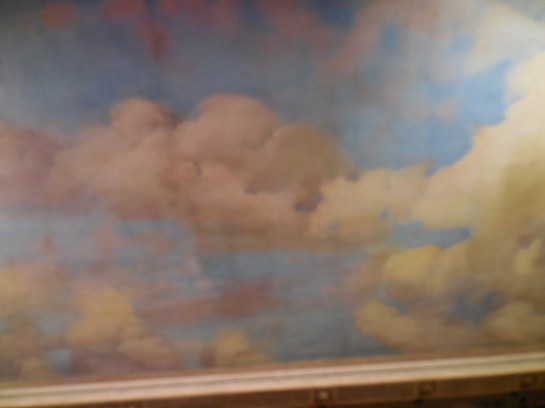
Another illusionary feature was the false sky above. It looked like the theatre was not covered at all, as if it were open and light under a clear sky. The likeness to a real sky was incredible. I did not sense I was in a closed space. This feature was designed at the beginning of the 20th century.

VicenzaTeatroOint2

The lighting played a major role in producing the illusive perspectives due to their location. Originally, the lights consisted of colored oils inside glass bulbs or wicks in metal boxes. They were hidden within the architecture featuring false perspective, so no one could tell where the source of the lighting was. It was a masterful idea, I thought. Scamozzi was responsible for the lighting. I wondered if my friend and former college lighting professor had ever been here. She would have a field day studying the lighting features.

VicenzaTeatroOint3

The theatre soon became an entertainment venue. During the 17th century, the theatre was used for receptions of VIPs the town was hosting. Fencing tournaments also took place there. Until recently, graduation ceremonies were held there. It is still used as a theatre on occasion, but only 400 spectators are allowed to watch performances for safety reasons.
VicenzaTeatroOint4

I appreciated the classical features of the theatre that had a distinguished feel. The statues added a classical elegance, and the bas-reliefs gave the theatre’s décor a vivacious character. I also was enthralled by the false perspective. Both the scenery and the fake sky were unbelievable.

VicenzaTeatroOint21

When it was time to leave, I did not want to go. I could have stared at the proscenium, wings and false sky for hours. It certainly was a unique structure. It would prove to be one of most bewitching sights I visited in Vicenza.

Tracy A. Burns is a writer, proofreader and editor in Prague.