Palazzo Reale Photo Diary

NaplesPalazzoReale2
The Royal Palace of Naples was the seat of the Spanish and Austrian viceroyalty for 200 years, from the early 16th century to the early 18th century. Then the Bourbons took up residence, from 1734 to 1860. Even though the foundation stone was laid in 1600, the actual construction of the palace was not finished until after 1843. It is connected to the majestic Teatro di San Carlo and is located on the symmetrical Piazza del Plebiscito, where festivals and parades had taken place before 1860. The Palazzo Reale was first open to the public in 1919.

The façade is impressive as Tuscan, Ionic and Corinthian columns, obelisks, globes and vases all make appearances. Statues of the kings of Naples adorn the façade as well.

NaplesPalazzoReale3
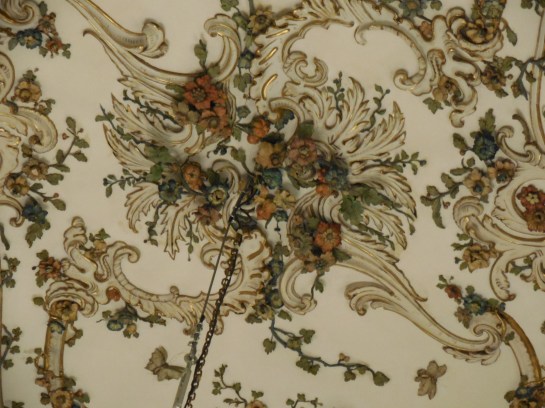
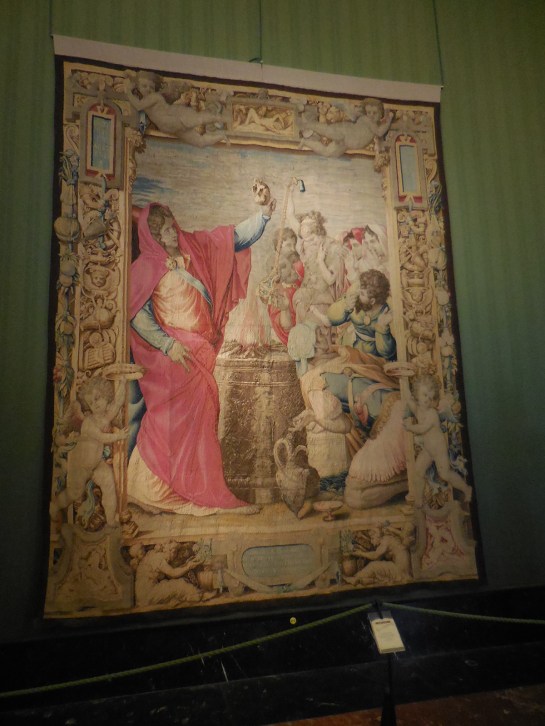
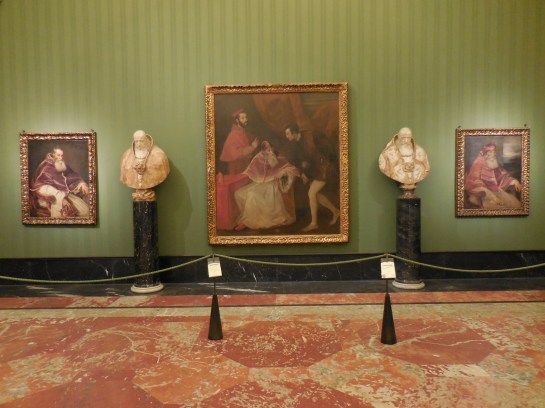
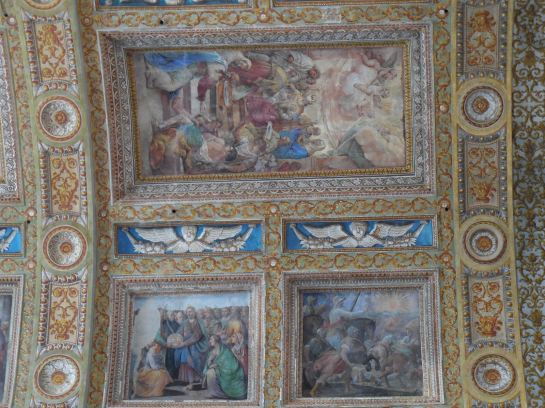
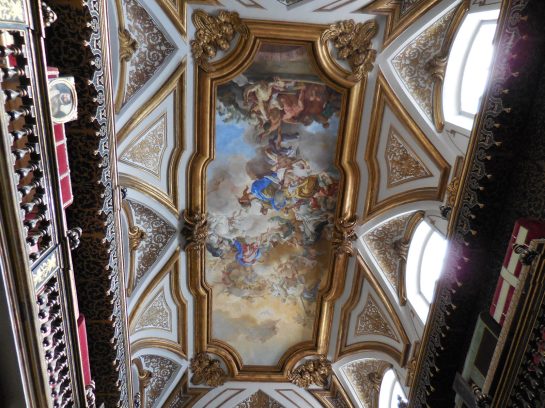
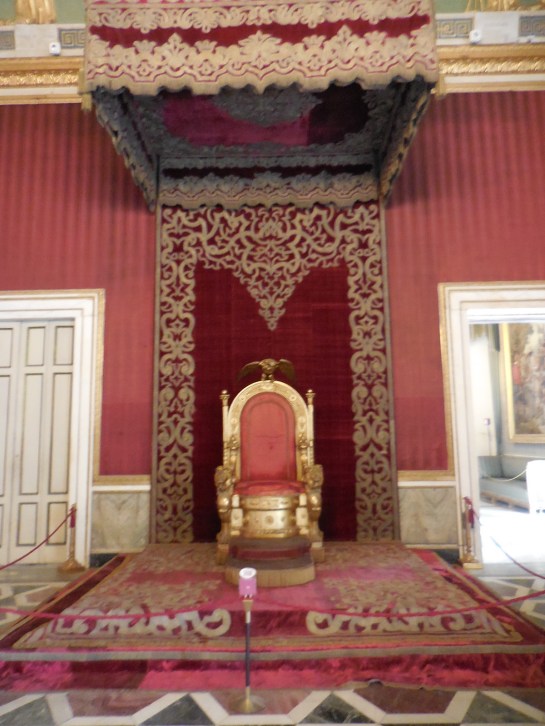
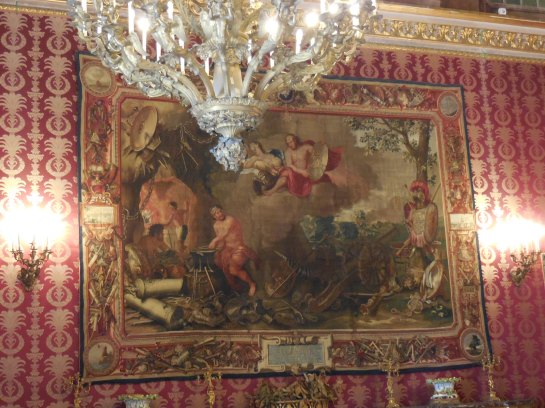
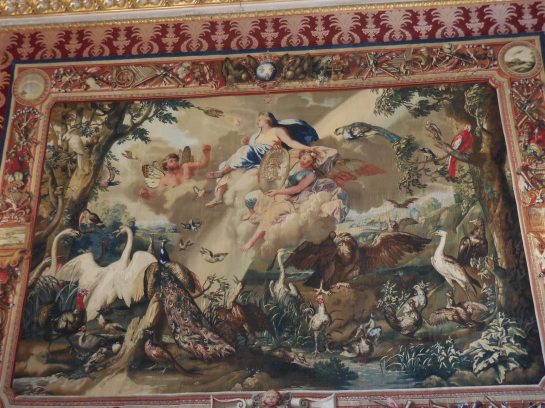
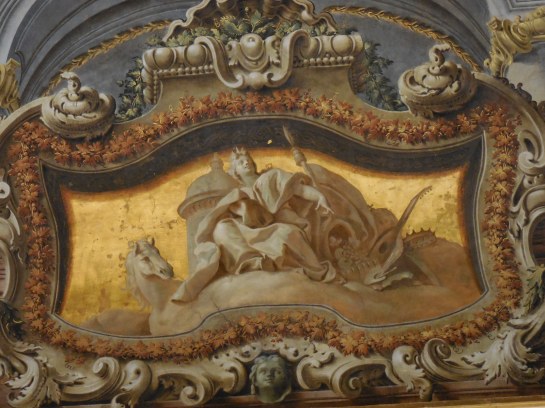
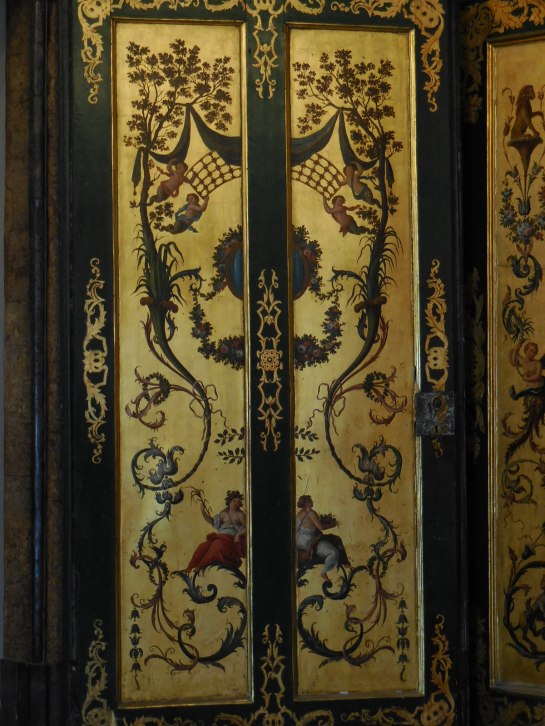
When I was there only the first floor was open, but I was still able to see stunning tapestries, fine porcelain, impressive furnishings and superb ceiling paintings, some allegorical and others celebrating the Spanish rulers and their realm. Paintings that amazed included 17th and 18th century works by Neapolitan School artists, landscapes, views of seaports, pictures of royal Spanish palaces as well as portraits.

NaplesPalazzoReale4

NaplesPalazzoReale6

NaplesPalazzoReale8

NaplesPalazzoReale10

NaplesPalazzoReale11

NaplesPalazzoReale12

NaplesPalazzoReale13

NaplesPalazzoReale15

NaplesPalazzoReale17

NaplesPalazzoReale18

NaplesPalazzoReale19

NaplesPalazzoReale20

Tracy A. Burns is a writer, proofreader and editor in Prague.


Teatro di San Carlo Diary

NaplesTheatre3ceiling

While in Naples, I toured the Teatro di San Carlo, where I could actually feel the history of the majestic structure. I was enchanted with the main hall, boxes, Royal box and two foyers. Even the façade was astounding. I particularly liked the statue of Apollo riding his chariot and the Ionic loggia.

NaplesTheatre12
I found the history of the place fascinating. Built in 1737, when King Charles VII of Bourbon was on the throne, the Teatro di San Carlo is 41 years older than the La Scala Theatre in Milan and 55 years older than the La Fenice Theatre in Venice. The architect of this building where opera and ballet are performed was Giovanni Antonio Medrano, who had served in the army of King Charles VII. He went on to design the Museo di Capodimonte, which housed the king’s palace and a museum. Later he was imprisoned for tax fraud of the Museo di Capodimonte.

NaplesTheatre14
Opening night at the Teatro di San Carlo took place November 4, 1737, on the king’s name day, when Achilles in Sciro was staged. Interestingly, a woman played the part of Achilles. That was only the beginning of the glorious history of Naples as a cultural center and opera powerhouse. I wondered how many stories had been played out on the stage, how many spectators had viewed performances over the centuries and who exactly were these theatregoers. What impressions did these audience members take home with them? Did they feel as awed by the theatre as I did, or did they just take the luxurious building for granted?

NaplesTheatre17
Perhaps the darkest day in the history of the theatre proved to be February 13, 1816, when a fire broke out during a dress rehearsal. In less than one hour, the dancing flames destroyed a large section of the building. The theatre was reconstructed in a mere nine months, and it took on a horseshoe appearance. The number of seats dwindled from more than 3,000 to 1,444. The Teatro di San Carlo holds the distinction of being the oldest horseshoe style theatre in the world. The theatre even remained open during most of World War I. The foyer was destroyed by a bomb attack in 1943, however. However, the structure was rebuilt promptly after the war.

NaplesTheatre4
Looking around the gold-and-red decorated interior with 184 boxes plus the Royal Box, I could not help thinking about the famous people who had graced the stage and the composers whose works had come to life here. Richard Strauss conducted here. Guiseppe Verdi wrote operas for this very theatre. In the 18th century, singers Vittoria Tesi and Carlo Broschi charmed audiences with their magical voices. Niccolo Paganini cast his spell on spectators here on two occasions. Other names associated with the theatre included Christoph Willibald Gluck, Johann Christian Bach and Luciano Pavarotti.

NaplesTheatre11
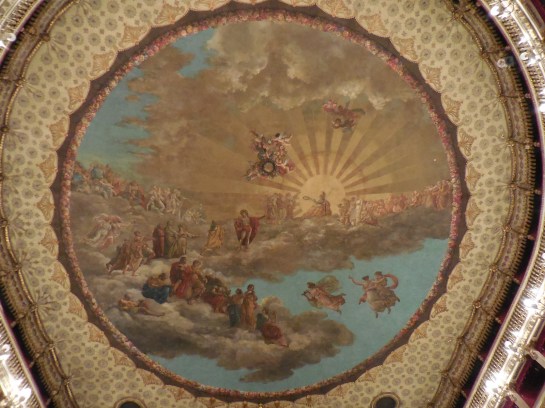
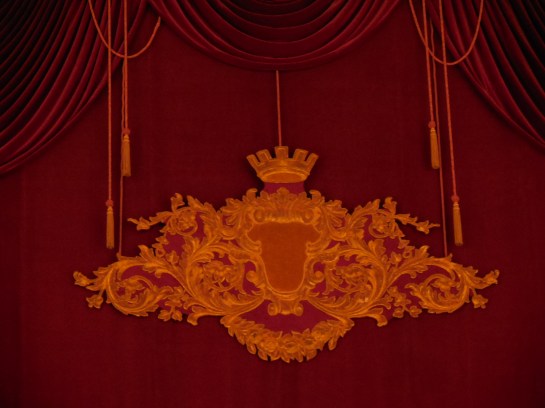
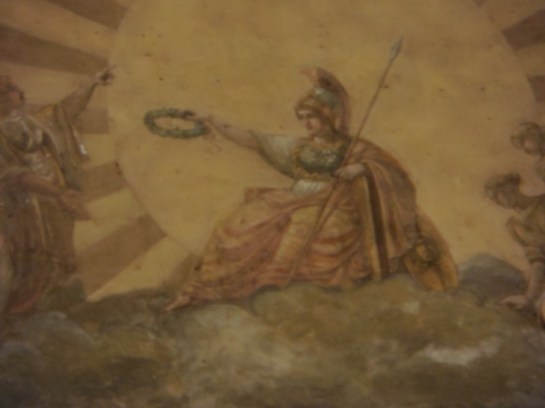
To be sure, the interior was breathtaking. The ceiling fresco took up a mythological theme, portraying Apollo presenting Minerva to the greatest poets in the world. The theatre curtain, adorned in 1854, also boasted a mythological scene with the Muses and Homer among poets and musicians. Putti and cornucopias played significant roles in the theatre’s decoration. The Royal Box, so bewitching in its gold color, could hold 10 people. There were workers repairing something in the Box, but we still got to sneak inside for a few moments.

NaplesTheatre10

Taking a seat in another box, I did not want to get up and leave. I just wanted to imagine all the scenes performed here, all the songs sung, all the music played. And then there were those richly adorned balustrades! The 184 boxes stood on seven levels. None of the boxes was furnished with curtains because the king wanted to be able to see spectators at all times.

NaplesTheatre8
The theatre was so beautiful that it made me dizzy. It seemed only fitting that such a majestic theatre was connected to the Royal Palace, which the Spanish viceroyalty had called home for 200 years, from the early 16th century to the early 18th century. I hadn’t been so impressed with a theatre since I had set my eyes on the Rococo horseshoe-shaped Cuvilliés Theatre of the Munich Residence.

NaplesTheatre2

When I bought my ticket, I hadn’t known what to expect. I hadn’t thought I would be so impressed, but the ceiling fresco, theatre curtain, red-and-gold decor and gilt adornment mesmerized me. I hoped to come back here to see an opera someday. This tour was one of the highlights of my trip to Naples.

Tracy A. Burns is a writer, proofreader and editor in Prague.

Archeological Museum in Naples Diary

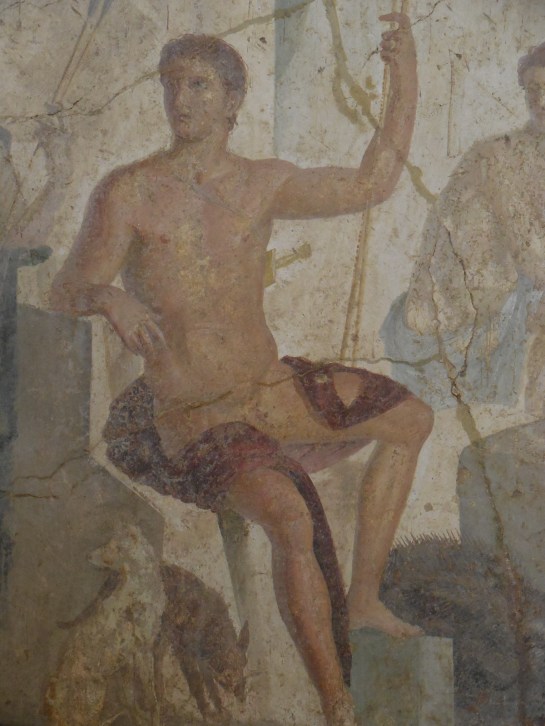
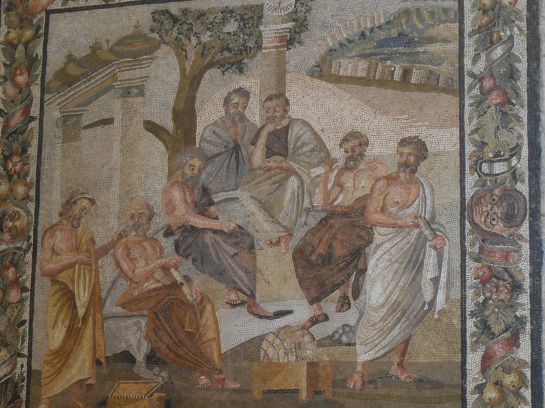
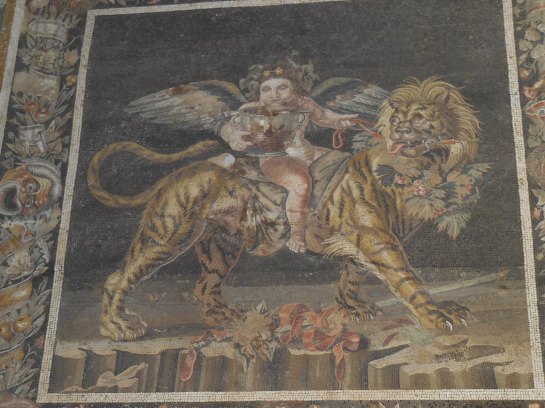
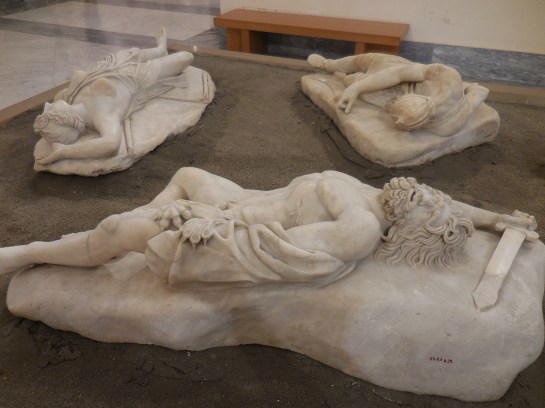
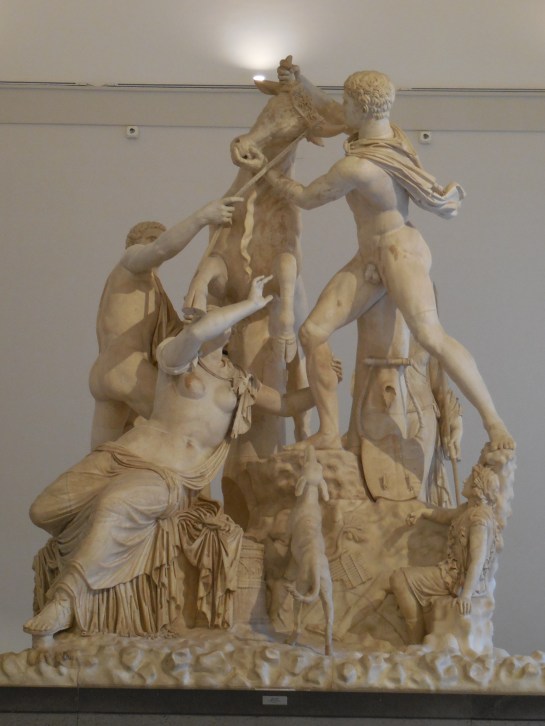
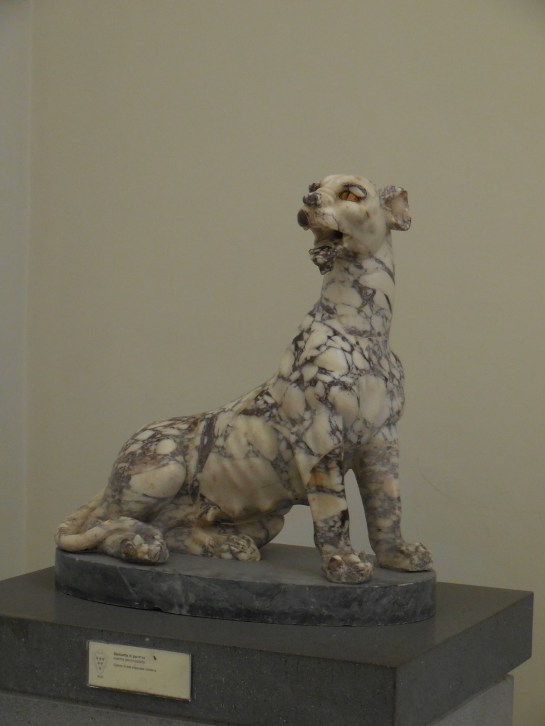
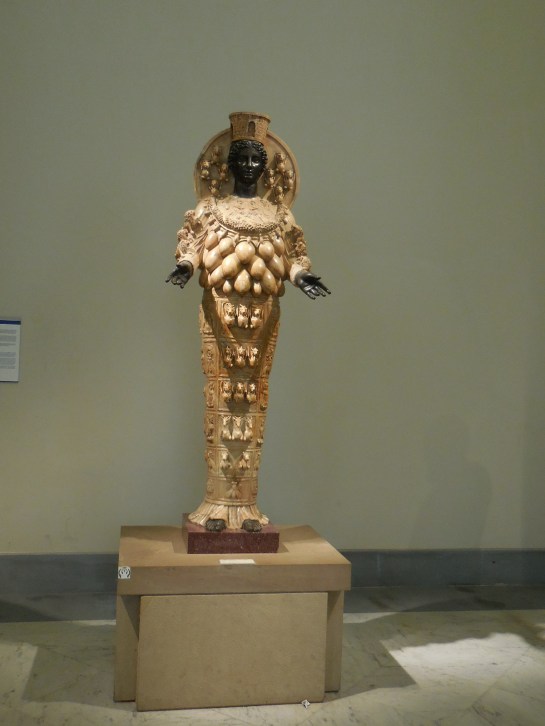
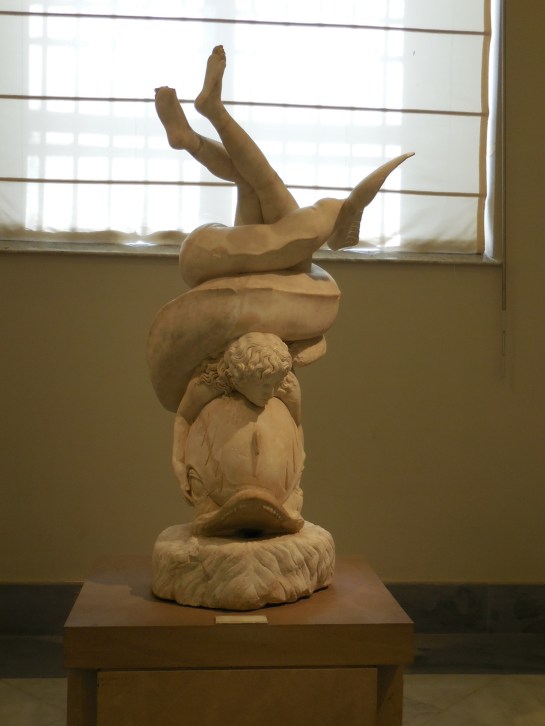
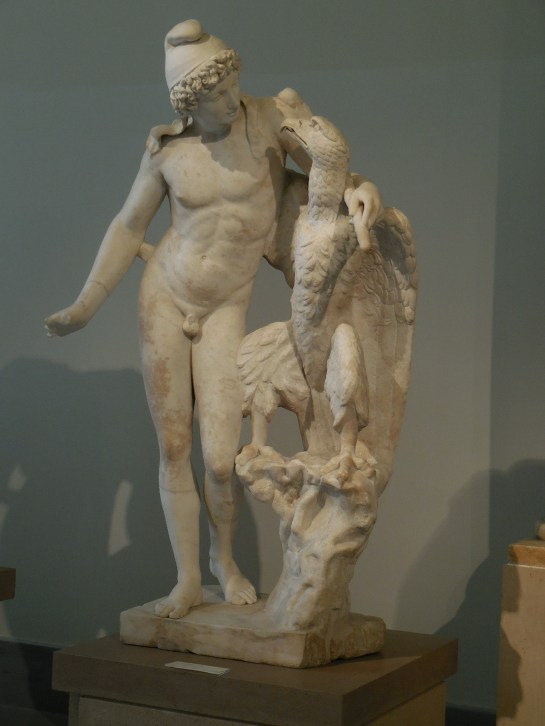
The Archeological Museum in Naples boasts one of the largest collections of antiquities in the world with numerous sculptures, paintings, mosaics, frescoes, jewels, coins and more. Most of the mosaics and frescoes hail from Pompeii and Herculaneum. Items from the Villa dei Papiri in Herculaneum and mosaics from the House of the Faun in Pompeii astound. Discoveries from Cumae also make up the permanent exhibition as do Egyptian artifacts. There is a Secret Cabinet of obscene art, such as statues, paintings and gems, from Herculaneum and Pompeii. Visiting this museum was the highlight of my visit to Naples, and I was most enthralled with the statuary, mosaics and frescoes.

NaplesArchMuseum3

NaplesArchMuseum4

NaplesArchMuseum5

NaplesArchMuseum7

NaplesArchMuseum10

NaplesArchMuseum13

NaplesArchMuseum15

NaplesArchMuseum16

NaplesArchMuseum20

NaplesArchMuseum21

NaplesArchMuseum22

NaplesArchMuseum23

NaplesArchMuseum24

NaplesArchMuseum26

NaplesArchMuseum28

NaplesArchMuseum29

NaplesArchMuseum30

NaplesArchMuseum34

NaplesArchMuseum35

NaplesArchMuseum38

NaplesArchMuseum39

NaplesArchMuseum41

NaplesArchMuseum42

NaplesArchMuseum44

NaplesArchMuseum47

NaplesArchMuseum50

NaplesArchMuseum54

NaplesArchMuseum56

NaplesArchMuseum57

NaplesArchMuseum59

NaplesArchMuseum60

NaplesArchMuseum61

NaplesArchMuseum63

NaplesArchMuseum64

Tracy A. Burns is a writer, editor and proofreader in Prague.


Musée du Petit Palais Photo Diary

AvignonPetitPalaisceiling2AvignonPetitPalaisceiling1

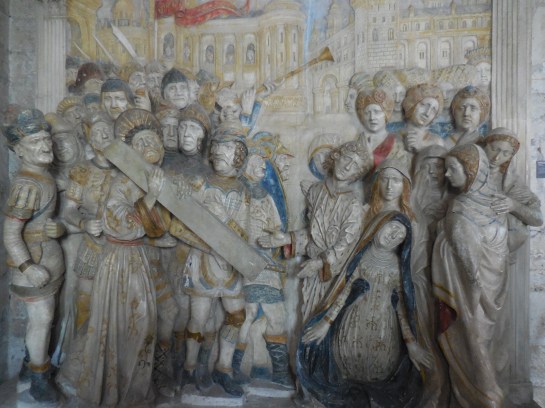
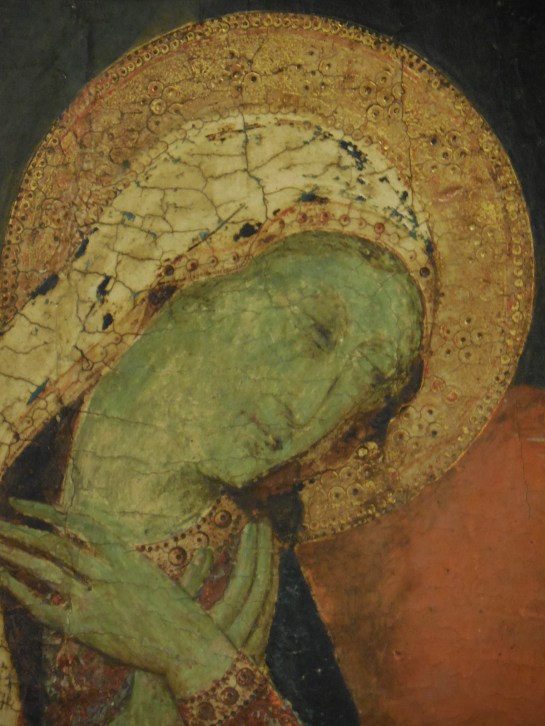
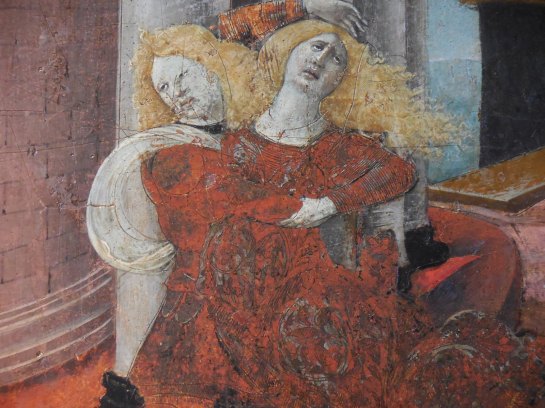
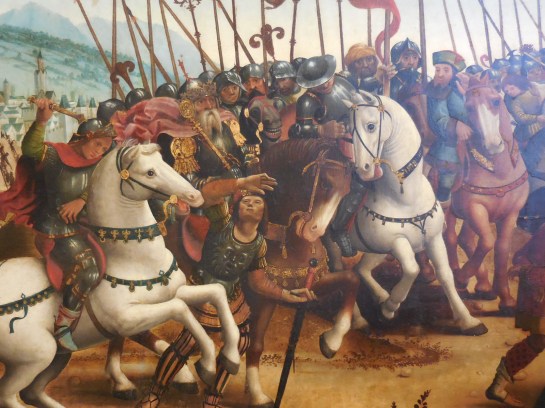
In June of 2015, I visited the Musée du Petit Palais in Avignon and was enamored by the Italian primitive and early Renaissance painting as well as the impressive Renaissance works rendered by the French Avignon School. The 14th century building houses art created from the end of the 13th century to the beginning of the 16th century in chronological and geographical order and includes The Virgin and Child by Sandro Botticelli. Some styles represented include the Siennese School, Florentine Renaissance and the Marches School. There are about 300 Italian paintings housed in the museum that was established in 1976. The structure used to be a citadel, an archbishopric and a Catholic secondary school before it became a museum.

AvignonPetitPalais4AvignonPetitPalais7AvignonPetitPalais10AvignonPetitPalais12AvignonPetitPalais14AvignonPetitPalais15AvignonPetitPalais18AvignonPetitPalais20AvignonPetitPalais22AvignonPetitPalais23AvignonPetitPalais26AvignonPetitPalais28AvignonPetitPalais30AvignonPetitPalais32AvignonPetitPalais31AvignonPetitPalais35

Tracy A. Burns is a writer, proofreader and editor in Prague.

Libochovice Chateau Diary

Lobochovice6
I discovered Libochovice Chateau in 2005 and wrote about it in an article describing chateaus in north Bohemia. It was published during October of that year in The Washington Post. Libochovice is certainly a hidden gem in north Bohemia. I recalled its dazzling displays, stunning tapestries, breathtaking ceiling frescoes and beautiful tiled stoves plus exquisite jewel chests. It is a shame there are not more foreign tourists making the trip there. It has so much to offer the curious castlegoer.
Lobochovicestatue
Before entering the chateau courtyard, I peered at the statue of Jan Evangelista Purkyně, who was born in Libochovice during 1787 and who became one of the leading scientists in the world, as he delved into the studies of anatomy and physiology. His father had worked for the Dietrichsteins, the family who had owned the chateau at that time. For two years Purkyně served as a tutor at Blatná Chateau, a remarkable sight in south Bohemia. Later, he made numerous discoveries in the scientific sphere, such as the Purkinje effect, Purkinje cells, Purkinje fibers, Purkinje images and the Purkinje shift. He also coined the scientific terms plasma and protoplasm. A crater on the moon and an asteroid are named after him.
Lobochovice3
Before my trip, I had read up on the history of the town and chateau. Located near the romantic ruins of Házmburk Castle, Libochovice was first mentioned in writing at the beginning of the 13th century. At that time, Házmburk Castle, then called Klapý and by no means a ruin, played a major role in the development in the town. A wooden fortress was built in Libochovice, and it was later replaced by a stone Gothic structure. During the Hussite Wars of the 15th century, the castle in Libochovice was razed, the town conquered.
Lobochovice4
The Lobkowiczs took over the properties in 1558, and they were responsible for constructing a Renaissance chateau with 28 rooms on the premises. When Jiří Lobkowicz revolted against Emperor Rudolf II in 1594, he was imprisoned, and his property was confiscated. That’s when the Sternberg family took control. Still, times were not rosy. The Thirty Years’ War did much damage, and during a fire in 1661, the chateau was destroyed.
Lobochovice1
When Václav Vojtěch Sternberg sold Libochovice to Austrian noble Gundarkar from Dietrichstein in 1676, a new era had begun. The Dietrichsteins would retain ownership until 1858. The chateau was reborn from 1683 to 1690, designed in early Baroque style. There were four wings with a courtyard decorated with Tuscan pilasters and arcades. A sala terrena on the ground floor led to the garden.
Lobochovicefresco2
Unfortunately, Gundakar died before the construction of the two-floor structure was completed. His daughter Terezie was then in charge of the chateau, and she had renovations made in the 1870s. More reconstruction occurred from 1902 to 1912. In the 19th century Johann Friedrich Herberstein added many objects of interest to the chateau collection. An avid traveler, he toured Egypt, Syria, Persia and India, for instance.
Lobochovicefresco4
During World War II the chateau’s history was bleak. That’s when Nazis took over Libochovice Chateau. Sixty-five residents of the town and surroundings revolted against the Third Reich and were beheaded by the Nazis. After 1945 the chateau was confiscated and nationalized because wartime owner Friedrich Herberstein had obtained German citizenship. More reconstruction took place throughout the decades, and in 2002 the chateau was declared a national monument.
Lobochovicesallaterrana
I was so excited about this tour. First, we visited the sala terrena, which looked like a richly adorned cave. The vaulted ceiling was incredible. I loved the sea motif as decorative seashells took the shape of a floral design. The reliefs of a sea monster also enthralled me.
Lobochovicefireplace
Next, we came to one of the highlights of the chateau, large Saturn Hall, where banquets, balls and concerts had been held. Above the fireplace a stucco sculptural grouping focused on Saturn. The Baroque chandelier, hailing from Holland, also captured my interest.
Lobochovicefresco6
From there, we continued to the Baroque section of the chateau. The ceiling fresco in the first room was breathtaking, displaying a mythological scene. A Renaissance chest gilded with ivory and a Baroque jewel chest inlaid with ivory and tortoiseshell were two delights.
Lobochovicetapestry2
I marveled at the tapestry, one of many I would see in this chateau, in the Big Gallery. It dated from the 16th century, and its theme was the Trojan War. The guide remarked that the tapestries were not put up for merely for show; they had also helped heat the rooms. A Baroque fireplace hailed from 1620. Still, that was not all this room had to offer. A jewel chest featuring carved reliefs hailed from the beginning of the 17th century.
Lobochoviceint3
The Study included an atlas from 1775 with pages of handmade paper. I wanted to turn the pages to find out what the handmade paper felt like. I recalled visiting the papermill in Velké Losiny, located in north Moravia, long ago, when I also toured the chateau there. It had been an enthralling experience, I mused. Then a jewel chest made with intarsia dazzled me. One tapestry in this room showed off a garden party while another sported a plant motif in an idyllic setting. The Baroque stove hailed from 1690. There were so many impressive Baroque stoves in this chateau!
Lobochoviceint7
During the 17th and 18th centuries in the Czech lands, there was much interest in Chinese and Japanese porcelain. The Chinese and Imari Japanese vases in the Oriental Salon reminded me of a trip to Dresden’s Porcelain Museum. The pieces in the chateau were so exquisite. Upon seeing an impressive French Baroque clock, I recalled the one I had seen at Loučeň Chateau a few months earlier. And how I loved jewel chests! This particular jewel chest was inlaid with ivory and tortoiseshell, featured intarsia craftsmanship and portrayed a hunting scene. Another thrilling tapestry was on display. I recalled the exciting tapestries at the Residence Palace Museum in Munich.

In the Bedroom I admired the spiral carved columns of the 17th and 18th century Baroque closets as well as the bed with canopy. A Rococo crucifix was also on display. The tapestry in this room featured King Solomon. I was enthusiastic because I knew there were even more tapestries to come.
Lobochovicefresco9
Rococo furniture from the 18th century decorated the Morning Salon. I mused that it must have been delightful to sit in this room and sip black or green tea. Two tapestries portraying the apostles adorned the space. And there was yet another ceiling fresco! This one showed Persephone venturing into the Underworld. I was especially drawn to the jewel chest with pictures of a town carved on its drawers. The attention to detail fascinated me.

In the Ladies’ Cabinet there was a Baroque commode with exquisite intarsia plus a Rococo table and desk also created with intarsia. The three tapestries took up themes of nature and architecture, offering a respite from the religious scenes that the tapestries often portrayed.
Lobochoviceint15
The Men’s Cabinet was decorated mostly with Neo-Renassaince and Second Rococo furniture. A large desk was Baroque. If I had not visited so many chateaus, it would have never occurred to me that the big bowl decorated with images of birds and floral motifs used to serve as an aquarium.
Lobochovicechapel2
Next came the chapel. While it was originally designed in Gothic style, the chapel now looks as it did after a 19th century renovation. I admired the stained glass windows. I love stained glass! The Neo-Gothic altar featured the apostles. What captured my attention the most, however, was a 16th century exquisitely carved altar showing off the adoration of the Three Kings. The woodwork was incredible, so detailed, so exquisite.
Lobochovicechapel1
The Big Dining Room took on Renaissance and Baroque characteristics. A carpet covered the large table, set for a feast. The tableware was made of pewter, typical of the Renaissance era. On the table there was a bowl that served as a washbasin for guests to clean their hands while eating. And more tapestries to behold! This time the two tapestries portrayed Alexander of Macedonia. Two paintings rendered scenes from antiquity. (The paintings throughout the chateau also are worthy of undivided attention.) Once again, I admired yet another ceiling fresco. This one centered around Aphrodite and Athena. In the corners four female figures in oval medallions represented the four continents. (Australia had yet to be discovered.)
Lobochoviceint10
I liked the Biedermeier furniture in the Small Dining Room. That style seemed to me to have such a sense of order and rationality. Yet I was enthralling by all styles of all eras. The colored decorative porcelain from Dresden and the pink-and-white Viennese porcelain service also caught my eye. The Baroque stove was quite a sight, too.

The Rococo Salon featured furniture of the Second Rococo style from the mid-19th century. The pink walls made the room feel quaint and inviting. Stucco adorned the ceiling fresco. Another Baroque stove and Meissen porcelain made appearances. In a flattering portrait, Terezie Dietrichsteinová – Herbersteinová, a former owner of the chateau, looked calm and content with life. I wondered if I was at a time in my life when I was calm and content. To some extent, yes. And traveling certainly played a major, positive role in my contentment.
Lobochoviceptng
The Empire Salon was decorated with furniture of that style from the 19th century. On the walls were pictures of Dietrichstein properties – Nové Město nad Metují Chateau, Kounice and Mikulov, all rendered masterfully by František Kučera. I liked the clock featuring a tongue that showed the time. The clock making time with its tongue brought to mind images of the living objects in The Beauty and the Beast. From the window there was a splendid view of the park.
Lobochoviceint16
The 19th century library was intriguing because it contained mostly books about natural science and travel, all printed in numerous languages. I had not heard of chateau libraries concentrating on only a few subjects. While about 2,500 books were on display, there were approximately 6,000 volumes in total. Objects that Josef Herberstein had brought back from his travels adorned the room, too. I saw African masks, an African crocodile and a Japanese sword, for instance. Another exquisite Baroque stove stood in the space.
Lobochoviceint18
The last room was the casino. A Russian pool table made in Prague dominated the room. I noticed that the card tables were made with intarsia. Portraits of the Dietrichstein clan hung on the walls. Josef, who loved traveling and hunting, was rendered in hunting attire, armed with a rifle and accompanied by a dog. I mused that he must have been a brave man to travel to such distant lands.
Lobochovicegarden2
Next I took a look at the park, which had been created in French style during 1683. Later, it got a Baroque makeover, and then it was changed into an English park. Now it is once again in French style, thanks to 20th century reconstruction. I loved the view of the chateau from the back, which sported floral adornment and a fountain. The chateau looked so majestic when viewed from that area.

I ate lunch at a nearby restaurant on the main square that was sleepy on a Saturday afternoon. Libochovice Chateau had dazzled me once again. The combination of ceiling frescoes, Baroque stoves, jewel chests and tapestries made the chateau unique and irresistible. The paintings also contributed to the majestic interior, where no object or piece of furniture failed to enthrall.
Lobochoviceint11
The interior had plenty to offer. I mused that there should be tours of the chateau offered from Prague. Libochovice deserved numerous accolades, and it was a chateau I would never forget, no matter how many chateaus I visited. The combination of artifacts and the design of the interior made Libochovice unforgettable, a place I could tour 100 times and not be bored. Every object spoke to me; nothing failed to capture my interest and curiosity. Yes, Libochovice is a special place, and my visit made my day a huge success.
Lobochoviceceiling
Tracy A. Burns is a writer, proofreader and editor in Prague.

More photos from a 2022 visit:

Karlova Koruna Chateau Diary

KarlovaKoruna1
A little over an hour on a fast train and a ten-minute walk was all it took to get to Karlova Koruna Chateau, which I had seen for the first time about 10 years ago. It was high time for a return visit.

Karlova Koruna Chateau, in English “Charles’ Crown,” is named in honor of Emperor Charles IV who visited there after his coronation in Prague during 1723. (He would visit a second time as well.) It was constructed for František Ferdinand Kinský from 1721 to 1723. During the Thirty Years’ War the imperial army, the Saxons and the Swedes took turns occupying it. When the castle was inherited by Václav Norbert Oktavián Kinský, he made it his main residence and built greenhouses there. This count was responsible for obtaining the services of architect Jan Santini Aichel and builder František Maxmilian Kaňka in 1721, when construction on the chateau began.

I was a big fan of Santini’s architecture, and this was no exception. I had even toured Santini’s dazzling structures in east Bohemia and Moravia earlier in 2015. The architectural design of the building was unique. I enthusiastically took snapshots. In the middle there are two stories in a cylindrical shape, and three one-floor wings are connected to them. Both floors divide into 10 main areas. I saw three-layered gables above a cornice. The chateau had a central composition, which reminded me of the Shrine of St. John of Nepomuk on Green Mountain (Zelená hora). Karlova Koruna also brought to mind the Gothic Parish Church of Saint Wenceslas in Zvole, in the Vysočina region, which was reconstructed by Santini from 1713 to 1717. I recalled my visit there in October. Its roof was shaped as a crown in honor of the Czech patron saint Wenceslas.
KarlovaKoruna3
I had always been enthralled with Santini’s Baroque Gothic style. I loved Santini’s penchant for mathematical symbolism and geometric forms. I thought his designs were rational yet radical. The outbuildings dated from the early 20th century, and the orangerie was designed in Empire style during the 19th century. The nearby Chapel of Saint John the Baptist had a hexagonal shape, but it was not possible to go inside.

I was familiar with some of Kaňka’s designs in Prague and outside the capital city.
Like Santini the builder Kaňka, who also worked as an architect, excelled at his field. He had reconstructed many palaces, chateaus and churches, mostly in Bohemia. One of his most famous works was Konopiště Chateau, where Archduke Franz Ferdinand of Austria had lived. In the early 18th century he designed parts of the Clementinum, including the Mirror Chapel, where I had been to many concerts had viewed illuminated manuscripts that had been on temporary display. He also did renovation work on Prague’s Karolinum. He even worked on St. Vitus’ Cathedral. I knew that he had built Loučeň Chateau, which I had recently visited.

The church at Karlova Koruna

The church at Karlova Koruna

I brushed up my knowledge of the Kinský family history in Chlumec. General František Josef Kinský, who became a colonel at age 29, greatly influenced the development of hunting and horsebreeding at the chateau during the 18th century. He began to have hunts called in Czech “parforsní hony,” taken from the French expression “par force.” In this type of hunting, the animal was hunted until it was exhausted and then killed. However, after the Napoleonic Wars, in 1836, a new type of hunting, inspired by the British, came about at Chlumec, thanks to Oktavián Kinský. This type of hunting did not involve killing the animal, which was usually a deer. The rider on horseback would have to overcome natural barriers to catch the deer. Then it was returned to the forest.
KarlovaKorunaint23ptng
The first long steeplechase took place in Chlumec in 1846, a mere nine years after the first one ever in Liverpool. The famous Pardubice steeplechase has its roots in Chlumec. Zdeňko Radslav Kinský won the Big Pardubice steeplechase. And he would not be the last Kinský to nab first place there. Rudolf and Karel Kinský also triumphed at the race. The niece of Oktavián Kinsky, Lata Brandisová, was the first woman to win this event, in 1937. Count Karel Kinský even won the Grand National race at Aintree, England in 1883. Many famous Kinský horses participated in this race.
KarlovaKorunaint10ptng
Oktavián Kinský also had played a significant role in Karlova Koruna’s history. He was a talented horse breeder. He had bred a unique gold-colored horse that he called isabela but would be later referred to as the Kinský breed of horse. It was the best horse for sport in Europe, lauded for its talent at steeplechasing, fox hunting and show jumping. While many are gold-colored, others have bay or chestnut hues. Otkavián started his own studbook, which is still in use today. Another unique breed at Chlumec was the dun horse or buckskin.

When Zdeňko Radslav inherited the property, he made Karlova Koruna his main residence. He had two sons, Norbert and Radslav and a daughter named Genilda. He was ardently against the Munich Agreement and in 1939 signed a declaration against the Nazi Occupation. As a result, Karlova Koruna and his other properties were taken over by the Nazi administration. Disaster came to the chateau when a fire broke out in 1943. I saw an article about this disaster in the hallway on the way to the women’s restroom. The roof of the chateau caved in, and the chateau was destroyed. It was rebuilt, though.
KarlovaKorunaint9portraits
Zdeňko’s oldest son, Norbert, was forced to work in the Reich, but he managed to flee and ride his bike back to Bohemia. After some negotiations, he was allowed to work as an interpreter at Orlík Chateau. In February of 1948, Norbert left his motherland for Italy, where he married Anna Marie dal Borgo-Netolická, an Italian who had spent her childhood at Kost Castle, which I had also visited earlier that year. When Norbert’s parents came to Italy for their son’s wedding, the Communists took stripped them of all their property. Penniless, they wound up staying in Pisa. Genilda and her two sons made a daring escape across the border, finding shelter in several refugee camps. Finally, they came to Pugnana, and then Genilda continued to Switzerland.
KarlovaKorunaint12ptng
Only Zdeňko’s son Radslav stayed in Czechoslovakia. He was allowed to work at the State Stud Farm, the famous breeding ground for Kinský horses. He is credited with keeping the Kinský horse alive during the Communist era. The Kinský horse was a dominant breed through the middle of the 20th century. Now, however, Kinský horses are very rare. At the time Radslav lived in a very small and claustrophobic space at Karlova Koruna. In 1958 he was allowed to travel to France and did not return to Czechoslovakia. Instead, he studied at the Sorbonne and later taught in Tunis, Algeria and Morocco. He died in 1975.

His son Dr. Norbert Kinský was given the property back after the Velvet Revolution of 1989. When he became a member of the Knights of Malta, Dr. Norbert Kinský gave his property to his two sons, who established the company Kinský dal Borgo, which now takes care of Karlova Koruna, Kost Castle and other properties. Radslav Kinský lives in Žďár nad Sázavou, where he owns property.
KarlovaKorunaint15
Now it was time for the tour of the interior that I remembered as dazzling from my first visit here so many years ago. In the central area that breaks off into three wings, I saw 12 exquisite armchairs and antler hunting trophies on the wall. Paintings on the walls featured Slovak motifs. Because my ancestry was part Slovak and I had a soft spot in my heart for Slovakia, I was interested in the paintings.
KarlovaKorunaint8
In the first room I saw the Kinský coat-of-arms – three silver boar horns on a red field. I recalled finding my Burns’ family coat-of-arms in Scotland. It featured a boar sticking out its tongue. I liked the Kinský coat-of-arms better. The guide explained to us that the Kinský dynasty could be traced back to the 13th century. I wished I could trace my Czech, Slovak and Scottish ancestors back to the 13th century. I was fascinated by an intarsia-made bureau forged with seven kinds of wood. A French gilded clock also caught my attention. In the next room I saw a Venetian mirror, and I was surprised to find out that it had not been manufactured in Venice. Rather, it hailed from Sloup in the Czech lands.
KarlovaKorunaint5clock
The Dining Room showed off distinguished portraits of the Kinský family as well as portraits of Emperor Joseph II and Emperor Leopold II. Another space boasted elegant Viennese porcelain. I loved the exquisite chairs, some of which were decorated with green roses on the tops of the backs. Those sporting the roses were designated for women while the ones without floral adornment were meant for men.

The next section was devoted to the Kinskýs’ love of horses as numerous pictures of horses adorned the walls. I saw dun horses bred at the Kinský’s studfarm and English horses. Other renditions showed horses from the Spanish Riding School. Paintings of horses jumping over barriers in steeplechase races also decorated the walls, and the guide proudly told us that the Pardubice steeplechase originated here. Other paintings showed horses and dogs going on hunts. A saddle hailed from World War I. I would never ride a horse because I would be too scared that the animal would bolt. Also, large animals frightened me, even big dogs. I knew many people who loved riding, but my fear did not allow me to share their excitement. I had not been very interested in horseracing or horsebreeding until I came here and learned about the Kinskýs’ passion for horses. They had certainly played a major role in horsebreeding.
KarlovaKorunaint11ptng
In the next room I saw Oktavián Kinský on the clan’s best horse, and other works featured representations of the isabela or Kinský beige horse. Another space featured paintings of hunts. The guide told us about the two types of hunting in which nobles had participated here – the French “par force” style during which the animal was killed and the English style during which the animal was returned to the forest. In paintings I saw the hunters sporting red jackets, black hats and white riding breeches. There was more than art featuring horses here, though. I marveled at a desk made with intarsia, hailing from the 18th or 19th century. A Venetian mirror also caught my eye.
KarlovaKorunaint13
In the third wing we learned about Zdeňko Kinský and his family of nine children while we gazed at black-and-white engravings of horses. One large, long painting got my undivided attention. It showed horses in motion as they raced. The artist had really captured the moment in the way a photograph would. That the painting was made of 12 pieces of deerskin intrigued me.
KarlovaKorunaint18ptng
Bookcases held volumes in various languages, such as Hungarian, French and German, but there were only a few books in Czech. The Kinskýs had spoken numerous languages. Laura Kinská, whose portrait was in the room, had managed to learn nine languages. In the portrait her expression looked gentle, but somehow I sensed an inner sadness as well. Gazing at a portrait of Tereza Kinská, I admired her beauty. It was sad to learn that she had died young and childless. A small painting showed two Kinský women without their wigs or elaborate hairstyles. I had never seen such intimate portraits of female nobility.
KarlovaKorunaint17
In the next room the guide talked about how the Kinský family had been enemies of the Germans during World War II and how the chateau had been used for the Nazi administration. He explained why Norbert Kinský stayed in Italy after coming there for his son’s wedding and said that after Norbert’s wife died, he had joined the Knights of Malta. Since Norbert had to give up his property, he passed it on to his two sons. In one photo Norbert sported his red Knights of Malta uniform.
KarlovaKorunaint19globe
After touring the three wings, we went upstairs to the Marble Hall. It was so elegant that I was speechless. The two lavish fireplaces were made of real marble, while most of the other marble in the large space was imitation. An exquisite chandelier was 2.2 meters high. The floor was decorated with geometric shapes, and I was reminded of Santini’s fondness for mathematical symbolism.
KarlovaKorunaint21chandelier
In the gallery above the Marble Hall I saw pictures of the chateau and its surroundings from the 1930s. I spotted a photo of Karel Schwarzenberg on a horse in 1934, Zdeňko Radslav Kinský in a historic uniform and the Kinský family playing tennis on the courts that were once on chateau grounds. The pictures brought the family to life. They were not merely names spouted out by the tour guide or found in a brochure about the chateau, but rather real people who skied, played tennis and went rowing. The photos of the interiors of the chateau from that time period were also intriguing. I wondered what it would have been like to have lived in Czechoslovakia during the 1930s with the democratic era of the Second Czechoslovak Republic as well as the threats that Adolf Hitler and the Nazi Party posed.

A fireplace in Marble Hall

A fireplace in Marble Hall

Marble Hall

Marble Hall

I ate marinated chicken at the chateau restaurant. I was seated outside, even though it was scorching hot. I recalled the days when I could almost always find my favorite food on Czech menus – it was chicken with peaches and cheese. How many years had it been since I had seen it offered at a restaurant? After lunch I went for a stroll in the park with its exotic species of woody plants and then wanted to read on a bench, but it was sweltering hot. I wound up going back to Prague in an uncomfortably hot train. Luckily, it was not a long ride back to the city I considered home. When I set foot in Prague’s main station, I smiled. Despite the heat and humidity, I had had a superb day and had a new appreciation for horseracing and horsebreeding.
KarlovaKorunaint14pink
Tracy A. Burns is a writer, proofreader and editor in Prague.

Loučeň Chateau Diary

Loucen2
Waiting for the tour to start, I was excited that I would soon see the historical interiors of a chateau I had never before visited. Although Baroque Loučeň (also sometimes referred to as Lautschin) had been open to the public since 2007, I had heard about by chance only in 2015 via an article posted on Facebook. The place sounded magical. I knew I had to make a trip there. And soon. While there are many tours for children, I had opted for the classic tour of the interiors.

I was surprised that a settlement at Loučeň had existed as far back as 1223. A castle was in the town even during the Middle Ages, but a turning point in the history of Loučeň came in 1623 when Adam von Wallenstein became the owner. That is when the chateau was built in Baroque style, construction taking place from 1704 to 1713. Adam had a famous nephew: Albrecht von Wallenstein had made quite a name for himself in the military. He even held the post of supreme commander of the armies of the Habsburg Monarchy and was a major player in the Thirty Years’ War. The Wallenstein family tree died out in 1752.
Loucen3
In 1809 the Thurn und Taxis family came into the picture when Maxmilián Thurn und Taxis purchased the chateau. I had become familiar with this dynasty when I had visited Regensburg, where the family had had their main residence. I had toured their elegant palace and distinctly recalled the grotesque figures on the ceiling of the Conservatory, the Brussels’ tapestries in the Large Dining Room and the lavishness of the Rococo and Neo-Rococo Ballroom.

The family’s great influence on the postal system had left me in awe. The Thurn und Taxis family descended from the Tasso clan from the 13th century. During the end of the 15th century, Francesco Tasso created the first postal system going from Innsbruck to Brussels. It took a week for the mail to reach its destination. The key to its success was that the rider and horse were changed at each postal station. For his ingenuity, Tasso was given nobility status by Emperor Maximilian I and thus became Franz von Taxis in 1512. Before long the Thurn and Taxis family had the monopoly of the postal services in Central and Western Europe. By the end of the 18th century, the postal system was enjoying great success.
Loucen6
The Thurn und Taxis clan had some prominent members, that’s for sure. For example, Rudolf von Troskow established the law journal Právník, the first of its kind in the Czech language. He also created some legal vocabulary that is still in use today. His interests were not limited to law, though. He was a patron of the arts as well.

During 1875, when Alexander Thurn und Taxis, a violinist and patron of the arts, wed Marie von Hohenlohe, an amateur painter as well as friend and patron of Rainer Maria
Rilke, times changed at Loučeň, a place many well-known artists and politicians proceeded to visit. Rilke stopped by – not once – but twice. He even dedicated his Notebooks of Malte Laurids Brigge to Marie. Composer Bedřich Smetana lived nearby toward the end of his life and performed on one of the Thurn und Taxis’ pianos. Smetana was a friend of the family; he dedicated his composition Z domoviny to Alexander. Other prominent visitors included Tomáš Garrigue Masaryk, the first president of Czechoslovakia, his daughter Alice, Czech writer Eliška Krásnohorská, musician Josef Suk and American storyteller Mark Twain.

Alexander Thurn und Taxis was a man of many accomplishments. He gave his animal trophies to Prague’s National Museum and helped build the first railway in the region. During the tour I would discover the role he played in bringing soccer to Bohemia.

The Dining Room

The Dining Room


The Thurn und Taxis clan would lose the chateau at the end of World War II, when it became the property of the state. In 1945 the Soviet army and locals plundered the chateau. Under Communism the chateau’s history was not rosy, either. It became a recreation center for Ministry of Transportation employees. Later it was turned into a railway trade school. A landmark event occurred when the company Loučeň a.s. took over the chateau in 2000. Even some of the original furnishings were retrieved.

Our guide was a descendant of the Thurn und Taxis family. I had never been on a tour led by a member of a family that had had such a remarkable impact on the chateau I was visiting. It was a real treat. In Staircase Hall I was captivated by a large painting of Duino Chateau, a romantic structure perched on a cliff in Italy. The young man’s parents were there now, he said. The place had been the Thurn und Taxis’ property for centuries. Rilke had written his Duino Elegies there.
Loucenint6
In the first room there was a sleigh which had been used to move the mail through snowy terrain. It was painted black and yellow, and it was no coincidence that taxis often used the same shade of yellow. In fact, the word taxi derives from the name Thurn und Taxis. I also saw the huge winter boots that a postman would have worn delivering the mail in wintry conditions. A map of Bohemia from 1720 hung on one wall. I loved old maps! It made me think of the vedutas and maps of towns at Mělník Chateau. The family’s coat-of-arms was prominent, too. It featured a badger. (The original name of the family, Tasso, means badger in Italian.)
Loucenint7
I wanted to sit in the red, plush chairs at the dining room table and stare at the exquisite porcelain service. Overall, there were 600 pieces, but only a portion of them were on display. The fancy gold candlesticks got my attention, too. In the Chinese Salon I was impressed with the big Chinese vases, so colorful with superb designs. The white wallpaper featured pink flowers and green leaves and had a sense of fragility and intimacy to it.

The Prince’s Study was filled with his souvenirs from two trips to Africa, including a crocodile. Paintings of horses also decorated the study. In one rendition a horse was jumping over a barrier in a Pardubice steeplechase race. (I would learn more about the Pardubice steeplechase when I visited Karlova Koruna Chateau a few weeks later.)
Loucenint9
In the Prince’s Bedroom I noticed a photo of Prince Alexander with his four cats, three of whom slept on the bed with him. Curled up on the bed were three stuffed animal cats. I thought that was an interesting touch. My late cat had almost always slept on my head during almost 15 years, and I thought of how much I missed him. I wondered what my five-year old cat was doing at that moment. She liked to sleep at the foot of the bed. I didn’t think I could live without cats in my life. Maybe Alexander had felt the same.

In the servant’s bedroom I saw something that really surprised me. At first I did not understand why there was an iron next to replicas of old banknotes. Then the guide explained. The servant ironed the prince’s money so that it would not be crumpled. That was not all. The servant also ironed the prince’s newspaper to prevent the color from fading and to keep it from getting dirty.

In the hallway I saw a vacuum from the 1930s and red buckets on one wall in case a fire would break out. A picture of the Loučeň soccer team from 1893 also hung in the hall. That team played in the first official soccer game in Bohemia, thanks to Alexander’s interest in the sport.
Loucenint8
An avid fan of classical music, I have always enjoyed visiting the music salons in chateaus. This time was no different. I tried to imagine Smetana performing on the piano in the room. On the piano was a red box of Mozartkugeln truffles. The music sheets were turned to Concertino for violin and piano by Leo Portnoff, who was born in Russia during 1875 and emigrated to the USA in 1922.) I wondered if Alexander had played the violin accompanied by Marie on the piano when performing this piece.

The Princess’ Salon was decorated with books by Rilke and an upright piano from the 18th century. The view of the park from the window here was very romantic and picturesque. There were 10 mazes and 11 labyrinths in the park. I would have to check it out later, I told myself. I loved the bright green painted walls and a nook in one part of the room. I wanted to relax and read, seated in that nook, losing myself in a mystery or art catalogue.

The Church of the Assumption of the Virgin Mary

The Church of the Assumption of the Virgin Mary


In the Princess’ Bedroom I saw her ravishing pink-and-cream wedding dress, which she had donned at age 40. I marveled at how young she looked in photos. Crowns and lions adorned the light blue wallpaper. A piano made by Rudolf Stenhamer in Vienna stood in the room, too. I admired the richly carved patterns on the front and back of the bed. I also was interested in the personal items that had belonged to the princess. On display were fans, a crocodile handbag and beautiful necklaces as well as a jewelry bag. The Oriental carpet was a nice touch, too.
Loucenint11
The Children’s Room came next and then a small classroom for Thurn und Taxis children. It was very plain. There was a small bench for two students with small blackboards. On the desk were two books called Histoire de la Revolution Française. In the Church of the Assumption of the Virgin Mary there was a real treat. The artwork over the main altar was made by my beloved Czech Baroque painter Petr Brandl. I recalled his altar paintings in the cathedral at Sedlec, which I had visited earlier that year for what must have been the fourth or fifth time. Still, his work never failed to amaze me.
The ceiling of the church

The ceiling of the church


The library consisted of a gallery and ground floor. One of the books prominently displayed was an English version of a fairy tale by Princess Marie – The Tea Party of Miss Moon. I would have been interested in reading it to get a sense of the princess’ writing style, but it was not for sale in the chateau shop. The most valuable book was the huge chronicle of the Thurn und Taxis family. Another enormous volume on a table tackled the theme of the romantic Šumava region in the Czech lands. The room was not without its distinguished family portraits, either.

I walked through the park a bit and then made my way to Nymburk, a town closely associated with my favorite Czech writer, Bohumil Hrabal. In Nymburk I did not have much time for sightseeing, though. I peeked into a Gothic church and had lunch before heading back to Prague, more than satisfied with the trip’s outcome.

View from Loučeň Chateau

View from Loučeň Chateau


Tracy A. Burns is a writer, proofreader and editor in Prague.

Lobkowicz Palace Diary

Lobkowicz2
It was one of those places I had been meaning to visit for a long time, but I had just never gotten around to it. Tomorrow. . .this week. . .next week. . .I would always stay home and write instead of visiting the Lobkowicz Palace. Friends and family raved about the museum. In August of 2015, I finally went to check out the Lobkowicz Museum, which opened in 2007.

The beginning of the audio guide tour had me hooked. William Lobkowicz, the current owner of the palace, did most of the narrating. His grandfather Max was married to a British citizen, Gillian. When World War I started, Max had been a very affluent man. During World War II he served as ambassador of the Czech government in exile in London. He was fervently against the Nazis and was an avid supporter of the democratic First Republic of Czechoslovakia. The Nazis disliked Max not only for his anti-Nazi activities but also because he had a British wife. After the Communists took control of the country in 1948, Max found himself trapped in Czechoslovakia. His wife sent him a letter from London, telling him she was gravely ill. She wasn’t, but the ploy worked. The Communists gave Max two days to visit her. With only his coat and the clothes he was wearing, Max fled from his homeland to join his wife in London. He left behind 13 castles. William’s father had been 10 years old at the time and had been sent to live in the USA.

Max Lobkowicz from lobkowicz-palace.com

Max Lobkowicz from lobkowicz-palace.com


What a story! It sounded like something out of a spy novel or film! It must have been so difficult to leave so much property and so many possessions behind. Thirteen castles! It must have been heartwrenching.

Then I found myself in a large room full of family portraits, starting with those of nobility from the house of Pernštejn. The portraits were not merely faces staring at me. Each portrait told a story about an individual thanks to the information on the audio guide. The people came alive as I listened to intriguing facts about their lives. When I was looking at the Pernštejns, I fondly recalled my visits to Pernštejn Castle in Moravia. It was one of my all-time favorites. I wonder if that had been one of the 13 castles grandfather Max left behind.
Lobkowiczportrait
Vratislav Pernštejn, born in 1530, held the distinction of being the first Czech to receive the Order of the Golden Fleece, achieving this feat at the tender age of 25. Later, many more Lobkowiczs would be honored with the award. The Lobkowicz clan was related to King Philip II of Spain, whose tenure on the throne lasted 40 years. His territories even included Central America, the Caribbean and parts of what is today the USA. At one time he was even the King of England. Nicknamed “Philip the Prudent,” he was the son of Holy Roman Emperor Charles V and Infanta Isabella of Portugal. The Philippine Islands were named after him. He founded the first trans-Pacific trade route between America and Asia. He also made sure the Ottomans would no longer be a formidable enemy of his lands. He also helped his empire get back on its feet in times of financial crises.
Lobkowiczint1
I wished I could trace my family tree back so many centuries. I knew that I was of Slovak heritage on one side of the family, had a grandmother of Czech ancestry and a grandfather of Scottish origin, but I did not know any details. My ancestors from Moravia were named Mareš, a common Czech surname. My grandmother’s maiden name had been Šimánek, also a common name. I think my decision to move to Prague had something to do with filling up a vast emptiness about my family’s past, wondering who my ancestors were and what they were like. In Prague I felt in touch with a past I had never known, and that was one of the reasons Prague felt like home.

I was reminded of a Diego Velázquez exhibition I had seen in Vienna about a year ago when I gazed at the portrait of Infanta Margarita, then a four-year old member of the Spanish royal family. I recognized her from Velázquez’s masterpiece, Las Meninas. While Margarita was immortalized in portraiture, she did not enjoy a long life. She died during childbirth when she was only 22 years old.

I found the Lobkowicz’s involvement in the Defenestration of Prague fascinating. One painting showed the historical event, when Protestant nobles revolted against the Catholics and threw two Catholic ministers and a secretary out a window. This event triggered the Thirty Years’ War. Luckily, the three fell onto a pile of dung and did not die. Two of them took refuge in Lobkowicz Palace. According to legend, Polyxana Lobkowicz hid them under her skirts.
Lobkowiczint4
In the next room I was surrounded by fine porcelain. I saw majolica service from Lombardy picturing a calming landscape of coastal scenes with mountains. It dated back to the 17th century and was made in Italy. I was also enamored by service from Delft, dating back to the late 17th century. I had always been fond of porcelain made in Delft.

The painting in the next room captivated me. Lucas Cranach the Elder had rendered Mary and the Christ child in a painting hailing from 1520. Saint Catherine and Saint Barbara also made appearances. I found out that Ferdinand Lobkowicz had been an avid art collector.
Lobkowiczint3
In a separate space stood a processional reliquary cross, Romanesque in style. Hailing from north Germany in the beginning of the 12th century, it was made of gilded copper and adorned with 30 crystal cabochons. I couldn’t believe I was looking at something that ancient and in such good condition. Whenever I saw Romanesque churches, for instance, I could not believe I was standing in a structure built so many centuries ago. I briefly thought back to the Romanesque church with the fascinating façade in Regensburg.

Then I entered a room filled with weapons and knights’ armor. While I was impressed that the Lobkowiczs possessed such a superb armory, weapons were certainly not my cup of tea. I moved on and soon found myself surrounded by musical instruments, especially violins. I love classical music, and the room calmed me while the armory had made me anxious.

I stared for some minutes at the original score of Part III of the Messiah by Handel as arranged by Mozart. I also saw original scores by Beethoven and Mozart, two of my favorites. The first printed edition, dating from 1800, of the score for the oratorio of The Creation by Haydn also caught my attention. My mind wandered back to those classical music classes at Smith College, where I first became enamored with the above-mentioned composers and many more. An entire new world had opened up for me. I also spent some time gazing at the violins and clarinets, wishing I could play an instrument. I had taken beginners’ piano lessons in college for a year, but that was it. In college I always dreamed of being able to play an instrument well enough to major in music. But it had been just a dream. I wasn’t talented enough, and I had concentrated on my writing.

Haymaking by Pieter Bruegel the Elder, 16th century. Photo from www.wga.hu

Haymaking by Pieter Bruegel the Elder, 16th century. Photo from http://www.wga.hu


Soon I set my eyes on one of my all-time favorite paintings by my favorite artist, Pieter Bruegel the Elder. It was his rendition of Haymaking, one of only six panels representing the 12 months of the year. Each panel represented two months. Haymaking depicted June and July. I remembered gaping at the Bruegel collection in Vienna’s Kunsthistoriches Museum, where I had admired The Gloomy Day (Early Spring), The Return of the Herd (Autumn) and the Hunters in the Snow (Winter.) Bruegel’s paintings of the seasons had played a significant role in Western art. It was the first time that landscape was the main subject of the painting. Before, landscape had been utilized as a backdrop for religious figures. I admired how nature played a role in the lives of the people depicted in the paintings. Their daily activities were dictated by the seasons. I loved the way Bruegel depicted the common man in everyday activities and put so many details in his paintings. The landscape was stunning and idyllic, too.

The Croll Room was breathtaking. Carl Robert Croll had painted over 50 works for Ferdinand Joseph Lobkowicz during six years in the 1840s. I recognized Jezeří Castle, which the Lobkowiczs sold to the Czech state in 1996. I had visited Jezeří some years ago, but the chateau was in need of major reconstruction. Its location on a cliff was romantic, but restoring the interiors was going to take a lot of time. I wondered how far the restoration work had come during the past years. I also recognized Roudnice Chateau, shown Italian Baroque style from reconstruction that took place from 1653 to 1677. I had been to the art gallery at Roudnice Chateau some years ago, but most of the chateau was under reconstruction. Nelahozeves, also seen here, was one of my favorite chateaus due to its impressive art collection. Not far from Prague, I always recommended that visitors take a day trip there. I had even written a post about it for my blog.

City of London from River Thames with St. Paul's Cathedral on Lord Mayor's Day by Canaletto

City of London from River Thames with St. Paul’s Cathedral on Lord Mayor’s Day by Canaletto, Photo from http://www.wikiart.com


LobkowiczDogRm
Then I saw what have to be two of the most beautiful paintings in the world – two views of London by Antonio Canaletto. I loved Canaletto’s work because he brought out the atmosphere of the place he was painting. I could really feel as if I were looking at London and the Thames in his City of London from River Thames with St. Paul’s Cathedral on Lord Mayor’s Day from 1748 and in The River Thames Looking Toward Westminster from Lambeth from 1746-47. I recalled the extensive Canaletto exhibition I had seen in Aix-en-Provence during June. I loved the details of the boats and sails.
LobkowiczBirdRm
On the first floor I saw a portrait of Princess Ernestine Lobkowicz clad in brilliant red and portraits painted by the princess in the 17th century. I wondered how many female portrait painters there had been in the 17th century. The Bird Room featured pictures of birds made with real feathers. On the audio guide William’s wife, Alexandra Lobkowicz, mentioned that she had found the pictures infested with insects and that they took almost a year to conserve. In the Dog Room I focused on a painting of two dogs proudly seated on velvet cushions in 1700. They looked so spoiled with their luxurious light blue and gold collars. Then again, I had always spoiled my cats.
Lobkowiczint2
Lobkowiczint5
The Firanesi Room was filled with engravings of ancient and modern Rome, one of my favorite cities in the world. I recalled showing my parents the Colosseum, one of my most treasured memories of time spent with my Mom and Dad. The Oriental Room proved a delight as well. It featured nine Chinese embroidered silk panels hailing from the 18th century. I loved Oriental rooms in castles and chateaus. They were so elegant, and the wallpaper was always so beautiful. There was also a Chinese Room in the palace. It had a distinctive Oriental flair and dated from 1900. I loved the bright colors, too.
LobkowiczRococo1
Meissen porcelain in a Rococo cabinet

Meissen porcelain in a Rococo cabinet


Next came the Rococo Room, where two Rococo display cabinets displayed various objects, such as snuff boxes, exquisite fans and Meissen porcelain. I admired the rich carving of the woodwork on the cabinets. Seeing the Meissen porcelain reminded me of the Museum of Porcelain in Dresden, where there was so much Meissen to behold that it had been overwhelming for me. The superb display cases dated from the 18th century.
An allegorical fresco in the Dining Room

An allegorical fresco in the Dining Room


The Dining Room flaunted portraits and ceiling frescoes that enthralled me. I saw the Allegory of Europe, the Allegory of Asia and the Allegory of America, for instance. Poseidon and Bacchus appeared in several frescoes. I loved ceiling frescoes in chateaus, especially ones with mythological figures. The elderly attendant in the room described the various frescoes to me enthusiastically. It was nice to meet a museum attendant proud of the place where she was working.
Lobkowiczfresco2
I punched in a number on the audio guide and listened to how the Lobkowiczs watched the Berlin Wall fall and the Velvet Revolution unfold on television. They returned to Czechoslovakia in 1990 and wanted to make the country their home. Under the first law of restitution, the Lobkowiczs had less than a year to find all the objects that belonged to their family and to make a list of them. It certainly had not been an easy process, but, luckily it had a happy ending.

At the end of the tour I walked by a small concert hall. It would be delightful to attend a concert in such an intimate space in a lavish palace. I would have to come back again to go to a concert. Classical music had played a role in the family history, so perhaps it was only fitting that they had a space for concerts.
Lobkowiczfresco4
I was very impressed with both the palace and the narration on the audio guide. Lobkowicz Palace had a bit of everything – exceptional artwork from various centuries, impressive furnishings, ceiling frescoes, porcelain, musical instruments, original musical scores, weaponry and of course, portraits. I liked the variety of furnishings and pieces of art that I was able to see from various eras – a Romanesque processional reliquary cross and Rococo display cases, for instance. And the family history was so intriguing! What an ordeal William Lobkowicz’s grandfather had gone through! His possessions had not been taken away from him once, but twice – first by the Nazis and then by the Communists.

Now that I knew what an intriguing place the palace was, I was sure I would be coming back for another visit and for a concert sometime soon.
Lobkowiczfresco6
Tracy A. Burns is a proofreader, writer and editor in Prague.
NOTE: No photos were allowed on the second floor, only on the first.

Sychrov Chateau Diary

Continue reading

Santini Tour of east Bohemia and Moravia Diary

The Holy Shrine of St. John of Nepomuk, Zelená Hora

The Holy Shrine of St. John of Nepomuk, Zelená Hora

For some years I had wanted to go on a tour of places designed by Jan Blažej Santini-Aichel, an 18th century Czech architect of Italian origin, who lived from 1677 to 1723. I am fascinated by Santini’s unique Baroque Gothic style, inspired by the Italian radical Baroque use of geometry and symbolism. I see Santini’s structures as rational yet radical. Santini elevates Gothic art to a new form, offering fresh perspectives and giving new insights.

Jan Blažej Santini-Aichel

Jan Blažej Santini-Aichel


Santini was supposed to follow in his father’s footsteps and become a stonemason, but palsy prevented him from doing so. As a student he was mentored by Prague-based architect Jan Baptiste Mathey. During a four-year sojourn in Italy, Santini became enamored with works by Italian architects Francesco Borromini and Guarino Guarnini and their radical Baroque style. Santini was commissioned to reconstruct many religious sites. Baroque art became the fashion during the era when the Catholic army triumphed in the Thirty Years’ War and remained so afterwards, when the Catholicism flourished in the Czech lands. During a mere 46 years, Santini cast his magic spell on about 80 buildings.

So, when I got the opportunity to travel with Czech tour company arsviva to Santini’s sites in eastern Bohemia and Moravia, I jumped at the chance. I was not to be disappointed.

The facade of the Church of the Assumption of Mary and St. John the Baptist

The facade of the Church of the Assumption of Mary and St. John the Baptist


We began our tour where Santini had launched his Baroque Gothic style, with the Church of the Assumption of Mary and St. John the Baptist in central Bohemia’s Sedlec, near Kutná Hora. The monastery hailed from the middle of the 12th century, when it was a Romanesque style church. It burned down during the 15th century Hussite Wars and would not get a makeover for 278 years.
The interior of the Church of the Assumption of Mary and St. John the Baptist

The interior of the Church of the Assumption of Mary and St. John the Baptist


Then, during the 18th century, the 25-year old Santini worked his magic on the largest church in the Czech lands. The façade featured a portico with a triple canopy. A four-leaf rosette decorated the gable of the façade. A large window allowed the light to stream in and give the space a unique character. I had never realized that light played such a major role in Santini’s structures until I saw how it made this church so dynamic.
SantiniSedleccathint2
The vaulting in the main body, the transept and choir boasted a network of circular ribs. The gallery and side body featured dome vaults divided by lancet rib bands. There also was a self-supporting staircase, another common element in Santini’s designs.
SantiniSedleccathint4
I loved the ceiling vaulting. The complex network of vaults reminded me of the complex situation Czechoslovakia had found itself in not long after the Velvet Revolution, when I moved to Prague in 1991. It had been an exciting time as Czechoslovakia had tried to find its own identity in a democratic system. Czechoslovakia would soon split apart, unable to negotiate the difficult roads. I, too, had been trying to find my own self-identity, not a simple matter, either. But I like to think, that unlike the situation with Czechoslovakia, I found my way through the network of vaults.
SantiniSedleccathint8
Next stop: Želiv Monastery Church of the Virgin Mary’s Birth. The monastery was founded in 1139. Santini’s designs were implemented here from 1714 to 1720. This time Santini was not changing the structure into his unique Baroque Gothic style. He had another building constructed and connected it to a Gothic chancel that he had renovated. A Gothic monstrance made of wrought iron shows off in Santini’s style. The three naves with galleries were separated by hanging pendant keystones. This feature gave the space a sense of fragility.
Želiv Monastery's Church of the Virgin Mary's Birth

Želiv Monastery’s Church of the Virgin Mary’s Birth


SantiniZelivchurch3
The two 44-meter high clock towers close a polygonal arcade antechamber, one feature of Santini’s designs. The façade has a triangular gable. The wooden Baroque main altar dated from 1730, with a picture of the Birth of the Virgin Mary and symbols of the four evangelists. There were gilded reliefs on the altar under the statues of prophets. Behind the altar was an original Gothic sanctuary. The organ dated from 1743. Most of the interior furnishings hailed from the first half of the 18th century, after the devastating fire of 1712.
SantiniZelivchurch10
SantiniZelivchurch11
Želiv experienced harsh times during the totalitarian regime. In 1950 the Communists shut down the monastery and transformed it into a detention camp for monks. Then in 1957 it became a psychiatric institution and remained so until 1992. The monks were able to return in 1991.
Church of the Assumption of Our Lady in Žďár nad Sázavou

Church of the Assumption of Our Lady in Žďár nad Sázavou


SantiniZdarchurch4
SantiniZdarchurch1
SantiniZdarchurch6
Then we traveled to Žďár nad Sázavou, where a monastery had been erected in the 13th century. I had visited the monastery some years earlier to see a museum devoted to books. I will forever recall excitement of seeing a 1984 exile edition of Milan Šimečka’s Restoration of Order (Obnovění pořádku), one of my most treasured sources of information about life during the 1970s normalization period.
Monumental fresco in the prelature

Monumental fresco in the prelature


SantiniZdarceilingfresc5
SantiniZdarceilingfresc6
Back to Santini. This time Santini made his mark in the Church of the Assumption of Our Lady mostly with the massive organ lofts that were situated in front of a Gothic altar in the transept. He also worked on the naves. The feeling I got from the church was so uplifting. Literally, I found myself looking upwards but also mentally I found myself in a good mood, delighted by the Baroque decoration that enveloped the space. We also saw the prelature, which featured a monumental fresco celebrating the angelic bliss of the Cistercians. The fresco was bursting with energy, and I found myself embracing life to the fullest.
Lower Cemetery shaped as a human skull

Lower Cemetery shaped as a human skull


Santini designed other structures for the town as well. We also saw the Lower Cemetery, which Santini shaped as a human skull with three chapels. It was constructed at a time when the plague was spreading throughout Europe. Because the plague never reached Žďár nad Sázavou, no one was ever buried there. I admired the design because it was so bold, so vivacious.
SantiniZdarDolniHrbitov1

Perhaps Santini is best known for his last creation, the site we visited next – The Holy Shrine of St. John of Nepomuk on Green Mountain (Zelená hora), the area where Saint John of Nepomuk was allegedly raised, near the historical border of Bohemia and Moravia. I had been to this UNESCO World Heritage Site once previously, during a bitterly cold October afternoon, but I had been on my own and had not fully appreciated it.

Holy Shrine of St. John of Nepomuk, Zelená Hora

Holy Shrine of St. John of Nepomuk, Zelená Hora


This time I was on a tour, and the guide explained lucidly about the geometric symbolism that Santini employed. I immediately saw the connection with Borromini’s radical Baroque, which Santini had forged into his own unique style. Unfortunately, although it was April, it was snowing, and I was only one of many participants not dressed warmly enough for the cold temperatures.
SantiniZelenaHora3
SantiniZelenaHora4
In 1719 Saint John of Nepomuk’s tomb was opened, and the tissue thought to be his tongue was found to be intact. Žďár nad Sázavou Abbot Václav Vejmluva wanted to celebrate this miracle and show how much he revered the saint, so Santini designed a church and cloister area with five chapels and five gates on the hill. The number five is of great importance in Santini’s plans. The ground plan was shaped like a five-pointed star. The number five represented the five wounds of Christ as well as Christ’s five fingers of blessing. It also stood for the five stars that, according to legend, appeared when the queen’s confessor John of Nepomuk died, drowned in the Vltava on the orders of King Wenceslas IV, allegedly for refusing to reveal the queen’s confessions to her husband. There are five altars in the church, too.
Zelená Hora

Zelená Hora


SantiniZelenaHora7
The construction of a church based on a circular form and the intersecting shapes fascinated me, but I was glad to be finally ushered inside, temporarily escaping from the foul weather. The design was so rational yet inventive at the same time. The place had a mystical quality, too. The nave of the small church was surrounded by four chapels and a chancel as well as five ante chapels. I looked upward and was captivated by the representation of a large, red tongue on the dome. The windows above the entrances in the lantern chapels took the form of tongues as well.
The main altar at the Holy Shrine of St. John of Nepomuk

The main altar at the Holy Shrine of St. John of Nepomuk


The dome of the Holy Shrine of St. John of Nepomuk with a painting of a tongue

The dome of the Holy Shrine of St. John of Nepomuk with a painting of a tongue


The main altar in the Holy Shrine of St. John of Nepomuk

The main altar in the Holy Shrine of St. John of Nepomuk


The main altar showed St. John of Nepomuk dramatically rising from a globe which boasted five eight-pointed Cistercian stars, standing for the five continents where Christianity ruled. Three angels were positioned around the globe, and another two opened a baldachin. The scene reminded me of a theatre performance, as if the angels were announcing that a play was about to begin. (During the Baroque period, theatre had flourished.)
Detail of the pulpit at Zelená Hora

Detail of the pulpit at Zelená Hora


SantiniZelenaHoraint10
The tongue-shaped windows at Zelená Hora

The tongue-shaped windows at Zelená Hora


Before long it was time to brave the freezing weather again, and we made our way to the bus that would take us to the Church of Saints Peter and Paul in Horní Bobrová, built from 1714 to 1722. I noticed that the entrance portal took the form of a pentagon. Santini preserved only the nave of the originally Late Romanesque church that had originally stood there. He transformed the nave into a chancel with altar and added another nave. In doing so, he changed the entire orientation of the church.
Church of Saints Peter and Paul, Horní Bobrová

Church of Saints Peter and Paul, Horní Bobrová


Interior of the Church of Saints Peter and Paul

Interior of the Church of Saints Peter and Paul


The next church we saw was also in a village, this one called Zvole, which is officially in the Vysočina region. Santini redesigned the originally Gothic Parish Church of Saint Wenceslas so that the ground plan was shaped like a Greek cross. Construction took place from 1713 to 1717. The highlight of this church was its roof that sported a lantern topped with a crown, symbolizing the Czech patron saint. Santini extended the eastern section of the church, which featured a chancel. The church also had two rectangular towers.
The Parish Church of Saint Wenceslas, Zvole

The Parish Church of Saint Wenceslas, Zvole


SantiniZvoleint8
SantiniZvoleint9
SantiniZvoleint14
Abbot Vejmluva had hired Santini for this project, and the architect paid homage by putting his patron’s initials, shaped as a W, along with a cross on the gable. Because the church was damaged by fire in 1740, most of the interior furnishings dated from the mid-18th century. The main altar hailed from 1770. Its painting showed a victorious Saint Wenceslas. The picture, hailing from the second half of the 17th century, was the work of the Czech Baroque master, Karel Škréta.
Detail of the pulpit in Zvole

Detail of the pulpit in Zvole


Before checking into our hotel in Žďár nad Sázavou, we stopped in front of a pub at Ostrov nad Oslavou, which boasted a ground plan in the shape of the letter W, meant to honor Vejmluva, who had Santini build it. We then went to our hotel, an ugly, gray building with decent rooms and decent food in a quaint dining area.
Church of the Virgin Mary, Obyčtov

Church of the Virgin Mary, Obyčtov


SantiniObyctovint1
The next day began with a trip to Obyčtov, where Santini had arranged the ground plan of the Church of the Virgin Mary in the shape of a turtle, symbolizing the constancy of faith. The shapes of Santini’s structures continued to fascinate me. I was still enamored by the Lower Cemetery in the shape of a human skull and the geometric forms at the Holy Shrine of Saint John of Nepomuk on Green Mountain. Santini was able to make the church in Obyčtov so dynamic by giving it such a defining, bold shape. I had abhorred math as a youth, but I appreciated how Santini integrated geometrical forms into his designs. I reveled in the mathematical symbolism of Santini’s creations. We happened to have a church organist in our group, and he played the organ in Obyčtov. With the notes resonating throughout the Baroque structure, I had an even greater appreciation of Santini’s architecture.
Pulpit at the Church of the Virgin Mary, Obyčtov

Pulpit at the Church of the Virgin Mary, Obyčtov


SantiniObyctovint4
I had visited Rajhrad Monastery about six years earlier, when I had devoted my time there to the Museum of Moravian Literature and an exhibition on the life and work of my favorite Czech writer, Bohumil Hrabal. This time we visited the Church of Saints Peter and Paul and the monastery interiors apart from the museum.
Church of Saints Peter and Paul in Rajhrad

Church of Saints Peter and Paul in Rajhrad


The monastery was established back in 1048 and is the oldest existing monastery in Moravia. Originally Romanesque in style, the monastery was rebuilt in Baroque style in the 18th century, thanks to Santini. It remained functional during Emperor Joseph II’s reign. It experienced dark days under the Communist regime. In 1950 the Communists took it over, and the monks were placed in detention camps. The army took over the complex. After the Velvet Revolution the monastery was in a shambles.
SantiniRajhradchurchext3
The monastery was situated on swamp land, and Santini solved this problem just as he had at the west Bohemian monastery of Plasy. He placed the building on wooden piles and grates. He flooded the oak wood with water so that they would not rot. A small pond nearby had formed a sort of water reservoir, a place where rainwater could drain and a place where the underground water could level out. Unfortunately, in the latter part of the 20th century, the pond was filled up, and some of the piles began to rot, which did not fare well for the walls. Concrete has been used to fill in the foundations.
Interior of the Church of Saints Peter and Paul

Interior of the Church of Saints Peter and Paul


The space that fascinated me most was the third largest monastery library in the country. The illuminated manuscripts on display were dazzling. The oldest hailed from the ninth or 10th century and dealt with the lives of martyrs. In awe, I gaped at The Bible of Kralice. It was the first complete translation of the Bible from original languages into Czech, dating from 1579. The Bible of Venice was on display, too. It was the first Czech printed bible published abroad, in Venice, during 1506. Some shelves only contained Bibles, but others held books about theology, history, medicine and mathematics, for example. There were even some works of fiction in the library. The books were written in Latin, German, English, French and Hebrew, for instance. I took a few moments to gaze at the Pergameon manuscript from the 13th century.
SantiniRajhradchurchint2
The stunning fresco on the ceiling celebrated the Benedictine Order. The fresco also included portrayals of musical instruments. There was illusive painting of three statues in the room, too. What really caught my attention, though, was the large globe. It took a monk 16 years to create the globe that had been finished in 1876. He had drawn the entire world on it by hand. There were various clock mechanisms on display, and clocks told the time at noon in various towns in the world, such as Tokyo, Melbourne and Honolulu. The huge, white books in one corner hid a staircase that went up to the gallery.
SantiniRajhradchurchint5
The Church of Saints Peter and Paul used decoration of artificial marble, which was more expensive and lavish than natural marble. This space was just one more example of Santini using light in a dynamic way so that the visitor is drawn toward the main altar. Yet the light affects each space in a different way. Each section has its own intensity, giving the church a unique character.
SantiniRajhradchurchint1
The ceiling frescoes astounded me. They were so dynamically and dramatically Baroque. This was an altogether different Baroque than we had witnessed the previous day. This Baroque was livelier, jumping at the viewer, more intense, practically rippling with tension. The style of Baroque was more open than the rather closed, Czech style we had seen the previous day because Rajhrad was closer to Vienna, where there was a different understanding of Baroque. The feeling in Rajhrad was uplifting. Looking up at the ceiling frescoes, I felt as if I could soar into heaven.
The main altarpiece in Jedovnice

The main altarpiece in Jedovnice


Taking a break from Santini, we visited two modern churches. The first one was in the village of Jedovnice, which was first mentioned in writing during 1269. A church had stood in the village since the 13th century. The Church of Saints Peter and Paul was built from 1783 to 1785, though the foundations of the tower go back to 1681. However, a fire destroyed most of the town in 1822. During 1873 a Neo-Gothic main altar was installed with a painting of the two saints. From the outside it looked like a typical village church. The interior, though, was a different story.
Closeup of the main altar

Closeup of the main altar


In 1963 the main altar was dismantled, and in its place appeared a modern work of art by Mikuláš Medek, a prominent Czech painter during the second half of the 20th century, and Jan Koblasa, a Czech sculptor, painter, poet and musician who also had decorated the presbytery. The balustrade on the organ loft was designed by one of my favorite contemporary sculptors, Karel Nepraš, who had a very unconventional style. I had always been intrigued by Nepraš’ sculptures made of wire, pipes or metal objects.
A Gothic statue in the modern church at Jedovnice

A Gothic statue in the modern church at Jedovnice


The main altar picture showed Christ’s cross painted in blue, which stood for hope. The gold circle in the middle of the Cross meant that the value of the cross is inside; a person first must comprehend God’s suffering before he or she is able to have hope. The powerful picture had a mystical quality.
SantiniJedovniceint5
The modern windows in the nave got my attention. For example, one showed the death of Saint Paul, showing how the execution sword becomes a path to new life. The window symbolizing the death of Saint Peter was decorated with tears in the background to show Peter’s regret at having denied Christ three times. I also noticed that the cross was upside down, the way Peter was crucified. The white, modern pulpit startled me. The Gothic Madonna had been brought from a church destroyed during the 15th century Hussite wars and seemed very out-of-place with the abstract adornment.
The Chapel of Saint Joseph in Senatářov

The Chapel of Saint Joseph in Senatářov


In Senatářov we saw the modern Chapel of Saint Joseph, which had opened in 1971. A chapel had stood in the village dating back to 1855. In 1891 there was a 2-meter high stone cross and a stone statue of Saint Joseph in the chapel. The Nazi Occupation was a horrific time for Senatářov, when the inhabitants were forced to move to 85 other villages. That’s when it was decided that, if the people ever return to their hometown, they would erect a new chapel. And that is what they did – from 1969 to 1971. During the more liberal time of the Prague Spring in 1968, the community was able to get permission to build the chapel. However, the Communists then forbid them from consecrating the church. It was not consecrated until 1991. The interior furnishings include an abstract work of the Last Supper and another fresh perspective on the Stations of the Cross. The light fell dramatically on the main altar in the church as light played a dynamic role in the interior.
The main altarpiece in Senatářov

The main altarpiece in Senatářov


While I admired what artists were trying to do by utilizing modern decoration, the style did not work for me personally. I much preferred a Gothic or Baroque church to a modern, abstract style. I liked churches that spoke of a historical past, where I could see and feel the connections with the past traditions. The modern style left me with a sort of emptiness. I felt that I had nothing to relate to. I needed to feel the weight of centuries past, to feel that for so many centuries people had stepped into that space and prayed and cried and hoped.
The Chapel of Saint Joseph, Senatářov

The Chapel of Saint Joseph, Senatářov


The last place on our list was certainly one of the most impressive: The Pilgrimage Church of the Virgin Mary in Křtiny, near Brno, the capital of Moravia. This time Santini used the shape of a Greek cross as the ground plan for the nave. A central dome and frontal tower were two other features of the architectural gem. The cupola measured 54 meters in height, and the tower was 73 meters high. Two rows of windows – there are more than 30 windows in total – brought light into the church. The lower windows were rectangular while the upper ones were smaller, oval in shape.
The Pilgrimage Church of the Virgin Mary in Křtiny

The Pilgrimage Church of the Virgin Mary in Křtiny


I was overwhelmed by the fresco decoration. The natural light and the Baroque frescoes gave the place an airy feeling. The fresco in the main cupola celebrated the Virgin Mary, who was accompanied by saints. The oratory above the main entrance had stunning fresco adornment, too. It showed angels with musical instruments celebrating the Virgin Mary.
SantiniKrtinyint11
The Madonna of Křtiny

The Madonna of Křtiny


The main altar was breathtaking with the life-size Gothic statue of the Madonna of Křtiny or Virgin Mary of Grace, the patron saint of Moravia. The statue hailed from the end of the 13th century. Made from marlstone, it is polychrome and partially gilded. The Madonna stood on a black marble pedestal. The Virgin Mary gripped a scepter while Jesus held an apple. A golden half-moon also decorated the statue. Golden sunrays surrounded it. Some of the paintings decorating the interior were by Ignatius Rabb, one of the premier Czech Baroque artists of the 18th century. I was also impressed with Saint Anne’s Chapel and the cloister with its votive paintings. There was a carillon, too, and we listened to the bells’ tranquil melodies.
SantiniKrtinyint1
SantiniKrtinyint6
SantiniKrtinyint17
Then we made our way back to Prague. The trip had been exhilarating. I had visited many new places and now appreciated Santini’s work, thanks to an expert guide. I had found The Holy Shrine of St. John Nepomuk and the Church of the Assumption and of St. John the Baptist to be the most impressive. I loved Green Mountain for its mathematical symbolism. The theatricality of the main altarpiece also had grabbed my attention. In the church at Sedlec, I loved the way light imbued the church with a mystical quality. I loved the way light defined the space. And the ceiling network of vaults – it was overwhelming, almost too much to take in.
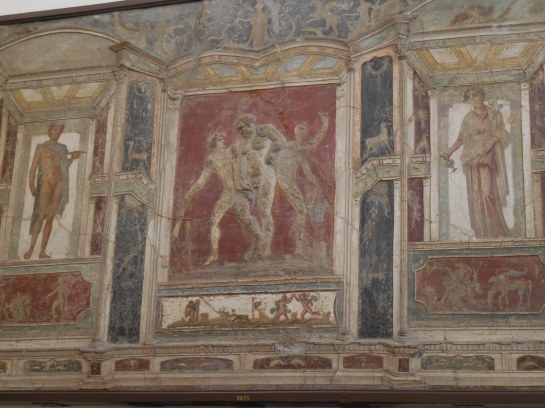
SantiniKrtinyint18
The trip had more than lived up to my expectations. I was eager to see the west Bohemian sites that Santini had designed – hopefully, next year a tour would be offered. I also had a better appreciation of architecture in general. And, of course, the Baroque Gothic style would always be dear to my heart.
Church of the Assumption of Our Lady, Žďár nad Sázavou

Church of the Assumption of Our Lady, Žďár nad Sázavou


Tracy A. Burns is a writer, proofreader and editor in Prague.