National Art Gallery in Bologna Photo Diary

BolognaNtlGallery1

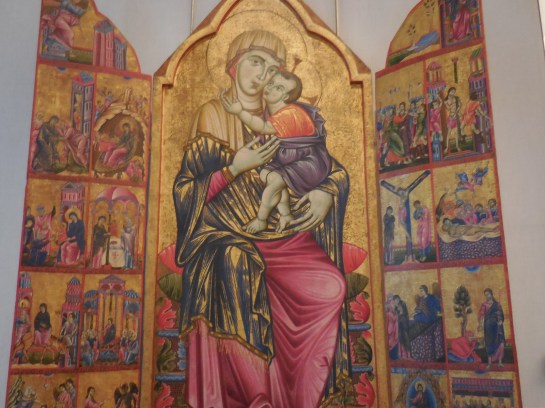
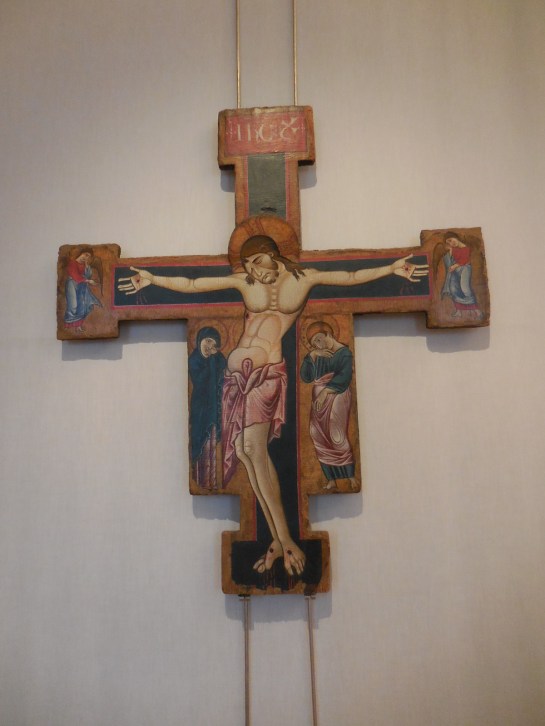
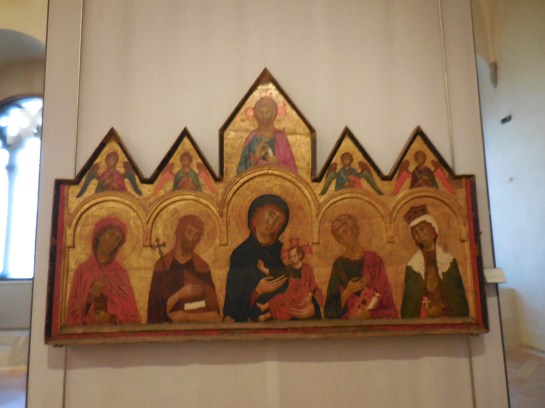
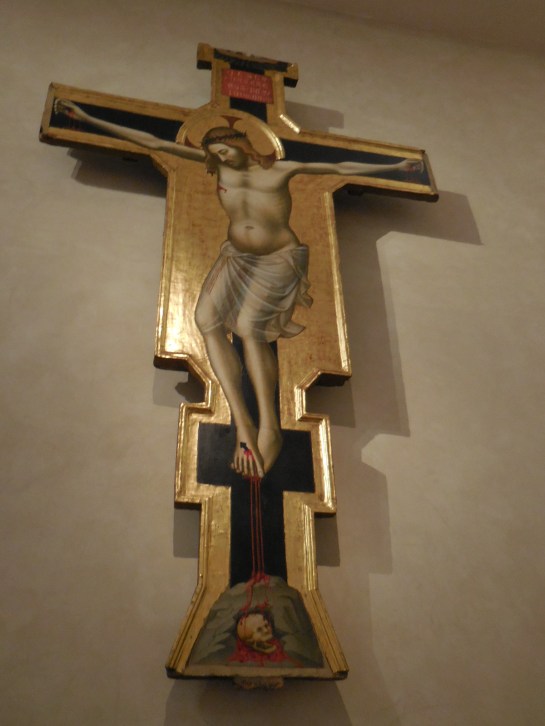
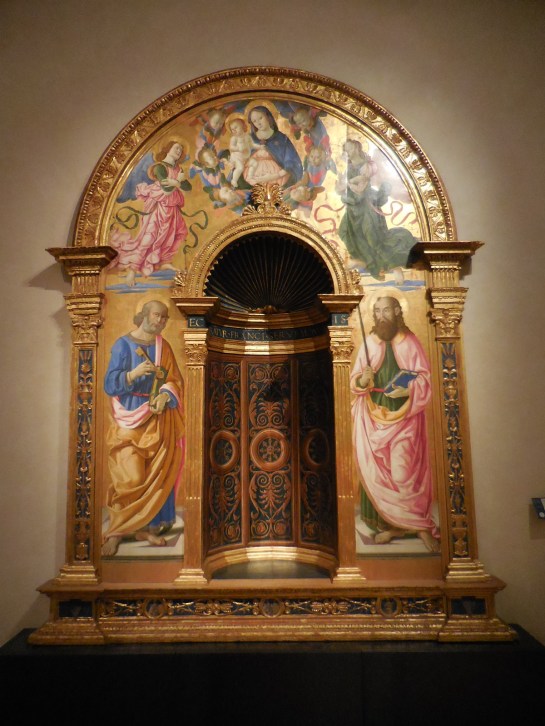
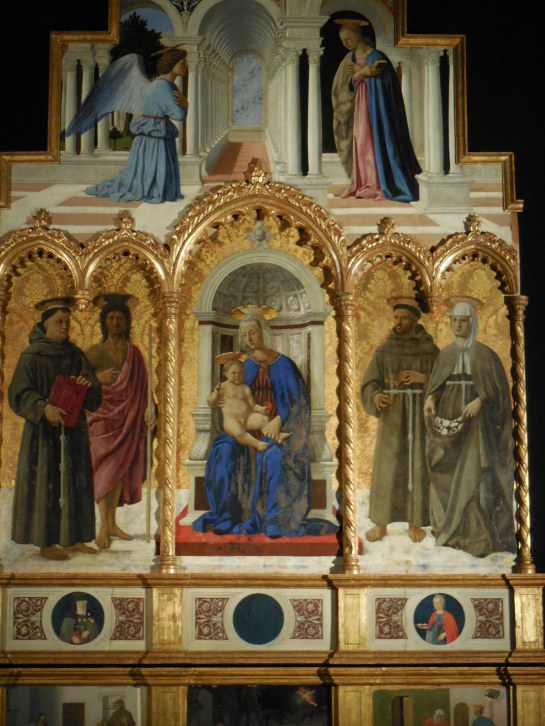
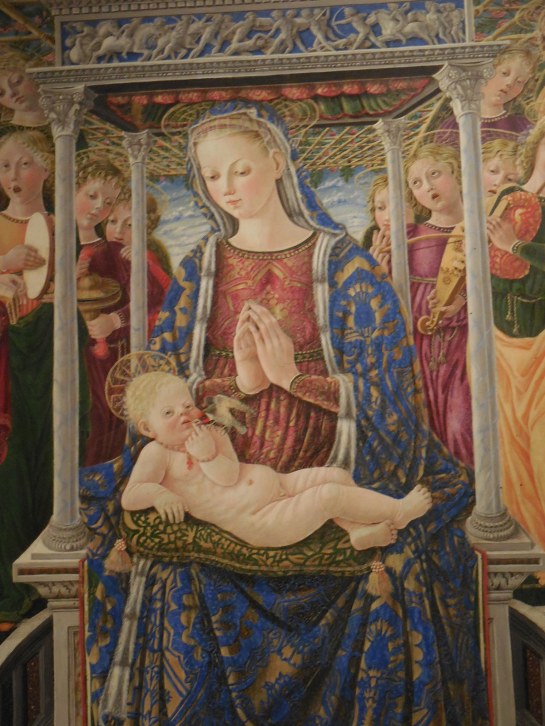
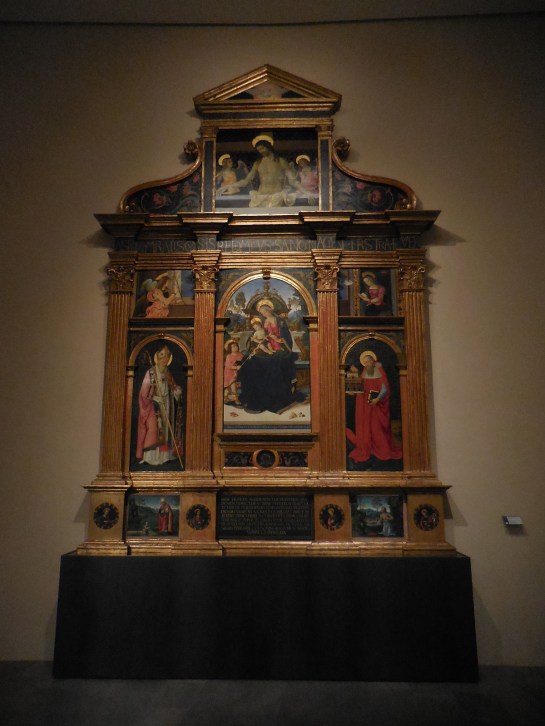
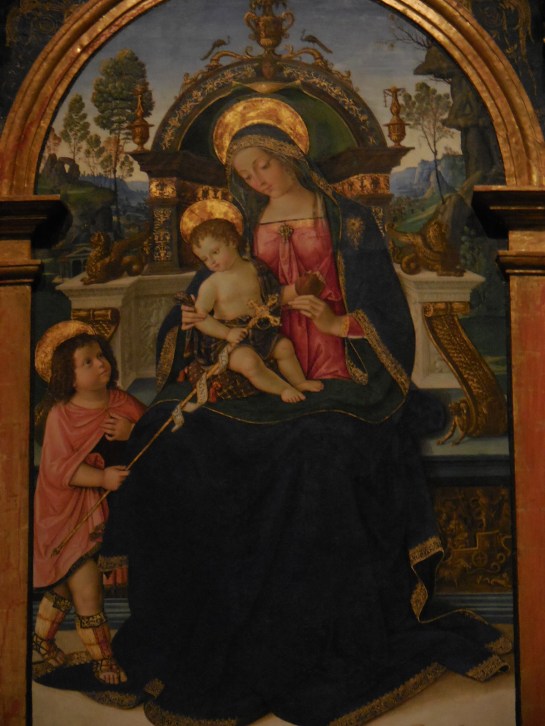
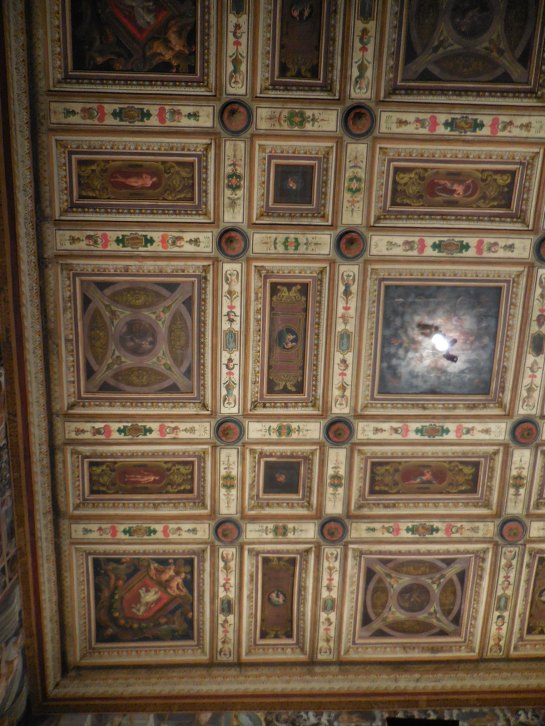
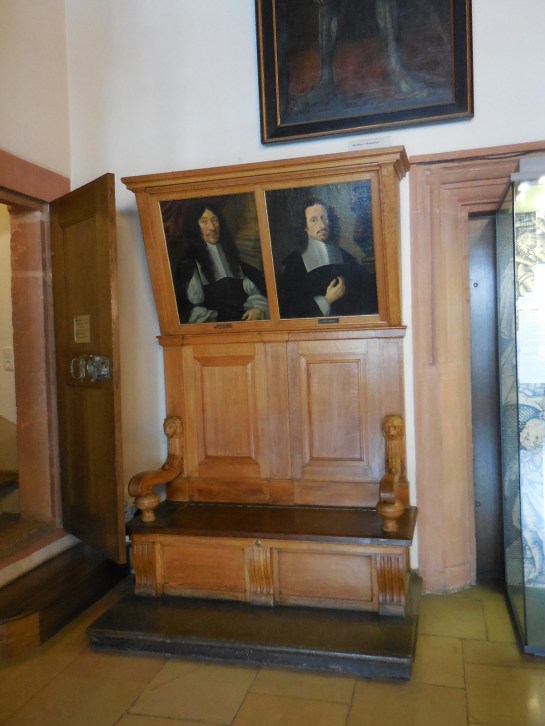
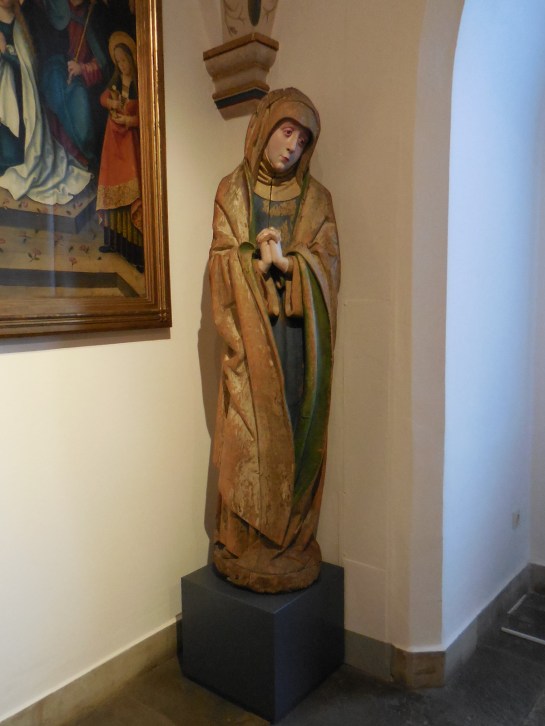
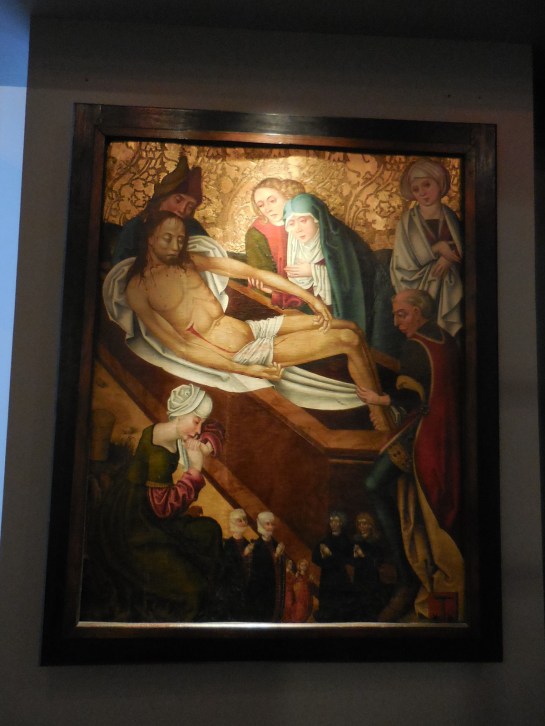
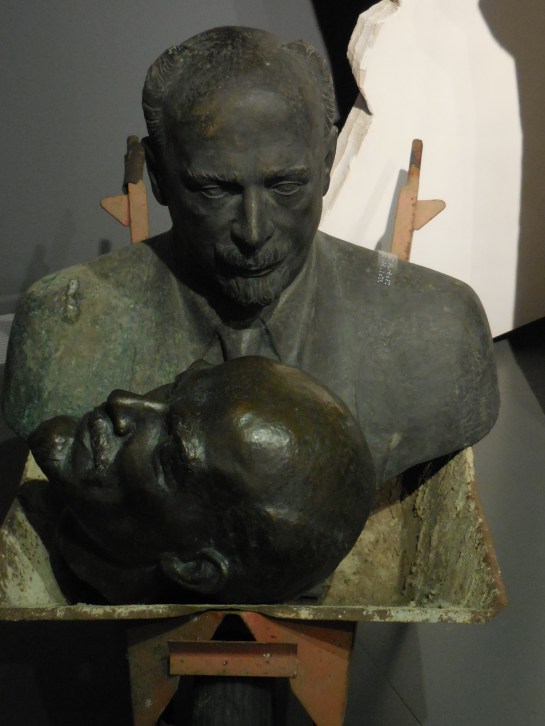
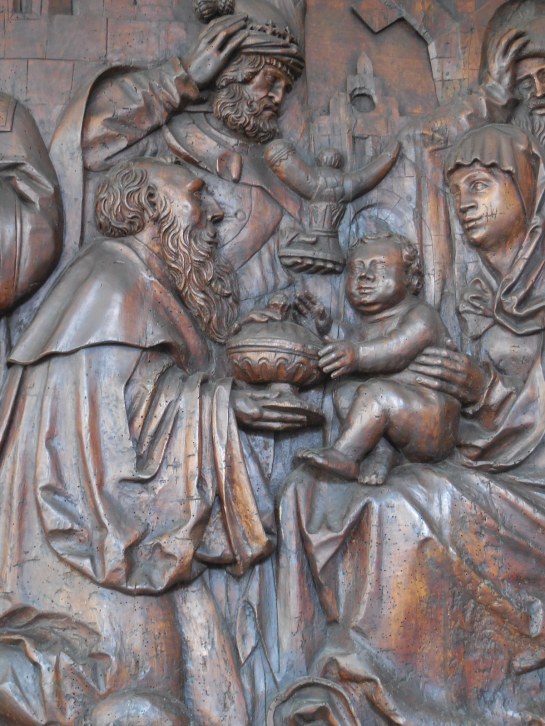
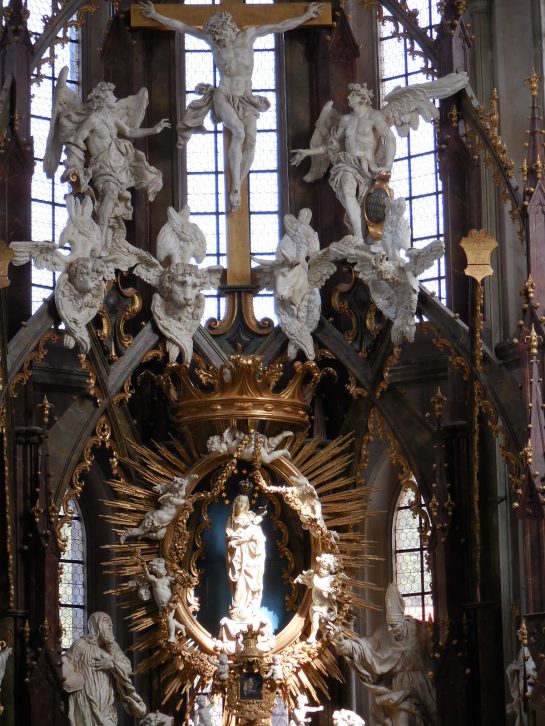
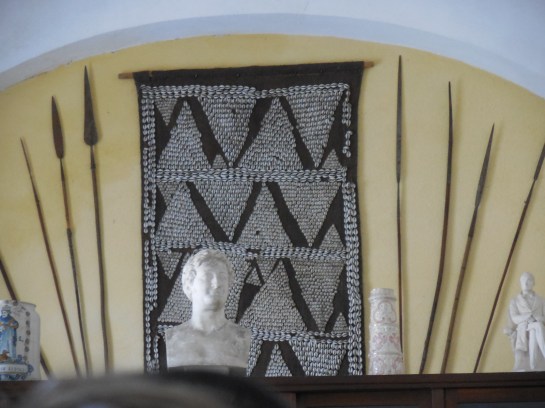
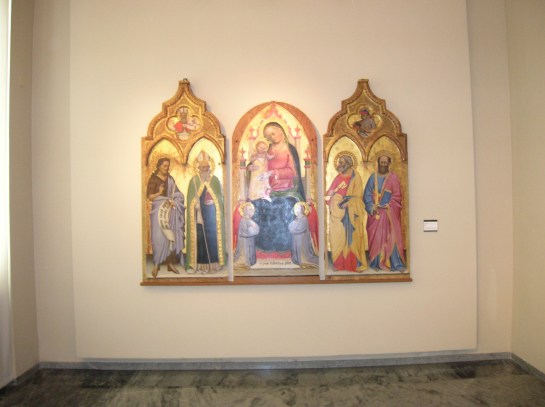
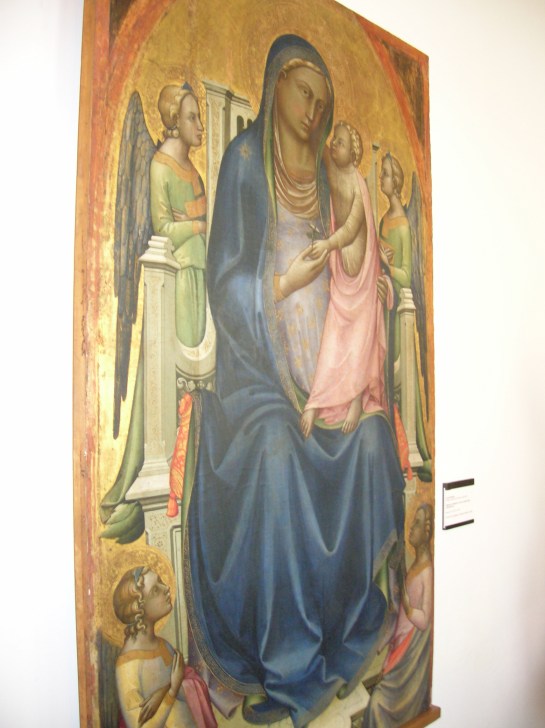
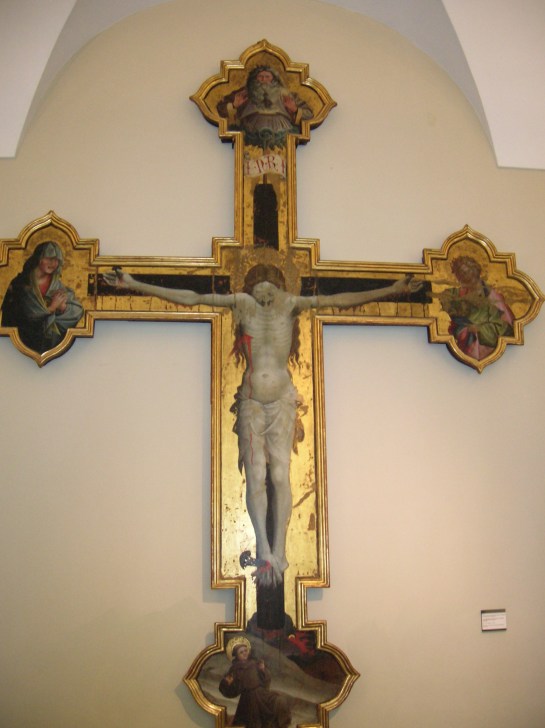
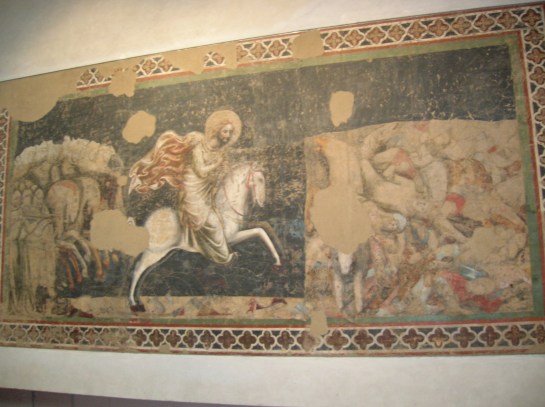
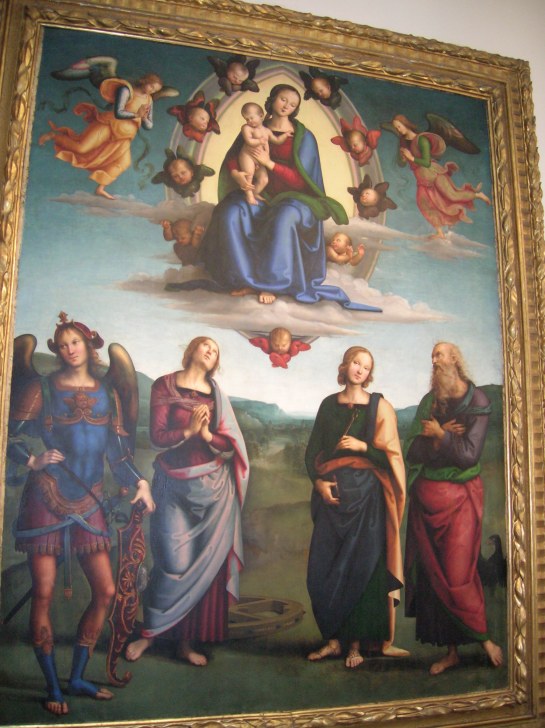
I visited the National Art Gallery (Pinacoteca Nazionale di Bologna) in 2014, when I went on a trip with the travel agency arsviva. The collection includes paintings from the Emila region. It features works from the 13th to the 18th century. The gallery has been open to the public since 1875. I especially was drawn to the medieval art.

BolognaNtlGallery4BolognaNtlGallery2

BolognaNtlGallery5

BolognaNtlGallery6

BolognaNtlGallery9

BolognaNtlGallery10

BolognaNtlGallery11

BolognaNtlGallery12

BolognaNtlGallery15

BolognaNtlGallery16

BolognaNtlGallery17

Tracy A. Burns is a writer, proofreader and editor in Prague.

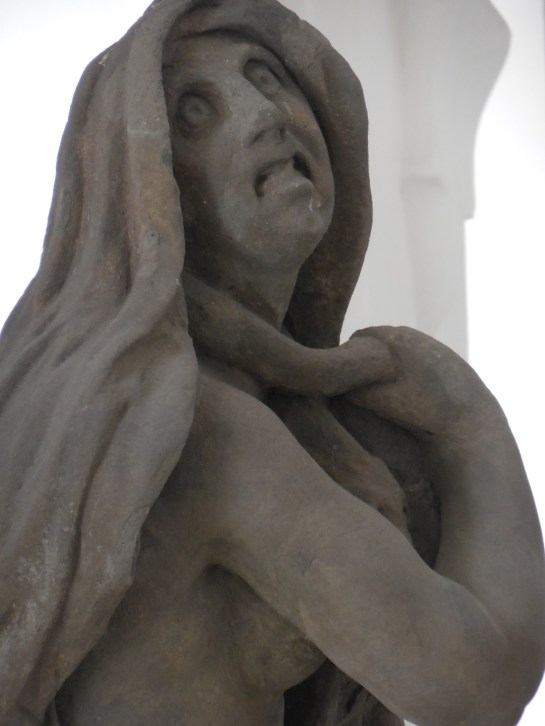
Dance of Death Paintings at Kuks Diary

Kukscycleofdeath10

NOTE: See my Kuks Diary for more information on Kuks hospital.

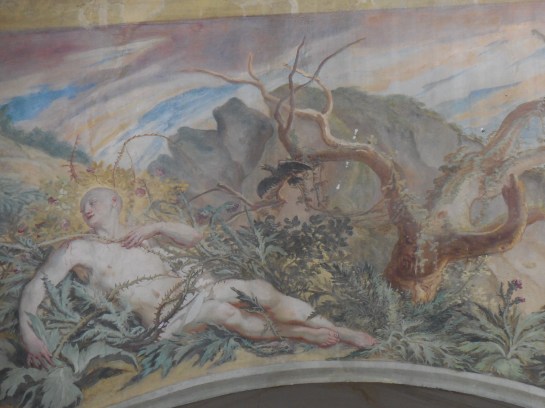
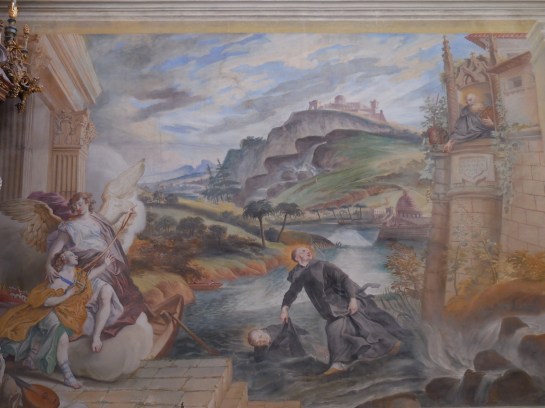
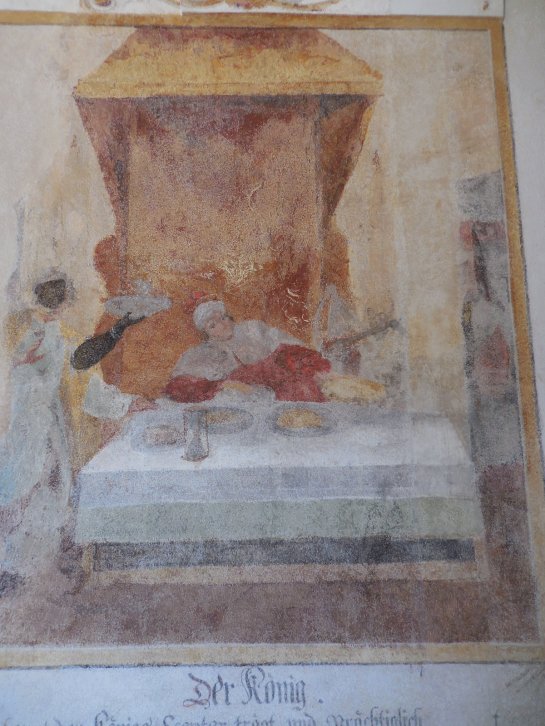
I visited the former Baroque hospital Kuks for the third time last year, soon after reconstruction. In the early 18th century, a spa had been situated across from the hospital, but it was destroyed by a flood in 1740. At Kuks visitors can admire 24 Late Baroque statues of vices and virtues by master sculptor Matthias Bernard Braun, a Baroque pharmacy, a pharmaceutical museum, a lapidarium, a chapel, a church and a crypt. Lining one hallways are 50 Dance of Death paintings that were beautifully restored during the recent reconstruction.

Kukscycleofdeath1

The Dance of Death or Danse Macabre genre in art was revived during the Baroque age and not only at Kuks. It began during the Late Middle Ages in 15th century France. The artistic renderings show death personified summoning people from all walks of life to dance. No one – neither kings nor beggars – could escape death. During medieval days the plague had ravaged Europe, and this was one artistic way to try to come to terms with so many deaths riddling the continent. Dances of death also played roles in religious plays presented in churches. People looking at these paintings during the hospital’s Baroque heyday were supposed to dwell on the fragility of life. Thus, the Dance of Death emphasized a certain mentality, a specific outlook on both life and death.

Tracy A. Burns is a writer, proofreader and editor in Prague.

Kukscycleofdeath2

Kukscycleofdeath3

Kukscycleofdeath4

Kukscycleofdeath5

Kukscycleofdeath6

Stiassni Villa Diary

Stiassnivillaext2

I had heard that the Stiassni Villa in Brno had been open to the public since the end of 2014, but I did not have time to go there in 2015. When the Czech UNISMA travel agency offered a tour of the Stiassni and Löw-Beer villas in the Moravian capital, I immediately signed up. A prime example of modern functionalist architecture in the Czech lands, the Stiassni Villa had been under reconstruction from 2012 to 2014. During Communism renovations had taken place as well –during that time period furniture from various chateaus had been added to the interior. Still, the villa had original furniture, too.

I was entranced with the section of Brno where the architectural gem was located – in the villa-sprinkled Masaryk Quarter, a section that looked tranquil, so different from the hustle and bustle of the city center. It reminded me of the Hanspaulka section of Prague, where I enjoyed taking long walks along villa-flanked streets.

Stiassnivillaext3

I am not a big fan of the functionalist style, but the exterior was intriguing. Its spartan appearance reminded me a bit of the exteriors of Prague’s Müller Villa and Rothmayer Villa. Shaped like the letter L, the Stiassni Villa was designed by architect Ernst Wiesner, who made quite a name for himself in Brno during the interwar years. His work was influenced by Austrian architect Adolf Loos, who designed the Müller Villa in Prague. Wiesner created the plans for other buildings in Brno as well, such as the Moravia Palace and crematorium. Wiesner fled to Great Britain in 1939, the year the Nazis took over. The villa was completed in 1929 for textile entrepreneur Alfred Stiassni and his family – his wife Hermine and his daughter Susanne. The structure features rectangular windows and a massive cassette cornice, for example.

StiassniVillaint1

The Stiassni’s tenure at the villa only lasted nine years. Because they were Jewish, the family fled Czechoslovakia in 1938, when they traveled to London and then continued to Brazil. Alfred Stiassni’s mother decided not to leave her homeland due to her age. She died at the Terezín concentration camp in central Bohemia during 1942, when she was 87 years old. The villa was taken over by the Nazis during World War II. During 1945, the Stiassnis obtained US citizenship. That same year Russian soldiers liberating the city would destroy furnishings in the villa. It was in good shape again when Czechoslovak President Edvard Beneš stayed there later that year, on his first visit to Brno after the war. He and his wife would reside in the villa again the following year during another trip to the Moravian capital.

StiassniVillaint2

Paintings of the owners of the villa, Alfred and Hermine Stiassni. The paintings are not part of the original furnishings.

From 1952 the villa was the property of the Regional National Committee and was used as accommodation for VIP guests, such as Fidel Castro. In 1961 Alfred Stiassni died in Beverly Hills, California. His wife passed away the following year. In 1964 leading Soviet Union politician Nikita Khrushchev spent time at the villa. From 1990 to 2005, the place served as a four-star hotel. Famous guests included Rudy Giuliani and Bill Gates. In 2005 Susanne, who had married an American, died in Beverly Hills.

StiassniVillaint5

Soon it was time for the tour to begin. In the Large Dining Room I admired the copy of a Baroque painting by 17th century Flemish Baroque painter Jacob Jordaens showing merry people drinking and laughing. I thought I could see the influences of Peter Paul Rubens and Jan Brueghel the Elder in the work. The onyx fireplace also caught my attention. My eyes were drawn to an elegant vase as well.

StiassniVillaint6

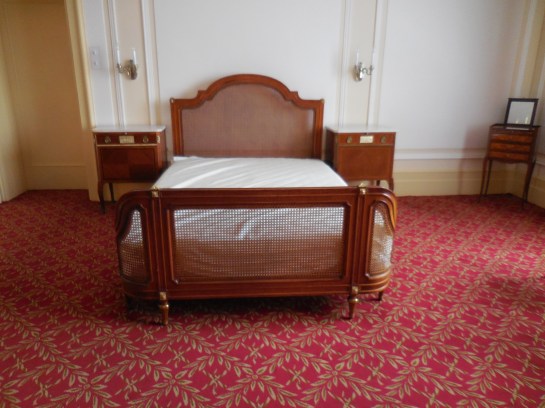
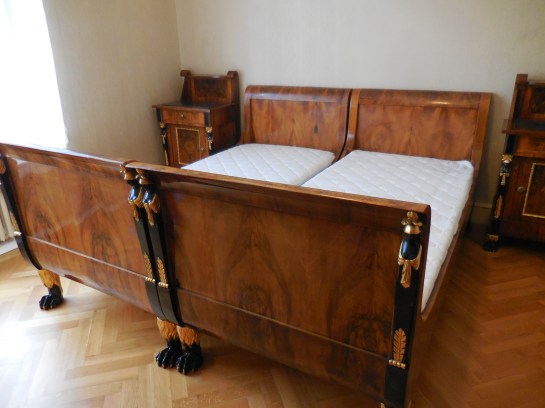
Another room featured watercolor paintings by Hermine and original chairs with grey upholstery. The pewter chandelier was also intriguing. An exquisite table had been originally in Bítov Castle, one of the largest and oldest castles in Moravia, a sight I had toured twice. I also admired a Baroque commode. The stucco decoration on the walls and ceiling was stunning. Then we visited some small rooms, and I especially liked the Empire space with side tables and a bed in that style. The bathroom was made of green marble. It had obtained its appearance during reconstruction in the 1980s. It is not known what the bathroom really looked like during the Stiassni’s tenure there.

StiassniVillaint7

The first floor was even more intriguing. Behind Alfred’s vast closet with moveable drawers was a space for more than 10 pairs of shoes. I recalled how the drawers in the dressing rooms of the Müller Villa were also moveable. In the bathroom the detail on the faucets was superb.

StiassniVillaint8

From Hermine’s bedroom it was possible to see the sloping English garden with hills and other greenery in the background. Other villas could also be seen in scenery that would have made a remarkable landscape painting. Mirrors covered Hermine’s closet in her dressing room. Her bathroom was green marble because the architects had no idea what it had looked like originally.

StiassniVillaint10

The daughter Susanne had the nicest rooms. Her playroom featured a dressing room, a bathroom and the terrace. I liked the yellow color of the rooms. It was my mother’s favorite color, and it brought back memories of my time spent with her in the yellow-painted kitchen of my parents’ house. So many discussions about so many topics, so many smiles, so many problems resolved. Susanne’s governess also had a small room.

StiassniVillaint20

The Small Dining Room, where the Stiassnis usually ate, was very modest with a small table set for three. The garden was another highlight of the villa. It was established in 1927 and included many foreign woody species. I noted its symmetrical design. Each section had been assigned a different use.

The Stiassnis were athletes. They took up swimming, skiing and skating, for example. There had been a swimming pool above the villa, and there still were tennis courts on the property.

StiassniVillaint11

I had enjoyed my tour of the villa, which contained some intriguing furnishings and was architecturally enthralling. I appreciated the functionalist design even though it was not my favorite style. I could imagine the villa in the early 1930s, when the family was settled there, not aware that their time in the villa would be cut short by the Nazis’ rise to power. From there we headed to the Löw-Beer Villa, which had a stunning Secession façade but only one piece of original furniture. Facing the famous Tugendhat Villa, the Löw-Beer Villa is now used as an exhibition space.

Tracy A. Burns is a writer, proofreader and editor in Prague.

StiassniVillaint13

StiassniVillaint12

StiassniVillaint19

StiassniVillaint23

StiassniVillaint25

Gordes Photo Diary

Gordes19

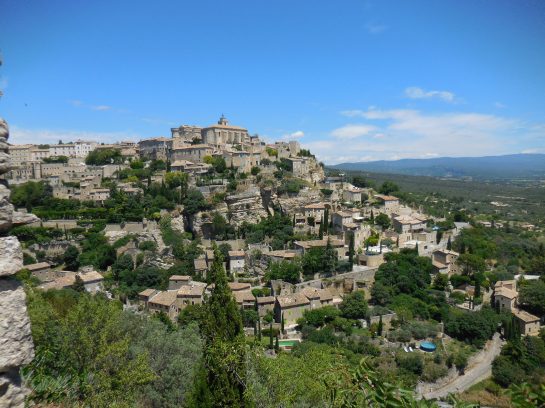
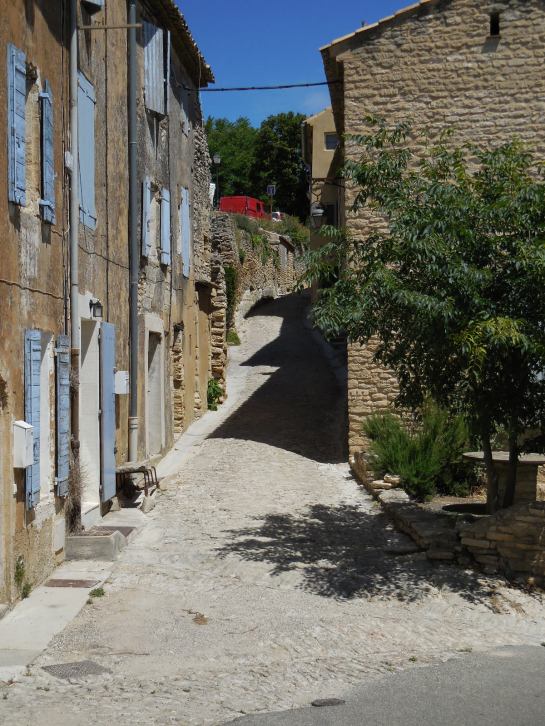
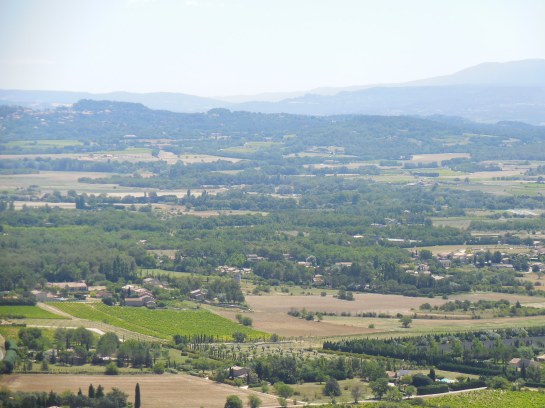
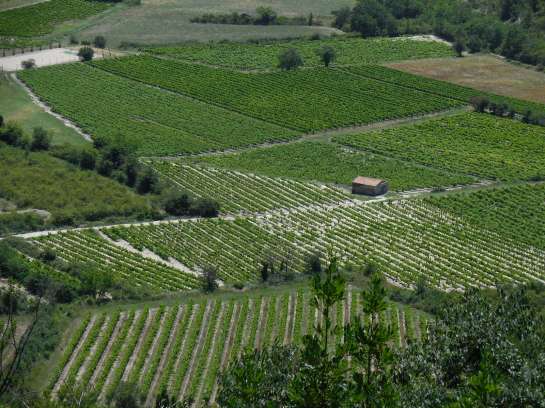
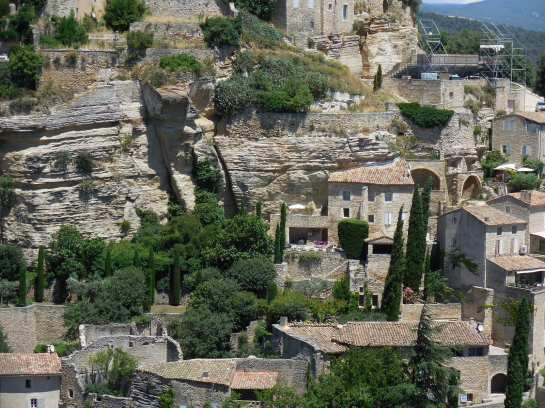
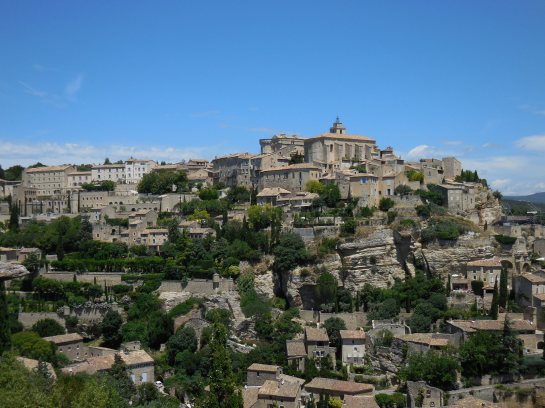
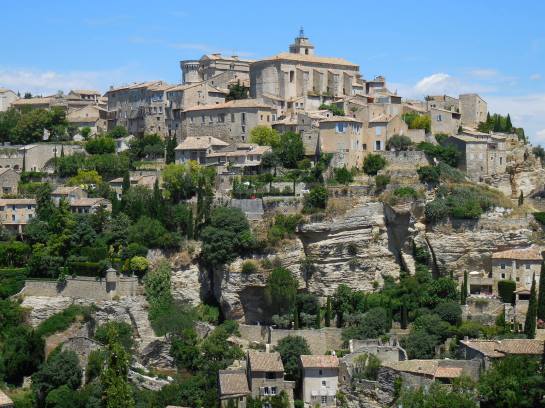
One of the most picturesque villages I have ever visited is Gordes. It was certainly a highlight of my 10-day trip to Provence. I loved meandering down the narrow, steep, romantic streets flanked by stone buildings with terracotta roof tiles. We were there on a Tuesday, when the weekly market is held, and I enjoyed examining the vendors’ wares and wound up buying two exquisite scarves. The views of the countryside were incredible, and away from the main square, it was tranquil. I found a quaint restaurant with simple yet attractive décor for lunch, too.

Gordes8

Gordes is located in the Vauclause Hills at 373 meters above sea level. It has about 2,000 inhabitants and encompasses 4,804 hectares. The name Gordes is Celtic in origin. Romans built forts in Gordes when they ruled. During the fifth century, when the Barbarians, Visigoths and Lombardians raided the plains where many settlements were located, people fled to the hills, which became villages in the 10th century.

The castle was first mentioned in writing during 1031 and was reconstructed in 1521, during the Renaissance. However, the lords did not reside there because Gordes was in such a remote location.

Gordes2

The village blossomed economically in the 18th and 19th centuries with craft production, tanners and shoemakers in great demand. Olive oil was also manufactured there. No less than 18 windmills were located in the village before the onset of the First World War, which brought terrible times to the village. Gordes was depopulated, and there was much poverty.

Gordes4

During World War II Gordes was home to many resistance fighters. When members of the resistance killed Nazi soldiers in the village during August of 1944, the Germans got revenge by shooting villagers and destroying property. Thirteen inhabitants were murdered in Gordes during the war. Later the village received a medal for its resistance activity.

Gordes10

After the war, Gordes got a new lease on life. Artists flocked to the village, and painter Marc Chagall and others settled there. During the 1950s, when tourists discovered the village, Gordes was rebuilt and acquired the picturesque appearance it has today.

Tracy A. Burns is a writer, proofreader and editor in Prague.

Gordes11

Gordes14

Gordes15

Gordes16

Gordes18

Gordes20

Gordes21

Gordes22

Gordes26

Gordes28

Gordes29

Gordes30


Les Baux-de-Provence Photo Diary

LesBauxdeP2

One glance at Les Baux-de-Provence and I understood why this village was dubbed one of the most picturesque in France. This rocky hilltown in Provence cast a spell on me from the moment I laid eyes on it. I walked along the narrow, steep streets flanked by art galleries, craft shops and a few churches. The small squares were enchanting, too. I tasted my first lavender ice cream, the most delicious flavor I had ever tried. The Renaissance facades were charming. There are no less than 22 historic monuments in Les Baux. I loved the romantic castle ruins, sprawled onto seven hectares. Breathtaking views of the Alpilles Mountains, Arles and the Camargue region abounded. Even though it was a ruin, I could feel the history of the castle that had been built from the 11th to 13th century.

LesBauxdeP3

Our guide told us about the history of the village. Les Baux-de-Provence can trace its origins back to the Bronze Age, to 6000 BC. The village is mentioned in 10th century documents. The Princes of Baux successfully guarded the region for many years until they were defeated in the Bauessenque Wars of the 12th century. The castle was attacked on numerous occasions during the Middle Ages. The Renaissance proved to be a prosperous time.

LesBauxdeP5

A significant event occurred in 1642, when King Louis XIII presented the lordship of Les Baux-de-Provence to Hercule Grimaldi, then the Prince of Monaco. Even today, the Prince of Monaco holds the official title of Marquis des Baux. During the 19th century, the village became a sort of ghost town; for the most part, it was abandoned. Then, following the Second World War, an entrepreneur opened a gourmet restaurant on the rocky outcrop. Food connoisseurs were not the only people who started to flock to Les Baux. It soon became a tourist attraction and remains so, as was evidenced during my day there by the large crowds that had inundated the village. Still, even the large number of tourists couldn’t make Les Baux lose its charm.

LesBauxdeP9

LesBauxdeP10

LesBauxdeP13

LesBauxdeP14

LesBauxdeP15

LesBauxdeP16

LesBauxdeP18

LesBauxdeP20

LesBauxdePcastlechapel

LesBauxdePchurch2

Tracy A. Burns is a writer, proofreader and editor in Prague.


Müller Villa Diary

MullerVilla1

The Müller Villa

NOTE: Visitors are only allowed to take pictures of the exterior of the villa from the street. Visitors are not allowed to take photos of the interior.

I first visited the Müller Villa with my parents when it first opened in 2000. I remember being impressed by the lavish interior and innovative spatial design. I like the location, too. The Střešovice quarter of Prague’s sixth district is home to many attractive villas, several even on the same street as the Müller Villa.

I already knew some of the background information that the guide explained at the beginning of the tour. Viennese architect Adolf Loos and Czech architect Karel Lhotka built the villa for František Müller, who co-owned a construction company, as a family residence from 1928 to 1930. This was a time period when villas were cropping up in Prague and Brno. The Rothmayer Villa in Prague and the Tugendhat Villa in Brno were also erected during this era. Even though construction on the Müller Villa began in 1928, Loos was not able to obtain a building permit until 1929. Loos’ design caused quite a fuss because, thanks to its spartan cube-like façade, the villa stood out distinctly from the other homes in Střešovice.

Tugendhat1

Tugendhat Villa in Brno

I was familiar with the name Adolf Loos, who was born in Brno and was awarded Czech citizenship by Czechoslovak President Tomáš G. Masaryk. His significant contributions to modern architecture include his conception of the Raumplan. This type of design emphasizes the cube form. Also, each room in the villa is on a separate floor, another trait of the Raumplan. Loos greatly admired classicist modern architecture, which emphasized simplicity and symmetry and was inspired by the designs of ancient Greece and ancient Rome. He is known for his lack of decoration on exteriors and for using expensive materials such as stone, marble and various types of rare wood.

I had yet to visit the Loos House in Vienna, but I certainly would make an effort to get there whenever I got a chance to return to Vienna. Besides living in Vienna, Loos spent time in the USA, Paris and Dresden, for instance. He completed his studies in the Czech lands and contributed designs to west Bohemia’s Pilsen, where he created structures during1907, 1908 and 1930. They had not been open to the public when I had visited Pilsen, and I think Loos’ works there are now only open several days a year.

OLYMPUS DIGITAL CAMERA

OLYMPUS DIGITAL CAMERA

Looshaus in Vienna, 1909, from en.wikipedia.org

Soon it was time for the tour to begin. The professional and erudite guide explained that now the villa looks like it had in 1930, when it was constructed. She emphasized that Loos employed bizarre color schemes, a characteristic that I admired. In the hallway, I was drawn to the original emerald green tiles. I could see a difference between the original tiles and those made during reconstruction. It was not possible to replicate the exact hue of the originals. In the hall I liked the red color of the radiators, as they were exposed as elements in the design. I tried to imagine what the reception room had looked like in 1930, with yellow lacquered furniture and purple-painted walls. I would have loved to have seen those clashing colors. Unfortunately, the furniture had not survived the trials and tribulations of the last nine decades.

Next came the first floor. After going up a dark spiral staircase, we came to a large, light and airy space – the living room. It was divided into three parts. Mostly low furniture filled up the two sides. I especially liked the English velvet gray and salmon-colored low armchairs. The middle section was empty. It had once been used as a dance floor. I loved the clear division of the three parts. There was a sense of logic in the design. The order and efficiency appealed to me. One unique element employed by Loos involved having pillars on one side instead of a wall, making the space open. Two fish tanks made the room more dynamic. The fireplace with a Neo-Classical relief also added charm to the space. There were so many different features to this room. They did not fit together, yet that is exactly why they did fit together. Loos’ penchant for using rare woods was evident here as well. I also liked the 19th and 20th century landscapes on one wall. I am a big fan of landscapes. Loos had used rare Cippolino de Saillon marble on the walls and pillars, which gave them a majestic air.

AdolfLoos

Adolf Loos from http://www.mak.at

The dining room was very different. It was dark and low, not even reaching three meters in height. The coffered ceiling was impressive. It was covered in mahogany wood. While the round table sat six people, it could be extended to make room for 18 guests. Of the 14 Chippendale chairs, only one was original. The others were copies made in Prague. I liked the paintings by Jan Preisler on one wall. I noticed that one exquisite painting showed a girl with horses. Numerous plants made the space feel lively, too.

I liked the Ladies’ Boudoir because it was divided into two distinct parts. On one side there was a bed where Mrs. Müller could take afternoon naps while the other section showed off a couch that was shaped like two-thirds of a circle and a round Oriental table as well as a window overlooking the living room. The window was intriguing; it slid up and down like a window on a train. The golden color of the lemonwood furniture and paneling grabbed my attention. It made the space feel cozy.

LoosPilsenHusova58

Loos’ design for Husova 58 in Pilsen from http://www.adolfloosplzen.cz

The library was not only a place for keeping books but also a place to hold business meetings. Above a fireplace was a mirror that I could imagine covered in soot. I loved the blue-and-white Dutch tiled stove. The couch, covered in leather, looked very comfortable. I felt like curling up on it and reading a good book, perhaps a British mystery or a Czech novel. There was an innovative contraption in the desk – a slot where letters could be placed. The correspondence could then be retrieved from the desk by opening a small door on the other side.


I found the master bedroom fascinating because of the blue-on-cream French wallpaper that had the same pattern as did the curtains and bedspread. The design showed boats, ancient towers, people dragging boats into the water and people rowing. There was a fantastic view from the large window. I could see the city I called home with its stunning orange rooftops.

Pragueviewfromcastlestairs5

Enchanting orange rooftops of Prague

The bedroom was flanked by the men’s dressing room and the women’s dressing room. The men’s dressing room was designed by Jan Vaněk, an architect based in Brno. I loved the moveable drawers that were very practical. The ladies’ dressing room was lighter than the men’s, featuring maple wood. There were moveable drawers in this space, too. I loved the closet for hats. The writing desk with a collapsible mirror was exquisite.

The children’s room had a bizarre color scheme of yellows, blues, greens and reds. The room was divided into a playroom and bedroom. There were three beds, one for the daughter Eva, another for the nanny and a third behind a curtain for Eva when she was sick. It must have been so claustrophobic spending all day and night in a bed behind a curtain. I would feel cut off from the rest of the world or trapped as if I were in a cage.

We also glimpsed the rooms Mrs. Müller was allotted from 1959 to the end of her life, in 1968. Her flat consisted of two small rooms and a bathroom. Her furniture and paintings had been stored in the bathroom and library. Some of the furnishings were sold to private collections. The State Pedagogical Publishers took over the rest of the villa at that time. (Interestingly, the Nazis had not confiscated the villa from the Mullers. The family was half-German.)

After the Velvet Revolution the villa was returned to Eva, who was then no longer living in Czechoslovakia. She sold it to the Municipal Office of the City of Prague, and the villa became the property of the City Museum of Prague in 1995. Loos’ masterpiece was declared a National Cultural Monument that same year.

MullerVilla2

The Müller Villa

I liked the summer dining room even better than the living room. It was decorated in Japanese style with a Japanese lantern hanging over a table and Japanese-inspired upholstery on the chairs. The furniture was green and black while the wallpaper was silver, providing an interesting contrast. I loved the view of Prague from the window adjoining the terrace. I could have stared at the cityscape for hours.

The next space served as an exhibition room that focused the Müller family and the restoration work on the villa. There was information on Loos’ architectural style – for example, the exhibition stressed that his work featured cubes and coherent, continuous spaces; that each floor was a different height and that Loos emphasized the importance of economy and efficiency in his creations.

I was struck by the very high windows in the kitchen. Loos believed that women should not be allowed to look outside while they were cooking. He obviously never cooked, one female visitor remarked, drawing chuckles from the others. The boiler room was the place where Mr. Müller died when he accidentally inhaled carbon monoxide while stoking the boiler.

We also saw the laundry room, the drying room and the garage, where Mrs. Müller’s black Praga automobile was on display. It looked like a car from an old black-and-white film. The laundry room had once held an electric washing machine and spin dryer, very modern appliances at that time.

RothmayerVilla1

Rothmayer Villa in Prague

Once again, I was very impressed with the Müller Villa. The contrast between the spartan exterior and the luxurious interior was fascinating. The summer dining room with its Japanese décor and green-and-white color combination was my favorite space. I wished it had been summer, so we could have gone out on the terrace. I liked this villa even more than I liked Brno’s Tugendhat Villa, an outstanding piece of architecture. I was especially drawn to the lavish furnishings, such as the low furniture in the living room. The paintings also caught my undivided attention – the landscapes and Jan Preisler’s works were dear to me. What perhaps intrigued me the most were the various rare woods used in the décor. The wallpaper in the master bedroom was remarkable, too.

I looked forward to touring other villas – the Rothmayer Villa in Prague and the Stiassi and Loew-Beer villas in Brno. I hoped I would manage a trip to Loos’ famous villa in Vienna and would have a chance to see the master architect’s designs in Pilsen. Even people who are only somewhat interested in architecture would enjoy touring this villa.

MullerVilla3

Tracy A. Burns is a writer, proofreader and editor in Prague.


Rothmayer Villa Diary

RothmayerVilla1
NOTE: It is not permitted to take photos inside the villa. Photos can only be taken outside from the street.
I was excited about my trip to the Rothmayer Villa in Prague’s Břevnov quarter of the sixth district. I had never been there, even though the villa had been open to the public since the fall of the previous year (2015). In fact, I had not even heard of the architect, Otto Rothmayer before I came across the listing of the villa in a Prague cultural guide. This definitely would be a new adventure.
When I first set eyes on the Rothmayer Villa on the corner of a tranquil street next to a hospital, I was surprised at how small it was. I had thought it would be bigger because I had visited the much larger Müller Villa a few days earlier. I was also surprised at the lack of decoration on the façade, which had symmetrical windows and a spartan cornice. Yet even the simplicity of the rectangular design exuded a sense of elegance. Certainly, the classicist-modernist style was not my favorite. I preferred styles with some ornamentation, such as Art Nouveau. Still, it was intriguing, and I appreciated the sobriety of the design.

OttoRothmayer

Otto Rothmayer, photo from bydleni.idnes.cz
Otto Rothmayer built this house for his family during 1928 and 1929, a time when the Tugendhat Villa was under construction in Brno, designed by legendary architect Ludwig Mies van der Rohe and a time when work on the Müller Villa, designed by Adolf Loos and Karel Lhotka, was underway in another section of Prague 6. Many villas in Prague were erected during the interwar years.
The guide started off by providing information about Rothmayer’s life and work. Rothmayer took up carpentry at a young age. He turned to architecture before World War I, studying under Slovenian architect Jože Plečník at Prague’s Academy of Applied Arts. Plečník’s creations would inspire Rothmayer for the rest of his life. After World War I, Rothmayer finished his studies and worked in the studio of Cubist architects Pavel Janák and Josef Gočár. He also cooperated with Janák and Gočár on the design of a pavilion for an exhibition in Lyon during 1920. In 1921 he took up the post of assistant architect at Prague Castle with Plečník as his boss and colleague. Rothmayer held the position until 1958, when he retired. After 1930 Plečník left Prague Castle while Rothmayer continued to work there.

RothmayerVilla2
Rothmayer’s impressive designs at Prague Castle includes renovating the apartment of the first president of Czechoslovakia, Tomáš Garrigue Masaryk. He also created plans for some of the courtyards and improved the appearance of the Theresian Wing of the Old Royal Palace. He designed the Staircase Hall using what was then a new material, faux marble. His style was also visible in interior renovations of the New Royal Palace.
Yet Rothmayer’s designs were not limited to Prague Castle. He designed three other family houses, all with porches so they would allow residents ready access to the outdoors. One of his creations was a weekend house for sculptor Otakar Hátlý. Rothmayer also served as a professor of Decorative and Applied Arts from 1947 to 1951. He stopped teaching because his ideas clashed with the social realism philosophy of the era. He also designed exhibitions for the Museum of Applied Arts and was responsible for installations of various exhibitions at the Museum of Decorative Arts and National Literary Monument. A side altar for the Church of the Most Sacred Heart in the Vinohrady quarter of Prague is another example of his work.

Plecnikvila-stadion-1928

Vila Stadion, 1928, from http://www.renton.si
The guide told us that Plečník’s Villa Stadion in Ljubljana inspired Rothmayer’s design of his family villa. I was familiar with the name and creations of Jože Plečník, whose style could be said to fit into the category of Art Nouveau while Rothmayer’s work was much simpler in design. There was a huge exhibition of Plečník’s architectural gems at Prague Castle many years ago. Also, when I had visited Ljubljana, I had made a trip to his studio. Plečník was responsible for the modern look of Ljubljana, designing architectural masterpieces throughout the city. For example, his creations there included the Triple Bridge, the Slovene National and University Library, a cemetery and parks. Elsewhere in Europe, he designed many structures in Vienna and his style can be found in Belgrade, too.

JozePlecnik1933

Jože Plečník, 1933, from http://www.dieselpunks.org. Photo by Karel Repa
Plečník’s works at Prague Castle under Masaryk’s tenure as president included reconstructing the first and third courtyards and reconstructing the appearance of the southern gardens. Plečník spent three years doing renovations on Masaryk’s apartment at the Castle, and Rothmayer took part in this project as well. Plečník’s distinctive style can also be seen in the Spanish Hall and Bellevue Summer Palace. Yet his designs are not limited to the Castle. He also designed structures in Vinohrady and the Old Town of Prague, for example. Outside of Prague he worked on the president’s summer residence at Lány and at Křivoklát Castle.

Kostel Nejsvětějšího srdce Páně

The most beautiful church in Prague Heart, designed by Plečník, photo from newchurcharchitecture.wordpress.com.

After explaining to the group about Rothmayer’s background, the tour guide drew our attention to black-and-white photos on an ash wood table designed by Rothmayer. The guide pointed out one photo in which Otto’s wife Božena had a short haircut and wore pants, signs that she was a modern woman. Another photo showed the villa surrounded by fields. Rothmayer had built it on an isolated plot of land. Now other villas flanked the street, and the villa was right next to a huge hospital. We also learned some basic information about the villa. It had a rectangular plan with a cylindrical shape that was the large, impressive spiral staircase connecting the floors. It was intriguing that the family had not owned a car. They walked to town, which was quite a distance away.

RothmayerVilla3
Like Plečník, Rothmayer favored wood for his furniture as was evident in this room. Other furnishings were created from spruce and pine. Jan Vaněk was responsible for the design of four impressive Windsor chairs. I was familiar with his designs. He was a Brno-based architect who had also collaborated on the Müller Villa not far from here. The floor was original, made of cork. A unique teapot in the space had once belonged to Plečník. The guide also commented that when the house was constructed, small heaters that used coal had been placed in each room. There was also a simple yet elegant white tiled stove in the space; these tiled stoves were sprinkled throughout the villa.
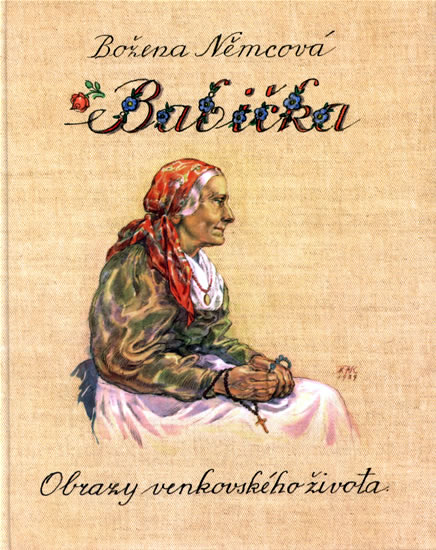
Božena’s room, currently the ticket office, was next. I saw examples of her embroideries with folk art themes framed on the walls. Her creations included clothes, including pants for women, plus purses and jewellery. She also set up an exhibition about the modern woman. I was drawn to the small bust of Božena Němcová, a 19th century Czech writer who is credited with founding modern Czech prose. She also wrote fairy tales and travelogues, for example. Her best known work is her novel, The Grandmother, based on memories of her happy childhood in the countryside. In the book the grandmother represents love, goodness and morality. Her literary masterpieces greatly contributed to the Czech National Revival movement. I certainly understood how a modern woman like Božena Rothmayer could be inspired by this author.

RothmayerVilla4
Then we came to the room where Otto had worked and slept. He had made all the furniture for this space, which had once been full of belongings – drawings, paintings and books. The desk was mobile; it could move back and forth to get the best light. The drawers in the desk could move from side-to-side. It reminded me of the moveable drawers in the closets designed by Vaněk for the Ladies’ Dressing Room at the Müller Villa.
The Children’s Room, where their son Jan Rothmayer (1932-2010) had slept, included an audio system that Jan had designed. He was an electrotechnician who had also taken up photography, inspired by family friend and legendary photographer, Josef Sudek. who had often visited in the 1950s and 1960s and had taken many pictures of the house and garden. Sudek was best known for his photos of Prague, such as the interior of St. Vitus Cathedral and panoramas of city. His style could be described as neo-romantic. Sudek was able to take such beautiful photographs, even though he had use of only one arm.

JosefSudek

Josef Sudek, photo from http://www.afuk.cz
In this room we watched an intriguing video about the Rothmayer family and their work. The photos taken by Jan were particularly intriguing. My favorite showed a lit candle next to a half-full glass of wine. Sudek’s still lifes had certainly been an inspiration for this picture.
The room on the highest floor was once the Winter Garden Room and became the Summer Study during the 1950s. I had expected that there would be more books on the shelves. I was drawn to the small sculptures that also decorated the space. At one time, the small terrace had included a herb garden.
Last, we went to the basement, which included a carpentry workshop where Otto had made his furniture. There was also a guest room, where Sudek had slept. The armchair and table were designed by Plečník.

RothmayerVilla5
Then we were free to go outside into the garden, which was sprinkled with glassware and rocks. Rothmayer had worked with glass artists. A big, blue vase caught my attention. The garden, like the villa, was simple yet elegant. I liked the white garden furniture made from rough steel. It had been very popular at the time.
Because the family had lived there until 2009, many of the furnishings were authentic. Also, the Museum of Decorative Arts in Prague had some furniture from the villa in its collection, so many of the furnishings were preserved. The villa had remained private property under Communism, when many places had been nationalized.

RothmayerVilla6cornice
I was surprised that the rooms were small and that the style of the furniture was so simple. Yet the simplicity was by no means a negative aspect. It had a certain elegance to it. I had expected the villa to have a lavish interior because I had visited the Müller Villa several days earlier. Designed by Viennese architect Adolf Loos, who also had Czech citizenship, and Czech Karel Lhotka from 1928 to 1930, the Müller Villa was much bigger, with a sober, unornamented exterior shaped like a cube. However, the interior greatly differed from the Rothmayer Villa in its extravagant decoration. Both villas, though, made use of wood as a key material for furnishings. Yet Loos had also utilized marble and stone, which were expensive materials.
Visiting this villa greatly improved my understanding of modern architecture. I became familiar with the lives of Otto Rothmayer and his family as well as with their contributions to Czech architecture, photography, fashion and textile design. I appreciated the simple, practical style. I would certainly recommend this villa to tourists interested in modern architecture.

RothmayerVilla7
Tracy A. Burns is a writer, proofreader and editor in Prague.

Capri Diary

Capri1

I immediately signed up for a day trip to Capri on the arsviva tour of Naples and the surrounding area. I was thrilled. The azure sea, the beautifully blue sky, the terraced slopes on the massive cliffs – I could hardly wait.
After we disembarked from the ferry, we got on a small boat, which held about 20 or 25 people. Then we cruised around the island. I was enthralled by the scenery, but at the same time I was terrified. I had never been on such a small boat. The waves – though no doubt gentle – rocked the boat back and forth as we took photos. While I have an affinity for mountains, I have always felt – no pun intended – like a fish out of water near the sea. I don’t even remember how to swim, though I did take lessons as a child. Each time the boat rocked to one side, I was convinced that it would capsize, I would fall in the enchantingly azure water and drown.

Capri4
Yet, at the same time, I was captivated by the intense beauty of my surroundings. There was a pleasant sea breeze on that beautiful September day. The rocky coast, the high cliffs, the grottoes, the natural arches made by the rocks, the houses set precariously on the cliffs – it was breathtaking and a bit surreal for me. As the boat navigated around the caves, I worried that it would get stuck and that we would be trapped there. Still, the caves had a sense of mystery to them, a sort of mystical quality. The Blue Grotto was not open on that day – the water level was too high, but the other grottoes we saw were remarkable.

Capri2
I was especially intrigued by the red box-like villa of the now deceased journalist and writer Curzio Malaparte (whose name means “wrong-sided”), who had fought for Mussolini during the so-called “March on Rome” in 1922, but became a fervent opponent of the Italian dictator when Italy changed sides during World War II. After the war he flirted with the Communist Party. Malaparte was known for his anti-Hitler and anti-Mussolini writings. He was kicked out of the National Fascist Party and was arrested by Mussolini on numerous occasions. The rebellious author had been a Republican most of his life but died a devout Catholic.

Capri29
His villa was built from 1938 to 1941. Some critics call it a masterpiece of Italian modern architecture while others see it as an eyesore. I was drawn to it because it was unique. Some features of the villa include reverse pyramidal stairs that lead to a roof patio. It lurks precariously on a cliff 32 meters above sea level, looking as if it may fall into the water at any moment.

Capri7
Before my trip to Capri, I did a little research about the island, a large limestone and sandstone rock that has a population of about 12,500. The total surface area of the island, made up of towns Capri and Anacapri, comes to 11 square kilometers while the island is six kilometers in length. Mountains can be found on the island, too. The highest is Mount Solaro at 589 meters.

Capri12
Capri was once a Greek colony. It got its name from wild goats on the island. The Romans took over in 29 AD when Emperor Augustus saw it for the first time. Augustus’ successor, Tiberius, formed close ties with the island. He lived as a recluse there during the last 10 years of his life. After his death in 37 AD, things were not so rosy for Capri, and later many pirate raids took place on the island. After the Romans, Capri switched owners many times. The Spaniards controlled the island for a lengthy period. The island has certainly had its share of trials and tribulations, such as the plague during the 18th century. It was ruled by the Bourbons before becoming part of the Kingdom of Italy.

Capri13
Tourism officially started on Capri in the 17th century, when the first tourist, French antiques dealer Jean-Jacques Bouchard, visited the island. During the “Dolce Vita” years of the 1950s and early 1960s, none of the names in cinema, the arts and politics could resist Capri’s charm, and they were often seen on the island wearing so-called Capri pants and espadrillas. A number of well-known personalities have lived on Capri, and today many celebrities have homes there. The founder of the Soviet Union, Vladimir Ilych Lenin, even visited Maxim Gorky at that writer’s residence on Capri in 1908. Queen Victoria made a point of staying on the island. Norman Douglas was another Capri resident.

Capri45
Back to my trip: I was thrilled that I had survived the boat ride. From the Marina Grande we took the funicular to the town of Capri. I was glad that I did not know then about one of the first rides in the funicular during the the early 20th century, when two cables broke – a tragedy that resulted in two deaths. However, my ride, thankfully, was uneventful. We all made it to the main square safely.

Capri23
I soon found myself on the main square, the Piazzetta, bustling with crowded, outdoor cafés. I took a seat at one café and drank a Cola Zero. The waiter served me surprisingly quickly. When I got the bill, I was shocked that a small bottle cost six euros. At least I did not have to wait an hour to pay.

Capri26
Then I took some time to take in my surroundings. I saw the clock tower, the former bell tower of a cathedral. I admired its architecture featuring an eastern-influenced cupola and arcades. I stood in front of the Church of Saint Stephen, which had Baroque elements and a central dome. It was not open, but later I found out that the interior included Roman fragments from the Villa Jovis, which we would see a bit later on, as well as sculptures and paintings. I took a short walk through narrow, winding paths, past designer shops and white houses, toward the marina. Then I headed back for our meeting at the main square.

Capri40
We trekked uphill to the Villa Jovis. Away from the busy main square Capri was tranquil with narrow streets flanked by magnificent villas and gardens. I occasionally stopped to take in the stunning scenery.

CapriVJ5
Villa Jovis, named after the god Jovis or Jupiter, hailed from 27 AD, when it was constructed for Tiberius, who lived like a recluse there until he died in 37 AD, when he was 79 years old. It stands on Mount Tiberius, which is 335 meters high. It is by no means the only villa Tiberius had built on Capri; he had no less than 12 constructed on the island. Villa Jovis, though, is the biggest of them all, measuring 1.7 acres or 7,000 square meters.

CapriVJ6
Below the villa we saw the remains of a watch tower that Tiberius had used as a sort of telegraph system. He would signal to the mainland via fire or smoke. We explored the former living quarters, the administrative area, the reception area and what had been a hall offering magnificent views of the sea. We saw the remnants of the complex system of water tanks that had collected rain water for the villa and the area where the baths used to be along with a complicated heating system. Part of the ruins may have even once been an observatory.

CapriVJ10
Tiberius was a complicated historical figure. He made quite a name for himself as a general but didn’t seem too enthusiastic to take on the role of emperor. He was known as a sad, weary, reclusive old man in an unhappy marriage. Augustus forced him to leave his beloved wife to marry into the emperor’s family. There were rumors of Tiberius’ cruelty and perversion. For example, it is said that he threw his enemies into a bottomless abyss. Yet, it is probable that there was little truth to these stories. Tiberius ruled for 22 years and during that time only about 50 people were accused of treason. Only half of them were actually convicted. He certainly was no friend of the Senate, which abhorred him, even refusing to grant him divine honors after his death. One of the reasons Tiberius fled to Capri was because he was afraid he would be assassinated, and his villas on Capri were well-guarded and hard to reach.

CapriVJ15
After taking many snapshots of superb views, I wandered down the narrow, winding streets, invigorated by the tranquil atmosphere and found an excellent family-run restaurant. Then I went closer to the center and did some window-shopping. I was impressed with the ceramics sold on the island.

CapriVJ12
While I did not have time to get to Anacapri, other members of the tour did. They visited the villa of Axel Munthe, who, in the first half of the last century, had been a Swedish writer, physician and psychiatrist. He was known for helping the poor free of charge, and he had bravely offered his medical services during wartime. His Villa San Michele includes impressive gardens dotted with Egyptian relics. I hope I have a chance to return someday to visit Anacapri and other sights on the island.

Capri43
While Capri seemed idyllic as I walked along its narrow, picturesque lanes, I would not buy a villa on the island if I ever become rich enough to do so. I found the sheer cliffs daunting and in a way terrifying. I was certainly not at home by the sea. It was a thrilling place to visit, but I would prefer to buy an apartment in Paris or Rome, though I doubt I will ever have the money to do so!

Capri17
On the way back to Naples, I sat on the upper level, outside on the ferry, feeling the sea breeze on my face and watching the hypnotizing movement of the waves. I did not feel scared on the ferry as I had on the small boat. I breathed in the fresh sea air and was thankful I had had another superb day during my trip to Campania.

Capri42
Tracy A. Burns is a writer, editor and proofreader in Prague.

Palazzo Reale di Capodimonte Diary

NaplesCapodimonteext
One of the highlights of my trip to Naples was visiting the Palazzo Reale di Capodimonte museum, which houses a gallery of 19th century art, porcelain, ceramics, an armory and historical apartments. Founded by Charles Bourbon in 1738, the palace was not completed until 1838. Artwork featured at the museum includes The Blind Leading the Blind and Misanthrope by my beloved Pieter Bruegel the Elder, Madonna with Child and Angels by Botticelli and three portraits of Pope Paul II by Titian. Raphael, Rembrandt, Michelangelo, Pieter Paul Rubens, Anthony van Dyck, El Greco and Caravaggio are just a few of the artists represented. The museum is also home to seven tapestries showing scenes from the Battle of Pavia. The Gallery of Rare Things shows off miniatures, small bronzes, works of majolica, ivory and crystal pieces, gems and jewelry, for instance. I took pictures mostly of the royal apartments, which included the stunning Ballroom. The design of this room was influenced by 18th century findings at Herculaneum and Pompeii. The crystal chandeliers, the Neoclassical divans and the marble floor featuring geometric designs all enthralled me.

NaplesCapodimonteint1

NaplesCapodimonteint3

NaplesCapodimonteint4

NaplesCapodimonteint5

NaplesCapodimonteint6

NaplesCapodimonteint7

NaplesCapodimonteint8

NaplesCapodimonteint9

NaplesCapodimonteint10

NaplesCapodimonteint11

NaplesCapodimonteint12

NaplesCapodimonteint15

NaplesCapodimoneint17

Tracy A. Burns is a writer, proofreader and editor in Prague.

Churches of Naples Diary

Naplesarcades1

The cobblestoned, narrow streets of the Gothic quarter; via San Gregorio Armeno, where so many shops sell Nativity scene figures; youngsters riding motorbikes with helmets pushed back on the nape of their necks; laundry hanging from clotheslines on balconies overlooking Baroque churches; the steep, picturesque streets of the Spanish Quarter; pizzerias with modest décor where the best pizza in the world is made; 27 centuries of history packed into the historical centre – I found all these features of Naples bewitching.

NaplesSantaChiara26

The cloister of Santa Chiara

The history of Naples intrigued me, too. Of Greek origin, the region was first called Parthenope and later reestablished as Neapolis, meaning “new city,” during 6 BC. Naples played a dominant role in European culture throughout its history as capital of the Kingdom of Naples from 1282 to 1816 and the capital, along with Sicily, of the Two Sicilies from 1816 to 1861, when Italy was unified. During World War II it experienced dark days as it was the most bombed city in Italy. Now the historic centre is a UNESCO World Heritage Site.

Naplescathedral6

Facade of the Cathedral

What I liked best about Naples were the museums and the churches, especially the San Severo Chapel, the Cathedral, the Church of Gesù Nuovo, the Church and cloister of Santa Chiara and the Basilica of San Domenico Maggiore. In this post I will concentrate on the churches that influenced me the most. It would take a hundred pages to describe everything that impressed me in Naples.

Naplescathedralint2

Interior of the Cathedral

The San Severo Chapel was my favorite with its Veiled Christ and other dynamic sculptures seeping with symbolism. It was created during the 18th century by Prince Raimondo di Sangro as a burial place for his family. Prince Raimondo’s resume fascinated me. He was not only a leading authority on architecture and the military but also made a name for himself as a writer and inventor. For instance, he came up with the idea of a single-barreled shotgun that was fired using gunpowder and compressed air.
Chastity1

Chastity from http://www.pompeii.org.uk
I marveled at all the sculptures in the chapel, but I will focus on the three that I was most intrigued with: Chastity, Disenchantment and the Veiled Christ. Raimondo had the sculpture Chastity built for his mother, who died at a young age. I marveled at the female figure’s close-fitting veil adorned with roses. The figure held a broken slab, symbolizing the impossibility of attaining her dreams and goals because her life was cut short. I thought about young men and women killed by drunk drivers, the victims of terrorist attacks and gun violence – all lives tragically cut short, all people who carried broken slabs.

Disenchantment1

Disenchantment from http://www.alinariarchives.it
The tomb of his father with the dramatic sculpture Disenchantment also caught my undivided attention. Raimondo’s father was a traveler and later became a priest. The sculpture portrays a man freeing himself from a net, which stood for sin. I marveled at the exquisite details of the net, which, according to my own interpretation, could stand for negative energy and bad situations. I sometimes found the need to free myself from negative energy and problems by making changes in my life, thus getting out of the “net.” I freed myself from this sort of “net” by reading and writing, but first and foremost by traveling and learning about various cultures as well as by going to classical concerts and to the theatre.

0563B_ 013

Veiled Christ from http://www.pinterest.com

For me the highlight of this chapel was Veiled Christ by Sanmartino. The tight-fitting veil was so realistic, draped over the lifeless body. I marveled how the artist could capture the sense of the material so well. I valued other details of the sculpture -. Christ’s hands pierced by nails and the vein on his forehead that seemed to be throbbing. I could actually feel the suffering and the torment.

VeiledChrist1

Veiled Christ from http://www.italianways.com
Downstairs were two skeletons of a man and a woman encased in glass. I could see the veins and arteries that had been preserved for two centuries. The skeletons presented a detailed study of the circulatory system. How this was done remains a mystery. According to a legend, the corpses were injected with some sort of liquid that made the veins and arteries harden.

Naplescathedral1

Naplescathedral4
Then there was the Cathedral that paid homage to Saint Januarius, who freed the city from the plague in 1527. It was constructed by Charles II of Anjou in the late 13th century. Phials with the dried blood of the saint are kept here, and there are big celebrations twice a year, in May and September, when the phials of blood liquefy If they do not liquefy, it means that catastrophe will come to the city. I was enthralled with the frescoes in the central nave and the inlay and gilt work of the 17th century ceiling. There were frescoes galore in the cathedral on the floors and walls, dating from the 14th to the 16th century. The Santa Restituta Chapel boasted some fantastic fifth century mosaics on its cupola. I particularly liked the one depicting a lion. I could practically hear him roaring.

Naplescathedralint8

Naplescathedralbaptistery4
The Church of Gesù Nuovo used to be a palace during the 15th century, which is why it has such a unique façade made of piperno gray rock. The structure was transformed into a church during the 16th century. It took 40 years to decorate the stunning interior, Baroque in style. Designed in the form of a Greek cross, there are three naves surrounded by side chapels. The frescoes in the vault were marvelous, and I loved the marble in various colors that decorated the church. The main altar was made of marble, adorned with bronze and semi-precious stones. I was fascinated by the chapel devoted to Saint Joseph Moscati, a doctor who had worked as a university professor. A bronze statue of the physician stood to the left of the altar where his urn was kept.

NaplesGesuNuovo1

NaplesGesuNuovo2
The Chapel of the Crucifix was another delight in the Church of Gesù Nuovo. The wooden statue of the crucified Christ was stunning, and the ceiling frescoes amazed. No less than 70 busts of saints and martyrs, sculpted in golden wood during 1617, decorated two reliquaries. The frescoes in the sacristy also held my attention.

NaplesGesuNuovo4

NaplesGesuNuovo12

NaplesGesuNuovo17
Built from 1310 to 1328 in Gothic Provencal style, the Church of Santa Chiara has a single nave with nine chapels on each side and boasts artistic treasures from the 14th to the 18th century. The double lancet and three-mullioned windows were breathtaking. The church also featured the tomb of Robert I of Anjou, erected from 1343 to 1345.

NaplesSantaChiara1

NaplesSantaChiara7
However, the highlight for me was the cloister with its remarkable 18th century majolica ornamentation. It was the most beautiful cloister I had ever seen. The majolica tiles adorned the pillars and benches in the garden and showed off landscapes and mythological scenes as well as scenes from village life. I loved the complimentary yellows and blues used to portray a lively country dance. The village scenes remained me of paintings by Pieter Bruegel the Elder. Other tiles showed villagers bowling.

NaplesSantaChiara12

NaplesSantaChiara17
The cloister also included the Opera Museum made up of nine rooms of artifacts from antiquity to the 20th century. I saw the remains of a Roman spa that once was part of a patrician villa, dating from 1 AD. Marble objects and reliquaries also made up the collection.

NaplesSantaChiara18

NaplesSantaChiara20

NaplesSantaChiara24
Last but not least, the Basilica of San Domenico Maggiore also took my breath away. It was built on the site of a Romanesque church from 1283 to 1324, but from the 15th to 18th century underwent many architectural changes. St. Thomas Aquinas taught for a year in the monastery that had adjoined the church. There are three naves in the basilica gushing with superb frescoes and impressive paintings. Two side naves have chapels adorned with frescoes and tombs.

NaplesS.DomenicoM2
In the Chapel of the Frescoes, the frescoes on the walls portrayed Christ on the Cross, Mary Magdalene and the apostles. In the Chapel of St. Anthony Abbott, it is possible that one fresco was even created by Giotto. The Chapel of the Crucifix was adorned with frescoes dating from the 14th, 15th and 16th centuries, and the altar boasted a 13th century crucifix.

NaplesS.DomenicoM5
I was dumbfounded by the ceiling fresco, hailing from 1707, in the sacristy. It celebrated the Dominicans’ triumph of faith over heresy. But I was not only intrigued by what was above me but also by what was below. A slab in the floor announced that Irish-born Richard L. Concanen, the first Bishop of New York, was buried in the basilica during 1810. In the apse there were tombs of Aragon rulers. The pulpit dated from 1559, and the organ from 1751, with 1,640 pipes. There was a painting by Jusepe de Ribera in the basilica as well as copies of creations by Titian and Caravaggio.

NaplesS.DomenicoM6
For me these churches – as well as the Archeological Museum and the Museo di Capodimonte – represented Naples. The San Severo Chapel ranked first on my list with its stunning, symbolic statues and the breathtaking Veiled Christ. I had never seen anything like the cloister at Santa Chiara. The San Severo Chapel, the Cathedral, the Church of Gesù Nuovo, the church and cloister of Santa Chiara and the Basilica of San Domenico Maggiore with their unforgettable splendor were highlights of my trip.

Tracy A. Burns is a writer, proofreader and editor in Prague.