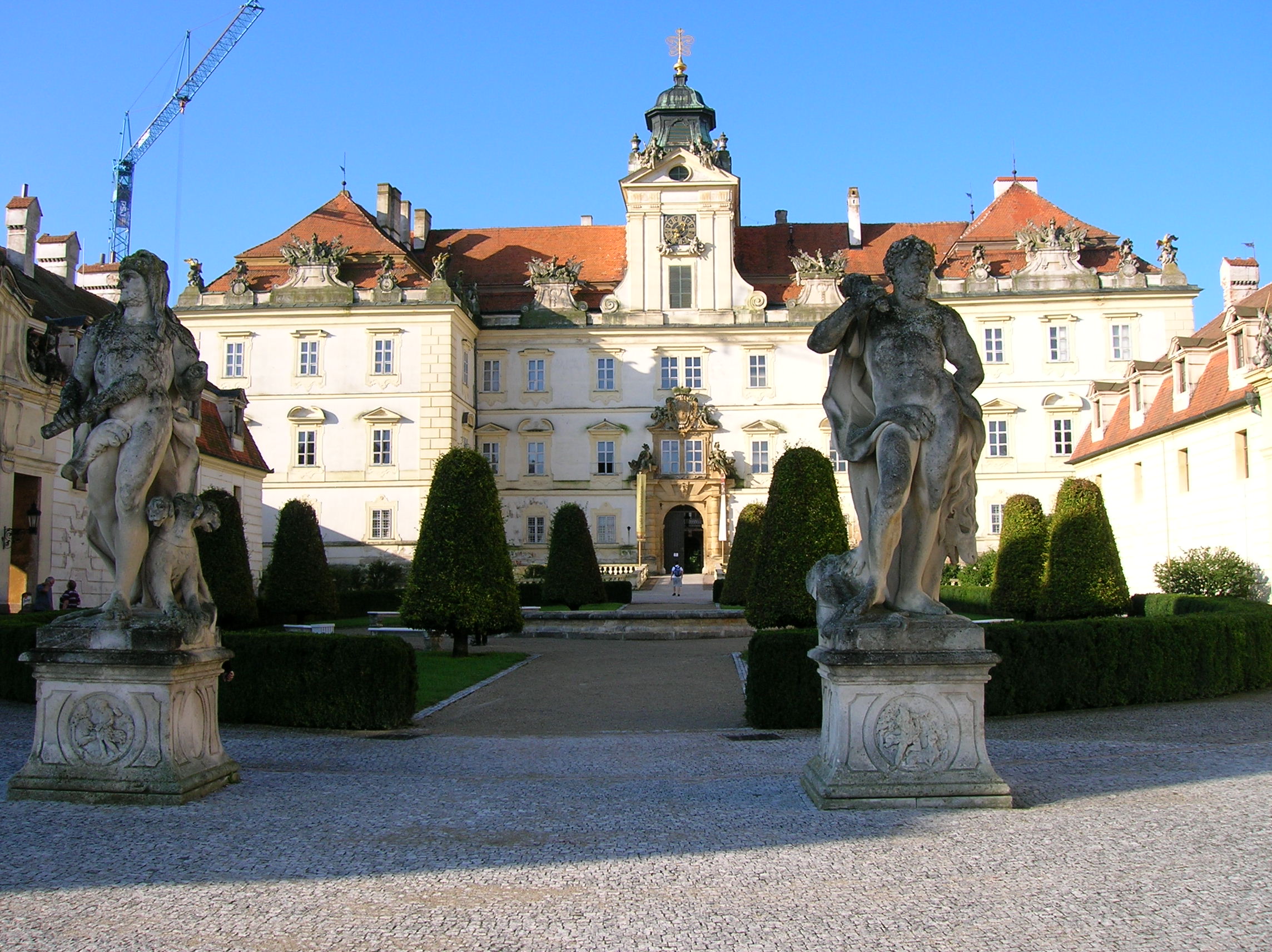
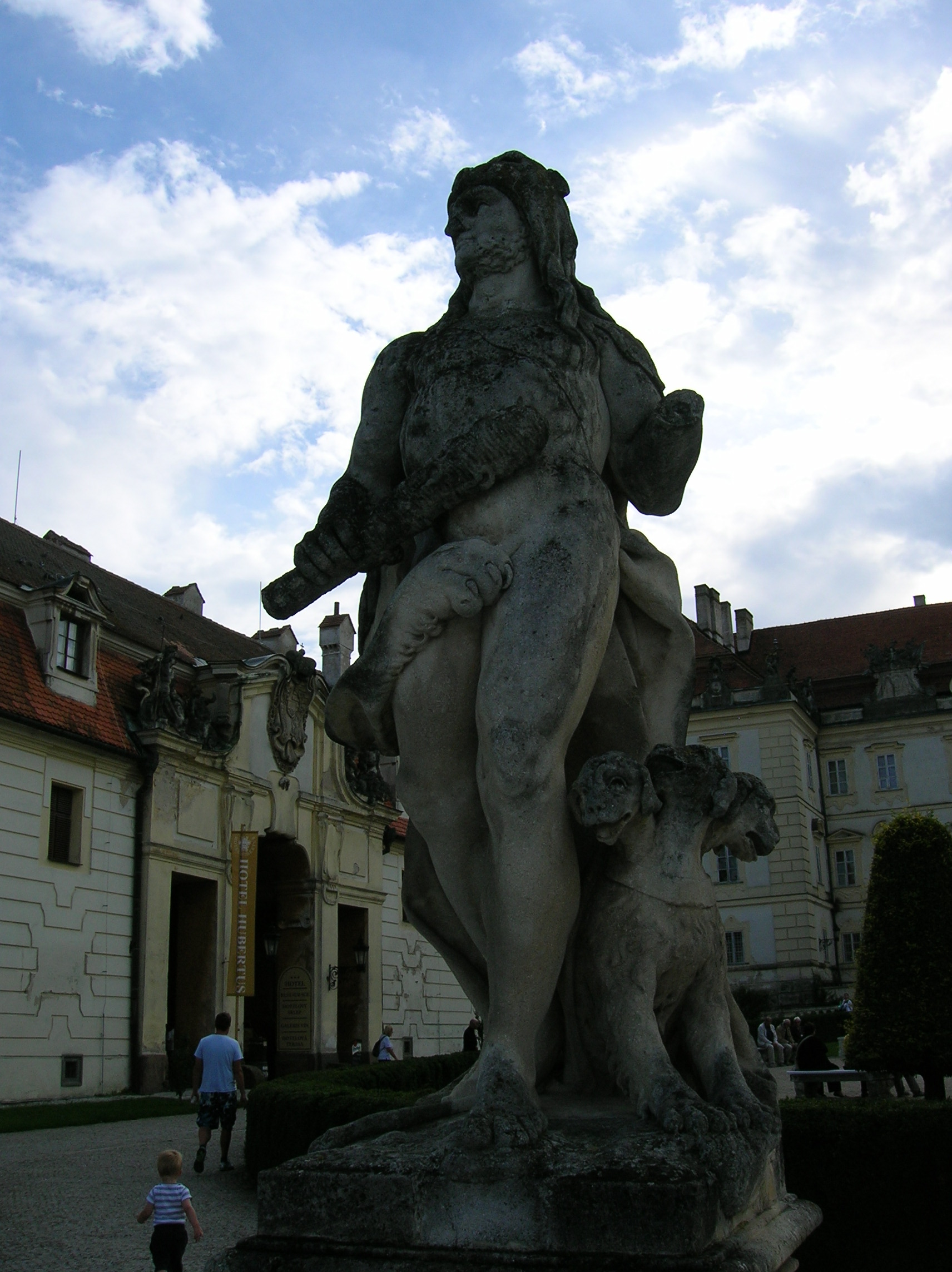
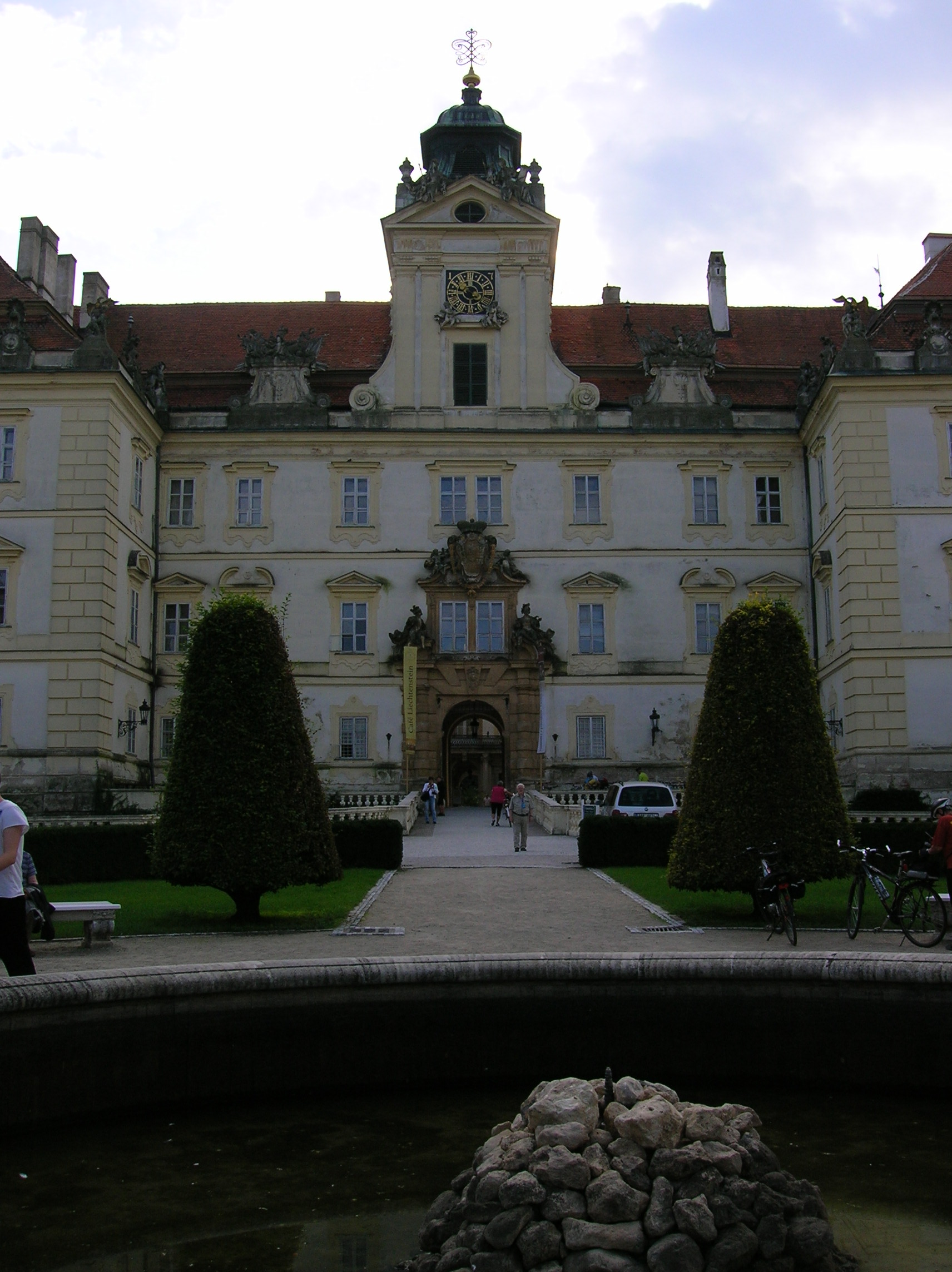
Kozel Chateau Diary

kozelext1

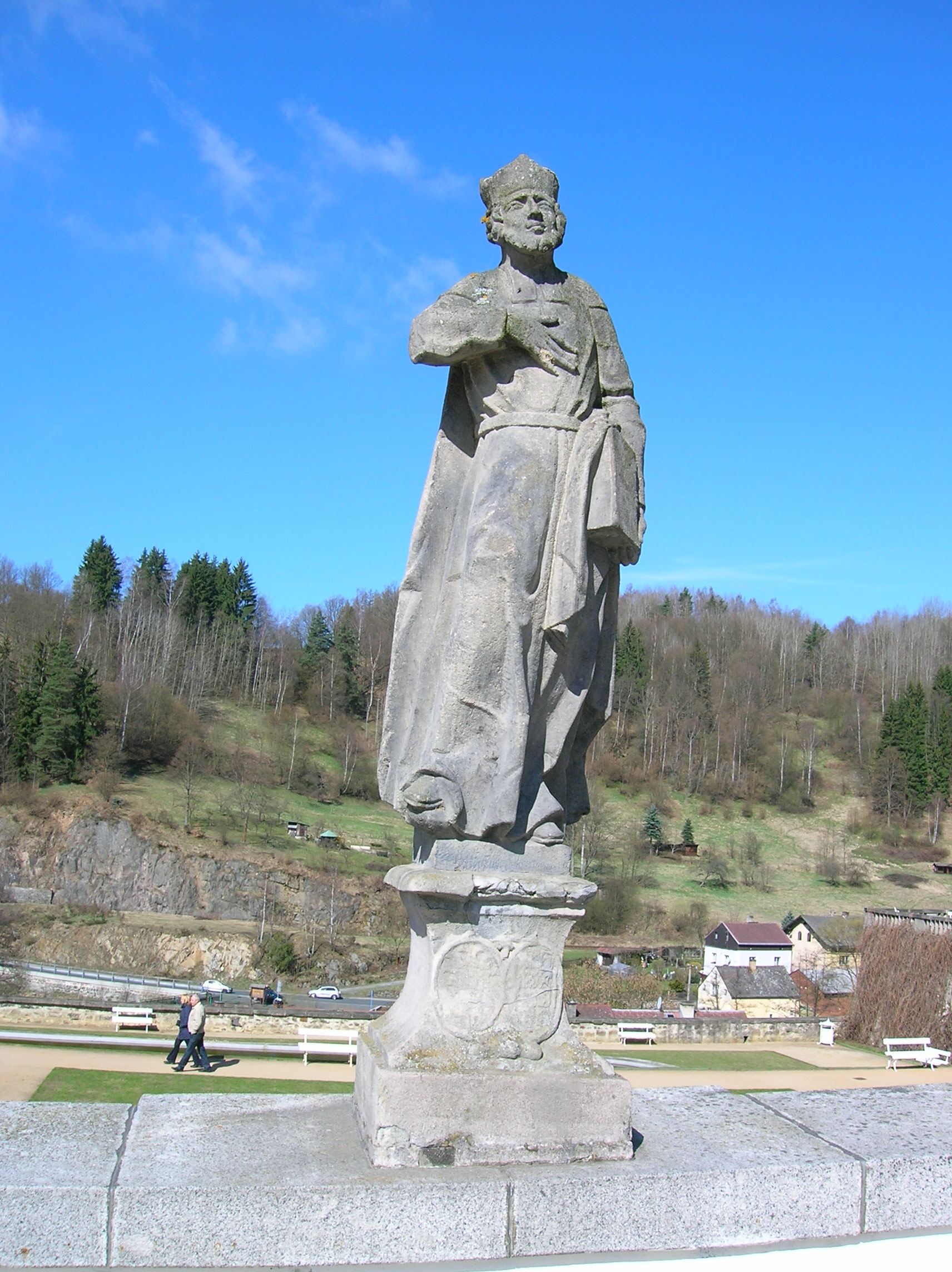
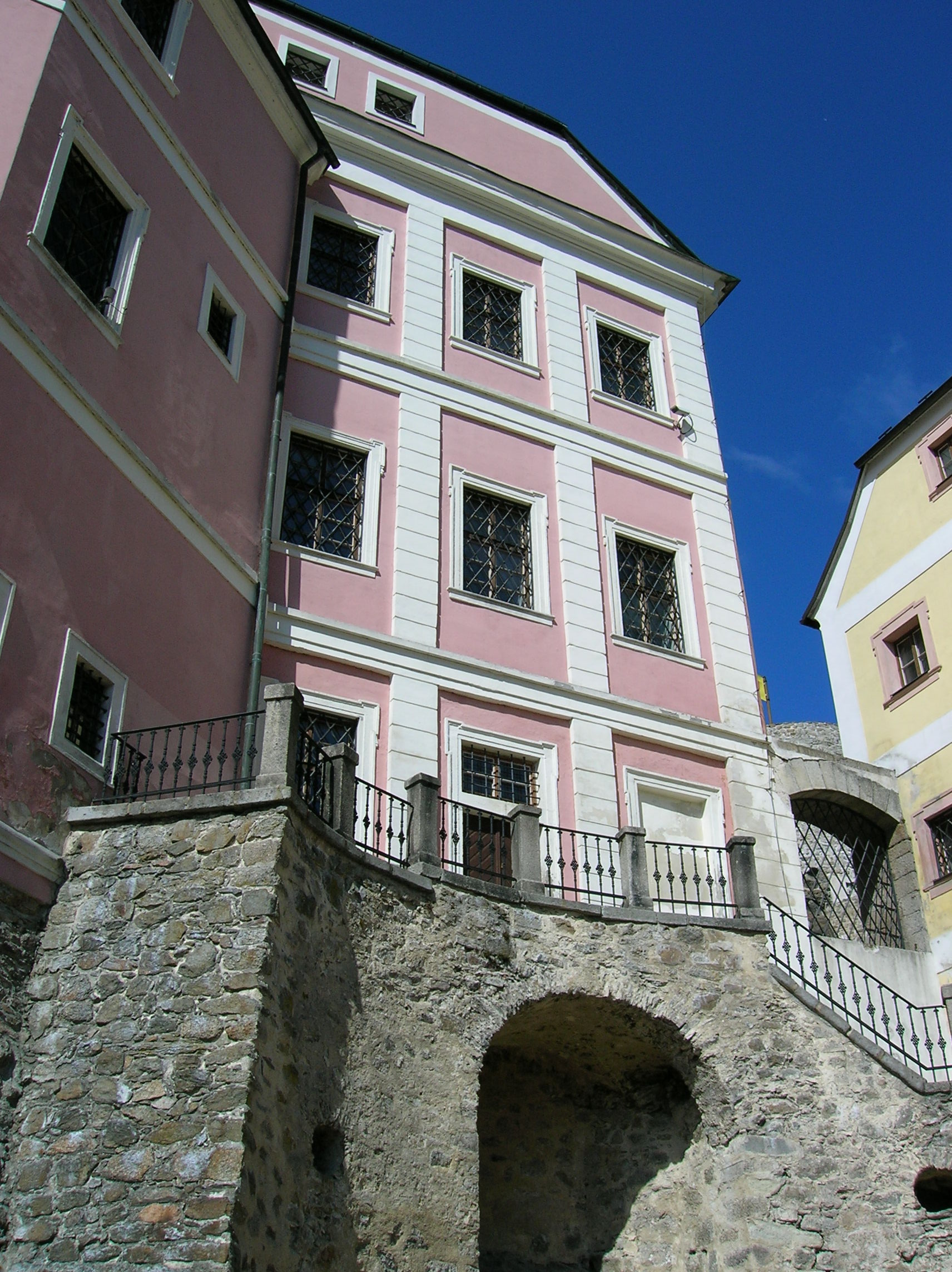
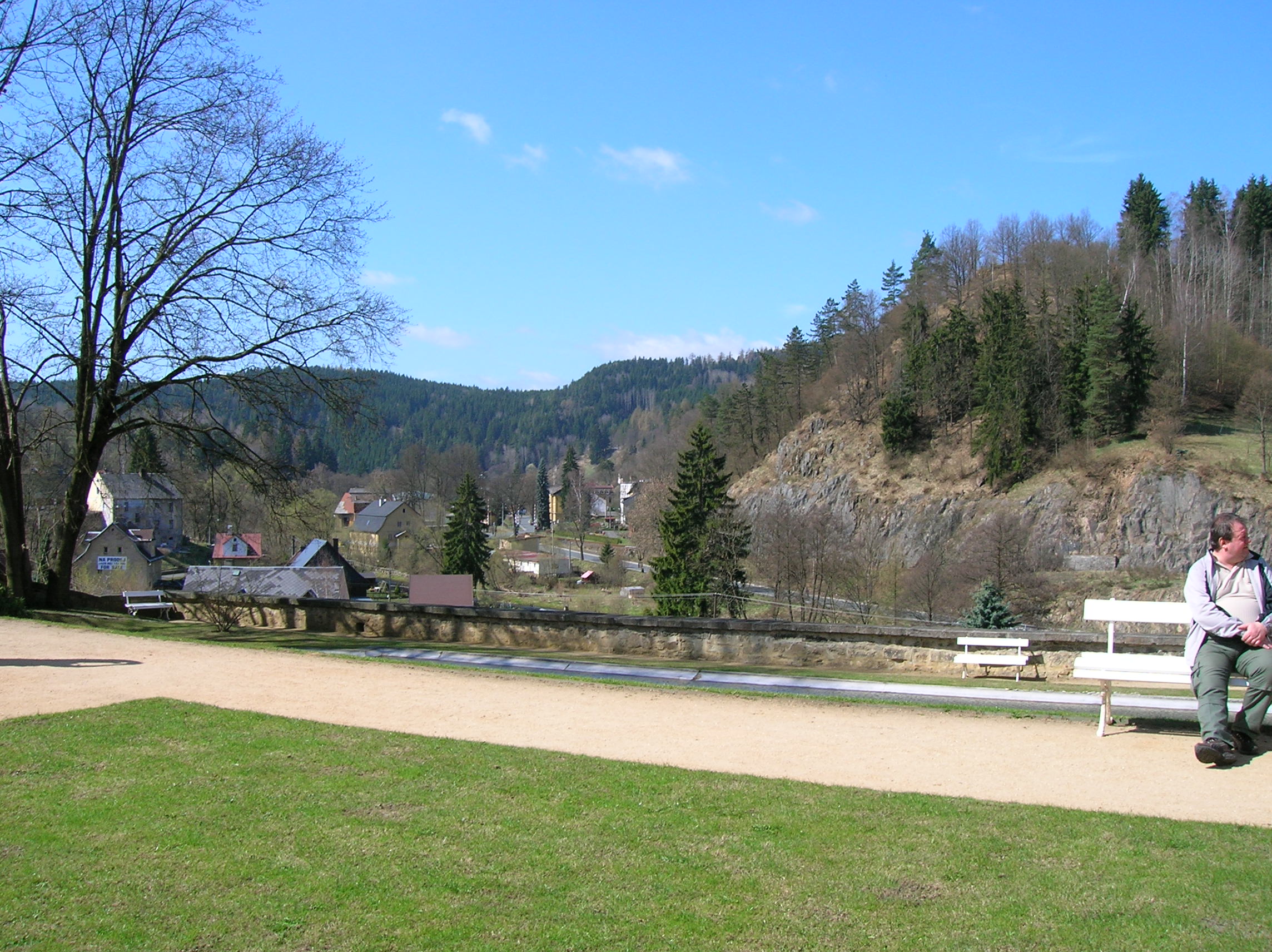
I took a bus with Student Agency to Pilsen (Plzeň in Czech), a city in west Bohemia where I have explored the historical underground, the Pilsner Urquell Brewery, art galleries, excellent restaurants and the main square, to name just a few. Pilsen was very dear to me, and I loved coming here on day trips. This time, though, I was getting a train to Šťáhlavy, and from there I walked to Kozel Chateau, which I had visited about 10 years earlier on a perfect, sunny summer day.
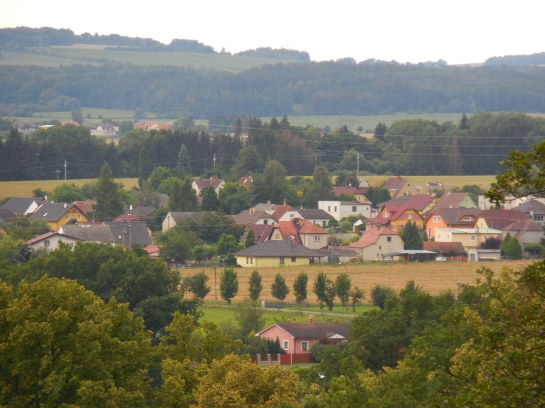
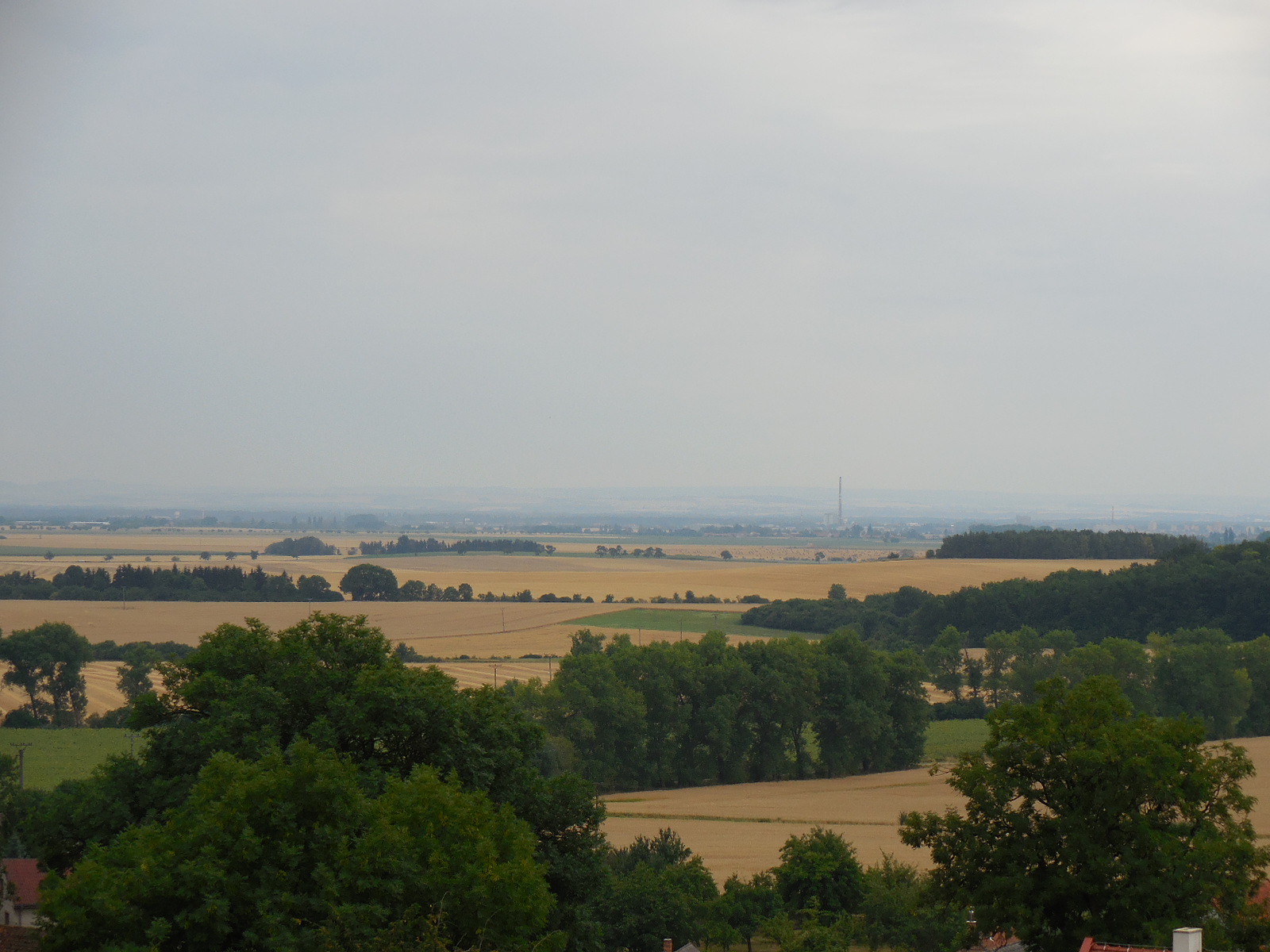
kozelextview1

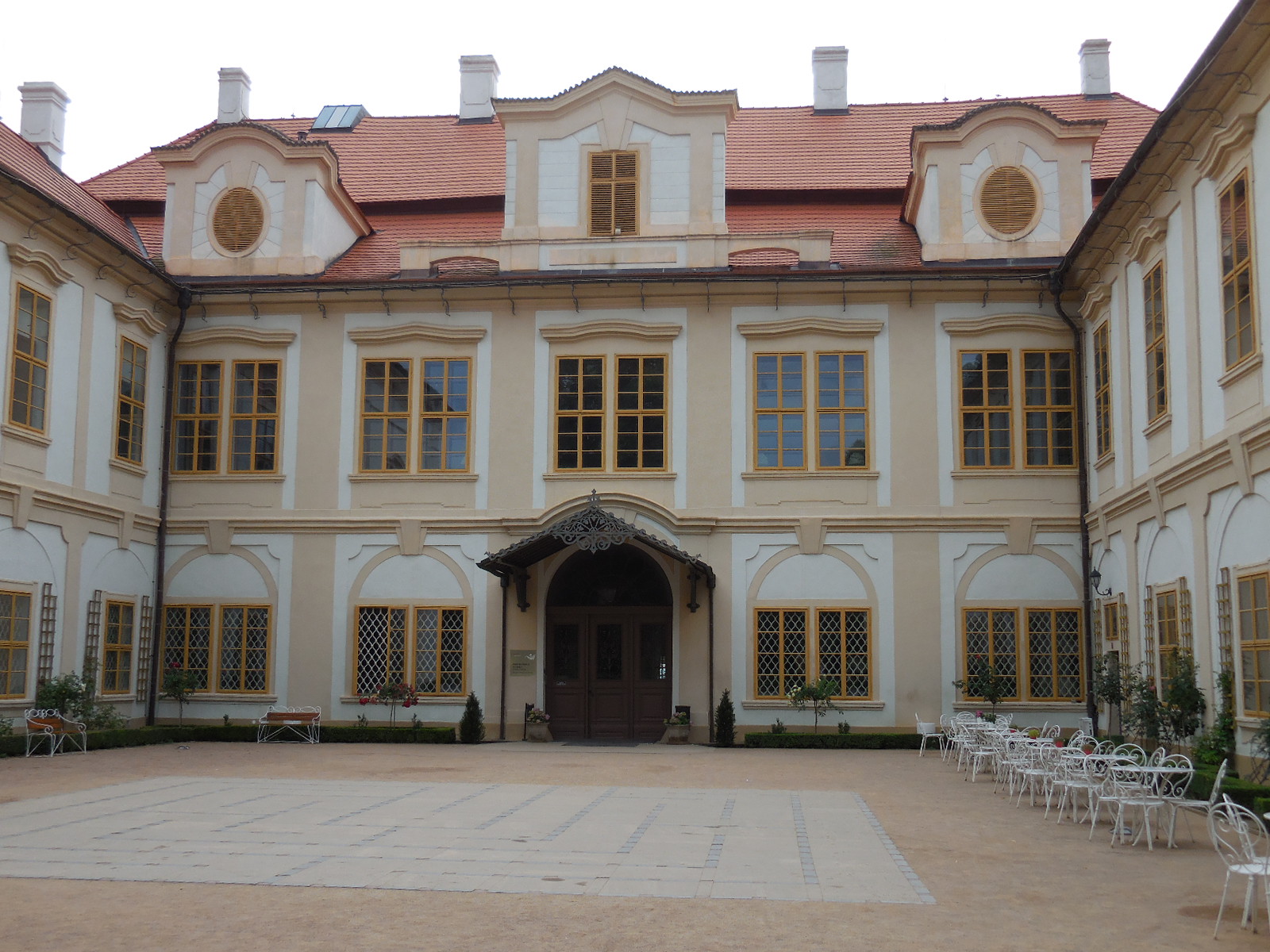
This day was by no means perfect. It was cold, and the dark clouds threatened rain. Still, I knew that would not stop me from enjoying this unique chateau, built in Classical style, with four wings surrounded by an inner rectangular courtyard. The architect was Václav Haberditz, who had been based in Prague. I wished I had more information about him, but he was not well-known.

kozelext19

The design had a simplicity and sobriety to it that I admired. It was restrained, symmetrical and orderly. While I loved traveling to Baroque chateaus, I also appreciated this style that harkened back to forms utilized in classical antiquity. The chateau did not need any fancy exterior fittings to project its beauty.

kozelfountain1

I reacquainted myself with its intriguing history. Kozel was erected from 1784 to 1789 for its owner, Jan Vojtěch Černín of Chudenice, who worked for Emperor Joseph II as the supreme huntsman of the Czech kingdom. The chateau, not surprisingly, was designed as a hunting lodge, though a few years later it became the family’s summer residence.

kozelext6

In the 1790s the chateau was expanded. Four new buildings came into being thanks to Prague architect of Italian origin Jan Nepomuk Palliardi, who specialized in the Classicist style.

The chateau had not always been called Kozel. Its original name was the German Waldschloss or Jadgschloss bei Stiahlav. It is not known how the chateau came to be called the Czech word meaning goat, though a legend says that the ancient Slavs used to sacrifice a goat on this spot during the spring equinox in hopes of receiving a bountiful harvest.

kozelext18

Jan Vojtěch Černín died childless, so his grandnephew Count Kristian Vincenc Valdštejn-Vartenberk inherited the property. Kozel remained in the family until it was nationalized in 1945 and did not undergo any major changes. I admired that the chateau remained in its original style. So many chateaus underwent such drastic makeovers over centuries. During the 19th century, one owner was Arnošt Valdštejn-Vartenberk, whose claim to fame was establishing an ironworks in Pilsen during 1859. He sold it to Email Škoda in 1869, when the business took on the name Škoda Works, and before long this enterprise would become the most prestigious and largest engineering works in what was at the time Austria-Hungary.
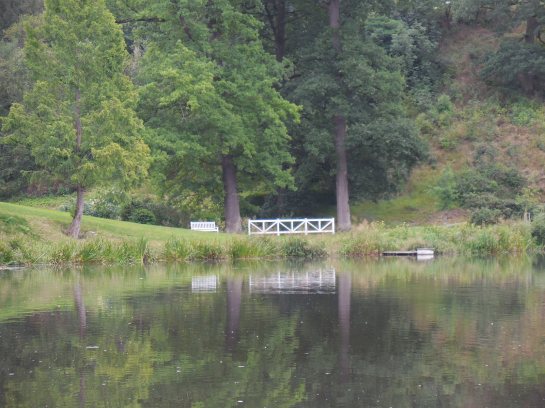
kozelpark3

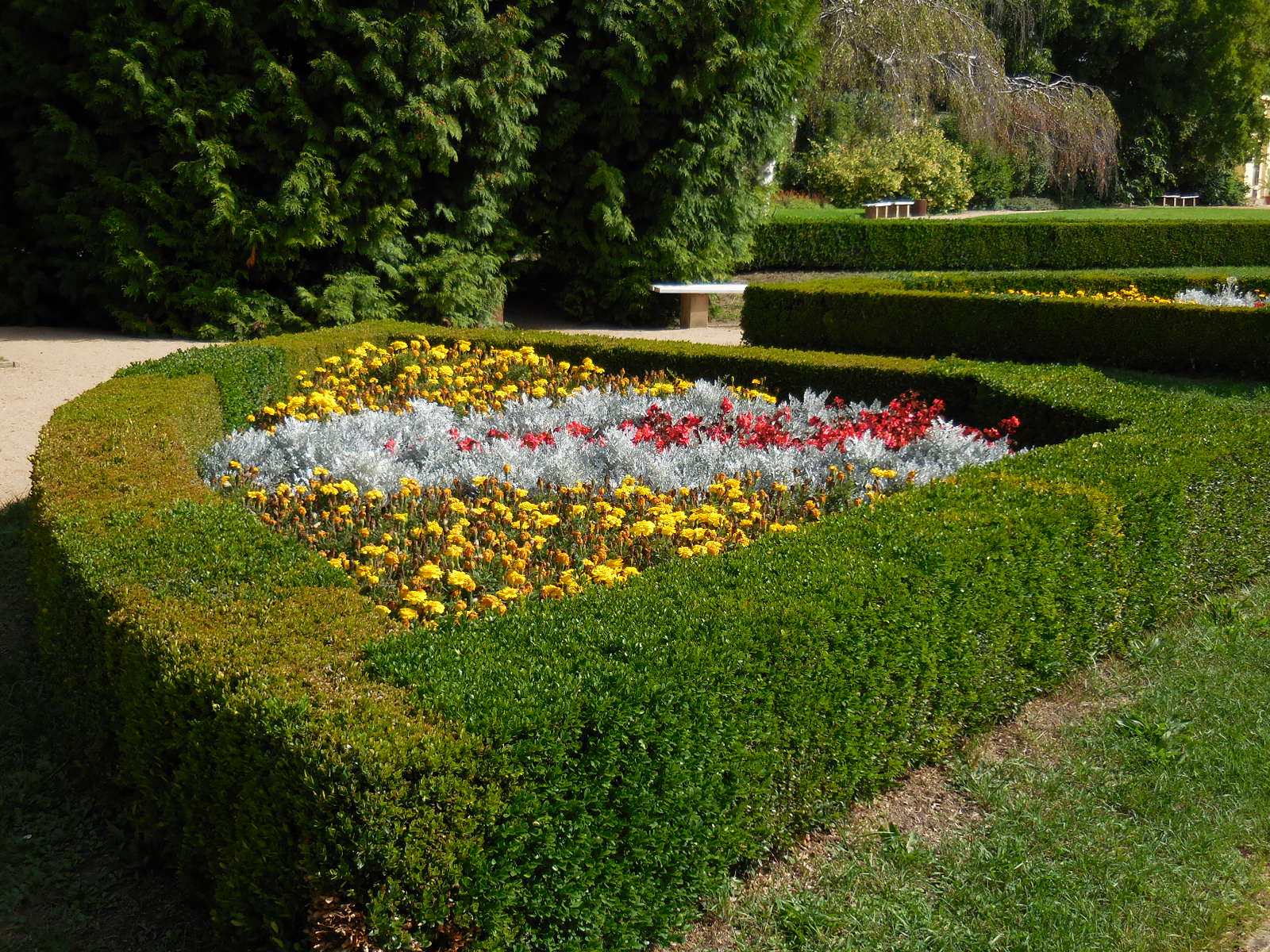
I walked through the park, though the weather was chilly. I saw ducks, swans, a big pond and a vast expanse of land that merged with the countryside. Here I felt at one with nature. I remembered the last time I was here. I had spent time reading on a bench as well as gazing at the idyllic scenery in the park.
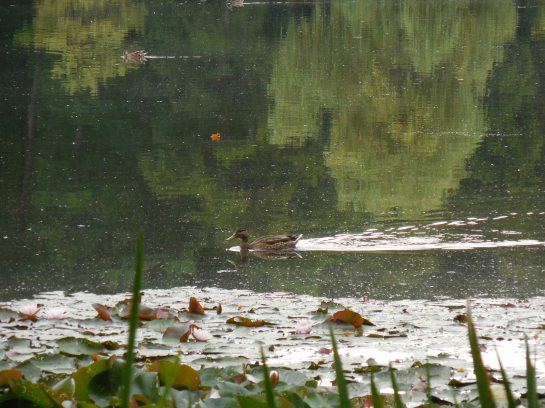
kozelpark1

kozelparkswan

Now it was time for my tour. The interior was nothing like the Classicist exterior. It was extravagant, luxurious, plush. In one of the first rooms, I admired a clock from London that had only one hand; it dated back to the 16th century. I did not recall ever seeing a one-handed clock. Graphic sheets from Italy showed Italian villas and chateaus, and I was reminded of my passion for Italy and my exciting travels there. How I would love to visit those villas and chateaus! I wanted to see everything in Italy just as I wanted to see everything in the Czech Republic.
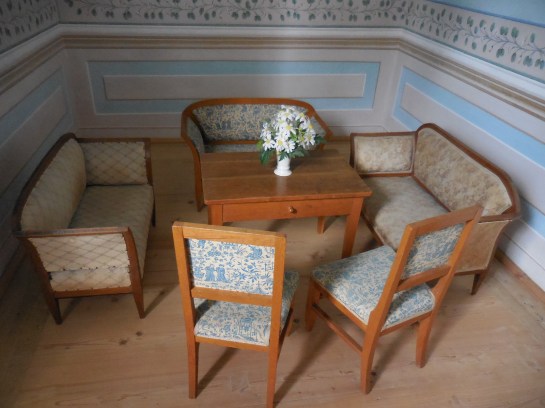
kozelint2

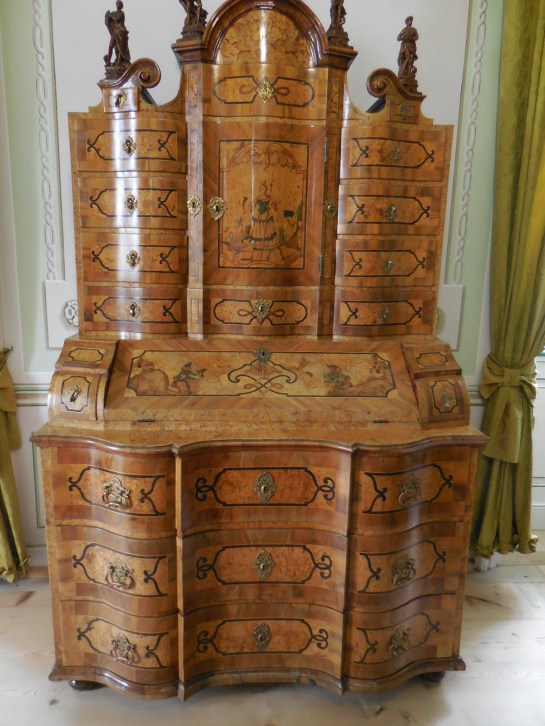
I saw a Classicist commode decorated with intarsia and a few Baroque fans, one showing off a scene of people, dogs and horses. A King Louis XVI bureau hailed from the 16th century and was adorned with Greek and Roman mythological scenes. The intarsia decorating the piece of furniture was outstanding. There also was an impressive tiled stove. I would see similar stoves in all but one space, it turned out.

kozelint4

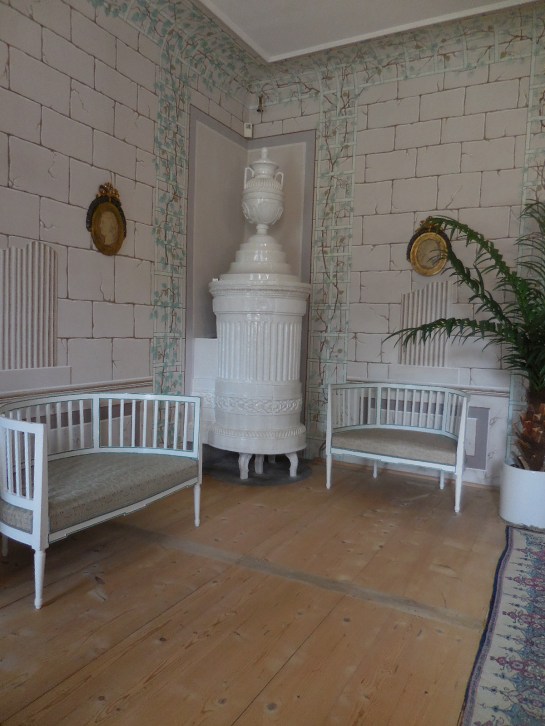
Next, we came to the entrance hall. I loved the wall painting by Antonín Turova, who made the room resemble a winter garden with walls showing green ivy on trellises. His al secco method of painting on dry lime plaster was exquisite. I thought of the illusive painted altars I had seen in churches, such as the remarkable one at Hejnice Basilica in north Bohemia. A movable Rococo lamp also caught my attention.
kozelint8

The Smokers’ Drawing Room included a Classicist bureau and two Rococo cabinets with Meissen porcelain. A collection of pipes was on display, too. It reminded me of my grandfather, who had for many years smoked a pipe. I remember scrutinizing his collection of pipes when I was a child. Then I recalled how proud he was when I was nine and took up his hobby of coin collecting. We walked into one coin shop, and he announced, “This is my granddaughter!” Even today I can see the saleswoman’s smile.

kozelint10

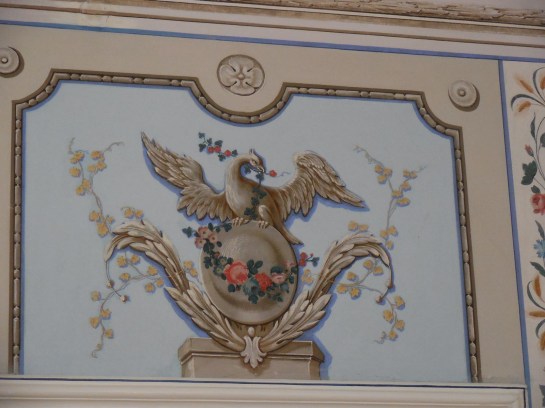
A bedroom was decorated in 18th century Rococo style with a Classicist bed. The graphic sheets on the walls hailed from Germany and portrayed aristocratic life during the 18th century. I admired the shell decoration on the Viennese porcelain.
kozelint12

In the Dressing Room, I wanted to relax on the Rococo chaise-lounge and yearned to take home the Renaissance jewel chest inlaid with ivory. In the Hunting Salon, a Baroque desk featuring intarsia showed off hunting motifs. While I was not a fan of hunting, that piece of furniture did impress me.

kozelint14

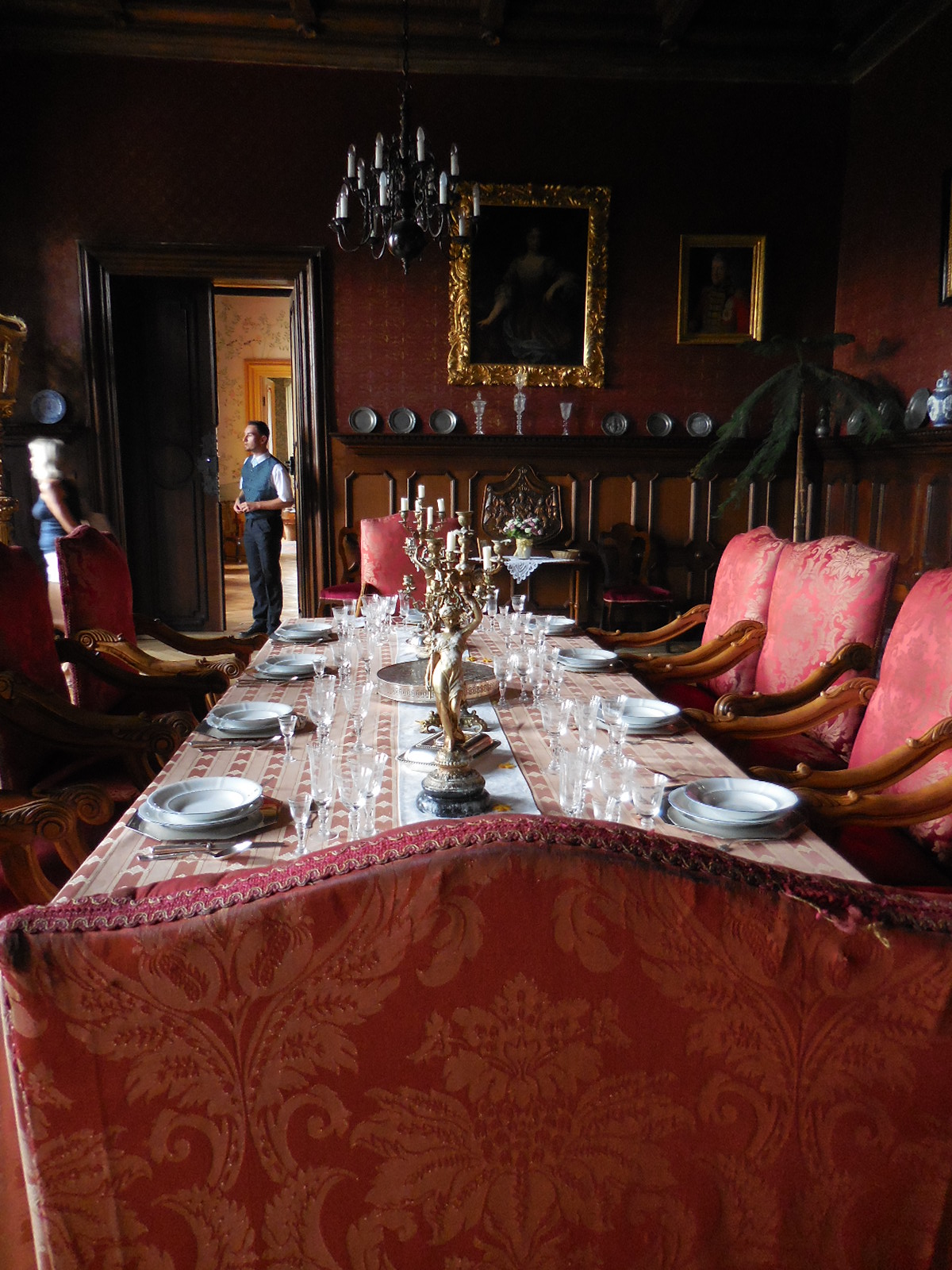
There was a Billiard Room as well. I recalled playing pool with my father when I was a child. I played badly, but we had fun. It was treasured father-daughter time. My interest was riveted by the landscape paintings by German and Italian painters. In the Dining Room I gawked at the black-and-gold Baroque thermometer and faience portraying birds and cabbages. The only fireplace in the chateau was Rococo in style.
kozelint16

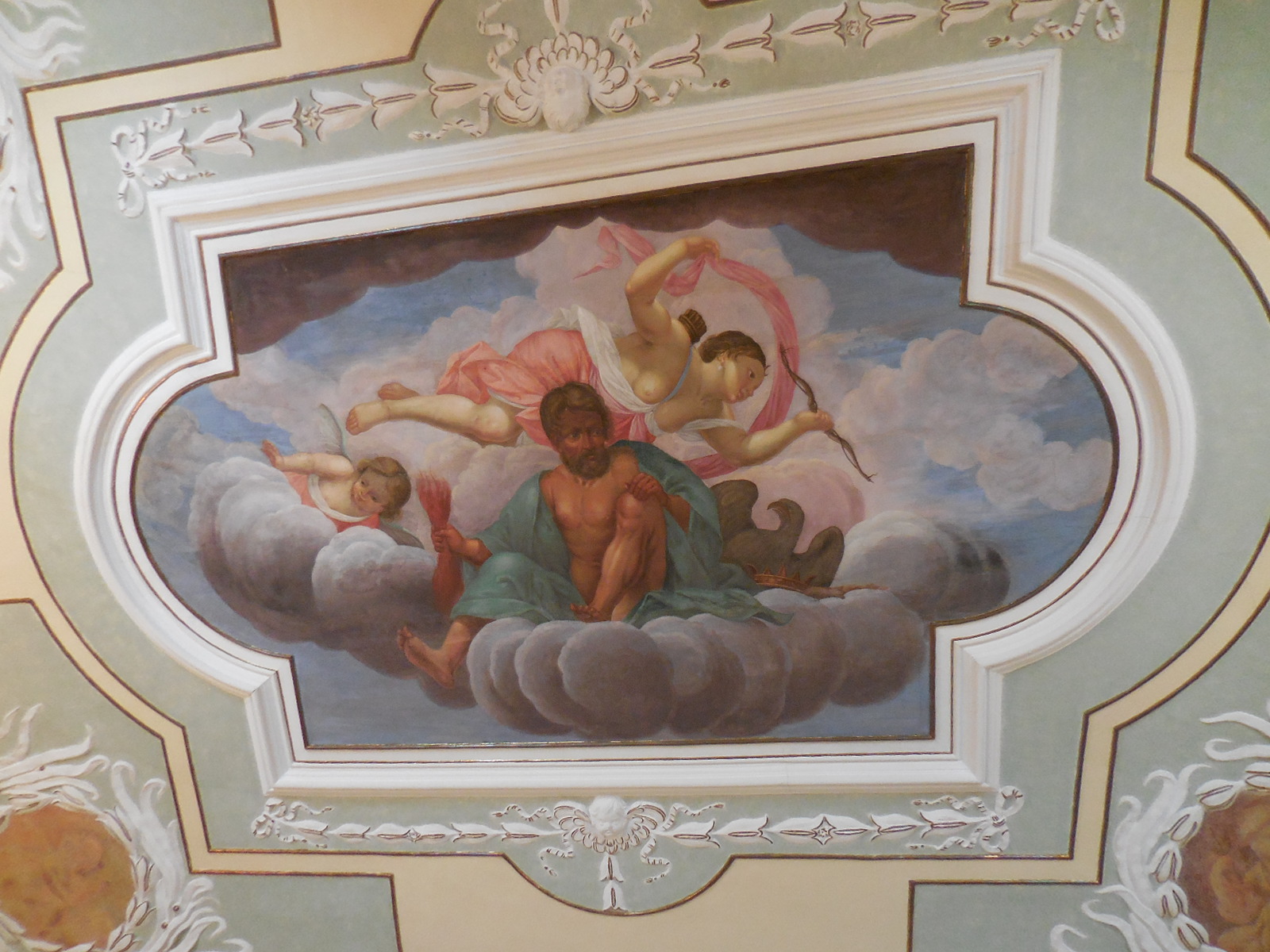
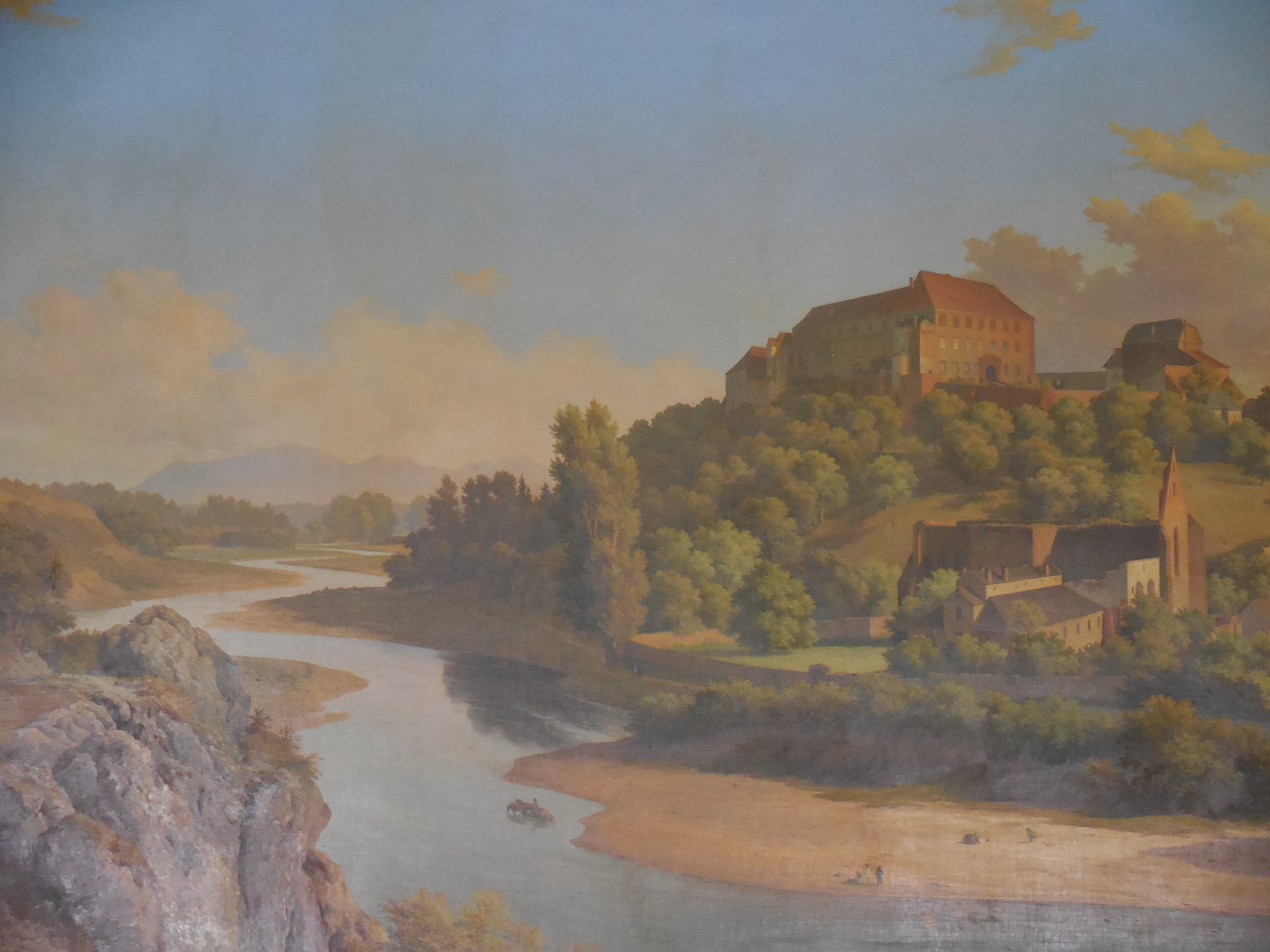
The biggest space was the Drawing Room for Social Occasions, where a painting by Turova caught my attention. It showed Radyně Castle, now a ruin, located near Pilsen. I recognized Kozel below it. There were birds, trees, ancient ruins, dogs and an eagle in the painting. The walls were stunning. Medallions were inspired by mythology. I saw Hercules holding a boar, for example.

kozelint24

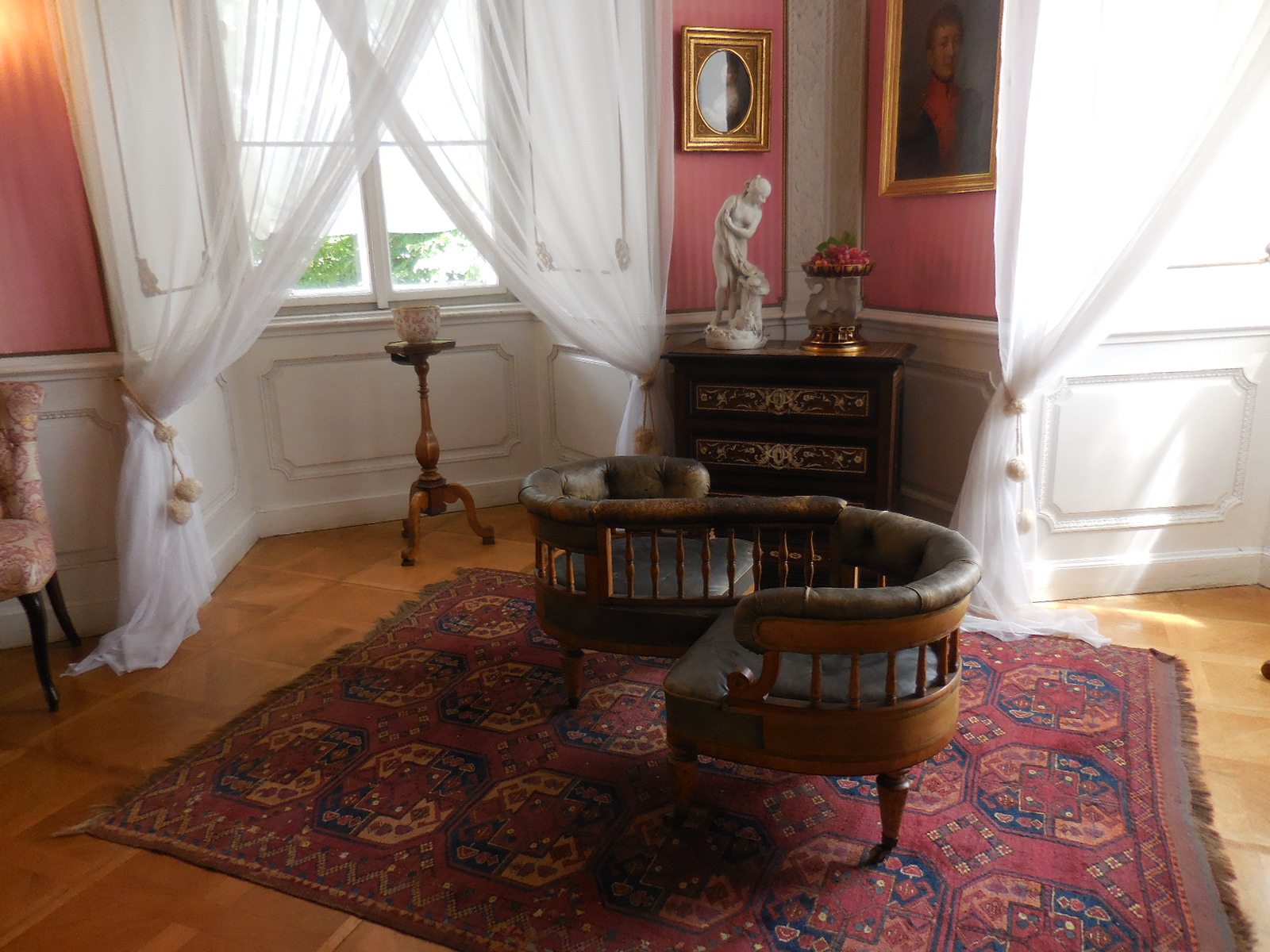
The Blue Room or the Countess’ Study intrigued me with its Louis XVI style furnishings. I loved the intarsia table shaped as a globe. It could be adjusted to be an embroidery table or a desk. I would love to have that in my living room, though the cat would probably sharpen her claws on it. Another white tiled stove, this one quite ornate, was on display. A bedroom also boasted Louis XVI furniture and a Classicist mirror.

kozelint20

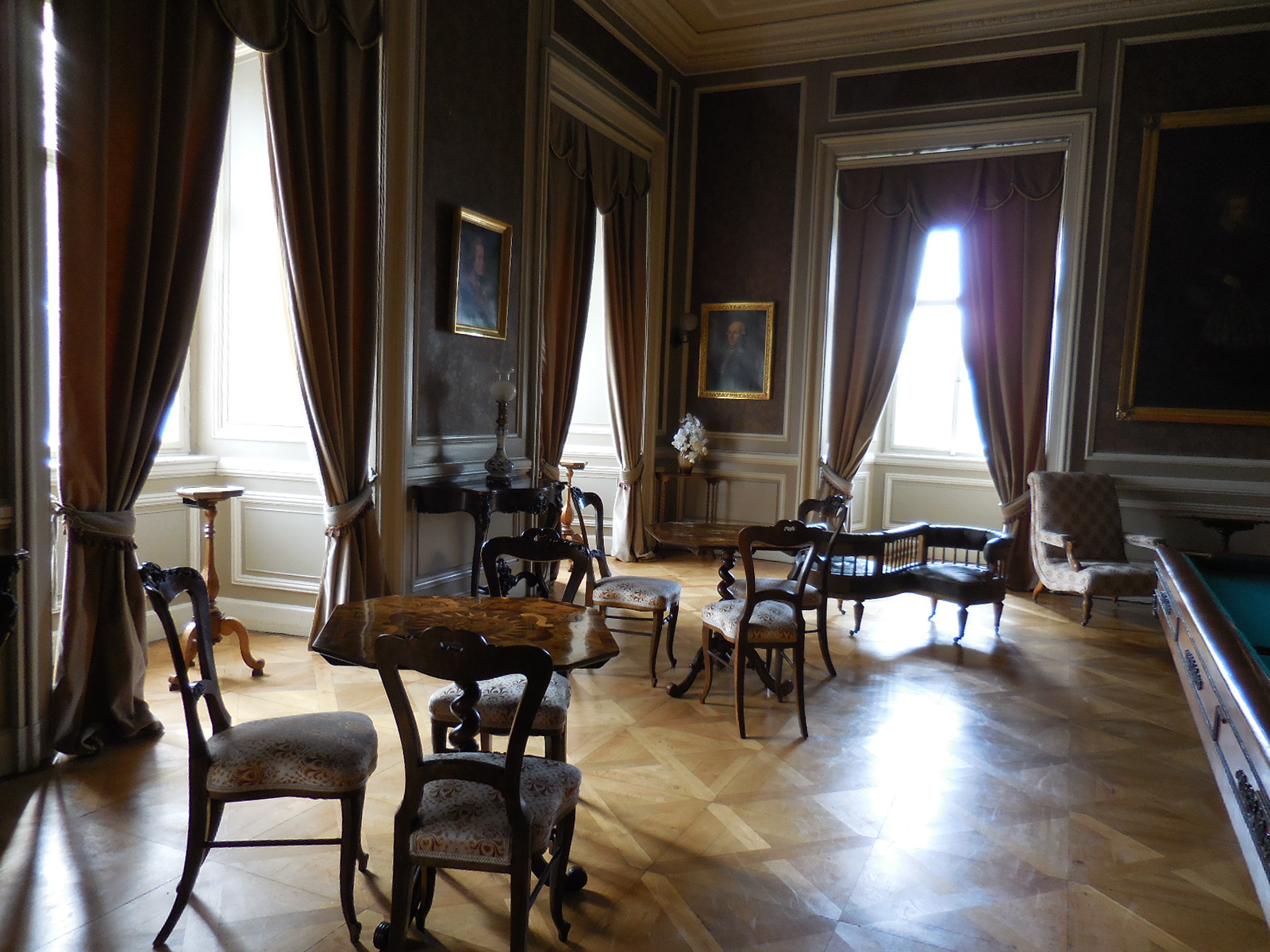
The Music Chamber had served that purpose when Jan Černín created it for his first wife Josefína. I took special notice of the piano and harp. I loved the music instruments painted on the walls. The grey-and-light blue painted walls impressed me, too. We came to the Grey Room, the original living room of the countess’ chambermaid. It included Biedermeier furniture from the 19th century. I loved the symmetry of that style, the orderliness, the simple elegance. I took special note of the portable embroidery table that can be closed like a purse – exquisite! Porcelain in display cases also caught my attention.

kozelint21

The Morning Dining Room showed off a series of Viennese porcelain with shell-shaped adornment. Meissen porcelain was no stranger to the room, either. The Count’s Study featured oriental objects. I loved the turtle figure that looked like a dragon. It hailed from the 18th century. A gilded Classicist desk that featured intarsia was another highlight.

kozelint22

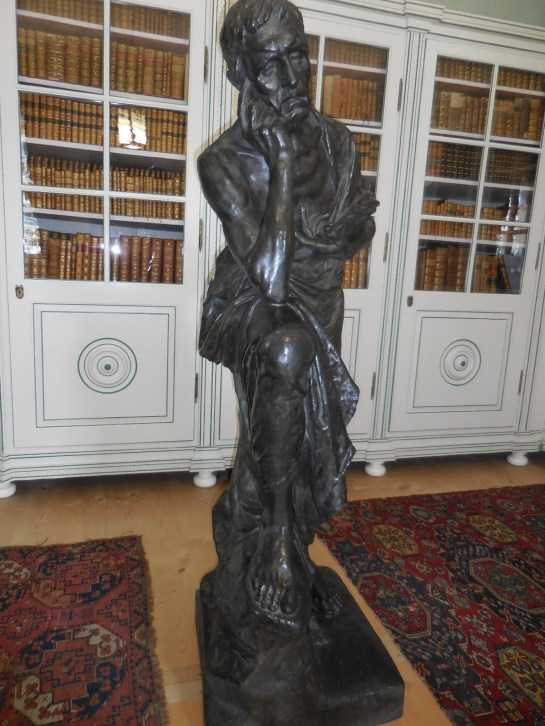
The library was divided into two parts. It included over 7,900 volumes from 1517 to 1840, including the first edition of a French encyclopedia and 17th century maps. Books from 18th century France were in abundance. The library’s volumes were in various languages – Old German, French and Latin, for example – but, as was the case in many chateau libraries, none of the books were written in Czech. It is worth noting that the library was only moved to Kozel after 1945. It is not original.

kozelintlibrary1

The next room, the Empire Drawing Room, was decorated with Empire style furniture. I loved the painted vedutas of Italian spas on the walls. I thought back to Monreale’s Santa Maria Nuova Cathedral in Sicily and the Church of Saint Peter in Chains (San Pietro in Vincoli) in Rome. What about those arcades in Bologna and all the masterpieces in Ravenna? I loved Italy so much, but I loved the Czech Republic even more. One painting of the eruption of Mount Vesuvius caught my attention. I recalled the views from Mount Etna and from Mount Vesuvius during my trips there. The Viennese porcelain was another treat in that space.
kozelintlibrary2

There was a theatre on the premises, too. Created in the 1830s, it was originally a stable for Jan Vojtěch Černín’s favorite horse. Decorated in Empire style, it was composed of a small, modest stage that served as an intimate space. The equipment was original. The owners’ families had often performed here. I studied the stage set of a lush forest with a wooden church, a tree in the middle.
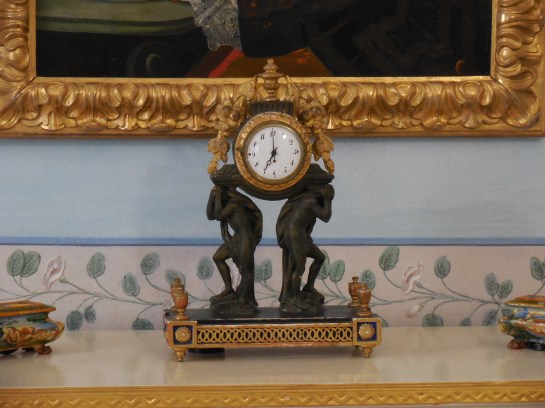
kozelintclock

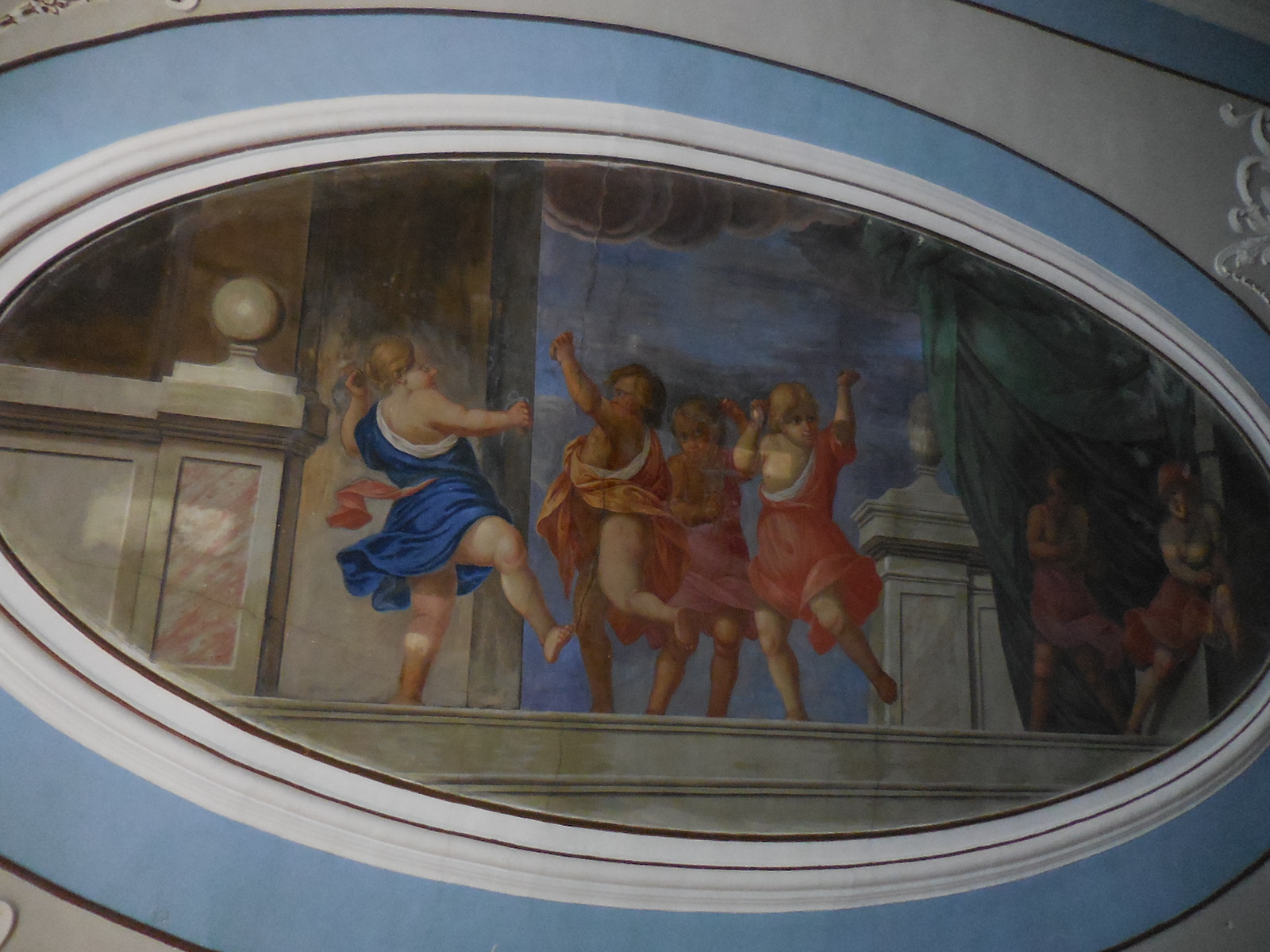
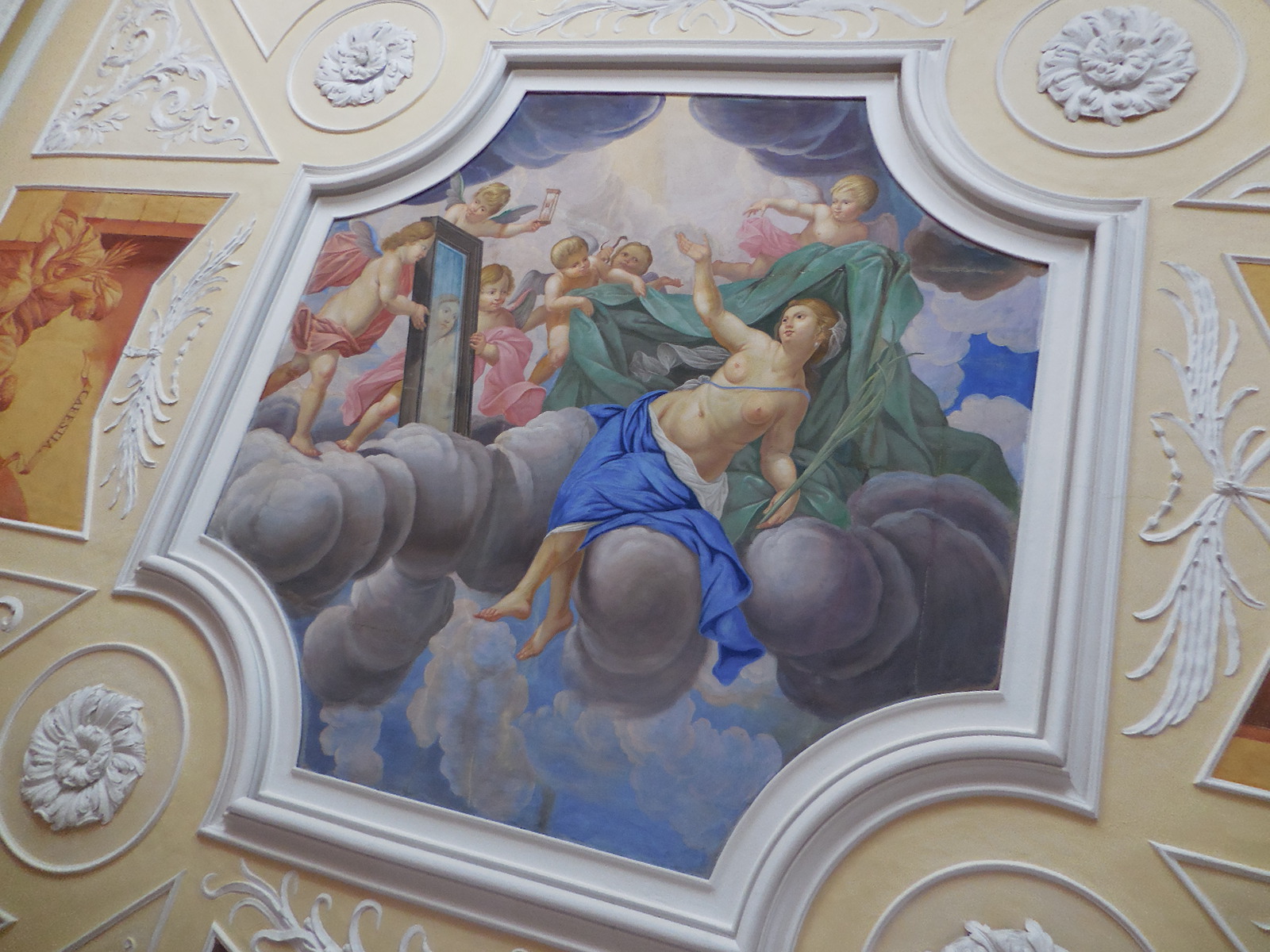
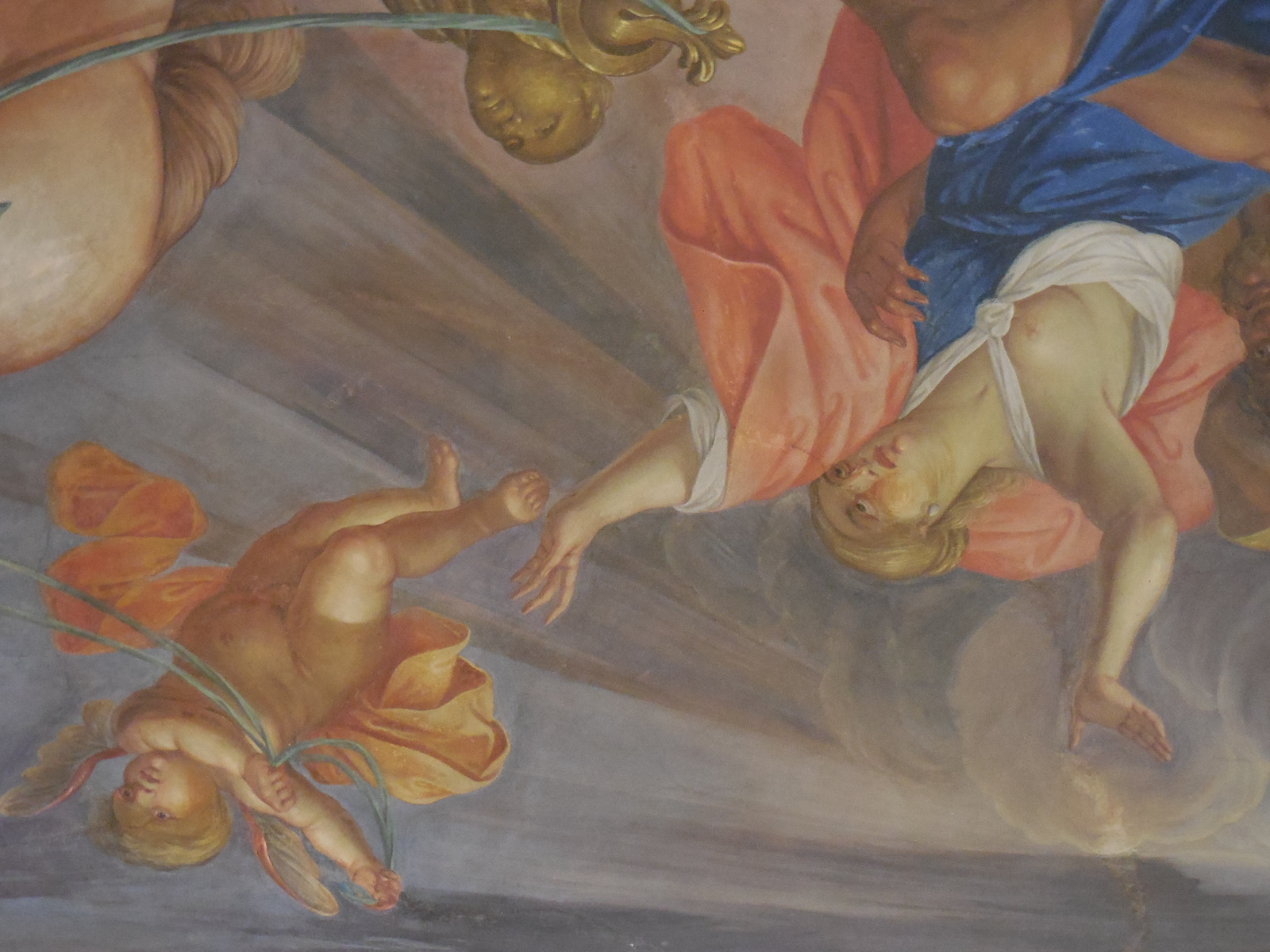
What impressed me more than the furnishings of the interior was the wall painting of the interiors, the work of Prague artist Turova, who drew his inspiration from Rococo painting with landscapes and ancient ruins. He also decorated part of the monastery of Břevnov in Prague’s sixth district, and I remember touring the impressive monastery church too many years ago. He painted the interiors over a two-year period, from 1787 to 1789. The reception rooms boasted female figures, putti and deities, for example. The main chateau Drawing Room featured romantic ruins and landscapes.
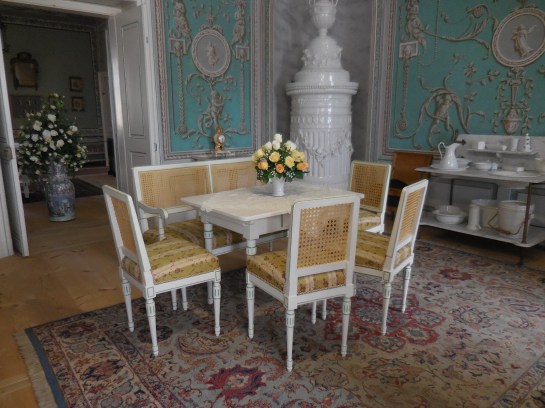
kozelint29

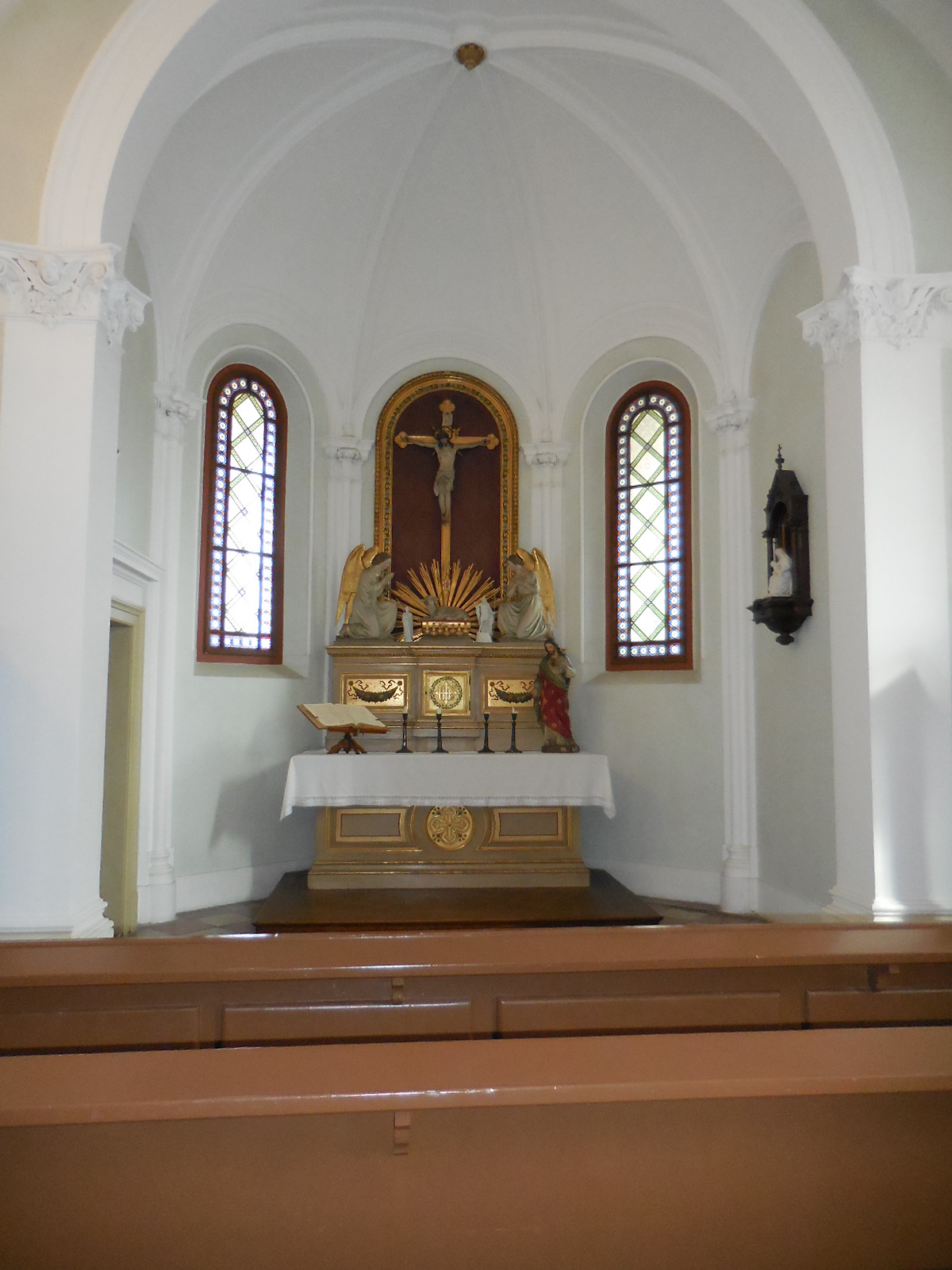
The Chapel of the Holy Rood was a vaulted structure with a cupola. The altar, created in 1794, featured a painting of the crucifixion by Turova. Columns and pilasters were not absent, either. The organ was Rococo in style.
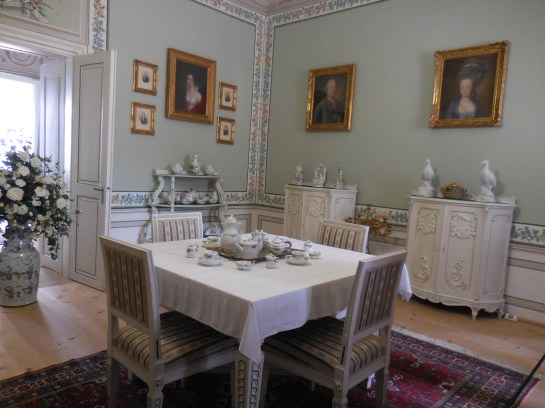
kozelint34

Soon the tour finished. I greatly appreciated this unique architectural structure of pure Classicism. I was impressed that very few changes had been made over so much time. I was also impressed that the chateau had stayed in the family for so long rather than having many owners, each making his or her own changes to the place. The painting decoration inside particularly thrilled me. I was fascinated how the inside could be so different from the outside of the building. I thought the exterior and interior somehow created a sense of harmony, even though they were composed of such different architectural elements.

kozelint36

I went around the back of the chateau and looked at the countryside from a terrace with a fountain. The views from the chateau were astounding. I only wish the weather had been better. It was not possible to explore paths as it began to rain. Still, I was satisfied with my trip. I went back to Pilsen to take a look at the Brewery Museum and grab a bite to eat at the legendary U Salzmannů restaurant and pub. Then I took a Student Agency bus to Prague, where I returned home, happy to be living in such an amazing country with so many places to explore.
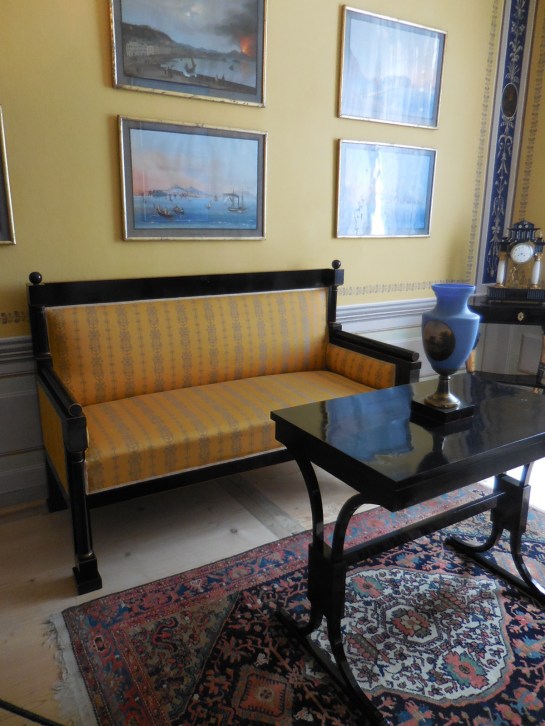
kozelint37

Tracy A. Burns is a writer, proofreader and editor in Prague.


Kladruby Monastery Diary

Kladruby facade

I had visited Kladruby Monastery about 20 years before I participated in the arsviva tour of architect Jan Blažej Santini-Aichel’s creations in west Bohemia. I had wanted to pay the Benedictine Monastery another visit for a long time.

I already knew a bit about the fascinating history of the place. Kladruby Monastery was founded by Prince Vladislav I during 1115. It was established on the Nuremberg-Prague trade route. The monastery made quite a name for itself at the end of the 12th century and during the 13th century. The Church of the Assumption of the Virgin Mary, Saint Wolfgang and Saint Benedict was consecrated in 1233 with King Wenceslas I on hand for the ceremony. (King Wenceslas I was not the only royal to visit the monastery; King Přemysl Otakar I held negotiations there during the 13th century, too.)

Kladrubychurch5

There was much looting later that century, but around 1370, a new abbot was appointed, and the situation improved. The Chapel of All Saints was added during that period. Then Hussite Wars brought devastation to Kladruby. The Hussites and then the army of the Emperor Sigismund took control of the monastery in the 15th century. The Benedictines returned in 1435, though it took about 70 years for things to shape up. The monastery flourished during the early 16th century, and more monks called Kladruby home. This was a glorious time of expansion. A school was set up; both Catholics and Protestants attended.

Kladrubychurch7

Things took a turn for the worst with the onset of the Thirty Years’ War. The monastery was looted and pillaged. Because the Catholics won, Kladruby was once again in favor after the wartime turmoil. Expansion and reconstruction took place in the Catholized land.

Jan Blažej Santini-Aichel, a Czech architect of Italian origin, became associated with the monastery in the early 18th century, when he was in charge of doing a makeover of the church in Baroque Gothic style, which emphasized Gothic features in a distinctly Baroque style. Thanks to his efforts, the church interior is bewitchingly beautiful.

Kladrubychurch8

In 1785 Emperor Joseph II dissolved the monastery. The Benedictines packed their bags, and the Windisch-Graetz clan moved in. During their tenure, they divided the monastery into apartments. One part of the complex was made into a brewery. The Windisch-Graetzes, however, did build a library that is rather impressive.

Kladruby was nationalized after World War II, and terrible times were to come. Sick cattle grazed on the monastery’s property while other parts were transformed into offices. Reconstruction did not begin until the middle of the 1960s.

Kladrubyint10

I was especially intrigued by the Dining Room, which showed off an 18th century pewter service. What I found most intriguing, however, was the portrait of Cardinal Schwarzenberg. No matter where I stood, his eyes were always staring at me. I gazed at the portrait of the red-drapery clad cardinal with a stern expression from several angles.

Kladrubyintstatue1

Kladrubyintstatue2

Kladrubyintstatue4

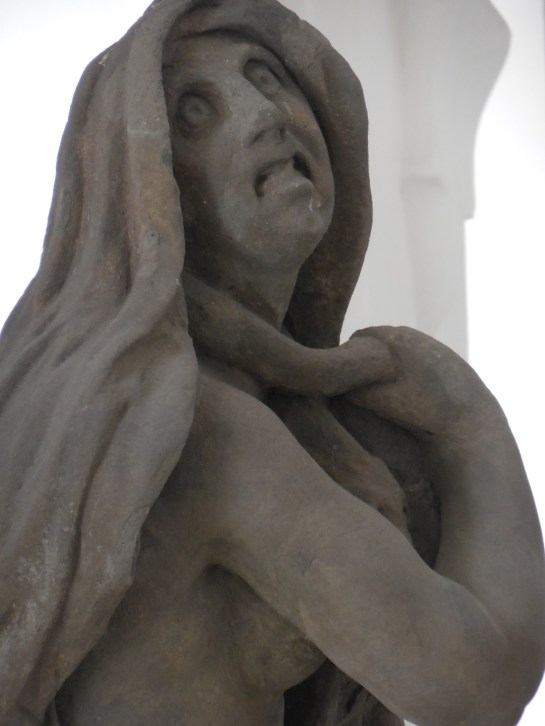
In the ambulatory we saw many sandstone statues by Late Baroque sculptor Matthias Bernard Braun, one of my favorites. His works are so dynamic and powerful. It was evident that Braun’s sojourn in Italy had influenced his creations. Most of these statues were inspired by Greek and Roman historical themes while some stood for allegories of character traits. They were all original except for the statue of Count František Antonín Špork, who had been a prominent cultural figure and patron of the arts in the early 18th century. He had founded Kuks, a former hospital that had once been located across from a popular spa, and he commissioned Braun to make statues of vices and virtues for the Baroque exterior of Kuks.

Kladrubyintstatue20

Kladrubyintstatue22

Kladrubyintstatue25

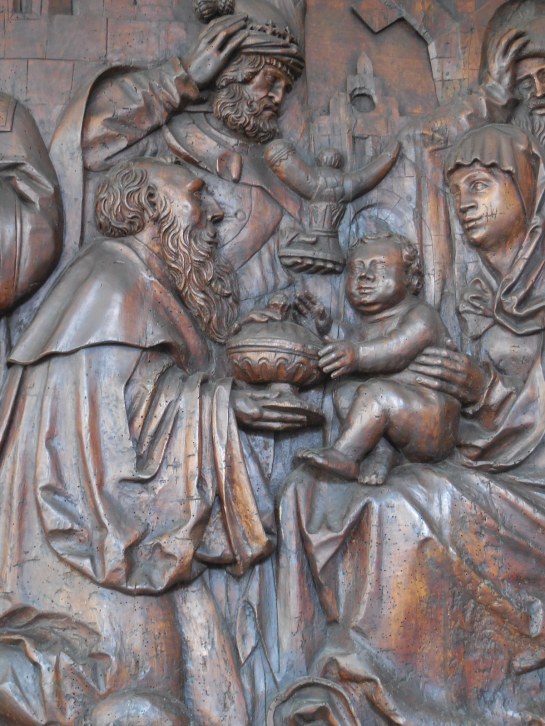
I had visited Kuks for the third time the previous year, and Braun’s statues were certainly a highlight. The newly restored Dance of Death paintings lining a hallway and the Baroque pharmacy there were also impressive. I had also examined the statuary carved from sandstone rocks in Braun’s Bethlehem, situated near Kuks. Those accomplishments are by no means the only ones on Braun’s résumé. He authored several statuaries on Prague’s Charles Bridge, such as The Vision of St. Luthgard, which was his first work. It brought him much acclaim. At Kladruby we also saw 12 woodcuts depicting scenes from Christ’s childhood. It astounded me how it had been possible to portray so much detail in the 16th century carvings.

Kladrubyint9

Kladrubyint19

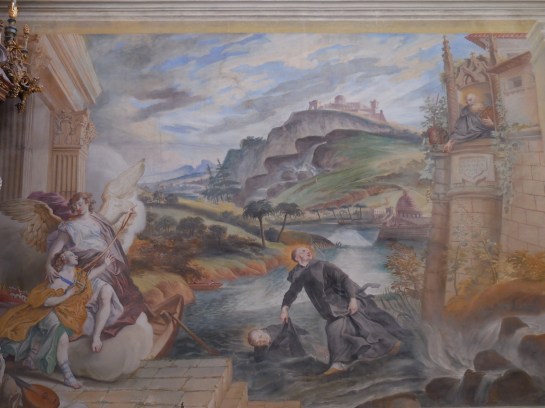
At the monastery there are about 500 sculptures, paintings and portraits of John of Nepomuk, the Czech patron saint of Bohemia who was drowned in the Vltava River on the orders of King Wenceslas IV during the latter part of the 14th century. The king and archbishop were at odds over who should be the abbot of the prosperous and influential monastery. John of Nepomuk showed his support for the Pope by confirming the archbishop’s candidate, which infuriated the king. John of Nepomuk became a saint in 1729.

Kladrubychurch10

Then came the Santini-designed Church of the Assumption of the Virgin Mary, Saint Benedict and Saint Wolfgang. Santini had been inspired by the Italian radical Baroque use of geometry and symbolism. I see Santini’s structures as rational yet radical. Santini elevates Gothic art to a new form, offering fresh perspectives and giving new insights. I fondly recalled last year’s arsviva tour of Santini’s structures in east Bohemia and Moravia. I had learned so much about Santini’s creations, and my appreciation of the architect had grown.

Kladrubychurch17

Santini was supposed to follow in his father’s footsteps and become a stonemason, but palsy prevented him from doing so. As a student he was mentored by Prague-based architect Jan Baptiste Mathey. During a four-year sojourn in Italy, Santini became enamored with works by Italian architects Francesco Borromini and Guarino Guarnini and their radical Baroque style. Santini was commissioned to reconstruct many religious sites. Baroque art became the fashion during the era when the Catholic army triumphed in the Thirty Years’ War and remained so afterwards, when the Catholicism flourished in the Czech lands. During a mere 46 years, Santini cast his magic spell on about 80 buildings.

Kladrubychurch23

It amazed me how the church at Kladruby – the third biggest church in the Czech lands – retained its Gothic charm while also celebrating the Baroque style. I loved the details, such as the slots for candles in the benches of the choir. The pulpit was shaped like a boat rocking on a stormy sea. The Baroque organ – which still worked – boasted 1,270 pedals. Santini designed the impressive organ case. At the bottom of the main altar, there was a small statue of Christ on the cross, and I noticed that the Christ figure was crooked. I wondered what that symbolized. Two devils appeared in paintings in the church as well. Directly below the gushingly Late Baroque dome decorated with a scene of the Assumption was a large eight-pointed star of many layers. It was just one of many eight-pointed stars symbolizing the Virgin Mary that appeared in the church. I also liked the Romanesque elements that Santini had retained. I loved the many frescoes on the walls as well as the church’s stucco ribs and helical vaults. The play of light was also dynamic. Light played such a major role in Santini’s designs.

Kladrubychurch28

The high altar, one of Braun’s masterpieces, was perhaps the most intriguing as it featured both Gothic and Baroque elements. It showed scenes from the life and torment of Jesus Christ and scenes from the history of the Benedictine Order. The Assam brothers, who had been Late Baroque gurus, had also decorated sections of the church.  I recalled the church in Munich that they had decorated. The Late Baroque adornment there was so overwhelming that it had made me dizzy.

Kladrubychurch11

Kladrubychurch4

We also visited the Windisch-Graetz Empire style library, which held 33,000 volumes and included a gallery. On display were weapons of various sorts and objects obtained during travels abroad.

Kladrubylibrary2

Kladrubylibrary8

I was more than satisfied with my visit to Kladruby and would recommend it to everyone who has time to see sights in west Bohemia. What impressed me most about Kladruby’s history was that it reflected the history of the Czech lands going through eras of prosperity, destruction and rebirth. Visiting the monastery was like reading a 900-year old illustrated text. Santini’s geometric symbolism, his use of Gothic and Baroque elements and the play of light greatly impressed me. Braun’s statues were so lively. Each facial expression told a story – some of delight, some of anguish. It was as if it was possible to see into the soul of each character represented in the statues.

Tracy A. Burns is a writer, editor and proofreader in Prague.

Kladrubychurch31


Dance of Death Paintings at Kuks Diary

Kukscycleofdeath10

NOTE: See my Kuks Diary for more information on Kuks hospital.

I visited the former Baroque hospital Kuks for the third time last year, soon after reconstruction. In the early 18th century, a spa had been situated across from the hospital, but it was destroyed by a flood in 1740. At Kuks visitors can admire 24 Late Baroque statues of vices and virtues by master sculptor Matthias Bernard Braun, a Baroque pharmacy, a pharmaceutical museum, a lapidarium, a chapel, a church and a crypt. Lining one hallways are 50 Dance of Death paintings that were beautifully restored during the recent reconstruction.

Kukscycleofdeath1

The Dance of Death or Danse Macabre genre in art was revived during the Baroque age and not only at Kuks. It began during the Late Middle Ages in 15th century France. The artistic renderings show death personified summoning people from all walks of life to dance. No one – neither kings nor beggars – could escape death. During medieval days the plague had ravaged Europe, and this was one artistic way to try to come to terms with so many deaths riddling the continent. Dances of death also played roles in religious plays presented in churches. People looking at these paintings during the hospital’s Baroque heyday were supposed to dwell on the fragility of life. Thus, the Dance of Death emphasized a certain mentality, a specific outlook on both life and death.

Tracy A. Burns is a writer, proofreader and editor in Prague.

Kukscycleofdeath2

Kukscycleofdeath3

Kukscycleofdeath4

Kukscycleofdeath5

Kukscycleofdeath6

Libochovice Chateau Diary

Lobochovice6
I discovered Libochovice Chateau in 2005 and wrote about it in an article describing chateaus in north Bohemia. It was published during October of that year in The Washington Post. Libochovice is certainly a hidden gem in north Bohemia. I recalled its dazzling displays, stunning tapestries, breathtaking ceiling frescoes and beautiful tiled stoves plus exquisite jewel chests. It is a shame there are not more foreign tourists making the trip there. It has so much to offer the curious castlegoer.
Lobochovicestatue
Before entering the chateau courtyard, I peered at the statue of Jan Evangelista Purkyně, who was born in Libochovice during 1787 and who became one of the leading scientists in the world, as he delved into the studies of anatomy and physiology. His father had worked for the Dietrichsteins, the family who had owned the chateau at that time. For two years Purkyně served as a tutor at Blatná Chateau, a remarkable sight in south Bohemia. Later, he made numerous discoveries in the scientific sphere, such as the Purkinje effect, Purkinje cells, Purkinje fibers, Purkinje images and the Purkinje shift. He also coined the scientific terms plasma and protoplasm. A crater on the moon and an asteroid are named after him.
Lobochovice3
Before my trip, I had read up on the history of the town and chateau. Located near the romantic ruins of Házmburk Castle, Libochovice was first mentioned in writing at the beginning of the 13th century. At that time, Házmburk Castle, then called Klapý and by no means a ruin, played a major role in the development in the town. A wooden fortress was built in Libochovice, and it was later replaced by a stone Gothic structure. During the Hussite Wars of the 15th century, the castle in Libochovice was razed, the town conquered.
Lobochovice4
The Lobkowiczs took over the properties in 1558, and they were responsible for constructing a Renaissance chateau with 28 rooms on the premises. When Jiří Lobkowicz revolted against Emperor Rudolf II in 1594, he was imprisoned, and his property was confiscated. That’s when the Sternberg family took control. Still, times were not rosy. The Thirty Years’ War did much damage, and during a fire in 1661, the chateau was destroyed.
Lobochovice1
When Václav Vojtěch Sternberg sold Libochovice to Austrian noble Gundarkar from Dietrichstein in 1676, a new era had begun. The Dietrichsteins would retain ownership until 1858. The chateau was reborn from 1683 to 1690, designed in early Baroque style. There were four wings with a courtyard decorated with Tuscan pilasters and arcades. A sala terrena on the ground floor led to the garden.
Lobochovicefresco2
Unfortunately, Gundakar died before the construction of the two-floor structure was completed. His daughter Terezie was then in charge of the chateau, and she had renovations made in the 1870s. More reconstruction occurred from 1902 to 1912. In the 19th century Johann Friedrich Herberstein added many objects of interest to the chateau collection. An avid traveler, he toured Egypt, Syria, Persia and India, for instance.
Lobochovicefresco4
During World War II the chateau’s history was bleak. That’s when Nazis took over Libochovice Chateau. Sixty-five residents of the town and surroundings revolted against the Third Reich and were beheaded by the Nazis. After 1945 the chateau was confiscated and nationalized because wartime owner Friedrich Herberstein had obtained German citizenship. More reconstruction took place throughout the decades, and in 2002 the chateau was declared a national monument.
Lobochovicesallaterrana
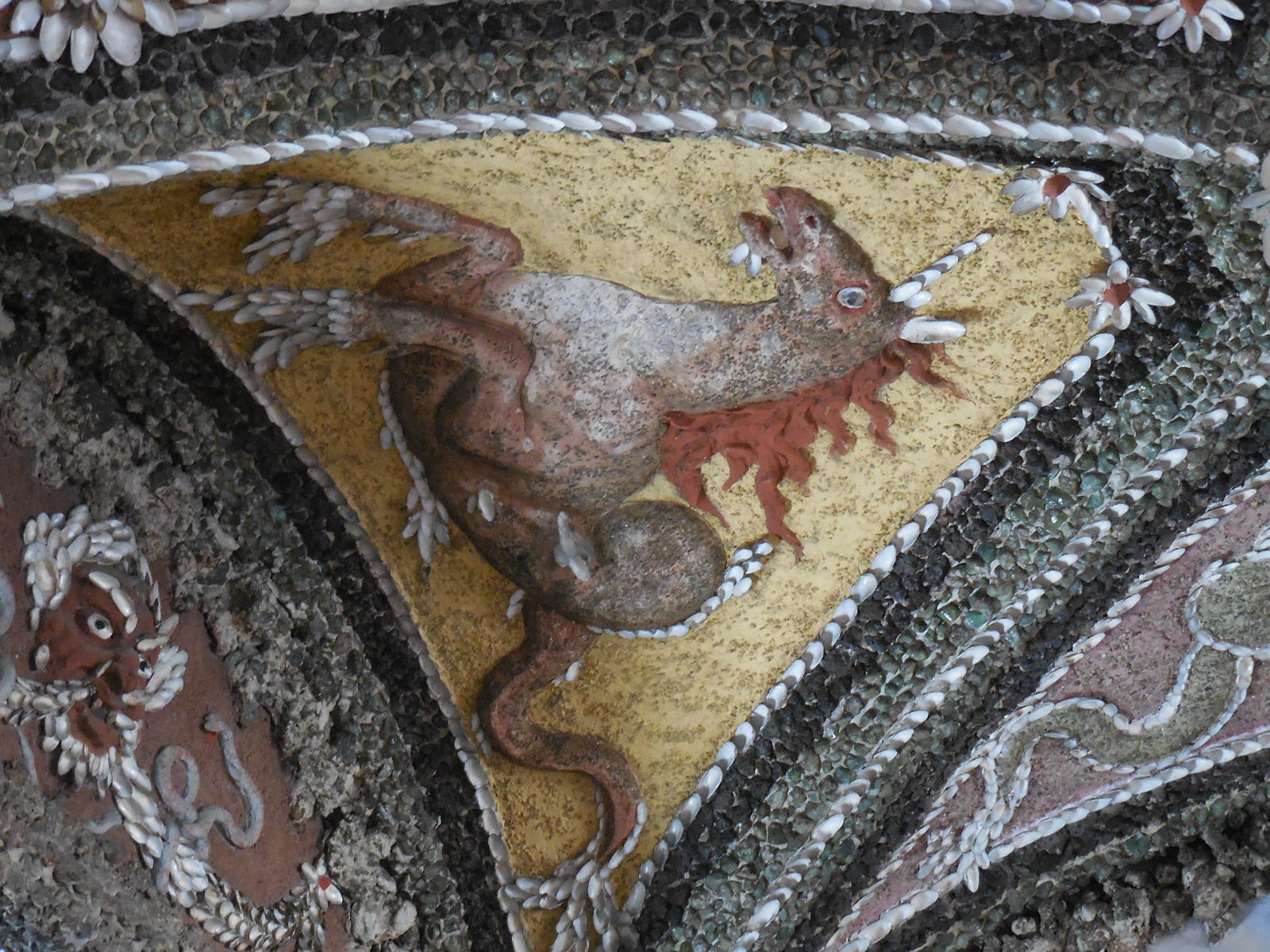
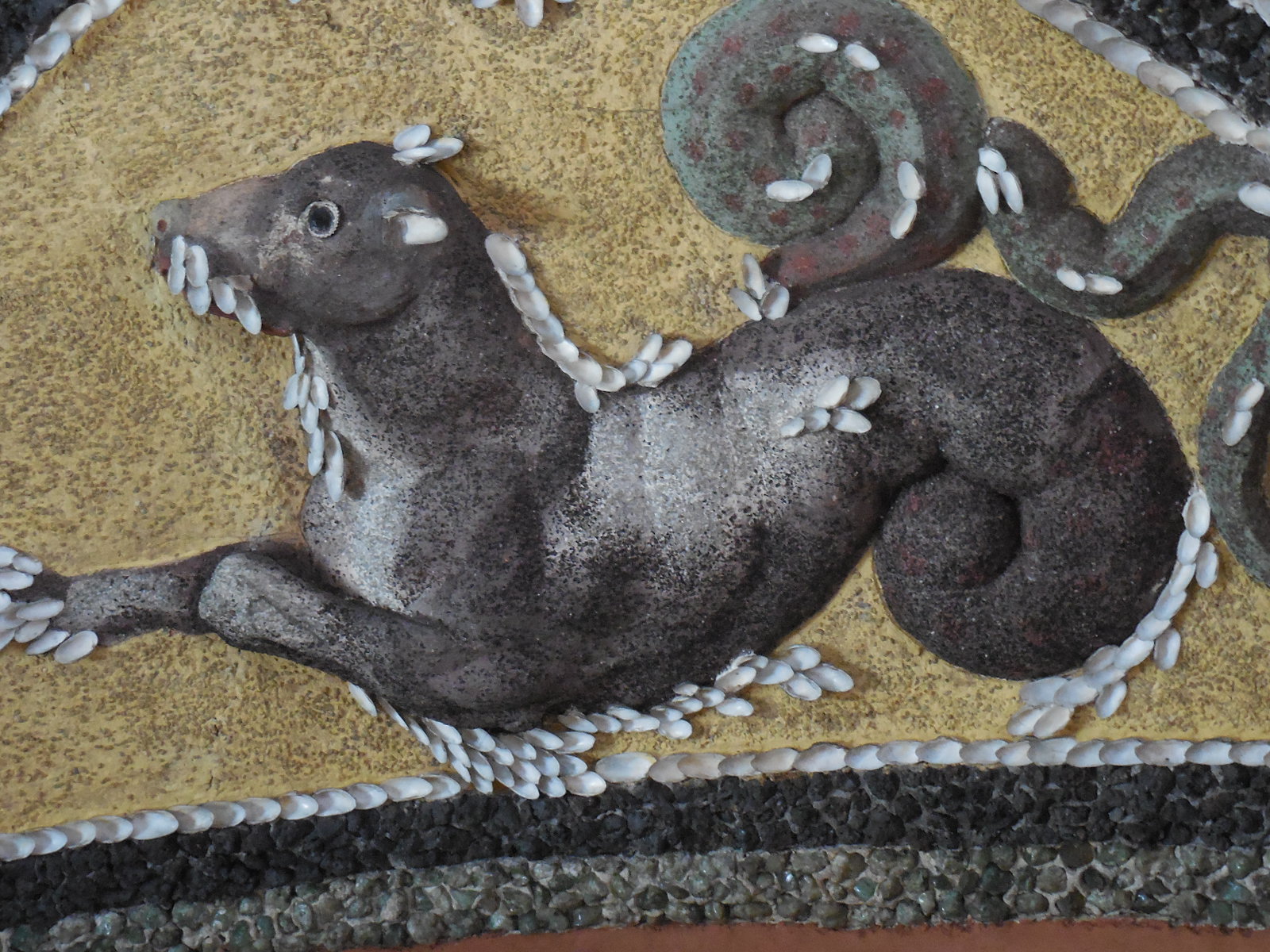
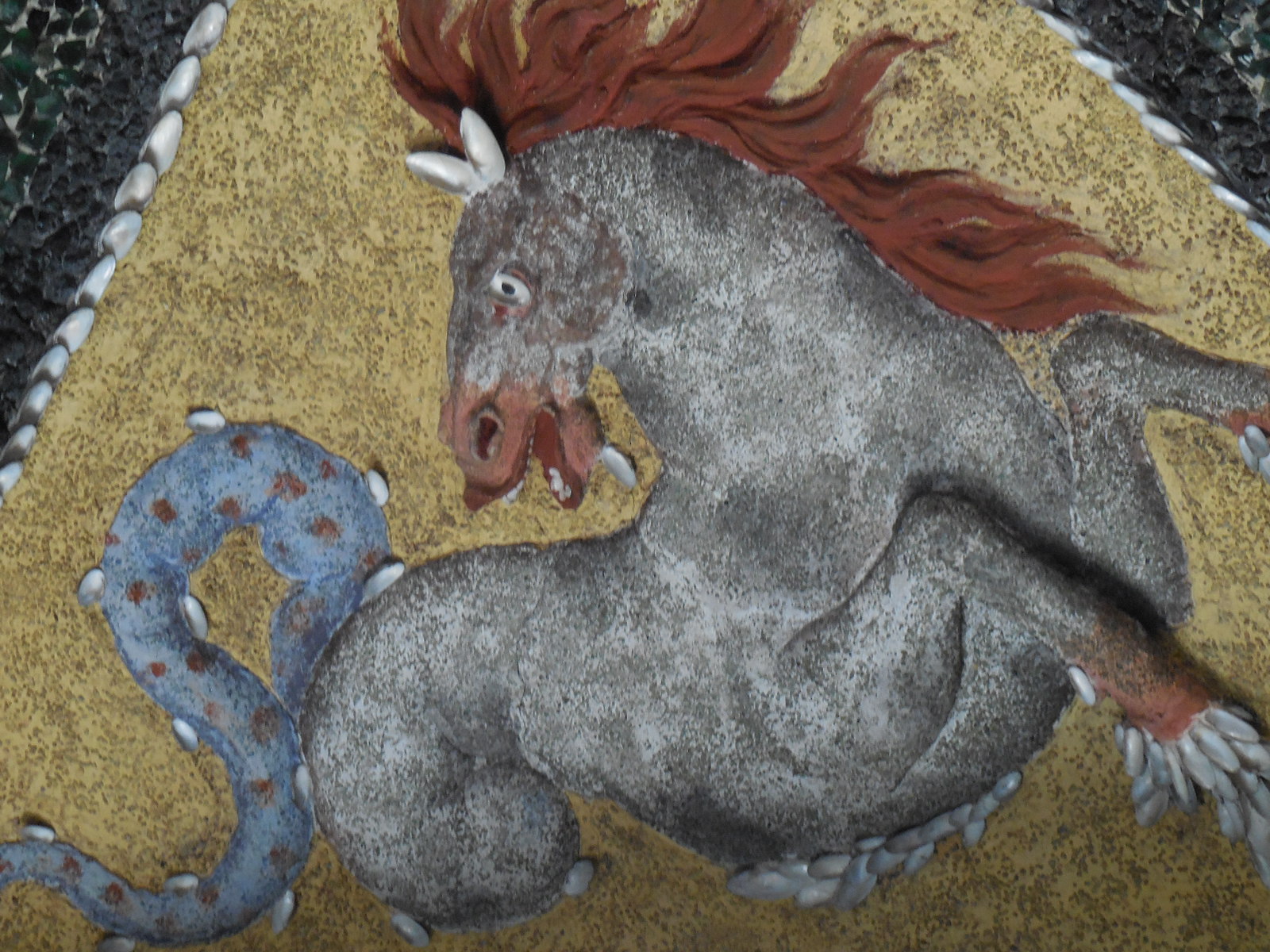
I was so excited about this tour. First, we visited the sala terrena, which looked like a richly adorned cave. The vaulted ceiling was incredible. I loved the sea motif as decorative seashells took the shape of a floral design. The reliefs of a sea monster also enthralled me.
Lobochovicefireplace
Next, we came to one of the highlights of the chateau, large Saturn Hall, where banquets, balls and concerts had been held. Above the fireplace a stucco sculptural grouping focused on Saturn. The Baroque chandelier, hailing from Holland, also captured my interest.
Lobochovicefresco6
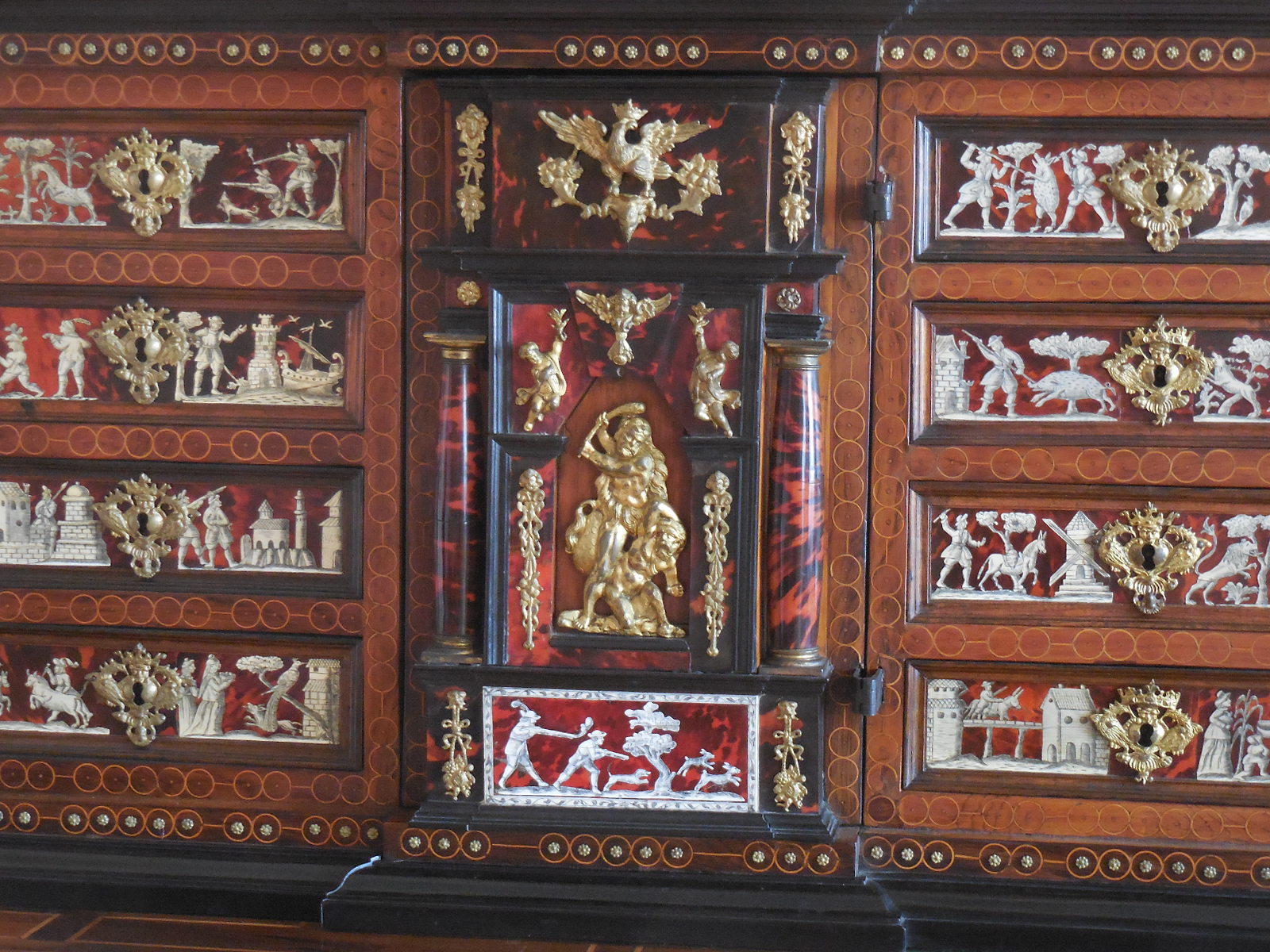
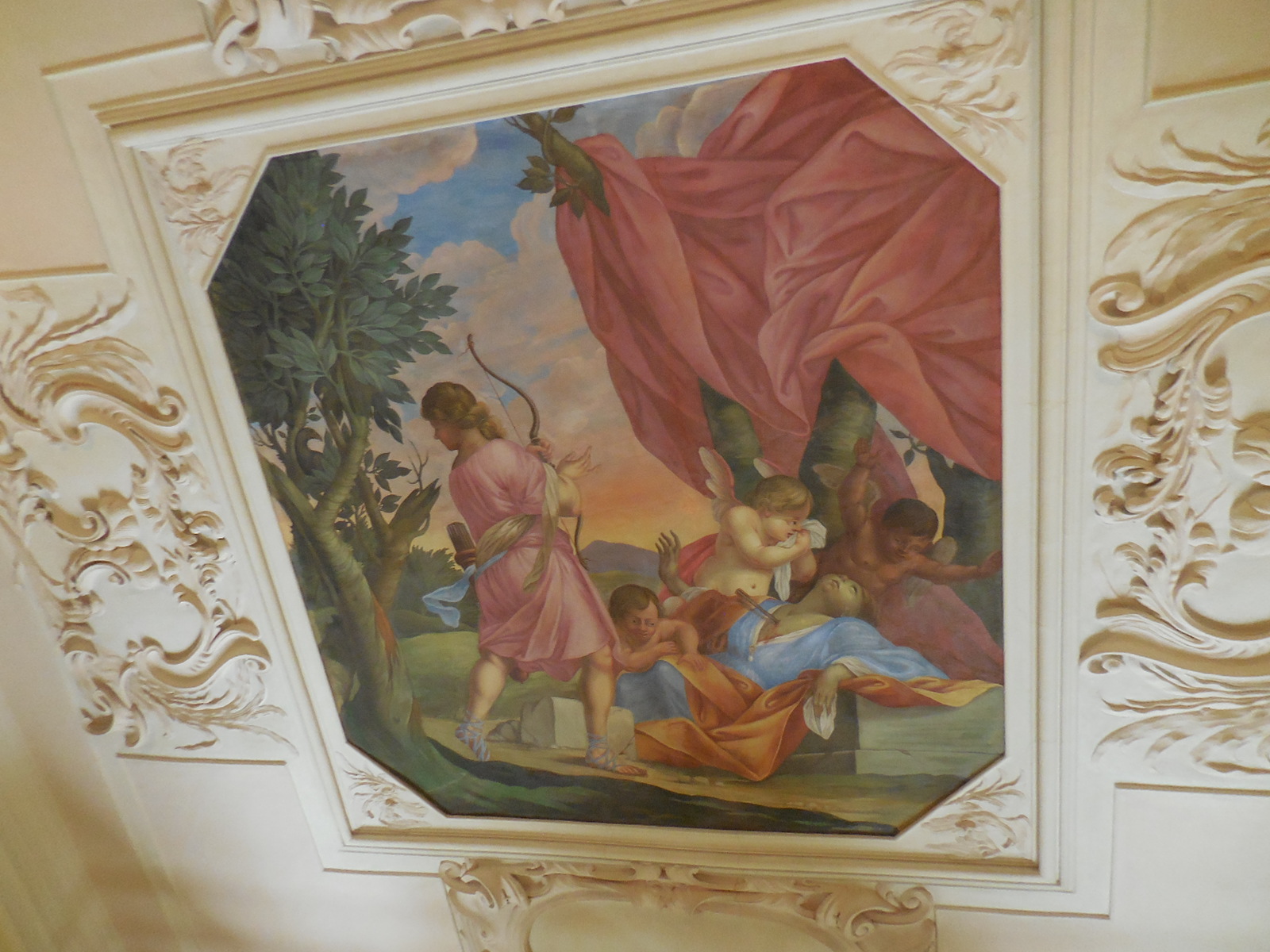
From there, we continued to the Baroque section of the chateau. The ceiling fresco in the first room was breathtaking, displaying a mythological scene. A Renaissance chest gilded with ivory and a Baroque jewel chest inlaid with ivory and tortoiseshell were two delights.
Lobochovicetapestry2
I marveled at the tapestry, one of many I would see in this chateau, in the Big Gallery. It dated from the 16th century, and its theme was the Trojan War. The guide remarked that the tapestries were not put up for merely for show; they had also helped heat the rooms. A Baroque fireplace hailed from 1620. Still, that was not all this room had to offer. A jewel chest featuring carved reliefs hailed from the beginning of the 17th century.
Lobochoviceint3
The Study included an atlas from 1775 with pages of handmade paper. I wanted to turn the pages to find out what the handmade paper felt like. I recalled visiting the papermill in Velké Losiny, located in north Moravia, long ago, when I also toured the chateau there. It had been an enthralling experience, I mused. Then a jewel chest made with intarsia dazzled me. One tapestry in this room showed off a garden party while another sported a plant motif in an idyllic setting. The Baroque stove hailed from 1690. There were so many impressive Baroque stoves in this chateau!
Lobochoviceint7
During the 17th and 18th centuries in the Czech lands, there was much interest in Chinese and Japanese porcelain. The Chinese and Imari Japanese vases in the Oriental Salon reminded me of a trip to Dresden’s Porcelain Museum. The pieces in the chateau were so exquisite. Upon seeing an impressive French Baroque clock, I recalled the one I had seen at Loučeň Chateau a few months earlier. And how I loved jewel chests! This particular jewel chest was inlaid with ivory and tortoiseshell, featured intarsia craftsmanship and portrayed a hunting scene. Another thrilling tapestry was on display. I recalled the exciting tapestries at the Residence Palace Museum in Munich.

In the Bedroom I admired the spiral carved columns of the 17th and 18th century Baroque closets as well as the bed with canopy. A Rococo crucifix was also on display. The tapestry in this room featured King Solomon. I was enthusiastic because I knew there were even more tapestries to come.
Lobochovicefresco9
Rococo furniture from the 18th century decorated the Morning Salon. I mused that it must have been delightful to sit in this room and sip black or green tea. Two tapestries portraying the apostles adorned the space. And there was yet another ceiling fresco! This one showed Persephone venturing into the Underworld. I was especially drawn to the jewel chest with pictures of a town carved on its drawers. The attention to detail fascinated me.

In the Ladies’ Cabinet there was a Baroque commode with exquisite intarsia plus a Rococo table and desk also created with intarsia. The three tapestries took up themes of nature and architecture, offering a respite from the religious scenes that the tapestries often portrayed.
Lobochoviceint15
The Men’s Cabinet was decorated mostly with Neo-Renassaince and Second Rococo furniture. A large desk was Baroque. If I had not visited so many chateaus, it would have never occurred to me that the big bowl decorated with images of birds and floral motifs used to serve as an aquarium.
Lobochovicechapel2
Next came the chapel. While it was originally designed in Gothic style, the chapel now looks as it did after a 19th century renovation. I admired the stained glass windows. I love stained glass! The Neo-Gothic altar featured the apostles. What captured my attention the most, however, was a 16th century exquisitely carved altar showing off the adoration of the Three Kings. The woodwork was incredible, so detailed, so exquisite.
Lobochovicechapel1
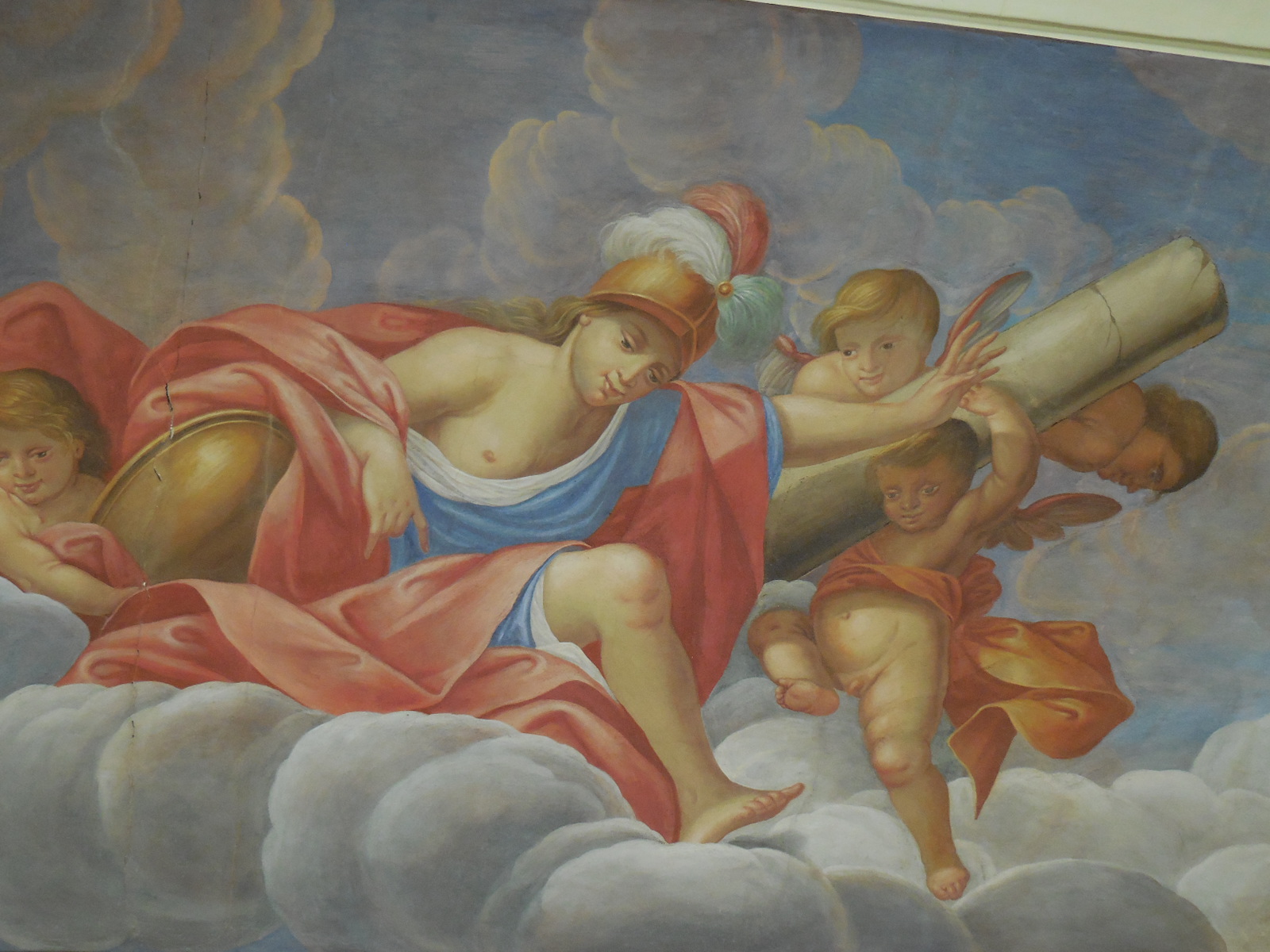
The Big Dining Room took on Renaissance and Baroque characteristics. A carpet covered the large table, set for a feast. The tableware was made of pewter, typical of the Renaissance era. On the table there was a bowl that served as a washbasin for guests to clean their hands while eating. And more tapestries to behold! This time the two tapestries portrayed Alexander of Macedonia. Two paintings rendered scenes from antiquity. (The paintings throughout the chateau also are worthy of undivided attention.) Once again, I admired yet another ceiling fresco. This one centered around Aphrodite and Athena. In the corners four female figures in oval medallions represented the four continents. (Australia had yet to be discovered.)
Lobochoviceint10
I liked the Biedermeier furniture in the Small Dining Room. That style seemed to me to have such a sense of order and rationality. Yet I was enthralling by all styles of all eras. The colored decorative porcelain from Dresden and the pink-and-white Viennese porcelain service also caught my eye. The Baroque stove was quite a sight, too.

The Rococo Salon featured furniture of the Second Rococo style from the mid-19th century. The pink walls made the room feel quaint and inviting. Stucco adorned the ceiling fresco. Another Baroque stove and Meissen porcelain made appearances. In a flattering portrait, Terezie Dietrichsteinová – Herbersteinová, a former owner of the chateau, looked calm and content with life. I wondered if I was at a time in my life when I was calm and content. To some extent, yes. And traveling certainly played a major, positive role in my contentment.
Lobochoviceptng
The Empire Salon was decorated with furniture of that style from the 19th century. On the walls were pictures of Dietrichstein properties – Nové Město nad Metují Chateau, Kounice and Mikulov, all rendered masterfully by František Kučera. I liked the clock featuring a tongue that showed the time. The clock making time with its tongue brought to mind images of the living objects in The Beauty and the Beast. From the window there was a splendid view of the park.
Lobochoviceint16
The 19th century library was intriguing because it contained mostly books about natural science and travel, all printed in numerous languages. I had not heard of chateau libraries concentrating on only a few subjects. While about 2,500 books were on display, there were approximately 6,000 volumes in total. Objects that Josef Herberstein had brought back from his travels adorned the room, too. I saw African masks, an African crocodile and a Japanese sword, for instance. Another exquisite Baroque stove stood in the space.
Lobochoviceint18
The last room was the casino. A Russian pool table made in Prague dominated the room. I noticed that the card tables were made with intarsia. Portraits of the Dietrichstein clan hung on the walls. Josef, who loved traveling and hunting, was rendered in hunting attire, armed with a rifle and accompanied by a dog. I mused that he must have been a brave man to travel to such distant lands.
Lobochovicegarden2
Next I took a look at the park, which had been created in French style during 1683. Later, it got a Baroque makeover, and then it was changed into an English park. Now it is once again in French style, thanks to 20th century reconstruction. I loved the view of the chateau from the back, which sported floral adornment and a fountain. The chateau looked so majestic when viewed from that area.

I ate lunch at a nearby restaurant on the main square that was sleepy on a Saturday afternoon. Libochovice Chateau had dazzled me once again. The combination of ceiling frescoes, Baroque stoves, jewel chests and tapestries made the chateau unique and irresistible. The paintings also contributed to the majestic interior, where no object or piece of furniture failed to enthrall.
Lobochoviceint11
The interior had plenty to offer. I mused that there should be tours of the chateau offered from Prague. Libochovice deserved numerous accolades, and it was a chateau I would never forget, no matter how many chateaus I visited. The combination of artifacts and the design of the interior made Libochovice unforgettable, a place I could tour 100 times and not be bored. Every object spoke to me; nothing failed to capture my interest and curiosity. Yes, Libochovice is a special place, and my visit made my day a huge success.
Lobochoviceceiling
Tracy A. Burns is a writer, proofreader and editor in Prague.

More photos from a 2022 visit:

Loučeň Chateau Diary

Loucen2
Waiting for the tour to start, I was excited that I would soon see the historical interiors of a chateau I had never before visited. Although Baroque Loučeň (also sometimes referred to as Lautschin) had been open to the public since 2007, I had heard about by chance only in 2015 via an article posted on Facebook. The place sounded magical. I knew I had to make a trip there. And soon. While there are many tours for children, I had opted for the classic tour of the interiors.

I was surprised that a settlement at Loučeň had existed as far back as 1223. A castle was in the town even during the Middle Ages, but a turning point in the history of Loučeň came in 1623 when Adam von Wallenstein became the owner. That is when the chateau was built in Baroque style, construction taking place from 1704 to 1713. Adam had a famous nephew: Albrecht von Wallenstein had made quite a name for himself in the military. He even held the post of supreme commander of the armies of the Habsburg Monarchy and was a major player in the Thirty Years’ War. The Wallenstein family tree died out in 1752.
Loucen3
In 1809 the Thurn und Taxis family came into the picture when Maxmilián Thurn und Taxis purchased the chateau. I had become familiar with this dynasty when I had visited Regensburg, where the family had had their main residence. I had toured their elegant palace and distinctly recalled the grotesque figures on the ceiling of the Conservatory, the Brussels’ tapestries in the Large Dining Room and the lavishness of the Rococo and Neo-Rococo Ballroom.

The family’s great influence on the postal system had left me in awe. The Thurn und Taxis family descended from the Tasso clan from the 13th century. During the end of the 15th century, Francesco Tasso created the first postal system going from Innsbruck to Brussels. It took a week for the mail to reach its destination. The key to its success was that the rider and horse were changed at each postal station. For his ingenuity, Tasso was given nobility status by Emperor Maximilian I and thus became Franz von Taxis in 1512. Before long the Thurn and Taxis family had the monopoly of the postal services in Central and Western Europe. By the end of the 18th century, the postal system was enjoying great success.
Loucen6
The Thurn und Taxis clan had some prominent members, that’s for sure. For example, Rudolf von Troskow established the law journal Právník, the first of its kind in the Czech language. He also created some legal vocabulary that is still in use today. His interests were not limited to law, though. He was a patron of the arts as well.

During 1875, when Alexander Thurn und Taxis, a violinist and patron of the arts, wed Marie von Hohenlohe, an amateur painter as well as friend and patron of Rainer Maria
Rilke, times changed at Loučeň, a place many well-known artists and politicians proceeded to visit. Rilke stopped by – not once – but twice. He even dedicated his Notebooks of Malte Laurids Brigge to Marie. Composer Bedřich Smetana lived nearby toward the end of his life and performed on one of the Thurn und Taxis’ pianos. Smetana was a friend of the family; he dedicated his composition Z domoviny to Alexander. Other prominent visitors included Tomáš Garrigue Masaryk, the first president of Czechoslovakia, his daughter Alice, Czech writer Eliška Krásnohorská, musician Josef Suk and American storyteller Mark Twain.

Alexander Thurn und Taxis was a man of many accomplishments. He gave his animal trophies to Prague’s National Museum and helped build the first railway in the region. During the tour I would discover the role he played in bringing soccer to Bohemia.

The Dining Room

The Dining Room


The Thurn und Taxis clan would lose the chateau at the end of World War II, when it became the property of the state. In 1945 the Soviet army and locals plundered the chateau. Under Communism the chateau’s history was not rosy, either. It became a recreation center for Ministry of Transportation employees. Later it was turned into a railway trade school. A landmark event occurred when the company Loučeň a.s. took over the chateau in 2000. Even some of the original furnishings were retrieved.

Our guide was a descendant of the Thurn und Taxis family. I had never been on a tour led by a member of a family that had had such a remarkable impact on the chateau I was visiting. It was a real treat. In Staircase Hall I was captivated by a large painting of Duino Chateau, a romantic structure perched on a cliff in Italy. The young man’s parents were there now, he said. The place had been the Thurn und Taxis’ property for centuries. Rilke had written his Duino Elegies there.
Loucenint6
In the first room there was a sleigh which had been used to move the mail through snowy terrain. It was painted black and yellow, and it was no coincidence that taxis often used the same shade of yellow. In fact, the word taxi derives from the name Thurn und Taxis. I also saw the huge winter boots that a postman would have worn delivering the mail in wintry conditions. A map of Bohemia from 1720 hung on one wall. I loved old maps! It made me think of the vedutas and maps of towns at Mělník Chateau. The family’s coat-of-arms was prominent, too. It featured a badger. (The original name of the family, Tasso, means badger in Italian.)
Loucenint7
I wanted to sit in the red, plush chairs at the dining room table and stare at the exquisite porcelain service. Overall, there were 600 pieces, but only a portion of them were on display. The fancy gold candlesticks got my attention, too. In the Chinese Salon I was impressed with the big Chinese vases, so colorful with superb designs. The white wallpaper featured pink flowers and green leaves and had a sense of fragility and intimacy to it.

The Prince’s Study was filled with his souvenirs from two trips to Africa, including a crocodile. Paintings of horses also decorated the study. In one rendition a horse was jumping over a barrier in a Pardubice steeplechase race. (I would learn more about the Pardubice steeplechase when I visited Karlova Koruna Chateau a few weeks later.)
Loucenint9
In the Prince’s Bedroom I noticed a photo of Prince Alexander with his four cats, three of whom slept on the bed with him. Curled up on the bed were three stuffed animal cats. I thought that was an interesting touch. My late cat had almost always slept on my head during almost 15 years, and I thought of how much I missed him. I wondered what my five-year old cat was doing at that moment. She liked to sleep at the foot of the bed. I didn’t think I could live without cats in my life. Maybe Alexander had felt the same.

In the servant’s bedroom I saw something that really surprised me. At first I did not understand why there was an iron next to replicas of old banknotes. Then the guide explained. The servant ironed the prince’s money so that it would not be crumpled. That was not all. The servant also ironed the prince’s newspaper to prevent the color from fading and to keep it from getting dirty.

In the hallway I saw a vacuum from the 1930s and red buckets on one wall in case a fire would break out. A picture of the Loučeň soccer team from 1893 also hung in the hall. That team played in the first official soccer game in Bohemia, thanks to Alexander’s interest in the sport.
Loucenint8
An avid fan of classical music, I have always enjoyed visiting the music salons in chateaus. This time was no different. I tried to imagine Smetana performing on the piano in the room. On the piano was a red box of Mozartkugeln truffles. The music sheets were turned to Concertino for violin and piano by Leo Portnoff, who was born in Russia during 1875 and emigrated to the USA in 1922.) I wondered if Alexander had played the violin accompanied by Marie on the piano when performing this piece.

The Princess’ Salon was decorated with books by Rilke and an upright piano from the 18th century. The view of the park from the window here was very romantic and picturesque. There were 10 mazes and 11 labyrinths in the park. I would have to check it out later, I told myself. I loved the bright green painted walls and a nook in one part of the room. I wanted to relax and read, seated in that nook, losing myself in a mystery or art catalogue.

The Church of the Assumption of the Virgin Mary

The Church of the Assumption of the Virgin Mary


In the Princess’ Bedroom I saw her ravishing pink-and-cream wedding dress, which she had donned at age 40. I marveled at how young she looked in photos. Crowns and lions adorned the light blue wallpaper. A piano made by Rudolf Stenhamer in Vienna stood in the room, too. I admired the richly carved patterns on the front and back of the bed. I also was interested in the personal items that had belonged to the princess. On display were fans, a crocodile handbag and beautiful necklaces as well as a jewelry bag. The Oriental carpet was a nice touch, too.
Loucenint11
The Children’s Room came next and then a small classroom for Thurn und Taxis children. It was very plain. There was a small bench for two students with small blackboards. On the desk were two books called Histoire de la Revolution Française. In the Church of the Assumption of the Virgin Mary there was a real treat. The artwork over the main altar was made by my beloved Czech Baroque painter Petr Brandl. I recalled his altar paintings in the cathedral at Sedlec, which I had visited earlier that year for what must have been the fourth or fifth time. Still, his work never failed to amaze me.
The ceiling of the church

The ceiling of the church


The library consisted of a gallery and ground floor. One of the books prominently displayed was an English version of a fairy tale by Princess Marie – The Tea Party of Miss Moon. I would have been interested in reading it to get a sense of the princess’ writing style, but it was not for sale in the chateau shop. The most valuable book was the huge chronicle of the Thurn und Taxis family. Another enormous volume on a table tackled the theme of the romantic Šumava region in the Czech lands. The room was not without its distinguished family portraits, either.

I walked through the park a bit and then made my way to Nymburk, a town closely associated with my favorite Czech writer, Bohumil Hrabal. In Nymburk I did not have much time for sightseeing, though. I peeked into a Gothic church and had lunch before heading back to Prague, more than satisfied with the trip’s outcome.

View from Loučeň Chateau

View from Loučeň Chateau


Tracy A. Burns is a writer, proofreader and editor in Prague.
Sychrov Chateau Diary

Continue reading

Bečov nad Teplou Castle and Chateau Diary

View of the chateau from the front gate

View of the chateau from the front gate


Part I

I waited and waited. The tram going to the Dejvická Metro station was late. I kept glancing at my watch. If it did not come soon, I would miss the 6:40 a.m. Saturday bus to Karlovy Vary. I had been looking forward to seeing the castle and chateau in Bečov nad Teplou again for some time. I had planned this trip so carefully. Where was the tram? There were always trams coming in the direction of the metro station. Why did I have to wait so long? Had there been an accident? Was there a problem with the tracks? My heart was racing. Where was the tram?

Some nerve-racking minutes later, the tram did come, and I made it the Student Agency bus just as the doors were about to close. During the two-hour trip to the famous Czech spa town, I fretted about whether or not I would make the train to Bečov nad Teplou. I only had 15 minutes to change, which should be enough if the bus was on time. Still, after the incident with the tram, I was worried….

It turned out that the bus dropped passengers off at the Karlovy Vary train and bus station at 8:30 a.m. rather than its 8:45 designated time. I had an entire half hour before the train departed. First, I waited in line at the only window for train tickets. There was a line of potential passengers, but no one appeared to be manning the window. After waiting an excruciatingly long 15 minutes, someone did come.
Becov4

The train was already on platform three. When I saw the Viamont train, I was surprised. It was new, clean and comfortable, not like those old red trains with uncomfortable seats that I had often taken to small towns for so many years. The stops were even announced and displayed electronically on a sign above the seats. I did not have to worry about getting off at the wrong stop – not this time anyway.

The train ride was scenic and relaxing. We traveled through woods and also past a golf course with ponds and a stream. I could see the Bečov nad Teplou chateau and castle on a high rock from the train stop in the valley. From there it was about a 15-minute walk through the small town with some narrow, steep side streets and a church on a hill. Passing a half-timbered house that seemed to belong in another century, I came to the picturesque square with its pensions, restaurants offering outdoor seating, antique store and souvenir shop.
On my way I noticed many Baroque or Classicist houses, which were in need of repair.

A view of the castle and chateau during the walk there from the train station

A view of the castle and chateau during the walk there from the train station


From the square I gazed at the pink Late Baroque chateau and headed directly to the box office. It was only 9:45 a.m. The chateau and castle opened at 10:00 a.m. Yet there was already a line of at least 10 people ahead of me, mostly seniors.

In the end there were about 20 people ready for the 10:00 a.m. tour, so they were split into two groups. One group started with the historic interiors, and the other group – my group – began with the Romanesque reliquary of St. Maurus, where fragments from the bodies of three saints – St. Maurus, St. John the Baptist, and St. Timothy– were kept. I had never been on this tour because the reliquary had opened to the public in May of 2002, and my first visit took place during March of that same year.

The small bridge featured two impressive statues.

The small bridge featured two impressive statues.


First, I crossed a small bridge decorated with the statues of John Nepomuk and the Jesuitical clergyman Jan de Gotto, both of which dated from 1753. I reached the front gate, framed in a 16th century Renaissance portal. Before going upstairs to the rooms dealing with the holy relic, we stood in a hallway decorated with portraits of soldiers riding horses off to battle. I noticed the plume on a soldier’s helmet and the castle in the lower left-hand side background of that portrait. The castle seemed so small and powerless against the mammoth soldier seated on a horse that seemed almost to bolt out of the canvas. I also was impressed by the elaborate saddle that the artist had rendered.

On the floor above the hallway, a display case in the first room dealing with the unique treasure featured a small Christ figure, a marquetry cross that appeared to be inlaid with gems and scapulars of the Beaufort-Spontin family. It also contained pictures of relics found in the richly decorated tomb box, such as small textile bags, bits of paper and small stones.

The chateau from the square

The chateau from the square


A map covered another wall. The guide pointed to Belgium and explained that the reliquary hailed from a Benedictine abbey in that state, from a city called Florennes. The reliquary dated from 1225 to 1230 and contained the remains of the three saints mentioned above; yet more recent DNA tests proved that there were the remains of five people in the chest, two of whom are men from the third century AD, according to the guide. He also explained that these sorts of shrines were important in society because people believed that they were the source of health-related miracles. He added that Saint Maurus was a sort of mystery man for scholars; it is only known that he was a saint and martyr in the first or third century AD, nothing more.
A look at the chateau

A look at the chateau


After surviving the French Revolution, the unique object was kept at St. Gengulf’s Church in Florennes. When Alfréd de Beaufort bought the reliquary in 1838 from a Belgian church council for 2,500 francs, it was in a decrepit state. He brought it to Bečov and had it repaired from 1847 to 1851. When his grandson had to flee in 1945 after the second world war because he had cooperated with the Nazis, he hid the reliquary in a backfill of a chapel in the castle here.

In the next room there was a reproduction of a partial mural from the castle chapel, which, along with the rest of the castle, was not open to the public. (Visitors were, however, allowed inside the chateau’s chapel.) The guide elaborated on the fascinating history of the treasure, which sounded like something out of a detective story.

The reliquary of Saint Maurus from www.svatymaur.cz

The reliquary of Saint Maurus from http://www.svatymaur.cz


The reliquary had remained hidden for 40 years. In 1984 an American named Danny Douglas wanted to buy an unspecified treasure hidden in the Czech lands during World War II and was willing to pay 250,000 USD for it. This was a financial offer that the Czechoslovak government could not afford to pass up. But the Czechs had to figure out which artifact he intended to purchase. During further talks with Douglas, the Czechs were informed that the object was oblong, the size of a conference table, hollow, made of metal and buried about 100 kilometers from Nuremberg, among other facts. Finally, they narrowed it down to the reliquary, which had to be buried somewhere in this chateau and castle.

A black-and-white video dated November 5, 1985 showed criminologists unearthing the chest in the chapel. I could not help but notice how dilapidated the façade of the building was, how different it looked from today. Of course, the Czechs would not allow the treasure to leave the country. In the end, the contract with Douglas was not signed.

The next room dealt with the restoration process. In display cases I saw tools and utensils used to fix the reliquary, such as chasers, a metal chiseller and engravers. The guide also mentioned that the statues on the exterior of the reliquary were made of silver tin and took 11 years to restore. Imagine that! Eleven years! When the criminologists found the treasure, it was damaged. The metal pieces were corroded, and parts of the figures and reliefs were no longer attached to the relic. Due to issues relating to property rights, restoration did not begin until mid-1993.

The guide also explained why the treasure with its fragile, small gilded silver statues took such a long time to restore. Restorers had to make miniature, detailed parts for the statues, hands and arms for example. The restoration of the 12 apostles and reliefs on the roof proved the most challenging. The young man conducting the tour mentioned that the restorers had to drill about 3,000 holes for nails to keep the object from getting damaged. Don’t overlook the fact that the chest included filigree with pieces of glass, precious stones and gems.

A closeup of the reliquary of Saint Maurus

A closeup of the reliquary of Saint Maurus from Wikimedia.org


Another display case featured the plaster casts for the circular reliefs on the chest, showing biblical scenes. In one Salome carried the head of St. John the Baptist. Another featured the dance of Salome. Plaster casts of saints were also displayed, including Saint Paul, Saint Jude Thaddeus and Saint Bartholomew. A large picture on one wall showed that the treasure was decorated with birds and mythological figures and inlaid with gems. No one knows how the gems were placed on the chest because not even a laser is capable of doing that kind of precise craftsmanship, and they certainly did not have microscopes back in Romanesque times.

In the fourth room I looked at the original oak box that had been found inside the chest. The restorers had to create a new wooden core for the object. The display cases along the walls showed various reliquaries. In one case I saw two gem-studded rings. I also gazed at a number of golden Baroque monstrances, so elaborate that they almost made me dizzy.

Another closeup of the reliquary of Saint Maurus from www.svatymaur.cz

Another closeup of the reliquary of Saint Maurus from http://www.svatymaur.cz


Then we finally came to the dark room containing the unique treasure. We only had five to seven minutes in the space. I noticed how Saint Maurus’ drapery seemed to flutter as he gripped a sword in one hand on the front of the chest. Christ was giving a blessing on the opposite side. On the roof were 12 large reliefs relating the life of Saint Maurus and of Saint John the Baptist. Small columns with floral decoration also decorated the chest. Apostles were shown with staffs; one gripped a cross. Saint John the Evangelist held a goblet. I noticed the precise curls in his hair as well as his flowing drapery. The detail in the saints’ facial expressions was also stunning.

Golden swirls and gems decorated the treasure as well. I noticed the precision of the inlaid gems and the precision with which the small hands of the apostles had to be made. My head was swimming. There was so much detailed decoration to take in at one time. I wanted to study the chest in small parts, truly appreciating the precision of the figures and reliefs. I knew I was staring at one of the most beautiful artifacts I would see in my life.

After a short time, we were ushered out of the dark room, and the first tour ended. In 10 minutes, it would be time for the tour of the interior rooms. I was enthralled by the first tour and excited about the second.

Another shot of the chateau

Another shot of the chateau


Part II

The tour of the historic interior rooms began, as did the last tour, in the hallway with the large wall paintings of soldiers on bolting horses. Then we went to a room displaying a model of the complex as it had looked in the 19th century, under the Beaufort family’s tenure. I admired the terraced gardens with pools and fountains. The guide pointed out the castle’s Chapel of the Visitation of the Blessed Virgin Mary in the tower, which was the oldest part of that building. (Only the chateau, not the castle, was open to the public.)

Donjon, taking its name from Early Gothic castles shaped like towers in southern France, had been a tower of four floors with toilets on every floor. The family had lived in this section of the castle. The Pluhovský Palace, still flaunting a Classicist style, was comprised of three houses. A watch-tower also had stood on the property, though it is only six meters high now, as it had been shortened and transformed into an observation terrace during the 19th century. The vibrant, pink Late Baroque chateau, built in the 18th century by the Kounic owners, was one dominating feature of the model.

The lovely and charming chateau

The lovely and charming chateau


The guide familiarized us with the history of the castle and chateau as I glanced occasionally at the portraits, maps and black-and-white landscapes on the walls. In the 14th century the village’s status was raised to that of a town. The castle remained the property of the Hrabišic of Osek clan until the beginning of the 15th century. From the 13th to the 16th centuries, the place prospered thanks to its gold, silver and tin mining. In fact, during the 16th century, Czech tin from the Bečov region was praised as the best in Europe. The manufacturing of pewter added to the town’s wealth.

But times changed as the Hussite army destroyed the castle during the Hussite wars that took place from 1419 to 1434 and pitted several factions of the armies of martyr Jan Hus’ followers against each other. The Holy Roman Empire, Hungary, The Pope and others joined forces with the moderate Hussites. The castle was also in decline after the Thirty Years’ War, and the town never again reached its former level of prosperity. During the 18th century the Kounic family bought the castle, adding the chateau and bridge.
Becovchateau15
Then in 1813 Fridrich Beaufort-Spontini took over as the owner, which was a turning point in the buildings’ history. The Beauforts made many improvements to the castle and chateau. It was Alfréd Beaufort who created a Baroque style park with six levels of terraces. He repaired the castle and chateau, set up the botanical gardens, constructed an open-air theatre and brought the reliquary of Saint Maurus to Bečov. Because his grandson Heinrich collaborated with the Nazis during World War II, the property was confiscated. Objects in the castle were plundered. Townspeople stole some artifacts while other pieces of art and crafts were sold to antique stores.

After that, various owners were in charge of the castle and chateau. The castle became a school for workers while Pluhovský Palace was supposed to, but never did, become a museum. Reconstruction of the property took place from 1969 to 1996, when visitors were finally allowed inside the Late Baroque chateau. Back then a West Bohemian Gothic Art exhibition was housed in the chateau. Now the original furniture has been put back in the building, though the spaces are organized differently than they had been in the 19th century, when the chateau’s rooms had served a representative function, while the family had been living in the castle.

Another view of the chateau

Another view of the chateau


On the ground floor we entered the library, where each bookcase was decorated with four columns and had a triangular slanting roof culminating in a point. Reliefs of a female reading adorned the bookcases, which shelved 3,000 books for representative purposes. The chateau had another 14,000 books stored elsewhere.
From there, we went up the staircase with the oak balustrade that originated in the 19th century to a landing decked with hunting trophies, rifles and swords intertwined as well as a tattered Austro-Hungarian army cap. I was impressed with the vibrancy of the pink hue in one room that sported a pink couch, pink chairs and a pink tablecloth under a glass table. The gold décor on the white tea cups also caught my attention. I could see the tower from the window.

But the most significant part of this room was its graphics’ collection, hailing from the 17th century Netherlands, including one by Sir Anthony van Dyck. There were also four portraits of properties – three chateaus and one castle – owned by the Beaufort family when they had Bečov. Graphics of mythological figures and floral still lifes were on display, too. I also noticed how the female figures in several portraits sat so stiffly and how delicately flowers were handpainted on one vase.

A look at part of the park

A look at part of the park


The Red Parlor was next. A blood red couch and four armchairs gave the space its name. One painting from the 17th century Netherlands sported a music theme. Another painting showed nobles in an Italian park. My eyes darted to the brown and white marble columns in the foreground. There were two mistakes in the painting, the guide explained. Firstly, the trees depicted could not grow there. Secondly, through the summerhouse window it would not be possible to see a forest but part of the port and sea rendered next to it. We also saw a toilet with a keyhole. Only the person who had the key could use it. Lower-class nobles would have cleaned it. I also glanced at a portrait of an elegant lady with ruddy cheeks.

The Tapestry Parlor featured two huge tapestries pictorially narrating the story of David and Goliath. They were made in Brussels from 1620 to 1630. The Baroque table was intriguing as well. Its legs seemed to be decorated in the shape of some strange sea animal. It turned out that the animal depicted was a dolphin, but the artist had never seen a real one so he had used his imagination. On a dresser stood a Baroque clock complete with a realistic-looking giraffe.

Another tapestry hung from the wall in the next room as did several Spanish paintings from the 16th and 17th centuries. In one a woman was crying over the death of the Spanish king and another woman was protecting a child.

A view of the park

A view of the park


Last but certainly not least we made our way into the chateau’s chapel. At the entrance stood two gold statues of what appeared to be griffins holding candlesticks. Saint Peter Chapel was built in Neo-Romanesque style around 1870. The gilded altar was simple with a painting of Madonna and the Christ Child. Mary held one hand down with her palm up as she looked straight at the viewer, challenging his or her gaze. Both the Madonna and Jesus sported golden halos. On the walls were 14 Stations of the Cross painted in white enamel on copper plates. I noticed how Christ was lugging a heavy, plain cross in one depiction. In another he was sprawled over Mary’s lap, dead, a halo over his head. A white tiled stove stood behind a secret door. What attracted me most, though, was the ceiling. The blue with gold décor on the ceiling made the room dynamic, made it feel almost alive, imbuing it with a distinctive power.

The guide let us into the terraced garden, Baroque in style. From the edge of the garden I got an excellent view of the surroundings, with homes in the valley and a forest beyond. I thought to myself that these last two hours had been well-spent.

The bench where I spent time relaxing after the tours

The bench where I spent time relaxing after the tours


I made my way to an outdoor table at a pension’s restaurant in the picturesque square not far from the museum of toys, motorcycles and bicycles. I sat in the sun, facing the cheery, pink chateau façade for almost two hours, eating chicken, writing postcards and reading. Then I climbed the hill to the town’s church. I tried all three doors but found it locked. I had read in a brochure that the interior was in Rococo style. It was a pity that I could not see the interior.

Walking past the half-timbered, derelict-looking house on Railroad Street, I retraced my steps to the train station, where I waited for the new, clean train back to Karlovy Vary. After another scenic train ride, I made the next bus from Karlovy Vary to Prague with minutes to spare and spent a relaxing two hours thinking back on my exciting day.

View from the park

View from the park

Tracy A. Burns is a writer, proofreader and editor in Prague.

Visit in summer of 2025

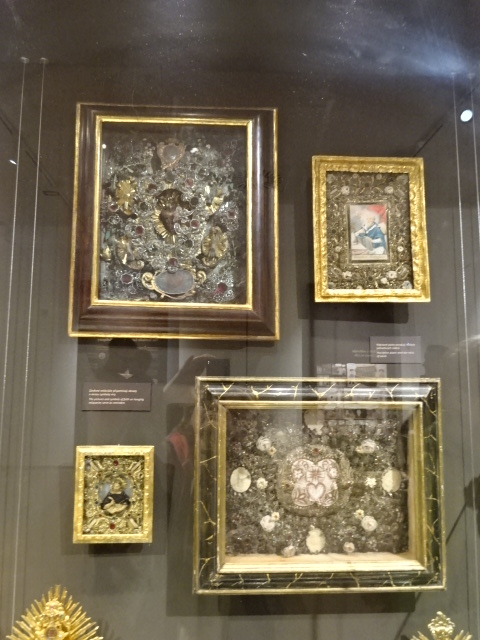
I went back to Bečov in 2025 after the chateau and castle had undergone lengthy reconstruction. I only had time to see the reliquary. I did not have a chance to go on the tour of the interior rooms. The entrance rooms to the reliquary of Saint Maurus had changed considerably. Now visitors read panels on walls to get their information about the history of the reliquary. There was no enthusiastic guide to narrate the mystery about hidden treasure, and this was something I sorely missed. I recalled the guide’s exuberance that made the viewing of the reliquary all the more intriguing. Perhaps these panels, in English and Czech, were more visitor-friendly. They were certainly detailed and easy to understand. When in the main space, tourists get 15 minutes to walk around the reliquary and look at the other objects found with it. There is a display of beautiful relics in the entranceway leading to the room where the reliquary is located, too. Old photographs of the castle also make an appearance.

Some pictures of the entrance rooms before the space with the reliquary:

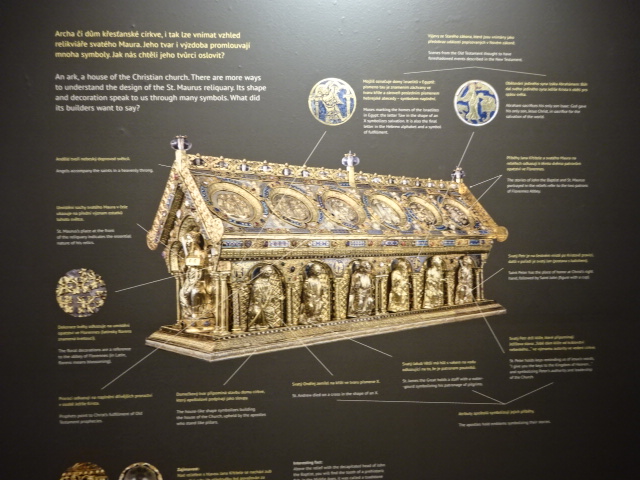
A detailed explaination of the parts of the reliquary and their significance

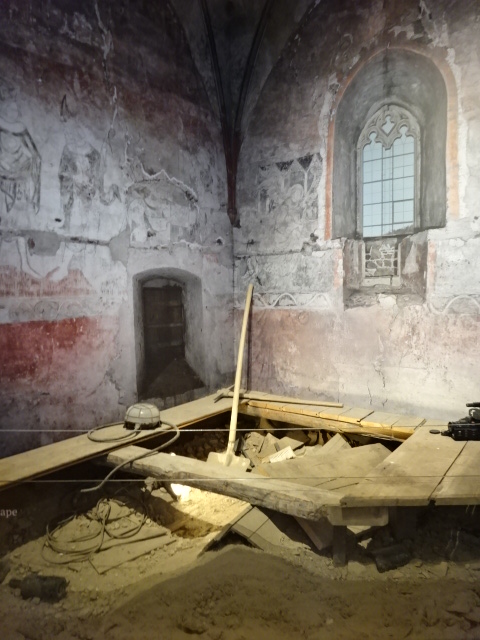
A display that appears as did the church floor when it was excavated for the treasure

Valtice Chateau Diary

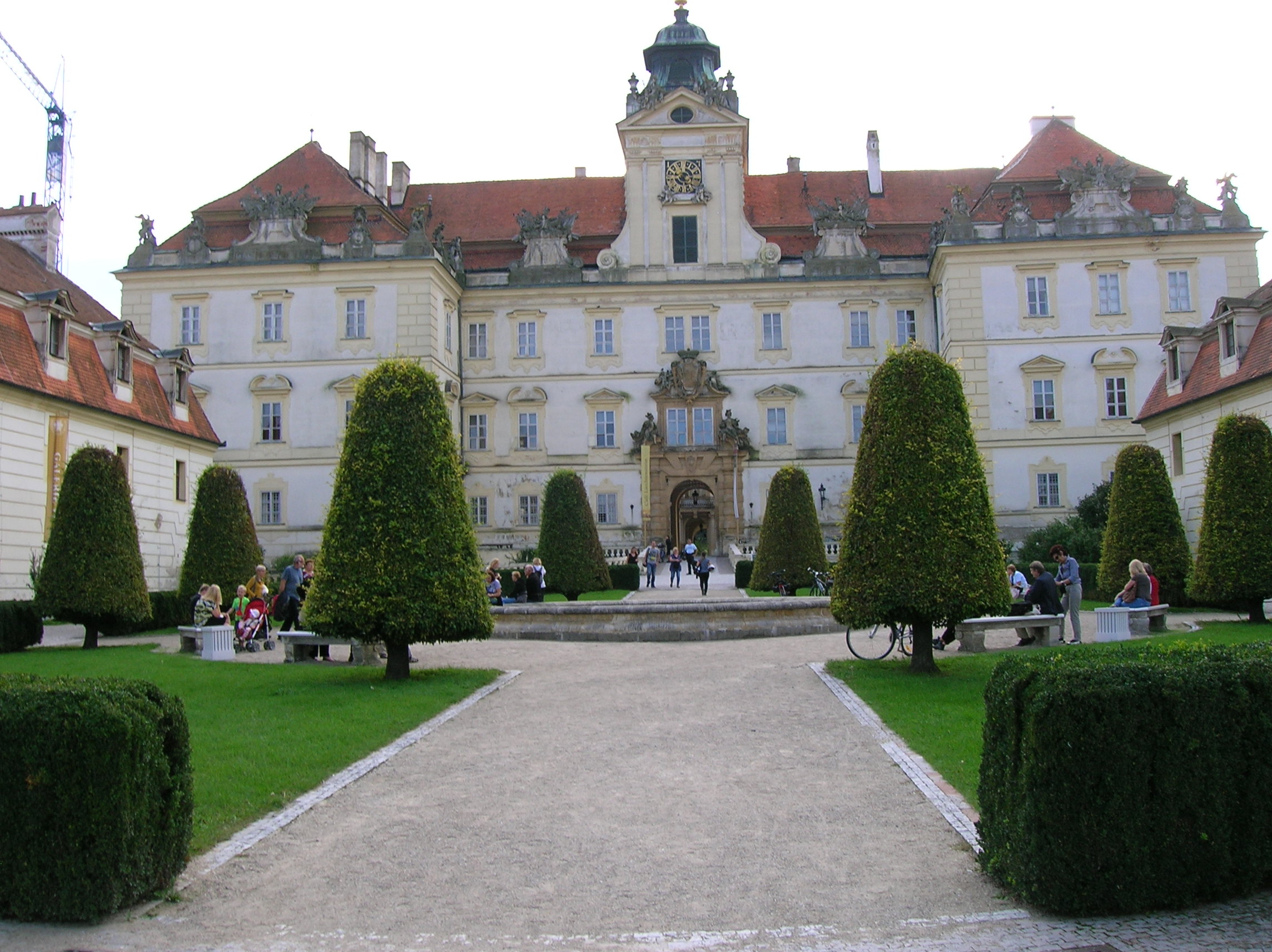
The exterior of Valtice Chateau

The exterior of Valtice Chateau

Often overshadowed by nearby neo-Gothic Lednice, Valtice Chateau is one of the most underrated sights in Moravia. I had visited Valtice Chateau twice before and was bewitched by the Baroque gem both times. The first time I came here, an employee took me quickly through the rooms as she did not want to give a tour to only one person. The Baroque and Rococo interior includes some original 18th century furniture, which never failed to impress me.

Valticeext12
Usually, I traveled to Lednice Chateau and Valtice Chateau by bus from Mikulov, where I had stayed in a hotel. To catch the bus back to Mikulov after visiting Valtice, I always had to hurry and had never had a chance to see the park. This time I was on a tour with the arsviva travel agency, whose tours I had taken to other sights in the Czech Republic and to towns in Germany. Seeing the garden and town were on the itinerary, too.

The facade of Valtice Chateau

The facade of Valtice Chateau

I already knew the background information. Valtice originated in the 12the century or earlier as a castle. The Liechtenstein clan would greatly influence the development of Valtice. They bought it in 1387 and kept the chateau in the family until 1945, creating a legacy that survived for almost 600 years. During 1560 they chose Valtice as their main residence. The castle became a Renaissance chateau during the 17th century. During the Thirty Years’ War the Swedes damaged Valtice. Later it got a Baroque makeover. Much construction took place during the 18th century. For example, the stunning chateau chapel was completed in 1729. At the end of that century, the chateau theatre was built. The garden, established during the Baroque reconstruction underwent renovations at that time.
Representative rooms at the chateau have been opened to visitors since the first half of the 19th century. Austro-Hungarian Emperor Franz Josef I and his wife Princess Elizabeth, often called “Sisi,” came to the chateau as did Austrian Chancellor Klemens von Metternich. When the chateau became the property of the Czechoslovak Republic in 1920, there were no changes made.

Valtice5statue
But those golden days did not last forever. World War II came, and after the war the chateau was plundered. Considered to be traitors, Soviet prisoners-of-war were shot at Valtice. Then a section of the chateau became a forced labor camp for women while another part was used for drying hops. The grounds were in poor condition, too. Extensive reconstruction took place in the 1960s, and now Valtice is a Baroque beauty. The chateau even made the UNESCO World Cultural Heritage List during 1996, an honor that is well-deserved.

Valticext7
The mammoth statues of Hercules in front of the chateau gave me an imposing welcome. When I looked up at them, I felt that I played such a small role in the huge, scary world. This feeling was not negative; rather, it was humbling. The comprehensive tour lasted one hour. It covered the representative rooms, the emperor’s apartments and the chapel that had been lauded throughout Central Europe.

Valticext6
Our guide was a very scholarly and enthusiastic woman. She clearly liked her job. In the entranceway I saw Japanese porcelain from the 18th century as well as an impressive carriage. The Antechamber was a real treat – I loved the Oriental pink-and-green wallpaper decorated with pink flower buds. I loved the ceiling paintings throughout the chateau. They featured mythological characters. The Emperor’s Salon featured portraits of the Habsburg family – Maria Theresa and Joseph II were two of those making appearances. In another space I saw paintings of battle scenes from the Napoleonic Wars. In this particular room the Roman gods’ victory over the Titans was the pictorial theme.

The Dining Room

The Dining Room

The Dining Room was the biggest space in the chateau. The pink-and-grey imitation marble on the walls looked so elegant and majestic. Above the doors I saw extraordinary reliefs of musical instruments. It reminded me of college, when music had played such an important role in my life. I adored my private piano lessons, even though I was not very talented. During college I was introduced to the magical world of classical music, which I still listen to today. I even went to the symphony in a nearby town once a month, momentarily escaping university life. I should make music a more significant part of my present, I chided myself. The Baroque 18th century chandelier and the Empire style side tables added to the splendor of the room. The view of the park was superb, too.
In another space I liked the floral and bird motifs on the royal blue upholstery on the chairs. The design was so lively, so energetic. I also noticed a Baroque landscape painting by a Dutch painter. I had been enamored by Dutch and Flemish landscape renditions ever since my first semester of college, when I took a course on Dutch and Flemish art. The chandelier, though, was what fascinated me most. It featured Triton and was decorated with antlers. Somehow the two looked out-of-place together. They did not complement each other. Yet that only made the chandelier more unique and more intriguing.

The unique chandelier and exquisite furnishings

The unique chandelier and exquisite furnishings

The Red Salon or Smoking Room featured an exquisite large mirror. How I would love to look into that mirror every day! Olympic gods looked down on me from the ceiling. Paintings with biblical motifs also decorated the room. The two bureaus made with ivory were stunning, forged in the Florence style and dating from the 17th and 18th century. The jewel chest in the Ladies’ Salon showed off Chinese motifs, and the wings featured a Chinese landscape. The ceiling painting was outstanding; it showed the conquering of Troy. In a bedroom there was an elegant bed with canopy. The Madonna painting hanging behind it was a copy of a work by Raphael.

A captivating bed in Valtice Chateau

A captivating bed in Valtice Chateau

The Marble Salon boasted ornamentation from the 18th century. I loved the pink-and-grey imitation marble on the walls. It was so elegant, so sophisticated! I would love to have walls decorating in that fashion in my house. Floral still lifes dominated the walls, and the god Flora took precedence in the ceiling painting. On one wall in another room there was the shell of a huge tortoise between rifles. I had seen many hunting trophies on walls, but never that of a tortoise. The library featured over a 1,000 volumes, most in French but others also in German and Latin. There was even an old-fashioned elevator in the chateau.

Another exquisite bed in Valtice Chateau

Another exquisite bed in Valtice Chateau

It was a pity we could only see the chapel through a glass partition from one side of the upper level. I admired the richly decorated balcony of the chapel that dated from 1726. The intarsia on the benches below astounded me. Such exquisite detail! There were several paintings in the room from which we peered at the chapel. A 15th century oil painting of Jesus Christ with the Cross proved to be the oldest picture in the chateau. I loved the Baroque Picture Gallery with the paintings set so close together. It was overwhelming, though. There was so much to see on each wall. Hunting themes dominated the room. The ceiling painting carried the same theme – it featured Diana, goddess of the hunt. I loved the Holland Baroque furniture in the Study. It reminded me of the Holland Baroque furnishings I had seen at Český Šternberk Castle in central Bohemia. Other rooms featured ceiling paintings of the Allegory of Morning and the Allegory of Evening.

Valtice Chateau Park

Valtice Chateau Park

In yet another space there was a unique bureau. A section of it opened to reveal a desk, but the bottom part was for storing laundry. It was dazzling, made of ivory with intarsia from various woods. There were also Dutch still lifes of fruit and vegetables and an elegant, light blue bed with a canopy. The ceiling painting focused on the allegory of spring. I wanted to pick some of the flowers out of the basket that was portrayed there. The Reception Room featured pink chairs and wallpaper, giving it a cheerful atmosphere. Baroque landscape paintings dotted one wall.

Valtice Chateau Park

Valtice Chateau Park

Next we saw the Baroque park, built midway through the 18th century. Fascinating architectural objects had been situated there at one time. Perhaps it had been most famous for its gloriette. At the beginning of the 19th century, the park was expanded. There was even an amphitheatre with Baroque statuary built in the park during the early 20th century. Vases and benches had also been part of the park decor. Now those objects are gone, but the park remains intriguing with its many varieties of trees, bushes and flowers.

Valticechurch1
We also visited the small town of Valtice, focusing on the main square. The Church of the The Assumption of the Virgin Mary, situated on the southeast side of the main square, was the most impressive sight in my opinion. The Baroque masterpiece hailed from 1679. It had been built after the earlier church collapsed. The church proved to be a harmonious and tranquil continuation of Roman architecture with significant sculptural decoration. At one time a painting by Peter Paul Rubens adorned the main altar, but it was transferred to Vienna during the Prussian Wars because of the threat of invasion by the Turks. Now it hangs in the National Gallery in London. The church has one rectangular nave with side chapels and a wide main altar. The stucco decoration and sculptural ornamentation is impressive. I was also intrigued by the cupola.

The interior of the Church of the Assumption of the Virgin Mary

The interior of the Church of the Assumption of the Virgin Mary

The interior of the Church of the Assumption of the Virgin Mary

The interior of the Church of the Assumption of the Virgin Mary

The Baroque Plague Column hails from 1670, when the lands were experiencing a plague epidemic. It was not completed until the second half of the 18th century. The Virgin Mary crowns the column while five saints also make appearances, including Saint Sebastian and John of Nepomuk, who was drowned in the Vltava River on the order of Bohemian King Wenceslas.

The Plague Column in Valtice

The Plague Column in Valtice

I was overjoyed that I had had the opportunity to see all the rooms open to the public plus the garden and town. Thanks to our superb tour guide, I learned information that I would have never known if I had come there by myself. I just wished tourists would appreciate Valtice as much as they did Lednice. Valtice shouldn’t be in second place but tied for first.

Valticeext2


Tracy A. Burns is a writer, proofreader and editor in Prague.
Vysoké Mýto and East Bohemia Diary

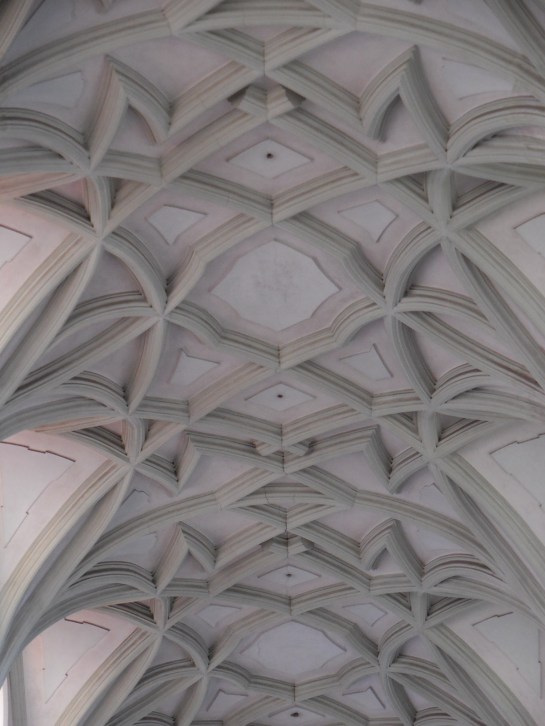
The vaulting of the Church of Saint Lawrence in Vysoké Mýto was spectacular.

The vaulting of the Church of Saint Lawrence in Vysoké Mýto was spectacular.

This time I traveled with UNISMA in a small group of 17 participants to see some wonders of east Bohemia. Two wooden churches and the town of Vysoké Mýto were a few places on the itinerary. I had only been to the bus station in Vysoké Mýto long ago. I had not imagined that there was anything interesting in the town.

The fountain with Saint Francis in Vraclav.

The fountain with Saint Francis in Vraclav.

First we visited the Baroque complex of the former spa town of Vraclav. A figure of Saint Francis poured water into a fountain. The Church of St. Nicholas featured 28 Baroque statues made of wood and polychrome plastic by an unknown artist before 1740. It was thought that the creator had been a pupil of Matyáš Bernard Braun, an Austrian sculptor who had worked extensively in the Czech lands and a leading representative of the Baroque style. Three of Braun’s sculptural groupings grace the Charles Bridge in Prague, and he also created a tomb in St. Vitus’ Cathedral. His renditions can be seen throughout churches, palaces and parks in Prague as well as at the former hospital Kuks, the monastery Plasy and the Duchcov Chateau, among other places. The statues had been moved to the Church of Saint Nicholas from a pilgrimage route that had led to a former monastery.

The Church of Saint Nicholas in Vraclav

The Church of Saint Nicholas in Vraclav

At the beginning of the 17th century a chapel and a hermitage were built on the site. From 1724 to 1730 the Baroque church was constructed there. A spring appeared at the chapel under the entranceway, where a statue of Saint Nicholas dominates. A spring flowed underground around the nave from both sides. This former pilgrimage site and spa deteriorated at the end of the 18th century. It was not reconstructed until the 20th century, 1976 to 1986.

Postcard of a statue in the Church of Saint Nicholas

Postcard of a statue in the Church of Saint Nicholas

At the end of the 17th century and the beginning of the 18th century, a well-known spa had been located nearby. However, its popularity dwindled by the end of the 18th century, and the spa became dilapidated. By the second half of the 19th century, it had been abandoned and for the most part forgotten.
The statues of biblical scenes were expressive and dramatic. I especially loved the details in the depictions. In Ecce Homo I noticed the detailed teeth and tongues. They looked so realistic. One statue showed the Virgin Mary with a pleading expression and what seemed to be fluid hand gestures. I also liked her flowing drapery. In another statuary grouping I took note of the real-looking feathers in the helmets. In yet another sculpture Jesus Christ’s thumb looked so life-like. In one statue of Christ, I admired the artist’s rendition of Christ’s veins on his feet. The detail of this unknown artist was more natural than that in Braun’s sculptures. The Baroque artworks were imbued with strong emotion. Beautiful chandeliers complemented the statuary.

Postcard of a statue in the Church of Saint Nicholas

Postcard of a statue in the Church of Saint Nicholas

There was also a hermitage next to the church. It dated back to 1690. Pilgrims had come here to meditate. There was a legend concerning the bell of the hermitage. If a female rings it while thinking of her love, she will marry him within a year.
We trekked uphill to a former fortification from the 12th century. Now a monument from 1908 recalling the murdering of the Vršovec clan in 1108 is located on the site. Our guide explained to us why the Vršovices were killed. The tale fascinated me.
At the beginning of the 12th century during the reign of the Přemyslid dynasty, scheming and intrigue prevailed. In 1105 an ambitious Moravian Přemysl named Svatopluk overthrew reigning Bořivoj, and many of Bořivoj’s former supporters switched sides.
While Svatopluk was busy doing battle, Mutina took over the administrative responsibilities of the state. Mutina was a prominent member of the Vršovec clan. The Poles along with Bořivoj invaded the Czech lands, and Mutina did not seem too enthusiastic about fighting them. When Svatopluk returned from war, Mutina was called to the castle in Vraclav, the seat of Svatopluk, who accused Mutina of having ties with Bořivoj. Many members of the Vršovec clan were murdered there in an act of bloody revenge. However, the entire family was not wiped out. The following year one member of the Vršovec family murdered Svatopluk.

The monument honoring the Vršovec clan

The monument honoring the Vršovec clan

I recalled that Bohumil Hrabal had referred to this historical event in one of his books. (The legendary scribe Hrabal was my favorite Czech writer.) I was intrigued by such historical tales. That information alone made the trip worthwhile for me. And I loved the way the guide knew all the information by heart. I could hardly believe that she was able to keep so much information in her mind. It just spewed out of her mouth as if she were an encyclopedia.
Next stop: Vysoké Mýto, a town only six kilometers from the Baroque complex, with a population of 12,000 residents. Vysoké Mýto’s history could be traced back to the Stone Age. The town was created in 1262 by Czech King Přemysl Otakar II. In 1307 it became the property of Czech queens. We walked by the Prague Gate with rich decoration that went back to the Middle Ages, to the 14th century to be precise. A painting of Saint George fighting the dragon adorned the gate. A tower with a broken Gothic portal stood nearby. The main square, also founded by King Přemysl Otakar II, is the biggest in east Bohemia at a width of 152 meters and a length of 152 meters. Forty-seven houses surround it.

Prague Gate in  Vysoké Mýto

Prague Gate in Vysoké Mýto

The tour guide told us that the term Kujebáci or Kujebas enjoyed popularity here. The town’s sports’ teams were even called the Kujebáci. I found the legend about this nickname particularly intriguing. Many centuries ago, the emperor was slated to visit Vysoké Mýto. The townspeople prepared a huge feast, serving trout. However, the emperor did not show up, so the residents all had the delicious fish for themselves. The following day, though, the emperor did arrive in Vysoké Mýto. The inhabitants fed him trout, and when he remarked that the fish was excellent, a townsperson named Kujeba said, “If you think the trout is good today, you should have tasted it yesterday.” The emperor asked the man his name. “Kujeba,” he replied.
The emperor declared, “Then from now on I will call the residents of this town Kujebáci (the Kujebas).” While this term had once been used as a swear word or had referred to a stupid person, the Vysoké Mýto inhabitants were very proud of the legend and asserted that the name stood for someone who is wise.

The exterior of the Church of Saint Lawrence

The exterior of the Church of Saint Lawrence

The differing Kujebáci connotations reminded me of the controversy about Josef Švejk, the seemingly incompetent yet loveable Czech soldier fighting for Austro-Hungary during World War I in Jaroslav Hašek’s satirical, antimilitaristic, mammoth novel, The Good Soldier Švejk. Whether Švejk was really stupid or clever, exhibiting passive resistance, is open to debate.
In Vysoké Mýto we visited the Church of Saint Lawrence, a sight to be remembered. It was probably as old as the town itself, hailing from the 13th century. Several fires plagued the town and the church, in the 15th, 18th and 19th centuries. Consisting of three naves, the church boasted vaulting from 1525 at a height of 21.3 meters. The five-storey tower is 67 meters high.

The altar of Saint Joseph in the Church of Saint Lawrence

The altar of Saint Joseph in the Church of Saint Lawrence

Now it looks as it did after Neo-Gothic reconstruction from 1892 to 1899. There were 10 Neo-Gothic altars and Neo-Gothic wall paintings. The architects of the repairs were František Schmoranz and Josef Mocker. Schmoranz’s résumé included doing Neo-Gothic restoration on Žleby Chateau. Mocker had helped restore many structures in Prague, including the Old-New Synagogue, Prague Gate and St. Vitus’ Cathedral. He had even done some work on Prague Castle. His restorations out of Prague were just as impressive, including Saint Barbara’s Cathedral in Kutná Hora, Karlštejn Castle, Konopiště Chateau, Křivoklát Castle and Saint Bartholomew’s Cathedral in Pilsen.

The largest painting by Petr Brandl - The Assumption of the Virgin Mary from 1728

The largest painting by Petr Brandl – The Assumption of the Virgin Mary from 1728

I was excited to see this church because the painting of the main altar, “The Assumption of the Virgin Mary,” was the largest painting Baroque guru Petr Brandl had ever created, forged in 1728. I recognized his self-portrait in the figure of Saint John. I had admired his creations in many museums, the Prague Chapel of the Holy Mountain pilgrimage site, Jindřichův Hradec Chateau and in numerous churches.
A Late Gothic Madonna – the Vysoké Mýto Madonna – hailed from before 1500. I also marveled at a pewter baptismal font from 1499. Tombstones in the church dated from the 14th to 16th centuries. One of the bells was made in 1466.

Secession wall paintings in the Church of Saint Lawrence

Secession wall paintings in the Church of Saint Lawrence

I loved the Secession wall paintings, too, especially the angels fluttering near the choir loft and the peacock designs. In the windows motifs included stylized plants. I took note of the Fleeing from Egypt scene at the altar of Saint Joseph. Somehow the Baroque main altar painting and Art Nouveau wall and altar decoration complemented each other.
That would not be the most fascinating place I visited on the trip, however. We also saw the romantic wooden Church of All Saints in the village of Dobříkov. Originally located in the Podcarpathian Rus region that is today part of the Ukraine, the church was moved in four train wagons to this village in east Bohemia during 1930 thanks to the initiative of Czech statesman Václav Klofáč.

The Church of All Saints in Dobřikov

The Church of All Saints in Dobřikov

Dating from 1669, the Church of All Saints first moved – 200 years after its creation – to a village situated where the Romanian-Ukrainian border is now located. Then in 1930 it was transported to Dobřikov. Made of all wood, the church was small, with only one nave, 15 meters long and 6 meters wide. Above the entrance front was a 17-meter high tower with a spiked roof.

The icons inside the church amazed me. I felt as if I were in the Russian Museum in Saint Petersburg, only this was a much more intimate experience than gazing at artwork in a large building. The icons in the presbytery hailed from the 18th century. The icons on the sides were even older, dating from the 17th century. All the gold on the icons was overwhelming. On the sides the 12 Apostles appeared in groups of two. Mass was still said here, every other week.
I found it ironic that the church was situated next to a golf course. Wooden churches had been symbols of poverty in villages while golf courses were symbols of wealth. Seeing the two side-by-side was incongruous.

The church in Dobříkov

The church in Dobříkov

The church reminded me of my visit to Broumov a few years earlier, when I visited the Church of the Virgin Mary, the oldest preserved all-wood structure in Central Europe. There had probably been a wooden church on that site as far back as the 12th century, although the church was first mentioned in writing in 1383. It consisted of a single nave with a pyramid steeple and displayed stunning artwork.
Who was Václav Klofáč? I asked myself. I would find out when we walked to a small museum dedicated to the Czech politician. It was run by Klofáč’s granddaughter, a spunky, energetic 94-year old. I wondered if I would live so long, and if so, if I would be blessed to be so lively and communicative at such an elderly age.

Václav Klofáč Source: WikiMedia

Václav Klofáč Source: WikiMedia

Klofáč, who was born in 1868 and who died in 1942, had been a Czech journalist and politician who had led the Czech National Socialist Party and had worked in the Austro-Hungarian Parliament and later in Czechoslovakia’s Parliament. During World War I he was taken prisoner. After World War I, in 1914, Klofáč was wrongly arrested in Dobříkov and like other Czech heroes, branded a traitor because he had worked in the resistance movement during the war. He was freed in 1917. During 1918, when Czechoslovakia was created, he became the nation’s first Minister of Defense and also served as a senator for a long time. The Czech National Socialist Party, which he co-founded in 1898, was very nationalistic and abhorred Marxism. They sought to foster relations with Americans, for example.
I loved the photos of Klofáč accompanying first Czechoslovak President Tomáš G. Masaryk. If I could meet anyone who was alive or dead, I would probably choose to meet Tomáš G. Masaryk. If I could go back to any time period, I would travel back in time to Czechoslovakia’s First Republic, which lasted from 1918 to 1939. I would have wanted to see the First Republic from 1918 to 1932, before Adolf Hitler came to power in 1933 and the trends of Nazism, Communism and Fascism invaded the country. Masaryk was one of the people I admired the most.

Tomáš Garrigue Masaryk and Karel Čapek

Tomáš Garrigue Masaryk and Karel Čapek

During the First Republic minorities had rights, and all citizens were treated equally. Freedom of the press and universal suffrage existed. Elections were democratic. During Masaryk’s first term from 1918 to 1920, he eased Czech-German tensions. He also stayed in contact with the people. The country had a strong currency and experienced economic success. One of my favorite authors, Karel Čapek, prolific in many genres, was a good friend of Masaryk and even wrote a book about his conversations with him.

The wooden church in Veliny

The wooden church in Veliny

We saw another wooden church, too – the Church of Saint Nicholas in Veliny, which was a prime example of 18th century folk architecture. It was built in 1752 on the site of a former wooden church that hailed from 1576. The timbered church looked so romantic. The one-nave structure had a three-sided presbytery and a flat, wooden ceiling. The choir loft was supported by wooden, carved columns. The interior was sparse, nothing like the Church of All Saints and its dazzling golden icons. The pulpit hailed from 1903. The bareness of the interior emphasized it as a symbol of poverty. I personally liked the interior of the Church of All Saints better, but perhaps a wooden church should be sparsely decorated. It seemed appropriate for to portray such modesty.

The main altar of the Church of Saint Nicholas in Veliny

The main altar of the Church of Saint Nicholas in Veliny

Our last stop was picturesque Zámrsk Chateau with its three-floor, polygon-shaped tower. It was first mentioned in writing as a fortress in 1469 and various owners did restoration work. It burned down in 1924 but was repaired soon thereafter, during 1925 and 1926. There are still remnants of its Gothic days, though, in the east wing and in part of the masonry of both wings. In 1945 it became state property. Under Communism it served as an educational center for youth, and from 1960 to the present it has been the home of regional archives. We were not allowed to go inside, but the exterior was impressive.
The most tragic story concerning the chateau occurred a day after the Nazis took control of the Bohemia and Moravia, on March 16, 1939. At this time Jewish Arnošt and Truda Bondy were the beloved owners of the chateau. Aware that horrific times were beginning, on that day they committed suicide. Arnošt shot his wife and then himself. He fell into the river, where his body was later discovered.

Stories like this always brought to mind the reality of living in that period, and I thought of how I did not think I would have been able to survive living under Nazism, even though I am not Jewish. Living under Nazism and Communism was something I could not even fathom, something too disturbing to ponder.

The chateau in Zámrsk

The chateau in Zámrsk

Jan Blažej Santini-Aichel, of Czech and Italian origin, was considered to be one of the architects contributing to the chateau. His Baroque Gothic style sparkled in a church in the Sedlec area of Kutná Hora and at the pilgrimage church of Green Mountain. His staircase at Plasy Monastery was a gem. A few other sights to which he had contributed included the Kolovrat Palace in Prague’s Lesser Town and the Karlova Koruna Chateau.
Our tour soon ended, but during the ride back to Prague, our excellent and eloquent guide passed around booklets about Slovakia’s wooden churches, some of which I had visited about 14 years earlier. I remembered how my fascination with wooden churches began when I saw the wooden church at Bardejovské Kúpele in east Slovakia. She also let us peruse a book about Václav Klofáč.

The Secession wall paintings in the Church of Saint Lawrence

The Secession wall paintings in the Church of Saint Lawrence

I was more than satisfied with the tour. I had discovered places I have not known existed, such as Vraclav, Dobříkov, Veliny and Zámrsk. I had visited two wooden churches and had become acquainted with some of the splendor of Vysoké Mýto. I had also learned about the Czechoslovak statesman Václav Klofáč, who had greatly contributed to the democratic First Republic. I had been impressed with the historical tales, such as the slaughtering of the Vršovec clan. I was happy with the tour itself. We had an amazing guide. I had met many interesting people on the tour as well.
I came back to Prague richer in my knowledge of the country I loved so much, eager to describe my discoveries to English-speakers who planned on visiting the Czech Republic someday and to Czechs eager to see more sights in their homeland.

The tower of the church in Veliny

The tower of the church in Veliny

Tracy A. Burns is a proofreader, writer and editor in Prague.

Mělník Chateau Diary


The Renaissance arcades of Mělník Chateau

The Renaissance arcades of Mělník Chateau

This was my second visit to Mělník Chateau, located less than an hour from Prague by bus. I was enthusiastic about getting reacquainted with the interior that I had so admired during my first time here. Back then, there had been no guided tours. Visitors were given a text to read while they walked through the chateau’s rooms. This time I would have a tour, so I was excited about seeing the chateau from a new perspective.
I knew a bit about the history of the chateau already, and what I did not remember I perused in a booklet that I had bought at the box office, which also served as the souvenir shop. Mělník’s history is closely connected with Czech legends. Supposedly, Princess Ludmila often resided in the town while raising her grandson, Wenceslas (Václav), who would later become a well-respected duke of Bohemia and after his death the patron saint of the country. The original wooden structure was changed into a stone castle during the 10th century. Spouses of Bohemian princes owned the castle, which got a Gothic makeover in the second half of the 13th century.
The castle became home to Bohemian queens during Holy Roman Emperor Charles IV’s reign. Emperor Charles IV, who was responsible for building Prague’s New Town, the Charles Bridge and Charles University, supported winemaking in Mělník and the surrounding areas. He even imported burgundy grapes. Queen Elisabeth Přemyslid, the last wife of Emperor Charles IV, resided in the castle for a lengthy period and died there. She was responsible for building the chapel. The Přemyslid dynasty had ruled Bohemia from the 9th century to 1306.
The castle was given Late Gothic features in the late 15th century. During the following century, it was changed into a Renaissance chateau. The reconstruction was finished during the 17th century. While the castle became decrepit during the Thirty Years’ War of the 17th century, it was soon repaired.


One wall of Mělník Chateau

One wall of Mělník Chateau

Then, in 1753, one of the most significant events in the chateau’s history occurred. Marie Ludmila Countess Czernin wed August Anton Eusebius Lobkowicz. The castle would remain in the Lobkowicz family until 1948, when it was nationalized after the Communist coup that instigated 40 years of totalitarianism in Czechoslovakia.
I envied the fact that the Lobkowiczs had played such prominent roles in Czech history. In the early 15th century Nicolas was given the village of Lobkovice nad Labem by King Wenceslas IV, and he took the name of the village. George Popel Lobkowicz of Vysoký Chlumec held the post of the highest chamberlain of Emperor Rudolph II. Zdeněk Vojtěch became the highest chancellor of the Bohemian Kingdom. His son, Wenceslas Eusebius, served as the highest chamberlain in the kingdom and as president of the secret services during the 17th century.
In the following century John George Christian was made a prince due to his military achievements. Anton Isidor was one of the founders of what is now Prague’s National Gallery. George Christian served as supreme marshal of the Bohemian Kingdom and was a member of the Bohemian Parliament during the 19th century.
But there would be dark, turbulent times for the Lobkowicz clan. During World War II the Nazis took over the chateau. The family took refuge in Prague. Then came 1948 and the Communist coup. The Lobkowiczs fled the country, and the chateau was put in the hands of the state. The present owner of the chateau, George John Prince Lobkowicz, moved to the homeland of his ancestors from Switzerland in 1990. He has been owner of the chateau since 1992 and currently resides there.
I also envied the fact that the Lobkowiczs could trace their ancestry so far back. I knew that my Slovak ancestors had been potato farmers in east Slovakia. I even met a few very distant relatives about 10 years ago, but, unfortunately, they do not keep in touch with me anymore. On the Czech side of the family, I know that my great-grandparents were from somewhere near Prague or from Prague itself. They had a common surname – Šimánek. I also know that I had ancestors from somewhere in Moravia, with the popular Czech surname Mareš.
I moved to Czechoslovakia in 1991 partially because I felt a strong association with the country of my roots and intuitively felt that it was a part of my personal identity. If only I knew more about my ancestors, and if only they had played such prominent roles in Czech history as had the Lobkowiczs! Yet, at the same time, I was not sure that I wanted to know more about my ancestors. I had visited the village in east Slovakia where my great aunt had come from, and I was going to look for an inhabitant with the same – not common – last name as my great aunt’s maiden name. But I decided not to because I was scared. While I wanted to meet long lost relatives, I was also scared of finding them. Scared they might not like me or that I might not like them. What if they had been Communists? What if they were mean people? What if they hated Americans or wanted money from me because they thought all Americans were rich?


The elegant Renaissance arcades

The elegant Renaissance arcades

I studied the impressive exterior of the chateau. I loved the elegance of the Renaissance arcades with decorations on the walls. A sundial also adorned the façade. There was sgraffito, too, which I adored. The other wing was built later, in the 17th century, in Baroque style. After admiring the Renaissance arcades for a while, I noticed that it was time for the tour to start and I entered the souvenir shop, ready for what I was sure would be an impressive walk through the ages of Mělník’s top sight.
The guide, a serious and well-dressed woman, described some of the background of the chateau and Lobkowicz family, and it was clear that she was very professional and knowledgeable. The first room was called the Bedroom of George Christian, named after a Lobkowicz who died tragically at the age of 25 in a racing car accident in 1932. I was reminded how we have to treasure each moment in our lives and see the beauty in daily life because we never knew when our time will be up.
I was captivated by a Baroque closet flaunting intarsia. The painted decoration high on the walls showed plant leaves with vases in green and brown. The colors seemed to go well with the 17th century Baroque furniture. On the headboard of the Baroque bed was a painting of a Madonna that appealed to me. I also took note of the richly carved wood of the bed. Portraits of the Lobkowicz family adorned the room, too, and one of the paintings had been executed by master Czech Baroque artist Karel Škréta.
August Longin’s Study was named after a Lobkowicz who had befriended Johann Wolfgang von Goethe, a visitor of Mělník. The room featured two exquisite French desks – one hailing from the 17th century and the other from the 18th century. The older one was inlaid with tortoiseshell, plated brass and tin in ebony wood, made in the Boulle style. The 18th century desk, celebrating the Rococo style, was made of gilded bronze and plated brass. I particularly admired the gold decoration on the younger desk, the one that had been stolen during the totalitarian era. It had wound up in an office at the Ministry of Culture.
However, that was not all the room had to offer. An 18th century table with mother-of-pearl hailed from Japan and had designs of fans on its top. There was also a portable 18th century toilet near the room. Small portraits of Habsburg rulers hung on one wall. I spotted Holy Roman Emperor Joseph II and Empress Maria Theresa right away.


The sundial on the facade

The sundial on the facade

The next room was the Children’s Room with toys from the 19th century, including dolls and a puzzle. Porcelain in a cabinet hailed from Hungary. The 18th century bed in the room was short, but it was standard size for adults at that time. People slept sitting up because they were afraid they would die if they lay down. I admired the rich, wooden carving of the bed and the Madonna on the headboard.
The Big Dining Room featured two Baroque bureaus from the 17th century. They were inlaid with tortoiseshell and adorned with gilded decorations. Some of the pictures painted on them focused on seascapes with ships. The chairs were upholstered with tapestries. The guide pointed out two valuable 17th century lunettes by Škréta; they were part of the story of the life and death of Saint Wenceslas, who, according to legend, had resided in Mělník when he was a child. Other breathtaking paintings rounded out the room’s décor.
The Grand Drawing Room featured 18th century furniture. I noticed two 18th century Rococo tables with gilded brass angels decorating the legs. Portraits of the prominent politician George Christian and his wife Anna were rendered by Czech painter František Ženíšek, who had also decorated the National Theatre. More astounding works of art adorned the walls, some portraits of the Lobkowicz family, others biblical paintings and still others sporting themes from antiquity. I spotted Helen of Troy in one rendition.
I was drawn to the white furniture and pale green walls. It looked airy and light and exuded an atmosphere filled with joy. Chinese and faience porcelain as well as ceramic vases from Asia made up the room, too.


Another view of the sundial

Another view of the sundial

The hallway was adorned with a bust of Parliament member George Christian. It had been created by Josef Václav Myslbek, a master of modern sculpture working in the 19th and early 20th century. Engravings featuring carriages decorated one wall, too. I was drawn to other works of art – the pictures of romantic 18th century Prague, especially to Old Town Square, my favorite part of the capital city. I remember the first time I stepped onto Old Town Square. I felt an unexpected electricity, a strong connection with the city and country. I was only a tourist at the time, but at that moment I knew I had to return to live in the homeland of my ancestors.
Perhaps the most astounding room was the Big Hall with Maps and Vedutas that came next. The maps and vedutas hailed from the 17th century. I noticed maps of Italy, France and the Netherlands. Then there were all the big vedutas of European towns on the walls. It was so breathtaking that it was almost overwhelming. The veduta of Prague featured only one bridge, the Charles Bridge, without any statuary decoration. Strasbourg, Nuremburg, Regensburg, Venice, Florence, Seville, Madrid and Brussels were just a few of the other cities represented. The detail of the maps and vedutas was more than impressive. Most of them were made in Amsterdam.
Perhaps I was so drawn to this room because I loved maps so much. I used to buy maps of Czech towns I had never been to and wondered what each building and each street looked like as I took a an imaginary walk through the town. Two large maps decorated my living room – one of the Czech Republic and another of Slovakia, as I treasured memories of Czechoslovakia. I often traced the routes from Prague to various chateaus and impressive towns and thought about my adventures there.
On the map of Slovakia I found Špišský Castle, below which some very distant ancestors were buried, and traced paths to Poprad, Kežmarok and Bratislava. I found Morské Oko in the Vihorlat, near my great aunt’s home village, and traced the path to Košice and Michalovice, where I had heard that some of my other ancestors had hailed from. I found more places I had visited – Humenné, Levoča and Trenčín, for example, and recalled moments of happiness and discovery.
Melnikchateauarcades5Back to the tour. The Knights’ Hall featured 16th century suits of armor on the walls. An 18th century oak table also caught my attention. In the Small Hall with Vedutas, various weapons from the 17th to 19th century were displayed. However, what really caught my attention where the black-and-white vedutas of European cities during the early 18th century. I was entranced by the vedutas of Prague and Brno. Some military equipment on display came from 17th century Turkey. I also admired the richly carved Chinese furniture. I have always been an admirer of wooden Chinese furniture.
The vast Concert Hall was still used for concerts, balls and other events. It was situated in the Baroque wing of the chateau, but the construction of this part had not been finished until 2005. There was an original 16th century wall with sgraffito decorations that delighted me. I’ve always been a big fan of sgraffito! The opposite wall was a copy made in this century, but, faithful to the original plan, it complemented the authentic side. I looked up and saw a painted coffered ceiling. Vedutas of Versailles and its park from the 17th century adorned another wall. Drawn to these works of art, I thought back to my visit to Versailles, during a warm February afternoon and how impressed I had been with the vast French chateau.
Then we went downstairs, passing by colored lithographs of Prague sights from 1792 and 1793. We wound up on the first floor in the lavish Grand Dining Room. Exquisite Baroque paintings adorned the walls. I loved the gold-and-white decoration on the pink-colored ceiling. The silverware hailed from the 18th century, and the guide pointed out Viennese porcelain as well as white Sèvres porcelain. The highlights of the room, though, were two paintings. One was another lunette from the cycle of Saint Wenceslas by Škréta. There was also a spectacular painting called “Christ with Veronica” by Paolo Veronese. It portrayed Christ on the cross with a self-portrait of the painter as the carrier of the cross.


The town hall on the main square

The town hall on the main square

The chapel was last. It hailed from the 14th century, built by Queen Elisabeth, the fourth wife of Emperor Charles IV, and was originally dedicated to Saint Louis. During the Thirty Years’ War, the chapel was so badly damaged that it had to be rebuilt, and this time it was consecrated to Saint Ludmila. A painting of Saint Ludmila’s baptism adorned the main altar. Impressive paintings dotted the chapel. Two portraits – of Saint Andrew and Saint Bartholomew – by my favorite Czech Baroque artist, Petr Brandl decorated the space. There was even a painting of an apostle, created by Peter Paul Rubens.
Then the tour ended, and I was thankful that I had been led through the chateau by such a professional guide who had given such detailed information about each room. I was very impressed with her knowledge and enthusiasm. I knew how disappointing tours could be if the guides were not good, though most of my experiences with tour guides in this country has been positive. It was much better to have a tour guide than to be given a text and walk through the chateau by yourself, I mused. The guide helped bring the chateau alive. Her words gave life to the chateau that had played roles in Czech history and legends.
I think it was possible to tour the wine cellars as well, but I do drink much alcohol and am not very interested in wine. However, there are three floors of historical wine cellars below the chateau: Emperor Charles IV had them built. The Lobkowiczs have a family tradition of presenting a new-born with a new wine barrel. The barrel would be filled a year before the young Lobkowicz turned 18. It was remarkable that wine had played such a prevalent role in the family history.
Winetasting tours were available, and if I had liked alcohol, I would have been enthusiastic about taking one of these trips to the cellars with original, wooden barrels.
Instead of sampling wine, I ate a delicious meal in the chateau’s restaurant, though they did not offer my beloved chicken with peaches and cheese. Still, I was pleased with the food and the service.


The picturesque houses on the main square

The picturesque houses on the main square

I walked around the town and noticed the impressive Renaissance and Baroque houses on the large main square, especially the town hall, which hailed from the late 14th century. Next to the chateau was the Gothic Church of Saints Peter and Paul. Unfortunately, it was closed, but the ossuary was open. I found out that the next tour of the ossuary would not start until after my bus left for Prague. What a pity. I knew I would have to come back someday, to tour the chateau again and to visit this ossuary that I had not known about before this trip.


The Gothic Church of Saints Peter and Paul

The Gothic Church of Saints Peter and Paul

Soon I walked through the decorated gate from 1500 and made my way to the bus station. I immediately caught a bus bound for Prague. When I disembarked at the Holešovice bus station in Prague 7, I was truly happy. I had had another positive experience at another impressive Czech chateau. My day had been filled with making new discoveries and gathering new perspectives on the Lobkowicz family history, the history of the chateau and my own personal history.


Tracy A. Burns is a writer, proofreader and editor in Prague.

The gate dates back to 1500.

The gate dates back to 1500.

In 2022 I visited Mělník again, this time with a friend who was seeing it for the first time. The chateau was awe-inspiring, and I could tell that my friend was very impressed. We took a few moments to take in the views from the chateau. The panorama was riveting.
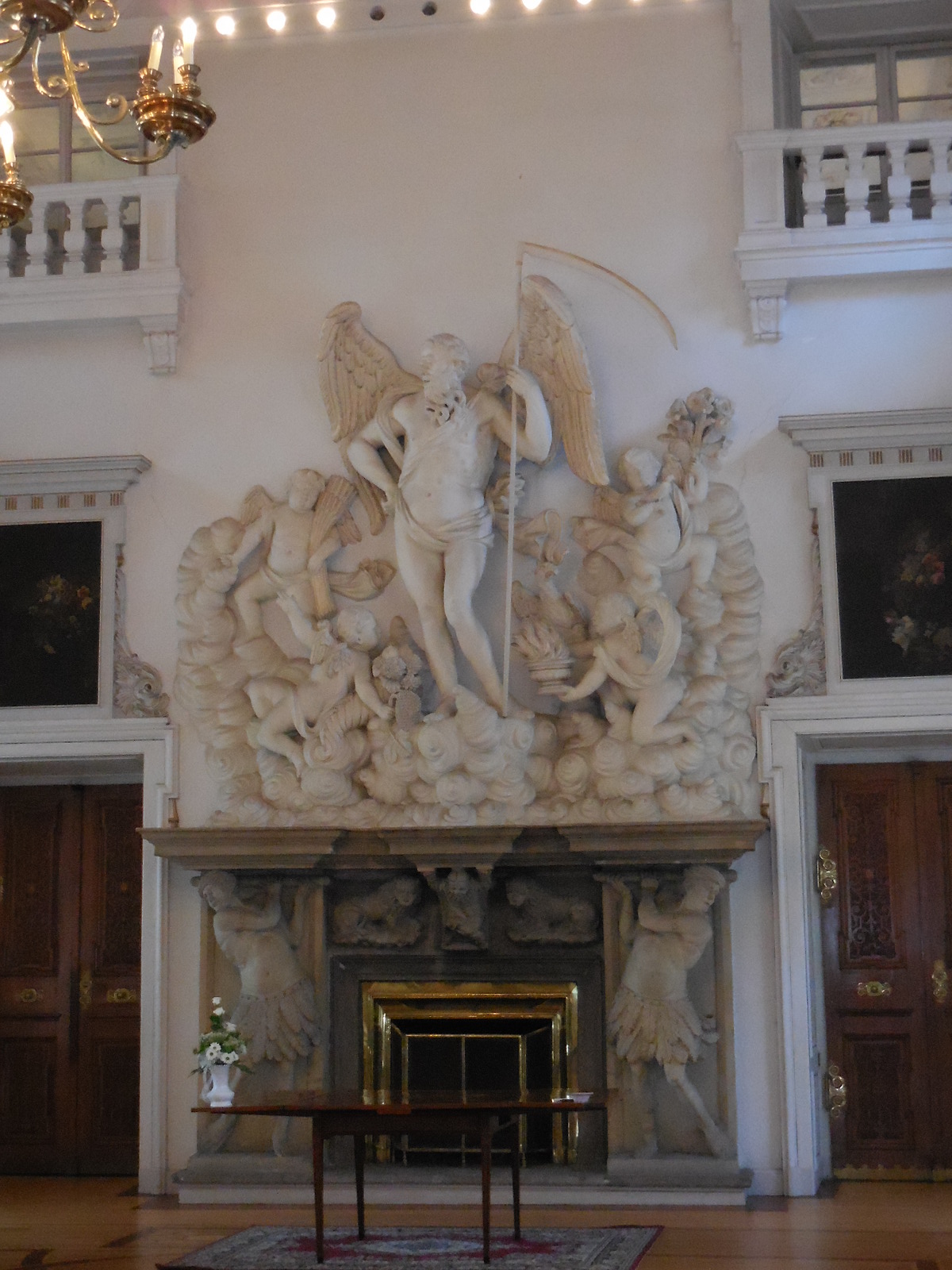
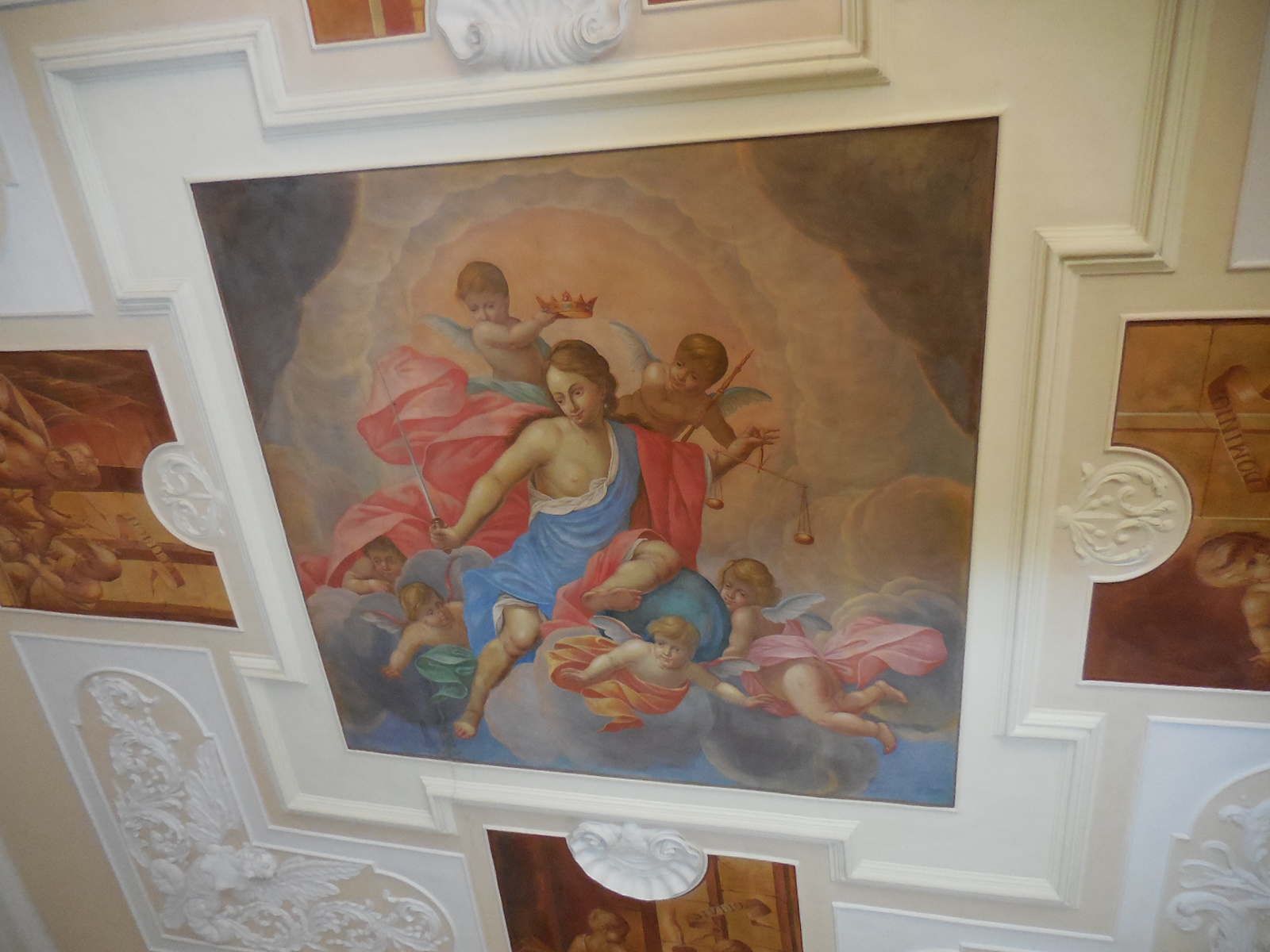
I was in luck because the Church of Saints Peter and Paul was open. It was Gothic in structure with some Romanesque elements. The altars and pulpit were Baroque, though. In the 16th century, well-renowned architect Benedikt Reid was responsible for reconstructing the church. He had designed part of Prague Castle to much acclaim. I was very impressed with the church. It was a pleasant surprise.

Even though the food and parking downtown were expensive, the trip was enlightening. It was another day well spent.