Canosa di Puglia Diary

PUGLIACanosacathext1

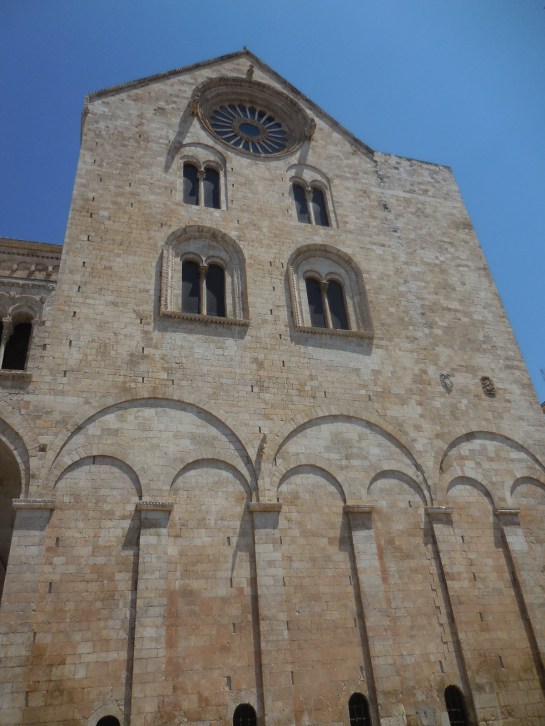
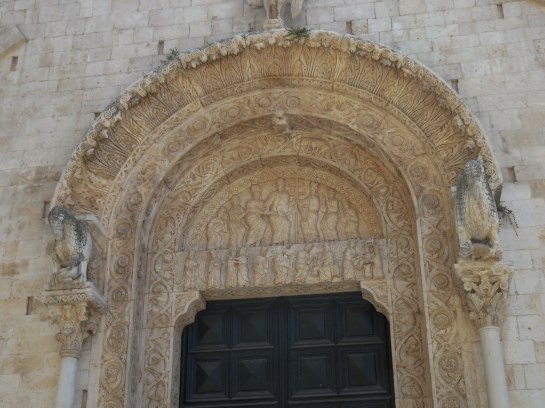
The Cathedral of Saint Sabinus

When I think of Canosa, this is what immediately comes to mind: the cathedral, archeology and Bohemund. A quiet yet dazzling city, Canosa can trace its history back to the seventh millennium BC, if not farther. Its name most likely derives from the word “cani,” which means dogs.

Canosa’s relationship with the Romans went through drastic changes. In 216 BC, when Hannibal defeated the Romans in the battle at Cannae – I saw this battlefield as well – the Romans were allowed to take refuge in Canosa. Later the city joined the opposition in a revolt against Rome. Then, under the guidance of Marcus Aurelius, Canosa achieved the status of a Roman colony.

PUGLIACanosacath6

In 3 BC the city’s production of pottery received accolades. At that time, Canosa flourished as a rich city that minted its own coins. Construction thrived – many temples and thermal baths were built as well as an amphitheatre. An aqueduct was erected in 141. Canosa became a bishop’s seat under the Byzantines, but then was destroyed.

Under Norman rule, Bohemund of Antioch, whose original name was Bohemund d’Hauteville, took charge and revived the city. He held the titles of Prince of Taranto from 1089 and Prince of Antioch from 1098 until his death in 1111. This hero of the First Crusade gave the city treasures he had picked up in conquests at Antioch and Jerusalem, such as icons and reliquaries. During his reign, the Cathedral of Saint Sabinus was completed.

PUGLIACanosacath2

Normal control of the city would come to an end, and the city would experience many hardships over the centuries, such as numerous earthquakes. The earthquake of 1689 destroyed the cathedral, for instance. Canosa was conquered quite a few times, too. While the First World War did not bring destruction to Canosa, an earthquake in 1930 did. Another tragedy followed 13 years later. There were 57 fatalities when the city was bombed during the Second World War. Canosa officially was given the title of City in 1962. However, the 1980s certainly did not start off well in Canosa. That’s when another earthquake struck. Now the economy derives mainly from agriculture and textiles.

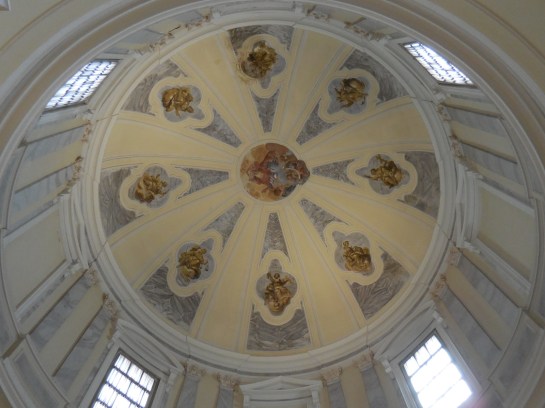
PUGLIACanosacathceiling1

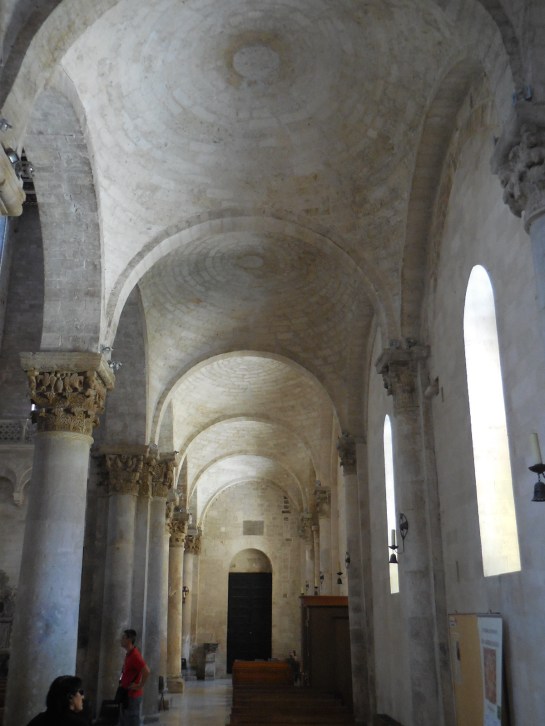
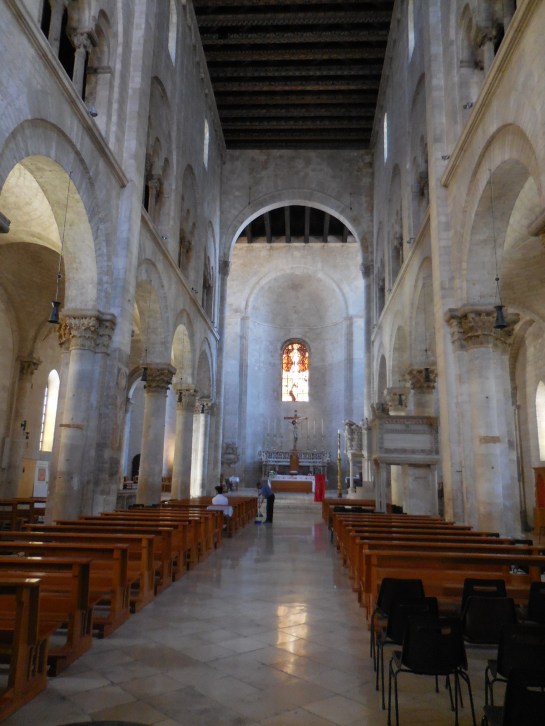
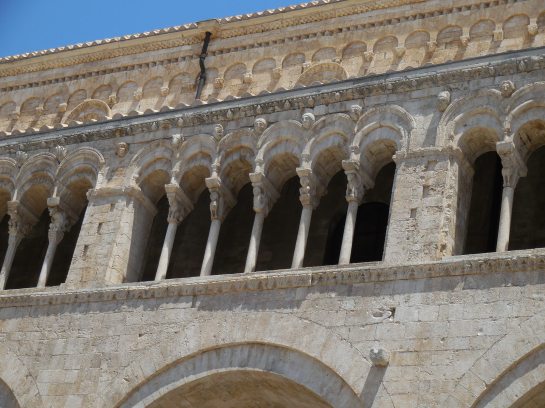
The images of Canosa that remain foremost in my mind are those of the cathedral. It enthralled me that every town in Puglia seemed to have an amazing cathedral. While I had not been a big fan of the Romanesque before this trip, I began to see dazzling beauty in the severity of the style. Architecturally, Apulian Romanesque structures were fascinating. I was only a few days into my week-long adventure in Puglia and already I had set my eyes on so many breathtaking gems. Each place had its own story to tell, and each story proved to be unique and riveting.

PUGLIACanosacath1

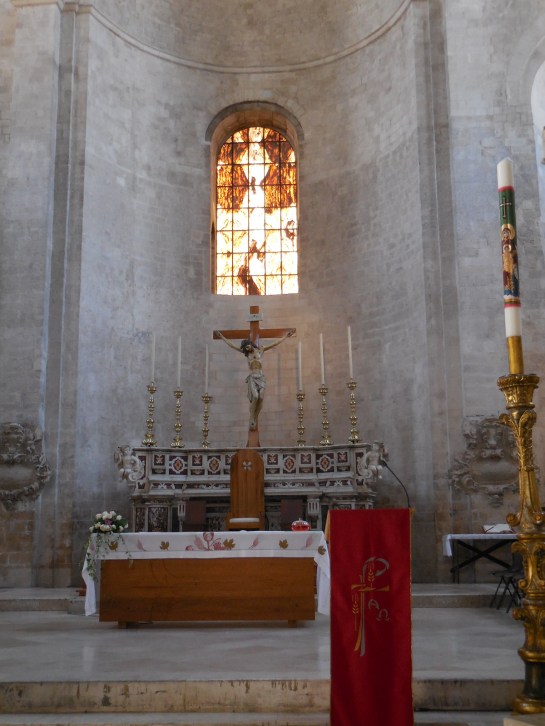
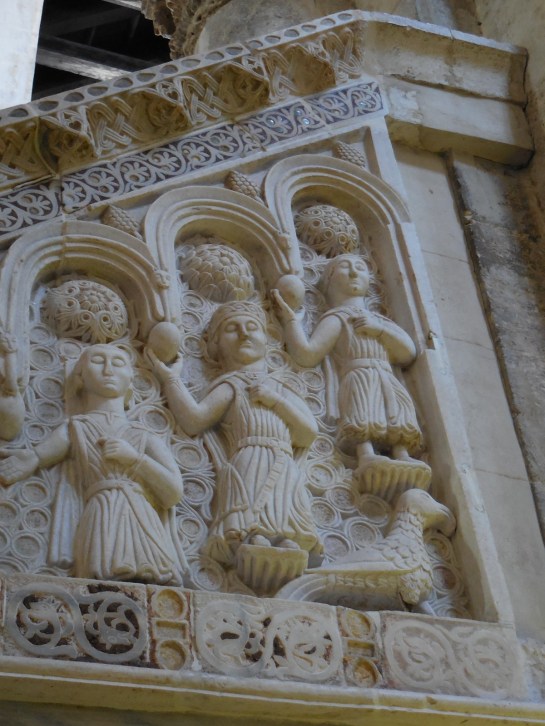
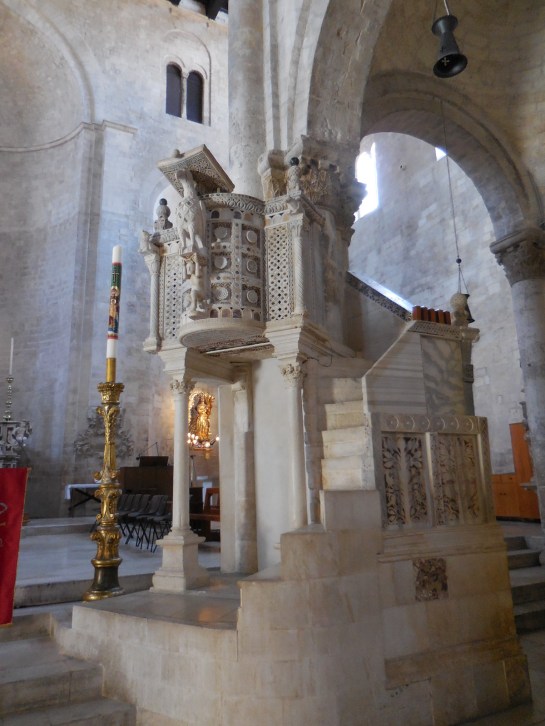
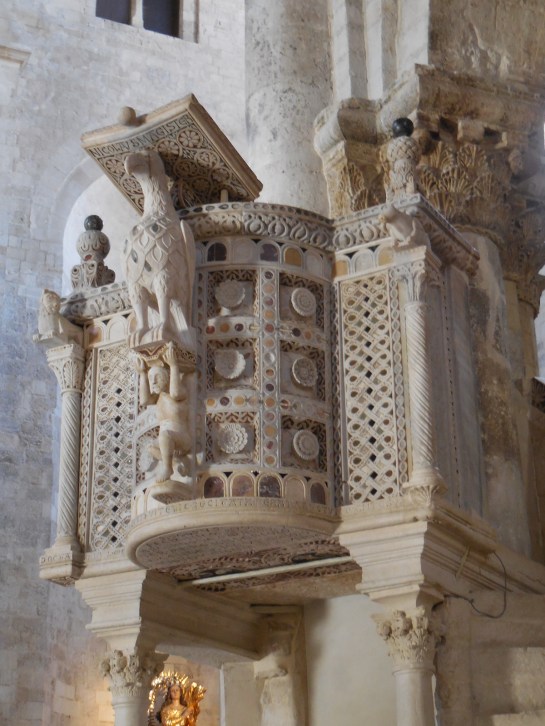
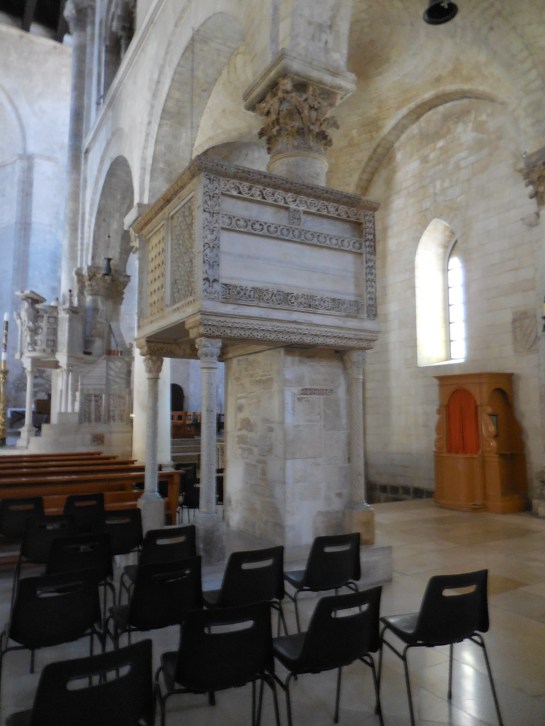
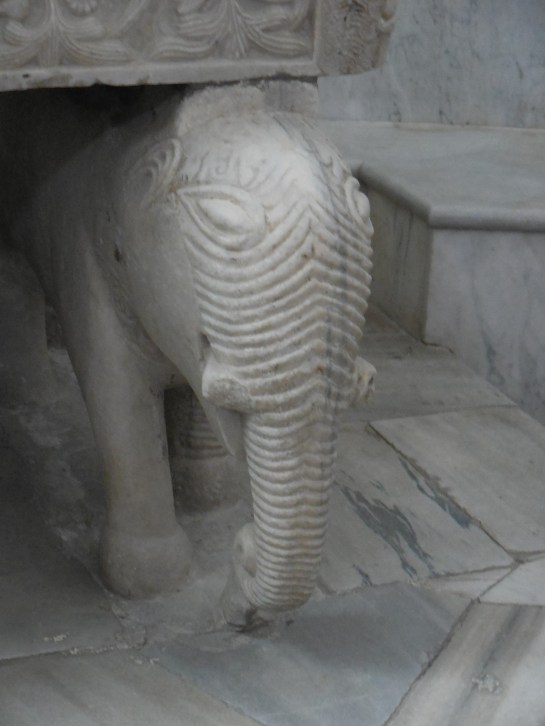
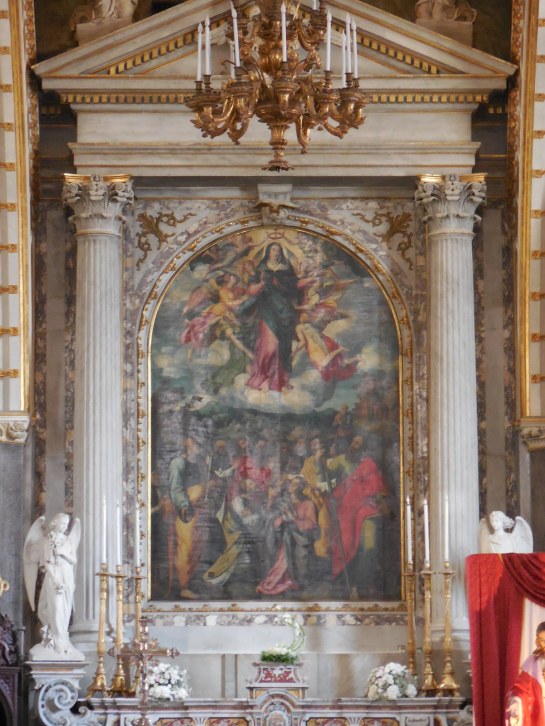
The Normans had consecrated the cathedral to Saint Sabinus in 1101. Some elements of the original structure remain. The ambo dates back to the 11th century and has an austere appearance. In contrast, the bishop’s throne from the 12th century is by no means severe. It is decorated in Oriental style. I was mesmerized by the throne. Two elephant figures served as its legs, and other ornamentation included griffons, eagles and sphinxes. The attention to detail was astounding. For me this was the highlight of the cathedral and one of the highlights of my trip.

PUGLIACanosacathchair1

PUGLIACanosacathchair2

PUGLIACanosacathchair3

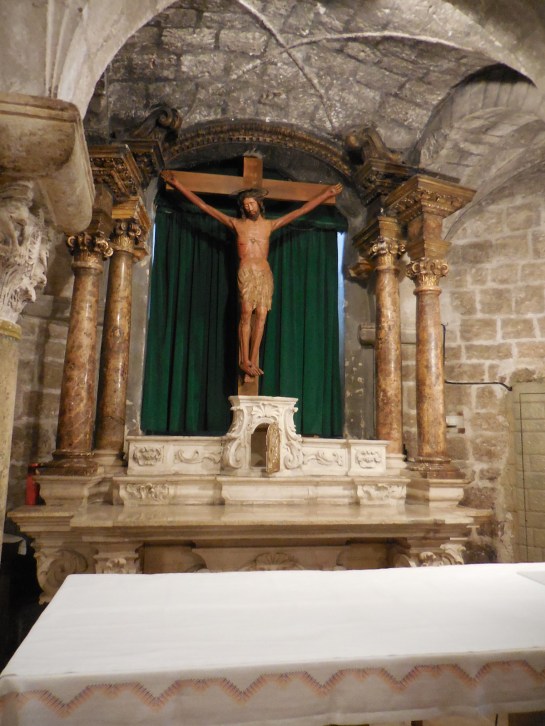
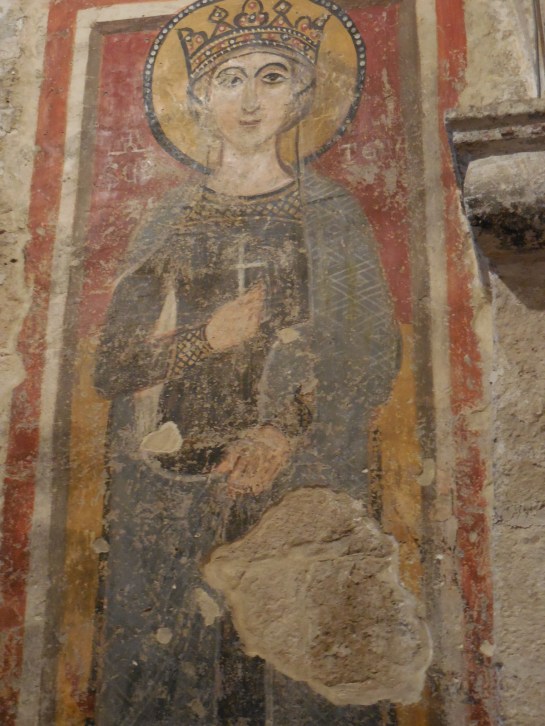
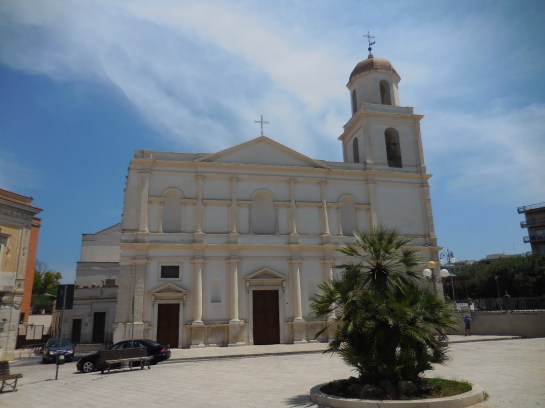
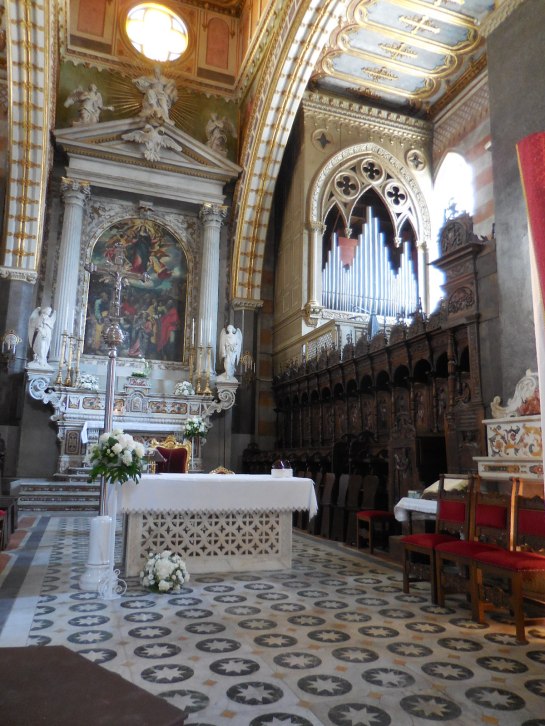
The crypt was also intriguing with its three naves. The capitals on its columns once topped Roman monuments. The cathedral had undergone many changes during the centuries. In the 19th century, the façade was reconstructed, and one nave was extended in a Latin cross model.

PUGLIACanosacath7

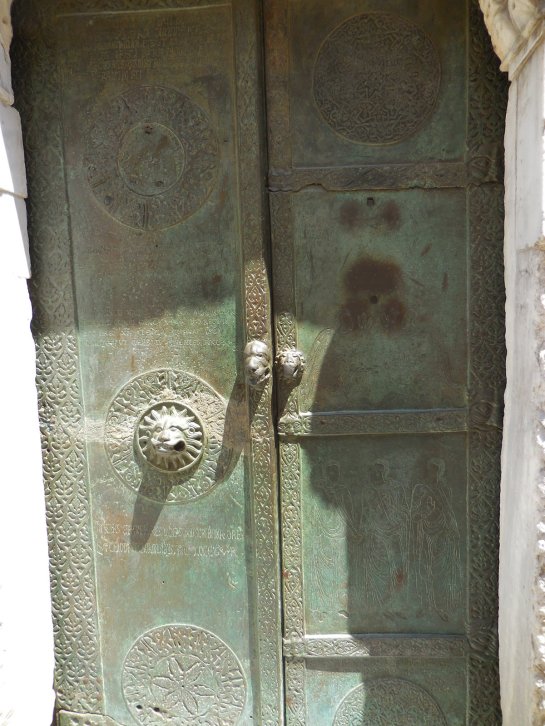
Another feature that had me in awe was the mausoleum of Bohemund, who was buried in a tomb in an adjacent square-shaped, domed edifice that featured one apse. It looked out-of-place next to the cathedral with its strange shape, but it definitely stood out. My favorite elements of this mausoleum were the two doors and their symbolism. One door had arabesque ornamentation and an inscription that praised Bohemund.

PUGLIACanosacath8

The other boasted engraved figures. One showed Bohemund while another depicted his brother and rival, Ruggero Borsa. Two other figures symbolized their sons, Bohemund II and William, who had promised to end the family feud. By depicting Bohemund and his brother, they hoped that the siblings could resolve their differences in Heaven. The historical account rendered by the figures was intriguing, to say the least, and the plea for peace between the quarreling brothers was compelling. The attention to detail on the doors was amazing. I stared at those doors for a long time, unable to take my eyes away from the superb craftsmanship.

PUGLIACanosacathtomb1

The Mausoleum of Bohemund

PUGLIACanosacathdoor

We also visited the Archeological Museum, home to some 2,000 artifacts found in Canosa. These objects included sculptures, marbles, coins, jewelry and pottery from Roman, early Christian and medieval Byzantine eras. The vases from around 3 BC especially caught my attention. It astounded me to think that this city had existed so long ago with so many ancient civilizations. To be sure, a sense of history seeped through the town. We also had a break, which I used to savor some gelato and a cappuccino.

PUGLIACanosacathwindow1

That’s not all there is to Canosa. Our schedule did not permit us to explore everything the city has to offer. There are also palaces, churches, a theatre, a castle ruin, temples and catacombs, for instance. However, we did get a firm grasp on the historical context of the city, the significance of the cathedral and Bohemund’s influence on the town. Then we were off to another destination, and I knew I would forever hold this city and the tales it told through its architecture close to my heart.

Tracy A. Burns is a writer, proofreader and editor in Prague.
PUGLIACanosacath3


Altamura Diary

PUGLIAAltamuracathext1

We were to start our Tuesday in Altamura, but I was really looking forward to the next destination – the rock town of Matera. I thought that Altamura would be a place I would want to go through quickly in anticipation of our visit to Matera, which I had dreamed of seeing with my own eyes ever since receiving a postcard of the unique sight some years ago.

PUGLIAAltamuracathext7

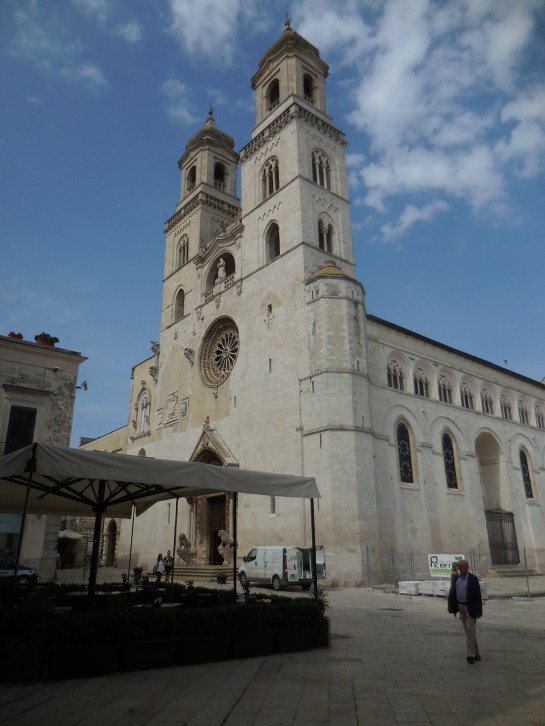
It turned out that Altamura was not at all a place I wanted to visit quickly. I could have gazed at the cathedral the entire day.

PUGLIAAltamuracathdoor2

The door of the cathedral

Before our trip to Altamura, I had only heard in passing about the Altamura Man, the only complete skeleton of a Neanderthal, discovered as recently as 1993. I had read that around Altamura were the so-called masserie or large farmhouses, some even with turrets and watchtowers. Almond trees and vineyards were commonplace in the region.

PUGLIAAltamuraFornaAntica

A sign asserting that bread has been made there since 1423

Altamura is not only famous for its archeological finds and cathedral but also for its bread, which has been produced there for centuries. Originally, each loaf had the mark of the family that had baked it. The Roman poet Horace was a keen admirer of the city’s bread. He praised it in his writing, too. “Their bread is so fine, the smart voyager makes sure he buys enough for his journey. . . .” We saw a small bakery where bread was being made, café tables set outside.

PUGLIAAltamurachurch1

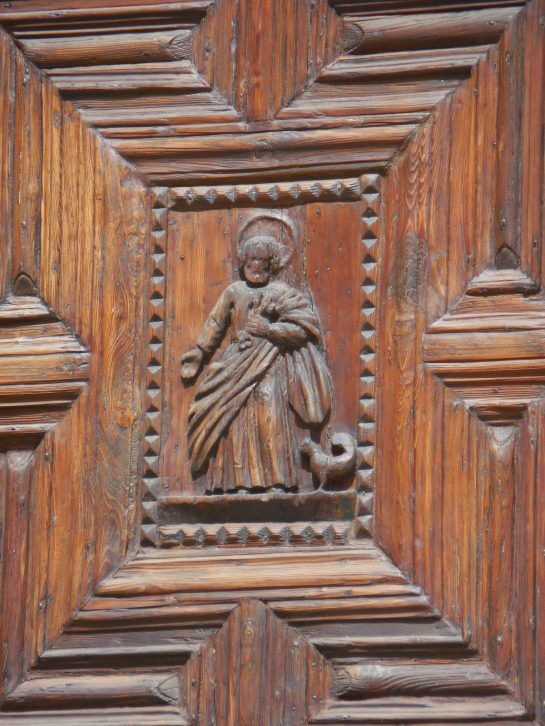
Then we were ushered to the Church of Saint Nicholas of the Greeks with its simple façade. At one time, there had been a thriving Greek Orthodox community in Altamura. The simplicity of the design and large rosette dominating the façade gave the edifice a sort of intimacy. The portal was decorated with scenes from the Old and New Testament, an adornment dating back to the 16th century. It was not open, but I was informed that inside there was one nave, some paintings from the 17th century and a baptismal font hailing from the 13th century.

PUGLIAAltamuracathportal

While gawking at the cathedral’s stunning facade, we learned more about the history of the city. Altamura was built on the remnants of a settlement hailing from 500 BC to 300 BC. During its Greek period (5 BC – 3 BC), the city’s high walls or “alta mura” were so wide that a chariot could be driven on top of them. In 1232 Emperor Frederick II, nicknamed “Stupor Mundi” or “Wonder of the World,” added to the population thriving colonies of Greeks, Arabs and Jews, so Altamura became a multicultural community. Plagues riddled the city in the 16th and 17th centuries. During the 18th century, the city thrived, making a name for itself in the Kingdom of Naples.

PUGLIAAltamuracathrosette

PUGLIAAltamuracathrosette2

PUGLIAAltamuracathtympanium

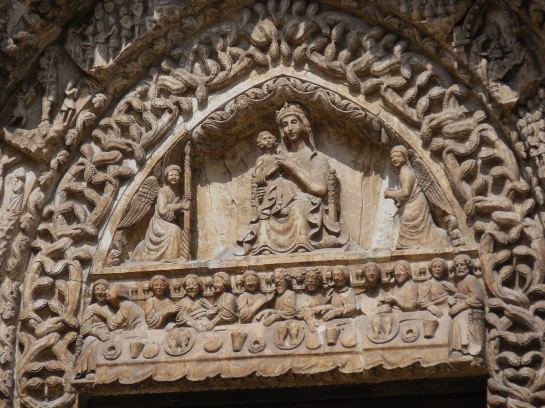
Then it was time devote all our attention to studying the exterior of the cathedral, an exquisite example of Apulian-Romanesque style with an exquisite portal of bas-relief figures that illustrated the life of Christ. Frederick II had the Cathedral of Our Lady of the Assumption built in 1232, but disaster struck in 1316, when an earthquake destroyed it. Robert of Anjou was the leader who ordered the reconstruction of the three-nave structure, and one of the portals, hailing from the 14th century, bears his name. I was awed by the main portal with its intricate design. This is architecture at its finest, I said to myself. This is exactly what I came to see in Puglia – architectural gems that dazzled both the eyes and the mind.

PUGLIAAltamuracathint12

PUGLIAAltamuracathint18

PUGLIAAltamuracathintpulpit

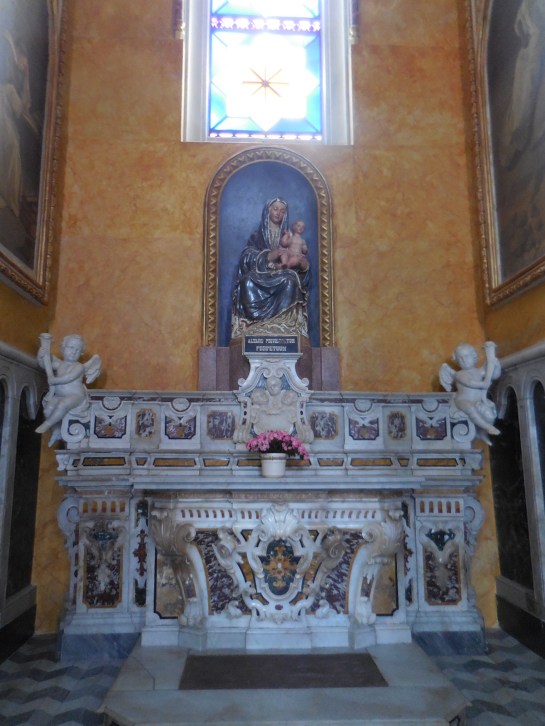
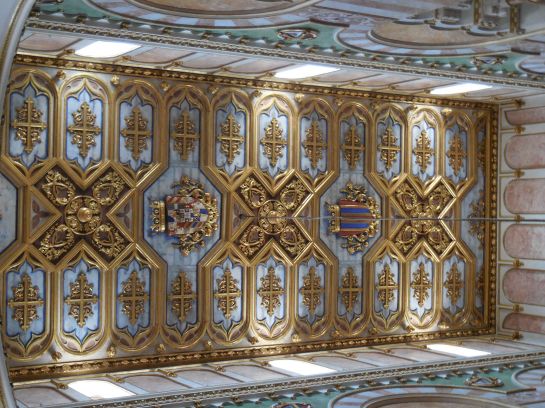
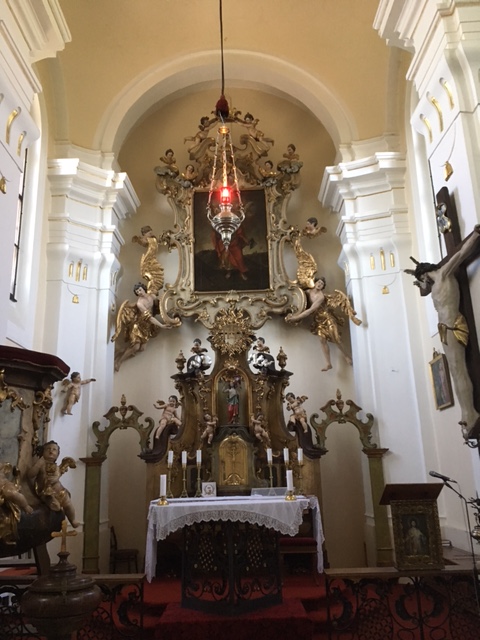
The interior of the cathedral was just as impressive. The ground plan of the three naves has a basilica model. The walls and columns boast rich ornamentation. The Neo-Gothic style plays a major role. The stunning wooden ceiling hails from the 19th century, and coats-of-arms representing emperors and kings decorate it. The marble altars feature paintings from the Neapolitan School. The carvings of the wood relief on the choir are splendid. Side chapels date back to the 17th or 18th centuries. One of the most significant chapels shows off two paintings that are some of the finest examples in south Italy. One depiction takes up the theme of Mary Magdalene, a work by Francesco Netti from 1877. Domenico Morelli’s Conversion of St. Paul is the other masterpiece on display.

PUGLIAAltamuracathceiling

PUGLIAAltamuracathceiling2

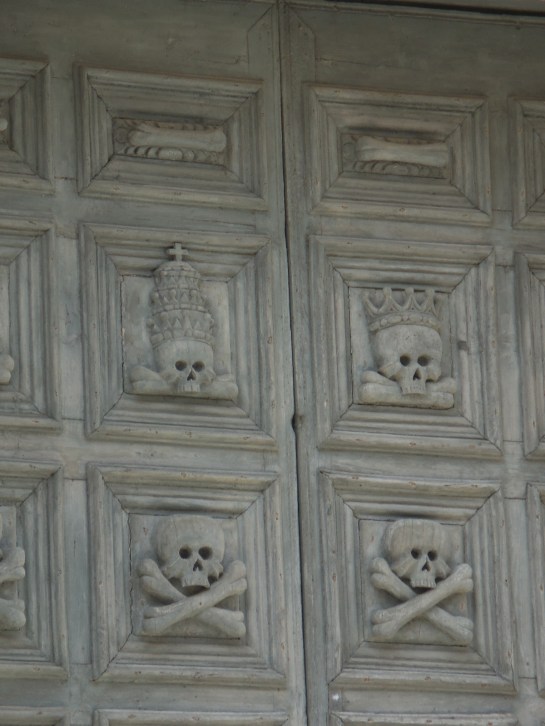
Of course, there is more to Altamura than its cathedral. We gazed in wonder at San Michele al Corso Church, built by the brotherhood of Purgatory in the 17th century. We marveled at the skulls and skeletons giving its simple façade a grotesque and macabre appearance. I later learned that inside the high altar and presbytery were Rococo gems.

PUGLIAAltamuraChurchPurg1

San Michele al Corso Church exterior decoration

PUGLIAAltamuraChurchPurg3

The Palazzo Vito De Angelis dates back to the 15th century and includes a Renaissance portal as well as a superb loggia. The Palazzo Filo hails from the 16th to 18th centuries and celebrates St. Philo, who was revered by Greek families. The Filo clan has made significant contributions to Italian history. The chapel and the arched portal are two of the architectural delights of this palace. I had ancestors named Filo on the Slovak side of the family, but, alas, they had nothing to do with the Altamura nobles. Most likely, they had been poor potato farmers in east Slovakia.

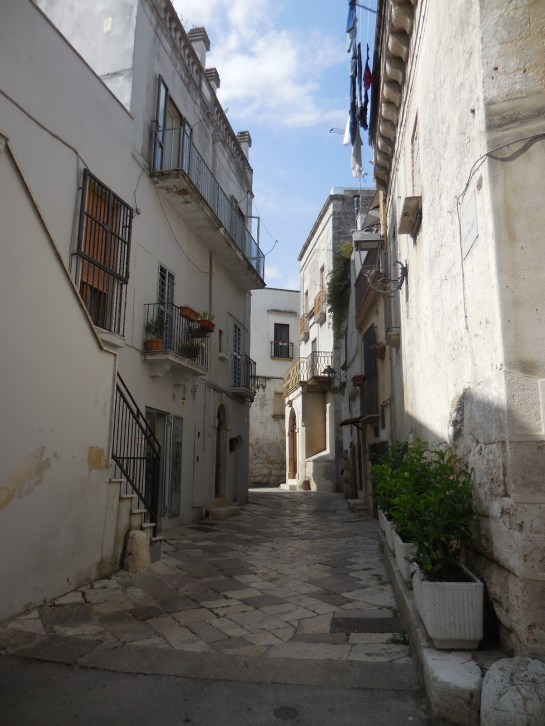
PUGLIAAltamurastreet1

A typical street in Altamura

Unique to Altamura, the claustri hold significant meaning for the city. These claustri take their name from the Latin claustrum, which means “closed space.” The claustri feature stairs, balconies, terraces, galleries, arches and loggia. They are certainly a treat for architecture buffs.

PUGLIAAltamuracathint6

The main altar in the cathedral

PUGLIAAltamuracathint8

Fantastic decoration in the cathedral

The history of the claustri can be traced to the settling of various ethnic groups during Emperor Frederick II’s reign in the 13th century. At that time, the various ethnic groups lived side-by-side, peacefully in a diverse, tolerant community. I reflected on how there is such a lack of tolerance in America, for instance, but not only in America. Many people hate Muslims and label them all as terrorists. Also, there is so much racial tension in the USA. I remembered the Bosnian War, when ethnic hatred ran rampant in former Yugoslavia. Would the world ever learn to live as the ethnic groups in the claustri had? I somehow doubted it, but, unfortunately, I am a pessimist.

PUGLIAAltamuracathint9

PUGLIAAltamuracathint10

Back to the gems of Altamura. The north gate of Porta Bari took on a 17th century Baroque appearance. Saints Irene and Joseph made appearances on the stunning structure. Other religious sites in the town include the Church of San Dominico with a faced of limestone coated with majolica. North of the center is San Michele delle Grotte, a church dating from the 10th century. A 14th century fresco in the crypt is noteworthy.

PUGLIAAltamuracathint13

PUGLIAAltamuracathint14

I left Altamura, not only excited about my next destination but also enthralled by the city’s charms. I would never forget that cathedral. It remains etched in my mind for eternity.

Tracy A. Burns is a writer, proofreader and editor in Prague.
PUGLIAAltamuracathint16

Grottaglie Diary

PUGLIAGrottaglie2

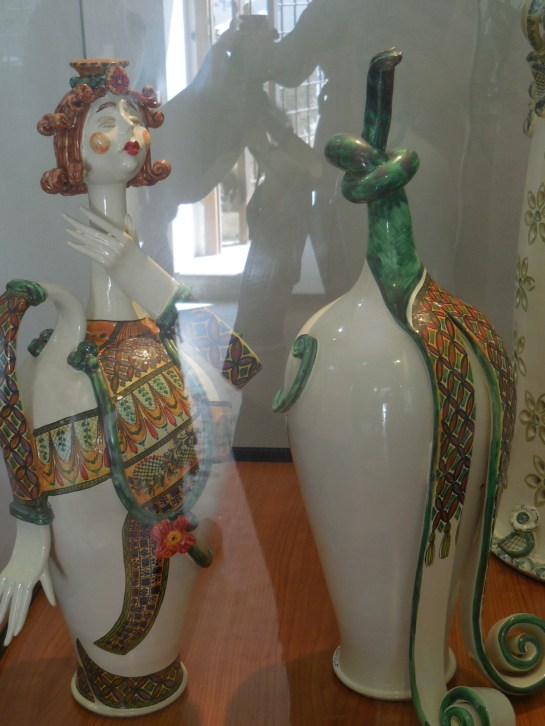
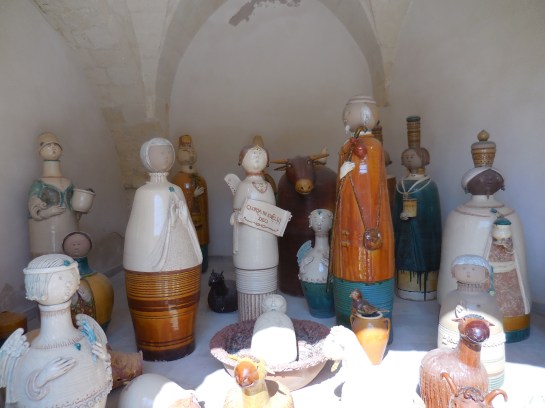
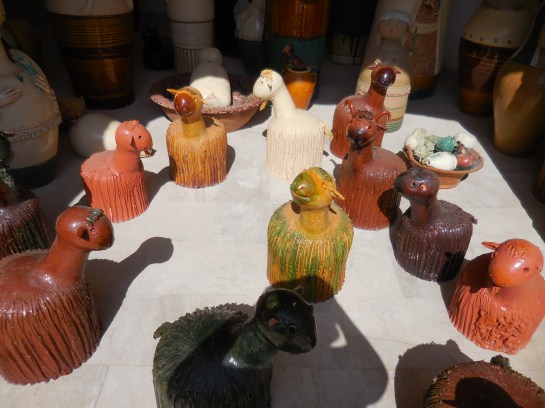
During the arsviva travel agency’s tour of Puglia, we stopped in the Ceramics Quarter of Grottaglie, a town famous for its superb ceramics made in artisans’ studios. What impressed me the most was the Museum of Ceramics in the 13th century Castello Episcopio. I loved discovering small, captivating museums during my trips. This museum only had three rooms, but they were three rooms with dynamic designs from the eighth century to the contemporary age. Creativity abounded.

PUGLIAGrottaglie11

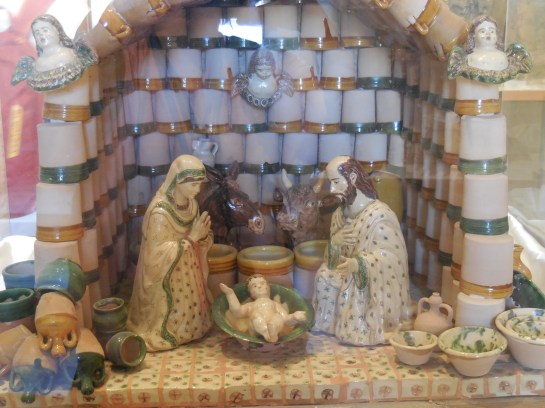
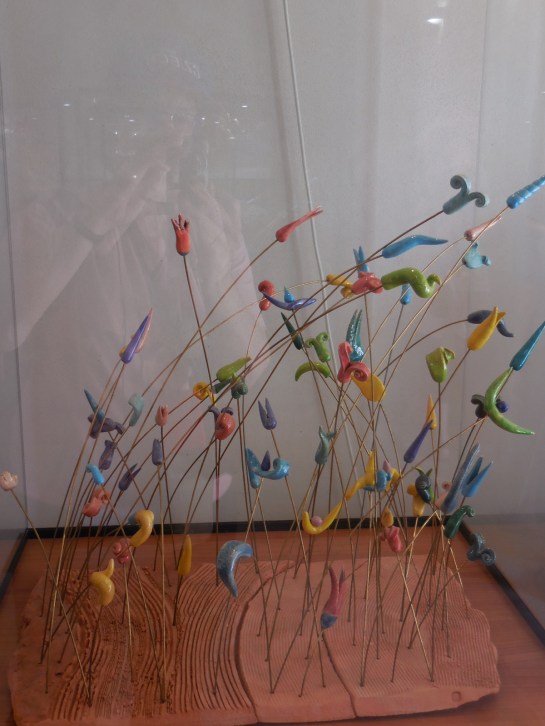
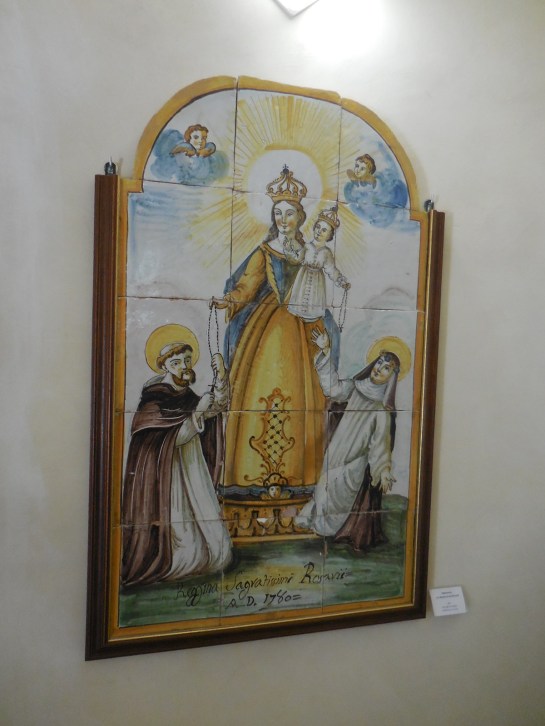
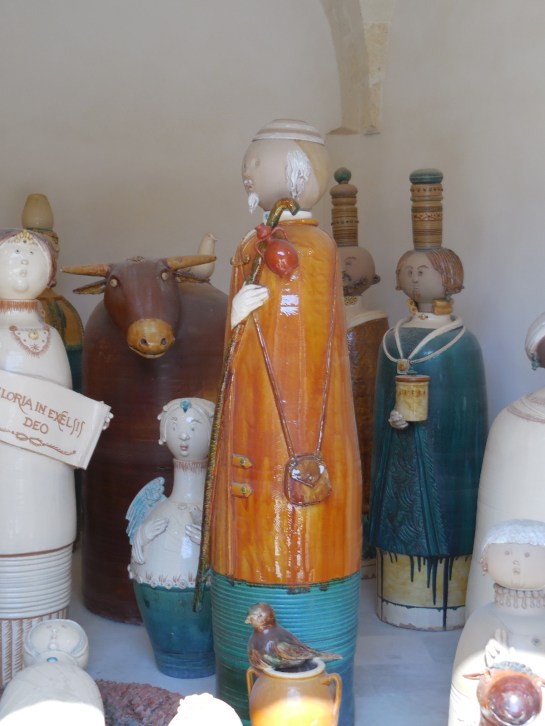
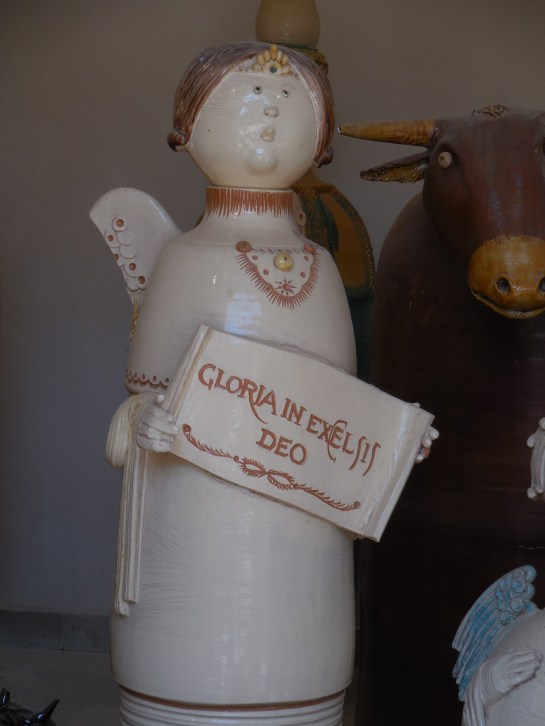
Some of the 400 objects were archeological while others were made of majolica. There were traditional ceramics on display alongside abstract constructions. Nativity scenes also held a prominent position in the museum’s content. Through these objects, I got a sense how ceramics played a role in life, how ceramics depicted the age in which they were made. I particularly liked one abstract work that reminded me of a sculpture by Alexander Calder, whose art was well-represented in the National Gallery of Art of Washington, D.C., near my hometown.

PUGLIAGrottaglie12

That’s not all there was to see in Grottaglie, but we did not have time to see more of the town. The main church, Chiesa Matrice, was built in 1379. Princes and dukes once called the Palazzo Cicinelli home. Another palace, the Palazzo Urselli, sported a Renaissance façade and an impressive 15th century gate. The Monastery of San Francesco di Paolo was said to be a Baroque gem.

PUGLIAGrottaglie1

PUGLIAGrottaglie3

PUGLIAGrottaglie5

PUGLIAGrottaglie8

PUGLIAGrottaglie9

PUGLIAGrottaglie10

PUGLIAGrottaglie13

PUGLIAGrottaglie14

PUGLIAGrottaglie15

PUGLIAGrottaglie16

PUGLIAGrottaglie18

PUGLIAGrottaglie19

Tracy A. Burns is a writer, proofreader and editor in Prague.
Molfetta Diary

PUGLIAMolfettoboats3

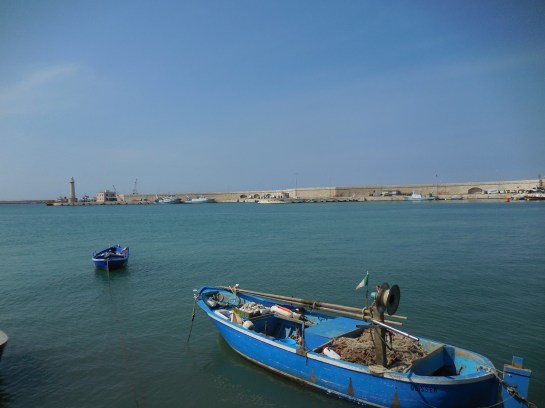
While traveling with a group through Puglia, we stopped in Molfetta for lunch. I was famished, so I could not spend all my time exploring this gem on the Adriatic. What I did see, though, impressed me a great deal. I meandered through the streets of the old town and gazed at the remarkable exterior of the Cathedral of San Corrado, for instance.

PUGLIAMolfetto4

The city can trace its roots at least as far back as the Neolithic age. In 4 BC it was a small fishing port. During the 10th century, the city was first mentioned in writing as Melphi. During the Crusades, the town flourished and greatly expanded. Pilgrims stopped in the city on their way to holy destinations. One of these pilgrims, Conrad of Bavaria, was in awe of the city. He became San Corrado, the saint who protects the city. During the 12th century, the town became a bishop’s seat. The port town also played a significant role in trade. Today it is one of the biggest ports on the Adriatic.

PUGLIAMolfettoboat

PUGLIAMolfettoboats

The port dotted with small boats was so tranquil and peaceful. I looked out at the sea and felt at peace with myself and with the world. I was in the midst of making a difficult work-related decision. Gazing at the boat-speckled sea, I knew that, by the end of the trip, my head would be clear, and I would be able to do the right thing, to embark on the path that was best for me.

PUGLIAMolfettocath2

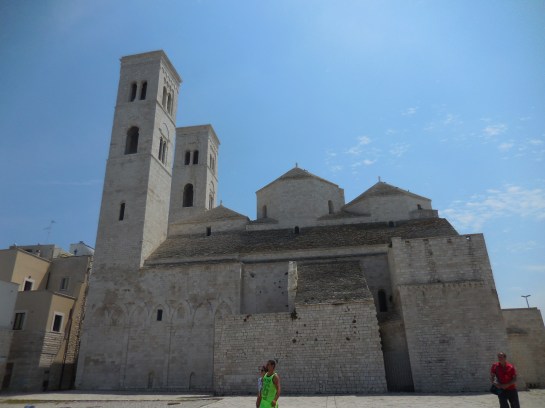
The Cathedral of Saint Corrado, in Apulian Romanesque style, dates back to 1150, though it was not completed until the 13th century. The edifice has three domes of different heights. It is an example of a basilica model with contracted transepts. There are two bell towers, each 20 meters (66 feet) high. We learned about the interior, even though we could not go inside. The cathedral features three naves divided by four cross-shaped pillars. Round arches connect the pillars. Rich sculptural adornment abounds. A precious stone relief of Christ is situated above the main altar. Much of the decoration hails from the 16th century.

PUGLIAMolfettocath3

Once again, the Apulian-Romanesque style took my breath away. I loved how the austerity of the exterior exuded such remarkable beauty. Before this trip, I had liked the Romanesque style, but it certainly had not been one of my favorites. During my time in Puglia, I gained a deep appreciation for the style that I had once thought to be too severe. During this vacation, I found myself in awe of every cathedral we saw.

PUGLIAMolfettocath7

The Cathedral of Saint Corrado is not the only cathedral in the city. The Cathedral of Our Lady of the Assumption hails from the 17th century and has a splendid Baroque façade. The single hall lined with side chapels features exquisite paintings from the 18th and 19th centuries. The Town Hall is also to be admired, situated in a 16th century palace.

PUGLIAMolfetto1

I recalled a story I had heard from my friend who lives in Italy. A lighthouse was built off Molfetta in 1853 to help ships navigate along the coast. A new wharf was constructed especially for this lighthouse, but, due to stormy winds, it caused an unexpectedly strong current. Many lives and vessels met tragic fates. Then, in 1857, the city built a lighthouse on the opposite (west) side of the harbor. It became the first lighthouse on the Adriatic.

PUGLIAMolfetto6

PUGLIAMolfettocross

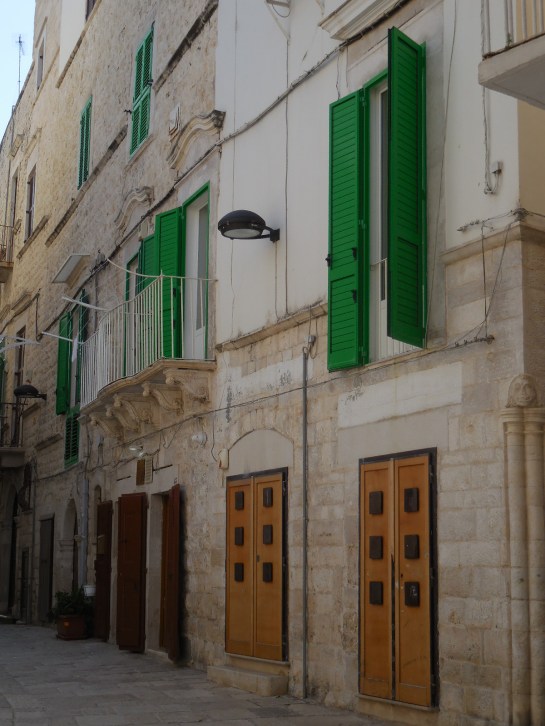
After eating a delicious lunch of spaghetti with tomatoes, I wandered down the narrow, charming streets of the old section. Some dwellings were being repaired; I saw some scaffolding along the way. I particularly liked the bright green shutters on one building and laundry fluttering in the gentle breeze.

PUGLIAMolfetto10

Molfetta was a place I would definitely have to visit again. It was one of the many stops that filled me with awe and wonder. Molfetta certainly was a place I would never forget.

Tracy A. Burns is a writer, proofreader and editor in Prague.
PUGLIAMolfetto11

PUGLIAMolfetto9

Bassano del Grappa Diary

BassanodelGrappa3

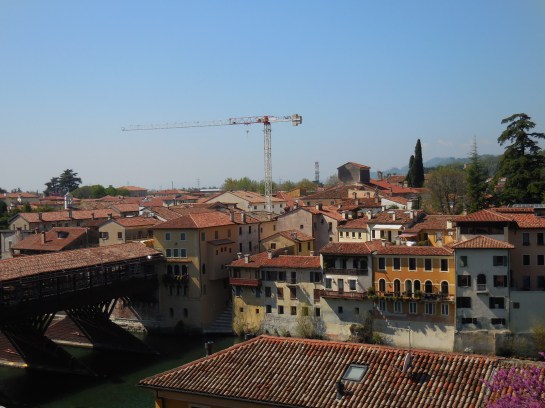
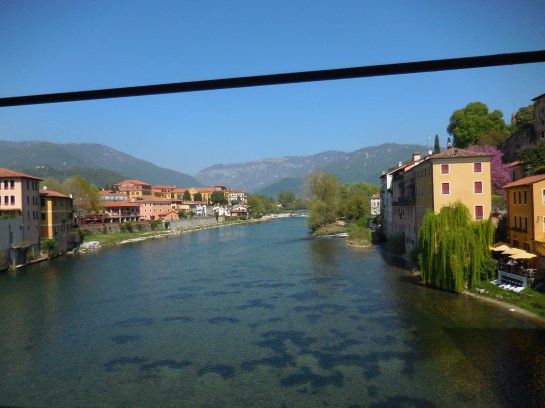
During my four-day excursion to north Italy with the arsviva travel agency, we visited the picturesque town of Bassano del Grappa, located 65 kilometers from Venice. It is known not only for its vineyards and Venetian villas but also for its Palladian wooden bridge and for the impressive collection of paintings by Jacopo Bassano (also referred to as Jacopo dal Ponte) in its Civic Museum.

BassanodelGrappa4

First, a bit about the town: Bassano del Grappa was first mentioned in writing as far back as 998 AD. The symbol of the city, the Ponte Vecchio was designed by the renowned architect Palladio in 1569. A wartime casualty and a victim of floods, the bridge has been rebuilt several times, but the current structure remains faithful to Palladio’s original design.

BassanodelGrappa7

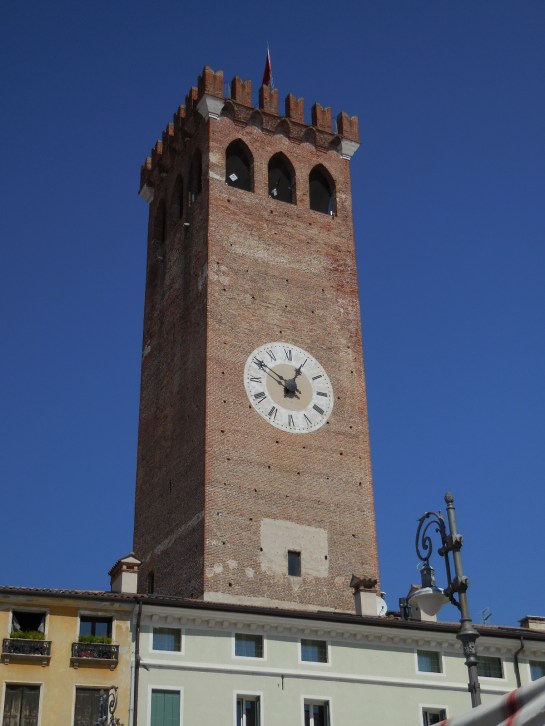
The town does not lack a castle or a cathedral, either. Ezzelini Castle has not been in use for six centuries. Hailing from 998 A.D., the cathedral now boasts a 17th century appearance, Two of Jacopo’s paintings adorn the interior. Historical monuments abound. The Civic Tower was constructed around 1312. The Loggia of the Mayor dates back to the 15th century. The elegant blue clock has decorated its façade since 1430, though the current one was built in 1747. The loggia features frescoes. The squares of the town are picturesque, though there was a large market on the main square while we were there. Intriguing churches of various architectural styles also dot the town.

BassanodelGrappa10clock

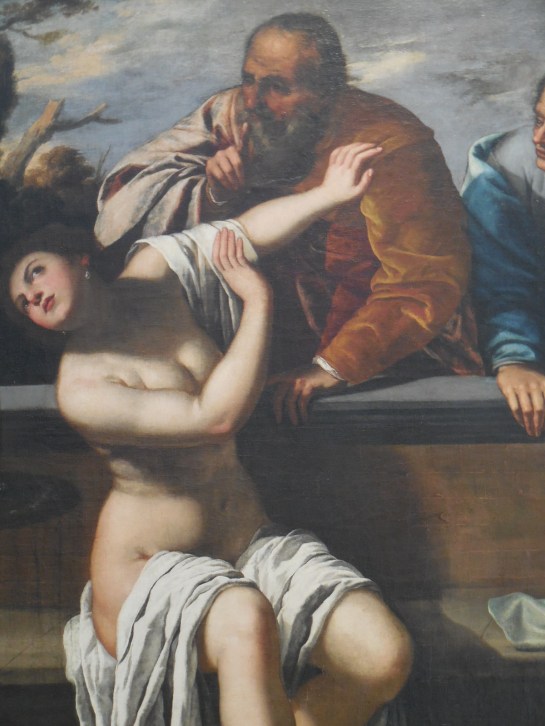
The Civic Museum captured my undivided attention for more than two hours. The museum boasts the largest collection of renditions by Jacopo in the world. There was much more to see than Bassano’s masterpieces, however. The art gallery displays some 500 paintings from the 13th to 20th century. Sculptures also delight. There is a 17th century cloister, too.

BassanodelGrappa8

Jacopo Bassano lived from 1510 or 1515 to 1592. He was a Renaissance Venetian painter whose later works fall into the category of Mannerism. Born in Bassano del Grappa, he resided in Venice during the 1530s before returning to his hometown for good in 1539. Often experimenting with various styles, Jacopo was influenced by Titian, Tintoretto, Durer, Raphael and Roman art, for example. The painting guru is known for his religious paintings rendered in natural landscapes. He also studied the role of light and created significant nocturnal scenes.

BassanodelGrappa10

Here are some examples of the artwork in the Civic Museum that kept me entranced for two hours. Some of the paintings, but not all of them, are by Jacopo Bassano.

BassanodelGrappaCM2

BassanodelGrappaCM7

BassanodelGrappaCM8

BassanodelGrappaCM9

BassanodelGrappaCM3

BassanodelGrappaCM4

BassanodelGrappaCM6

BassanodelGrappaCM11

BassanodelGrappaCM12

BassanodelGrappaCM15

BassanodelGrappaCM17

BassanodelGrappaCM19

BassanodelGrappaCM20

BassanodelGrappaCM21

BassanodelGrappaCM22

BassanodelGrappaCM23

BassanodelGrappaCM24

BassanodelGrappaCM25

BassanodelGrappaCM26

BassanodelGrappaCM27

BassanodelGrappaCM30

BassanodelGrappaCM31

BassanodelGrappaCM34

BassanodelGrappaCM39

BassanodelGrappaCMdome28

BassanodelGrappaCMdome29

BassanodelGrappacrucifx35

Tracy A. Burns is a writer, proofreader and editor in Prague.
Hanspaulka Diary

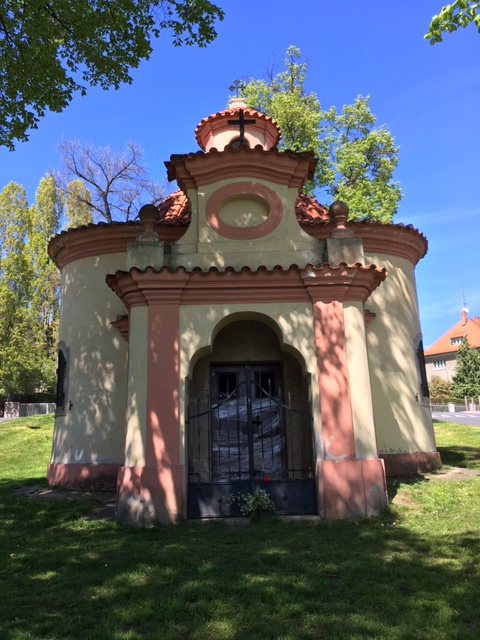
Hanspaulkachapel1

Baroque Chapel of the Holy Trinity, Nad Komornickou Street

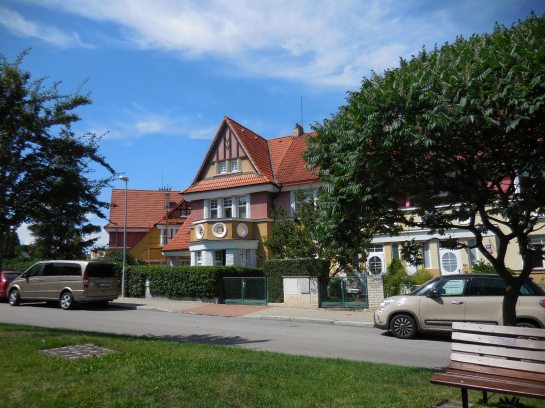
One of my favorite pastimes in Prague is taking long walks through architecturally intriguing sections of the city. My favorite quarter in Prague is the villa-dotted Hanspaulka area in Prague’s sixth district, which is ideal for long walks on sunny days.

Hanspaulka17

HanspaulkaJuly179

The quarter gets its name from Jan Pavel Hippmann, inspector of the archbishop’s farms during the 18th century. In German his name was Hans Paul, and his nickname was “Hanspaul.” He built a Baroque-Rococo chateau in the area and lived there for 40 years. His chateau was dubbed “Hanspaulka.” The section has been known as Hanspaulka for more than 200 years.

Hanspaulka19

Hanspaulka20

HanspaulkaJuly1713

The quarter has not always been dotted with villas. From the 14th century, it was a section of vineyards and six small chapels to which residents from all over the city flocked. (Two of these chapels are still standing.) Today’s main street, Na Pískách, was filled with sand. It gets its name from the Czech word for sand – “písek.”

Hanspaulka6

Hanspaulka25

HanspaulkaJuly171

HanspaulkaJuly1711

Before the Thirty Years’ War, there were about 120 vineyards in Hanspaulka. The war did a lot of damage, to put it lightly. After 1627 many owners decided to try their luck abroad, abandoning their vineyards. During 1637 only 50 vineyards remained. The vineyards were devastated by war again in the middle of the 18th century, and only two were revived. There are no vineyards in the section now, but many streets are named after former owners of vineyards.

Hanspaulka26

While the first villas cropped up in the 19th century, the architectural boom of villa construction occurred in the 1930s. Well-known architects, such as Karel Lhota, designed many of the luxurious homes there.

Hanspaulkachateau1

Baroque chateau

The chateau is definitely one of the main sights in the area. It has a late Baroque façade. After World War I it became an archeological museum. In 1996, it was sold to a private company. Now it houses the institute of former Czech president and long-time politician Václav Klaus.

PavelJanak

Pavel Janák, photo from Brněnský architektonický manuál

HanspaulkaStMatthewsChurch1

The interior of St. Matthew’s Church

HanspaulkaStMatthewsChurch2

The pulpit of St. Matthew’s Church

St. Matthew’s Church was originally a rotunda. The church came into being in 1404, but the original structure was demolished in 1770. Its current appearance dates back to the late 1800s. Legendary film and theatre actor Josef Kemr and architect Pavel Janák are buried in its cemetery. I remember seeing Kemr on stage, and I even owned some films in which he had performed. I admire Janák’s Cubist and Rondocubist styles of architecture. I recalled that he designed Prague’s Adria Palace and some villas in the Střešovice quarter of Prague’s sixth district. He had also drawn up the plans for the functionalist Baba Housing Estate near Hanspaulka. Janák also contributed to the architecture of Prague Castle.

HanspaulkaKemrgrave

Josef Kemr’s grave

Hanspaulka18

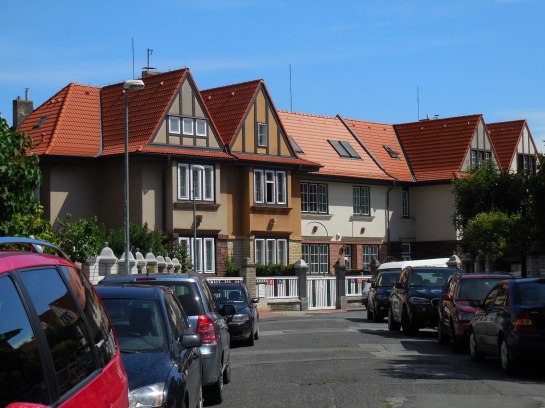
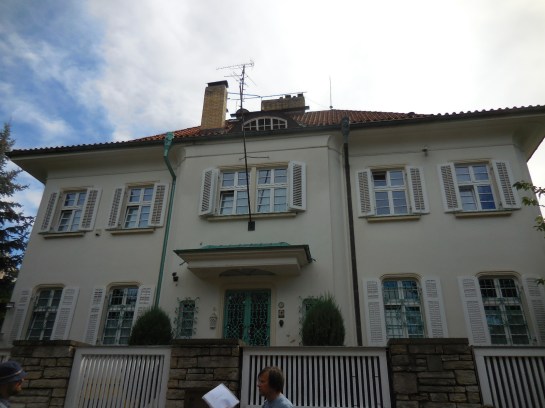
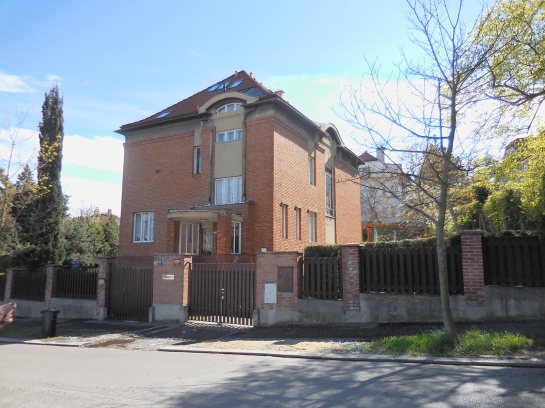
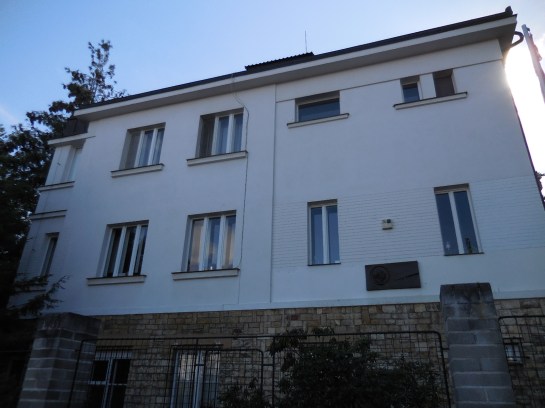
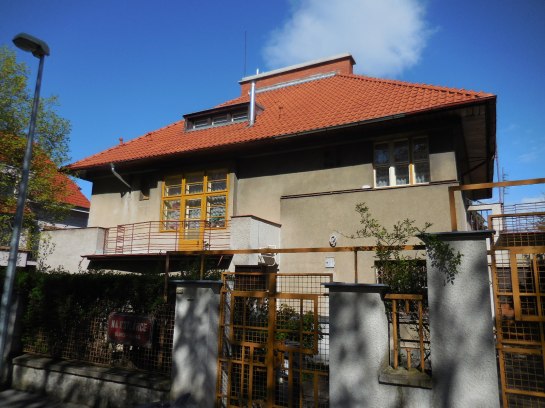
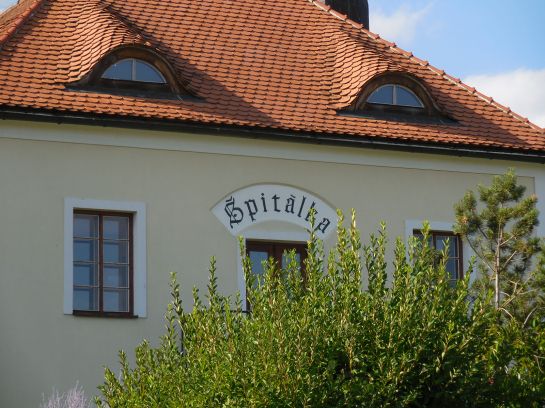
The buildings in Hanspaulka show off a variety of architectural styles. You will come across a Neo-Baroque villa with balustrades, oriels, dormer windows and small towers and a Neo-Classicist villas, too. A former popular pub was built in geometric Secession style. Another former pub served as a meeting place for underground artists during the Communist era, and today a plaque commemorates the establishment. Art Deco townhouses as well as villas with sculptural decoration and ceramic veneers are sprinkled throughout the quarter. Hanspaulka was not always a quarter catering to the wealthy. In the 1930s members of the working class would take out mortgages to buy the Art Deco townhouses. They were allowed to live in one room, always opting for the kitchen, until the mortgage was paid off.

HanspaulkaArtDeco13

HanspaulkaArtDeco14

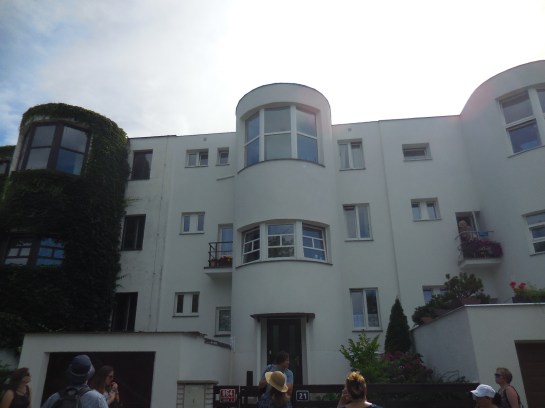
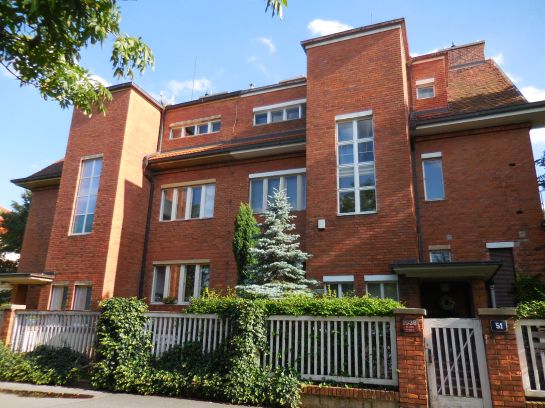
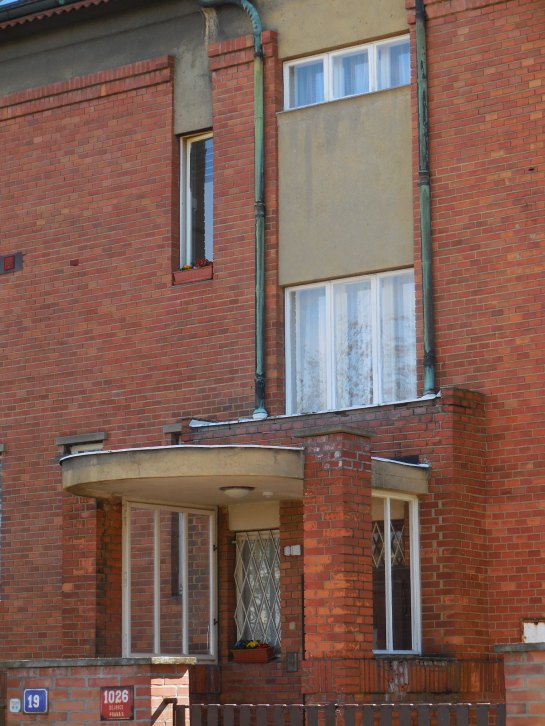
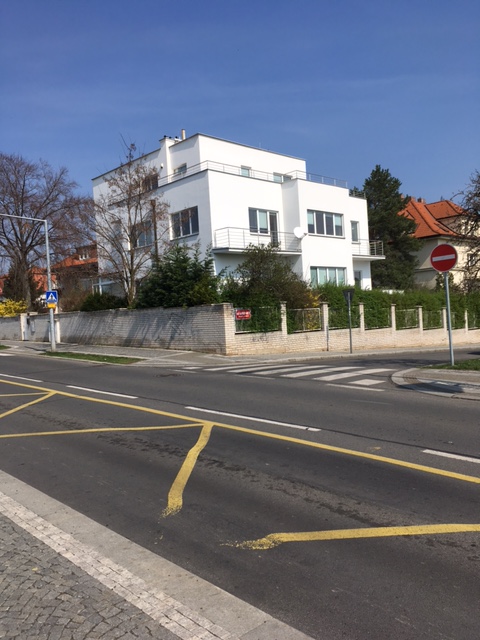
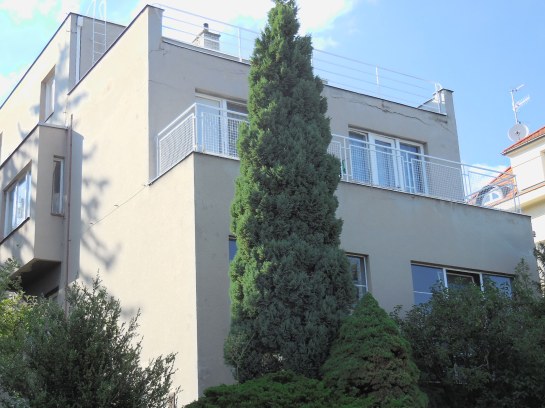
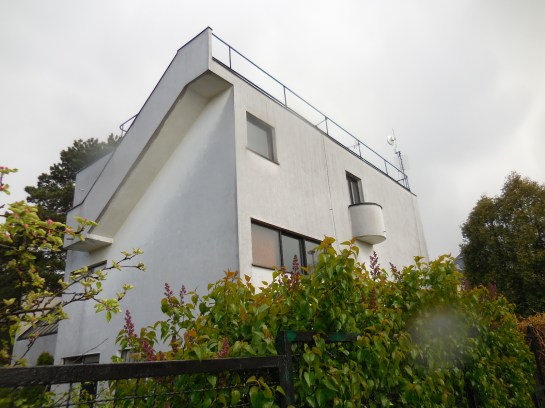
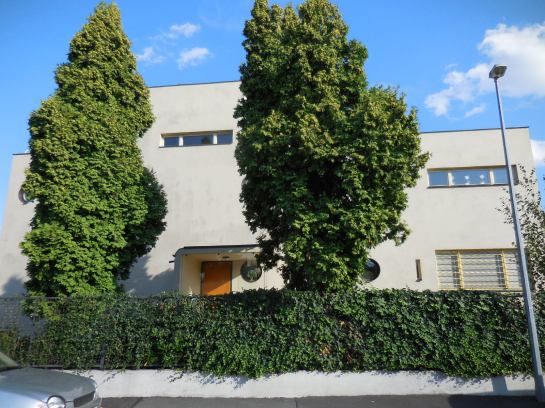
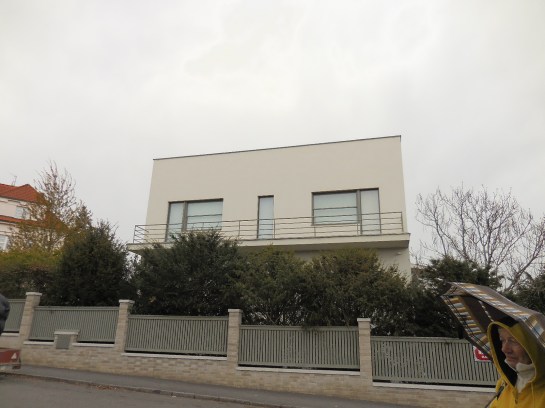
Functionalism and Purism are no strangers to Hanspaulka. In fact, the first functionalist villa in Prague was built in Hanspaulka. The design of this villa was greatly influenced by the works of Le Corbusier. It features a semi-circular balcony and a roof terrace. A former French high school, built from 1930 to 1934, features classrooms lit from both sides and terraces where classes can take place if weather conditions permit. While I admire a variety of styles from Romanesque to Neo-Gothic, functionalism is not my cup of tea. Still, I admire the architectural characteristics of these villas.

Hanspaulka5

The Linhart Villa, the first functionalist villa in Prague

Hanspaulkanew20

The former French school

Unfortunately, not all the buildings are so elegant. One structure was constructed during the early 1950s in the style of social realism, which prevailed under Communism. The two sections of the building have house signs that glorify the working class.

Hanspaulkasocialrealism9

The house sign glorifying the working class, social realist architecture

Demolished in 2014, the Hotel Praha was another eyesore in a style that may appear to fit into the social realist realm but really has Western characteristics. It was built from 1975 to 1981. An exquisite chandelier hung in the foyer, and the terrace offered magnificent views of the city. Until the Velvet Revolution of 1989, the hotel served as accommodation for guests of the Communist government. Now it is a garden that is not open to the public. An international school will be constructed on the premises in the near future.

HotelPraha

The Hotel Praha, now demolished, from Pintarest

Many famous Czech personalities have lived in Hanspaulka – Nobel Prize-winning poet Jaroslav Seifert and actress Lída Baarová, who was Nazi Minister Joseph Goebbels’ mistress for two years while she was residing in Berlin. I recalled discovering Seifert’s poetry as I delved deeper and deeper into my studies of the Czech language, when I was a student at Prague’s State Language School.

LidaBaarovalidovky

Lída Baarová, photo from lidovky.cz

HanspaulkaJuly1715

The villa where Lída Baarová lived – Her sister committed suicide here.

Baarová certainly had led an intriguing life. Hitler ordered Goebbels and Baarová to end the affair and banned Baarová from acting. At a premiere of one of her films in Berlin, paid moviegoers shouted insults at her, and the screening had to be cancelled. Baarová could not take it anymore. After having a nervous breakdown, she moved back to Prague and then to Italy. However, the end of the war did not mean the end of her problems. Back in Czechoslovakia after the war, the authorities suspected her and her family of collaborating with the Nazis. Her mother died while being interrogated, and her sister committed suicide. Though she was never charged, Baarová spent a year and a half in custody. When freed, she moved abroad. She died during 2000 in Salzburg. Baarová is buried in Prague.

SmoljakMurderinPCar

Jaroslav Weigel on the left, Ladislav Smoljak on the right, from Murder in the Parlor Car, Divadlo Járy Cimrmana, photo from filmer.cz

I know that the late film and theatre director / actor Ladislav Smoljak, best known for his roles at the Jára Cimrman Theatre, lived in the area because I used to see him with his adorable dog at the local vet.

HanspaulkaJuly17Eliasvilla

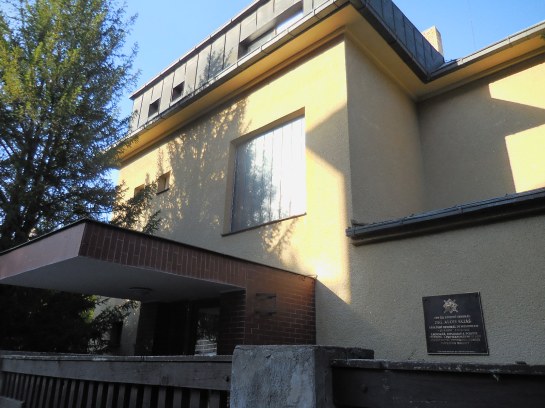
The villa of Alois Eliáš

HanspaulkaJuly17Elias

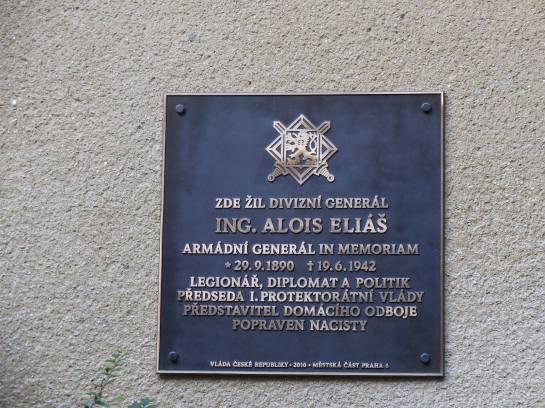
A plaque commemorating Alois Eliáš is situated on his former home.

Czech politician and General Alois Eliáš, who was deeply involved in the resistance movement during World War II, lived in this area. He was executed by the Nazis.

HanspaulkaBurian25

Vlasta Burian’s villa

I was most intrigued by the fate of Vlasta Burian, who had a luxurious villa with a swimming pool, gym and tennis courts in the area.  Burian made a name for himself as a film and theatre actor during the First Republic, which lasted from 1918 until 1939. I have enjoyed watching all his films available on DVD. I admire his comedy for its improvisation, black humor and satire. From 1923 to 1956, he made four silent films and 36 with sound.

PicVlastBurian2

Vlasta Burian, photo from revueidnes.cz

Unfortunately, Burian suffered from manic depression. He also had his share of trials and tribulations. Burian was branded a Nazi collaborator after World War II because he had performed a small role in one radio play spouting Nazi propaganda. During these bleak times, he wound up serving several prison terms, working in the mines and later serving food in a cafeteria, as he wound up destitute. The Communists had taken away all his property and belongings. The authorities confiscated his villa during the 1950s, when the Communists placed a nursery school there.

HanspaulkaBurian24

Plaque commemorating Vlasta Burian on his villa

Burian was rehabilitated in 1994. After the Velvet Revolution, his grandson was given the property and now rents it. The villa is once again luxurious, though without a swimming pool. The tennis courts are still standing. A plaque commemorating Burian was placed on the house in 1998.

Hanspaulka1

Hanspaulka3

Sometimes, when I am taking my walks, I ponder over Hanspaulka’s role in the 1945 Prague Uprising, when the Germans were retreating. One-third of all the German soldiers were housed in Dejvice, the area that includes Hanspaulka, as the Nazis had their military headquarters in this district. German officers occupied many villas in Hanspaulka, taking over those, which had belonged to Jews.

Hanspaulka21

HanspaulkaJuly176Spitalka

On May 4, 1945, Hanspaulka residents were hugging in the streets, rejoicing that the Germans could not win the war. But things were not that easy. The residents cut off important streets from the Germans and put up about 45 barriers in the quarter. At first, they had few weapons, but then they were able to confiscate weapons from 60 German officers whom they arrested. The Czech inhabitants also obtained weapons from German trucks and cars and prevented Germans from escaping. The Nazis had their area headquarters at Hanspaulka’s elementary school, where they stashed their weapons and had their barracks.

Hanspaulka28

HanspaulkaJuly174

Even when Praguers had overcome the Germans in many parts of the city, the fighting in Hanspaulka continued. Germans set fire to houses, pillaged homes and killed Czechs. They fired on any villa where Czechs lived, especially at homes displaying the Czechoslovak flag. While one high school student named Náďa opened her window to see what was going on, the Germans shot her dead. The resistance fighters created a makeshift hospital with 24 beds and four doctors plus 24 nurses. Someone had to guard the corpses piled in an abandoned building on Na Hadovce Street to prevent people from stealing the deceased’s coats, shoes and other clothing. Two of the dead left there were German women who had gassed themselves when they realized their country had lost. In the early morning hours of May 9, the Soviets liberated Hanspaulka and took over the school.

Hanspaulkahostinecumelcu12

A plaque marking the site of a former pub where underground artists gathered under Communism

I would think about how peaceful it is in Hanspaulka now and how chaotic and horrific it must have been during the uprising – villas on fire or pillaged, piles of corpses, Germans shooting at homes displaying Czechoslovak flags. Usually, my thoughts during my walks are not so bleak. I admire the beauty and elegance of the quarter today, and the variety of architectural styles never fails to dazzle me. I take note of the functionalist, Neo-Classicist, Neo-Baroque and Art Deco architecture. I like the Art Deco style best. On the main street there are several quaint cafes with outside seating in the summer, and I sometimes stop there and enjoy the sunshine. During my walks, I also am able to sort out my own problems and feel at peace after a stressful day or week.

More photos to come as the weather becomes more agreeable!

Tracy A. Burns is a writer, proofreader and editor in Prague.
Hanspaulkachapel2

Baroque Chapel of Saint Michael, Na Pernikářce Street

Pilsen Brewery Museum Diary

pilsenbeermuseum1


There are a lot of eclectic sights to visit in the west Bohemian town of Pilsen (Plzeň) from apartments featuring the architecture of Adolf Loos to St. Bartholomew’s Cathedral on the main square to the Great Synagogue nearby. Pilsen’s Brewery Museum is an intriguing sight for beer lovers and for people who want to learn about how significant a role beer played in the history of the Czech lands generally and in Pilsen specifically.

pilsenbeermuseum3

I strongly recommend that you supplement a tour of the Pilsen Underground (see my post about this sight) with a look at this museum. It sure is convenient; both are located in the same building. Also, a tour of the Pilsner Urquell Brewery (see my post about this sight) is a must-see for visitors. The Brewery Museum adds a more general historical perspective to the tour.

pilsenbeermuseum2

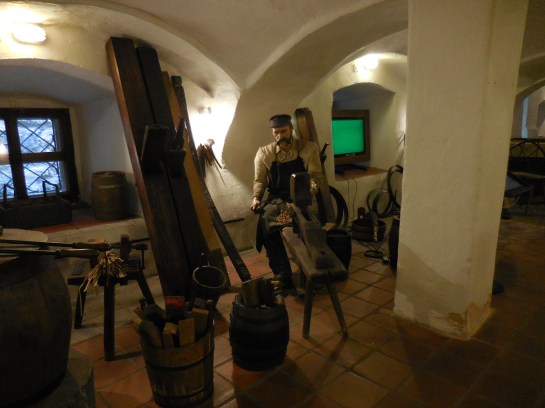
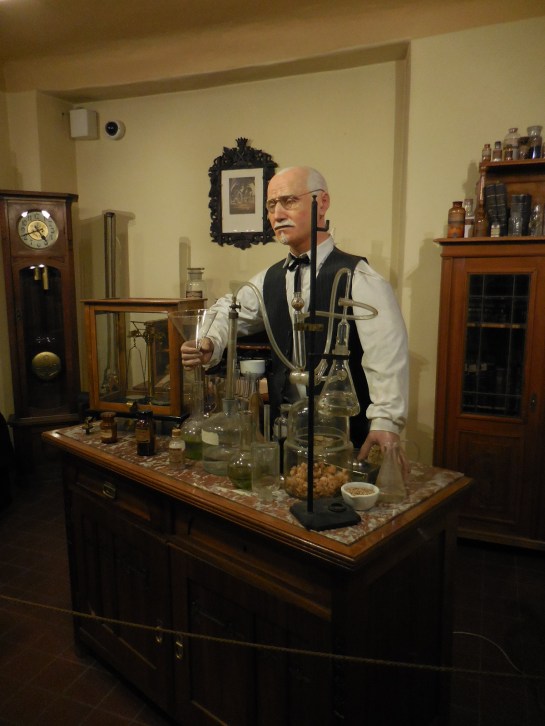
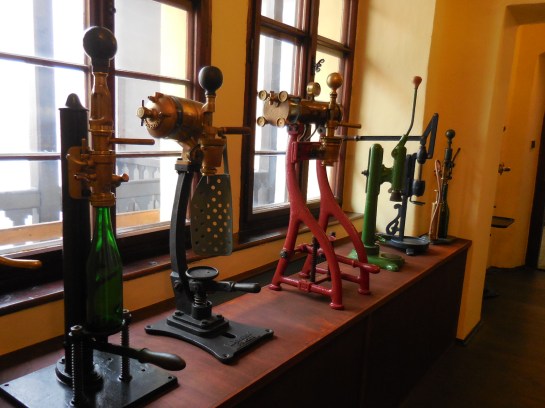
Some of my favorite exhibits at the museum are the displays of beer mugs, glasses and jugs throughout the centuries. The handmade painting and detailed designs are exquisite. Many installations that offer insight into the history of beer as well as panels to read in English.

pilsenbeermuseum26

pilsenbeermuseum27

To prepare for a visit to the Brewery Museum, let’s take a look at the history of beer in the Czech lands. The first beer made in the Czech lands existed even before the Slavs arrived in the sixth century, but it used different ingredients.

pilsenbeermuseum5

pilsenbeermuseum6

The oldest brewery was at Prague’s Břevnov Monastery, which was established in 993, and, by the way, also deserves the attention of tourists. In the 11th century, the Canons of Prague’s Vyšehrad (the name of a hill which included a castle with cathedral) were given the right to brew beer. The oldest document about harvesting hops was drawn up in the 11th century. Czech beer was first exported in the 11th century, when the town of České Budějovice sent its brew to Bavaria and other places abroad.

pilsenbeermuseum15

In the 12th century, the brewing of beer flourished and was a significant part of people’s diet. Women made beer at home, using it not only as a beverage but also as a soup and sauce. That same century the first royal towns received the privilege of making beer, though many did not get permission until the 13th and 14th centuries. In the 13th century, King Václav (Wenceslas) II proclaimed that only townspeople living in royal towns inside the town walls had the right to brew beer. Pilsen was granted this privilege when it was founded, in the late 13th century. Monasteries also were allowed to make the alcoholic concoction.

pilsenbeermuseum17

pilsenbeermuseum20

In the 15th and 16th centuries, a heated conflict between nobles and towns ensued over whether the nobles should have the right to brew beer. They argued over the matter for 33 years, from 1484 to 1517. The nobles won the legal battle, and, as of 1484, nobles, townspeople and monasteries had the right to make beer. From 1517 to 1869, the Saint Wenceslas Agreement (Svatováclavská smlouva) was in effect. It put in writing specific rules for the brewing of beer.

pilsenbeermuseum21

From the 16th century to the 18th century, Pilsen alone had 36 malthouses and 26 small town breweries. At the end of the 18th century, barley and hops replaced wheat as key ingredients. Czech beer was lauded at an international exhibition in Paris during 1837, when the Pilsner Prazdroj and Pilsen town brewery (Městanský pivovar) were recognized for their high quality of beer.

pilsenbeermuseum14

The city of Pilsen has played an extraordinary role in the history of beer through the ages. The most common beer is the pilsner lager, easily recognized due to its golden color and light flavor. Perhaps the most significant date in Pilsen’s beer-brewing history is October 5, 1842, when German beer guru Josef Groll, inspired by Bavarian lagers, invented Pilsner Urquell, which holds distinction of being the first light-colored beer in the world.

pilsenbeermuseum22

Fourteen years later, Pilsner Urquell beer began to be exported abroad, as trains transported it to Vienna on a daily basis. The tasty concoction was introduced to the United States in 1874. Pilsen’s beer-making ability won many prizes, including first place at Prague’s Jubilee Exhibition in 1891. A million hectoliters of beer were manufactured in 1913. The Pilsen brewery became the biggest in all of Europe, and its beer was sold in 34 countries.

pilsenbeermuseum23

pilsenbeermuseum24

Beer-brewing continued to flourish in Pilsen, but then in April of 1945, more than a hundred bombs fell on one of its breweries. It was rebuilt, but in 1946 both Pilsen breweries became the property of the state. That did not impede the breweries from continuing to receive worldwide recognition, though. Pilsen’s beer achieved success after success in the following decades. In 1990 cylindrical tanks were installed. Now Plzeňský Prazdroj can be found in more than 50 countries. It encompasses the Czech beers Pilsner Urquell, Gambrinus, Velkopopovický Kozel, Radegast and others. The enterprise runs four breweries in the Czech Republic.

pilsenbeermuseum30

However, Pilsen is not the only city where beer has a long and impressive history. Take České Budějovice and its Budějovický Budvar beer, for example. The town brewery there was established in 1795, when České Budějovice was  a mostly populated with Germans. Czechs, however, founded the Budějovický Budvar brewery during 1895. The beer had reached worldwide acclaim by 1913.

pilsenbeermuseum32

In the 20th and 21st centuries, Budvar has continued to earn recognition throughout the world. Now it is sold in 76 countries and is especially popular in Germany, Austria and Britain. It officially became known as Budvar beer in 1930. During World War II the Nazis took over the brewery, and, later, with the onset of Communism, the brewery became the property of the state. After the 1989 Velvet Revolution, it was privatized.

Please note that this is not the same as the American Budweiser beer! There are many legal battles over the patent between the Czech brewery and the American Anheuser-Busch brewery, which makes another beer called Budweiser.

While I was at this museum, there was also a small, intriguing exhibition of abstract sculpture inside. Although I rarely drink alcohol, I did not want to pass up the opportunity to familiarize myself with the beer-making success of this city and in the Czech lands.

Tracy A. Burns is a writer, proofreader and editor in Prague.

pilsenbeermuseum33

The Kraus and Vogl Apartments in Pilsen Diary


PilsenLoosBendovaint1I traveled by bus with Regiojet to Pilsen to see two flats designed by Viennese architect Adolf Loos during the first third of the 20th century. I was already familiar with his architecture. Loos had made the Müller Villa in Prague into an architectural gem. When I visited the Müller Villa, I had been fascinated by the contrast of the spartan exterior and luxurious interior. Loos’ use of rare woods also greatly impressed me. I liked the symmetry and the harmony of the spaces in the Müller Villa. The Japanese theme in the Winter Dining Room entranced me, too.

This tour included two flats – the one that Loos designed for the Kraus family at 10 Bendova Street and the apartment in which the Vogl family had resided at 12 Klatovská Street. Luckily, Bendova Street is within walking distance of the town center. You can almost see the Great Synagogue from there. I stood in front of the building on Bendova Street. It looked like a typical apartment building in the city, but, of course, Loos did not design the exterior – only one flat inside.

PilsenLoosBendova1

Soon it was time for the tour to begin. Facing me was a huge black-and-white photo of Loos. He was holding headphones because he was hard of hearing. He wore a pearl in his necktie. I was familiar with Loos’ background. Born in Brno, he received Czech citizenship thanks to Czechoslovak President Tomas G. Masaryk. Loos had lived in Vienna, the USA, Paris and Dresden, among other places. He had finished his studies in the Czech lands. Loos admired classicist modern architecture, which stressed simplicity and symmetry. His style was influenced by the architecture of ancient Greece and ancient Rome. Trademarks of Loos’ creations included a lack of decoration on exteriors, a penchant for symmetry and the use of expensive materials such as stone, marble and various types of wood. The Viennese architect had had a close relationship with the city of Pilsen. He designed no less than 13 interiors there, though only eight have been preserved. Four of them are open to the public.

PilsenLoosBendovaint3

The flat at Bendova 10 was commissioned by chemist Vilém Kraus, who lived there with his wife and two children. Loos worked on the project in 1930 and 1931. The family would not live at this address for long because they were of Jewish origin, and the Nazis took over in 1939. Gertrude and the children were sent to a concentration camp, where they perished. Vilém, however, survived World War II. After the war, the Communists confiscated the flat, so he moved to Britain. During totalitarian times, the flat was divided into three sections for three families, and part of Loos’ design was destroyed.

PilsenLoosBendovaint2

The guide led us into a space divided into the dining room and the living room. There were two mirrors opposite each other in the long space. They created a multiplying effect. I felt as if I was in the room full of mirrors at Lindenhof Palace in Bavaria. I had a feeling of being watched and of spying on others at the same time as I saw reflections of myself and the other participants of the tour. It made me self-conscious and paranoid. I found the mirrors to be jarring. Two pilasters made of rare marble flanked the mirror in the dining room. This feature reminded me of the living room in the Müller Villa, where Loos utilized two marble pilasters. The living room of the Müller Villa also had been divided into parts.

PilsenLoosBendovaradiator

On the other side of the room, a fireplace played a central role. In the living room of the Müller Villa, there had been a fireplace as well. There was a mirror above the fireplace, and I noticed the white and green marble decoration. Typical for Loos, there was no ornamentation. His design emphasized the beauty of the materials, in this case, the marble used in the room. The ceiling also appealed to me. It was made of dark mahogany.

In the hallway a closet opened to reveal three sections where dirty laundry could be placed. I thought that the device was efficient and rational. We went into another room dominated by light blue wallpaper on one wall. It added a vibrancy to the small space where pictures of Loos and the apartment were on display. The wallpaper was not original, though. I noticed the bright red radiator. In the Müller Villa Loos had also had the radiators painted red. He wanted them to be visible instead of hidden.

PilsenLoosBendovawallpaper

In the bedroom the desk and closet were made of Finnish birch wood. The closets had drawers and hooks for hats. I remembered the moveable drawers and hooks in the closets of the men’s and women’s bedrooms in the Müller Villa. These were details that Loos often employed. In a side panel below a window, there was a safe. The bed was blue, and I wondered if it had been this color when the Krauses lived here.

Soon the tour ended. I was surprised that the flat was so small. I had been expecting something on a grander scale. Still, I was intrigued by Loos’ design, especially by the use of rare materials and mirrors.

PilsenLoosint11

Our group then walked about five minutes to 12 Klatovská Street. Again, the exterior of the building was nothing special. The two preserved rooms in this flat turned out to be located amidst a labyrinth of offices. Originally, the interior had been furnished for businessman Otto Beck, but when he moved out, the new tenant, Josef Vogl, wanted Loos to make adjustments because the dentist needed a section of the flat for his practice and another part for his family. It was Loos’ job to harmonize the two sections. In 1928 and 1929, Loos designed a waiting room and an X-ray room in addition to the doctor’s office. During the Second World War, the apartment was turned into offices. Unfortunately, the part of the flat used for Vogl’s practice was destroyed. The bedroom and children’s room are no longer visible, either. The family did not return after the war, and then the spaces had been used for administrative purposes.

PilsenLoosint14


We did, however, have the opportunity to see the living room and dining room, both of which greatly intrigued me. One room was divided into a study with a desk and chair and a living room area with a floral-patterned couch and various chairs, each one unique. I recalled the chairs in the living room of the Müller Villa. There, too, all the chairs had been different, and each one had been extraordinary in some respect. I especially liked the low armchair, and I recalled the low armchairs in the Müller Villa. Another chair that fascinated me was the tiny one on which only a small child could sit. It was a copy of an Egyptian chair from a museum in London.

PilsenLoosintfireplace

Marble pilasters flanked a fireplace made of red brick. Again, I noticed that the fireplace played an important role in Loos’ design. The walls were decorated with Japanese woodcuts. After Loos had visited the Chicago World’s Fair, he had become intrigued by Asian art. I recalled the Japanese lantern light and other Asian elements in the Winter Dining Room of the Müller Villa. There were even a few Japanese lantern lamps here, too. The room boasted symmetry, one of the features of Loos’ creations that appealed to me the most.

PilsenLoosintdiningrm

The dining room was a different, though no less intriguing, story. The yellow travertine walls gave it a warm orange color that I liked. I recalled that travertine had been one material used in the Müller Villa, too. Mirrors dominated the space, set above a long counter on the back wall. A big conference table took up most of the space. The dining room in the Müller Villa had been dark; this room was light and airy. The mirrors blended in with the rest of the design in this space. I did not feel awkward.

PilsenLoosintchair2

I liked the design of these two rooms more than I had liked the Kraus’ apartment, although I appreciated the unique and daring features in both flats. In the Vogl family apartment, I felt as if I could sit at the desk in the study and write or lie down on the couch and read. The space was comfortable and appealing. Even though the Vogl family apartment was now only comprised of two rooms, those spaces had a lot to say.

PilsenLoosintchair4

I left Pilsen, vowing to return to see the two other flats that Loos had designed in this city. I would recommend this tour to anyone interested in architecture and to anyone who had enjoyed visiting the Müller Villa.

Tracy A. Burns is a writer, proofreader and editor in Prague.

PilsenLoosintlamp


The Historical Underground of Pilsen Diary

PilsenPodzemi8

When I bought my ticket to visit the underground cellars below the center of Pilsen (Plzeň in Czech), I thought the tour would be interesting. However, I had no idea it would be fascinating and one of the highlights of my many trips to this dazzling city in west Bohemia. The ticket office was at the entrance to the Brewery Museum, which I also visited and found intriguing, even though I rarely drink alcohol.

Admittedly, I wasn’t a big fan of visiting underground areas, and I admit that I was a bit scared for my safety when I had to put on a hard hat. It turned out that there was no reason to be afraid. The corridors were not wide but provided enough room for one person to walk through. I can at times feel a bit claustrophobic, but I did not have a problem there. In some parts in caves I had visited, I had been squashed between rock formations, and the paths had been very tight.

PilsenPodzemi1

The guide explained that we would explore 800 meters of the underground area, though the cellars were actually much more extensive. The passages can be traced back to the early 14th century. They were built soon after the founding of the town by the first houses that had obtained the right to brew beer. The cellars served various purposes. Food was stored there, and beer was brewed in the underground areas. During sieges of the city, inhabitants took refuge in this labyrinth. The passages also became important parts of the city’s defense system. In addition, during the Middle Ages, the pubs above the passages were ordered to close at a certain hour, and the establishments carried on serving beer in the cellars after hours.

The eloquent guide told us the different eating habits of the poor and the rich during the Middle Ages. Poor people used ceramic tableware and ate mostly vegetarian food because meat was too costly. Birds and fish made up part of their diet. The wealthy, though, used glass, metal and silver tableware and ate a lot of meat and spices. They ate with their hands, though they used knives when eating meat. The well-off citizens refused to use forks because they thought they resembled pitchforks and were bad luck.

PilsenPodzemi2

I saw beautiful tiles from stoves constructed in the Middle Ages. One that caught my fancy showed Saint George fighting the dragon. I also saw an exquisite decorated water pot from medieval times.

The guide talked about the three symbols on Pilsen’s coat-of-arms – an angel, a camel and a greyhound. I loved the story about how the camel came to be one of the city’s symbols. During the Hussite wars, the Hussites attempted to overtake the city four times, but never prevailed. The Hussites tried to frighten the inhabitants of Pilsen with a camel. However, their plan backfired in a major way. The inhabitants liked the camel so much that they put the animal on their coat-of-arms. In the end, the Hussites left, defeated. The camel stayed.

Pilsensculpture3

The guide also explained that the three golden fountains of contemporary art on the main square stood for the three symbols of the city. The T-shaped fountain stood for the angel while the F-shaped one represented the camel. The Greek letter stood for the greyhound. I was captivated by the three fountains, though I had not understood what they symbolized. Though contemporary, they fit in well with the medieval atmosphere of the main square dominated by the Church of Saint Bartholomew. I was impressed that they by no means take away from the square’s historical charm.

Pilsensculpture6

I also saw samples of ceramics from the 14th to the 17th centuries. Two objects that caught my attention included a unique 16th century sieve and a piggybank from the 17th century. I was intrigued by the many wells – we saw 20 of them!

When we reached one point, the guide told us that we were standing under a house that once printed books in Pilsen. The first book published in Pilsen hailed from 1468. I also was intrigued with a pair of very pointy shoes, often referred to as poulaines. They looked very uncomfortable. I did not understand how someone could squish up his or her feet into those shoes. How would it be possible to walk in them? During the Middle Ages, very pointy shoes were a sign of wealth. I recalled that they had been particularly fashionable in France during that era, as evidenced by The Book of Hours. The pointier your shoes were, the richer you were.

PilsenPodzemi7

There were many guilds during the Middle Ages, including a guild of manufacturers of tiled stoves. I saw many examples of tiles from stoves during the tour. Emperor Rudolf II lived in Pilsen for one year when the plague was ravaging Prague, and the inhabitants presented him with a tiled stove to show their appreciation that he had chosen their city as his temporary residence.

I saw some cannonballs used by the Hussites. They weighed 200 kilograms each!  The cannonballs were able to demolish the first town wall, but they did not destroy the second wall. The inhabitants of the city threw the cannonballs back at the Hussites, foiling their enemy’s plan.

A functioning water wheel fascinated me. It was a replica of one that dated from 1532. I also saw remains of a water town hailing from 1847. It had played a role in the town’s defense system. Emil Škoda, an entrepreneur who set up the Škoda factory that would play a major role in European industry during the 19th and 20th centuries, was born in the water tower on November 19, 1839.

PilsenPodzemi3

The 2002 floods had made their way to Pilsen. A sign showed the high level the water reached on August 13 of 2002. The entire underground had been immersed in water. I recalled my personal experience with the floods for a few moments, lost in thought.

During 2002, devastating floods ravaged the republic. I was in Slovakia at the time, so I did not witness them first-hand. Even though the house where I lived in Prague was on a hill, there was significant water damage because we had had no roof because it was being repaired. There was only a protective covering. Rain from the downpours seeped into my flat. I came back to find some of my clothes ruined and mold on the walls. My cat was traumatized. Luckily, my books were all dry. Living through the aftermath of the floods was one of the most difficult times of my life in Prague, where I have lived for 23 years.

When we reached the end of the tour, I was enthusiastic and bewitched by the information I had learned about the Middle Ages and the history of Pilsen. The objects I had seen during the tour were very intriguing. I thought the tour was organized well. I had taken the tour in English because that was the one offered at the time I was able to visit, and the guide had an excellent command of the language and a talent for communicating effectively.

PilsenPodzemi6

I am convinced that the underground tour should not be missed when tourists are visiting Pilsen. It is a must-see. When you come back above ground, you understand how the Middle Ages affected Pilsen and have a greater appreciation for the city.

I left Pilsen for Prague about an hour after the tour, and I was certainly more than satisfied with my day trip.

Tracy A. Burns is a writer, proofreader and editor in Prague.
PilsenPodzemi9

Leipzig Diary

Leipzigftn1

A fountain in Leipzig

When I saw that arsviva offered a day trip to Leipzig, I jumped at the opportunity. I had no idea what to expect, but I had enjoyed their day trips to other places in Germany, such as Nuremberg and Bamberg. Besides, our guide would be one of the best I had come across. With a specialty in architecture, she also had led the thrilling tours of Jan Blažej Santini-Aichel’s creations.

There were many things that awed me about Leipzig. The first and foremost, was, indeed, the architecture – how the modern and historical styles did not clash but rather provided a sort of artistic harmony.

Leipzigstatue3

A contemporary statue in downtown Leipzig

The guide told us about the history of the city, and I had read about Leipzig’s trials and tribulations before the trip. During the seventh century, Leipzig got its name from the Slavic Lipsk, which means “a settlement where the linden trees stand.” The town was first mentioned in writing during 1015. It was founded in 1165, soon gaining a reputation as a trade center. The beginning of the 15th century changed the character of Leipzig, as a university was established here, and it became a prominent center of higher education. Goethe and Nietzsche had studied here.

LeipzigOTHallint27

A beautiful book published in Leipzig

The Leipzig Book Fair, the second biggest book fair in Germany, has its origins in the 17th century. Book publishing took off in Leipzig during the 18th century and continued to play a major role until World War II, when the Graphic Quarter was mostly destroyed by bombs. The Battle of Nations in the 19th century took place near Leipzig. The 1813 ordeal pitted Napoleon’s France against the Prussians, Austrians, Russians and Swedes. The allied nations came through victorious, and Napoleon had no choice but to leave Germany. We would visit this monument later in the day.

LeipzigOTHallint40

This painting from the Museum of City History shows the destruction during World War II.

The city became part of the German Empire in 1871, and the years before World War I were rosy. Then, after the war, the Weimar Republic was established, though short-lived. In 1933 the National Socialists took over, and Hitler’s reign of terror would continue until the US army freed the city on April 18, 1945. Then in July of that year, the Americans handed the city over to the Soviets. The totalitarian regime that was called the German Democratic Republic or East Germany existed from 1949 to 1989, when Communism was defeated in Germany in part thanks to the citizens of Leipzig and their demonstrations. Today more than 40,000 students vie for degrees in Leipzig, a truly university town. Leipzig was coined the “City of Diversity” by the German government in 2008.

Leipziguniv2

Gothic and modern architecture in a university building

The Augustusplatz, spanning 40,000 square meters, was a wonder in itself. The Gewandhaus, where the symphony played, and the Opera House took me by surprise, as I usually was not so enthralled with modern architecture. I took special note of the Paulinum, where the current structure resembled a former church that was destroyed by the Communists on this site in 1968. The 2012 creation really brought a sense of unity to modern and historical styles.
Leipzigtower1

The first high-rise in Leipzig

I also was enthralled with the first high-rise building in Leipzig, an 11-storey edifice constructed in the 1920s. Its design was inspired by the clock tower at St. Mark’s Square in my beloved Venice. For a moment, I mentally went eight years back in time and recalled winding through the empty, romantic streets of Venice on a Sunday at seven o’clock in the morning. The experience was magical, to say the least. In the present again: The tall Leipzig building was topped with a ball that showed the phases of the moon and a sculpture of a man ringing a bell. The German words for “Work overcomes everything” stood out on a gable.

LeipzigOTHallint35

From the Museum of City History exhibition of the modern era

We also spent some time in the train station. No, we were not going anywhere by train, but rather we were admiring the masterful technical achievement that consisted of two entrance halls and two waiting rooms plus 25 platforms. In the early 20th century, this transportation hub ranked as the largest main train station in Europe after the architects transformed four stations into one. It made Prague’s main station look so tiny. I always felt a sense of excitement in train stations. I thought of the many trips I had taken by train. Prague’s train stations were starting points for what turned out to be superb experiences during which I became acquainted with an intriguing part of the country and also, most importantly, got to know myself better. The trips to Olomouc, Liberec, Turnov –  each journey provided me with insights about the external landscape as well as the internal landscape of my mind.

LeipzigStNicholas1

A postcard of the Church of St. Nicholas

Unfortunately, it was not possible to take photos in the Church of St. Nicholas, the largest church in Leipzig. I tried to imagine October of 1989 in the church, when citizens crammed inside, protesting against the totalitarian regime and creating a path for democracy. The people of Leipzig really had made a difference in the so-called Peaceful Revolution, and this had been where it all began. On Mondays, ever since the early 1980s, prayers for peace were held here, too. I wondered when there would be peace in the world, if ever. So many tragedies, so much violence rocks the world today. The world was the most dangerous it had been during my 46 years on this earth, I mused. And it only seemed to be getting more and more dangerous day-by-day.

LeipzigStNicholas3

From a postcard of the Church of St. Nicholas

I admired the architecture of the impressive church. Although originally constructed in Romanesque style during the 12th century, it was transformed into a Late Gothic structure boasting three naves during the first quarter of the 16th century. Three steeples boast Baroque decoration. Now the prevailing style of the interior is classicist, a characteristic that the church took on in the late 18th century. I loved the palm tree capitals on the stately columns most of all, especially the pink and green colors. The pillars made the church appear even more lively. It was not just an architectural masterpiece with a past, but it felt like a masterful design with a present, too. I tried to imagine Bach performing here, as he has served as organist from 1723 to 1750. I tried to imagine Martin Luther preaching here as churchgoers became familiar with the Reformation. It was a profound experience, standing there, gazing at the gem of an interior.

LeipzigchurchStTomas1

The Church of St. Thomas

You could not miss the Bach monument in front of the Church of St. Thomas, which was constructed in 1212 as a monastery church for Augustinians. By 1355 the Romanesque structure had been transformed into Gothic style. Now it has a Late Gothic character with a late 15th century appearance. Real hair adorns Jesus’ head on a 16th century crucifix. The church holds the distinction of having one of the steepest gable roofs in the country.

LeipzigchurchStNicholas4

The ceiling of the Church of St. Thomas

The interior got a Neo-Gothic makeover during the revolutionary years of 1848 and 1849. Still, there were elements of the church that were much older than that. I saw a triptych altar from the 15th century, for instance, and even some Romanesque traits remain on the exterior. I especially liked the stained glass windows. Many people come here to pay homage to Bach, who worked as cantor here from 1723 to 1750. His grave is located in the choir.

LeipzigchurchStNicholas6

The stained glass windows at the Church of St. Thomas were extraordinary.

We also saw a modern church, built only several years ago. The interior was so sparse and minimalistic. There was a large wooden cross on one wall, and on the opposite wall another big cross was made of glass. I preferred Baroque and Gothic churches, definitely, but there was a profound sense of harmony in its simplicity. It ranked as an architectural gem in my book, though it was not my preferred style. There was something special about seeing this space stripped of frivolous decoration.

Leipzignewchurchint1

Leipzignewchurchint3

Built from 1899 to 1905, the New Town Hall was another gem, purposefully reminiscent of Florence’s Palazzo Vecchio. With an area of 10,000 square meters, it is one of the biggest town halls in the world. The tower reaches a height of 1,147 meters, making it the highest town hall tower in Germany. It was a pity there was not more time to spend examining this building, but we had a lot to see. The town hall fountain featuring creatures from fairy tales and a figure of a young boy playing a flute was a gem.

LeipzigRadnice1

The New Town Hall

I was drawn to Klingerhaus, the birthplace of the 19th century Symbolist painter, sculptor and writer Max Klinger. I did not know much about Klinger, except that he had been influenced by Goya’s art. I recalled gazing in awe at Goya’s paintings in the Prado and at the artist’s drawings in the small, quaint contemporary art museum in Passau. I liked the Renaissance architecture of the building. I was particularly enthralled with the red gables and oriels that made the building look so dynamic.

Leipzigbldg

Klingerhaus

We walked by Auerbach’s Cellar, a tavern Goethe had frequented and the inspiration for a scene in Faust. We went into the Mädler Passage, an arcade building that reminded me of another arcade structure in Naples. It was modeled after the Galleria Vittorio Emanuele II in Milan from 1912 to 1914 and boasted a central rotunda. A Glockenspiel of Meissen china charmed audiences on the hour.

LeipzigOldTownHall2

The Old Town Hall

I ate a hearty lunch in a narrow Baroque court teeming with restaurants and cafés – there were over 30 of them, in fact. Then I made my way to the Old Town Hall across the square. The first Renaissance hall in Germany, it was constructed in 1556. It was heavily damaged by bombing during World War II but rebuilt. The city administration worked here until 1905, and soon afterwards the Museum of City History opened in the impressive space. Shops were situated amidst the lovely arcades. I loved the gables and tower clock.

LeipzigOTHallint1

The interior of the Old Town Hall

At the Museum of City History, I learned that the history of Leipzig is, in effect, the history of Germany and former East Germany. A remarkable exhibition of modern history from the revolutionary years of 1848-49 to the present enthralled me. Rarely have I been so enlightened and moved by an exhibition. Citizens were not satisfied with the political situation in 1848 and revolted, hoping to gain a constitution for Germany, among other goals. But it was not to be. The city became a central point for the German labor movement, German social democracy and women’s movement from the 1850s to 1871, when the German Empire was founded. Jewish fur traders flocked to the city, and their businesses flourished. Indeed, before World War I Leipzig was thriving.

LeipzigOTHallint19

The interior of the Old Town Hall

From 1918 to 1933 Leipzig found itself in the Weimar Republic, an era that had to deal with the political and economic issues that followed the war. Yet Leipzig experienced the Roaring Twenties, and when things turned for the worst, the Great Depression of 1929. Then, in 1933, the National Socialists took control. The city was subject to much bombing during the war, and forced laborers toiled in the city during the war. US troops liberated Leipzig in April of 1945, but in July the Americans turned over the city to the Soviets. The German Democratic Republic was established in 1949, as Leipzig then became part of the totalitarian East Germany. Companies were nationalized, and cheaply built housing estates cropped up. Before the Berlin Wall was built in 1961, thousands of citizens escaped to the West. At the end of the 1980s, more inhabitants made it to the West. During the 40th anniversary of East Germany, the state employed violence to repress demonstrations. The Peaceful Revolution began on October 9, 1989, and the Leipzig protests would play a major role in the collapse of the Communist regime. In 1990, after 58 terror-ridden years led by dictators, democratic elections were held in Leipzig. There was much construction, and Leipzig earned the nickname “the Boomtown of the East.”

LeipzigOTHallint36

From the Museum of City History exhibition about the modern era

The exhibition also focused on book publishing in Leipzig, which played a major role from the 18th century up to World War II. Until 1945, the biggest book fair in the world took place in Leipzig, and now the city hosts the second largest book fair in Germany. The exhibition also concentrated on Leipzig as a city of music, mentioning Bach, Mendelssohn, Schumann, Grieg, Wagner and others who greatly influenced the town.

LeipzigOTHallint38

From the Museum of City History exhibition of the modern era

There were many places in Leipzig that I did not have time to explore. For instance, I would have loved to have visited the museums in the former houses of Mendelssohn and Schumann. I longed to see the richly decorated facades of buildings on the Brühl, where, at the turn of the 20th century, 700 fur companies had been located. I would like to linger in the Baroque Coffee Baum, where famous musicians had once gathered. The Memorial Museum, at the site of the former State Security forces, would certainly allow insights into the terror-ridden years as part of East Germany.  There are other museums that I wanted to visit as well– the Grassi Museum of Applied Arts and the Museum of Fine Arts are just two examples.

During my day in Leipzig, I gained so much knowledge about life in the city and in Germany, especially from the middle of the 19th century to the present. I was won over by the architecture, both modern and historic. I left Leipzig, knowing I had to return in the not-so-distant future. Its strong impression will forever be stamped in my memory.

Tracy A. Burns is a writer, proofreader and editor in Prague.