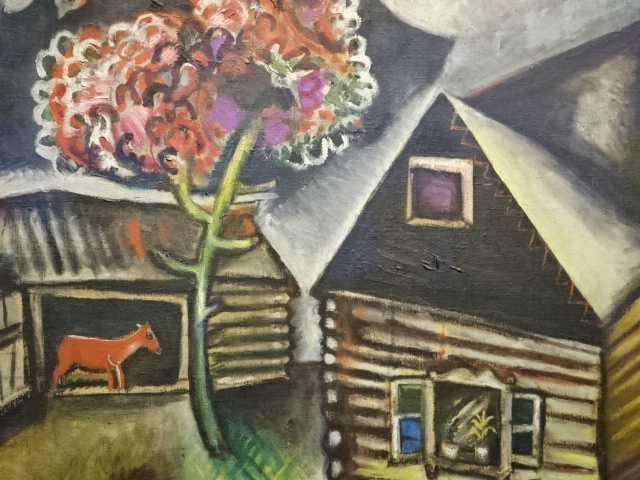
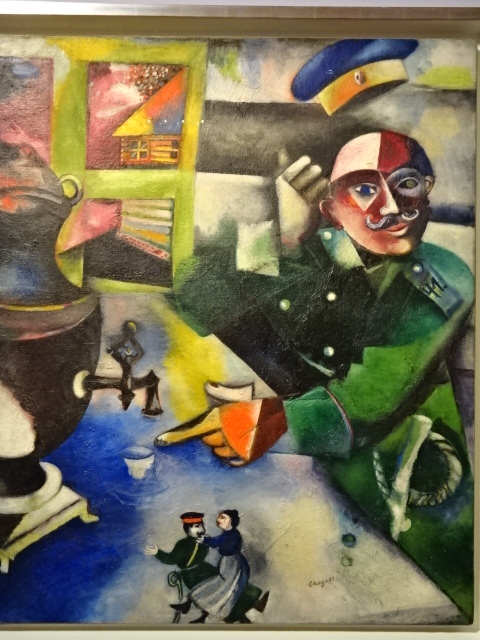
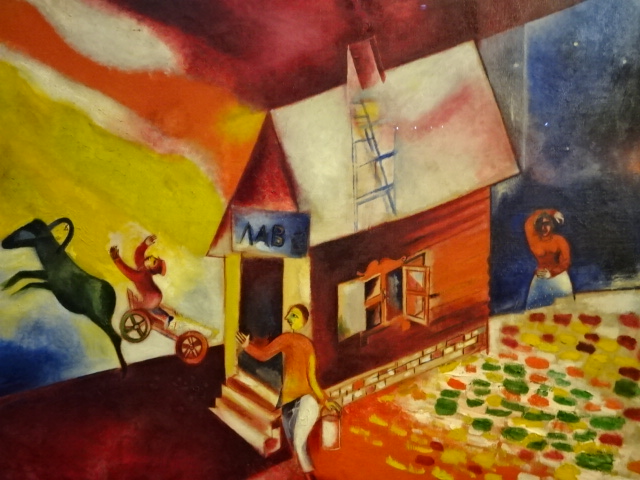
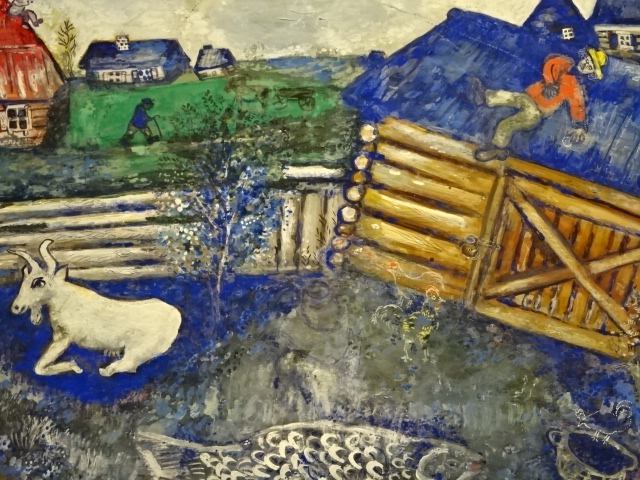
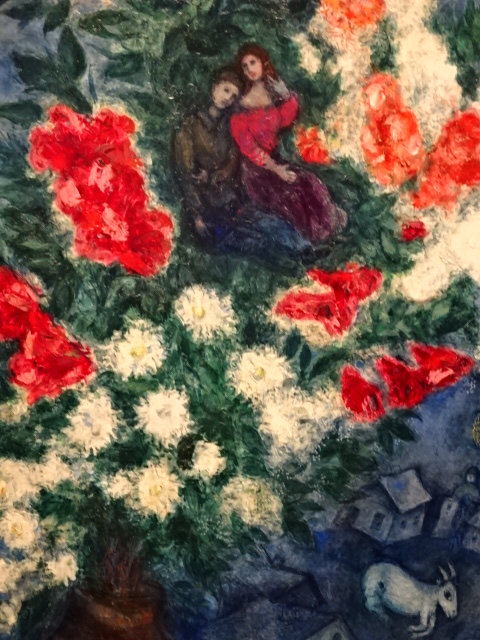
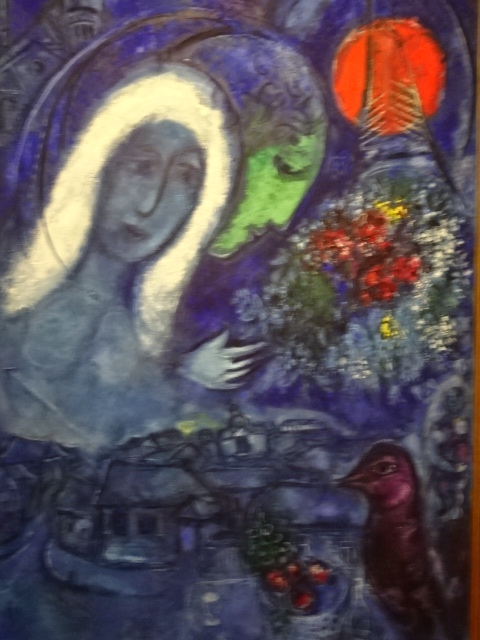
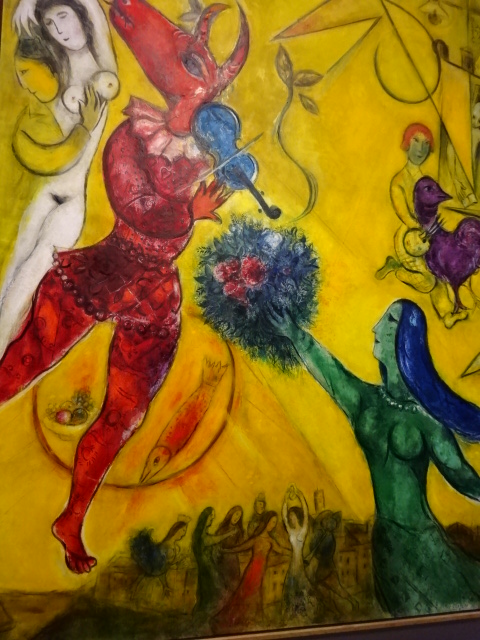
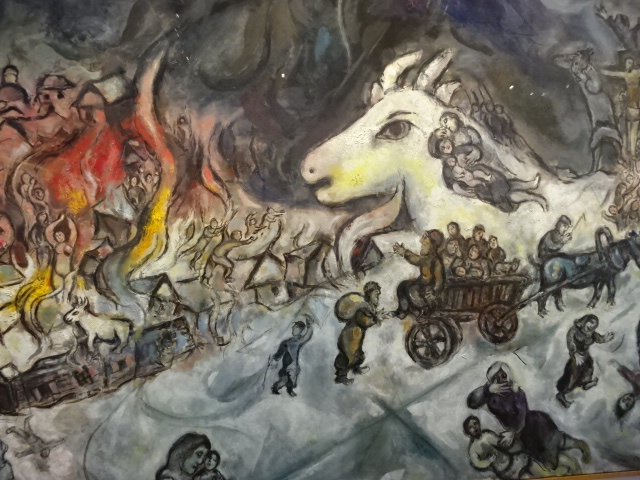
I admired Marc Chagall’s works at the Albertina venue in Vienna, Austria during late October of 2024. I have always loved going to exhibitions in the Albertina. I recalled a comprehensive show of works by Durer at that venue some years ago. A long-time fan of Chagall, I loved his use of bright colors and atmosphere of playfulness in his paintings that had a dreamy, fantasy-filled quality. I was enamored with his mastery of color to express various emotions and to create new worlds. I loved his renditions of Paris, the Eiffel Tower often dominating his creations.
Before this show I hadn’t realized how strongly his Jewish background had influenced his art. Chagall’s paintings were punctuated with Jewish folklore and motifs. I saw a painting of a synagogue and portraits of rabbis, for instance. Many paintings boasted biblical themes. I also hadn’t realized how often he had rendered his hometown, both sadness and joy intermingled in the memories. His yearning to return to his hometown was extremely visible in his art.
The symbolic nature of his artistic creations also enamored me as I noted the many violinists, animals, half-human creatures, wooden houses, circus characters, roosters and floating married couples as well as beautiful floral arrangements. Because I had visited an exhibition in Prague’s Wallenstein Riding Stables about the interwar years of the École de Paris movement, I knew he had been associated with that era during his Paris sojourn.
The exhibition allowed me to become better acquainted with the artist’s life. Marc Chagall (1887-1985)was born as Moishe Shagal on July 6, 1885 into a Hasidic Jewish family in Vitebsk, located in today’s Belarus. During the late 19th century the town was situated in the Russian Empire. His impressive, varied resume includes paintings, drawings, book illustrations, ceramics, prints, tapestries, stained glass and stage sets, but this vast exhibition focused solely on his paintings.
While he spent World War I in his hometown, he went to Paris before the war broke out, moving there in 1910 when he was 23 years old. In France he made friends with Guillaume Apollinaire, Ferdinand Léger and others creating avant-garde works. He often depicted Jewish themes and also evoked Paris in many paintings. During World War I, back in Vitebsk, he married Bella and held exhibitions in Russia as the war made it impossible for him to leave the empire. He founded an arts college in his hometown, too. However, he was in dire financial straits during the Russian Civil War. After World War I, much of his work was Moscow-based.
Following the Bolshevik Revolution, he moved to Paris for the second time, but fled during World War II after the Germans took control of France. The Nazis in occupied France took away Chagall’s French citizenship, and he and his wife were arrested. However, with the help of others, he and his wife found a way to escape to the USA. He felt like an outsider and didn’t speak English.
While he was in New York City, tragedy struck his hometown of Vitebsk, which was destroyed by the Nazis. Things would get even worse. Bela passed in1944 because it was not possible to get her any penicillin. It was no surprise then that Chagall’s late spouse appeared in many of his paintings. In 1948, though, he returned to Paris, and there his paintings focused on Jewish themes and his yearning for the existence of his hometown. Also, he would marry two more times.
He devoted much time to other fields as well. Some of his accomplishments included creating stained glass decoration in the cathedral in Reims and at the Art Institute in Chicago. He also made stained glass adornment for places in Switzerland and Israel. He became even better known for his ceiling painting of the Paris Opera. I remembered gazing in awe at this ceiling several decades ago. It was an experience I will never forget, even though I saw it so long ago. He also made sculpture and ceramics as well as tapestries.
Chagall died at the age of 97 on March 28, 1985 at the age of 97. He is buried with his third wife in a cemetery in Saint Paul-de-Vence, located in the Provence region.
Tracy A. Burns is a writer, proofreader and editor in Prague.
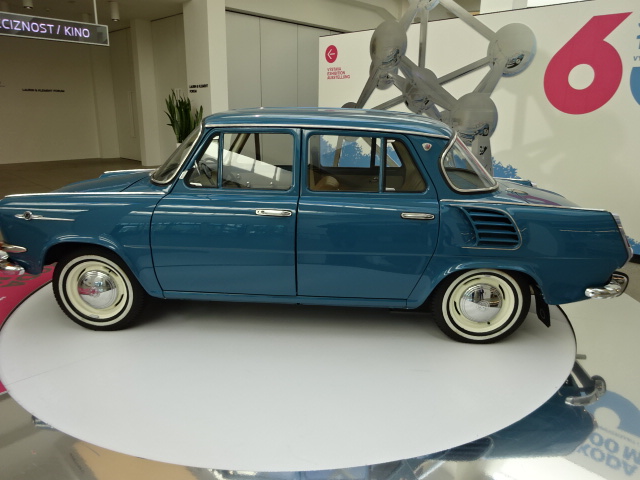
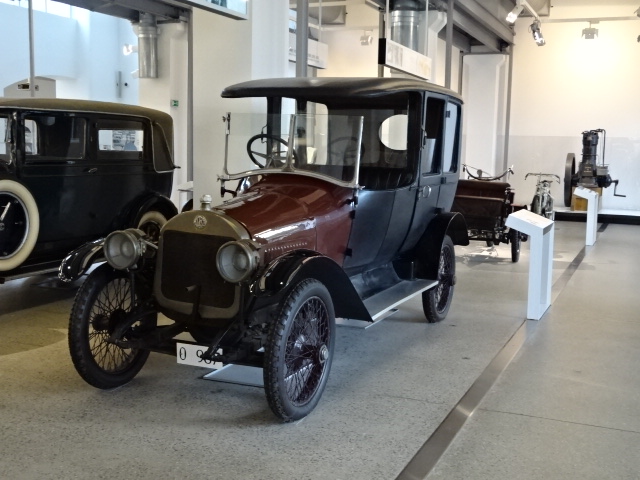
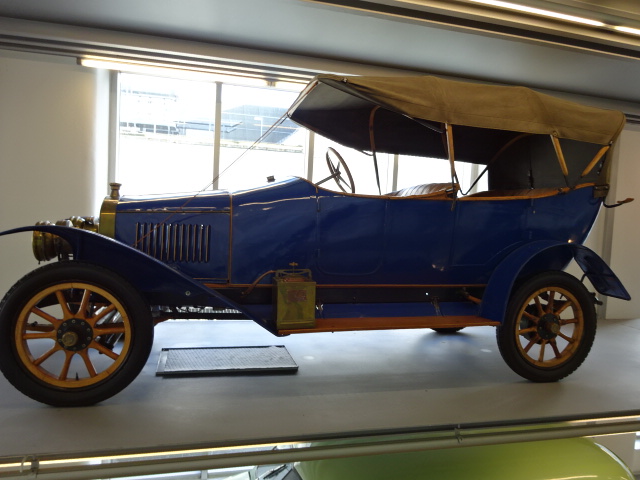
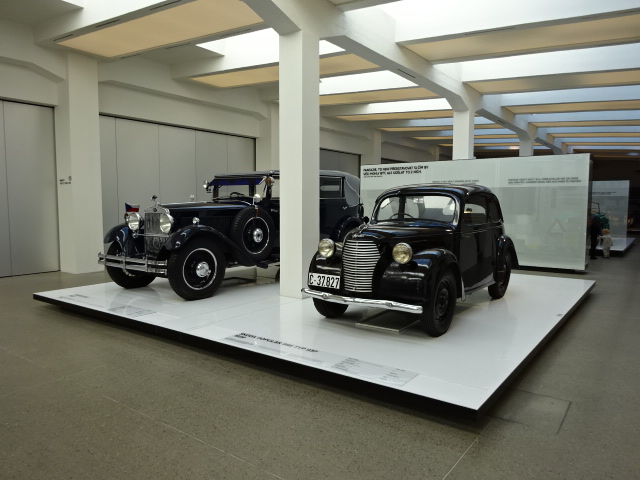
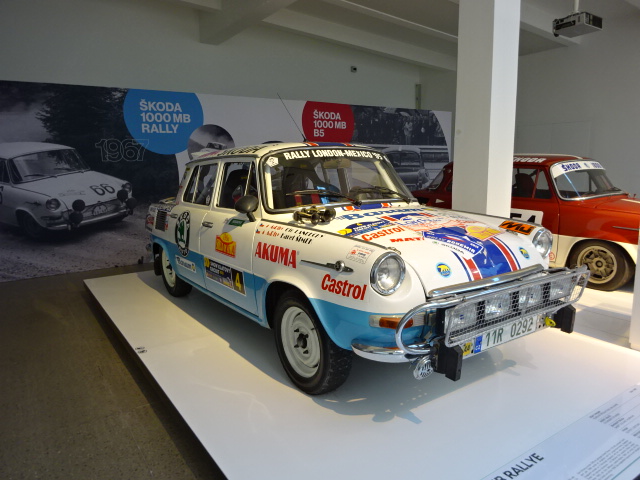
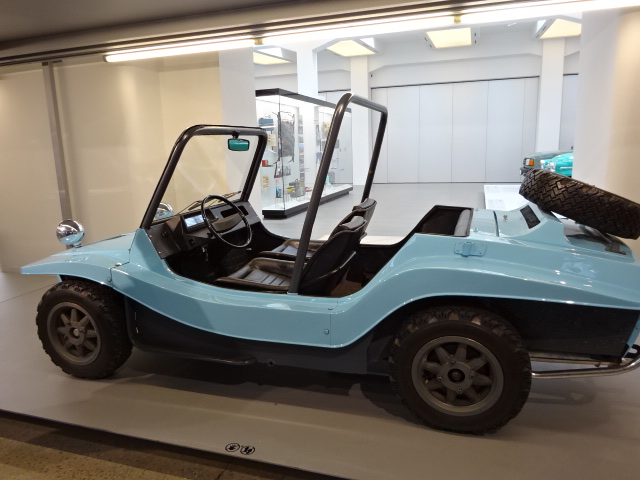
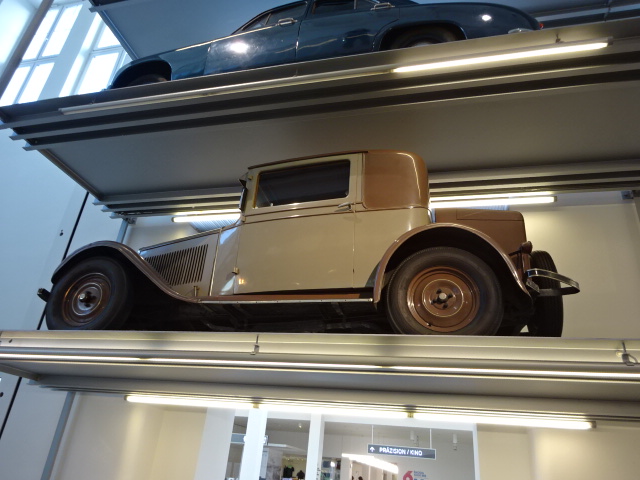
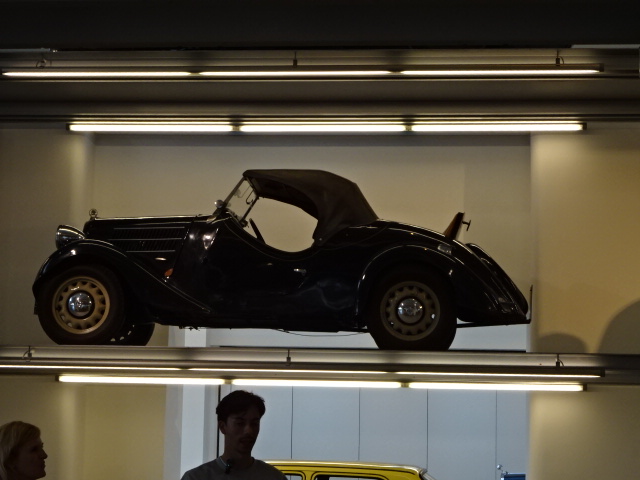
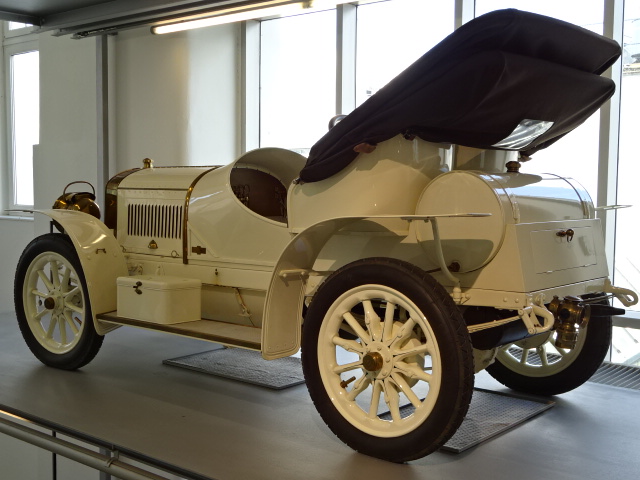
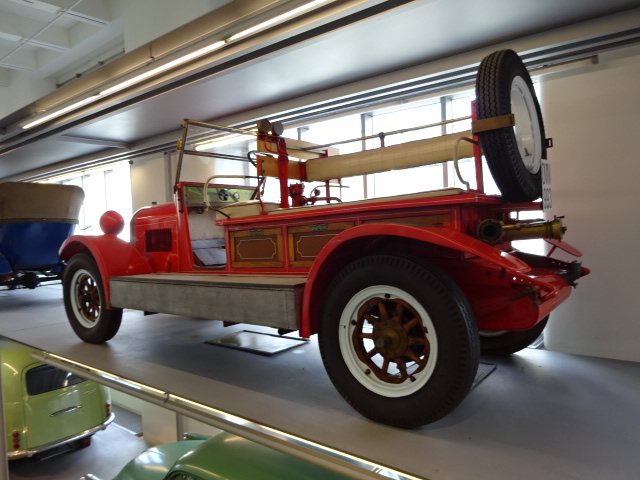
While visiting Mladá Boleslav, a town about 70 kilometers from Prague, I saw many automobiles from various eras in the Škoda Museum, named after a popular Czech car manufacturer that is renowned world-wide. When I walked into the former production halls of the automobile maker, I didn’t know what to expect. I had never been to a museum featuring cars – stagecoaches yes, but cars no. I didn’t have a car and hated driving.
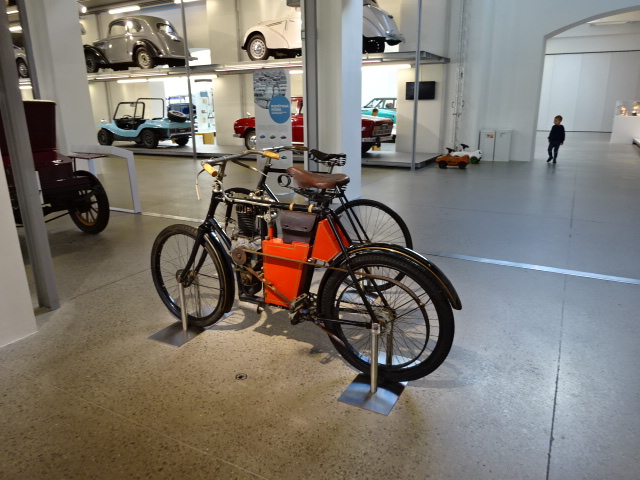
Still, the museum cast a spell on me as I peered at vehicles from the turn of the 19th and 20th century to the present day. The company was established as far back as 1895 by Václav Klement and Václav Laurin, when they focused on bicycles, a few of which were on display. I especially liked the two-seater for postal workers. The unicycle was another delight. I recalled how one Bagatti Valsecchi brother had mastered the unicycle in the early 20th century and how I came across a picture of him posing on one at the Bagatti Valsecchi House Museum in Milan, where Renaissance and Neo-Renaissance art took precedence.
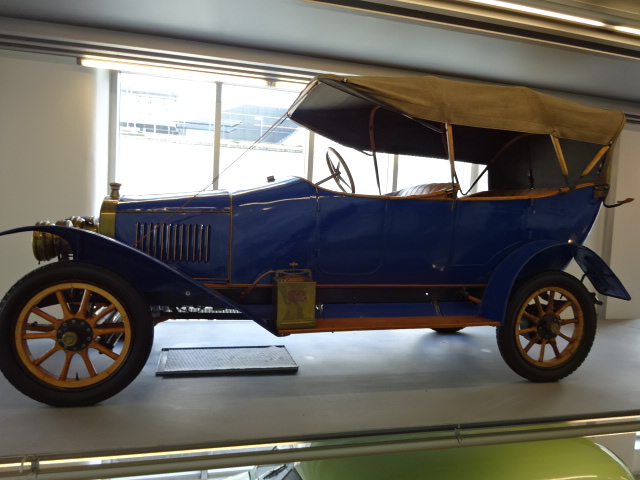
The automobiles that most enamored me were those from the end of the 19th and beginning of the 20th century, although I enjoyed noting how the manufacturing of cars had developed over time. There are cars and bicycles on the ground floor, and after climbing many steps to a viewing platform, more cars are situated on vast shelves.
Here are some photos from bicycles and cars on display in the museum.
Tracy A. Burns is a writer, proofreader and editor in Prague.
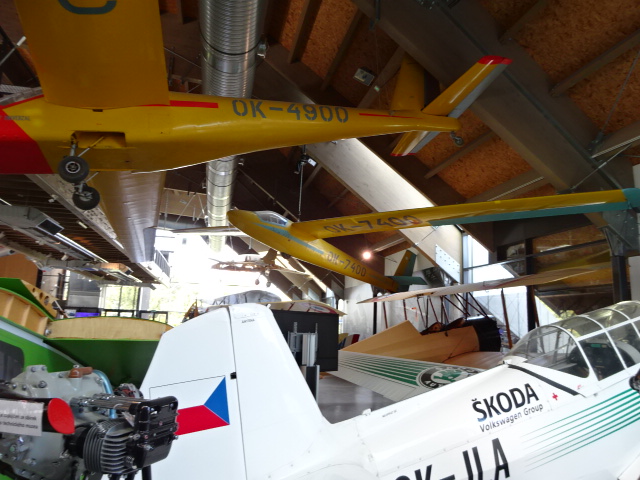
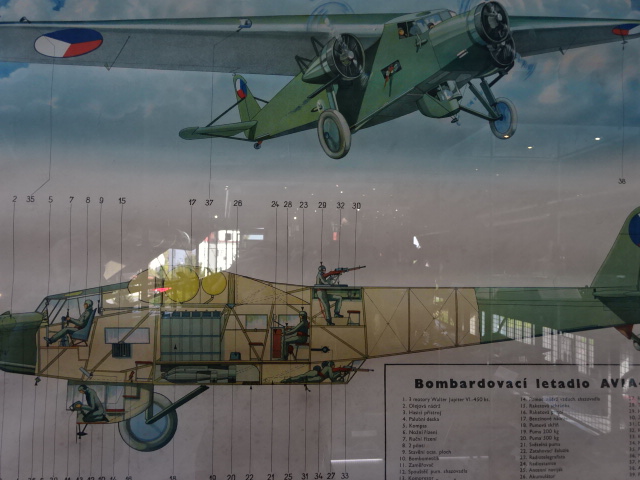
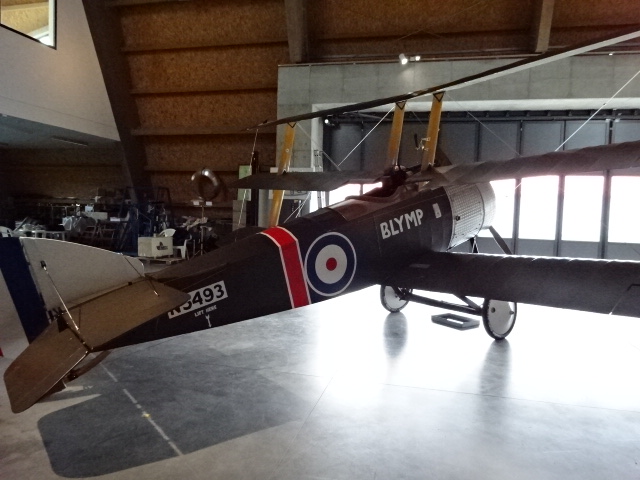
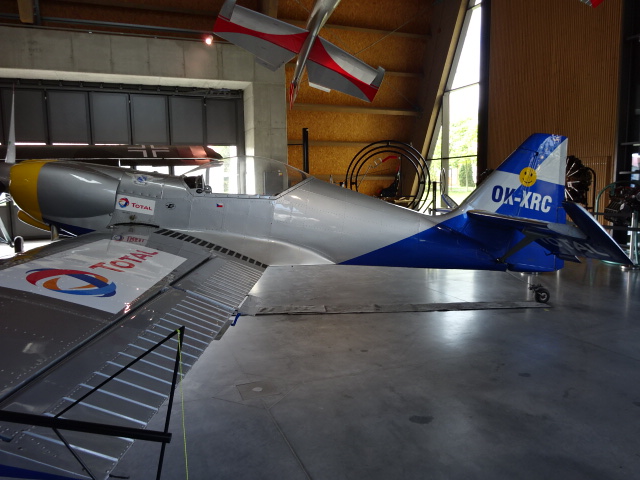
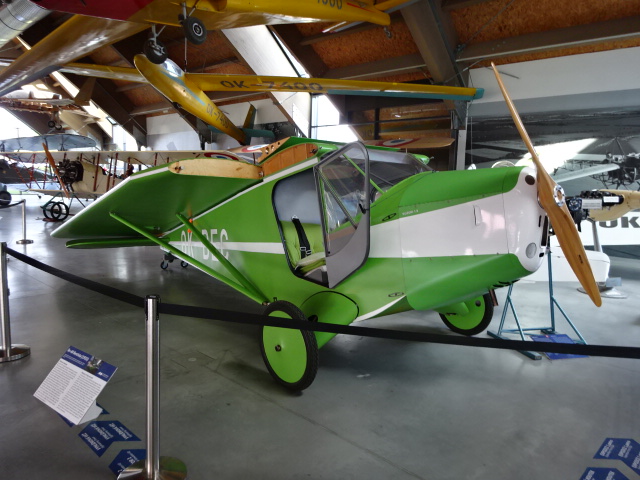
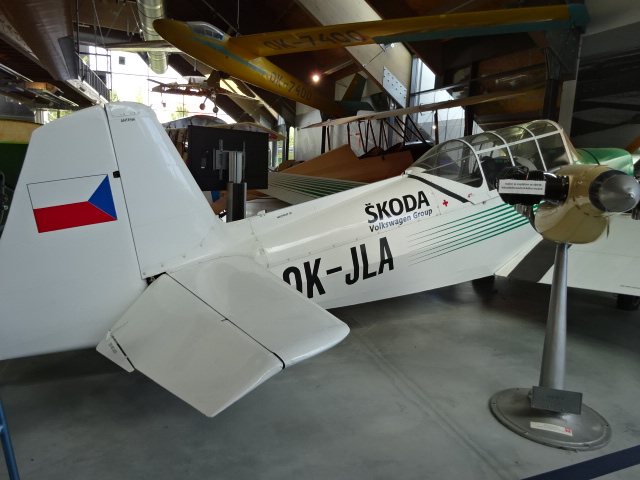
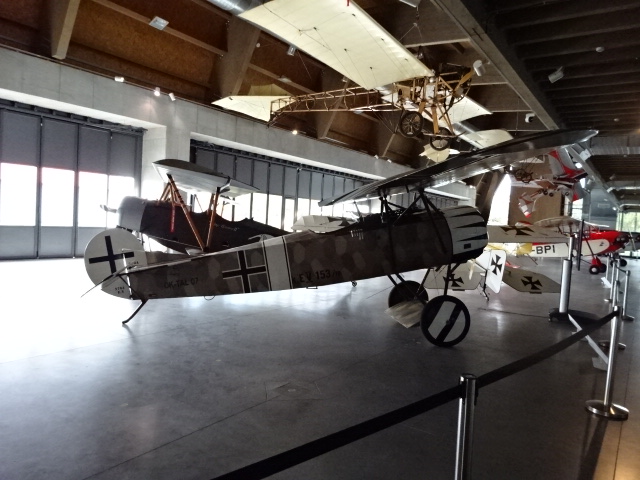
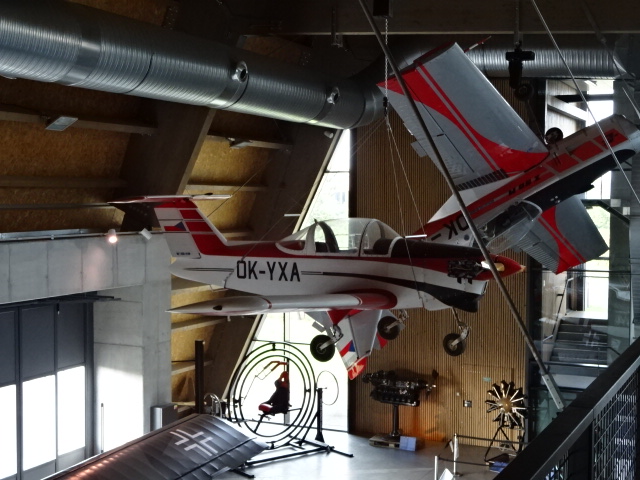
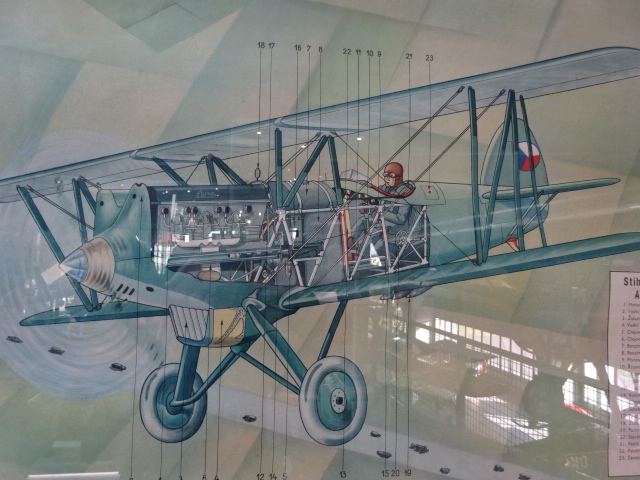
I hadn’t visited an aviation museum before fall of 2024 because, quite simply, I had never shown much interest in planes. That all changed when I went to Mladá Boleslav, about 70 kilometers from Prague. The 25 historic planes in this collection – mostly Czechoslovak, German and Soviet – had me hooked.
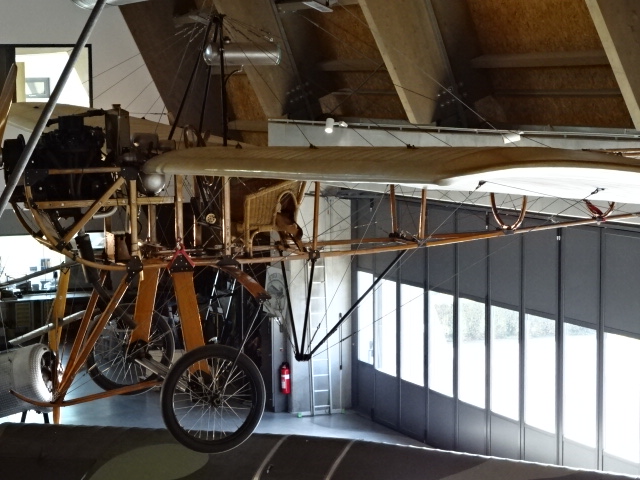
Construction on the museum in a hangar of the Mladá Boleslav airport finished in 2014, and it had been open to the public since 2015. The architecture received much acclaim as it was chosen one of five buildings in the country to be dubbed “Construction of the Year” for 2014. The museum also included two plane simulators and a gyroscope. I perused period uniforms, radio equipment, watches, photography, aviation trophies and posters. From an observation tower there were excellent views of the environs. After walking up steep stairs to the first floor of the museum, I got a good look at the planes hanging from the ceiling.
I had not heard of the name Metoděj Vlach before visiting this museum. Vlach had made a name for himself as the first Czech pilot. From 1908 he worked for Mladá Boleslav’s Laurin and Klement business, known for its bicycles and cars, an enterprise that would later become the world famous Škoda automobile manufacturer. He had to use his own money to finance his flying attempts. While his first try was not successful, the second plane he produced in 1909 managed short jumps between 30 and 50 meters. However, the third time was a charm as on November 8, 1912, his aircraft, constructed from 1910 to 1912, made the first flight – reaching 20 meters in the air. It flew a distance of 300 to 500 meters at 100 km/h. The plane weighed 720 kg, and the motor, the kind an automobile used, was 28 kW. The aircraft was successful during five attempts.
One of the aspects about museum-going that I like best is learning about important historical figures and events that I had not known anything about. Learning about Vlach was one of those lessons that certainly enriched my experience at the museum. I spent a lot of time peering at the various specimens, dating from World War I to the later years of the 20th century.
The Little Beetle
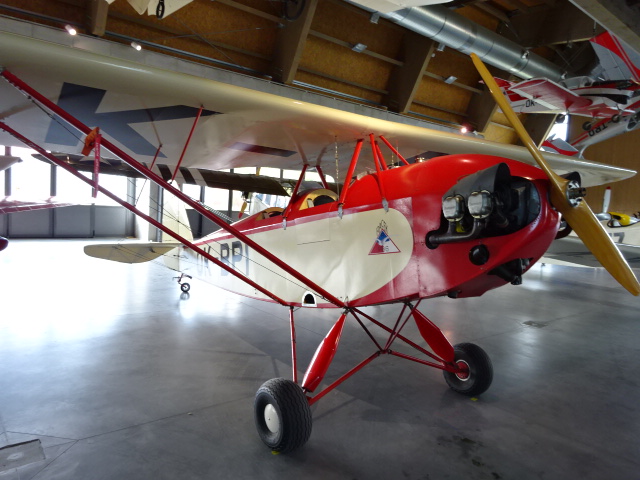
A plane called the Little Beetle captured my attention. The first modern Czechoslovak amateur aircraft, the W-01 Little Beatle was built at the owner’s home in Brandýs nad Labem during the 1960s. The public set eyes on the plane for the first time in 1970. With a wingspan of 6.08 meters and an empty weight of 280 kilograms, the Little Beetle was a frequent participant in Czechoslovak air shows. It was five meters long and could fly up to 180 kilometers per hour. During the mid-1970s, international audiences took notice of the Little Beetle as it was shown off in airshows that took place in the German Federal Republic, Holland and England. Sadly, an accident in 2003 ended the Little Beetle’s career. During 2015 the specimen was brought to this aviation museum.
German Bucker Bu 130 Jungmann
I also took notice of the German Bucker Bu 130 Jungmann, a two-seater designed for training and aerobatics. It took off for the first time in May of 1934 and became a popular training aircraft for the Luftwaffe. The Germans were not the only ones to use this model aircraft, though. It received worldwide acclaim in Czechoslovakia, Spain, Japan, Hungary, Switzerland and other countries.
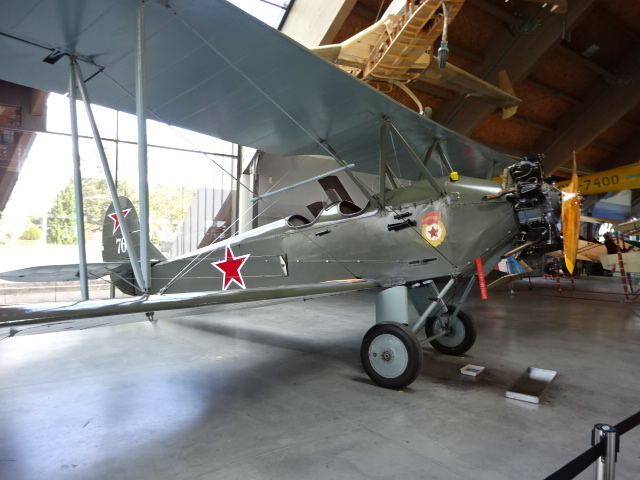
PO-2, The Sewing Machine or The Maize Cutter
Another plane with an interesting history was the PO-2, a prototype of a U-2 biplane that was adopted by the Soviet Air Force. It was also used for civilian aviation. More than 40,000 PO-2 planes were produced. This popular two-seater came into existence during 1927, and production started the following year. During World War II the Germans called the plane “The Sewing Machine,” describing the distinctive sound of the engine. Soviets had a different nickname for the aircraft with an engine of 100 to 115 horsepower. They dubbed it the “Maize Cutter.” It was also historically significant because a regiment of female Soviet pilots conducted nighttime air raids on Germany using this aircraft. The Germans dubbed these female military personnel “Night Witches.” Production did not stop when the war came to a close. The PO-2 was manufactured in Poland post-wartime.
Klemm L 25
I took note of another German plane. The Klemm L 25 aircraft was designed by Dr. Ing. Hanns Klemm, created in 1926. It was possible to use various kinds of engines with these training, sports and aerobatic planes. About 600 planes were manufactured from 1928 to 1939. During the 1930s the Klemm L 25 participated in competitions in Germany.
Zlín Z-50L
I also saw the Zlín Z-50L aerobatic plane made in Moravia. In the 1970s and 1980s its pilots clinched first place in international competitions, both European and world championships, while flying this plane. The last world championship won by this aircraft was as recent as 1989.
Be-60 Bestiola
The two-seater, wooden aircraft called the Be-60 Bestiola was designed in 1935 as a Czechoslovak aircraft to be used for training and tourism purposes. Its life span was relatively short, though, as production was halted not long after the 1939 Nazi Occupation. Some of these planes were flown by the fascist-oriented Slovak State during World War II. Unfortunately, there are no longer any original planes of this type in existence. The replica in the museum is quite impressive, though.
Zlín Tréner
Used for training and aerobatics, the Zlín Tréner captured my attention. It was a two-seater monoplane with low wings and first took off in 1947. Later, it was powered by a four-cylinder engine and was composed of wings and tails made of metal. The career of that prototype began in 1953. The wingspan measured 10.26 meters while the take-off weight was 750 kilograms. The engine was 105 hp, and the maximum speed it could reach was 203 km/h. The aircraft has had a stellar career and is still used for training.
G – III plane
Brothers Gaston and Réné Caudron had been plane designers since 1909. Their G-III did a loop for the first time in December of 1913. In May of 1917 ,it hit another milestone by setting a new record: It flew non-stop for 16 hours and 28 minutes. About 150 planes of this type were produced. The aircraft had a wingspan of 13.4 meters with a take-off weight of 735 kg.
Fokker E.V.
I also saw the Fokker E.V. German fighter plane from World War I. Some 289 aircraft of this model were manufactured. The planes were 5.85 meter long and utilized a 110 hp or 160 hp engine. The wingspan was 8.35 meters while the take-off weight was 605 kg. It could go as fast as 200 km/h.
ŠK – I Trempík
The two-seater ŠK – I Trempík was known for its stability. It was not difficult to take care of, either. Its wingspan measured 9.3 meters, and it was powered by an engine of 75 hp. The maximum take off weight was 578 kg, and it could fly 185 km/h.
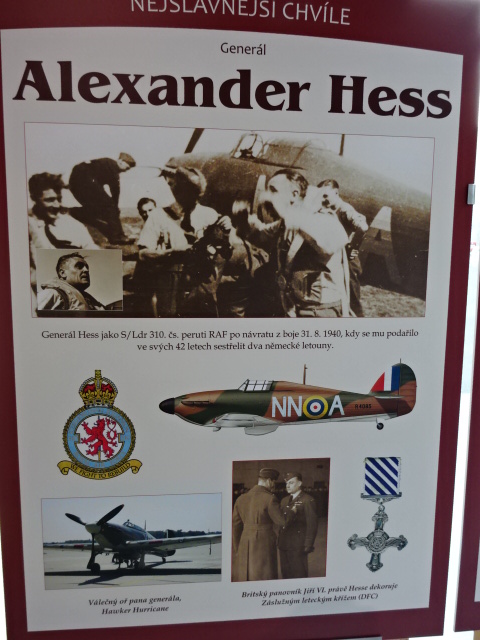
1926 silent film with Alexander Hess as the pilot
General Hess after returning from his service in the RAF when he shot down two German planes; British royal George VI awarding Hess a medal; War plane Hawker Hurricane used by the general
On the first floor there were panels about General Alexander Hess, a pilot I had not heard of before. He also had starred in a 1926 silent Czechoslovak film as well as working as a pilot. Hess was the organizer of the Czechoslovak aircraft for the 1936 Olympics. After the Nazi Occupation in 1939, he helped pilots escape, equipping them with false passports, and General Hess wound up fleeing from the Nazi Protectorate to France and then to the USA in January of 1940. After World War II, he returned to Czechoslovakia but fled again, this time from the Communist regime. General Hess settled in New York City, where he worked as a technical assistant with PAN AM.
So I became acquainted with the career of not only Metoděj Vlach but also that of Alexander Hessman. I found the exhibit most intriguing. In fact, the entire museum was engrossing with so many planes from various countries and eras, each unique with compelling attributes. While I still despised the eight-hour flights from Europe to the USA, I comprehended the historical importance of these aircraft. In Mladá Boleslav for the first time, the city made a good impression on me. After visiting this museum, I would take a look at the Škoda Museum of bicycles and automobiles, another delight.
Tracy A. Burns is a writer, proofreader and editor in Prague.
As usual, this past year was punctuated by travel, though most trips only lasted one day or half of a day. Still, I was able to explore many sights within a two-hour distance of Prague. Once again, I realized that the Czech Republic blossoms with beauty in every niche of the country.
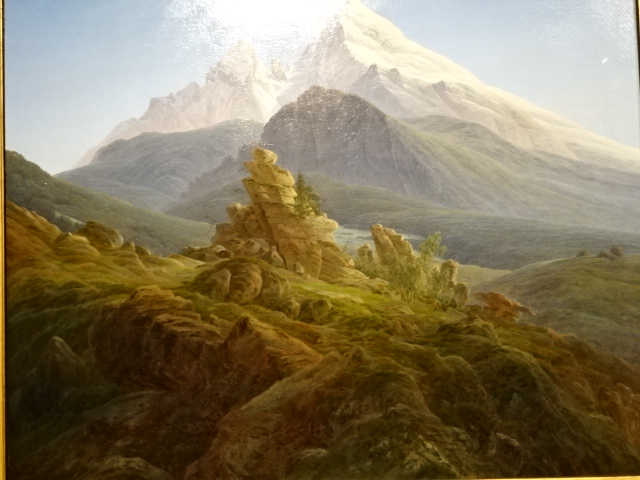
Perhaps the painting that best expresses my year of travel is one I saw at an exhibition of David Caspar Friedrich’s paintings from the Romanticist era. While admiring his “The Wanderer,” I saw the back of a male figure in the forefront, standing on a cliff as he peered at the mist-filled mountains beyond. It epitomizes why I love travelling: to discover new worlds, to muddle through that mist, reaching a clarity that allows me better to understand myself as well as to gain historical knowledge.
By David Caspar Friedrich, on display at Albertinum for temporary exhibition
In the Dresden Albertinum, I was mesmerized by Friedrich’s landscapes. Many featured vibrant colors and a brilliant use of light. He also created dark paintings with a chiaroscuro element that gave them a mystical appearance. Some of his landscapes included a solitary figure traveling alone in nature. Friedrich’s gnarled trees in barren environments were symbolic. I felt especially drawn to his portrayal of mountains in shades of pink.
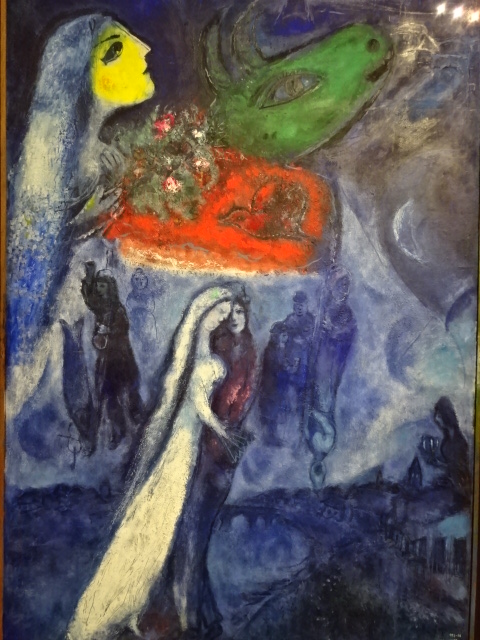
By Marc Chagall, on display at Albertina in Vienna for temporary exhibition
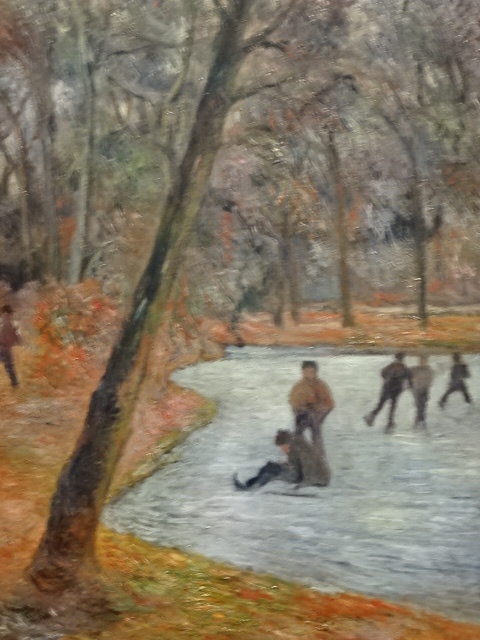
By Paul Gauguin
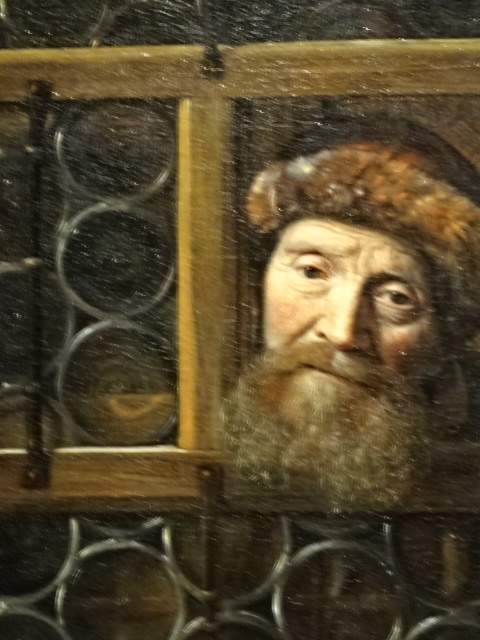
By Hoogstraten, Rembrandt’s pupil
I spent three days in Vienna going to major exhibitions featuring works by Chagall, Gauguin and Hoogstraten, a star pupil of Rembrandt. I hadn’t realized how many of Chagall’s paintings took on Jewish themes and serious topics. I had always thought of Chagall’s art as fun-loving and colorful. My favorites were those inspired by Paris and the circus, created in bright blues and yellows. The Gauguin retrospective showed his works from various time periods, so it was possible to see his specific artistic developments. I was most impressed with his early landscapes. I had not heard of Hoogstraten, whose portraits brought out the soul in the sitters just as Rembrandt’s did. His intriguing use of perspective in some paintings also impressed me. Works by Rembrandt also enchanted me in this exhibition.
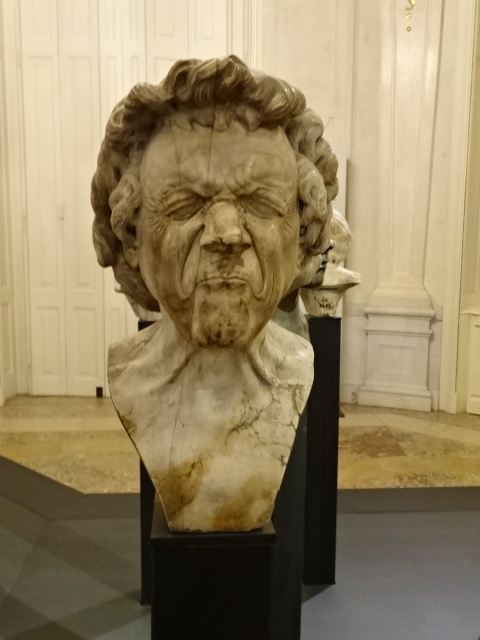
Franz Xaver Messerschmidt, Character Heads
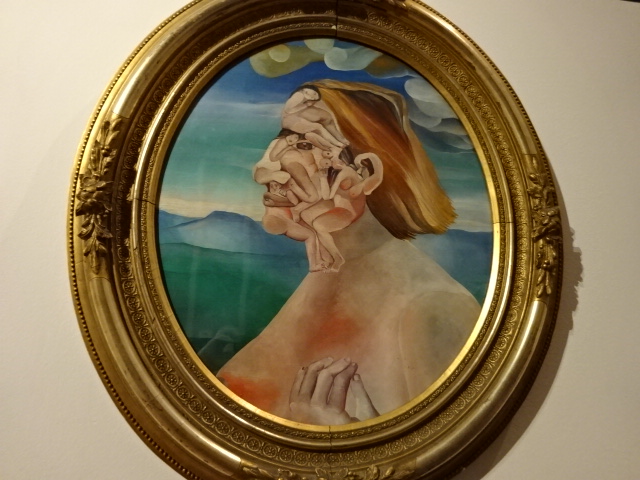
by Gustav Klimt on permanent display at Upper Belvedere
By Václav Špála, on display at Upper Belvedere
City of Vienna Museum, permanent collection
We also visited the Upper Belvedere Palace Museum in Vienna. While it is best known for its Gustav Klimt and Egon Schiele creations, I was entranced with the medieval art in the basement and the Central European collection that featured Czech greats such as Jan Procházka, Bohumil Kubišta and Václav Špála. The Klimt paintings were extremely powerful as were all the Impressionist and Post-Impressionist works. My favorite part of the museum involves the unique Late Baroque Character Heads by Franz Xaver Messerschmidt, who rendered alabaster busts of insane people with unique facial expressions. You could see into their souls. In Vienna I entered the City Museum for the first time. The exhibits trace the history of the city from the beginnings to modern day. I saw intriguing paintings, furnishings, posters and objects, among others.
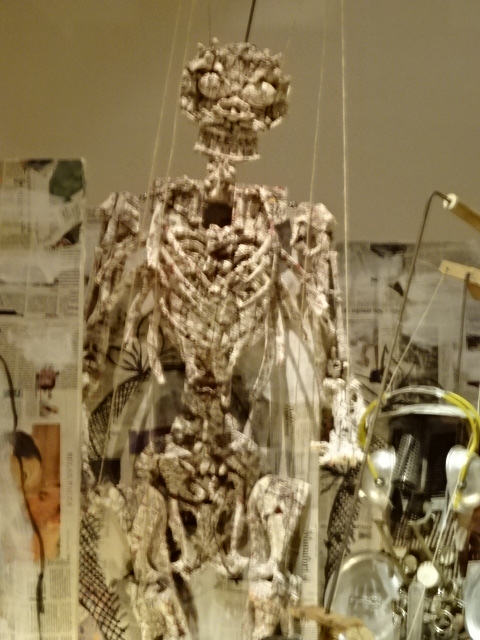
by Eva Švankmajer
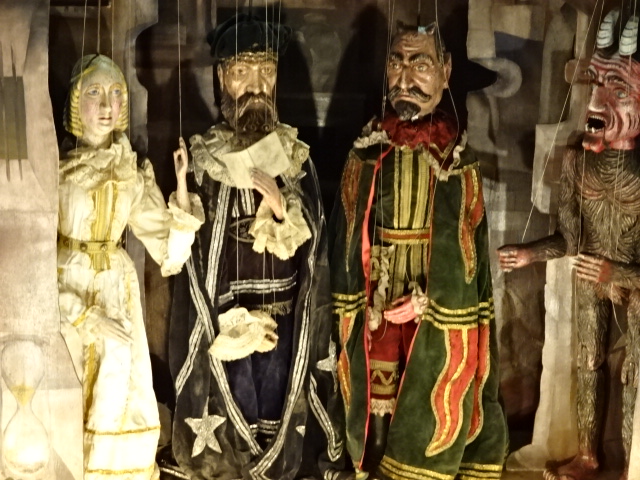
Puppets by Jan Švankmajer
Puppet by Jan Švankmajer
I also went to many exhibitions in the Czech Republic outside of Prague. In Kutná Hora I visited an exhibition of works celebrating the 90th birthday of Jan Švankmajer, a surreal artist, along with creations by his wife Eva. The exhibition Disegno Interno included collages, graphic art, objects, book illustrations, drawings, paintings, animated film creations and puppet theatre of both artists from the 1960s and later. Their creations included works that resemble Rudolfine Mannerist renditions as kinds of cabinet of curiosities and art inspired by Giuseppe Arcimboldo. I also noted the inspiration of the Baroque tradition in puppet theatre. Other works fell into the categories of art-brut, eroticism, fetishes and collages influenced by Max Ernst. Much of their art was deeply rooted in the writings of Edgar Allan Poet and Lewis Carrol. Scenography for Czech film was another section. I realized for the first time that surrealist art had been influenced to a great extent by Mannerist trends.
From Through Kafka’s Eyes, graphic art about The Metamorphosis
Through Kafka’s Eyes, Oto Kubín, Brindisi, 1906
In Pilsen I went to an exhibition called Through Kafka’s Eyes, featuring the art that had surrounded Kafka at the end of the 19th century and the beginning of 20th century. I saw posters for Czech art exhibitions in the early 20th century and those advertising 19th century Japanese art as well as works by stellar Czech artists. Paintings by Kubišta, colorful and vibrant, were represented along with sculpture by František Bílek. Czech artists who spent their interwar years in Paris were included, such as Oto Kubín and Georges Kars. Kafka’s own Jewish-themed drawings were a highlight. German art and literature rounded out the intriguing exhibition.
Great Synagogue, Pilsen
Great Synagogue, Pilsen
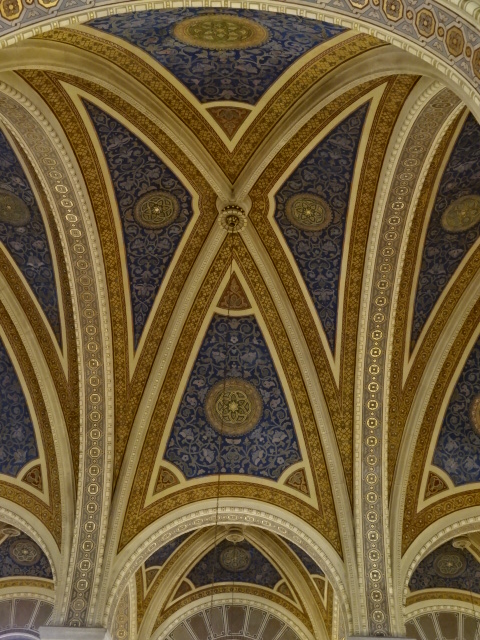
I also took the time to visit the Great Synagogue in Pilsen, the second largest synagogue in Europe and third largest in the world. On the onion-shaped dome the Star of David stood out. What I admired most was the vaulted ceiling punctuated with blue and gold adornment. Another feature that amazed me was the artistic mastery of the stained glass windows with geometric shapes and figures. The interior is furnished in Oriental style with Neo-Renaissance elements.
Pilsen, U Saltzmannů
We ate at my favorite restaurant in Pilsen, U Saltzmannů, the oldest pub in the city. The Czech food at this establishment cannot be surpassed. I had fried chicken steak this time.
Škoda Museum
In Mladá Boleslav, about 70 kilometers from Prague, I visited for the first time the Škoda Museum, named after the popular Czech automobile manufacturer. The company began making bicycles with Václav Klement and Václav Laurin at the helm in 1895 and soon developed a rich tradition of producing cars. The automobiles on display ranged from vehicles made at the end of the 19th century to those produced in the modern day. I liked the early bicycles, including a two-seater for postal carriers. The cars from the early 20th century were also favorites.
In that same city, we also visited the Aviation museum of Metoděj Vlach, which explored the history of aviation with more than 25 airplanes in the main hall, some hailing from World War I. I saw the 1913 G-III by Gaston and Réné Caudron. It had an open cockpit and 9-cylinder rotary engine. The two-seater wooden plane constructed by the Beneš company called a Be-60 Bestiola featured a 4-cylinder engine and had been flown from 1936 to 1940. The adorable W-01 Little Beetle had been used for airshows in the 1970s.
At that museum, I also learned about the career of pilot Alexander Hessman, who also had starred in a 1926 silent Czechoslovak film. He was the organizer of the Czechoslovak aircraft for the 1936 Olympics. After the Nazi Occupation in 1939, he helped pilots escape with false passports, and he wound up fleeing from the Protectorate to France and then to the USA in January of 1940. After World War II, he returned to Czechoslovakia but fled from the Communist regime, settling in the USA, where he was a technical assistant with PAN AM in New York City.
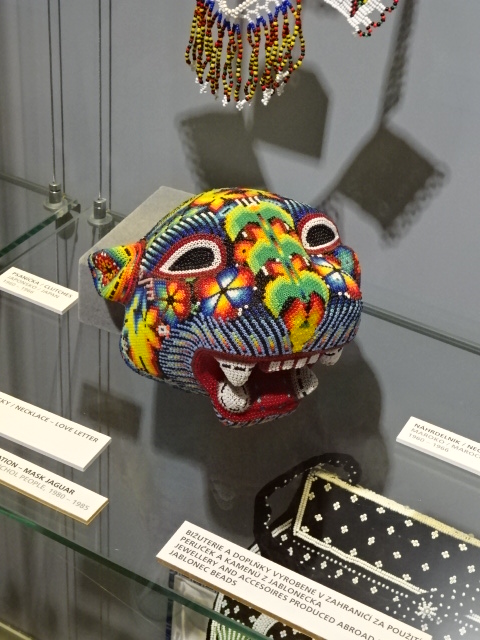
Mexican mask, Museum of Glass and Jewellery, Jablonec nad Nisou
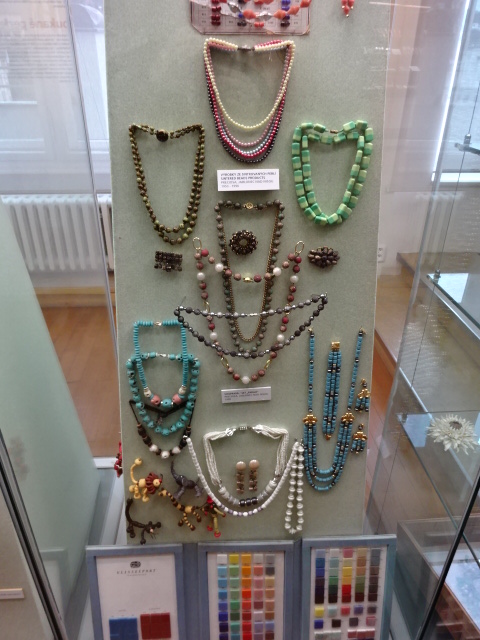
I traveled several times to north Bohemia this past year. One time I went to Jablonec nad Nisou, where the Museum of Glass and Jewellery was located because of the rich local tradition in these fields. I was immersed in the exotic jewellery of strung and woven glass seed beads by North American Indians, using products from north Bohemia. A mask of the jaguar hailed from the Huichol Indian tribe in Mexico. Glass seed beads from Jablonec nad Nisou were used to make a necklace by the South African Zulu tribe, dated from 1880 to 1900. Jablonec has been the location of the mint for the country’s currency, so many commemorative coins were on display.
I also was impressed by buttons made of glass, metal jewellery and black glass jewellery as well as wooden and plastic jewellery. Colorful handbags, masterfully designed, also made up the collection. The Waldes Museum of Buttons and Pins included more than 5,00 buttons, clasps and buckles with the oldest dating from 9 BC. The Bohemian glass exhibition showed off glass in many styles ranging from medieval and Renaissance to Empire and Biedermeier to Art Nouveau and Art Deco to modernism and contemporary. The museum also has the largest public collection of glass Christmas ornaments in the world with more than 15,000 objects. I saw ornaments of angels, birds, cats, dogs, Santa Clauses, gingerbread men and much more, all contemporary.
Josef Lada’s Villa in Hrusice
I made my first visit to Josef Lada’s Villa in Hrusice, where that author, painter, book illustrator and scenographer had lived while making some 600 paintings and 15, 000 illustrations. I saw his paintings of idyllic village life featuring all four seasons. Children threw snowballs and make snowmen in a quaint village in one painting while a squirrel was perched attentively on a tree branch, overseeing a tranquil village scene in another. Pub scenes showed humorous drunken brawls. I would have loved to have owned one of the charming cottages depicted in his paintings. I loved the paintings of knights and dragons from fairy tales as well as the paintings representing the months of the year. His paintings of scenes from Jaroslav Hašek’s antimilitaristic, multi-volume classic about the Good Soldier Švejk in the First World War caught my attention. Many of his paintings focused on holiday traditions. I also saw his humorous drawings and caricatures.
From the First Republic of Czechoslovakia
Poster by Václav Ševčík commemorating the day of the invasion by the Warsaw Pact armies, August 21, 1968
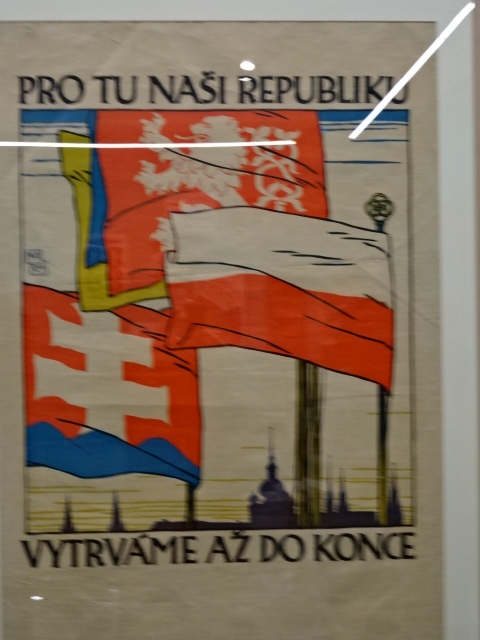
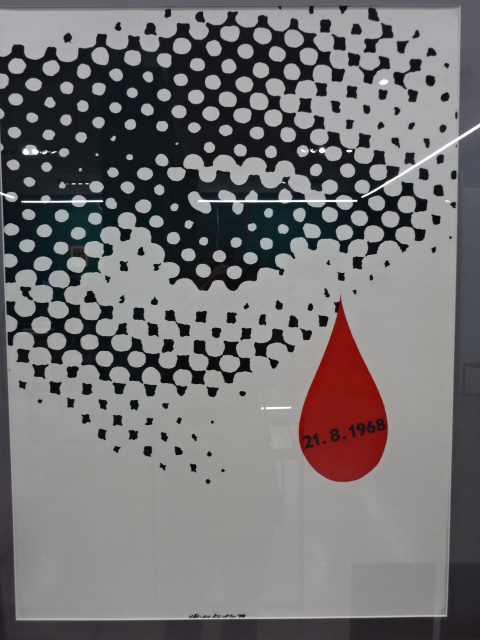
In Prague I took advantage of the stunning exhibitions this past year. I went to two excellent shows at Kampa Museum. One featured Czech graphic art from the founding of Czechoslovakia in 1918 to the present. I saw the first star-studded designs for the Czechoslovak flag as well as many political posters from the World War II era through Communist times to the Velvet Revolution of 1989. Václav Ševčík made a poster focusing on the day of invasion of the Warsaw Pact armies into Czechoslovakia on August 21, 1968, when the country’s liberal reforms were squashed. The poster shows a blood-red tear below an eye outlined in black on a white background.
Vítězslav Nezval, Alphabet, with typography by Karel Teige
Kampa Museum, Identity exhibition of graphic art, Cindy Kutíková
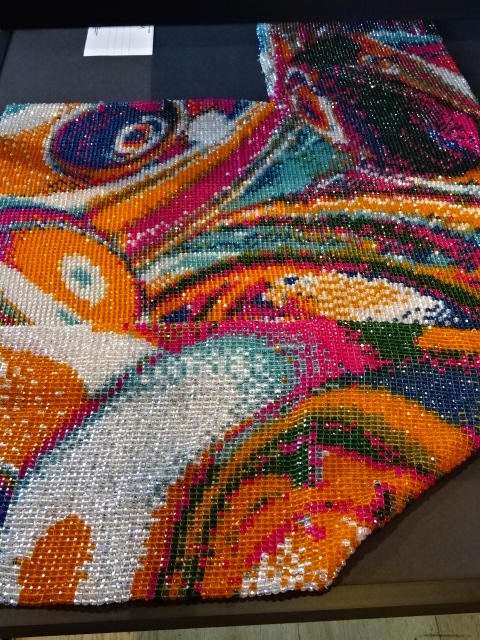
Other sections concentrated on magazine and book design. I saw beautiful children’s volumes illustrated by Lada, Josef Čapek and Jiří Trnka. I was drawn to the covers and typography of Karel Teige, an avantgarde interwar artist. The exhibition showcased contemporary times by displaying a colorful, large Quantum Beaded Sweater created in 2020 and 2021 by Cindy Kutíková, for instance.
Václav Tíkal, 1944
Otakar Nejedlý, Waterfall, 1913-14
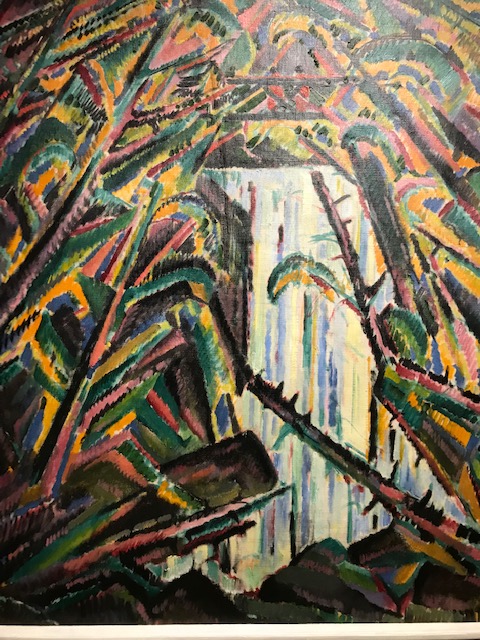
Another exhibition at Kampa Museum focused on paintings from the private collection of entrepreneur Vladimír Železný, purchased for his Golden Goose Gallery. Called The Goose on Kampa, the show featured 70 paintings representing works from the beginning of the 20th century through the 1960s, such as creations by Toyen, Jiří Štyrský, Špála, Emil Filla, Jan Zrzavý and Mikuláš Medek. One painting that caught my undivided attention was Václav Tíkal’s 1944. A hand partially covered in a ripped black glove showing the fingertips, thumb and part of the palm was emerging out of the frozen, snow-covered earth in a barren landscape.
Otto Gutfreund, Viki, 1912-13 from Cubist period
On that day I also explored the Kampa Museum’s permanent collection, specifically the sculptures of Otto Gutfreund, whose early works can be classified as Cubist. His later creations, made after World War I, featured traits of Civilism, which promoted themes of everyday life.
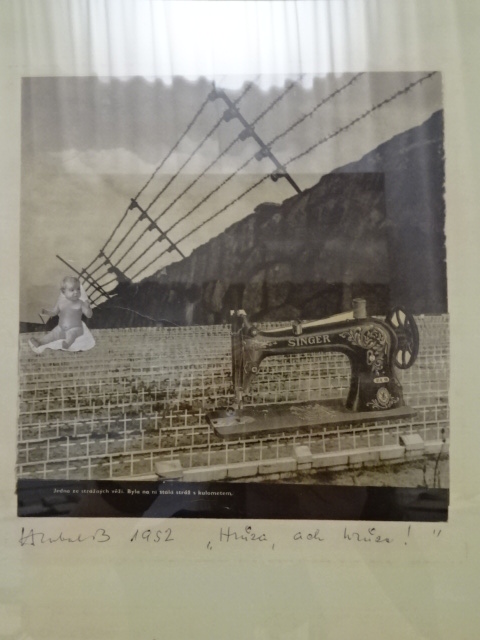
Bohumil Hrabal, 1952, Tragedy! What a Tragedy!
At the Museum of Czech Literature, I greatly appreciated a small exhibition due to my interest in the works of the late 20th century Czech fiction writer Bohumil Hrabal. The modest show emphasized the artistic relationship and friendship of Hrabal and abstract artist Vladimír Boudník, who created the “Explosionism” style. I was most impressed by Hrabal’s collages from the 1950s. One featured a Singer sewing machine, a naked baby and barbed wire heading into the horizon as white crosses in a graveyard punctuated the picture. It was called “Tragedy, What a Tragedy!”
Oto Kubín, Chapel in Simione, 1926
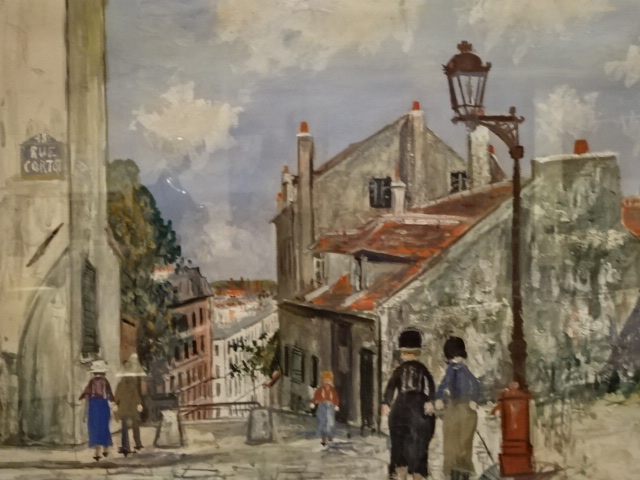
Maurice Utrillo, Chateau de la Seigliere (Aubusson), 1930
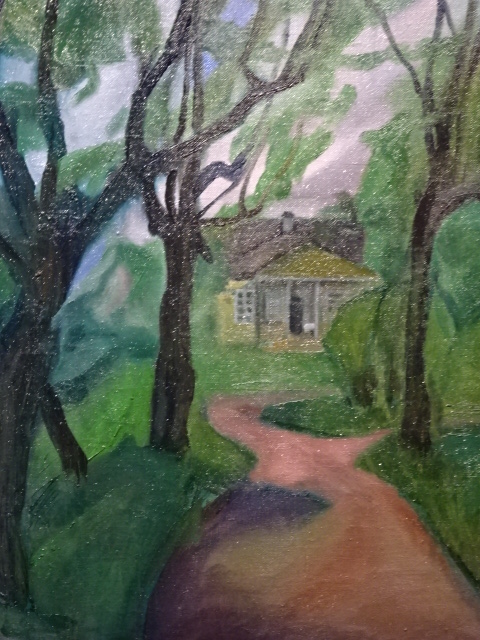
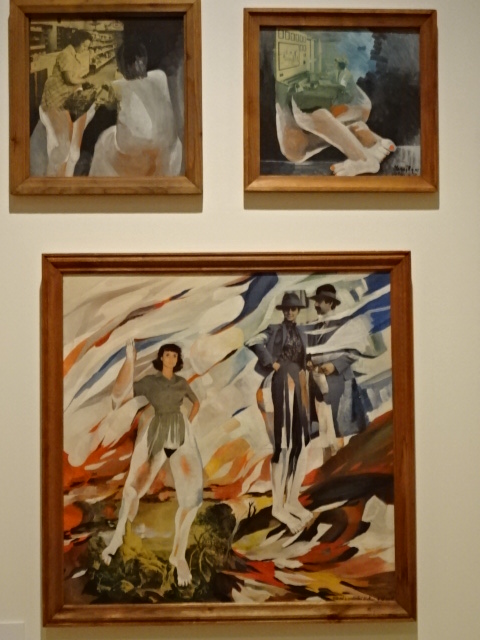
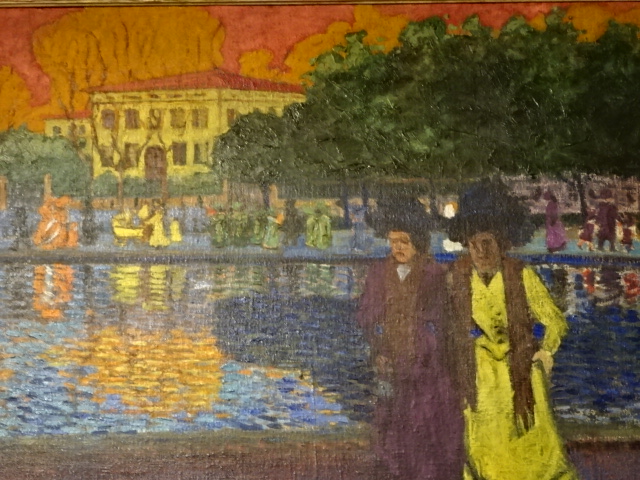
The Wallenstein Riding Stables was the site of an intriguing exhibition about artists from Bohemia residing in Paris between the wars. They were part of the “Paris School,” which featured a variety of styles. Czechs Kars, Kubín (Othon Coubine) and Francois Zdeněk Eberl made strong impressions in the lively, vibrant Paris of the 1920s. The themes of the paintings were many: portraits, cityscapes, street life scenes, café and entertainment scenes as well as a focus on the circus and cabaret. I was drawn to Kubín’s landscapes of Provence. The lavender fields were my favorite. Also represented were foreign artists, including Marc Chagall and Maurice Utrillo.
Hendrick Goltzius, The Four Disgracers, 1588
Also at the Wallenstein Riding Stables, the exhibition “From Michelangelo to Callot: The Art of Mannerist Printmaking showed off more than 200 works of 16th and 17th century graphic art, drawings, paintings, jewelry, etchings, lithographs, ceramics and other artistic crafts that hailed from the Netherlands, Germany, France and the Czech lands. The Louvre lent Prague’s National Gallery many works. Some pieces in the collections were being displayed to the public for the first time. A superb small drawing by Michelangelo drew crowds, and art by Hendrick Goltzius, Paul Bril, Aegidius Sadeler and Niccolo Boldrini stood out to me.
Painting by Karel Kryl, temporary exhibition at House of the Golden Ring
Karel Kryl giving a concert
On my birthday I went to the House of the Golden Ring near Old Town Square. I saw an exhibition about the late dissident singer and songwriter Karel Kryl, whose music had been poetic, profound and political. He had lived in West Germany during much of the Communist era and had worked for Radio Free Europe. I realized how politically-motivated his songs had been and how he had supported the Poles as well as the Czechoslovaks in their fights for freedom. I was engrossed by his artwork, disturbing and grotesque scenes with one-legged clowns and half-human, half-creature figures.
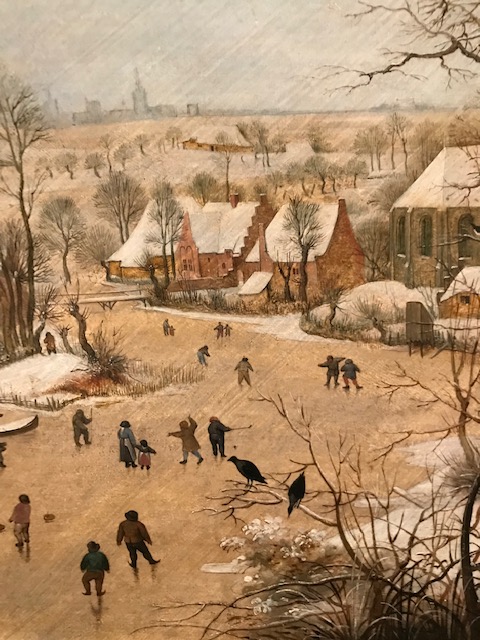
Pieter Brueghel II
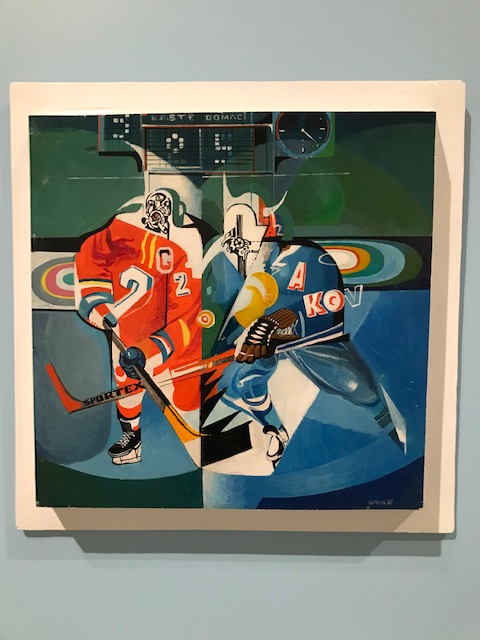
One of my favorite exhibitions of the year, taking place in Kinský Palace, was called “Get on the ice!”, featuring hockey and skating in paintings and other artistic creations. It reinforced the fact that ice hockey and skating have played significant roles in Czech and Slovak identity. I especially was impressed by the works of the Dutch masters who had inspired Czech painting. Pieter Brueghel II’s scene of skating on a pond caught my undivided attention. Czechs first represented skating on the Vltava River and on ice rinks.
Then hockey became the major theme, first portrayed realistically and then in the 1960s expressed in an experimental fashion. I was drawn to František Tavík Šimon’s “Ice Rink Under the Charles Bridge” (1917) with its large falling snowflakes and idyllic, historical setting. One example of the experimentation of the 1960s is Vojtěch Tittlebach’s “Hockey” from 1965, with abstract shapes and simple forms. The players in this painting had no facial traits. Jiří Kolář also added to the experimentation of the 1960s with his “Hockey Sticks,” composed of three wooden sticks decorated with paper collages, many of them maps and some historical scenes. The 1998 Czech Olympic victory at Nagano was celebrated in large photographs, including one that showed the moment Czech Petr Svoboda scored the winning goal while the crowd in Old Town Square erupted in joy.
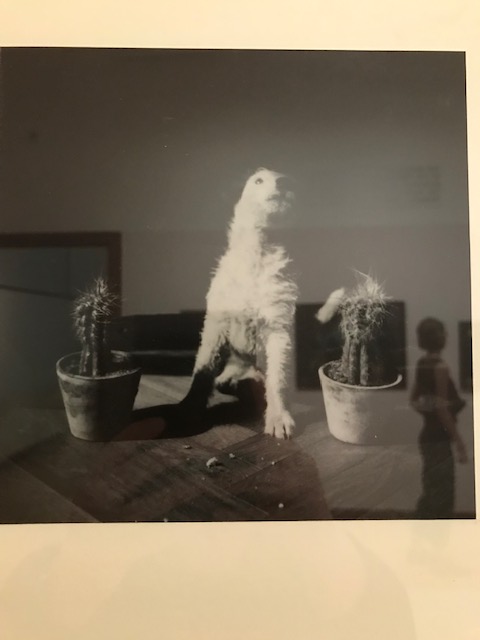
New Realisms, Karel Čapek from series Cactuses, first half of the 1930s
One-Handed Ice Cream Man, Miloslav Holý, 1923
In Prague I also saw the New Realisms exhibition, which focused on modern Realist trends in Czechoslovak art from 1918 to 1945. The more than 600 works hailed from the Czech and Slovak lands as well as Germany and Hungary. I especially liked Karel Čapek’s photographs of cactuses and his dog Dašenka as this field focused on the everyday during this era. I also liked the many café scenes, realistic portraits of people, magic realism in landscapes, the focus on the societal and economic dilemmas in Czechoslovakia and the depiction of modern labor. I have always been interested in the paintings of Group 42 as their works had an existential quality, often punctuated by telegraph wires and deserted streets.
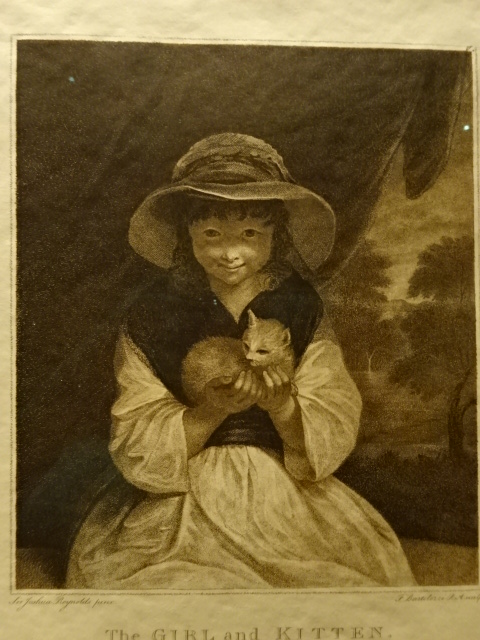
Francesco Bartolozzi, The Girl and the Kitten, 1787
One of my favorite exhibitions in Prague this past year was called “The Good Cat and the Treacherous One,” featuring cats in graphic art from the 16th to the 18th century. The art shows how some people revered cats while others hated felines. They often symbolized something or were shown for entertainment. Some considered them to be a form of the devil. Others gave them positive religious connotations. I especially enjoyed the Mannerist works by Goltzius and the graphic art by Wenceslaus Hollar, who portrayed cats with both positive and negative qualities. I saw pictures of cats symbolizing maternal love, sight, hearing, devotion, courage, yearning for freedom, foolishness, frivolity, cruelty, greed, treachery, lust and adultery. I also noticed cats as protectors against snakes. A French painting showed how, in 18th century France, cats had epitomized personal and political freedom.
Clam-Gallas Palace
I focused mostly on day trips when traveling this past year. While I visited chateaus, castles and monasteries outside of Prague, I did also become acquainted with the renovated Clam-Gallas Palace in the capital city. The Baroque palace became the property of the Gallas family in the 17th century. The palace has a rich musical and theatrical history as Mozart and Beethoven both performed there during the late 18th century. The colossal exterior portal is decorated with statuary by Baroque master Matyáš Bernard Braun, and he also created the fountain portraying Triton.
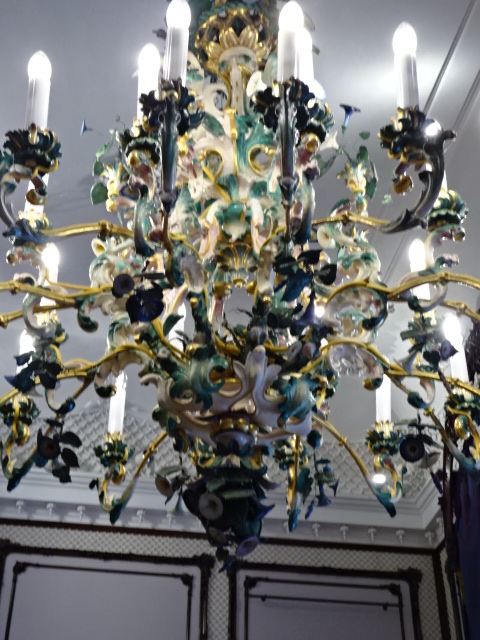
Murano chandelier in Clam-Gallas Palace
The many monumental frescoes amazed as did the chandeliers, especially the 19th century chandelier made of Chinese porcelain cups, saucers and vases. Frescoes depict the triumph of Apollo and gathering of the gods on Olympus, for instance. Allegorical figures representing sculpture, architecture and painting stand out in another fresco. I was very impressed with the former office of the first Czechoslovak Minister of Finance, Alois Rašín, though it was sparsely furnished. He had tried to gather support for the creation of Czechoslovakia during World War I and had even been imprisoned for taking part in the resistance. Rašín was assassinated in Prague during January of 1923 by a 19-year old anarchist.
Bohumil Hrabal’s cottage in Kersko
Kersko near Prague is one of my favorite tranquil spots in the country, a village where Hrabal resided from the 1960s until his death in 1997 and where he fed many feral cats daily. Hrabal’s two-story cottage opened to the public for the first time this spring. I saw the garden where he wrote some books and the charming enclosed terrace where he composed his works when weather did not permit him to spend time in his garden. I saw the chair in which Hrabal wrote his last literary piece, during 1995. The top floor was adorned with many paintings – a moving portrait of Hrabal by Jan Jirů, a drawing featuring heads of Hrabal from his youth to old age in a rendition by Jiří Anderle. Another portrayed cats on chairs in a forest setting along with Hrabal himself. Portraits of his family and a collage focusing on one of his books also caught my undivided attention. The place captured the soul of Hrabal, and I was very moved.
In the local shop, known for its ceramic figures of cats, there was an exhibition of drawings of Hrabal – at the pub, in Heaven, in Kersko, each rendition celebrating the author in a creative way. We ate at my favorite restaurant outside of Prague, Hájenka, a prominent landmark in Kersko. Whether I chose the chicken with cheese sauce, the meat with dumplings or the fried chicken steak, I was always delighted by the meal in a rustic, charming atmosphere.
Mariánská Tynice complex
I traveled about 35 kilometers north of Pilsen to pay a second visit to the High Baroque complex with pilgrimage church Mariánská Tynice, an aerial constructed by renowned architect Jan Blažej Santini during the 18th century, using geometric forms such as quadrangles and triangles as features of his Baroque Gothic style. The church with a Greek cross plan had an impressive illusionary main altar of the Holy Trinity while the east and west ambits were constructed with open arcades featuring eight chapels. The masterful painting on the vaulting and walls celebrates the lives of the Virgin Mary and Cistercian saints. The cupola of the church is lit by eight windows.
Frescoes on the walls and vaults of the ambits
Part of the complex was the Museum and gallery of the North Pilsen region. I liked the Gothic altarpieces and Baroque paintings as well as the 19th paintings of pilgrimage sights. The reconstruction of rooms resembling 19th century and early 20th century village life included a classroom, a countryside chapel and a pub.
Museum of the High-Rises, Kladno, ceramic tile on the facade
Gas masks in the nuclear bunker of the Museum of the High-Rises
In Kladno near Prague, I toured the Museum of the High-Rise, which was located in one of the six Rozdělov high-rises designed by Czech functionalist architect Josef Havlíček in the 1950s. He received acclaim during the interwar years as a member of the avantgarde and studied under Cubist architect Josef Gočár. The façade of the 13-floor building was created from ceramic material, and on that particular high-rise were ceramics of a cat and a dog. There was a small museum in one basement floor. We also visited the nuclear bunker, complete with numerous gas masks and many hard benches. The big rooftop terrace was a prominent feature for that time period. In the representative flat for the higher-ups, we saw 1950s furniture and a balcony. The flat measured about 65 meters squared, quite a luxury in that day and age.
Humprecht Chateau
View from Humprecht Chateau
I also visited many chateaus within a two-hour distance of Prague. Seventeenth century Humprecht Chateau in the central Bohemian Paradise region had an elliptical shape. Much of the interior featured hunting themes. I saw paintings of Venice, Biedermeier bookcases in the two libraries of about 4,000 volumes, a black kitchen with an original fireplace and utensils from the 17th century. The main hall featured four frescoes from the 1930s, showing scenes from the life of the Černín family, the long-time owners of the chateau. Baroque furniture decorated several rooms. The picture gallery includes works from the 17th century. What I liked best about the chateau were the panoramic vistas from the top floor.
Volman Villa
Also, not far from Prague, the newly reconstructed Volman Villa, a large, geometric functionalist structure built from 1938 to 1939, featured big terraces, a circular driveway, a monumental winding staircase and outer stairs that lead to a bridge heading into the building. It is possible to access the terrace from each spacious room. Volman used exotic materials such as travertine and marble for the construction. The marble bathrooms with beautiful pink and light blue bathtubs were vast. While there are now many trees obstructing the view, at one time it was possible to see the Labe River in the 40-hectare English park.
Grabštejn Castle, Chapel of Saint Barbara
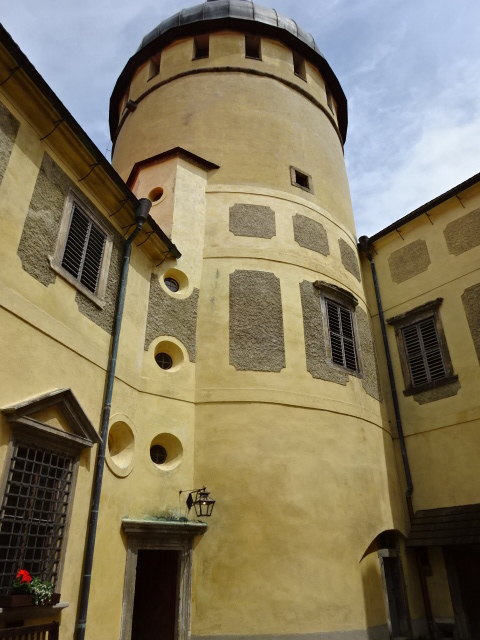
I visited several castles and chateaus in north Bohemia – Grabštejn Castle, Jezeří Chateau and Červeny Hrádek Chateau. I was shocked at the vast improvements made during the reconstruction of Grabštejn and Jezeří as I had last visited the two about 20 years ago. Grabštejn, originally a 13th century castle, took on the structure of a Renaissance chateau in the 16th century. The 16th century Chapel of Saint Barbara featured exquisite vaulting and wall painting that included 13 apostles. One tour featured the 18th century administrative offices that made up the castle interior during that time period while another showed the rooms of the nobility, including a gigantic wall painting with chateau-like gardens and fountain. I saw furnishings and artifacts from the 16th to 19th centuries.
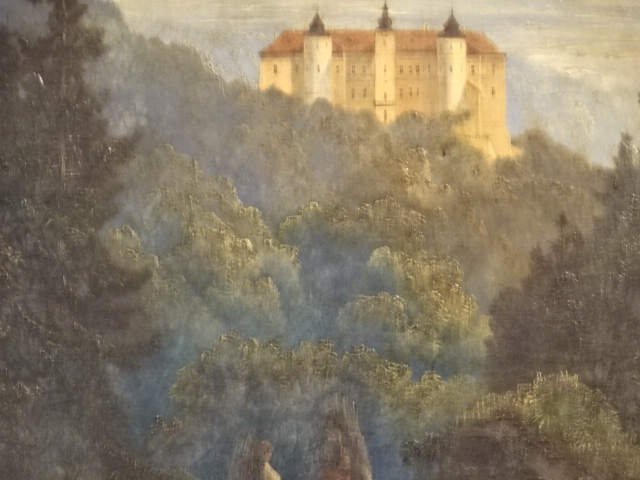
Jezeří Chateau, painting by Carl Robert Croll
While only a few rooms of Jezeří Chateau were opened about 25 years ago, now there are about 10 impressive spaces on the tour. I loved the paintings of Carl Robert Croll, renditions which showed the interior of the chateau during the early 19th century. I was especially impressed with the room dedicated to Jan Masaryk, the son of the first president of Czechoslovakia and once the Minister of Foreign Affairs. He was thrown out a bathroom window at the Ministry of Foreign Affairs by the Communists after the 1948 coup. The Winter Garden was light and airy, punctuated by much greenery. The lavish Theatre Hall included sculptural and stucco adornment as well as an original fireplace. The paintings throughout were impressive, too.
Červený Hrádek, Knights’ Hall
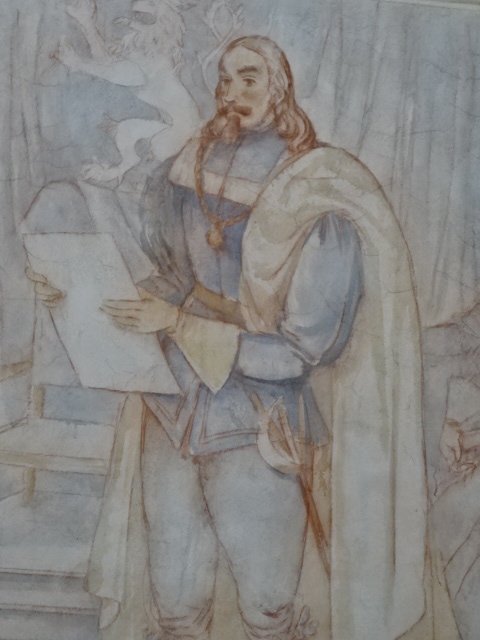
Červený Hrádek dated back to the early 15th century and gets it current appearance from the 17th century. The Knights’ Hall from that era included lavish sculptural decoration with medallions featuring battle scenes and exquisite crystal chandeliers. Other spaces harkened back to the 18th and 19th centuries with period furnishings. Seventeenth century sculptor Jan Brokoff created sculptures, fountains and vases that decorated the monumental staircase. The English style park was beautiful, too. In August of 1938 the Sudeten Party leader Konrad Henlein and English Lord Walter Runciman had a meeting there, shortly before the Munich Agreement was signed.
Dobříš Chateau Park
Dobříš Chateau Park
Because the interior had been recently renovated, I returned to Dobříš Chateau not far from Prague. I was disappointed there were not as many rooms decorated with period furniture. Instead, the self-guided tour mostly featured spaces celebrating the Colloredo-Mansfield family’s accomplishments, which were very intriguing and noteworthy, to be sure. Still, I missed the longer, guided tour and former exciting interior décor of the Rococo and Classicist eras. The Writers’ Room remained on display, decorated the way the space would have looked when the chateau belonged to the Writers’ Union from the 1950s to the 1990s. It was possible to enter one side of the spectacular Hall of Mirrors, although it was roped off and walking through the room was not permitted. The fresco-filled hall amazed with 18th century décor and eight Venetian chandeliers as well as monumental fireplaces.
Illusionary painting on the orangery in Dobříš Chateau Park
The park, measuring nearly two hectares, was the reason to visit the chateau. On that sunny summer day, it was spectacular to stroll through the Rococo style park established in the 1770s. It had five terraces, a fountain with astounding Baroque sculptural grouping and an orangery with illusionary wall painting.
Slatiňany Chateau
Interior of Slatiňany Chateau
I traveled to Slatiňany Chateau for the second time and noted the prominent hunting and horseback riding themes. The Auerspergs held on to the chateau for 200 years and were responsible for the charming interior. I loved the exquisite canopied beds decorated with religious paintings. The tapestries were another delight. In the Big Dining Room I admired a large painting of hunters and their dogs getting ready for the hunt as well as a stunning 18th century Murano chandelier.
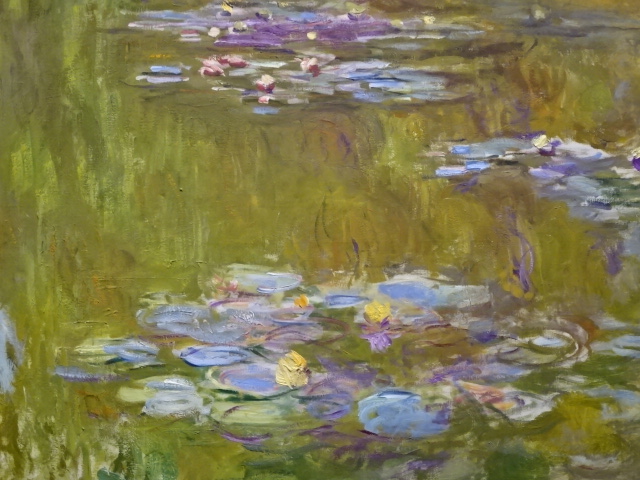
Vienna, Albertina, Monet, Waterlillies, in the permanent collection
I had many exciting adventures traveling in 2024 and had many impactful experiences at art exhibitions in the Czech Republic, Germany and Austria. Every time I go on a trip or to an art show, I come away changed, with a sharper perspective on life and with more enthralling knowledge.
Albertinum, Dresden, Hans Grundig, The Thousand-Year Empire, in the permanent collection
Tracy A. Burns is a writer, proofreader and editor in Prague.
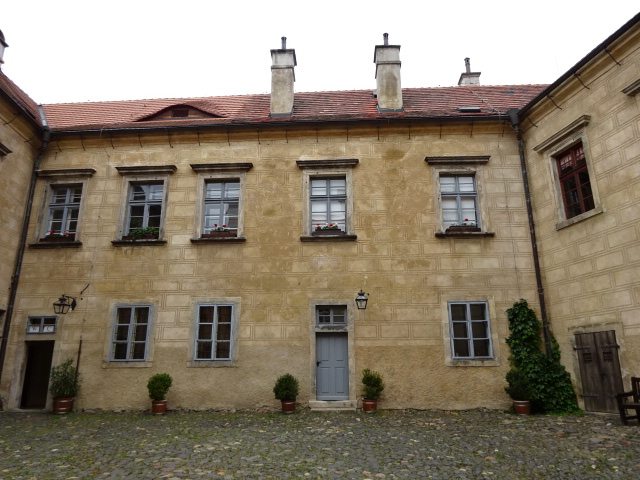
I visited Grabštejn Castle for the third time in 2024. Situated in north Bohemia near the Polish border, Grabštejn has come a long way since my first two visits some 20 years ago, when only a few rooms were open to the public because major reconstruction was taking place. Back then, I had seen Grabštejn Castle as a place with much potential, but I wondered if I would ever see the upper and lower castle with more than several spaces open to the public.
The first thing I noticed was that there was no scaffolding near the entrance to the castle perched on a rocky hill, where it dominated the scenic landscape. I read that there were two tour routes available and many rooms on display.
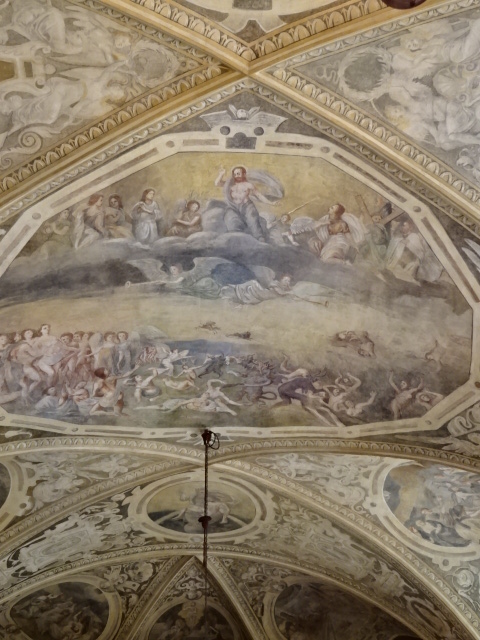
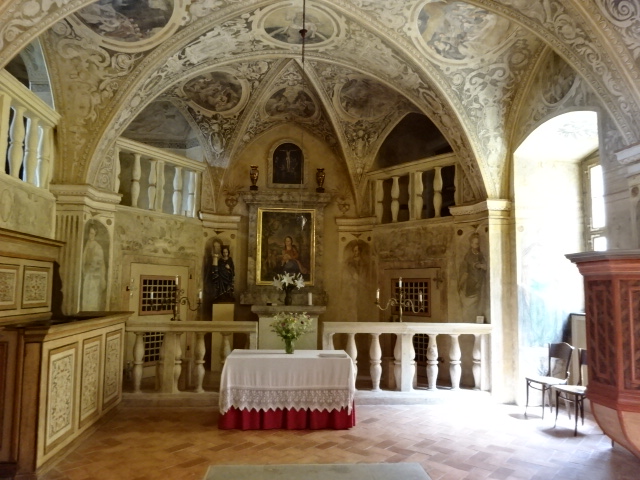
I recalled the history of Grabštejn, which was originally a 13th century Gothic castle, first mentioned in writing during 1286. It was transformed into a Renaissance chateau during the 16th century and still has many Renaissance features. During that Renaissance transformation, the Chapel of Saint Barbara was constructed. It became an architectural gem due to its superb vaulting as well as exquisite wall and ceiling painting. The chapel was consecrated to Saint Barbara, the patron saint of miners, because miners worked on the Grabštejn property. The chapel’s décor included a masterfully crafted statue of that saint.
Things fell apart during the Thirty Year’s War, when the Swedes conquered the castle. After Grabštejn was sold to Jan Václav Gallas in 1704, reconstruction work was carried out. Then the castle was used as an administrative seat instead of a residence. In 1781 a fire destroyed the castle, but Filip Josef Gallas restored Grabštejn’s impressive appearance. The chateau was again used for administrative work.
Elephant foot used as trash can
When Kristián Kryštof Clam-Gallas became owner, he rebuilt the administrative building as a Classicist chateau. His family used Grabštejn as a summer seat. In 1843, lightning hit the castle, causing a large fire. The damage was repaired, though.
Marie Clam-Gallas set up a small family museum in the castle after World War I, and during 1934, Grabštejn was open to the public while the family also used the premises. However, the castle was nationalized in 1945, after World War II. The Clam-Gallas family that had contributed so much to the development of the castle was forced to leave in a cattle wagon.
During 1953, the Czechoslovak army took over the castle, which was already in poor condition. The army stayed there until after the Velvet Revolution, exiting for good in 1990. Vandalized, the castle was in ruins. Major repairs took place until 2010, and reconstruction even continues today. The public has been allowed to visit since 1993. It was possible to preserve a section of the Renaissance sgraffito that decorates Grabštejn’s western façade. The original statue of Saint Barbara was restored. The installation of the interior lighting ended in 2023 while the cobblestones in the main courtyard were repaired during 2024.
Clerk’s office at the castle
The tours show rooms from the 16th to 19th century as well as the spaces dedicated to the Clam-Gallas museum. I saw the administrative offices of the 18th century as well as rooms made for nobility. The clerks’ offices displayed quills, large historical maps, portraits and shelves with document-filled cubby holes. It was intriguing to see rooms used for administrative purposes at a castle. I learned about the clerks’ work during that time period. Usually, I only saw rooms decorated for nobility.
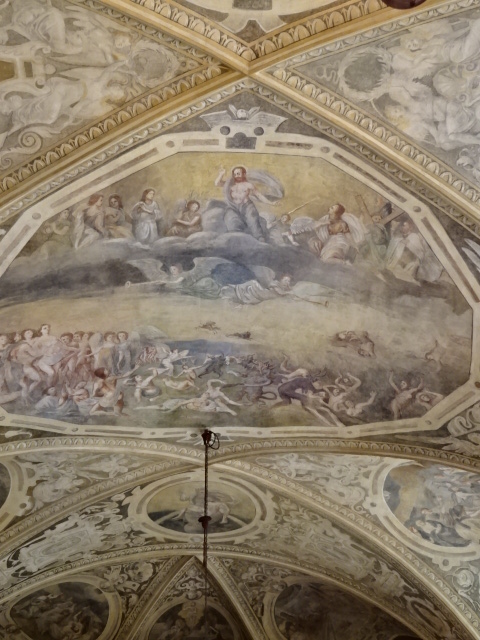
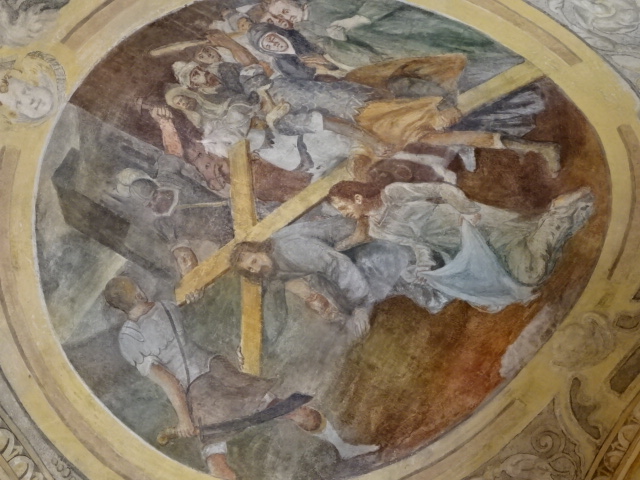
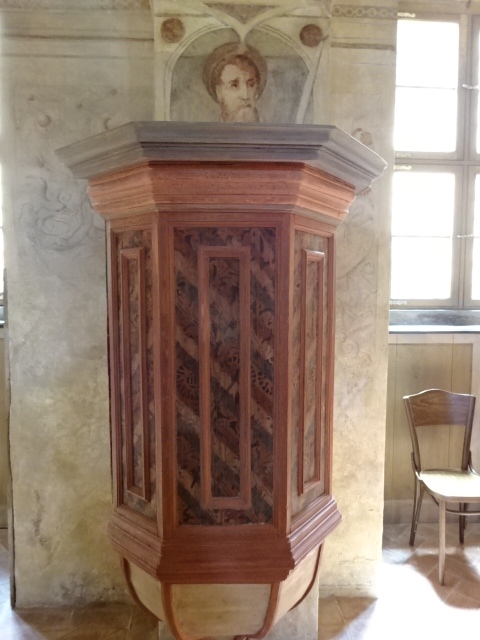
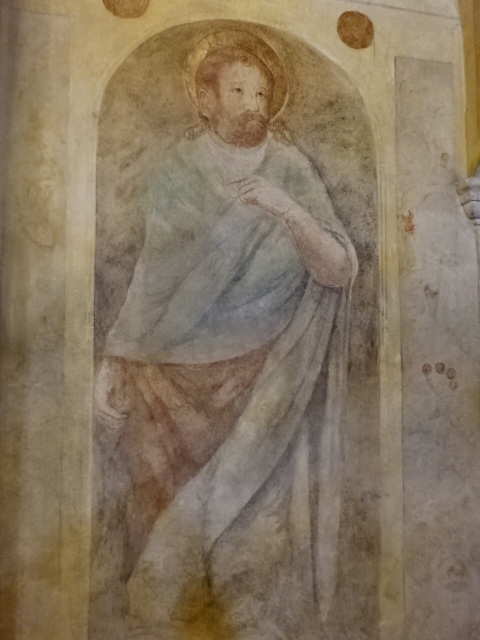
The highlight of the tour was the Renaissance Chapel of Saint Barbara. I admired the superb vaulting and the wall and ceiling paintings, one of which showed a 13th apostle with no attributes. Whom the image represented was unclear. I noticed a poignant Last Judgment scene on the ceiling as well as an exquisite rendition of the Last Supper. The statue of Saint Barbara was breathtaking in its original form. The Renaissance altar painting showed Jesus squirming on Mary’s lap. I noted the splendid blue drapery of the Virgin Mary and the lush green landscape in the background. The wooden pulpit was truly unique.
In the castle rooms devoted to the nobility, I saw old photographs of the Clam-Gallas family. The photos reminded me that Grabštejn had once been a busy family home, full of vitality. I saw many paintings of nobles on horseback as well as landscapes. A gigantic wall painting was stunning. It showed lush chateau-like gardens with a monumental fountain as nobles strolled by. I noticed that the fountain in the painting dazzled with a gilded statue of Poseidon.
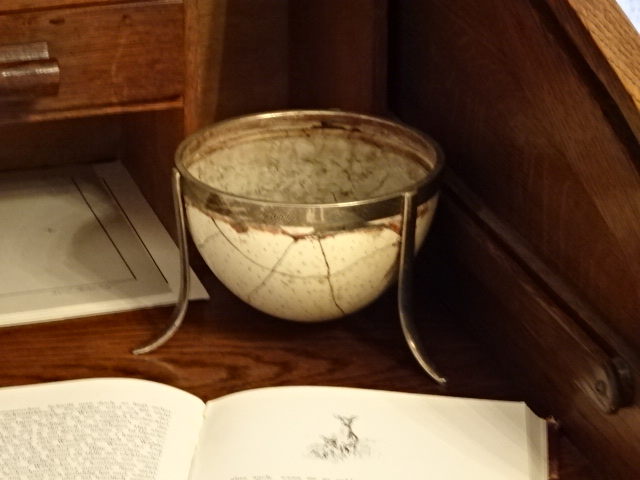
I also admired black-and-white graphic art. A tapestry depicted idyllic scenery. The masterfully carved, wine red canopied bed was striking. I loved the trash can made out of an elephant’s foot and the elegant, gilded grandfather clock.
It was intriguing to see part of a castle as an 18th century work space for clerks and another section as home for a noble family. The various styles of furnishings from the 16th century to the 19th century made Grabštejn’s interiors refreshingly eclectic. The chapel was an architectural and artistic gem in Renaissance style. The detailed painting, the vaulting, the impressive altarpiece and the well-preserved statue of Saint Barbara were only some of the astounding features of this breathtaking space. The decoration throughout was stunning.
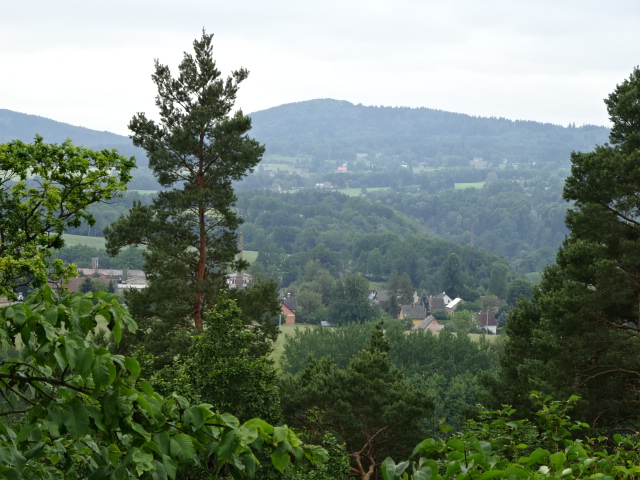
I was so surprised that Grabštejn Castle had gone through a major transformation since my first two visits. The exterior was just as imposing, and the interiors were captivating. I also spent some time on the castle grounds, staring at breathtaking views into Poland and Germany.
Tracy A. Burns is a writer, proofreader and editor in Prague.
In October of 2023, I saw the comprehensive Prague exhibition “Petr Brandl: Story of a Bohemian” consisting of 64 altar paintings, portraits and genre works by Brandl (1668-1735), a masterful Czech artist during the Late Baroque period.
Self-portrait of Petr Brandl in a wig
I was well familiar with Brandl’s work. Many of the works shown at Wallenstein Palace were creations I had seen at chateaus, churches, cathedrals or monasteries throughout the Czech lands, such as at Břevnov monastery, The Cathedral of the Assumption of the Virgin Mary and Saint John in Sedlec as well as at Jindřichův Hradec Castle and Chateau. Another altar painting hailed from Church of St. John the Baptist near Manětín Chateau. Lnáře was home to another altar painting. I had visited the Baroque chateau and the cat museum in Lnáře a few years previously. The altar paintings on display had been restored over a period of two years.
Brandl was of Czech and German descent, baptized in October of 1668. At age 15, he served as an apprentice to painter Kristián Schroder, who later became custodian of Prague Castle. (Schroder’s work was also represented in this exhibition.) Brandl’s masterpieces showed a distinct influence of Karel Škréta’s dynamic and bold style, which was apparent because Škréta’s creations were displayed, too.
A friend of Brandl’s, legendary sculptor Matthias Bernard Braun utilized one of Brandl’s drawings for his design of the statue of Saint Luitgarda on the Charles Bridge. Coincidentally, Brandl had taken part in the competition to create the statues for the Charles Bridge, but Braun had been the victorious one. (I also saw examples of Braun’s work at this exhibition and couldn’t help thinking about the 24 allegorical statues of vices and virtues for former hospital Kuks in east Bohemia, rendered so masterfully by Braun.
Brandl had worked for some of the most prestigious noble families, including the Černíns, Lobkoviczes and Šporks. Brandl lived in Kuks, working under the guidance of František Antonín Špork, during 1731. The painter created a well-known portrait of his patron there.
Coincidentally, Brandl’s brother had a claim to fame as well. Working as a goldsmith, Brandl’s brother contributed to the building of the Cathedral of Saint Vitus in Prague.
To be sure, Brandl was a prolific painter. In the Church of St. John the Baptist in Manětín, Brandl had designed the painting at the main altar. At the UNESCO-listed cathedral in Sedlec, Brandl was responsible for three paintings in the chapels. I also saw four of his paintings in Lnáře. At Břevnov monastery his works dominated six side altars in the main nave. The themes of the paintings at the monastery, founded in 993 AD, included the dying Saint Benedict, Saint Vojtěch meeting with Prince Boleslav II at a spring, the murder of Saint Wenceslas and the crucified Christ.
I had always been enamored by Brandl’s strong chiaroscuro and thick, energetic brushstrokes. His paintings, dynamic and vibrant in character, told distinct stories. His portraits brought the sitters to life. Those of elderly men, such as St. Jerome, were reminiscent of Rembrandt’s works in their expressive nature. His later works took on darker tones and utilized simpler modelling of shapes.
The exhibition also highlighted Brandl’s personal life, especially his monetary problems. I read descriptions of his troubles as I gazed at his monumental works. Brandl’s marriage was rocky in part due to financial problems. He also cheated on his wife, Helena. Wed to Petr Brandl during 1693, Helen often complained that he was a spendthrift and didn’t provide enough money for the care of his three children. He also owed money to the artist’s guild and was fined accordingly. Brandl was earning money but spent it all on an extravagant lifestyle. Brandl found himself in debt his entire life and even was imprisoned twice as a debtor.
His poor health was also highlighted in the exhibition. Brandl had trouble sleeping and took pills. He had pain in his joints and digestive problems, too. Those were just a few of his many ailments.
Saint Jerome
He was very poor when he died during 1735. Brandl was buried in a church in Kutná hora, a town about an hour from Prague, where he had spent time at the end of his life.
Fire of Troy
Despite his shortcomings as a person, Brandl was my favorite Czech Baroque painter and one of my favorite Baroque painters of all-time. I was enthralled by this exhibition and came away feeling joyous that I had been able to enter Brandl’s artistic worlds.
Tracy A. Burns is a writer, proofreader and editor in Prague.
Věra Jičínská – On the Terrace, 1934. Photo from webpages of Gallery of Modern Art, Hradec Králové.
What I like most about visiting Czech museums outside of Prague is that I often find an exhibition dedicated to an artist who is underrated and has been overlooked by the capital city’s art scene.I was in luck when I visited the Gallery of Modern Art in east Bohemia’s Hradec Králové because I came across an exhibition dedicated to the late artist and writer Věra Jičínská, who had made a name for herself in Europe during the interwar years. While she is best known as a painter, the thrilling show also emphasized her penchant for traveling and her talent as a journalist, photographer and designer. Back then, women were not expected to have careers but rather to dedicate their lives to raising a family. Jičínská demonstrated her independence by concentrating on an artistic career, smoking and sporting short hair.
Beach in Crimea (In a Small Bay), 1936.
Jičínská grew up near Brno and later studied in Prague at the School of Decorative Arts. She spent the following years living abroad, exhibiting her art during a seven-year sojourn in Paris after spending two years in Munich. In Paris she became steadfast friends with Czech painter Jan Zrzavý and composer Bohuslav Martinů. Her early career was influenced by Purism and Cubism, but during 1925 she developed a Neoclassical style. By the 1930s, her works were imbued with bright colors.
Parisian rooftops, 1923-24.
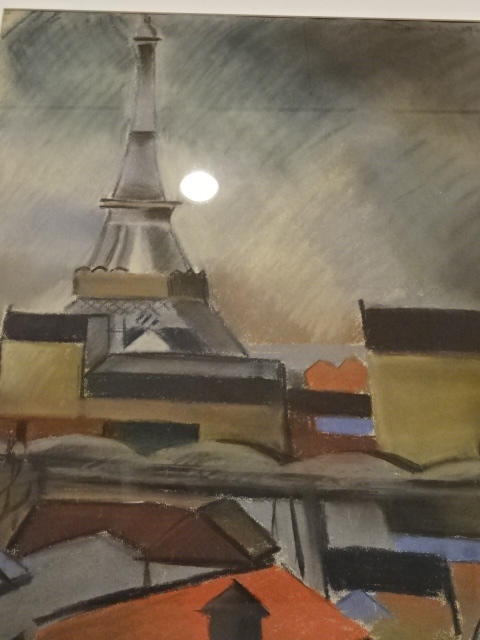
The exhibition’s display of paintings inspired by her travels was my favorite section. Jičínská’s paintings of Brittany’s landscape and fishing tradition captured my attention. That was one place I longed to see. Her romantic rendition of Paris’ rooftops and the Eiffel Tower brought back memories of my visits to the French capital. I went up the Eiffel Tower for the first time when I was a junior in college.As my friend and I enjoyed the sights from early morning until night every day, we drew energy from the electric atmosphere of the city and its many wonders. Her works showing places in Hungary and Czechoslovakia also captured my attention.
The Eiffel Tower, 1927.
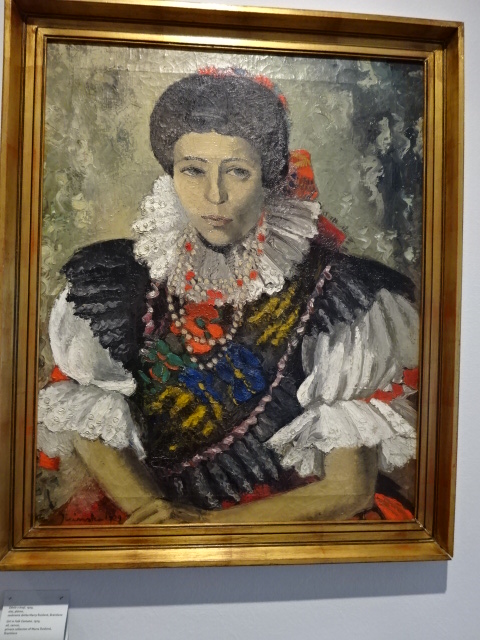
Jičínská also became known for painting female nudes, a subject that, up until then, only had been taken up by male artists. She celebrated the female body in her works, even painting pregnant women. Dance was another theme she dealt with. The bright colors of her painting “Alexander Sakharov in a Fantastic Burlesque” captured the vibrancy of the dance. She was fascinated by folk culture. Her “Girl in Folk Costume” emphasized the beauty of the people, their costumes and folk traditions. Some of her art focused on Hindu dance themes, too.
Journalism by Věra Jičínská
In the early 1930s, she took up journalism. Her articles examined modern culture – theatre, film and architecture, for instance. The profession of journalism was also the theme of some of her paintings. I had spent time as a culture writer for various publications, and her thirst for knowledge in the cultural sphere made me feel a certain kinship.
In 1930 she married a former classmate. The following year the couple moved to Prague, though her work was still exhibited throughout Europe. Together, the two trekked to Slovakia during 1933 and 1934, and she documented her trip with masterful photographs. Her pictures from Slovakia brought out the character of the people photographed. There was no exaggeration or embellishment to the photos. She emphasized everyday activities in her snapshots. This feature made me think of my favorite Czech writer, Bohumil Hrabal, who, in his fiction, stressed the beauty of everyday life. Ever since I read his books, I have become more appreciative of the little things in life that, up until that time, I would often take for granted, the small joys that take on so much meaning when they are gone.
Gulls, 1933.
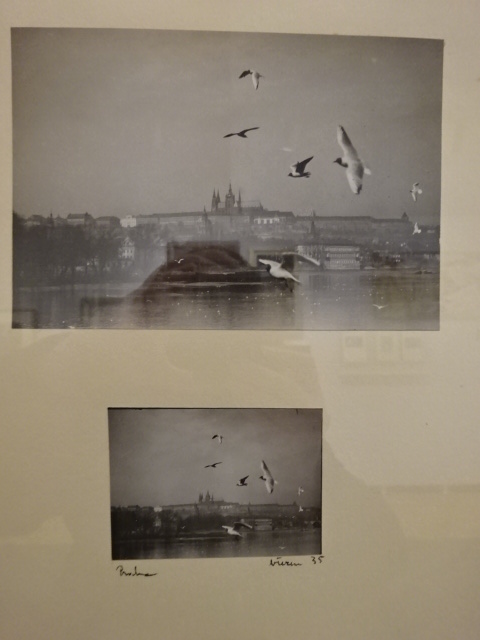
Still, the one photograph that impressed me the most featured gulls swooping around Prague Castle. I was reminded of one of the many views that had made me fall in love with the city – Prague Castle from several of the bridges, Prague Castle from the Vltava embankment, Prague Castle from the window of a flat I had rented long ago. After the attacks on September 11, 2001, I found great solace in that postcard perfect view from the apartment where I was living at the time. It helped me deal with the tragedy of that day, which would be forever etched in so many minds. Jičínská also took poignant photos during trips to Poland, Russia and Ukraine.
Brittany, 1928.
In 1937, her life changed again. Jičínská gave birth to a daughter whom she named Dana. While she devoted much time to motherhood, she did not give up her career. She even exhibited works during World War II. By 1941, she was concentrating on working with pastels to create a colorful dynamic and rendering many landscapes. In 1946, the couple bought a cottage in Říčky, a village nestled in the Orlické Mountains. Jičínská often painted there, and many Czech artists visited the couple during the 1950s.
The Communist coup of 1948 had had a devastating effect on Jičínská and her family. Her husband’s publishing house was nationalized, and he was no longer the boss but rather one of the employees. Her parents had lived in a villa in Brno, but the Communists only let them occupy several rooms. To make matters worse, her father saw his pension dwindle.
Girl in Folk Costume, 1929.
Due to the financial hardships, Jičínská branched out into more artistic fields. She designed postcards and became a designer who often worked with ceramics. In 1952 she was restoring a ceiling fresco at the Czechoslovak Academy of Arts and Sciences when the scaffolding collapsed. She was severely injured and could not continue as a painter. She focused on her work as a designer. On March 27, 1961, a year after her daughter married, Jičínská died in Prague.
Before this exhibition I had not even heard of Věra Jičínská. After seeing her works, I appreciated the obstacles she must have come across pursuing a career as a female artist, journalist and traveler during the interwar years. I grew up playing baseball and ice hockey with boys, and I often was the only girl in the baseball league. But that was nothing compared to what Jičínská had accomplished as a woman breaking down barriers and living an independent life the way she chose to live it, not allowing herself to be dictated by society’s norms.
Alexander Sakharov in a Fantastic Burlesque, 1932.
The Gallery of Modern Art’s permanent exhibitions were also fascinating, and I will write about that in a separate post. Twenty artists from the last century were featured in one section, and contemporary art played a role in the collections, too. But what stood out most for me was the exhibition of Věra Jičínská’s artistic accomplishments.
Tracy A. Burns is a writer, proofreader and editor in Prague.
From the moment I saw a picture of Neo-Renaissance Červená Lhota Chateau, I yearned to see it with my own eyes. Its cheerful red appearance cast a spell on me. Comprised of two stories, the pictured chateau dominated a rocky island surrounded by a pond. Červená Lhota looked as if it had jumped out of a fairy tale. How beautiful and romantic the reflection of the four-winged structure looked in the water! I read that a forest was situated nearby as was as a park with the Renaissance Chapel of the Holy Trinity.
There was only one problem: I had heard that the chateau was a 10-kilometer walk from the nearest public transportation, a train station. I was afraid I would get lost as I didn’t have a great sense of direction. I had no one to go with me and didn’t have access to a car. I wondered if I even could walk 10 kilometers. I loved playing sports, but 10 kilometers – was that even possible?
One afternoon I found myself at Prague’s main bus station, arriving home from a day trip. I decided to ask at a window if it was possible to travel to Červená Lhota by bus. I was in luck! It was! I got my bus ticket for the following Saturday. I would have to change buses at Jihlava, in Moravia. I hadn’t realized that the chateau was in Moravia, but I didn’t think any more about it.
I set off for Červená Lhota on a scorching summer day, enthusiastic, elated even, as I listened to the melodic singing of Slovak soft rock star Pavol Habera on my Walkman. I was sure nothing could destroy my ecstatic mood.
Two and a half hours later, I got off the bus at Jihlava and waited for another bus to take me – finally! – to Červená Lhota. Soon I would see that cheerful red façade that featured prominently on the craggy rocks! I would gaze at the sublime reflection of the chateau in the pond! It would be bliss! Before long, I walked to platform number 10, thinking that I could not have hoped for better weather and that nothing surely could go wrong.
Finally, the bus came, and on a sign behind the windshield I saw the words Červená Lhota. I was so close to my destination. It would not be long now.
The bus driver announced “Červená Lhota” when we came to a village. As I exited, I asked the driver, “How do I get to the chateau?”
The driver looked at me as if I was crazy.
“The chateau is near Jindřichův Hradec, in south Bohemia. This is another Červená Lhota.”
My face fell with disappointment.
The driver continued, “I’ll be stopping here again in an hour. Wait, and then you can go back with me to Jihlava.”
I thanked him, tempted to burst into tears. I sat on the bench at the bus stop, my mind reeling. How could I be so stupid? Hadn’t I read that the chateau was in south Bohemia? When I got my bus ticket, I had been so happy, so full of hope. Now I didn’t even know exactly where I was. Somewhere not too far from Jihlava in Moravia. I felt lost – in more ways than one. I didn’t like teaching with the agency full-time. I didn’t want to get up at five every morning and finish work at seven or nine at night. I wanted to do other things, to be able to sleep until seven am, at least several days a week. I didn’t like my housing situation. I felt like my life was just one disappointment after another, as if it was full of days spent in the wrong places. Is this all there was? Was this the only life I could live? I was in my early thirties. I wanted to make a change, but what? And how? I knew I didn’t want to move out of Prague. I felt that I was stuck at a crossroads.
No one else came to the bus stop during that hour. I was alone. It was quiet. I got myself together mentally, many thoughts going through my head. I had to persevere; I knew that. I had to move onward one small step at a time. During those 60 minutes of solitude, I decided that I wouldn’t let life get me down. The following Saturday I would take the train to Kardašovy Řečice, which was 10 kilometers from the right Červená Lhota. I was determined to see the chateau. I would walk the 10 kilometers alone. I could do it, I kept telling myself. When I saw the bus approaching, I breathed a sigh of relief.
From Jihlava I easily found a bus to Prague. When I got off in the capital city, I did not feel lost anymore. Instead, I was filled with purpose and determination.
The following Saturday I made it to Kardašovy Řečice in the morning. The weather was beautiful though very hot. I was so kanxious. What if I got lost in the middle of nowhere? Casting these thoughts aside, I started walking. Soon I came upon four adults in their twenties, two women and two men who had exited the same train.
“Is this the way to Červená Lhota?” I asked.
“Yeah. We’re going there, too. Come with us!”
We walked to Červená Lhota together, talking about their vacation in south Bohemia and their home in north Bohemia as well about Czech culture and literature. They recommended Zákupy Chateau near their hometown and Děčín Chateau, where I had been when it was still closed to the public in 1991. We talked about our respective travels, too. Our conversations were very pleasant, and I was glad to have met them. I had made four new friends.
I was tired when we arrived at the chateau. However, I totally forgot about my fatigue when I gazed upon that cheerful red façade and its reflection in the calm waters. The chateau was everything I imagined it to be. I almost pinched myself, not believing that the enchanting structure in front of me was real. I took photos on my disposable Kodak camera – I was saving to buy a digital one – while we waited for the tour. I also had a bite to eat in the chateau restaurant, sitting outside with a spectacular view of the red beauty.
The chateau rooms were small but intimate. However, the tour was crowded. Sometimes I had to almost push my way to the front of the large group so I could see because I was short. Still, I didn’t mind. I had reached my goal and met some nice people on the way. The furnishings and decorations were superb, in styles from Renaissance to Beidermeier. Each room had its own charm. I loved the intimate feel of the chateau. It really felt as if a family could live there rather than as a cold representative space.
We all left the chateau feeling elated and set off for the 10-kilometer walk to the train station. Could I trek another 10 kilometers? I needn’t have worried. A bus came and took us to the train station in a five-minute journey. As I stepped off this bus, I felt so different from the moment I had exited the bus in the village of Červená Lhota the previous weekend. This time I felt triumphant, victorious, full of energy despite my weary legs.
My four friends were catching a later train, so we parted at the station, promising to keep in touch. We said our goodbyes, and I started my journey back to Prague. I knew I had to come back here one day.
And, 18 years later, I would.
My second trip to the right Červená Lhota took place during August of 2021, when the situation with covid cases was not too horrible. A friend drove me there. I often visited castles and chateaus with her. She had visited the chateau decades ago but had never seen it surrounded by water. It was much easier than walking 10 kilometers, that was for sure, though I knew I could use the exercise. During the pandemic I had become lax about fitness.
The moment I saw the chateau I was flabbergasted because the pond had disappeared. My friend was so disappointed. The chateau still had me in a trance with its bewitching exterior, but the lack of water made it seem more steeped in reality than in a fairy-tale. Later, we would find out that the chateau would not have water around it for at least two more years. It was simply too expensive to maintain. A garden area was set up on one part of the dry land below the rocky terrain, but it still didn’t make up for the appearance of yesteryear.
It had been a long 18 years. I had stopped teaching full-time about 11 years ago, and I had moved twice. Now I was happy with my work as I was doing more writing and content with my accommodation. I was excited to be back. I hadn’t realized how much I had missed this chateau until I set my eyes on it again. It was scorching hot just like the first time I had visited. The guide told us that we had to wear masks. I was glad because when I was at Jemniště Chateau that rule had not been enforced. I was also pleased that only 20 people were allowed on the tour due to health concerns. I wouldn’t have to deal with a crowd like I had at Jemniště or Děčín chateaus, and there was less of a chance of catching covid during this visit.
I had refamiliarized myself with the chateau’s history before making the trip. The structure was first mentioned in writing during 1465 when it had been a Gothic fortress under the control of the sons of Ctibor of Zásmuk. During 1530 the knighted family of Káb from Rybňany became the owners. Jan Káb’s tombstone would be placed in the nearby chapel. Jan Káb’s two children had succumbed to the plague, so, after his death, his brothers took over. Then called Nová Lhota, the structure was transformed into Renaissance style from 1542 to 1555. A private chapel, now the Church of the Trinity, was built near the chateau in the 1550s. It would become known for its illusive fresco decoration that originated in the second half of the 16th century.
It got the name Červená Lhota (červená means red in Czech) during 1597, when it was painted the same color it is today. The chateau had changed owners again. Vilém Rút of Dírná had chosen this bright color for his residence. A legend claims that the devil had kidnapped a lady at the chateau, and she had been killed. After her murder, a spot of blood could be seen under a window of the then white façade. Another legend claimed that her blood had gushed over the chateau exterior, making it red, and the color could not be changed.
When the Catholics defeated the Protestants at White Mountain in November of 1620, the chateau was confiscated from the Rút family because they were Utraquists. It didn’t make a difference that they had not fought in the battle that would start the Thirty Years’ War.
During 1621 an Italian aristocrat named Antonio Bruccio took charge of Červená Lhota when the imperial army occupied it. After the war he made sure the chateau was not looted. The chapel was plundered, though, and Bruccio reconstructed it, so that the holy space could be reconsecrated in 1635. He founded a spa nearby, and it earned as much praise as the one in Karlovy Vary (Carlsbad), which has for centuries grabbed world-wide attention. Bruccio’s spa, alas, is no more. The stone bridge was built during his era, in 1622. He died in 1639, childless.
Vilém Slavata from Chlum and Košumberk purchased it after Bruccio passed, but he wouldn’t use the chateau as his main residence. I recalled that during the Third Defenestration of Prague, in 1618, he had been thrown out the window of the Castle. He didn’t die because he fell on a heap of dung. While looking after the chateau, he had some reconstruction completed. In 1641 the tower with distinguished portal was built. By 1678 the chateau sported a Baroque appearance. To this day the tower’s portal is decorated in Baroque style. Stuccowork seen in the chateau hails from this era.
Vilém Slavata from Epochaplus.cz
When the Slavata dynasty died out, the niece of the last of the Slavata clan was given possession of the chateau. Marie Theresa married into the Windischgratz family. Two owners in this clan accumulated a great debt due to their bad handling of finances. They wound up selling the chateau to barons, who started having construction work done. A fire damaged the chateau.
Two years after the fire, in 1776, Baron Ignác Stillfried bought the place. Karl Ditters von Dittersdorf, a composer and co-founder of the German opera, lived at the chateau from 1796 to 1799, when he died. Then the dukes of Schonburg-Hartenstein took control in 1835. They would own Červená Lhota for 110 years. During the second half of the 19th century, the chateau was given pseudo-Gothic features, inspired by Hluboká Chateau, one of my all-time favorites. From 1903 to 1913, the chateau got a Neo-Renaissance makeover, giving Červená Lhota the appearance it has today. The chapel was renovated at the beginning of the 20th century, too. In 1907 mass began to be held here again. (Services had been halted during the early 19th century.) After World War I, Johann, the then current owner who had been awarded Golden Fleece and Maltese Cross medals, lived there and added to the chateau’s splendor. When Johann died in 1937, he was buried in the chapel nearby.
Because the family was German, the chateau was handed over to the Czechoslovak state after the war. A children’s sanatorium was set up there in 1946, but its existence was short-lived. During 1949, Červená Lhota was open to the public. Some services, such as weddings, still take place in the former private chapel.
Soon it was time to tour the 16 rooms. So glad that we were in a small group, I was enamored of the interior, which once again felt like a home instead of mere representative spaces. The first floor showed off the life of the Schonburg-Hartenstein clan at the start of the 20th century. It was thrilling to see mostly original furnishings of various styles. Not many chateaus showed off authentic furnishings. At the beginning of our tour, we watched a flutist and pianist in period dress superbly play Renaissance music. The painted ceilings, elaborate clocks and stunning chandeliers all caught my undivided attention. Exquisite religious paintings and portraits, beautiful tiled stoves, furniture with intarsia, black-and-white graphics of various animals and fine porcelain also complemented the spaces. The intricate gilded headboard of a bed sported a hovering putti.
While we perused each room protected by our FFP2 masks, I recalled that Jan Káb’s two children had died of the plague, and I realized that, as the current coronavirus pandemic continued, I had learned how to live all over again. I had spent the first three weeks of the pandemic hiding in my apartment, tuned all day and night to CNN, only leaving to take out the trash. I had been that scared of catching the virus. I had kept my windows closed; my life closed off. Now I was doing things the best I could, being as cautious as I could, but still living rather than merely existing.
I thought back to those 60 minutes spent on that bench at the bus stop in another Červená Lhota, where I had mustered up the courage to face challenges and disappointments head-on, where I had become determined to make changes in my life, even if the changes meant sometimes taking small steps at a time. The tranquility of the hour that seemed to last for such a long time allowed me to get to grips with my present and helped guide me into the future.
Perhaps finding the village of Červená Lhota in Moravia had not been a mistake, but rather it had marked the beginning of a journey that had taken me here, for the second time, to this neo-Renaissance architectural wonder, visited during a pandemic that I had weathered the best I could, making changes along the way, directing my life story one day at a time as I came to new revelations about my journey and my destination. Perhaps it was only fitting that Červená Lhota would be the last chateau I would visit during the summer of 2021. After the tour, my friend and I promised to come back when the pond was restored. So, until then, I said my goodbyes to the place that has been close to my heart for several decades.
Tracy A. Burns is a writer, proofreader and editor in Prague.

































































 Tracy's Travels