Palazzo Leoni Montanari Diary

VicenzaGIint18ceiling

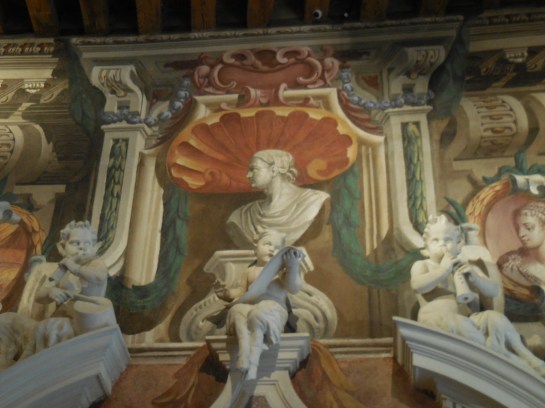
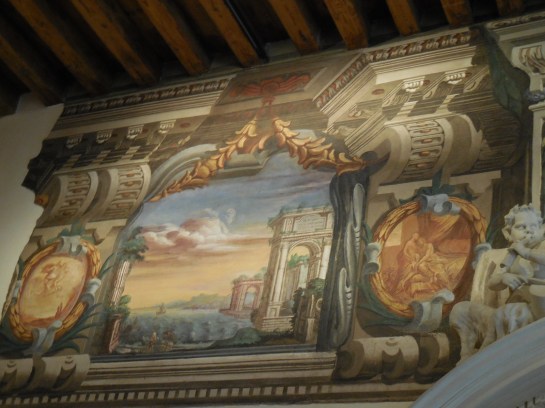
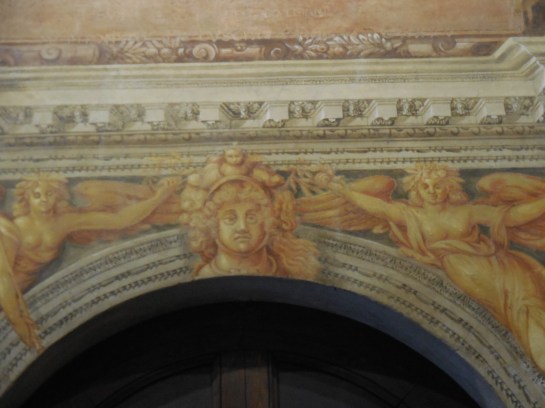
My visit to the Gallerie d’Italia in the Palazzo Leoni Montanari of Vicenza proved to be one of the most enthralling art experiences I have ever experienced. The gushingly Baroque palace was built in the 1670s, commissioned by Giovanni Leoni Montanari. The combination of statuary, stucco and fresco decoration in the building enhanced my great interest in the exhibitions. Owned by Intesa Sanpaolo bank and opened in 1999, the gallery houses a collection of vases from Attica and Magna Graecia, 18th century Venetian painting, a unique 17th century Carrara marble sculpture and the most impressive collection of Russian icons I have seen outside of the Russian Museum and the Hermitage in St. Petersburg. In this post, I am concentrating on the interior of the gallery itself and the exhibition of Russian icons as well as a temporary show of Soviet era icons.

VicenzaGIint19

While the palace is by no means as vast as the Hermitage or Prado, it certainly made an everlasting impression. In fact, its size allows for an intimate atmosphere in which the visitor can become well-acquainted with its displays without feeling overwhelmed, though the gallery is by no means small.

VicenzaGIint21

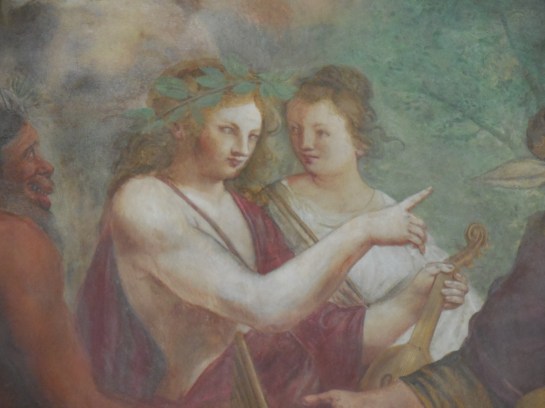
This definitely is one of my favorite art galleries in the world, ranking up there with the Doria Pamphilj in Rome or Lazaro Galdiano Museum in Madrid. The Baroque palazzo is a work of art itself. Indeed, the palace ornamentation is unbelievably rich. The inner courtyard with loggia features a superb statue of Hercules clubbing a monster to death. Just looking at the statue makes one feel imbued with the mythological character’s strength and determination. I was reminded of the theme of Hercules that was promoted in the Teatro Olimpico, an architectural gem designed by Andrea Palladio and a breathtaking sight I had visited earlier that day. In addition, in the palace courtyard I saw five frescoes sporting classical themes.

VicenzaGIint23

VicenzaGIint24

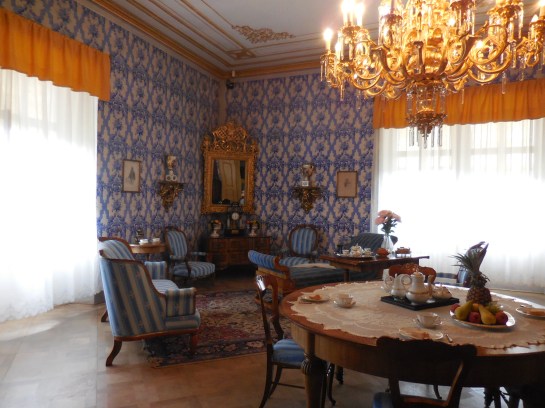
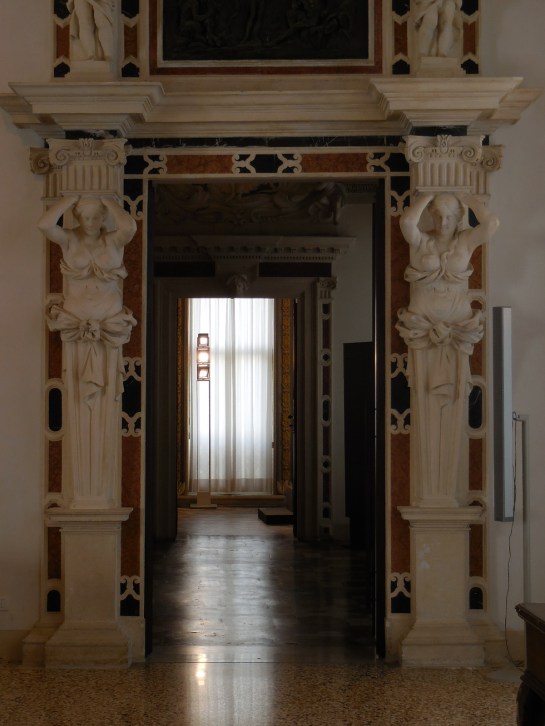
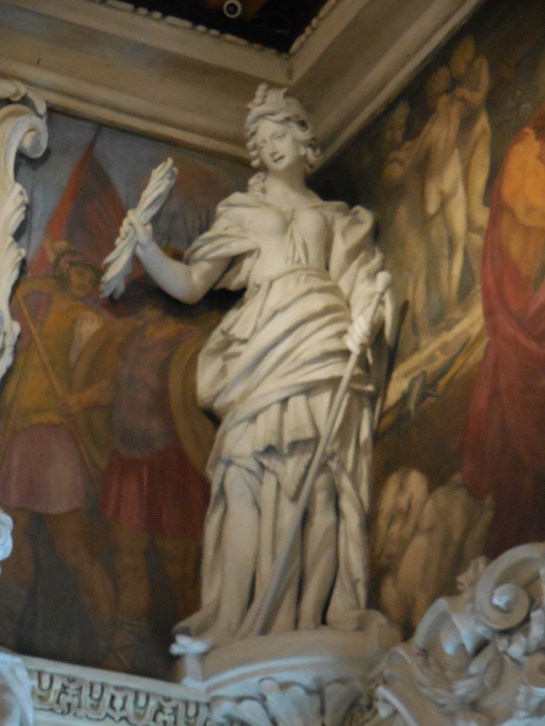
Sculptural adornment greets the visitor in the entrance hall as dragons and hideous creatures make appearances in stucco forms. One space near the main staircase is designed as a sort of grotto with exquisite painting decoration. The Hall of Apollo celebrates that deity as well as Hercules. It features tapestries and stucco portrayals of protagonists from The Iliad, too. The Room of the Old Testament and the Room of Ancient Rome have stunning friezes.  The Room of the Four Continents prominently displays stucco figures of America, Africa, Asia and Europe above the entrances. Frescoes take on historical themes, such as Aristotle mentoring a young Alexander the Great in geography. Allegorical statues also add eloquence to the space.
VicenzaGIint26

VicenzaGIint27

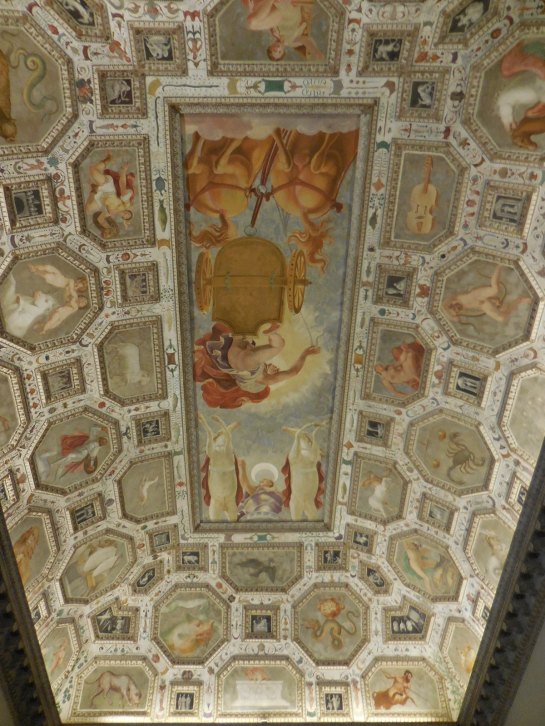
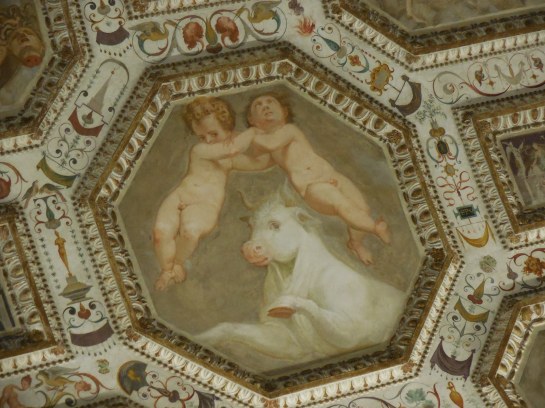
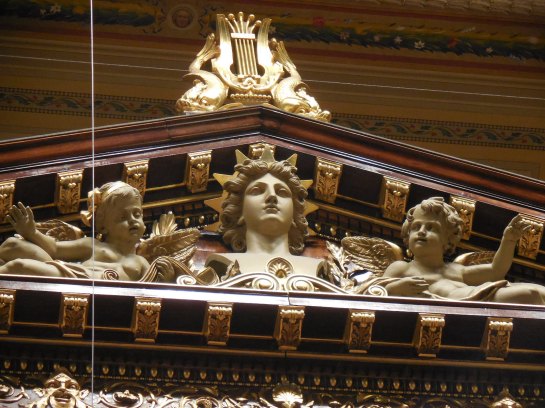
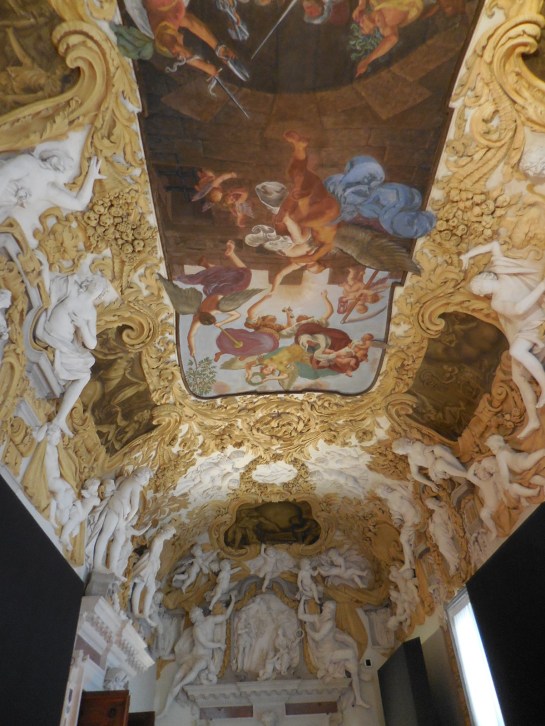
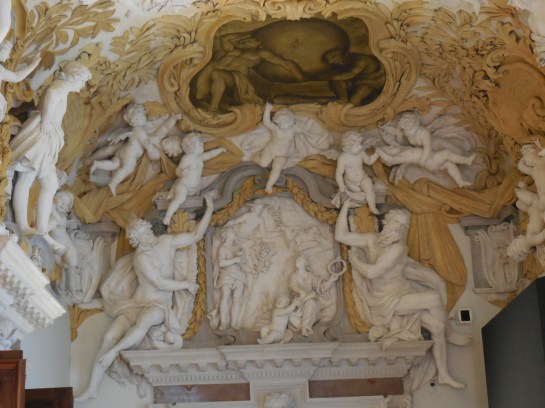
The Gallery of Truth is the room that most amazed me. I could not look away for a long time, as I was so mesmerized with the stucco and fresco decoration that covers the entire ceiling. The central fresco celebrates the triumph of truth. Nine muses are represented, too. Putties and garlands abound, and grotesque creatures join in the exuberant fray. The paintings show the feats of Hercules. In this room, I saw him slaying serpents, freeing Prometheus from the rock and holding up the world for Atlas.
VicenzaGIint28

VicenzaGIint31

VicenzaGIint33

While ceramics are not usually my cup of tea, this collection did feature an impressive 500 items, many unearthed in Ruvo di Puglia, a town in Puglia I had visited the previous year and one of the most tranquil places I had ever seen. It brought back memories of that astounding trip to Apulian Romanesque churches and tranquil settings without hordes of tourists. Puglia had given me a sense of serenity and a feeling of peace. I was reminded of those feelings, as I better comprehended the ancient history of Ruvo di Puglia.
VicenzaGIint34

VicenzaGIint35

VicenzaGIint36

VicenzaGIint41

VicenzaGIint42

VicenzaGIint43

VicenzaGIint52

VicenzaGIint53

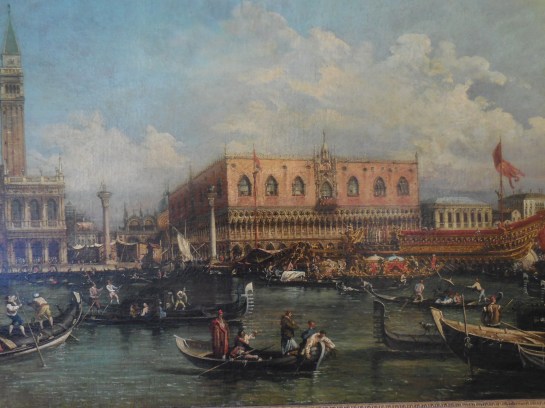
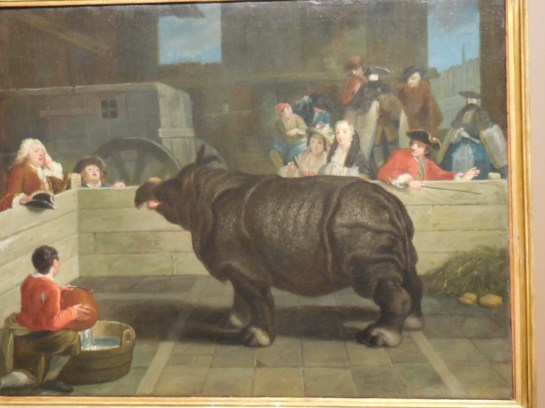
The 18th century Venetian paintings brought back memories of my trip to Venice, just one of many places in Italy to which I longed to return. The 14 paintings of everyday life in the society of the Venetian nobility by Pietro Longhi triggered thoughts of a Prague exhibition of works by Rococo painter Norbert Grund, who was a masterful observer of his era. Yet Longhi did not only paint common scenes. I also admired his portrayals of exotic animals surprising and enthralling an audience.
VicenzaGIint37

VicenzaGIint39

VicenzaGIint40

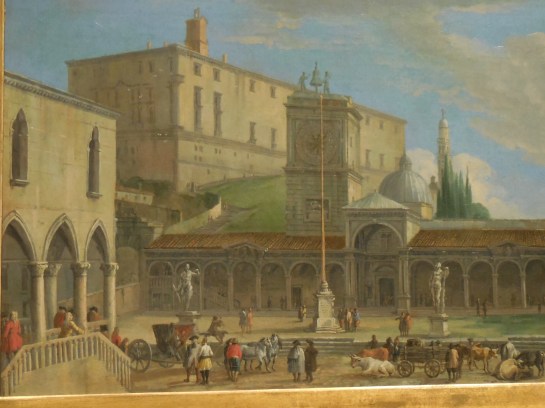
I was entranced with the works of Canaletto and his contemporaries. The Venice landscapes spoke to me. I recalled the exhibition of Canaletto’s works I had seen in Aix-en-Provence a few years earlier. I also thought of the Canaletto painting that I had admired in Nelahozeves Chateau and later in the Lobkowicz Museum in Prague.
VicenzaGIint46

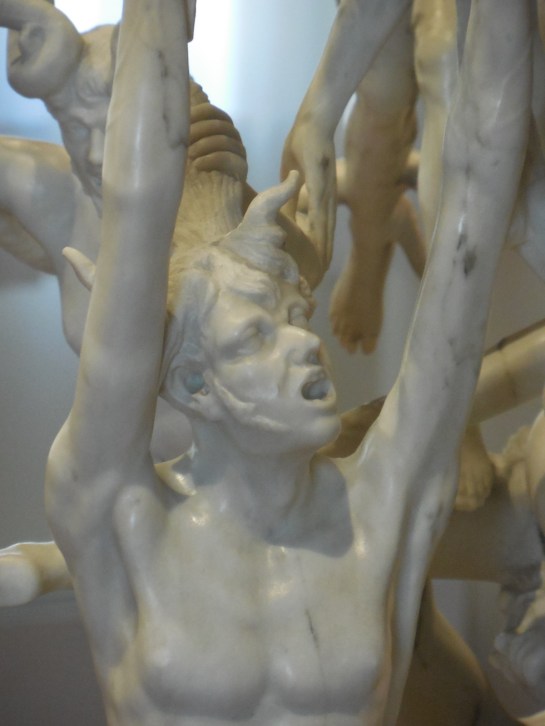
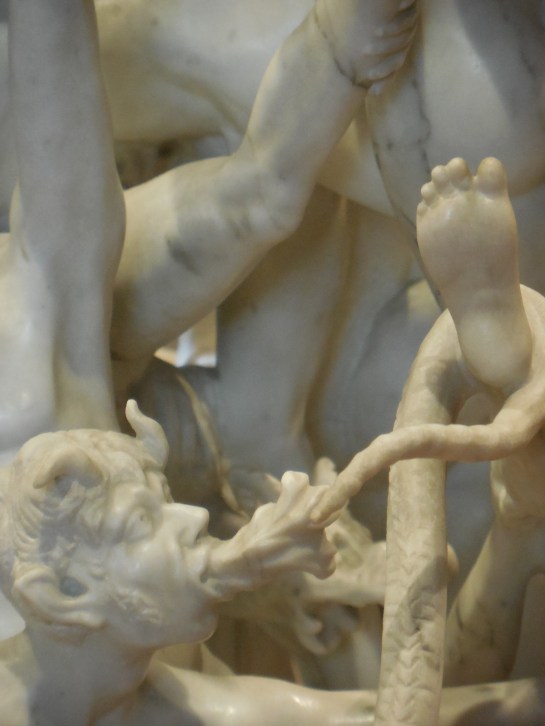
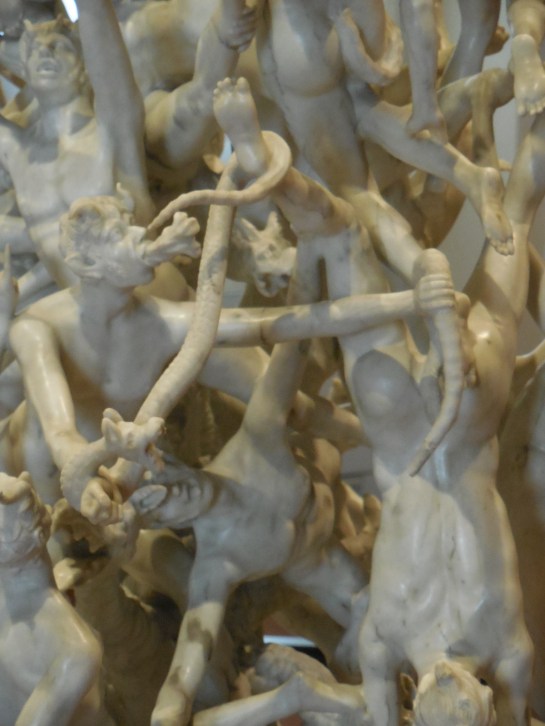
In a room punctuated by stucco decoration, I admired the unique sculpture “The Fall of the Rebel Angels” by Agostino Fasolato, created in the 18th century. Shaped as a pyramid, the sculpture features 60 intertwining figures, all twisting and turning, carved from one piece of Carrara marble. Once on display in Padua, the plethora of figures exhibit a great attention to detail as masterful as that in paintings by Pietor Brueghel the Elder. I was entranced with the dynamic sense of movement attained by the sculptor. The sculpture, indeed, seemed to be in motion as figures wiggled and writhed.

VicenzaGIint47

VicenzaGIint49

VicenzaGIint50

VicenzaGIint51

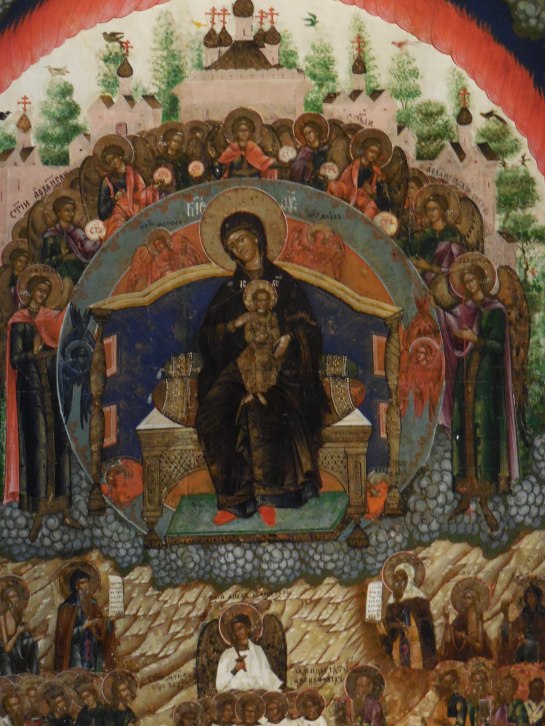
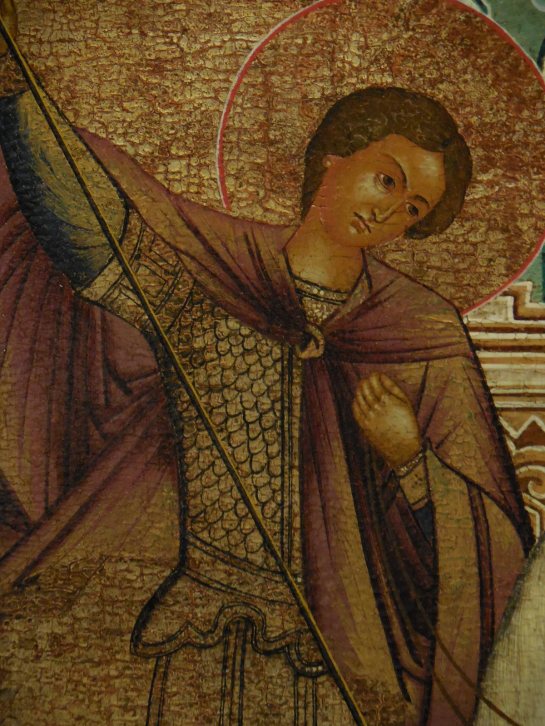
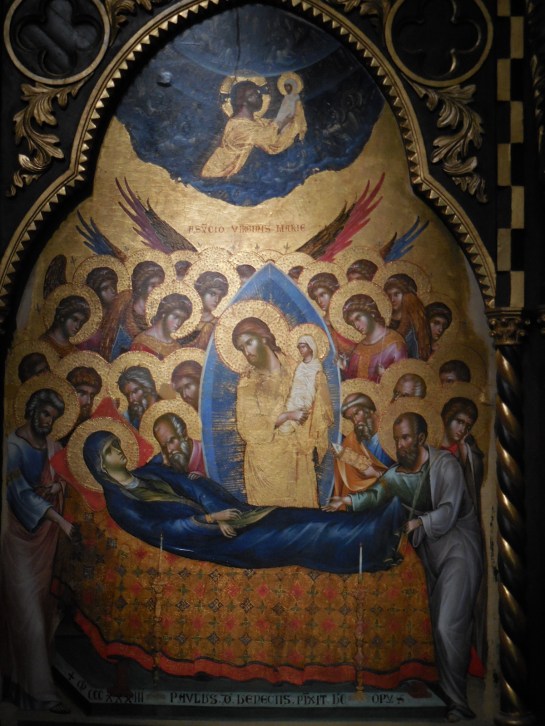
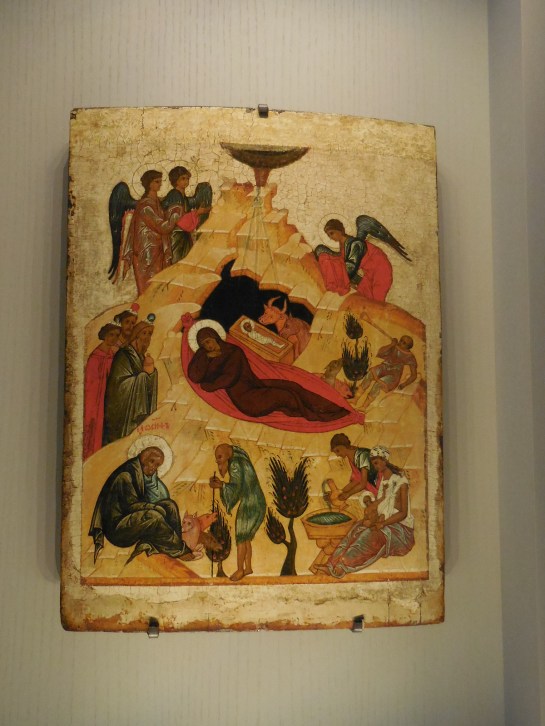
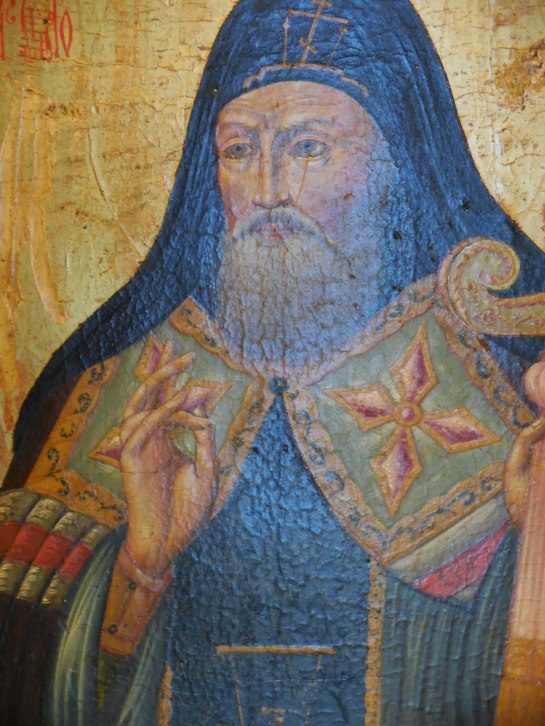
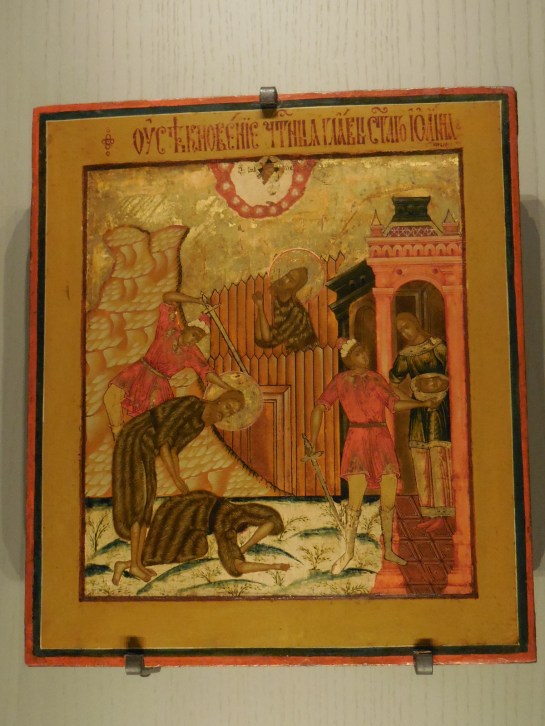
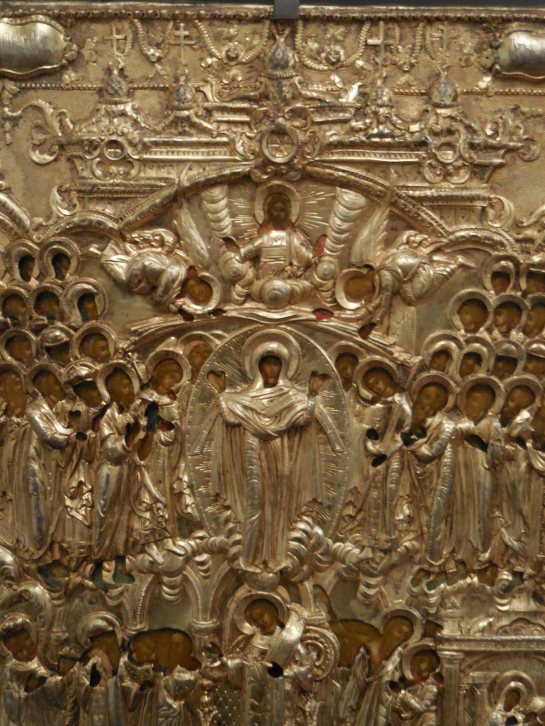
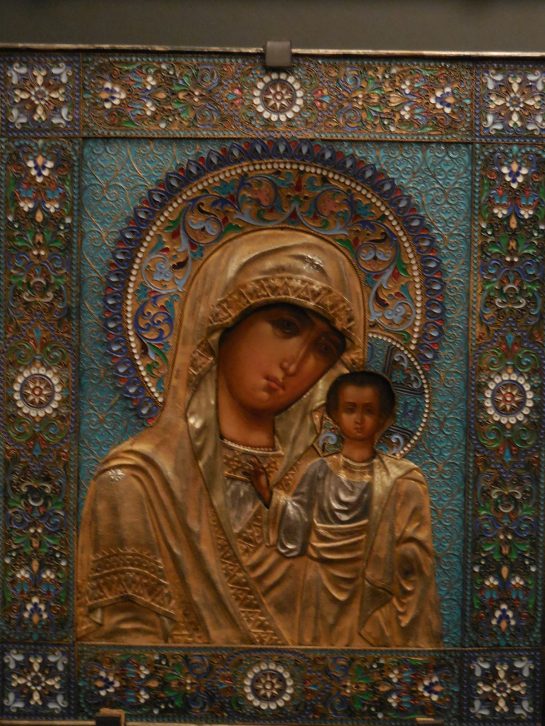
The Russian icons enthralled me so much that I was just as astounded by this gallery as I was by the comprehensive Van Gogh exhibition at the Palladian Basilicata with its elegant arches and arcades. At this gallery I saw 140 icons ranging in age from the Middle Ages to the 20th century and giving a superb overview of the history of the icon in Russian society throughout the centuries.

VicenzaGIintRus12

VicenzaGIintRus3

VicenzaGIintRus5

VicenzaGIintRus7

The icons boast various themes. They are inspired by the Bible, legends, liturgical hymns, theological texts and feasts, for instance. The Mother of God and Saint Nicholas are featured in some of the artistic creations. Icons of saints and monks, some with monasteries in the background, make many appearances. I also saw frames and covers for icons made with precious materials. A mastery of the goldsmith trade also is illustrated in some items. The schools represented include Moscow, Novgorod and Vladimír. The icons are organized by subject matter, which was helpful and intriguing.
VicenzaGIintRus8

VicenzaGIintRus11

VicenzaGIintRus12

VicenzaGIintRus13

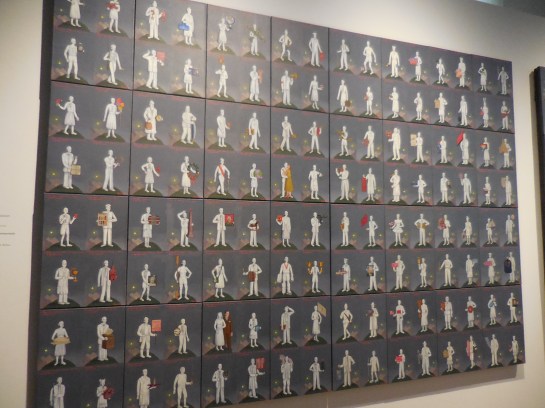
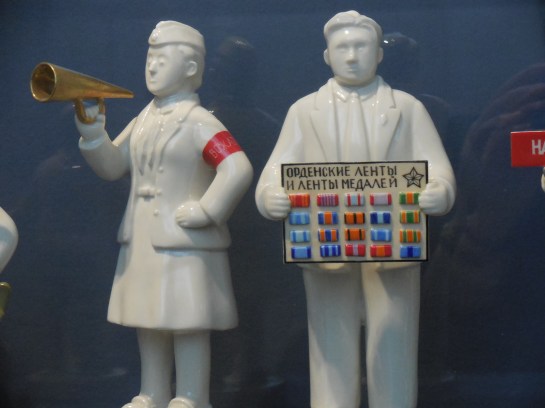
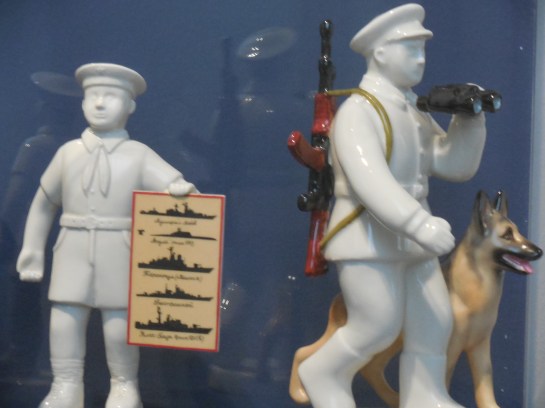
I also found the temporary exhibition of Soviet icons by Grisha Bruskin to be very impressive. A monumental painting called “The Fundamental Lesson,” created in 1945, features 256 white figures. The painting stresses the significance of statues in the Soviet Union as each person represented has an ideological meaning. Instead of a celebration of saints, Madonnas and monks, I saw workers, pioneers, athletes, functionaries, astronauts, soldiers and doctors exalted onto ideological pedestals. Small sculptures of these figures are also displayed. There are 25 porcelain pieces and 49 renditions in bronze.
VicenzaGIint1

“The Fundamental Lesson”

VicenzaGIint2

VicenzaGIint5

VicenzaGIint7

I remembered how, as a child growing up in America, I had been taught by society that Russia was the enemy, all Communists were bad people, and everything was black-and-white. Russia was evil, we were good. I had wondered what life was like in a Communist country. Did people ever cry with joy or truly feel happy and at peace with themselves and with the world? I wondered what people ate, what people wore, what people were thinking about.
VicenzaGIint9

VicenzaGIint11

VicenzaGIint13

Overall, I was most impressed with this exhibition because it exposes the dangers of Soviet ideology. It impressed upon me how Soviet society had been inundated by the ideological myths represented by the painting and small statuary.

More Russian icons from the permanent exhibition:

VicenzaGIintRus15

VicenzaGIintRus16

VicenzaGIintRus17

VicenzaGIintRus18

I came away from this gallery with a heightened appreciation of having grown up in a free, democratic society. I had attained a deeper understanding of the art of Russian icons. I had seen a unique sculpture carved with precision. The visit had triggered golden memories of Venice. I had examined Venetian society in the 18th century thanks to Longhi. I had seen artifacts from one of my favorite Apulian towns, Ruvo di Puglia and had thought about that unforgettable trip. I had experienced all this in a building that was a masterful work of art, the Gallery of Truth being my favorite space.

Tracy A. Burns is a writer, proofreader and editor in Prague.
VicenzaGIintRus19

VicenzaGIintRus20

VicenzaGIintRus21

VicenzaGIintRus22

VicenzaGIintRus23

VicenzaGIintRus24

VicenzaGIintRus25


Teatro Olimpico Diary


VicenzaTeatroOint17I cannot choose one place as the highlight of my trip to the magical world of Palladian architecture in Vicenza, but certainly seeing the Teatro Olimpico ranks right up there. Recognized by UNESCO, this is one of the three Renaissance theatres in existence. The 72-year old Andrea Palladio designed what is now the oldest covered theatre in Europe, and construction began in 1580. When Palladio died in August of that year, Vicenza-born architect Vincenzo Scamozzi took over.

VicenzaTeatroOint9

Still, the theatre clearly features many Palladian characteristics. For instance, the plan for the theatre was based on classical architecture. As usual, Palladio had found inspiration in the writings of Roman architectural guru Vitruvius, who lived during 1 BC. Indeed, I felt as if I were seated in a theatre dating back to antiquity. The classical forms gave the Teatro Olimpico a very majestic quality.

VicenzaTeatroOint11

The theatre held its first performance on March 3, 1585, as actors who were at the time well-known performed Oedipus Rex, a play chosen for its classical theme. The costumes were extravagant. About 1,500 spectators watched, and the play was a huge success. However, the theatre was only used for a few performances.

VicenzaTeatroOint13

Palladio had had his work cut out for him. The theatre was built on the site of a former prison, which had a box-like shape. Palladio was able to turn the audience hall into an oval shape, and the seating was sloped steeply, as if it were a Roman amphitheatre. The amphitheatres I had visited in Taormina, Segesta and Syracuse, Sicily and in Arles, France came to mind. I also thought of the Roman amphitheatre I had seen the previous year in Lecce, Puglia.

VicenzaTeatroOint18

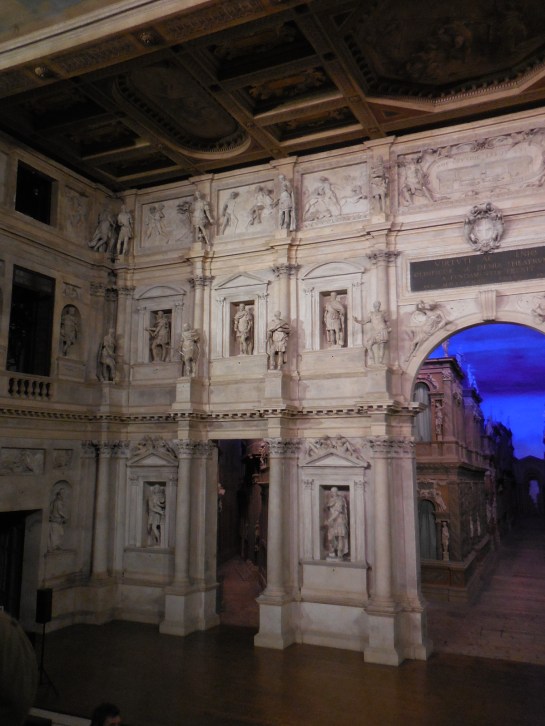
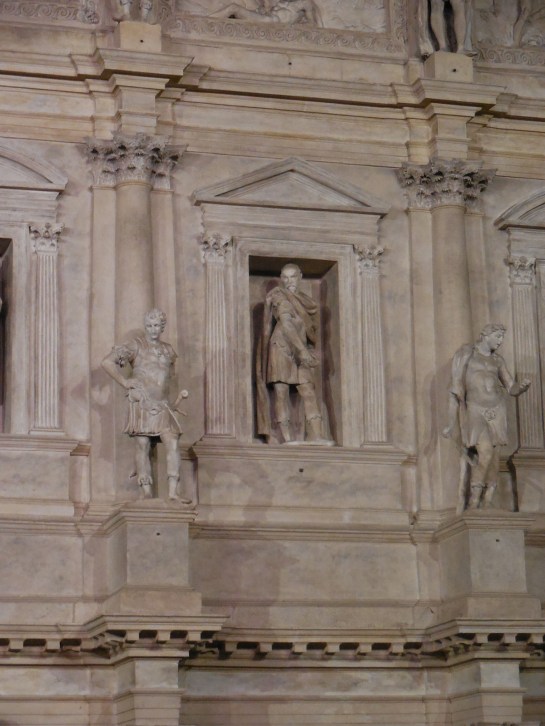
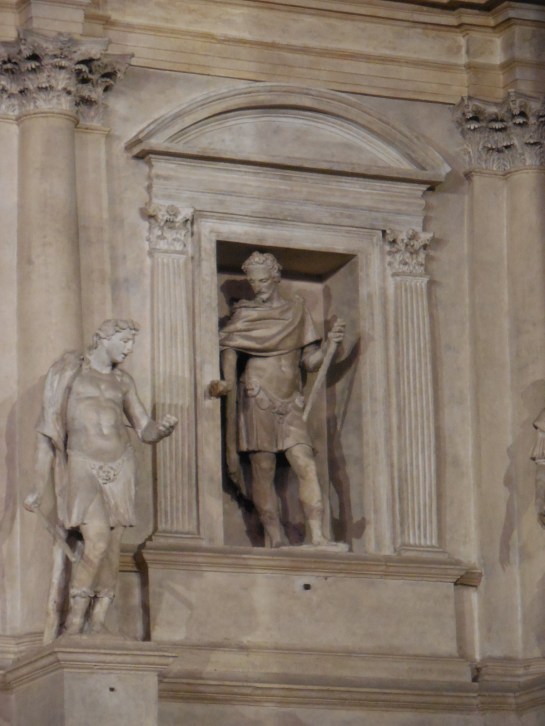
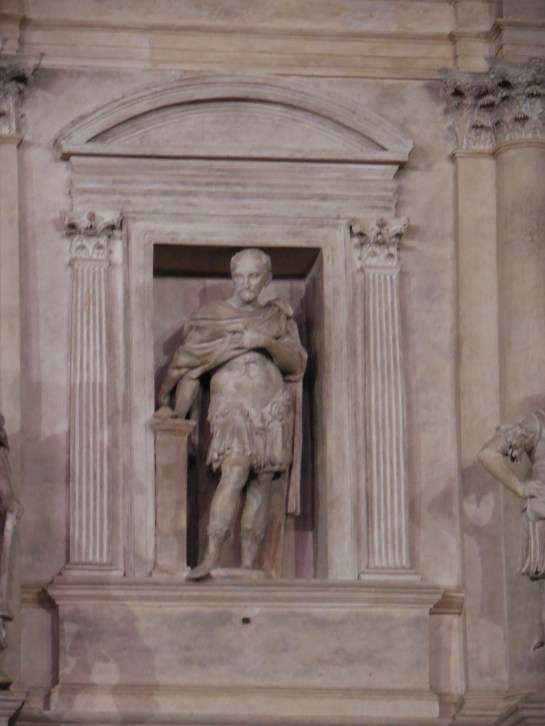
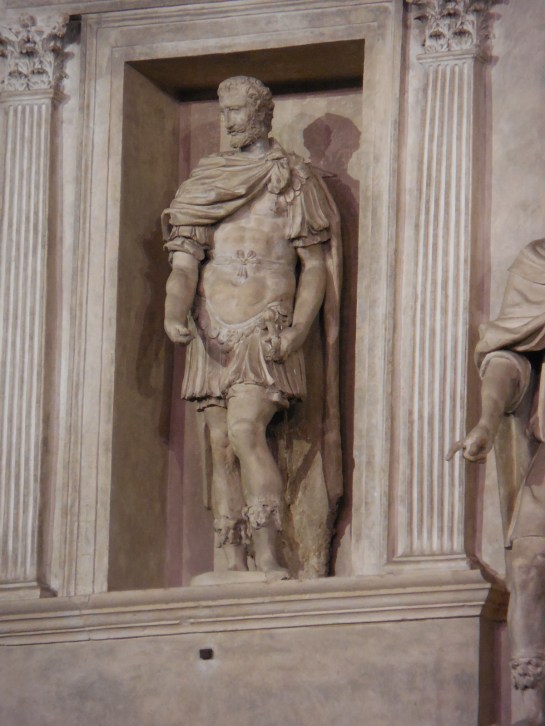
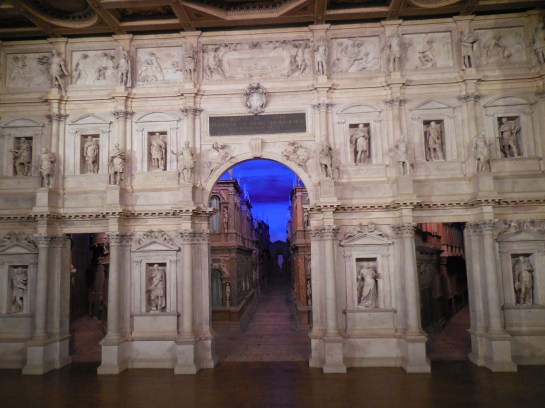
The classical architecture and statuary captured my immediate attention. Three orders of columns decorated the proscenium. The 41 statues that adorned the theatre on the proscenium and in the wings looked as if they were made of stone. That was just one of the many illusions in this theatre. In reality, the statues were sculpted from swamp reeds, tow, earthenware and mortar. While the statues showed off aristocrats from the 16th century, these figures were clad in classical attire, often wearing armor or long gowns. Thus, they were not portraits but likenesses set in a past time period. Because Leonardo Valmarana had been an ardent supporter of the Habsburgs, his statue has a face similar to that of Emperor Charles V.

VicenzaTeatroOint19

Notably, there were no women represented. Still, some of the men rendered had distinctive feminine features. Initially, some of the statues had been designed to show female figures, but they were changed into men. This produced some hilarious results. In the upper tier, the statue of Gerolamo Forni sports a beard but has a female body.

VicenzaTeatroOint20

VicenzaTeatroOint7

Furthermore, all of the statues were not of the same quality. That’s because the quality of the statue depended on two factors – how influential the man represented was and how much the man had paid to have the statue sculpted. It would have been interesting to be able to inspect each one and learn who was most valued in Renaissance society. There were other statues, too. These included renditions of Olympic deities and one of Palladio himself, designed after the masterful architect had died.

VicenzaTeatroOint1

Hercules held a prominent position in the décor of the theatre. This legendary figure was the focus of stucco-clad bas-reliefs that told the story of his life. The artistic narration included scenes in which Hercules takes over for Atlas holding up the world, the Hercules – Antaeus encounter in which Hercules was victorious and Hercules’ successful fight against the Cretan bull. Thus, another classical theme was portrayed. The bas-reliefs by no means stagnant. There is a strong dynamic quality to the episodes that are brought to life in a vivacious way. So, while the theme stems from the classical world, the bas-reliefs provide a much livelier look than that expressed in the classical world. The figures even have a Baroqueness about them.

VicenzaTeatroOint14

One feature that enamored me was the illusive architecture, the false perspectives utilized in the design. The set for Oedipus Rex, the oldest existing theatre scenery, looked as if the seven roads of Thebes led from the stage far into the horizon, but it was really painted so that it created a fake perspective. I couldn’t believe that it was all an illusion. I could see myself meandering down the streets. It was architecturally amazing. I thought of the basilica at Hejnice and how the main altar was really painted on the wall, while it appeared three-dimensional. This feature of the theatre was designed by Scamozzi, who was known for his talent using false perspective. Via Theatres showed spectators a world of illusion. The world of the play was not the real world. This theatre also was a place of illusion itself.

VicenzaTeatroOint16

Another illusionary feature was the false sky above. It looked like the theatre was not covered at all, as if it were open and light under a clear sky. The likeness to a real sky was incredible. I did not sense I was in a closed space. This feature was designed at the beginning of the 20th century.

VicenzaTeatroOint2

The lighting played a major role in producing the illusive perspectives due to their location. Originally, the lights consisted of colored oils inside glass bulbs or wicks in metal boxes. They were hidden within the architecture featuring false perspective, so no one could tell where the source of the lighting was. It was a masterful idea, I thought. Scamozzi was responsible for the lighting. I wondered if my friend and former college lighting professor had ever been here. She would have a field day studying the lighting features.

VicenzaTeatroOint3

The theatre soon became an entertainment venue. During the 17th century, the theatre was used for receptions of VIPs the town was hosting. Fencing tournaments also took place there. Until recently, graduation ceremonies were held there. It is still used as a theatre on occasion, but only 400 spectators are allowed to watch performances for safety reasons.

VicenzaTeatroOint4

I appreciated the classical features of the theatre that had a distinguished feel. The statues added a classical elegance, and the bas-reliefs gave the theatre’s décor a vivacious character. I also was enthralled by the false perspective. Both the scenery and the fake sky were unbelievable.

VicenzaTeatroOint21

When it was time to leave, I did not want to go. I could have stared at the proscenium, wings and false sky for hours. It certainly was a unique structure. It would prove to be one of most bewitching sights I visited in Vicenza.

Tracy A. Burns is a writer, proofreader and editor in Prague.
 

Palazzo Chiericati Diary

VicenzaMCext1

VicenzaMCext3

VicenzaMCext7

In March of 2018, I spent time in Vicenza, where I admired Renaissance Palladian architecture. I was enthralled with Vicenza. The elegant arches and arcades of the Basilicata Palladiana and the Renaissance masterpiece called the Theatre Olimpico were two sights that took my breath away. The two art galleries I visited also were stunning. I could have spent hours at each gallery. The Civic Museum, housed in the Chiericati Palace, displays amazing art from the 1200s to the beginning of the 20th century. Even though renovation was ongoing, the collections were extensive.

VicenzaMCint3

VicenzaMCint5

VicenzaMCint6

VicenzaMCint7

The palace itself is a masterpiece designed by Palladio in 1550. The building is a work of art with enthralling frescoes and superb stuccoes and has been recognized by UNESCO. The Chiericatis were fans of Palladio; he also designed a villa for them. One prominent architectural feature involves Palladio making the palace look elegant by placing the structure on a podium. The central section, accessible by a grand staircase, resembles a temple, as Palladio respected antique forms. By raising the building, Palladio also was able to protect it from floods, so it served more than a merely decorative purpose. I also found these architectural elements at the Villa Rotunda and the Villa Malcontenta, two places designed by Palladio. The façade has a two-story loggia, typical of Palladio’s designs. One side of the loggia is closed off by a wall with an arch.

VicenzaMCint4

VicenzaMCint2

VicenzaMCint10

While I was enamored with the exterior of the building, I was not prepared for the onslaught of beautiful artworks that greeted me inside. The ground floor showed off frescoes, stuccoes, grotesques and lunettes. Seven lunettes told the story of the city’s prosperity during the 1500s and 1600s.

VicenzaMCint15

VicenzaMCint16

VicenzaMCint17

VicenzaMCint18

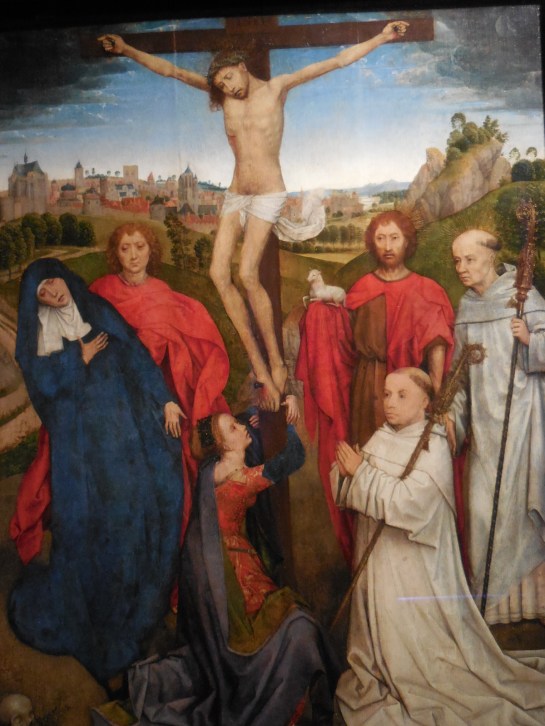
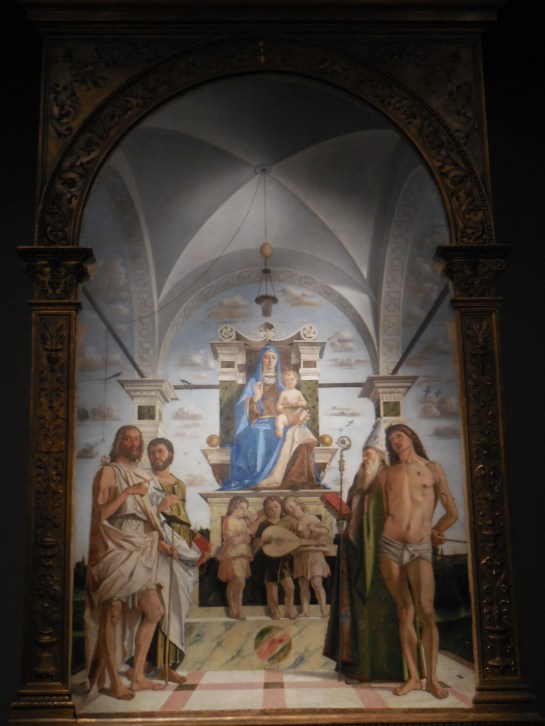
The first floor included a medieval section, where work by Hans Memling and others were showcased. I also was introduced to the paintings of Bartolomeo Montagna and his contemporaries. The second floor concentrated on Venetian paintings of the 1500s, with works by Bassano, Tintoretto and Veronese. The 17th century was also represented.

VicenzaMCint19

VicenzaMCint20

VicenzaMCint21

VicenzaMCint22

When I reached the attic, I no longer felt as if I was in a museum but rather as if I had set foot in a three-room house. These spaces held the paintings, drawings and etchings that once belonged to Marquis Giuseppe Roi. The works dated from the 15th century to the 20th century. Intriguing furniture also made up the collection.

VicenzaMCint47

VicenzaMCint48

VicenzaMCint49

VicenzaMCint50

VicenzaMCint52

The basement hosted temporary exhibitions. I could see the 14th and 15th century foundations of the palace, where kitchens and cellars used to be. There was a well and a barrel staircase, for instance. Walking through the basement was like walking back in time.

VicenzaMCint23

VicenzaMCint24

VicenzaMCint25

VicenzaMCint26

VicenzaMCint27

We got off the bus in Vicenza across from the Palazzo Chiericati, and this was the first building I saw in the city. The exterior certainly didn’t disappoint, and the interior was full of surprises and delights.

Tracy A. Burns is a writer, proofreader and editor in Prague.

VicenzaMCint29

VicenzaMCint30

VicenzaMCint31

VicenzaMCint33

VicenzaMCint34

VicenzaMCint36

VicenzaMCint37

VicenzaMCint38

VicenzaMCint39

VicenzaMCint44

2017 Travel Review Diary

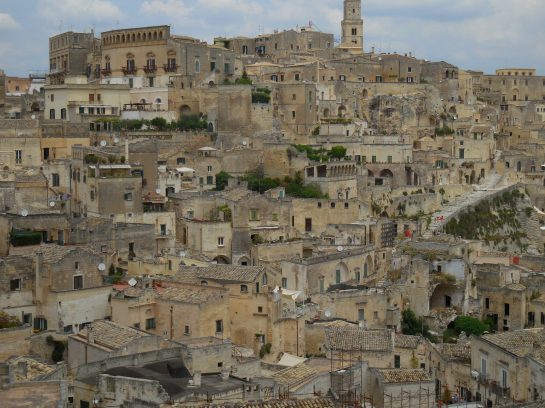
PUGLIAMaterasassi5

Sassi in Matera, Italy

My travels during 2017 made my year very special. I went to Italy twice and spent time exploring the Czech Republic on day trips, taking jaunts to numerous chateaus and a basilica, for instance.

Trentocastle1

Castle in Trento

Treviso10canal

Treviso

During my first trip to Italy in 2017, I saw a wonderful Impressionist art exhibition in Treviso. I visited the impressive castle and picturesque streets of Trento. I also ransacked a few good bookstores in Treviso and picked up a year’s worth of reading in Italian. (I took advantage of the fact that we were traveling by bus.) I especially enjoyed discovering the charming town of Bassano del Grappa with its wooden Palladian bridge and, most importantly, its superb collection of paintings by Jacopo Bassano and others.

BassanodelGrappaCM17

Civic Museum in Bassano del Grappa

BassanodelGrappaCM27

Civic Museum in Bassano del Grappa

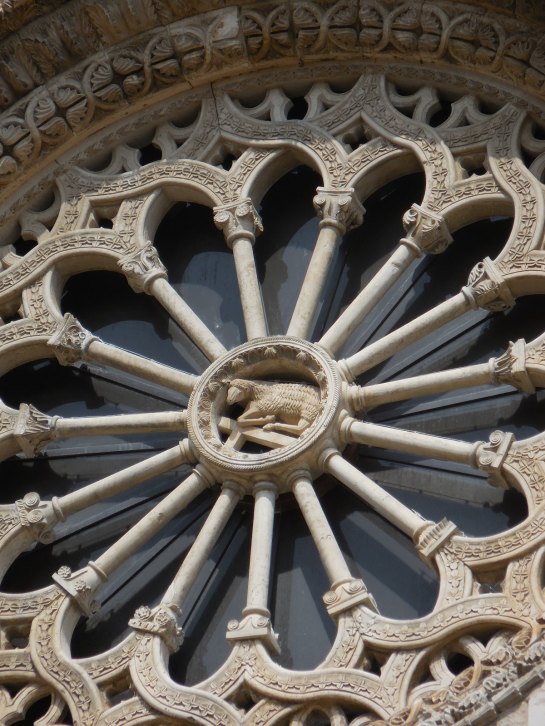
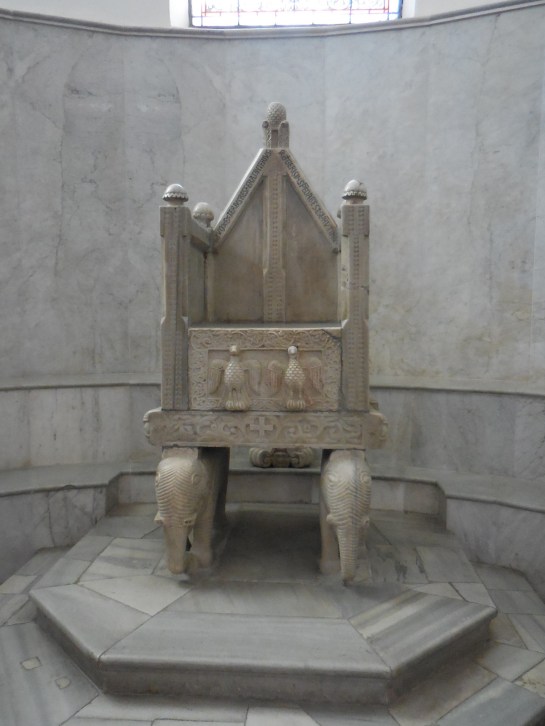
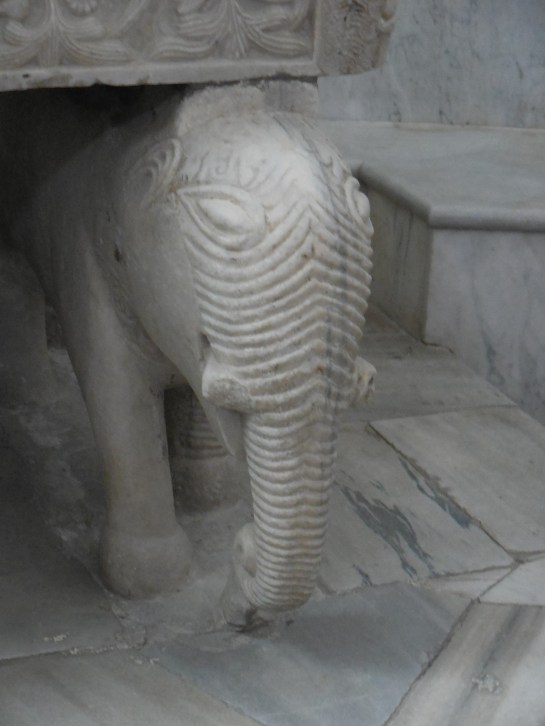
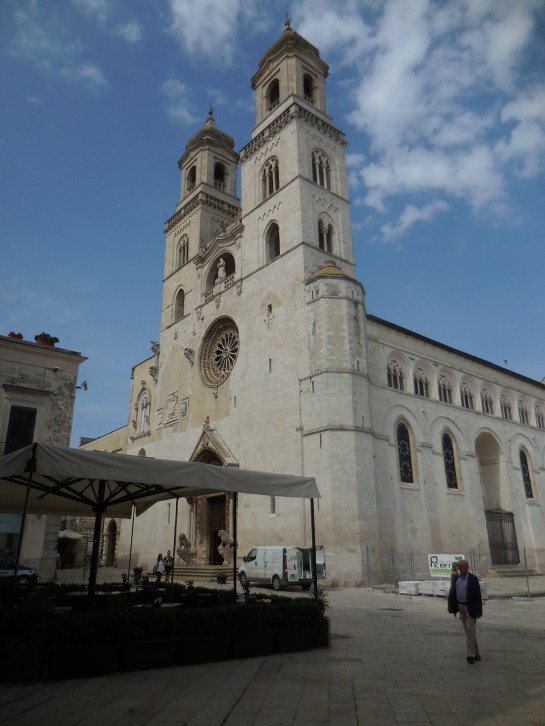
In June, I took one of my best trips ever, to the lesser known and lesser travelled regions of Puglia and Basilicata. Most of the sights were not so crowded. We saw many charming, sleepy towns, refreshingly not inundated with tourists. I was entranced with all the Apulian-Romanesque cathedrals. The intricate design of the main portal of the cathedral in Altamura and the rose window surrounded by lions perched on columns on the Cathedral of Saint Valentine in Bitonto are only two of the many gems designed in this rich architectural style. The bishop’s throne from the 12th century in Canosa di Puglia featured two elephant figures for legs and was a true delight.

PUGLIAAltamuracathrosette3

Altamura, cathedral

PUGLIACanosacathchair1

Bishop’s throne in cathedral in Canosa di Puglia

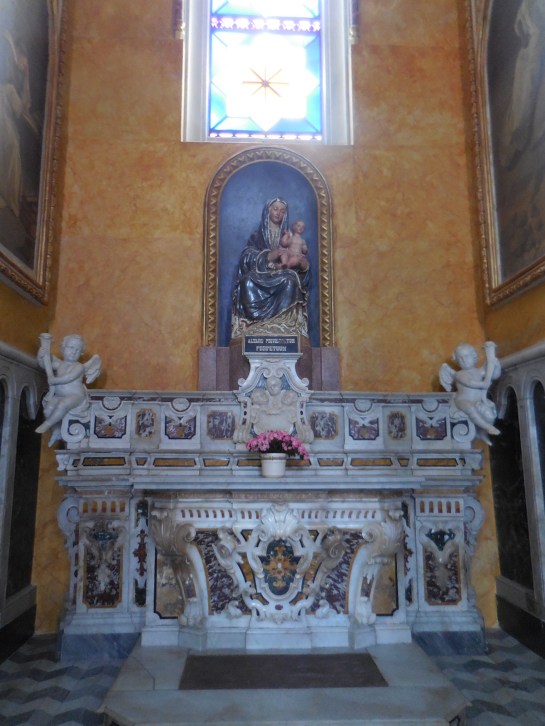
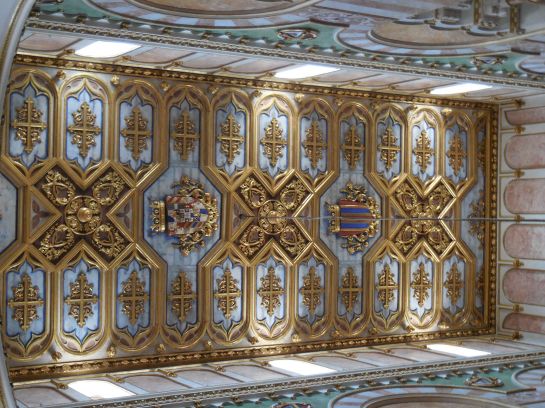
Lecce with its Baroque wonders, Roman theatre and Roman amphitheatre left me speechless. The Baroque craftsmanship of Lecce’s most notable architect, Giuseppe Zimbalo, was breathtaking. The Cathedral of Our Lady the Assumption, one of many Baroque gems, had a stunning side façade and 75-meter tall belfry with balustrades, sculptures and pyramids. Inside, the structure was no less amazing. The gilt coffered ceiling over the nave and transept and the 18th century marble main altar decorated with angels were just a few of the awe-inspiring features of the interior.

PUGLIALeccecathint18

Ceiling of cathedral in Lecce

PUGLIALeccechurch35

Altar in church in Baroque Lecce

A castle buff, I was also more than intrigued by the octagonal Castel del Monte and the way the number eight was so symbolic in its architectural design. I was impressed with the French windows, Romanesque features and mosaic floor, for instance.

PUGLIACasteldelMonte2

Castel del Monte

PUGLIACasteldelMonte15

Castel del Monte

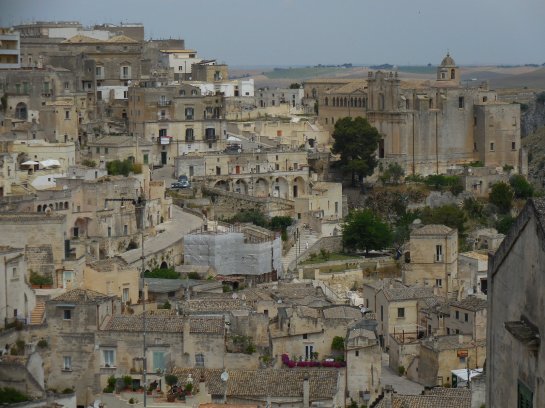
What fascinated me most of all on that trip was the rock town of Matera with its two “sassi” districts. I have never seen a place that is so unique and moving, except for Pompeii. I explored the Sasso Caveoso. Its structures were dug into the calcareous rock on different levels of a hillside. They were cave dwellings that had been turned into restaurants, cafes, hotels and sightseeing gems. It was difficult to believe that, until the 1950s, the sassi had been poverty-stricken, riddled with unsanitary conditions and overcrowding.

PUGLIAMaterasassi19

Sassi Caveoso in Matera

The Rupertian churches especially caught my attention. They boasted frescoes from the 11th and 12th centuries. The Santa Maria de Idris Church had a main altar made of tufo and chalk and decorated with 17th and 18th century frescoes. The rocky churches had actually been places of worship until 1960.

PUGLIAMaterasassi24

Sassi Caveoso in Matera

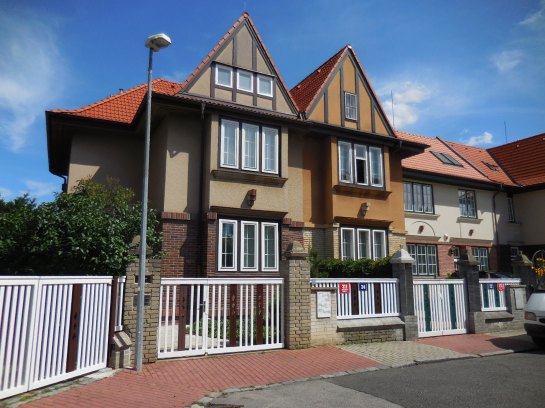
I also explored two neighborhoods of Prague, parts of the city that I have always loved. In Hanspaulka I became more familiar with the various types of villas – Neo-Classical and Neo-Baroque, functionalist and purist, for example. I saw the villas where actress Lída Baarová had lived and where her sister had committed suicide as well as the villa where comedian Vlasta Burian had resided. I love the Art Deco townhouses in the area.

HanspaulkaArtDeco13

Art Deco townhouses in Hanspaulka

HanspaulkaBurian25

The villa where actor Vlasta Burian once lived, Hanspaulka

There are just as beautiful Art Deco townhouses in the nearby Ořechovka district, where I saw villas created by the well-known Czech modern architect Pavel Janák and many former homes of famous Czech artists. The Rondocubist dwellings with their designs inspired by folk art also excited me. I loved the folk art elements in Rondocubism. My favorite place in the quarter is Lomená Street. The 1920s townhouses are modelled after English cottages.

Orechovka14

Lomená Street in Ořechovka

I also visited the Winternitz Villa, designed by Viennese architect Adolf Loos and his Czech colleague Karel Lhota, situated in Prague’s fifth district. Winternitz, a lawyer by trade, was forced to leave with his family in 1941 due to their Jewish origin. His wife and daughter miraculously survived Auschwitz. The villa features the Raumplan, Loos’ trademark, in which every room is on a different level. I also saw two apartments designed by Loos in Pilsen. The Brummel House with its bright yellow furnishings and Renaissance fireplace amazed.

Winternitzext1

Exterior of Winternitz Villa, Prague

Winternitzint3

Living room of Winternitz Villa

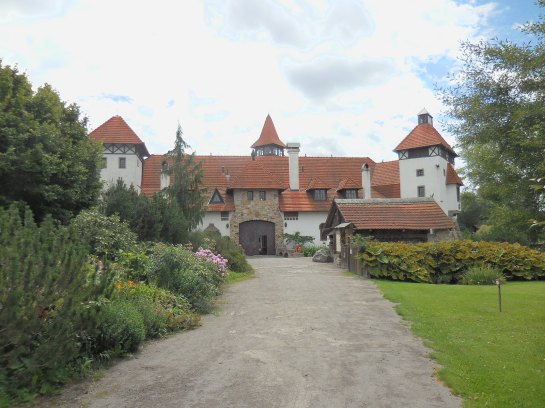
I took many day trips outside of Prague. Červený Újezd Castle, only built in 2001, looked like it belongs in a medieval fairy tale. The park and open-air architectural museum were just as appealing. Braving the D1 highway that is partially under construction, my friend and I made our way to Telč. I admired its Renaissance burgher houses lining the main square and its chateau that features a Renaissance gilded coffered ceiling in the Golden Hall, 300 Delft faience plates on a wall in the Count’s Room and an African Hall with a gigantic elephant’s ear.

CervenyUjezd1

Červený Ujezd Castle

Telcsquare6

Burgher houses on the main square in Telč

At Zákupy I was entranced by the ceiling paintings of Josef Navrátil. Its Chapel of St. Francis sparkled in 17th century Baroque style with frescoes on the ceiling. I finally made it to the Minor Basilica of St. Zdislava and St. Lawrence in the tranquil north Bohemian town of Jablonné v Podještědí. The main altar is in pseudo-Baroque style while the pulpit and the baptismal font hailed from the 18th century. One chapel’s altar is Rococo, adorned with a late Gothic statue. The stained glass windows amazed me.

Zakupyintchapel8

Interior of chapel at Zákupy Chateau

Jablonnebasilicaint22

Interior of Basilica of St. Zdislava and St. Lawrence

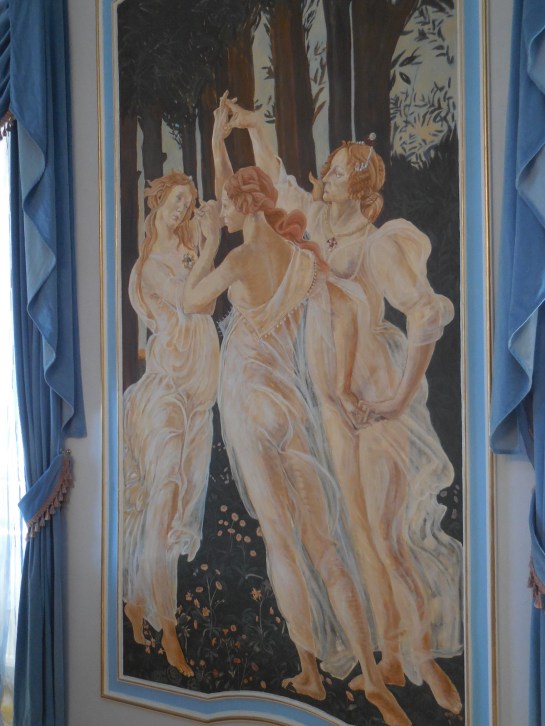
The chateau of Dětenice in late Baroque style had an interior that mostly dates from the 18th century with rooms small enough to give an intimate feel but large enough to hold many architectural delights. In the Blue Dining Room the wall paintings were made to look like works by Botticelli. The tapestries in the Music Salon were wonderful. The Golden Hall was unbelievably breathtaking.

Detenice17int10

Interior of Detěnice Chateau

Detenice17int44

Interior of Detěnice Chateau

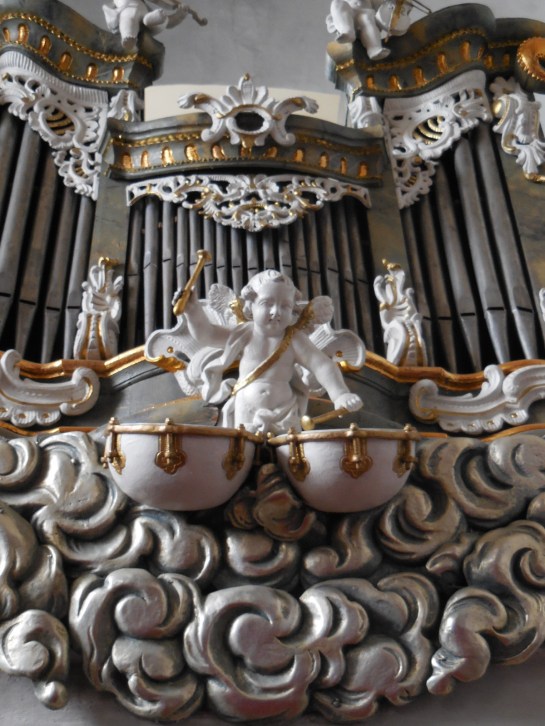
My favorite chateau of this past year’s trips is Hrubý Rohozec, which I have toured many times. It is filled with original furnishings and objects – lots of them – that I found captivating. Most of all, I loved the lively history that made the chateau unique and unforgettable. Bullet holes can still be seen in the Main Library. A thief on the run had barricaded himself in the room, and the policemen had to shoot the door open. Before World War II, the two sons of the castle’s owner were caught reading erotic magazines in the Children’s Room. There were bars on the window to prevent them from throwing chairs into the courtyard at midnight.

HrubyR17int10organ

Organ in chapel of Hrubý Rohozec Chateau

HrubyR17int64BlueSalon

Blue Salon of Hrubý Rohozec Chateau

The Porcelain Museum at Klášterec nad Ohří held some delights. The Birth of the Virgin Mary Church in Doksany charmed in Baroque style with much stucco decoration. I admired many other chateaus as well, including Orlík and Březnice with its spectacular chapel.

Breznicechapelint12

Interior of chapel at Březnice Chateau

The year was extra special because my parents were able to visit me. We toured the Rudolfinum concert hall in Prague, where I have season tickets for three cycles. The concert hall has played a role in Czechoslovak history. Democrat statesman Tomáš Garrigue Masaryk was elected president three times in its large Dvořák Hall during the 1920s and 1930s, when the Rudolfinum was the home of Czechoslovak Parliament. The statuary and view of Prague Castle on the roof were splendid, and the Conductors’ Room boasted various styles of furnishings, black-and-white photos of well-renowned musicians and an impressive Petrov piano.

Rudolfinum5

Dvořák Hall, Rudolfinum

Rudolfinum11

Rudolfinum, upper level

We also toured Nelahozeves Chateau near Prague, a place that has been dear to me for many years. For me the highlight of visiting this chateau is superb collection of art, especially Pieter Brueghel the Younger’s painting of a winter scene. The painting by Rubens was a delight, too. I also loved the small 18th century table inlaid with 20 kinds of wood. The exterior was captivating as well. The graffito on one wall and the Renaissance courtyard were two stunning architectural elements.

Nelahoz26

Renaissance courtyard of Nelahozeves Chateau

Nelahoz22

Sgraffito on wall of Nelahozeves Chateau

I took my parents on a trip around Hanspaulka and pointed out one of the Baroque chapels, the chateau and other sights. We admired the villas of various styles. We ate paninis in the local café.

Hanspaulkachapel1

Chapel in Hanspaulka

Perhaps the highlight of their visit was seeing a Czech play in the Žižkov Theatre of Jára Cimrman. We laughed along to the music of Cimrman in the Paradise of Music, which focuses on the operatic works of the fictional legendary Jára Cimrman, who was an unlucky man of all trades – inventor, philosopher, teacher, self-taught gynecologist, to name a few of his many professions. The opera in the second half of the play involves a Czech engineer introducing the great taste of pilsner beer to India. The British colonel in the play is so impressed with the taste of Czech beer that he wishes he had been born Czech. It was terrific that I was able to introduce my parents to the character of Jára Cimrman, who has played such a major role in Czech culture and folklore, even though he is not real.

CimrmanMus13bust1

Almost featureless bust of Jára Cimrman

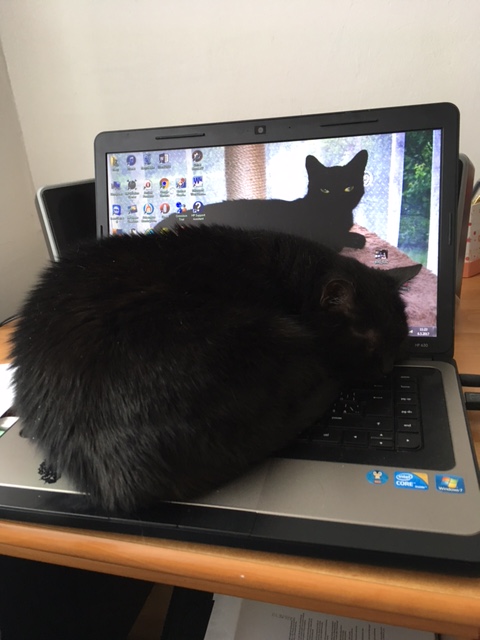
I was thankful that I had my best friend, my black cat Šarlota Garrigue Masaryková Burnsová by my side throughout the year. She is happy here, much happier than she was in a shelter four years ago.

SarlotaApril1710

Šarlota Garrigue Masaryková Burnsová

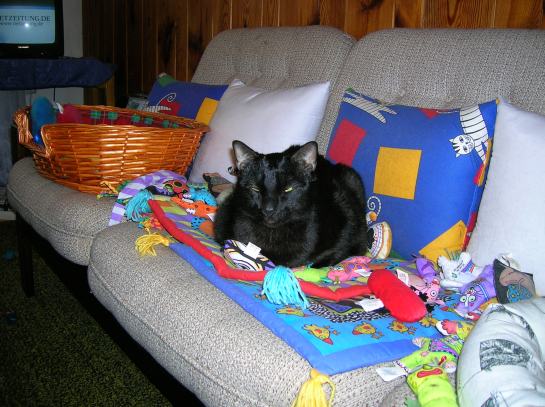
Every day I think of Bohumil Hrabal Burns, my feisty and naughty black cat who died three-and-a-half years ago. He remains with me in spirit every moment of my life. I know that somewhere in Cat Heaven, he is vomiting for fun on white rugs and playing with Fat Cat toys.

Bohous on boogie-mat

Bohumil Hrabal Burns, 1999 – 2014

Those were my travels of 2017. I look forward to more adventures this year. I have planned one trip to Italy and will soon jot down a list of day trips I would like to take.

Tracy A. Burns is a writer, proofreader and editor in Prague.

PUGLIALecceS.Croce12

Santa Croce Church in Lecce


Bitonto Diary

PUGLIABitontocath17

PUGLIABitontocathportal

Once again, I was overwhelmed by the magical beauty of a Romanesque cathedral in one of Puglia’s charming towns – this time in Bitonto at the Cathedral of Saint Valentine. Dubbed “the City of Olives” for its abundance of olive groves in the vicinity, Bitonto is the largest single producer of olive oil in the country. As a Greek colony, it had its own mint. Among the intriguing symbols displayed on coins were those indicating a Mediterranean culture: an owl with an olive branch, a seashell, a crab, an ear of wheat, lightning and the head of goddess Athena. In the Middle Ages, the Bitonto cattle market was so famous that Boccaccio included it in one of his Decameron tales. It was the site of a famous battle during the War of Polish Succession. In 1734 Spanish soldiers celebrated a victory over the Austrians at the Battle of Bitonto. This outcome clinched the Kingdom of Naples for the Bourbons.

PUGLIABitontocath16

PUGLIABitontocath10

PUGLIABitontocathwindow

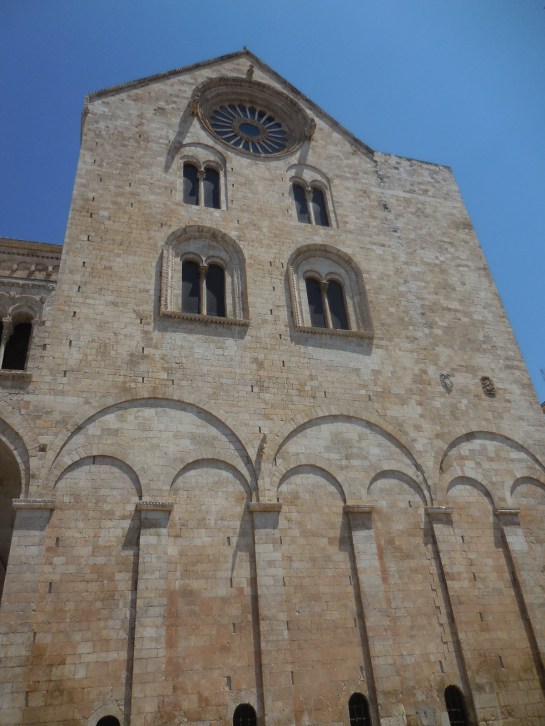
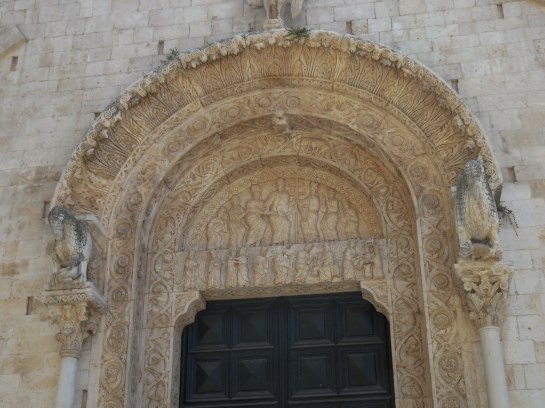
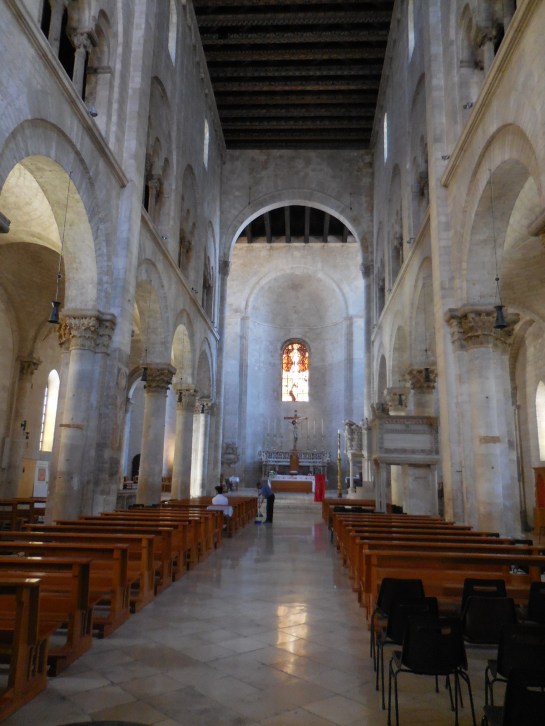
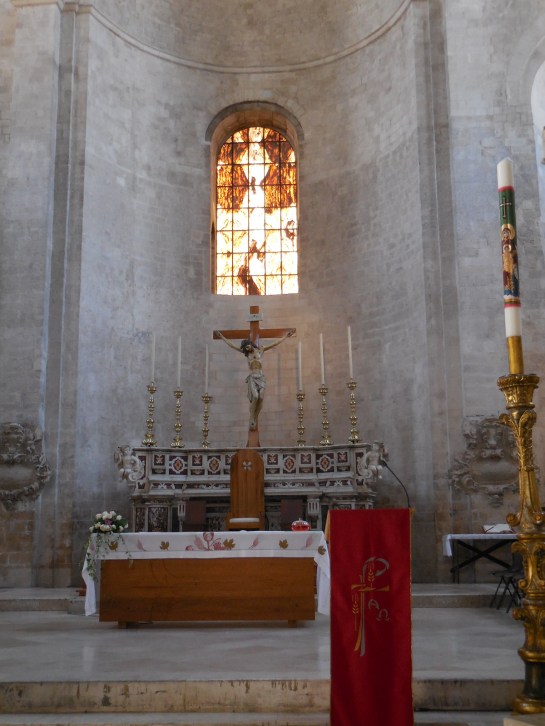
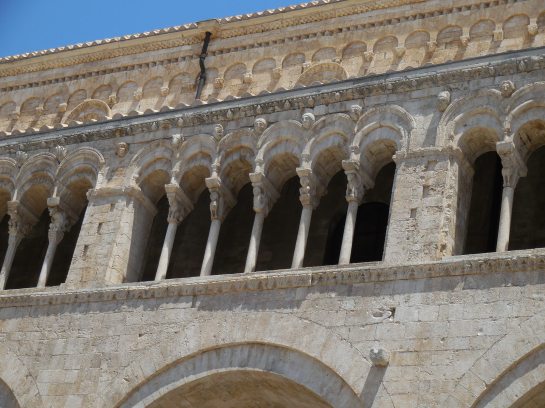
Built from 1175 to 1200, the cathedral is modelled after Bari’s Basilica of Saint Nicholas, which I saw on my first day in the region. The façade of the Bitonto cathedral was breathtaking, especially the rose window surrounded by lions perched on columns and griffins. Divided into three parts with three portals, the west façade was riveting. The central portal was adorned with scenes from the Old Testament. The main portal’s lintel and lunette showed off scenes from the Revelation. The cathedral also featured six elegant arcades. The reliefs of the tympanum also left me speechless.

PUGLIABitontocath5

PUGLIABitontocath9

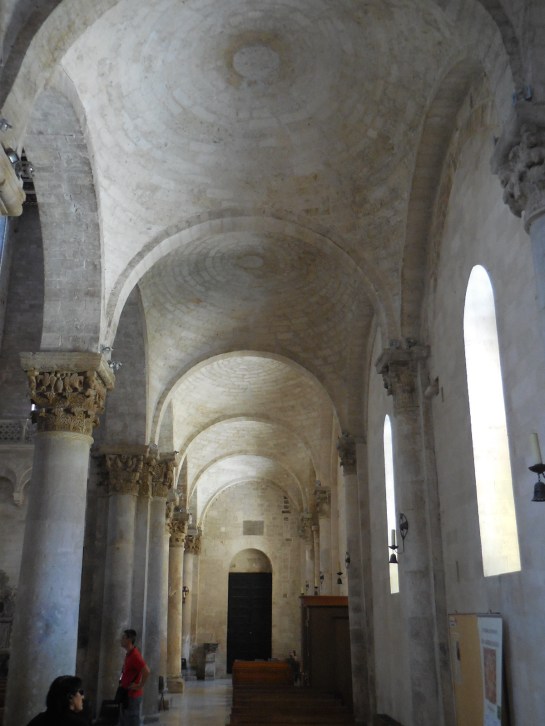
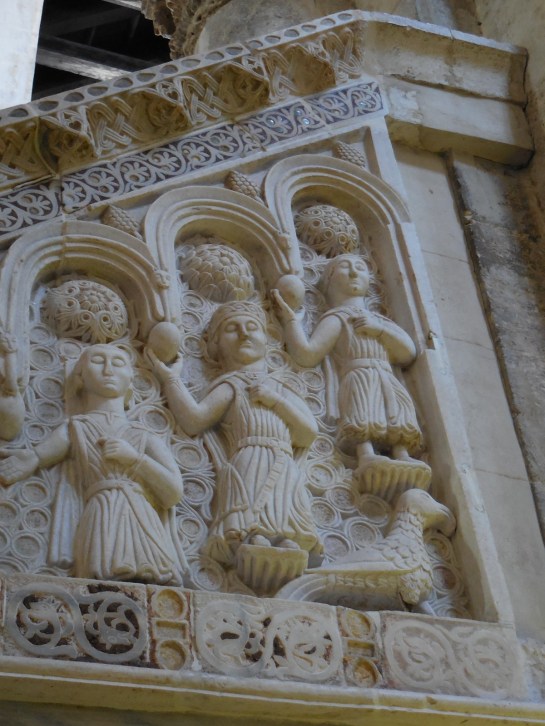
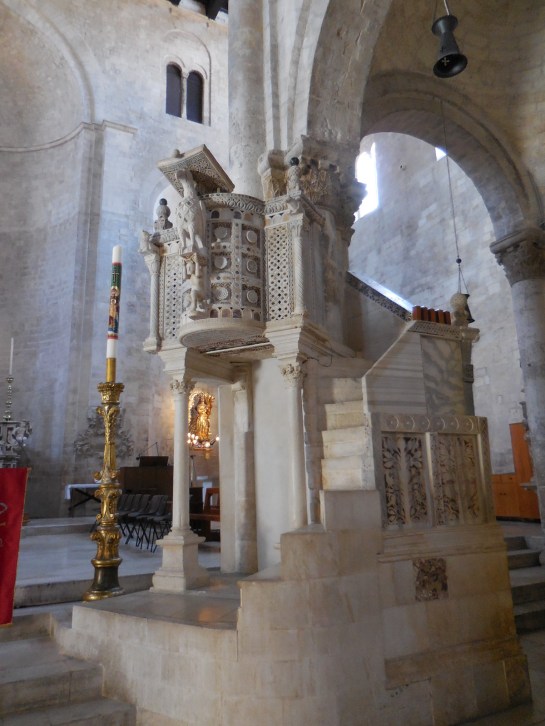
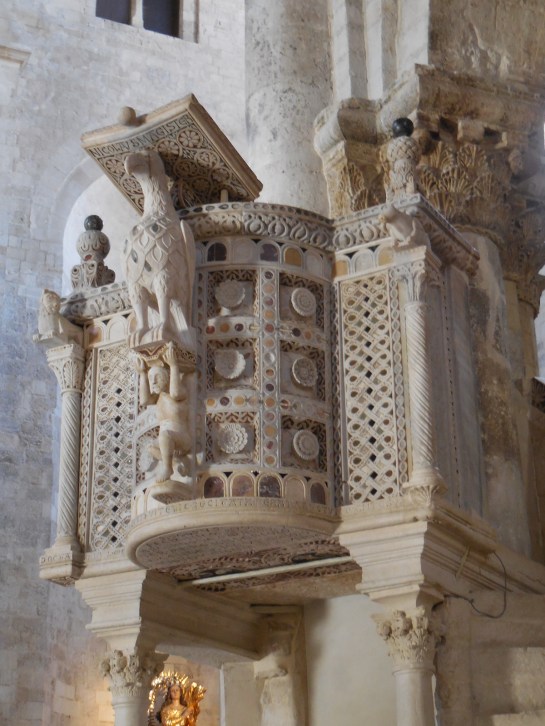
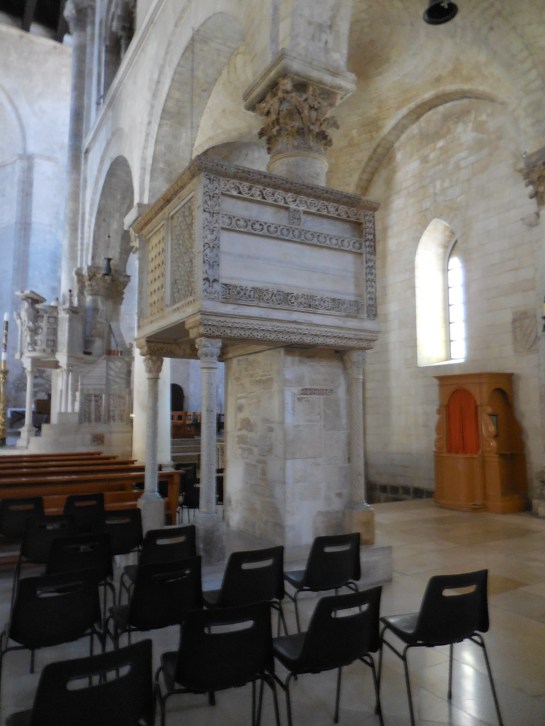
The interior of this Romanesque structure was based on a Latin cross plan. The sculpture was impressive, especially the carving on the ambo from 1229. The combination pulpit-lectern had been made using a special encrusting technique. It certainly was an Apulian masterpiece.

PUGLIABitontocath13

PUGLIABitontocath14

PUGLIABitontocathpulpit1

PUGLIABitontocathpulpit2

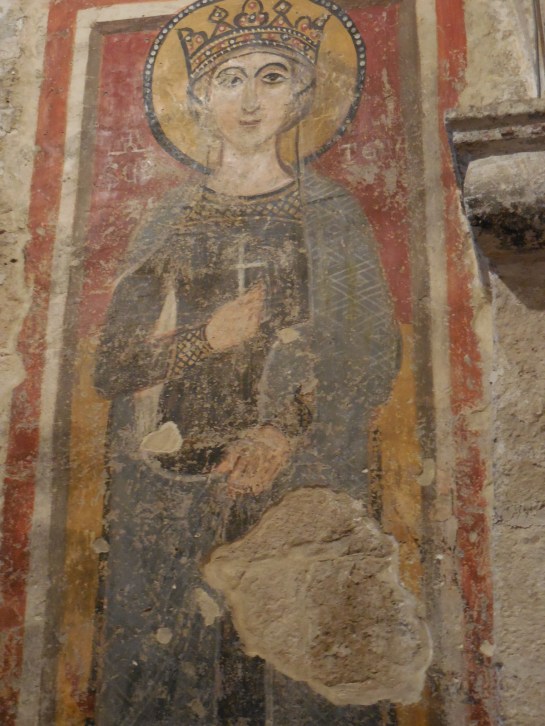
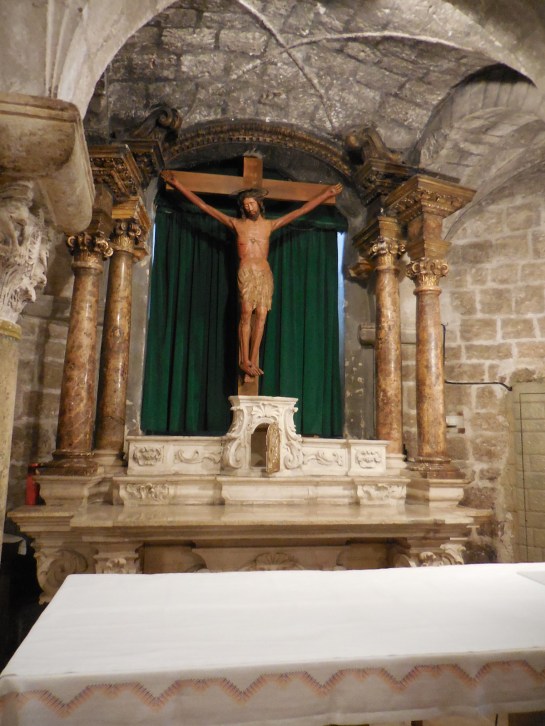
What fascinated me about this cathedral in particular was that it really was three churches – the cathedral, a pre-Romanesque structure underneath that had been in use during the 11th century and a Paleochristian basilica, perhaps from the 9th or 10th century, below that. It could hardly believe that the foundations and fresco fragments of the Christian church still existed. A mosaic of a griffin dominated the crypt, where the pre-Romanesque church had stood. The artistic masterpiece had once been located in a tower. I was astounded at how well-preserved the mosaic was. In awe, I stared at the detailed representation.

PUGLIABitontocathcrypt1

PUGLIABitontocathcrypt2

PUGLIABitontocathcrypt3

Seeing three churches in one structure made the history come alive. History seeped into my soul. Each Romanesque church I entered in Puglia allowed me to feel the history, but, in Bitonto, the feeling was even stronger.

PUGLIABitontocathmosaic1

PUGLIABitontocathmosaic2

There is more to see in Bitonto than just the cathedral. Sylos Sabini Palace boasts of a Gothic-Catalan portal and a Renaissance loggia; the Gothic Church of St. Francis of Assisi has an impressive interior and the Abbey of St. Leo hails from the 9th century. Though modest in size, Bitonto consists of seven towers and nearly 60 churches, chapels and religious institutions. For over 300 years, a Holy Week procession enacting the moments of Christ’s Passion has drawn visitors from Italy and abroad. It also has an opera and a jazz festival. It was a pity we did not have time to see everything, but, even if you just have time to see the cathedral, you are certain not to be disappointed. The Cathedral of Saint Valentine ranks as one of the most impressive cathedrals I have ever seen.

PUGLIABitontocatharcades

PUGLIABitontocath7

Tracy A. Burns is a writer, proofreader and editor in Prague.
Canosa di Puglia Diary

PUGLIACanosacathext1

The Cathedral of Saint Sabinus

When I think of Canosa, this is what immediately comes to mind: the cathedral, archeology and Bohemund. A quiet yet dazzling city, Canosa can trace its history back to the seventh millennium BC, if not farther. Its name most likely derives from the word “cani,” which means dogs.

Canosa’s relationship with the Romans went through drastic changes. In 216 BC, when Hannibal defeated the Romans in the battle at Cannae – I saw this battlefield as well – the Romans were allowed to take refuge in Canosa. Later the city joined the opposition in a revolt against Rome. Then, under the guidance of Marcus Aurelius, Canosa achieved the status of a Roman colony.

PUGLIACanosacath6

In 3 BC the city’s production of pottery received accolades. At that time, Canosa flourished as a rich city that minted its own coins. Construction thrived – many temples and thermal baths were built as well as an amphitheatre. An aqueduct was erected in 141. Canosa became a bishop’s seat under the Byzantines, but then was destroyed.

Under Norman rule, Bohemund of Antioch, whose original name was Bohemund d’Hauteville, took charge and revived the city. He held the titles of Prince of Taranto from 1089 and Prince of Antioch from 1098 until his death in 1111. This hero of the First Crusade gave the city treasures he had picked up in conquests at Antioch and Jerusalem, such as icons and reliquaries. During his reign, the Cathedral of Saint Sabinus was completed.

PUGLIACanosacath2

Normal control of the city would come to an end, and the city would experience many hardships over the centuries, such as numerous earthquakes. The earthquake of 1689 destroyed the cathedral, for instance. Canosa was conquered quite a few times, too. While the First World War did not bring destruction to Canosa, an earthquake in 1930 did. Another tragedy followed 13 years later. There were 57 fatalities when the city was bombed during the Second World War. Canosa officially was given the title of City in 1962. However, the 1980s certainly did not start off well in Canosa. That’s when another earthquake struck. Now the economy derives mainly from agriculture and textiles.

PUGLIACanosacathceiling1

The images of Canosa that remain foremost in my mind are those of the cathedral. It enthralled me that every town in Puglia seemed to have an amazing cathedral. While I had not been a big fan of the Romanesque before this trip, I began to see dazzling beauty in the severity of the style. Architecturally, Apulian Romanesque structures were fascinating. I was only a few days into my week-long adventure in Puglia and already I had set my eyes on so many breathtaking gems. Each place had its own story to tell, and each story proved to be unique and riveting.

PUGLIACanosacath1

The Normans had consecrated the cathedral to Saint Sabinus in 1101. Some elements of the original structure remain. The ambo dates back to the 11th century and has an austere appearance. In contrast, the bishop’s throne from the 12th century is by no means severe. It is decorated in Oriental style. I was mesmerized by the throne. Two elephant figures served as its legs, and other ornamentation included griffons, eagles and sphinxes. The attention to detail was astounding. For me this was the highlight of the cathedral and one of the highlights of my trip.

PUGLIACanosacathchair1

PUGLIACanosacathchair2

PUGLIACanosacathchair3

The crypt was also intriguing with its three naves. The capitals on its columns once topped Roman monuments. The cathedral had undergone many changes during the centuries. In the 19th century, the façade was reconstructed, and one nave was extended in a Latin cross model.

PUGLIACanosacath7

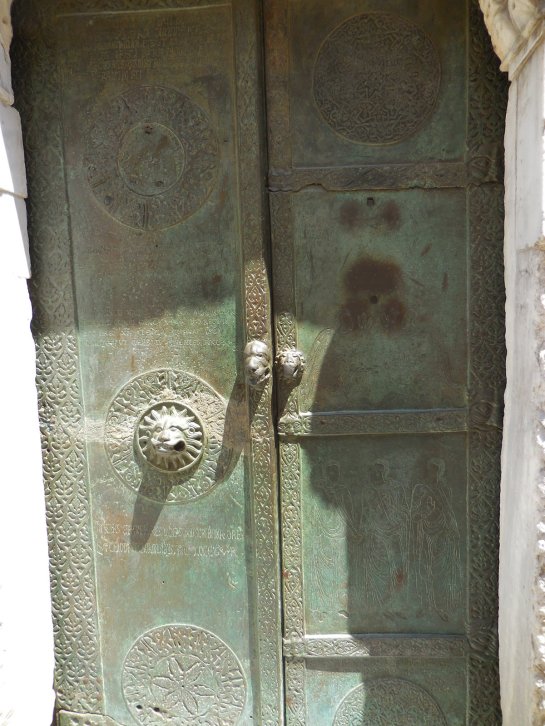
Another feature that had me in awe was the mausoleum of Bohemund, who was buried in a tomb in an adjacent square-shaped, domed edifice that featured one apse. It looked out-of-place next to the cathedral with its strange shape, but it definitely stood out. My favorite elements of this mausoleum were the two doors and their symbolism. One door had arabesque ornamentation and an inscription that praised Bohemund.

PUGLIACanosacath8

The other boasted engraved figures. One showed Bohemund while another depicted his brother and rival, Ruggero Borsa. Two other figures symbolized their sons, Bohemund II and William, who had promised to end the family feud. By depicting Bohemund and his brother, they hoped that the siblings could resolve their differences in Heaven. The historical account rendered by the figures was intriguing, to say the least, and the plea for peace between the quarreling brothers was compelling. The attention to detail on the doors was amazing. I stared at those doors for a long time, unable to take my eyes away from the superb craftsmanship.

PUGLIACanosacathtomb1

The Mausoleum of Bohemund

PUGLIACanosacathdoor

We also visited the Archeological Museum, home to some 2,000 artifacts found in Canosa. These objects included sculptures, marbles, coins, jewelry and pottery from Roman, early Christian and medieval Byzantine eras. The vases from around 3 BC especially caught my attention. It astounded me to think that this city had existed so long ago with so many ancient civilizations. To be sure, a sense of history seeped through the town. We also had a break, which I used to savor some gelato and a cappuccino.

PUGLIACanosacathwindow1

That’s not all there is to Canosa. Our schedule did not permit us to explore everything the city has to offer. There are also palaces, churches, a theatre, a castle ruin, temples and catacombs, for instance. However, we did get a firm grasp on the historical context of the city, the significance of the cathedral and Bohemund’s influence on the town. Then we were off to another destination, and I knew I would forever hold this city and the tales it told through its architecture close to my heart.

Tracy A. Burns is a writer, proofreader and editor in Prague.
PUGLIACanosacath3


Altamura Diary

PUGLIAAltamuracathext1

We were to start our Tuesday in Altamura, but I was really looking forward to the next destination – the rock town of Matera. I thought that Altamura would be a place I would want to go through quickly in anticipation of our visit to Matera, which I had dreamed of seeing with my own eyes ever since receiving a postcard of the unique sight some years ago.

PUGLIAAltamuracathext7

It turned out that Altamura was not at all a place I wanted to visit quickly. I could have gazed at the cathedral the entire day.

PUGLIAAltamuracathdoor2

The door of the cathedral

Before our trip to Altamura, I had only heard in passing about the Altamura Man, the only complete skeleton of a Neanderthal, discovered as recently as 1993. I had read that around Altamura were the so-called masserie or large farmhouses, some even with turrets and watchtowers. Almond trees and vineyards were commonplace in the region.

PUGLIAAltamuraFornaAntica

A sign asserting that bread has been made there since 1423

Altamura is not only famous for its archeological finds and cathedral but also for its bread, which has been produced there for centuries. Originally, each loaf had the mark of the family that had baked it. The Roman poet Horace was a keen admirer of the city’s bread. He praised it in his writing, too. “Their bread is so fine, the smart voyager makes sure he buys enough for his journey. . . .” We saw a small bakery where bread was being made, café tables set outside.

PUGLIAAltamurachurch1

Then we were ushered to the Church of Saint Nicholas of the Greeks with its simple façade. At one time, there had been a thriving Greek Orthodox community in Altamura. The simplicity of the design and large rosette dominating the façade gave the edifice a sort of intimacy. The portal was decorated with scenes from the Old and New Testament, an adornment dating back to the 16th century. It was not open, but I was informed that inside there was one nave, some paintings from the 17th century and a baptismal font hailing from the 13th century.

PUGLIAAltamuracathportal

While gawking at the cathedral’s stunning facade, we learned more about the history of the city. Altamura was built on the remnants of a settlement hailing from 500 BC to 300 BC. During its Greek period (5 BC – 3 BC), the city’s high walls or “alta mura” were so wide that a chariot could be driven on top of them. In 1232 Emperor Frederick II, nicknamed “Stupor Mundi” or “Wonder of the World,” added to the population thriving colonies of Greeks, Arabs and Jews, so Altamura became a multicultural community. Plagues riddled the city in the 16th and 17th centuries. During the 18th century, the city thrived, making a name for itself in the Kingdom of Naples.

PUGLIAAltamuracathrosette

PUGLIAAltamuracathrosette2

PUGLIAAltamuracathtympanium

Then it was time devote all our attention to studying the exterior of the cathedral, an exquisite example of Apulian-Romanesque style with an exquisite portal of bas-relief figures that illustrated the life of Christ. Frederick II had the Cathedral of Our Lady of the Assumption built in 1232, but disaster struck in 1316, when an earthquake destroyed it. Robert of Anjou was the leader who ordered the reconstruction of the three-nave structure, and one of the portals, hailing from the 14th century, bears his name. I was awed by the main portal with its intricate design. This is architecture at its finest, I said to myself. This is exactly what I came to see in Puglia – architectural gems that dazzled both the eyes and the mind.

PUGLIAAltamuracathint12

PUGLIAAltamuracathint18

PUGLIAAltamuracathintpulpit

The interior of the cathedral was just as impressive. The ground plan of the three naves has a basilica model. The walls and columns boast rich ornamentation. The Neo-Gothic style plays a major role. The stunning wooden ceiling hails from the 19th century, and coats-of-arms representing emperors and kings decorate it. The marble altars feature paintings from the Neapolitan School. The carvings of the wood relief on the choir are splendid. Side chapels date back to the 17th or 18th centuries. One of the most significant chapels shows off two paintings that are some of the finest examples in south Italy. One depiction takes up the theme of Mary Magdalene, a work by Francesco Netti from 1877. Domenico Morelli’s Conversion of St. Paul is the other masterpiece on display.

PUGLIAAltamuracathceiling

PUGLIAAltamuracathceiling2

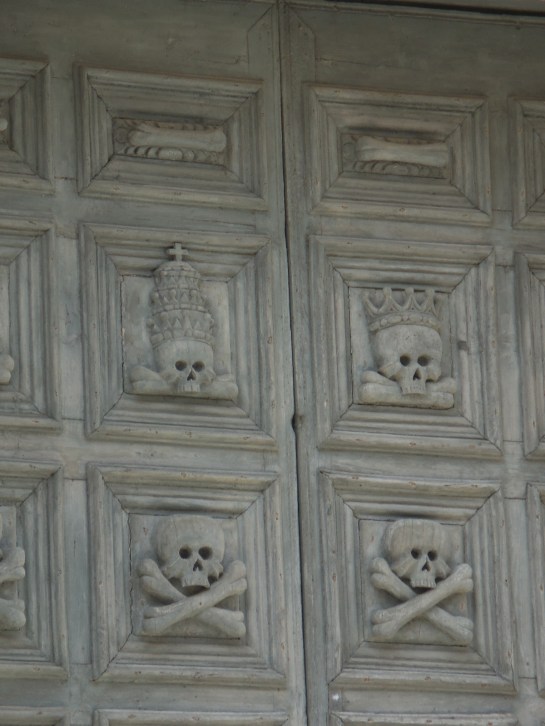
Of course, there is more to Altamura than its cathedral. We gazed in wonder at San Michele al Corso Church, built by the brotherhood of Purgatory in the 17th century. We marveled at the skulls and skeletons giving its simple façade a grotesque and macabre appearance. I later learned that inside the high altar and presbytery were Rococo gems.

PUGLIAAltamuraChurchPurg1

San Michele al Corso Church exterior decoration

PUGLIAAltamuraChurchPurg3

The Palazzo Vito De Angelis dates back to the 15th century and includes a Renaissance portal as well as a superb loggia. The Palazzo Filo hails from the 16th to 18th centuries and celebrates St. Philo, who was revered by Greek families. The Filo clan has made significant contributions to Italian history. The chapel and the arched portal are two of the architectural delights of this palace. I had ancestors named Filo on the Slovak side of the family, but, alas, they had nothing to do with the Altamura nobles. Most likely, they had been poor potato farmers in east Slovakia.

PUGLIAAltamurastreet1

A typical street in Altamura

Unique to Altamura, the claustri hold significant meaning for the city. These claustri take their name from the Latin claustrum, which means “closed space.” The claustri feature stairs, balconies, terraces, galleries, arches and loggia. They are certainly a treat for architecture buffs.

PUGLIAAltamuracathint6

The main altar in the cathedral

PUGLIAAltamuracathint8

Fantastic decoration in the cathedral

The history of the claustri can be traced to the settling of various ethnic groups during Emperor Frederick II’s reign in the 13th century. At that time, the various ethnic groups lived side-by-side, peacefully in a diverse, tolerant community. I reflected on how there is such a lack of tolerance in America, for instance, but not only in America. Many people hate Muslims and label them all as terrorists. Also, there is so much racial tension in the USA. I remembered the Bosnian War, when ethnic hatred ran rampant in former Yugoslavia. Would the world ever learn to live as the ethnic groups in the claustri had? I somehow doubted it, but, unfortunately, I am a pessimist.

PUGLIAAltamuracathint9

PUGLIAAltamuracathint10

Back to the gems of Altamura. The north gate of Porta Bari took on a 17th century Baroque appearance. Saints Irene and Joseph made appearances on the stunning structure. Other religious sites in the town include the Church of San Dominico with a faced of limestone coated with majolica. North of the center is San Michele delle Grotte, a church dating from the 10th century. A 14th century fresco in the crypt is noteworthy.

PUGLIAAltamuracathint13

PUGLIAAltamuracathint14

I left Altamura, not only excited about my next destination but also enthralled by the city’s charms. I would never forget that cathedral. It remains etched in my mind for eternity.

Tracy A. Burns is a writer, proofreader and editor in Prague.

PUGLIAAltamuracathint16

Grottaglie Diary

PUGLIAGrottaglie2

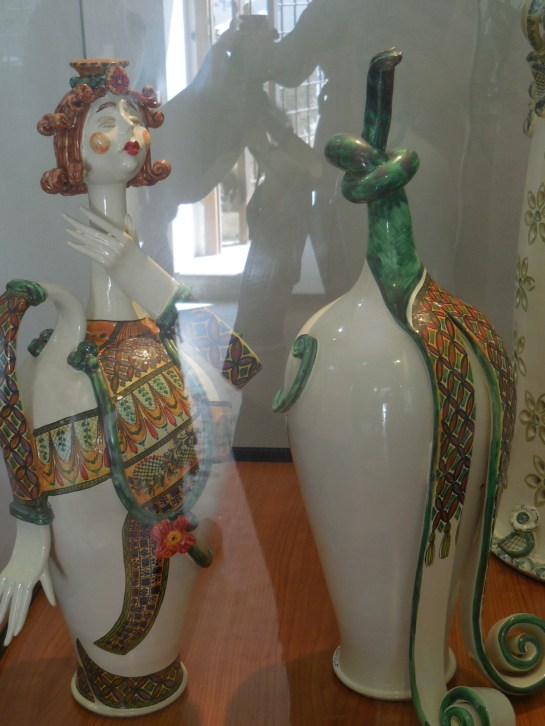
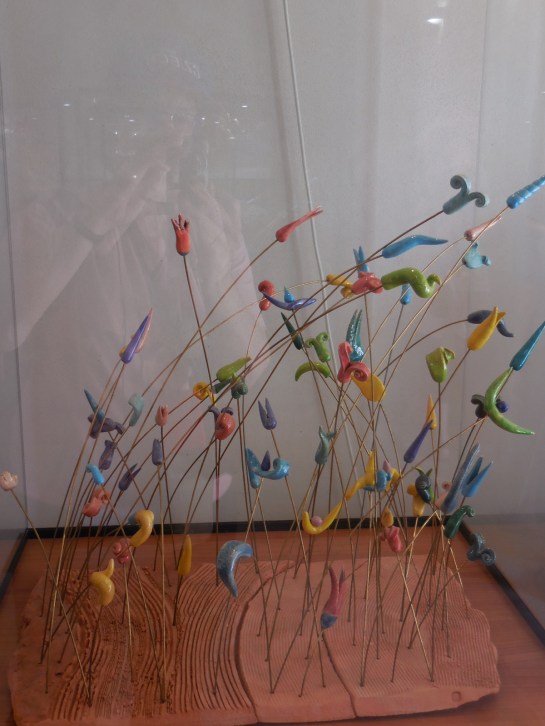
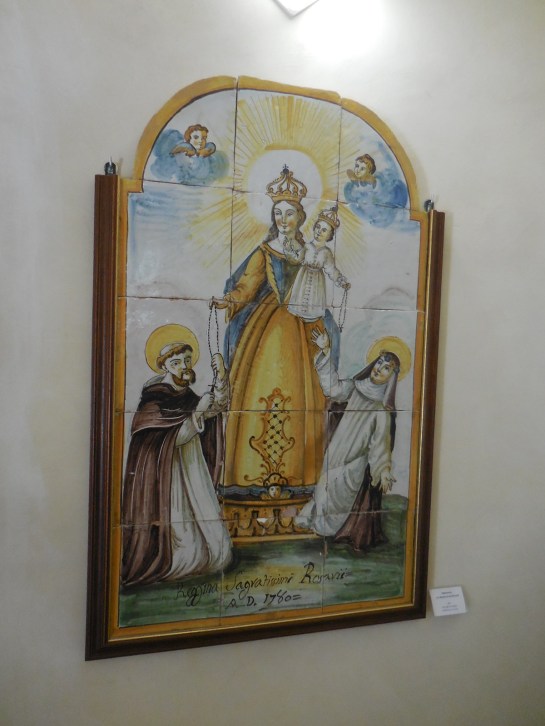
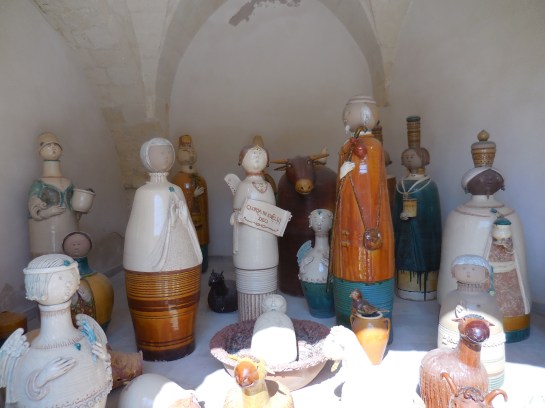
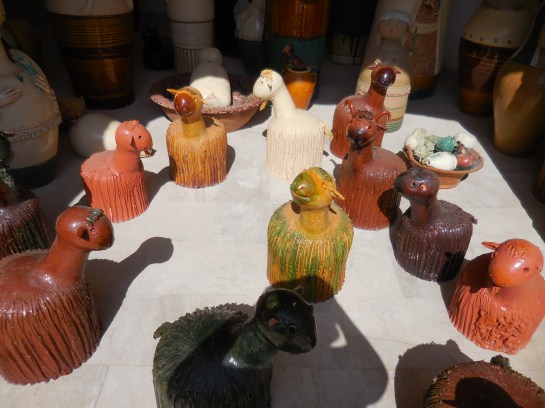
During the arsviva travel agency’s tour of Puglia, we stopped in the Ceramics Quarter of Grottaglie, a town famous for its superb ceramics made in artisans’ studios. What impressed me the most was the Museum of Ceramics in the 13th century Castello Episcopio. I loved discovering small, captivating museums during my trips. This museum only had three rooms, but they were three rooms with dynamic designs from the eighth century to the contemporary age. Creativity abounded.

PUGLIAGrottaglie11

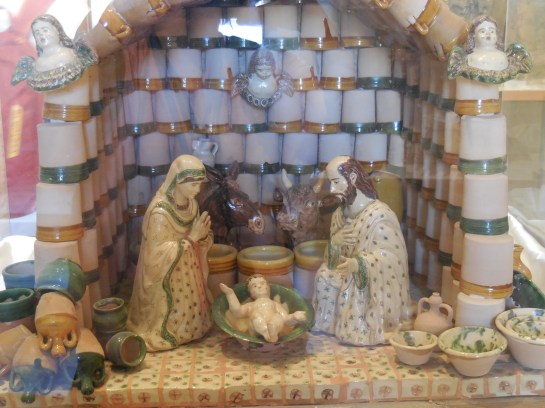
Some of the 400 objects were archeological while others were made of majolica. There were traditional ceramics on display alongside abstract constructions. Nativity scenes also held a prominent position in the museum’s content. Through these objects, I got a sense how ceramics played a role in life, how ceramics depicted the age in which they were made. I particularly liked one abstract work that reminded me of a sculpture by Alexander Calder, whose art was well-represented in the National Gallery of Art of Washington, D.C., near my hometown.

PUGLIAGrottaglie12

That’s not all there was to see in Grottaglie, but we did not have time to see more of the town. The main church, Chiesa Matrice, was built in 1379. Princes and dukes once called the Palazzo Cicinelli home. Another palace, the Palazzo Urselli, sported a Renaissance façade and an impressive 15th century gate. The Monastery of San Francesco di Paolo was said to be a Baroque gem.

PUGLIAGrottaglie1

PUGLIAGrottaglie3

PUGLIAGrottaglie5

PUGLIAGrottaglie8

PUGLIAGrottaglie9

PUGLIAGrottaglie10

PUGLIAGrottaglie13

PUGLIAGrottaglie14

PUGLIAGrottaglie15

PUGLIAGrottaglie16

PUGLIAGrottaglie18

PUGLIAGrottaglie19

Tracy A. Burns is a writer, proofreader and editor in Prague.
Molfetta Diary

PUGLIAMolfettoboats3

While traveling with a group through Puglia, we stopped in Molfetta for lunch. I was famished, so I could not spend all my time exploring this gem on the Adriatic. What I did see, though, impressed me a great deal. I meandered through the streets of the old town and gazed at the remarkable exterior of the Cathedral of San Corrado, for instance.

PUGLIAMolfetto4

The city can trace its roots at least as far back as the Neolithic age. In 4 BC it was a small fishing port. During the 10th century, the city was first mentioned in writing as Melphi. During the Crusades, the town flourished and greatly expanded. Pilgrims stopped in the city on their way to holy destinations. One of these pilgrims, Conrad of Bavaria, was in awe of the city. He became San Corrado, the saint who protects the city. During the 12th century, the town became a bishop’s seat. The port town also played a significant role in trade. Today it is one of the biggest ports on the Adriatic.

PUGLIAMolfettoboat

PUGLIAMolfettoboats

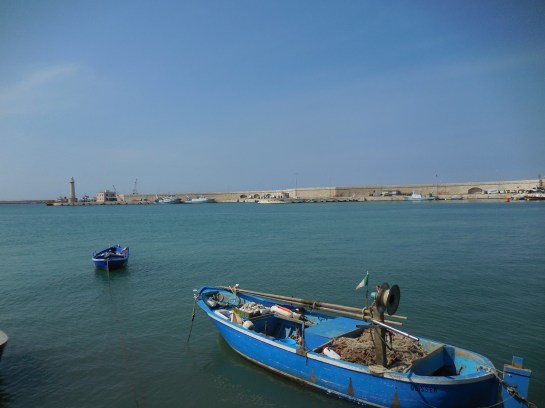
The port dotted with small boats was so tranquil and peaceful. I looked out at the sea and felt at peace with myself and with the world. I was in the midst of making a difficult work-related decision. Gazing at the boat-speckled sea, I knew that, by the end of the trip, my head would be clear, and I would be able to do the right thing, to embark on the path that was best for me.

PUGLIAMolfettocath2

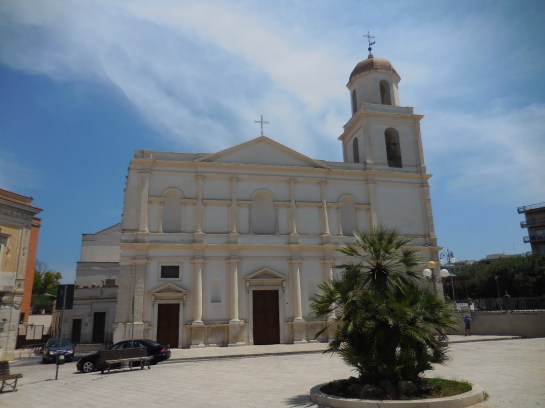
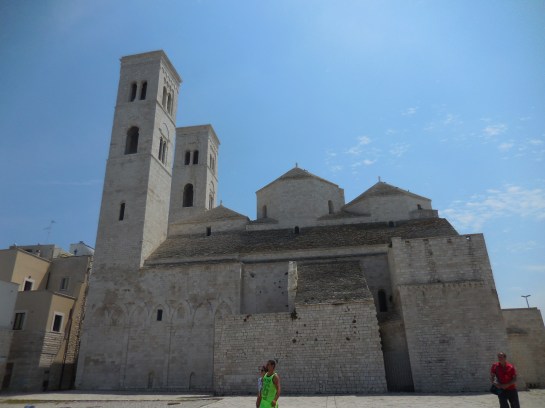
The Cathedral of Saint Corrado, in Apulian Romanesque style, dates back to 1150, though it was not completed until the 13th century. The edifice has three domes of different heights. It is an example of a basilica model with contracted transepts. There are two bell towers, each 20 meters (66 feet) high. We learned about the interior, even though we could not go inside. The cathedral features three naves divided by four cross-shaped pillars. Round arches connect the pillars. Rich sculptural adornment abounds. A precious stone relief of Christ is situated above the main altar. Much of the decoration hails from the 16th century.

PUGLIAMolfettocath3

Once again, the Apulian-Romanesque style took my breath away. I loved how the austerity of the exterior exuded such remarkable beauty. Before this trip, I had liked the Romanesque style, but it certainly had not been one of my favorites. During my time in Puglia, I gained a deep appreciation for the style that I had once thought to be too severe. During this vacation, I found myself in awe of every cathedral we saw.

PUGLIAMolfettocath7

The Cathedral of Saint Corrado is not the only cathedral in the city. The Cathedral of Our Lady of the Assumption hails from the 17th century and has a splendid Baroque façade. The single hall lined with side chapels features exquisite paintings from the 18th and 19th centuries. The Town Hall is also to be admired, situated in a 16th century palace.

PUGLIAMolfetto1

I recalled a story I had heard from my friend who lives in Italy. A lighthouse was built off Molfetta in 1853 to help ships navigate along the coast. A new wharf was constructed especially for this lighthouse, but, due to stormy winds, it caused an unexpectedly strong current. Many lives and vessels met tragic fates. Then, in 1857, the city built a lighthouse on the opposite (west) side of the harbor. It became the first lighthouse on the Adriatic.

PUGLIAMolfetto6

PUGLIAMolfettocross

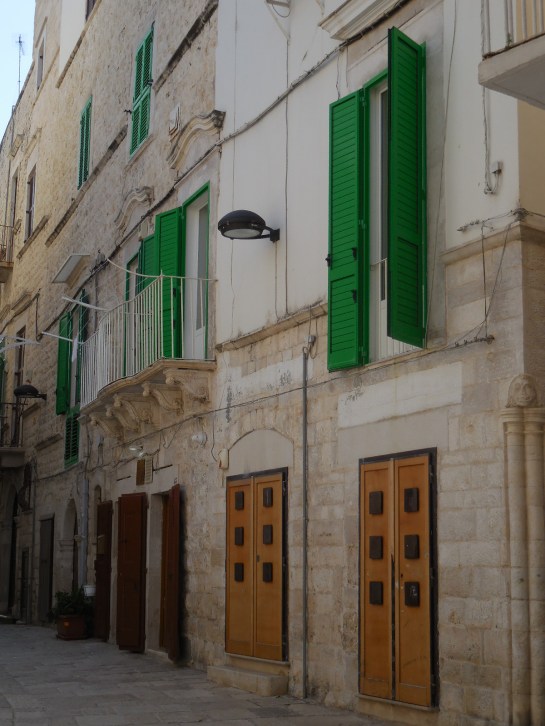
After eating a delicious lunch of spaghetti with tomatoes, I wandered down the narrow, charming streets of the old section. Some dwellings were being repaired; I saw some scaffolding along the way. I particularly liked the bright green shutters on one building and laundry fluttering in the gentle breeze.

PUGLIAMolfetto10

Molfetta was a place I would definitely have to visit again. It was one of the many stops that filled me with awe and wonder. Molfetta certainly was a place I would never forget.

Tracy A. Burns is a writer, proofreader and editor in Prague.

PUGLIAMolfetto11

PUGLIAMolfetto9

Bassano del Grappa Diary

BassanodelGrappa3

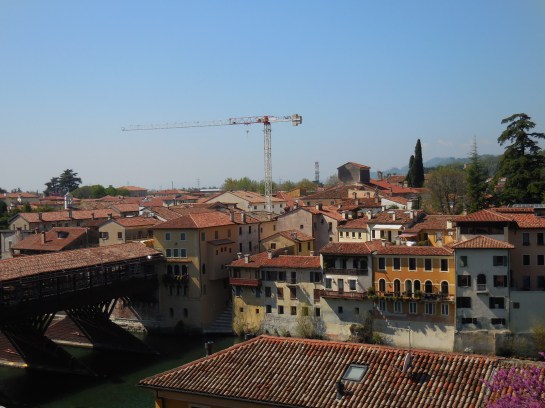
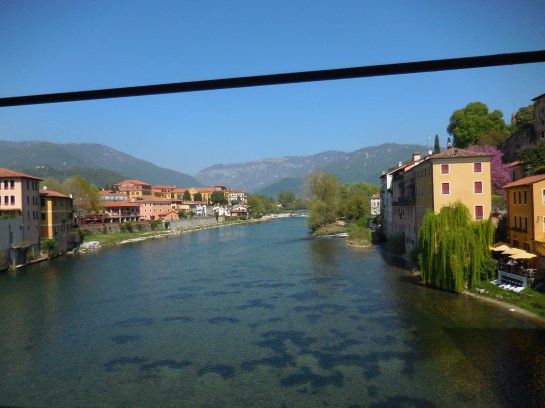
During my four-day excursion to north Italy with the arsviva travel agency, we visited the picturesque town of Bassano del Grappa, located 65 kilometers from Venice. It is known not only for its vineyards and Venetian villas but also for its Palladian wooden bridge and for the impressive collection of paintings by Jacopo Bassano (also referred to as Jacopo dal Ponte) in its Civic Museum.

BassanodelGrappa4

First, a bit about the town: Bassano del Grappa was first mentioned in writing as far back as 998 AD. The symbol of the city, the Ponte Vecchio was designed by the renowned architect Palladio in 1569. A wartime casualty and a victim of floods, the bridge has been rebuilt several times, but the current structure remains faithful to Palladio’s original design.

BassanodelGrappa7

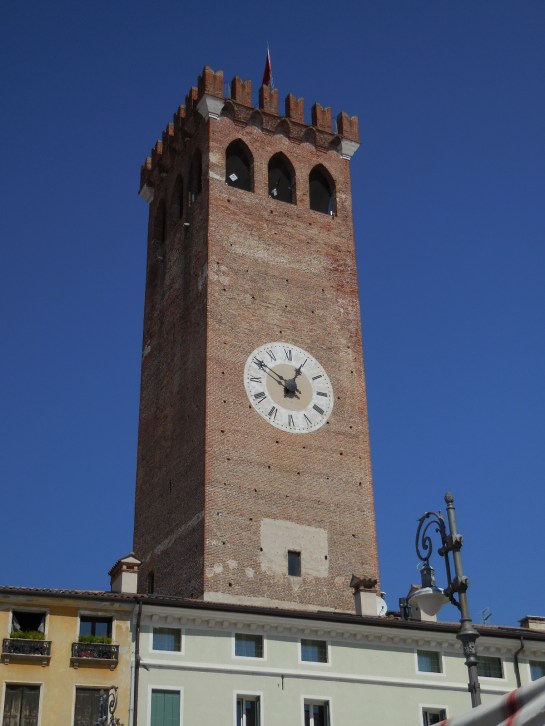
The town does not lack a castle or a cathedral, either. Ezzelini Castle has not been in use for six centuries. Hailing from 998 A.D., the cathedral now boasts a 17th century appearance, Two of Jacopo’s paintings adorn the interior. Historical monuments abound. The Civic Tower was constructed around 1312. The Loggia of the Mayor dates back to the 15th century. The elegant blue clock has decorated its façade since 1430, though the current one was built in 1747. The loggia features frescoes. The squares of the town are picturesque, though there was a large market on the main square while we were there. Intriguing churches of various architectural styles also dot the town.

BassanodelGrappa10clock

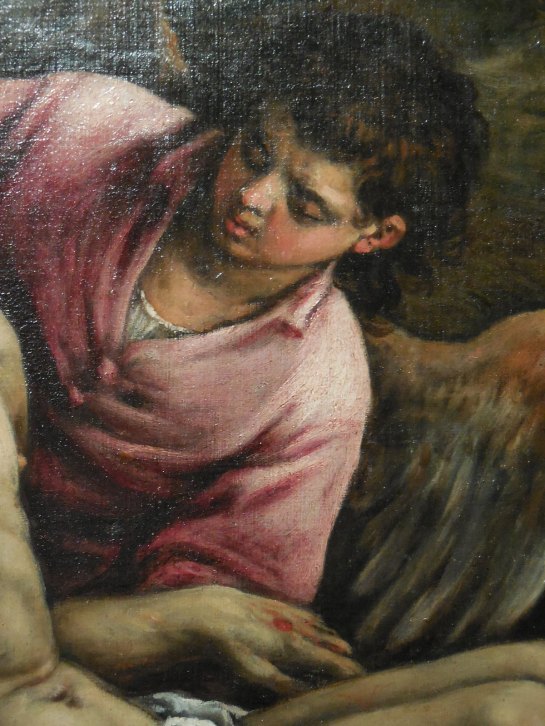
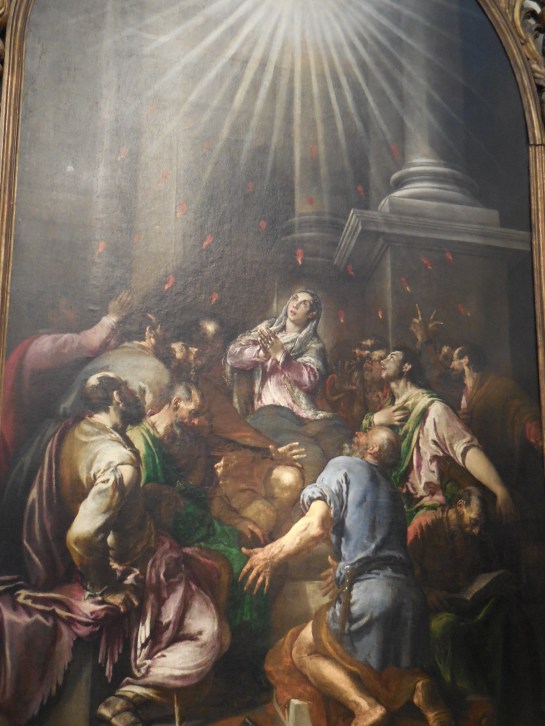
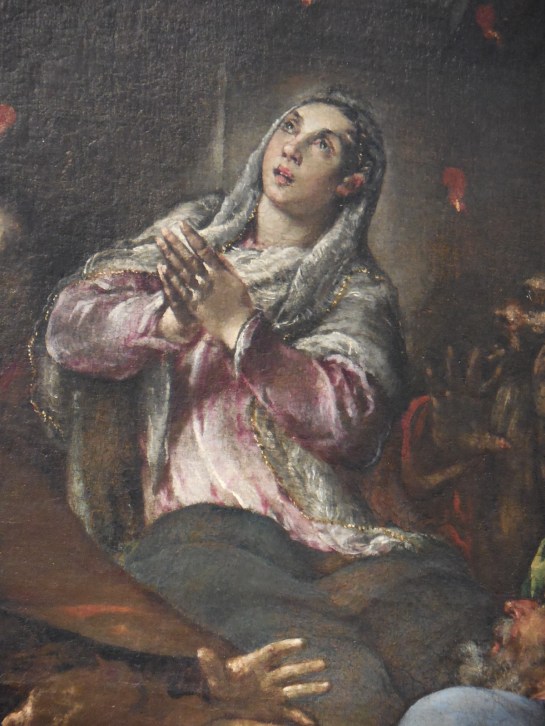
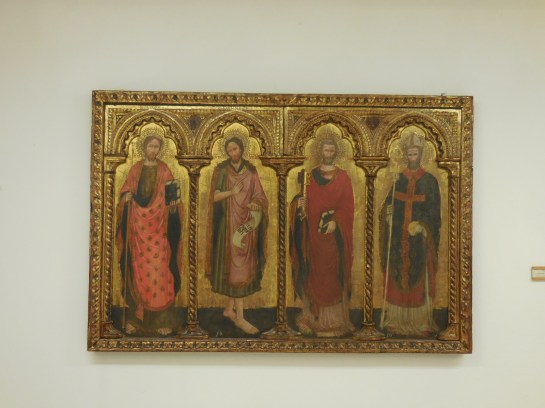
The Civic Museum captured my undivided attention for more than two hours. The museum boasts the largest collection of renditions by Jacopo in the world. There was much more to see than Bassano’s masterpieces, however. The art gallery displays some 500 paintings from the 13th to 20th century. Sculptures also delight. There is a 17th century cloister, too.
BassanodelGrappa8

Jacopo Bassano lived from 1510 or 1515 to 1592. He was a Renaissance Venetian painter whose later works fall into the category of Mannerism. Born in Bassano del Grappa, he resided in Venice during the 1530s before returning to his hometown for good in 1539. Often experimenting with various styles, Jacopo was influenced by Titian, Tintoretto, Durer, Raphael and Roman art, for example. The painting guru is known for his religious paintings rendered in natural landscapes. He also studied the role of light and created significant nocturnal scenes.

BassanodelGrappa10

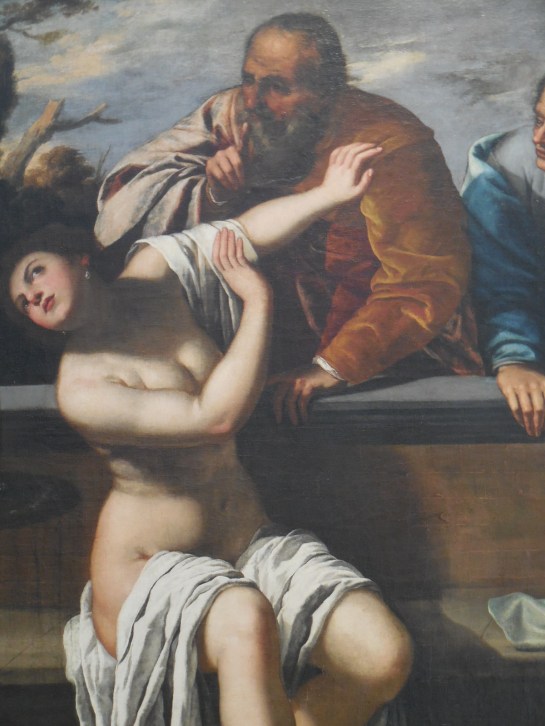
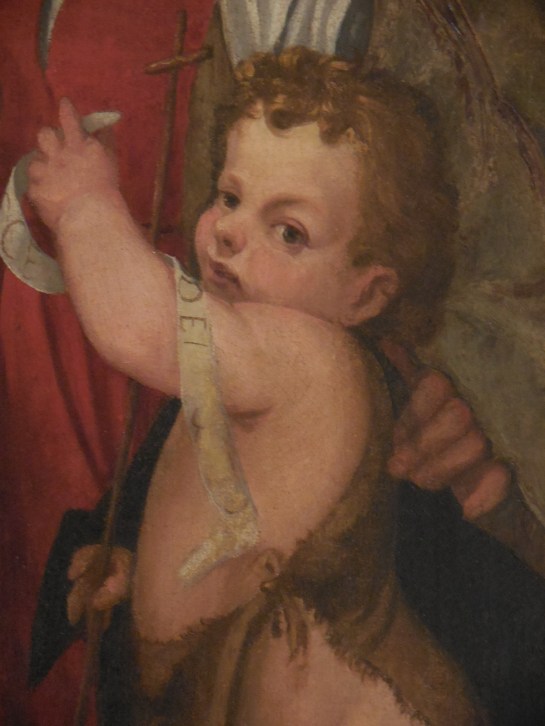
Here are some examples of the artwork in the Civic Museum that kept me entranced for two hours. Some of the paintings, but not all of them, are by Jacopo Bassano.

BassanodelGrappaCM2

BassanodelGrappaCM7

BassanodelGrappaCM8

BassanodelGrappaCM9

BassanodelGrappaCM3

BassanodelGrappaCM4

BassanodelGrappaCM6

BassanodelGrappaCM11

BassanodelGrappaCM12

BassanodelGrappaCM15

BassanodelGrappaCM17

BassanodelGrappaCM19

BassanodelGrappaCM20

BassanodelGrappaCM21

BassanodelGrappaCM22

BassanodelGrappaCM23

BassanodelGrappaCM24

BassanodelGrappaCM25

BassanodelGrappaCM26

BassanodelGrappaCM27

BassanodelGrappaCM30

BassanodelGrappaCM31

BassanodelGrappaCM34

BassanodelGrappaCM39

BassanodelGrappaCMdome28

BassanodelGrappaCMdome29

BassanodelGrappacrucifx35

Tracy A. Burns is a writer, proofreader and editor in Prague.