Peering at the paintings in the third floor art gallery and the furnishings on the first floor representative rooms, I came quickly to the conclusion that Radim Chateau was a hidden gem among sights near Prague. While there were not numerous spaces to visit, the ones viewed on tours of the representative rooms were outstanding in their content and beauty. Everywhere I looked in the gallery and on the representative floor, I saw magnificent artwork. Even the 19th century tapestries and Romantized furnishings in the hallways told intriguing stories of centuries gone by.
I was stunned by the masterful artistry of Radim Chateau during my first visit in 2025. This Renaissance chateau in central Bohemia was built next to a fortress that was first mentioned in writing during the early 14th century. The fortress had various owners. Then Karel Záruba from Hustířan had the chateau constructed in the early 17th century. The two-floor structure was ready for use by nobles in 1610. However, Karel passed two years later, and the property became the possession of his son Jan, who took the side of the defeated Protestants during the Thirty Years’ War. Because the Catholics triumphed, the chateau was confiscated, and Jan had to flee the country. However, when Adam the Younger of Wallenstein took over the chateau and property, he returned it to Jan Záruba. Soon it was purchased by the legendary Šternberk clan. At that time, Radim became an administrative seat where clerks rather than nobles occupied the chateau.
Several owners came and went after 1634. Then, in 1685, the well-known Gallas family took over Radim and held onto it until the 18th century. I thought back to the Clam-Gallas Palace in Prague, where the ceiling frescoes and ballroom with crystal chandeliers are superb. Getting back to Radim history: The next owner was a notable pioneer in the Czech publishing industry, the knighted František Jan Brahier. He printed breaking news in German. When Brahier died in 1721, he did not leave any heirs.
That is when the Kinský family came into the picture. A family that had had so much influence on horse breeding and horseracing, the Kinskýs sold the chateau to Prince Alois Josef Lichtenstein in 1783. This was an important purchase because the chateau stayed in this family for 143 years. During the Lichtenstein reign, the chateau once again served administrative purposes for a significant period of time.
A momentous occasion could have taken place in 1791, if fate had not gotten in the way. The Czech king Leopold II was returning to Vienna from his coronation in Prague and wanted to see Radim Chateau and take in some hunting there. However, plans had to be changed as Leopold II had to hurry back to Vienna without a hunting break. In the early 19th century, there was much reconstruction.
The Lichtenstein’s parted ways with Radim in 1927, when Dr. Jaroslav Bukovský took charge. Many changes took place as he used the chateau for representative purposes. Electricity was added to the chateau, and what was once a French park came to flourish in English style.
During the Nazi Occupation, the German army used the premises, although the owner’s wife, Mrs. Bukovská, was still allowed to have a small apartment there. After May of 1945, the Russian military took control of the chateau. The Communists held it from 1950, when Mrs. Bukovská was still permitted to reside on the premises in a tiny abode. Most of the chateau was changed into offices, and a few apartments were installed. District offices remained in the chateau until the 1990s. Then in restitution the Bukovský family got the chateau back. After selling the chateau in 2005 to Antonín Dotlačil, much reconstruction took place.
The chateau was sold again, this time to the present owner, Bohuslav Opatrý, who is a music and art lover, having restored many of the paintings in his third floor collection. The park and garden underwent reconstruction as did part of the chateau. It was not until this century that Radim Chateau was open to the public.
While most of the furnishings are not original due to the Nazi occupation of the chateau and the dereliction that occurred during socialist times, it does boast original 19th century flooring in the main hall. To be sure, the Communists destroyed most of the chateau interior. Yet, decades later, Radim would be resurrected by painstaking efforts that made it into the gem it is today. The painted ceilings in the bedroom, main hall and gallery have been preserved to a great extent. The painted decoration on several ceilings, such as a lobster and a horse, hails from 1607 to 1610.
In the bedroom that we entered first, I was intriguing by the Baroque bed with exquisite carving. In the dining room, I was speechless at the sight of low Renaissance chairs around a Renaissance table. In other rooms, I saw many Gothic chairs, often Romanticized into 19th century style. A Mannerist cabinet with exquisite woodwork of figures and columns was a delight in one space. I spotted a portrait of Rudolf II among the pictures of rulers that decorated a high wall in the bedroom. I also saw in one space a 18th century globe decorated with allegorical figures of zodiac signs instead of continents. The ceiling decoration of a green-and-white pattern in the bedroom also awed me. So delicate and so much attention to detail.
In the administrative office of the Lichtensteins, I saw pictures of Austro-Hungarian generals. In the study, portraits of past owners as well as the current owner hung on the walls. I recognized Adam the Younger Wallenstein as well as Adam Kinský. There was even a portrait of Octavian Kinský, who was never the owner of this chateau but had made a name for himself with that clan, specifically in horse breeding and horseracing. Work related to his successes could be seen in Karlova Koruna Chateau, which I had visited several times. A more modern likeness of the current owner also decorated one wall. In an isolated space, I peered at a Neo-Gothic altar with medieval elements. Tapestries from the 19th century were present throughout the chateau’s first floor and hallways.
The main hall, often used for weddings, was one highlight of the tour. The painted ceiling featured various objects and animals in bright colors. A 19th century Petrov Grand piano also adorned the space. Paintings from various periods added to the décor.
Close-ups of the Mannerist cabinet
On a tour of the cellar places it was possible to see a Black Kitchen that was still functional as well as an armory and some bedrooms once used by princesses. This was another intriguing tour.
Portrait of Austrian general
However, the biggest highlight for this art lover was the gallery on the third floor. Nineteenth and early 20th century landscapes dotted the hallway. I saw images of the slowly flowing Berounka River, the snow-covered Alps, charming cottages tucked into woodlands, the tranquil landscape in the Pilsen region, sights of Prague, portrayals of sheep, folk dancing figures and haymakers doing laborious work in the fields, mystical forests and other scenes. I was enamored by each painting as landscapes from this time period were my favorite. While most of the paintings were authored by lesser known artists who deserved much praise, one work was painted by the well-known Otakar Nejedlý.
Landscape with Berounka River, not by Nejedlý
This renowned Czech painter lived from 1883 to 1957. He was a pupil of the master landscape artist Antonín Slavíček. His travels to India greatly influenced his works. During World War I, he was mobilized to France where he painted places the Czech legionnaires had fought. After the war, he became an esteemed professor in Prague. He adored the south Bohemian countryside and was inspired by Romanticism, Impressionism and Expressionism.
Painting of sheep by Popelka
Vojtěch Hyněk Popelka created the renditions of moving sheep, and it was no surprise that he specialized in painting animals. He brought to life landscapes and animals in his works during the early 20th century.
Painter Otto Stein, who also was an accomplished graphic artist, lived from 1877 to 1958. Several of his works were displayed in this gallery. After studying in Prague and settling in Munich, he took part in Munich New Secession exhibitions in the early 20th century. During the war, he painted material used to promote the Austro-Hungarian Army. After the war, he became part of the Berlin Secession, having to move to that city. In 1922 his renditions were on display in Prague’s Rudolfinum. He gained acclaim in Germany and the USA.
In 1942 tragedy struck, and he and his family were deported to the Terezín concentration camp. He toiled in the technical department there and bided his free time with drawing. Miraculously, he and his entire family were spared, and, after the war, he moved to Prague. Then he went to live in the north Bohemian countryside, where he did a great deal of painting. He died there in 1958.
The German painter Adrian Ludwig Richter also had works on display in this gallery. He lived from 1803 to 1884 and also succeeded as a illustrator. His paintings featured the Romanticist style, inspired by Caspar David Friedrich. He was especially enamored with the countryside of north Bohemia and the ruins of Střekov Castle in that region. Richter also made 3,000 creations out of wood.
Vlastimil Toman (1930 – 2015) was a painter, graphic artist, illustrator, poet and photographer as well as professor. Several of his landscapes were represented in the gallery. He worked mainly in Třebíč, painting the Vyšocany and Moravian countryside. In the 1960s, he explored the styles of cubism, fauvism, expressionism and lyrical realism. In total, he had 24 solo exhibitions in Třebíč plus 50 collective exhibitions around the country.
Prague Castle in the distance
Čertovka on Kampa Island, Prague
My favorites were the renditions of Prague. One painting featured Prague Castle in the horizon, another showed the Charles Bridge. Yet another displayed the Judith Bridge, which preceded the Charles Bridge. One portrayed Čertovka on Kampa Island.
But there was more. A rather large space featured religious art. I saw numerous madonnas, scenes from the Bible and pictures of saints here as well as Gothic furniture. There was a range of styles, and works hailed from various eras, though none were modern. My head was swimming with this immersion into religious art.
From the third floor, it was easy to read the motto of Saint Benedict on the balustrade. “Tempora matuntur et nos matumar cum illus,” it read. It meant that times change, and we change with them. Other black-painted letters read “Ora et labora,” which translates from the Latin into “Pray and work.” The ceiling on the third floor was richly decorated with depictions of objects and animals.
Not only had I peered at masterfully carved furnishings and other notable objects in the representative rooms but I had also viewed numerous paintings in my preferred landscape genre. The religious art was very impressive, too. While the chateau’s representative spaces are not large, it is worth seeing for those interested in Czech history and sights with artifacts from various eras. Art enthusiasts are sure to love the third floor displays.
On that day there was a wedding, and the café offered various cakes and pastries outside as well as sausages that were cooked over a fire. Delicious bread was available, too.
I went to lunch at U Marka restaurant in Pecky, a small town nearby. The rustic interior was suitable for the delicious Czech food, which cost so much less than that in Prague. I had had a great day.
Tracy A. Burns is a writer, proofreader and editor in Prague.
As usual, this past year was punctuated by travel, though most trips only lasted one day or half of a day. Still, I was able to explore many sights within a two-hour distance of Prague. Once again, I realized that the Czech Republic blossoms with beauty in every niche of the country.
Perhaps the painting that best expresses my year of travel is one I saw at an exhibition of David Caspar Friedrich’s paintings from the Romanticist era. While admiring his “The Wanderer,” I saw the back of a male figure in the forefront, standing on a cliff as he peered at the mist-filled mountains beyond. It epitomizes why I love travelling: to discover new worlds, to muddle through that mist, reaching a clarity that allows me better to understand myself as well as to gain historical knowledge.
By David Caspar Friedrich, on display at Albertinum for temporary exhibition
In the Dresden Albertinum, I was mesmerized by Friedrich’s landscapes. Many featured vibrant colors and a brilliant use of light. He also created dark paintings with a chiaroscuro element that gave them a mystical appearance. Some of his landscapes included a solitary figure traveling alone in nature. Friedrich’s gnarled trees in barren environments were symbolic. I felt especially drawn to his portrayal of mountains in shades of pink.
By Marc Chagall, on display at Albertina in Vienna for temporary exhibition
By Paul Gauguin
By Hoogstraten, Rembrandt’s pupil
I spent three days in Vienna going to major exhibitions featuring works by Chagall, Gauguin and Hoogstraten, a star pupil of Rembrandt. I hadn’t realized how many of Chagall’s paintings took on Jewish themes and serious topics. I had always thought of Chagall’s art as fun-loving and colorful. My favorites were those inspired by Paris and the circus, created in bright blues and yellows. The Gauguin retrospective showed his works from various time periods, so it was possible to see his specific artistic developments. I was most impressed with his early landscapes. I had not heard of Hoogstraten, whose portraits brought out the soul in the sitters just as Rembrandt’s did. His intriguing use of perspective in some paintings also impressed me. Works by Rembrandt also enchanted me in this exhibition.
Franz Xaver Messerschmidt, Character Heads
by Gustav Klimt on permanent display at Upper Belvedere
By Václav Špála, on display at Upper Belvedere
City of Vienna Museum, permanent collection
We also visited the Upper Belvedere Palace Museum in Vienna. While it is best known for its Gustav Klimt and Egon Schiele creations, I was entranced with the medieval art in the basement and the Central European collection that featured Czech greats such as Jan Procházka, Bohumil Kubišta and Václav Špála. The Klimt paintings were extremely powerful as were all the Impressionist and Post-Impressionist works. My favorite part of the museum involves the unique Late Baroque Character Heads by Franz Xaver Messerschmidt, who rendered alabaster busts of insane people with unique facial expressions. You could see into their souls. In Vienna I entered the City Museum for the first time. The exhibits trace the history of the city from the beginnings to modern day. I saw intriguing paintings, furnishings, posters and objects, among others.
by Eva Švankmajer
Puppets by Jan Švankmajer
Puppet by Jan Švankmajer
I also went to many exhibitions in the Czech Republic outside of Prague. In Kutná Hora I visited an exhibition of works celebrating the 90th birthday of Jan Švankmajer, a surreal artist, along with creations by his wife Eva. The exhibition Disegno Interno included collages, graphic art, objects, book illustrations, drawings, paintings, animated film creations and puppet theatre of both artists from the 1960s and later. Their creations included works that resemble Rudolfine Mannerist renditions as kinds of cabinet of curiosities and art inspired by Giuseppe Arcimboldo. I also noted the inspiration of the Baroque tradition in puppet theatre. Other works fell into the categories of art-brut, eroticism, fetishes and collages influenced by Max Ernst. Much of their art was deeply rooted in the writings of Edgar Allan Poet and Lewis Carrol. Scenography for Czech film was another section. I realized for the first time that surrealist art had been influenced to a great extent by Mannerist trends.
From Through Kafka’s Eyes, graphic art about The Metamorphosis
Through Kafka’s Eyes, Oto Kubín, Brindisi, 1906
In Pilsen I went to an exhibition called Through Kafka’s Eyes, featuring the art that had surrounded Kafka at the end of the 19th century and the beginning of 20th century. I saw posters for Czech art exhibitions in the early 20th century and those advertising 19th century Japanese art as well as works by stellar Czech artists. Paintings by Kubišta, colorful and vibrant, were represented along with sculpture by František Bílek. Czech artists who spent their interwar years in Paris were included, such as Oto Kubín and Georges Kars. Kafka’s own Jewish-themed drawings were a highlight. German art and literature rounded out the intriguing exhibition.
Great Synagogue, Pilsen
Great Synagogue, Pilsen
I also took the time to visit the Great Synagogue in Pilsen, the second largest synagogue in Europe and third largest in the world. On the onion-shaped dome the Star of David stood out. What I admired most was the vaulted ceiling punctuated with blue and gold adornment. Another feature that amazed me was the artistic mastery of the stained glass windows with geometric shapes and figures. The interior is furnished in Oriental style with Neo-Renaissance elements.
Pilsen, U Saltzmannů
We ate at my favorite restaurant in Pilsen, U Saltzmannů, the oldest pub in the city. The Czech food at this establishment cannot be surpassed. I had fried chicken steak this time.
Škoda Museum
In Mladá Boleslav, about 70 kilometers from Prague, I visited for the first time the Škoda Museum, named after the popular Czech automobile manufacturer. The company began making bicycles with Václav Klement and Václav Laurin at the helm in 1895 and soon developed a rich tradition of producing cars. The automobiles on display ranged from vehicles made at the end of the 19th century to those produced in the modern day. I liked the early bicycles, including a two-seater for postal carriers. The cars from the early 20th century were also favorites.
In that same city, we also visited the Aviation museum of Metoděj Vlach, which explored the history of aviation with more than 25 airplanes in the main hall, some hailing from World War I. I saw the 1913 G-III by Gaston and Réné Caudron. It had an open cockpit and 9-cylinder rotary engine. The two-seater wooden plane constructed by the Beneš company called a Be-60 Bestiola featured a 4-cylinder engine and had been flown from 1936 to 1940. The adorable W-01 Little Beetle had been used for airshows in the 1970s.
At that museum, I also learned about the career of pilot Alexander Hessman, who also had starred in a 1926 silent Czechoslovak film. He was the organizer of the Czechoslovak aircraft for the 1936 Olympics. After the Nazi Occupation in 1939, he helped pilots escape with false passports, and he wound up fleeing from the Protectorate to France and then to the USA in January of 1940. After World War II, he returned to Czechoslovakia but fled from the Communist regime, settling in the USA, where he was a technical assistant with PAN AM in New York City.
Mexican mask, Museum of Glass and Jewellery, Jablonec nad Nisou
I traveled several times to north Bohemia this past year. One time I went to Jablonec nad Nisou, where the Museum of Glass and Jewellery was located because of the rich local tradition in these fields. I was immersed in the exotic jewellery of strung and woven glass seed beads by North American Indians, using products from north Bohemia. A mask of the jaguar hailed from the Huichol Indian tribe in Mexico. Glass seed beads from Jablonec nad Nisou were used to make a necklace by the South African Zulu tribe, dated from 1880 to 1900. Jablonec has been the location of the mint for the country’s currency, so many commemorative coins were on display.
I also was impressed by buttons made of glass, metal jewellery and black glass jewellery as well as wooden and plastic jewellery. Colorful handbags, masterfully designed, also made up the collection. The Waldes Museum of Buttons and Pins included more than 5,00 buttons, clasps and buckles with the oldest dating from 9 BC. The Bohemian glass exhibition showed off glass in many styles ranging from medieval and Renaissance to Empire and Biedermeier to Art Nouveau and Art Deco to modernism and contemporary. The museum also has the largest public collection of glass Christmas ornaments in the world with more than 15,000 objects. I saw ornaments of angels, birds, cats, dogs, Santa Clauses, gingerbread men and much more, all contemporary.
Josef Lada’s Villa in Hrusice
I made my first visit to Josef Lada’s Villa in Hrusice, where that author, painter, book illustrator and scenographer had lived while making some 600 paintings and 15, 000 illustrations. I saw his paintings of idyllic village life featuring all four seasons. Children threw snowballs and make snowmen in a quaint village in one painting while a squirrel was perched attentively on a tree branch, overseeing a tranquil village scene in another. Pub scenes showed humorous drunken brawls. I would have loved to have owned one of the charming cottages depicted in his paintings. I loved the paintings of knights and dragons from fairy tales as well as the paintings representing the months of the year. His paintings of scenes from Jaroslav Hašek’s antimilitaristic, multi-volume classic about the Good Soldier Švejk in the First World War caught my attention. Many of his paintings focused on holiday traditions. I also saw his humorous drawings and caricatures.
From the First Republic of Czechoslovakia
Poster by Václav Ševčík commemorating the day of the invasion by the Warsaw Pact armies, August 21, 1968
In Prague I took advantage of the stunning exhibitions this past year. I went to two excellent shows at Kampa Museum. One featured Czech graphic art from the founding of Czechoslovakia in 1918 to the present. I saw the first star-studded designs for the Czechoslovak flag as well as many political posters from the World War II era through Communist times to the Velvet Revolution of 1989. Václav Ševčík made a poster focusing on the day of invasion of the Warsaw Pact armies into Czechoslovakia on August 21, 1968, when the country’s liberal reforms were squashed. The poster shows a blood-red tear below an eye outlined in black on a white background.
Vítězslav Nezval, Alphabet, with typography by Karel Teige
Kampa Museum, Identity exhibition of graphic art, Cindy Kutíková
Other sections concentrated on magazine and book design. I saw beautiful children’s volumes illustrated by Lada, Josef Čapek and Jiří Trnka. I was drawn to the covers and typography of Karel Teige, an avantgarde interwar artist. The exhibition showcased contemporary times by displaying a colorful, large Quantum Beaded Sweater created in 2020 and 2021 by Cindy Kutíková, for instance.
Václav Tíkal, 1944
Otakar Nejedlý, Waterfall, 1913-14
Another exhibition at Kampa Museum focused on paintings from the private collection of entrepreneur Vladimír Železný, purchased for his Golden Goose Gallery. Called The Goose on Kampa, the show featured 70 paintings representing works from the beginning of the 20th century through the 1960s, such as creations by Toyen, Jiří Štyrský, Špála, Emil Filla, Jan Zrzavý and Mikuláš Medek. One painting that caught my undivided attention was Václav Tíkal’s 1944. A hand partially covered in a ripped black glove showing the fingertips, thumb and part of the palm was emerging out of the frozen, snow-covered earth in a barren landscape.
Otto Gutfreund, Viki, 1912-13 from Cubist period
On that day I also explored the Kampa Museum’s permanent collection, specifically the sculptures of Otto Gutfreund, whose early works can be classified as Cubist. His later creations, made after World War I, featured traits of Civilism, which promoted themes of everyday life.
Bohumil Hrabal, 1952, Tragedy! What a Tragedy!
At the Museum of Czech Literature, I greatly appreciated a small exhibition due to my interest in the works of the late 20th century Czech fiction writer Bohumil Hrabal. The modest show emphasized the artistic relationship and friendship of Hrabal and abstract artist Vladimír Boudník, who created the “Explosionism” style. I was most impressed by Hrabal’s collages from the 1950s. One featured a Singer sewing machine, a naked baby and barbed wire heading into the horizon as white crosses in a graveyard punctuated the picture. It was called “Tragedy, What a Tragedy!”
Oto Kubín, Chapel in Simione, 1926
Maurice Utrillo, Chateau de la Seigliere (Aubusson), 1930
The Wallenstein Riding Stables was the site of an intriguing exhibition about artists from Bohemia residing in Paris between the wars. They were part of the “Paris School,” which featured a variety of styles. Czechs Kars, Kubín (Othon Coubine) and Francois Zdeněk Eberl made strong impressions in the lively, vibrant Paris of the 1920s. The themes of the paintings were many: portraits, cityscapes, street life scenes, café and entertainment scenes as well as a focus on the circus and cabaret. I was drawn to Kubín’s landscapes of Provence. The lavender fields were my favorite. Also represented were foreign artists, including Marc Chagall and Maurice Utrillo.
Hendrick Goltzius, The Four Disgracers, 1588
Also at the Wallenstein Riding Stables, the exhibition “From Michelangelo to Callot: The Art of Mannerist Printmaking showed off more than 200 works of 16th and 17th century graphic art, drawings, paintings, jewelry, etchings, lithographs, ceramics and other artistic crafts that hailed from the Netherlands, Germany, France and the Czech lands. The Louvre lent Prague’s National Gallery many works. Some pieces in the collections were being displayed to the public for the first time. A superb small drawing by Michelangelo drew crowds, and art by Hendrick Goltzius, Paul Bril, Aegidius Sadeler and Niccolo Boldrini stood out to me.
Painting by Karel Kryl, temporary exhibition at House of the Golden Ring
Karel Kryl giving a concert
On my birthday I went to the House of the Golden Ring near Old Town Square. I saw an exhibition about the late dissident singer and songwriter Karel Kryl, whose music had been poetic, profound and political. He had lived in West Germany during much of the Communist era and had worked for Radio Free Europe. I realized how politically-motivated his songs had been and how he had supported the Poles as well as the Czechoslovaks in their fights for freedom. I was engrossed by his artwork, disturbing and grotesque scenes with one-legged clowns and half-human, half-creature figures.
Pieter Brueghel II
One of my favorite exhibitions of the year, taking place in Kinský Palace, was called “Get on the ice!”, featuring hockey and skating in paintings and other artistic creations. It reinforced the fact that ice hockey and skating have played significant roles in Czech and Slovak identity. I especially was impressed by the works of the Dutch masters who had inspired Czech painting. Pieter Brueghel II’s scene of skating on a pond caught my undivided attention. Czechs first represented skating on the Vltava River and on ice rinks.
Then hockey became the major theme, first portrayed realistically and then in the 1960s expressed in an experimental fashion. I was drawn to František Tavík Šimon’s “Ice Rink Under the Charles Bridge” (1917) with its large falling snowflakes and idyllic, historical setting. One example of the experimentation of the 1960s is Vojtěch Tittlebach’s “Hockey” from 1965, with abstract shapes and simple forms. The players in this painting had no facial traits. Jiří Kolář also added to the experimentation of the 1960s with his “Hockey Sticks,” composed of three wooden sticks decorated with paper collages, many of them maps and some historical scenes. The 1998 Czech Olympic victory at Nagano was celebrated in large photographs, including one that showed the moment Czech Petr Svoboda scored the winning goal while the crowd in Old Town Square erupted in joy.
New Realisms, Karel Čapek from series Cactuses, first half of the 1930s
One-Handed Ice Cream Man, Miloslav Holý, 1923
In Prague I also saw the New Realisms exhibition, which focused on modern Realist trends in Czechoslovak art from 1918 to 1945. The more than 600 works hailed from the Czech and Slovak lands as well as Germany and Hungary. I especially liked Karel Čapek’s photographs of cactuses and his dog Dašenka as this field focused on the everyday during this era. I also liked the many café scenes, realistic portraits of people, magic realism in landscapes, the focus on the societal and economic dilemmas in Czechoslovakia and the depiction of modern labor. I have always been interested in the paintings of Group 42 as their works had an existential quality, often punctuated by telegraph wires and deserted streets.
Francesco Bartolozzi, The Girl and the Kitten, 1787
One of my favorite exhibitions in Prague this past year was called “The Good Cat and the Treacherous One,” featuring cats in graphic art from the 16th to the 18th century. The art shows how some people revered cats while others hated felines. They often symbolized something or were shown for entertainment. Some considered them to be a form of the devil. Others gave them positive religious connotations. I especially enjoyed the Mannerist works by Goltzius and the graphic art by Wenceslaus Hollar, who portrayed cats with both positive and negative qualities. I saw pictures of cats symbolizing maternal love, sight, hearing, devotion, courage, yearning for freedom, foolishness, frivolity, cruelty, greed, treachery, lust and adultery. I also noticed cats as protectors against snakes. A French painting showed how, in 18th century France, cats had epitomized personal and political freedom.
Clam-Gallas Palace
I focused mostly on day trips when traveling this past year. While I visited chateaus, castles and monasteries outside of Prague, I did also become acquainted with the renovated Clam-Gallas Palace in the capital city. The Baroque palace became the property of the Gallas family in the 17th century. The palace has a rich musical and theatrical history as Mozart and Beethoven both performed there during the late 18th century. The colossal exterior portal is decorated with statuary by Baroque master Matyáš Bernard Braun, and he also created the fountain portraying Triton.
Murano chandelier in Clam-Gallas Palace
The many monumental frescoes amazed as did the chandeliers, especially the 19th century chandelier made of Chinese porcelain cups, saucers and vases. Frescoes depict the triumph of Apollo and gathering of the gods on Olympus, for instance. Allegorical figures representing sculpture, architecture and painting stand out in another fresco. I was very impressed with the former office of the first Czechoslovak Minister of Finance, Alois Rašín, though it was sparsely furnished. He had tried to gather support for the creation of Czechoslovakia during World War I and had even been imprisoned for taking part in the resistance. Rašín was assassinated in Prague during January of 1923 by a 19-year old anarchist.
Bohumil Hrabal’s cottage in Kersko
Kersko near Prague is one of my favorite tranquil spots in the country, a village where Hrabal resided from the 1960s until his death in 1997 and where he fed many feral cats daily. Hrabal’s two-story cottage opened to the public for the first time this spring. I saw the garden where he wrote some books and the charming enclosed terrace where he composed his works when weather did not permit him to spend time in his garden. I saw the chair in which Hrabal wrote his last literary piece, during 1995. The top floor was adorned with many paintings – a moving portrait of Hrabal by Jan Jirů, a drawing featuring heads of Hrabal from his youth to old age in a rendition by Jiří Anderle. Another portrayed cats on chairs in a forest setting along with Hrabal himself. Portraits of his family and a collage focusing on one of his books also caught my undivided attention. The place captured the soul of Hrabal, and I was very moved.
In the local shop, known for its ceramic figures of cats, there was an exhibition of drawings of Hrabal – at the pub, in Heaven, in Kersko, each rendition celebrating the author in a creative way. We ate at my favorite restaurant outside of Prague, Hájenka, a prominent landmark in Kersko. Whether I chose the chicken with cheese sauce, the meat with dumplings or the fried chicken steak, I was always delighted by the meal in a rustic, charming atmosphere.
Mariánská Tynice complex
I traveled about 35 kilometers north of Pilsen to pay a second visit to the High Baroque complex with pilgrimage church Mariánská Tynice, an aerial constructed by renowned architect Jan Blažej Santini during the 18th century, using geometric forms such as quadrangles and triangles as features of his Baroque Gothic style. The church with a Greek cross plan had an impressive illusionary main altar of the Holy Trinity while the east and west ambits were constructed with open arcades featuring eight chapels. The masterful painting on the vaulting and walls celebrates the lives of the Virgin Mary and Cistercian saints. The cupola of the church is lit by eight windows.
Frescoes on the walls and vaults of the ambits
Part of the complex was the Museum and gallery of the North Pilsen region. I liked the Gothic altarpieces and Baroque paintings as well as the 19th paintings of pilgrimage sights. The reconstruction of rooms resembling 19th century and early 20th century village life included a classroom, a countryside chapel and a pub.
Museum of the High-Rises, Kladno, ceramic tile on the facade
Gas masks in the nuclear bunker of the Museum of the High-Rises
In Kladno near Prague, I toured the Museum of the High-Rise, which was located in one of the six Rozdělov high-rises designed by Czech functionalist architect Josef Havlíček in the 1950s. He received acclaim during the interwar years as a member of the avantgarde and studied under Cubist architect Josef Gočár. The façade of the 13-floor building was created from ceramic material, and on that particular high-rise were ceramics of a cat and a dog. There was a small museum in one basement floor. We also visited the nuclear bunker, complete with numerous gas masks and many hard benches. The big rooftop terrace was a prominent feature for that time period. In the representative flat for the higher-ups, we saw 1950s furniture and a balcony. The flat measured about 65 meters squared, quite a luxury in that day and age.
Humprecht Chateau
View from Humprecht Chateau
I also visited many chateaus within a two-hour distance of Prague. Seventeenth century Humprecht Chateau in the central Bohemian Paradise region had an elliptical shape. Much of the interior featured hunting themes. I saw paintings of Venice, Biedermeier bookcases in the two libraries of about 4,000 volumes, a black kitchen with an original fireplace and utensils from the 17th century. The main hall featured four frescoes from the 1930s, showing scenes from the life of the Černín family, the long-time owners of the chateau. Baroque furniture decorated several rooms. The picture gallery includes works from the 17th century. What I liked best about the chateau were the panoramic vistas from the top floor.
Volman Villa
Also, not far from Prague, the newly reconstructed Volman Villa, a large, geometric functionalist structure built from 1938 to 1939, featured big terraces, a circular driveway, a monumental winding staircase and outer stairs that lead to a bridge heading into the building. It is possible to access the terrace from each spacious room. Volman used exotic materials such as travertine and marble for the construction. The marble bathrooms with beautiful pink and light blue bathtubs were vast. While there are now many trees obstructing the view, at one time it was possible to see the Labe River in the 40-hectare English park.
Grabštejn Castle, Chapel of Saint Barbara
I visited several castles and chateaus in north Bohemia – Grabštejn Castle, Jezeří Chateau and Červeny Hrádek Chateau. I was shocked at the vast improvements made during the reconstruction of Grabštejn and Jezeří as I had last visited the two about 20 years ago. Grabštejn, originally a 13th century castle, took on the structure of a Renaissance chateau in the 16th century. The 16th century Chapel of Saint Barbara featured exquisite vaulting and wall painting that included 13 apostles. One tour featured the 18th century administrative offices that made up the castle interior during that time period while another showed the rooms of the nobility, including a gigantic wall painting with chateau-like gardens and fountain. I saw furnishings and artifacts from the 16th to 19th centuries.
Jezeří Chateau, painting by Carl Robert Croll
While only a few rooms of Jezeří Chateau were opened about 25 years ago, now there are about 10 impressive spaces on the tour. I loved the paintings of Carl Robert Croll, renditions which showed the interior of the chateau during the early 19th century. I was especially impressed with the room dedicated to Jan Masaryk, the son of the first president of Czechoslovakia and once the Minister of Foreign Affairs. He was thrown out a bathroom window at the Ministry of Foreign Affairs by the Communists after the 1948 coup. The Winter Garden was light and airy, punctuated by much greenery. The lavish Theatre Hall included sculptural and stucco adornment as well as an original fireplace. The paintings throughout were impressive, too.
Červený Hrádek, Knights’ Hall
Červený Hrádek dated back to the early 15th century and gets it current appearance from the 17th century. The Knights’ Hall from that era included lavish sculptural decoration with medallions featuring battle scenes and exquisite crystal chandeliers. Other spaces harkened back to the 18th and 19th centuries with period furnishings. Seventeenth century sculptor Jan Brokoff created sculptures, fountains and vases that decorated the monumental staircase. The English style park was beautiful, too. In August of 1938 the Sudeten Party leader Konrad Henlein and English Lord Walter Runciman had a meeting there, shortly before the Munich Agreement was signed.
Dobříš Chateau Park
Dobříš Chateau Park
Because the interior had been recently renovated, I returned to Dobříš Chateau not far from Prague. I was disappointed there were not as many rooms decorated with period furniture. Instead, the self-guided tour mostly featured spaces celebrating the Colloredo-Mansfield family’s accomplishments, which were very intriguing and noteworthy, to be sure. Still, I missed the longer, guided tour and former exciting interior décor of the Rococo and Classicist eras. The Writers’ Room remained on display, decorated the way the space would have looked when the chateau belonged to the Writers’ Union from the 1950s to the 1990s. It was possible to enter one side of the spectacular Hall of Mirrors, although it was roped off and walking through the room was not permitted. The fresco-filled hall amazed with 18th century décor and eight Venetian chandeliers as well as monumental fireplaces.
Illusionary painting on the orangery in Dobříš Chateau Park
The park, measuring nearly two hectares, was the reason to visit the chateau. On that sunny summer day, it was spectacular to stroll through the Rococo style park established in the 1770s. It had five terraces, a fountain with astounding Baroque sculptural grouping and an orangery with illusionary wall painting.
Slatiňany Chateau
Interior of Slatiňany Chateau
I traveled to Slatiňany Chateau for the second time and noted the prominent hunting and horseback riding themes. The Auerspergs held on to the chateau for 200 years and were responsible for the charming interior. I loved the exquisite canopied beds decorated with religious paintings. The tapestries were another delight. In the Big Dining Room I admired a large painting of hunters and their dogs getting ready for the hunt as well as a stunning 18th century Murano chandelier.
Vienna, Albertina, Monet, Waterlillies, in the permanent collection
I had many exciting adventures traveling in 2024 and had many impactful experiences at art exhibitions in the Czech Republic, Germany and Austria. Every time I go on a trip or to an art show, I come away changed, with a sharper perspective on life and with more enthralling knowledge.
Albertinum, Dresden, Hans Grundig, The Thousand-Year Empire, in the permanent collection
Tracy A. Burns is a writer, proofreader and editor in Prague.
I have always loved to visit the exhibitions at the art gallery at the Kooperativa insurance company. Never have I exited that building without learning something new about art and about myself. This time the show was called Horizons, and it brought to mind memories of childhood innocence as well as a strong sense of freedom and personal identity achieved as an adult. The featured paintings dealt with the power and magic of nature and romantic towns as well as the devastation of war. Mythological themes also punctuated some paintings. Some of the scenes evoked in me sadness, and others brought joy.
Prague Bridges, František Líbal
The townscapes were my favorites. My love of Prague drew me to the romantic and idyllic landscape “Prague Bridges” (1943) by the landscape and portrait painter František Líbal, who created vistas of the Czech capital during World War II, when he lived in Prague. Líbal studied in Germany and made trips to France and Italy while portraying cityscapes and cathedrals. He proceeded to travel throughout the Czech lands, Moravia and Slovakia, focusing on mountainous terrain. The south Bohemia native often visited the region where he was born and created many works of ponds and forests from scenery located there. After the war, he stopped creating Prague cityscapes and focused on landscapes of south Bohemia.
View of Charles Bridge, Ferdinand Lepié
His view of Prague brought to mind the power and magic of the capital city. He made the city appear idyllic and romantic. In the horizon of the painting, I saw the bright future that I imagined I would have when I was 21 years old, fresh out of college. I mused about my first visit to Prague in 1991, when I was initially enamored by the beauty of the city. So many decades later, I am still enthralled with the city’s beauty, and the panoramic views fill me with joy. Another painting in the exhibition that brought to mind the magic and masterful architecture in Prague was View of Charles Bridge (1861) by Ferdinand Lepié. My attention was drawn to Prague Castle in the background. I once again saw Prague imbued with historical significance and timeless beauty.
View of Třebíč, Bohumír Jaroněk
I loved the paintings of other towns, too, such as Jaroslav Šetelík’s “Tábor” from 1926 and his “Kutná Hora” from 1920. Bohumír Jaroněk’s “View of Třebíč” (1910) showed a river flowing through the center of the city, making the painting especially picturesque. Kutná Hora, Tábor and Třebíč are towns with fascinating history and intriguing sights. All three paintings brought to mind my trips to these towns and the sights with which I had become very familiar.
Painter’s Still Life, Arnošt Paderlík
Arnošt Paderlík’s “Painter’s Still Life” from 1943 takes on the theme of the suffering of mankind during wartime. This painter, sculptor, graphic artist and professor spent much of World War II making expressive, anti-military compositions ripe with hidden meanings. This particular painting shows, among other objects, an ancient bust from a statue. It has fallen on the ground, onto its side. After World War II, he drastically changed his style, devoting his time to still lifes that were inspired by Cubists Pablo Picasso and Georges Braque.
Rye, Antonín Slavíček
Paderlík delved into architectural adornment as well. His ceramic ornamentation graces the Kotva Department Store in Prague, and a bronze figure he designed is located at the Thermal Hotel in Karlovy Vary. I thought back to the sculptures and paintings I had seen throughout Europe, depicting the horrors of war. Even though he was focusing on World War II, Paderlík’s painting speaks to wartime oppression in general.
Landscape from Kameníčky, Antonín Slavíček
I was ecstatic that Antonín Slavíček’s landscapes, influenced by Impressionism, were represented in the exhibition. His “Landscape from Kameničky” from 1906 captured my undivided attention as did his “Rye” from 1908. He masterfully evoked the textures of the grass and dirt road in “Landscape from Kameničky.” I felt as though I could reach into the painting and touch the grass and dirt. I have always been drawn to the emotional quality of his works and to the strong use of color that permeates his renditions, including “Rye.” Slavíček was a student of Julius Mařák, perhaps the most prominent Czech landscape painter of the 19th century, who also worked as a professor promoting realism to many talented artists.
Meadow, Antonín Chittussi
The work of one of the most important Czech painters of the 19th century, Antonín Chittussi, also was highlighted in the exhibition. His nature-themed canvases evoked strong emotions in me. His painting “Meadow” from 1886 made me take a deep breath as all tension and stress in my life momentarily disappeared. I also was gripped by his realist portrayal of sheep and a shepherd in “On the Pasture” (1882).
Chapel of Saint Brandan, Jan Zrzavý
Jan Zrzavý, one of my all-time favorites, was highly influenced by Italian primitive art and Symbolism. He also utilized light and color masterfully. His works have fantasy-like and mystical elements that correspond to magic realism. He didn’t only master painting but also graphic art, illustrations, teaching and scene design – all fields in which he worked for the National Theatre during the 20th century. Some of his paintings, such as his rendition of the “Chapel of Saint Brandan” (1946), evoke sadness and solitude, delving into the darkest depths of the human soul. I noticed the dominant greys in the painting, such as that of the gloomy winding lane. On the dark water floated a solitary sailboat.
Summer Landscape, Václav Rabas
One of the first Czechs to receive recognition as a national artist, Václav Rabas studied under the guidance of Max Švabinský and fought on the front in World War I, where he was injured and subsequently sent home. Influenced by 19th century landscape painting and the art of Paul Cézanne, Rabas created canvases rich with color, and some of his works showed features of magic realism. I loved the vibrant colors in his Summer Landscape (1930). His landscapes concentrated mostly on his native Rakovník. Rabas was not only a landscape painter by any means. Indeed, he excelled at rendering the human figure with his 1923 cycle of “Czech Heads” that represented famous personalities. Rabas also created 24 paintings demonstrating how to make bread.
Summer, Bohuslav Dvořák
I felt like running through the meadow in Bohuslav Dvořák’s “Summer” (1902). I felt liberated, free to go my own way and follow my dreams while I peered at the painting. Dvořák studied under Mařák and began his career as a realist who was influenced by Chittussi. Later, though, he began to show more characteristics of Slavíček’s style. Color helped define his works, and some of his paintings had strong Impressionistic qualities.
On the sea coast, Norbert Grund
I have loved the small landscapes by 18th century Norbert Grund for decades and was enthusiastic when one of his paintings was included in this exhibition. His “On the Sea Coast” (1750) shows a man with his back to the viewer as he gazes at the sea and beach, where other people were present. The versatile Rococo artist was known for genre paintings, landscapes and biblical works. Whenever I saw one of Grund’s creations, especially a landscape, I felt drawn into the world of the painting because the works entranced me so much.
Motif from Gmundenu, Josef Mánes
Perhaps the most influential painter of the 19th century, Josef Mánes created “Motif from Gmundenu” in 1843. His landscape paintings and portraits fall into the styles of Romanticism and Realism. Hailing from a family of painters, Josef Mánes made around 500 works. Best known for painting the 1865 allegorical calendar on Prague’s Astronomical Clock, Josef Mánes also created portraits of Prague inhabitants and landscapes of the Moravian countryside.
Sunrise – Horizon of Hope, Ivan Exner
Landscape, Vojtěch Malaník
While some paintings hailed from the 18th and 19th centuries, others were contemporary and made just as strong an impression. Vojtěch Malaník’s “Landscape” from 2015 featured a mesh of lines of bright color, an abstract creation showing the vitality of nature in a very dynamic way. Ivan Exner’s “Sunrise – Horizon of Hope” (2024) was mesmerizing with its bright yellow sun rising in the pink and orange sky. An empty boat floated on the river as sunrays danced on the water.
On the Pasture, Antonín Chittussi
These are just a few of the masterpieces on display in this exhibition. Every painting spoke to me, narrating vibrant stories through nature, mythology and war. Lyricism and romanticism as well as realism punctuated this art show. While some stories were gloomy and foreboding, others were joyful and bright. I saw nature as a powerful force that mankind could not control. I sensed times marked by hope as well as days denoted by darkness. This was a poetic and powerful exhibition focusing on the joys and tribulations of life.
Kutná Hora, Jaroslav Šetelík
Tracy A. Burns is a writer, proofreader and editor in Prague.
In October of 2023, I saw the comprehensive Prague exhibition “Petr Brandl: Story of a Bohemian” consisting of 64 altar paintings, portraits and genre works by Brandl (1668-1735), a masterful Czech artist during the Late Baroque period.
Self-portrait of Petr Brandl in a wig
I was well familiar with Brandl’s work. Many of the works shown at Wallenstein Palace were creations I had seen at chateaus, churches, cathedrals or monasteries throughout the Czech lands, such as at Břevnov monastery, The Cathedral of the Assumption of the Virgin Mary and Saint John in Sedlec as well as at Jindřichův Hradec Castle and Chateau. Another altar painting hailed from Church of St. John the Baptist near Manětín Chateau. Lnáře was home to another altar painting. I had visited the Baroque chateau and the cat museum in Lnáře a few years previously. The altar paintings on display had been restored over a period of two years.
Brandl was of Czech and German descent, baptized in October of 1668. At age 15, he served as an apprentice to painter Kristián Schroder, who later became custodian of Prague Castle. (Schroder’s work was also represented in this exhibition.) Brandl’s masterpieces showed a distinct influence of Karel Škréta’s dynamic and bold style, which was apparent because Škréta’s creations were displayed, too.
A friend of Brandl’s, legendary sculptor Matthias Bernard Braun utilized one of Brandl’s drawings for his design of the statue of Saint Luitgarda on the Charles Bridge. Coincidentally, Brandl had taken part in the competition to create the statues for the Charles Bridge, but Braun had been the victorious one. (I also saw examples of Braun’s work at this exhibition and couldn’t help thinking about the 24 allegorical statues of vices and virtues for former hospital Kuks in east Bohemia, rendered so masterfully by Braun.
Brandl had worked for some of the most prestigious noble families, including the Černíns, Lobkoviczes and Šporks. Brandl lived in Kuks, working under the guidance of František Antonín Špork, during 1731. The painter created a well-known portrait of his patron there.
Coincidentally, Brandl’s brother had a claim to fame as well. Working as a goldsmith, Brandl’s brother contributed to the building of the Cathedral of Saint Vitus in Prague.
To be sure, Brandl was a prolific painter. In the Church of St. John the Baptist in Manětín, Brandl had designed the painting at the main altar. At the UNESCO-listed cathedral in Sedlec, Brandl was responsible for three paintings in the chapels. I also saw four of his paintings in Lnáře. At Břevnov monastery his works dominated six side altars in the main nave. The themes of the paintings at the monastery, founded in 993 AD, included the dying Saint Benedict, Saint Vojtěch meeting with Prince Boleslav II at a spring, the murder of Saint Wenceslas and the crucified Christ.
I had always been enamored by Brandl’s strong chiaroscuro and thick, energetic brushstrokes. His paintings, dynamic and vibrant in character, told distinct stories. His portraits brought the sitters to life. Those of elderly men, such as St. Jerome, were reminiscent of Rembrandt’s works in their expressive nature. His later works took on darker tones and utilized simpler modelling of shapes.
The exhibition also highlighted Brandl’s personal life, especially his monetary problems. I read descriptions of his troubles as I gazed at his monumental works. Brandl’s marriage was rocky in part due to financial problems. He also cheated on his wife, Helena. Wed to Petr Brandl during 1693, Helen often complained that he was a spendthrift and didn’t provide enough money for the care of his three children. He also owed money to the artist’s guild and was fined accordingly. Brandl was earning money but spent it all on an extravagant lifestyle. Brandl found himself in debt his entire life and even was imprisoned twice as a debtor.
His poor health was also highlighted in the exhibition. Brandl had trouble sleeping and took pills. He had pain in his joints and digestive problems, too. Those were just a few of his many ailments.
Saint Jerome
He was very poor when he died during 1735. Brandl was buried in a church in Kutná hora, a town about an hour from Prague, where he had spent time at the end of his life.
Fire of Troy
Despite his shortcomings as a person, Brandl was my favorite Czech Baroque painter and one of my favorite Baroque painters of all-time. I was enthralled by this exhibition and came away feeling joyous that I had been able to enter Brandl’s artistic worlds.
Tracy A. Burns is a writer, proofreader and editor in Prague.
I had visited Blatná twice before, but not during the last five years. Those first two trips I had traveled to the south Bohemian town by bus, but now I had the luxury of going by car with a friend. Blatná is a chateau that makes an everlasting first impression as it is surrounded by water. By the summer of 2021, I knew very well that its romantic exterior was matched by an enthralling interior. Unfortunately, it was prohibited to take photos inside.
I already knew the history of the chateau, which harkened back to at least the 13th century, when the name first appeared in writing. Benedikt Reid, the acclaimed 15th century architect who helped designed Prague Castle, worked his magic on this chateau as well. The highlight for me was the Green Chamber with its exquisite Late Gothic art. The Sternbergs featured in the story of Blatná, as they had in the history of Český Šternberk Castle and Jemniště Chateau, which we had also visited during that summer of 2021. This family bought Blatná in 1541 and added a Renaissance palace.
Another clan played a major role in the chateau’s long and vibrant life. During 1798, Baron Karel Hildprandt purchased Blatná, and it remained his property until 1948. Even after the chateau was nationalized by the Communists that year, the Hildprandts were allowed to live there, albeit in two small rooms. When the Emperor of Ethiopia paid a visit to Czechoslovakia in 1959, he asked that the Hildprandt family be allowed to emigrate to his country. They got permission and resided in Ethiopia until the Soviets took charge in the 1970s. From there, the Hildprandts’ journey continued to Spain and West Germany. After the 1989 Velvet Revolution that triggered the end of Communist rule, the family got the chateau back. During 1992, the descendants returned to the chateau and later made their home there.
A legendary 19th century Czech scientist was connected with the chateau, too. Jan Evangelista Purkyně had lived and studied at Blatná. The library where he spent much of his time now holds 13,000 volumes. Acclaimed worldwide, he excelled as a physiologist, botanist, anatomist, poet and philosopher. He also contributed to the art of animated film. Purkyně translated poetry from German and Italian to Czech, especially the works of Friedrich Schiller. Other writings focused on slavistic studies and autobiography. He joined the Piarist Order when he was young, but he left and became a tutor to noble families. Later, he joined Prague’s medical faculty of Charles University as a professor. Holy Roman Emperor Franz Josef knighted him in 1868. I recalled that as a youth he had lived at Libochovice Chateau, where his father had worked. Libochovice was a marvelous chateau, one I had visited several times and had described in several articles.
Two spaces in Blatná made the chateau most notable. The Ethiopia Room was a delight with souvenirs from the Hildprandts’ tenure in that country. Unfortunately, during our 2021 tour, we did not see this room, although it was listed on our ticket.
The other remarkable space was the Green Chamber with Late Gothic frescoes. I saw plant motifs and coats-of-arms of well-known Czech noble families painted on the walls of this small space. There were many religious scenes as well. The birth of Christ and St. George fighting the dragon were the subjects of two frescoes that captured my undivided attention. I recalled the numerous Saint George relics housed at Konopiště Chateau, where my friend and I had been the previous summer. I had written articles about that chateau and the Saint George Museum as well. In the Green Chamber, Saints Wenceslas (Václav), Barbora and Markéta made appearances in religious scenes, too. One painting showed a landscape with Blatná in the background. I have always been mesmerized by this small space. It was so well-preserved, and the wall paintings were astounding. The Green Chamber was always the highlight of my visit.
The chapel was a thrill, too. It included Gothic vaulting and thin, high Gothic windows. The cheerful yellow color of the Baroque Salon reminded me of the yellow kitchen in my former parents’ home – a kitchen I would never see again because my parents had moved. I loved the intarsia furniture in this space. An English clock’s decoration showed the four seasons. I also was captivated by an Oriental jewel chest with hidden drawers. I recalled my visit to the extensive ruins of Rabí Castle when I saw that structure rendered in an impressive artwork. The Painting Gallery included a portrayal of a vast landscape on one wall and a superb chandelier made of Czech glass. A map in a hallway amazed. It hailed from the 17th century and was one of only two copies in existence. I saw Prague’s Charles Bridge before the statues had been built on it. I imagined strolling along the Charles Bridge sans the Baroque statues it was known for.
In the Hunting Salon some furniture was made from deer antlers. Archduke Franz Ferdinand d’Este visited occasionally to go on hunting trips with the Hildprandt owner. I recalled that during a previous visit, a guide had told our group that a chandelier had fallen during one of Ferdinand d’Este’s visits, but I didn’t remember anything about anyone being hurt.
In the Dining Room, I was drawn to the red-and-black chairs and the daiquiri green tiled stove. The 19th century Neo-Gothic furniture was impressive. Japanese plates decorate a wall of another space with a Neo-Renaissance tiled stove and chandelier in Empire style. I noticed some Egyptian features of the Empire furniture. In other spaces an exotic landscape graced a tapestry, and four paintings of the Italian seaside decorated a wall.
Drawings of Venice also captivated me. I remembered walking through Venice on an early Sunday morning some years ago when I practically had the city to myself. That was one of my favorite experiences in my travel adventures. A huge black Empire style tiled stove stood out in one space as did other Empire furniture, including the black-and-gold chandelier made in that 19th century style. In the Study of Jaroslav Rožmitál, I saw paintings of Adam and Eve plus renditions of saints George, Wenceslas and Catherine. A 1720 map of Bohemia in another space caught my attention, too.
The tours were comprehensive. We had all worn masks, so I had felt protected from coronavirus, and there were not many cases in the country at the time. Afterwards, my friend and I went to a hotel for lunch, the same restaurant where I had eaten during my previous visits. We both had the fried chicken steak, a popular meal in the Czech Republic. We talked about where we would travel the following week. Life was good.
Tracy A. Burns is a writer, proofreader and editor in Prague.
I had wanted to visit the City Museum of Prague again for some time, but I had just not gotten around to it. I remembered how the intriguing museum took visitors through the joys and disappointments of Czech history. This time, I went to see a temporary exhibition about Prague during the 20-year existence of the democratic First Republic, but, of course, I explored the entire museum as well.
It was even more impressive than I had remembered. In the main hallway, I saw the calendar dial for Old Town’s Astronomical Clock, painted in 1865 by well-acclaimed Czech artist Josef Mánes. The dial was divided into circular rings. I took notice of the medieval syllable calendar. The folk costume-clad figures represented the 12 months, celebrating Slavic identity. I recognized Troský Castle in the background for September, and I knew that December symbolized the tradition of Czech pig-slaughtering, a custom the European Union did not approve of. A castle addict, I was excited to see Bezděz Castle in the background of the portrayal of March as a young farmer did his ploughing duties in the foreground. I remembered walking 4 kilometers from the train station to the ruins of Bezděz. It had entailed two kilometers of a steep, rocky incline that led to the remnants of what must have been at one time an impressive castle. I liked walking around the ruins, several pages that described each part in my hand, trying to imagine what it had looked like in its heyday. I wasn’t a big fan of ruins, but this one had charmed me.
Mánes had also painted figures as zodiac signs. I saw dolphins with a plump cherub for Pisces. Sagittarius featured an Old Bohemian warrior while the depiction of Capricorn did not include any human figures but rather a cherub guiding a goat.
I also noticed that Romanesque elements had greatly influenced the adornment on the dial. I recalled the Romanesque church in Regensburg, Germany, the façade an architectural delight. I had also seen many churches with Romanesque features in Czech villages. At the ruins of Vyšehrad Castle in Prague, St. Martin’s rotunda fit the Romanesque style.
I walked into the prehistory section, not knowing if I would find it interesting as prehistory was not my cup of tea. I discovered that the first archeological find in Prague was unearthed near St. Matthew’s Church in Prague’s sixth district, a nice walk from where I had lived for many years. The small church had an intimate flair, and if I had been religious, I would have gone there for services. I would also like to be buried there. It is a relatively small and beautiful cemetery in my favorite section of Prague, but I do not think that would be possible. The cemetery is home to some famous Czech artists – architect Pavel Janák and actor Jiří Kemr.
I also learned that the first farmers in Central Bohemia came in 6 BC. Another interesting fact was that the Celts, in the second half of 1 BC, were the first people to wear trousers in Central Europe.
The medieval displays were eye-catching. Frescoes and wall paintings from Prague houses were highlighted. I read that Prague’s boroughs were created in the 13th and 14th centuries when a medieval fortress had been built. I already knew the Old Town was founded by King Wenceslas I during the 1230s. I read about the origins of the various districts of Prague. A statue that got my attention showed Christ in agony, hailing from 1413 and made of linden wood. Ceramic stove tiles showed pictures of Hussite soldiers from the 15th century, when the Hussite wars ravaged the Czech lands.
Rudolf II’s Prague was also featured in the museum section that documented Prague from 1434 to 1620. Artists had flocked to Prague, which had made a name for itself as a center of European Mannerism. Rudolf II’s collection of art and curiosities was certainly impressive. An art gallery at Prague Castle displayed much art that had been attained during his reign. I had also seen many of Rudolf II’s curiosities in the Kunsthammer in Vienna.
Of course, the Thirty Years’ War was given much attention, as the Catholic victory over the Protestants would greatly influence Prague and Czech history for hundreds of years. Before the war, there were many Ultraquists in Prague society. The defining battle for the Czech lands was at White Mountain in Prague during 1620. The townspeople of Prague were not happy with the then current legal, economic and political roles of towns and took part in this battle. During the war, the Saxons occupied Prague, and the Swedes pillaged and bombed the New Town in Prague.
I remembered living near the Vltava embankment in the pleasant New Town. I tried to imagine the damage and destruction that those bombs had brought to the quarter. It must have been a devastating sight. Prague became part of a province after the war, and Baroque art and architecture became the fashion. In 1624 Catholicism became the only religion allowed in the Czech lands. During the Baroque period, Czech artists including the Dientzenhofer family of architects, sculptor Matthias Bernard Braun as well as painters Karel Škréta, Petr Brandl and Norbert Grund made their way to Prague in 1710 and had a great influence on the art in the city.
The reign of the Habsburgs brought with it a long period of Germanization and a centralized monarchy that dominated the 18th century. Some of the exhibits on display from this century were intriguing, to say the least. A table clock took on a macabre character, featuring a skeleton wielding a scythe. There was also a wooden throne from St. Vitus Cathedral, made in the second half of the 17th century. A glass garden with musicians and nobles was another impressive creation.
Then Prague experienced peace for 100 years. The exhibition ended with the Baroque section, but there was more to the museum, specifically Antonín Langweil’s model of Prague, constructed from 1826 to 1837. He had worked in the University Library at the Clementinum when he was not creating this amazing three-dimensional model of the city. The precision and detail left me in awe. He did not finish the project, but what he did create is astoundingly beautiful and innovative. I saw many sights I had first become acquainted with when I was a tourist in the city during the summer of 1991 – Prague Castle, the Charles Bridge and the Lesser Quarter’s main square as well as the Old Town, St. Vitus Cathedral and the Old Jewish Cemetery.
I recalled walking to Prague Castle across the Charles Bridge early each morning when I first moved to Prague and lived in the Old Town. I would never forget standing below the balcony of Prague Castle on a frigid February evening in 1994 while Václav Havel gave a speech as the first President of the newly created Czech Republic, his wife Olga by his side. I recalled the moment I had set my eyes on Old Town Square for the first time, back in 1991, feeling at once that I had found my true home.
What I found just as impressive as the exhibits were the richly adorned coffered ceilings in the museum. The painting is incredible. One used to be in a house in Prague and hails from the 17th century. On walls of the upper floor is a magnificent painting of the city.
While I already had a solid foundation in Czech and Prague history before this visit, I realized how important this museum would be as a learning experience for tourists who really wanted to become acquainted with the historical events that had shaped the city’s identity through the Baroque era.
It was such a shame that the displays ended with the Baroque era, but there was no more space in the museum. I thought that a museum of more recent history should be created with a special room celebrating Václav Havel as a dissident, playwright and president of Czechoslovakia and the Czech Republic.
Walking through this museum, I was moved by the lands’ often tumultuous history and reminded how the history of the city seeps into my soul every day, no matter where I am. Just looking around me, I feel the history, which is one of the traits I like most about Prague. It is one reason I feel at home here and don’t want to leave.
Tracy Burns is a writer, proofreader and editor in Prague.
I had visited Kladruby Monastery about 20 years before I participated in the arsviva tour of architect Jan Blažej Santini-Aichel’s creations in west Bohemia. I had wanted to pay the Benedictine Monastery another visit for a long time.
I already knew a bit about the fascinating history of the place. Kladruby Monastery was founded by Prince Vladislav I during 1115. It was established on the Nuremberg-Prague trade route. The monastery made quite a name for itself at the end of the 12th century and during the 13th century. The Church of the Assumption of the Virgin Mary, Saint Wolfgang and Saint Benedict was consecrated in 1233 with King Wenceslas I on hand for the ceremony. (King Wenceslas I was not the only royal to visit the monastery; King Přemysl Otakar I held negotiations there during the 13th century, too.)
There was much looting later that century, but around 1370, a new abbot was appointed, and the situation improved. The Chapel of All Saints was added during that period. Then Hussite Wars brought devastation to Kladruby. The Hussites and then the army of the Emperor Sigismund took control of the monastery in the 15th century. The Benedictines returned in 1435, though it took about 70 years for things to shape up. The monastery flourished during the early 16th century, and more monks called Kladruby home. This was a glorious time of expansion. A school was set up; both Catholics and Protestants attended.
Things took a turn for the worst with the onset of the Thirty Years’ War. The monastery was looted and pillaged. Because the Catholics won, Kladruby was once again in favor after the wartime turmoil. Expansion and reconstruction took place in the Catholized land.
Jan Blažej Santini-Aichel, a Czech architect of Italian origin, became associated with the monastery in the early 18th century, when he was in charge of doing a makeover of the church in Baroque Gothic style, which emphasized Gothic features in a distinctly Baroque style. Thanks to his efforts, the church interior is bewitchingly beautiful.
In 1785 Emperor Joseph II dissolved the monastery. The Benedictines packed their bags, and the Windisch-Graetz clan moved in. During their tenure, they divided the monastery into apartments. One part of the complex was made into a brewery. The Windisch-Graetzes, however, did build a library that is rather impressive.
Kladruby was nationalized after World War II, and terrible times were to come. Sick cattle grazed on the monastery’s property while other parts were transformed into offices. Reconstruction did not begin until the middle of the 1960s.
I was especially intrigued by the Dining Room, which showed off an 18th century pewter service. What I found most intriguing, however, was the portrait of Cardinal Schwarzenberg. No matter where I stood, his eyes were always staring at me. I gazed at the portrait of the red-drapery clad cardinal with a stern expression from several angles.
In the ambulatory we saw many sandstone statues by Late Baroque sculptor Matthias Bernard Braun, one of my favorites. His works are so dynamic and powerful. It was evident that Braun’s sojourn in Italy had influenced his creations. Most of these statues were inspired by Greek and Roman historical themes while some stood for allegories of character traits. They were all original except for the statue of Count František Antonín Špork, who had been a prominent cultural figure and patron of the arts in the early 18th century. He had founded Kuks, a former hospital that had once been located across from a popular spa, and he commissioned Braun to make statues of vices and virtues for the Baroque exterior of Kuks.
I had visited Kuks for the third time the previous year, and Braun’s statues were certainly a highlight. The newly restored Dance of Death paintings lining a hallway and the Baroque pharmacy there were also impressive. I had also examined the statuary carved from sandstone rocks in Braun’s Bethlehem, situated near Kuks. Those accomplishments are by no means the only ones on Braun’s résumé. He authored several statuaries on Prague’s Charles Bridge, such as The Vision of St. Luthgard, which was his first work. It brought him much acclaim. At Kladruby we also saw 12 woodcuts depicting scenes from Christ’s childhood. It astounded me how it had been possible to portray so much detail in the 16th century carvings.
At the monastery there are about 500 sculptures, paintings and portraits of John of Nepomuk, the Czech patron saint of Bohemia who was drowned in the Vltava River on the orders of King Wenceslas IV during the latter part of the 14th century. The king and archbishop were at odds over who should be the abbot of the prosperous and influential monastery. John of Nepomuk showed his support for the Pope by confirming the archbishop’s candidate, which infuriated the king. John of Nepomuk became a saint in 1729.
Then came the Santini-designed Church of the Assumption of the Virgin Mary, Saint Benedict and Saint Wolfgang. Santini had been inspired by the Italian radical Baroque use of geometry and symbolism. I see Santini’s structures as rational yet radical. Santini elevates Gothic art to a new form, offering fresh perspectives and giving new insights. I fondly recalled last year’s arsviva tour of Santini’s structures in east Bohemia and Moravia. I had learned so much about Santini’s creations, and my appreciation of the architect had grown.
Santini was supposed to follow in his father’s footsteps and become a stonemason, but palsy prevented him from doing so. As a student he was mentored by Prague-based architect Jan Baptiste Mathey. During a four-year sojourn in Italy, Santini became enamored with works by Italian architects Francesco Borromini and Guarino Guarnini and their radical Baroque style. Santini was commissioned to reconstruct many religious sites. Baroque art became the fashion during the era when the Catholic army triumphed in the Thirty Years’ War and remained so afterwards, when the Catholicism flourished in the Czech lands. During a mere 46 years, Santini cast his magic spell on about 80 buildings.
It amazed me how the church at Kladruby – the third biggest church in the Czech lands – retained its Gothic charm while also celebrating the Baroque style. I loved the details, such as the slots for candles in the benches of the choir. The pulpit was shaped like a boat rocking on a stormy sea. The Baroque organ – which still worked – boasted 1,270 pedals. Santini designed the impressive organ case. At the bottom of the main altar, there was a small statue of Christ on the cross, and I noticed that the Christ figure was crooked. I wondered what that symbolized. Two devils appeared in paintings in the church as well. Directly below the gushingly Late Baroque dome decorated with a scene of the Assumption was a large eight-pointed star of many layers. It was just one of many eight-pointed stars symbolizing the Virgin Mary that appeared in the church. I also liked the Romanesque elements that Santini had retained. I loved the many frescoes on the walls as well as the church’s stucco ribs and helical vaults. The play of light was also dynamic. Light played such a major role in Santini’s designs.
The high altar, one of Braun’s masterpieces, was perhaps the most intriguing as it featured both Gothic and Baroque elements. It showed scenes from the life and torment of Jesus Christ and scenes from the history of the Benedictine Order. The Assam brothers, who had been Late Baroque gurus, had also decorated sections of the church. I recalled the church in Munich that they had decorated. The Late Baroque adornment there was so overwhelming that it had made me dizzy.
We also visited the Windisch-Graetz Empire style library, which held 33,000 volumes and included a gallery. On display were weapons of various sorts and objects obtained during travels abroad.
I was more than satisfied with my visit to Kladruby and would recommend it to everyone who has time to see sights in west Bohemia. What impressed me most about Kladruby’s history was that it reflected the history of the Czech lands going through eras of prosperity, destruction and rebirth. Visiting the monastery was like reading a 900-year old illustrated text. Santini’s geometric symbolism, his use of Gothic and Baroque elements and the play of light greatly impressed me. Braun’s statues were so lively. Each facial expression told a story – some of delight, some of anguish. It was as if it was possible to see into the soul of each character represented in the statues.
Tracy A. Burns is a writer, editor and proofreader in Prague.
I loved the cheerful red and yellow façade of this charming chateau only a half hour from Prague. The captivating exterior always put me in a good mood. The short bus ride had taken me into a different and exciting world.
Because it was my third visit to Dobříš, I was well aware of its history. Unlike many other chateaus, Dobříš did not emerge as a Gothic castle or medieval fortress. It was built as a Renaissance chateau at the end of the 16th century when travelers stopped in the town on their way from Prague to Italy. The chateau was purchased by royal hunter Bruno Mannsfeld in 1630, beginning its long ties to that clan. It got a Baroque makeover at the end of the 17th century, when its lush French and English gardens came into being. Although a fire devastated the chateau in 1720, the Baroque jewel was reconstructed by 1765.
The Colloredo family came into the picture when Marie Isabella, the daughter of Jindřich Pavel Mannsfeld, married František Gundakar Colloredo in 1771, and the new name of the owners became Colloredo-Mannsfeld. World War II brought dark days to the chateau. In 1942 Dobříš was confiscated by the Nazis and served as the seat of acting Protector of the Reich Kurt Daluage, who succeeded the assassinated Reinhard Heydrich that same year. Vikard Colloredo-Mannsfeld, the owner of the chateau during this turbulent time, refused to become a German citizen, taking a stance against the Nazis and targeted as an enemy of the Reich.
In 1945 the chateau was taken over by the state and became the property of the Writers’ Syndicate. As the Writers’ Home from the 1950s to 1990s, the chateau housed scribblers for stays that lasted a week or months. Writers’ conferences were held here, too. A stormy legal battle began in 1992 when Jerome Colloredo-Mannsfeld wanted the chateau and both parks returned. Six years later he got his wish, but he died that same year. Now his descendent, also Jerome Colloredo-Mannsfeld, owns the chateau.
Both representative rooms and former guest rooms make up the 11 spaces on the tour that lasted an hour and depicted the chateau during the Rococo and Classicist eras. This time I had my own guide, which is the way I preferred to see the interiors. We began in the Salla Terrena where the glazed doors once served as an entrance to the stunning French garden I loved so much. Both the captivating statues in the room and those in the park were the work of legendary 18th century Czech sculptor František Ignác Platzer, who also designed the statue of Saint Norbert on the Charles Bridge and the ornamentation of Saint Nicholas Church in Prague’s Lesser Quarter. The walls of this space were decorated with hunting scenes.
The Hunting Lounge featured 18th century wallpaper with hunting motifs. Admiring the hand-painted décor, I spotted three hunters relaxing in lush scenery, accompanied by a dog. I took note of the mixture of Classicist, Rococo and Louis XVI styles evident in the pieces of furniture. I found it intriguing that the legs of a chair fit into the Rococo style while the top part exuded Classicism. The exquisite chandelier hailed from Murano. Photos of the chateau from 1910 appeared throughout the rooms.
The Master Bedrooms were next. Although the furniture flaunted Classicist style, the desk in the space was Baroque. I was particularly drawn to the 18th century armchair upholstered with Gobelin tapestry that showed Venus coming out the sea as she was born. I also adored the gilt Japanese vase that depicted scenes from the life of Buddha. The oldest picture in the chateau, dating from the 16th century, showed Saint Jerome with a skull. The guide explained that St. Jerome was the patron saint of the Colloredo-Mannsfelds. Weird pictures on the drawer of an 18th century ebony bureau depicted angels with instruments of torture.
The picture on an easel in the Italian Lounge was called Canal Grande an original rendition by 18th century Venetian painter and printmaker Canaletto. I thought back to my short trip to Venice five years ago and recalled how I was bursting with energy each day. I wish I had that much energy now. How I had loved meandering down the deserted streets on a Sunday at 7 am! That was when I became hooked on cappuccino.
There were other paintings of Venice in the room, too, as I spotted a gondola and a carnival in full swing. Views of Naples and Messina also adorned the space. A Classicist screen held a compartment for letters. The 50-kilogram chandelier hailing from Murano was light blue and white with floral ornamentation. I loved Italian chandeliers. The tan furniture with black stripes fell into the Classicist category.
I tried to imagine an afternoon tea party in the Ladies’ Rocco Lounge with women relaxing on the maroon Rococo seats and sipping tea from Meissen porcelain cups while recounting anecdotes, telling jokes and complaining about their husbands. A display case with Dresden porcelain had a unique shape – it looked like a carriage. I imagined all the conversations that must have taken place under the Bohemian crystal chandelier hailing from the days of Holy Roman Empress Maria Theresa. Paintings of pastoral scenes rounded out the attractive room.
The first thing I noticed in the Ladies’ Bedroom was that the white bed with shell ornamentation looked too short, but I knew from other tours that people used to sleep sitting up or half-sitting. They were afraid they would die if they lay down, or women did not want to mess up their elaborate hairstyles. I was surprised to hear that the bed is actually two meters long. Ludwig XVI style furniture, harkening back to the 18th century, was featured in this opulent décor. A copy of Raphael’s Madonna hung in the room. The guide told me a legend about the Venetian mirror: People who look into it will have their wishes fulfilled as long as they do not gaze into another mirror for a year.
The next room was totally different, seemingly from another world. This Writer’s Room was decorated the way the room would have looked when the chateau belonged to the Writers’ Union, from the 1950s to the 1990s. The space featured a modern bed, a typewriter, a record player and a modern bathroom with two tubs. The corridor in the chateau was home to intriguing, 18th century pictures of Prague and Vienna. I spotted graphics of Schönbrunn Palace and its surroundings plus a forest with a church and a pond. In the section focusing on Prague I recognized Old Town Square with a plague column in the center and Týn Church’s spires in the background.
Measuring 220 square meters, the Hall of Mirrors was the largest room on the tour. It was also the most astounding. It was often used for weddings and concerts, and I recalled attending a concert here in the early 1990s when the chateau’s rooms were not open to the public. Certainly this fresco-filled hall was suitable for weddings with its stucco ceiling décor and other ornamentation dating back to the 18th century. Craning my neck to see the ceiling fresco, I peered at a blue sky with angels fluttering to and fro. Allegories of the four seasons were painted above the door. The frescoes above the balcony represented the five senses. Eight Venetian chandeliers captured my attention. Two marble fireplaces on opposite sides of the room and two Czech crystal chandeliers added to the room’s opulence. Above one fireplace, Josefína Czernínová held a small dog in one hand. Opposite her, Jindřich Pavel Mannsfeld gripped construction plans in his right hand.
The Gobelin tapestry room charmed me with its tapestry upholstery on the furniture. I noted the armrests portraying scenes from Italian commedia dell’ arte performances. I especially admired the semi-precious stones in the 18th century jewel chest made of black ebony. In a portrait Marie Isabella Mannsfeld wore an attractive pink dress and had her hair up in a bob. Vases with Oriental motifs were also enticing.
The Rococo Room or Music Room featured Rococo stucco wall décor. Vases dotted the room – some Japanese and others made of Viennese porcelain and sporting floral designs. I took special note of the four Venetian mirrors with gold frames. I loved Venetian mirrors despite their opulence! Above a dominating marble fireplace, a portrait of Joseph II showed the distinguished Holy Roman Emperor with one hand on his hip. Two Czech crystal chandeliers added to the noble atmosphere. An aquarium was unique. The big bowl showed off designs of orange fish and flowers.
The oldest book in the library was open on the table – a German Bible from the 16th century. I admired its bewitching Gothic script. The 3,600 books on the dark wooden shelves were written in German, English and French with a few in Czech, and most hailed from the 18th and 19th centuries. The collection included the volumes of the History of the Czech Nation in Bohemia and Moravia by legendary Czech 19th century historian, František Palacký. Other valuable items were many books by Alexandre Dumas as well as the Encyclopedia Brittanica. Portraits of the Mannsfelds and Colloredos also adorned the room. I recognized one painting as a copy of the original I had seen in the Prado – Diego Velázquez’s “Portrait of the Spanish Infanta Margarita Teresa.” Dolls had been placed throughout the rooms as part of a special exhibition, and in this space there were 50 doll figures from novels. Madame Bovary made a memorable appearance.
The Dining Room boasted of 20th century Neo-Renaissance traits. The 12 chairs made of leather had armrests sporting the eagle on the coat-of-arms of the Colloredo family. Portraits of the Colloredo-Mannsfelds also decorated the walls. In one portrait Josef Colloredo-Mannsfeld was seated on a red chair, with books on a nearby table, perhaps symbolizing his vast knowledge obtained while he had traveled around the world. The vases from Delft added ambience as did the stucco décor on the ceiling.
After touring the 11 rooms, I paid a visit to the JCM family Gallery. Family portraits and Baroque 17th and 18th century works by Italian painters dotted the walls of the small, intimate spaces. I noticed many biblical and mythological scenes as well as historical themes and landscapes. Salvatore Rosa executed “Saint Peter Fishing” in the 17th century while a portrait of Holy Roman Emperor Leopold II hailed from the end of the 18th century. Other works addressed topics such as the judgment of Paris and the murder of Saint Wenceslas. Leonardo Bassano’s depiction of the Last Supper from 1605 graced a wall, too.
A temporary exhibition in the gallery featured the work of Belorussian painter Alexandr Iljuščenko. I admired one modern landscape with many greens and browns and his depiction of a tram over a bridge. I could almost hear it clattering over the tracks. An alley flanked by trees during the fall also caught my attention. In another work I saw a green pasture and hills. The people rendered in the paintings appeared too modern for me and took something away from the magical atmosphere of the scenery.
Next I walked into the bewitching French park of nearly two hectares. It was one of my favorites. Founded during the 1770s when the chateau got a Baroque makeover, the French park now boasts of Rococo style. Five terraces, an orangery and a fountain with a Baroque sculptural grouping of horses created by Platzer around 1760 were just a few of the pluses. I also viewed allegorical statues of the seasons. I spotted Poseidon with a crown and Nares with an oar and ocean wreath, too. In the orangery I took note of the four statues of figures from mythology, including Apollo and Aphrodite. The English park was much larger, spanning 30 hectares with a pond and stream. Three artificial caves were located here as well.
I had an appetizing lunch of chicken on a skewer in the quaint and busy chateau restaurant and then made my way to the nearby bus stop for the half hour ride back to Prague.
Tracy A. Burns is a writer, proofreader and editor in Prague.
Return Trip to Dobříš Chateau in 2024
After learning that the chateau had changed its interior, I returned to Dobříš only to be disappointed by the transformation. Formerly richly decorated rooms had become bland spaces with panels narrating the history of the Colloredo-Mansfield clan, who, I recalled, had come into the picture during a 1630 purchase. The information about the family was intriguing as were the objects associated with each member, but these spaces did not compare with the Baroque and Rococo décor of the past. Several rooms were still lavishly adorned – but just a few. The Writers’ Room remained the same, thankfully, showing off objects from the Communist era. The fresco-filled Hall of Mirrors with eight Venetian chandeliers was roped off, so I could only take a few steps into the beautiful space.
Photos from the Writers’ Room, showing portraits and statuettes of Communists and furnishings from the totalitarian era
However, the park was as stunning as ever. The orangery had been reconstructed with illusionary wall painting. The five terraces, the fountain with Baroque statuary and the floral arrangements were just as I remembered them. Walking through the park on a sunny day was a real thrill.

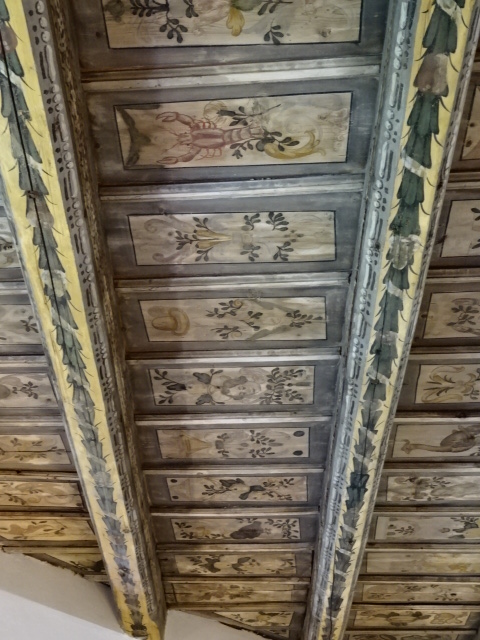


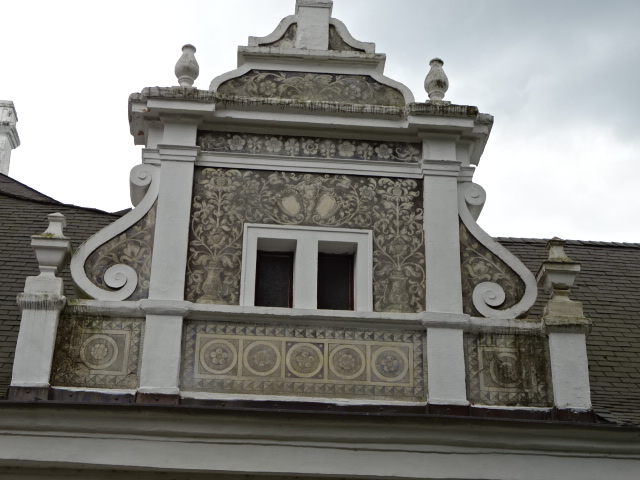

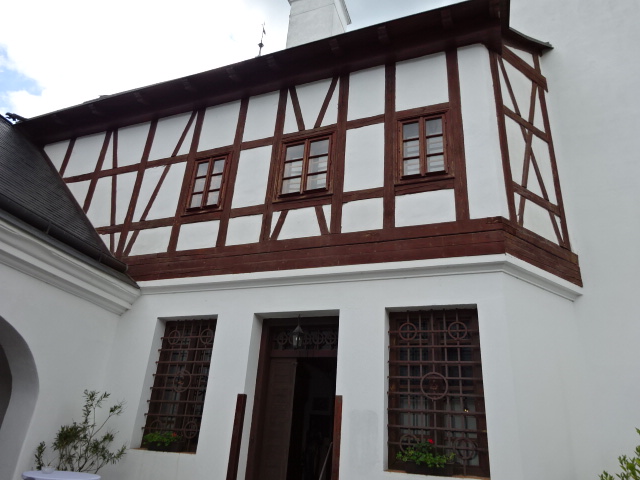


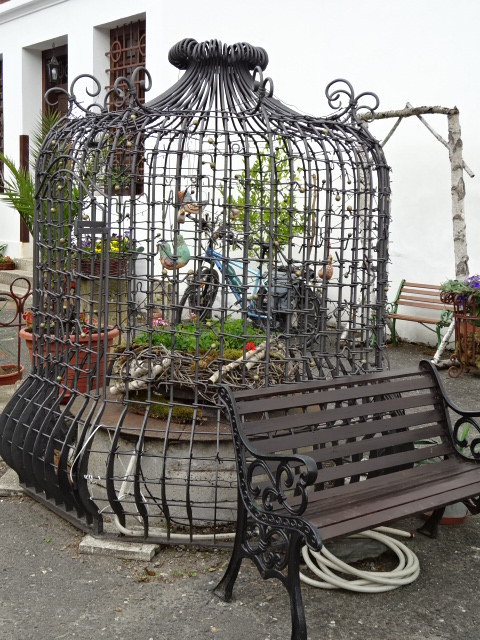




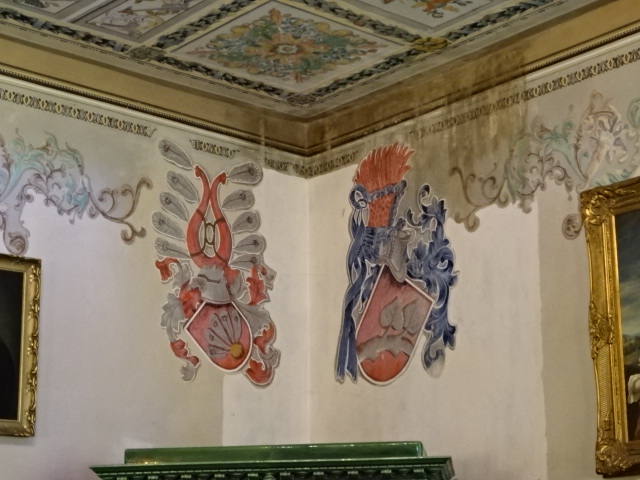


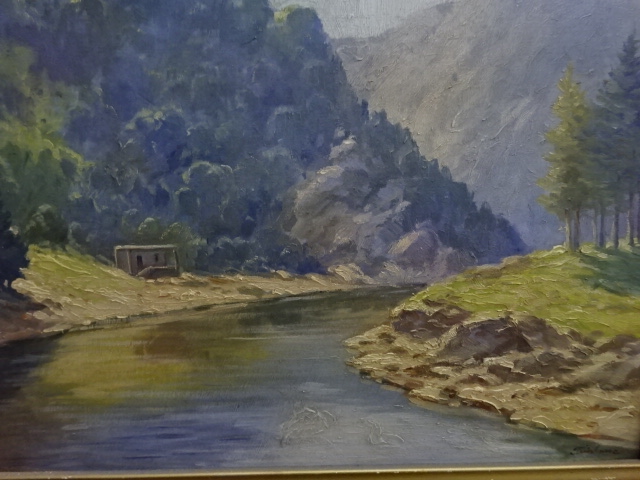
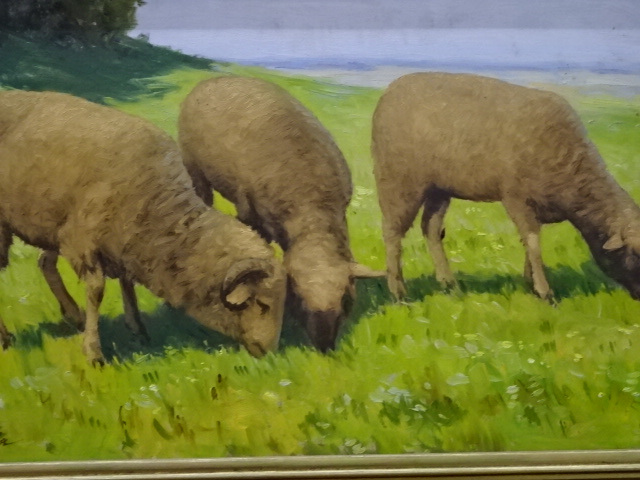

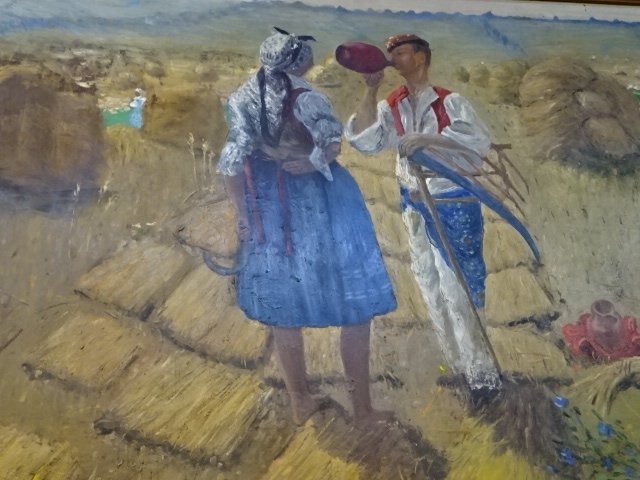
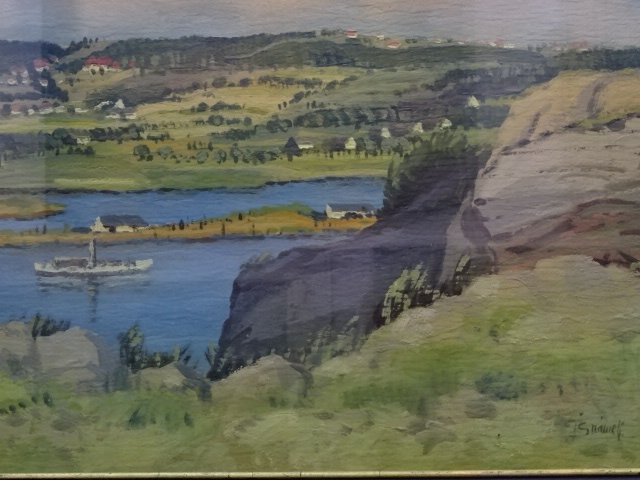


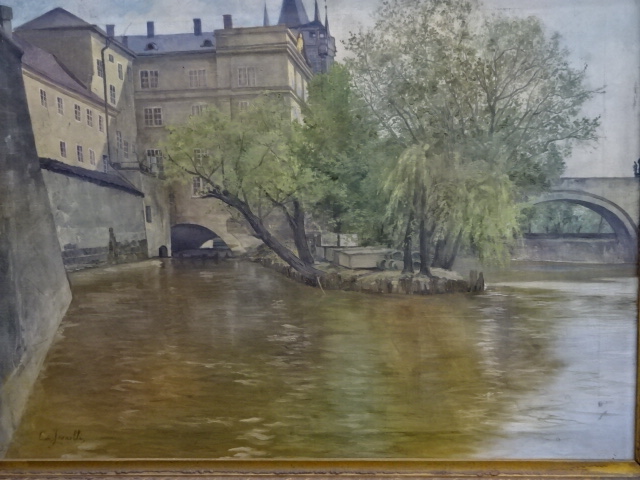

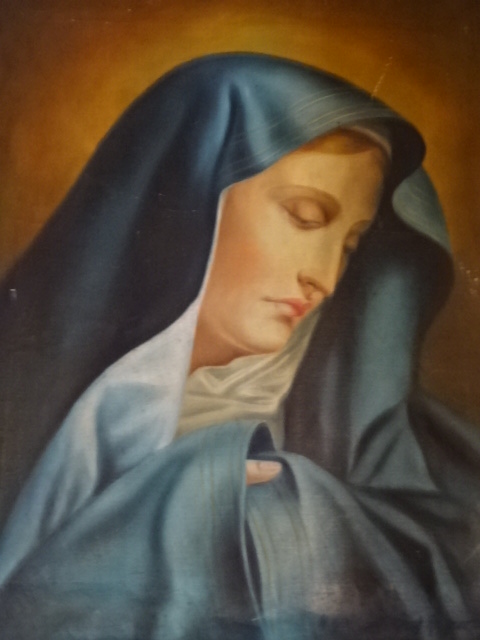

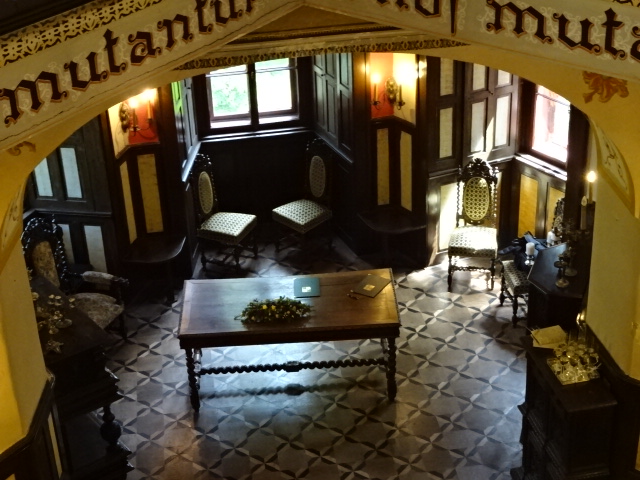
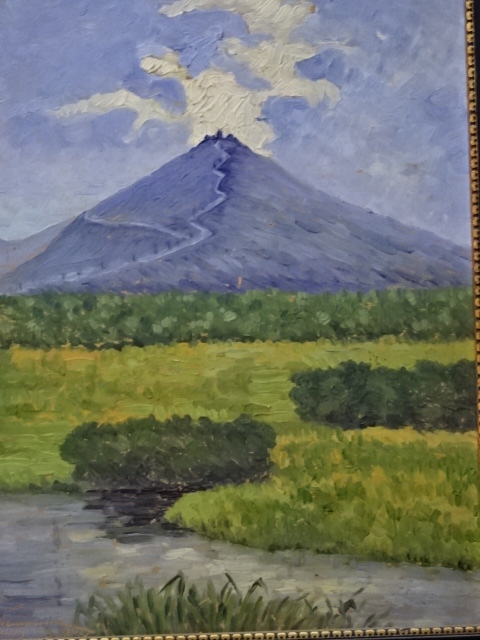


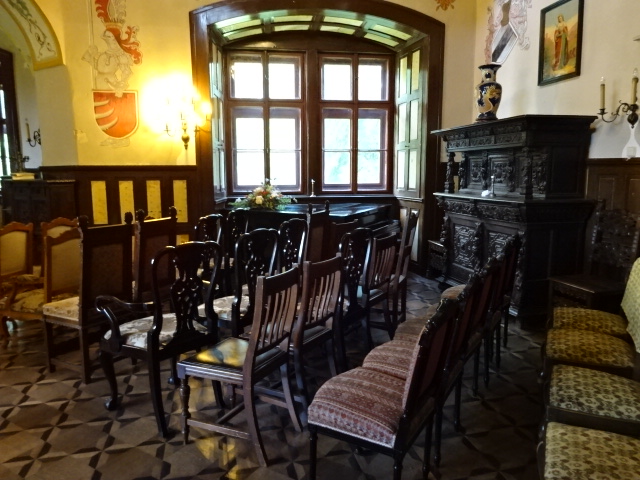
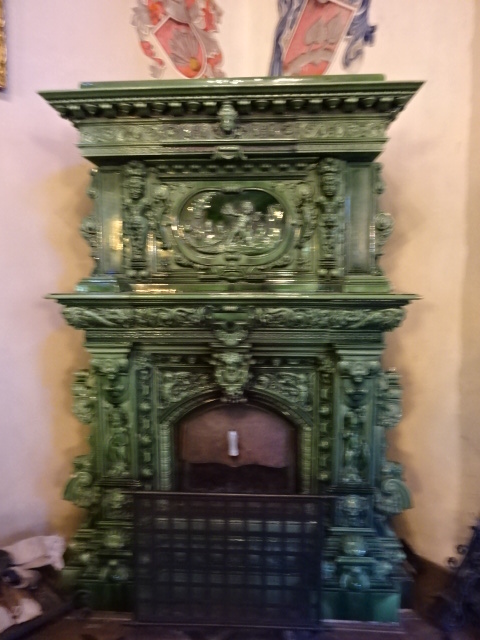

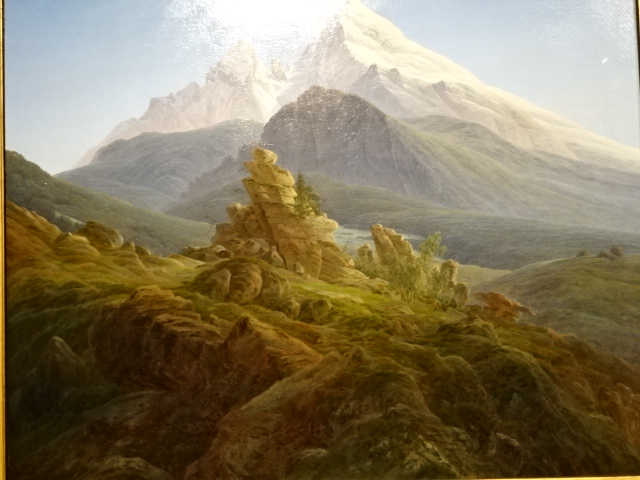
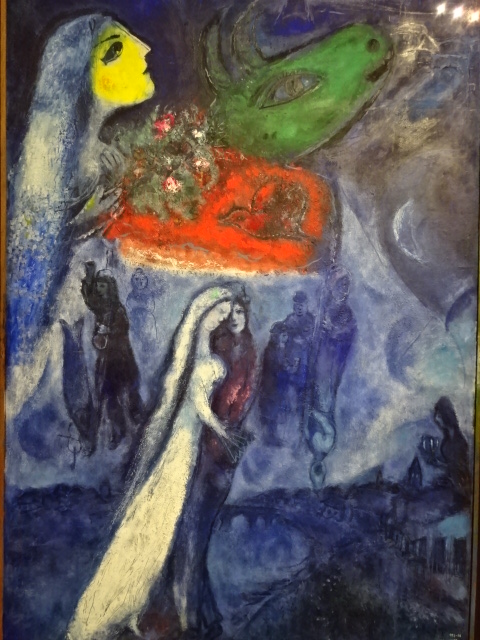
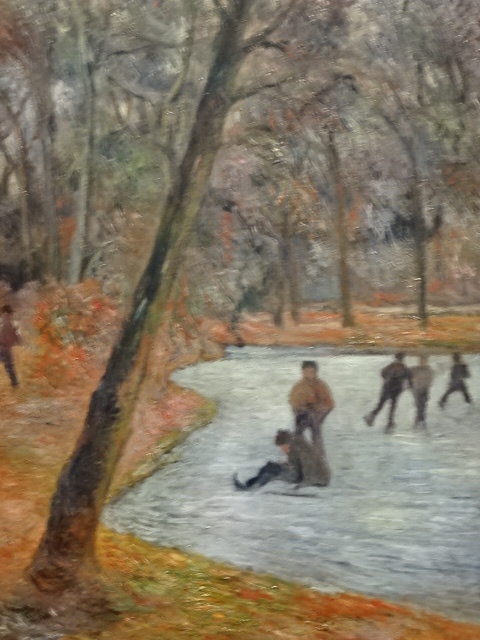
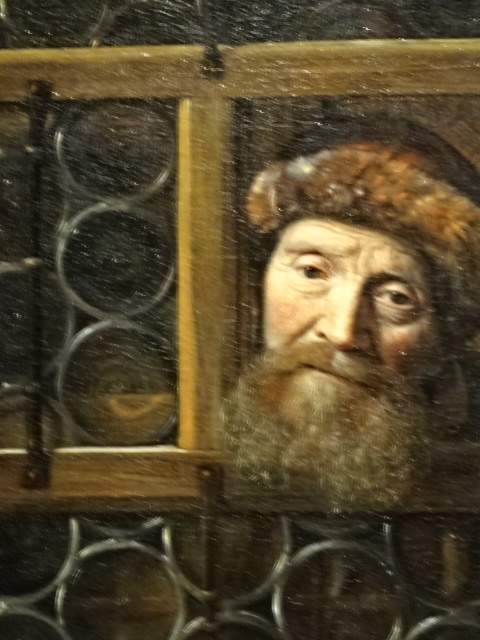
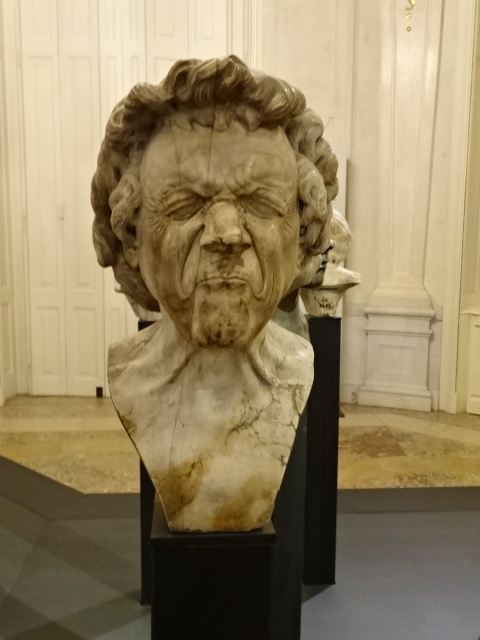


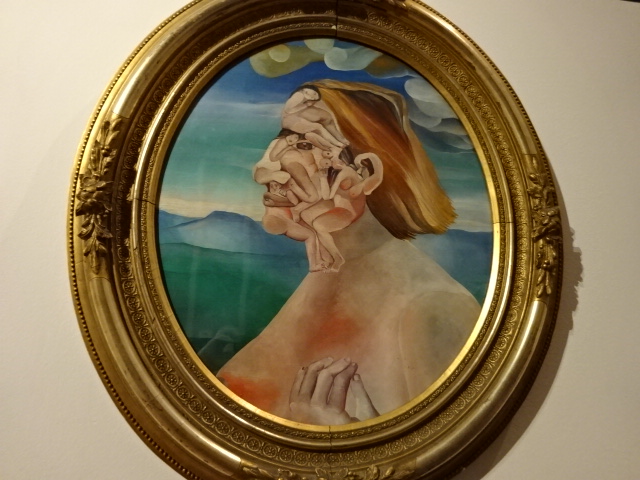
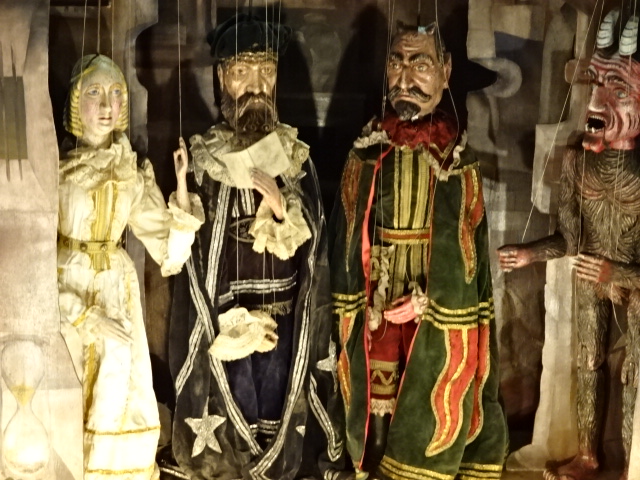
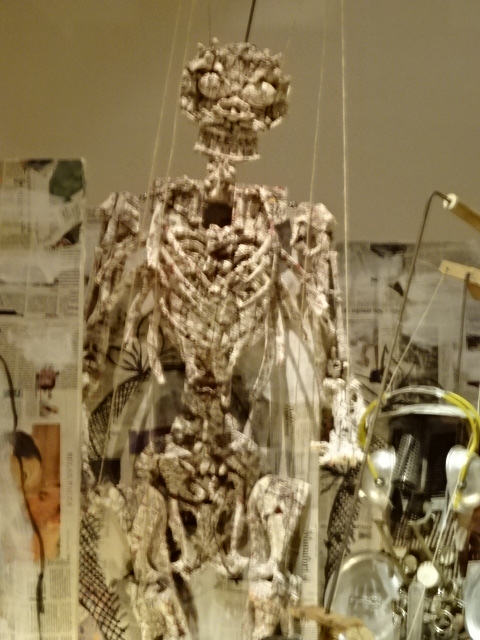
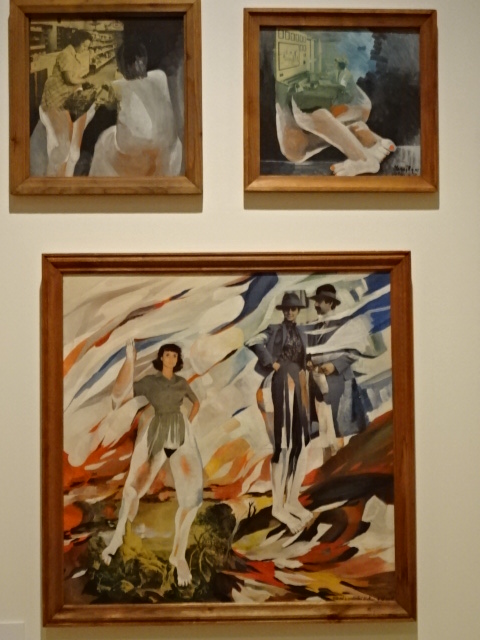

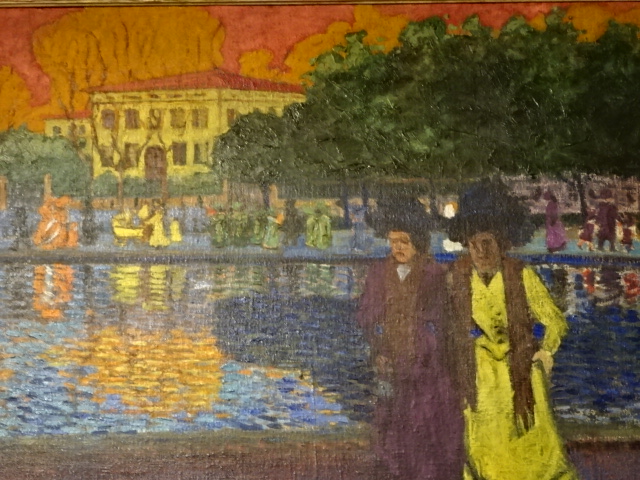

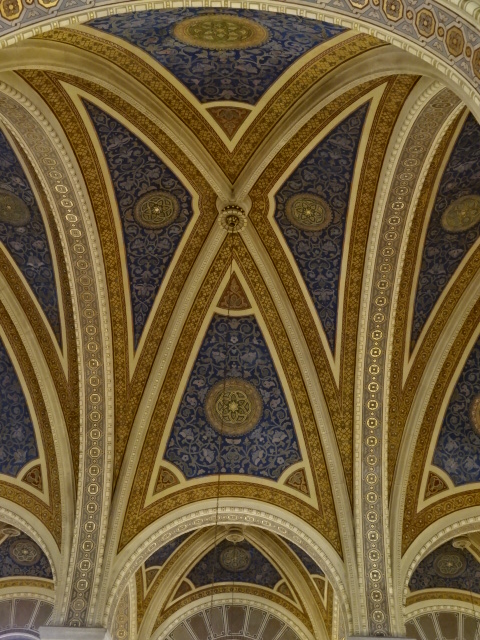


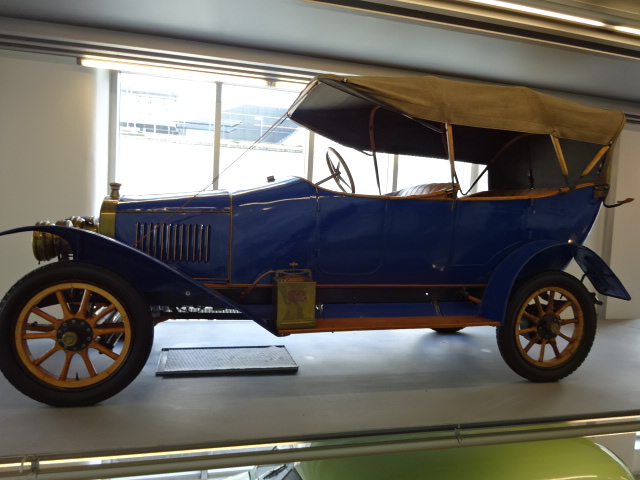
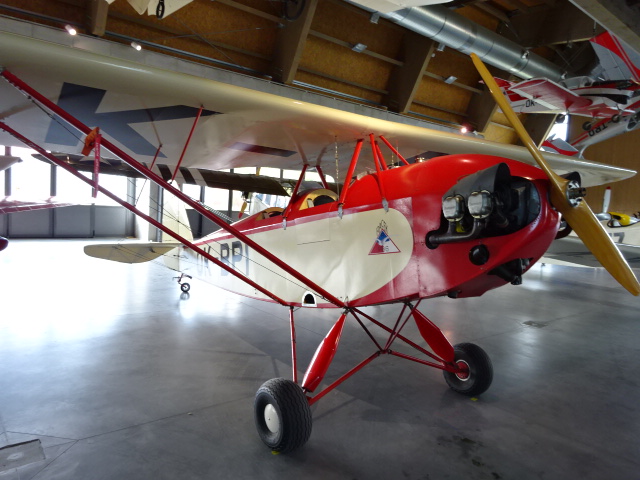

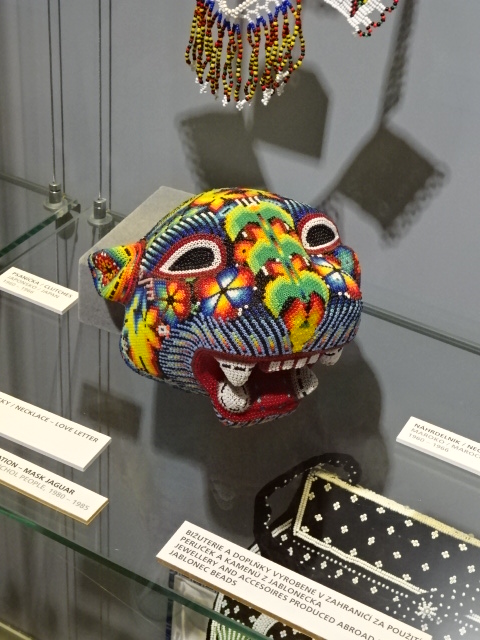
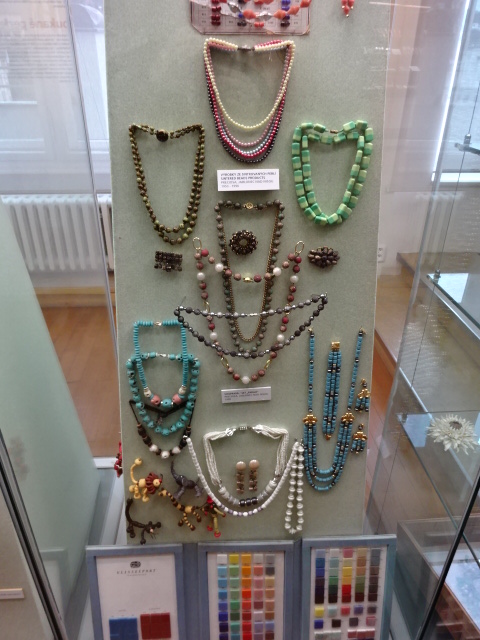


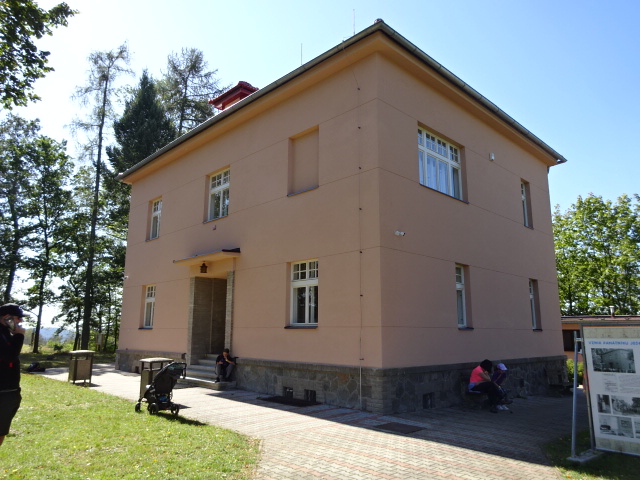
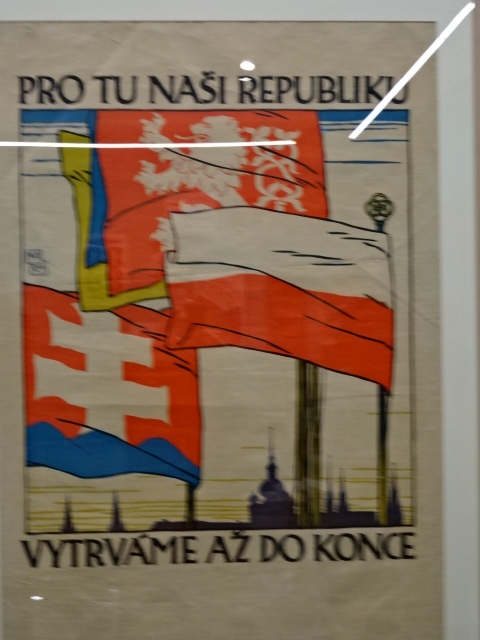
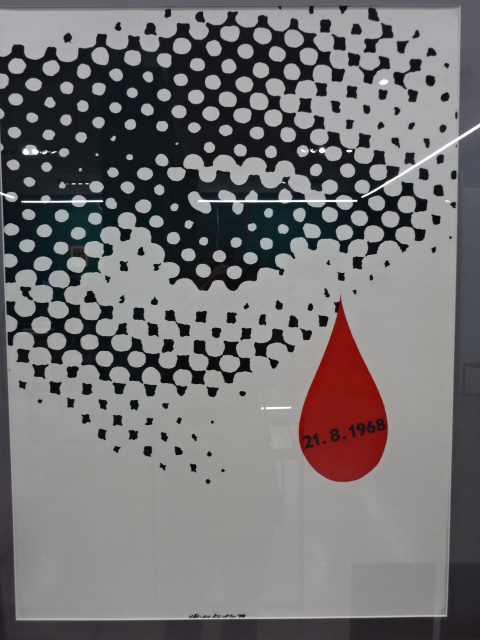

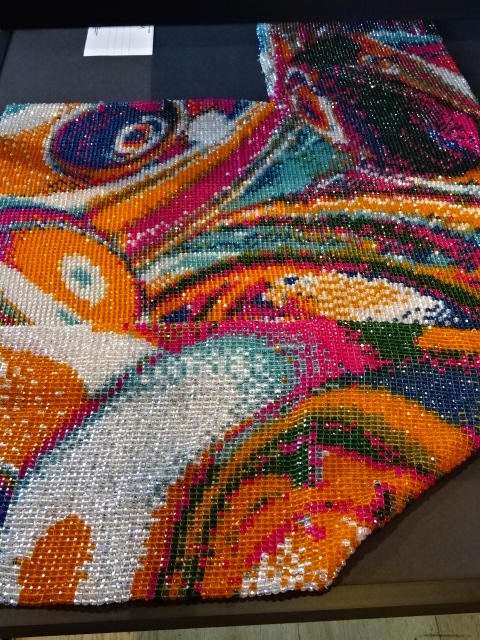

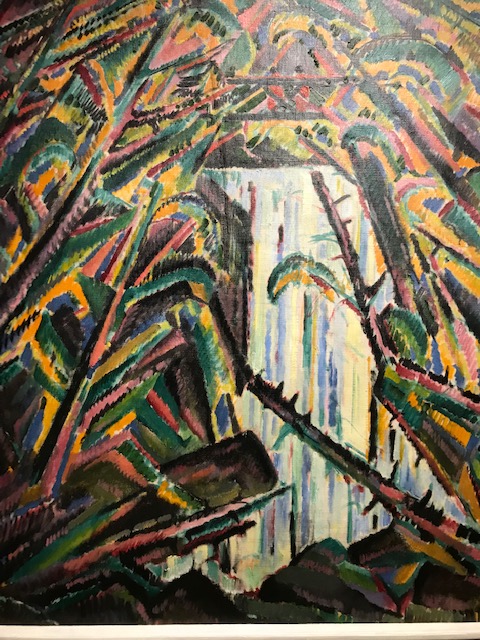

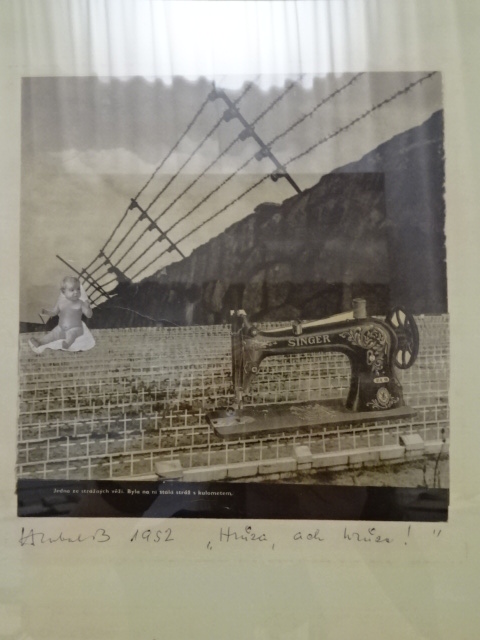

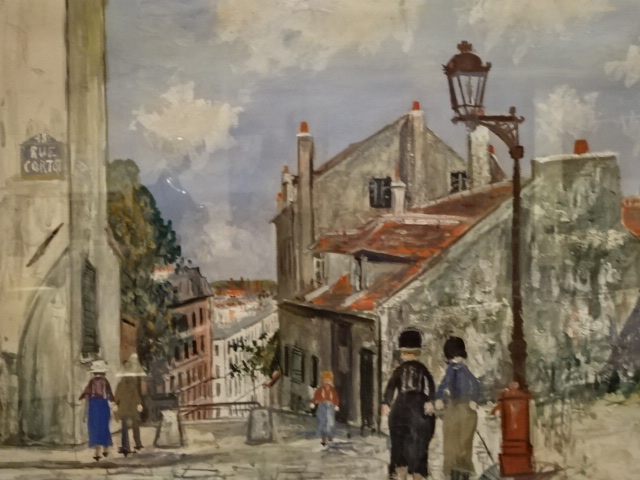


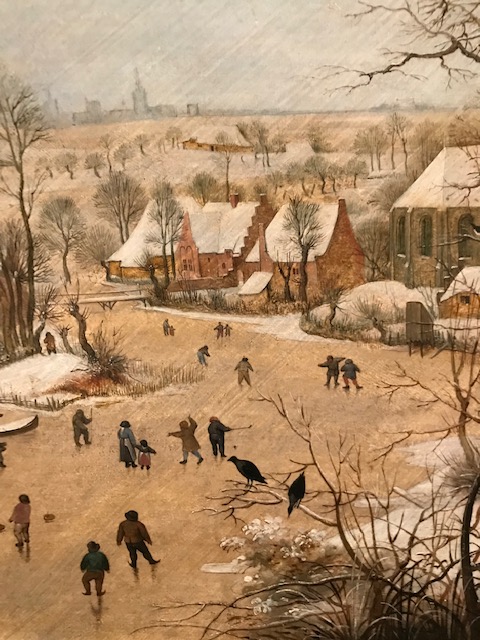

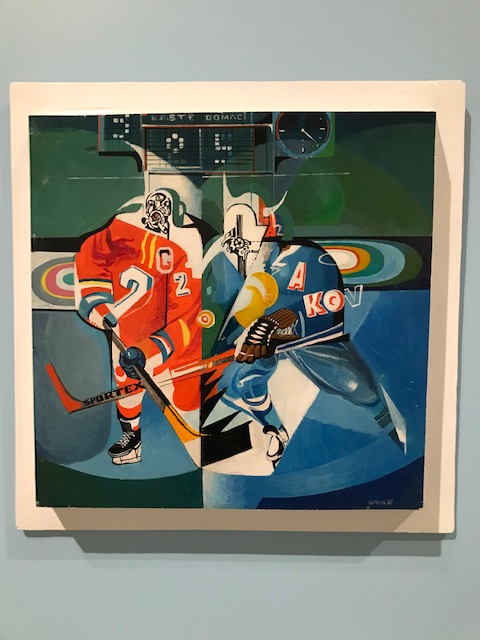
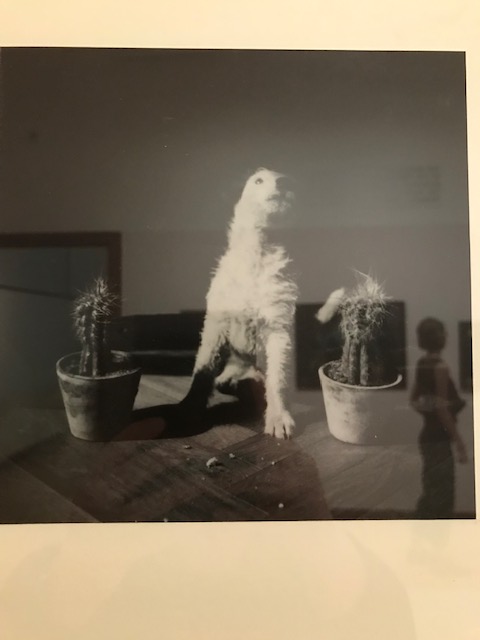

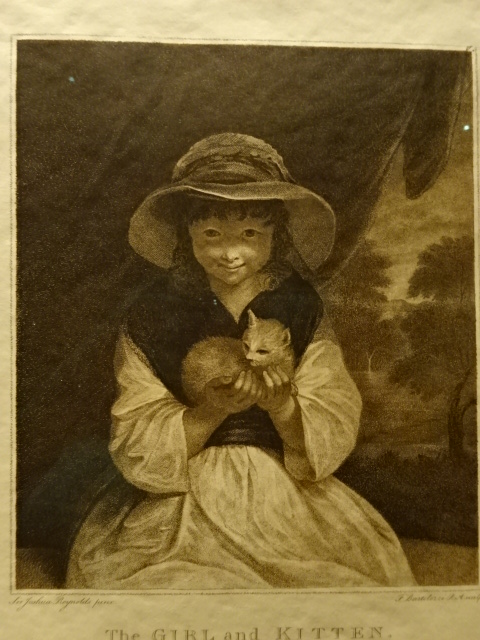

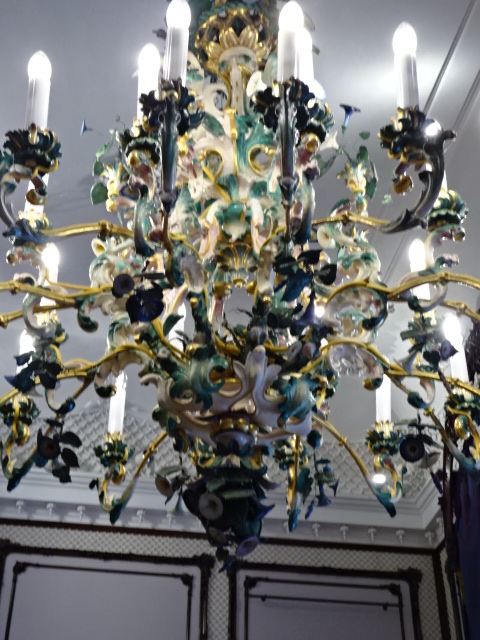


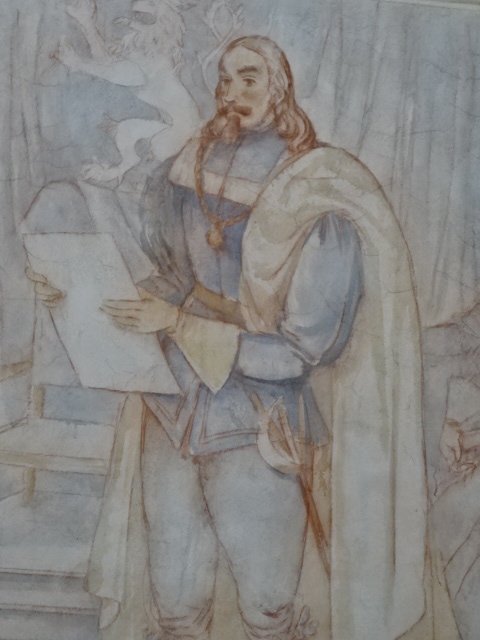


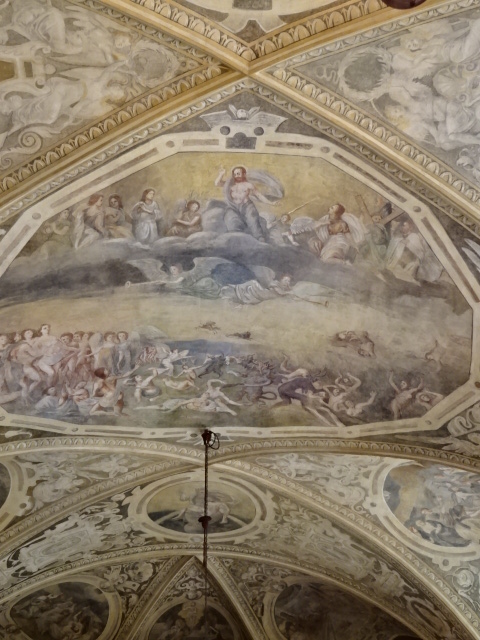
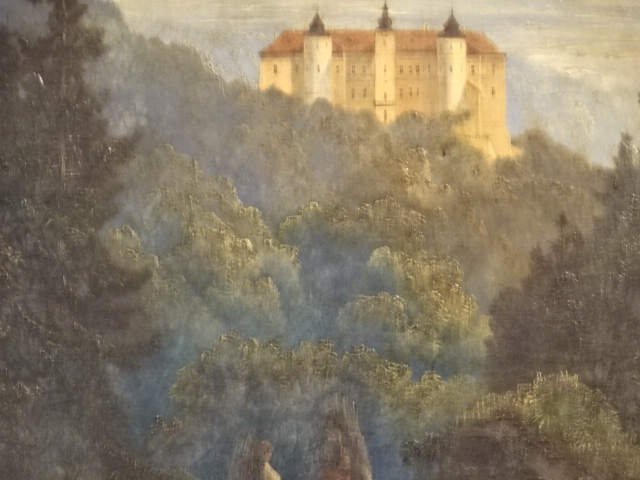


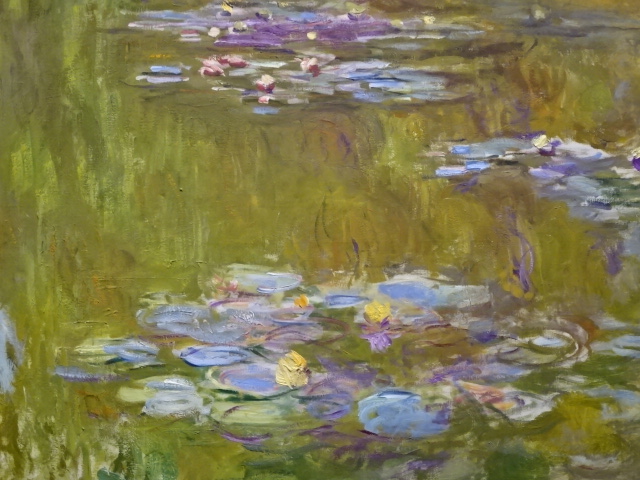

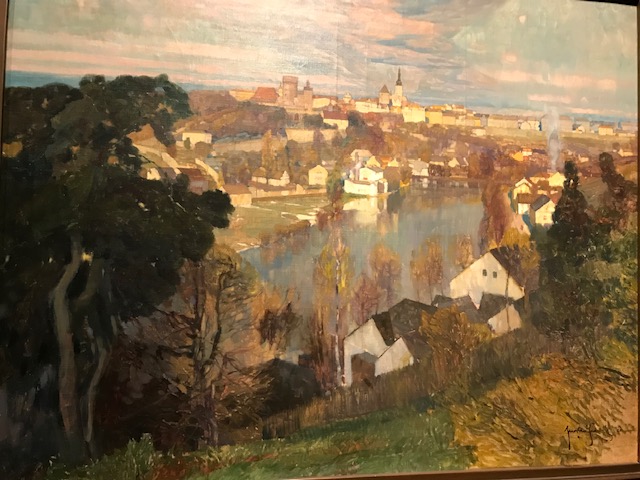
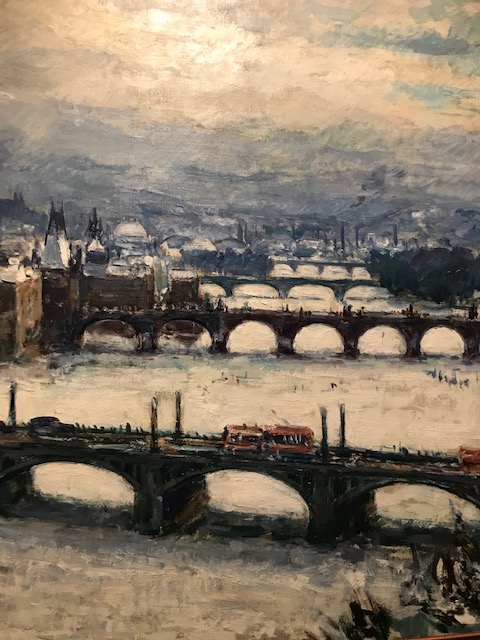
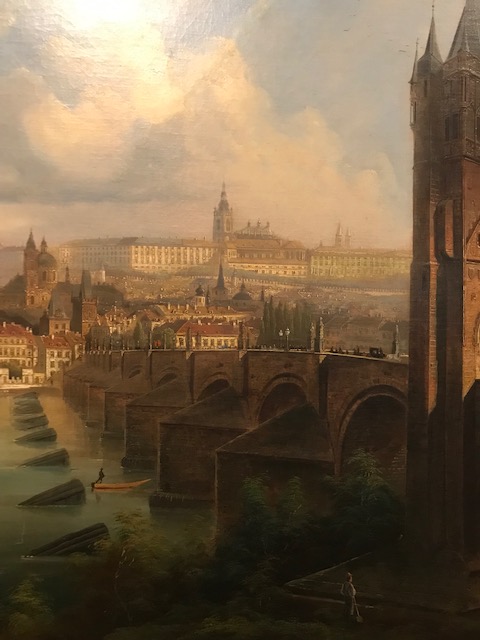
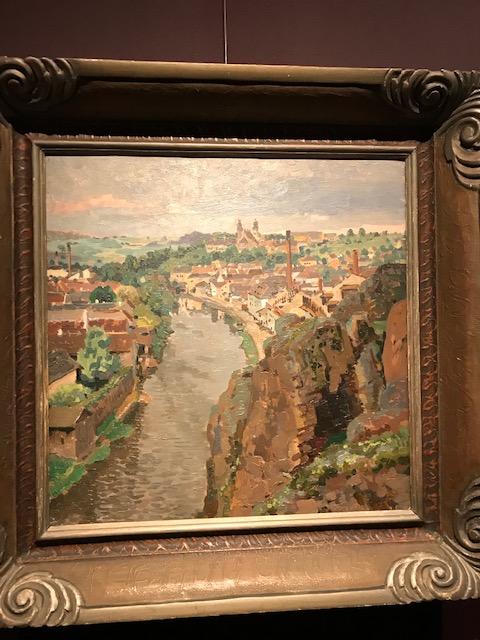
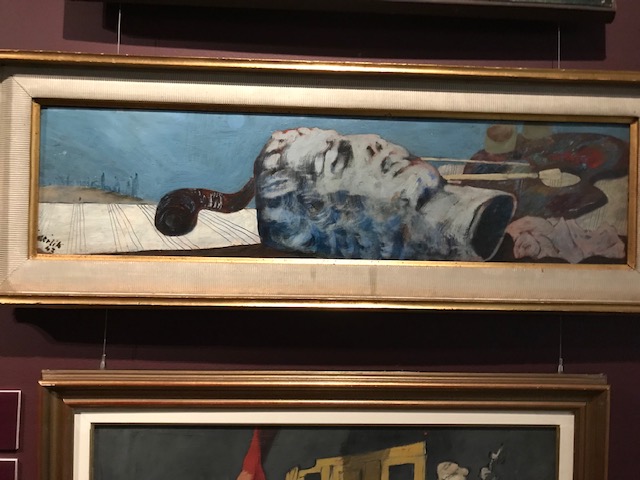
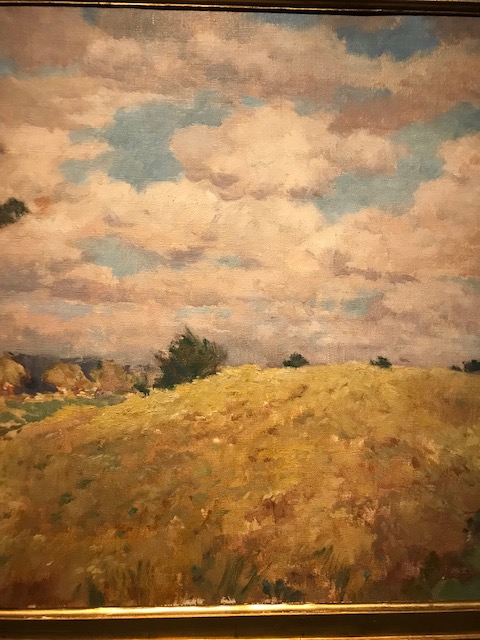
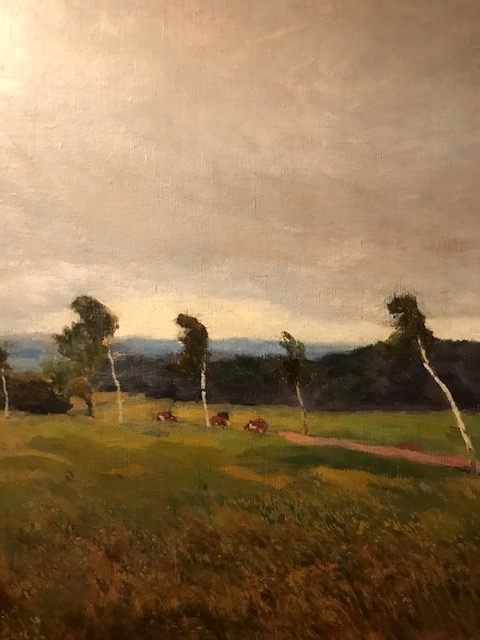
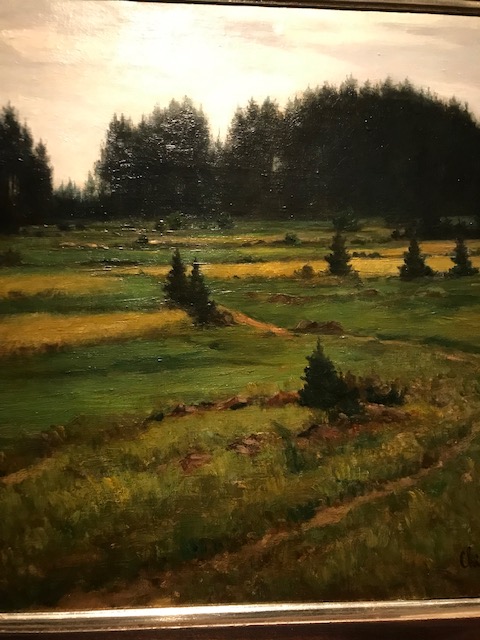
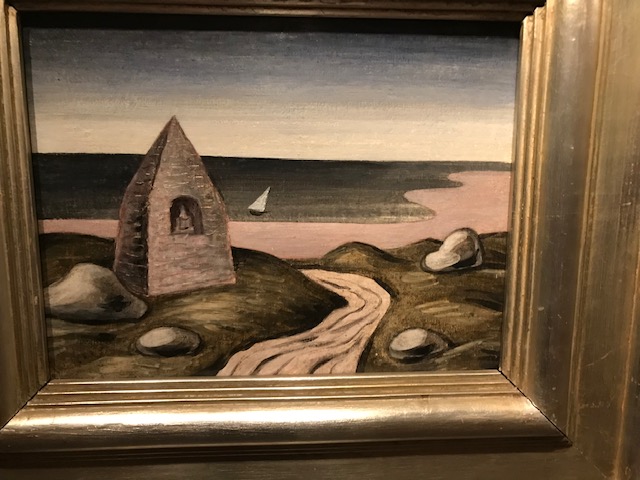
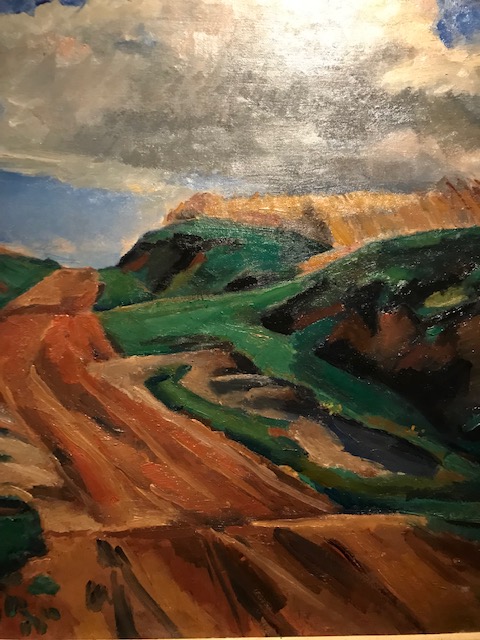
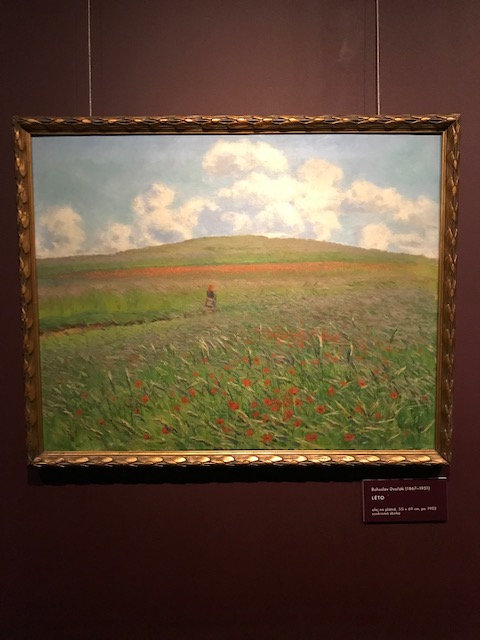
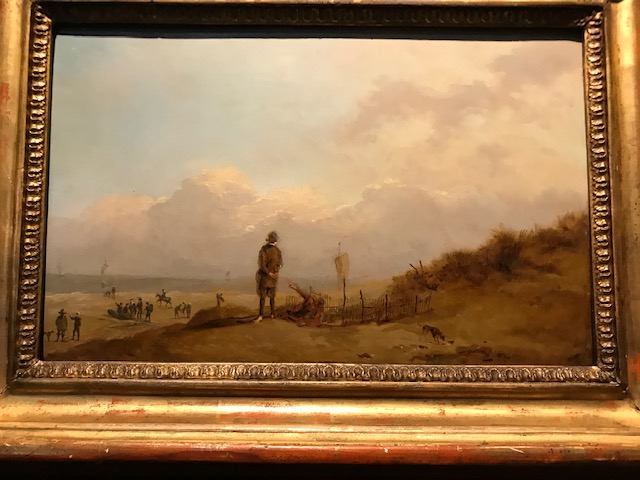
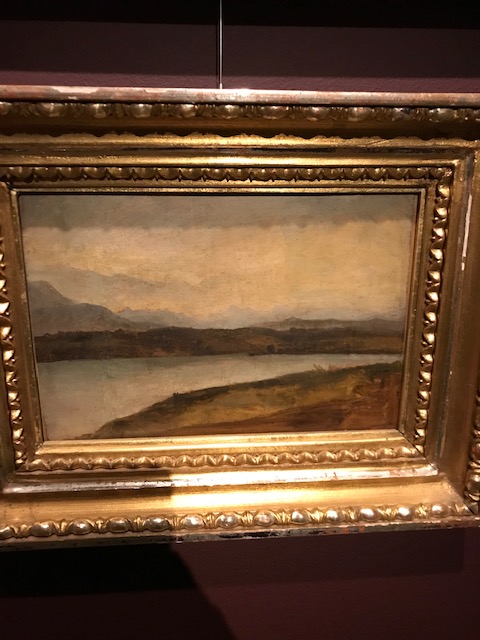
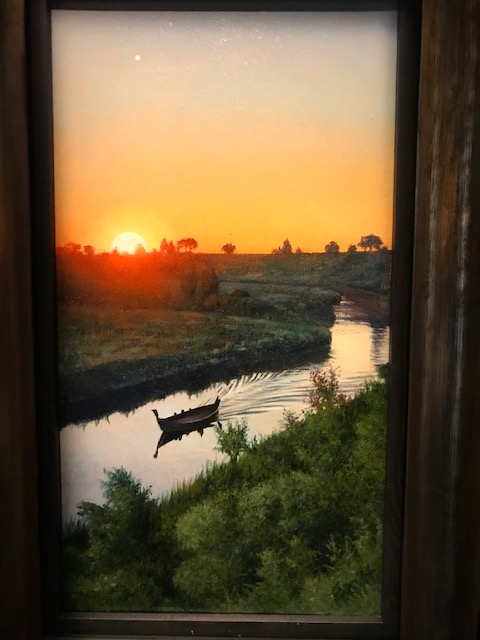
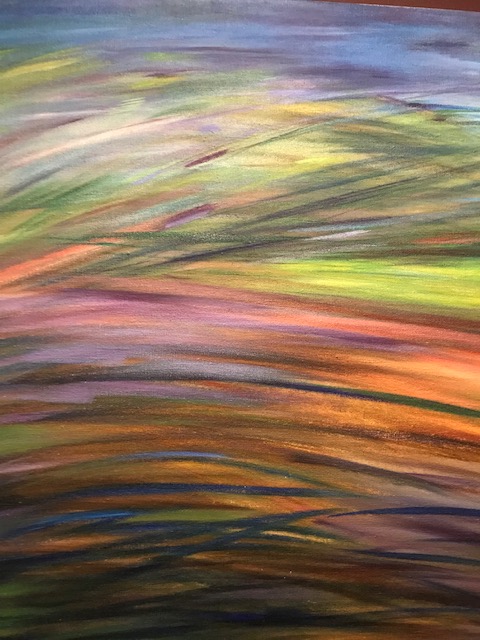
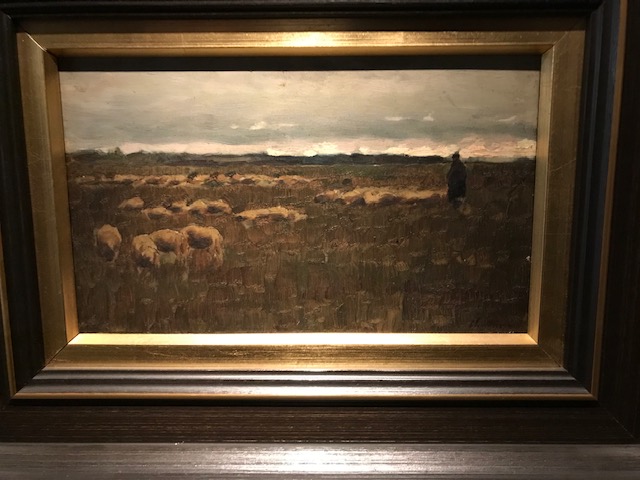
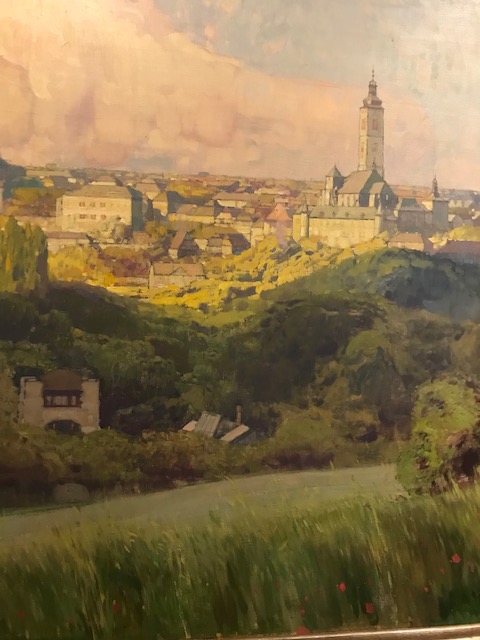


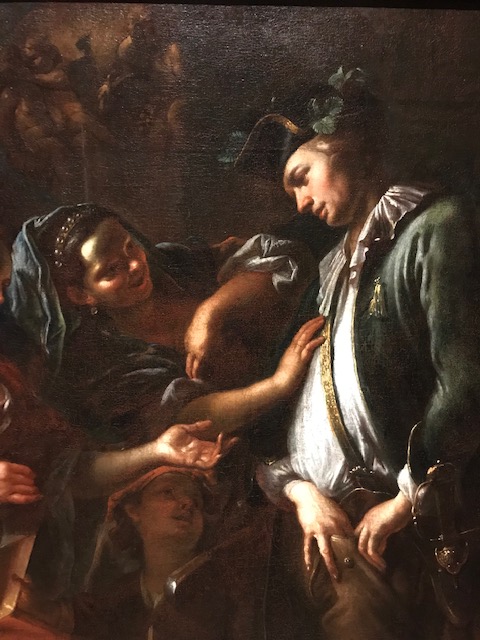

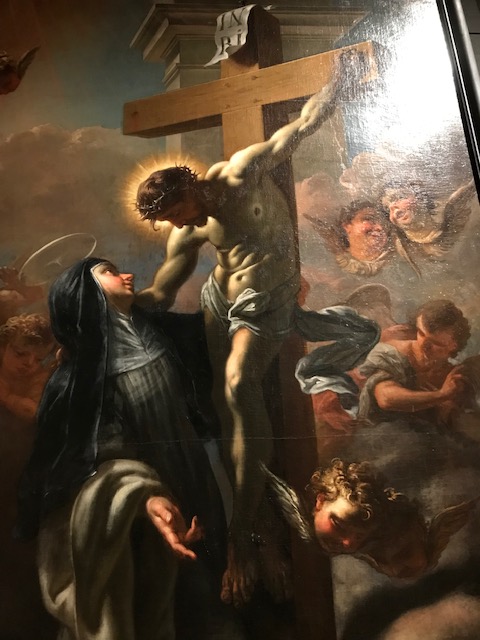


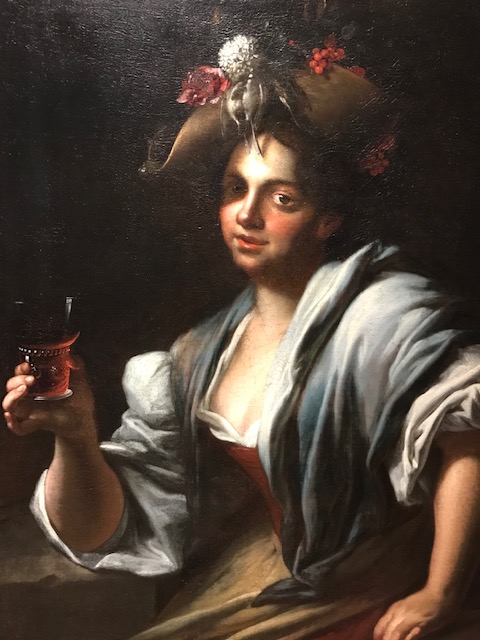


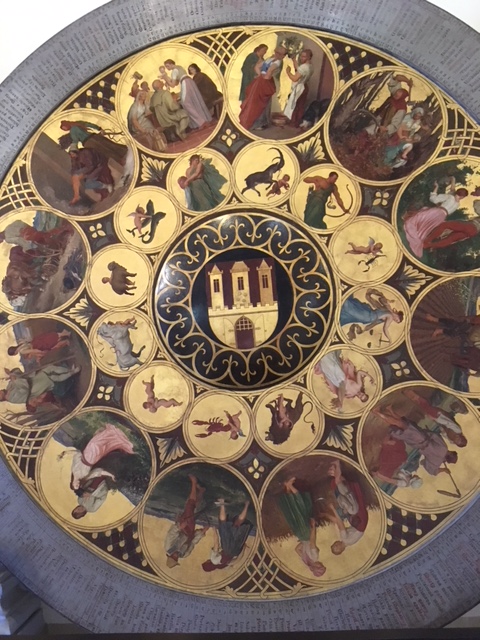
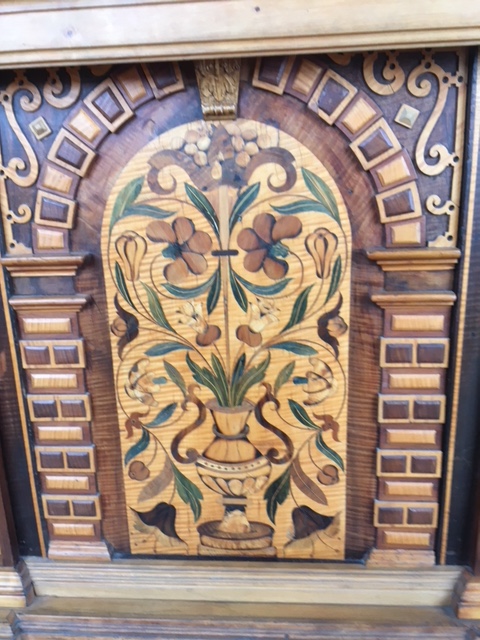

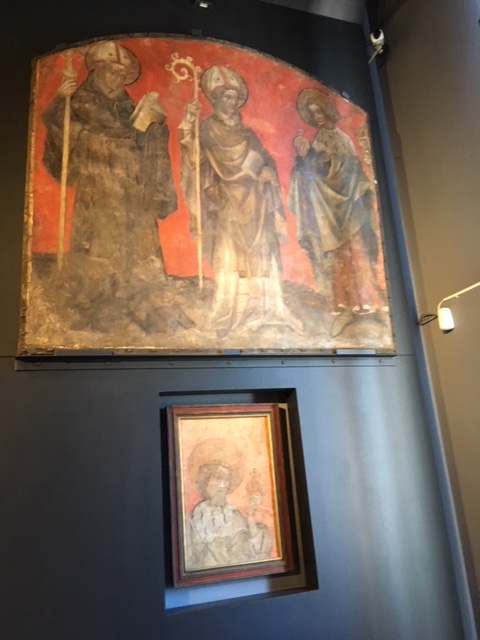
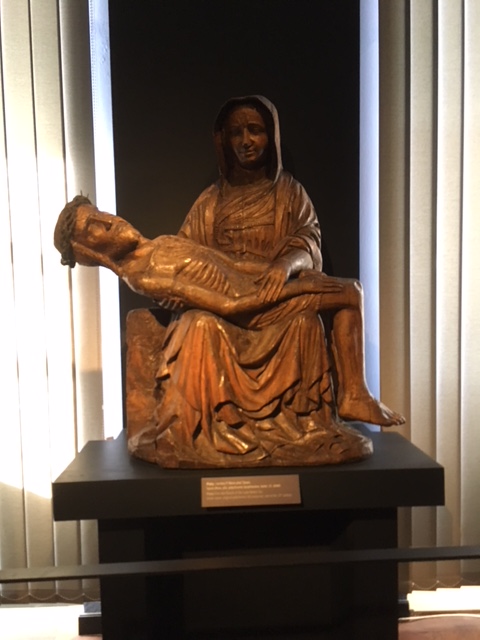


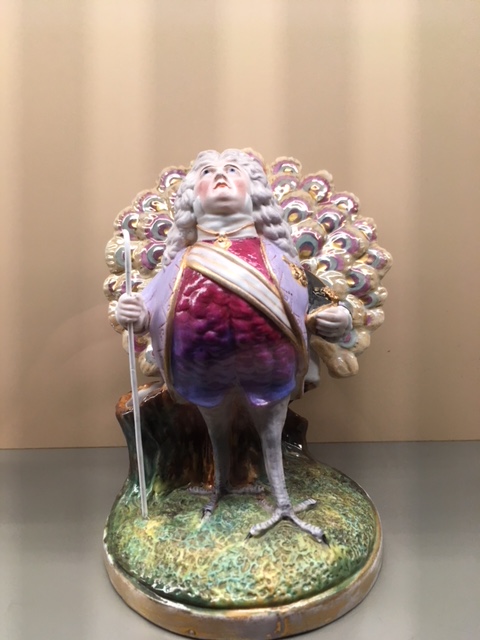
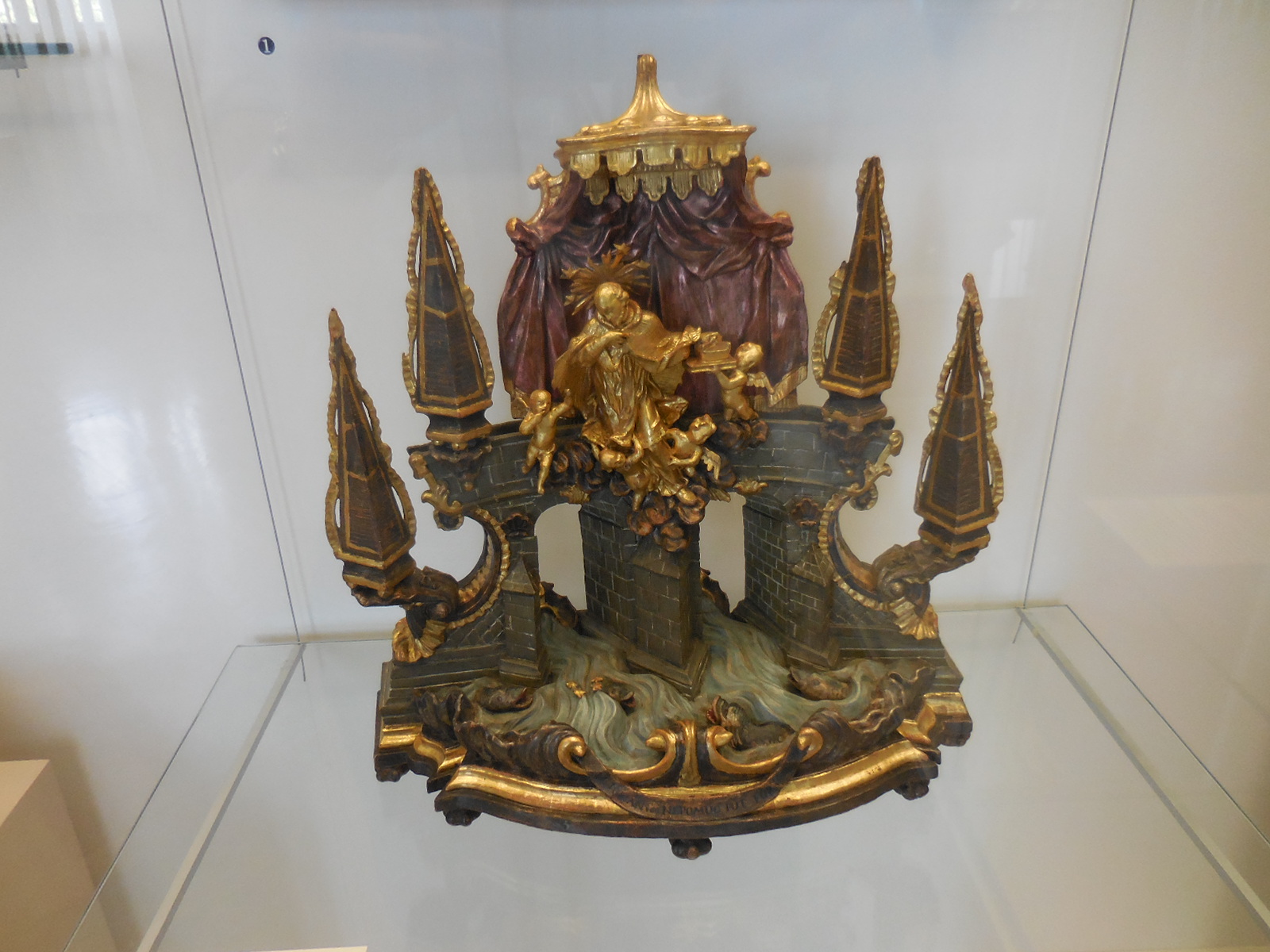
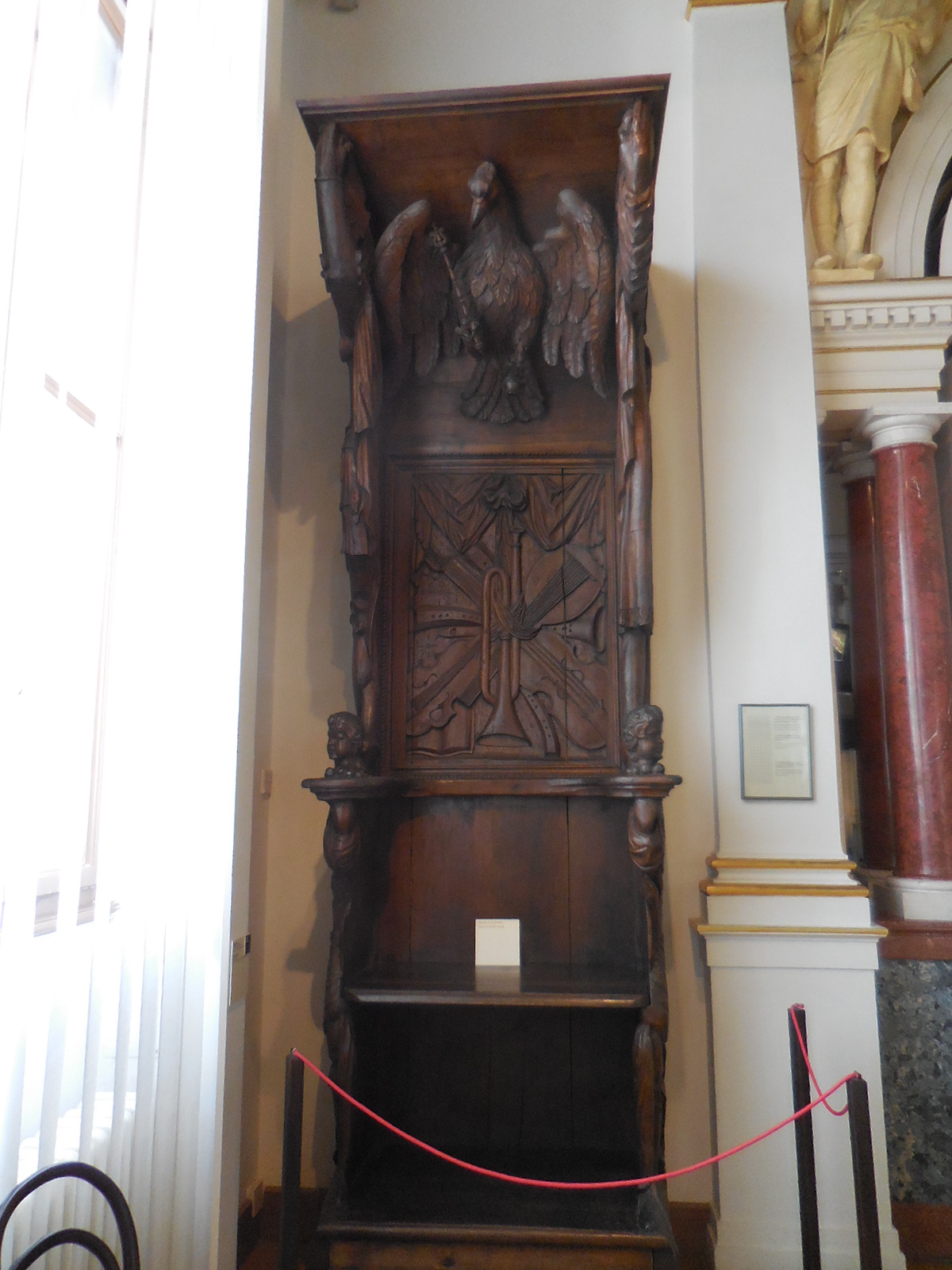
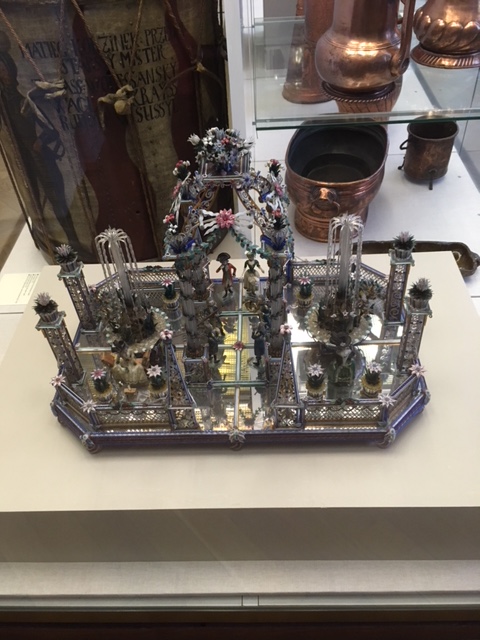

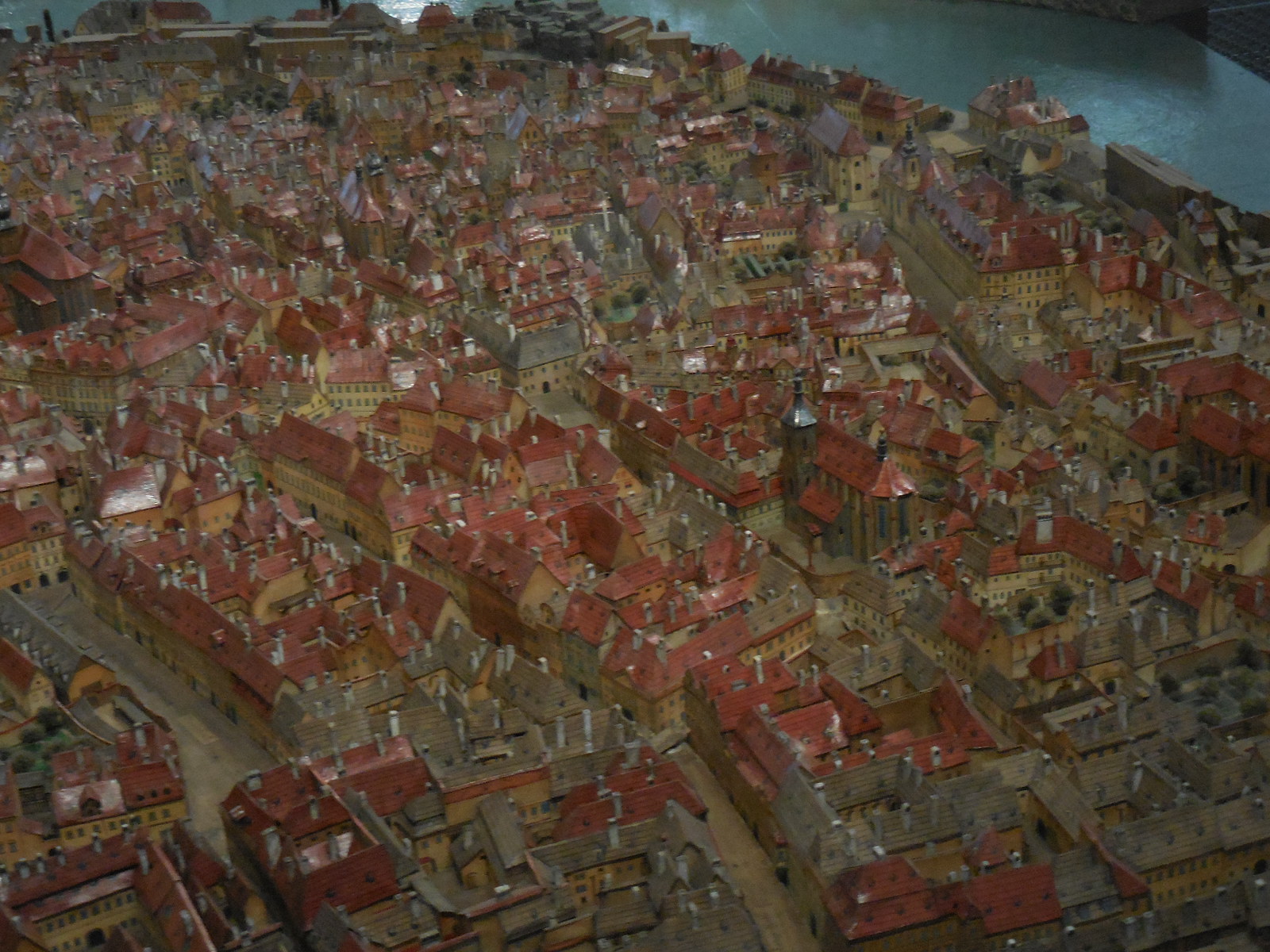
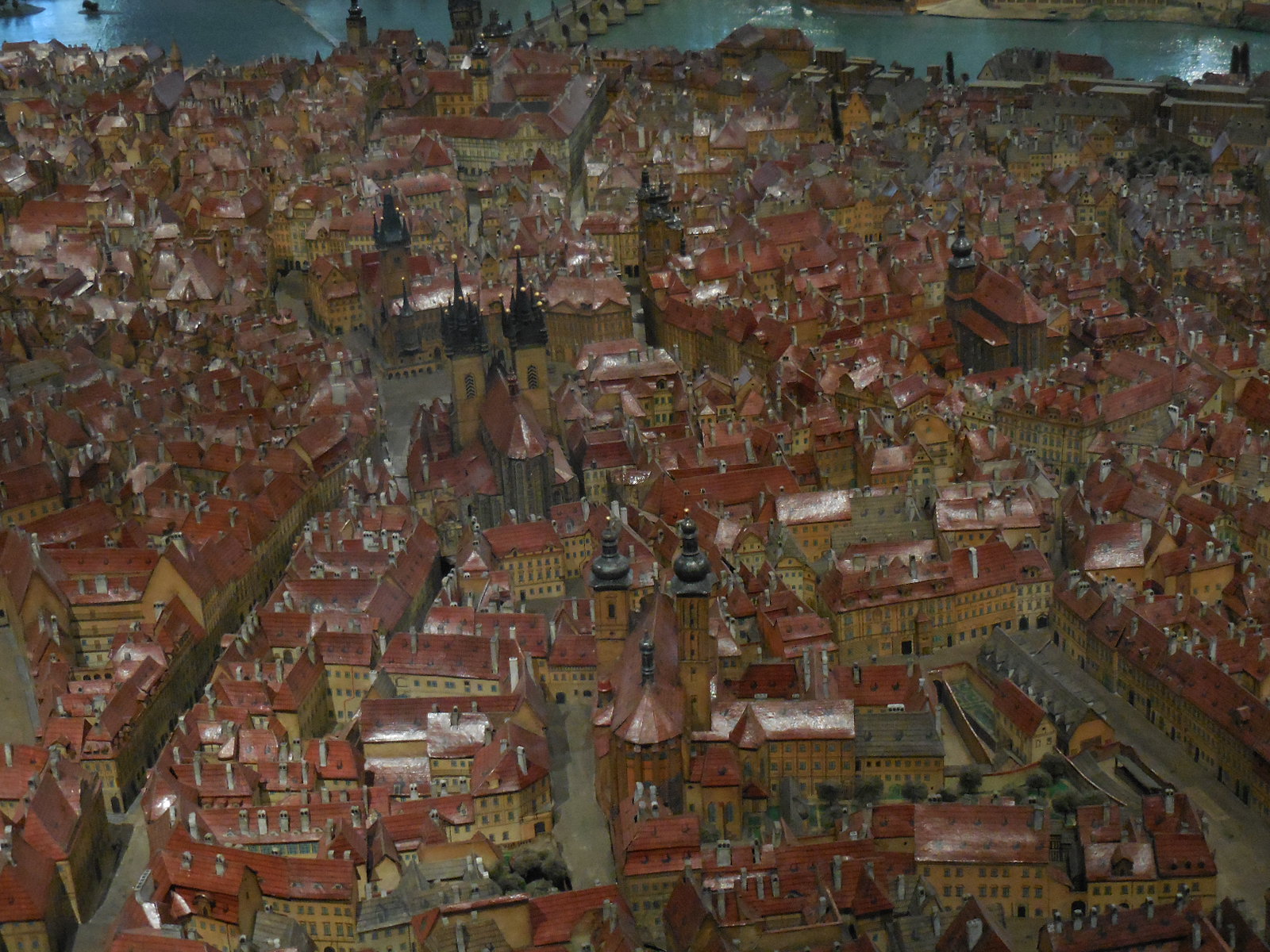
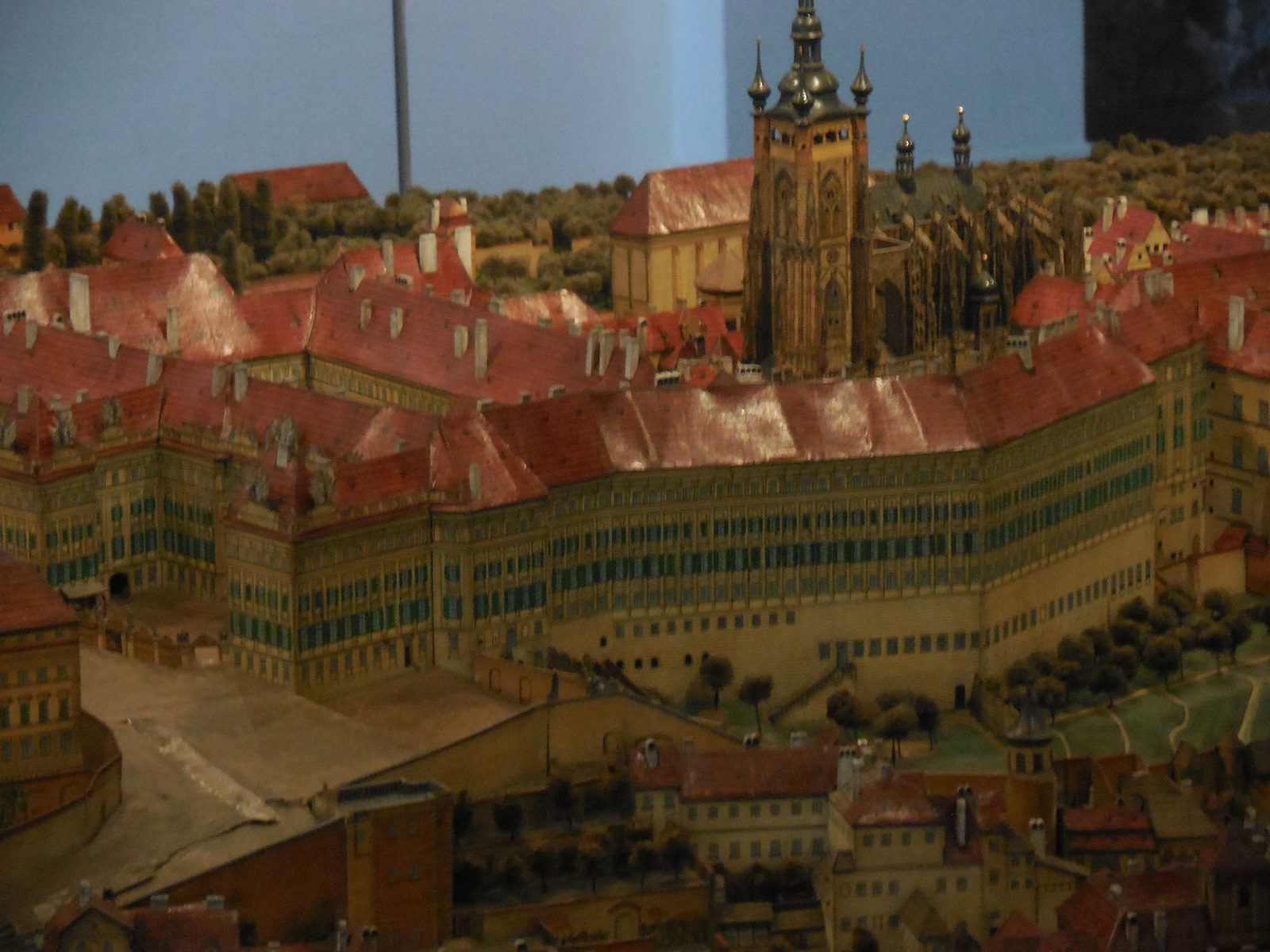

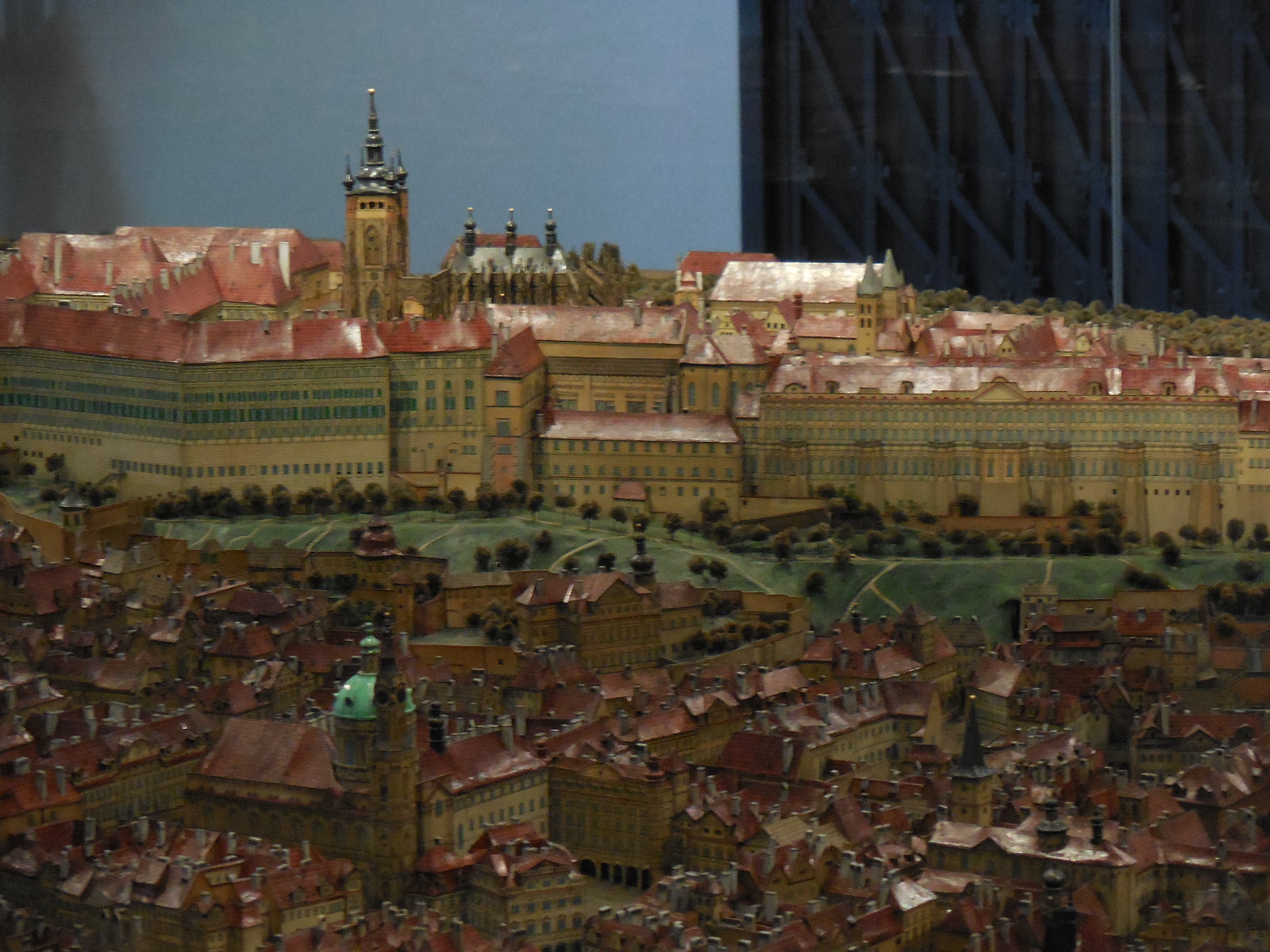
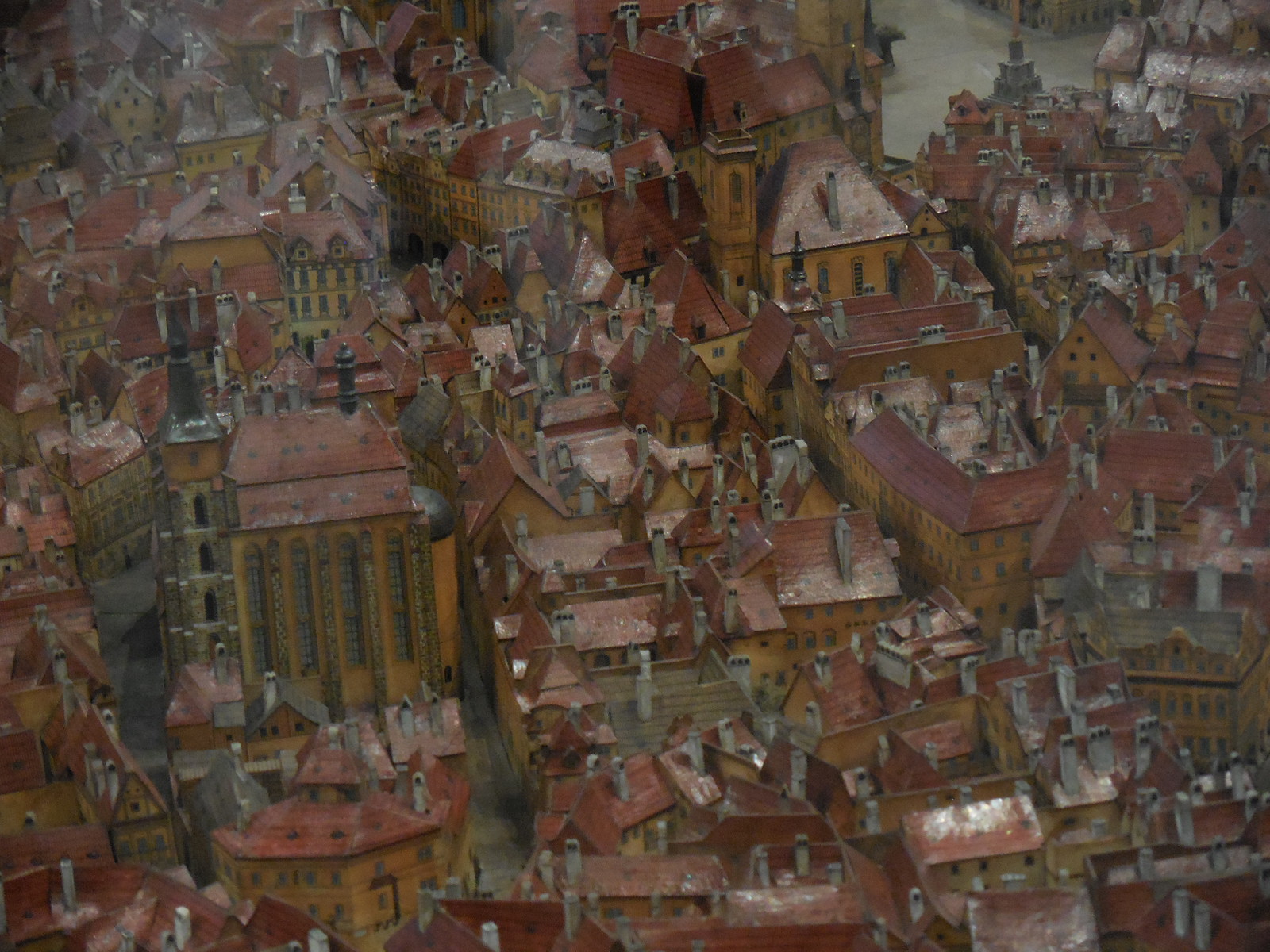
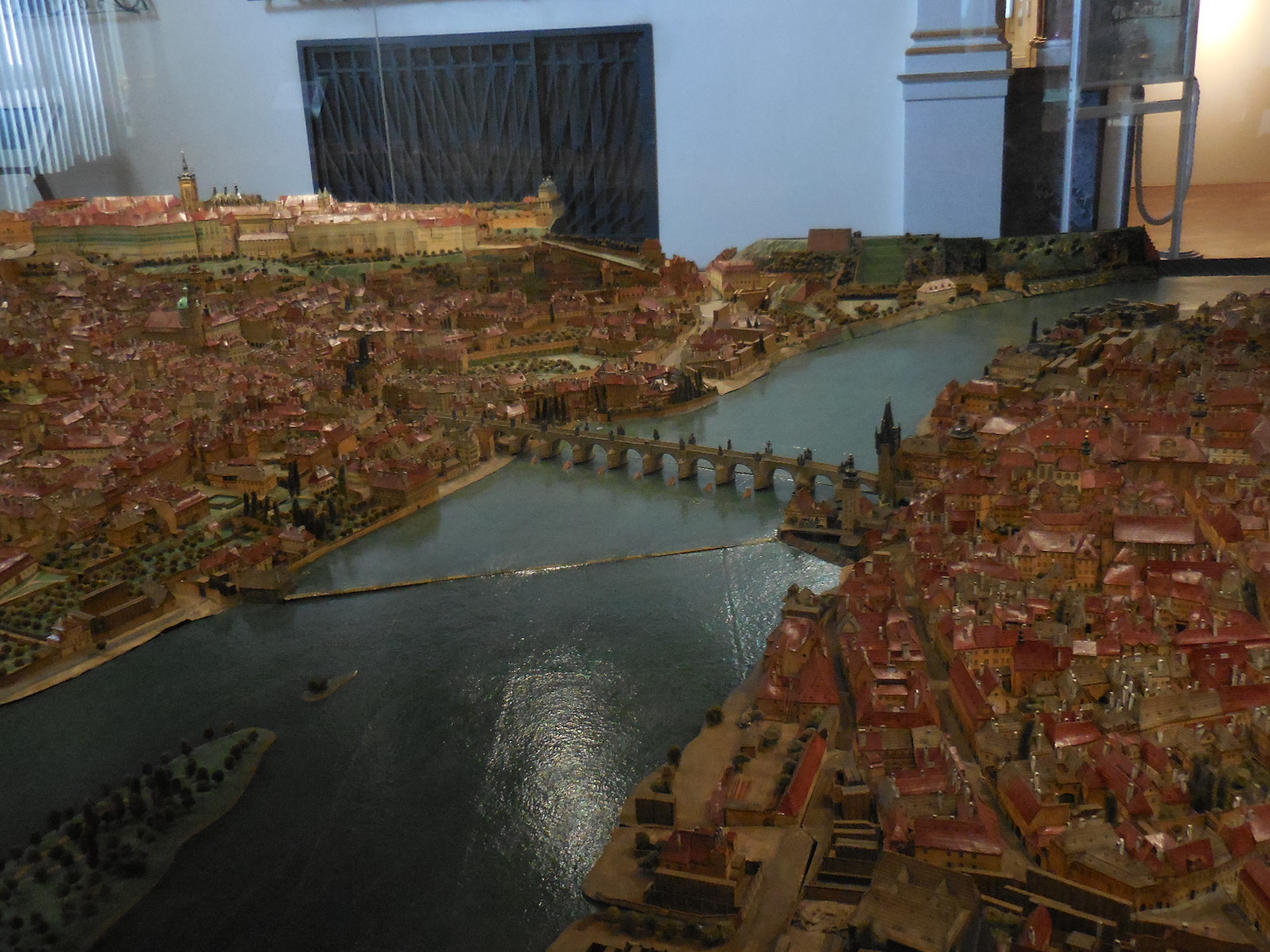


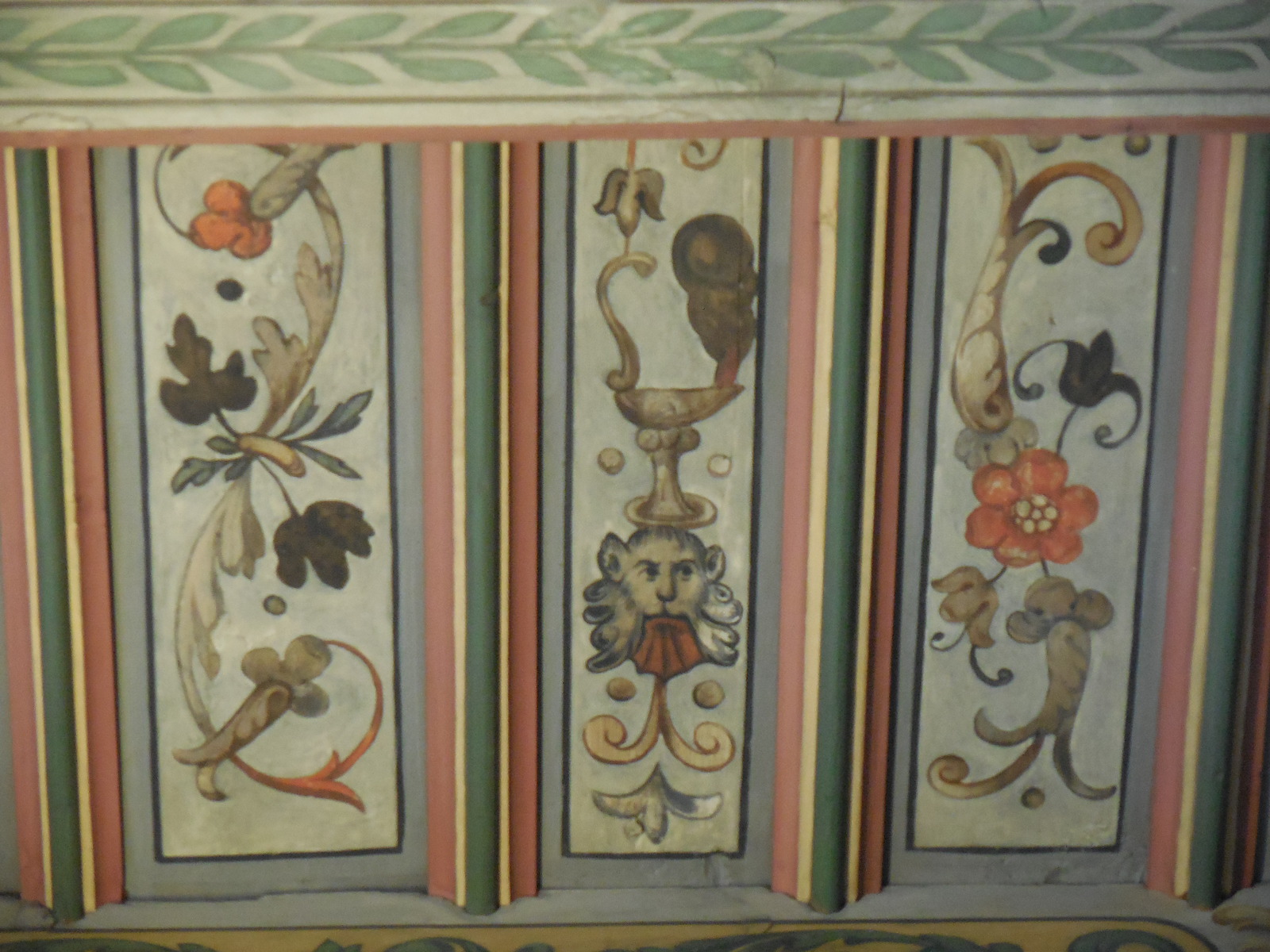
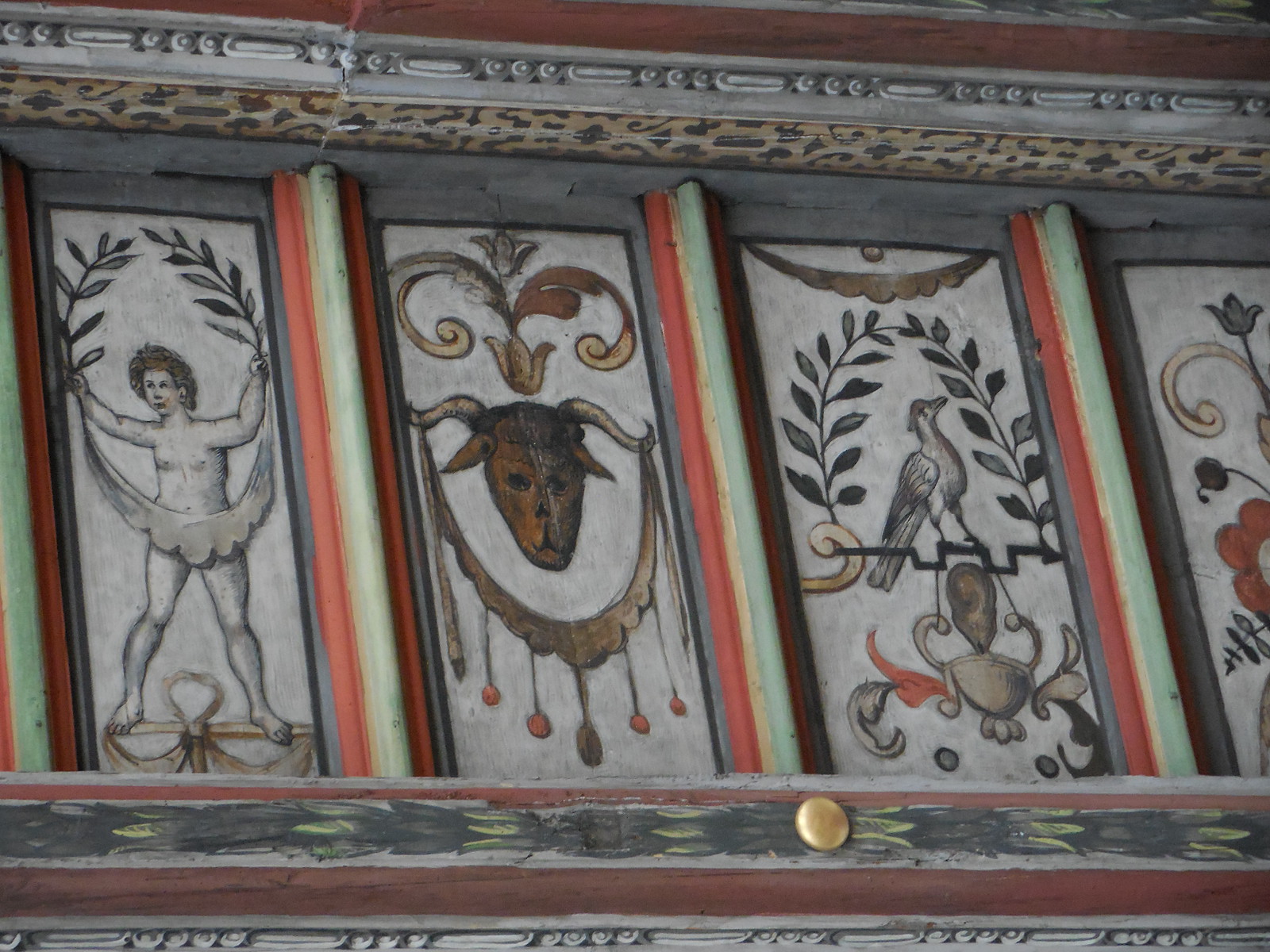
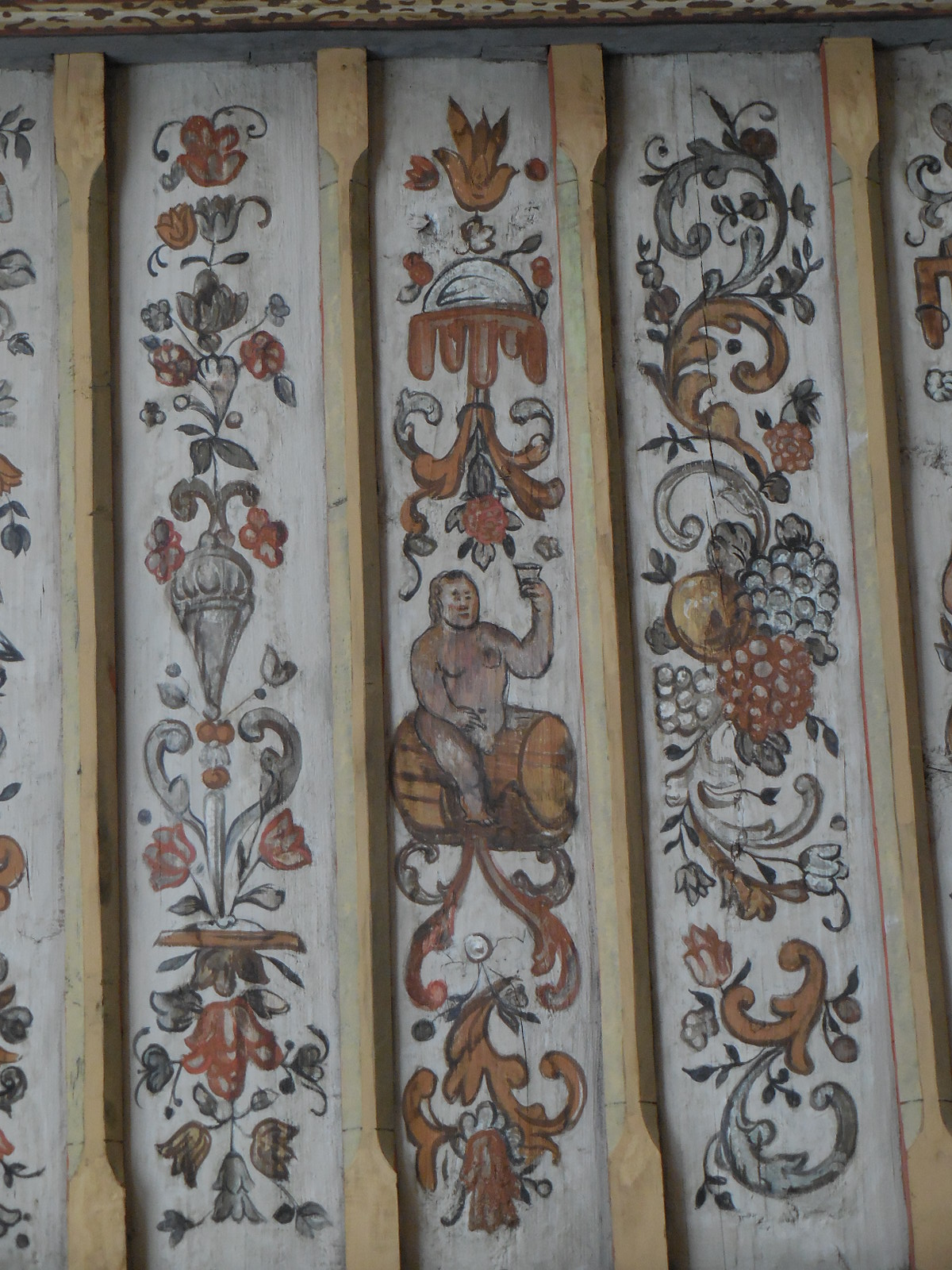


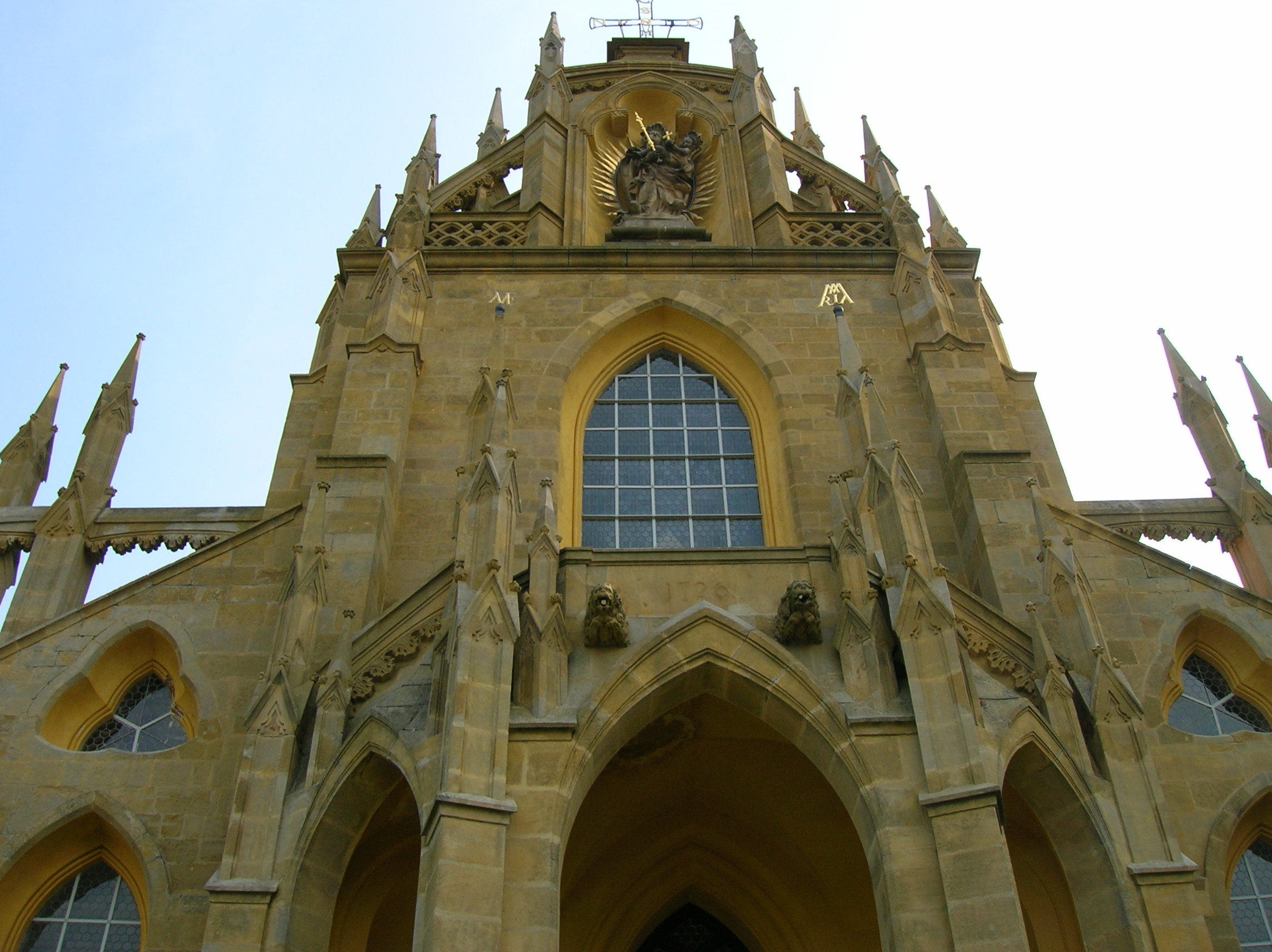

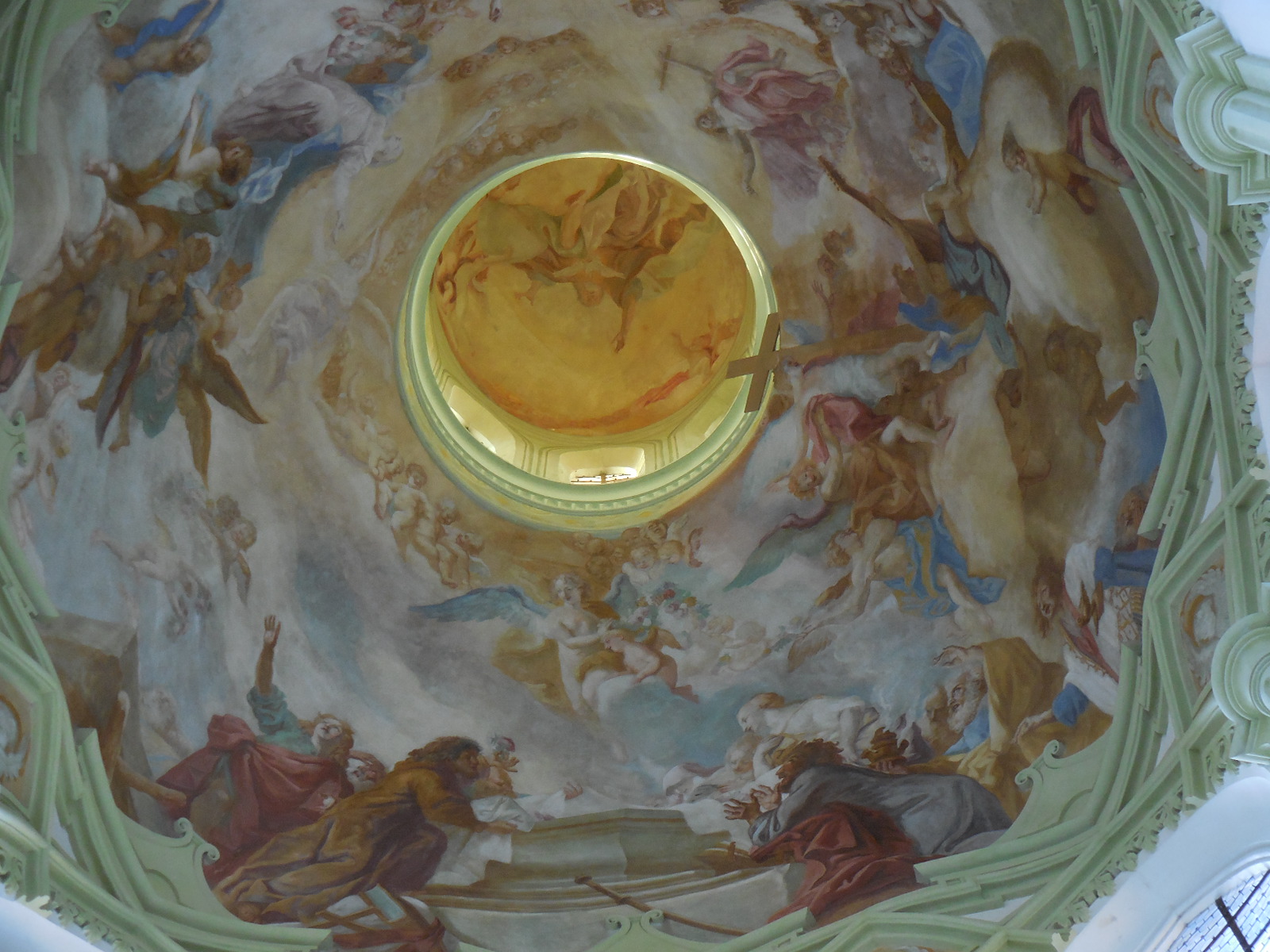
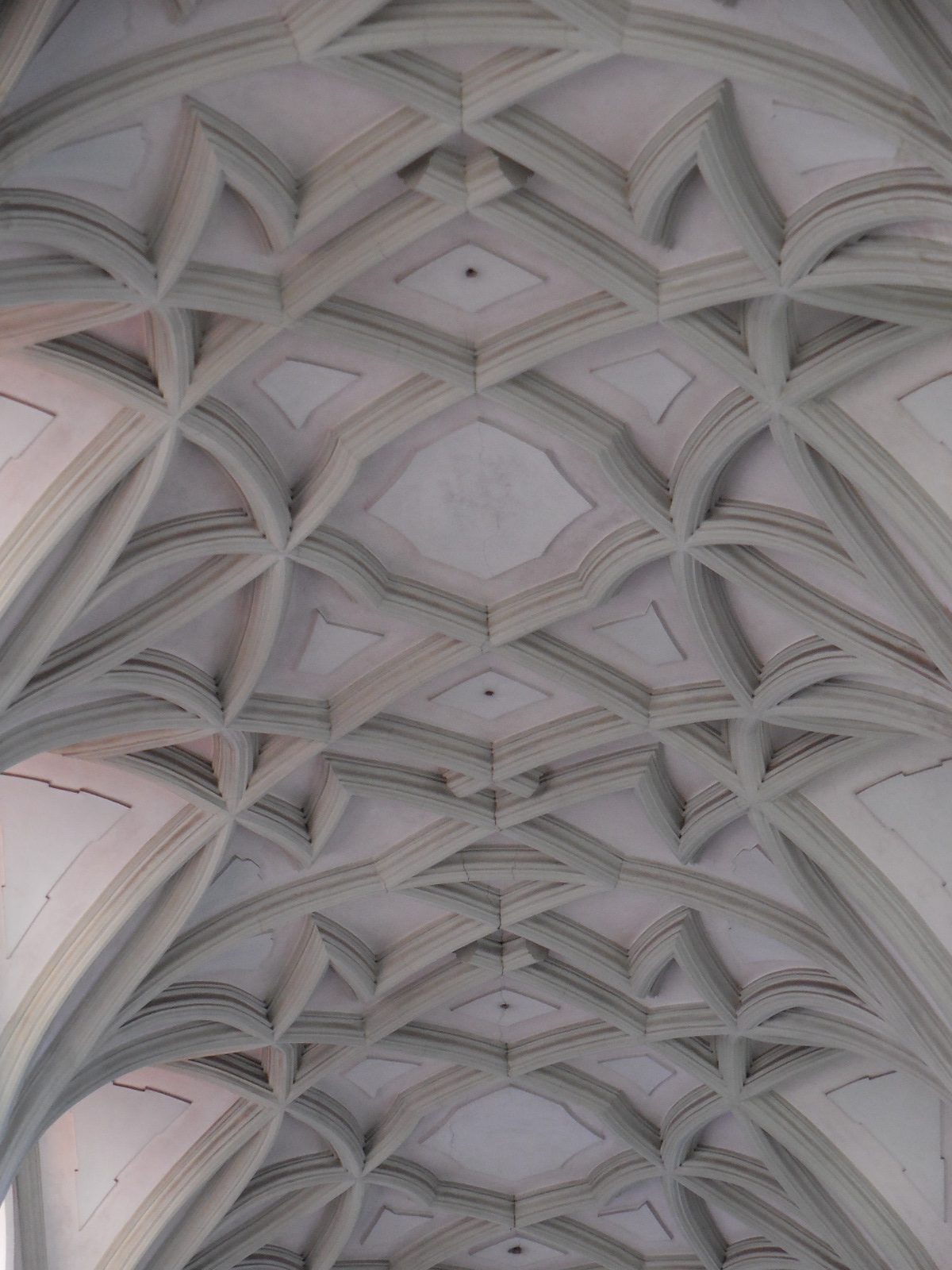
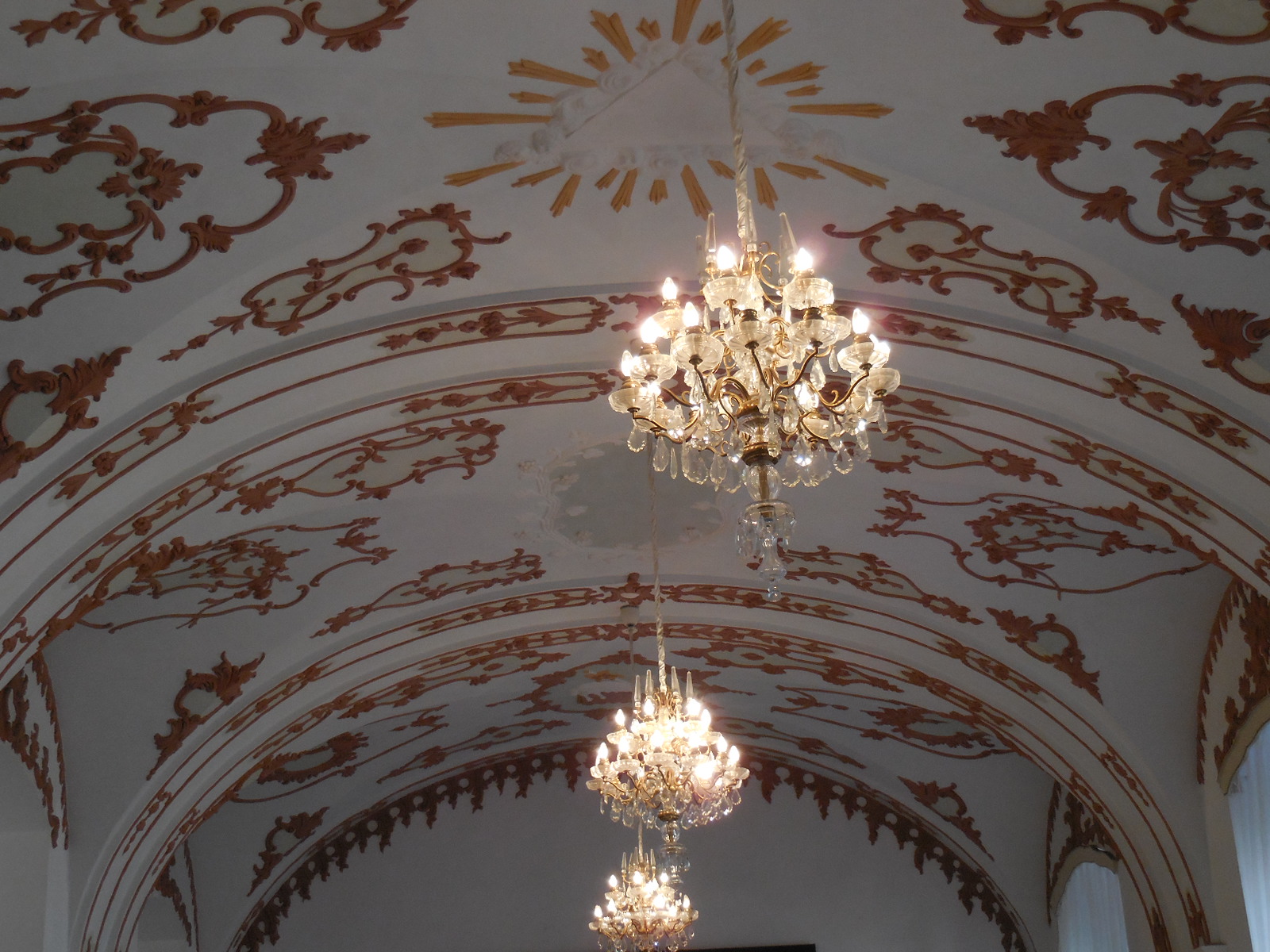
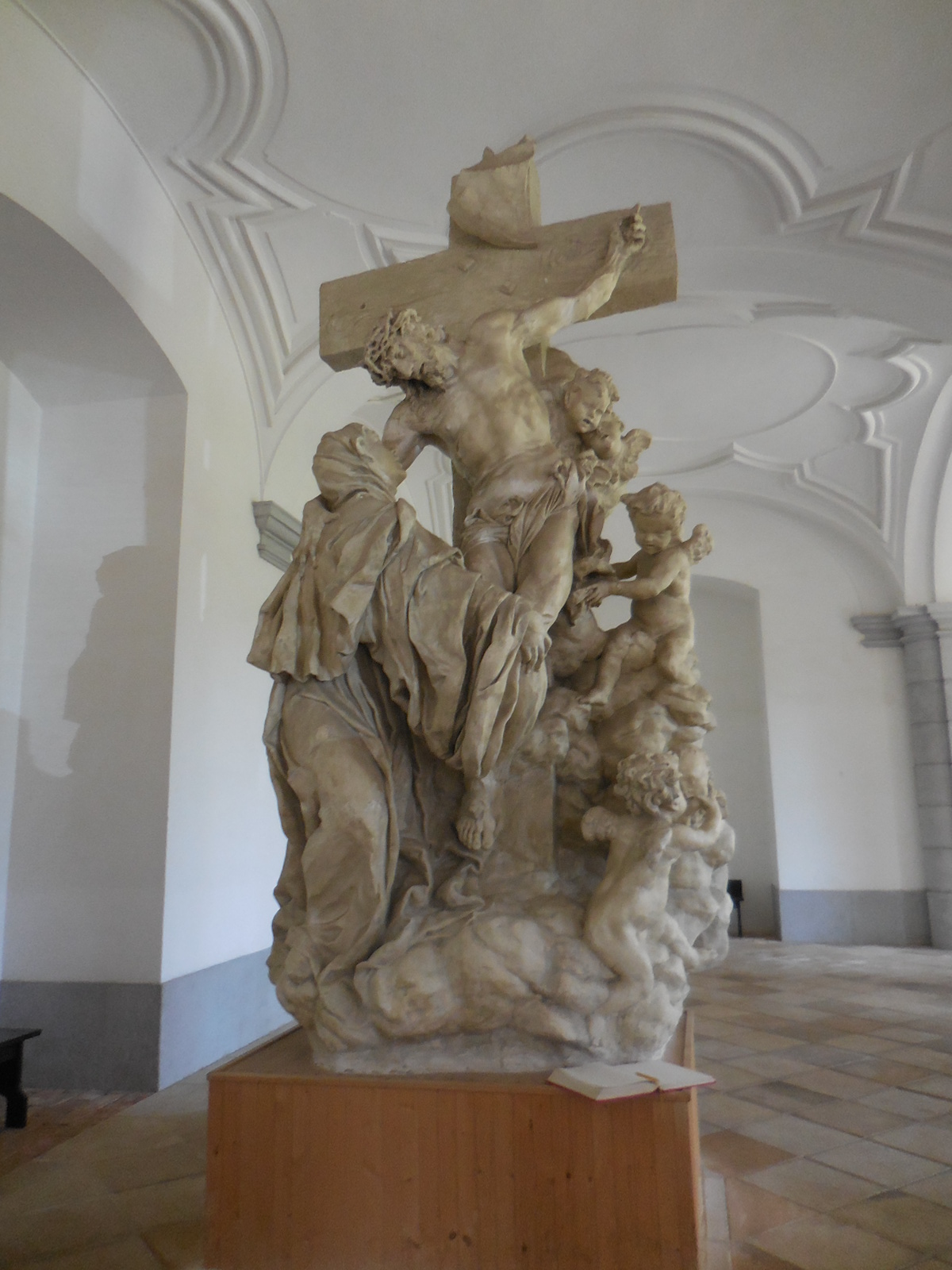
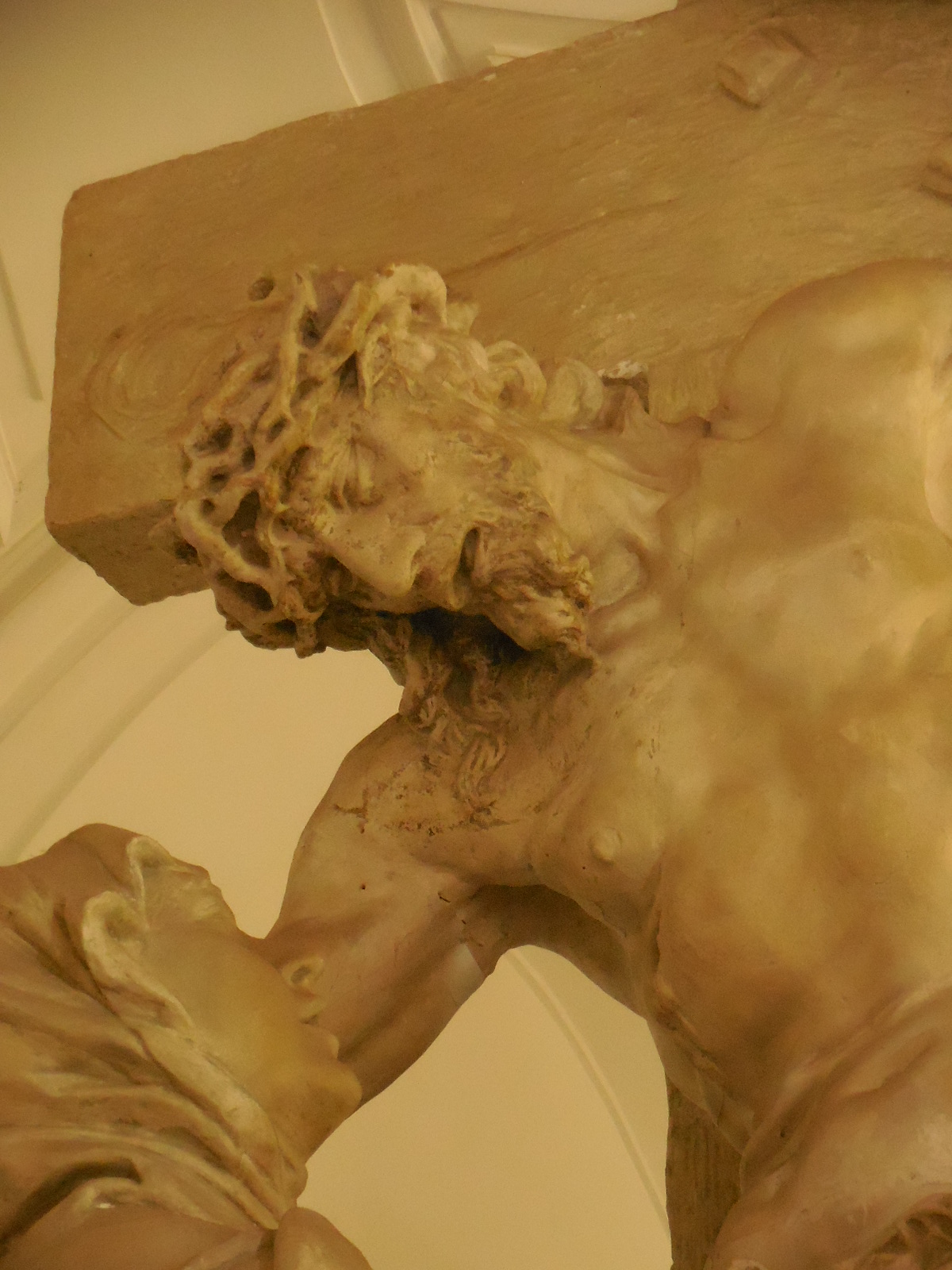
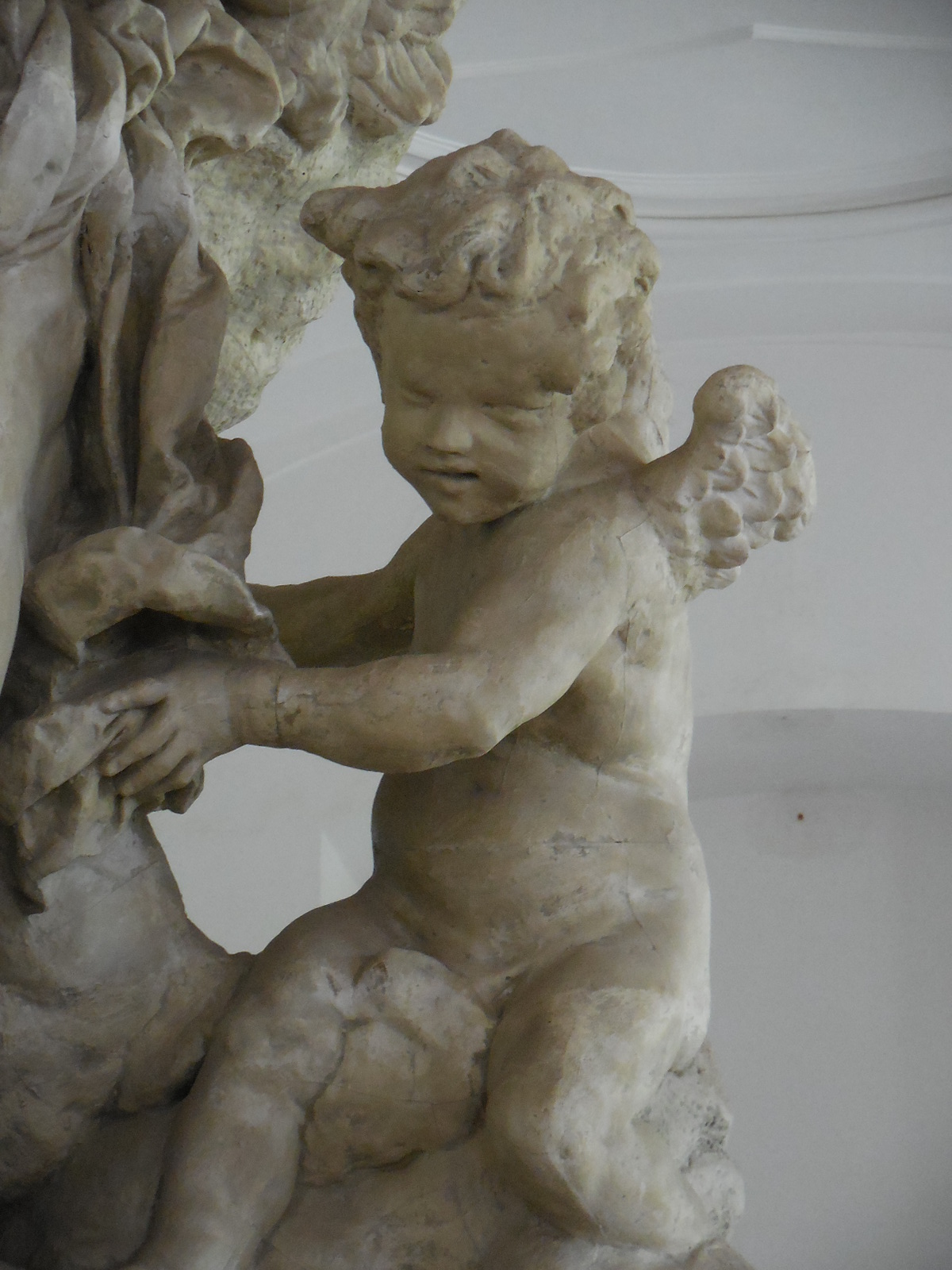
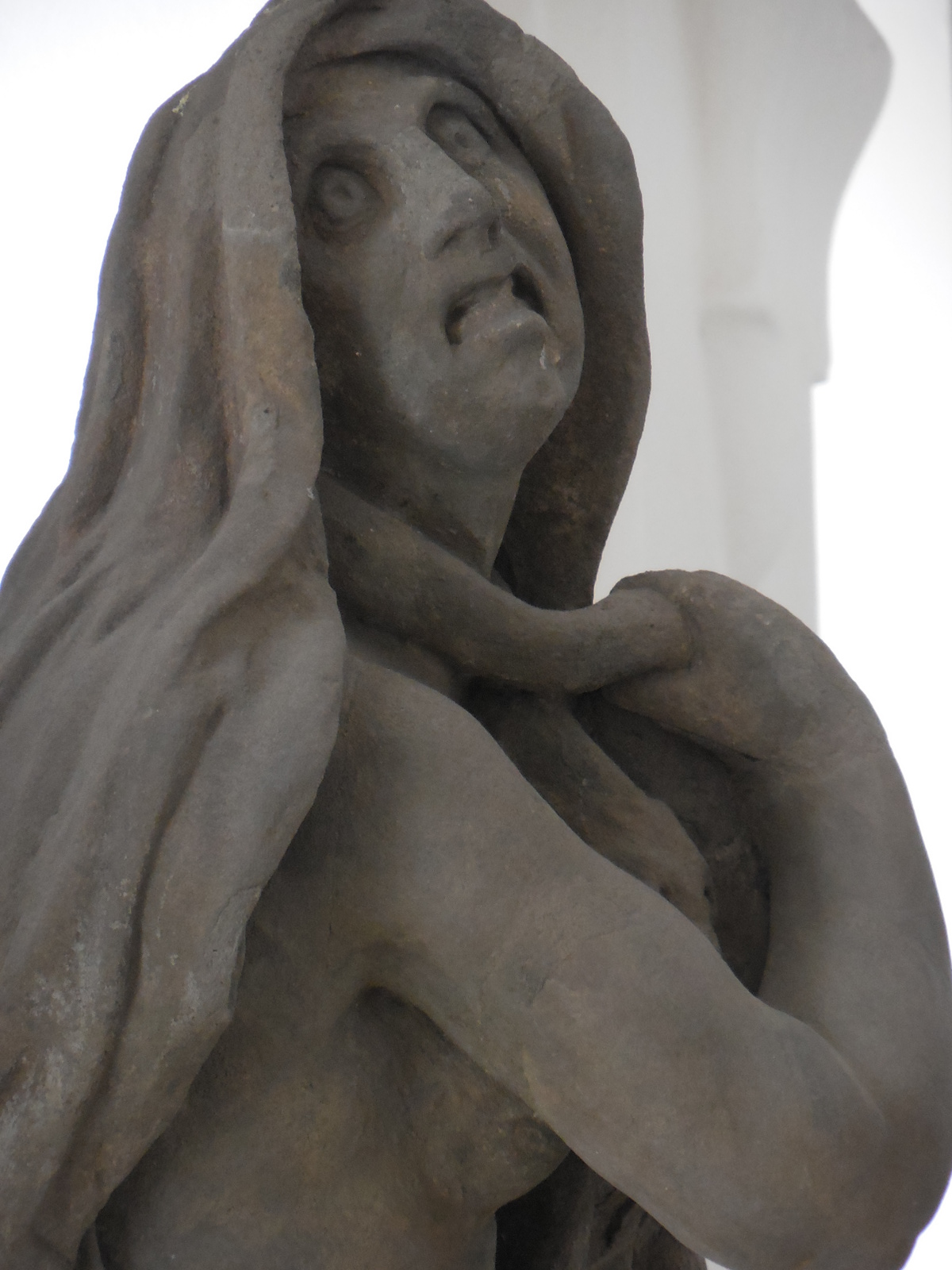

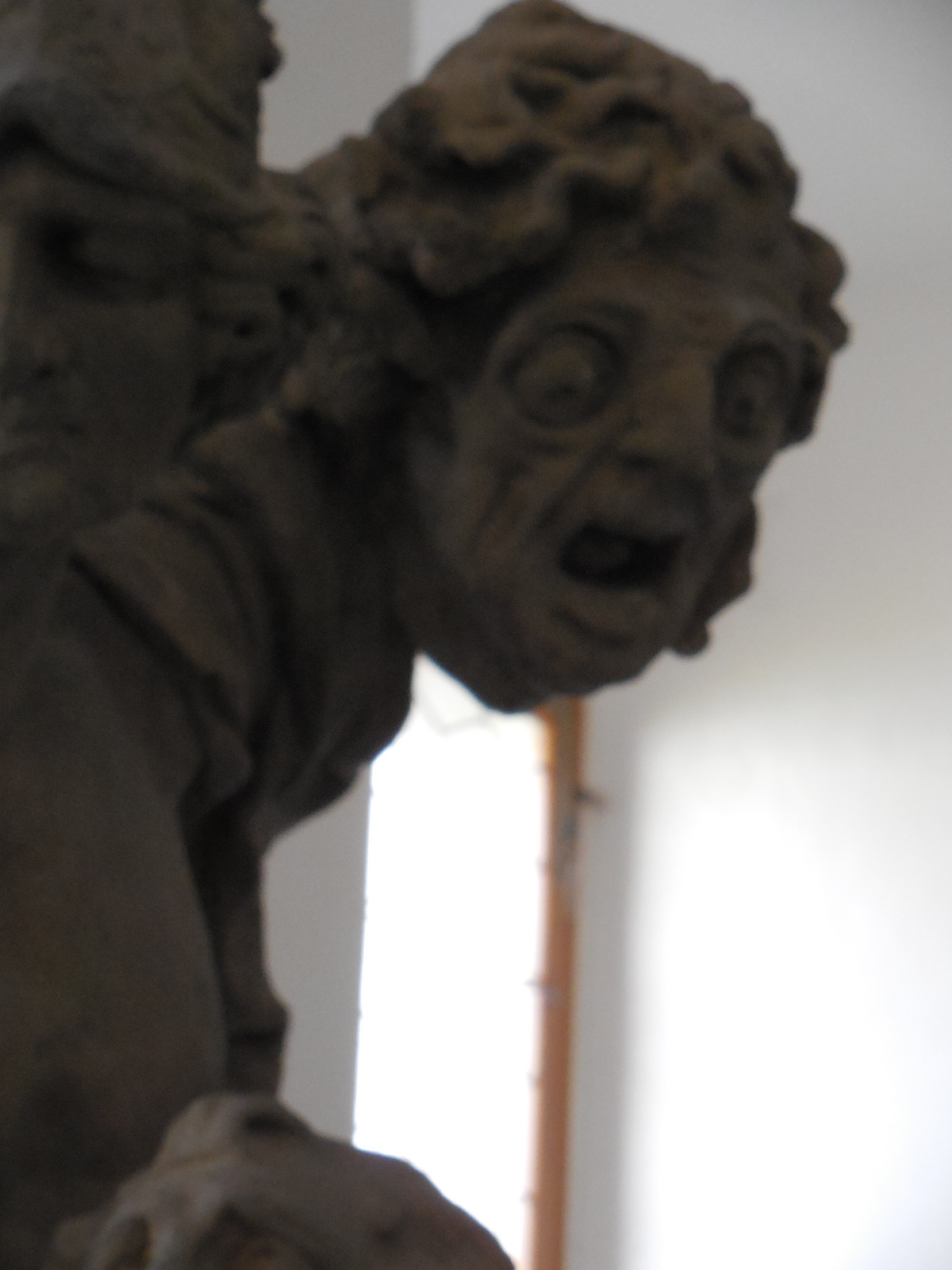


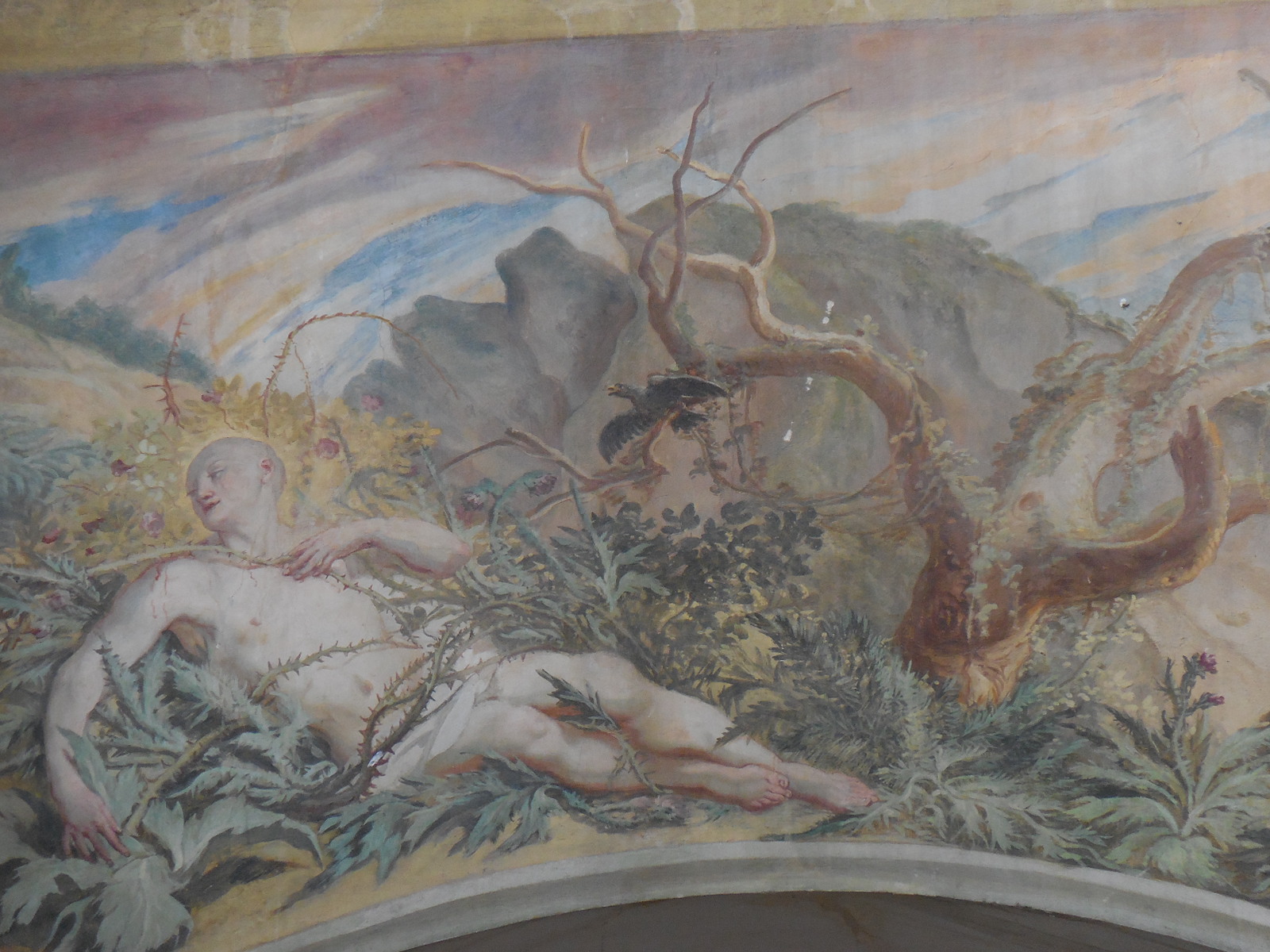


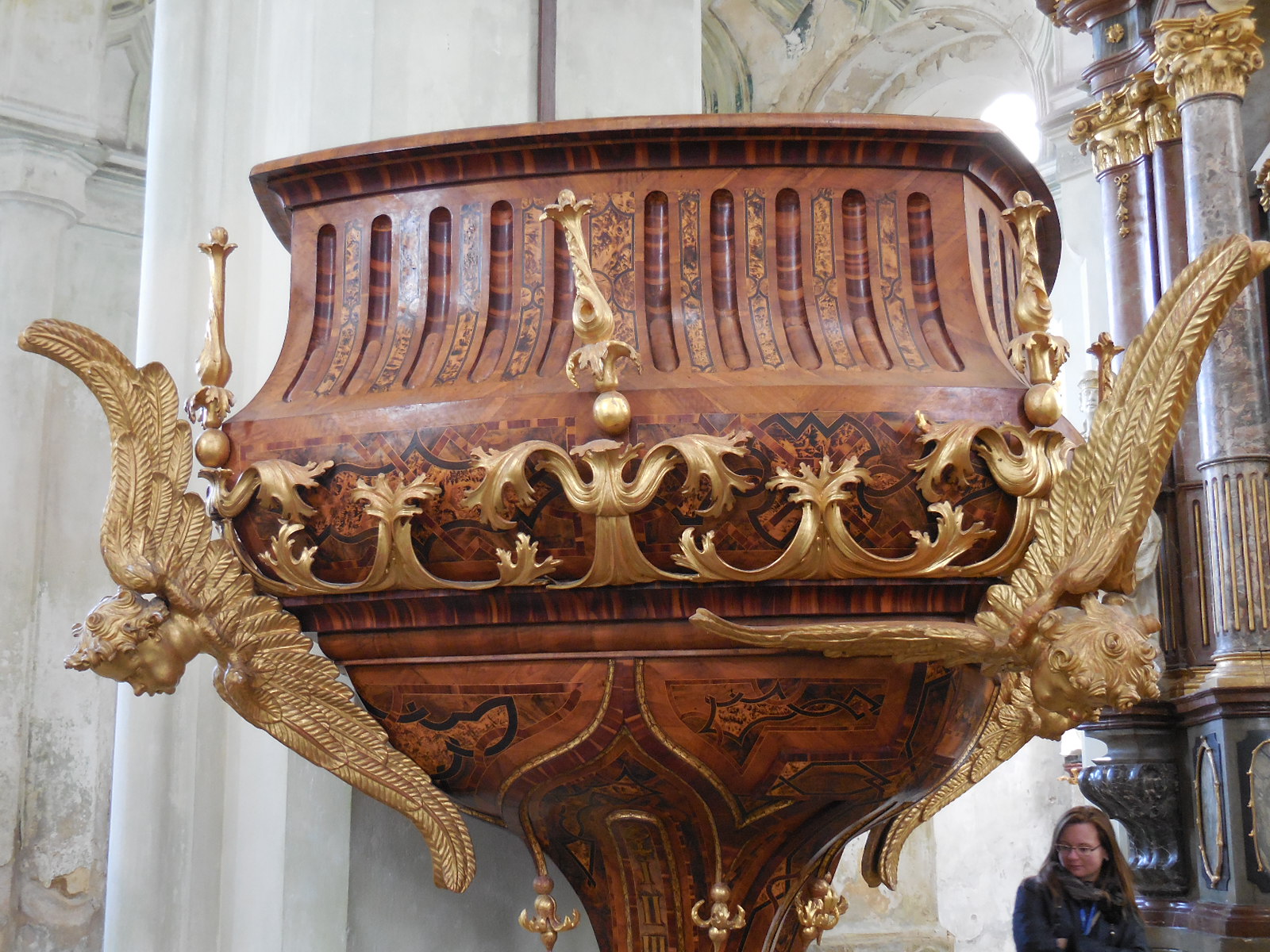
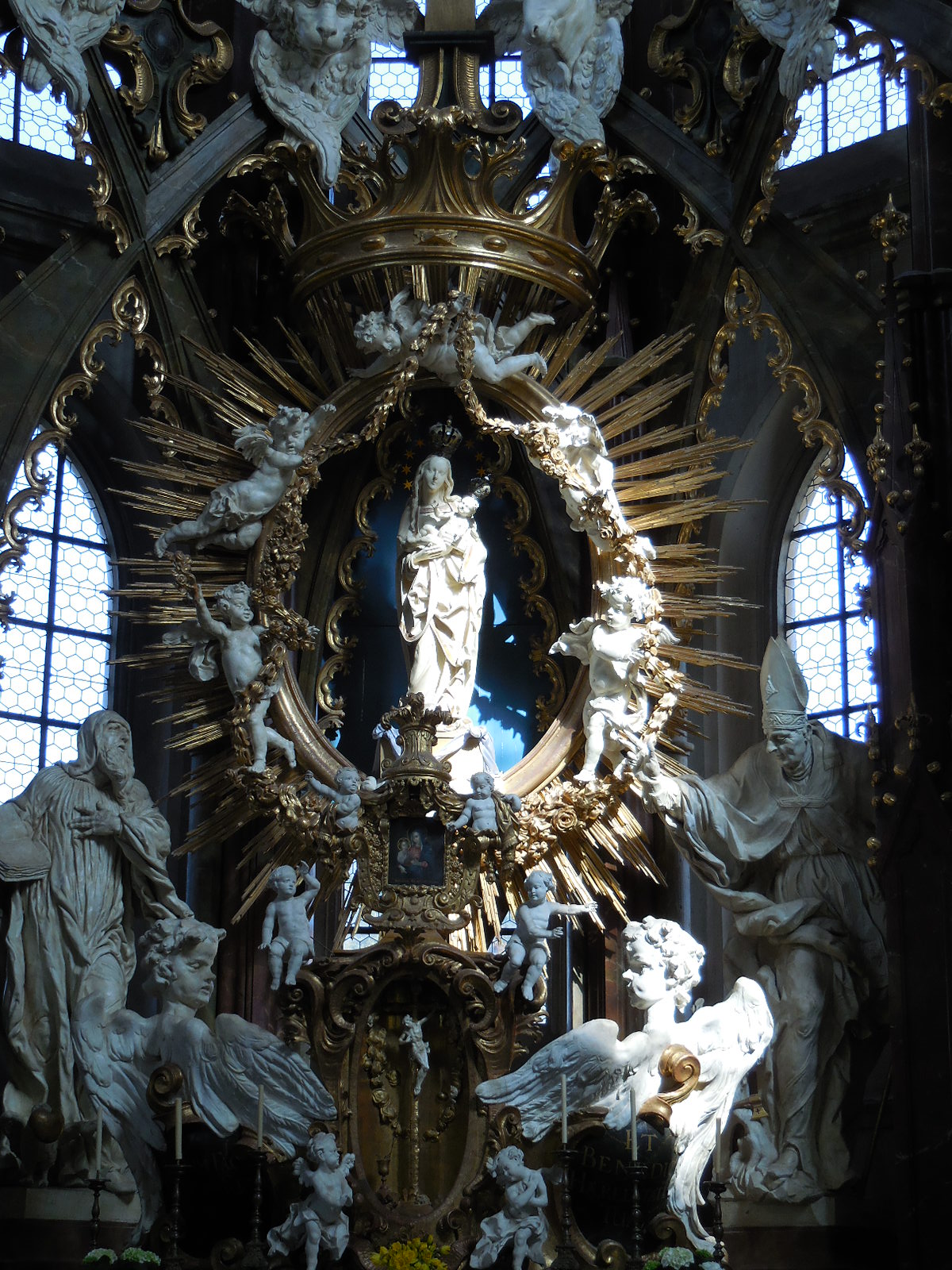
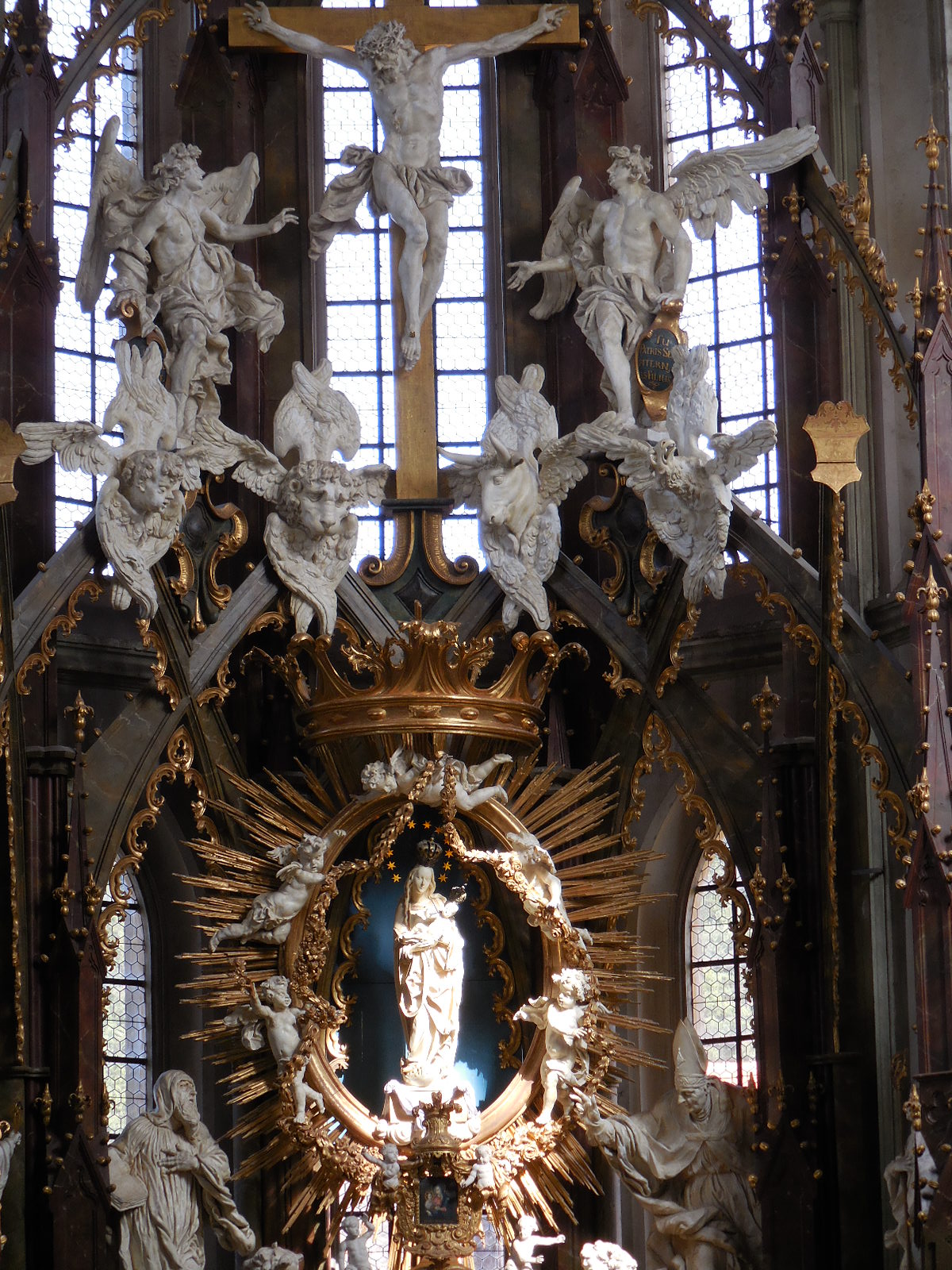


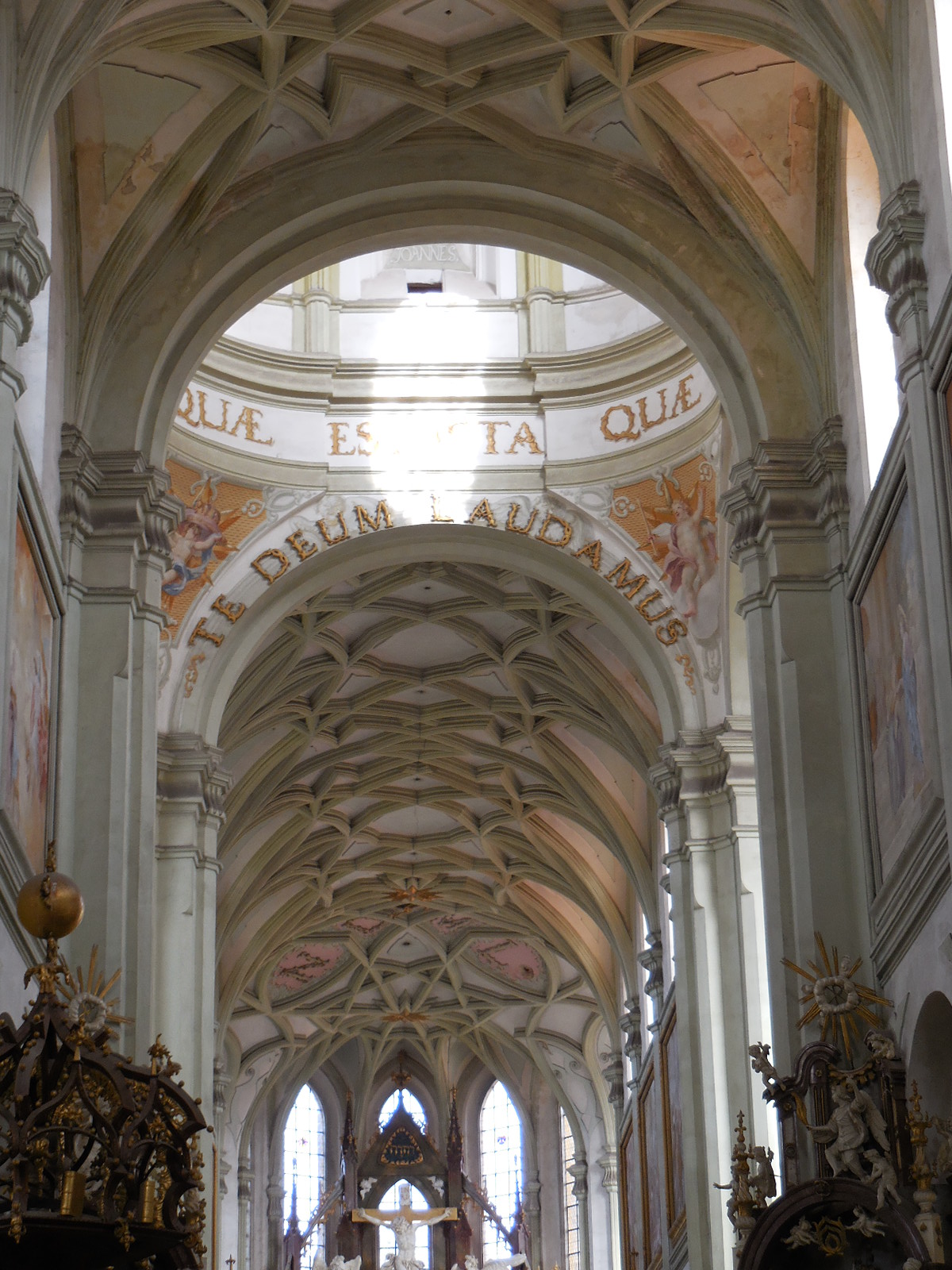


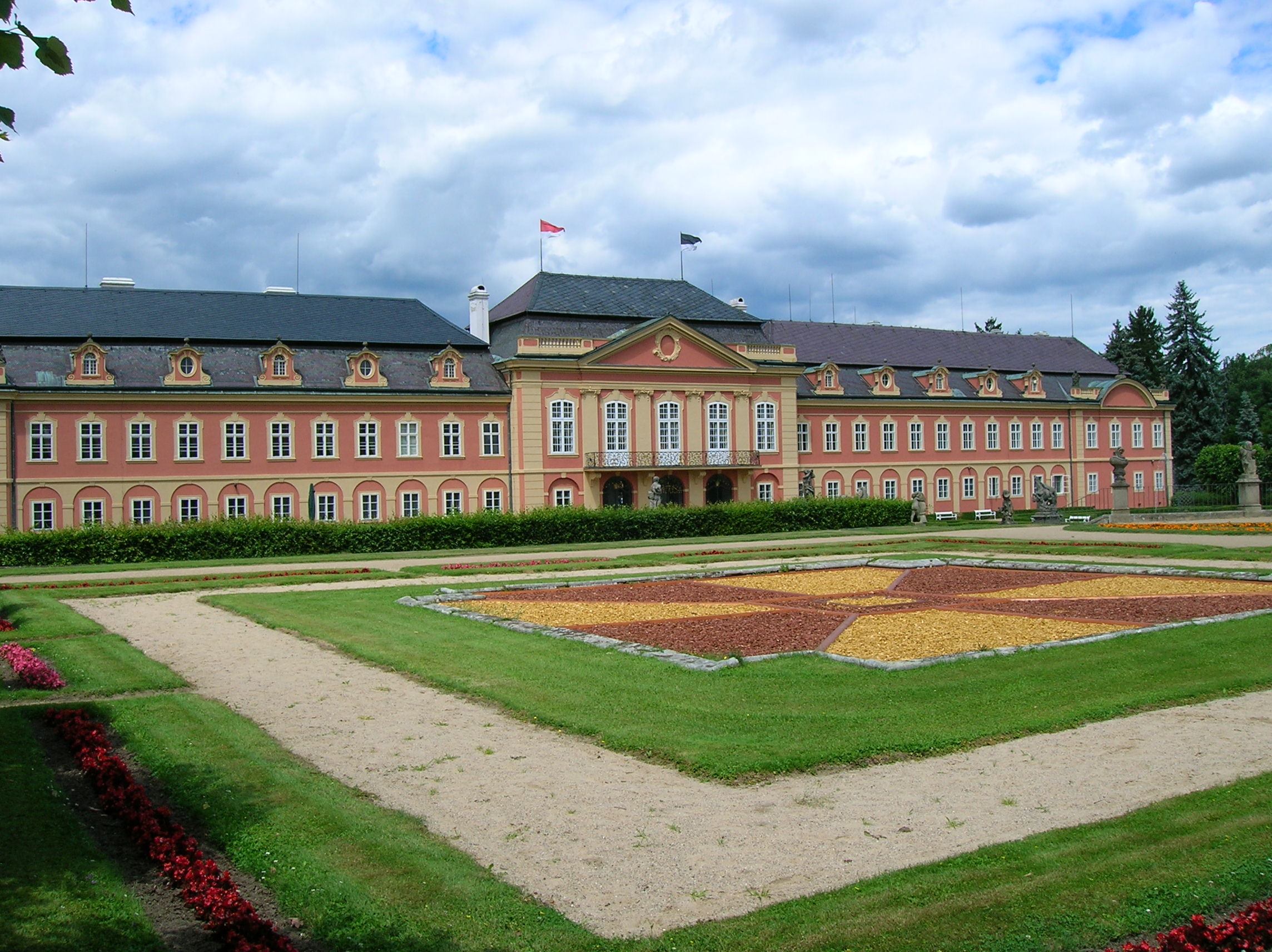
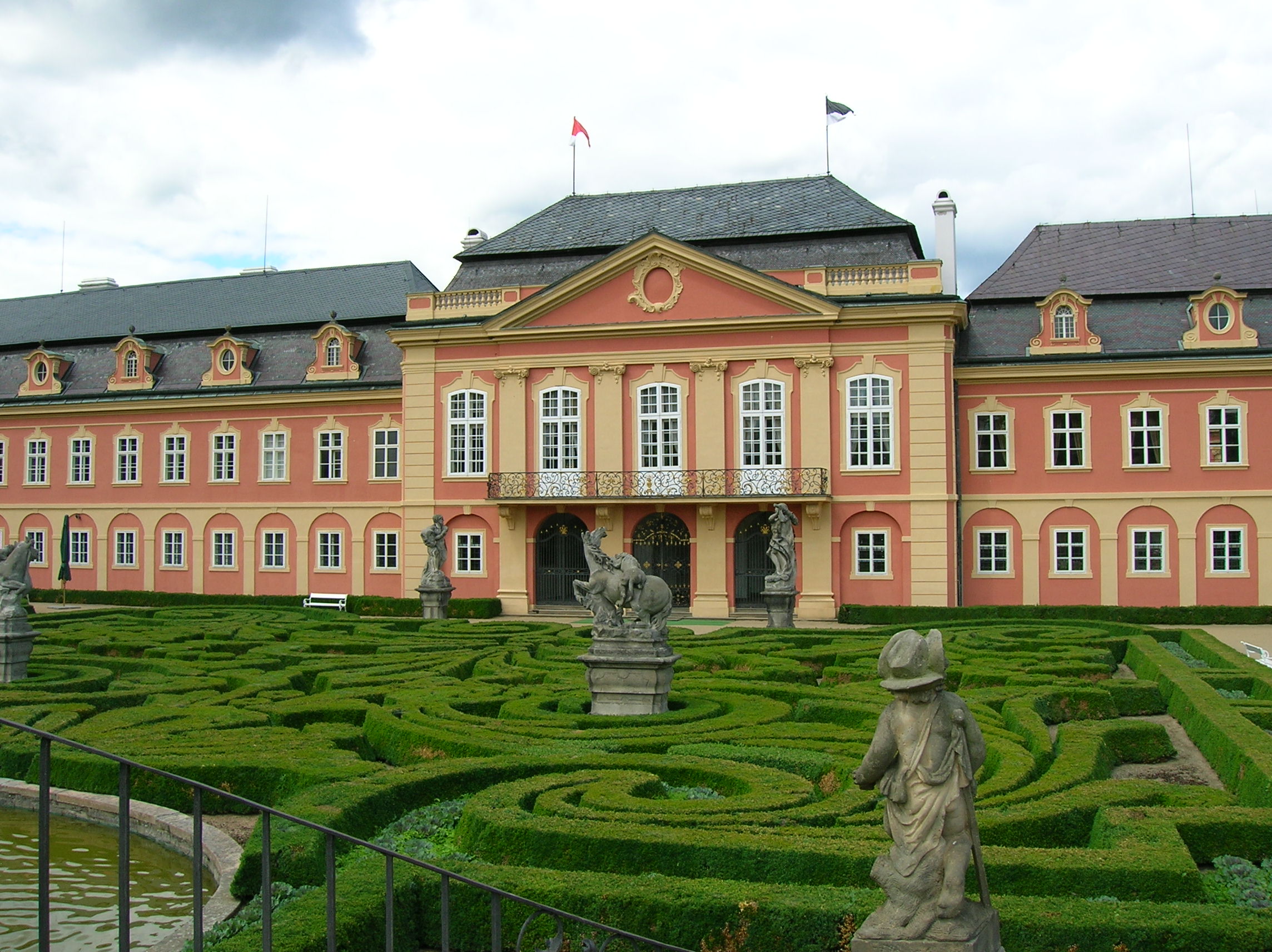

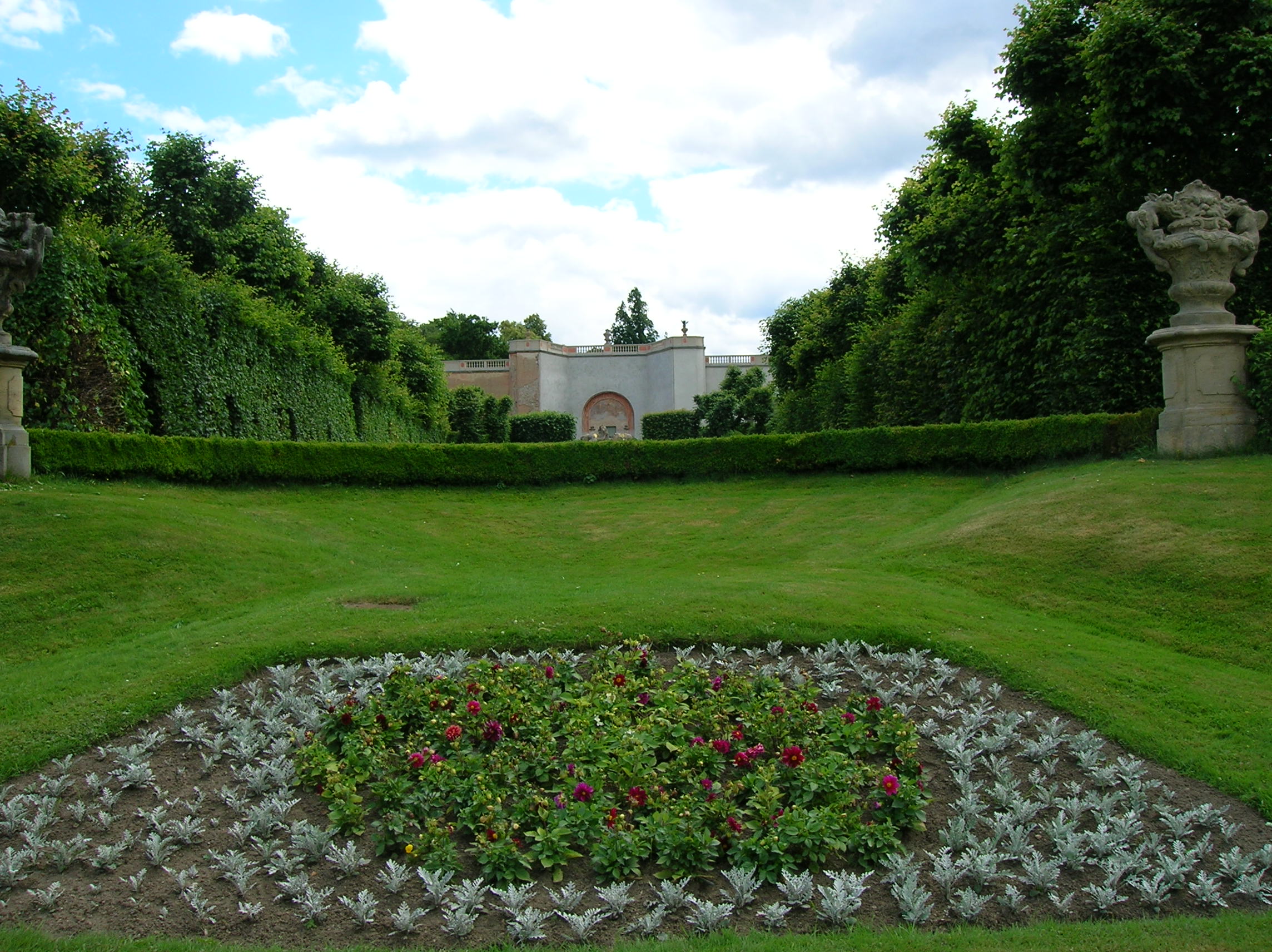
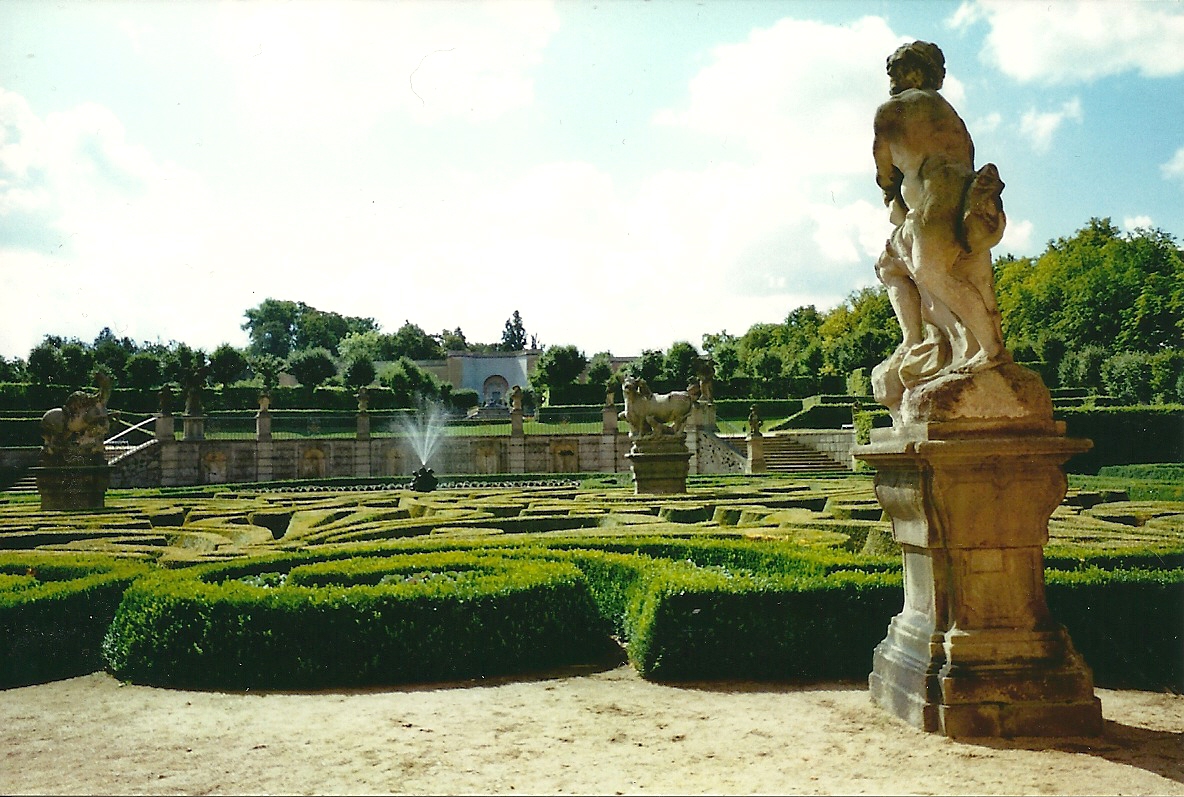


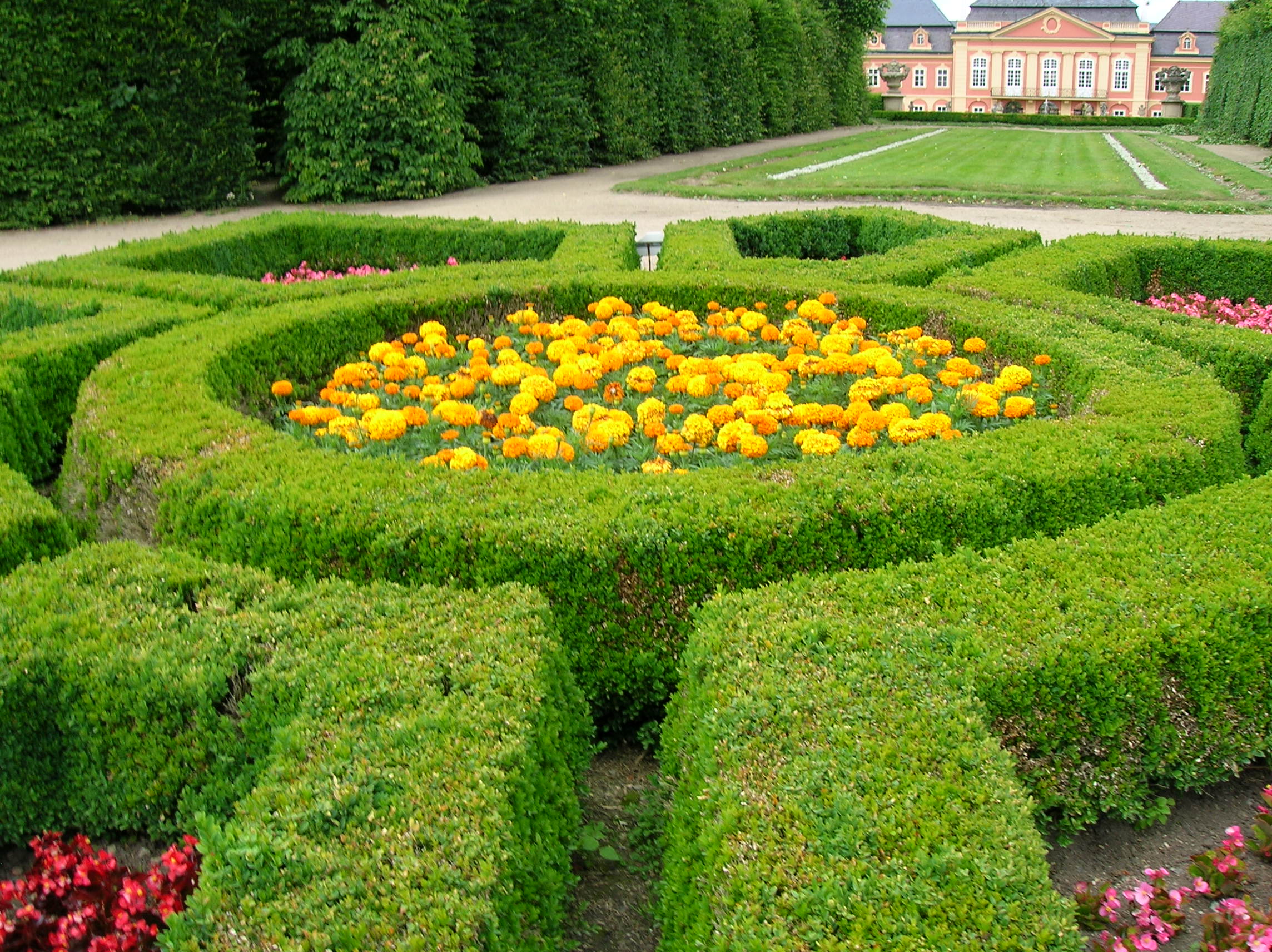

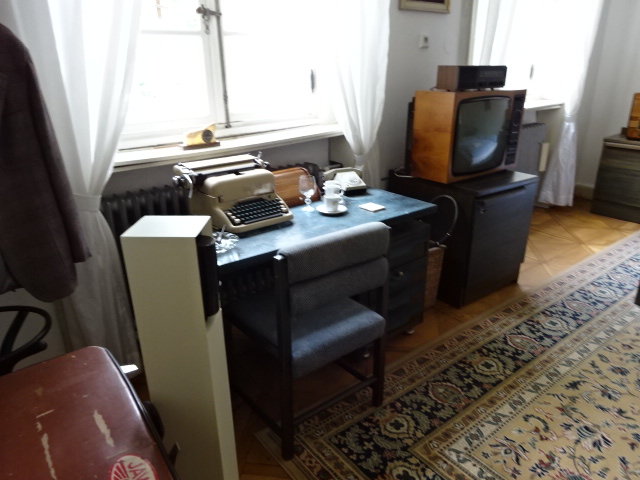

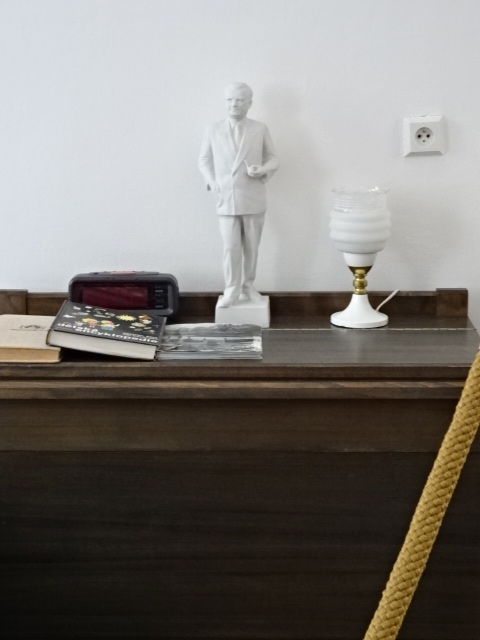
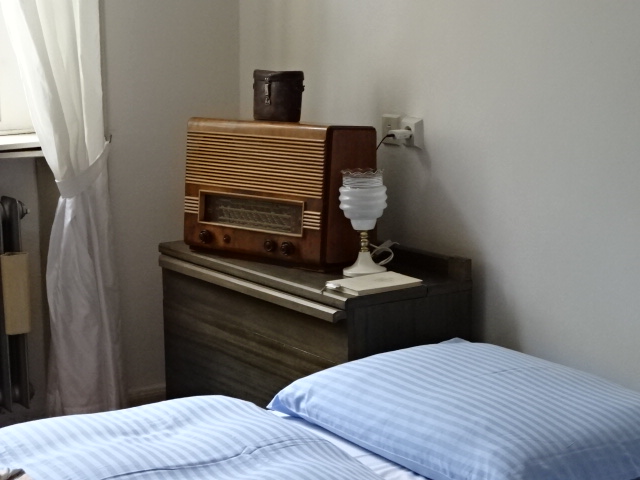

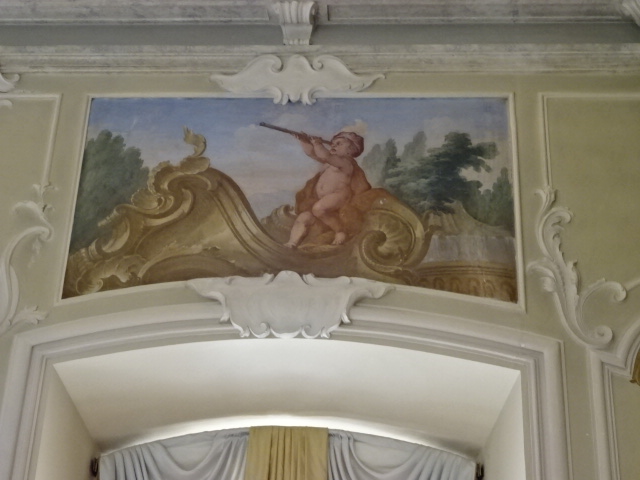

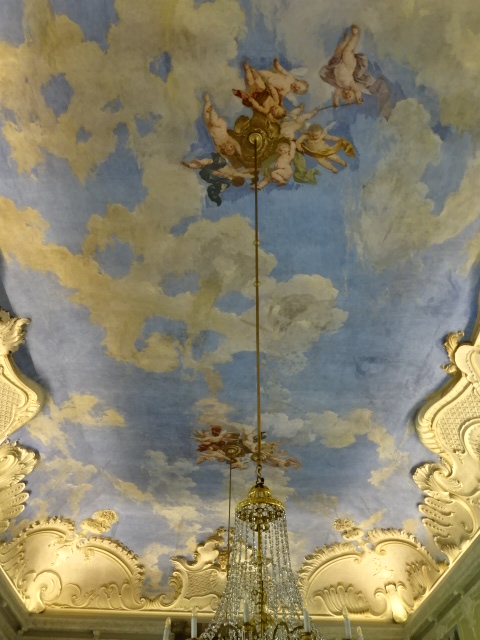
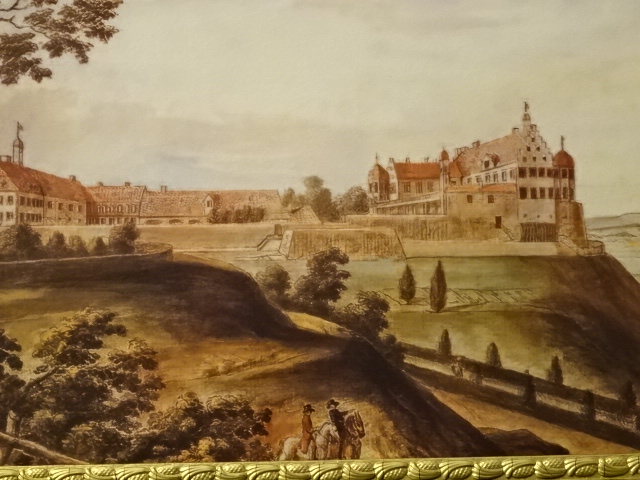


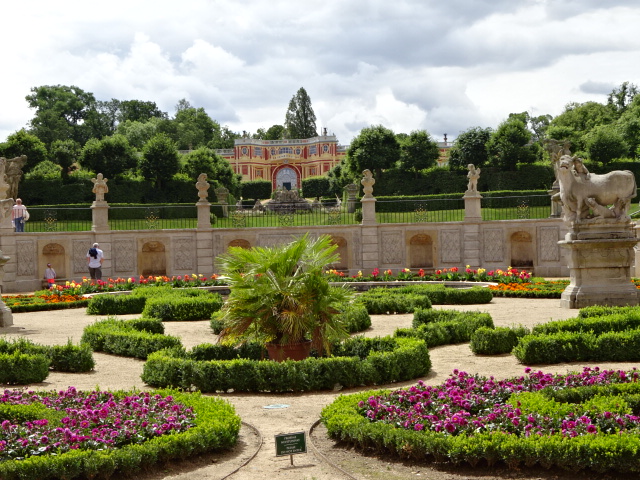
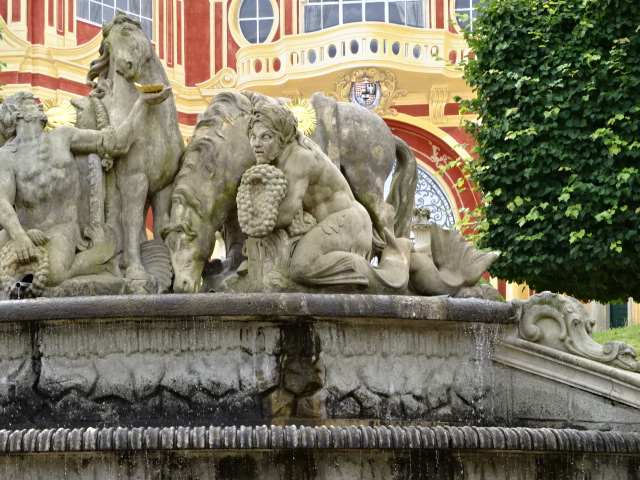

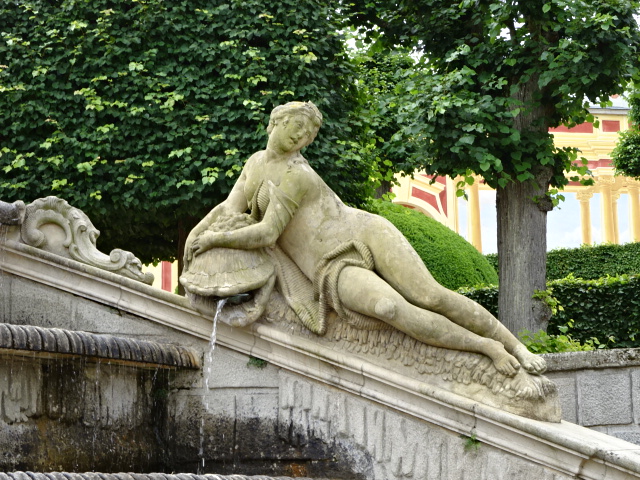


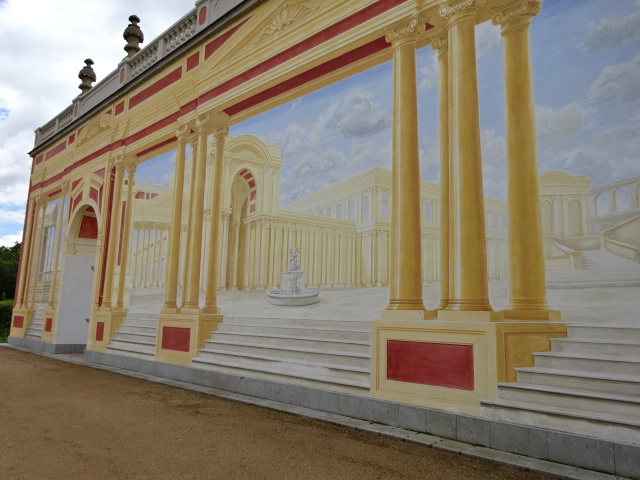
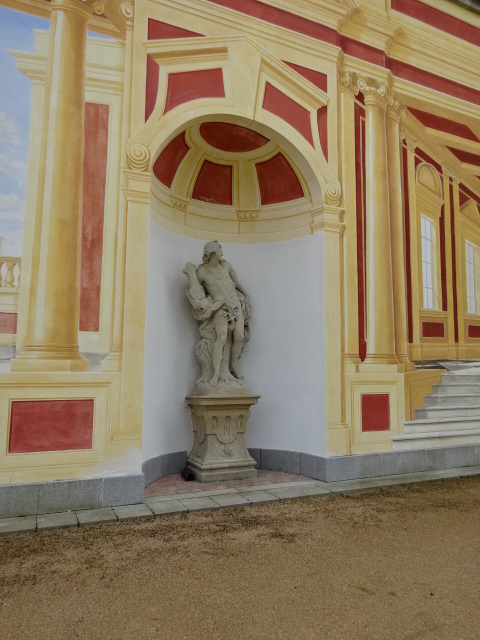
 Tracy's Travels