Through the Eyes of Franz Kafka Exhibition in Pilsen Diary

During the summer and fall of 2024, the West Bohemian Gallery in Pilsen showed off the riveting exhibition “Through the Eyes of Franz Kafka: Between Picture and Language.” It focused on the ways in which the visual world around Kafka had been influential in the language Kafka chose for his writings. There was a direct connection between the visual world and the literary world in Prague, Kafka would have seen the works on display in his everyday Prague life that boasted of a multilingual society immersed in the languages of Czech, German and Hebrew. Kafka resided in Prague his entire life – from July 3, 1883 to June 3, 1924, when he died at the age of 40 from tuberculosis. He spoke German as well as Czech and wrote in German. His parents spoke German mingled with Yiddish.
At the end of the 19th and beginning of the 20th century, posters were displayed all over the city. Designed in the Art Nouveau style, they showed off art exhibitions, cabaret shows, literary events, advertisements and much more. Japanese art played a role in the decoration of these posters. Later, the artistic focus was Cubist features. German-Czech spiritualism also was influenced by the time period. Silent films, both European and American, were popular in Prague. Going to the cabaret, ballet and theatre were pastimes of Praguers.

Exhibition Wordwede in Kinská Garden, Prague, 1903.

Modern French Art exhibition, Kinská Garden, Prague, 1902.

I would like to highlight several of the artists represented in the show, including the posters of Jan Preisler, a Czech painter and university professor. For a while his works promoted the Art Nouveau style, which is evident in this poster for an art exhibition. He also decorated Art Nouveau buildings in Prague. For example, the Hotel Central in Prague features his ornamentation. The triptych Spring was made for the Peterka building in the capital city. Preisler made a name for himself as a Secession artist, even though he would take on a different style later in his career.

Girl in Flowers, 1922, by Anton Bruder

Many of his works could be designated as Neo-Romantic, punctuated with allegorical Symbolism. His art often showed a fondness for fairy tales or moods characterized by depression and sadness. Preisler attempted to reveal the depth of one’s soul. Early in his career he became friends with Czech landscape painter Antonín Hudeček. Preisler was also influenced by the art of Edvard Munch as he helped plan the 1905 exhibition of Munch’s depictions in Prague. Preisler also had developed friendships with painters Bohumil Kubišta and Vincenc Beneš. He was very inspired by the poetry of Otakar Březina, a Czech artist who wrote in a complex, symbolist style and was nominated for the Nobel Prize eight times. Vitezslav Nezval and Josef Suk were other poets who made an impression on him. Perhaps his best known painting is the triptych “Spring,” from the turn of the century. It depicted the complex feelings of someone entering the 20th century. Man experienced a nostalgia for the past, but, at the same time, was looking forward to adventures awaiting him in the new century. A person’s connection to nature was another theme promoted in this triptych.
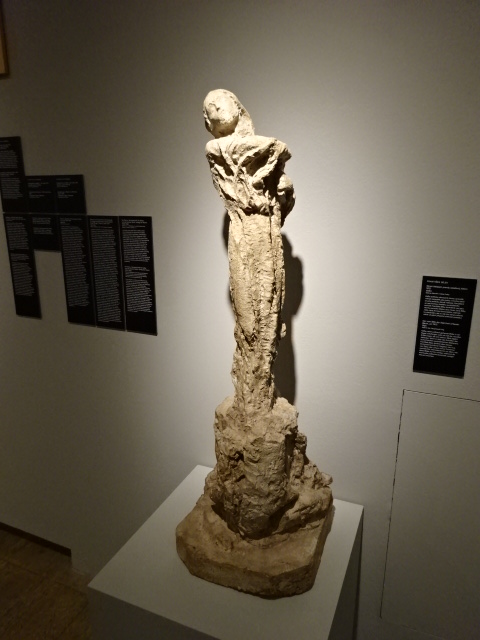
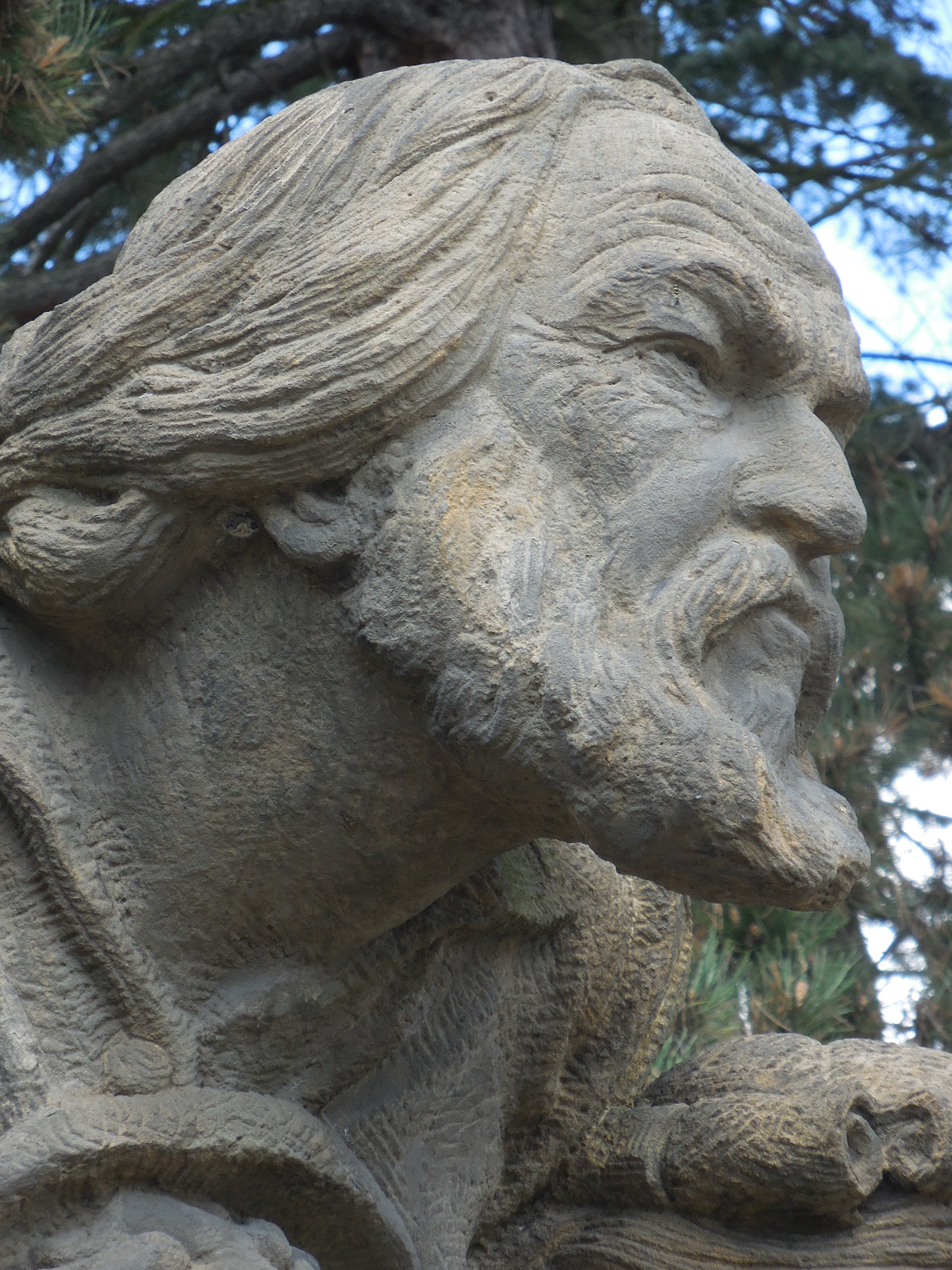
Sculpture by František Bílek
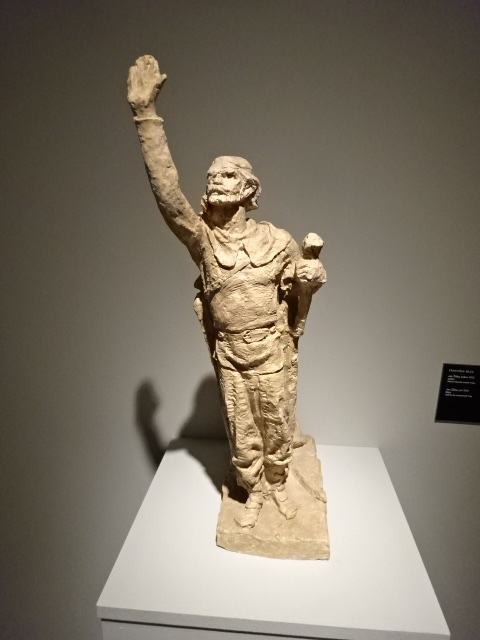
Jan Žižka, by František Bílek, 1912

Sculpture that permeated the exhibition included that of Art Nouveau symbolist František Bílek, whose Secession homes in Prague and Chýnov I had visited. Miniature versions of several of his sculptures were on display. He utilized mostly religious themes with a sense of mysticism. While Bílek was best known as a sculptor, he also designed furniture and created graphic art, drawings and illustrations. An architect as well, he designed cemeteries and made gravestones, for instance. His woodcarving skills were astounding, too. A year later, in 2025, I would see Bílek’s amazing works in the former flat of Czech poet Otakar Březina, incorporated into a museum for the symbolist poet in Jaroměřice of the Vysočany region. To be sure, Bílek’s creations caught the attention of society during the Art Nouveau age.
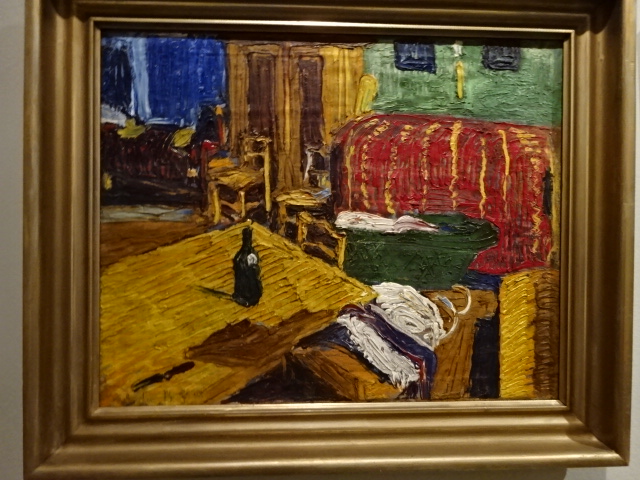
The Interior, by Bohumil Kubišta, 1908

One of my favorite Czech painters of this period, Bohumil Kubišta played a role in the exhibition. One of the first to paint in a modern Czech style, Kubišta created a new path for artists as he helped establish the significant Osma group of painters who were oriented toward Munch’s style. In Kubišta’s paintings, bright color played a large role as did mysticism and symbolism. At times he took up religious themes. Kubišta often concentrated on the spiritual as the symbolism of life and death featured in many of his works. He emphasized the spiritual meaning of the countryside, too. The styles that made an impact on his work included Fauvism, Futurism and Surrealism. Self-portraits and still lives were common in his repertoire, too.

Landscape, by Georges Kars, 1910

I knew the name Czech-French painter Georges Kars from a Prague exhibition of Czech artists in Paris between the wars. While initially taken with Impressionism, Cubism and Fauvism, he found his own path with dynamic and vibrant compositions. He made a lot of women’s portraits, self-portraits, nudes and half-nudes in his figural works. Sometimes he rendered still lifes and landscapes. Kars utilized the neoclassicist style for his portraits, nudes and still lifes. His paintings were world-renowned, displayed throughout Europe, the USA and Japan.

During World War I he served for the Austro-Hungarian army and even was captured by the Russians. He survived the experience and continued painting after the war.

A Walk in a Park in Florence, by Bohumil Kubišta, 1907

Of Jewish origin, Kars escaped France during 1942 and settled in Switzerland. However, he was so traumatized by the persecution of the Jews that he took his own life, jumping to his death from the fifth floor of the Geneva Hotel. During 1949 he was buried with his family in Prague’s New Jewish Cemetery.

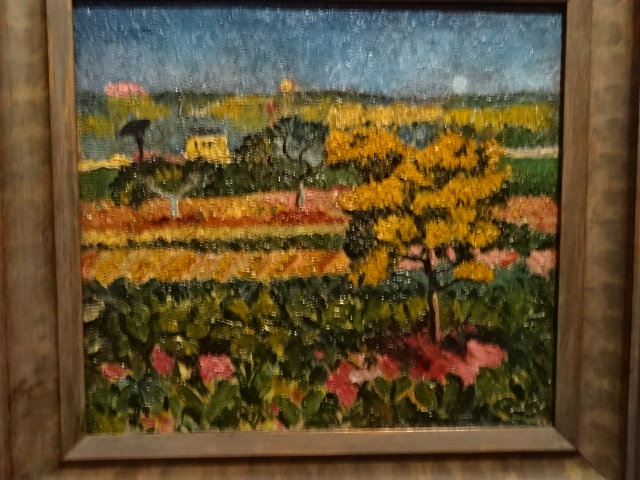
Brindisi, by Otakar Kubín, 1906

Another artist who was well-known while residing in Paris between the wars, Otakar Kubín, who also went by the name Othon Coubin, worked as a painter, sculptor and graphic artist, mostly living in France. Holding citizenship from France and Czechoslovakia, he made a name for himself rendering landscapes, mostly of Provence but also of Moravia. I loved his landscapes of Provence in the exhibition of Czech artists between the wars. These paintings were perhaps the highlight of his career.
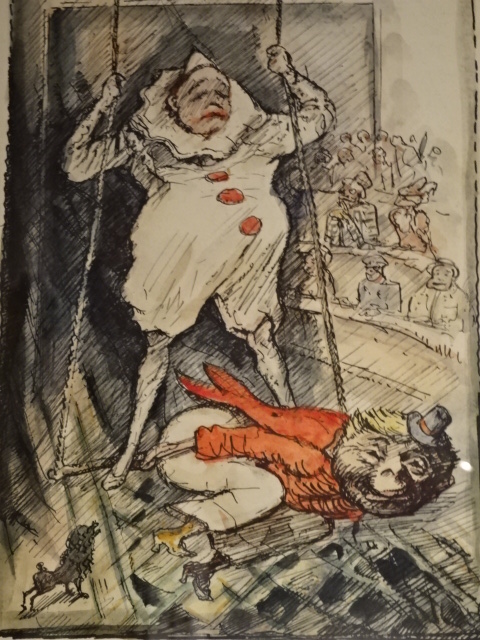
While living in France during World War I, Kubín and his wife were interred in a camp imprisoning foreigners in Bordeaux. However, they were not held for long. In the 1920s, he held exhibitions in Paris with Pablo Picasso and Henri Matisse. Kubin was impressed with the Expressionism of Vincent Van Gogh. His depictions with figural motifs often were influenced by the death of his wife and son. His works were also seen in Japan, Switzerland and the USA. Some of his praiseworthy portrayals include a portrait of Kubišta, House in the Countryside, Cemetery Chapel in Boskovice, Imaginary Likeness of Edgar Alan Poe, Moravian Landscape and Auvergne Landscape.
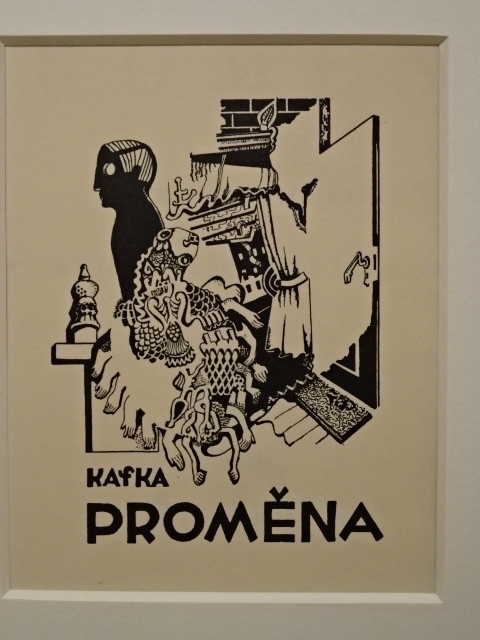
The Metamorphosis, by Otto Coester, 1920

One of Kafka’s small black-and-white drawings as a young child was on display, and art promoting his various books also had a prominent place in the exhibition. Artistic renditions of The Metamorphosis were represented, for instance. German art and literature at this time also played prominent roles in society. An antisemitic attitude was seeping into some of the publications.  The exhibition did not only concentrate on works in Prague but also art that had immersed itself into European society as well, providing a European context for these powerful renditions.
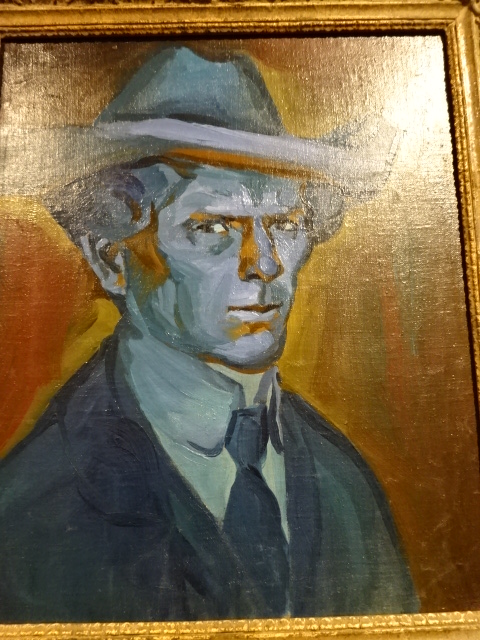
The Metamorphosis, by Wilhelm Wessel, 1924.

This exhibition took up my favorite Czech era of art – the end of the 19th and beginning of the 20th century. The Art Nouveau and symbolic nature of the works greatly impressed me as did emphasis on color in many paintings. I loved the expressionistic qualities of Munch’s artistic creations. Several paintings were by Japanese artists, and I saw a direct connection between the Czech Art Nouveau and the Japanese style. I could see the influence of Cubism in some paintings with many geometrical traits. I loved the Art Nouveau posters advertising exhibitions. The multifaceted visual experience of a person living in Prague during that era reminded me of the mixture of languages that had permeated culture and society.

The exhibition was thrilling as I thought back to that age and the various cultures people were experiencing. I felt that time period come alive through the artistic creations. Some of my favorite artists were represented, such as Bílek and Kubišta.

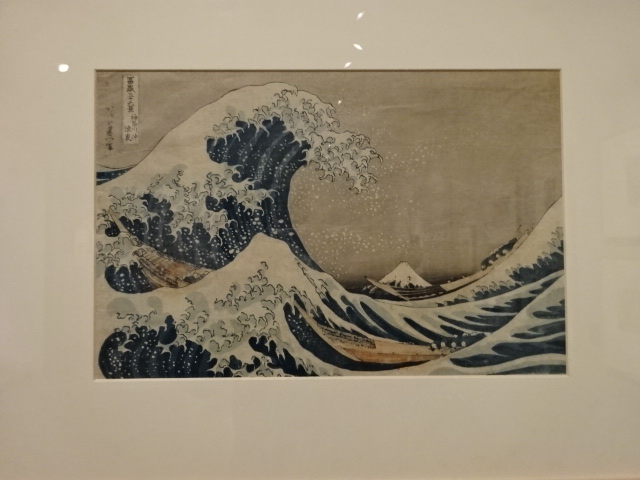
A Wave at Kanagawy, by Hokusai Kacušika, 1831

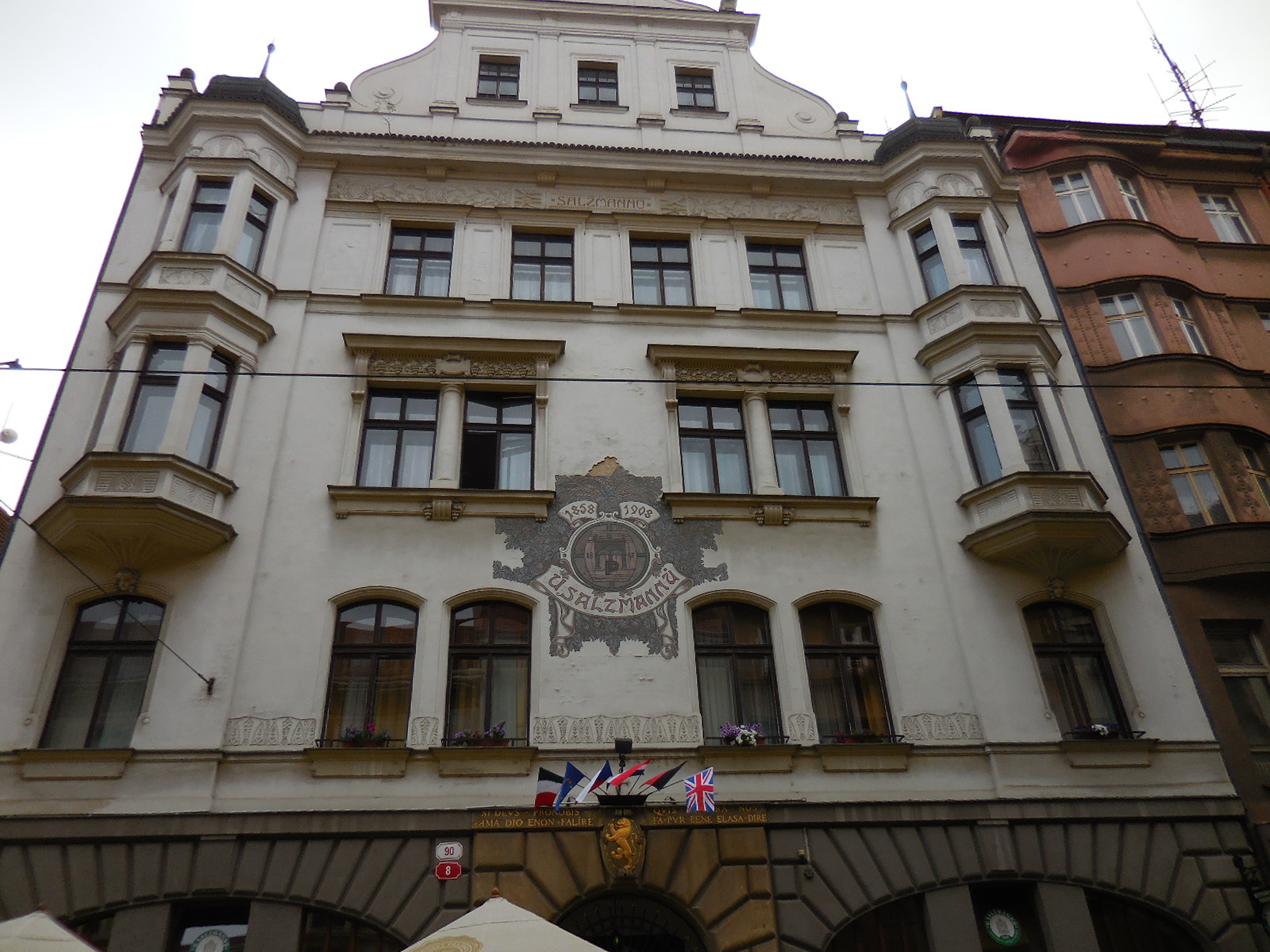
I also was enamored by the building in which the West Bohemian Gallery was housed. It had been used as a market place during the Middle Ages and boasted of a unique architectural style. I longed to learn even more about the end of the 19th and early 20th century as I left the exhibition and made my way to my favorite restaurant in Pilsen, U Salzmannů.

Tracy A. Burns is a writer, proofreader and editor in Prague.

Restaurant U Salzmannů, Pilsen

Ivan Meštrović Exhibition Diary

Early in 2023, I went to an exhibition of sculpture by late Croatian sculptor, architect and writer Ivan Meštrović. The art gallery at Prague’s main library hosted the intriguing show. I was familiar with the artist’s name: I had admired his villa, the Ivan Meštrović Gallery, in Split on my last trip to Croatia some years ago. It contained 86 sculptures made with various materials, showing off his dramatic, dynamic and expressive style that was both poetic and poignant. Drawings and reliefs were displayed, too. The bronze statue-dotted garden was delightful. One of my favorite things about traveling was being introduced to the works of various artists. I was enamored with Meštrović’s creations, and his unique, powerful style was forever embedded in my memory.

During Meštrović’s illustrious career that spanned six decades, he had been influenced by a number of styles ranging from Art Nouveau, Symbolism, Impressionism, Art Deco, Neoclassicism and Late Realism. Classicism played a major role in shaping his artistic style, too. Auguste Rodin’s naturalist style, which he had meticulously studied, greatly inspired him. During his extensive travels, Meštrović also saw Michelangelo’s creations, which affected his own work. poignant.

Meštrović’s subjects were diverse as well. He took on religious themes, created portrait busts, made sculptural monuments and delved into studies of figures. A firm believer in promoting Yugoslav national identity, he also presented folk themes and national myths. He fervently advocated for pan-Slavism, and some of his works represented historical events in Slav history.

The sculptor’s career took off when he exhibited his works in Vienna during 1905 as part of the Secession Group. While living in Paris for two years, he received recognition from all over the world and was very prolific. Then he spent four years in Rome, where he was lauded for his design of the Serbian Pavilion at Rome’s1911 International Exhibition. During World War I, he traveled extensively and spoke out against the Habsburg monarchy that controlled his homeland.

He returned to his homeland after the war ended and achieved much success while living in Zagreb. He even created many sculptures for King Alexander I of the Kingdom of Serbs, Croats and Slovenes. He continued to travel, even having an exhibition at the Brooklyn Museum in New York during the 1920s.

During World War II, Meštrović’s life was far from rosy. In 1941, he spent three-and-a-half months in prison. The following year his first wife died, and many of her Jewish relatives perished during the war. Thanks to the Vatican, Meštrović was let out of prison and took off to Venice and then back to Rome. He even met Pope Pius XII.

After World War II, he refused to return to Yugoslavia because the Communists were in control. He wound up in the USA during 1946, when he took a position as a professor at Syracuse University. His works were displayed at the Metropolitan Museum of New York the following year, and he was the first Croatian to do so. He continued to achieve great success and much recognition in the USA and even received the American Academy of Arts and Letters’ Gold Medal in the field of sculpture during1953. American President Dwight D. Eisenhower was so impressed with Meštrović that he gave him US citizenship. Meštrović took a job at the University of Notre Dame in Indiana soon after that. He designed monuments at Notre Dame, and his sculpture is featured in the university’s art museum.

He died in Indiana during 1962 at the age of 79 and was buried in his hometown of Otavice, though the Communists in control of Yugoslavia created many difficulties. His sculptures can be seen all over the world: in Serbia and Romania as well as in the United States, including Louisiana, Indiana, New York and Illinois.

This exhibition focused on Meštrović’s Czechoslovak connection as he had developed an affinity for Czech culture. He befriended the first democratic President of Czechoslovakia, Tomáš Garrigue Masaryk. They both had taken an anti-Habsburg stance during World War I. Also, Meštrović and Masaryk had lived in exile during the first World War. They both admired Slav history. While Meštrović wanted a united Yugoslavia of Croats, Serbs and Slovenes, Masaryk tried to forge a united Czechoslovakia of Czechs and Slovaks. Meštrović sculpted two busts of Masaryk in 1923 as well as busts of his wife Charlotte and his daughter Alice. He created these busts at the Czechoslovak President’s summer residence, Lány Chateau. I recalled spending some sunny afternoons in the park of the chateau in Lány as well as paying my respects at the Masaryk family graves.

Masaryk was by no means the only Czech Meštrović knew. For example, Meštrović was friends with Czech sculptor Bohumil Kafka and even created a portrait bust of Kafka during 1908.

Meštrović’s work was first unveiled in Prague during 1903, when the Habsburgs ruled the Czech lands. His work was included in an exhibition featuring Croatian artists at the Mánes Association in Prague. Mestrovic had another exhibition in Prague during 1933. President Masaryk was so impressed with Meštrović that he presented the Croatian sculptor with the Order of the White Lion award during 1926.

I was enthralled with the Czech connection between Meštrović and artists in Czechoslovakia. Tomáš Garrigue Masaryk was one of my heroes, and I was very interested in life during the First Republic, when Masaryk was president. I felt strong emotions when viewing Meštrović’s powerful works. I also thought back to my introduction to Meštrović’s creations in Split. What a discovery! I was glad to be reacquainted with Meštrović’s sculptures. Seeing his renditions in person was a profound experience.

Tracy A. Burns is a writer, proofreader and editor in Prague.
The Last Century – Twenty Artists Exhibition Diary

This permanent exhibition at the Gallery of Modern Art in Hradec Králové showcases the works of some of the most influential Czech artists of the 20th century. I liked the fact that the works were organized by person with commentary about the artists’ backgrounds and styles. I will highlight the creations that most influenced me, although all the painters and sculptors are important.

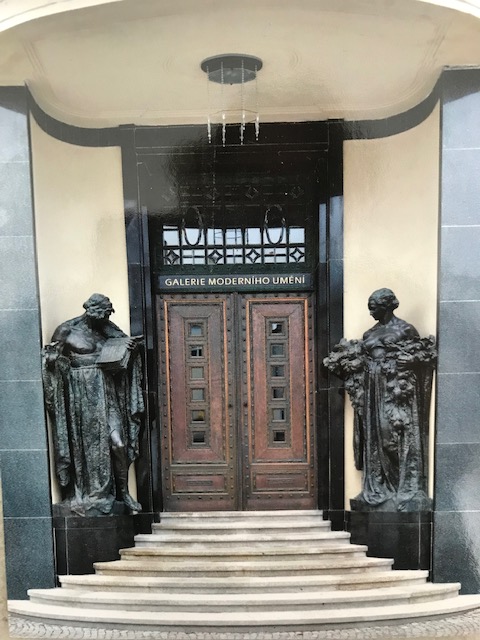
First, about the building housing the Gallery of Modern Art: Like many edifices in Hradec Králové, the museum is an architectural gem. Facing the town’s main square, the building that was completed in 1912 by Osvald Polívka is impressive with two statues flanking the façade. These sculptures were made by Ladislav Šaloun in 1908 and show allegories of commerce and the harvest. Reliefs of atlases with dogs at their feet also make up the external ornamentation. Polívka’s Art Nouveau designs can be found in Prague’s Municipal House, which he decorated from 1905 to 1912. I tell everyone coming to Prague to tour the Art Nouveau Municipal House, as it is certain to be a highlight of any visit. Šaloun created the statue of Jan Hus that dominates Prague’s Old Town Square.

Several banks were housed in this building before and during the First Republic. For many years under Communism, the Cotton Industry Association and an agricultural company called the place home. Renovations took place in the late 1960s. In 1987, the totalitarian regime transformed the building into the Museum of Revolutionary Traditions. This totalitarian exhibition was closed after the 1989 Velvet Revolution that freed Czechoslovakia from Communist control.

In 1990, the Gallery of Modern Art took up residence there. From 2014 to 2016, both the interior and exterior underwent a vast renovation. A walkway was formed around the central atrium, for example. The interior boasts geometric shapes, floral designs and Art Nouveau-styled adornment of garlands and cherubs. I especially liked the stained glass window decoration.

Here are some of my favorite artists represented in this exhibition:

Fate of the Artist, 1909

Quido Kocián

The expressive sculpture of Quido Kocián was influenced by symbolism and Art Nouveau. I love how he was able to express basic emotions like love and suffering. I went to a superb exhibition of his work about 15 years ago on Husova Street in Prague. In some statues I could see the turmoil and anguish of the persons depicted. Other sculptures triggered feelings of happiness and fulfillment. Kocián had a knack for depicting various psychological states and the depths of the human soul. He studied under legendary artist Josef Václav Myslbek but wound up rebelling against Myslbek’s traditional style, opting for expressiveness instead. Kocián’s works were not fully appreciated in the Czech art history sphere for a long time.

Ladislav Zívr

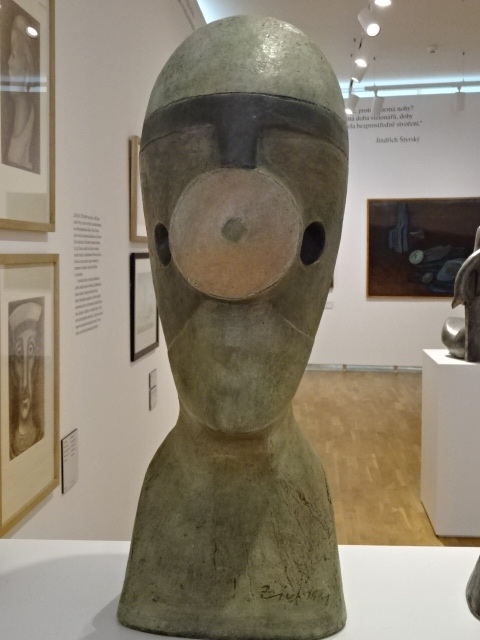
Surgeon, 1961

A member of the artist Group 42, Zívr focused on everyday life, a feature that is dear to me in all art forms. Inspired by Cubism and the creations of Otto Gutfreund, he made sculptures that have machine-like qualities as well as human traits. He had a penchant for surrealism. After the world wars, Zívr was influenced by nature, and his works portrayed strong symbolism. I liked the way he was able to express a person’s soul through primitive forms.

Jiří Kolář

I had been to a large exhibition of Kolář’s works in Prague’s Kinský Palace some years ago and was very familiar with his collages that included cut out images and words from publications. (See my article about the exhibition in a much earlier post called Jiří Kolář Exhibition Diary) He was a poet and prose writer as well as a fierce critic of Communism. Kolář emigrated to Paris in 1979. He often used phrases from books or created his own poems in his collages. His works lingered on the border of the dream realm and reality, a trait I found very intriguing. A staunch supporter of democracy, Kolář was also one of the first Czechs to sign Charter 77, a document written by dissidents to promote human rights in the normalization era of Communist Czechoslovakia. He played a major role in publishing literature banned by the regime. Kolář was also one of the founders of the influential Group 42.
Jaroslav Róna

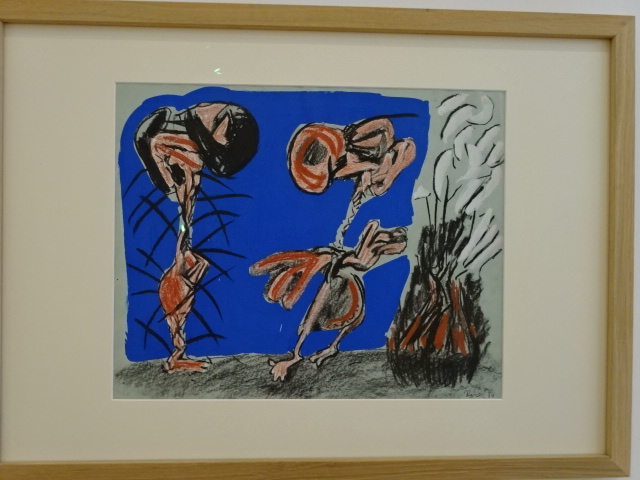
Scene by the Fire, 1984

I know Róna’s sculptures well, but I was not familiar with his paintings. Róna designed the abstract Franz Kafka Monument in Prague’s Jewish Quarter, an important sculpture to see in the Jewish Town. He is, indeed, a man of many talents: He has also worked as a painter, illustrator, screenwriter, author of books, actor, singer and educator. His works have a certain dynamic energy. He has been inspired by the Expressionism style of Edvard Munch, Oskar Kokoschka, Max Beckmann, Egon Schiele and Pablo Picasso. A supporter of democracy, he drew brochures for the Velvet Revolution during 1989. Rona is also an avid traveler. His sculptures can be found at Prague Castle as well as on the island of Crete and in many other places.

Josef Váchal

Sacrifice, undated

I liked the mystical quality in Váchal’s works. He was a graphic designer, wood engraver, bookmaker, writer and painter who excelled in all those genres. Váchal was inspired by expressionism. His works featured symbolism, naturalism and Art Nouveau tendencies. A soldier during World War I, he fought in 12 battles. The Communist coup brought hard times for Váchal, who remained isolated after 1948. People did not show much interest in his work then. In the 1960s, he received some acclaim. Much later people recognized that Váchal had created some of the most significant works of Czech graphic design in the 20th century.

Augusta Nekolová

Four Seasons, 1914

Because Nekolová was female, she had limited educational opportunities during the 19th and early 20th century. She did, however, study unofficially under the prominent Czech artist, Jan Preisler. Nekolová worked as a painter, illustrator and graphic artist. She steered away from representations of modern life in her works. She was known for her landscapes and for her emphasis on motherhood. Nekolová strove to promote the national identity of the Slav nation. She developed a strong interest in folk culture. At the end of World War I, Nekolová was hospitalized. She died in 1919 at the age of 29.

Bohumil Kubišta

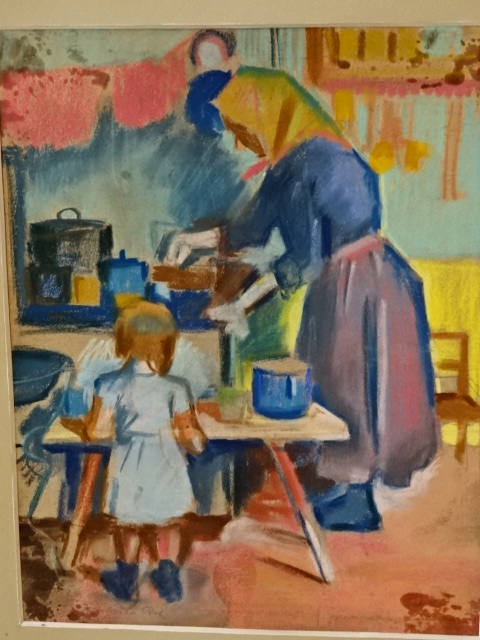
In the Kitchen, 1908

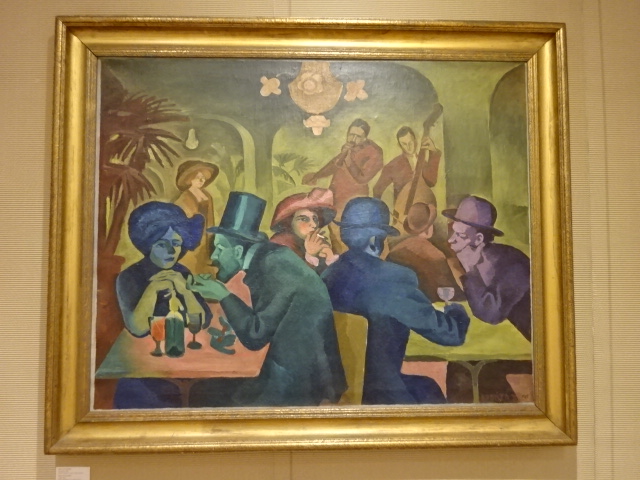
Café, 1910

A prominent avant-garde artist, Kubišta helped found the Expressionist group the Osma (The Eight). He was a painter, graphic designer and theoretician and is considered to be the founder of Czech modern painting. His works dealt with existential issues. Kubišta’s expressionism was inspired by Munch. He was also influenced by Braque and Picasso’s Cubism. Kubišta analyzed the works of Eugene Delacroix and Vincent Van Gogh. His works also contain elements of Futurism and Fauvism. Kubišta often explored themes dealing with modern technology and nature. While serving in the Austrian army during World War I, he won the distinguished Leopold Order. He died of the Spanish flu at the age of 34 in 1918.

Emil Filla

Dance of Salome, 1911

Hej hore háj, Folk Song, 1948

Along with Kubišta, Filla established the Osma group. He also was known for his writings about art theory. During his early artistic endeavors, he drew inspiration from Edvard Munch’s Expressionism. Later he took up Cubism, influenced by Picasso and Braque. He also was captivated by Baroque still lifes by Dutch painters. El Greco and his symbolism fascinated Filla. In the 1930s, he became enthralled with surrealism. His landscapes demonstrate his knowledge of Chinese calligraphy. My favorite trait in his paintings involves his use of a harmony of colors.

Repression (Anxiety) by Josef Wagner – temporary exhibition

I especially liked the exhibition’s pieces of art influenced by Expressionism and Cubism. The colors and shapes in Kubišta’s and Filla’s works caught my undivided attention. I was introduced to Nekolová’s art and intriguing background at this exhibition. I was fascinated how Quido Kocián captured the emotions of the human soul in his sculptures while Zívr concentrated on simple forms to create profound meaning. Kolář’s collages were a sort of visual poetry. Váchal and Róna’s creations displayed impressive energy.

Moscow Diary, 1989 by Anna Daučíková

It was my first visit to Hradec Králové, except for brief stops at the train station and bus station. The Gallery of Modern Art with its poignant exterior and interior decoration and use of space was one of the most impressive buildings I saw.

Tracy A. Burns is a writer, proofreader and editor in Prague.

Landscape, 1962 by Vladimír Boudník

Apollo and Dionysus, 2013 by Anna Hulačová

The gallery also has an impressive collection of contemporary art.

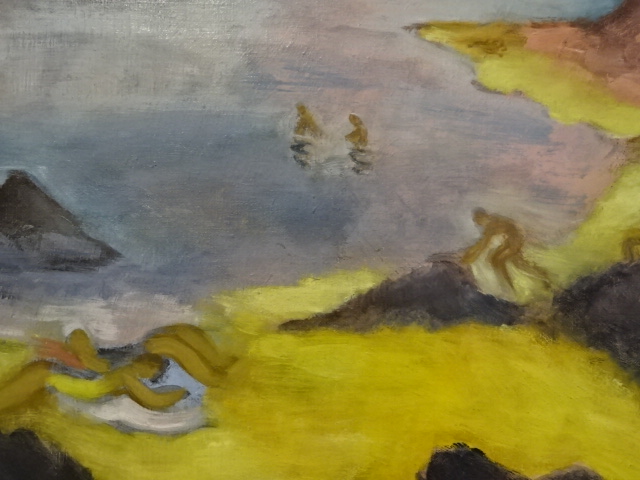
Beach in Crimea (In A Small Bay), 1936 by Věra Jičínská, temporary exhibition

See my post Věra Jičínská Exhibition Diary for more information on this temporary show.

Zbiroh Chateau Diary

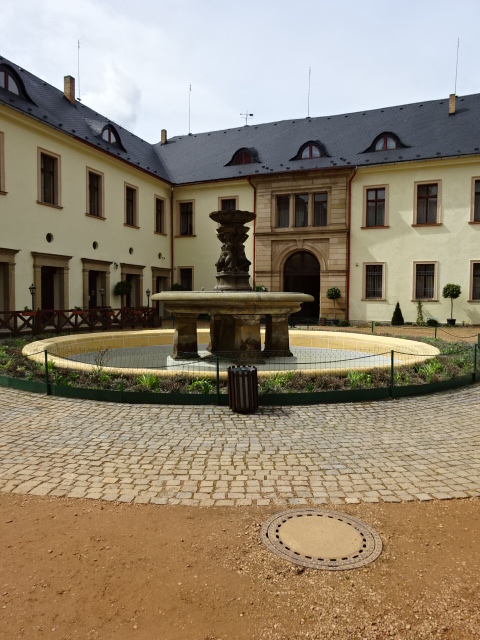
I was very excited to visit Zbiroh Chateau because, even though it had been open to the public since 2005, I was visiting for the first time. It wasn’t far from Prague, either. I knew that the chateau served as a hotel, but I hadn’t realized that there also were tours of the representative spaces. After a steep incline, I approached the two lavish statues of lions that guarded the entrance. The entrance gate seeped with grandeur. Both features hailed from a 19th century renovation.

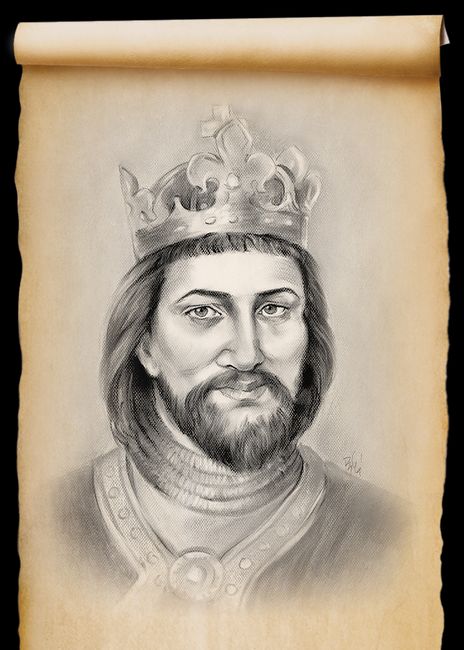
Czech King Přemysl Otakar II, photo from Turistický denník

I learned about the fascinating history of Zbiroh on the tour. It was built before some time before 1230. In the late 13th century, Czech King Přemysl Otakar II conquered Zbiroh. The Přemysl dynasty of Czech rulers was legendary in the Czech lands. Přemysl Otakar II built many towns, among other accomplishments.

Holy Roman Emperor Charles IV, photo from Medieval Histories

In the 1330s, the future Holy Roman Emperor Charles IV gained control of the property. Charles IV would become perhaps the most prominent figure in Czech history. who had controlled the castle after he returned from fighting in France. Charles IV established towns, churches and castles, for instance. He created Prague’s New Town district, what is now called the Charles Bridge and the first university in Prague. He also had Prague’s Saint Vitus’ Cathedral built.

Emperor Sigismund, photo from Quora

During the 14th century, Petr of Rosenberg owned the castle, and it would stay in his family for about 100 years. Emperor Sigismund, the son of Emperor Charles IV, bought the castle from the Rosenbergs during the 15th century. Other famous royal dynasties would take over the chateau from the time of the Hussite wars in the 15th century – first the Kolowrats, then the Lobkowiczes, then the Sternbergs. During the Hussite wars of the 15th century, Zbiroh was not damaged, a fate that did not behold many other Czech monuments.

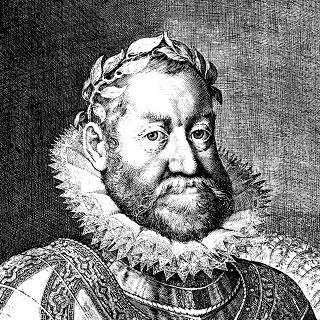
Emperor Rudolf II, photo from Kalendar.beda.cz

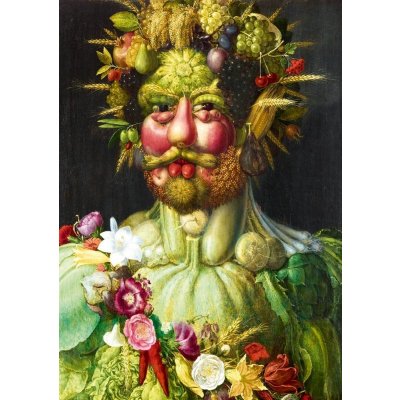
Emperor Rudolf II as Vertumnus, painted by Arcimboldo, photo from Heureka.cz

At the end of the 16th century, Holy Roman Emperor Rudolf II acquired Zbiroh, and he would have a momentous effect on the castle’s history. Emperor Rudolf II had made Prague the center of the Habsburg monarchy. A lover of art, Rudolf II bought many paintings, and, thanks to him, Prague flourish as a cultural center. He made many changes to the Gothic castle, transforming it into a Renaissance chateau. He liked to hunt on the property.

However, this golden age would come to an end. After the Battle of White Mountain, which the Catholics won against the Protestants in November of 1620, the castle was turned into a prison for the defeated soldiers. During the Thirty Years’ War, Swedish troops damaged and pillaged the chateau Until the middle of the 19th century, the chateau was dilapidated.

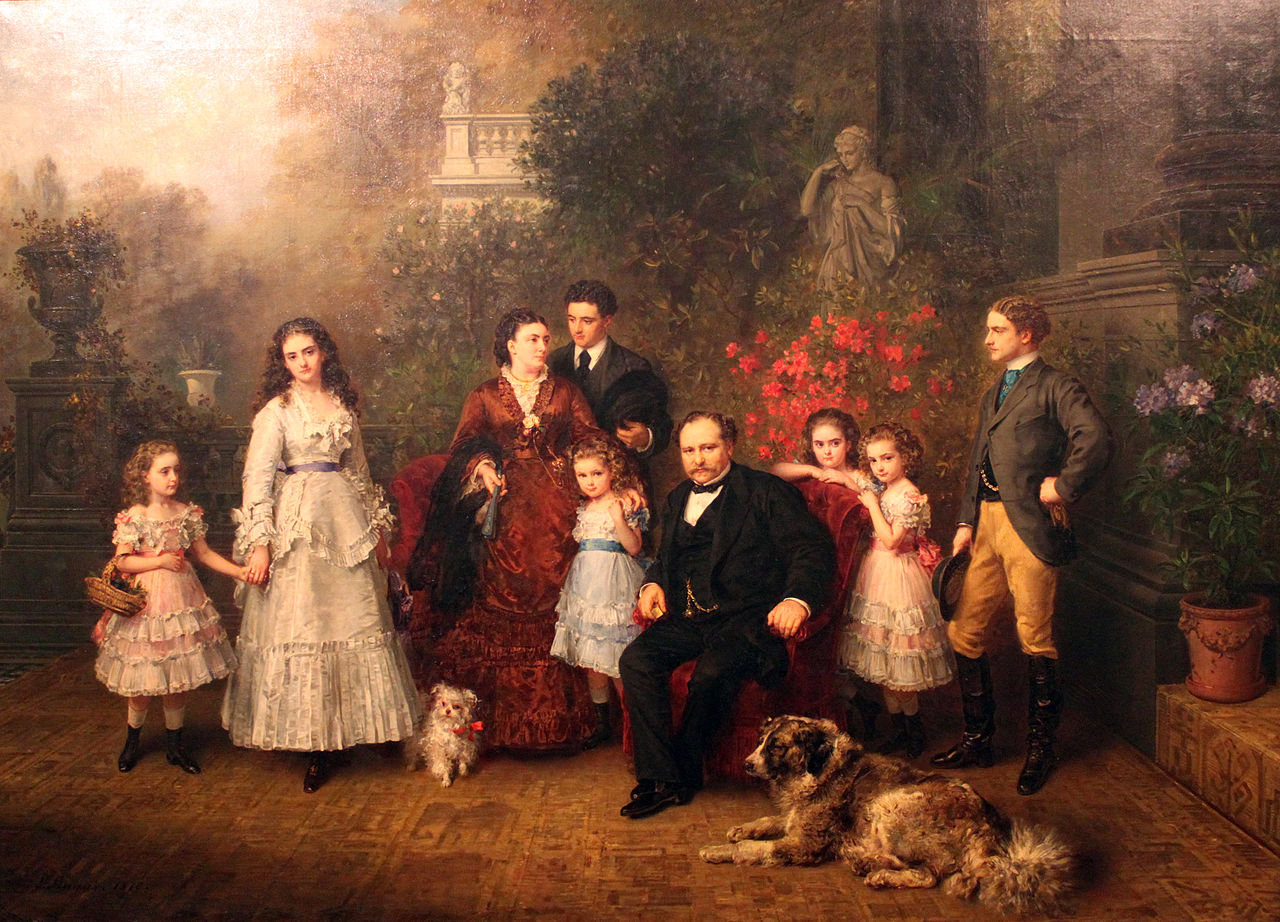
Baron Henry Bethel Strousberg and family, photo from Epochplus.cz

That’s when European entrepreneur Baron Henry Bethel Strousberg came along. He made a name for himself throughout Europe as the owner of iron and coal mines, factories and property, among other things. After he purchased the chateau, he made it a representative seat and modernized it. He envisioned making Zbiroh an industrial center focusing on extracting iron ore and wood coal. However, the ore had phosphorous in it, and the project, thankfully, had to be abandoned. Baron Strousberg wound up going bankrupt. He fled to Russia, where he was incarcerated for two years. Then Strousberg went back to Berlin. His family fled to London. The once influential and wealthy Strousberg called an attic flat owned by his former cook home. He died there, penniless.

The lavish arch built during Strousberg’s tenure at Zbiroh

The next owner of the chateau was Duke Joseph Coloredo-Mansfeld. He rented it to legendary Art Nouveau artist Alphonse Mucha. While residing at Zbiroh, Mucha created some of his most important paintings, such as the 20 Slav Epic depictions that celebrate Slav identity.

View from the terrace at Zbiroh

The Mansfelds hung onto the chateau until the Nazis came and turned the place into a SS headquarters. At the end of the war, the Nazis hid their secret documents in the bottom of the chateau’s well – at 163 meters it was the deepest in Europe. Then they covered it with a metal plate at the 150-meter mark so that their documents would be difficult to retrieve.

View of Zbiroh from postcard

The Czechoslovak army took control after the war, in 1945. Zbiroh was taken off the map as a top-secret facility was placed there. Czechoslovakia gathered information about NATO armies. The soldiers did not take care of the chateau. They even used the unique well as an ashtray. The army didn’t leave until 2004, when a private company bought the chateau and Zbiroh was put back on the map. It was open to the public in 2005. Zbiroh’s history is also connected to the Teutonic Knights as the current owner is a member.

The tour was fascinating. In the first room I liked the collection of African masks on the wall. Remnants of some of the documents the Nazis had tried to destroy in the well were on display in another space. My favorite artifacts were the Madonna statues dotting the representative rooms, some hailing as far back as the Romanesque and Gothic eras. A 650-year old Madonna was the most valuable artifact in the chateau. The Christ child appeared jovial and curious while the Virgin Mary looked like a proud mother. In a Late Gothic Virgin Mary sculpture from the 15th century, the Christ Child was smiling, about to break out in laughter. The Virgin Mary donned an elegant, simple crown. An ivory statue of Saint Nickolas also caught my attention. It hailed from the 14th century.

I saw a masterfully carved 13th century Romanesque chest, too. Chamber tiles from the 15th century showed Saint George battling the dragon. I saw many copies of works by Leonardo DaVinci, including the Mona Lisa, a self-portrait of the painter and a portrait of Mary Magdalene. Even though they were reproductions, these paintings were very impressive. A life-size carving of Saint Vitus from the 18th century was another delight.

On the lavish dining room table gilded silverware hailed from the era of Empress Maria Theresa. The napkins were shaped in the form of a lily, a royal symbol. I also saw a detailed map of Bohemia from 1702. The Empire furnishings bought in the mid-19th century were ravishing, too.

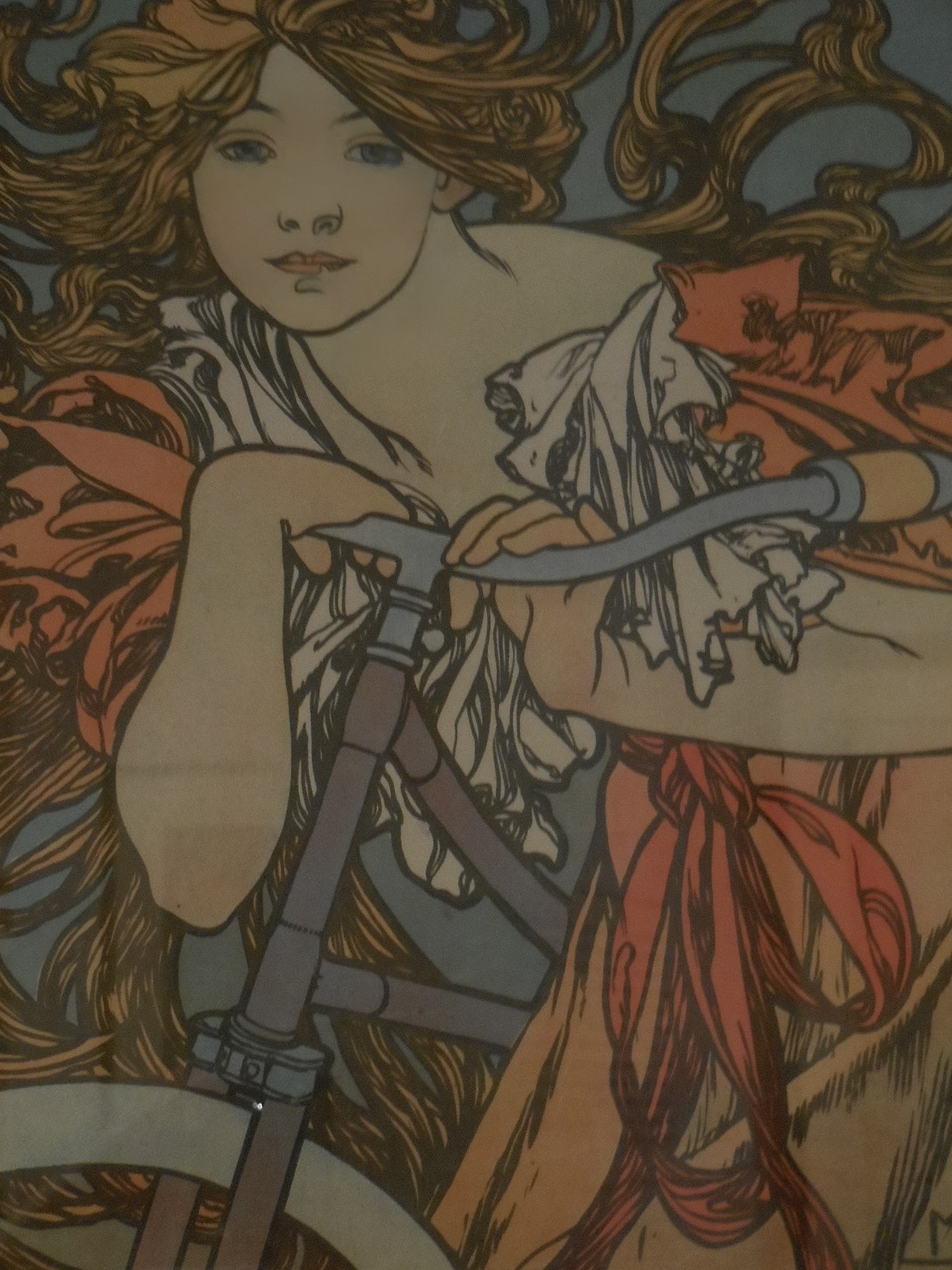
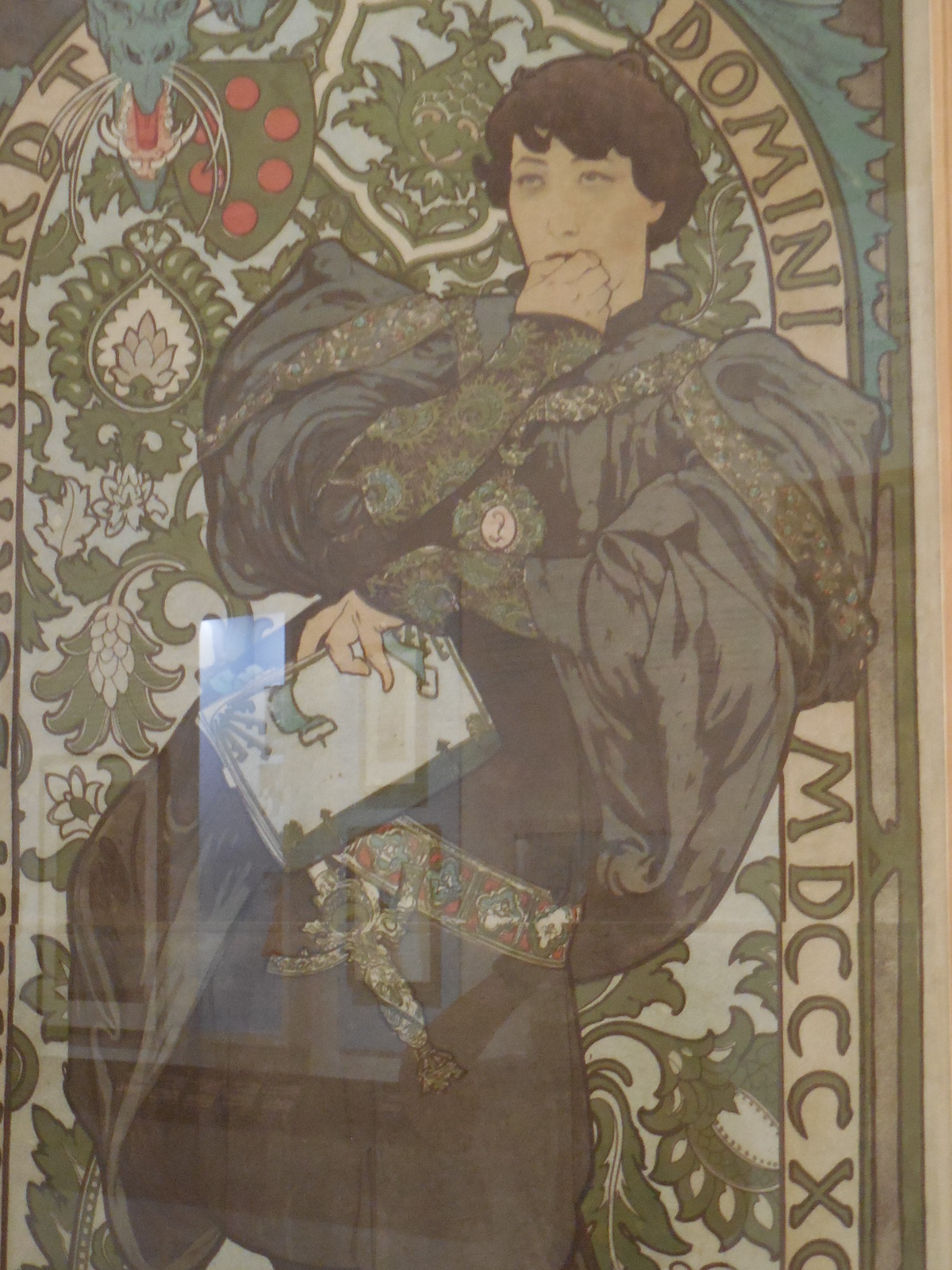
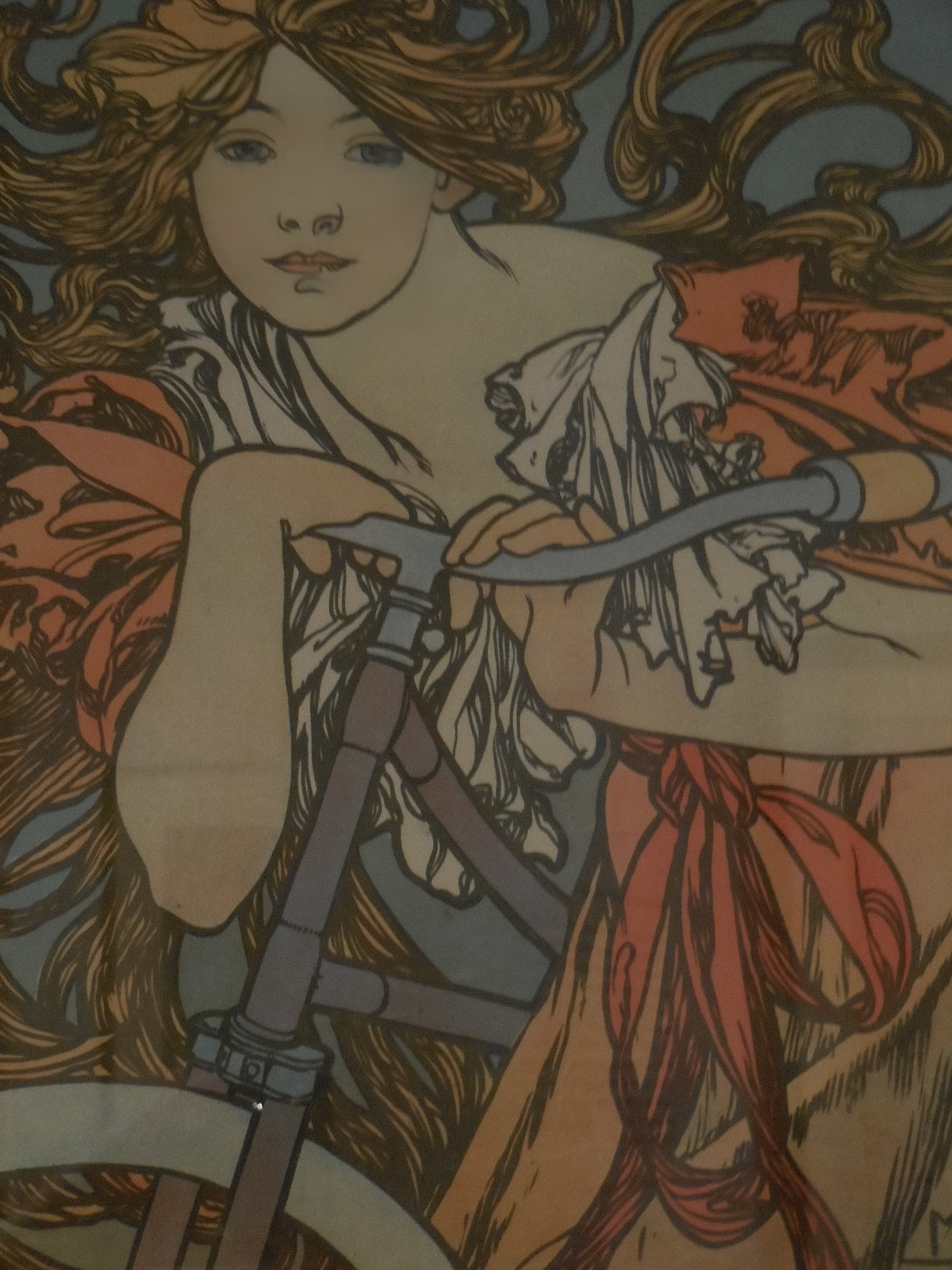
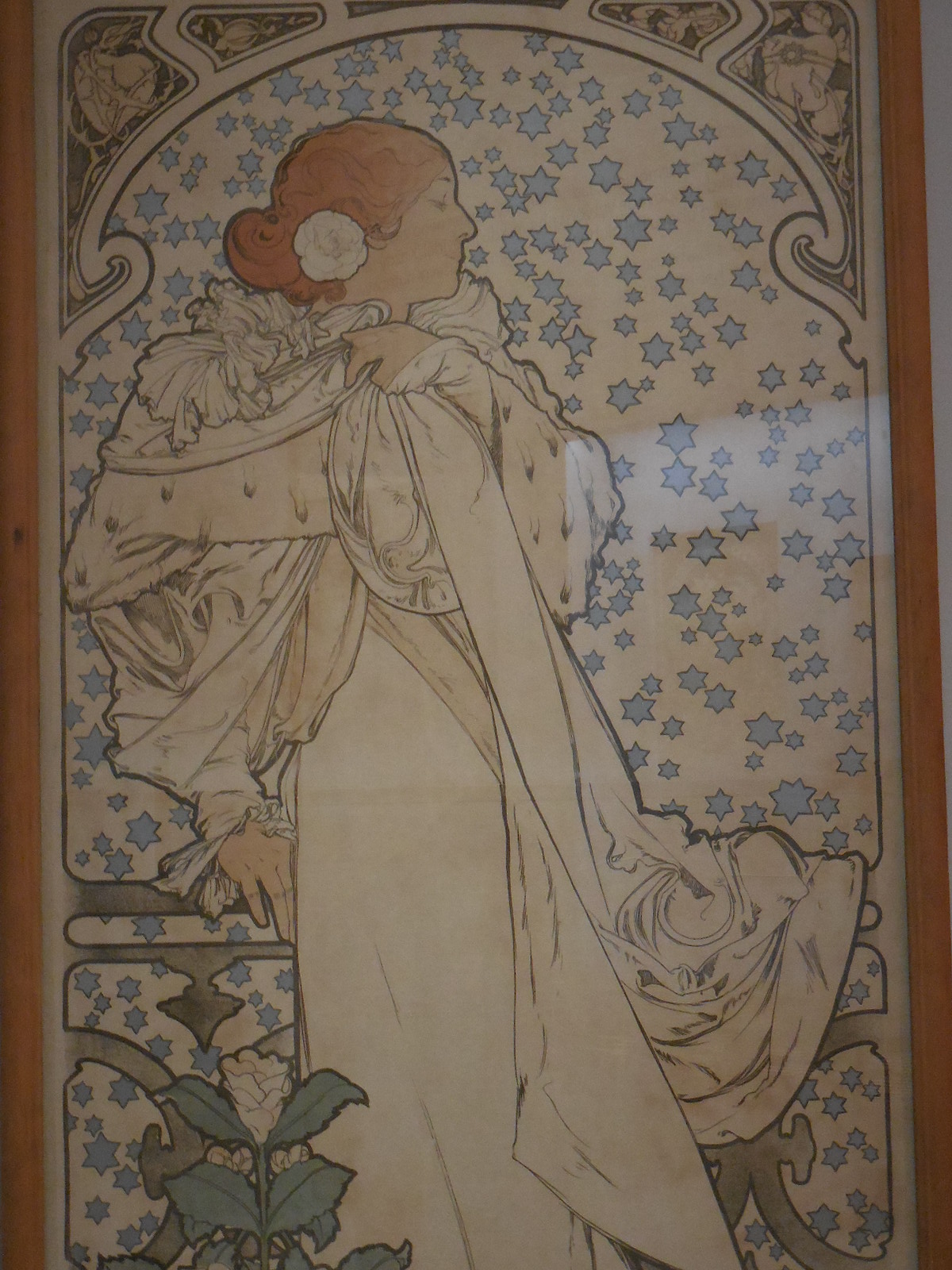
Alphonse Mucha created posters for actress Sarah Bernhardt and achieved worldwide acclaim. Photo taken at Mucha exhibition in Wallenstein Riding Stables, 2022.

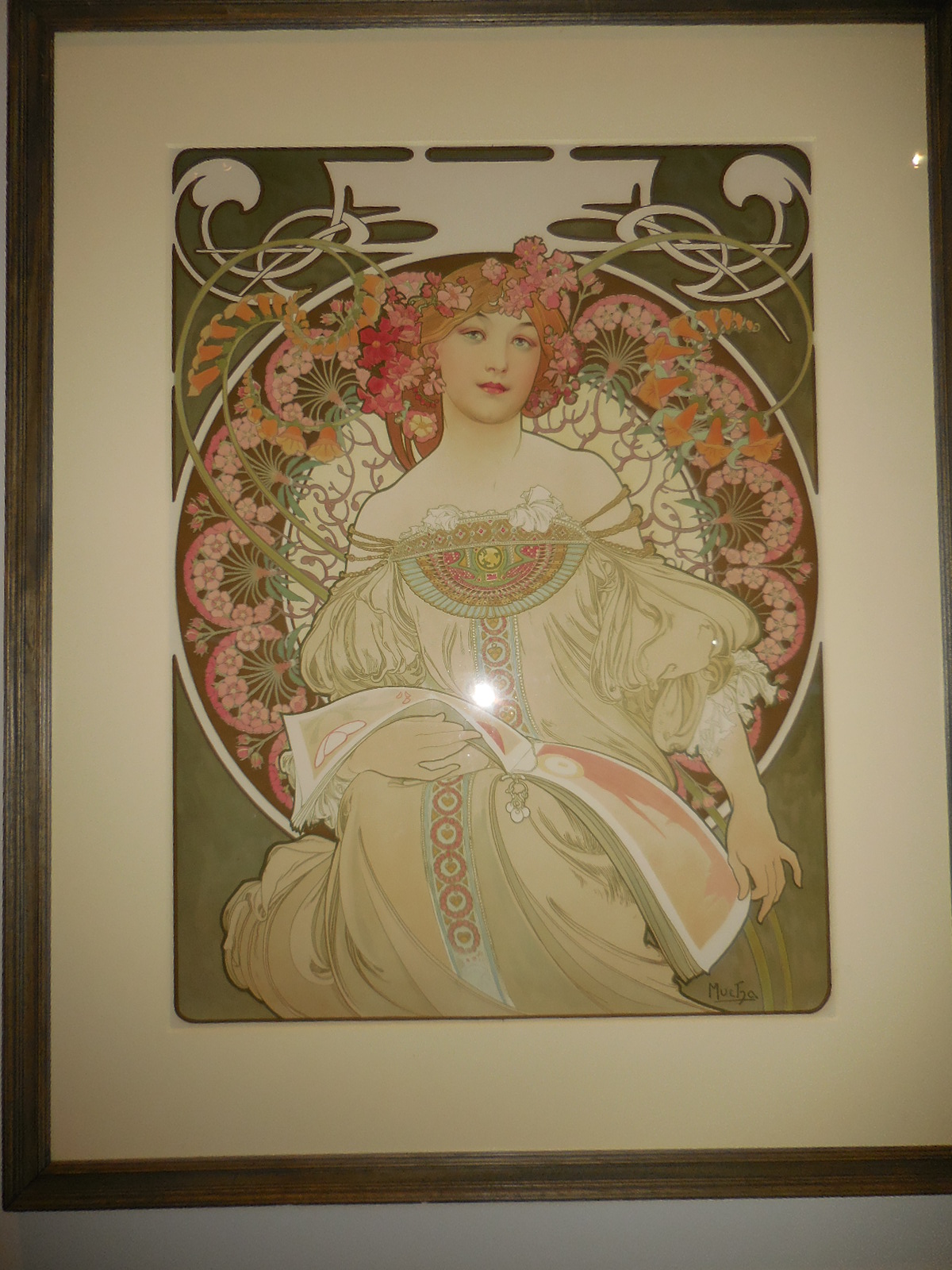
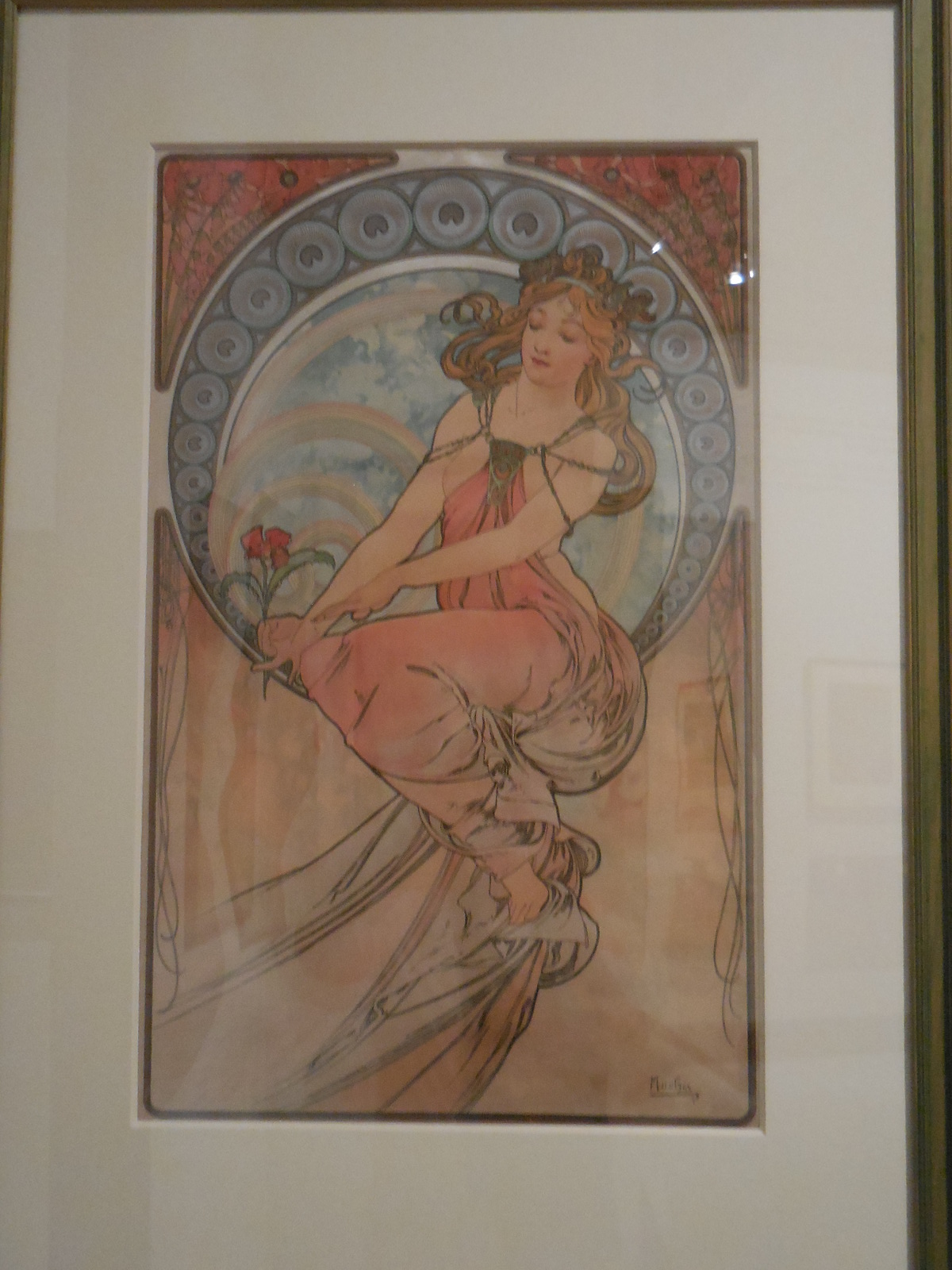
Mucha’s Rooms were another highlight. I had been a fan of Mucha’s Art Nouveau works for a long time. I had visited the Mucha Museum in Prague and only months before this visit, I had seen the comprehensive Mucha exhibition in the Wallenstein Riding Stables in Prague. In these spaces, I saw a portrait of Mucha featuring Masonic symbols because he had been a Mason. Also, Masonic medals owned by Mucha were on display. I was entranced by Mucha’s historical painting “Master John of Rokycany at the Council of Basel” from 1933. On one wall, Mucha’s students had painted female figures in their teacher’s style.

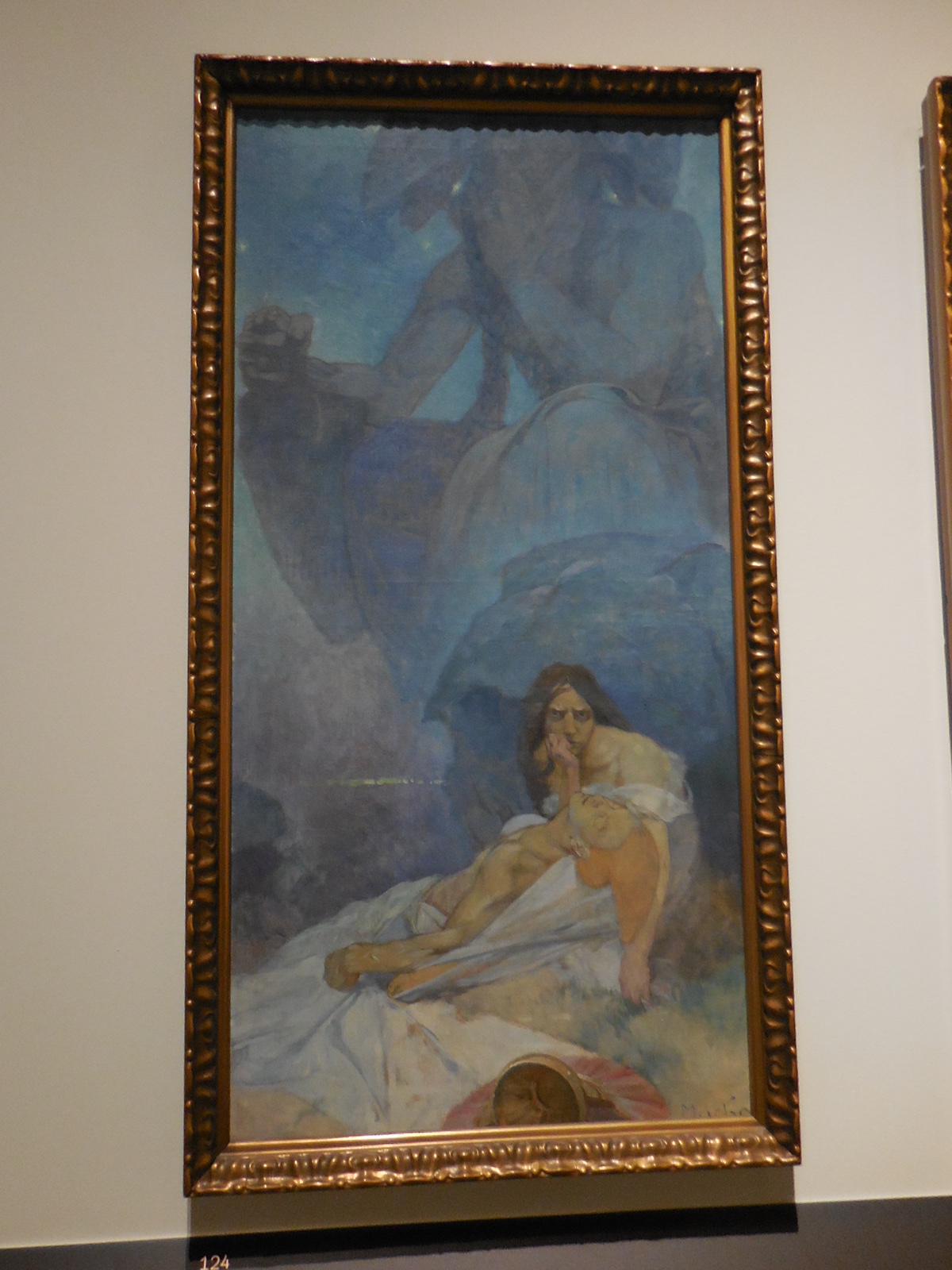
From Mucha’s Slav Epic paintings, photo taken at Mucha exhibition in Wallenstein Riding Stables, 2022.

The ballroom was the most beautiful space. This was once Mucha’s studio while the balcony had served as a dark room for his photographs. The large room was built in the second half of the 19th century. It featured a skylight with glazed glass and two elegant crystal chandeliers. I spotted Zbiroh Chateau behind what looked like blue mist in a painting by Mucha. The yellow, blue and red decorative wall painting enthralled me as well.

Another masterpiece by Alphonse Mucha, photo taken at Mucha exhibition at Wallenstein Riding Stables, Prague, 2022

Then we walked down a long hallway with Renaissance, Gothic and Baroque tapestries and armors of knights from various eras. As the tour ended, I was very glad I had finally discovered this gem. The history of the chateau was riveting, and the artifacts in the representative spaces were amazing.

It was time to get something to eat. In the parking lot, I noticed the beech trees that surrounded the chateau and listened to the sound of silence. It was so quiet and tranquil, such a relief from the hustle and bustle of daily life.

Tracy A. Burns is a writer, editor and proofreader in Prague.

Mucha: The Family Collection Exhibition Diary

I have been a fan of Alphonse Mucha’s Art Nouveau works ever since I came to Prague in the 1990s. While he is best known for his exhilarating posters of actress Sarah Bernhardt, Mucha was a very versatile artist – as is evidenced in this comprehensive exhibition of creations owned by his descendants. The first extensive showing of his works in 30 years is housed at Prague’s Waldstein Palace. The exhibition highlights not only the advertising posters but also his drawings, paintings, sculptures, photos and jewelry, for instance. The family displays some originals to the public for the first time.  

Family portraits evoking Mucha’s childhood add an intimate feel to the exhibition. Born in Ivančice, Moravia, Mucha called home a building that also included the town jail. The Czech lands were under Austrian rule when Mucha grew up. They were part of the Habsburg Empire in which German was the official language. Yet, during that era, the Czech National Revival took place, when Czech nationalists promoted Czech culture and the Czech language.

At the end of 1894, Mucha became a star overnight when he designed a poster for Bernhardt’s production of Gismonda. The following year he created posters that decorated calendars, postcards and menus as well as theatre programs. His work would find enthusiastic audiences in Vienna, Prague, Budapest, Munich, London, New York and other cities during subsequent years.

I loved how, in his advertising posters, Mucha utilized folk features not only found in Czech art but also in Byzantine, Islamic, Japanese, Gothic, Judaic, Celtic and Rococo works. Much of this genre focuses on beautiful, young women with an optimistic and cheerful flair. They are wearing flowing robes in pastel colors. I loved the touches of floral and plant ornamentation plus arabesques and naturalistic elements, too.

The exhibition boasted family portraits and photos, such as those of his friends Paul Gaugin and Auguste Rodin. Gaugin even was Mucha’s housemate for a while. During the Paris Exposition Universalle of 1900, Mucha represented Austria-Hungary as the show focused on the accomplishments of the past century. I had not known that in 1899 Mucha had designed a jewelry collection that was featured at this major show. One of the jewelry pieces on display at the exhibition features a snake-shaped broach that Bernhardt wore during her portrayal as Medusa. I also was captivated by Mucha’s decorations for a German theatre in the USA. He would wind up making three trips to the United States, hailed by The New York Daily News as “the world’s greatest decorative artist.”

Works in the exhibition illustrated how mysticism had influenced him. His philosophy is also apparent in his creations. For example, he believed in beauty, truth and love to guide him on the spiritual path. For a monument he created a triptych called The Age of Reason, the Age of Wisdom and the Age of Love, fusing these three characteristics into one piece of art. Unfortunately, Mucha didn’t get the chance to finish it.

Perhaps what always captivates me the most about Mucha’s art is his emphasis on Slav identity. Indeed, his phenomenal Slav Epic paintings feature the heroic tales of the Slavs in 20 historical, symbolic canvases. Several reproductions of these works at the exhibition reinforced Mucha’s identity as a Czech and Slav patriot.

I saw panels devoted to Mucha’s decorations in the Municipal House, for which he designed numerous pieces – three wall panels, a ceiling painting depicting prominent Czech personalities, eight pendentives and furnishings. I remember seeing these for myself on tours of the Art Nouveau Municipal House, something I recommend to every Prague visitor. It is notable that, while Mucha’s works often were rooted in Slav identity in the past, he also looked to the future for a prosperous Czech nation.

I was enamored by the reproductions of his stained-glass window designs. The originals decorate the interior of Saint Vitus’ Cathedral at Prague Castle. In 1931 he portrayed Saint Wenceslas, the nation’s patron saint, as a child with his grandmother Saint Ludmila in a central panel along with other panels featuring the lives and work of Saints Cyril and Methodius. Seeing examples of his colorful and vibrant stained glass renditions close-up was for me one of the highlights of this exhibition.

Mucha’s life was cut short by the arrival of the Nazis in Prague, where they set up the Protectorate of Bohemia and Moravia during March of 1939. The 79-year-old Mucha, riddled with health problems, was targeted by the Gestapo. Mucha was a Freemason, Judeophile and a promoter of democratic Czechoslovakia. He was one of the first to be interrogated by the Nazis. Mucha was stricken with pneumonia due to the strain from grueling interrogations and died in Prague 10 days short of his 79th birthday on July 14th, 1939. He is now buried in Prague’s Vyšehrad Cemetery along with other prominent Czechs.

This exhibition takes museumgoers on a unique and unforgettable journey from his childhood roots in Moravia to his time as an outsider in Paris to his experiences in the democratic Czechoslovakia until his untimely death. It stresses his identity as a Moravian, as a Czech, as a Slav and as a European. It shows his accomplishments in the art scene by displaying an eclectic collection of his creations that profoundly punctuated the artistic world.

Tracy A. Burns is a writer, proofreader and editor in Prague.

Bílek Villa Diary

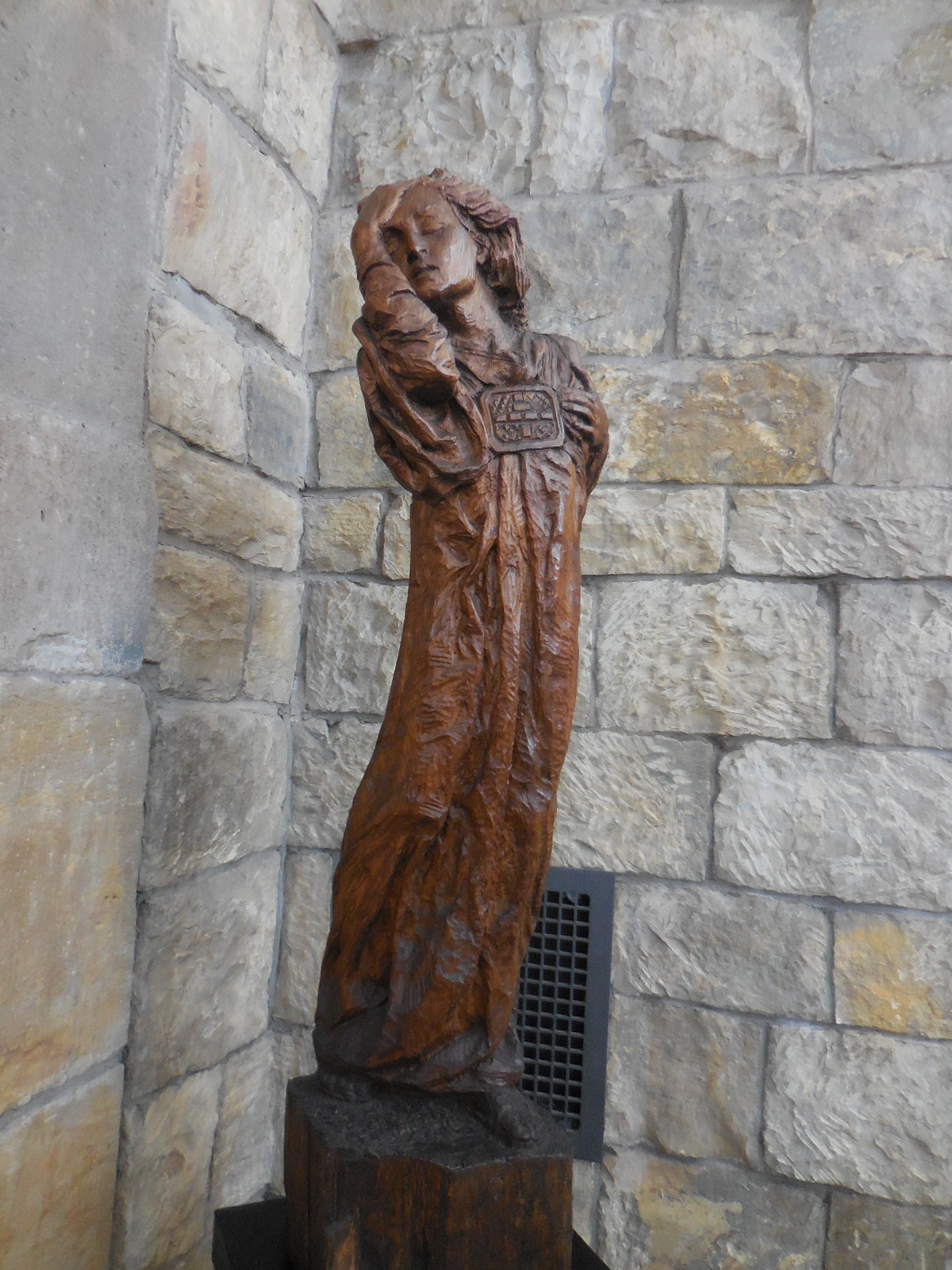
This museum of Art Nouveau artist František Bílek’s works is one of the most underrated art collections in Prague. The many times I have been there it has not been crowded, making it easier to appreciate fully the emotions triggered by Bílek’s sculptures, furniture, drawings, sketches and book illustrations. The symbolism is religious and mystical and seeps into my soul as I am overcome by emotions. Art Nouveau is a style I cherish, too. I am especially drawn to his dynamic wooden sculptures.

František Bílek, born in 1862, initially wanted to become a painter but switched to sculpture because he was colorblind. He would wind up making a name for himself not only for his evocative sculptures but also for his prints, architectural designs, ceramics and books, for instance. A man of many talents, he was very religious, and the works of the Catholic Modernists greatly influenced his works. He later worshipped at a Czechoslovak Hussite Church, inspired by the teachings of Czech martyr Jan Hus who was burned at the stake for heresy in 1415.

Bílek Villa in Chýnov
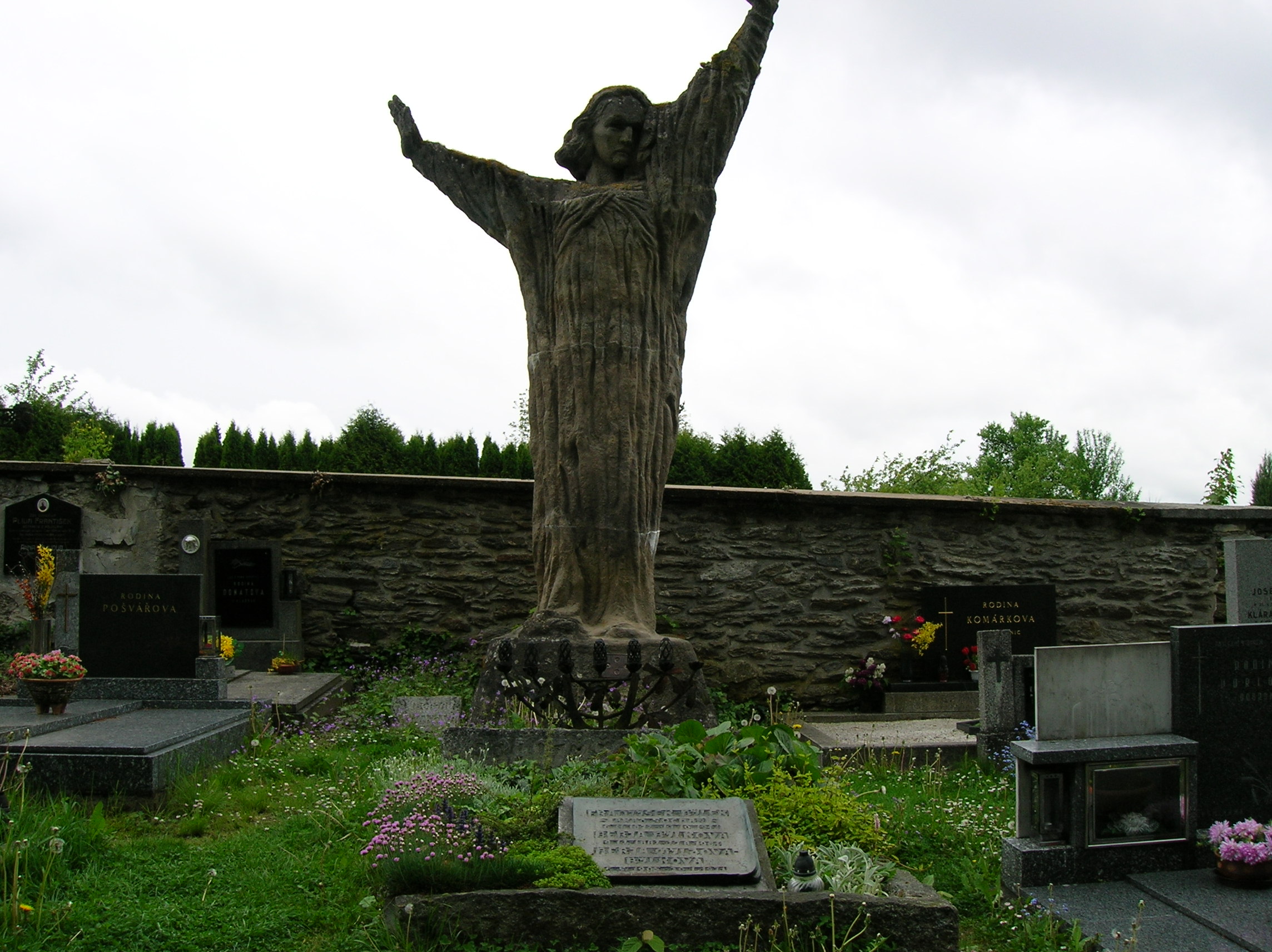
Bílek grave in Chýnov

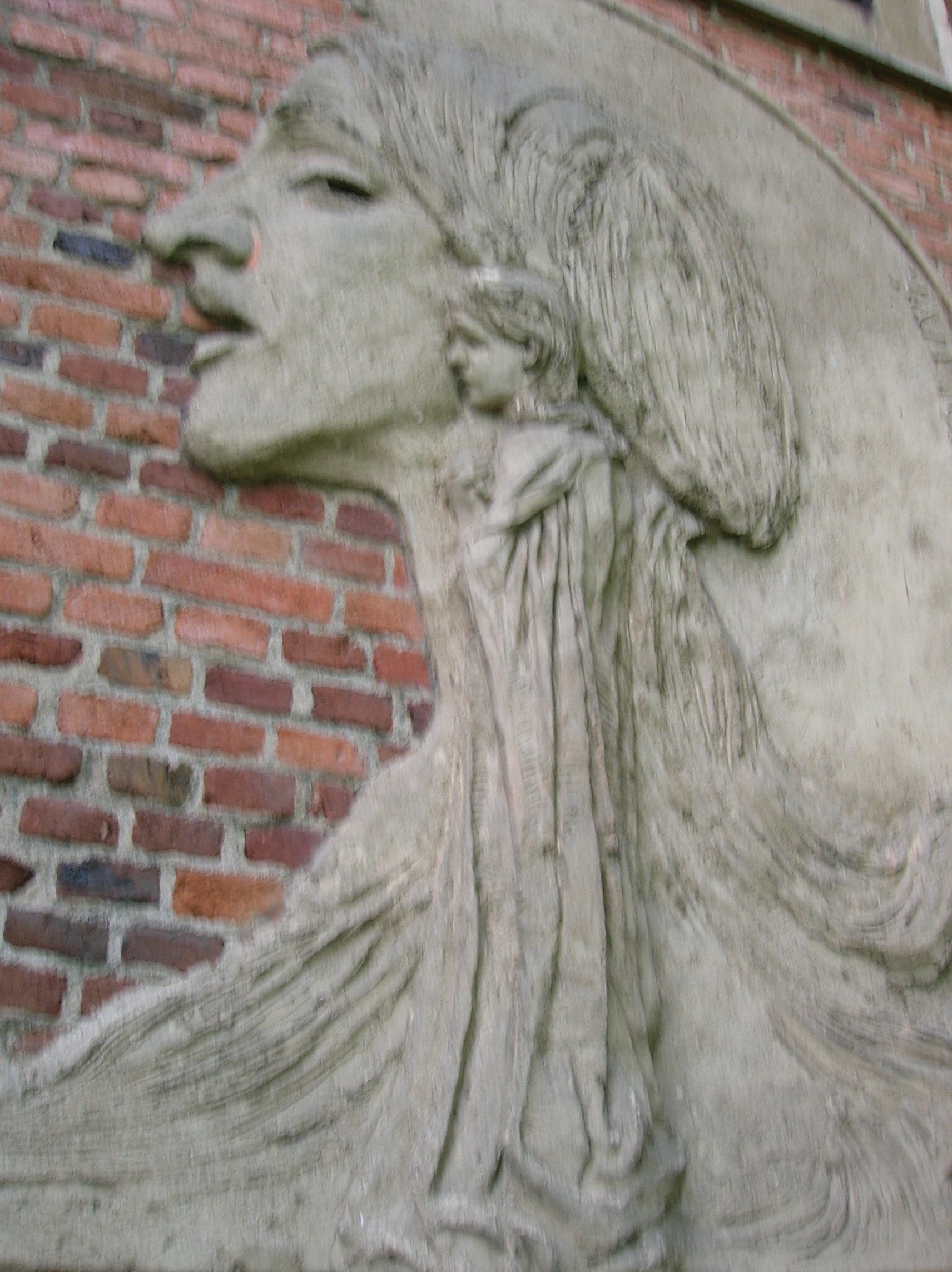
I had also visited Bílek’s hometown of Chýnov in south Bohemia, where his villa there housed more of his fascinating creations. It was easy to find his grave in the cemetery there – a huge sculpture marks the spot. Bílek passed away during the Nazi Occupation, in 1941.

Exterior of villa in Prague

While I waited for the museum to open, I perused the exterior of the building, which was just as intriguing as the inside. It has huge columns that resemble an Egyptian temple as Bílek brings religion to the fore. The irregular shape of the former home also caught my attention. I liked the inscriptions on the side of the building, too. Indeed, Bílek incorporated inscriptions into some of his works. There were several sculptures in the quaint garden.

Jan Amos Comenius from statuary grouping in garden

Dominating the garden was a sculpture that featured Czech national figure Jan Amos Comenius, who contributed greatly to the education system in the Czech lands and had to leave his native land because of threats of persecution on more than one occasion. The sculptural grouping shows the 17th century religious and educational reformer forced to escape his native land. He lived in many countries, including Poland, Transylvania, the Netherlands, Sweden and England. I recalled the play version of his novel The Labyrinth of the World and Paradise of the Heart at Goose on a String Theatre in Brno many years ago. I remember the stunning performance of Petr Oslzlý as the protagonist.

I noticed the elegant Art Nouveau doors as I waited for the museum to open. Soon, it was time. I entered the first room, my personal favorite. It contained numerous sculptures made of wood. I was always overcome by emotion as I perused all the sculptures.

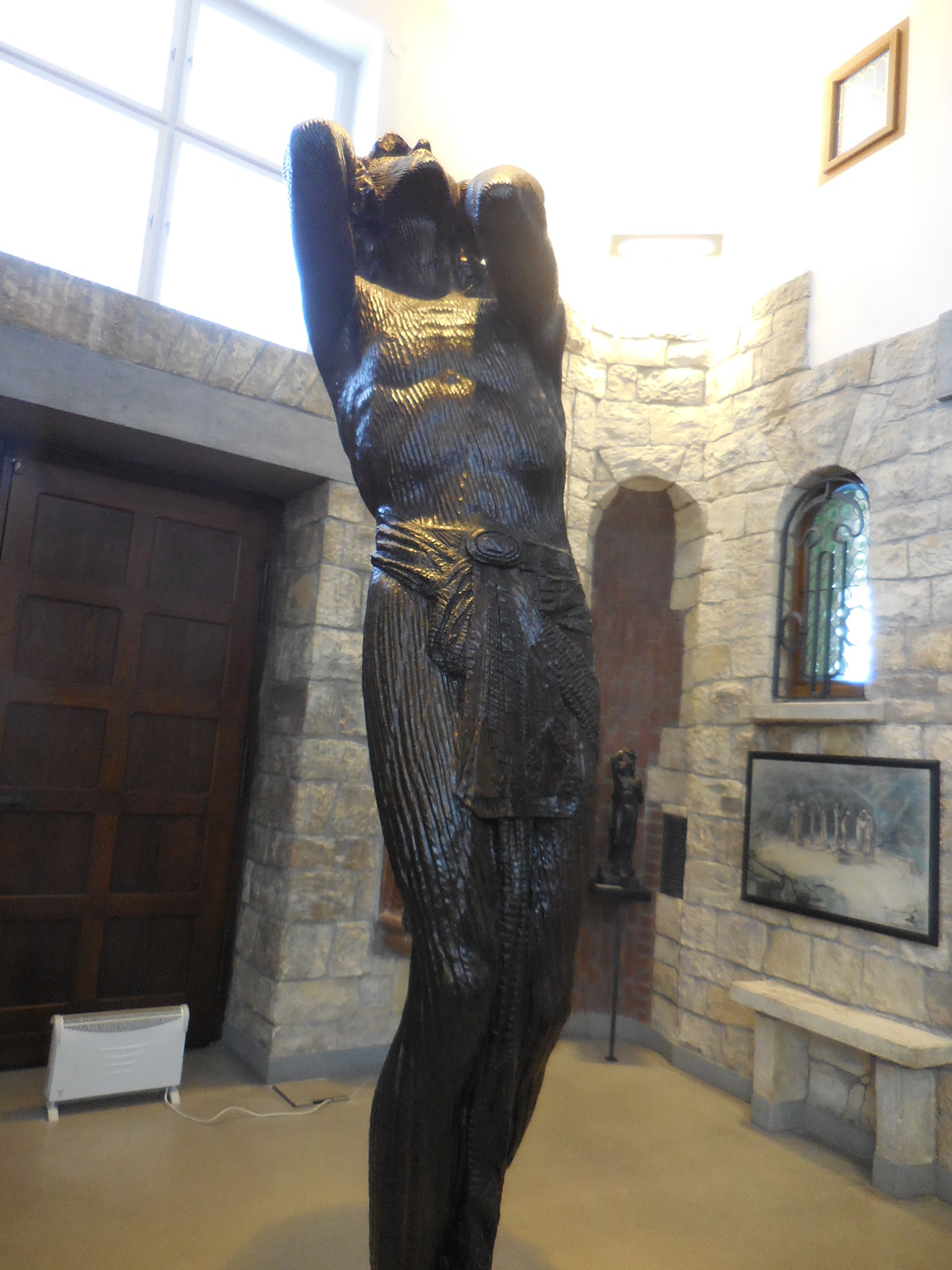
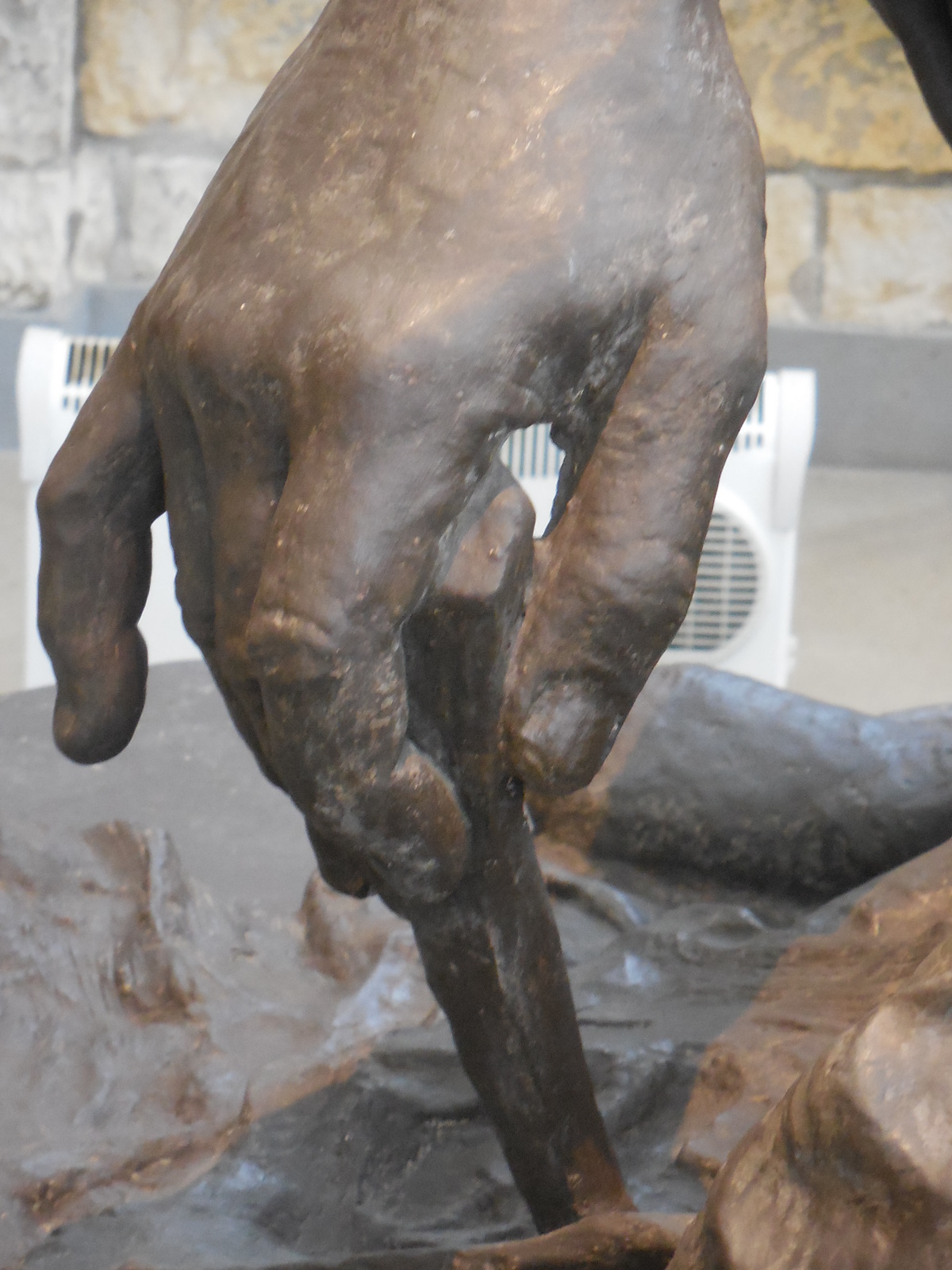
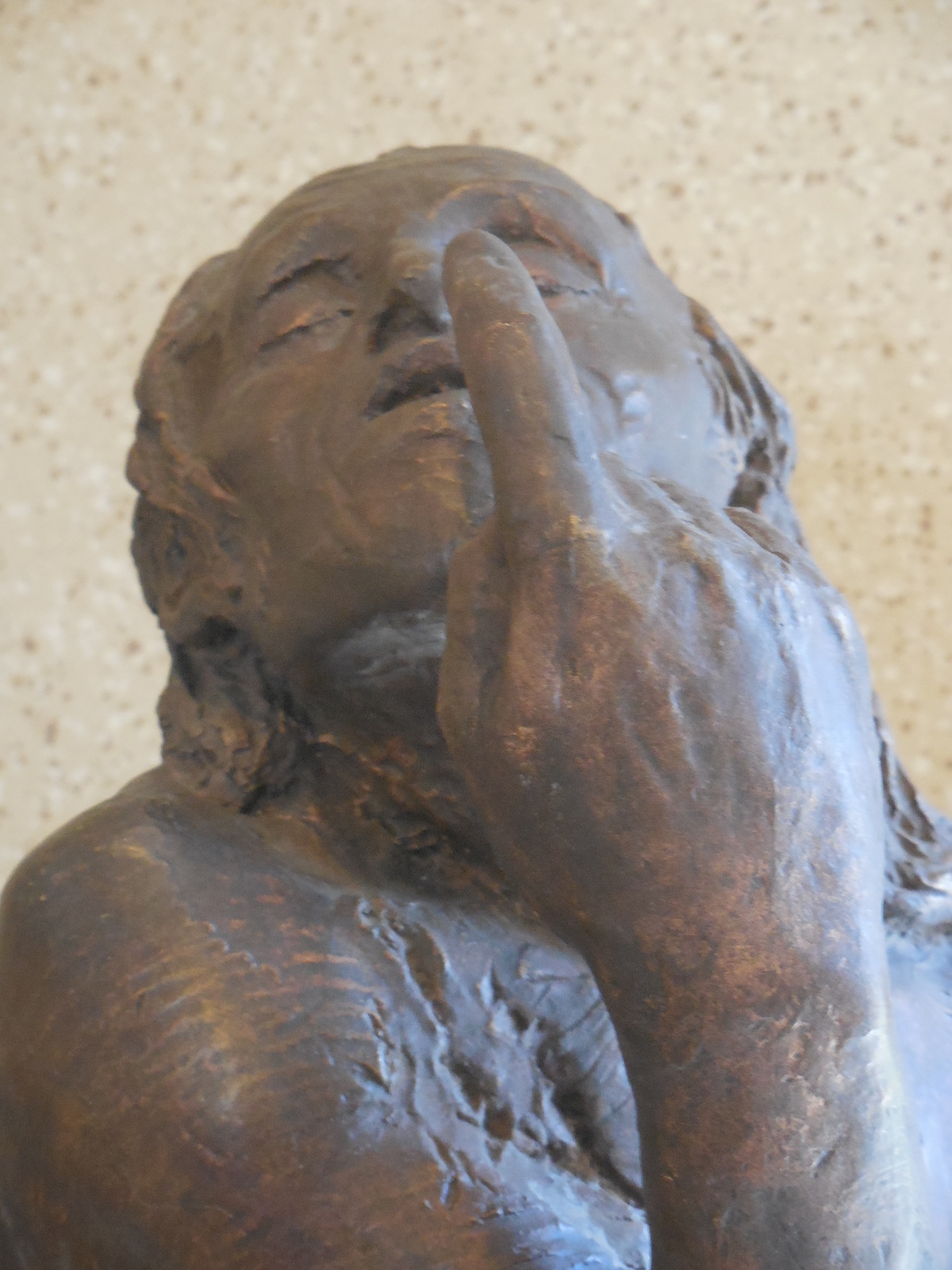
Astonishment
Astonishment

I was most impressed with “Astonishment,” which showed an amazed figure looking up to Heaven. I see the figure as being enthralled by what life has to offer, and it brings me back to my first year in Prague, the last quarter of 1991 and 1992, when my hero, the former dissident and playwright Václav Havel, was president of Czechoslovakia. I was learning Czech, which I consider to be a magical language. I also frequented the Czech theatre where Havel had once been resident dramaturg and playwright as I tried to improve my listening comprehension. A theatre major, I was enthralled by the plays, especially by Havel’s The Garden Party. I met Havel at the premiere of one of his plays, which was a big thrill. I had read the English translations of his books in the USA and had done much research on the Velvet Revolution during university. At that time, I yearned to read his books in Czech.

Look at the details of Christ’s disheveled hair.

Everything was new, and the world seemed full of possibilities. To me Havel symbolized hope. I felt this sense of hope in my personal life as I made new friends and started writing for a weekly English language newspaper, interviewing former dissidents and other fascinating Czech personalities.

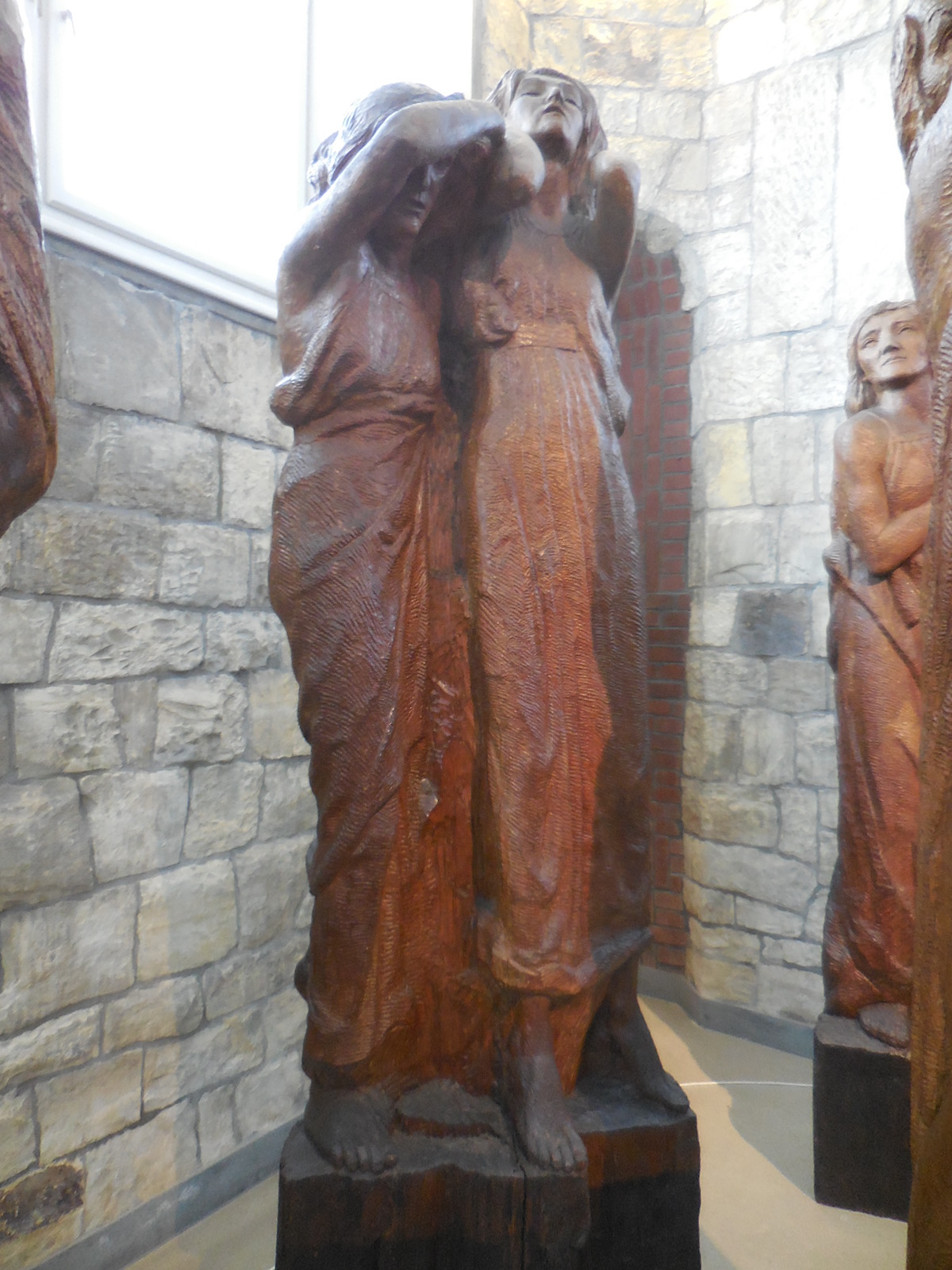
Grief
Grief

Another sculpture that deeply affected me was called “Grief.” I could feel the sorrow seep through my body as I stared at the female figure clearly devastated by death. It brought to mind moments of sadness when I had felt a deep pit in my stomach. Gazing at the statue, I let myself experience the sadness, not trying to stave off the painful emotions.

A charcoal drawing that spoke to me was “The Blind,” portraying a blind man leading a blind woman, perhaps on a path to knowledge. (I apologize for not having a picture of this one. The reflection of light on the glass didn’t allow for a decent photo.) The blind man is clearly upset that he cannot see as evidenced by his hand gesture. While they cannot see, they have an inner vision that is necessary to develop as one goes through life, experiencing trials and tribulations. It made me think of the many times I had made mistakes and how I learned from them. I also had learned not to be niave and not to trust everyone or take everyone at their word.

I also marveled at Bílek’s massive furniture, created with light and dark wood. Much of the furniture sported religious motifs as a desk even resembled an altar. I also saw family portraits that reminded me that the villa had once been a home. It gave the place an intimate quality. I wondered what kind of conversations had taken place in that villa when the Bílek family resided there. What had they worried about? What had made them happy?

After a while, I left, feeling so much stronger mentally. This was a museum I could visit often and still be greatly affected by the works of art.

Tracy A. Burns is a writer, proofreader and editor in Prague.

Museum of Decorative Arts in Berlin Diary

BerlinMDA38

BerlinMDA3

BerlinMDA22

BerlinMDA2

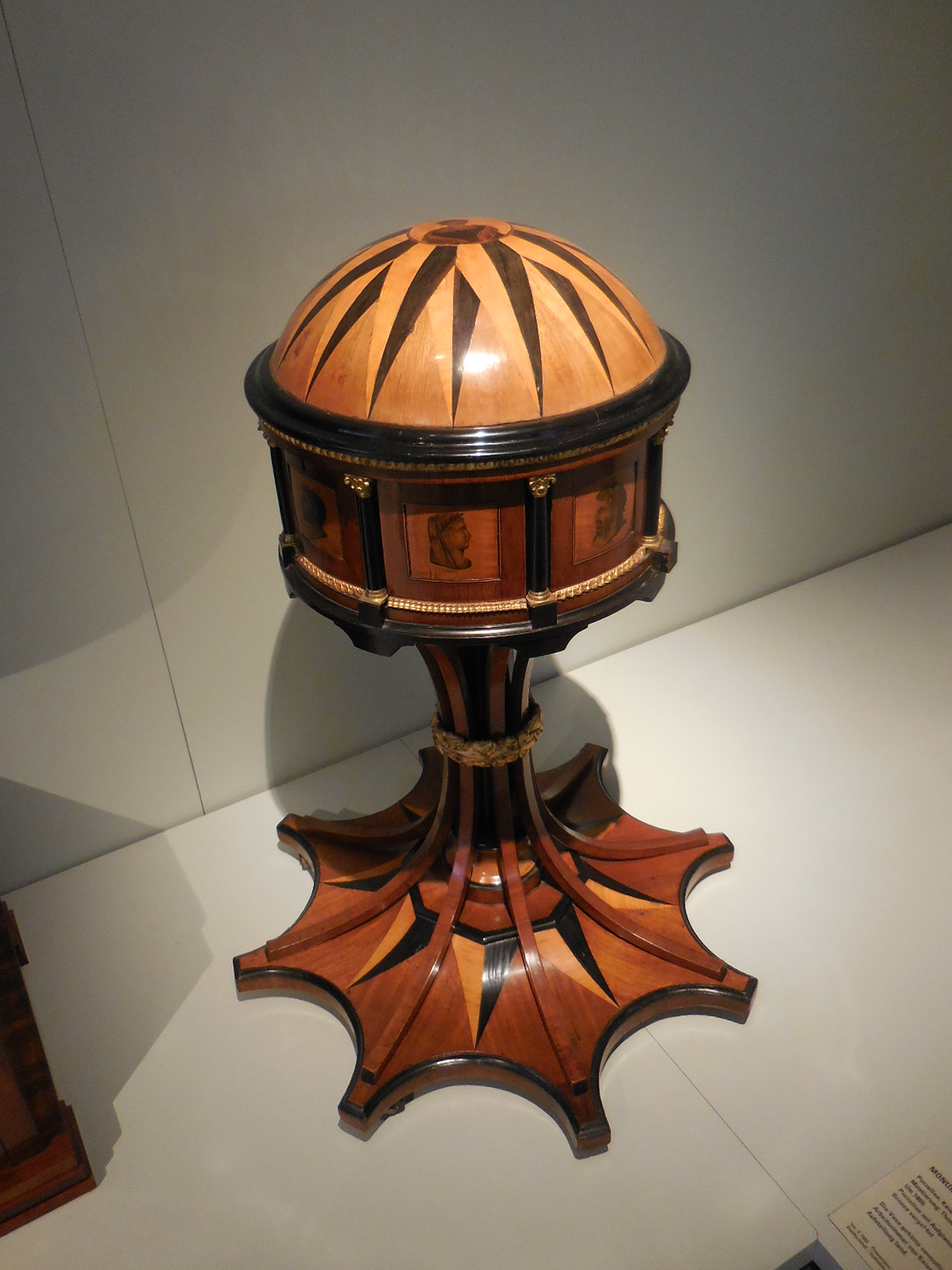
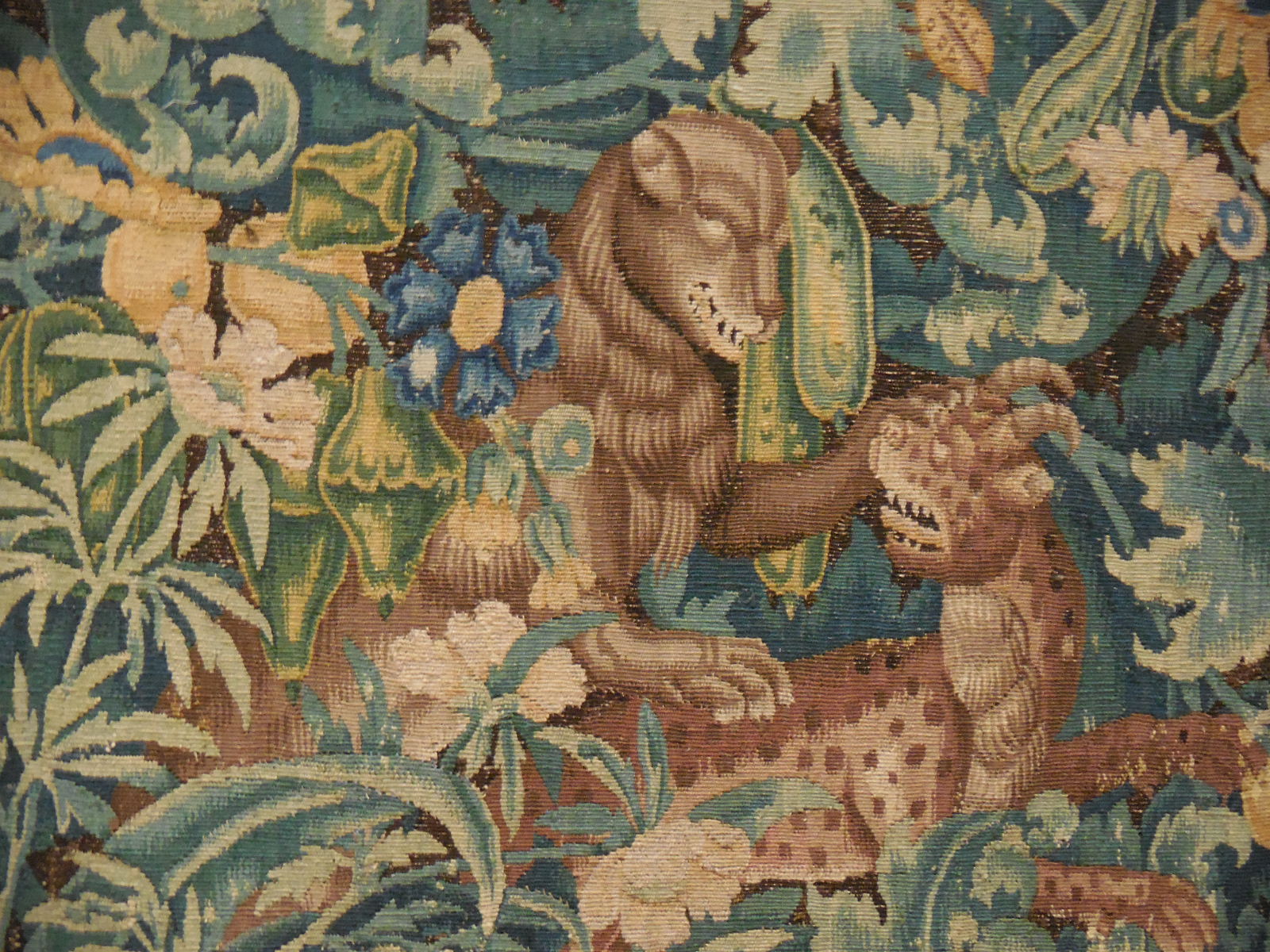
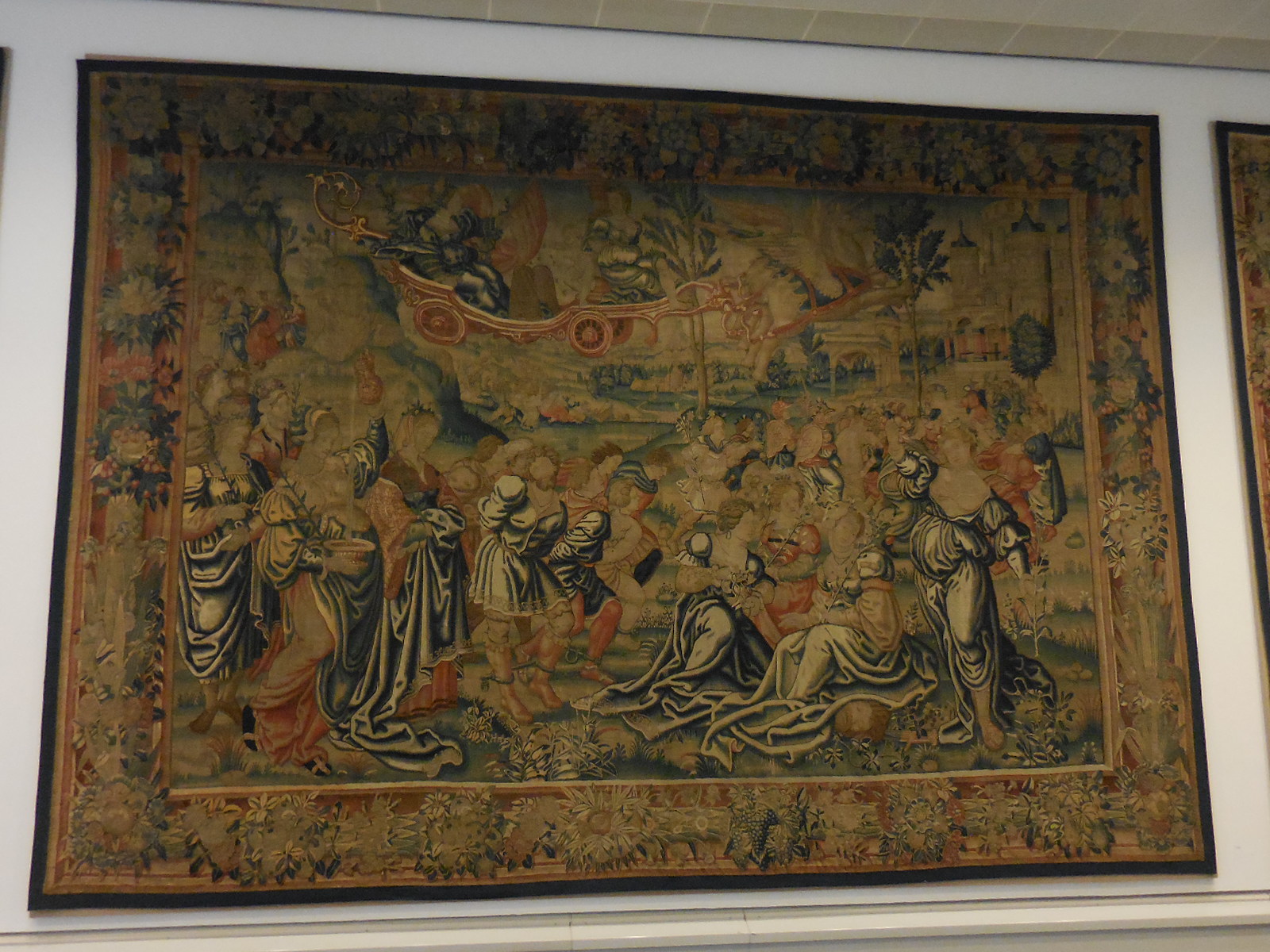
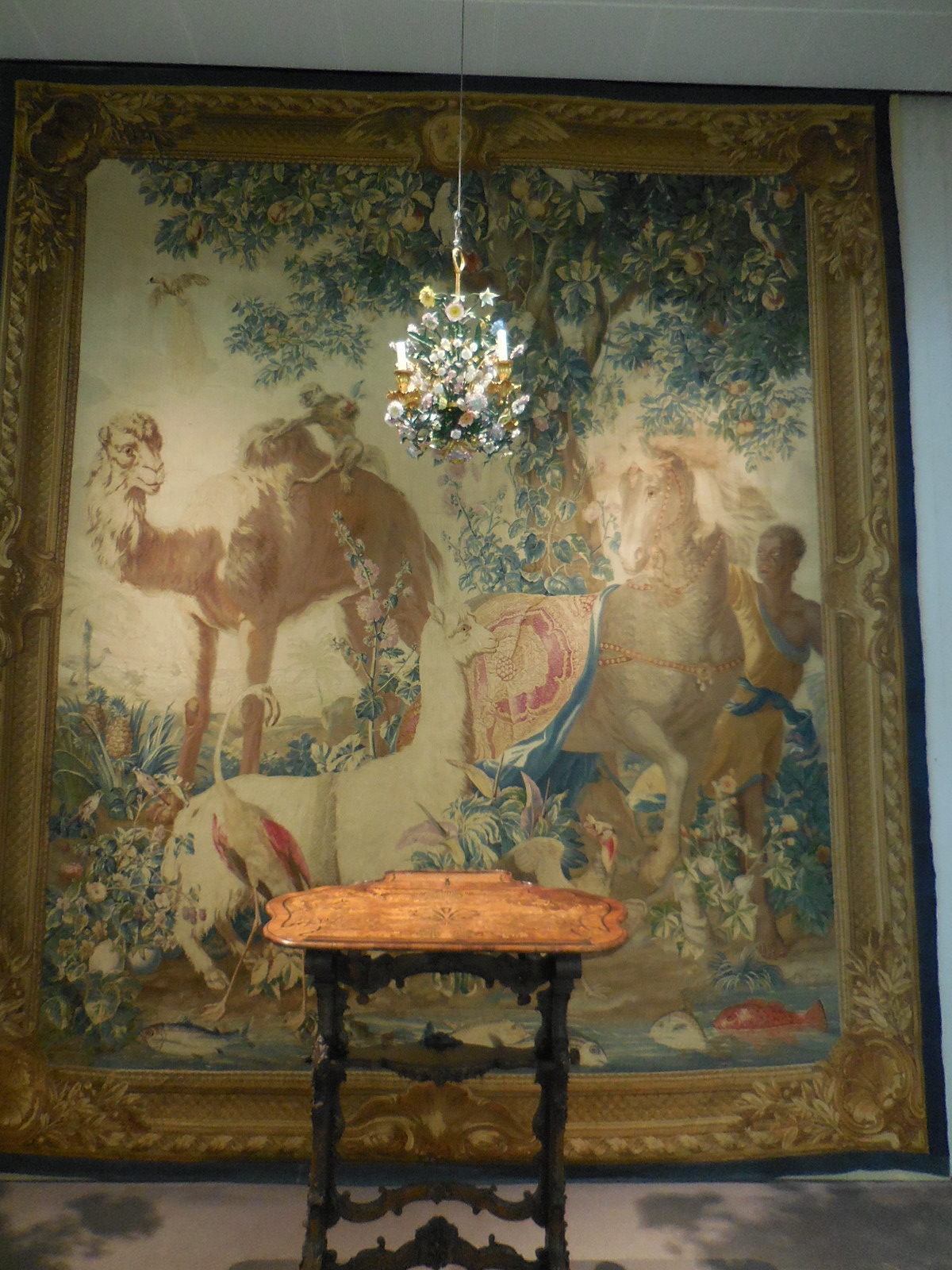
Located next to the Gemaldegalerie of painting masterpieces, the Museum of Decorative Arts(Kunstgewerbemuseum) in the Kulturforum complex holds a very underrated and impressive collection of top-notch exhibits in fashion, design and object art from the Middle Ages through the Art Deco period. I was particularly impressed with the monumental Renaissance tapestries.

BerlinMDA28

BerlinMDA29

BerlinMDA30

BerlinMDA36

BerlinMDA19

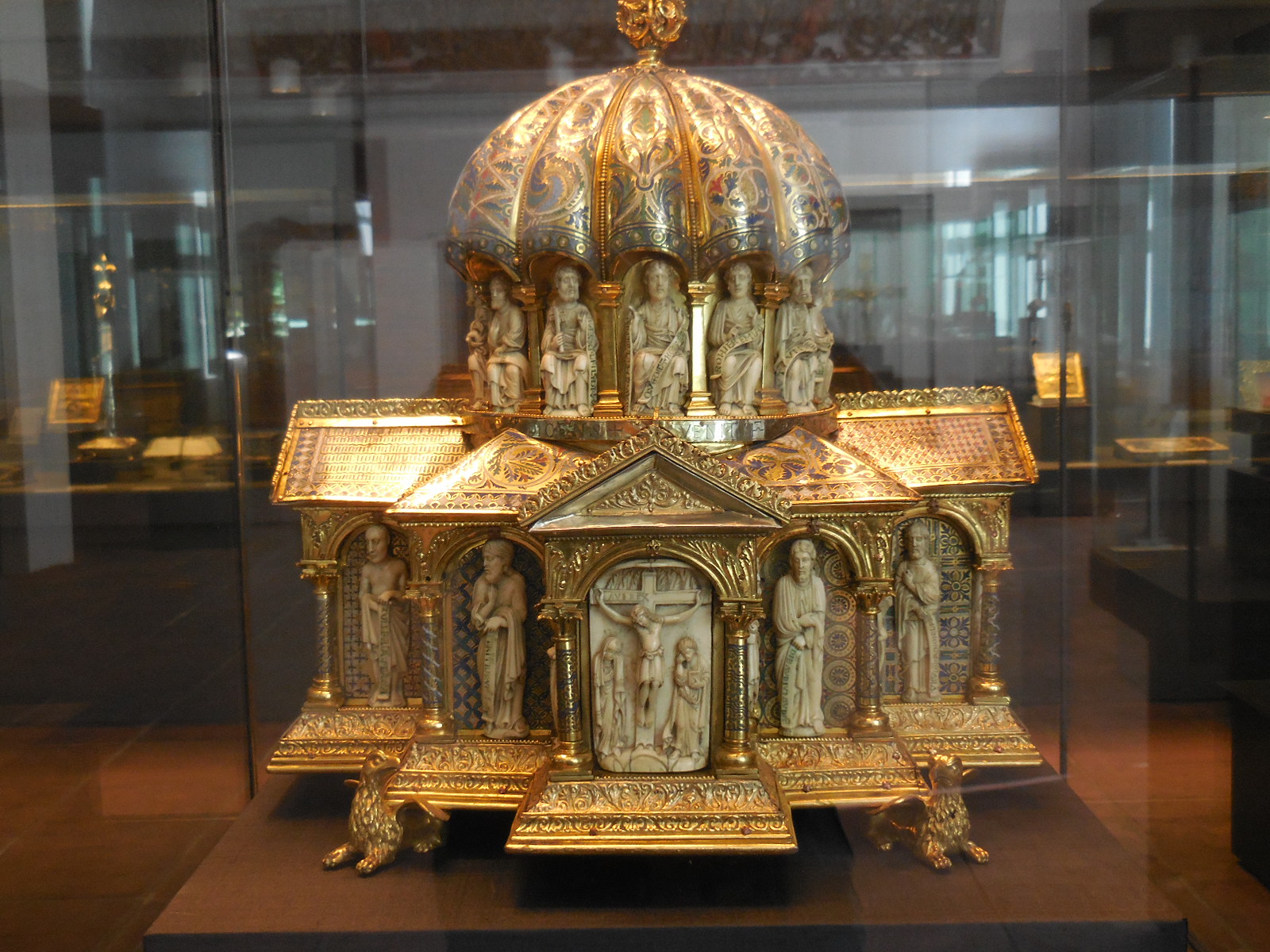
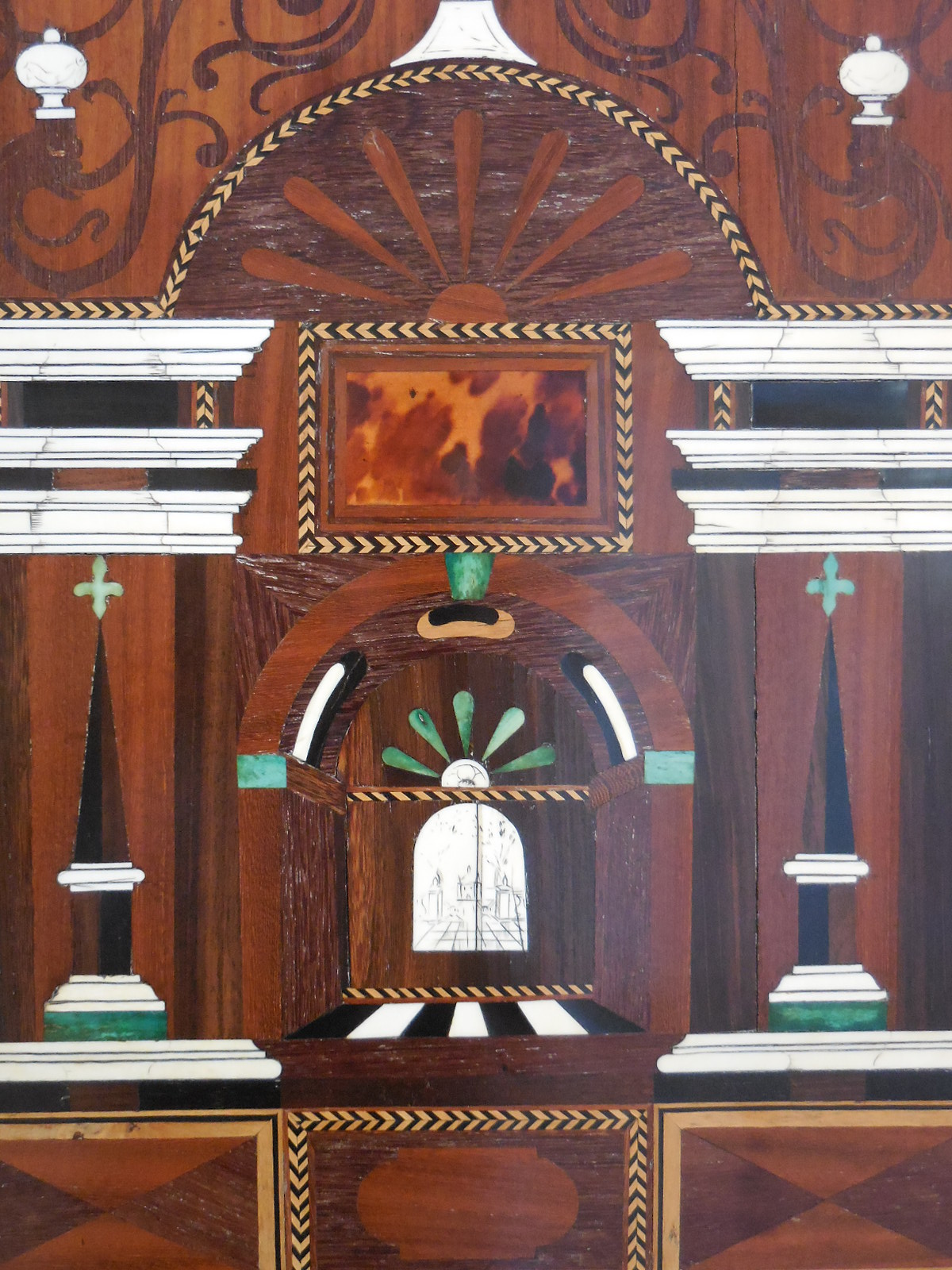
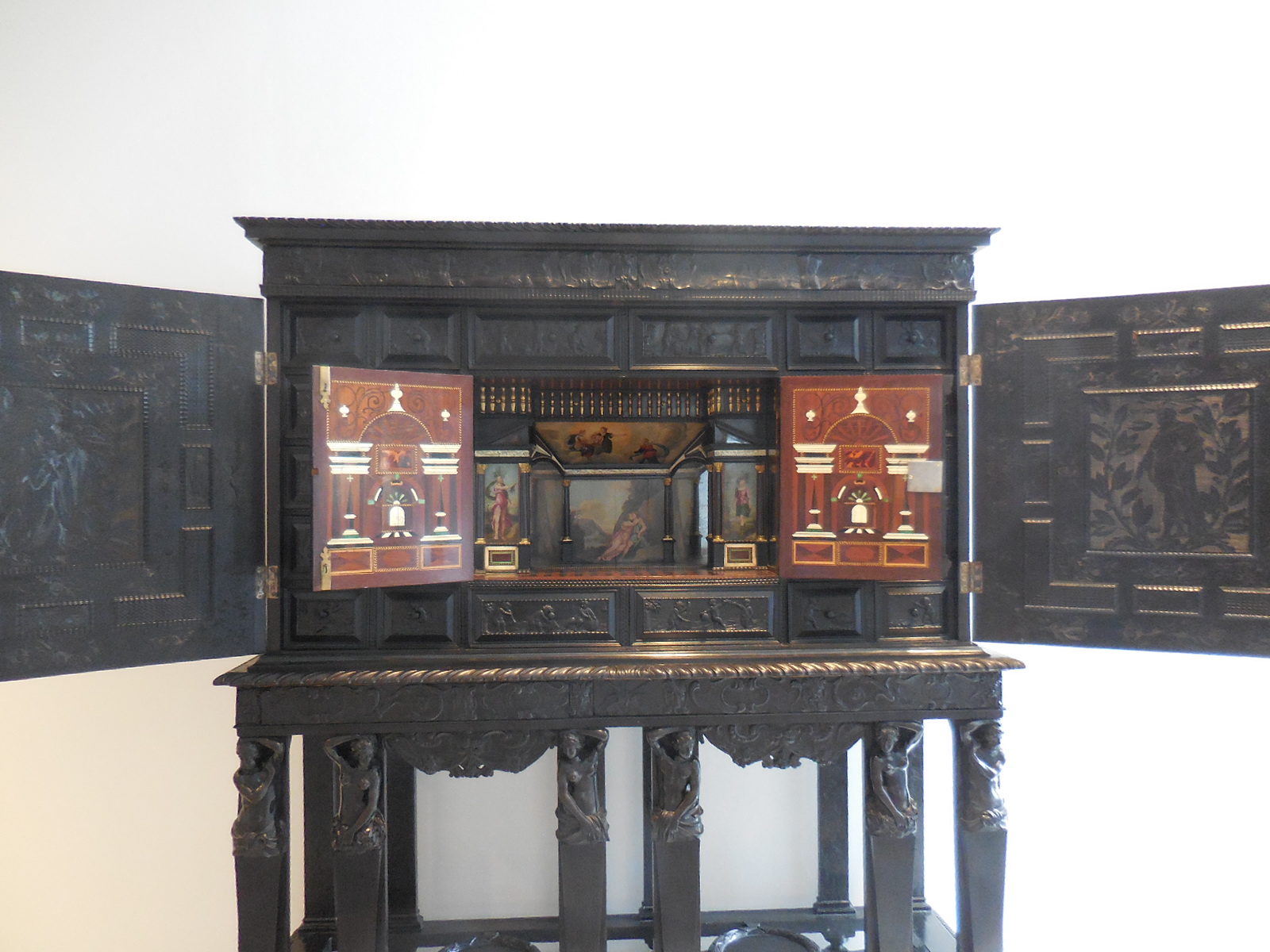
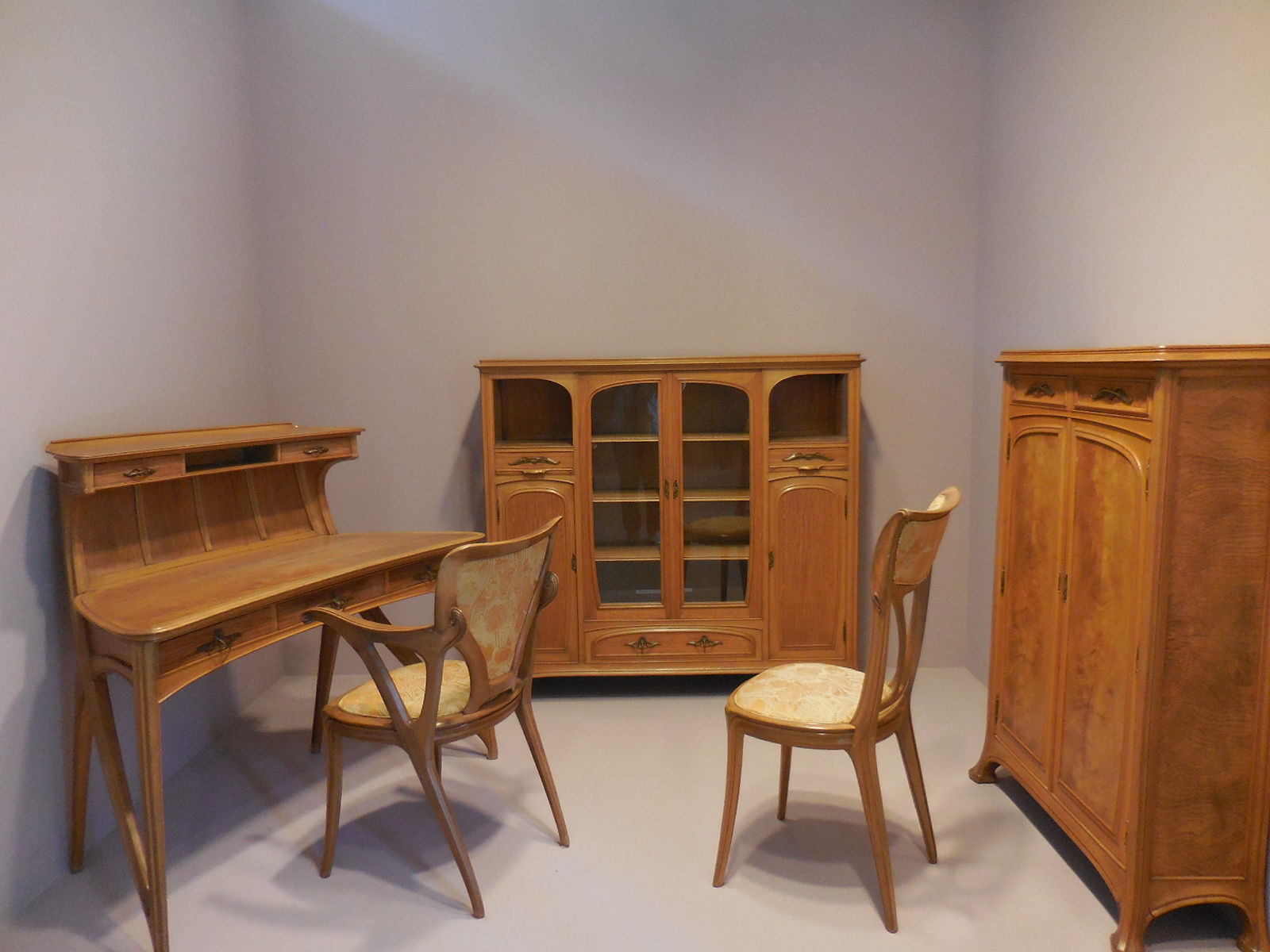
To be sure, the medieval and Renaissance art was astounding, especially the Guelph Treasure from the 12th century. Objects from the Baroque era also stood out, including furnishings and a cabinet of curiosities from that era. Rococo porcelain, such as Meissen, is well-represented, too. The Art Nouveau and Art Deco collection spans from 1900 to 1920. I was drawn to the Art Deco vases and the furniture in both styles.

BerlinMDA16

BerlinMDA17

BerlinMDA27

BerlinMDA26

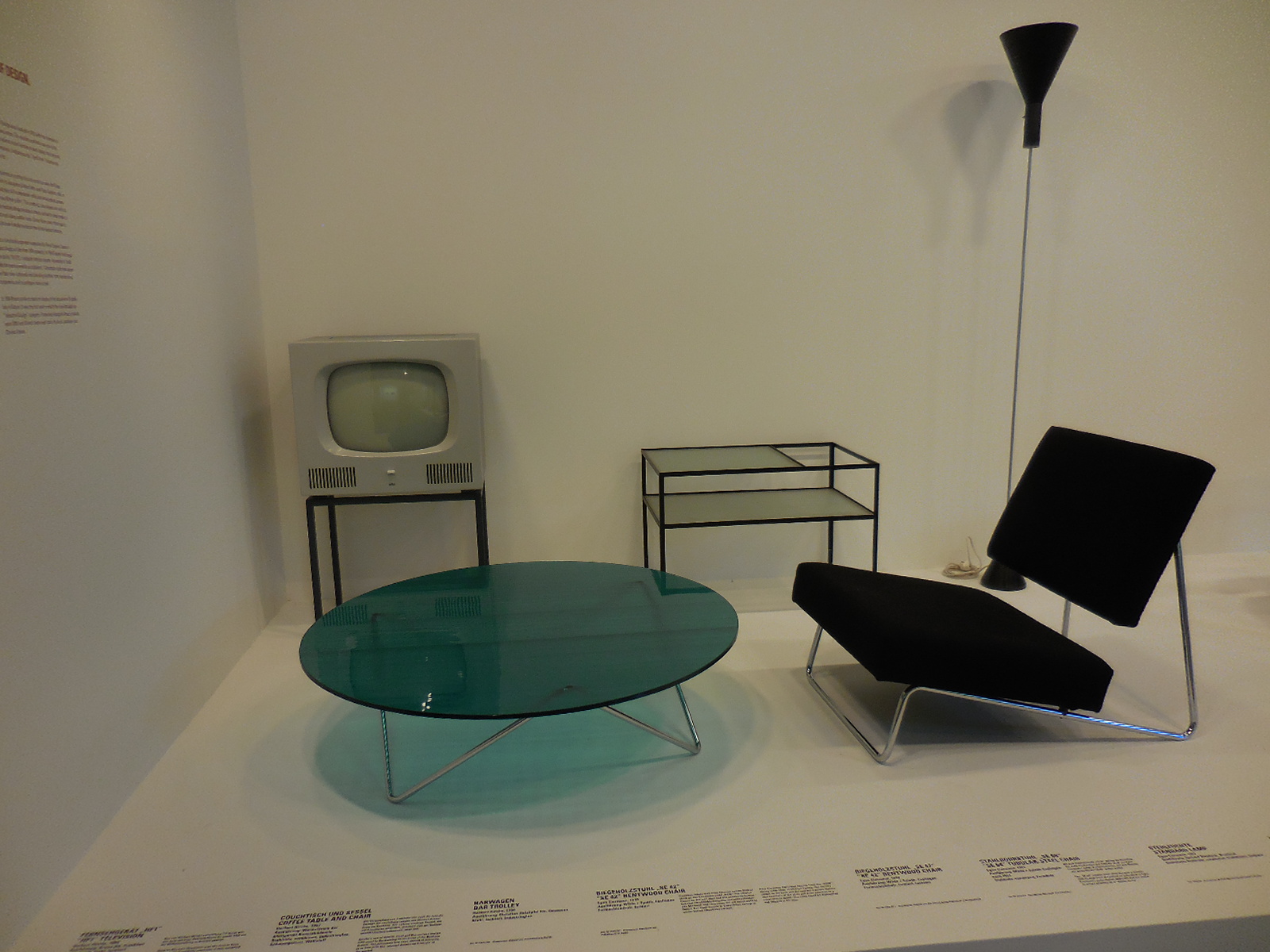
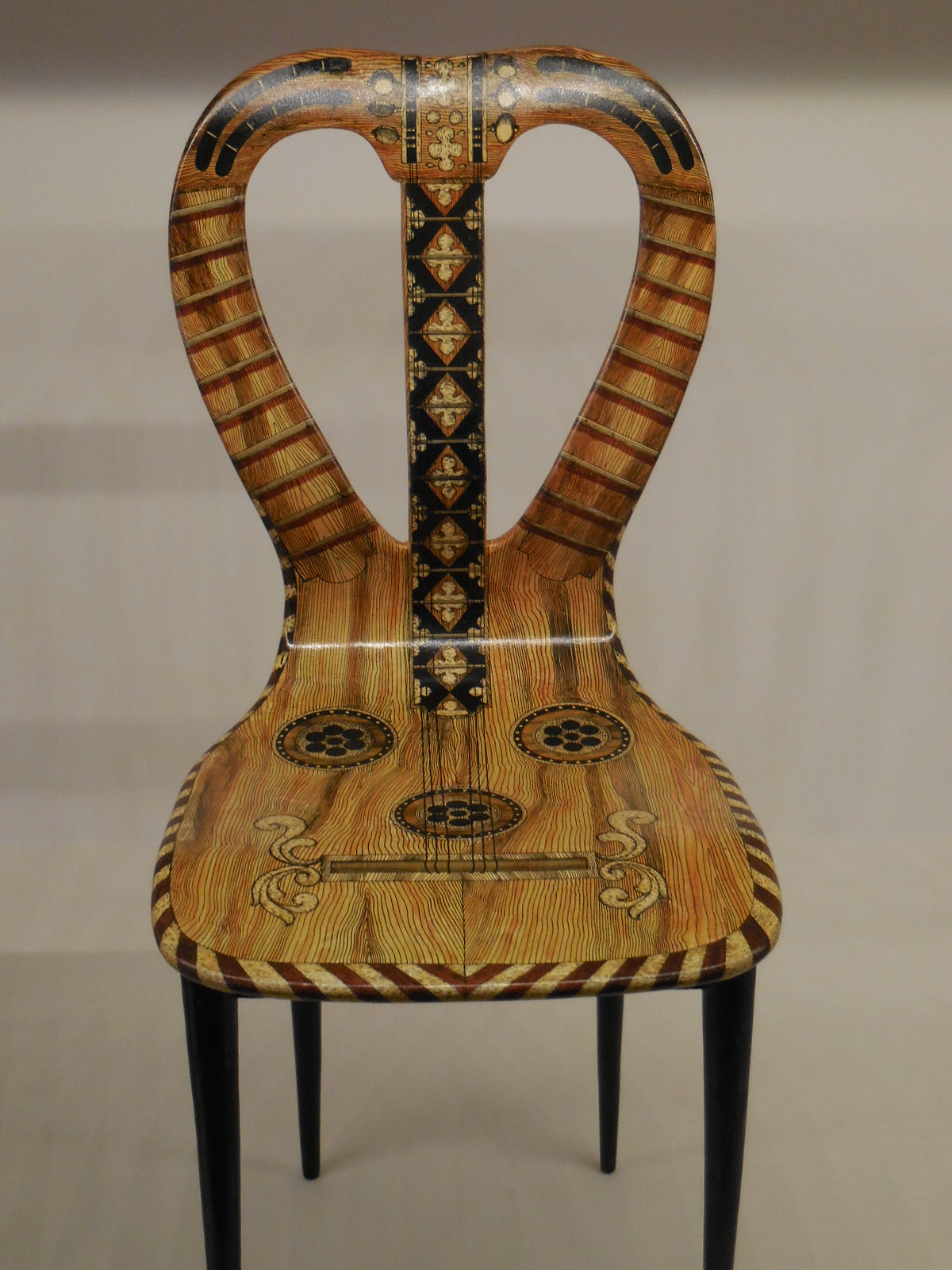
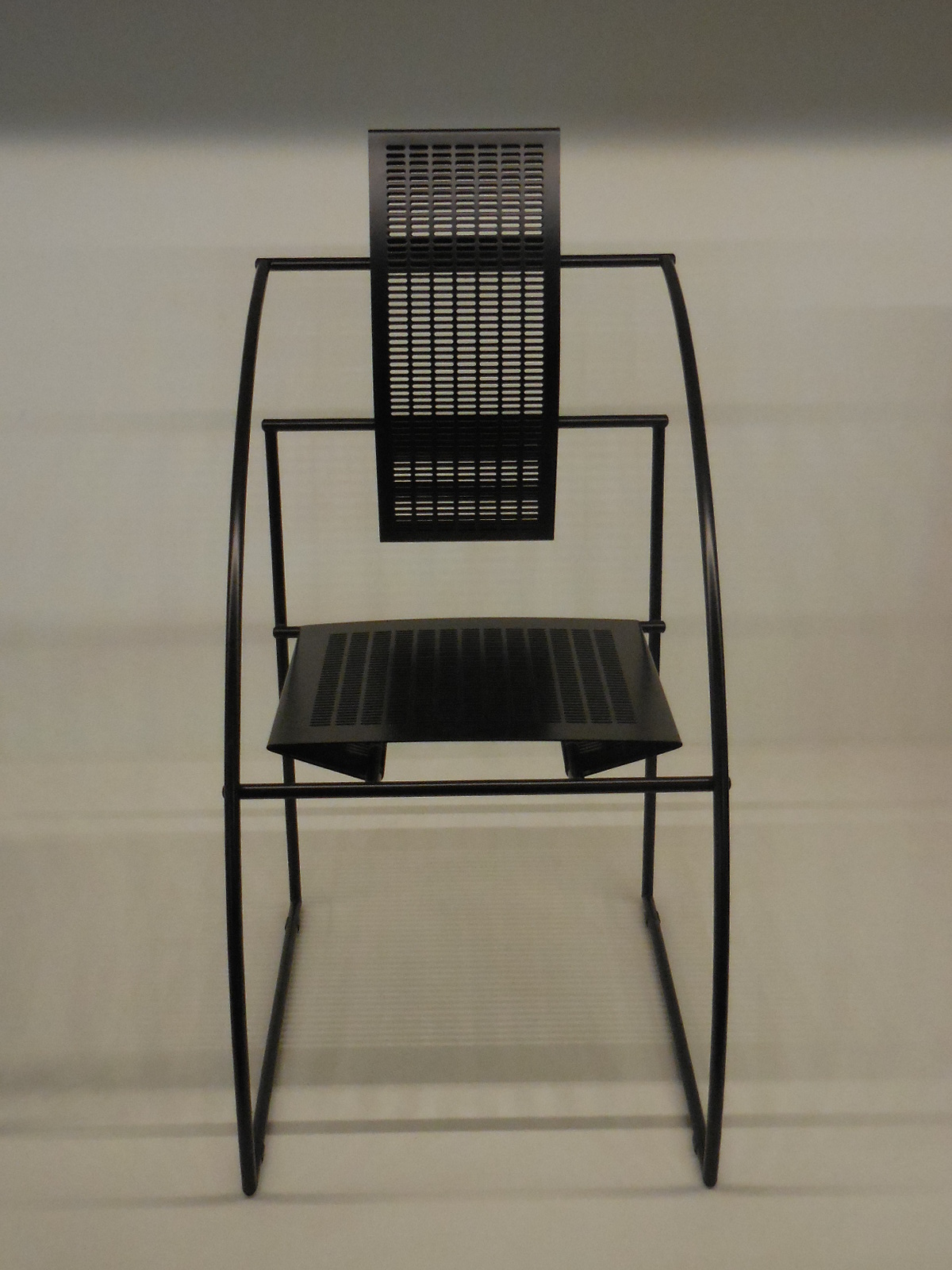
On the lower level, there is an intriguing exhibition of chairs from the 19th century to the present. It was fascinating to see how chair design had developed through the ages. One chair was made of what looked like wire; I could not imagine how painful it would be to sit on it. Another resembled an ice cream cone in a playful yellow with white color combination.

BerlinMDA40

BerlinMDA41

BerlinMDA42

BerlinMDA43

BerlinMDA44

BerlinMDA45

BerlinMDA46

Normally, I am not interested in fashion at all, but this collection caught my undivided attention. I loved the stunning evening dresses plus the older fashions from 1700 to 1850. I could never wear a corset! This museum outdid my expectations, and I came away with a fonder appreciation of fashion, design and art in general.

BerlinMDA37

BerlinMDA4

BerlinMDA5

BerlinMDA6

BerlinMDA7

BerlinMDA8

BerlinMDA9

BerlinMDA35

BerlinMDA10

BerlinMDA12

BerlinMDA13

BerlinMDA14

BerlinMDA15

BerlinMDA18

BerlinMDA20

BerlinMDA21

BerlinMDA23

BerlinMDA25

BerlinMDA32

BerlinMDA33

Tracy A. Burns is a writer, proofreader and editor in Prague.

Dušan Jurkovič’s Villa Diary

Image

I was able to go by car to the villa where Slovak architect Dušan Jurkovič lived from 1907 to 1919. It was in a tranquil village near Brno, the capital of Moravia.  The architectural gem had opened in 2011. I did not know much about Jurkovič except that he was responsible for much of the stunning décor in the Coffer Room of the Nové Město nad Metují Chateau as well as the renovation of that chateau’s two-tiered garden.  While visiting the villa, it would become clear to me that Jurkovič was one of the leading architects in the Czech lands during the 19th century and that this house was his most prominent work.

This leading Slovak architect had been inspired by Austrian architects Josef Maria Olbrich and Josef Hoffmann, both of whom, along with artist Gustav Klimt and others, co-founded the Viennese Secession or Art Nouveau movement at the end of the 19th century.  Jurkovič had especially been influenced by Olbrich’s Secession style Darmstadt Artists’ Colony, where Art Nouveau artists lived and worked. One of the Secession features on the houses included the decoration at the entrance with its gold-plated floral motifs. Olbrich’s style mixed British tendencies with central European qualities. Hoffmann’s Hohe Warte Artists’ Colony, launched in Art Nouveau style, was another influence. Jurkovič had originally intended that his villa would become part of an artists’ colony, and he even opened the villa with an exhibition of 119 artworks, many his own, in 1906.

First, I walked through the garden, bursting with color and featuring pergolas and trelliswork. The view of the house from the garden confirmed that Jurkovič had created his own unique style by meshing several styles together. The house was a mixture of English Arts and Crafts, Art Nouveau and traditional Moravian folk architecture. During the 19th century, the Habsburgs of the Austro-Hungarian Empire supported European folk art because it united its regions. Folk art would play a major role in architecture during that century.

ImageAs I understood it, the English Arts and Crafts movement had emphasized simplicity and had employed romantic and folk styles. The materials used were also accented. Also British architects often featured a staircase hall, which dominated Jurkovič’s main achievement. The movement reached its peak from 1860 to 1910.

Jurkovič’s villa looked like it belonged in a fairy tale. I expected princes and maidens to stick their heads out its windows. I loved the playfulness of its design as if it had popped out of a story book. It was no wonder that it had been dubbed “the Fairy Tale House.” The villa was made of stone, wood and cork with lime-coating on the exterior and plaster on the interior. It resembled a country house or cottage in England.

At the entrance gate there was a mosaic of two peacocks standing opposite each other. There used to be a mosaic showing a scene from The Shephard and the Dragon fairy tale, but it was destroyed because it had been made on a cork rather than plastered base. The mosaic that replaced it lit up at night. The entrance loggia featured the statue, “The Thinker,” by sculptor Jan Štursa, who had helped define modern Czech sculpture. It was one of the few original pieces that were now in the villa. The house had been renovated to look as it had when Jurkovič and his family had lived there from 1907 to 1919, when the architect returned to Bratislava, Slovakia, where he died in 1947.

Soon it was time for my tour, which had to be booked in advance. My tour guide and I entered the main room of the villa, the Staircase Hall. It was dazzling. I especially loved the folk elements of traditional Moravian architecture, such as the red, white and blue abstract wallpaper on one side. The folk-oriented carpet featured reds and blues, too. The wine red and forest green colors represented in the room also symbolized Moravian folk art. I thought they complemented each other well and gave the place a cozy atmosphere. I recalled that in the Coffer Room at Nové Město nad Metují, reds, greens and browns played major roles.

Ceramics and tapestries also filled the room. The tiled stove was dark green, and the doors took on the same hue. The wallpaper was not the only part of the room to have blues in it. Even the exquisite, wooden table had a stunning, blue tone.  The chandelier, though, was pure Art Nouveau and had featured light bulbs, as the villa had utilized electric lighting.

ImageThe alcove, designed for Jurkovič’s wife Božena, was light and airy in contrast to the dark central section of the room.  I admired the tapestries in the alcove. One showed a log cabin with mountains in the background. The others shared the countryside theme, depicting fields and cross stations. The room was assembled like a gallery of Jurkovič’s work. He had also designed the furniture. I realized that the villa itself was an exhibit with smaller exhibits inside.

Jurkovič’s former study rooms featured a temporary show of furniture designed during the middle of the 20th century. Artists Zdeněk Plesník and Miroslav Navrátil used materials experimentally. Their armchairs were made from bent lamellas, which were fine sheets of material positioned in the shape of gills. The armchairs could be put into several positions. They could function as chairs or as a bed, if all three were placed together. I was surprised to find out that Navrátil had created the chairs on trams. Even now, trams 1, 3 and 11 in Brno were equipped with the style of chairs that he had created. I often took tram 1 to the center, so I had actually sat on a chair that he had designed!

Other spaces that used to serve as a bedroom, children’s bedroom and bathroom were now decorated with pictures of Jurkovič’s other designs, interactive materials and furniture from his other buildings. I found out that he had also designed the interior of the Vesna boarding house in the Czech lands. The bedroom there boasted vibrant hues of greens, yellows and reds. Jurkovič also incorporated a dovetail motif. I saw a stunning wooden chair with a dovetail masterfully carved on its back.

ImageJurkovič would also design a diner and hostel in Wallachian Pustevny in triumphant folk architectural style. The diner boasted an interior with a turquoise hue illuminated by side windows. The walls were covered with pictures of Czech figures, such as the country’s patron Saint Wenceslas and the Radegast pagan mountain god.

Jurkovič’s designs for the Luhačovice spa town were harshly criticized by Brno architect Karel Hugo Kepka and the editorial board of Architektonický obzor journal, which caused his commissions there to cease after 1914. Today, though, residents of Luhačovice are very proud of Jurkovič’s work there. He also designed a house in the Bubeneč district of Prague 6, using concrete instead of wood and constructing an elevated gable.

During World War I he designed about 40 cemeteries for fallen Austrian soldiers in what was then Galicia. After the war he concentrated on war memorials, and in the late 1920s he began to experiment with the functionalist style. Jurkovič moved out of this villa in 1919, after democratic Czechoslovakia was created because he wanted to help reshape his native, reborn Slovakia. So he moved back to Bratislava, where he died in 1947.

I loved the red color with floral pattern of the wooden beams on the ceiling. It had a log cabin appeal and gave the beams a vibrant folk architecture appearance. The entire villa exuded a warmth and coziness that I had also felt at Nové Město nad Metují’s Chateau. 

I was impressed with the tour, but disappointed that only the Staircase Hall looked as it had when Jurkovič had lived there. I understood that Jurkovič had sold a lot of the furniture. The Staircase Hall had such a dynamic quality. It was so vibrant, so cheerful, yet at the same time intimate. I wished that more than a few pieces of the original furniture and ornamentation had been preserved. While the temporary exhibition and spaces documenting Jurkovič’s works were intriguing, the Staircase Hall was definitely the highlight of the tour.

 Image

Tracy A. Burns is a writer, editor and proofreader living in Prague.

Nové Město nad Metují Diary

ImageThe journey was easy. It only took two and a half hours on a direct bus from Prague to get to this small town in the foothills of the Eagle Mountains, not far from Poland. It was sunny, almost too hot. From the stop I had to walk straight for about 10 minutes and turn left onto the large, impressive main square on which buildings of various architectural styles were erected. I noticed the remains of chiaroscuro decoration on the facade. Because I had been here 10 years earlier, I knew the interior was truly a sight to behold.

First, a little history about the chateau itself: Built during 1501 in late Gothic style, the chateau underwent Renaissance renovation thanks to the Stubenberg family owners during the second half of the 16th century. More renovation work took place during 1651 to 1660, when early Baroque style made its way into the chateau.  A historical event took place here in June of 1812, as Russian Tsar Alexander I stayed at this chateau during his trip to meet with leaders of the Prussian and Austrian governments. (He wouldn’t be the only historical figure to spend the night in the chateau. During 1926 first democratic president of Czechoslovakia Tomáš Garrigue Masaryk slept here.)

The main square of the town

The main square of the town

But it wasn’t until the chateau was bought by the Bartoň family that perhaps the most significant renovations were carried out. Slovak architect Dušan Jurkovič and Czech architect Pavel Janák did many renovations in Art Nouveau, Art Deco and functionalist styles in this chateau also known for its collection of Czech and Slovak art from the 17th to 20th centuries. While Jurkovič concentrated on Art Nouveau, Janák took over the Art Deco and functionalist styles, his last renovations taking place from 1940-41. Jurkovič also was responsible for redesigning the two-tiered chateau gardens. Though the Bartoň family emigrated to Canada in 1949, they got the chateau back in 1992 and are its present owners.

The stunning facade of a building on the main square

The stunning facade of a building on the main square

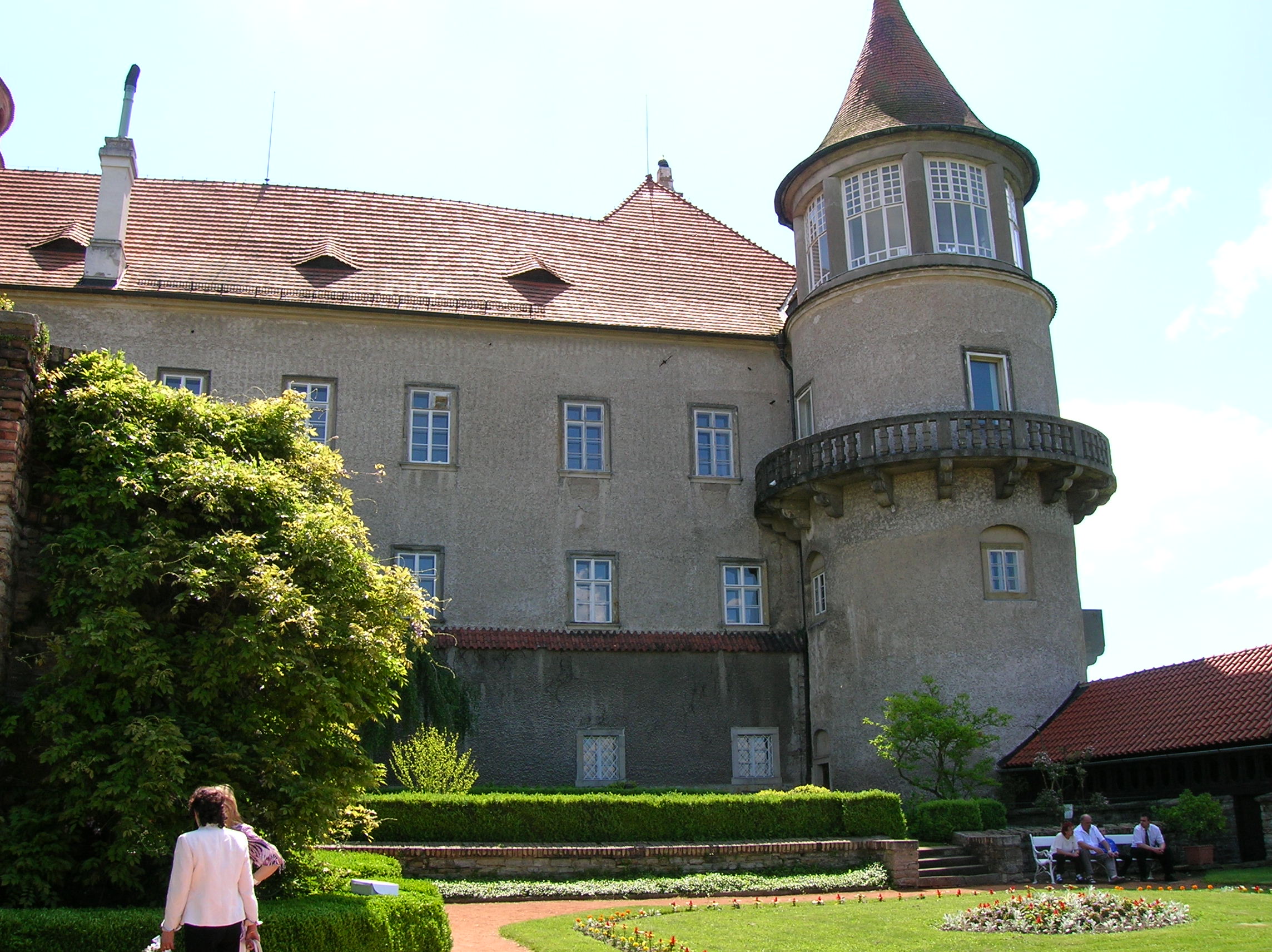
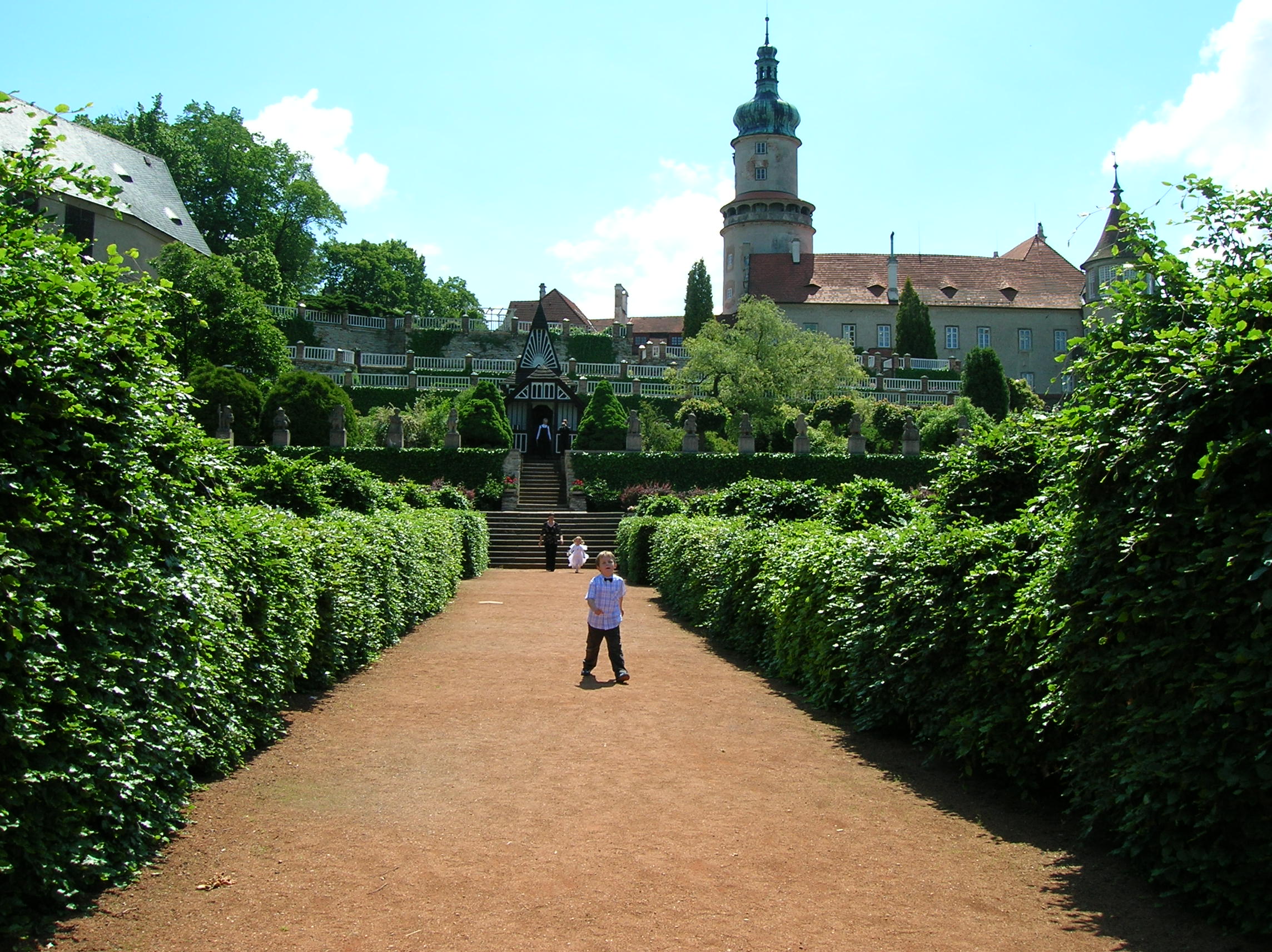
Before the tour I had time to visit the gardens and see Jurkovič’s outdoor masterpiece for myself. Terraces and flower beds punctuated the upper gardens while a quaint wooden bridge led me to the lower section. The sculptures of the stone dwarfs caught my attention immediately. They were the skilled work of famed Czech sculptor Matyáš Braun from the first third of the 18th century. I also noticed a statue of legendary Czech composer Bedřich Smetana and Baroque statues of the God Poseidon and the Goddess Demeter as well as two statues of bears. A Baroque fountain was situated in the garden, too. I felt like reading in the sun for a while here, but the tour was going to start soon and anyway, there was a wedding procession about to cross the wooden bridge and head in my direction. The gardens seemed to be the perfect place to bring a book and relax, occasionally glancing at the stone dwarfs and Baroque fountain.

ImageOne of the first places we visited on the tour was the Rising of the Holy Cross Chapel from the 17th century. The fresco on the ceiling and the white stucco decoration had me gaping in awe.  But more about that later. Then, in the hallway, I was overwhelmed by a 15th century Gothic altarpiece as we walked toward the Winter Garden. It was absolutely exquisite, depicting Saints Peter and Paul with an icon of Jesus Christ.

The Winter Garden was one of my two favorite rooms, designed in the decorative style by Jurkovič in 1910. Plants abounded, and there was lovely white wicker furniture as well as many ceramics in the space. The walls looked to be made of rock inlaid with a tree design in brown. I thought how much I would love to sip a cup of green Eilles tea at the white table, surrounded by so many thriving plants and intriguing ceramics.

NoveMestonadMpark4My other favorite was the Coffer Room, a Jurkovič masterpiece from 1913. The wine red carpet and dark brown leather and oak furniture contrasting with a light and airy ceiling made me feel comfortable. There was also leather wallpaper on the ceiling and a huge green and brown marble fireplace made of ceramic tiles. A brass chandelier decorated the room as well. An avid Czechoslovak history fan, I loved the portrait of former President Masaryk, set in a gold frame. The room, with all its couches and tables, appealed to me as a place I would like to come and read on a cold winter’s night, while sipping hot chocolate.  I somehow felt safe there, away from the worries of my life and the world.

We also entered a room full of Cubist furniture designed by Janák. A hundred coats-of-arms of Czech towns were painted on the walls. On the ceiling I noticed pictures of the towns of Náchod, Český Krumlov and the Black Tower in České Budějovice.

Some of the other rooms that particularly impressed me included: The Baroque bedroom, redesigned by Jurkovič in 1913. Swirling patterns decorated the arched ceiling, and there were three circular Renaissance frescoes on the wall above one bed.

The Gentleman’s Study had an Art Deco interior forged by Janák in 1924. The central fresco was by František Kysela, who also painted many other frescoes in the chateau. Renaissance paintings hailing from the 16th century lined the walls. Textile art work and ceramics also punctuated the room. The space had a romantic flair, and I felt safe here. A sense of warmth exuded from the room. Dark wood mingled with a bright green color, with green upholstery on the dark wood chairs. The brown and white frescoes on the ceiling complemented the choice of furniture.

ImageWhat caught my attention in the Zodiac Room or Summer Dining Room was the exquisite handmade carpet. Inside an orange and light blue circle was another circle, this one in blue and orange, showing a proverb for each month. This Art Deco room, a 1923 creation by Janák, with brown wood furniture also boasted frescoes by Kysela.

I had a ticket for the long tour, so I followed the guide, a tall, bespectacled man in his forties, to the second floor, where the frescoes in the rooms all showed scenes from Greek and Roman mythology. In the Hall of Victors, which was really a Baroque dining room, I noticed the neo-Baroque interior and Flemish tapestry from the 16th and 17th centuries. Still lifes also decorated the walls which were a light yellow color. The frescoes sported sea blue and dark green. The white and blue porcelain was ravishing.

I cannot leave out the St. Hubert Room or the Hunters’ Room. This 17th century bedroom also boasts a ceiling fresco of Hypnos, the god of sleep. I was impressed with the vibrant colors of the fresco. Neo-Gothic and neo-Renaissance furniture from the 19th century contributed to the stunning look, too.

From the Oratory there was a fantastic view of the chapel. There were vibrant ceiling frescoes and white stucco decoration on the ceiling. The left-hand side of the altar was decorated with a painting of Saint Barbara, forged by the Baroque master Petr Brandl, one of my favorite Baroque painters. The black with gold columned altar was flanked by statues. The small size of the chapel gave it a sense of intimacy. What awed me in the Oriental Dining Room was its luxurious, long and sleek chandelier with the bottom shaped as a Chinese pagoda.

NoveMestonadMpark1Before the tour ended, the guide told us the legend of the Black Lady, who haunts the chateau. From 1624 to 1629 Marie Magdalena was one of the owners of the place, and she was called “Evil Manda” for a very good reason. She was exceptionally cruel to animals, and the townspeople were fed up with her. They rebelled in 1628. Soldiers put down the uprising, though, and proceeded to treat the rebels cruelly. Many men were killed in a gunpowder explosion in the tower, leaving many widows and orphans in the town. “Evil Manda” died in 1633, but she still walked the halls at night because she was looking for the two or three bodies of the farmers who were never found after the gunpowder explosion. She wanted them to be buried.  One could hear her footsteps at night, and sometimes paintings fell off the walls.

Then I left the chateau and went to a nicely decorated restaurant across the square. The restaurant was decorated in orange and yellow and had a cheerful appearance. It served good food as well, and I was able to eat my favorite food on my excursions – chicken with peaches and cheese plus a diet Coke.

Then it was time to get the bus back to Prague. When I made it to the stop about 20 minutes early, I was the only one there. Before long, about 10 people had joined me. We waited. And waited.  And waited. The elderly women standing next to me grumbled to themselves about how it did no good to complain in this country. A teenager with hair dyed pink read a book on the bench. Finally, the bus arrived – 45 minutes late. The bus driver did not offer an excuse or an apology. I was just glad the bus came.

Tracy A. Burns is a writer, proofreader and editor in Prague.

Image