Leipzig Diary

Leipzigftn1

A fountain in Leipzig

When I saw that arsviva offered a day trip to Leipzig, I jumped at the opportunity. I had no idea what to expect, but I had enjoyed their day trips to other places in Germany, such as Nuremberg and Bamberg. Besides, our guide would be one of the best I had come across. With a specialty in architecture, she also had led the thrilling tours of Jan Blažej Santini-Aichel’s creations.

There were many things that awed me about Leipzig. The first and foremost, was, indeed, the architecture – how the modern and historical styles did not clash but rather provided a sort of artistic harmony.

Leipzigstatue3

A contemporary statue in downtown Leipzig

The guide told us about the history of the city, and I had read about Leipzig’s trials and tribulations before the trip. During the seventh century, Leipzig got its name from the Slavic Lipsk, which means “a settlement where the linden trees stand.” The town was first mentioned in writing during 1015. It was founded in 1165, soon gaining a reputation as a trade center. The beginning of the 15th century changed the character of Leipzig, as a university was established here, and it became a prominent center of higher education. Goethe and Nietzsche had studied here.

LeipzigOTHallint27

A beautiful book published in Leipzig

The Leipzig Book Fair, the second biggest book fair in Germany, has its origins in the 17th century. Book publishing took off in Leipzig during the 18th century and continued to play a major role until World War II, when the Graphic Quarter was mostly destroyed by bombs. The Battle of Nations in the 19th century took place near Leipzig. The 1813 ordeal pitted Napoleon’s France against the Prussians, Austrians, Russians and Swedes. The allied nations came through victorious, and Napoleon had no choice but to leave Germany. We would visit this monument later in the day.

LeipzigOTHallint40

This painting from the Museum of City History shows the destruction during World War II.

The city became part of the German Empire in 1871, and the years before World War I were rosy. Then, after the war, the Weimar Republic was established, though short-lived. In 1933 the National Socialists took over, and Hitler’s reign of terror would continue until the US army freed the city on April 18, 1945. Then in July of that year, the Americans handed the city over to the Soviets. The totalitarian regime that was called the German Democratic Republic or East Germany existed from 1949 to 1989, when Communism was defeated in Germany in part thanks to the citizens of Leipzig and their demonstrations. Today more than 40,000 students vie for degrees in Leipzig, a truly university town. Leipzig was coined the “City of Diversity” by the German government in 2008.

Leipziguniv2

Gothic and modern architecture in a university building

The Augustusplatz, spanning 40,000 square meters, was a wonder in itself. The Gewandhaus, where the symphony played, and the Opera House took me by surprise, as I usually was not so enthralled with modern architecture. I took special note of the Paulinum, where the current structure resembled a former church that was destroyed by the Communists on this site in 1968. The 2012 creation really brought a sense of unity to modern and historical styles.

Leipzigtower1

The first high-rise in Leipzig

I also was enthralled with the first high-rise building in Leipzig, an 11-storey edifice constructed in the 1920s. Its design was inspired by the clock tower at St. Mark’s Square in my beloved Venice. For a moment, I mentally went eight years back in time and recalled winding through the empty, romantic streets of Venice on a Sunday at seven o’clock in the morning. The experience was magical, to say the least. In the present again: The tall Leipzig building was topped with a ball that showed the phases of the moon and a sculpture of a man ringing a bell. The German words for “Work overcomes everything” stood out on a gable.
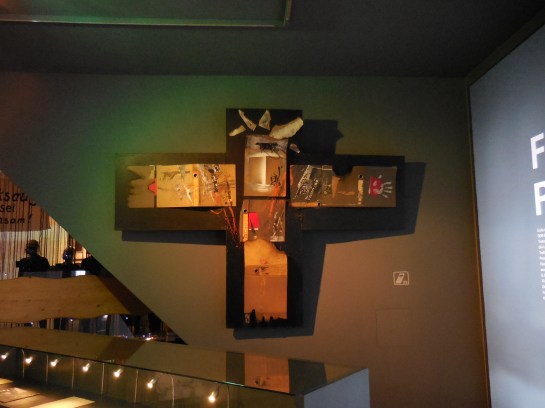
LeipzigOTHallint35

From the Museum of City History exhibition of the modern era

We also spent some time in the train station. No, we were not going anywhere by train, but rather we were admiring the masterful technical achievement that consisted of two entrance halls and two waiting rooms plus 25 platforms. In the early 20th century, this transportation hub ranked as the largest main train station in Europe after the architects transformed four stations into one. It made Prague’s main station look so tiny. I always felt a sense of excitement in train stations. I thought of the many trips I had taken by train. Prague’s train stations were starting points for what turned out to be superb experiences during which I became acquainted with an intriguing part of the country and also, most importantly, got to know myself better. The trips to Olomouc, Liberec, Turnov –  each journey provided me with insights about the external landscape as well as the internal landscape of my mind.

LeipzigStNicholas1

A postcard of the Church of St. Nicholas

Unfortunately, it was not possible to take photos in the Church of St. Nicholas, the largest church in Leipzig. I tried to imagine October of 1989 in the church, when citizens crammed inside, protesting against the totalitarian regime and creating a path for democracy. The people of Leipzig really had made a difference in the so-called Peaceful Revolution, and this had been where it all began. On Mondays, ever since the early 1980s, prayers for peace were held here, too. I wondered when there would be peace in the world, if ever. So many tragedies, so much violence rocks the world today. The world was the most dangerous it had been during my 46 years on this earth, I mused. And it only seemed to be getting more and more dangerous day-by-day.
LeipzigStNicholas3

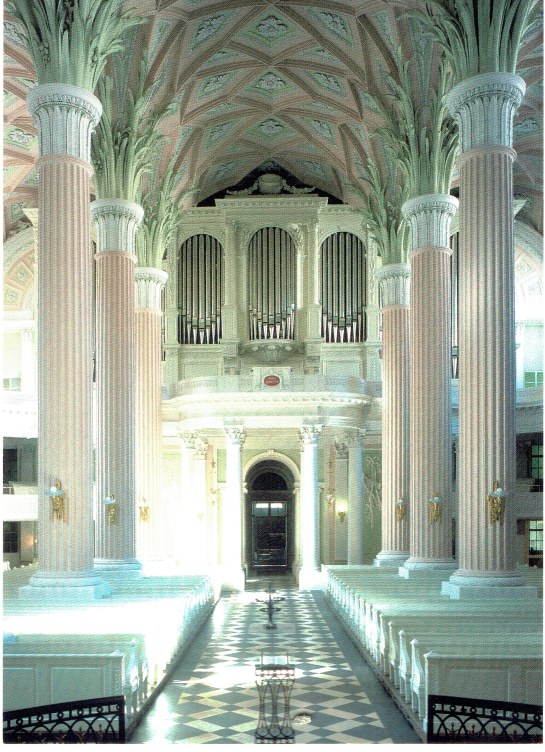
From a postcard of the Church of St. Nicholas

I admired the architecture of the impressive church. Although originally constructed in Romanesque style during the 12th century, it was transformed into a Late Gothic structure boasting three naves during the first quarter of the 16th century. Three steeples boast Baroque decoration. Now the prevailing style of the interior is classicist, a characteristic that the church took on in the late 18th century. I loved the palm tree capitals on the stately columns most of all, especially the pink and green colors. The pillars made the church appear even more lively. It was not just an architectural masterpiece with a past, but it felt like a masterful design with a present, too. I tried to imagine Bach performing here, as he has served as organist from 1723 to 1750. I tried to imagine Martin Luther preaching here as churchgoers became familiar with the Reformation. It was a profound experience, standing there, gazing at the gem of an interior.

LeipzigchurchStTomas1

The Church of St. Thomas

You could not miss the Bach monument in front of the Church of St. Thomas, which was constructed in 1212 as a monastery church for Augustinians. By 1355 the Romanesque structure had been transformed into Gothic style. Now it has a Late Gothic character with a late 15th century appearance. Real hair adorns Jesus’ head on a 16th century crucifix. The church holds the distinction of having one of the steepest gable roofs in the country.
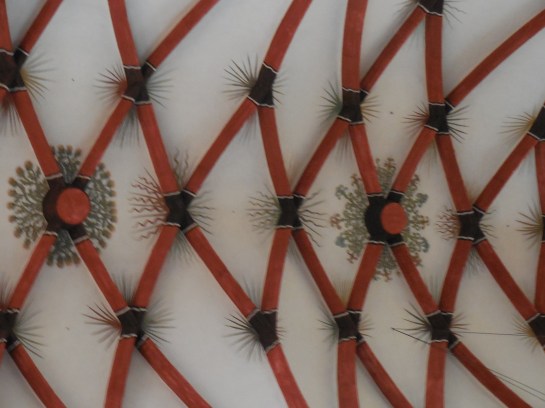
LeipzigchurchStNicholas4

The ceiling of the Church of St. Thomas

The interior got a Neo-Gothic makeover during the revolutionary years of 1848 and 1849. Still, there were elements of the church that were much older than that. I saw a triptych altar from the 15th century, for instance, and even some Romanesque traits remain on the exterior. I especially liked the stained glass windows. Many people come here to pay homage to Bach, who worked as cantor here from 1723 to 1750. His grave is located in the choir.
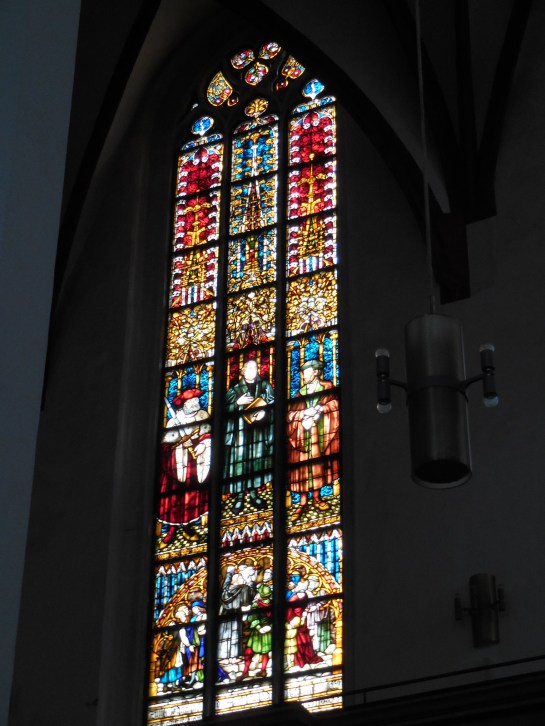
LeipzigchurchStNicholas6

The stained glass windows at the Church of St. Thomas were extraordinary.

We also saw a modern church, built only several years ago. The interior was so sparse and minimalistic. There was a large wooden cross on one wall, and on the opposite wall another big cross was made of glass. I preferred Baroque and Gothic churches, definitely, but there was a profound sense of harmony in its simplicity. It ranked as an architectural gem in my book, though it was not my preferred style. There was something special about seeing this space stripped of frivolous decoration.

Leipzignewchurchint1

Leipzignewchurchint3

Built from 1899 to 1905, the New Town Hall was another gem, purposefully reminiscent of Florence’s Palazzo Vecchio. With an area of 10,000 square meters, it is one of the biggest town halls in the world. The tower reaches a height of 1,147 meters, making it the highest town hall tower in Germany. It was a pity there was not more time to spend examining this building, but we had a lot to see. The town hall fountain featuring creatures from fairy tales and a figure of a young boy playing a flute was a gem.

LeipzigRadnice1

The New Town Hall

I was drawn to Klingerhaus, the birthplace of the 19th century Symbolist painter, sculptor and writer Max Klinger. I did not know much about Klinger, except that he had been influenced by Goya’s art. I recalled gazing in awe at Goya’s paintings in the Prado and at the artist’s drawings in the small, quaint contemporary art museum in Passau. I liked the Renaissance architecture of the building. I was particularly enthralled with the red gables and oriels that made the building look so dynamic.

Leipzigbldg

Klingerhaus

We walked by Auerbach’s Cellar, a tavern Goethe had frequented and the inspiration for a scene in Faust. We went into the Mädler Passage, an arcade building that reminded me of another arcade structure in Naples. It was modeled after the Galleria Vittorio Emanuele II in Milan from 1912 to 1914 and boasted a central rotunda. A Glockenspiel of Meissen china charmed audiences on the hour.

LeipzigOldTownHall2

The Old Town Hall

I ate a hearty lunch in a narrow Baroque court teeming with restaurants and cafés – there were over 30 of them, in fact. Then I made my way to the Old Town Hall across the square. The first Renaissance hall in Germany, it was constructed in 1556. It was heavily damaged by bombing during World War II but rebuilt. The city administration worked here until 1905, and soon afterwards the Museum of City History opened in the impressive space. Shops were situated amidst the lovely arcades. I loved the gables and tower clock.

LeipzigOTHallint1

The interior of the Old Town Hall

At the Museum of City History, I learned that the history of Leipzig is, in effect, the history of Germany and former East Germany. A remarkable exhibition of modern history from the revolutionary years of 1848-49 to the present enthralled me. Rarely have I been so enlightened and moved by an exhibition. Citizens were not satisfied with the political situation in 1848 and revolted, hoping to gain a constitution for Germany, among other goals. But it was not to be. The city became a central point for the German labor movement, German social democracy and women’s movement from the 1850s to 1871, when the German Empire was founded. Jewish fur traders flocked to the city, and their businesses flourished. Indeed, before World War I Leipzig was thriving.

LeipzigOTHallint19

The interior of the Old Town Hall

From 1918 to 1933 Leipzig found itself in the Weimar Republic, an era that had to deal with the political and economic issues that followed the war. Yet Leipzig experienced the Roaring Twenties, and when things turned for the worst, the Great Depression of 1929. Then, in 1933, the National Socialists took control. The city was subject to much bombing during the war, and forced laborers toiled in the city during the war. US troops liberated Leipzig in April of 1945, but in July the Americans turned over the city to the Soviets. The German Democratic Republic was established in 1949, as Leipzig then became part of the totalitarian East Germany. Companies were nationalized, and cheaply built housing estates cropped up. Before the Berlin Wall was built in 1961, thousands of citizens escaped to the West. At the end of the 1980s, more inhabitants made it to the West. During the 40th anniversary of East Germany, the state employed violence to repress demonstrations. The Peaceful Revolution began on October 9, 1989, and the Leipzig protests would play a major role in the collapse of the Communist regime. In 1990, after 58 terror-ridden years led by dictators, democratic elections were held in Leipzig. There was much construction, and Leipzig earned the nickname “the Boomtown of the East.”

LeipzigOTHallint36

From the Museum of City History exhibition about the modern era

The exhibition also focused on book publishing in Leipzig, which played a major role from the 18th century up to World War II. Until 1945, the biggest book fair in the world took place in Leipzig, and now the city hosts the second largest book fair in Germany. The exhibition also concentrated on Leipzig as a city of music, mentioning Bach, Mendelssohn, Schumann, Grieg, Wagner and others who greatly influenced the town.

LeipzigOTHallint38

From the Museum of City History exhibition of the modern era

There were many places in Leipzig that I did not have time to explore. For instance, I would have loved to have visited the museums in the former houses of Mendelssohn and Schumann. I longed to see the richly decorated facades of buildings on the Brühl, where, at the turn of the 20th century, 700 fur companies had been located. I would like to linger in the Baroque Coffee Baum, where famous musicians had once gathered. The Memorial Museum, at the site of the former State Security forces, would certainly allow insights into the terror-ridden years as part of East Germany.  There are other museums that I wanted to visit as well– the Grassi Museum of Applied Arts and the Museum of Fine Arts are just two examples.

During my day in Leipzig, I gained so much knowledge about life in the city and in Germany, especially from the middle of the 19th century to the present. I was won over by the architecture, both modern and historic. I left Leipzig, knowing I had to return in the not-so-distant future. Its strong impression will forever be stamped in my memory.

Tracy A. Burns is a writer, proofreader and editor in Prague.

Spello Photo Diary

Spellostreet2

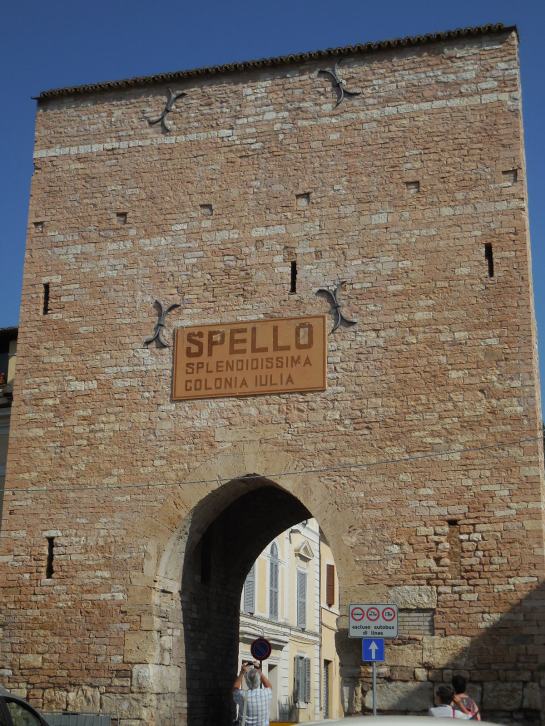
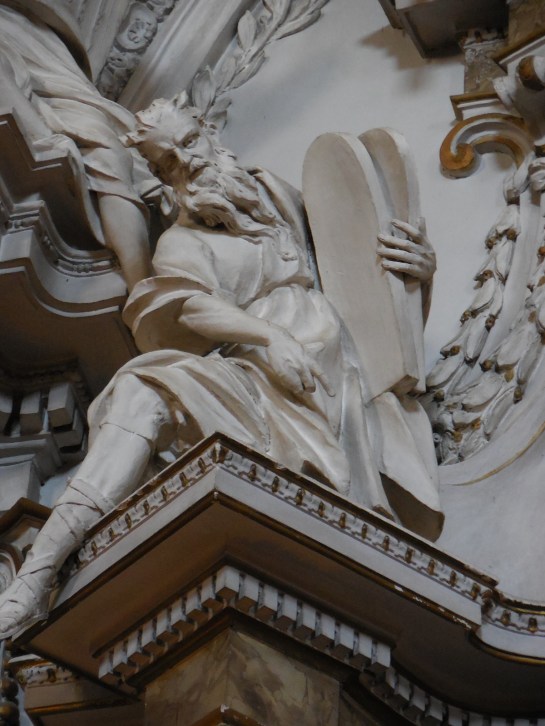
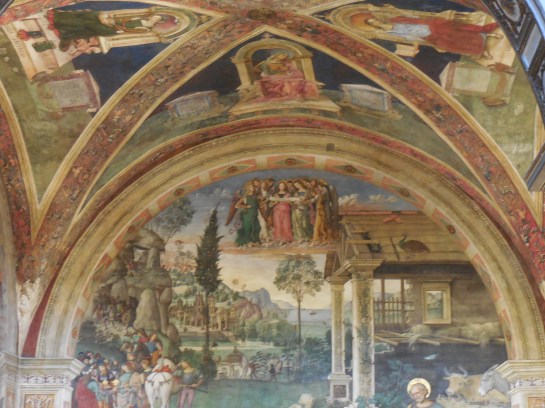
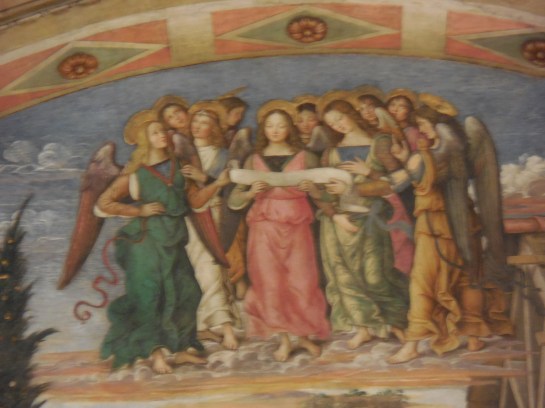
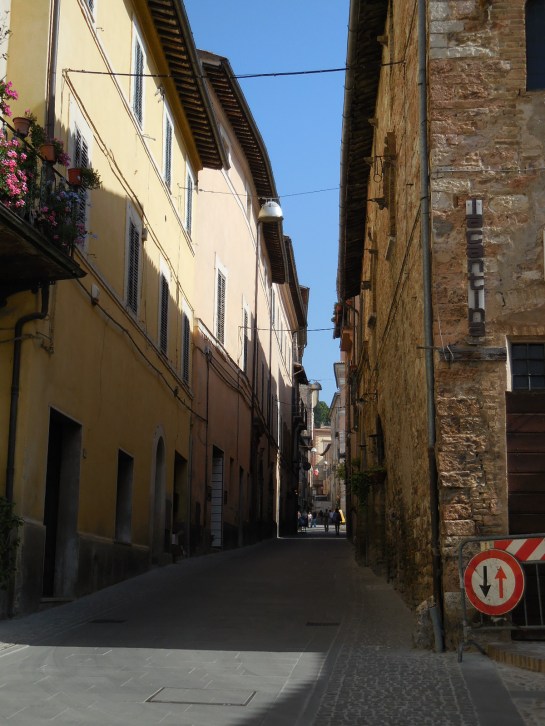
During my tour of Umbria, I was most enchanted by the town of Spello, with its steep, narrow and picturesque streets and stone buildings that gave it a medieval appearance. I could imagine myself living in such a tranquil environment. I loved the potted plants and flowers decorating the exteriors of the quaint homes. Located 10 kilometers from Assisi, Spello has Roman roots – the Romans established a colony there in 1 BC, and traces of its Roman heritage remain to this day in the form of three gates. The Arch of Augustus hails from 1 BC to 1 AD. There are gates from the Middle Ages as well. Impressive churches dot the town. My favorite was Santa Maria Maggiore, which dates from 1159, and its Baglioni Chapel that boasts dazzling Renaissance frescoes by Pinturicchio. Rendered around 1500, the frescoes provide a pictorial narration of the childhood events of Mary and Jesus. The main scenes, shaped as lunettes, include the Annunciation, the Nativity and the Dispute with the Doctors. Other churches we saw included Sant’Andrea, dating from 1025 and sporting 14th century frescoes and San Lorenzo, which traces its history back to the 12th century. The Old Town Hall or Palazzo Comunale Vecchio has a bewitching medieval appearance, and there is a 16th century fountain on the same square.

Spello5

Spello7

Spello12

Spello13

Spello16

Spellobldg1

Spellodoor

Spellogate

Spellohouse

Spellochurch2

Spellochurch2int1

Spellochurch2int2

Spellochurch2int3

Spellochurch2int4

Spellochurch2int5

Spellochurch2int8

Spellochurch2int13

Spellochurch2int16

Spellochurchint1

Spellochurchint2

Spellochurchint3

Spellostreet

Spellstreet3

Spellstreet5

Tracy A. Burns is a writer, editor and proofreader in Prague.

National Gallery of Umbria Photo Diary

Perugiabldg2

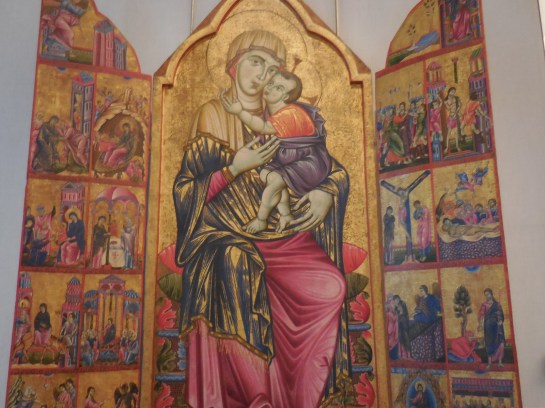
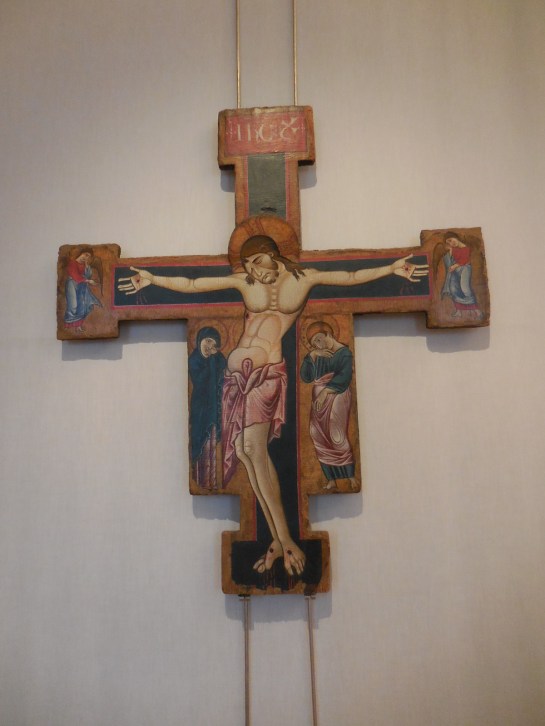
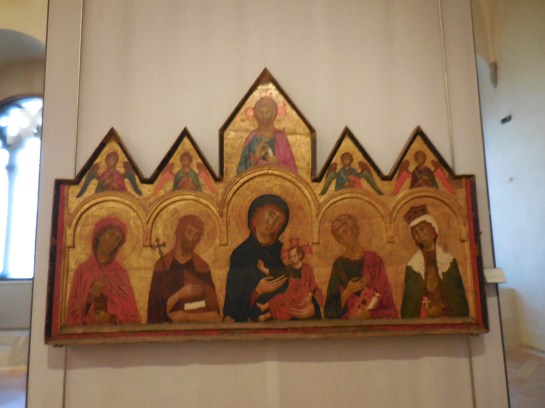
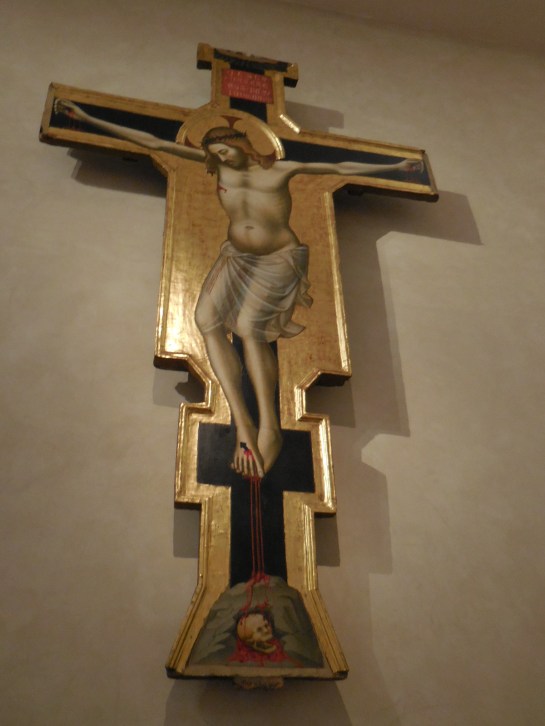
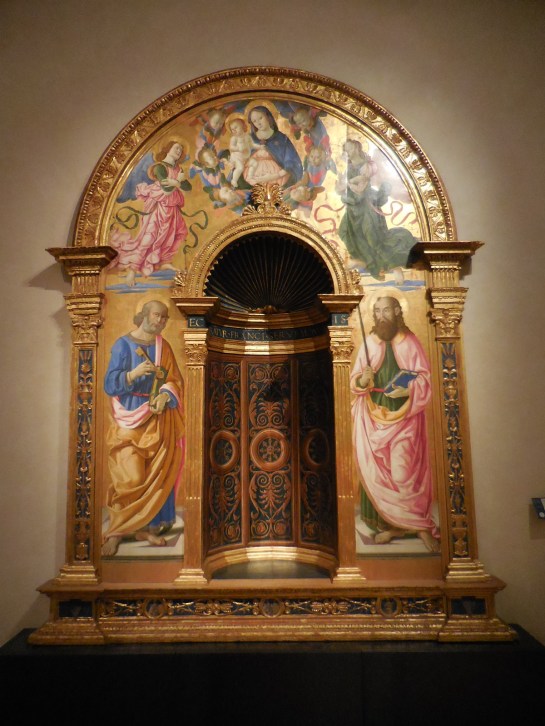
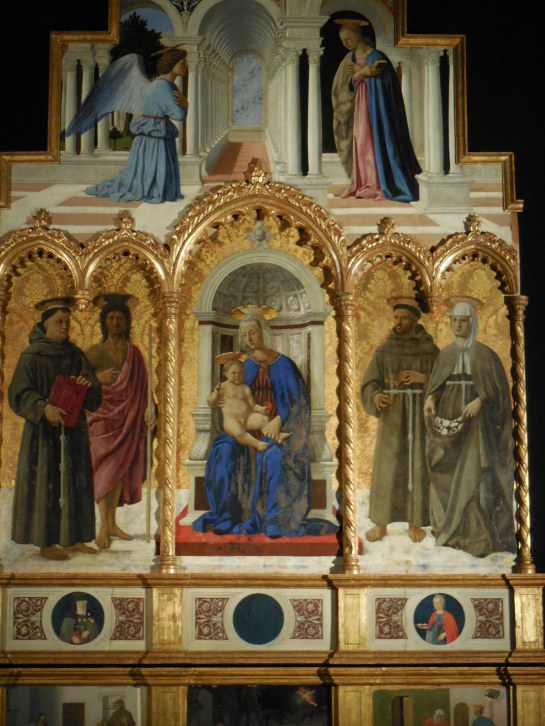
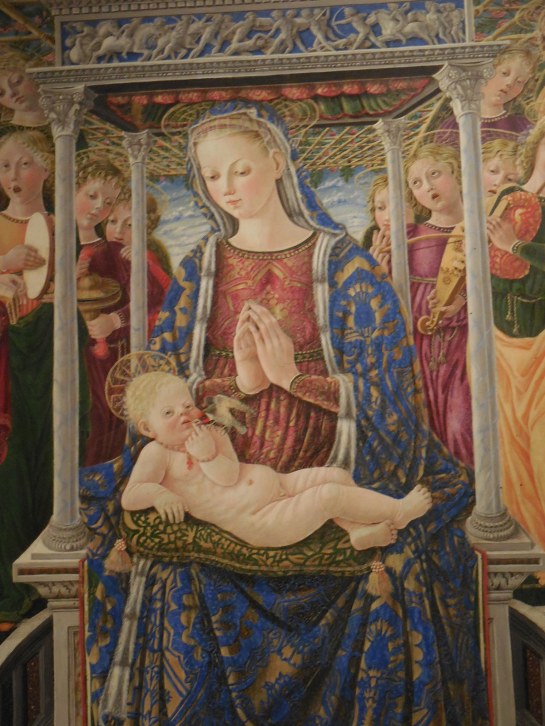
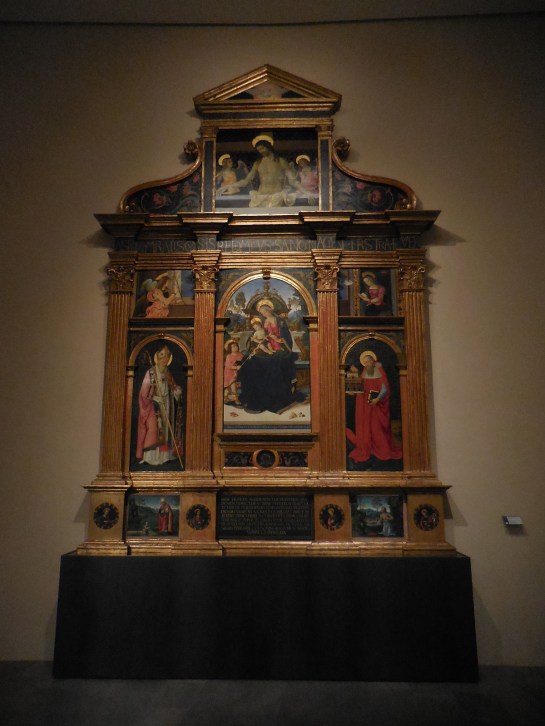
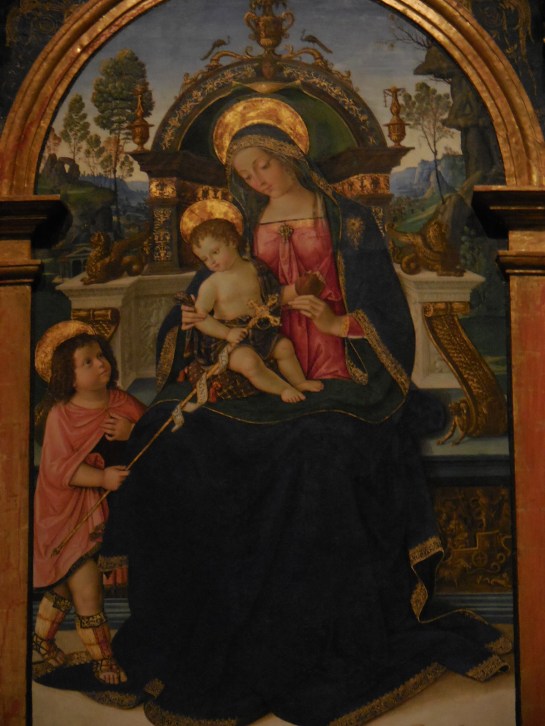
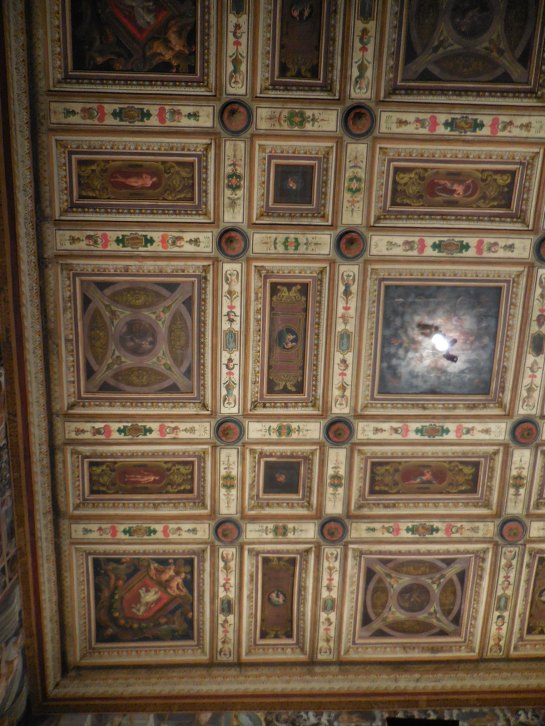
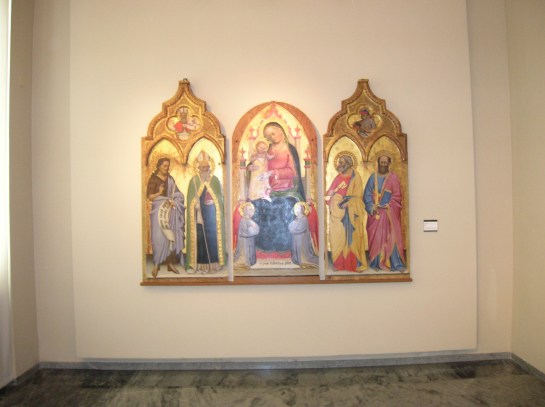
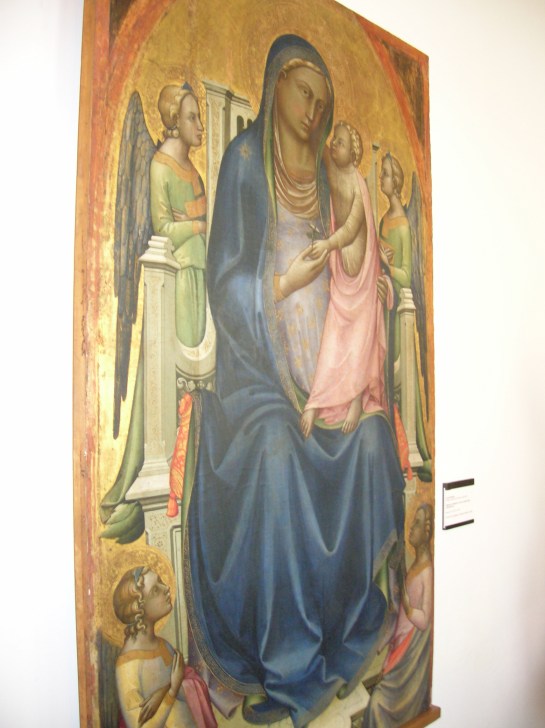
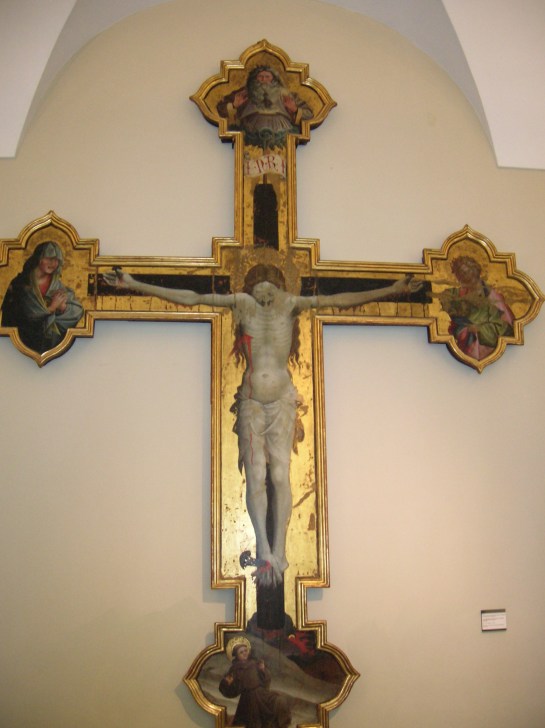
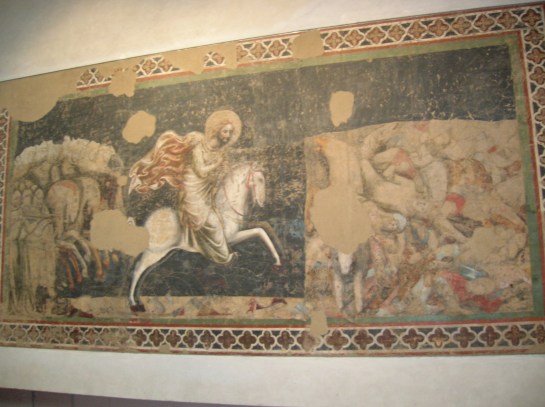
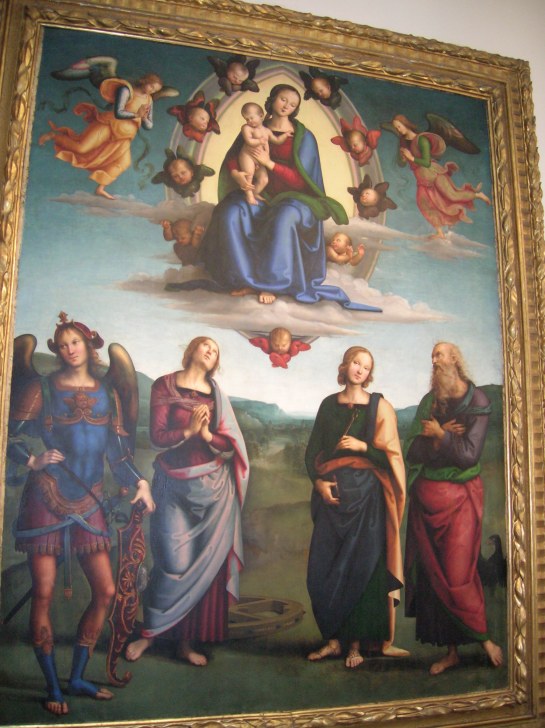
One of the highlights of my trip to Le Marche and Umbria was visiting the breathtaking National Gallery of Umbria in Perugia. The collection consists of Umbrian painting mainly from the 13th to 16th centuries and is located in the medieval Palazzo dei Priori, a magnificent medieval palace that also serves as the town hall and municipal library. There is some significant sculpture, too. The oldest piece in the gallery is a wooden crucifix from the early 13th century. Artists represented include the Pisano brothers, Perugino, Ottaviano Nelli, Benedetto Bonfigli, Pinturicchio and Raphael. Many Umbrian artists were influenced by painting in Tuscany, especially by the Sienese masters.

Perugiaart1

Perugiaart2

Perugiaart3

Perugiaart4

Perugiaart5

Perugiaart6

Perugiaart7

Perugiaart8

Perugiaart11

Perugiaart12

Perugiaart13

Perugiaart14

Perugiaart15

Perugiaart17

Perugiaart18

Perugiaart19

Perugiaart20

Perugiaart21

Perugiaart23

Perugiaart26

Perugiaart27

Perugiaart28

Perugiaart29

Perugiaart30

Perugiaart31

Perugiaart32

Perugiaart33

Perugiaart38

Perugiaart39

Perugiaart40

Perugiaartceiling

Tracy A. Burns is a writer, proofreader and editor in Prague.

Museum of City History in Leipzig Diary

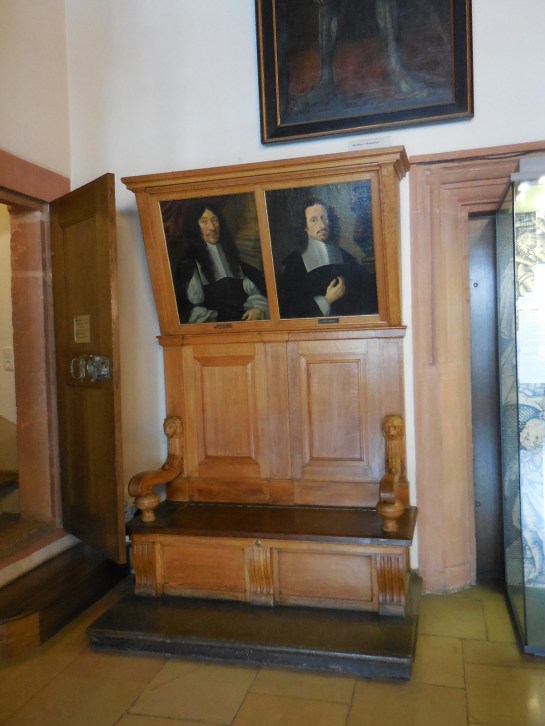
While visiting Leipzig on a day trip, I spent nearly two hours in the Museum of City History, which documents the history of the city that was first mentioned in writing during 1015 and founded as a town in 1165. The museum is located in the first Renaissance hall in Germany, built in 1556. It functioned as the town hall until 1905. The Museum of City History has been housed there since 1909. There was a special exhibition called “Modern Times,” which dealt with 200 years of city history from the revolutionary years of 1848 and 1849 to 1995. I learned about the development of trade fairs, industrialization, life during the Weimar Republic with the Roaring Twenties and Great Depression of 1929, the history of publishing houses in the city, the Nazi regime during World War II, the nationalization of companies and founding of the German Democratic Republic in 1949, the role music played in the city, the 1989 demonstrations and the first free elections in 1990 after two dictatorial regimes that lasted 58 years. In many respects, the history of Leipzig was the history of Germany, and I was fascinated about life during the Weimar Republic and life during East Germany’s existence, for instance.

LeipzigOTHallint1

LeipzigOTHallint2

LeipzigOTHallint3

LeipzigOTHallint5

LeipzigOTHallint4

LeipzigOTHallint7

LeipzigOTHallint8

LeipzigOTHallint9

LeipzigOTHallint11

LeipzigOTHallint12

LeipzigOTHallint15

LeipzigOTHallint18

LeipzigOTHallint19

LeipzigOTHallint20

LeipzigOTHallint21

LeipzigOTHallint24

LeipzigOTHallint29

LeipzigOTHallint30

LeipzigOTHallint31model

LeipzigOTHallint33

LeipzigOTHallint36

LeipzigOTHallint38

LeipzigOTHallint39

LeipzigOTHallint40

LeipzigOTHallint41

Tracy A. Burns is a writer, proofreader and editor in Prague.

Kladsko Borderland and Božena Němcová Diary

BNvyhlidka3

I went on a UNISMA tour of the Kladsko Borderland area, the region where 19th century Czech writer Božena Němcová grew up. In this post I will refer to her as Barunka, her nickname, as I felt I got to know her well during the excursion. There were about 40 women on the tour, traveling to commemorate this Czech patriot, who was one of the most influential prose writers in the Czech National Revival. During this movement, Czechs tried to promote the Czech language and culture while they lived in the Habsburg Empire, where Germanization was enforced.

BNwww.bozena-nemcova.cz

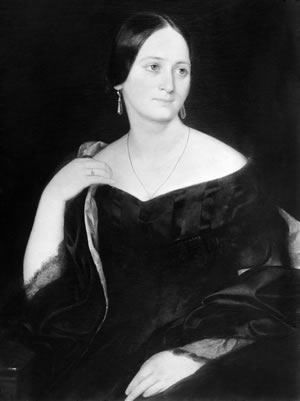
Božena Němcová from http://www.bozena-nemcova.cz

Barunka was an inspiration for women trying to make names for themselves as writers, too and for women in general. Barunka’s most famous literary creation is the novel The Grandmother, about an idealized grandmother and her family living in the countryside of the Kladsko Borderland region. Written during a tumultuous time of her life, The Grandmother was inspired by Barunka’s happy, carefree childhood. We would also visit the Ratibořice Chateau as Barunka had spent joyful days in Ratibořice during her youth. Also on the itinerary was Barunka’s home in Červený Kostelec, where she lived for six months after she got married. We would admire the countryside from a lookout point that commemorated the prestigious writer.  First, though, we would travel to Česká Skalice, the town where Barunka went to grammar school and got married.

Babickawww.radio.cz

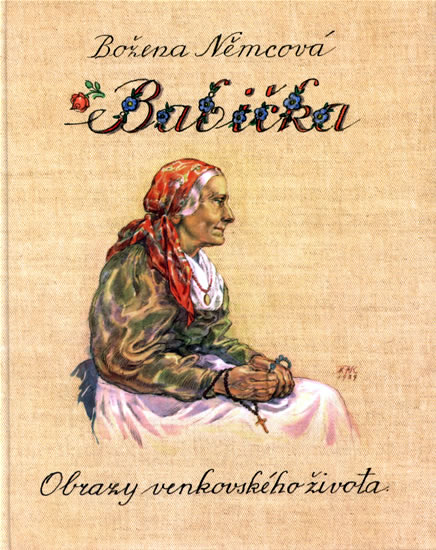
The Grandmother or Babička by Božena Němcová from http://www.radio.cz

The Kladsko Borderland region includes 13 towns, such as Nové Město nad Mětují, which boasts a chateau that I wrote about in another post. It also consists of the Broumov area. I spent a weekend in Broumov – see my post about it – where I toured the impressive monastery and visited the wooden Church of the Virgin Mary, the oldest wooden building in the country. The unique rock formations of Adršpach also belong to this area. I was there one cold, depressing day in November years ago and have always promised myself I would return sometime during the summer.

BNwww.martinus.cz

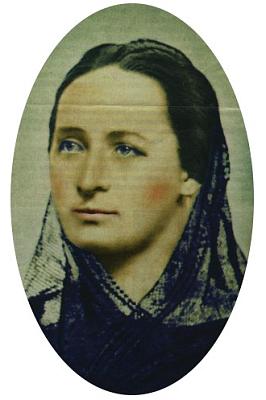
Božena Němcova from http://www.martinus.cz

Because I find Božena Němcová’s life to be so intriguing, I am going to go into some detail about the trials and tribulations she faced. Born in 1820 as Barbora Panklová in Vienna, she spent her childhood in Ratibořice. In 1825 her grandmother settled in with the family. Her grandmother played a major role in Barunka’s upbringing. During 1837, Barunka tied the knot at age 17 in an arranged marriage. Her husband, Josef Němec, was a 32-year old customs officer. They had four children, three sons and a daughter.

Josef was a Czech patriot, but he was a rude, outspoken man. He was transferred many times, so the family moved from place-to-place. When they were living in Polná, Barunka started to read books and newspapers in Czech, even though it was an era of Germanization. After they moved to Prague in 1842, she published poetry in a well-respected periodical.

In 1848, while the family was living in Domažlice, Josef was accused of treason, which brought about more transfers in his job. When he moved to Hungary in 1850, Barunka and the children lived in Prague, where she met with literary figures who were Czech nationalists. The family had severe financial problems and was often in debt. Then Barunka and her husband joined the Czech-Moravian Brotherhood, which promoted the idea of a utopian society, but the Brotherhood fell apart.

BNandchildrencs.wikipedia.org

Božena Němcová and her children from cs.wikipedia.org

Barunka was no saint. She had several lovers. When her son Hyněk became gravely ill, she was the mistress of Hyněk’s doctor. Then one day Josef came across a love letter and put an end to her affair. Josef’s job then took him to Hungary again, and this time Barunka and the children accompanied him. They visited Moravia and Slovakia, two places where Barunka picked up many folk tales from people living in the countryside.

While they were living again in Prague during 1853, Hyněk died of tuberculosis at the tender age of 15. The family had other problems, too, as Josef found himself unemployed. It was while the family was in such dire straits that Barunka wrote The Grandmother, as she mentally transported herself back to the cheerful days of her youth, when she had lived with her grandmother in Ratibořice. In the book the grandmother figure stands for goodness, love and moral values.

BNvyhlidka5

The Kladsko Borderland

The following year Barunka had an affair with a young medical student, but the man’s parents found out and forced him to move from Prague to Poland, ending the relationship. During 1856 Barunka attended the funeral of influential writer and journalist Karel Havlíček Borovský. She paid tribute to him by placing a crown of thorns on the casket as a symbol of martyrdom.  That same year Josef was accused of embezzlement. Barunka and Josef had heated arguments about the children’s future, and Josef filed for divorce. He beat her, and Barunka called the police. They got back together, but they fought so often that Barunka eventually left him.

During 1861, she moved to Litomyšl, where she worked for a publisher as Josef was no longer supporting her. However, illness and the resulting financial problems forced her to honor society’s rules and return to Prague and to her husband. The first installment of the second edition of The Grandmother was published the day before she died on January 21, 1862.

CeskaSkaliceBNmuzeum1

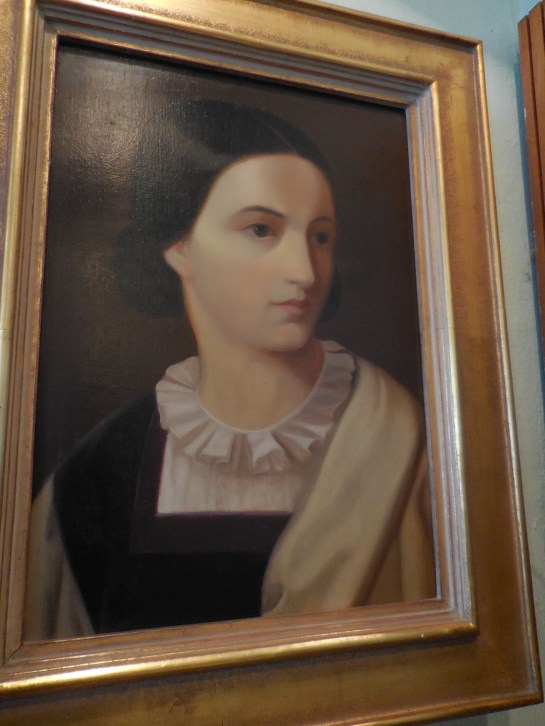
A portrait of Božena Němcová from the Božena Němcová Museum in Česká Skalice

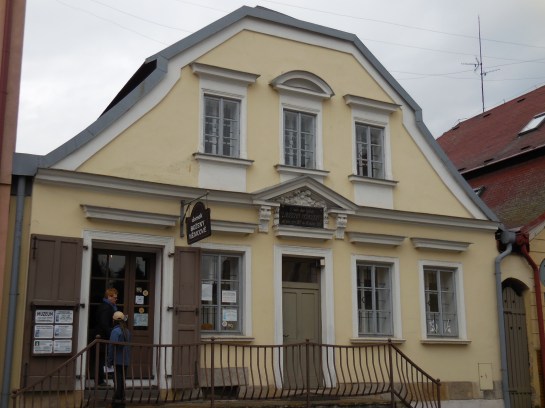
First, we visited Česká Skalice, where the Božena Němcová Museum was situated. The school that Barunka attended and the Baroque church where she was married in 1837 are nearby. Coincidentally, her parents had married in the same church, during 1820.

Česká Skalice has an impressive history. It was first mentioned in writing during 1086, but a settlement existed there even earlier. It obtained the status of a town in 1575. During the Thirty Years’ War, Česká Skalice was occupied by both Swedish and the Emperor’s troops. During the 18th century, the town concentrated on agriculture and textile production. The 19th century was fraught with floods and fires, yet the town still expanded. In 1866, during the Prussian-Austrian War, a significant battle took place nearby. The Austrians lost, amassing over 5,000 casualties. It was a hint of what was to come as the Austrians would go on to lose the war.

CeskaSkaliceBNmuseum2

from the Božena Němcová Museum

The 19th century was also a time when Dahlia Festivals took place. They were held from 1837 to 1847. Dahlias were plentiful in the region, and the festival took on a nationalistic tone. At the first festival in 1837, Barunka was voted Queen of the Ball. Composer Bedřich Smetana participated in the festival during 1839. Factories for textile production cropped up during that century, too.

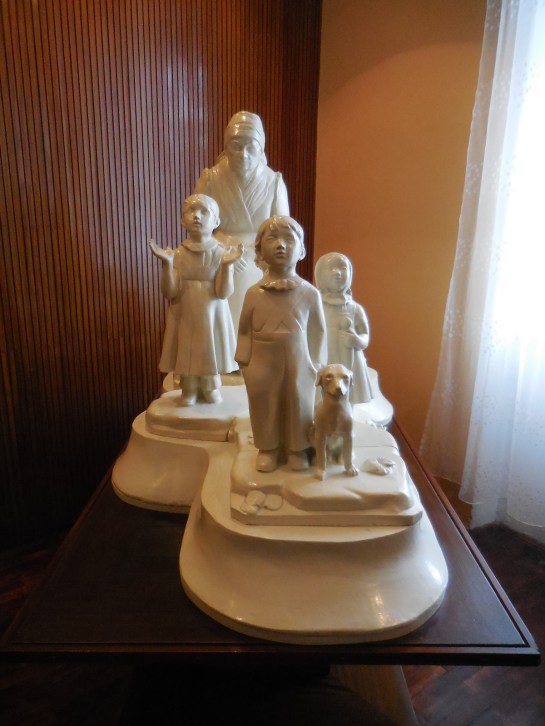
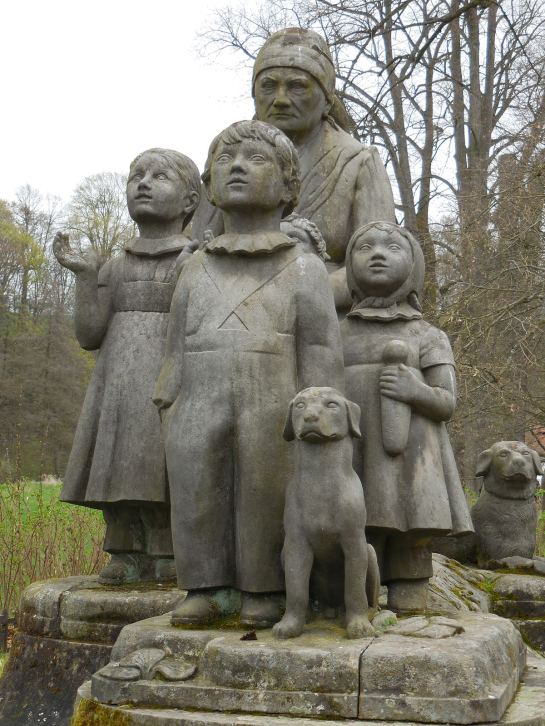
Many citizens of Česká Skalice died during World War I, but life in independent, democratic Czechoslovakia was good. A statue called “Grandmother with Children,” based on the book The Grandmother, was unveiled in 1920 in Ratibořice. The sculptors were the well-renowned Otto Gutfreund and Pavel Janák. A museum dedicated to Božena Němcová was opened in 1931. During the Second World War, times were bleak. Many inhabitants lost their lives in resistance fighting.

CeskaSkaliceBNmuseum6

Statuary inspired by The Grandmother, Božena Němcová Museum

We could only peek through the iron grille of the Baroque church, but I read that the chapel dates back to 1350, and the baptismal font hails from 1450. The interior became Baroque in 1825.

The Museum of Božena Němcová gave me an overview of her life. I saw her writing desk and tried to imagine her sitting there, composing a story. Photos and documents were on display as well as many editions of her books. A book fiend, I thoroughly enjoyed seeing the various editions and noticed how the books’ designs differed. I also peered at some of her favorite paintings. I learned that Barunka admired English literature, especially the works of Charles Dickens and that she was deeply interested in the fate of textile workers, servants and clerks, for instance. She had even visited textile factories in order to get a sense of the grueling work and long hours that prevailed. I admired a richly decorated fan she had owned. The part of the exhibition dedicated to The Grandmother in film and drama also caught my attention. I had seen the popular film, and I had attended a performance of her literary masterpiece, on stage at the Goose on a String Theatre in Brno.

CeskaSkaliceBNmuseum13

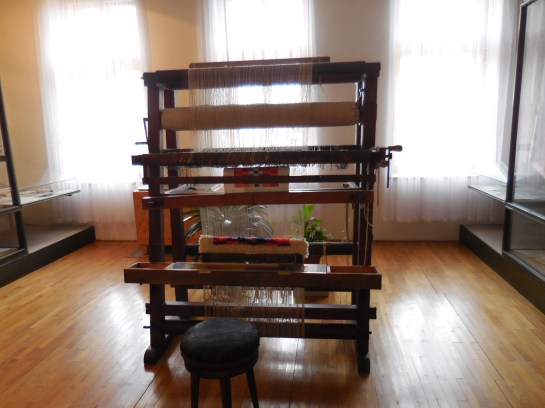
From the Textile Museum in Česká Skalice

Adjacent to the literary museum was a textile museum, founded in 1936. Česká Skalice is home to the only museum in the country that focuses on the history of textile production.

We also visited Barunka’s timbered school, which she attended from 1824 to 1833. While it is not known when it was built, legend says that it dates from the 13th century. It was first mentioned in writing during the early 15th century. The school was destroyed by the Swedes in 1639, but, four years later, a new one was built. In 1771, some 280 children were registered at the school. However, only about 80 pupils showed up for lessons. Until 1790 there was only one grade. Later, when Barunka attended, there were two grades. Now it looks like it did from the 1830s and 1840s. The building last served as a school in July of 1864.

CeskaSkaliceBNschool7

The teacher’s desk in the school that Božena Němcová attended

I tried to imagine Barunka going to this school every day. Each row in the classroom consisted of one long bench. I could not imagine how painful my back would be if I had to sit on one of those hard benches all day. A sentence written in 19th century Czech using correct penmanship was on the blackboard. An edition of Barunka’s story, The Teacher, was on display, as she described this school in that work. While I could not imagine going to classes in such a claustrophobic, though quaint, space with uncomfortable seating, some of my fellow seventyish travelers reminisced that the grammar schools they had attended had looked similar. I had spent my elementary school days at a small, modern, private school in the town where I lived in northern Virginia. We had strict rules and a dress code. If students went to their lockers between classes, they were punished. However, we had great teachers and a terrific theatre program. How different my childhood had been from the childhoods of these seventy-something women who had grown up in Communist Czechoslovakia!

CeskaSkaliceBNschool9

The benches where the students sat in the school Božena Němcová attended

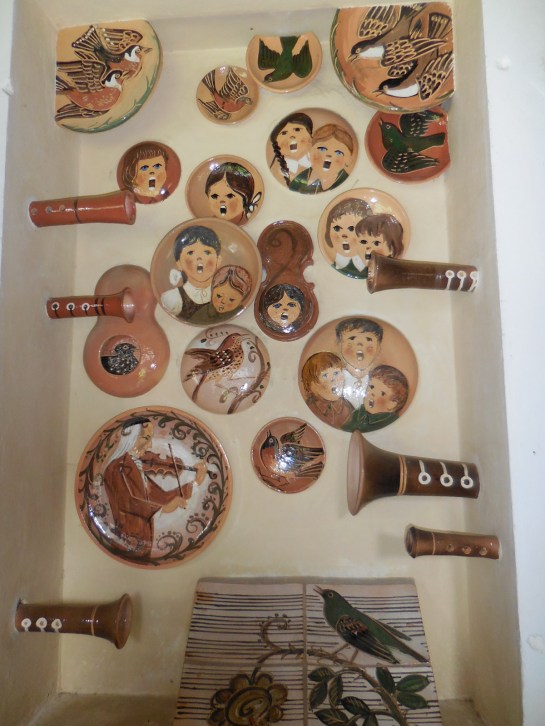
The wall in the atrium of the building was richly decorated with ceramics and paintings. Quotations from Barunka’s books adorned the wall, too. I admired the bright colors and cheerfulness of the display.

CeskaSkaliceBNschool16

The display of ceramics in the atrium of the school

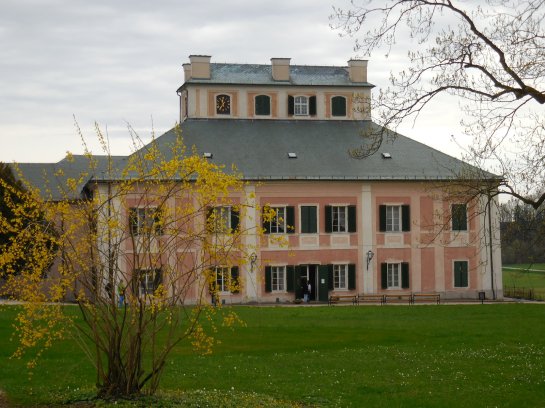
The highlight of my trip was visiting Ratibořice Chateau, where I had been only once, more than a decade earlier. The village of Ratibořice was first mentioned in writing during the 14th century, when a fortress had stood on the site. The chateau has its origins in the early 18th century, when the then owner, Prince Lorenzo Piccolomini, had it built as one of his residences. It has the appearance of an Italian countryside summerhouse, an architectural style that was popular during the 16th century.

Its golden age took place when Kateřina Frederika Vilemína Benign – the Duchess Zaháňská – inherited the place at the turn of the 19th century. Barunka even based one of the characters in The Grandmother on this former owner of Ratibořice. She made the chateau her permanent residence and was responsible for reconstruction that took place from 1825 to 1826. The chateau was transformed into Classicist style. Also, the park was founded during her tenure as owner. Kateřina was married and divorced on three occasions. The duchess loved children, but her only child was taken away from her in 1801 because she was illegitimate. Then Kateřina was unable to have more children. So she helped educate girls and helped them find rich husbands. She treated them as if they were her own children. One of these girls became a character in The Grandmother, fictionalized as Countess Hortense.

Ratiboriceext2

Kateřina had influential friends. She was on friendly terms with Russian Czar Alexander I, Klemens von Metternich, who served as Minister of Foreign Affairs and later Chancellor of the Austrian Empire and poet Lord Byron. In June of 1813, a significant political meeting took place at the chateau. Czar Alexander I and representatives from Prussia and Austria formed a coalition after the defeat of Napoleon in order to establish the divine rights of kings and Christian values. The alliance focused on preventing revolutions, democracy and secularism. The duchess died during 1839 in Vienna.

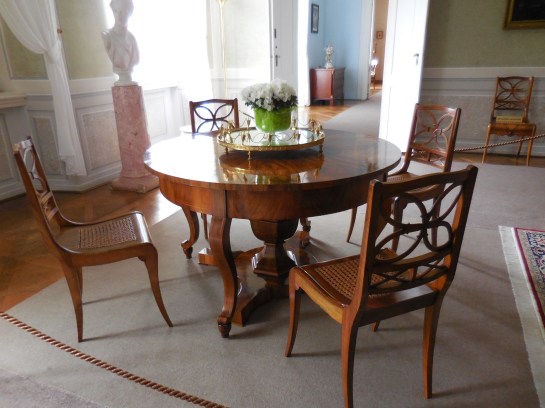
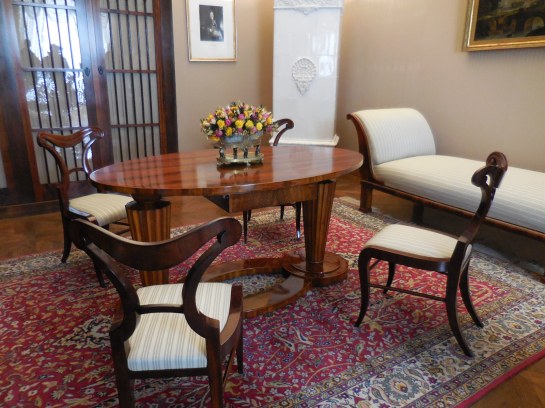
Other major reconstruction took place from 1860 to 1864, when Prince Vilém Karel August from Schaumberg-Lippe gave the chateau a second Rococo style makeover. The chateau remained his family property until 1945. The Nazis occupied the chateau during World War II, and after the war, the interiors were changed into Classicist, Empire and Biedermeier styles, which decorate the chateau today. Ratibořice now appears as it did during the first half of the 19th century. In 1978 it obtained the status of a national cultural monument. From 1984 to 1991, there was much restoration work.

Ratiboriceint3

In the chateau I was enthralled with six Italian paintings from the 17th and 18th centuries. The pictures showed people in landscape settings. How I loved Italy! I had been there nine times and would soon be visiting that country again. I loved the Italian language, too. I wanted to see all the towns in Italy, to visit everything noteworthy. Rome, Arezzo and Pompeii were my three favorite places in Italy.

The Men’s Salon was designed in Empire style. In this space I took note of the elegant Empire style bookcase on top of which are busts of the members of the Holy Alliance – Russian Czar Alexander I, Austrian Emperor Franz I and Prussian King Frederick William III along with a bust of Metternich. I loved the paintings of Italy in this room, too. The Social Salon featured a pool table along with Empire style card tables that boasted intarsia designs and a large painting of a biblical scene. I also admired a wooden gilded clock from the first third of the 19th century.

Ratiboriceint4

There was a portrait of a woman who was 46 years old, my age at the time of my visit. I thought she looked so old. Suddenly, I felt so old. I had lived in the Czech Republic and Czechoslovakia for half my life, 23 years. Time went by so fast, and that scared me. Before long, I would be 50. I wondered if I looked that old to other people. Some younger people on trams and Metro gave up their seats for me, an act of respect to elders.

A painting in the Music Salon, which was decorated in Napoleon Empire style, caught my attention. The large canvas portrayed a carnival parade in Naples during 1778. There were 2,338 people painted in the picture. I admired the attention to detail. I thought back to my trip to Naples the previous year. The museums, the pizza, the picturesque streets in the historical center, the opera house, the churches and the cathedral – it had truly been a wonderful experience. And Naples seemed so different from the other towns and cities I had visited in Italy.

Ratiboriceint11

In another room I admired a statue of a Dancing Fawn on a column, an artwork based on a statue unearthed in Pompeii. I recalled seeing the original in the Archeological Museum in Naples. Visiting that museum was certainly a highlight of my trip to southern Italy.

Ornate gilded clocks also decorated interiors. I loved the paintings of two lakes in Italy. I had wanted to visit Lake Garda and surroundings this year, but the trip was not offered at a time when I was free. I also would love to see Lake Como and the surrounding area. I recalled flipping through a book I have about the region and feeling overwhelmed by the beautiful photos. A desk in the room was exquisite, too. I loved the Klimt-style candlesticks in the bright, dynamic blue, gold, and red. What looked like a pile of books was really a trash can. That was an object I wanted in my own home.

Ratiboriceint17

On the first floor I was enthralled with the Servant’s Room. The servant slept on a high, wooden bed that he also used for ironing. My back started to hurt just looking at the hard bed. On the lower floor I loved the coffee service that included cups with pictures of three chateaus on them. One of these was Amalienburg, which I fondly recalled visiting in Munich, although the day had been so rainy that it had not been pleasant walking in the park. The elegant Biedermeier furniture in the Schaumburg Room caught my attention. I especially liked the dark green couch and the room’s warm colors. The Graphics Cabinet was impressive, too.

I also liked the Second Rococo style adornment of the Men’s Parlor, where there were black-and-white portraits of various monarchs, including Russian Czar Nicholas II. In the Women’s Salon I was drawn to an elegant fan picturing cats. A cat lover, I dreamed of having my own shelter for black cats or of owning a mansion where there was enough room for 15 or 20 black cats. I liked black cats best because they are often overlooked. People are prejudiced against them because of their color. Some people consider them to be unlucky, but, to me, they are not unlucky at all.

Ratiboriceint20

I imagined Czar Alexander I seated in the Big Dining Room along with many guests at a lunch honoring the Russian leader. I admired the English Copeland service on the table as well as a green tiled stove. Other appealing rooms had Neo-Baroque and Second Rococo décor.

Babiccinoudoli5

Babiccinoudoli6

Babiccinoudolistatue2

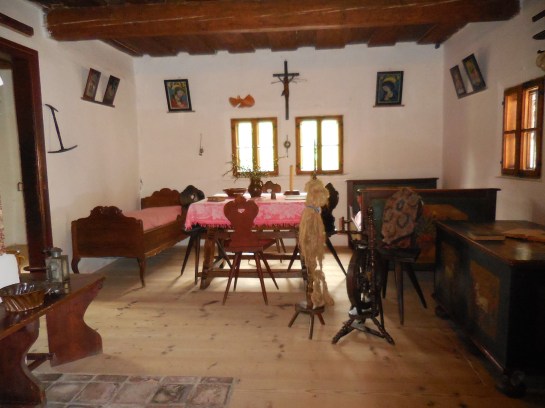
Near the chateau was the Grandmother Valley, where old buildings, some from the 16th century and others from the 19th century, stood among beautiful scenery. The Rudr Mill hails from the second half of the 16th century. It has two floors, and one room is decorated with folk-style furniture. There is an exposition about the processing of flax, too. The statue of the grandmother with her grandchildren was inspired by Barunka’s novel. A timbered pub from the second half of the 16th century impressed me, too. I also saw a timbered cottage covered with shingles. It was built in 1797. I liked the folk-style furniture inside. Finally, I reached Viktoria’s Weir, originally made of wood but redone in concrete during the 1920s. The valley was tranquil and idyllic. I walked at a leisurely pace on that windy day, enjoying the landscape.

CervenyKostelec1

The Winter Kitchen in the house where Božena Němcová once lived in Červený Kostelec

CervenyKostelec2

The house in Červený Kostelec


We visited the small house where Barunka had lived with Josef for six months, shortly after their wedding, when she was only 17 years old. In the small town of Červený Kostelec, she had written the book Poor People and had posed for her first portrait. She had also become pregnant with her first child, Hyněk. The three rooms on display included the Winter Kitchen, where the landlady sometimes cooked for Barunka and her husband. Barunka did not cook. The couple often ate at a nearby pub. Across from the house was an orange church, an interesting structure, but we could only peek inside, barred from entering by an iron grille.

CervenyKostelecext2

The house in Červený Kostelec

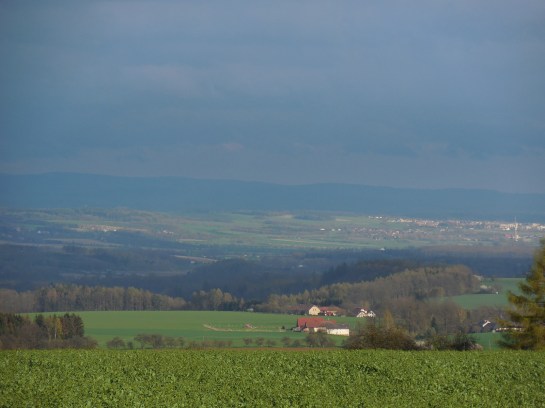
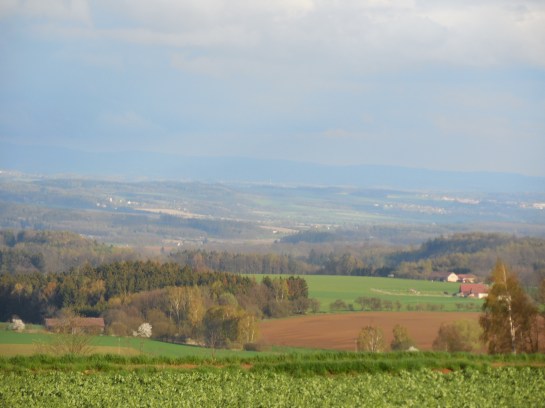
Then we came to Barunka’s Lookout Point commemorating the region where the well-known writer grew up. The views of the countryside are spectacular. It was a wonderful way to end our trip.

When we got back to Prague, I felt enlightened and invigorated. I had learned a lot about Božena Němcová and the region of her happy childhood. The chateau interested me the most, but everything was intriguing. I thought of how she had been physically abused and how she had to return to her husband in the end, and I became sad. What a life she had lived and what magical books she had produced!

Tracy A. Burns is a writer, proofreader and editor in Prague.

BNvyhlidka7

The Kladsko Borderland from the lookout point

Kladruby Monastery Diary

Kladruby facade

I had visited Kladruby Monastery about 20 years before I participated in the arsviva tour of architect Jan Blažej Santini-Aichel’s creations in west Bohemia. I had wanted to pay the Benedictine Monastery another visit for a long time.

I already knew a bit about the fascinating history of the place. Kladruby Monastery was founded by Prince Vladislav I during 1115. It was established on the Nuremberg-Prague trade route. The monastery made quite a name for itself at the end of the 12th century and during the 13th century. The Church of the Assumption of the Virgin Mary, Saint Wolfgang and Saint Benedict was consecrated in 1233 with King Wenceslas I on hand for the ceremony. (King Wenceslas I was not the only royal to visit the monastery; King Přemysl Otakar I held negotiations there during the 13th century, too.)

Kladrubychurch5

There was much looting later that century, but around 1370, a new abbot was appointed, and the situation improved. The Chapel of All Saints was added during that period. Then Hussite Wars brought devastation to Kladruby. The Hussites and then the army of the Emperor Sigismund took control of the monastery in the 15th century. The Benedictines returned in 1435, though it took about 70 years for things to shape up. The monastery flourished during the early 16th century, and more monks called Kladruby home. This was a glorious time of expansion. A school was set up; both Catholics and Protestants attended.

Kladrubychurch7

Things took a turn for the worst with the onset of the Thirty Years’ War. The monastery was looted and pillaged. Because the Catholics won, Kladruby was once again in favor after the wartime turmoil. Expansion and reconstruction took place in the Catholized land.

Jan Blažej Santini-Aichel, a Czech architect of Italian origin, became associated with the monastery in the early 18th century, when he was in charge of doing a makeover of the church in Baroque Gothic style, which emphasized Gothic features in a distinctly Baroque style. Thanks to his efforts, the church interior is bewitchingly beautiful.

Kladrubychurch8

In 1785 Emperor Joseph II dissolved the monastery. The Benedictines packed their bags, and the Windisch-Graetz clan moved in. During their tenure, they divided the monastery into apartments. One part of the complex was made into a brewery. The Windisch-Graetzes, however, did build a library that is rather impressive.

Kladruby was nationalized after World War II, and terrible times were to come. Sick cattle grazed on the monastery’s property while other parts were transformed into offices. Reconstruction did not begin until the middle of the 1960s.

Kladrubyint10

I was especially intrigued by the Dining Room, which showed off an 18th century pewter service. What I found most intriguing, however, was the portrait of Cardinal Schwarzenberg. No matter where I stood, his eyes were always staring at me. I gazed at the portrait of the red-drapery clad cardinal with a stern expression from several angles.

Kladrubyintstatue1

Kladrubyintstatue2

Kladrubyintstatue4

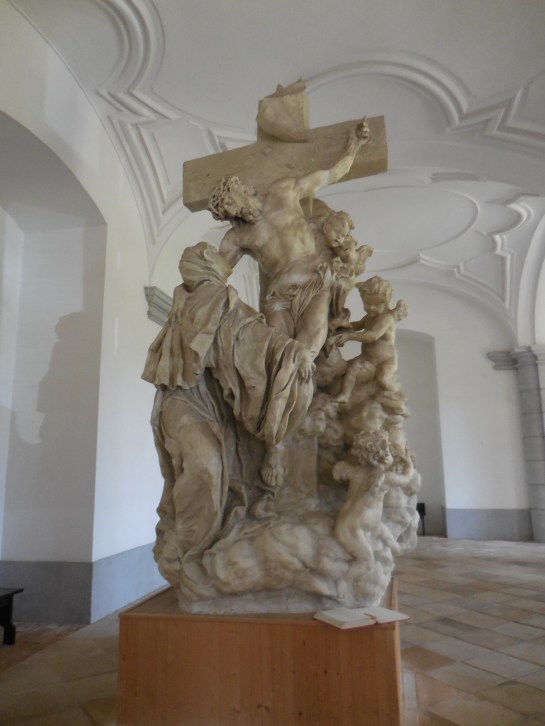
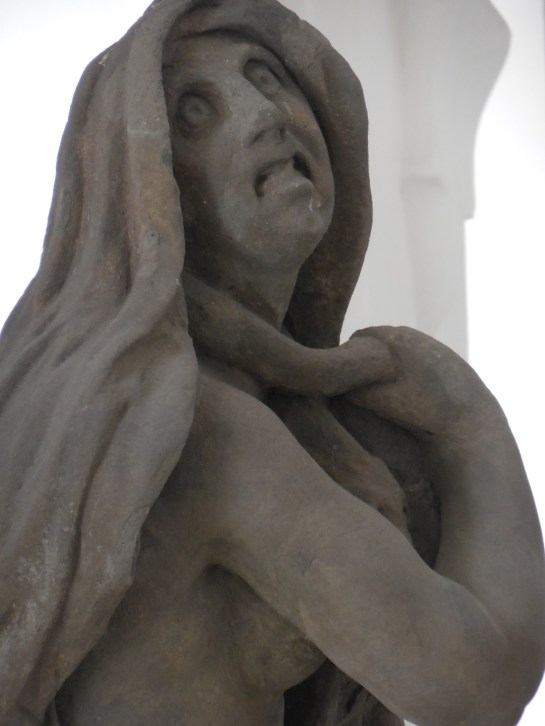
In the ambulatory we saw many sandstone statues by Late Baroque sculptor Matthias Bernard Braun, one of my favorites. His works are so dynamic and powerful. It was evident that Braun’s sojourn in Italy had influenced his creations. Most of these statues were inspired by Greek and Roman historical themes while some stood for allegories of character traits. They were all original except for the statue of Count František Antonín Špork, who had been a prominent cultural figure and patron of the arts in the early 18th century. He had founded Kuks, a former hospital that had once been located across from a popular spa, and he commissioned Braun to make statues of vices and virtues for the Baroque exterior of Kuks.

Kladrubyintstatue20

Kladrubyintstatue22

Kladrubyintstatue25

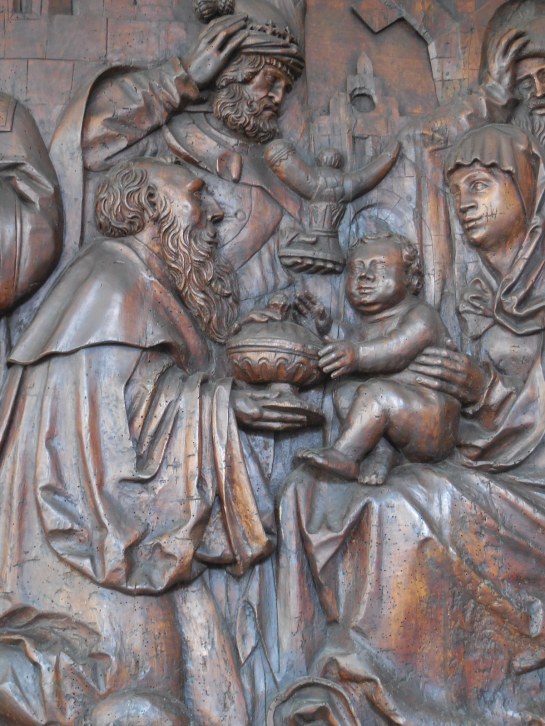
I had visited Kuks for the third time the previous year, and Braun’s statues were certainly a highlight. The newly restored Dance of Death paintings lining a hallway and the Baroque pharmacy there were also impressive. I had also examined the statuary carved from sandstone rocks in Braun’s Bethlehem, situated near Kuks. Those accomplishments are by no means the only ones on Braun’s résumé. He authored several statuaries on Prague’s Charles Bridge, such as The Vision of St. Luthgard, which was his first work. It brought him much acclaim. At Kladruby we also saw 12 woodcuts depicting scenes from Christ’s childhood. It astounded me how it had been possible to portray so much detail in the 16th century carvings.

Kladrubyint9

Kladrubyint19

At the monastery there are about 500 sculptures, paintings and portraits of John of Nepomuk, the Czech patron saint of Bohemia who was drowned in the Vltava River on the orders of King Wenceslas IV during the latter part of the 14th century. The king and archbishop were at odds over who should be the abbot of the prosperous and influential monastery. John of Nepomuk showed his support for the Pope by confirming the archbishop’s candidate, which infuriated the king. John of Nepomuk became a saint in 1729.

Kladrubychurch10

Then came the Santini-designed Church of the Assumption of the Virgin Mary, Saint Benedict and Saint Wolfgang. Santini had been inspired by the Italian radical Baroque use of geometry and symbolism. I see Santini’s structures as rational yet radical. Santini elevates Gothic art to a new form, offering fresh perspectives and giving new insights. I fondly recalled last year’s arsviva tour of Santini’s structures in east Bohemia and Moravia. I had learned so much about Santini’s creations, and my appreciation of the architect had grown.

Kladrubychurch17

Santini was supposed to follow in his father’s footsteps and become a stonemason, but palsy prevented him from doing so. As a student he was mentored by Prague-based architect Jan Baptiste Mathey. During a four-year sojourn in Italy, Santini became enamored with works by Italian architects Francesco Borromini and Guarino Guarnini and their radical Baroque style. Santini was commissioned to reconstruct many religious sites. Baroque art became the fashion during the era when the Catholic army triumphed in the Thirty Years’ War and remained so afterwards, when the Catholicism flourished in the Czech lands. During a mere 46 years, Santini cast his magic spell on about 80 buildings.

Kladrubychurch23

It amazed me how the church at Kladruby – the third biggest church in the Czech lands – retained its Gothic charm while also celebrating the Baroque style. I loved the details, such as the slots for candles in the benches of the choir. The pulpit was shaped like a boat rocking on a stormy sea. The Baroque organ – which still worked – boasted 1,270 pedals. Santini designed the impressive organ case. At the bottom of the main altar, there was a small statue of Christ on the cross, and I noticed that the Christ figure was crooked. I wondered what that symbolized. Two devils appeared in paintings in the church as well. Directly below the gushingly Late Baroque dome decorated with a scene of the Assumption was a large eight-pointed star of many layers. It was just one of many eight-pointed stars symbolizing the Virgin Mary that appeared in the church. I also liked the Romanesque elements that Santini had retained. I loved the many frescoes on the walls as well as the church’s stucco ribs and helical vaults. The play of light was also dynamic. Light played such a major role in Santini’s designs.

Kladrubychurch28

The high altar, one of Braun’s masterpieces, was perhaps the most intriguing as it featured both Gothic and Baroque elements. It showed scenes from the life and torment of Jesus Christ and scenes from the history of the Benedictine Order. The Assam brothers, who had been Late Baroque gurus, had also decorated sections of the church.  I recalled the church in Munich that they had decorated. The Late Baroque adornment there was so overwhelming that it had made me dizzy.

Kladrubychurch11

Kladrubychurch4

We also visited the Windisch-Graetz Empire style library, which held 33,000 volumes and included a gallery. On display were weapons of various sorts and objects obtained during travels abroad.

Kladrubylibrary2

Kladrubylibrary8

I was more than satisfied with my visit to Kladruby and would recommend it to everyone who has time to see sights in west Bohemia. What impressed me most about Kladruby’s history was that it reflected the history of the Czech lands going through eras of prosperity, destruction and rebirth. Visiting the monastery was like reading a 900-year old illustrated text. Santini’s geometric symbolism, his use of Gothic and Baroque elements and the play of light greatly impressed me. Braun’s statues were so lively. Each facial expression told a story – some of delight, some of anguish. It was as if it was possible to see into the soul of each character represented in the statues.

Tracy A. Burns is a writer, editor and proofreader in Prague.

Kladrubychurch31


National Art Gallery in Bologna Photo Diary

BolognaNtlGallery1

I visited the National Art Gallery (Pinacoteca Nazionale di Bologna) in 2014, when I went on a trip with the travel agency arsviva. The collection includes paintings from the Emila region. It features works from the 13th to the 18th century. The gallery has been open to the public since 1875. I especially was drawn to the medieval art.

BolognaNtlGallery4BolognaNtlGallery2

BolognaNtlGallery5

BolognaNtlGallery6

BolognaNtlGallery9

BolognaNtlGallery10

BolognaNtlGallery11

BolognaNtlGallery12

BolognaNtlGallery15

BolognaNtlGallery16

BolognaNtlGallery17

Tracy A. Burns is a writer, proofreader and editor in Prague.

Dance of Death Paintings at Kuks Diary

Kukscycleofdeath10

NOTE: See my Kuks Diary for more information on Kuks hospital.

I visited the former Baroque hospital Kuks for the third time last year, soon after reconstruction. In the early 18th century, a spa had been situated across from the hospital, but it was destroyed by a flood in 1740. At Kuks visitors can admire 24 Late Baroque statues of vices and virtues by master sculptor Matthias Bernard Braun, a Baroque pharmacy, a pharmaceutical museum, a lapidarium, a chapel, a church and a crypt. Lining one hallways are 50 Dance of Death paintings that were beautifully restored during the recent reconstruction.

Kukscycleofdeath1

The Dance of Death or Danse Macabre genre in art was revived during the Baroque age and not only at Kuks. It began during the Late Middle Ages in 15th century France. The artistic renderings show death personified summoning people from all walks of life to dance. No one – neither kings nor beggars – could escape death. During medieval days the plague had ravaged Europe, and this was one artistic way to try to come to terms with so many deaths riddling the continent. Dances of death also played roles in religious plays presented in churches. People looking at these paintings during the hospital’s Baroque heyday were supposed to dwell on the fragility of life. Thus, the Dance of Death emphasized a certain mentality, a specific outlook on both life and death.

Tracy A. Burns is a writer, proofreader and editor in Prague.
Kukscycleofdeath2

Kukscycleofdeath3

Kukscycleofdeath4

Kukscycleofdeath5

Kukscycleofdeath6

Stiassni Villa Diary

Stiassnivillaext2

I had heard that the Stiassni Villa in Brno had been open to the public since the end of 2014, but I did not have time to go there in 2015. When the Czech UNISMA travel agency offered a tour of the Stiassni and Löw-Beer villas in the Moravian capital, I immediately signed up. A prime example of modern functionalist architecture in the Czech lands, the Stiassni Villa had been under reconstruction from 2012 to 2014. During Communism renovations had taken place as well –during that time period furniture from various chateaus had been added to the interior. Still, the villa had original furniture, too.

I was entranced with the section of Brno where the architectural gem was located – in the villa-sprinkled Masaryk Quarter, a section that looked tranquil, so different from the hustle and bustle of the city center. It reminded me of the Hanspaulka section of Prague, where I enjoyed taking long walks along villa-flanked streets.

Stiassnivillaext3

I am not a big fan of the functionalist style, but the exterior was intriguing. Its spartan appearance reminded me a bit of the exteriors of Prague’s Müller Villa and Rothmayer Villa. Shaped like the letter L, the Stiassni Villa was designed by architect Ernst Wiesner, who made quite a name for himself in Brno during the interwar years. His work was influenced by Austrian architect Adolf Loos, who designed the Müller Villa in Prague. Wiesner created the plans for other buildings in Brno as well, such as the Moravia Palace and crematorium. Wiesner fled to Great Britain in 1939, the year the Nazis took over. The villa was completed in 1929 for textile entrepreneur Alfred Stiassni and his family – his wife Hermine and his daughter Susanne. The structure features rectangular windows and a massive cassette cornice, for example.

StiassniVillaint1

The Stiassni’s tenure at the villa only lasted nine years. Because they were Jewish, the family fled Czechoslovakia in 1938, when they traveled to London and then continued to Brazil. Alfred Stiassni’s mother decided not to leave her homeland due to her age. She died at the Terezín concentration camp in central Bohemia during 1942, when she was 87 years old. The villa was taken over by the Nazis during World War II. During 1945, the Stiassnis obtained US citizenship. That same year Russian soldiers liberating the city would destroy furnishings in the villa. It was in good shape again when Czechoslovak President Edvard Beneš stayed there later that year, on his first visit to Brno after the war. He and his wife would reside in the villa again the following year during another trip to the Moravian capital.

StiassniVillaint2

Paintings of the owners of the villa, Alfred and Hermine Stiassni. The paintings are not part of the original furnishings.

From 1952 the villa was the property of the Regional National Committee and was used as accommodation for VIP guests, such as Fidel Castro. In 1961 Alfred Stiassni died in Beverly Hills, California. His wife passed away the following year. In 1964 leading Soviet Union politician Nikita Khrushchev spent time at the villa. From 1990 to 2005, the place served as a four-star hotel. Famous guests included Rudy Giuliani and Bill Gates. In 2005 Susanne, who had married an American, died in Beverly Hills.

StiassniVillaint5

Soon it was time for the tour to begin. In the Large Dining Room I admired the copy of a Baroque painting by 17th century Flemish Baroque painter Jacob Jordaens showing merry people drinking and laughing. I thought I could see the influences of Peter Paul Rubens and Jan Brueghel the Elder in the work. The onyx fireplace also caught my attention. My eyes were drawn to an elegant vase as well.

StiassniVillaint6

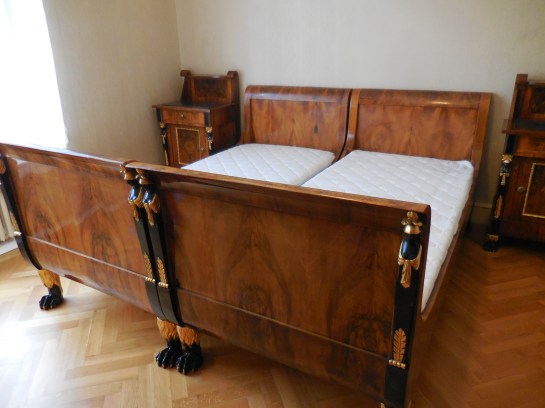
Another room featured watercolor paintings by Hermine and original chairs with grey upholstery. The pewter chandelier was also intriguing. An exquisite table had been originally in Bítov Castle, one of the largest and oldest castles in Moravia, a sight I had toured twice. I also admired a Baroque commode. The stucco decoration on the walls and ceiling was stunning. Then we visited some small rooms, and I especially liked the Empire space with side tables and a bed in that style. The bathroom was made of green marble. It had obtained its appearance during reconstruction in the 1980s. It is not known what the bathroom really looked like during the Stiassni’s tenure there.

StiassniVillaint7

The first floor was even more intriguing. Behind Alfred’s vast closet with moveable drawers was a space for more than 10 pairs of shoes. I recalled how the drawers in the dressing rooms of the Müller Villa were also moveable. In the bathroom the detail on the faucets was superb.

StiassniVillaint8

From Hermine’s bedroom it was possible to see the sloping English garden with hills and other greenery in the background. Other villas could also be seen in scenery that would have made a remarkable landscape painting. Mirrors covered Hermine’s closet in her dressing room. Her bathroom was green marble because the architects had no idea what it had looked like originally.

StiassniVillaint10

The daughter Susanne had the nicest rooms. Her playroom featured a dressing room, a bathroom and the terrace. I liked the yellow color of the rooms. It was my mother’s favorite color, and it brought back memories of my time spent with her in the yellow-painted kitchen of my parents’ house. So many discussions about so many topics, so many smiles, so many problems resolved. Susanne’s governess also had a small room.

StiassniVillaint20

The Small Dining Room, where the Stiassnis usually ate, was very modest with a small table set for three. The garden was another highlight of the villa. It was established in 1927 and included many foreign woody species. I noted its symmetrical design. Each section had been assigned a different use.

The Stiassnis were athletes. They took up swimming, skiing and skating, for example. There had been a swimming pool above the villa, and there still were tennis courts on the property.

StiassniVillaint11

I had enjoyed my tour of the villa, which contained some intriguing furnishings and was architecturally enthralling. I appreciated the functionalist design even though it was not my favorite style. I could imagine the villa in the early 1930s, when the family was settled there, not aware that their time in the villa would be cut short by the Nazis’ rise to power. From there we headed to the Löw-Beer Villa, which had a stunning Secession façade but only one piece of original furniture. Facing the famous Tugendhat Villa, the Löw-Beer Villa is now used as an exhibition space.

Tracy A. Burns is a writer, proofreader and editor in Prague.

StiassniVillaint13

StiassniVillaint12

StiassniVillaint19

StiassniVillaint23

StiassniVillaint25

Gordes Photo Diary

Gordes19

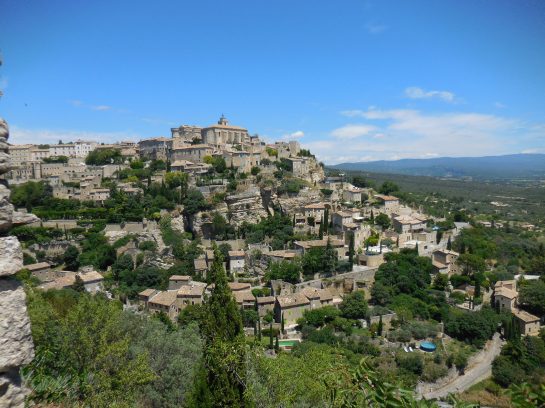
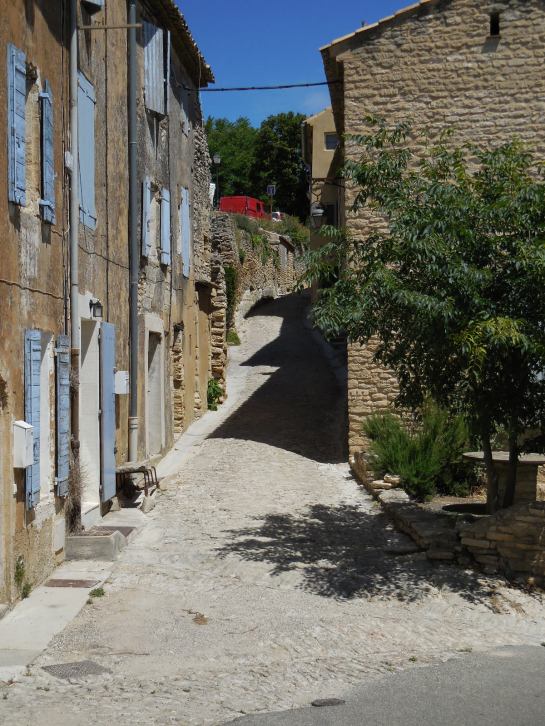
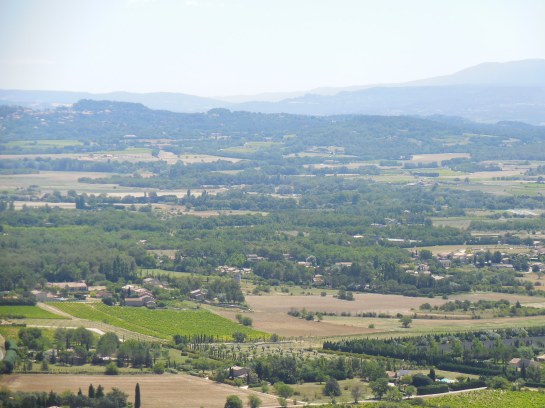
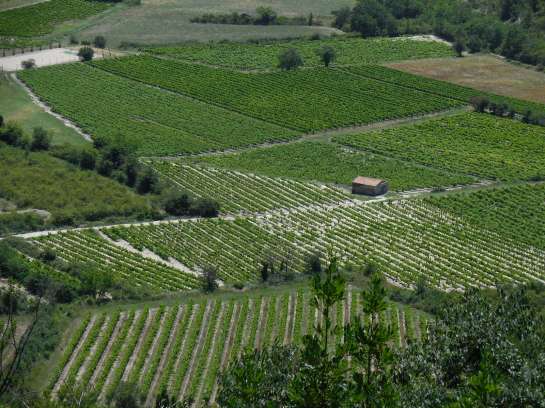
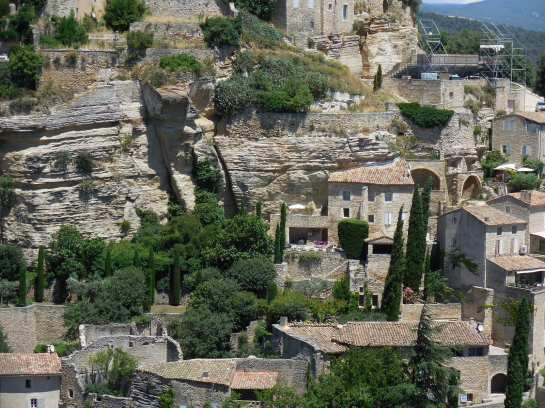
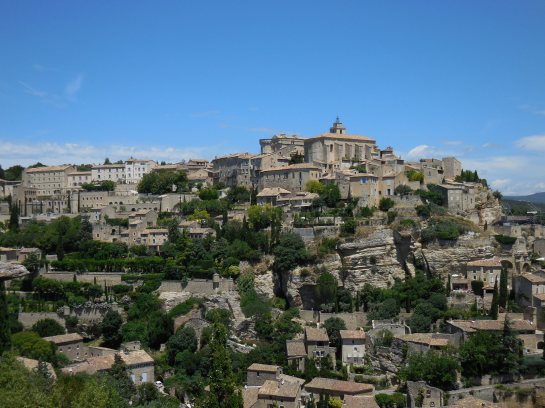
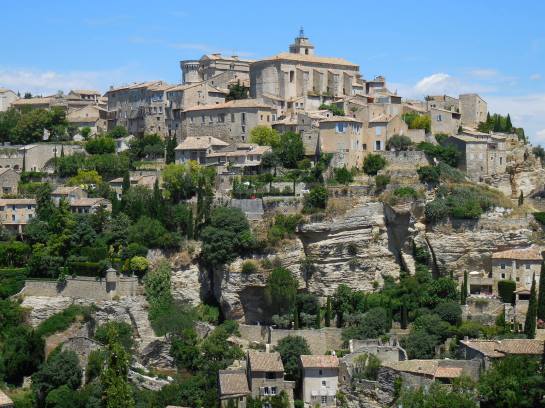
One of the most picturesque villages I have ever visited is Gordes. It was certainly a highlight of my 10-day trip to Provence. I loved meandering down the narrow, steep, romantic streets flanked by stone buildings with terracotta roof tiles. We were there on a Tuesday, when the weekly market is held, and I enjoyed examining the vendors’ wares and wound up buying two exquisite scarves. The views of the countryside were incredible, and away from the main square, it was tranquil. I found a quaint restaurant with simple yet attractive décor for lunch, too.

Gordes8

Gordes is located in the Vauclause Hills at 373 meters above sea level. It has about 2,000 inhabitants and encompasses 4,804 hectares. The name Gordes is Celtic in origin. Romans built forts in Gordes when they ruled. During the fifth century, when the Barbarians, Visigoths and Lombardians raided the plains where many settlements were located, people fled to the hills, which became villages in the 10th century.

The castle was first mentioned in writing during 1031 and was reconstructed in 1521, during the Renaissance. However, the lords did not reside there because Gordes was in such a remote location.

Gordes2

The village blossomed economically in the 18th and 19th centuries with craft production, tanners and shoemakers in great demand. Olive oil was also manufactured there. No less than 18 windmills were located in the village before the onset of the First World War, which brought terrible times to the village. Gordes was depopulated, and there was much poverty.

Gordes4

During World War II Gordes was home to many resistance fighters. When members of the resistance killed Nazi soldiers in the village during August of 1944, the Germans got revenge by shooting villagers and destroying property. Thirteen inhabitants were murdered in Gordes during the war. Later the village received a medal for its resistance activity.

Gordes10

After the war, Gordes got a new lease on life. Artists flocked to the village, and painter Marc Chagall and others settled there. During the 1950s, when tourists discovered the village, Gordes was rebuilt and acquired the picturesque appearance it has today.

Tracy A. Burns is a writer, proofreader and editor in Prague.

Gordes11

Gordes14

Gordes15

Gordes16

Gordes18

Gordes20

Gordes21

Gordes22

Gordes26

Gordes28

Gordes29

Gordes30