2023 Travel Diary

Amalfi Coast

Amalfi Coast

This past year’s travels included two trips to Italy, one to my beloved Milan and environs and the other to the Amalfi Coast, somewhere I have dreamed of going for many years. I also spent time visiting sights in the Czech Republic, such as Zbiroh and Karlova Koruna chateaus and the towns of Kutná hora and Hradec Králové. I also dined in the traditional Czech pub Hájenka in Kersko. I flew to northern Virginia to see my parents for two weeks in March and had a great time with them as well as with four friends. In Washington, D.C., I visited the National Portrait Gallery and Museum of American Art.

From Petr Brandl Exhibition

I saw many thrilling art exhibitions, including ones focused on the Baroque art of Petr Brandl and the Art Nouveau works of Alphonse Mucha. Karel Teige, Czech avant-garde artist best known for his interwar works, was the focus of an exhibition at the Museum of Czech Literature, which I visited for the first time in 2023.

Campari Tomb at Monumental Cemetery in Milan

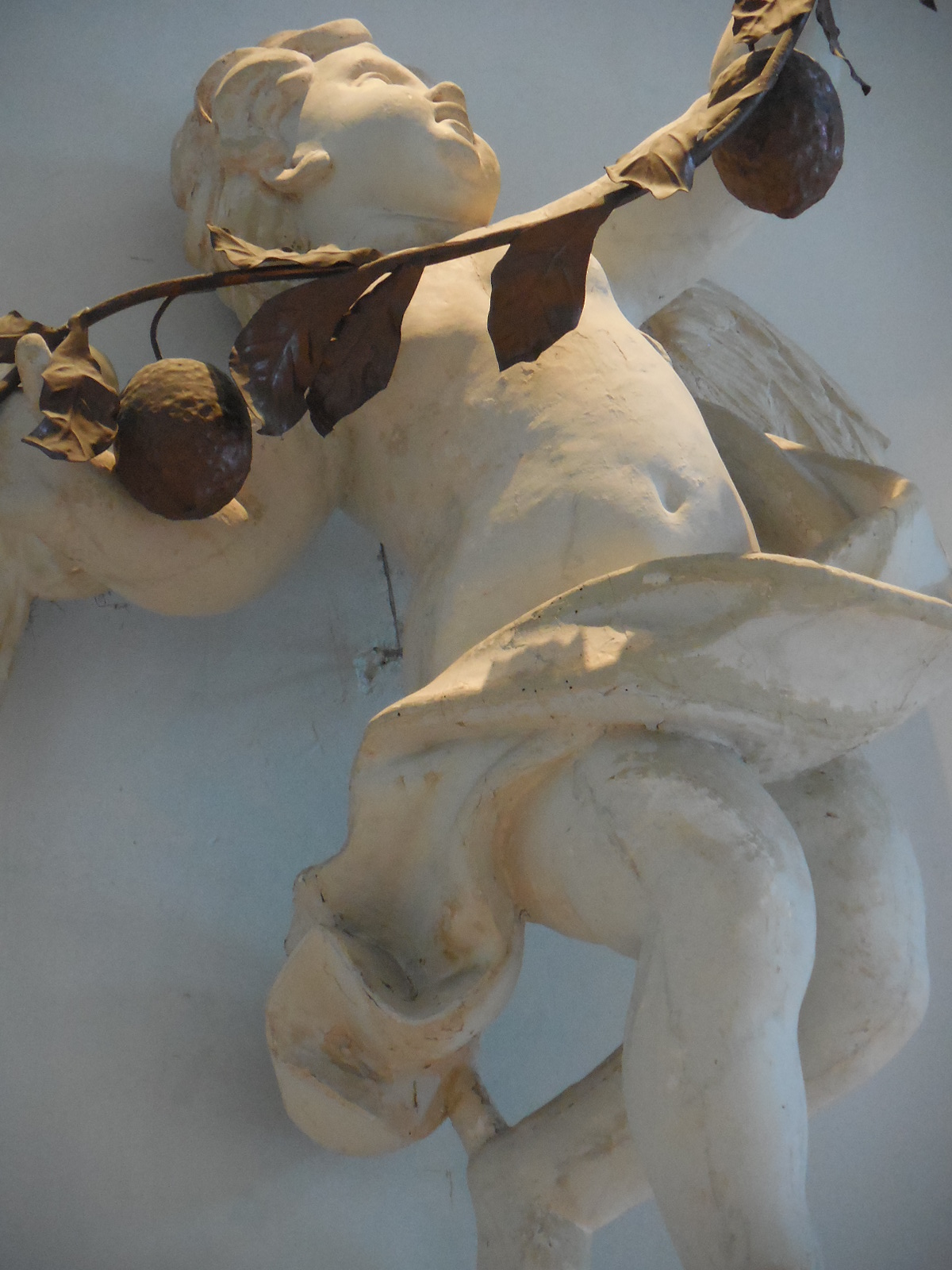
My May trip to Italy last year saw me back in Milan, which I had visited for the first time the previous year. I went to several sights I had not seen before. I toured Milan’s Monumental Cemetery to see the architectural gems of tombstones in various styles from the 18th century to contemporary. A colossal sculptural grouping of Da Vinci’s The Last Supper, made for the Campari family, was my favorite.  I also saw a structure resembling the Tower of Babel and another looking like Trajan’s Column. An Egyptian pyramid shape made up another monument. Another artistic delight was Italian artist Lucio Fontana’s design of a modern angel. The sculptural decoration throughout the cemetery was astounding.

At National Museum of Science and Technology Leonardo da Vinci in Milan

I also visited the National Museum of Science and Technology Leonardo da Vinci, where I was enamored by the 170 models of Da Vinci’s drawings of buildings, machines and weaponry. I also loved the hangars featuring planes, ships and trains. A Vega Launcher hailed from 2012. A submarine also stood outside.

Paintings lined the walls at the House Museum of Boschi Da Stefano in Milan.

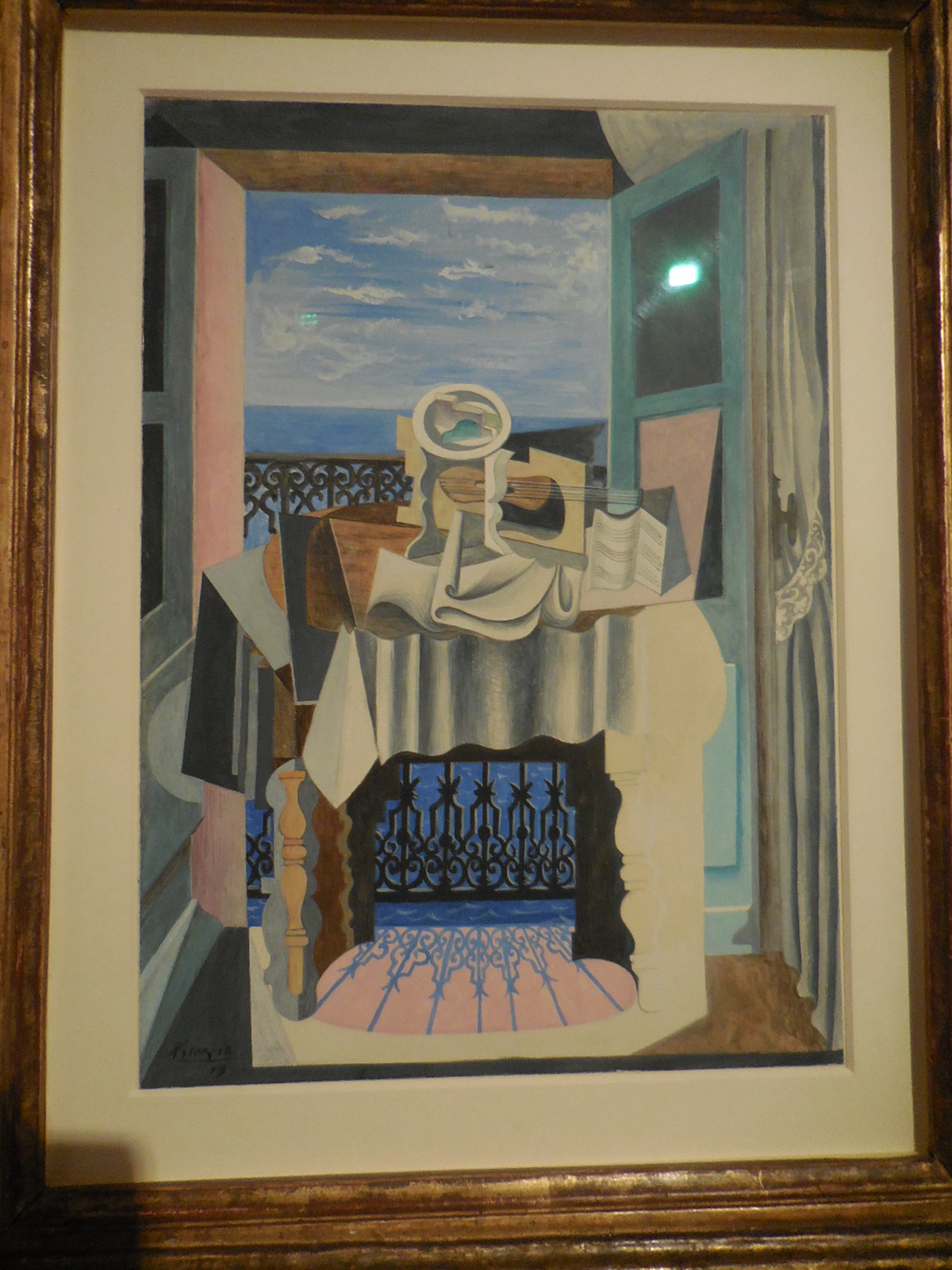
The House Museum of Boschi Da Stefano, located in a posh apartment outside the city center, featured 300 works of 20th century art, mostly paintings but also drawings, furniture and sculpture. Most pieces hailed from 1900 to 1960. The walls were covered with art from top to bottom. Some artists represented were Fontana, Giorgio De Chirico, Pablo Picasso and Amadeo Modigliani.
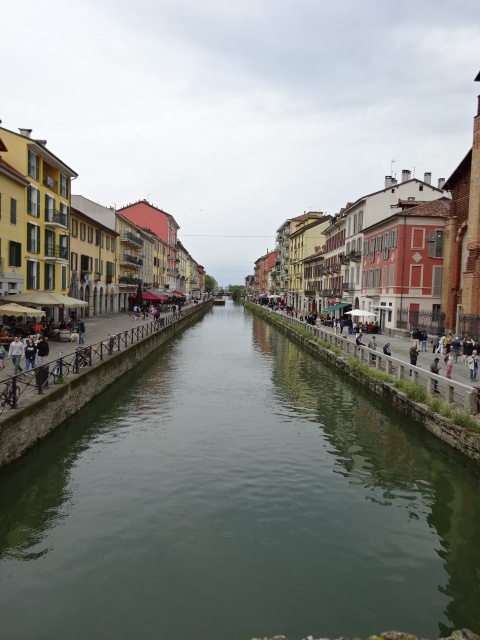
Navigli section of Milan

I also visited the Navigli district of Milan, where two picturesque streets flanked a canal, making for a picturesque setting. The Navigli is dotted with outdoor cafes and stores, including a few intriguing bookshops.

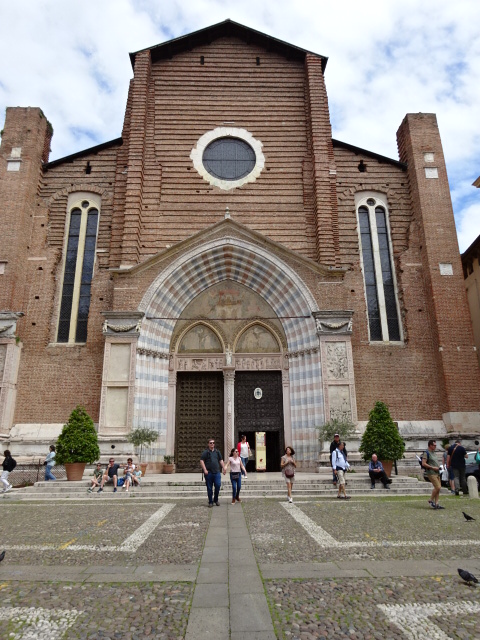
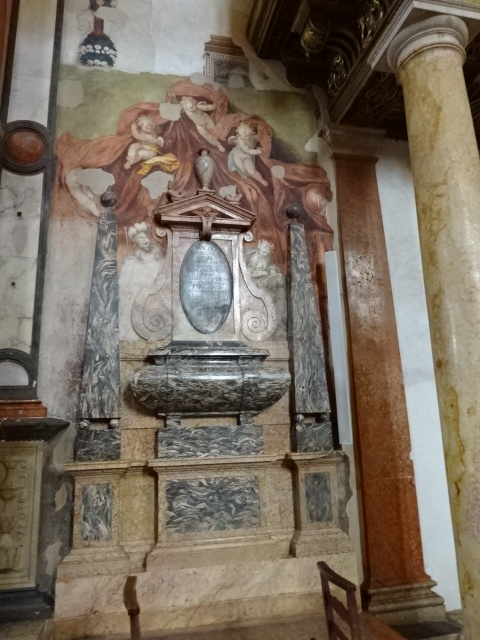
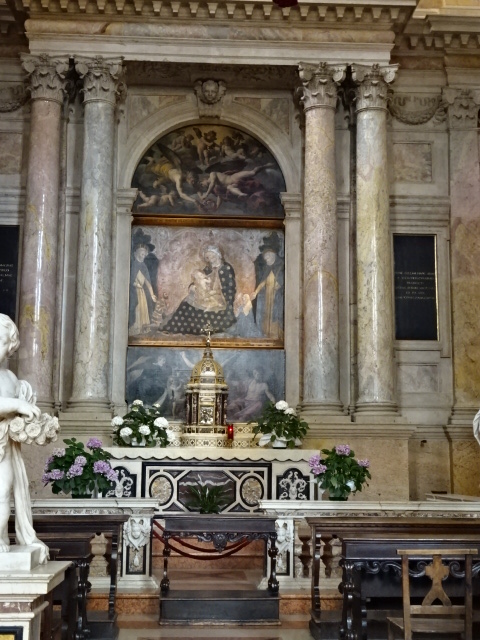
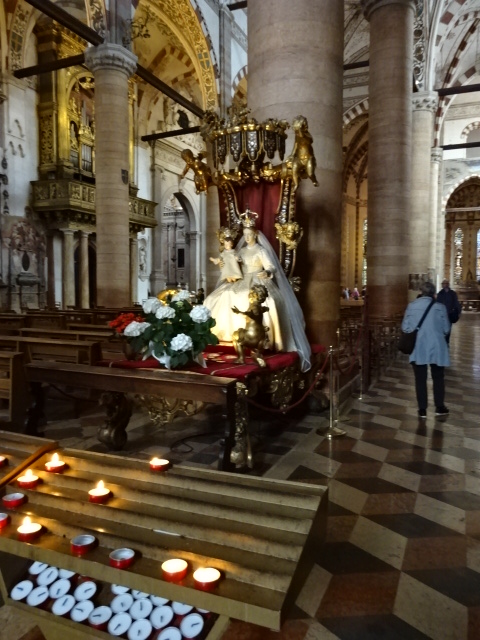
Basilica of Saint Anastasia, Verona

I spent time outside of Milan, too. I traveled to Verona for the second time. I marveled at the Basilica of Saint Anastasia, the largest church in the city as well as the cathedral and three museums – the Castelvecchio Museum, the modern art museum and the House Museum Palace Maffei – my favorite. The Basilica of Saint Anastasia was built in the 13th century and boasted a Late Gothic façade. The main altar was made from light yellow marble while one chapel housed a famous 15th century fresco. Red and white marble columns decorated the interior. The Pelligrini Chapel included a fresco from the 14th and 15th century as well as intriguing sculpture. A fresco at the left transept had been rendered by a disciple of Giotto. A rudder of a 16th century ship added to the splendid interior decoration.

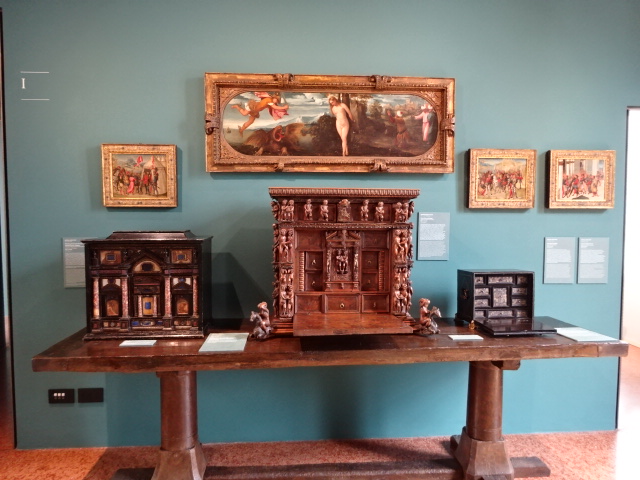
Verona, House Museum Palace Maffei

Verona, House Museum Palace Maffei

However, it was the House Museum Palace Maffei that captured my heart. Half of the Palace Maffei was designed as a luxurious home punctuated by art from various eras ranging from the 14th century to modern day. The other half was a 20th century art gallery, featuring works by Picasso, Duchamp, De Chirico, Warhol, Ernst, Modigliani, Fontana and others. Paintings, sculpture, drawings, engravings, pottery, bronzes, frescoes and furniture of both Italian and foreign origin dazzled my mind.
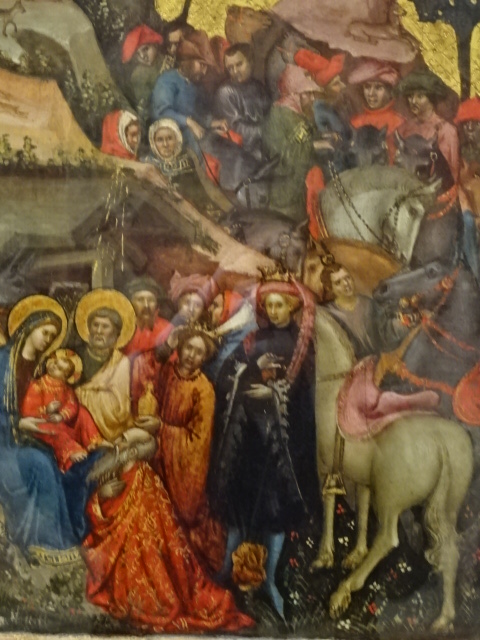
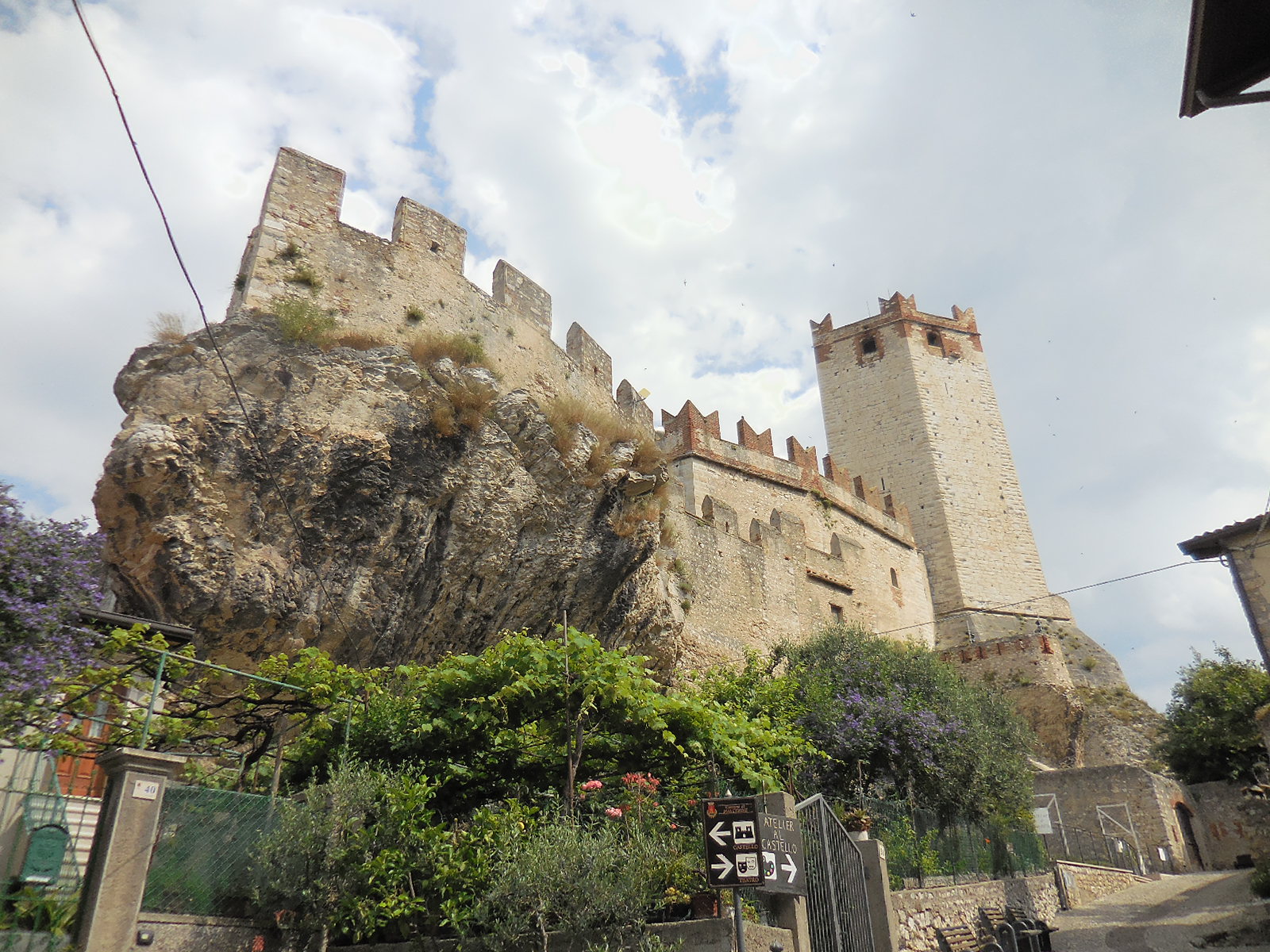
In the Castelvecchio Museum, Verona

The Castelvecchio Museum, established in the 14th century, included 30 halls of Italian and European painting and sculpture from the Romanesque days to the 1700s. Not only did I see many paintings but also ancient weapons, ceramics, gold objects and more. The exterior featured panoramic views of the romantic city.

A romantic lane in Bellagio

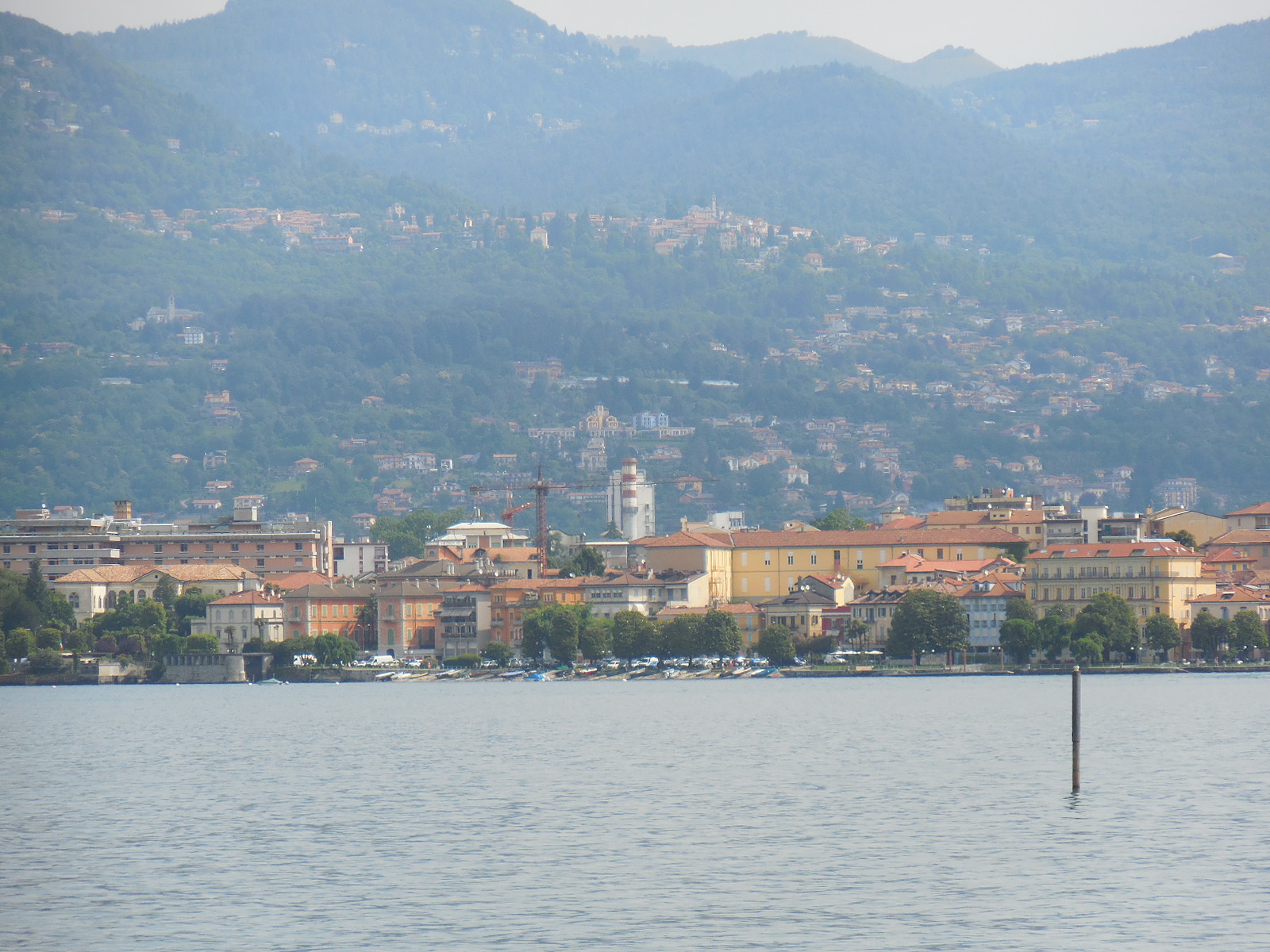
My other day trip was to Lake Como, where I visited picturesque Como, Bellagio and Mennagio. Unfortunately, it rained all day, but I still had a great time. I also saw the exterior of some noteworthy villas, such as Richard Branson’s waterfront home, the Villa Carlotta and a villa where some episodes of Succession had been filmed. I saw a hotel where Greta Garbo had acted, too. The Villa Olmo in Como had a neoclassical exterior and stunning lake views. Bellagio featured steep, cobblestoned lanes and the Romanesque Basilica of San Giacomo. Mennagio was home to several intriguing churches and had a picturesque lakefront square.

House Museum Bagatti Valsecchi, Milan
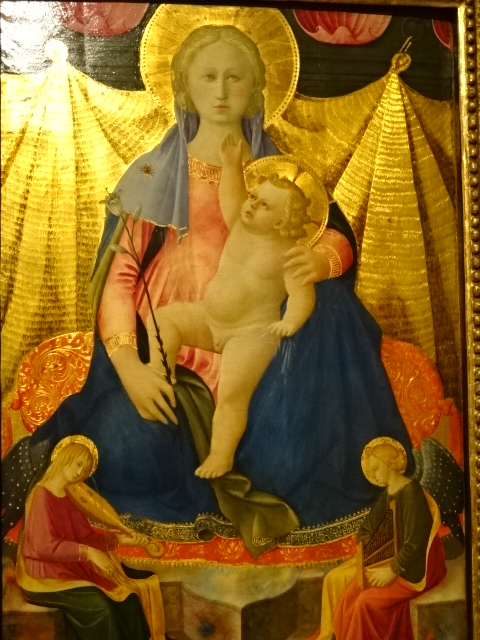
House Museum Poldi Pezzoli, Milan

In Milan I also visited beloved sights that I had first seen the previous year. I returned to the House Museum Bagatti Valsecchi with its Renaissance and Neo-Renaissance art and to the House Museum Poldi Pezzoli with its art of various eras, such as medieval triptychs, ceramics, historical pocket watches and other time pieces.

Gallery of Modern Art, Milan

Gallery of Modern Art, Milan

I visited the second floor of the Gallery of Modern Art with its Grassi and Vismara Collections. The Grassi Collection featured both Italian and foreign works ranging from the 14th century to contemporary times. Oriental art was displayed, too. The Vismara Collection concentrated on 20th century masterpieces. On that floor I saw impressive art by Manet, Picasso, Gauguin, Renoir, Van Gogh and Cezanne. Toulouse Lautrec was well-represented, too.

Museum of the Risorgimento, Milan

Brera Art Gallery, Milan, Work of Andrea Mantegna

The Museum of Risorgimento remains another of my favorites with its painting, prints, sculptures and artifacts depicting Italian historical events from 1796 to 1870. The Brera Art Gallery was another highlight, as I gawked at the Italian art from the 13th to 20th century as well as at the foreign works in the 38 vast halls. I loved the paintings from the Netherlands, including those by Peter Paul Rubens and Jacob Jordaens. Other Brera-represented artists dear to my heart included Francesco Hayez, Andrea Montegna, Tintoretto and Caravaggio. I even visited an exhibition of ancient manuscripts in the historical Baroque library. Once again, I was amazed by the 16th century frescoes by Bernardino Luini, his brothers and his son in the Renaissance Church of San Maurizio in downtown Milan.

Sorrento, Nativity Scene, Cathedral of Saints Filippo and Giacomo

During my trip with arsviva travel agency to the Amalfi Coast in June, I fell in love with Sorrento. The streets were picturesque, and the Cathedral of Saints Filippo and Giacomo was Romanesque with a Neo-Gothic façade. Three lunettes showed off beautiful frescoes while a rose window also astounded. Inside, the Latin cross interior boasted three naves with 14 pilasters. The pulpit, hailing from the 16th century, had Doric columns. Stunning frescoes on the cupola, intarsia adornment and a Baroque ceiling were other remarkable elements. The Chapel of Nativity displayed a Neapolitan Nativity scene from the 17th century.
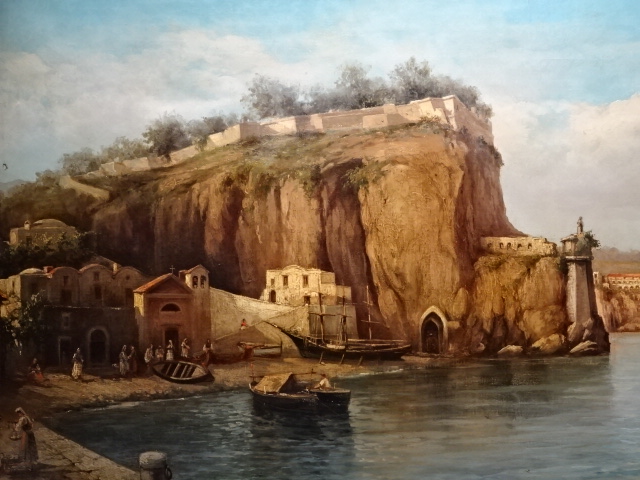
Correale Museum, Sorrento

Museum of Intarsia, Sorrento

The Correale Museum served as a provincial art gallery, and I was enthralled by the 17th and 18th century Italian landscapes, especially those of Castellammare di Stabia, where we were staying. Greek and Roman fragments, historical furniture, clocks, ceramics and porcelain were also on display. The waterfront boasted spectacular views of the sea, which were very soothing. The highlight of my visit to Sorrento was the Museum of Intarsia, with everything from music stands to large beds showing off intarsia decoration by local artists. Some historical paintings were also on display. Downstairs, I saw the innovative, avantgarde designs of contemporary intarsia artwork.
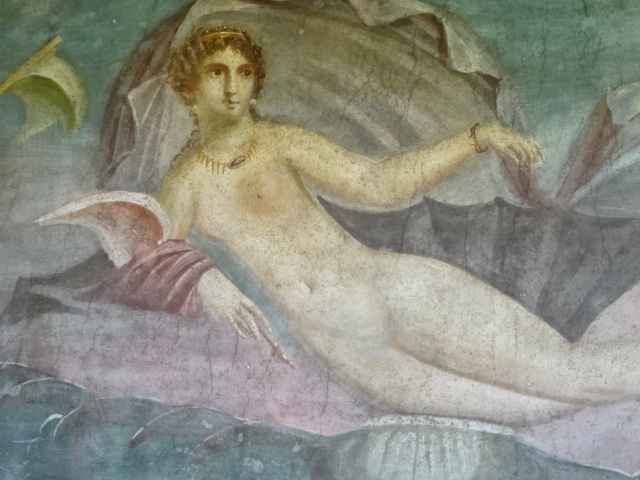
Pompei

I also visited Pompei for a second time. Even though the day was scorching hot, I enjoyed seeing the small and big theatre, the basilica and three temples, especially the one named after Apollo with its 48 Ionic columns. The amphitheatre with a capacity of 20,000 spectators also caught my undivided attention. The wall paintings and mosaic floors of what had been luxurious homes were sights to behold as well.
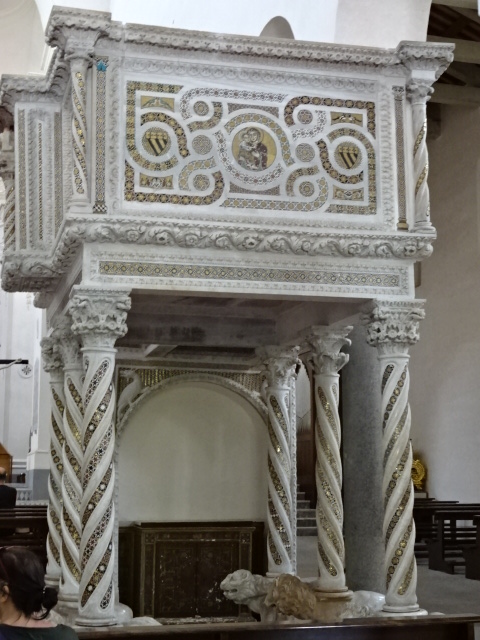
Ravello, pulpit in cathedral

We moved to a nice hotel in the picturesque, tranquil town of Maiori, where I could spend time in a café or restaurant overlooking the beach or savor homemade ice cream. The town that had made it on UNESCO’s list during 1997 was a perfect place to relax after a busy day out. Before arriving at our hotel in Maiori, we saw Ravello’s Romanesque Cathedral of Saint Maria Assunta and Saint Panteleone, hailing from the 11th century. I admired the 12th century bronze doors and remarkable 13th century Pulpit of Gospels adorned with mosaics. One 16th century chapel contained an phial of blood of Saint Panteleone. The views of the sea from the hilly town were spectacular, too. Numerous famous guests, from Richard Wagner to Virginia Woolf and Greta Garbo, had graced the streets of this town.

Ravello Cathedral, bronze doors of central portal

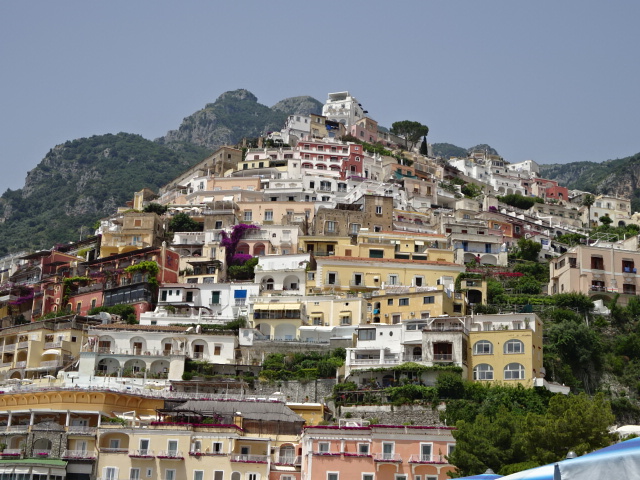
Positano, a UNESCO-listed tourist site since 1997, was a picturesque hillside town, but, unfortunately, during this past June, it was much too crowded to enjoy. I did peek into the church, though. Its main altar showed off a Byzantine icon from the 13th century. The views of the sea were fabulous.
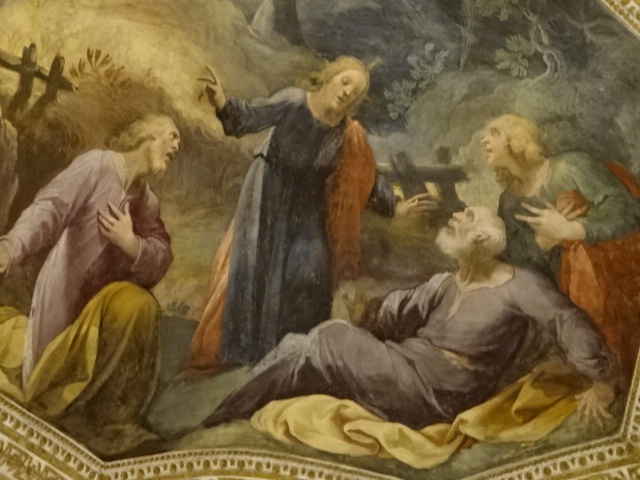
Cathedral of Saint Andrew, Amalfi

Cathedral of Saint Andrew, Amalfi

Another highlight of my trip was visiting the Cathedral of Saint Andrew in Amalfi, which was founded in the ninth century AD and boasted a 13th century Arab-Norman exterior with Italian Neo-Gothic elements. The mosaic adornment in the tympanum is stunning. Sixty-two steep steps led to the bronze doors of the central portal that hailed from Constantinople, made in the 11th century. A cloister included some intriguing fragments of wall paintings while the interior had Baroque features along with Gothic and Renaissance chapels. The Basilica of the Crucifix harkened back to the ninth century and served as a museum of sacral objects, including sculpture and vestments. The crypt, where the relics of Saint Andrew were held, was stunning with much ceiling and wall decoration.
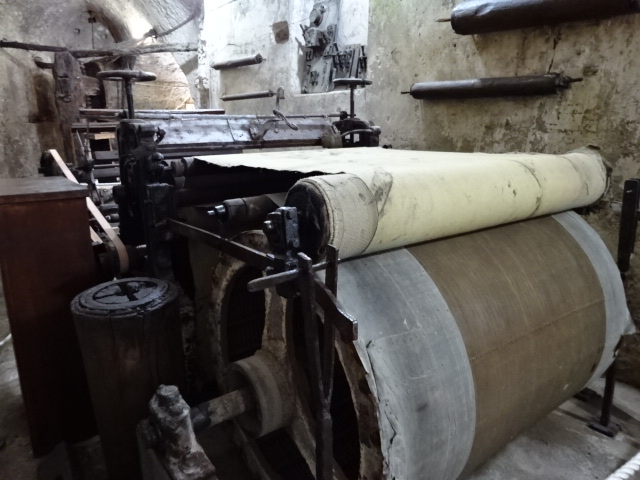
Paper Museum at paper mill, Amalfi

I also was enamored with the still functioning paper mill at the Paper Museum. The Pope used paper made in Amalfi, which held the distinction of being the oldest paper manufacturer in Europe. The machines and the processes of making and drying the paper were enthralling.

Cathedral of Saint Matthew, Salerno

Salerno was a pleasant surprise. The Romanesque Cathedral of Saint Matthew hailed from the 11th century. The tower was a mixture of Byzantine and Norman styles. The central bronze door was made in Constantinople. Two Byzantine mosaic-decorated pulpits with intricate intarsia amazed in the once Romanesque interior that had been mostly transformed into Baroque style. Mosaics throughout the cathedral were stunning. Frescoes in the treasury chapels were accompanied by a silver statue of Pope Gregory VII. The Late Mannerist ceiling and wall frescoes in the crypt were remarkable, hailing from the middle of the 17th century. A reliquary of Saint Matthew’s arm was on display, too.

Diocese Museum, Salerno

I also visited the nearby Diocese Museum, which featured paintings, sculpture and objects from the Middle Ages to the 20th century.  I was most drawn to the medieval altarpieces. The provincial picture gallery was small but included an eclectic array of intriguing works from the 15th to 18th century.

Cathedral of Saint Barbara, Kutná hora

Cathedral of Saint Barbara, Kutná hora

I took some day trips in the Czech Republic, too. We visited Kutná hora, the home of prosperous silver mines from the 13th to 15th century, during one stunning fall day. Saint Barbara’s Cathedral, with its Neo-Gothic exterior of buttresses and gargoyles, astounded me. Inside, I admired exquisite stained glass windows as well as remarkable late Gothic frescoes and a 16th century stone pulpit. The Gothic royal chapel with Art Nouveau decoration at the Italian Court was another remarkable gem.

Pub in Kersko

I visited Kersko twice this fall. I dreamed of owning a cottage in the tranquil, wooded village. I had lunch at the traditional Czech pub called Hájenka, where several films based on Bohumil Hrabal’s writings had been shot. Hrabal had lived in a cottage nearby for many years, feeding all the feral cats that would wander hungrily toward his home.
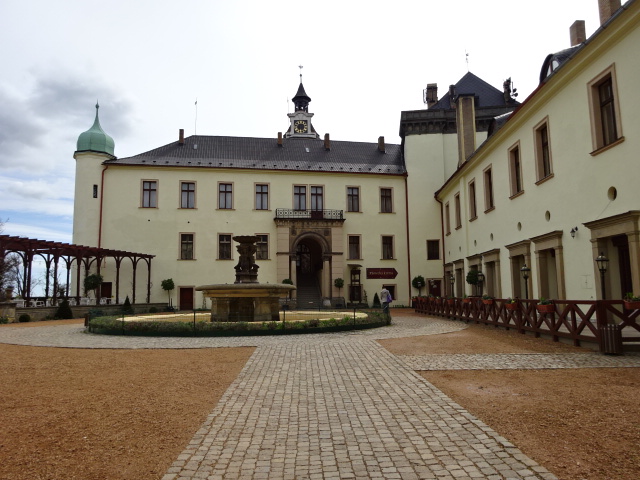
Zbiroh Chateau

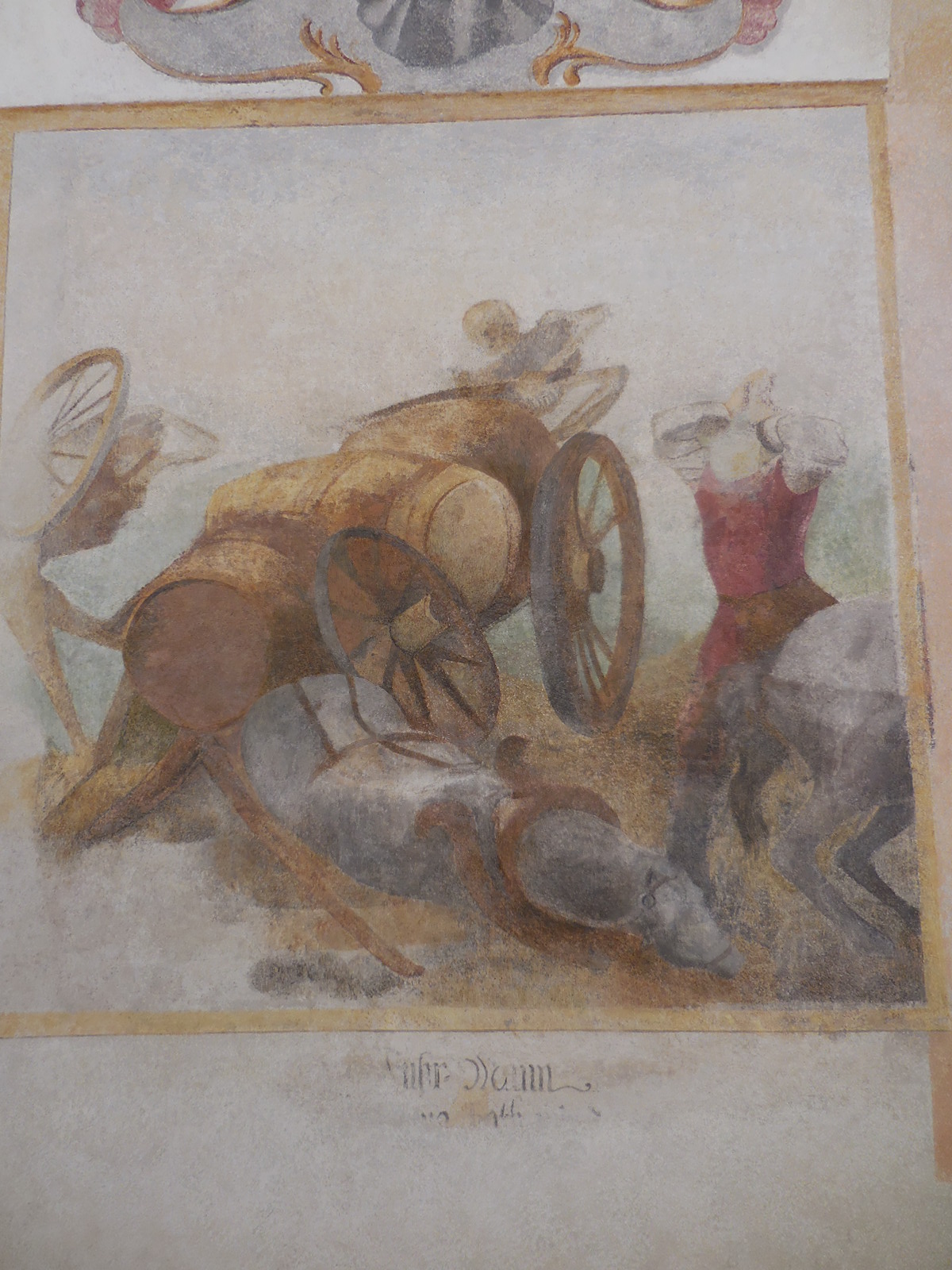
I also toured the chateaus of Zbiroh and Karlova Koruna. Zbiroh, built before 1230, for decades served as a top-secret facility for the Czechoslovak army. Its representative rooms were open to the public only in 2005. The chateau boasted many Madonna statues and other sculpture of great interest as well as African masks, tapestries, Empire furnishings and copies of Leonardo da Vinci paintings. Alphonse Mucha had used the spectacular main hall as his studio early in the 20th century. A beautiful skylight, two Czech crystal chandeliers and impressive paintings adorned Mucha’s former studio.

Exterior of Karlova Koruna Chateau

Karlova Koruna Chateau, designed by Santini-Aichel and built during the 18th century, had a roof shaped as a crown. The chateau consisted of two stories in cylindrical shape with three one-floor wings. The interior featured paintings of horses, including the unique gold-colored horses that the Kinský family had bred as well as pictures of steeplechase races. One painting of a horse race was made of 12 pieces of deerskin.

Beneš Villa

We visited the former villa of Edvard Beneš, president of Czechoslovakia during the interwar years and a prominent member of the Czechoslovak governments-in-exile during the First World War. The stunning Neo-Spanish structure included the room where Beneš died, a dark landscape painting by Antonín Slavíček hanging over his single bed. The furnishings and artworks in the house were intriguing, to say the least. Beneš and his wife Hana were buried in a monumental tomb on the premises as well.

Sucharda’s Second Villa, Prague

In Prague I visited the second villa of sculptor and relief artist Stanislav Sucharda in the Bubeneč district. Jan Kotěra designed the structure with many architecturally intriguing elements. Much of the remarkable interior furnishings had been designed by Kotěra and Sucharda. I saw examples of Sucharda’s artwork as well as pieces by Edvard Munch, Auguste Rodin and many Czech artists.
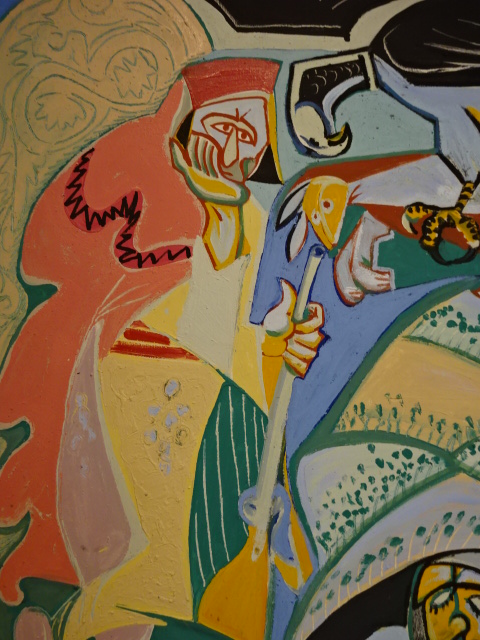
Gallery of Modern Art, Hradec Králové, Work by Emil Filla

Gallery of Modern Art, Hradec Králové, Věra Jičínská, Brittany

I saw many impressive art exhibitions this year. I traveled to Hradec Králové, where I saw the Gallery of Modern Art with its impressive collection of works by 20th century artists including Bohumil Kubišta, Emil Filla, Jaroslav Róna, Ladislav Zívr, Quido Kočian and many others. The temporary exhibition of artist and writer Věra Jičínská’s works included paintings of her travels to Brittany and Paris. Her renderings of Paris showed off orange rooftops and the Eiffel Tower. She also created paintings inspired by folk art and dance. Her photography amazed me as well. Influenced by her work as a journalist, she created a painting dedicated to this genre.

Museum of East Bohemia, designed by Jan Kotěra, Hradec Králové

The museum devoted to the history of Hradec Králové was an architectural gem designed by Kotěra. I especially liked the furnishings and designs by Josef Gočár and Kotěra as well as the sculpture by Sucharda. The mock shops from the First Republic (1918-1938) were very intriguing as I could see goods that were sold during that era and feel the atmosphere of those times.
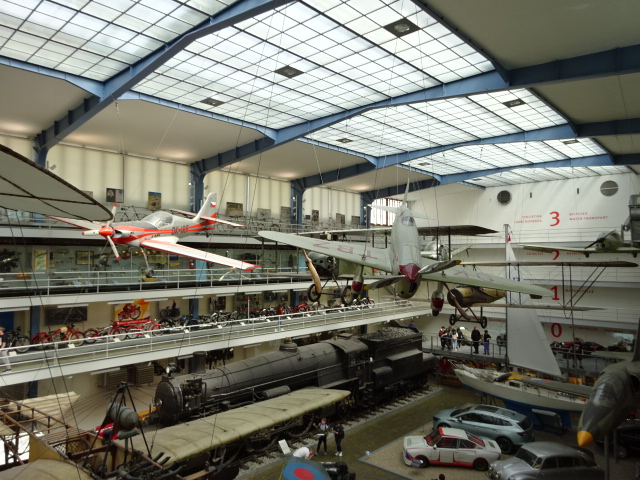
National Technical Museum, Prague

In Prague I saw the National Technical Museum for the first time. The cars, especially the 1935 Tatra 80 vehicle belonging to first Czechoslovak President Tomas G. Masaryk, fascinated me as did the motorcycles, bicycles and planes. The dining car of Habsburg Emperor Franz Joseph I, later used by President Masaryk, was also on display. I also was enamored by the architecture and engineering section and the display of old household items in another section. The TV studio, in use from 1997 to 2011, was another delight. Other areas of interest included astronomy, chemistry, printing, photography, time pieces, metallurgy and mining.

Museum of Czech Literature, book cover by Karel Teige

Another astounding sight in Prague was the newly-located Museum of Czech Literature, which moved to the Petschek Villa in Bubeneč during 2022. The displays cover literary developments from the 19th century National Revival movement through the 20th century. I came to appreciate the significance of the literary and art criticism periodical The Critical Monthly from the 1930s and 1940s as well as the symbolist and mystical paintings of Josef Váchal. I was most enamored by the avantgarde book covers designed by Karel Teige in the 1920s and 1930s. His unique typographical work in Vítězslav Nezval’s The Alphabet book was on display, too. A pantheon of great Czech 19th century artists included objects associated with the writers and their busts.

Karel Teige, Greetings from a Journey

A temporary exhibition focusing on Teige’s youth and early career from 1912 to 1925 was amazing, showing off his artwork, photographs, correspondence and more. I understood very well why this artist, writer, theoretician, critic, translator, book designer, typographer and photographer was considered the leading figure of the Czech avantgarde movement between the wars.

Trade Fair Palace, Prague, Fire by Josef Čapek

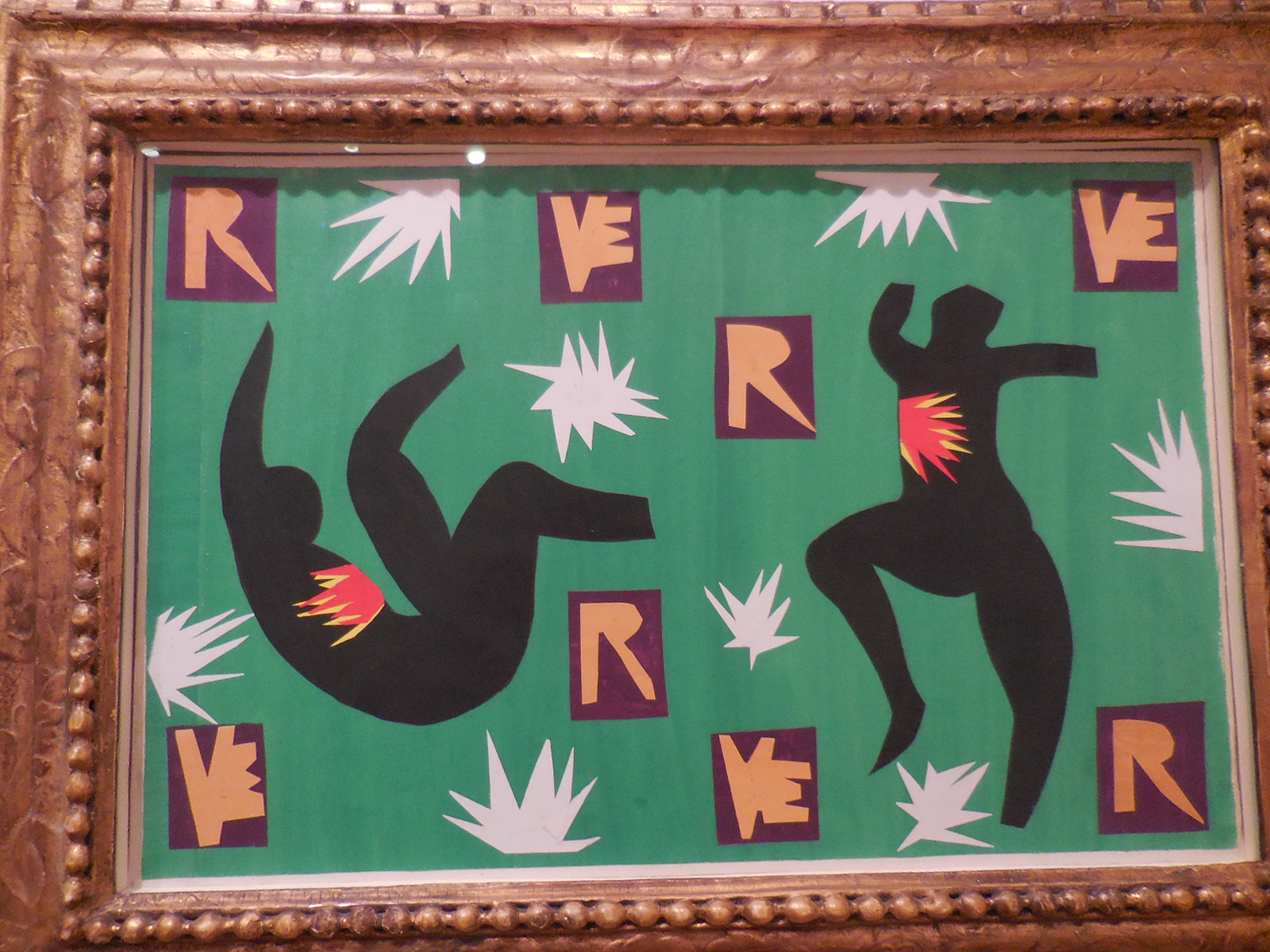
At The Trade Fair Palace in Prague, I saw the newly installed End of the Black-and-White Era permanent exhibition of art from 1939 to 2021 in chronological order. More than 300 works, mostly Czech, were displayed with historical context. Josef Čapek’s painting “Fire,” showing a fury of flames behind a woman, presents an anti-Nazi theme. The focus on urban life and factories as well as everyday life was highlighted with the works of Kamil Lhoták. The exhibition featured many works made during the Stalinization period of the 1950s with the style of social realism. Martin Slanský depicted Lenin in a snowy Prague. A model of the design of the monument to Stalin in Prague was on display, too.

Trade Fair Palace, Prague, The Dialogue by Karel Nepráš

The progressive movements of the 1960s made way for the red abstract figures of Karel Nepráš. From the late 1960s to early 1980s art as installation came to the forefront. Action art, performance and body art were often the focus of the times. The late 1980s triggered the impersonal postmodernism movement. After the 1989 Velvet Revolution that toppled the Communist regime in Czechoslovakia, individuality and quests for personal identity came to the fore. Some artists focused on the commercialization of society. This new exhibition was extensive and moving. I felt drawn into each historical period up to the present day. The works displayed well represented the movements expressed. I could see how society and culture kept changing and how art reflected those changes.

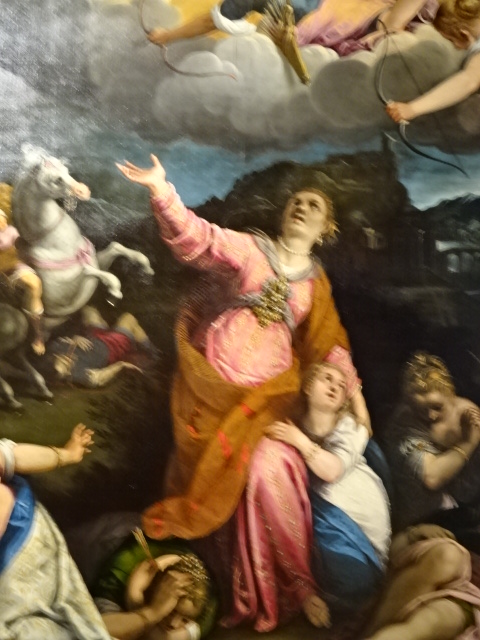
Saint Jerome by Petr Brandl

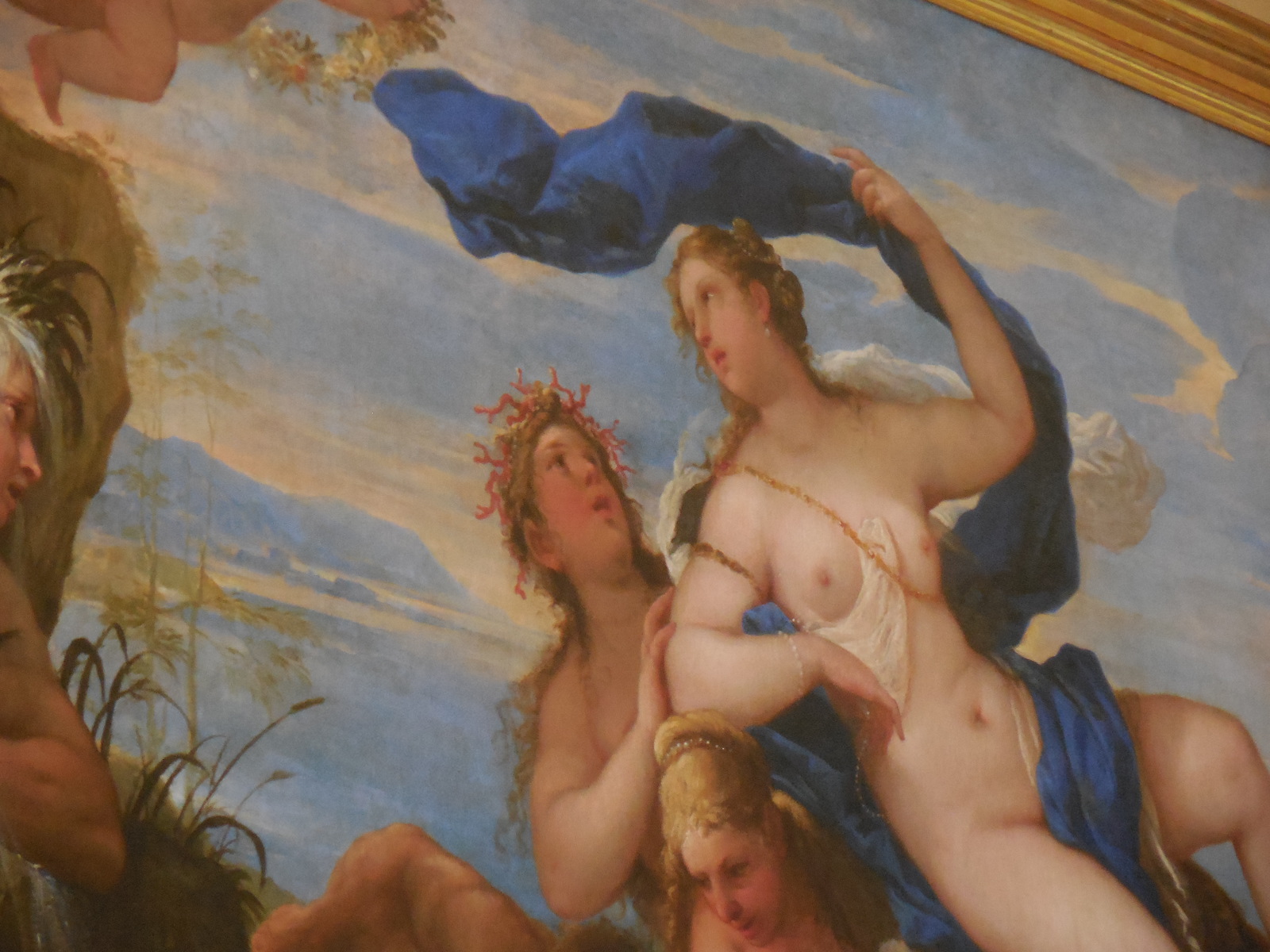
I went to many intriguing temporary exhibitions in Prague, too. I saw 64 religious works, genre paintings and portraits by Czech Baroque artist Petr Brandl. An extensive exhibition of Alphonse Mucha’s versatile works owned by his descendants included some originals never before put on display. Mucha’s ad posters, drawings, paintings, sculptures, photographs and jewelry all captured my undivided attention.
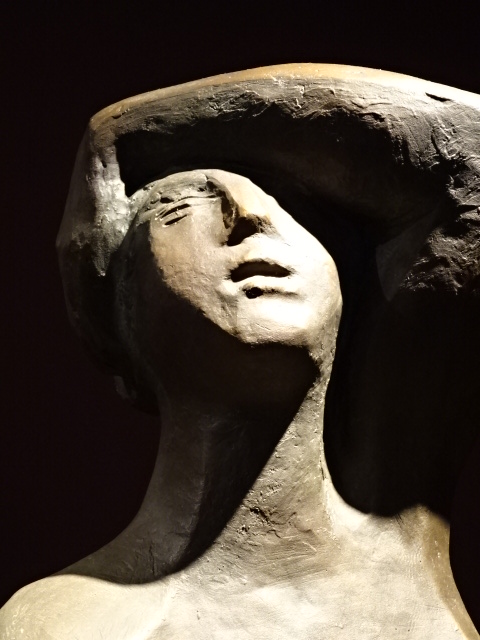
Sculpture by Janouch

I saw sculpture of athletes in motion and busts of illustrious Czechs by Petr Janouch in Prague’s Kooperativa Gallery. An earlier exhibition there featured Czech 19th and 20th century paintings involving water – puddles, lakes, waterfalls, streams, rivers and so on. I especially liked one painting by Josef Čapek showing a fisherman on a boat in a river. Landscapes with water themes by Slavíček and Antonín Hudeček also astounded.

Sculpture by Ivan Mestrovic

At the City Library Gallery I saw an exhibition of sculpture by Croatian Ivan Mestrovic (1883-1962). I had come across his art at his villa in Split during a vacation many years ago. Mestrovic, who had befriended first Czechoslovak President Masaryk and Czech sculptor Bohumil Kafka, had delved into a variety of styles, including Art Nouveau, Symbolism, Impressionism, Art Deco, Neoclassicism and late Realism, while preserving a Classical foundation. He focused on numerous themes – religious motifs, portraits and monumental works as well as studies of figures.

Olinka

However, shortly after I returned from the Amalfi Coast, I had to temporarily halt any traveling so I could be at home with Olinka, who was diagnosed with neurological issues that greatly affected her mobility. A MRI showed that she suffered from inflammation of the middle ear. A terrified Olinka spent a total of four nights in the hospital and was on antibiotics for ten weeks. Every two weeks we went to the vet so she could get her antibiotic shot.

Olinka

The first four days at home after three nights in the hospital she could hardly walk and was very disoriented. Those initial few days she stayed mostly in the bedroom closet, only appearing for food and the use of the litter box. She didn’t play with her toys for three weeks. Before her illness, I had been frustrated with Olinka because she always knocked everything off tables and the kitchen counter. Sometimes it felt like a never-ending battle. At the start of her illness, I came to appreciate even her most frustrating quirks. I just wanted her knocking everything off surfaces again, back to her old self. The broken glass on the screen of my mobile phone is proof that she is once again doing just that. 

Olinka

I will never forget her first night back from the hospital. She somehow made her way onto the bed and reclined below my pillow. I rested next to her, my arms around her. We stayed like that for an hour or two, just spending time with each other, appreciating that she was alive and at home. I will always remember that feeling of relief and love more profoundly than any experience during my exciting travels.

Tracy A. Burns is a writer, proofreader and editor in Prague.

Olinka on Christmas Eve
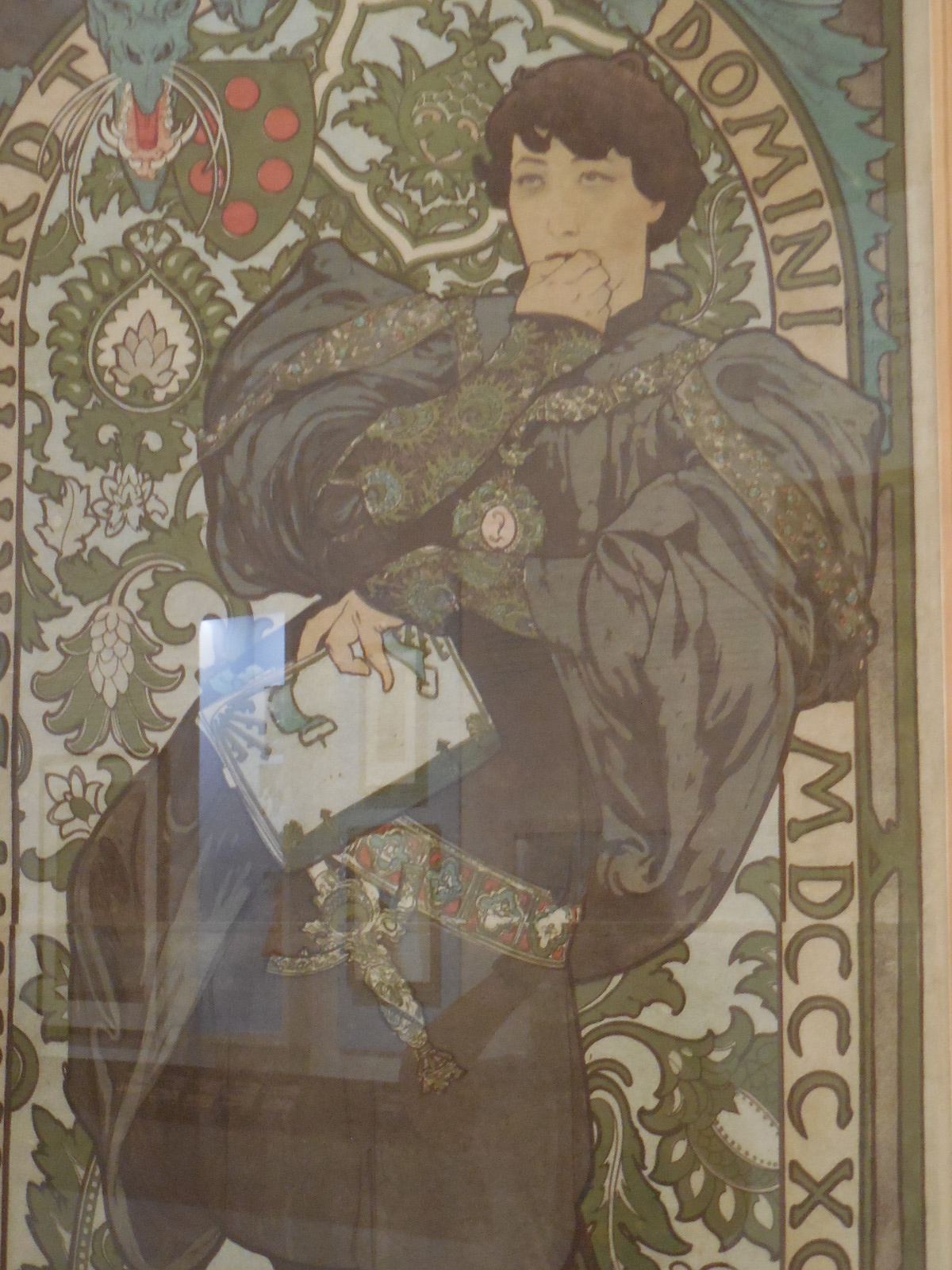
From Alphonse Mucha exhibition

Municipal House, Prague, Mayor’s Hall, decoration by Alphonse Mucha

I toured the Municipal House in Prague. Once again, I was captivated by its Art Nouveau interior.

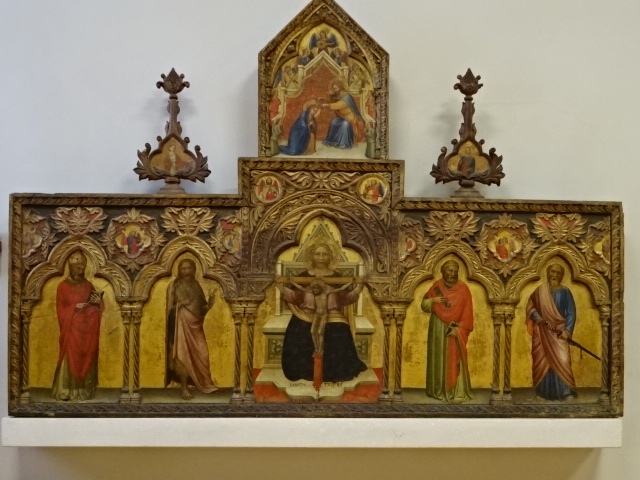
Castelvecchio Museum Diary

My first stop in Verona was the Castelvecchio Museum, a sprawling edifice that looks like a medieval fortress. The Castelvecchio hails from 1354 to 1356, when it was built for Cangrande II della Scala as a defensive structure. The Della Scala family lived there for a short time. During Napoleon’s reign, from 1801 to 1806, the building was transformed into barracks, and it served this purpose until 1924. The Castelvecchio was seriously damaged during World War II, during the time when the Germans destroyed all of Verona’s bridges. From 1958 to 1974, architect Carlo Scarpa renovated the Castelvecchio, adding modern elements to the original style that harkens back to the Middle Ages.

The expansive medieval and Renaissance spaces inside house 30 halls of Italian and European painting and sculpture, dating from the Romanesque era to the 1700s. I also saw ancient weapons, ceramics, gold artifacts, bells and miniatures, for instance. I especially liked the walkways outside. They offer panoramic views of romantic Verona.

Artists represented in the collection include Pisanello, Giovanni Bellini, Jacopo Bellini, Carlo Crivelli, Andrea Mantegna, Jacopo Tintoretto and Tiepolo. Pisanello’s “Madonna of the Quail,” Jacobo Bellini’s “Madonna of Humility” and Mantegna’s “Holy Family” are a few of the highlights. The Romanesque sculpture also is impressive.

An intriguing true crime story is connected to the museum. In 2015, three thieves made off with 17 paintings, including masterpieces by Jacopo Bellini, Giovanni Bellini, Andrea Mantegna, Tintoretto, Peter Paul Rubens and Hans de Jode. The following year, the museum got the works of art back from Odessa thanks to Ukrainian border guards. It remains one of the most significant art heists to take place in Italy.

Tracy A. Burns is a writer, proofreader and editor in Prague.

Basilica of Saint Anastasia Diary

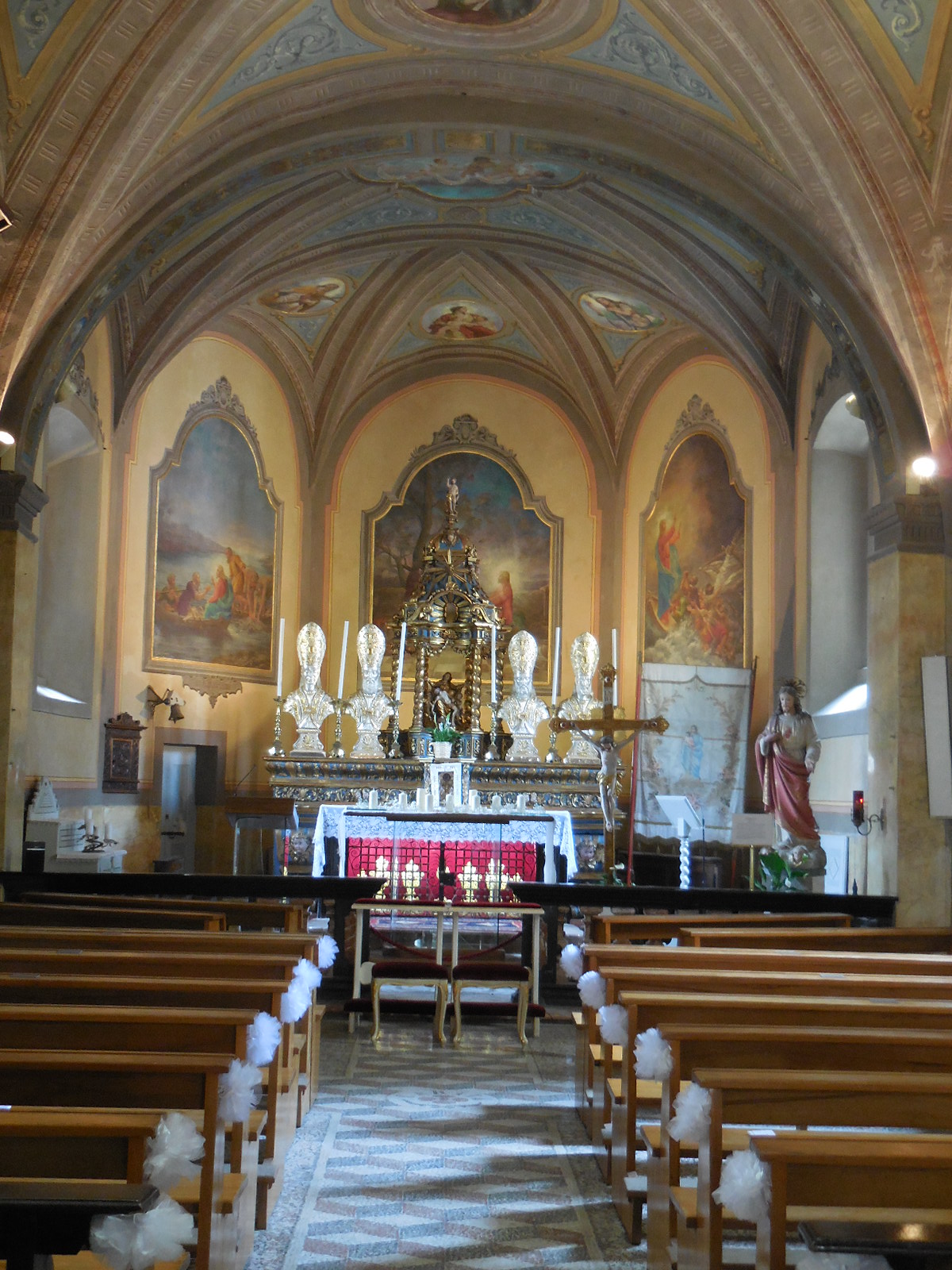
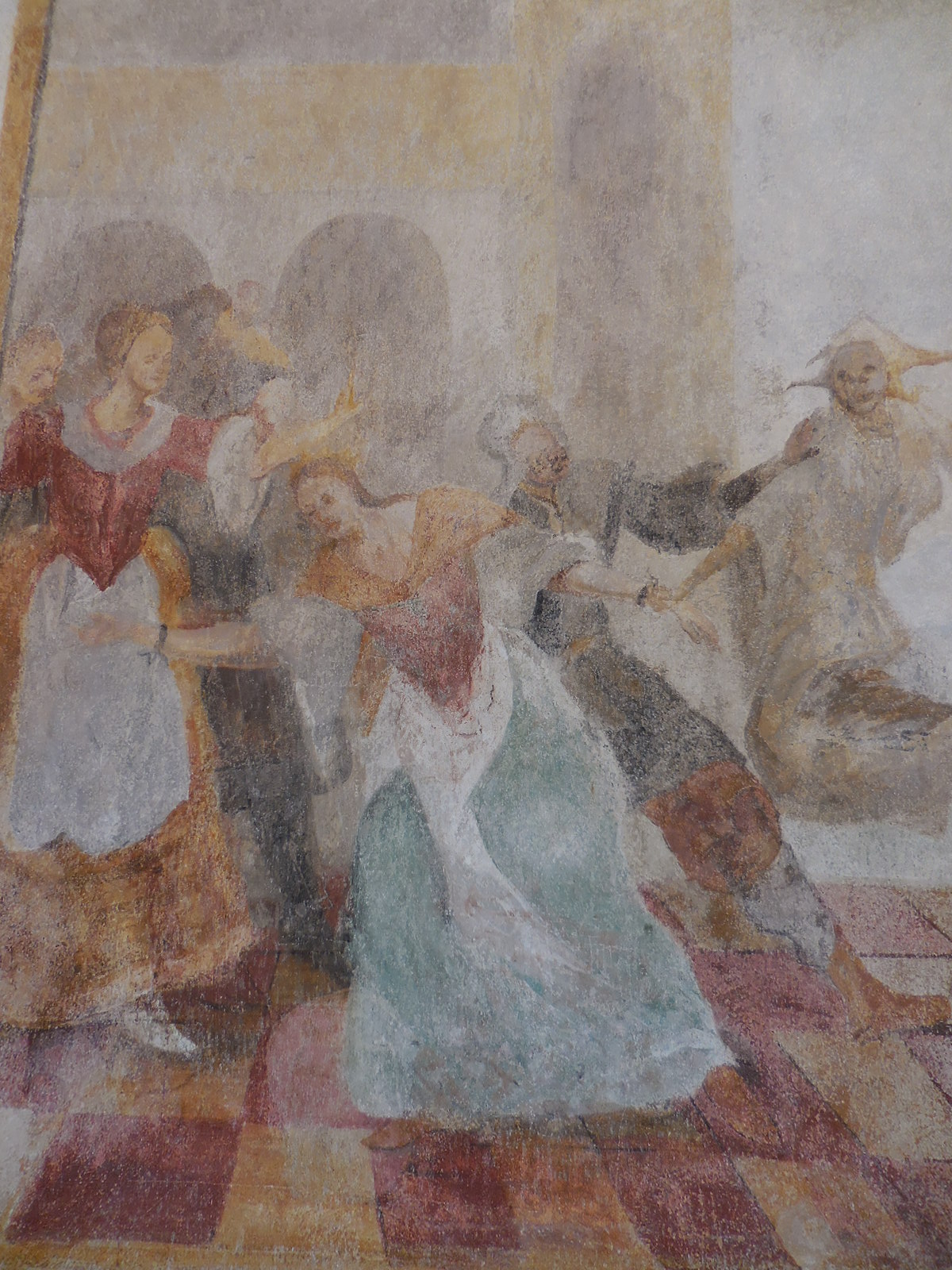
I first set eyes on this basilica during a day trip from Milan to Verona in 2023.  The largest church in Verona, Dominicans began to build it in 1280. It is dedicated to both Saint Anastasia and Saint Peter, a Dominican and a patron of the city. The basilica’s Late Gothic façade was never completed but is stunning nonetheless. For the most part, it is made of brick, and the front includes a rose window. I also noticed a 15th century portal. Its belltower measures 72 m2 and has nine bells. With the exception of the façade, the church has been finished, a feat that took two centuries.

The amazing interior features a Latin cross plan with a nave and two aisles plus cross vaults. The columns are made of white and red marble. It contains many intriguing chapels, including one decorated with a fresco of Saint George and the Princess by Pisanello, dating from the 15th century. Two stoups are decorated with hunchbacks. The Baroque organ hails from 1625. The floor boasts of a red, white and black design.

The presbytery includes the main altar carved in light yellow marble. Twentieth century stained-glass windows and a 15th century fresco of the Annunciation are other highlights of this section. The mausoleum of Cortesia Serego shows off richly carved sculpture and remarkable painting. The left transept includes a fresco by the Second Master of Saint Zeno, a disciple of Giotto. It has three paintings featuring Saint Nicholas, Saint Cecilia, Saint Hyacinth and Saint Mary Magdalene, among others.

The Pelligrini Chapel with a superb fresco by that artist may be the best known of all the chapels. Art on the walls depict scenes from Christ’s life. A lunette has another exquisite fresco from the late 14th and early 15th century. The sarcophagus is adorned with stunning sculpture.

The other chapels are stunning, too. The Cavalli Chapel has a late 14th century fresco. Other frescoes, including ones depicting the Virgin and Child and Saint Christopher, add to the allure of this chapel. The Lavoagnoli Chapel, dating from the 15th century, features frescoes dedicated to Saint John the Baptist.

The Salerni Chapel shows off frescoes by the Second Master of Saint Zeno. This chapel hails from the 14th century. The stained-glass windows in the Giusti Chapel harken back to 1460. A 15th century wooden choir is part of the décor. The rudder of a ship hangs from the ceiling and dates from the Battle of Lepanto in 1571. The Rosary Chapel is dedicated to the victory of the Battle of Lepanto and hails from the late 16th and early 17th century. The paintings are exquisite. The Crucifix Chapel includes a 15th century wooden cross and a 15th century funerary monument.
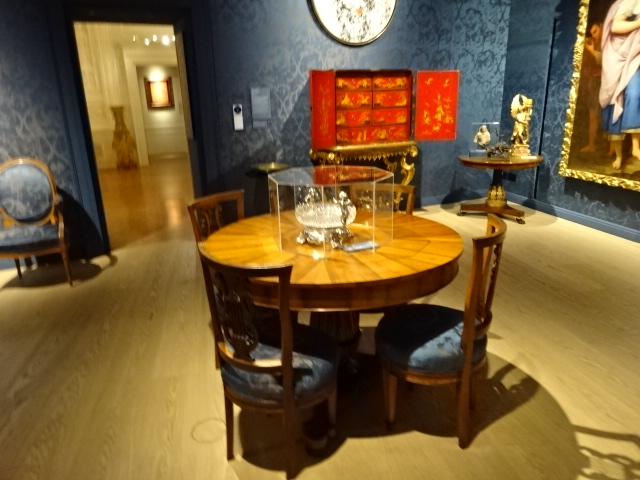
Altars in the basilica are exquisite. The Bevilacqua-Lazise Altar, dedicated to the Virgin Mary, includes a marble sculptural grouping and a richly decorated frieze. Frescoes also make up the décor of this altar. The paintings in the Mazzoleni Altar from 1592 are noteworthy as well and include artwork by Liberale da Verona, showing three saints. The Centrego Altar features a painting of Our Lady enthroned between Saint Thomas and Saint Augustine by a Veronese artist. The Fregoso Altar is another outstanding piece of art.
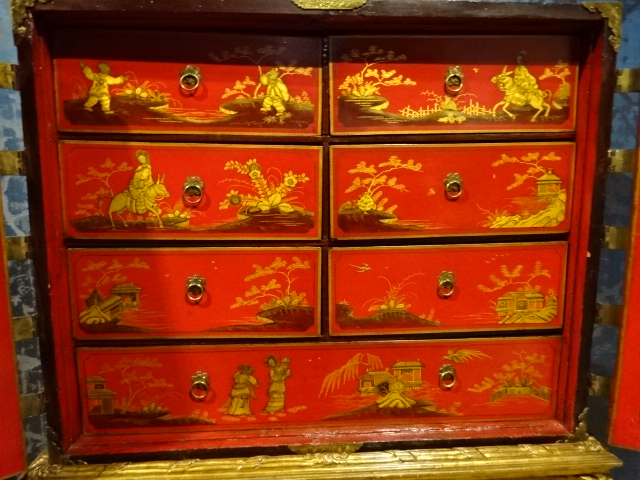
I was overwhelmed by the superb art in this basilica. Both the exterior and the interior exhibit stunning beauty and masterful craftsmanship. This basilica was one of the highlights of my second trip to Verona.

Tracy A. Burns is a writer, proofreader and editor in Prague.

House Museum Palazzo Maffei Diary

My favorite sight in Verona was this house museum of remarkable art from the 14th century to contemporary times in the collection that entrepreneur Luigi Carlon amassed during a 50-year period. I love museums that have an intimate and personal quality that make them appear as private homes rather than galleries of art. In Milan I was entranced with the Pezzoli Poldi and Bagatti Valsecchi house museums that shared this trait.

In the Palazzo Maffei I appreciated that the art was not displayed in a chronological order but rather looked as if the Maffei family had designed their residence with paintings, sculpture, drawings, engravings, pottery, bronzes, ivories, frescoes, furniture and objects of decorative art. I liked the eclectic nature of the collection – it had a bit of everything, a dash of this, a dash of that.

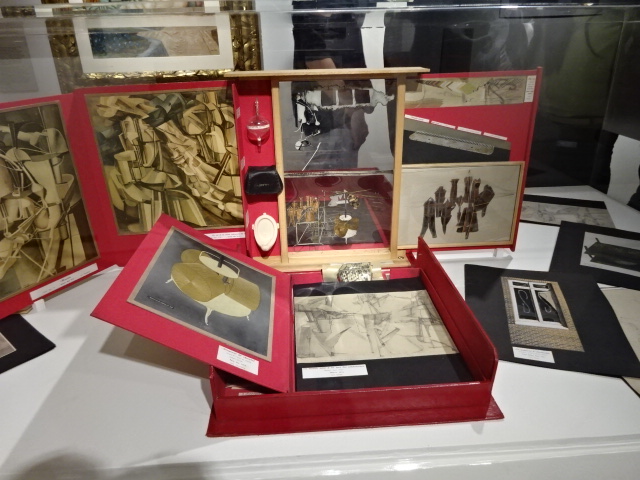
Art by Marcel Duchamp

The collection that was opened to the public after extensive renovation in 2020 included both Italian and foreign artifacts, though the focus is on Veronese representation. While the first section resembles a private home, the second part looks more like a gallery and highlights modern and 20th century art.

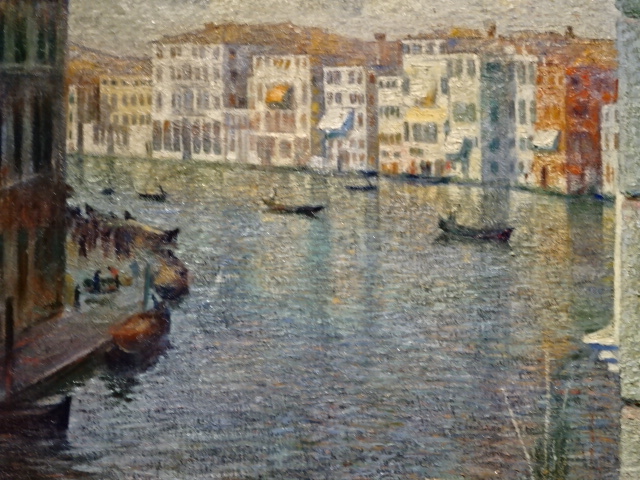
Works by Canaletto, Giacomo Balla, Pablo Picasso, Marcel Duchamp, Giorgio de Chirico, Max Ernst, Andy Warhol, Umberto Boccioni, Rene Magritte, Lucio Fontana and Amedeo Modigliani play significant roles in the collection of more than 500 works. I have always been enamored by Canaletto’s Venice scenes. A slashed canvas by Lucio Fontana made me think of his avant-garde sculpture decorating a tomb in Milan’s Monumental Cemetery. I had only been introduced to Fontana’s works while touring Milan. While I am not usually so enthusiastic about contemporary art, the pieces in this museum caught my attention. The three-dimensional installation by Marcel Duchamp was of special interest.

The three-floor building itself is a masterpiece with its origin in the late Middle Ages, when Verona was governed by the Romans. Renovation in the 17th century was responsible for the remarkable façade, transformed into late Renaissance style with some Baroque features. Ionic columns, large French windows with balconies and floral adornment made the front of the building an elegant structure. Six statues of mythological deities decorated the top of the majestic edifice. A monumental spiral staircase welcomed visitors who have entered via a courtyard.

I was amazed at the poignancy of this unique collection. I felt it was meticulously organized in a dynamic way. Each work made me stop and reflect. This was my favorite of the three art museums I visited during my second visit to Verona.

Tracy A. Burns is a writer, proofreader and editor.

Italy Photo Diary

I was supposed to go to Milan for my birthday in November, but I came down with whooping cough. So I changed my trip to May, reasoning that I am usually fit in the spring. I could never have imagined the turn of events, that Italy would be hit so brutally by the coronavirus or that a pandemic would break out in the world. Now I hope to travel to Milan in October, but I wonder if I will have to cancel that, too. I cannot fathom the day-to-day tragedy that Italy has been experiencing, all the suffering of the friendly, bubbling Italian people who have made me feel so blessed to be in their country during my 12 or more visits.

I was going to write a long article about Italy, but I have decided to make this a photo diary of my travels in Italy, showing the country that is so dear to me during its better days. May those bright days return in the not-to-distant future.

NOTE: Sicily will be represented in a different photo diary.

Anconachurch1

Church in Ancona

Assisi2

Assisi

Assisibasilicaint3

Basilica in Assisi

BassanodelGrappa10clock

Clock in Bassano del Grappo

BassanodelGrappaCM11

In Civic Museum of Bassano del Grappo

Bergamochurch2

Church in Bergamo

BolognaSt.JamesMajor1

Church of St. James Major in Bologna

Capri17

Capri

Cinque Terre church 2

Church in Vernazza, Cinque Terre

Cinque Terre street 1

Street in Vernazza, Cinque Terre

Herculaneum12

Herculaneum

IsolaBellagarden4

Isola Bella garden

IsolaBellaint17

Palace on Isola Bella

IsoladeiPescatori1

House on Isola dei Pescatori

IsoladeiPescatori6

Street on Isola dei Pescatori

IsolaMadreview7

View from Isola Madre

Loretoint16madonna

Black Madonna at Loreto shrine

Loretointcupola26

Cupola of Loreto

Malcesinecastle9

Castle at Malcesine

Modenacathint2

Cathedral in Modena

NaplesCastelSantElmo4

View of Naples from Castel Sant Elmo

NaplesCertosachurch13

Certosa Church in Naples

NaplesSantaChiara22

Santa Chiara Church in Naples

PaduaPalazzodellaRagioneint4

Padua, Palazzo della Ragione

PaduaScrovegni19

Last Judgment by Giotto in Scrovegni Chapel, Padua

PerugiaCollegio16

Perugia, Collegio

Pisa10

Pisa

Pisa11

Pisa

Pisacem2

Cemetery, Pisa

Porte Verre church 1

Porteverre Church

PUGLIAAltamuracathrosette3

Cathedral of Altamura

PUGLIABaristreet2

Street in Bari

PUGLIABitontocathcrypt3

Cathedral crypt in Bitonto

PUGLIARuvodiPcath2


Cathedral in Ruva di Puglia

PUGLIABarletta2

House in Barletta

PUGLIACanosacathchair1

Throne in church in Canosa di Puglia

PUGLIACasteldelMonte6

Castel del Monte

PUGLIALecceS.Croce7

Santa Croce Church, Lecce

PUGLIAMaterasassi8

Sassi in Matera

PUGLIAOtrantocathfloor5

Otranto, mosaic on cathedral floor

PUGLIATranisteet

Street in Trani

Rome2Colosseum3

One of the best memories of my life was showing my parents the Colosseum in Rome.

Rome3Pompei7

Pompeii

Rome3Rainbow3

Rainbow on way back to Rome

Rome3VilladE13

Villa d’Este gardens

Roveretoext17

Rovereto

Spello12

Spello

Spellochurch2int16

Church in Spello

Spoletocathint1

Cathedral in SpoletoRavennaS.Apollinare7

Sant’ Apollinaire in Ravenna

Sigurtalillypond2

Sigurta Park

Sirmionelake3

Lake in Sirmione

Trentofacade13

Trento

Treviso10canal

Treviso


The Annunciation in cathedral in Treviso

Udine9

Udine cathedral

Urbino7street

Street in Urbino

Venice

Venice

Verona3

Verona

Veronaarena6

Arena in Verona

VeronaJbalcony3

Juliette’s balcony in Verona

VicenzaGIintRus14 - Copy

Russian icon in Galleria Italia in Vicenza

VicenzaSantaCoronaint6

Santa Corona Church in Vicenza

VicenzaTeatroOint21

False perspective in Teatro Olimpico in Vicenza

VilladellaRotundaext1

Villa della Rotunda by Palladio

VillaEmo17

Villa Emo


Tracy Burns is a writer, proofreader and editor in Prague.


2019 Travel Diary

BerlinEastSideGallery5

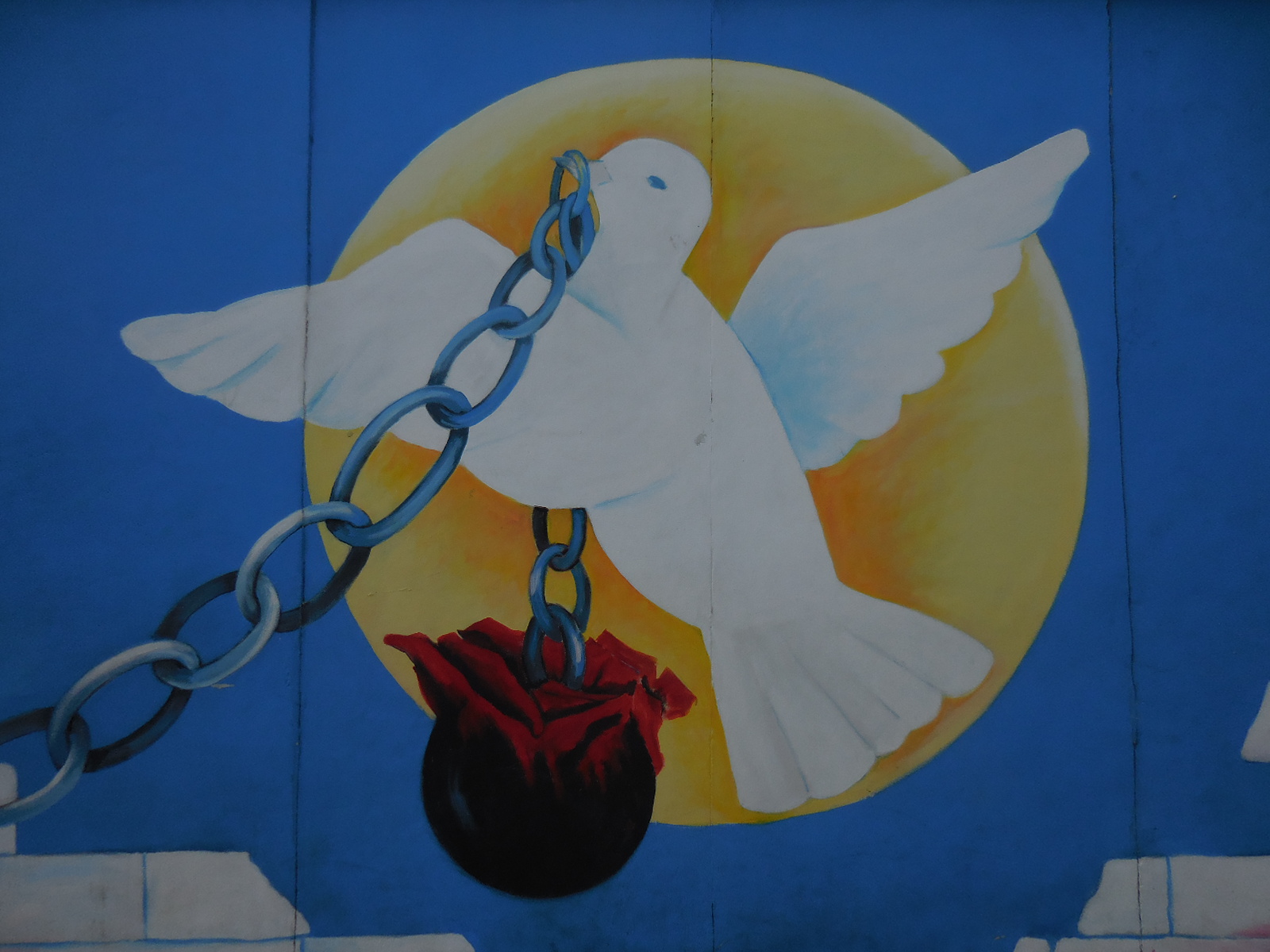
At East Side Gallery

Despite battling illnesses and undergoing an operation, I did manage to do some exciting traveling last year. I returned to Berlin, a city that I had only a year earlier become reacquainted with after a 27-year absence. Last year I explored the Charlottenburg district and even found time to visit the East Side Gallery for the second time in 28 years.

IsolaBellaint17

Inside the palace on Isola Bella

In the summer, I spent a brief but bewitching time in the Lake District of Italy. Seeing the Borromean Islands off Lake Maggiore was the highlight for me, although Malcesine, Verona, Bergamo and other spots were all fascinating.

Kuksstatue13515

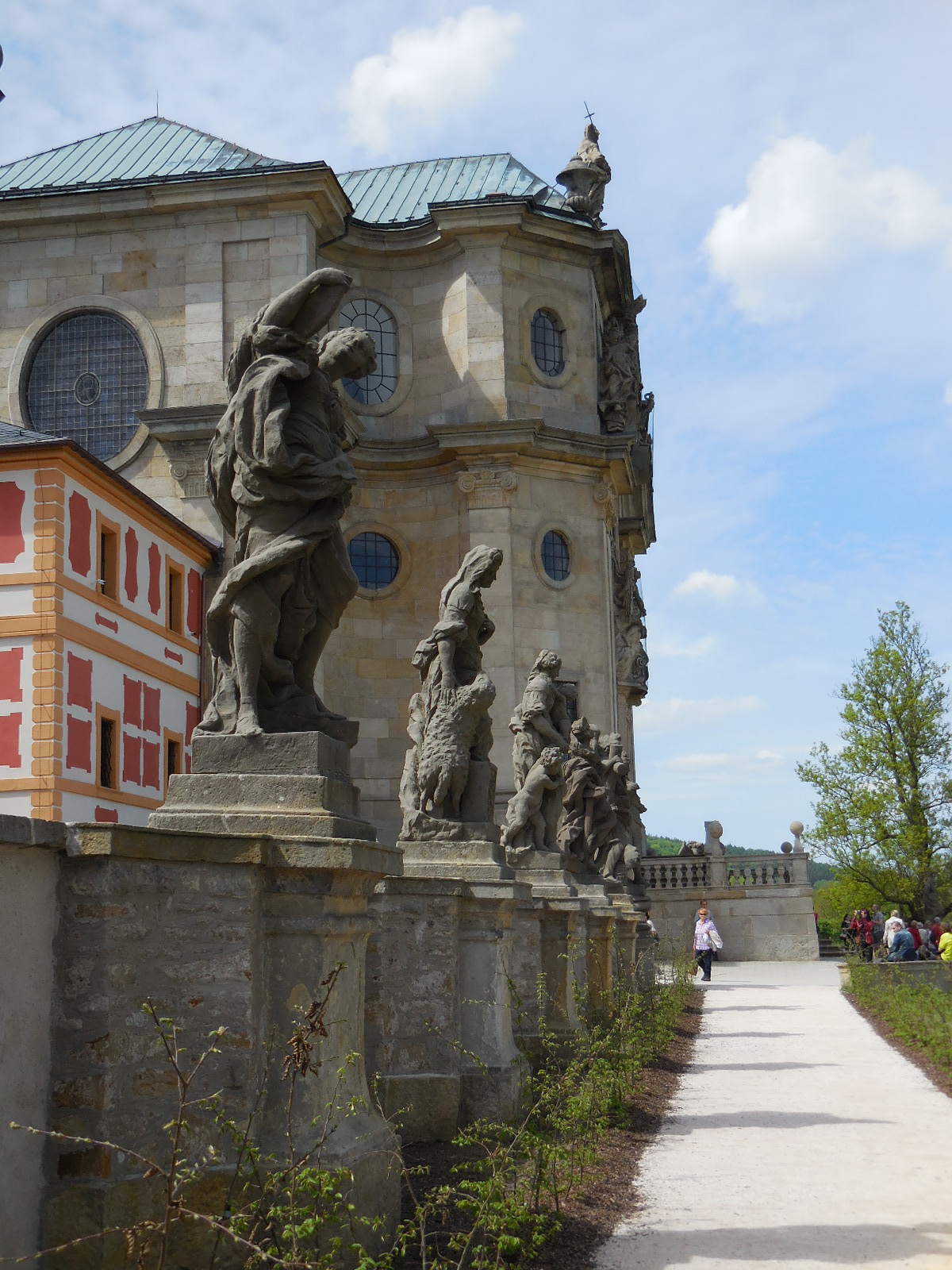
Baroque former hospital Kuks with its 24 statues of vices and virtues

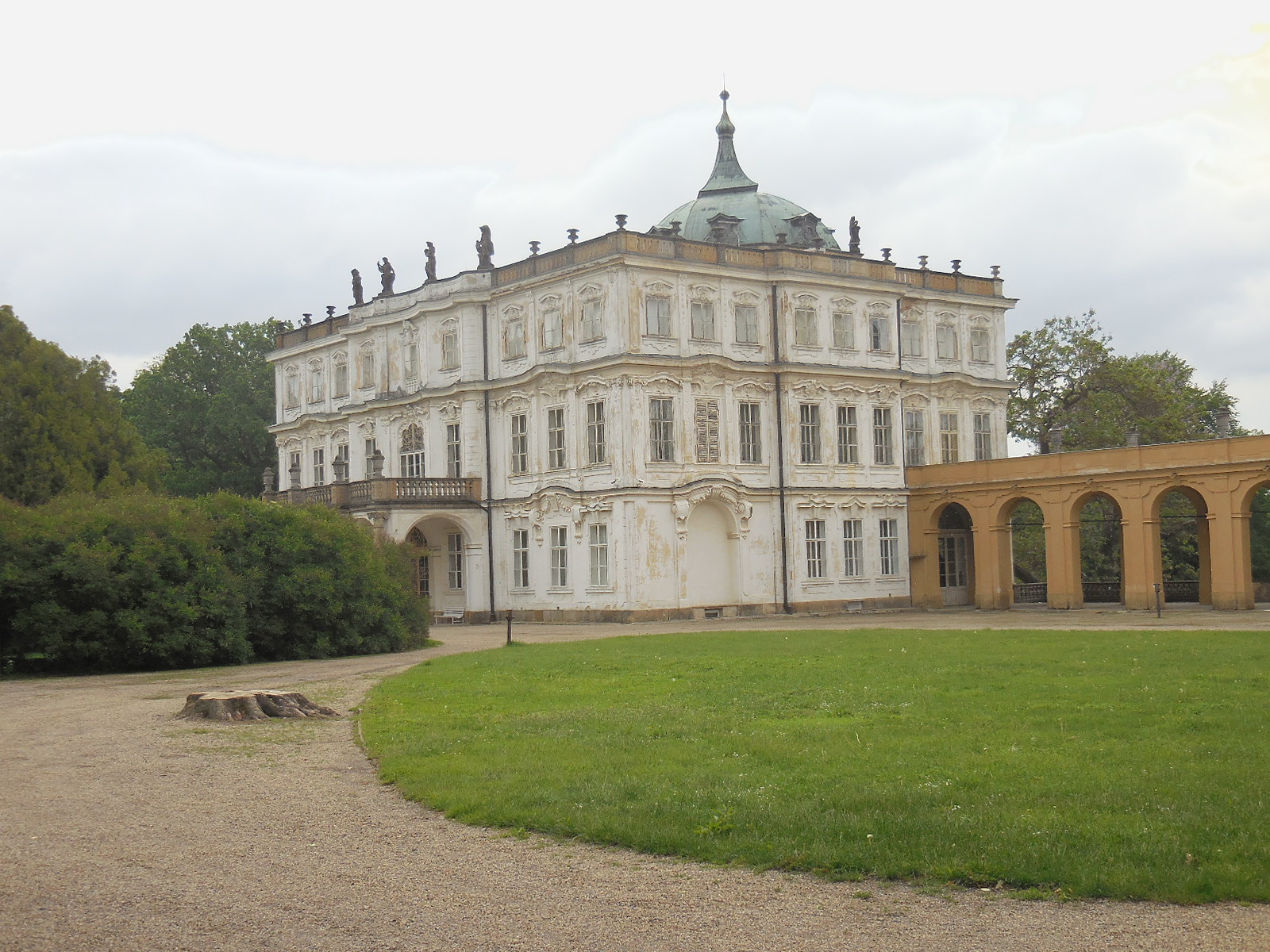
I did not have much time to travel in the Czech Republic because I had an operation during the summer. I did travel to the Baroque former hospital Kuks – one of my favorite sights in the country – as well as Ploskovice Chateau. I also was glad to be able to spend time at the Azyl Lucky Cat Shelter in Černov, located about an hour from Prague. I adopted my beloved Šarlota from that shelter and since then, I have enjoyed visiting the owner of the shelter and the beautiful cats and dogs that await forever homes.

AzylLucky201918AzylLucky201919

Cats at the Azyl Lucky Shelter

Let’s start with Berlin in May. The weather was coldish and windy, but the sights were as magnificent as always. There’s always something fascinating to see in Berlin.

BerlinCharlottenburgext2

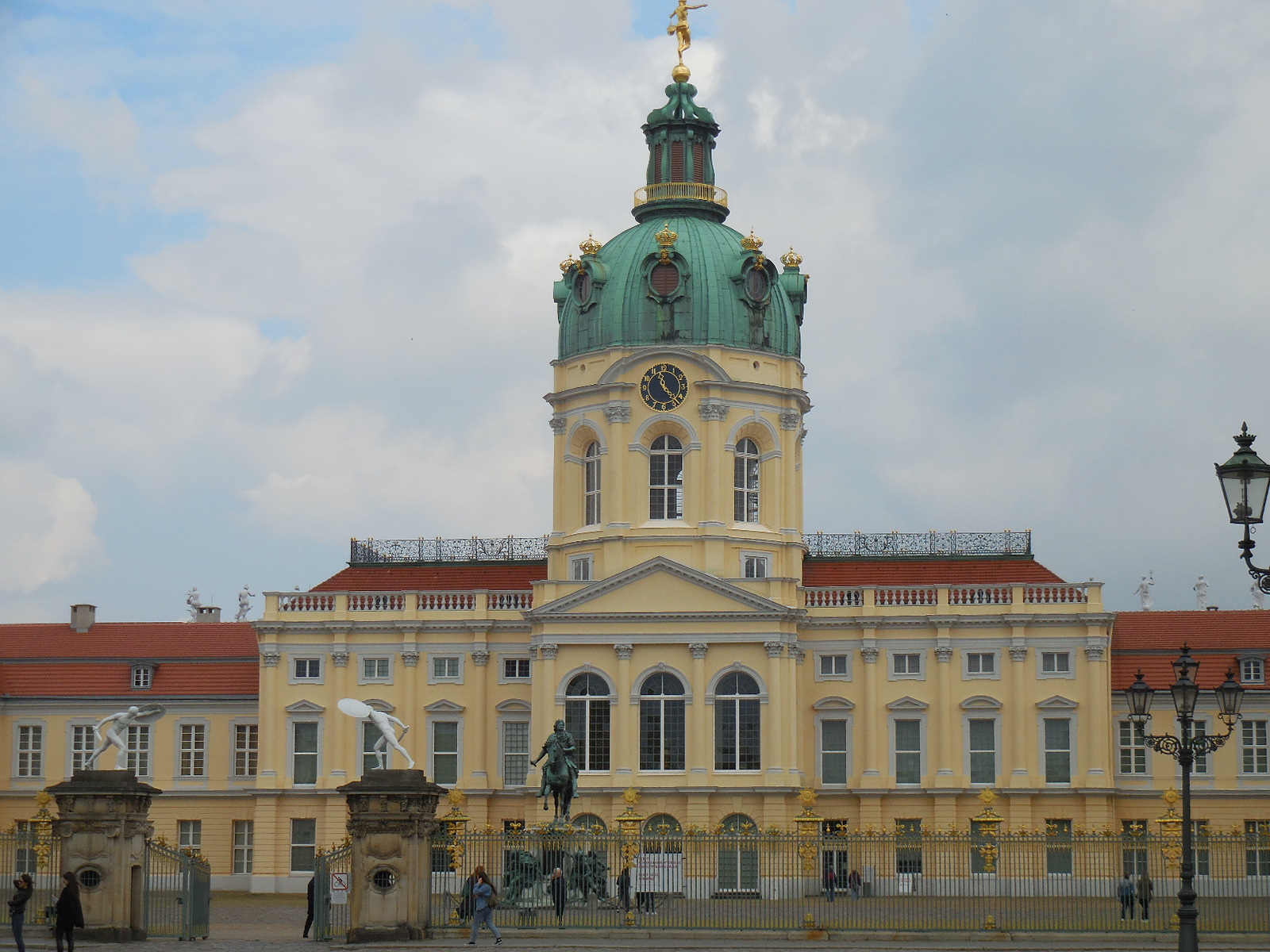
Charlottenburg Palace

The objective of my short stay was to visit Charlottenburg Palace. I stayed in the Charlottenburg district with its tranquil, wide streets. There were not many tourists in the area, which was very pleasant.

Charlottenburg Palace began as Lietzenburg, commissioned by then Electress and future Queen Sophie Charlotte. Frederick the Great renamed it after his wife when she died in 1705 at age 37. Under the guidance of Sophie Charlotte, the chateau had been a cultural hubbub.

BerlinCharlottenburgint7BerlinCharlottenburgint11BerlinCharlottenburgint26BerlinCharlottenburgint29

I was overwhelmed by the Baroque and Rococo décor and especially by the chinoiserie ornamentation. My favorite room was the Porcelain Cabinet, which featured about 2,700 objects in a luxurious and elegant space. I also loved the white harpsichord decorated with chinoiserie features in the Golden Cabinet.

BerlinBerggruen3BerlinBerggruen5BerlinBerggruen6BerlinBerggruen13

Several museums are located across from the palace. While one museum featuring Art Deco and Art Nouveau works was closed, I did get to explore the Museum Berggruen, where I excitedly perused paintings by Picasso, Braque, Matisse and Klee. Sculptures by Alberto Giacometti and African art rounded out the exposition. The museum of surrealist art nearby also had some intriguing works by artists such as Goya and Klee.

BerlinEastSideGallery6BerlinEastSideGallery14BerlinEastSideGallery18BerlinEastSideGallery24

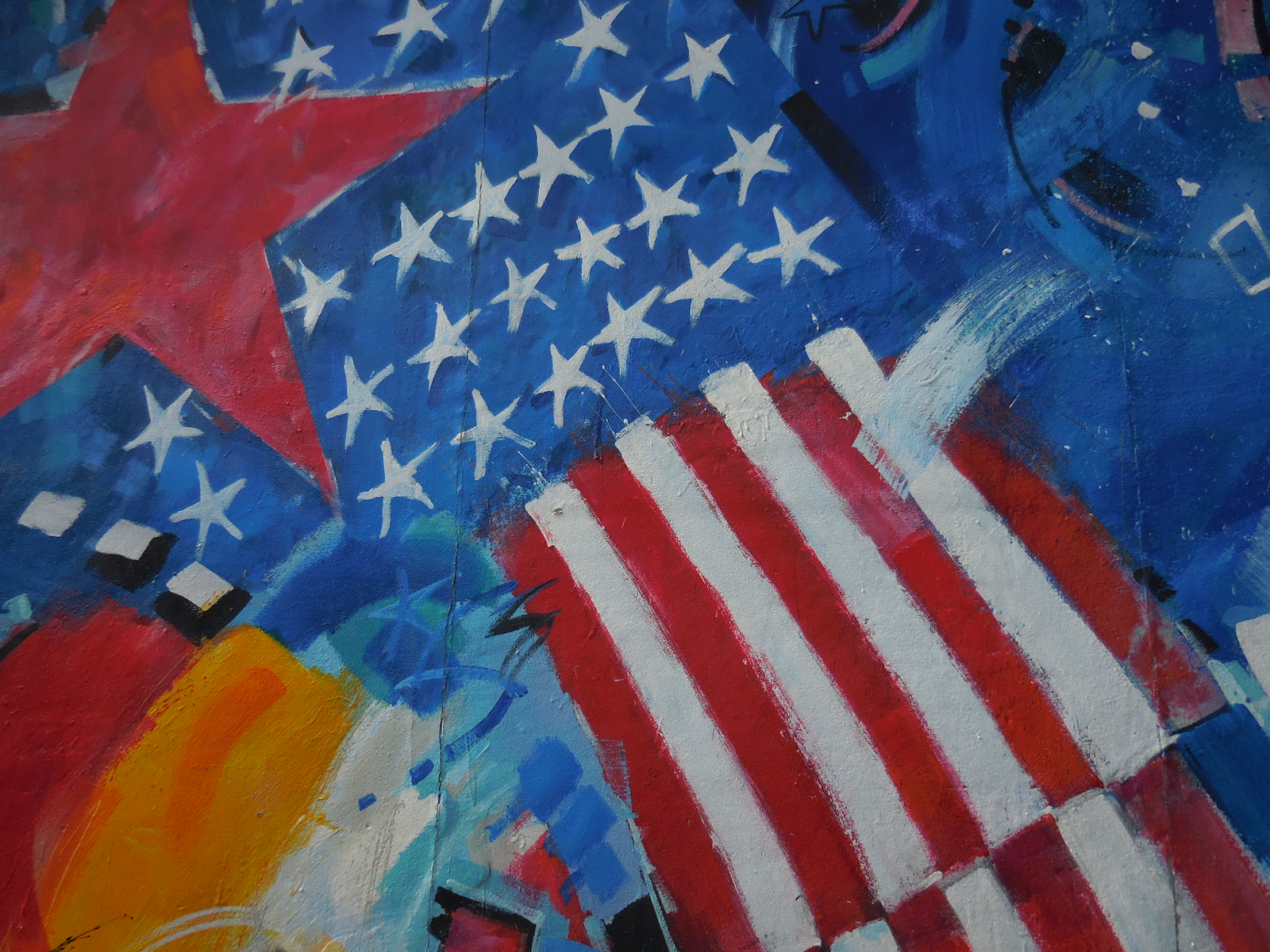
I wound up having some time to revisit the politically motivated murals of the East Side Gallery that had entranced me so much when I was a tourist back in the summer of 1991. Back then, when I was visiting after graduating from college in the States, the Berlin Wall had fascinated me. Now I knew many people who had lived and suffered under totalitarian rule, and the Wall to an extent sickened me. But not this portion of the Wall. The murals represented an exuberant and vivacious celebration of freedom, a good riddance to the oppression that had darkened so many decades of life behind the Iron Curtain. I loved these bright and bold statements of euphoria and optimism. Sure, some murals portrayed fear and anxiety as a new era beckoned, but that was only to be expected. This was the longest stretch of the Berlin Wall still standing. During my visit in 1991, so much more of the Wall had yet to be taken down.

BorIslands7BorrIslands5

My four-day jaunt to Italy was not without its disappointments. I fell ill shortly after the lengthy bus ride and five-minute breakfast that we were allowed. I went to Italy with my good friend, traveling with an agency that I had not used before.

IsolaBellaint11IsolaBellaint23IsolaBellaint31IsolaBellaint45tap

Isola Bella palace interior

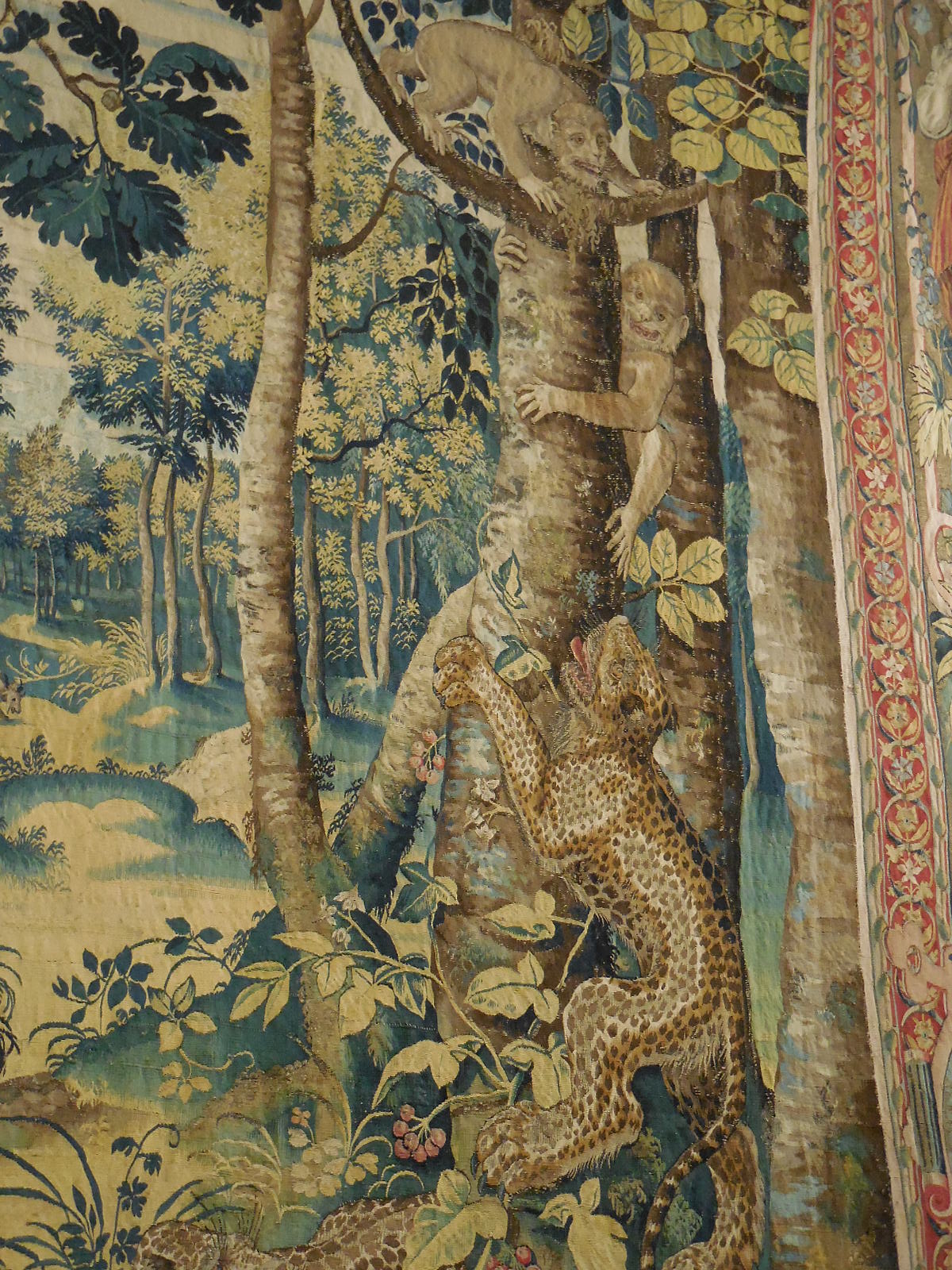
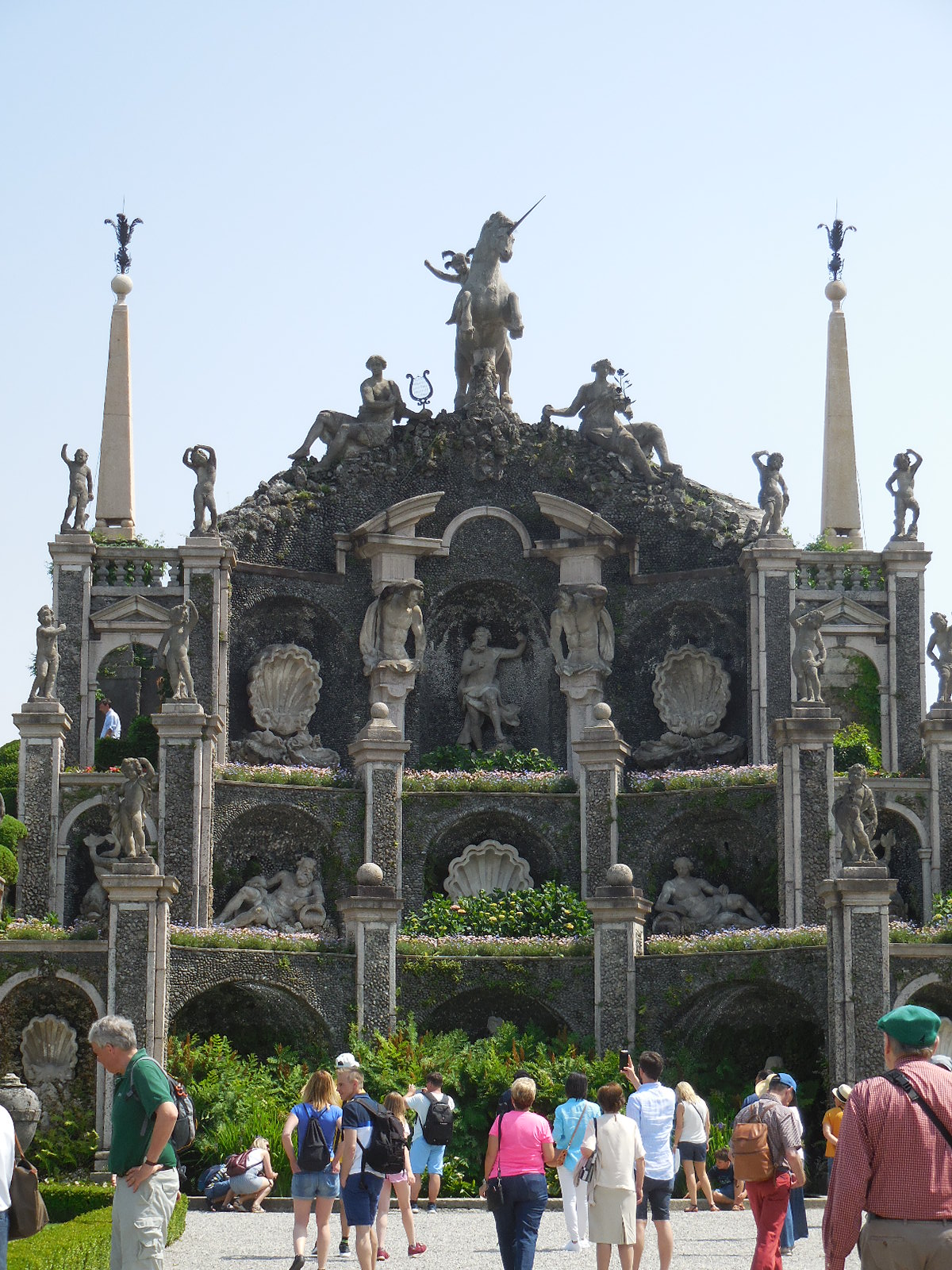
My favorite day was the one when I felt healthy, the last day of the trip, but it was also the most special to me because I saw the amazing Borromean Islands that had me bewitched. My favorite island was Isola Bella, the site of a magnificent palace and ten-tiered garden shaped as a truncated pyramid. Shaped as a boat, the island boasted a luxurious palace along with six grottoes. The Music Room included 80 paintings by Pieter Muller the Younger, who was known for his renditions of stormy landscapes and thus had earned the nickname “The Tempest.” I was awed by the harpsichord in golden cypress wood, too. The Throne Room featured Lombard Baroque art. The gilded, wooden throne hailed from the 18th century. I also liked the two large cabinets made with tortoiseshell. The Tapestry Gallery was remarkable for its six Flemish tapestries. I have always loved tapestries! Visiting the Italian Baroque gardens topped off a great day.

IsolaBellagarden10IsolaBellagarden4IsolaBellagarden5

Garden of Isola Bella

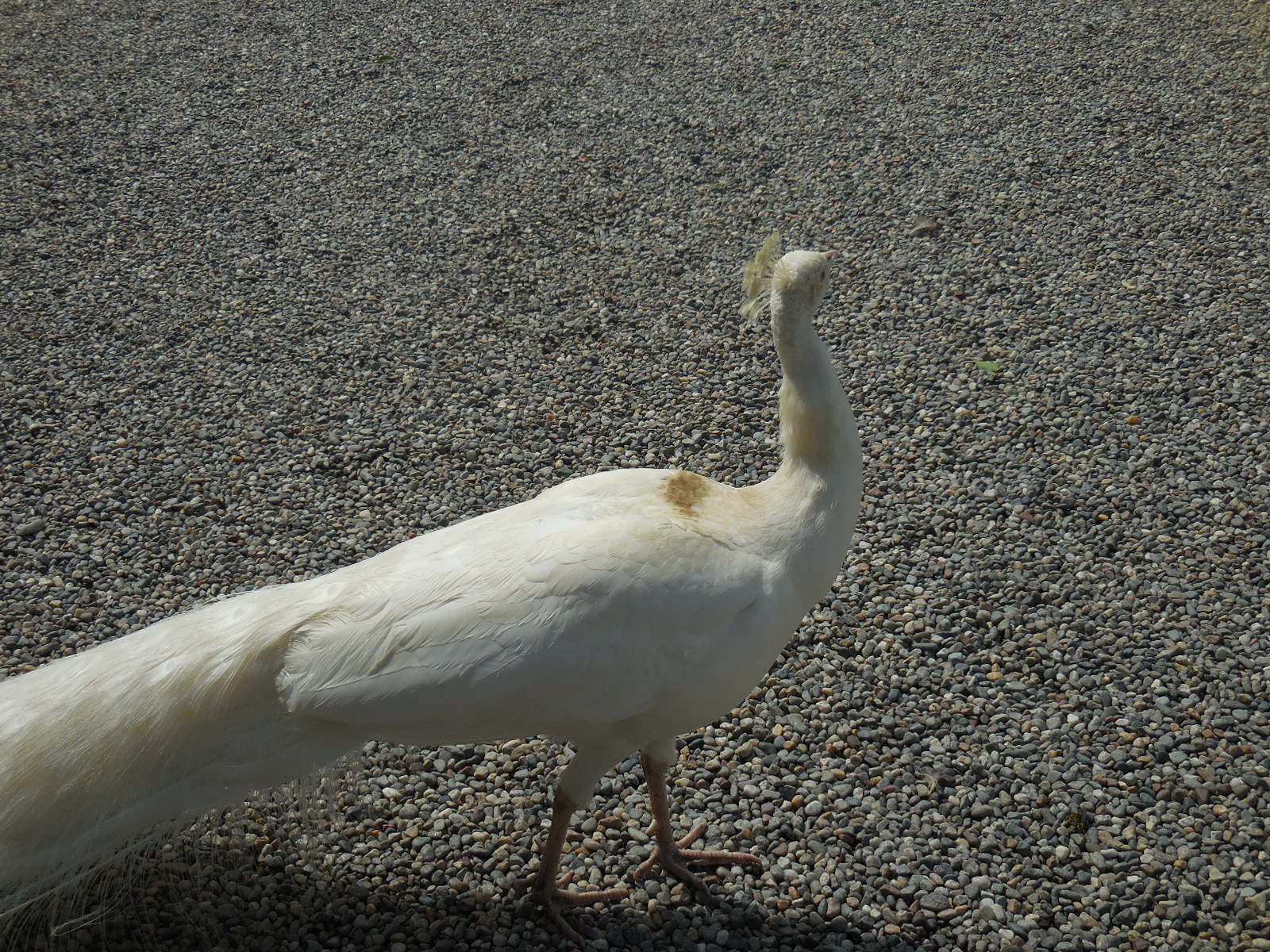
Before experiencing the glamor of Isola Bella, I had been engrossed in the beauty of Isola Madre and Isola dei Pescatori or Fishermen’s Island. Isola Madre was a botanical park dotted with white peacocks and rare birds. The largest of the three islands, it boasted a palace with 16th to 19th century furnishings, including Lombard paintings, marionettes and puppet theatre stage sets, such as a grotesque one punctuated by dragons, devils and skeletons. I also liked the machinery for making thunder and lightning as well as terrifying noises. The five-terraced garden also showed off a pond of water lilies, among other delights.

IsolaMadre5

Birds on Isola Madre were plentiful.

IsolaMadrechapel1

Church on Isola Madre

IsolaMadrepalace2

In Palace on Isola Madre

IsolaMadrepalace13

In Palace on Isola Madre

IsolaMadreview4

View from Isola Madre

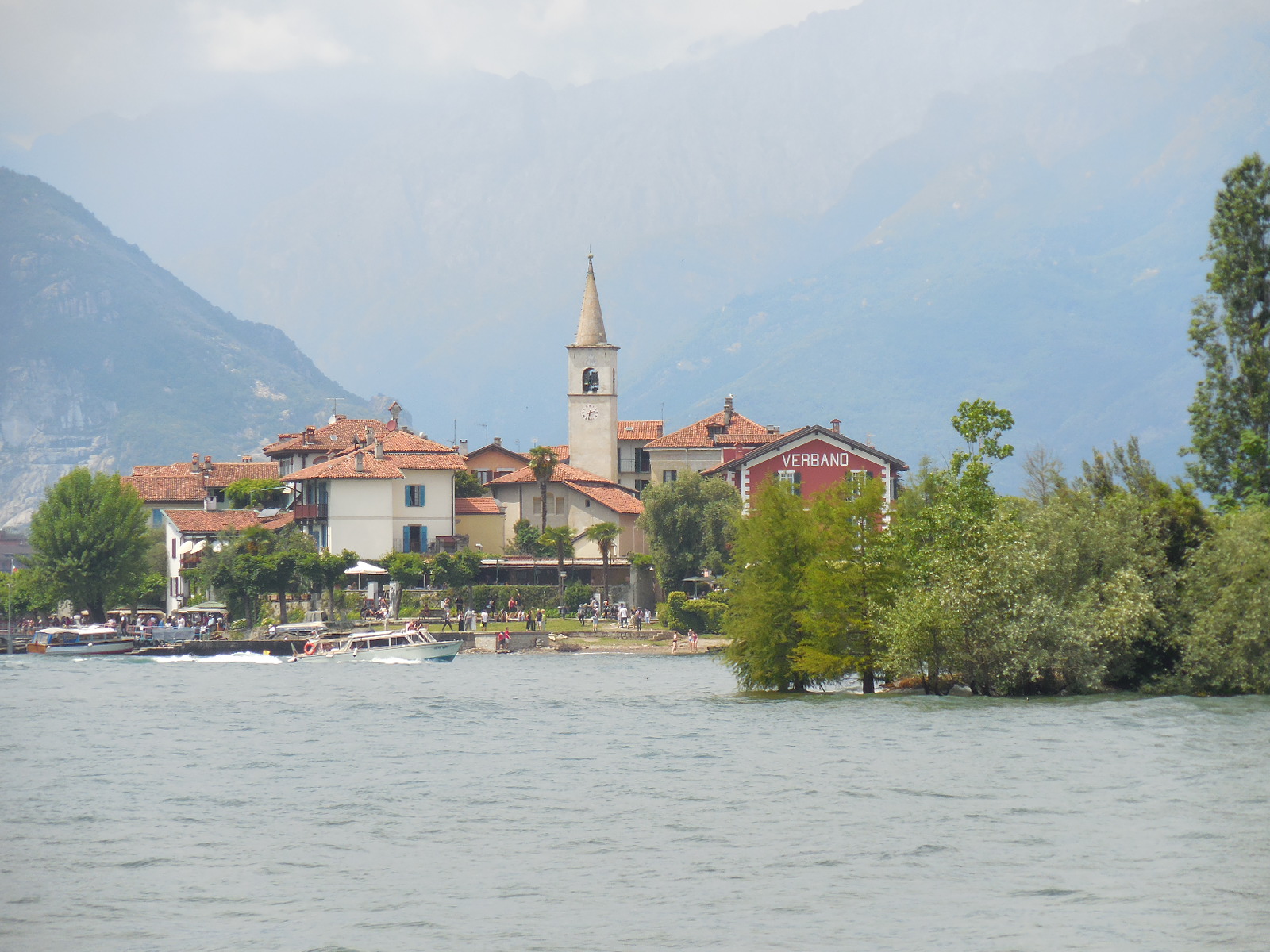
Isola dei Pescatori was the only of the three islands with permanent residents – as of 2018 there were 25 people who called the small place home year-round. The cobbled streets and narrow passageways that led to gorgeous views of Lake Maggiore were postcard-perfect. The modest yet elegant Church of St. Victor was furnished in Baroque style, though it had been built as a chapel during the 11th century. I also saw the picturesque town of Stresa, a wonderful place to relax after a day of island hopping.

IsoladeiPescatori2

House on Isola dei Pescatori

IsoladeiPescatori6

Street on Isola dei Pescatori

IsoladeiPescatorichapel6

Church of St. Victor on Isola dei Pescatori

I spent one day in Malcesine during the scorching heat of the early summer. Even though I started to feel ill while riding the funicular to Mount Baldo, which is 1,800 feet above sea level, I appreciated the amazing views from the first cable car installation in the world with an all-rotating cabin. (It did not help my dizziness, though!) On Mount Baldo it was cold and windy at 8 am, so I did not spend much time there. I preferred to explore the picturesque town of Malcesine and chill out at cafes, drinking mineral water to ward off the effects of the harsh hot weather. The castle ruins were romantic and offer superb views of Lake Garda. Goethe was even briefly imprisoned there because the authorities thought he was a spy. There are several medieval frescoes in the castle complex.

Malcesinecastle2

Castle in Malcesine

Malcesinecastle9

Castle ruins in Malcesine

Malcesineview3Malcesineview10

Views from rotating cable car from Malcesine to Mount Baldo

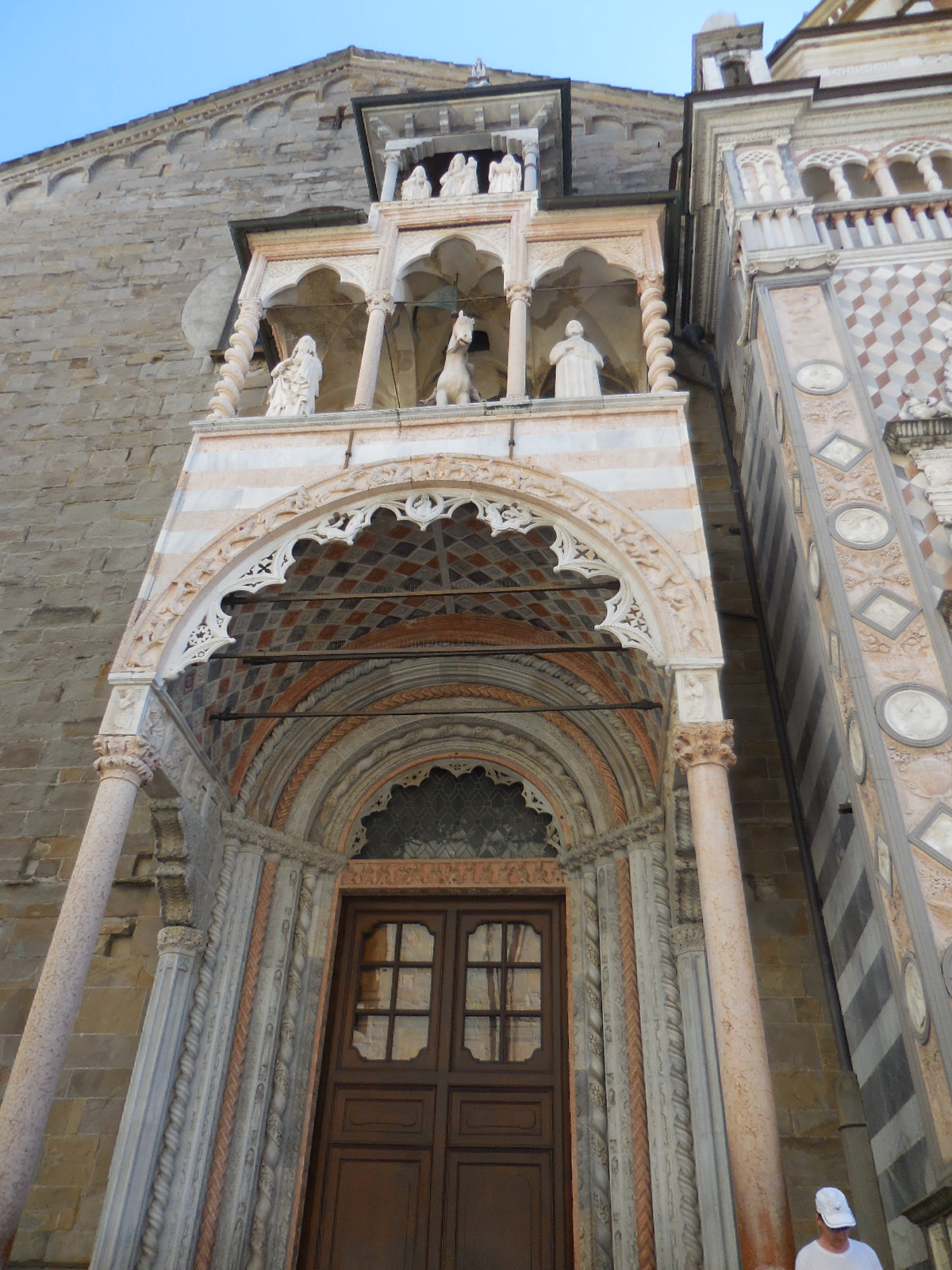
Bergamo was another town that will always be close to my heart. We only had time to explore the Upper Town, so I was not able to visit the Accademia Carrara art museum in the Lower Town, but it gave me a good reason to make a trip back there someday. Just standing on the Piazza Vecchia was awe-inspiring. The Palazzo della Ragione, located on this square, was built in the second half of the 12th century and boasted elegant arches and three-mullioned windows as well as porticoes. The most amazing architectural delight was the Colleoni Chapel, which was closed, unfortunately. Still, the façade sporting delicate colors of marble exuded such a sense of harmony and balance plus a vivaciousness that overwhelmed me. It is one of the best examples of Renaissance architecture in northern Italy. The sculptural decoration did not disappoint, either.

Bergamochurch1Bergamochurch2Bergamochurch3

Colleoni Chapel in Bergamo

The cathedral, which was not completed until the 19th century, was impressive with a Baroque altar that featured a carved Episcopal throne. Unfortunately, the Diocese Museum was not open, but that was another reason to come back to this bewitching town.

Bergamo4Bergamocathint3Bergamostreet1

What I liked best about Bergamo were the romantic, narrow, hilly streets that reminded me of those in Urbino. Walking by medieval houses or houses with facades from the 16th or 17th century was magical. The best thing about Bergamo’s Upper Town was that there were no souvenir shops. There were shops selling local delicacies and bookstores, but no shops promoting crazy t-shirts and gaudy objects. It was so refreshing. I wish the Old Town of Prague had banned souvenir shops.

Verona2VeronaJbalcony4

Juliet’s balcony in Verona

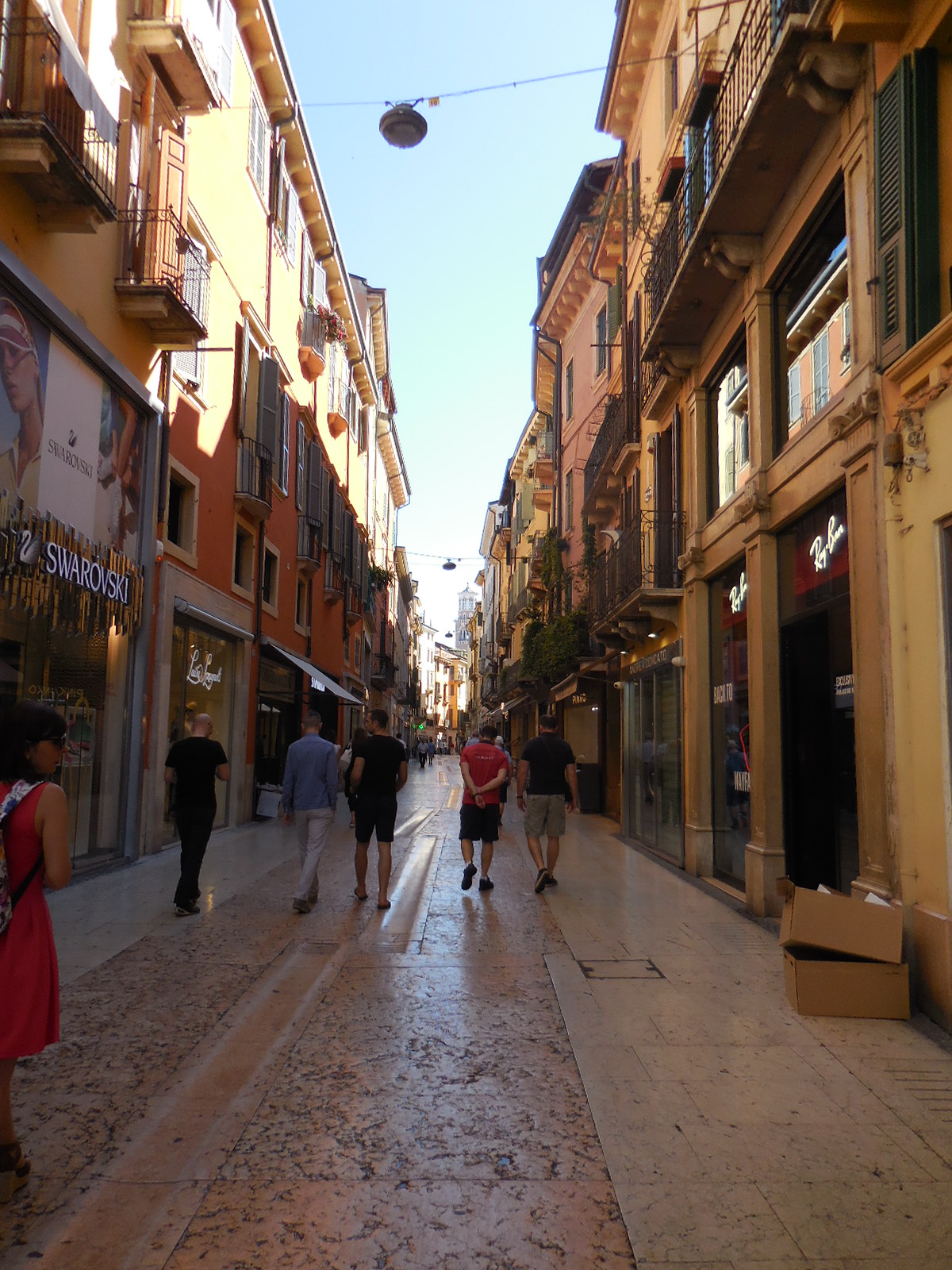
We were only in Verona for half a day, so we did not see much of the city. After several minutes there, I know I would be yearning to come back for a longer stay. We saw Juliet’s House, the balcony that was said to be famous for the Romeo and Juliet scene in Shakespeare’s play. In reality, Verona created a tourist trap when they bought the house from the Cappello family. No one named Capulet had ever lived there. The house’s façade is impressive, in Gothic style, dating back to the 13th century. The balcony hails from last century. A statue of Juliet stood in the small courtyard. It is said to be lucky to rub her left breast, but I didn’t try it.

Veronastreet1

The main drag in Verona

I also saw the exterior of Romeo’s House, which never belonged to the Montague family. It was only given this name for sightseers. The building is medieval, in Gothic style and includes an archway with crenelated walls.

Verona11Verona16

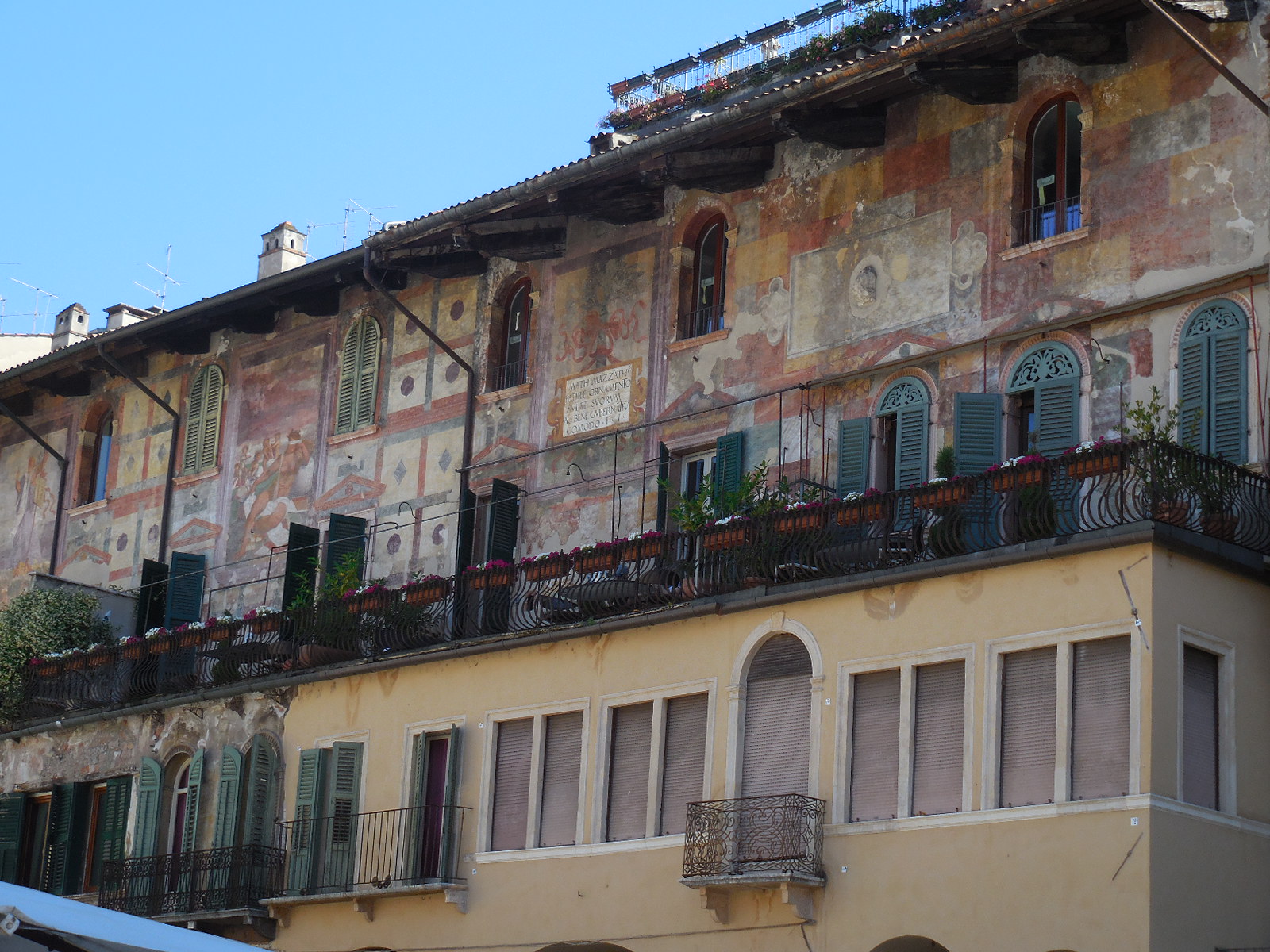
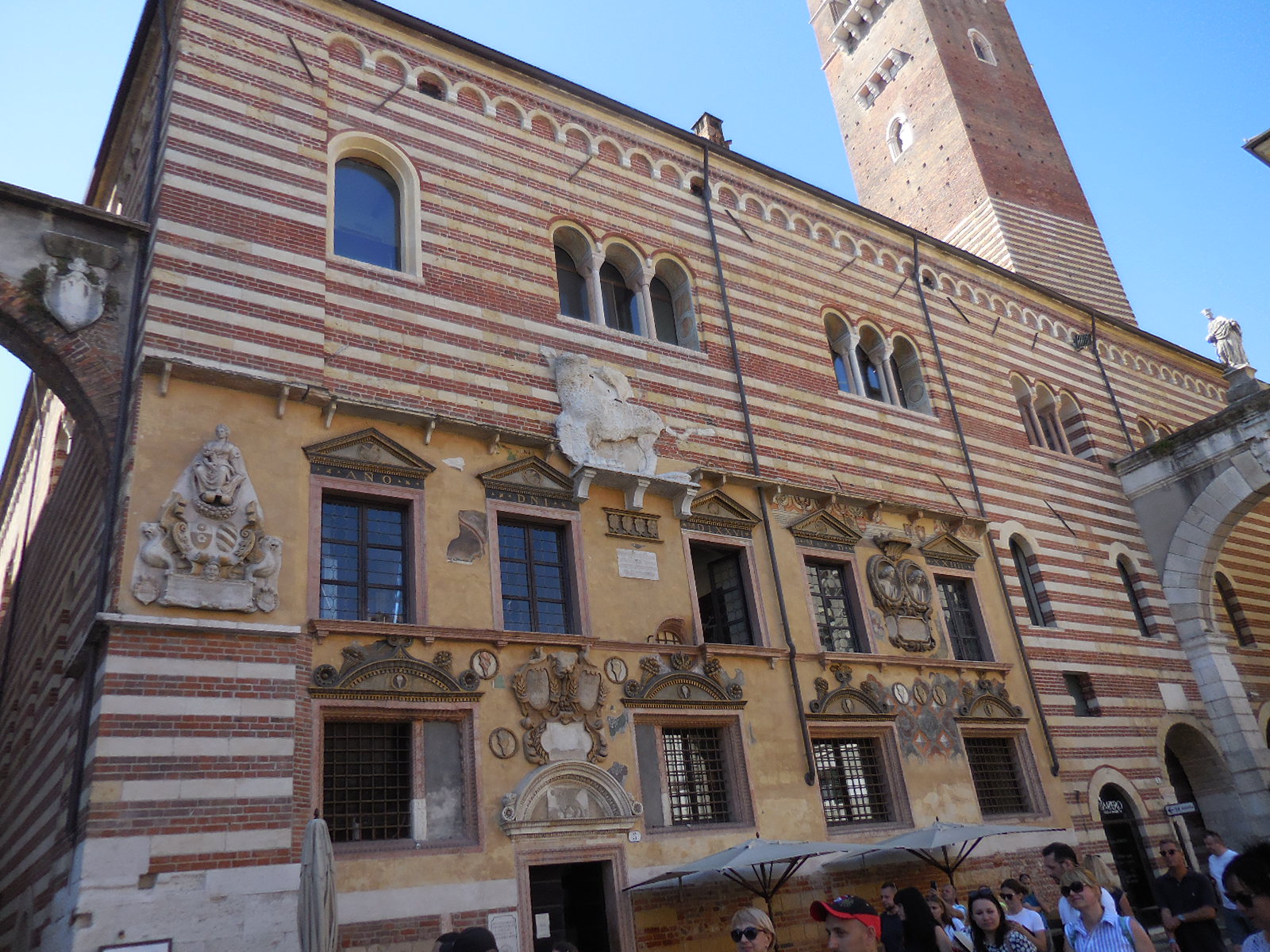
Then we saw a few of Verona’s main squares. Piazza Brà is one of the largest in Europe and boasts palaces, a museum and the city hall. Piazza delle Erbe was once the site of chariot races. During the Roman era, a large market took place there. Now visitors see palaces, a tower and a remarkable fountain dating from 1368. We walked down Via Giuseppe Mazzini, the central shopping street that was, during medieval times, dirty and lined with warehouses as well as barracks. Now expensive shops call the stunning renovated houses home.

Veronaarena1Veronaarena4Veronaarena6

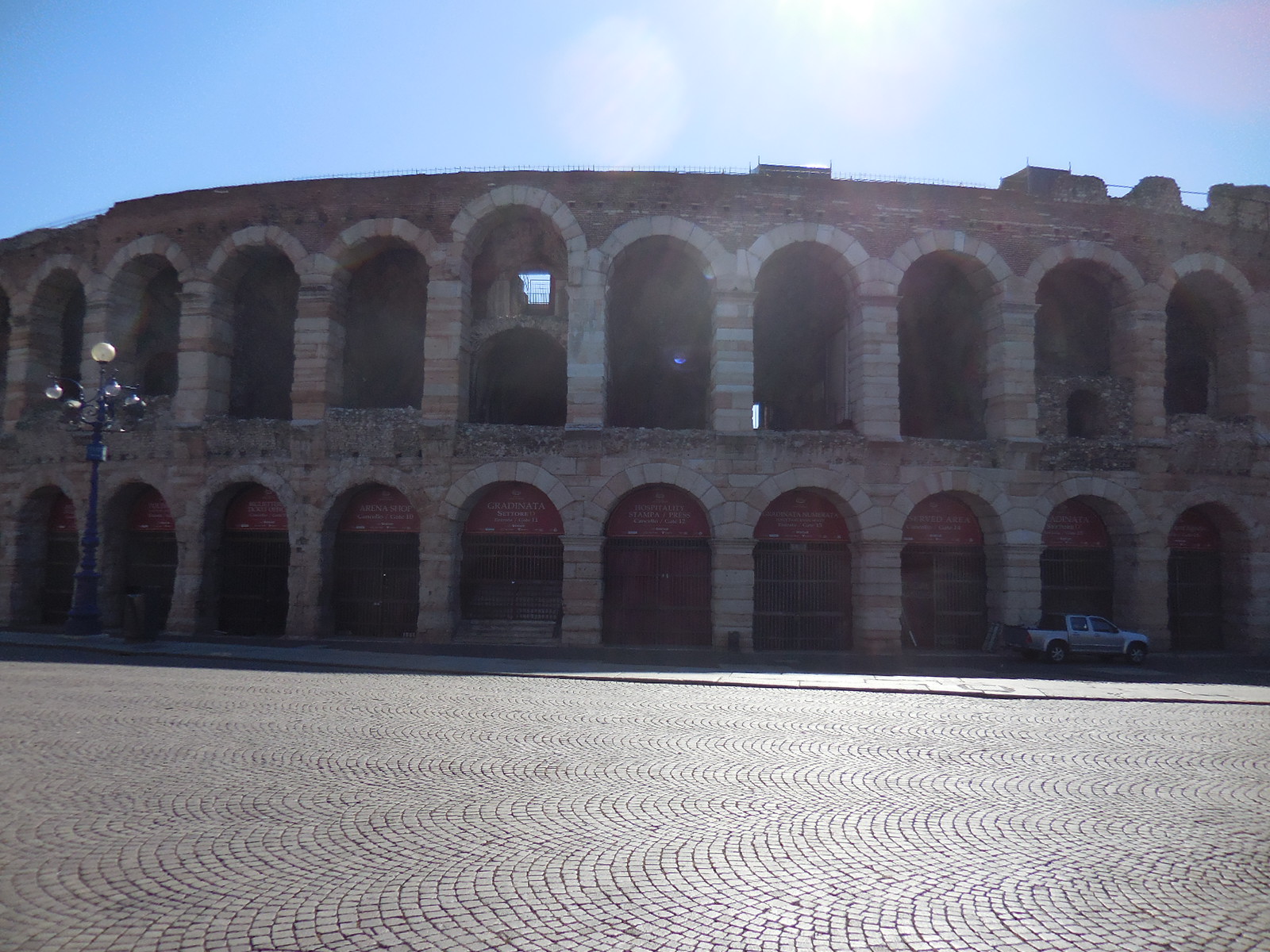
I loved the arena, though I did not get much time there. Built in the first century AD, it is the third largest area, measuring 140 meters in length and 110 meters in width. The original seating capacity was 30,000, back when it was used for games and gladiator events. It became dilapidated after Emperor Honorius banned events there in 404 AD. For centuries, it was abandoned. At one point, prostitutes used the arena. Now, though, the arena is a remarkable sight that should not be missed.

Sigurta8Sigurta35Sigurta37Sigurtalillypond4

Sigurtà Park

We also visited Sigurtà Park with its extensive, beautiful grounds. I loved the water lily ponds and many monuments plus views of the villages beyond. You really needed a full day to explore the vast grounds properly.

Kukscycleofdeath2Kukscycleofdeath6

Dance of Death Baroque frescoes at Kuks

Kukslapid8515Kukslapid9515

Braun’s statues in the lapidarium at Kuks

Kukspharmacy2515

The pharmacy at Kuks

I also visited several places in the Czech Republic last year. Kuks, a former hospital in gushingly Baroque style, is famous for its twenty-four 18th century statues of virtues and vices, sculpted by Matyáš Braun. In the lapidarium I was almost in a trance while peering at Love, Despair, Sloth and Hope. I also was enamored by the grotesque Dance of Death frescoes, as the figure of Death intruded on people’s lives. The pharmaceutical museum and one of the oldest pharmacies in the country were also very intriguing. There’s a lot to love about Kuks.

Ploskoviceext1

Ploskovice Chateau

Ploskoviceint9Ploskoviceint25

Painting by Navrátil at Ploskovice

Ploskoviceint28

The Main Hall at Ploskovice

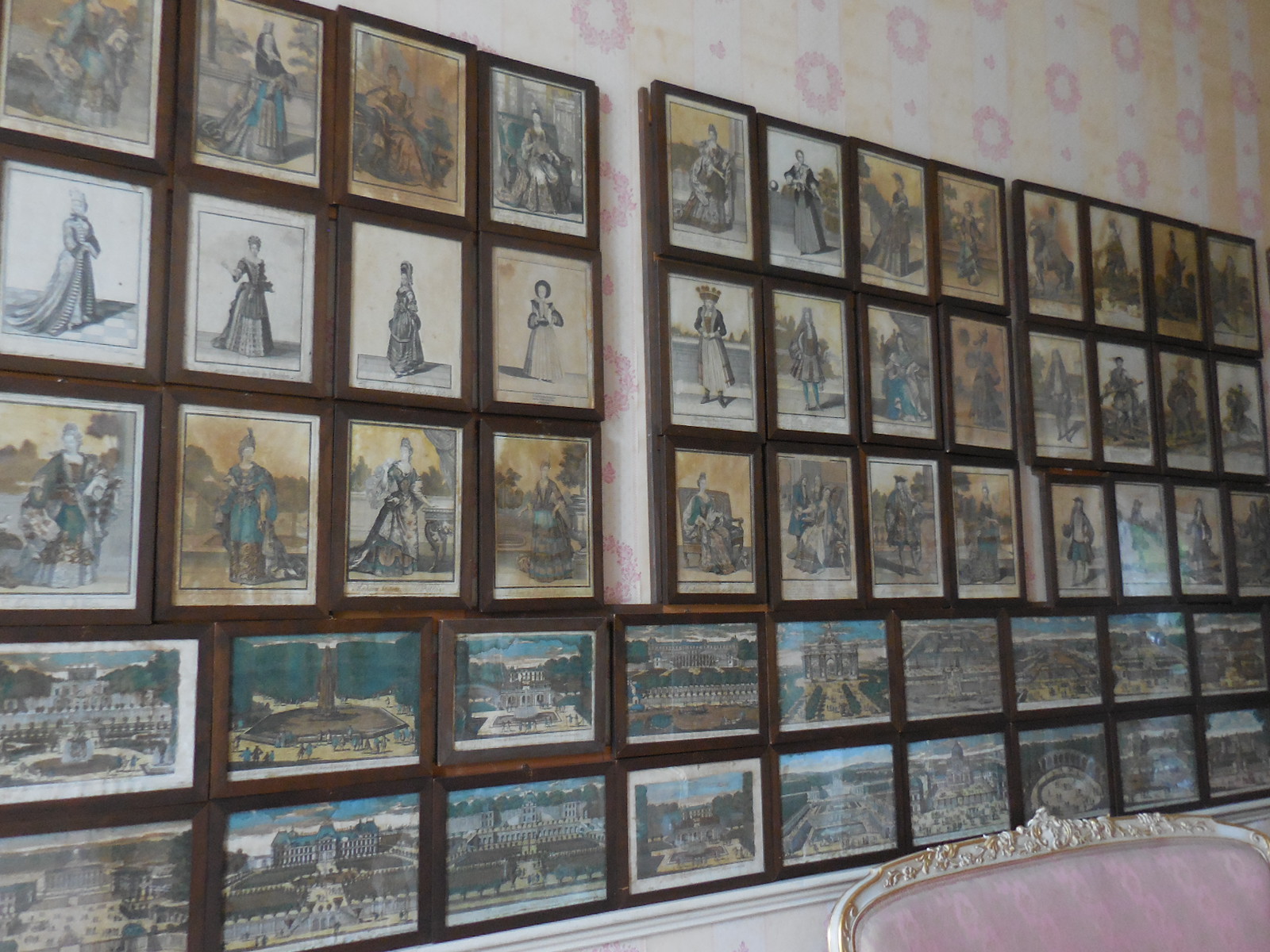
Ploskovice was first mentioned in writing during the 11th century. The chateau was born in the 16th century. The vestibule was decorated with sculpture, frescoes and stucco ornamentation. The Knights’ Salon is Rococo in style. Vedutas of French kings’ castles and French parks hung on the walls. The Ladies’ Bedroom showed off the Rococo style as well while an early Baroque jewel chest was decorated with bas-reliefs and inlaid with various kinds of woods.

Ploskoviceint40Ploskoviceint47Ploskoviceint48

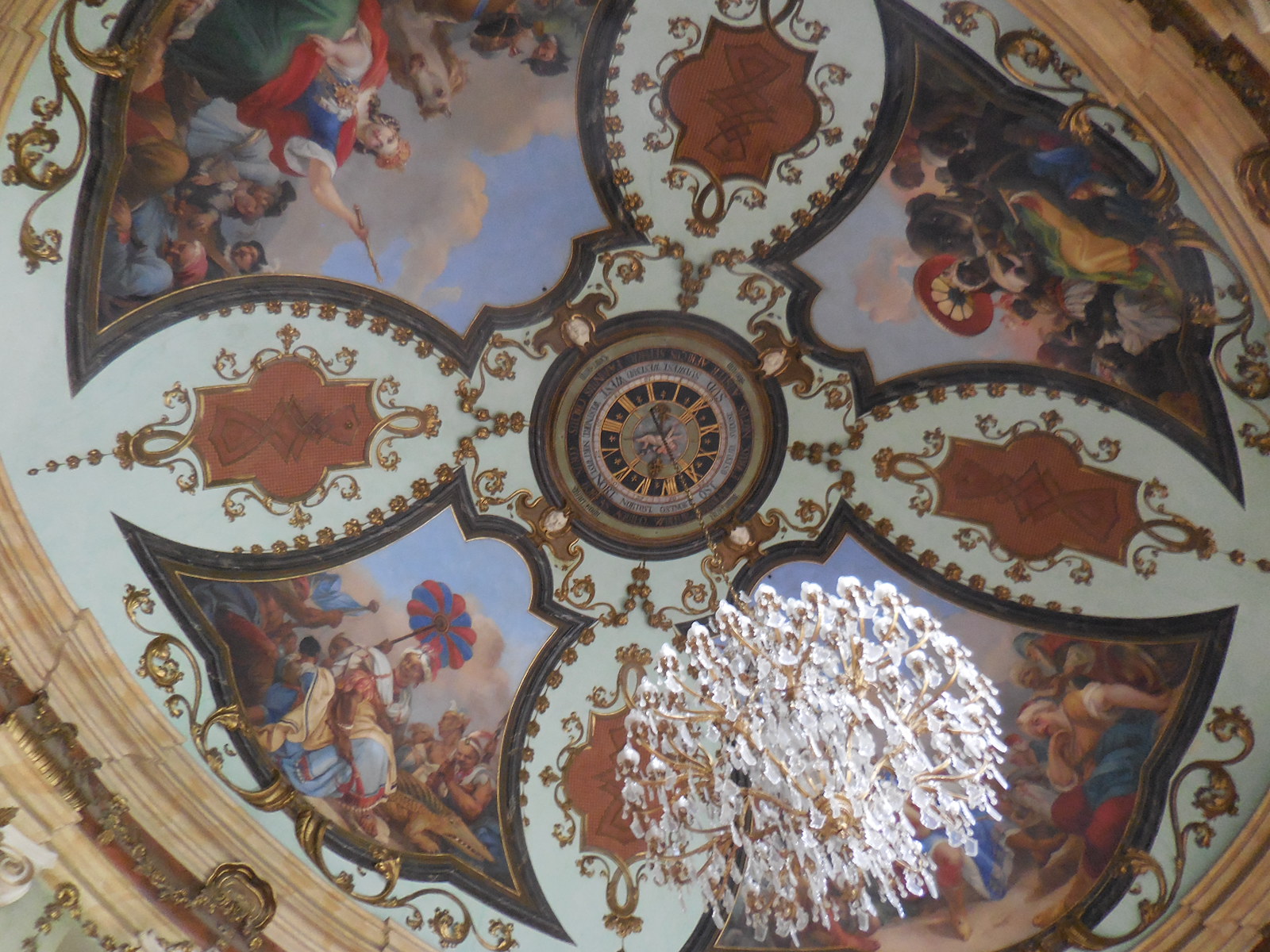
The painted ceiling in the Ladies’ Study was the work of the renowned Josef Navrátil, whose masterful work I had also witnessed at Zákupy Chateau a year earlier. His remarkable and delicate painting was evident on the ceiling of the Dining Room as well. The Main Hall has 12 pilasters and shows off stucco works of Hope, Motherhood, Bravery and Nature. The painting on the cupola was remarkable, showing the four continents, created by masterful Czech artist V.V. Reiner. I had seen his masterpieces at Duchcov Chateau a few years earlier. Navrátil painted 36 oval medallions in the Main Hall.

Ploskoviceint70Ploskoviceint77Ploskovicepeacock1

I also liked the grottoes at the chateau. They originated during the Baroque era. Baroque fountains in the grottoes boasted figural decoration. Perhaps what I loved most about Ploskovice were the peacocks fluttering around the grounds.

I wish I had had more time to explore the Czech Republic last year, but my health and occasionally the weather prevented me from doing so. This year I am planning to go back to Italy and to take more trips in the Czech Republic. I also hope to see art exhibitions in Berlin and Vienna.

Tracy A. Burns is a writer, proofreader and editor in Prague.

IsolaBellaview2IsolaBellaviewfromgarden6