
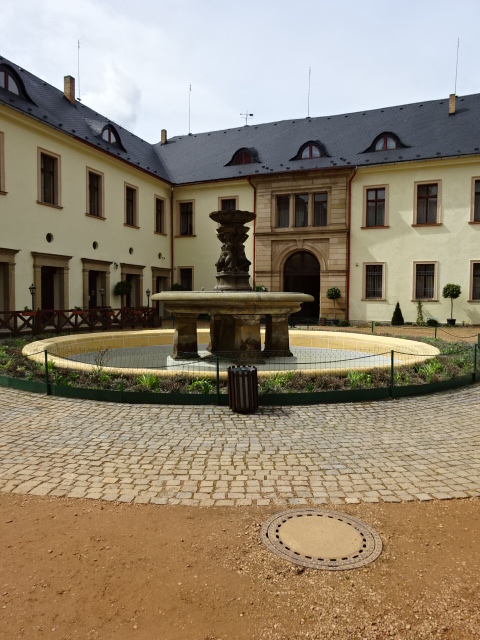
I was very excited to visit Zbiroh Chateau because, even though it had been open to the public since 2005, I was visiting for the first time. It wasn’t far from Prague, either. I knew that the chateau served as a hotel, but I hadn’t realized that there also were tours of the representative spaces. After a steep incline, I approached the two lavish statues of lions that guarded the entrance. The entrance gate seeped with grandeur. Both features hailed from a 19th century renovation.
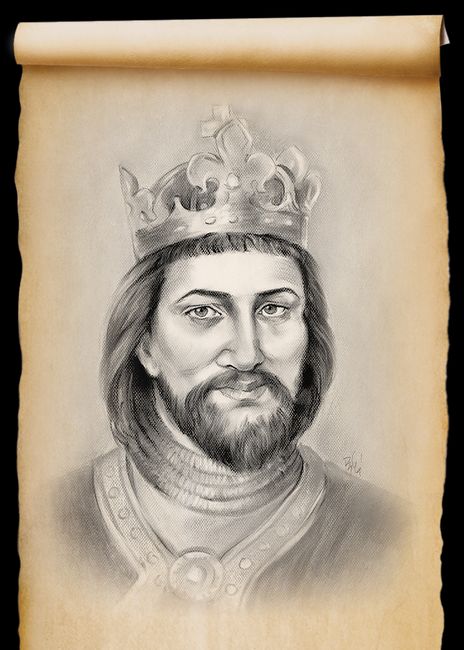
Czech King Přemysl Otakar II, photo from Turistický denník
I learned about the fascinating history of Zbiroh on the tour. It was built before some time before 1230. In the late 13th century, Czech King Přemysl Otakar II conquered Zbiroh. The Přemysl dynasty of Czech rulers was legendary in the Czech lands. Přemysl Otakar II built many towns, among other accomplishments.

Holy Roman Emperor Charles IV, photo from Medieval Histories
In the 1330s, the future Holy Roman Emperor Charles IV gained control of the property. Charles IV would become perhaps the most prominent figure in Czech history. who had controlled the castle after he returned from fighting in France. Charles IV established towns, churches and castles, for instance. He created Prague’s New Town district, what is now called the Charles Bridge and the first university in Prague. He also had Prague’s Saint Vitus’ Cathedral built.

Emperor Sigismund, photo from Quora
During the 14th century, Petr of Rosenberg owned the castle, and it would stay in his family for about 100 years. Emperor Sigismund, the son of Emperor Charles IV, bought the castle from the Rosenbergs during the 15th century. Other famous royal dynasties would take over the chateau from the time of the Hussite wars in the 15th century – first the Kolowrats, then the Lobkowiczes, then the Sternbergs. During the Hussite wars of the 15th century, Zbiroh was not damaged, a fate that did not behold many other Czech monuments.
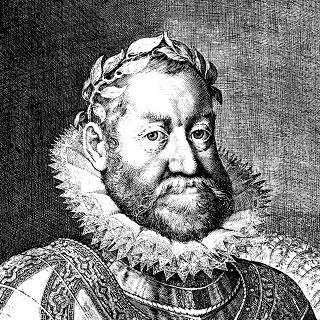
Emperor Rudolf II, photo from Kalendar.beda.cz
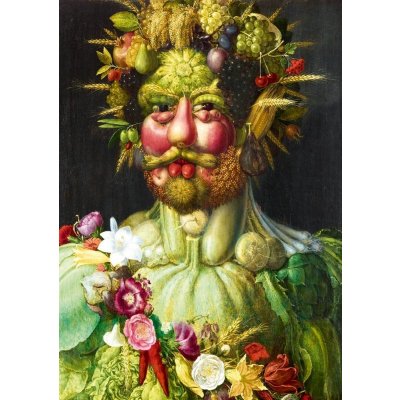
Emperor Rudolf II as Vertumnus, painted by Arcimboldo, photo from Heureka.cz
At the end of the 16th century, Holy Roman Emperor Rudolf II acquired Zbiroh, and he would have a momentous effect on the castle’s history. Emperor Rudolf II had made Prague the center of the Habsburg monarchy. A lover of art, Rudolf II bought many paintings, and, thanks to him, Prague flourish as a cultural center. He made many changes to the Gothic castle, transforming it into a Renaissance chateau. He liked to hunt on the property.
However, this golden age would come to an end. After the Battle of White Mountain, which the Catholics won against the Protestants in November of 1620, the castle was turned into a prison for the defeated soldiers. During the Thirty Years’ War, Swedish troops damaged and pillaged the chateau Until the middle of the 19th century, the chateau was dilapidated.
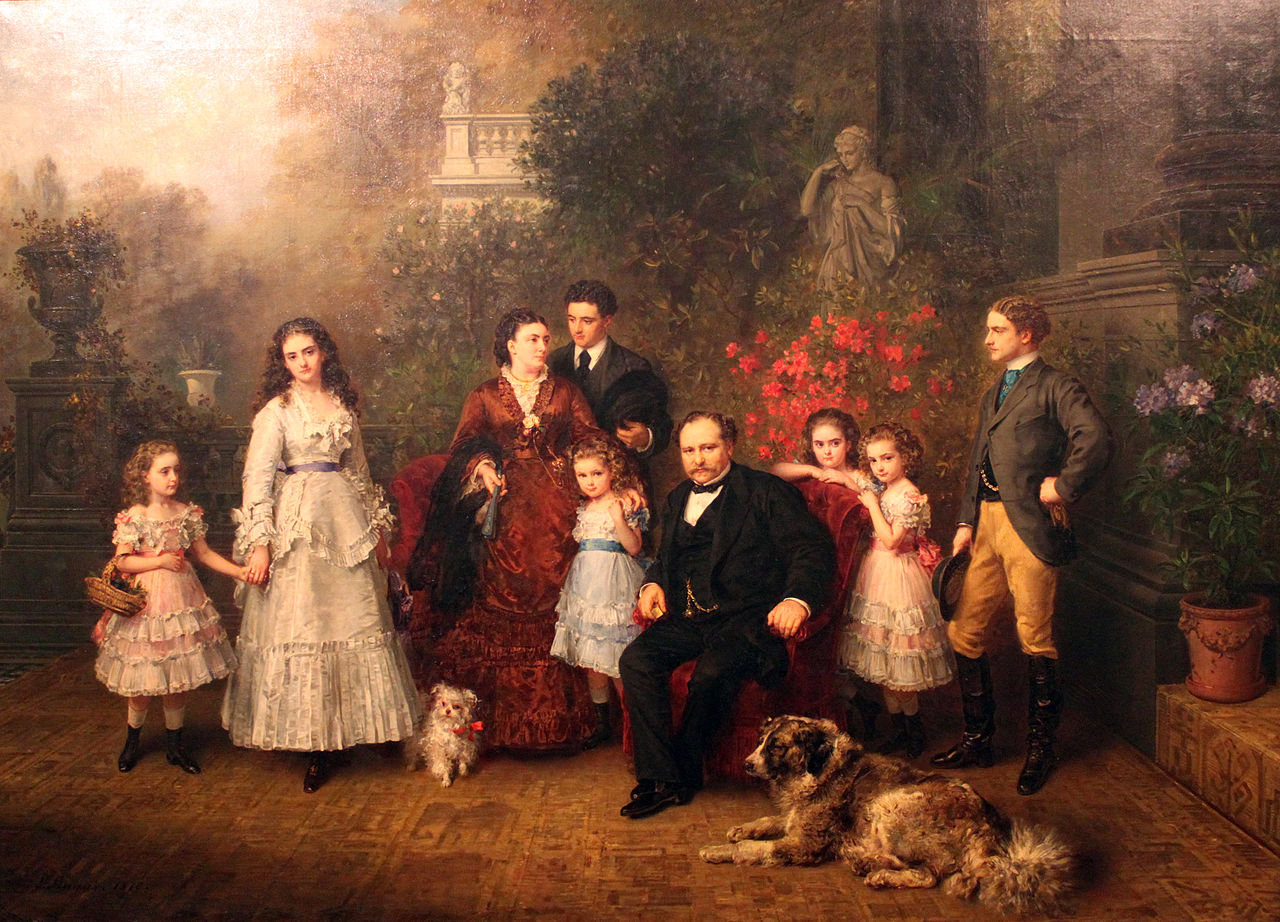
Baron Henry Bethel Strousberg and family, photo from Epochplus.cz
That’s when European entrepreneur Baron Henry Bethel Strousberg came along. He made a name for himself throughout Europe as the owner of iron and coal mines, factories and property, among other things. After he purchased the chateau, he made it a representative seat and modernized it. He envisioned making Zbiroh an industrial center focusing on extracting iron ore and wood coal. However, the ore had phosphorous in it, and the project, thankfully, had to be abandoned. Baron Strousberg wound up going bankrupt. He fled to Russia, where he was incarcerated for two years. Then Strousberg went back to Berlin. His family fled to London. The once influential and wealthy Strousberg called an attic flat owned by his former cook home. He died there, penniless.

The lavish arch built during Strousberg’s tenure at Zbiroh
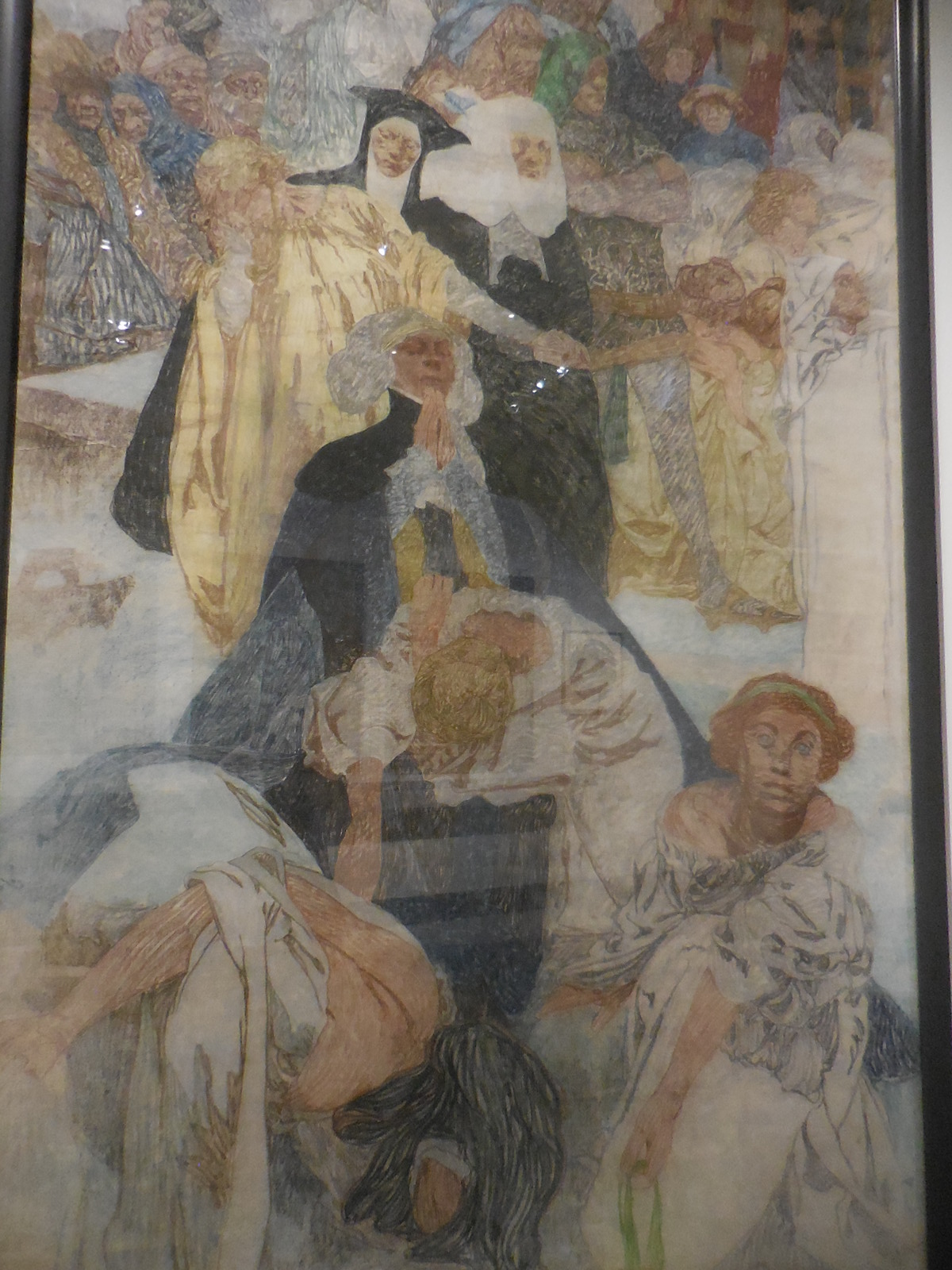
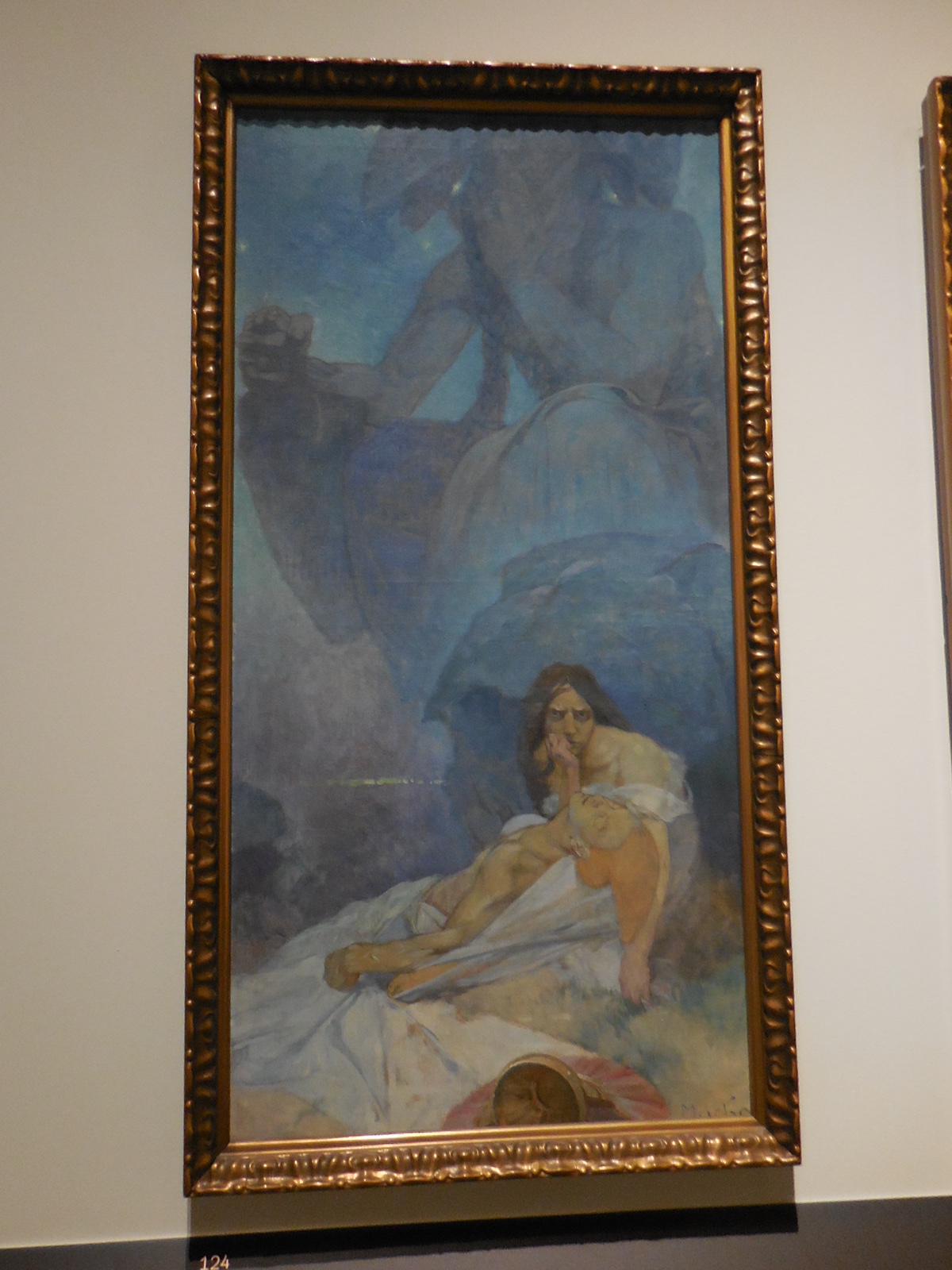
The next owner of the chateau was Duke Joseph Coloredo-Mansfeld. He rented it to legendary Art Nouveau artist Alphonse Mucha. While residing at Zbiroh, Mucha created some of his most important paintings, such as the 20 Slav Epic depictions that celebrate Slav identity.

View from the terrace at Zbiroh
The Mansfelds hung onto the chateau until the Nazis came and turned the place into a SS headquarters. At the end of the war, the Nazis hid their secret documents in the bottom of the chateau’s well – at 163 meters it was the deepest in Europe. Then they covered it with a metal plate at the 150-meter mark so that their documents would be difficult to retrieve.

View of Zbiroh from postcard
The Czechoslovak army took control after the war, in 1945. Zbiroh was taken off the map as a top-secret facility was placed there. Czechoslovakia gathered information about NATO armies. The soldiers did not take care of the chateau. They even used the unique well as an ashtray. The army didn’t leave until 2004, when a private company bought the chateau and Zbiroh was put back on the map. It was open to the public in 2005. Zbiroh’s history is also connected to the Teutonic Knights as the current owner is a member.

The tour was fascinating. In the first room I liked the collection of African masks on the wall. Remnants of some of the documents the Nazis had tried to destroy in the well were on display in another space. My favorite artifacts were the Madonna statues dotting the representative rooms, some hailing as far back as the Romanesque and Gothic eras. A 650-year old Madonna was the most valuable artifact in the chateau. The Christ child appeared jovial and curious while the Virgin Mary looked like a proud mother. In a Late Gothic Virgin Mary sculpture from the 15th century, the Christ Child was smiling, about to break out in laughter. The Virgin Mary donned an elegant, simple crown. An ivory statue of Saint Nickolas also caught my attention. It hailed from the 14th century.
I saw a masterfully carved 13th century Romanesque chest, too. Chamber tiles from the 15th century showed Saint George battling the dragon. I saw many copies of works by Leonardo DaVinci, including the Mona Lisa, a self-portrait of the painter and a portrait of Mary Magdalene. Even though they were reproductions, these paintings were very impressive. A life-size carving of Saint Vitus from the 18th century was another delight.
On the lavish dining room table gilded silverware hailed from the era of Empress Maria Theresa. The napkins were shaped in the form of a lily, a royal symbol. I also saw a detailed map of Bohemia from 1702. The Empire furnishings bought in the mid-19th century were ravishing, too.

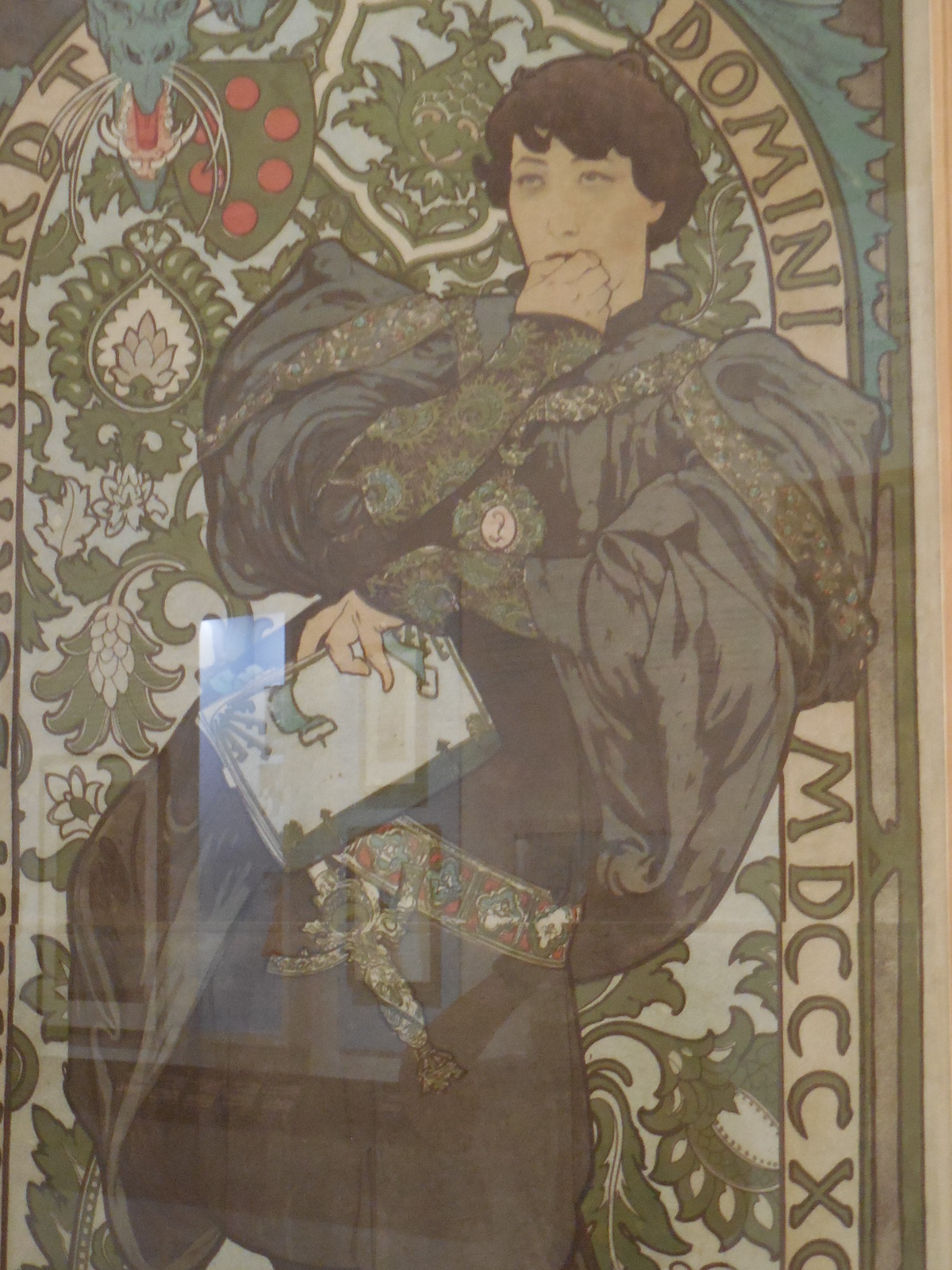
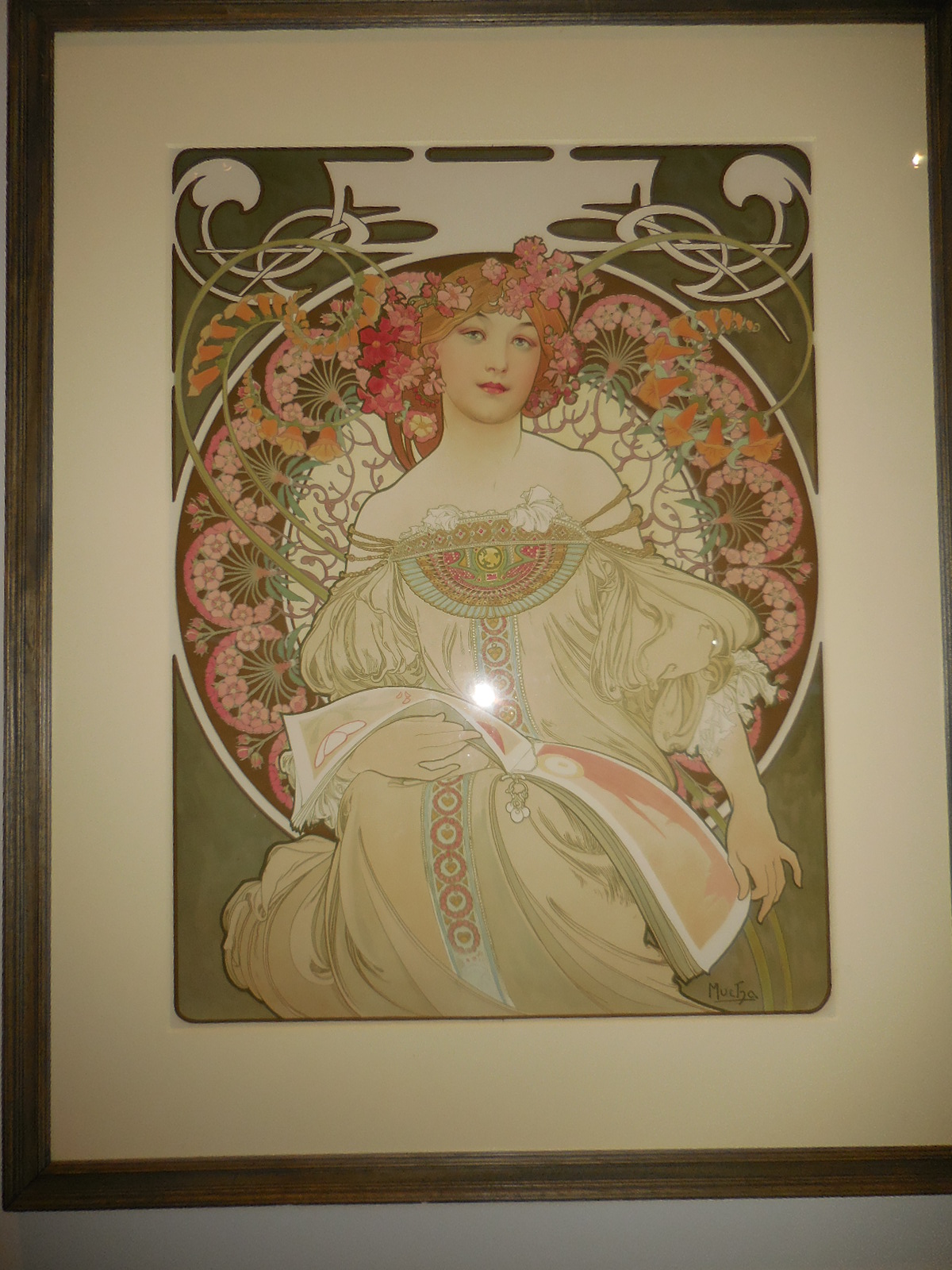
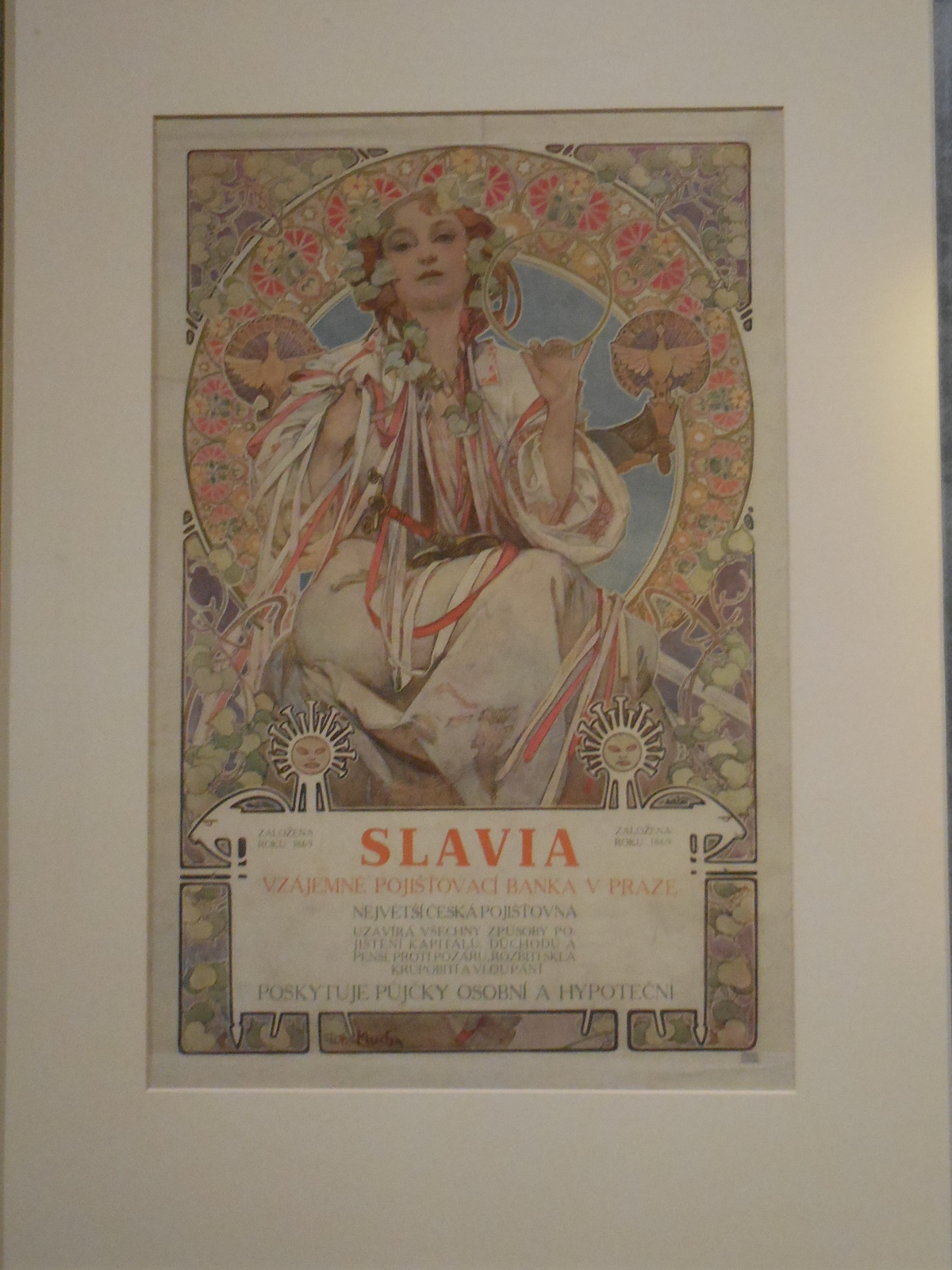
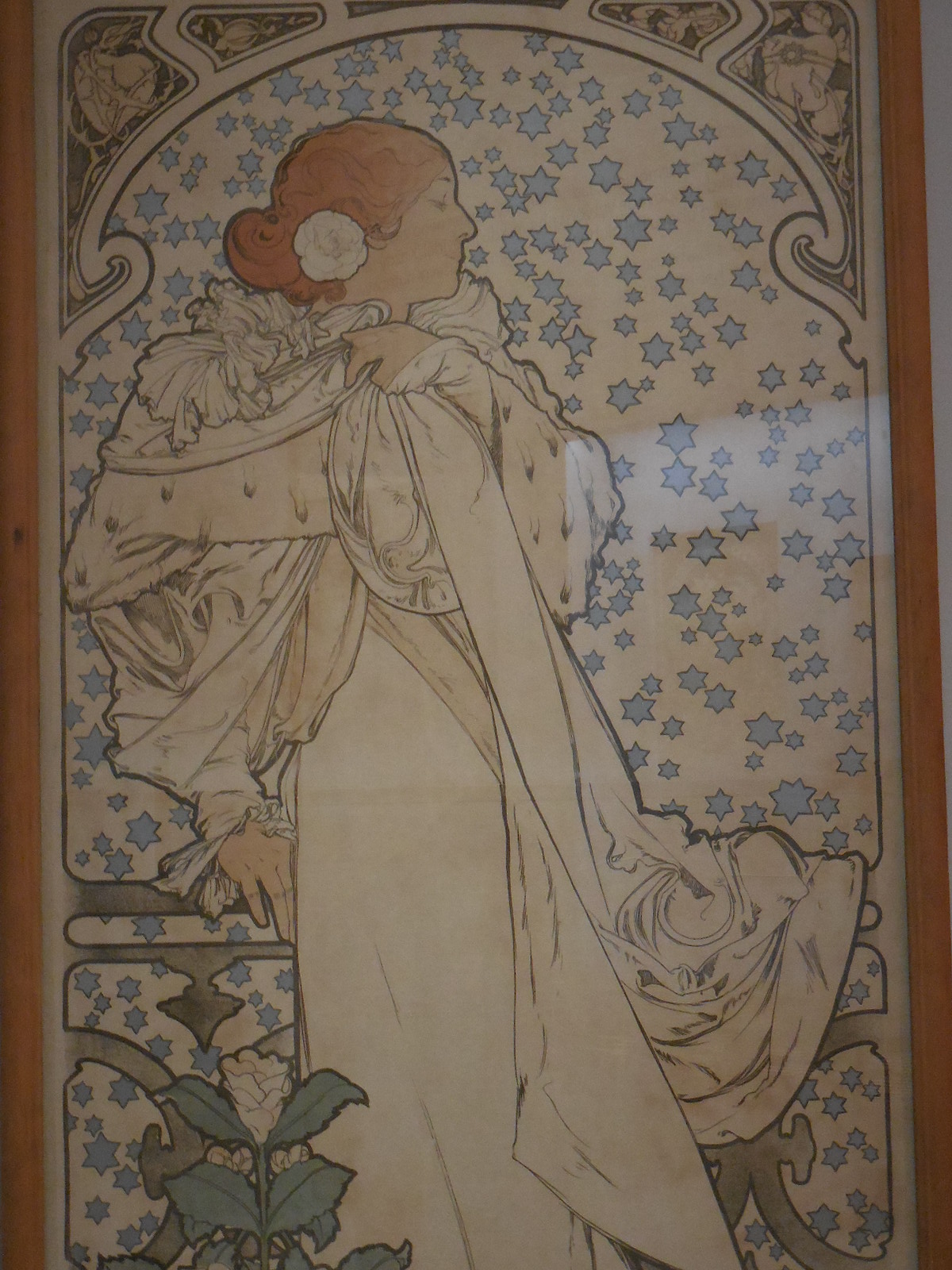
Alphonse Mucha created posters for actress Sarah Bernhardt and achieved worldwide acclaim. Photo taken at Mucha exhibition in Wallenstein Riding Stables, 2022.
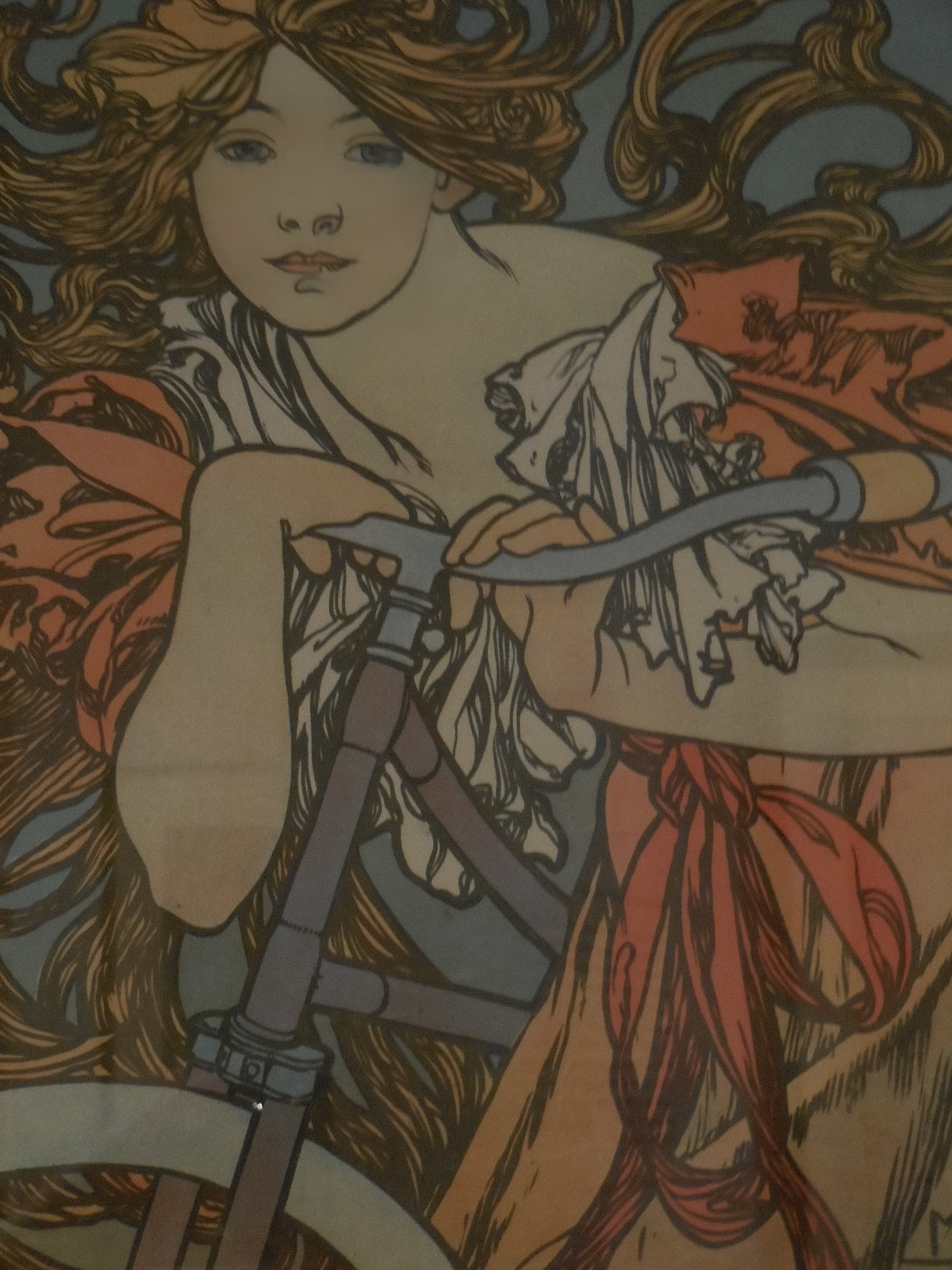
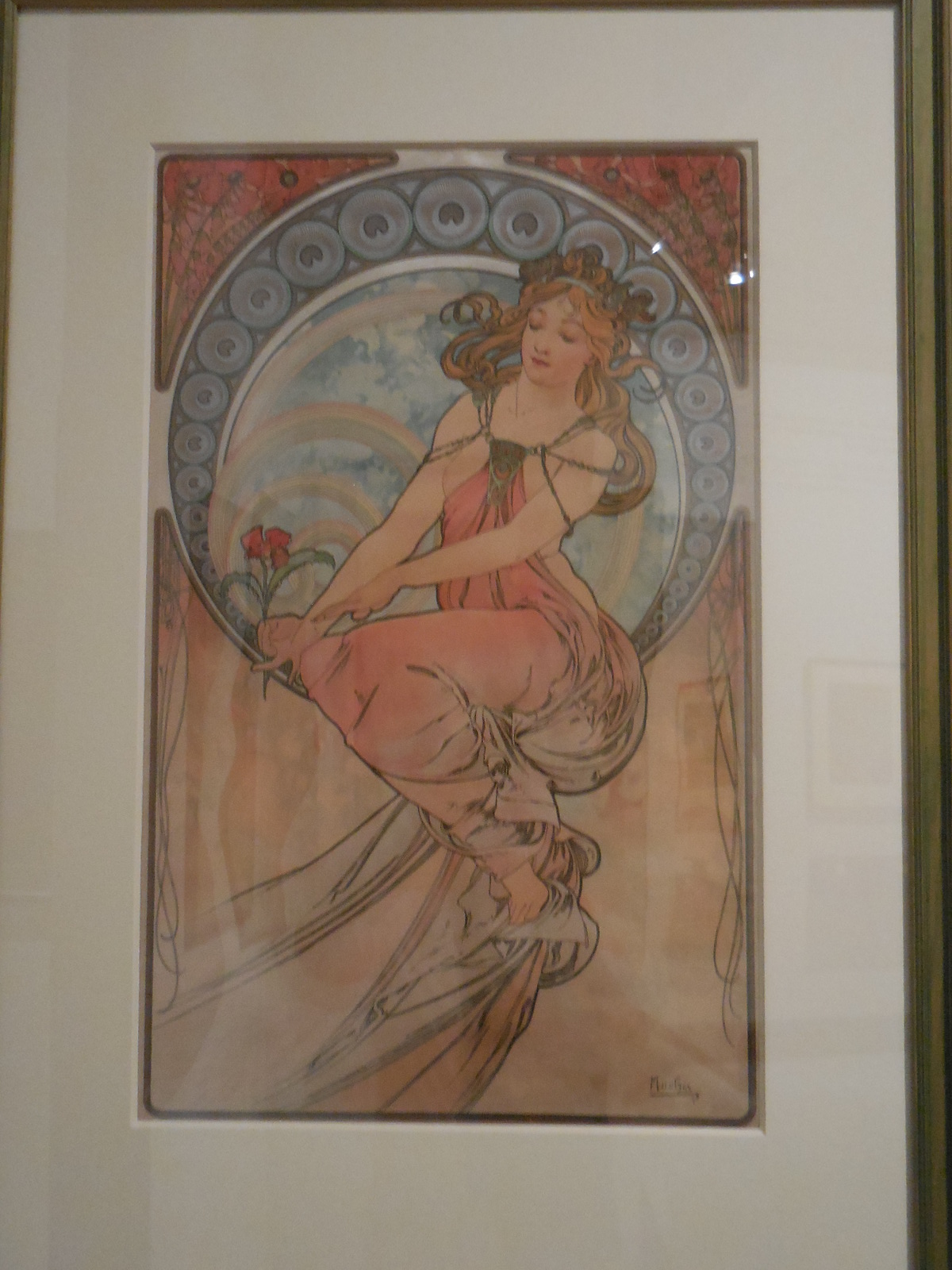
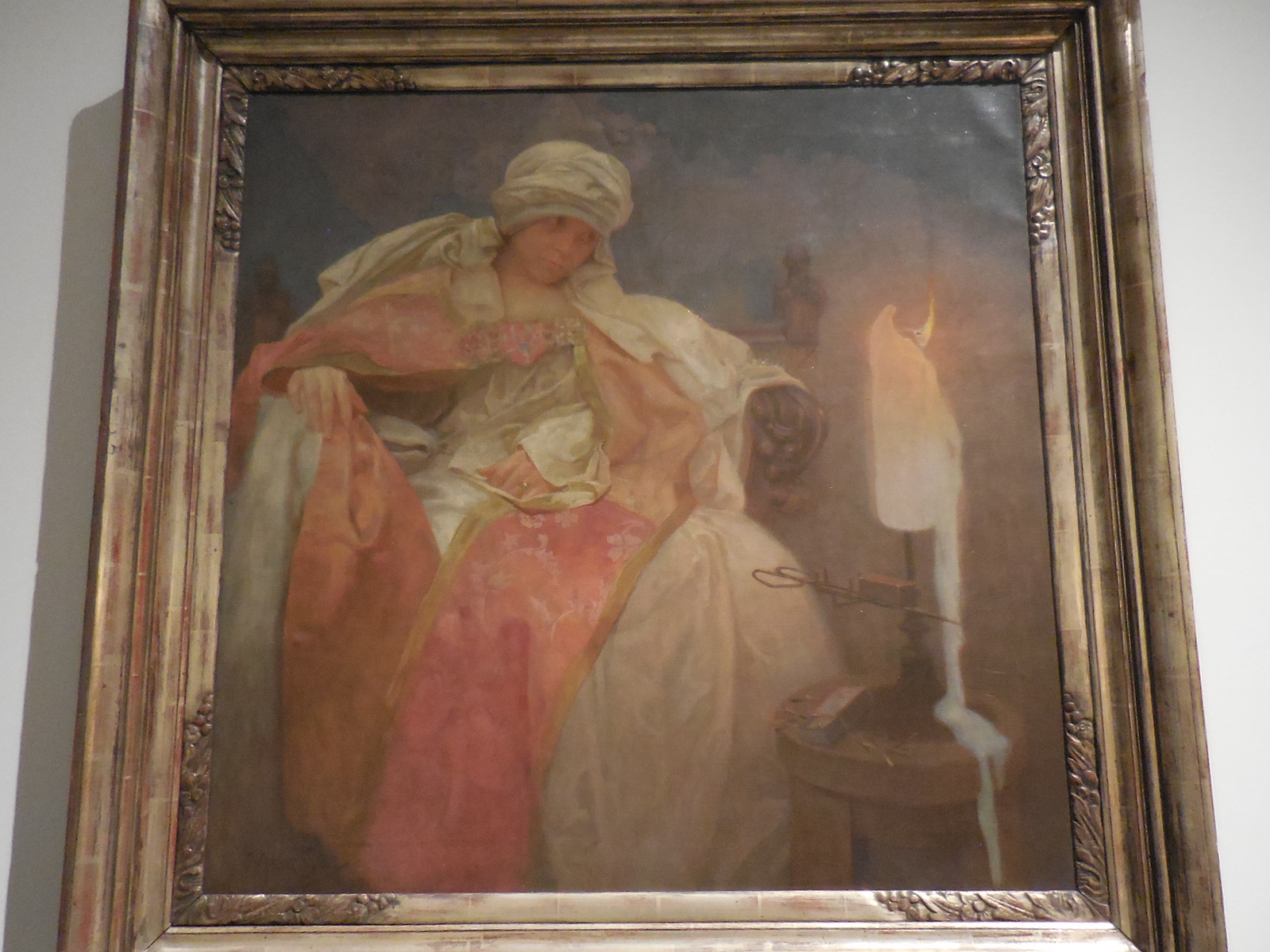
Mucha’s Rooms were another highlight. I had been a fan of Mucha’s Art Nouveau works for a long time. I had visited the Mucha Museum in Prague and only months before this visit, I had seen the comprehensive Mucha exhibition in the Wallenstein Riding Stables in Prague. In these spaces, I saw a portrait of Mucha featuring Masonic symbols because he had been a Mason. Also, Masonic medals owned by Mucha were on display. I was entranced by Mucha’s historical painting “Master John of Rokycany at the Council of Basel” from 1933. On one wall, Mucha’s students had painted female figures in their teacher’s style.

From Mucha’s Slav Epic paintings, photo taken at Mucha exhibition in Wallenstein Riding Stables, 2022.
The ballroom was the most beautiful space. This was once Mucha’s studio while the balcony had served as a dark room for his photographs. The large room was built in the second half of the 19th century. It featured a skylight with glazed glass and two elegant crystal chandeliers. I spotted Zbiroh Chateau behind what looked like blue mist in a painting by Mucha. The yellow, blue and red decorative wall painting enthralled me as well.
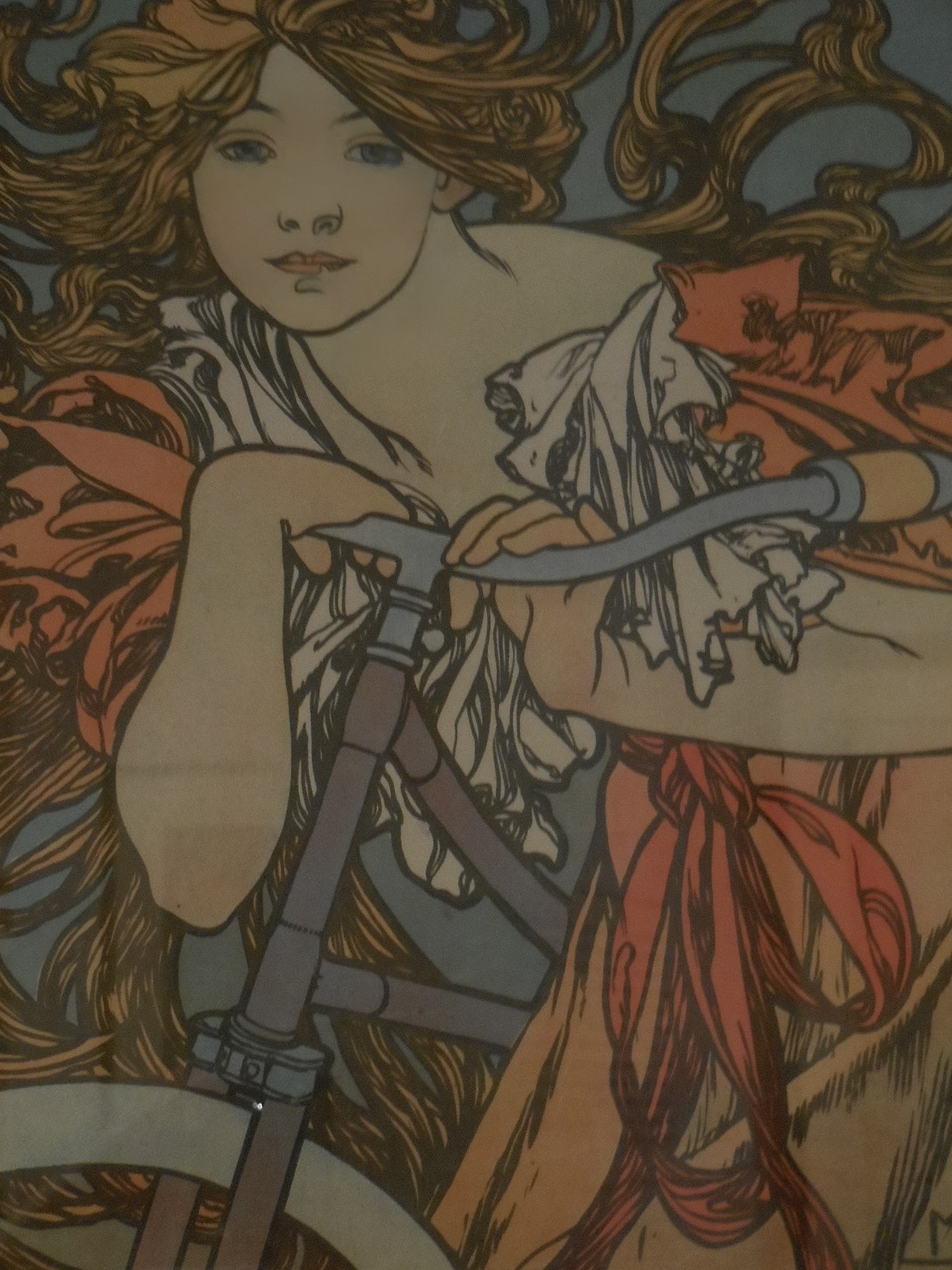
Another masterpiece by Alphonse Mucha, photo taken at Mucha exhibition at Wallenstein Riding Stables, Prague, 2022
Then we walked down a long hallway with Renaissance, Gothic and Baroque tapestries and armors of knights from various eras. As the tour ended, I was very glad I had finally discovered this gem. The history of the chateau was riveting, and the artifacts in the representative spaces were amazing.

It was time to get something to eat. In the parking lot, I noticed the beech trees that surrounded the chateau and listened to the sound of silence. It was so quiet and tranquil, such a relief from the hustle and bustle of daily life.
Tracy A. Burns is a writer, editor and proofreader in Prague.










 Tracy's Travels