2025 Travel Diary

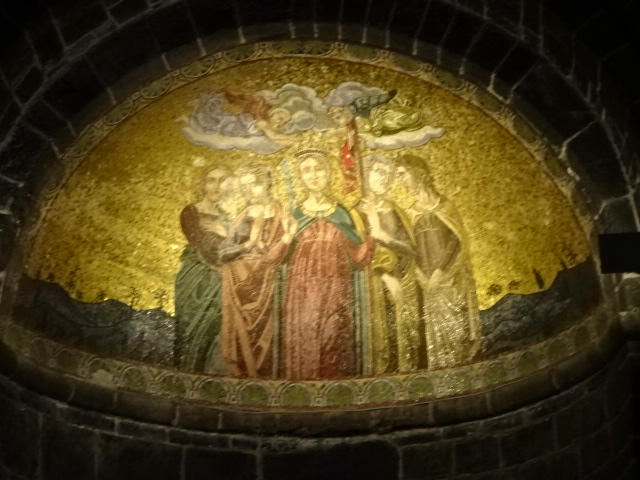
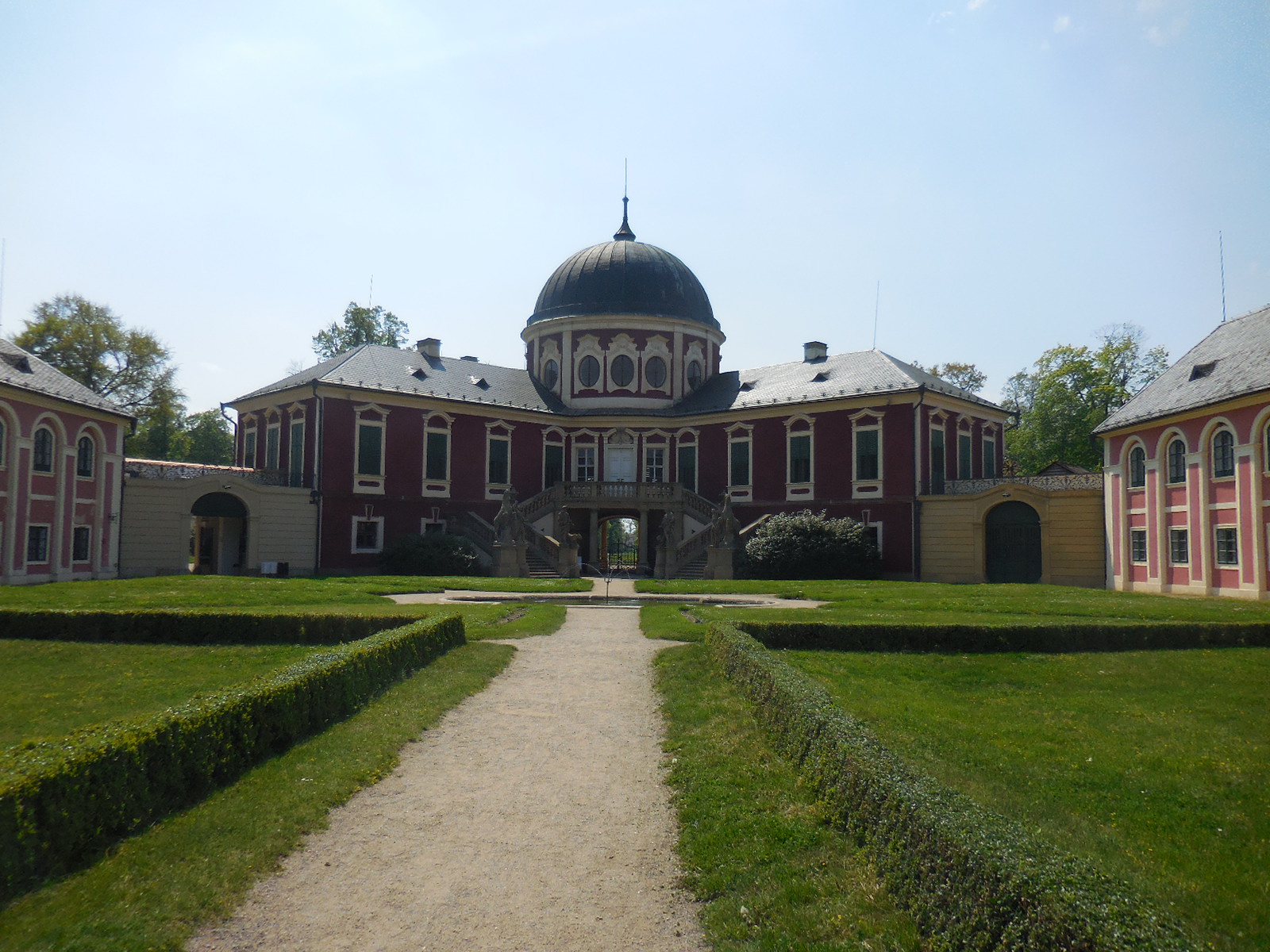
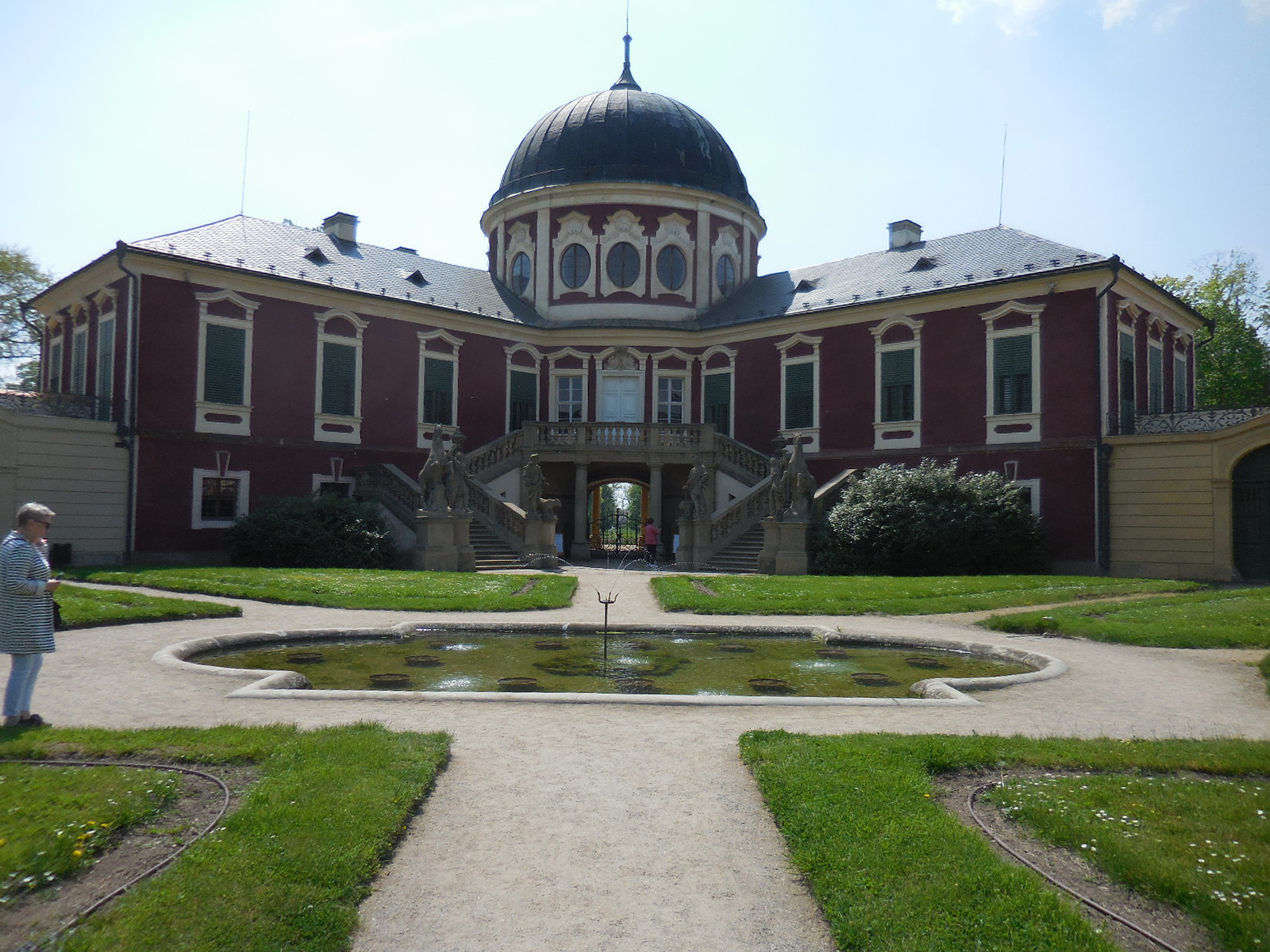
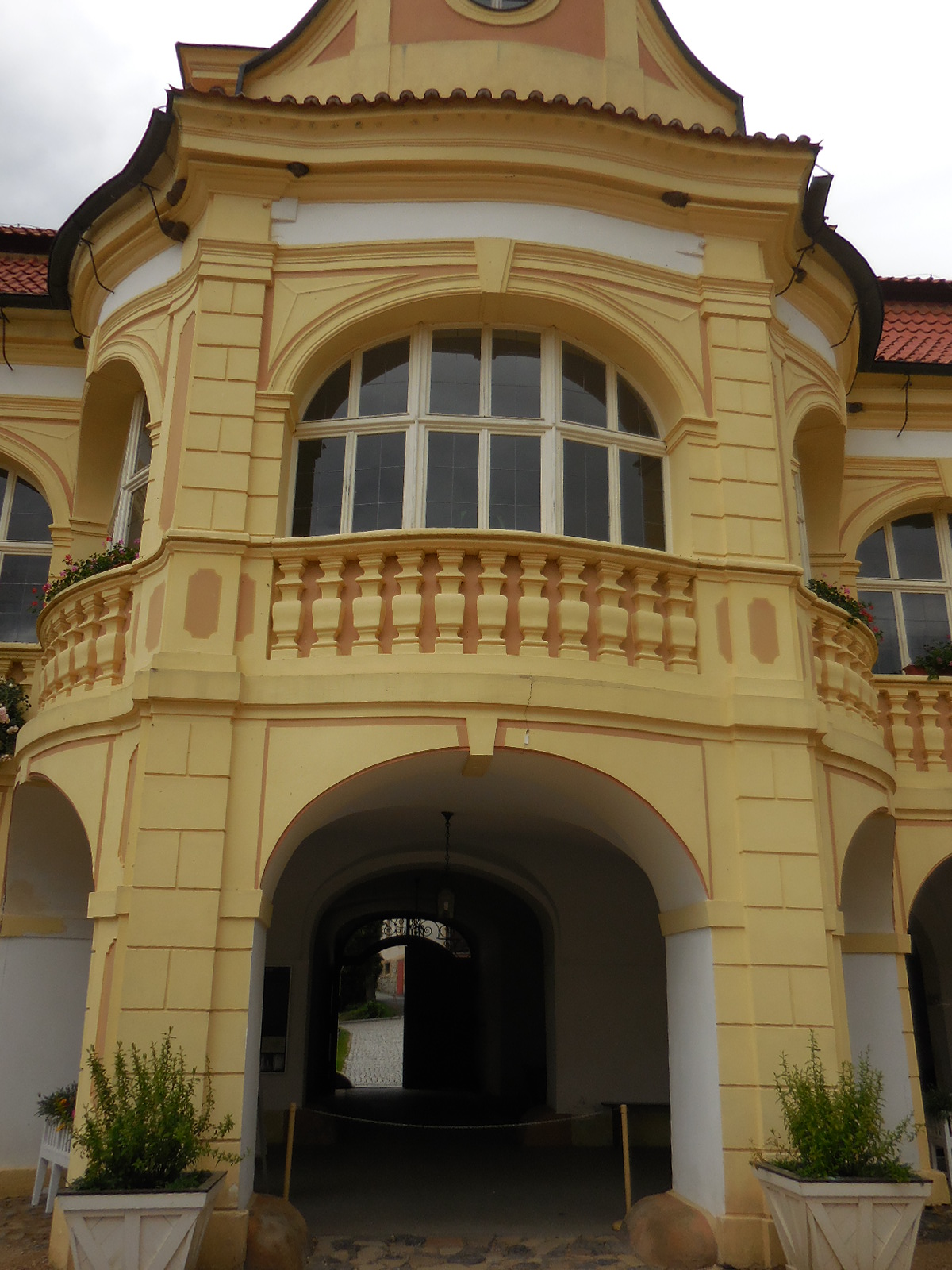
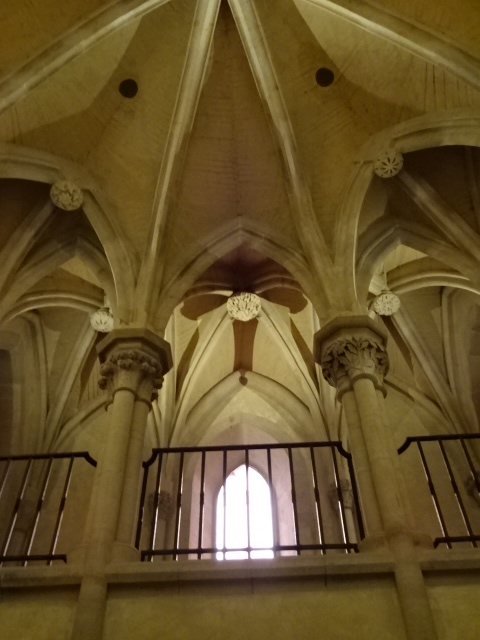
Horšovský Týn Castle and Chateau, Gothic chapel

This past year marked more day trips, some with friends and others with travel agencies. Of course, chateaus were high on my list, so I will start with those.
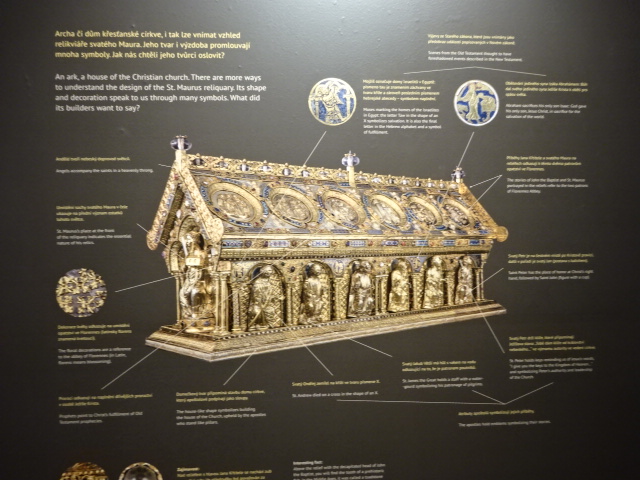
Bečov nad Teplou Castle and Chateau, Reliquary of Saint Maurus

At Bečov nad Teplou Castle and Chateau, the group admired the reliquary of Saint Maurus, one of the most precious objects in the country. The remarkable Romanesque artifact contained the remains of saints and hailed from 1225 to 1230. Its exterior featured 12 reliefs, 14 statuettes in silver, about 200 semi-precious and precious stones, gems and other masterful goldsmith works. During World War II it was hidden under the chapel floor. The reliquary was only discovered again in the 1980s. For a long time its location was a mindboggling mystery.
Stránov Chateau
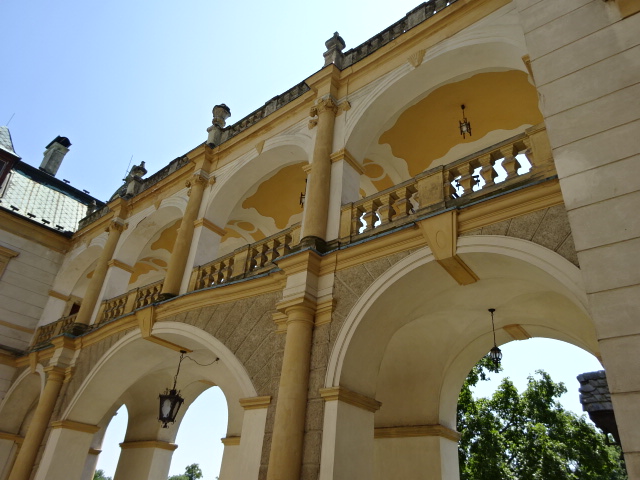
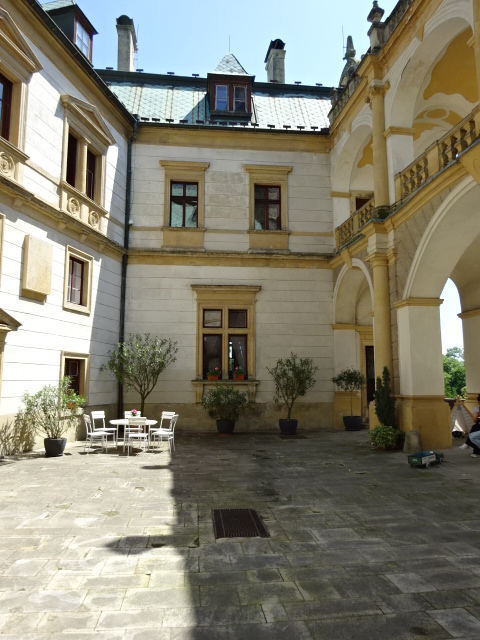
Stránov Chateau

With my best friend I visited Stránov Chateau for the first time. The Neo-Renaissance wonder featured a Gothic tower and splendid arcades in a courtyard punctuated by a beautiful fountain. The Šimonek family had lived there during the First Republic, which was the chateau’s heyday, as well as in later years, until the Communists kicked them out during 1950. They were forced to leave with only several suitcases. While there wasn’t much original furniture, the descendants had commissioned interiors that resembled those from the First Republic’s days of democratic Czechoslovakia. Seeing the chateau for the first time was exciting, to say the least.
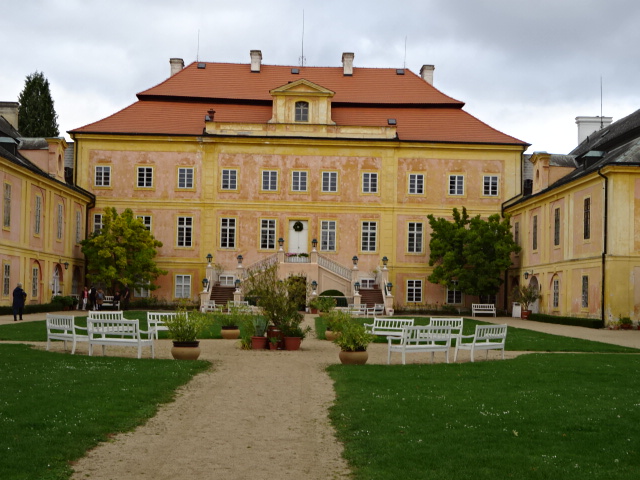
Krásný Dvůr Chateau
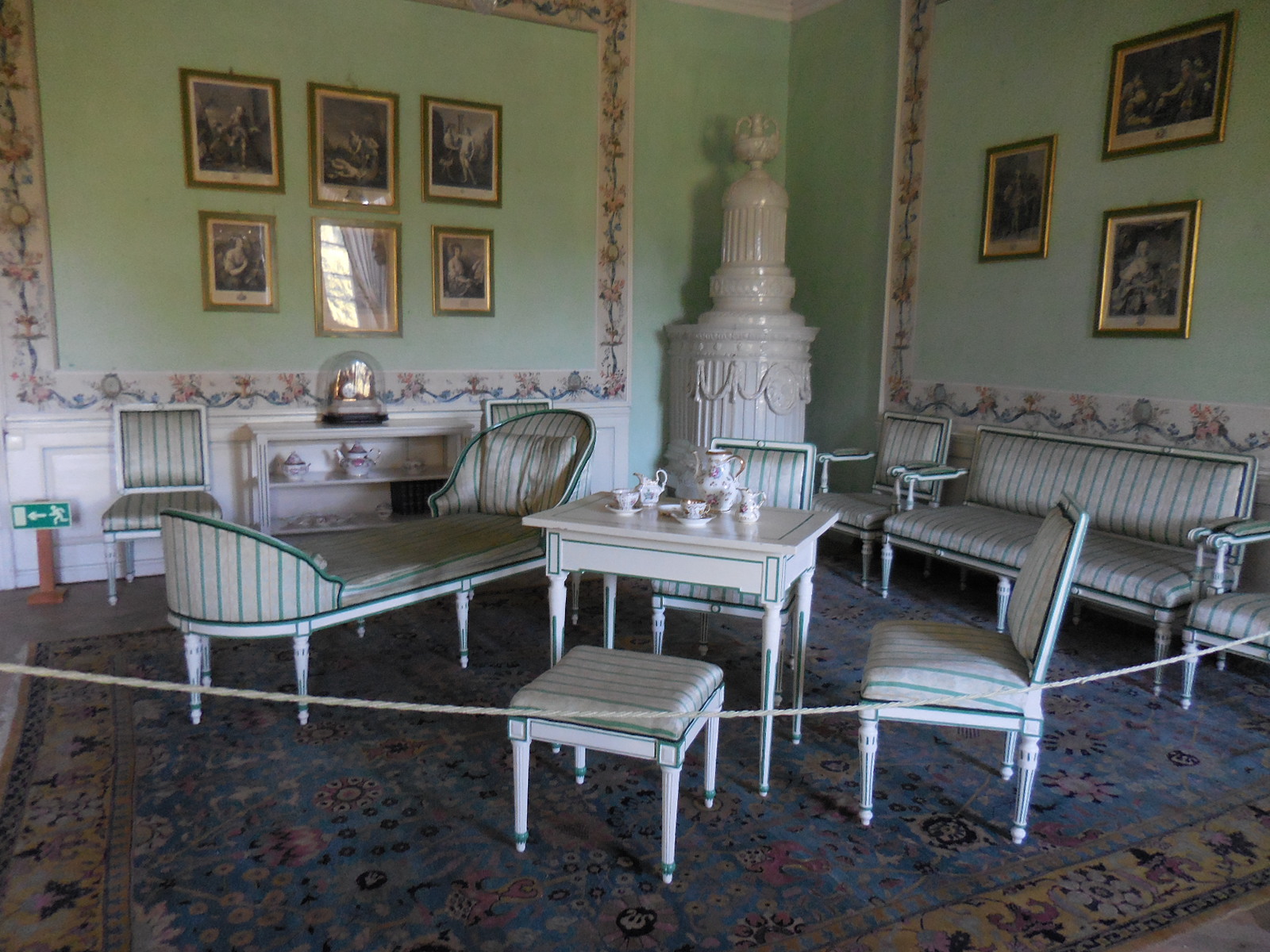
Krásný Dvůr Chateau, interior

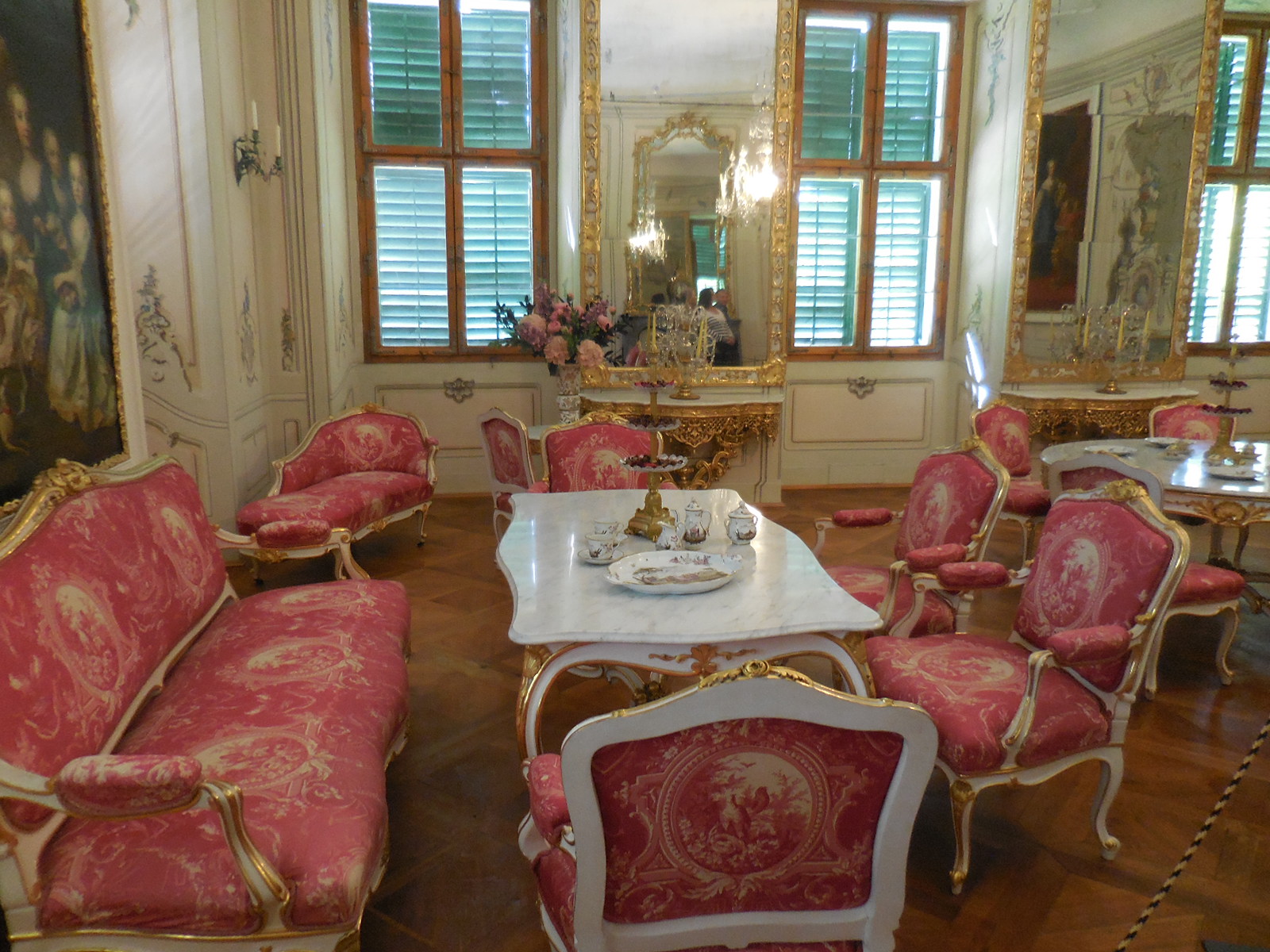
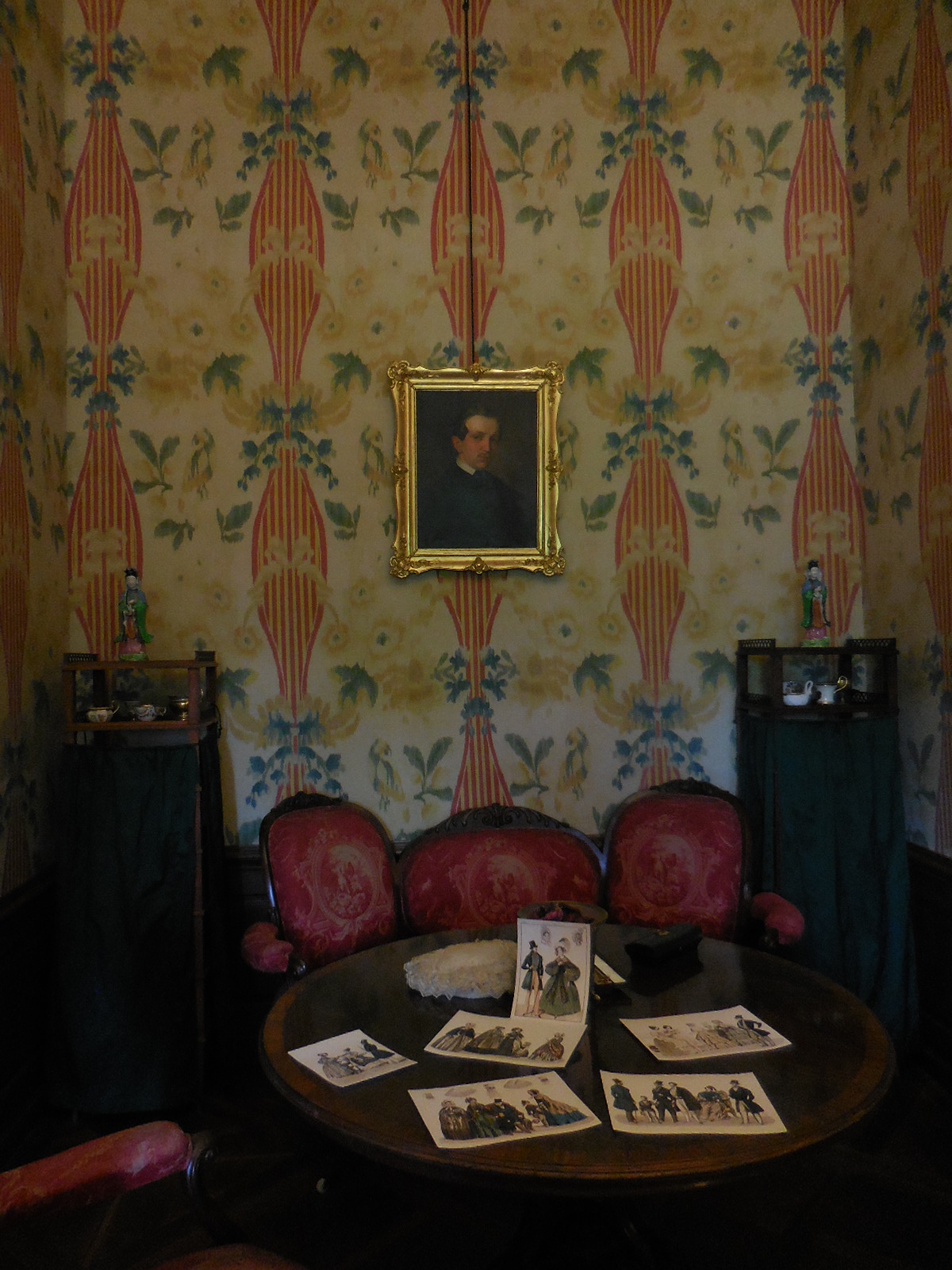
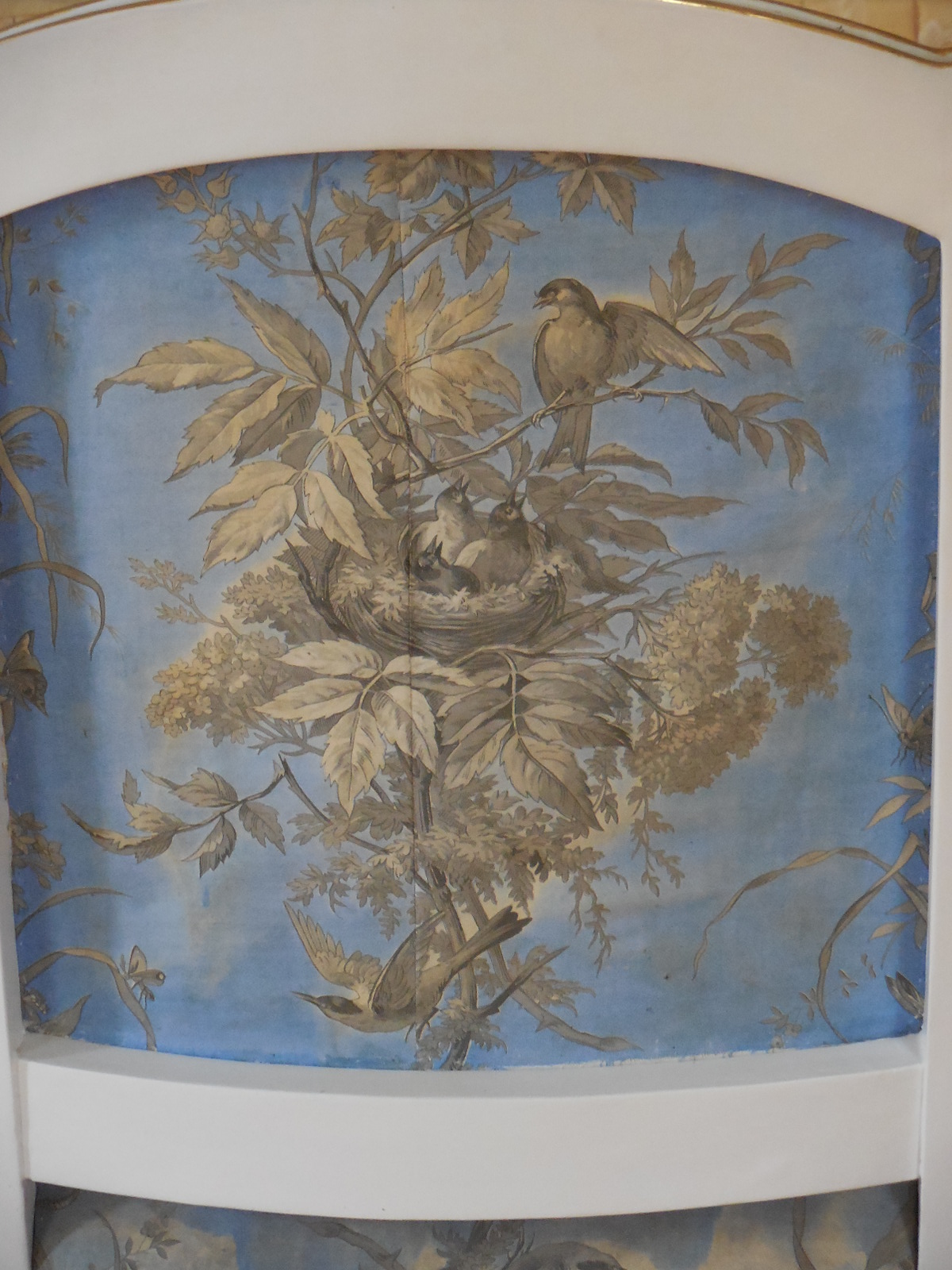
The luxury of the 18th and 19th century nobility was evident at Krásný Dvůr Chateau, partially under reconstruction when we were there on this occasion. The exquisite furnishings from 18th and 19th century periods punctuated the visit. Unique historic portraits of dogs and horses caught my attention as the horses were rendered without tails, for instance. The Meissen porcelain, gilded clocks, ancient jewel chests, decorative wall painting and various intriguing canvases in the chateau gallery all exuded the grandeur of old times. Even the upholstery of the chairs was admirable. The Černín family had this chateau designed by well-known architect František Maxmilián Kaňka from 1720 to 1724. The Černín dynasty would hold onto the chateau until World War II.
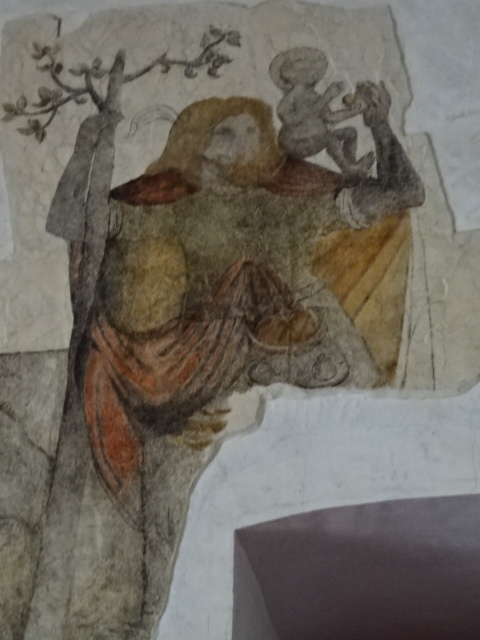
Horšovský Týn Castle and Chateau, interior
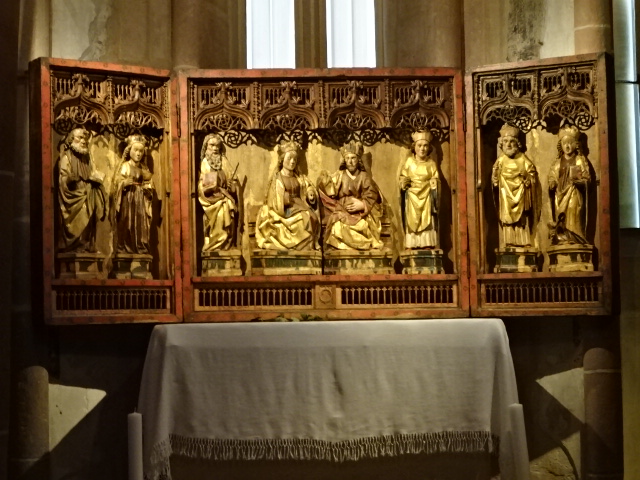
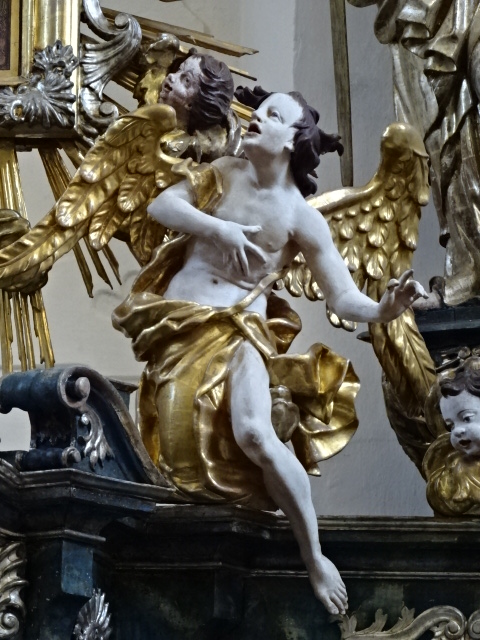
Horšovský Týn Castle and Chateau, Gothic chapel, main altarpiece

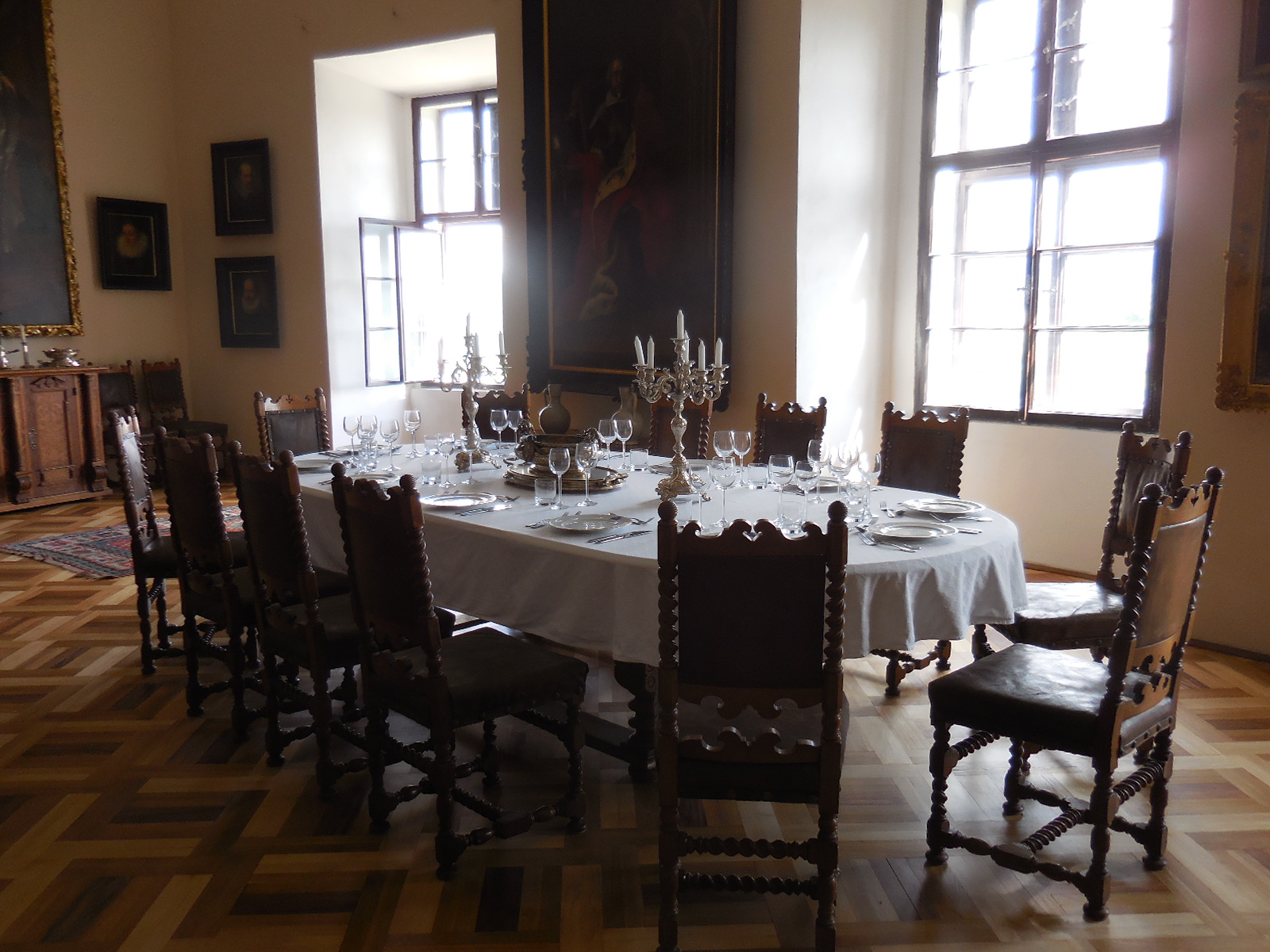
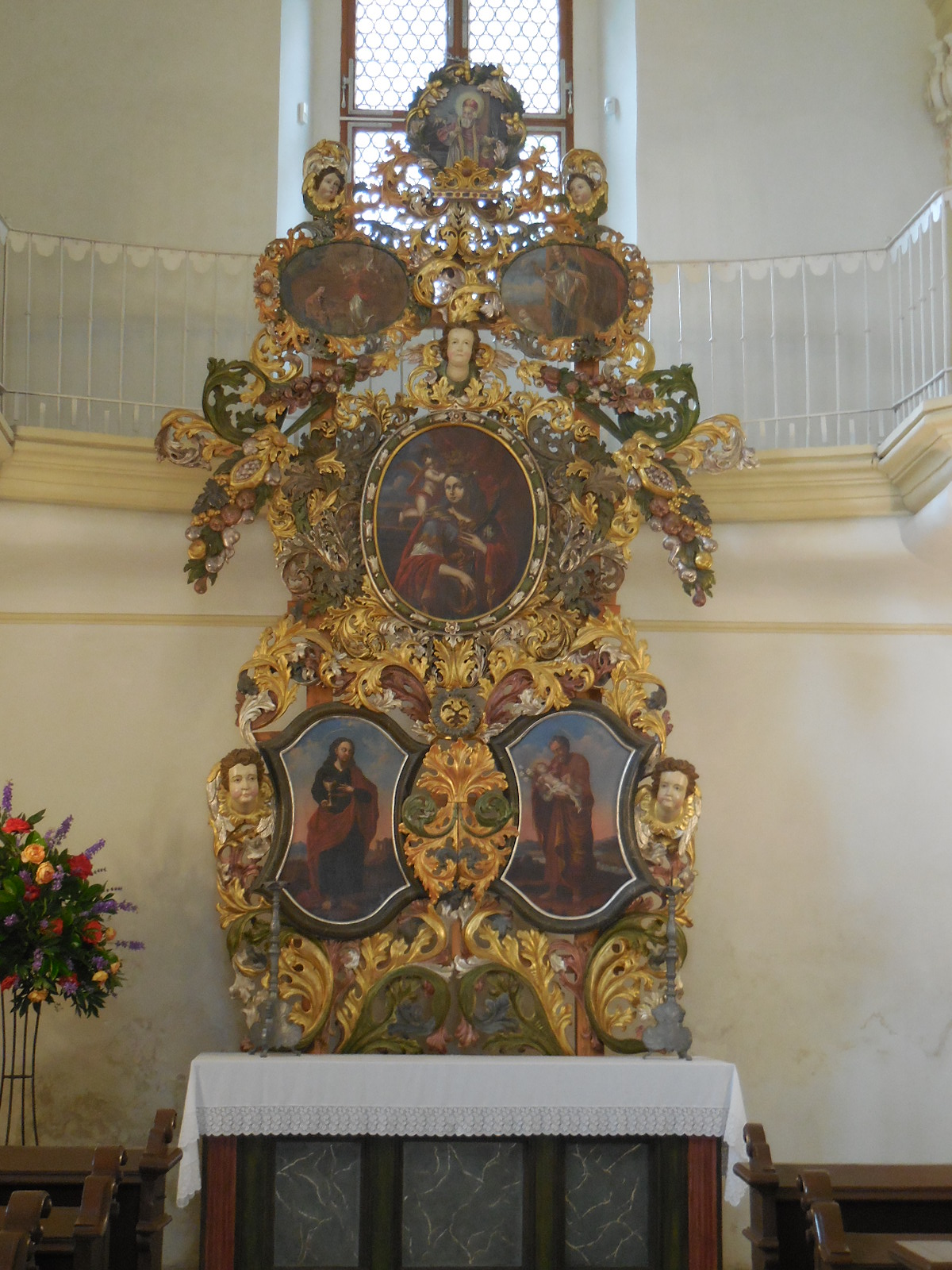
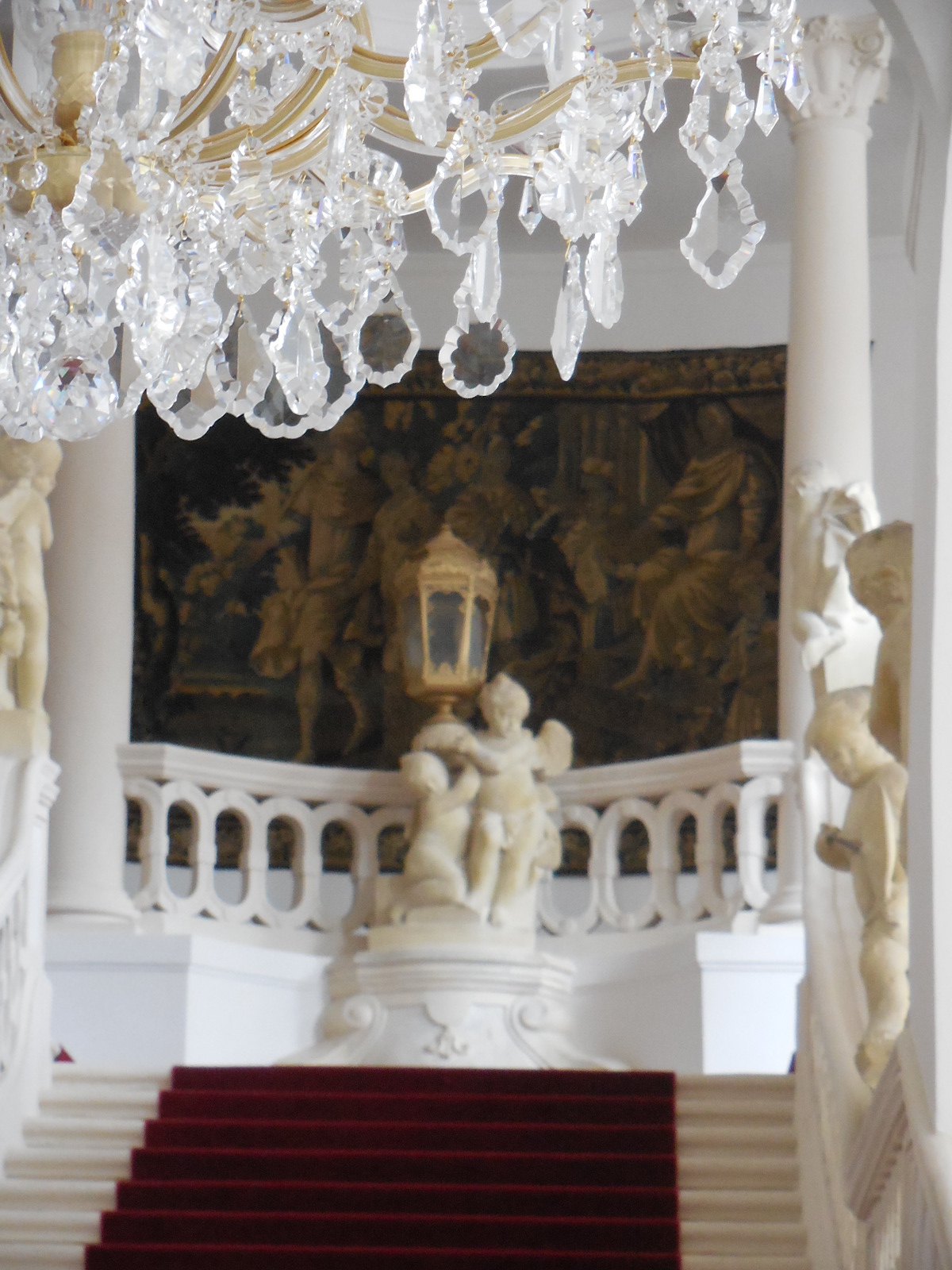
Horšovský Týn Castle and Chateau offered numerous tours. This time I went with a travel agency on one tour; in the past I had been there with my best friend on both the castle and chateau main tours. Once again, I was most impressed with the early Gothic chapel, its stunning wall painting and magnificent altarpiece. The early Gothic arch welcoming visitors to the chapel was a splendid architectural specimen. I saw much intriguing furniture from the Renaissance. A cassette ceiling hailed from the 16th century, and a superb tapestry dated from that century as well. Paintings from the Venetian School and splendid wall painting decorated another space. The Dancing Hall featured Rococo painting and a unique piano. In the Small Dining Room, I was surprised to see Edison light bulbs from 1906. The library included 15,000 volumes.
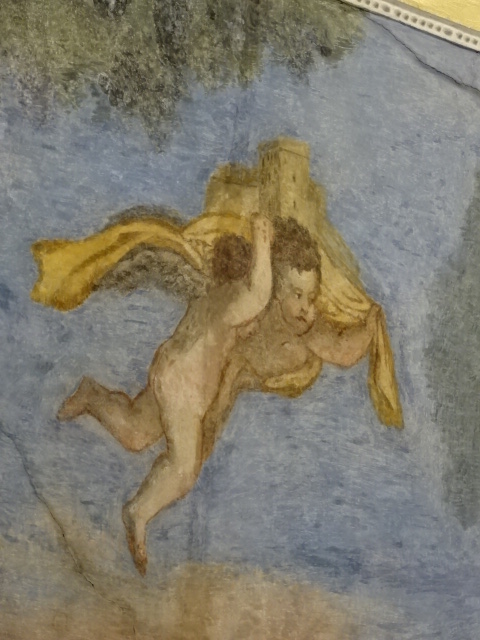
Doudleby Chateau
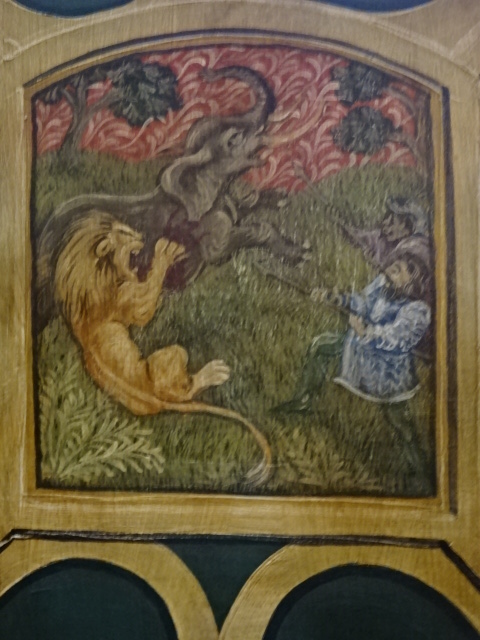
Doudleby Chateau
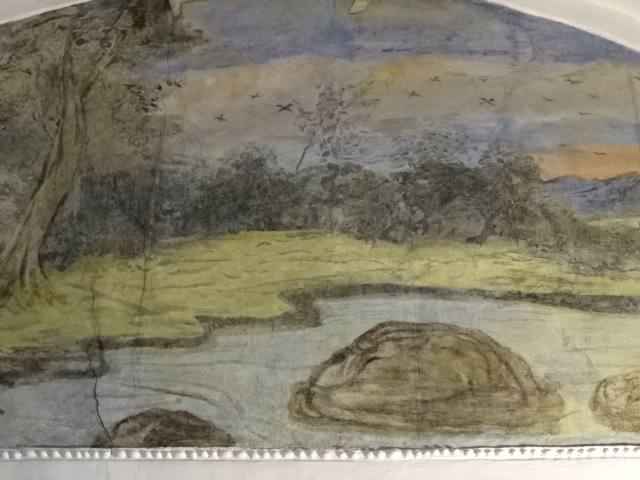
Doudleby Chateau

My good friend and I traveled with a travel agency to Častolovice and Doudleby chateaus, places to which I yearned to return for some years. Doudleby Chateau had undergone main reconstruction. It was stunning with its early Baroque wall and ceiling frescoes. Some were mythological, others religious and yet others symbolic. The lunettes of emblems with French writing were spectacular, too. I saw a parrot’s nest, flowers in a circle and a boat with a partially submerged oar, for instance. Finished in 1590, the chateau’s exterior includes unique sgraffito, open arcades and Tuscan columns. I was very impressed.
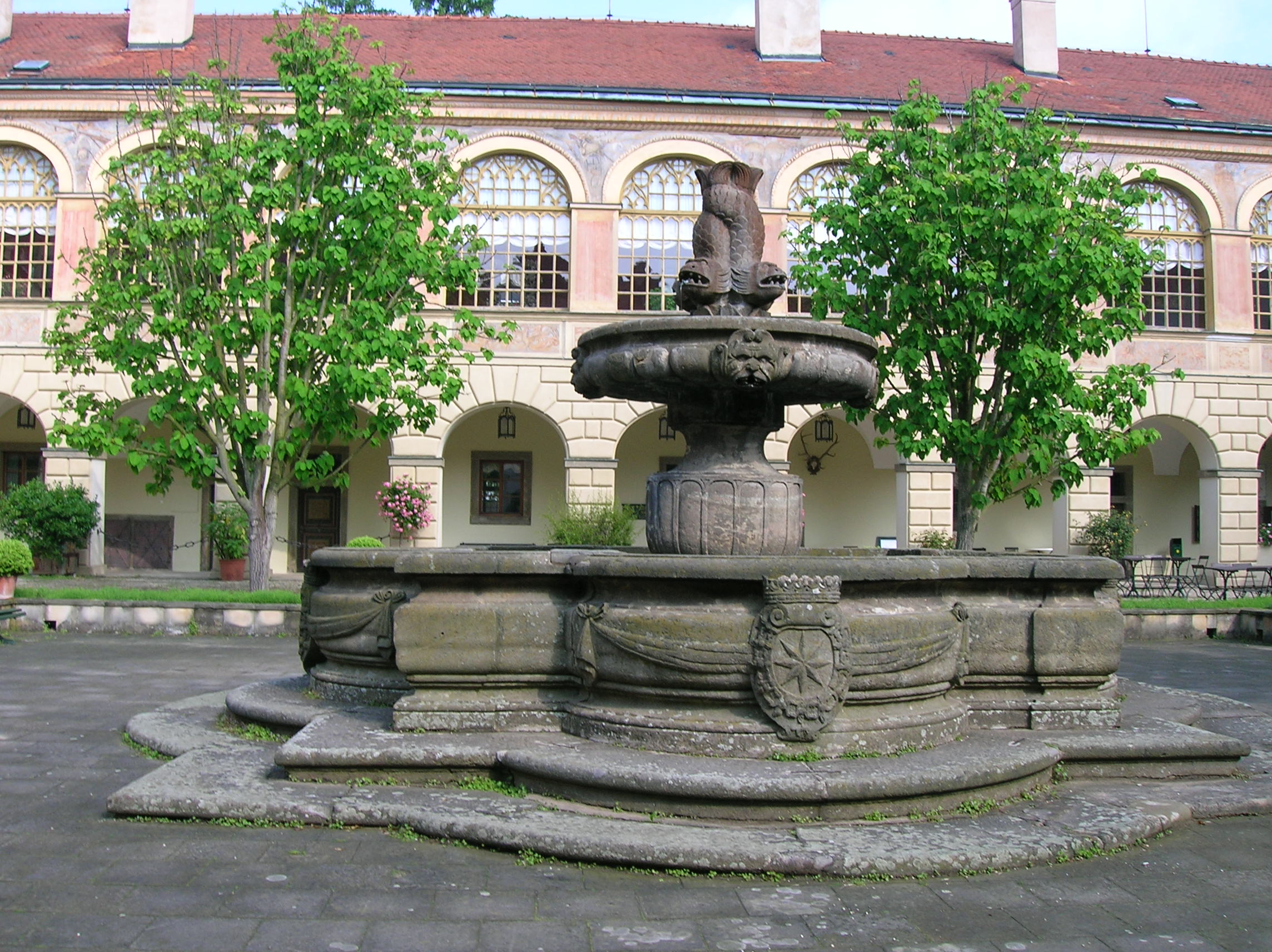
Elegant exterior of Častolovice Chateau
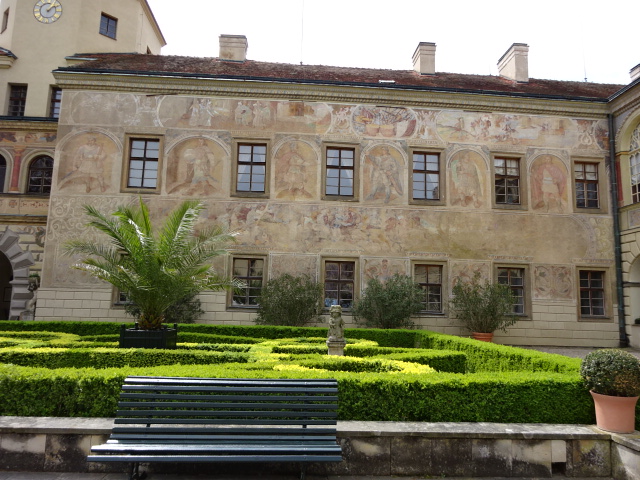
Častolovice Chateau exterior
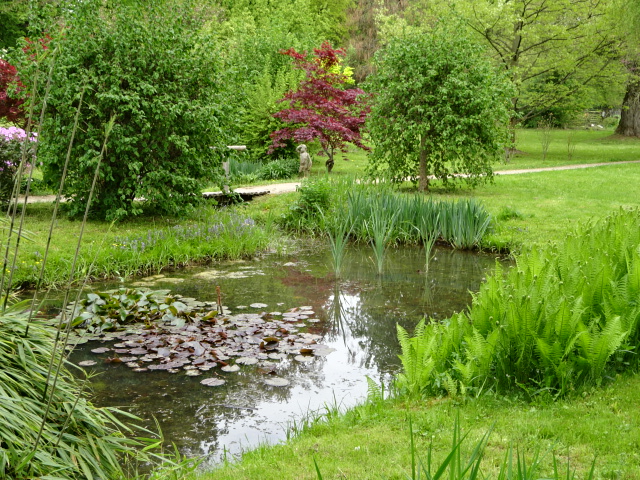
The fantastic park at Častolovice Chateau

Častolovice hailed from the 13th century and boasted an extensive English park, one of the most beautiful, in my opinion. Furnishings hailed from Renaissance, Baroque, Empire and Biedermeier periods. A Renaissance cassette ceiling dated back to 1600. In the vast Knights’ Hall, I admired paintings of 24 scenes from the Old Testament. The collection of portraits showing Czech rulers was extremely impressive, too. The Renaissance arcades and distinctive fountain plus aviaries outside were noteworthy as well. There was a small zoo, but I saw an irate turkey coming my way and decided not to pay admission. The park was punctuated by peacocks and other animals as well as ponds and fantastic flora, among other attributes.
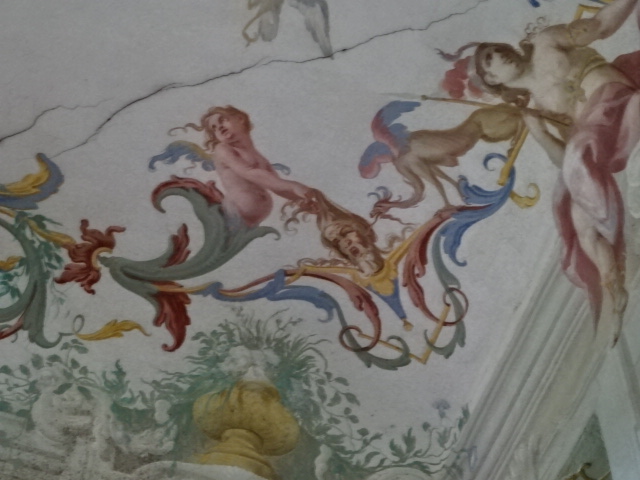
Jaroměříce Chateau interior
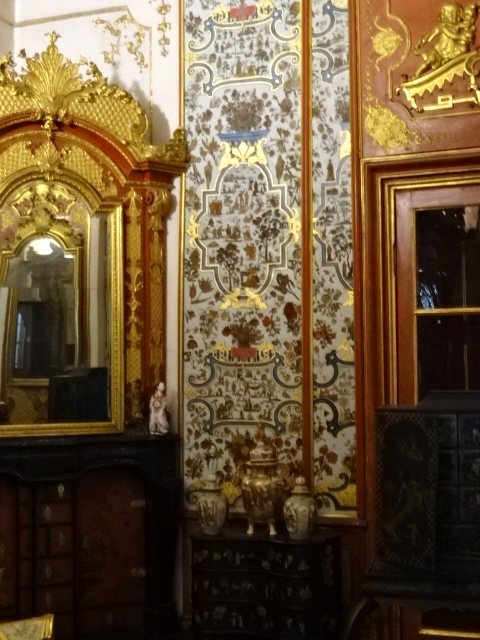
Interior of Jaroměřice Chateau
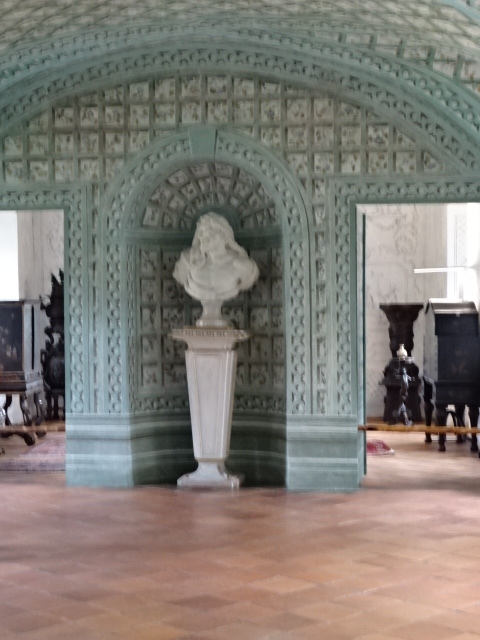
Jaroměřice Chateau

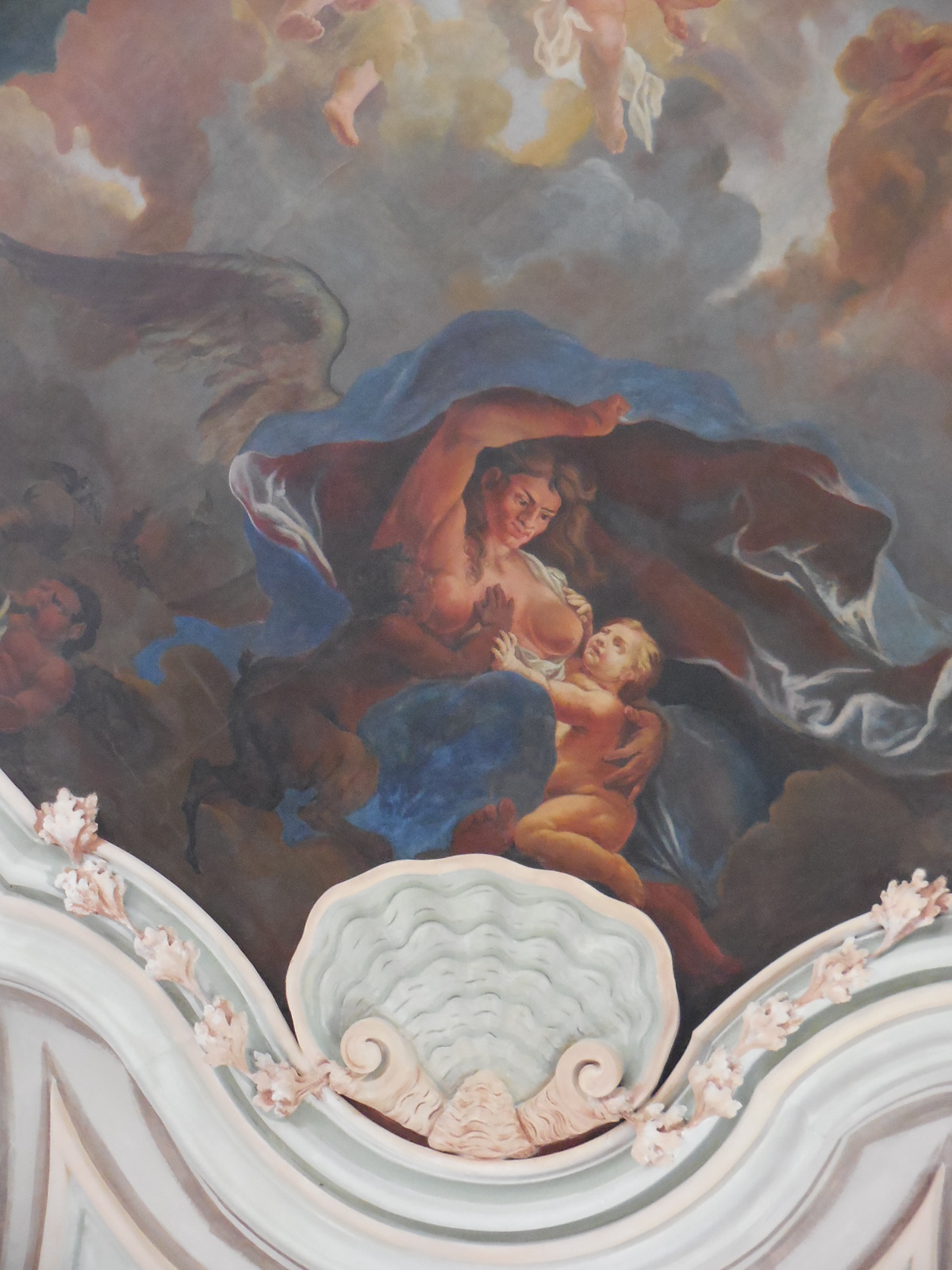
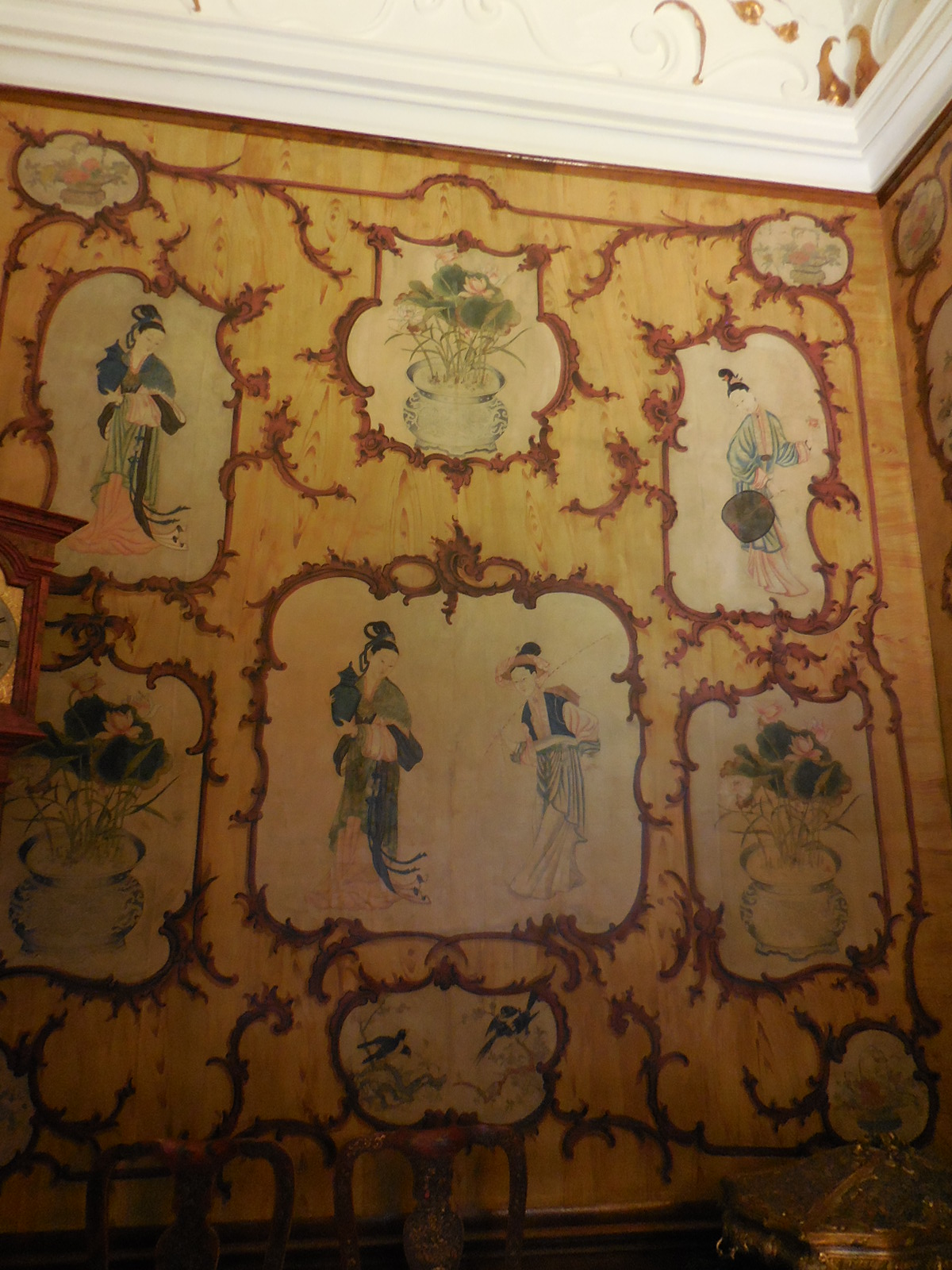
With a travel agency I made a very memorable trip to Jaroměřice nad Rokytnou Chateau, the biggest Baroque chateau in the country. I hadn’t been there since the late 1990s. The Ancestors’ Hall amazed with a fabulous frescoed ceiling and masterfully carved wood paneling. The ceiling and wall painting in the Ballroom was just as exquisite. The Chinese Cabinet also made a great impression.
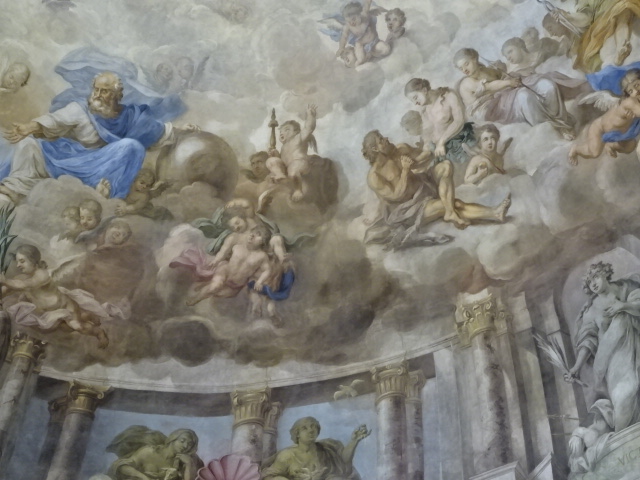
Church of Saint Markéta, Jaroměřice
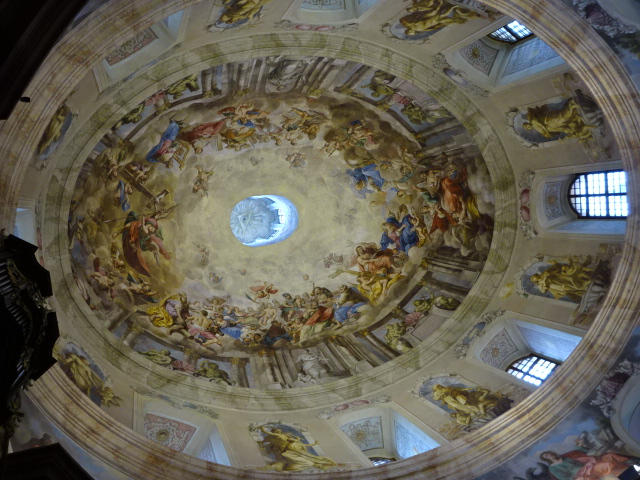
Cupola of Church of Saint Markéta
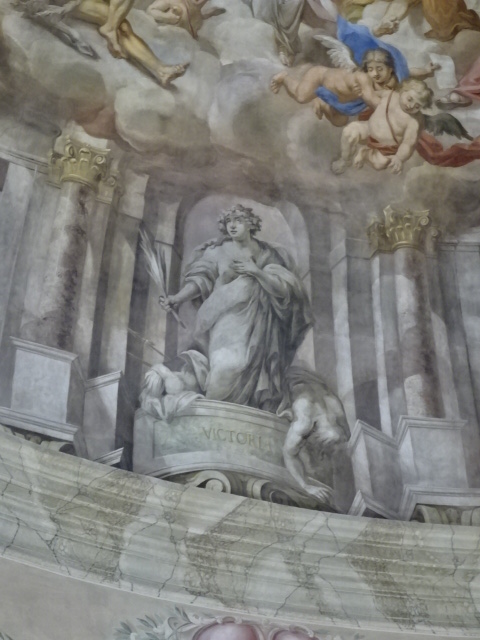
Decoration on walls of Church of Saint Markéta

Yet that was not all there was to Jaroměřice. The town had much more to offer. Nearby was the Church of Saint Markéta, measuring 450 m2 with a splendid frescoed ceiling. Pictures of the Evangelists and Roman gods decorated the walls. The main altar, celebrating Saint Markéta and the creation of light, did not disappoint, either. Our guide even played for us the impressive historic organ.
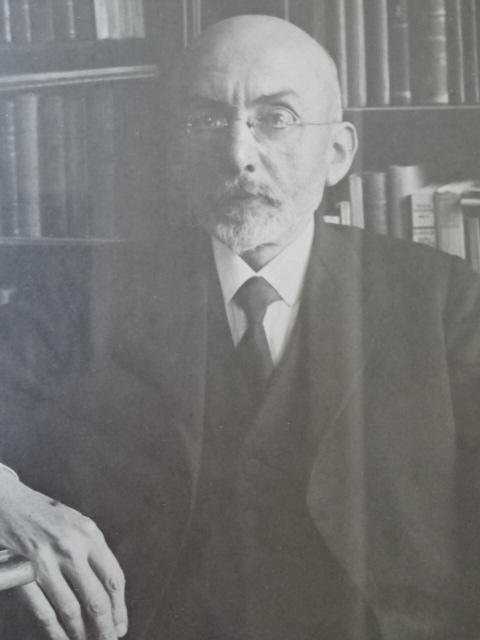
Otakar Březina
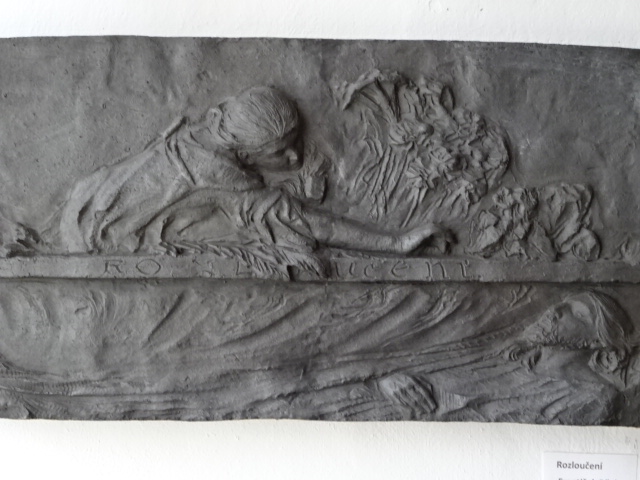
Museum of Otakar Březina, art by František Bílek
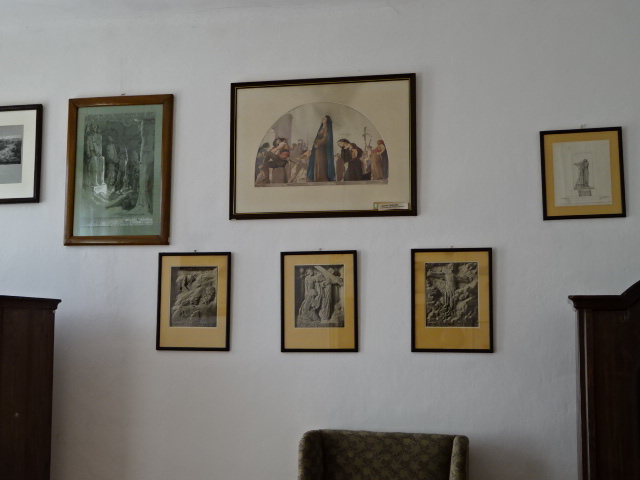
Museum of Otakar Březina

The Museum of Otakar Březina was another highlight of Jaroměřice. Březina had been a poet who was in the running for the Nobel Prize eight times. In the apartment where Březina had lived from 1913 until his death in 1929, I saw not only editions of his many books and childhood photos but also fascinating works of art by his close friend František Bílek, whose villas I had visited in Prague and in south Bohemia. Březina had promoted democracy as he had developed steadfast friendships with Czech writer Karel Čapek and President of the First Republic Tomáš G. Masaryk.
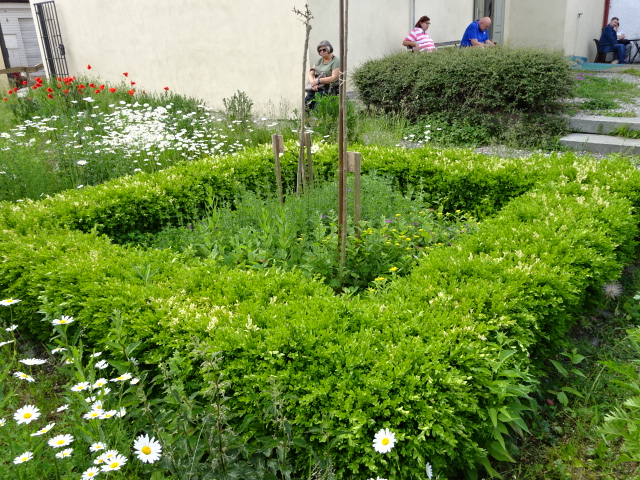
Garden of Symbols, Museum of Otakar Březina
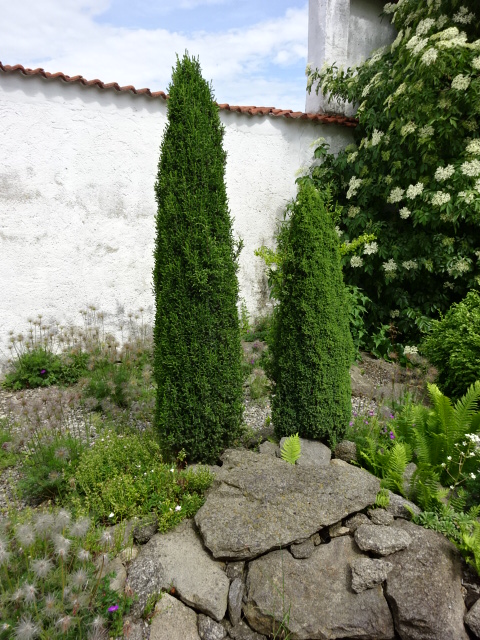
Garden at Museum of Otakar Březina
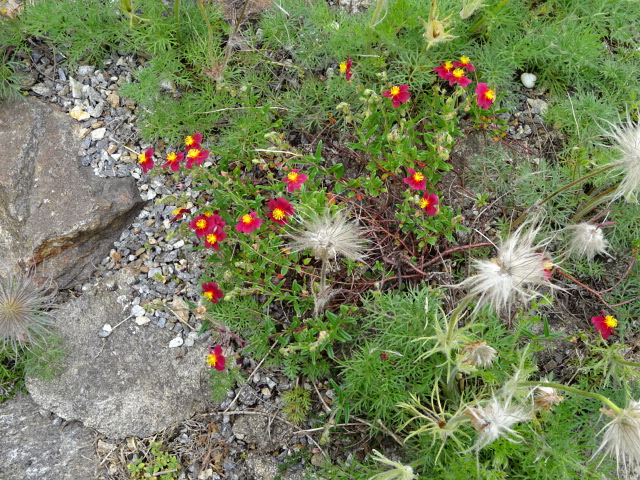
Garden outside Museum of Otakar Březina

The garden outside the home was unique and symbolic just like Březina’s poetry. Parts of the garden were dedicated to Karel Čapek, Bílek and the most influential owner of Jaroměřice Chateau, Jan Adam Questenberk. Many flowers, plants and small trees graced the well-kept garden. One section of this Garden of Symbols represented immortality because Březina had believed that death was not an end but rather a new beginning.
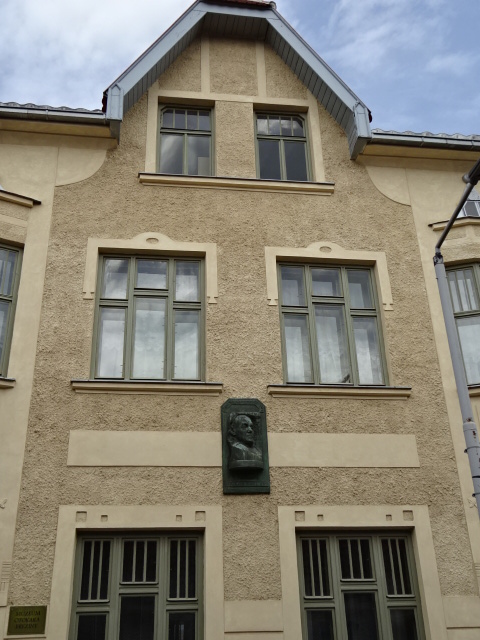
Museum of Otakar Březina
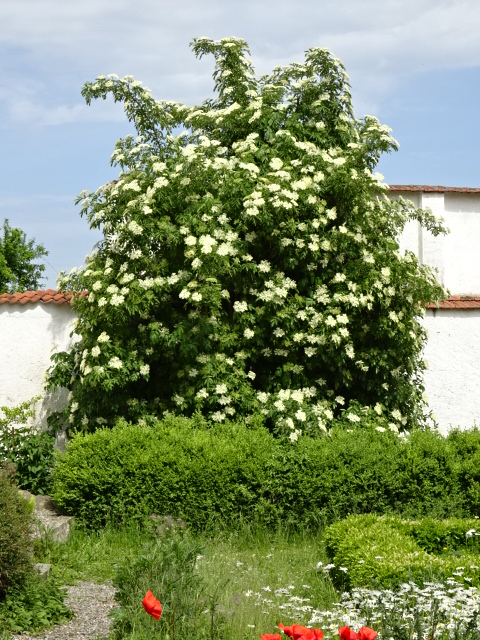
Garden of Museum of Otakar Březina

Yet there was more. We visited Březina’s grave, designed by Bílek, as well as an extensive garden center established in 1901. Karel Čapek had been a devoted customer during the 1920s and 1930s. I could imagine Čapek enthusiastically picking out plants as I perused all the interesting specimens and gazed at the cats who lounged around the center without disturbing the plants.
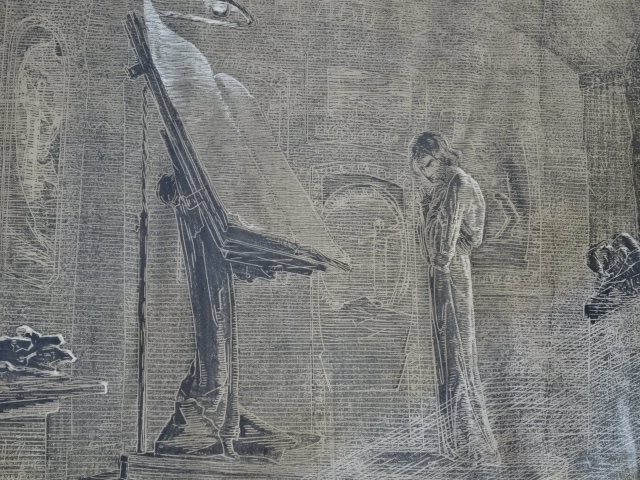
Museum of Otakar Březina, artwork by František Bílek
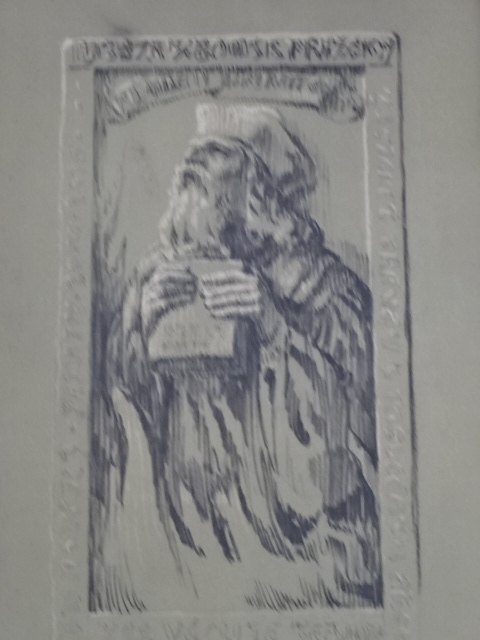
Museum of Otakar Březina, art by František Bílek

With a master’s degree in Czech literature, I was always enthusiastic to learn more about Czech writers, especially poets whose works I had never read. Březina’s writing was so complex and symbolic that I had always feared I would not understand it. Visiting writers’ museums was always a big thrill for me in any country but especially in the Czech Republic. It never failed to open up new worlds.
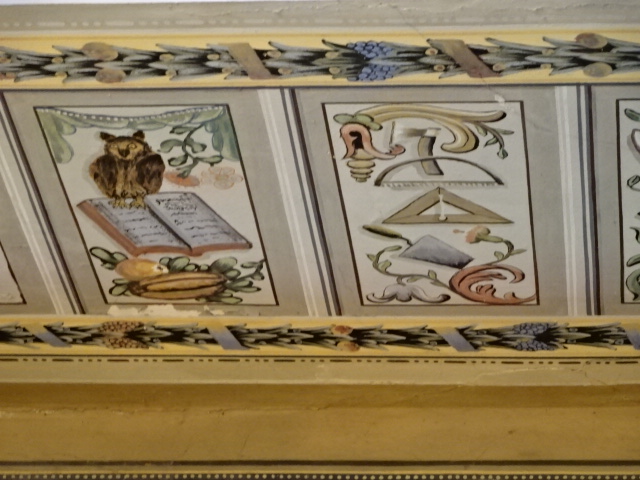
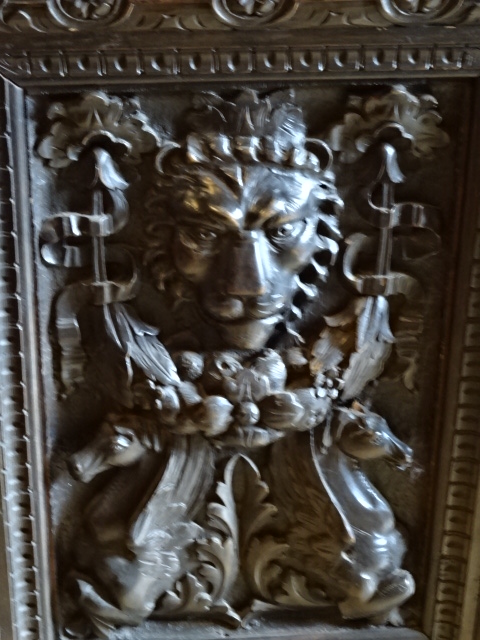
Radim Chateau, ceiling in main hall
Radim Chateau, dining room cabinet
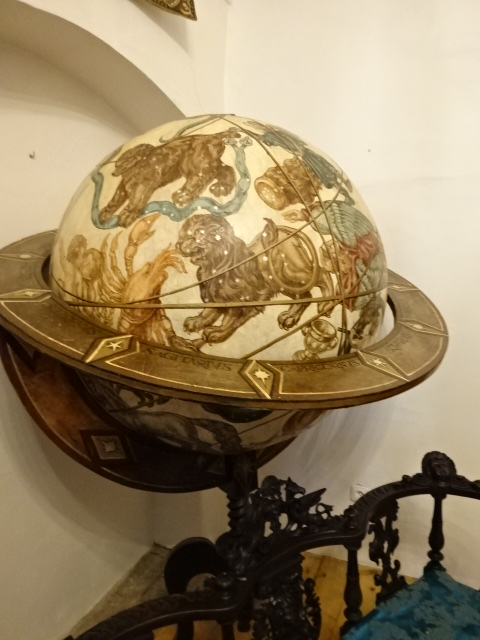
Radim Chateau, historical globe

Another chateau that I visited for the first time was called Radim, not far from Prague. Built in 1610, it had served as a Renaissance countryside seat of nobles, and, while it did not contain many original furnishings, the owners had amassed a great deal of impressive artifacts from various periods, especially the Renaissance. Exquisite tapestries lined a hallway. I saw a Neo-Gothic throne and an altar in the same style, both masterfully carved. Renaissance furniture also was prominent. A decorated coffered ceiling from the early 17th century and wall painting filled me with awe. The decorative main hall certainly did not disappoint.
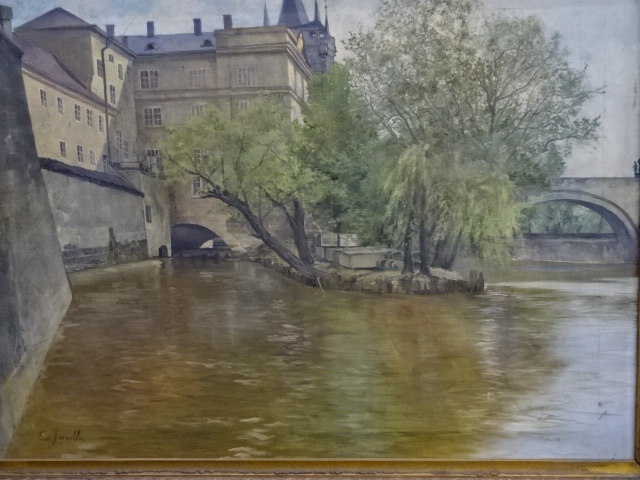
Radim Chateau art gallery, painting of Kampa Island
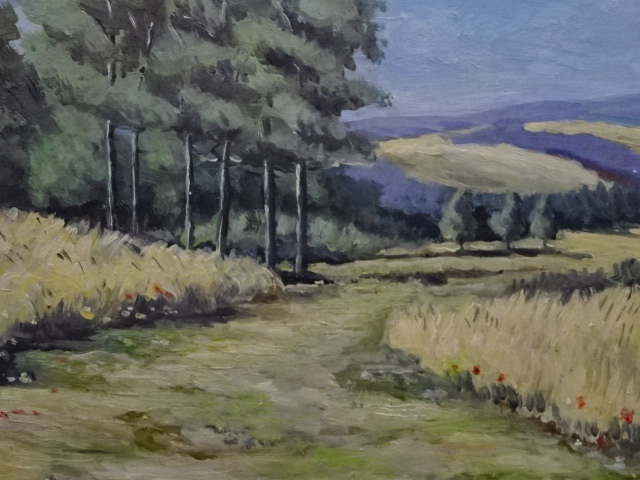
Painting in Radim Chateau art gallery
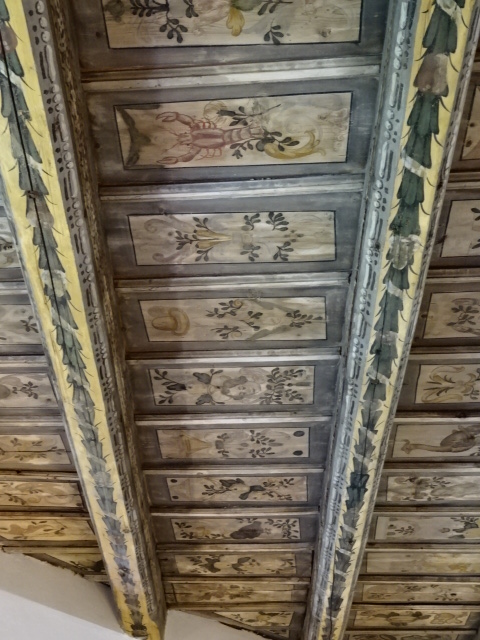
Radim Chateau art gallery ceiling

What enamored me the most about this chateau was not the first floor interior, though, but the amazing art collection the owner had put together. The owner proudly showed me his impressive collection. I  saw a hallway lined with landscapes, paintings of Kampa Island and the Charles Bridge as well as the Berounka river and the Pilsen countryside region. Landscape after landscape from various parts of the country amazed me. I gazed with awe at works by Otakar Nejedlý, Vlastimil Toman, Otto Stein, Vojtěch Hyněk Popelka and many others.
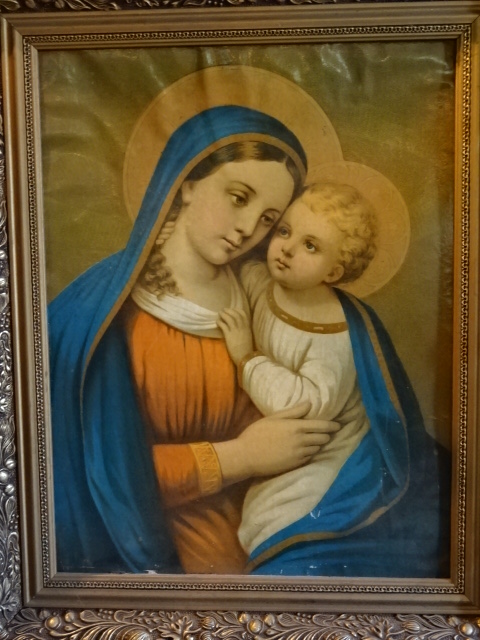
Religious art in Radim Chateau gallery
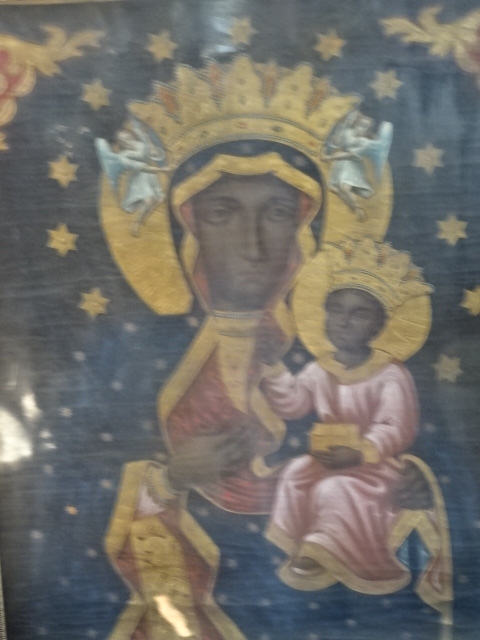
Russian icon, Radim Chateau art gallery

Yet that was not all the art to be seen. In another space there was a fascinating collection of religious works, including a copy of a Titian painting and a Russian icon. Visiting Radim Chateau was a double thrill for me – I loved the furnishings and painted ceilings as well as the art gallery. The entire chateau exuded charm and splendor.
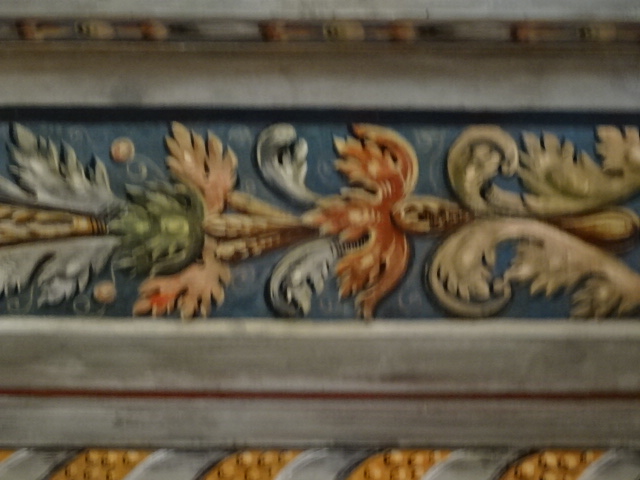
Březnice Chateau interior
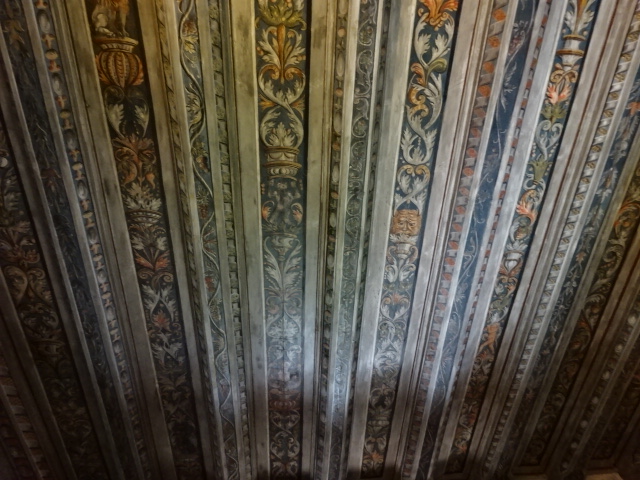
Březnice Chateau ceiling

I went back to Březnice Chateau, which I had not visited for some years. The Renaissance chateau from the 16th century featured a former library with well-preserved ceiling and wall painting hailing from Renaissance days. The chateau showed off various styles – Renaissance, Baroque, Empire and Biedermeier. The Baroque chapel was stunning. The Renaissance dining room was full of historic grandeur. The armory was impressive, too.
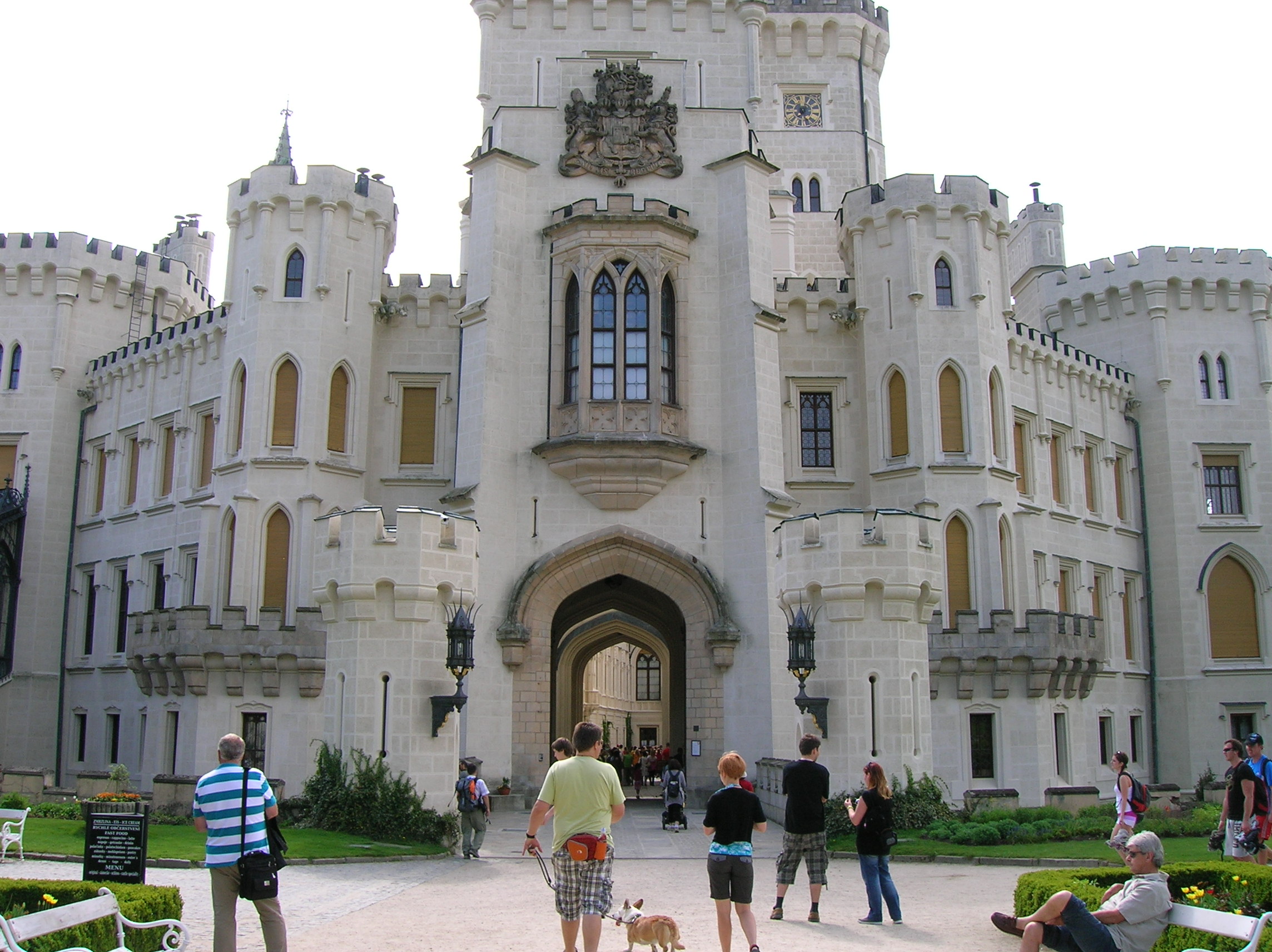
Hluboká nad Vltavou Chateau exterior

One of my most favorites chateau was in Hluboká nad Vltavou, one of the most popular in the country, and I loved gazing at its masterful Neo-Gothic exterior. The wood-paneling with remarkable furnishings and the 57 tapestries from Brussels astounded. The library with 12,000 volumes and the armory were more than stunning. This chateau could never disappoint.
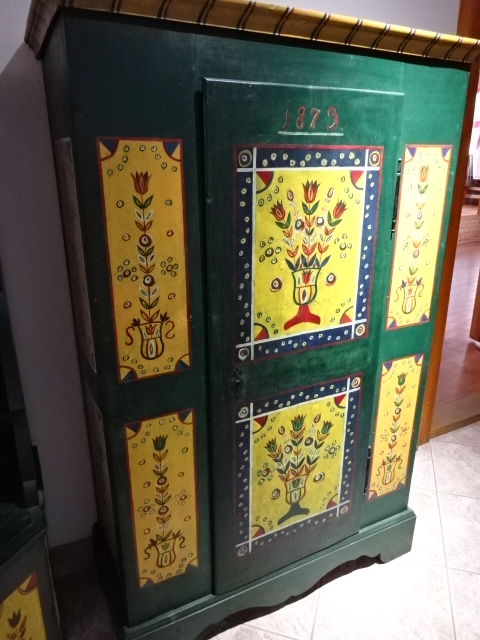
Domažlice Castle Museum, folk style wardrobe
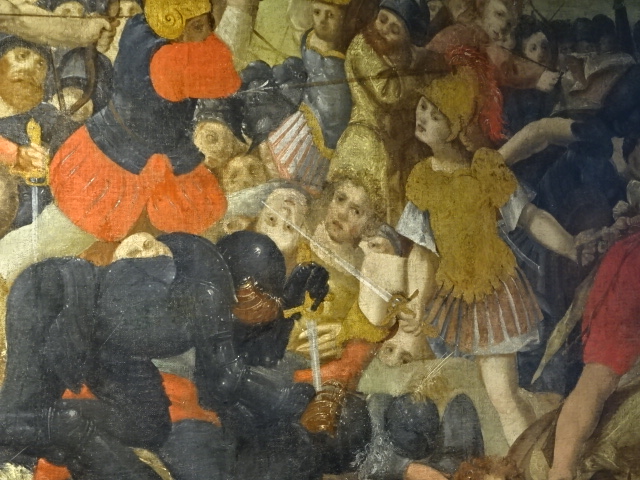
Historical painting in Domažlice Castle Museum

I saw a castle museum in Domažlice, where I learned about the region. The other castle museum was in Kadaň, where there were displays of the history of the town and fortress-like edifice. In Domažlice the folk costumes of the area were prominently on display as were the beautiful ceramics notable for the region. Holy Roman Emperor Charles IV’s visit to Kadaň and the years the castle spent as a barracks as well as the dark Nazi period were elaborated upon during that tour.
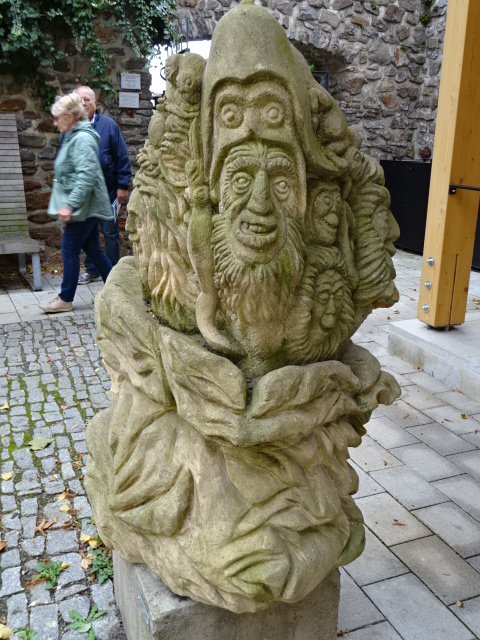
Sculpture in Kadaň

Kadaň scenery

Yet there was more to Kadaň and Domažlice than merely their castles. We saw picturesque squares, churches, town halls, a monastery and much more in those towns. The path from the center of Kadaň to the castle was surrounded by lush flowers and plants as well as unique grotesque sandstone statues. The narrowest street in the country, Katova Street, is located in Kadaň. The monastery in Kadaň with its Gothic wall painting and other splendors was a real treat, too.
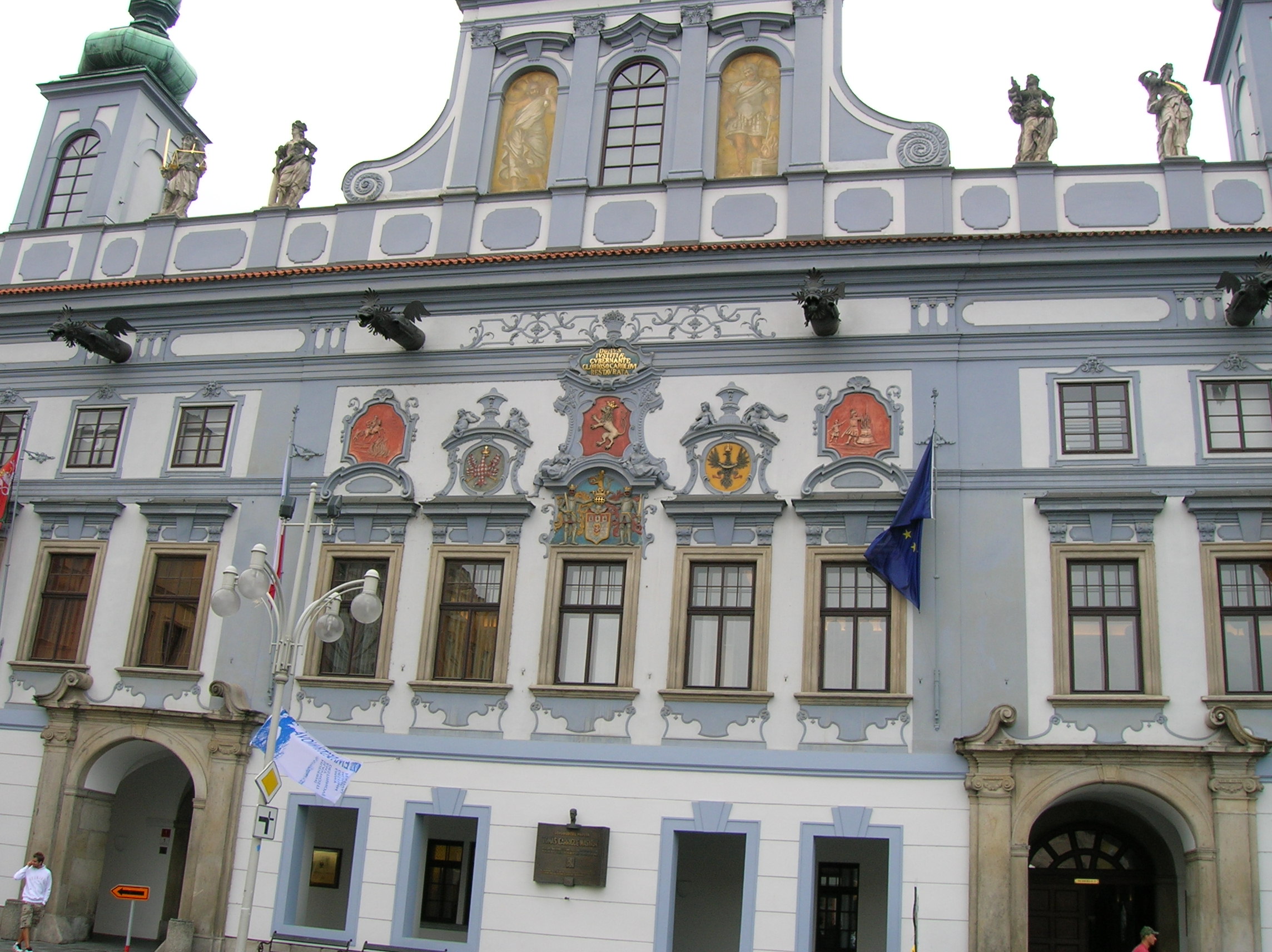
Town Hall in České Budějovice, main square
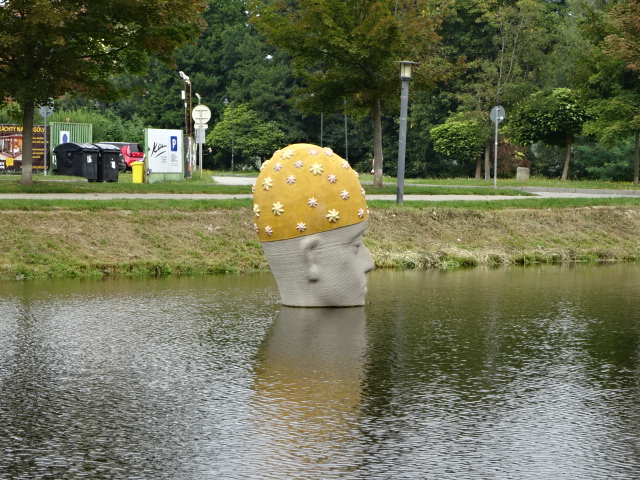
Sculpture in České Budějovice
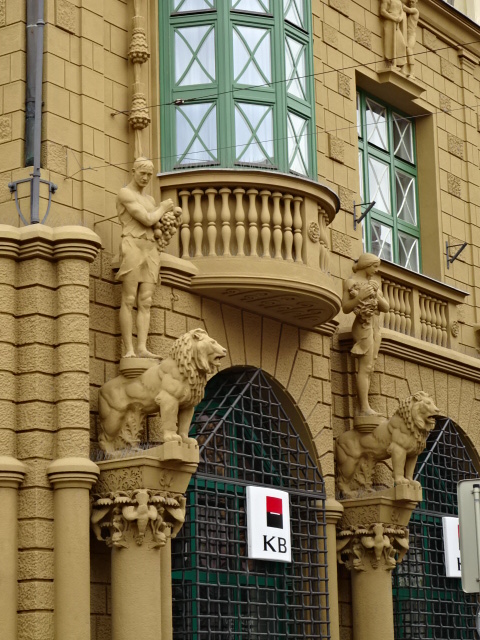
Komerční Bank sculptural decoration

Another city sans chateau or castle that I visited was České Budějovice, one of the gems of south Bohemia for its unique and stunning architecture. Previously, I had only admired the vast main square of the city with its delightful Renaissance buildings and prominent town hall.
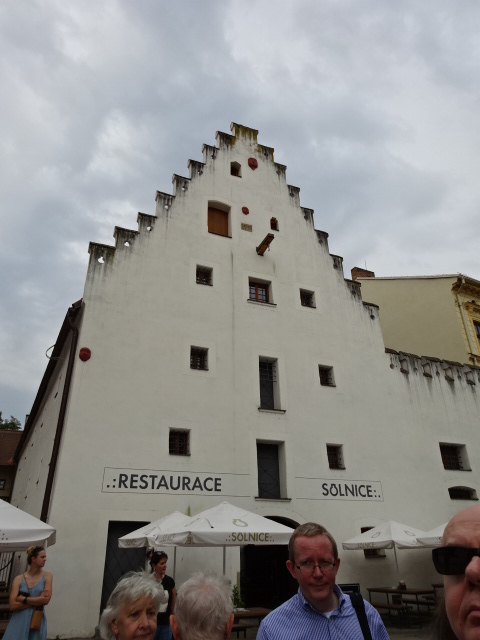
Former salt house in České Budějovice
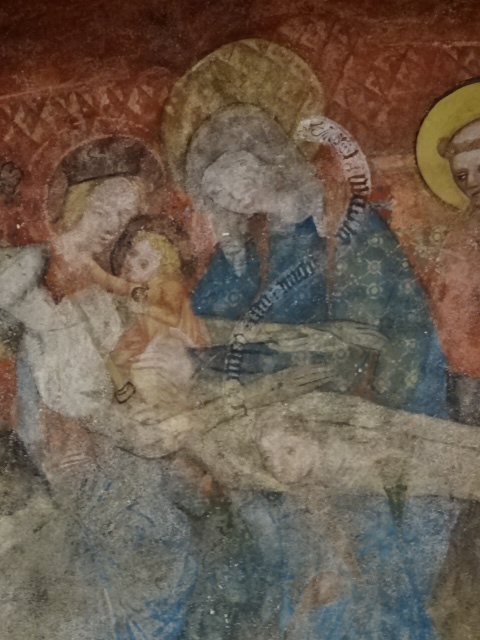
Gothic wall painting in church in České Budějovice
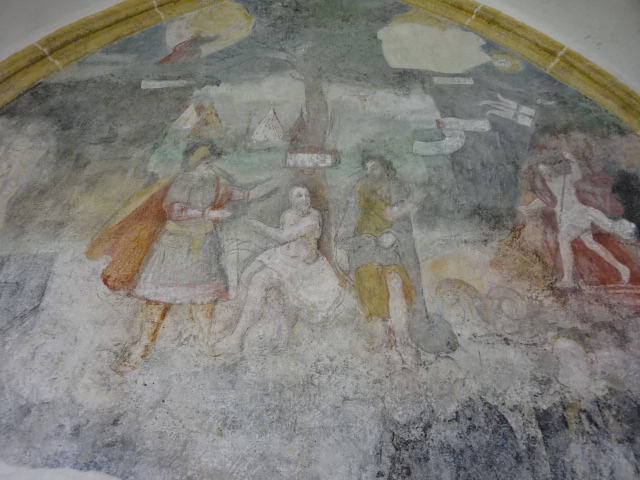
Wall painting in church in České Budějovice

This time I saw the entire downtown area and soon learned that there was much more to the city than merely its picturesque square. The main church with Gothic (13th century) and Baroque wall painting as well as a Neo-Gothic main altar was incredible. The former salt house’s unique roof was one to remember. A large bank’s sculptural decoration was more than impressive. Other buildings were architectural gems, too. Some boasted religious paintings on the exteriors. Narrow and romantic Panská Street was another highlight of the city. The architecture throughout the city was truly breathtaking.
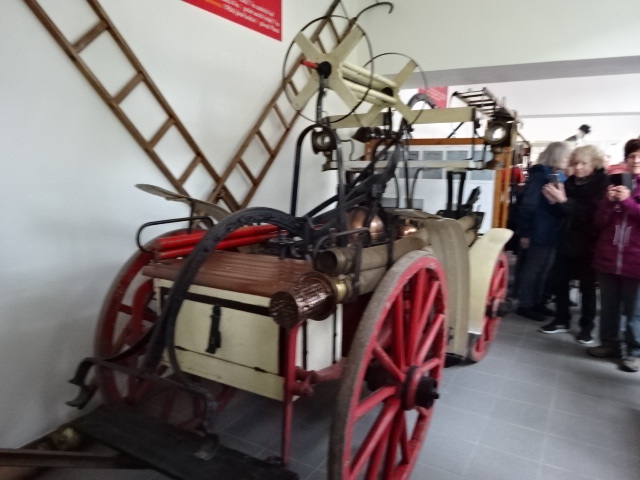
Firetruck museum in Constantine Spa

We also visited a small enclave called Constantine Spa. On the charming small square was a claustrophobic museum of fire trucks hailing from 1900 to 1912. Each had one ladder, and they had once been driven by horses. While it was raining during our time in the spa town, we did see some beautiful greenery as we walked to a café with delicious desserts.
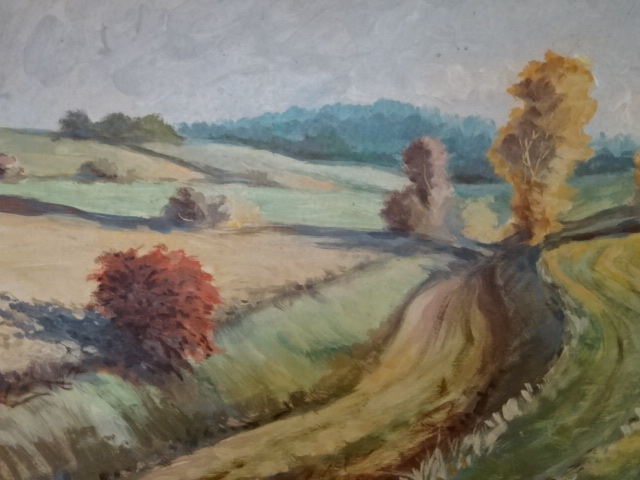
Votice Monastery, town museum, painting of region
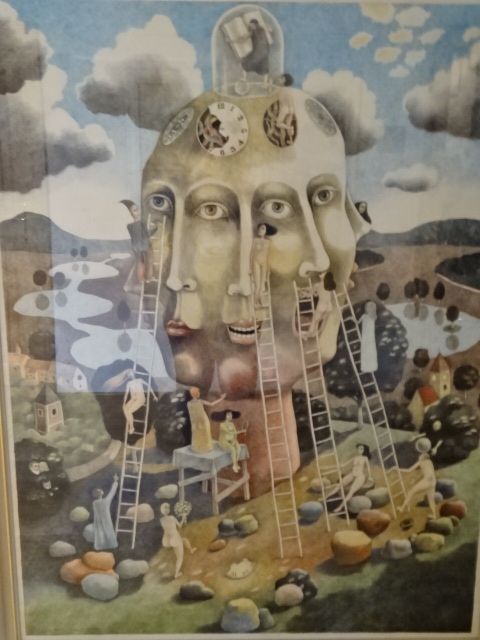
Vladimír Kaska painting in Votice Monastery
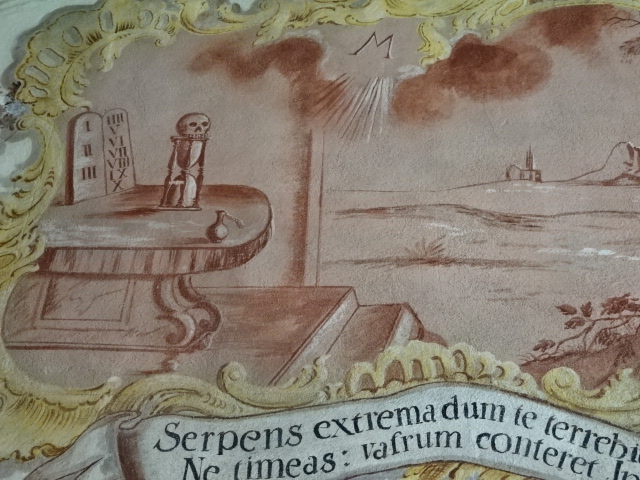
Fresco on wall and ceiling of Votice Monastery

In addition to the monastery in Kadaň, I toured two other monasteries – Votice and Teplá. Displays narrated Votice’s turbulent history during Nazism and Communism. I admired the town museum at Votice monastery. Paintings of the town in decades past caught my undivided attention. The 17th century frescoes on one wall and ceiling section at Votice were astounding. I also was amazed at the modern paintings of a local artist, Vladimír Kaska. His grotesque, playful, symbolic and colorful renditions delighted me. His works were so vibrant and dynamic. Discovering an artist whose works I did not know was one highlight of my trip there.
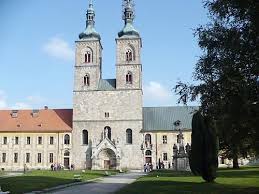
At Teplá Monastery

Teplá Monastery was founded in 1193, and King Václav I participated in the first mass. The Baroque church had been rebuilt in the 18th century by a prestigious architect – Kryštof Dientzenhofer. Poignant wooden statues by Ignác Platzer stood out in the church as did astounding Baroque frescoes. The church, 62.5 meters long, also featured a Rococo altar decorated with Baroque paintings.
Teplá Monastery

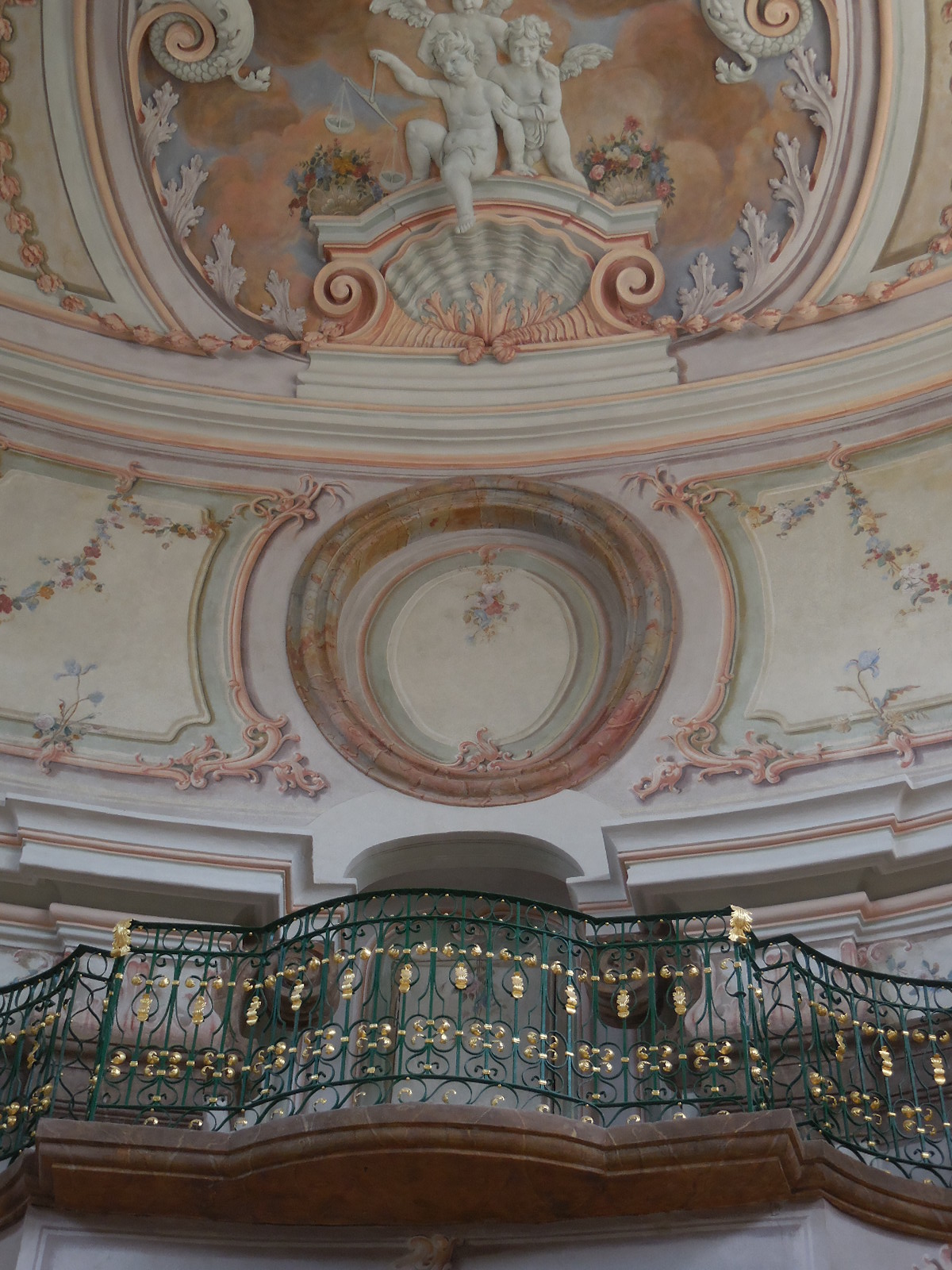
Still, the library that contained about 100,000 volumes in Latin, German and Czech was for me the highlight of Teplá. The two floors of masterfully carved bookcases featured an elaborate balustrade. The fabulous fresco on the ceiling represented monks and angels celebrating with religious figures, including the Evangelists. The ceiling painting was so beautiful that it almost made me dizzy with delight.
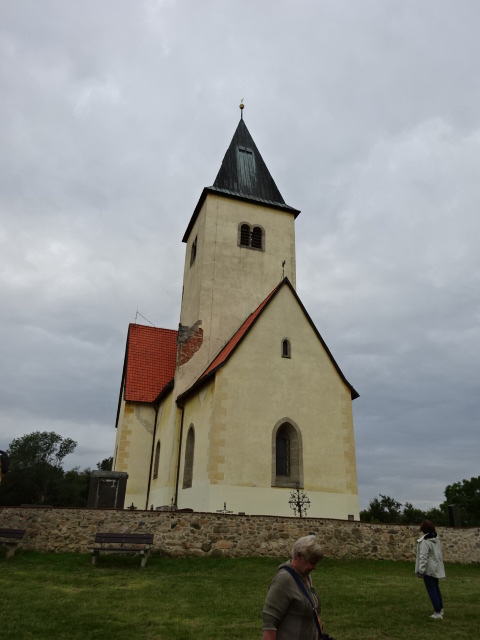
Chovojen church
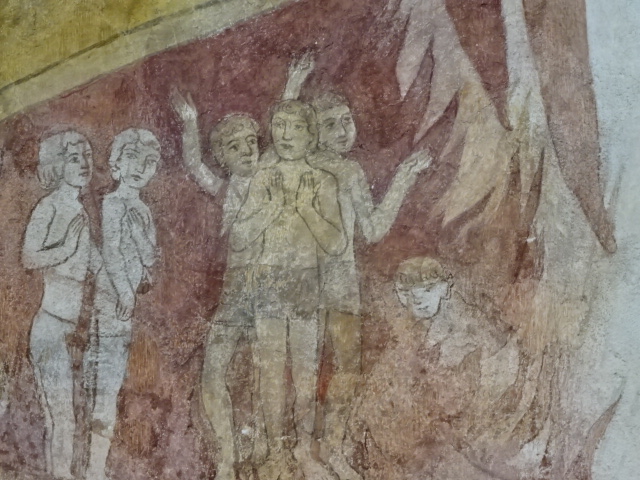
Medieval wall painting in Chovojen church

I also toured a small church in Chovojen, surrounded by fields and offering a view of nearby Konopiště Chateau. The Romanesque elements of the small church were noteworthy. The rare medieval frescoes amazed me. I even saw a painting showing the medieval solar system with the Earth at the center. So many amazing artifacts located in a small church filled me with awe.
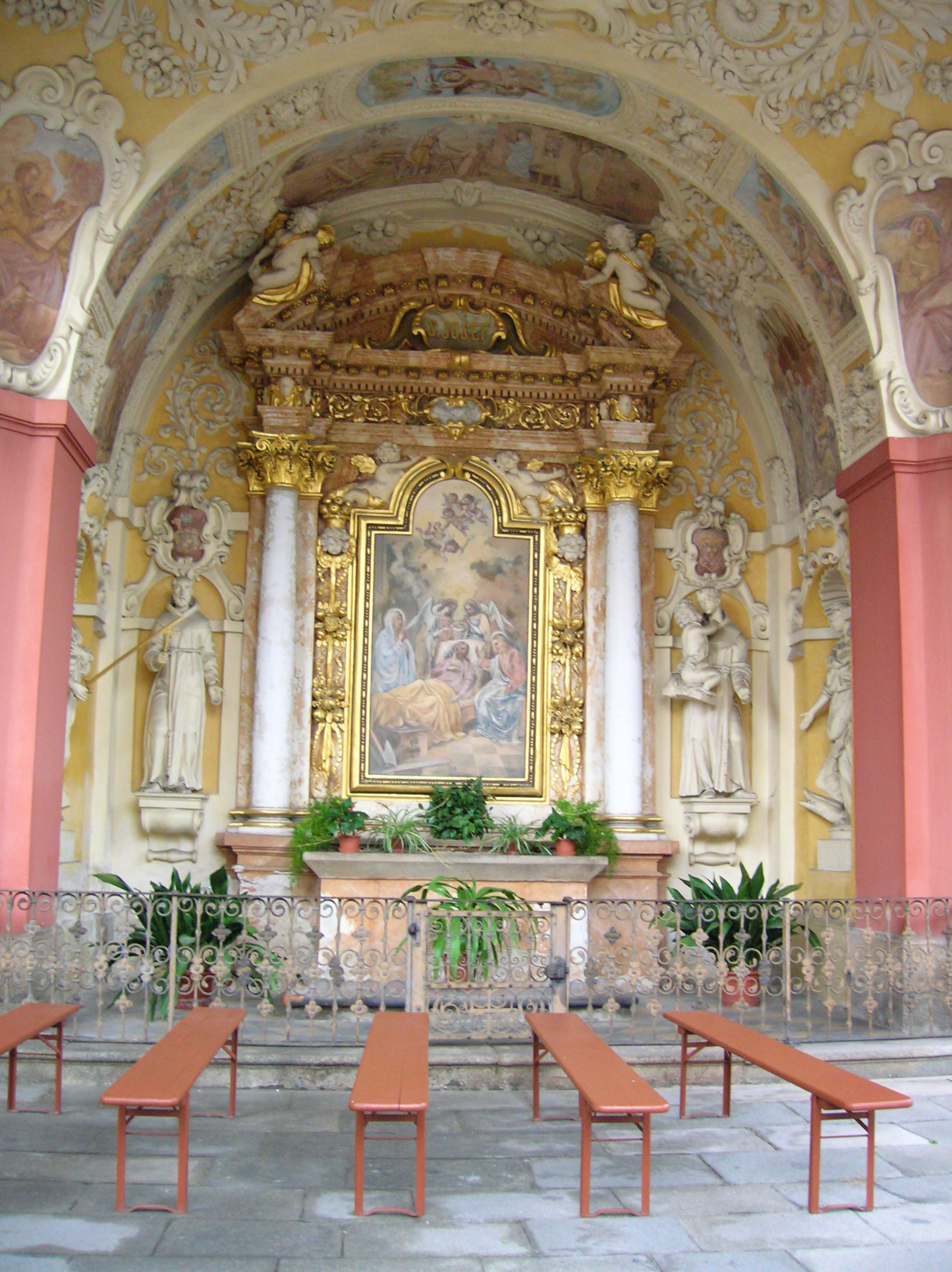
Outside altar at Holy Mountain
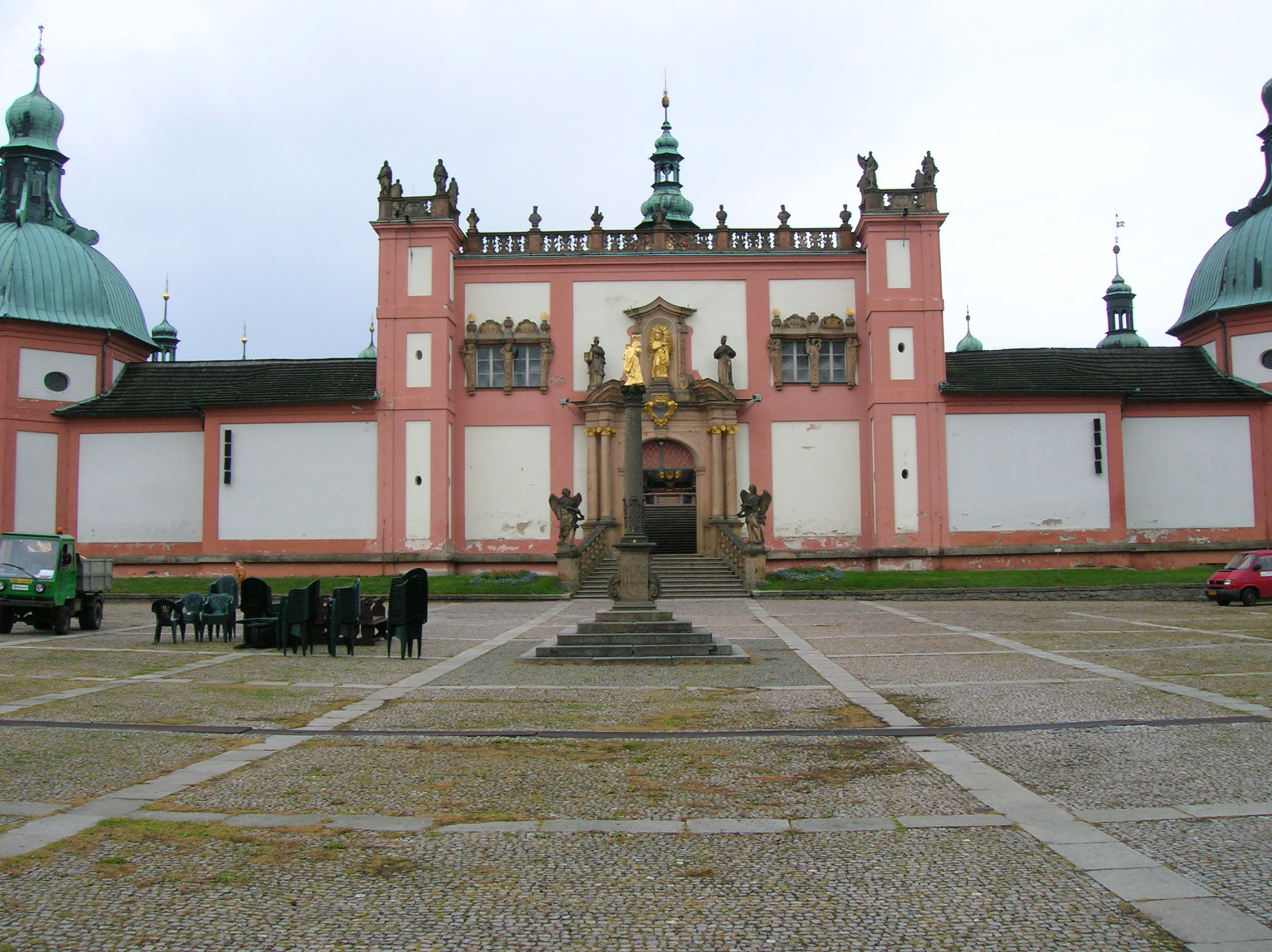
Holy Mountain entrance

Another religious site that I toured with my best friend was Holy Mountain, which included a church featuring a pure silver altar and nine open chapels with spectacular biblical wall and ceiling painting. The unique attraction was breathtaking. I had been there many times, but showing it to my best friend was a highlight for me.
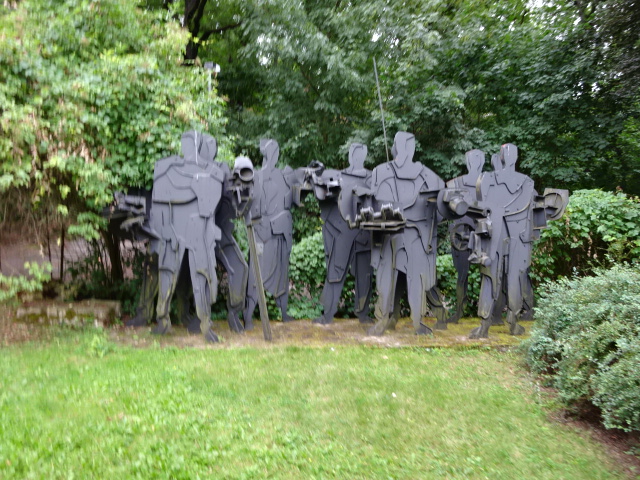
Sculpture in garden of Janoušek studio villa
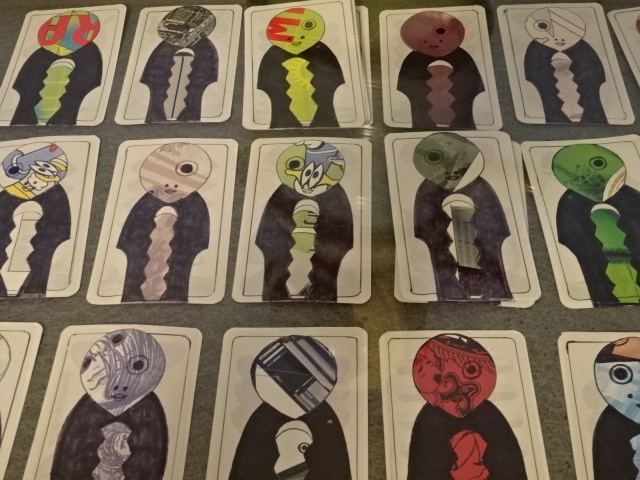
Inspired by Japanese playing cards, created by Vladimír Janoušek

I was excited to discover the studio of the Janoušek couple, 20th century artists whose workplace had been designed in the Brussels style of the 1950s and 1960s. They had used the architecturally unique studio from 1964 to 1986. In the garden stood several monumental sculptures, such as enormous figures in metal. During the tour I saw abstract sculpture from diverse periods of the artistic couple’s lives. Věra had made exquisite collages and tapestries as well as astounding sculptures of metal figures utilizing kitchen utensils and pans. Very colorful, these creations fascinated me. I had never seen anything like them.
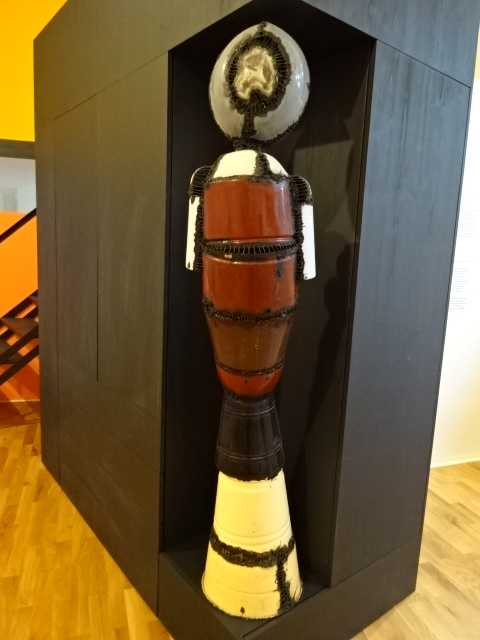
Věra Janoušková sculpture made of kitchen utensils and pans
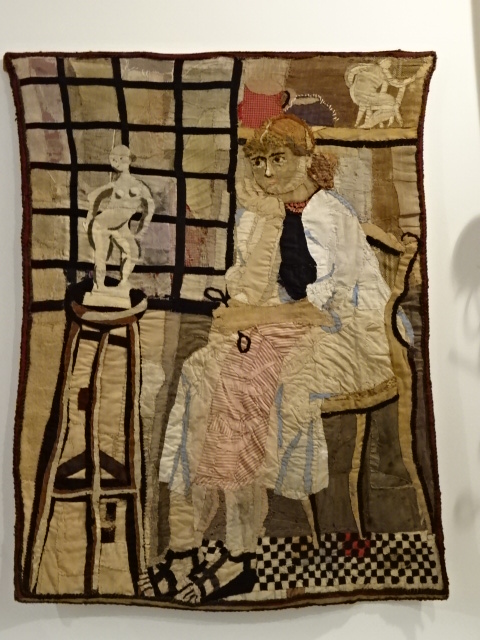
Věra Janoušková, tapestry

Vladimír’s work included a stunning large metal sculpture depicting the Fall of Icarus as well as a unique statue of Perseus. His combination of mythological themes and the abstract amazed me. I also was captivated by Vladimír’s creation of Japanese playing cards, so different from his monumental metal renditions. Various creations by both artists decorated shelves and showed how their styles had evolved. Panels on one wall showed photos of the two and their studio throughout the years and narrated the history of the couple’s accomplishments in a clear fashion. The studio was not without a charming library, either.
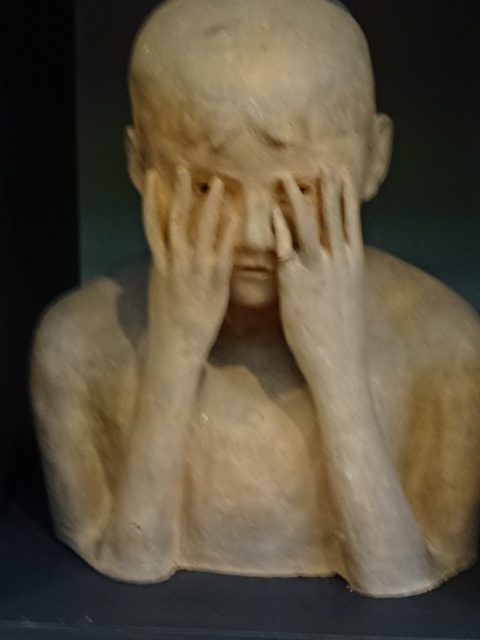
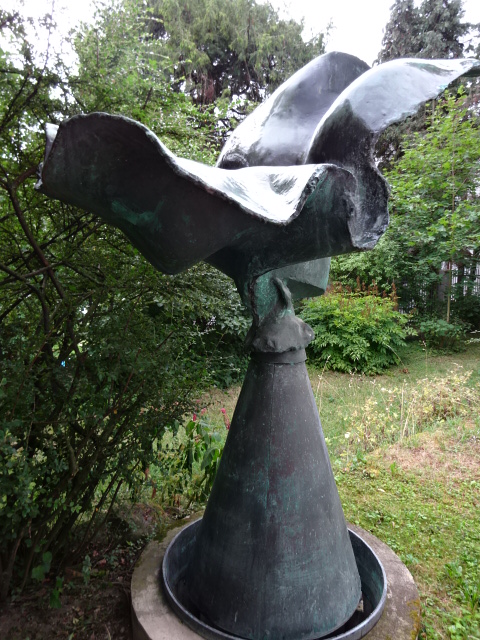
Sculpture in garden of Janoušek studio villa

I had never heard of the Janoušek artists before coming across an ad on the GoOut ticket site several months before my visit to the Smíchov house, mostly hidden from the street by garden greenery. Once again, I was excited to see an architectural wonder for the first time and learn about the couple’s unique abstract art.
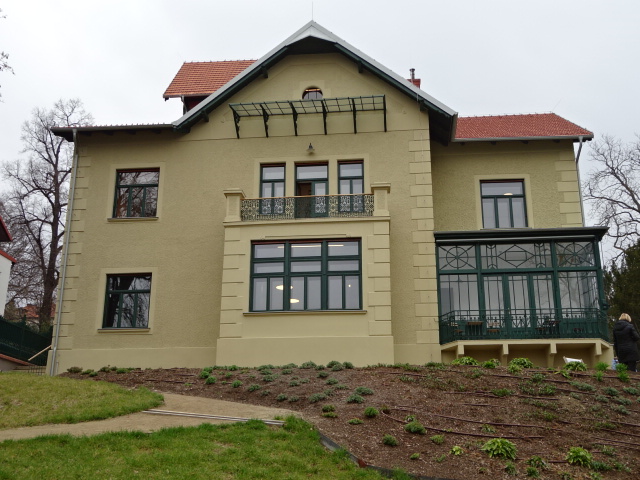
Arnold Villa, reconstructed, in Brno
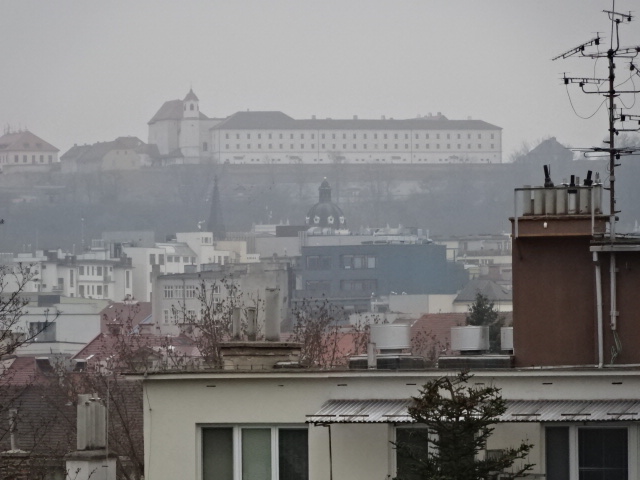
View from garden of Arnold Villa
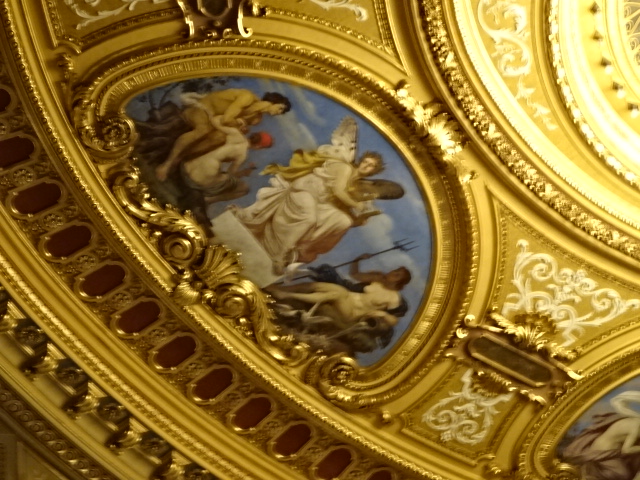
Mahen Theatre in Brno

Another place I toured for the first time was the Arnold Villa in Brno, the capital of Moravia. Recently reconstructed, it hailed from 1862 and had been situated in the first colony of villas in Brno, very close to the famous Tugendhat Villa. While the original furnishings were long gone, the architect did a valiant job, including a film about the lives and times of the owners and a small collection of Jewish historical objects. Photos of the people who had lived there and in nearby villas gave the place a personal, intimate feel. While in Brno, I also toured the Mahen Theatre, the first electrified theatre in Europe. Its ceiling painting and exquisite chandelier astounded.
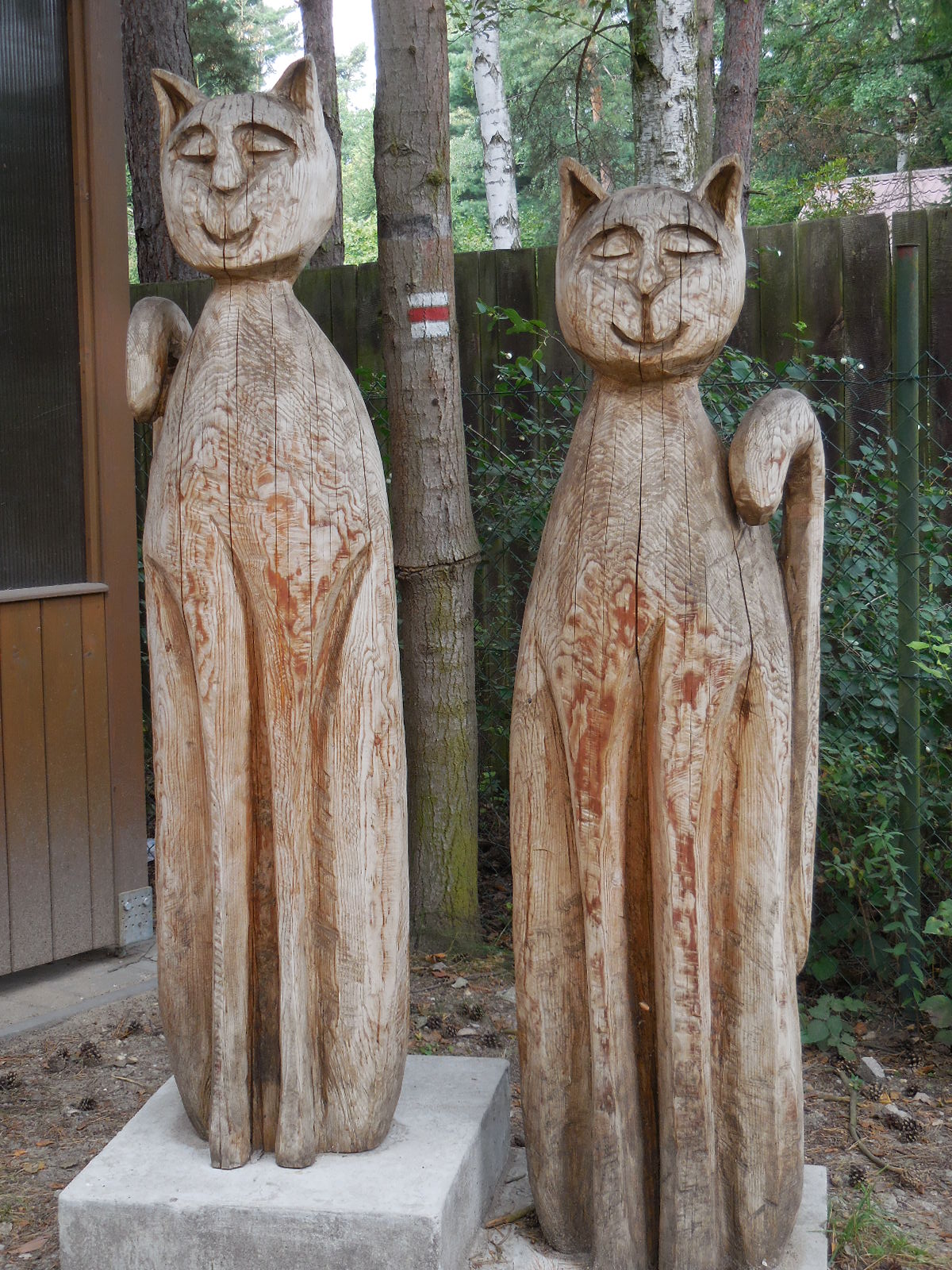
Kersko, sculptures of cats
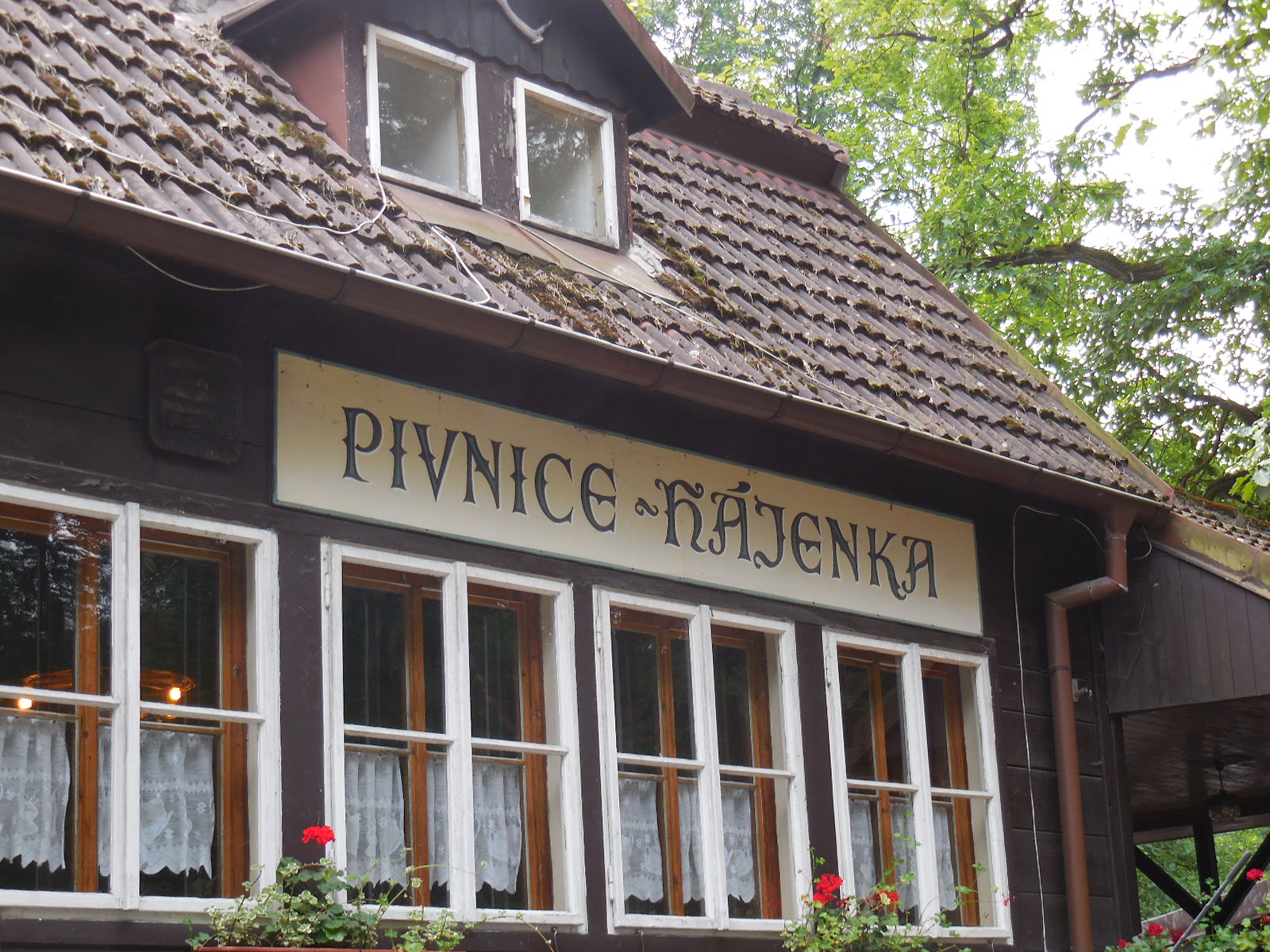
My favorite restaurant, Hájenka Pivnice in Kersko
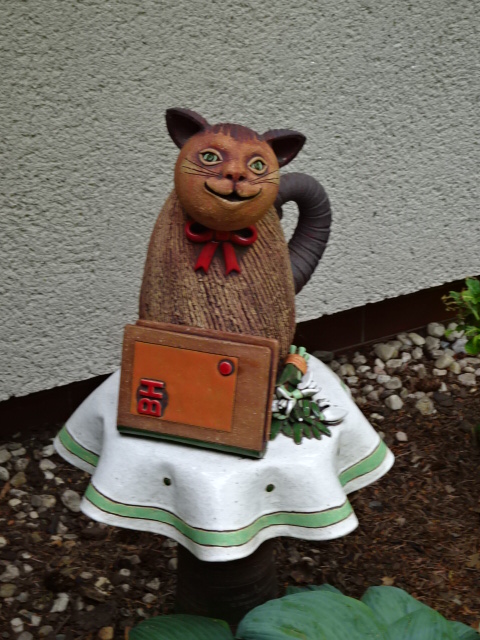
Ceramic cats made in Kersko shop I love

Of course, I visited Kersko with my best friend once again. It was one of our rituals. We ate at the rustic restaurant Hájenka, where a film based on one of Bohumil Hrabal’s books played in the background. The traditional Czech food was always delicious. We also bought coconut cookies – I hated coconut except for that in these cookies – at the local shop, which featured homemade ceramic cats inspired by legendary Czech writer Hrabal’s stray felines, revered and fed at his nearby cottage for so many decades. This wooded village brought me serenity in a poignant way that no place in Prague ever could. Hájenka was my favorite restaurant of all-time, and Kersko would always be a place close to my heart.
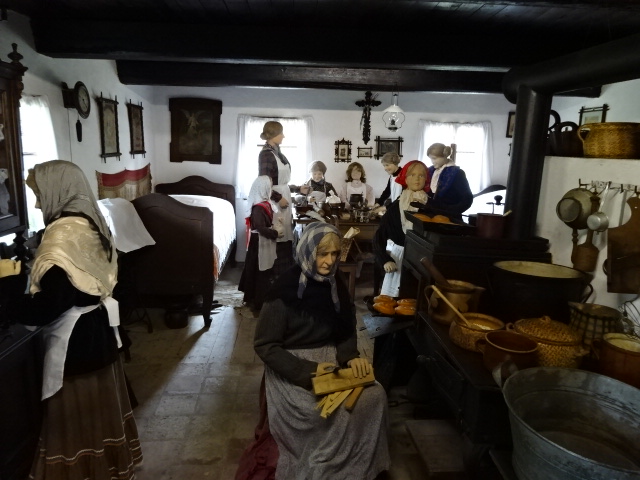
Interior at Přerov nad Labem architectural museum
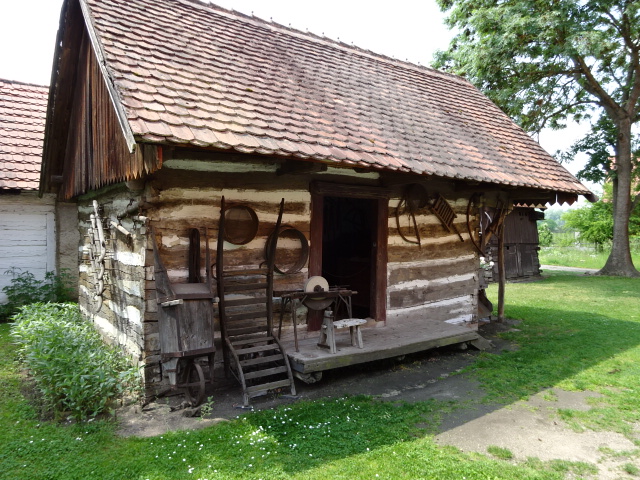
Cottage in Přerov nad Labem museum
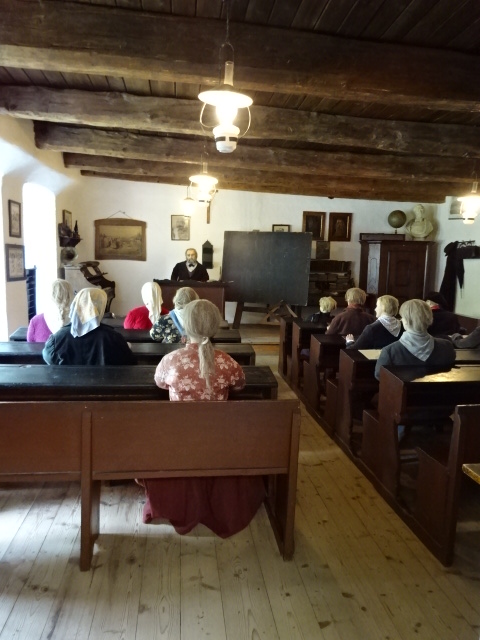
19th century schoolhouse in Přerov nad Labem museum

Přerov nad Labem, an open-air architectural museum, was another attraction to which I returned after many years. I admired the 18th and 19th century cottages and buildings with mannequins often dressed in the folk costumes of the eras. I loved folk style art – the furniture, ceramics and hand-painted glass as well as the clothing enamored me. It was hard to believe that so many people had lived in such small spaces. I also saw a one-room school where boys sat on one side, girls on the other. A shoemaker’s and a blacksmith’s were two other intriguing attractions.
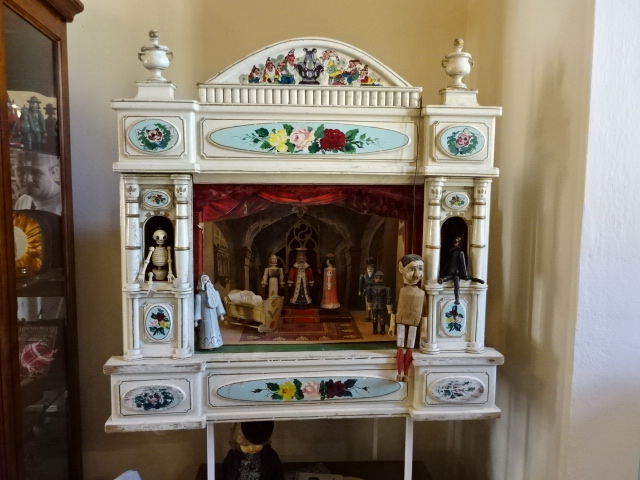
Porcelain puppet theatre at Stránov Chateau
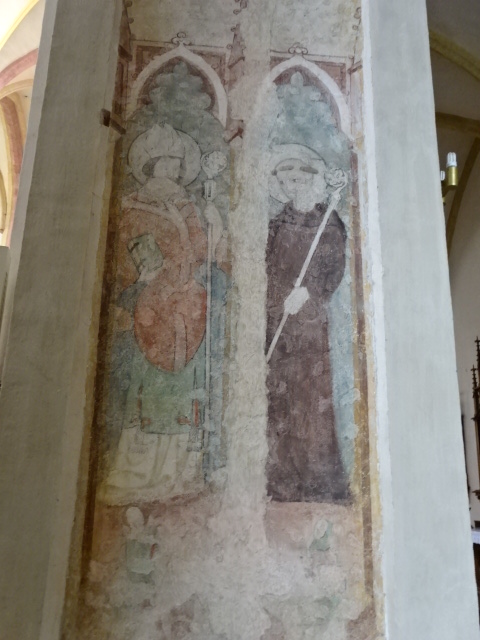
Medieval painting at church in České Budějovice

These travels took me to places I had treasured for years and to places I was visiting for the first time. I learned about Otakar Březina and the Janoušek artists. I marveled at the Neo-Gothic exterior and exquisite furnishings of Stránov Chateau for the first time. Votice Monastery was also new to me, and I learned much about its tragic history. I hadn’t been in Kadaň before 2025 and found the town charming with many sights. I finally saw the entire center area of České Budějovice and greatly appreciated its immense beauty. I thought I had known Brno well, but I was at the Arnold Villa and inside the Mahen Theatre for the first time in my life. The Church of Saint Markéta in Jaroměřice was for me another new attraction. There were so many firsts for me this past year. I was so grateful I had discovered Radim Chateau and Stránov. I also visited the Barberini Museum in Potsdam twice, which was a first for me, though I had been in Potsdam during 1992.
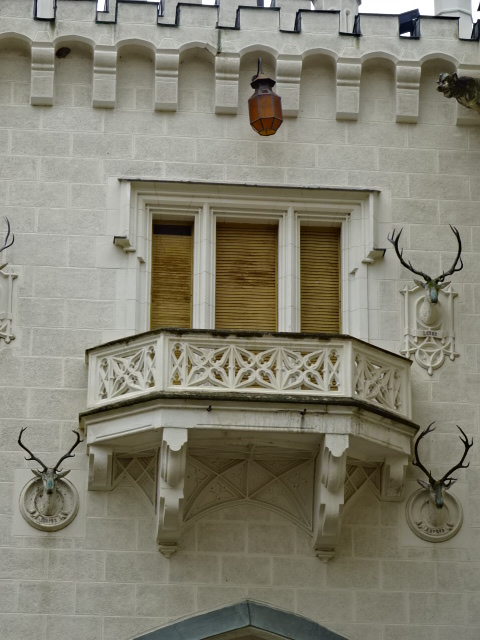
Hluboká nad Vltavou Chateau, exterior
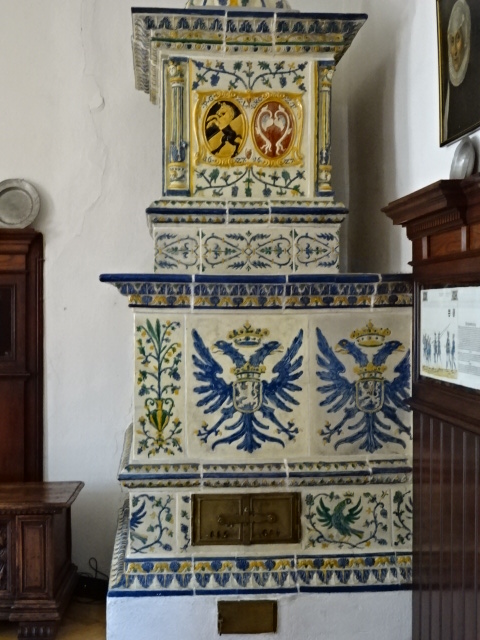
18th century tiled stove in Březnice Chateau

Returning to so many places also brought me great comfort – Hluboká nad Vltavou, Krásný Dvůr, Březnice, Teplá, Jaroměřice Chateau, Holy Mountain, Chovojen, Kersko, Častolovice, Doudleby, Přerov nad Labem, Horšovský Týn, Kersko. While I only had time to go on day trips in 2025, I was astounded, as usual, by all the sights the Czech Republic has to offer as well as three one-day trips abroad, to museums in Potsdam and Vienna. After almost 30 years here, I was still discovering new places. Going on these trips made me realize that the world, though at times cruel and ruthless, is also full of wonder and delight.
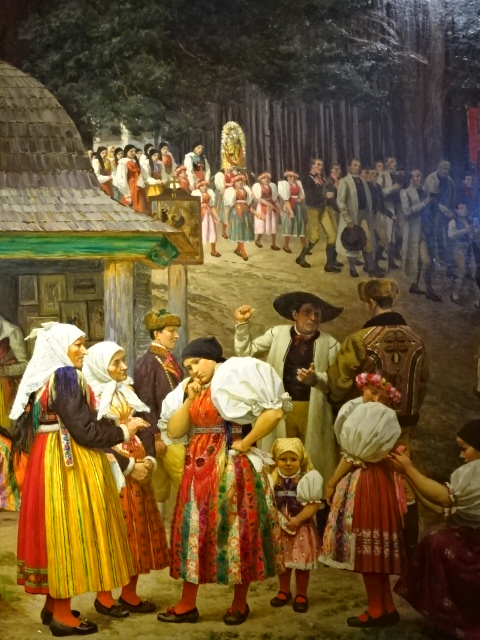
Domažlice Castle Museum folk painting
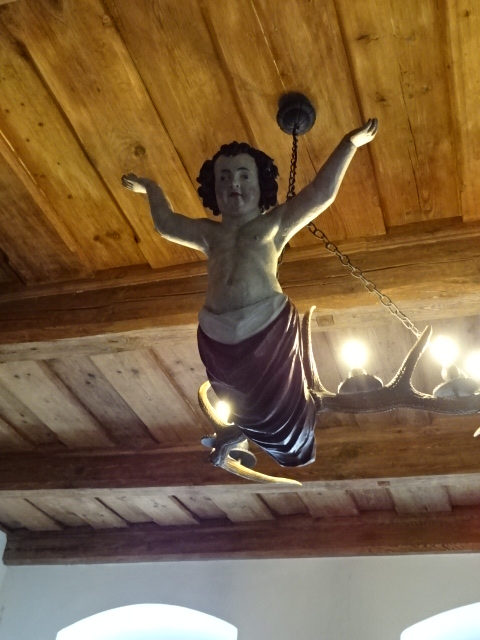
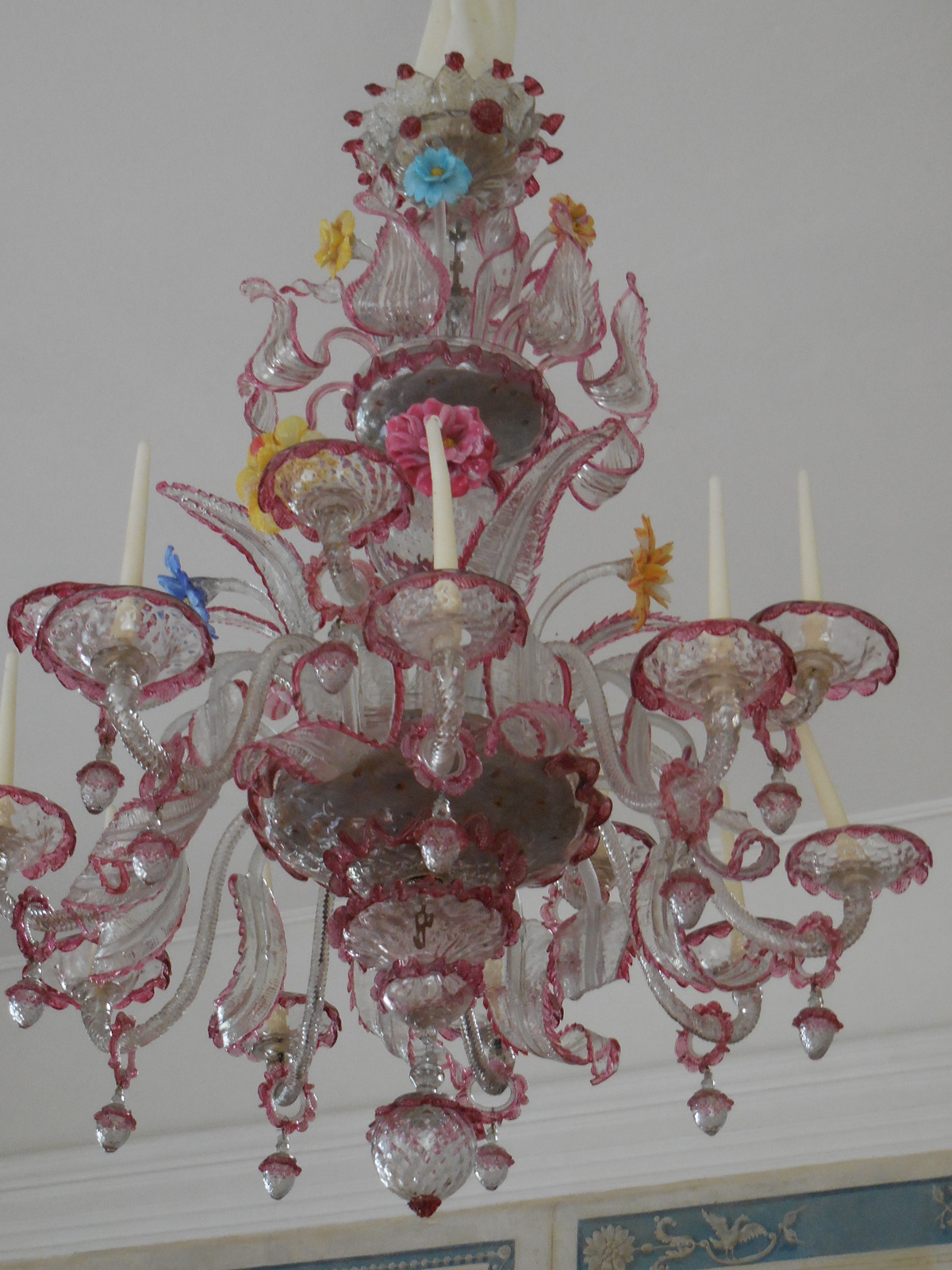
Horšovský Týn Castle and Chateau chandelier
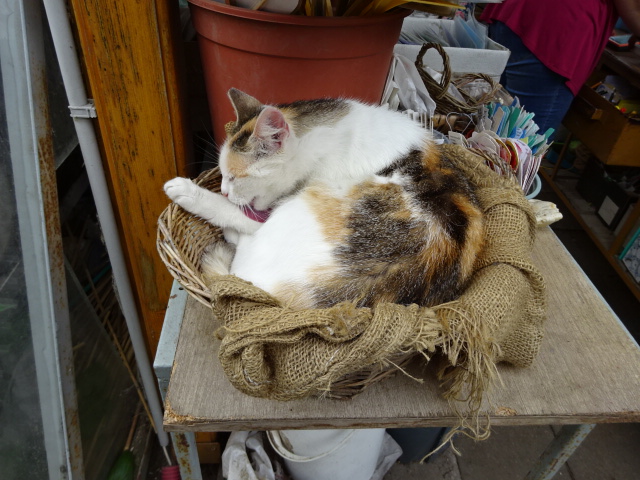
Garden center established in 1901, cat relaxing in basket near cash register
Horizons Exhibition Diary

Tábor, Jaroslav Šetelík

I have always loved to visit the exhibitions at the art gallery at the Kooperativa insurance company. Never have I exited that building without learning something new about art and about myself. This time the show was called Horizons, and it brought to mind memories of childhood innocence as well as a strong sense of freedom and personal identity achieved as an adult. The featured paintings dealt with the power and magic of nature and romantic towns as well as the devastation of war. Mythological themes also punctuated some paintings. Some of the scenes evoked in me sadness, and others brought joy.

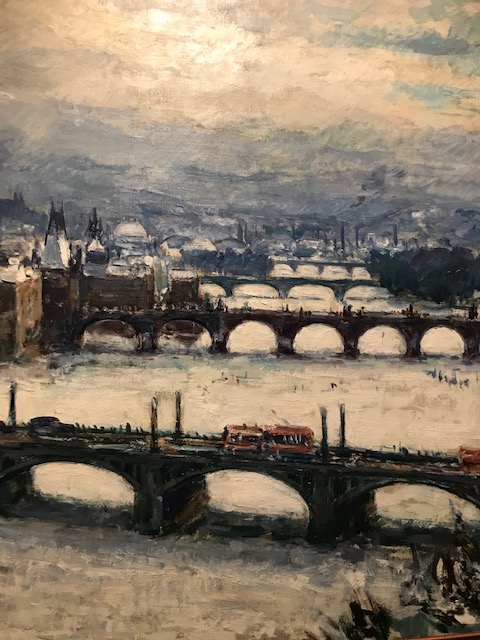
Prague Bridges, František Líbal

The townscapes were my favorites. My love of Prague drew me to the romantic and idyllic landscape “Prague Bridges” (1943) by the landscape and portrait painter František Líbal, who created vistas of the Czech capital during World War II, when he lived in Prague. Líbal studied in Germany and made trips to France and Italy while portraying cityscapes and cathedrals. He proceeded to travel throughout the Czech lands, Moravia and Slovakia, focusing on mountainous terrain. The south Bohemia native often visited the region where he was born and created many works of ponds and forests from scenery located there. After the war, he stopped creating Prague cityscapes and focused on landscapes of south Bohemia.

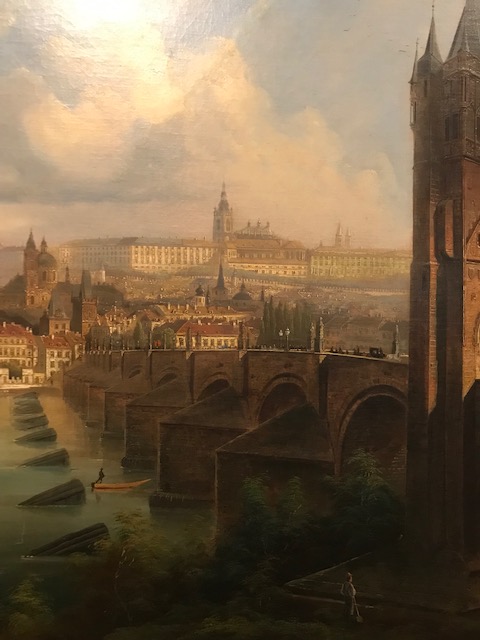
View of Charles Bridge, Ferdinand Lepié

His view of Prague brought to mind the power and magic of the capital city. He made the city appear idyllic and romantic. In the horizon of the painting, I saw the bright future that I imagined I would have when I was 21 years old, fresh out of college. I mused about my first visit to Prague in 1991, when I was initially enamored by the beauty of the city. So many decades later, I am still enthralled with the city’s beauty, and the panoramic views fill me with joy. Another painting in the exhibition that brought to mind the magic and masterful architecture in Prague was View of Charles Bridge (1861) by Ferdinand Lepié. My attention was drawn to Prague Castle in the background. I once again saw Prague imbued with historical significance and timeless beauty.

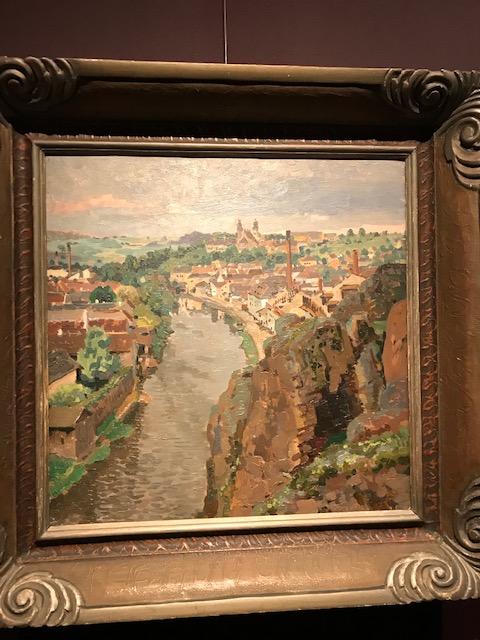
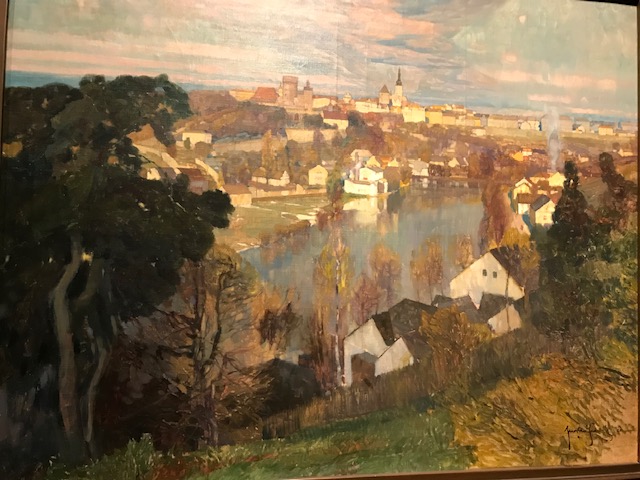
View of Třebíč, Bohumír Jaroněk

I loved the paintings of other towns, too, such as Jaroslav Šetelík’s “Tábor” from 1926 and his “Kutná Hora” from 1920. Bohumír Jaroněk’s “View of Třebíč” (1910) showed a river flowing through the center of the city, making the painting especially picturesque. Kutná Hora, Tábor and Třebíč are towns with fascinating history and intriguing sights. All three paintings brought to mind my trips to these towns and the sights with which I had become very familiar.

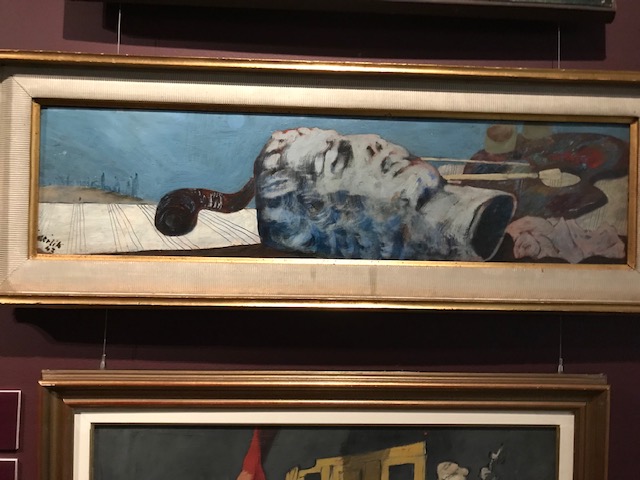
Painter’s Still Life, Arnošt Paderlík

Arnošt Paderlík’s “Painter’s Still Life” from 1943 takes on the theme of the suffering of mankind during wartime. This painter, sculptor, graphic artist and professor spent much of World War II making expressive, anti-military compositions ripe with hidden meanings. This particular painting shows, among other objects, an ancient bust from a statue. It has fallen on the ground, onto its side. After World War II, he drastically changed his style, devoting his time to still lifes that were inspired by Cubists Pablo Picasso and Georges Braque.

Rye, Antonín Slavíček

Paderlík delved into architectural adornment as well. His ceramic ornamentation graces the Kotva Department Store in Prague, and a bronze figure he designed is located at the Thermal Hotel in Karlovy Vary. I thought back to the sculptures and paintings I had seen throughout Europe, depicting the horrors of war. Even though he was focusing on World War II, Paderlík’s painting speaks to wartime oppression in general.

Landscape from Kameníčky, Antonín Slavíček

I was ecstatic that Antonín Slavíček’s landscapes, influenced by Impressionism, were represented in the exhibition. His “Landscape from Kameničky” from 1906 captured my undivided attention as did his “Rye” from 1908. He masterfully evoked the textures of the grass and dirt road in “Landscape from Kameničky.” I felt as though I could reach into the painting and touch the grass and dirt. I have always been drawn to the emotional quality of his works and to the strong use of color that permeates his renditions, including “Rye.” Slavíček was a student of Julius Mařák, perhaps the most prominent Czech landscape painter of the 19th century, who also worked as a professor promoting realism to many talented artists.

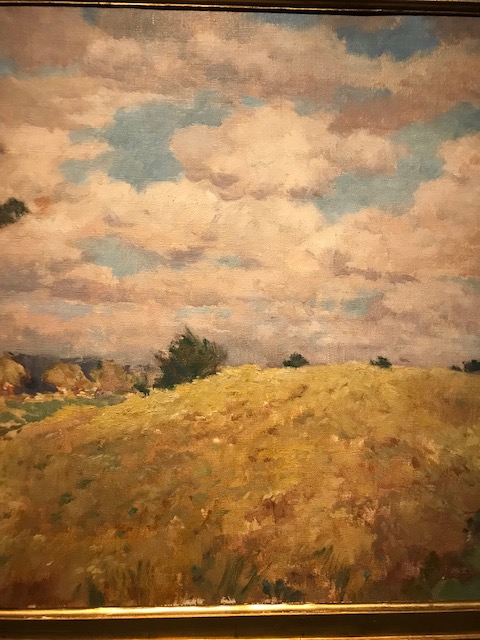
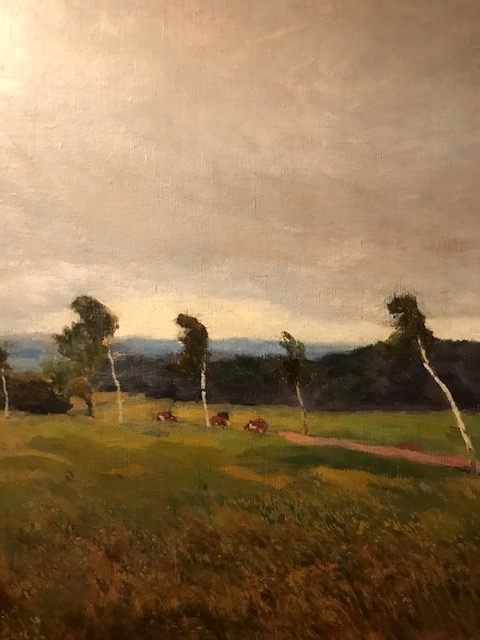
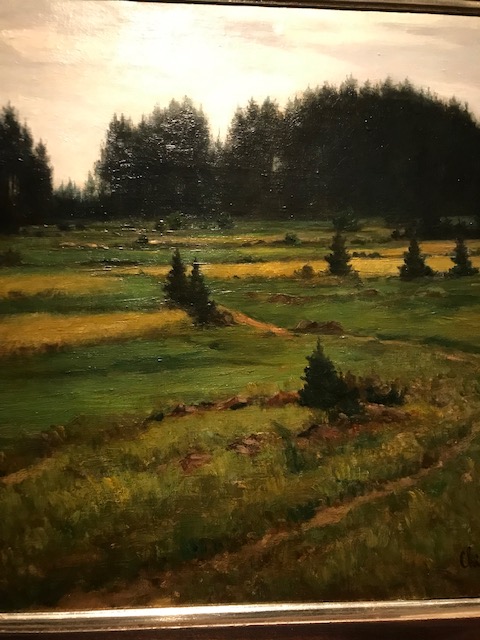
Meadow, Antonín Chittussi

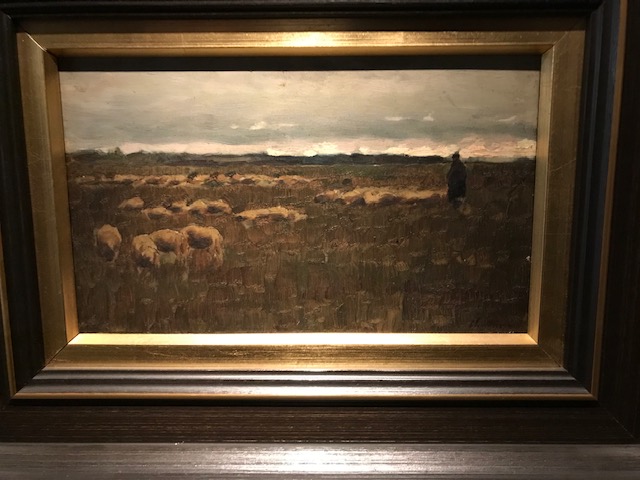
The work of one of the most important Czech painters of the 19th century, Antonín Chittussi, also was highlighted in the exhibition. His nature-themed canvases evoked strong emotions in me. His painting “Meadow” from 1886 made me take a deep breath as all tension and stress in my life momentarily disappeared. I also was gripped by his realist portrayal of sheep and a shepherd in “On the Pasture” (1882).

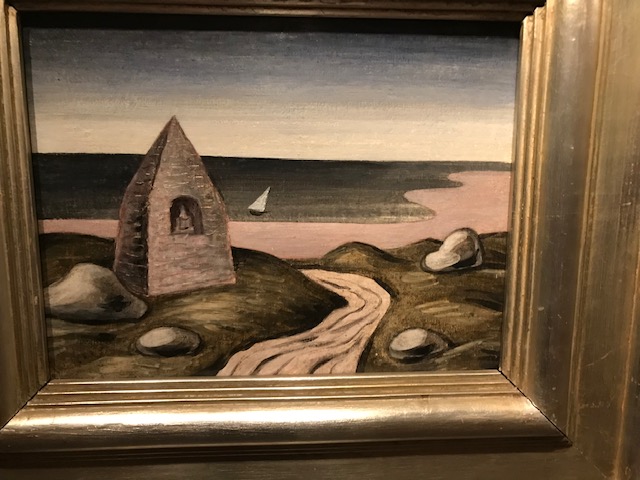
Chapel of Saint Brandan, Jan Zrzavý

Jan Zrzavý, one of my all-time favorites, was highly influenced by Italian primitive art and Symbolism. He also utilized light and color masterfully. His works have fantasy-like and mystical elements that correspond to magic realism. He didn’t only master painting but also graphic art, illustrations, teaching and scene design – all fields in which he worked for the National Theatre during the 20th century. Some of his paintings, such as his rendition of the “Chapel of Saint Brandan” (1946), evoke sadness and solitude, delving into the darkest depths of the human soul. I noticed the dominant greys in the painting, such as that of the gloomy winding lane. On the dark water floated a solitary sailboat.

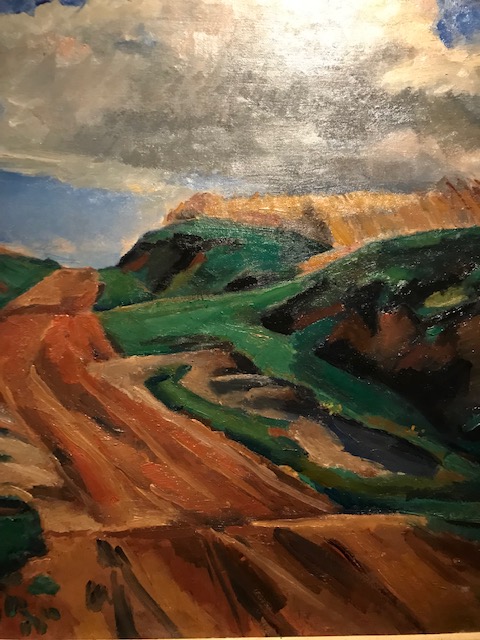
Summer Landscape, Václav Rabas

One of the first Czechs to receive recognition as a national artist, Václav Rabas studied under the guidance of Max Švabinský and fought on the front in World War I, where he was injured and subsequently sent home. Influenced by 19th century landscape painting and the art of Paul Cézanne, Rabas created canvases rich with color, and some of his works showed features of magic realism. I loved the vibrant colors in his Summer Landscape (1930). His landscapes concentrated mostly on his native Rakovník. Rabas was not only a landscape painter by any means. Indeed, he excelled at rendering the human figure with his 1923 cycle of “Czech Heads” that represented famous personalities. Rabas also created 24 paintings demonstrating how to make bread. 

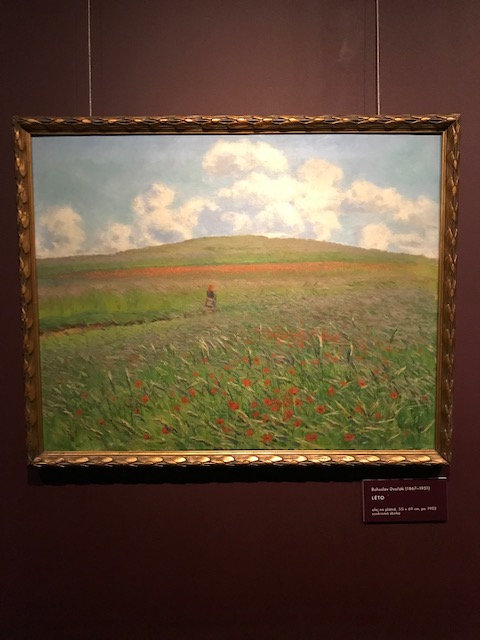
Summer, Bohuslav Dvořák

I felt like running through the meadow in Bohuslav Dvořák’s “Summer” (1902). I felt liberated, free to go my own way and follow my dreams while I peered at the painting. Dvořák studied under Mařák and began his career as a realist who was influenced by Chittussi. Later, though, he began to show more characteristics of Slavíček’s style. Color helped define his works, and some of his paintings had strong Impressionistic qualities.

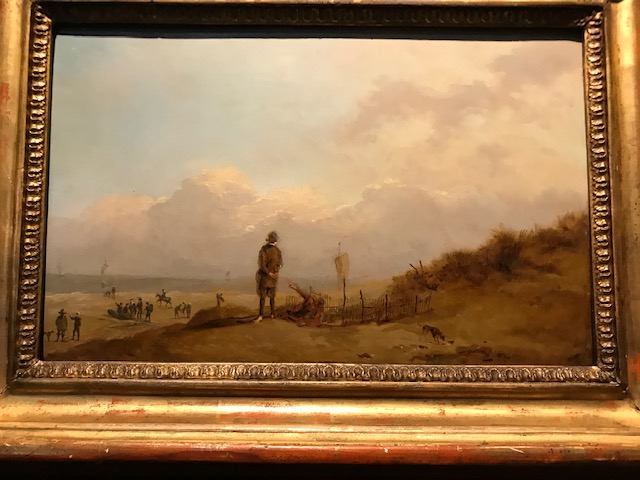
On the sea coast, Norbert Grund

I have loved the small landscapes by 18th century Norbert Grund for decades and was enthusiastic when one of his paintings was included in this exhibition. His “On the Sea Coast” (1750) shows a man with his back to the viewer as he gazes at the sea and beach, where other people were present. The versatile Rococo artist was known for genre paintings, landscapes and biblical works. Whenever I saw one of Grund’s creations, especially a landscape, I felt drawn into the world of the painting because the works entranced me so much.

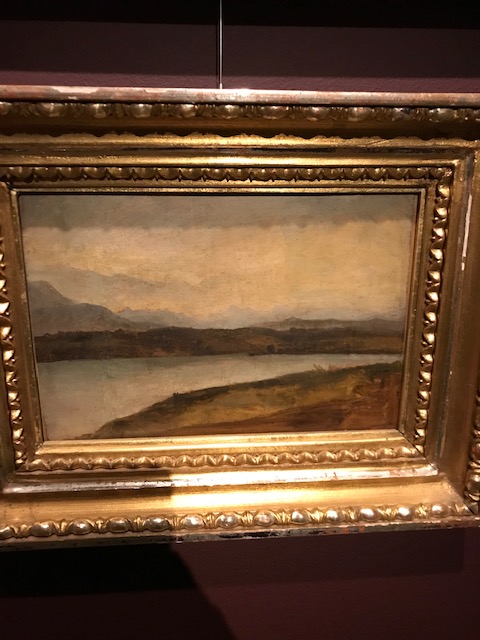
Motif from Gmundenu, Josef Mánes

Perhaps the most influential painter of the 19th century, Josef Mánes created “Motif from Gmundenu” in 1843. His landscape paintings and portraits fall into the styles of Romanticism and Realism. Hailing from a family of painters, Josef Mánes made around 500 works. Best known for painting the 1865 allegorical calendar on Prague’s Astronomical Clock, Josef Mánes also created portraits of Prague inhabitants and landscapes of the Moravian countryside.

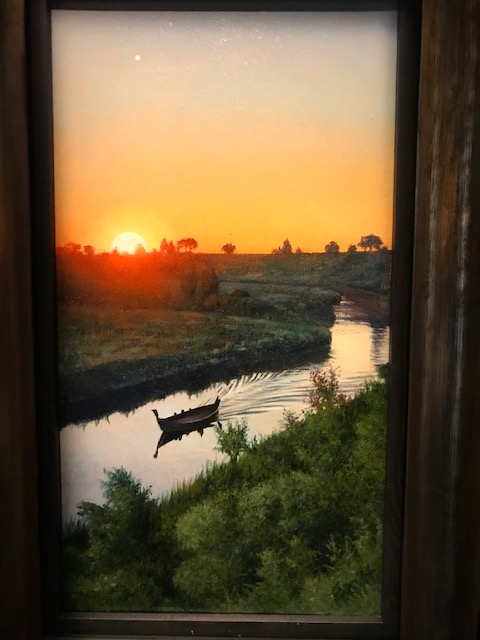
Sunrise – Horizon of Hope, Ivan Exner

Landscape, Vojtěch Malaník

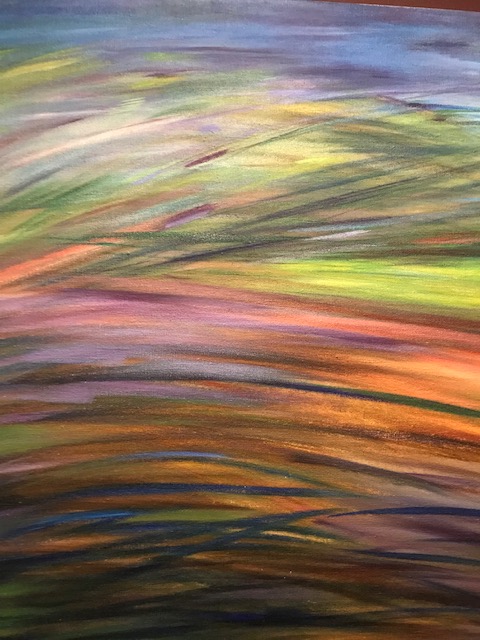
While some paintings hailed from the 18th and 19th centuries, others were contemporary and made just as strong an impression. Vojtěch Malaník’s “Landscape” from 2015 featured a mesh of lines of bright color, an abstract creation showing the vitality of nature in a very dynamic way. Ivan Exner’s “Sunrise – Horizon of Hope” (2024) was mesmerizing with its bright yellow sun rising in the pink and orange sky. An empty boat floated on the river as sunrays danced on the water.

On the Pasture, Antonín Chittussi

These are just a few of the masterpieces on display in this exhibition. Every painting spoke to me, narrating vibrant stories through nature, mythology and war. Lyricism and romanticism as well as realism punctuated this art show. While some stories were gloomy and foreboding, others were joyful and bright. I saw nature as a powerful force that mankind could not control. I sensed times marked by hope as well as days denoted by darkness. This was a poetic and powerful exhibition focusing on the joys and tribulations of life.

Kutná Hora, Jaroslav Šetelík

Tracy A. Burns is a writer, proofreader and editor in Prague.

Como, Bellagio and Menaggio Diary

One of my dreams was to visit the romantic towns on Lake Como, so I took a day trip to Como, Bellagio and Menaggio when I was in Milan during May of 2023. Unfortunately, the tour did not go to Varenna, a place I longed to see. Maybe next time. The tour only took us to one villa’s grounds, which were open to visitors. I saw the exteriors of many villas from the boat, but it was drizzling, and I was seated on the wrong side to get pictures. I hope to go back one day and visit Villa Carlotta, an architectural gem that includes a botanical garden with 150 types of azaleas, rhododendrons, tropical plants, cedars, palms and more. I heard that its interior is filled with superb art. Antonio Canova and Francesco Hayez are two of the artists represented in the villa’s art-dotted spaces. Maybe next time.

First, we visited the charming town of Como, located only 40 kilometers from the Swiss border. Our guide pointed out that former Fascist Prime Minister Benito Mussolini and his mistress had gone through Como while trying to flee to Switzerland and eventually to Spain. However, in April of 1945 he was arrested in Dingo, a town near Como and a day later shot in Giulino di Mezzegra.
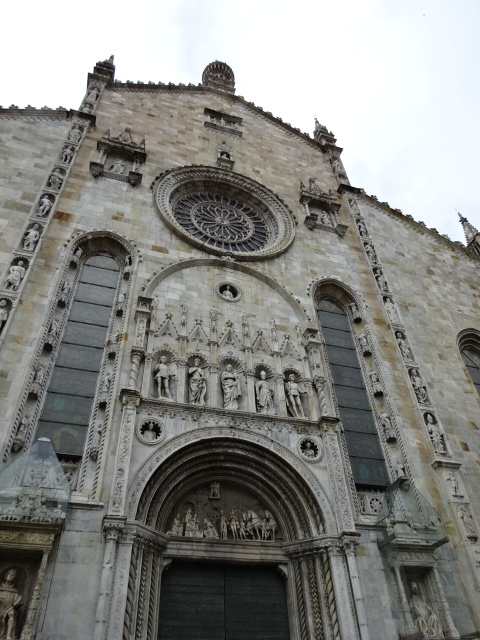
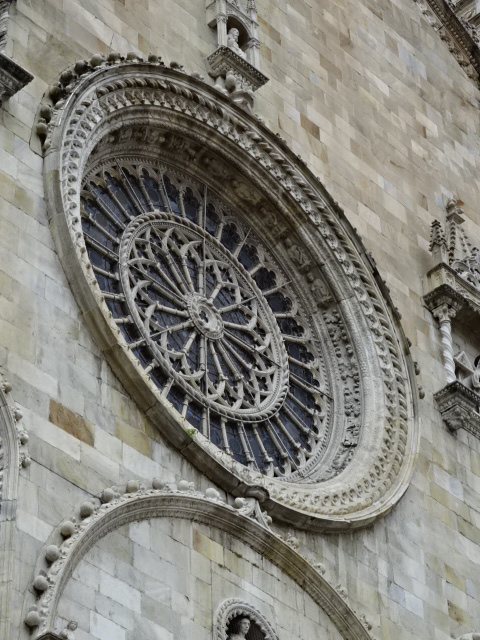
Upon reaching the center, I first noticed the cathedral, dedicated to the Assumption of the Blessed Virgin Mary. It had an impressive Late Gothic façade with sculptural decoration. The construction took a considerable amount of time; in fact, it took four centuries to build. I took note of the statues of writers Pliny the Elder and Pliny the Younger, natives of Como.

Inside, the cathedral had a Latin cross configuration with three naves divided by pilasters. The Romanesque sculpture was noteworthy. Three of Bernardino Luini’s paintings from the 16th century hang inside. Stained glass windows hail from the Gothic and Renaissance eras. The stunning cupola is Rococo while the main altar harkens back to the 14th century. What impressed me the most were the nine tapestries woven in the 16th century. They focused on themes such as the Eucharist, the Sacrifice of Isaac, the Adoration of the Magi and the Pentecost, for example.

The Basilica of Saint Abbondio is another sight worth seeing in Como. This Romanesque edifice included 14th century frescoes. Como also boasted of a very unique building designed during totalitarian times, the Caso del Fascio, which was erected from 1933 to 1936. The functionalist structure lacked any ornamentation. The Caso del Fascio served as an example of Italian architecture designed during totalitarian times. The Como-based building had four geometrical and opaque facades. Designed by Guiseppe Terragni, the place was occupied by the National Fascist Party until 1945, when various political parties had their offices there. Now the Finance Police calls the curious structure home.

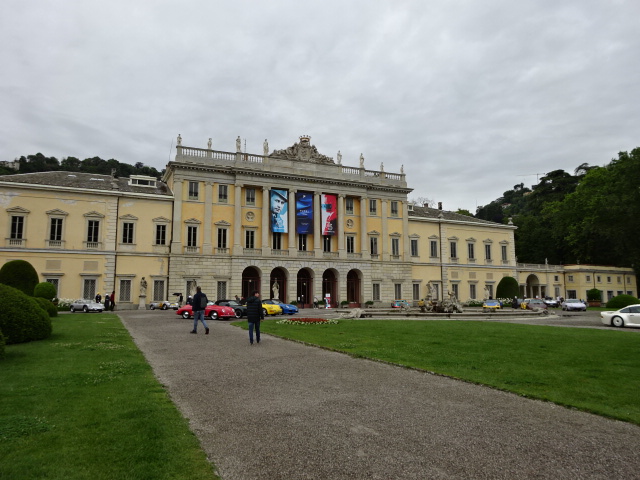
Walking around the center of Como, taking in the romantic atmosphere, was a real thrill. We also visited the grounds of the Villa Olmo, an impressive neoclassical structure dating from the 18th century. The lake views were outstanding, and the English style garden was beautiful.

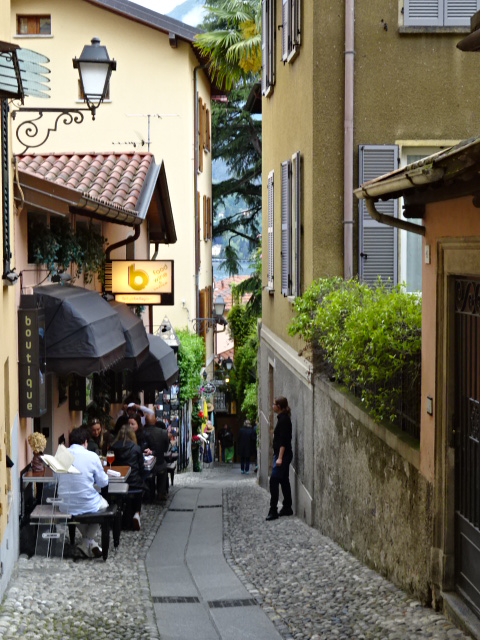
Bellagio was next on the itinerary. I ate a delicious lunch in an costly restaurant in this charming town with steep cobblestoned lanes dotted with some expensive shops. The historic center was made up of only three streets but also sported a park and marina. I walked up one steep street that had a medieval aura and found myself on the main square looking at the Basilica of San Giacomo and a tower. The basilica hailed from the Romanesque days of the 11th and 12th centuries and featured a Romanesque cross and Gothic triptych.

While I didn’t have the chance to visit any of the villas there, the Villa Melzi with its English style garden is worth mentioning. The luxurious structure inspired many of the rich to build villas on Lake Como during the 19th century. Franz Liszt composed many piano works there, inspired by the romantic atmosphere.

We also visited the quaint town of Menaggio with its quaint waterfront square. The three-naved Church of Santo Stefano Protomartire, built on a Paleochristian site, showed off frescoes from the 16th and 17th centuries. The Chiesa di Santa Maria had a neo-Gothic façade and included an artistic rendition of Saint Ambrogio as a young man. Other churches in the town are noteworthy, too. There are many villas in Menaggio, including the neoclassical Villa Vigoni. Goethe often traveled to that villa.

I did get a look at some villas where movies and some episodes of the show Succession had been filmed, and I saw a hotel where Greta Garbo had made a movie. Unfortunately, it wasn’t possible to take good pictures due to the rain slivering down the window and the location of my seat on the boat. I did like Richard Branson’s villa with its fairy-tale appearance, though.

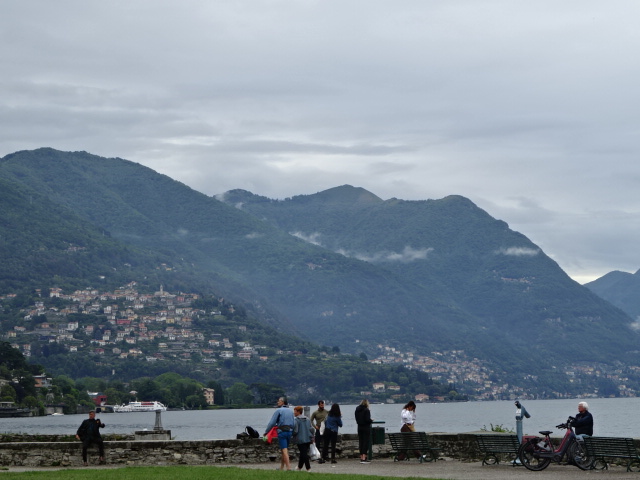
Even though it rained often while I was exploring the towns surrounding Lake Como, I enjoyed the romantic atmosphere that had inspired Liszt, Goethe and so many more. The towns were very crowded even on a rainy day. I could only imagine how crowded they must be in the summer on sunny days. I hope to return to Lake Como sometime, heading to Varenna or Villa Carlotta.

Tracy A. Burns is a writer, proofreader and editor in Prague.

Mucha: The Family Collection Exhibition Diary

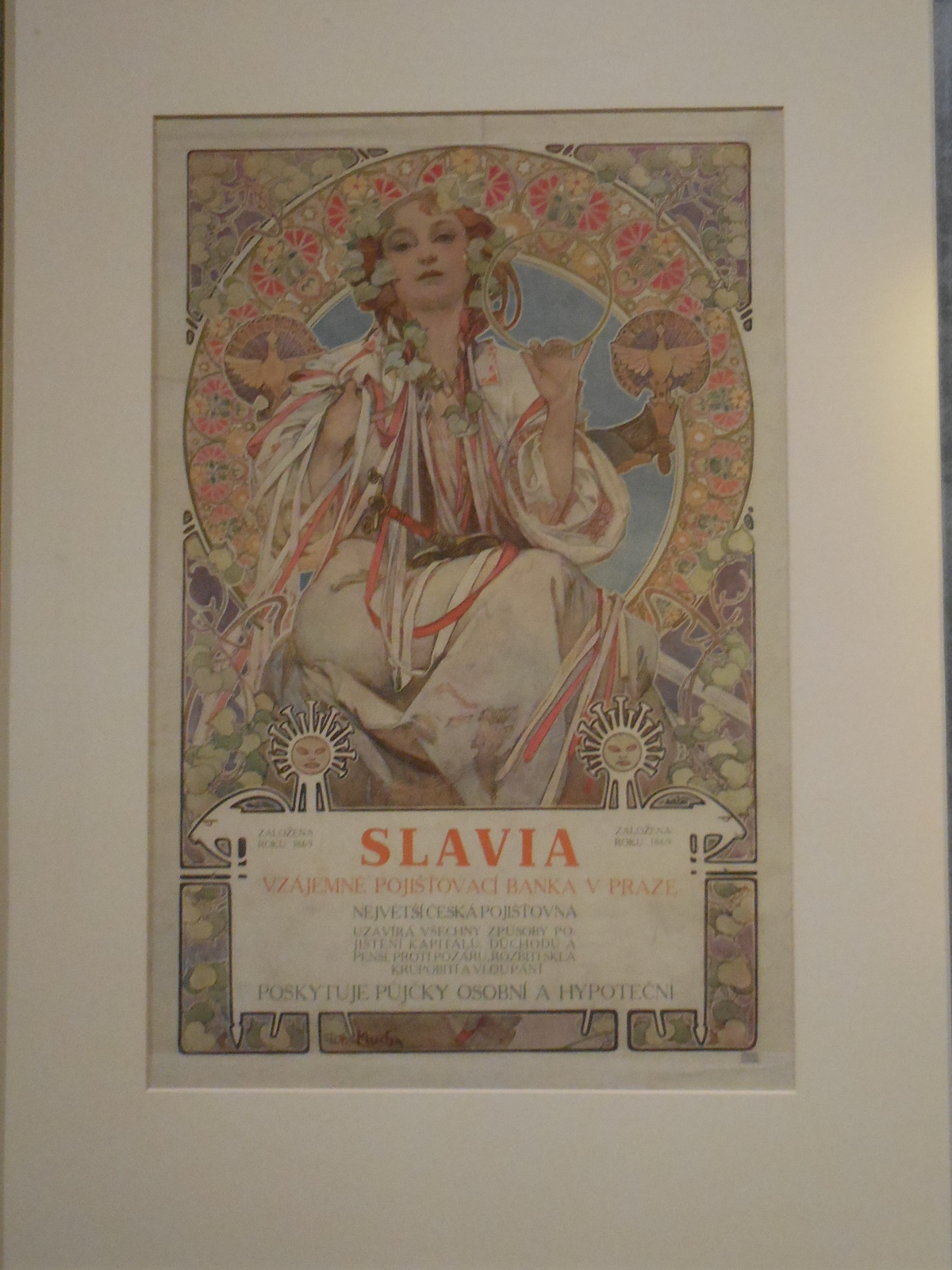
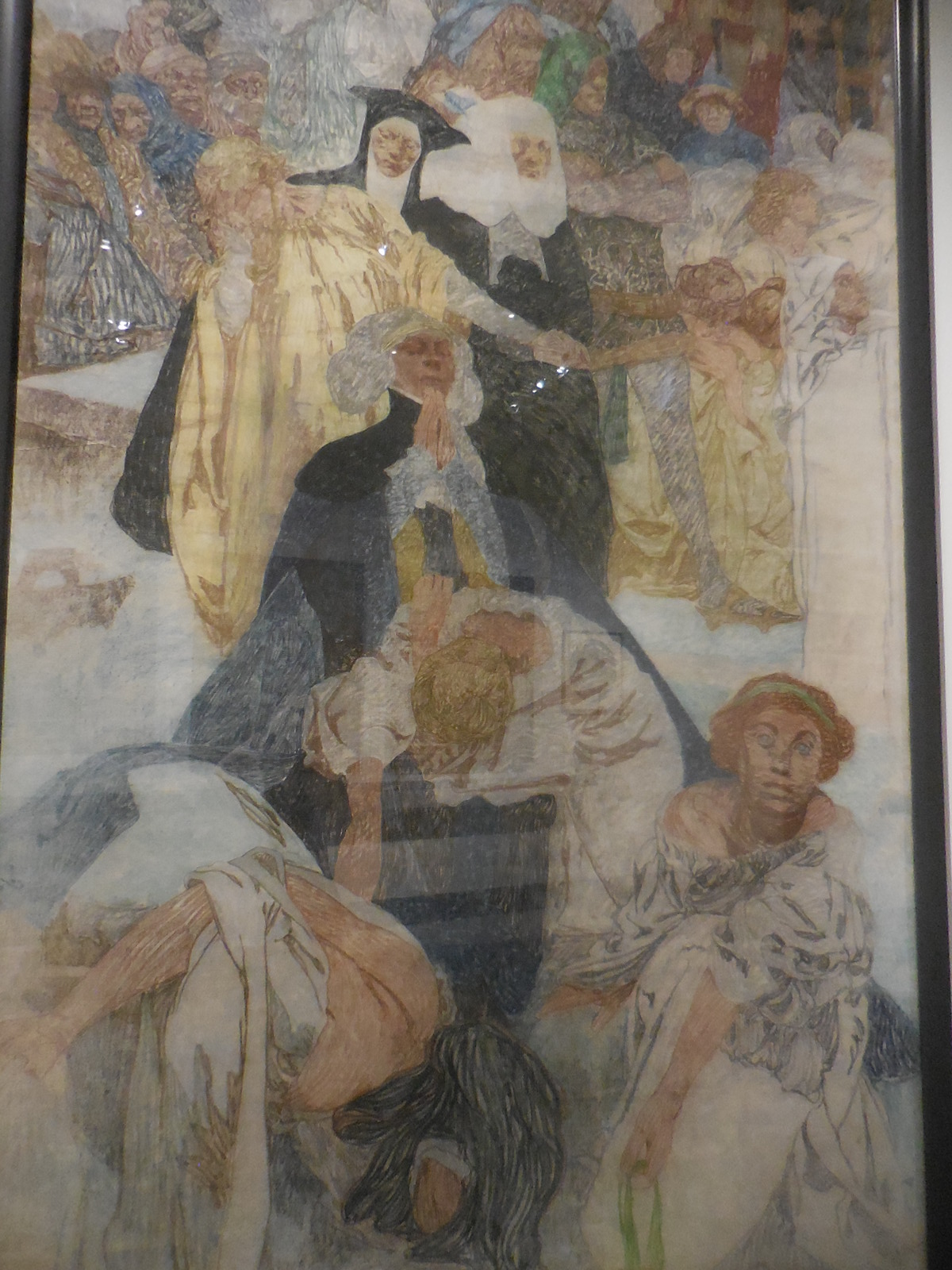
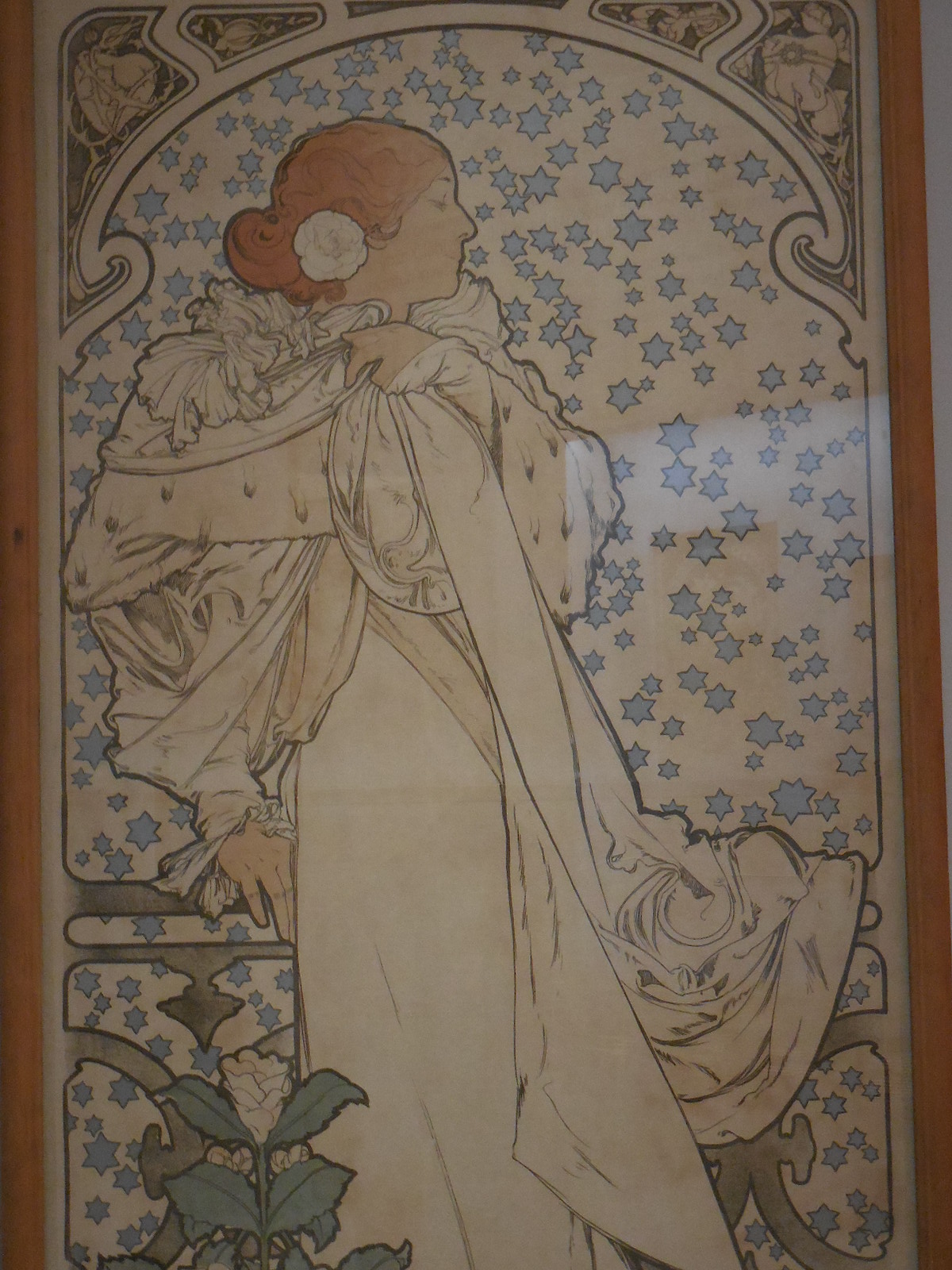
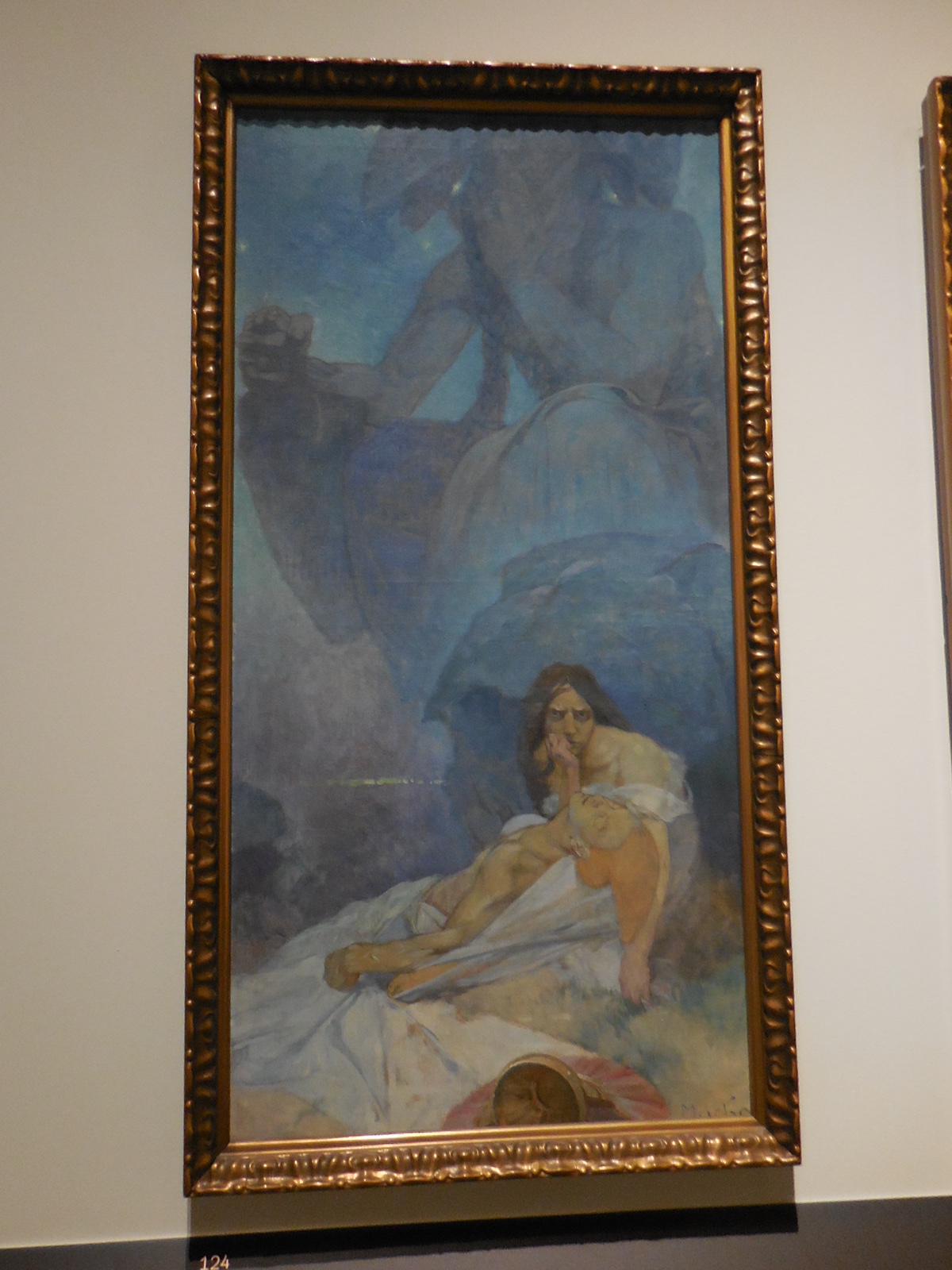
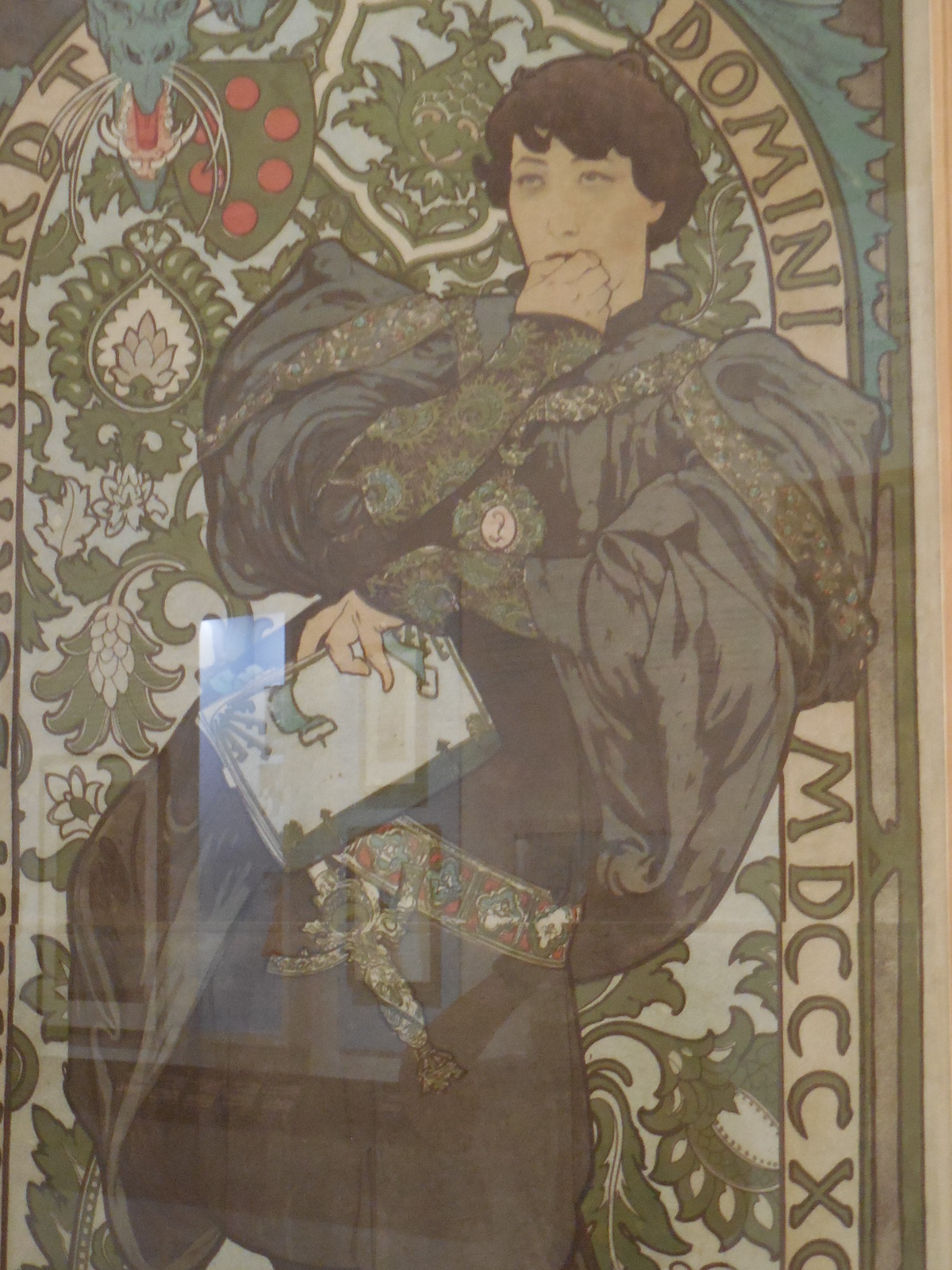
I have been a fan of Alphonse Mucha’s Art Nouveau works ever since I came to Prague in the 1990s. While he is best known for his exhilarating posters of actress Sarah Bernhardt, Mucha was a very versatile artist – as is evidenced in this comprehensive exhibition of creations owned by his descendants. The first extensive showing of his works in 30 years is housed at Prague’s Waldstein Palace. The exhibition highlights not only the advertising posters but also his drawings, paintings, sculptures, photos and jewelry, for instance. The family displays some originals to the public for the first time.  

Family portraits evoking Mucha’s childhood add an intimate feel to the exhibition. Born in Ivančice, Moravia, Mucha called home a building that also included the town jail. The Czech lands were under Austrian rule when Mucha grew up. They were part of the Habsburg Empire in which German was the official language. Yet, during that era, the Czech National Revival took place, when Czech nationalists promoted Czech culture and the Czech language.

At the end of 1894, Mucha became a star overnight when he designed a poster for Bernhardt’s production of Gismonda. The following year he created posters that decorated calendars, postcards and menus as well as theatre programs. His work would find enthusiastic audiences in Vienna, Prague, Budapest, Munich, London, New York and other cities during subsequent years.

I loved how, in his advertising posters, Mucha utilized folk features not only found in Czech art but also in Byzantine, Islamic, Japanese, Gothic, Judaic, Celtic and Rococo works. Much of this genre focuses on beautiful, young women with an optimistic and cheerful flair. They are wearing flowing robes in pastel colors. I loved the touches of floral and plant ornamentation plus arabesques and naturalistic elements, too.

The exhibition boasted family portraits and photos, such as those of his friends Paul Gaugin and Auguste Rodin. Gaugin even was Mucha’s housemate for a while. During the Paris Exposition Universalle of 1900, Mucha represented Austria-Hungary as the show focused on the accomplishments of the past century. I had not known that in 1899 Mucha had designed a jewelry collection that was featured at this major show. One of the jewelry pieces on display at the exhibition features a snake-shaped broach that Bernhardt wore during her portrayal as Medusa. I also was captivated by Mucha’s decorations for a German theatre in the USA. He would wind up making three trips to the United States, hailed by The New York Daily News as “the world’s greatest decorative artist.”

Works in the exhibition illustrated how mysticism had influenced him. His philosophy is also apparent in his creations. For example, he believed in beauty, truth and love to guide him on the spiritual path. For a monument he created a triptych called The Age of Reason, the Age of Wisdom and the Age of Love, fusing these three characteristics into one piece of art. Unfortunately, Mucha didn’t get the chance to finish it.

Perhaps what always captivates me the most about Mucha’s art is his emphasis on Slav identity. Indeed, his phenomenal Slav Epic paintings feature the heroic tales of the Slavs in 20 historical, symbolic canvases. Several reproductions of these works at the exhibition reinforced Mucha’s identity as a Czech and Slav patriot.

I saw panels devoted to Mucha’s decorations in the Municipal House, for which he designed numerous pieces – three wall panels, a ceiling painting depicting prominent Czech personalities, eight pendentives and furnishings. I remember seeing these for myself on tours of the Art Nouveau Municipal House, something I recommend to every Prague visitor. It is notable that, while Mucha’s works often were rooted in Slav identity in the past, he also looked to the future for a prosperous Czech nation.

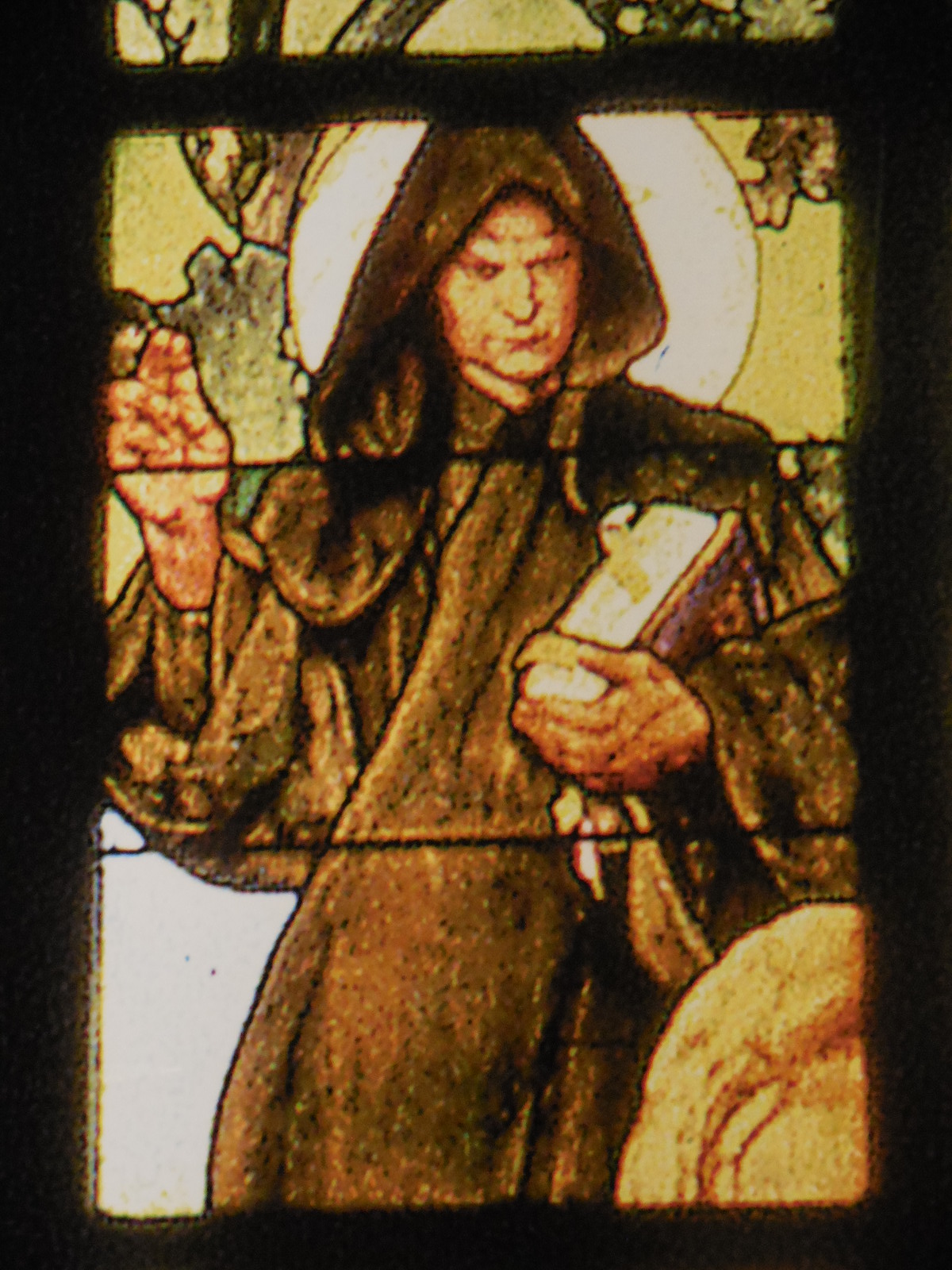
I was enamored by the reproductions of his stained-glass window designs. The originals decorate the interior of Saint Vitus’ Cathedral at Prague Castle. In 1931 he portrayed Saint Wenceslas, the nation’s patron saint, as a child with his grandmother Saint Ludmila in a central panel along with other panels featuring the lives and work of Saints Cyril and Methodius. Seeing examples of his colorful and vibrant stained glass renditions close-up was for me one of the highlights of this exhibition.

Mucha’s life was cut short by the arrival of the Nazis in Prague, where they set up the Protectorate of Bohemia and Moravia during March of 1939. The 79-year-old Mucha, riddled with health problems, was targeted by the Gestapo. Mucha was a Freemason, Judeophile and a promoter of democratic Czechoslovakia. He was one of the first to be interrogated by the Nazis. Mucha was stricken with pneumonia due to the strain from grueling interrogations and died in Prague 10 days short of his 79th birthday on July 14th, 1939. He is now buried in Prague’s Vyšehrad Cemetery along with other prominent Czechs.
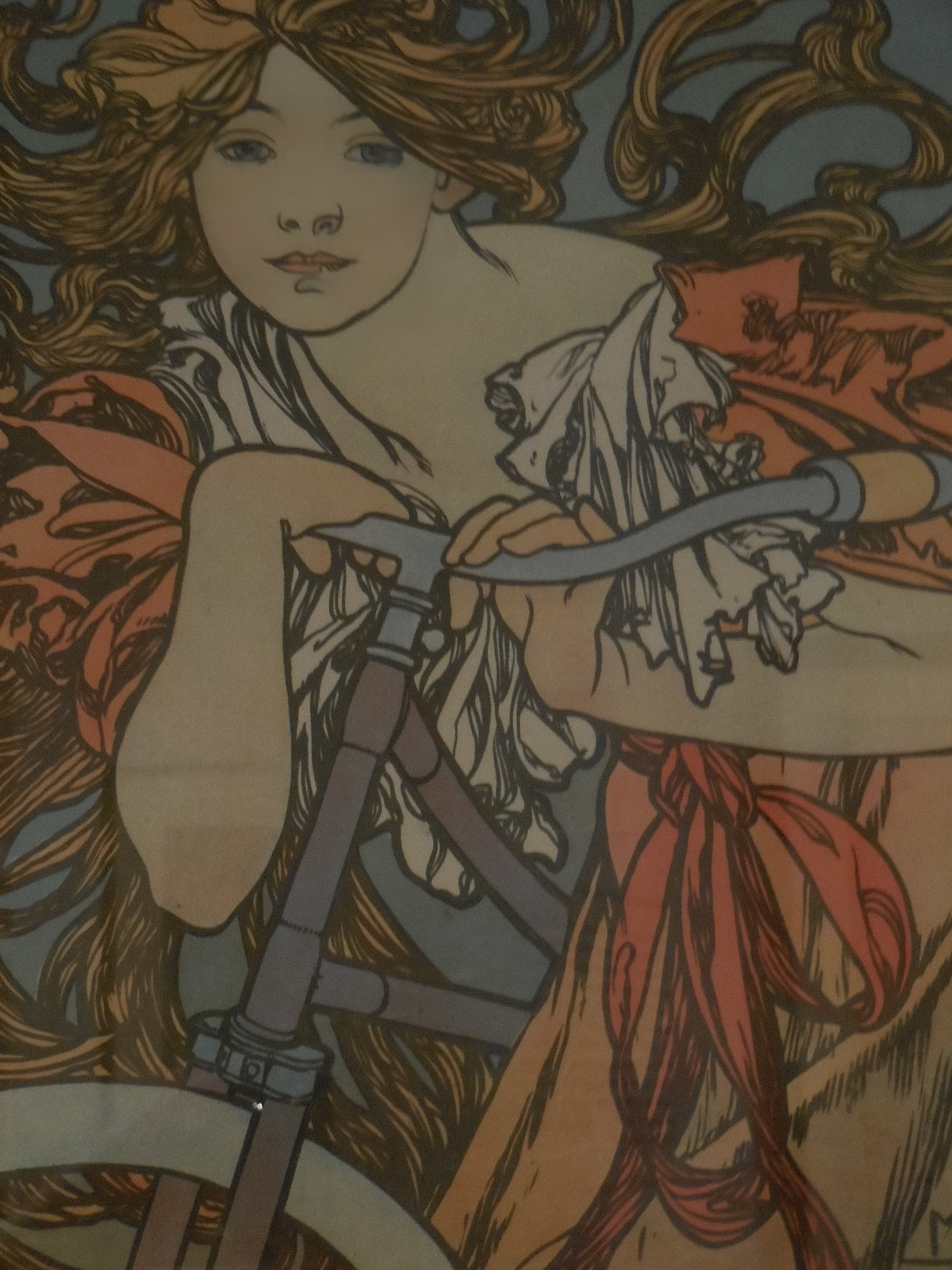
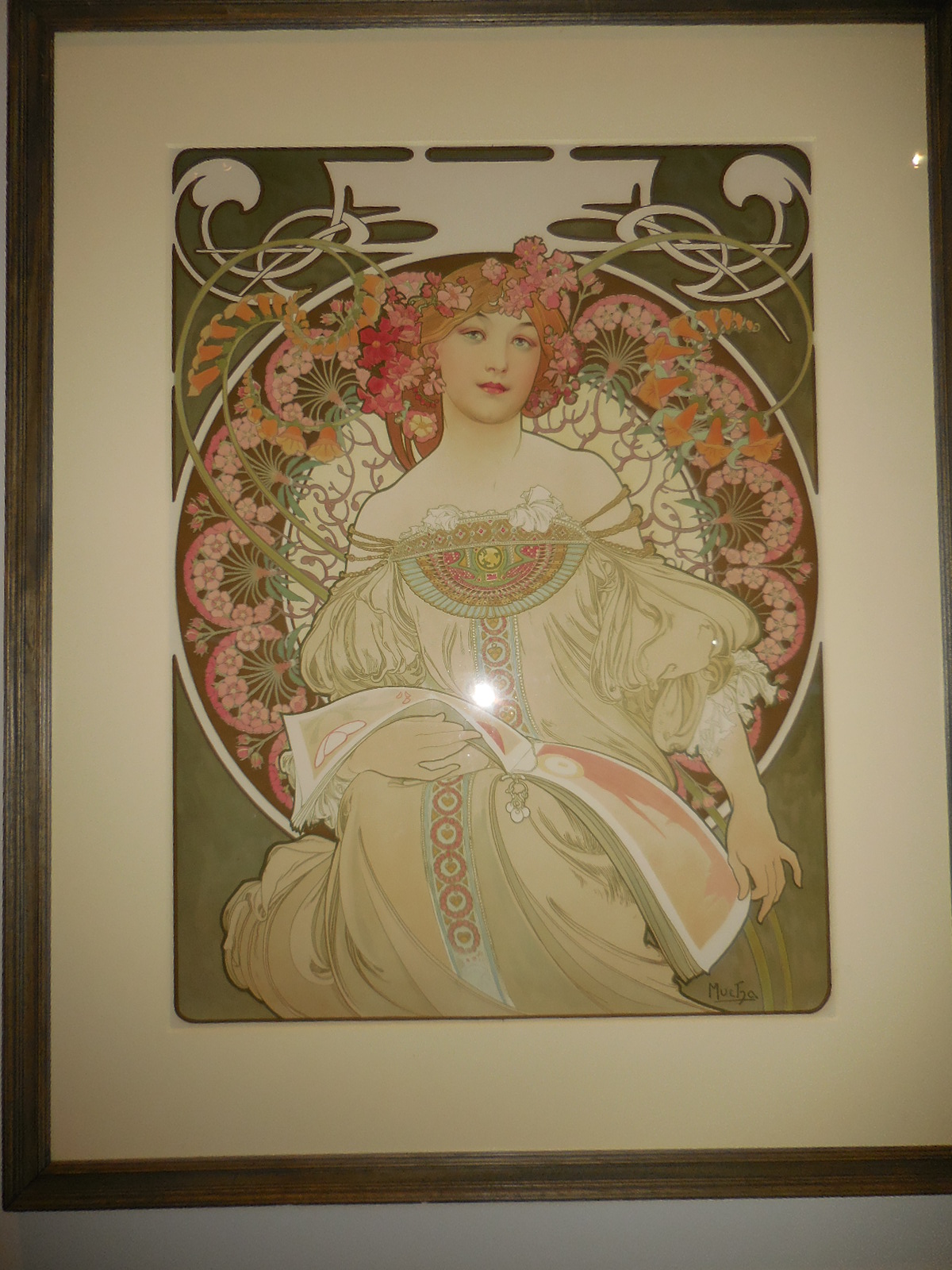
This exhibition takes museumgoers on a unique and unforgettable journey from his childhood roots in Moravia to his time as an outsider in Paris to his experiences in the democratic Czechoslovakia until his untimely death. It stresses his identity as a Moravian, as a Czech, as a Slav and as a European. It shows his accomplishments in the art scene by displaying an eclectic collection of his creations that profoundly punctuated the artistic world.
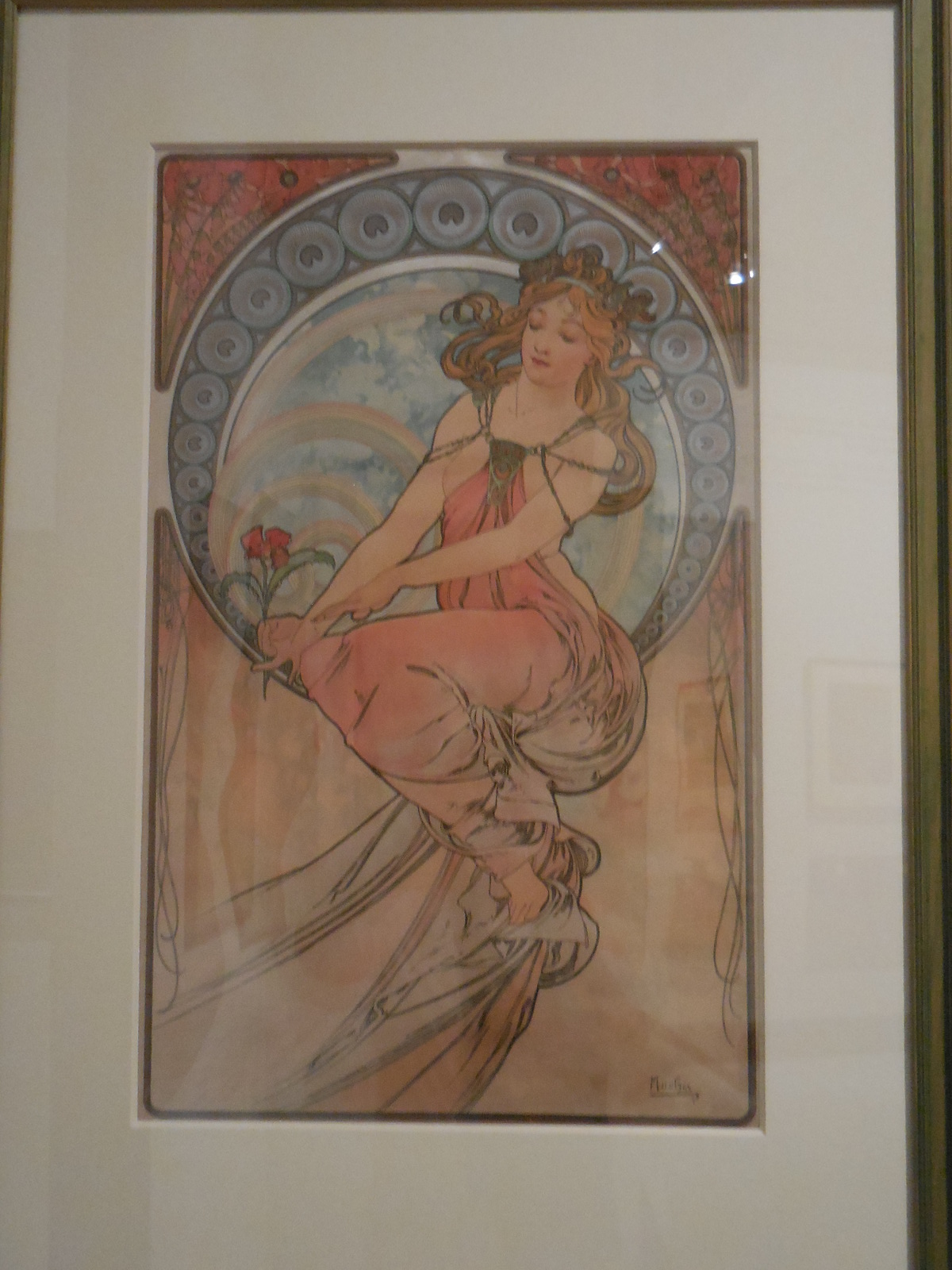
Tracy A. Burns is a writer, proofreader and editor in Prague.

Veltrusy Chateau Diary

I hadn’t been to Veltrusy since 1992 even though it was a mere 25 kilometers from Prague. I had been hoping to see the Baroque chateau again in 2001, but then that year the floods did major damage to the structure and the vast park. Reconstruction took 19 years. The chateau and park reopened with a flourish in July of 2021. I finally had a chance to visit during May of 2022.

The chateau was built in High Baroque style during the first half of the 18th century by František Maxmilián Kaňka as a summer residence for Václav Antonín Chotek, whose family would own the chateau until it was nationalized in 1945. Prague native of Italian origin Giovanni Battista Alliprandi worked magic on the chateau, too. In the courtyard I saw the Baroque statues by an unknown sculptor from the workshop of Matyáš Bernard Braun – some showed the months of the year, others were allegories of the four seasons. It was no coincidence that I thought of Braun’s statues of vices and virtues at the former hospital, Kuks. Inspired by Viennese architecture, Alliprandi had designed the east Bohemian jewel Kuks, although many of his projects had been built in Prague. I recalled that Alliprandi had designed Opočno Chateau, too. I hoped to set my eyes upon the elegant arcades of Opočno again sometime soon.

The interior did not disappoint. Both tours started off in the grotto with its exquisite painting of people and animals. Then we proceeded to the main hall with its stunning ceiling fresco and large portraits. One of the two monumental fireplaces in the room was artificial. One of the two elegant balustrades was also fake, though it was difficult to tell.

Rudolf Chotek, who had inherited the chateau from his father Václav Antonín, had worked for Empress Maria Theresa who spent a night in this chateau. This was a rare event because she usually stayed at Prague Castle or in a building the Habsburgs owned when she traveled. Her elegant bedroom was on display. Portraits throughout the chateau paid homage to the long-time ruler. Maria Theresa had come to Veltrusy for the trade fair, the first of its kind in the world. This large event took up space from the parking lot through the chateau grounds and promoted Czech manufactured goods. The empress was so impressed that she awarded Rudolf the Order of the Golden Fleece.

The first tour displayed mostly Baroque and Rococo styles. The tiled stoves were beautiful, especially one decorated with the body of a white serpent. What I liked best was the Chinese wallpaper that adorned a room. I also was impressed with other wallpaper that displayed red, blue and yellow designs as well as green foliage on a white background.

During the second tour we saw private rooms of the owner Jindřich Chotek and his family from the early and mid-19th century. Some décor harkened from the Renaissance era, too. Another highlight of my visit was looking at the paintings of Venice. I loved Italy, and the paintings brought back memories of my trip to Venice in 2005, when I wandered the romantic streets early one Sunday morning, practically having the city to myself. Some black-and-white etchings also captured my undivided attention.

We walked through the idyllic park, which is one of the oldest in Europe. At one time, boats had floated down a canal that had gone through the park. By the end of the 19th and beginning of the 20th century, the condition of the park and chateau had deteriorated. Now it has been revitalized, dotted with four Classicist and Empire style pavilions, many statues and rare wooded species. Forests, meadows, gardens and fields all made up the park that spans 300 hectares.

After a delicious lunch at the chateau restaurant, we made the short trip back to Prague.

Tracy A. Burns is a writer, editor and proofreader in Prague.

Český Šternberk Castle Diary

Steep steps took me to the top of Český Šternberk, a massive Gothic structure that has an interior just as exciting as its colossal exterior. I had been there more times than I could count – with tour groups, friends, alone. The castle loomed over the surrounding countryside as it was situated 350 meters above sea level. When I had been on a tour of churches in the Posazaví region, our bus had even stopped in front of the castle because it dominated the area. This time I had come by car with a friend. We donned masks during the tour because of rules concerning the pandemic.

Whenever I visited this castle, I thought of George from Australia, my sixtyish friend whom I had met on a tour here in 1993. We spent some time together during his stay in Prague that summer and then became pen pals. About a year later, I received a letter from his daughter saying that he had died unexpectedly. I hadn’t known him well, but it was shocking all the same. So, whenever I come here, I realize how important it is to make good of the time you have with friends because they won’t be there forever.

Soon I gave the castle my full attention. I focused on the exciting history of Český Šternberk. Inside, it was hard to miss the eight-pointed star that symbolized the Sternbergs (in English the dynasty is spelled Sternberg not Šternberk), a name that harkens back to the original owner of the castle. In the mid-13th century, Zděslav of Divišov was responsible for the construction of this castle. He changed his name to a combination of the German word for star (stern) and the word for hill (berk).

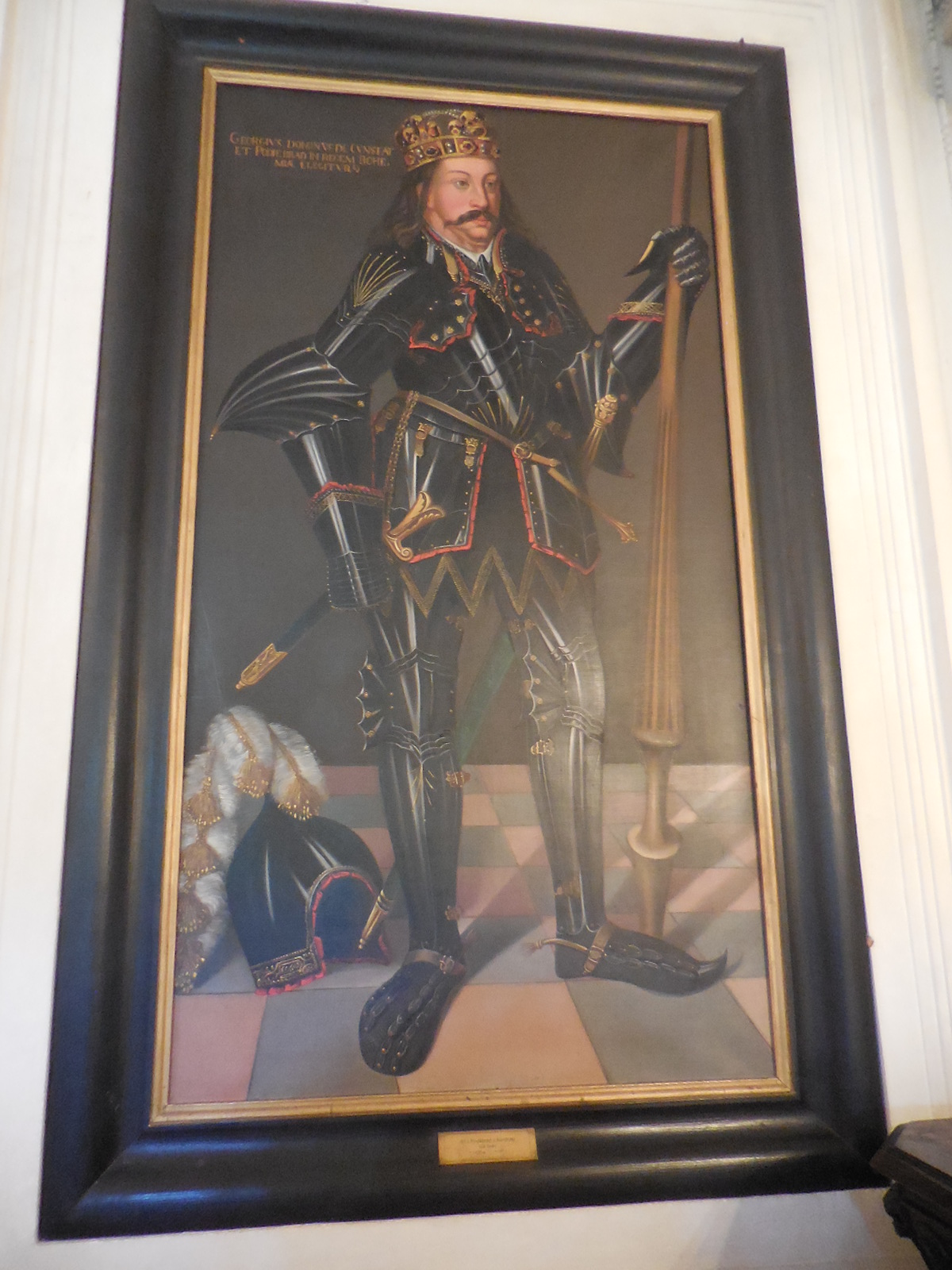
Armor-clad George of Poděbrody
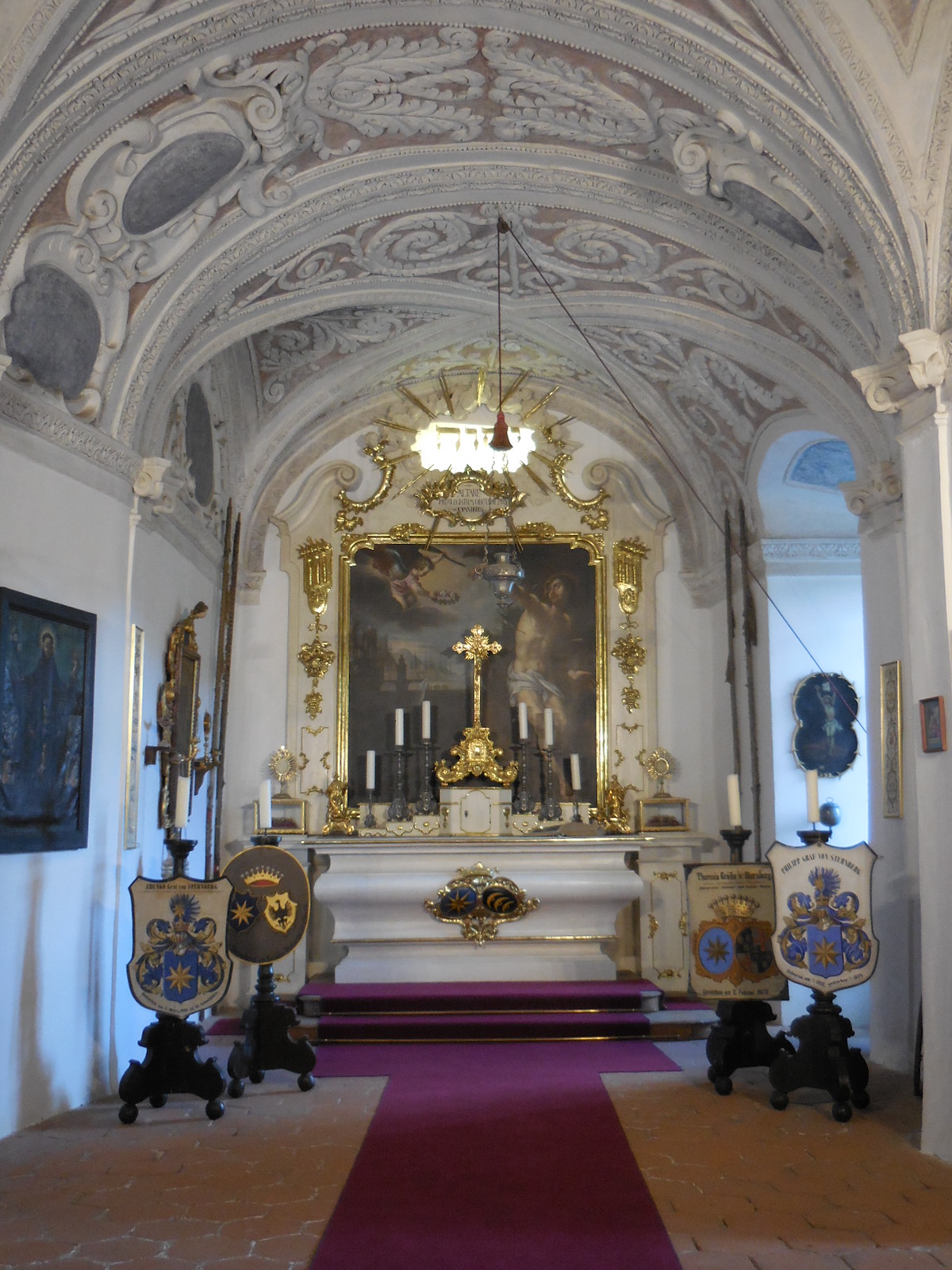
Chapel off the Knights’ Hall

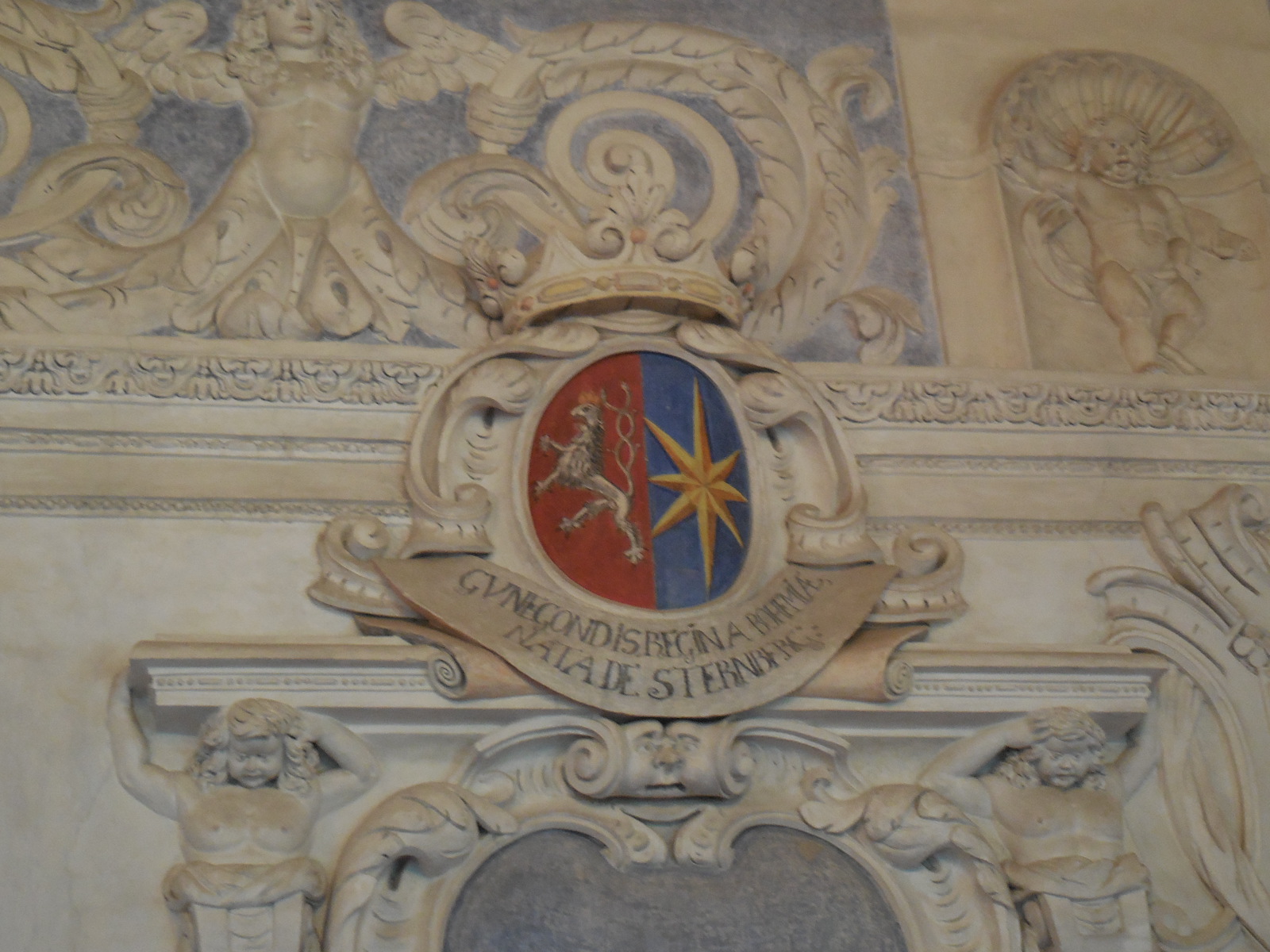
In the Knights’ Hall, the vast first room, a portrait of Czech King George of Poděbrady, who had been related to the Sternbergs, hung prominently. A coat-of-arms representing the marriage of George of Poděbrady to Kunhata of Sternberg featured prominently in the space along with many other intriguing coat-of-arms. Indeed, George of Poděbrady influenced the history of the castle. During the 15th century Hussite wars, Catholics including castle owner Petr Sternberg fought against Hussite Czech King George of Poděbrady, who promoted the Utraquist religion. In 1465 Zdeněk Konopistský Sternberg even fought against George of Poděbrady, who was victorious and even destroyed the castle. George of Poděbrady would be the only ruler to conquer Český Šternberk.

Jiří Sternberg

Reconstruction took place in the 15th and 16th centuries. The Thirty Year’s War caused much damage and other difficulties. Still, the castle survived. Due to early Baroque reconstruction in the second half of the 17th century, Český Šternberk could no longer be used for defensive purposes. When the last member of the Holič branch of the Sternbergs passed away, there was not an heir, and the Sternbergs lost the castle. However, they would make a comeback in 1841 when Zdeněk Sternberg purchased it. The castle would remain in the family until 1949. The Communists took over the castle in 1949, but owner Jiří Sternberg was allowed to reside at the castle with his family in two small rooms. Jiří worked as a castle guide during the totalitarian period. He died in 1964. Due to his diligence and attention to detail, a precise inventory was created. This is why it is possible to see many of the original possessions there. A few years after the Velvet Revolution, Zdeněk Sternberg received the castle in restitution. Some 20 generations of Sternbergs have worked and lived there since the castle was built.

The first room, the Knights’ Hall, has always been my favorite. Every time I stepped inside, I felt overwhelmed by the beauty of the large space with 17th century stucco decoration and two Czech crystal chandeliers weighing 250 kilograms each. An eight-pointed Sternberg star decorated the floor. On the walls portraits of generals from the Thirty Years’ War stared at me. George of Poděbrady’s painting also made an appearance. A variety of chairs were situated in this space. Some cozy-looking seating dated from the early 20th century while others hailed from the Gothic and Renaissance periods. I especially was drawn to the 17th century Florentine cabinet. The semi-precious stones and pieces of marble decorating it were sublime.

You can see the eight-pointed star in the coats-of-arms above.

The Sternberg star was evident in the Dining Room, too, another of my favorites and the second largest room. A Bethlehem star was shining in the night sky of a painting of the Three Kings adoring Jesus. Of course, the star had eight points.

I loved the wall painting of idyllic landscapes in the Yellow Salon. I also was captivated by yellow because it had been the color of my mom’s kitchen, where I grew up. The color symbolized for me my mother’s optimism and calming voice telling me my problems would soon be solved, the sun would soon be out. The ceiling was captivating, too. The 18th century stucco ornamentation was amazing. In the Ladies’ Lounge, the ceiling was no less spellbinding. I was enamored by the Baroque frescoes above me. It intrigued me that the 18th century Rococo chairs lacked armrests. Ladies had donned such wide and huge dresses that the armrests were not needed. I would have loved to have been seated at the writing desk hailing from the second Rococo period. What kind of letters would I have written at that desk decorated with carved ivory? Perhaps letters to my parents and friends in the USA.

Dutch Baroque style grandfather clock

I also was excited to find some Dutch Baroque furniture in another space. The furnishings had a floral theme. Some paintings showing the Thirty Year’s War were on display here, examples of battle scenes from the 545 paintings in the Sternberg’s collection that depicted the conflict. My favorite of these renditions is the one showing the Charles Bridge. Back then, it was the only bridge joining both banks of the Vltava River.

Painting supposedly by Petr Brandl

The main altar in the chapel was home to the painting called The Passion of Saint Sebastian as the religious space is dedicated to that saint. What I liked best about the library was a painting that was said to be Apostle Peter, though he is depicted without attributes. The surprised expression on the face of the figure with the thick beard intrigued me. It was probably created by my favorite Baroque painter, Petr Brandl. I recalled his paintings in the cathedral of Sedlec near Kutná Hora. I had been enamored by so many of his works throughout the decades.

I was also astonished at the beauty of the Oriental Antechamber, which was decorated in furniture made from mother-of-pearl and ivory. I have always loved visiting Oriental rooms in castles and chateaus because they remind me of my mother’s fondness for antique Chinese porcelain and how I had come by pieces in various cities in different countries.

Battle of Hradec Králové

A painting that interested me in the hallway that showcased a variety of artifacts at the end of the tour was one by Filip Sternberg, a talented artist who had studied under the tutelage of Art Nouveau master Alphonse Mucha. My parents and friends always enjoyed visiting the Mucha Museum when they came to Prague. The rendition by Sternberg showed the Battle of Hradec Králové (also known as Koeniggraetz), which is situated in east Bohemia. During that 1866 conflict, the Austrians were defeated by the Prussians. Filip had painted the scene masterfully even though he had only been 14 years old when the actual battle had been fought.
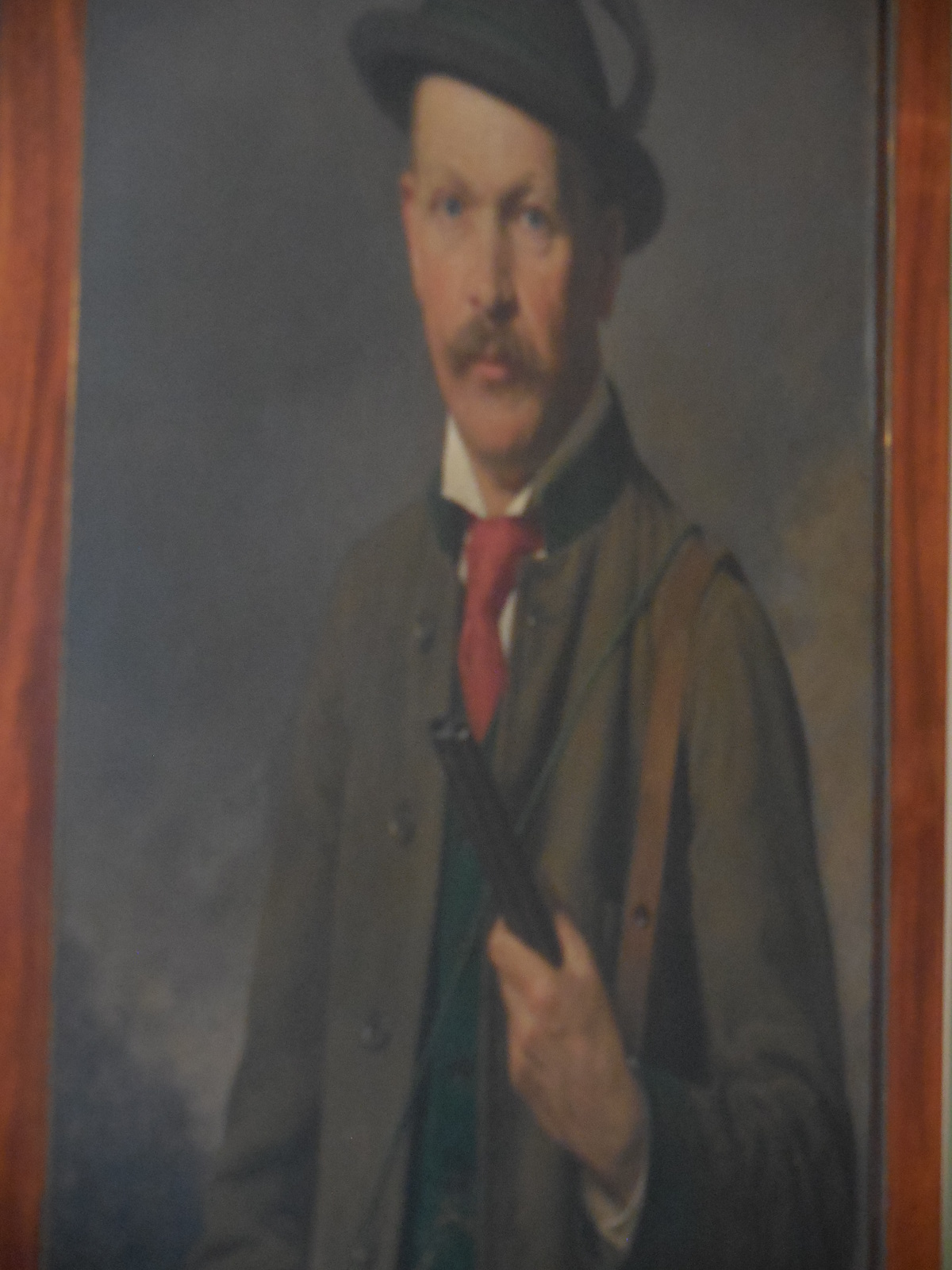
Pipe collection

I always leave this castle realizing it is one of the most beautiful castles in the Czech lands if not the most beautiful. This time we retreated to the restaurant below and had a delicious lunch before making our way back to Prague.

Rest In Peace, George.

Tracy A. Burns is a writer, proofreader and editor in Prague.

2021 Travel Diary

Bust of first President of Czechoslovakia, Tomáš Garrigue Masaryk from TGM Museum in Lány

This past year my travel was once again marred by the dangers of the pandemic, and I didn’t want to take any unnecessary risks. I took day trips in the Czech Republic during the summer months, when the chateaus and castles were open. While I did not wander far from Prague, these trips did provide me with a fresh perspective of the world around me and of my own life. I tended to spend most of my time at home as a sort of recluse, and these trips offered me a chance to appreciate the world around me. Fears of getting coronavirus despite being vaccinated prevented me from gathering with friends in cafes. When I went on these trips, I traveled with a good friend, and that also helped keep me sane. We always went by car, which was much easier and much more comfortable than going by public transportation.

Tomáš Garrigue Masaryk
Czech soldiers during World War I

Our first trip in late May was to Lány, where the presidential summer residence was located along with its stunning park. I also visited an intriguing museum dedicated to the founder of Czechoslovakia and its first president, Tomáš Garrigue Masaryk. I had named my cat Šarlota after the first First Lady of Czechoslovakia, American Charlotte Garrigue Masaryk. (Šarlota is Charlotte in Czech.) I also paid my respects to the Masaryk family at the cemetery nearby.
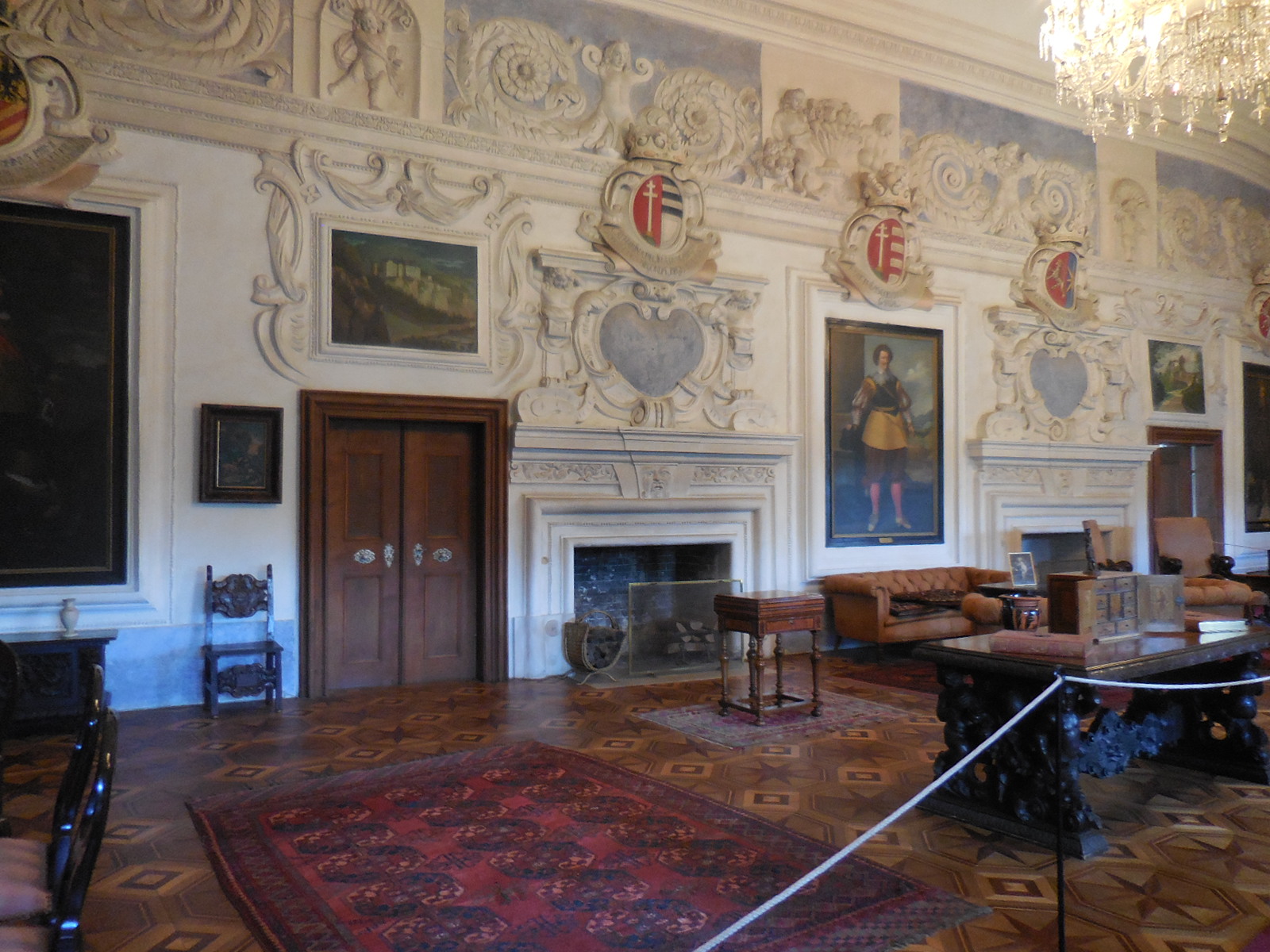
Furnishings from the First Republic period
Panels explaining architecture and construction during the First Republic

The museum highlights, for example, Masaryk’s time as head of the government-in-exile in London and his trip to the USA to convince US President Woodrow Wilson to support Czechoslovakia becoming a country of its own. Masaryk abdicated due to poor health  after 17 years in office. His many accomplishments and problems during his tenure are well-explained in these exhibits. One section shows off the role of the Czechoslovak legions fighting in Russia as part of the French army during World War I. Intriguing information about society and sport during the First Republic are on display, too.
The Masaryk graves in Lány

Then we went to the cemetery, where simple slabs mark the graves of Tomáš, his wife Charlotte (who died in 1923), son Jan and daughter Alice. I admired the modest yet eloquent gravestones in a quiet part of this cemetery. I recalled watching a film about Tomáš’ son Jan, a prominent politician whom the Communists pushed out a bathroom window to his death. I had visited the scene of the crime in the Ministry of Foreign Affairs palace some years ago, when an employee showed me around. I recalled that Tomáš, the first president of Czechoslovakia, had died at Lány chateau, where we were headed next.

Lány Chateau
The park at Lány

Only the park was open to the public. I had fallen in love with this park during my first visit back in the summer of 1991, less than two years after the Velvet Revolution had toppled Communism in Czechoslovakia. Lány Chateau has served as the summer residence of Czechoslovak and Czech presidents since the state purchased it in 1921. From the late 17th century until 1921 it was the property of the Furstenberg family. In earlier days it had even been owned by Holy Roman Emperor Rudolf II. Masterful Slovenian architect Josip Plečník had decorated the park during Masaryk’s tenure. A symbolic, spectacular fountain, two ponds, three small bridges, a cottage with fairy-tale decoration, beehives and Neo-Gothic Riding Stables all mesmerized me along with a greenhouse. Walking down the main chestnut-lined path, I saw better the beauty of the world around me as well as the beauty inside me. I tried to imagine Masaryk riding one of his beloved horses in the park or seated on a bench talking with prominent Czech writer Karel Čapek, one of my favorite authors.

Červená Lhota Chateau
Interior of Červená Lhota Chateau

We made the trip to the fairy-tale bright red chateau Červená Lhota, which used to be surrounded by water. Alas, there is no water around it now. I recalled my first visit, when I was entranced by the reflection of the cheerful-looking structure in the pond. I also recalled my first attempted trip to the chateau, more than 15 years earlier, when I mistakenly traveled to another village with the same name in an entirely different part of the country. I also recalled the four friends I had made the first time I was successful at traveling to the chateau, walking the 10 kilometers from the train station while talking about life with my friendly companions.

Interior of Červená Lhota Chateau

The chateau got the name Červená Lhota – červená means red in Czech – during 1597, when it was painted that color. Legend claims that the devil had kidnapped a lady at the chateau, and she had died. After her murder, a spot of blood could be seen under a window of the then white façade. Another legend says that her blood had covered the chateau exterior, and the red color was permanent. Perhaps the family best associated with the chateau is the Schonburg-Hartenstein clan, who owned it from 1835 for 110 years. Indeed, the interior took its appearance from the start of the 20th century, when this family was in residence. We saw mostly authentic furnishings, which is always a treat. The painted ceilings, superb artwork, elaborate clocks, beautiful tiled stoves, intarsia-decorated furniture and graphics collection all held my undivided attention.

Jemniště Chateau

Another week we traveled about an hour from Prague to Jemniště Chateau, a Baroque gem completed about 1725, though most of it burned down in 1754 and had to be rebuilt. Leading Czech Baroque painter Václav Vavřinec Reiner and legendary Baroque sculptor Matyáš Bernard Braun did some of the reconstruction. The Sternberg family took possession of the chateau in 1898, but it was confiscated by the Nazis in 1943 and then nationalized by the Communists in 1951. After the Velvet Revolution, the Sternbergs did get the chateau back, and some members of the family live there today.

Park of Jemniště Chateau
Jemniště Chateau from the park

The Main Hall was astounding with four portraits of Habsburg rulers on the walls, ceiling frescoes with mythological themes and a superb rendition of three allegories of the four seasons. In other spaces, I loved the Dutch Baroque furniture with colored woods. Saint Joseph’s Chapel featured remarkable frescoes.

Český Šternberk Castle in the distance
View from Český Šternberk Castle

Another trip took us to Český Sternberk Castle, which is, in my opinion, the most impressive of the three medieval castles in Central Bohemia, outdoing Karlštejn and Křivoklát. The exterior is imposing Gothic with a steep climb to the entrance gate. The interior spaces are decorated in various historical styles from Renaissance to Rococo. The castle dates back to the mid-thirteenth century, when Zdeslav of Divišov changed his name to Sternberg, the family that owns the castle today. When the Communists took the castle away from then owner Jiří Sternberg in 1949, he and his family still resided there, allowed to use only two small rooms. Jiří even gave tours of the castle. At long last, in 1992, the current owner got the property back.

Interior of Český Šternberk Castle
Knights’ Hall

The Knights’ Hall dated from around 1500 and features ornate 17th century stucco adornment. Life-size portraits on the walls showed generals from the Thirty Years’ War and King George of Poděbrady. Two 250-kilogram Czech crystal chandeliers amaze. This was the first but certainly not the last room where the eight-pointed Sternberg star had a prominent presence. The Yellow Salon featured its Empire wall painting of idyllic country scenes. The Dining Room showed off marvelous paintings. Dutch Baroque furniture with a floral motif graced another room. On the tour, we saw many renditions of battles – Sternberg owns 545 paintings of the battles during the Thirty Years’ War. Paintings by Filip Sternberg also are on display.

Karlštejn Castle from the picturesque main street

It was stupid of me to book a tour of Karlštejn Castle for a Friday afternoon. Traffic was hell, but there was nowhere to turn back. It was scorching hot. We walked up the steep road to the castle, gasping for air and needing a few short water breaks. Astounding Gothic Karlštejn Castle loomed above us. Its history was legendary. The castle was constructed for Holy Roman Emperor Charles IV in 1348, and the crown jewels of the Holy Roman Empire had been stored there until 1420. Throughout the centuries, the castle would never be totally conquered. Even a seven-month siege by the Hussites in the 15th century was successfully warded off. I had been to Karlštejn many times but not for some years. The Church of the Assumption of the Virgin Mary showed off beautiful 14th century frescoes. The walls of the small Chapel of Saint Catherine were decorated with exquisite frescoes and semi-precious stones.

Entrance gate at Karlštejn Castle

Gothic frescoes are by no means in short supply on the tour that included the chapel.  On one ceiling about 40 angels played various medieval instruments. The Chapel of the Holy Cross, the highlight of the tour, dazzled with its ornate decoration. Designed by Charles IV, the space featured semi-precious stones and 129 paintings of saints, popes, knights, emperors, martyrs, kings plus the Apostles and others. The legendary Master Theodoric, Charles IV’s court painter, created the impressive works. The gold ceiling was adorned with thousands of stars made from Venetian glass.

Blatná Chateau

Unlike Červená Lhota, Blatná in south Bohemia was surrounded by water, adding a romantic flair to the already impressive structure. It was first mentioned in writing during the 13th century. Renovation during the 15th century was carried out in part by famous architect Benedikt Ried, who was responsible for designing part of Prague Castle. The highlight for me was the Green Chamber with its exquisite Renaissance art. The Sternbergs feature in the story of this chateau as well. They took control of the structure in 1541 and added a Renaissance palace. During 1798 Baron Karel Hildprandt bought it and held onto it until the chateau was nationalized in 1948. The family was able to live there, albeit in two small rooms, despite the takeover. In 1952 they were forced out, though. When the Emperor of Ethiopia paid a visit to Czechoslovakia in 1959, he asked that the Hildprandt family be allowed to emigrate to his country. They got permission and resided in Ethiopia until the Soviet coup in the 1970s. During 1992, the family returned to the chateau and made their home at Blatná.

The chapel includes Gothic vaulting and thin, high Gothic windows. The cheerful yellow color of the Baroque Salon reminded me of the yellow kitchen in my parents’ home – a kitchen I would never see again. I loved the intarsia furniture in this space. An English clock’s decoration showed the four seasons. I also was captivated by an Oriental jewel chest with hidden drawers. I recalled my visit to the extensive ruins of Rabí Castle when I saw that structure rendered in an impressive artwork. The Painting Gallery featured a rendition of a vast landscape on a wall and a superb chandelier made of Czech glass. A map in a hallway amazed. It hailed from the 17th century and was one of only two copies in existence. I saw Prague’s Charles Bridge before the statues had been built on it.

Park at Blatná Chateau

In the Hunting Salon some furniture was made from deer antlers. Archduke Franz Ferdinand d’Este visited occasionally to go on hunting trips with the Hildprandt owner. In the Dining Room, I was drawn to the red-and-black chairs and the daiquiri green tiled stove. The 19th century Neo-Gothic furniture was impressive.  Japanese plates decorate a wall of another space with a Neo-Renaissance tiled stove and chandelier in Empire style. I noticed some Egyptian features of the Empire furniture. In other spaces an exotic landscape graced a tapestry and four paintings of Italian towns decorated a wall. A huge black Empire style tiled stove stood out in one space. In the Study of Jaroslav Rožmítl, I saw paintings of Adam and Eve plus renditions of saints George, Wenceslas and Catherine. There was an intriguing room with artifacts from Ethiopia that I had seen on previous tours, but for some reason, we did not visit that space this time. My friend and I were disappointed.

Děčín Chateau gate

We also went north to Baroque – Classicist Děčín Chateau, which had served as barracks for the Austro-Hungarian army, the Germans and the Soviets for many decades. The last Soviet soldier had departed in 1991. Its history dates back to the end of the 10th century. Děčín became a castle in the second half of the 13th century, though later it was burned down. In the 16th century the Knights from Bunau transformed it into a Renaissance chateau. The historical landmark gets its current appearance from the Thun-Hohenstein period. That family owned it from 1628 to 1932 and had nurtured a friendship with Franz Ferdinand d’Este. In fact, after Ferdinand d’Este and his wife Sophia were assassinated in Sarajevo during 1914, his children spent time at Děčín. Emperor Franz Joseph and his wife Sissy also stayed at the chateau three weeks after their wedding during the 19th century.  A 270-meter steep street gave access to the chateau. Blind arcades adorned seven-meter high walls flanking the street. There was an exquisite Rose Garden, too. A gloriette and statues of mythological gods added to the splendor of this section as did a sala terrena.

View from the chateau

The interior was vast and impressive. The library, which at one time was situated in the biggest hall, had held 90,000 books, but due to financial problems, the Thuns had to sell them. Since no one wanted to buy the entire collection, the Thun clan sold the books by the pound. Only 4,500 volumes of the previous collection have been returned. This huge space currently looked like a ballroom with splendid crystal chandeliers.

Rose Garden
Statue in Rose Garden

The exquisite Blue Room included two blue-painted walls with rich decoration, only uncovered during a 2001 restoration. A classical landscape showed people, boats, trees and temples. A large painting of the Thun family tree weighed 150 kilograms. Another room was decorated with floral motifs on blue walls. A wooden bed was made for women who slept half-seated as to not upset their elaborate hair styles. Also, people slept half-seated because they were worried they would die if they lay down on beds. A room showed off the paintings of Děčín by Karl Graff. The Chapel of Saint George was very impressive, too.

The house where my family lived for almost 50 years

In September, my last trip of the year, I spent two weeks in Virginia visiting my parents and four friends. I was constantly worried I would get covid as cases were on the rise. I tended to spend most of the time in my parents’ apartment for this reason. I wanted to go into DC to museums, but I chose to take precautions against covid and stay with my parents. It was the first time I had seen them in two years. That May they had moved from the townhouse where I had lived since the age of three. I missed the red, white and blue rug in my old room, the mahogany piano in the living room and most of all the sunny yellow kitchen where I had talked through so many problems over tea and muffins or scones. I felt as if I had not had the chance to say goodbye to the previous abode, and that rankled me. The thought of a stranger using my childhood home upset me. I liked the apartment, but my heart was back in the townhouse. Still, nothing could compare to the moment I stepped out of the taxi and saw my mother with her hands out, ready for a hug, for the first time in two years. That was one of the best moments of my life.

Šarlota on her cat tree
Šarlotka on her Prague castle
Šarlotka napping with her toys when she was 11

Yet, during that summer I had experienced one of the worst moments of my life, too. My 11-year-old black cat Šarlota suddenly lost the use of her back legs and had to be rushed to the emergency vet. She had heart problems and stayed overnight in the hospital. The next morning, I was on the balcony, trying to read but unable to concentrate, when the vet called. He said there was no hope. She had to be put to sleep. I was at the vets in an hour or less and spent about 20 minutes talking to Šarlota and petting her, explaining that she was going to meet Bohumil soon in Heaven.

I was crushed. After four horrible years, Šarlota had found me, and she had been so happy living by my side. She had been such a good cat, always thankful and appreciative of her rosy life. It was cruel for her to die after only six years with me, I thought. I spoke to her calmly and thanked her profusely for being my best friend. I will always treasure those 20 minutes. Her death was so sudden that her death still greatly pains me. Every day I almost burst into tears because she is not here.

Olinka

Four days after she died, I adopted a four-year old black cat I named Olinka Havlová Burnsová after Václav Havel’s wife, the first First Lady of the Czech Republic. Olinka’s history was tinged with sadness as well. About two weeks before I got her from a cat shelter, Olinka’s human, with whom she had a wonderful life, had been murdered at her home by a drug addict. For several days Olinka and her brothers and sisters had been alone in the house with the corpse. When the police came, they all ran away. Olinka was the first to come back to her previous territory, returning the next evening. The cat shelter where I knew the owner had caught her, and she had spent a few weeks there.

Olinka on Christmas Eve, 2021
Olinka resting while I read on the couch

The moment I saw a photo of her on the cat shelter’s Facebook page, I wanted to adopt her. When I got her, she was dealing with the death of her first mother, and I was dealing with the death of Šarlota. Now she is happy again, loves playing with all her toys, eating soft food and napping in one of her many beds. She also loves knocking everything off tables, so I have to be careful. Pens, notes and cases for glasses are sprinkled on the carpets of my flat. So far she has destroyed one alarm clock and one lampshade. She was just playing.

I wanted Christmas to be special for Olinka so I filled two stockings with toys. She was very happy during her first Christmas without her first mother, brothers and sisters. I am always astounded at how friendly she is. If a stranger comes in, she will go to him or her and demand petting. The only person she is not sure about is the cleaning lady who moves her toys in order to vacuum.

I so badly want to go back to Italy next year, to travel a little outside the Czech Republic, to wander through museums I have never visited before, to contemplate life in cathedrals, gaze up at the dome and be overcome with awe. I want to walk down picturesque streets for the first time, discovering something new at each corner. I plan on visiting my parents again, too. I hope the situation will be better in the USA whenever I do fly there again.

Tracy A. Burns is a writer and proofreader in Prague.

Italy – Puglia, Altamura
Puglia, Matera
Rome – Colosseum

Assisi

Nebílovy Chateau Diary

We approached the yellow-and-white Baroque chateau that was located about 16 kilometers south of Pilsen. Nebílovy had two horseshoe-shaped sections, a front and a back wing. The front part of the chateau boasted a beautiful yellow exterior. However, the outside of the back chateau was in bad condition. When my friend saw the back wing, she asked me if the chateau was open.

Because this was my second visit, I was able to explain to my friend that the building in the back sported some beautiful interiors of representative rooms, including a dazzling dancing hall and an impressive chapel. Unfortunately, finances had not yet permitted the exterior of the back wing to be restored. Many rooms in the back wing had to be renovated, and it would take a long time. Czech chateaus and castles just didn’t have the money to do repairs quickly. I wished I was a billionaire and could donate money to cats and the restoration of chateaus and castles in the Czech Republic. Alas, this was not to be.

I was familiar with the history of Nebílovy. The chateau came into existence during 1706 thanks to Count Adam Jindřich from Steinau, who had it built for residential purposes. The Viennese architect who made this possible was Johann Lucas von Hildebrandt. Count Adam Jindřich would be a major player in the chateau’s history. He had made a name for himself as imperial general and field marshal of the Venetian Republic. However, Adam Jindřich passed away in 1712, before construction was completed.

Then Nebílovy was sold to the Černín family, and construction was finished before 1720.  Count Vojtěch Černín from Chudenice, an accomplished hunter, had it reconstructed in the late 18th century, when master artist Antonie Tuvora painted the interiors. Unfortunately, most of his painting had not survived. It was still visible, though, in the 18th century Dancing Hall due to a lengthy and complicated restoration process.

The Wallenstein-Vartemberk clan then had possession of the chateau, but they lived at Kozel Chateau nearby. I had visited Kozel with its one-floor unique architectural style several times. Later, Nebílovy became decrepit and would remain in bad condition for 100 years. From 1816 it was no longer inhabited. It was used for agricultural purposes. After World War I, parts of the property were divided into plots and sold. Restoration didn’t start until 1968, when the state got control. It was open to the public in 1998.

We walked through the park, which had many flower arrangements and an intriguing fountain. One side was fenced off. Sheep, rams and goats called that part home.

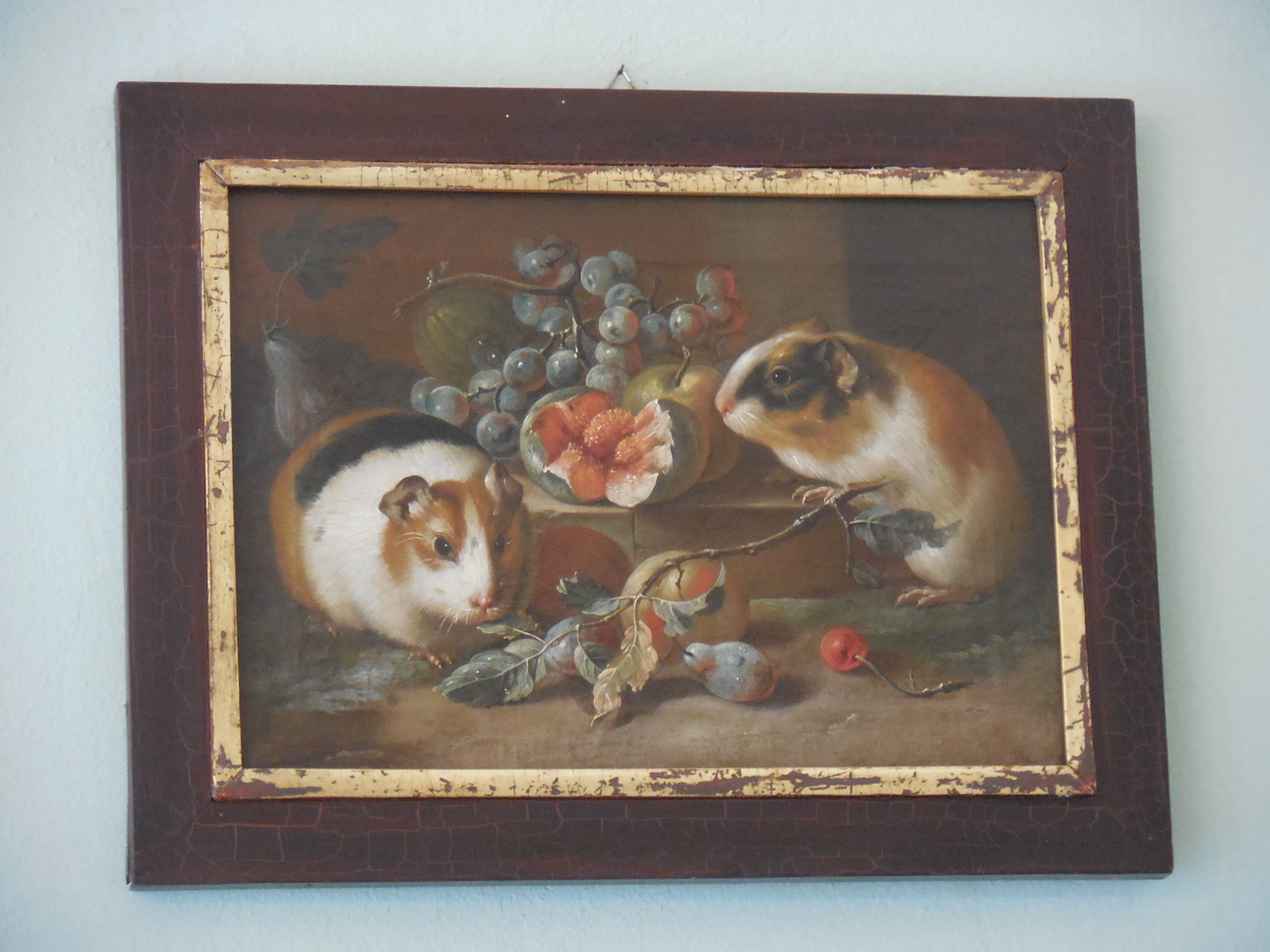
Soon it was time for the tour of the front and back wings. Even the hallway of the front wing was impressive with its delightful paintings of herbal flowers. I especially liked one painting near the beginning of the tour – it showed two hamsters eating grapes. I hadn’t seen many hamsters in paintings in chateaus.

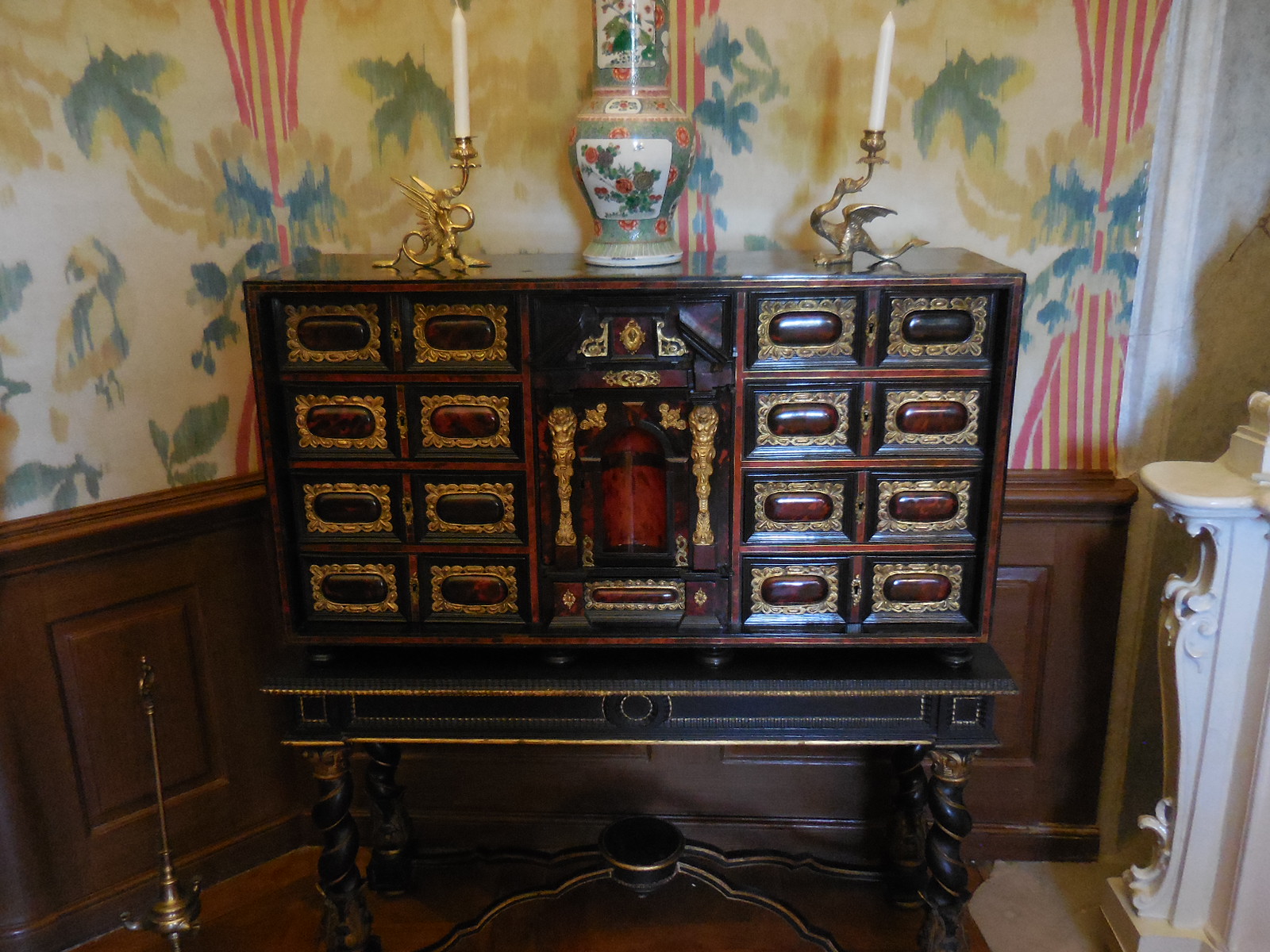
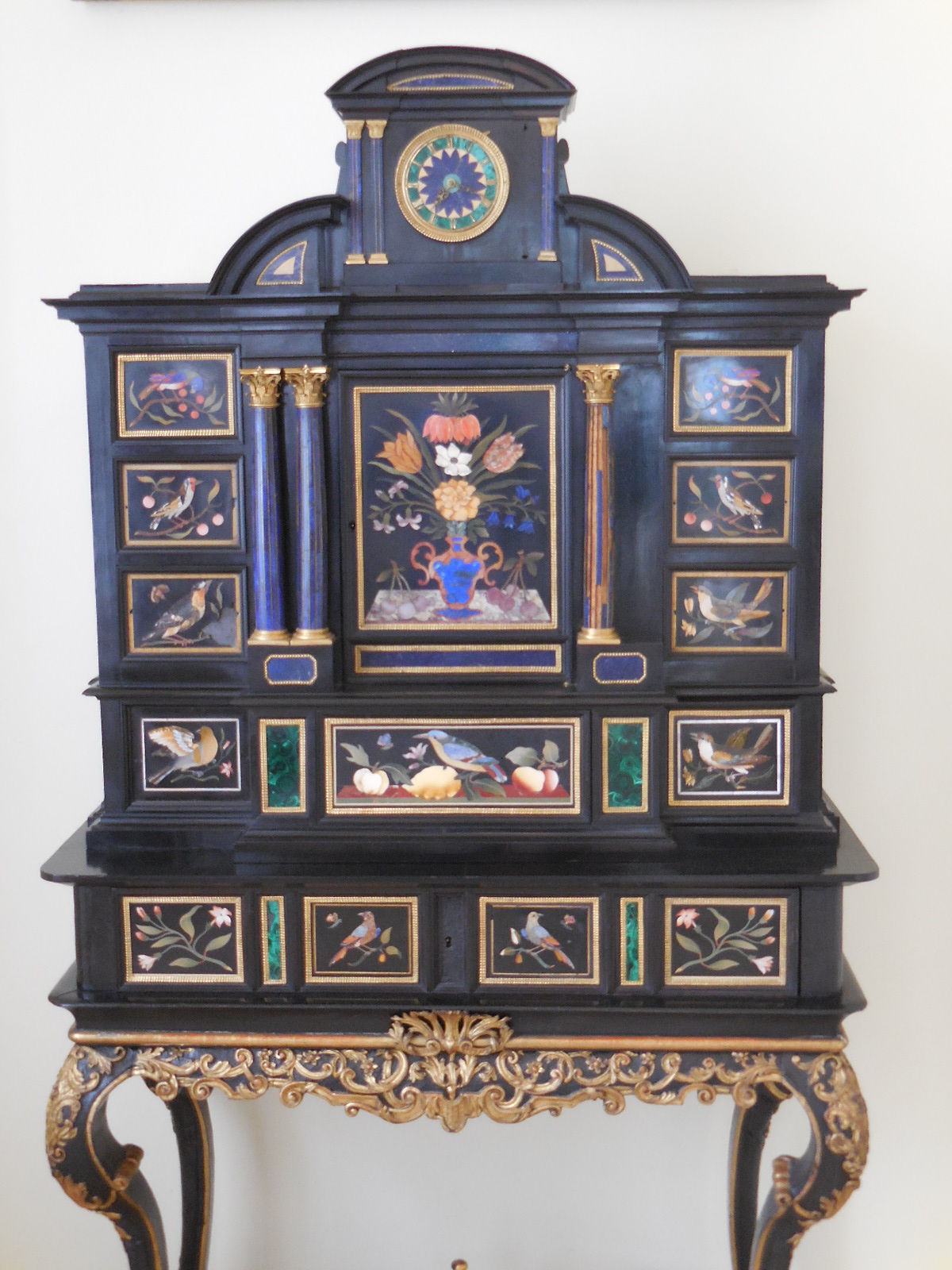
One feature I loved during the tour was the presence of impressive Venetian chandeliers. The Oriental porcelain and furnishings also captured my attention. The porcelain in general was also worth praising, especially the Meissen works. An avid tea drinker, I especially liked a white tea cup decorated with painting of ivy and red flowers. It had a cheery, Christmasy feel. I loved Christmas Eve. It was my favorite holiday. Another piece that interested me was a blue porcelain peacock adorned with real feathers. I also was drawn to a black jewel chest, its drawers sporting floral, plant and bird motifs. The pianos in the chateau were another delight.

While we were examining the back building, we saw the Dancing Hall. I stood in the middle of the 180 meters squared room and stared at the wall and ceiling frescoes of an exotic landscape with Classicist and Rococo elements. It almost made me dizzy with glee.

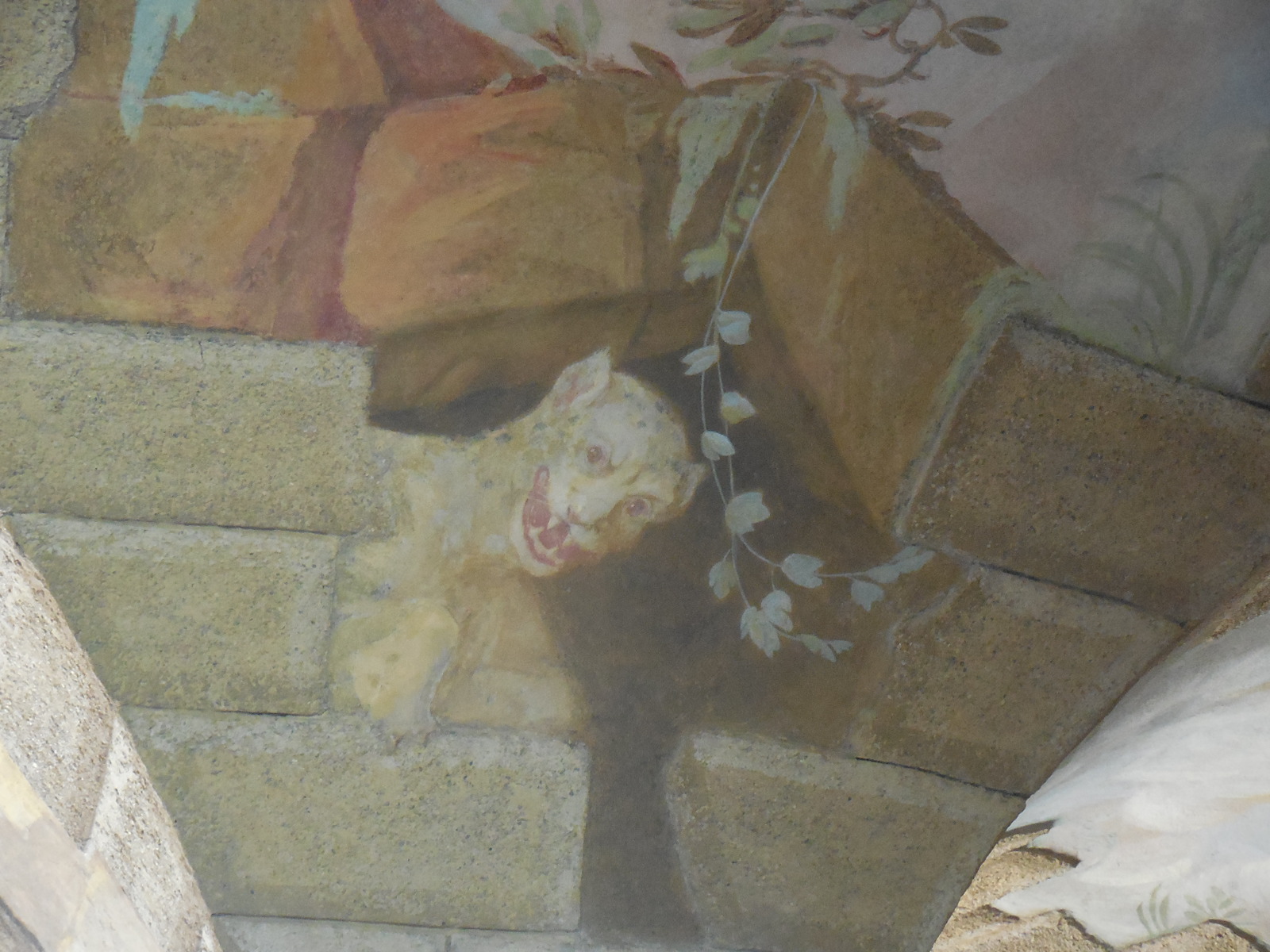
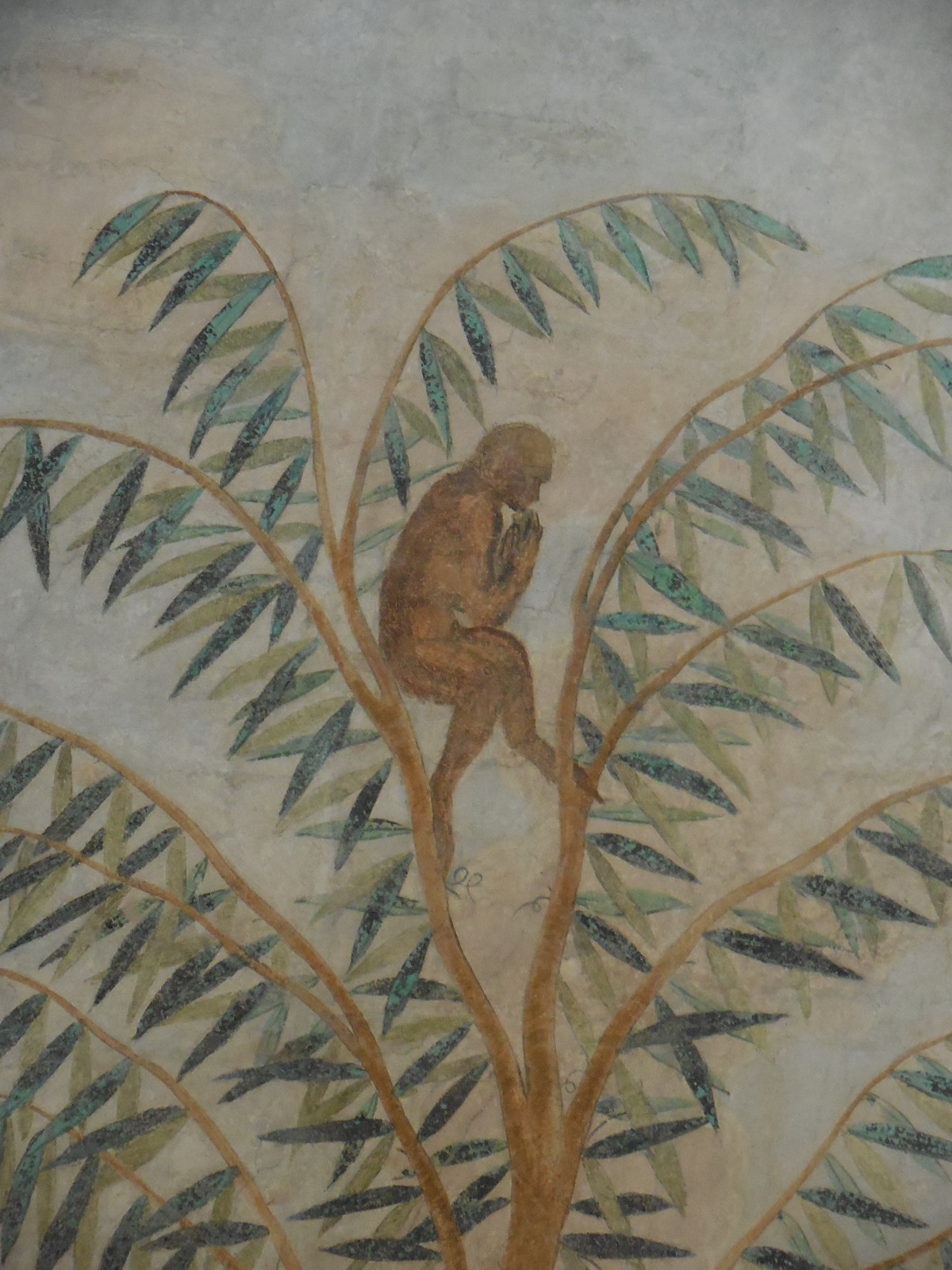
The frescoes were dotted with monkeys, peacocks, birds and ancient ruins as well as a few people in 18th century attire. The palm trees started at floor level and reached to the ceiling. The doors and fireplace became parts of the landscape, surrounded by trees and architecture from antiquity. I particularly liked the painting of the monkey praying. The faux window, made using illusive techniques, was another thrill. A temple stood in the idyllic landscape, where several people relaxed. Broken statues and pedestals added to the motif of antiquity. I was awed at how Tuvora’s delicate work really drew the viewer into the setting. I was even more fascinated by the restoration process of the fresco. They had arranged it into 650 parts and restored each piece during a lengthy process that was not ready until 2013. The fresco restoration had been even lauded by the National Monument Institute.

After the tour, we entered a small doorway from the courtyard of the back building. It didn’t look like it would be anything special. But inside there was a chapel dedicated to Saint Anthony, an impressive Baroque creation with gilded altars that included wonderful statuary. On the other side of the back building, there was a modern art exhibition that was interesting to see.

We soon left the chateau, full of awe at the 18th century interiors and intriguing architecture of the exteriors. Images of the Dancing Hall kept popping through my mind. It was definitely exceptional, a true work of art – precise and masterful. We came back to Prague, knowing our trip was a great success.

Tracy A. Burns is a writer, proofreader and editor in Prague.

Konopiště Chateau Diary

I had been to Konopiště Chateau at least seven times. The tours were always packed with 30 tourists or more, which could be a bit disconcerting. About 40 kilometers from Prague, Konopiště is a popular sight for day trips from the capital city and is usually swamped with tourists.

This time, though, there were only about five of us on each tour. It was during the coronavirus pandemic, at the beginning of September of 2020, when the situation was just starting to get worse. (It would be our last day trip during 2020 because of the steady increase in coronavirus cases.) The courtyard was almost empty. A few tourists waited on benches and fiddled with their cameras. No tour buses traveled there at that time because of the pandemic. We wore our masks and were able to social distance from each other on the tours.

By my 2020 visit, I knew the history of Konopiště well. The chateau of four wings and three storeys came into being as a Gothic fort with stellar defense features in the 1280s. The Šternberks took control of the castle in 1327, and it remained their property for more than 275 years. Konopiště survived the 15th century Hussite Wars without a scratch, a much different fate than so many other Czech castles that were plundered and even destroyed. Konopiště got a Gothic-Renaissance makeover during the late 15th century thanks to George of Šternberk. It became a Renaissance chateau when the Lords of Hodějov owned it in the 17th century. The Lords of Hodějov rebelled against the Habsburg monarchy in 1620, and the chateau was confiscated from them, placed in the possession of military leader Albrecht von Wallenstein.

While Konopiště had experienced good fortune during the Hussite Wars, the same could not be said about their fate during the Thirty Years’ War. The Swedes plundered it in 1648, and throughout the war, the chateau suffered serious damage. After Adam Michna acquired the chateau, the serfs rebelled against his repressive measures and conquered Konopiště in 1657. The Czech kingdom’s highest burgrave, Jan Josef of Vrtba, purchased Konopiště when it was in a decrepit state and transformed it into a luxurious Baroque chateau. Later, the chateau’s interior would also feature some Rococo elements.

Archduke Franz Ferdinand d’Este – Photo from Dotyk

During 1887 Franz Ferdinand d’Este purchased the chateau. He was the oldest nephew of Austrian Emperor Franz Josef and later would become the heir to the Habsburg throne. He made a multitude of changes to the chateau, reconstructing it as a Renaissance residence with North Italian features. One part of the chateau was remodeled to look medieval. Architect Joseph Mocker carried out the renovations between 1889 and 1894. The archduke founded the 225-hectare English style park with the exquisite rose glarden. He established what is today the third largest European collection of armory and medieval weapons. Perhaps what stood out the most was his impressive collection of hunting trophies that are seen in the hallway at the beginning and throughout the tour.

He also installed modern technical features, such as a hydraulic elevator, central heating and electricity. His vast collection of items dedicated to Saint George are located in the former orangery. After his assassination in Sarajevo during 1918, the First World War took place, and the chateau was plundered. During World War II the chateau served as a headquarters for the Nazis. It was nationalized in 1945, after World War II.

Franz Ferdinand d’Este and his wife Sophie Chotek – Photo from Pinterest.

To know the history of Konopiště, it is necessary to know more about Franz Ferdinand d’Este. The oldest son of the brother of Emperor Franz Joseph I, he became heir to the Habsburg throne after his cousin Crown Prince Rudolf killed himself and his father died. The Crown Prince, the only son of Emperor Franz Joseph I, committed suicide along with his mistress, Mary Freiin von Vetsera, at Mayerling hunting lodge in 1889. Franz Ferdinand achieved much success in the military. However, he often disagreed with Emperor Franz Josef and was by no means a favorite of the emperor.

Sophie Chotek – Photo from Alchetron.

He was smitten by Sophie Chotek, a lady-in-waiting to Archduchess Isabella. The two were secret lovers for two years because Sophie was not descended from the Habsburgs or any other European ruling dynasty, something that caused much tension between Franz Ferdinand and Emperor Franz Josef. The emperor did eventually allow the couple to wed, but he set rigid conditions. None of their children could be heirs to the throne. Also, Sophie was forbidden to sit in the royal carriage or royal box.

Zákupy Chateau

They were married at Baroque Zákupy Chateau in northern Bohemia, a place I had visited a few years earlier. I recalled the many portraits and pictures of members of the monarchy at Zákupy. Franz Joseph had used the place as a summer residence for some time in the second half of the 19th century. I remembered what I liked best about Zákupy’s interior. I loved the delicate, decorative painting of Josef Navrátil on the upper walls and ceilings of many rooms.  A fantasy-inspired painting of the four continents had also held my attention. The 17th century Baroque chapel was amazing with ceiling frescoes portraying scenes from the lives of the Virgin Mary and Jesus.

Interior of Zákupy Chaptel
Interior of Zákupy Chapel

Franz Ferdinand and Sophie had three children and were married for 14 years. The couple was assassinated by Gavrilo Princip, a member of the Black Hand terrorist group, on June 28, 1914 in Sarajevo. Franz Ferdinand and his wife had travelled to Sarajevo because Franz Ferdinand wanted to oversee military maneuvers. Less than two months after their tragic deaths, World War I broke out.

Soon it was time for the tour. One characteristic that has always enthralled me is that the chateau has 96 percent of its original furnishings. So many original furnishings of castles and chateaus had been destroyed or lost. Photographs of Konopiště’s interiors from Franz Ferdinand’s ownership of the chateau made it possible to see the spaces as they really had looked during that time period.

As we admired the luxurious spaces on the first tour, I recalled that Franz Ferdinand and Konopiště were mentioned in Jaroslav Hašek’s The Good Soldier Švejk and His Fortunes in the World War, an anti-militaristic, satirical novel sprinkled with anecdotes in which Švejk, a gung-ho soldier serving in the Austro-Hungarian Empire, appears to be an idiot. It is not clear if he is pretending to be an idiot. Originally published from 1921 to 1923, the book was never finished as Hašek succumbed to a heart attack while writing it. The Good Soldier Švejk, as it is often called, holds the distinction of being the most translated book in Czech literature.

Photo from booktook

The first tour showed off some 5,000 numbered hunting trophies, many of exotic animals, as Franz Ferdinand had travelled all over the world on hunting expeditions. Many trophies consisted of exotic animals. I saw bears, antelopes and wild cats, for instance. The archduke had also killed 12 Indian tigers. There was also a collection of 3,200 pairs of deer teeth. But Konopiště is much more than its seemingly ever-present hunting souvenirs.

Archduke Franz Ferdinand with his family – Photo from Franz Josef

One of the most impressive spaces is the Rose Room, which has an exquisite pink ceiling and shows off 19th century Rococo furniture. Its Czech crystal chandelier is another delight. I was especially drawn to an Empire style table adorned with gemstones. I loved the three Italian marble cabinets that sported drawers decorated with leaves, fruit, animals and birds. I noticed the delicate ruddy cheeks of Marie Antoinette in one portrait. The Grand Dining Room stood out for its Baroque ceiling that portrays the four seasons and a Czech crystal chandelier weighing 170 kilograms. The 15th century paintings in William II’s Bedroom caught my undivided attention. An exquisite Spanish tapestry of a forest with people on horseback hung in one room. A beautiful yellow, blue and white tiled stove stood out in the Guest Bedroom. A Venetian mirror showed off a picture of Saint George. Many artifacts on the tours were decorated with likenesses of Saint George.

The second tour of the chateau included rooms specifically meant for Crown Prince Rudolf, though he died before he could visit his cousin. Franz Ferdinand had been very close to the Crown Prince and had taken his death very hard. On this tour we learned many interesting facts about Franz Ferdinand’s life. The guide told us that Franz Ferdinand’s brother encouraged him to keep Sophie as a mistress instead of marrying her. Franz Ferdinand never spoke to his brother again.

I marveled at the 16th century Renaissance vaulting throughout the rooms. These spaces make up the oldest part of the castle. My favorite room was the chapel, one of my favorite chapels in the country. It was a place where I could have imagined having my wedding if I had found someone to marry. I was awed by the 19th century blue vaulted ceiling speckled with gold stars, symbolizing the sky. The 15th and 16th century sculptures also amazed. The main altar was Gothic, featuring the Virgin Mary and Jesus. Saint Hubert and Saint George (of course!) also made appearances. Instead of an organ, the chapel was equipped with a harmonium, and it still worked. I loved the bright colors of the chapel – they had such a distinctive vibrancy that gave off positive energy. Also, the small chapel had an intimate feel.

Even though I was not a big fan of weapons, the armory was very impressive. I saw 15th century weapons from the Hussite wars, executioners’ swords and complete armor for a horse and knight hailing from 1560. Renaissance armor for a musician from 1600 was exquisitely decorated with pictures of instruments. A rifle made of ebony hailed from the beginning of the 16th century. Cannons on display had been used during the Thirty Years’ War. Some shields were decorated with mythological themes. One showed a fighting Hercules. I also saw rifles and pistols made in the 16th and 17th century.

A look at the countryside around the chateau

There was even more to admire on that tour. An electric elevator with plush seats looked like a small, luxurious train compartment. Franz Ferdinand had equipped the chateau with the most modern technology of the time period. I liked the ashtray made of part of an elephant’s foot. In the Smoking Salon, a 16th century tapestry portraying King of Macedon Alexander the Great caught my attention. Also, the 17th century monumental fireplace adorned with figures of lions and coats-of-arms was carved from rare Italian Carrara marble. Toward the end of the tour, we saw a stuffed bear that had lived in the chateau’s moat until 2007. Now another bear, named Jiří (George), resided there, though I hadn’t seen him when I had looked over the moat during this visit.

Franz Ferdinand and his family hunting, Image from treking.cz

The third tour, the one featuring Franz Ferdinand d’Este’s private apartments, lasted 90 minutes and was as enthralling as I had remembered it. We started off in the 70-meter-long hallway where over 800 of Franz Ferdinand’s hunting trophies were displayed. I especially noticed the razor-sharp teeth of an open-mouthed tiger. In another space I was drawn to a Nuremberg chandelier made with deer antlers and decorated with mythological figures. 

Franz Ferdinand, Sophie and family, Image from stoplusjednicka.cz

My favorite part of the tour came next. We walked down a hallway lined with portraits of historical figures, such as Dante Alighieri, Titian and Christopher Columbus. Empress Maria Theresa’s likeness stood out as well. In another space, I noticed the delicate embroidery on Franz Ferdinand’s uniforms, such as his attire as a Russian general. The chest that traveled to Sarajevo with Franz Ferdinand and his wife made an appearance, too. The gigantic tooth of a whale was intimidating. Portraits of Emperor Franz Josef I dotted the apartments. Each time I saw one, I recalled the rigid conditions that Emperor Franz Josef had put in place while allowing the two lovebirds to marry. I also noticed the fine woodworking craftsmanship on the headboard of a bed.

Eventually, we came to a room where there were 1,307 hunting trophies. I remembered the space from one of my favorite films, featuring the fictional Czech legendary character Jára Cimrman, who was the focus of a small, intimate theatre in Prague’s Žižkov district. I noticed a lighter in the shape of a dog on a desk. In the Dining Room the tiled stove was enchanting. I loved seeing various styles of tiled stoves in chateaus.

St. George killing the dragon from the Saint George Museum at Konopiště Chateau

I took note of a painting of Saint George killing the dragon, a theme featured throughout the chateau in 3,900 objects. Franz Ferdinand had wanted to impress King George with his collection and persuade him to visit Konopiště, but his dream was never realized because Franz Ferdinand d’Este was assassinated in Sarajevo.

A miniature jewel case sporting the intarsia method caught my eye. In the Pink Salon I was captivated by one of many portraits. It showed a young Sophie Chotek, Franz Ferdinand d’ Este’s wife, with a wreath of flowers in her hair. I recalled that neither she nor her children could have the Habsburg title because she was not descended from a European ruling dynasty. I mused that their children could never become heirs to the throne as I stared at a huge portrait of the three offspring. They looked serious, pondering. In a bedroom with 20th century furniture there was a Madonna painting. I liked the tan-and-black color combination for the bedspread. I also liked the pale-yellow bedspreads in the room for Arnošt and Maximilián, the two sons. The model boats in the room were very detailed. A huge portrait showed the boys in the chateau park. I imagined them frolicking through the impressive park, carefree and full of joy. A photo showed them in sailors’ uniforms, standing with their father. In another portrait the two boys were dressed in girls’ clothes because this was the normal attire for young boys during that era. I tried to imagine the boys playing Indians, reading adventure books by Karel May or playing puppet theatre with a Saint George and the dragon theme. I also saw portraits of dogs, textbooks and collections of fairy tales. The guide showed us a magazine the children produced about music, dogs and birds, for instance.

Countess Sophie Chotek, Image from flikr

I also was shown the room where the children’s French and music teacher had slept. Franz Ferdinand’s children had kept in touch with her even after becoming adults. In the daughter’s room I especially liked the Venetian mirror and took notice of the delightful floral bedspread and floral upholstery of the furniture. In another space the Delft porcelain caught my eye. I thought of the Delft porcelain at Zákupy Chateau, where Franz Ferdinand and Sophie had wed. I had admired Delft porcelain in so many chateaus and palaces. A magnificent tiled stove in green, blue and yellow stood out, too.

We were in the chapel briefly. The biblical scenes shown in the stained-glass windows captivated me as did the many sculptures. The blue ceiling decorated with gold stars was my favorite feature of the chapel. This was definitely one of my favorite chateau chapels of all time, I mused. I could have spent an hour just perusing the chapel because it showed off so much precious decoration.

Archduke Franz Ferdinand d’Este and Countess Sophie Chotek in Sarajevo, Image from http://www.payne.cz

In another room there were black-and-white photos of the family’s travels to Japan, China and India, for example. I perused shots taken in Nepal and Calcutta as well as one of an elephant in Ceylon. While some pictures showcased the landscape, others focused on people. The hydraulic elevator with comfortable, upholstered seating had traveled a half-meter each second.

Finally, we came to a display case holding Franz Ferdinand’s and Sophie’s death masks and one of the bullets from Gavrilo Princip’s pistol. Such a small object had produced a fatal wound. Blood stained an otherwise dainty handkerchief. The delicate white dress and white hat Sophie had been wearing when she was shot were in full view as well. The white color of her attire somehow made her assassination seem all the more tragic.

The New York Times’ article about the assassination in Sarejevo, Image from http://www.alamy.com

I also visited the Shooting Hall in the former stables, which hailed from Franz Ferdinand’s time at the chateau. I was impressed with the astounding detail of the painted moving targets of various people and animals.  The museum of 808 objects depicting Saint George killing the dragon in the former orangery was another delight. Franz Ferdinand had collected these paintings, statues, ceramics, glass and altarpieces with the hopes that one day Britain’s King George would visit the chateau. That dream was cut short by Franz Ferdinand’s death.

Target in the Shooting Hall

Then there was the vast park, which we only had a little time to visit. The rose garden had always been my favorite part of the park along with its numerous Italian sculptures. I also had an affinity for the greenhouse and its intriguing plants. I had been at the park during the spring and summer previous years, so I had seen it in full bloom.

Chateau park

Then it was time to eat. We were the only customers in the cozy chateau restaurant. I had chicken and couldn’t resist a large sundae for dessert. I loved treating myself to ice cream on my day trips. It made them even more special. I would remember this sundae more than others because it would be my last at a chateau for the season. I can still savor the vanilla and chocolate. . . .

My last dessert at a chateau restaurant in 2020

Tracy A. Burns is a writer, proofreader and editor in Prague.

Peruc Chateau Diary

Perucext1

NOTE: No photography was allowed inside the chateau.

I was so excited to be visiting a chateau I had never seen before. Peruc Chateau had just opened to the public on July 1, 2020 after lengthy reconstruction. Now it was mid-August. I was entranced by the blue Rococo façade.

In the late 16th century, the Lobkowicz clan that owned Peruc turned the Gothic fortress there into a Renaissance chateau. After that, owners came and went. In 1673 Jan Jetřich of Ledebur purchased what was then a ruin, and the property remained in his family for more than 100 years. During the late 18th century, they transformed it into a Rococo chateau.

PerucPalackyfromVzdy Nahore

František Palacký, photo from Vždy Nahoře

In 1814, it became the property of František Antonín Thun-Hohenstein. During the 19th century, famous Czech historian, politician and writer František Palacký, nicknamed the Father of the Nation, frequented the chateau. I had always admired Palacký not only for his contributions to modern Czech history studies but also because he spoke 11 languages. Poet, prose writer, reporter and world traveler Svatopluk Čech spent much of his childhood in Peruc. He would go on to write one of the main science fiction books in Czech literature.

FrantisekPalackydejiny-narodu-ceskehoDatabazeknih

History of the Czech Nation by František Palacký, photo from Databáze knih

During World War II, the chateau was used as a depository for Leipzig University library, and the collection was transformed back to Germany in 1954. The chateau remained the property of the Thun-Hohenstein clan until 1945, when, according to the Beneš decrees, it was nationalized. Cubist painter, graphic artist and sculptor Emil Filla lived there in the late 1940s and early 1950s, composing mostly landscapes of Czech mountains. During World War II he had spent time in Dachau and Buchenwald concentration camps, where he wrote theoretical essays and poems.

PerucSvatoplukCechfromKniznice

Svatopluk Čech, photo from Knižnice

In the 1950s, part of the chateau was used as a nursery school. During the 1960s, a prehistory exhibition of the National Museum was set up as was an exhibition to Svatopluk Čech. The town was also associated with a romantic story about Oldřich and Božena’s fateful meeting. During 1964 the chateau became a cultural monument. However, the building became dilapidated and soon was nothing more than a ruin.

PerucCechvylety-pana-broucka-fromDatabazeknih

Svatopluk Čech’s sci-fi masterpiece, photo from Databáze knih

The district was given the chateau after the 1989 Revolution, and they sold it, but it remained in a decrepit state. Finally, in 2015 a new owner came along and had the restoration done. The same person owned Dětenice Chateau, another favorite of mine. Now the chateau looked majestic and lavish, but, while on the tour, I would see pictures of the horrible condition before reconstruction.

Before the tour, I discovered that there were only dry toilets outside, with a hole in the ground instead of a flushing mechanism. I hadn’t used a dry toilet since visiting Kokořin Castle so many years ago.

Perucext2

Soon it was time for the tour. First, we walked up a statue-flanked staircase, where I saw sculpture representing allegories of architecture, construction and sculpture, for instance. They had been created by the workshop of Ignác František Platzer, the principle sculptor of the 18th century. The statue at the top of the staircase hailed from the 16th c. A stunning tapestry with a religious theme hung behind the monumental staircase.

Throughout the tour, I would be in awe of the many masterful religious paintings, including Madonnas and scenes from the Old Testament. The Břeclav Madonna was my favorite. Its gold background gave it a majestic appearance, and the semi-precious stone on one finger of the Madonna was a stunning feature.

Perucext3

The tiled stoves, mostly in Classicist style, were another delight. The one that I liked best was thin, about one-third of the width of a typical tiled stove in a chateau. It was white and sleek. I was drawn to it because it looked modern, and its design was simple rather than lavish.

Large portraits of Emperor Franz Joseph I, Empress Maria Theresa and Josef II could be found throughout the chateau. I especially liked one likeness of Josef II in which one of his hands seemed to stick out of the painting as if it were three-dimensional.

Perucext5

Some of the ceilings were beautiful. Several painted ceilings represented the Renaissance style while another depicted a blue sky. The Czech crystal chandeliers also made a notable impression. Large Florentine mirrors wish lavish gold frames captured my undivided attention, too.

I was particularly drawn to a black jewel chest with wine red drawers, made of ebony and ivory. A colored painting of a figure with a parasol and other people in what appeared to be a forest was the subject of a partition. Currently, the Blue Salon is being renovated. Its blue decoration is stunning. I noticed a blue castle on one wall.

Perucext6

I stopped by the nearby Museum of Czech Village Life twice, but it was not open. After seeing the chateau, we were famished. We didn’t fancy anything at the outdoor grill on the chateau grounds, so we got in the car, found a restaurant on the Internet and drove there with GPS. The navigation tool led us to an abandoned farmhouse in Slavětin. The only restaurant in the town didn’t open for almost four hours.

We went through many villages, and there weren’t restaurants in any of them. A lot of restaurants in villages had closed down due to the coronavirus lockdown, when they lost so much money because they weren’t allowed to be open.

Perucint3

The main staircase of the chateau

We came to a village where a friend of my friend lived, and my friend called her for advice. She mentioned that a village called Klanovice had a superb restaurant. We found Klanovice, but only saw a dirty bar where there was little choice of food. That surely wasn’t the right restaurant. We went back through the village several times and finally turned into a place where people could ride horses. To one side was an impressive-looking restaurant. The food was excellent, the atmosphere charming and rustic.

From there we found our way back to Prague. I was glad I had – after such a long time – been introduced to a new chateau and certainly would recommend it to my friends.

Tracy A. Burns is a writer, proofreader and editor in Prague.

Perucintchandelelier

Chandelier above main staircase