Horizons Exhibition Diary

Tábor, Jaroslav Šetelík

I have always loved to visit the exhibitions at the art gallery at the Kooperativa insurance company. Never have I exited that building without learning something new about art and about myself. This time the show was called Horizons, and it brought to mind memories of childhood innocence as well as a strong sense of freedom and personal identity achieved as an adult. The featured paintings dealt with the power and magic of nature and romantic towns as well as the devastation of war. Mythological themes also punctuated some paintings. Some of the scenes evoked in me sadness, and others brought joy.
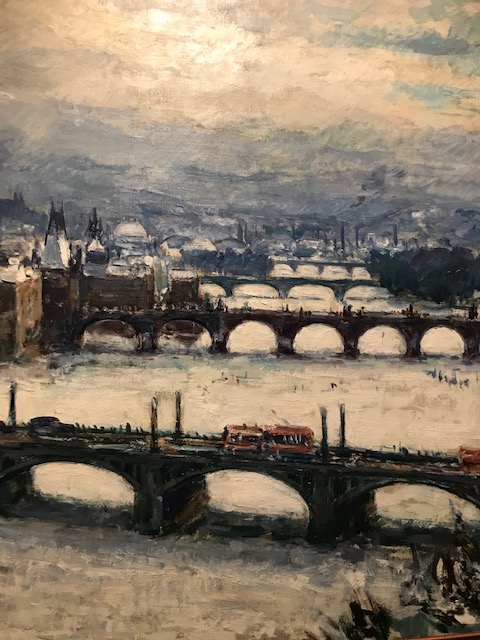
Prague Bridges, František Líbal

The townscapes were my favorites. My love of Prague drew me to the romantic and idyllic landscape “Prague Bridges” (1943) by the landscape and portrait painter František Líbal, who created vistas of the Czech capital during World War II, when he lived in Prague. Líbal studied in Germany and made trips to France and Italy while portraying cityscapes and cathedrals. He proceeded to travel throughout the Czech lands, Moravia and Slovakia, focusing on mountainous terrain. The south Bohemia native often visited the region where he was born and created many works of ponds and forests from scenery located there. After the war, he stopped creating Prague cityscapes and focused on landscapes of south Bohemia.
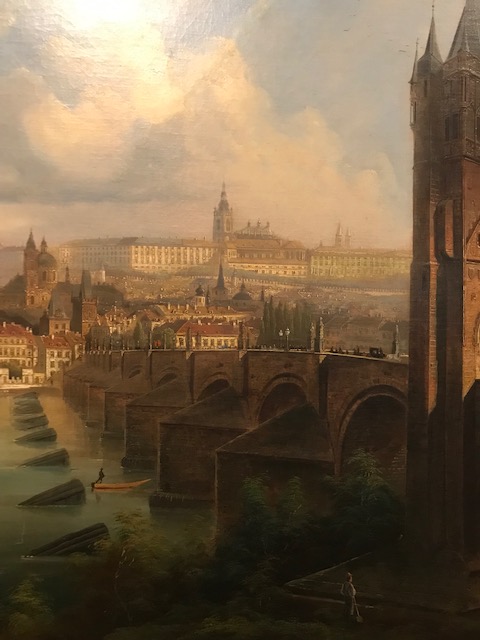
View of Charles Bridge, Ferdinand Lepié

His view of Prague brought to mind the power and magic of the capital city. He made the city appear idyllic and romantic. In the horizon of the painting, I saw the bright future that I imagined I would have when I was 21 years old, fresh out of college. I mused about my first visit to Prague in 1991, when I was initially enamored by the beauty of the city. So many decades later, I am still enthralled with the city’s beauty, and the panoramic views fill me with joy. Another painting in the exhibition that brought to mind the magic and masterful architecture in Prague was View of Charles Bridge (1861) by Ferdinand Lepié. My attention was drawn to Prague Castle in the background. I once again saw Prague imbued with historical significance and timeless beauty.
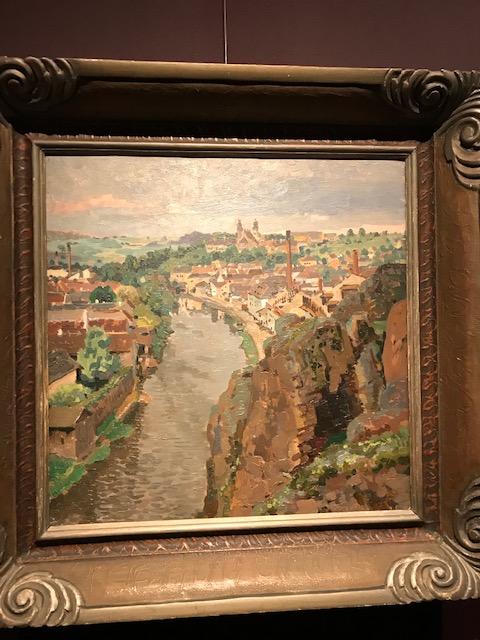
View of Třebíč, Bohumír Jaroněk

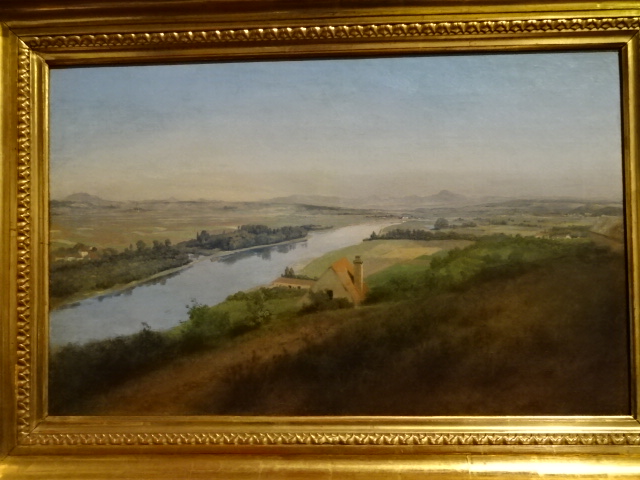
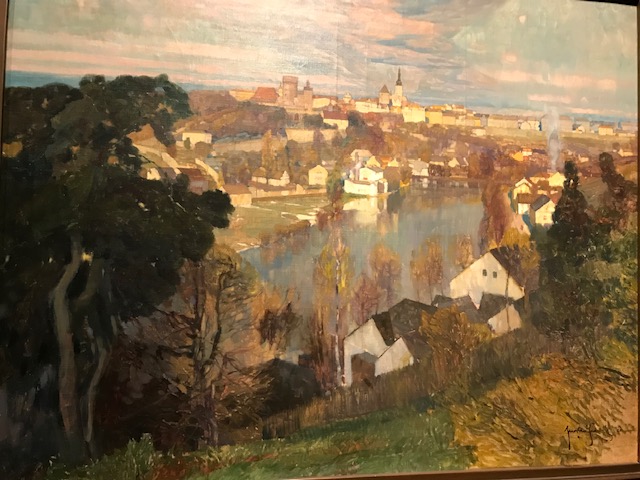
I loved the paintings of other towns, too, such as Jaroslav Šetelík’s “Tábor” from 1926 and his “Kutná Hora” from 1920. Bohumír Jaroněk’s “View of Třebíč” (1910) showed a river flowing through the center of the city, making the painting especially picturesque. Kutná Hora, Tábor and Třebíč are towns with fascinating history and intriguing sights. All three paintings brought to mind my trips to these towns and the sights with which I had become very familiar.
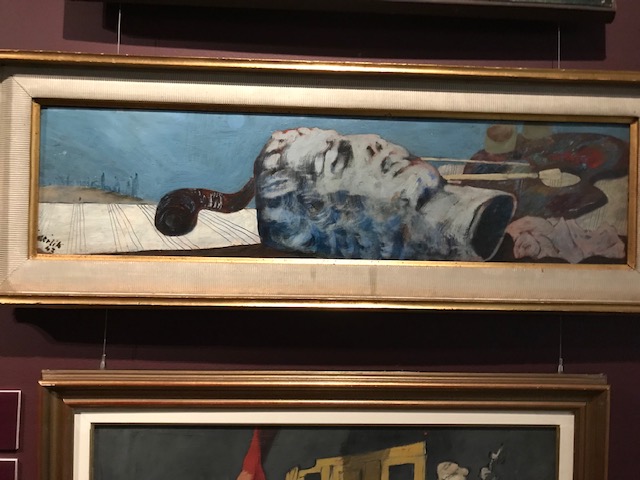
Painter’s Still Life, Arnošt Paderlík

Arnošt Paderlík’s “Painter’s Still Life” from 1943 takes on the theme of the suffering of mankind during wartime. This painter, sculptor, graphic artist and professor spent much of World War II making expressive, anti-military compositions ripe with hidden meanings. This particular painting shows, among other objects, an ancient bust from a statue. It has fallen on the ground, onto its side. After World War II, he drastically changed his style, devoting his time to still lifes that were inspired by Cubists Pablo Picasso and Georges Braque.
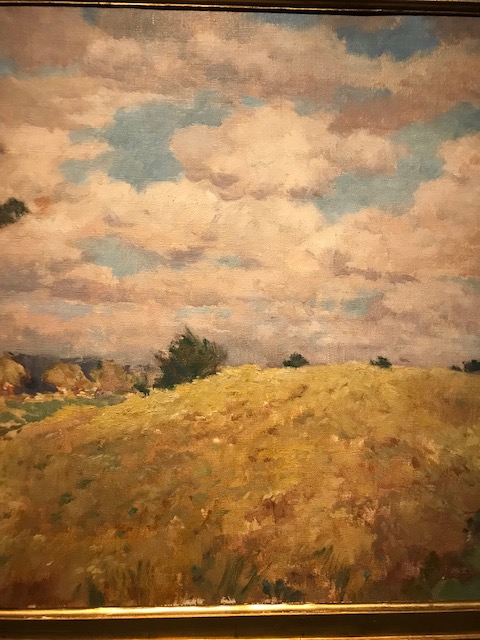
Rye, Antonín Slavíček

Paderlík delved into architectural adornment as well. His ceramic ornamentation graces the Kotva Department Store in Prague, and a bronze figure he designed is located at the Thermal Hotel in Karlovy Vary. I thought back to the sculptures and paintings I had seen throughout Europe, depicting the horrors of war. Even though he was focusing on World War II, Paderlík’s painting speaks to wartime oppression in general.
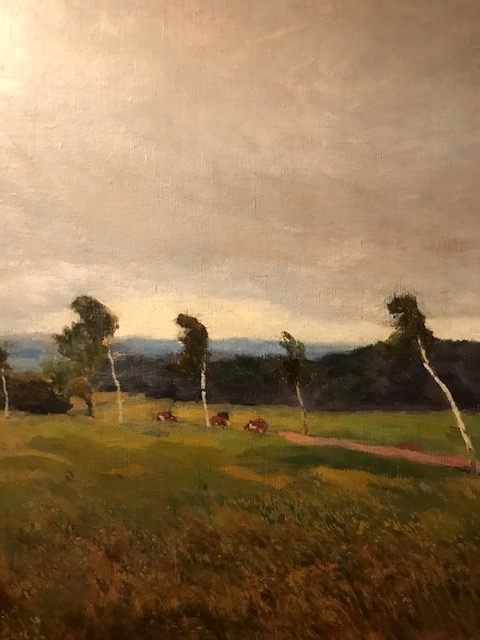
Landscape from Kameníčky, Antonín Slavíček

I was ecstatic that Antonín Slavíček’s landscapes, influenced by Impressionism, were represented in the exhibition. His “Landscape from Kameničky” from 1906 captured my undivided attention as did his “Rye” from 1908. He masterfully evoked the textures of the grass and dirt road in “Landscape from Kameničky.” I felt as though I could reach into the painting and touch the grass and dirt. I have always been drawn to the emotional quality of his works and to the strong use of color that permeates his renditions, including “Rye.” Slavíček was a student of Julius Mařák, perhaps the most prominent Czech landscape painter of the 19th century, who also worked as a professor promoting realism to many talented artists.
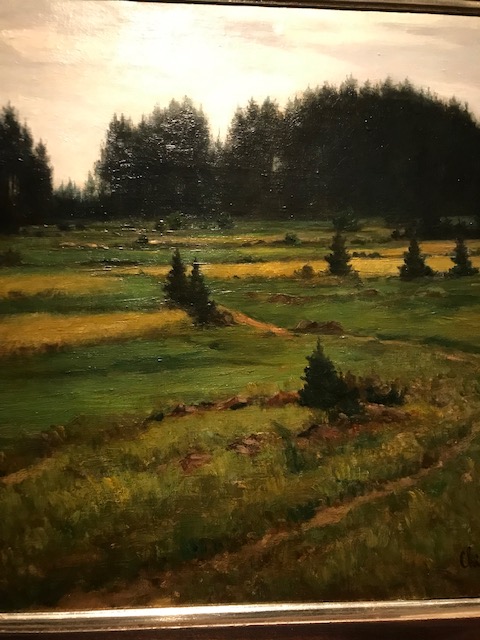
Meadow, Antonín Chittussi

The work of one of the most important Czech painters of the 19th century, Antonín Chittussi, also was highlighted in the exhibition. His nature-themed canvases evoked strong emotions in me. His painting “Meadow” from 1886 made me take a deep breath as all tension and stress in my life momentarily disappeared. I also was gripped by his realist portrayal of sheep and a shepherd in “On the Pasture” (1882).
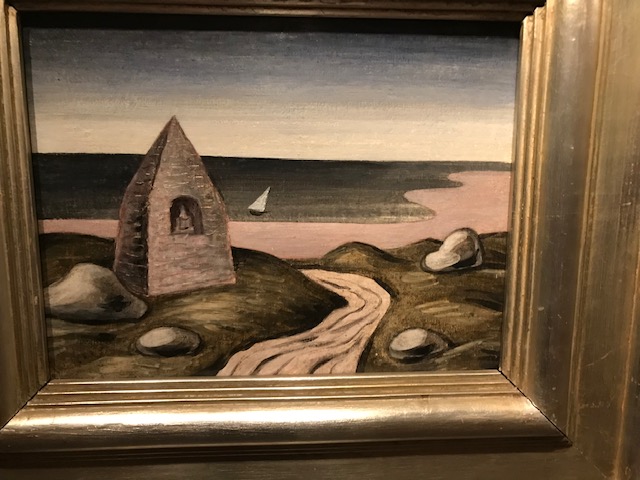
Chapel of Saint Brandan, Jan Zrzavý

Jan Zrzavý, one of my all-time favorites, was highly influenced by Italian primitive art and Symbolism. He also utilized light and color masterfully. His works have fantasy-like and mystical elements that correspond to magic realism. He didn’t only master painting but also graphic art, illustrations, teaching and scene design – all fields in which he worked for the National Theatre during the 20th century. Some of his paintings, such as his rendition of the “Chapel of Saint Brandan” (1946), evoke sadness and solitude, delving into the darkest depths of the human soul. I noticed the dominant greys in the painting, such as that of the gloomy winding lane. On the dark water floated a solitary sailboat.
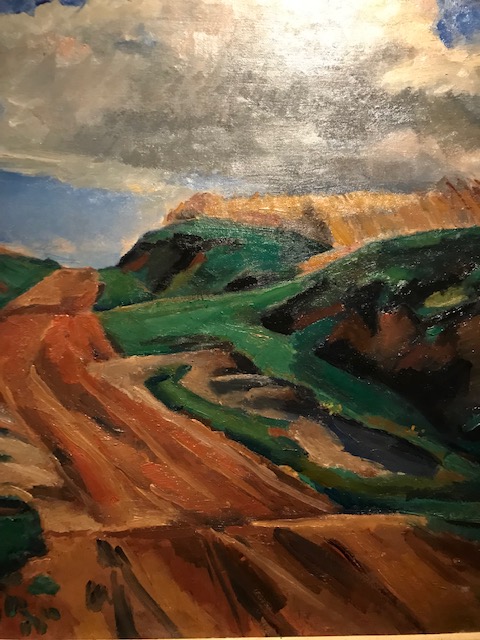
Summer Landscape, Václav Rabas

One of the first Czechs to receive recognition as a national artist, Václav Rabas studied under the guidance of Max Švabinský and fought on the front in World War I, where he was injured and subsequently sent home. Influenced by 19th century landscape painting and the art of Paul Cézanne, Rabas created canvases rich with color, and some of his works showed features of magic realism. I loved the vibrant colors in his Summer Landscape (1930). His landscapes concentrated mostly on his native Rakovník. Rabas was not only a landscape painter by any means. Indeed, he excelled at rendering the human figure with his 1923 cycle of “Czech Heads” that represented famous personalities. Rabas also created 24 paintings demonstrating how to make bread. 
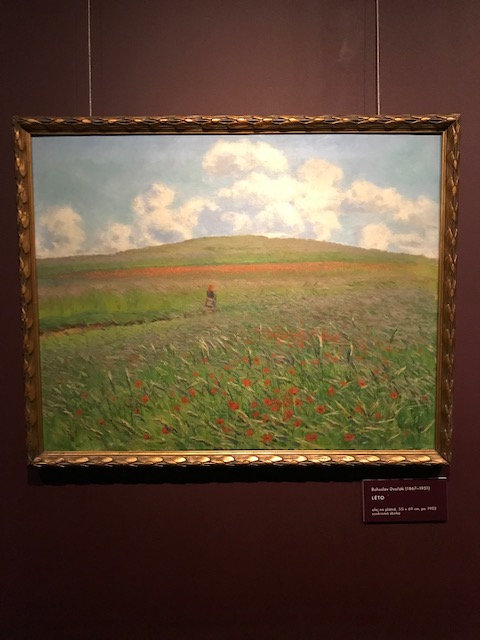
Summer, Bohuslav Dvořák

I felt like running through the meadow in Bohuslav Dvořák’s “Summer” (1902). I felt liberated, free to go my own way and follow my dreams while I peered at the painting. Dvořák studied under Mařák and began his career as a realist who was influenced by Chittussi. Later, though, he began to show more characteristics of Slavíček’s style. Color helped define his works, and some of his paintings had strong Impressionistic qualities.
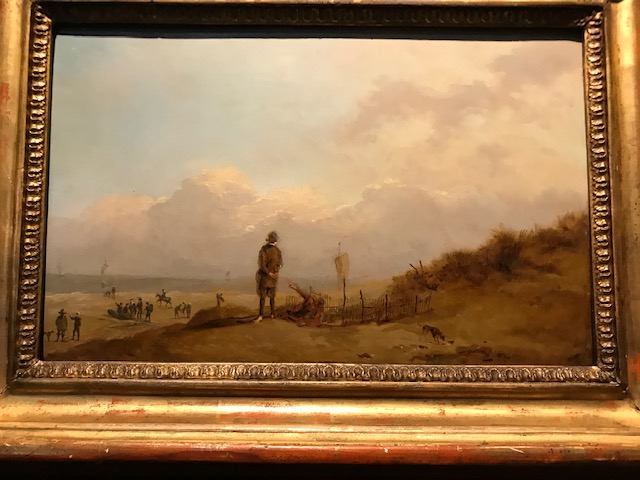
On the sea coast, Norbert Grund

I have loved the small landscapes by 18th century Norbert Grund for decades and was enthusiastic when one of his paintings was included in this exhibition. His “On the Sea Coast” (1750) shows a man with his back to the viewer as he gazes at the sea and beach, where other people were present. The versatile Rococo artist was known for genre paintings, landscapes and biblical works. Whenever I saw one of Grund’s creations, especially a landscape, I felt drawn into the world of the painting because the works entranced me so much.
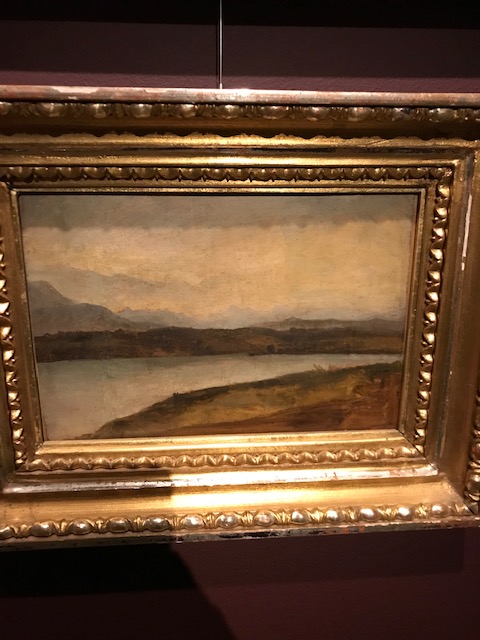
Motif from Gmundenu, Josef Mánes

Perhaps the most influential painter of the 19th century, Josef Mánes created “Motif from Gmundenu” in 1843. His landscape paintings and portraits fall into the styles of Romanticism and Realism. Hailing from a family of painters, Josef Mánes made around 500 works. Best known for painting the 1865 allegorical calendar on Prague’s Astronomical Clock, Josef Mánes also created portraits of Prague inhabitants and landscapes of the Moravian countryside.
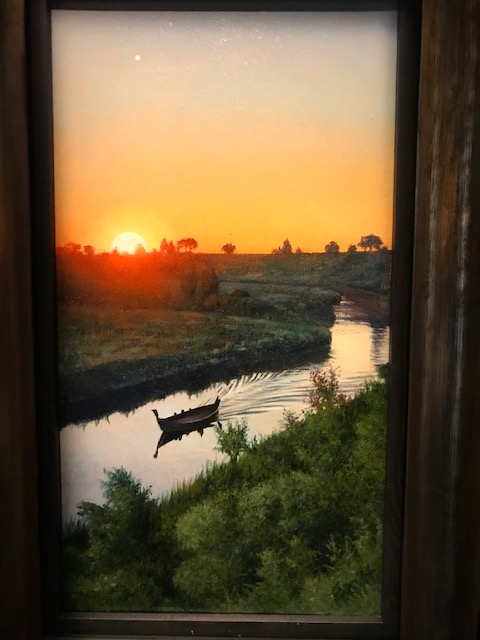
Sunrise – Horizon of Hope, Ivan Exner
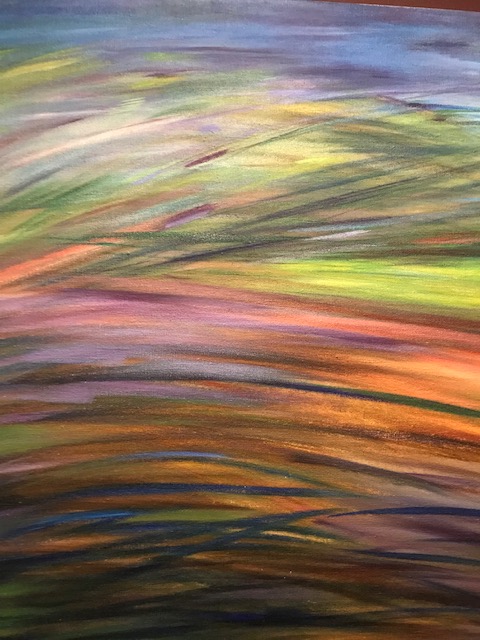
Landscape, Vojtěch Malaník

While some paintings hailed from the 18th and 19th centuries, others were contemporary and made just as strong an impression. Vojtěch Malaník’s “Landscape” from 2015 featured a mesh of lines of bright color, an abstract creation showing the vitality of nature in a very dynamic way. Ivan Exner’s “Sunrise – Horizon of Hope” (2024) was mesmerizing with its bright yellow sun rising in the pink and orange sky. An empty boat floated on the river as sunrays danced on the water.
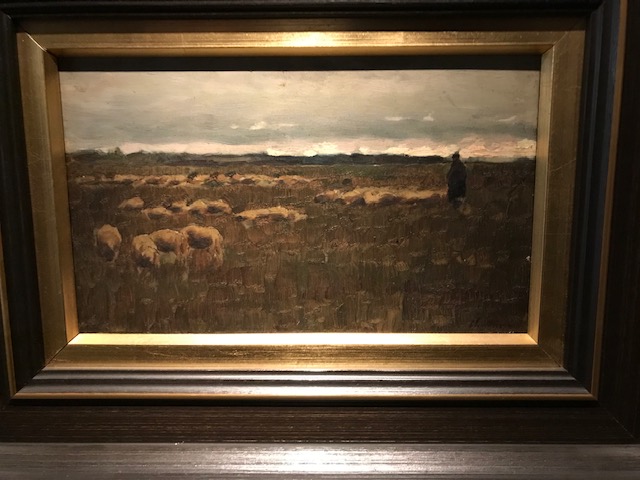
On the Pasture, Antonín Chittussi

These are just a few of the masterpieces on display in this exhibition. Every painting spoke to me, narrating vibrant stories through nature, mythology and war. Lyricism and romanticism as well as realism punctuated this art show. While some stories were gloomy and foreboding, others were joyful and bright. I saw nature as a powerful force that mankind could not control. I sensed times marked by hope as well as days denoted by darkness. This was a poetic and powerful exhibition focusing on the joys and tribulations of life.
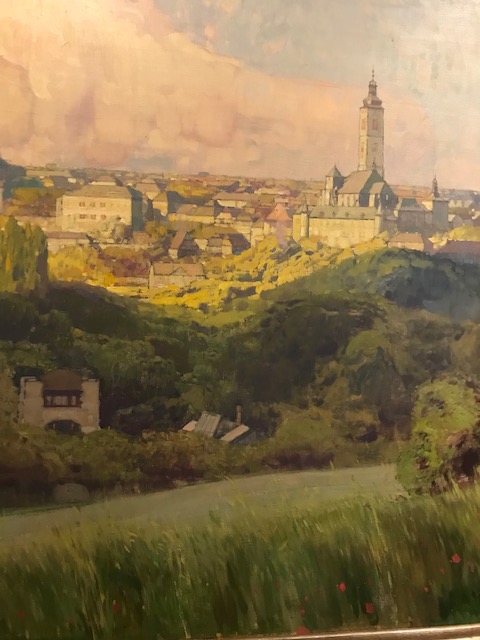
Kutná Hora, Jaroslav Šetelík

Tracy A. Burns is a writer, proofreader and editor in Prague.

Josef Mánes Exhibition Diary

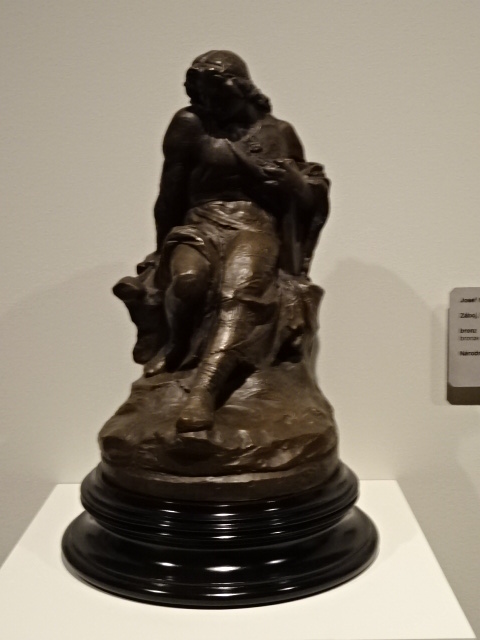
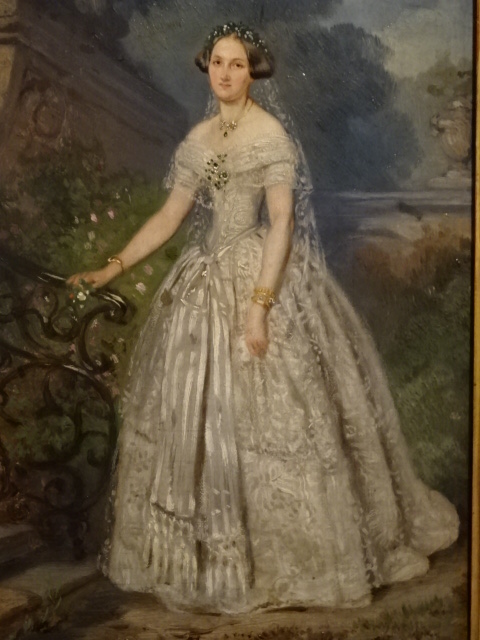
Prague’s Wallenstein Riding Stables hosted a comprehensive exhibition of Josef Mánes’ portraits, genre paintings, landscapes, drawings, prints, designs and illustrations of Slav history from the Czech Romanticism and Realism eras of the 19th century. Some 400 of his creations captured my undivided attention. He also created standards, insignia and uniforms for the Sokol physical education organization, some of which were also on display.

I knew the name well because Josef Mánes had been born into an artistic family: His father, Antonín, created landscapes while his brother and two sisters also became painters. Josef – I will refer to him by his first name so readers do not confuse him with his father or siblings – grew up in the Habsburg Empire when German was the official language of the Czech lands. He spoke only German as a youth. He didn’t learn Czech until he was grown up, even though he was one of the leading figures in the Czech National Revival that promoted the Czech language.

This prominent artist was inspired by his time in Munich, where he spent three years as a young man. For many years he resided in Moravia, including at the Čechy pod Košířem Chateau. In addition to making portraits, landscapes and Second Rococo style genre paintings, Josef developed a strong interest in folk costume, rendering portraits of Czechs in traditional dress. He created many works portraying villagers and everyday life in the Hana region of Moravia.

Inspired by Prague’s Old Town, Josef created portraits of its residents and even painted two genre paintings for Prague brothels. His work also decorated much more elegant structures, such as the Žofín concert hall in the center of Prague, for instance. When I first set foot in Prague, I fell in love with the Old Town. I could sense the history of the nation on its streets and in Josef Mánes’ paintings of that historical quarter.

His portraits are stunning because they are characterized by immense psychological depth and sensitivity. The viewer almost is looking into the sitter’s soul. Each portrait told an individual story of a unique life. Before this exhibition, I had considered him to be first and foremost a portrait painter, but I learned at the Wallenstein Riding Stables that he had been much more versatile in his accomplishments.

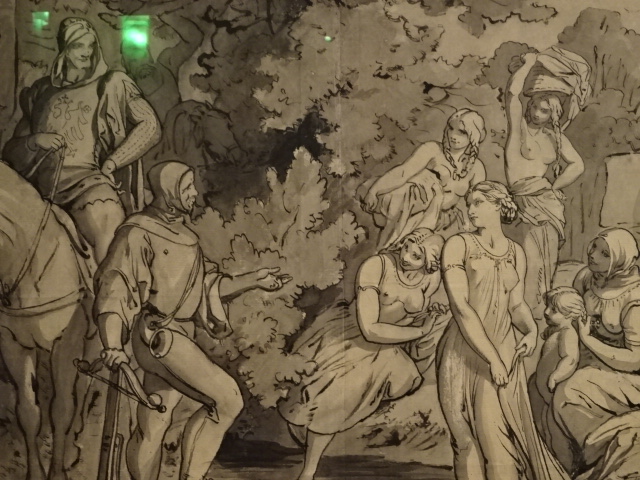
I was most enamored by his landscapes because I was fascinated by landscape painting in general, especially by Czech art in this field. I had seen many exciting Czech landscapes in galleries throughout the country as well as in chateaus. Josef’s work utilized subtle colors and masterful brushwork that portrayed both the Czech and Slovak countryside with elements of Romanticism and Realism. He was one of my favorite landscape painters, excelling at employing light and atmosphere in his renderings of the Hana region, the Czech Paradise region, the Krkonoše Mountains and the Šumava Mountains, for instance. I had traveled extensively throughout these parts of the country. Josef’s travels in the Austrian Alps also inspired the creations of some masterful landscapes. While I had never been there in person, I always wound up gawking at the sheer power, beauty and seemingly invincibility of the Austrian Alps. In several other works, he depicted nymphs, using the Šumava Mountains and Moravia’s Čechy pod Košířem as backdrops.

On Astronomical Clock

Astronomical Clock

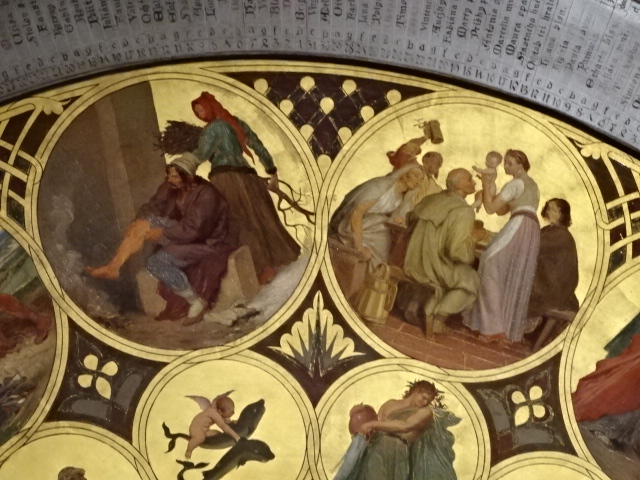
Perhaps Josef’s greatest achievement was creating 12 medallions for Prague’s Astronomical Clock. I recalled how so many tourists crowded around the clock to watch its hourly show in the late morning and afternoon. I always came to admire the clock in the early morning to avoid the crowds and the possibility of getting pickpocketed. Painted in 1865, the original calendar dial was on display at this exhibition. The allegories of the months of the year dealt with agriculture themes. I often had admired the calendar in the Museum of the City of Prague, where it was usually on display.

Astronomical Clock

I looked closely at the calendar dial, which consisted of circular rings. Standing for the 12 months, figures dressed in folk costume glorified Slav identity. September was represented by the ruins of Troský Castle, which I had seen on my trips numerous times. The Czech village tradition of pig-slaughtering was the focus of December. I remember one irate acquaintance telling me that he did not support the European Union because its regulations did not allow citizens to slaughter their own pigs at home.

Bezděz Castle was in the background of March. I recalled the four-kilometer walk up to the castle ruins that had fascinated me, even though I was not usually so enthusiastic about ruins. A young farmer used a plough in the foreground of the March portrayal. Josef had also painted allegories of zodiac signs. I noticed dolphins and a plump cherub for Pisces. Capricorn was represented by a cherub leading a goat. Romanesque features were evident in Josef’s pictorial work for the dial. 

Designed for Sokol physical education organization

Josef’s personal life had not been so rosy, however. After he got a servant pregnant, his parents made him marry her. Josef also was plagued by mental illness from 1866, when he began to lose much weight, to pronounce words badly and behave in a strange manner. It is possible that he suffered from syphilis affecting the brain or tuberculosis. He died in 1871 at the age of 51.

The exhibition also included explanations of how Josef’s work has been perceived throughout the centuries. After his death, he achieved fame because of his work for the Czech National Revival. As the 20th century approached, Josef became known as an artistic pioneer of new trends and advancements in his field. During Communism, though, his works took on an ideological meaning. It was not until after the downfall of Communism that people interested in art could once again express the masterful skill and individuality of his paintings as his works became appreciated in the cultural sphere.

While I had seen many works by Josef throughout the country, I was overwhelmed by viewing so many in one large exhibition hall. I had not truly understood the mastery of Josef’s art and realized that he had been so talented at many genres. For a long time, I had admired the works of his siblings and father, too. Now I knew that Josef was the most skilled in his family. I was fascinated by all aspects of this exhibition.

Tracy A. Burns is a writer, proofreader and editor in Prague.

Josef Mánes

Ivan Meštrović Exhibition Diary

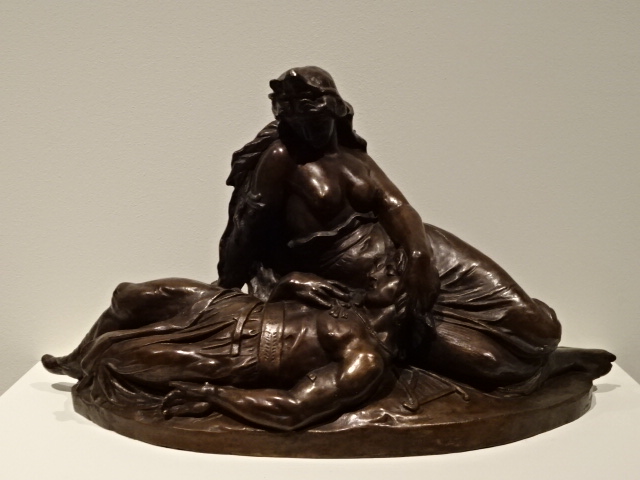
Early in 2023, I went to an exhibition of sculpture by late Croatian sculptor, architect and writer Ivan Meštrović. The art gallery at Prague’s main library hosted the intriguing show. I was familiar with the artist’s name: I had admired his villa, the Ivan Meštrović Gallery, in Split on my last trip to Croatia some years ago. It contained 86 sculptures made with various materials, showing off his dramatic, dynamic and expressive style that was both poetic and poignant. Drawings and reliefs were displayed, too. The bronze statue-dotted garden was delightful. One of my favorite things about traveling was being introduced to the works of various artists. I was enamored with Meštrović’s creations, and his unique, powerful style was forever embedded in my memory.

During Meštrović’s illustrious career that spanned six decades, he had been influenced by a number of styles ranging from Art Nouveau, Symbolism, Impressionism, Art Deco, Neoclassicism and Late Realism. Classicism played a major role in shaping his artistic style, too. Auguste Rodin’s naturalist style, which he had meticulously studied, greatly inspired him. During his extensive travels, Meštrović also saw Michelangelo’s creations, which affected his own work. poignant.

Meštrović’s subjects were diverse as well. He took on religious themes, created portrait busts, made sculptural monuments and delved into studies of figures. A firm believer in promoting Yugoslav national identity, he also presented folk themes and national myths. He fervently advocated for pan-Slavism, and some of his works represented historical events in Slav history.

The sculptor’s career took off when he exhibited his works in Vienna during 1905 as part of the Secession Group. While living in Paris for two years, he received recognition from all over the world and was very prolific. Then he spent four years in Rome, where he was lauded for his design of the Serbian Pavilion at Rome’s1911 International Exhibition. During World War I, he traveled extensively and spoke out against the Habsburg monarchy that controlled his homeland.

He returned to his homeland after the war ended and achieved much success while living in Zagreb. He even created many sculptures for King Alexander I of the Kingdom of Serbs, Croats and Slovenes. He continued to travel, even having an exhibition at the Brooklyn Museum in New York during the 1920s.

During World War II, Meštrović’s life was far from rosy. In 1941, he spent three-and-a-half months in prison. The following year his first wife died, and many of her Jewish relatives perished during the war. Thanks to the Vatican, Meštrović was let out of prison and took off to Venice and then back to Rome. He even met Pope Pius XII.

After World War II, he refused to return to Yugoslavia because the Communists were in control. He wound up in the USA during 1946, when he took a position as a professor at Syracuse University. His works were displayed at the Metropolitan Museum of New York the following year, and he was the first Croatian to do so. He continued to achieve great success and much recognition in the USA and even received the American Academy of Arts and Letters’ Gold Medal in the field of sculpture during1953. American President Dwight D. Eisenhower was so impressed with Meštrović that he gave him US citizenship. Meštrović took a job at the University of Notre Dame in Indiana soon after that. He designed monuments at Notre Dame, and his sculpture is featured in the university’s art museum.

He died in Indiana during 1962 at the age of 79 and was buried in his hometown of Otavice, though the Communists in control of Yugoslavia created many difficulties. His sculptures can be seen all over the world: in Serbia and Romania as well as in the United States, including Louisiana, Indiana, New York and Illinois.

This exhibition focused on Meštrović’s Czechoslovak connection as he had developed an affinity for Czech culture. He befriended the first democratic President of Czechoslovakia, Tomáš Garrigue Masaryk. They both had taken an anti-Habsburg stance during World War I. Also, Meštrović and Masaryk had lived in exile during the first World War. They both admired Slav history. While Meštrović wanted a united Yugoslavia of Croats, Serbs and Slovenes, Masaryk tried to forge a united Czechoslovakia of Czechs and Slovaks. Meštrović sculpted two busts of Masaryk in 1923 as well as busts of his wife Charlotte and his daughter Alice. He created these busts at the Czechoslovak President’s summer residence, Lány Chateau. I recalled spending some sunny afternoons in the park of the chateau in Lány as well as paying my respects at the Masaryk family graves.

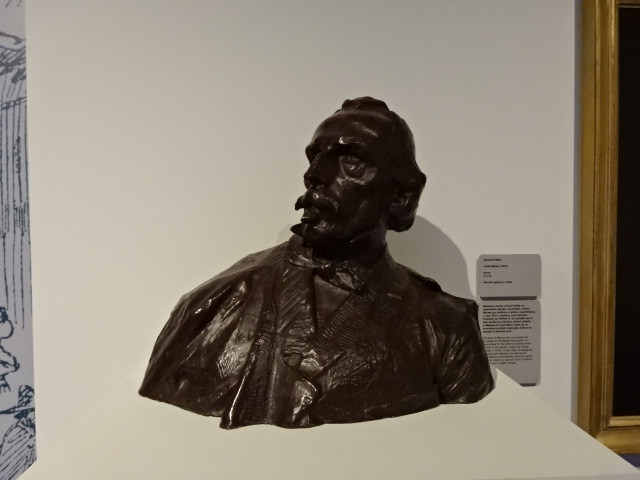
Masaryk was by no means the only Czech Meštrović knew. For example, Meštrović was friends with Czech sculptor Bohumil Kafka and even created a portrait bust of Kafka during 1908.

Meštrović’s work was first unveiled in Prague during 1903, when the Habsburgs ruled the Czech lands. His work was included in an exhibition featuring Croatian artists at the Mánes Association in Prague. Mestrovic had another exhibition in Prague during 1933. President Masaryk was so impressed with Meštrović that he presented the Croatian sculptor with the Order of the White Lion award during 1926.

I was enthralled with the Czech connection between Meštrović and artists in Czechoslovakia. Tomáš Garrigue Masaryk was one of my heroes, and I was very interested in life during the First Republic, when Masaryk was president. I felt strong emotions when viewing Meštrović’s powerful works. I also thought back to my introduction to Meštrović’s creations in Split. What a discovery! I was glad to be reacquainted with Meštrović’s sculptures. Seeing his renditions in person was a profound experience.

Tracy A. Burns is a writer, proofreader and editor in Prague.