Marc Chagall Exhibition in the Albertina Photo Diary

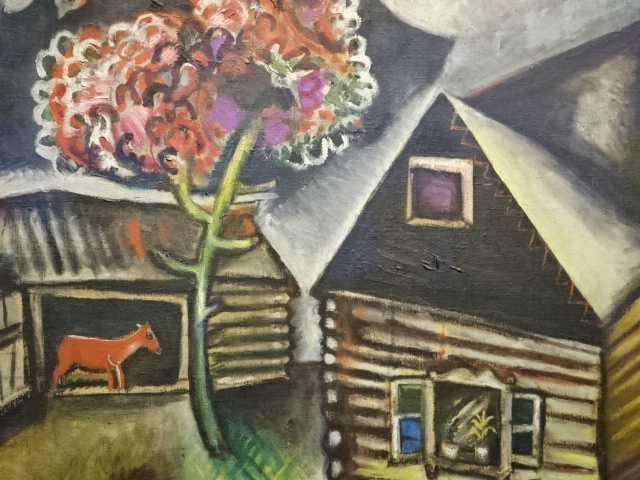
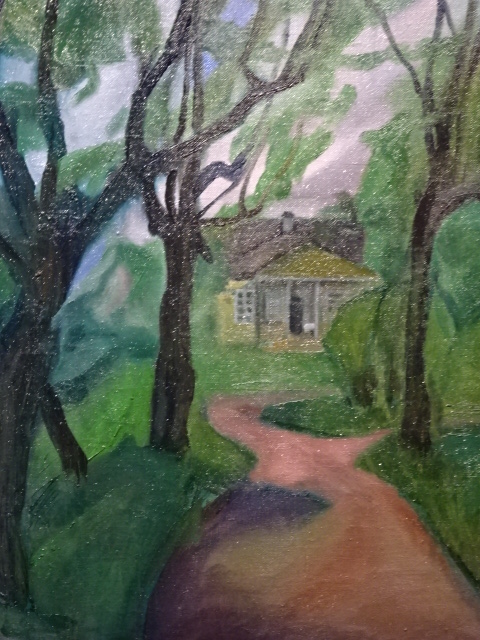
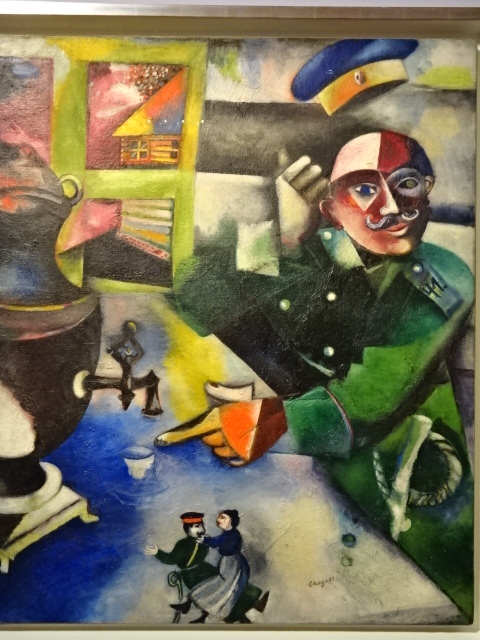
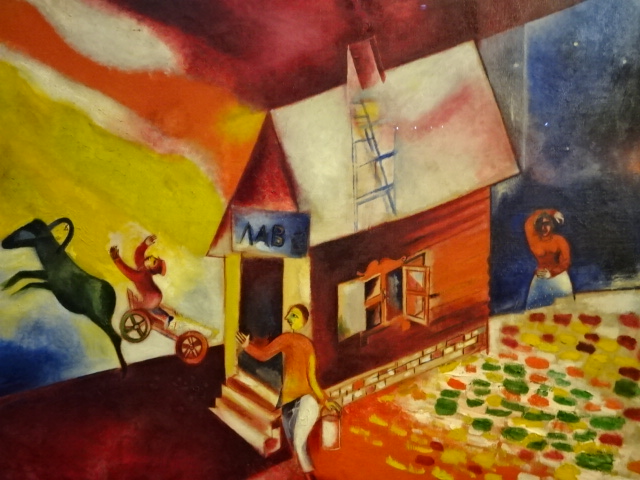
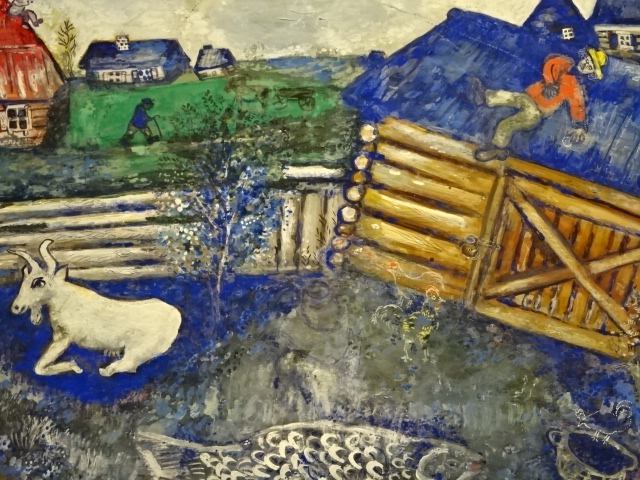
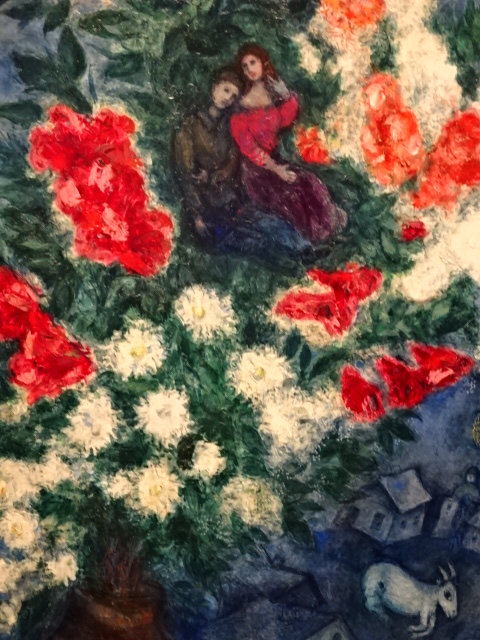
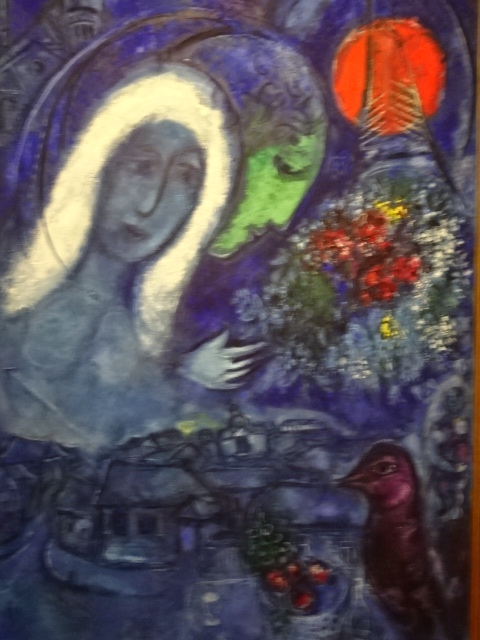
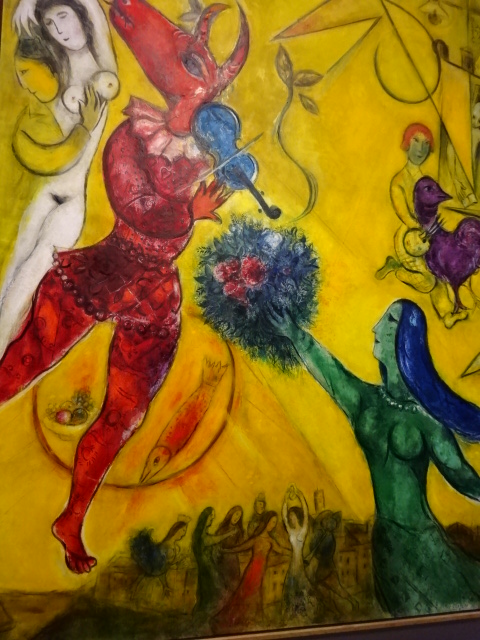
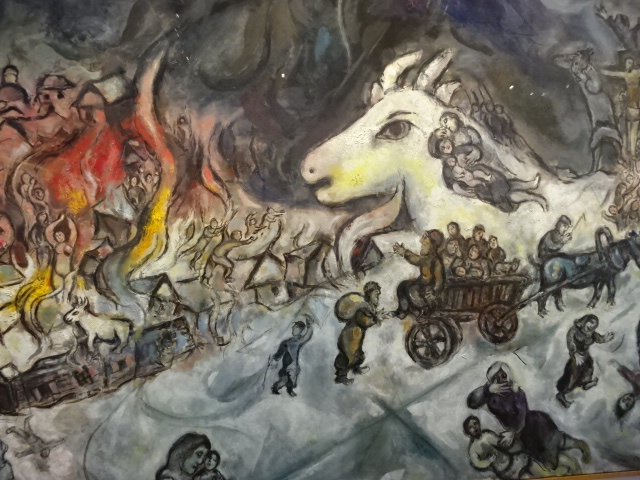
I admired Marc Chagall’s works at the Albertina venue in Vienna, Austria during late October of 2024. I have always loved going to exhibitions in the Albertina. I recalled a comprehensive show of works by Durer at that venue some years ago. A long-time fan of Chagall, I loved his use of bright colors and atmosphere of playfulness in his paintings that had a dreamy, fantasy-filled quality. I was enamored with his mastery of color to express various emotions and to create new worlds. I loved his renditions of Paris, the Eiffel Tower often dominating his creations.

Before this show I hadn’t realized how strongly his Jewish background had influenced his art. Chagall’s paintings were punctuated with Jewish folklore and motifs. I saw a painting of a synagogue and portraits of rabbis, for instance. Many paintings boasted biblical themes. I also hadn’t realized how often he had rendered his hometown, both sadness and joy intermingled in the memories. His yearning to return to his hometown was extremely visible in his art.

The symbolic nature of his artistic creations also enamored me as I noted the many violinists, animals, half-human creatures, wooden houses, circus characters, roosters and floating married couples as well as beautiful floral arrangements. Because I had visited an exhibition in Prague’s Wallenstein Riding Stables about the interwar years of the École de Paris movement, I knew he had been associated with that era during his Paris sojourn.

The exhibition allowed me to become better acquainted with the artist’s life. Marc Chagall (1887-1985)was born as Moishe Shagal on July 6, 1885 into a Hasidic Jewish family in Vitebsk, located in today’s Belarus. During the late 19th century the town was situated in the Russian Empire. His impressive, varied resume includes paintings, drawings, book illustrations, ceramics, prints, tapestries, stained glass and stage sets, but this vast exhibition focused solely on his paintings.

While he spent World War I in his hometown, he went to Paris before the war broke out, moving there in 1910 when he was 23 years old. In France he made friends with Guillaume Apollinaire, Ferdinand Léger and others creating avant-garde works. He often depicted Jewish themes and also evoked Paris in many paintings. During World War I, back in Vitebsk, he married Bella and held exhibitions in Russia as the war made it impossible for him to leave the empire. He founded an arts college in his hometown, too. However, he was in dire financial straits during the Russian Civil War. After World War I, much of his work was Moscow-based.

Following the Bolshevik Revolution, he moved to Paris for the second time, but fled during World War II after the Germans took control of France. The Nazis in occupied France took away Chagall’s French citizenship, and he and his wife were arrested. However, with the help of others, he and his wife found a way to escape to the USA. He felt like an outsider and didn’t speak English.

While he was in New York City, tragedy struck his hometown of Vitebsk, which was destroyed by the Nazis. Things would get even worse. Bela passed in1944 because it was not possible to get her any penicillin. It was no surprise then that Chagall’s late spouse appeared in many of his paintings. In 1948, though, he returned to Paris, and there his paintings focused on Jewish themes and his yearning for the existence of his hometown. Also, he would marry two more times.

He devoted much time to other fields as well. Some of his accomplishments included creating stained glass decoration in the cathedral in Reims and at the Art Institute in Chicago. He also made stained glass adornment for places in Switzerland and Israel. He became even better known for his ceiling painting of the Paris Opera. I remembered gazing in awe at this ceiling several decades ago. It was an experience I will never forget, even though I saw it so long ago. He also made sculpture and ceramics as well as tapestries.

Chagall died at the age of 97 on March 28, 1985 at the age of 97. He is buried with his third wife in a cemetery in Saint Paul-de-Vence, located in the Provence region.

Tracy A. Burns is a writer, proofreader and editor in Prague.

Otto Gutfreund Diary

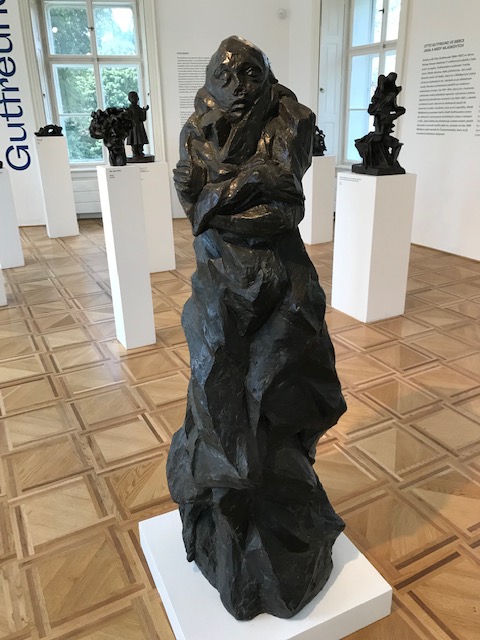
Anxiety, 1911-12.

Whenever I come across a Cubist sculpture by Otto Gutfreund in a Czech gallery or museum, I take some time to appreciate the personal feelings that come to mind as I study the masterful figures. While I was perusing the impressive collection of Gutfreund’s works in Prague’s Kampa Museum, I was reminded that this was not the only style he employed in his career. As I studied the creations by Gutfreund there, I mused over the legendary sculpture’s career and the tragedy that befell him.

Lovers (Embracing Figures), 1913-14, bronze

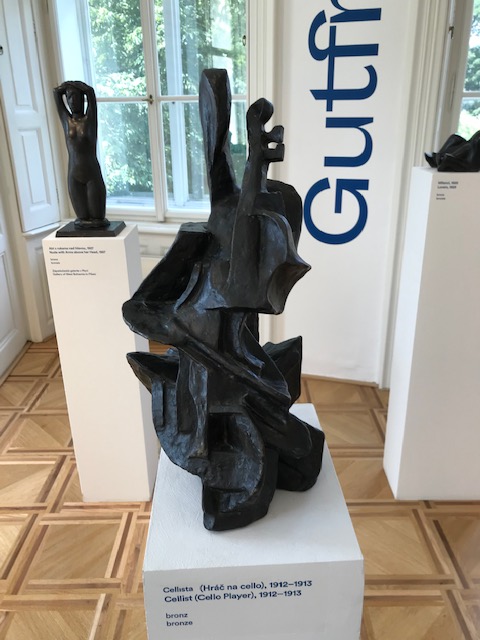
Born in Dvůr Králové nad Labem in Bohemia during 1889, Gutfreund studied drawing and porcelain painting in Prague before turning to sculpture. In Paris his mentor was Antoine Bourdelle. Gutfreund was greatly influenced by the works of Auguste Rodin, whom he knew personally. While in Paris, he also became fascinated with Gothic art and nature. His travels then took him to England, Belgium and the Netherlands. He became immersed in the Cubist style after 1910 as he simplified natural forms into geometric shapes and showed objects and figures from multiple perspectives.

Cellist (Cello Player), 1912-13, bronze.

He made a name for himself as a Cubist guru with his first sculpture in this style, “Anxiety,” of 1911-12. Gutfreund joined the Group of Creative Artists around this time. This emotional and expressive work is my favorite as it stresses the sheer angst and fear that can be debilitating and personally destructive. It reminds me of the anxiety shown in works by Egon Schiele and the German Expressionists of the 1920s. I also see similarities to the emotion-immersed sculptures of František Bílek, a Czech Art Nouveau and Symbolist artist.

Cubist bust, 1913-14, bronze

Some of Gutfreund’s most renowned early Cubist works include his renditions of Don Quixote and Hamlet. Then, becoming more and more inspired by Picasso, he moved to Paris, where he met that artist as well as Apollinaire, to name a few.

World War I brought many changes to Gutfreund’s life. He became a soldier for the Foreign Legion in France and took part in the Battle of the Somme. He wound up in prison during 1916 and wasn’t released until three years later.

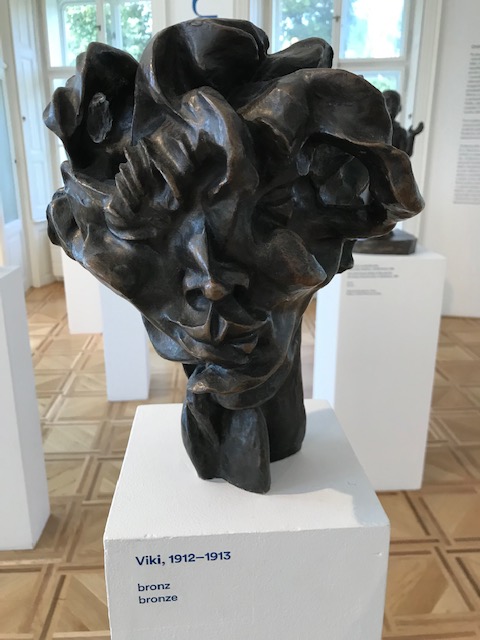
Viki, 1912-13, bronze

Two months after being freed, he moved back to Prague and was lauded as a sculptor of the social civilism style, which emphasized the everyday and was very realistic, nothing like the expressive Cubist movement in which he had participated before the war.

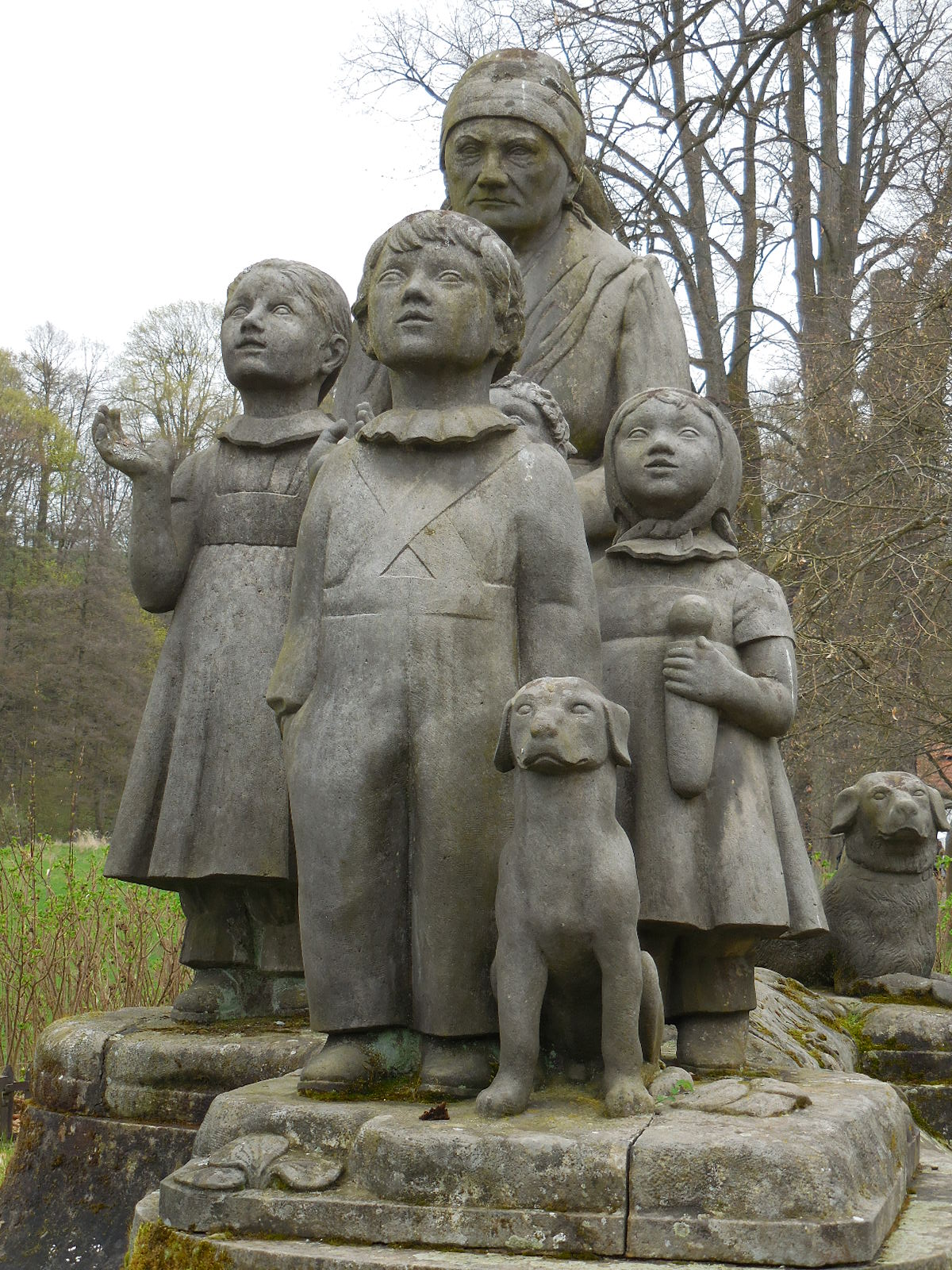
In the early 1920s, he received some big commissions. At this time, he created the monument to 19th century writer Božena Němcová in Ratibořice. The sculptural grouping showed off characters in Němcová’s stellar novel, The Grandmother, a 19th century Czech classic.

Industry, Study (sculpture on the right), 1923.

From 1922 to 1923, Gutfreund decorated the Legiobanka Building in Prague with a relief called “The Legions’ Return,” cooperating with renowned Czech architect Josef Gočár. In 1924 he designed a life-size statue of the first president of Czechoslovakia, Tomáš Garrigue Masaryk in Hradec Králové. I greatly admired likenesses of the first Czechoslovak president. Gutfreund held art shows, adding to his résumé of artistic mastery. During 1926 he became a professor of sculpture at Prague’s College of Decorative Arts, and Americans had the chance to admire his works in a New York City exhibition.

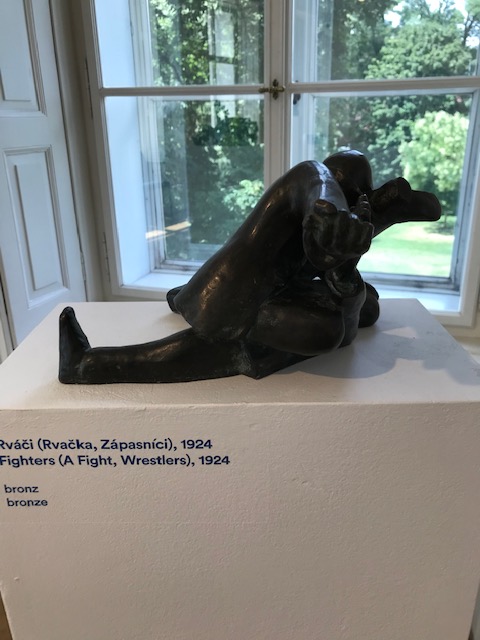
Fighters (A Fight, Wrestlers), 1924, bronze.

Unfortunately, his life was short-lived. On June 2, 1927, he drowned in the Vltava River in Prague. He accomplished so much in such a short time. If he had lived, there is no telling how much he could have influenced the Czechoslovak and world art scene. Gutfreund is buried in Prague.

At the Museum Kampa visitors can see a collection of both his Cubist and realistic sculptures as Otto Gutfreund lives on through his incredible art. It is worth traveling to Ratibořice to see the stunning chateau and park dedicated to Němcová and 19th century country life as well as the impressive statuary grouping by Gutfreund. Admirers of sculpture and architecture are sure to be amazed by Prague’s Legiobanka Building in the center of the city.

Tracy A. Burns is a writer, proofreader and editor in Prague.

Statuary grouping from Němcová’s book The Grandmother, by Otto Gutfreund, in Ratibořice

Ivan Meštrović Exhibition Diary

Early in 2023, I went to an exhibition of sculpture by late Croatian sculptor, architect and writer Ivan Meštrović. The art gallery at Prague’s main library hosted the intriguing show. I was familiar with the artist’s name: I had admired his villa, the Ivan Meštrović Gallery, in Split on my last trip to Croatia some years ago. It contained 86 sculptures made with various materials, showing off his dramatic, dynamic and expressive style that was both poetic and poignant. Drawings and reliefs were displayed, too. The bronze statue-dotted garden was delightful. One of my favorite things about traveling was being introduced to the works of various artists. I was enamored with Meštrović’s creations, and his unique, powerful style was forever embedded in my memory.

During Meštrović’s illustrious career that spanned six decades, he had been influenced by a number of styles ranging from Art Nouveau, Symbolism, Impressionism, Art Deco, Neoclassicism and Late Realism. Classicism played a major role in shaping his artistic style, too. Auguste Rodin’s naturalist style, which he had meticulously studied, greatly inspired him. During his extensive travels, Meštrović also saw Michelangelo’s creations, which affected his own work. poignant.

Meštrović’s subjects were diverse as well. He took on religious themes, created portrait busts, made sculptural monuments and delved into studies of figures. A firm believer in promoting Yugoslav national identity, he also presented folk themes and national myths. He fervently advocated for pan-Slavism, and some of his works represented historical events in Slav history.

The sculptor’s career took off when he exhibited his works in Vienna during 1905 as part of the Secession Group. While living in Paris for two years, he received recognition from all over the world and was very prolific. Then he spent four years in Rome, where he was lauded for his design of the Serbian Pavilion at Rome’s1911 International Exhibition. During World War I, he traveled extensively and spoke out against the Habsburg monarchy that controlled his homeland.

He returned to his homeland after the war ended and achieved much success while living in Zagreb. He even created many sculptures for King Alexander I of the Kingdom of Serbs, Croats and Slovenes. He continued to travel, even having an exhibition at the Brooklyn Museum in New York during the 1920s.

During World War II, Meštrović’s life was far from rosy. In 1941, he spent three-and-a-half months in prison. The following year his first wife died, and many of her Jewish relatives perished during the war. Thanks to the Vatican, Meštrović was let out of prison and took off to Venice and then back to Rome. He even met Pope Pius XII.

After World War II, he refused to return to Yugoslavia because the Communists were in control. He wound up in the USA during 1946, when he took a position as a professor at Syracuse University. His works were displayed at the Metropolitan Museum of New York the following year, and he was the first Croatian to do so. He continued to achieve great success and much recognition in the USA and even received the American Academy of Arts and Letters’ Gold Medal in the field of sculpture during1953. American President Dwight D. Eisenhower was so impressed with Meštrović that he gave him US citizenship. Meštrović took a job at the University of Notre Dame in Indiana soon after that. He designed monuments at Notre Dame, and his sculpture is featured in the university’s art museum.

He died in Indiana during 1962 at the age of 79 and was buried in his hometown of Otavice, though the Communists in control of Yugoslavia created many difficulties. His sculptures can be seen all over the world: in Serbia and Romania as well as in the United States, including Louisiana, Indiana, New York and Illinois.

This exhibition focused on Meštrović’s Czechoslovak connection as he had developed an affinity for Czech culture. He befriended the first democratic President of Czechoslovakia, Tomáš Garrigue Masaryk. They both had taken an anti-Habsburg stance during World War I. Also, Meštrović and Masaryk had lived in exile during the first World War. They both admired Slav history. While Meštrović wanted a united Yugoslavia of Croats, Serbs and Slovenes, Masaryk tried to forge a united Czechoslovakia of Czechs and Slovaks. Meštrović sculpted two busts of Masaryk in 1923 as well as busts of his wife Charlotte and his daughter Alice. He created these busts at the Czechoslovak President’s summer residence, Lány Chateau. I recalled spending some sunny afternoons in the park of the chateau in Lány as well as paying my respects at the Masaryk family graves.

Masaryk was by no means the only Czech Meštrović knew. For example, Meštrović was friends with Czech sculptor Bohumil Kafka and even created a portrait bust of Kafka during 1908.

Meštrović’s work was first unveiled in Prague during 1903, when the Habsburgs ruled the Czech lands. His work was included in an exhibition featuring Croatian artists at the Mánes Association in Prague. Mestrovic had another exhibition in Prague during 1933. President Masaryk was so impressed with Meštrović that he presented the Croatian sculptor with the Order of the White Lion award during 1926.

I was enthralled with the Czech connection between Meštrović and artists in Czechoslovakia. Tomáš Garrigue Masaryk was one of my heroes, and I was very interested in life during the First Republic, when Masaryk was president. I felt strong emotions when viewing Meštrović’s powerful works. I also thought back to my introduction to Meštrović’s creations in Split. What a discovery! I was glad to be reacquainted with Meštrović’s sculptures. Seeing his renditions in person was a profound experience.

Tracy A. Burns is a writer, proofreader and editor in Prague.

Věra Jičínská Exhibition Diary

Věra Jičínská – On the Terrace, 1934. Photo from webpages of Gallery of Modern Art, Hradec Králové.

What I like most about visiting Czech museums outside of Prague is that I often find an exhibition dedicated to an artist who is underrated and has been overlooked by the capital city’s art scene.I was in luck when I visited the Gallery of Modern Art in east Bohemia’s Hradec Králové because I came across an exhibition dedicated to the late artist and writer Věra Jičínská, who had made a name for herself in Europe during the interwar years. While she is best known as a painter, the thrilling show also emphasized her penchant for traveling and her talent as a journalist, photographer and designer. Back then, women were not expected to have careers but rather to dedicate their lives to raising a family. Jičínská demonstrated her independence by concentrating on an artistic career, smoking and sporting short hair.

Beach in Crimea (In a Small Bay), 1936.

Jičínská grew up near Brno and later studied in Prague at the School of Decorative Arts. She spent the following years living abroad, exhibiting her art during a seven-year sojourn in Paris after spending two years in Munich. In Paris she became steadfast friends with Czech painter Jan Zrzavý and composer Bohuslav Martinů. Her early career was influenced by Purism and Cubism, but during 1925 she developed a Neoclassical style. By the 1930s, her works were imbued with bright colors.

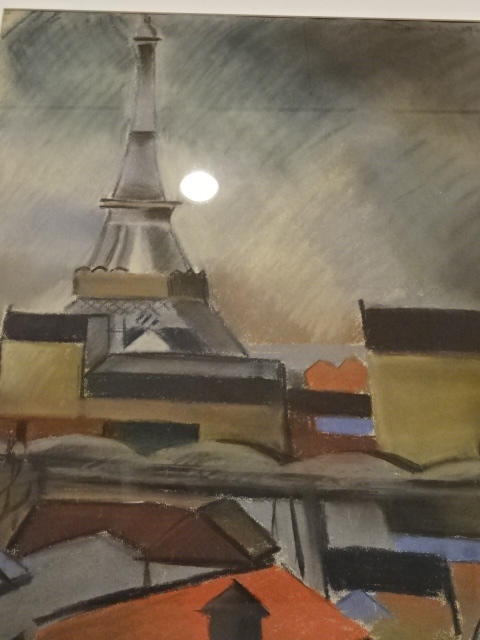
Parisian rooftops, 1923-24.

The exhibition’s display of paintings inspired by her travels was my favorite section. Jičínská’s paintings of Brittany’s landscape and fishing tradition captured my attention. That was one place I longed to see. Her romantic rendition of Paris’ rooftops and the Eiffel Tower brought back memories of my visits to the French capital. I went up the Eiffel Tower for the first time when I was a junior in college.  As my friend and I enjoyed the sights from early morning until night every day, we drew energy from the electric atmosphere of the city and its many wonders. Her works showing places in Hungary and Czechoslovakia also captured my attention.

The Eiffel Tower, 1927.

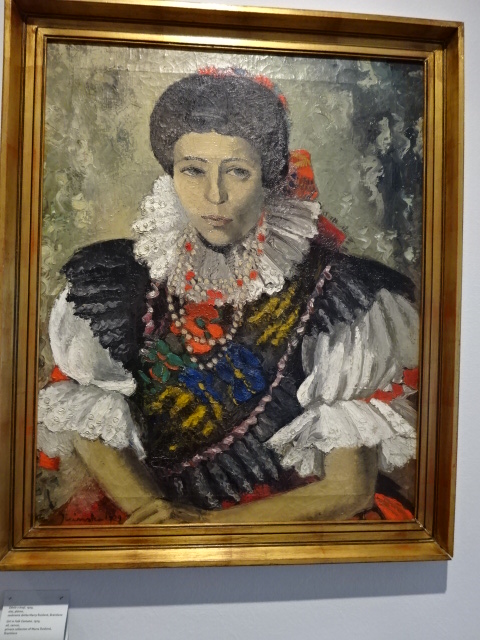
Jičínská also became known for painting female nudes, a subject that, up until then, only had been taken up by male artists. She celebrated the female body in her works, even painting pregnant women. Dance was another theme she dealt with. The bright colors of her painting “Alexander Sakharov in a Fantastic Burlesque” captured the vibrancy of the dance. She was fascinated by folk culture. Her “Girl in Folk Costume” emphasized the beauty of the people, their costumes and folk traditions. Some of her art focused on Hindu dance themes, too.

Journalism by Věra Jičínská

In the early 1930s, she took up journalism. Her articles examined modern culture – theatre, film and architecture, for instance. The profession of journalism was also the theme of some of her paintings. I had spent time as a culture writer for various publications, and her thirst for knowledge in the cultural sphere made me feel a certain kinship.

In 1930 she married a former classmate. The following year the couple moved to Prague, though her work was still exhibited throughout Europe. Together, the two trekked to Slovakia during 1933 and 1934, and she documented her trip with masterful photographs. Her pictures from Slovakia brought out the character of the people photographed. There was no exaggeration or embellishment to the photos. She emphasized everyday activities in her snapshots. This feature made me think of my favorite Czech writer, Bohumil Hrabal, who, in his fiction, stressed the beauty of everyday life. Ever since I read his books, I have become more appreciative of the little things in life that, up until that time, I would often take for granted, the small joys that take on so much meaning when they are gone.

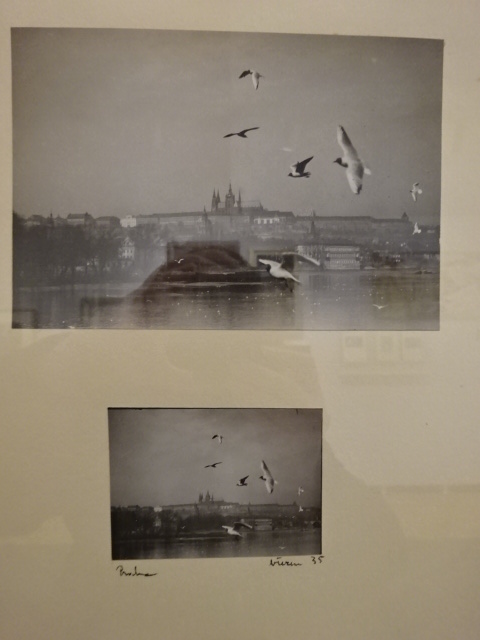
Gulls, 1933.

Still, the one photograph that impressed me the most featured gulls swooping around Prague Castle. I was reminded of one of the many views that had made me fall in love with the city – Prague Castle from several of the bridges, Prague Castle from the Vltava embankment, Prague Castle from the window of a flat I had rented long ago. After the attacks on September 11, 2001, I found great solace in that postcard perfect view from the apartment where I was living at the time. It helped me deal with the tragedy of that day, which would be forever etched in so many minds. Jičínská also took poignant photos during trips to Poland, Russia and Ukraine.

Brittany, 1928.

In 1937, her life changed again. Jičínská gave birth to a daughter whom she named Dana. While she devoted much time to motherhood, she did not give up her career. She even exhibited works during World War II. By 1941, she was concentrating on working with pastels to create a colorful dynamic and rendering many landscapes. In 1946, the couple bought a cottage in Říčky, a village nestled in the Orlické Mountains. Jičínská often painted there, and  many Czech artists visited the couple during the 1950s.

The Communist coup of 1948 had had a devastating effect on Jičínská and her family. Her husband’s publishing house was nationalized, and he was no longer the boss but rather one of the employees. Her parents had lived in a villa in Brno, but the Communists only let them occupy several rooms. To make matters worse, her father saw his pension dwindle.

Girl in Folk Costume, 1929.

Due to the financial hardships, Jičínská branched out into more artistic fields. She designed postcards and became a designer who often worked with ceramics. In 1952 she was restoring a ceiling fresco at the Czechoslovak Academy of Arts and Sciences when the scaffolding collapsed. She was severely injured and could not continue as a painter. She focused on her work as a designer. On March 27, 1961, a year after her daughter married, Jičínská died in Prague.

Before this exhibition I had not even heard of Věra Jičínská. After seeing her works, I appreciated the obstacles she must have come across pursuing a career as a female artist, journalist and traveler during the interwar years. I grew up playing baseball and ice hockey with boys, and I often was the only girl in the baseball league. But that was nothing compared to what Jičínská had accomplished as a woman breaking down barriers and living an independent life the way she chose to live it, not allowing herself to be dictated by society’s norms.

Alexander Sakharov in a Fantastic Burlesque, 1932.

The Gallery of Modern Art’s permanent exhibitions were also fascinating, and I will write about that in a separate post. Twenty artists from the last century were featured in one section, and contemporary art played a role in the collections, too. But what stood out most for me was the exhibition of Věra Jičínská’s artistic accomplishments.  

Tracy A. Burns is a writer, proofreader and editor in Prague.  

Mucha: The Family Collection Exhibition Diary

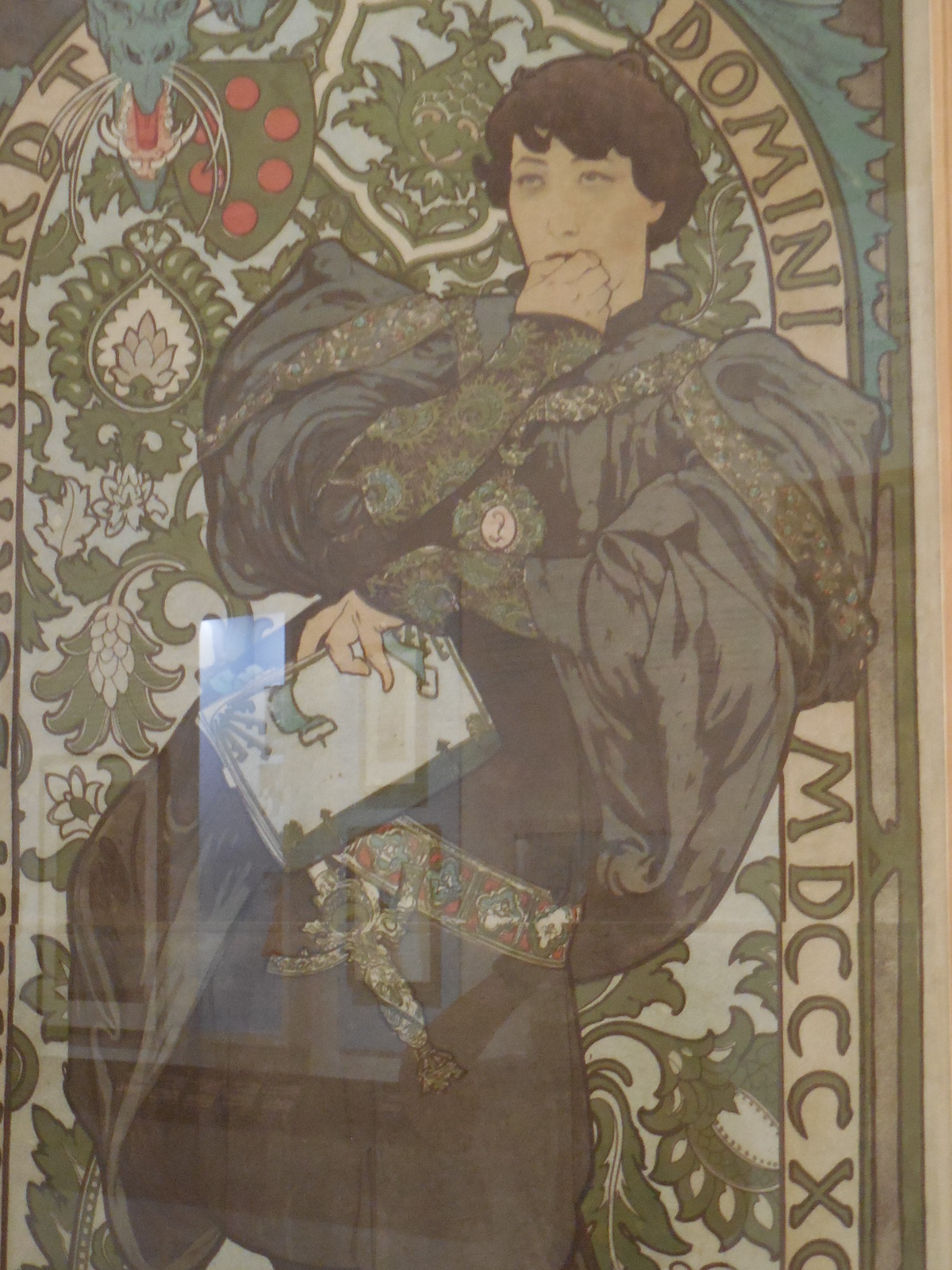
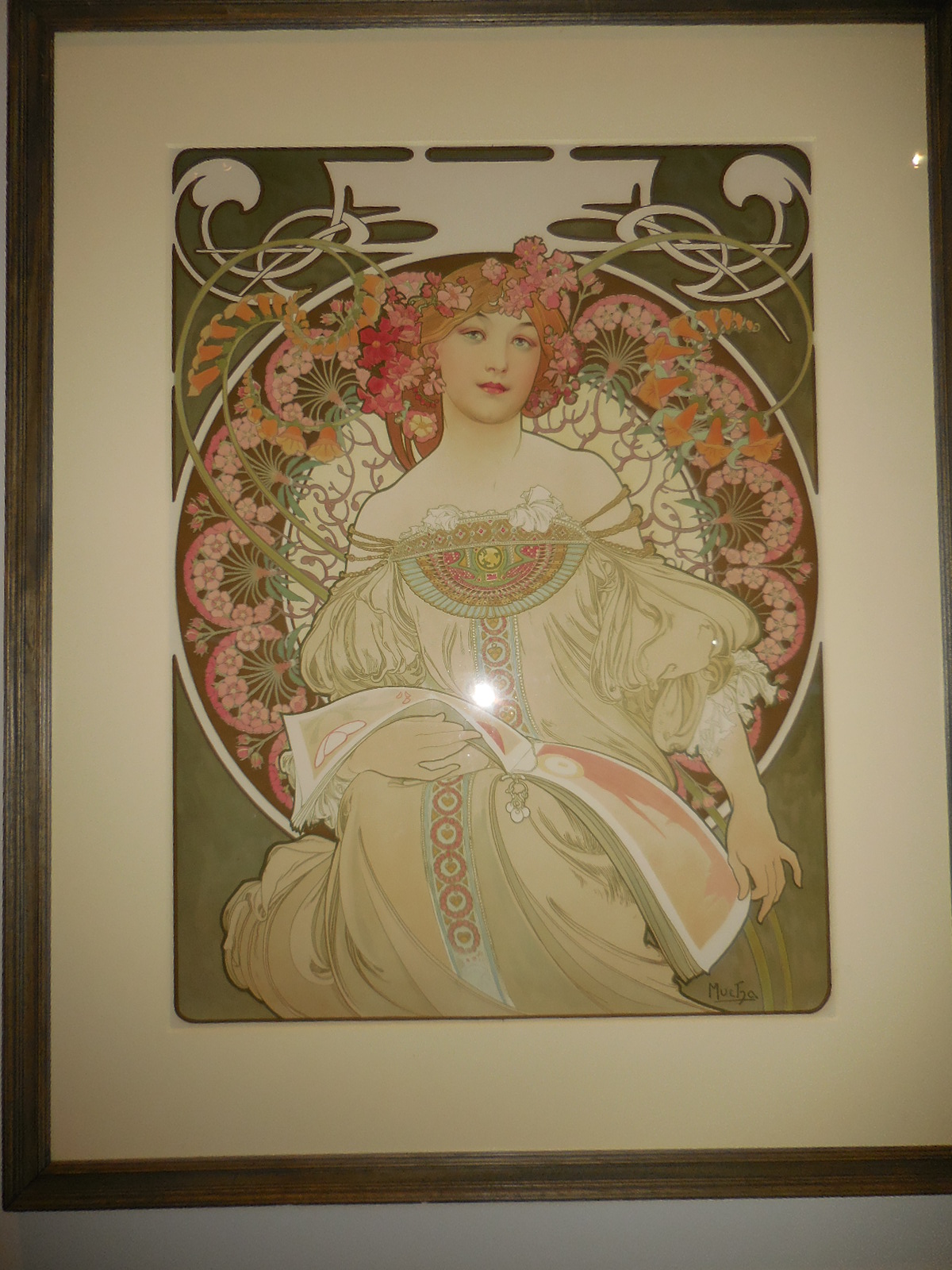
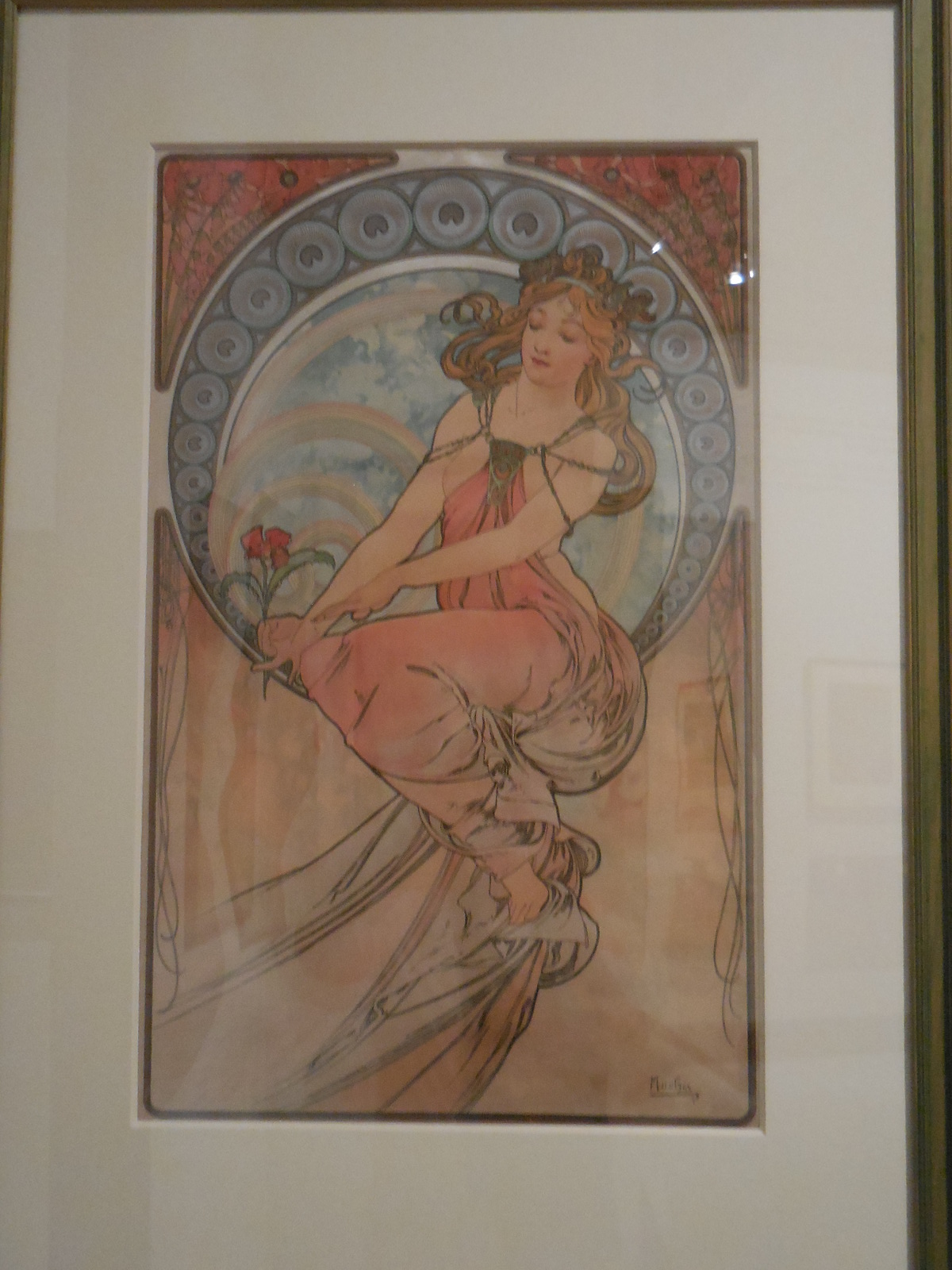
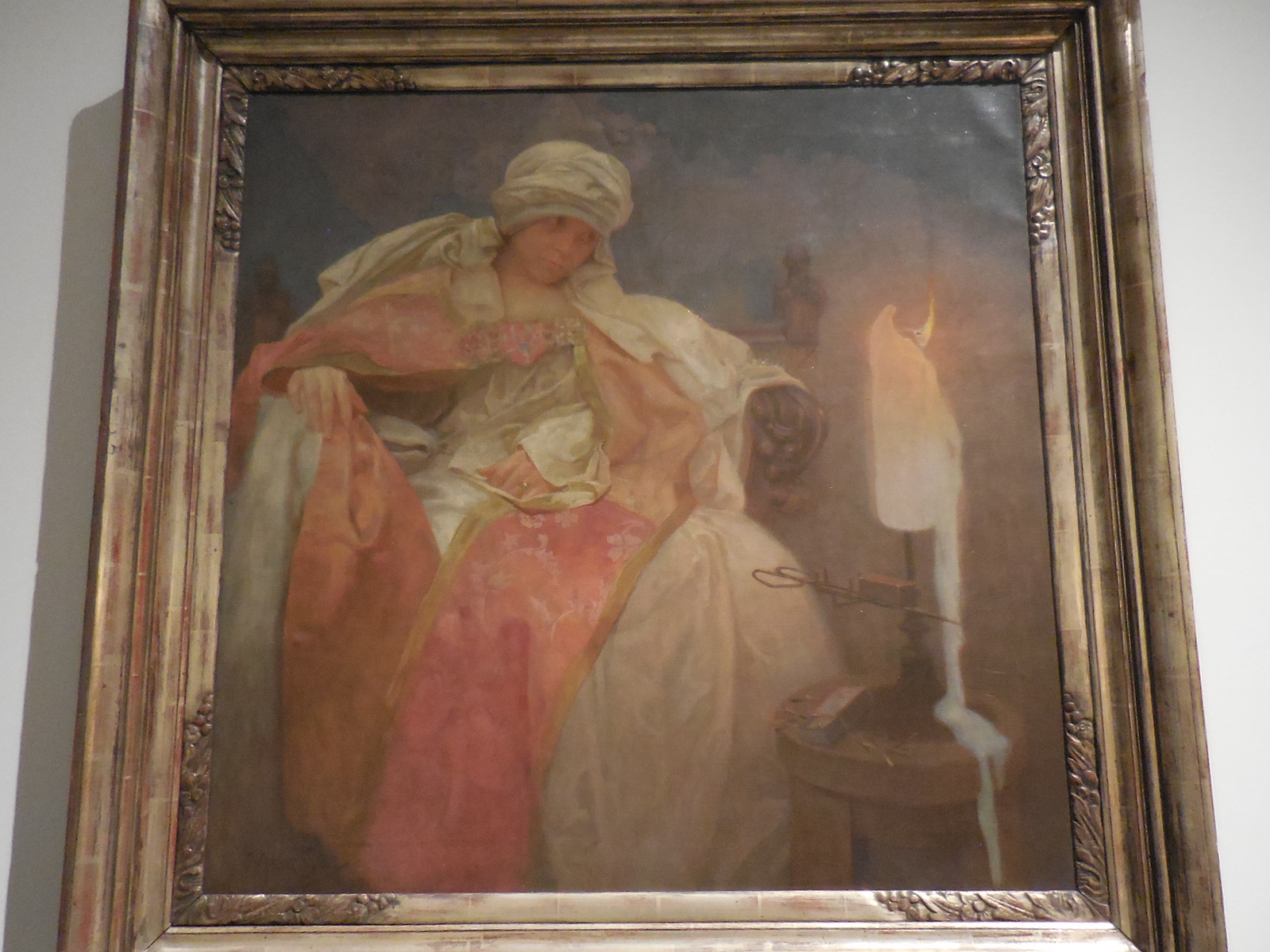
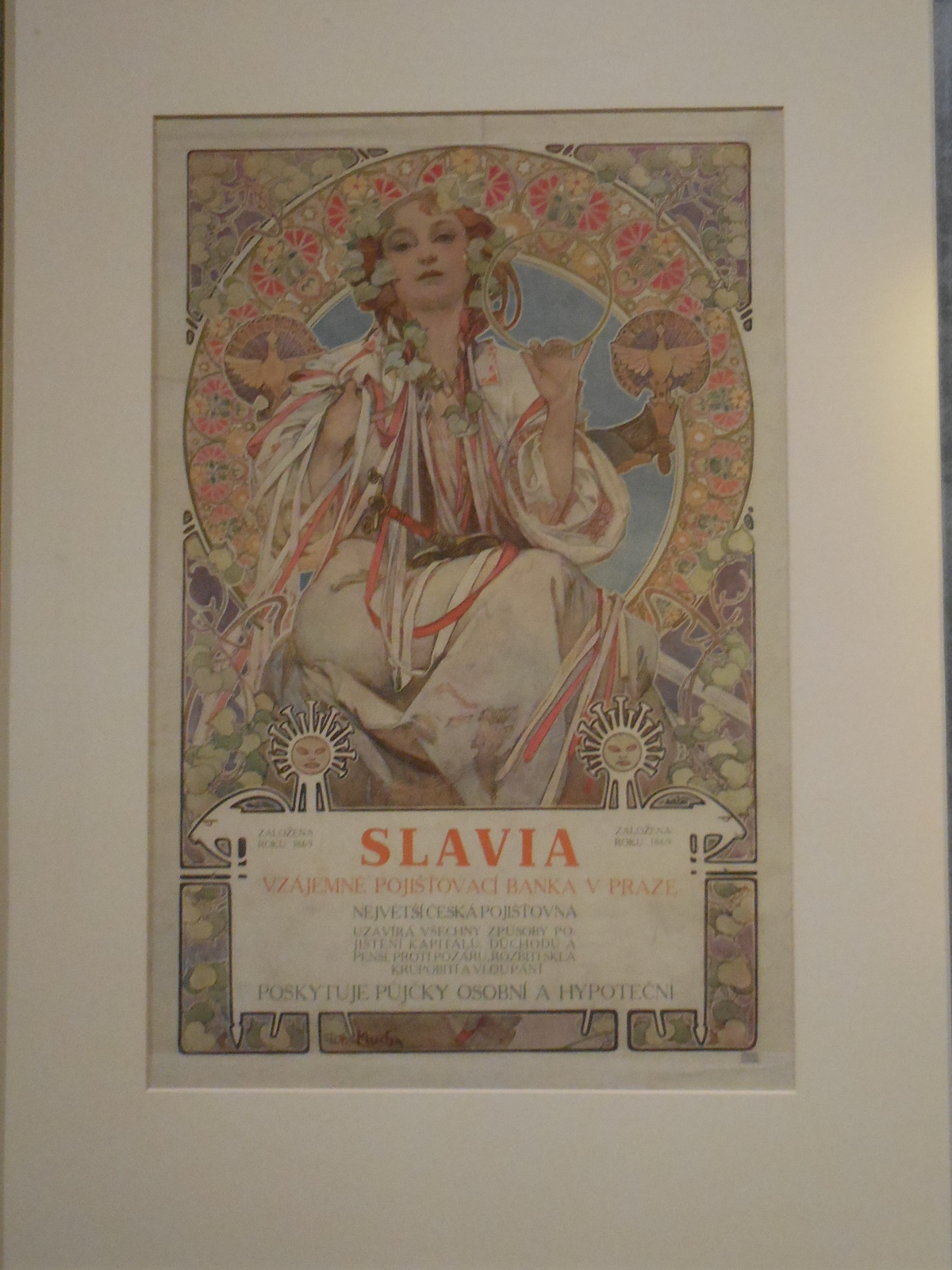
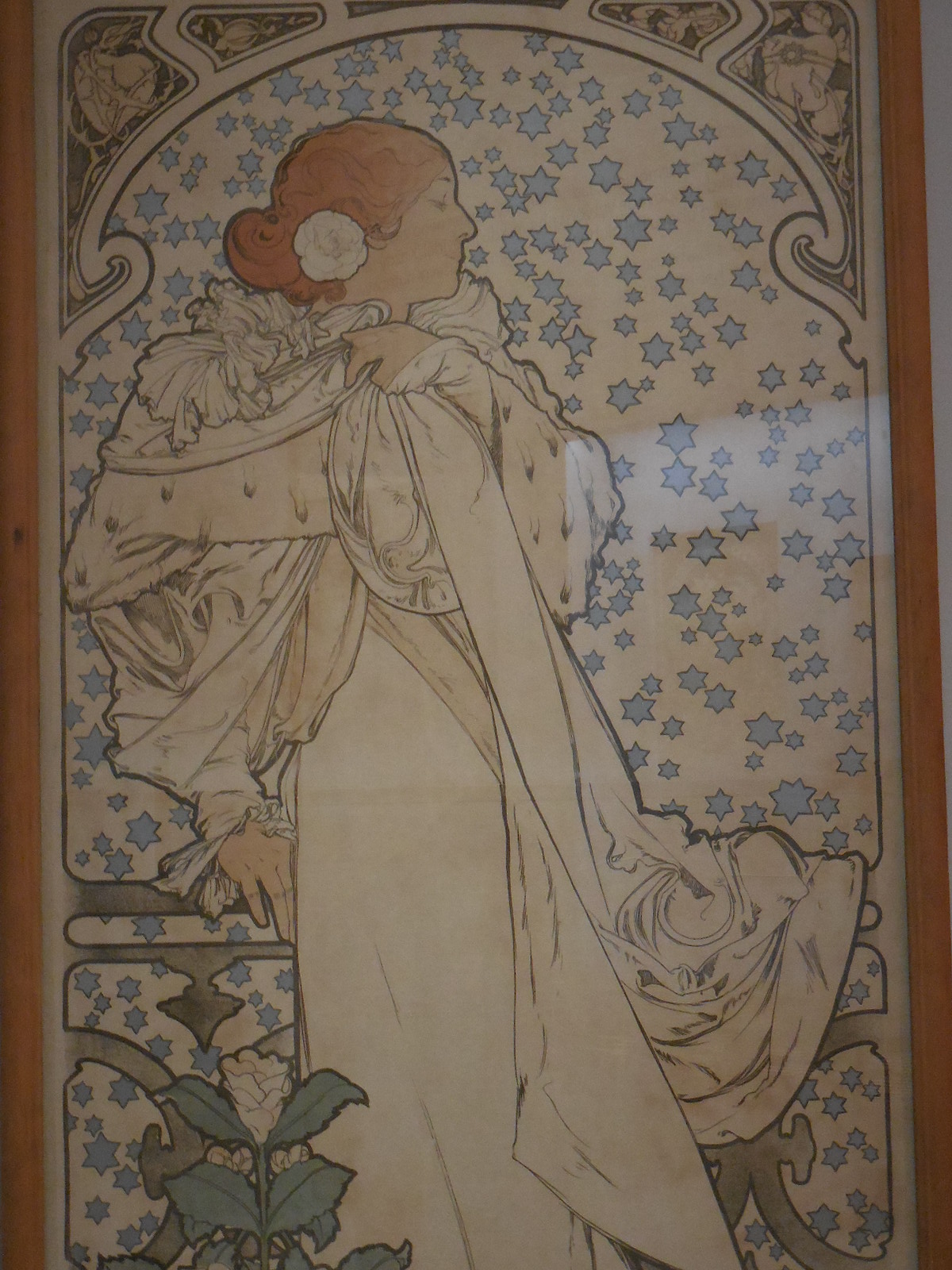
I have been a fan of Alphonse Mucha’s Art Nouveau works ever since I came to Prague in the 1990s. While he is best known for his exhilarating posters of actress Sarah Bernhardt, Mucha was a very versatile artist – as is evidenced in this comprehensive exhibition of creations owned by his descendants. The first extensive showing of his works in 30 years is housed at Prague’s Waldstein Palace. The exhibition highlights not only the advertising posters but also his drawings, paintings, sculptures, photos and jewelry, for instance. The family displays some originals to the public for the first time.  

Family portraits evoking Mucha’s childhood add an intimate feel to the exhibition. Born in Ivančice, Moravia, Mucha called home a building that also included the town jail. The Czech lands were under Austrian rule when Mucha grew up. They were part of the Habsburg Empire in which German was the official language. Yet, during that era, the Czech National Revival took place, when Czech nationalists promoted Czech culture and the Czech language.

At the end of 1894, Mucha became a star overnight when he designed a poster for Bernhardt’s production of Gismonda. The following year he created posters that decorated calendars, postcards and menus as well as theatre programs. His work would find enthusiastic audiences in Vienna, Prague, Budapest, Munich, London, New York and other cities during subsequent years.

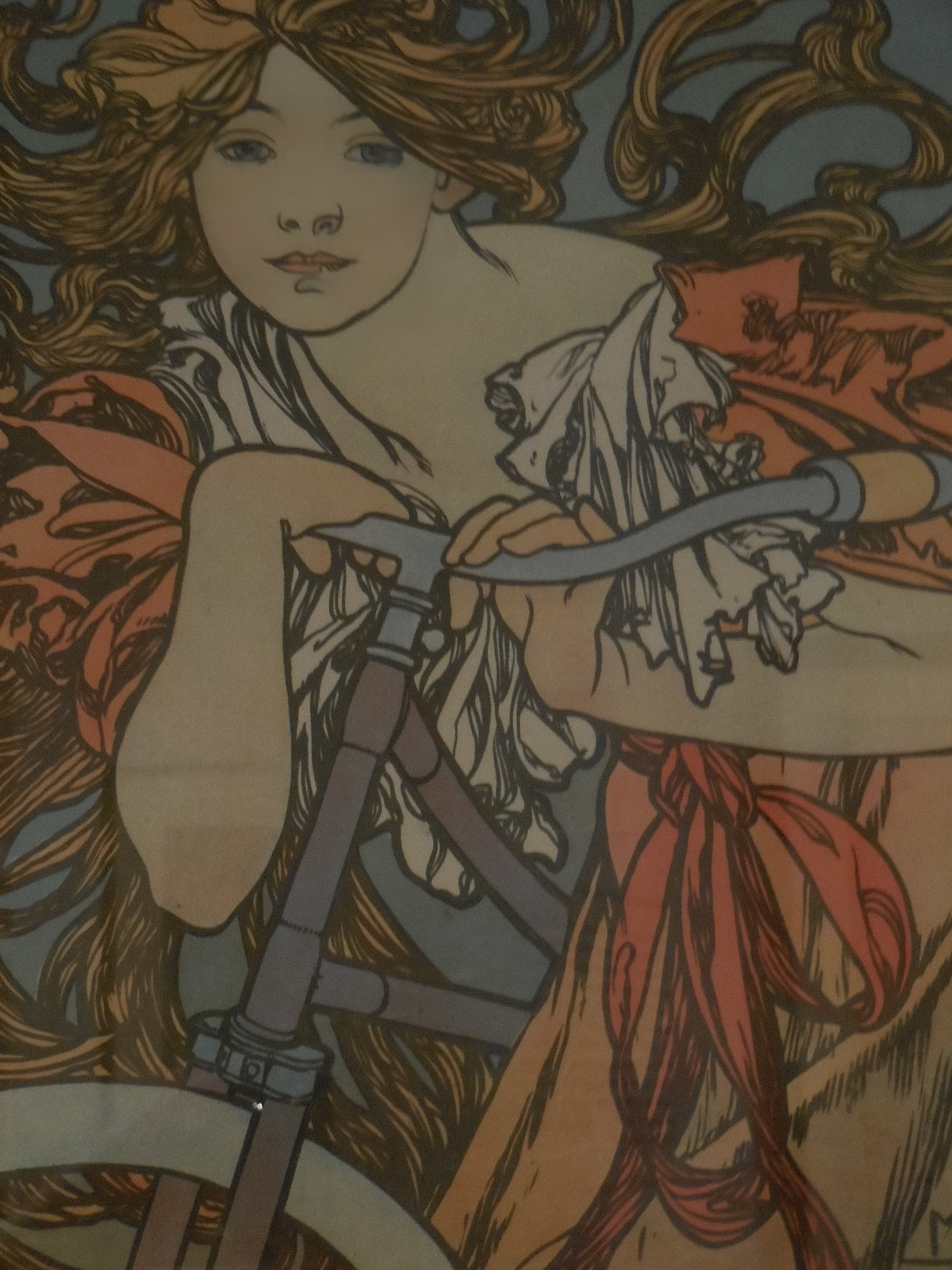
I loved how, in his advertising posters, Mucha utilized folk features not only found in Czech art but also in Byzantine, Islamic, Japanese, Gothic, Judaic, Celtic and Rococo works. Much of this genre focuses on beautiful, young women with an optimistic and cheerful flair. They are wearing flowing robes in pastel colors. I loved the touches of floral and plant ornamentation plus arabesques and naturalistic elements, too.

The exhibition boasted family portraits and photos, such as those of his friends Paul Gaugin and Auguste Rodin. Gaugin even was Mucha’s housemate for a while. During the Paris Exposition Universalle of 1900, Mucha represented Austria-Hungary as the show focused on the accomplishments of the past century. I had not known that in 1899 Mucha had designed a jewelry collection that was featured at this major show. One of the jewelry pieces on display at the exhibition features a snake-shaped broach that Bernhardt wore during her portrayal as Medusa. I also was captivated by Mucha’s decorations for a German theatre in the USA. He would wind up making three trips to the United States, hailed by The New York Daily News as “the world’s greatest decorative artist.”

Works in the exhibition illustrated how mysticism had influenced him. His philosophy is also apparent in his creations. For example, he believed in beauty, truth and love to guide him on the spiritual path. For a monument he created a triptych called The Age of Reason, the Age of Wisdom and the Age of Love, fusing these three characteristics into one piece of art. Unfortunately, Mucha didn’t get the chance to finish it.

Perhaps what always captivates me the most about Mucha’s art is his emphasis on Slav identity. Indeed, his phenomenal Slav Epic paintings feature the heroic tales of the Slavs in 20 historical, symbolic canvases. Several reproductions of these works at the exhibition reinforced Mucha’s identity as a Czech and Slav patriot.

I saw panels devoted to Mucha’s decorations in the Municipal House, for which he designed numerous pieces – three wall panels, a ceiling painting depicting prominent Czech personalities, eight pendentives and furnishings. I remember seeing these for myself on tours of the Art Nouveau Municipal House, something I recommend to every Prague visitor. It is notable that, while Mucha’s works often were rooted in Slav identity in the past, he also looked to the future for a prosperous Czech nation.

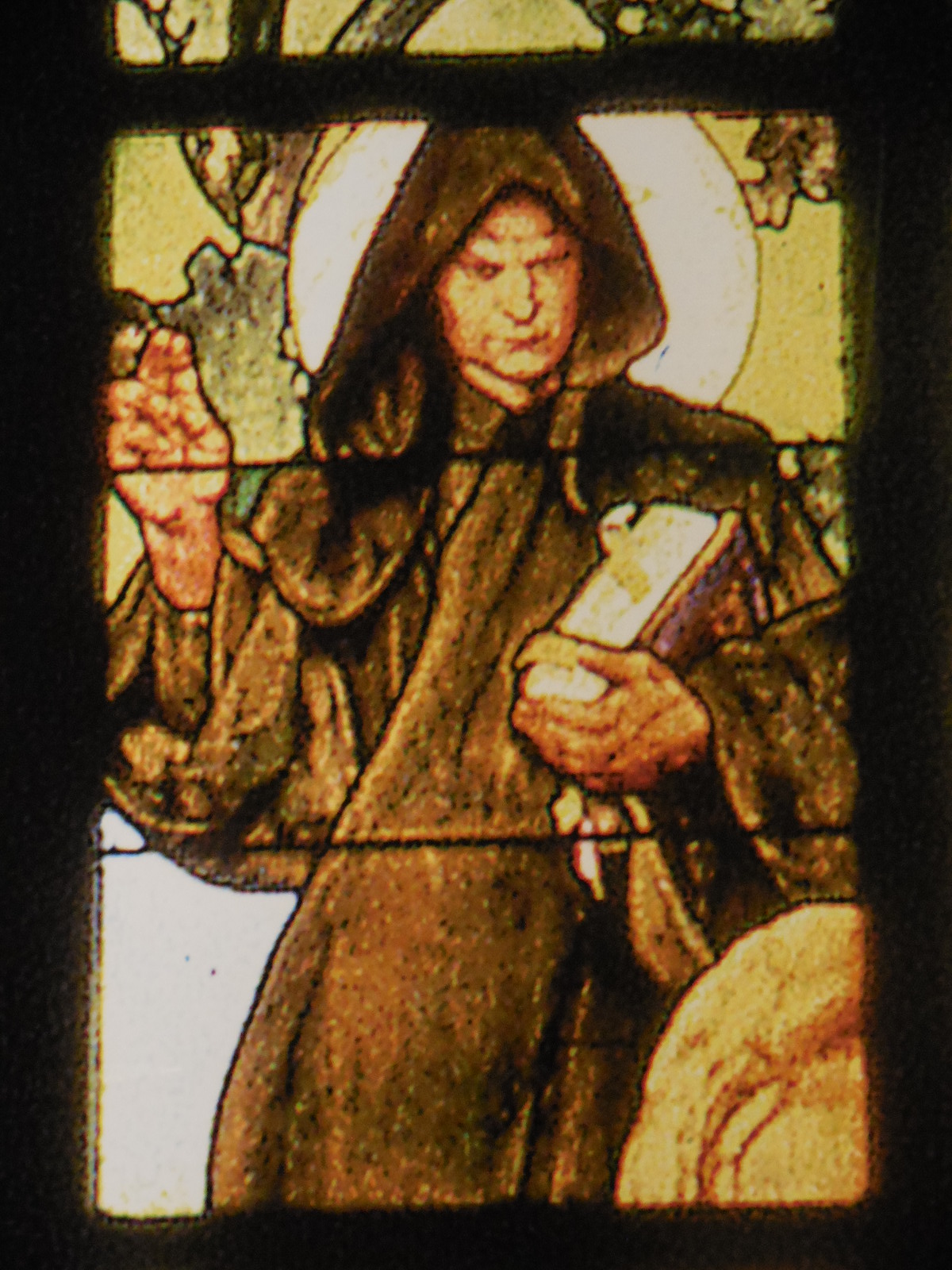
I was enamored by the reproductions of his stained-glass window designs. The originals decorate the interior of Saint Vitus’ Cathedral at Prague Castle. In 1931 he portrayed Saint Wenceslas, the nation’s patron saint, as a child with his grandmother Saint Ludmila in a central panel along with other panels featuring the lives and work of Saints Cyril and Methodius. Seeing examples of his colorful and vibrant stained glass renditions close-up was for me one of the highlights of this exhibition.

Mucha’s life was cut short by the arrival of the Nazis in Prague, where they set up the Protectorate of Bohemia and Moravia during March of 1939. The 79-year-old Mucha, riddled with health problems, was targeted by the Gestapo. Mucha was a Freemason, Judeophile and a promoter of democratic Czechoslovakia. He was one of the first to be interrogated by the Nazis. Mucha was stricken with pneumonia due to the strain from grueling interrogations and died in Prague 10 days short of his 79th birthday on July 14th, 1939. He is now buried in Prague’s Vyšehrad Cemetery along with other prominent Czechs.

This exhibition takes museumgoers on a unique and unforgettable journey from his childhood roots in Moravia to his time as an outsider in Paris to his experiences in the democratic Czechoslovakia until his untimely death. It stresses his identity as a Moravian, as a Czech, as a Slav and as a European. It shows his accomplishments in the art scene by displaying an eclectic collection of his creations that profoundly punctuated the artistic world.

Tracy A. Burns is a writer, proofreader and editor in Prague.

MUSÉE DE CLUNY DIARY

Sorry the photos do not always show the objects described in the text.

ParisCluny3Chapel

The chapel of the Musée de Cluny

One of my favorite museums in Paris is the Musée de Cluny, which houses a treasure trove of medieval art. Converted in 1843 to a museum, it is situated on the site of the former baths of Lutetia, a Gallo-Roman site. At one time, it was also home to abbots of Cluny.

ParisCluny4

The baths of Lutetia are situated on three levels. They were most likely constructed in late 1 AD and served this function for 200 years. In 1862, they were recognized as a historical monument.  The townhouse that once was the residence of the abbots is another architectural delight. The huge inner courtyard includes an external spiral staircase. The facades are adorned with many Gothic sculptures. The decoration of an oriel amazes, too. Renaissance and Gothic art features prominently there.

ParisCluny5

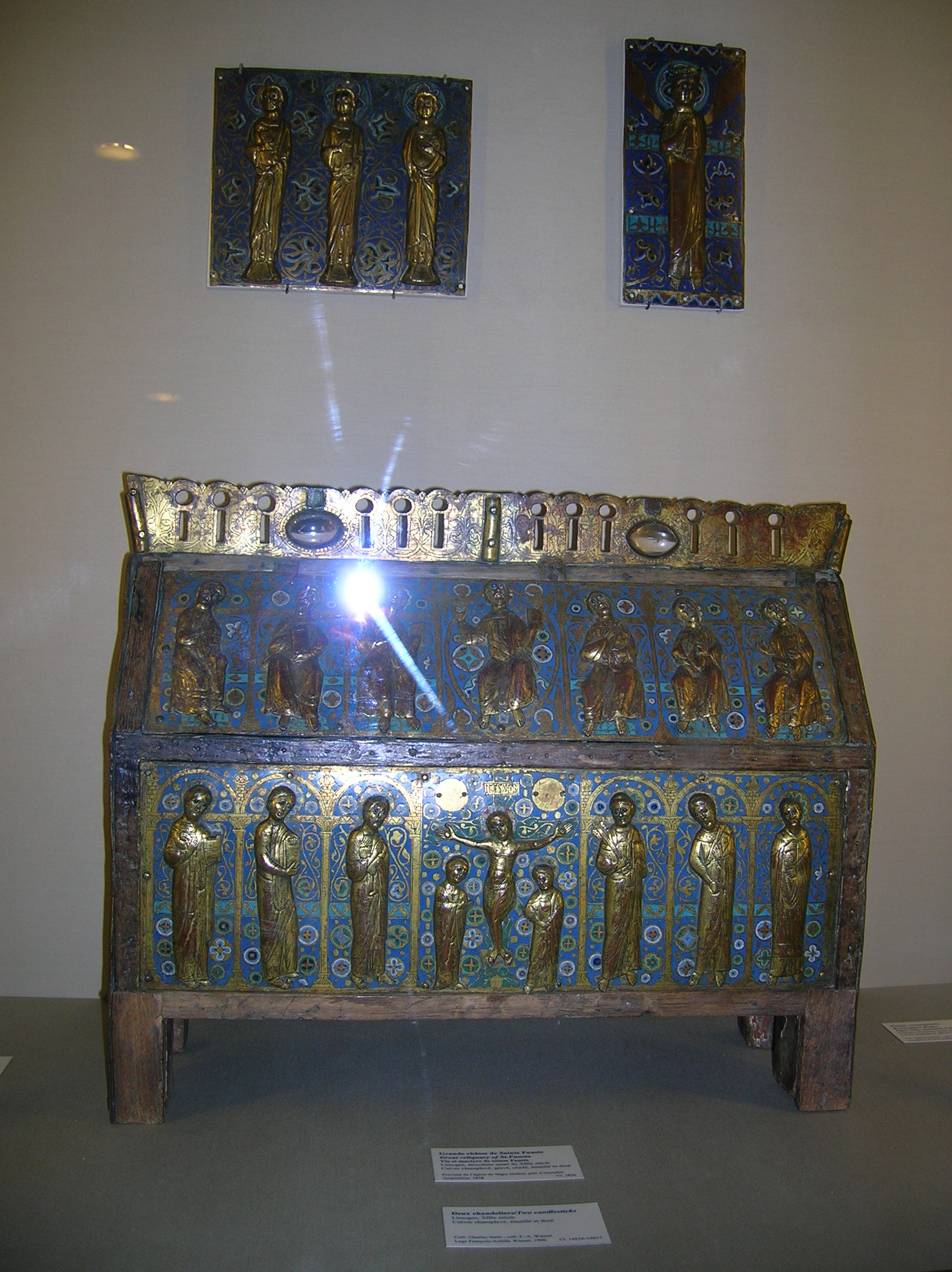
The museum isn’t only a showcase for medieval art. I also found Byzantine and Romanesque artifacts as well as metalwork and enamelware made in Limoges workshops. These included crosses, altarpieces and reliquaries, such as the reliquary of the murdered archbishop of Canterbury, Thomas Beckett (1170). The gold votive crowns from Visigoth Spain hailed from the seventh century and served as prime examples of early Western art.

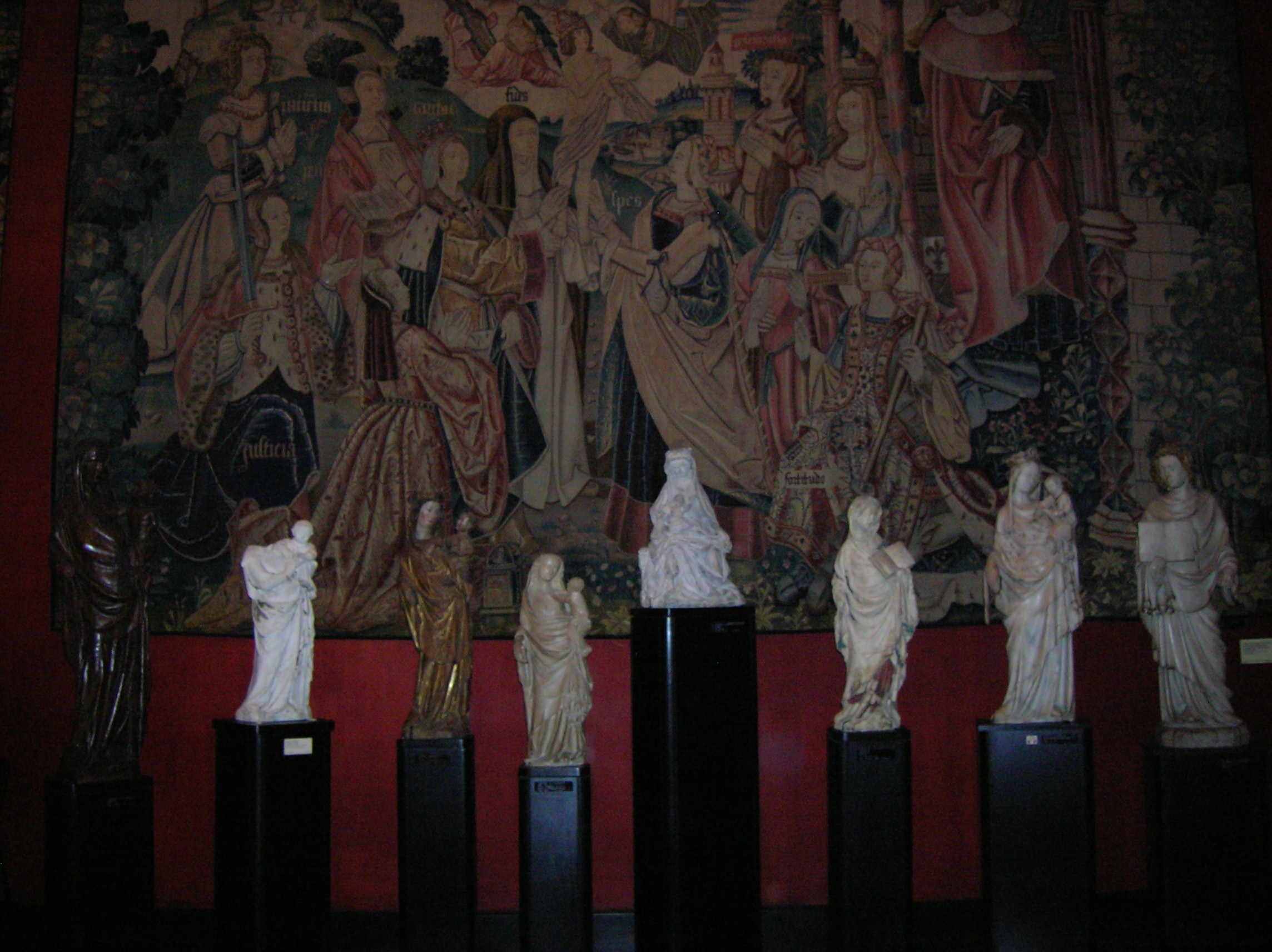
However, what fascinated me the most was the Gothic art. I loved the stained glass windows from Sainte Chapelle, a must for me every time I visited Paris. These windows dated from the middle of the 13th century. Three of the Apostle statues from Sainte-Chapelle were also on display. I loved the detailed drapery of the religious figures.

ParisCluny14

I also saw the Virgin and Child, dating from 1240 to 1250, carved out of elephant ivory with the detailed folds of drapery on both figures. The Virgin was in the midst of making a gesture with one hand. Her hand looked as though it was in motion. The other hand held onto Jesus so gently, so lovingly. The smile on Jesus’ face was so bright, cheerful and contagious.

The objects from 15th century France tended to be morbid in nature. Indeed, even pictures of decaying corpses were on display. These figures were mostly comprised of reliquaries, statues, small altarpieces and stained glass.

ParisCluny8

A winged vase was covered in brown and blue decoration on a white background and had a dynamic flair. Coats-of-arms adorned the central part of the vase. It hailed from Valencia, dating from 1465 to 1469.

ParisCluny1

However, my favorite items in the museum were the six panels of the Lady and the Unicorn tapestries, in which the unicorn and a lady of noble stature were the protagonists. The six tapestries were created in Flanders around 1500 from wool and silk. They are considered some of the premiere works of art made during the Middle Ages. Five of the six panels evoked the senses while the meaning of the sixth one remains a mystery.

ParisCluny12

In the sixth tapestry, a unicorn standing on two legs and a lion flanked the lady and her servant, a tent and trees behind them. In front of the tent, I saw French words that could be translated as “love desires only the beauty of the soul.” In the pictorial narrative, the servant was holding an open chest while the smiling lady put a necklace that she was wearing in the other tapestries into the chest. It was notable that the lady is smiling; in the other five tapestries, she was not. The background was made up of flowers and animals. The tapestry could have a spiritual or moral theme or could stand for love and understanding.

ParisCluny2

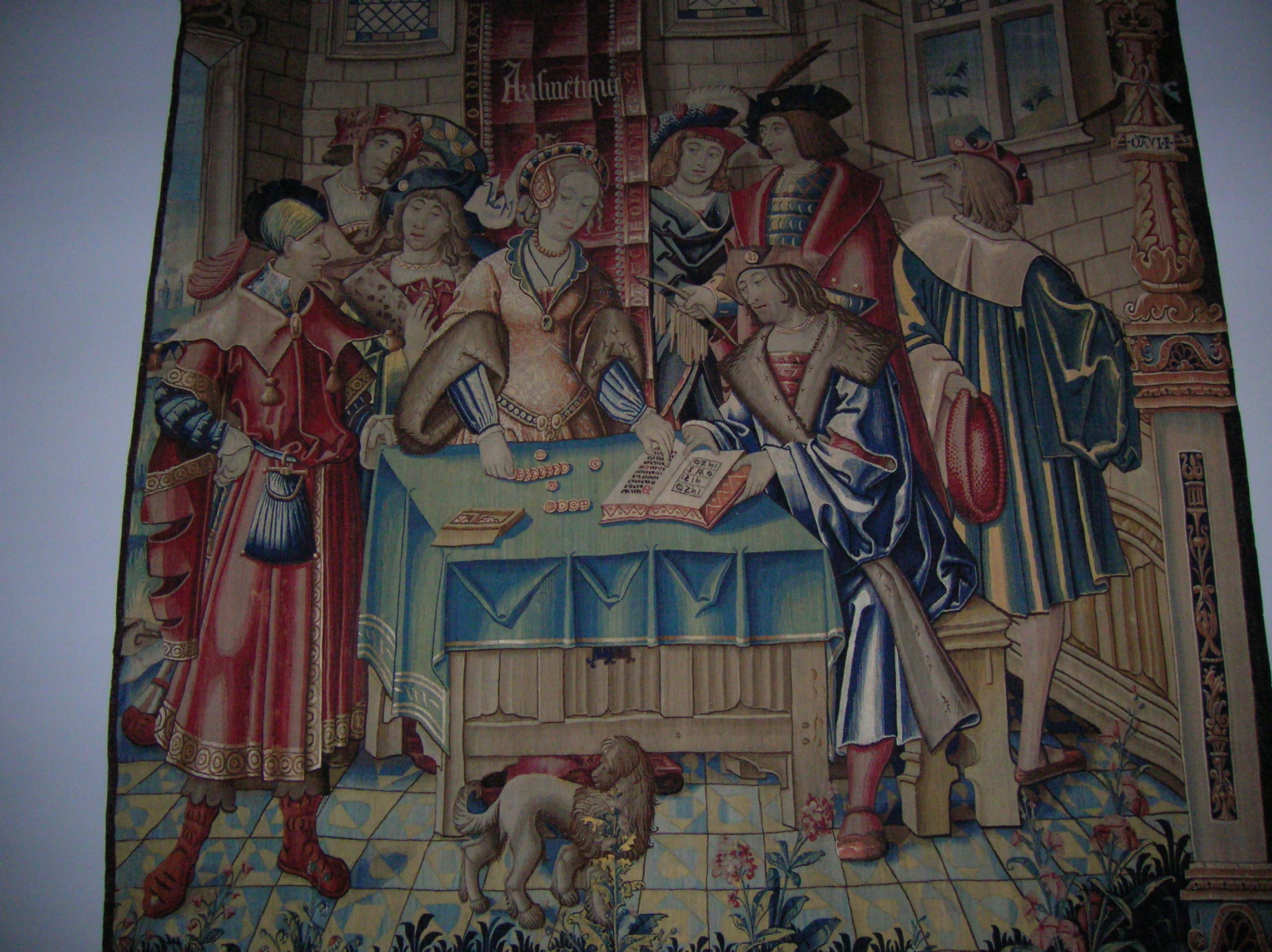
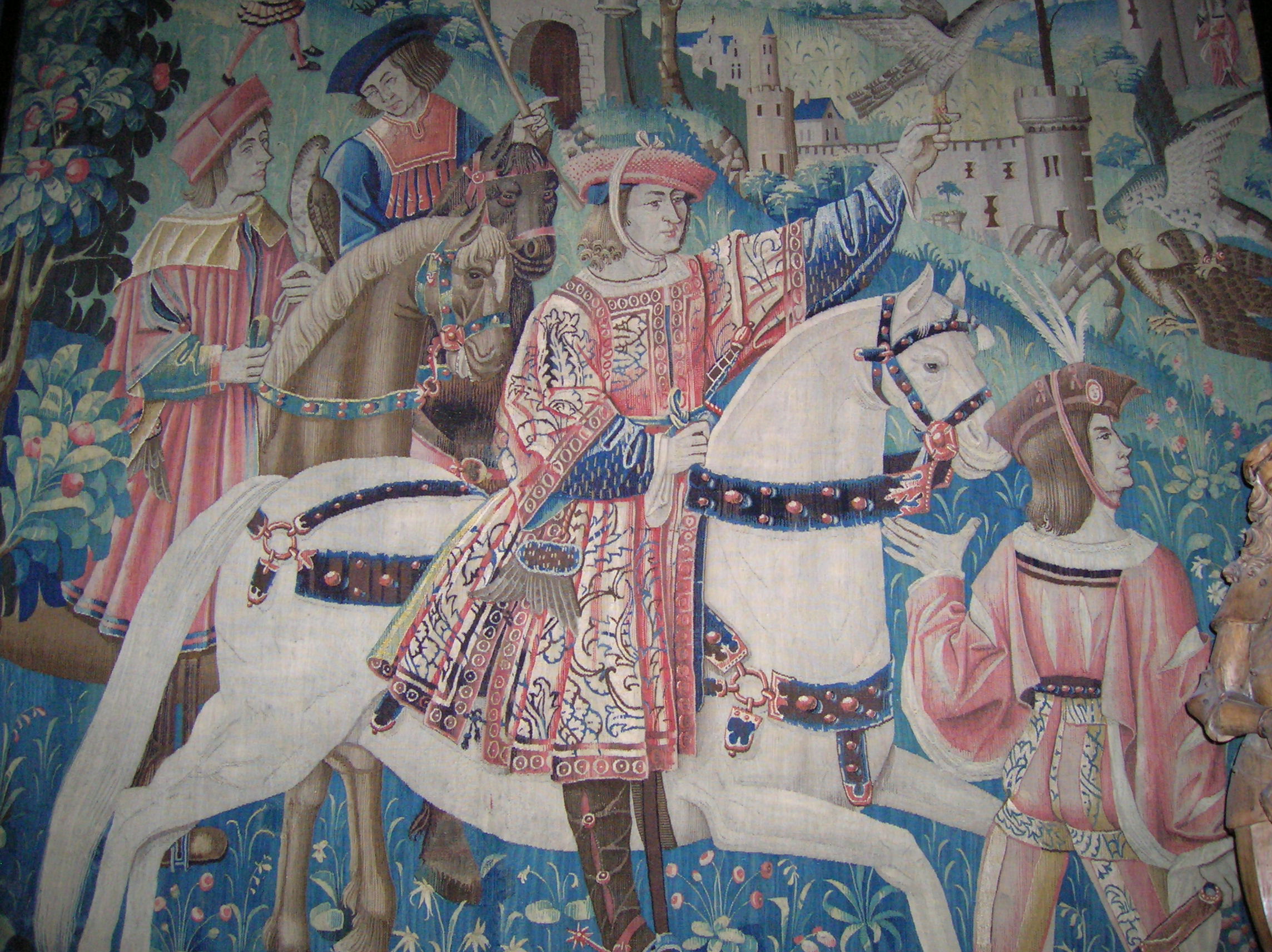
Other tapestries on display that astounded me included three scenes from the life of the Virgin Mary (1499) and the Tapestry of Saint Stephen (1500). The Grape Harvest tapestry, hailing from the Netherlands in the 16th century, showed figures with detailed clothing making precise gestures as some picked grapes and other pressed them. I recalled all the amazing tapestries I had seen in the Vatican Museums while I stared, in awe, at the many tapestries in the Cluny Museum.

ParisCluny10

I also loved the altarpieces and triptychs. The triptych of The Mass of Saint Gregory hailed from Westphalia in the late 15th century. It depicts the Pope seeing the apparition of Christ. The Presentation in the Temple is a triptych made in France during the third quarter of the 15th century. I liked the child’s wooden horse and the Gothic vaulting of the temple. The Life or the Virgin Mary was a gem of painted terracotta with much detail, created by Arnt von Zwolle in 1483. The Altarpiece of the Passion came from the Netherlands and Champagne in the early 16th century. Those are just a few examples.

ParisCluny6

I left the museum with a much more poignant perspective on medieval art. I can’t wait to go back there someday – hopefully, someday soon. . . .

ParisCluny7ParisCluny13


Tracy A. Burns is a writer, proofreader and editor in Prague.

Vranov nad Dyjí Chateau Diary

Vranov1

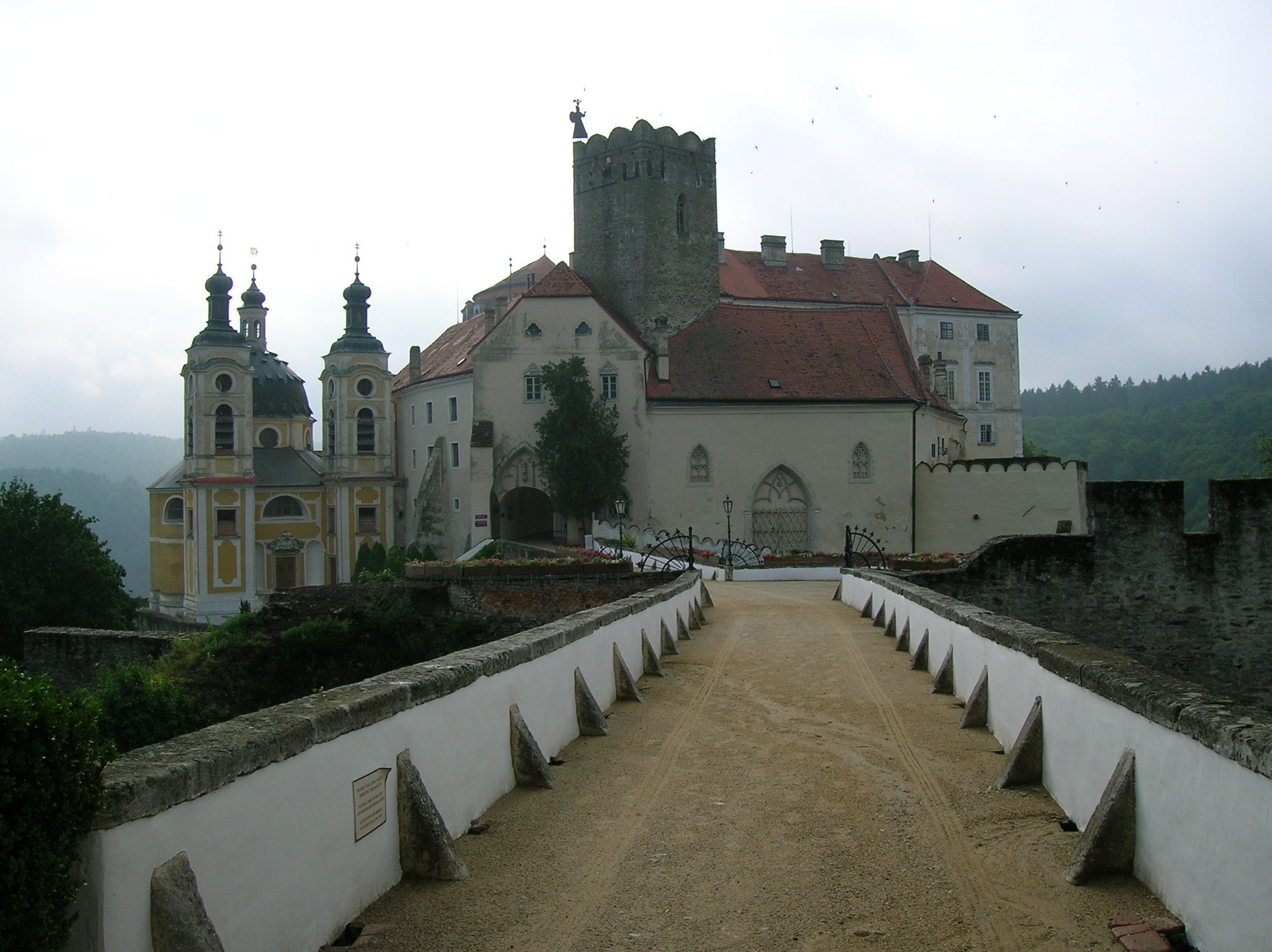
It was my second visit to Vranov nad Dyjí, one of my favorite chateaus, located near Znojmo in south Moravia. Its façade was a hodgepodge of at least three architectural styles. Some medieval elements of the Baroque chateau had been preserved. The Crow’s Tower and the building in the first courtyard harkened back to the Middle Ages. The Baroque fountain was spectacular. I had to stop to admire the garden bursting with color as I walked toward the chateau. The white and yellow Baroque church with belfries was perched on a cliff to the left and below the chateau. It looked to me that it was positioned precariously, as if it would fall off the edge at any moment.

The chateau, part of Podyjí National Park, blended in with the cliffs and picturesque countryside, a characteristic that I found attractive. Vranov nad Dyjí did not disturb nature but rather complemented it. I felt comfortable here in this stunning, natural environment. The rooms were small and intimate (except for the vast Ancestors’ Hall) and were filled with exquisite objects. All the items gave the chateau a unique identity without one artifact overwhelming the others.

I was already familiar with the history of the chateau. Vranov was first mentioned in the Kosmas Chronicle during 1100. Originally, it served as a fortress made of wood and became a stone castle at the end of the 13th and during the 14th century. There were additions made in the 15th century, but in 1665 it succumbed to flames. When Michal Johann II von Althann bought it in 1680, the chateau stayed in the family for more than a century. Michael Johann II made it into a Baroque chateau. Under his guidance the astounding Hall of Ancestors and the chapel were built. Later, the chateau became a three-wing residential palace. Neo-Gothic and Romantic style elements were added during the 19th century. During that century, it was the property of two Polish clans – the Mniszek counts and the Stadnickis. The state took control of the chateau after 1945.

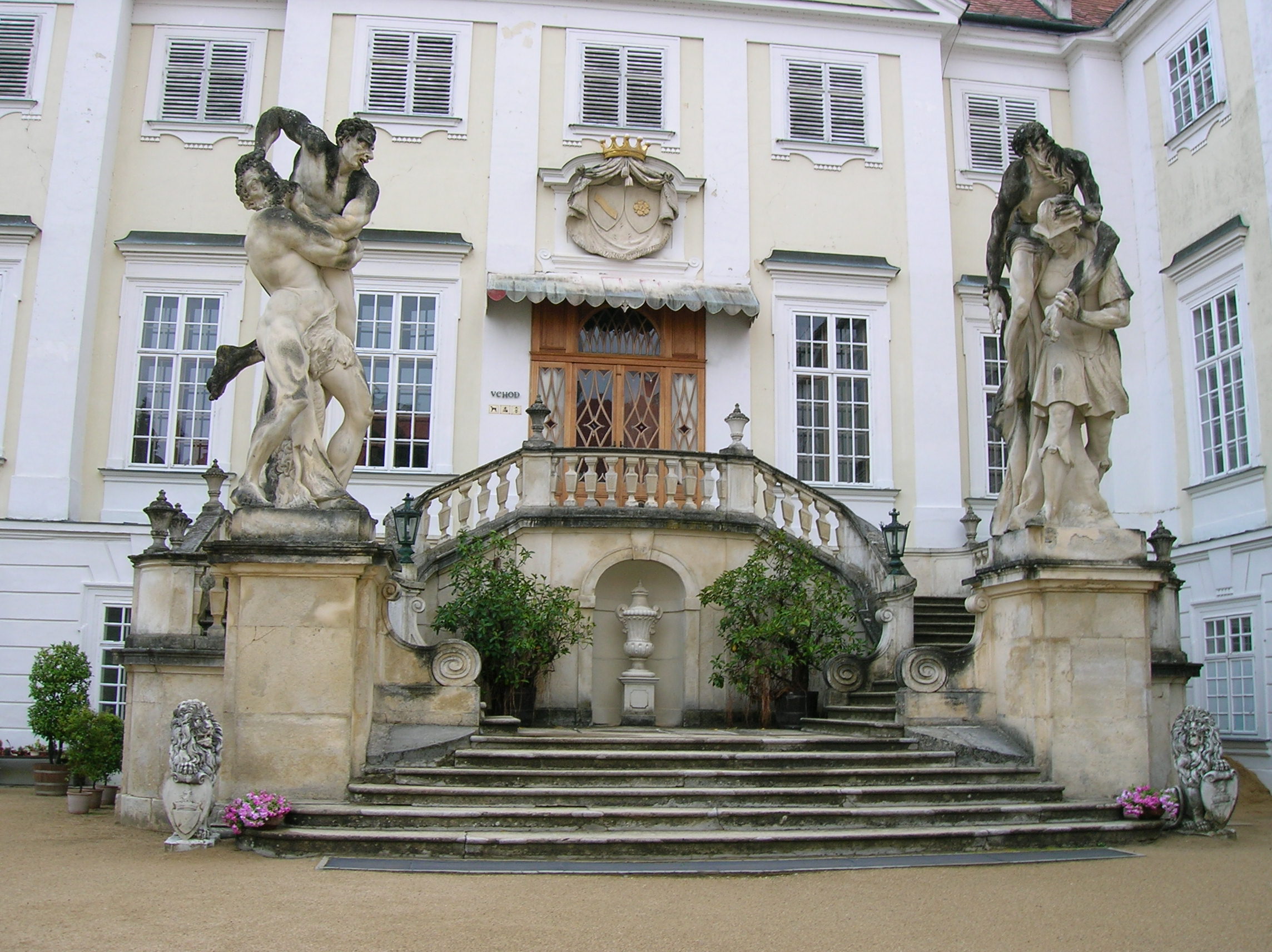
Vranov7Waiting for the tour to begin, I was overwhelmed by the two-flight Baroque main stairway decorated with sculptures. Hercules battled the giant Antaeus. Prince Aeneas carried his feeble father from burning Troy. Then 15 young children scampered toward me. It was my worst nightmare. I was worried that all these children would accompany me on the tour of my beloved chateau, and I would not be able to hear the guide over their cries. At least that had been my experience when visiting other chateaus with groups of young children.

Finally, the tour began. The guide, a tall, lanky, serious blond woman in her early twenties, ushered me and the children as well as a few other adults into the Hall of Ancestors. It took eight years to complete the lush décor of this space with its walls and ceiling covered in breathtaking frescoes celebrating the Althann family. Its stunning beauty made me dizzy. I looked up and noticed a golden chariot floating on the clouds. The female charioteer symbolized the Earth’s fertility, the guide explained. Between the oval windows I could make out the figures of Hercules, Orpheus, Theseus, Odysseus and Perseus praising the Althann ancestors. The family members’ statues decorated the niches of the hall. I was amazed by something else, too. None of the children were misbehaving. Some mumbled to themselves, but they were all fairly quiet and seemed interested in the guide’s descriptions. Maybe they would not be so badly behaved, after all.

Next we went outside onto the terrace, created at the end of the 18th century. The children loved the cannon balls there. The guide explained that the Swedes tried to take over the chateau twice during the Thirty Years’ War in the 17th century, but failed to do so. I peered at the valley and romantic landscape that surrounded the chateau. The scenery was postcard perfect. It was so peaceful and tranquil. I could have stared at the landscape forever. Standing there, looking at the countryside of south Moravia, I found inner peace. Perhaps that is why I loved this chateau so much. Here, I found a sense of inner peace, calmness and strength to take on future trials and tribulations.

Then it was time for the residential rooms, furnished as they were at the end of the 18th century and throughout the 19th century. In the tiny entrance to the Pignatelli bedroom, a space that could not fit all the children, I saw a painting of Vranov five years before it was engulfed by flames in the 17th century. I was especially drawn to the scraggly cliffs and the meandering river in the picture as well as to the stone bridge that I walked on earlier today. Then we entered the main room, which was once the private chapel. A moustached man told a few rambunctious children to be quiet. The room exuded a sense of symmetry so typical of the Classicist era.  I noticed the exquisite fabric texture of the wall hangings, decorated with hunting themes and picturesque landscapes. Two statues inspired by antiquity flanked a canopy bed and stood on pedestals. I was enamored by their exquisite green leaf motifs.

The next space had been a dining room since the 1720s. The printed stoneware on the table featured the Italian town of Ferrara and came from the prominent Vranov earthenware factory founded in the 19th century. I was filled with awe as I took in the pictures on the wall. The hand-painted canvas showed landscape views of a park with ancient, medieval, Chinese and Egyptian structures. The guide pointed out a scene showing the Park Monceau in Paris. Holy Roman Emperor Charles VI, whose tenure on the throne lasted from 1711 to 1740, made an appearance in the scene. No stranger to the Althann family, Charles VI was a close friend of Marie Anna, who was an owner of the chateau in the second half of the 18th century. The emperor had even visited Vranov. Two children were scolded for pushing each other.

In the Family Salon the owner’s relatives and guests would discuss private and public topics after a meal. They played cards or chess, read books, listened to music and sipped coffee, tea or hot chocolate. A samovar tea urn from Russia’s Tula town attested to this ritual. The white-grey and pistachio colors of the wall fabrics entranced me. They showed Pompeii and other ancient towns. A young girl with bright blue eyes giggled.

The Blue Salon, the ladies’ living room, exuded a Classical style with its blue wall hangings and two sculptures of Aphrodite on white stoves. The furniture, an elegant blue mahogany, hailed from the 19th century and was made in Empire style. There were various kinds of porcelain – Viennese and Meissen, for example – in the room as well. The children began to appear restless, no longer paying much attention to the exhibits.

Vranovview2The Respirium was where the family relaxed after taking a bath. The wall and ceiling décor fascinated me. The Classicist relief stucco and ornamentation featuring carved wood was so elegant, and I felt so comfortable in this space. The white columns had hidden compartments where toiletries were kept. I loved the stucco decorations above the door. In one scene, Artemis, goddess of the hunt, was being watched by Actaeon, who happened to be hunting in the forest when he saw her naked. Artemis turned him into a deer that her dogs devoured. I was glad that I was able to hear the guide as the children talked and argued among themselves. One girl with long chestnut-colored hair who would someday turn into a very beautiful woman began to cry.

Next we saw the Classicist bathroom, hailing from the 18th century. Artificial marble lined the walls. I loved the four black columns that appeared so elegant without being extravagant.  The guide, her voice a bit hoarse now, explained that the central pool had been used as a bathing area, but now visitors threw coins in the water for good luck. The children became excited and pleaded with the adults to give them some change. The chaperones shook their heads.

Hailing from the 18th century, a Rococo screen with Chinese motifs took precedence in the Oriental Salon. On the screen I could make out oriental gardens with bodies of water and paths. An aristocratic couple was celebrating around exotic figures. I was fascinated by the three unique sections of a 19th century Chinese scroll preserved in three rectangular frames. The scroll depicted a poet who had lived in the third century. The scribbler was coming home after being captured by the Huns. The scrolls showed her Hunnish escort, musicians and a general riding under a canopy while the poet held a child under a royal standard. This time a few of the children appeared interested in the scenes on the scroll as they talked among themselves about ancient battles.

Next came the Pompeii Salon with graphics on the walls depicting interiors of ancient palaces and villas. Vranov stoneware made a prominent appearance here. My eyes wandered to a pink vase with green décor. How I would love for my mother to be able to see that! She would love that vase! Maybe some day she would, I told myself. I wanted to show my parents so much of this country, but I would never have the chance to show them everything. The children showed no interest in the space.

The Althann Salon was another delight. Many of the paintings depicted members of this family, so significant to the development of the chateau. I admired the Baroque traveling altar. Brightly colored Vranov stoneware from the 19th century could also be found throughout the salon. By now the children were whining, restless, ready to leave.

The Gentlemen’s Salon hailed from the 19th century, and the decorations were inspired by spiritual alchemy. The scene above the door showed two female figures sleeping. Naked figures above four landscapes held torches. The symbols under the landscapes were focused on the Freemasons. The compasses and the square represented the meeting of heaven and earth, the guide remarked over a din of children’s cries. I admired the four landscapes on the walls, especially the depiction of the waterfall. I could almost hear the cascading water. The youngsters were not able to sit still.

The Swiss Rooms with 19th century landscape paintings on the walls were the next stops. I recognized Hercules in the midst of a battle. A black-stained cabinet was inlaid with marble depicting castles, towns, and rocks. The Picture Gallery included paintings by Dutch and Austrian artists from the 17th to 19th centuries. The Study was decorated with 19th century symbols of alchemy.

Last but not least came the library rooms. Created at the beginning of the 19th century, they now housed some 10,000 volumes. The black cabinets with geometrical designs looked sleek. Most of the books were written in French, German and Polish and hailed from the 18th and 19th centuries. The volumes consisted of both fiction and non-fiction that included subjects such as philosophy, mathematics, geography, theatre and history. I gazed at Voltaire’s collected works in cabinet 13.

Soon the tour was over. The children and their escorts scrambled away, and I took off toward the Chapel of the Holy Trinity in its romantic setting on the edge of the cliff below the chateau.  It was hard for me to believe that this impressive structure was completed within two years (1699-1700). Relieved that the children were not going to the church, I turned out to be the only one on the tour. I overheard a couple above the stairs leading down to the chapel.

“Do you want to see the chapel?”

The answer: “No, it does not seem so interesting.”

Vranovchurch1That couple did not know what they were missing. Architecturally, the interior had a central cylindrical nave with six oval rooms. There were three altars. Notably absent from the main altar was a picture or any kind of centerpiece. I had never seen a main altar like that before. I liked it because it was unique. I could see the Holy Trinity, and a pigeon represented the Holy Spirit. Angels also appeared in the Baroque creation, and golden rods shot out of the work.

The fresco in the cupola celebrated Archangel Michael, the defender of the Catholic Church, wielding a sword as he defeated Satan. Victorious, he placed his foot on his opponent’s chest. Angels danced and swirled around him. One side altar showed Saint Sebastian struck with arrows and Saint John the Baptist accompanied by sheep. The other altar portrayed Saint Barbara with a tower and Saint John with an eagle, holding a book. The Virgin Mary wore golden, flowing drapery.

Oval panels above the altars dealt with themes such as Heaven, Paradise and the Last Judgment.  The panel depicting the Last Judgment featured skeletons. One skeleton’s gesture seemed to be saying, “What? Me?”

After the tour of the church, I gazed at the romantic countryside and at the elegant chateau that blended with its surroundings, becoming a part of nature yet still retaining its own identity. Yes, I felt at peace here, even when among the rambunctious children on the tour. This place gave me strength that I often lacked. In the countryside here I also found a sense of hope.  The panorama gave me energy and a sense of optimism.

I left, reluctantly, to walk down the steep hill to the village below. From there the bus would take me back to Znojmo, where I would see a castle with magnificent interiors, a stunning rotunda, a spectacular church and several picturesque squares. I would stay in that intriguing south Moravian town overnight before heading back to Prague.Image

Tracy A. Burns is a writer, proofreader and editor in Prague.