This library and art gallery in Milan is named after the patron saint of the city, Ambrose. The library harkens back to 1609, when Cardinal Federico Borromeo founded it, and the same year it opened to the public.
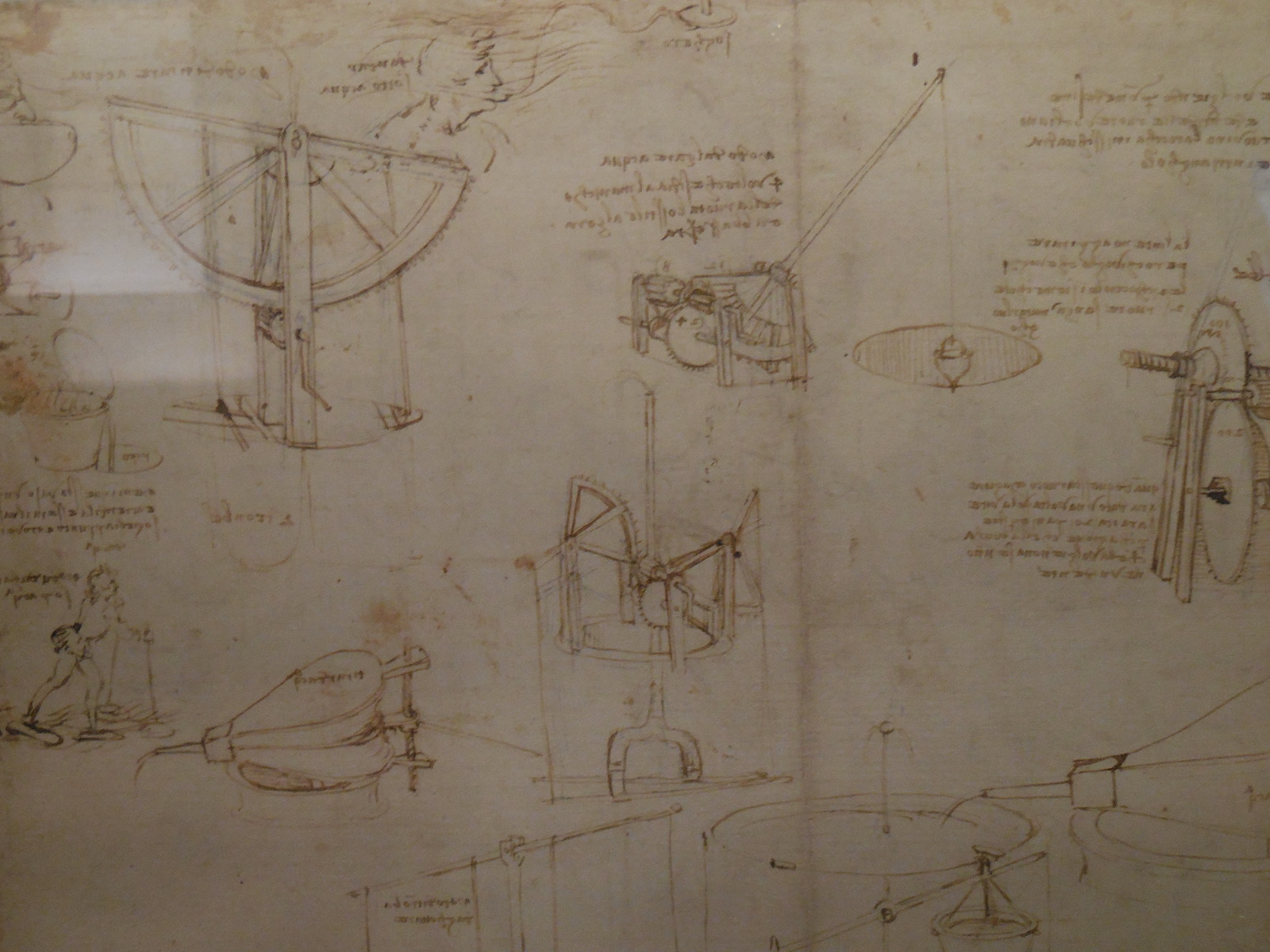
One of Leonardo da Vinci’s drawings of the Codex Atlanticus
The biblioteca houses the Codex Atlanticus by Leonardo da Vinci as well as many of his other manuscripts plus about 12,000 drawings by European artists, ranging from the 14th to 19th century. Raphael and Pisanello are represented in this collection of drawings, too. Many of its more than a million printed volumes hail from the 16th century. There are almost 40,000 manuscripts in numerous languages, including Italian, Latin, Greek and Arabic as well as some 22,000 engravings. Ancient maps, musical manuscripts and parchments also make up the collection. Some prominent guests included poet Lord Byron and novelist Mary Shelley.
Another of Leonardo’s drawings from the Codex Atlanticus
During World War II the library was damaged, and the opera libretti for La Scala Opera House were destroyed. The building was opened again in the early 1950s after undergoing renovations. More reconstruction took place in the 1990s.
When I visited, some of Leonardo’s works for the Codex Atlanticus, the largest collection of da Vinci’s drawings and writings, were on display in the library. The exhibition left me spellbound. I perused studies in aerodynamics and drawings of mechanical wings as well as various types of weapons. Leonardo rendered a large sling to throw stones and a machine to pump water from a well inside a building, for example.
I gazed upwards after studying the drawings by Leonardo, and I was filled with awe. I don’t know if I have ever seen such an incredible library. I just wanted to stand there all day, gazing at the wall-to-wall bookcases as I wondered about the titles and contents of each volume.
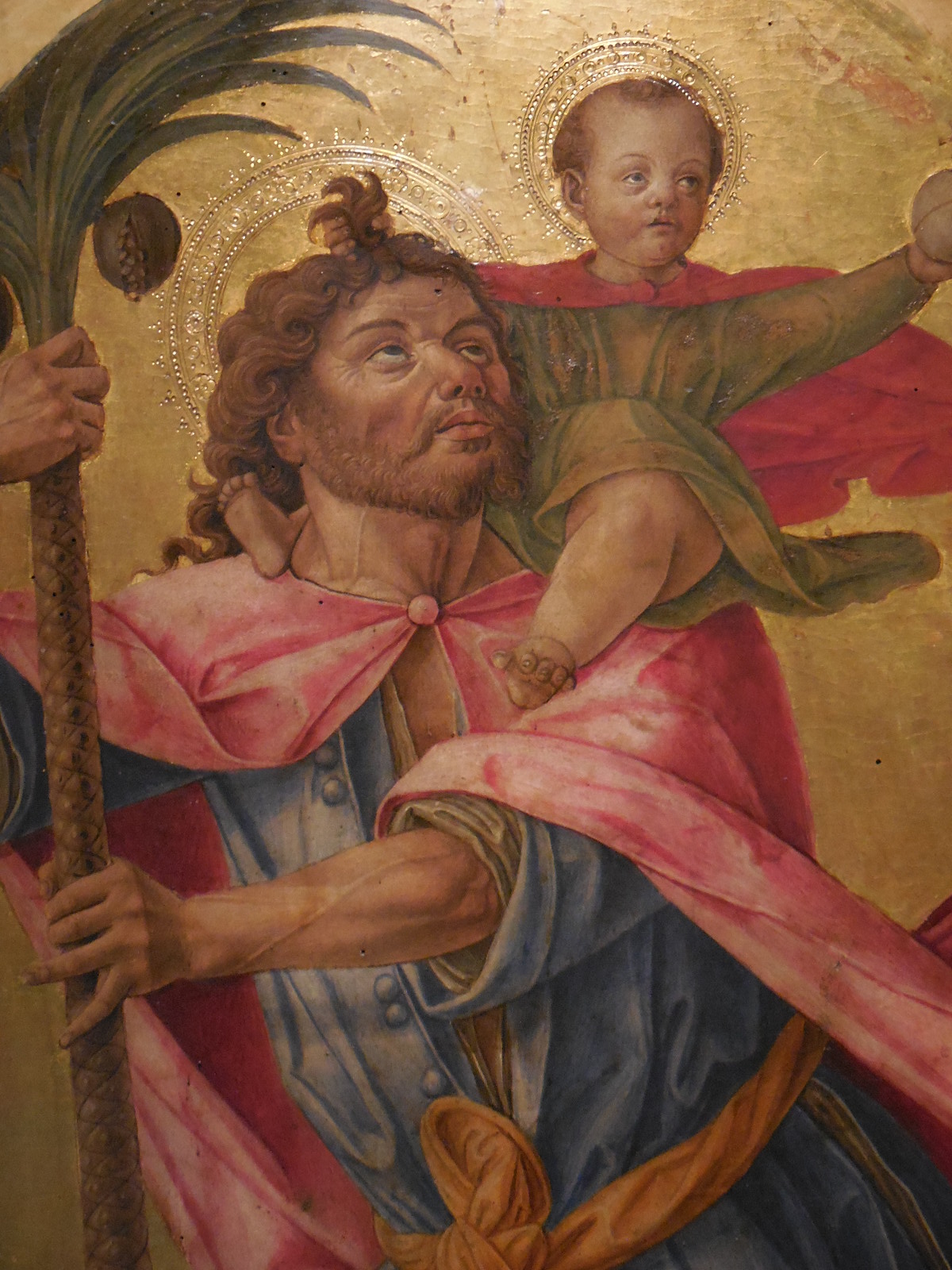
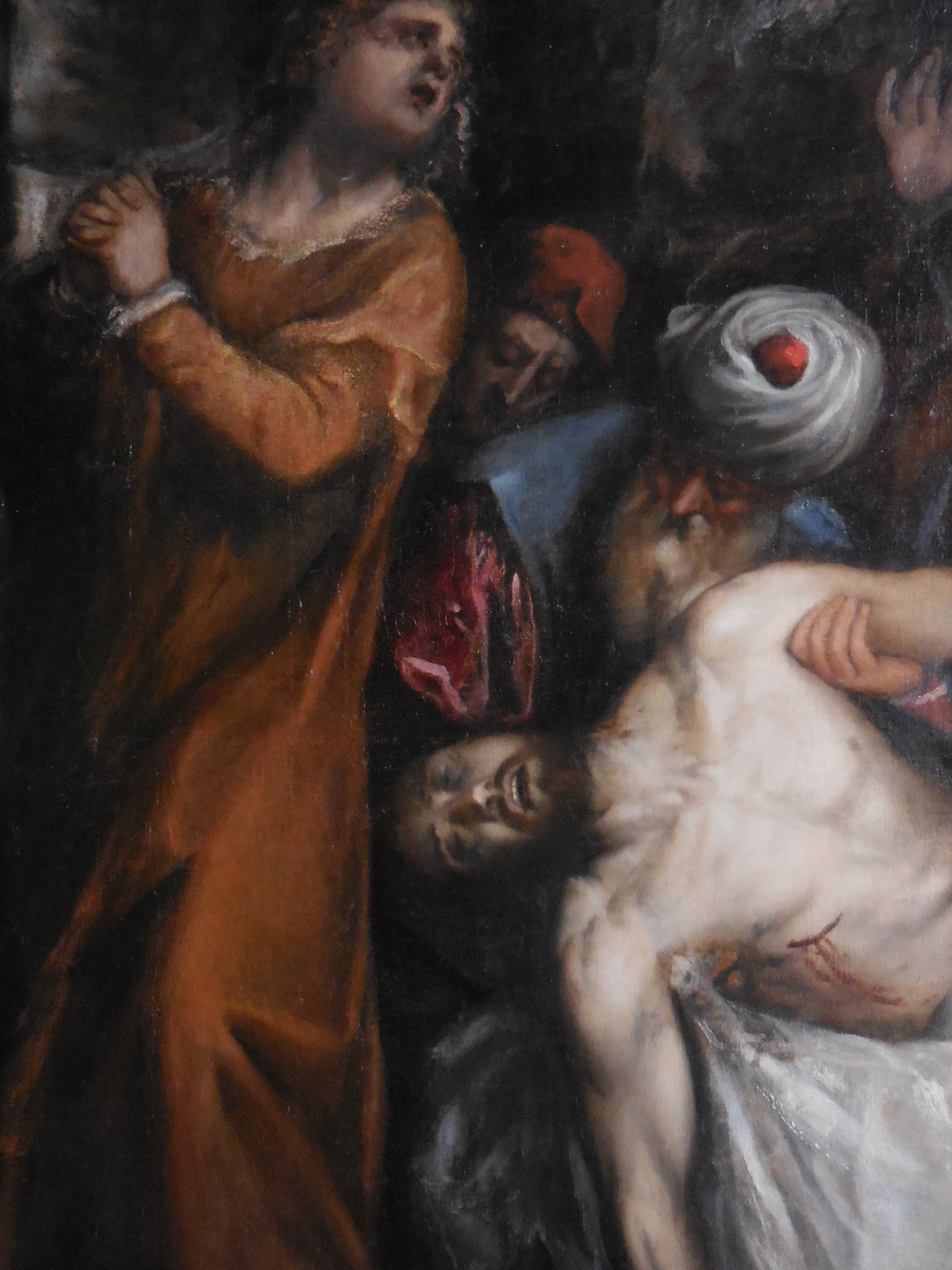
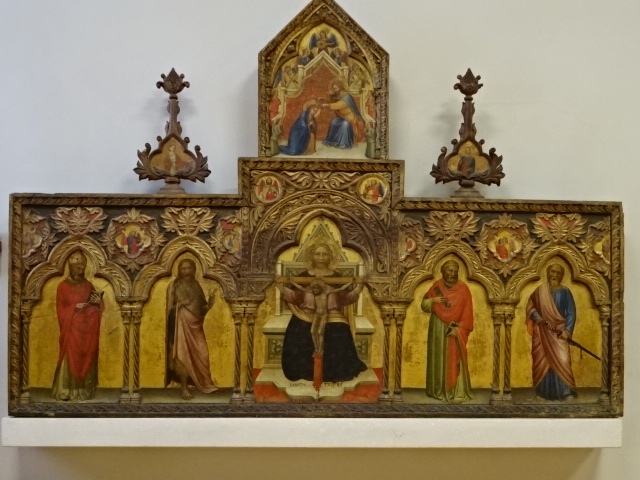
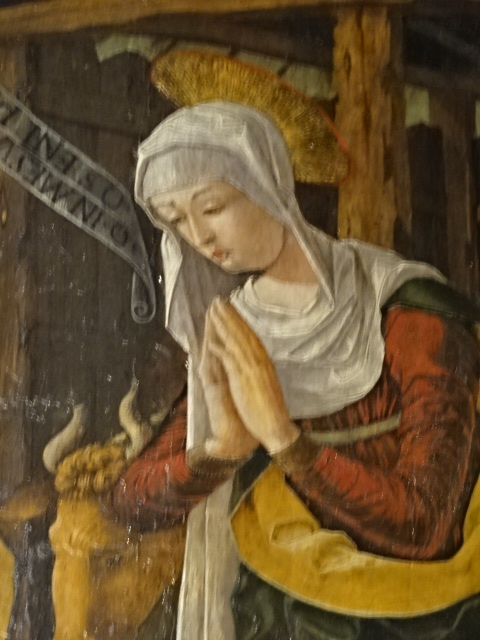
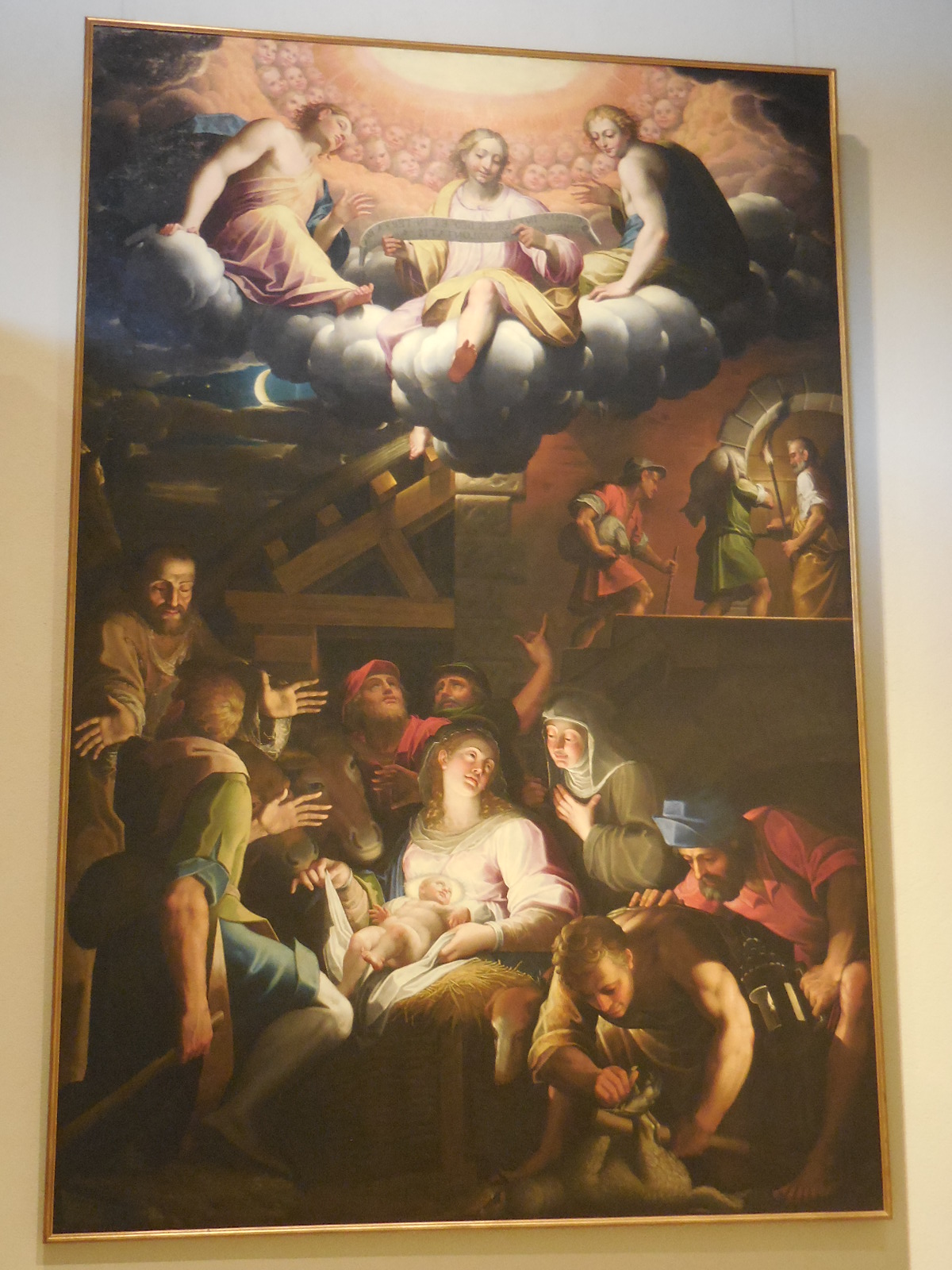
Established in 1618 with the collections of Cardinal Federico Borromeo, the pinacoteca was just as impressive as the library. The 24 rooms were dominated by Renaissance artworks but also boasted of renditions by 17th century Lombard artists, 18th century painters and 19th and early 20th century creators. I was especially struck by da Vinci’s 15th century “Portrait of a Musician” as it was the only portrait that he had painted. I noted the musical scroll in one hand of the sitter and was captivated by the detailed curly locks of hair, the musician’s brown eyes and his red cap.
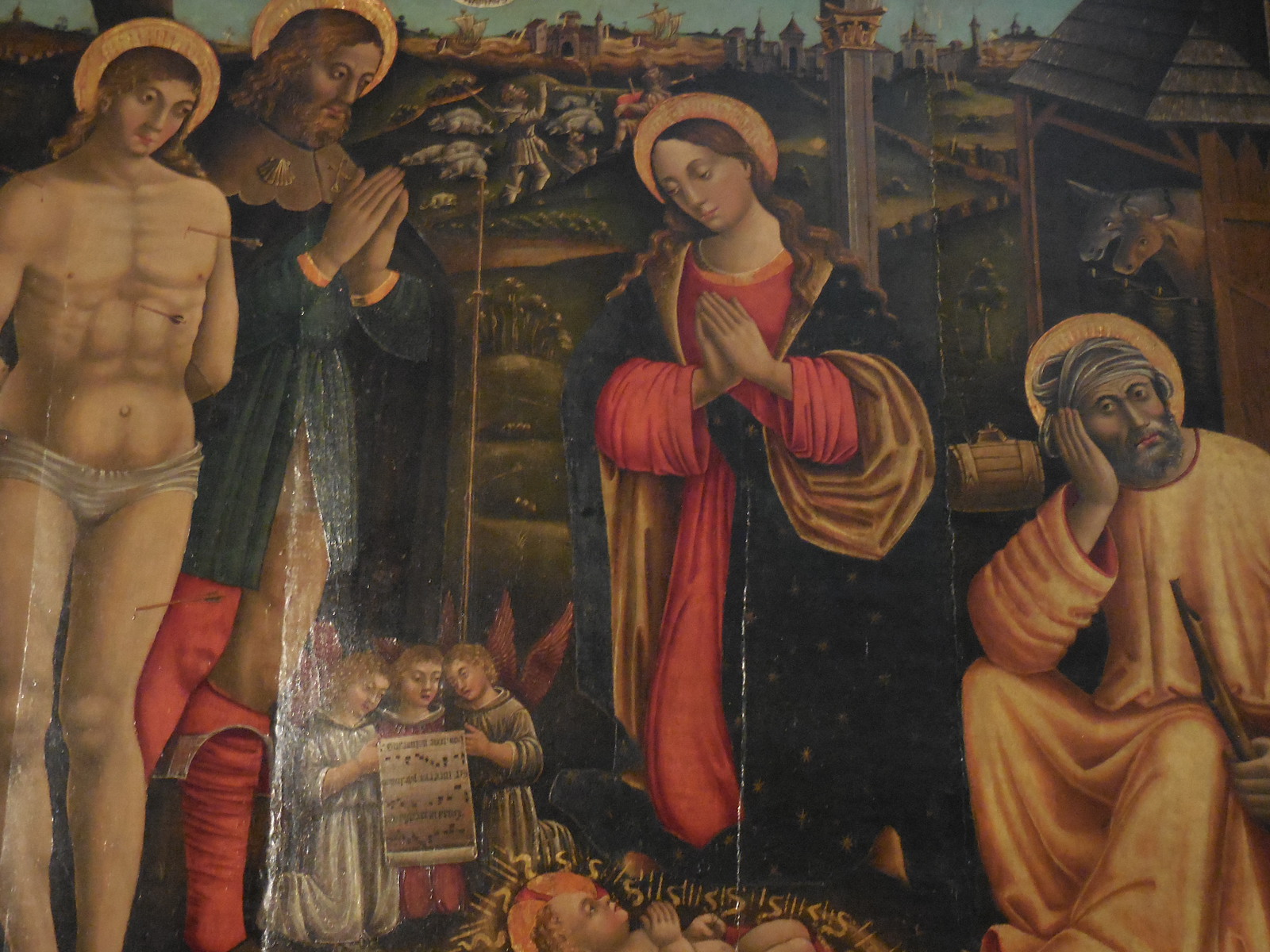
Caravaggio’s insect-infested “Basket of Fruit” tells a story of diminishing beauty by displaying rotting fruit. Bramantino’s “Adoration of the Christ Child” shows the kneeling Bernardino of Siena, Francis of Assisi, Benedict of Nursia and the Virgin Mary making an understandable fuss over baby Jesus. I loved the angels playing musical instruments behind those figures. Emperor Augustus also makes an appearance.
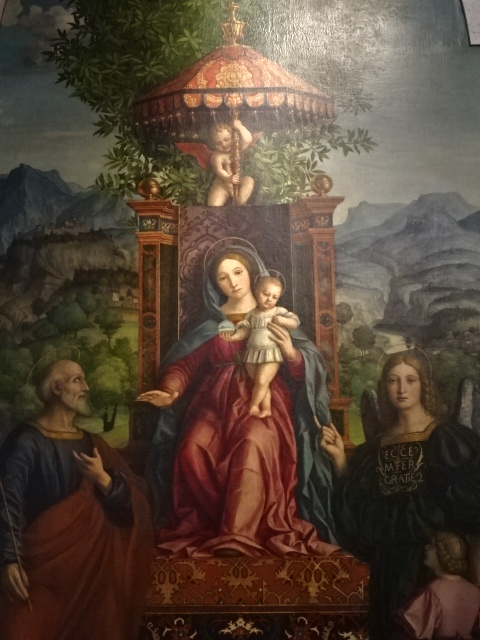
Bergognone’s “Sacred Conversation” shows the Virgin Mary and Christ Child on a massive golden throne, baby Jesus on the Virgin Mary’s lap. Solemn angels flutter in the background. I was struck by the details of the Virgin Mary’s hair and by the material of the clothing worn by the Virgin Mary and baby Jesus. The two were surrounded by saints with captivating headwear, including Saint Ambrose and Saint Jerome.
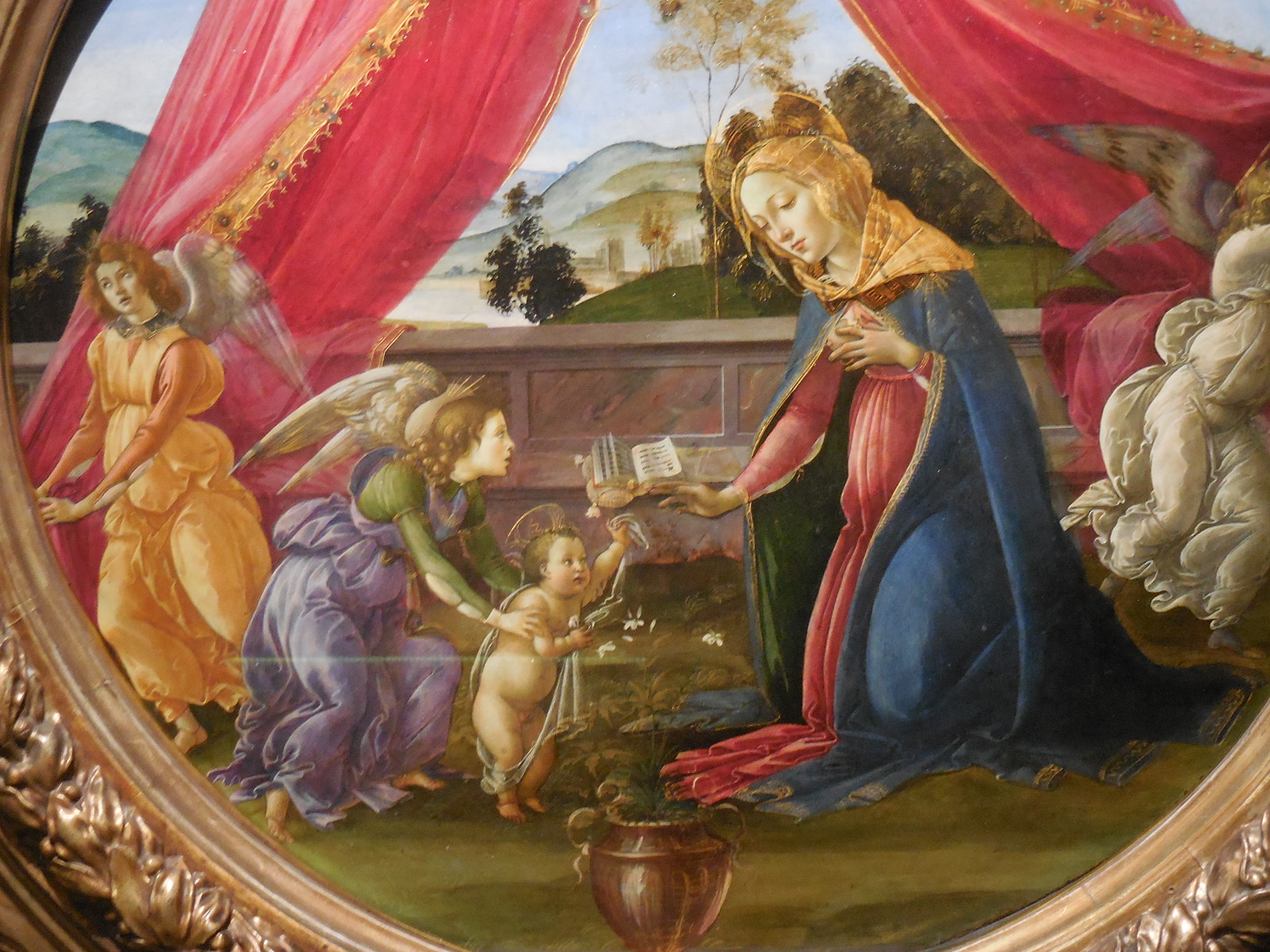
Another painting that left me speechless was Sandro Botticelli’s “The Madonna of the Pavilion.” The artist’s meticulousness was evident. The artwork shows the Virgin and Child with much symbolism. The pavilion that two angels open to reveal the Christ Child is rich in biblical meaning both in the Old and New Testament. I could almost feel the paper of the pages making up the open book in the painting.
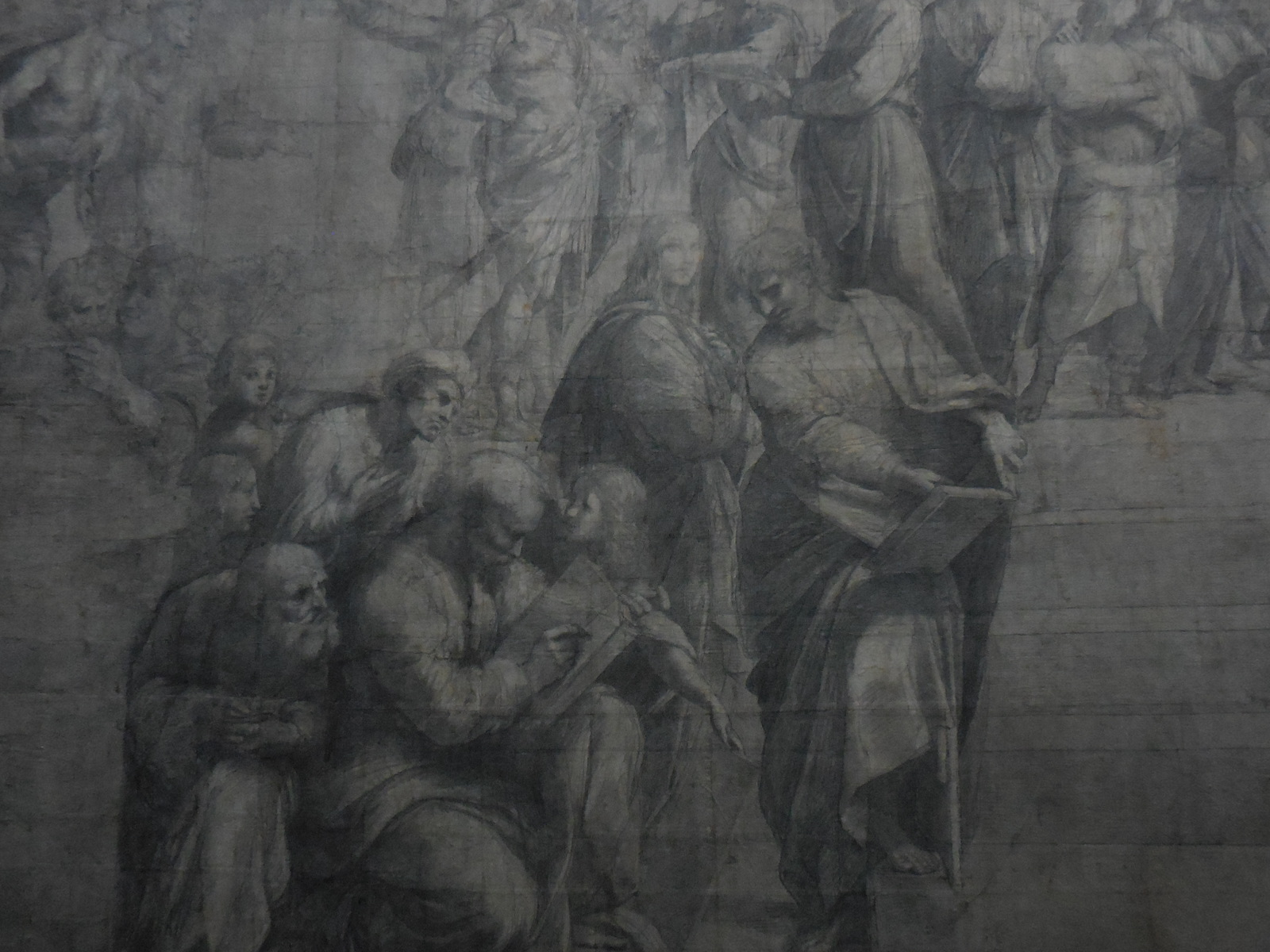
Raphael’s School of Athens
Raphael’s cartoon of the “School of Athens” is a study for the Italian Renaissance fresco painted in the early 1500s for the Raphael Rooms in the Vatican Museum. I recalled seeing the skillful rendition of philosophers and scientists from Ancient Greece at the Vatican on my 40th birthday as I mulled over the dominant role that perspective played in the artwork. Plato, Aristotle and Pythagoras appear in the fresco. Leonardo and Michelangelo are present as Plato and Heraclitus.
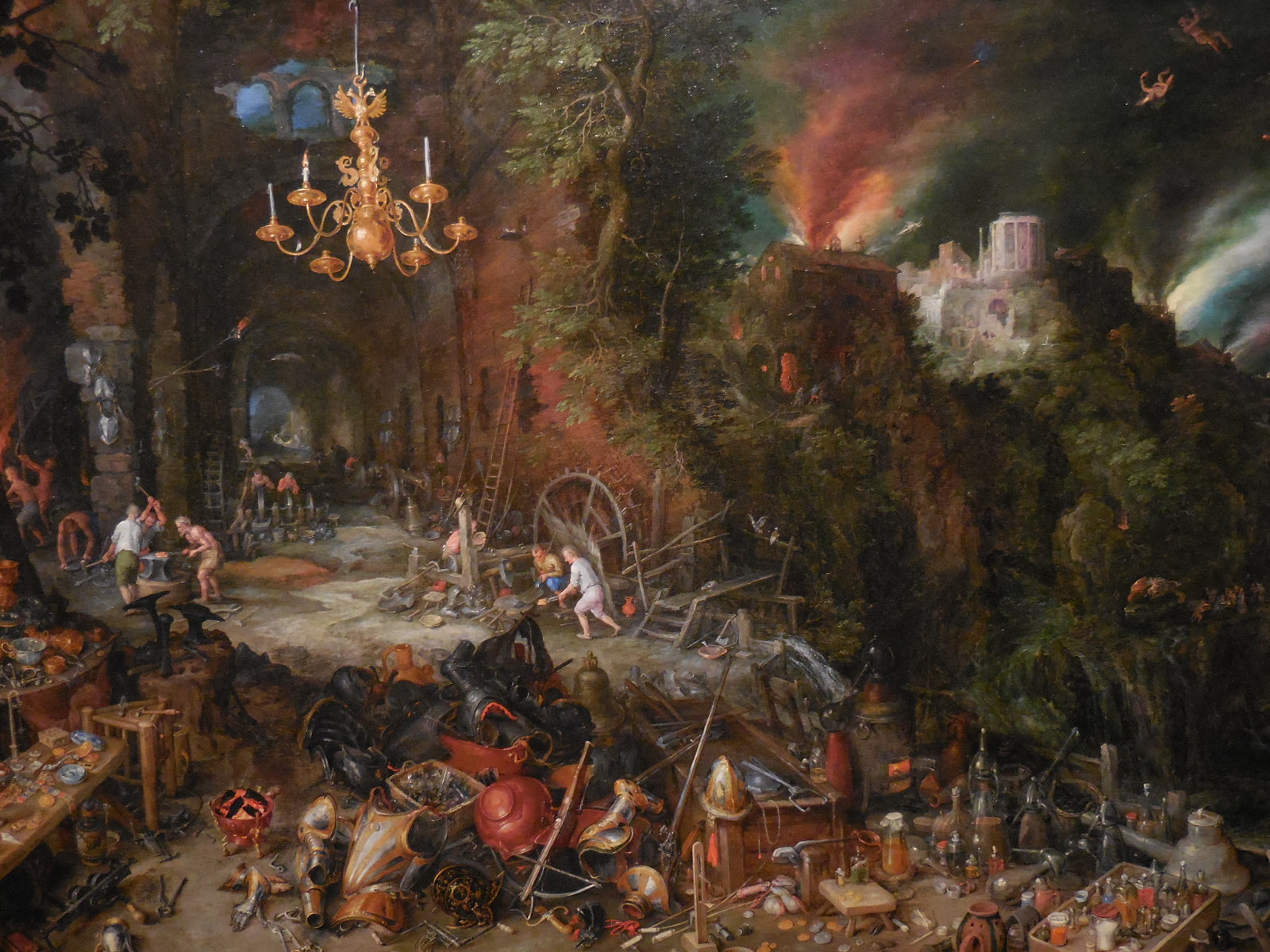
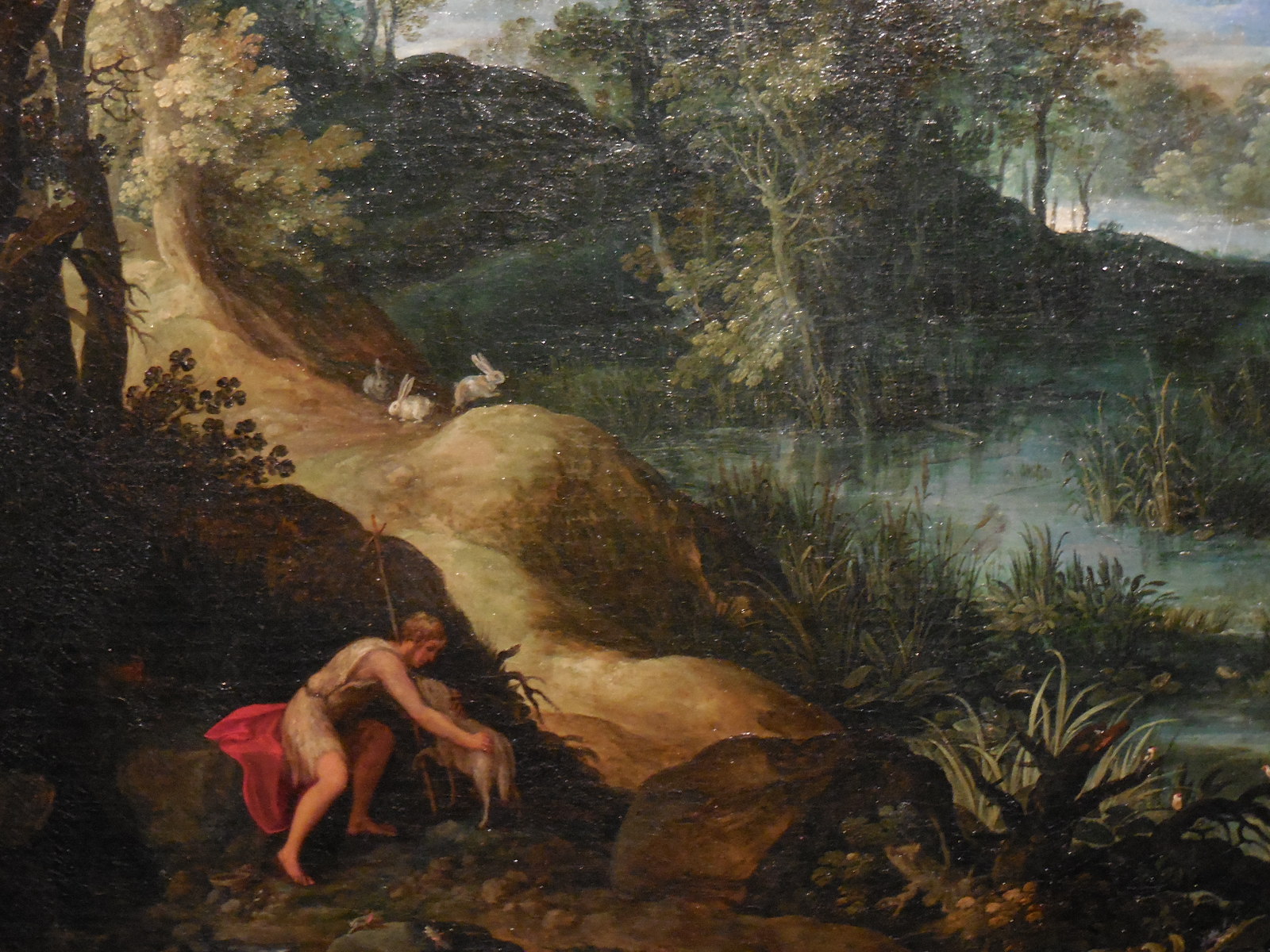
Other paintings that awed me were the fantastic landscapes of Paul Brill, whose works I had discovered some years earlier in Edinburgh. Jan Brueghel’s detailed landscapes and still lifes also are close to my heart, and I adored masterpieces from the Netherlands. I stared at these paintings, losing myself in the fantastical landscapes and details that were so masterfully rendered by both artists. I felt a special connection to these works featuring a dream-like quality as if I could be transported into a fantasy world by merely peering at the canvases.
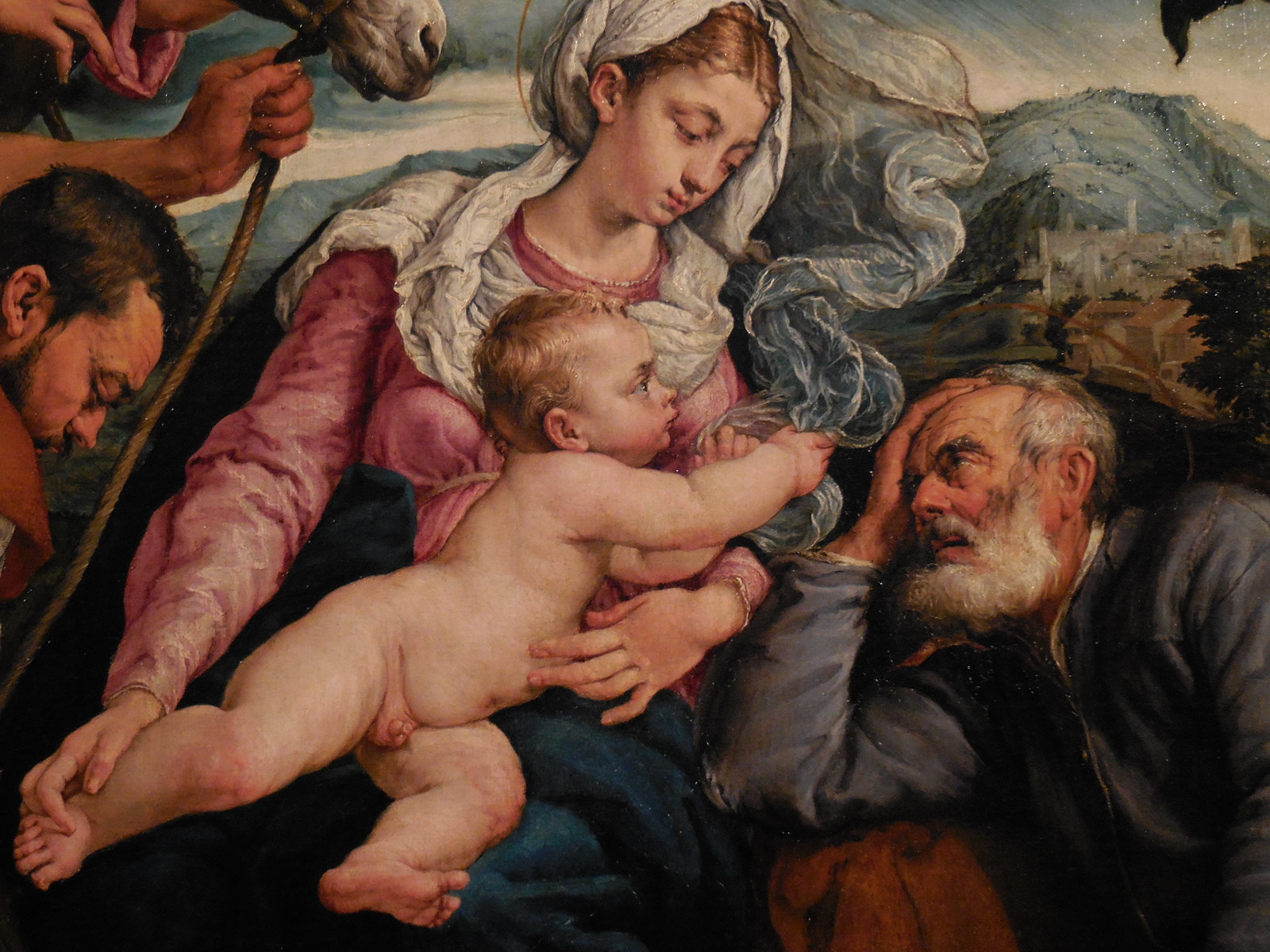
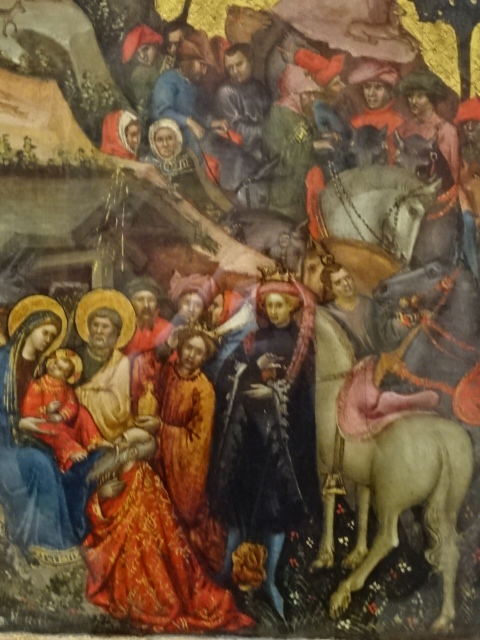
Other paintings that captured my undivided attention had been created by Bernardino Luini (I fondly recalled his paintings in Milan’s Church of Saint Maurizio), Tizian, Jacopo Bassano, Moretto and Daniele Crespi as well as Francesco Hayez, whose works I knew well from the Brera Gallery in the same city. Andrea Bianchi had created “The Last Supper,” imitating da Vinci’s masterpiece. Tizian’s “Adoration of the Magi,” Bramantino’s “Madonna of the Towers” and the locks of hair of Lucrezia Borgia all left me awe-struck.
The sculptures and frescoes from the second to 16th century in the Sala del Bambaia are very noteworthy. The Hindu art of the Berger Collection captivated me. The Flemish and German painting from the 15th to 17th century enthralled. Ceramics also play an intriguing role in the collection.
I was so awed by this gallery and library that I visited it twice during my first trip to Milan. I peered at every painting and sculpture, trying to take in each artistic creation, feeling so blessed to be able to see all these masterpieces with my own eyes.
Tracy A. Burns is a writer, proofreader and editor in Prague.
My first stop in Verona was the Castelvecchio Museum, a sprawling edifice that looks like a medieval fortress. The Castelvecchio hails from 1354 to 1356, when it was built for Cangrande II della Scala as a defensive structure. The Della Scala family lived there for a short time. During Napoleon’s reign, from 1801 to 1806, the building was transformed into barracks, and it served this purpose until 1924. The Castelvecchio was seriously damaged during World War II, during the time when the Germans destroyed all of Verona’s bridges. From 1958 to 1974, architect Carlo Scarpa renovated the Castelvecchio, adding modern elements to the original style that harkens back to the Middle Ages.
The expansive medieval and Renaissance spaces inside house 30 halls of Italian and European painting and sculpture, dating from the Romanesque era to the 1700s. I also saw ancient weapons, ceramics, gold artifacts, bells and miniatures, for instance. I especially liked the walkways outside. They offer panoramic views of romantic Verona.
Artists represented in the collection include Pisanello, Giovanni Bellini, Jacopo Bellini, Carlo Crivelli, Andrea Mantegna, Jacopo Tintoretto and Tiepolo. Pisanello’s “Madonna of the Quail,” Jacobo Bellini’s “Madonna of Humility” and Mantegna’s “Holy Family” are a few of the highlights. The Romanesque sculpture also is impressive.
An intriguing true crime story is connected to the museum. In 2015, three thieves made off with 17 paintings, including masterpieces by Jacopo Bellini, Giovanni Bellini, Andrea Mantegna, Tintoretto, Peter Paul Rubens and Hans de Jode. The following year, the museum got the works of art back from Odessa thanks to Ukrainian border guards. It remains one of the most significant art heists to take place in Italy.
Tracy A. Burns is a writer, proofreader and editor in Prague.
I regretted not having time to visit the house museum Boschi Di Stefano the first time I visited Milan. It was far from the center, where I spent much of my introductory days in the city. During my second visit the following year, I made sure I did not miss this museum.
I got off the metro at the Lima station, in which felt to me like a dangerous area. Yet, five minutes from the metro, I walked down a street lined with elegant buildings, which gave off an altogether different atmosphere – one of calmness and grandeur. The museum was on the second floor of a majestic building built between 1929 and 1931 by Piero Portaluppi, whose name was familiar to me because he had designed Milan’s Villa Necchi Campiglio, a former home with dazzling Art Deco adornment inside. I recalled the works by Pablo Picasso and the lush garden with pool and tennis courts at the Villa Necchi, one of the highlights of my first visit to this remarkable city.
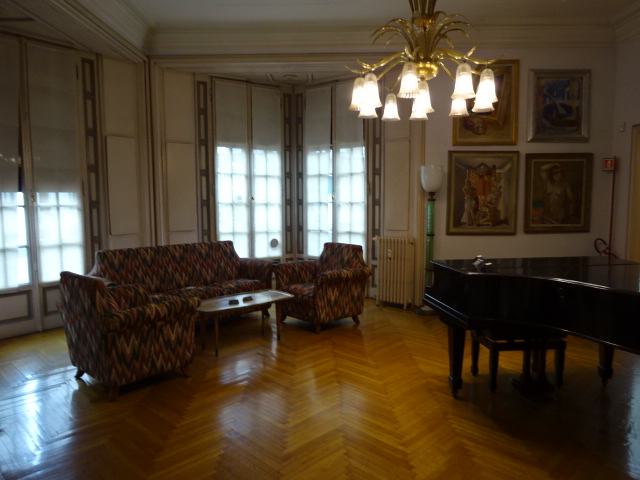
I loved house museums because they had a more intimate quality than bigger, impersonal art spaces. I could sense that these house museums had once been somebody’s home. Trials and tribulations of daily life had taken place here. Private conversations had been voiced here. This particular house museum had once been the home of Antonio Boschi and Marieda Di Stefano, a married couple who had amassed a collection of some 2,000 pieces of art, mostly Italian in origin. They tied the knot in 1927 as Boschi, a veteran of World War I, went on to become a successful engineer. Marieda was an artist herself who had an affinity for ceramics. Many of her artistic creations can be seen here, too. A school of ceramics was situated a floor below.
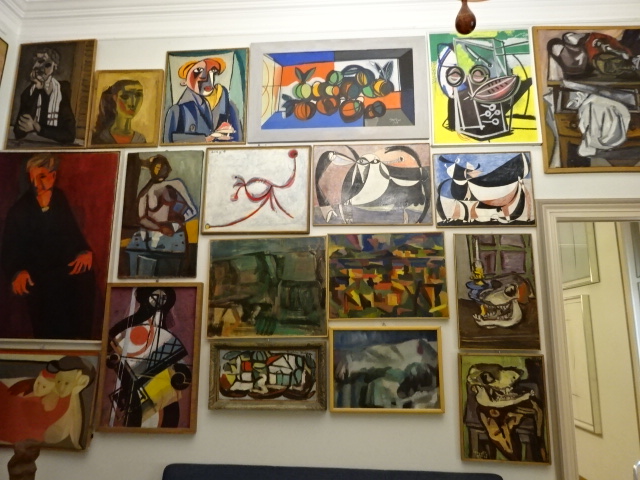
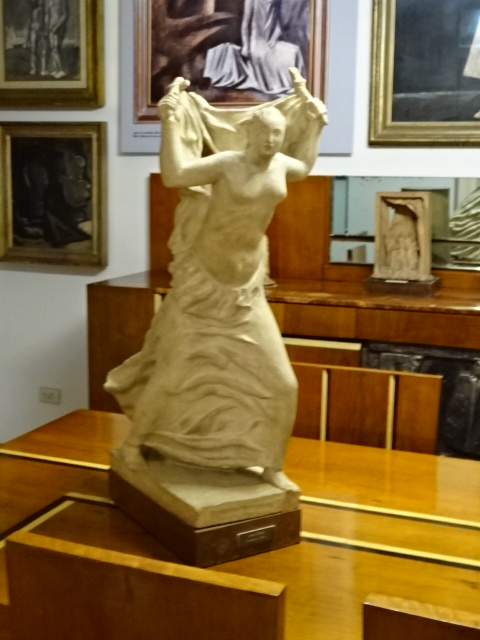
The Caso Museo Boschi Di Stefano includes 11 spaces and focuses on 20th century art dated from 1900 to 1960 – mostly paintings but also drawings, sculpture and furniture. About 300 works are on display. The museum has been open to the public since 2003.
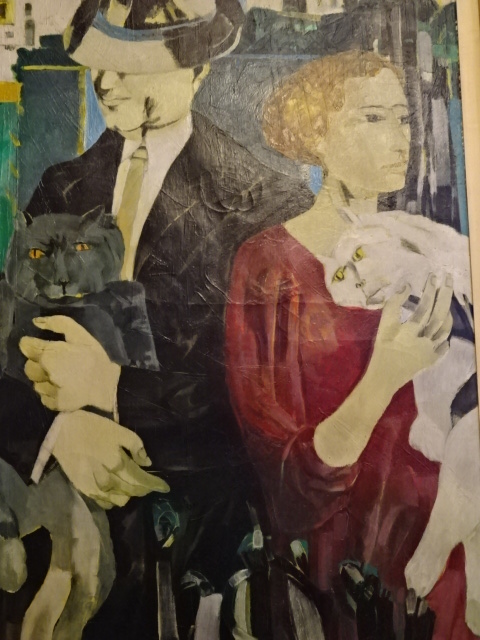
I felt overwhelmed as I contemplated the paintings that covered the entirety of the walls from the bottom all the way to the top. I was almost dizzy with delight, gazing at all the paintings, some falling into the category of modern art while others showed off a contemporary style. The works were displayed in a chronological fashion, so I could see how styles developed during those 60 years.
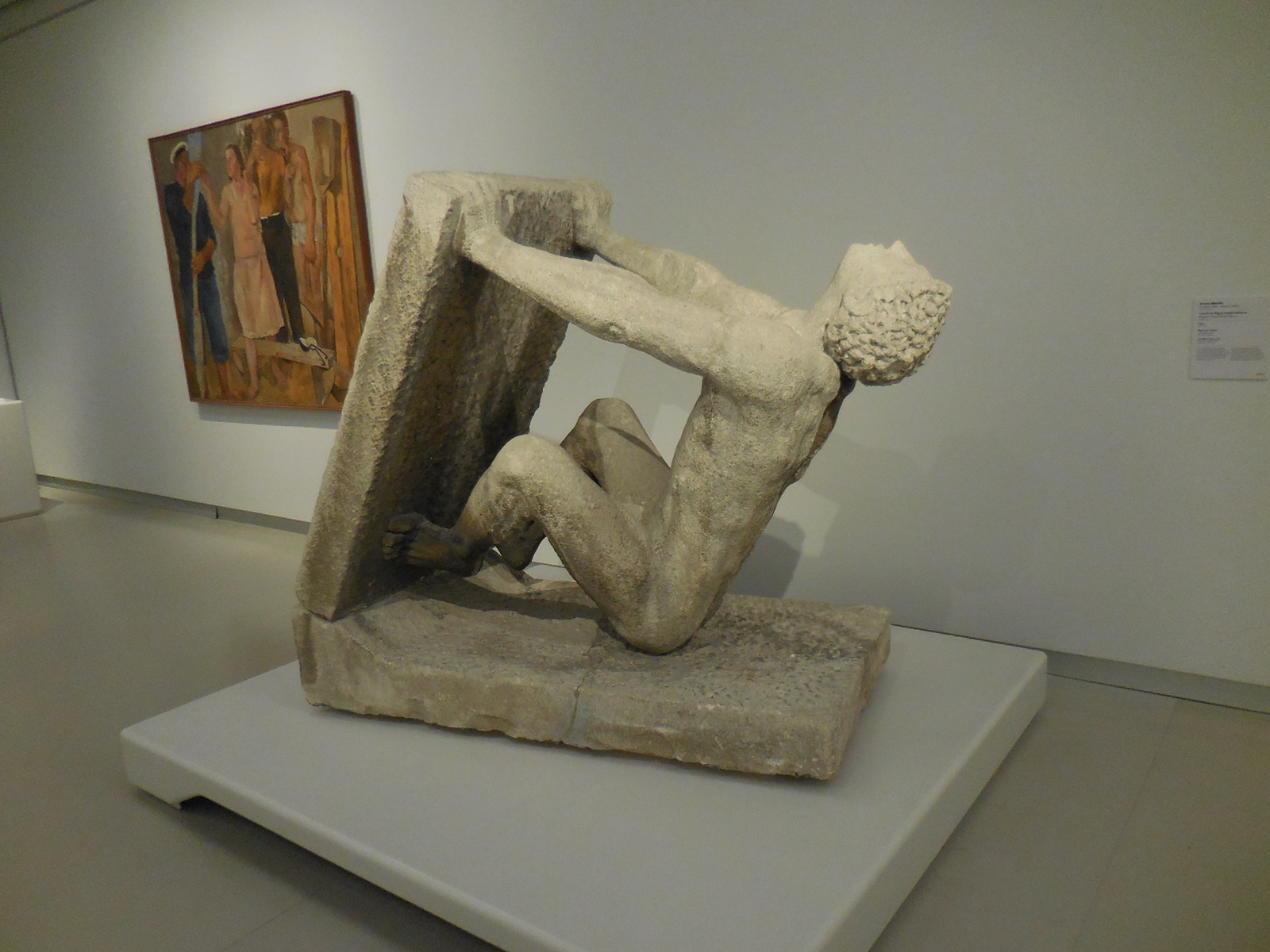
I recognized paintings by Giorgio De Chirico, Pablo Picasso, Amadeo Modigliana, Lucio Fontana and Raoul Dufy. Other pictorial treasures included 66 works by Roberto Crippa; 129 renditions by Gianni Dova; and 57 creations by Cesare Peverelli. Giuseppe Ajmone, Piero Manzoni, Arturo Martini and Sandro Martini, among others, were also represented there. I recognized Joe Columbo’s distinct style from an exhibition at the Museum of Modern Art in Milan the previous year.
What once was a guest room is now filled with furnishings for a study, the pieces dating from the 1930s. The dining room was a delight, too. I was fascinated with the Agena ceiling light, a unique round structure with what look like yellow cups protruding from the ball-like form. I didn’t understand what the style of the ceiling light meant, but it was fascinating to see it with my own eyes.
I went through the flat twice to try to take in all the art that surrounded me. It was a mesmerizing and breathtaking experience. The development of 20th century art was on display, each work speaking volumes about artistic creations during a time period in which I had not lived but could now better appreciate.
Tracy A. Burns is a writer, proofreader and editor in Prague.
This museum of Renaissance and neo-Renaissance decorated apartments in a palace is one of my favorite sights in Milan. It is big enough to include many treasures but yet small enough to have an intimate feel. Because the exhibition focuses on the Renaissance and neo-Renaissance, I didn’t feel overwhelmed as I often do when displays include many styles from numerous eras.
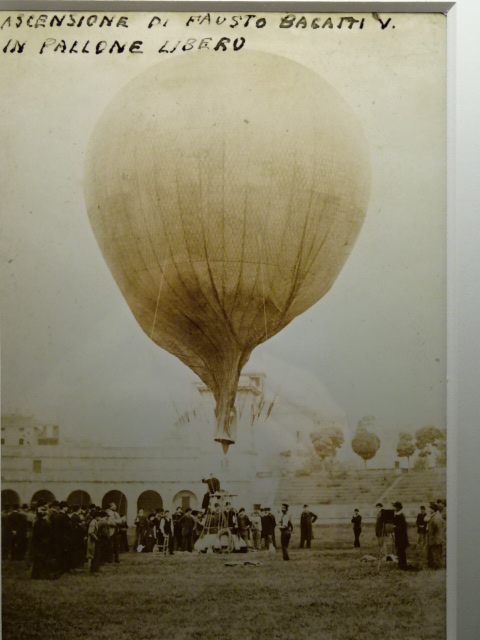
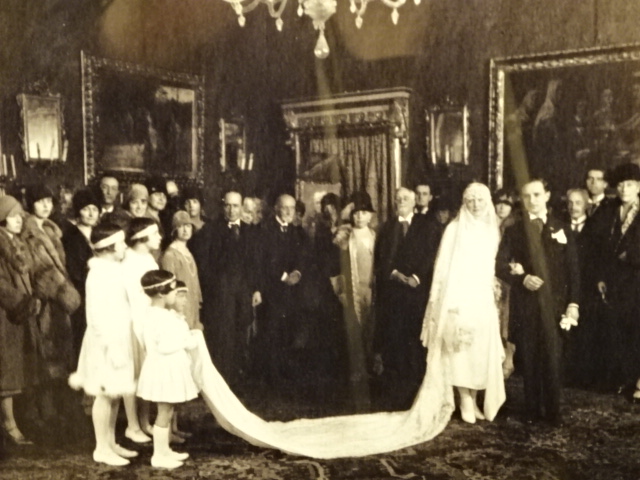
The history of the museum is enthralling. In the second half of the 19th century, Fausto and Giuseppe Bagatti Valsecchi furnished their palace located from via Gesu to via Santo Spirito in Milan with works of Renaissance and Neo-Renaissance art – tapestries, paintings, sculpture and weapons, for example. The furniture hails from Italy, Britain, Japan, France, Germany and Spain. Even though the apartments were transformed into a museum during 1974, the public wasn’t able to view them until 1994.
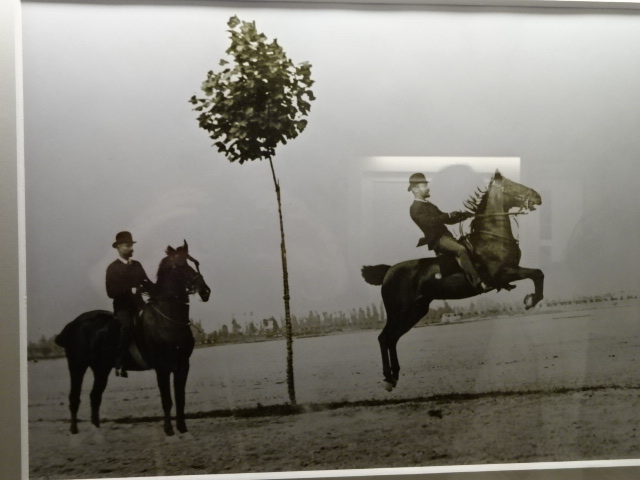
Giuseppe lived in his apartment with his wife. His five children lived on another floor with their nanny. Fausto had his own apartment on the same floor as Giuseppe. While they managed various charities and traveled, they also had some intriguing hobbies. Fausto enjoyed riding in hot-air balloons and Giuseppe was one of the first to ride a velocipede. They used their Renaissance-furnished apartments for daily activities rather than treating the spaces as a museum. Even though it was decorated to look like the Renaissance, the brothers had installed modern amenities, including hot and cold water and electricity. In fact, this palace made a name for itself as one of the first private homes in the world to install electricity.
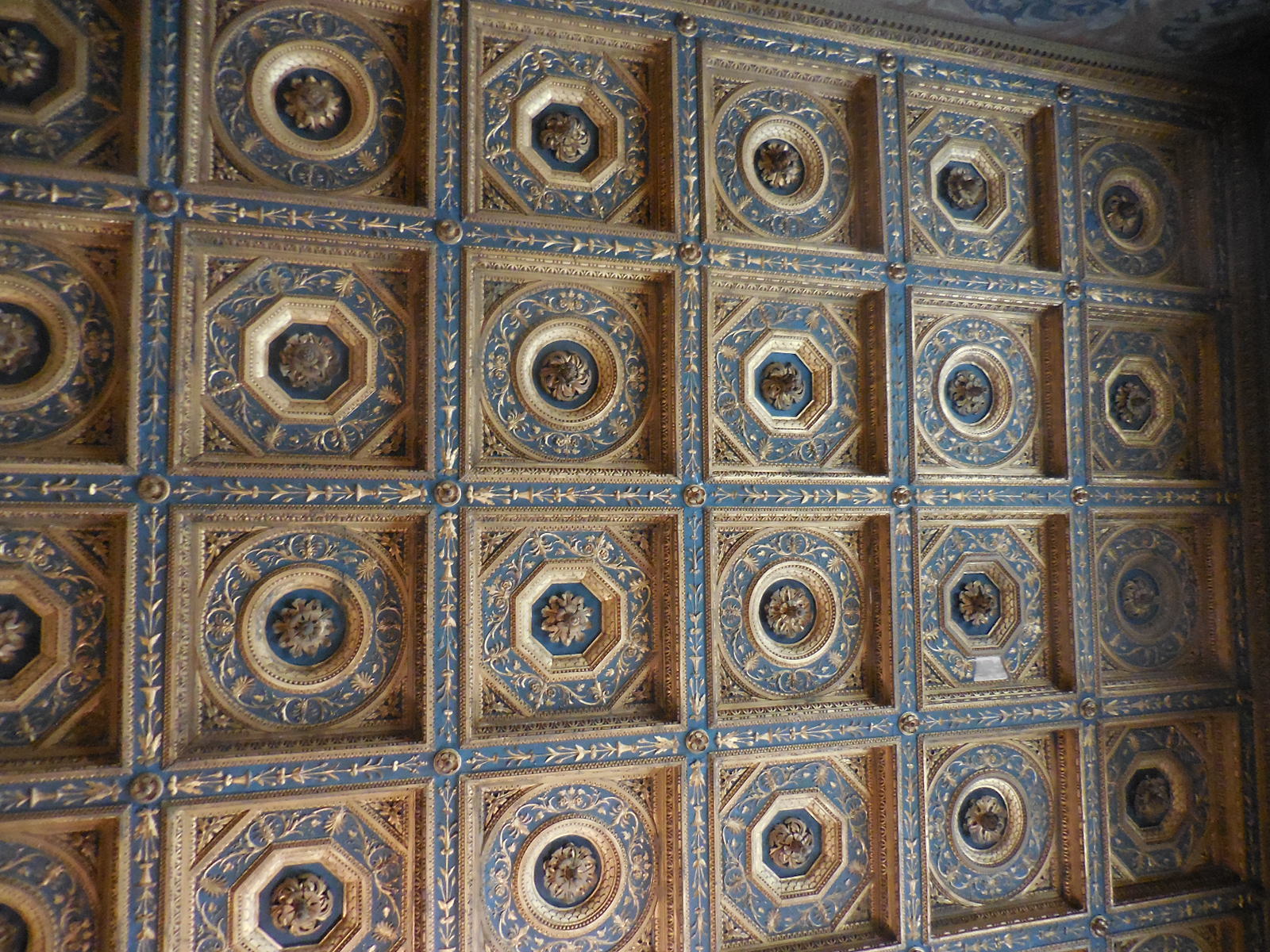
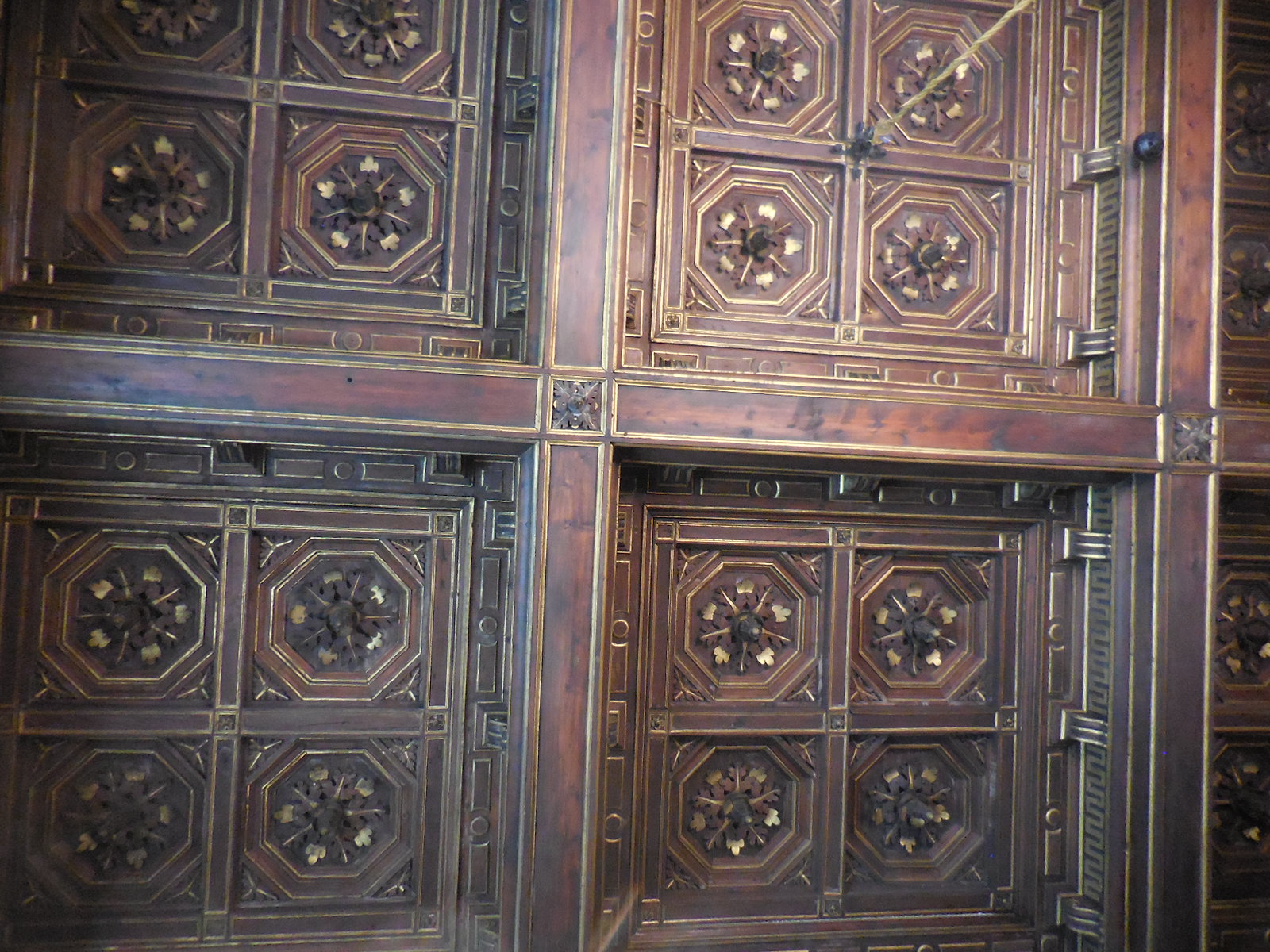
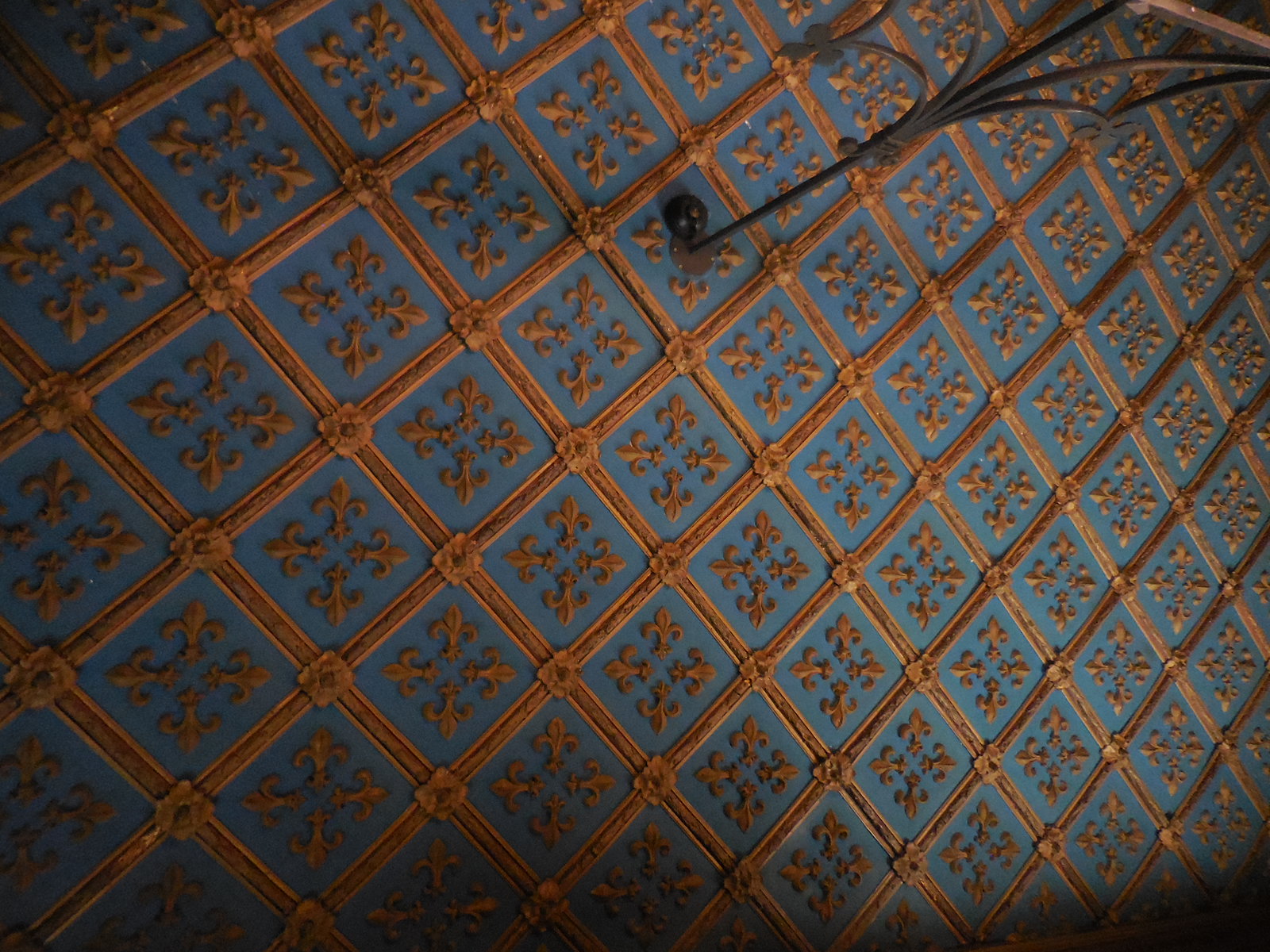
I especially liked the coffered ceilings and Latin inscriptions throughout the flats. Throughout the palace I saw the distinguished family crests of lily and eagle. The Neo-Renaissance frames used to display Renaissance art were appealing, fusing the old with the new or newer.
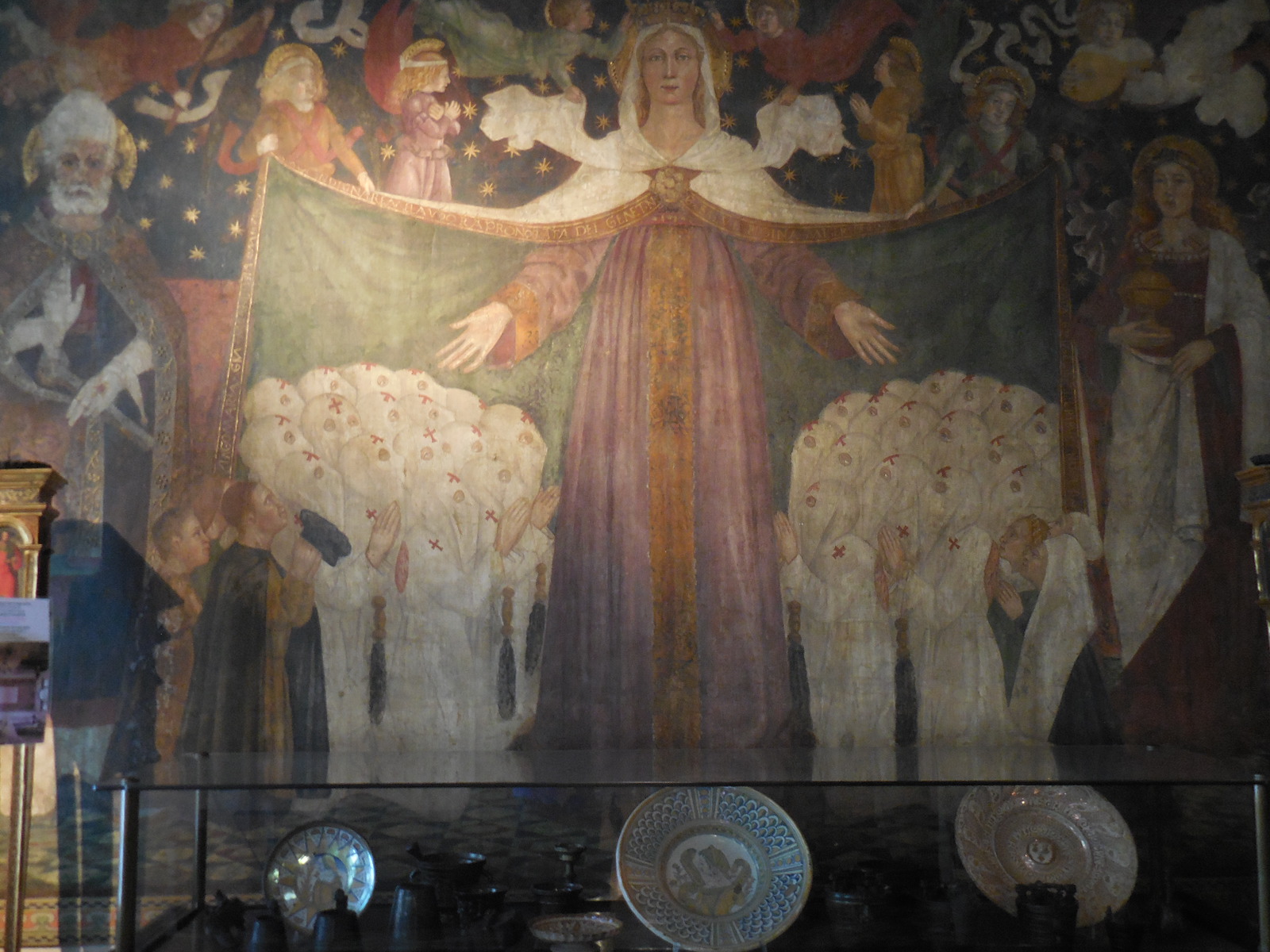
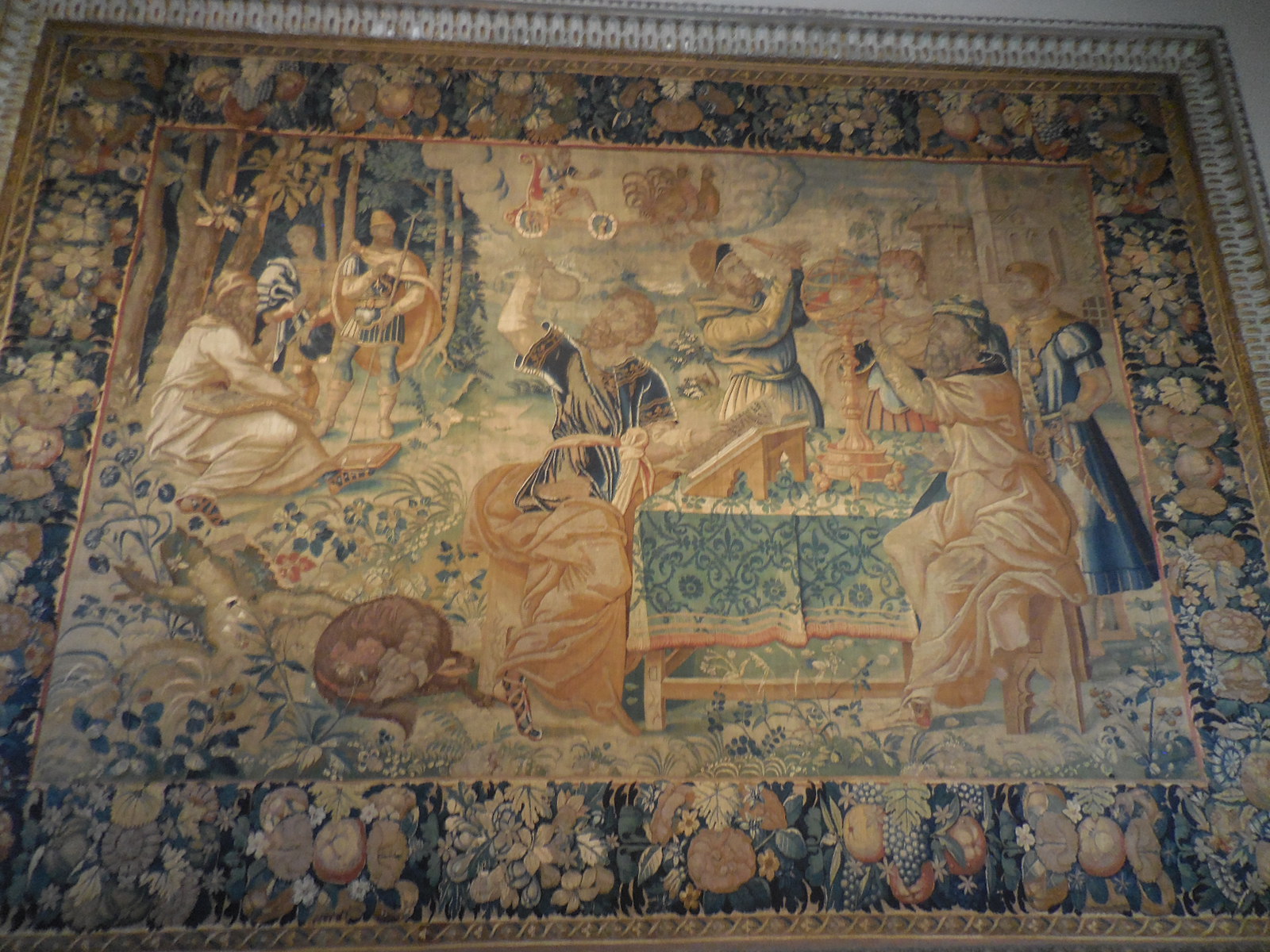
Many spaces captured my attention, including the Fresco Room, where15th century frescoes make a fascinating appearance. The Bevilacqua Room showed off the Madonna and Child by the artist after which the space is named. I took a good look at this innovative work from the 15th century. It was made of glass stones, silver thread, velvet and gold. A coffered ceiling and gold-and-red silk wall coverings added to the elegance of the space.
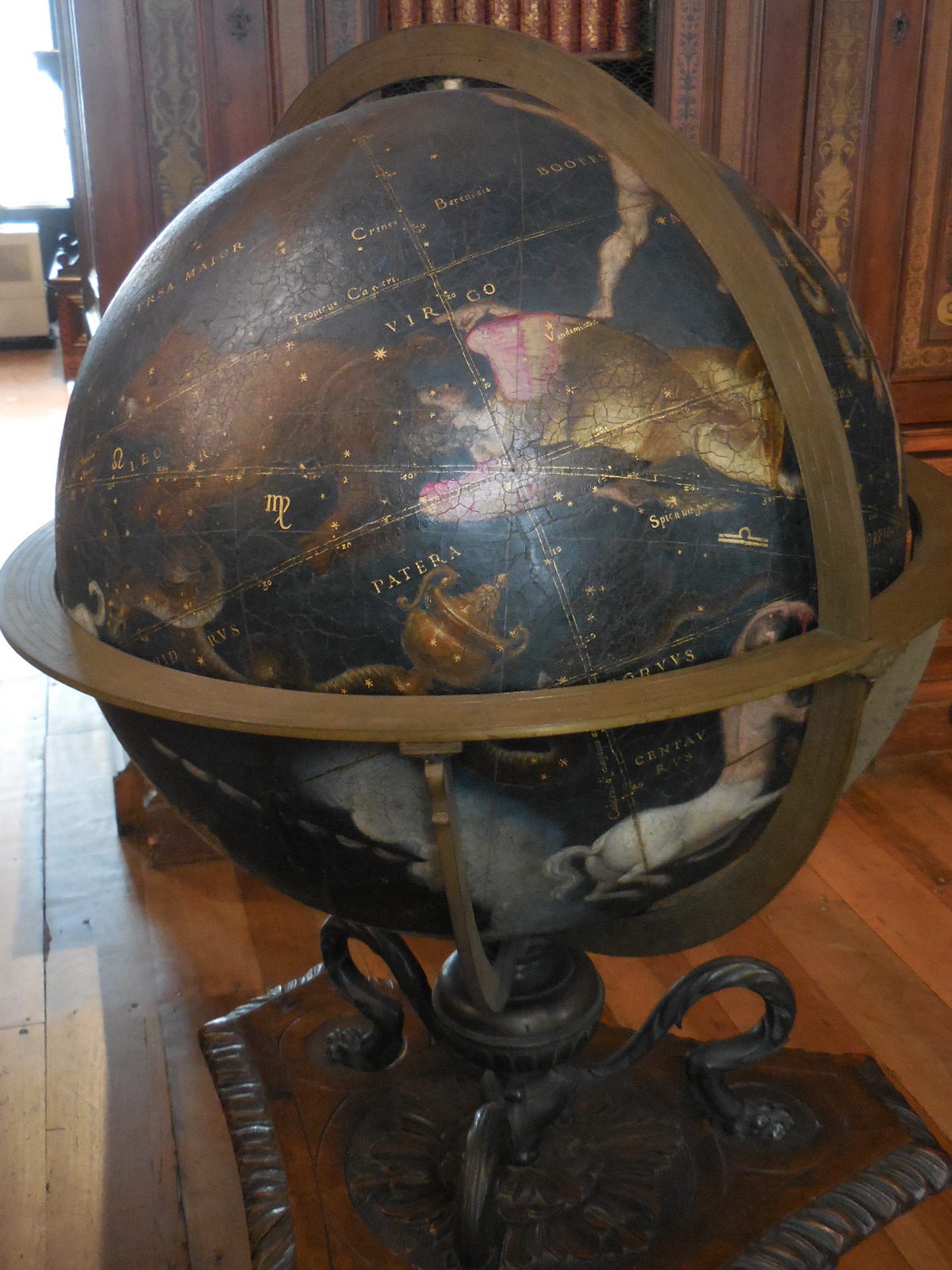
I have always loved libraries, and this library was no exception. On the 16th century terrestrial globe in the library, North America is labeled as “Unknown Territory.”
The largest room was the Grand Salon with a coffered ceiling adorned with pine cone images. Family crests made an appearance as did Latin inscriptions. The frieze featured a theme from Greek mythology and included 16th century frescoes. The red-and-gold décor gave the room a special sense of grandeur. The six stained glass windows were exquisite.
The living room of Giuseppe and Carolina included 16th century decorated paneling, red furniture with velvet upholstery and a piano. The Red Room, which served as the couple’s bedroom, showed off a coffered ceiling and 15th and 16th century paintings as well as a canopied bed with red covering. A door in this room leads to the children’s floor, so the children never had to walk through the Renaissance-decorated apartments.
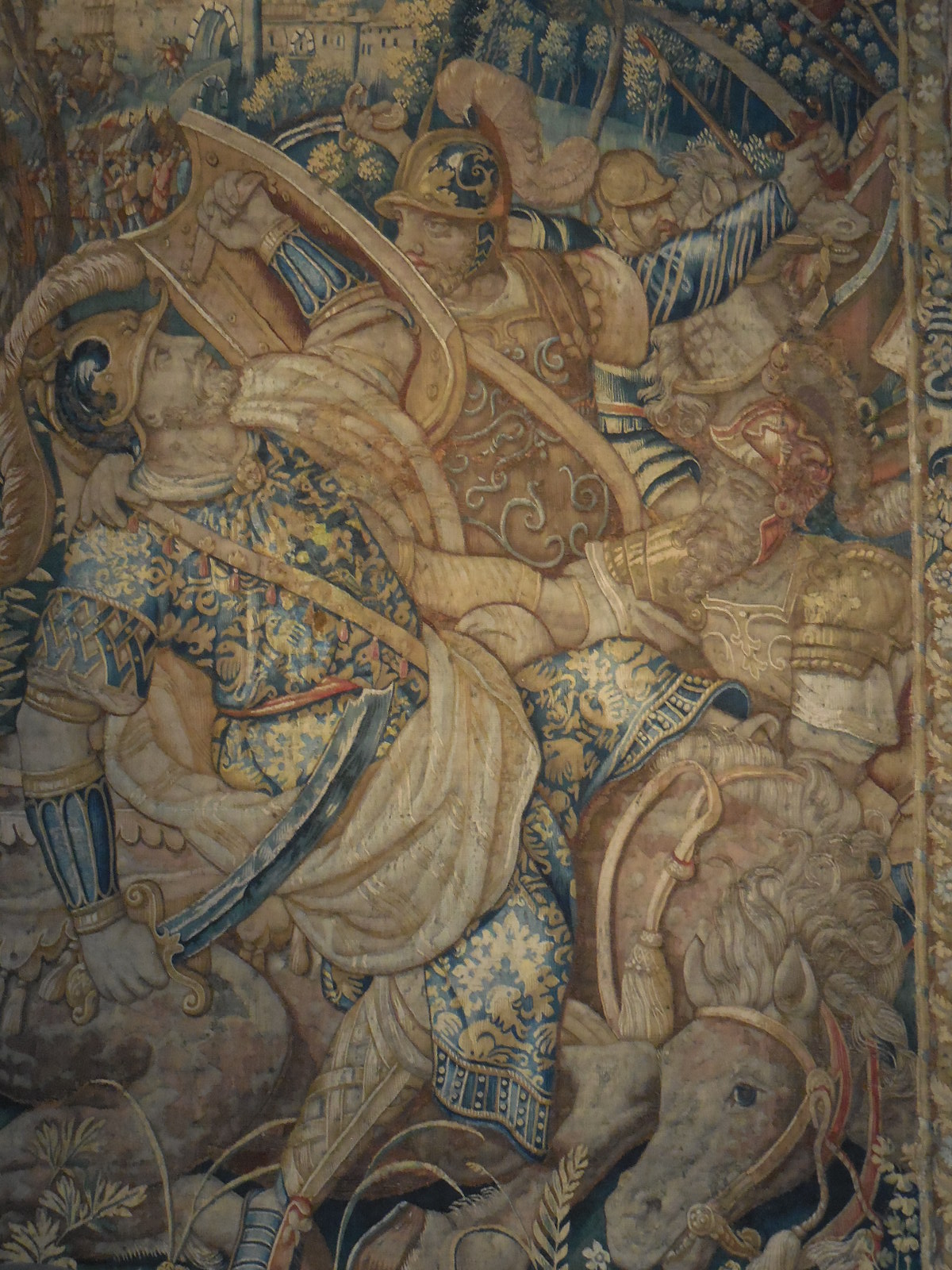
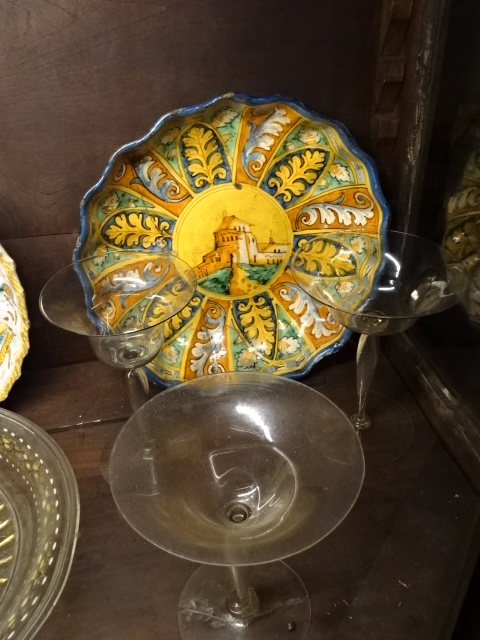
The Dining Room was elegant, too. The wall coverings showed the story of Persian king Cyrus. The majolica plates showed scenes from Alexander the Great’s life.
The bed in Fausto’s Bedroom was adorned with head and foot boards sporting 16th century reliefs. The decorated Neo-Renaissance coffered ceiling was another highlight. A 15th century altarpiece also enthralled. I noticed a clock and a lamp shaped like skulls, too.
I noticed the 16th century ceiling decorated with the two family crests and a Latin inscription in Giuseppe’s Bedroom, called “the Green Room.” The headboard showed off a Pieta scene.
The armory was a long and narrow room with helmets, armor, swords and shields. While I am not especially interested in weaponry, it was impressive.
I liked the Bagatti Valsecchi Room where visitors can open drawers and see photos of the two brothers and some of their personal belongings. One photo that captivated me showed the palace after a section was bombed during the second world war. On another photograph, I saw Giuseppe on a velocipede.
After my visit, I decide that this was my favorite museum in Milan because there was so much to appreciate and yet the flats had an intimacy that larger museums lack. The apartments brought the Renaissance to life with its artifacts. The photos of the two brothers made the apartments feel even more intimate. I was given the chance of having a glimpse of their lives, of getting to know them. That the flat was used for daily life and hadn’t been a museum when the brothers were alive made it all the more appealing. The painted coffered ceilings, the elegant beds with canopies and the 15th and 16th century paintings and frescoes throughout made great impressions on me.
I finally left, knowing someday I would be back because this was a museum I could go back to again and again, greatly enriching my life with each visit.
Tracy A. Burns is a writer, proofreader and editor in Prague.
The Sforza Castle in Milan was built for Galeazzo II Visconti in the second half of the 14th century. It was destroyed in the mid-15th century, but the duke of Milan, Francesco Sforza, rebuilt it. Then the Sforza family inhabited the castle. The end of the 1400s was a time of splendor. During the 15th century, Leonardo da Vinci and Bramante created frescoes in the castle. The castle became one of the largest in Europe in the 16th century.
Later, the castle fell on hard times and was transformed into a citadel. The ducal apartments were used as barracks and stables under Spanish, Austrian, French and again Austrian rule. An armory was for a time also on the premises. At the end of the 1800s, the castle became the property of the city of Milan. The unification of Italy prompted the complex to be reconstructed and made into a museum. The castle took on the appearance it had when it had been under Sforza control. Though the central tower is not original, it is made to look like it had when built in 1521.
During World War II, the complex suffered much damage but was reconstructed. Now the castle includes museums and cultural institutes. Several of the other museums include those featuring ancient art and arms as well as one highlighting antique wooden furniture and sculpture. The Pieta Rondanini by Michelangelo is also a sight not to be missed.
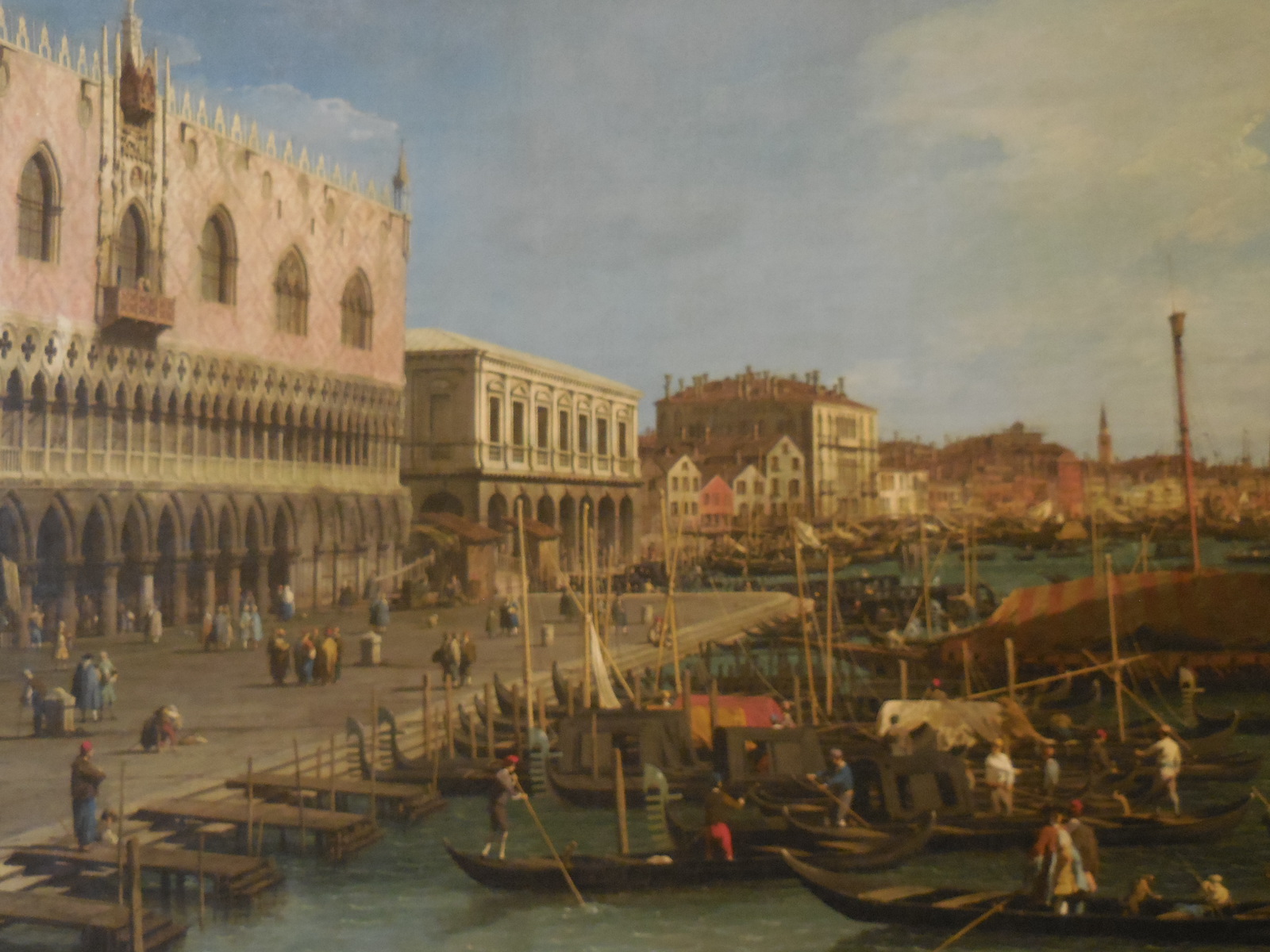
The Picture Gallery focuses on Milanese and Lombard paintings from the 15th to the 18th century with over 230 works on display. It also includes remarkable Venetian and 17th century Dutch and Flemish works. Some Lombard artists represented are Foppa, Bramantino and Bernardino Luini. Other artists whose paintings amaze are Andrea Mantegna, Bergognone, Giovanni Bellini, Lorenzo Lotto, Correggio, Tintoretto, Tiziano, Tiepolo and Canaletto. One highlight is the Trivulzio Madonna by Mantegna from 1497. This important work shows Madonna on a throne, flanked by saints. Angels sing, and cherub faces are included in the decoration. Yet the exhibition does not only contain paintings. Some sculptures, busts and medals are on display, too.
Tracy Burns is a writer, proofreader and editor in Prague.
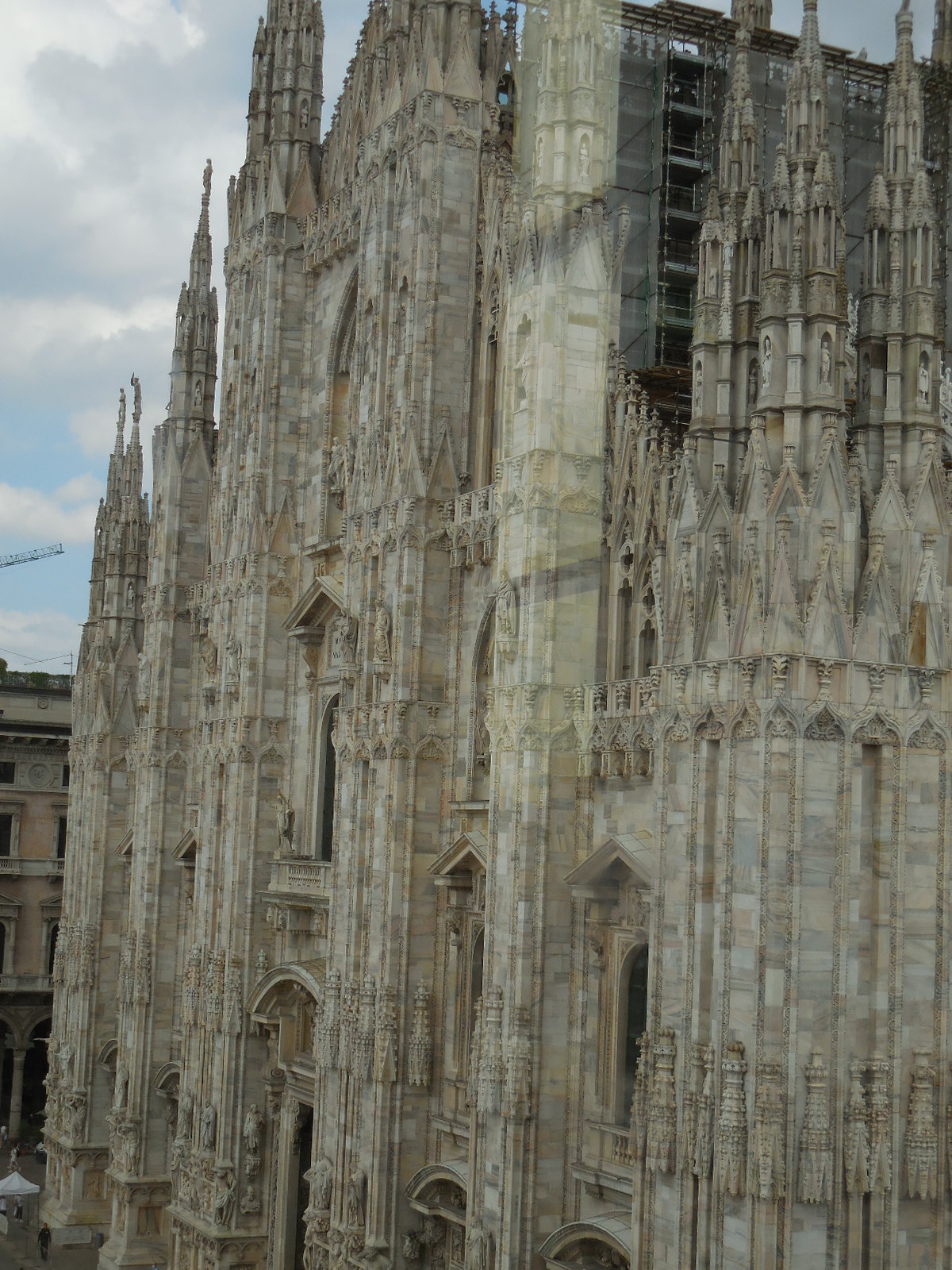
When I visited the Cathedral Museum in Milan, I didn’t expect it to be so big. The museum measured 2,000 meters square, and there were 26 rooms. Set up in chronological order, the artifacts included stained glass windows, paintings, tapestries, architectural models, sculpture, bronze doors, goldsmithing artifacts and more. The museum, located on the ground floor of the Palazzo Reale, allowed me to see the various phases of construction from its foundation in 1386 to the 20th century. The museum dates back to 1953. Ten more rooms were added in 1960, and it was reopened in 1973. It underwent major renovation during this century, too.
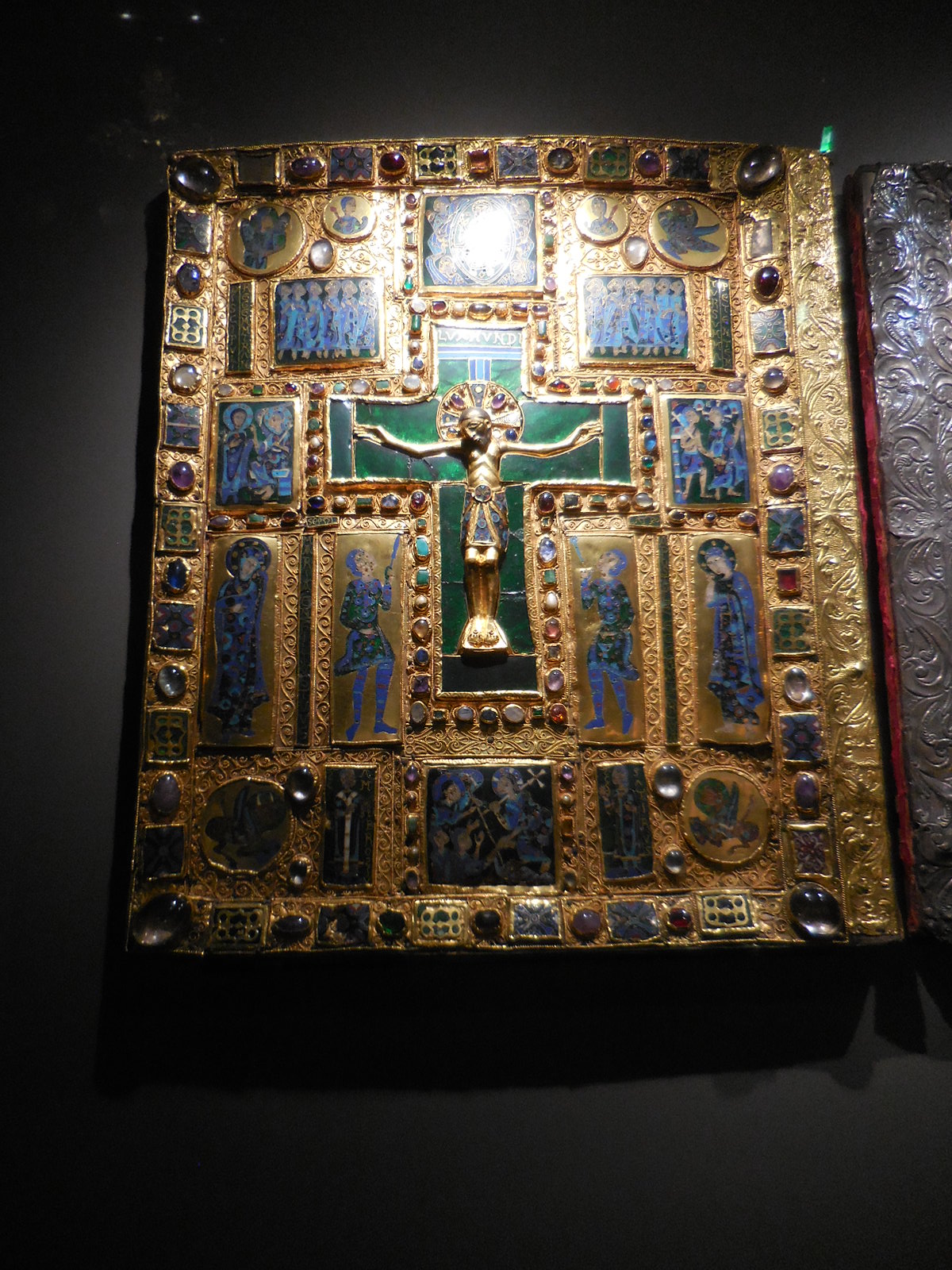
Placed in the museum during 2013 after renovation was completed, the Treasures of the Cathedral are on display in two rooms and feature liturgical objects from the 5th to the 17th century. I saw the Cross of Chiaravalle, a masterpiece of Romanesque goldsmithing art. The Cross of San Carlo was another goldsmithing object that amazed. It was made in Mannerist style during the 1500s. The cross is even used in cathedral ceremonies new archbishops are inaugurated. La Pace di Pio V, dated around 1565, utilized lapis lazuli decoration on columns and a sarcophagus. The cross was studded with diamonds. Gold decoration added to its beauty. Il Calice delle Arti Liberali is a chalice placed on a copper gilded frame. Made in Milan during the 1500s, the chalice has enamel decoration.
Perhaps my favorite part of the museum was the section with the stained-glass windows. I was enthusiastic about having the opportunity to see stained-glass windows up close. These panels depicting scenes from the Old Testament had been created by artists from Lombardy, France, Germany and the Netherlands. I loved stained-glass windows, and they were my favorite part of the cathedral’s interior. I spent so much time staring at those windows when I was inside the cathedral.
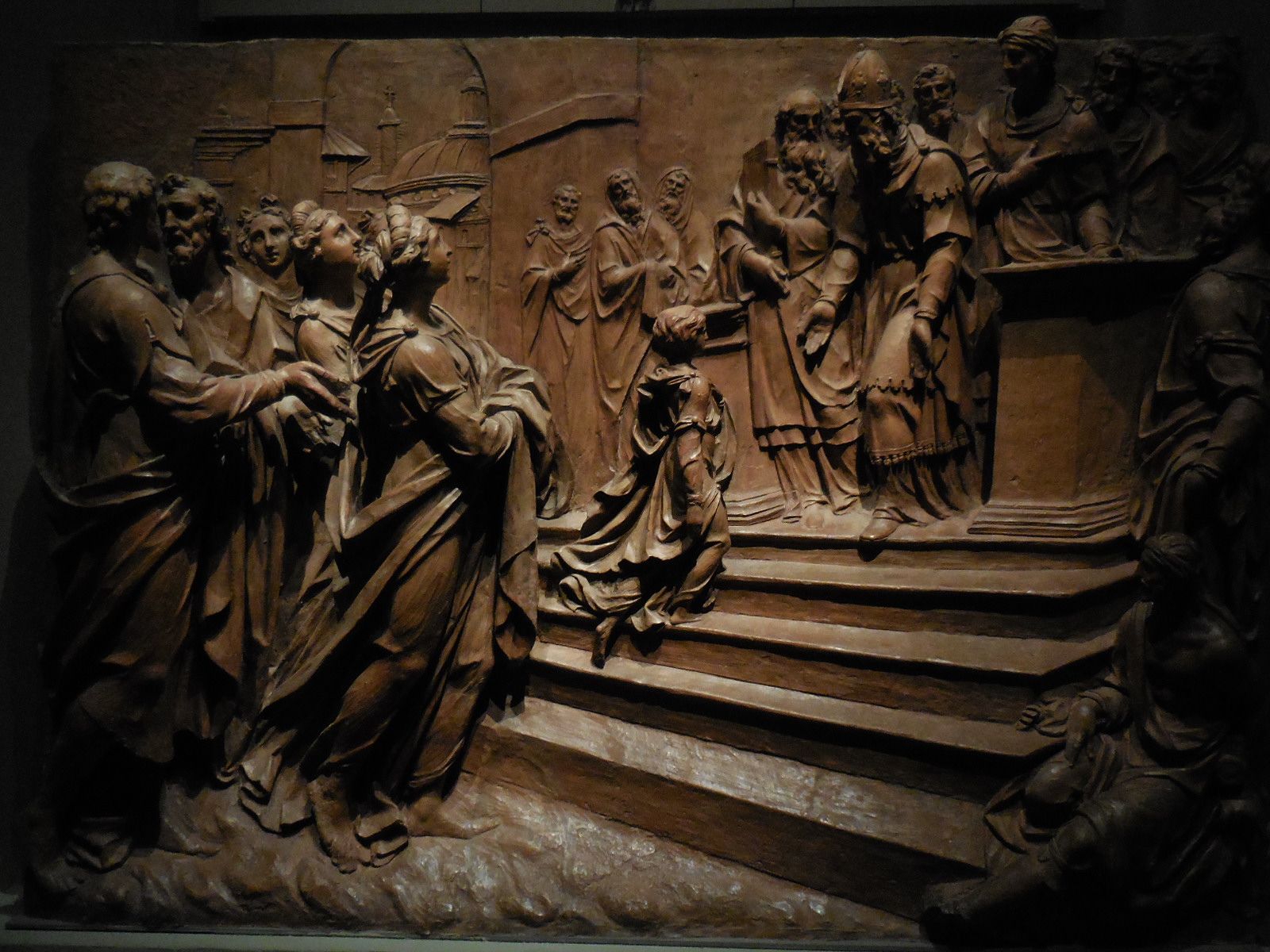
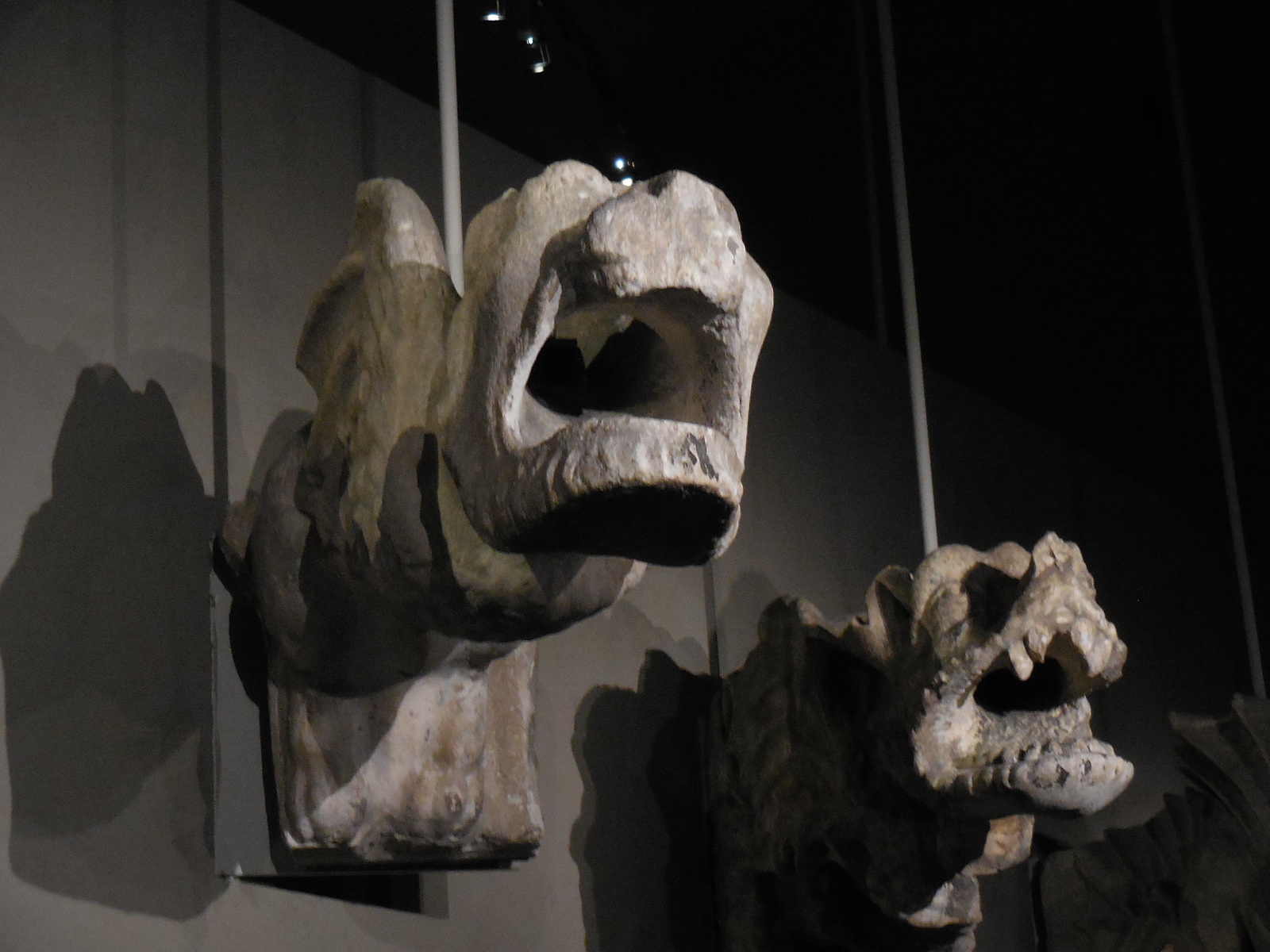
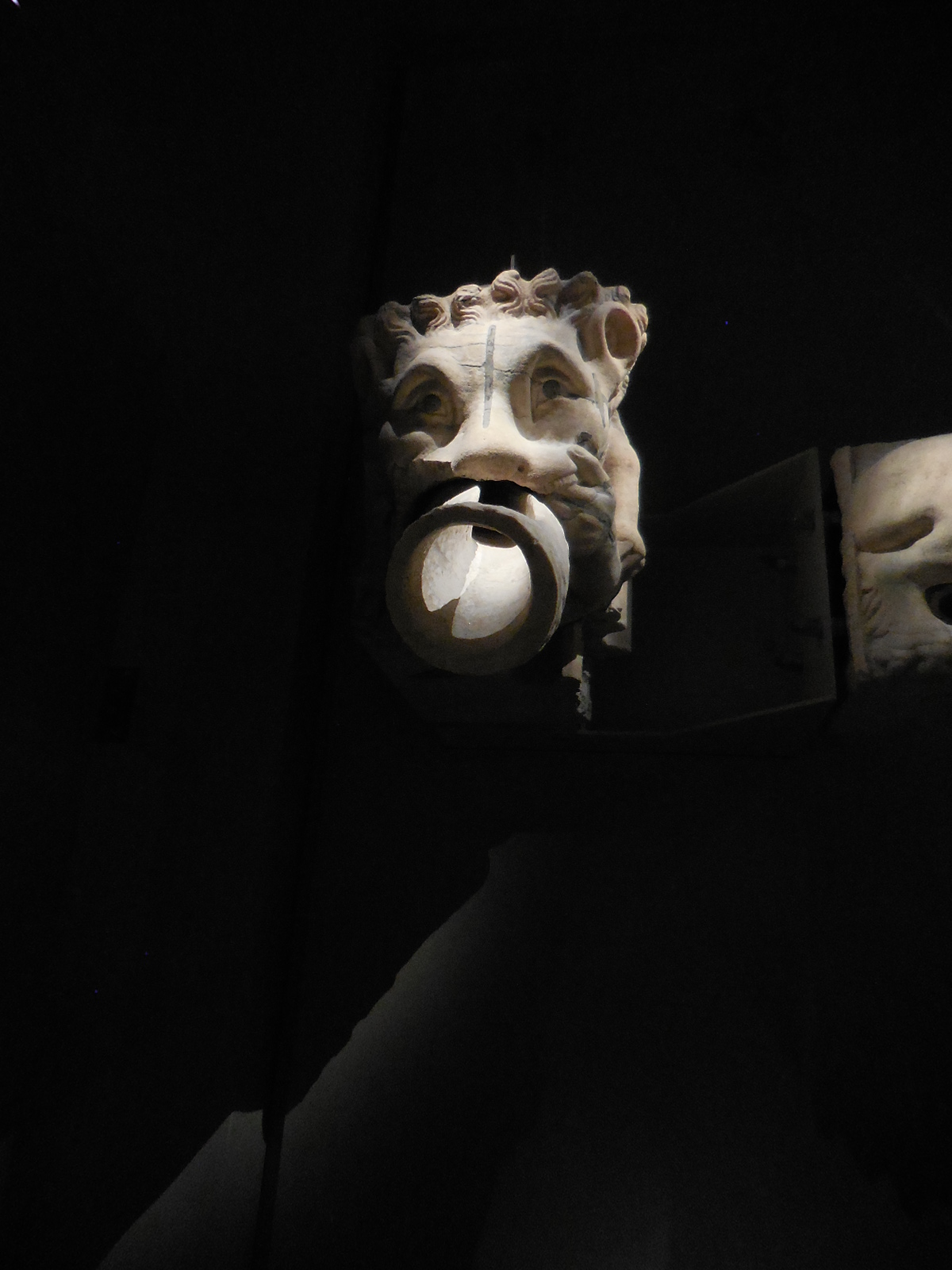
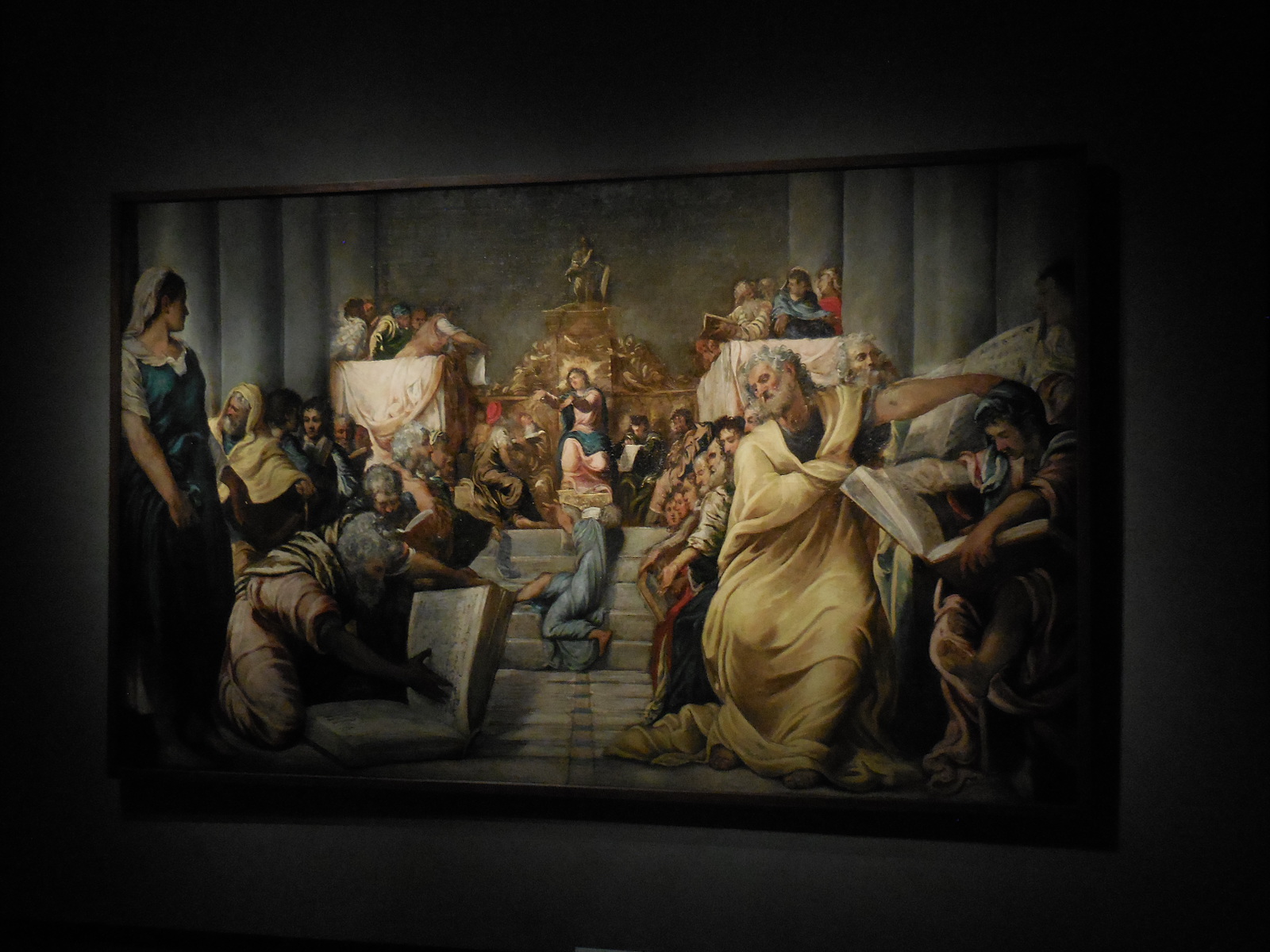
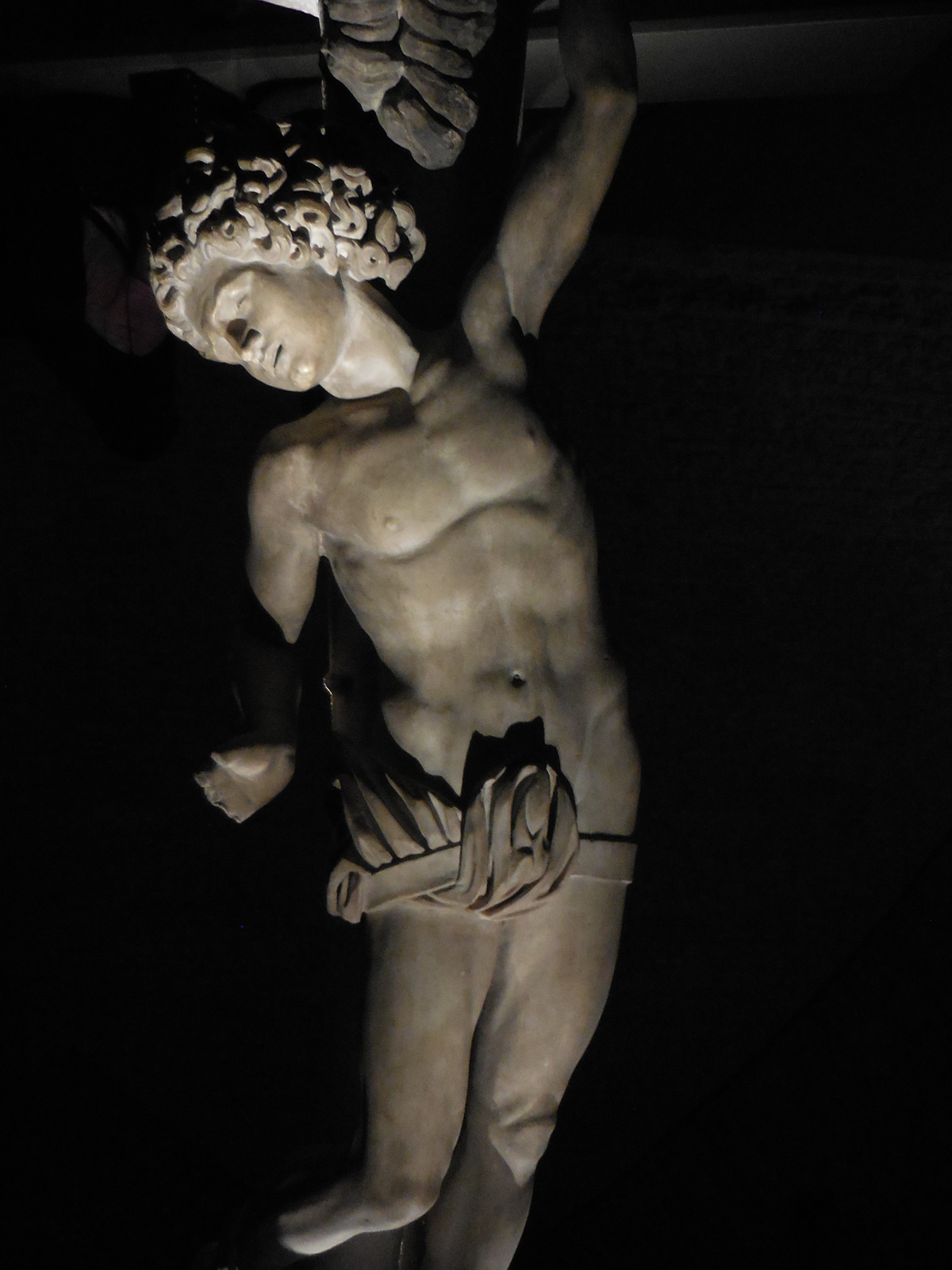
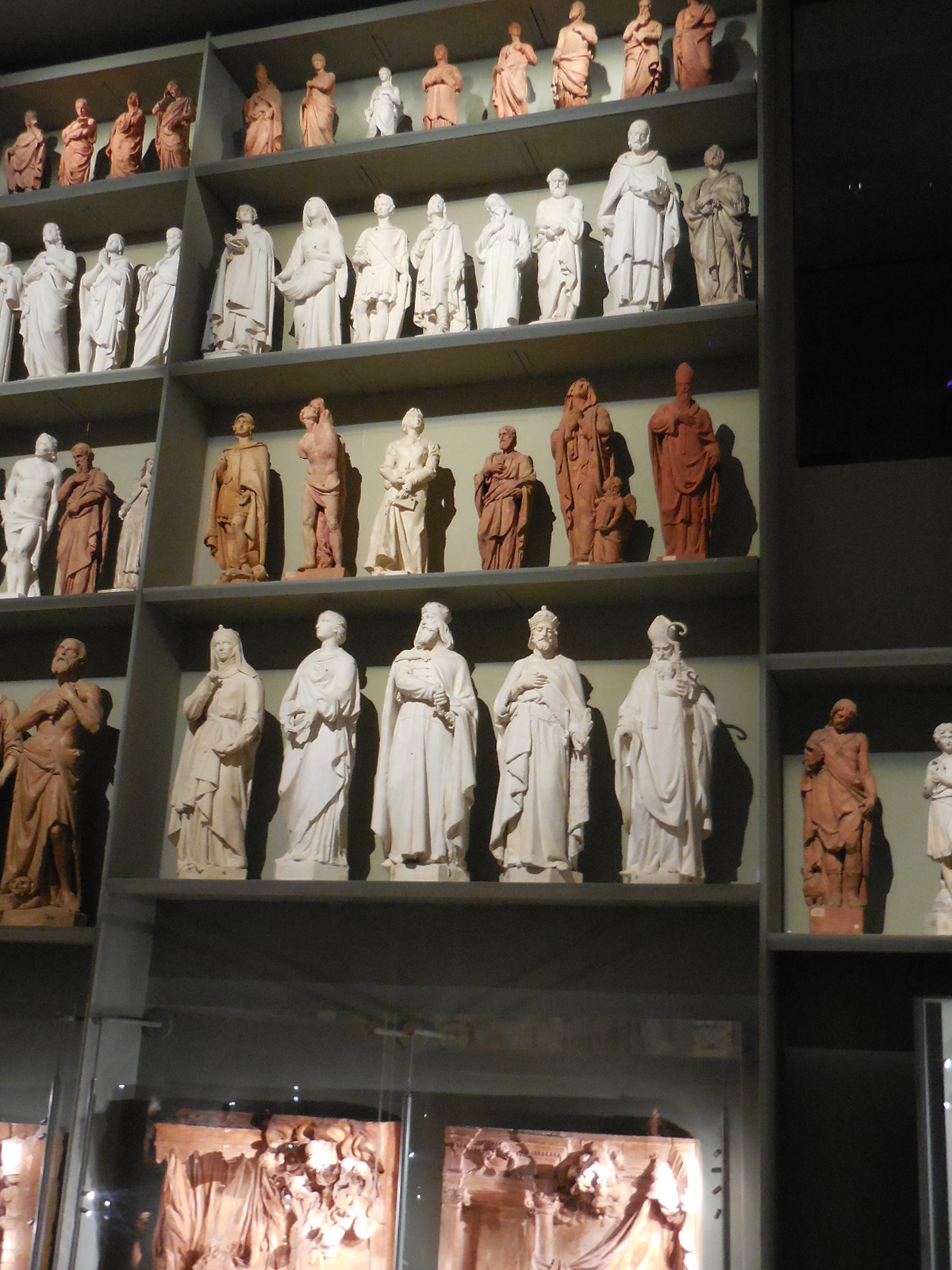
The sculpture was another delight. The marble Late Gothic figures hailed from the first 50 years of the cathedral’s construction. There were also statues made of terracotta from the Mannerist and Baroque eras. A few of the noteworthy sculptures featured Saint Agnes, Saint George and Galeazzo Maria Sforza. The Sforza noble family had had a vast influence on the city’s development and politics. I also was amazed by the gargoyles. I was thrilled that I had the chance to see them close up.
A model of the entire cathedral comprised three centuries of work and was made at a scale of 1:20. Another model that caught my attention was an early 16th century wooden rendition of the cathedral, made by Bernardino Zenale from Treviglio. This model provided insights into the structural development of the various sections of the cathedral, such as the apse, transept and tiberium.
I found the objects in the museum stunning. I was flabbergasted by their beauty. I had expected a small museum of liturgical items, not such an amazing array of artifacts. I had learned how the cathedral had been constructed in various eras and about the main players in the history of the structure.
Leaving the Museo del Duomo, I was very satisfied with my visit and ready for the temporary Titian exhibition in the Palazzo Reale.
Tracy A. Burns is a writer, proofreader and editor in Prague.
When I looked at the Palazzo dell’Arengario, which houses the Museo del Novecento, I thought that the exterior was an eyesore as it was punctuated by a Fascist style of architecture. It was intriguing, nonetheless. The two symmetrical buildings each had three tiers. Arcades made an appearance as well as did bas reliefs. Even though construction commenced in 1936, the palace was not completed until 1956. During World War II, bombs severely damaged the edifice. In the early years of the 21st century, it was renovated. The museum opened in 2010. About 400 works by mostly Italian artists are on display in chronological order, decade-by-decade.
A spiral ramp takes the visitors to the first three floors. It may look like something out of science fiction, but I thought the ramp interrupted the space. I thought it was more of a hassle rather than a unique and innovative feature. In the Hirschhorn or Guggenheim, the ramp and the locations of the artwork complement each other. I felt that at the Museo del Novecento the ramp and pieces of art worked against each other, dividing rather than complementing.
The first painting that caught my attention was the large canvas called TheFourth Estate by Giuseppe Pellizza da Volpedo. It was lcreated from 1898 to 1902 in Divisionist style. This kind of painting utilizes individual points of color in a neo-Impressionist fashion. Depicting workers on strike, the painting gets its name from the working class that embodies the meaning of “the fourth estate.” Out of the crowd of demonstrators and into the light step three figures, two men and a woman holding a baby. They are walking toward the viewer confidently, not at all in a hurry. They are clearly there to try to reach a deal with their employer. But they are not panicked or nervous. They have terms and conditions that have to be met. The colors in the painting have a cold quality, but the light gives the group a vibrancy that makes them look powerful and in control of the situation.
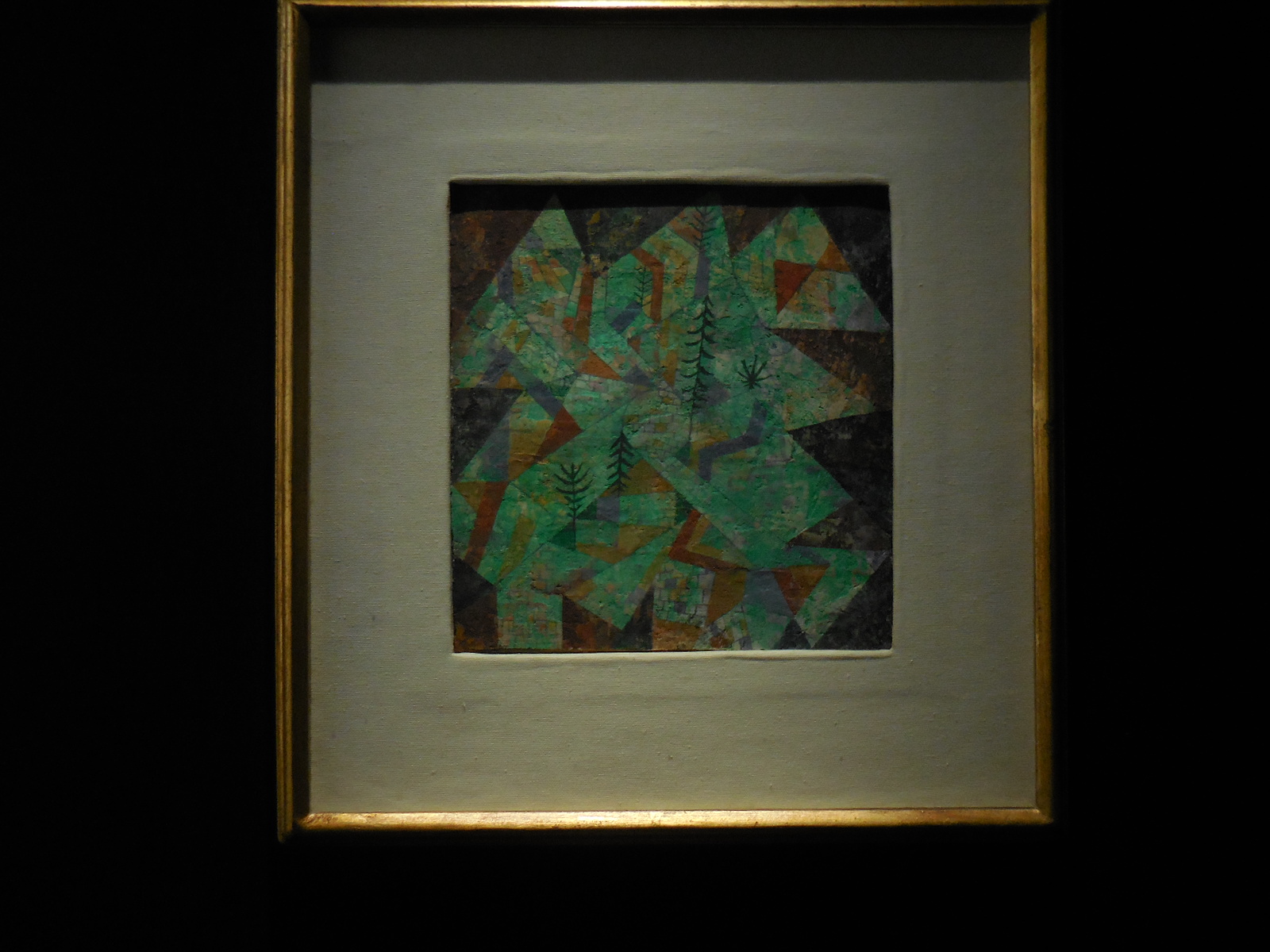
Paul Klee’s artwork holds a prominent place in the museum.
Foreign artists represented included Georges Braque, Wassily Kandinsky, Henri Matisse, Paul Klee, Pablo Picasso and Piet Mondrian. Indeed, these works are some of the most significant in the collection. Klee’s Wald Bau from 1919 and Kandinsky’s Composition 1916 stand out, for example.
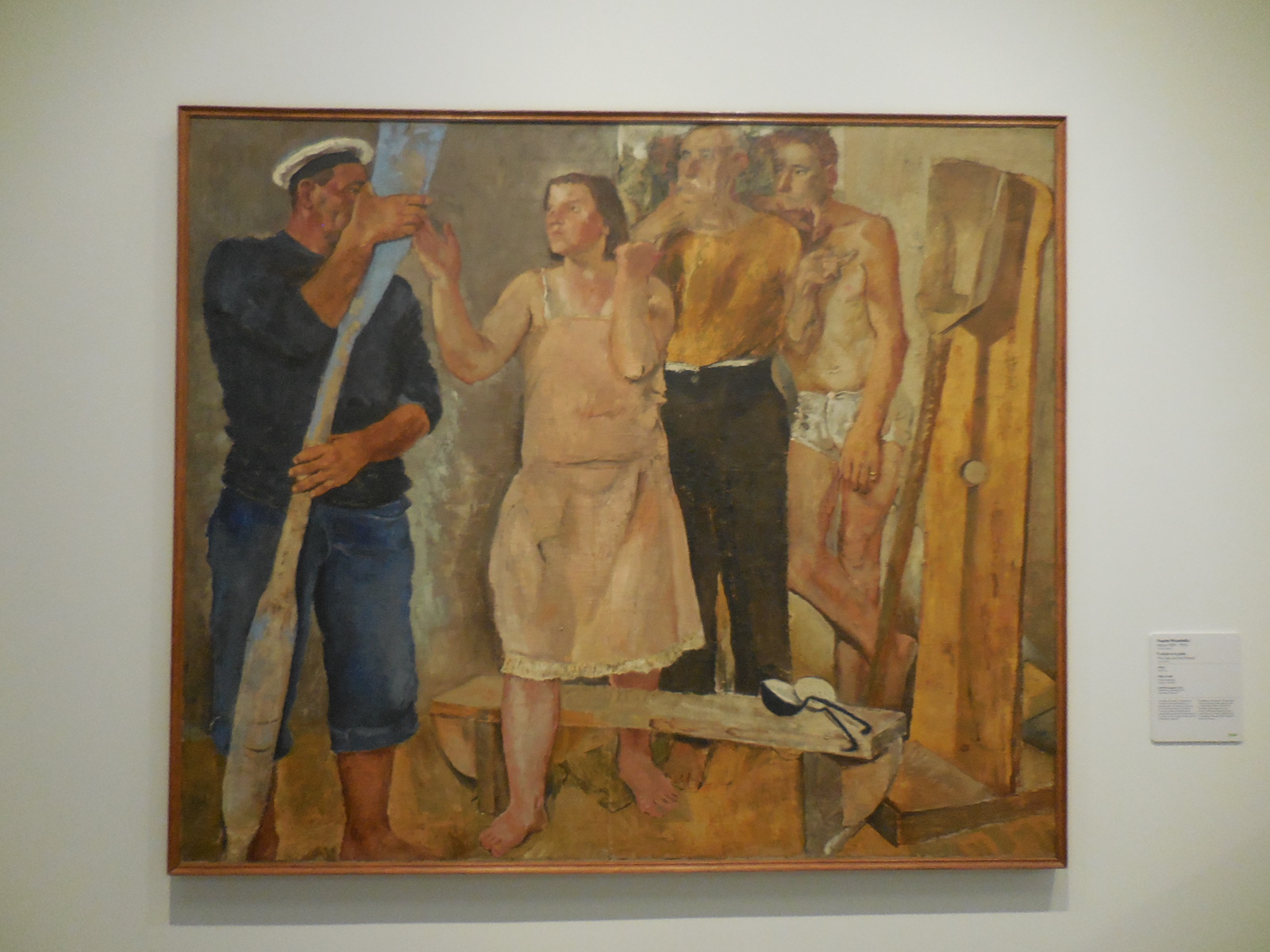
One section of the museum focuses on Italian Futurists, such as Umberto Boccioni, Giacomo Balla and Fortunato Depero. In fact, one room is dedicated to Boccioni’s works. I had visited a museum featuring Depero’s works in Rovereto a few years earlier, so I was familiar with the Futurist style. Born in Italy during the early 20th century, Futurism looked to the future rather than to the past. It praised modernity and technological advances. Industrial cities, cars and airplanes were often subjects of Futurist artworks. Depero’s creations certainly looked like they were in motion. I recalled some people depicted in one work as resembling machines.
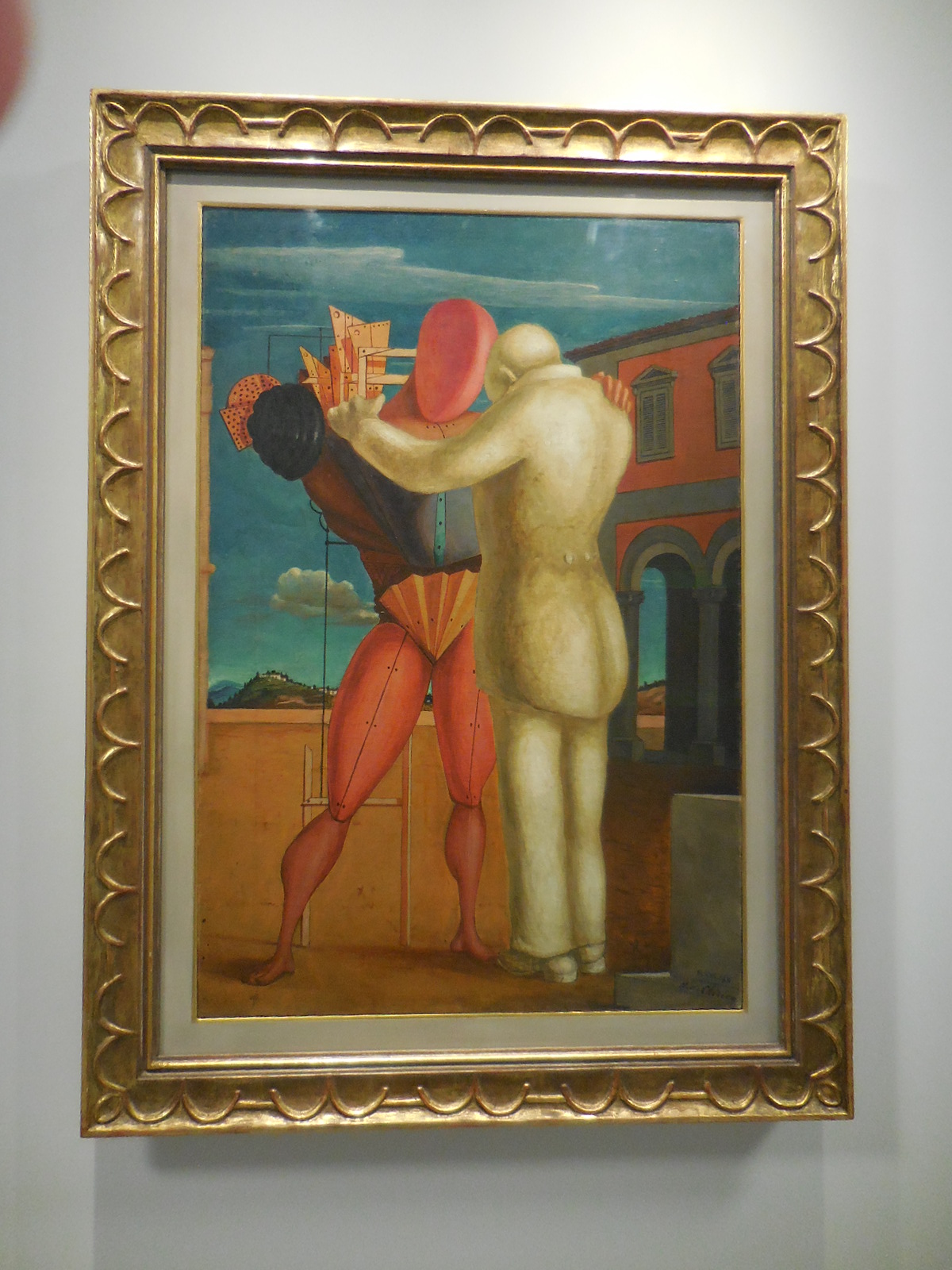
The Novecento of the 1920s is well represented with a style that was inspired by ancient Roman art and Renaissance art, which are meshed together in an abstract way. Giorgio de Chirico’s surrealism is on display, too. In fact, his creations take up an entire room. Art Informel by Italian artists and the Azimeth group are featured in the museum, too. The last section follows trends from the Sixties to the Eighties with exhibits of Kinetic Art, Programmed Art, Pop Art, Analytical Painting and Conceptual Art. Lucio Fontana’s works take up the top floor. Take a look at his neon sculpture and you’ll realize what an artistic journey you have taken from the social realism of The Fourth Estate floors below.
A few works worth mentioning include Giacomo Balla’s Ragazza che corre sul balcone from 1912 and Umberto Boccioni’s Svilippo di una bottiglia nello spazio from 1913-35. Balla’s painting showing a boy running on a balcony is dynamic and vivacious as it shows spontaneous movement and the joy and innocence of childhood. The colors of blue, brown and green with white help to create the sense of motion that is central to the painting. Futurism is all about movement as opposed to the static and still life qualities of Cubism.
While Boccioni was also a Futurist, his bronze sculpture Sviluppo di una bottiglia nello spazio showcased a bottle on a plate in unique way that is reminiscent of a natura morta. This kind of still life was not at all typical for Boccioni’s style because of its lack of movement.
Another painting by Paul Klee
Amedeo Modigliani’s portraits were on display, too. He painted the Parisian art collector Paul Guillaume with one eye, for instance. In Arturo Martini’s sculpture La convalescente from 1932, the sick, young woman who is the subject of the work has been forgotten and abandoned. Her empty gaze and lost look practically ripped through my heart. It reminded me of when I was taken downstairs on a stretcher to have my gallbladder operation. The nurses left me on the stretcher in the empty space next to the operating room. I could hear the doctor trying to wake up the patient. At first she didn’t respond. He had to talk to her several times. For a few minutes, I thought that I had been abandoned and that the woman having the operation before me had died. I wanted to run out of there, but I was drugged and could hardly move. Finally, she regained consciousness.
One of the surrealist works by De Chirico
I particularly liked De Chirico’s surrealist works with vibrant colors. His I bagni misteriosi was inspired by a 16th century work by Lucas Cranach. Ever since I was a child, I have loved Klee’s abstract art. For me Klee’s art has a sense of rationality and logic that I often find absent in abstract works.
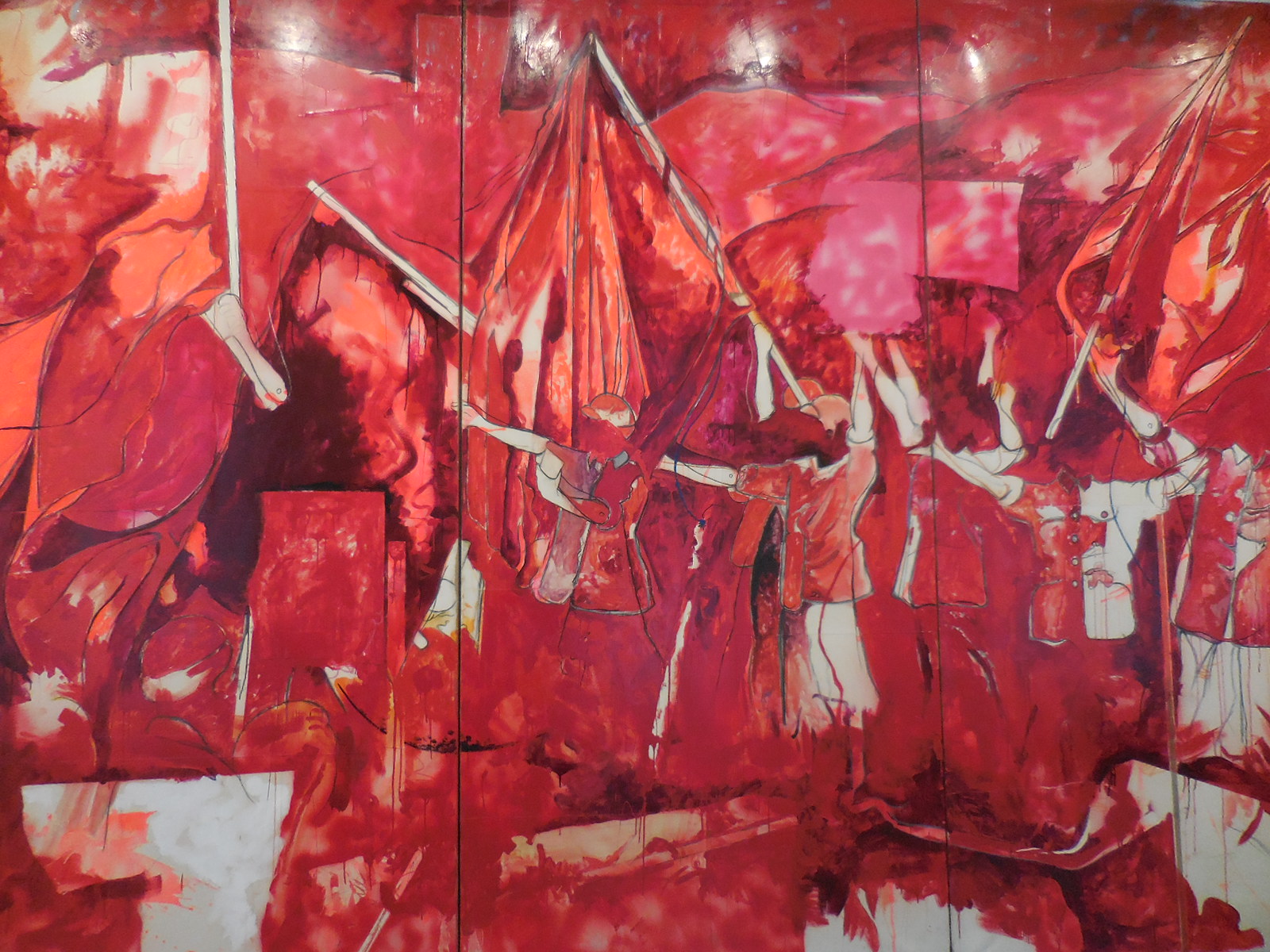
A painting with a theme of Chinese revolutions
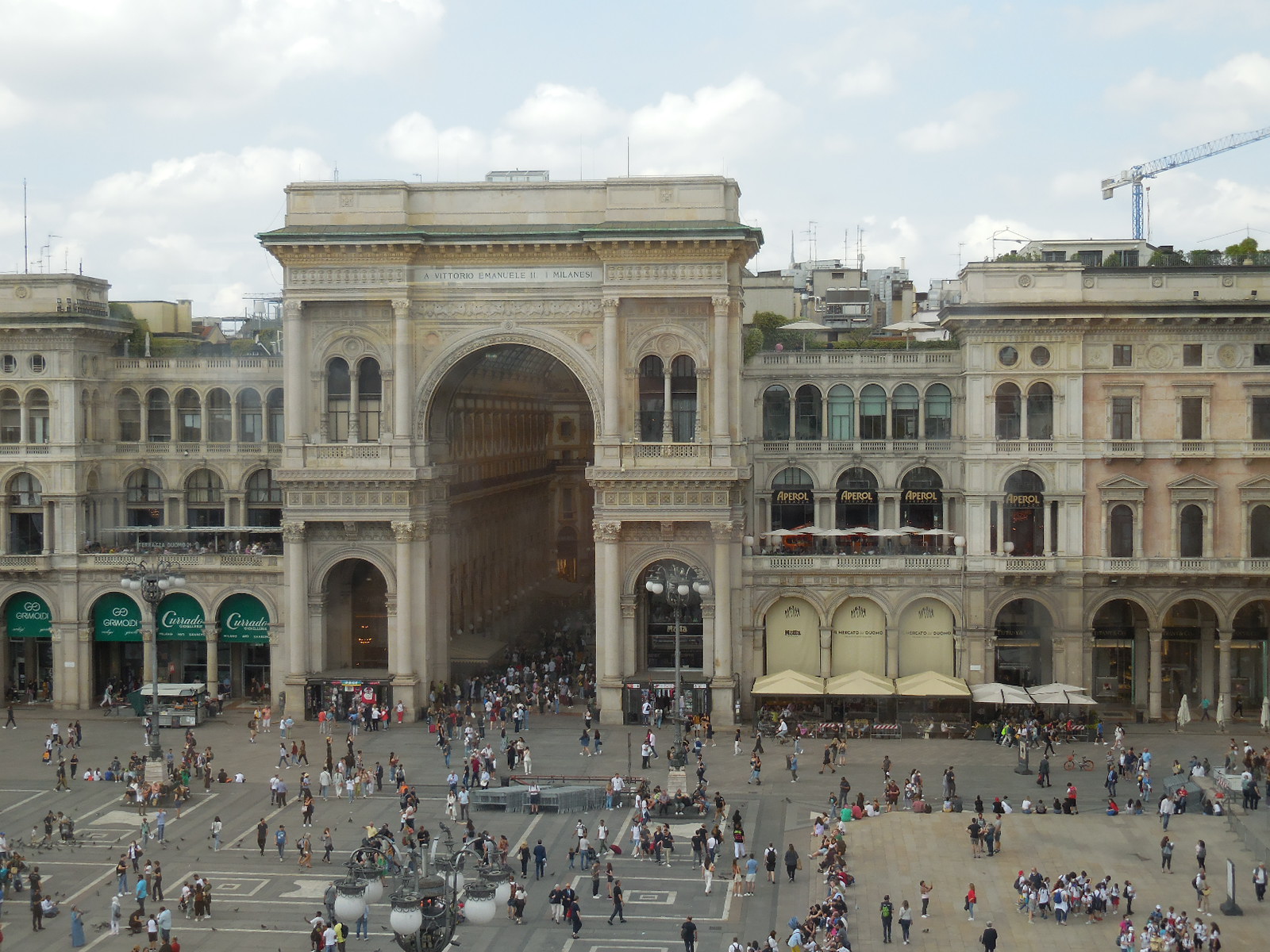
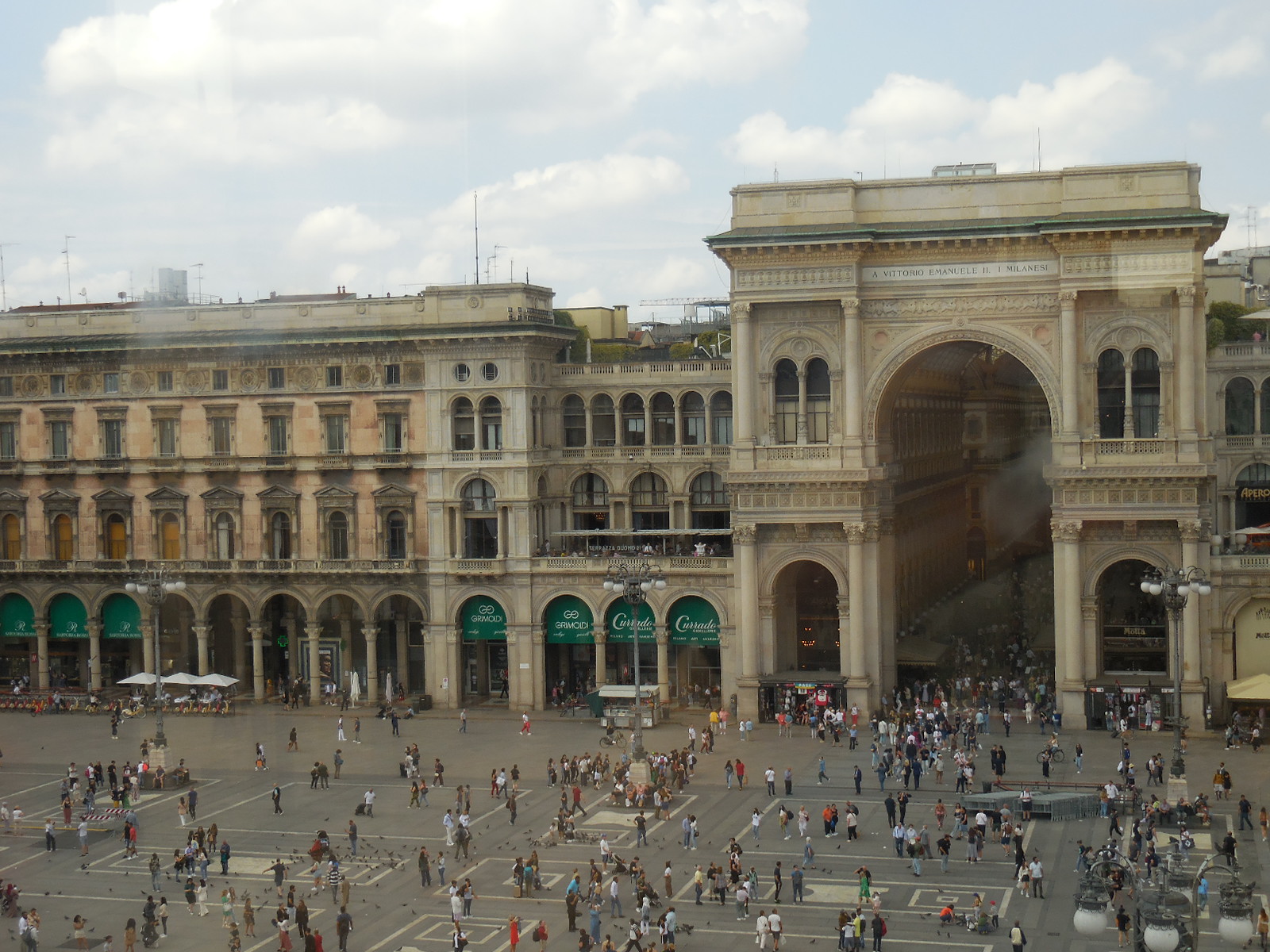
On the third floor there are glass walls that provide great views of the Duomo Square and the cathedral as well as Galleria Vittorio Emanuele II shopping arcade. I stood in that room for a long time, surveying the passersby walking to and fro below me, gazing at the long line to enter the cathedral and the people having lunch at expensive restaurants on the square. It was nice to be up there, looking down at the crowds on that scorching hot May day.
Tracy A. Burns is a writer, editor and proofreader in Prague.
A theatre and classical music aficionado, I was excited to tour the La Scala Theatre in Milan, where operas and ballets were staged. Classical music concerts by two orchestras also took place there. A chorus called the theatre home, too. I bought my ticket for the tour online before traveling to Italy. I was not disappointed.
First, I gazed at the exterior. The neoclassical building emphasized functionality. It blended in with other buildings on La Scala Square. I had assumed the famous edifice would stand out with an exterior featuring much ornamentation. When the theatre was built, the square was nonexistent, and La Scala did not have a dominant location on the street. It was one of many buildings. Still, it looked elegant. I gazed at the decorated tympanum with bas relief and stucco adornment. I also saw half-columns and two sides of an interrupted balustrade along with decorated parapets.
Once inside, I had some free time before the tour so I walked through the Theatre Museum. I saw many busts of famous members of the opera ensemble, statues, paintings and musical instruments, such as a piano that Franz Liszt had played. There was a special costume exhibition there, too. I am afraid that I am not an expert at opera, so I was not able to recognize all the names of those represented in the museum. A legendary conductor that had worked magic at La Scala was Arturo Toscanini. He had put into place many reforms and had staged works by Richard Wagner, for instance.
Numerous operas by Verdi had been performed at La Scala, and Verdi had made a name for himself with Nabucco, staged at La Scala in 1842. Maria Callas had sung on that stage, her amazing voice filling the auditorium. Herbert von Karajan had conducted concerts at La Scala. I was familiar with his work. I had some of the concerts he had conducted in various places on CDs.
In 1965 Claudio Abbado made his debut. He conducted operas as well as concerts. Riccardo Muti first conducted there in 1981. From 1989 to 1998, he created productions of masterpieces such as Rigoletto, La Traviata and MacBeth.
Operas by Verdi, Giacomo Puccini, Amilcare Ponchielli, Vincenzo Bellini, Gioachino Rossini, Gaetano Donizetti and Karlheinz Stockhausen all had premiered at La Scala. The small museum was very intriguing and certainly a delight for opera lovers.
At the beginning of our tour, the guide told us about the history of the building. The city’s Teatro Regio Ducale burned down in 1776, and Milan needed a new theatre for operas. This edifice was constructed over the site of a demolished church called Santa Maria della Scala, from which the theatre got its name. The owners of the boxes at the destroyed Teatro Regio Ducale paid for the construction. It took two years to build.
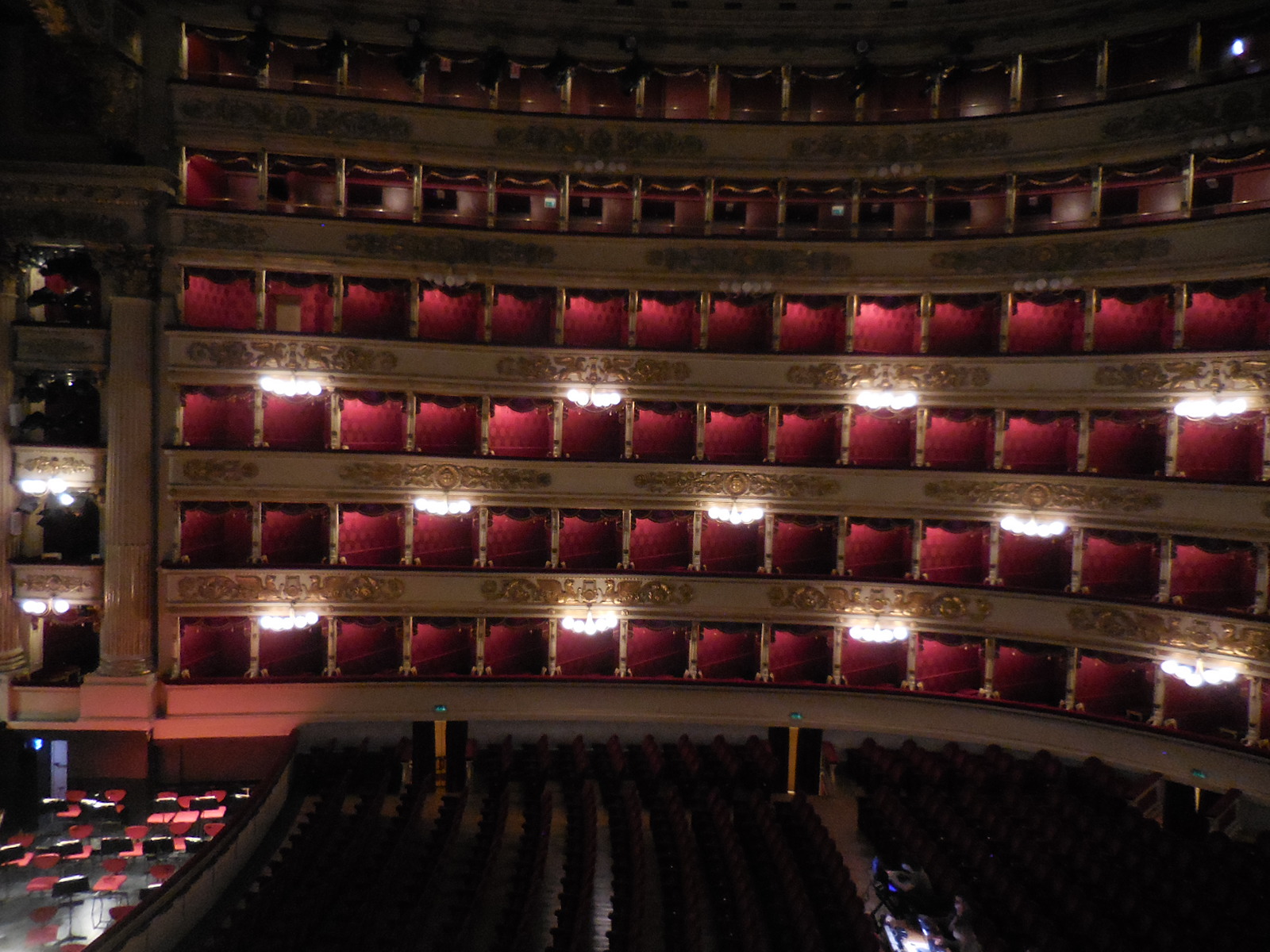
Teatro alla Scala opened on August 3, 1778, staging Antonio Salieri’s opera Europa riconosciuta. The La Scale Theatre became an important meeting point for the upper class. At that time, there were no chairs on the main floor, so spectators had to stand during the performance. Also, there was no orchestra pit. Over 80 oil lamps provided light on the stage area while about 1,000 additional lamps were situated elsewhere in the building. Buckets full of water were stored in several rooms in case of a fire. Electric lighting was not installed until 1883. In the early days, the owners of the boxes decorated their spaces themselves, choosing various colors of wallpaper, for instance. In 1844, the boxes all were decorated in red. Today remnants of the original décor can be seen in some boxes. Some are adorned with ceiling frescoes or with mirrors and stucco ornamentation.
However, a casino was also located in the building during the initial seasons. There was a space in the theatre where much bartering took place. For example, people swapped horses. The voices in the foyer could be quite loud so that it was sometimes difficult to hear the performance.
Significant renovation took place in 1907. The seating area originally had 3,000 seats, but after reconstruction the number of seats decreased to 1,987. In 1938 movable bridges and levels were added to the stage, so it was easy to change sets immediately. The system was actually quite complex.
La Scala was badly damaged by bombs during World War II. The theatre was reconstructed and opened with much aplomb in May of 1946. More restoration work occurred between 2002 and 2004, and the ensembles had to perform elsewhere for those two years. Today the theater is divided into four sections of boxes and two galleries for a total of six levels. The backstage area was enlarged during that renovation. The new stage remains one of the biggest in Italy. (Looking at the stage, I was struck by how large and deep it was.) Architect Mario Botta had an electronic system installed next to seats so spectators could read the libretto in English, Italian or the original language of the production while watching the spectacle. This technological feature intrigued me.
In 2005 there were many problems with management. In 2006, during a performance of Aida, the audience was incessantly booing tenor Roberto Alagna. The actor left the stage and did not return. His understudy had to take up the role immediately. He didn’t even have time to put on a costume.
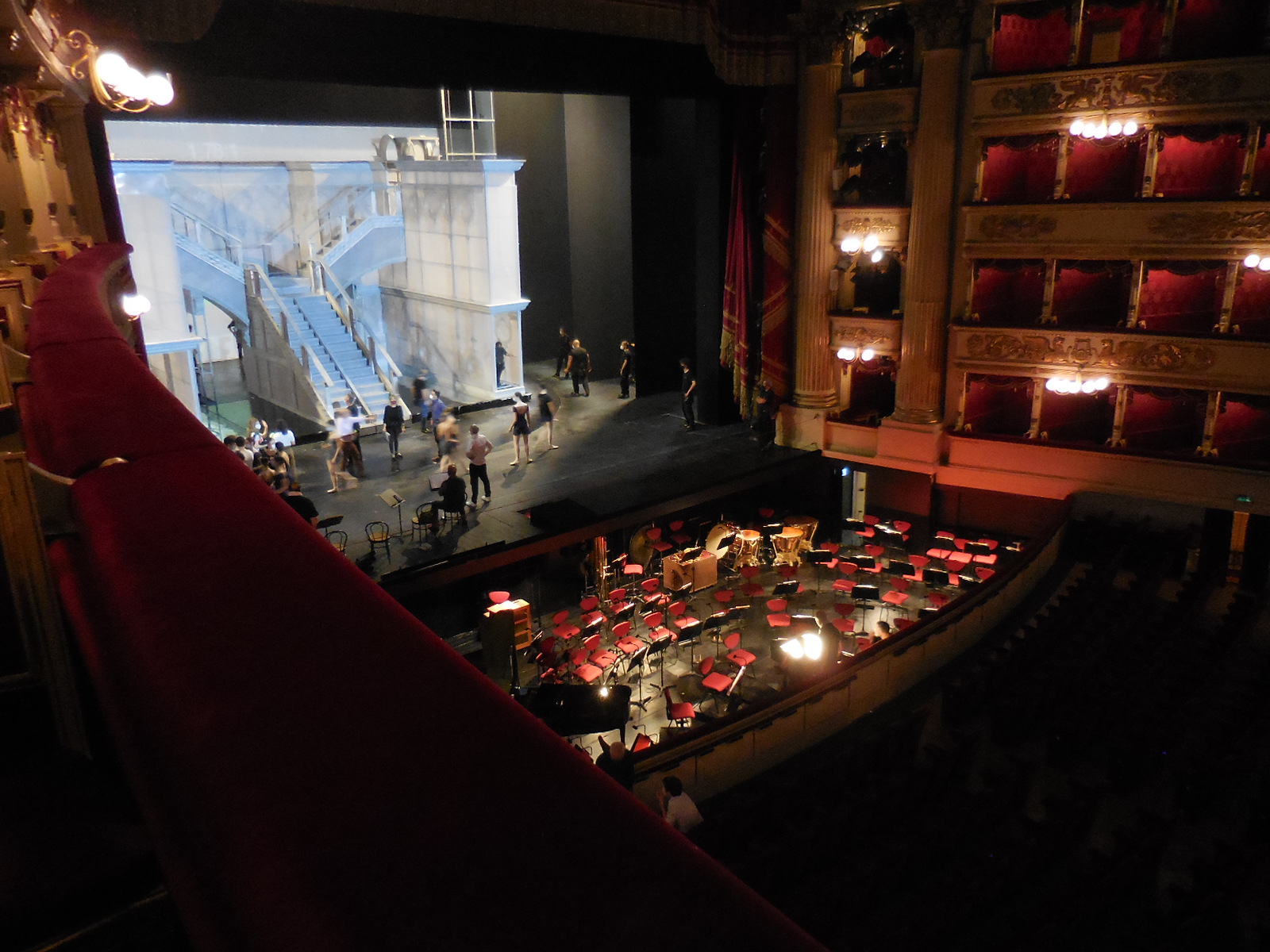
The interior style was neoclassical with gold and red colors dominating the seating area. Medallions and floral as well as animal motifs provided adornment inside. I was overwhelmed by La Scala’s beauty. We sat in the royal box for a short time and watched a rehearsal for Gioconda, which had had its premiere at La Scala centuries earlier. We weren’t allowed to remain there for long, but it was still one of the highlights of my visit to Milan.
Maybe next time I come to Milan I will be able to attend an opera or a classical concert at La Scala.
Tracy A. Burns is a writer, editor and proofreader in Prague.
It was my first visit to Chudenice. The first thing that caught my attention was the tranquility of the village. It was truly peaceful there. I felt calm in a way I was not able to feel in a busy metropolis.
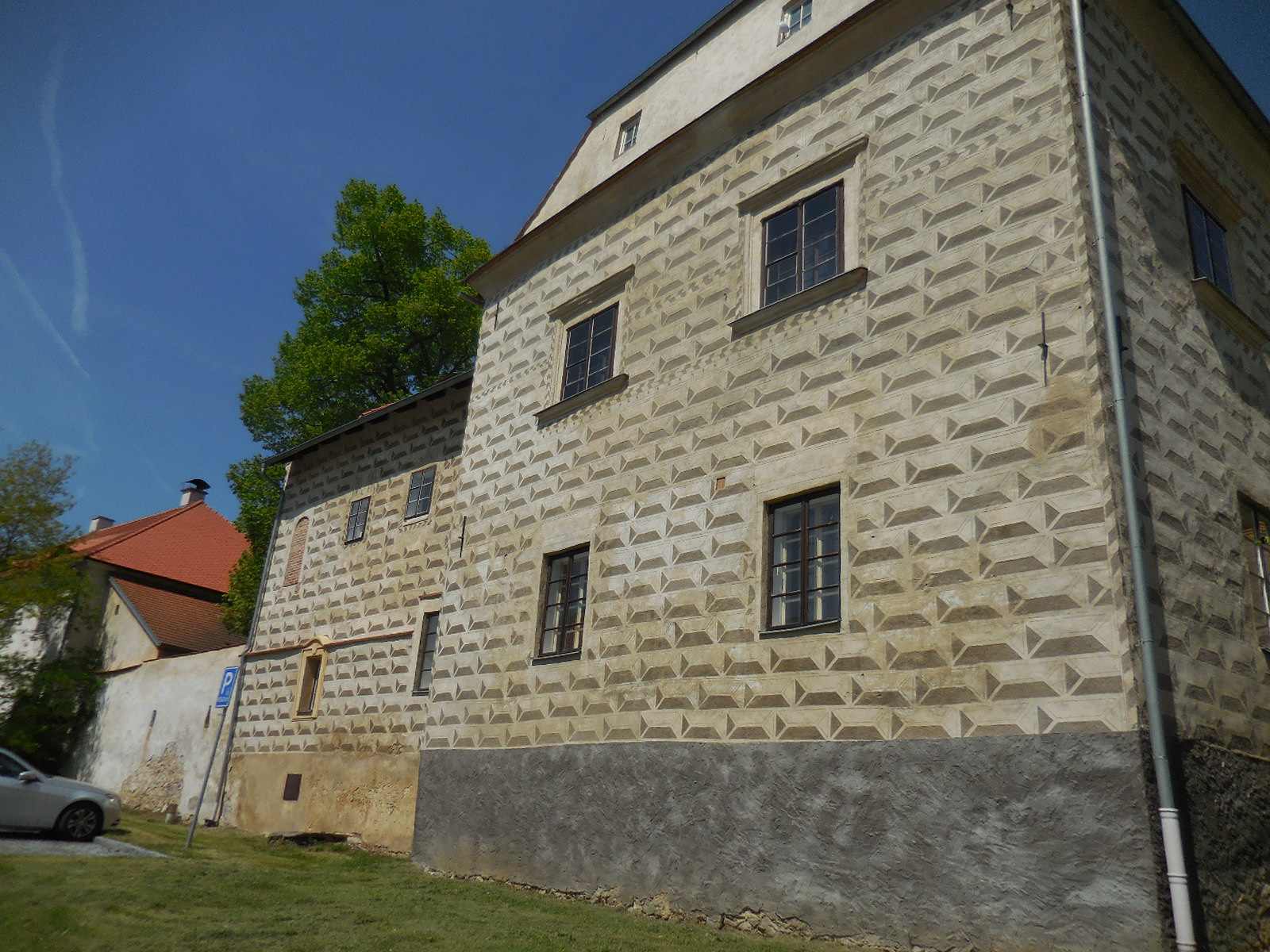
I took a good look at the exterior of the chateau. One section was beautiful while another was in a dilapidated state. I thought of Nebílovy Chateau near Pilsen and how that chateau badly needed money to restore the façade of one of the buildings.
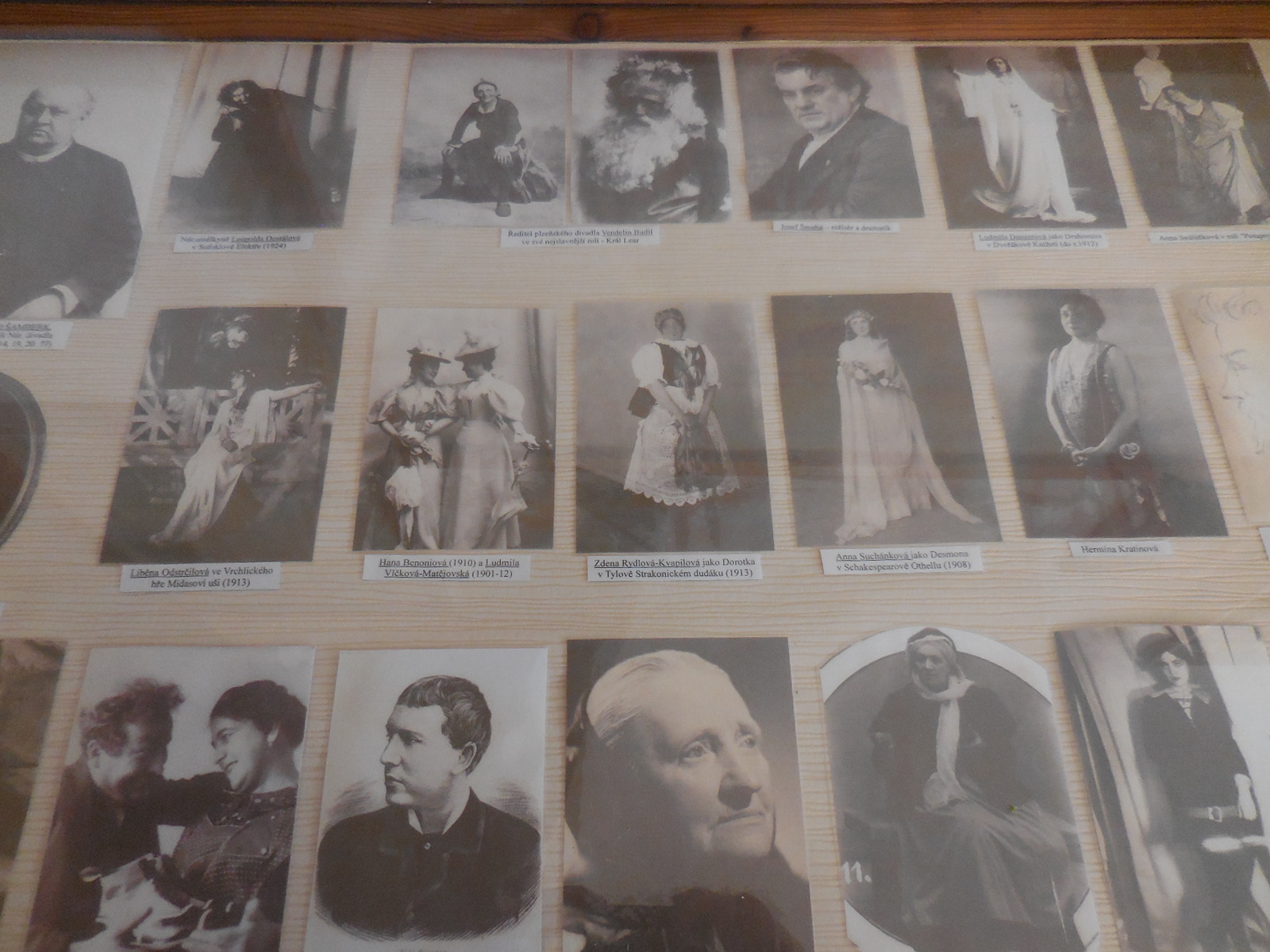
Actors in the plays Kvapil worked on.Kvapil directed this Shakespearian classic at the Vinohrady Theatre.
We went inside. First, we visited a museum dedicated, in part, to Chudenice native Jaroslav Kvapil, who had been a poet, playwright, translator, dramaturg and director. The museum also showcased other Chudenice natives and village life. Kvapil worked with the National Theatre and Vinohrady Theatre for many years. In 1901 he wrote the libretto for Antonín Dvořák’s opera Rusalka. He was involved in the resistance during World War I as he supported the creation of an independent Czechoslovakia. During World War II, he founded an organization of resisters. Then the Nazis learned of the existence of his group. Kvapil was imprisoned for 11 months. When the Communists were taking control in 1948, he signed a petition, attempting to save democracy in Czechoslovakia. He died in 1950 and is buried in Chudenice.
Artwork also made up part of the museum.Part of the museum dealt with village life in the past.A mill from centuries past.
Kvapil’s career was impressive indeed. From 1893 to 1937, he directed or co-directed 205 plays at the National Theatre. Later, he took up a position with the Vinohrady Theatre. Plays by Jaroslav Vrchlický, Alois Jirásek, the Čapek brothers, William Shakespeare and Henrik Ibsen, for example, were staged under his guidance. In the small museum, I saw family photos, posters of the plays he worked on and his typewriter, for instance. I hadn’t known much about him before visiting the museum, even though I had taken a great interest in Czech theatre over the years.
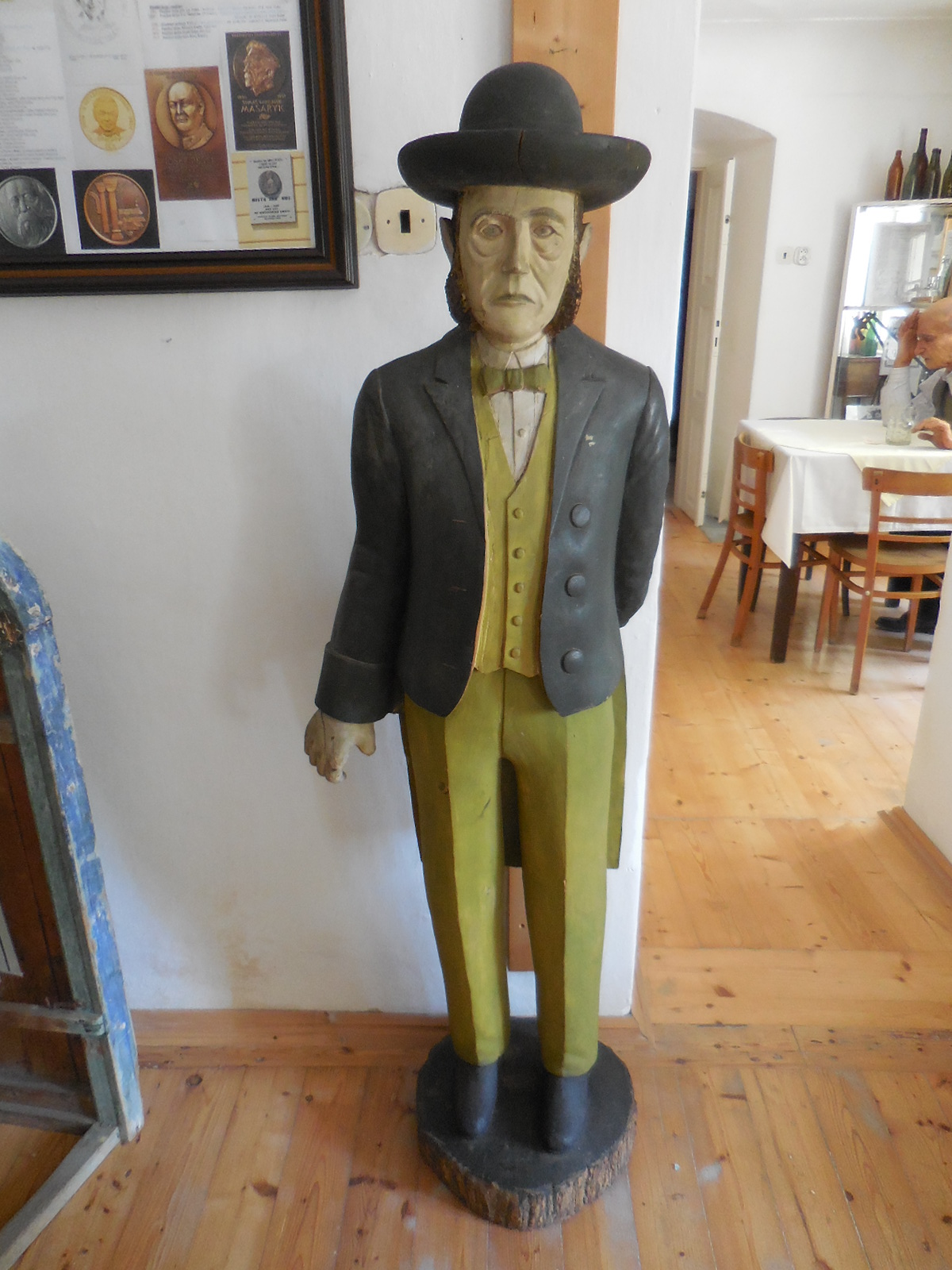
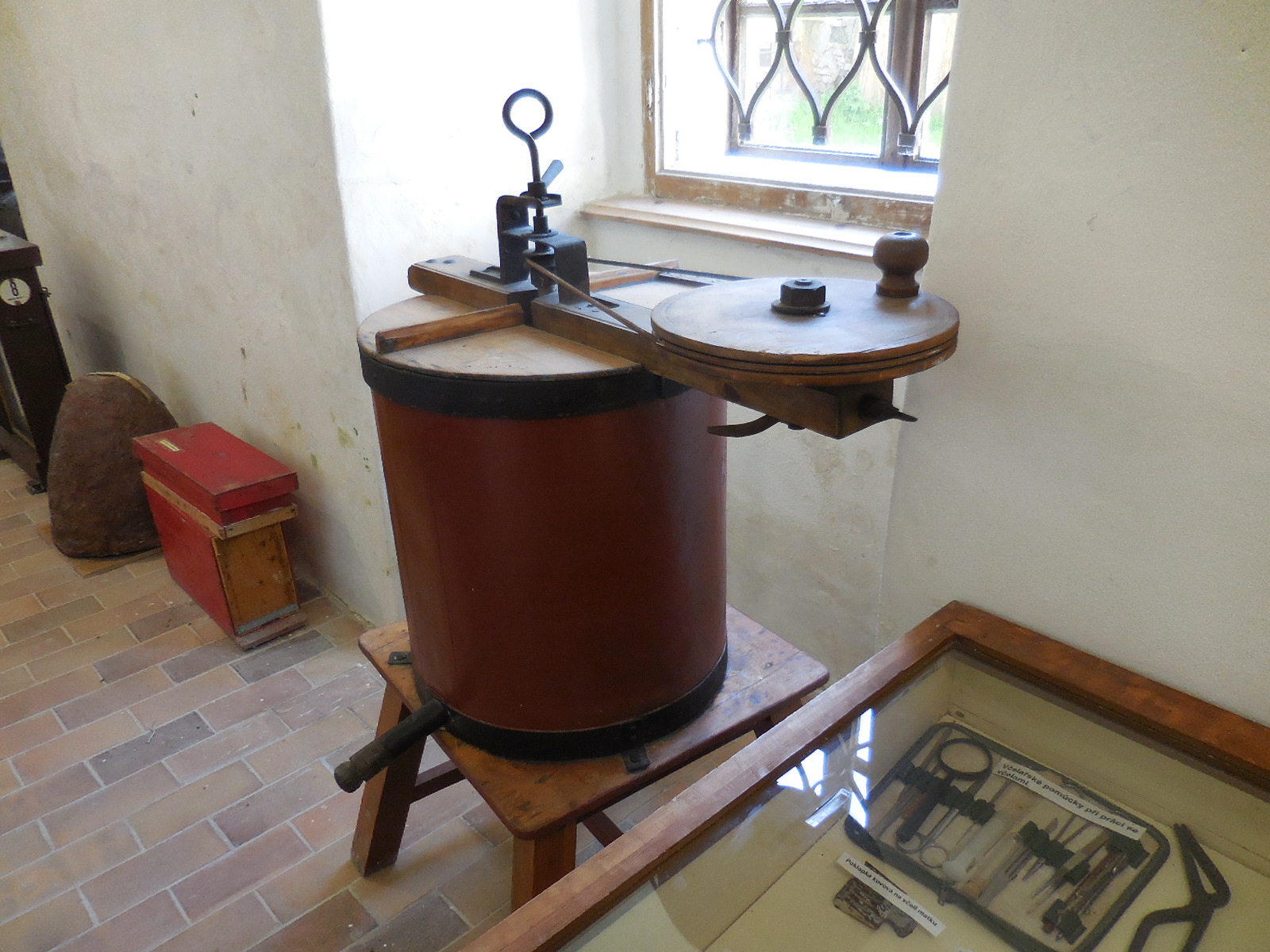
At first I thought this figure was real. An old machine used to make honey
Soon the tour began. The guide told us about the history of the chateau and town, which had been connected to the Černín family since the end of the 13th century when Drslav from Chudenice took possession of the village. A Gothic fortress originated in the 14th century. The first time the chateau was mentioned in writing occurred during 1603, after Humprecht Černín died, when his property was divided between his two sons, Jindřich and Adam, who got control of the chateau.
Even though Adam was Catholic, he sided with the nobles in the uprising of the Protestant nobility against the Catholics. Catholicism was the official religion of the Habsburg Empire, controlled by the Germans. Adam was punished for his involvement. Soon afterwards, he died, and his widow Johanka from Loksan and five children lived there. Jindřich took control of the chateau until 1629. During the Thirty Years’ War, there were periods when the chateau was filled with soldiers.
The chateau was transformed into Baroque style during 1776 and now has a Classicist appearance. After World War II, it was nationalized, and the Forest Institute took control. In 1948 the town took over, and the chateau served various functions. At one time, it included a movie theatre, library and Socialist Youth Union club. There had been apartments here, too. Later the Museum of Josef Dobrovský opened on the site, named after the historian because he had spent some time there. We even saw the bedroom where Dobrovský had slept. In 2009 the Černín family moved back to Chudenice and now live in the other chateau in the town, the Empire style Lázeň, which they are reconstructing along with its English park. The guide said the Černíns often visit Chudenice Chateau and even give private tours on weekends.
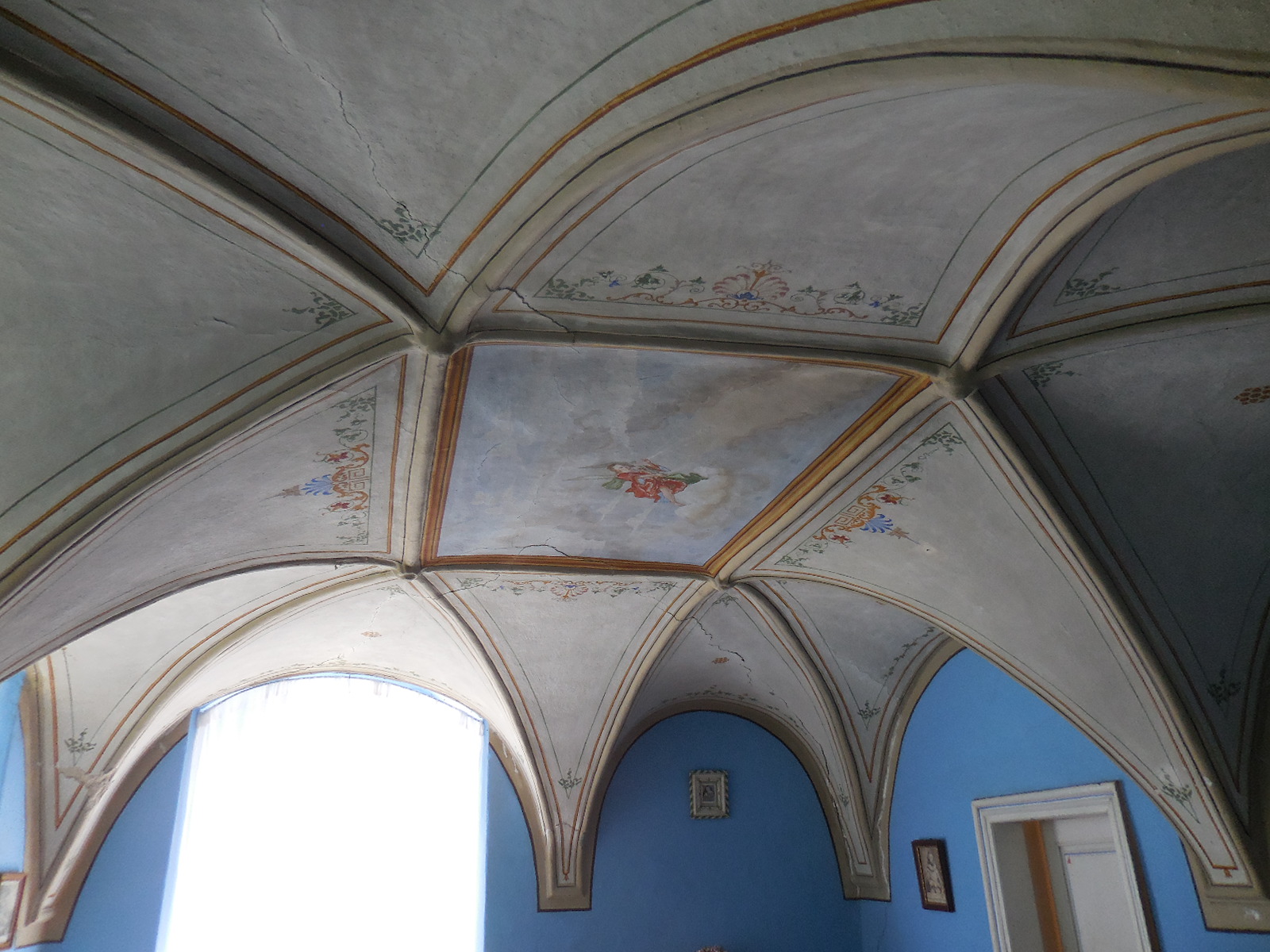
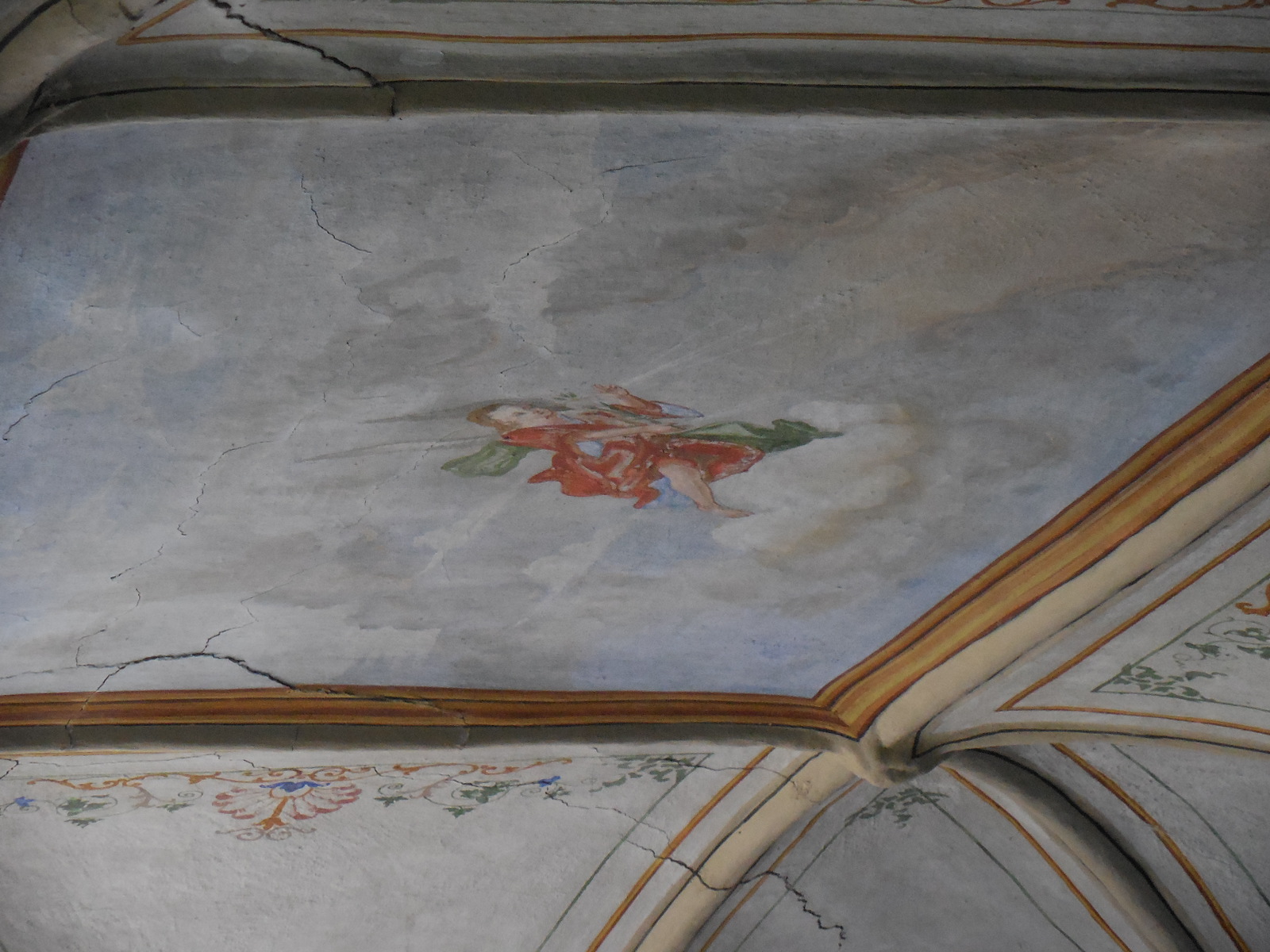
The most intriguing space was the Angel’s Room, which was connected to a legend about Humprecht Černín, who worked as an imperial advisor to Emperor Rudolf II and caretaker of Prague Castle. He was also a knight of the Golden Fleece. One night during 1601, when Humprecht was 76 years old, an angel came to him and told him he would die within three days. The angel directed him to have a mass in Wolfgang Chapel above Chudenice. The prediction came true.
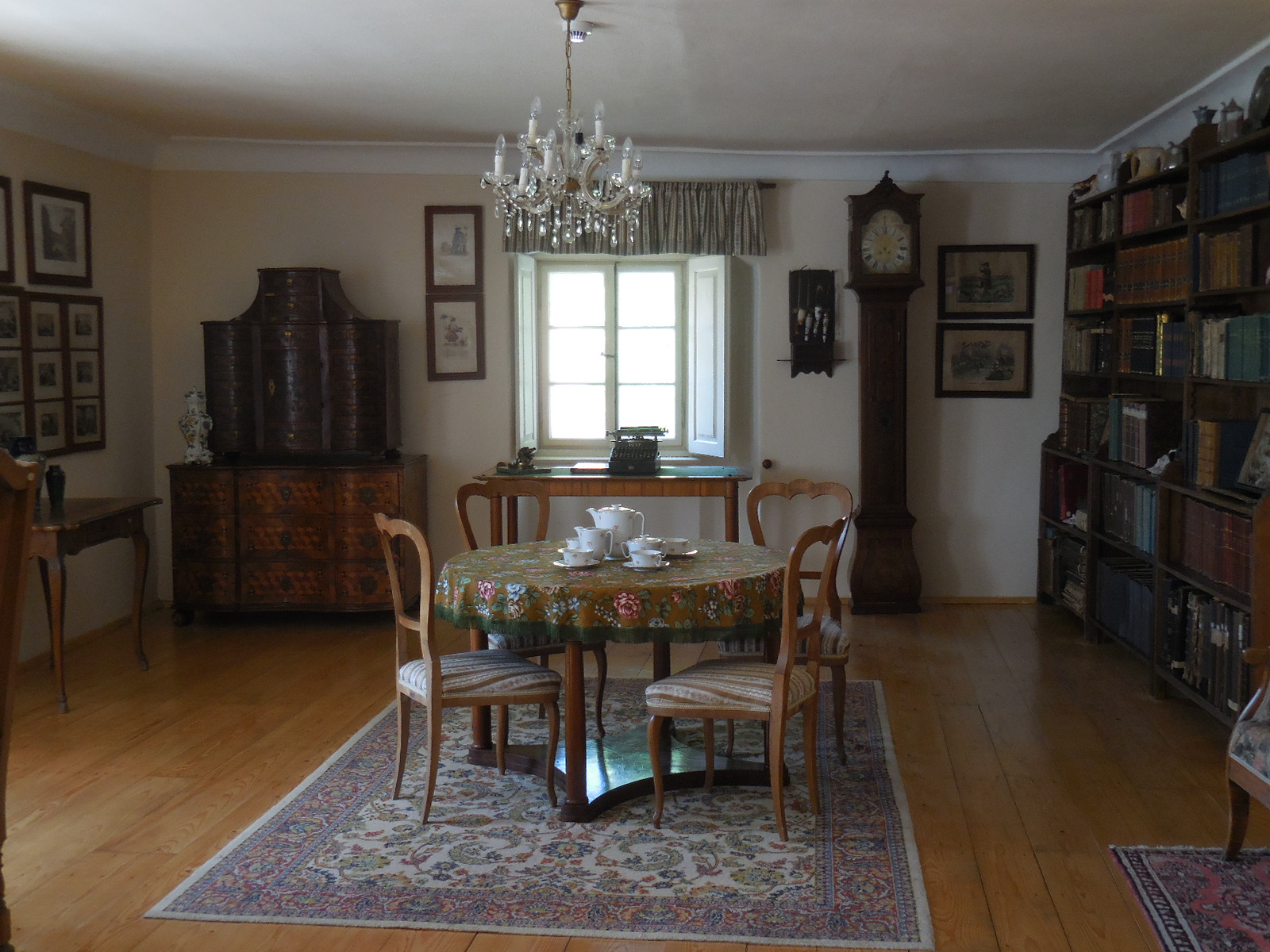
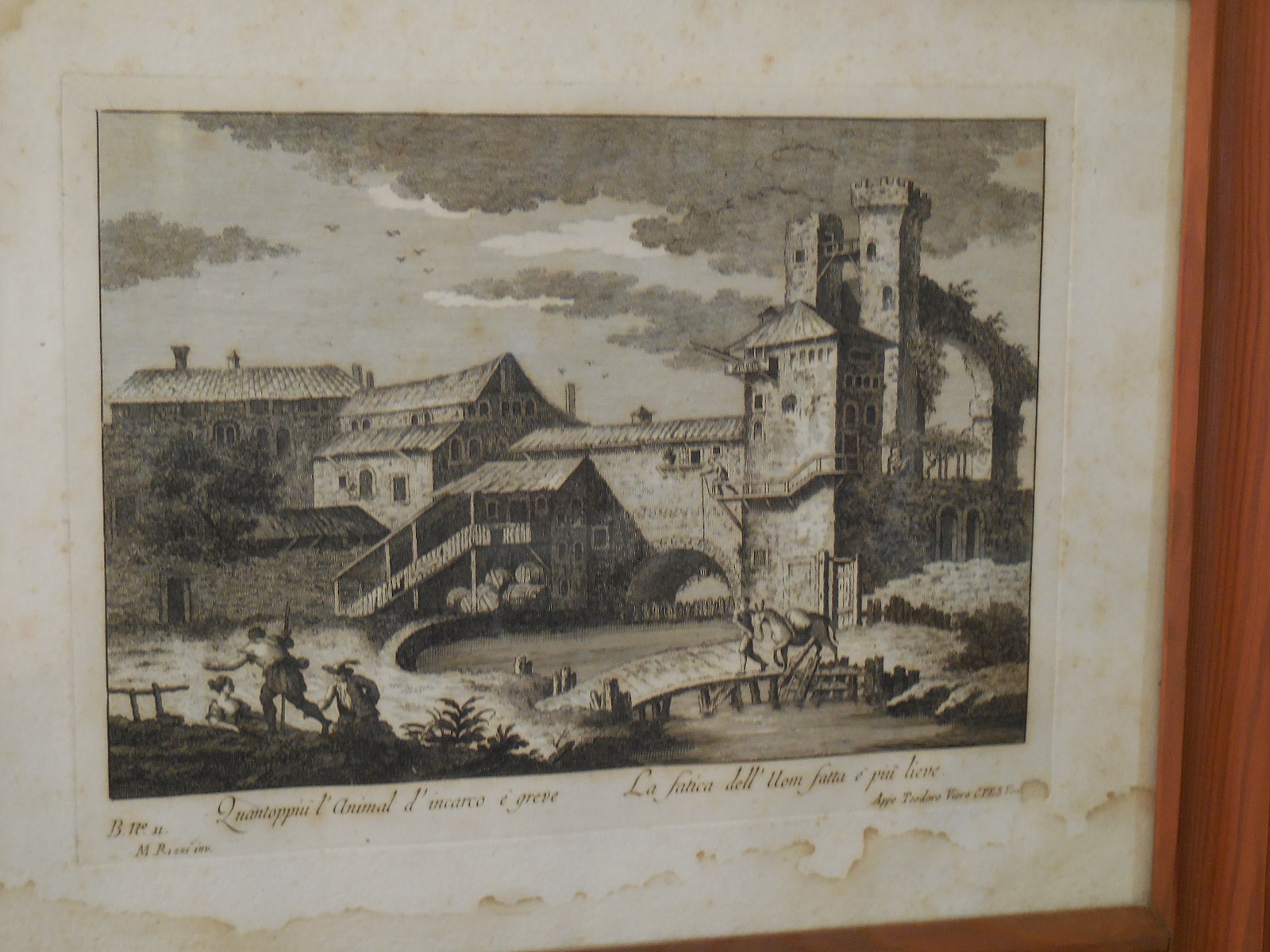
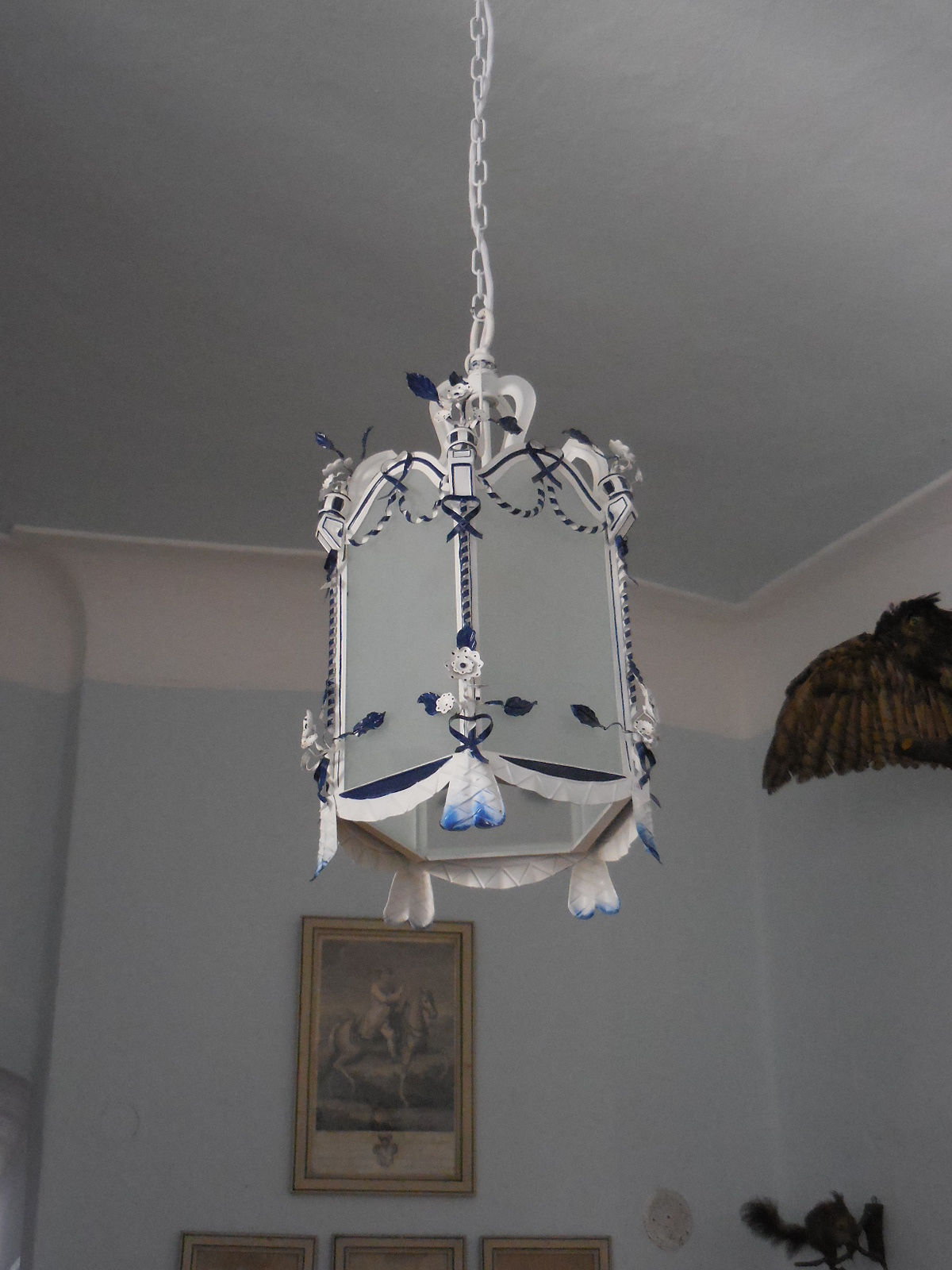
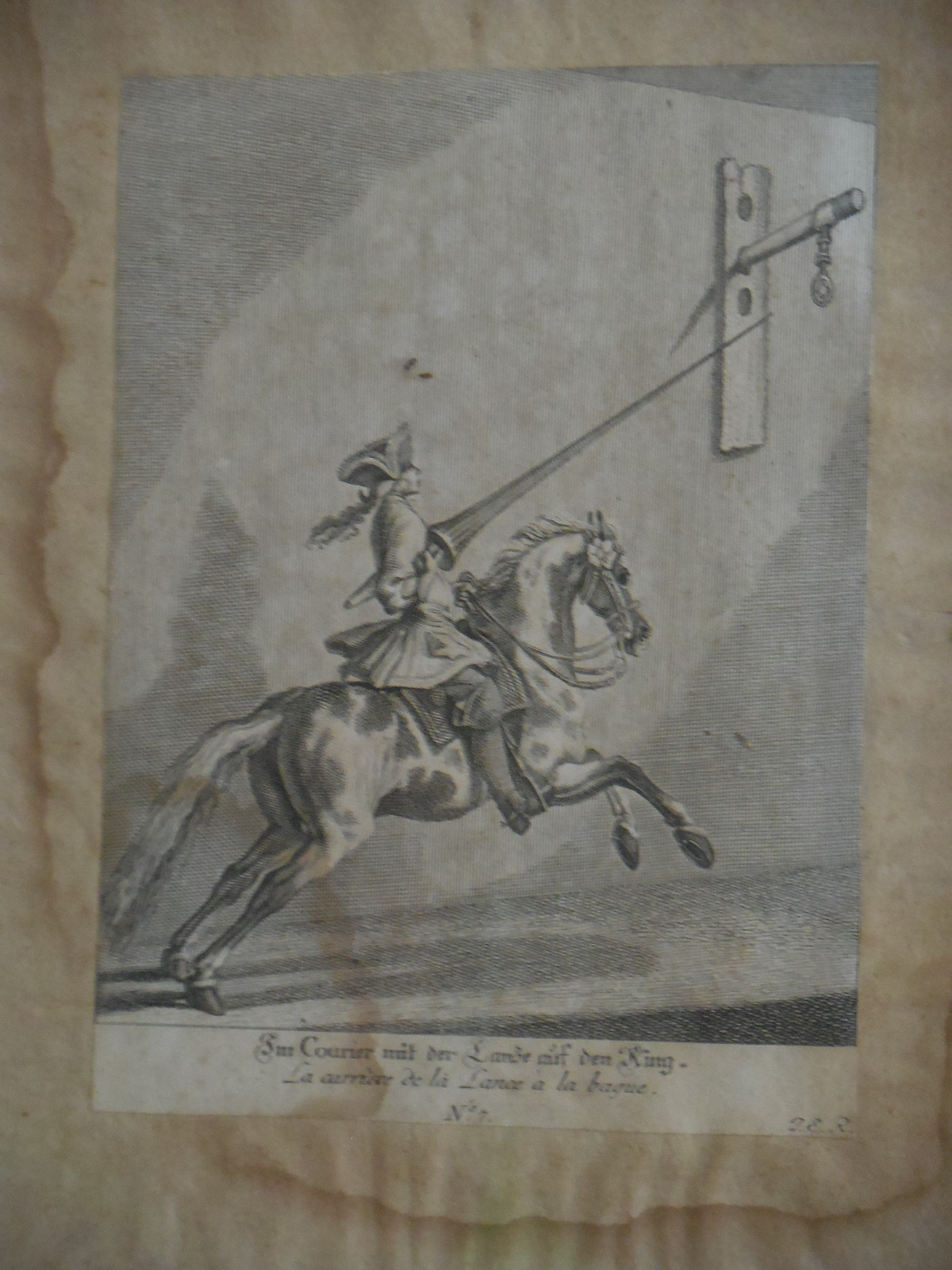
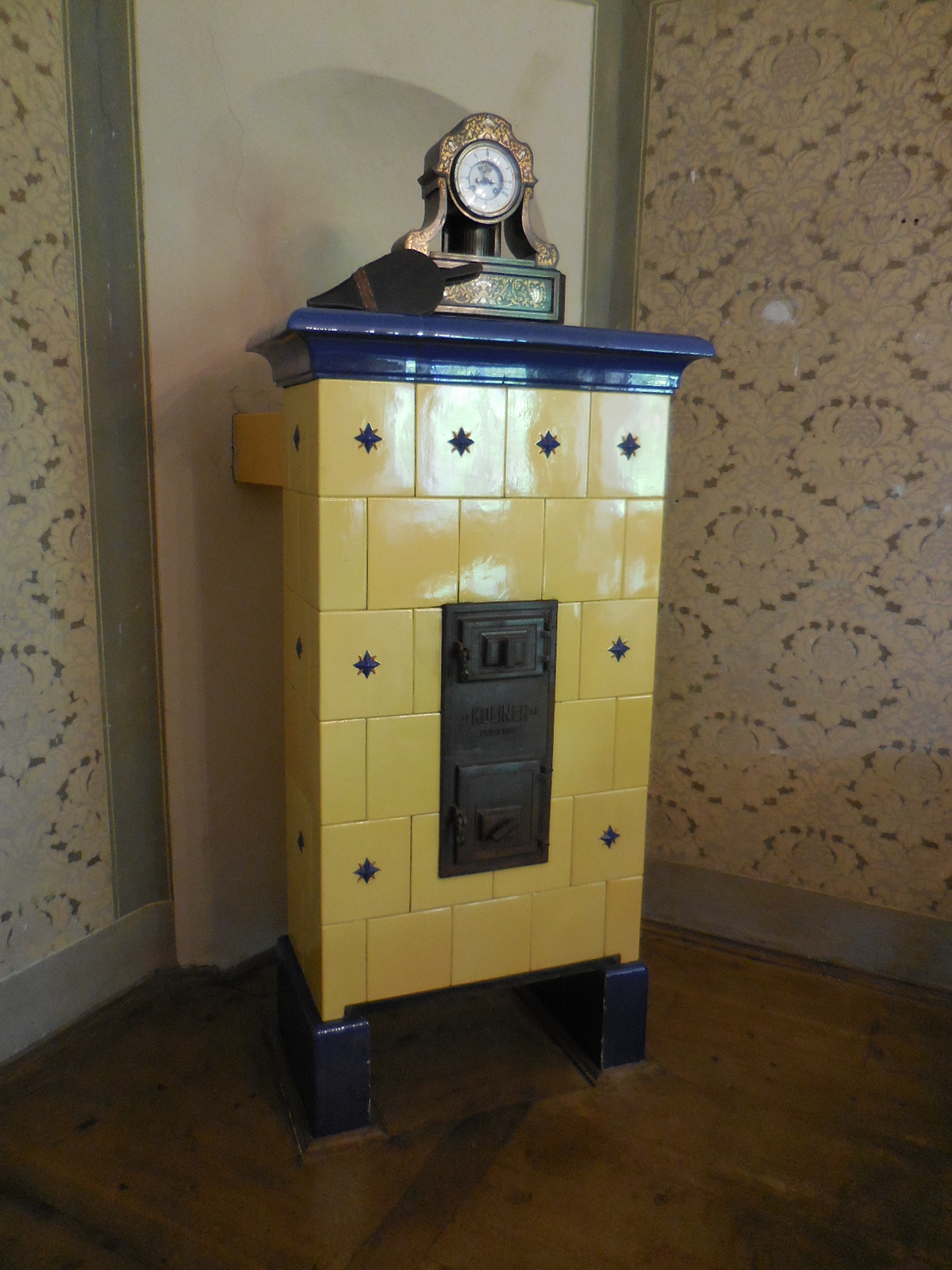
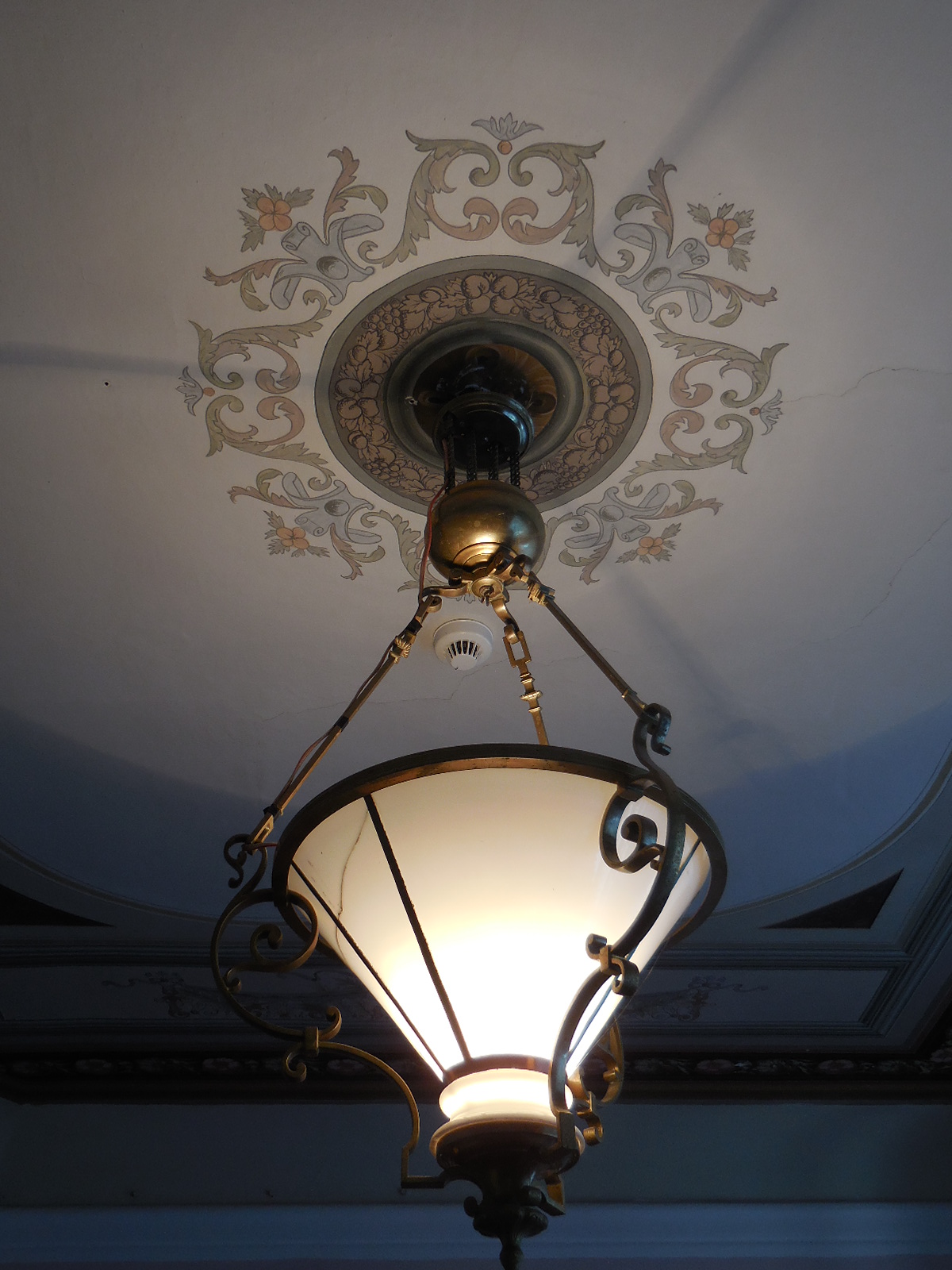
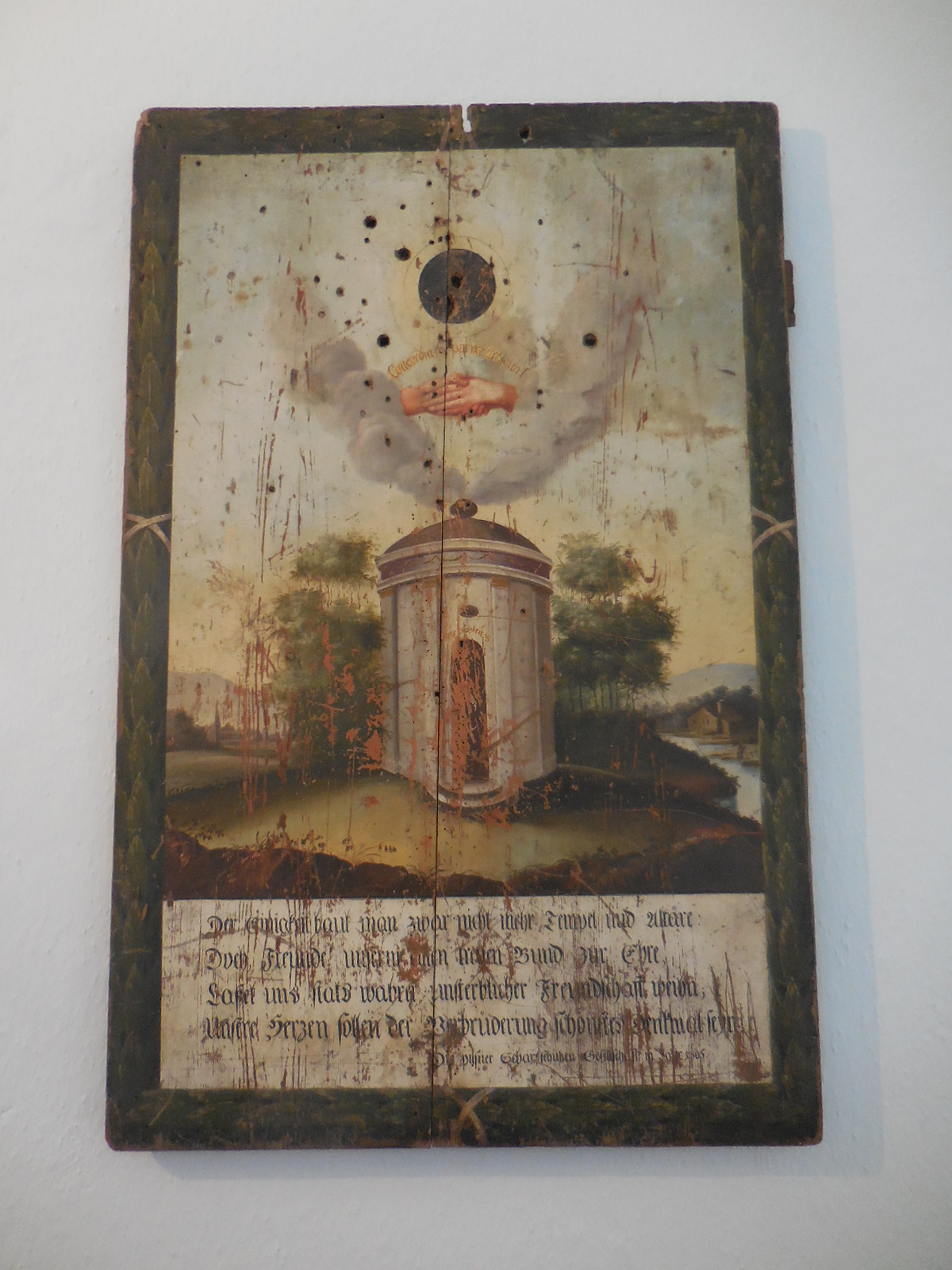
Now there is a fresco of a red-clad angel with silver wings on the arched ceiling. I also liked the part of another ceiling that was painted in Art Nouveau style. The porcelain in the Oriental Salon was exquisite. An Empire clock stood out as well. The Hunting Salon showcased paintings of dogs and a green tiled stove plus trophies from forests near Chudenice. There were noteworthy paintings and graphic works on display, too. A blue porcelain peacock was impressive. Some unique chandeliers were exquisite, and one Classicist tiled stove captured my attention. Old shooting targets were painted with intriguing bullet-ridden scenes. Still, I would occasionally notice that a piece of furniture needed to be repaired– for example, the upholstery of some chairs was in need of restoration. The chateau just didn’t have the finances at this point.
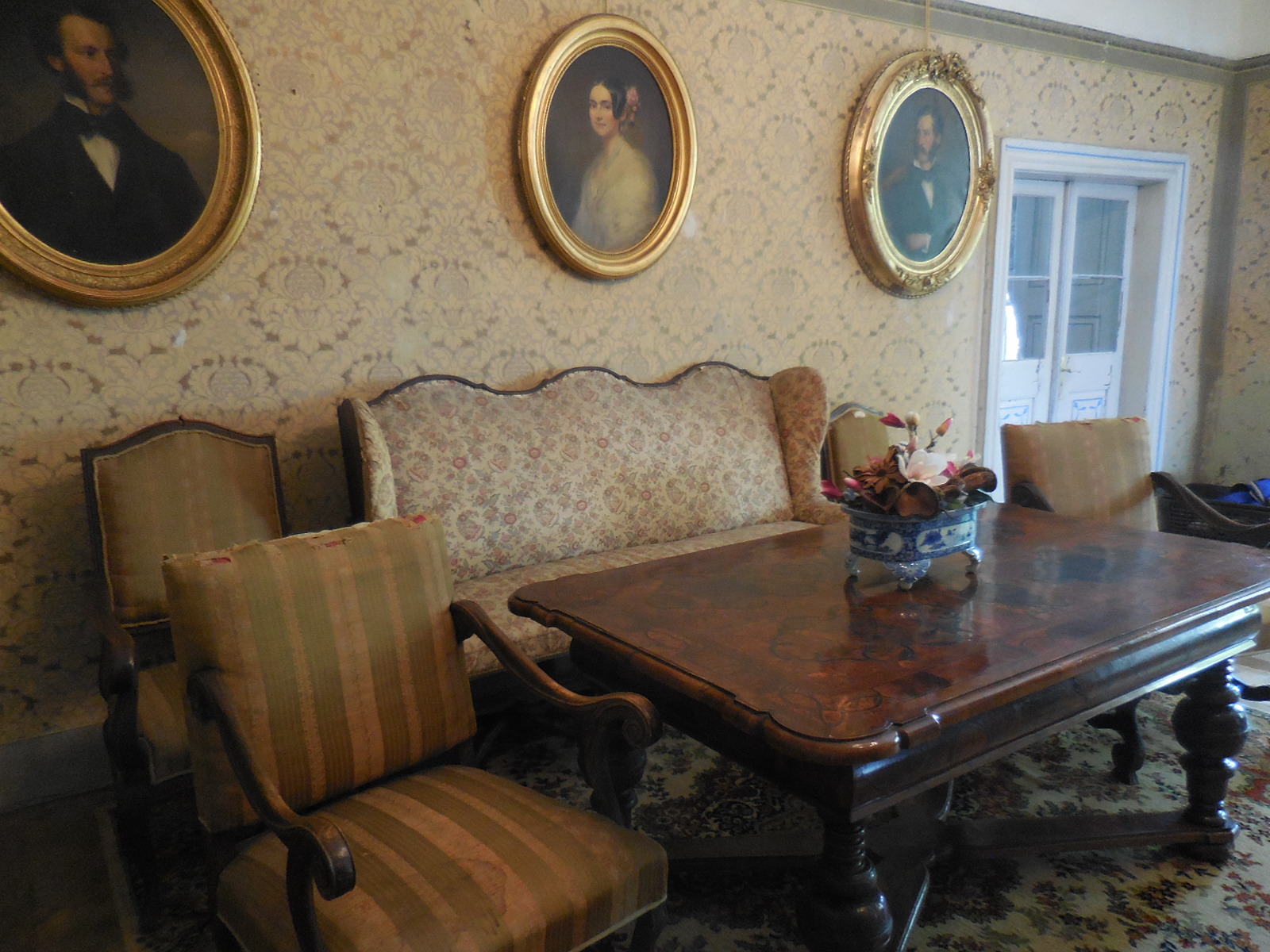
The portraits and photos of the family gave the chateau an intimate feel. The Černíns had made a name for themselves in Czech history, to be sure. I recalled that a famous palace in Prague, now the Ministry of Foreign Affairs, was named after the Černín family, specifically after Humprecht Jan, who had it built. An employee of the Ministry of Foreign Affairs had showed me around the building, and I was particularly interested in the window out of which Jan Masaryk was pushed to his death by the Communists. Jan Masaryk, the son of son of the founder of Czechoslovakia, Tomáš G. Masaryk, had been pushed out the window by the Communists after the coup of 1948, on March 10th of that year. He had refused to resign as minister after the Communist coup. Humprecht Jan also had constructed the small chateau Humprecht near Kost Castle in the Czech Paradise. I mused that I hadn’t been there since the late 1990s or earlier.
Humprecht Jan was the most prominent member of the Černín family. The imperial count had made a name for himself as a diplomat, serving as ambassador to Venice for three years and serving Habsburg Leopold I for many years. He had inherited much property in the Czech lands, including Kost Castle, Krásný Dvůr Chateau and Mělník, all of which I had visited. While working for Czech and Austrian King Leopold I, Humprecht Jan became good friends with the Habsburg leader and even was present at Leopold I’s coronation as Roman Emperor in Frankfurt. He was a secret advisor to Leopold I and in 1675 was honored as a recipient of the distinguished Order of the Golden Fleece. He also purchased territory in Lnáře that year. I remembered Lnáře fondly as I had not only toured the chateau with its stunning frescoes but had also visited its Cat Museum, where I admired many feline-related artifacts.
Part of the Secession decoration on a ceiling
While stationed in Venice, Humprecht Jan had developed an art collection. By 1663, he owned about 300 paintings. After building Černín Palace in the 1660s, he made part of the palace into a gallery for his paintings. (Unfortunately, under his heirs the collection became dilapidated due to a lack of finances.) Humprecht Jan died when he was only 54 years old. He is buried in Černín Chapel at Prague’s St. Vitus Cathedral.
A shooting target
After the tour, we went to the only restaurant in the village, where there were two entrees left on the menu at 2:30 in the afternoon. We had a tasty lunch. I noticed the peace and quiet, the calmness that pervaded in the village. It was wonderful to experience such tranquility in a world that can be so chaotic and troubling.
Tracy A. Burns is a writer, editor and proofreader in Prague.
Bust of first President of Czechoslovakia, Tomáš Garrigue Masaryk from TGM Museum in Lány
This past year my travel was once again marred by the dangers of the pandemic, and I didn’t want to take any unnecessary risks. I took day trips in the Czech Republic during the summer months, when the chateaus and castles were open. While I did not wander far from Prague, these trips did provide me with a fresh perspective of the world around me and of my own life. I tended to spend most of my time at home as a sort of recluse, and these trips offered me a chance to appreciate the world around me. Fears of getting coronavirus despite being vaccinated prevented me from gathering with friends in cafes. When I went on these trips, I traveled with a good friend, and that also helped keep me sane. We always went by car, which was much easier and much more comfortable than going by public transportation.
Tomáš Garrigue MasarykCzech soldiers during World War I
Our first trip in late May was to Lány, where the presidential summer residence was located along with its stunning park. I also visited an intriguing museum dedicated to the founder of Czechoslovakia and its first president, Tomáš Garrigue Masaryk. I had named my cat Šarlota after the first First Lady of Czechoslovakia, American Charlotte Garrigue Masaryk. (Šarlota is Charlotte in Czech.) I also paid my respects to the Masaryk family at the cemetery nearby.
Furnishings from the First Republic periodPanels explaining architecture and construction during the First Republic
The museum highlights, for example, Masaryk’s time as head of the government-in-exile in London and his trip to the USA to convince US President Woodrow Wilson to support Czechoslovakia becoming a country of its own. Masaryk abdicated due to poor health after 17 years in office. His many accomplishments and problems during his tenure are well-explained in these exhibits. One section shows off the role of the Czechoslovak legions fighting in Russia as part of the French army during World War I. Intriguing information about society and sport during the First Republic are on display, too.
The Masaryk graves in Lány
Then we went to the cemetery, where simple slabs mark the graves of Tomáš, his wife Charlotte (who died in 1923), son Jan and daughter Alice. I admired the modest yet eloquent gravestones in a quiet part of this cemetery. I recalled watching a film about Tomáš’ son Jan, a prominent politician whom the Communists pushed out a bathroom window to his death. I had visited the scene of the crime in the Ministry of Foreign Affairs palace some years ago, when an employee showed me around. I recalled that Tomáš, the first president of Czechoslovakia, had died at Lány chateau, where we were headed next.
Lány ChateauThe park at Lány
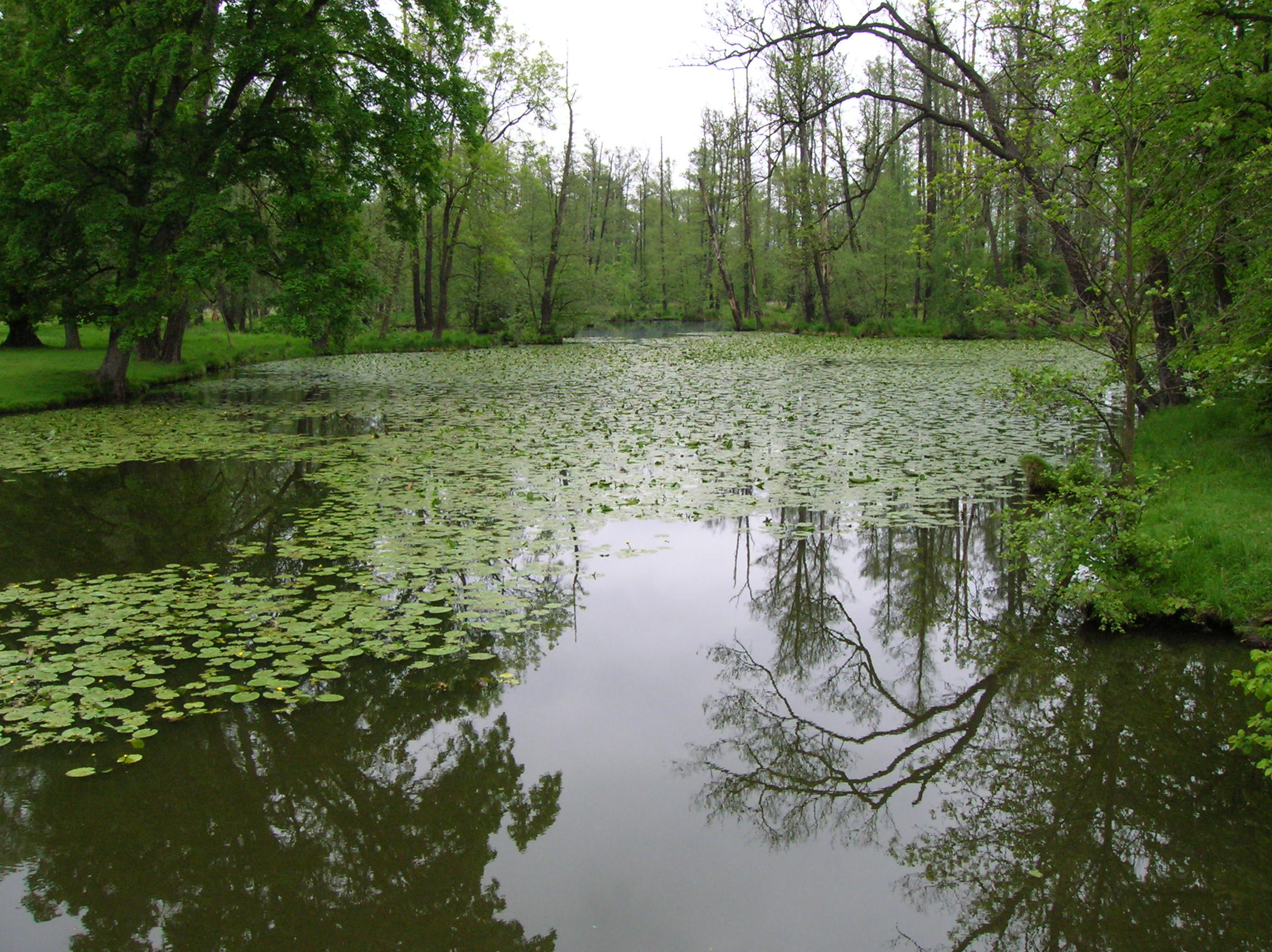
Only the park was open to the public. I had fallen in love with this park during my first visit back in the summer of 1991, less than two years after the Velvet Revolution had toppled Communism in Czechoslovakia. Lány Chateau has served as the summer residence of Czechoslovak and Czech presidents since the state purchased it in 1921. From the late 17th century until 1921 it was the property of the Furstenberg family. In earlier days it had even been owned by Holy Roman Emperor Rudolf II. Masterful Slovenian architect Josip Plečník had decorated the park during Masaryk’s tenure. A symbolic, spectacular fountain, two ponds, three small bridges, a cottage with fairy-tale decoration, beehives and Neo-Gothic Riding Stables all mesmerized me along with a greenhouse. Walking down the main chestnut-lined path, I saw better the beauty of the world around me as well as the beauty inside me. I tried to imagine Masaryk riding one of his beloved horses in the park or seated on a bench talking with prominent Czech writer Karel Čapek, one of my favorite authors.
Červená Lhota ChateauInterior of Červená Lhota Chateau
We made the trip to the fairy-tale bright red chateau Červená Lhota, which used to be surrounded by water. Alas, there is no water around it now. I recalled my first visit, when I was entranced by the reflection of the cheerful-looking structure in the pond. I also recalled my first attempted trip to the chateau, more than 15 years earlier, when I mistakenly traveled to another village with the same name in an entirely different part of the country. I also recalled the four friends I had made the first time I was successful at traveling to the chateau, walking the 10 kilometers from the train station while talking about life with my friendly companions.
Interior of Červená Lhota Chateau
The chateau got the name Červená Lhota – červená means red in Czech – during 1597, when it was painted that color. Legend claims that the devil had kidnapped a lady at the chateau, and she had died. After her murder, a spot of blood could be seen under a window of the then white façade. Another legend says that her blood had covered the chateau exterior, and the red color was permanent. Perhaps the family best associated with the chateau is the Schonburg-Hartenstein clan, who owned it from 1835 for 110 years. Indeed, the interior took its appearance from the start of the 20th century, when this family was in residence. We saw mostly authentic furnishings, which is always a treat. The painted ceilings, superb artwork, elaborate clocks, beautiful tiled stoves, intarsia-decorated furniture and graphics collection all held my undivided attention.
Jemniště Chateau
Another week we traveled about an hour from Prague to Jemniště Chateau, a Baroque gem completed about 1725, though most of it burned down in 1754 and had to be rebuilt. Leading Czech Baroque painter Václav Vavřinec Reiner and legendary Baroque sculptor Matyáš Bernard Braun did some of the reconstruction. The Sternberg family took possession of the chateau in 1898, but it was confiscated by the Nazis in 1943 and then nationalized by the Communists in 1951. After the Velvet Revolution, the Sternbergs did get the chateau back, and some members of the family live there today.
Park of Jemniště ChateauJemniště Chateau from the park
The Main Hall was astounding with four portraits of Habsburg rulers on the walls, ceiling frescoes with mythological themes and a superb rendition of three allegories of the four seasons. In other spaces, I loved the Dutch Baroque furniture with colored woods. Saint Joseph’s Chapel featured remarkable frescoes.
Český Šternberk Castle in the distanceView from Český Šternberk Castle
Another trip took us to Český Sternberk Castle, which is, in my opinion, the most impressive of the three medieval castles in Central Bohemia, outdoing Karlštejn and Křivoklát. The exterior is imposing Gothic with a steep climb to the entrance gate. The interior spaces are decorated in various historical styles from Renaissance to Rococo. The castle dates back to the mid-thirteenth century, when Zdeslav of Divišov changed his name to Sternberg, the family that owns the castle today. When the Communists took the castle away from then owner Jiří Sternberg in 1949, he and his family still resided there, allowed to use only two small rooms. Jiří even gave tours of the castle. At long last, in 1992, the current owner got the property back.
Interior of Český Šternberk CastleKnights’ Hall
The Knights’ Hall dated from around 1500 and features ornate 17th century stucco adornment. Life-size portraits on the walls showed generals from the Thirty Years’ War and King George of Poděbrady. Two 250-kilogram Czech crystal chandeliers amaze. This was the first but certainly not the last room where the eight-pointed Sternberg star had a prominent presence. The Yellow Salon featured its Empire wall painting of idyllic country scenes. The Dining Room showed off marvelous paintings. Dutch Baroque furniture with a floral motif graced another room. On the tour, we saw many renditions of battles – Sternberg owns 545 paintings of the battles during the Thirty Years’ War. Paintings by Filip Sternberg also are on display.
Karlštejn Castle from the picturesque main street
It was stupid of me to book a tour of Karlštejn Castle for a Friday afternoon. Traffic was hell, but there was nowhere to turn back. It was scorching hot. We walked up the steep road to the castle, gasping for air and needing a few short water breaks. Astounding Gothic Karlštejn Castle loomed above us. Its history was legendary. The castle was constructed for Holy Roman Emperor Charles IV in 1348, and the crown jewels of the Holy Roman Empire had been stored there until 1420. Throughout the centuries, the castle would never be totally conquered. Even a seven-month siege by the Hussites in the 15th century was successfully warded off. I had been to Karlštejn many times but not for some years. The Church of the Assumption of the Virgin Mary showed off beautiful 14th century frescoes. The walls of the small Chapel of Saint Catherine were decorated with exquisite frescoes and semi-precious stones.
Entrance gate at Karlštejn Castle
Gothic frescoes are by no means in short supply on the tour that included the chapel. On one ceiling about 40 angels played various medieval instruments. The Chapel of the Holy Cross, the highlight of the tour, dazzled with its ornate decoration. Designed by Charles IV, the space featured semi-precious stones and 129 paintings of saints, popes, knights, emperors, martyrs, kings plus the Apostles and others. The legendary Master Theodoric, Charles IV’s court painter, created the impressive works. The gold ceiling was adorned with thousands of stars made from Venetian glass.
Blatná Chateau
Unlike Červená Lhota, Blatná in south Bohemia was surrounded by water, adding a romantic flair to the already impressive structure. It was first mentioned in writing during the 13th century. Renovation during the 15th century was carried out in part by famous architect Benedikt Ried, who was responsible for designing part of Prague Castle. The highlight for me was the Green Chamber with its exquisite Renaissance art. The Sternbergs feature in the story of this chateau as well. They took control of the structure in 1541 and added a Renaissance palace. During 1798 Baron Karel Hildprandt bought it and held onto it until the chateau was nationalized in 1948. The family was able to live there, albeit in two small rooms, despite the takeover. In 1952 they were forced out, though. When the Emperor of Ethiopia paid a visit to Czechoslovakia in 1959, he asked that the Hildprandt family be allowed to emigrate to his country. They got permission and resided in Ethiopia until the Soviet coup in the 1970s. During 1992, the family returned to the chateau and made their home at Blatná.
The chapel includes Gothic vaulting and thin, high Gothic windows. The cheerful yellow color of the Baroque Salon reminded me of the yellow kitchen in my parents’ home – a kitchen I would never see again. I loved the intarsia furniture in this space. An English clock’s decoration showed the four seasons. I also was captivated by an Oriental jewel chest with hidden drawers. I recalled my visit to the extensive ruins of Rabí Castle when I saw that structure rendered in an impressive artwork. The Painting Gallery featured a rendition of a vast landscape on a wall and a superb chandelier made of Czech glass. A map in a hallway amazed. It hailed from the 17th century and was one of only two copies in existence. I saw Prague’s Charles Bridge before the statues had been built on it.
Park at Blatná Chateau
In the Hunting Salon some furniture was made from deer antlers. Archduke Franz Ferdinand d’Este visited occasionally to go on hunting trips with the Hildprandt owner. In the Dining Room, I was drawn to the red-and-black chairs and the daiquiri green tiled stove. The 19th century Neo-Gothic furniture was impressive. Japanese plates decorate a wall of another space with a Neo-Renaissance tiled stove and chandelier in Empire style. I noticed some Egyptian features of the Empire furniture. In other spaces an exotic landscape graced a tapestry and four paintings of Italian towns decorated a wall. A huge black Empire style tiled stove stood out in one space. In the Study of Jaroslav Rožmítl, I saw paintings of Adam and Eve plus renditions of saints George, Wenceslas and Catherine. There was an intriguing room with artifacts from Ethiopia that I had seen on previous tours, but for some reason, we did not visit that space this time. My friend and I were disappointed.
Děčín Chateau gate
We also went north to Baroque – Classicist Děčín Chateau, which had served as barracks for the Austro-Hungarian army, the Germans and the Soviets for many decades. The last Soviet soldier had departed in 1991. Its history dates back to the end of the 10th century. Děčín became a castle in the second half of the 13th century, though later it was burned down. In the 16th century the Knights from Bunau transformed it into a Renaissance chateau. The historical landmark gets its current appearance from the Thun-Hohenstein period. That family owned it from 1628 to 1932 and had nurtured a friendship with Franz Ferdinand d’Este. In fact, after Ferdinand d’Este and his wife Sophia were assassinated in Sarajevo during 1914, his children spent time at Děčín. Emperor Franz Joseph and his wife Sissy also stayed at the chateau three weeks after their wedding during the 19th century. A 270-meter steep street gave access to the chateau. Blind arcades adorned seven-meter high walls flanking the street. There was an exquisite Rose Garden, too. A gloriette and statues of mythological gods added to the splendor of this section as did a sala terrena.
View from the chateau
The interior was vast and impressive. The library, which at one time was situated in the biggest hall, had held 90,000 books, but due to financial problems, the Thuns had to sell them. Since no one wanted to buy the entire collection, the Thun clan sold the books by the pound. Only 4,500 volumes of the previous collection have been returned. This huge space currently looked like a ballroom with splendid crystal chandeliers.
Rose GardenStatue in Rose Garden
The exquisite Blue Room included two blue-painted walls with rich decoration, only uncovered during a 2001 restoration. A classical landscape showed people, boats, trees and temples. A large painting of the Thun family tree weighed 150 kilograms. Another room was decorated with floral motifs on blue walls. A wooden bed was made for women who slept half-seated as to not upset their elaborate hair styles. Also, people slept half-seated because they were worried they would die if they lay down on beds. A room showed off the paintings of Děčín by Karl Graff. The Chapel of Saint George was very impressive, too.
The house where my family lived for almost 50 years
In September, my last trip of the year, I spent two weeks in Virginia visiting my parents and four friends. I was constantly worried I would get covid as cases were on the rise. I tended to spend most of the time in my parents’ apartment for this reason. I wanted to go into DC to museums, but I chose to take precautions against covid and stay with my parents. It was the first time I had seen them in two years. That May they had moved from the townhouse where I had lived since the age of three. I missed the red, white and blue rug in my old room, the mahogany piano in the living room and most of all the sunny yellow kitchen where I had talked through so many problems over tea and muffins or scones. I felt as if I had not had the chance to say goodbye to the previous abode, and that rankled me. The thought of a stranger using my childhood home upset me. I liked the apartment, but my heart was back in the townhouse. Still, nothing could compare to the moment I stepped out of the taxi and saw my mother with her hands out, ready for a hug, for the first time in two years. That was one of the best moments of my life.
Šarlota on her cat treeŠarlotka on her Prague castleŠarlotka napping with her toys when she was 11
Yet, during that summer I had experienced one of the worst moments of my life, too. My 11-year-old black cat Šarlota suddenly lost the use of her back legs and had to be rushed to the emergency vet. She had heart problems and stayed overnight in the hospital. The next morning, I was on the balcony, trying to read but unable to concentrate, when the vet called. He said there was no hope. She had to be put to sleep. I was at the vets in an hour or less and spent about 20 minutes talking to Šarlota and petting her, explaining that she was going to meet Bohumil soon in Heaven.
I was crushed. After four horrible years, Šarlota had found me, and she had been so happy living by my side. She had been such a good cat, always thankful and appreciative of her rosy life. It was cruel for her to die after only six years with me, I thought. I spoke to her calmly and thanked her profusely for being my best friend. I will always treasure those 20 minutes. Her death was so sudden that her death still greatly pains me. Every day I almost burst into tears because she is not here.
Olinka
Four days after she died, I adopted a four-year old black cat I named Olinka Havlová Burnsová after Václav Havel’s wife, the first First Lady of the Czech Republic. Olinka’s history was tinged with sadness as well. About two weeks before I got her from a cat shelter, Olinka’s human, with whom she had a wonderful life, had been murdered at her home by a drug addict. For several days Olinka and her brothers and sisters had been alone in the house with the corpse. When the police came, they all ran away. Olinka was the first to come back to her previous territory, returning the next evening. The cat shelter where I knew the owner had caught her, and she had spent a few weeks there.
Olinka on Christmas Eve, 2021Olinka resting while I read on the couch
The moment I saw a photo of her on the cat shelter’s Facebook page, I wanted to adopt her. When I got her, she was dealing with the death of her first mother, and I was dealing with the death of Šarlota. Now she is happy again, loves playing with all her toys, eating soft food and napping in one of her many beds. She also loves knocking everything off tables, so I have to be careful. Pens, notes and cases for glasses are sprinkled on the carpets of my flat. So far she has destroyed one alarm clock and one lampshade. She was just playing.
I wanted Christmas to be special for Olinka so I filled two stockings with toys. She was very happy during her first Christmas without her first mother, brothers and sisters. I am always astounded at how friendly she is. If a stranger comes in, she will go to him or her and demand petting. The only person she is not sure about is the cleaning lady who moves her toys in order to vacuum.
I so badly want to go back to Italy next year, to travel a little outside the Czech Republic, to wander through museums I have never visited before, to contemplate life in cathedrals, gaze up at the dome and be overcome with awe. I want to walk down picturesque streets for the first time, discovering something new at each corner. I plan on visiting my parents again, too. I hope the situation will be better in the USA whenever I do fly there again.
Tracy A. Burns is a writer and proofreader in Prague.