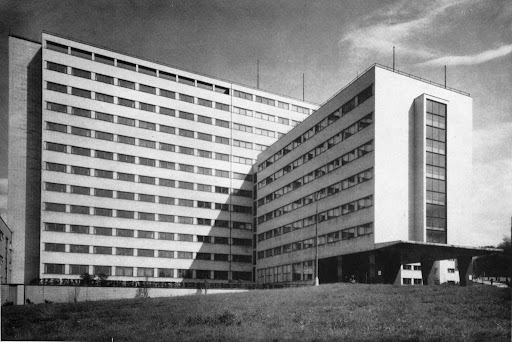
The six buildings designed by Josef Havlíček in Kladno, photo from Vysehradskej.cz
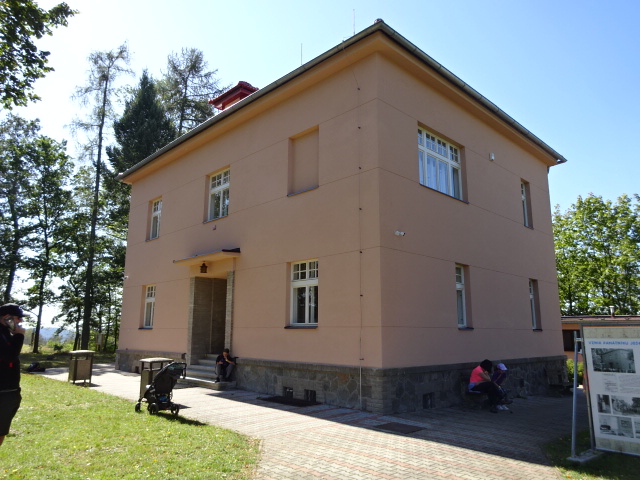
In Kladno, not far from Prague, I visited the Museum of the High-Rises, located in one of the tall buildings designed by Czech functionalist architect Josef Havlíček during the 1950s. The tour consisted of the minimalist lobby and mailboxes, a small museum room, an atomic shelter, roof terraces and a flat that was considered to be luxurious during the 1950s, housing for high-ranking Communist families.
House sign by Marta Jirásková-Havlíčková
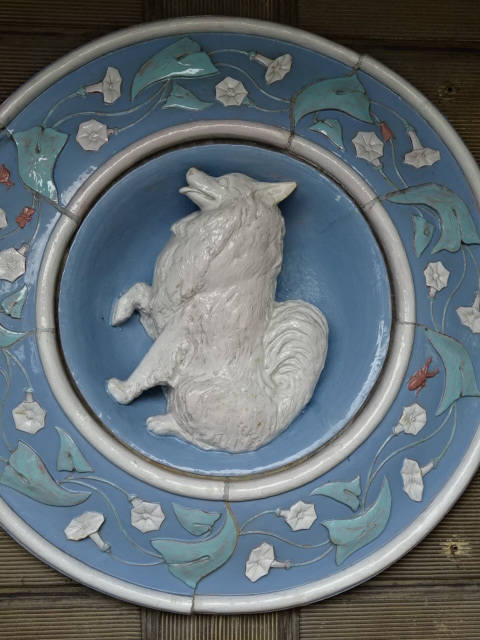
In the Rozdělov neighborhood, the high-rise’s exterior was decorated with two ceramic house signs, one of a cat and the other of a dog, showing circular blue backgrounds with the animals in white. I learned that they had been created by Havlíček’s wife, a sculptor named Marta Jirásková Havlíčková, who originally had made 12 of them for the six buildings in the complex. Other ceramic house sings had featured a hawk, an owl, a rooster, a turkey, sheep and a ram. In the small museum space I saw more of Jirásková-Havlíčková’s work, including a statue of a dignified-looking white cat. She certainly had been talented. Models of some of Havlíček’s designs were also in the space.
I also noticed that the façade consisted of ceramic materials. The use of intriguing materials was a reason that this one-time complex had caught international attention. The French especially were interested in the structures, as Havlíček had been inspired by the architecture of neoclassicist French guru August Perret, who was known for utilizing reinforced concrete in fascinating ways without eliminating the harmony of the design. Perhaps Perret is most renowned for the rebuilding of the port town Le Havre after World War II. His reconstruction helped make Le Havre into a World Heritage Site. Another of his most prominent designs involved the first Art Deco edifice in Paris, the Theatre des Champs-Élysées.
You can see the various house signs behind the sculpture of the cat.
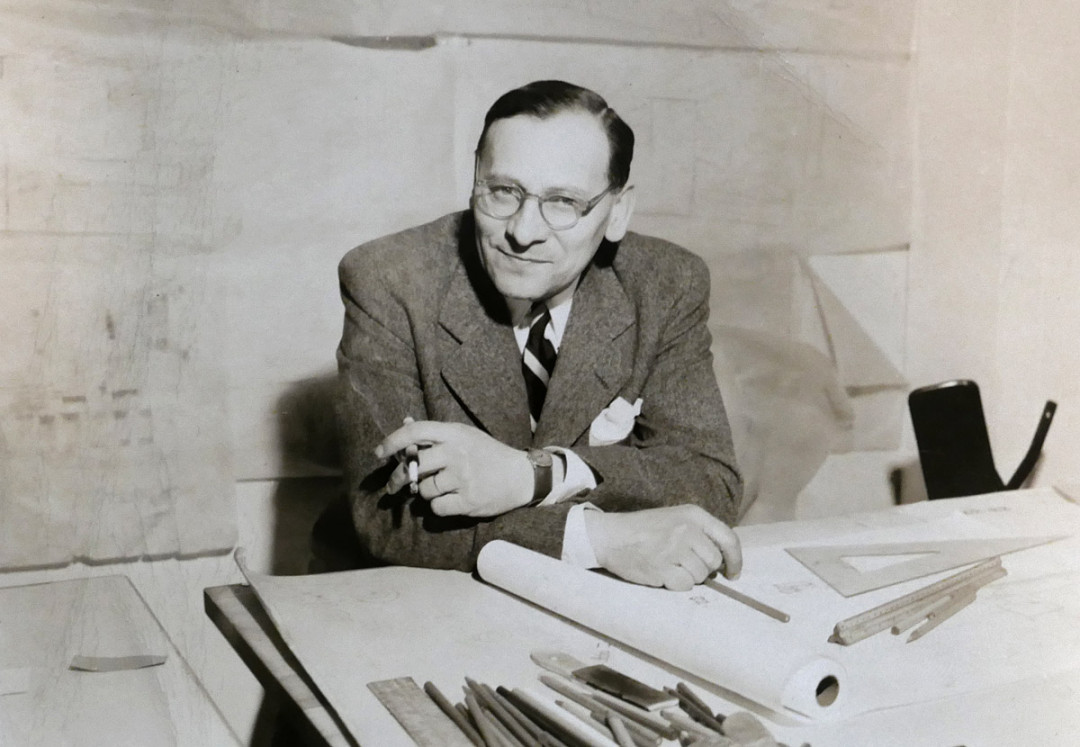
Who was Josef Havlíček? That question was answered in the small museum under the ground floor. Havlíček lived from 1899 to 1961, when he died from exhaustion. As a prominent architect, he was a member of Devětsil, Artěl and SVÚ Mánes, the most influential artistic groups of the time. His mentor at school during the Czechoslovak First Republic of the 1920s was Czech architect Josef Gočár, who designed many important Cubist works in Prague, Hradec Králové and other places. Gočár took Havlíček under his wing and employed him in his studio until 1928.
Josef Havlíček, photo from Muzeum věžáků Kladno webpages.
While Havlíček was given the title of director of the architectural Stavoproject in 1948, he left two years later due to frustration with totalitarian politics. For a while his plans were not realized due to his political stance, but later he used Stalinist social realism architecture that pleased the authorities, even though his style combined creativity while fulfilling the ideology of the times.
Havlíček’s building constructed in Žižkov
Some of his other accomplishments included a building in Prague’s Žižkov, built from 1932 to 1934 with the help of Karel Honzík and dubbed “the first Prague skyscraper.” He also designed the residential development Labská Kotlina in Hradec Králové from 1946 to 1959 and residential buildings in Ostrava. He presented designs for a United Nations building in New York City and a town hall in Toronto, though they were not carried out.
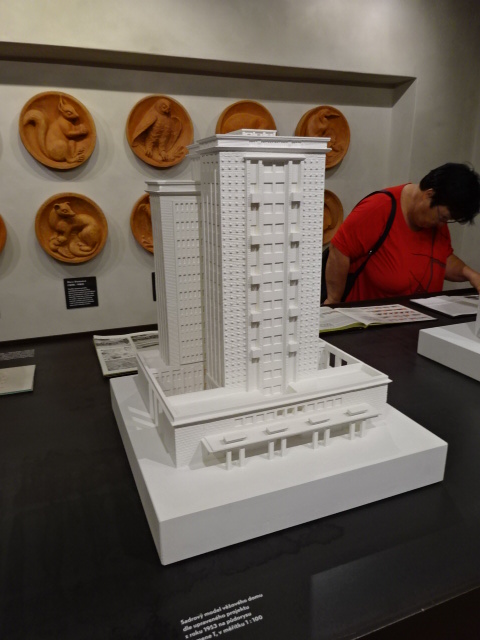
Some models of Havlíček’s creations were on display in the museum.
In the museum space that presented a large timeline and much information about the life and career of Josef Havlíček, we stood around a detailed model of the Rozdělov high-rises in Kladno as they had been planned. In 1946 Havlíček had intended for the project to appear differently – with six buildings of 10 floors each in a Y pattern, flaunting a functionalist style. Due to the political changes in the country during and after 1948, these designs never came to fruition.
From the roof terrace looking down on another of Havlíček’s designs
During the late forties and fifties Kladno was in dire need of more housing. The city had become much more industrialized after the Communist coup of 1948. For example, Kladno was the prominent home of the Poldi steelworks. Construction of new buildings was necessary to accommodate the new workers who were toiling in the black coal industry.
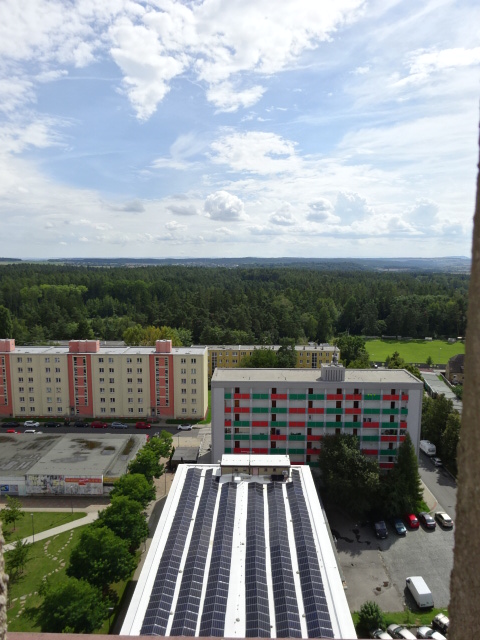
View from the roof terrace
In 1951 Havlíček redid his conception of the suburb, pressured to conform to social realist architectural regulations. He received permission that year. He came up with something that was accepted by the authorities but was also modern and authentic. From 1952 to 1958, Havlíček worked on the design along with Karel Filsák and Karel Bubeníček. Construction began on the project with the first and second buildings. Tenants moved into the first building at the end of 1956 and into the sixth building at the end of the following year.
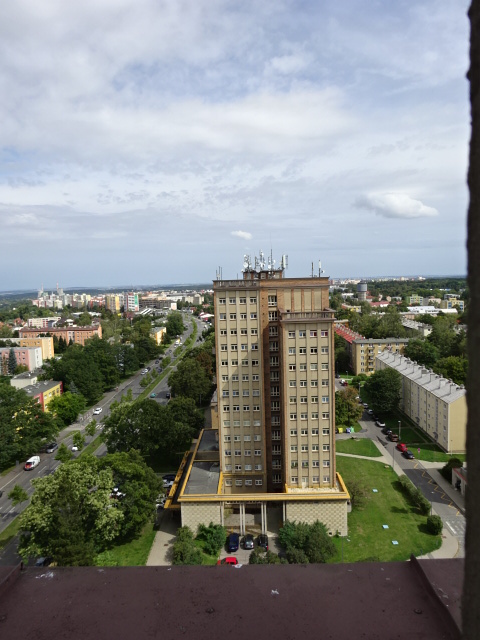
You can see some of the suburb’s high-rises from the roof terrace.
The six buildings that formed the letter T were inaugurated as the Victorious February suburb to commemorate the February Communist coup of 1948. The building we were in had 13 floors, not including the ground floor and upper ground floor. Each floor consisted of six apartments, two much bigger than the others. The more luxurious flats of that era had balconies.
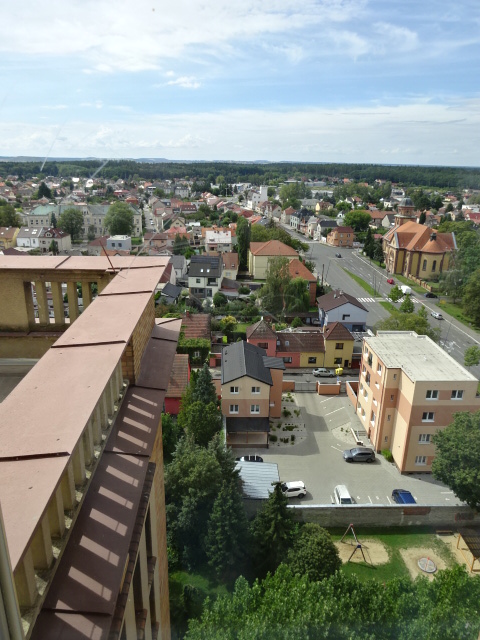
Another view from the roof terrace
The project was planned to be much more elaborate than the 48-meter high residential buildings. Havlíček and his colleagues envisioned the suburb to flourish with cultural and shopping centers. It was slated to become a major hub for cultural activities, such as theatre, and to have much needed impressive stores. While the shopping center plans were carried out, the theatre was never built. Financial problems and other barriers did not allow the designs to be fully developed. From the model it was possible to see how Havlíček had proposed that the suburb become a leading place for activities as well as original housing made from inventive materials.
We went down to the second basement floor, the atomic shelter. I saw many gas masks and rows of hard, wooden benches in several spaces. It would certainly be depressing and frightening to be trapped down there for any reason let alone a nuclear war. Many buildings were constructed with atomic shelters during the 1950s in Czechoslovakia.
Then we visited the roof with impressive terrace, which was a prominent component of the project in its day. Even though now ugly high-rises surrounded the building, during a clear day it was possible to see the historic Říp Hill and the mountains of central Bohemia, even some of the mountains at the German border.
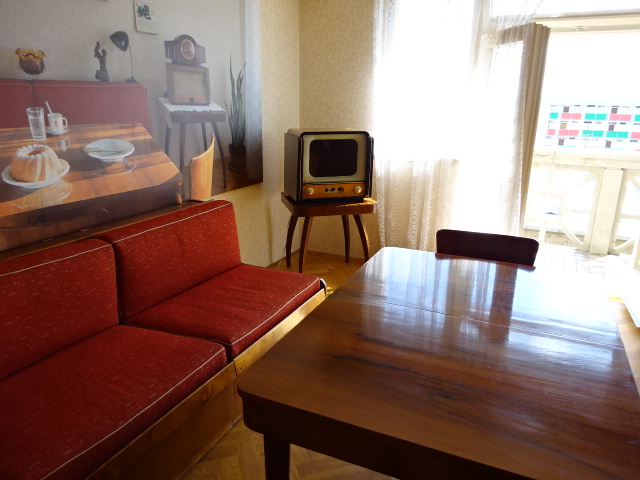
The living room of the flat
Then we went into a 55 meters squared flat preserved with 1950s furnishings and equipment, looking as it had during its construction as a luxury home for high-ranking Communist families. The living room had a couch and table on which were a cake and mugs. I noticed one cup was adorned with a red Communist star and the other sported a Communist symbol. On the table there was also an open pack of cigarettes and an ashtray filled with cigarette butts. A lace tablecloth covered part of the table. A large radio and a black-and-white TV with three buttons under the screen also stood out in the room. Social realist-styled statuettes decorated cabinets.The bedroom was dominated by a big double bed. On each nightstand was a framed photo. A large mirror adorned the wall above the bed.
The bedroom
The kitchen included a gas stove, a counter and pantry with shelves for storing food as well as cabinets. Although it looked small to me, at that time this type of kitchen had been luxurious, only available to the most prominent families. The flat featured a big balcony, too, something that not many apartments in the building had.
Now the museum, which opened in 2020, is a cultural monument to an innovative style designed during Stalinist times. This was Havlíček’s last big project to be carried out as he died of exhaustion in 1961, exasperated by his discomfort with the country’s Communist ideology of which he had been a critic. It had taken a toll on his physical and mental state.
The kitchen
This is the first Czech museum showing off suburban Czech architecture. The museum was something totally different than the kind I usually visited. I had never been to a museum focusing on a suburb of a city. I had thought of the suburbs of Kladno as eyesores with socialist high-rises that scarred the landscape. This one was different. During the period of its construction, the architecture had forged a new path in suburban appearances. It was a pity that only two of the buildings survive today and that fate had intervened and prevented the project from being completed.
The gas stove in the kitchen
I took all the necessities such as the stove and kitchen space for granted. I thought the flat seemed relatively small. At one time, though, a flat this size had been a luxury. I could see the accomplishments in modern architecture as I viewed all the spaces through a 1950s lens. I could better appreciate the modernity of the present by immersing myself into the past.
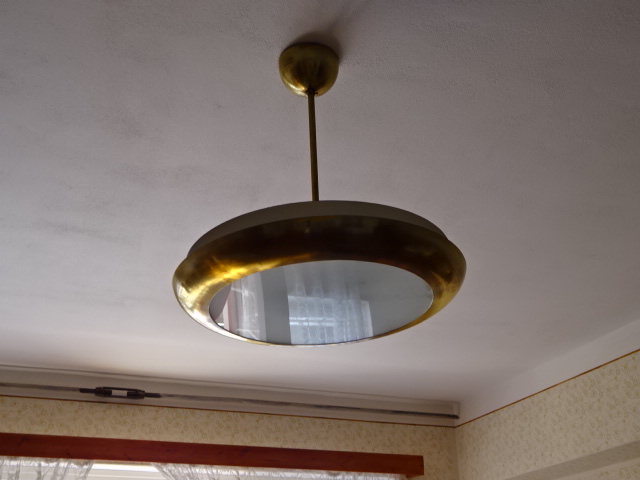
The simple chandelier in the living room
Tracy A. Burns is a writer, proofreader and editor in Prague.
As usual, this past year was punctuated by travel, though most trips only lasted one day or half of a day. Still, I was able to explore many sights within a two-hour distance of Prague. Once again, I realized that the Czech Republic blossoms with beauty in every niche of the country.
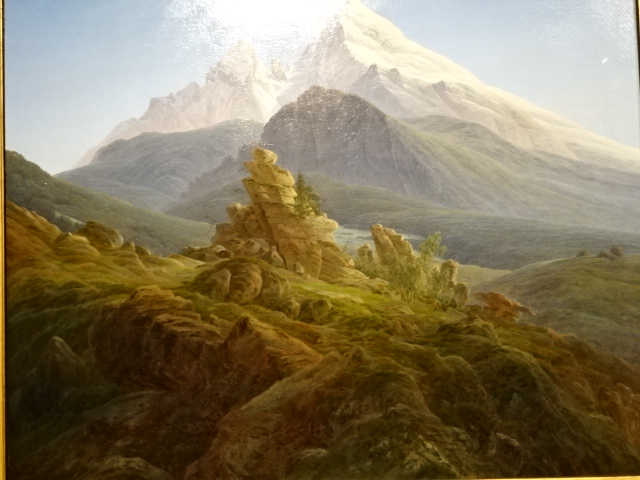
Perhaps the painting that best expresses my year of travel is one I saw at an exhibition of David Caspar Friedrich’s paintings from the Romanticist era. While admiring his “The Wanderer,” I saw the back of a male figure in the forefront, standing on a cliff as he peered at the mist-filled mountains beyond. It epitomizes why I love travelling: to discover new worlds, to muddle through that mist, reaching a clarity that allows me better to understand myself as well as to gain historical knowledge.
By David Caspar Friedrich, on display at Albertinum for temporary exhibition
In the Dresden Albertinum, I was mesmerized by Friedrich’s landscapes. Many featured vibrant colors and a brilliant use of light. He also created dark paintings with a chiaroscuro element that gave them a mystical appearance. Some of his landscapes included a solitary figure traveling alone in nature. Friedrich’s gnarled trees in barren environments were symbolic. I felt especially drawn to his portrayal of mountains in shades of pink.
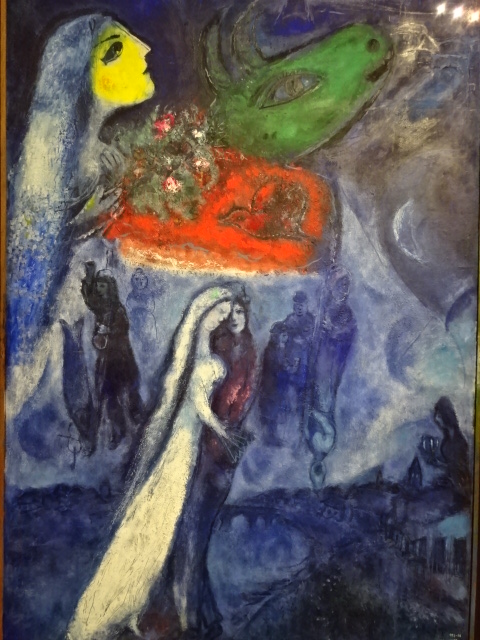
By Marc Chagall, on display at Albertina in Vienna for temporary exhibition
By Paul Gauguin
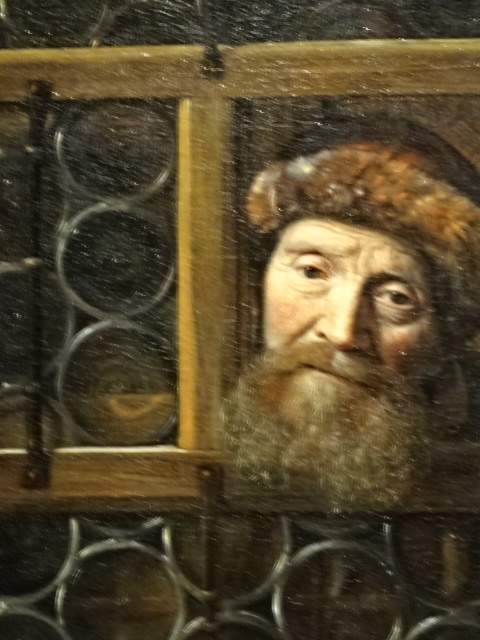
By Hoogstraten, Rembrandt’s pupil
I spent three days in Vienna going to major exhibitions featuring works by Chagall, Gauguin and Hoogstraten, a star pupil of Rembrandt. I hadn’t realized how many of Chagall’s paintings took on Jewish themes and serious topics. I had always thought of Chagall’s art as fun-loving and colorful. My favorites were those inspired by Paris and the circus, created in bright blues and yellows. The Gauguin retrospective showed his works from various time periods, so it was possible to see his specific artistic developments. I was most impressed with his early landscapes. I had not heard of Hoogstraten, whose portraits brought out the soul in the sitters just as Rembrandt’s did. His intriguing use of perspective in some paintings also impressed me. Works by Rembrandt also enchanted me in this exhibition.
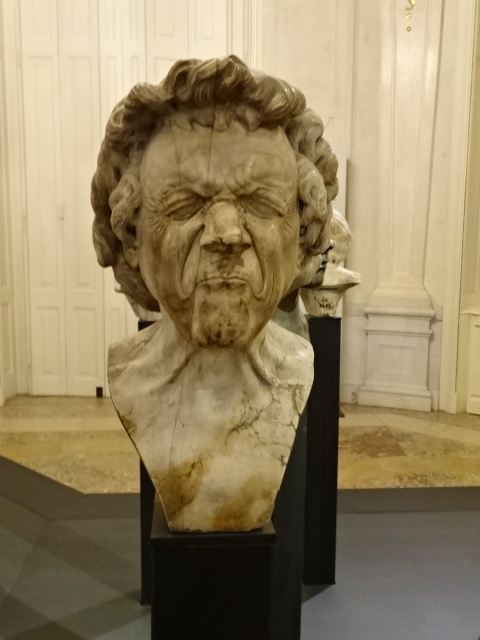
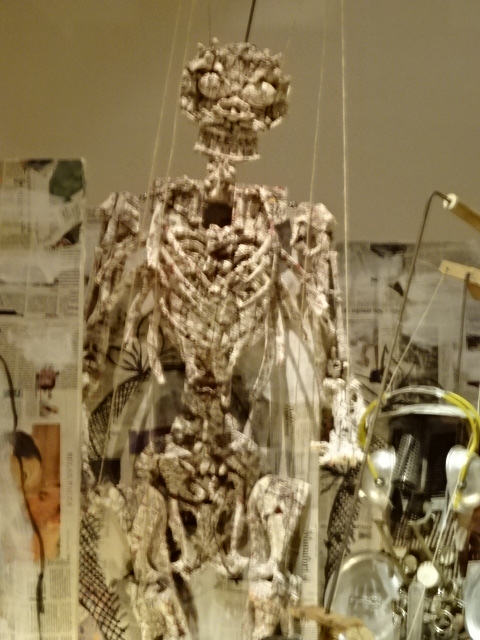
Franz Xaver Messerschmidt, Character Heads
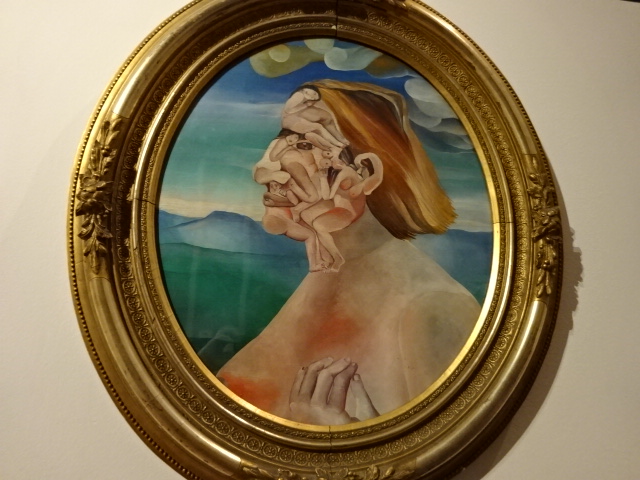
by Gustav Klimt on permanent display at Upper Belvedere
By Václav Špála, on display at Upper Belvedere
City of Vienna Museum, permanent collection
We also visited the Upper Belvedere Palace Museum in Vienna. While it is best known for its Gustav Klimt and Egon Schiele creations, I was entranced with the medieval art in the basement and the Central European collection that featured Czech greats such as Jan Procházka, Bohumil Kubišta and Václav Špála. The Klimt paintings were extremely powerful as were all the Impressionist and Post-Impressionist works. My favorite part of the museum involves the unique Late Baroque Character Heads by Franz Xaver Messerschmidt, who rendered alabaster busts of insane people with unique facial expressions. You could see into their souls. In Vienna I entered the City Museum for the first time. The exhibits trace the history of the city from the beginnings to modern day. I saw intriguing paintings, furnishings, posters and objects, among others.
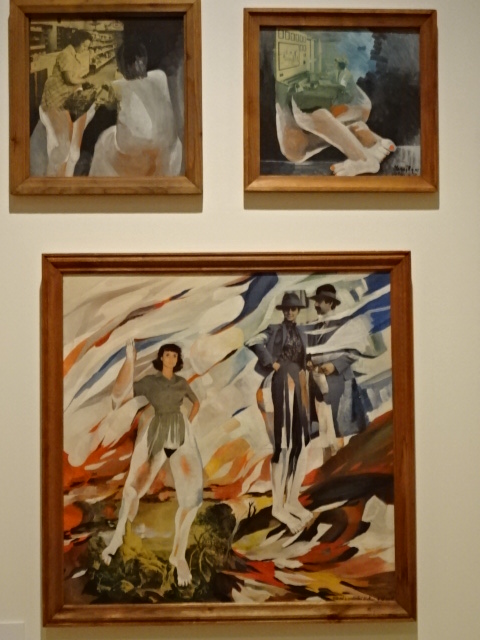
by Eva Švankmajer
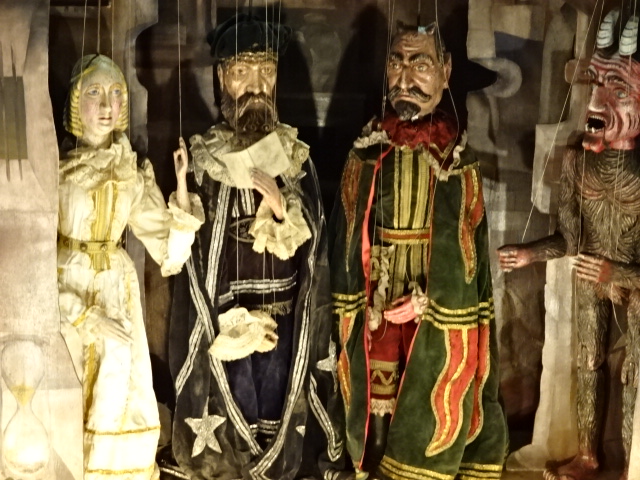
Puppets by Jan Švankmajer
Puppet by Jan Švankmajer
I also went to many exhibitions in the Czech Republic outside of Prague. In Kutná Hora I visited an exhibition of works celebrating the 90th birthday of Jan Švankmajer, a surreal artist, along with creations by his wife Eva. The exhibition Disegno Interno included collages, graphic art, objects, book illustrations, drawings, paintings, animated film creations and puppet theatre of both artists from the 1960s and later. Their creations included works that resemble Rudolfine Mannerist renditions as kinds of cabinet of curiosities and art inspired by Giuseppe Arcimboldo. I also noted the inspiration of the Baroque tradition in puppet theatre. Other works fell into the categories of art-brut, eroticism, fetishes and collages influenced by Max Ernst. Much of their art was deeply rooted in the writings of Edgar Allan Poet and Lewis Carrol. Scenography for Czech film was another section. I realized for the first time that surrealist art had been influenced to a great extent by Mannerist trends.
From Through Kafka’s Eyes, graphic art about The Metamorphosis
Through Kafka’s Eyes, Oto Kubín, Brindisi, 1906
In Pilsen I went to an exhibition called Through Kafka’s Eyes, featuring the art that had surrounded Kafka at the end of the 19th century and the beginning of 20th century. I saw posters for Czech art exhibitions in the early 20th century and those advertising 19th century Japanese art as well as works by stellar Czech artists. Paintings by Kubišta, colorful and vibrant, were represented along with sculpture by František Bílek. Czech artists who spent their interwar years in Paris were included, such as Oto Kubín and Georges Kars. Kafka’s own Jewish-themed drawings were a highlight. German art and literature rounded out the intriguing exhibition.
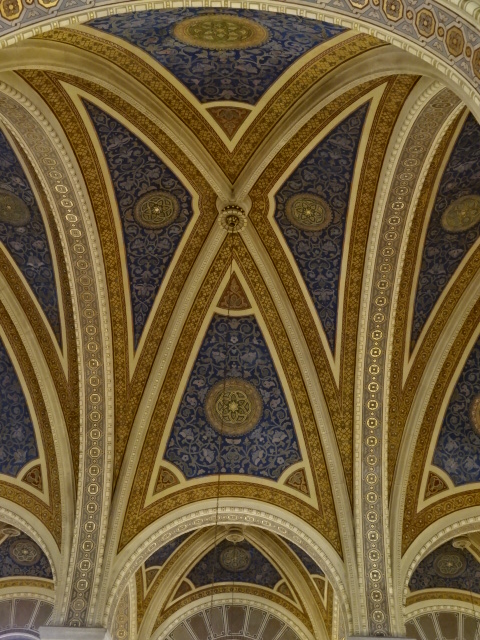
Great Synagogue, Pilsen
Great Synagogue, Pilsen
I also took the time to visit the Great Synagogue in Pilsen, the second largest synagogue in Europe and third largest in the world. On the onion-shaped dome the Star of David stood out. What I admired most was the vaulted ceiling punctuated with blue and gold adornment. Another feature that amazed me was the artistic mastery of the stained glass windows with geometric shapes and figures. The interior is furnished in Oriental style with Neo-Renaissance elements.
Pilsen, U Saltzmannů
We ate at my favorite restaurant in Pilsen, U Saltzmannů, the oldest pub in the city. The Czech food at this establishment cannot be surpassed. I had fried chicken steak this time.
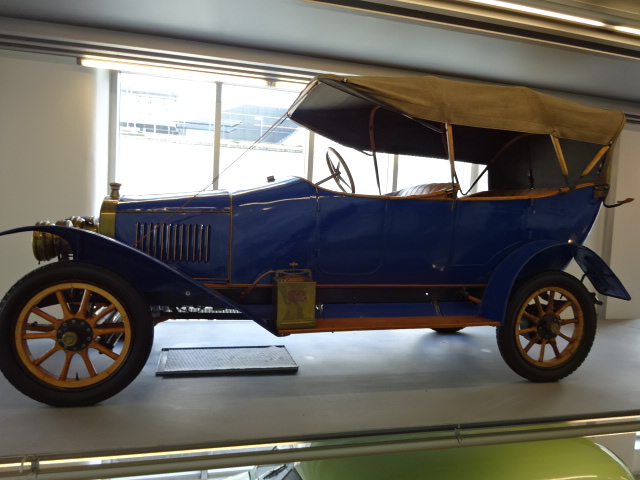
Škoda Museum
In Mladá Boleslav, about 70 kilometers from Prague, I visited for the first time the Škoda Museum, named after the popular Czech automobile manufacturer. The company began making bicycles with Václav Klement and Václav Laurin at the helm in 1895 and soon developed a rich tradition of producing cars. The automobiles on display ranged from vehicles made at the end of the 19th century to those produced in the modern day. I liked the early bicycles, including a two-seater for postal carriers. The cars from the early 20th century were also favorites.
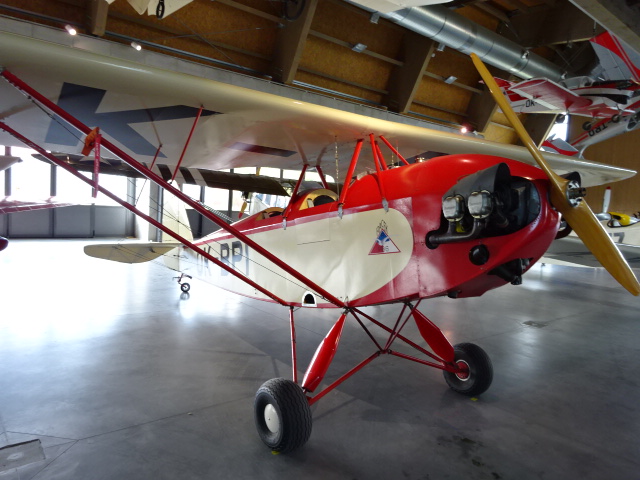
In that same city, we also visited the Aviation museum of Metoděj Vlach, which explored the history of aviation with more than 25 airplanes in the main hall, some hailing from World War I. I saw the 1913 G-III by Gaston and Réné Caudron. It had an open cockpit and 9-cylinder rotary engine. The two-seater wooden plane constructed by the Beneš company called a Be-60 Bestiola featured a 4-cylinder engine and had been flown from 1936 to 1940. The adorable W-01 Little Beetle had been used for airshows in the 1970s.
At that museum, I also learned about the career of pilot Alexander Hessman, who also had starred in a 1926 silent Czechoslovak film. He was the organizer of the Czechoslovak aircraft for the 1936 Olympics. After the Nazi Occupation in 1939, he helped pilots escape with false passports, and he wound up fleeing from the Protectorate to France and then to the USA in January of 1940. After World War II, he returned to Czechoslovakia but fled from the Communist regime, settling in the USA, where he was a technical assistant with PAN AM in New York City.
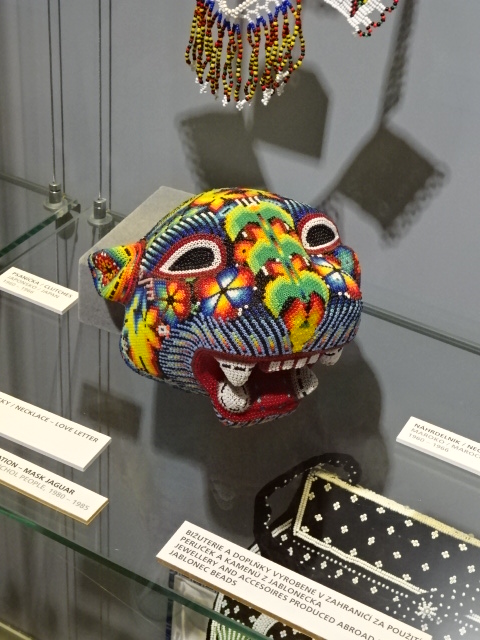
Mexican mask, Museum of Glass and Jewellery, Jablonec nad Nisou
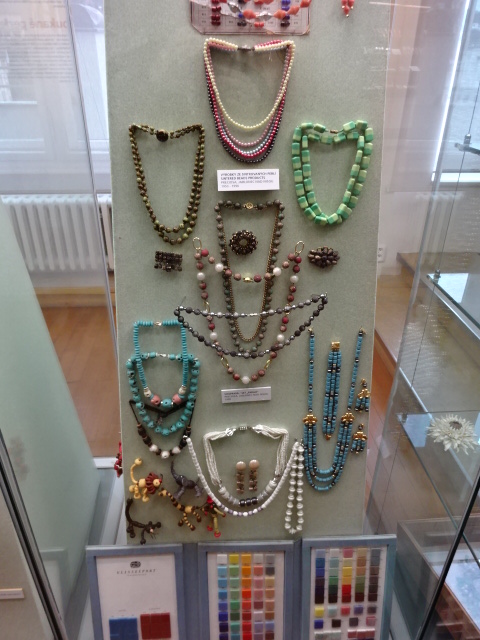
I traveled several times to north Bohemia this past year. One time I went to Jablonec nad Nisou, where the Museum of Glass and Jewellery was located because of the rich local tradition in these fields. I was immersed in the exotic jewellery of strung and woven glass seed beads by North American Indians, using products from north Bohemia. A mask of the jaguar hailed from the Huichol Indian tribe in Mexico. Glass seed beads from Jablonec nad Nisou were used to make a necklace by the South African Zulu tribe, dated from 1880 to 1900. Jablonec has been the location of the mint for the country’s currency, so many commemorative coins were on display.
I also was impressed by buttons made of glass, metal jewellery and black glass jewellery as well as wooden and plastic jewellery. Colorful handbags, masterfully designed, also made up the collection. The Waldes Museum of Buttons and Pins included more than 5,00 buttons, clasps and buckles with the oldest dating from 9 BC. The Bohemian glass exhibition showed off glass in many styles ranging from medieval and Renaissance to Empire and Biedermeier to Art Nouveau and Art Deco to modernism and contemporary. The museum also has the largest public collection of glass Christmas ornaments in the world with more than 15,000 objects. I saw ornaments of angels, birds, cats, dogs, Santa Clauses, gingerbread men and much more, all contemporary.
Josef Lada’s Villa in Hrusice
I made my first visit to Josef Lada’s Villa in Hrusice, where that author, painter, book illustrator and scenographer had lived while making some 600 paintings and 15, 000 illustrations. I saw his paintings of idyllic village life featuring all four seasons. Children threw snowballs and make snowmen in a quaint village in one painting while a squirrel was perched attentively on a tree branch, overseeing a tranquil village scene in another. Pub scenes showed humorous drunken brawls. I would have loved to have owned one of the charming cottages depicted in his paintings. I loved the paintings of knights and dragons from fairy tales as well as the paintings representing the months of the year. His paintings of scenes from Jaroslav Hašek’s antimilitaristic, multi-volume classic about the Good Soldier Švejk in the First World War caught my attention. Many of his paintings focused on holiday traditions. I also saw his humorous drawings and caricatures.
From the First Republic of Czechoslovakia
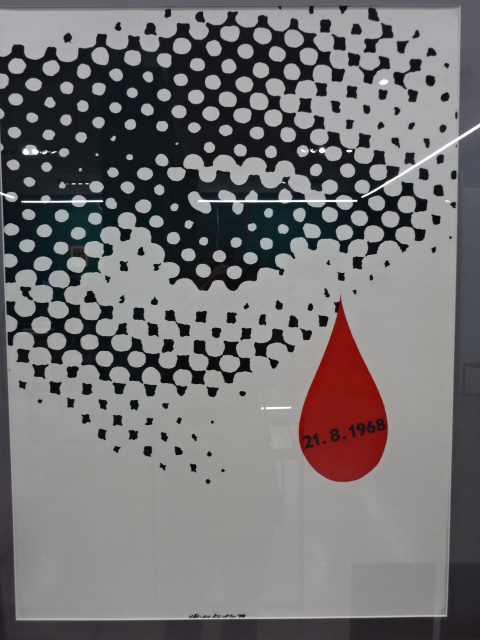
Poster by Václav Ševčík commemorating the day of the invasion by the Warsaw Pact armies, August 21, 1968
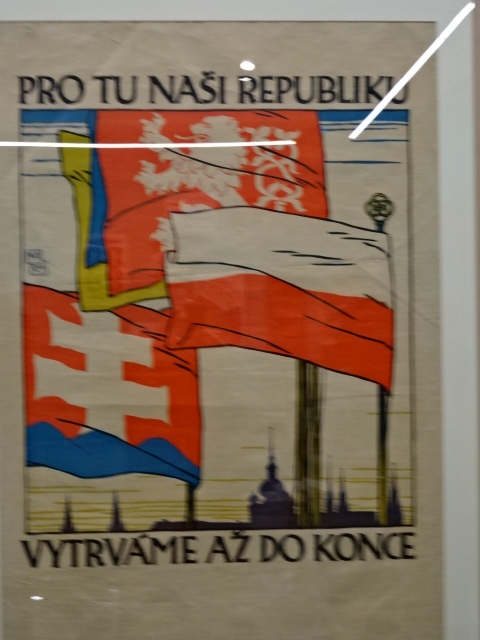
In Prague I took advantage of the stunning exhibitions this past year. I went to two excellent shows at Kampa Museum. One featured Czech graphic art from the founding of Czechoslovakia in 1918 to the present. I saw the first star-studded designs for the Czechoslovak flag as well as many political posters from the World War II era through Communist times to the Velvet Revolution of 1989. Václav Ševčík made a poster focusing on the day of invasion of the Warsaw Pact armies into Czechoslovakia on August 21, 1968, when the country’s liberal reforms were squashed. The poster shows a blood-red tear below an eye outlined in black on a white background.
Vítězslav Nezval, Alphabet, with typography by Karel Teige
Kampa Museum, Identity exhibition of graphic art, Cindy Kutíková
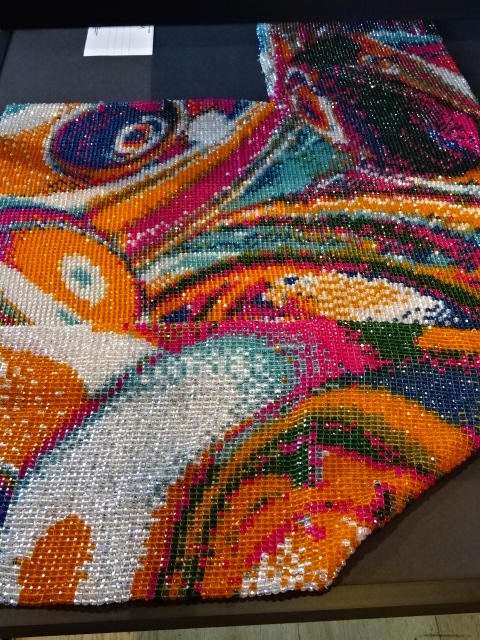
Other sections concentrated on magazine and book design. I saw beautiful children’s volumes illustrated by Lada, Josef Čapek and Jiří Trnka. I was drawn to the covers and typography of Karel Teige, an avantgarde interwar artist. The exhibition showcased contemporary times by displaying a colorful, large Quantum Beaded Sweater created in 2020 and 2021 by Cindy Kutíková, for instance.
Václav Tíkal, 1944
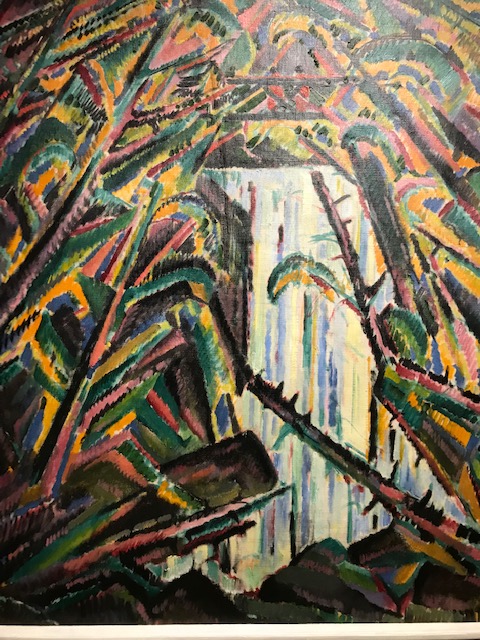
Otakar Nejedlý, Waterfall, 1913-14
Another exhibition at Kampa Museum focused on paintings from the private collection of entrepreneur Vladimír Železný, purchased for his Golden Goose Gallery. Called The Goose on Kampa, the show featured 70 paintings representing works from the beginning of the 20th century through the 1960s, such as creations by Toyen, Jiří Štyrský, Špála, Emil Filla, Jan Zrzavý and Mikuláš Medek. One painting that caught my undivided attention was Václav Tíkal’s 1944. A hand partially covered in a ripped black glove showing the fingertips, thumb and part of the palm was emerging out of the frozen, snow-covered earth in a barren landscape.
Otto Gutfreund, Viki, 1912-13 from Cubist period
On that day I also explored the Kampa Museum’s permanent collection, specifically the sculptures of Otto Gutfreund, whose early works can be classified as Cubist. His later creations, made after World War I, featured traits of Civilism, which promoted themes of everyday life.
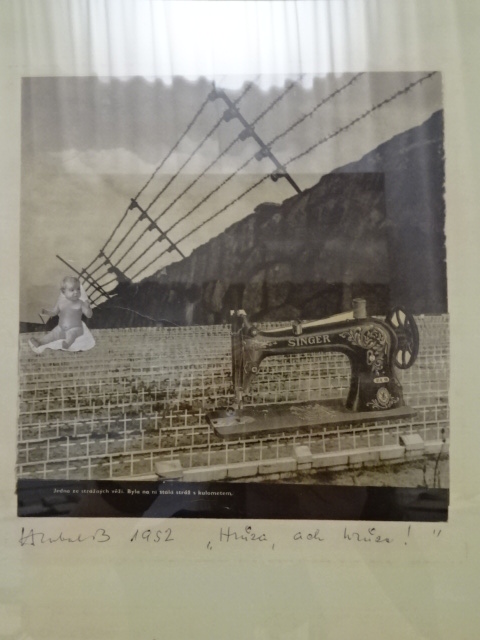
Bohumil Hrabal, 1952, Tragedy! What a Tragedy!
At the Museum of Czech Literature, I greatly appreciated a small exhibition due to my interest in the works of the late 20th century Czech fiction writer Bohumil Hrabal. The modest show emphasized the artistic relationship and friendship of Hrabal and abstract artist Vladimír Boudník, who created the “Explosionism” style. I was most impressed by Hrabal’s collages from the 1950s. One featured a Singer sewing machine, a naked baby and barbed wire heading into the horizon as white crosses in a graveyard punctuated the picture. It was called “Tragedy, What a Tragedy!”
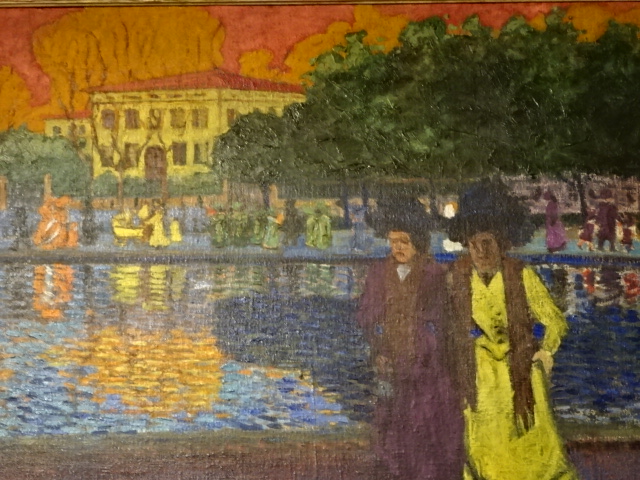
Oto Kubín, Chapel in Simione, 1926
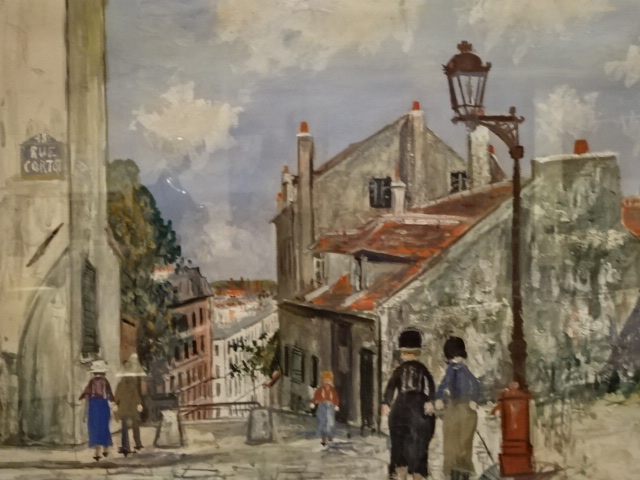
Maurice Utrillo, Chateau de la Seigliere (Aubusson), 1930
The Wallenstein Riding Stables was the site of an intriguing exhibition about artists from Bohemia residing in Paris between the wars. They were part of the “Paris School,” which featured a variety of styles. Czechs Kars, Kubín (Othon Coubine) and Francois Zdeněk Eberl made strong impressions in the lively, vibrant Paris of the 1920s. The themes of the paintings were many: portraits, cityscapes, street life scenes, café and entertainment scenes as well as a focus on the circus and cabaret. I was drawn to Kubín’s landscapes of Provence. The lavender fields were my favorite. Also represented were foreign artists, including Marc Chagall and Maurice Utrillo.
Hendrick Goltzius, The Four Disgracers, 1588
Also at the Wallenstein Riding Stables, the exhibition “From Michelangelo to Callot: The Art of Mannerist Printmaking showed off more than 200 works of 16th and 17th century graphic art, drawings, paintings, jewelry, etchings, lithographs, ceramics and other artistic crafts that hailed from the Netherlands, Germany, France and the Czech lands. The Louvre lent Prague’s National Gallery many works. Some pieces in the collections were being displayed to the public for the first time. A superb small drawing by Michelangelo drew crowds, and art by Hendrick Goltzius, Paul Bril, Aegidius Sadeler and Niccolo Boldrini stood out to me.
Painting by Karel Kryl, temporary exhibition at House of the Golden Ring
Karel Kryl giving a concert
On my birthday I went to the House of the Golden Ring near Old Town Square. I saw an exhibition about the late dissident singer and songwriter Karel Kryl, whose music had been poetic, profound and political. He had lived in West Germany during much of the Communist era and had worked for Radio Free Europe. I realized how politically-motivated his songs had been and how he had supported the Poles as well as the Czechoslovaks in their fights for freedom. I was engrossed by his artwork, disturbing and grotesque scenes with one-legged clowns and half-human, half-creature figures.
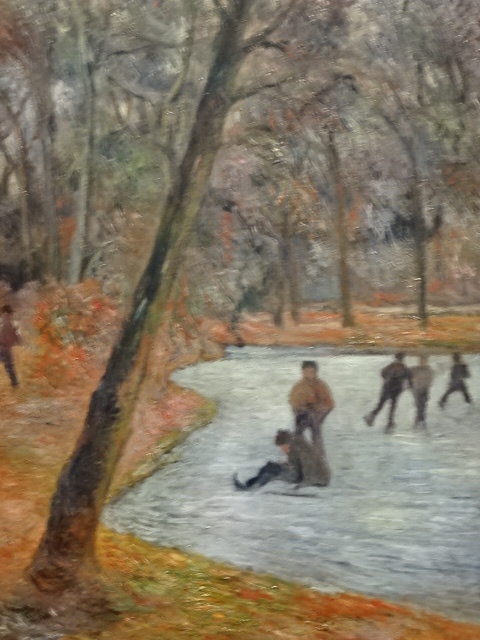
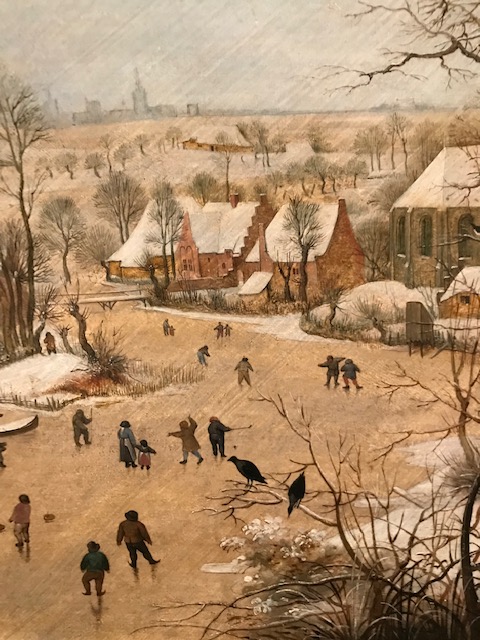
Pieter Brueghel II
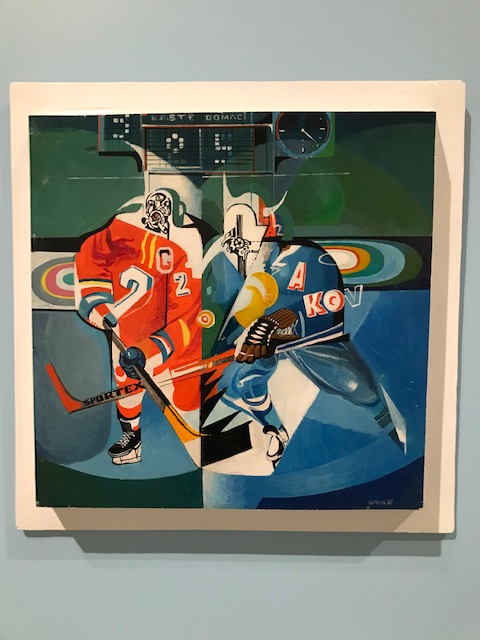
One of my favorite exhibitions of the year, taking place in Kinský Palace, was called “Get on the ice!”, featuring hockey and skating in paintings and other artistic creations. It reinforced the fact that ice hockey and skating have played significant roles in Czech and Slovak identity. I especially was impressed by the works of the Dutch masters who had inspired Czech painting. Pieter Brueghel II’s scene of skating on a pond caught my undivided attention. Czechs first represented skating on the Vltava River and on ice rinks.
Then hockey became the major theme, first portrayed realistically and then in the 1960s expressed in an experimental fashion. I was drawn to František Tavík Šimon’s “Ice Rink Under the Charles Bridge” (1917) with its large falling snowflakes and idyllic, historical setting. One example of the experimentation of the 1960s is Vojtěch Tittlebach’s “Hockey” from 1965, with abstract shapes and simple forms. The players in this painting had no facial traits. Jiří Kolář also added to the experimentation of the 1960s with his “Hockey Sticks,” composed of three wooden sticks decorated with paper collages, many of them maps and some historical scenes. The 1998 Czech Olympic victory at Nagano was celebrated in large photographs, including one that showed the moment Czech Petr Svoboda scored the winning goal while the crowd in Old Town Square erupted in joy.
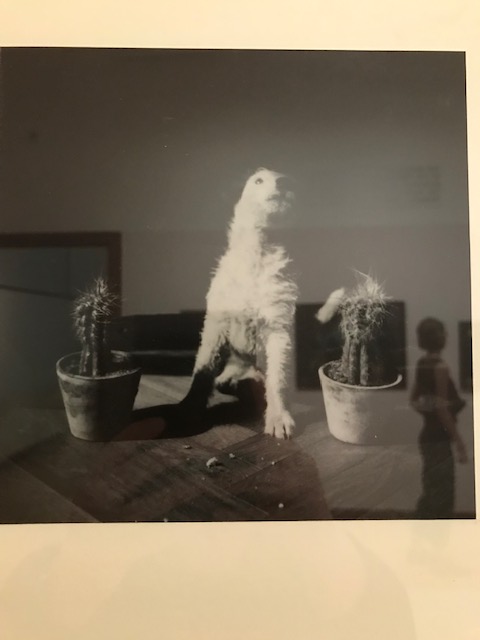
New Realisms, Karel Čapek from series Cactuses, first half of the 1930s
One-Handed Ice Cream Man, Miloslav Holý, 1923
In Prague I also saw the New Realisms exhibition, which focused on modern Realist trends in Czechoslovak art from 1918 to 1945. The more than 600 works hailed from the Czech and Slovak lands as well as Germany and Hungary. I especially liked Karel Čapek’s photographs of cactuses and his dog Dašenka as this field focused on the everyday during this era. I also liked the many café scenes, realistic portraits of people, magic realism in landscapes, the focus on the societal and economic dilemmas in Czechoslovakia and the depiction of modern labor. I have always been interested in the paintings of Group 42 as their works had an existential quality, often punctuated by telegraph wires and deserted streets.
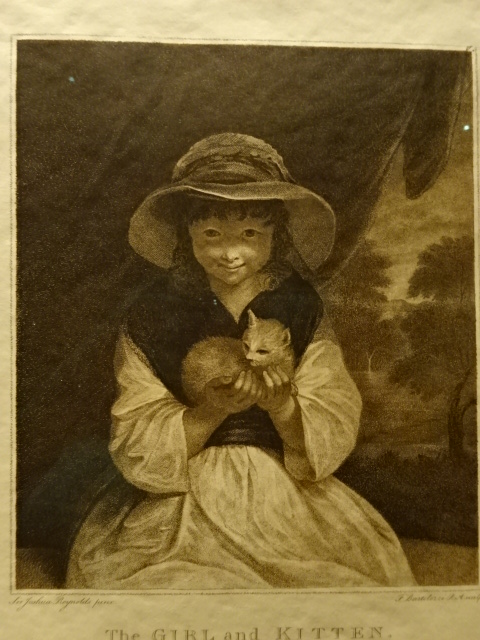
Francesco Bartolozzi, The Girl and the Kitten, 1787
One of my favorite exhibitions in Prague this past year was called “The Good Cat and the Treacherous One,” featuring cats in graphic art from the 16th to the 18th century. The art shows how some people revered cats while others hated felines. They often symbolized something or were shown for entertainment. Some considered them to be a form of the devil. Others gave them positive religious connotations. I especially enjoyed the Mannerist works by Goltzius and the graphic art by Wenceslaus Hollar, who portrayed cats with both positive and negative qualities. I saw pictures of cats symbolizing maternal love, sight, hearing, devotion, courage, yearning for freedom, foolishness, frivolity, cruelty, greed, treachery, lust and adultery. I also noticed cats as protectors against snakes. A French painting showed how, in 18th century France, cats had epitomized personal and political freedom.
Clam-Gallas Palace
I focused mostly on day trips when traveling this past year. While I visited chateaus, castles and monasteries outside of Prague, I did also become acquainted with the renovated Clam-Gallas Palace in the capital city. The Baroque palace became the property of the Gallas family in the 17th century. The palace has a rich musical and theatrical history as Mozart and Beethoven both performed there during the late 18th century. The colossal exterior portal is decorated with statuary by Baroque master Matyáš Bernard Braun, and he also created the fountain portraying Triton.
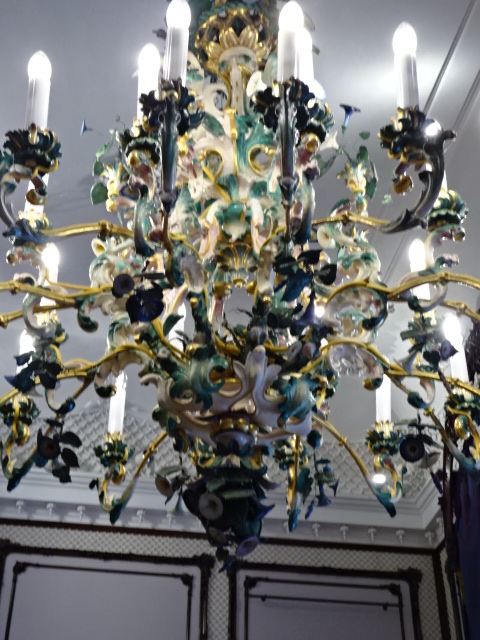
Murano chandelier in Clam-Gallas Palace
The many monumental frescoes amazed as did the chandeliers, especially the 19th century chandelier made of Chinese porcelain cups, saucers and vases. Frescoes depict the triumph of Apollo and gathering of the gods on Olympus, for instance. Allegorical figures representing sculpture, architecture and painting stand out in another fresco. I was very impressed with the former office of the first Czechoslovak Minister of Finance, Alois Rašín, though it was sparsely furnished. He had tried to gather support for the creation of Czechoslovakia during World War I and had even been imprisoned for taking part in the resistance. Rašín was assassinated in Prague during January of 1923 by a 19-year old anarchist.
Bohumil Hrabal’s cottage in Kersko
Kersko near Prague is one of my favorite tranquil spots in the country, a village where Hrabal resided from the 1960s until his death in 1997 and where he fed many feral cats daily. Hrabal’s two-story cottage opened to the public for the first time this spring. I saw the garden where he wrote some books and the charming enclosed terrace where he composed his works when weather did not permit him to spend time in his garden. I saw the chair in which Hrabal wrote his last literary piece, during 1995. The top floor was adorned with many paintings – a moving portrait of Hrabal by Jan Jirů, a drawing featuring heads of Hrabal from his youth to old age in a rendition by Jiří Anderle. Another portrayed cats on chairs in a forest setting along with Hrabal himself. Portraits of his family and a collage focusing on one of his books also caught my undivided attention. The place captured the soul of Hrabal, and I was very moved.
In the local shop, known for its ceramic figures of cats, there was an exhibition of drawings of Hrabal – at the pub, in Heaven, in Kersko, each rendition celebrating the author in a creative way. We ate at my favorite restaurant outside of Prague, Hájenka, a prominent landmark in Kersko. Whether I chose the chicken with cheese sauce, the meat with dumplings or the fried chicken steak, I was always delighted by the meal in a rustic, charming atmosphere.
Mariánská Tynice complex
I traveled about 35 kilometers north of Pilsen to pay a second visit to the High Baroque complex with pilgrimage church Mariánská Tynice, an aerial constructed by renowned architect Jan Blažej Santini during the 18th century, using geometric forms such as quadrangles and triangles as features of his Baroque Gothic style. The church with a Greek cross plan had an impressive illusionary main altar of the Holy Trinity while the east and west ambits were constructed with open arcades featuring eight chapels. The masterful painting on the vaulting and walls celebrates the lives of the Virgin Mary and Cistercian saints. The cupola of the church is lit by eight windows.
Frescoes on the walls and vaults of the ambits
Part of the complex was the Museum and gallery of the North Pilsen region. I liked the Gothic altarpieces and Baroque paintings as well as the 19th paintings of pilgrimage sights. The reconstruction of rooms resembling 19th century and early 20th century village life included a classroom, a countryside chapel and a pub.
Museum of the High-Rises, Kladno, ceramic tile on the facade
Gas masks in the nuclear bunker of the Museum of the High-Rises
In Kladno near Prague, I toured the Museum of the High-Rise, which was located in one of the six Rozdělov high-rises designed by Czech functionalist architect Josef Havlíček in the 1950s. He received acclaim during the interwar years as a member of the avantgarde and studied under Cubist architect Josef Gočár. The façade of the 13-floor building was created from ceramic material, and on that particular high-rise were ceramics of a cat and a dog. There was a small museum in one basement floor. We also visited the nuclear bunker, complete with numerous gas masks and many hard benches. The big rooftop terrace was a prominent feature for that time period. In the representative flat for the higher-ups, we saw 1950s furniture and a balcony. The flat measured about 65 meters squared, quite a luxury in that day and age.
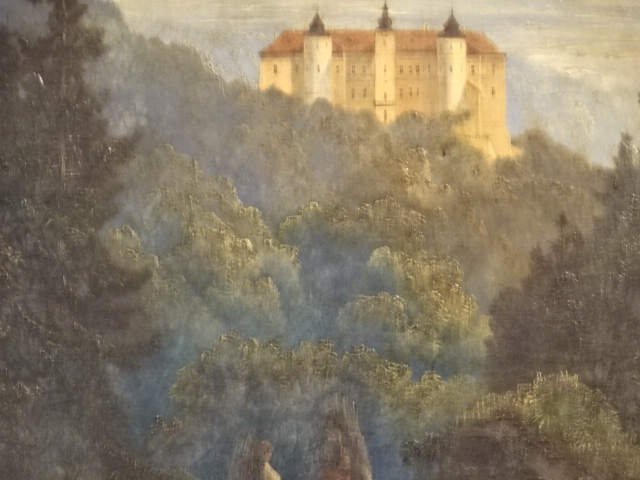
Humprecht Chateau
View from Humprecht Chateau
I also visited many chateaus within a two-hour distance of Prague. Seventeenth century Humprecht Chateau in the central Bohemian Paradise region had an elliptical shape. Much of the interior featured hunting themes. I saw paintings of Venice, Biedermeier bookcases in the two libraries of about 4,000 volumes, a black kitchen with an original fireplace and utensils from the 17th century. The main hall featured four frescoes from the 1930s, showing scenes from the life of the Černín family, the long-time owners of the chateau. Baroque furniture decorated several rooms. The picture gallery includes works from the 17th century. What I liked best about the chateau were the panoramic vistas from the top floor.
Volman Villa
Also, not far from Prague, the newly reconstructed Volman Villa, a large, geometric functionalist structure built from 1938 to 1939, featured big terraces, a circular driveway, a monumental winding staircase and outer stairs that lead to a bridge heading into the building. It is possible to access the terrace from each spacious room. Volman used exotic materials such as travertine and marble for the construction. The marble bathrooms with beautiful pink and light blue bathtubs were vast. While there are now many trees obstructing the view, at one time it was possible to see the Labe River in the 40-hectare English park.
Grabštejn Castle, Chapel of Saint Barbara
I visited several castles and chateaus in north Bohemia – Grabštejn Castle, Jezeří Chateau and Červeny Hrádek Chateau. I was shocked at the vast improvements made during the reconstruction of Grabštejn and Jezeří as I had last visited the two about 20 years ago. Grabštejn, originally a 13th century castle, took on the structure of a Renaissance chateau in the 16th century. The 16th century Chapel of Saint Barbara featured exquisite vaulting and wall painting that included 13 apostles. One tour featured the 18th century administrative offices that made up the castle interior during that time period while another showed the rooms of the nobility, including a gigantic wall painting with chateau-like gardens and fountain. I saw furnishings and artifacts from the 16th to 19th centuries.
Jezeří Chateau, painting by Carl Robert Croll
While only a few rooms of Jezeří Chateau were opened about 25 years ago, now there are about 10 impressive spaces on the tour. I loved the paintings of Carl Robert Croll, renditions which showed the interior of the chateau during the early 19th century. I was especially impressed with the room dedicated to Jan Masaryk, the son of the first president of Czechoslovakia and once the Minister of Foreign Affairs. He was thrown out a bathroom window at the Ministry of Foreign Affairs by the Communists after the 1948 coup. The Winter Garden was light and airy, punctuated by much greenery. The lavish Theatre Hall included sculptural and stucco adornment as well as an original fireplace. The paintings throughout were impressive, too.
Červený Hrádek, Knights’ Hall
Červený Hrádek dated back to the early 15th century and gets it current appearance from the 17th century. The Knights’ Hall from that era included lavish sculptural decoration with medallions featuring battle scenes and exquisite crystal chandeliers. Other spaces harkened back to the 18th and 19th centuries with period furnishings. Seventeenth century sculptor Jan Brokoff created sculptures, fountains and vases that decorated the monumental staircase. The English style park was beautiful, too. In August of 1938 the Sudeten Party leader Konrad Henlein and English Lord Walter Runciman had a meeting there, shortly before the Munich Agreement was signed.
Dobříš Chateau Park
Dobříš Chateau Park
Because the interior had been recently renovated, I returned to Dobříš Chateau not far from Prague. I was disappointed there were not as many rooms decorated with period furniture. Instead, the self-guided tour mostly featured spaces celebrating the Colloredo-Mansfield family’s accomplishments, which were very intriguing and noteworthy, to be sure. Still, I missed the longer, guided tour and former exciting interior décor of the Rococo and Classicist eras. The Writers’ Room remained on display, decorated the way the space would have looked when the chateau belonged to the Writers’ Union from the 1950s to the 1990s. It was possible to enter one side of the spectacular Hall of Mirrors, although it was roped off and walking through the room was not permitted. The fresco-filled hall amazed with 18th century décor and eight Venetian chandeliers as well as monumental fireplaces.
Illusionary painting on the orangery in Dobříš Chateau Park
The park, measuring nearly two hectares, was the reason to visit the chateau. On that sunny summer day, it was spectacular to stroll through the Rococo style park established in the 1770s. It had five terraces, a fountain with astounding Baroque sculptural grouping and an orangery with illusionary wall painting.
Slatiňany Chateau
Interior of Slatiňany Chateau
I traveled to Slatiňany Chateau for the second time and noted the prominent hunting and horseback riding themes. The Auerspergs held on to the chateau for 200 years and were responsible for the charming interior. I loved the exquisite canopied beds decorated with religious paintings. The tapestries were another delight. In the Big Dining Room I admired a large painting of hunters and their dogs getting ready for the hunt as well as a stunning 18th century Murano chandelier.
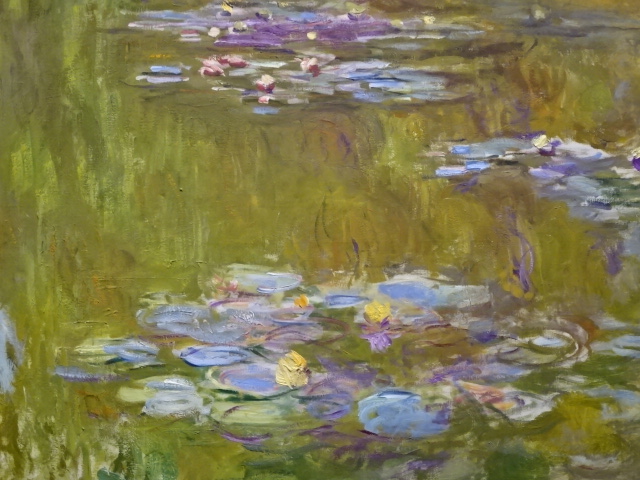
Vienna, Albertina, Monet, Waterlillies, in the permanent collection
I had many exciting adventures traveling in 2024 and had many impactful experiences at art exhibitions in the Czech Republic, Germany and Austria. Every time I go on a trip or to an art show, I come away changed, with a sharper perspective on life and with more enthralling knowledge.
Albertinum, Dresden, Hans Grundig, The Thousand-Year Empire, in the permanent collection
Tracy A. Burns is a writer, proofreader and editor in Prague.

































 Tracy's Travels