The Great Synagogue in Pilsen Diary

It is very easy to get to Pilsen from Prague – only a one-hour bus journey, courtesy of the Student Agency bus company. From the bus station I took a tram three stops to Republic Square. The synagogue was within walking distance. I was curious about the second largest synagogue in the world and the third largest in the world with a capacity of 2,500 people.
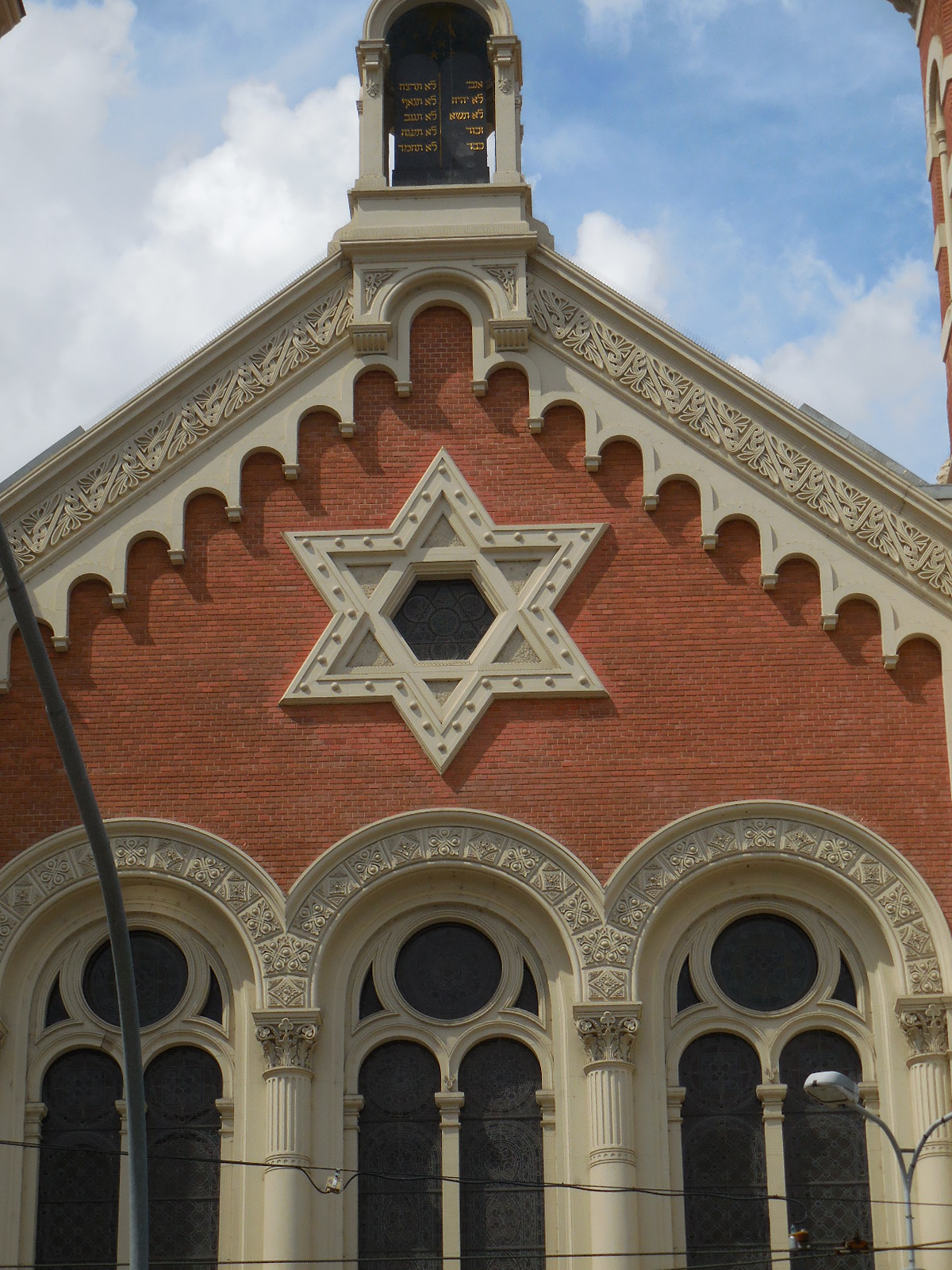
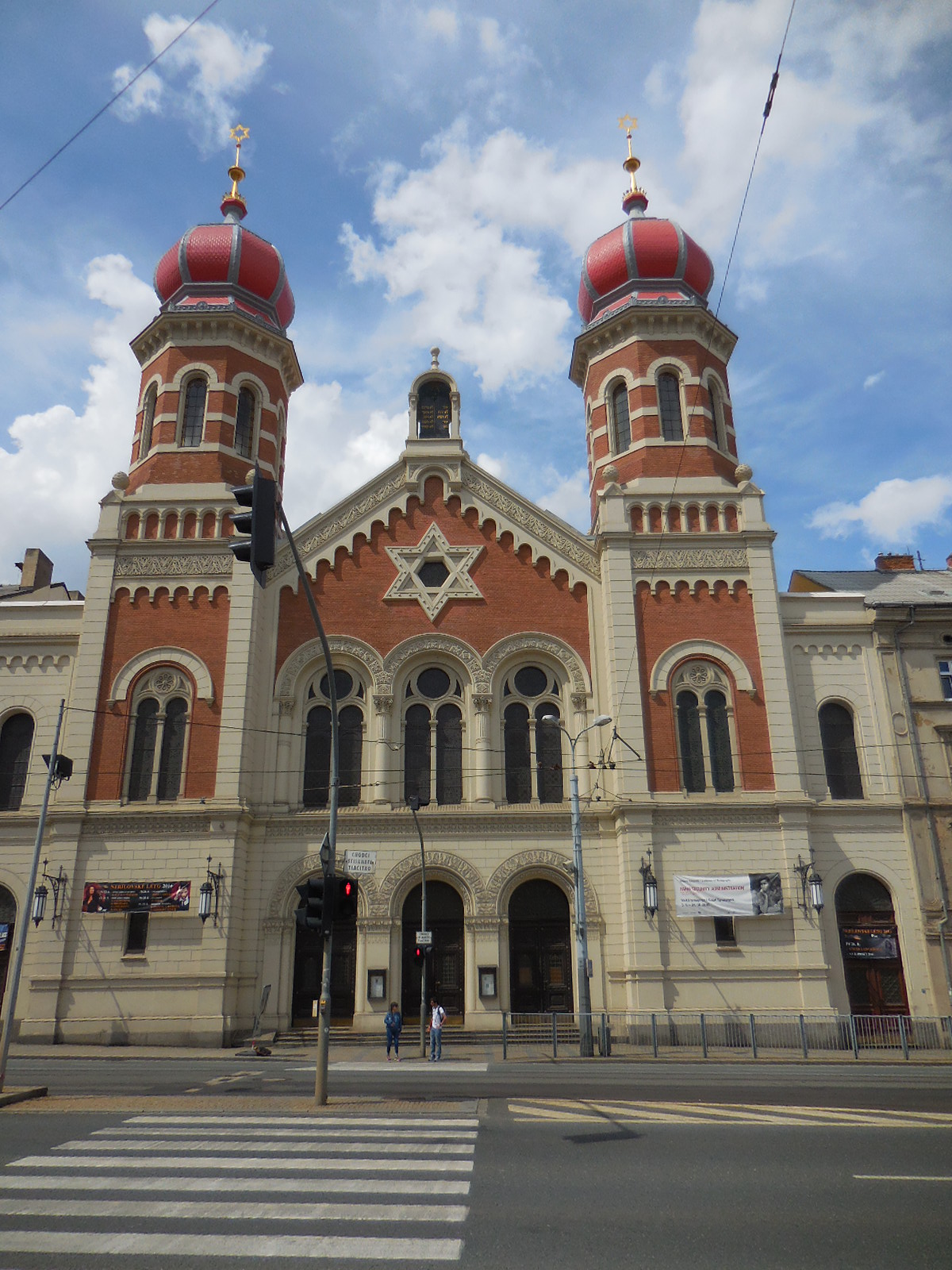
I was very impressed by the façade and two towers. Under the gabled roof of the structure of capping brick and stone blocks is a large Star of David. The two towers flanking the middle portion of the building have imperial domes and a belfry as well as a crown and the Star of David. The onion-shaped domes reminded me of some of the churches I had seen in Saint Petersburg, Russia.

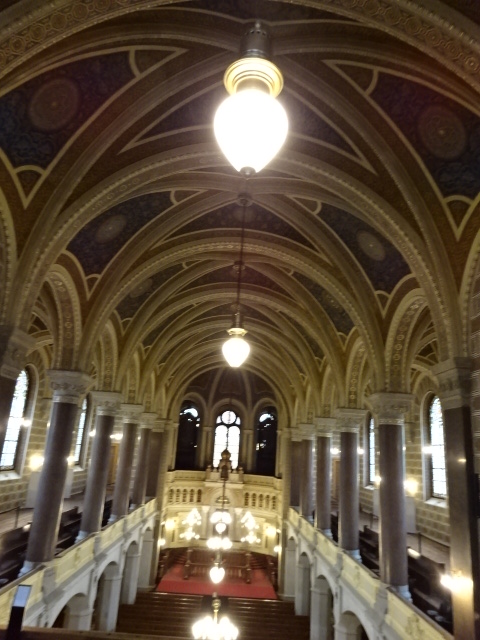
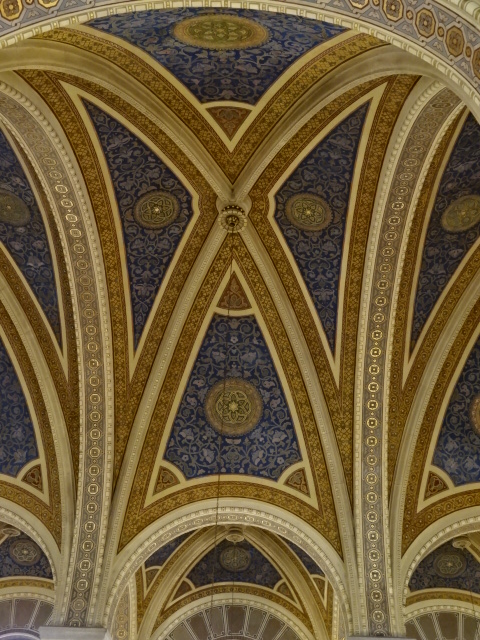
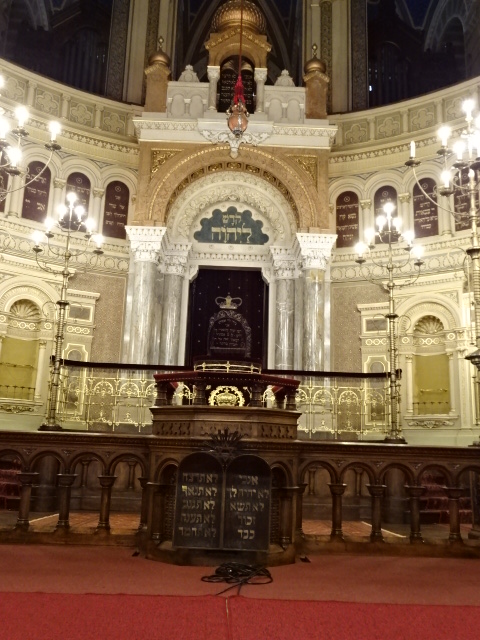
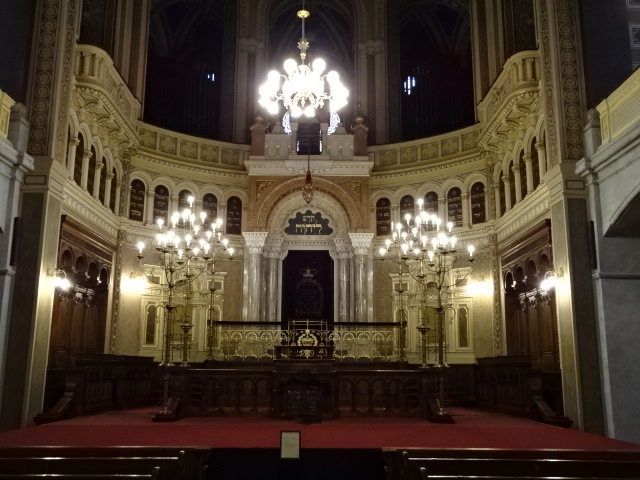
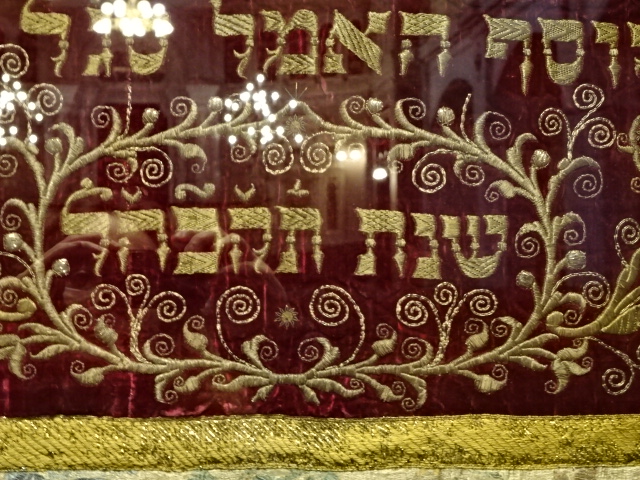
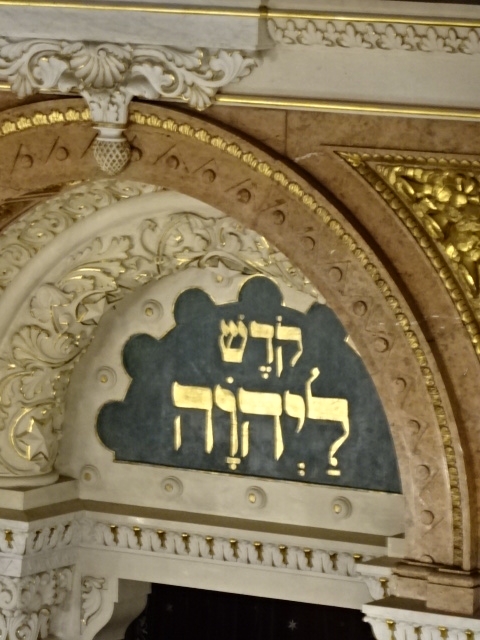
I gaped as I perused the spellbinding features. Built in 1892, the synagogue combines an Oriental interior with elements of Neo-Renaissance, found mostly in the corridors.  The carved rostrum of the three-aisled ground floor has a simple, yet dignified design. Two stairways lead up to the platform with the rostrum. One of the things I admired most was the vaulted ceiling decoration of blue with gold painting with plant motifs. The use of gold for decoration throughout the synagogue was very pleasing to the eye. The staircase had a metal, golden balustrade. The vestibule included beautiful stucco decoration with gold as well. I also noticed the stucco décor with motifs such as David’s Star on the balustrade. I saw the organ, dating from 1890. I remembered reading that there had been a big choir here until World War II.
What entranced me the most, though, was not the exquisite vaulted ceiling, but the three stained glass windows above the cornice in the western side of the synagogue. Dating from 1893, the three windows show a design of circles and oblong shapes, geometric figures in bright colors. They seemed to glisten in the dim lighting. I walked to the upper gallery, where I could have touched them if I had wanted to. Instead, I just stood there, fascinated at their beauty.

I sat down in the balcony, where women had sat for generations because they were not allowed to sit with the men, and I pondered over the history of Jews in Pilsen. It all began in the 13th century when Jews first came to this city, and King Přemysl Otakar II allowed them religious freedom. At the start of the 15th century, most Jews bartered in spices, pepper and ginger, and two synagogues existed here during that time period. Yet during the reign of King Vladislav II, in 1504, Jews were expelled from Pilsen, and they didn’t return until 1584. Other hardships occurred.
Then things got better. Jews obtained more freedom during 1848-49, when the ghetto that had been created due to the reforms of Holy Roman Emperor and ruler of the Habsburg Empire Joseph II was destroyed. (Emperor Joseph II had been a devout Catholic and an enthusiast for Germanization.) Jews no longer had to pay special taxes. Then, finally in 1867, a constitution was passed, stating political and religious equality, allowing Jews to move house as they pleased and to own property. They were even offered state citizenship. It is no wonder, then, that many Jews headed for this city in the 1860s. The Jewish community of Pilsen thrived during the 19th and beginning of the 20th century, and Jews ran significant businesses in the city.

After World War II, the synagogue was returned to the Jewish community, but the last regular service took place in 1973 as the building became more and more dilapidated. Finally, it was closed down.  Reconstruction occurred from 1995-97, and it reopened to the public on February 11, 1998. A service was held here once again, after 26 years, on September 20, 1998, celebrating the Jewish New Year. The first wedding in 61 years was held at this synagogue on June 6, 1999. There was extensive renovation during the 21st century, too.

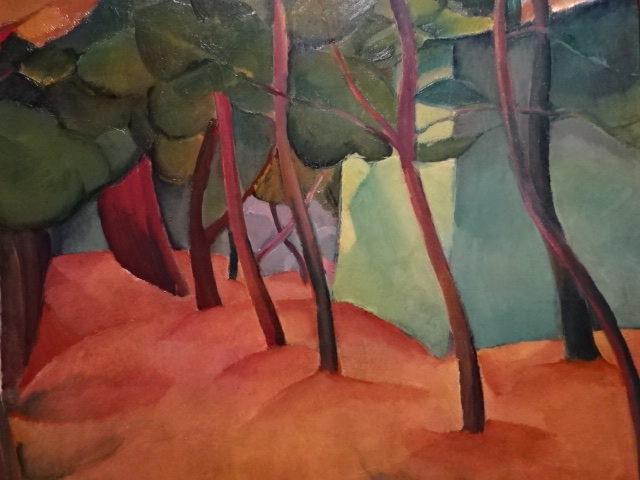
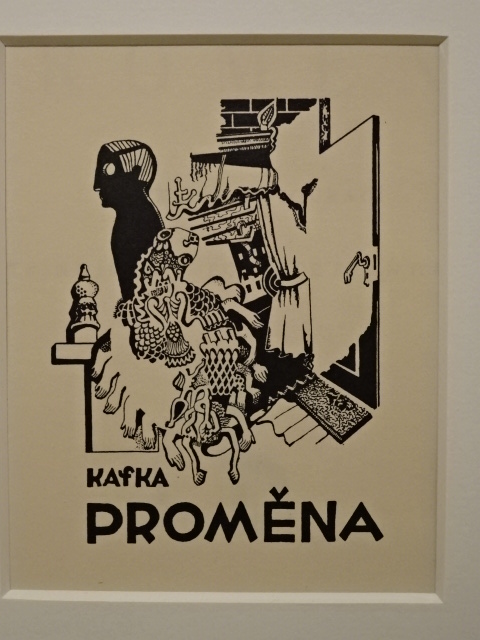
Before heading back to Prague, I took advantage of the beautiful, sunny weather and sat outside at a café on the main square. I also visited an art exhibition called Through the eyes of Franz Kafka, focusing on art in the Czech lands during the time period Kafka was in Prague. There I gazed at Kafka’s drawings, paintings by Czech artist Bohumil Kubišta and sculpture by Czech master František Bílek. I also saw some Japanese art that was popular during that era. I ate lunch in U Salzmannů, the oldest pub in the city and my favorite restaurant in Pilsen. The Czech food at that establishment is top-notch. I also stayed at the restaurant’s pension upstairs for several nights many years ago, during a theatre festival. I was very pleased with the accommodation. Since I only rarely drink alcohol, though, I did not try the legendary Pilsner Urquell beer brewed in this city.

Tracy A. Burns is a writer, proofreader and editor in Prague.
My favorite restaurant in Pilsen – U Salzmannů

From Pilsen art gallery exhibition Through the Eyes of Franz Kafka

From Pilsen art gallery exhibition Through the Eyes of Franz Kafka

From Pilsen art gallery exhibition Through the Eyes of Franz Kafka

Křivoklát Castle Diary

Krivoklat1

I’ve been to this Gothic masterpiece many times as it is only about an hour from Prague. Usually I go there by bus and travel back to Prague by train. This time I went for the first time by car with a friend. However, that was not the reason I would always remember this visit. I would remember it because it was my first trip after stay-at-home orders had ended during the coronavirus pandemic. From mid- March until mid-May, I had only been out of my home for long walks through scenic neighborhoods. The first three weeks I hardly went out at all because I was so terrified of getting the illness.

Krivoklat2020ext4

The tower

I was nervous as we parked near a restaurant not far from the castle. What if someone coughed on me? One thing I knew: everyone would be wearing a mask. Czechs did not have a problem wearing masks – unlike some Americans. As we approached the castle, I felt a sense of relief and comfort. I had waited for this day since the beginning of April, when castles normally opened for the season in the Czech Republic. Now it was May 26, the first day castles were accessible to the public during 2020.

Krivoklat2020ext9

I was familiar with the history of Křivoklát Castle. The castle dates back to the 13th century, although there was a fort at a different location as far back as the 12th century. Křivoklát Castle was constructed during the legendary era of the Přemyslid Dynasty, the clan that reigned in the Czech lands during the 13th and 14th centuries. The three-level circular tower, inspired by a French style, harkens back to the original structure. This tower is a dominant feature of the castle today. The upper courtyard also hails from this period.

Krivoklat2020ext5

During the reign of Wenceslas II, Křivoklát was a remarkable and extensive early Gothic castle boasting three towers. A fire in the 14th century proved a major setback, though the castle was rebuilt. Holy Roman Emperor Charles IV was imprisoned there as a youngster and later would visit on many occasions despite his nightmarish childhood experience. Charles IV’s son Wenceslas IV had the castle reconstructed at the end of the 14th century and during the 15th century. That’s when Křivoklát became a very impressive structure holding a prominent position in the Czech lands.

Krivoklat2020ext3Krivoklat2020ext11

The Hussite Wars put an end to the castle’s glory. During this 15th century conflict, Křivoklát was conquered by both the Hussites and the Catholics. However, better days were to come as Czech King Vladislav II had Křivoklát reconstructed in late Gothic style, beginning in the 1470s. The chapel that has been preserved dates from this time. Also, Křivoklát was enhanced with topnotch defense features, such as semi-circular bastions, a battery tower and a triangular foregate with casements. Křivoklát Castle once again became a magnificent structure that was admired not only throughout the Czech lands but also all over Central Europe. Prominent people were imprisoned there. Some notable figures who were incarcerated there included Bishop of the Bohemian Brethren Jan Augusta, who spent 16 years in a cell without light. Alchemist Edward Kelly also did time at Křivoklát after killing a man in a duel.

Krivoklat4Krivoklat8

A fire in 1643 did much damage. It was sold to the Wallenstein clan during 1685. Then, in 1733, the Furstenbergs took control of the castle. After a devastating fire in 1826, the Furstenbergs had it renovated. The Furstenberg library was one of the highlights of the tour. Czech historian František Palacký used the library for his research. In 1929, the family sold the castle to the Czech state.

Krivoklat2020chapel4Krivoklat2020chapel5

The main altar, hailing from 1490

Because we went during the coronavirus epidemic, we had to wear masks, and only 15 people were allowed on each tour. However, it was not possible to stand two meters (six feet) apart from other castlegoers, which had me a bit concerned. On the tour, I learned that the original residential and defensive tower is 42 meters high. We saw three models of the castle from different periods. The model from the 13th century showed the tower at the castle’s unprotected side and a simple first courtyard. The second courtyard, though, looked as it did today. We toured the seven prison cells, and I tried to imagine living in one of them for 16 years without light as Jan Augusta did. I could not fathom it.

Krivoklat2020chapel7Krivoklat2020chapel8

The main altar in the chapel

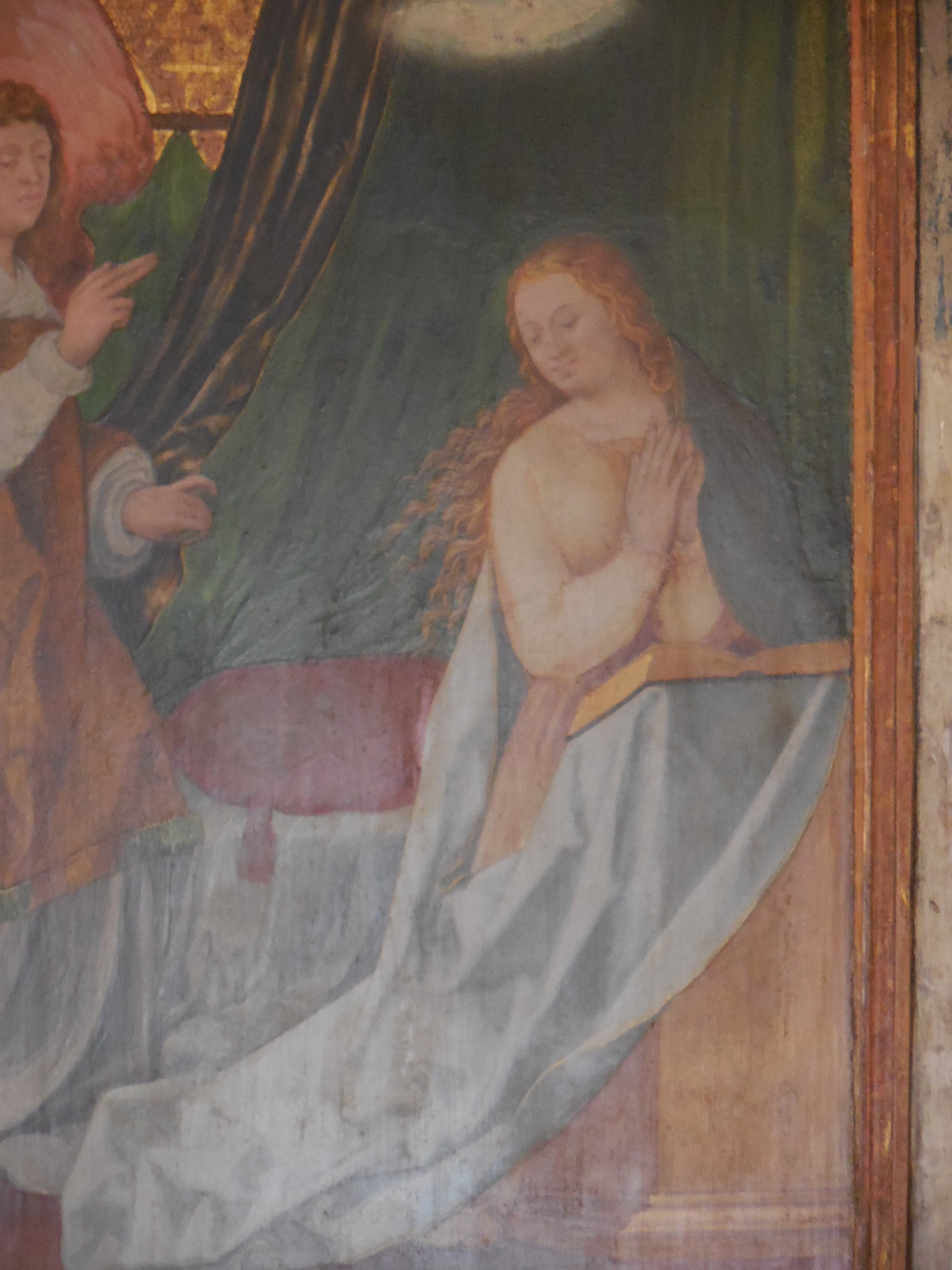
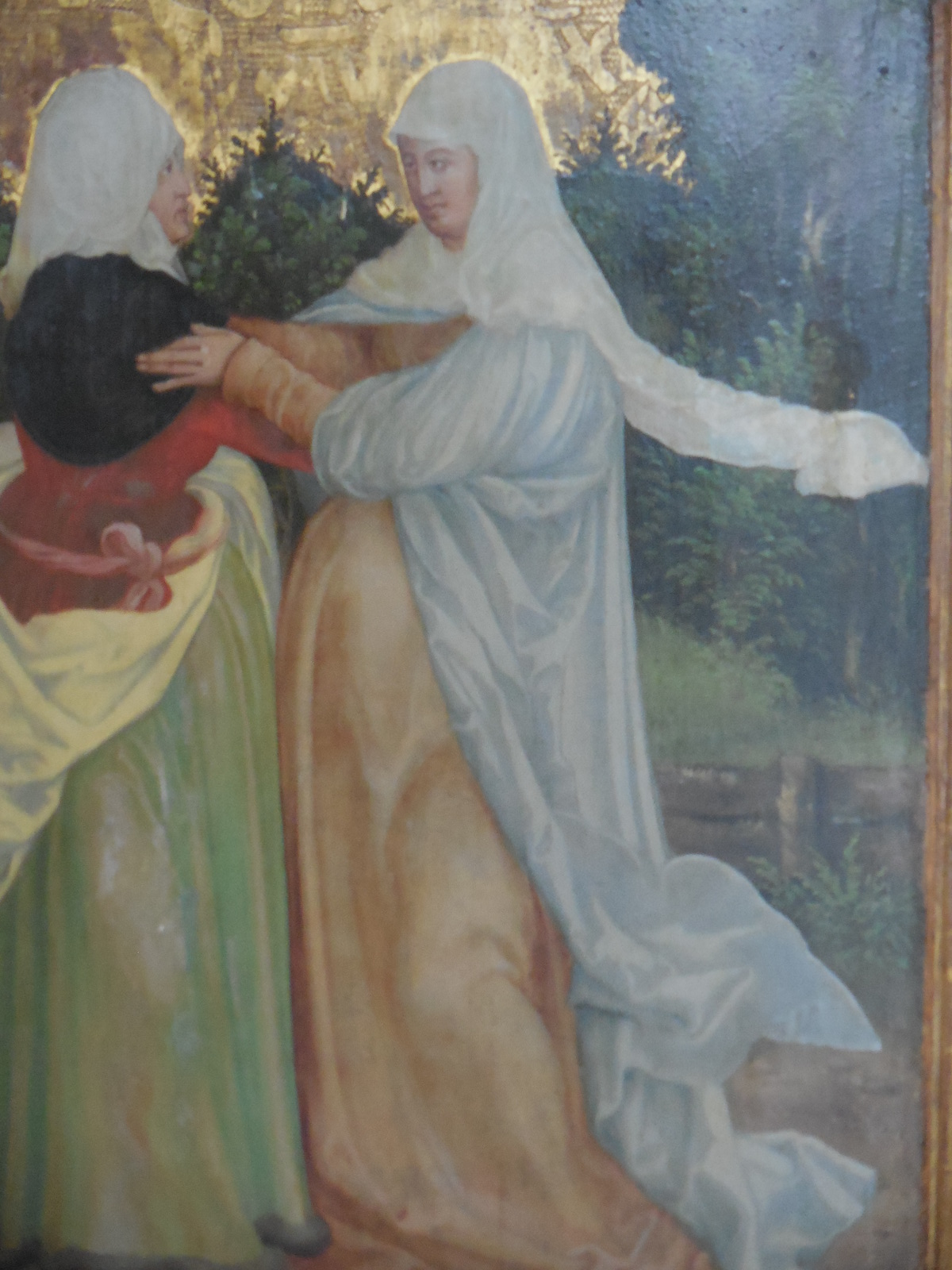
Then we came to the chapel, my favorite room in the castle and one of the best preserved Gothic chapels in Europe. The winged main altar showing the crowning of the Virgin Mary dates back to 1490. It consists of four panels portraying the Virgin Mary and Jesus. I noticed one panel pictorially described the birth of Christ. I liked the prominent gold color of Mary’s halo in all four panels. I saw masterfully carved statues of the 12 Apostles on the walls. I loved the armrests on the pews with remarkably carved demonic monster-like creatures. While churchgoers were seated and gazing at the heavenly altar and 12 apostles, the “evil” armrests of the pews reminded them that there was also a Hell, which was readily accessible.

Krivoklat2020chapel9

Detail of the main altar

Krivoklat2020chapelpew

A detail of a pew

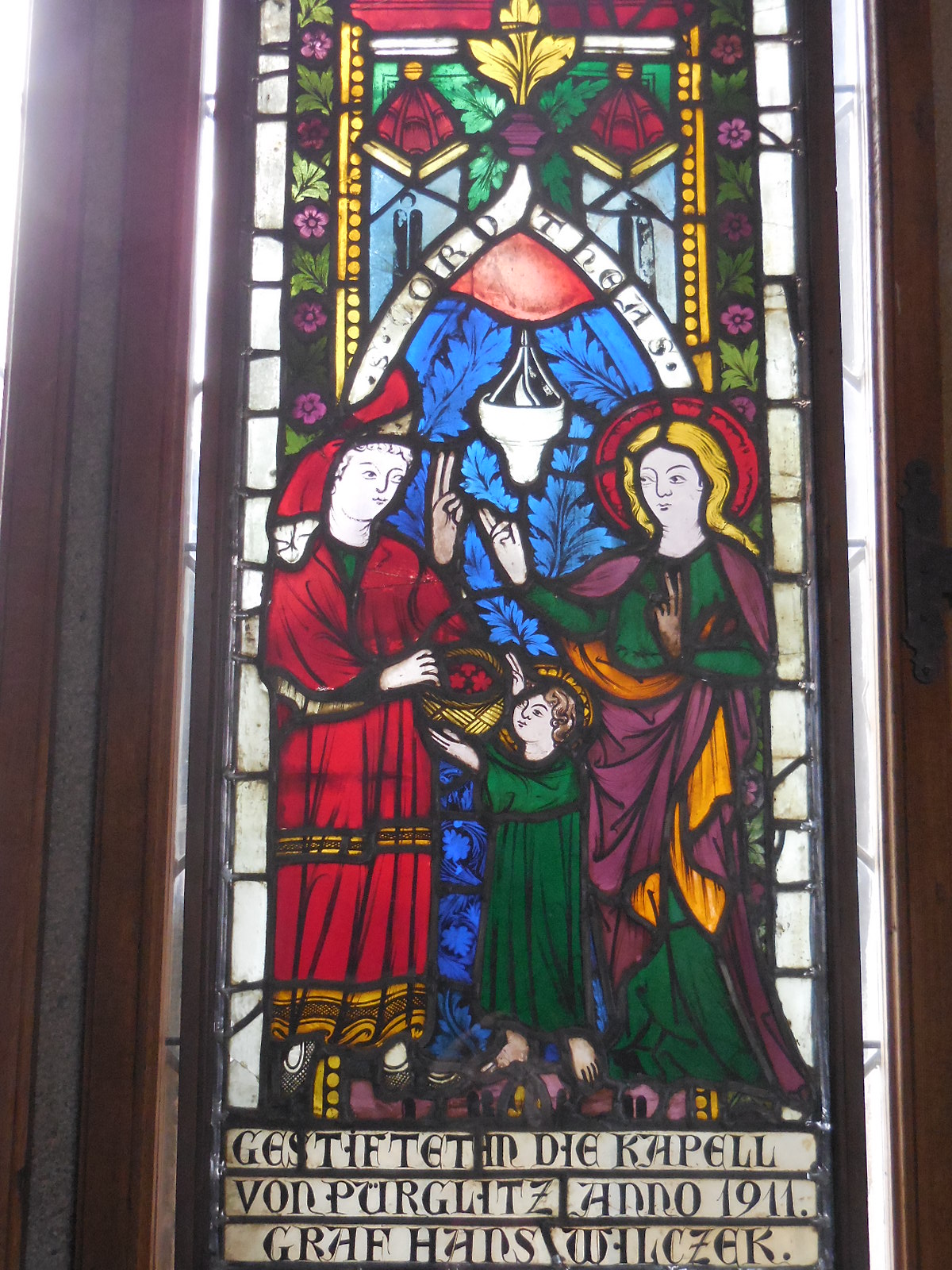
We also saw a room dotted with Gothic art – altarpieces, statues and paintings that astounded. A triptych of Archangel Michael hailed from 1500. Illuminated manuscripts also caught my undivided attention. The Big Knights’ Hall measured 28 meters in length and eight meters in width. The statuary was splendid, the pillars elegant, the fresco remnants intriguing. From the oratory, I gazed down at the chapel and that dazzling main altar. The gilded pulpit was an architectural delight.

Krivoklat2020int9

From the chapel again

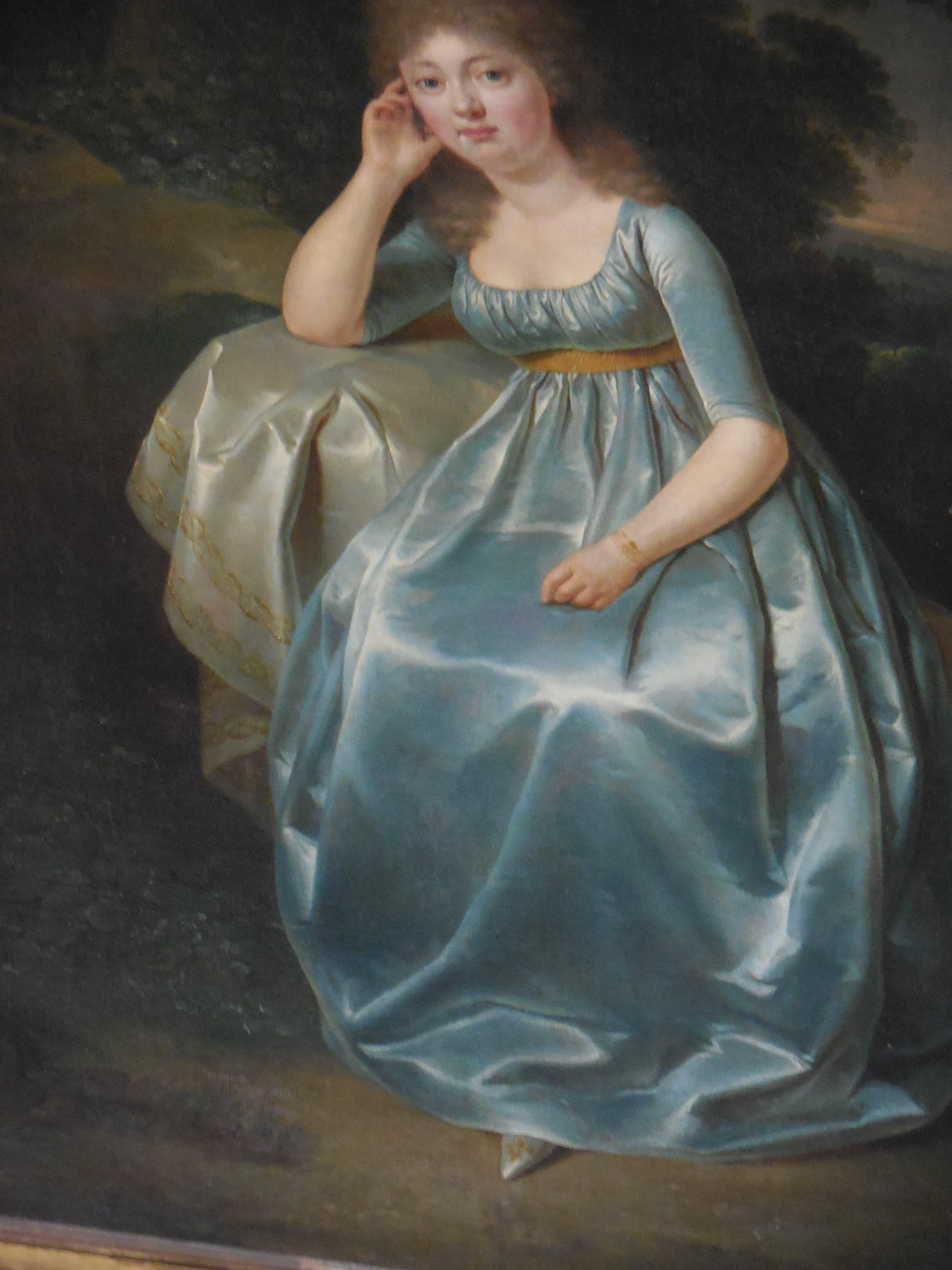
The library was another favorite room. I loved being surrounded by books, especially by 53,000 volumes. They were written in German, French, Latin, Italian and Czech. The guide pointed out the biggest book, called Hebrew Didactics and made up of 2,500 pages. Published during the 17th century, it weighed 11 kilos. Always a fan of paintings of castles, I liked the portrayals of the castles before the horrendous fire of 1826. A portrait of a young Franz Joseph I also was intriguing. In the Portrait Gallery of the Furstenbergs, the most important painting was also the smallest – a rendition of Albrecht Furstenberg from 1577. He had worked for Emperor Rudolf II. It was the oldest portrait in the collection.

Krivoklat2020int12Krivoklat2020int13

Another room showed off Baroque and Rococo sleighs once used for hunting, including one that had scenes of Amsterdam depicted on it. The Furstenberg museum included paintings from the 18th and 19th centuries, knights’ armor, spears and a colorful Asian vase plus many other artifacts.

Krivoklat2020int18Krivoklat2020int19

Gothic art and illuminated manuscripts amaze.

I had been nervous about this visit because of the coronavirus epidemic, but it went quite smoothly, despite the lack of social distancing on the tour. I was glad to travel again, even if it was only an hour from my home. I realized how much I had missed my weekly day trips. Being cooped up at home, only getting outside for walks, had been at times agonizing as I longed for the old normal that would never exist again. Now, at least after visiting this castle, I felt as if I was following a more normal routine, though I was still terrified of getting the disease.

Krivoklat2020int30Krivoklat2020int31Krivoklat2020int32Krivoklat2020int33

From Portrait Gallery of the Furstenbergs

We ate lunch in a quiet restaurant in Lány, the town where the president had his summer residence. We were seated at least two meters from the other diners. It was a fantastic feeling to be at a restaurant again after so many microwaved meals at home. It felt liberating, but I knew I still had to be very careful. We got back before 5:30 in the evening, so I was able to watch New York Governor Andrew Cuomo’s daily press briefing live. His briefings helped keep me sane while living through such crazy times.

The library and sleigh collection

While memories of all my other trips to Křivoklát blended together, this one would stand out because of the coronavirus pandemic. I had never imagined I would have to wear a mask while touring a castle. I did not understand why some Americans refused to wear them. After all, it could make all the difference between staying healthy and getting ill or even dying.

Krivoklat2020intceiling1Krivoklat2020intwindow

During my trip to Křivoklát, the world seemed a little saner, a little less chaotic and less confusing. Admiring Gothic art and Baroque sleighs allowed me to – at least for an hour and a half – forget that the world was messed up, there were so many sudden changes to deal with on a daily basis. Visiting Křivoklát Castle helped me conquer my fears of going outside. And I knew that tomorrow would be another day as I had to take life one step at a time, always moving forward, never looking back.

Tracy A. Burns is a writer, proofreader and editor in Prague.
Krivoklat2020view4Krivoklat2020view5Krivoklatview2

Views from the castle