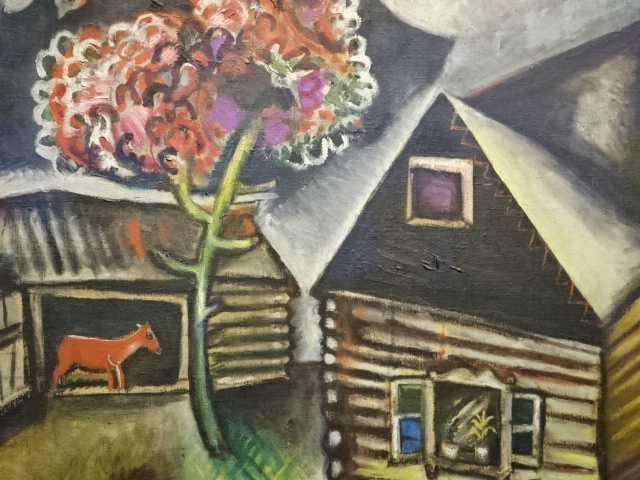
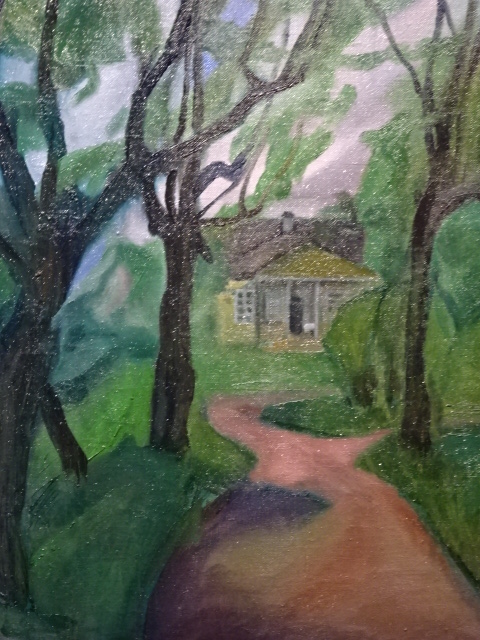
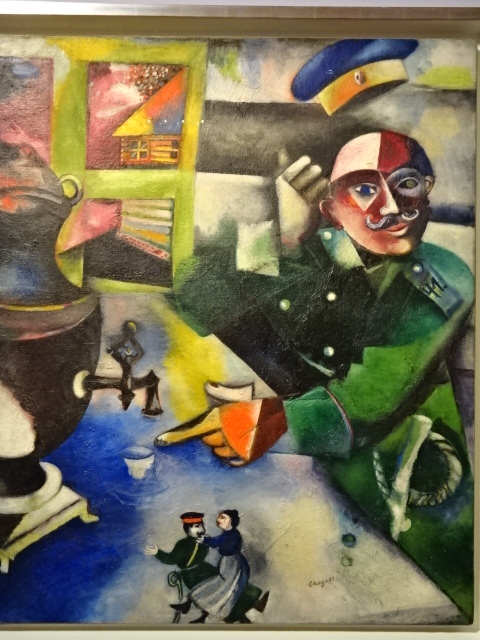
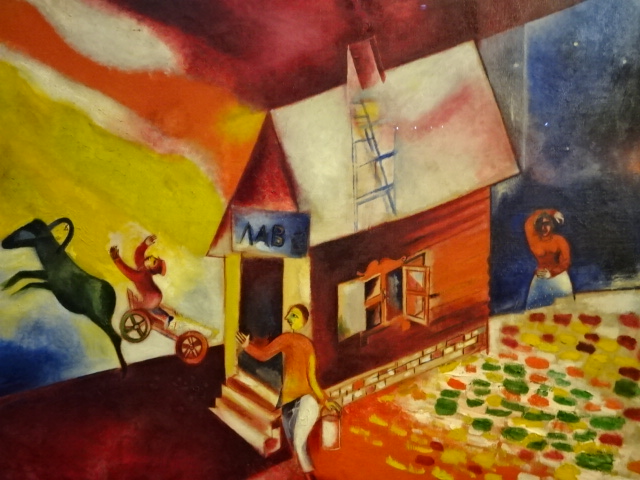
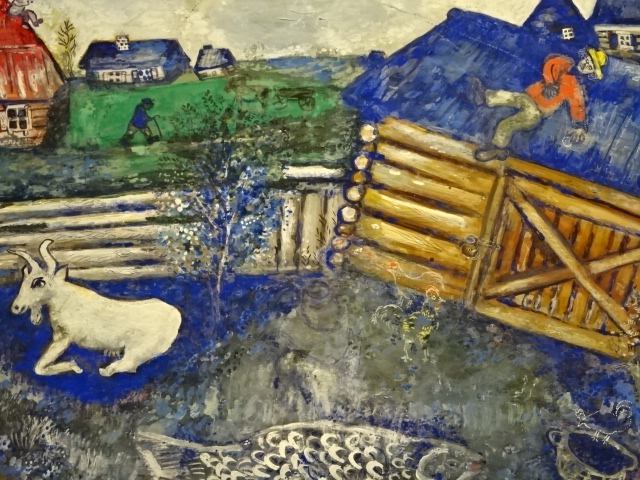
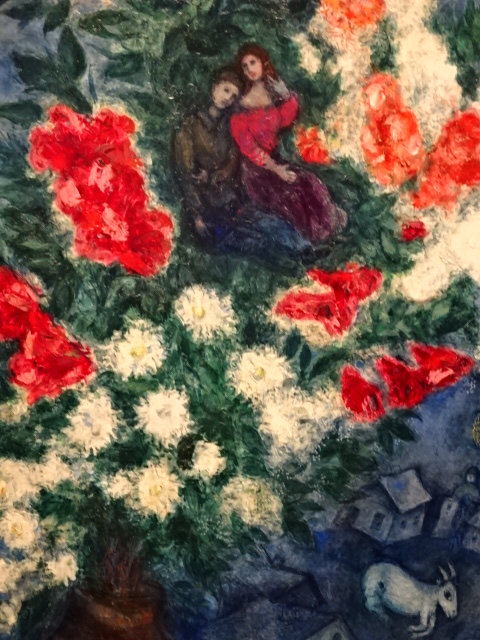
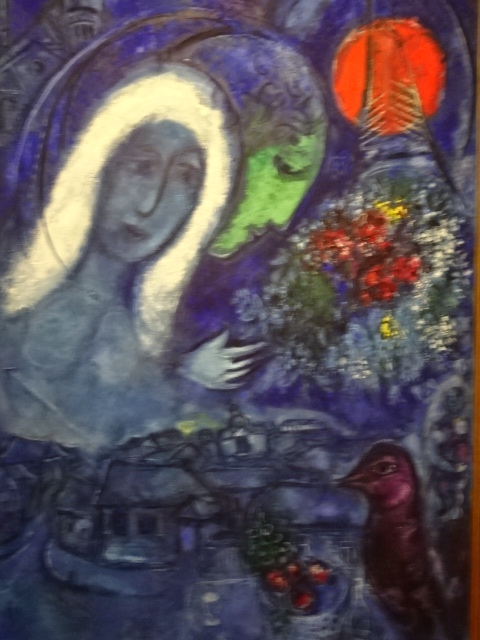
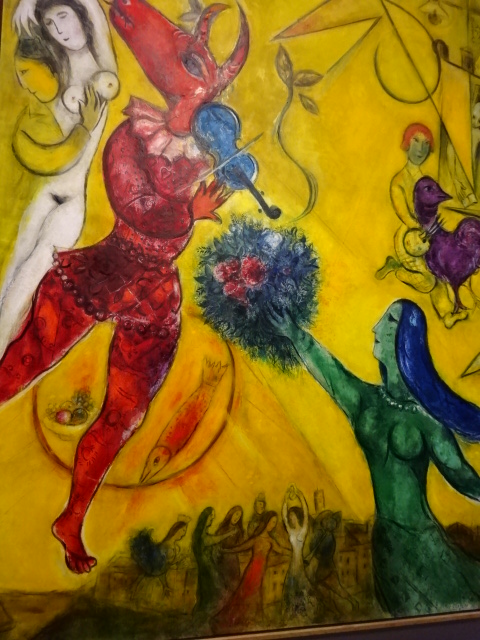
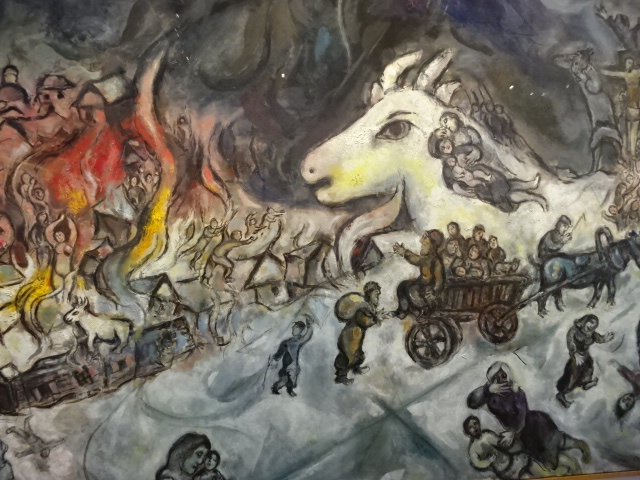
I admired Marc Chagall’s works at the Albertina venue in Vienna, Austria during late October of 2024. I have always loved going to exhibitions in the Albertina. I recalled a comprehensive show of works by Durer at that venue some years ago. A long-time fan of Chagall, I loved his use of bright colors and atmosphere of playfulness in his paintings that had a dreamy, fantasy-filled quality. I was enamored with his mastery of color to express various emotions and to create new worlds. I loved his renditions of Paris, the Eiffel Tower often dominating his creations.
Before this show I hadn’t realized how strongly his Jewish background had influenced his art. Chagall’s paintings were punctuated with Jewish folklore and motifs. I saw a painting of a synagogue and portraits of rabbis, for instance. Many paintings boasted biblical themes. I also hadn’t realized how often he had rendered his hometown, both sadness and joy intermingled in the memories. His yearning to return to his hometown was extremely visible in his art.
The symbolic nature of his artistic creations also enamored me as I noted the many violinists, animals, half-human creatures, wooden houses, circus characters, roosters and floating married couples as well as beautiful floral arrangements. Because I had visited an exhibition in Prague’s Wallenstein Riding Stables about the interwar years of the École de Paris movement, I knew he had been associated with that era during his Paris sojourn.
The exhibition allowed me to become better acquainted with the artist’s life. Marc Chagall (1887-1985)was born as Moishe Shagal on July 6, 1885 into a Hasidic Jewish family in Vitebsk, located in today’s Belarus. During the late 19th century the town was situated in the Russian Empire. His impressive, varied resume includes paintings, drawings, book illustrations, ceramics, prints, tapestries, stained glass and stage sets, but this vast exhibition focused solely on his paintings.
While he spent World War I in his hometown, he went to Paris before the war broke out, moving there in 1910 when he was 23 years old. In France he made friends with Guillaume Apollinaire, Ferdinand Léger and others creating avant-garde works. He often depicted Jewish themes and also evoked Paris in many paintings. During World War I, back in Vitebsk, he married Bella and held exhibitions in Russia as the war made it impossible for him to leave the empire. He founded an arts college in his hometown, too. However, he was in dire financial straits during the Russian Civil War. After World War I, much of his work was Moscow-based.
Following the Bolshevik Revolution, he moved to Paris for the second time, but fled during World War II after the Germans took control of France. The Nazis in occupied France took away Chagall’s French citizenship, and he and his wife were arrested. However, with the help of others, he and his wife found a way to escape to the USA. He felt like an outsider and didn’t speak English.
While he was in New York City, tragedy struck his hometown of Vitebsk, which was destroyed by the Nazis. Things would get even worse. Bela passed in1944 because it was not possible to get her any penicillin. It was no surprise then that Chagall’s late spouse appeared in many of his paintings. In 1948, though, he returned to Paris, and there his paintings focused on Jewish themes and his yearning for the existence of his hometown. Also, he would marry two more times.
He devoted much time to other fields as well. Some of his accomplishments included creating stained glass decoration in the cathedral in Reims and at the Art Institute in Chicago. He also made stained glass adornment for places in Switzerland and Israel. He became even better known for his ceiling painting of the Paris Opera. I remembered gazing in awe at this ceiling several decades ago. It was an experience I will never forget, even though I saw it so long ago. He also made sculpture and ceramics as well as tapestries.
Chagall died at the age of 97 on March 28, 1985 at the age of 97. He is buried with his third wife in a cemetery in Saint Paul-de-Vence, located in the Provence region.
Tracy A. Burns is a writer, proofreader and editor in Prague.
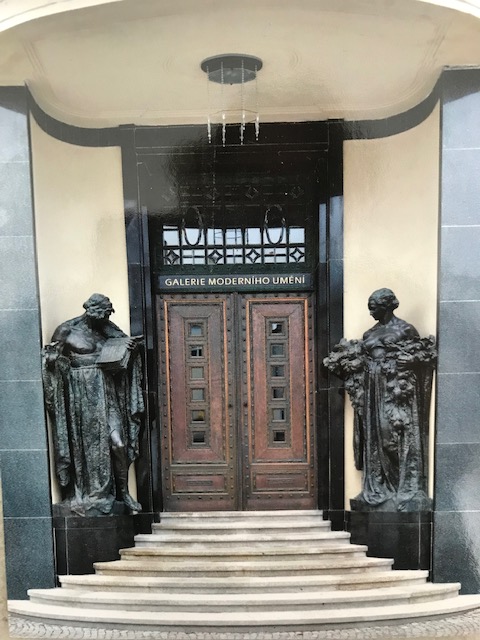
This permanent exhibition at the Gallery of Modern Art in Hradec Králové showcases the works of some of the most influential Czech artists of the 20th century. I liked the fact that the works were organized by person with commentary about the artists’ backgrounds and styles. I will highlight the creations that most influenced me, although all the painters and sculptors are important.
First, about the building housing the Gallery of Modern Art: Like many edifices in Hradec Králové, the museum is an architectural gem. Facing the town’s main square, the building that was completed in 1912 by Osvald Polívka is impressive with two statues flanking the façade. These sculptures were made by Ladislav Šaloun in 1908 and show allegories of commerce and the harvest. Reliefs of atlases with dogs at their feet also make up the external ornamentation. Polívka’s Art Nouveau designs can be found in Prague’s Municipal House, which he decorated from 1905 to 1912. I tell everyone coming to Prague to tour the Art Nouveau Municipal House, as it is certain to be a highlight of any visit. Šaloun created the statue of Jan Hus that dominates Prague’s Old Town Square.
Several banks were housed in this building before and during the First Republic. For many years under Communism, the Cotton Industry Association and an agricultural company called the place home. Renovations took place in the late 1960s. In 1987, the totalitarian regime transformed the building into the Museum of Revolutionary Traditions. This totalitarian exhibition was closed after the 1989 Velvet Revolution that freed Czechoslovakia from Communist control.
In 1990, the Gallery of Modern Art took up residence there. From 2014 to 2016, both the interior and exterior underwent a vast renovation. A walkway was formed around the central atrium, for example. The interior boasts geometric shapes, floral designs and Art Nouveau-styled adornment of garlands and cherubs. I especially liked the stained glass window decoration.
Here are some of my favorite artists represented in this exhibition:
Fate of the Artist, 1909
Quido Kocián
The expressive sculpture of Quido Kocián was influenced by symbolism and Art Nouveau. I love how he was able to express basic emotions like love and suffering. I went to a superb exhibition of his work about 15 years ago on Husova Street in Prague. In some statues I could see the turmoil and anguish of the persons depicted. Other sculptures triggered feelings of happiness and fulfillment. Kocián had a knack for depicting various psychological states and the depths of the human soul. He studied under legendary artist Josef Václav Myslbek but wound up rebelling against Myslbek’s traditional style, opting for expressiveness instead. Kocián’s works were not fully appreciated in the Czech art history sphere for a long time.
Ladislav Zívr
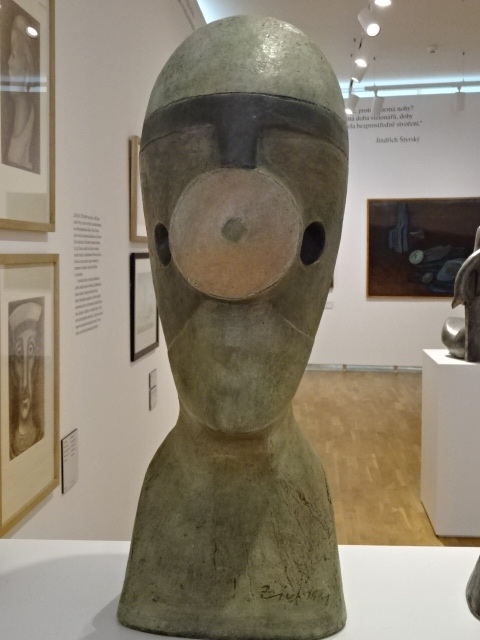
Surgeon, 1961
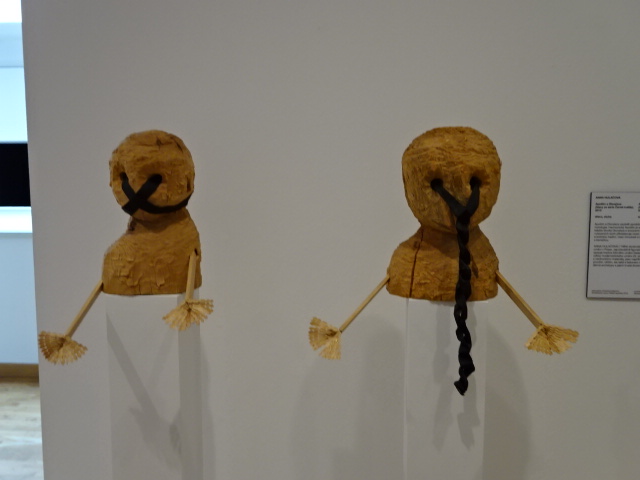
A member of the artist Group 42, Zívr focused on everyday life, a feature that is dear to me in all art forms. Inspired by Cubism and the creations of Otto Gutfreund, he made sculptures that have machine-like qualities as well as human traits. He had a penchant for surrealism. After the world wars, Zívr was influenced by nature, and his works portrayed strong symbolism. I liked the way he was able to express a person’s soul through primitive forms.
Jiří Kolář
I had been to a large exhibition of Kolář’s works in Prague’s Kinský Palace some years ago and was very familiar with his collages that included cut out images and words from publications. (See my article about the exhibition in a much earlier post called Jiří Kolář Exhibition Diary) He was a poet and prose writer as well as a fierce critic of Communism. Kolář emigrated to Paris in 1979. He often used phrases from books or created his own poems in his collages. His works lingered on the border of the dream realm and reality, a trait I found very intriguing. A staunch supporter of democracy, Kolář was also one of the first Czechs to sign Charter 77, a document written by dissidents to promote human rights in the normalization era of Communist Czechoslovakia. He played a major role in publishing literature banned by the regime. Kolář was also one of the founders of the influential Group 42.
Jaroslav Róna
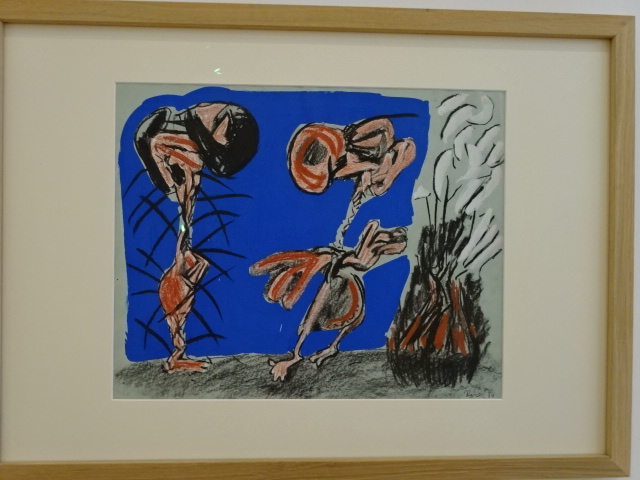
Scene by the Fire, 1984
I know Róna’s sculptures well, but I was not familiar with his paintings. Róna designed the abstract Franz Kafka Monument in Prague’s Jewish Quarter, an important sculpture to see in the Jewish Town. He is, indeed, a man of many talents: He has also worked as a painter, illustrator, screenwriter, author of books, actor, singer and educator. His works have a certain dynamic energy. He has been inspired by the Expressionism style of Edvard Munch, Oskar Kokoschka, Max Beckmann, Egon Schiele and Pablo Picasso. A supporter of democracy, he drew brochures for the Velvet Revolution during 1989. Rona is also an avid traveler. His sculptures can be found at Prague Castle as well as on the island of Crete and in many other places.
Josef Váchal
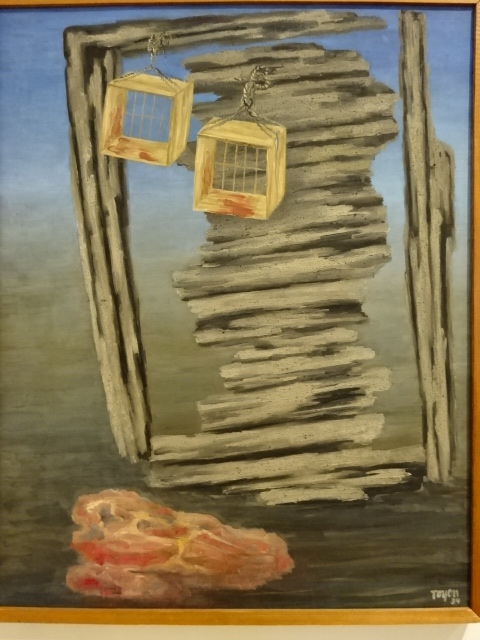
Sacrifice, undated
I liked the mystical quality in Váchal’s works. He was a graphic designer, wood engraver, bookmaker, writer and painter who excelled in all those genres. Váchal was inspired by expressionism. His works featured symbolism, naturalism and Art Nouveau tendencies. A soldier during World War I, he fought in 12 battles. The Communist coup brought hard times for Váchal, who remained isolated after 1948. People did not show much interest in his work then. In the 1960s, he received some acclaim. Much later people recognized that Váchal had created some of the most significant works of Czech graphic design in the 20th century.
Augusta Nekolová
Four Seasons, 1914
Because Nekolová was female, she had limited educational opportunities during the 19th and early 20th century. She did, however, study unofficially under the prominent Czech artist, Jan Preisler. Nekolová worked as a painter, illustrator and graphic artist. She steered away from representations of modern life in her works. She was known for her landscapes and for her emphasis on motherhood. Nekolová strove to promote the national identity of the Slav nation. She developed a strong interest in folk culture. At the end of World War I, Nekolová was hospitalized. She died in 1919 at the age of 29.
Bohumil Kubišta
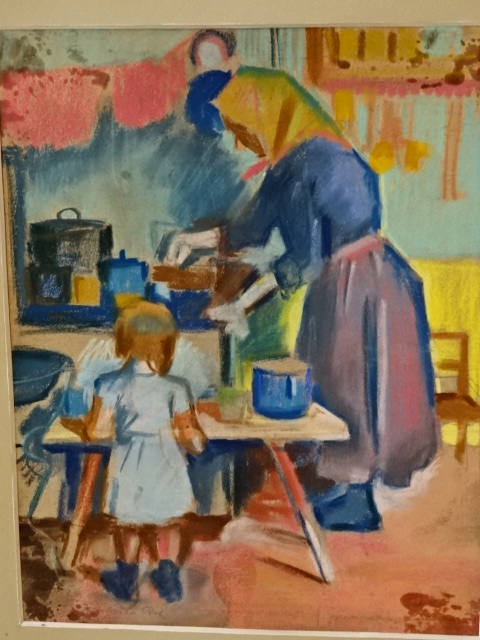
In the Kitchen, 1908
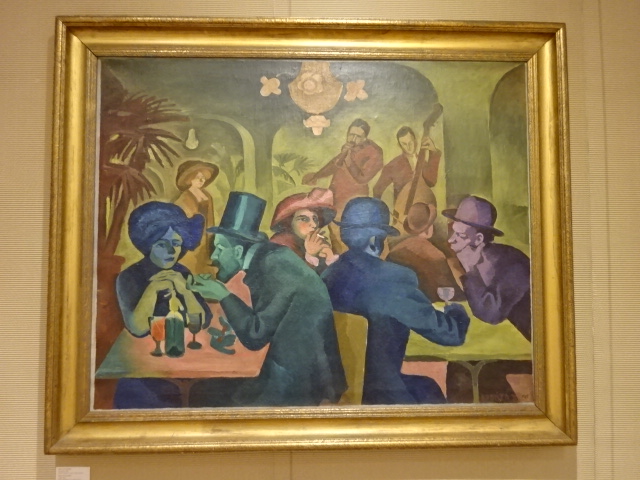
Café, 1910
A prominent avant-garde artist, Kubišta helped found the Expressionist group the Osma (The Eight). He was a painter, graphic designer and theoretician and is considered to be the founder of Czech modern painting. His works dealt with existential issues. Kubišta’s expressionism was inspired by Munch. He was also influenced by Braque and Picasso’s Cubism. Kubišta analyzed the works of Eugene Delacroix and Vincent Van Gogh. His works also contain elements of Futurism and Fauvism. Kubišta often explored themes dealing with modern technology and nature. While serving in the Austrian army during World War I, he won the distinguished Leopold Order. He died of the Spanish flu at the age of 34 in 1918.
Emil Filla
Dance of Salome, 1911
Hej hore háj, Folk Song, 1948
Along with Kubišta, Filla established the Osma group. He also was known for his writings about art theory. During his early artistic endeavors, he drew inspiration from Edvard Munch’s Expressionism. Later he took up Cubism, influenced by Picasso and Braque. He also was captivated by Baroque still lifes by Dutch painters. El Greco and his symbolism fascinated Filla. In the 1930s, he became enthralled with surrealism. His landscapes demonstrate his knowledge of Chinese calligraphy. My favorite trait in his paintings involves his use of a harmony of colors.
Repression (Anxiety) by Josef Wagner – temporary exhibition
I especially liked the exhibition’s pieces of art influenced by Expressionism and Cubism. The colors and shapes in Kubišta’s and Filla’s works caught my undivided attention. I was introduced to Nekolová’s art and intriguing background at this exhibition. I was fascinated how Quido Kocián captured the emotions of the human soul in his sculptures while Zívr concentrated on simple forms to create profound meaning. Kolář’s collages were a sort of visual poetry. Váchal and Róna’s creations displayed impressive energy.
Moscow Diary, 1989 by Anna Daučíková
It was my first visit to Hradec Králové, except for brief stops at the train station and bus station. The Gallery of Modern Art with its poignant exterior and interior decoration and use of space was one of the most impressive buildings I saw.
Tracy A. Burns is a writer, proofreader and editor in Prague.
Landscape, 1962 by Vladimír Boudník
Apollo and Dionysus, 2013 by Anna Hulačová
The gallery also has an impressive collection of contemporary art.
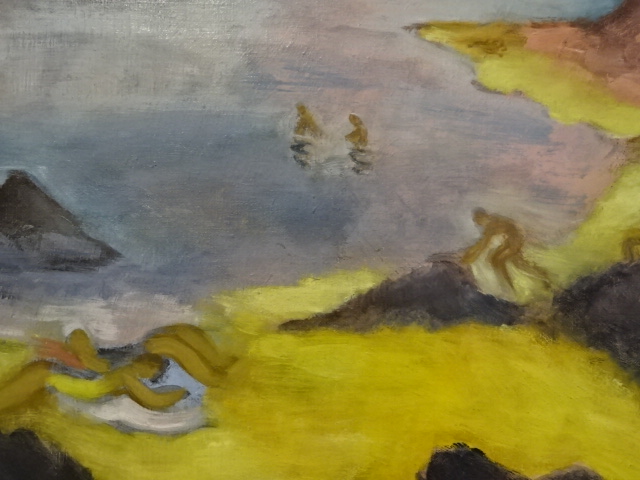
Beach in Crimea (In A Small Bay), 1936 by Věra Jičínská, temporary exhibition
See my post Věra Jičínská Exhibition Diary for more information on this temporary show.
During 2017, I went on a walk through the Ořechovka section of Prague with Praha Neznámá or Unknown Prague tour company. The guide was excellent, the tour comprehensive. If you speak Czech, I recommend discovering parts of Prague with this agency. However, it was far from my first visit to the area.
The villa-dotted Ořechovka quarter of Prague’s sixth district is one of the most picturesque parts of the city. For years, I have loved taking walks through the area, admiring the various styles of architecture. Some centuries ago, the property belonged to Jan Kryštof Bořek, who had a superb chateau built in a French style garden that was dotted with sculptures. The chateau was destroyed in wartime during 1742. The land was later used for other purposes, and, after Czechoslovakia was born in 1918, the first villas were constructed there thanks to architects Jaroslav Vondrák and Jan Šenkýř. The duo was especially inspired by English garden towns. The villas often consisted of apartments, from one-room accommodations to flats of four rooms. Many prominent artists settled in Ořechovka.
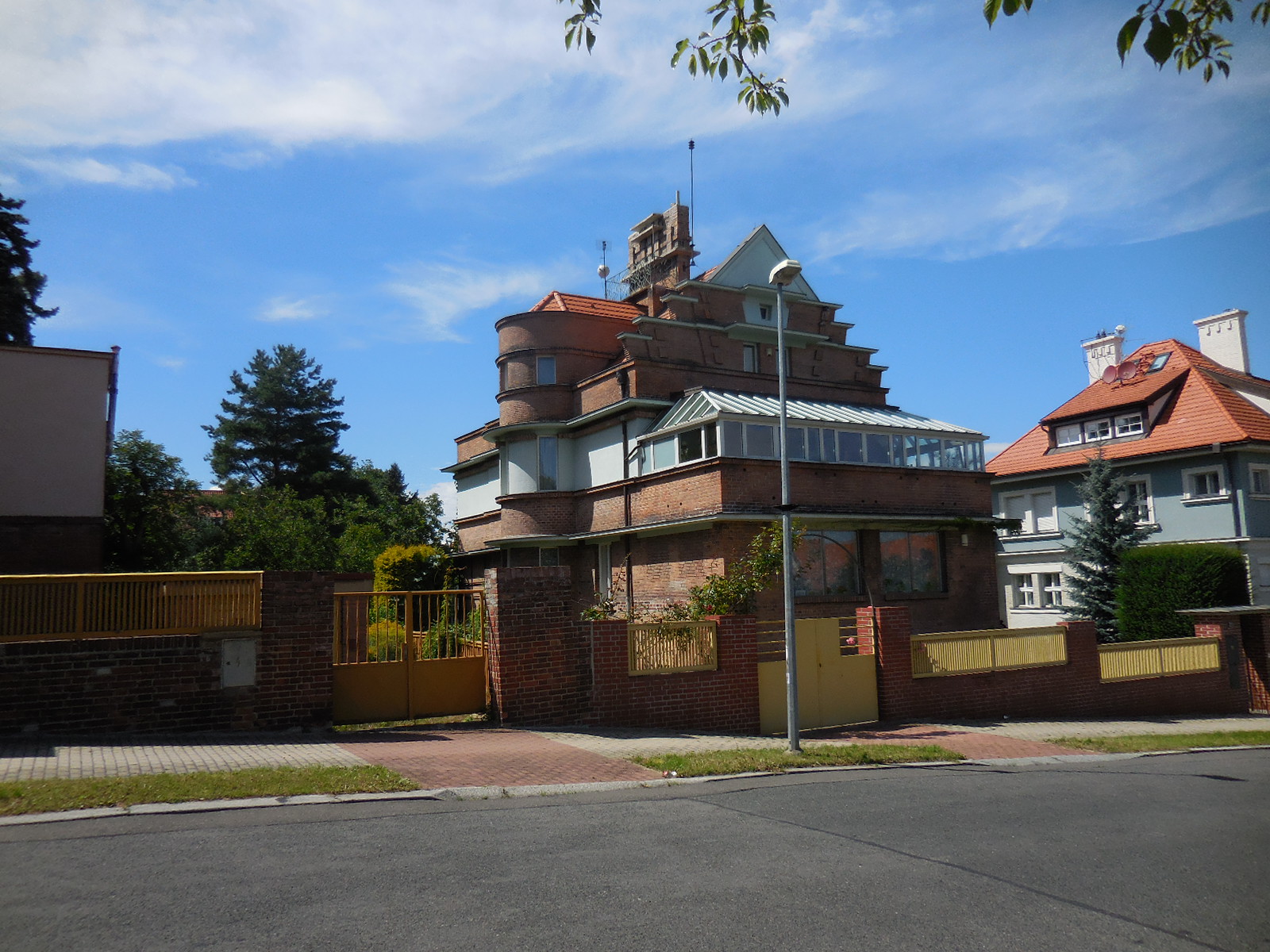
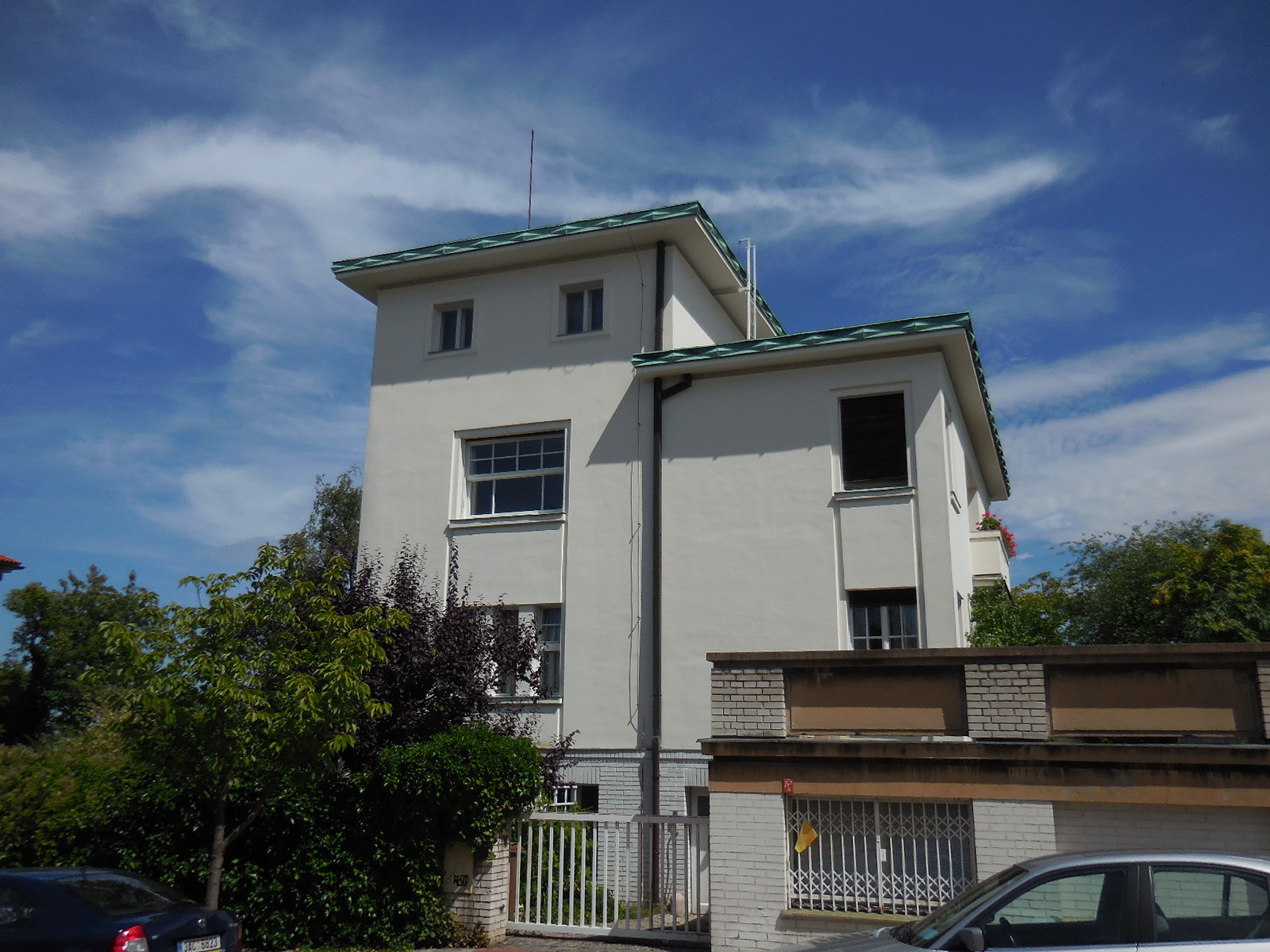
The villas that intrigued me the most were the ones designed by Czech modernist architect Pavel Janák, whose creations include the functionalist plan for the Baba Housing Estate, also in Prague’s sixth district. He designed three of the 32 houses in Baba. Janák also drew up the plans for reconstruction work at Prague Castle and made innovative Cubist ceramics. His Kafka Villa – no, it has nothing to do with Franz! – was constructed for sculptor Bohumil Kafka whose works include the Monument to Jan Žižka in Prague’s Žižkov district. That sight ranks as the world’s largest equestrian statue. Inspired by the works of Auguste Rodin, Kafka favored symbolism and secession. Situated at 41/484 Na Ořechovce Street, this villa combines various styles as I noticed features of symbolism, naturalism and impressionism. It also is adorned with a superb Art Nouveau sculpture.
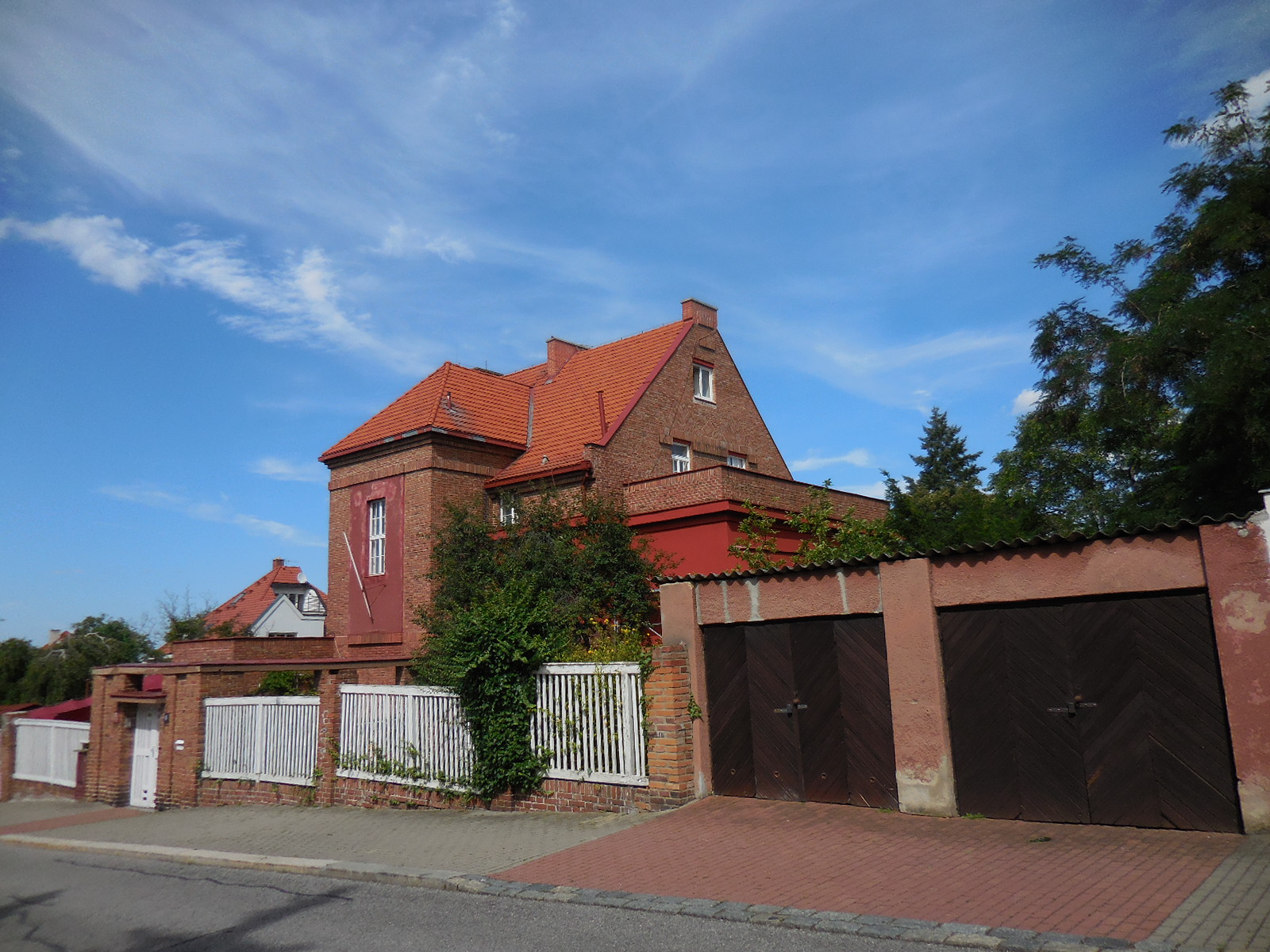
Janák also cast his magic spell with the villa for painter Vincenc Beneš, a painter influenced by French modernism as well as Cubism and Fauvism. Later works included stylized figural creations and battlefields as well as landscapes for the National Theatre. Located at Cukrovarnická 24/492, this house flaunts a distinctive Dutch style and features coarse brickwork that appealed to me. (The villa for painter, graphic artist and illustrator Václav Špála also is dominated by the Dutch style that shows off coarse brickwork, though it was not designed by Janák.)
The third villa that Janák contributed to Ořechovka consists of two villas together, built for Cubist painter, graphic artist and sculptor Emil Filla and his father-in-law, psychologist, philosopher and politician František Krejčí, in the 1920s. The structure of these villas is similar to the Beneš Villa.
Filla’s story is intriguing. Inspired by Picasso, Braque, Munch and Van Gogh, he was noted for his Cubist painting and sculpture. Before World War I, he traveled to Paris and then fled to the Netherlands when war erupted. After the war, he came back to Prague, and traits of surrealism could be found in his works, which included painting on glass. On the first day of World War II, he was arrested by the Nazis, along with other prominent Czechs. He spent time in several concentration camps during the war, but somehow survived. After the war Filla took up teaching at Prague’s Academy of Arts, Architecture and Design and created mostly landscape paintings.
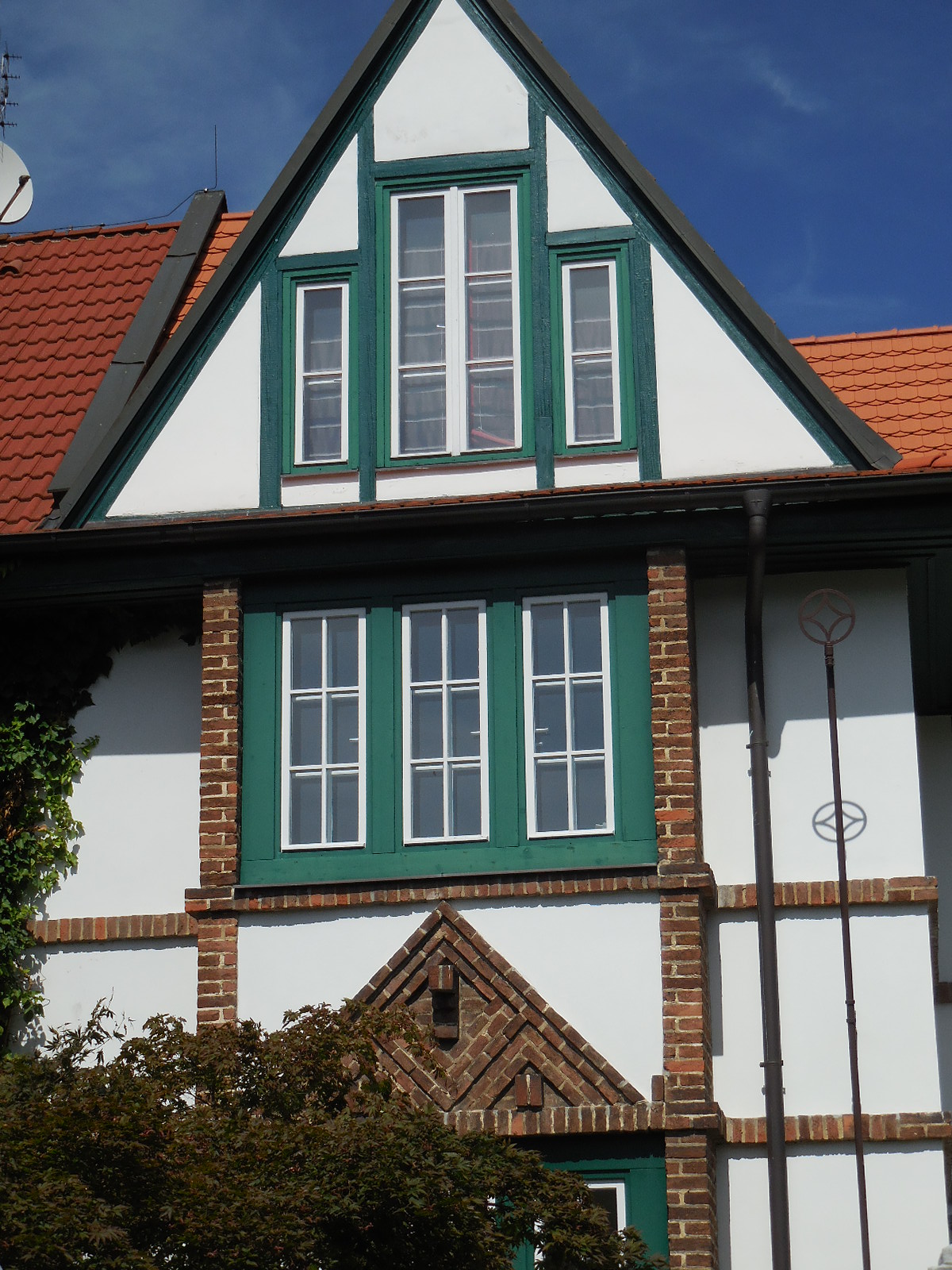
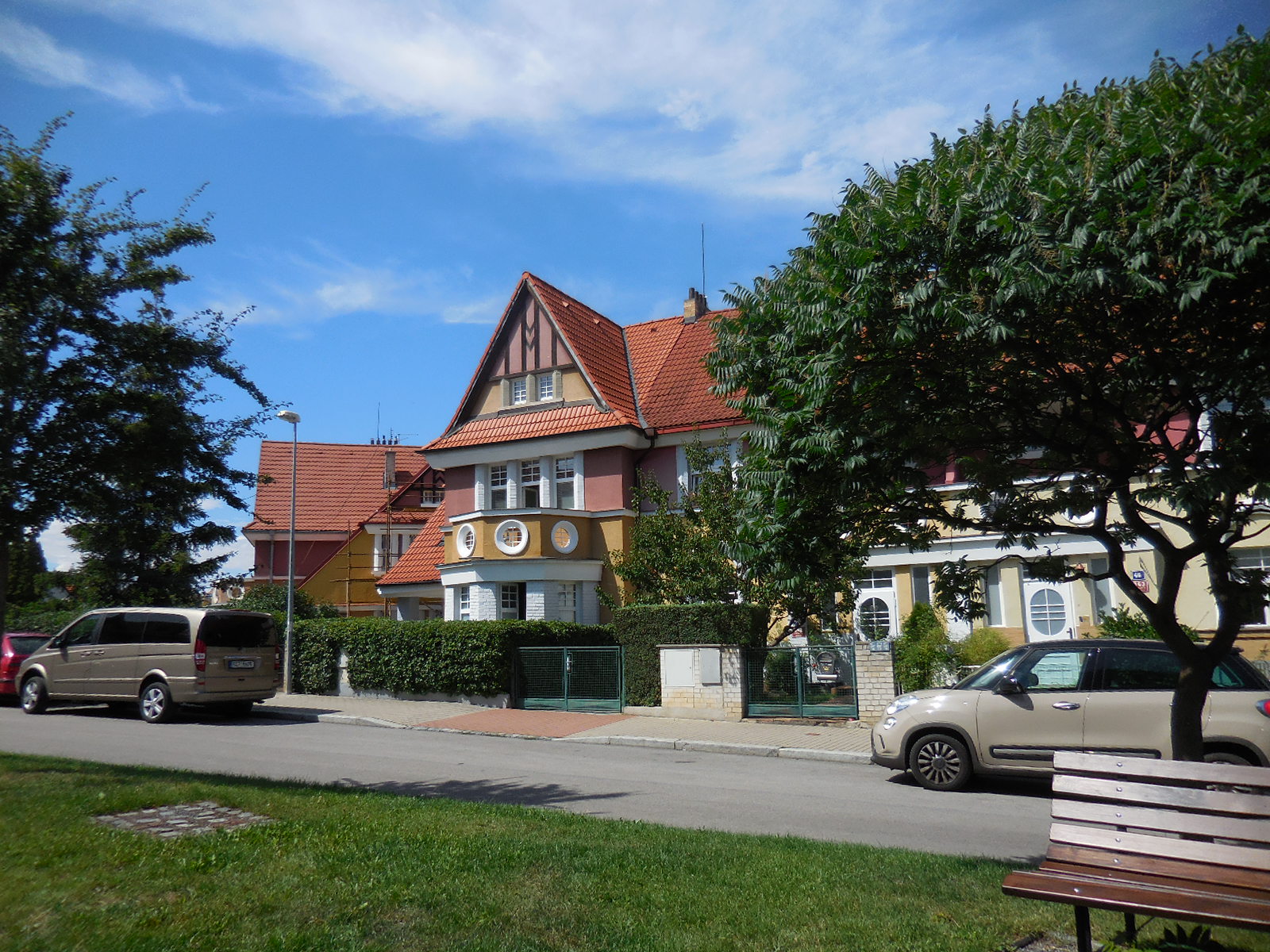
My favorite street in the quarter and also my second favorite street in Prague – my favorite is a short, dead-end street in Prague 6, where I lived for 10 happy years – is called Lomená Street. The design of the 1920s townhouses by Vondrák and Šenkýř resemble English cottages. They are so quaint and have an intimate atmosphere that immediately makes me feel calm and at ease despite the world’s turmoil and with my own problems, be they big or small. I love the triangular gables. Other characteristics are narrow, rectangular windows and high chimneys.
Another one of my favorite places in Prague is the Rondocubism triangular area made by Dělostrelecká and Klidná streets. Similar to Art Deco, Rondocubism is unique to the Czech Republic. Janák paired with fellow architect Josef Gočár to create works in this nationalistic, folk-inspired style. The bright colors make the homes even more lively and dynamic. I like to imagine the time period when these townhouses were constructed, a few years after Czechoslovakia had been christened a new country in 1918. So much hope and positive energy was in the air. I would not mind calling one of these architectural gems home.
Now the main square of Ořechovka is depressing and dilapidated with only a few small shops, but back in 1926, when it was completed, the central building featured not only shops but also a cinema (which was only recently shut down), restaurants, a café and doctors’ offices. In 1927, the building was extended with a theatre, dance hall and library. I remember seeing the film Kolya, which won an Oscar in 1996 for best foreign film, at the small, intimate movie theatre there. The movie directed by Jan Svěrák and starring his father, Zdeněk, remains one of my favorite films. Back in the late 1920s, the square must have been quite the gathering place, bustling with activity and excitement.
There is another reason Ořechovka is dear to me. Back in the 1990s, when war was causing havoc in former Yugoslavia, I was teaching English to two girls, a 9-year old and an 11-year old, living in Ořechovka. They resided in a beautiful townhouse resembling an English cottage. Their father worked for the Czech Embassy in Belgrade, but the children and their mother had been sent back to Prague because it was deemed too dangerous for them in Belgrade.
The late Václav Havel, president of Czechoslovakia and the Czech Republic for 13 years, resided in the villa pictured above. His widow still lives there.
I have not taught many children. I had previously taught only two youngsters. I do not have any children and do not understand them well. However, these two girls opened their hearts to me. They were such kind and decent people, obviously influenced by their mother, who was a wonderful human being. I looked forward to the lessons because it was so pleasant to teach them. Moreover, with each lesson, I learned a little better how to communicate with children. I remember they loved learning about the US presidents. I had flash cards, one for each president, and we used to create games with them. Therefore, Ořechovka is a place I associate with genuinely good people who have influenced my life. I often wondered what ever happened to those girls. Are they living in Prague or abroad? Do they have families? Did they keep up with their English studies?
This villa was once the home of high-ranking Nazi Adolf Eichmann.
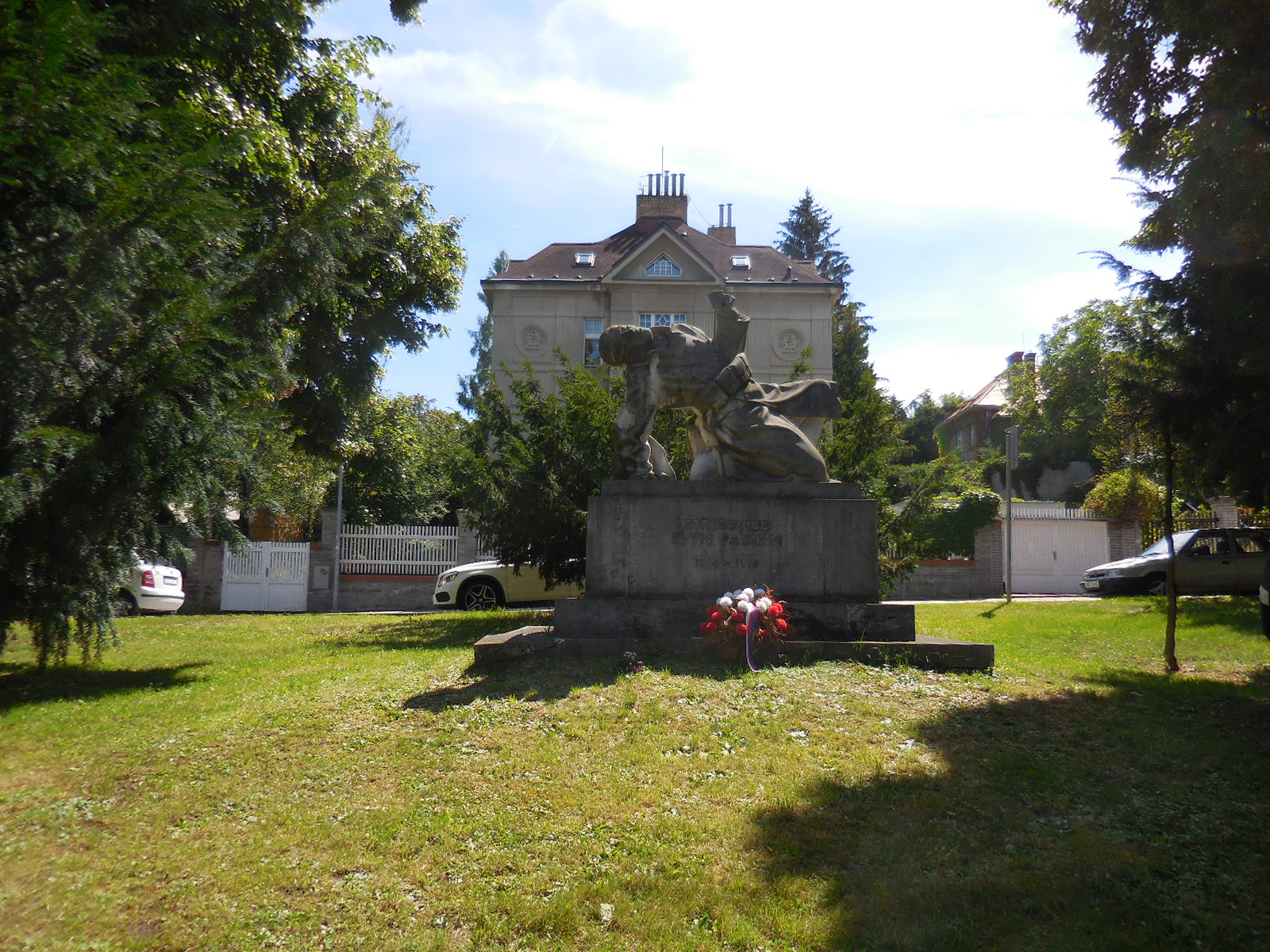
Unfortunately, not only good people have called Ořechovka home. The most evil person to live in the quarter was Adolf Eichmann, who took up residence in a neoclassical villa that had belonged to Jew Rudolf Fišer. Eichmann fled in April of 1945, and the previous owner was allowed to return to the villa but only to rent a few rooms.
Ořechovka remains dear to me, and I love taking walks there whenever weather permits. Along with Hanspaulka, it is one of my favorite parts of Prague. I recommend travelers take walks through these villa-dotted quarters in order to get out of the crowded center and experience a more tranquil side of Prague.
Tracy A. Burns is a writer, proofreader and editor in Prague.
















 During 2017, I went on a walk through the Ořechovka section of Prague with Praha Neznámá or Unknown Prague tour company. The guide was excellent, the tour comprehensive. If you speak Czech, I recommend discovering parts of Prague with this agency. However, it was far from my first visit to the area.





 Tracy's Travels