2024 Travel Diary

David Caspar Friedrich, The Wanderer

As usual, this past year was punctuated by travel, though most trips only lasted one day or half of a day. Still, I was able to explore many sights within a two-hour distance of Prague. Once again, I realized that the Czech Republic blossoms with beauty in every niche of the country.

Perhaps the painting that best expresses my year of travel is one I saw at an exhibition of David Caspar Friedrich’s paintings from the Romanticist era. While admiring his “The Wanderer,” I saw the back of a male figure in the forefront, standing on a cliff as he peered at the mist-filled mountains beyond. It epitomizes why I love travelling: to discover new worlds, to muddle through that mist, reaching a clarity that allows me better to understand myself as well as to gain historical knowledge.
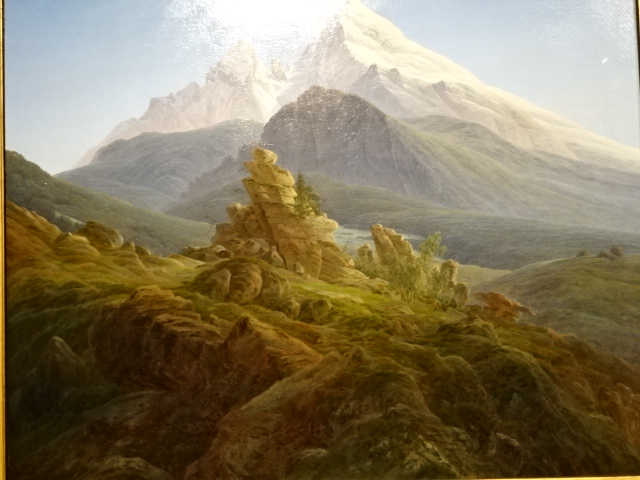
By David Caspar Friedrich, on display at Albertinum for temporary exhibition

In the Dresden Albertinum, I was mesmerized by Friedrich’s landscapes. Many featured vibrant colors and a brilliant use of light. He also created dark paintings with a chiaroscuro element that gave them a mystical appearance. Some of his landscapes included a solitary figure traveling alone in nature. Friedrich’s gnarled trees in barren environments were symbolic. I felt especially drawn to his portrayal of mountains in shades of pink.
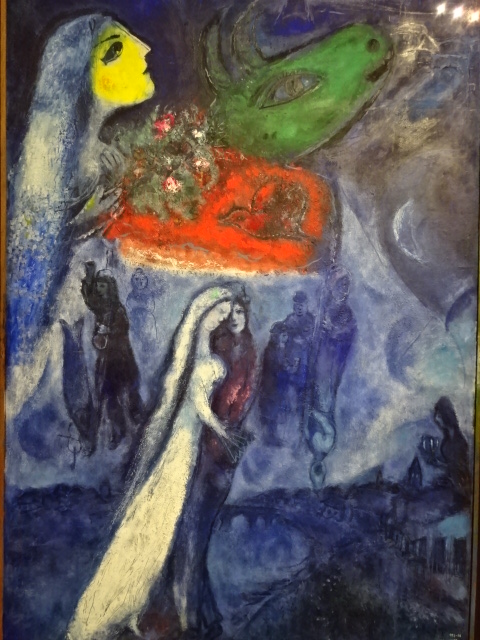
By Marc Chagall, on display at Albertina in Vienna for temporary exhibition
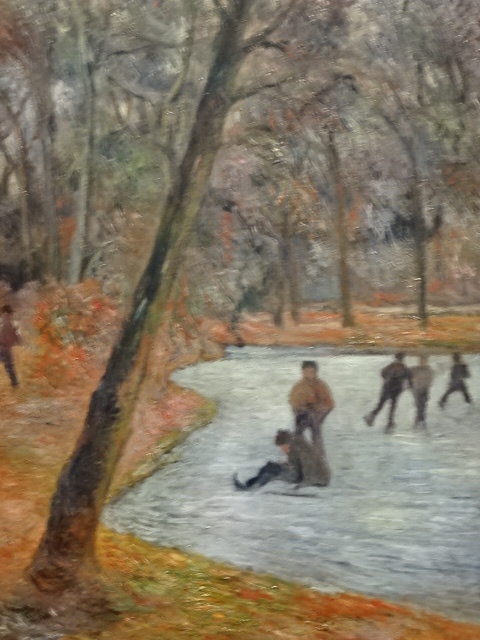
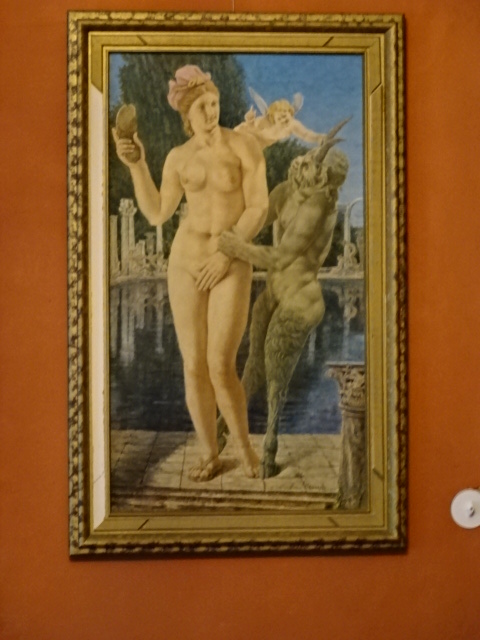
By Paul Gauguin
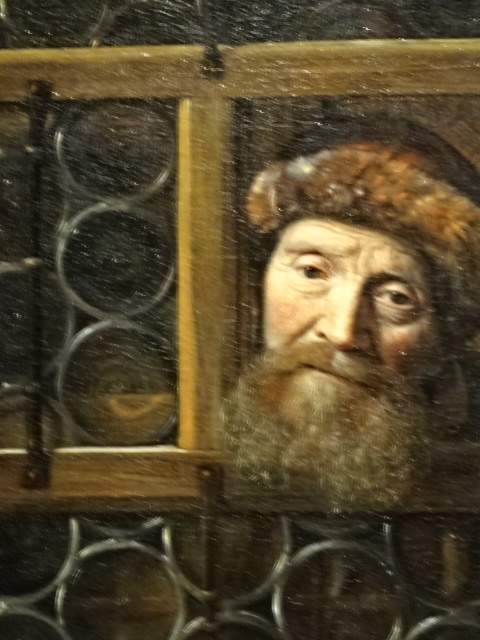
By Hoogstraten, Rembrandt’s pupil

I spent three days in Vienna going to major exhibitions featuring works by Chagall, Gauguin and Hoogstraten, a star pupil of Rembrandt. I hadn’t realized how many of Chagall’s paintings took on Jewish themes and serious topics. I had always thought of Chagall’s art as fun-loving and colorful. My favorites were those inspired by Paris and the circus, created in bright blues and yellows. The Gauguin retrospective showed his works from various time periods, so it was possible to see his specific artistic developments. I was most impressed with his early landscapes. I had not heard of Hoogstraten, whose portraits brought out the soul in the sitters just as Rembrandt’s did. His intriguing use of perspective in some paintings also impressed me. Works by Rembrandt also enchanted me in this exhibition.
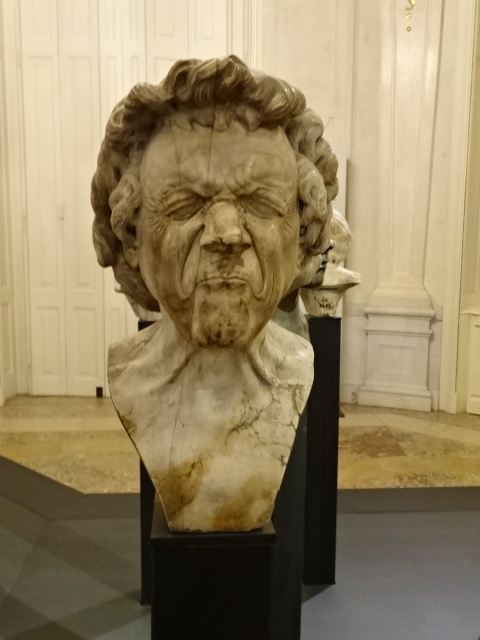
Franz Xaver Messerschmidt, Character Heads

by Gustav Klimt on permanent display at Upper Belvedere

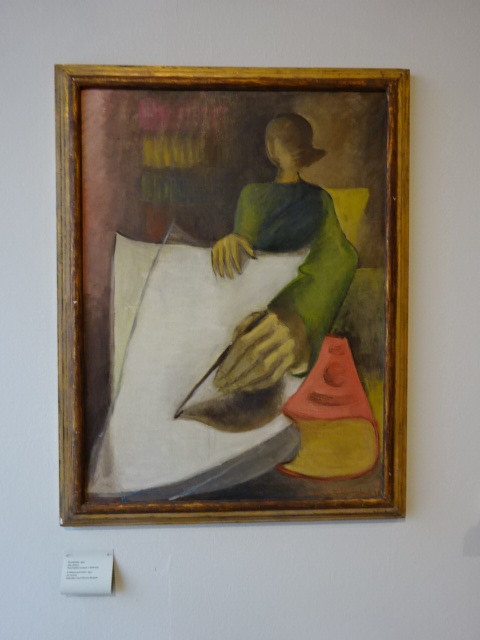
By Václav Špála, on display at Upper Belvedere

City of Vienna Museum, permanent collection

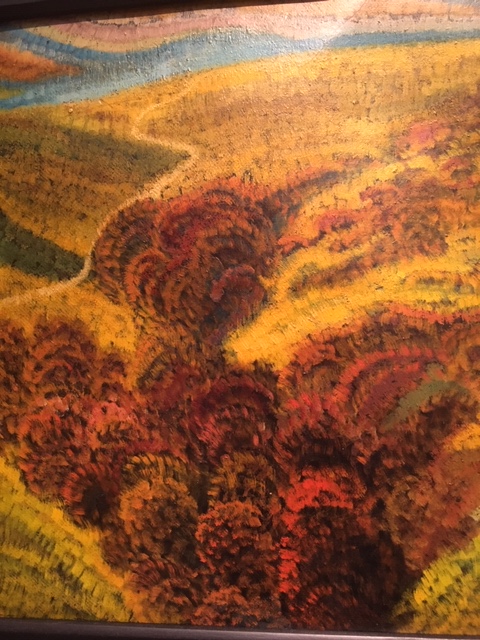
We also visited the Upper Belvedere Palace Museum in Vienna. While it is best known for its Gustav Klimt and Egon Schiele creations, I was entranced with the medieval art in the basement and the Central European collection that featured Czech greats such as Jan Procházka, Bohumil Kubišta and Václav Špála. The Klimt paintings were extremely powerful as were all the Impressionist and Post-Impressionist works. My favorite part of the museum involves the unique Late Baroque Character Heads by Franz Xaver Messerschmidt, who rendered alabaster busts of insane people with unique facial expressions. You could see into their souls. In Vienna I entered the City Museum for the first time. The exhibits trace the history of the city from the beginnings to modern day. I saw intriguing paintings, furnishings, posters and objects, among others.
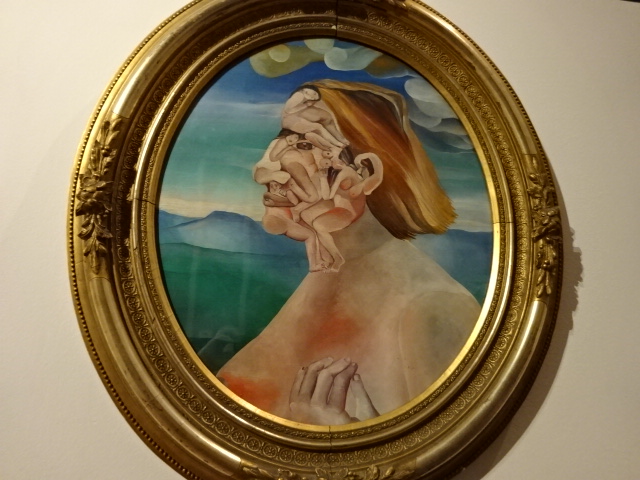
by Eva Švankmajer
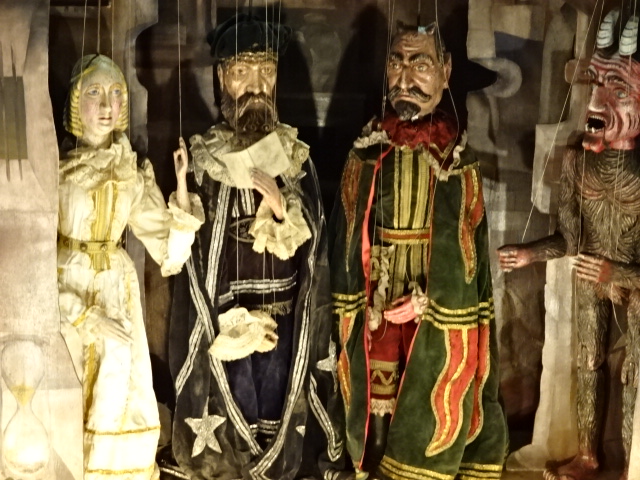
Puppets by Jan Švankmajer
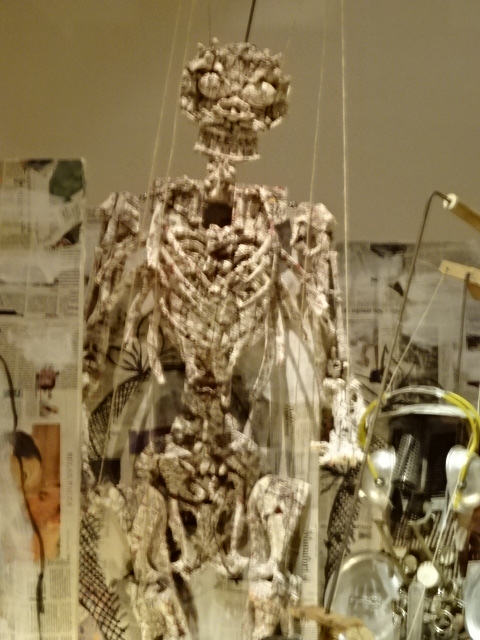
Puppet by Jan Švankmajer
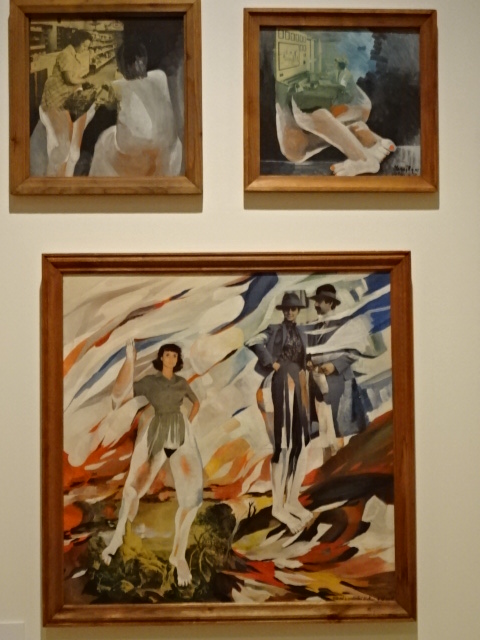
I also went to many exhibitions in the Czech Republic outside of Prague. In Kutná Hora I visited an exhibition of works celebrating the 90th birthday of Jan Švankmajer, a surreal artist, along with creations by his wife Eva. The exhibition Disegno Interno included collages, graphic art, objects, book illustrations, drawings, paintings, animated film creations and puppet theatre of both artists from the 1960s and later. Their creations included works that resemble Rudolfine Mannerist renditions as kinds of cabinet of curiosities and art inspired by Giuseppe Arcimboldo. I also noted the inspiration of the Baroque tradition in puppet theatre. Other works fell into the categories of art-brut, eroticism, fetishes and collages influenced by Max Ernst. Much of their art was deeply rooted in the writings of Edgar Allan Poet and Lewis Carrol. Scenography for Czech film was another section. I realized for the first time that surrealist art had been influenced to a great extent by Mannerist trends.

From Through Kafka’s Eyes, graphic art about The Metamorphosis
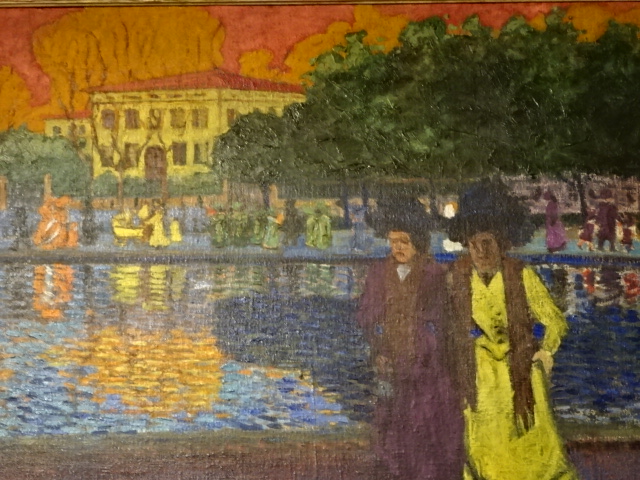
Through Kafka’s Eyes, Oto Kubín, Brindisi, 1906

In Pilsen I went to an exhibition called Through Kafka’s Eyes, featuring the art that had surrounded Kafka at the end of the 19th century and the beginning of 20th century. I saw posters for Czech art exhibitions in the early 20th century and those advertising 19th century Japanese art as well as works by stellar Czech artists. Paintings by Kubišta, colorful and vibrant, were represented along with sculpture by František Bílek. Czech artists who spent their interwar years in Paris were included, such as Oto Kubín and Georges Kars. Kafka’s own Jewish-themed drawings were a highlight. German art and literature rounded out the intriguing exhibition.
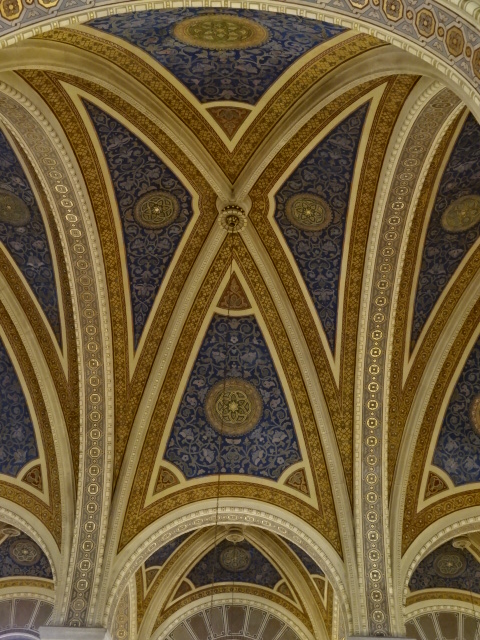
Great Synagogue, Pilsen

Great Synagogue, Pilsen

I also took the time to visit the Great Synagogue in Pilsen, the second largest synagogue in Europe and third largest in the world. On the onion-shaped dome the Star of David stood out. What I admired most was the vaulted ceiling punctuated with blue and gold adornment. Another feature that amazed me was the artistic mastery of the stained glass windows with geometric shapes and figures. The interior is furnished in Oriental style with Neo-Renaissance elements.

Pilsen, U Saltzmannů

We ate at my favorite restaurant in Pilsen, U Saltzmannů, the oldest pub in the city. The Czech food at this establishment cannot be surpassed. I had fried chicken steak this time.
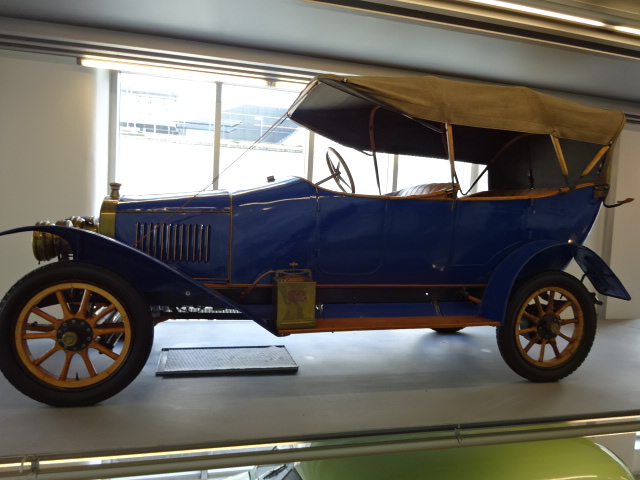
Škoda Museum

In Mladá Boleslav, about 70 kilometers from Prague, I visited for the first time the Škoda Museum, named after the popular Czech automobile manufacturer. The company began making bicycles with Václav Klement and Václav Laurin at the helm in 1895 and soon developed a rich tradition of producing cars. The automobiles on display ranged from vehicles made at the end of the 19th century to those produced in the modern day. I liked the early bicycles, including a two-seater for postal carriers. The cars from the early 20th century were also favorites.
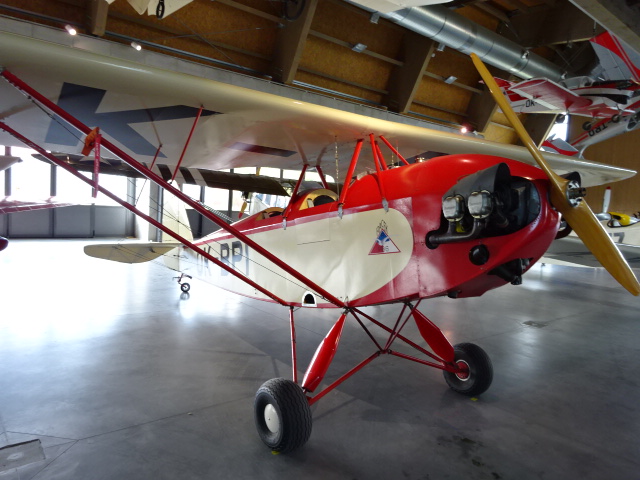
In that same city, we also visited the Aviation museum of Metoděj Vlach, which explored the history of aviation with more than 25 airplanes in the main hall, some hailing from World War I. I saw the 1913 G-III by Gaston and Réné Caudron. It had an open cockpit and 9-cylinder rotary engine. The two-seater wooden plane constructed by the Beneš company called a Be-60 Bestiola featured a 4-cylinder engine and had been flown from 1936 to 1940. The adorable W-01 Little Beetle had been used for airshows in the 1970s.

At that museum, I also learned about the career of pilot Alexander Hessman, who also had starred in a 1926 silent Czechoslovak film. He was the organizer of the Czechoslovak aircraft for the 1936 Olympics. After the Nazi Occupation in 1939, he helped pilots escape with false passports, and he wound up fleeing from the Protectorate to France and then to the USA in January of 1940. After World War II, he returned to Czechoslovakia but fled from the Communist regime, settling in the USA, where he was a technical assistant with PAN AM in New York City.
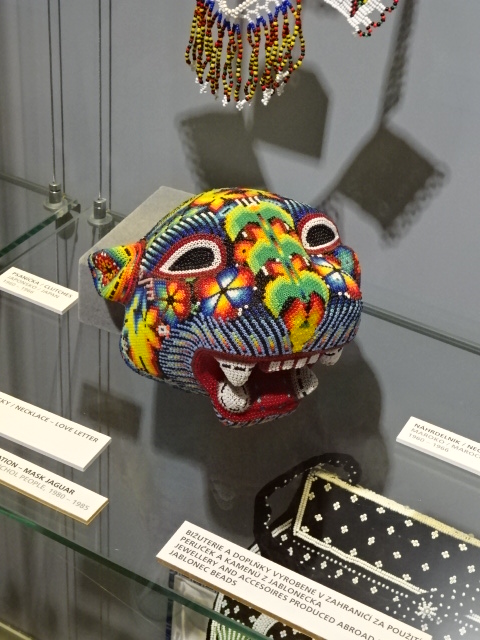
Mexican mask, Museum of Glass and Jewellery, Jablonec nad Nisou
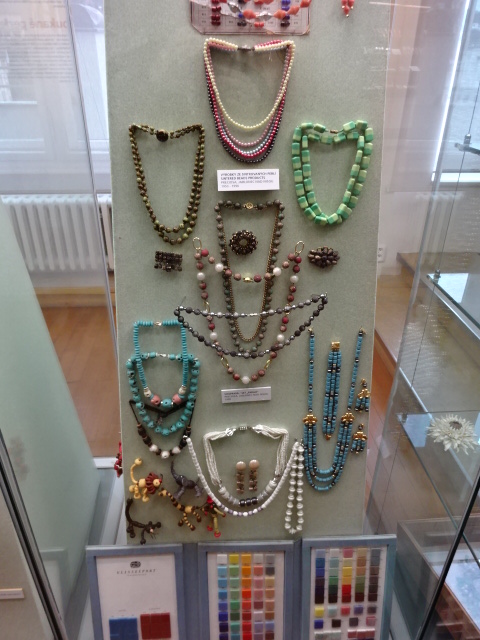
I traveled several times to north Bohemia this past year. One time I went to Jablonec nad Nisou, where the Museum of Glass and Jewellery was located because of the rich local tradition in these fields. I was immersed in the exotic jewellery of strung and woven glass seed beads by North American Indians, using products from north Bohemia. A mask of the jaguar hailed from the Huichol Indian tribe in Mexico. Glass seed beads from Jablonec nad Nisou were used to make a necklace by the South African Zulu tribe, dated from 1880 to 1900. Jablonec has been the location of the mint for the country’s currency, so many commemorative coins were on display.

I also was impressed by buttons made of glass, metal jewellery and black glass jewellery as well as wooden and plastic jewellery. Colorful handbags, masterfully designed, also made up the collection. The Waldes Museum of Buttons and Pins included more than 5,00 buttons, clasps and buckles with the oldest dating from 9 BC. The Bohemian glass exhibition showed off glass in many styles  ranging from medieval and Renaissance to Empire and Biedermeier to Art Nouveau and Art Deco to modernism and contemporary. The museum also has the largest public collection of glass Christmas ornaments in the world with more than 15,000 objects. I saw ornaments of angels, birds, cats, dogs, Santa Clauses, gingerbread men and much more, all contemporary.
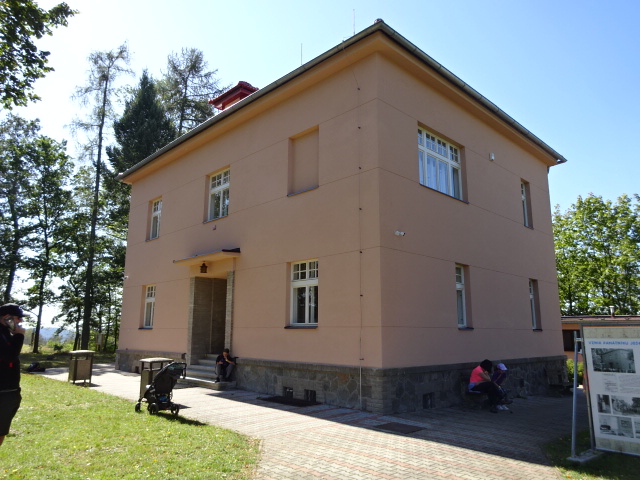
Josef Lada’s Villa in Hrusice

I made my first visit to Josef Lada’s Villa in Hrusice, where that author, painter, book illustrator and scenographer had lived while making some 600 paintings and 15, 000 illustrations. I saw his paintings of idyllic village life featuring all four seasons. Children threw snowballs and make snowmen in a quaint village in one painting while a squirrel was perched attentively on a tree branch, overseeing a tranquil village scene in another. Pub scenes showed humorous drunken brawls. I would have loved to have owned one of the charming cottages depicted in his paintings. I loved the paintings of knights and dragons from fairy tales as well as the paintings representing the months of the year. His paintings of scenes from Jaroslav Hašek’s antimilitaristic, multi-volume classic about the Good Soldier Švejk in the First World War caught my attention. Many of his paintings focused on holiday traditions. I also saw his humorous drawings and caricatures.
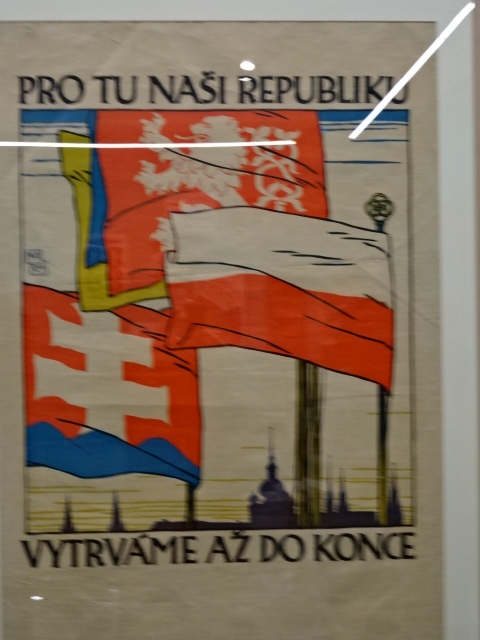
From the First Republic of Czechoslovakia
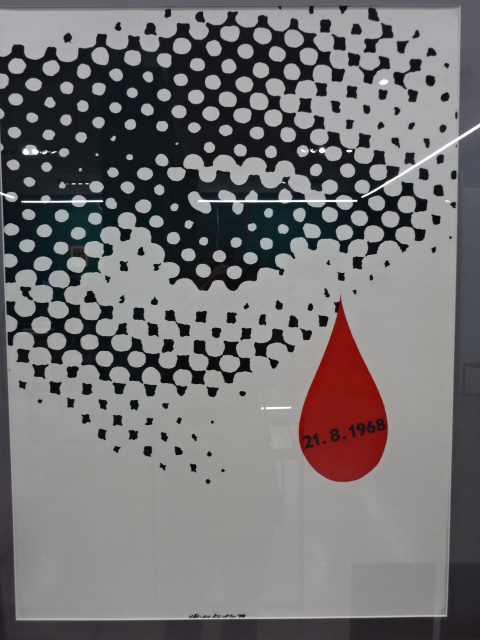
Poster by Václav Ševčík commemorating the day of the invasion by the Warsaw Pact armies, August 21, 1968

In Prague I took advantage of the stunning exhibitions this past year. I went to two excellent shows at Kampa Museum. One featured Czech graphic art from the founding of Czechoslovakia in 1918 to the present. I saw the first star-studded designs for the Czechoslovak flag as well as many political posters from the World War II era through Communist times to the Velvet Revolution of 1989. Václav Ševčík made a poster focusing on the day of invasion of the Warsaw Pact armies into Czechoslovakia on August 21, 1968, when the country’s liberal reforms were squashed. The poster shows a blood-red tear below an eye outlined in black on a white background.

Vítězslav Nezval, Alphabet, with typography by Karel Teige
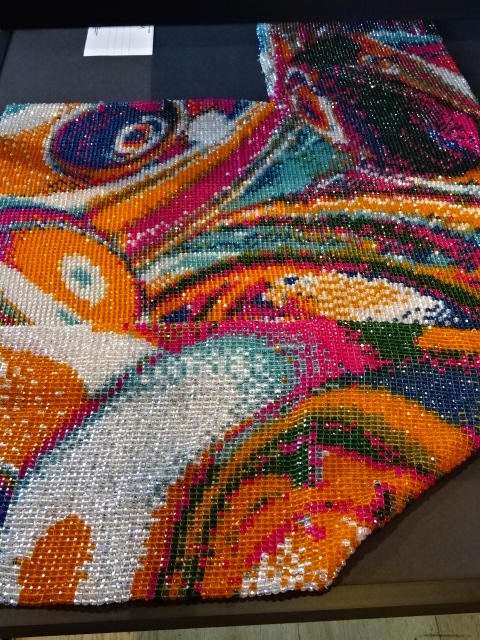
Kampa Museum, Identity exhibition of graphic art, Cindy Kutíková

Other sections concentrated on magazine and book design. I saw beautiful children’s volumes illustrated by Lada, Josef Čapek and Jiří Trnka. I was drawn to the covers and typography of Karel Teige, an avantgarde interwar artist. The exhibition showcased contemporary times by displaying a colorful, large Quantum Beaded Sweater created in 2020 and 2021 by Cindy Kutíková, for instance.

Václav Tíkal, 1944
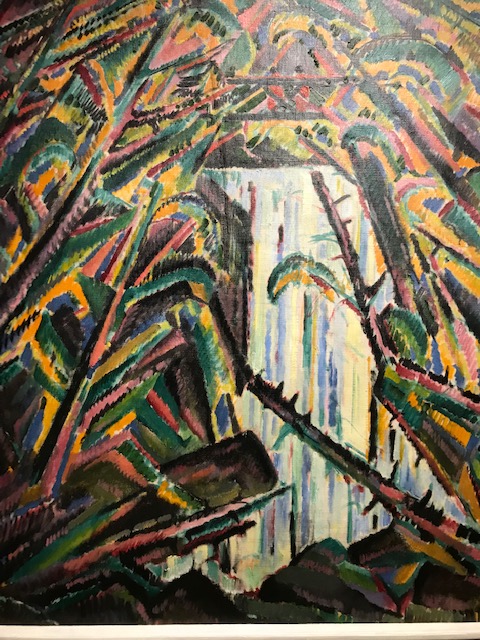
Otakar Nejedlý, Waterfall, 1913-14

Another exhibition at Kampa Museum focused on paintings from the private collection of entrepreneur Vladimír Železný, purchased for his Golden Goose Gallery. Called The Goose on Kampa, the show featured 70 paintings representing works from the beginning of the 20th century through the 1960s, such as creations by Toyen, Jiří Štyrský, Špála, Emil Filla, Jan Zrzavý and Mikuláš Medek. One painting that caught my undivided attention was Václav Tíkal’s 1944. A hand partially covered in a ripped black glove showing the fingertips, thumb and part of the palm was emerging out of the frozen, snow-covered earth in a barren landscape.

Otto Gutfreund, Viki, 1912-13 from Cubist period

On that day I also explored the Kampa Museum’s permanent collection, specifically the sculptures of Otto Gutfreund, whose early works can be classified as Cubist. His later creations, made after World War I, featured traits of Civilism, which promoted themes of everyday life.
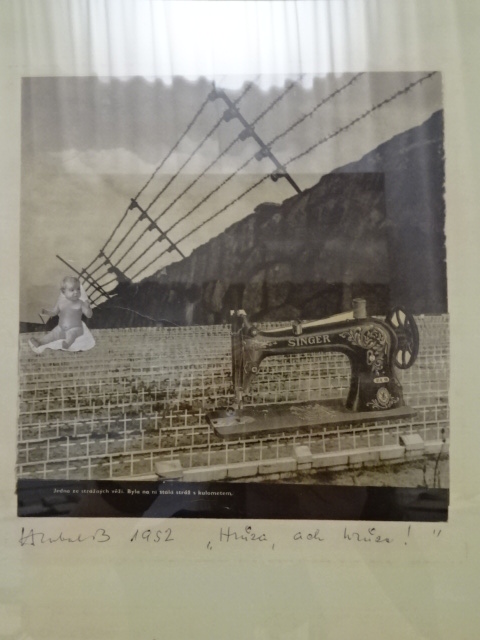
Bohumil Hrabal, 1952, Tragedy! What a Tragedy!

At the Museum of Czech Literature, I greatly appreciated a small exhibition due to my interest in the works of the late 20th century Czech fiction writer Bohumil Hrabal. The modest show emphasized the artistic relationship and friendship of Hrabal and abstract artist Vladimír Boudník, who created the “Explosionism” style. I was most impressed by Hrabal’s collages from the 1950s. One featured a Singer sewing machine, a naked baby and barbed wire heading into the horizon as white crosses in a graveyard punctuated the picture. It was called “Tragedy, What a Tragedy!”

Oto Kubín, Chapel in Simione, 1926
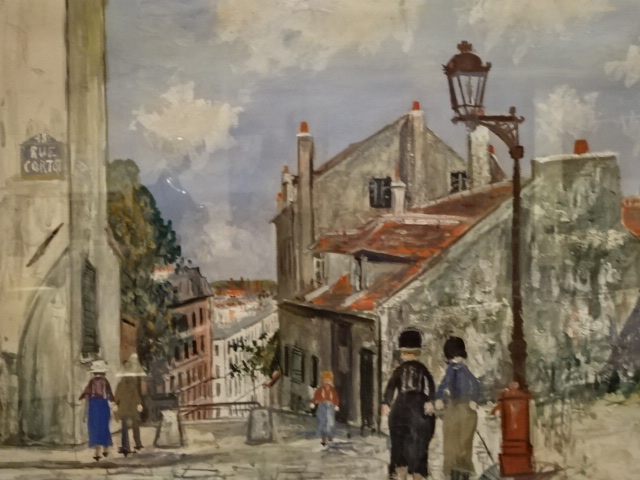
Maurice Utrillo, Chateau de la Seigliere (Aubusson), 1930

The Wallenstein Riding Stables was the site of an intriguing exhibition about artists from Bohemia residing in Paris between the wars. They were part of the “Paris School,” which featured a variety of styles. Czechs Kars, Kubín (Othon Coubine) and Francois Zdeněk Eberl made strong impressions in the lively, vibrant Paris of the 1920s. The themes of the paintings were many: portraits, cityscapes, street life scenes, café and entertainment scenes as well as a focus on the circus and cabaret. I was drawn to Kubín’s landscapes of Provence. The lavender fields were my favorite. Also represented were foreign artists, including Marc Chagall and Maurice Utrillo.

Hendrick Goltzius, The Four Disgracers, 1588

Also at the Wallenstein Riding Stables, the exhibition “From Michelangelo to Callot: The Art of Mannerist Printmaking showed off more than 200 works of 16th and 17th century graphic art, drawings, paintings, jewelry, etchings, lithographs, ceramics and other artistic crafts that hailed from the Netherlands, Germany, France and the Czech lands. The Louvre lent Prague’s National Gallery many works. Some pieces in the collections were being displayed to the public for the first time. A superb small drawing by Michelangelo drew crowds, and art by Hendrick Goltzius, Paul Bril,  Aegidius Sadeler and Niccolo Boldrini stood out to me.

Painting by Karel Kryl, temporary exhibition at House of the Golden Ring

Karel Kryl giving a concert

On my birthday I went to the House of the Golden Ring near Old Town Square. I saw an exhibition about the late dissident singer and songwriter Karel Kryl, whose music had been poetic, profound and political. He had lived in West Germany during much of the Communist era and had worked for Radio Free Europe. I realized how politically-motivated his songs had been and how he had supported the Poles as well as the Czechoslovaks in their fights for freedom. I was engrossed by his artwork, disturbing and grotesque scenes with one-legged clowns and half-human, half-creature figures.
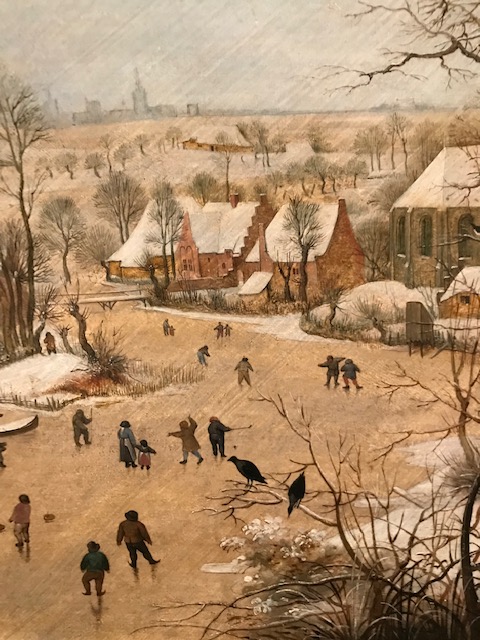
Pieter Brueghel II

One of my favorite exhibitions of the year, taking place in Kinský Palace, was called “Get on the ice!”, featuring hockey and skating in paintings and other artistic creations. It reinforced the fact that ice hockey and skating have played significant roles in Czech and Slovak identity. I especially was impressed by the works of the Dutch masters who had inspired Czech painting. Pieter Brueghel II’s scene of skating on a pond caught my undivided attention. Czechs first represented skating on the Vltava River and on ice rinks.

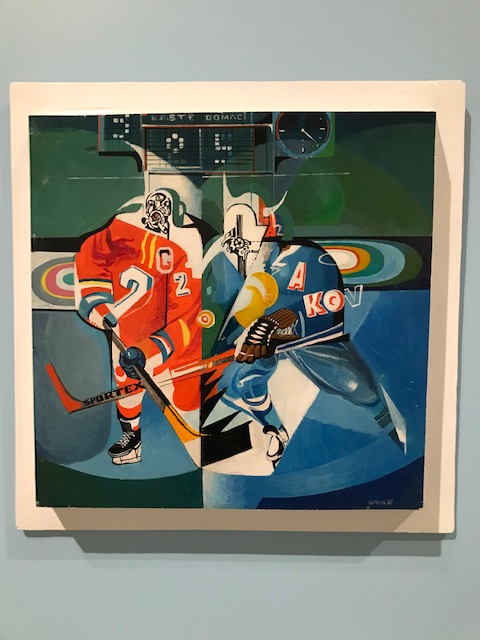
Then hockey became the major theme, first portrayed realistically and then in the 1960s expressed in an experimental fashion. I was drawn to František Tavík Šimon’s “Ice Rink Under the Charles Bridge” (1917) with its large falling snowflakes and idyllic, historical setting. One example of the experimentation of the 1960s is Vojtěch Tittlebach’s “Hockey” from 1965, with abstract shapes and simple forms. The players in this painting had no facial traits. Jiří Kolář also added to the experimentation of the 1960s with his “Hockey Sticks,” composed of three wooden sticks decorated with paper collages, many of them maps and some historical scenes. The 1998 Czech Olympic victory at Nagano was celebrated in large photographs, including one that showed the moment Czech Petr Svoboda scored the winning goal while the crowd in Old Town Square erupted in joy.
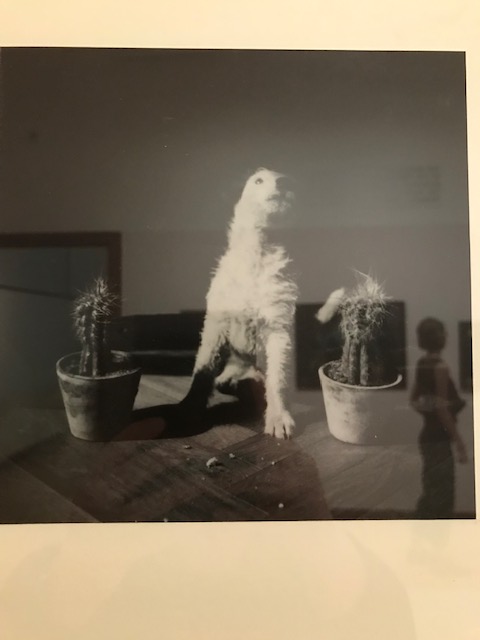
New Realisms, Karel Čapek from series Cactuses, first half of the 1930s

One-Handed Ice Cream Man, Miloslav Holý, 1923

In Prague I also saw the New Realisms exhibition, which focused on modern Realist trends in Czechoslovak art from 1918 to 1945. The more than 600 works hailed from the Czech and Slovak lands as well as Germany and Hungary. I especially liked Karel Čapek’s photographs of cactuses and his dog Dašenka as this field focused on the everyday during this era. I also liked the many café scenes, realistic portraits of people, magic realism in landscapes, the focus on the societal and economic dilemmas in Czechoslovakia and the depiction of modern labor. I have always been interested in the paintings of Group 42 as their works had an existential quality, often punctuated by telegraph wires and deserted streets.
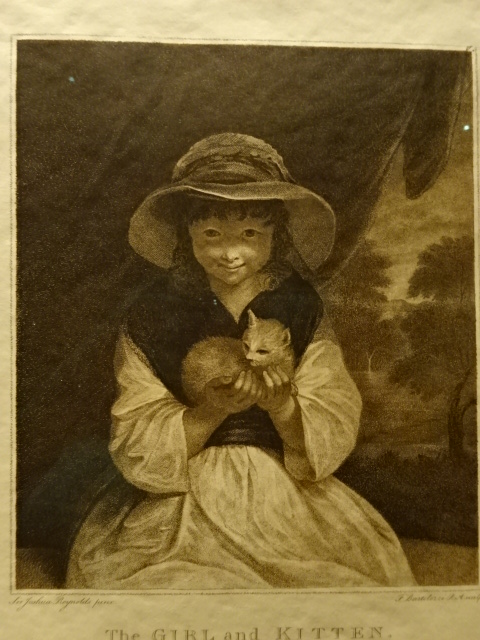
Francesco Bartolozzi, The Girl and the Kitten, 1787

One of my favorite exhibitions in Prague this past year was called “The Good Cat and the Treacherous One,” featuring cats in graphic art from the 16th to the 18th century. The art shows how some people revered cats while others hated felines. They often symbolized something or were shown for entertainment. Some considered them to be a form of the devil. Others gave them positive religious connotations. I especially enjoyed the Mannerist works by Goltzius and the graphic art by Wenceslaus Hollar, who portrayed cats with both positive and negative qualities. I saw pictures of cats symbolizing maternal love, sight, hearing, devotion, courage, yearning for freedom, foolishness, frivolity, cruelty, greed, treachery, lust and adultery. I also noticed cats as protectors against snakes. A French painting showed how, in 18th century France, cats had epitomized personal and political freedom.

Clam-Gallas Palace

I focused mostly on day trips when traveling this past year. While I visited chateaus, castles and monasteries outside of Prague, I did also become acquainted with the renovated Clam-Gallas Palace in the capital city. The Baroque palace became the property of the Gallas family in the 17th century. The palace has a rich musical and theatrical history as Mozart and Beethoven both performed there during the late 18th century. The colossal exterior portal is decorated with statuary by Baroque master Matyáš Bernard Braun, and he also created the fountain portraying Triton.
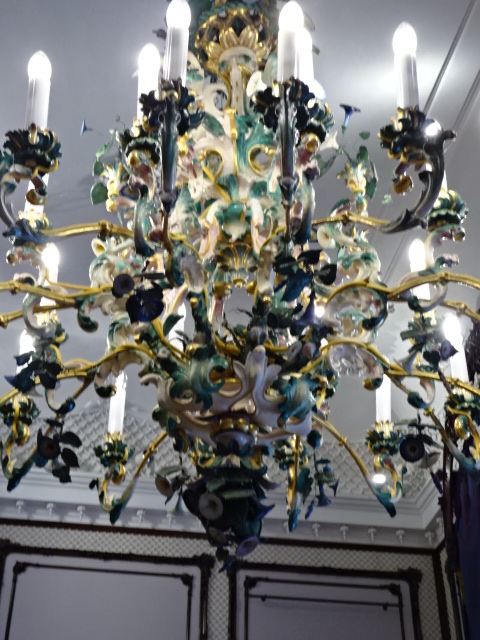
Murano chandelier in Clam-Gallas Palace

The many monumental frescoes amazed as did the chandeliers, especially the 19th century chandelier made of Chinese porcelain cups, saucers and vases. Frescoes depict the triumph of Apollo and gathering of the gods on Olympus, for instance. Allegorical figures representing sculpture, architecture and painting stand out in another fresco. I was very impressed with the former office of the first Czechoslovak Minister of Finance, Alois Rašín, though it was sparsely furnished. He had tried to gather support for the creation of Czechoslovakia during World War I and had even been imprisoned for taking part in the resistance. Rašín was assassinated in Prague during January of 1923 by a 19-year old anarchist.

Bohumil Hrabal’s cottage in Kersko

Kersko near Prague is one of my favorite tranquil spots in the country, a village where Hrabal resided from the 1960s until his death in 1997 and where he fed many feral cats daily. Hrabal’s two-story cottage opened to the public for the first time this spring. I saw the garden where he wrote some books and the charming enclosed terrace where he composed his works when weather did not permit him to spend time in his garden. I saw the chair in which Hrabal wrote his last literary piece, during 1995. The top floor was adorned with many paintings – a moving portrait of Hrabal by Jan Jirů, a drawing featuring heads of Hrabal from his youth to old age in a rendition by Jiří Anderle. Another portrayed cats on chairs in a forest setting along with Hrabal himself. Portraits of his family and a collage focusing on one of his books also caught my undivided attention. The place captured the soul of Hrabal, and I was very moved.

In the local shop, known for its ceramic figures of cats, there was an exhibition of drawings of Hrabal – at the pub, in Heaven, in Kersko, each rendition celebrating the author in a creative way. We ate at my favorite restaurant outside of Prague, Hájenka, a prominent landmark in Kersko. Whether I chose the chicken with cheese sauce, the meat with dumplings or the fried chicken steak, I was always delighted by the meal in a rustic, charming atmosphere.

Mariánská Tynice complex

I traveled about 35 kilometers north of Pilsen to pay a second visit to the High Baroque complex with pilgrimage church Mariánská Tynice, an aerial constructed by renowned architect Jan Blažej Santini during the 18th century, using geometric forms such as quadrangles and triangles as features of his Baroque Gothic style. The church with a Greek cross plan had an impressive illusionary main altar of the Holy Trinity while the east and west ambits were constructed with open arcades featuring eight chapels. The masterful painting on the vaulting and walls celebrates the lives of the Virgin Mary and Cistercian saints. The cupola of the church is lit by eight windows.

Frescoes on the walls and vaults of the ambits

Part of the complex was the Museum and gallery of the North Pilsen region. I liked the Gothic altarpieces and Baroque paintings as well as the 19th paintings of pilgrimage sights. The reconstruction of rooms resembling 19th century and early 20th century village life included a classroom, a countryside chapel and a pub.

Museum of the High-Rises, Kladno, ceramic tile on the facade

Gas masks in the nuclear bunker of the Museum of the High-Rises

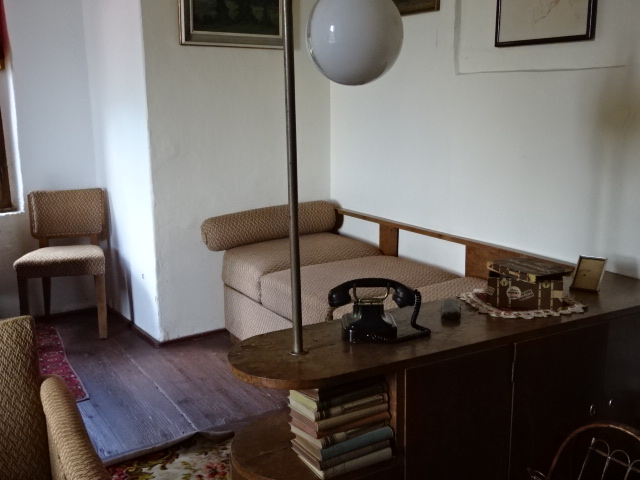
In Kladno near Prague, I toured the Museum of the High-Rise, which was located in one of the six Rozdělov high-rises designed by Czech functionalist architect Josef Havlíček in the 1950s. He received acclaim during the interwar years as a member of the avantgarde and studied under Cubist architect Josef Gočár. The façade of the 13-floor building was created from ceramic material, and on that particular high-rise were ceramics of a cat and a dog. There was a small museum in one basement floor. We also visited the nuclear bunker, complete with numerous gas masks and many hard benches. The big rooftop terrace was a prominent feature for that time period. In the representative flat for the higher-ups, we saw 1950s furniture and a balcony. The flat measured about 65 meters squared, quite a luxury in that day and age.
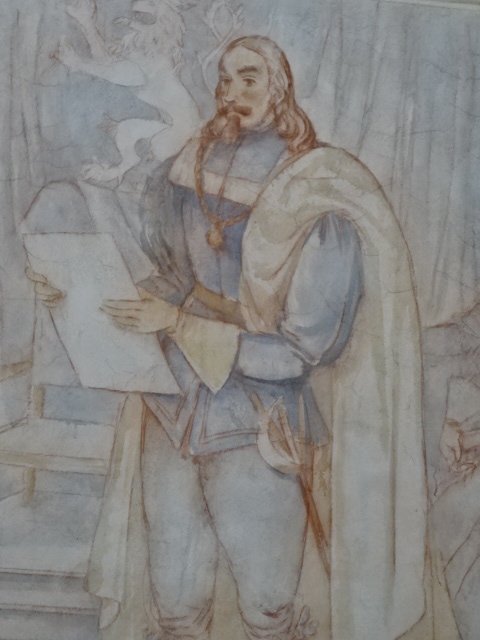
Humprecht Chateau

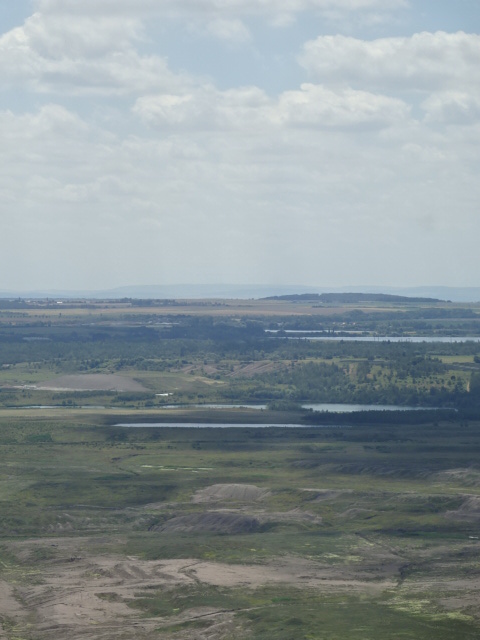
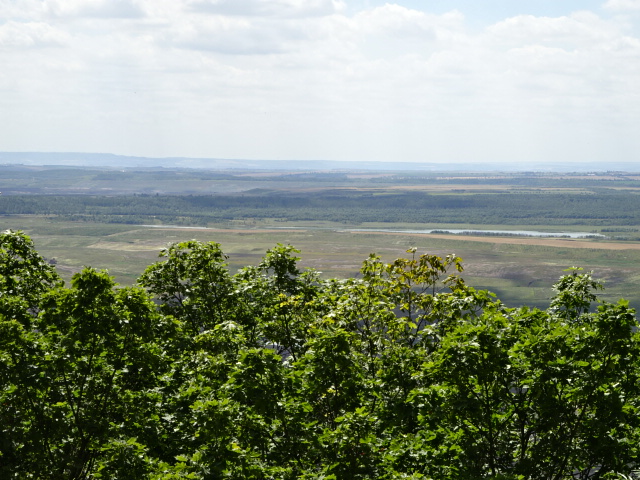
View from Humprecht Chateau

I also visited many chateaus within a two-hour distance of Prague. Seventeenth century Humprecht Chateau in the central Bohemian Paradise region had an elliptical shape. Much of the interior featured hunting themes. I saw paintings of Venice, Biedermeier bookcases in the two libraries of about 4,000 volumes, a black kitchen with an original fireplace and utensils from the 17th century. The main hall featured four frescoes from the 1930s, showing scenes from the life of the Černín family, the long-time owners of the chateau. Baroque furniture decorated several rooms. The picture gallery includes works from the 17th century. What I liked best about the chateau were the panoramic vistas from the top floor.

Volman Villa

Also, not far from Prague, the newly reconstructed Volman Villa, a large, geometric functionalist structure built from 1938 to 1939, featured big terraces, a circular driveway, a monumental winding staircase and outer stairs that lead to a bridge heading into the building. It is possible to access the terrace from each spacious room. Volman used exotic materials such as travertine and marble for the construction. The marble bathrooms with beautiful pink and light blue bathtubs were vast. While there are now many trees obstructing the view, at one time it was possible to see the Labe River in the 40-hectare English park.
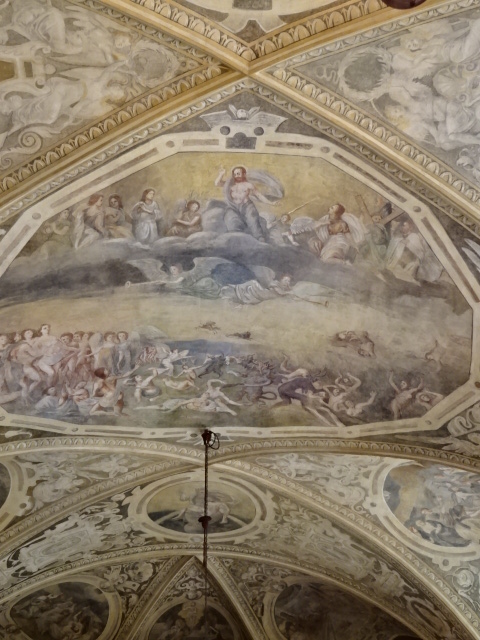
Grabštejn Castle, Chapel of Saint Barbara

I visited several castles and chateaus in north Bohemia – Grabštejn Castle, Jezeří Chateau and Červeny Hrádek Chateau. I was shocked at the vast improvements made during the reconstruction of Grabštejn and Jezeří as I had last visited the two about 20 years ago. Grabštejn, originally a 13th century castle, took on the structure of a Renaissance chateau in the 16th century. The 16th century Chapel of Saint Barbara featured exquisite vaulting and wall painting that included 13 apostles. One tour featured the 18th century administrative offices that made up the castle interior during that time period while another showed the rooms of the nobility, including a gigantic wall painting with chateau-like gardens and fountain. I saw furnishings and artifacts from the 16th to 19th centuries.
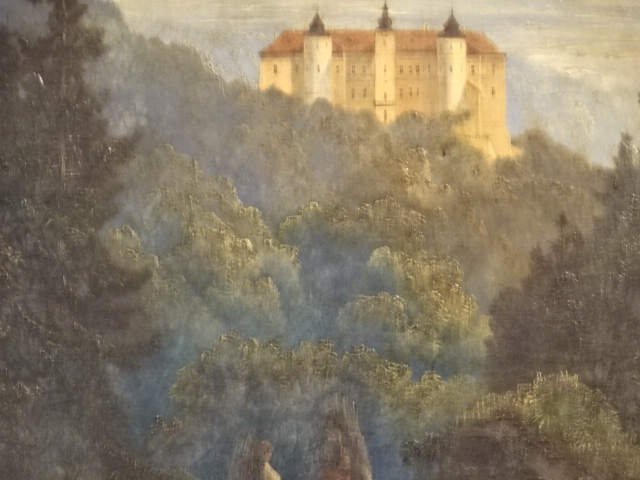
Jezeří Chateau, painting by Carl Robert Croll

While only a few rooms of Jezeří Chateau were opened about 25 years ago, now there are about 10 impressive spaces on the tour. I loved the paintings of Carl Robert Croll, renditions which showed the interior of the chateau during the early 19th century. I was especially impressed with the room dedicated to Jan Masaryk, the son of the first president of Czechoslovakia and once the Minister of Foreign Affairs. He was thrown out a bathroom window at the Ministry of Foreign Affairs by the Communists after the 1948 coup. The Winter Garden was light and airy, punctuated by much greenery. The lavish Theatre Hall included sculptural and stucco adornment as well as an original fireplace. The paintings throughout were impressive, too.

Červený Hrádek, Knights’ Hall

Červený Hrádek dated back to the early 15th century and gets it current appearance from the 17th century. The Knights’ Hall from that era included lavish sculptural decoration with medallions featuring battle scenes and exquisite crystal chandeliers. Other spaces harkened back to the 18th and 19th centuries with period furnishings. Seventeenth century sculptor Jan Brokoff created sculptures, fountains and vases that decorated the monumental staircase. The English style park was beautiful, too. In August of 1938 the Sudeten Party leader Konrad Henlein and English Lord Walter Runciman had a meeting there, shortly before the Munich Agreement was signed.

Dobříš Chateau Park

Dobříš Chateau Park

Because the interior had been recently renovated, I returned to Dobříš Chateau not far from Prague. I was disappointed there were not as many rooms decorated with period furniture. Instead, the self-guided tour mostly featured spaces celebrating the Colloredo-Mansfield family’s accomplishments, which were very intriguing and noteworthy, to be sure. Still, I missed the longer, guided tour and former exciting interior décor of the Rococo and Classicist eras. The Writers’ Room remained on display, decorated the way the space would have looked when the chateau belonged to the Writers’ Union from the 1950s to the 1990s. It was possible to enter one side of the spectacular Hall of Mirrors, although it was roped off and walking through the room was not permitted. The fresco-filled hall amazed with 18th century décor and eight Venetian chandeliers as well as monumental fireplaces.

Illusionary painting on the orangery in Dobříš Chateau Park

The park, measuring nearly two hectares, was the reason to visit the chateau. On that sunny summer day, it was spectacular to stroll through the Rococo style park established in the 1770s. It had five terraces, a fountain with astounding Baroque sculptural grouping and an orangery with illusionary wall painting.

Slatiňany Chateau

Interior of Slatiňany Chateau

I traveled to Slatiňany Chateau for the second time and noted the prominent hunting and horseback riding themes. The Auerspergs held on to the chateau for 200 years and were responsible for the charming interior. I loved the exquisite canopied beds decorated with religious paintings. The tapestries were another delight. In the Big Dining Room I admired a large painting of hunters and their dogs getting ready for the hunt as well as a stunning 18th century Murano chandelier.
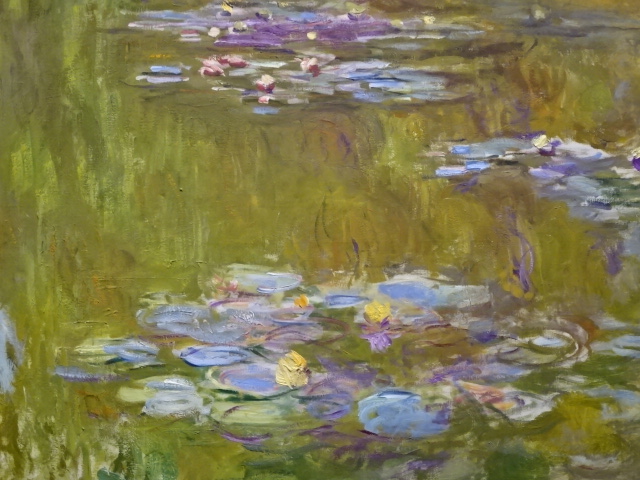
Vienna, Albertina, Monet, Waterlillies, in the permanent collection

I had many exciting adventures traveling in 2024 and had many impactful experiences at art exhibitions in the Czech Republic, Germany and Austria. Every time I go on a trip or to an art show, I come away changed, with a sharper perspective on life and with more enthralling knowledge.

Albertinum, Dresden, Hans Grundig, The Thousand-Year Empire, in the permanent collection

Tracy A. Burns is a writer, proofreader and editor in Prague.
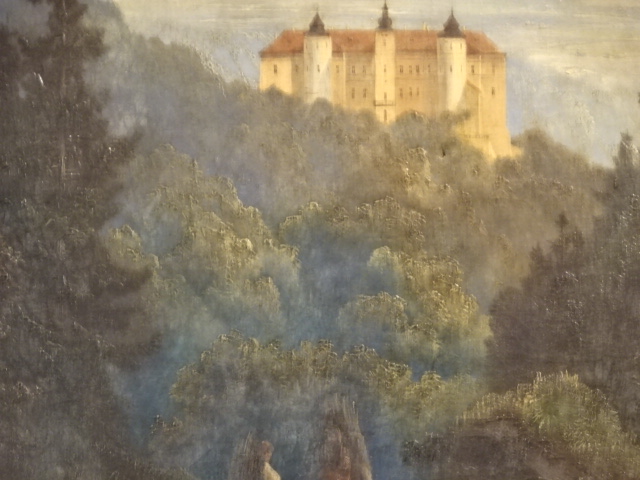
Jezeří Chateau Diary

Painting of Jezeří by Carl Robert Croll

From the chateau interior

The first time I visited Jezeří Chateau was around the year 2000, about four years after it had opened to the public. While the chateau dominating the mountainous landscape appeared impressive from afar, up close it had looked derelict, as if it was about to collapse. The tour had covered only several rooms because much of the structure was under reconstruction. I left Jezeří feeling sad that a chateau with such promise had been derelict for so long. I wondered if the state would ever be able to make the chateau presentable again as so much rebuilding was necessary.

Now, 24 years later, I went back to the chateau situated in the Ore Mountains near the German border. About 10 rooms were open to the public, and they were impressive. I especially loved the paintings of Carl Robert Croll and the room where former Minister of Foreign Affairs and son of the first Czechoslovak President, Jan Masaryk, had stayed overnight. Spaces that had once succumbed to a sad plight now impressed, many harkening back to the golden days of the chateau.

The main facade of the chateau

But it is necessary to start at the beginning and get to know Jezeří’s history and suffering throughout years of dilapidation before touching upon the current appearance. To appreciate Jezeří fully, one has to be aware of the chateau’s journey, a long and winding one that overcame many obstacles.

Atlantis statue on main portal of the chateau

Jezeří Chateau dominates the landscape as a Baroque structure in the Ore (Krušné) Mountains of north Bohemia. It had been transformed from a Gothic castle called De Lacu (from the lake) to a Renaissance chateau by the Hochhauser family and finally to its Baroque appearance today. It was first mentioned in writing as a Gothic castle in the 1360s. The Thirty Years’ War  brought much damage and destruction.

Statue of a dog above the main courtyard of the chateau

Then, in 1623, Vilém the Younger Popel Lobkowicz bought it, and the Lobkowicz name would punctuate the chateau’s history for centuries. Under Ferdinand Vilém Lobkowicz, from 1647 to 1708, extensive reconstruction took place. The property included 500 hectares. A hall replete with grandeur showed off oval vaulting, stucco decoration and large columns while a new richly decorated dining room sported a beautiful ceiling. Rooms were adorned with frescoes. The garden showed off fountains and cascades. A zoo was on the premises. However, all good things came to an end when a fire that could not be extinguished ravaged the building during 1713.

During 1722 the chateau passed into the hands of the Roudnice branch of the family. Jezeří would come to life again when reconstruction occurred during the 18th and 19th centuries. Jezeří flourished, filled with frescoes and paintings by masterful artists. The English style garden included an artificial grotto and lavish statues. The H-shaped chateau became a center for musical and theatrical events during the Baroque and Classicist eras as famous guests visited its renowned theatre.

View of oratory of chateau chapel

Owner Maxmilián had opera singers visit from ensembles in Vienna and Dresden. Beethoven was friends with Prince František Maxmilián. The first private performance of Beethoven’s third “Eroica” Symphony, which the composer had dedicated to František Maxmilián, took place here. It also was the site of the first private performance (1797) of Haydn’s Creation. My favorite symphony by Beethoven, his sixth (the Pastoral), was also dedicated to Prince Lobkowicz.

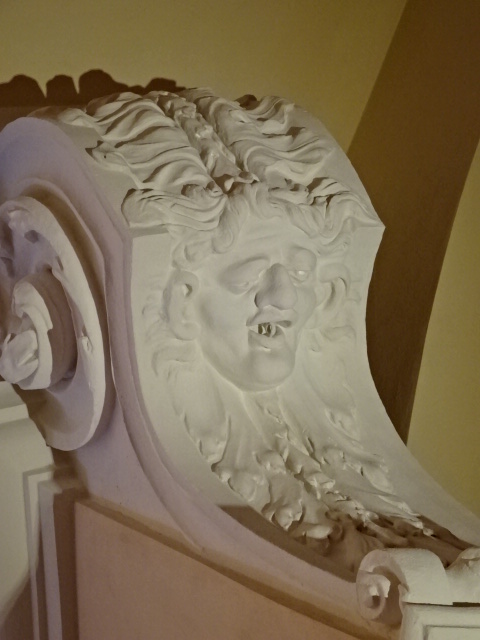
Sculpted heads with facial expressions adorn the Theatre Hall.

Another sculptural decoration in the Theatre Hall

At the time, vast Jezeří was buzzing with excitement in its 114 rooms and numerous smaller spaces. The English gardens and park were Baroque in style and showed off statues of mythological figures, greenhouses, pavilions, an artificial waterfall, terraces with magnificent views and an arboretum.

Painting of chateau interior by Carl Robert Croll

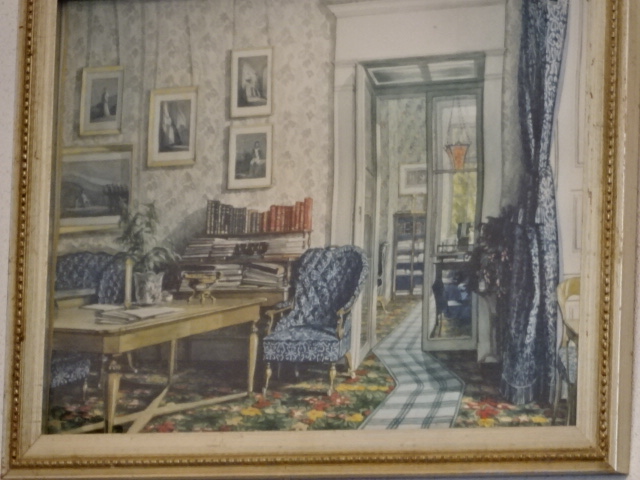
In the early 19th century, the prominent painter Carl Robert Croll created canvases for the Lobkowiczes, and his renditions of the chateau’s exterior and interior are magnificent. His “Winter Garden” from 1841 portrayed a light and airy room with many plants and windows, white walls and blue-upholstered furniture. The painting “The Big Salon,” created that same year, showed children dancing and men immersed in a game of billiards. Croll’s work “Smaller Salon at Jezeří” focuses on women and girls chatting and ordering tea or coffee. Croll painted the exterior of the chateau at night, presenting it as mystical and magical.

A painting of the chateau landscape by Carl Robert Croll

During the existence of The First Republic of Czechoslovakia, Jezeří was under the guidance of JUDr. Maxmilián Ervín Lobkowicz (1888 – 1968). Maxmilián served as a Czechoslovak diplomat and during World War II held the post of Czechoslovak Ambassador to Great Britain as he played a major role in the anti-fascist movement with the government-in-exile in London.

After he went into exile in 1938, Nazi soldiers took control of the chateau, and during 1943, a prison camp for Poles, Russians, French and out-of-favor German soldiers was situated on the property. Among the prominent figures incarcerated there was Pierre de Gaulle, brother of former French President Charles de Gaulle.

Jan Masaryk, Minister of Foreign Affairs and democrat

Maxmilián Lobkowicz returned after the war, and his good friend Jan Masaryk, then Czechoslovak Minister of Foreign Affairs, visited Maxmilián there on several occasions. However, Jan Masaryk would be shoved out a bathroom window by Communist officials at the Ministry of Foreign Affairs in Prague and fall to his death. The totalitarian regime categorized it as a suicide.

Times would change for the worst as Maxmilián and his family had to go into exile during 1948, carrying with them only a few belongings. The Communist coup had taken place, forcing the lifelong democrat Maxmilián to flee once again. At this time, the chateau was deteriorating.

Jan Masaryk, son of the first president of democratic Czechoslovakia

Jezeří certainly did not get a pretty makeover during the following decades. On the contrary, in 1950 the Czechoslovak army took over Jezeří, and the interior was destroyed. Then, five years later, the Ministry of the Interior used the building. Several other institutions were situated there in subsequent years, and times were definitely not rosy. The place was often vandalized until 1960. Jezeří Chateau became a cultural monument in 1963, though its condition did not improve. At the end of the 1960s and in the 1970s, extensive mining took place on the grounds. During the 1970s and 1980s, there was talk of tearing Jezeří down because the structure was not deemed safe due to the mining activities.

The chateau had been surrounded by intensive coal mining for centuries. Mines with dams and ditches punctuated the Ore Mountains. The mining history harkens back to the 16th century, and though it was halted for a while after the Thirty Years’ War of the 17th century, mining activities returned with a vengeance during the 19th century due to the discovery of cobalt blue and uranium in the mountains. During the first and second world war, much mining took place in the Ore Mountains. Then, after the Soviets took control of Czechoslovakia, the Ore Mountains were used as a source of uranium ore, but it was all kept hush-hush. The beautiful forests were destroyed under Communist rule. Jezeří didn’t even appear on maps anymore.

After the Velvet Revolution of 1989 that triggered the end of Communist rule, the Lobkowiczes got the chateau back in restitution. In 1991, the state declared the chateau a protected cultural monument. However, the chateau was in such bad condition that the Lobkowiczes were not able to do the necessary repairs because it would be so costly. In 1996 Martin Lobkowicz gave the chateau to the state. Repairs began, but it would be a long journey before the chateau appeared in a decent state.

The artwork in the chateau is superb.

During 1996, one room in the chateau was open to the public. When I visited in 2000, more rooms were accessible, but there was a lot of reconstruction taking place. Back then, I felt a sense of profound sadness because the necessary reconstruction would take years to accomplish. Yet hope and determination won out. The chateau continued to be painstakingly restored, and finally part of the first floor and a section of the second floor were on display for visitors. It was made a national cultural monument in 2022.

The chateau Theatre Hall

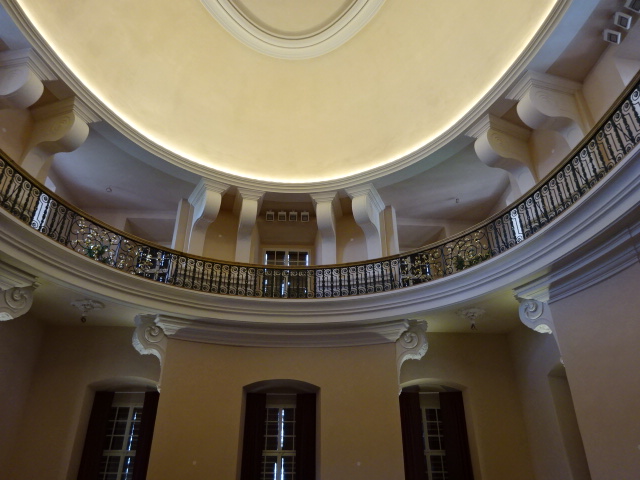
The stunning balustrade of the Theatre Hall

Now visitors can admire the renovated, lavish Theatre Hall with its original fireplace and stucco decoration. Heads of figures with various theatrical expressions decorate the walls. The cupola is impressive as is the balustrade above. Concerts are held here, reviving Jezeří’s musical tradition.

The Winter Garden today

The Winter Garden was renovated to look like it did in Carl Robert Croll’s paintings, and it is a tranquil, comfy place full of greenery. I would love to have tea in that soothing space.

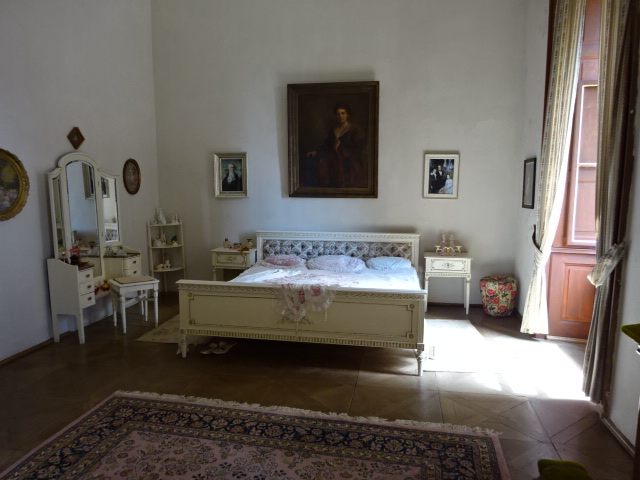
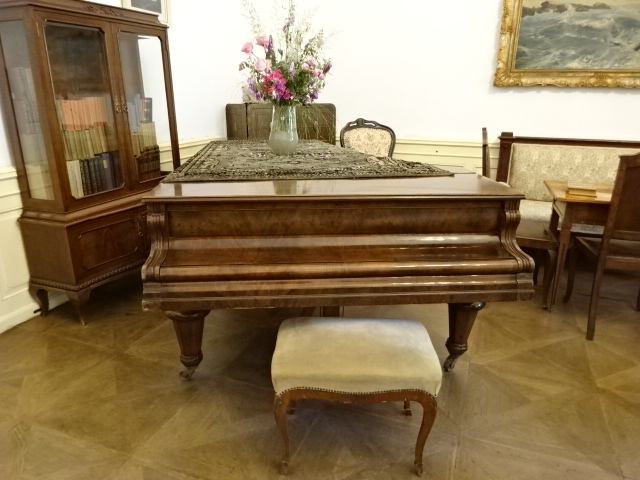
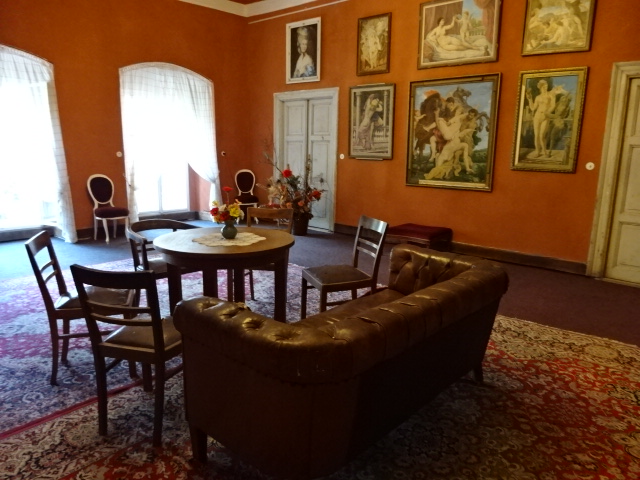
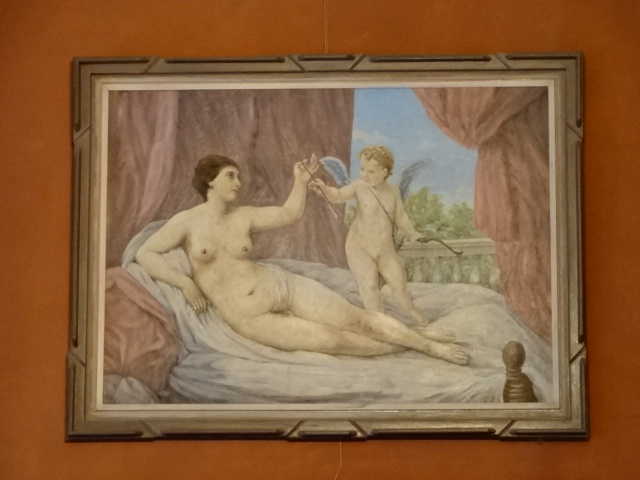
Paintings throughout the chateau are intriguing with Carl Robert Croll’s works showing a stunning chateau interior and exterior at the beginning of the 19th century. Many other artworks are impressive, too. Three pianos are on display. The vaulting and stucco ornamentation in rooms is intriguing to say the least.

Jan Masaryk’s room at the chateau

Jan Masaryk’s room at the chateau

My favorite room is the one dedicated to Jan Masaryk. Seeing his room at the chateau made me imagine his visits with the Lobkowiczes during the chateau’s better days. The portraits of Jan Masaryk across from the room brought to mind Masaryk’s fierce fight for democracy and his tragic fate. I remember, during a tour of the Ministry of Foreign Affairs, being shown the bathroom window from which he was shoved to the hard ground outside.

Bust of Tomáš Garrigue Masaryk, first president and Czechoslovakia and father of Jan Masaryk

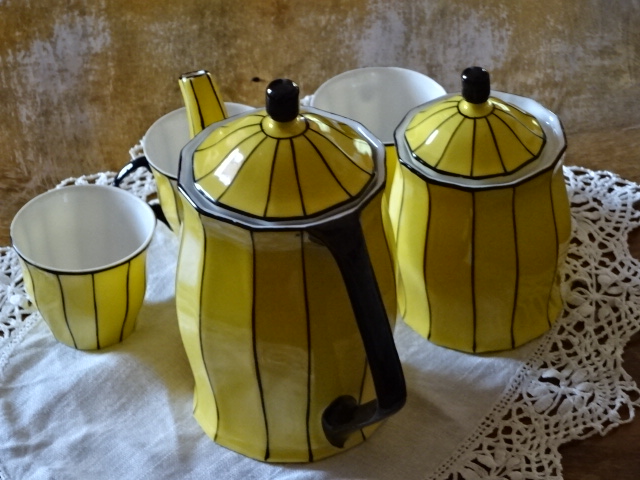
Twentieth century coffee and tea set in Jan Masaryk’s room at the chateau

I see Jezeří Chateau as a symbol of hope, of the determination that can painstakingly change a monument considered for demolition into an edifice with an intriguing interior that impresses visitors. There is still much reconstruction going on, but Jezeří continues to develop – slowly but surely. I was glad I had been able to witness so many positive developments.

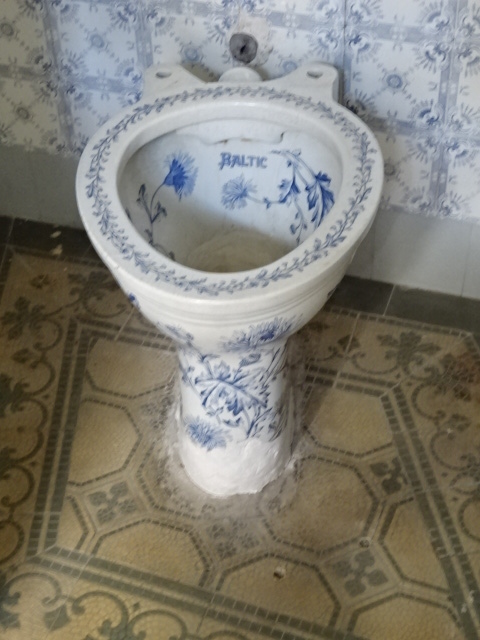
Handpainted toilet in the chateau

Tracy Burns is a writer, proofreader and editor in Prague.

View from the chateau

Věra Jičínská Exhibition Diary

Věra Jičínská – On the Terrace, 1934. Photo from webpages of Gallery of Modern Art, Hradec Králové.

What I like most about visiting Czech museums outside of Prague is that I often find an exhibition dedicated to an artist who is underrated and has been overlooked by the capital city’s art scene.I was in luck when I visited the Gallery of Modern Art in east Bohemia’s Hradec Králové because I came across an exhibition dedicated to the late artist and writer Věra Jičínská, who had made a name for herself in Europe during the interwar years. While she is best known as a painter, the thrilling show also emphasized her penchant for traveling and her talent as a journalist, photographer and designer. Back then, women were not expected to have careers but rather to dedicate their lives to raising a family. Jičínská demonstrated her independence by concentrating on an artistic career, smoking and sporting short hair.

Beach in Crimea (In a Small Bay), 1936.

Jičínská grew up near Brno and later studied in Prague at the School of Decorative Arts. She spent the following years living abroad, exhibiting her art during a seven-year sojourn in Paris after spending two years in Munich. In Paris she became steadfast friends with Czech painter Jan Zrzavý and composer Bohuslav Martinů. Her early career was influenced by Purism and Cubism, but during 1925 she developed a Neoclassical style. By the 1930s, her works were imbued with bright colors.

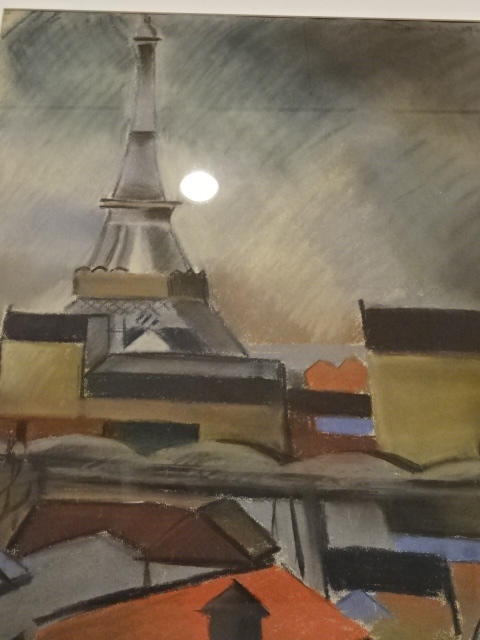
Parisian rooftops, 1923-24.

The exhibition’s display of paintings inspired by her travels was my favorite section. Jičínská’s paintings of Brittany’s landscape and fishing tradition captured my attention. That was one place I longed to see. Her romantic rendition of Paris’ rooftops and the Eiffel Tower brought back memories of my visits to the French capital. I went up the Eiffel Tower for the first time when I was a junior in college.  As my friend and I enjoyed the sights from early morning until night every day, we drew energy from the electric atmosphere of the city and its many wonders. Her works showing places in Hungary and Czechoslovakia also captured my attention.

The Eiffel Tower, 1927.

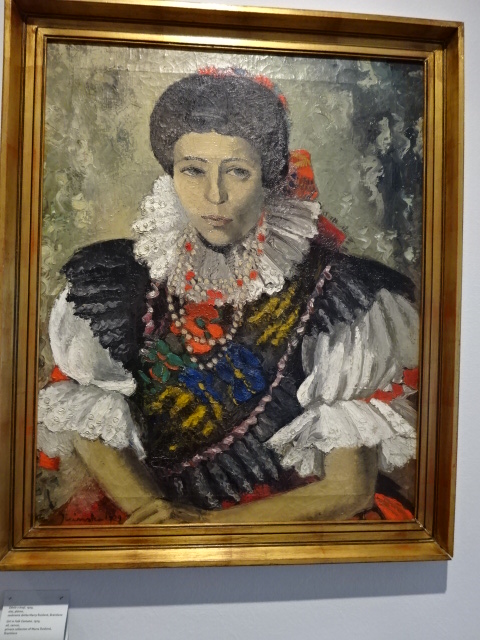
Jičínská also became known for painting female nudes, a subject that, up until then, only had been taken up by male artists. She celebrated the female body in her works, even painting pregnant women. Dance was another theme she dealt with. The bright colors of her painting “Alexander Sakharov in a Fantastic Burlesque” captured the vibrancy of the dance. She was fascinated by folk culture. Her “Girl in Folk Costume” emphasized the beauty of the people, their costumes and folk traditions. Some of her art focused on Hindu dance themes, too.

Journalism by Věra Jičínská

In the early 1930s, she took up journalism. Her articles examined modern culture – theatre, film and architecture, for instance. The profession of journalism was also the theme of some of her paintings. I had spent time as a culture writer for various publications, and her thirst for knowledge in the cultural sphere made me feel a certain kinship.

In 1930 she married a former classmate. The following year the couple moved to Prague, though her work was still exhibited throughout Europe. Together, the two trekked to Slovakia during 1933 and 1934, and she documented her trip with masterful photographs. Her pictures from Slovakia brought out the character of the people photographed. There was no exaggeration or embellishment to the photos. She emphasized everyday activities in her snapshots. This feature made me think of my favorite Czech writer, Bohumil Hrabal, who, in his fiction, stressed the beauty of everyday life. Ever since I read his books, I have become more appreciative of the little things in life that, up until that time, I would often take for granted, the small joys that take on so much meaning when they are gone.

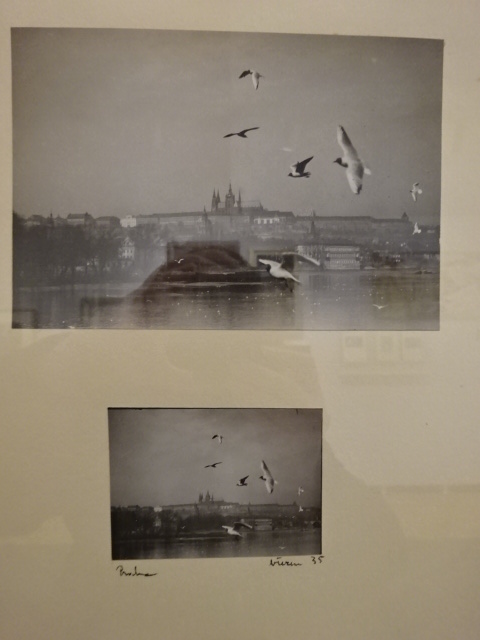
Gulls, 1933.

Still, the one photograph that impressed me the most featured gulls swooping around Prague Castle. I was reminded of one of the many views that had made me fall in love with the city – Prague Castle from several of the bridges, Prague Castle from the Vltava embankment, Prague Castle from the window of a flat I had rented long ago. After the attacks on September 11, 2001, I found great solace in that postcard perfect view from the apartment where I was living at the time. It helped me deal with the tragedy of that day, which would be forever etched in so many minds. Jičínská also took poignant photos during trips to Poland, Russia and Ukraine.

Brittany, 1928.

In 1937, her life changed again. Jičínská gave birth to a daughter whom she named Dana. While she devoted much time to motherhood, she did not give up her career. She even exhibited works during World War II. By 1941, she was concentrating on working with pastels to create a colorful dynamic and rendering many landscapes. In 1946, the couple bought a cottage in Říčky, a village nestled in the Orlické Mountains. Jičínská often painted there, and  many Czech artists visited the couple during the 1950s.

The Communist coup of 1948 had had a devastating effect on Jičínská and her family. Her husband’s publishing house was nationalized, and he was no longer the boss but rather one of the employees. Her parents had lived in a villa in Brno, but the Communists only let them occupy several rooms. To make matters worse, her father saw his pension dwindle.

Girl in Folk Costume, 1929.

Due to the financial hardships, Jičínská branched out into more artistic fields. She designed postcards and became a designer who often worked with ceramics. In 1952 she was restoring a ceiling fresco at the Czechoslovak Academy of Arts and Sciences when the scaffolding collapsed. She was severely injured and could not continue as a painter. She focused on her work as a designer. On March 27, 1961, a year after her daughter married, Jičínská died in Prague.

Before this exhibition I had not even heard of Věra Jičínská. After seeing her works, I appreciated the obstacles she must have come across pursuing a career as a female artist, journalist and traveler during the interwar years. I grew up playing baseball and ice hockey with boys, and I often was the only girl in the baseball league. But that was nothing compared to what Jičínská had accomplished as a woman breaking down barriers and living an independent life the way she chose to live it, not allowing herself to be dictated by society’s norms.

Alexander Sakharov in a Fantastic Burlesque, 1932.

The Gallery of Modern Art’s permanent exhibitions were also fascinating, and I will write about that in a separate post. Twenty artists from the last century were featured in one section, and contemporary art played a role in the collections, too. But what stood out most for me was the exhibition of Věra Jičínská’s artistic accomplishments.  

Tracy A. Burns is a writer, proofreader and editor in Prague.  
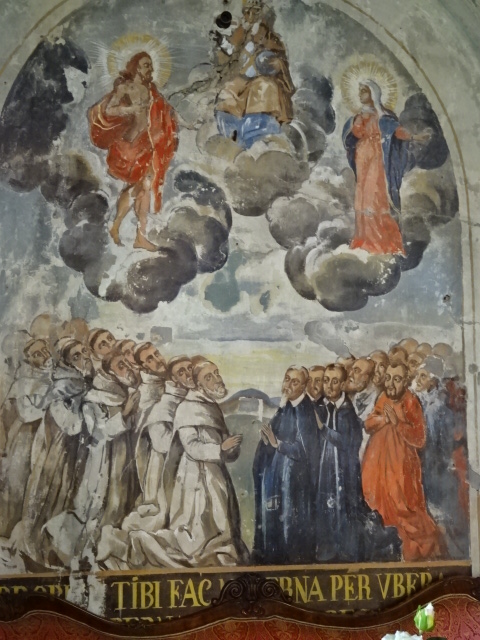
Mucha: The Family Collection Exhibition Diary

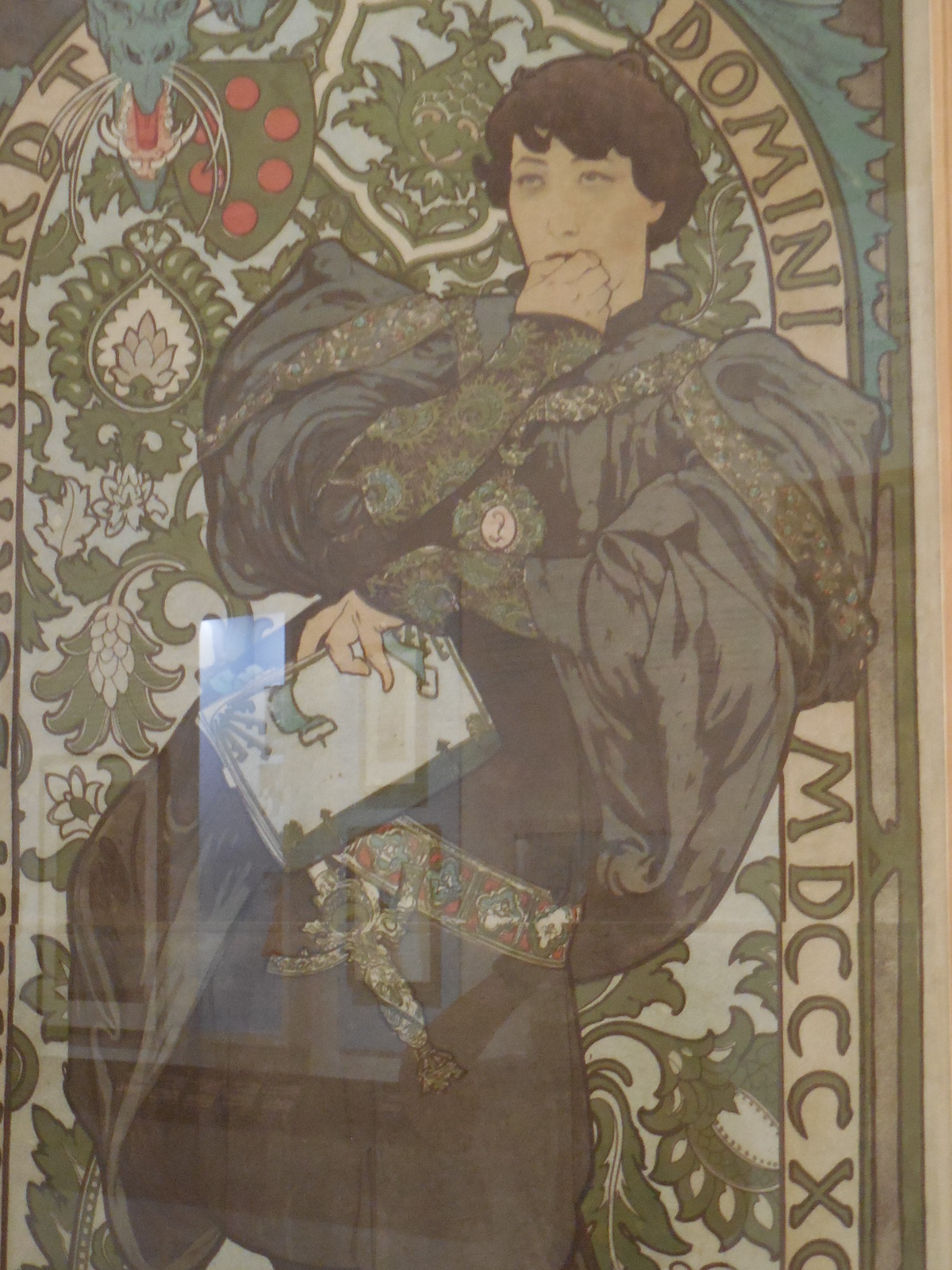
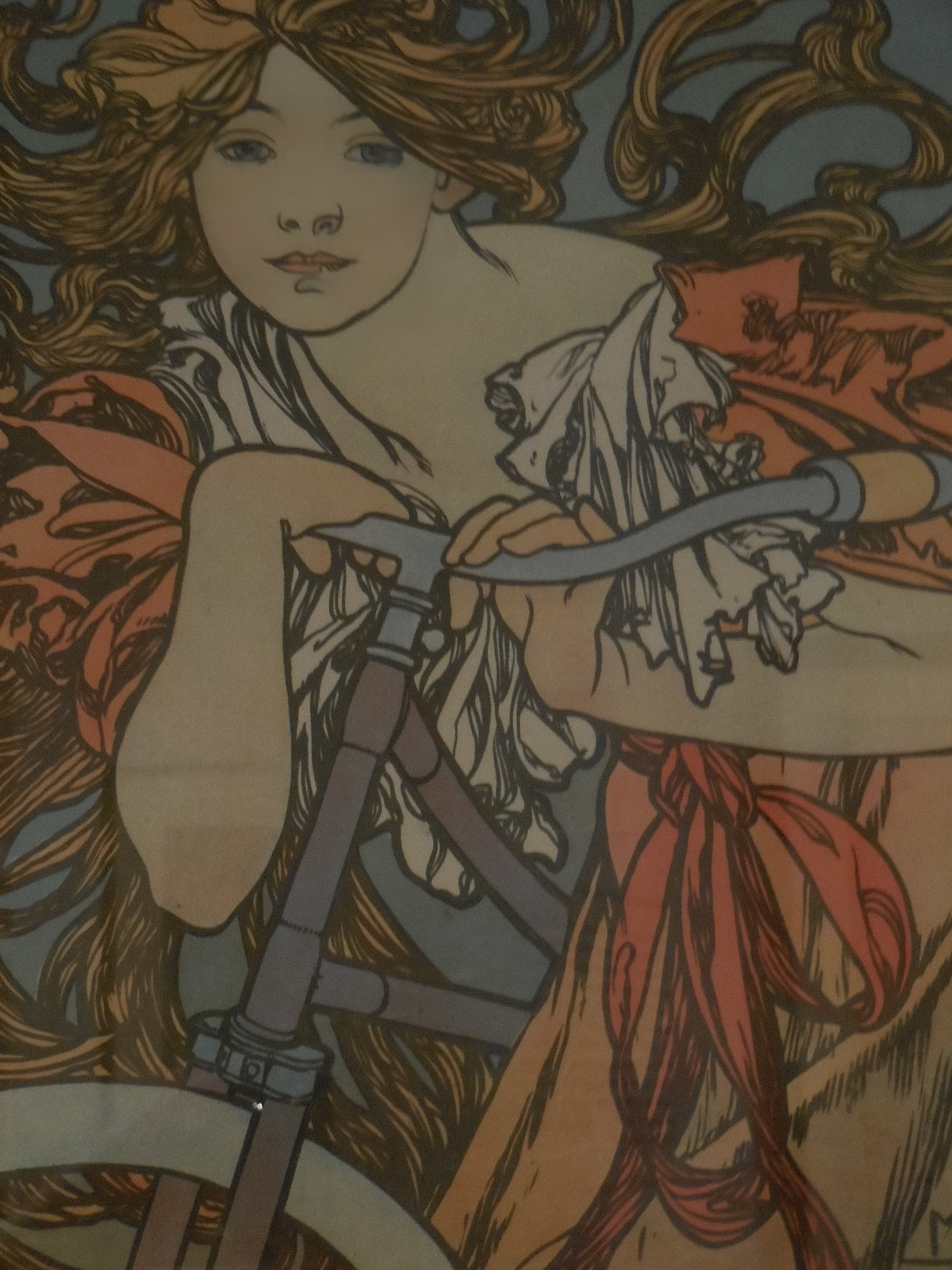
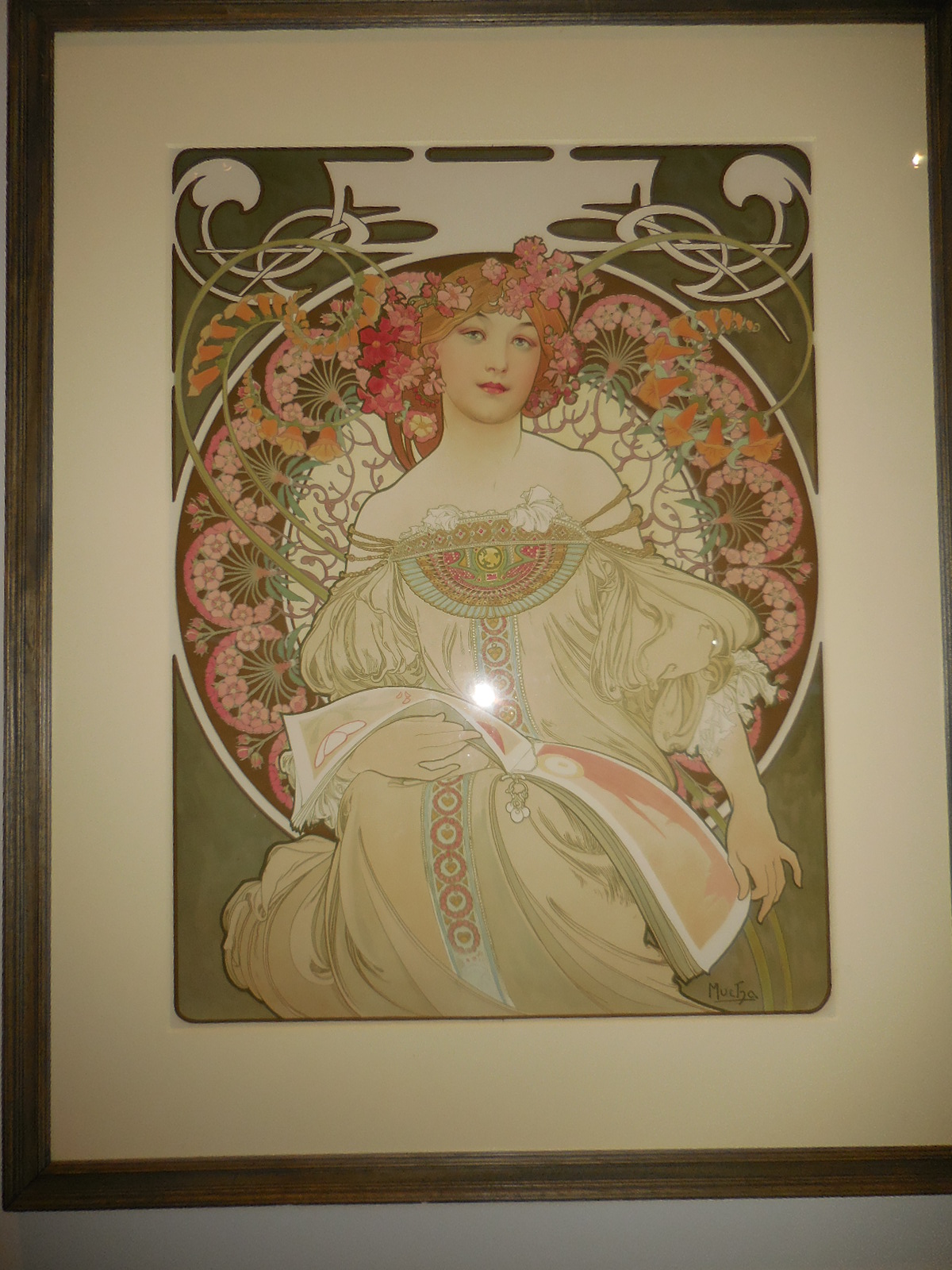
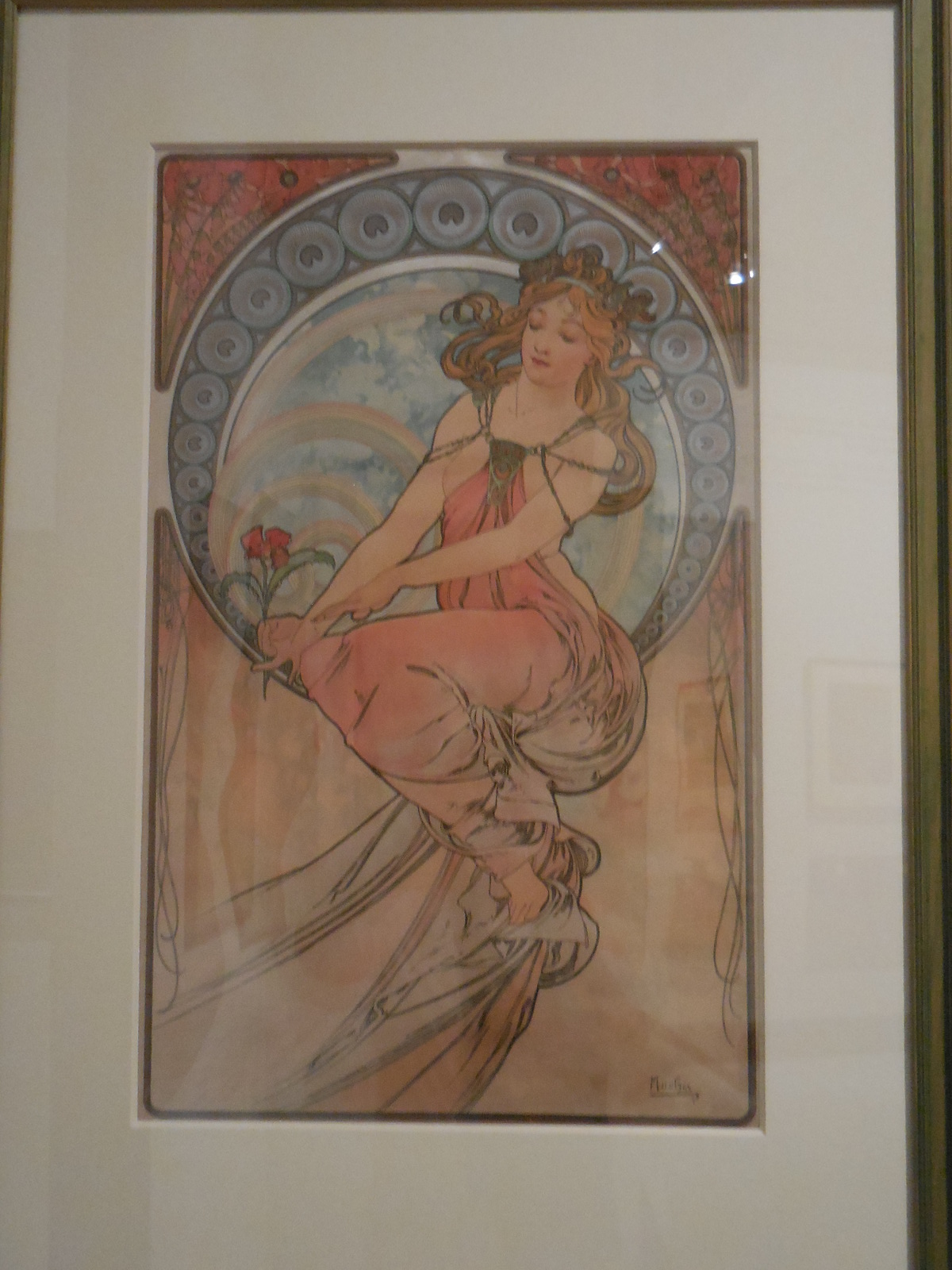
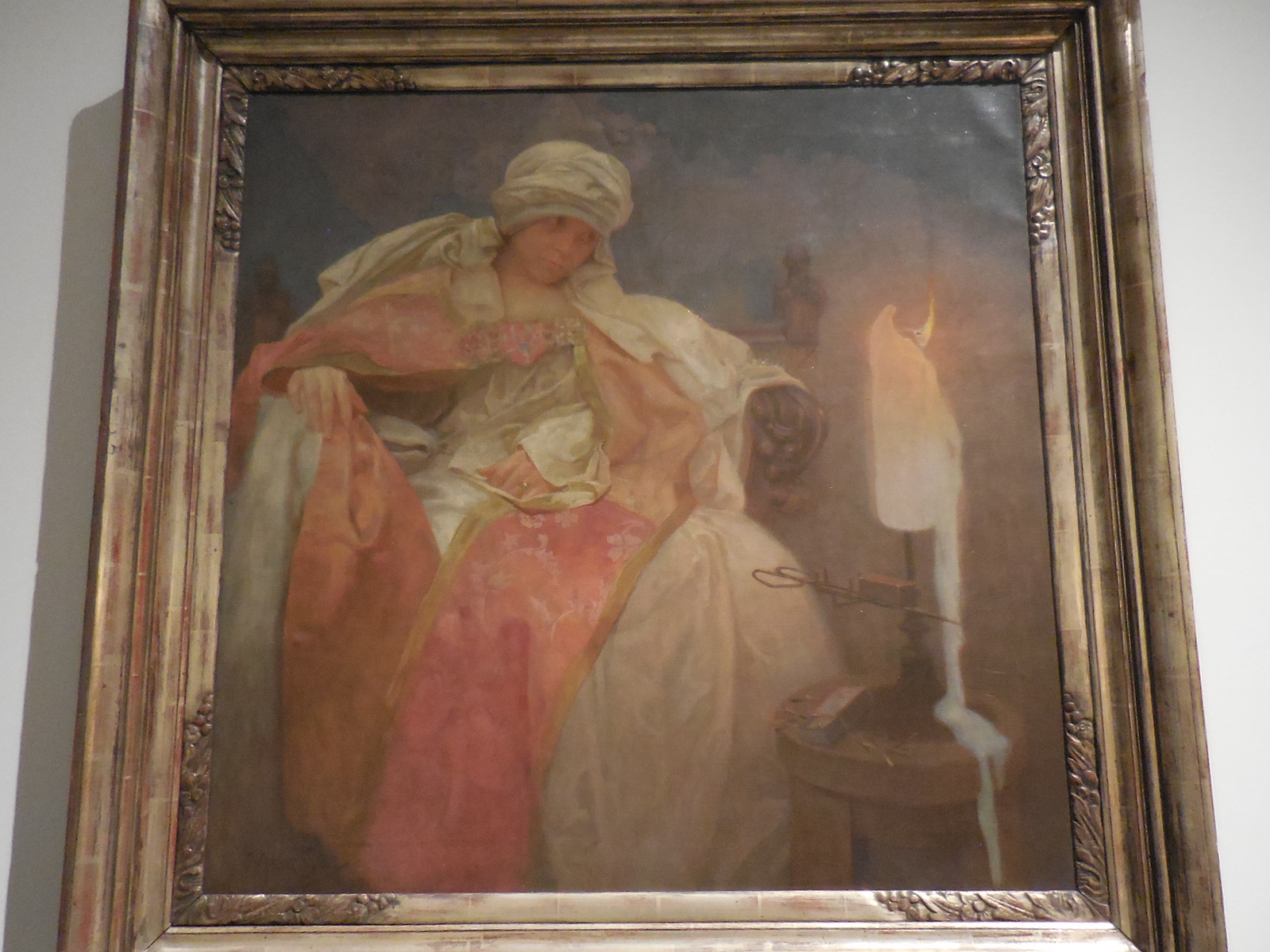
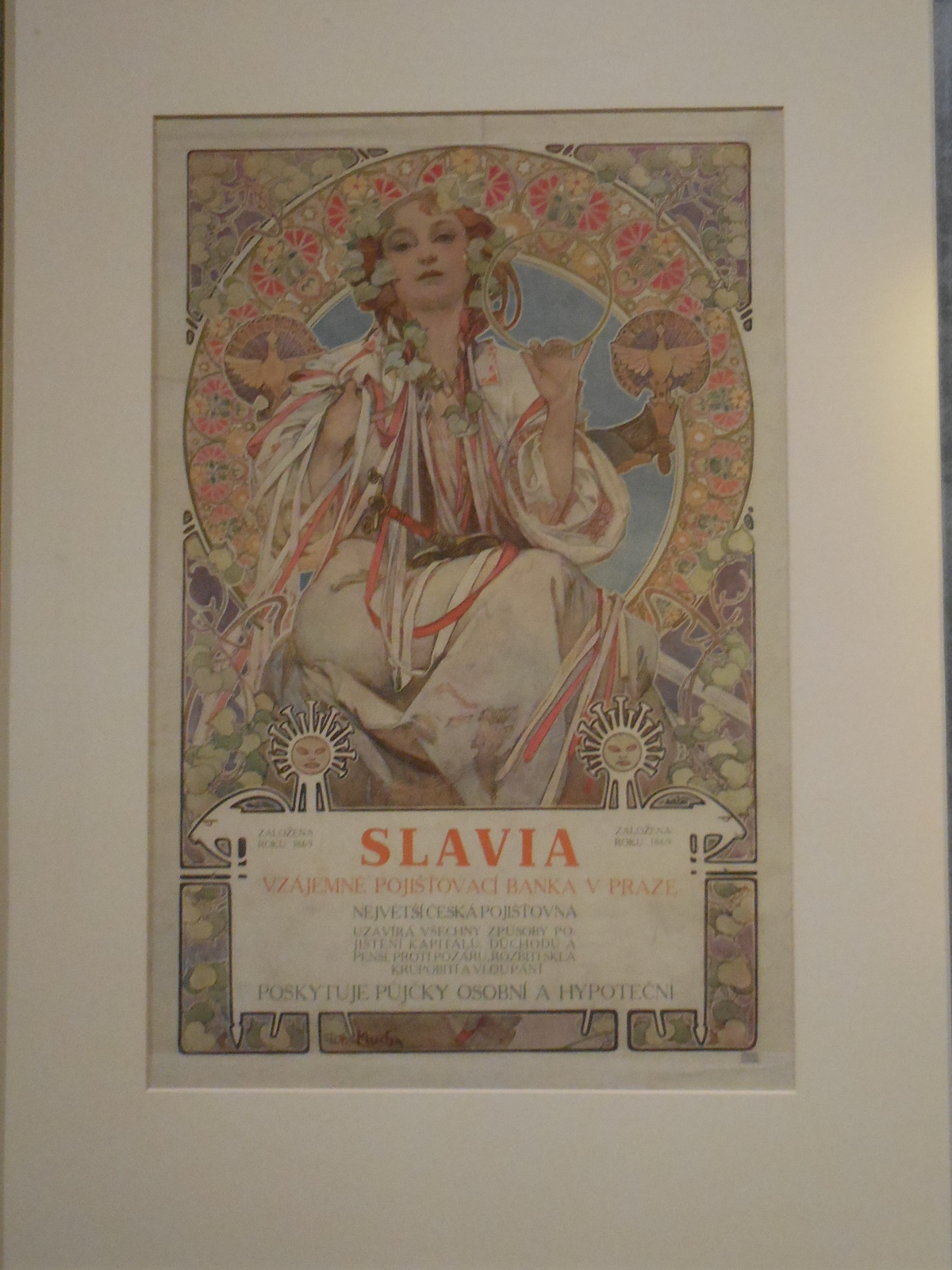
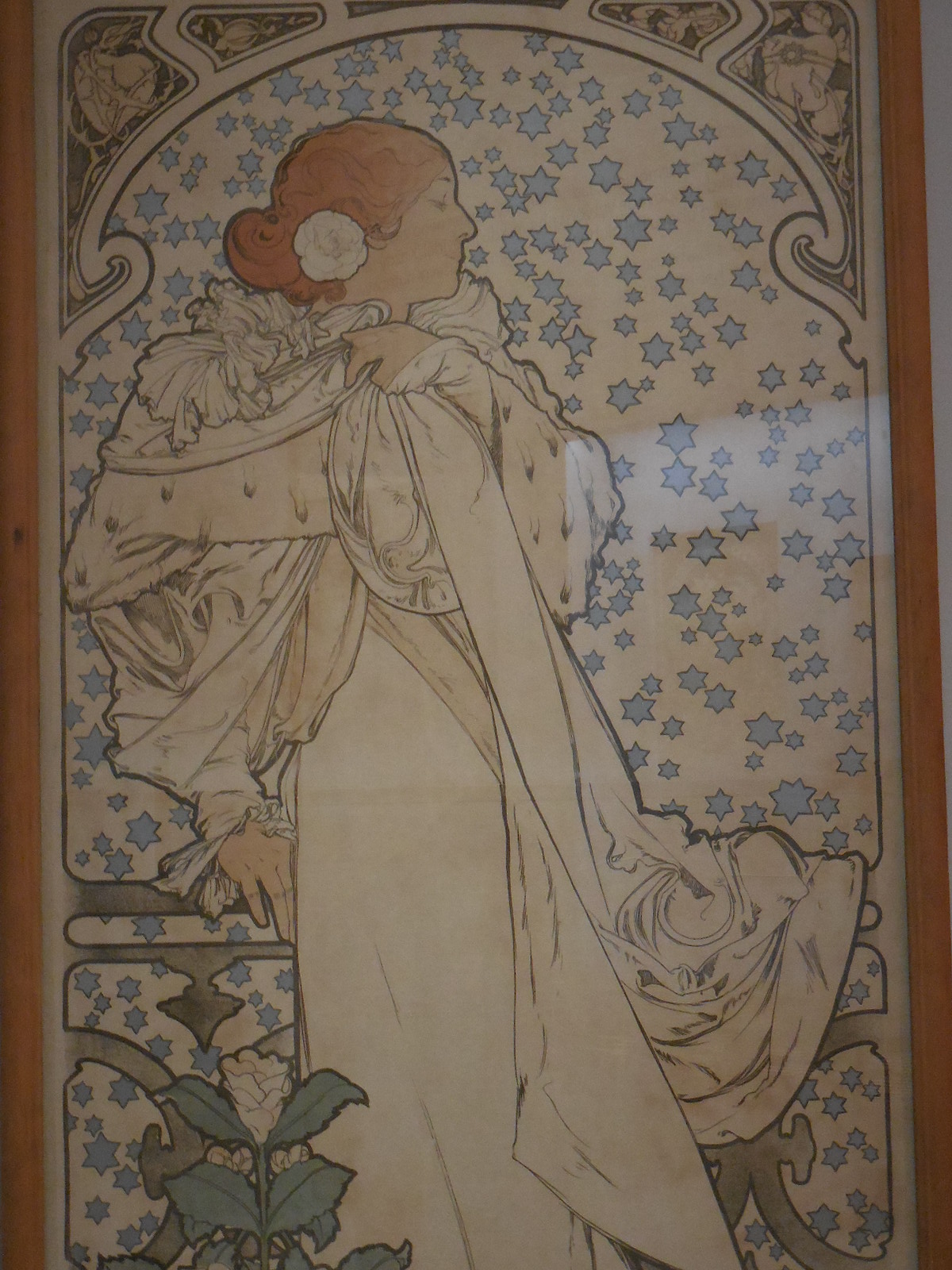
I have been a fan of Alphonse Mucha’s Art Nouveau works ever since I came to Prague in the 1990s. While he is best known for his exhilarating posters of actress Sarah Bernhardt, Mucha was a very versatile artist – as is evidenced in this comprehensive exhibition of creations owned by his descendants. The first extensive showing of his works in 30 years is housed at Prague’s Waldstein Palace. The exhibition highlights not only the advertising posters but also his drawings, paintings, sculptures, photos and jewelry, for instance. The family displays some originals to the public for the first time.  

Family portraits evoking Mucha’s childhood add an intimate feel to the exhibition. Born in Ivančice, Moravia, Mucha called home a building that also included the town jail. The Czech lands were under Austrian rule when Mucha grew up. They were part of the Habsburg Empire in which German was the official language. Yet, during that era, the Czech National Revival took place, when Czech nationalists promoted Czech culture and the Czech language.

At the end of 1894, Mucha became a star overnight when he designed a poster for Bernhardt’s production of Gismonda. The following year he created posters that decorated calendars, postcards and menus as well as theatre programs. His work would find enthusiastic audiences in Vienna, Prague, Budapest, Munich, London, New York and other cities during subsequent years.

I loved how, in his advertising posters, Mucha utilized folk features not only found in Czech art but also in Byzantine, Islamic, Japanese, Gothic, Judaic, Celtic and Rococo works. Much of this genre focuses on beautiful, young women with an optimistic and cheerful flair. They are wearing flowing robes in pastel colors. I loved the touches of floral and plant ornamentation plus arabesques and naturalistic elements, too.

The exhibition boasted family portraits and photos, such as those of his friends Paul Gaugin and Auguste Rodin. Gaugin even was Mucha’s housemate for a while. During the Paris Exposition Universalle of 1900, Mucha represented Austria-Hungary as the show focused on the accomplishments of the past century. I had not known that in 1899 Mucha had designed a jewelry collection that was featured at this major show. One of the jewelry pieces on display at the exhibition features a snake-shaped broach that Bernhardt wore during her portrayal as Medusa. I also was captivated by Mucha’s decorations for a German theatre in the USA. He would wind up making three trips to the United States, hailed by The New York Daily News as “the world’s greatest decorative artist.”

Works in the exhibition illustrated how mysticism had influenced him. His philosophy is also apparent in his creations. For example, he believed in beauty, truth and love to guide him on the spiritual path. For a monument he created a triptych called The Age of Reason, the Age of Wisdom and the Age of Love, fusing these three characteristics into one piece of art. Unfortunately, Mucha didn’t get the chance to finish it.

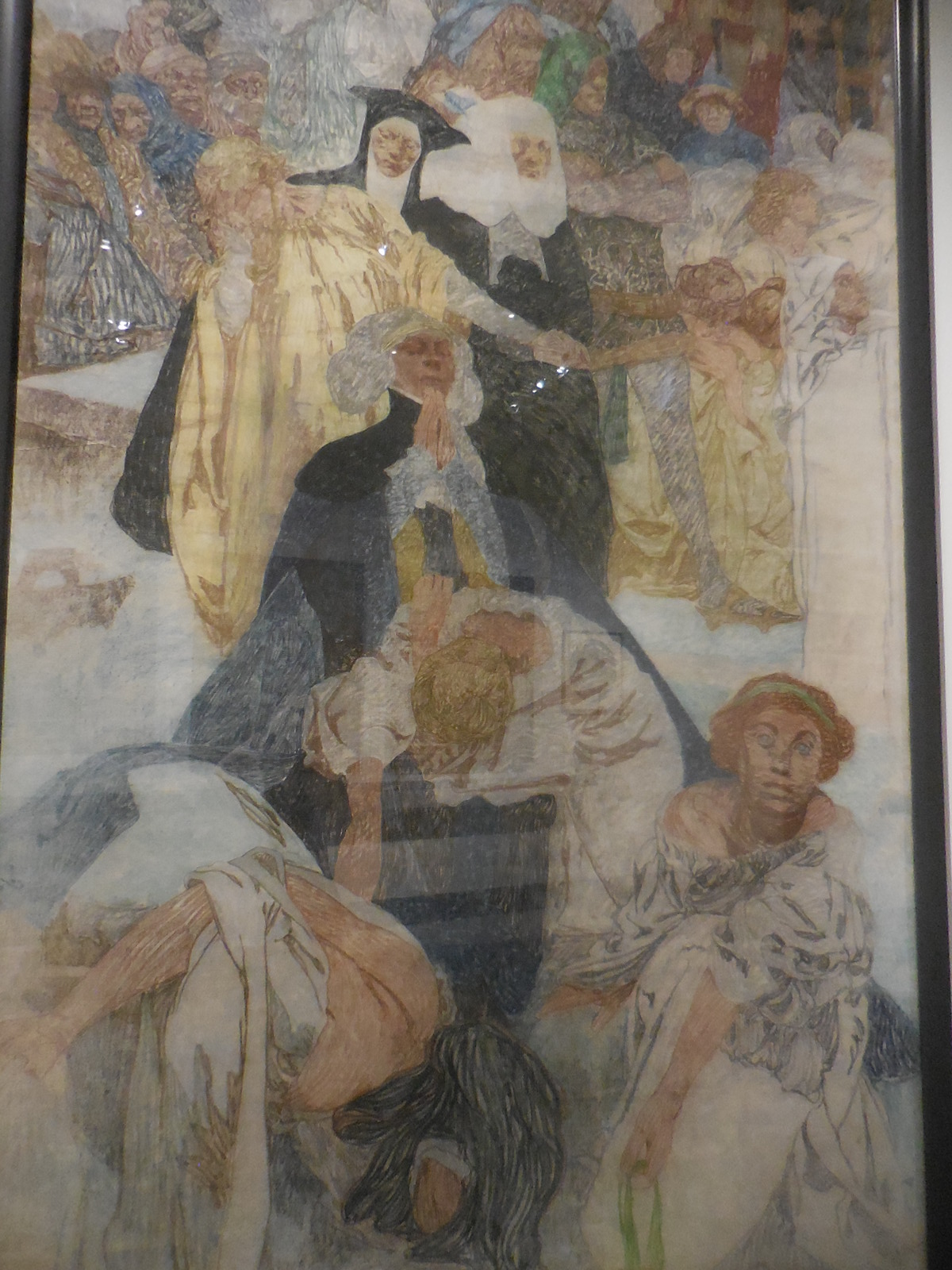
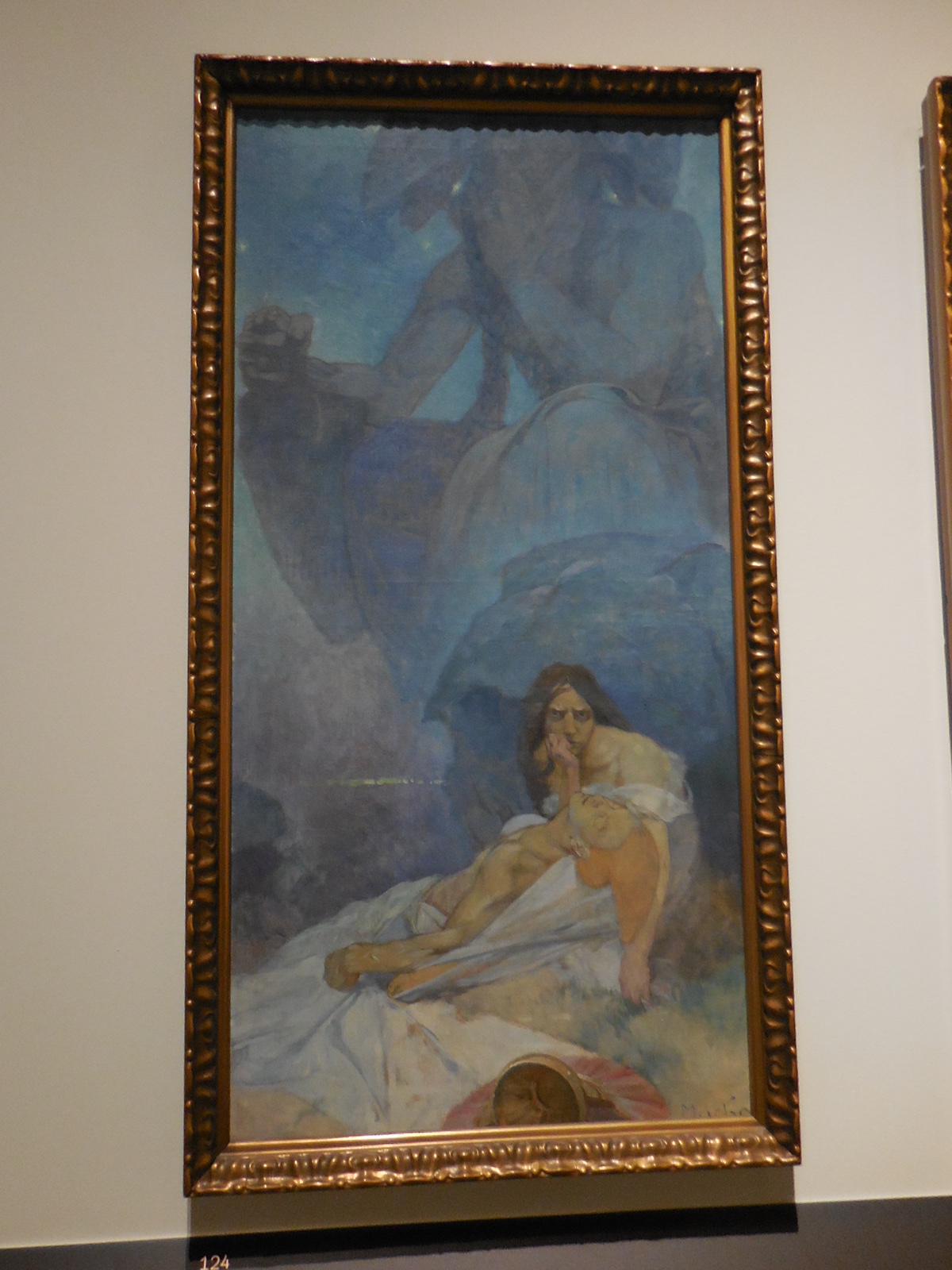
Perhaps what always captivates me the most about Mucha’s art is his emphasis on Slav identity. Indeed, his phenomenal Slav Epic paintings feature the heroic tales of the Slavs in 20 historical, symbolic canvases. Several reproductions of these works at the exhibition reinforced Mucha’s identity as a Czech and Slav patriot.

I saw panels devoted to Mucha’s decorations in the Municipal House, for which he designed numerous pieces – three wall panels, a ceiling painting depicting prominent Czech personalities, eight pendentives and furnishings. I remember seeing these for myself on tours of the Art Nouveau Municipal House, something I recommend to every Prague visitor. It is notable that, while Mucha’s works often were rooted in Slav identity in the past, he also looked to the future for a prosperous Czech nation.

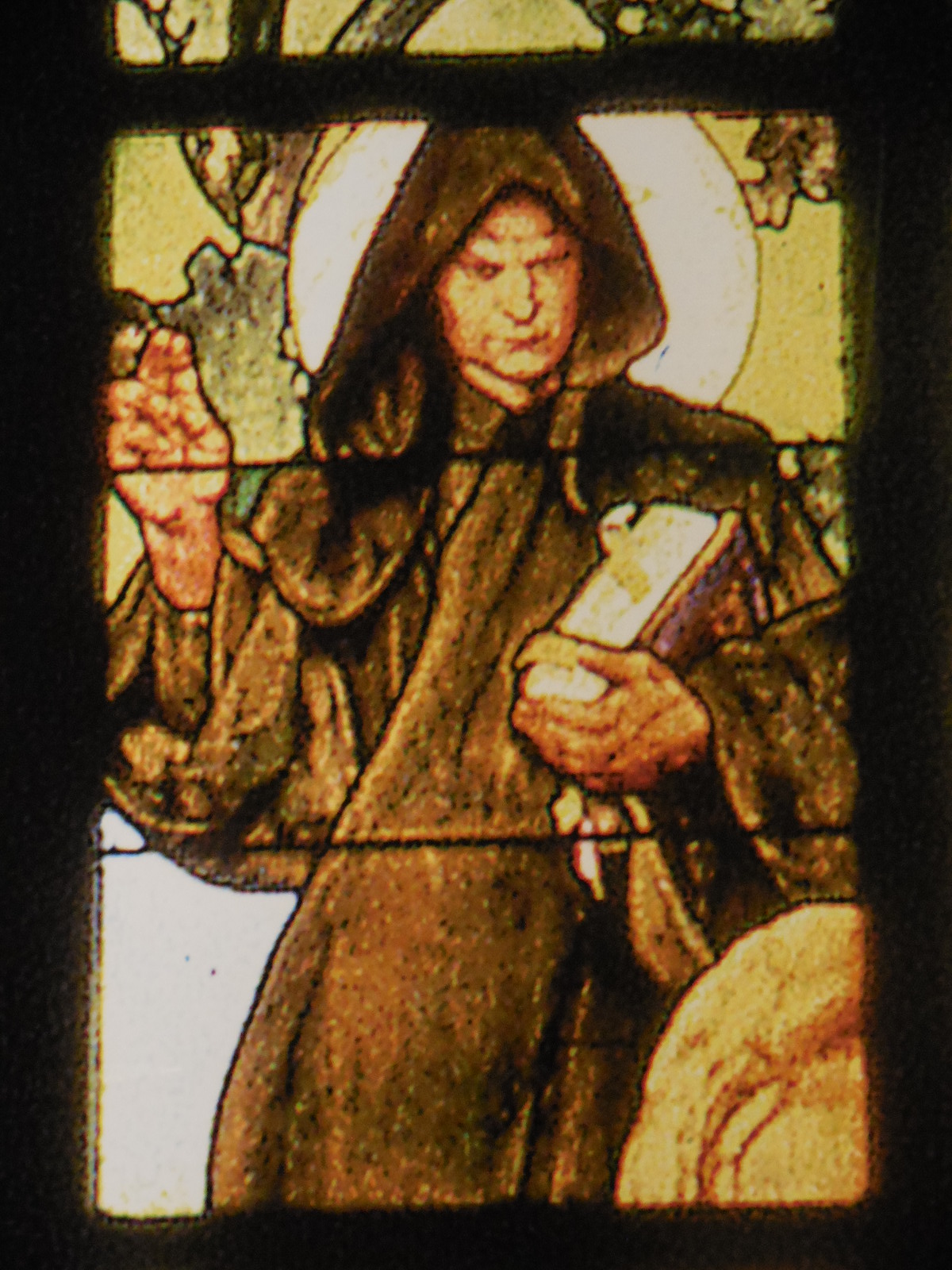
I was enamored by the reproductions of his stained-glass window designs. The originals decorate the interior of Saint Vitus’ Cathedral at Prague Castle. In 1931 he portrayed Saint Wenceslas, the nation’s patron saint, as a child with his grandmother Saint Ludmila in a central panel along with other panels featuring the lives and work of Saints Cyril and Methodius. Seeing examples of his colorful and vibrant stained glass renditions close-up was for me one of the highlights of this exhibition.

Mucha’s life was cut short by the arrival of the Nazis in Prague, where they set up the Protectorate of Bohemia and Moravia during March of 1939. The 79-year-old Mucha, riddled with health problems, was targeted by the Gestapo. Mucha was a Freemason, Judeophile and a promoter of democratic Czechoslovakia. He was one of the first to be interrogated by the Nazis. Mucha was stricken with pneumonia due to the strain from grueling interrogations and died in Prague 10 days short of his 79th birthday on July 14th, 1939. He is now buried in Prague’s Vyšehrad Cemetery along with other prominent Czechs.

This exhibition takes museumgoers on a unique and unforgettable journey from his childhood roots in Moravia to his time as an outsider in Paris to his experiences in the democratic Czechoslovakia until his untimely death. It stresses his identity as a Moravian, as a Czech, as a Slav and as a European. It shows his accomplishments in the art scene by displaying an eclectic collection of his creations that profoundly punctuated the artistic world.

Tracy A. Burns is a writer, proofreader and editor in Prague.

Lány Diary

From TGM Museum, Lány

This was my third or fourth trip to Lány, a town about 35 kilometers west of Prague near the Křivoklat forest. I loved going to Lány to pay tribute to the first Czechoslovak president, Tomáš Garrigue Masaryk and his family. I came by car this time, accompanied by a friend. First, I went to the TGM Museum, which told the story of Masaryk’s life and career. Then we went to the cemetery where Tomáš Masaryk and three members of his family are buried. After that, we strolled through one of my favorite chateau parks, part of the president’s summer residence. Masaryk had spent a lot of time in that majestic park and had died in the chateau.

Czechoslovak soldiers during World War I, from TGM Museum, Lány

First, the museum: I had been there once before and loved refamiliarizing myself with the history of the First Republic. If I could go back to any time in the past, I would travel to 1920s Czechoslovakia. The country was new, off to a fresh start as a democracy.

Besides exhibits relating specifically to Masaryk, the museum is home to period furnishings and paintings of his family members. There is a section devoted to the first World War, when he set up legions fighting in Russia as part of the French army, doing battle against the Habsburgs. First, we saw photos of Masaryk in a special exhibition. Then we went into the main part of the museum.

A philosopher, scholar and politician, Masaryk founded Czechoslovak democracy. He believed that small nations played a significant role in Europe and in the world. He also touted individual responsibility and religion as a source of morality. Masaryk came from humble beginnings. His father had been a Slovak carter, later a steward, while his German-Moravian mother had worked as a cook. At a German high school in Brno, Masaryk saw for himself the fraught tension between high-class Germans and oppressed, lower-class Czechs. He later concentrated on philosophy at the University of Vienna. While he was studying in a year-long program in Leipzig – a city I had loved visiting several years ago -, he met an American from Brooklyn, Charlotte Garrigue, and they were married in the USA during 1878. (I named my late cat the Czech version of Charlotte, Šarlota, after the first First Lady of Czechoslovakia. My cat died suddenly in July of 2021 at the age of 11.) Tomáš took his wife’s last name as his middle name. They had five children, and their son Jan later became a prominent politician whom Communists pushed out a bathroom window, killing him.

Tomáš Masaryk was a university professor and a writer. He penned books about the deplorable conditions in Russia after visiting that country and in another grappled with the causes of suicide. His writings centered on politics as well.

A wall of the museum took up the theme of the scandals that had scarred the public opinion of Masaryk. He proved that epic poems, which supposedly dated from the Middle Ages and appealed to Czech nationalists, were forgeries. These nationalists branded Masaryk a traitor. Then, a Jewish man named Leopold Hilsner was sentenced to death for ritual murder. Masaryk insisted that the trial had been anti-Semitic. Hilsner was given life imprisonment instead of the death penalty. Not all Czechs approved of Masaryk’s participation in this case, and the Masaryk family experienced anti-Semitic attacks.

An exhibit showing advertisements during the First Czechoslovak Republic

A section of the museum described Masaryk’s role during World War I. While Masaryk had fought for reforms with Austro-Hungary before the war, during World War I he became convinced that Czechs and Slovaks needed independence rather than autonomy. Masaryk was head of the government-in-exile in London. During a trip to the USA, he convinced President Woodrow Wilson that Czechoslovak independence was vital. Czechoslovakia was created October 28, 1918.

Pictures of the Masaryk family in the TGM Museum

Then there were the many exhibits about his presidency. Masaryk abdicated during his fourth term in office due to health reasons, after 17 years as head of state. During his presidency, the country was a democracy with all citizens equal, and minorities had rights to maintain their national identities. Freedom of the press and universal suffrage were other features. However, the country was not without its problems. German-Czech tensions and Slovak calls for separatism were two of the issues that caused him great concern.

Furnishings from the First Republic, TGM Museum, Lány

After his reelection in 1920, the country flourished, especially economically. However, personal tragedy hit the Masaryk family. His wife died in 1923. Three years into his third term, in 1930, he turned 80, and ideologies of Communism, Fascism and Nazism had infiltrated the democratic country. During 1934, he was elected for a fourth term, yet his time in office was riddled with health problems. He resigned in 1935 and died at Lány on September 14 that year.

Statue of TGM in front of the museum

After admiring a statue of Masaryk outside the museum, we went to the cemetery, where simple slabs marked the graves of Masaryk and his wife Charlotte, son Jan and daughter Alice. The small grassy area was roped off. It was a modest yet eloquent commemoration to lives that had upheld democratic values even during troubled times.

I reflected on Masaryk lying in state at Lány. About 60,000 citizens came to pay their respects. When his wife died in 1923, thousands of Czechs paid homage to her by going to Lány chateau as well.

Modest graves of Tomáš G. Masaryk and three members of his family

I thought about Tomáš Masaryk’s funeral in Prague. Black flags had fluttered from downtown buildings. Busts and pictures of Masaryk had dotted the town and covered the front pages of numerous newspapers. Black banners reading “TGM” had adorned Saint Vitus Cathedral and buildings on Wenceslas Square. Thousands of soldiers and legionnaires had marched in his funeral procession September 21 as 146 military standards appeared. Draped with the Czechoslovak flag, his coffin was carried on a gun carriage through the city. On its last leg to Lány, the coffin had traveled by train, placed in a car covered in wreaths and flowers.

The headstones of the graves of Tomáš Garrigue Masaryk and his wife Charlotte

I remembered seeing that gun carriage at a temporary exhibition in a Prague gallery a few years earlier. I recalled watching Václav Havel’s coffin travel by me while I waited on an Old Town Street in December of 2011. I was huddled in my LL Bean winter coat on that dark, dismal morning as the coffin made its way toward Prague Castle. My hero was dead; my heart broken; my mood solemn. I thought that it was the same way I would have felt if I had seen Masaryk’s funeral procession.

From the cemetery we made our way to a restaurant on a square, where I ate fried chicken steak and ice cream on that sunny May afternoon of 2021. We ate outside to be safer from coronavirus infection.

The next and last stop was much more upbeat – Lány Chateau, the summer residence of Czechoslovak and Czech presidents since 1921. While the residence was not open to the public (with several exceptions), the beautiful park was. I first set foot in this park during the summer of 1991, when I was a tourist seeing Prague and its environs for the first time.

That trip during the summer of 1991 was magical – walking through the Old Jewish Cemetery, gawking at Old Town Square with its superb architecture, making my way to Prague Castle via the Charles Bridge, where Russian soldiers sold their uniforms and fur hats. On the way, I walked up Nerudova Street, where, in a photography store, I found some prints of President George H.W. Bush with Václav Havel during that historic visit in 1990. There were also discounted posters of Gorbachev, but I wasn’t interested in buying one. Saint Vitus Cathedral had amazed me. On Golden Lane, a place in legends dating back to Rudolf II’s era, I got my picture taken with a man I had met on the train from Berlin to Prague. We were smitten with each other. Yet, we would part our separate ways a few days later, never contacting each other again. Life somehow had gotten in the way. I visited Karlštejn Castle, Konopiště Chateau, Hluboká Chateau, Kutná Hora and so many other places during that trip. Prague had felt like my true home, and the park in Lány was so special in my heart.

By this time, I knew the history of the chateau well. There was a structure here before 1392, when it was first mentioned in writing. Late in the 16th century, that edifice became a Renaissance keep. Rudolf II acquired the property in 1589 and did much hunting on the grounds at the game reserve. During the Thirty Years’ War, Swedish troops had occupied the residence. After Rudolf II acquired it, the residence was state-owned for 100 years. In 1685 Arnošt Josef Wallensteain bought it. When his daughter got married, the chateau and surrounding land became the property of the Furstenberg family and stayed in their possession until the state bought it in 1921. Then the chateau was modernized. Masaryk had the balcony built. During Ludvík Svoboda’s presidential term, the game reserve had been open to Western tourists, but later it was closed off again. Many other renovations had taken place throughout the decades. The chateau had been in poor condition after Gustav Husák’s tenure, when the Communist regime was toppled in 1989. Under Václav Havel and Olga Havlová – after whom I had named one of my cats – the chateau had been totally reconstructed into a beautiful work of art and architecture.

Near the park we perused the obelisk that Slovenian architect Josip Plečník had erected during Masaryk’s era to commemorate fallen soldiers during World War I. In the park I felt at home, so comfortable as if I was meant to be there, basking in the sun near the greenhouse or taking in the many landmarks. This was one of the few chateau parks that made me see not only the beauty around me but also the beauty inside me. The other park that gave me this feeling was at the chateau in Opočno in north Bohemia.

I loved the two ponds. One landmark that impressed me was a lion-headed fountain made by Plečník, who had superbly decorated parts of Prague Castle, too. With five Dorian colums and five lions’ heads, the fountain symbolizes the five lands of Czechoslovakia. Water from the five heads flows into a sixth head that spouts the water into the pond, symbolizing the unity of newly-formed Czechoslovakia.

Across the Masaryk stream I saw three bridges constructed in a simple design by Plečník. I remember visiting Plečník’s studio when I was in Ljubljana.  Communist president Klement Gottwald had contributed to the park as well. He had a small cottage with fairy-tale elements built for his grandson. There were also beehives from Masaryk’s era, again designed by Plečník. The Furstenbergs, who had owned the land with chateau for several centuries, were responsible for setting up the greenhouse. Three benches celebrated more recent events. One commemorated the Višegrad Four conference hosted in Lány in 2006, when Václav Klaus was the Czech president. Another was donated by Livia Klausová, a former First Lady, in 2012. The third was donated by current President Miloš Zeman. The Riding Stables were built in Neo-Gothic style during 1861.

We walked along the main chestnut-lined path and took in the various perspectives of the yellow, Baroque chateau. I knew something about the interior, even though it was not possible to go inside. The Blue Dining Room was decorated in Third Rococo from the beginning of the 20th century. The bright yellow wallpaper in the Yellow Salon harkened back to Husák’s era. After the Velvet Revolution, five Renaissance painting of Habsburg archdukes as children had been installed. There was a beautiful marble fireplace surrounded by superb woodcarving in the library. Masaryk’s Salon includes, thanks to the Furstenbergs, furniture made from black pearwood.

During Masaryk’s tenure, there was a movie theatre at the chateau where locals could watch the latest talkies. The films of Vlasta Burian, a comic actor whose work I knew well, often were projected there. This was where the Lány Agreement promoting cooperation between Austria and Czechoslovakia had been signed in December of 1921. So many presidents and dignitaries had graced the halls of that chateau.

I tried to imagine Masaryk riding his horses through the park. At Lány Masaryk had written many of his books and had met with legendary Czech author Karel Čapek to put together the nonfiction work Conversations with TGM. During the Nazi Protectorate, Emil Hácha had called the chateau home. I tried to imagine the Protectorate flag fluttering from the tower during the second World War. I recalled that Gottwald had tried to do away with all the monuments at Lány that were associated with Masaryk. There had been an assassination attempt on President Antonín Zápotecky in 1953, as a bomb went off under his car. One of the town’s inhabitants was killed in the blast. During Havel’s presidency, I used to love to listen to his Conversations from Lány radio broadcast.

The chateau and park made me think about Masaryk’s era and Havel’s 13 years as president of Czechoslovakia and of the Czech Republic. After spending some time enjoying the sights in the park, it was time to go back to Prague. It was our first trip of the 2021 chateau and castle season, and it would always be one of the best ever.

Tracy A. Burns is a writer, proofreader and editor in Prague.

My late cat Šarlota, named after Charlotte Garrigue Masaryk

The First Republic Art Exhibition Diary

FirstRepublicexhibitSailorCapek14

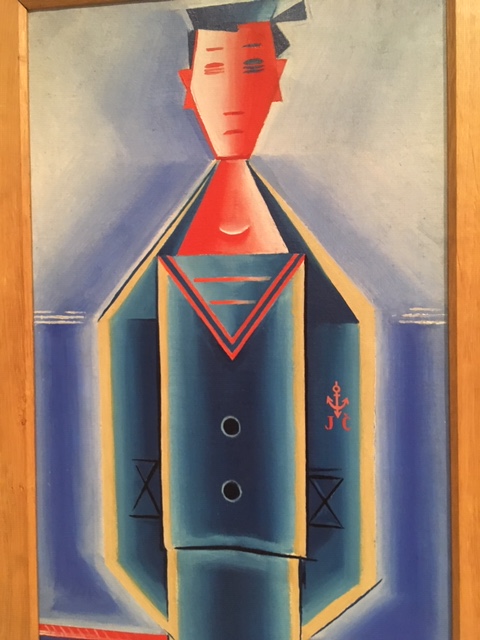
Josef Čapek, The Sailor

A long-term temporary exhibition, the First Republic art exhibition in Prague’s Trade Fair Palace showcases mostly Czechoslovak paintings and sculpture from 1918 to 1938, when Czechoslovakia was a democratic state under the guidance of President Tomáš Garrigue Masaryk. Czechoslovakia was founded in 1918, and Masaryk, who had been living in exile, was welcomed back into the Czech lands with much celebration and fanfare. The Munich Agreement, signed in September of 1938, proved a dark and dismal event in Czechoslovakia’s history, as the country ceded its German-minority Sudetenland to Hitler’s Third Reich. On March 15, 1939, the Nazis would march into Prague, and Hitler would set up the Protectorate of Bohemia and Moravia, starting a horrific chapter in Czech and Central European history.

FirstRepublicexhibitCapek34

Josef Čapek

FirstRepublicexhibitMyslbek31

Myslbek

The exhibition examines the flourishing of art in the various cultural centers of Czechoslovakia, first and foremost in Prague but also in Brno, the capital of Moravia. In Slovakia the cultural hubs were located in Bratislava and eastern Košice. Zarkarpattia was a section of Czechoslovakia from 1920 to 1938, and its city of Užhorod was the setting of some intriguing exhibitions. The exhibition not only features Czech art but also Czech-German production and Slovak artistic endeavors.

FirstRepublicexhibit22

Antonín Slavíček, House in Kameničky, 1904

FirstRepublicexhibit24

Adolf Hoffmeister, Bridge, 1922

FirstRepublicexhibit26

Bohumil Kubišta, Quarry in Braník, 1910-11

Some of the Czech and Slovak artists whose works shine in the exhibition are Antonin Slavíček, Max Švabinský, Josef Čapek, Václav Špála, Jan Zrzavý, Jan Preisler, Ľudovít Fulla, Martin Benka, Bohumil Kubišta and Josef Šíma as well as Toyen and Jindřich Štyrský. The German and Austrian artists represented include August Bromse, Max Pechstein and Oskar Kokoschka, a favorite of mine.

Sculpture by Auguste Rodin, Paul Cezanne, House in Aix, 1885-87

French art from the 19th and 20th century is also on display as the Mánes Association in Prague held an important exhibition of French art at the Municipal House during 1923. The dynamic renditions of Monet, Matisse, Renoir, Van Gogh, Seurat, Gauguin, Rodin, Rousseau and others are in the limelight, too. The paintings of Georges Braque and Pablo Picasso explore Cubist tendencies.

FirstRepublicexhibit11

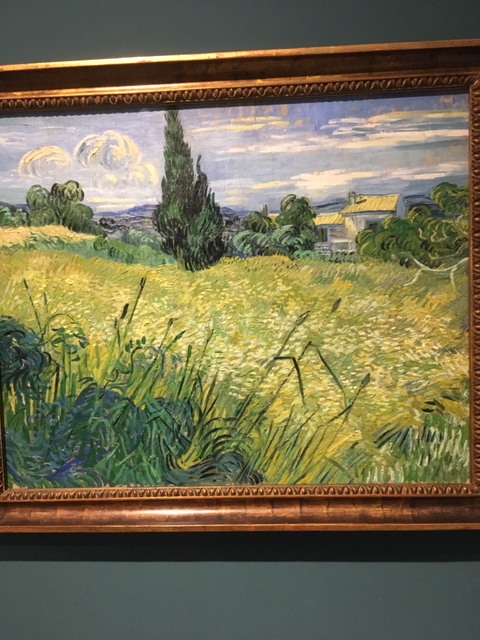
Vincent Van Gogh, Green Wheat Field, 1889

FirstRepublicexhibit13

Henri Rousseau, Self-Portrait – Me. Portrait – Landscape, 1890

FirstRepublicexhibit15

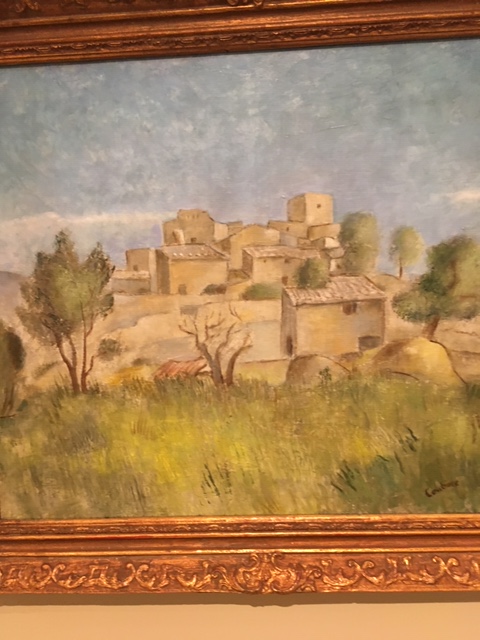
Paul Cezanne

FirstRepublicexhibitSeurat20

Georges Seurat, Harbor in Honfleur, 1886

I was particularly impressed by the works of a Czech artistic group called the Obstinates, established at the Municipal House. It included artists who spent World War I in Prague. I liked to eat chicken with potatoes at the Art Nouveau Municipal House, and I sometimes would imagine what it had been like for those artists to discuss their ideas and theories of art there. Three of my favorite Czech painters belonged to this group of avant-garde art that had traits of Cubism and Expressionism: Josef Čapek, Špála and Zrzavý. The Municipal House at that time was one of the most prominent exhibition spaces. It still houses art exhibitions and nowadays also includes a concert hall.

On right: Jan Zrzavý, Lady in the Loge, 1918

I also tried to imagine the avant-garde Devětsil group having its first exhibition during 1922 at the Union of Fine Arts in the Rudolfinum, now the main concert house for the Czech Philharmonic. I have attended many concerts there, even seeing my favorite violinist Joshua Bell on its stage twice. I wondered what it had been like to see the works of Karel Teige, Adolf Hoffmeister and Štyrský in that majestic building during 1922 and 1923.

FirstRepublicexhibit19

Jindřich Štyrský, The Puppeteer, 1921

My favorite painting in the exhibition was called “Woman with a Cat” by František Zdeněk Eberl. I am a cat fanatic, and the woman in the painting is holding her cat on her shoulder so lovingly. You can sense that the cat is an important part of her family just as my Šarlota Garrigue Masaryková Burnsová is for me. (My cat is named after President Masaryk’s wife, the First Republic’s First Lady of Czechoslovakia.)

FirstRepublicexhibitPtngwithcat25

František Zdeněk Eberl, Woman with a Cat, around 1929

The exhibition also highlighted the importance of the Mánes Association of Fine Artists, which had been established by Prague students in 1887. It had many functions, organizing exhibitions and lectures as well as editing magazines, for instance.

FirstRepublicexhibit9FirstRepublicexhibit10

Karl Schmidt-Rottluff, Village Square, 1920

FirstRepublicexhibit16

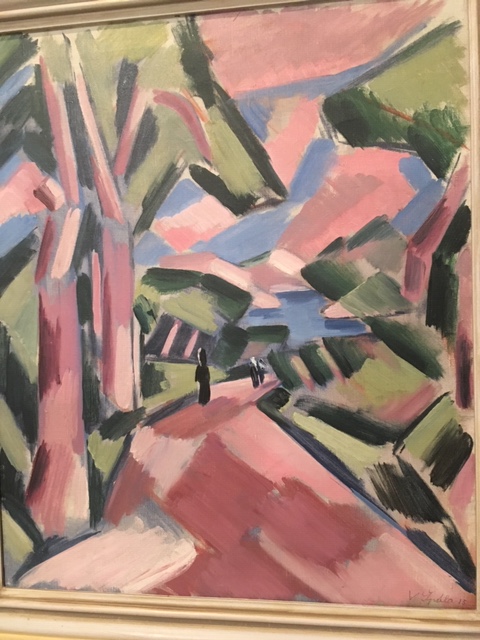
Václav Špála

VFirstRepublicexhibit17

Vincenc Beneš, Behind the Mill in Písek, 1928

There were African art relics in the exhibition as well. I thought of Josef Čapek, who had been greatly influenced by African art. The exhibition informed museumgoers that Emil Filla’s paintings had been on display with African art at the Mánes in 1935. Filla had a strong interest in non-European art and was an avid supporter of the surrealist trends in Czechoslovakia.

FirstRepublicexhibitAfricanart29

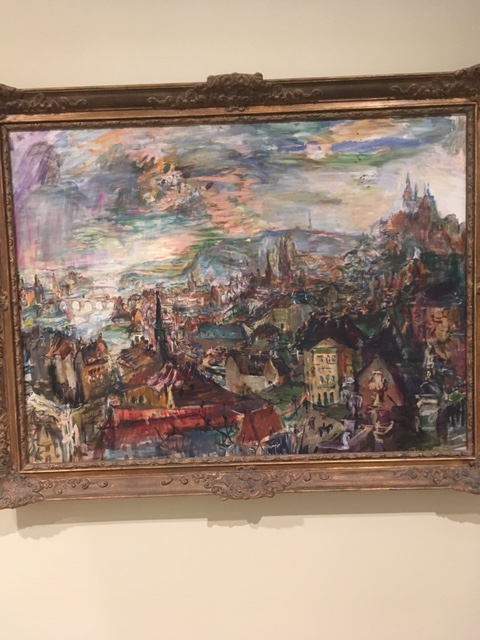
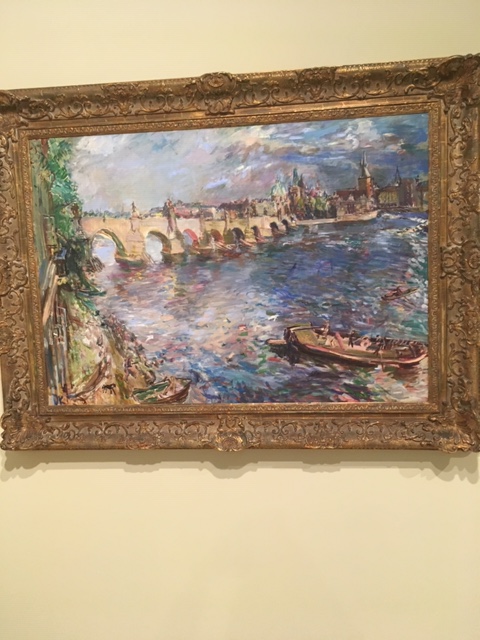
Another significant exhibition space during that era was the Dr. Feigl Gallery. Hugo Feigl made quite a name for himself as a private gallery owner. The exhibitions he put together did not only display Czech art but also highlighted Czech-German, Jewish and artists from around the world. He did not only organize exhibitions at his own gallery. One art show that interested me was Feigl’s exhibition of German and Austrian artists who had come to Prague as refugees, fleeing Hitler as the dictator amassed more and more power. Oskar Kokoschka, one of my favorite painters, was a refugee who had made his home in Prague. I loved his view of the Charles Bridge and his view of Prague on display. They captured the magical spell of Prague using avant-garde techniques.

FirstRepublicexhibit27

Oskar Kokoschka, Prague – View from Kramář’s Villa, 1934-35

FirstRepublicexhibit28

Oskar Kokoschka, Prague – Charles Bridge, 1934

FirstRepublicexhibition23

August Bromse, Descent from the Cross, before 1922

In 1937, Feigl even organized a daring exhibition of German Expressionist works from a German collection of which the Nazis were by no means fans. This exhibition encouraged people to protest against an exhibition in Munich, one that glorified the Nazi regime with its display of Nazi-approved art.

Václav Špála, By the River – Vltava near Červená, 1927, sculpture by Otto Gutfreund

I was also enthralled by the exhibitions that had taken place in Brno, Zlín and Bratislava. I had poignant memories of all three places. I had helped out at the first international theatre festival organized by the Theatre on a String in Brno many years ago. People in Brno had been so friendly, and my Czech really improved thanks to my time spent there. I had also visited some villas in Brno and knew the city’s sights well.

FirstRepublicexhibit5

Max Švabinský, In the Land of Peace, 1922

FirstRepublicexhibit8

Otto Gutfreund, Business, 1923

FirstRepublicexhibit12

I had spent several days of one vacation in Zlín, where I had toured the fascinating Báťa shoe museum, which probably featured every kind of shoe imaginable. More than a decade ago, I had visited Bratislava once a month to help take care of my favorite Slovak writer’s grave. I had also visited the Slovak National Theatre, learning Slovak in part thanks to its performances. I loved the Slovak language and felt at peace hearing people around me speak it. I also felt this way when I heard Czech. I especially liked the works of Slovak painter Ľudovít Fulla. His use of bright colors, in his work “Balloons” for example, gave his paintings a dynamism and vitality that was unforgettable.

On right: Ľudovít Fulla, Balloons, 1930

Košice and Užhorod were featured as artistic centers, too. I had spent a lot of time in Košice during my travels to Slovakia as some of my ancestors had been from that region, and I had also used Košice as a starting point to visit other places in east Slovakia, such as Humenné and the Vihorlat. I had never been to Užhorod, which Czechoslovakia had begun to modernize during the early days of the country’s existence. I was surprised that architect Josef Gočár had designed some functionalist buildings there. I often walked by some of Gočár’s architectural achievements in the Baba quarter of functionalist individual family homes.

FirstRepublicexhibit33

Anton Jaszusch, Landscape, 1920-24

FirstRepublicexhibit36

Pablo Picasso, Still Life with a Goblet, 1922

The exhibition also informed me that between 1933 and 1938, about 10,000 refugees from Germany and Austria had officially made their way to Czechoslovakia while the number of unofficial refugees was about the same. Many significant artists came to Czechoslovakia to flee Hitler’s hold on Germany and Austria.

FirstRepublicexhibitHitler2

Caricature of Hitler, John Heartfield, Adolf the Superman: Swallows Gold and Spouts Junk, 1932

I was surprised to discover that as early as 1934 an exhibition of caricatures and humor protested Hitler’s ascent to power. It took place at the Mánes Association of Fine Artists. The caricatures were not limited to Hitler and even included some of the “good guys.” For instance, artists also poked fun at Masaryk. I was very moved by Josef Čapek’s versions of the painting “Fire,” showing a person unable to escape the dancing flames, artworks providing a stark warning about the danger of Hitler’s ideology and reign. The caricature of Hitler was chilling. Hitler’s head was perched atop a chest x-ray. His spine was made up of coins. His heart was shaped like a swastika.

FirstRepublicexhibit4

A sculpture commenting on the Munich Agreement of 1938

FirstRepublicexhibitFireCapek3

Josef Čapek, Fire, 1938

The exhibition ended with those works commenting Hitler’s control of the region, specifically on the Munich Agreement of 1938. While those paintings and the sculpture profoundly affected me, I preferred to concentrate on the avant-garde creations that had been featured in an artistically flourishing democratic Czechoslovakia, when artists boldly experimented with their artistic visions, during an era that I had always wanted to visit if I could go back in time. I would have loved to experience the atmosphere of the country when democracy was fresh, the state new and full of promise. Little did anyone know at its inception that the First Republic would not last long and that such a chilling chapter would follow.

Tracy A. Burns is a writer, proofreader and editor in Prague.

FirstRepublicexhibitfurniture35

Furniture set from First Republic, Jan Vaněk

National Museum Diary

NtlMuseumint2

I was introduced to Prague’s National Museum during July of 1991, when, for the first time, I saw objects and attire from World War II on exhibit there. I couldn’t believe that I was actually looking at real Nazi uniforms and authentic items from the horrific era of the Protectorate of Bohemia and Moravia, a period I had only read about in books while growing up in the USA. The exhibition made me even more aware of what a nightmarish time of oppression and terror it had been. I had never felt so close to history before that trip to Prague. It was an unforgettable experience for me, as were many moments during that first foray to one of the lands of my ancestors. By the time I moved to Prague in September of that year, the exhibition was gone. I occasionally visited the museum after that, but nothing there would influence me that strongly.

NtlMuseumint13

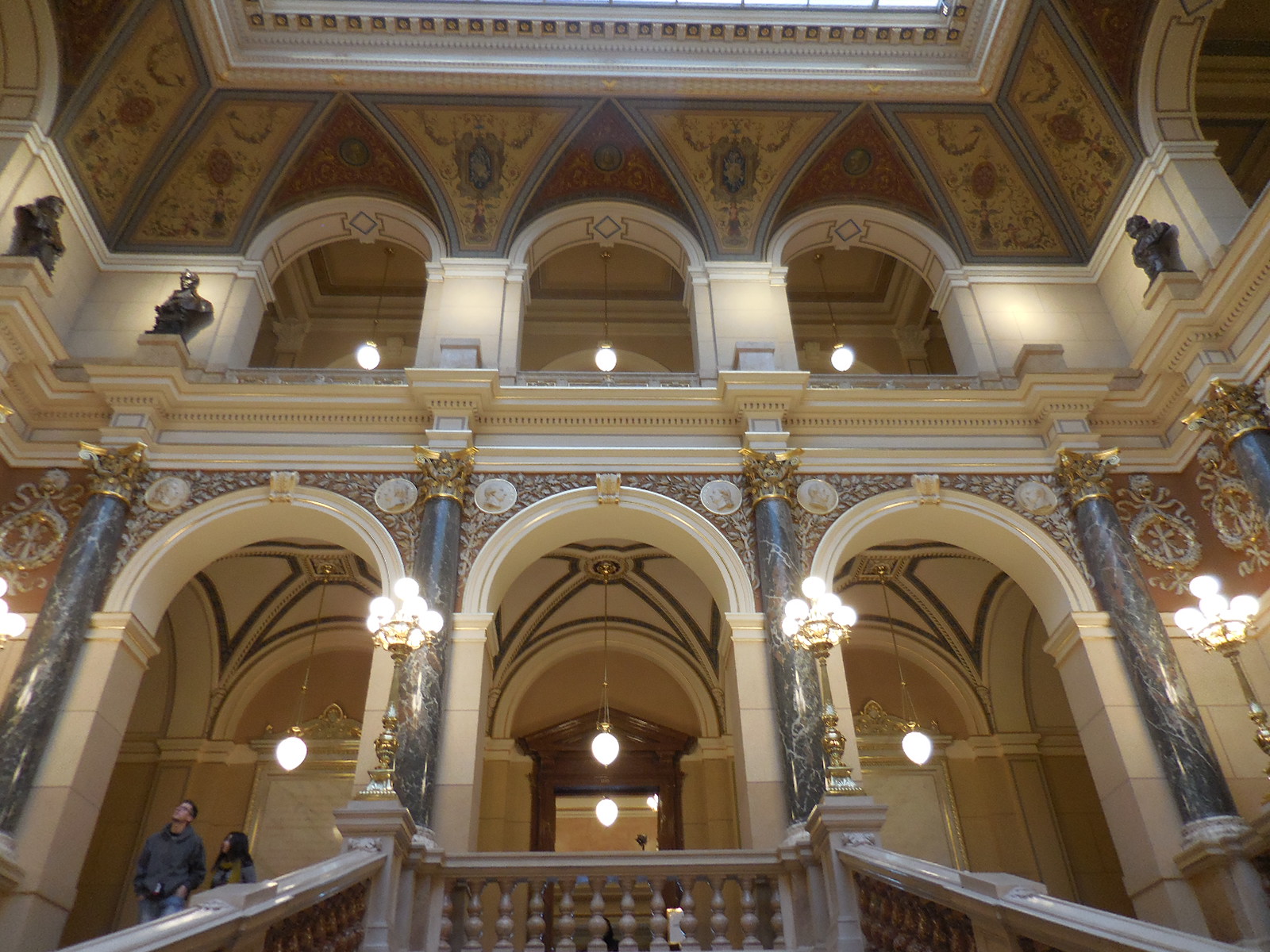
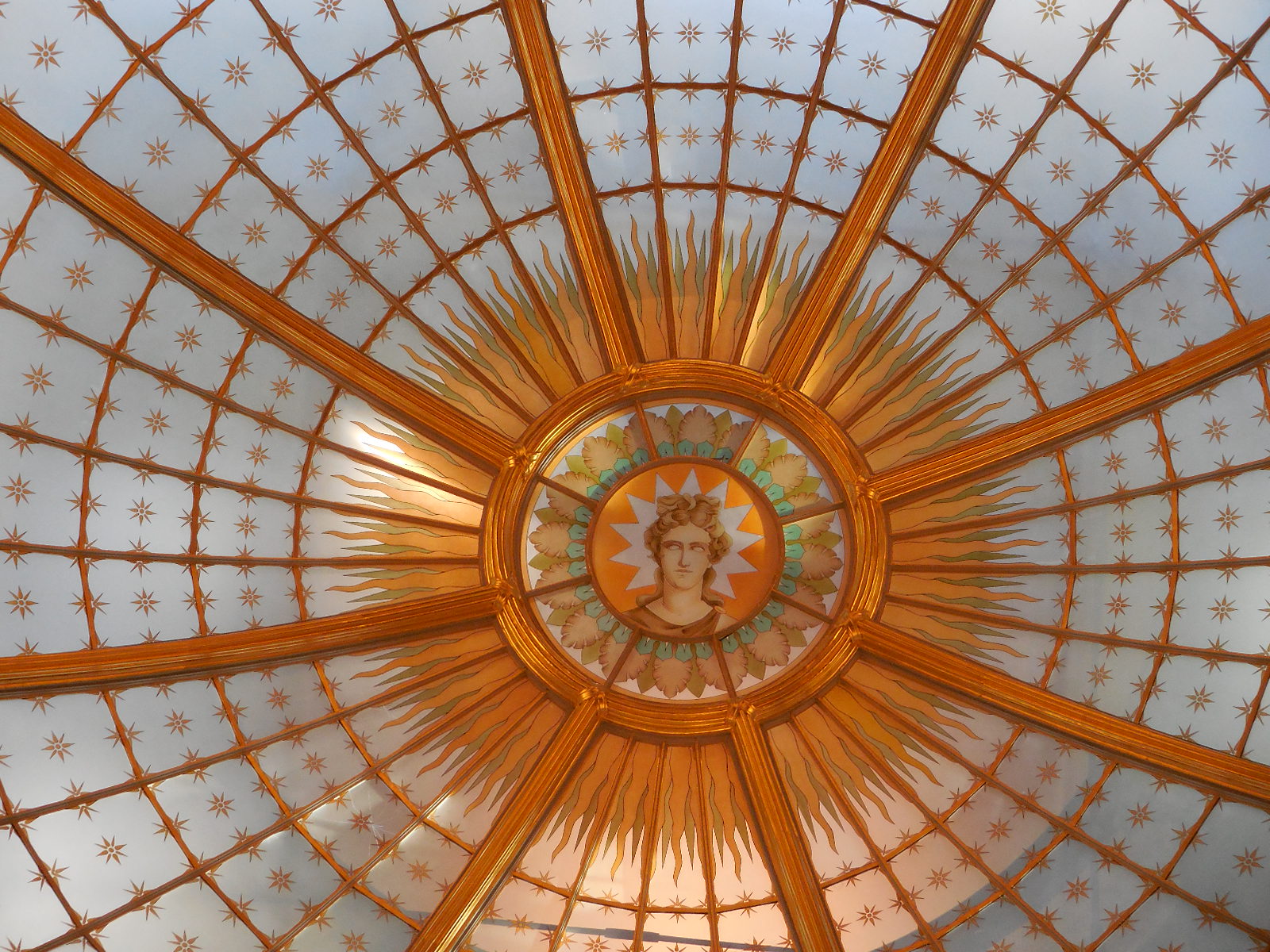
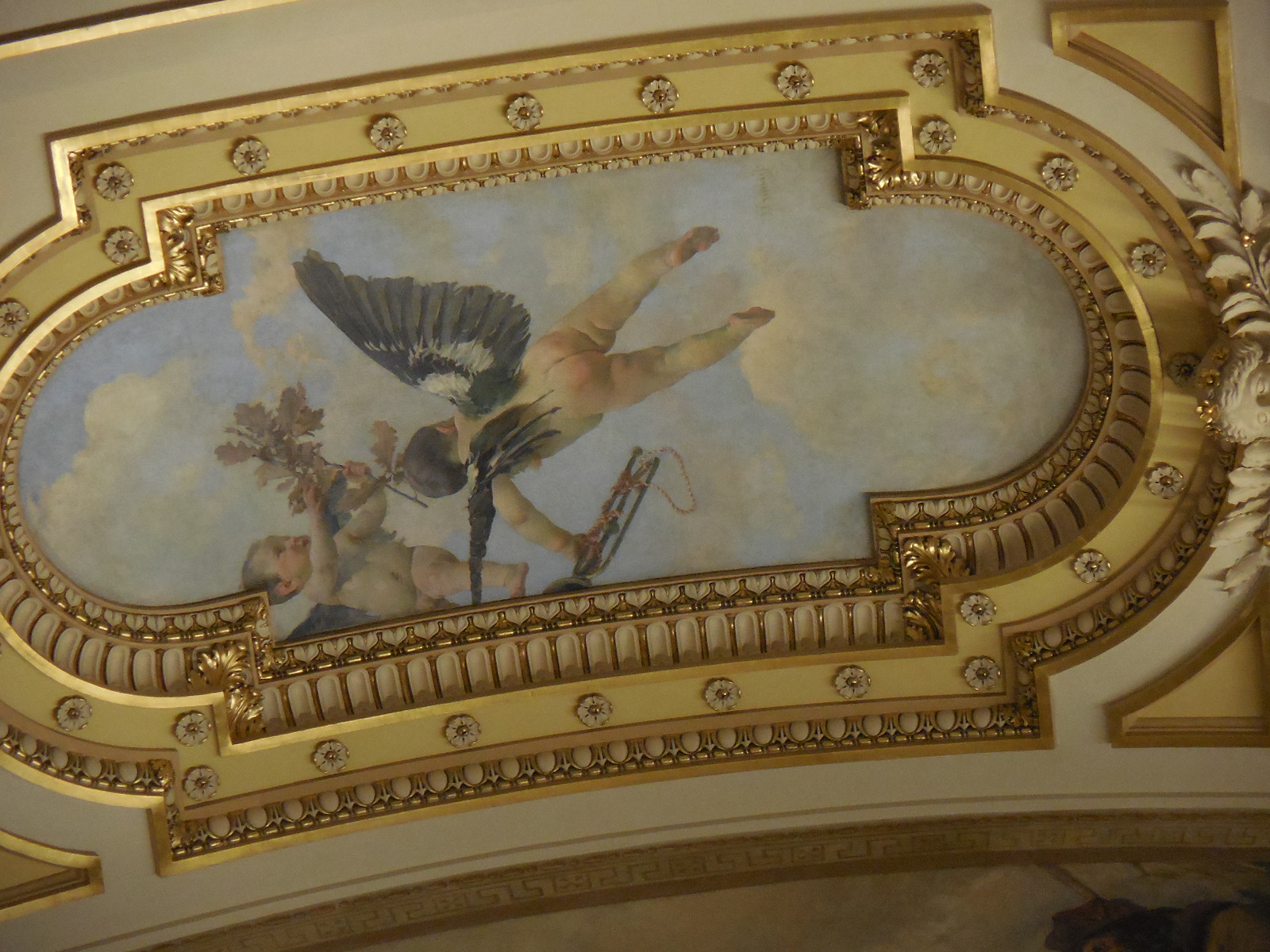
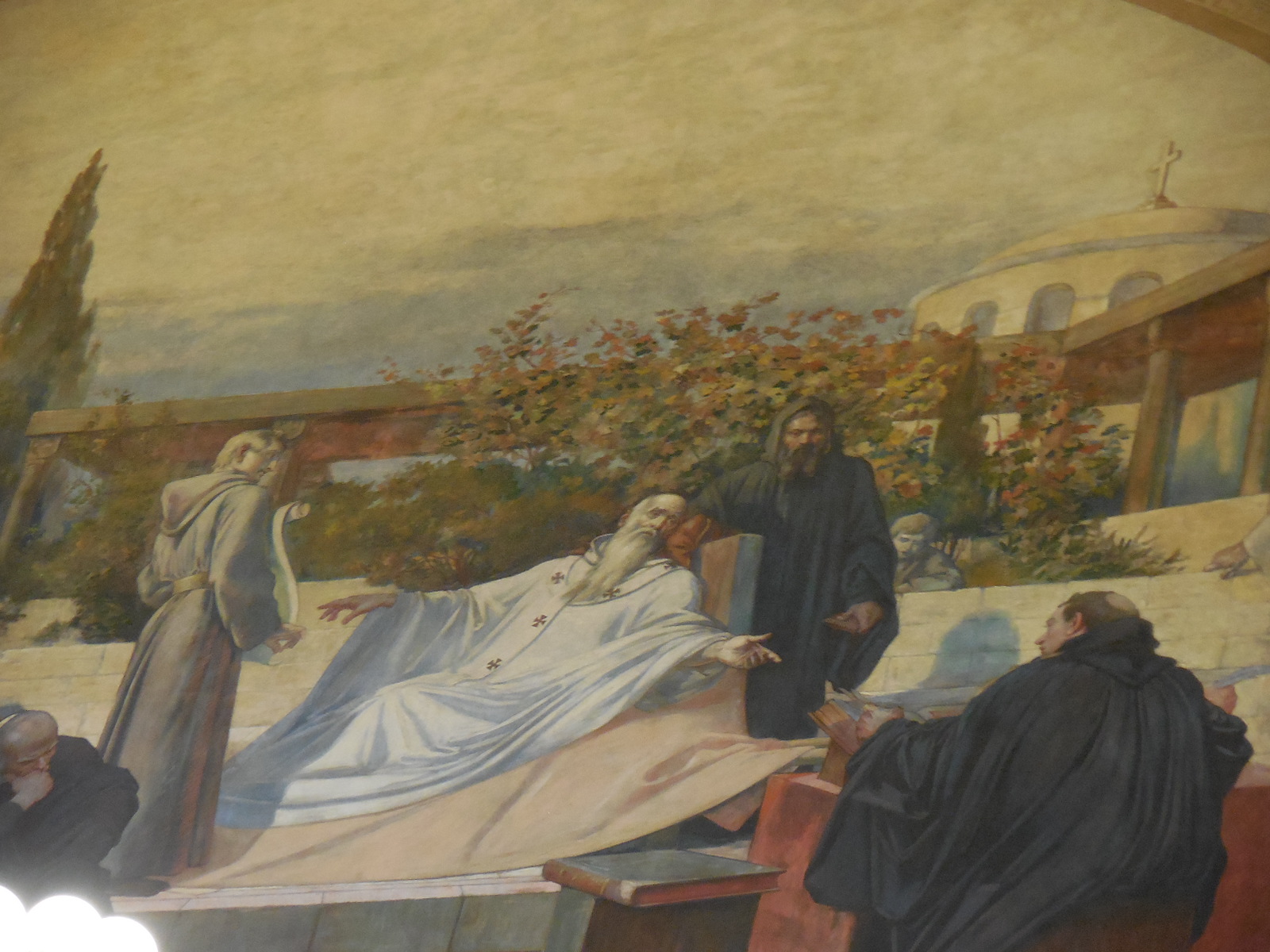
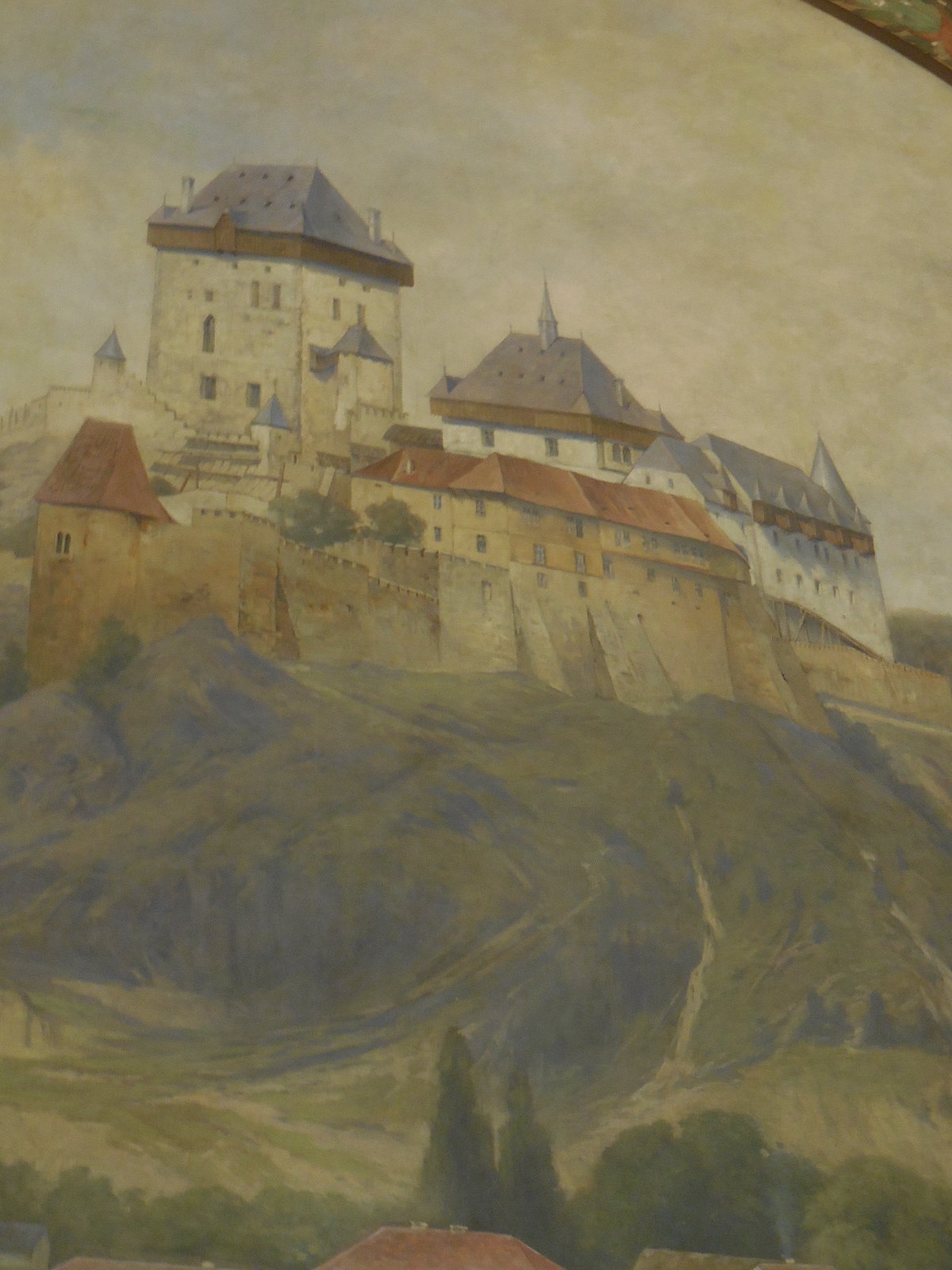
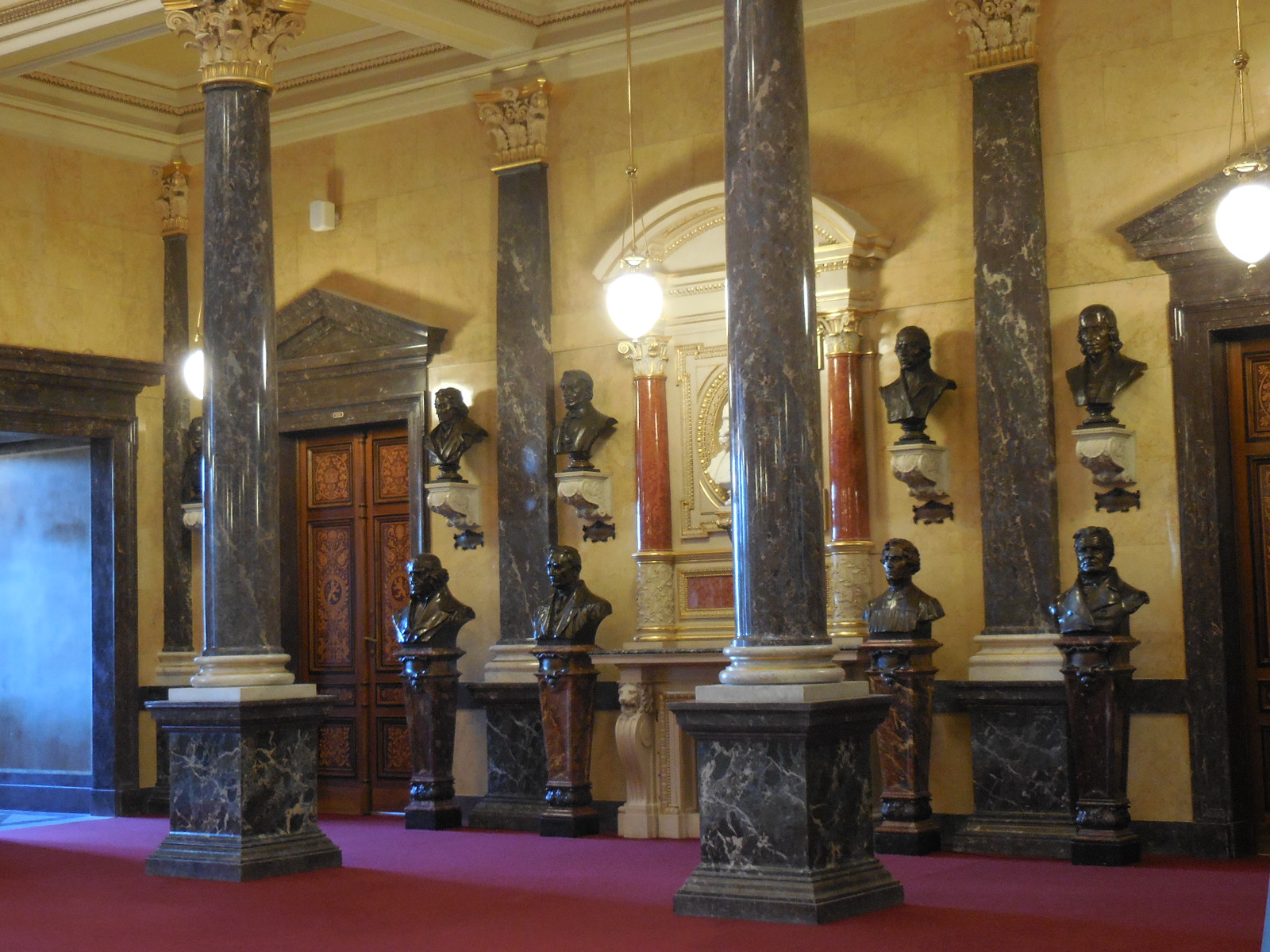
Fast forward to late October of 2018, when the National Museum reopened after seven years of reconstruction. The once grimy façade of the Neo-Renaissance gem now looked squeaky clean. Inside the most significant scientific and cultural institution in Bohemia was an exhibition about Czechs and Slovaks during the 100 years of existence since Czechoslovakia was formed in 1918. Right now, though, I am going to write about what I saw in the building itself as I savored the beauty of the sculpture, painting and architecture of the interior.

NtlMuseumint14

First, it is necessary to have some background about the museum in order to appreciate it fully. The year 2018 marks the 200th anniversary of its founding, as Kašpar Maria Šternberg and other prominent Czechs established the institution in 1818. During the 19th century, the museum became a symbol for Czech nationalism. At the time, Czechs were experiencing an era of Germanization with the Habsburg rulers at the helm. The Journal of the Bohemian Museum published there in Czech had a profound influence on Czech literature.

NtlMuseumint12

The current building was erected from 1885 to 1891 thanks to architect Josef Schulz. The edifice survived World War II but not without damage. The items normally housed in the museum had been transferred to another location, fortunately. Still, that wouldn’t be the last time the National Museum became a victim of historical events. When the Warsaw Pact armies invaded Prague in August of 1968, the Soviets shot at the museum, riddling it with bullet holes. The Russians also destroyed some sculptures, for instance. During 1969, university student Jan Palach set fire to himself as a protest against the rigid normalization period in front of the museum. He would succumb to his injuries in the hospital. The National Museum was also damaged during the construction of the Prague Metro in 1972. Six years later a large highway around the museum would prove a detriment.

NtlMuseumint9

The museum has served as a backdrop for many demonstrations and events throughout Czech history. I recalled the museum looming in the background as I walked around the State of Saint Wenceslas in December of 2011, observing all the candles and tributes to former dissident-turned-president Václav Havel shortly after his death. I had set a rose in front of the statue. Thinking back, I missed those days when Havel had been in the Castle.

NtlMuseumint11

The exterior of the National Museum that dominates Wenceslas Square is noteworthy. Sandstone statues, stucco and exquisite reliefs all add to its elegance and distinction. Allegorical statues are situated above a fountain, for example. The building consists of a large central tower with a dome and a lantern. There are four domes. A pantheon is located beneath the main dome. The exterior staircase is grandiose, too. In front of the museum, there is a splendid view of Wenceslas Square.

NtlMuseuminthrad20

The moment I stepped inside the museum I was again entranced with its elegance. The entrance hall consisted of a monumental staircase fit for royalty with a coffered ceiling and 20 tall columns of red Swedish granite. Above are two floors with decorated arcades and beautiful floors. Upstairs I saw portraits of rulers of Bohemia and four paintings of significant castles in Bohemia – Prague Castle, Karlštejn, Zvíkov and Křivoklát. I loved spending my spring and summer weekends castle-hopping. I remember the many strolls I took to Prague Castle across the Charles Bridge many early mornings when I first moved to Prague and resided in the center. The chapel at Karlštejn Castle was one of the most beautiful sights in a castle interior. I also spent time admiring the 12 depictions of historical places in Bohemia, such as that of Český Krumlov, the most picturesque town in the country after Prague with its castle boasting three tours and Baroque theatre as well as extensive castle garden. Bronze busts rounded out the decoration.

NtlMuseuminthrad5

NtlMuseuminthrad22

The pantheon is perhaps my favorite section of the museum because it celebrates Czech history and culture, two subjects dear to my heart. The paintings, statues and busts serve as poignant reminders of the nation’s cultural accomplishments and historical contributions. Even the door of the pantheon is magnificent with its rich woodcarving. In the pantheon I found statues of Czech historical figures who have made me excited about the nation’s history – František Palacký, a 19th century historian, politician and writer dubbed The Father of the Nation. His seven-volume History of the Czech Nation in Bohemia and Moravia remains a significant source of information for modern day historians. He also was a major participant in the Czech National Revival.

NtlMuseumint15

NtlMuseumint17

Jan Amos Comenius’s likeness was there, too. He was a religious and educational reformer who authored textbooks, encyclopedias and dictionaries as well as one of the most important works of Czech literature, The Labyrinth of the World and Paradise of the Heart. The statue of Antonín Dvořák made me think of his New World Symphony, which I saw the Czech Philharmonic perform in an awe-inspiring concert. Karel Čapek’s statue brought to mind my graduate studies that in part focused on his plethora of works of various genres. The paintings in the chamber are also extraordinary. One of the lunettes that celebrates Czech history in the pantheon shows the founding of Prague University, now Charles University, in 1348 with Emperor Charles IV playing the central role.

NtlMuseumint6

NtlMuseumint7

The statue of first Czechoslovak President Tomáš Garrigue Masaryk has an intriguing history. It was removed during World War II and slated to be melted, but somehow survived a tenure in a junkyard and was reinstalled after the war. During the Stalinist 1950s, the government wasn’t exactly enthralled with Masaryk, so his statue was placed in the depository. When the liberal reforms of the 1968 Prague Spring were in full swing, the statue of Masaryk was reinstated in the pantheon. Throughout the 1970s and 1980s, Masaryk’s likeness remained there, even though the Communists did not put him in a favorable light. If I could live in another time period, I would choose the 1920s of Czechoslovakia, when the country was freshly on a democratic path with Tomáš Garrigue Masaryk leading the way.

NtlMuseumint18

Once again, the building cast a magical spell on me as I felt overwhelmed by the painting and sculptural decoration. Both the exterior and interior were filled with a sense of grandeur and splendor that made me reluctant to leave.

Tracy A. Burns is a writer, proofreader and editor in Prague.

NtlMuseumview1

View of Wenceslas Square from the National Museum

Nelahozeves Chateau Diary

Nelahozeves courtyard

A comfortable 40-minute ride in a new, clean train. That’s all it took to get from Prague’s Masaryk station to Nelahozeves chateau in the village by the same name as it is a mere 30 kilometers from the capital city. Then it is only a short walk to the two-storey chateau. It was my third time here. I especially love the plethora of art work in the Italian Renaissance three-winged structure. Even from the train I could see the chateau, appearing as a sort of fortress looming above me, with its enchanting sgraffito-decorated northern wall facing me. I crossed under the oldest railway tunnel in Bohemia, dating from 1851 to 1855 and constructed in Neo Romanesque style, and then wound up gazing at the beautiful sgraffito on the façade.
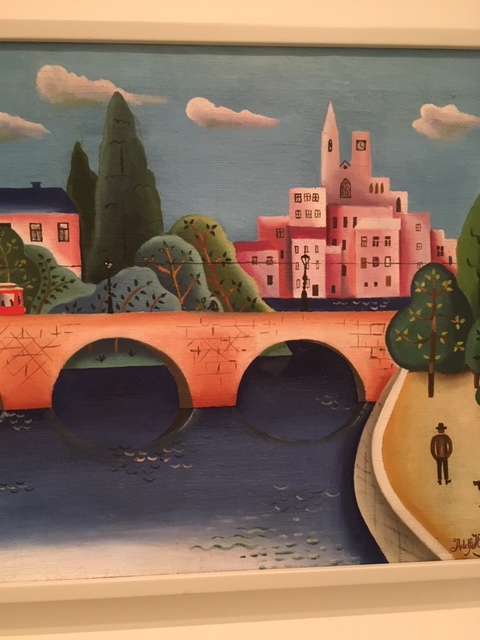
Floral motifs decorate the northern wall as do scenes from The Old Testament. For example, on the wall Judith holds the head of Holofernes, Hercules fights the giant Antacus and Isaac is sacrificed. Virgil Solis, a follower of the master artist Albrecht Dürer, is responsible for the design. After crossing a stone bridge, I went through a gateway flanked by Ionic columns and arrived at a rectangular courtyard. The box office was straight ahead.

Nelahoz22

The history of the chateau intrigued me, as it had become intertwined with the Lobkowicz family, who bought the chateau in 1623. Bavarian aristocrat Florian Griespek of Griespek constructed it, and his successor Blažej put on the finishing touches in 1614. It took 60 years to build the chateau. Griespek had an interesting background. A former court official of the Holy Roman Emperor and King of Bohemia Ferdinand I, he had spent time in Prague’s White Tower for charges of high treason. Thanks to Ferdinand I, though, he became a free man again. It was his granddaughter Veronika who sold the chateau to Polyxena of Lobkowicz. The intriguing history does not end there. Not at all. During the Thirty Years’ War, the chateau was occupied by Swedish troops and those of other nationalities as well. Then it served as a military hospital during the Austrian-Prussian War. Later it was the home of a girls’ boarding school. During World War II and under the Communist regime the items in the chateau were scattered in various locations.

Restoration did take place after World War II when it became the property of the Czechoslovak state. Then, finally, in the early 1990s, the Lobkowicz family became its owners once again. The current owners live in the USA, while their son William takes care of the noble residence. To be sure, many of the Lobkowicz clan had been active in Czech politics and culture. For example, Polyxena’s son Václav Eusebius worked as an advisor to Holy Roman Emperor and King of Bohemia Ferdinand III and Holy Roman Emperor and King of Bohemia Leopold I. Also, Max Lobkowicz focused his energy on the Czechoslovak exile government in England during the Second World War. During that time he also served as Czechoslovak ambassador to Great Britain.

NelahozevesMay176

Perhaps the chateau is best known for its paintings.  In the Gallery of Portraits I saw paintings of members of the Lobkowitz family from the 19th and early 20th century. In my favorite, a woman in a stunning blue dress holds a budding pink rose. An admirer of Lucas Cranach the Elder’s works, I spent some time gazing at his “Madonna with Child, Saint Barbora and Saint Kateřina” from around 1520. I noticed the calming green and blue colors in the horizon as a saint in the foreground read a black book. The Madonna looked pensive while the child appeared defiant. I liked the detail of the baby’s little fingers.

There is a Peter Paul Rubens’ masterpiece on display as well. It is called “Hygieia feeds a sacred snake” and dates from circa 1614. The Baroque gem shows a snake with its mouth open, appearing famished. I could almost see its tongue flicking in anticipation.

NelahozevesMay17

My beloved Bruegel clan is among those represented in the chateau’s art work, too. Pieter Bruegel the Elder’s “Haymaking” dates from 1565 and depicts women walking in the foreground, gripping hoes, while others carry baskets on their heads. Horses, used for carting hay, drink from a bucket in the middle of the foreground as people toil in a vast field. The gigantic cliff to the left in the background caught my attention just as the blue and green mountains and river did. The painting depicted two months of the year, illustrating June and July. Then there’s a winter village scene, idyllic and calming, by Pieter Bruegel the Younger around 1615.

NelahozevesMay1712

But that’s not all. In Canaletto’s “Thames with Westminster Bridge” from 1746 I noticed the gentle frolicking of the waves and appreciated the details of the boards, sails and oarsmen. Hundreds of black-and-white prints depicting hunting themes also line the walls of a hallway.

My favorite three paintings, though, made up a satirical series of cats posing as female nobles and monkeys representing the male nobility. They are located in a small room filled with 47 paintings. The works by Sebastian Vrancx, who lived from 1573 to 1647, include one depiction of monkeys sword-fighting. I was drawn to the bright red clothing with the stiff collar of one particular monkey as he lunges forward to strike another monkey that had fallen onto the ground. A cat on the sidelines flails her arms, as if saying, “Enough already!”

NelahozevesMay172

Another shows cats and monkeys at a banquet. Two monkeys working as waiters had a well-ironed cloth over one arm. A plain chandelier is overhead while one monkey brings a kettle to a table full of chattering cats. I could almost hear the chit-chat of the seated felines.

In the third rendition cats and monkeys are on a boat in a river. A palace or manor house and another boat make up the background. One monkey reads aloud from a book while another plays the piccolo. I thought it was intriguing that the painter chose to place a monkey with his back to the viewer in the center of the foreground.

On the tour I saw much more than paintings. For example, the library contained 65,000 books, written in German, Latin, Hebrew, Italian, German, French, Spanish and Czech. There were 679 manuscripts, and 114 of them date from the Middle Ages. Subjects ranged from history, medicine, architecture, literature, law and travelogues. However, only a small portion of the books are on display in the chateau. Still, I was fascinated by the 1696 French first edition of The Art of Swimming, which ranked as one of the earliest books on the subject.

NelahozevesMay1711

In the Drawing Room I set my eyes on a gold Empire-style table, made with gems and decorated with intarsia. On the black table were pictures of apples, birds, and fruit and flowers in ornate bowls. In the room where the prince welcomes guests, I saw a black cabinet from the 17th century, decorated with pictures of biblical themes, birds and flowers.  In the chapel there was a three-winged altar with pictures of an angel, a man on a chariot with a skeleton to his side and a man in a long robe pointing at a manuscript on a podium.

The Dining Room exhibited exquisite Venetian decoration encased in glass. I was also impressed by the desk made out of antlers, located in the armory. In the middle of the room was a rifle for bird-hunting, decorated with a grotesque brown mask, a black ball in the creature’s mouth. Then there was the beautiful Knights’ Hall with paintings of knights on the walls and a sandstone fireplace from the 16th century. Stucco reliefs adorned the ceiling. At one time, many centuries ago, this room used to be the social center of the chateau, with its Renaissance décor.

Nelahoz23

After the tour I wanted to get something to eat in the delightful restaurant upstairs, but it was open only to groups who book it in advance. In past years, it had been open to the public. I made my way back to the train station- a small, brick building that was more of a stop than a station. I passed Antonín Dvořák’s birthplace, a white house that was open odd hours. It was a pity the house-turned-museum was not open; I would have liked to have visited the place again as I had not been there for many years.

A comfortable, clean train came on time, and I headed back to Prague in the early afternoon.


Image