Marc Chagall Exhibition in the Albertina Photo Diary

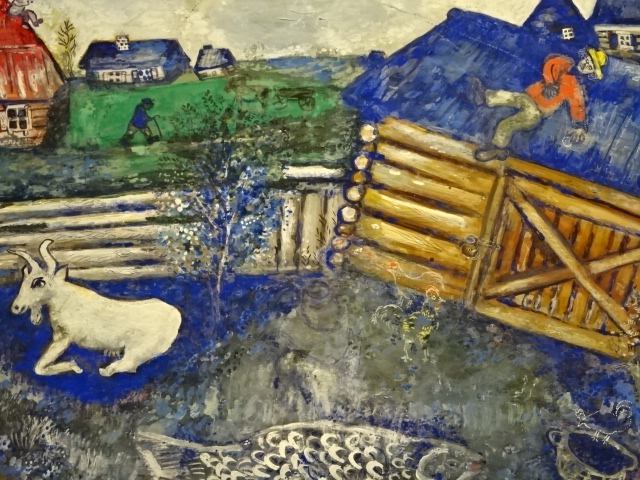
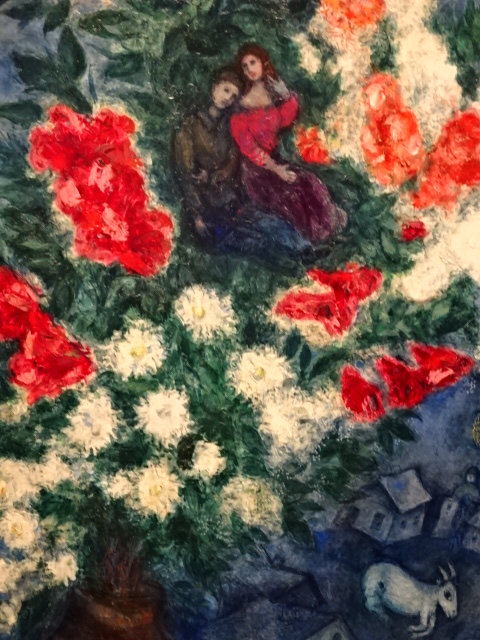
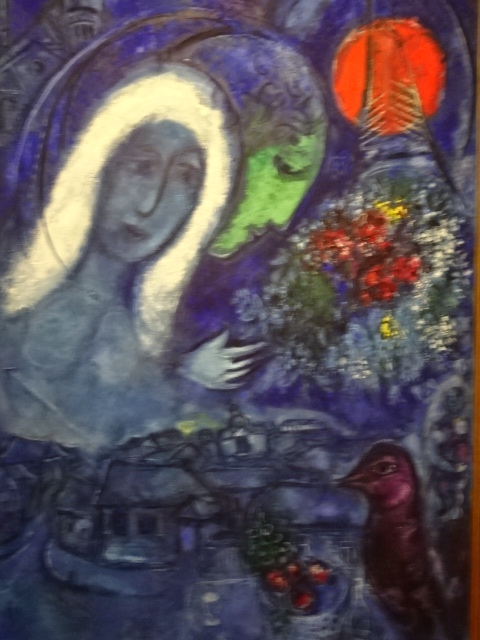
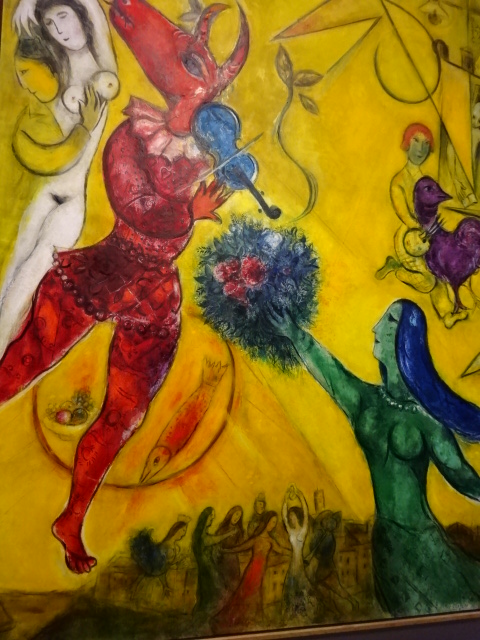
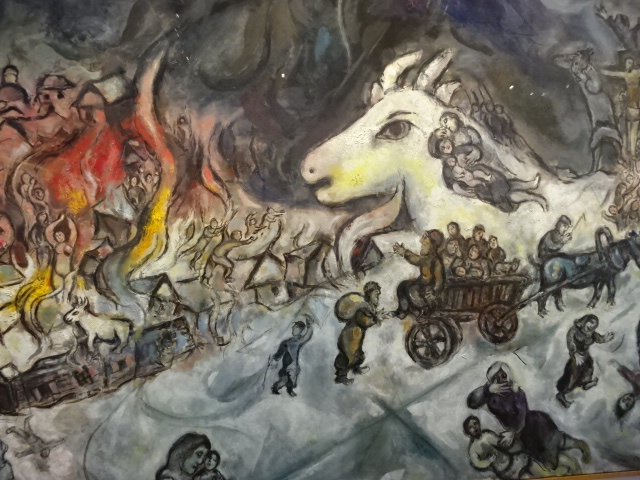
I admired Marc Chagall’s works at the Albertina venue in Vienna, Austria during late October of 2024. I have always loved going to exhibitions in the Albertina. I recalled a comprehensive show of works by Durer at that venue some years ago. A long-time fan of Chagall, I loved his use of bright colors and atmosphere of playfulness in his paintings that had a dreamy, fantasy-filled quality. I was enamored with his mastery of color to express various emotions and to create new worlds. I loved his renditions of Paris, the Eiffel Tower often dominating his creations.

Before this show I hadn’t realized how strongly his Jewish background had influenced his art. Chagall’s paintings were punctuated with Jewish folklore and motifs. I saw a painting of a synagogue and portraits of rabbis, for instance. Many paintings boasted biblical themes. I also hadn’t realized how often he had rendered his hometown, both sadness and joy intermingled in the memories. His yearning to return to his hometown was extremely visible in his art.
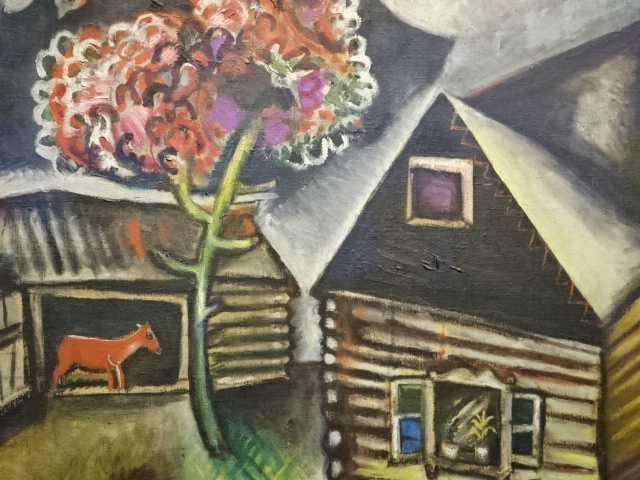
The symbolic nature of his artistic creations also enamored me as I noted the many violinists, animals, half-human creatures, wooden houses, circus characters, roosters and floating married couples as well as beautiful floral arrangements. Because I had visited an exhibition in Prague’s Wallenstein Riding Stables about the interwar years of the École de Paris movement, I knew he had been associated with that era during his Paris sojourn.
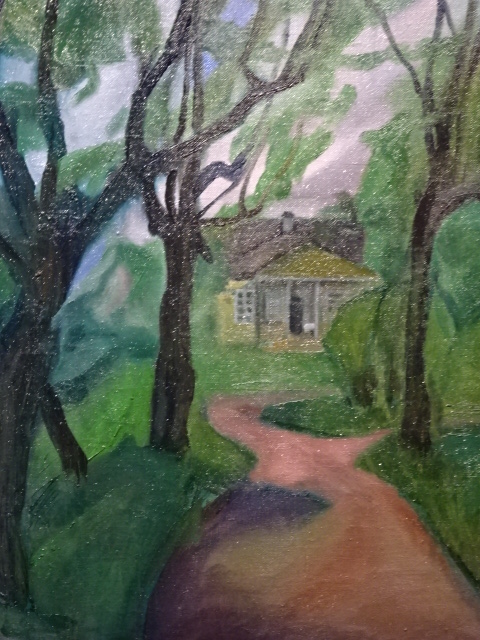
The exhibition allowed me to become better acquainted with the artist’s life. Marc Chagall (1887-1985)was born as Moishe Shagal on July 6, 1885 into a Hasidic Jewish family in Vitebsk, located in today’s Belarus. During the late 19th century the town was situated in the Russian Empire. His impressive, varied resume includes paintings, drawings, book illustrations, ceramics, prints, tapestries, stained glass and stage sets, but this vast exhibition focused solely on his paintings.
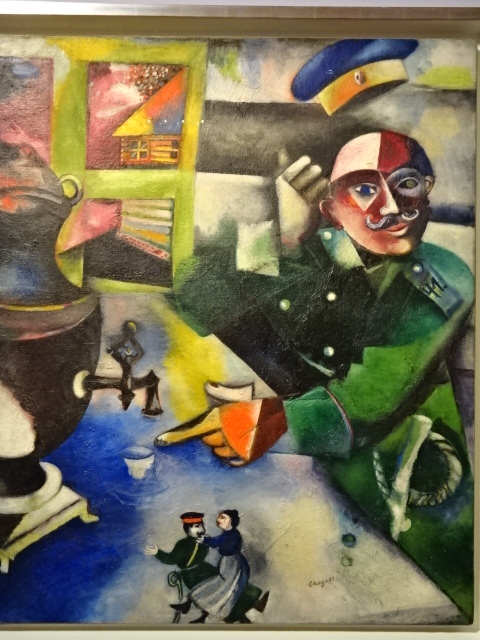
While he spent World War I in his hometown, he went to Paris before the war broke out, moving there in 1910 when he was 23 years old. In France he made friends with Guillaume Apollinaire, Ferdinand Léger and others creating avant-garde works. He often depicted Jewish themes and also evoked Paris in many paintings. During World War I, back in Vitebsk, he married Bella and held exhibitions in Russia as the war made it impossible for him to leave the empire. He founded an arts college in his hometown, too. However, he was in dire financial straits during the Russian Civil War. After World War I, much of his work was Moscow-based.

Following the Bolshevik Revolution, he moved to Paris for the second time, but fled during World War II after the Germans took control of France. The Nazis in occupied France took away Chagall’s French citizenship, and he and his wife were arrested. However, with the help of others, he and his wife found a way to escape to the USA. He felt like an outsider and didn’t speak English.
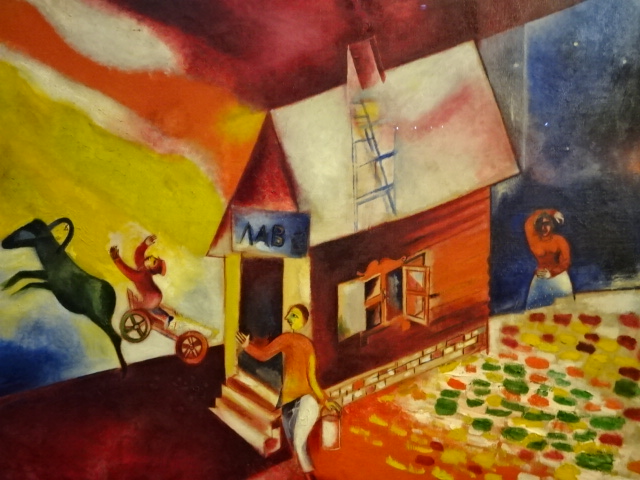
While he was in New York City, tragedy struck his hometown of Vitebsk, which was destroyed by the Nazis. Things would get even worse. Bela passed in1944 because it was not possible to get her any penicillin. It was no surprise then that Chagall’s late spouse appeared in many of his paintings. In 1948, though, he returned to Paris, and there his paintings focused on Jewish themes and his yearning for the existence of his hometown. Also, he would marry two more times.

He devoted much time to other fields as well. Some of his accomplishments included creating stained glass decoration in the cathedral in Reims and at the Art Institute in Chicago. He also made stained glass adornment for places in Switzerland and Israel. He became even better known for his ceiling painting of the Paris Opera. I remembered gazing in awe at this ceiling several decades ago. It was an experience I will never forget, even though I saw it so long ago. He also made sculpture and ceramics as well as tapestries.

Chagall died at the age of 97 on March 28, 1985 at the age of 97. He is buried with his third wife in a cemetery in Saint Paul-de-Vence, located in the Provence region.

Tracy A. Burns is a writer, proofreader and editor in Prague.

House Museum Poldi Pezzoli Diary

One of Milan’s four house museums, the Poldi Pezzoli was a highlight of my two trips to the city I love so much. The variety of art exhibited made this a top attraction for me. The collections include paintings, sculpture, weapons, tapestries, furniture, glass, ceramics, watches, clocks, goldsmiths’ work and jewelry, for instance. Artists whose works are represented  include Andrea Mantegna, Giovanni Bellini, Sandro Botticelli, Michelangelo Buonarroti, Canaletto, Francesco Hayez and Lucas Cranach the Elder.

I favored the medieval paintings, but each space had something extraordinary to offer. The Golden Room with its 15th century collection enamored me as did the elaborate, superb furnishings of the Dante Room. The Black Room had six masterfully crafted mahogany and walnut doors. The Lombard Room dazzled with north Italian Renaissance paintings.

The collections were amassed during the 19th century by Gian Giacomo Poldi Pezzoli, who had inherited much money. The Austrians exiled Gian Giacomo from Milan for one year after he supported the revolutionaries during a Risorgimento battle in Milan. He spent that year traveling, but then returned to Milan. Sadly, Gian Giacomo’s life was cut short in 1879, when, at the age of 57, he passed away in the palace’s Dante Study. The museum was opened to the public in 1881. During World War Two the palace was severely damaged. For example, the Neo-Gothic armory was destroyed. Many artifacts were lost. The museum underwent much restoration, not opening its doors again until 1951. The new armory opened much later, in 2000.

Numerous artworks enthralled me, but I would like to concentrate on several of the many that were remarkable. Some paintings that caught my undivided attention included Sandra Botticelli’s The Virgin and Child (the Madonna of the Book), dating from 1482-83. Showing the Virgin and Child reading, the painting reminded me of how important reading and literature have been in my life. The scene had a mystical appearance due to the superb lighting. I could understand how the act of reading has a sort of mystical power. The painting also exuded elegance.

Another religious rendition that left me in awe was The Madonna of Humility with Musician Angels by Zanobi Strozzi, hailing from 1448 to 1450. In this painting the Christ Child is seated on the Virgin’s lap as I can almost hear the musicians playing a sorrowful tune. Strozzi masterfully portrayed the texture of the clothing, such as Virgin’s red garment with its green lining and blue mantle. I felt as if I could touch the fabric of the veil on the Virgin’s head as it was also superbly rendered. The background was dominated by a stunning gold material.

My admiration of medieval art in the Poldi Pezzoli continued as I became enthralled with Filippo Lippi’s The Pieta (1440) in which the Virgin and Saint John the Evangelist hold up the limp Christ figure who has a gray complexion reminiscent of death. In the distance I saw a mountainous landscape.

Antonio Vivarini and his brother-in-law Giovanni D’Alemagna captivated me with their work, The Virgin and Child Enthroned with Two Angels. In this painting, perhaps part of a polyptych, the Madonna and Child’s throne is pleasantly situated in a garden, giving off a tranquil vibe. The late Gothic and Renaissance features of the throne, figures and landscape were striking.

A sculpture that particularly caught my attention was labelled The Virgin and Child, a Florentine masterpiece from 1280 with many Byzantine elements. While Jesus’ body parts aren’t all proportional, the two figures are nevertheless masterfully sculpted.

I was also enthusiastic about the tapestries. For instance, I saw the Tapestry with Esther Presented to Ahasuerus, made in Brussels in the late 15th and early 16th century. The stunning fabrics included wool, silk, silver and gold. One of the most significant Flemish tapestries in Italy, the masterful work takes its theme from the Old Testament. I noted the characters’ luxurious costumes, especially the king’s extravagant hat. The variety of colors also caught my attention.

I also admired the Canaletto landscapes of Padua and Venice with all the architectural features of the cities. Looking at Canaletto’s works gave me a sense of Italian history as if I could go back in time and look deep into the painting as a witness of the scene portrayed. I fondly recalled the extensive exhibition of Canaletto’s work I had seen in Aux-en-Provence a number of years ago.

The armory, refurbished in 2000, included many 16th century weapons, such as a Borromeo helmet from the 16th century. Its exquisite gilded decoration was made up of designs of a unicorn and Saint Justine. The Gonzaga Helmet, also from the 16th century, was also gilded and showed off adornment of a crescent moon, leaves and flowers. I loved the meticulousness and precision of the designs.

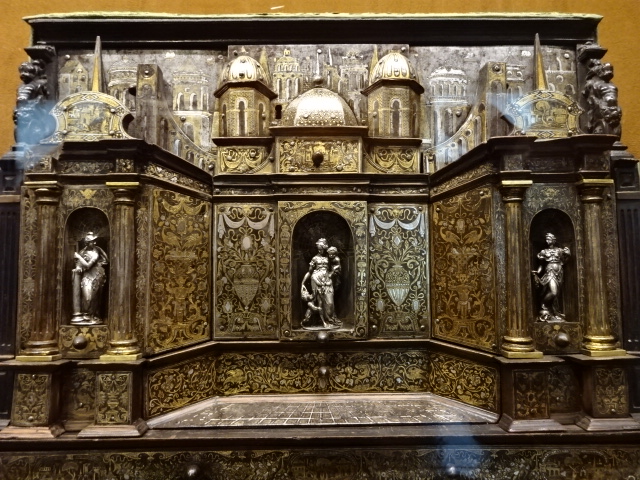
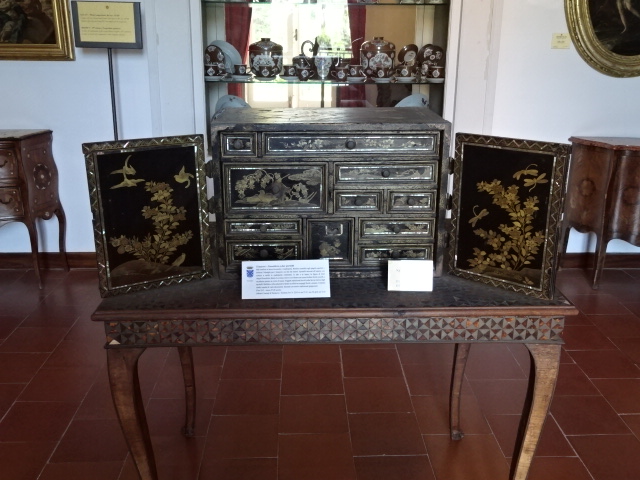
I admired the many stunning pieces of furniture, including the cabinets. One cabinet from the mid-17th century was made of ebony, bronze, silver and semi-precious stones. The small drawers were exquisitely decorated.

My favorite piece of porcelain was a Meissen called The Tooth-Puller from 1750. The woman looked terrified as the evil man held her jaw in an almost violent manner. The facial expressions of terror and evil were well-crafted. I liked the use of the color purple in the designs: the wig-clad tooth-puller was dressed in purple, and the woman wore a purple jacket. Her white skirt was decorated with a purple floral design. The collection included over 80 European porcelain pieces from the 18th century.

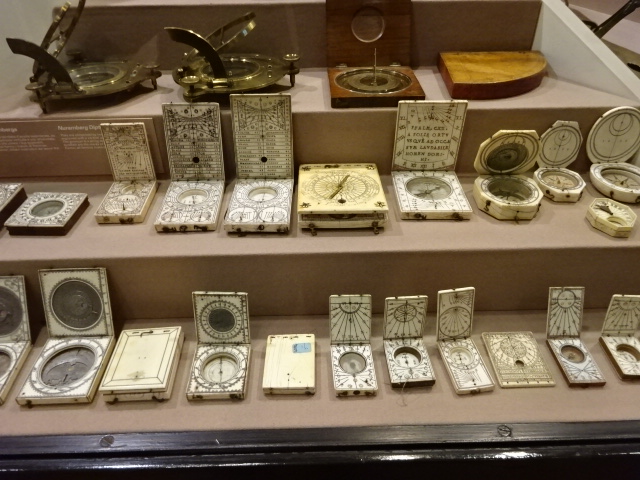
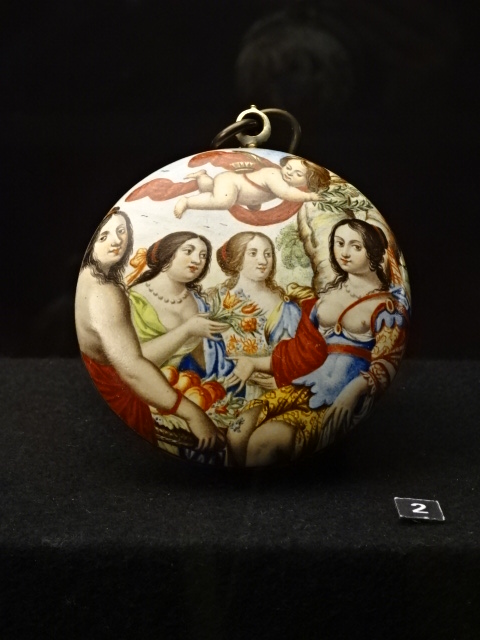
I also admired the decorations on the watches hailing from the 16th to 18th centuries and the various designs of the many clocks and sundials. The jewelry and Murano glassware also captured my undivided attention.

This museum housed such a wide array of stunning artifacts in an intimate setting. I loved the house museums in Milan, and visiting the Poldi Pezzoli was certainly one of my most treasured memories of the Italian city that I hold so dear to my heart.

Tracy A. Burns is a writer, proofreader and editor in Prague.

Museo Correale di Terranova Diary

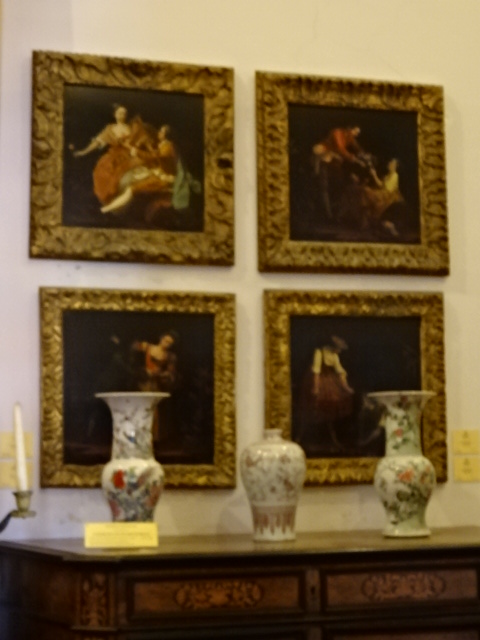
One of my favorite experiences when I am on vacation is visiting local museums. In Sorrento I was enthralled with the variety of the impressive collections in the provincial Correale Museum (Museo Correale di Terranova), especially with the landscape paintings that portrayed Italian sites. I saw archeological artifacts, ceramics, furniture, time pieces, silver, tapestries, manuscripts, paintings from the 15th to the 19th century and porcelain in 24 halls on three floors.

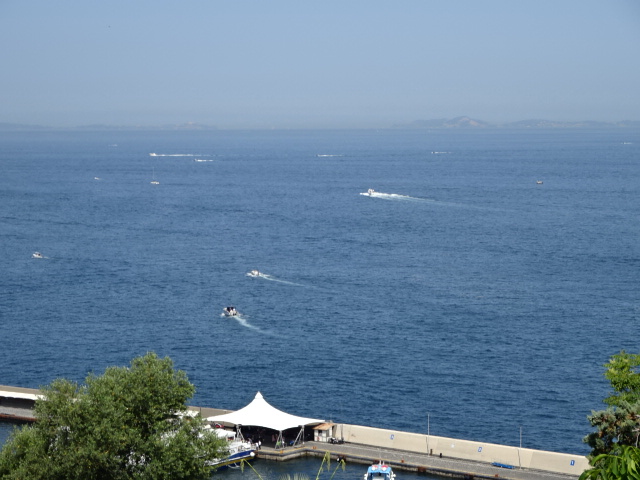
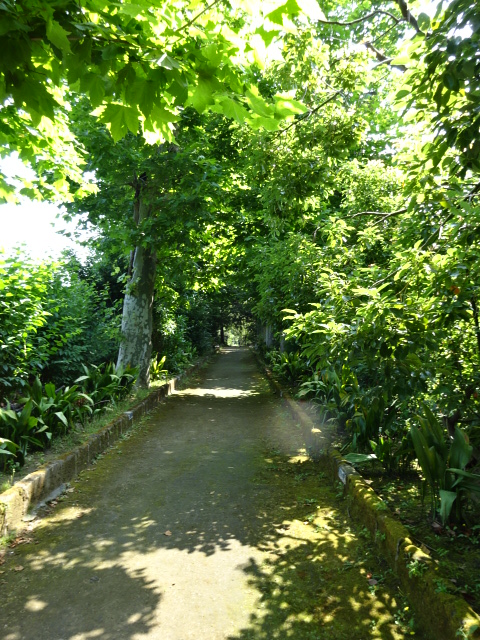
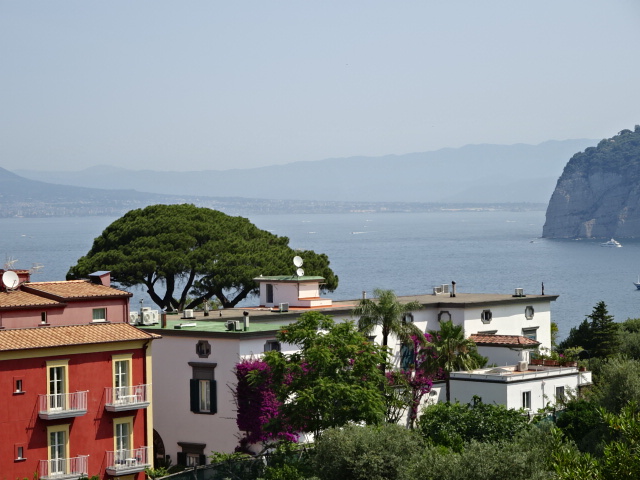
Opened since 1924, the museum is housed in a superb 17th century villa with a delightful garden of tropical plants and trees. A path leads to a terrace with stunning views of the sea. From the museum itself, I was able to gaze at tranquil views of the Gulf of Naples.

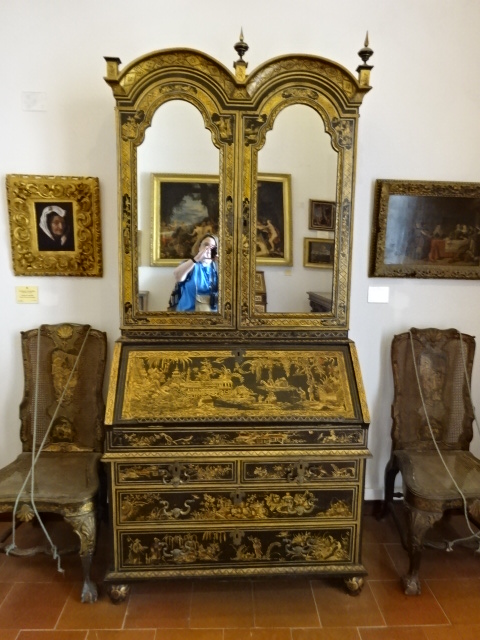
Furnishings from the 17th to 20th century caught my attention, especially the pieces adorned with intarsia and mosaics. The archeology section included Greek and Roman objects and ceramics as well as artifacts from the Middle Ages.

Some of my favorite places in the world are libraries. The one at this museum contained hundreds of 17th century manuscripts and volumes dealing with many subjects, from botany to archeology to Italian history.

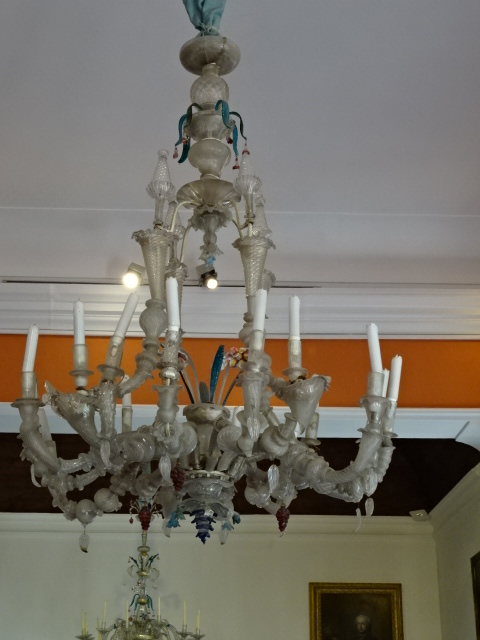
In the porcelain collection on the uppermost floor, I admired Oriental creations from the 17th and 18th centuries as well as Meissen and Sevres pieces. The School of Capodimonte was well-represented, too. Clocks and Italian glass hailed from the 18th century. Historical tapestries added to the museum’s impressive collection.

The paintings interested me the most. I saw works by both Flemish and other foreign artists. Two of the most renowned artists represented were Peter Paul Rubens and Camille Corot. Mannerist paintings were also displayed.

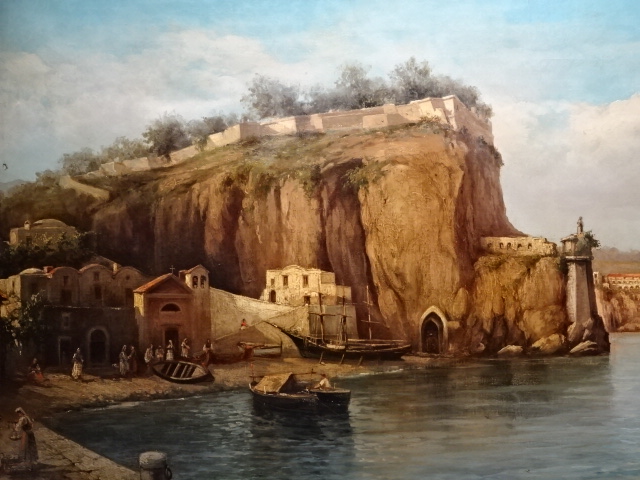
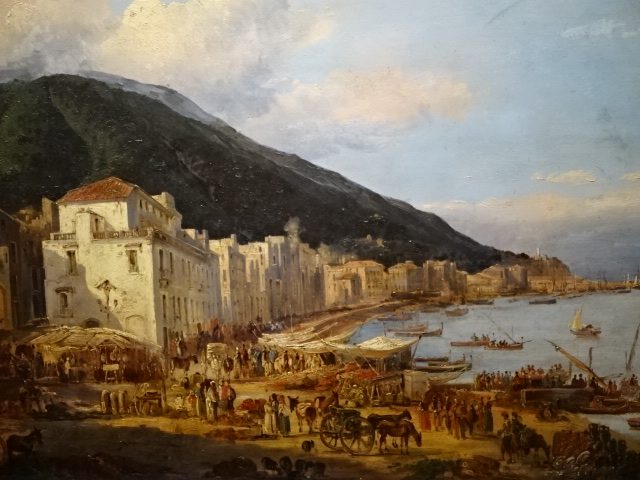
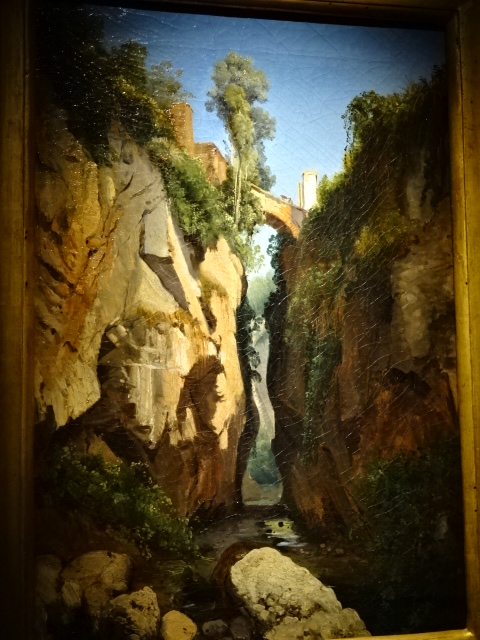
Both foreign and Italian artists created the landscape paintings. I was most impressed with the Italian works of the Posillipo School style. Hailing from the second half of the 18th century, these paintings depicted picturesque scenes inspired by foreign artists who had spent time in Naples, including William Turner. I especially liked the landscapes of cliffs and the tranquil sea dotted with row boats. Horse-drawn carriages made appearances on the shore in one painting that I had admired.

Sorrento certainly did not disappoint. This museum was just one of the highlights of my time there. The diversity of the collections was a big plus, and I was very enthusiastic to learn about the Posillipo School style.

Tracy A. Burns is a writer, proofreader and editor in Prague.

Biblioteca and Pinacoteca Ambrosiana Diary

This library and art gallery in Milan is named after the patron saint of the city, Ambrose. The library harkens back to 1609, when Cardinal Federico Borromeo founded it, and the same year it opened to the public.

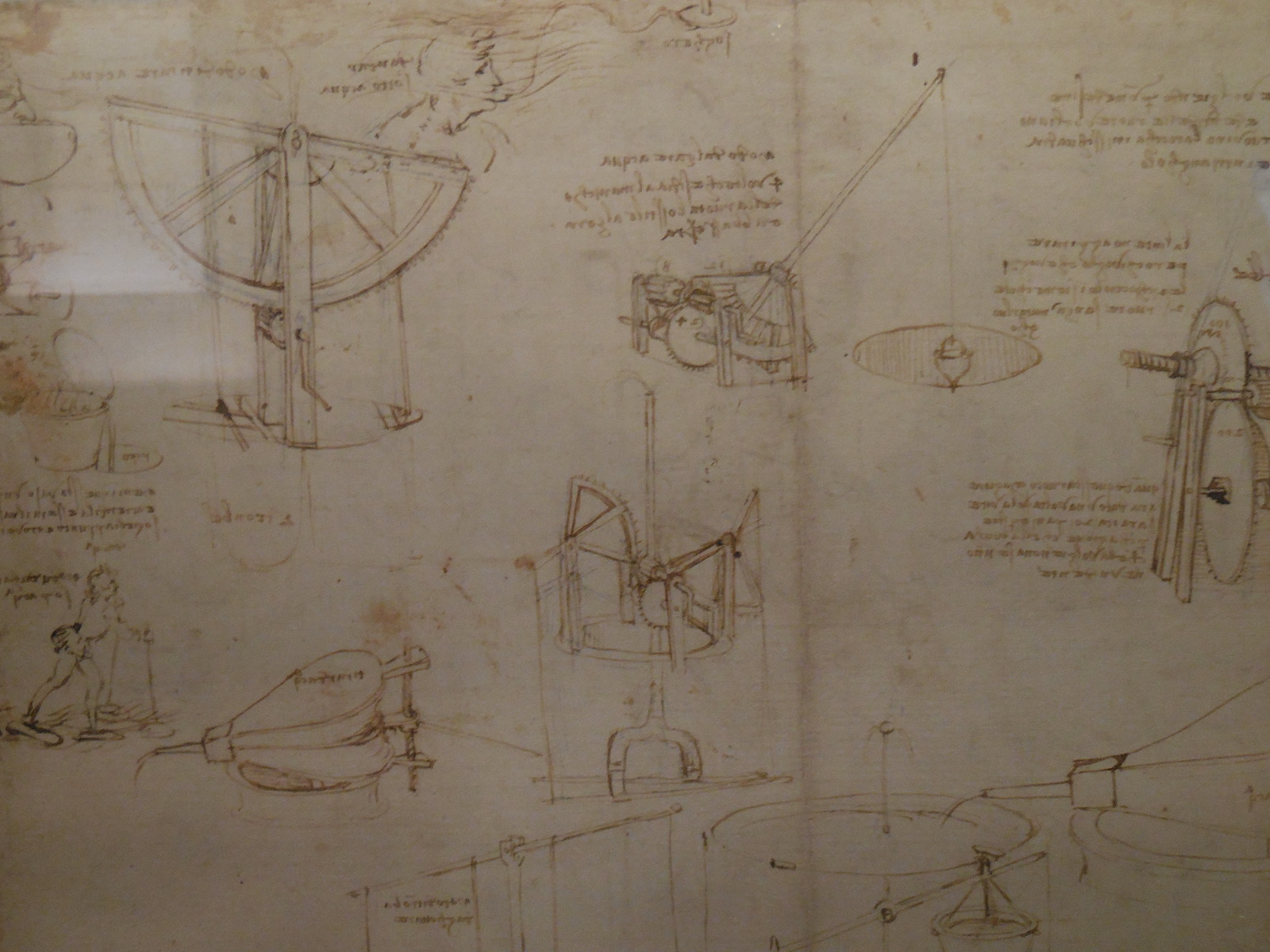
One of Leonardo da Vinci’s drawings of the Codex Atlanticus

The biblioteca houses the Codex Atlanticus by Leonardo da Vinci as well as many of his other manuscripts plus about 12,000 drawings by European artists, ranging from the 14th to 19th century. Raphael and Pisanello are represented in this collection of drawings, too. Many of its more than a million printed volumes hail from the 16th century. There are almost 40,000 manuscripts in numerous languages, including Italian, Latin, Greek and Arabic as well as some 22,000 engravings. Ancient maps, musical manuscripts and parchments also make up the collection. Some prominent guests included poet Lord Byron and novelist Mary Shelley.

Another of Leonardo’s drawings from the Codex Atlanticus

During World War II the library was damaged, and the opera libretti for La Scala Opera House were destroyed. The building was opened again in the early 1950s after undergoing renovations. More reconstruction took place in the 1990s.

When I visited, some of Leonardo’s works for the Codex Atlanticus, the largest collection of da Vinci’s drawings and writings, were on display in the library. The exhibition left me spellbound. I perused studies in aerodynamics and drawings of mechanical wings as well as various types of weapons. Leonardo rendered a large sling to throw stones and a machine to pump water from a well inside a building, for example.

I gazed upwards after studying the drawings by Leonardo, and I was filled with awe. I don’t know if I have ever seen such an incredible library. I just wanted to stand there all day, gazing at the wall-to-wall bookcases as I wondered about the titles and contents of each volume.

Established in 1618 with the collections of Cardinal Federico Borromeo, the pinacoteca was just as impressive as the library. The 24 rooms were dominated by Renaissance artworks but also boasted of renditions by 17th century Lombard artists, 18th century painters and 19th and early 20th century creators. I was especially struck by da Vinci’s 15th century “Portrait of a Musician” as it was the only portrait that he had painted. I noted the musical scroll in one hand of the sitter and was captivated by the detailed curly locks of hair, the musician’s brown eyes and his red cap.

Caravaggio’s insect-infested “Basket of Fruit” tells a story of diminishing beauty by displaying rotting fruit. Bramantino’s “Adoration of the Christ Child” shows the kneeling Bernardino of Siena, Francis of Assisi, Benedict of Nursia and the Virgin Mary making an understandable fuss over baby Jesus. I loved the angels playing musical instruments behind those figures. Emperor Augustus also makes an appearance.

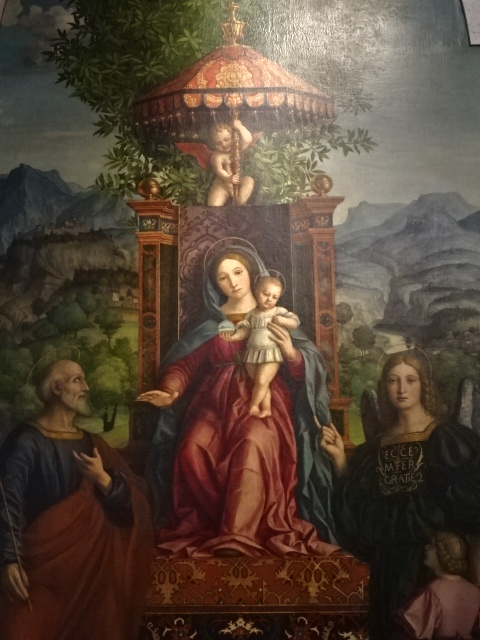
Bergognone’s “Sacred Conversation” shows the Virgin Mary and Christ Child on a massive golden throne, baby Jesus on the Virgin Mary’s lap. Solemn angels flutter in the background. I was struck by the details of the Virgin Mary’s hair and by the material of the clothing worn by the Virgin Mary and baby Jesus. The two were surrounded by saints with captivating headwear, including Saint Ambrose and Saint Jerome.

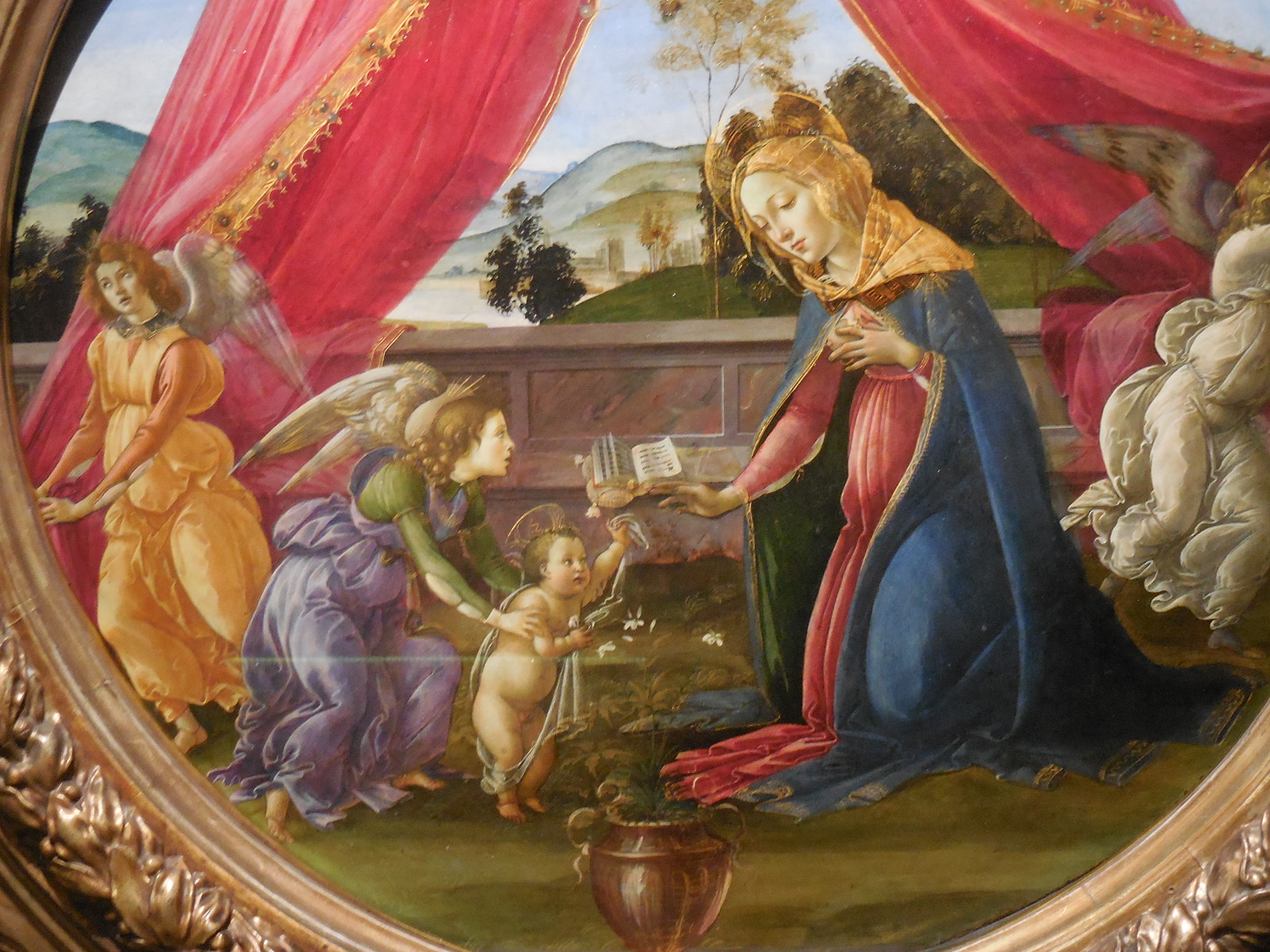
Another painting that left me speechless was Sandro Botticelli’s “The Madonna of the Pavilion.” The artist’s meticulousness was evident. The artwork shows the Virgin and Child with much symbolism. The pavilion that two angels open to reveal the Christ Child is rich in biblical meaning both in the Old and New Testament. I could almost feel the paper of the pages making up the open book in the painting.

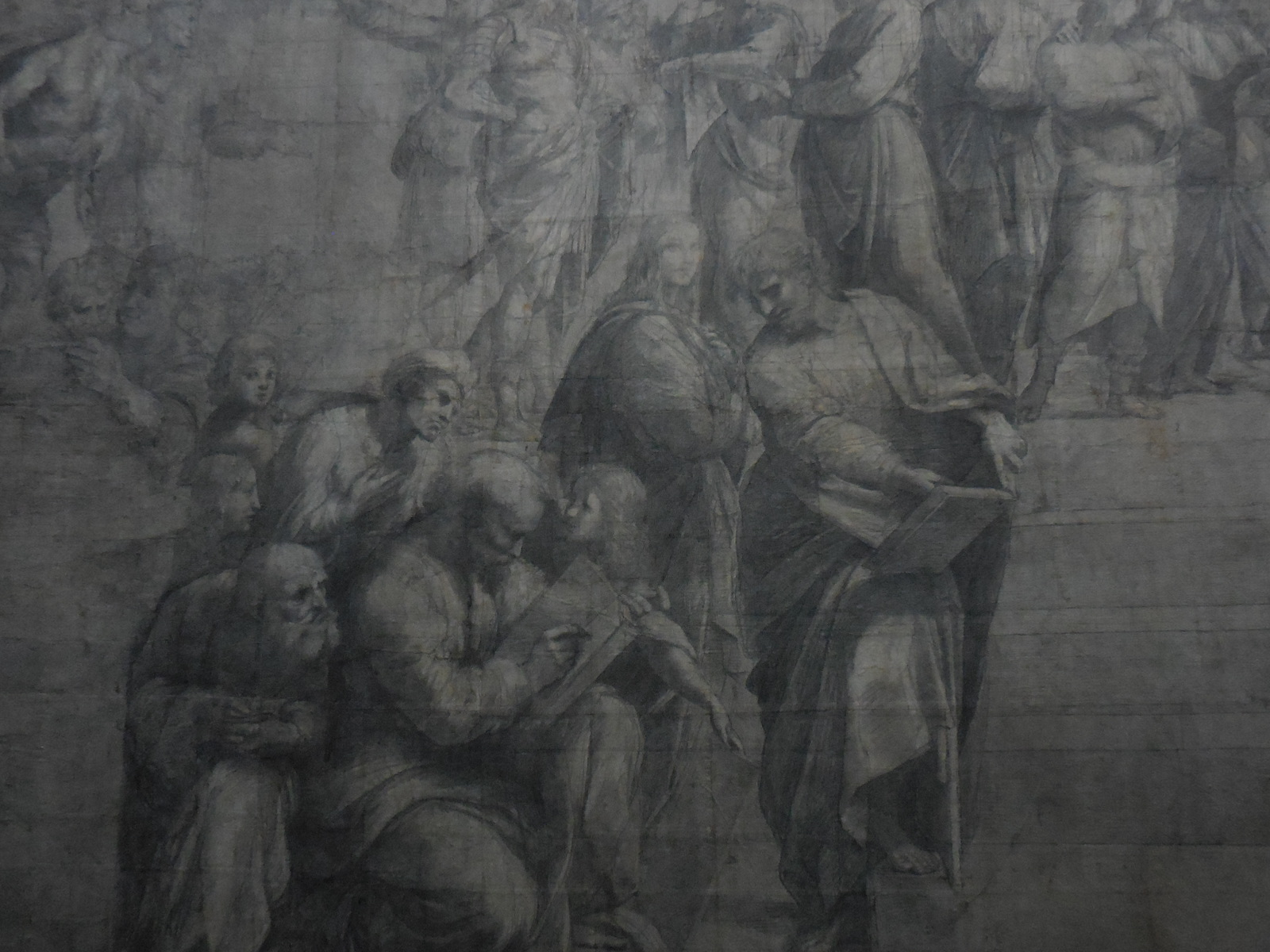
Raphael’s School of Athens

Raphael’s cartoon of the “School of Athens” is a study for the Italian Renaissance fresco painted in the early 1500s for the Raphael Rooms in the Vatican Museum. I recalled seeing the skillful rendition of philosophers and scientists from Ancient Greece at the Vatican on my 40th birthday as I mulled over the dominant role that perspective played in the artwork. Plato, Aristotle and Pythagoras appear in the fresco. Leonardo and Michelangelo are present as Plato and Heraclitus.

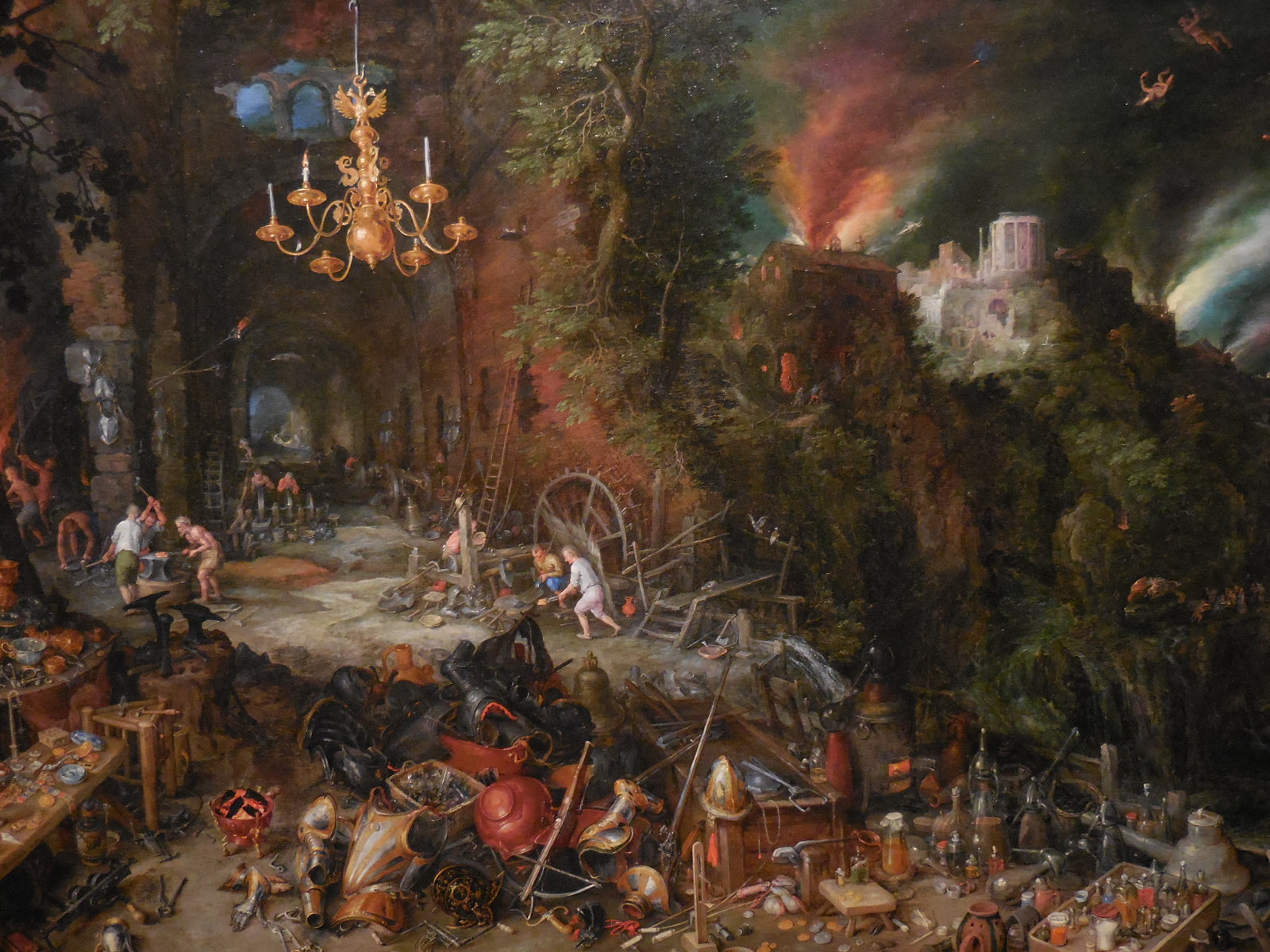
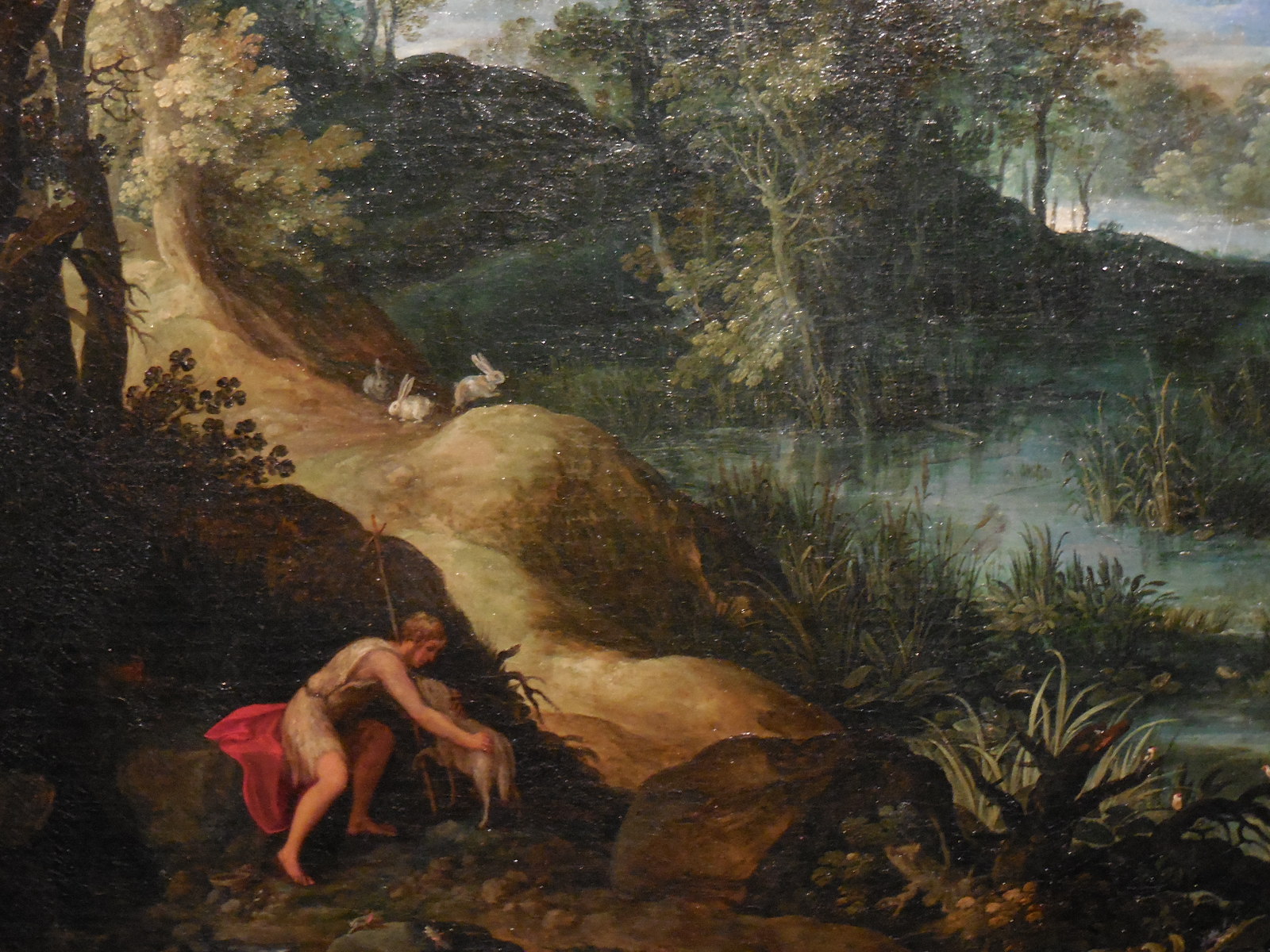
Other paintings that awed me were the fantastic landscapes of Paul Brill, whose works I had discovered some years earlier in Edinburgh. Jan Brueghel’s detailed landscapes and still lifes also are close to my heart, and I adored masterpieces from the Netherlands. I stared at these paintings, losing myself in the fantastical landscapes and details that were so masterfully rendered by both artists. I felt a special connection to these works featuring a dream-like quality as if I could be transported into a fantasy world by merely peering at the canvases.

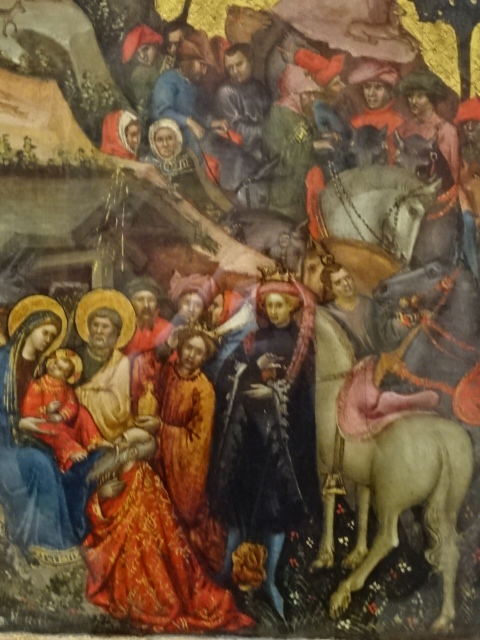
Other paintings that captured my undivided attention had been created by Bernardino Luini (I fondly recalled his paintings in Milan’s Church of Saint Maurizio), Tizian, Jacopo Bassano, Moretto and Daniele Crespi as well as Francesco Hayez, whose works I knew well from the Brera Gallery in the same city. Andrea Bianchi had created “The Last Supper,” imitating da Vinci’s masterpiece. Tizian’s “Adoration of the Magi,” Bramantino’s “Madonna of the Towers” and the locks of hair of Lucrezia Borgia all left me awe-struck.

The sculptures and frescoes from the second to 16th century in the Sala del Bambaia are very noteworthy. The Hindu art of the Berger Collection captivated me. The Flemish and German painting from the 15th to 17th century enthralled. Ceramics also play an intriguing role in the collection.

I was so awed by this gallery and library that I visited it twice during my first trip to Milan. I peered at every painting and sculpture, trying to take in each artistic creation, feeling so blessed to be able to see all these masterpieces with my own eyes.

Tracy A. Burns is a writer, proofreader and editor in Prague.

Castelvecchio Museum Diary

My first stop in Verona was the Castelvecchio Museum, a sprawling edifice that looks like a medieval fortress. The Castelvecchio hails from 1354 to 1356, when it was built for Cangrande II della Scala as a defensive structure. The Della Scala family lived there for a short time. During Napoleon’s reign, from 1801 to 1806, the building was transformed into barracks, and it served this purpose until 1924. The Castelvecchio was seriously damaged during World War II, during the time when the Germans destroyed all of Verona’s bridges. From 1958 to 1974, architect Carlo Scarpa renovated the Castelvecchio, adding modern elements to the original style that harkens back to the Middle Ages.

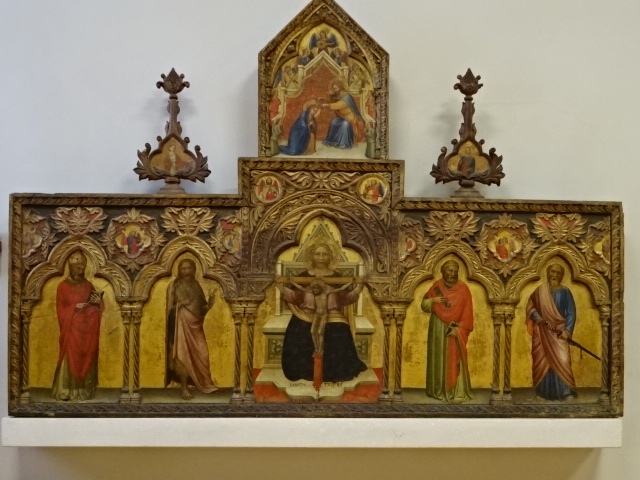
The expansive medieval and Renaissance spaces inside house 30 halls of Italian and European painting and sculpture, dating from the Romanesque era to the 1700s. I also saw ancient weapons, ceramics, gold artifacts, bells and miniatures, for instance. I especially liked the walkways outside. They offer panoramic views of romantic Verona.

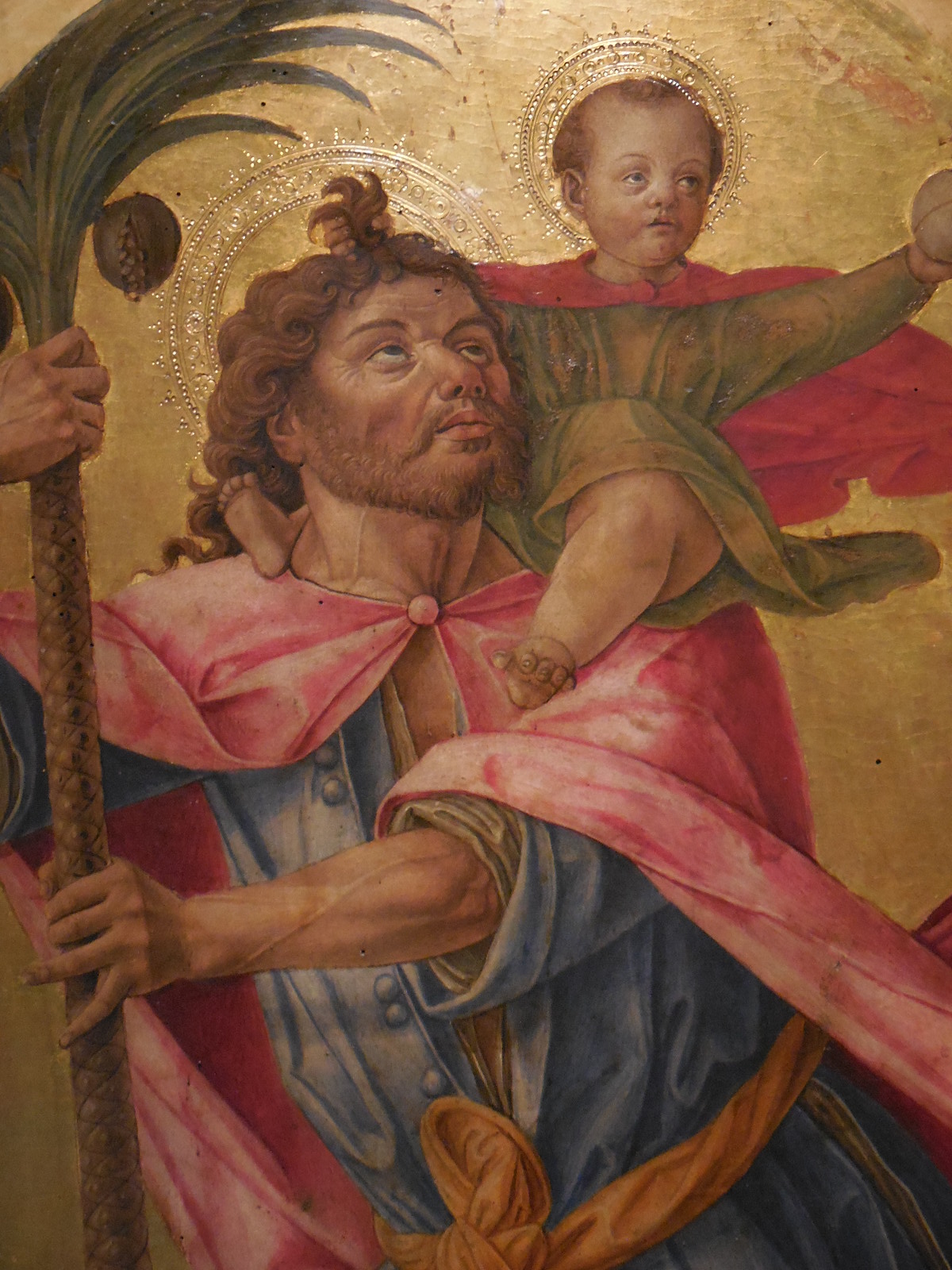
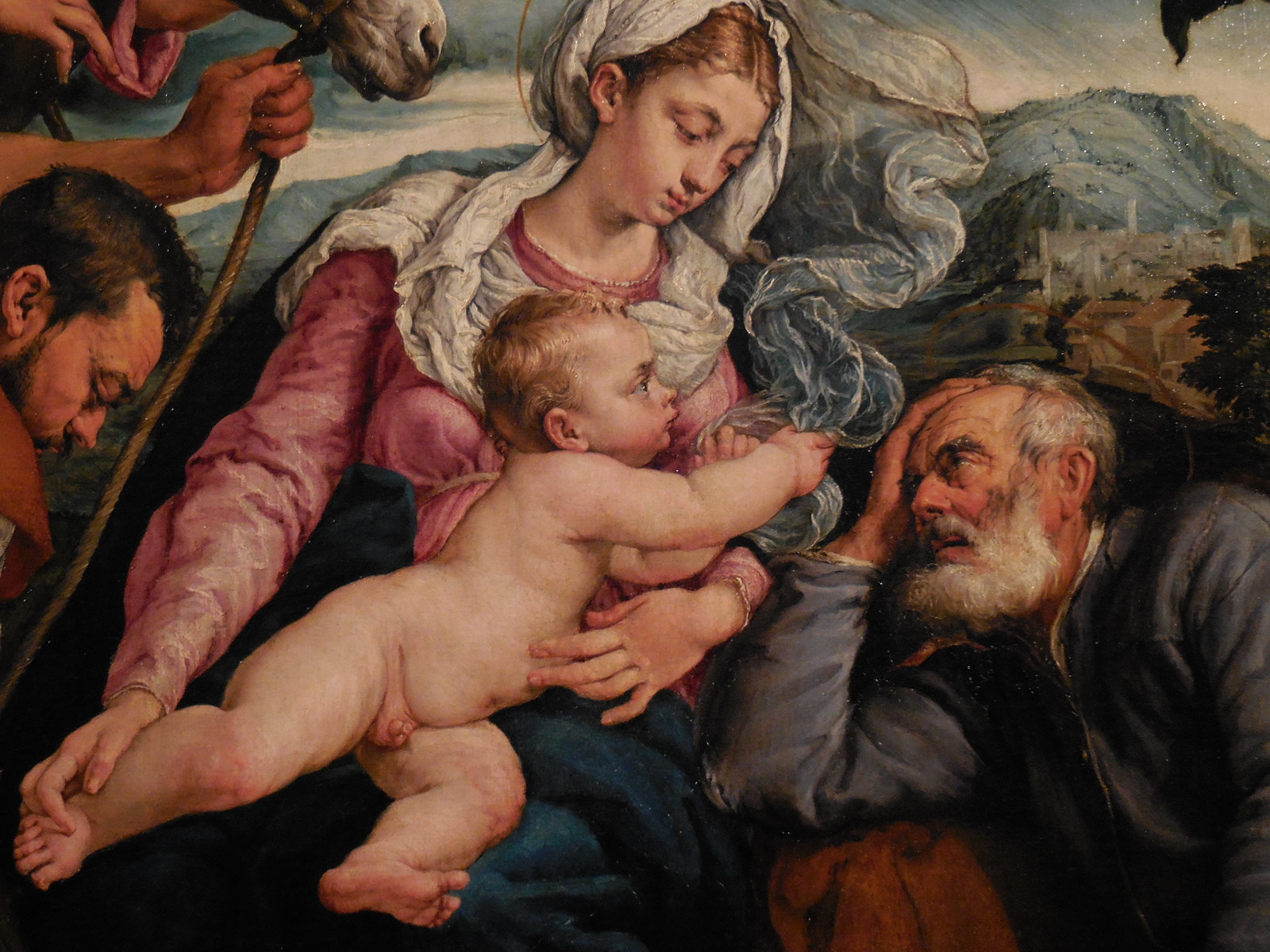
Artists represented in the collection include Pisanello, Giovanni Bellini, Jacopo Bellini, Carlo Crivelli, Andrea Mantegna, Jacopo Tintoretto and Tiepolo. Pisanello’s “Madonna of the Quail,” Jacobo Bellini’s “Madonna of Humility” and Mantegna’s “Holy Family” are a few of the highlights. The Romanesque sculpture also is impressive.

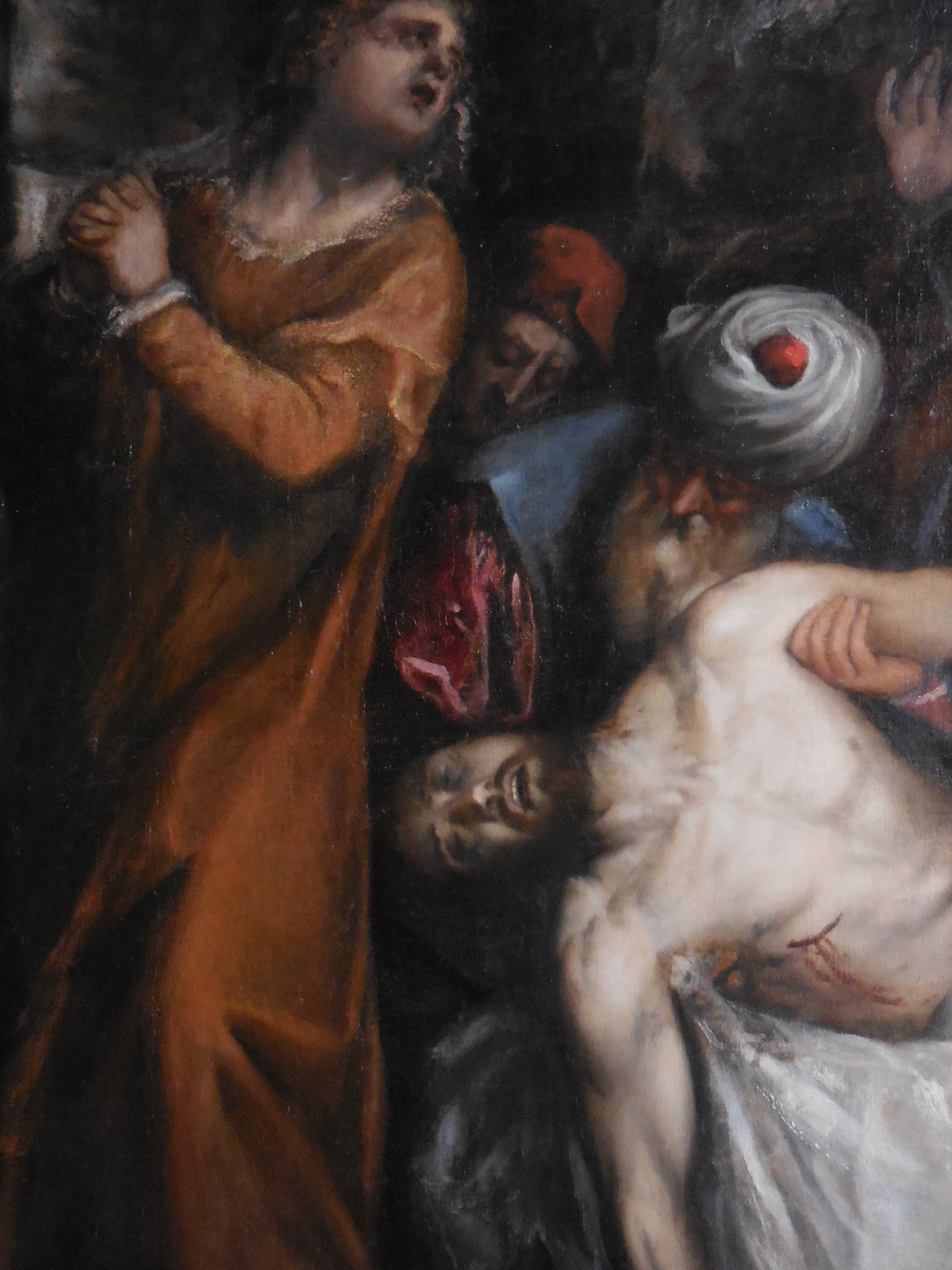
An intriguing true crime story is connected to the museum. In 2015, three thieves made off with 17 paintings, including masterpieces by Jacopo Bellini, Giovanni Bellini, Andrea Mantegna, Tintoretto, Peter Paul Rubens and Hans de Jode. The following year, the museum got the works of art back from Odessa thanks to Ukrainian border guards. It remains one of the most significant art heists to take place in Italy.

Tracy A. Burns is a writer, proofreader and editor in Prague.

Grottaglie Diary

PUGLIAGrottaglie2

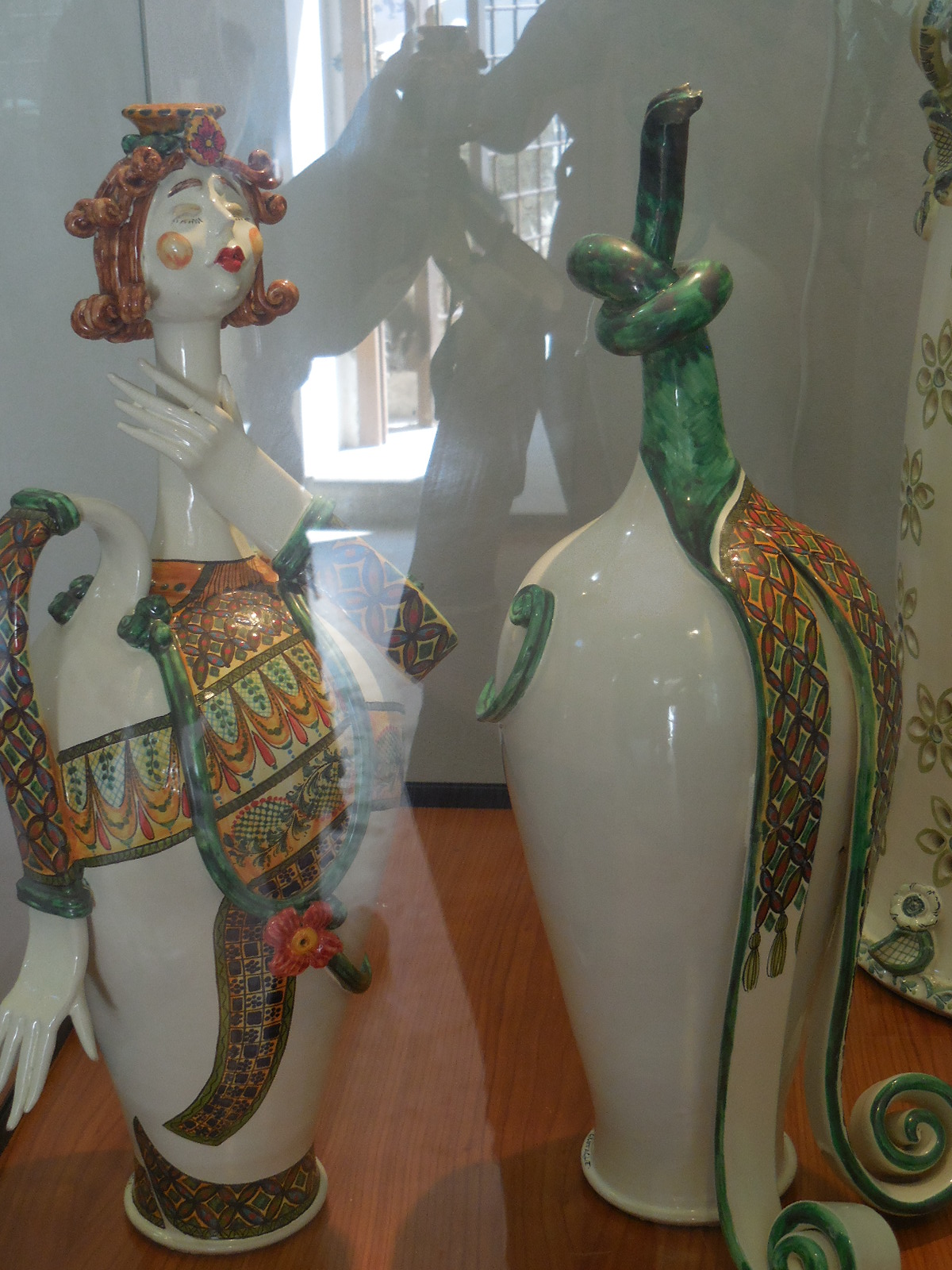
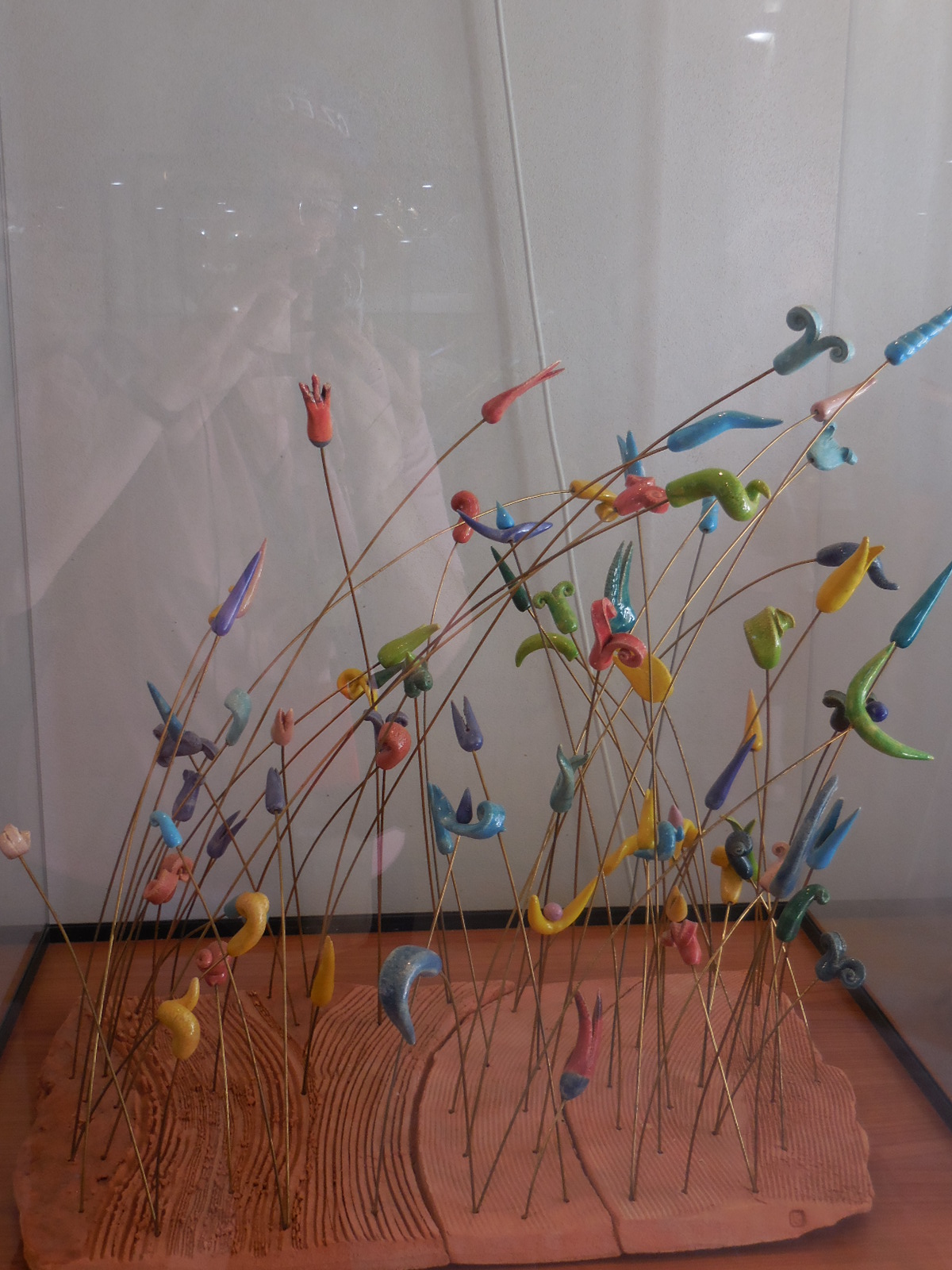
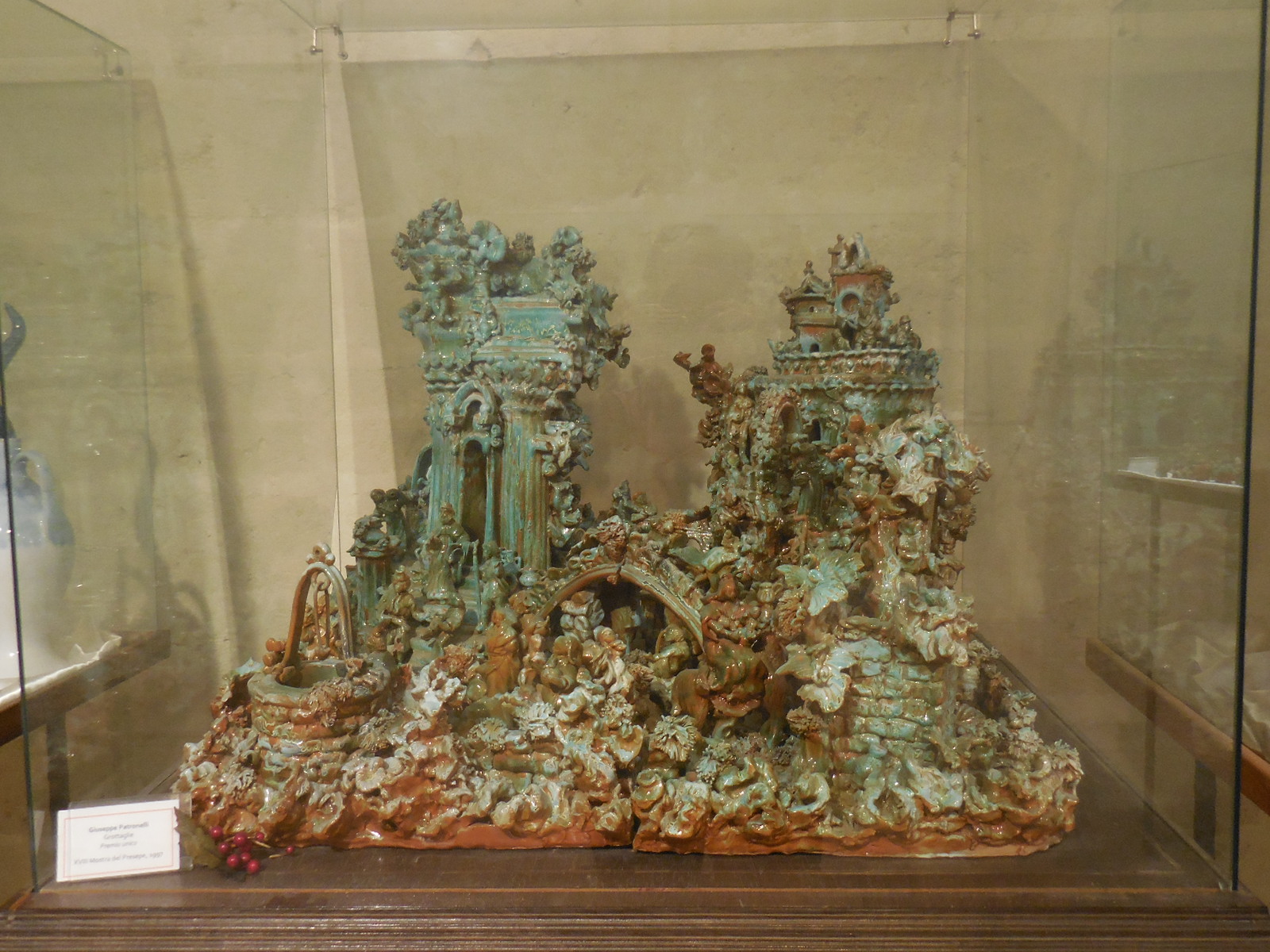
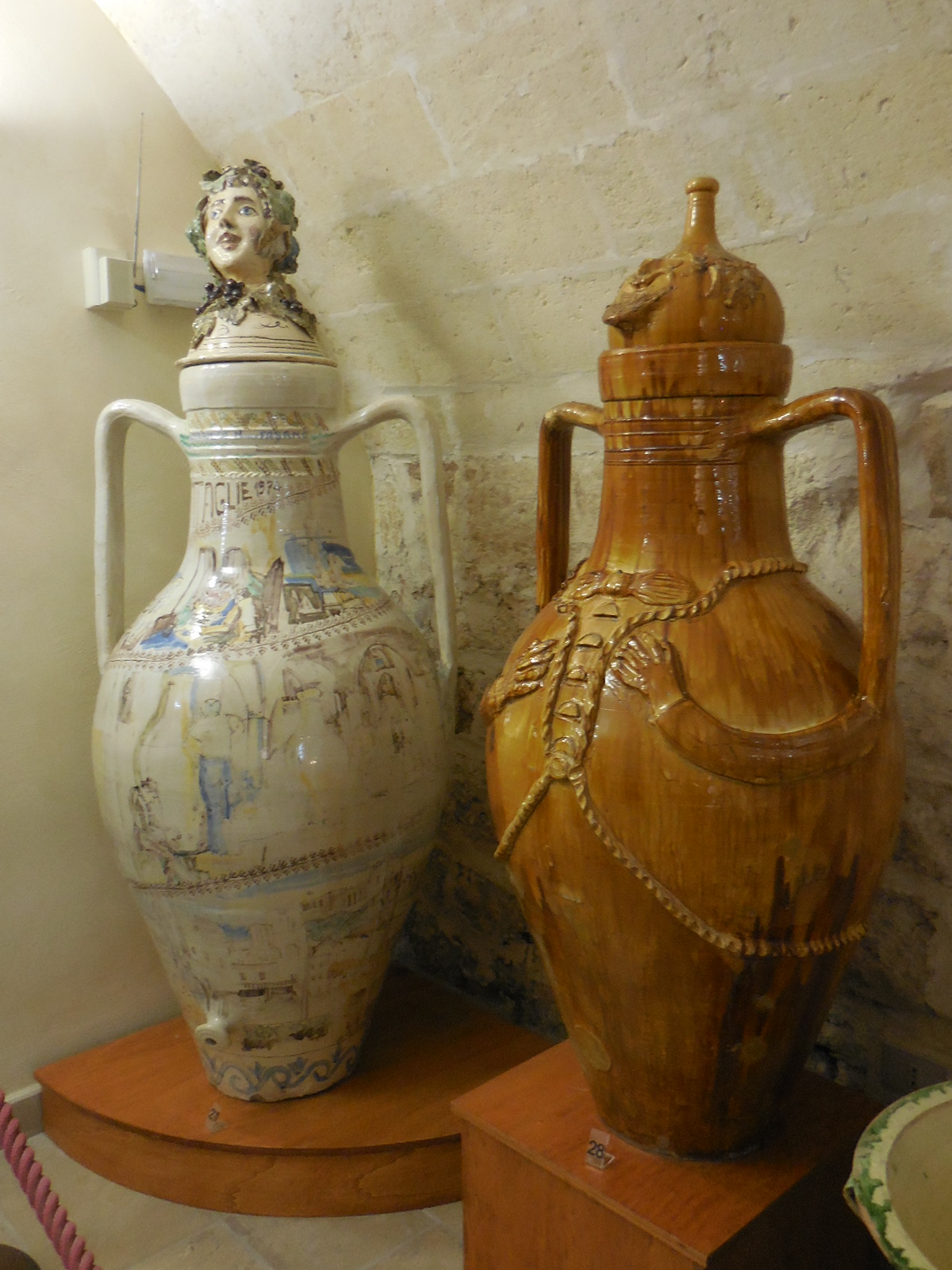
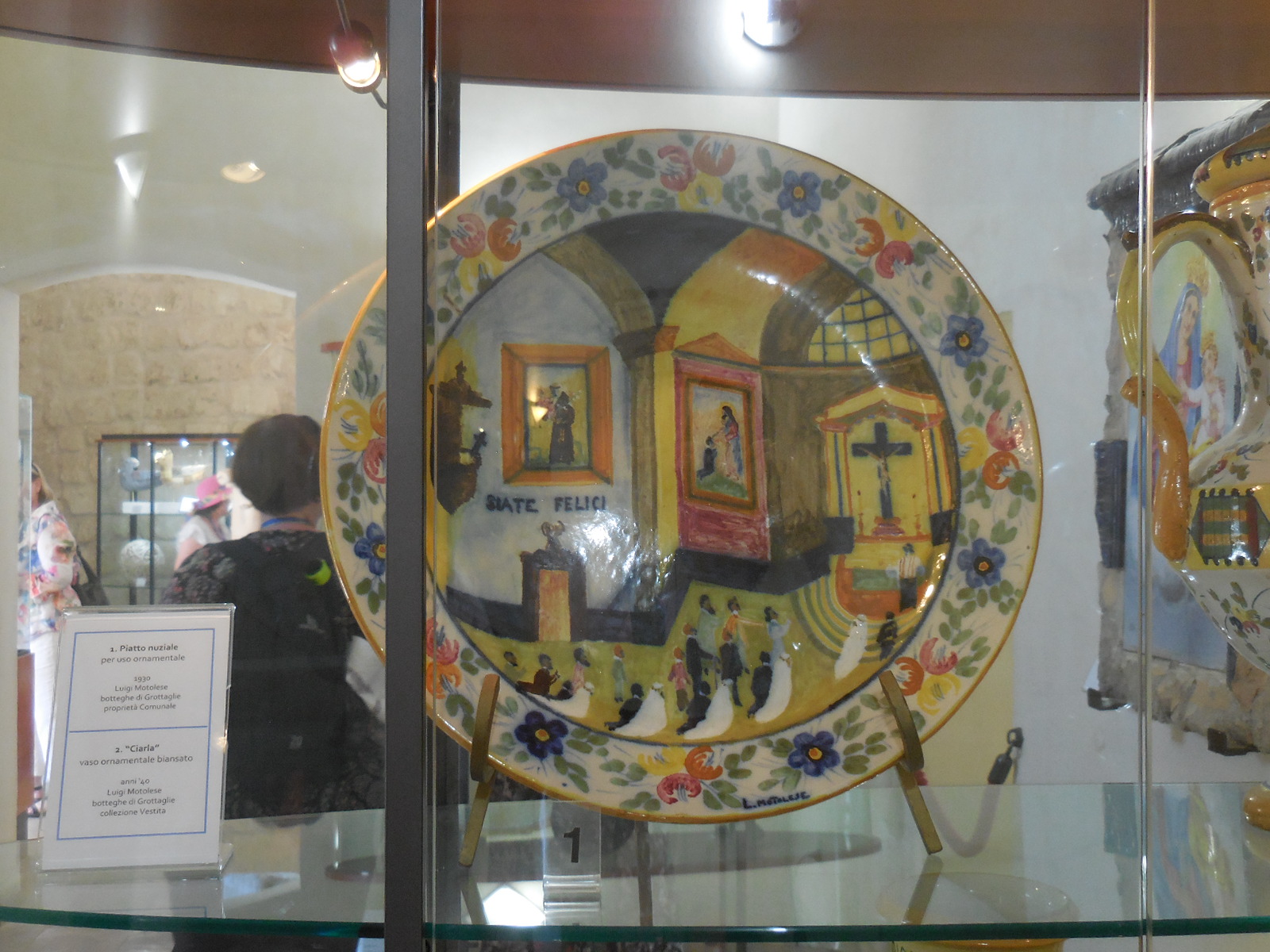
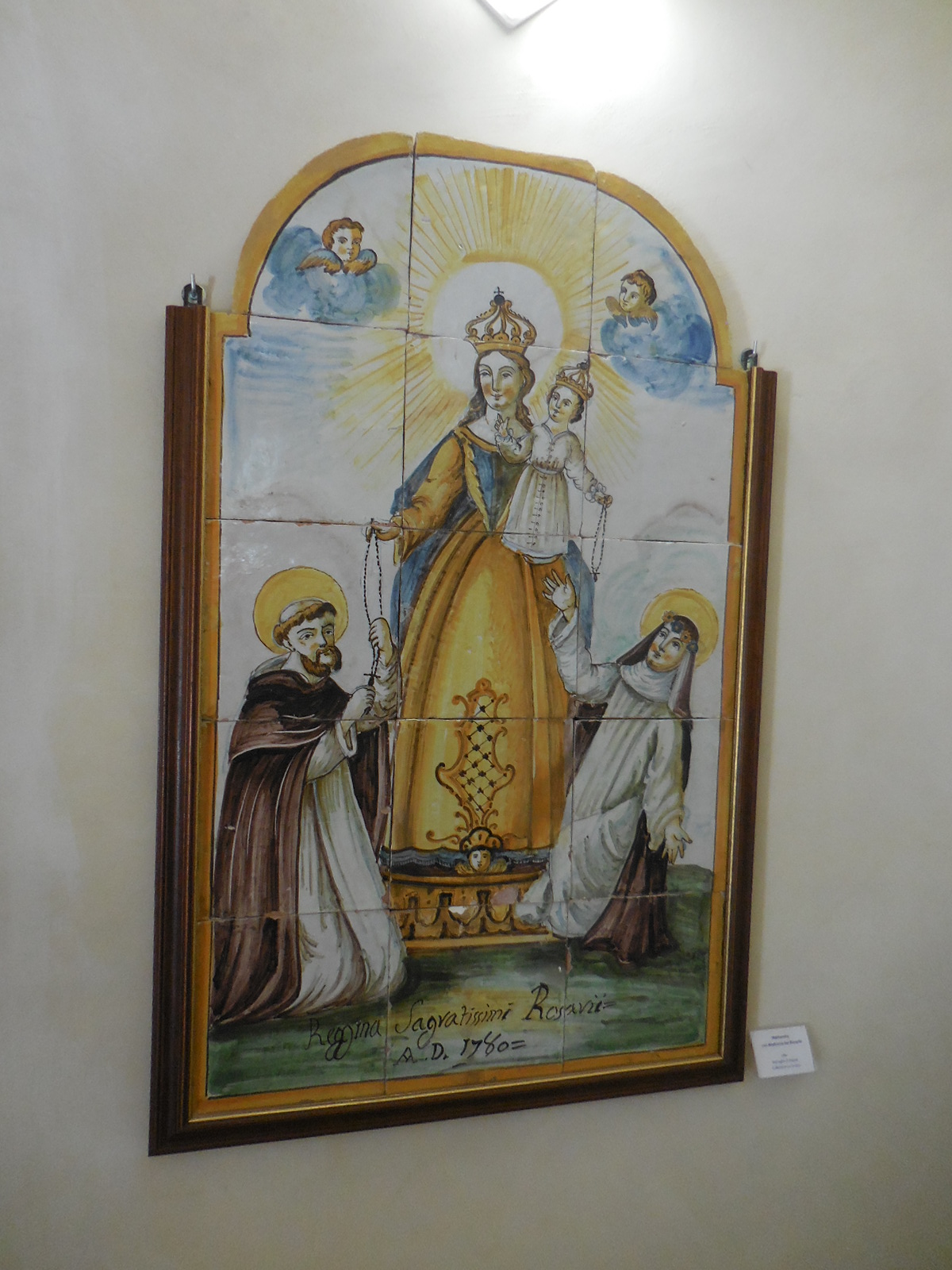
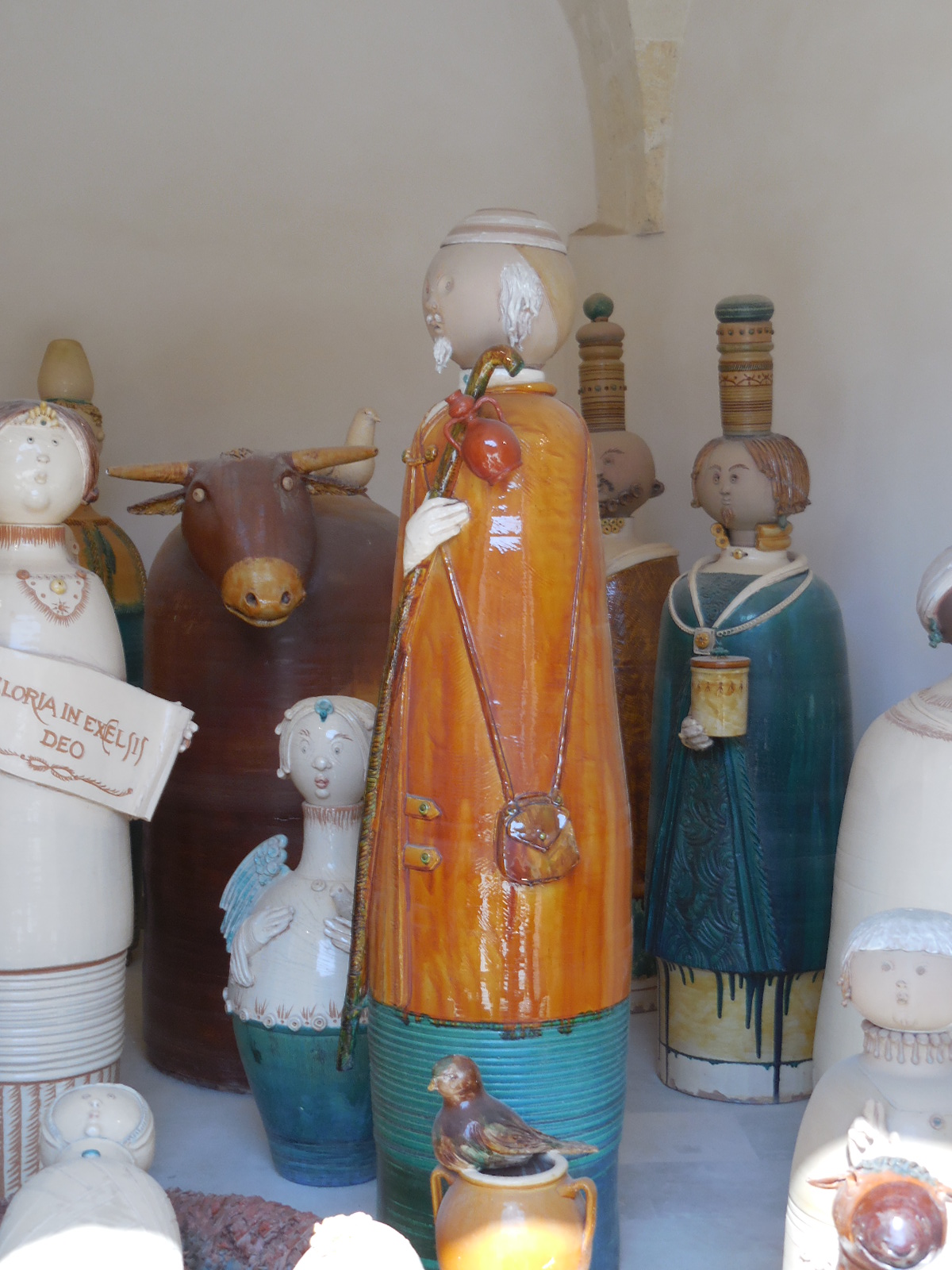
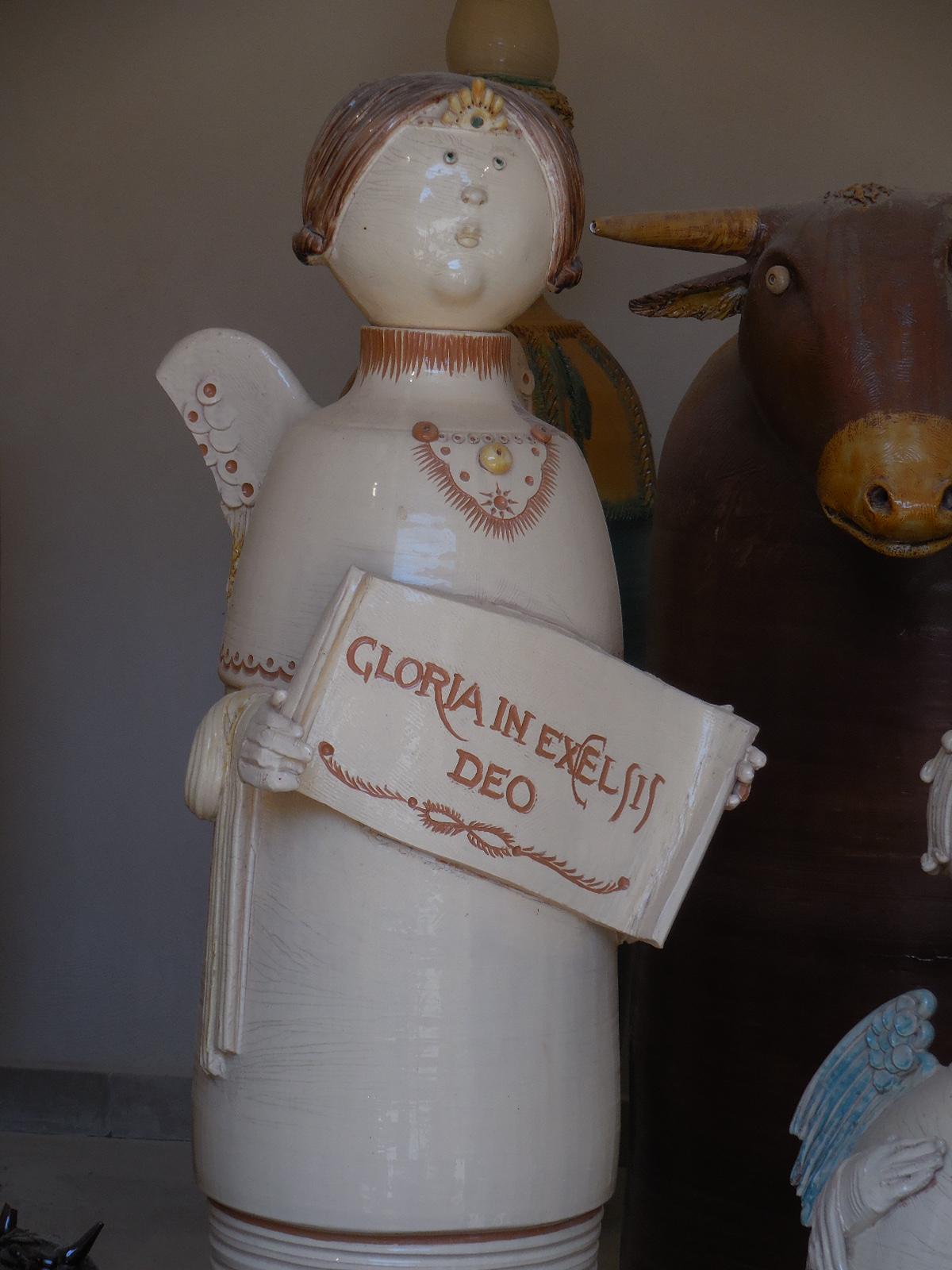
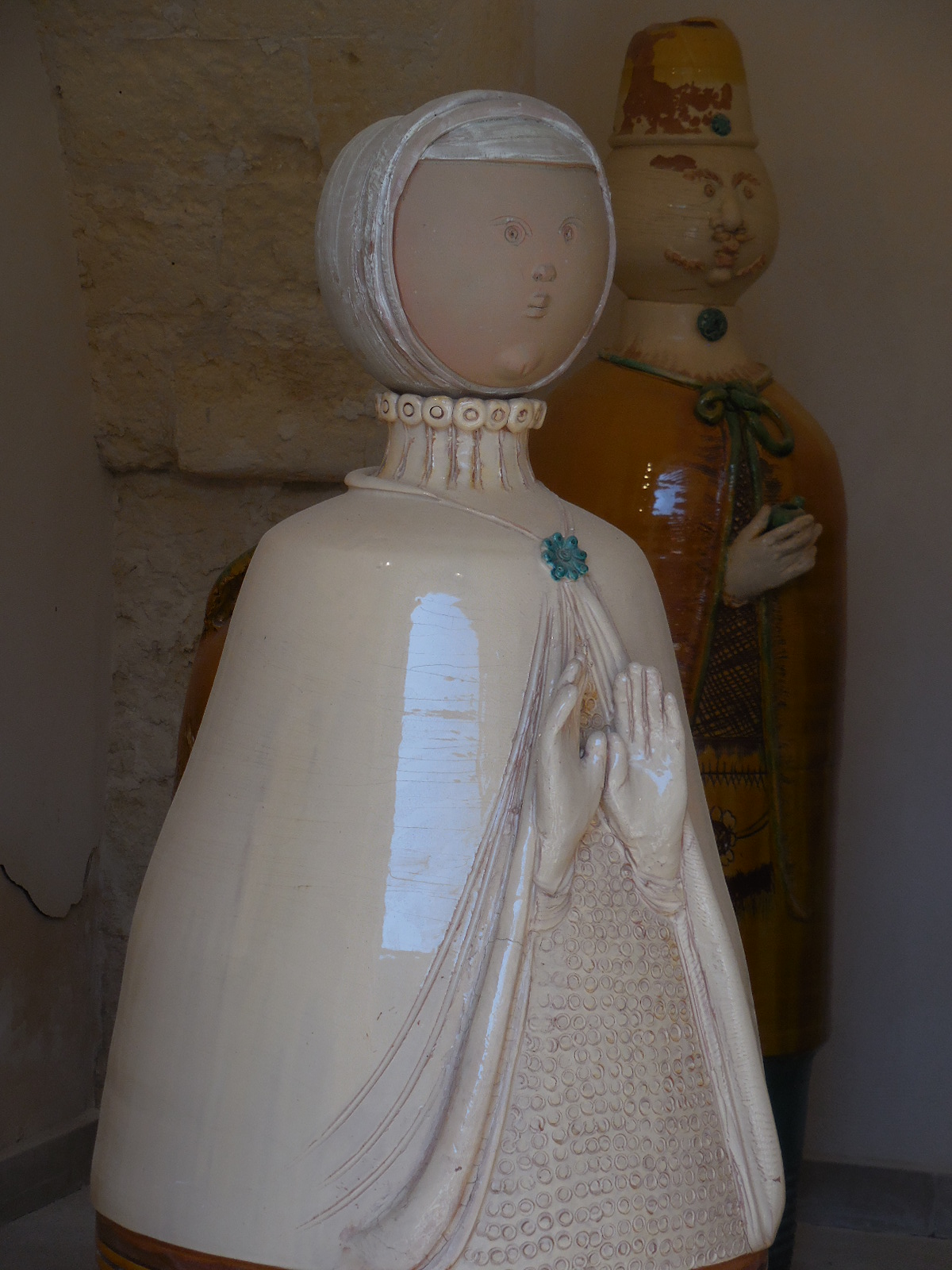
During the arsviva travel agency’s tour of Puglia, we stopped in the Ceramics Quarter of Grottaglie, a town famous for its superb ceramics made in artisans’ studios. What impressed me the most was the Museum of Ceramics in the 13th century Castello Episcopio. I loved discovering small, captivating museums during my trips. This museum only had three rooms, but they were three rooms with dynamic designs from the eighth century to the contemporary age. Creativity abounded.

PUGLIAGrottaglie11

Some of the 400 objects were archeological while others were made of majolica. There were traditional ceramics on display alongside abstract constructions. Nativity scenes also held a prominent position in the museum’s content. Through these objects, I got a sense how ceramics played a role in life, how ceramics depicted the age in which they were made. I particularly liked one abstract work that reminded me of a sculpture by Alexander Calder, whose art was well-represented in the National Gallery of Art of Washington, D.C., near my hometown.

PUGLIAGrottaglie12

That’s not all there was to see in Grottaglie, but we did not have time to see more of the town. The main church, Chiesa Matrice, was built in 1379. Princes and dukes once called the Palazzo Cicinelli home. Another palace, the Palazzo Urselli, sported a Renaissance façade and an impressive 15th century gate. The Monastery of San Francesco di Paolo was said to be a Baroque gem.

PUGLIAGrottaglie1

PUGLIAGrottaglie3

PUGLIAGrottaglie5

PUGLIAGrottaglie8

PUGLIAGrottaglie9

PUGLIAGrottaglie10

PUGLIAGrottaglie13

PUGLIAGrottaglie14

PUGLIAGrottaglie15

PUGLIAGrottaglie16

PUGLIAGrottaglie18

PUGLIAGrottaglie19

Tracy A. Burns is a writer, proofreader and editor in Prague.