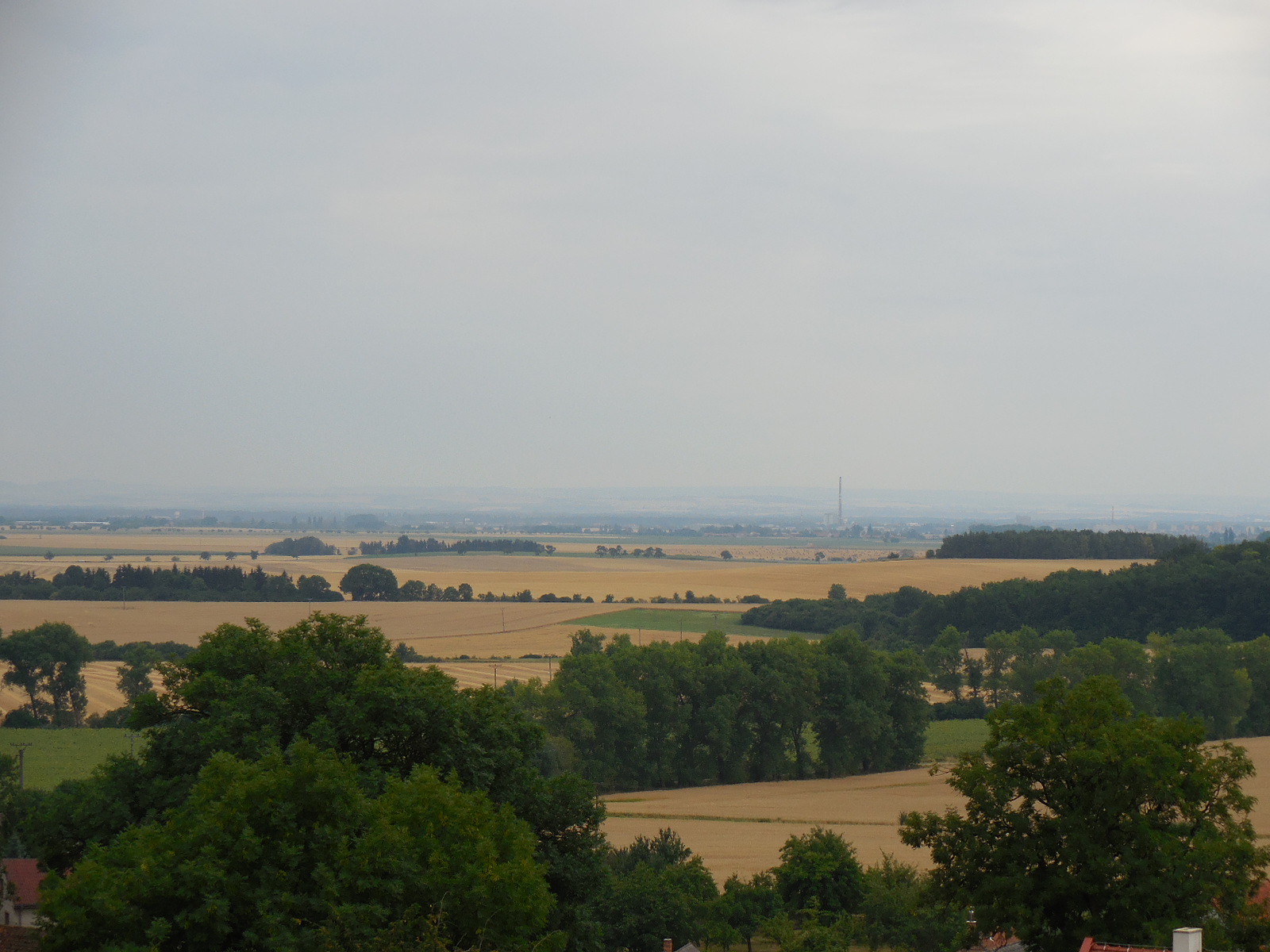
Capri Diary

Capri1

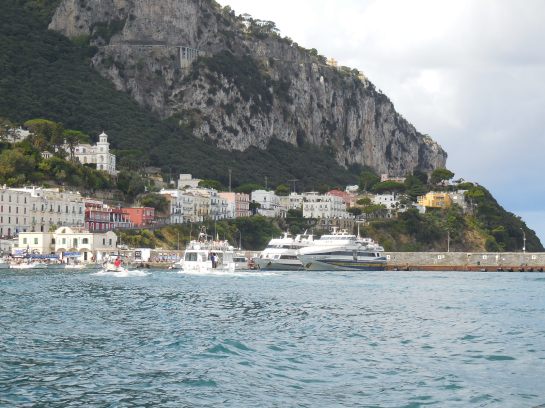
I immediately signed up for a day trip to Capri on the arsviva tour of Naples and the surrounding area. I was thrilled. The azure sea, the beautifully blue sky, the terraced slopes on the massive cliffs – I could hardly wait.
After we disembarked from the ferry, we got on a small boat, which held about 20 or 25 people. Then we cruised around the island. I was enthralled by the scenery, but at the same time I was terrified. I had never been on such a small boat. The waves – though no doubt gentle – rocked the boat back and forth as we took photos. While I have an affinity for mountains, I have always felt – no pun intended – like a fish out of water near the sea. I don’t even remember how to swim, though I did take lessons as a child. Each time the boat rocked to one side, I was convinced that it would capsize, I would fall in the enchantingly azure water and drown.

Capri4
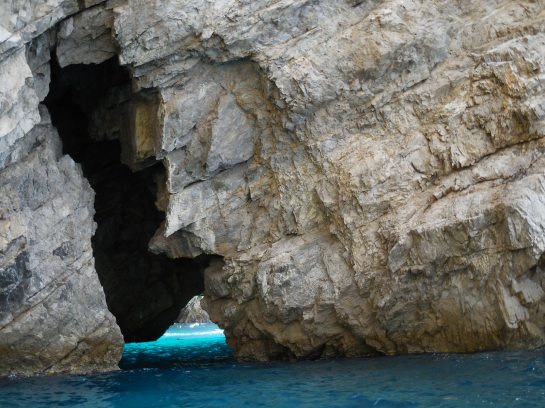
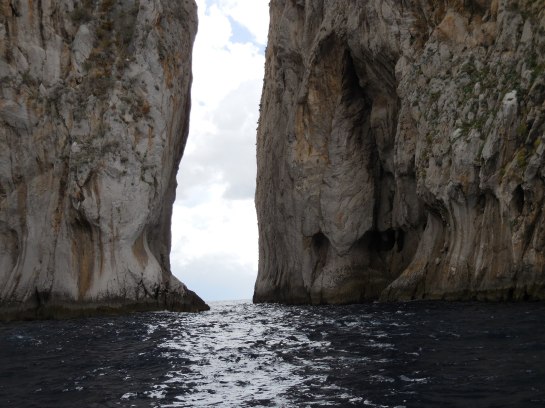
Yet, at the same time, I was captivated by the intense beauty of my surroundings. There was a pleasant sea breeze on that beautiful September day. The rocky coast, the high cliffs, the grottoes, the natural arches made by the rocks, the houses set precariously on the cliffs – it was breathtaking and a bit surreal for me. As the boat navigated around the caves, I worried that it would get stuck and that we would be trapped there. Still, the caves had a sense of mystery to them, a sort of mystical quality. The Blue Grotto was not open on that day – the water level was too high, but the other grottoes we saw were remarkable.

Capri2
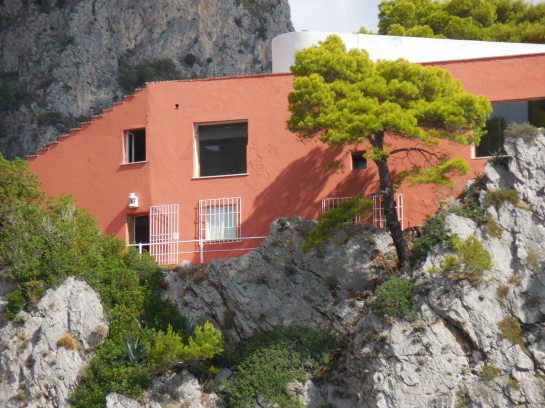
I was especially intrigued by the red box-like villa of the now deceased journalist and writer Curzio Malaparte (whose name means “wrong-sided”), who had fought for Mussolini during the so-called “March on Rome” in 1922, but became a fervent opponent of the Italian dictator when Italy changed sides during World War II. After the war he flirted with the Communist Party. Malaparte was known for his anti-Hitler and anti-Mussolini writings. He was kicked out of the National Fascist Party and was arrested by Mussolini on numerous occasions. The rebellious author had been a Republican most of his life but died a devout Catholic.
Capri29
His villa was built from 1938 to 1941. Some critics call it a masterpiece of Italian modern architecture while others see it as an eyesore. I was drawn to it because it was unique. Some features of the villa include reverse pyramidal stairs that lead to a roof patio. It lurks precariously on a cliff 32 meters above sea level, looking as if it may fall into the water at any moment.
Capri7
Before my trip to Capri, I did a little research about the island, a large limestone and sandstone rock that has a population of about 12,500. The total surface area of the island, made up of towns Capri and Anacapri, comes to 11 square kilometers while the island is six kilometers in length. Mountains can be found on the island, too. The highest is Mount Solaro at 589 meters.

Capri12
Capri was once a Greek colony. It got its name from wild goats on the island. The Romans took over in 29 AD when Emperor Augustus saw it for the first time. Augustus’ successor, Tiberius, formed close ties with the island. He lived as a recluse there during the last 10 years of his life. After his death in 37 AD, things were not so rosy for Capri, and later many pirate raids took place on the island. After the Romans, Capri switched owners many times. The Spaniards controlled the island for a lengthy period. The island has certainly had its share of trials and tribulations, such as the plague during the 18th century. It was ruled by the Bourbons before becoming part of the Kingdom of Italy.

Capri13
Tourism officially started on Capri in the 17th century, when the first tourist, French antiques dealer Jean-Jacques Bouchard, visited the island. During the “Dolce Vita” years of the 1950s and early 1960s, none of the names in cinema, the arts and politics could resist Capri’s charm, and they were often seen on the island wearing so-called Capri pants and espadrillas. A number of well-known personalities have lived on Capri, and today many celebrities have homes there. The founder of the Soviet Union, Vladimir Ilych Lenin, even visited Maxim Gorky at that writer’s residence on Capri in 1908. Queen Victoria made a point of staying on the island. Norman Douglas was another Capri resident.

Capri45
Back to my trip: I was thrilled that I had survived the boat ride. From the Marina Grande we took the funicular to the town of Capri. I was glad that I did not know then about one of the first rides in the funicular during the the early 20th century, when two cables broke – a tragedy that resulted in two deaths. However, my ride, thankfully, was uneventful. We all made it to the main square safely.
Capri23
I soon found myself on the main square, the Piazzetta, bustling with crowded, outdoor cafés. I took a seat at one café and drank a Cola Zero. The waiter served me surprisingly quickly. When I got the bill, I was shocked that a small bottle cost six euros. At least I did not have to wait an hour to pay.

Capri26
Then I took some time to take in my surroundings. I saw the clock tower, the former bell tower of a cathedral. I admired its architecture featuring an eastern-influenced cupola and arcades. I stood in front of the Church of Saint Stephen, which had Baroque elements and a central dome. It was not open, but later I found out that the interior included Roman fragments from the Villa Jovis, which we would see a bit later on, as well as sculptures and paintings. I took a short walk through narrow, winding paths, past designer shops and white houses, toward the marina. Then I headed back for our meeting at the main square.
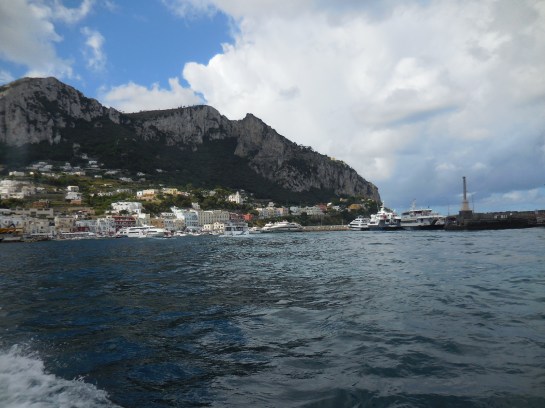
Capri40
We trekked uphill to the Villa Jovis. Away from the busy main square Capri was tranquil with narrow streets flanked by magnificent villas and gardens. I occasionally stopped to take in the stunning scenery.
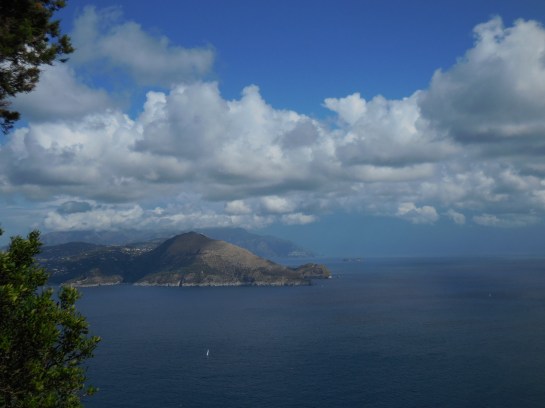
CapriVJ5
Villa Jovis, named after the god Jovis or Jupiter, hailed from 27 AD, when it was constructed for Tiberius, who lived like a recluse there until he died in 37 AD, when he was 79 years old. It stands on Mount Tiberius, which is 335 meters high. It is by no means the only villa Tiberius had built on Capri; he had no less than 12 constructed on the island. Villa Jovis, though, is the biggest of them all, measuring 1.7 acres or 7,000 square meters.
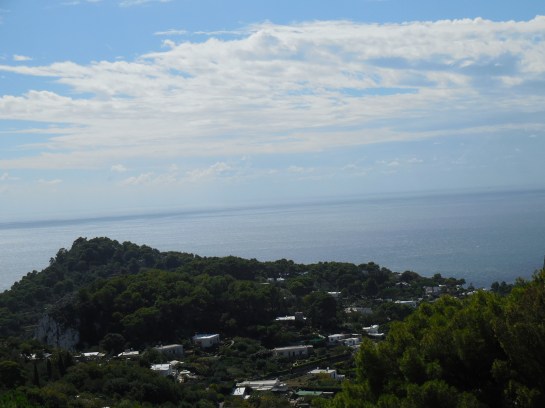
CapriVJ6
Below the villa we saw the remains of a watch tower that Tiberius had used as a sort of telegraph system. He would signal to the mainland via fire or smoke. We explored the former living quarters, the administrative area, the reception area and what had been a hall offering magnificent views of the sea. We saw the remnants of the complex system of water tanks that had collected rain water for the villa and the area where the baths used to be along with a complicated heating system. Part of the ruins may have even once been an observatory.

CapriVJ10
Tiberius was a complicated historical figure. He made quite a name for himself as a general but didn’t seem too enthusiastic to take on the role of emperor. He was known as a sad, weary, reclusive old man in an unhappy marriage. Augustus forced him to leave his beloved wife to marry into the emperor’s family. There were rumors of Tiberius’ cruelty and perversion. For example, it is said that he threw his enemies into a bottomless abyss. Yet, it is probable that there was little truth to these stories. Tiberius ruled for 22 years and during that time only about 50 people were accused of treason. Only half of them were actually convicted. He certainly was no friend of the Senate, which abhorred him, even refusing to grant him divine honors after his death. One of the reasons Tiberius fled to Capri was because he was afraid he would be assassinated, and his villas on Capri were well-guarded and hard to reach.

CapriVJ15
After taking many snapshots of superb views, I wandered down the narrow, winding streets, invigorated by the tranquil atmosphere and found an excellent family-run restaurant. Then I went closer to the center and did some window-shopping. I was impressed with the ceramics sold on the island.

CapriVJ12
While I did not have time to get to Anacapri, other members of the tour did. They visited the villa of Axel Munthe, who, in the first half of the last century, had been a Swedish writer, physician and psychiatrist. He was known for helping the poor free of charge, and he had bravely offered his medical services during wartime. His Villa San Michele includes impressive gardens dotted with Egyptian relics. I hope I have a chance to return someday to visit Anacapri and other sights on the island.
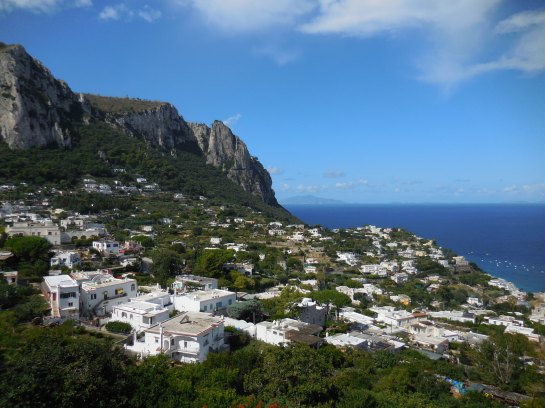
Capri43
While Capri seemed idyllic as I walked along its narrow, picturesque lanes, I would not buy a villa on the island if I ever become rich enough to do so. I found the sheer cliffs daunting and in a way terrifying. I was certainly not at home by the sea. It was a thrilling place to visit, but I would prefer to buy an apartment in Paris or Rome, though I doubt I will ever have the money to do so!

Capri17
On the way back to Naples, I sat on the upper level, outside on the ferry, feeling the sea breeze on my face and watching the hypnotizing movement of the waves. I did not feel scared on the ferry as I had on the small boat. I breathed in the fresh sea air and was thankful I had had another superb day during my trip to Campania.
Capri42
Tracy A. Burns is a writer, editor and proofreader in Prague.

Palazzo Reale di Capodimonte Diary

NaplesCapodimonteext
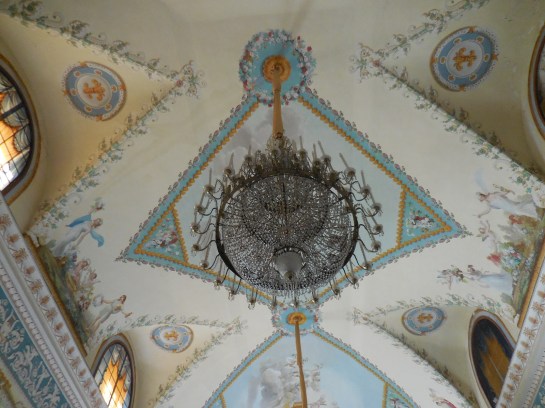
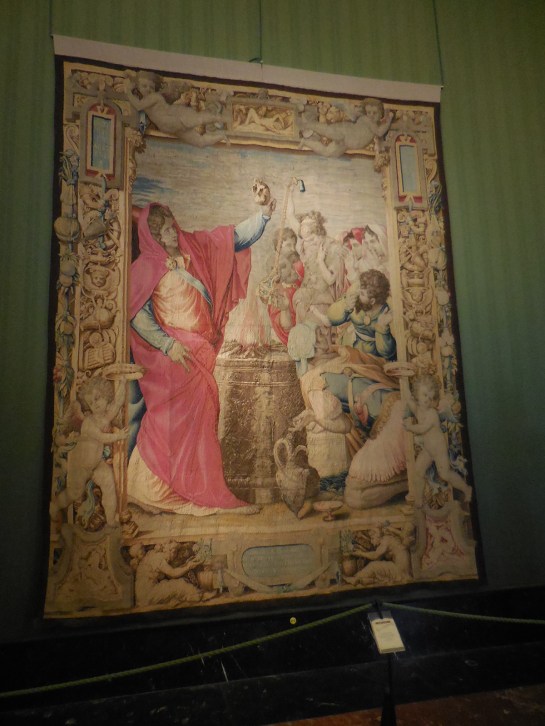
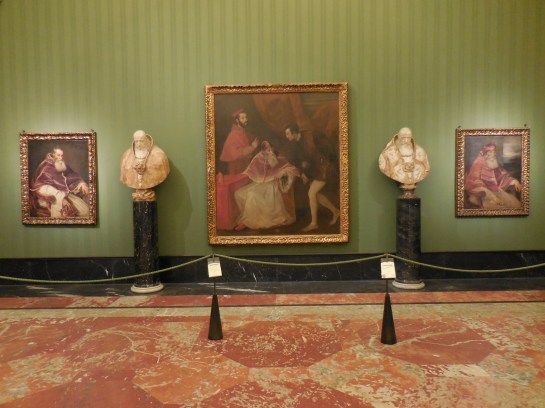
One of the highlights of my trip to Naples was visiting the Palazzo Reale di Capodimonte museum, which houses a gallery of 19th century art, porcelain, ceramics, an armory and historical apartments. Founded by Charles Bourbon in 1738, the palace was not completed until 1838. Artwork featured at the museum includes The Blind Leading the Blind and Misanthrope by my beloved Pieter Bruegel the Elder, Madonna with Child and Angels by Botticelli and three portraits of Pope Paul II by Titian. Raphael, Rembrandt, Michelangelo, Pieter Paul Rubens, Anthony van Dyck, El Greco and Caravaggio are just a few of the artists represented. The museum is also home to seven tapestries showing scenes from the Battle of Pavia. The Gallery of Rare Things shows off miniatures, small bronzes, works of majolica, ivory and crystal pieces, gems and jewelry, for instance. I took pictures mostly of the royal apartments, which included the stunning Ballroom. The design of this room was influenced by 18th century findings at Herculaneum and Pompeii. The crystal chandeliers, the Neoclassical divans and the marble floor featuring geometric designs all enthralled me.

NaplesCapodimonteint1

NaplesCapodimonteint3

NaplesCapodimonteint4

NaplesCapodimonteint5

NaplesCapodimonteint6

NaplesCapodimonteint7

NaplesCapodimonteint8

NaplesCapodimonteint9

NaplesCapodimonteint10

NaplesCapodimonteint11

NaplesCapodimonteint12

NaplesCapodimonteint15

NaplesCapodimoneint17

Tracy A. Burns is a writer, proofreader and editor in Prague.

Churches of Naples Diary

Naplesarcades1

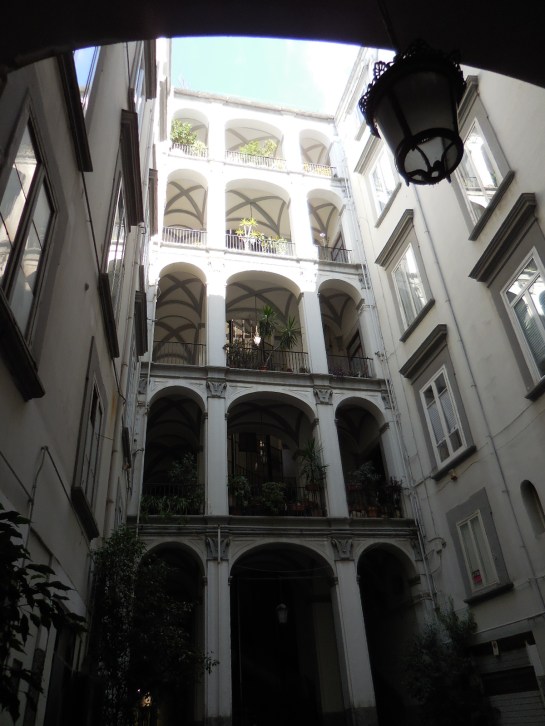
The cobblestoned, narrow streets of the Gothic quarter; via San Gregorio Armeno, where so many shops sell Nativity scene figures; youngsters riding motorbikes with helmets pushed back on the nape of their necks; laundry hanging from clotheslines on balconies overlooking Baroque churches; the steep, picturesque streets of the Spanish Quarter; pizzerias with modest décor where the best pizza in the world is made; 27 centuries of history packed into the historical centre – I found all these features of Naples bewitching.

NaplesSantaChiara26

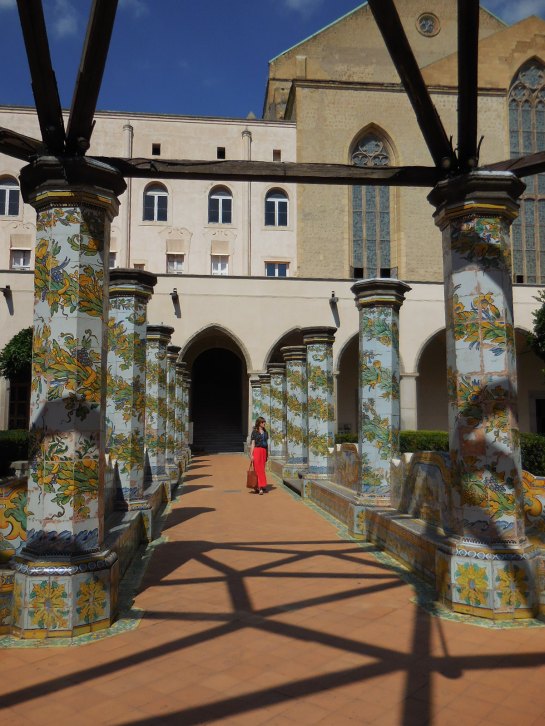
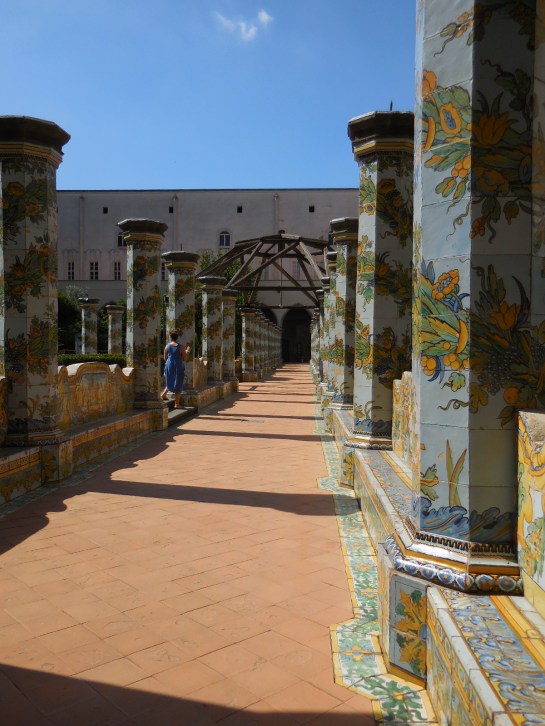
The cloister of Santa Chiara

The history of Naples intrigued me, too. Of Greek origin, the region was first called Parthenope and later reestablished as Neapolis, meaning “new city,” during 6 BC. Naples played a dominant role in European culture throughout its history as capital of the Kingdom of Naples from 1282 to 1816 and the capital, along with Sicily, of the Two Sicilies from 1816 to 1861, when Italy was unified. During World War II it experienced dark days as it was the most bombed city in Italy. Now the historic centre is a UNESCO World Heritage Site.

Naplescathedral6

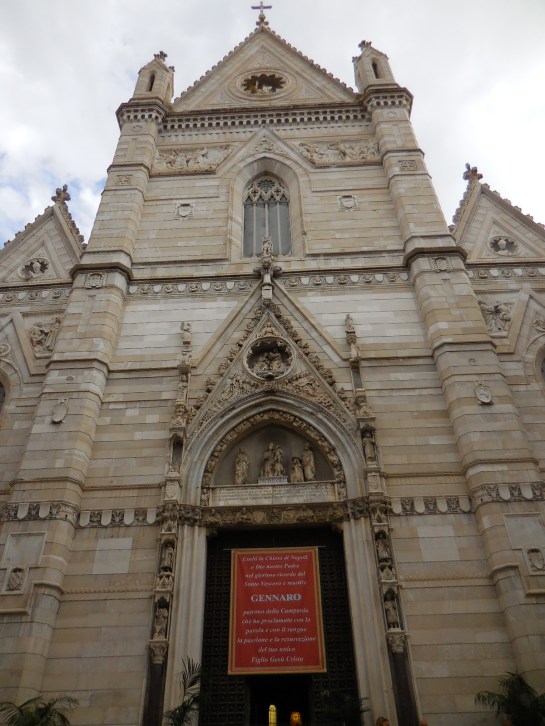
Facade of the Cathedral

What I liked best about Naples were the museums and the churches, especially the San Severo Chapel, the Cathedral, the Church of Gesù Nuovo, the Church and cloister of Santa Chiara and the Basilica of San Domenico Maggiore. In this post I will concentrate on the churches that influenced me the most. It would take a hundred pages to describe everything that impressed me in Naples.

Naplescathedralint2

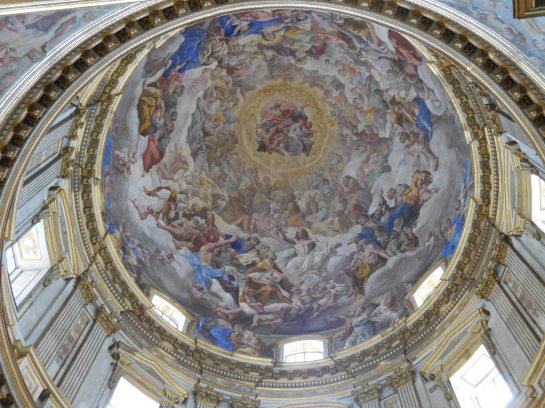
Interior of the Cathedral

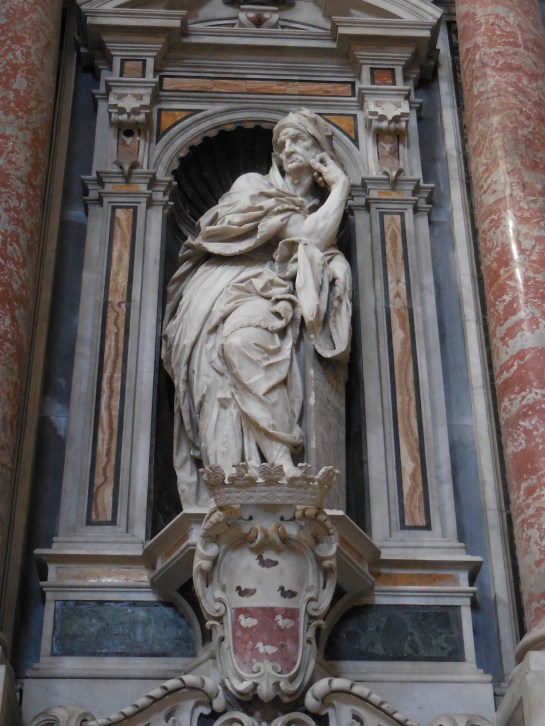
The San Severo Chapel was my favorite with its Veiled Christ and other dynamic sculptures seeping with symbolism. It was created during the 18th century by Prince Raimondo di Sangro as a burial place for his family. Prince Raimondo’s resume fascinated me. He was not only a leading authority on architecture and the military but also made a name for himself as a writer and inventor. For instance, he came up with the idea of a single-barreled shotgun that was fired using gunpowder and compressed air.

Chastity1

Chastity from http://www.pompeii.org.uk
I marveled at all the sculptures in the chapel, but I will focus on the three that I was most intrigued with: Chastity, Disenchantment and the Veiled Christ. Raimondo had the sculpture Chastity built for his mother, who died at a young age. I marveled at the female figure’s close-fitting veil adorned with roses. The figure held a broken slab, symbolizing the impossibility of attaining her dreams and goals because her life was cut short. I thought about young men and women killed by drunk drivers, the victims of terrorist attacks and gun violence – all lives tragically cut short, all people who carried broken slabs.

Disenchantment1

Disenchantment from http://www.alinariarchives.it
The tomb of his father with the dramatic sculpture Disenchantment also caught my undivided attention. Raimondo’s father was a traveler and later became a priest. The sculpture portrays a man freeing himself from a net, which stood for sin. I marveled at the exquisite details of the net, which, according to my own interpretation, could stand for negative energy and bad situations. I sometimes found the need to free myself from negative energy and problems by making changes in my life, thus getting out of the “net.” I freed myself from this sort of “net” by reading and writing, but first and foremost by traveling and learning about various cultures as well as by going to classical concerts and to the theatre.

0563B_ 013

Veiled Christ from http://www.pinterest.com

For me the highlight of this chapel was Veiled Christ by Sanmartino. The tight-fitting veil was so realistic, draped over the lifeless body. I marveled how the artist could capture the sense of the material so well. I valued other details of the sculpture -. Christ’s hands pierced by nails and the vein on his forehead that seemed to be throbbing. I could actually feel the suffering and the torment.

VeiledChrist1

Veiled Christ from http://www.italianways.com
Downstairs were two skeletons of a man and a woman encased in glass. I could see the veins and arteries that had been preserved for two centuries. The skeletons presented a detailed study of the circulatory system. How this was done remains a mystery. According to a legend, the corpses were injected with some sort of liquid that made the veins and arteries harden.

Naplescathedral1

Naplescathedral4
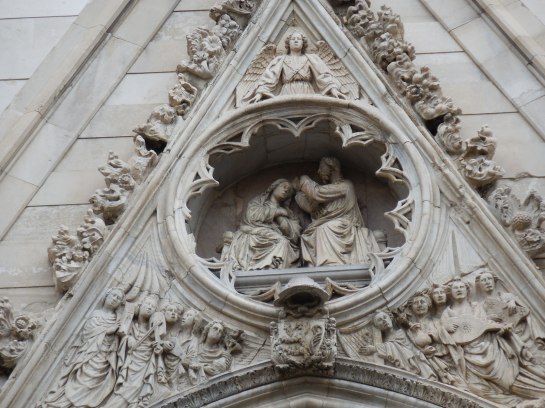
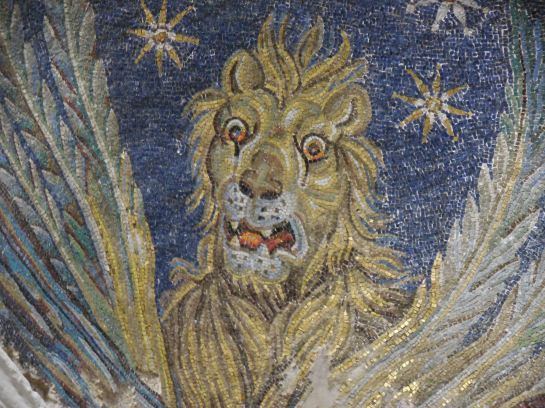
Then there was the Cathedral that paid homage to Saint Januarius, who freed the city from the plague in 1527. It was constructed by Charles II of Anjou in the late 13th century. Phials with the dried blood of the saint are kept here, and there are big celebrations twice a year, in May and September, when the phials of blood liquefy If they do not liquefy, it means that catastrophe will come to the city. I was enthralled with the frescoes in the central nave and the inlay and gilt work of the 17th century ceiling. There were frescoes galore in the cathedral on the floors and walls, dating from the 14th to the 16th century. The Santa Restituta Chapel boasted some fantastic fifth century mosaics on its cupola. I particularly liked the one depicting a lion. I could practically hear him roaring.

Naplescathedralint8

Naplescathedralbaptistery4
The Church of Gesù Nuovo used to be a palace during the 15th century, which is why it has such a unique façade made of piperno gray rock. The structure was transformed into a church during the 16th century. It took 40 years to decorate the stunning interior, Baroque in style. Designed in the form of a Greek cross, there are three naves surrounded by side chapels. The frescoes in the vault were marvelous, and I loved the marble in various colors that decorated the church. The main altar was made of marble, adorned with bronze and semi-precious stones. I was fascinated by the chapel devoted to Saint Joseph Moscati, a doctor who had worked as a university professor. A bronze statue of the physician stood to the left of the altar where his urn was kept.

NaplesGesuNuovo1

NaplesGesuNuovo2
The Chapel of the Crucifix was another delight in the Church of Gesù Nuovo. The wooden statue of the crucified Christ was stunning, and the ceiling frescoes amazed. No less than 70 busts of saints and martyrs, sculpted in golden wood during 1617, decorated two reliquaries. The frescoes in the sacristy also held my attention.

NaplesGesuNuovo4

NaplesGesuNuovo12

NaplesGesuNuovo17
Built from 1310 to 1328 in Gothic Provencal style, the Church of Santa Chiara has a single nave with nine chapels on each side and boasts artistic treasures from the 14th to the 18th century. The double lancet and three-mullioned windows were breathtaking. The church also featured the tomb of Robert I of Anjou, erected from 1343 to 1345.

NaplesSantaChiara1

NaplesSantaChiara7
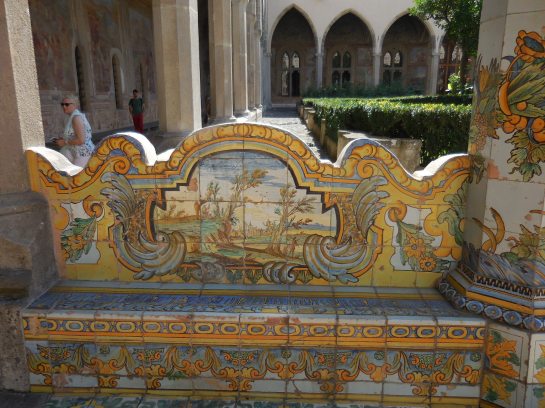
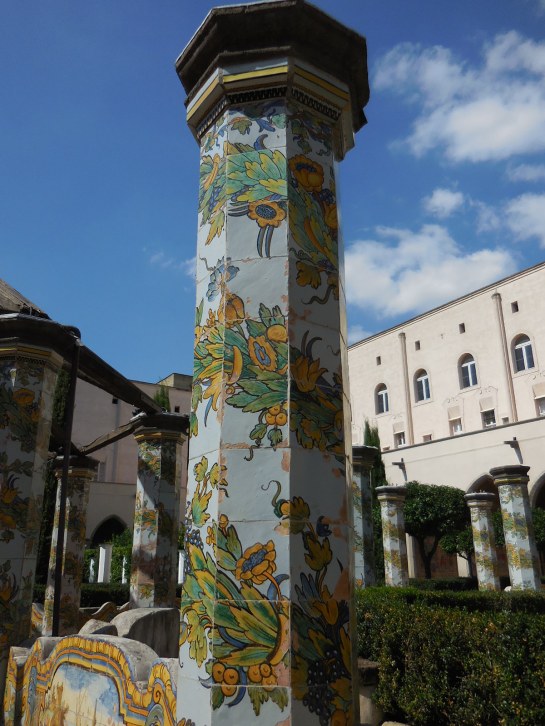
However, the highlight for me was the cloister with its remarkable 18th century majolica ornamentation. It was the most beautiful cloister I had ever seen. The majolica tiles adorned the pillars and benches in the garden and showed off landscapes and mythological scenes as well as scenes from village life. I loved the complimentary yellows and blues used to portray a lively country dance. The village scenes remained me of paintings by Pieter Bruegel the Elder. Other tiles showed villagers bowling.

NaplesSantaChiara12

NaplesSantaChiara17
The cloister also included the Opera Museum made up of nine rooms of artifacts from antiquity to the 20th century. I saw the remains of a Roman spa that once was part of a patrician villa, dating from 1 AD. Marble objects and reliquaries also made up the collection.

NaplesSantaChiara18

NaplesSantaChiara20

NaplesSantaChiara24
Last but not least, the Basilica of San Domenico Maggiore also took my breath away. It was built on the site of a Romanesque church from 1283 to 1324, but from the 15th to 18th century underwent many architectural changes. St. Thomas Aquinas taught for a year in the monastery that had adjoined the church. There are three naves in the basilica gushing with superb frescoes and impressive paintings. Two side naves have chapels adorned with frescoes and tombs.

NaplesS.DomenicoM2
In the Chapel of the Frescoes, the frescoes on the walls portrayed Christ on the Cross, Mary Magdalene and the apostles. In the Chapel of St. Anthony Abbott, it is possible that one fresco was even created by Giotto. The Chapel of the Crucifix was adorned with frescoes dating from the 14th, 15th and 16th centuries, and the altar boasted a 13th century crucifix.

NaplesS.DomenicoM5
I was dumbfounded by the ceiling fresco, hailing from 1707, in the sacristy. It celebrated the Dominicans’ triumph of faith over heresy. But I was not only intrigued by what was above me but also by what was below. A slab in the floor announced that Irish-born Richard L. Concanen, the first Bishop of New York, was buried in the basilica during 1810. In the apse there were tombs of Aragon rulers. The pulpit dated from 1559, and the organ from 1751, with 1,640 pipes. There was a painting by Jusepe de Ribera in the basilica as well as copies of creations by Titian and Caravaggio.

NaplesS.DomenicoM6
For me these churches – as well as the Archeological Museum and the Museo di Capodimonte – represented Naples. The San Severo Chapel ranked first on my list with its stunning, symbolic statues and the breathtaking Veiled Christ. I had never seen anything like the cloister at Santa Chiara. The San Severo Chapel, the Cathedral, the Church of Gesù Nuovo, the church and cloister of Santa Chiara and the Basilica of San Domenico Maggiore with their unforgettable splendor were highlights of my trip.

Tracy A. Burns is a writer, proofreader and editor in Prague.

Palazzo Reale Photo Diary

NaplesPalazzoReale2
The Royal Palace of Naples was the seat of the Spanish and Austrian viceroyalty for 200 years, from the early 16th century to the early 18th century. Then the Bourbons took up residence, from 1734 to 1860. Even though the foundation stone was laid in 1600, the actual construction of the palace was not finished until after 1843. It is connected to the majestic Teatro di San Carlo and is located on the symmetrical Piazza del Plebiscito, where festivals and parades had taken place before 1860. The Palazzo Reale was first open to the public in 1919.

The façade is impressive as Tuscan, Ionic and Corinthian columns, obelisks, globes and vases all make appearances. Statues of the kings of Naples adorn the façade as well.

NaplesPalazzoReale3
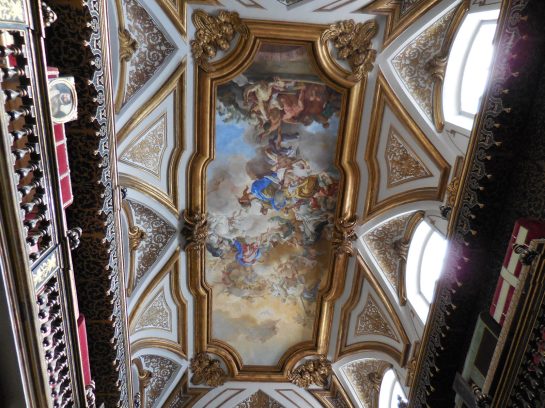
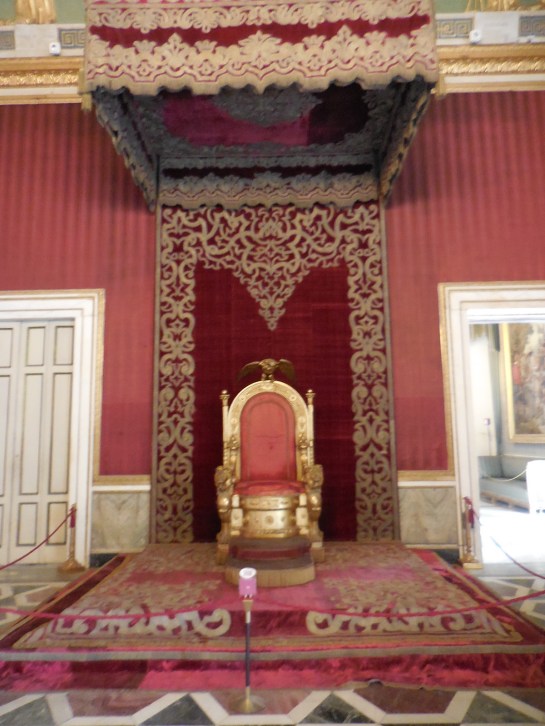
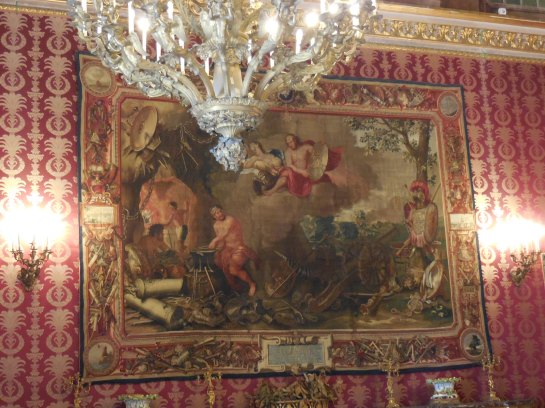
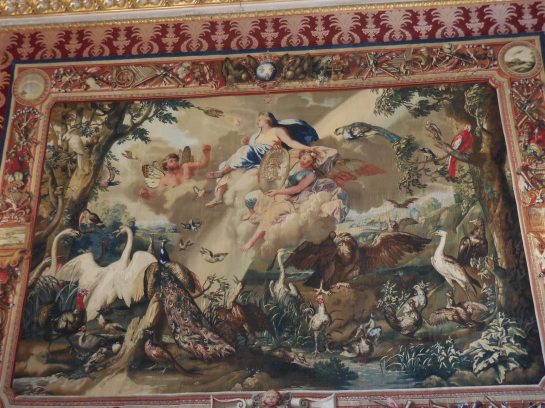
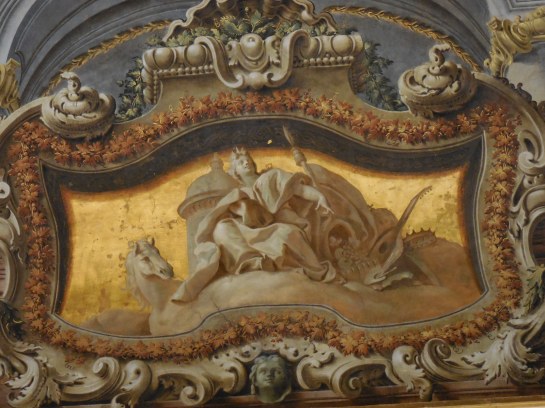
When I was there only the first floor was open, but I was still able to see stunning tapestries, fine porcelain, impressive furnishings and superb ceiling paintings, some allegorical and others celebrating the Spanish rulers and their realm. Paintings that amazed included 17th and 18th century works by Neapolitan School artists, landscapes, views of seaports, pictures of royal Spanish palaces as well as portraits.

NaplesPalazzoReale4

NaplesPalazzoReale6

NaplesPalazzoReale8

NaplesPalazzoReale10

NaplesPalazzoReale11

NaplesPalazzoReale12

NaplesPalazzoReale13

NaplesPalazzoReale15

NaplesPalazzoReale17

NaplesPalazzoReale18

NaplesPalazzoReale19

NaplesPalazzoReale20

Tracy A. Burns is a writer, proofreader and editor in Prague.


Teatro di San Carlo Diary

NaplesTheatre3ceiling

While in Naples, I toured the Teatro di San Carlo, where I could actually feel the history of the majestic structure. I was enchanted with the main hall, boxes, Royal box and two foyers. Even the façade was astounding. I particularly liked the statue of Apollo riding his chariot and the Ionic loggia.

NaplesTheatre12
I found the history of the place fascinating. Built in 1737, when King Charles VII of Bourbon was on the throne, the Teatro di San Carlo is 41 years older than the La Scala Theatre in Milan and 55 years older than the La Fenice Theatre in Venice. The architect of this building where opera and ballet are performed was Giovanni Antonio Medrano, who had served in the army of King Charles VII. He went on to design the Museo di Capodimonte, which housed the king’s palace and a museum. Later he was imprisoned for tax fraud of the Museo di Capodimonte.

NaplesTheatre14
Opening night at the Teatro di San Carlo took place November 4, 1737, on the king’s name day, when Achilles in Sciro was staged. Interestingly, a woman played the part of Achilles. That was only the beginning of the glorious history of Naples as a cultural center and opera powerhouse. I wondered how many stories had been played out on the stage, how many spectators had viewed performances over the centuries and who exactly were these theatregoers. What impressions did these audience members take home with them? Did they feel as awed by the theatre as I did, or did they just take the luxurious building for granted?

NaplesTheatre17
Perhaps the darkest day in the history of the theatre proved to be February 13, 1816, when a fire broke out during a dress rehearsal. In less than one hour, the dancing flames destroyed a large section of the building. The theatre was reconstructed in a mere nine months, and it took on a horseshoe appearance. The number of seats dwindled from more than 3,000 to 1,444. The Teatro di San Carlo holds the distinction of being the oldest horseshoe style theatre in the world. The theatre even remained open during most of World War I. The foyer was destroyed by a bomb attack in 1943, however. However, the structure was rebuilt promptly after the war.

NaplesTheatre4
Looking around the gold-and-red decorated interior with 184 boxes plus the Royal Box, I could not help thinking about the famous people who had graced the stage and the composers whose works had come to life here. Richard Strauss conducted here. Guiseppe Verdi wrote operas for this very theatre. In the 18th century, singers Vittoria Tesi and Carlo Broschi charmed audiences with their magical voices. Niccolo Paganini cast his spell on spectators here on two occasions. Other names associated with the theatre included Christoph Willibald Gluck, Johann Christian Bach and Luciano Pavarotti.

NaplesTheatre11
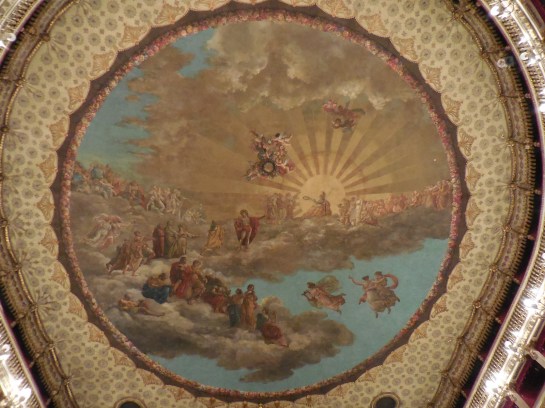
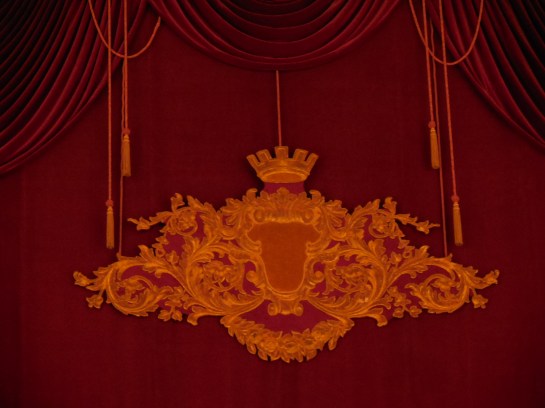
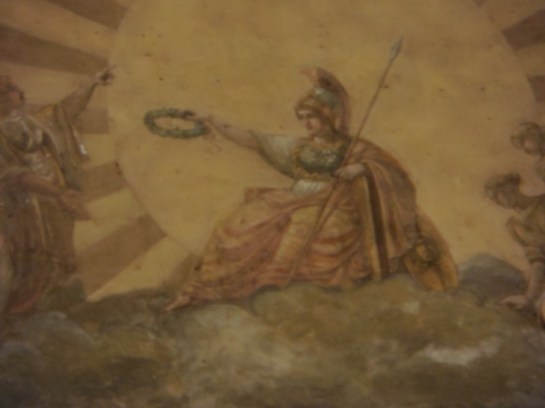
To be sure, the interior was breathtaking. The ceiling fresco took up a mythological theme, portraying Apollo presenting Minerva to the greatest poets in the world. The theatre curtain, adorned in 1854, also boasted a mythological scene with the Muses and Homer among poets and musicians. Putti and cornucopias played significant roles in the theatre’s decoration. The Royal Box, so bewitching in its gold color, could hold 10 people. There were workers repairing something in the Box, but we still got to sneak inside for a few moments.

NaplesTheatre10

Taking a seat in another box, I did not want to get up and leave. I just wanted to imagine all the scenes performed here, all the songs sung, all the music played. And then there were those richly adorned balustrades! The 184 boxes stood on seven levels. None of the boxes was furnished with curtains because the king wanted to be able to see spectators at all times.

NaplesTheatre8
The theatre was so beautiful that it made me dizzy. It seemed only fitting that such a majestic theatre was connected to the Royal Palace, which the Spanish viceroyalty had called home for 200 years, from the early 16th century to the early 18th century. I hadn’t been so impressed with a theatre since I had set my eyes on the Rococo horseshoe-shaped Cuvilliés Theatre of the Munich Residence.

NaplesTheatre2

When I bought my ticket, I hadn’t known what to expect. I hadn’t thought I would be so impressed, but the ceiling fresco, theatre curtain, red-and-gold decor and gilt adornment mesmerized me. I hoped to come back here to see an opera someday. This tour was one of the highlights of my trip to Naples.

Tracy A. Burns is a writer, proofreader and editor in Prague.

Archeological Museum in Naples Diary

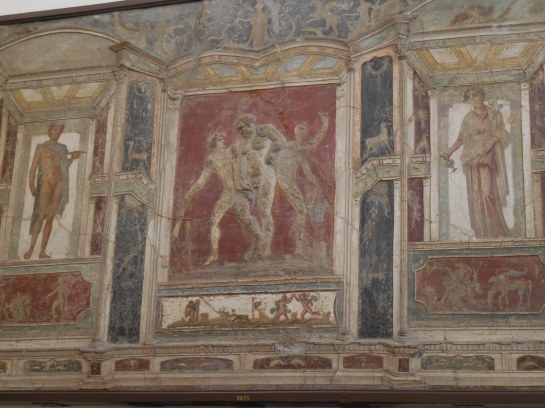
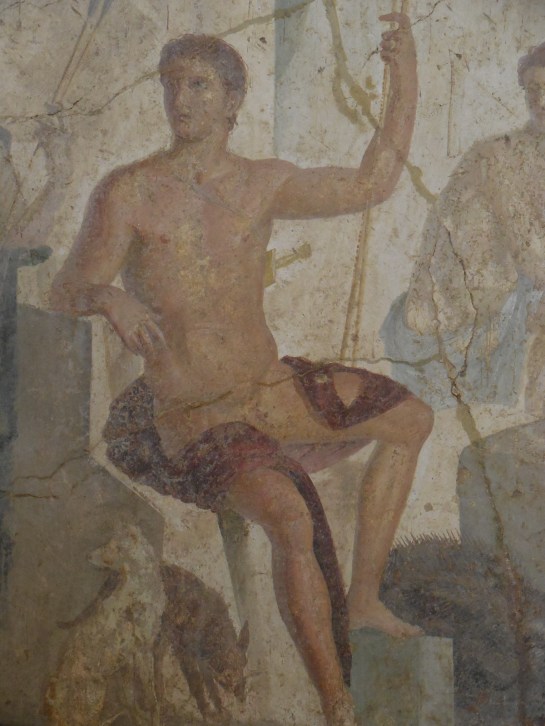
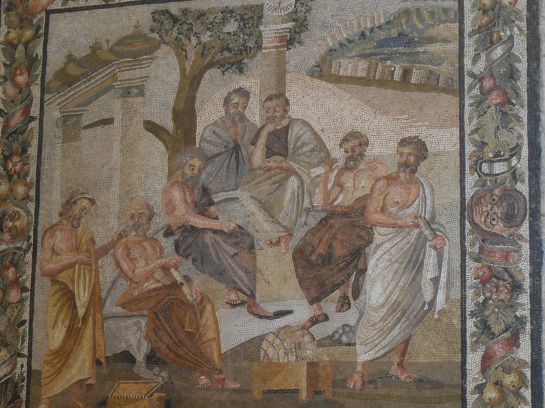
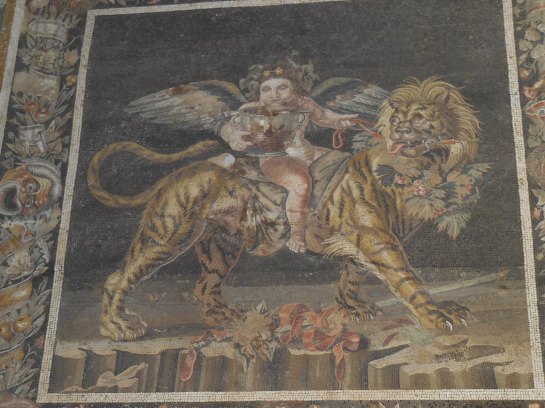
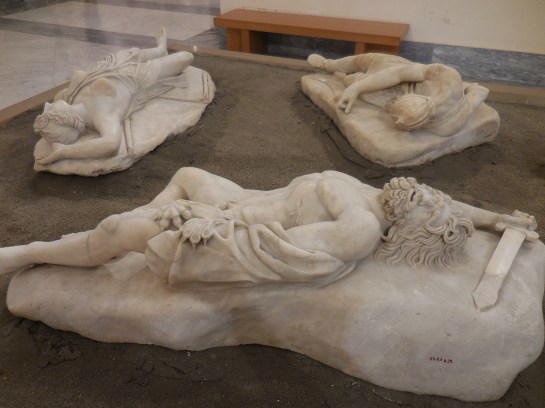
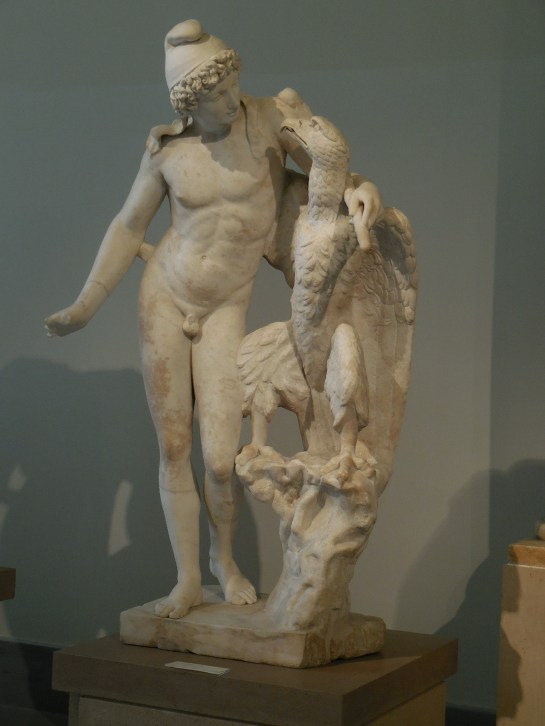
The Archeological Museum in Naples boasts one of the largest collections of antiquities in the world with numerous sculptures, paintings, mosaics, frescoes, jewels, coins and more. Most of the mosaics and frescoes hail from Pompeii and Herculaneum. Items from the Villa dei Papiri in Herculaneum and mosaics from the House of the Faun in Pompeii astound. Discoveries from Cumae also make up the permanent exhibition as do Egyptian artifacts. There is a Secret Cabinet of obscene art, such as statues, paintings and gems, from Herculaneum and Pompeii. Visiting this museum was the highlight of my visit to Naples, and I was most enthralled with the statuary, mosaics and frescoes.

NaplesArchMuseum3

NaplesArchMuseum4

NaplesArchMuseum5

NaplesArchMuseum7

NaplesArchMuseum10

NaplesArchMuseum13

NaplesArchMuseum15

NaplesArchMuseum16

NaplesArchMuseum20

NaplesArchMuseum21

NaplesArchMuseum22

NaplesArchMuseum23

NaplesArchMuseum24

NaplesArchMuseum26

NaplesArchMuseum28

NaplesArchMuseum29

NaplesArchMuseum30

NaplesArchMuseum34

NaplesArchMuseum35

NaplesArchMuseum38

NaplesArchMuseum39

NaplesArchMuseum41

NaplesArchMuseum42

NaplesArchMuseum44

NaplesArchMuseum47

NaplesArchMuseum50

NaplesArchMuseum54

NaplesArchMuseum56

NaplesArchMuseum57

NaplesArchMuseum59

NaplesArchMuseum60

NaplesArchMuseum61

NaplesArchMuseum63

NaplesArchMuseum64

Tracy A. Burns is a writer, editor and proofreader in Prague.
 

Musée du Petit Palais Photo Diary

AvignonPetitPalaisceiling2AvignonPetitPalaisceiling1

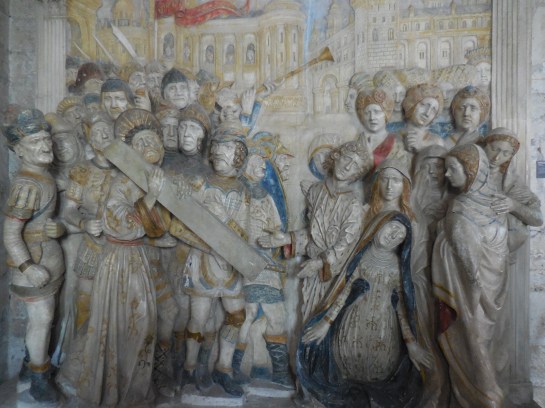
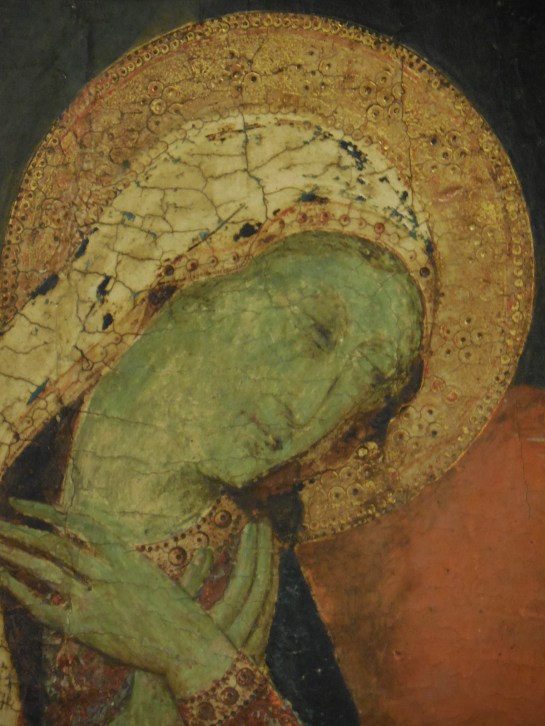
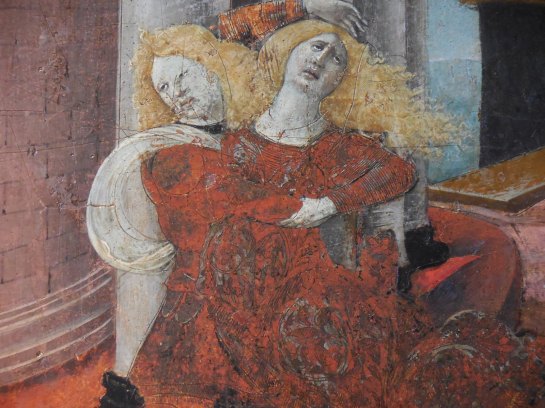
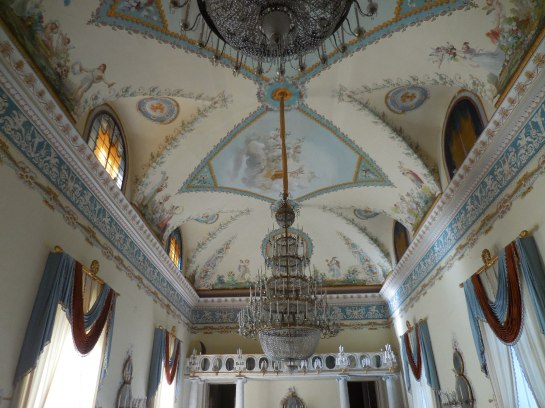
In June of 2015, I visited the Musée du Petit Palais in Avignon and was enamored by the Italian primitive and early Renaissance painting as well as the impressive Renaissance works rendered by the French Avignon School. The 14th century building houses art created from the end of the 13th century to the beginning of the 16th century in chronological and geographical order and includes The Virgin and Child by Sandro Botticelli. Some styles represented include the Siennese School, Florentine Renaissance and the Marches School. There are about 300 Italian paintings housed in the museum that was established in 1976. The structure used to be a citadel, an archbishopric and a Catholic secondary school before it became a museum.

AvignonPetitPalais4AvignonPetitPalais7AvignonPetitPalais10AvignonPetitPalais12AvignonPetitPalais14AvignonPetitPalais15AvignonPetitPalais18AvignonPetitPalais20AvignonPetitPalais22AvignonPetitPalais23AvignonPetitPalais26AvignonPetitPalais28AvignonPetitPalais30AvignonPetitPalais32AvignonPetitPalais31AvignonPetitPalais35

Tracy A. Burns is a writer, proofreader and editor in Prague.

Libochovice Chateau Diary

Lobochovice6
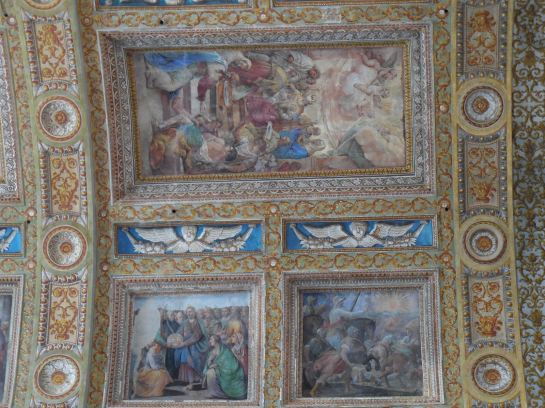
I discovered Libochovice Chateau in 2005 and wrote about it in an article describing chateaus in north Bohemia. It was published during October of that year in The Washington Post. Libochovice is certainly a hidden gem in north Bohemia. I recalled its dazzling displays, stunning tapestries, breathtaking ceiling frescoes and beautiful tiled stoves plus exquisite jewel chests. It is a shame there are not more foreign tourists making the trip there. It has so much to offer the curious castlegoer.
Lobochovicestatue
Before entering the chateau courtyard, I peered at the statue of Jan Evangelista Purkyně, who was born in Libochovice during 1787 and who became one of the leading scientists in the world, as he delved into the studies of anatomy and physiology. His father had worked for the Dietrichsteins, the family who had owned the chateau at that time. For two years Purkyně served as a tutor at Blatná Chateau, a remarkable sight in south Bohemia. Later, he made numerous discoveries in the scientific sphere, such as the Purkinje effect, Purkinje cells, Purkinje fibers, Purkinje images and the Purkinje shift. He also coined the scientific terms plasma and protoplasm. A crater on the moon and an asteroid are named after him.
Lobochovice3
Before my trip, I had read up on the history of the town and chateau. Located near the romantic ruins of Házmburk Castle, Libochovice was first mentioned in writing at the beginning of the 13th century. At that time, Házmburk Castle, then called Klapý and by no means a ruin, played a major role in the development in the town. A wooden fortress was built in Libochovice, and it was later replaced by a stone Gothic structure. During the Hussite Wars of the 15th century, the castle in Libochovice was razed, the town conquered.
Lobochovice4
The Lobkowiczs took over the properties in 1558, and they were responsible for constructing a Renaissance chateau with 28 rooms on the premises. When Jiří Lobkowicz revolted against Emperor Rudolf II in 1594, he was imprisoned, and his property was confiscated. That’s when the Sternberg family took control. Still, times were not rosy. The Thirty Years’ War did much damage, and during a fire in 1661, the chateau was destroyed.
Lobochovice1
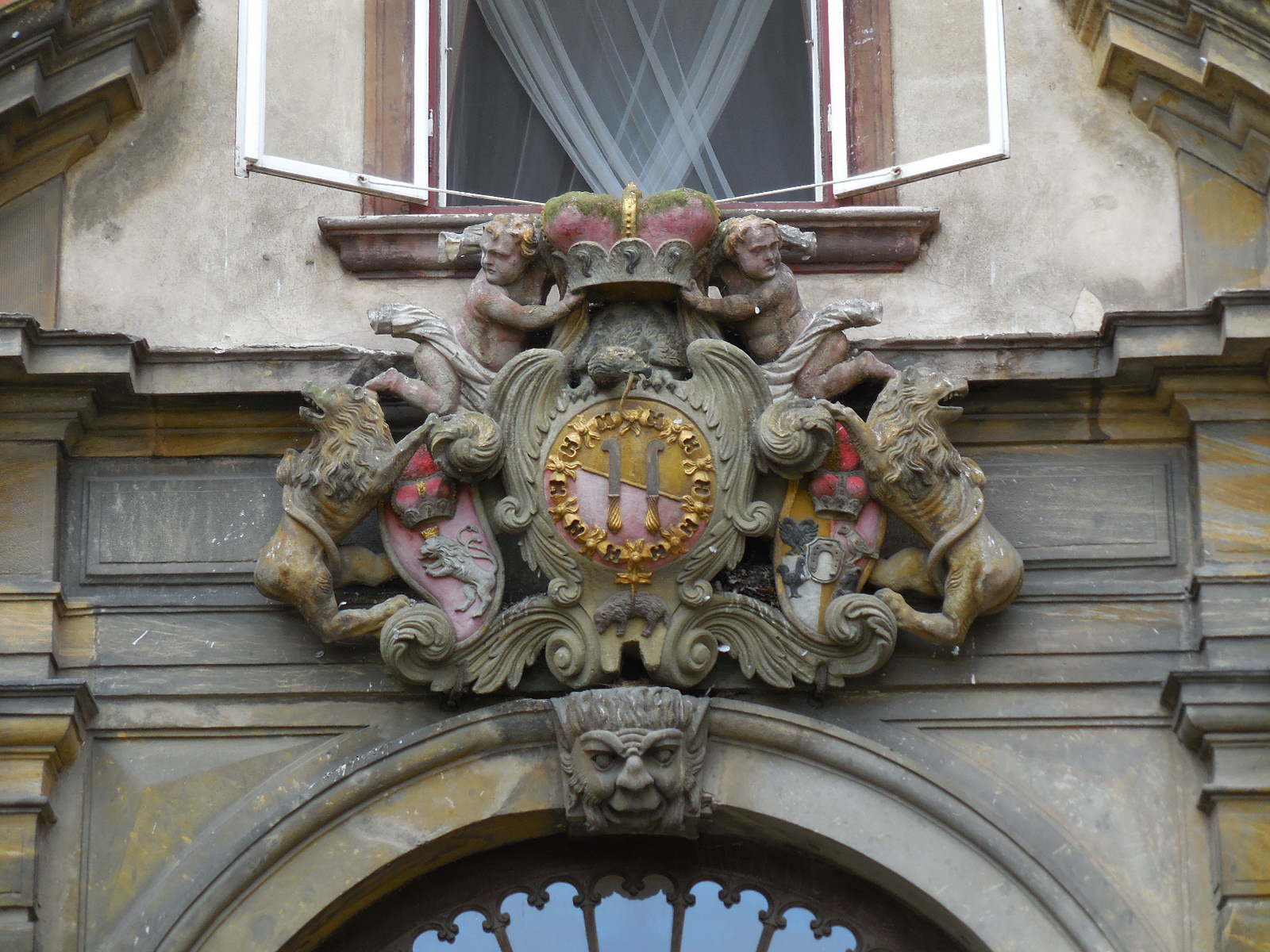
When Václav Vojtěch Sternberg sold Libochovice to Austrian noble Gundarkar from Dietrichstein in 1676, a new era had begun. The Dietrichsteins would retain ownership until 1858. The chateau was reborn from 1683 to 1690, designed in early Baroque style. There were four wings with a courtyard decorated with Tuscan pilasters and arcades. A sala terrena on the ground floor led to the garden.
Lobochovicefresco2
Unfortunately, Gundakar died before the construction of the two-floor structure was completed. His daughter Terezie was then in charge of the chateau, and she had renovations made in the 1870s. More reconstruction occurred from 1902 to 1912. In the 19th century Johann Friedrich Herberstein added many objects of interest to the chateau collection. An avid traveler, he toured Egypt, Syria, Persia and India, for instance.
Lobochovicefresco4
During World War II the chateau’s history was bleak. That’s when Nazis took over Libochovice Chateau. Sixty-five residents of the town and surroundings revolted against the Third Reich and were beheaded by the Nazis. After 1945 the chateau was confiscated and nationalized because wartime owner Friedrich Herberstein had obtained German citizenship. More reconstruction took place throughout the decades, and in 2002 the chateau was declared a national monument.
Lobochovicesallaterrana
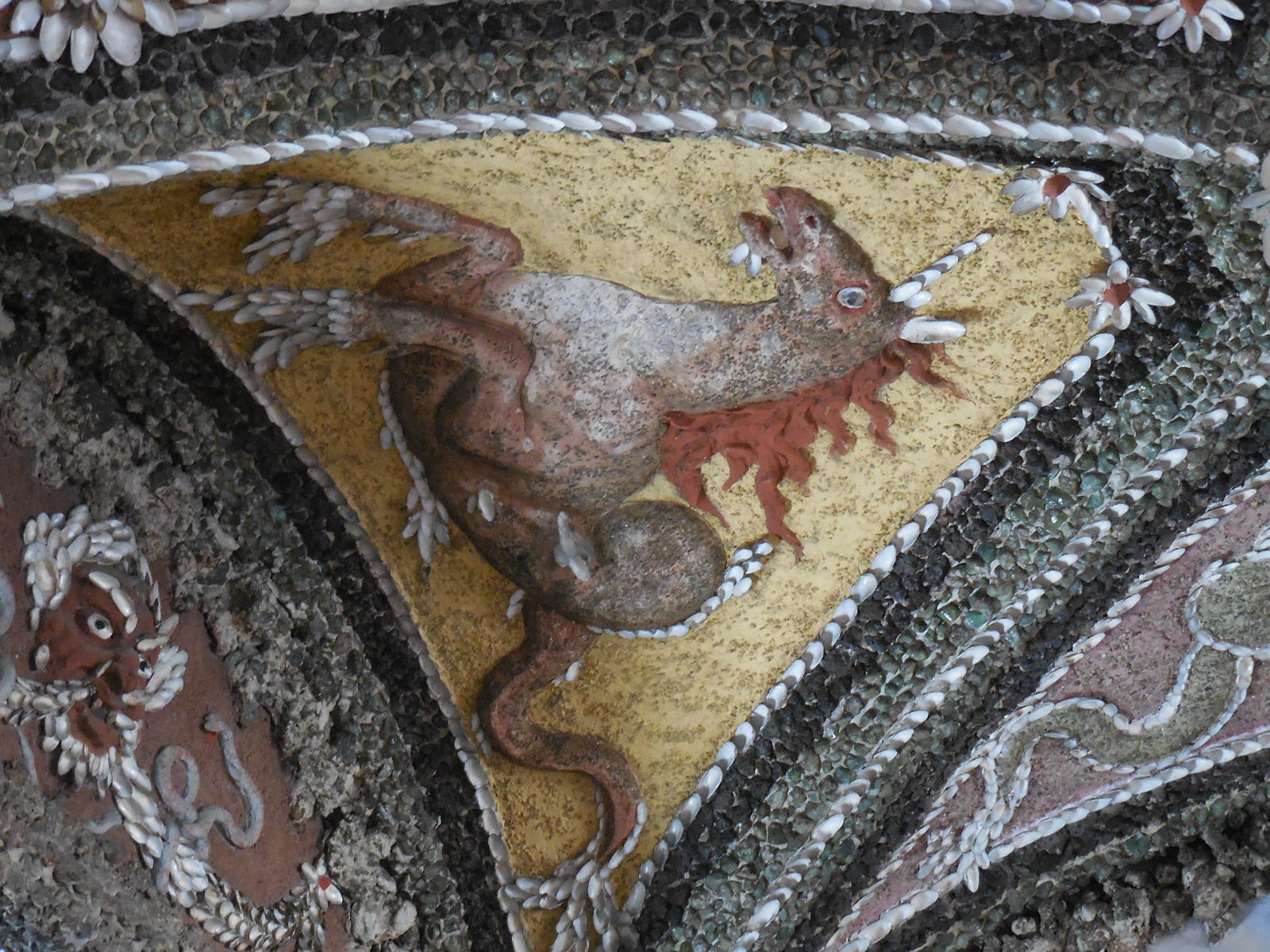
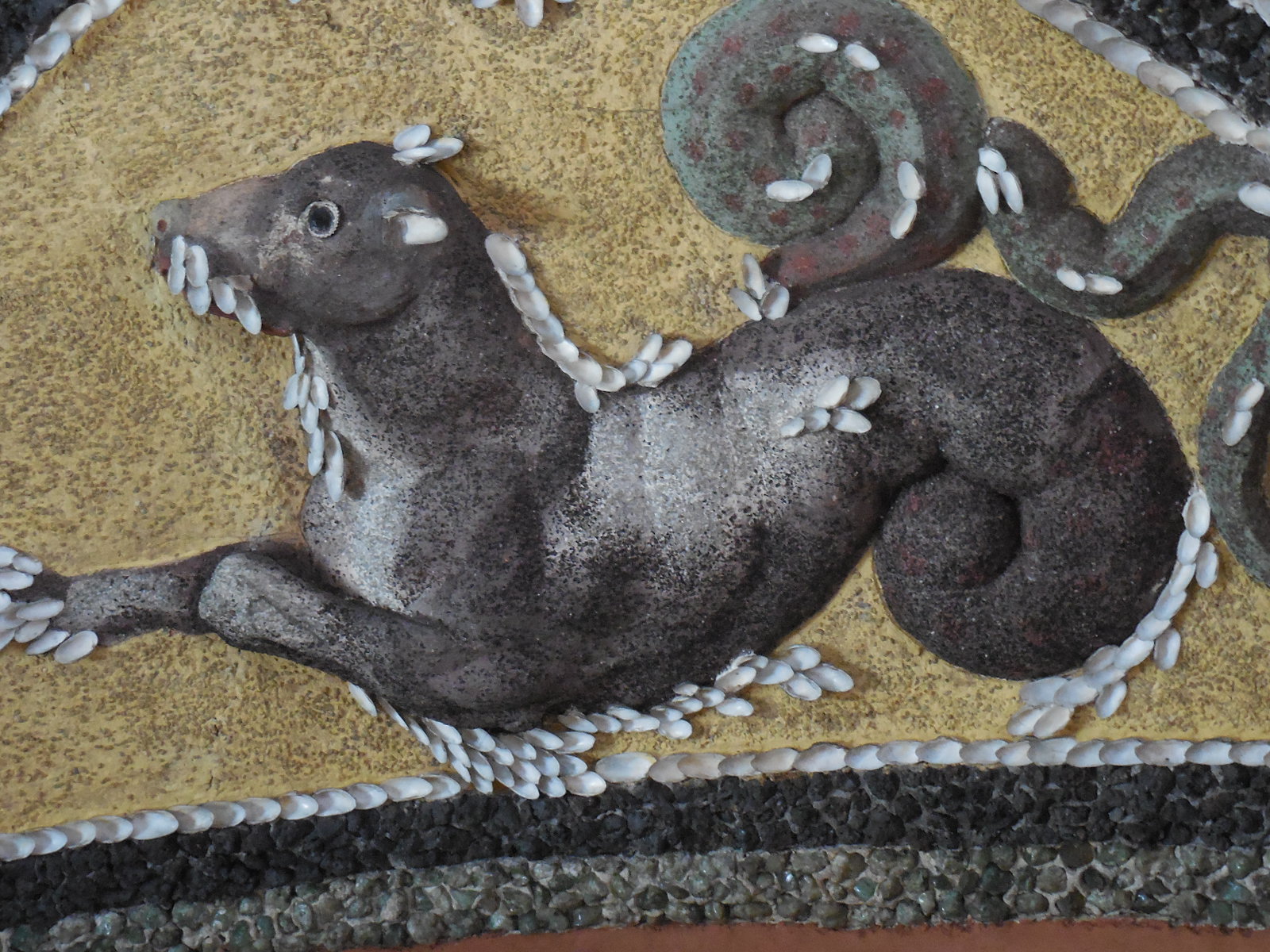
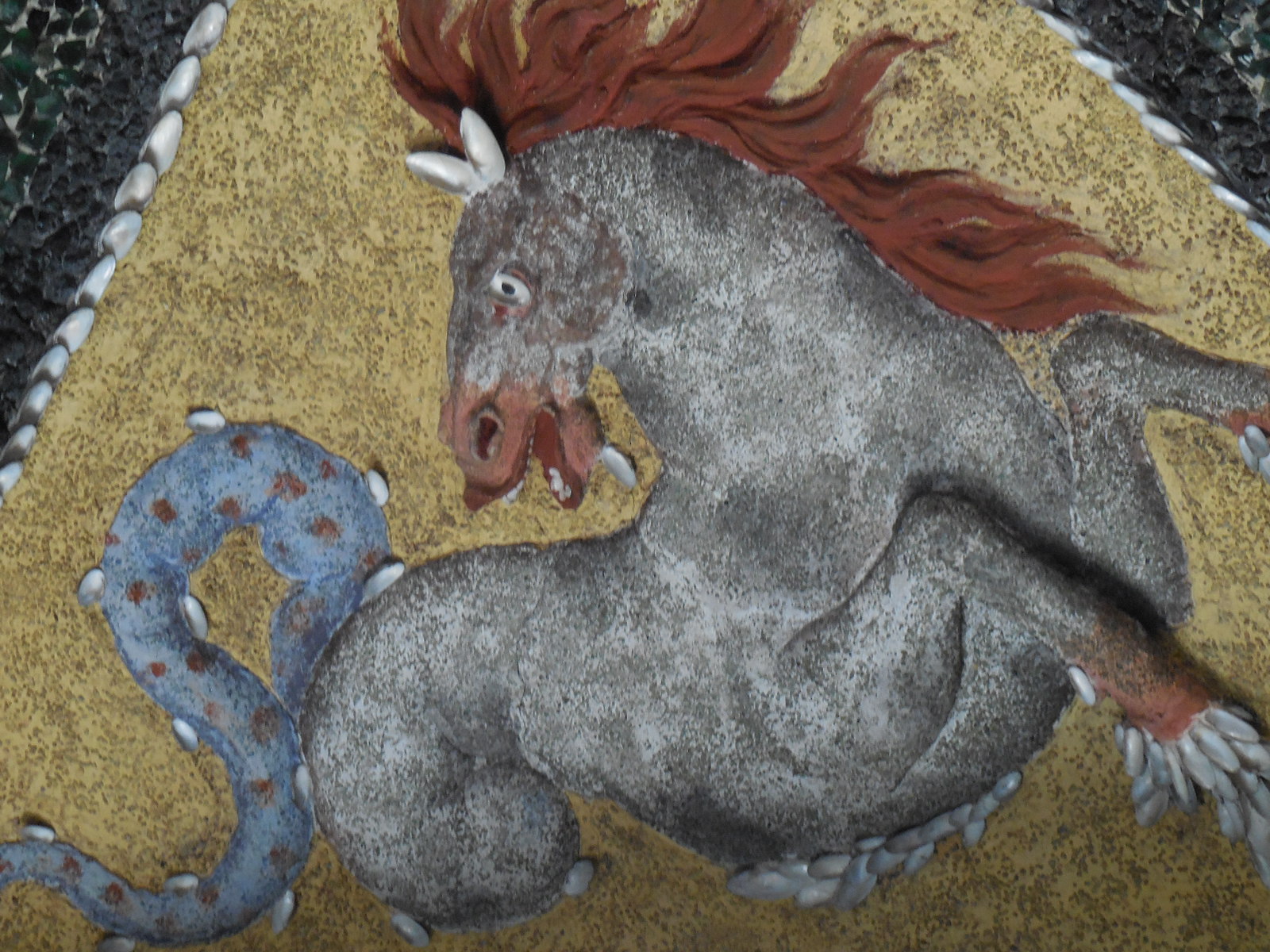
I was so excited about this tour. First, we visited the sala terrena, which looked like a richly adorned cave. The vaulted ceiling was incredible. I loved the sea motif as decorative seashells took the shape of a floral design. The reliefs of a sea monster also enthralled me.
Lobochovicefireplace
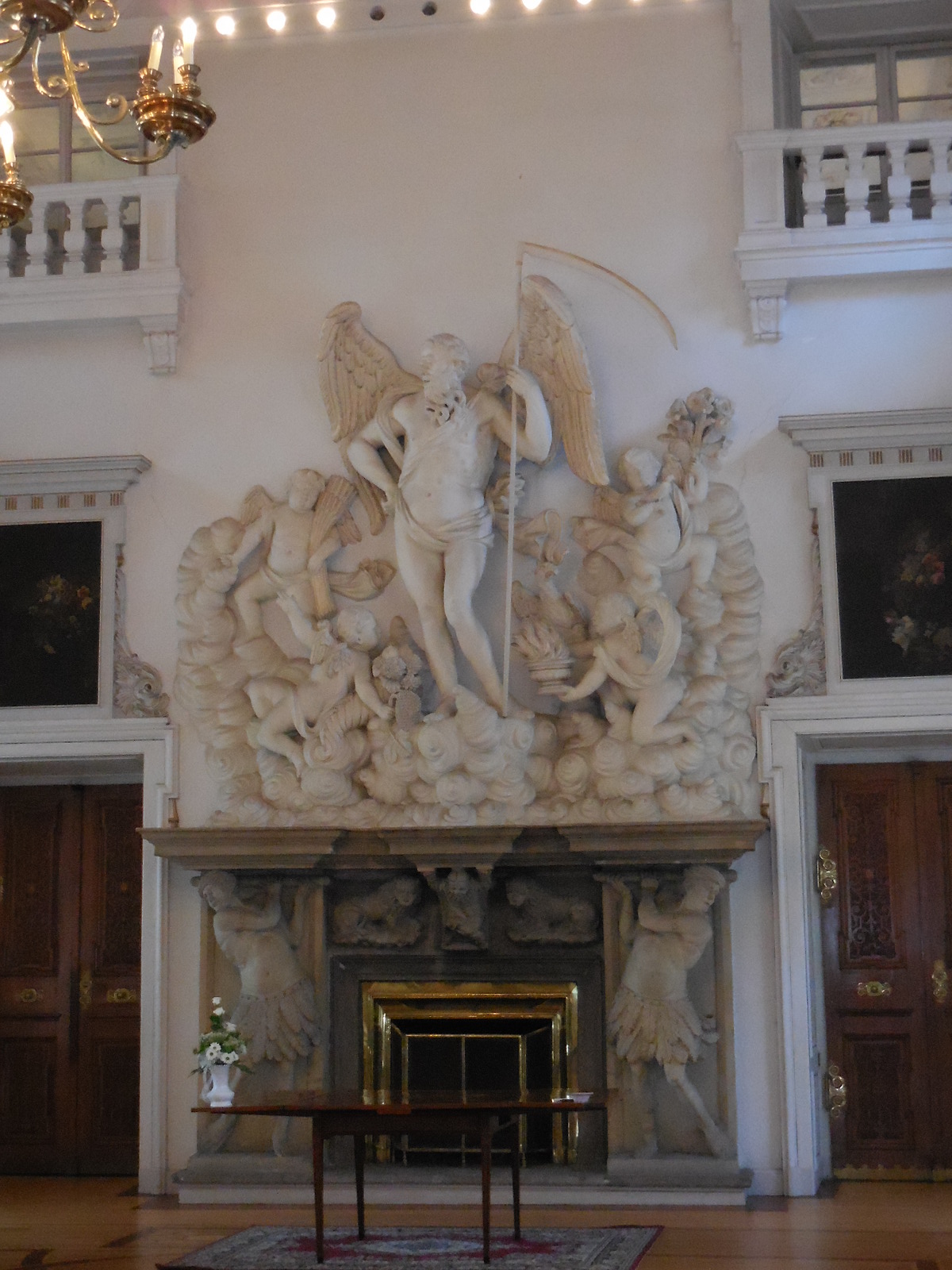
Next, we came to one of the highlights of the chateau, large Saturn Hall, where banquets, balls and concerts had been held. Above the fireplace a stucco sculptural grouping focused on Saturn. The Baroque chandelier, hailing from Holland, also captured my interest.
Lobochovicefresco6
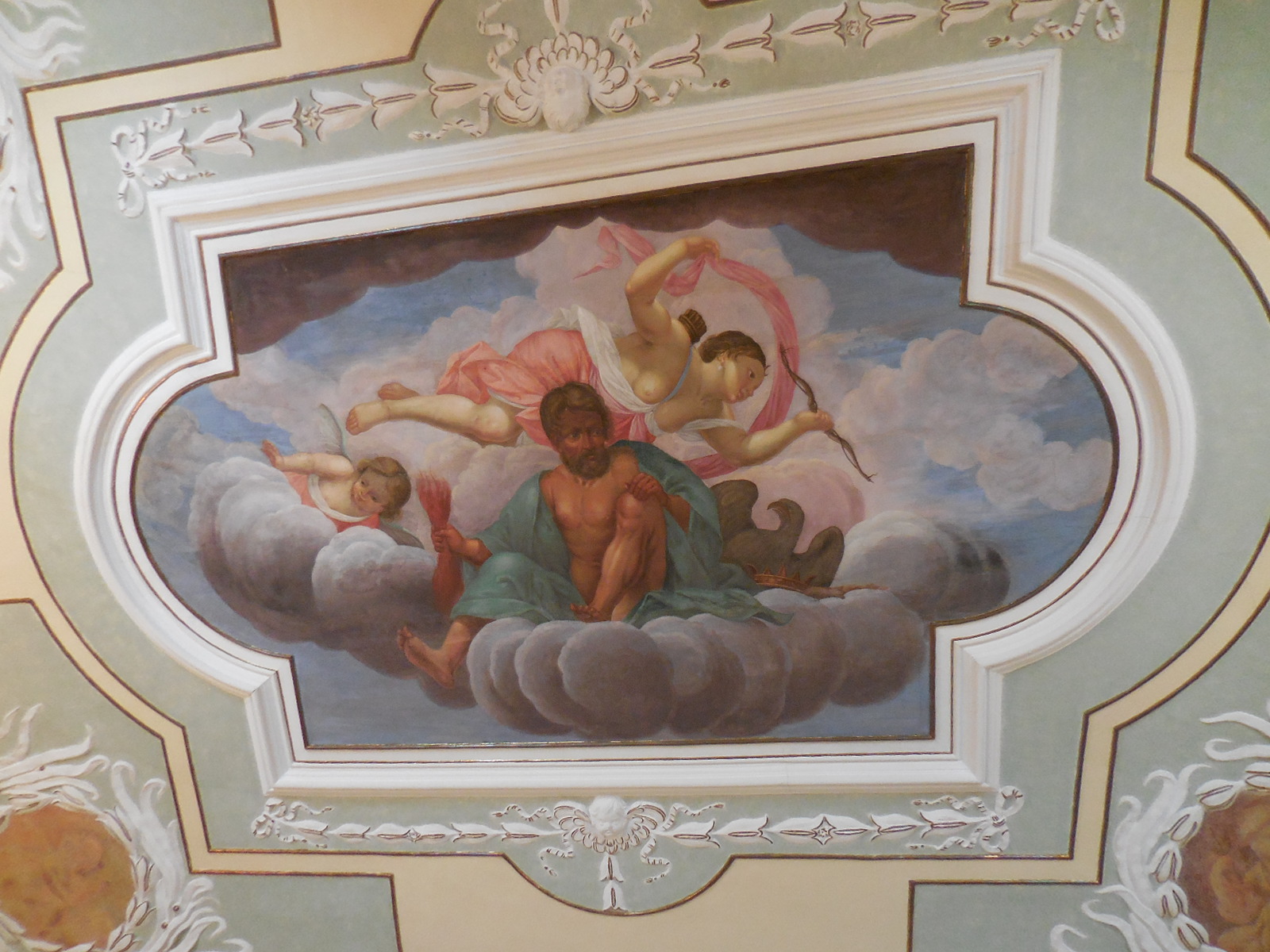
From there, we continued to the Baroque section of the chateau. The ceiling fresco in the first room was breathtaking, displaying a mythological scene. A Renaissance chest gilded with ivory and a Baroque jewel chest inlaid with ivory and tortoiseshell were two delights.
Lobochovicetapestry2
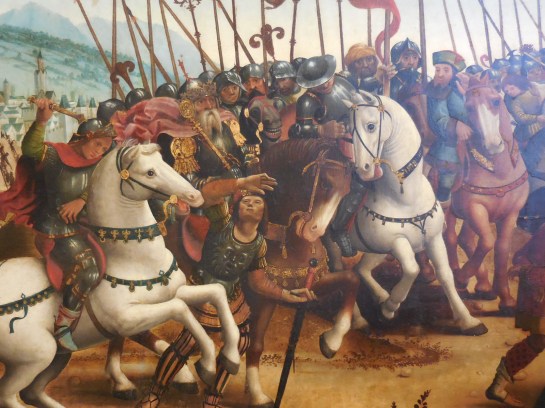
I marveled at the tapestry, one of many I would see in this chateau, in the Big Gallery. It dated from the 16th century, and its theme was the Trojan War. The guide remarked that the tapestries were not put up for merely for show; they had also helped heat the rooms. A Baroque fireplace hailed from 1620. Still, that was not all this room had to offer. A jewel chest featuring carved reliefs hailed from the beginning of the 17th century.
Lobochoviceint3
The Study included an atlas from 1775 with pages of handmade paper. I wanted to turn the pages to find out what the handmade paper felt like. I recalled visiting the papermill in Velké Losiny, located in north Moravia, long ago, when I also toured the chateau there. It had been an enthralling experience, I mused. Then a jewel chest made with intarsia dazzled me. One tapestry in this room showed off a garden party while another sported a plant motif in an idyllic setting. The Baroque stove hailed from 1690. There were so many impressive Baroque stoves in this chateau!
Lobochoviceint7
During the 17th and 18th centuries in the Czech lands, there was much interest in Chinese and Japanese porcelain. The Chinese and Imari Japanese vases in the Oriental Salon reminded me of a trip to Dresden’s Porcelain Museum. The pieces in the chateau were so exquisite. Upon seeing an impressive French Baroque clock, I recalled the one I had seen at Loučeň Chateau a few months earlier. And how I loved jewel chests! This particular jewel chest was inlaid with ivory and tortoiseshell, featured intarsia craftsmanship and portrayed a hunting scene. Another thrilling tapestry was on display. I recalled the exciting tapestries at the Residence Palace Museum in Munich.

In the Bedroom I admired the spiral carved columns of the 17th and 18th century Baroque closets as well as the bed with canopy. A Rococo crucifix was also on display. The tapestry in this room featured King Solomon. I was enthusiastic because I knew there were even more tapestries to come.
Lobochovicefresco9
Rococo furniture from the 18th century decorated the Morning Salon. I mused that it must have been delightful to sit in this room and sip black or green tea. Two tapestries portraying the apostles adorned the space. And there was yet another ceiling fresco! This one showed Persephone venturing into the Underworld. I was especially drawn to the jewel chest with pictures of a town carved on its drawers. The attention to detail fascinated me.

In the Ladies’ Cabinet there was a Baroque commode with exquisite intarsia plus a Rococo table and desk also created with intarsia. The three tapestries took up themes of nature and architecture, offering a respite from the religious scenes that the tapestries often portrayed.
Lobochoviceint15
The Men’s Cabinet was decorated mostly with Neo-Renassaince and Second Rococo furniture. A large desk was Baroque. If I had not visited so many chateaus, it would have never occurred to me that the big bowl decorated with images of birds and floral motifs used to serve as an aquarium.
Lobochovicechapel2
Next came the chapel. While it was originally designed in Gothic style, the chapel now looks as it did after a 19th century renovation. I admired the stained glass windows. I love stained glass! The Neo-Gothic altar featured the apostles. What captured my attention the most, however, was a 16th century exquisitely carved altar showing off the adoration of the Three Kings. The woodwork was incredible, so detailed, so exquisite.
Lobochovicechapel1
The Big Dining Room took on Renaissance and Baroque characteristics. A carpet covered the large table, set for a feast. The tableware was made of pewter, typical of the Renaissance era. On the table there was a bowl that served as a washbasin for guests to clean their hands while eating. And more tapestries to behold! This time the two tapestries portrayed Alexander of Macedonia. Two paintings rendered scenes from antiquity. (The paintings throughout the chateau also are worthy of undivided attention.) Once again, I admired yet another ceiling fresco. This one centered around Aphrodite and Athena. In the corners four female figures in oval medallions represented the four continents. (Australia had yet to be discovered.)
Lobochoviceint10
I liked the Biedermeier furniture in the Small Dining Room. That style seemed to me to have such a sense of order and rationality. Yet I was enthralling by all styles of all eras. The colored decorative porcelain from Dresden and the pink-and-white Viennese porcelain service also caught my eye. The Baroque stove was quite a sight, too.

The Rococo Salon featured furniture of the Second Rococo style from the mid-19th century. The pink walls made the room feel quaint and inviting. Stucco adorned the ceiling fresco. Another Baroque stove and Meissen porcelain made appearances. In a flattering portrait, Terezie Dietrichsteinová – Herbersteinová, a former owner of the chateau, looked calm and content with life. I wondered if I was at a time in my life when I was calm and content. To some extent, yes. And traveling certainly played a major, positive role in my contentment.
Lobochoviceptng
The Empire Salon was decorated with furniture of that style from the 19th century. On the walls were pictures of Dietrichstein properties – Nové Město nad Metují Chateau, Kounice and Mikulov, all rendered masterfully by František Kučera. I liked the clock featuring a tongue that showed the time. The clock making time with its tongue brought to mind images of the living objects in The Beauty and the Beast. From the window there was a splendid view of the park.
Lobochoviceint16
The 19th century library was intriguing because it contained mostly books about natural science and travel, all printed in numerous languages. I had not heard of chateau libraries concentrating on only a few subjects. While about 2,500 books were on display, there were approximately 6,000 volumes in total. Objects that Josef Herberstein had brought back from his travels adorned the room, too. I saw African masks, an African crocodile and a Japanese sword, for instance. Another exquisite Baroque stove stood in the space.
Lobochoviceint18
The last room was the casino. A Russian pool table made in Prague dominated the room. I noticed that the card tables were made with intarsia. Portraits of the Dietrichstein clan hung on the walls. Josef, who loved traveling and hunting, was rendered in hunting attire, armed with a rifle and accompanied by a dog. I mused that he must have been a brave man to travel to such distant lands.
Lobochovicegarden2
Next I took a look at the park, which had been created in French style during 1683. Later, it got a Baroque makeover, and then it was changed into an English park. Now it is once again in French style, thanks to 20th century reconstruction. I loved the view of the chateau from the back, which sported floral adornment and a fountain. The chateau looked so majestic when viewed from that area.

I ate lunch at a nearby restaurant on the main square that was sleepy on a Saturday afternoon. Libochovice Chateau had dazzled me once again. The combination of ceiling frescoes, Baroque stoves, jewel chests and tapestries made the chateau unique and irresistible. The paintings also contributed to the majestic interior, where no object or piece of furniture failed to enthrall.
Lobochoviceint11
The interior had plenty to offer. I mused that there should be tours of the chateau offered from Prague. Libochovice deserved numerous accolades, and it was a chateau I would never forget, no matter how many chateaus I visited. The combination of artifacts and the design of the interior made Libochovice unforgettable, a place I could tour 100 times and not be bored. Every object spoke to me; nothing failed to capture my interest and curiosity. Yes, Libochovice is a special place, and my visit made my day a huge success.
Lobochoviceceiling
Tracy A. Burns is a writer, proofreader and editor in Prague.
More photos from a 2022 visit:

Karlova Koruna Chateau Diary

KarlovaKoruna1
A little over an hour on a fast train and a ten-minute walk was all it took to get to Karlova Koruna Chateau, which I had seen for the first time about 10 years ago. It was high time for a return visit.

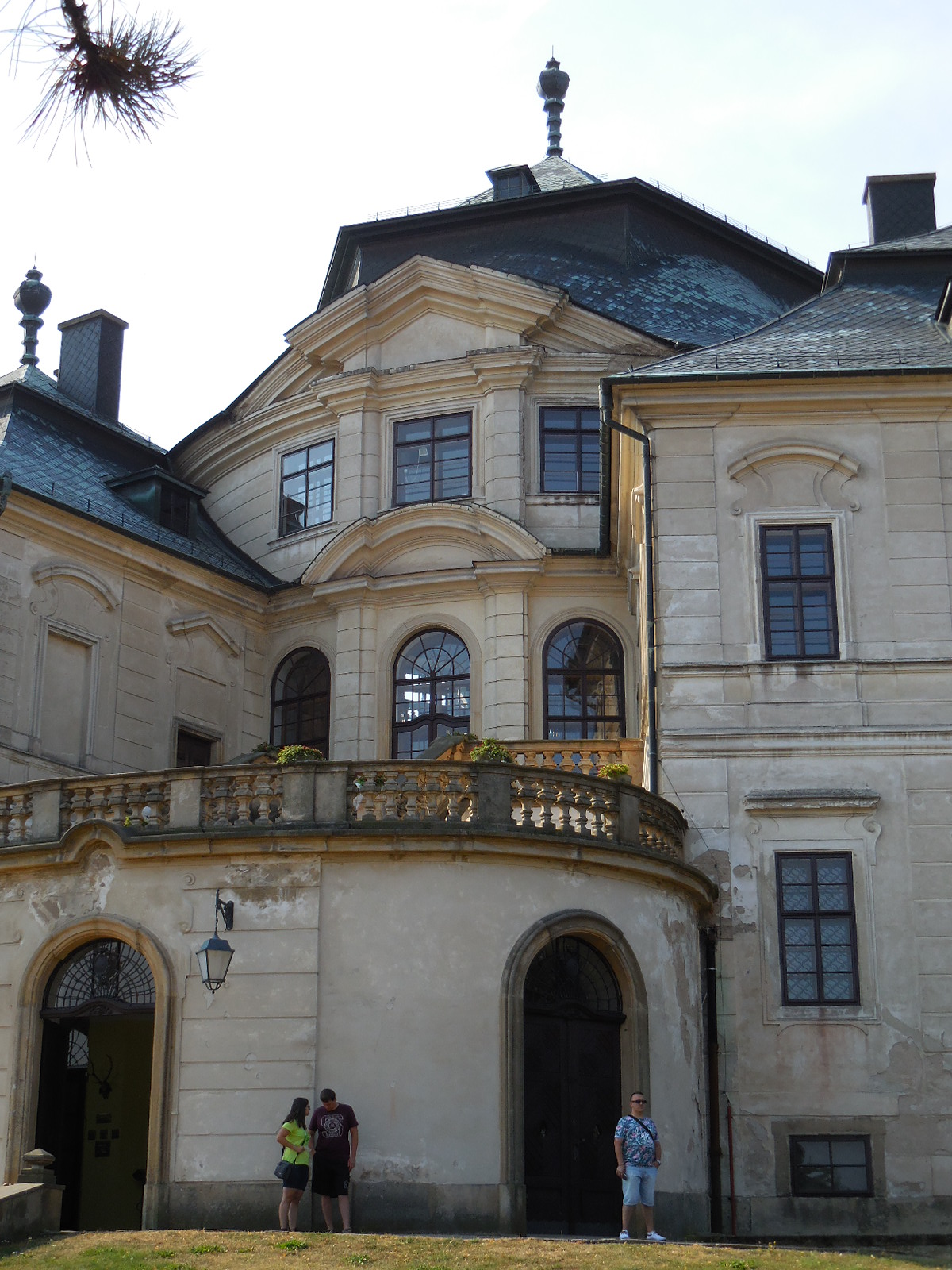
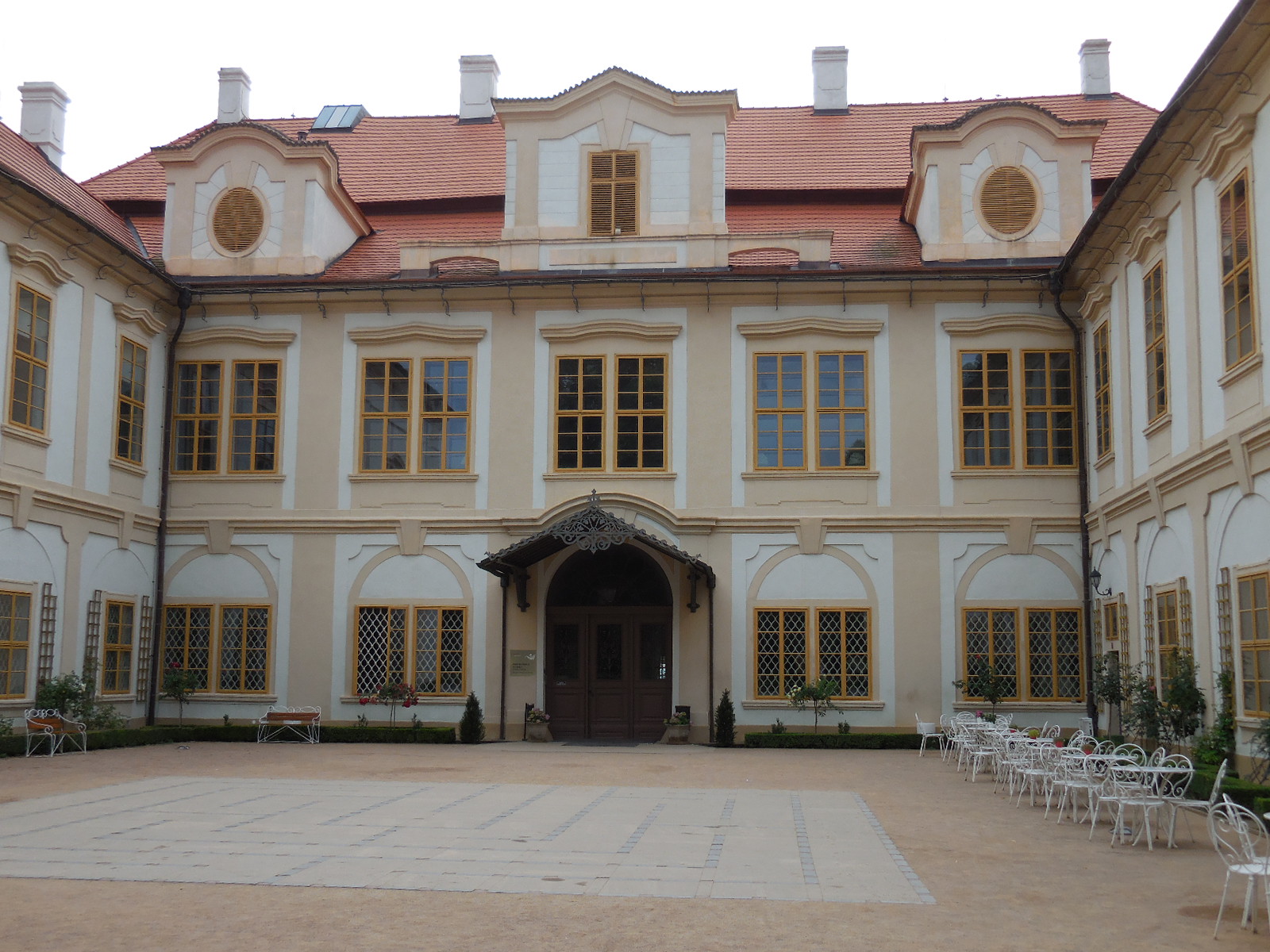
Karlova Koruna Chateau, in English “Charles’ Crown,” is named in honor of Emperor Charles IV who visited there after his coronation in Prague during 1723. (He would visit a second time as well.) It was constructed for František Ferdinand Kinský from 1721 to 1723. During the Thirty Years’ War the imperial army, the Saxons and the Swedes took turns occupying it. When the castle was inherited by Václav Norbert Oktavián Kinský, he made it his main residence and built greenhouses there. This count was responsible for obtaining the services of architect Jan Santini Aichel and builder František Maxmilian Kaňka in 1721, when construction on the chateau began.

I was a big fan of Santini’s architecture, and this was no exception. I had even toured Santini’s dazzling structures in east Bohemia and Moravia earlier in 2015. The architectural design of the building was unique. I enthusiastically took snapshots. In the middle there are two stories in a cylindrical shape, and three one-floor wings are connected to them. Both floors divide into 10 main areas. I saw three-layered gables above a cornice. The chateau had a central composition, which reminded me of the Shrine of St. John of Nepomuk on Green Mountain (Zelená hora). Karlova Koruna also brought to mind the Gothic Parish Church of Saint Wenceslas in Zvole, in the Vysočina region, which was reconstructed by Santini from 1713 to 1717. I recalled my visit there in October. Its roof was shaped as a crown in honor of the Czech patron saint Wenceslas.
KarlovaKoruna3
I had always been enthralled with Santini’s Baroque Gothic style. I loved Santini’s penchant for mathematical symbolism and geometric forms. I thought his designs were rational yet radical. The outbuildings dated from the early 20th century, and the orangerie was designed in Empire style during the 19th century. The nearby Chapel of Saint John the Baptist had a hexagonal shape, but it was not possible to go inside.

I was familiar with some of Kaňka’s designs in Prague and outside the capital city.
Like Santini the builder Kaňka, who also worked as an architect, excelled at his field. He had reconstructed many palaces, chateaus and churches, mostly in Bohemia. One of his most famous works was Konopiště Chateau, where Archduke Franz Ferdinand of Austria had lived. In the early 18th century he designed parts of the Clementinum, including the Mirror Chapel, where I had been to many concerts had viewed illuminated manuscripts that had been on temporary display. He also did renovation work on Prague’s Karolinum. He even worked on St. Vitus’ Cathedral. I knew that he had built Loučeň Chateau, which I had recently visited.

The church at Karlova Koruna

The church at Karlova Koruna

I brushed up my knowledge of the Kinský family history in Chlumec. General František Josef Kinský, who became a colonel at age 29, greatly influenced the development of hunting and horsebreeding at the chateau during the 18th century. He began to have hunts called in Czech “parforsní hony,” taken from the French expression “par force.” In this type of hunting, the animal was hunted until it was exhausted and then killed. However, after the Napoleonic Wars, in 1836, a new type of hunting, inspired by the British, came about at Chlumec, thanks to Oktavián Kinský. This type of hunting did not involve killing the animal, which was usually a deer. The rider on horseback would have to overcome natural barriers to catch the deer. Then it was returned to the forest.
KarlovaKorunaint23ptng
The first long steeplechase took place in Chlumec in 1846, a mere nine years after the first one ever in Liverpool. The famous Pardubice steeplechase has its roots in Chlumec. Zdeňko Radslav Kinský won the Big Pardubice steeplechase. And he would not be the last Kinský to nab first place there. Rudolf and Karel Kinský also triumphed at the race. The niece of Oktavián Kinsky, Lata Brandisová, was the first woman to win this event, in 1937. Count Karel Kinský even won the Grand National race at Aintree, England in 1883. Many famous Kinský horses participated in this race.
KarlovaKorunaint10ptng
Oktavián Kinský also had played a significant role in Karlova Koruna’s history. He was a talented horse breeder. He had bred a unique gold-colored horse that he called isabela but would be later referred to as the Kinský breed of horse. It was the best horse for sport in Europe, lauded for its talent at steeplechasing, fox hunting and show jumping. While many are gold-colored, others have bay or chestnut hues. Otkavián started his own studbook, which is still in use today. Another unique breed at Chlumec was the dun horse or buckskin.

When Zdeňko Radslav inherited the property, he made Karlova Koruna his main residence. He had two sons, Norbert and Radslav and a daughter named Genilda. He was ardently against the Munich Agreement and in 1939 signed a declaration against the Nazi Occupation. As a result, Karlova Koruna and his other properties were taken over by the Nazi administration. Disaster came to the chateau when a fire broke out in 1943. I saw an article about this disaster in the hallway on the way to the women’s restroom. The roof of the chateau caved in, and the chateau was destroyed. It was rebuilt, though.
KarlovaKorunaint9portraits
Zdeňko’s oldest son, Norbert, was forced to work in the Reich, but he managed to flee and ride his bike back to Bohemia. After some negotiations, he was allowed to work as an interpreter at Orlík Chateau. In February of 1948, Norbert left his motherland for Italy, where he married Anna Marie dal Borgo-Netolická, an Italian who had spent her childhood at Kost Castle, which I had also visited earlier that year. When Norbert’s parents came to Italy for their son’s wedding, the Communists took stripped them of all their property. Penniless, they wound up staying in Pisa. Genilda and her two sons made a daring escape across the border, finding shelter in several refugee camps. Finally, they came to Pugnana, and then Genilda continued to Switzerland.
KarlovaKorunaint12ptng
Only Zdeňko’s son Radslav stayed in Czechoslovakia. He was allowed to work at the State Stud Farm, the famous breeding ground for Kinský horses. He is credited with keeping the Kinský horse alive during the Communist era. The Kinský horse was a dominant breed through the middle of the 20th century. Now, however, Kinský horses are very rare. At the time Radslav lived in a very small and claustrophobic space at Karlova Koruna. In 1958 he was allowed to travel to France and did not return to Czechoslovakia. Instead, he studied at the Sorbonne and later taught in Tunis, Algeria and Morocco. He died in 1975.

His son Dr. Norbert Kinský was given the property back after the Velvet Revolution of 1989. When he became a member of the Knights of Malta, Dr. Norbert Kinský gave his property to his two sons, who established the company Kinský dal Borgo, which now takes care of Karlova Koruna, Kost Castle and other properties. Radslav Kinský lives in Žďár nad Sázavou, where he owns property.
KarlovaKorunaint15
Now it was time for the tour of the interior that I remembered as dazzling from my first visit here so many years ago. In the central area that breaks off into three wings, I saw 12 exquisite armchairs and antler hunting trophies on the wall. Paintings on the walls featured Slovak motifs. Because my ancestry was part Slovak and I had a soft spot in my heart for Slovakia, I was interested in the paintings.
KarlovaKorunaint8
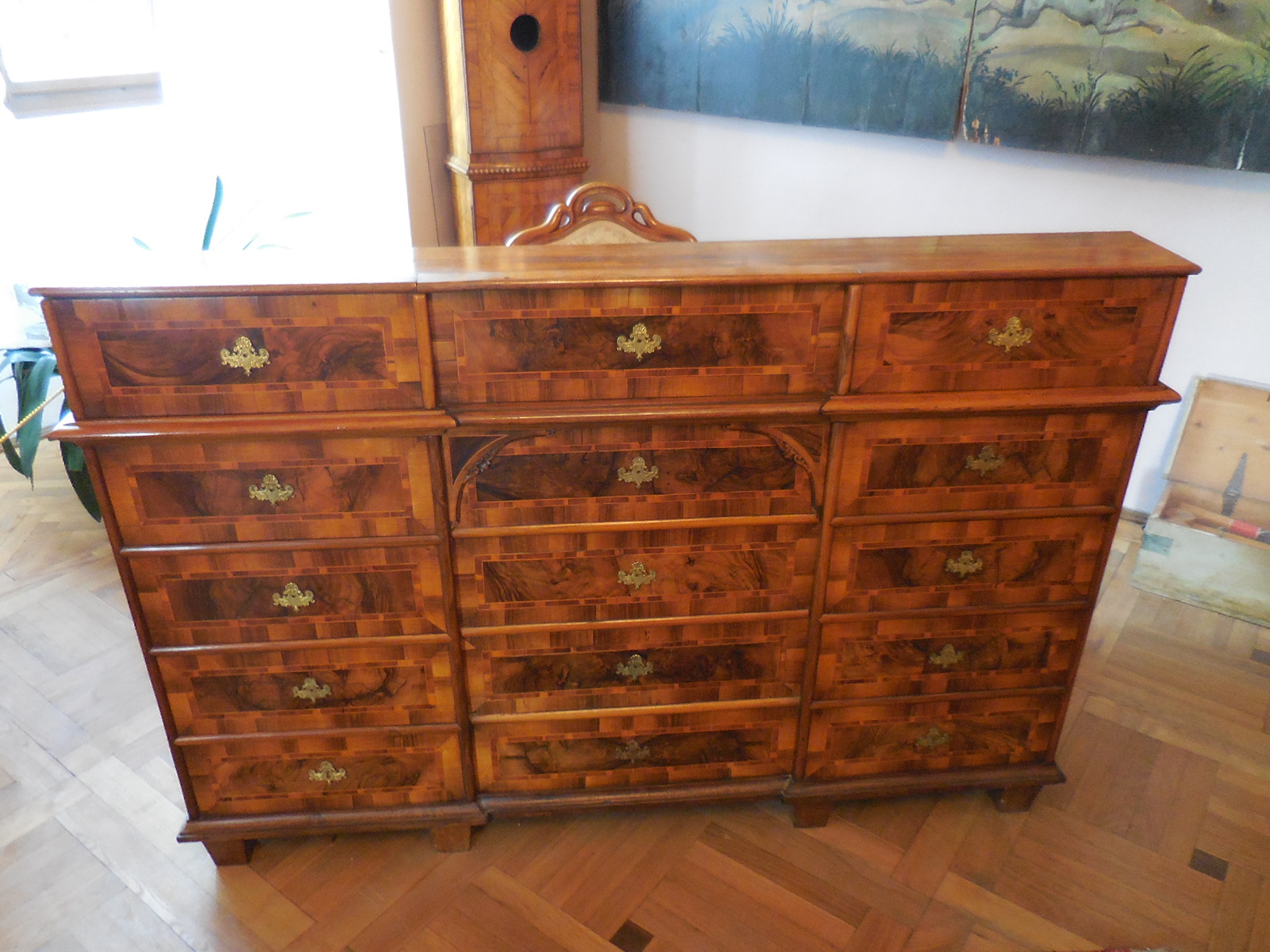
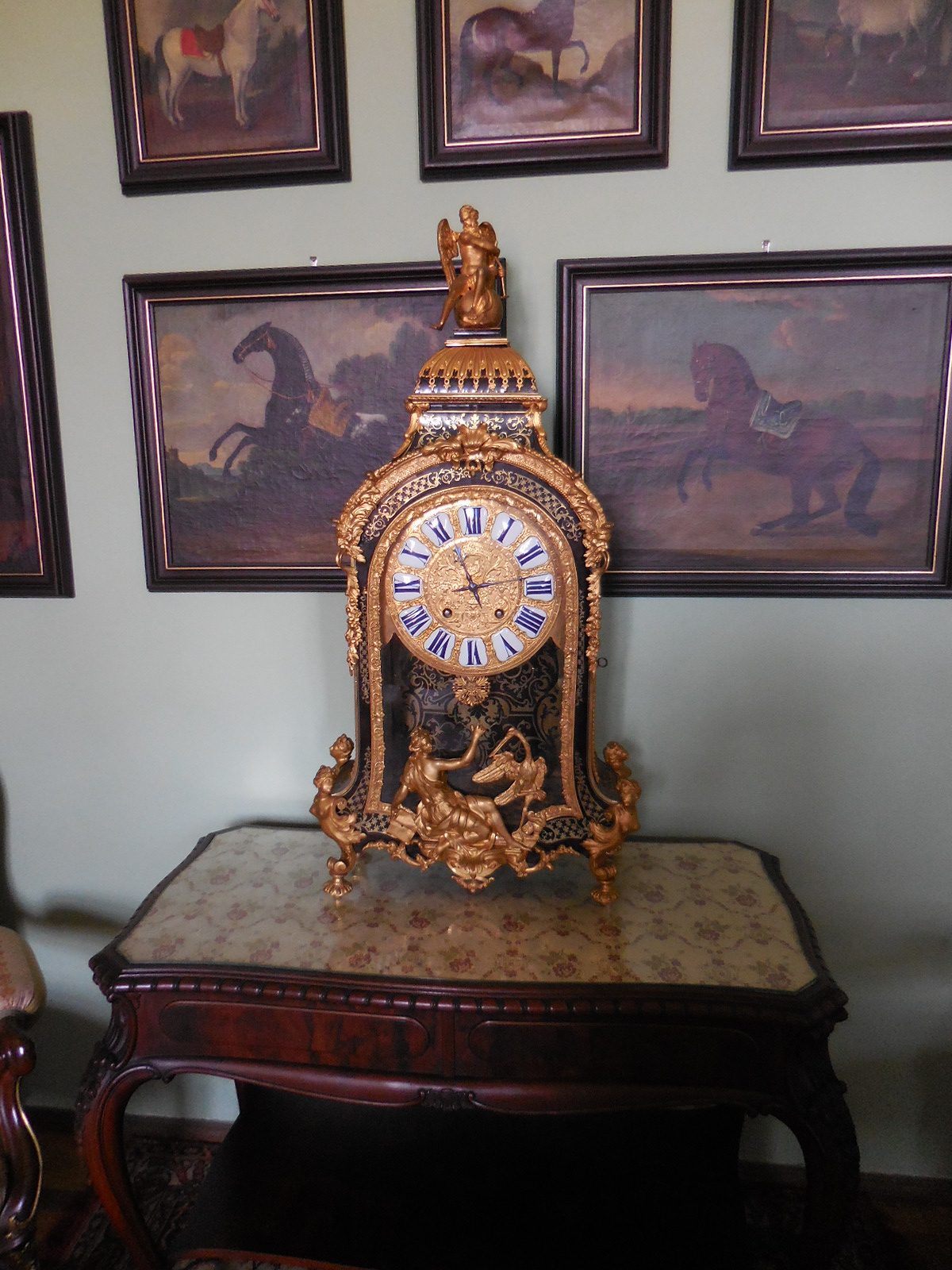
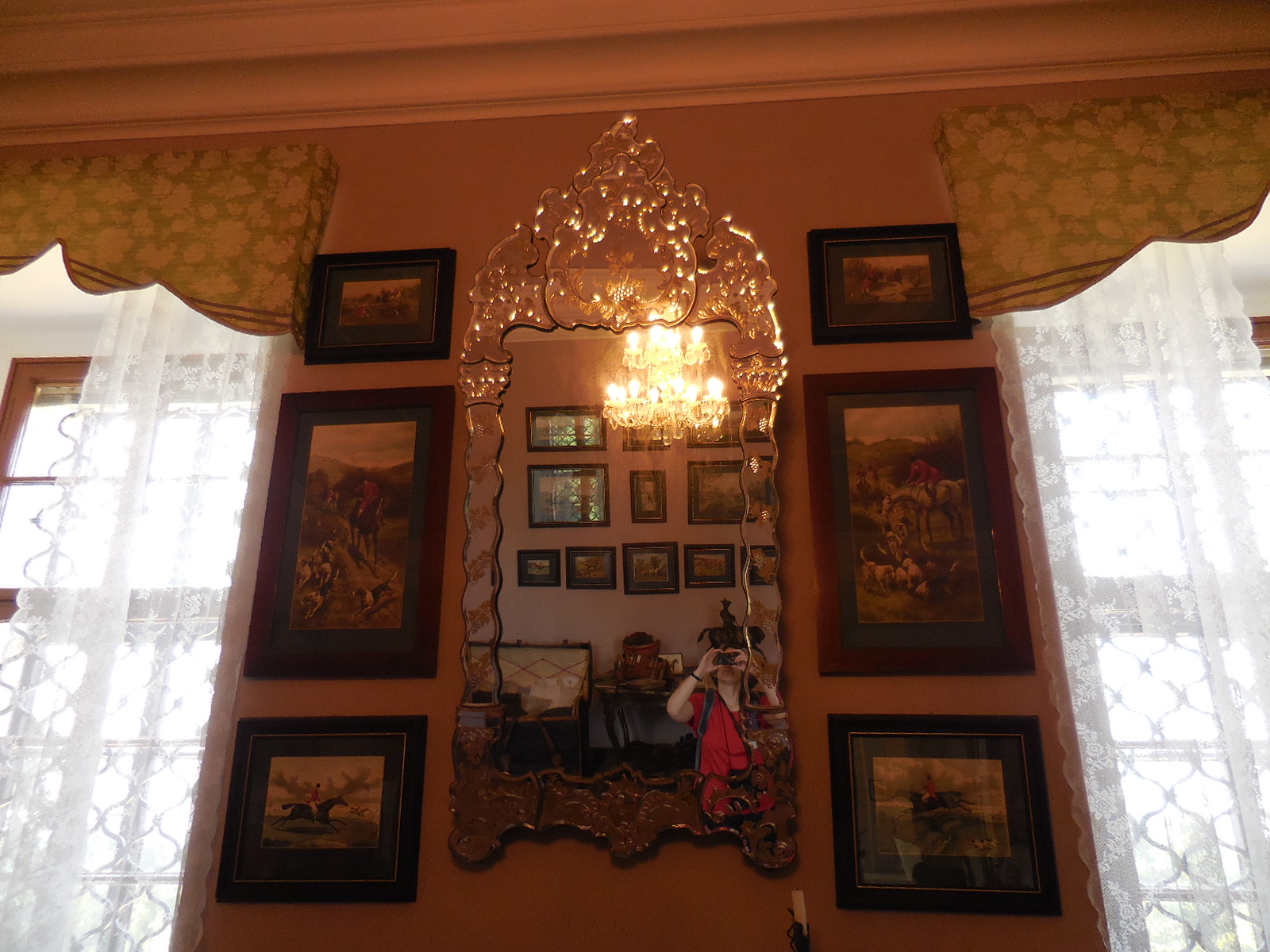
In the first room I saw the Kinský coat-of-arms – three silver boar horns on a red field. I recalled finding my Burns’ family coat-of-arms in Scotland. It featured a boar sticking out its tongue. I liked the Kinský coat-of-arms better. The guide explained to us that the Kinský dynasty could be traced back to the 13th century. I wished I could trace my Czech, Slovak and Scottish ancestors back to the 13th century. I was fascinated by an intarsia-made bureau forged with seven kinds of wood. A French gilded clock also caught my attention. In the next room I saw a Venetian mirror, and I was surprised to find out that it had not been manufactured in Venice. Rather, it hailed from Sloup in the Czech lands.
KarlovaKorunaint5clock
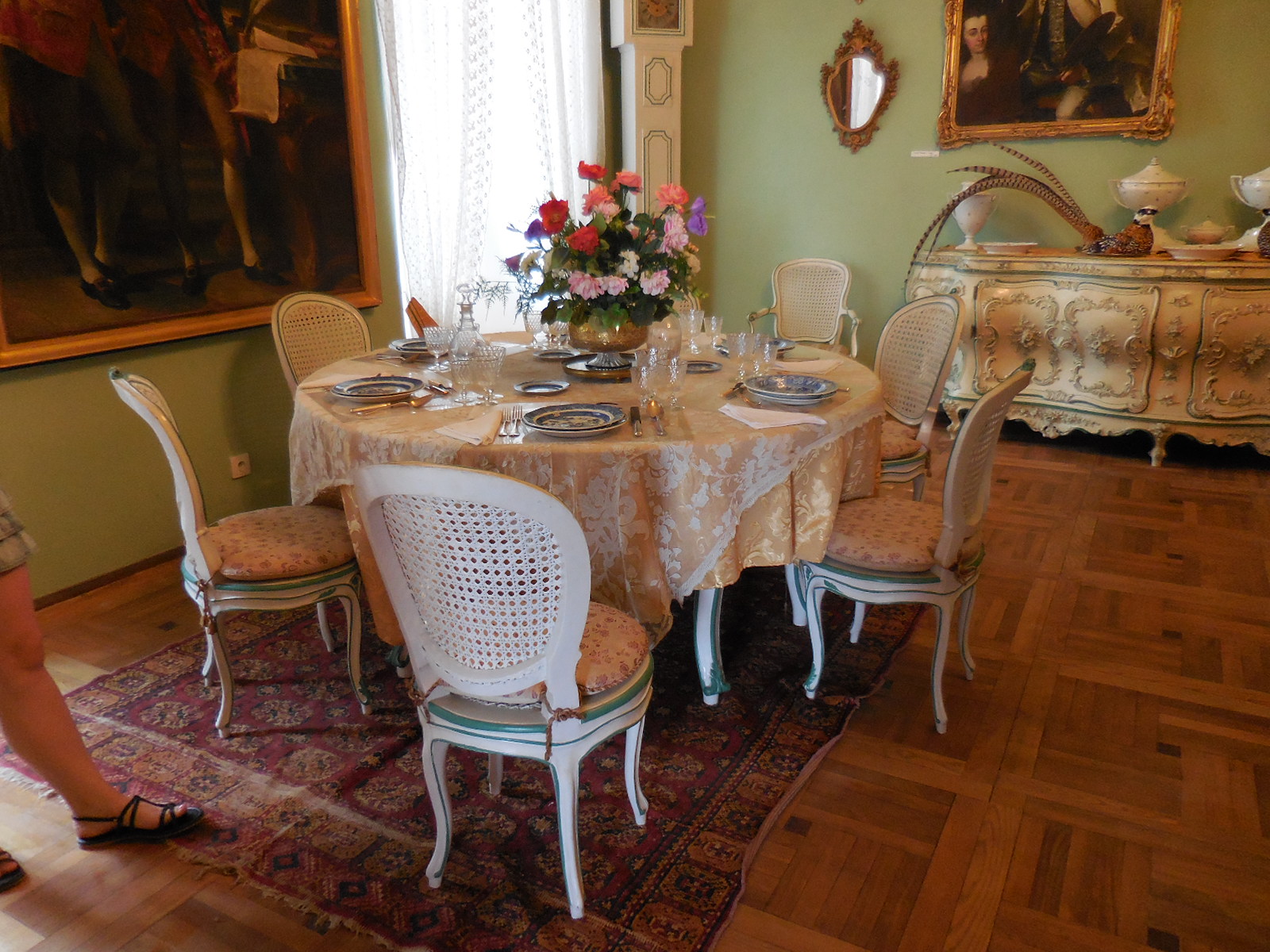
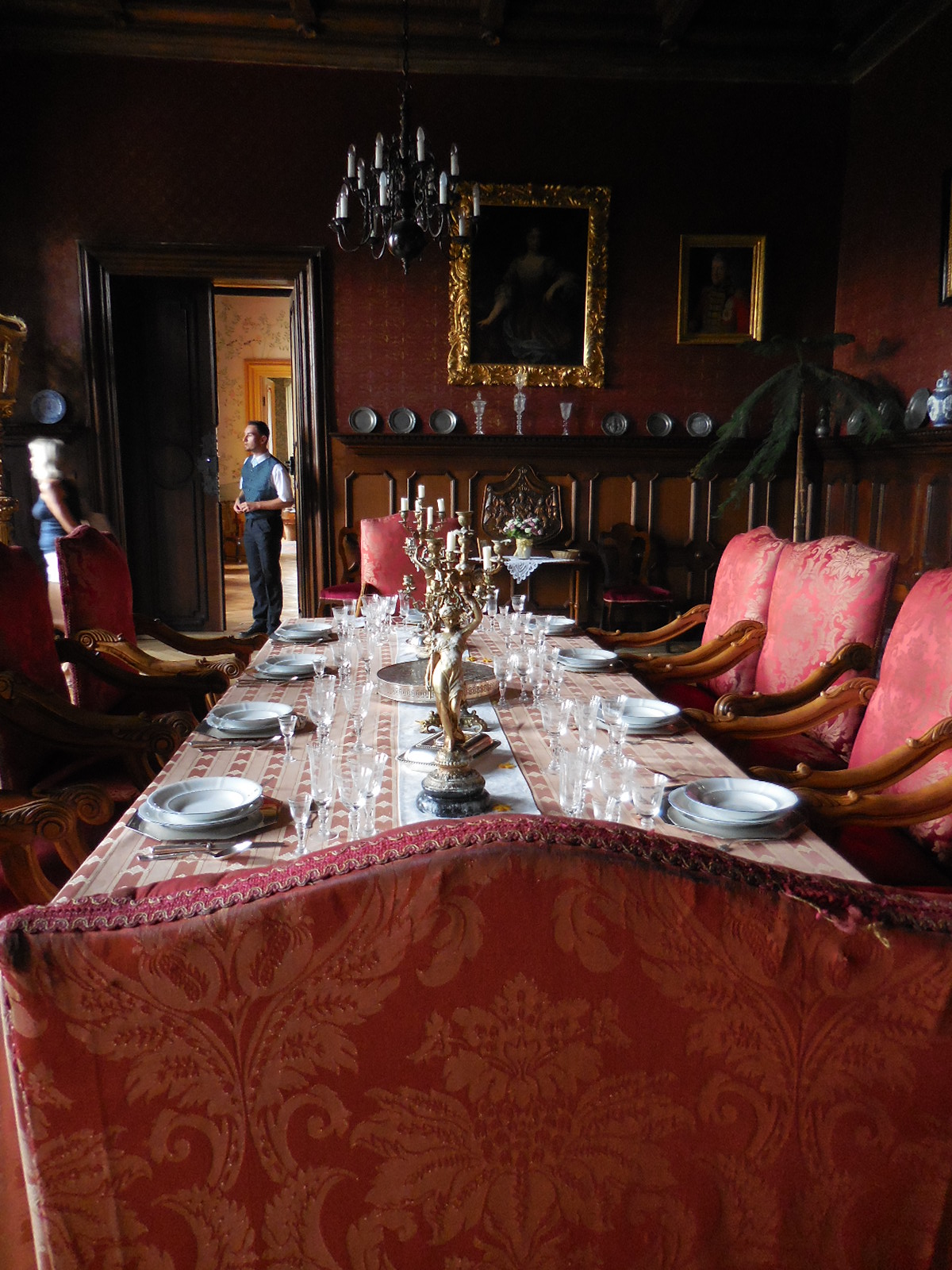
The Dining Room showed off distinguished portraits of the Kinský family as well as portraits of Emperor Joseph II and Emperor Leopold II. Another space boasted elegant Viennese porcelain. I loved the exquisite chairs, some of which were decorated with green roses on the tops of the backs. Those sporting the roses were designated for women while the ones without floral adornment were meant for men.

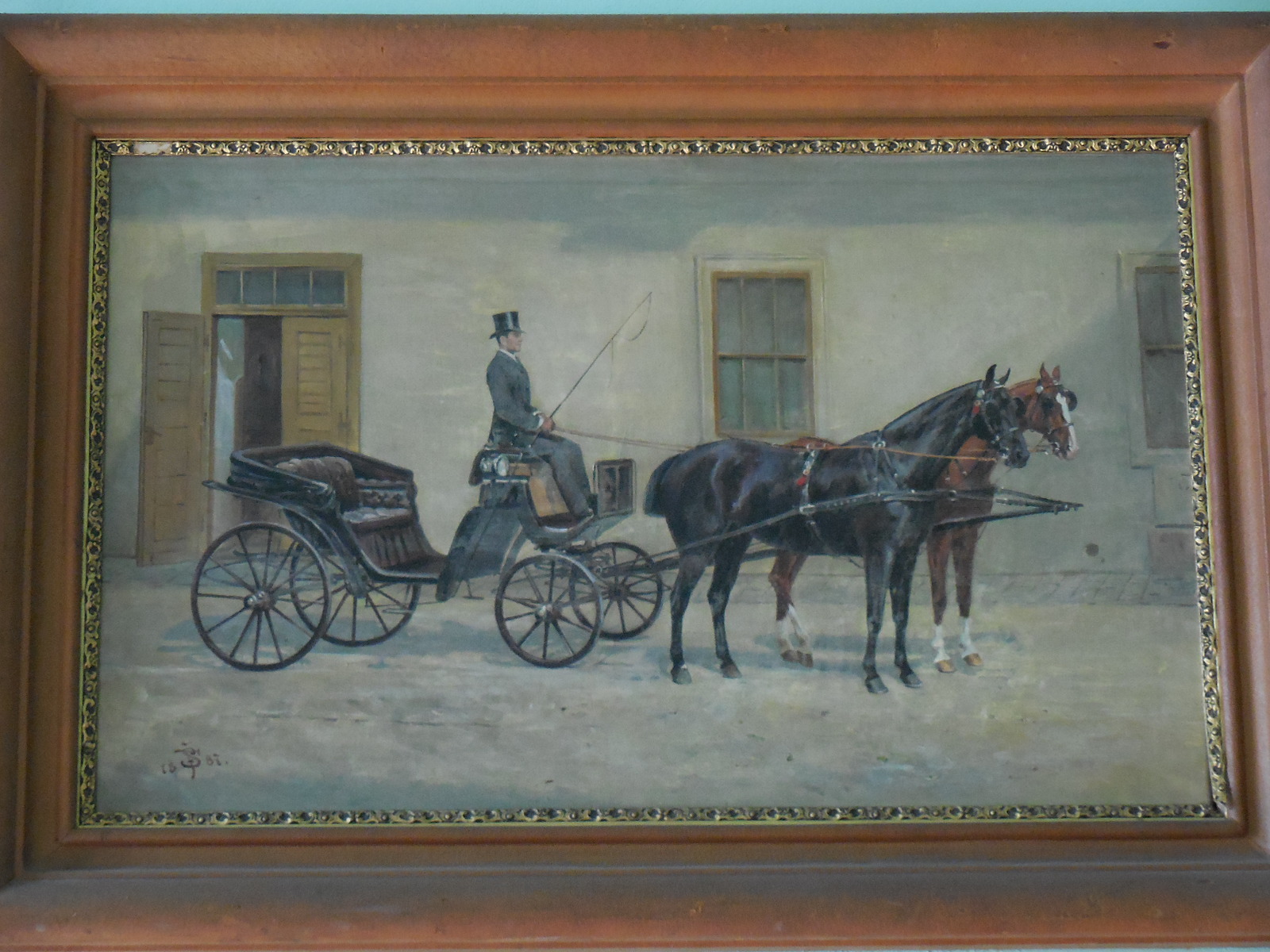
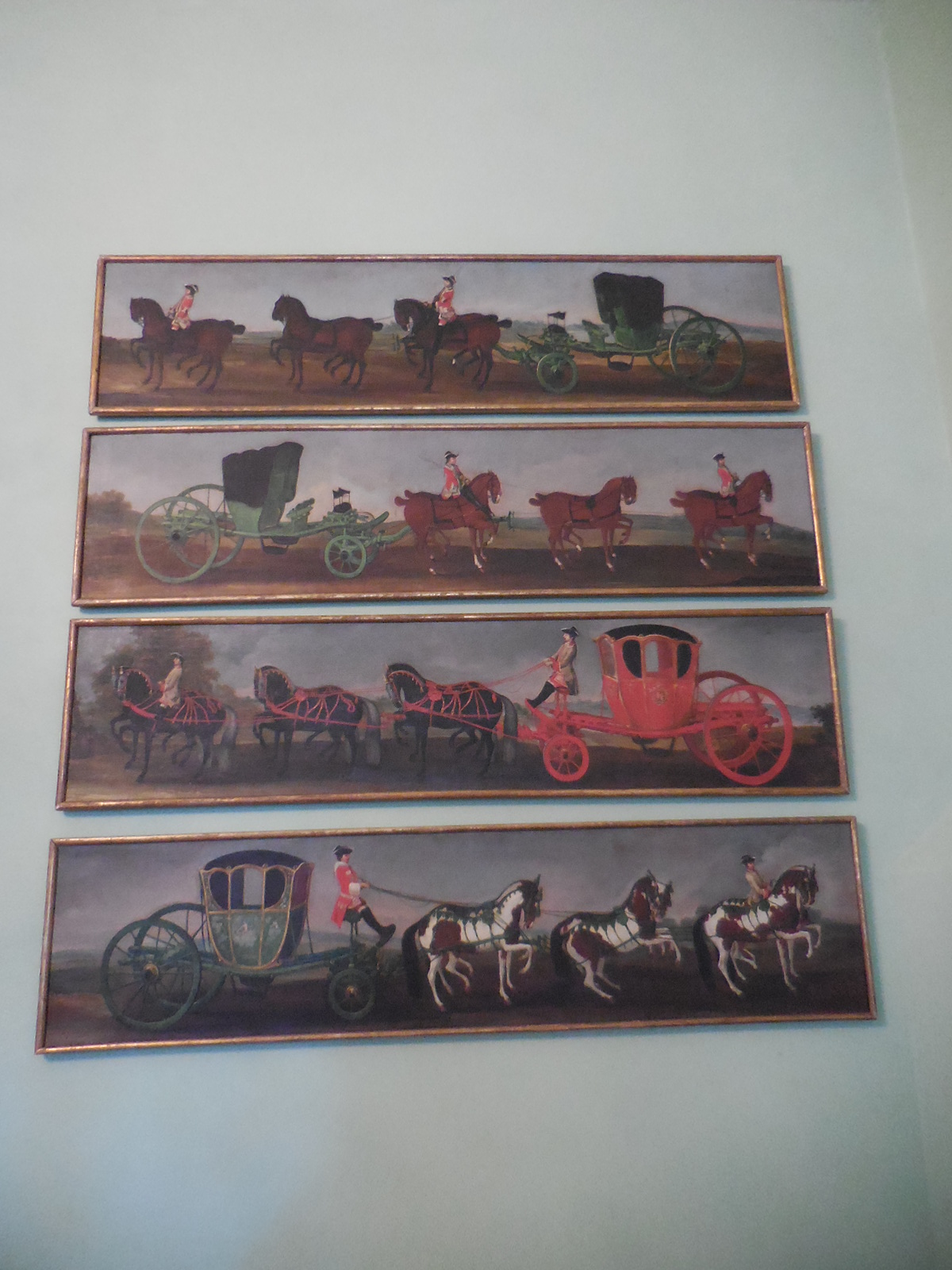
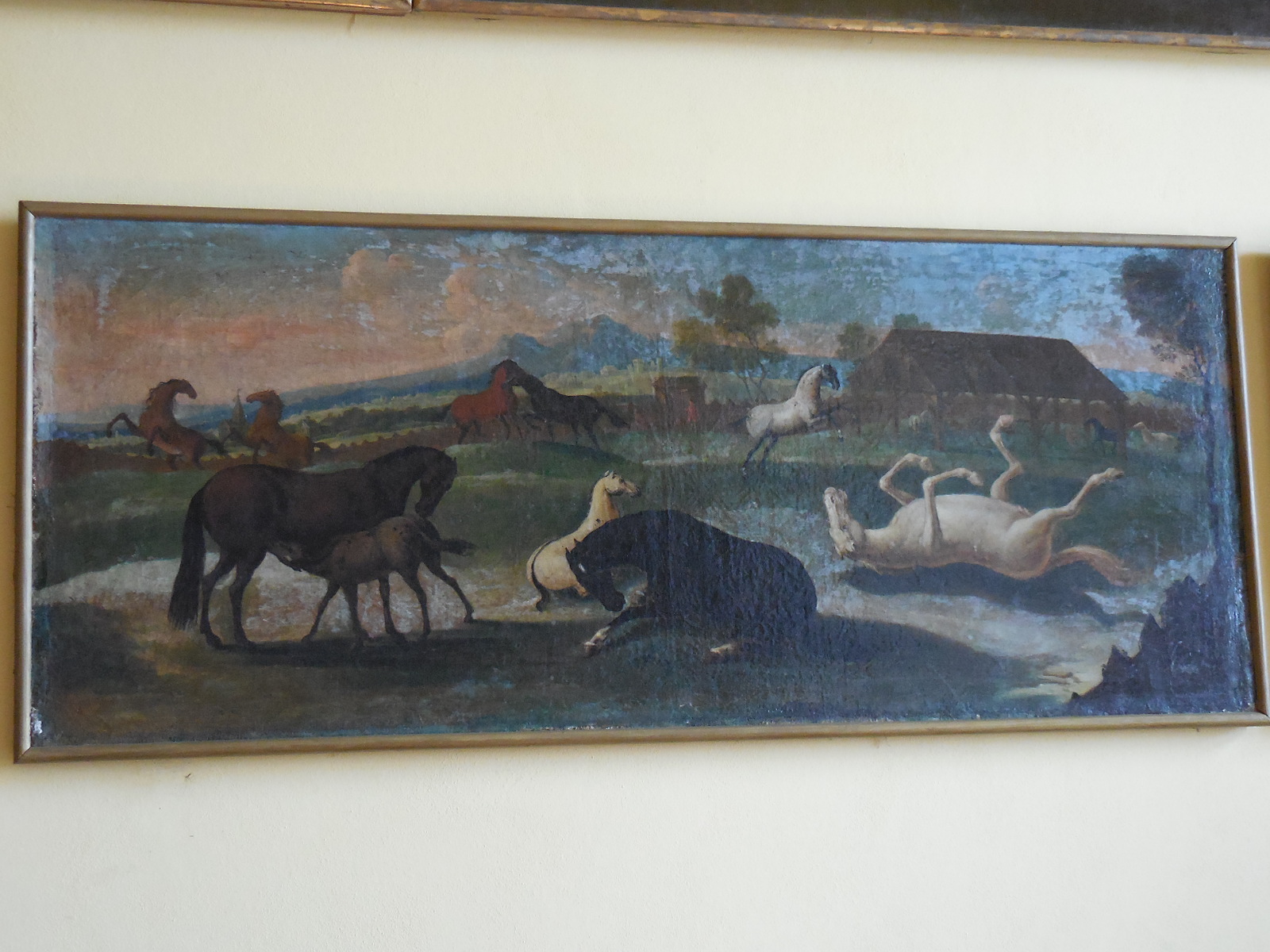
The next section was devoted to the Kinskýs’ love of horses as numerous pictures of horses adorned the walls. I saw dun horses bred at the Kinský’s studfarm and English horses. Other renditions showed horses from the Spanish Riding School. Paintings of horses jumping over barriers in steeplechase races also decorated the walls, and the guide proudly told us that the Pardubice steeplechase originated here. Other paintings showed horses and dogs going on hunts. A saddle hailed from World War I. I would never ride a horse because I would be too scared that the animal would bolt. Also, large animals frightened me, even big dogs. I knew many people who loved riding, but my fear did not allow me to share their excitement. I had not been very interested in horseracing or horsebreeding until I came here and learned about the Kinskýs’ passion for horses. They had certainly played a major role in horsebreeding.
KarlovaKorunaint11ptng
In the next room I saw Oktavián Kinský on the clan’s best horse, and other works featured representations of the isabela or Kinský beige horse. Another space featured paintings of hunts. The guide told us about the two types of hunting in which nobles had participated here – the French “par force” style during which the animal was killed and the English style during which the animal was returned to the forest. In paintings I saw the hunters sporting red jackets, black hats and white riding breeches. There was more than art featuring horses here, though. I marveled at a desk made with intarsia, hailing from the 18th or 19th century. A Venetian mirror also caught my eye.
KarlovaKorunaint13
In the third wing we learned about Zdeňko Kinský and his family of nine children while we gazed at black-and-white engravings of horses. One large, long painting got my undivided attention. It showed horses in motion as they raced. The artist had really captured the moment in the way a photograph would. That the painting was made of 12 pieces of deerskin intrigued me.
KarlovaKorunaint18ptng
Bookcases held volumes in various languages, such as Hungarian, French and German, but there were only a few books in Czech. The Kinskýs had spoken numerous languages. Laura Kinská, whose portrait was in the room, had managed to learn nine languages. In the portrait her expression looked gentle, but somehow I sensed an inner sadness as well. Gazing at a portrait of Tereza Kinská, I admired her beauty. It was sad to learn that she had died young and childless. A small painting showed two Kinský women without their wigs or elaborate hairstyles. I had never seen such intimate portraits of female nobility.
KarlovaKorunaint17
In the next room the guide talked about how the Kinský family had been enemies of the Germans during World War II and how the chateau had been used for the Nazi administration. He explained why Norbert Kinský stayed in Italy after coming there for his son’s wedding and said that after Norbert’s wife died, he had joined the Knights of Malta. Since Norbert had to give up his property, he passed it on to his two sons. In one photo Norbert sported his red Knights of Malta uniform.
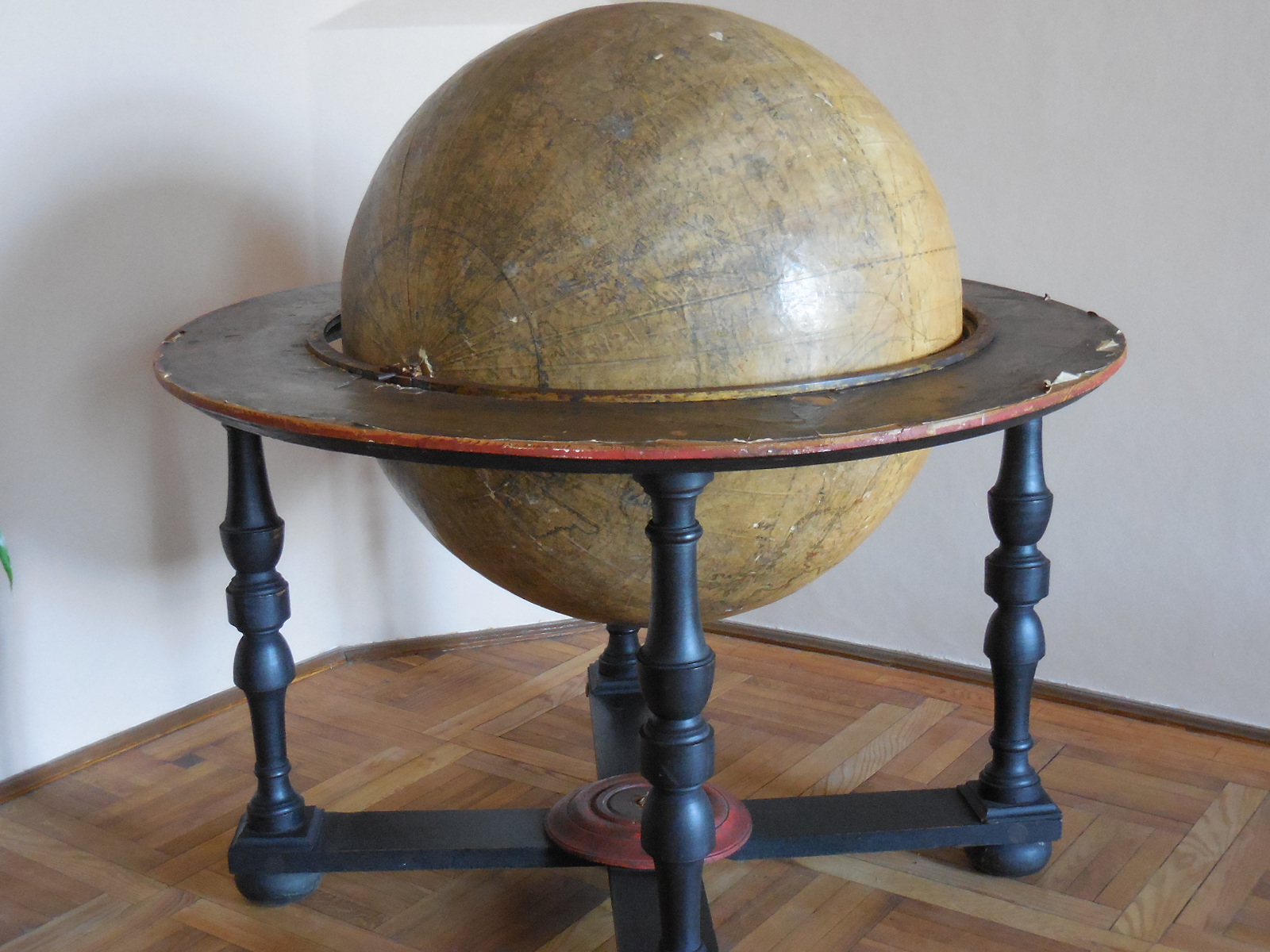
KarlovaKorunaint19globe
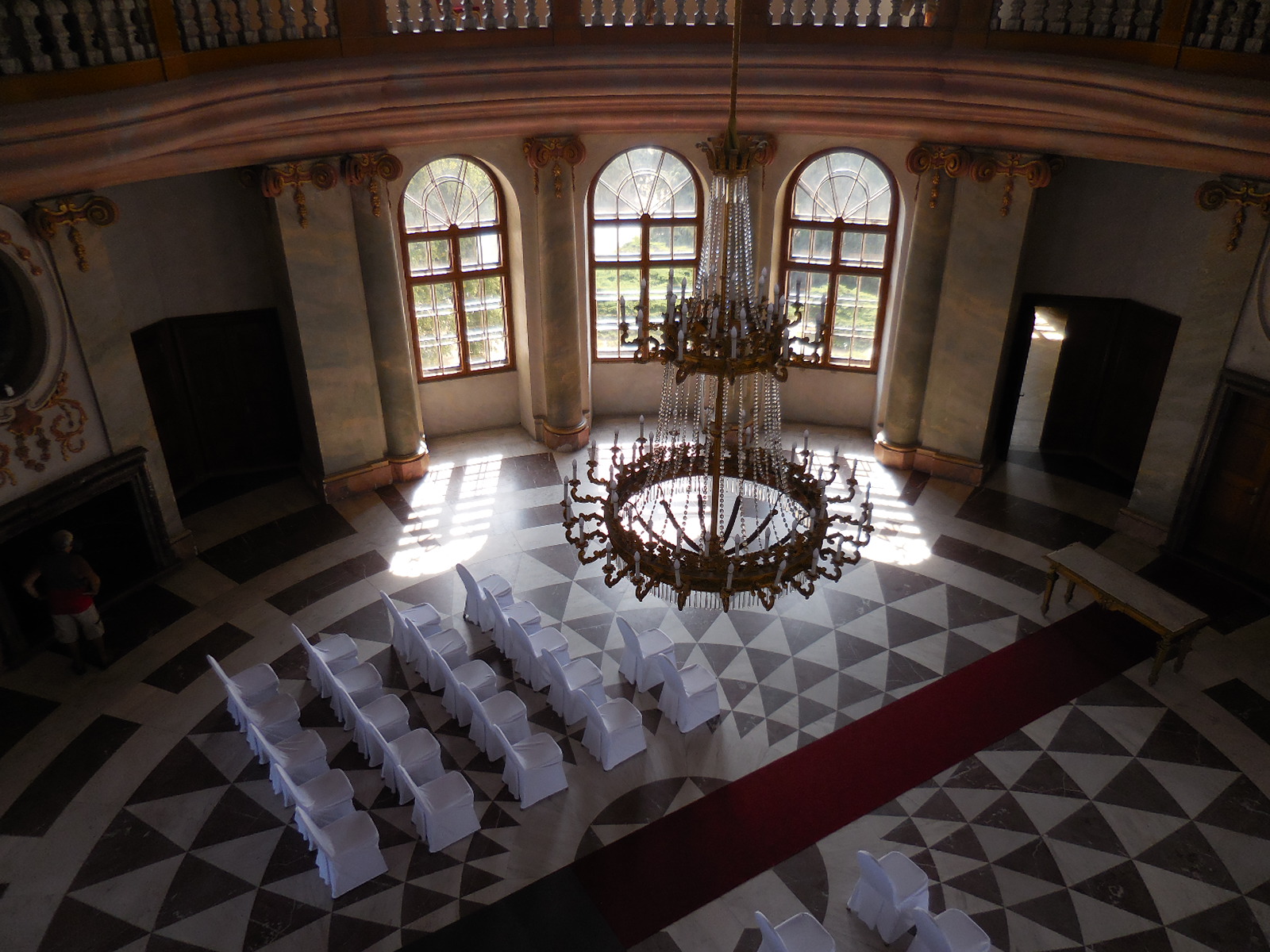
After touring the three wings, we went upstairs to the Marble Hall. It was so elegant that I was speechless. The two lavish fireplaces were made of real marble, while most of the other marble in the large space was imitation. An exquisite chandelier was 2.2 meters high. The floor was decorated with geometric shapes, and I was reminded of Santini’s fondness for mathematical symbolism.
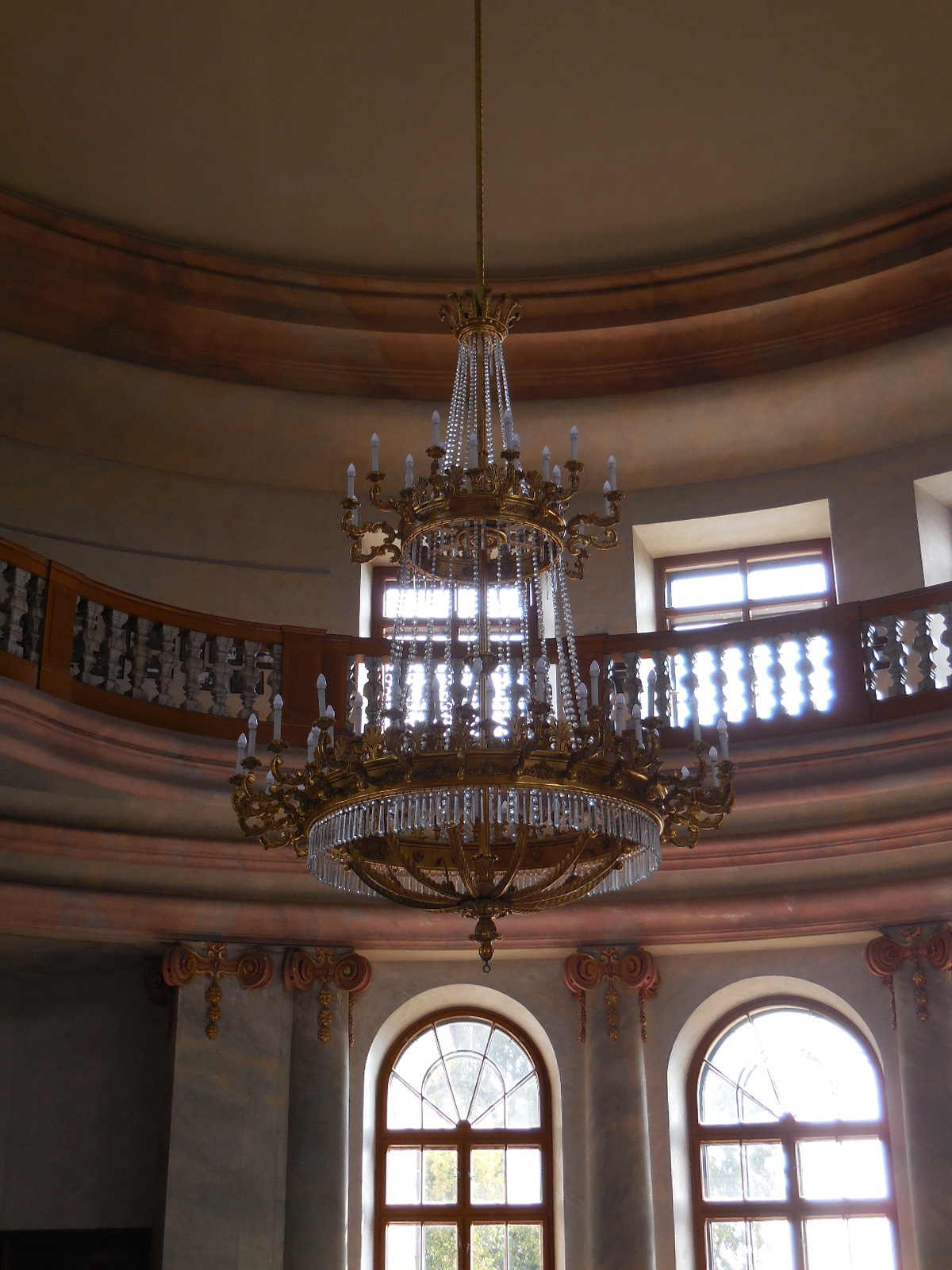
KarlovaKorunaint21chandelier
In the gallery above the Marble Hall I saw pictures of the chateau and its surroundings from the 1930s. I spotted a photo of Karel Schwarzenberg on a horse in 1934, Zdeňko Radslav Kinský in a historic uniform and the Kinský family playing tennis on the courts that were once on chateau grounds. The pictures brought the family to life. They were not merely names spouted out by the tour guide or found in a brochure about the chateau, but rather real people who skied, played tennis and went rowing. The photos of the interiors of the chateau from that time period were also intriguing. I wondered what it would have been like to have lived in Czechoslovakia during the 1930s with the democratic era of the Second Czechoslovak Republic as well as the threats that Adolf Hitler and the Nazi Party posed.

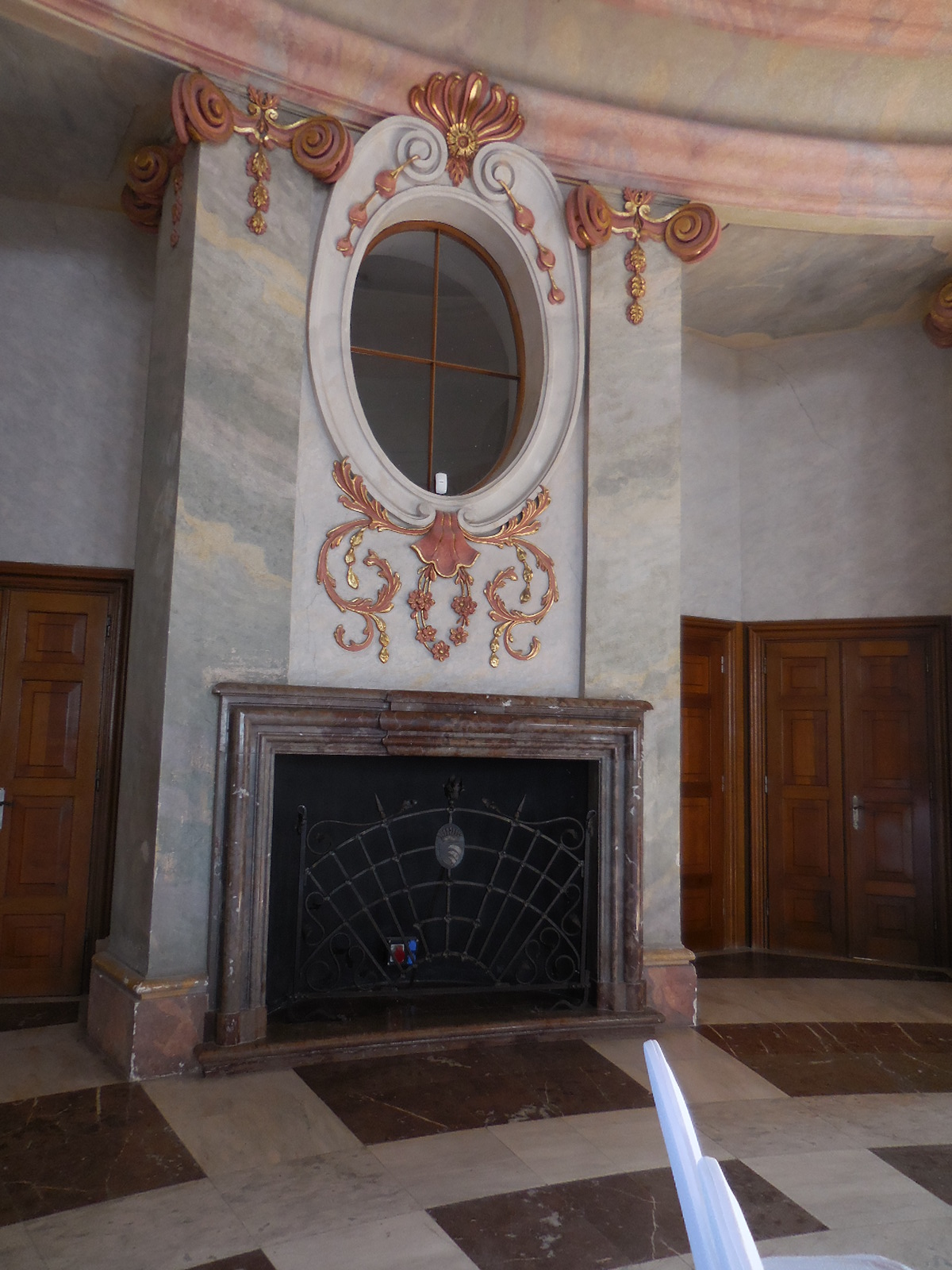
A fireplace in Marble Hall

A fireplace in Marble Hall

Marble Hall

Marble Hall

I ate marinated chicken at the chateau restaurant. I was seated outside, even though it was scorching hot. I recalled the days when I could almost always find my favorite food on Czech menus – it was chicken with peaches and cheese. How many years had it been since I had seen it offered at a restaurant? After lunch I went for a stroll in the park with its exotic species of woody plants and then wanted to read on a bench, but it was sweltering hot. I wound up going back to Prague in an uncomfortably hot train. Luckily, it was not a long ride back to the city I considered home. When I set foot in Prague’s main station, I smiled. Despite the heat and humidity, I had had a superb day and had a new appreciation for horseracing and horsebreeding.
KarlovaKorunaint14pink
Tracy A. Burns is a writer, proofreader and editor in Prague.
Loučeň Chateau Diary

Loucen2
Waiting for the tour to start, I was excited that I would soon see the historical interiors of a chateau I had never before visited. Although Baroque Loučeň (also sometimes referred to as Lautschin) had been open to the public since 2007, I had heard about by chance only in 2015 via an article posted on Facebook. The place sounded magical. I knew I had to make a trip there. And soon. While there are many tours for children, I had opted for the classic tour of the interiors.

I was surprised that a settlement at Loučeň had existed as far back as 1223. A castle was in the town even during the Middle Ages, but a turning point in the history of Loučeň came in 1623 when Adam von Wallenstein became the owner. That is when the chateau was built in Baroque style, construction taking place from 1704 to 1713. Adam had a famous nephew: Albrecht von Wallenstein had made quite a name for himself in the military. He even held the post of supreme commander of the armies of the Habsburg Monarchy and was a major player in the Thirty Years’ War. The Wallenstein family tree died out in 1752.
Loucen3
In 1809 the Thurn und Taxis family came into the picture when Maxmilián Thurn und Taxis purchased the chateau. I had become familiar with this dynasty when I had visited Regensburg, where the family had had their main residence. I had toured their elegant palace and distinctly recalled the grotesque figures on the ceiling of the Conservatory, the Brussels’ tapestries in the Large Dining Room and the lavishness of the Rococo and Neo-Rococo Ballroom.

The family’s great influence on the postal system had left me in awe. The Thurn und Taxis family descended from the Tasso clan from the 13th century. During the end of the 15th century, Francesco Tasso created the first postal system going from Innsbruck to Brussels. It took a week for the mail to reach its destination. The key to its success was that the rider and horse were changed at each postal station. For his ingenuity, Tasso was given nobility status by Emperor Maximilian I and thus became Franz von Taxis in 1512. Before long the Thurn and Taxis family had the monopoly of the postal services in Central and Western Europe. By the end of the 18th century, the postal system was enjoying great success.
Loucen6
The Thurn und Taxis clan had some prominent members, that’s for sure. For example, Rudolf von Troskow established the law journal Právník, the first of its kind in the Czech language. He also created some legal vocabulary that is still in use today. His interests were not limited to law, though. He was a patron of the arts as well.

During 1875, when Alexander Thurn und Taxis, a violinist and patron of the arts, wed Marie von Hohenlohe, an amateur painter as well as friend and patron of Rainer Maria
Rilke, times changed at Loučeň, a place many well-known artists and politicians proceeded to visit. Rilke stopped by – not once – but twice. He even dedicated his Notebooks of Malte Laurids Brigge to Marie. Composer Bedřich Smetana lived nearby toward the end of his life and performed on one of the Thurn und Taxis’ pianos. Smetana was a friend of the family; he dedicated his composition Z domoviny to Alexander. Other prominent visitors included Tomáš Garrigue Masaryk, the first president of Czechoslovakia, his daughter Alice, Czech writer Eliška Krásnohorská, musician Josef Suk and American storyteller Mark Twain.

Alexander Thurn und Taxis was a man of many accomplishments. He gave his animal trophies to Prague’s National Museum and helped build the first railway in the region. During the tour I would discover the role he played in bringing soccer to Bohemia.

The Dining Room

The Dining Room


The Thurn und Taxis clan would lose the chateau at the end of World War II, when it became the property of the state. In 1945 the Soviet army and locals plundered the chateau. Under Communism the chateau’s history was not rosy, either. It became a recreation center for Ministry of Transportation employees. Later it was turned into a railway trade school. A landmark event occurred when the company Loučeň a.s. took over the chateau in 2000. Even some of the original furnishings were retrieved.

Our guide was a descendant of the Thurn und Taxis family. I had never been on a tour led by a member of a family that had had such a remarkable impact on the chateau I was visiting. It was a real treat. In Staircase Hall I was captivated by a large painting of Duino Chateau, a romantic structure perched on a cliff in Italy. The young man’s parents were there now, he said. The place had been the Thurn und Taxis’ property for centuries. Rilke had written his Duino Elegies there.
Loucenint6
In the first room there was a sleigh which had been used to move the mail through snowy terrain. It was painted black and yellow, and it was no coincidence that taxis often used the same shade of yellow. In fact, the word taxi derives from the name Thurn und Taxis. I also saw the huge winter boots that a postman would have worn delivering the mail in wintry conditions. A map of Bohemia from 1720 hung on one wall. I loved old maps! It made me think of the vedutas and maps of towns at Mělník Chateau. The family’s coat-of-arms was prominent, too. It featured a badger. (The original name of the family, Tasso, means badger in Italian.)
Loucenint7
I wanted to sit in the red, plush chairs at the dining room table and stare at the exquisite porcelain service. Overall, there were 600 pieces, but only a portion of them were on display. The fancy gold candlesticks got my attention, too. In the Chinese Salon I was impressed with the big Chinese vases, so colorful with superb designs. The white wallpaper featured pink flowers and green leaves and had a sense of fragility and intimacy to it.

The Prince’s Study was filled with his souvenirs from two trips to Africa, including a crocodile. Paintings of horses also decorated the study. In one rendition a horse was jumping over a barrier in a Pardubice steeplechase race. (I would learn more about the Pardubice steeplechase when I visited Karlova Koruna Chateau a few weeks later.)
Loucenint9
In the Prince’s Bedroom I noticed a photo of Prince Alexander with his four cats, three of whom slept on the bed with him. Curled up on the bed were three stuffed animal cats. I thought that was an interesting touch. My late cat had almost always slept on my head during almost 15 years, and I thought of how much I missed him. I wondered what my five-year old cat was doing at that moment. She liked to sleep at the foot of the bed. I didn’t think I could live without cats in my life. Maybe Alexander had felt the same.

In the servant’s bedroom I saw something that really surprised me. At first I did not understand why there was an iron next to replicas of old banknotes. Then the guide explained. The servant ironed the prince’s money so that it would not be crumpled. That was not all. The servant also ironed the prince’s newspaper to prevent the color from fading and to keep it from getting dirty.

In the hallway I saw a vacuum from the 1930s and red buckets on one wall in case a fire would break out. A picture of the Loučeň soccer team from 1893 also hung in the hall. That team played in the first official soccer game in Bohemia, thanks to Alexander’s interest in the sport.
Loucenint8
An avid fan of classical music, I have always enjoyed visiting the music salons in chateaus. This time was no different. I tried to imagine Smetana performing on the piano in the room. On the piano was a red box of Mozartkugeln truffles. The music sheets were turned to Concertino for violin and piano by Leo Portnoff, who was born in Russia during 1875 and emigrated to the USA in 1922.) I wondered if Alexander had played the violin accompanied by Marie on the piano when performing this piece.

The Princess’ Salon was decorated with books by Rilke and an upright piano from the 18th century. The view of the park from the window here was very romantic and picturesque. There were 10 mazes and 11 labyrinths in the park. I would have to check it out later, I told myself. I loved the bright green painted walls and a nook in one part of the room. I wanted to relax and read, seated in that nook, losing myself in a mystery or art catalogue.
The Church of the Assumption of the Virgin Mary

The Church of the Assumption of the Virgin Mary


In the Princess’ Bedroom I saw her ravishing pink-and-cream wedding dress, which she had donned at age 40. I marveled at how young she looked in photos. Crowns and lions adorned the light blue wallpaper. A piano made by Rudolf Stenhamer in Vienna stood in the room, too. I admired the richly carved patterns on the front and back of the bed. I also was interested in the personal items that had belonged to the princess. On display were fans, a crocodile handbag and beautiful necklaces as well as a jewelry bag. The Oriental carpet was a nice touch, too.
Loucenint11
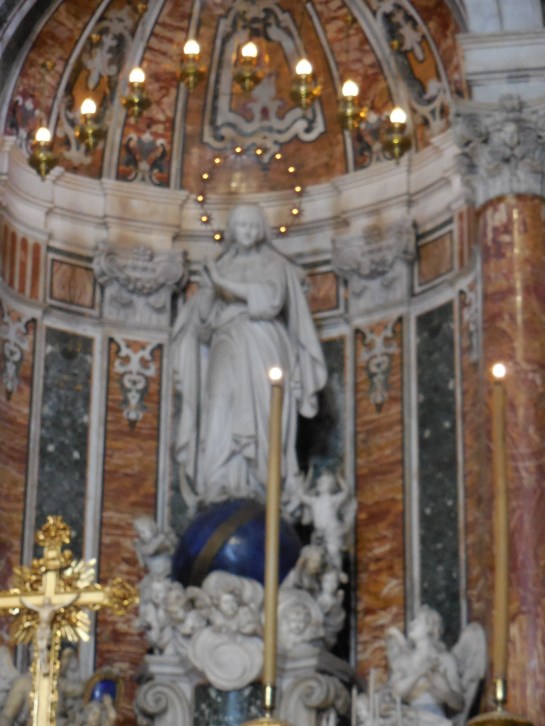
The Children’s Room came next and then a small classroom for Thurn und Taxis children. It was very plain. There was a small bench for two students with small blackboards. On the desk were two books called Histoire de la Revolution Française. In the Church of the Assumption of the Virgin Mary there was a real treat. The artwork over the main altar was made by my beloved Czech Baroque painter Petr Brandl. I recalled his altar paintings in the cathedral at Sedlec, which I had visited earlier that year for what must have been the fourth or fifth time. Still, his work never failed to amaze me.
The ceiling of the church

The ceiling of the church


The library consisted of a gallery and ground floor. One of the books prominently displayed was an English version of a fairy tale by Princess Marie – The Tea Party of Miss Moon. I would have been interested in reading it to get a sense of the princess’ writing style, but it was not for sale in the chateau shop. The most valuable book was the huge chronicle of the Thurn und Taxis family. Another enormous volume on a table tackled the theme of the romantic Šumava region in the Czech lands. The room was not without its distinguished family portraits, either.

I walked through the park a bit and then made my way to Nymburk, a town closely associated with my favorite Czech writer, Bohumil Hrabal. In Nymburk I did not have much time for sightseeing, though. I peeked into a Gothic church and had lunch before heading back to Prague, more than satisfied with the trip’s outcome.

View from Loučeň Chateau

View from Loučeň Chateau


Tracy A. Burns is a writer, proofreader and editor in Prague.