Teatro di San Carlo Diary

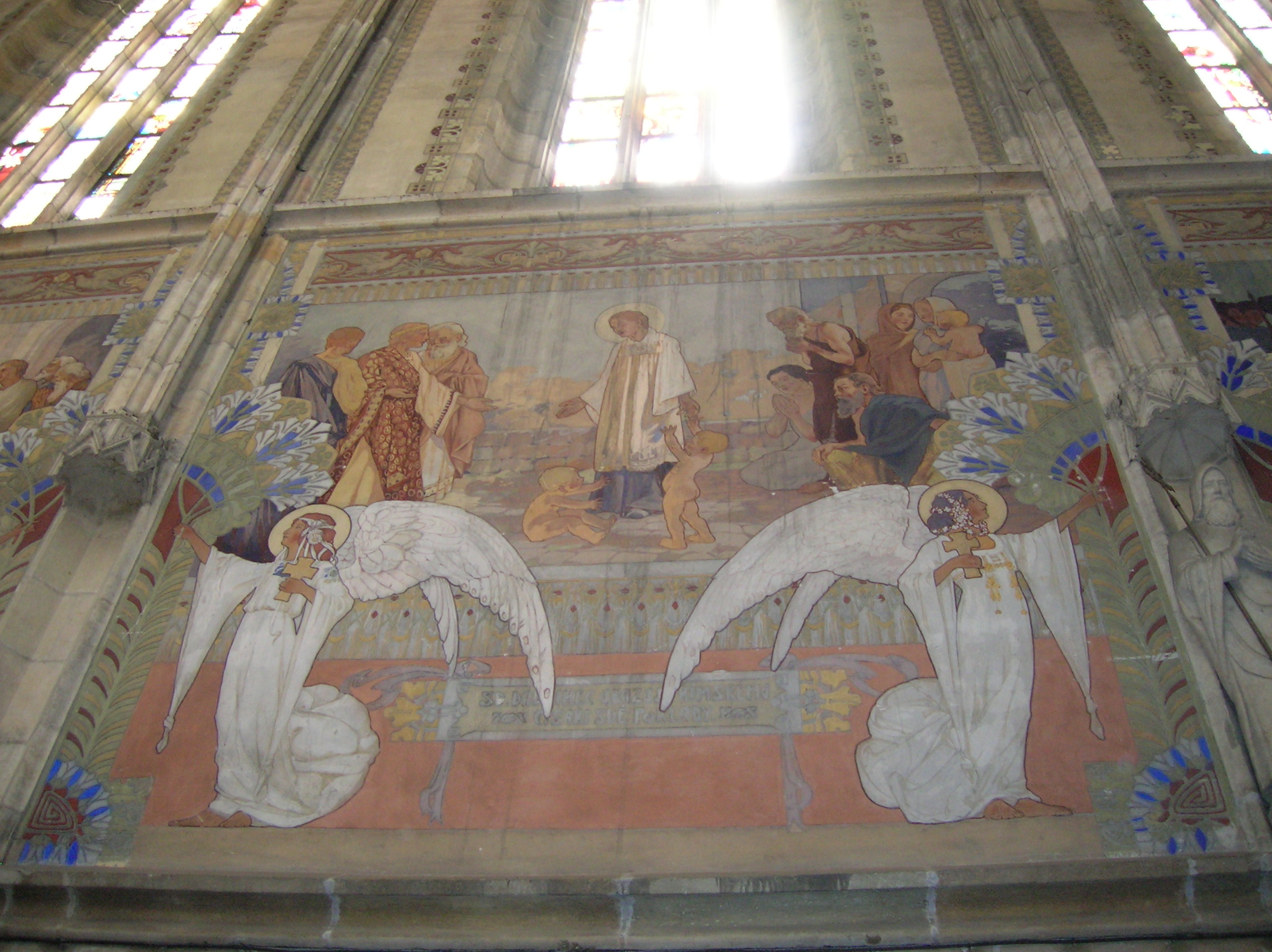
NaplesTheatre3ceiling

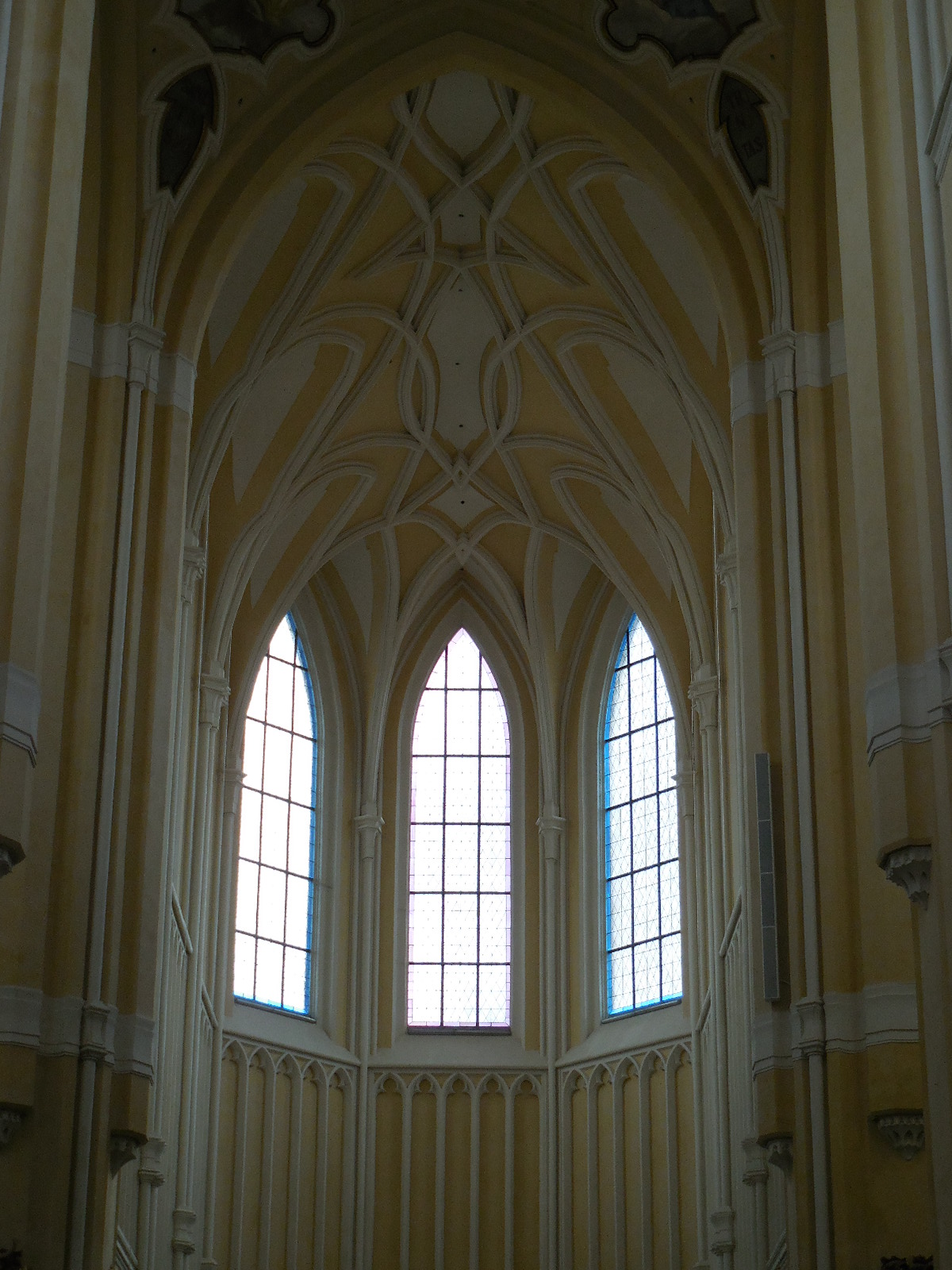
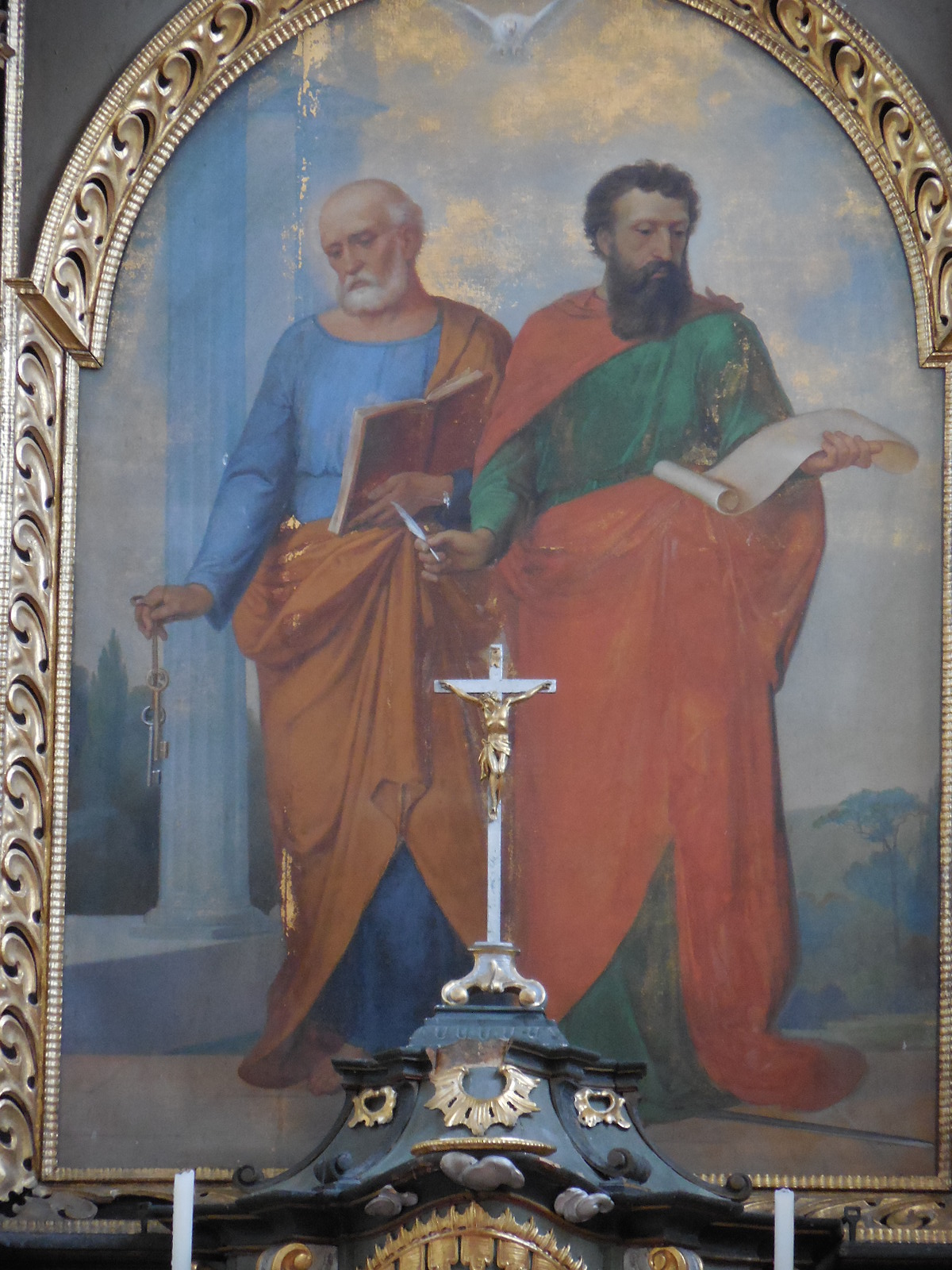
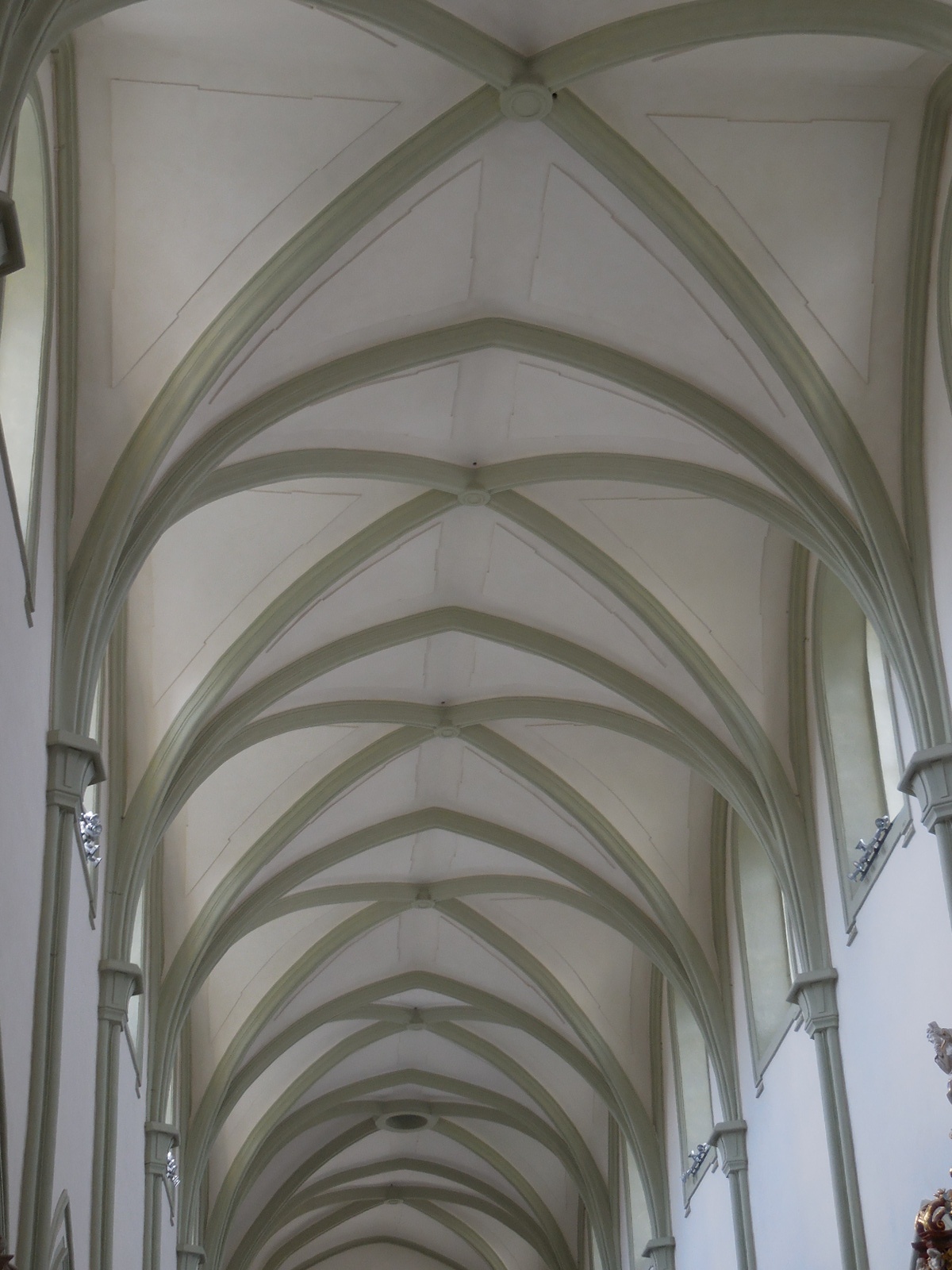
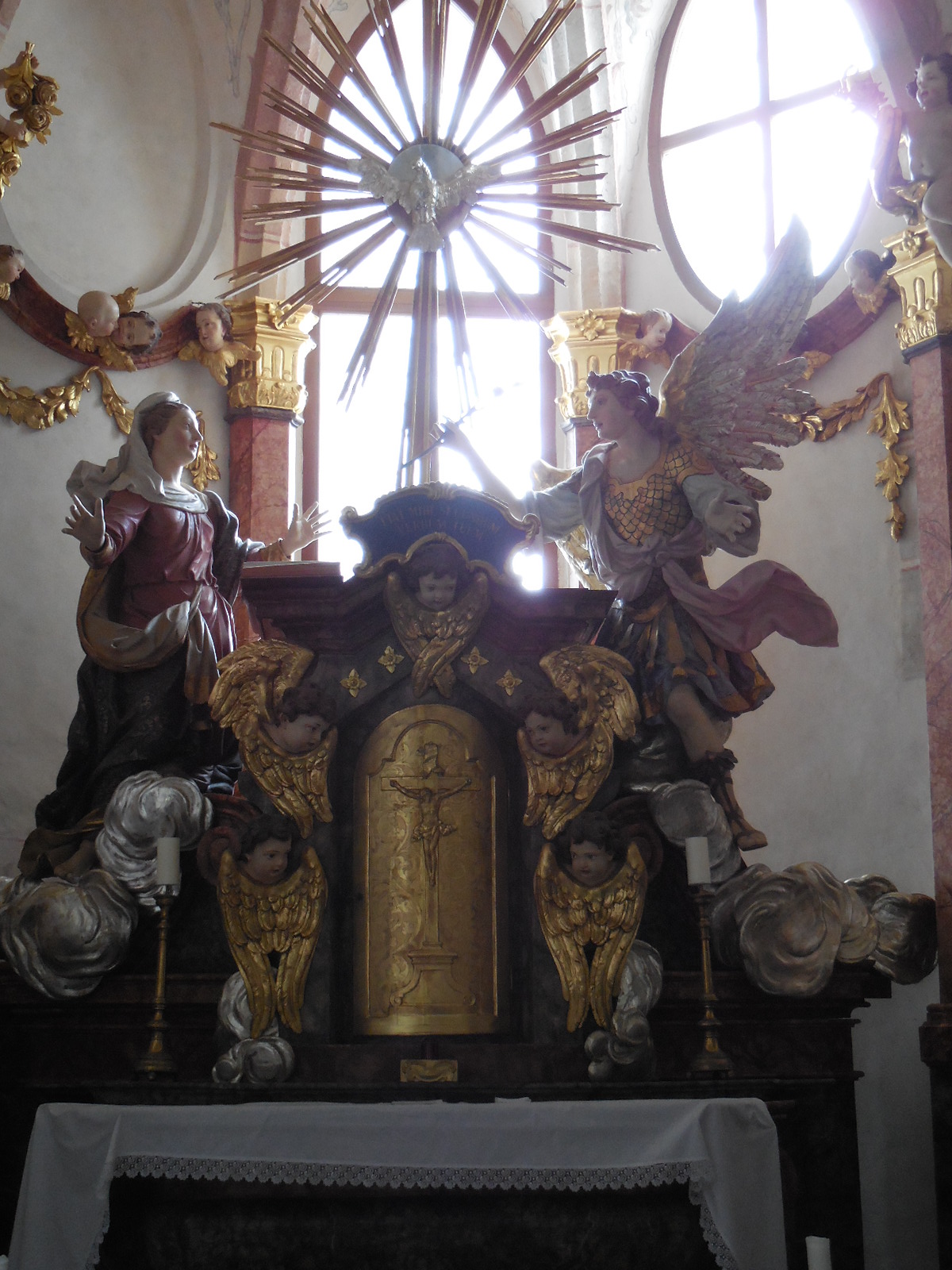
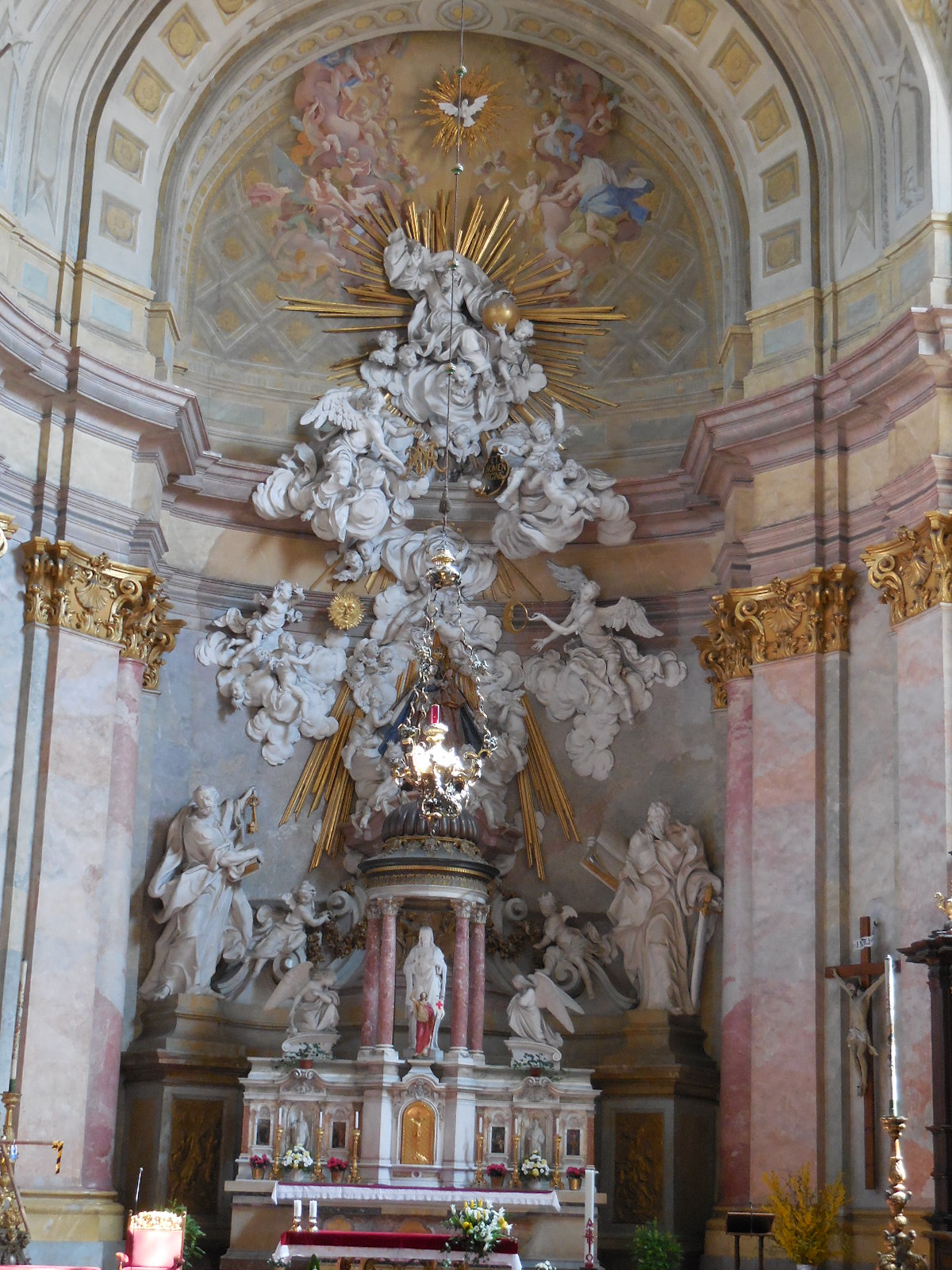
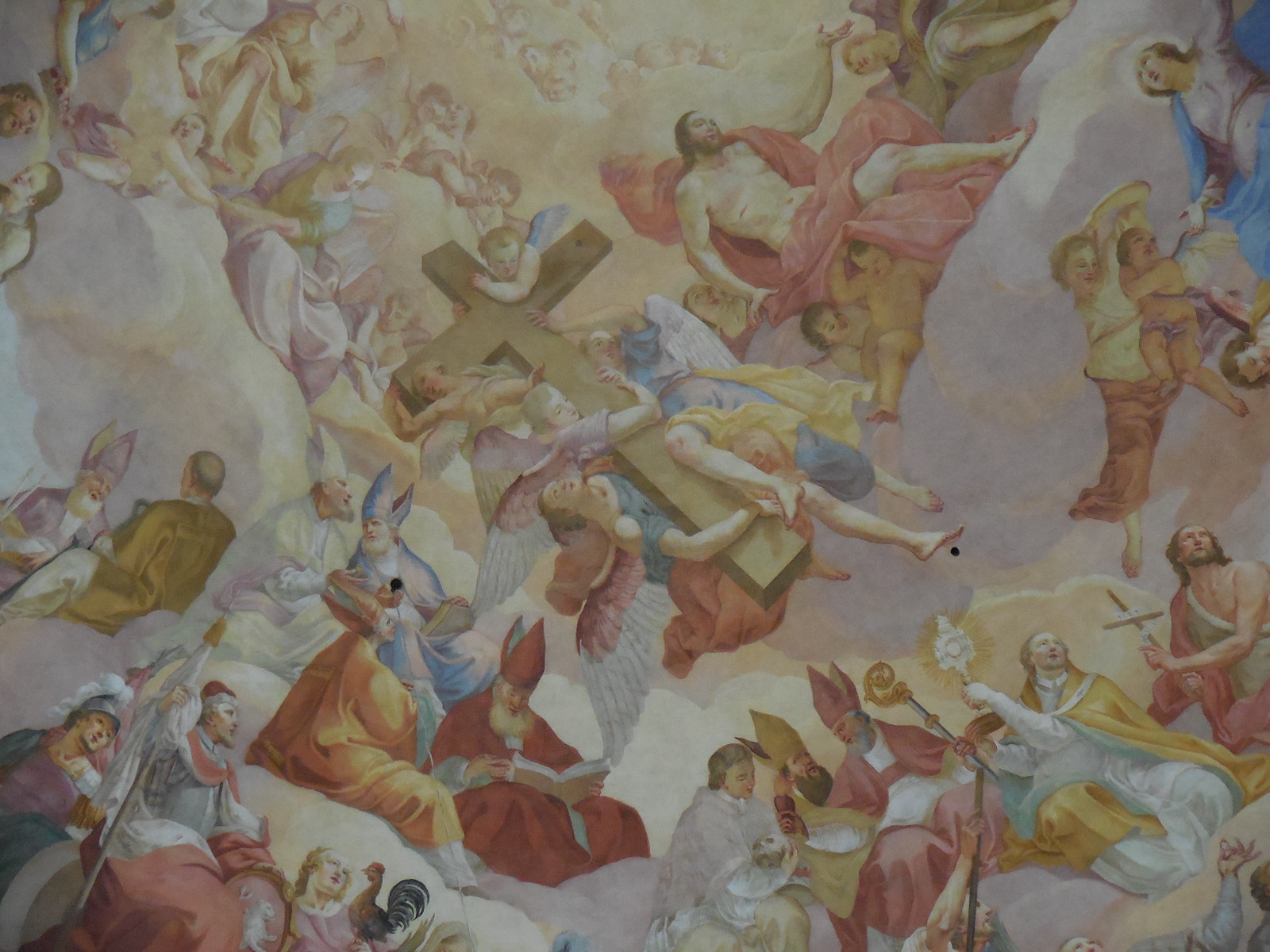
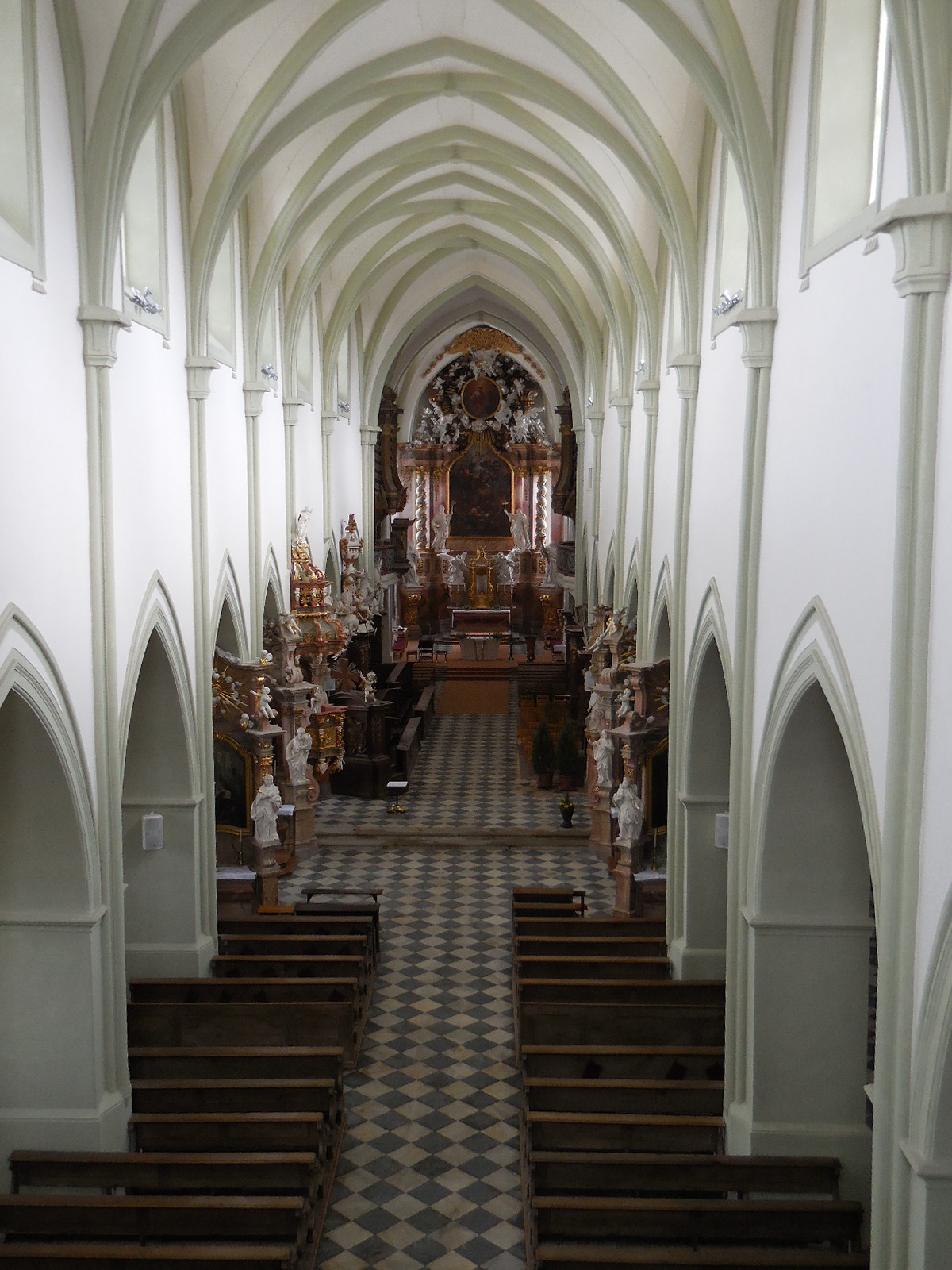
While in Naples, I toured the Teatro di San Carlo, where I could actually feel the history of the majestic structure. I was enchanted with the main hall, boxes, Royal box and two foyers. Even the façade was astounding. I particularly liked the statue of Apollo riding his chariot and the Ionic loggia.

NaplesTheatre12
I found the history of the place fascinating. Built in 1737, when King Charles VII of Bourbon was on the throne, the Teatro di San Carlo is 41 years older than the La Scala Theatre in Milan and 55 years older than the La Fenice Theatre in Venice. The architect of this building where opera and ballet are performed was Giovanni Antonio Medrano, who had served in the army of King Charles VII. He went on to design the Museo di Capodimonte, which housed the king’s palace and a museum. Later he was imprisoned for tax fraud of the Museo di Capodimonte.

NaplesTheatre14
Opening night at the Teatro di San Carlo took place November 4, 1737, on the king’s name day, when Achilles in Sciro was staged. Interestingly, a woman played the part of Achilles. That was only the beginning of the glorious history of Naples as a cultural center and opera powerhouse. I wondered how many stories had been played out on the stage, how many spectators had viewed performances over the centuries and who exactly were these theatregoers. What impressions did these audience members take home with them? Did they feel as awed by the theatre as I did, or did they just take the luxurious building for granted?

NaplesTheatre17
Perhaps the darkest day in the history of the theatre proved to be February 13, 1816, when a fire broke out during a dress rehearsal. In less than one hour, the dancing flames destroyed a large section of the building. The theatre was reconstructed in a mere nine months, and it took on a horseshoe appearance. The number of seats dwindled from more than 3,000 to 1,444. The Teatro di San Carlo holds the distinction of being the oldest horseshoe style theatre in the world. The theatre even remained open during most of World War I. The foyer was destroyed by a bomb attack in 1943, however. However, the structure was rebuilt promptly after the war.

NaplesTheatre4
Looking around the gold-and-red decorated interior with 184 boxes plus the Royal Box, I could not help thinking about the famous people who had graced the stage and the composers whose works had come to life here. Richard Strauss conducted here. Guiseppe Verdi wrote operas for this very theatre. In the 18th century, singers Vittoria Tesi and Carlo Broschi charmed audiences with their magical voices. Niccolo Paganini cast his spell on spectators here on two occasions. Other names associated with the theatre included Christoph Willibald Gluck, Johann Christian Bach and Luciano Pavarotti.

NaplesTheatre11
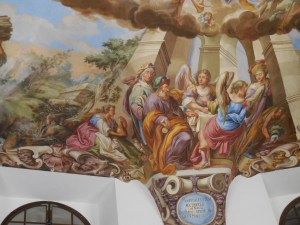
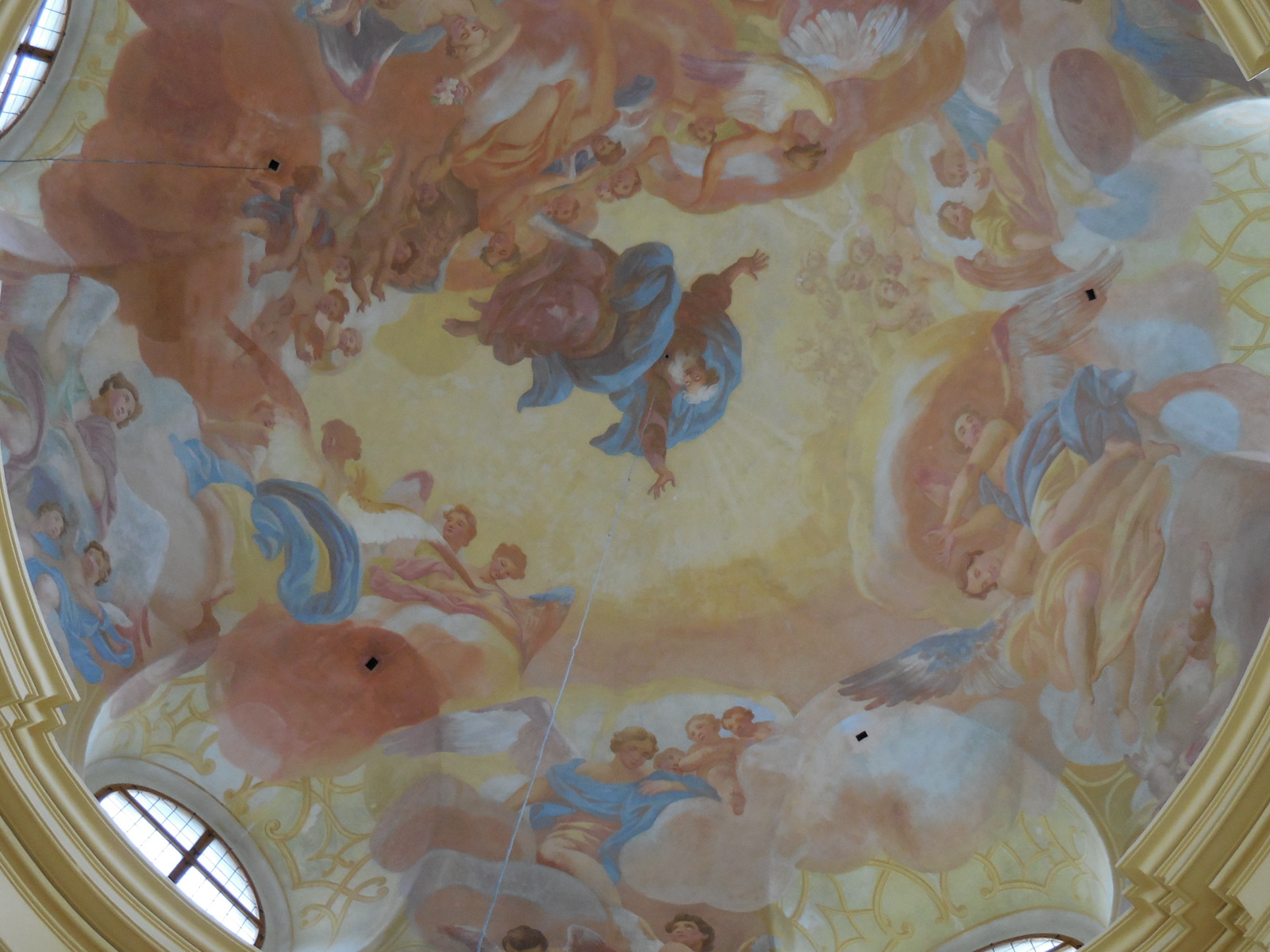
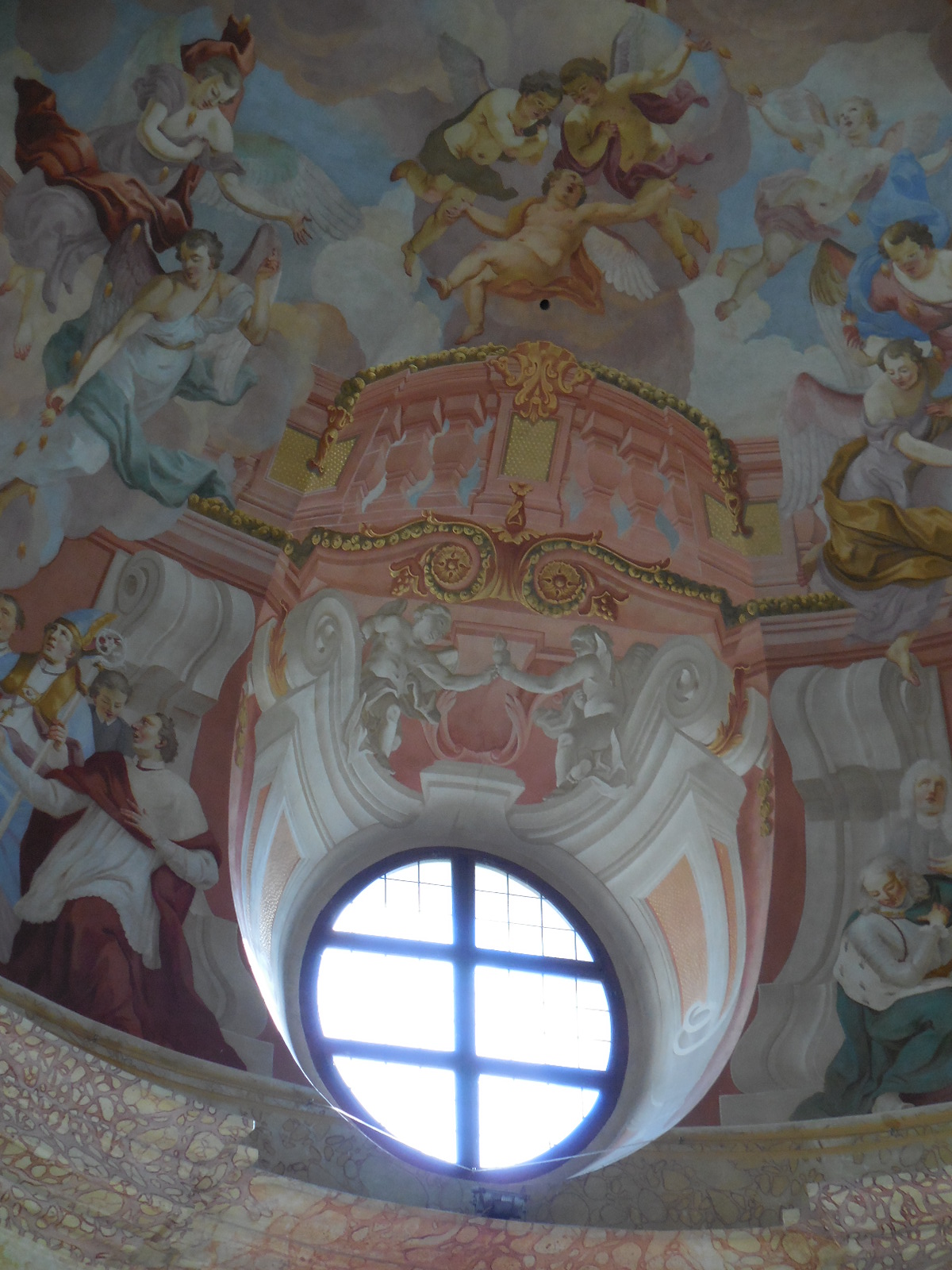
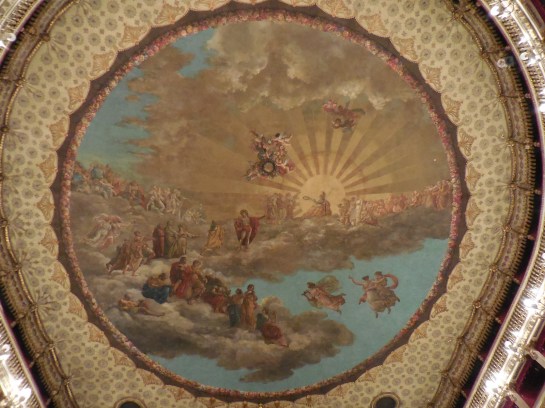
To be sure, the interior was breathtaking. The ceiling fresco took up a mythological theme, portraying Apollo presenting Minerva to the greatest poets in the world. The theatre curtain, adorned in 1854, also boasted a mythological scene with the Muses and Homer among poets and musicians. Putti and cornucopias played significant roles in the theatre’s decoration. The Royal Box, so bewitching in its gold color, could hold 10 people. There were workers repairing something in the Box, but we still got to sneak inside for a few moments.

NaplesTheatre10

Taking a seat in another box, I did not want to get up and leave. I just wanted to imagine all the scenes performed here, all the songs sung, all the music played. And then there were those richly adorned balustrades! The 184 boxes stood on seven levels. None of the boxes was furnished with curtains because the king wanted to be able to see spectators at all times.

NaplesTheatre8
The theatre was so beautiful that it made me dizzy. It seemed only fitting that such a majestic theatre was connected to the Royal Palace, which the Spanish viceroyalty had called home for 200 years, from the early 16th century to the early 18th century. I hadn’t been so impressed with a theatre since I had set my eyes on the Rococo horseshoe-shaped Cuvilliés Theatre of the Munich Residence.

NaplesTheatre2

When I bought my ticket, I hadn’t known what to expect. I hadn’t thought I would be so impressed, but the ceiling fresco, theatre curtain, red-and-gold decor and gilt adornment mesmerized me. I hoped to come back here to see an opera someday. This tour was one of the highlights of my trip to Naples.

Tracy A. Burns is a writer, proofreader and editor in Prague.

Archeological Museum in Naples Diary

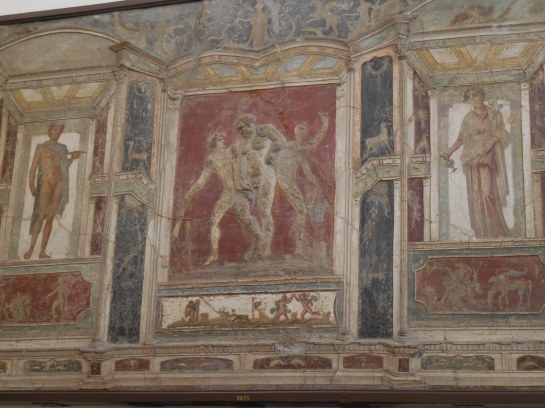
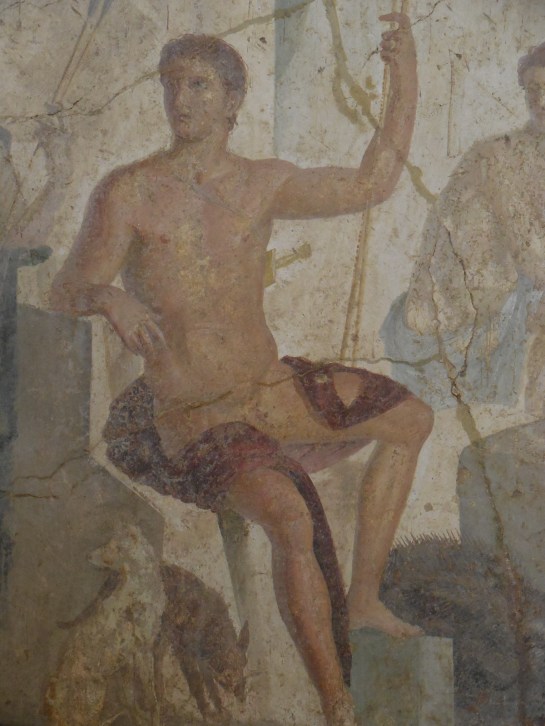
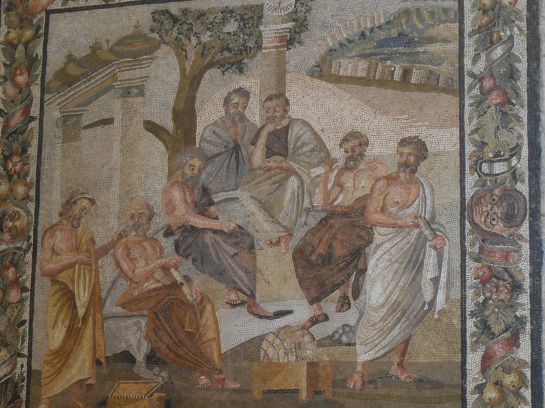
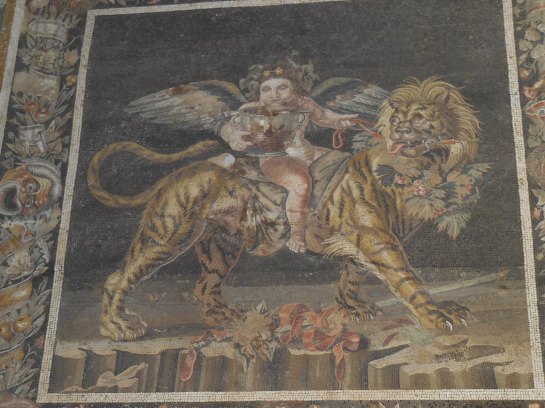
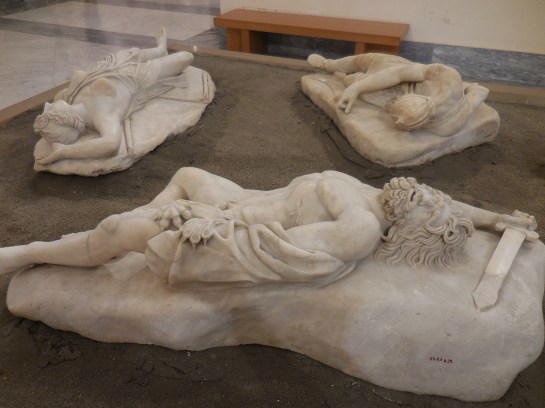
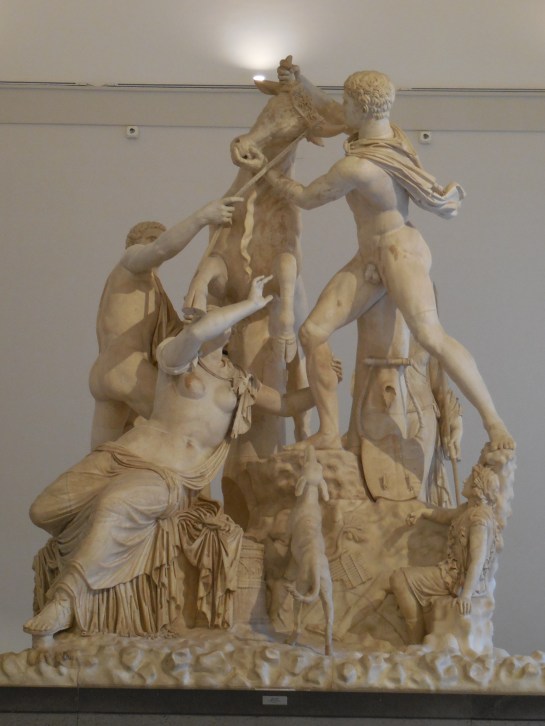
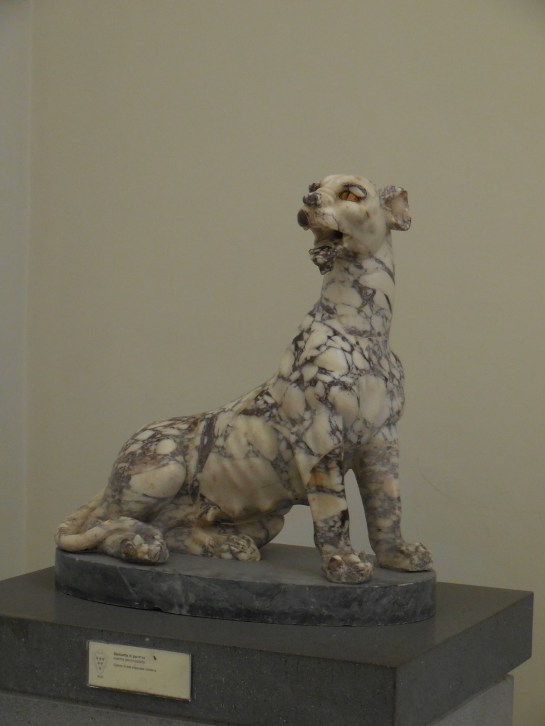
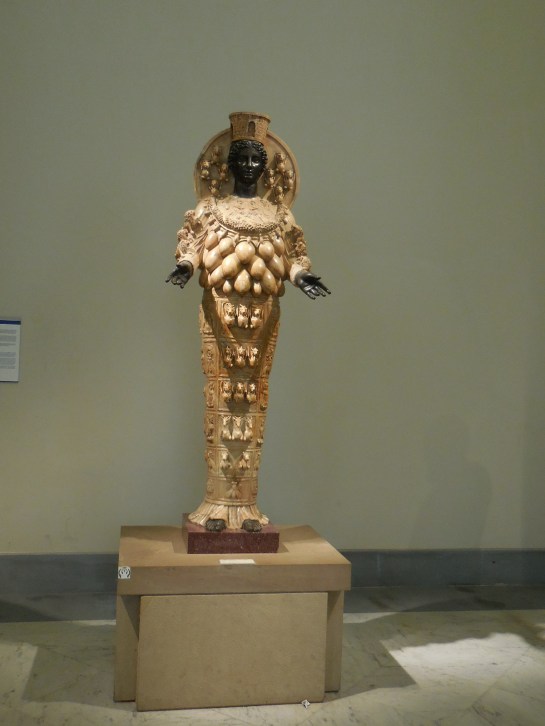
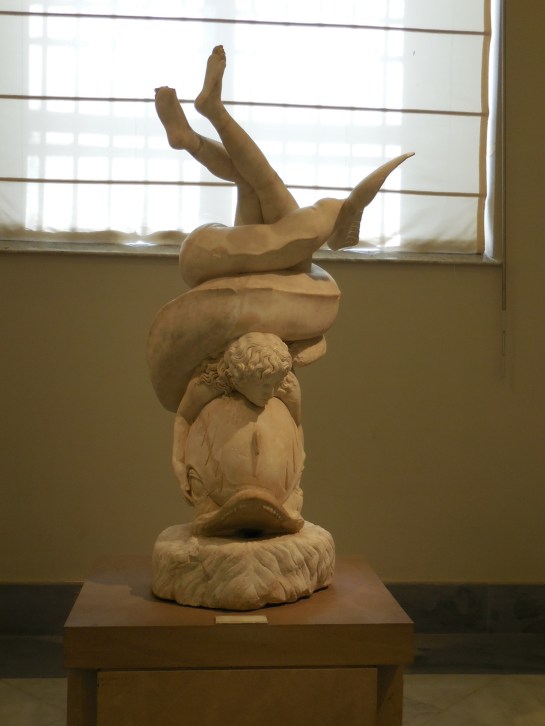
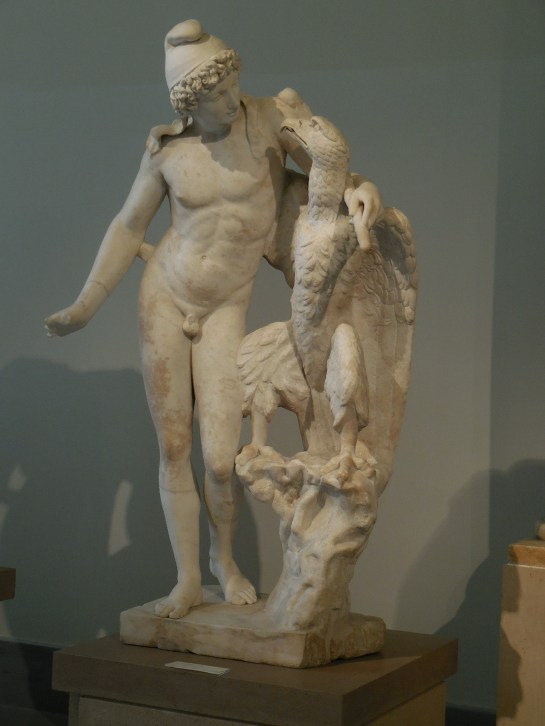
The Archeological Museum in Naples boasts one of the largest collections of antiquities in the world with numerous sculptures, paintings, mosaics, frescoes, jewels, coins and more. Most of the mosaics and frescoes hail from Pompeii and Herculaneum. Items from the Villa dei Papiri in Herculaneum and mosaics from the House of the Faun in Pompeii astound. Discoveries from Cumae also make up the permanent exhibition as do Egyptian artifacts. There is a Secret Cabinet of obscene art, such as statues, paintings and gems, from Herculaneum and Pompeii. Visiting this museum was the highlight of my visit to Naples, and I was most enthralled with the statuary, mosaics and frescoes.

NaplesArchMuseum3

NaplesArchMuseum4

NaplesArchMuseum5

NaplesArchMuseum7

NaplesArchMuseum10

NaplesArchMuseum13

NaplesArchMuseum15

NaplesArchMuseum16

NaplesArchMuseum20

NaplesArchMuseum21

NaplesArchMuseum22

NaplesArchMuseum23

NaplesArchMuseum24

NaplesArchMuseum26

NaplesArchMuseum28

NaplesArchMuseum29

NaplesArchMuseum30

NaplesArchMuseum34

NaplesArchMuseum35

NaplesArchMuseum38

NaplesArchMuseum39

NaplesArchMuseum41

NaplesArchMuseum42

NaplesArchMuseum44

NaplesArchMuseum47

NaplesArchMuseum50

NaplesArchMuseum54

NaplesArchMuseum56

NaplesArchMuseum57

NaplesArchMuseum59

NaplesArchMuseum60

NaplesArchMuseum61

NaplesArchMuseum63

NaplesArchMuseum64

Tracy A. Burns is a writer, editor and proofreader in Prague.


Musée du Petit Palais Photo Diary

AvignonPetitPalaisceiling2AvignonPetitPalaisceiling1

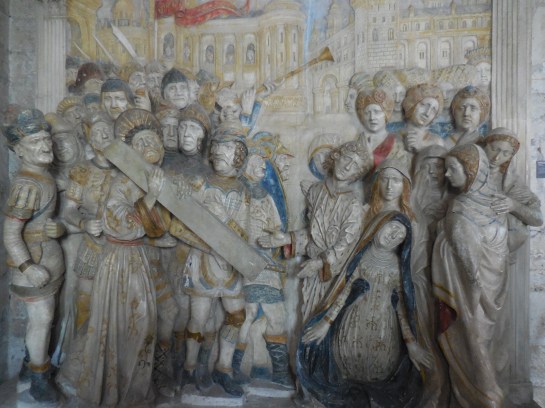
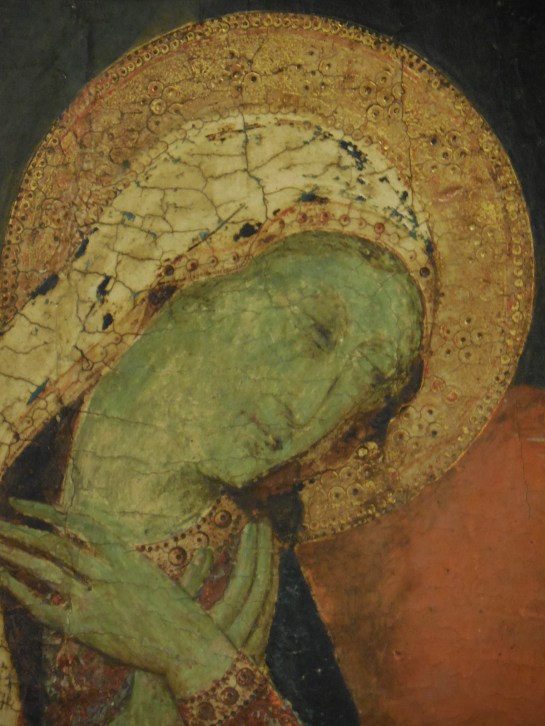
In June of 2015, I visited the Musée du Petit Palais in Avignon and was enamored by the Italian primitive and early Renaissance painting as well as the impressive Renaissance works rendered by the French Avignon School. The 14th century building houses art created from the end of the 13th century to the beginning of the 16th century in chronological and geographical order and includes The Virgin and Child by Sandro Botticelli. Some styles represented include the Siennese School, Florentine Renaissance and the Marches School. There are about 300 Italian paintings housed in the museum that was established in 1976. The structure used to be a citadel, an archbishopric and a Catholic secondary school before it became a museum.

AvignonPetitPalais4AvignonPetitPalais7AvignonPetitPalais10AvignonPetitPalais12AvignonPetitPalais14AvignonPetitPalais15AvignonPetitPalais18AvignonPetitPalais20AvignonPetitPalais22AvignonPetitPalais23AvignonPetitPalais26AvignonPetitPalais28AvignonPetitPalais30AvignonPetitPalais32AvignonPetitPalais31AvignonPetitPalais35

Tracy A. Burns is a writer, proofreader and editor in Prague.

Santini Tour of east Bohemia and Moravia Diary

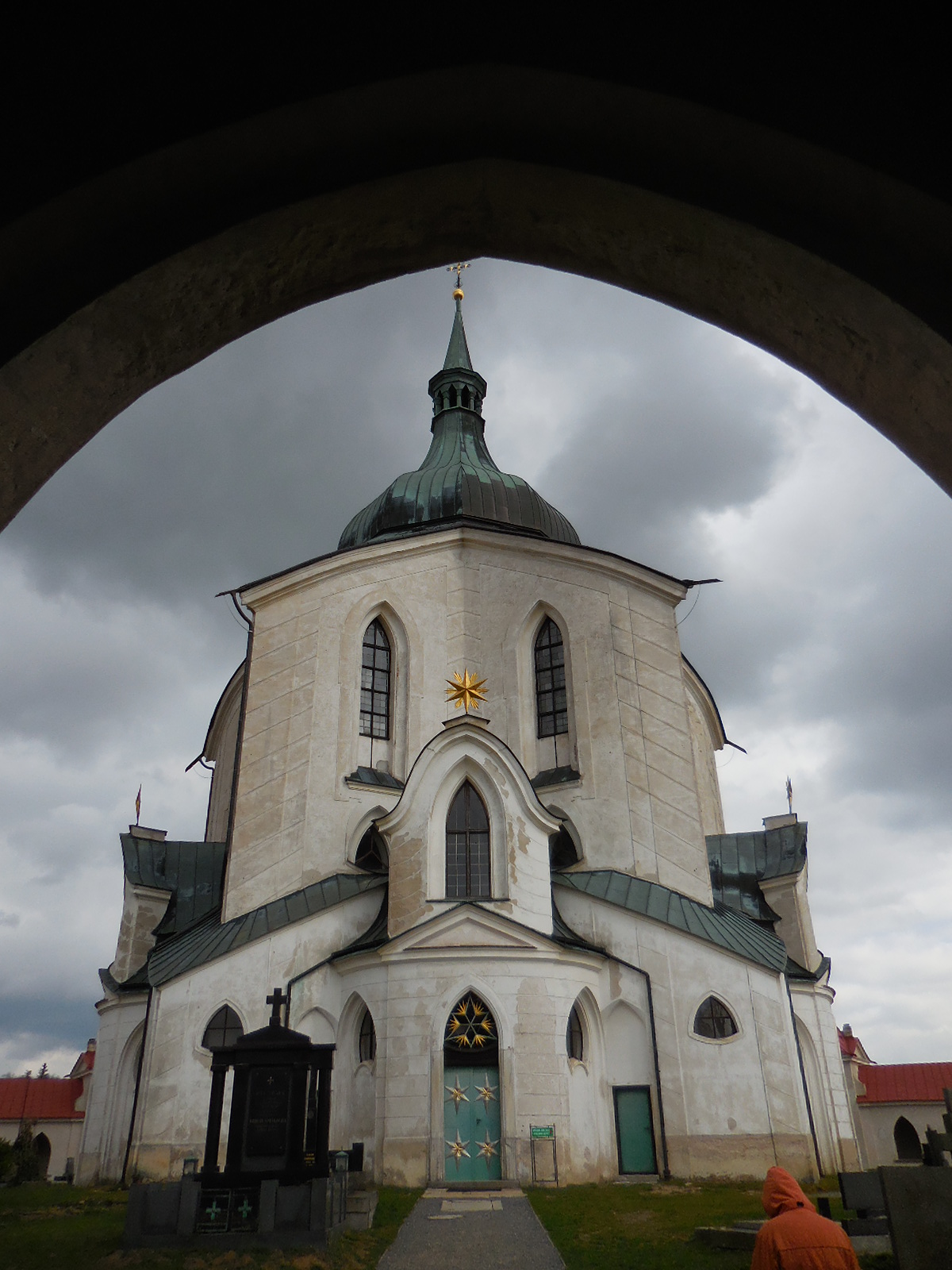
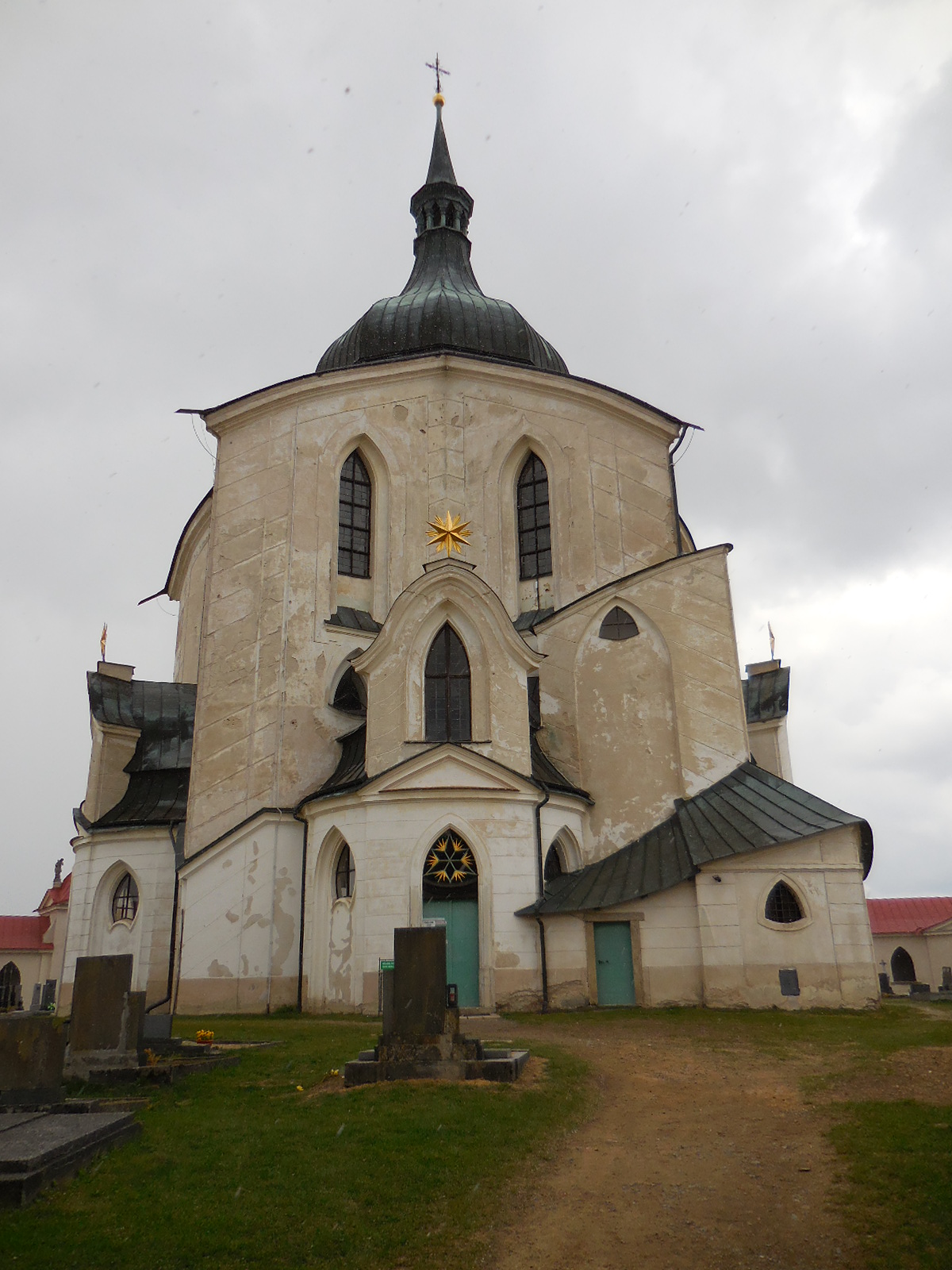
The Holy Shrine of St. John of Nepomuk, Zelená Hora

The Holy Shrine of St. John of Nepomuk, Zelená Hora

For some years I had wanted to go on a tour of places designed by Jan Blažej Santini-Aichel, an 18th century Czech architect of Italian origin, who lived from 1677 to 1723. I am fascinated by Santini’s unique Baroque Gothic style, inspired by the Italian radical Baroque use of geometry and symbolism. I see Santini’s structures as rational yet radical. Santini elevates Gothic art to a new form, offering fresh perspectives and giving new insights.

Jan Blažej Santini-Aichel

Jan Blažej Santini-Aichel


Santini was supposed to follow in his father’s footsteps and become a stonemason, but palsy prevented him from doing so. As a student he was mentored by Prague-based architect Jan Baptiste Mathey. During a four-year sojourn in Italy, Santini became enamored with works by Italian architects Francesco Borromini and Guarino Guarnini and their radical Baroque style. Santini was commissioned to reconstruct many religious sites. Baroque art became the fashion during the era when the Catholic army triumphed in the Thirty Years’ War and remained so afterwards, when the Catholicism flourished in the Czech lands. During a mere 46 years, Santini cast his magic spell on about 80 buildings.

So, when I got the opportunity to travel with Czech tour company arsviva to Santini’s sites in eastern Bohemia and Moravia, I jumped at the chance. I was not to be disappointed.
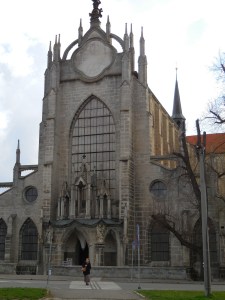
The facade of the Church of the Assumption of Mary and St. John the Baptist

The facade of the Church of the Assumption of Mary and St. John the Baptist


We began our tour where Santini had launched his Baroque Gothic style, with the Church of the Assumption of Mary and St. John the Baptist in central Bohemia’s Sedlec, near Kutná Hora. The monastery hailed from the middle of the 12th century, when it was a Romanesque style church. It burned down during the 15th century Hussite Wars and would not get a makeover for 278 years.
The interior of the Church of the Assumption of Mary and St. John the Baptist

The interior of the Church of the Assumption of Mary and St. John the Baptist


Then, during the 18th century, the 25-year old Santini worked his magic on the largest church in the Czech lands. The façade featured a portico with a triple canopy. A four-leaf rosette decorated the gable of the façade. A large window allowed the light to stream in and give the space a unique character. I had never realized that light played such a major role in Santini’s structures until I saw how it made this church so dynamic.
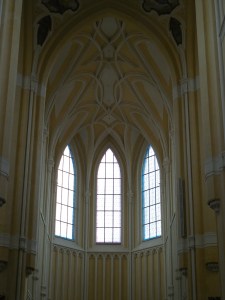
SantiniSedleccathint2
The vaulting in the main body, the transept and choir boasted a network of circular ribs. The gallery and side body featured dome vaults divided by lancet rib bands. There also was a self-supporting staircase, another common element in Santini’s designs.
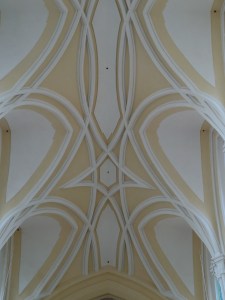
SantiniSedleccathint4
I loved the ceiling vaulting. The complex network of vaults reminded me of the complex situation Czechoslovakia had found itself in not long after the Velvet Revolution, when I moved to Prague in 1991. It had been an exciting time as Czechoslovakia had tried to find its own identity in a democratic system. Czechoslovakia would soon split apart, unable to negotiate the difficult roads. I, too, had been trying to find my own self-identity, not a simple matter, either. But I like to think, that unlike the situation with Czechoslovakia, I found my way through the network of vaults.
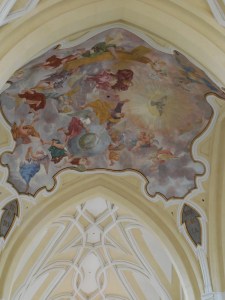
SantiniSedleccathint8
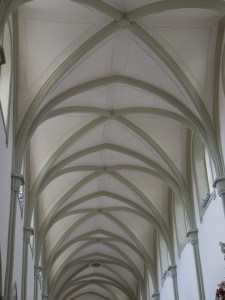
Next stop: Želiv Monastery Church of the Virgin Mary’s Birth. The monastery was founded in 1139. Santini’s designs were implemented here from 1714 to 1720. This time Santini was not changing the structure into his unique Baroque Gothic style. He had another building constructed and connected it to a Gothic chancel that he had renovated. A Gothic monstrance made of wrought iron shows off in Santini’s style. The three naves with galleries were separated by hanging pendant keystones. This feature gave the space a sense of fragility.
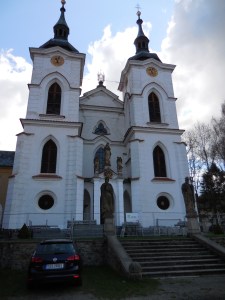
Želiv Monastery's Church of the Virgin Mary's Birth

Želiv Monastery’s Church of the Virgin Mary’s Birth
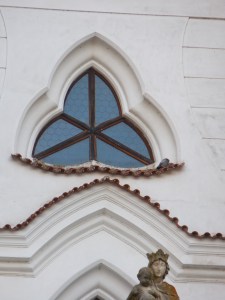

SantiniZelivchurch3
The two 44-meter high clock towers close a polygonal arcade antechamber, one feature of Santini’s designs. The façade has a triangular gable. The wooden Baroque main altar dated from 1730, with a picture of the Birth of the Virgin Mary and symbols of the four evangelists. There were gilded reliefs on the altar under the statues of prophets. Behind the altar was an original Gothic sanctuary. The organ dated from 1743. Most of the interior furnishings hailed from the first half of the 18th century, after the devastating fire of 1712.
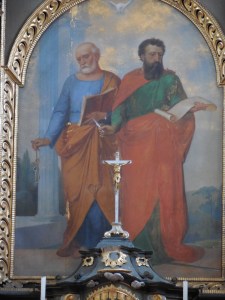
SantiniZelivchurch10
SantiniZelivchurch11
Želiv experienced harsh times during the totalitarian regime. In 1950 the Communists shut down the monastery and transformed it into a detention camp for monks. Then in 1957 it became a psychiatric institution and remained so until 1992. The monks were able to return in 1991.
Church of the Assumption of Our Lady in Žďár nad Sázavou

Church of the Assumption of Our Lady in Žďár nad Sázavou

SantiniZdarchurch4
SantiniZdarchurch1
SantiniZdarchurch6
Then we traveled to Žďár nad Sázavou, where a monastery had been erected in the 13th century. I had visited the monastery some years earlier to see a museum devoted to books. I will forever recall excitement of seeing a 1984 exile edition of Milan Šimečka’s Restoration of Order (Obnovění pořádku), one of my most treasured sources of information about life during the 1970s normalization period.
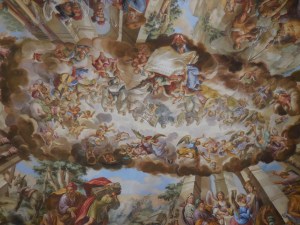
Monumental fresco in the prelature

Monumental fresco in the prelature


SantiniZdarceilingfresc5
SantiniZdarceilingfresc6
Back to Santini. This time Santini made his mark in the Church of the Assumption of Our Lady mostly with the massive organ lofts that were situated in front of a Gothic altar in the transept. He also worked on the naves. The feeling I got from the church was so uplifting. Literally, I found myself looking upwards but also mentally I found myself in a good mood, delighted by the Baroque decoration that enveloped the space. We also saw the prelature, which featured a monumental fresco celebrating the angelic bliss of the Cistercians. The fresco was bursting with energy, and I found myself embracing life to the fullest.
Lower Cemetery shaped as a human skull

Lower Cemetery shaped as a human skull


Santini designed other structures for the town as well. We also saw the Lower Cemetery, which Santini shaped as a human skull with three chapels. It was constructed at a time when the plague was spreading throughout Europe. Because the plague never reached Žďár nad Sázavou, no one was ever buried there. I admired the design because it was so bold, so vivacious.
SantiniZdarDolniHrbitov1

Perhaps Santini is best known for his last creation, the site we visited next – The Holy Shrine of St. John of Nepomuk on Green Mountain (Zelená hora), the area where Saint John of Nepomuk was allegedly raised, near the historical border of Bohemia and Moravia. I had been to this UNESCO World Heritage Site once previously, during a bitterly cold October afternoon, but I had been on my own and had not fully appreciated it.
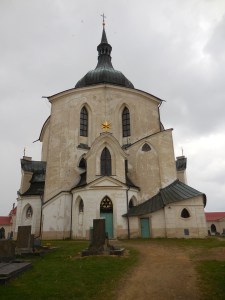
Holy Shrine of St. John of Nepomuk, Zelená Hora

Holy Shrine of St. John of Nepomuk, Zelená Hora


This time I was on a tour, and the guide explained lucidly about the geometric symbolism that Santini employed. I immediately saw the connection with Borromini’s radical Baroque, which Santini had forged into his own unique style. Unfortunately, although it was April, it was snowing, and I was only one of many participants not dressed warmly enough for the cold temperatures.
SantiniZelenaHora3
SantiniZelenaHora4
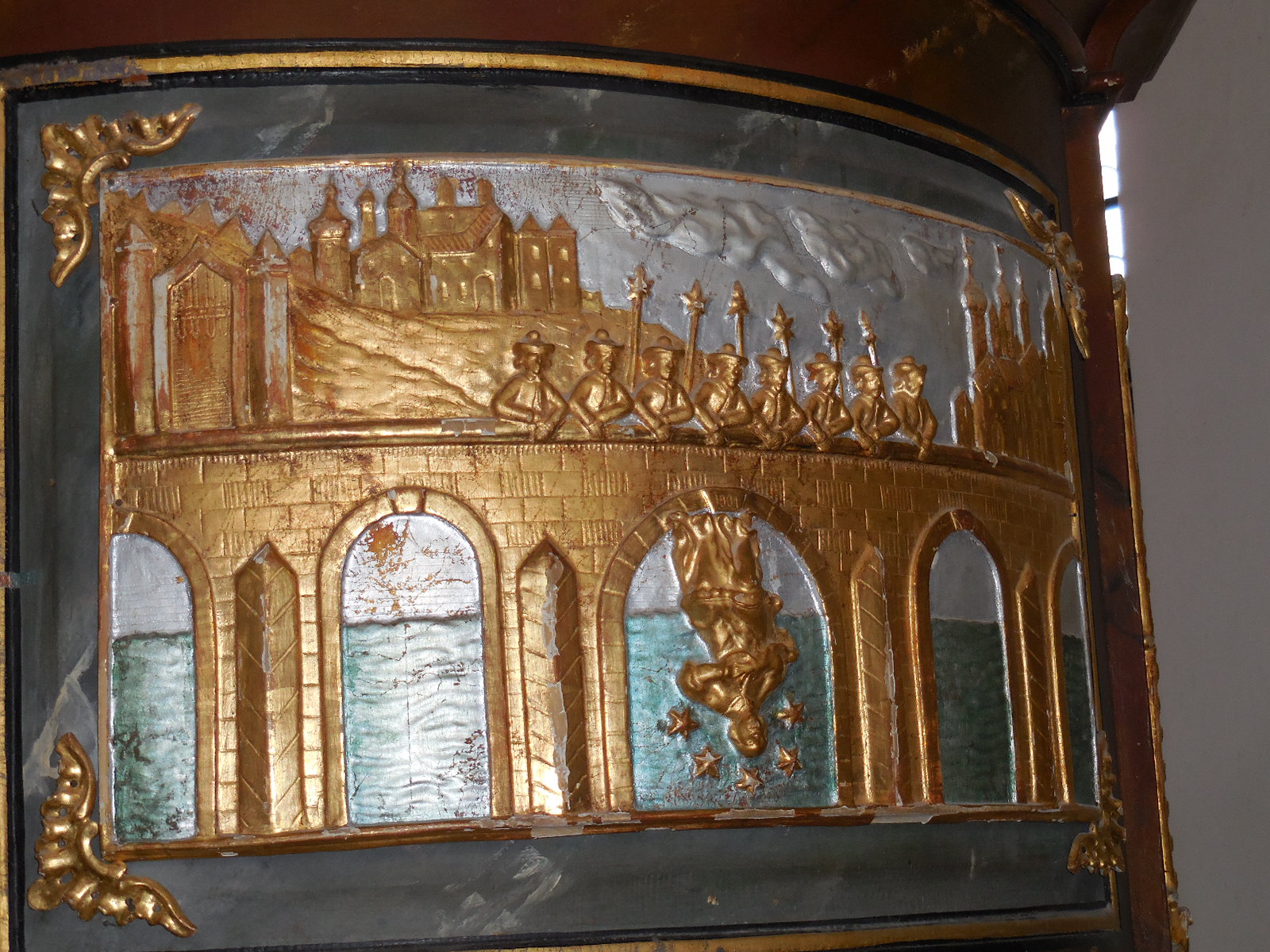
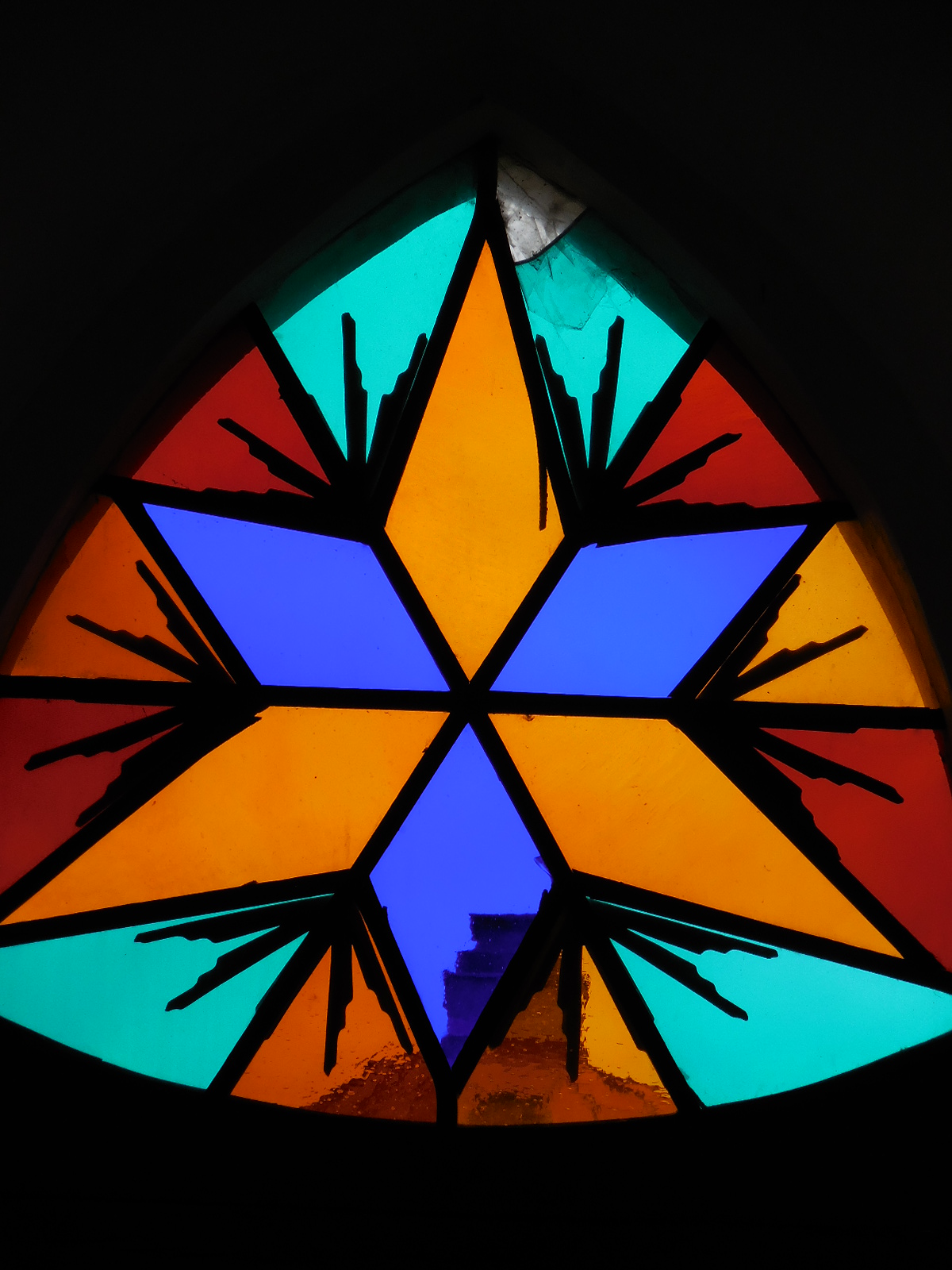
In 1719 Saint John of Nepomuk’s tomb was opened, and the tissue thought to be his tongue was found to be intact. Žďár nad Sázavou Abbot Václav Vejmluva wanted to celebrate this miracle and show how much he revered the saint, so Santini designed a church and cloister area with five chapels and five gates on the hill. The number five is of great importance in Santini’s plans. The ground plan was shaped like a five-pointed star. The number five represented the five wounds of Christ as well as Christ’s five fingers of blessing. It also stood for the five stars that, according to legend, appeared when the queen’s confessor John of Nepomuk died, drowned in the Vltava on the orders of King Wenceslas IV, allegedly for refusing to reveal the queen’s confessions to her husband. There are five altars in the church, too.
Zelená Hora

Zelená Hora


SantiniZelenaHora7
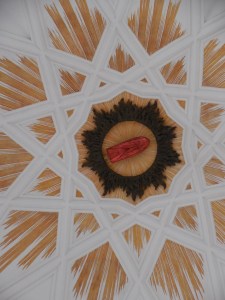
The construction of a church based on a circular form and the intersecting shapes fascinated me, but I was glad to be finally ushered inside, temporarily escaping from the foul weather. The design was so rational yet inventive at the same time. The place had a mystical quality, too. The nave of the small church was surrounded by four chapels and a chancel as well as five ante chapels. I looked upward and was captivated by the representation of a large, red tongue on the dome. The windows above the entrances in the lantern chapels took the form of tongues as well.
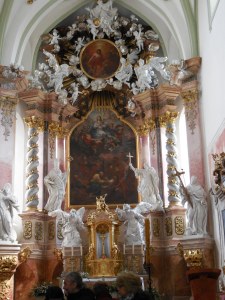
The main altar at the Holy Shrine of St. John of Nepomuk
The main altar at the Holy Shrine of St. John of Nepomuk


The dome of the Holy Shrine of St. John of Nepomuk with a painting of a tongue

The dome of the Holy Shrine of St. John of Nepomuk with a painting of a tongue


The main altar in the Holy Shrine of St. John of Nepomuk

The main altar in the Holy Shrine of St. John of Nepomuk


The main altar showed St. John of Nepomuk dramatically rising from a globe which boasted five eight-pointed Cistercian stars, standing for the five continents where Christianity ruled. Three angels were positioned around the globe, and another two opened a baldachin. The scene reminded me of a theatre performance, as if the angels were announcing that a play was about to begin. (During the Baroque period, theatre had flourished.)
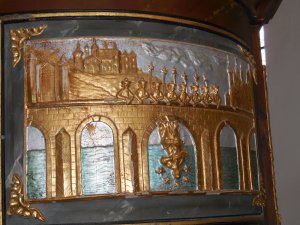
Detail of the pulpit at Zelená Hora

Detail of the pulpit at Zelená Hora


SantiniZelenaHoraint10
The tongue-shaped windows at Zelená Hora

The tongue-shaped windows at Zelená Hora


Before long it was time to brave the freezing weather again, and we made our way to the bus that would take us to the Church of Saints Peter and Paul in Horní Bobrová, built from 1714 to 1722. I noticed that the entrance portal took the form of a pentagon. Santini preserved only the nave of the originally Late Romanesque church that had originally stood there. He transformed the nave into a chancel with altar and added another nave. In doing so, he changed the entire orientation of the church.
Church of Saints Peter and Paul, Horní Bobrová

Church of Saints Peter and Paul, Horní Bobrová


Interior of the Church of Saints Peter and Paul

Interior of the Church of Saints Peter and Paul


The next church we saw was also in a village, this one called Zvole, which is officially in the Vysočina region. Santini redesigned the originally Gothic Parish Church of Saint Wenceslas so that the ground plan was shaped like a Greek cross. Construction took place from 1713 to 1717. The highlight of this church was its roof that sported a lantern topped with a crown, symbolizing the Czech patron saint. Santini extended the eastern section of the church, which featured a chancel. The church also had two rectangular towers.
The Parish Church of Saint Wenceslas, Zvole
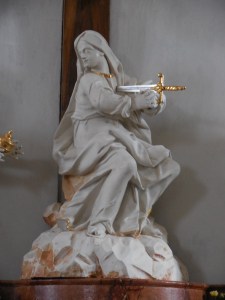
The Parish Church of Saint Wenceslas, Zvole


SantiniZvoleint8
SantiniZvoleint9
SantiniZvoleint14
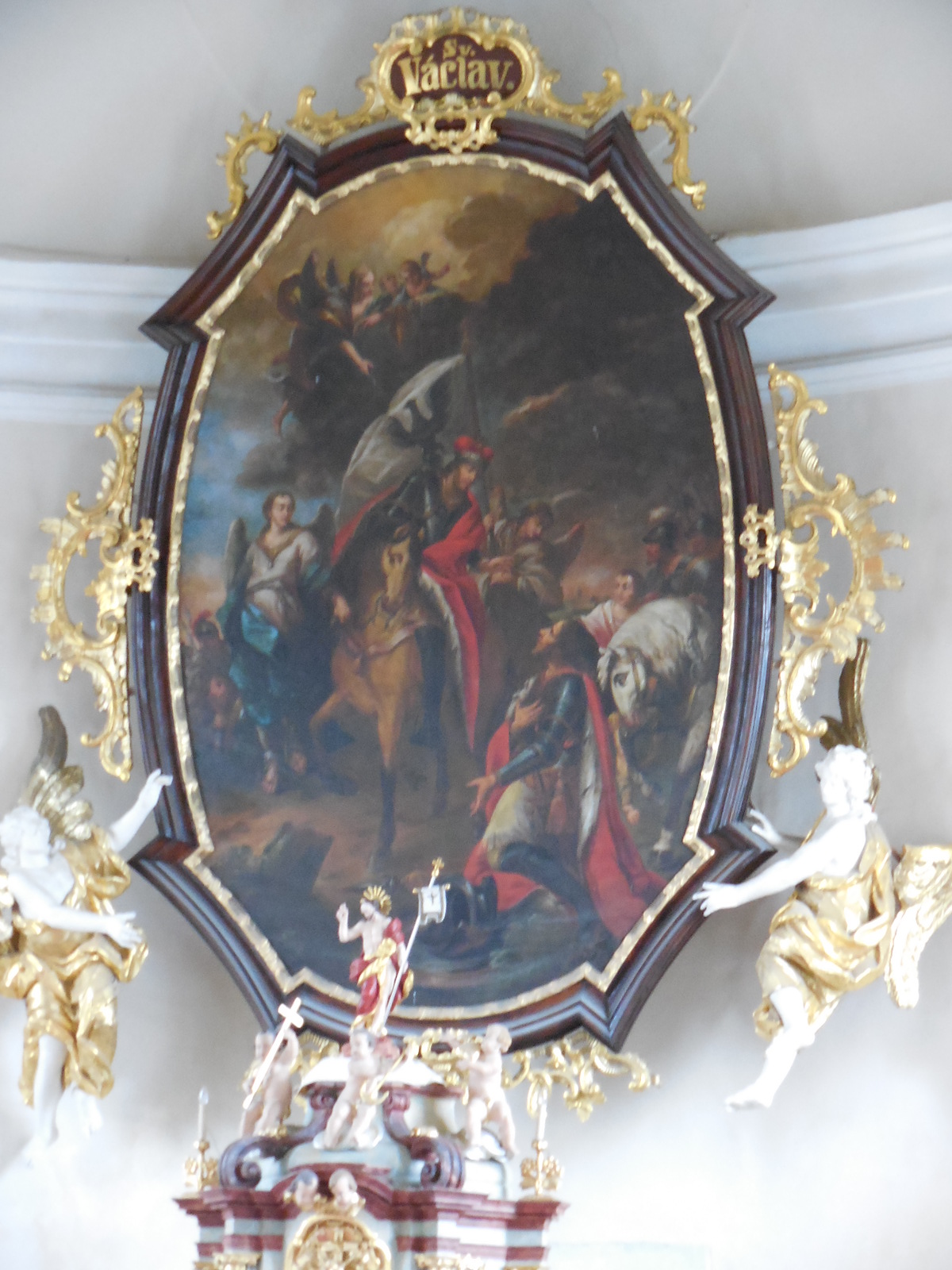
Abbot Vejmluva had hired Santini for this project, and the architect paid homage by putting his patron’s initials, shaped as a W, along with a cross on the gable. Because the church was damaged by fire in 1740, most of the interior furnishings dated from the mid-18th century. The main altar hailed from 1770. Its painting showed a victorious Saint Wenceslas. The picture, hailing from the second half of the 17th century, was the work of the Czech Baroque master, Karel Škréta.
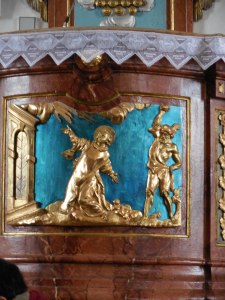
Detail of the pulpit in Zvole

Detail of the pulpit in Zvole


Before checking into our hotel in Žďár nad Sázavou, we stopped in front of a pub at Ostrov nad Oslavou, which boasted a ground plan in the shape of the letter W, meant to honor Vejmluva, who had Santini build it. We then went to our hotel, an ugly, gray building with decent rooms and decent food in a quaint dining area.
Church of the Virgin Mary, Obyčtov

Church of the Virgin Mary, Obyčtov


SantiniObyctovint1
The next day began with a trip to Obyčtov, where Santini had arranged the ground plan of the Church of the Virgin Mary in the shape of a turtle, symbolizing the constancy of faith. The shapes of Santini’s structures continued to fascinate me. I was still enamored by the Lower Cemetery in the shape of a human skull and the geometric forms at the Holy Shrine of Saint John of Nepomuk on Green Mountain. Santini was able to make the church in Obyčtov so dynamic by giving it such a defining, bold shape. I had abhorred math as a youth, but I appreciated how Santini integrated geometrical forms into his designs. I reveled in the mathematical symbolism of Santini’s creations. We happened to have a church organist in our group, and he played the organ in Obyčtov. With the notes resonating throughout the Baroque structure, I had an even greater appreciation of Santini’s architecture.
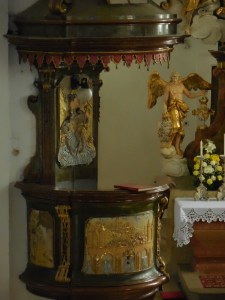
Pulpit at the Church of the Virgin Mary, Obyčtov

Pulpit at the Church of the Virgin Mary, Obyčtov


SantiniObyctovint4
I had visited Rajhrad Monastery about six years earlier, when I had devoted my time there to the Museum of Moravian Literature and an exhibition on the life and work of my favorite Czech writer, Bohumil Hrabal. This time we visited the Church of Saints Peter and Paul and the monastery interiors apart from the museum.
Church of Saints Peter and Paul in Rajhrad

Church of Saints Peter and Paul in Rajhrad


The monastery was established back in 1048 and is the oldest existing monastery in Moravia. Originally Romanesque in style, the monastery was rebuilt in Baroque style in the 18th century, thanks to Santini. It remained functional during Emperor Joseph II’s reign. It experienced dark days under the Communist regime. In 1950 the Communists took it over, and the monks were placed in detention camps. The army took over the complex. After the Velvet Revolution the monastery was in a shambles.
SantiniRajhradchurchext3
The monastery was situated on swamp land, and Santini solved this problem just as he had at the west Bohemian monastery of Plasy. He placed the building on wooden piles and grates. He flooded the oak wood with water so that they would not rot. A small pond nearby had formed a sort of water reservoir, a place where rainwater could drain and a place where the underground water could level out. Unfortunately, in the latter part of the 20th century, the pond was filled up, and some of the piles began to rot, which did not fare well for the walls. Concrete has been used to fill in the foundations.
Interior of the Church of Saints Peter and Paul

Interior of the Church of Saints Peter and Paul


The space that fascinated me most was the third largest monastery library in the country. The illuminated manuscripts on display were dazzling. The oldest hailed from the ninth or 10th century and dealt with the lives of martyrs. In awe, I gaped at The Bible of Kralice. It was the first complete translation of the Bible from original languages into Czech, dating from 1579. The Bible of Venice was on display, too. It was the first Czech printed bible published abroad, in Venice, during 1506. Some shelves only contained Bibles, but others held books about theology, history, medicine and mathematics, for example. There were even some works of fiction in the library. The books were written in Latin, German, English, French and Hebrew, for instance. I took a few moments to gaze at the Pergameon manuscript from the 13th century.
SantiniRajhradchurchint2
The stunning fresco on the ceiling celebrated the Benedictine Order. The fresco also included portrayals of musical instruments. There was illusive painting of three statues in the room, too. What really caught my attention, though, was the large globe. It took a monk 16 years to create the globe that had been finished in 1876. He had drawn the entire world on it by hand. There were various clock mechanisms on display, and clocks told the time at noon in various towns in the world, such as Tokyo, Melbourne and Honolulu. The huge, white books in one corner hid a staircase that went up to the gallery.
SantiniRajhradchurchint5
The Church of Saints Peter and Paul used decoration of artificial marble, which was more expensive and lavish than natural marble. This space was just one more example of Santini using light in a dynamic way so that the visitor is drawn toward the main altar. Yet the light affects each space in a different way. Each section has its own intensity, giving the church a unique character.
SantiniRajhradchurchint1
The ceiling frescoes astounded me. They were so dynamically and dramatically Baroque. This was an altogether different Baroque than we had witnessed the previous day. This Baroque was livelier, jumping at the viewer, more intense, practically rippling with tension. The style of Baroque was more open than the rather closed, Czech style we had seen the previous day because Rajhrad was closer to Vienna, where there was a different understanding of Baroque. The feeling in Rajhrad was uplifting. Looking up at the ceiling frescoes, I felt as if I could soar into heaven.
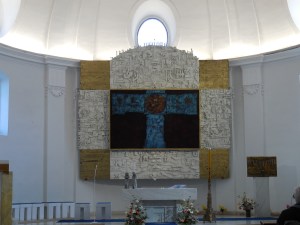
The main altarpiece in Jedovnice

The main altarpiece in Jedovnice


Taking a break from Santini, we visited two modern churches. The first one was in the village of Jedovnice, which was first mentioned in writing during 1269. A church had stood in the village since the 13th century. The Church of Saints Peter and Paul was built from 1783 to 1785, though the foundations of the tower go back to 1681. However, a fire destroyed most of the town in 1822. During 1873 a Neo-Gothic main altar was installed with a painting of the two saints. From the outside it looked like a typical village church. The interior, though, was a different story.
Closeup of the main altar

Closeup of the main altar


In 1963 the main altar was dismantled, and in its place appeared a modern work of art by Mikuláš Medek, a prominent Czech painter during the second half of the 20th century, and Jan Koblasa, a Czech sculptor, painter, poet and musician who also had decorated the presbytery. The balustrade on the organ loft was designed by one of my favorite contemporary sculptors, Karel Nepraš, who had a very unconventional style. I had always been intrigued by Nepraš’ sculptures made of wire, pipes or metal objects.
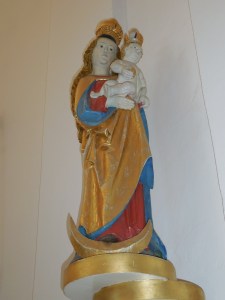
A Gothic statue in the modern church at Jedovnice

A Gothic statue in the modern church at Jedovnice


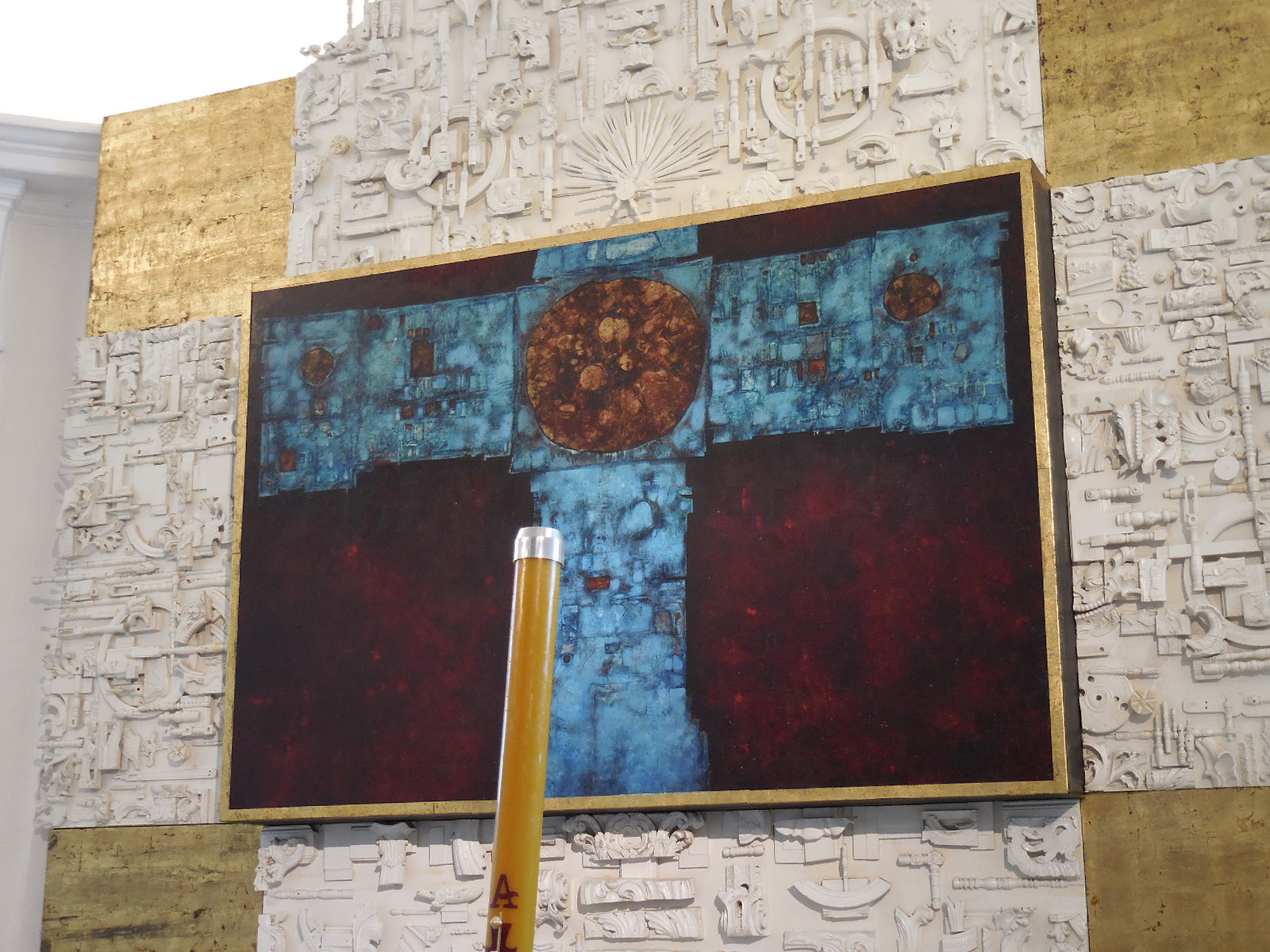
The main altar picture showed Christ’s cross painted in blue, which stood for hope. The gold circle in the middle of the Cross meant that the value of the cross is inside; a person first must comprehend God’s suffering before he or she is able to have hope. The powerful picture had a mystical quality.
SantiniJedovniceint5
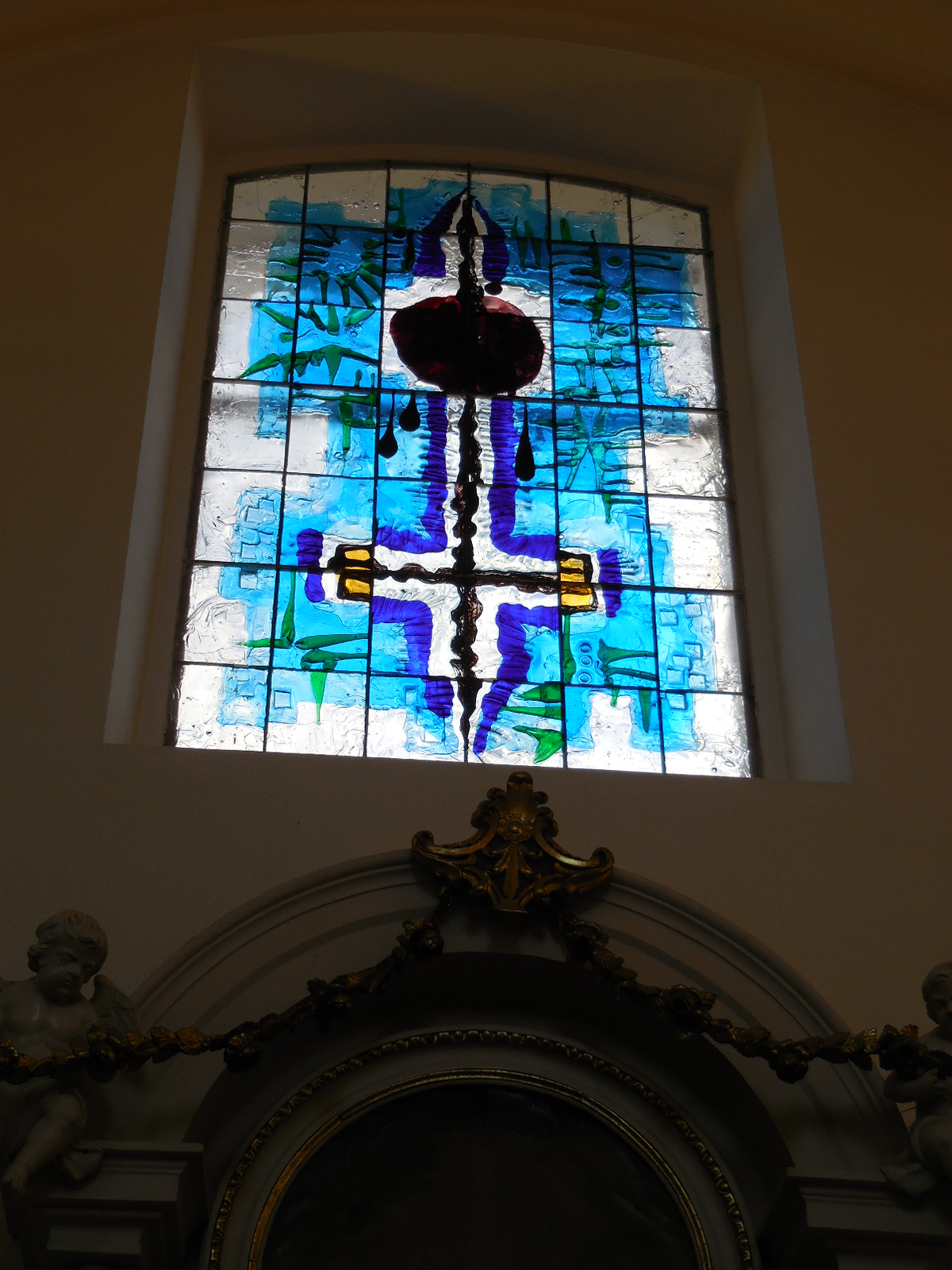
The modern windows in the nave got my attention. For example, one showed the death of Saint Paul, showing how the execution sword becomes a path to new life. The window symbolizing the death of Saint Peter was decorated with tears in the background to show Peter’s regret at having denied Christ three times. I also noticed that the cross was upside down, the way Peter was crucified. The white, modern pulpit startled me. The Gothic Madonna had been brought from a church destroyed during the 15th century Hussite wars and seemed very out-of-place with the abstract adornment.
The Chapel of Saint Joseph in Senatářov

The Chapel of Saint Joseph in Senatářov


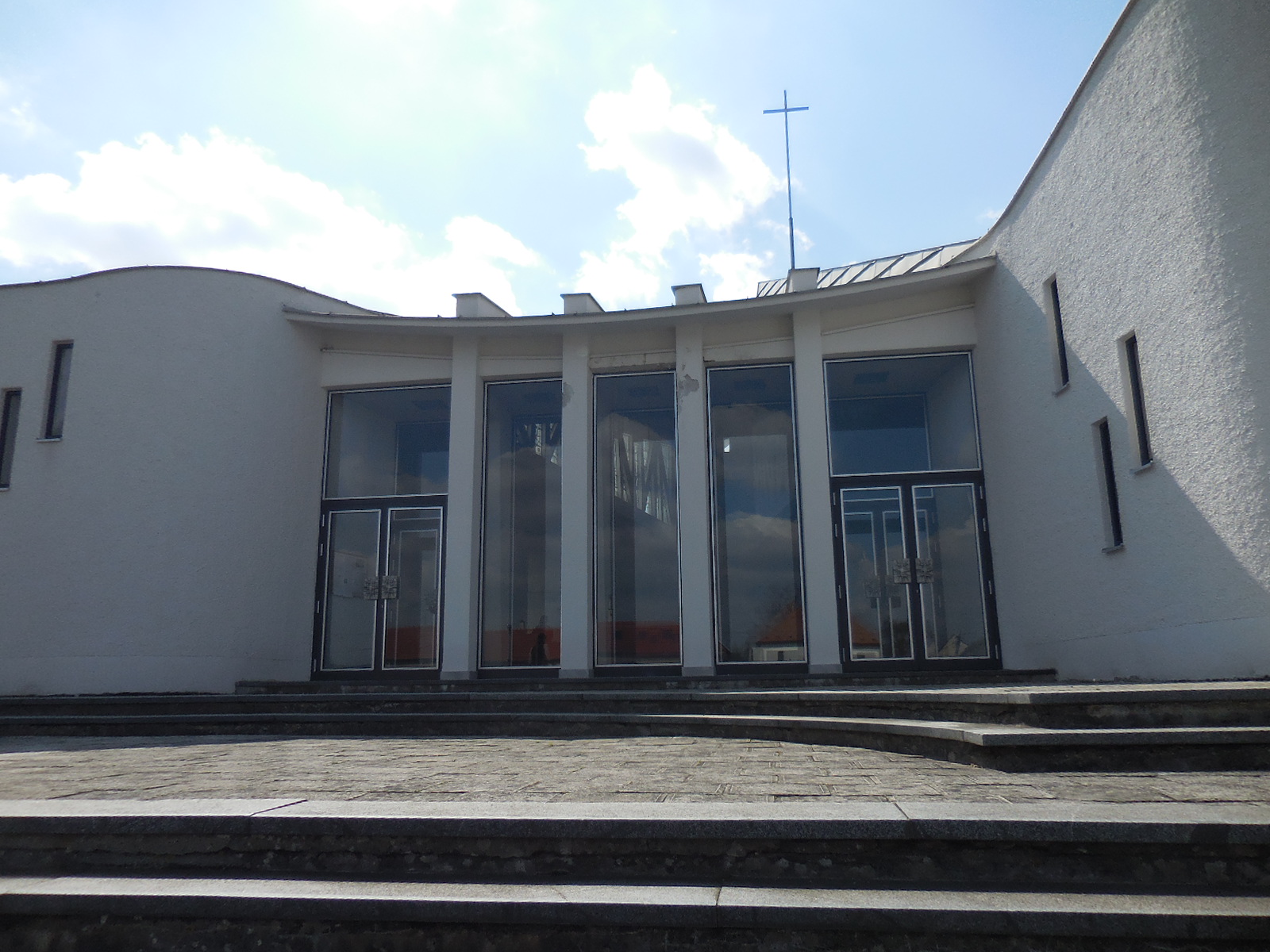
In Senatářov we saw the modern Chapel of Saint Joseph, which had opened in 1971. A chapel had stood in the village dating back to 1855. In 1891 there was a 2-meter high stone cross and a stone statue of Saint Joseph in the chapel. The Nazi Occupation was a horrific time for Senatářov, when the inhabitants were forced to move to 85 other villages. That’s when it was decided that, if the people ever return to their hometown, they would erect a new chapel. And that is what they did – from 1969 to 1971. During the more liberal time of the Prague Spring in 1968, the community was able to get permission to build the chapel. However, the Communists then forbid them from consecrating the church. It was not consecrated until 1991. The interior furnishings include an abstract work of the Last Supper and another fresh perspective on the Stations of the Cross. The light fell dramatically on the main altar in the church as light played a dynamic role in the interior.
The main altarpiece in Senatářov

The main altarpiece in Senatářov


While I admired what artists were trying to do by utilizing modern decoration, the style did not work for me personally. I much preferred a Gothic or Baroque church to a modern, abstract style. I liked churches that spoke of a historical past, where I could see and feel the connections with the past traditions. The modern style left me with a sort of emptiness. I felt that I had nothing to relate to. I needed to feel the weight of centuries past, to feel that for so many centuries people had stepped into that space and prayed and cried and hoped.
The Chapel of Saint Joseph, Senatářov

The Chapel of Saint Joseph, Senatářov


The last place on our list was certainly one of the most impressive: The Pilgrimage Church of the Virgin Mary in Křtiny, near Brno, the capital of Moravia. This time Santini used the shape of a Greek cross as the ground plan for the nave. A central dome and frontal tower were two other features of the architectural gem. The cupola measured 54 meters in height, and the tower was 73 meters high. Two rows of windows – there are more than 30 windows in total – brought light into the church. The lower windows were rectangular while the upper ones were smaller, oval in shape.
The Pilgrimage Church of the Virgin Mary in Křtiny

The Pilgrimage Church of the Virgin Mary in Křtiny


I was overwhelmed by the fresco decoration. The natural light and the Baroque frescoes gave the place an airy feeling. The fresco in the main cupola celebrated the Virgin Mary, who was accompanied by saints. The oratory above the main entrance had stunning fresco adornment, too. It showed angels with musical instruments celebrating the Virgin Mary.
SantiniKrtinyint11
The Madonna of Křtiny

The Madonna of Křtiny


The main altar was breathtaking with the life-size Gothic statue of the Madonna of Křtiny or Virgin Mary of Grace, the patron saint of Moravia. The statue hailed from the end of the 13th century. Made from marlstone, it is polychrome and partially gilded. The Madonna stood on a black marble pedestal. The Virgin Mary gripped a scepter while Jesus held an apple. A golden half-moon also decorated the statue. Golden sunrays surrounded it. Some of the paintings decorating the interior were by Ignatius Rabb, one of the premier Czech Baroque artists of the 18th century. I was also impressed with Saint Anne’s Chapel and the cloister with its votive paintings. There was a carillon, too, and we listened to the bells’ tranquil melodies.
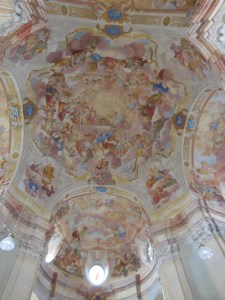
SantiniKrtinyint1
SantiniKrtinyint6
SantiniKrtinyint17
Then we made our way back to Prague. The trip had been exhilarating. I had visited many new places and now appreciated Santini’s work, thanks to an expert guide. I had found The Holy Shrine of St. John Nepomuk and the Church of the Assumption and of St. John the Baptist to be the most impressive. I loved Green Mountain for its mathematical symbolism. The theatricality of the main altarpiece also had grabbed my attention. In the church at Sedlec, I loved the way light imbued the church with a mystical quality. I loved the way light defined the space. And the ceiling network of vaults – it was overwhelming, almost too much to take in.
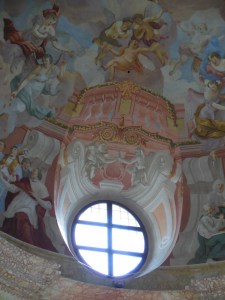
SantiniKrtinyint18
The trip had more than lived up to my expectations. I was eager to see the west Bohemian sites that Santini had designed – hopefully, next year a tour would be offered. I also had a better appreciation of architecture in general. And, of course, the Baroque Gothic style would always be dear to my heart.
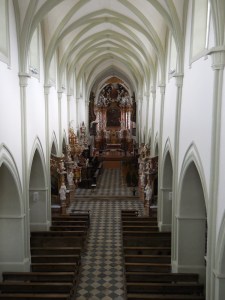
Church of the Assumption of Our Lady, Žďár nad Sázavou

Church of the Assumption of Our Lady, Žďár nad Sázavou


Tracy A. Burns is a writer, proofreader and editor in Prague.
Vysoké Mýto and East Bohemia Diary

The vaulting of the Church of Saint Lawrence in Vysoké Mýto was spectacular.

The vaulting of the Church of Saint Lawrence in Vysoké Mýto was spectacular.

This time I traveled with UNISMA in a small group of 17 participants to see some wonders of east Bohemia. Two wooden churches and the town of Vysoké Mýto were a few places on the itinerary. I had only been to the bus station in Vysoké Mýto long ago. I had not imagined that there was anything interesting in the town.

The fountain with Saint Francis in Vraclav.

The fountain with Saint Francis in Vraclav.

First we visited the Baroque complex of the former spa town of Vraclav. A figure of Saint Francis poured water into a fountain. The Church of St. Nicholas featured 28 Baroque statues made of wood and polychrome plastic by an unknown artist before 1740. It was thought that the creator had been a pupil of Matyáš Bernard Braun, an Austrian sculptor who had worked extensively in the Czech lands and a leading representative of the Baroque style. Three of Braun’s sculptural groupings grace the Charles Bridge in Prague, and he also created a tomb in St. Vitus’ Cathedral. His renditions can be seen throughout churches, palaces and parks in Prague as well as at the former hospital Kuks, the monastery Plasy and the Duchcov Chateau, among other places. The statues had been moved to the Church of Saint Nicholas from a pilgrimage route that had led to a former monastery.

The Church of Saint Nicholas in Vraclav

The Church of Saint Nicholas in Vraclav

At the beginning of the 17th century a chapel and a hermitage were built on the site. From 1724 to 1730 the Baroque church was constructed there. A spring appeared at the chapel under the entranceway, where a statue of Saint Nicholas dominates. A spring flowed underground around the nave from both sides. This former pilgrimage site and spa deteriorated at the end of the 18th century. It was not reconstructed until the 20th century, 1976 to 1986.

Postcard of a statue in the Church of Saint Nicholas

Postcard of a statue in the Church of Saint Nicholas

At the end of the 17th century and the beginning of the 18th century, a well-known spa had been located nearby. However, its popularity dwindled by the end of the 18th century, and the spa became dilapidated. By the second half of the 19th century, it had been abandoned and for the most part forgotten.
The statues of biblical scenes were expressive and dramatic. I especially loved the details in the depictions. In Ecce Homo I noticed the detailed teeth and tongues. They looked so realistic. One statue showed the Virgin Mary with a pleading expression and what seemed to be fluid hand gestures. I also liked her flowing drapery. In another statuary grouping I took note of the real-looking feathers in the helmets. In yet another sculpture Jesus Christ’s thumb looked so life-like. In one statue of Christ, I admired the artist’s rendition of Christ’s veins on his feet. The detail of this unknown artist was more natural than that in Braun’s sculptures. The Baroque artworks were imbued with strong emotion. Beautiful chandeliers complemented the statuary.

Postcard of a statue in the Church of Saint Nicholas

Postcard of a statue in the Church of Saint Nicholas

There was also a hermitage next to the church. It dated back to 1690. Pilgrims had come here to meditate. There was a legend concerning the bell of the hermitage. If a female rings it while thinking of her love, she will marry him within a year.
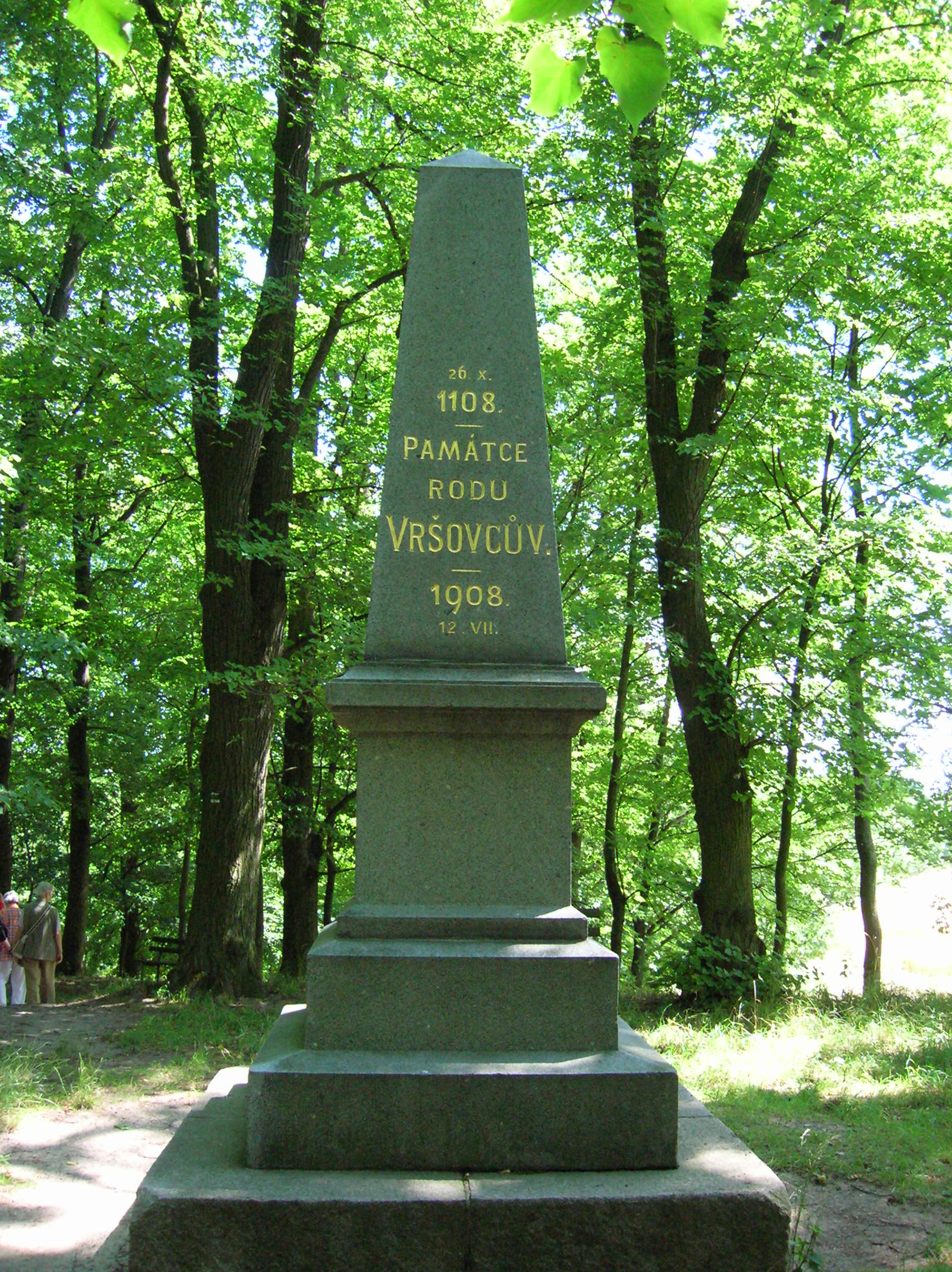
We trekked uphill to a former fortification from the 12th century. Now a monument from 1908 recalling the murdering of the Vršovec clan in 1108 is located on the site. Our guide explained to us why the Vršovices were killed. The tale fascinated me.
At the beginning of the 12th century during the reign of the Přemyslid dynasty, scheming and intrigue prevailed. In 1105 an ambitious Moravian Přemysl named Svatopluk overthrew reigning Bořivoj, and many of Bořivoj’s former supporters switched sides.
While Svatopluk was busy doing battle, Mutina took over the administrative responsibilities of the state. Mutina was a prominent member of the Vršovec clan. The Poles along with Bořivoj invaded the Czech lands, and Mutina did not seem too enthusiastic about fighting them. When Svatopluk returned from war, Mutina was called to the castle in Vraclav, the seat of Svatopluk, who accused Mutina of having ties with Bořivoj. Many members of the Vršovec clan were murdered there in an act of bloody revenge. However, the entire family was not wiped out. The following year one member of the Vršovec family murdered Svatopluk.

The monument honoring the Vršovec clan

The monument honoring the Vršovec clan

I recalled that Bohumil Hrabal had referred to this historical event in one of his books. (The legendary scribe Hrabal was my favorite Czech writer.) I was intrigued by such historical tales. That information alone made the trip worthwhile for me. And I loved the way the guide knew all the information by heart. I could hardly believe that she was able to keep so much information in her mind. It just spewed out of her mouth as if she were an encyclopedia.
Next stop: Vysoké Mýto, a town only six kilometers from the Baroque complex, with a population of 12,000 residents. Vysoké Mýto’s history could be traced back to the Stone Age. The town was created in 1262 by Czech King Přemysl Otakar II. In 1307 it became the property of Czech queens. We walked by the Prague Gate with rich decoration that went back to the Middle Ages, to the 14th century to be precise. A painting of Saint George fighting the dragon adorned the gate. A tower with a broken Gothic portal stood nearby. The main square, also founded by King Přemysl Otakar II, is the biggest in east Bohemia at a width of 152 meters and a length of 152 meters. Forty-seven houses surround it.

Prague Gate in  Vysoké Mýto

Prague Gate in Vysoké Mýto

The tour guide told us that the term Kujebáci or Kujebas enjoyed popularity here. The town’s sports’ teams were even called the Kujebáci. I found the legend about this nickname particularly intriguing. Many centuries ago, the emperor was slated to visit Vysoké Mýto. The townspeople prepared a huge feast, serving trout. However, the emperor did not show up, so the residents all had the delicious fish for themselves. The following day, though, the emperor did arrive in Vysoké Mýto. The inhabitants fed him trout, and when he remarked that the fish was excellent, a townsperson named Kujeba said, “If you think the trout is good today, you should have tasted it yesterday.” The emperor asked the man his name. “Kujeba,” he replied.
The emperor declared, “Then from now on I will call the residents of this town Kujebáci (the Kujebas).” While this term had once been used as a swear word or had referred to a stupid person, the Vysoké Mýto inhabitants were very proud of the legend and asserted that the name stood for someone who is wise.

The exterior of the Church of Saint Lawrence

The exterior of the Church of Saint Lawrence

The differing Kujebáci connotations reminded me of the controversy about Josef Švejk, the seemingly incompetent yet loveable Czech soldier fighting for Austro-Hungary during World War I in Jaroslav Hašek’s satirical, antimilitaristic, mammoth novel, The Good Soldier Švejk. Whether Švejk was really stupid or clever, exhibiting passive resistance, is open to debate.
In Vysoké Mýto we visited the Church of Saint Lawrence, a sight to be remembered. It was probably as old as the town itself, hailing from the 13th century. Several fires plagued the town and the church, in the 15th, 18th and 19th centuries. Consisting of three naves, the church boasted vaulting from 1525 at a height of 21.3 meters. The five-storey tower is 67 meters high.

The altar of Saint Joseph in the Church of Saint Lawrence

The altar of Saint Joseph in the Church of Saint Lawrence

Now it looks as it did after Neo-Gothic reconstruction from 1892 to 1899. There were 10 Neo-Gothic altars and Neo-Gothic wall paintings. The architects of the repairs were František Schmoranz and Josef Mocker. Schmoranz’s résumé included doing Neo-Gothic restoration on Žleby Chateau. Mocker had helped restore many structures in Prague, including the Old-New Synagogue, Prague Gate and St. Vitus’ Cathedral. He had even done some work on Prague Castle. His restorations out of Prague were just as impressive, including Saint Barbara’s Cathedral in Kutná Hora, Karlštejn Castle, Konopiště Chateau, Křivoklát Castle and Saint Bartholomew’s Cathedral in Pilsen.

The largest painting by Petr Brandl - The Assumption of the Virgin Mary from 1728

The largest painting by Petr Brandl – The Assumption of the Virgin Mary from 1728

I was excited to see this church because the painting of the main altar, “The Assumption of the Virgin Mary,” was the largest painting Baroque guru Petr Brandl had ever created, forged in 1728. I recognized his self-portrait in the figure of Saint John. I had admired his creations in many museums, the Prague Chapel of the Holy Mountain pilgrimage site, Jindřichův Hradec Chateau and in numerous churches.
A Late Gothic Madonna – the Vysoké Mýto Madonna – hailed from before 1500. I also marveled at a pewter baptismal font from 1499. Tombstones in the church dated from the 14th to 16th centuries. One of the bells was made in 1466.

Secession wall paintings in the Church of Saint Lawrence

Secession wall paintings in the Church of Saint Lawrence

I loved the Secession wall paintings, too, especially the angels fluttering near the choir loft and the peacock designs. In the windows motifs included stylized plants. I took note of the Fleeing from Egypt scene at the altar of Saint Joseph. Somehow the Baroque main altar painting and Art Nouveau wall and altar decoration complemented each other.
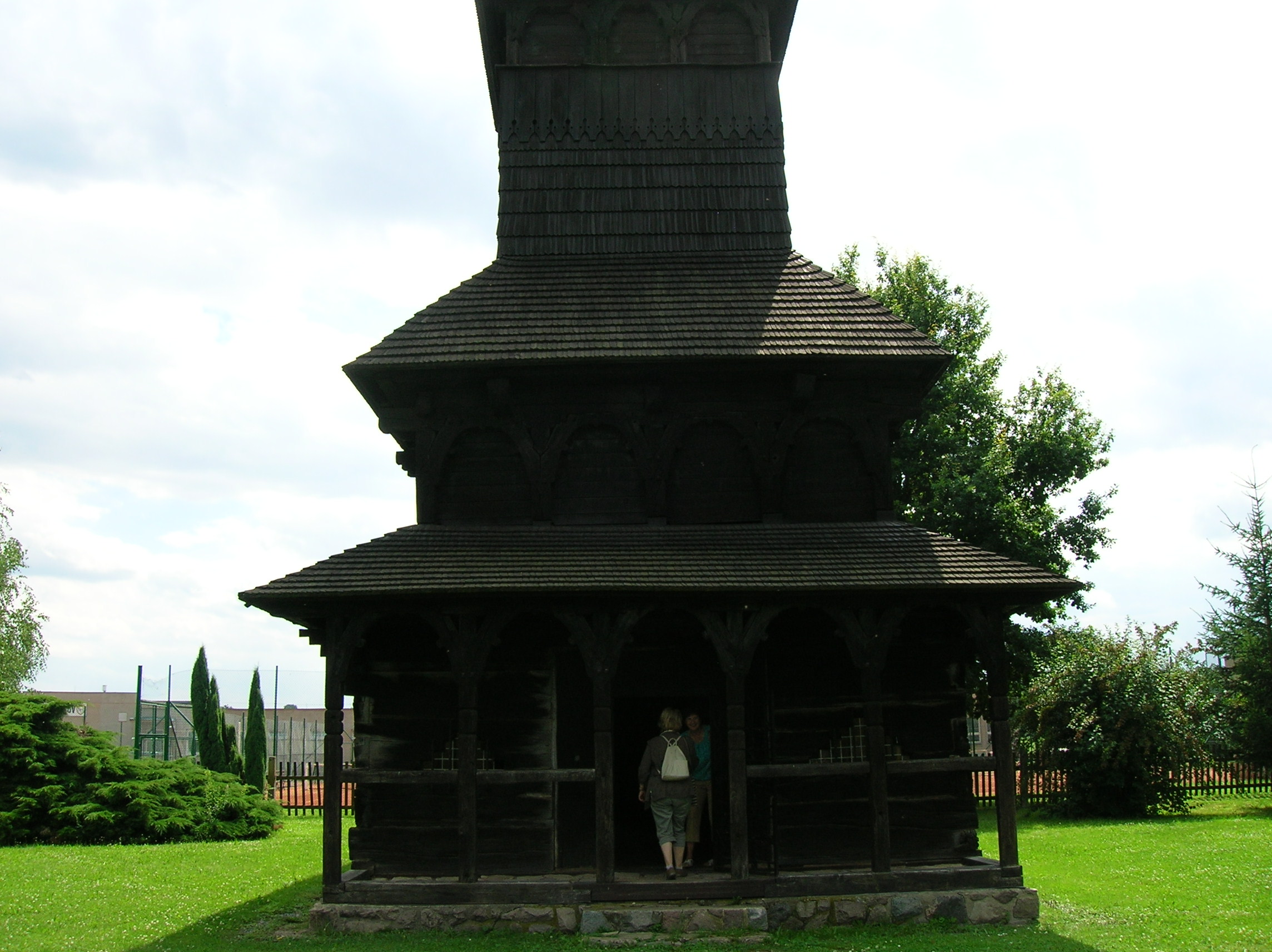
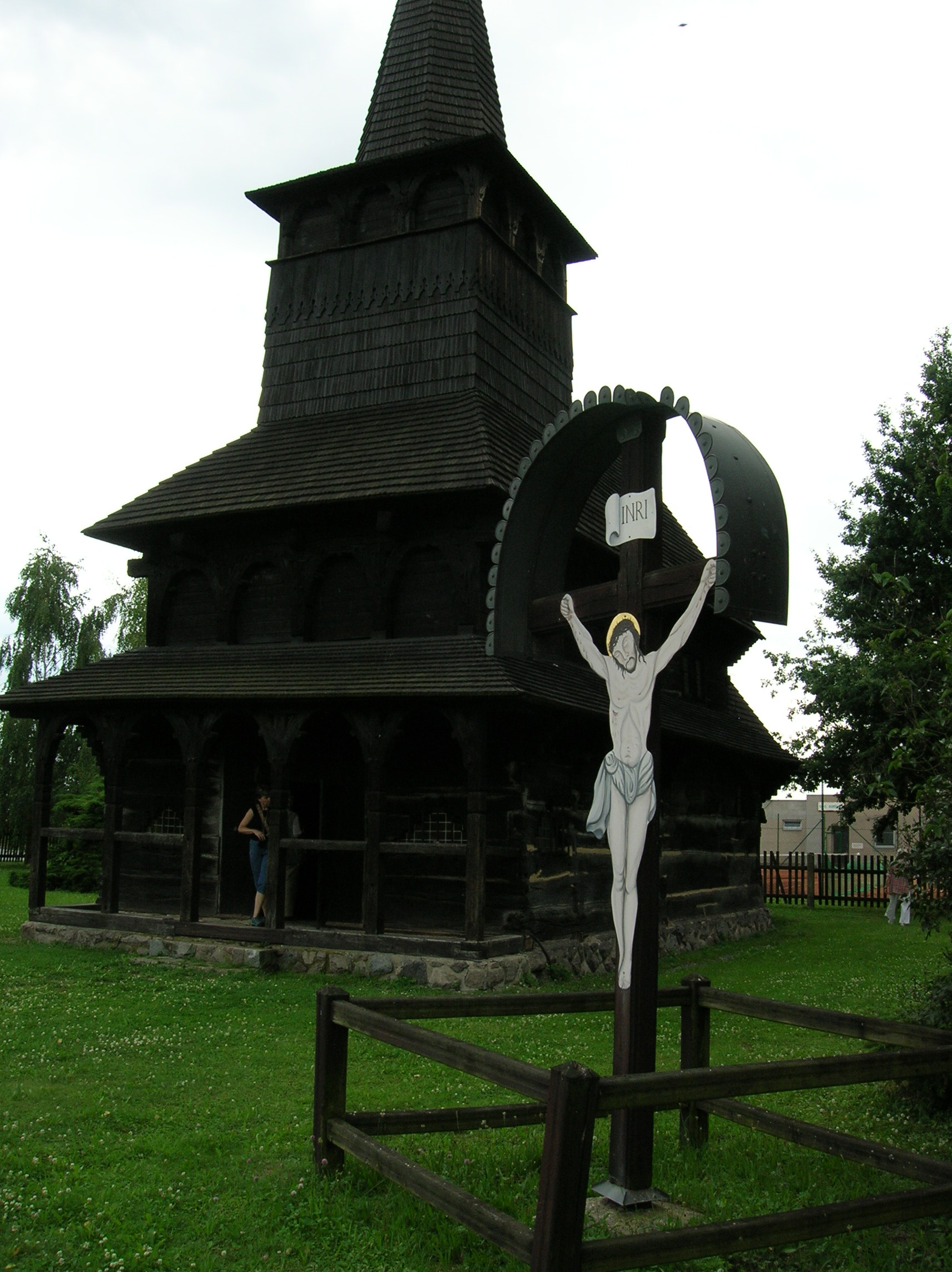
That would not be the most fascinating place I visited on the trip, however. We also saw the romantic wooden Church of All Saints in the village of Dobříkov. Originally located in the Podcarpathian Rus region that is today part of the Ukraine, the church was moved in four train wagons to this village in east Bohemia during 1930 thanks to the initiative of Czech statesman Václav Klofáč.

The Church of All Saints in Dobřikov

The Church of All Saints in Dobřikov

Dating from 1669, the Church of All Saints first moved – 200 years after its creation – to a village situated where the Romanian-Ukrainian border is now located. Then in 1930 it was transported to Dobřikov. Made of all wood, the church was small, with only one nave, 15 meters long and 6 meters wide. Above the entrance front was a 17-meter high tower with a spiked roof.

The icons inside the church amazed me. I felt as if I were in the Russian Museum in Saint Petersburg, only this was a much more intimate experience than gazing at artwork in a large building. The icons in the presbytery hailed from the 18th century. The icons on the sides were even older, dating from the 17th century. All the gold on the icons was overwhelming. On the sides the 12 Apostles appeared in groups of two. Mass was still said here, every other week.
I found it ironic that the church was situated next to a golf course. Wooden churches had been symbols of poverty in villages while golf courses were symbols of wealth. Seeing the two side-by-side was incongruous.

The church in Dobříkov

The church in Dobříkov

The church reminded me of my visit to Broumov a few years earlier, when I visited the Church of the Virgin Mary, the oldest preserved all-wood structure in Central Europe. There had probably been a wooden church on that site as far back as the 12th century, although the church was first mentioned in writing in 1383. It consisted of a single nave with a pyramid steeple and displayed stunning artwork.
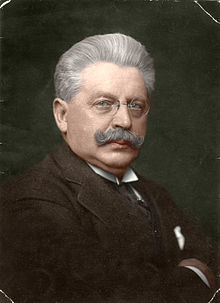
Who was Václav Klofáč? I asked myself. I would find out when we walked to a small museum dedicated to the Czech politician. It was run by Klofáč’s granddaughter, a spunky, energetic 94-year old. I wondered if I would live so long, and if so, if I would be blessed to be so lively and communicative at such an elderly age.

Václav Klofáč Source: WikiMedia

Václav Klofáč Source: WikiMedia

Klofáč, who was born in 1868 and who died in 1942, had been a Czech journalist and politician who had led the Czech National Socialist Party and had worked in the Austro-Hungarian Parliament and later in Czechoslovakia’s Parliament. During World War I he was taken prisoner. After World War I, in 1914, Klofáč was wrongly arrested in Dobříkov and like other Czech heroes, branded a traitor because he had worked in the resistance movement during the war. He was freed in 1917. During 1918, when Czechoslovakia was created, he became the nation’s first Minister of Defense and also served as a senator for a long time. The Czech National Socialist Party, which he co-founded in 1898, was very nationalistic and abhorred Marxism. They sought to foster relations with Americans, for example.
I loved the photos of Klofáč accompanying first Czechoslovak President Tomáš G. Masaryk. If I could meet anyone who was alive or dead, I would probably choose to meet Tomáš G. Masaryk. If I could go back to any time period, I would travel back in time to Czechoslovakia’s First Republic, which lasted from 1918 to 1939. I would have wanted to see the First Republic from 1918 to 1932, before Adolf Hitler came to power in 1933 and the trends of Nazism, Communism and Fascism invaded the country. Masaryk was one of the people I admired the most.

Tomáš Garrigue Masaryk and Karel Čapek

Tomáš Garrigue Masaryk and Karel Čapek

During the First Republic minorities had rights, and all citizens were treated equally. Freedom of the press and universal suffrage existed. Elections were democratic. During Masaryk’s first term from 1918 to 1920, he eased Czech-German tensions. He also stayed in contact with the people. The country had a strong currency and experienced economic success. One of my favorite authors, Karel Čapek, prolific in many genres, was a good friend of Masaryk and even wrote a book about his conversations with him.

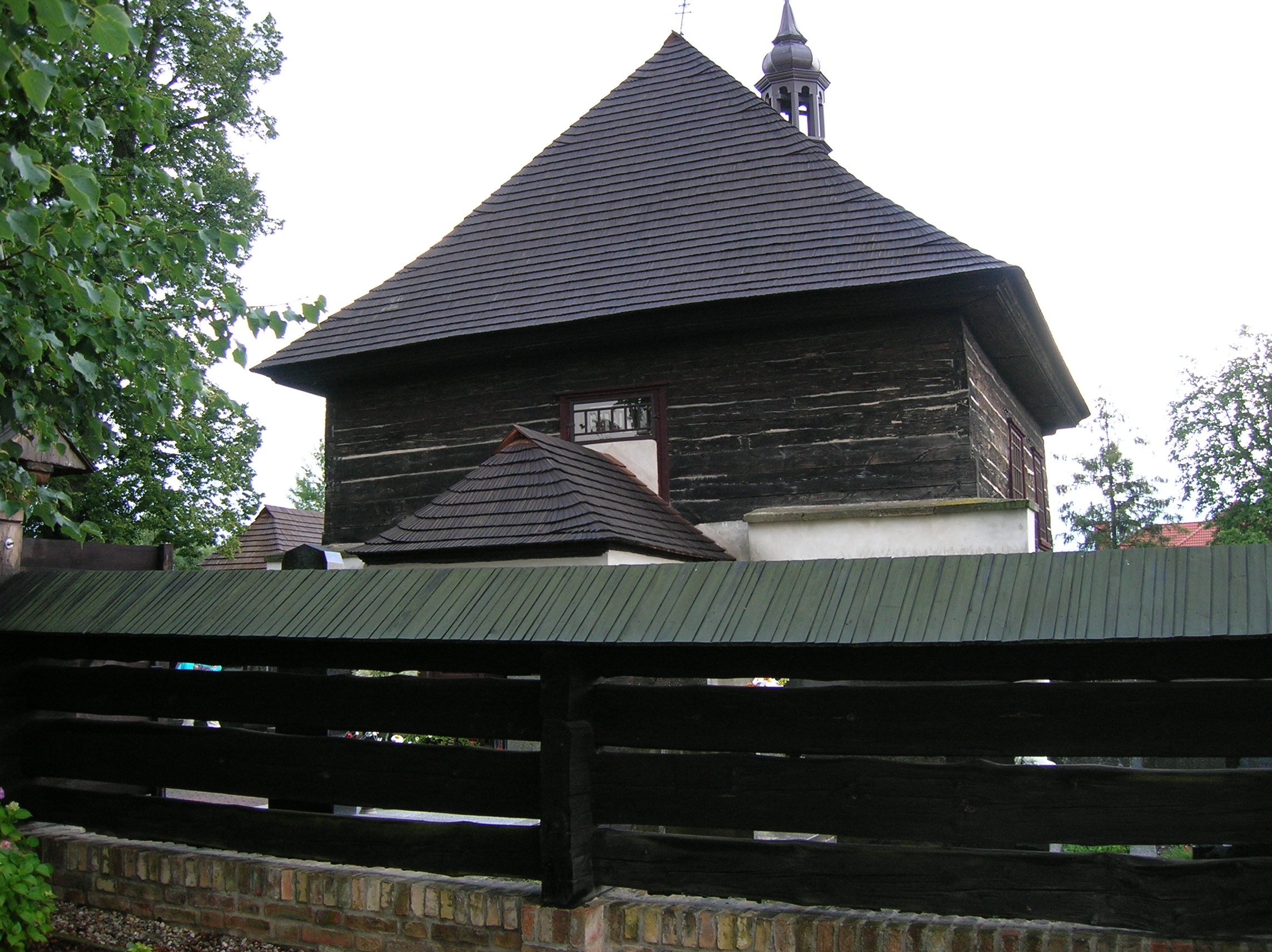
The wooden church in Veliny

The wooden church in Veliny

We saw another wooden church, too – the Church of Saint Nicholas in Veliny, which was a prime example of 18th century folk architecture. It was built in 1752 on the site of a former wooden church that hailed from 1576. The timbered church looked so romantic. The one-nave structure had a three-sided presbytery and a flat, wooden ceiling. The choir loft was supported by wooden, carved columns. The interior was sparse, nothing like the Church of All Saints and its dazzling golden icons. The pulpit hailed from 1903. The bareness of the interior emphasized it as a symbol of poverty. I personally liked the interior of the Church of All Saints better, but perhaps a wooden church should be sparsely decorated. It seemed appropriate for to portray such modesty.

The main altar of the Church of Saint Nicholas in Veliny

The main altar of the Church of Saint Nicholas in Veliny

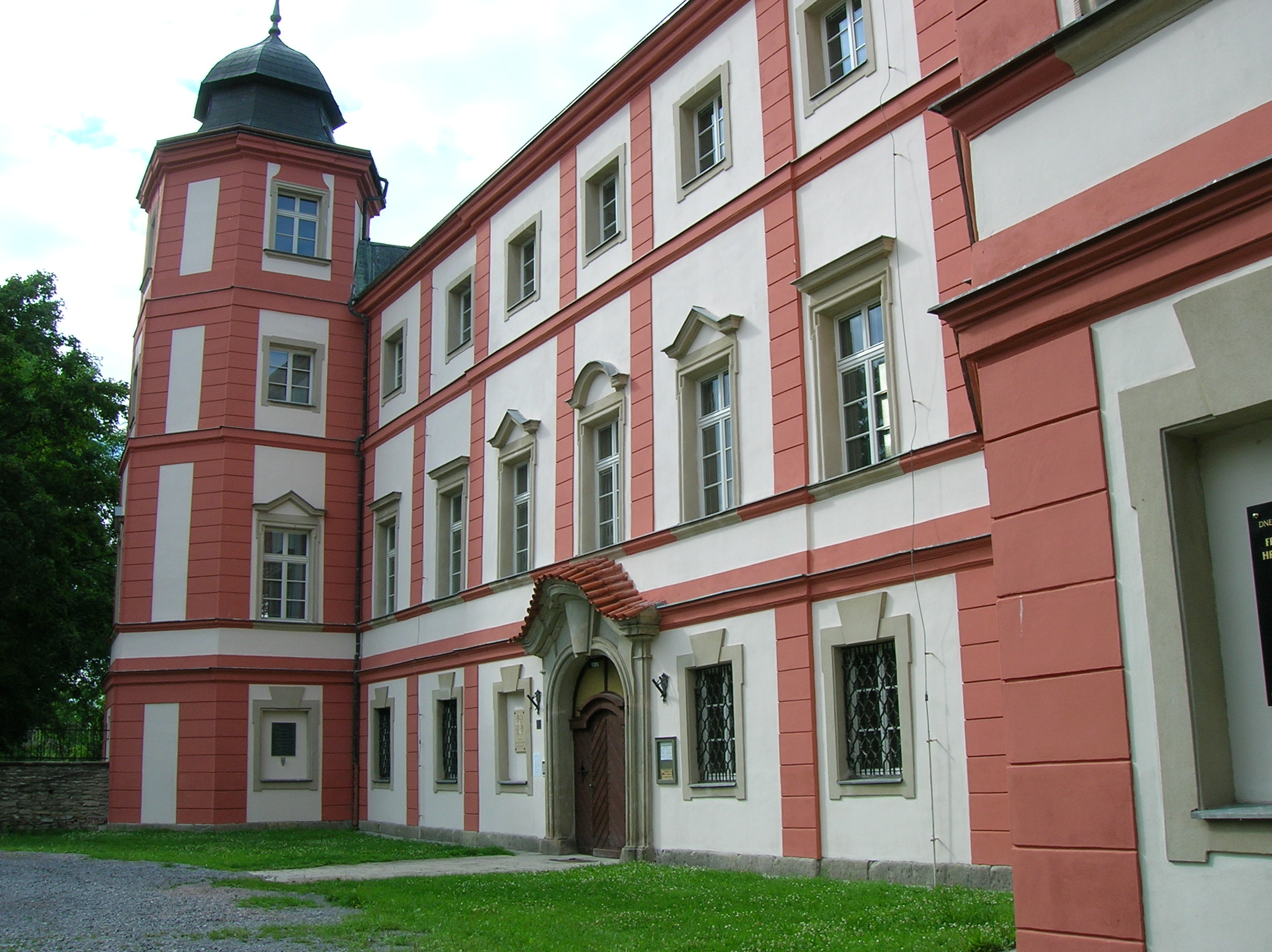
Our last stop was picturesque Zámrsk Chateau with its three-floor, polygon-shaped tower. It was first mentioned in writing as a fortress in 1469 and various owners did restoration work. It burned down in 1924 but was repaired soon thereafter, during 1925 and 1926. There are still remnants of its Gothic days, though, in the east wing and in part of the masonry of both wings. In 1945 it became state property. Under Communism it served as an educational center for youth, and from 1960 to the present it has been the home of regional archives. We were not allowed to go inside, but the exterior was impressive.
The most tragic story concerning the chateau occurred a day after the Nazis took control of the Bohemia and Moravia, on March 16, 1939. At this time Jewish Arnošt and Truda Bondy were the beloved owners of the chateau. Aware that horrific times were beginning, on that day they committed suicide. Arnošt shot his wife and then himself. He fell into the river, where his body was later discovered.

Stories like this always brought to mind the reality of living in that period, and I thought of how I did not think I would have been able to survive living under Nazism, even though I am not Jewish. Living under Nazism and Communism was something I could not even fathom, something too disturbing to ponder.

The chateau in Zámrsk

The chateau in Zámrsk

Jan Blažej Santini-Aichel, of Czech and Italian origin, was considered to be one of the architects contributing to the chateau. His Baroque Gothic style sparkled in a church in the Sedlec area of Kutná Hora and at the pilgrimage church of Green Mountain. His staircase at Plasy Monastery was a gem. A few other sights to which he had contributed included the Kolovrat Palace in Prague’s Lesser Town and the Karlova Koruna Chateau.
Our tour soon ended, but during the ride back to Prague, our excellent and eloquent guide passed around booklets about Slovakia’s wooden churches, some of which I had visited about 14 years earlier. I remembered how my fascination with wooden churches began when I saw the wooden church at Bardejovské Kúpele in east Slovakia. She also let us peruse a book about Václav Klofáč.

The Secession wall paintings in the Church of Saint Lawrence

The Secession wall paintings in the Church of Saint Lawrence

I was more than satisfied with the tour. I had discovered places I have not known existed, such as Vraclav, Dobříkov, Veliny and Zámrsk. I had visited two wooden churches and had become acquainted with some of the splendor of Vysoké Mýto. I had also learned about the Czechoslovak statesman Václav Klofáč, who had greatly contributed to the democratic First Republic. I had been impressed with the historical tales, such as the slaughtering of the Vršovec clan. I was happy with the tour itself. We had an amazing guide. I had met many interesting people on the tour as well.
I came back to Prague richer in my knowledge of the country I loved so much, eager to describe my discoveries to English-speakers who planned on visiting the Czech Republic someday and to Czechs eager to see more sights in their homeland.

The tower of the church in Veliny

The tower of the church in Veliny

Tracy A. Burns is a proofreader, writer and editor in Prague.

Gothic Churches in the Čáslav and Posázaví Regions Diary

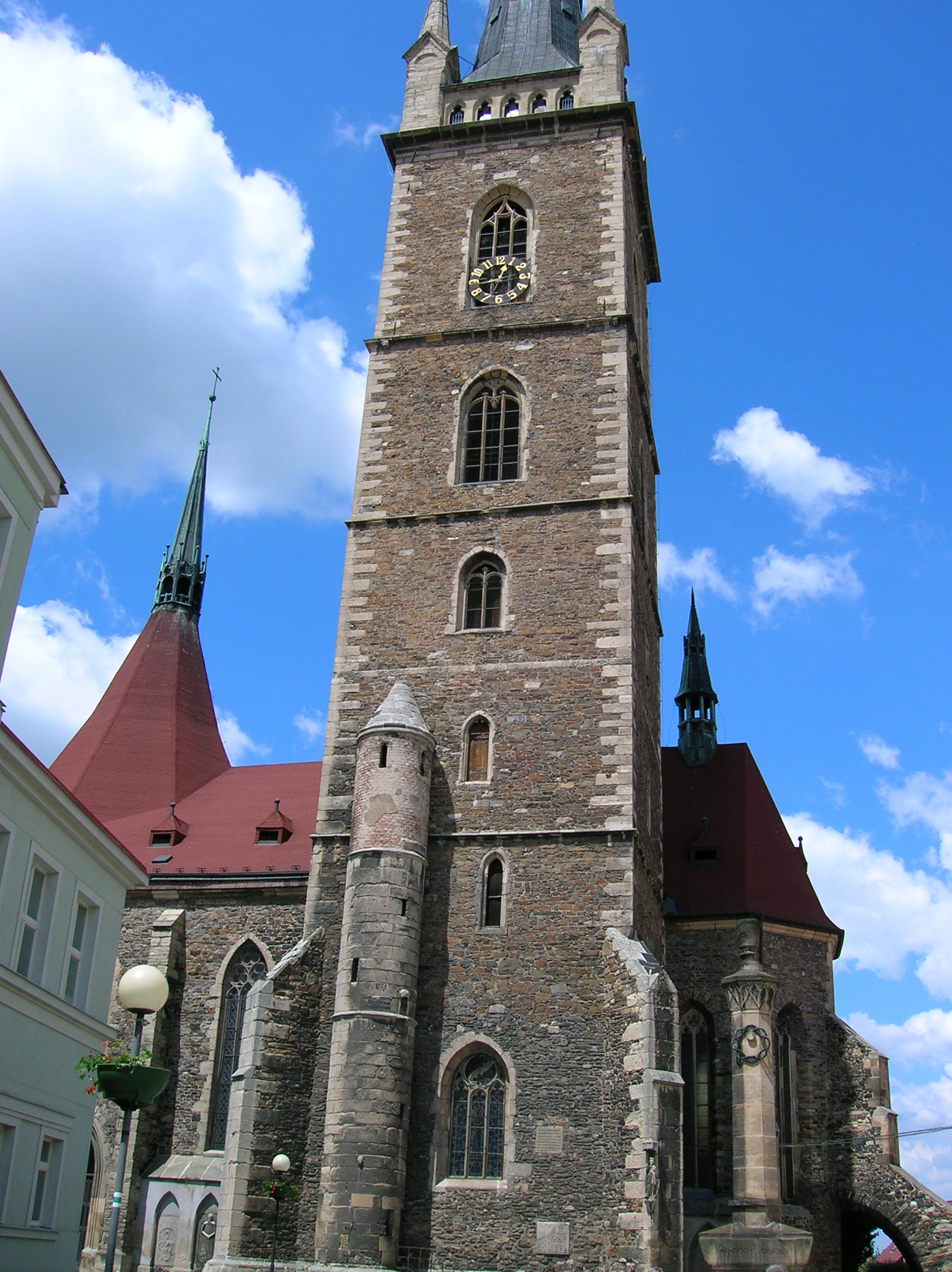
The Church of Saints Peter and Paul in Čáslav

The Church of Saints Peter and Paul in Čáslav

I traveled with arsviva again, this time to Gothic churches in the Čáslav and Posázaví regions of central Bohemia. After the last trip spent seeing Romanesque and Gothic buildings in South Bohemia, I was psyched. We would have the same enthusiastic, informative, organized expert as our guide, too. During the last tour I had especially enjoyed visiting churches in villages because they played an integral role in the village’s identity and had helped me come to the realization that each village was unique, with its own story to tell.


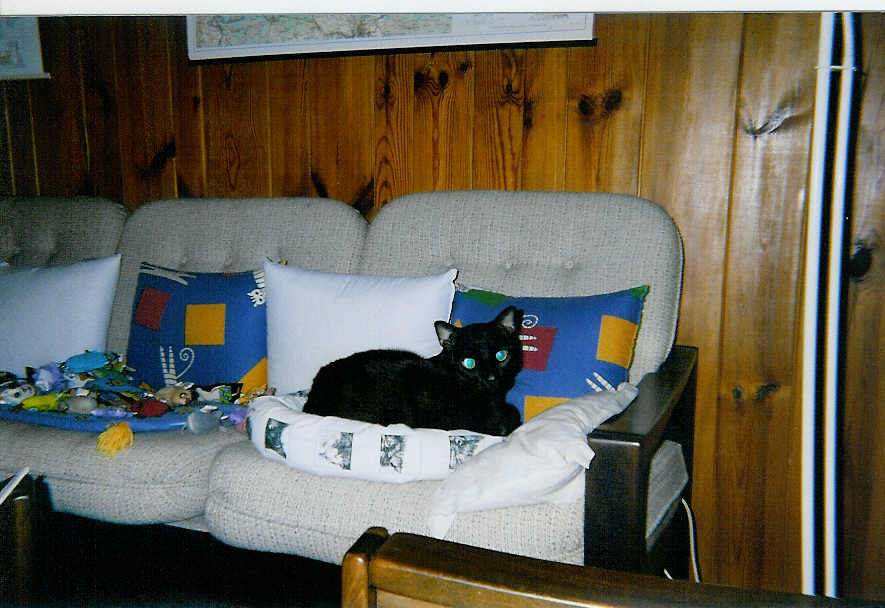
My best friend ever

My best friend ever

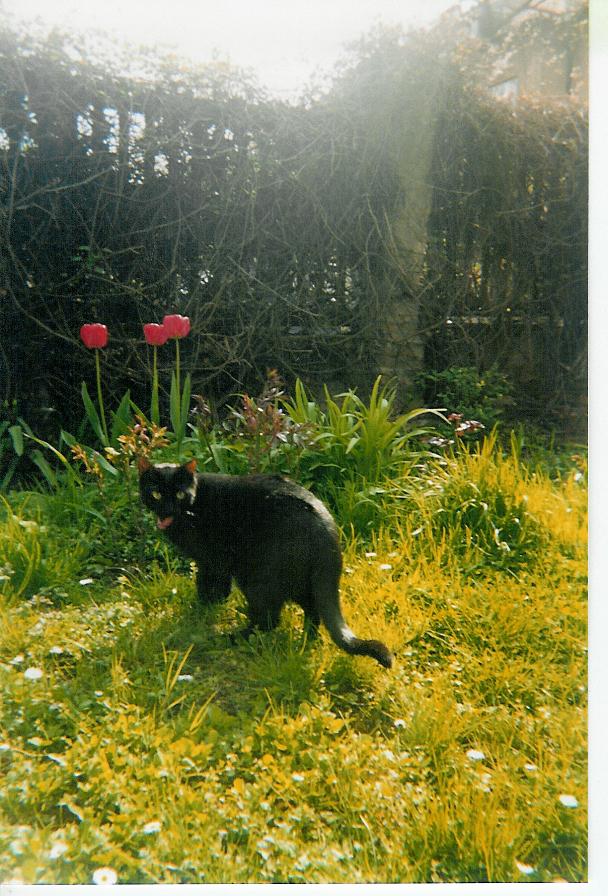
I was not sure if I would be able to go on the tour when my cat, Bohumil Hrabal Burns, suddenly died of a tumor in his mouth two days before the excursion. I lived alone and did not socialize much, and he had been my best friend, who had gotten me through so many troubles and heartbreaks over the previous 15 years. He always sat on my lap when I wrote on the computer. He always relaxed on my chest when I read in the evening. Since I worked mostly at home, we were almost always together. I would never have children. I cared about him as I would for my own child. He and I were inseparable.

Bohumil Hrabal Burns, 1999 - 2014

Bohumil Hrabal Burns, 1999 – 2014

At times I felt bitter. Why did he have to die now? One day it became apparent that he had a tumor in his mouth, two days later he had to be put to sleep. He was supposed to be taking vitamins for his liver, and I was certain that his condition would be improving. It was so hard to see him so sick on my bed. He just wanted to die alone. He would not rest on my lap anymore. And it was the worst moment of my life when I had to take him to the doctor to put him to sleep, knowing he would never be coming back to the place he had called home, where he had shown me so much love. I couldn’t imagine life without him.

Český Šternberk Castle

Český Šternberk Castle

The tour began, and I was happy. I was glad I was on the excursion and excited about the day to come. First, we stopped at Český Šternberk Castle to take in the view and to use the bathroom in a pub. I had toured the castle last year and had written about it for a travel agency.
Perched on a hill overlooking the Sazáva River, Český Šternberk Castle dominates the Posázaví region with its imposing, massive Gothic exterior. It looked both protective and threatening at the same time. I recalled the eclectic collection of treasures from Renaissance chests to Rococo furniture inside the castle. The castle’s history began sometime before 1242. I remembered seeing the Sternberg clan’s eight-pointed star throughout the castle, which is currently owned by one of the family. I would see that star on the tour that day as well.

The Neo-Gothic interior of the Church of Saint Havel

The Neo-Gothic interior of the Church of Saint Havel

Then we were ready to devote our time to Gothic churches. The first was the Church of Saint Havel in Otryby. It had Romanesque and Gothic features, dating from around 1200. I was amazed at the portals before I entered the church. The side portal was French Gothic, dating from the 13th century. It never failed to amaze me that something that old could stand the test of so much time, so many centuries. I wondered who the people who had walked through that portal during the Middle Ages had been. Who were they, what had they done for a living? Had they been beggars, merchants or farmers? Maybe nobility?

The Neo-Gothic portal

The Neo-Gothic portal

The main portal was of a totally different nature, in 19th century Neo-Gothic style. The interior was Neo-Gothic, too, which strangely complemented the Early Gothic construction and the Romanesque apse. I liked the mixture of styles and have always been a fan of Neo-Gothic features, but I wondered what the entire church had looked like when it was pure Early Gothic or Romanesque style.

The Church of Saint Havel

The Church of Saint Havel

The Church of Saint George in Malejovice was next on the itinerary. It was typical of Early Gothic village architecture, dating from 1250 or earlier, but parts were much younger. The tower dated from 1886 and the main altar from the end of the 18th century. The windows were NeoRomanesque, hailing from the 18th and 19th century. It was intriguing to see so many styles in a relatively small space. The different styles offered a sort of a pictorial narration of the church’s history.
CASPOSMalejovice2
Church of Saint George in Malejovice
Then we stopped in a town with a busy outdoor market on the main square. It was called Ulhířské Janovice, named after Jan Sternberg, who founded a settlement there back in the 13th or 14th century. First we entered the Baroque Church of Saint Alois on the square. The church had been built in 1777, completed in 1792. Its main portal dated from 1784.

The painted main altar of the Church of Saint Alois

The painted main altar of the Church of Saint Alois

The intriguing feature of this church was that the altars were painted onto the walls. The guide explained that this was cheaper and quicker than decorating the church with real, three-dimensional altars and statuary. I recalled the spectacular painted main altar at Hejnice Basilica in northern Bohemia. You would not even guess that the altar in Hejnice was painted; it looked so real. What surprised me about the main altar in this church was that even the statues were painted on.

Uhlířské Janovice, Church of Saint Giles, ceiling panting

Uhlířské Janovice, Church of Saint Giles, ceiling panting

Nearby was the Church of St. Giles, which could not be more different. The church had a Romanesque nave and a 14th century Gothic presbytery and sacristy. The one-nave church was made out of quarry rock with sandstone. A Romanesque window adorned the north side. However, the church did not only boast Romanesque and Gothic styles. The altar was Rococo while the pulpit was in Empire style.
It was a typical Gothic construction with Gothic wall painting. These frescoes dated from the 13th or 14th century but were in poor condition. They depicted the martyrdom and celebration of Jesus Christ. Even though a fire ravaged the church in the early 20th century, the frescoes and the Gothic presbytery had been saved. The church was rebuilt four years later, but the frescoes were not discovered until 1895. They were restored in 1953. I thought about the Stalinization of the 1950s, when Czechoslovakia was under harsh Communist rule and was surprised that frescoes in a church would have been restored then.

Wall paintings in the Church of Saint Giles

Wall paintings in the Church of Saint Giles

In the frescoes it was possible to make out Christ being taken to Jerusalem, and I saw the gate of Jerusalem with a palm tree in the background. I could make out Christ with a halo above his head, but the scene of the Last Supper was hardly visible. King David and King Solomon were present in the paintings, too. It was difficult to see the Crucifixion scene. The frescoes I liked best were the stars on what had been a blue background and the Sternberg family coat-of-arms.

Košice, Church of the Annunciation of the Virgin Mary

Košice, Church of the Annunciation of the Virgin Mary

Then came the village of Košice, where the Church of the Birth of the Virgin Mary was located. As we entered the church through a magnificent Gothic portal, we saw an old inscription, but I am not sure what it said. The church had been originally built in Early Gothic style. The oblong nave and elongated square presbytery were Gothic, dating from 1300. The vaulting, which astounded me, hailed from 1563. One astounding feature of this church was its western tower, also going back to 1563. The tower had a Late Gothic portal and an inscription that dated from the year that the tower was built. The altar was much younger, from NeoBaroque days. I was so amazed that so much of the Gothic construction of this church remained. It was almost as if by walking through that Gothic portal, I had stepped into the Middle Ages.

The ceiling painting in Košice

The ceiling painting in Košice

I knew many castles, but I had never heard of the Sion Castle ruins. Located eight kilometers from the popular town of Kutná Hora, the castle had been constructed from 1426 to 1427 for Hussite leader Jan Roháč from Dubé as a representative seat rather than as a fortification. During the 15th century the castle had been the last stronghold of the Hussite revolutionary movement, when the followers of martyr Jan Hus took on several Catholic monarchs, including the King of Bohemia and the Holy Roman Empire. Hussite factions fought on both sides. The castle had then consisted of a triangular ground plan and a two-storey rectangular palace where Jan Roháč had lived.

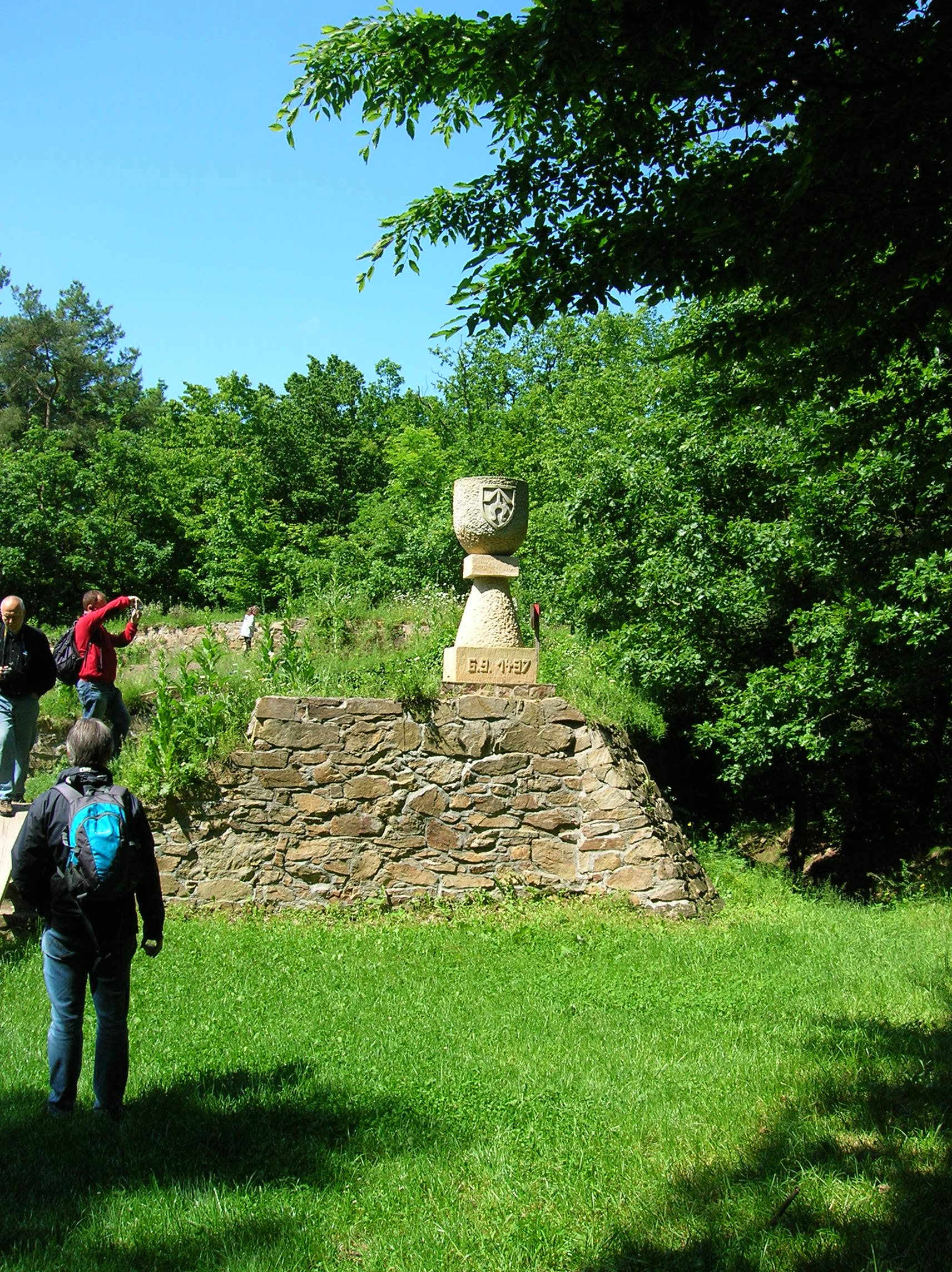
A monument at the Sion Castle ruins

A monument at the Sion Castle ruins

It was conquered by Emperor Zikmund Lucemberk after a four-month standoff during September of 1437 and ended the Hussite wars. During the attack about 100 cannonballs damaged the castle palace. After the emperor’s victory, the castle was razed. Two days later Jan Roháč from Dubé was tortured in Prague and executed, most likely in Old Town Square. I tried to imagine the defeated Jan Roháč in red clothes and gilded restraints as he was hanged in public on my favorite square in the world.
The moat had been preserved. We had to walk over flimsy wooden planks to get over it. I looked at these foundations and was amazed at what a story these ruins told in a scene that so resembled a painting by Caspar Friedrich.

The Church of Saint Andrew

The Church of Saint Andrew

Then we hustled through a forest with steep inclines to get to a field where we could see the Church of Saint Andrew with its remarkable wooden bell storey in Chlístovice. We did not go inside because it was not open, but I read that the presbytery was polygon-shaped without supporting pillars, and it had a rectangular nave. While the church dated back to 1352, the entranceway was Baroque.

The Church of Saint Markéta in Křesetice

The Church of Saint Markéta in Křesetice

The next stop was Křesetice, the Church of Saint Markéta. This church had a rectangular presbytery with crisscrossed, ribbed vaulting. One Gothic window had been preserved in the presbytery. The Baroque high tower dated from 1680. Many features of the church hailed from NeoBaroque days. The wooden organ loft was probably NeoBaroque. The windows of the nave and the pulpit were NeoBaroque, too.
The church had been the home of a spectacular Late Gothic Madonna, but it was not on display there anymore, unfortunately. A marble portal dated from 1706. The ceiling painting did not seem to complement the NeoBaroque interior with Gothic elements. It was too modern, dating from 1946. The children and rainbow depicted on the ceiling jumped directly out of the 20th century and marred the interior, in my opinion.

The 1946 ceiling painting in Křesetice

The 1946 ceiling painting in Křesetice

Next we came to Čáslav, where I had waited for a train for two hours about eight years earlier. I did not know the town at all, though. Dominating the town, the deacon’s church of Saints Peter and Paul stood at 12 meters high with a tower that loomed 88.5 meters over Čáslav. Not surprisingly, it was listed as a cultural monument in the Czech Republic. Just one look at the massiveness of the exterior overwhelmed me. This was one of the most powerful churches I had ever seen. Its history goes back to the 12th century, even before the founding of the town.

The exterior of Čáslav Church of Saints Peter and Paul

The exterior of Čáslav Church of Saints Peter and Paul

It had been through some tragic times. Several fires had made rebuilding necessary, and it was plundered more than once during the 15th, 16th and 17th centuries. During the 18th century the interior was changed to Baroque, but during the 19th century, Neo-Gothic furnishings were installed.
One can still see Romanesque elements of the church. Originally, the Romanesque Church of Saint Michael had been located where the sacristy stands today. The Church of Saint Michael had boasted a rectangular nave with apse. A Romanesque portal that still exists had an intriguing tympanum. A Romanesque tower had been preserved with its bell storey and Romanesque latticed windows.

The exterior of the church in Čáslav

The exterior of the church in Čáslav

The Gothic style was also well-represented in this huge sacral building. It had a 13th century early Gothic presbytery and Gothic ribbed vaulting that overwhelmed me. I just stared at that vaulting, gaping. For some reason Gothic vaulting made me feel a deep spiritual connection. The organ loft also dated from the Late Gothic period. During the Middle Ages the presbytery had been covered in wall paintings. I tried to imagine the space with brightly colored frescoes giving it a certain vibrancy. Now all that was left of the wall paintings there was the head of Saint Christopher.

The vaulting in Čáslav

The vaulting in Čáslav

There were other frescoes in the church, though, but they were younger, from about the 15th century. These included the red Crucifixion of Saint John scene from the 1430s. The Virgin Mary was missing from the left-hand side. I wondered if she had never been painted or had been painted over.
The astounding church had features from the Renaissance period, too. In addition to Renaissance tombstones, there was a Renaissance holy water font as well as a pewter baptismal font from that era. The tabernacle was Rococo in style. The Chapel of Saint Anne was 17th century Early Baroque with stucco décor and cross-shaped vaulting. The main altar was Baroque, dating from 1794. In the front of the church stood Neo-Gothic altars.

The interior of the church in Čáslav

The interior of the church in Čáslav

I loved the way all these architectural styles came together to give each church its own personality. There was a little something of almost everything in this church that loomed protectively over the town and made me feel safe. This was one of the most monumental holy sites I had ever seen. And to think I had only been familiar with the train station before this trip!

The Crucifixion of Saint John wall painting

The Crucifixion of Saint John wall painting

To get to the Church of Saint Mark in Markovice, we had to walk down an overgrown path surrounded by high grass in a cemetery that must have been neglected for some time. Only the presbytery still existed, and it looked very modest from the outside as someplace one might easily overlook. Inside, though, were Gothic wall paintings, but the centuries had not been kind to them. It was possible to make out scenes from the martyrdom of Christ and to see Saint Peter in what used to be green drapery. Another part of the wall showed Moses accepting the 10 Commandments. The paintings were probably symbolic of the Old and New Testament.

The wall paintings in Markovice

The wall paintings in Markovice

I tried to imagine it as it had looked at the end of the 13th century or the beginning of the 14th century when it was founded. The place with wall paintings must have been stunning. I stared in awe at its original Late Gothic portal from 1531. I also admired the Gothic windows. An Early Baroque altar dated from 1667. The church had been repaired in 1531, when it served as the parish church. But when the parish was moved to nearby Žleby (where there is a spectacular chateau, by the way), this church’s condition began to deteriorate. Though it was renovated in the 17th century, it still was not in good condition.
Among the wild, high grass we saw the grave of Alois Eliáš, a Czech military leader, politician and supporter of the resistance during World War II, even though he had served as chairman of the Nazi Protectorate government from 1939 to 1941. The Nazis executed him for his resistance activities in June of 1942, when they were killing prisoners to avenge the assassination attempt and subsequent death of high-ranking Nazi Reinhard Heydrich.

A fragment of a wall painting in Markovice

A fragment of a wall painting in Markovice

The more I read about Eliáš, the more intrigued I was. He had made a name for himself fighting with the Czechoslovak Legion during World War I. He had spent part of his military career in Čáslav, not far from Markovice and had met his future wife in Čáslav. During the democratic First Republic Eliáš also advised Czechoslovak Minister of Foreign Affairs and future president Edvard Beneš. Although he was a member of the Nazi government during World War II, he was a symbol of the Czech nation to many Czechs living under the regime. He stayed in contact with underground organizations and the foreign resistance led by Beneš. One intriguing story about his resistance work concerned how he, his wife and his doctor murdered a pro-Nazi journalist by poisoning the bread they gave him.
However, his resistance work did not go unnoticed by the Germans. The Nazis put him on trial, and he received the death penalty. Eliáš languished in prison for a while, and then the assassination attempt on Heydrich took place. After that, the Nazis sent prisoners to concentration camps or to the execution grounds. He was taken to the Kobylisy execution area and shot during June of 1942.
Perhaps Eliáš’ grave had not been looked after for some time because during 2006 his ashes had been brought to Vítkov in Prague. Yet I had read his urn had to be hidden from the Communists because the totalitarian regime considered him to be a traitor. I wondered why he had a grave when his ashes had been in an urn all this time. Maybe initially he had been buried there, but then his wife had been allowed to take his ashes home. I also wondered why he had been buried in this long-neglected church cemetery, where the grass was seemingly never mowed.

An ancient portal in Okřeseneč

An ancient portal in Okřeseneč

The next stop was Okřesaneč, at the Church of Saint Bartholomew. The one-nave sacral building dated from 1300 and featured early Gothic construction. Yet there were Romanesque elements as well. The late Romanesque portal and three Romanesque windows enthralled me. While the sacristy on the north side and the nave were Gothic, the south side featured a Baroque side altar. The church also had a late Gothic tower with three floors. The cross-shaped ribbed vaulting in the presbytery was stunning. The interior was very modest. The church also included Neo-Gothic furnishings. The early Baroque altar featured Saint Bartholomew from 1680. Even though it had experienced Baroque and NeoBaroque reconstruction, the original core of the church was medieval.

The interior of the Church of Saint Bartholomew

The interior of the Church of Saint Bartholomew

Kozohlody was home to the Church of All Saints, constructed around 1300. There were Gothic wall paintings, but they were a bit difficult to decipher. The Last Judgment was pictured, but it was only possible to see Hell. At the top of the eastern side was the Escape into Egypt. Other scenes included the Birth of Christ and the Death of the Virgin Mary with two angels in the foray. On the south side I could barely make out Jesus Christ with Doubting Thomas, and behind the altar were fascinating though faded frescoes of the flogging of Christ. I tried to imagine these wall paintings full of vibrant colors. It was such a shame they had not been better restored and had not stood the test of time so well.

Church of All Saints in Kozohlody

Church of All Saints in Kozohlody


The paintings on the triumphant arch

The paintings on the triumphant arch


The wall paintings in Kozohlody

The wall paintings in Kozohlody

In Bohdaneč the Church of the Annunciation of the Virgin Mary featured an original Gothic portal with a Gothic presbytery that boasted ribbed vaulting and a rectangular nave. The pulpit hailed from the 13th century. Tombstones in the church went back to 1350. The tower, though, was Baroque, and the benches were younger – from the 18th century. There were two remarkable chandeliers made from Czech crystal. They dated from around 1890.

The church in Bohdaneč

The church in Bohdaneč

In the entranceway I saw a plaque to the hometown victims of World War II and read names of people who had died in the Terezín and Mauthausen concentration camps. I was reminded of my most recent visit to Terezín, when I practically vomited from seeing the inhumane conditions in which prisoners were forced to live and die. Auschwitz had been even harder to swallow, but luckily, I somehow managed to get through both places without becoming physically ill. Seeing plaques referring to those lost in concentration camps certainly made me appreciate life more. Even with the death of my best friend, things were not that bad. The sun was shining, and I lived in a beautiful, democratic country.

The chandeliers in Bohdaneč

The chandeliers in Bohdaneč

The Church of Saint Lawrence in Zbraslavice had a Romanesque core, dating from the 12th century, though not much from that period survived. There was a Romanesque portal, though. The church had been reconstructed around 1300 into Gothic style. There was one spacious Early Gothic nave with an Early Gothic polygon-shaped choir plus a Gothic sacristy. The three-storey tower was of Late Gothic origin.

The main altar in Zbraslavice

The main altar in Zbraslavice

I loved the cross-shaped, ribbed vaulting in the presbytery. It somehow made me feel the presence of something or someone omnipresent. There had been Baroque and NeoBaroque reconstruction, and a lot of the furnishings were Neo-Gothic. Still, the medieval construction was very authentic. Once again, I felt as if I had stepped into a time period I could never know. For some minutes I felt such a strong connection to the distant past.

The Romanesque portal in Zbraslavice

The Romanesque portal in Zbraslavice

The Church of the Elevation of the Cross in Zruč nad Sázavou was first mentioned in writing in 1328. The Gothic portals were breathtaking. Again I wondered about the personal histories of all the people who had walked under those portals back in the Middle Ages. Their stories would never be told, but they must be fascinating. The church had a rectangular nave. The pewter baptismal font hailed from around the turn of the 17th century. The organ dated from 1861. The presbytery featured arched ribbed vaulting. The tower had a pyramid-shaped roof with a bell storey.

The Church of the Elevation of the Cross

The Church of the Elevation of the Cross

There was a Neo-Gothic chateau next to the church, and we had time to walk through the park. Since the town had prospered when a Bata shoe factory had been built there in 1939, the chateau featured a museum about shoe-making as well as an exhibition about dolls. It also offered two tours of its representative rooms. It had begun as a Gothic castle in the 14th century and had been changed into a chateau in 1547. It burned down in 1781, but various owners made repairs. Extensive reconstruction occurred from 1872 to 1878. In 1891 and 1892 it was changed into Neo-Gothic style with a stunning Neo-Gothic gate. There were also gazebos and garden terraces in the park.

The pulpit in the Church of the Elevation of the Cross

The pulpit in the Church of the Elevation of the Cross

It was fascinating to be able to visit so many Gothic churches that were normally closed to the public. I was glad I went on the trip and had been happy throughout the tour. Now it was time to go home to an empty apartment, without my loving and faithful Bohumil Hrabal Burns, who I had lived with for so many years. After visiting so many churches, I believed that it must have been his time to die. He had had a long life and would have died much earlier if he had not been on a strict diet. I was glad I was home when he died, that I hadn’t been on a trip when he was feeling so miserable. I realized that everyone had their time.

Zruč nad Sázavou Chateau

Zruč nad Sázavou Chateau

There were things I could not control as much as I wanted to, and in time I would be able to go back to an apartment filled with the joy and excitement of a new cat who got a chance to live a normal life rather than live in a cage in a shelter because of me. I had been necessary for all these generations going back to Romanesque days to believe in God to get them through their trials and tribulations. It was necessary for me to believe, too. Maybe not in God, but in something or someone who had a reason for taking my best friend from me.
I came back to Prague, happy. I was ready to enter my empty apartment, ready to welcome tomorrow as a new day, as a fresh start.

Another wall painting in the Church of Saints Peter and Paul in Čáslav

Another wall painting in the Church of Saints Peter and Paul in Čáslav

Tracy A. Burns is a writer, editor and proofreader.


Romanesque and Gothic South Bohemia Diary

Albrechtice nad Vltavou church cemetery

Albrechtice nad Vltavou church cemetery

I went on another tour with the Czech travel agency arsviva at the beginning of May in 2014, this time concentrating on Romanesque and Gothic architecture in south Bohemia. We would explore many churches in villages, and I would finally see more than the bus station in Písek. After so many years in the country, I had seen all the most popular sights. I yearned always to always something new, something that would give me a new perspective on life and art, and I thought that traveling to Romanesque and Gothic churches in villages and visiting Gothic castles would be just the way to do that.
First we stopped in the village of Mirotice, which happens to have two main squares. Most villages have only one. The bus stopped across from the new town hall, which was only about 50 years old. We walked to St. Giles’ Church, Romanesque in style. There are not many churches in south Bohemia with Romanesque features. It hailed from the middle of the 12th century. I admired the lattice Romanesque window on the tower.

St. Giles' Church, Mirotice

St. Giles’ Church, Mirotice

The church had an intriguing past. In 1497 the worshippers had been of the Utraquist faith, who had been Hussites asserting that both the bread and wine should be given to worshippers during the Eucharist, but from 1664 to 1694 Catholics had prayed there. I recalled that the Utraquist branch of Hussites had triumphed over the radical Hussites during the 15th century Hussite wars.
Unfortunately, it was not possible to go inside (we would visit the interiors of most of the churches on our itinerary, though, thanks to our guide), but a Baroque makeover occurred in 1694. PseudoRomanesque reconstruction followed, from 1870 to 1872. I loved seeing elements of Romanesque and Gothic architecture. It amazed me how Romanesque and Gothic elements could survive so many centuries, through all the trials and tribulations of Czech history.
Then we meandered along some narrow cobblestone streets to a museum on the site of the former building where artist Mikuláš Aleš had been born. Aleš had made a name for himself as one of the top 19th century Czech painters and illustrators, among other accomplishments. It fascinated me that in such a small village there could be any intriguing sights, let alone two. I felt as if the village was revealing its secrets to me.

The museum on the site where Mikuláš Aleš was born

The museum on the site where Mikuláš Aleš was born

The next church we visited was dramatically perched on a hill by itself rather than in the midst of a village. The Church of Saint James the Greater in Čížová boasted a ground plan with early Gothic masonry and Late Gothic supporting pillars. It had never had a tower, which was an oddity. Baroque decoration greeted visitors inside, but we did not have the chance to see this interior. The churches we were visiting were not open for the general public. It was difficult to obtain official permission, so that someone would open them for us. Just seeing the exterior was breathtaking enough. And later we would see many interiors.
There is another intriguing feature of the church as well. The tombstones of Knight Ludvík Lorecký and his two sons, who were murdered by serfs in 1571, are in the church. I wondered if the serfs had revolted because they were hungry or overworked. I wondered who the knight and his sons were. Did they hail from this village or did they just happen to die here? How did Lorecký become a knight? Were his two sons knights, too? How old were they when they died? I fascinated me how so many questions could arise from a church in such a small town.

The Church of St. James the Greater in Čížová

The Church of St. James the Greater in Čížová

I was very excited about the next stop, the town of Písek, where I had only been at the bus station. For many years I had wanted to explore Písek, but I just never had the time or had never made the time. Actually, I had been under the impression that there was not much to see except for the Stone Bridge that was the oldest bridge in the country, even older than the Charles Bridge in Prague. In Central Europe only Regensburg’s bridge was older. I fondly recalled my several days discovering stunning medieval architecture and visiting a lavish palace in Regensburg not that long ago.
Písek’s history may go back to the 12th century. There was a castle in Písek, built by Czech King Wenceslas (Václav) I, before the middle of the 13th century. The town was first mentioned in writing during 1243. During the Middle Ages, in the 14th century, Písek prospered because gold was found there. Wenceslas’ son Přemysl Otakar II continued to expand the town during the 13th century, and Písek also played a significant role in the Czech lands under Charles IV’s rule during the 14th century. Czech kings often stayed in Písek.
In the 15th century, during the Hussite wars which were fought between various branches of Hussites, with monarchs helping out the moderate Hussites, Písek was controlled by the Hussites, followers of Bohemian priest and reformer Jan Hus who were battling against the moderate Hussites and other world powers, until 1452. The town flourished during the 16th century, becoming very wealthy.
During the Bohemian Revolt from 1618 to 1621, the town supported the Protestants, who lost to the Catholics, so Písek was severely punished. (Some of the Protestant nobles had protested when the staunchly Catholic Ferdinand of Styria became King of Bohemia, triggering the revolt.)

Buildings on a square in Písek

Buildings on a square in Písek

The 18th century brought the plague while during the 19th century there were more positive developments, namely the National Revival, a cultural movement promoting the Czech language, Czech culture and Czech nationalism. More Czech cultural groups and Czech schools were built during that golden age.
Písek focused on industrialization during the second half of the 19th century and even holds the honor of being the first Czech town with permanently installed electric public lighting. While Písek experienced rosy days during the democratic First Republic, the tragic era of Nazi rule followed. On May 6, 1945, the US army liberated Písek. Under Communism factories dotted the town. Písek was badly damaged during the 2002 floods that ravaged the country.

Church of the Birth of the Virgin Mary, Písek

Church of the Birth of the Virgin Mary, Písek

First, we visited the deanery’s Church of the Birth of the Virgin Mary, which hails from the second half of the 13th century and was constructed as a pseudobasilicia with three naves and a five-sided presbytery. Its tower reaches 72 meters. Inside there was an astounding 18th century Baroque chapel dedicated to John of Nepomuk, a Bohemian saint who drowned in the Vltava River, murdered on the order of King Wenceslas in 1393. Above the altar in this chapel I saw vedutas of the town.

The Church of the Virgin Mary in Písek

The Church of the Virgin Mary in Písek

The main altar of the church was Neo-Gothic, from the 19th century. A copy of the statue referred to as the Písek Madonna was located on a side altar. The original, dating back to the 15th century, was stolen in 1975. The pulpit hailed from 1887, and its six-sided cover featured sculptures of five angels. I noticed that one was holding a harp and another was playing the flute. The organ loft went all the way back to the beginning of the 16th century, while the organ was much younger, dating from the early 20th century. I also admired the richly carved 17th century Baroque candelabras. The pewter baptismal font was in Renaissance style, from 1587.

An altarpiece at the Church of the Birth of the Virgin Mary in Písek

An altarpiece at the Church of the Birth of the Virgin Mary in Písek

The interior of the Church of the Birth of the Virgin Mary in Písek

The interior of the Church of the Birth of the Virgin Mary in Písek

The interior of the Church of the Birth of the Virgin Mary

The interior of the Church of the Birth of the Virgin Mary

There were many Gothic characteristics of the church as well. It boasted sturdy, early Gothic ribs and portals. The presbytery, the northern tower and the three naves hailed from the second part of the 13th century, and the sacristy dated from around 1300 while the southern tower could be traced back to 1489. One of the windows was forged in the 13th century. The Gothic wall paintings were spectacular. I could hardly believe that they dated from around 1270. I peered closely at the 13th century rendition of a suffering Christ with figures of angels carrying a cross, nails, scourge and a crown of thorns. The triumphal arch was painted during the first part of the 14th century.

The interior of the Church of the Birth of the Virgin Mary, Písek

The interior of the Church of the Birth of the Virgin Mary, Písek

Some participants followed the guide to the castle, but I joined a group of women to get a bite to eat. We found a basement pub with cozy wood paneling. After lunch we walked through the town for a short while. I noticed a small Renaissance church with amazing sgraffito on one of the three main squares. It was called The Church of the Elevation of the Holy Cross and had a very short tower. The church was all that was left of a monastery founded at the same time as the town itself. It had been destroyed in 1419 during the Hussite wars, when Písek was full of Hussite supporters. Unfortunately, it was not possible to walk through the church; we had to look through a grille. Still, the interior was more than impressive.

The Renaissance Church on a main square in Písek

The Renaissance Church on a main square in Písek

The Plague Column nearby hailed from 1715 and was crowned by a statue of the Virgin Mary with a total of nine saints making appearances. The town hall was Late Baroque, built from 1740 to 1750. We did not have much time before we had to meet at the Holy Trinity Church in the cemetery park, but we did get a quick look at the medieval castle, now a museum with a variety of exhibits. I tried to imagine what it must have been like when, so many centuries ago, King John the Blind (Jan Lucemberský) declared Písek a free royal town at this very castle. (By the way, there was nothing wrong with John the Blind’s sight. The term “the blind” refers to “fighting blindly” or not giving up.)

The castle in Písek

The castle in Písek

We had time to walk through the exhibition about the Písek countryside during the 19th century and then went downstairs to the space with the larger-than-life portraits of Czech rulers. Oddly enough, the painter had depicted all the Czech leaders with the same serious expression, nose and chin. The original sculptural groupings from the Stone Bridge were kept here as well. I had trouble taking my eyes off them. They were astounding.

Statuary on the Stone Bridge in Písek

Statuary on the Stone Bridge in Písek

A statue on the Stone Bridge in Písek

A statue on the Stone Bridge in Písek

Then we left the museum and crossed the Stone Bridge over the Otava River. The oldest bridge in the country was like a miniature Charles Bridge with evocative statuary. The town cemetery had been founded in 1549, and the deceased were buried there until 1950. It was changed into a park during 1975. The Holy Trinity Church, mostly used for concerts, had a very different sort of interior than the others we had visited. It was decorated with brightly colored, abstract wall hangings and a new organ, donated by the 20th century world traveler and author, Jiří Hanzelka, who was best known for his travels to Africa and South America. There was also a remarkable pulpit with intarsia.

The ceiling of the church

The ceiling of the Holy Trinity Church

The holy place had become a concert and exhibition hall during the 1980s as the Communists had stripped it of its Renaissance identity, destroying the main altar and other furnishings, including the Renaissance organ loft. This destruction was just one example of the Communists’ lack of respect for religion and art. I am so glad I had not had to live through totalitarianism. Later, thankfully, the church’s Renaissance wall paintings had been restored.

The pulpit with intarsia in the Holy Trinity Church

The pulpit with intarsia in the Holy Trinity Church

In the bell tower we saw tombstones from the 1300s. Renowned Czech historian August Sedláček was buried in this cemetery, too. He compiled the 15-volume work Castles, Chateaus and Fortresses in the Czech lands, which was published at the end of the 19th century and the beginning of the 20th century.
The next stop was Putim, probably most famous for being mentioned in Jaroslav Hašek’s mammoth, early 20th century, anti-militaristic novel, The Good Soldier Švejk, featuring soldier Josef Švejk, who exhibits passive resistance and may or may not be an idiot. Scenes from the 1957 film based on Hašek’s satirical masterpiece set during World War I in the Austro-Hungarian Empire had been shot in this town that was founded in 1205.

The church in Putim

St. Lawrence’s Church in Putim

But that was not Putim’s only claim to fame. The 1908 film Jan Cimbura was based on the life of a Putim farmer by the same name. I saw his modest but impressive grave from 1898. The movie, adapted from a novel by Catholic priest Jindřich Šimon Baar, takes place from 1848 to 1898, examining 50 years of the life of a good Christian and farmer in south Bohemia.

Jan Cimbura's grave in Putim

Jan Cimbura’s grave in Putim

In St. Lawrence’s Church I admired a Gothic window, wooden Gothic vaulting, Gothic masonry and a 13th century portal. The furnishings were much younger, though. The main altar was probably created around 1650, and the other parts of the interior most likely were made around 1700. The impressive tombstones inside the church dated from approximately 1600. One of the bells, called St. Andrew, was original and hailed from 1553.
This church had a characteristic that I had never seen anywhere else. It had two main altars with different seating arrangements for each altar. It fascinated me how it appeared to be two churches built into one. I read that one part of the church had been for Catholics while the other part had been designed for Utraquists, It certainly had an intriguing ground plan.

The interior of St. Lawrence's Church

The interior of St. Lawrence’s Church

St. Giles’ Church in Heřmaň also boasted Early Gothic construction. The western tower dated back to the beginning of the Middle Ages. While the village was first mentioned in writing during 1227, the church was founded in 1254 as it was originally late Romanesque. The furnishings were much younger, though. The interior was Baroque from 1720 to 1721. Two elegant white columns framed the painting at the main altar, Classicist in style, dating from the 1800s.

The pulpit in St. Giles' Church in Heřmaň

The pulpit in St. Giles’ Church in Heřmaň

St. Giles' Church in Heřmaň

St. Giles’ Church in Heřmaň

The organ of St. Giles' Church

The organ of St. Giles’ Church

Then our itinerary took us to the Church of Saint Havel in Myšenec, which also had experienced a Romanesque birth. On what is now the sacristy was originally a Romanesque church with apse from the 11th century. There was a Gothic window, too. What impressed me most were the Gothic frescoes on the walls and the vaulting of the sacristy. They dated from 1340 to 1350. In the presbytery Hell was pictured with a burning tower and the devil, and Heaven made an appearance, too. On the north side the life of Saint Catherine was depicted. I loved the stars and angels on the ceiling.

The interior of the church in Myšenec

The interior of the Church of Saint Havel in Myšenec

Gothic paintings in the Church of Saint Havel

Gothic paintings in the Church of Saint Havel

In the small sacristy there were more Gothic wall paintings. The figure of a prophet had been rendered on an arch. On part of one wall there was a pictorial narrative of the legend of Saint Markéta along with the figure of the devil. Arcades and pillars appeared in the renditions, too. Our guide, who had extensive knowledge of Gothic and Romanesque architecture, explained that the paintings in the sacristy had not been created by the same painter who decorated the presbytery. I wondered if there were even more than two contributors to the artwork, who they had been and how they had come about to decorating the church’s interior.

Gothic wall painting at the Church of Saint Havel

Gothic wall painting at the Church of Saint Havel

That was not all there was to see in Myšenec. Between homes 54 and 8, we gazed at the remnants of a castle and the arch of a gate. The castle had been established by the Přemysl dynasty in the 13th century. I wondered what it would be like to have part of a 13th century castle ruin joined to one’s modern house. It reminded me that history was so connected with the present and how ancient history made up such an important part of each village’s identity. It was fascinating how the two different architectural styles of modern and Gothic played off each other. The Gothic walls and arch looked like an odd extension of the house. They were certainly unique.

Gothic painting in the Church of Saint Havel in Myšenec

Gothic painting in the Church of Saint Havel in Myšenec

The Church of Saints Peter and Paul in Albrechtice nad Vltavou was a real gem, perhaps my favorite, if it was possible for me to choose one sight over the others. The church was originally Romanesque from the 12th century and still boasted Romanesque masonry. The tower was Romanesque in style, too. The Romanesque wall painting inside was incredible, dating from 1200 or earlier. On the triumphant arch there were frescoes of The Last Judgment with Hell and Paradise. You could see pictures of Christ rising from the dead. The wall painting was restored during the Nazi Occupation, from 1941 to 1942. I hadn’t been aware that any reconstruction occurred in churches during the Protectorate. There were small, exquisite Gothic paintings in the church, too.

The wall and ceiling painting in Albrechtice

The wall and ceiling painting in Albrechtice

But that was not all the church had to offer. It was surrounded by 85 small chapels behind each gravestone. Each one was unique. They jumped out at the viewer with their bright colors and vitality. Parish priest Vít Cíza, who served there from 1819 to 1854, had had the innovative chapels built. The first chapels were erected in 1841 and took five years to complete. Renovation took place in the middle of the 19th century. I had never seen a cemetery that actually looked cheerful. By erecting these chapels, it was as the cemetery was celebrating the lives and the individuality of the people rather than merely mourning their loss. This was the first time I had visited a cemetery and had not been depressed.

The murals at Albrechtice

The chapels at the Church of Saints Peter and Paul, Albrechtice

The small chapels at Albrechtice

The small chapels at Albrechtice

Next we visited Zvíkov Castle, which I had seen several times during my long-time stay in the Czech lands. I was glad to have the opportunity to visit it again as I had not been there for at least 10 years. Like the castle in Písek, Zvíkov had a royal palace, four wings and an inner arcade in the courtyard. The crown jewels were even stored there until Karlštejn Castle was finished under Emperor Charles IV’s rule during the middle of the 14th century.

The arcades in the inner courtyard of Zvíkov Castle

The arcades in the inner courtyard of Zvíkov Castle

Set on an island, Zvíkov was first mentioned in writing during 1234. King Wenceslas (Václav) I started to build it in the first part of the 13th century. Construction on the Royal Palace began around 1250. Emperor Charles IV had it renovated during the 14th century. After that there were several owners, including the notable Rožmberk and Švamberk clans. Then came darker days. It was conquered during the Thirty Years’ War, and then Zvíkov was used as a warehouse. It was not until the Schwarzenbergs took control of it in 1719 that renovations occurred. In the 19th century the castle became dilapidated again, but reconstruction in 1880 put Zvíkov back on the Czech castle map.

The Gothic paintings in St. Wenceslas Chapel

The Gothic paintings in St. Wenceslas Chapel

Wall painting at St. Wenceslas Chapel

Wall painting at St. Wenceslas Chapel

I was most mesmerized by the bright, vibrant Gothic wall paintings in Saint Wenceslas Chapel. They dated from 1480 to 1500. There were also exquisite 15th century frescoes in the Dance Hall. They showed a festive, dancing scene below pictures of the four electors of the emperor, including the Czech king. I admired the Lombard chairs, seating with high decorated backs, in the Knights’ Room. That furniture hailed from Renaissance days, and I thought it looked so distinguished. The Gothic altar was also very impressive.

A Gothic altar at Zvíkov Castle

A Gothic altar at Zvíkov Castle

The 15th century wall painting in the Dance Hall

The 15th century wall painting in the Dance Hall

Our last stop was the Holy Trinity Church in Čimelice, which had Gothic masonry but was furnished in the Baroque style of the 18th century. However, the stunning Gothic Madonna on a side altar dated from the second half of the 15th century. The ceiling was from the Renaissance era, resembling the ceiling of the cemetery church in Písek. The tower had been erected in Empire style during 1821. The altars and sculpture hailed from the second half of the 18th century. The Baroque Chapel of Saint Barbara was stunning, going all the way back to the first half of the 18th century. Then we were in for a real treat. The man in charge of the church played the 15th century organ for us. Its rich, colorful sound filled the holy space.

The main altar in Čimelice

The main altar in Čimelice

The Gothic Madonna in Čimelice

The Gothic Madonna at the Holy Trinity Church in Čimelice

The ceiling in Čimelice

The ceiling at the Holy Trinity Church in Čimelice

We also saw a chateau and pond belonging to the Schwarzenbergs, but the chateau had not been restored or was not open the public. The red and yellow colors of the façade reminded me of the magnificent exterior of Dobříš Chateau near Prague.
I had found this tour fascinating. I had learned so much about the Czech lands as well as about Romanesque and Gothic architecture and art, thanks to our remarkable guide, who was so knowledgeable and well-organized. I had never realized that villages had so much history. Each village had its own character, its own identity, its own story to tell. It amazed me that the history of these villages was rooted in Romanesque or Gothic eras. I have lived in the Czech lands for more than 20 years, and it still is difficult for me to fathom that Gothic and Romanesque art and architecture could survive so many centuries, so much turbulent history, so many wars.

The chateau in Čimelice

The chateau in Čimelice

During the tour I was most impressed with the Gothic wall paintings, especially in Zvíkov’s Saint Wenceslas Chapel, in Myšenec and in Albrechtice nad Vltavou. I also was enamored by the stunning arcades and vaulting at Zvíkov Castle. I was enthralled with the stunning arcade chapels on the cemetery walls at Albrechtice. I could not believe that a cemetery could be so full of life. I also was glad that I had seen parts of Písek other than the bus station. Písek really was a charming town.

A Madonna statue in Myšenec

A Madonna statue in Myšenec

During my many years in the country, I had seen the major castles and sights in south Bohemia – Hluboká nad Vltavou Chateau, Český Krumlov Chateau, Třeboň Chateau, Vyšší Brod and Zlatá koruna monasteries and others. But I had never explored the villages. I had never even thought they were worth exploring, to tell the truth. Now I knew that every nook and cranny of the country had its own rich history, its own secrets to reveal.
Tracy A. Burns is a writer, proofreader and editor in Prague.
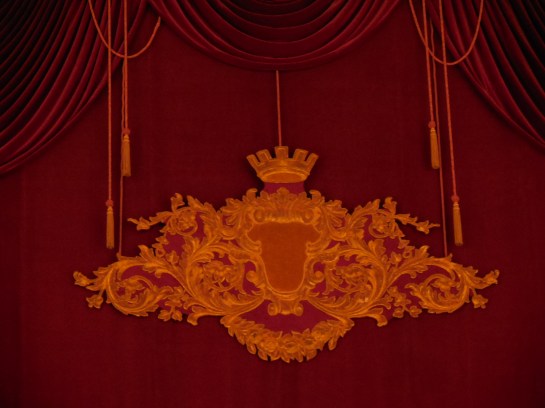
Arcades at Zvíkov Castle

Arcades at Zvíkov Castle


Pilsen (Plzeň) Museum of West Bohemia and Pilsner Urquell Brewery Diary

The Cathedral of Saint Bartholomew, a landmark in Pilsen

The Cathedral of Saint Bartholomew, a landmark in Pilsen

I had been to Pilsen many times. After all, it was only an hour away via the comfortable Student Agency bus service. I had even spent several days in the town, staying in a pension above a beer hall-restaurant, but I did not do much sightseeing. I had been in town for a theatre festival and found myself in various theatres the entire time. Indeed, I was ashamed that did not really know Pilsen well after having lived in Prague for more than 20 years. It had always been one of those places where I changed trains.
I would soon find out that Pilsen certainly is worth visiting. It was even selected the European Capital of Culture for 2015. With a population of more than 170,000 inhabitants, Pilsen is the fourth biggest city in the Czech Republic.
A travel blogger on Twitter mentioned that he had really enjoyed the tour of the Pilsner Urquell brewery. Although I rarely drink alcohol, I thought it would be intriguing to see how beer had become an integral part of the town’s history. I wondered what processes were entailed in brewing it.

The town hall with its sgraffito Renaissance facade

The town hall with its sgraffito Renaissance facade

Before my tour of the brewery, I made a stop at the Museum of West Bohemia, where I visited an exhibition on the city’s history from medieval times to the 19th century. First, I explored other areas of interest in the museum. The Gothic armor in the armory was impressive, and the Meissen collection certainly caught my attention. I was especially drawn to a bowl with the entire surface covered in three-dimensional, handmade flowers with leaves. The handle looked like a tree branch. Dating from 1739, it was truly exquisite.
Then it was time to concentrate on the history of the town in context with the events that had so greatly affected this land. The exhibition also focused on everyday life from the various centuries. There was an exposition of a medieval, rural house, for instance and recipes from the 15th and 16th centuries as well as a section on food and textiles in the Middle Ages.

The Plague Column in Pilsen

The Plague Column in Pilsen

This is what I learned: Pilsen was established in 1295 by King Wenceslas II. It was designed in a regular Gothic ground plan with a rectangular square that was 193 meters x 139 meters. In the beginning about 3,000 people lived in 290 houses. The town was significant because it was situated on a trade route from the German borders to Prague.
When the Hussite wars ravaged the lands during the 15th century, the town at first supported the revolutionaries but then turned toward the Catholics in 1420. Pilsen was never conquered.
During the second half of the 15th century, Pilsen became a regional center. It had a Catholic majority, most of whom spoke Czech. Because the town was located on an important route to Germany, there was much trading with Germans. Non-Catholics wanted to teach Pilsen a lesson for taking such a strong Catholic stance, so they set fires deliberately and destroyed part of the town. This happened, for example, in 1507. During the 16th century, because the city had a Catholic majority, it supported the monarch.

The exquisite facade of a building on Republic Square

The exquisite facade of a building on Republic Square

In the mid-16th century Pilsen ranked third among the biggest cities in Bohemia. The town flourished by buying villages and creating ponds. The beer brewing industry also proved successful – but more about that later. By 1557 Pilsen was ranked as the second wealthiest town after Prague. The inhabitants were mostly from Bohemia. At the end of the 16th century, Emperor Rudolf II took refuge in Pilsen when the plague epidemic spread through Prague.
During the 17th century Thirty Years’ War, Pilsen, not surprisingly, supported the Catholics, who were victorious, so the town was not punished after the war. However, the 17th and 18th centuries were not all that rosy. In 1623 a fire destroyed parts of the town. The plague made its way to Pilsen in the 17th and early 18th centuries. There was another fire in 1729.
Pilsen soon found itself as a provincial town. The population decreased, and the city experienced financial problems. In the middle of the 18th century, many immigrants came to the town. Some of the newcomers were officers for the administration of the city.
At the beginning of the 19th century, Pilsen contributed to the National Revival, a movement to revive the Czech language, improve Czech culture and emphasize Czech national identity. Pilsen was one of many places where this revival was successful. Czech schools were established. Theatres put on performances in Czech. There were Czech technical organizations, and Pilseners contributed to Czech literature. Yet there were hardships, too. In the 1830s, ethnic controversies riddled the town. Poor harvests and financial crises did not help matters.

Republic Square

Republic Square

In 1848 Pilseners were among the Czechs who demanded national democratic and constitutional rights in the monarchy. At the end of the 18th century and at the beginning of the 19th century, Pilsen was a town oriented in trade and agriculture and had promise in the industrial sphere as well. The food industry grew thanks to breweries, mills and distilleries.
The 19th century brought major developments in the city. For instance, Škoda Works was established by Emil Skoda and became the top arms producer in the Austro-Hungarian Empire. Later the company became a leading engineering enterprise. The brewery brewed its first batch of beer on October 5, 1842. The Pilsner Urquell brand and the pilsner type of beer would capture worldwide attention. But more about that later.
One feature I really liked in the history section of the museum was the focus on individuals who had made a difference during these centuries – people who were not necessarily famous. I learned about Joseph Vojtěch Sedláček, for example. Active during the National Revival, he collected art-related objects for Prague’s National Museum. While he taught math and physics at a monastery, he also scribed poetry. He is also the author of the first Czech textbooks on math, geometry and physics.

Part of the Pilsner Urquell Brewery complex

Part of the Pilsner Urquell Brewery complex

Now it’s time to get to the main topic: beer. If there is one thing that symbolizes the city, it is beer. The beverage was first brewed there at the time of the founding of the city in 1295. King Wenceslas II gave 260 townspeople the right to brew beer in their homes. The quality of beer was controlled by town councilors in the entrance of the town hall. The town magistrate poured beer on oak benches. Then councilors would sit on the benches for an hour. If their leather britches did not stick to the bench when they stood up, the beer was deemed undrinkable.
In 1838, 36 barrels of undrinkable beer were spilled out in front of the town hall, an event which compelled some brewers to set up a brewery. The Burghers’ Brewery opened on October 5, 1842, when the very light, bottom-fermented Pilsner Urquell came into existence.
Pilseners have the then 29-year old Bavarian brewer Josef Groll to thank for their internationally-acclaimed beer. He’s the one who put local ingredients of soft Bohemian water, very pale malt and Saaz hops into the mixture using a new method to produce bottom-fermented beer and then came across the new type of beer – the pilsner type — by accident on October 5, 1842.

Historic barrels in the brewery cellars

Historic barrels in the brewery cellars

Two of the Czech Republic’s most famous brands of beer, Pilsner Urquell and Gambrinus, are made at the vast complex near the center of town in buildings that had been constructed on a former executioners’ site. I picked up my ticket in the Visitors’ Center, where an original wort barrel is displayed. The place was crowded with tour groups. It was not possible to tour the Gambrinus brewery. For some reason there were no tours in March.
When it was time for my English-speaking tour to start, we stepped outside, and the guide pointed out a few landmarks. The water tour hailed from 1907 and was 47.2 meters high. It reminded me of a lighthouse that I remember seeing as a child while on vacation near Freeport, Maine. As a young child I had wondered if some evil person had inhabited that lighthouse. The Pilsen water tour is no longer used.
There was also a decorated historical gate built on the 50th anniversary of the brewery, in 1892. By the way, that year 462,550 hectoliters of beer were brewed there, and the brewery had more than 600 employees. The cellars even already had electrical lighting. The gate brought to mind the historical gate at the entrance to the town of Mělník, where I had visited a chateau a week earlier. The guide elaborated on the history of the brewery, mentioning Josef Groll and the 1838 barrel-spilling event, for example.
Then we got on a shuttle bus and went to the packaging hall, where we would see the bottle lines in action. The packaging hall was modern, hailing from 2006. There were four lines, one reserved for cans. On the premises was a washing machine as well as a camera that takes a picture of each bottle to show if it is clean. The bottles were filled, warmed at 25 degrees Celsius, dried and then labelled. We saw the huge bottle lines from above, behind glass. At that time two lines were working.

The bottle lines at the packaging plant

The bottle lines at the packaging plant

Everything was so mechanical, so efficient. And to think that I only saw several people in the room while all this action was taking place! I almost expected to see Charlie Chaplin running from one side to the other as in Modern Times. It also made me think of Karel Čapek’s science fiction play R.U.R (Rossum’s Universal Robots) in which robots made by man take over the world, bringing about the extinction of the human race. Everything was so mechanical. It was as if an army of bottles were marching into battle.
The process also reminded me of one of my favorite episodes of I Love Lucy, when Lucy and Ethel are stuffing chocolates into their mouths, picking them off the conveyor belt at the chocolate plant. That scene had such a human quality to it, though. I missed seeing many people in the hall. I tried to imagine it back in the days when people had worked at the belts. It both impressed me and saddened me that technology was so advanced.

A bottle line at the Pilsner Urquell Brewery

A bottle line at the Pilsner Urquell Brewery

Then we took the bus to another location and saw some cylindrical tanks outside. They were used for the fermentation and saturation of the beer. The guide mentioned that there were 20 cylindrical tanks outside and 110 in the building. A green-and-white train from 1952 stood to my right. At one time it had been used to take beer to the brewery. We went inside and got onto the largest passenger elevator in the country with room for 72 passengers.
We watched a short film about beer production in a panorama cinema with a revolving floor. One of the things I learned from the film is that it takes about five weeks to make the beer. Then we went to an exposition on barley and the stages of malt production. You could hold the barley in your hand and sniff it. You could also see how yeast looks through a microscope and taste hops that came out of a machine that looked similar to a soap dispenser. The Saaz hops had a subtle aroma. An exposition explained about granulating the hops. It told how they had to be dried, ground and boiled.

The packaging plant

The packaging plant

Then we went to the old brewhouse in a 1930s era building and the new brewhouse above it, which has been used since 2004. The former brewhouse had been used for 75 years. During that time five million hectoliters of beer had been brewed there. The tanks used in the brewhouse looked like alien space ships and brought to mind the TV serial Mork and Mindy and the movie E.T.

The old brewhouse

The old brewhouse

Two million hectares of beer are produced in the new brewhouse annually. The filtration process, for example, takes two hours, and the boiling process lasts 90 minutes. After that, the wort is chilled to six degrees Celsius. Only two people seated in a small office behind a glass wall controlled the mechanisms. Such a complicated process and only two people are needed to monitor it! Again I viewed technology as both awesome and disheartening.

The brewhouse

The brewhouse

From there we went to the room called The Hall of Fame, where the brewery’s trophies and various awards are shown off. A copper bin on display once held the first batch of Pilsner Urquell. Habsburg Emperor Franz Joseph, who reigned from 1848 to 1916, had penned his name in the visitor’s book, but his handwriting was messy. The guide mused that the ruler of the Austro-Hungarian Empire might have been drunk when he signed it. I thought about the suicide of Franz Joseph’s son, Crown Prince Rudolf, and the assassination of his wife, Empress Elisabeth, nicknamed Sisi. To be sure, Franz had good reason to drink!
Nineteenth century Czech poet Jan Neruda even wrote a feuilleton praising the brewery after his visit. It was published in Hlas on May 5, 1863.

Emperor Franz Joseph signed the visitors' book at the brewery.

Emperor Franz Joseph signed the visitors’ book at the brewery.

The guide also mentioned that the oldest house where beer had been brewed is at number 58, but I do not remember the street. Now the Beer Museum is located in that building. I had hoped to get there that day, too, but I would not have enough time.
Then we explored the cellars. They were nine kilometers long, with a size of 32,000 square meters. Of course, we did not walk through every passage! I thought of how difficult it must have been to have built this vast underground area – it must have taken many people to make all these tunnels. No machines had been used to make the cellars. It had all been accomplished by hard, sweaty manual labor. I wondered who had done this sort of work. Poor people who needed the money? Prisoners? Maybe both.

The barrels in the cellar

The barrels in the cellar

These underground spaces were once used for the fermentation and saturation processes. We saw storage areas with big, historic barrels. We walked through an ice room, too. In the second half of the 19th century, they used to cut ice from rivers and ponds to keep the place cold.
At the end of the tour, we tasted unfiltered and non-pasteurized Pilsner Urquell beer. It was tapped straight from an oak lager barrel. The beer was very good, but since I am not much of a beer drinker, I am not enough of an expert to compare it with other brands. I tended to like black beer, but this light brew was as good if not better than any of the dark beers I had tasted.

Republic Square

Republic Square

After the tour I went back to Republic Square in the center of town, where there are three modern gold fountains with black Chinese basins. I liked the gargoyles from which the water spewed. (I’ve always been a fan of gargoyles and the grotesque.) There was a 17th century Plague Column, too.
For years I had wanted to go inside the Cathedral of Saint Bartholomew on the square, but it was never open when I was in town. It was only open certain months during weekdays. I had read that a Neo-Gothic altar featured the Madonna of Pilsen showing the Virgin Mary with a very expressive and sorrowful look on her face. I loved gazing at the Renaissance town hall with all the sgraffito decoration on its façade that dates from 1558.
I was very hungry, and I decided to eat lunch at my favorite eating establishment in Pilsen – the famous U Salzmannů restaurant around the corner from the square. During the 19th century this had been the most significant pub in the city. A famous event in Pilsen’s history was connected with this former beer hall. In April of 1843, the original owner of the place, Martin Salzmann, sent some beer to his close friend in Prague, a tailor named Jakub Pinkas. The tailor was so impressed with the taste that he decided to hang up the scissors and open a pub, U Pinkasů. The pub still serves Pilsner Urquell beer.

A tower of the Cathedral of Saint Bartholomew

A tower of the Cathedral of Saint Bartholomew

Supposedly, Salzmann had been quite a character. He was known as a very grumpy and unpleasant man. He would place a coaster on the table for each customer and put the mug of beer on it. If he became disgruntled with a customer who was too drunk and too loud, he would take away the coaster and kick the guest out of the pub.
There was another way to lose your coaster. If you clinked glasses – Salzmann hated it when customers did this – you also lost your right to drink in the establishment. Salzmann also disliked students and deterred them from visiting his pub because they often did not have enough money to pay for their drinks.
After my late lunch, it was time to head back to the bus station. I vowed to come back to tour the underground areas of the city and to wander through the Beer Museum. I now am very aware that there were many sights to see in Pilsen, and I want to visit as many as possible.


Tracy A. Burns is a writer, proofreader and editor in Prague.

The new brewhouse

The new brewhouse


Anti-nuclear Bunker Diary

A Communist banner with the hammer and sickle symbol

A Communist banner with the hammer and sickle symbol

The tall, thirtiesh man clad in a 1980s-era uniform of a Czechoslovak army officer approached me at the reception desk of the Hotel Jalta on Wenceslas Square. He introduced himself and said he would be my guide through the Museum of the Cold War. This was my first visit to the five-star boutique hotel, but I knew it had catered to Western tourists long before the Velvet Revolution of 1989. I had often passed by the 1950s style building so strongly influenced by Soviet architecture, taking for granted that it was part of the cityscape of Prague.

I have to admit that seeing the guide in a Communist era uniform made my stomach lurch as it brought to mind the rigid authority and terrors of the totalitarian regime that had lasted for some 40 years in former Czechoslovakia.

I followed the fair-haired, smiling man down the stairs until we were about 20 meters below the hotel, in spaces that were once part of an anti-nuclear bunker. 

When we reached the museum, the guide described the bunker’s design. Currently, there were only several small rooms with displays, but the bunker itself, completed in 1958, consisted of three floors. It was made specifically to protect about 150 high-ranking Communist officials for as long as two months, if nuclear war was declared. 

Communist era uniforms

Communist era uniforms

The guide talked about the history of the Hotel Jalta. It was constructed from 1954 to 1958 on the site of a building that was bombed by the Allied Forces in 1945. The spaces belonged to the Ministry of Defense until 1997. Now the hotel owns the bunker. The museum was relatively new; it had opened in November of 2013.

Nuclear war never broke out, but the Communists did set up a listening post on the premises. The Secret Police listened to conversations of hotel guests and employees. They had planted bugs in the rooms.

The guide explained that steel slabs were constructed to protect people from radiation. The concrete walls were two meters thick. Upon entering the first space, I faced a red socialist banner with a picture of former Czechoslovak President Antonín Zápotocký, who had influenced the design of the hotel. 

I cringed. Zápotocký had helped establish the Communist Party of Czechoslovakia back in 1921. He was the country’s Prime Minister from 1948 to 1953, taking over the position after the Communist Coup in February, 1948. That was when Klement Gottwald became the first Communist president. Zápotocký took up the presidential post after Gottwald’s death in 1953 and served in that capacity until 1957. The leader of the country during the harsh 1950s, Zápotocký really played second fiddle to hardliner Antonín Novotný, who was the First Secretary.

Zápotocký had a chilling past. He had spent time in the Sachsenhausen concentration camp during World War II. When he was released in 1945, the Dutch accused him of war crimes, claiming that he helped execute their citizens during World War II.

On the wall to my right, I scanned a poster featuring various Communist propaganda writings about Czechoslovakia. I think I would have gone crazy if I had had to listen constantly to all that socialist advertising with all those empty phrases. On another wall there were copies of posters from totalitarian days. Of course, they all celebrated and glorified socialism, announcing “Socialism for a better life” and similar slogans. One poster advertised the 15th anniversary of the Pioneers’ youth organization that had an emphatically Soviet slant. I wondered how children had felt about being sent to Pioneers’ camps. Did they accept the socialist preachings as part of their lifestyle and tradition, or were they disgusted with this athletic mouthpiece for the Communist regime?

One of the two tunnels

One of the two tunnels

The guide then showed me an entrance to a tunnel that leads to some place on Wenceslas Square, but no one knows exactly where. Another tunnel was connected to an adjacent building. I felt claustrophobic enough in the bunker itself. There was no way I could have ever crawled through one of those tunnels, even if my life had depended on it.

After passing through a small medical examining room, we came to a section dominated by a mannequin dressed in the uniform of a Communist border control guard finding smuggled jewelry in a suitcase he has opened. I realized that, as a child, I had thought of people living behind the Iron Curtain as mannequins, as people without souls, unable to feel joy or pain. I had been a big fan of the TV sitcom Get Smart that featured a bumbling American secret agent battling wits with the KGB. Back then, when I was about eight years old, my world had been black-and-white. The Americans were the good people. Russians and other nationalities living in totalitarian countries were the bad people. As a child I had viewed the lands behind the Iron Curtain as eternally covered in a thick mist that was impossible to see through.

It did not occur to me back then that people in Communist countries experienced the same feelings that all people do – they fell in love, sobbed hysterically, smiled brightly, laughed heartily. Back then I did not realize that some Czechoslovak citizens had joined the Communist Party out of fear. What if they wanted to send their children to university? What if they were blackmailed? As a kid, I had yet to learn that there were a lot of gray areas. Still, I now know that a lot of Czechs and Slovaks had not joined the Party despite the consequences. Those were some of my heroes.

A figure of a border guard finding smuggled jewelry

A figure of a border guard finding smuggled jewelry

The guide put a 1950s-era machine gun in my hands. It felt heavy and awkward. I could not imagine shooting anyone, ever. I could not even imagine owning a gun. I recalled the first and only time I had gripped a real pistol. I had been studying theatre in Vermont, and my classmate Steve and I were practicing a scene from a play by American playwright Sam Shepard. Steve had brought his gun to the classroom so I could use it as a prop. It felt so heavy, and my hands got clammy when I held it.

A small bust and a portrait of first Communist Czechoslovak President Klement Gottwald decorated the room. In the portrait Gottwald looked like a loving father and husband, smoking a pipe, seemingly such a gentle, kind man proud of his family. But anyone who has studied Czechoslovak history knows that Gottwald was far from kind. He orchestrated the Communist coup of 1948 that made the last democracy in Eastern Europe into a totalitarian country. After the war Czechoslovaks wanted solid ties with the Russians, who had liberated them. However, the Communist members of government became ruthless in their control of the police and security forces. The nonCommunist ministers resigned, certain that the democratic President Edvard Beneš would be able to create a new government that would exclude the Communist Party.

A medical room

A medical room

Their strategy failed. Instead, Communists reacted violently. Since the Army was controlled by a Communist General, there was no way to stop the brutal attacks unleashed by the Communists, who even beat students advocating democracy in a protest in the Lesser Quarter’s Nerudova Street. Then Prime Minister Gottwald threatened President Beneš that he would engineer a general strike and nonCommunists would be punished if Beneš did not sign the Communists’ proposal for a new government.  Beneš succumbed to Gottwald’s pressure.

Under Gottwald’s presidency, Soviet Union Prime Minister Joseph Stalin called the shots, and Czechoslovakia carried out the largest show trials in Eastern Europe. From 1949 to 1954, Communists and nonCommunists were tortured and executed for crimes they did not commit. Military leaders, Jews, Catholics, democrats –they all became victims in this horrific display of injustice. Over 180 people were executed in these trials that were scripted and rehearsed. One victim of this terror was democratic politician and resistance leader Milada Horáková, executed in 1950 for allegedly planning to overthrow the regime.  The international community was irate over her execution.

Yet the trials were not restricted to those supporting democracy. High-ranking Communist officials were purged, too. Communist official Rudolf Slánský was made a scapegoat, accused of high treason and espionage and labeled a Titoist, someone who supported the Marshal Josip Broz Tito-led Yugoslav government, which did not adhere to the dictates of the Soviet Union. Slánský was tried with 13 others and sentenced to death in 1952. His ashes were scattered at a construction site near Prague.

Back to the exhibits. A display on one wall described the responsibilities of the Czechoslovak border guards. The pictures showing dead bodies sprawled near the electric fence that delineated the border of the country deeply affected me. Those brave people had been mere meters from freedom when they were gunned down. I marveled at how much courage it took to try to escape. I wondered if I would have had that much courage. Probably not.  These people were heroes. They died for freedom. The freedom to have your own opinions and make them heard. The freedom to be whoever you wanted to be, to live the life you chose rather than one that was chosen for you. These are only a few of the things I had taken for granted until I moved to Prague in 1991.

Art on the Berlin Wall

Art on the Berlin Wall

The pictures also brought back memories of my visit to the Berlin Wall in 1991, when I was fresh out of college. I recalled how being so physically close to the Wall made me realize that it was much more than a physical barrier between two drastically different worlds. I thought about people who had risked their lives trying to get over that Wall. I recalled the November 9, 1989 TV footage of Germans scrambling over it when East Germans were granted the right to visit West Germany. Still, until I came face-to-face with the Wall, those TV images remained mere images. When I saw the Wall for myself, those images became real. I could see the people climbing higher and higher to the very top, reveling in the ecstasy of experiencing freedom for the first time. The art gallery on one section of the wall transformed it into a vibrant and dynamic celebration of color that made poignant statements about society and the value of freedom.

Still engrossed with the pictures of the fallen near the electric fences, I also pondered over stories Czech acquaintances had told me. One waiter at a restaurant I had frequented told me how he and his brother had planned to escape. However, when he showed up at the agreed meeting place, his brother was not there, so he went home. Later, he found out that his brother had escaped a day earlier without telling him.

The Berlin Wall, 1991

The Berlin Wall, 1991

Another acquaintance was punished for his brother’s defection to America. The authorities confiscated his spacious flat in Vinohrady and gave him an efficiency apartment in a district far from the center. He became so desperate to escape that he tried to hijack a plane to take him to the West. Because there were always Secret Police agents on flights, he was quickly apprehended and imprisoned.

The next room was decorated with various uniforms of the border guards from the 1980s. There was an old tape recorder, a megaphone, a shield and a helmet – I wondered if these very items had been used when the police beat demonstrators on National Avenue during the 1989 Velvet Revolution. A portrait of President Gustáv Husák was prominently place in the room. Husák had been president during the rigid Normalization era that had followed the Soviet invasion. The tanks rolling into Czechoslovakia’s capital on August 21, 1968 had put an abrupt halt to the Prague Spring that had brought liberal reforms to the country. For two decades Husák controlled the country with an iron fist, fiercely loyal to the Soviet Union.  After the invasion Husák had felt no mercy for the reformers. As First Secretary of the Party in 1969, he also purged Communists who had supported a more liberal stance during the Prague Spring.

A Communist official reading a Communist paper

A Communist official reading a Communist paper

Husák became President of Czechoslovakia in 1975. During the 1970s and 1980s, dissidents were even more oppressed, often arrested and imprisoned. He also punished people who did not believe in adhering to the principles of Communism by forbidding them to get a higher education or not allowing them to travel abroad, for instance. Many people lost their jobs. The Communist Party kept track of the activities of all citizens, following them and persuading citizens to denounce each other. Czech and Slovak culture suffered horribly during Husák’s tenure.

Coincidentally, Husák had served time himself. He was imprisoned during World War II for promoting Communism, which was illegal at that time. Then in 1950, when the high-ranking Communists and others were purged, he was ordered to spend the rest of his life behind bars. Later, in 1963, Husák had been allowed to join the Communist Party again. He resigned November 24, 1989 when the Presidium of the Communist Party left their posts, defeated by democracy. Husák was expelled from the Communist Party in 1990 and died in 1991.

A telex from the 1980s

A telex from the 1980s

But I was not only thinking about the crimes of the Czechoslovak government during the dismal 1970s and 1980s. The old-fashioned tape recorder brought back memories of an entirely different nature. It reminded me of my own tape recorder, the one I used as a teenager to do interviews with members of the Washington Capitals, when I dreamed of becoming a journalist. What a different world I had lived in during the 1980s! And I had taken it as a given that my writing would not be censored.

While the hotel was never used as an anti-nuclear bunker, the Secret Police did take over the rooms during four decades, the guide reminded me. A large switchboard showed how they had set up a listening post to eavesdrop on hotel guests’ and employees’ conversations. During the 1970s, the Secret Police also had eavesdropped on conversations in West Germany’s embassy, then situated in the same building. A display case showed brushes for shoes and clothes and other items where the bugs in the hotel rooms had been placed.

An old telephone

An old telephone

The guide played a taped English conversation between a Czech resident of Prague and an Austrian who was in Prague to enjoy the city without his wife. The Austrian asked the Czech advice about where to find a prostitute, and the Czech told him he would have to pay in Western currency. I remembered the days of the early and mid-1990s, when Czechs had always wanted dollars rather than crowns. I had to pay my rent in dollars for several years. Since then the dollar had taken a turn for the worst, and the exchange rate was no longer 40 crowns to one dollar but rather around 19 crowns per dollar.

I thought about how paranoid I would have been if I could not speak openly in my own house. A former dissident whose house had been bugged once told me that the authorities had been able to listen in on his conversations, but they could never take away what he believed in his heart.

I was musing about that when the tour ended, and the guide led me back upstairs to the lobby. I walked onto the large square, relishing the beautiful feeling of freedom. I would go home to an apartment that was not bugged and would write an article that would not be censored. And for that I am forever thankful.

Tracy A. Burns is a writer, proofreader and editor in Prague.
 

Gas masks

Gas masks

Bauer Villa and Czech Cubism Diary


Bauer Villa

Bauer Villa


I had traveled with Arsviva, a Czech tour company that specialized in trips that emphasized art and architecture, to Sicily for 11 days in May and had enjoyed a thrilling experience full of breathtaking sights, all made more fascinating thanks to a terrific guide. This time I was on a day trip to sample Cubist architecture in central Bohemia. As we started out at seven in the morning, I thought to myself how I had always been attracted to Cubism and to the way the style assembled shapes in abstract forms utilizing many perspectives. I had found the Pablo Picasso museums in Paris and Barcelona to be breathtaking. Georges Braque’s work also bewitched me, especially in the Centre Georges Pompidou. In terms of Czech Cubism, I was most drawn to the paintings of Josef Čapek, who had also, along with his exceptionally talented brother Karel, scribed some impressive plays.

First, we went to the Evangelist church in the village of Pečky. The monument to Jan Hus near the church reminded me of the first time I had seen the monument to the 15th century martyr on Prague’s Old Town Square, a place where I immediately felt a sense of belonging during my visit as a tourist in 1991. Hus had been a Czech priest, reformer, philosopher and teacher who was burned at the stake on July 6, 1415 for not preaching according to the doctrines of the Catholic Church; he stands out as a leading light of the Bohemian protestant reformation.

Evangelist church interior

Evangelist church interior

Designed by Oldřich Liška, the Cubist interior dated from 1914 to 1919. The church was adorned in new modern style with Cubist features. The pews, the pulpit and the organ all exhibit Cubist tendencies.  Inside the church I was especially captivated by the four Cubist chandeliers and the star patterns engraved on the sides of the wooden pews. The Cubist elements blended in with the relatively stark interior, not making a glaring, loud appearance but rather embracing the church in a subtle, sensitive style.

Cubist chandeliers

Cubist chandeliers

Next, the bus took me and the other 40-some passengers to another village called Libodřice, where, all of a sudden, a Cubist villa magically appeared.  No other Cubist villa was located in the Czech countryside, I would find out. I was instantly reminded of a Cubist villa in the Vyšehrad district of Prague. I had walked by it every day on my way home from the when I lived below Vyšehrad hill. Passing by such an architectural wonder every day made me feel calm, momentarily at peace with the world and all the wonders it brings.

I was especially drawn to the framed windows of the Bauer Villa, decorated in star patterns. The large mansard roof blended into the design as well. The abstract, broken shapes appealed to me.  The villa boasted block stereometric articulation. Stereometric encompasses forms such as the cone, cube, pyramid and sphere – geometric shapes. Three polygonal buttresses were combined on one side of the villa. I was impressed with the slanted form of the main cornice, too. There were not just Cubist elements apparent inside and outside the villa; the entire building embraced the style in a form that did not disturb the tranquil landscape.

Windows of the Bauer VillaLegendary Czech architect Josef Gočár, who made a name for himself during the early 20th century in the Czech lands, designed the Bauer villa early in his career, between 1912 and 1914. Later, this pioneer of architecture would devote time to the styles of Rondocubism, Functionalism and Constructivism. His works are scattered throughout the Czech landscape, featured in Prague, Pardubice and Hradec Králové, for instance. Gočár had studied under the tutelage of famous Czech architect Jan Kotěra, who had was influenced by late 19th century styles along with Modernism. In 1911 Gočár chaired the Cubist Group of Visual Artists. Its members included Pavel Janák (who had also worked with Kotěra); the Čapek brothers; Otto Gutfreund, a renowned sculptor who also fought in the Foreign Legion during World War I; and Vlastislav Hofman, who was accomplished in architecture, painting, graphic art, furniture design and writing. Hofman even designed about 400 sets for plays, including 200 for Prague’s National Theatre.  A year later Gočár helped set up the Prague Art Workshops, designing Cubist furniture with Janák, who is best known for designing the Baba colony residential area in Prague’s sixth district.

Gazebo at Bauer Villa

Gazebo at Bauer Villa

Gočár’s first major projects included a staircase for the Church of the Virgin Mary on a square in Hradec Králové during 1909 and 1910. In 1910 he also designed the living quarters of a cavalry barracks in Bohdaneč. In Pardubice during 1909 to 1911 he designed the Winternitz automated mill and also concentrated on the Wenke department store in Jaroměř.  In 1912 he was one of many Czech artists to convert to Cubism, utilizing simple geometric shapes juxtaposed without illusions of classical perspective. He teamed up with Janák to build the first Czech Cubist building in Prague – the reinforced concrete House of the Black Madonna, which featured angular, bay windows, a Baroque double roof and Cubist ironwork on the balcony. Like the Bauer Villa, the House of the Black Madonna did not interfere with the atmosphere. Instead, it complemented the historic environment of downtown Prague.

The Bauer Villa was constructed for Jewish entrepreneur Adolf Bauer, who owned the manor farm estate. The investor and his family lived there from 1914 to 1929, when Bauer died of diabetes. Bauer’s widow remarried and moved to Prague with her two daughters, and from 1931 Antonín Illmann took care of the villa and the farm. The Jewish Bauer family was sent to their deaths during World War II. In 1941 Nazi Augustin Juppe moved in to what had been the Bauer family home. After the war the villa was occupied by administrative offices of the City Council. A hairdresser’s salon, a library and a few apartments also took up space in the villa.

The back of the Bauer Villa

The back of the Bauer Villa

Finally gaining recognition, the Bauer Villa was accorded the status of a cultural monument in 1987. Despite that, it became more and more dilapidated. Its poor condition finally led the municipality to sell it in 2002 to the Foundation of Czech Cubism. Extensive reconstruction costing approximately 25 million Czech crowns took place, and the Cubist creation was open to the public during 2008.

The expositions in the villa featured Cubist furniture, ceramics, paintings and sculptures as well as informative displays about the Bauer family, Gočár and about Czech Cubism in general. Today there is not much original furniture in the villa, though a few pieces had been salvaged – the fireplace, a wooden closet and the bathroom tiles.

The central staircase hall had been inspired by British villa architecture. I was reminded of the staircase hall in Dušan Jurkovič’s villa in Brno. At the beginning of the tour, I was impressed with a unique coat rack in Cubist style and two chandeliers, one made by Janák and another by Ladislav Machoň, who would become a prominent exponent of Art Deco and Functionalist styles. Machoň’s designs dot Prague. His interior of the Law Faculty of Charles University is probably his best known work. There was also a dark, gloomy painting of Faust on one wall of the Bauer Villa. I wondered how the theme of Faust fit in with the Cubist movement, if indeed it did.

 In the bedroom I noticed a still life painting with a goblet by František Volf and a bewitching, black Cubist chandelier. The bedroom was joined with a bathroom on the ground floor. Usually, during that period, the bedroom and bathroom would be situated on the first floor. The living room featured furniture made by Hofman in 1911 and 1912, a wall clock and chandelier. I was especially intrigued by the Cubist flower pot with its cover in the same style. Then, again in the hallway, I admired the linocuts by Václav Špála and Josef Čapek, two of my favorite Czech Cubist artists.

The Bauer Villa

The Bauer Villa

Then we went upstairs via a  beautiful staircase. Exhibition Room II featured furniture by Gočár and sculptures by Gotfreund. In his sculpture “Anxiety” I was aware of a certain tension permeating from the female’s drapery. This work, made between 1911 and 1912, was considered the first Cubist sculpture, though the one in the room was not the original. Other objects on the first floor included tea cups, metal and brass boxes and vases designed by Hofman and Janák. The bedroom was Hofman’s design from 1912 to 1914 with a black Cubist bed, more sculpture by Gotfreund and a chandelier hailing from that era. The study featured the style of Rondocubism, an offshoot on Cubism born after the creation of Czechoslovakia in 1918. Rondocubism featured folk and nationalistic themes with curls, circles and folkloristic elements. I was especially impressed with Janák’s green chair made of walnut.

Our guide had been informative and enthusiastic, and I was excited that I discovered another gem in the Czech Republic. I thought this would be a good half-day trip from Prague for foreigners visiting the capital city, but I doubted any tour agency offered such an excursion.  The arsviva tour company’s excursions were in Czech, so it would only appeal to foreigners who were fluent in the language. I understood why Karlštejn Castle and Konopiště Chateau drew so many crowds, but still it was, I felt, highly regrettable too that such an extraordinary Cubist villa in the countryside should remain relatively unknown.

Kotěra Chateau

Kotěra Chateau

Next on the itinerary was the Ratboř Chateau, also called the Chateau Kotěra, built between 1910 and 1913 for Bernard Mandelík, who owned a manor farm estate and sugar refinery. The new chateau (as opposed to the old chateau also on the estate) was designed in Czech modern style by Kotěra and served as a restaurant and hotel.  It is notable architecturally for its vestibule, staircase and entrance to the restaurant as well as for its guest rooms. The building is frequently used for weddings and conferences, too, and it had its own parkland.

A large, circular fountain stands in front of the façade. The cupola is decorated with two statues by legendary Czech sculptor Jan Štursa, who founded Czech modernist sculpture and was also an influential pedagogue. He began his career inspired by the symbolism of the Viennese Secession, and after World War I concentrated on depicting the horror and tragedies of wartime. He created a Cubist relief for the Mánes Bridge in Prague.

Fountain at the Chateau Kotěra

Fountain at the Chateau Kotěra

In the first guest room we saw a bookcase that had been designed by Adolf Loos, who was known for his lack of ornamentation. A severe critic of the Viennese Secession when the movement had been in full swing, the Brno-born architect who had spent much time in Austria had focused on purism and minimalistic design. The walls were decorated in green and blue with a lovely plant motif.

Cubist furniture

Cubist furniture

Another space featured original furniture, including a bed with canopy, table and bookcases. From the terrace there was an impressive view of the fountain and surrounding greenery with sculptures. It was also possible to see the statues on the cupola from a riveting, close perspective. A medallion sporting the letter “M” standing for the Mandelíks in green with dark brown wood decorated the railing. In another bedroom I was impressed with a Cubist bedframe and a Cubist chandelier that spoke of simplicity with a sense of style.

Cupola of Chateau Kotěra

Cupola of Chateau Kotěra

After lunch we visited Cubist creations in Kolín and Poděbrady. In Kolín I saw the main square for the first time, and the Neo-Renaissance town hall caught my attention as did the Baroque facades, plague column and fountain. We gazed at Rondocubist apartment buildings dating from 1921 to 1923, the former town savings bank from 1926, the municipal theatre dating from 1937 to 1939 and a high school with magnificent Cubist elements, especially the windows, designed in 1924. The bridge across the Labe River was architecturally impressive and had been built during the 1920s.

Cubism in Kolín

Cubism in Kolín

In the spa town of Poděbrady, we walked through a beautiful park and a neighborhood rich with villas with Cubist elements. At our second to last stop, in Poděbrady, we were able to admire the Amálka Villa from 1910, the Kouřimka Villa from 1909 to 1910 and the Obereigner Villa from 1898. We also took in the spa buildings on the promenade, fascinating structures designed by František Janda from 1907 to 1911. Previously, I had only changed trains or buses in Poděbrady, never realizing how much there is to see here.

Cubism in Poděbrady

Cubism in Poděbrady

While we were in Poděbrady, we had extra time to spend in a café famous for its desserts. Unfortunately, it was also famous for its poor service as it took the waiters an agonizingly long time to fetch coffees and cakes. I was joined by a friendly and interesting family, an adult son with his parents.  He had given his parents this trip as a Christmas present the previous year. I talked to them about my baseball and ice hockey careers growing up, attending Jaromír Jágr’s summer training camp in Slaný and sights I had seen in the Czech Republic.  The father and I reminisced about Czech and Slovak hockey players who had defected to the NHL some decades ago. For me the names Peter Šťastný and Milan Nový brought back childhood memories. In my opinion, the highlight of any tour was meeting nice people, no matter how exciting the particular excursion might be. I have had some negative experiences in the country over 21 years, but meeting kind Czechs always has always made the hardships worthwhile.

Cubist facade in Poděbrady

Cubist facade in Poděbrady

On the way back to Prague, we stopped at the Beniesova Villa in Lysá nad Labem. The villa, created by Emil Kralíček for the owner of a sugar refinery, is known for its big entrance hall with light roof window in the shape of the Star of David and crystal motives that denoted the process of manufacturing sugar. It was sad, though, to find the villa in such a dilapidated state.  The villa was fenced off; there was no possibility to see what sounded like a ravishing interior. If only someone had donated enough money to restore it to its original beauty. . . . If only. . . . It depressed me to think that people could let such architectural wonders fall into such poor condition, that there was not enough money to restore significant buildings to their former splendor.

My depression ceased by the time we returned to Prague around seven in the evening.  I felt grateful that I had had the opportunity to make new friends and to go on such a fascinating excursion.

Tracy A. Burns is a writer, proofreader and editor in Prague.


Beniesova Villa

Beniesova Villa