2025 Art Exhibitions Diary

Barberini Museum, Potsdam

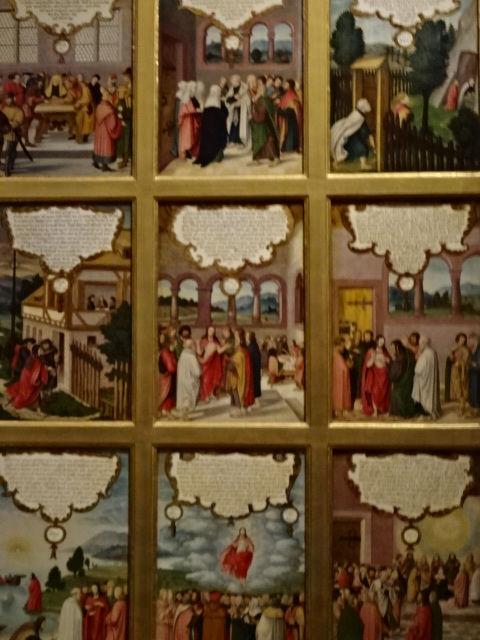
During 2025 I visited many art exhibitions, and each one opened up a new world for me, giving me a new perspective on the time periods represented in the shows. I took two days trips abroad. I went to the Barberini Museum in Potsdam to see temporary exhibitions of works by Wassily Kandinsky and another of paintings by Camille Pissarro. I especially liked Kandinsky’s early works, in which color played such a symbolic role. Vasari, Stella and Mondrian were also represented.

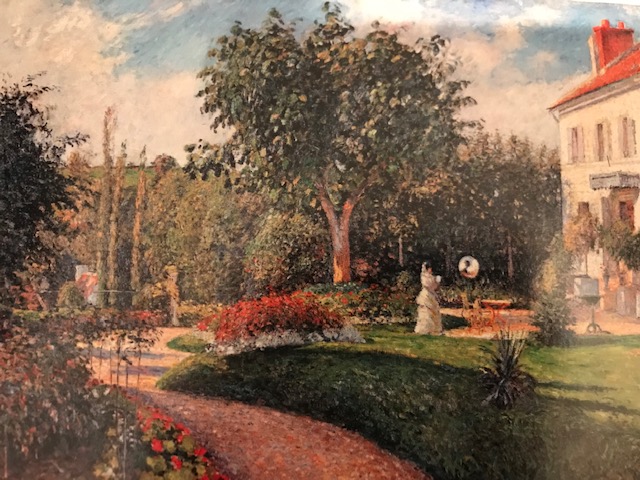
Camille Pissarro, The Garden of Les Mathurins at Pontoise, 1876, Postcard from exhibition.

The Pissarro exhibition was close to my heart. I was overwhelmed by his landscapes, some punctuated by workers in the fields. His early Caribbean scenes and his renditions of Paris made significant impressions on me. His bold and vivacious colors amazed me and gave me a sense of serenity about the often chaotic and problematic world.

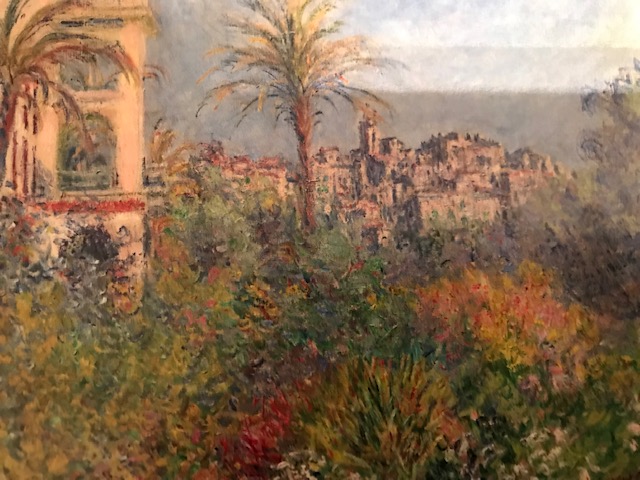
Claude Monet, Villas at Bordighera, 1884, Postcard

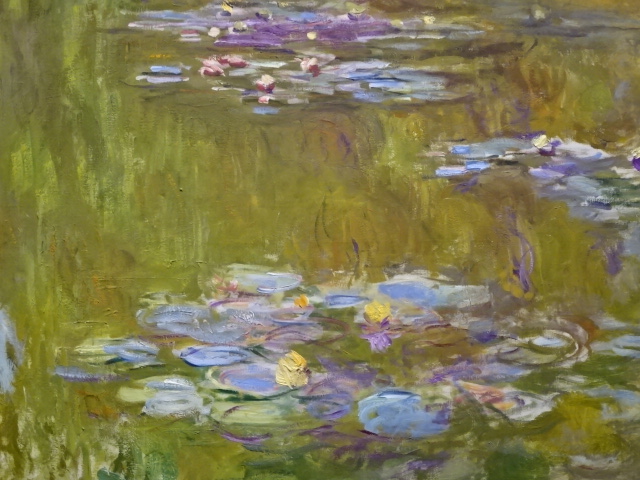
I loved the permanent exhibition at the Barberini with its vast Impressionist collection that included 40 works by Claude Monet, one of my favorite all-time artists. Most fascinating for me were Monet’s landscapes of Bordighera, Italy and his renditions of Venice. Paintings by Alfred Sisley and Auguste Renoir also captured my undivided attention. I was overwhelmed by the astounding Impressionist art in this museum. Seeing the permanent collection was a dream come true.

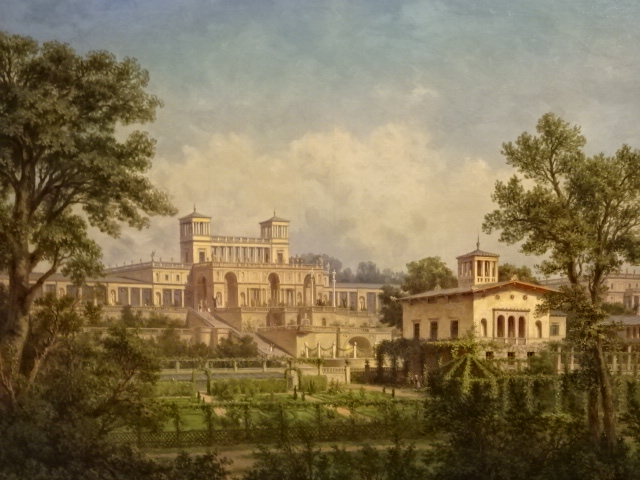
An early rendition of the palace in Potsdam

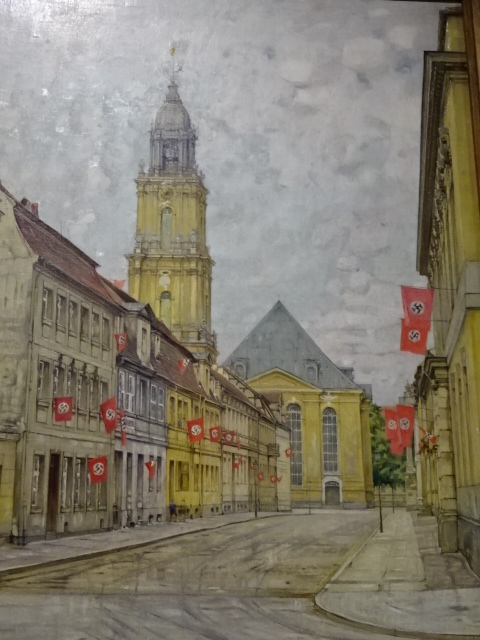
Potsdam City Museum, painting of the Third Reich era

Nearby was the Museum of the City of Potsdam, which I visited twice. I saw the developments of the city via paintings of villas, monuments and the luxurious palace from the glorious era of Frederick III. The furnishings and objects that accompanied each historical display were poignant. I especially was drawn to the exhibitions on the city during the Nazi and Communist eras.

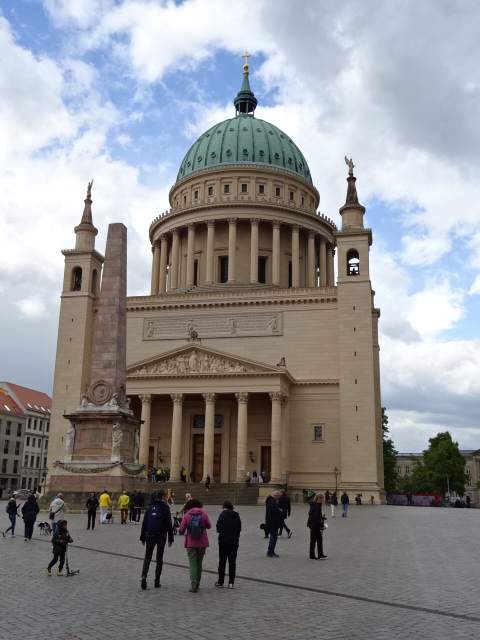
Potsdam, Church of Saint Nicholas

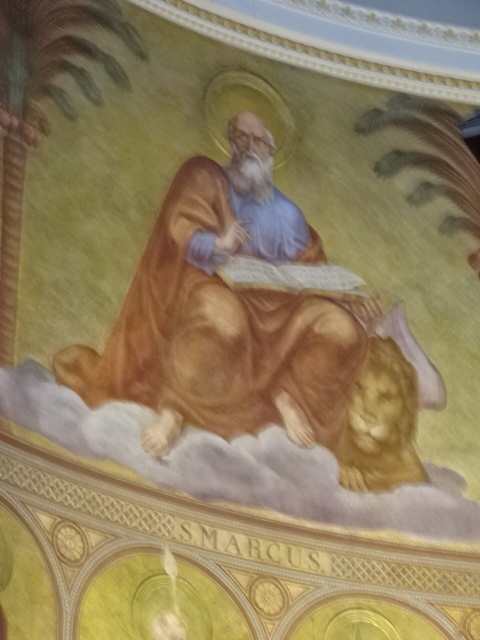
Potsdam, interior of the Church of Saint Nicholas

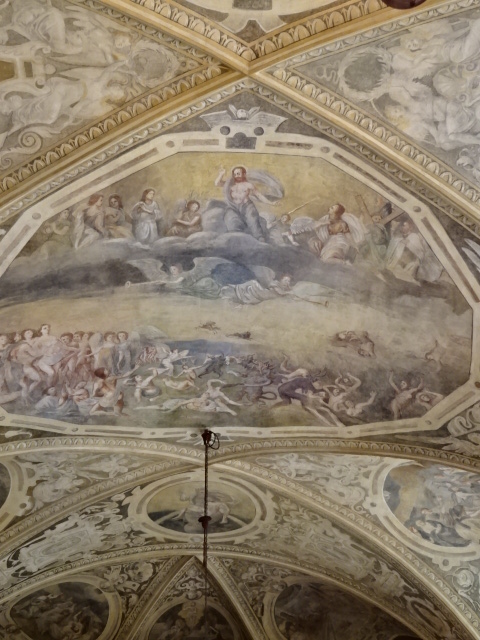
I also visited Saint Nicholas’ Church across the square from the museum. Its colorful frescoes inside represented the Evangelists and Apostles. The exterior featured Corinthian columns, and the church stood 42 meters high. The reconstruction after World War II was laudable. In addition, I saw the Dutch section of Potsdam. It resembled a backdrop of a Vermeer painting.

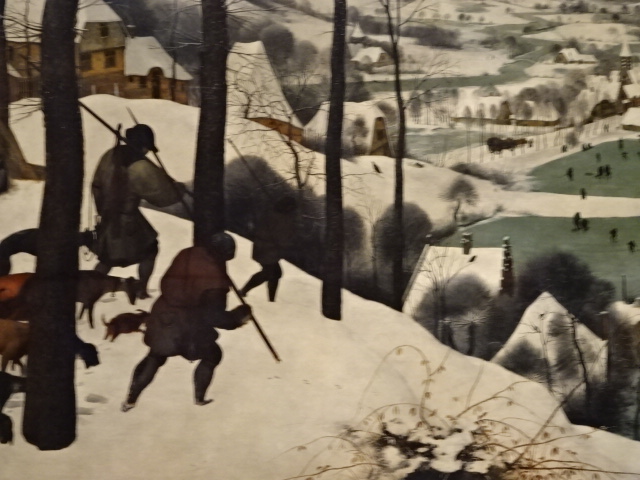
Kunsthistorisches Museum, Vienna, Pieter Bruegel the Elder, Hunters in the Snow

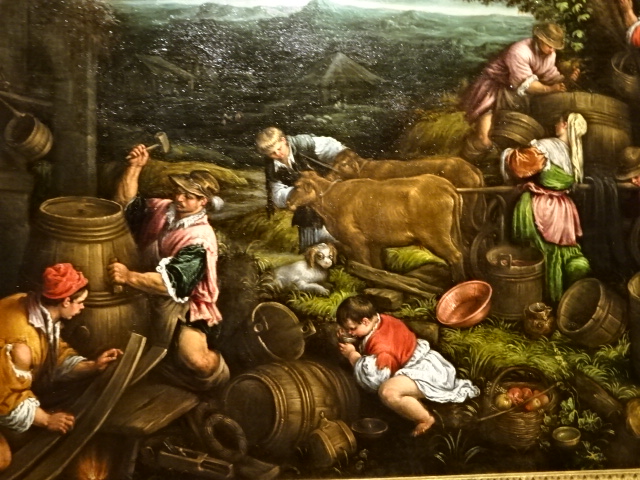
Kunsthistorisches Museum, Vienna, work by the Bassano family

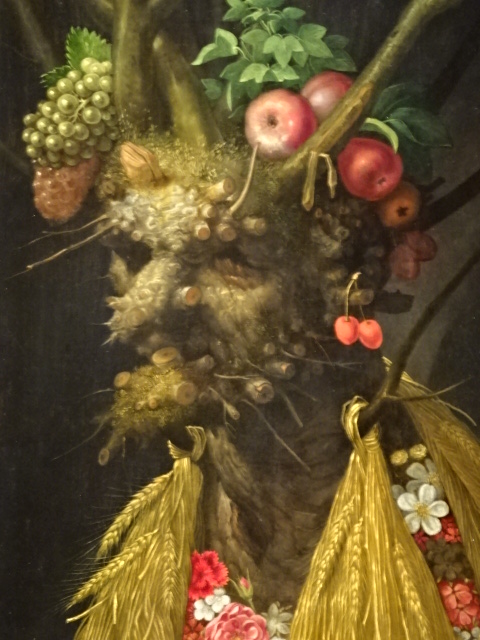
At the Kunsthistorisches Museum in Vienna, Austria I enjoyed the exhibition of works by Pieter Bruegel the Elder, the Bassano family and Giuseppe Arcimboldo along with some by the master of North Renaissance style Albrecht Durer. Bruegel the Elder is my all-time favorite (along with Monet) painter. I loved his landscapes, peasant scenes and religious works. His attention to detail was amazing as the many figures in his paintings were all engaged in various activities. The Kunsthistorisches Museum was known for their permanent collection of his Dutch Renaissance renditions. Arcimboldo, who worked for Habsburg emperors, was a significant painter in the 16th century Italian Mannerist style. He is best known for his unique portrait heads made of objects, such as fruit, vegetables, flowers and fish. His works were the epitome of the grotesque, and nature was a recurrent theme in his paintings. The High Renaissance style was visible in his portrait heads, too.

Giuseppe Arcimboldo, portrait of a head

By Albrecht Durer during the German Renaissance

A prominent painter during the German Renaissance, Durer was a master at engravings, prints and watercolors, for instance. I loved his still lifes of nature as well as his portrayal of praying hands.

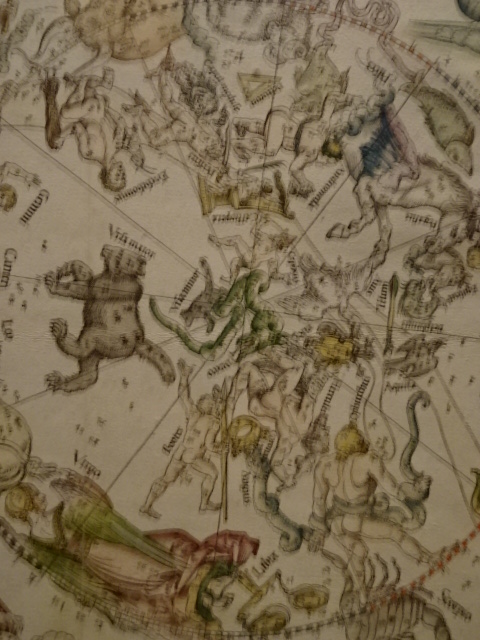
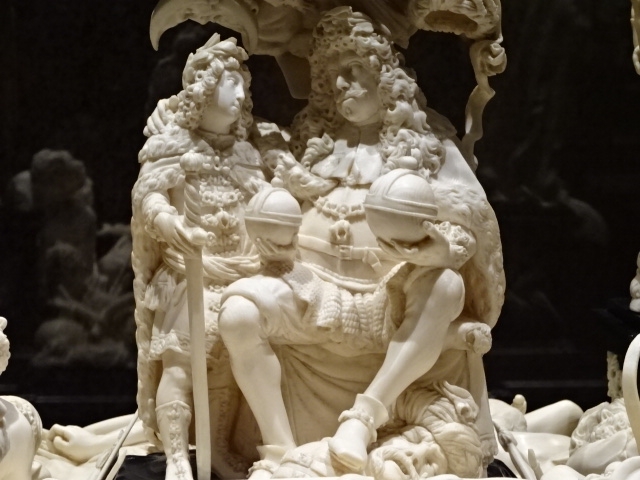
Kunstkammer, Kunsthistorisches Museum, Vienna

Kunstkammer, Kunsthistorisches Museum, Vienna

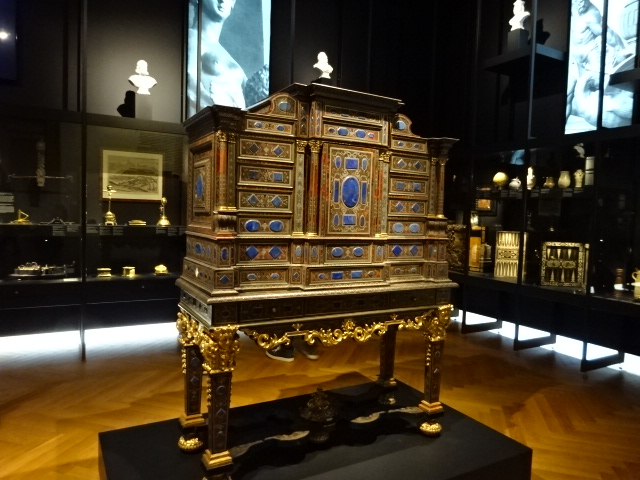
I also gazed at the artifacts in the permanent exhibitions – Egyptian and near Eastern art, Greek and Roman antiquities and masterpieces of European painting, such as those by Vermeer and Rembrandt. The Kunstkammer world of curiosities focused on gold, silver and ivory objects as well as paintings, sculptures, scientific instruments and miniatures. The art showed off a variety of styles courtesy of the Habsburg rulers. I couldn’t resist a cappuccino in the museum’s restaurant, permeating with a sense of grandeur as well as elegance. The restaurant was a work of art in itself.

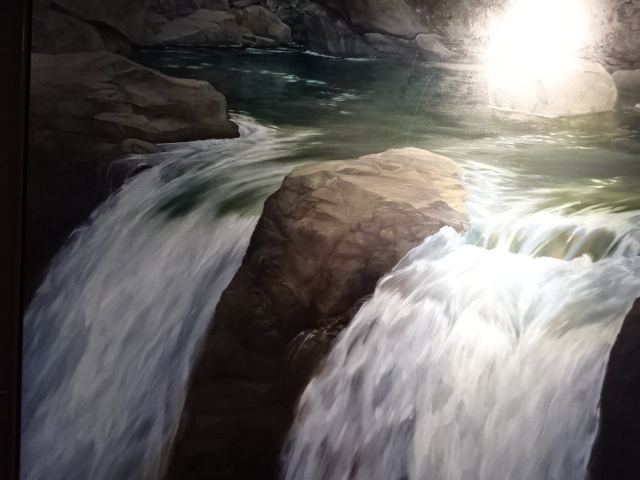
Ivana Bachová, 1995, Fairy Pools

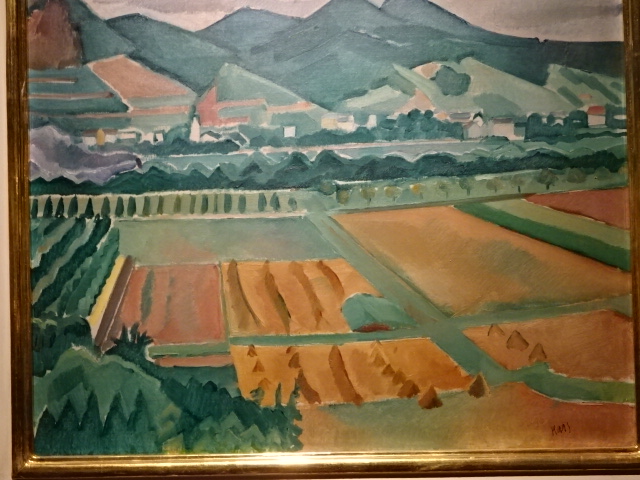
Jiří Kars, French Landscape, 1910-1914

Back in Prague, I went to another exhibition of 19th and 20th century Czech art at the Kooperativa Gallery, an intimate space located in an office building. The landscapes enthralled me, especially the French landscape by Jiří Kars. Artists Otakar Lebeda, Amálie Mánesová and Vojtěch Preissig were just a few of the painters represented in the thrilling exhibition. Sculptures by Ladislav Janouch and Jaroslav Horejš also were on display.

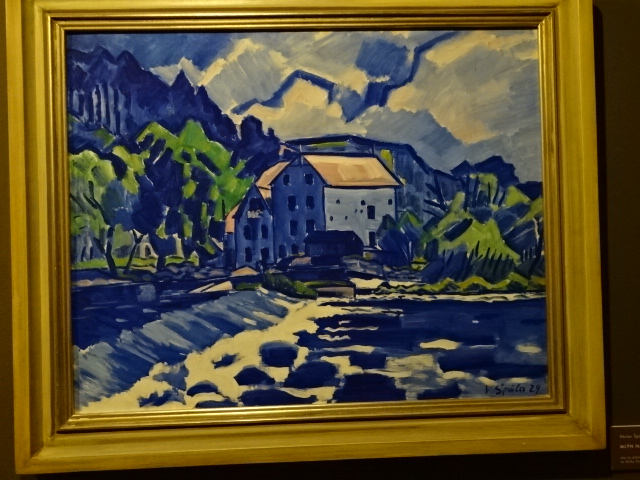
Václav Špála, Mill at Otava, 1929

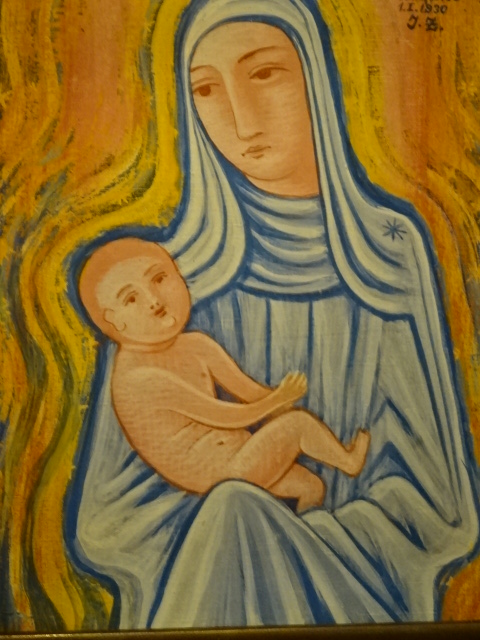
Jan Zrzavý, Madonna, 1930

Also at the Kooperativa during 2025 was a stunning exhibition of modern 20th century art. Václav Špála’s brilliant blues caught my attention in his rendition of a mill at Otava from 1929. Jan Zrzavý’s elements of Primitivism awed me in his Madonna from 1930. Vincenc Beneš’ view of Kampa Island and Preissig’s rendition of a village also enthralled me.

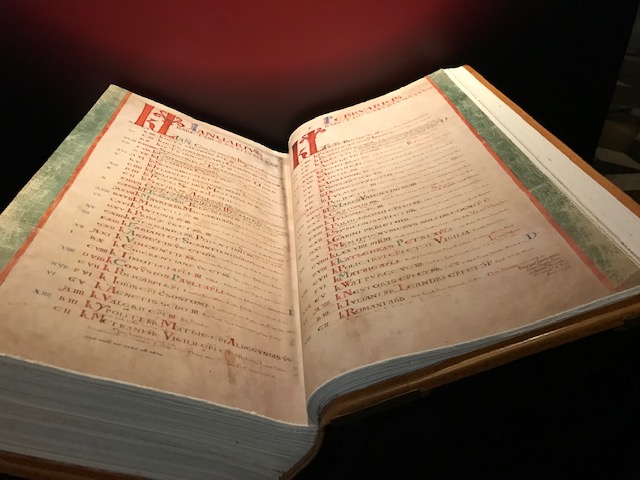
Cosmas Chronicle

At the chapel in the Clementinum, I viewed various editions of the Cosmas Chronicle, one of the most important books in Czech history, These medieval manuscripts narrated stories about Czech rulers of Bohemia and Moravia, for example. It remains the most significant story of the Czechs told through a historical lens. The oldest, the Chronicle of Leipzig, hailed from the 12th century while the Chronicle of Vienna dated from the 13th century.

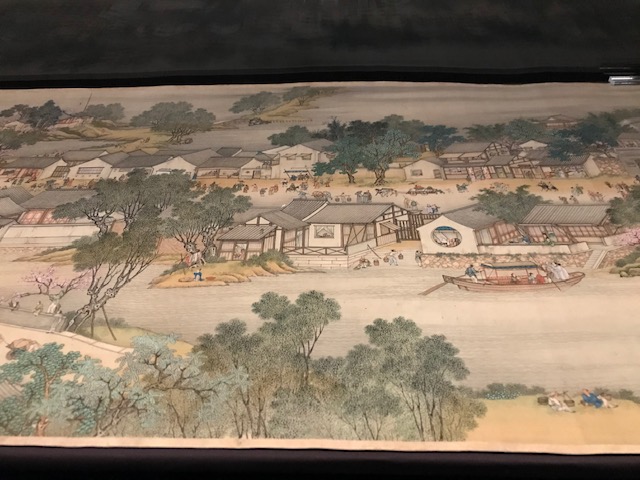
National Museum, 100 Treasures, 100 Stories exhibition of artifacts from Chinese emperors

The illustrated manuscripts enthralled me. Each one was unique and remarkable. I have always been fascinated by illustrated manuscripts. (One of the highlights of my visit to Dublin, in fact, was seeing the Book of Kells and the manuscripts at the Chester Beatty Library Museum.) With a master’s in Czech literature, I am very enamored by Czech medieval works and could stare at them for hours, if allowed.

National Museum, 100 Treasures, 100 Stories

I also made a trip to the National Museum on Wenceslas Square. I saw the “100 Treasures, 100 Stories” exhibition on artifacts from the dynasties of Chinese emperors. The paintings and figurines of cats were my favorite. I also loved the renditions of villas, the sea and scenes from daily life during the eras of the emperors. The objects with dragons and elephants also enthralled me.

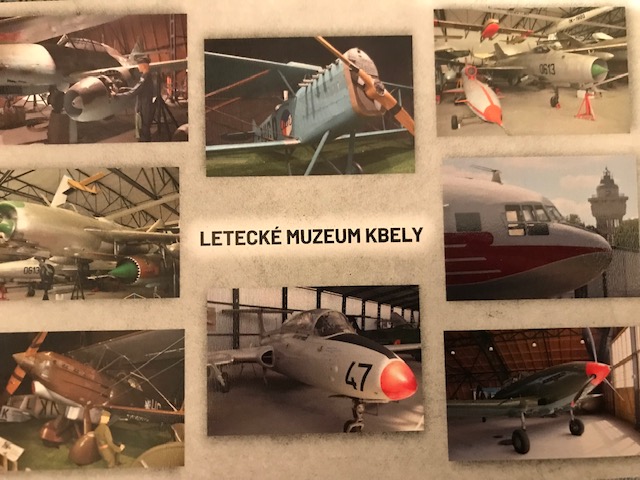
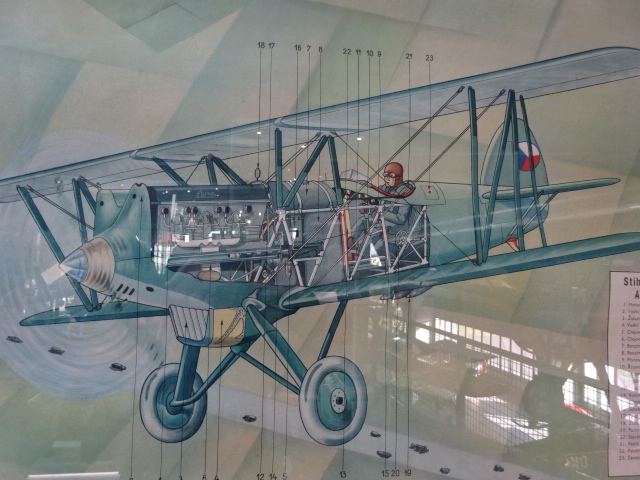
Military Aviation Museum, Kbely, Postcard

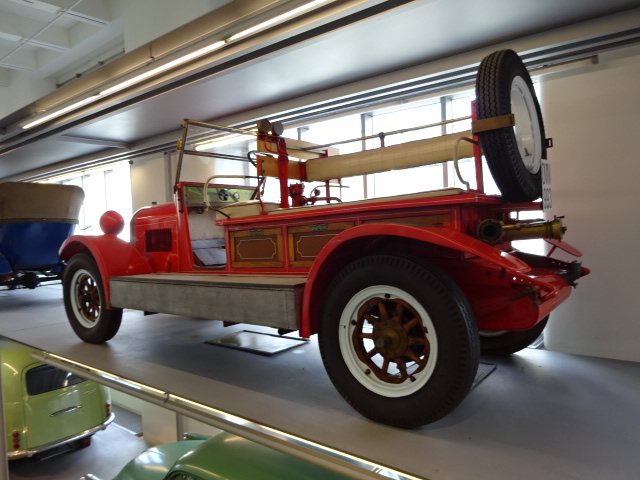
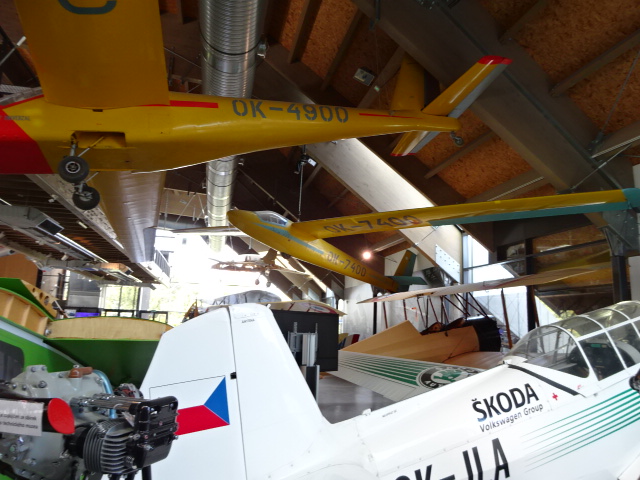
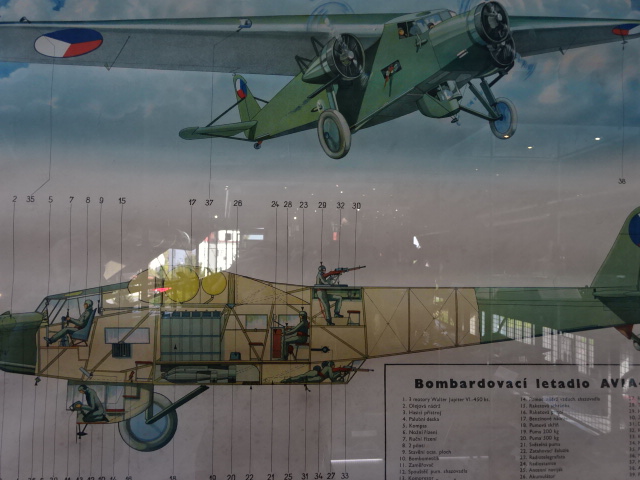
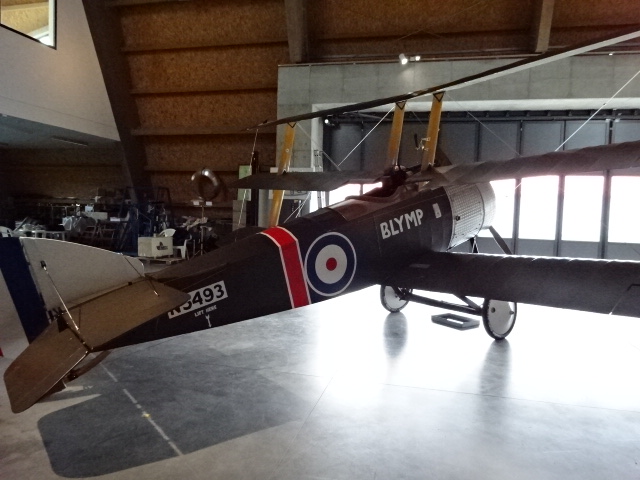
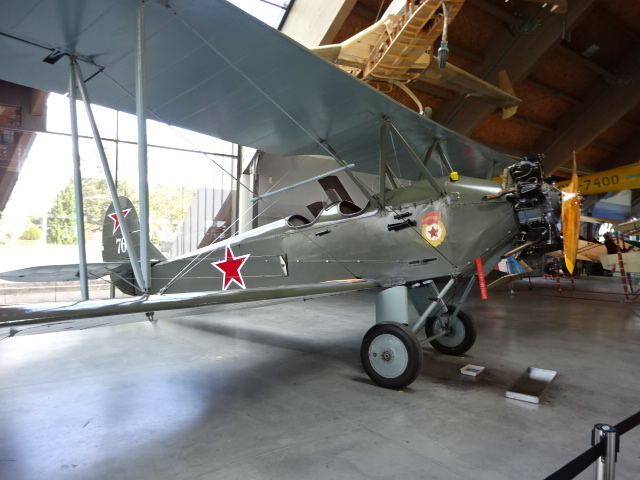
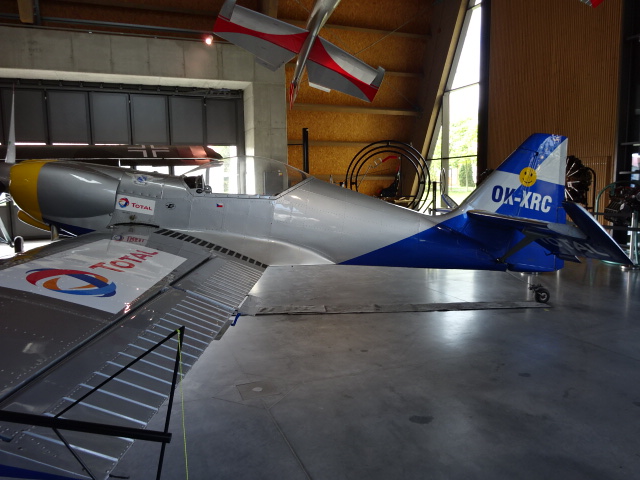
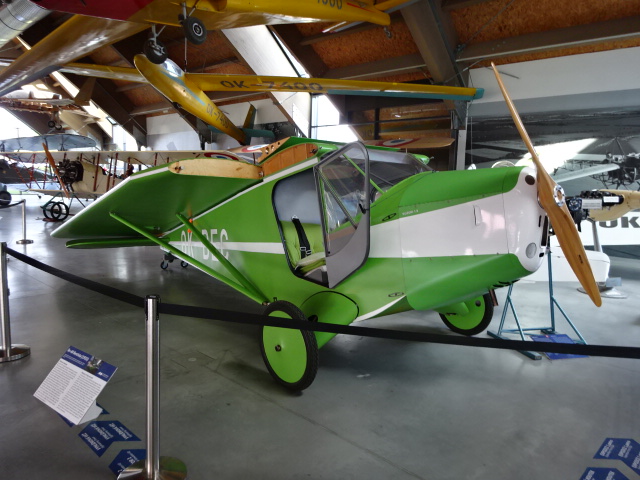
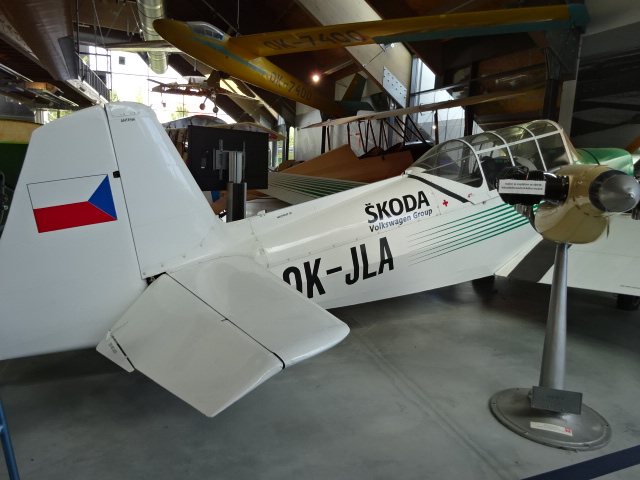
A vast museum that I visited for the first time was the Military Aviation Museum in the Kbely district of Prague. I was fascinated by the contents of the five large hangars – the war planes, the show planes, the training planes, the passenger planes. There was so much to see from so many eras. I was most drawn to the planes and bicycles from World War I. It was so intriguing to see how aviation had developed in the military sphere ever since the first planes were designed. One of the most significant objects for me was the space capsule in which a Czech astronaut had returned to Earth during the 1970s. The American Douglas planes also were very noteworthy. The sleek modern military helicopters also gave me sense of awe.

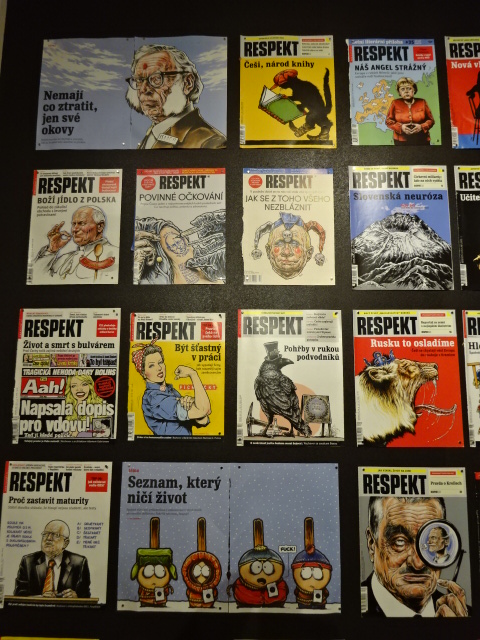
Covers of the magazine Respekt, Pavel Reisenauer

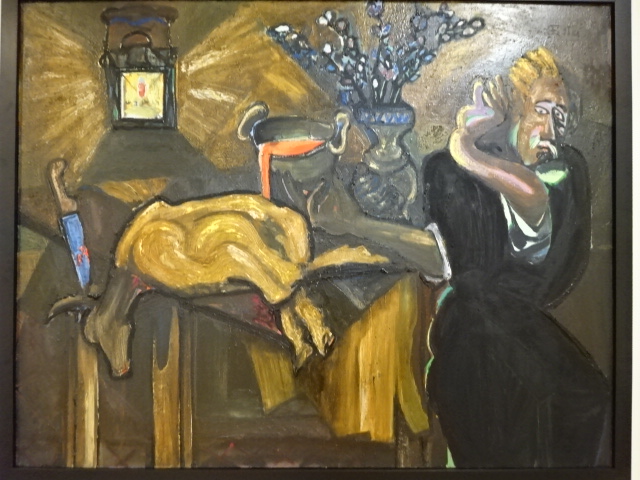
Painting by Pavel Reisenauer

The Kampa Museum in Prague hosted amazing exhibitions this past year. I admired paintings, photos, drawings, illustrations and covers of the magazine Respekt as well as his art for Lidové noviny’s supplement Orientace by the late Pavel Reisenauer. His paintings captured so many themes, including the periphery of Prague, solitude and emptiness. His magazine covers prominently commented on political and societal topics of the well-reputed magazine.

Václav Špála, The roofs of Malá strana

Emil Filla painting

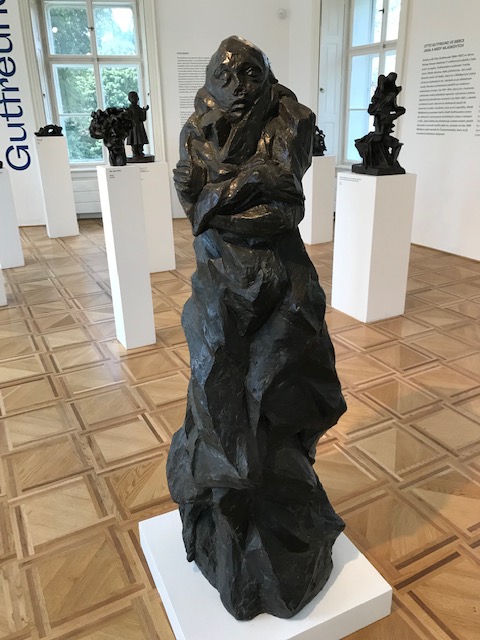
Kampa also showed off the permanent collection of a Pilsen art gallery with significant Cubist works, such as those by Bohumil Kubišta and Špála, who painted the roofs of Malá strana with such excellence. Kubišta’s colorful religious works played a prominent role in the exhibition. Sculpture by Otto Gutfreund, such as his tortured Hamlet, was not lost upon me, either. Because there are often temporary exhibitions at this Pilsen gallery, the permanent collection is not often on display. One floor was filled with mythological paintings and still lifes by the stellar artist Emil Filla. I saw monsters in his works representing the dangers of Nazism and other grotesque figures playing prominently in his renditions. I especially enjoyed seeing the characteristics of Fauvism in Filla’s works.

Caricatures from French magazines, created by František Kupka, made up another exhibition at Kampa Museum. The publications were printed at the end of the 19th century and beginning of the 20th century. Through grotesque images, such as those of monkeys, I came to understand better the political and societal tensions in France and in the world.

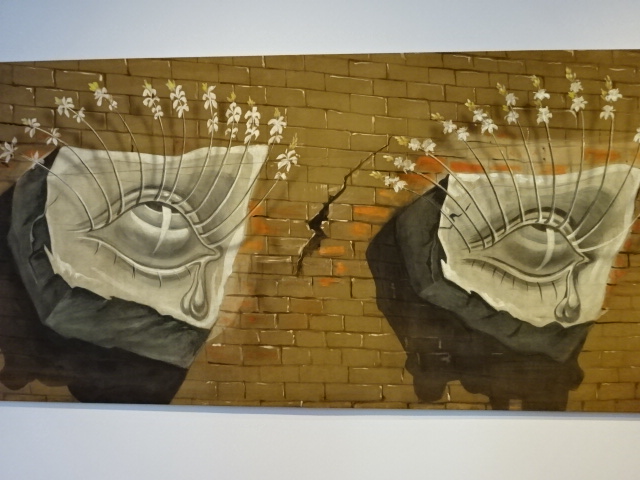
Salvidor Dali painting in Eye to Eye exhibition

Franz Kafka by Andy Warhol

Another exhibition that I admired at Kampa was the “Eye to Eye” show of works with motifs of eyes. I saw how the eye can symbolize the soul and be an open door to the internal world. Vision was sometimes portrayed as a religious miracle. I was so moved by the paintings at this exhibition. The portrait of a curious Franz Kafka by Andy Warhol was one of many that affected me. Two works by Salvidor Dali also held my attention. Czech artists such as Toyen, František Muzika and Antonín Hudeček were represented, too. Sculpture by Karel Nepráš and Ladislav Zívr also were moving. A distorted head by Picasso was another masterpiece.

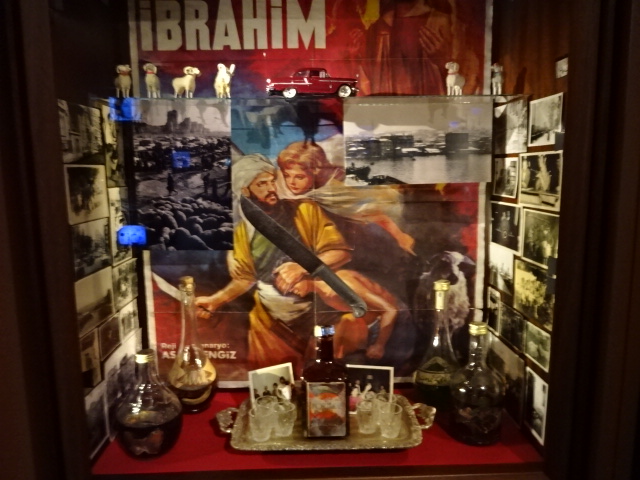
From Wunderkammer by Orhan Pomuk

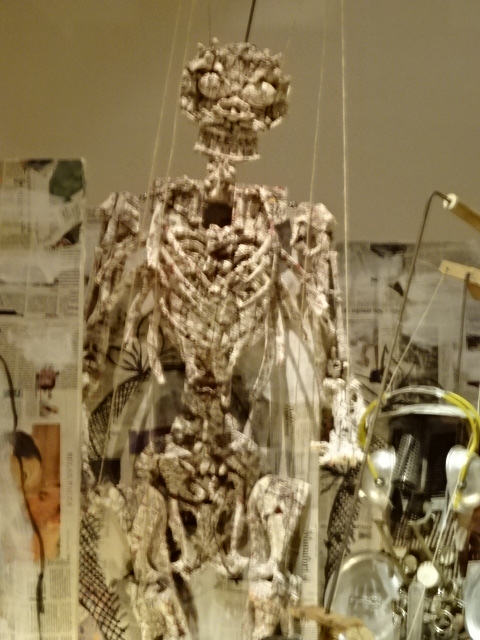
At the contemporary art museum DOX, I was fascinated by the Cabinet of curiosities or Wunderkammer designed by famous writer Orhan Pomuk. The three-dimensional works in collage form told the story of Istanbul from 1950 to 2000 as well as events in Turkish history. I learned about the history of a country I knew little about. I had had no idea that Pomuk’s talent included more than writing.

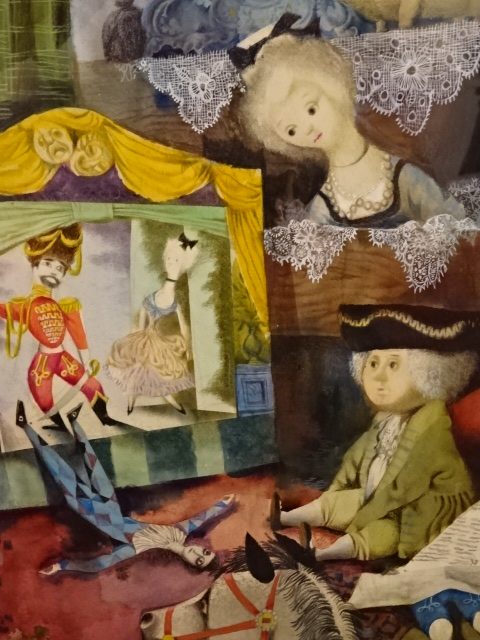
A puppet of the Good Soldier Švejk saluting

By Jiří Trnka

At the Villa Pellé there was an astounding exhibition of the art of Jiří Trnka, who had been a puppet maker, sculptor, painter and director of animated film. He also held the distinction of being the co-founder of Czech animated film. I especially enjoyed seeing the puppet of the Good Soldier Švejk, based on the antimilitaristic, novel by Jaroslav Hašek, a Czech class that took place during the Austro-Hungarian Empire. The humor and satire in the book are brilliant and profound.

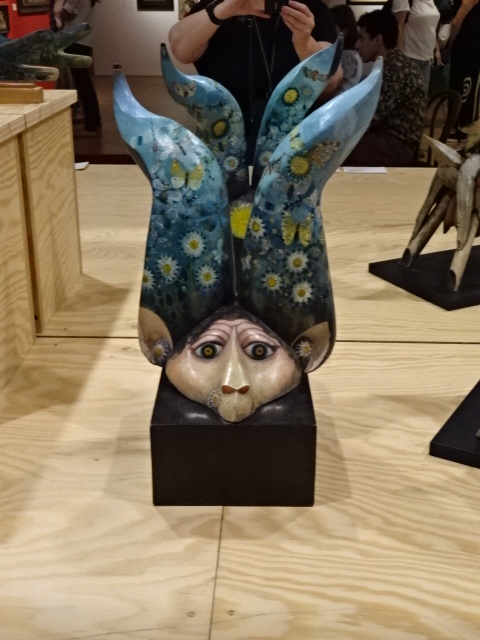
Yet Trnka was known for so much more than his masterful puppetry. I loved his paintings of a fantastical, dreamy and fairy tale-like world. I admired his utilization of the grotesque in his sculptures and paintings. Illustrations from children’s books also were prominently displayed. I saw depictions from American, British and Czech fairy tales, for instance. I especially admired the illustrations from Trnka’s own book, The Garden, in which gnomes, bespectacled whales and naughty cats made appearances. His illustrations for Jan Werich’s children’s book Finfarum were very noteworthy, too.

Amálie Mánesová, Vrbičany Chateau, 1846

Cheb Antependium from Přemyslid Dynasty era

One excellent exhibition at the Wallenstein Riding Stables venue was a comprehensive showcase of women in art from 1300 to 1900. I marveled at the medieval works, tapestries, portraits and landscapes, for instance. I was drawn to the paintings of Venice’s Bridge of Sighs and the Ducal Palace because of my love for Italy. The religious Italian art was intense and dynamic. The prints from the 16th and 17th centuries made strong impressions on me, too. One Dutch painting influenced by the work of Frans Hals stood out for me, too. My favorites were the renditions by Amálie Mánesová, who hailed from the legendary Mánes family. Her painting of a chateau with landscape and her portraits were especially to my liking.

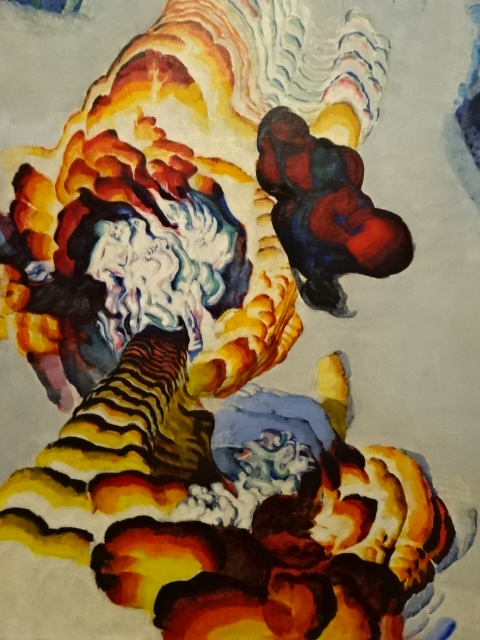
From Silent Spring Exhibition, František Kupka, Tale of Pistils and Stamens I, 1919-20

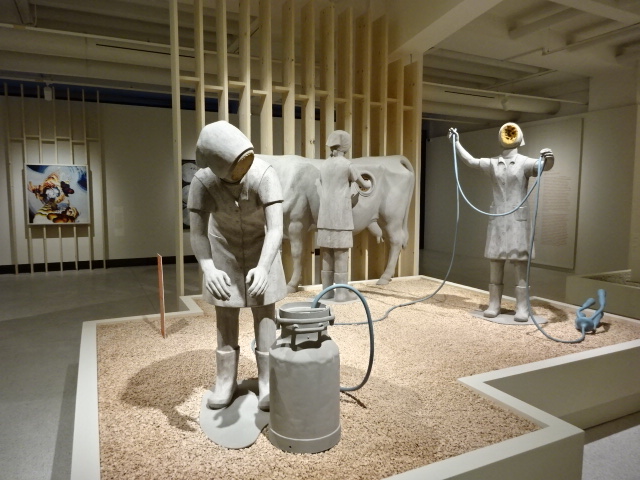
From Silent Spring Exhibition, Anna Hulačová, After Bugonia, 1984

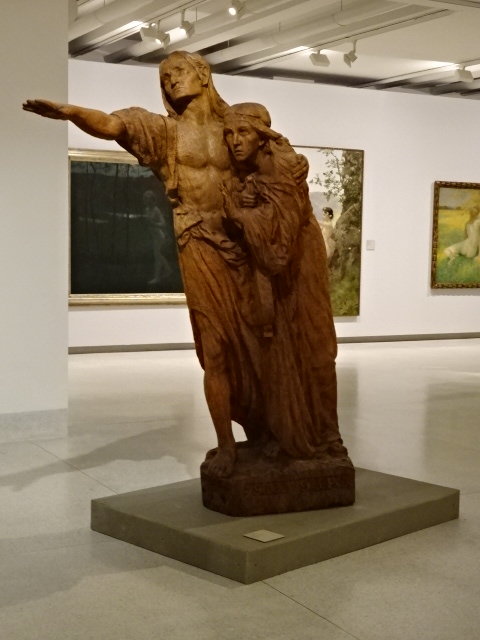
At the Trade Fair Palace, I saw the exhibition “Silent Spring” about man’s relationship with nature from 1930 to 1970 and beyond. The surrealistic paintings and abstract sculpture from the 1960s captured my undivided attention. I also perused the permanent exhibition “The Long Century,” which focused on artistic tendencies from 1796 to 1918. Portraits of artists, landscapes, sculpture and art with a theme of the progress in transportation all were very moving. I especially was thrilled by František Bílek’s sculpture “The Blind Leading the Blind” This colossal work always made a strong impression on me. Auguste Rodin’s sculpture also enthralled me. Paintings by Monet, Pablo Picasso and Paul Signac greatly influenced me as did the works by many Czech artists.

From The Long Century, František Bílek, The Blind Leading the Blind

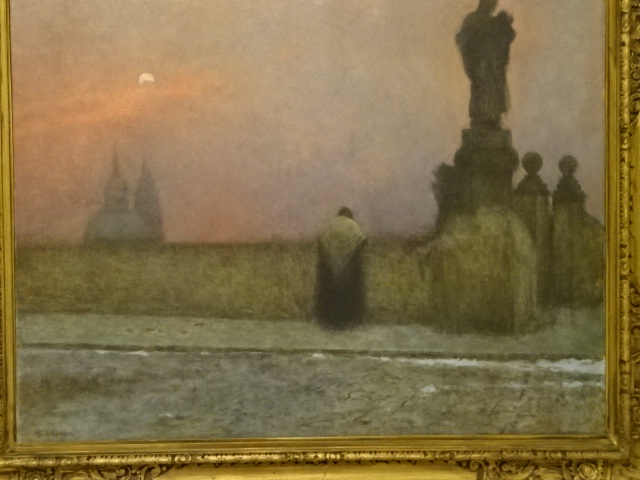
From the Long Century, Jakub Schikander, Early Evening at Hradčany, 1910-1915

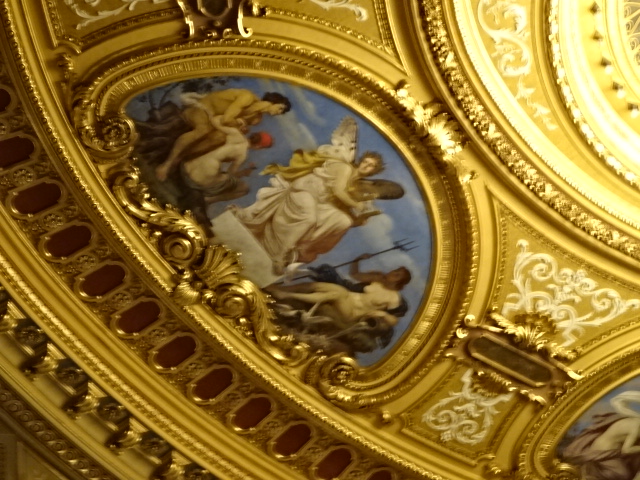
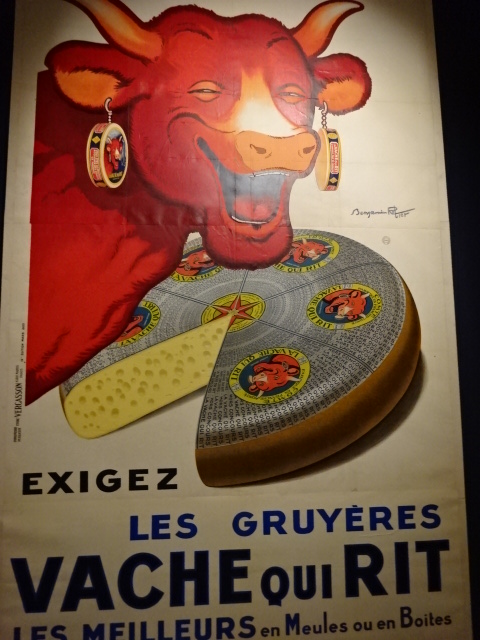
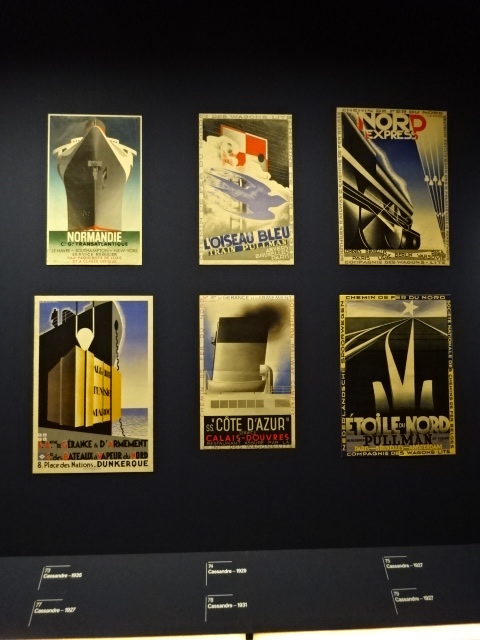
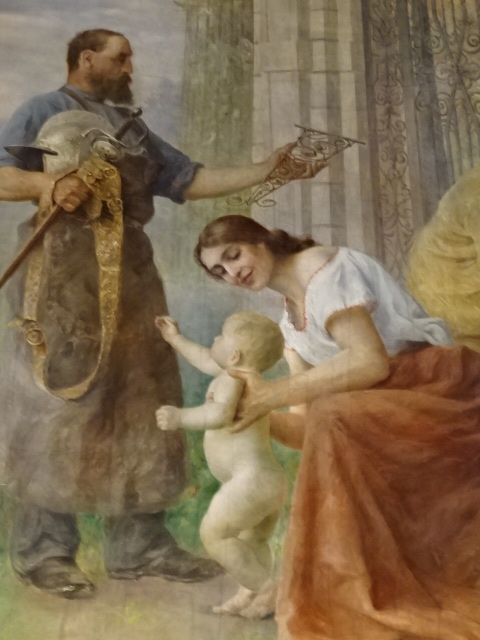
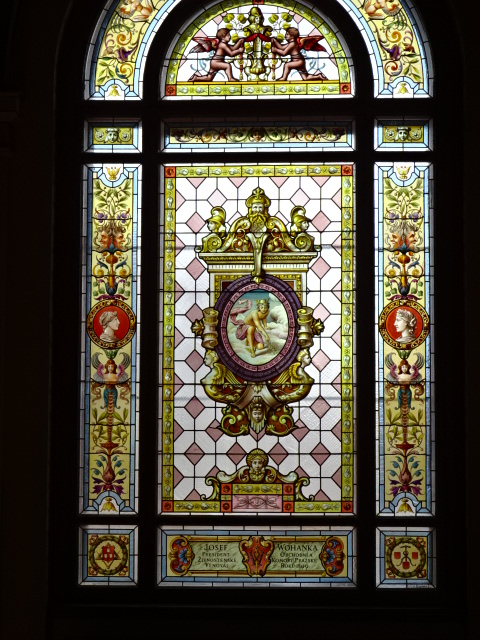
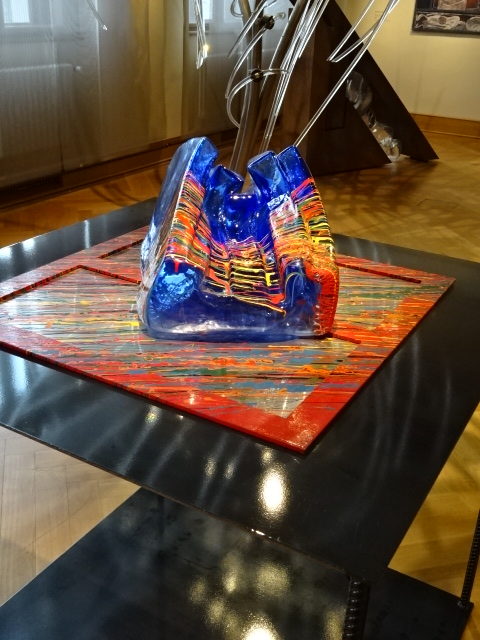
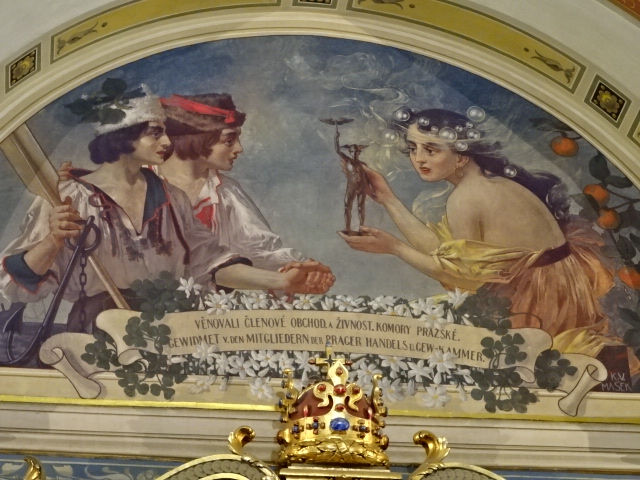
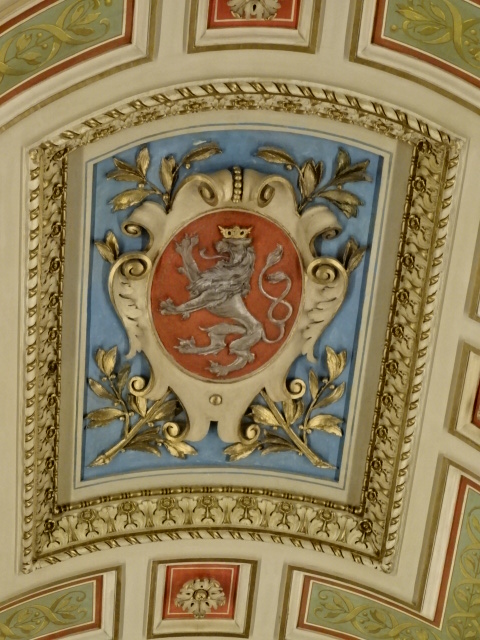
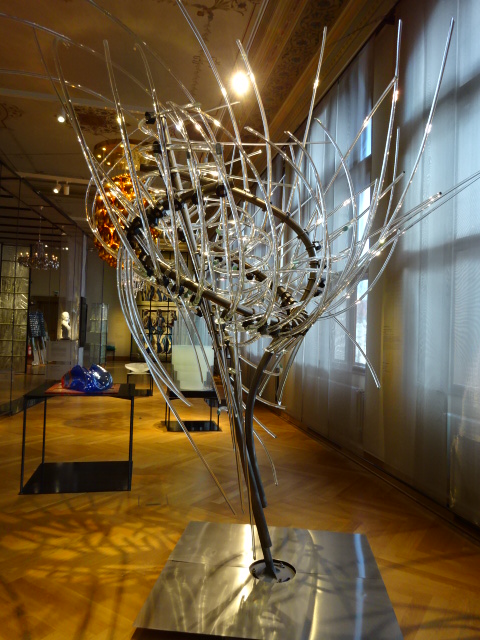
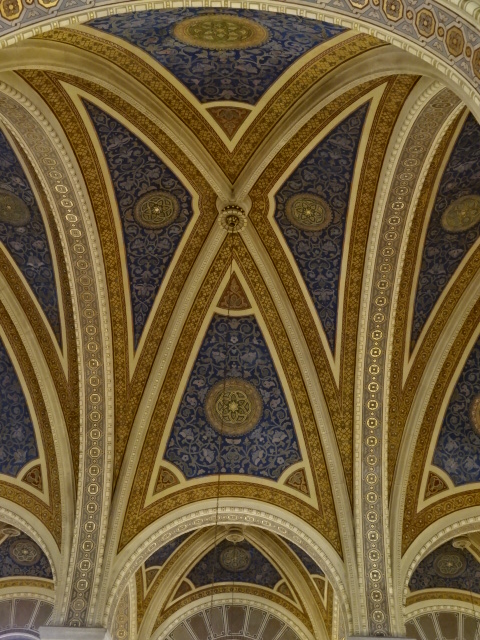
At the end of 2025, I visited an exhibition of French advertising posters from the 1920s and 1930s at the Museum of Decorative Arts in Prague. The 25 posters were bold, vivacious, grotesque and humorous. Many utilized caricature. I saw posters advertising progress in forms of transportation – trains, planes and ships. The travel posters were close to my heart. I gazed at the beaches of France and a townscape of Nice, for instance. I recognized the ad for cheese promoted by a gigantic red cow. The glass designs in the permanent exhibition at the museum also captured my attention. The dresses, shoes, ties and other garments were noteworthy. The interior of the building itself with stunning paintings on the walls and ceiling gave the museum such personality and a sense of grandeur.

I was thrilled with all the exhibitions that helped shape my year in a positive way. The exhibitions gave me solace and hope during a year riddled with sadness despite the excellent cultural events I experienced. Gazing at the art filled my heart with joy and gave me mental strength. I was thankful that I had been able to see so many influential exhibitions during 2025.

Museum of Decorative Arts, Prague

Museum of Decorative Arts, Prague

Museum of Decorative Arts, Prague

Museum of Decorative Arts, Prague

Museum of Decorative Arts, Prague

Museum of Decorative Arts, Prague

Museum of Decorative Arts, Prague

Škoda Museum Diary

I never imagined I could be fascinated by automobiles because I despise driving. In fact, I have never owned a car.

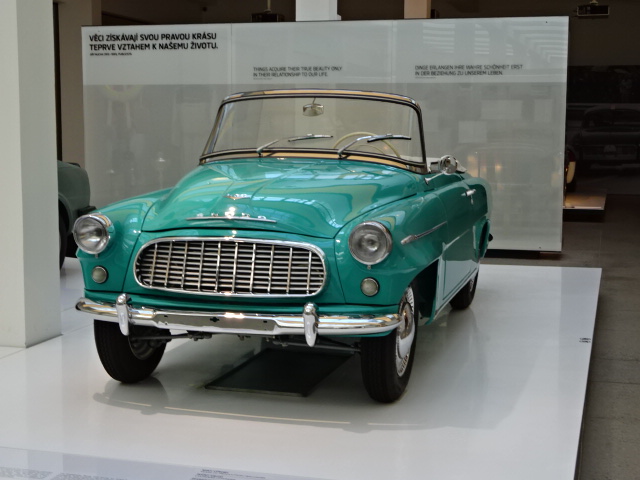
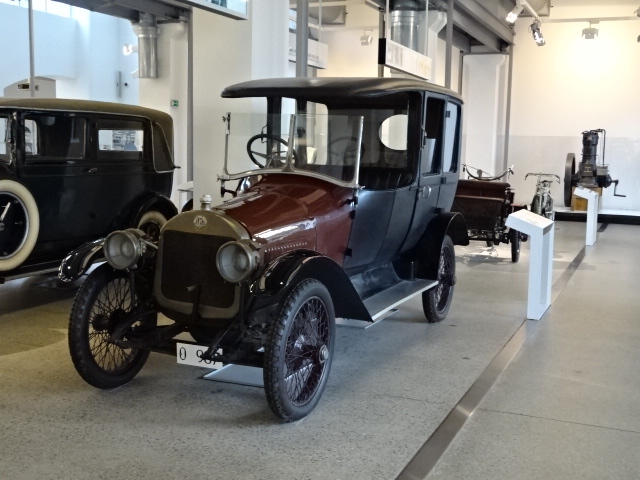
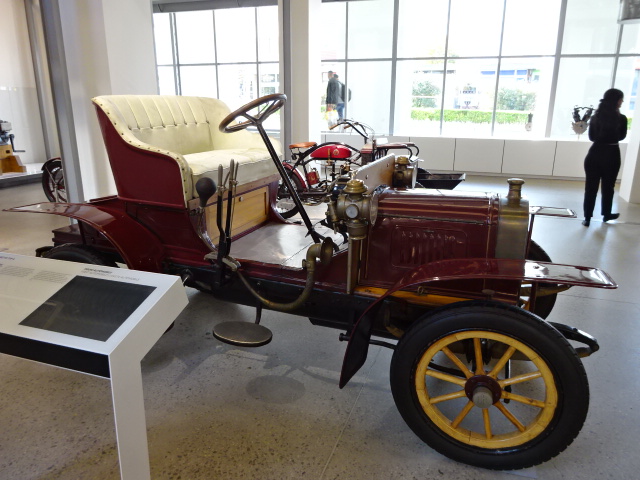
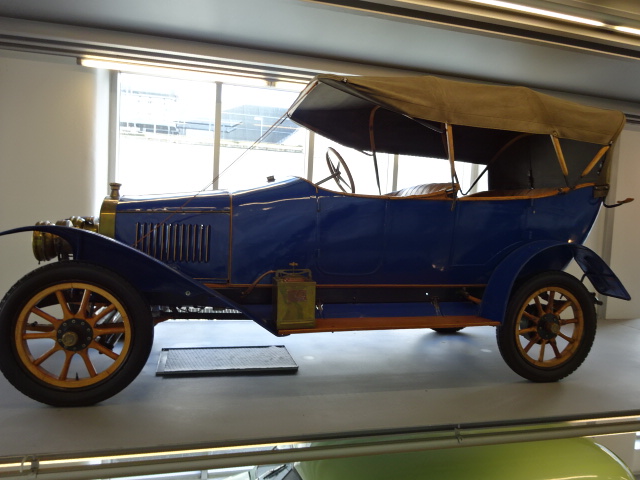
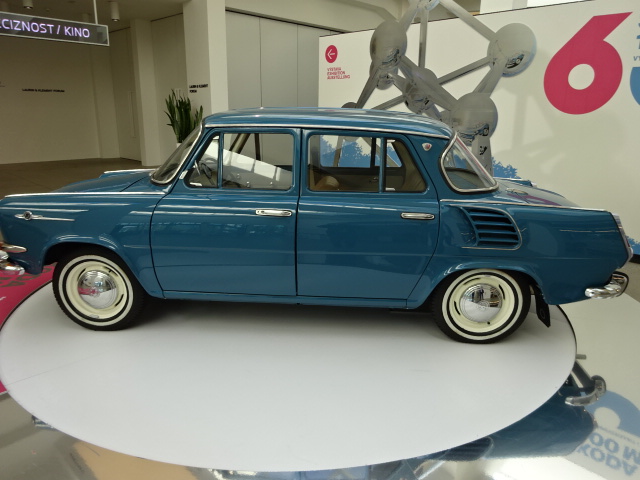
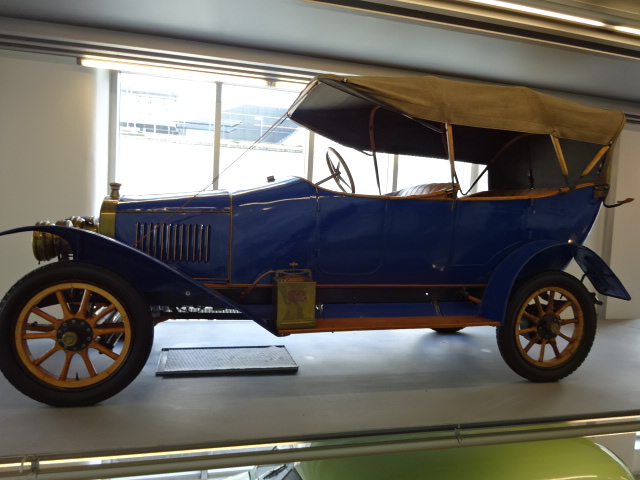
However, during 2024, I would be pleasantly surprised when my friend and I visited the Škoda Museum in Mladá Boleslav, about 70 km from my home in Prague. Škoda is the biggest manufacturer of cars in the Czech Republic. The company has made a name for itself as one of the oldest automobile manufacturers in the world. The museum presented 360 vehicles from the end of the 19th century to contemporary times in a former production hall that measured 1800m2.

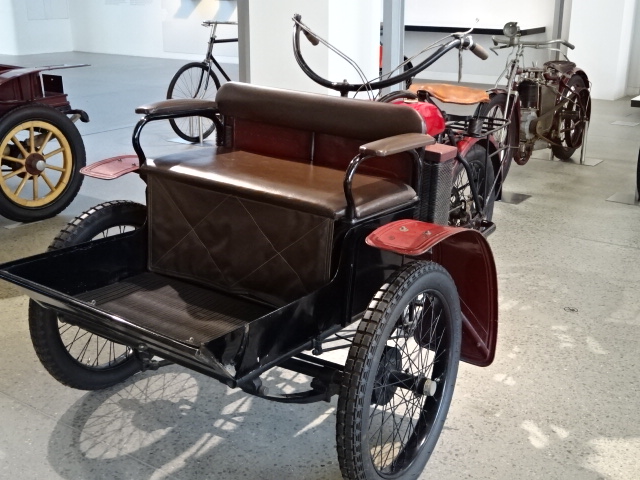
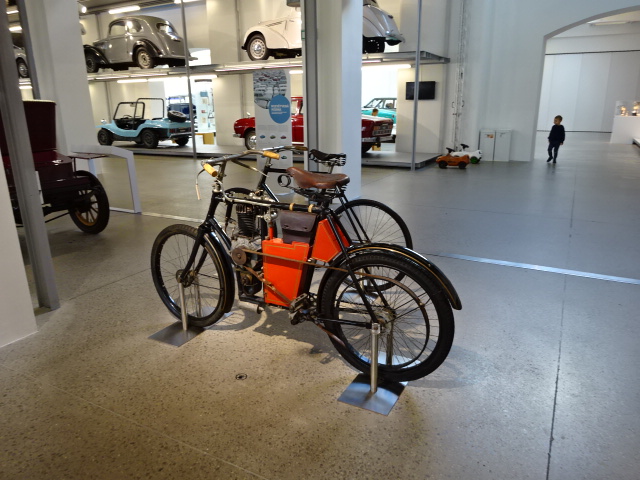
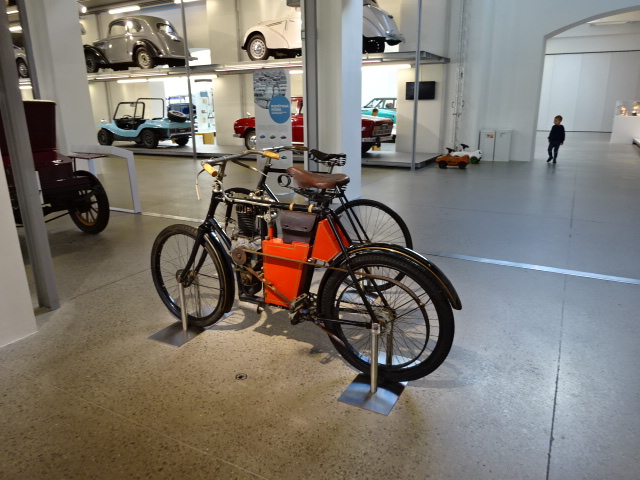
I was most fascinated by the oldest cars – from the late 19th century and early 20th century. The late 19th century and early 20th century bicycles, especially the double-seated one for postal workers, also caught my undivided attention.

Václav Laurin

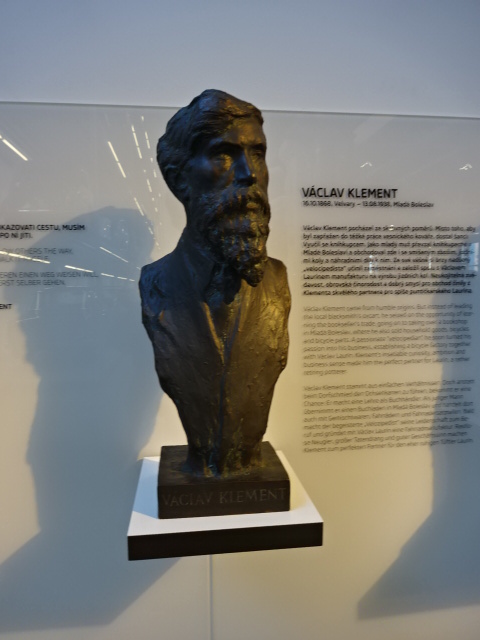
Václav Klement

The company’s history began in 1895, when cyclists Václav Laurin and Václav Klement founded it. They decided to manufacture bicycles after Klement was dissatisfied with a bike he bought. His criticism of the company received an undignified response. So the duo opened their own business.

By 1899, they had begun manufacturing Slavia motorcycles, becoming the first motorcycle manufacturer in the Austro-Hungarian Empire and Germany. Several motorcycles are on display at the museum.

Laurin and Klement branched out into the automobile industry during 1905, when they produced the Voiturette A, a car that received much praise from the public. Even World War I didn’t stop the company from functioning. After the war, the company expanded.

However, a fire in 1924 did much damage. Still, Škoda made a successful comeback. During 1933, the company felt the economic crisis, though, with only 1,607 cars produced that year. However, with their ingenuity and innovation, the manufacturer was able to come up with a cheap car – the Škoda 420 that weighed only 650 kg. By 1936, the company was receiving much acclaim, producing 4,990 vehicles that year, including many exported to other countries. Škoda would branch out and make not only cars but also trucks, buses and trams, similar to trolley buses.

During World War II the company had to manufacture cars, planes and weapons for the Third Reich as the Czech lands were part of the Nazi Protectorate of Bohemia and Moravia.

After World War II, Skoda was nationalized. By 1960, the company had 40 new buildings and was touted as one of the most modern factories in Europe. Leading up to 1968, the factory produced about 500 vehicles per day.

However, due to the strict totalitarian regime of the 1970s called Normalization, many projects were not brought to fruition. In August of 1969, a fire in Mladá Boleslav took four days to extinguish. Yet the company continued to produce cars and other vehicles regardless of the trials and tribulations of the times.

In the early 1980s, the manufacturer moved the engine from the back of its cars to the front. Produced in 1987, the well-known Škoda Favorit became very popular.

By 1989, the company put to use more modern technology, and during that year more than 100,000 Favorits were manufactured. Since the 1989 Velvet Revolution that toppled Communism and brought democracy to Czechoslovakia, the company has continued to make great strides in the automobile industry, achieving much success in subsequent decades.

That day we visited both the aviation museum and automobile museum in Mladá Boleslav. I was surprised how impressed I was with both of them because I usually went to art galleries, castles, chateaus and monasteries. This proved to be one of my most memorable trips.

Tracy A. Burns is a writer and proofreader in Prague.

Přerov nad Labem Open-Air Architectural Museum Diary

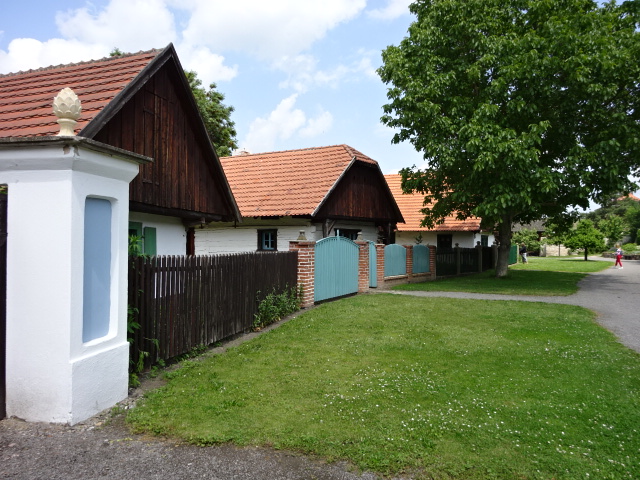
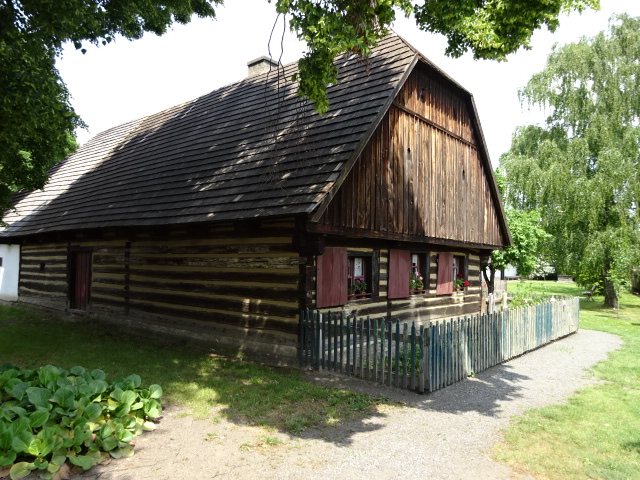
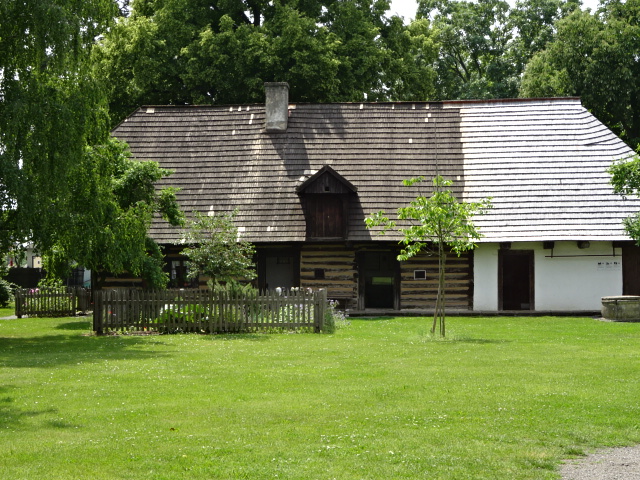
I have visited many open-air architectural museums, dotted with historical, rural buildings and structures, throughout my time in the Czech Republic as well as during my many trips to Slovakia. They serve an important ethnographical purpose. Přerov nad Labem’s skanzen, as they are referred to in Czech – was the first of its kind founded in Bohemia as the complex was set up in 1967. It is composed of buildings from the Central Labe Valley area. The structures were constructed in the 18th or 19th century and together make up a sort of village that has long since disappeared.

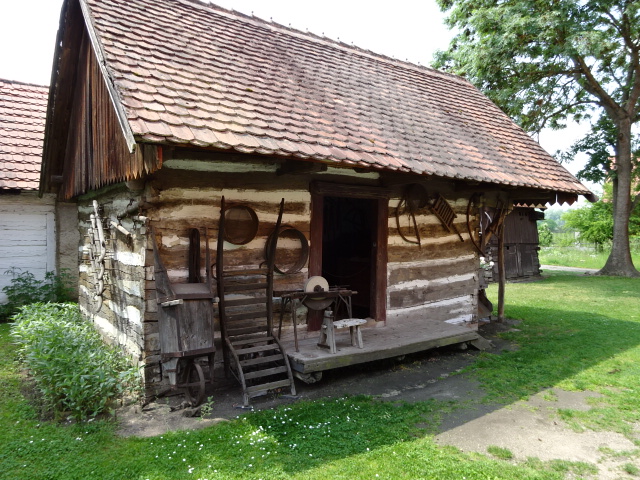
I saw many quaint and idyllic-looking log-built cottages as well as granaries, winch-operated wells, a small garden, a gateway with stucco, Baroque decoration and a sun motif, a gamekeeper’s lodge, an outdoor beekeeping display and more. A fruit drying kiln and belfry also made appearances. A dovecote had five floors and a hexagonal shape. I peered at a shoemaker’s, a seamstress’ and a basket weaver’s workshops.

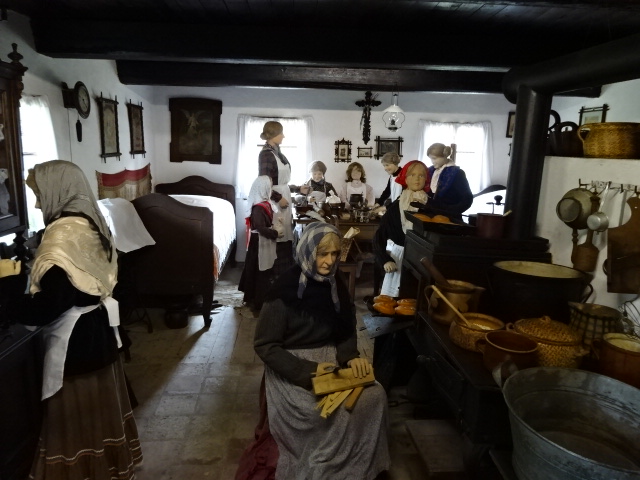
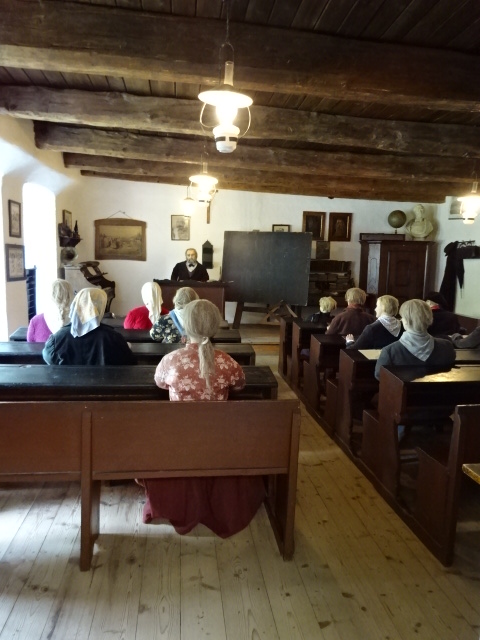
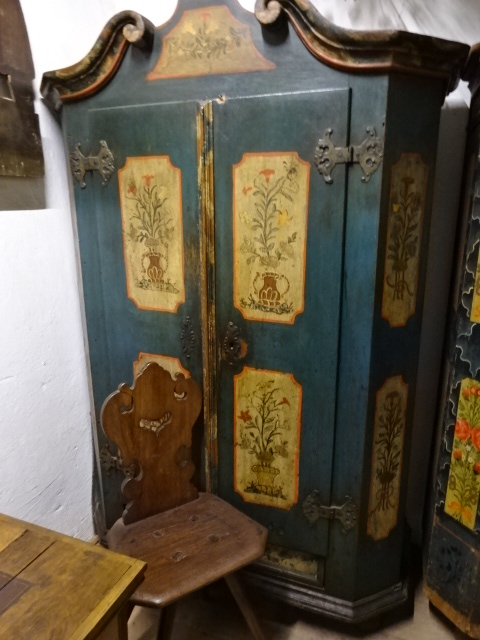
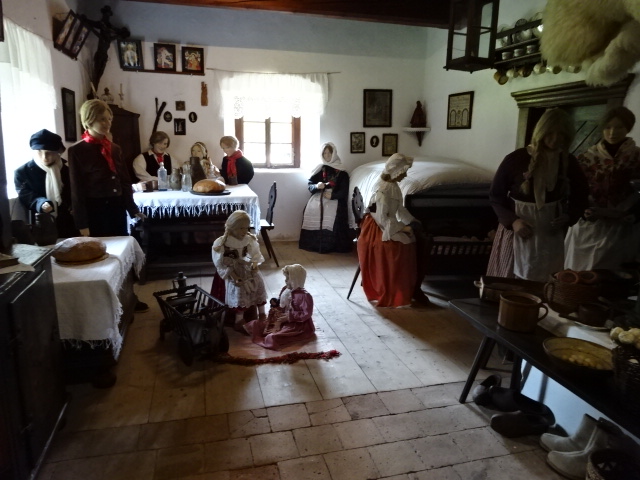
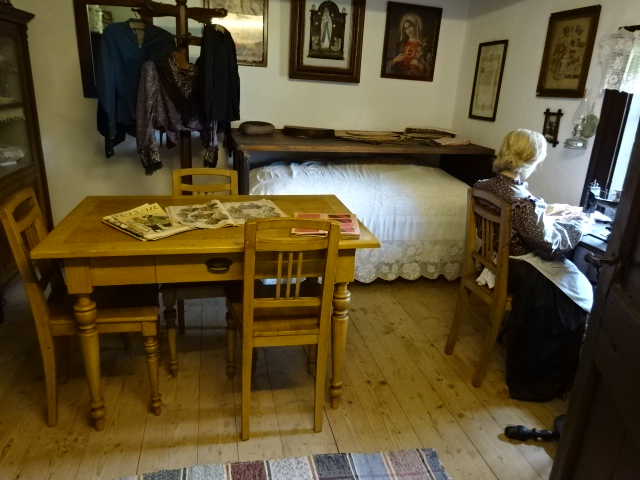
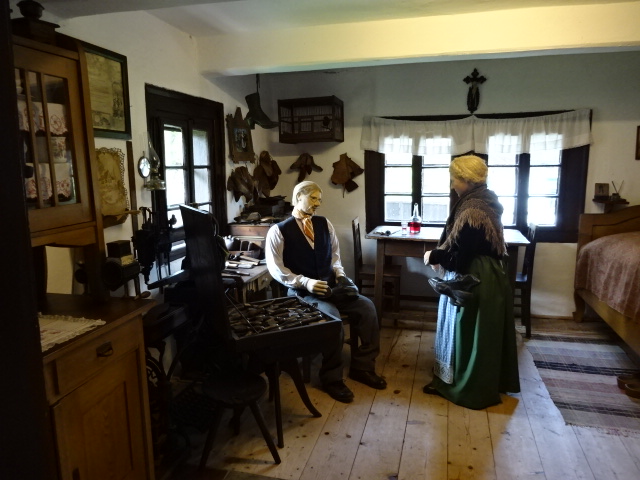
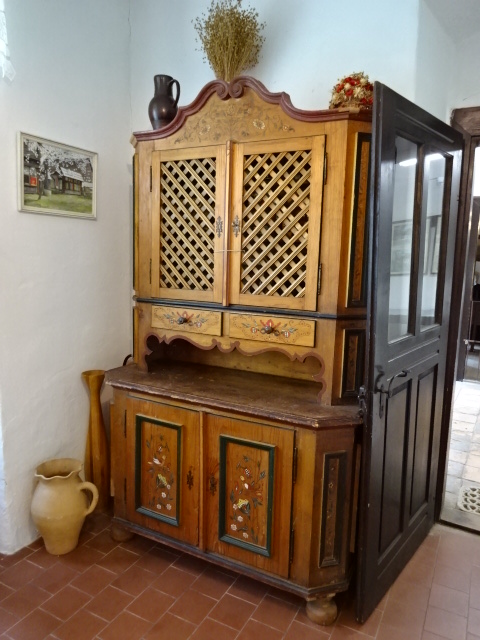
The World War I Memorial plaque touched me emotionally as I perused the names of locals who had perished in The Great War. The other building that made a distinct impression on me was the old school classroom, with boys seated on one side and girls on the other. What I liked best about the buildings in which mannequins were dressed in 18th or 19th century clothing was the colorfully painted folk art closets, beds, cupboards, chests, the backs of chairs and other furnishings. Pictures painted on glass in a rural cottage also captivated me. I was dazzled by the folk costumes with delicate embroidery on display. In one cottage I peered at hand-painted prayer books and admired a gable with Baroque features. I also noticed that the folk art sculptural rendition of Saint John Nepomuk hailed from 1746.

I saw how the kitchens were set up for baking bread. Some had large open fireplaces with big chimneys. Tiled stoves were located in some kitchens. Spices were important for the cuisine, too. There was a collection of historical washboards and washing machines as well as irons, which, I found out, were first used in the Czech countryside only 100 years ago. A collection of various stoves stood out in one space. Many wheels and farming tools were present, too.

The history of the Old Czech Cottage, which dates from the 18th century, is intriguing. During Czechoslovakia’s First Republic, which lasted from 1918 to 1938, Bedřich Smetana’s opera The Bartered Bride was performed in front of the building that contains much folk art furnishings. When the Nazis were in control, evacuees were housed there after all the historical furnishings had been taken out. This is probably my favorite structure because folk art plays such an important role in the displays.

Skanzens always make me better appreciate the technological advancements of the modern world. In 18th and 19th century village life was so much more unbelievably difficult. I admire the idyllic cottages constructed with logs and old equipment utilized in the 18th and 19th century. The folk art displays have always been my favorite aspect of open-air architectural museums. Seeing kinds of villages that no longer exist except as museums is a real treat. I always am enthralled by the architecture specific to that area and by the architecture in general.  

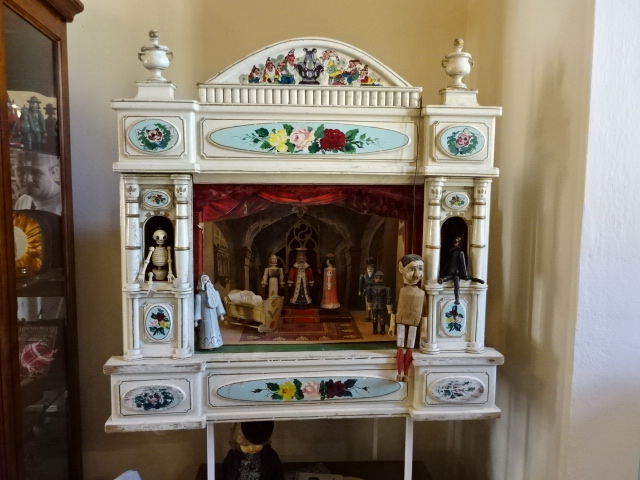
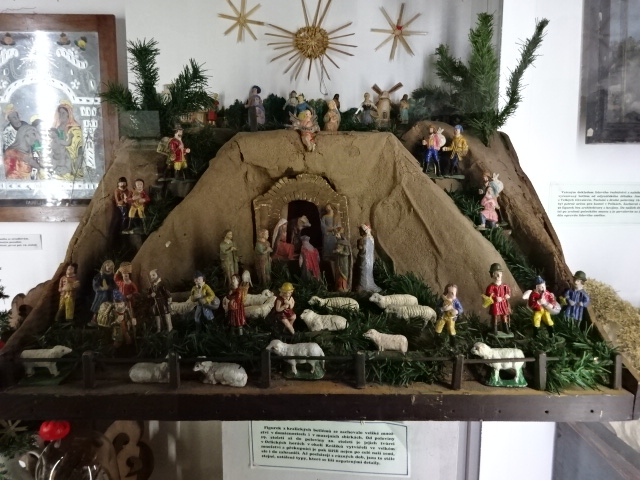
A Nativity scene, popular at Christmas time

While I love visiting chateaus and castles, I always appreciated skanzens. Open-air architectural ethnographical museums of long gone rural life provide an important purpose in the history of the country and serve as valuable historical landmarks.

Tracy A. Burns is a writer, proofreader and editor in Prague.

The Great Synagogue in Pilsen Diary

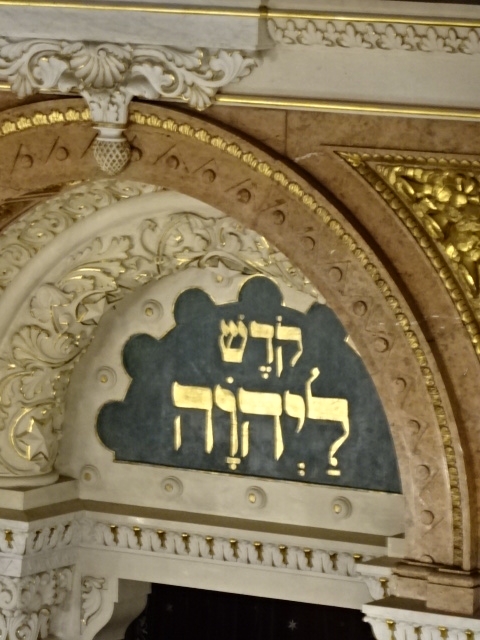
It is very easy to get to Pilsen from Prague – only a one-hour bus journey, courtesy of the Student Agency bus company. From the bus station I took a tram three stops to Republic Square. The synagogue was within walking distance. I was curious about the second largest synagogue in the world and the third largest in the world with a capacity of 2,500 people.

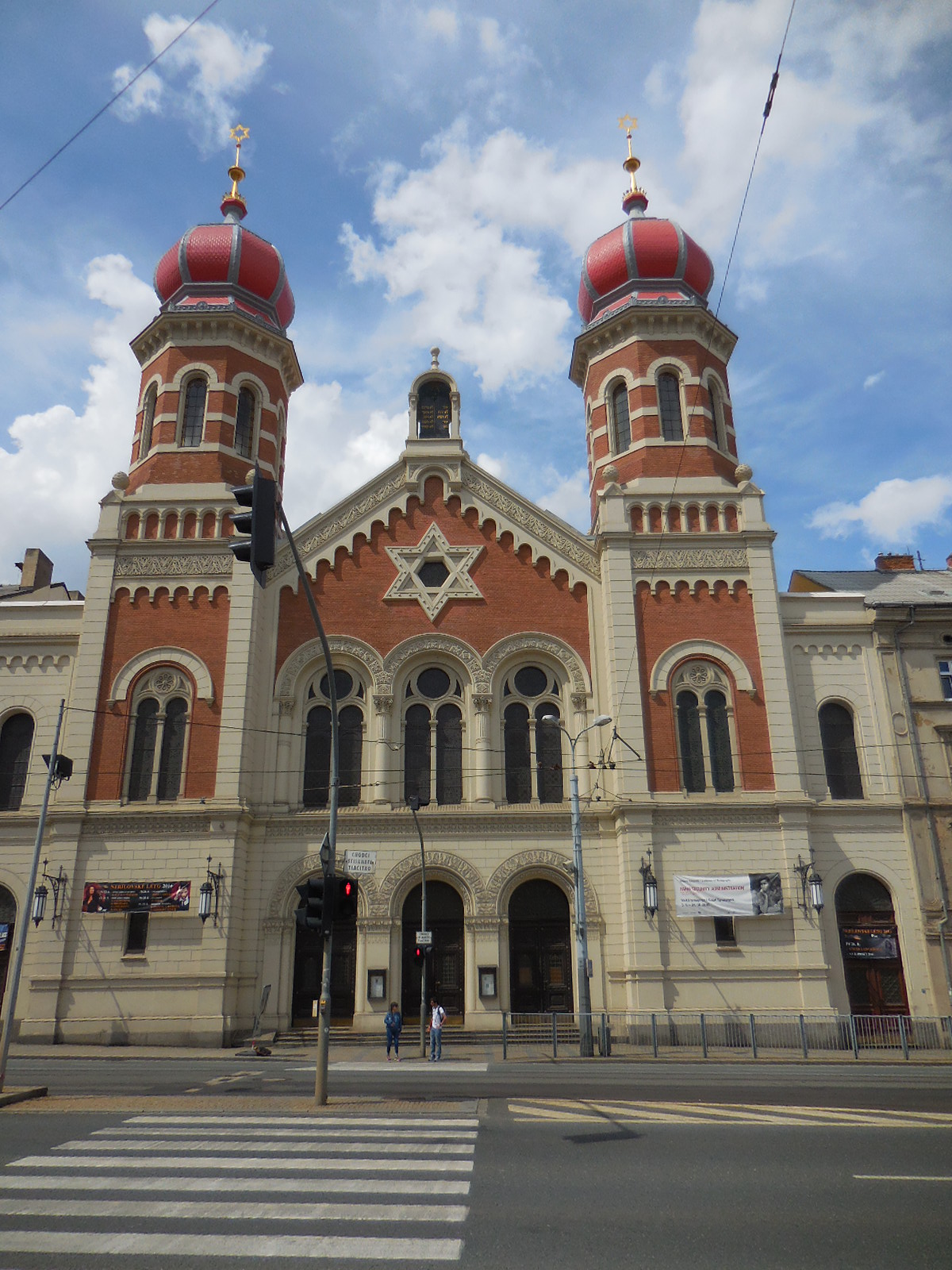
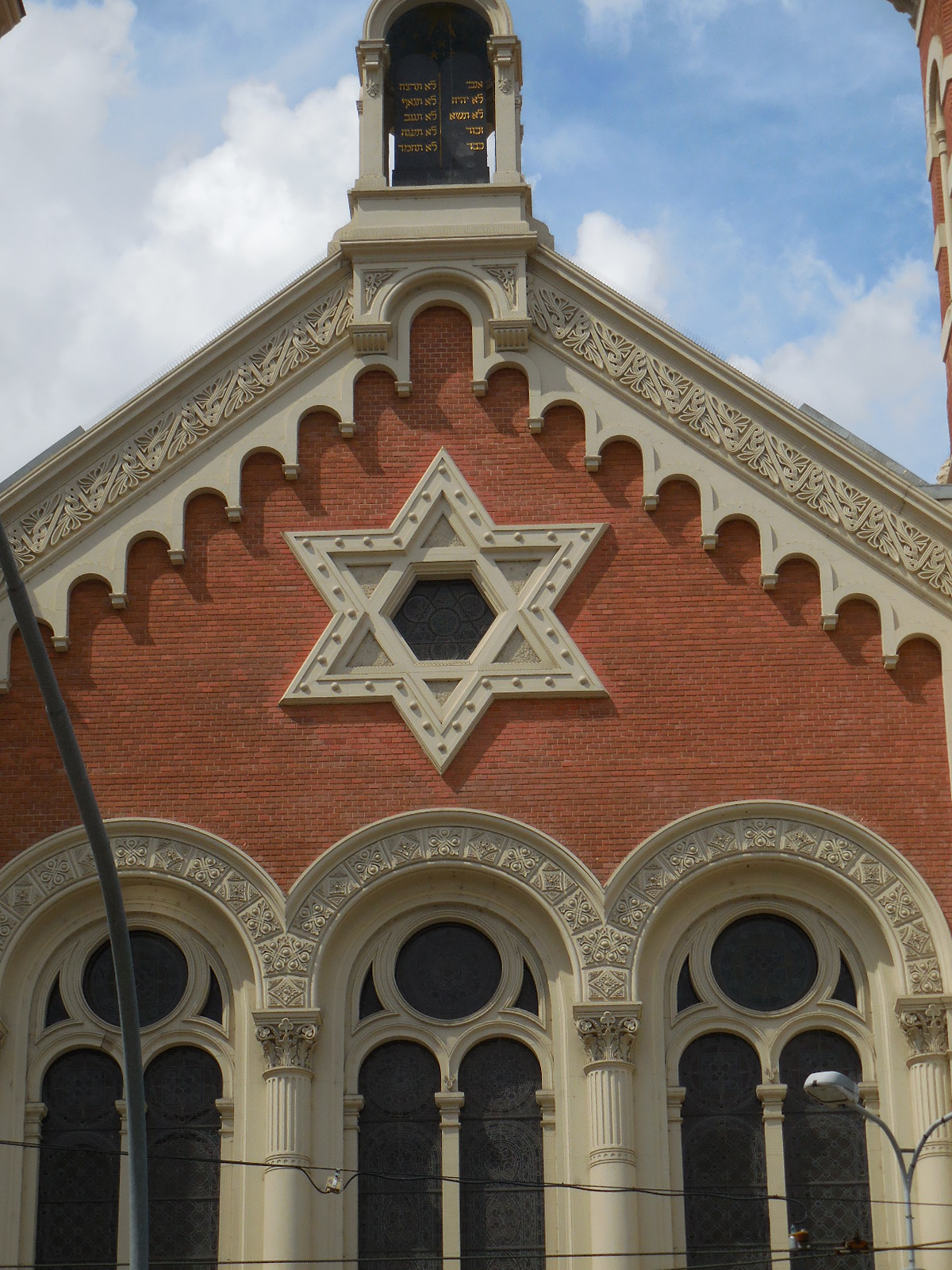
I was very impressed by the façade and two towers. Under the gabled roof of the structure of capping brick and stone blocks is a large Star of David. The two towers flanking the middle portion of the building have imperial domes and a belfry as well as a crown and the Star of David. The onion-shaped domes reminded me of some of the churches I had seen in Saint Petersburg, Russia.

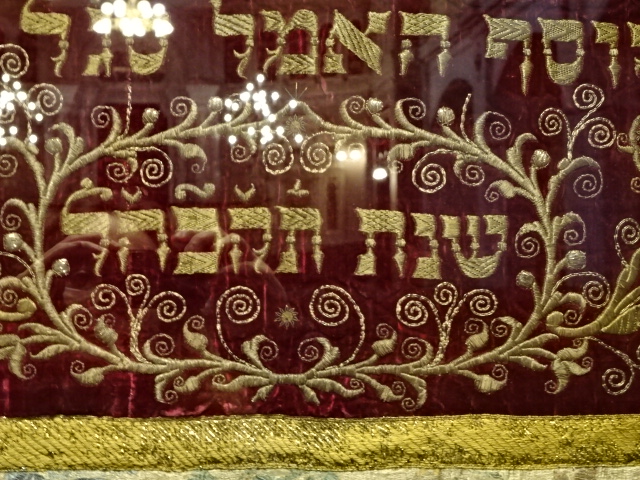
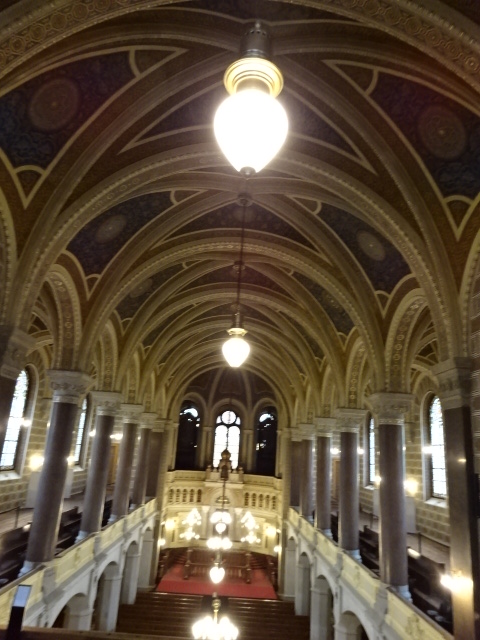
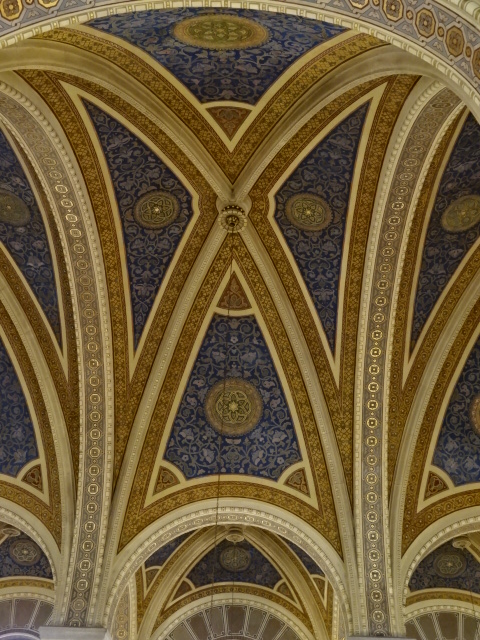
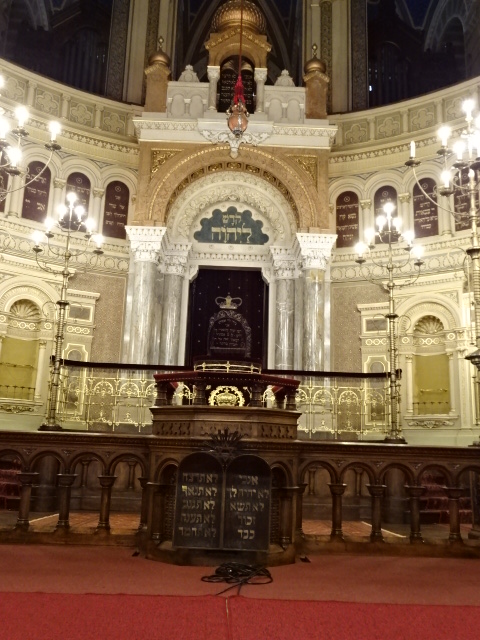
I gaped as I perused the spellbinding features. Built in 1892, the synagogue combines an Oriental interior with elements of Neo-Renaissance, found mostly in the corridors.  The carved rostrum of the three-aisled ground floor has a simple, yet dignified design. Two stairways lead up to the platform with the rostrum. One of the things I admired most was the vaulted ceiling decoration of blue with gold painting with plant motifs. The use of gold for decoration throughout the synagogue was very pleasing to the eye. The staircase had a metal, golden balustrade. The vestibule included beautiful stucco decoration with gold as well. I also noticed the stucco décor with motifs such as David’s Star on the balustrade. I saw the organ, dating from 1890. I remembered reading that there had been a big choir here until World War II.

What entranced me the most, though, was not the exquisite vaulted ceiling, but the three stained glass windows above the cornice in the western side of the synagogue. Dating from 1893, the three windows show a design of circles and oblong shapes, geometric figures in bright colors. They seemed to glisten in the dim lighting. I walked to the upper gallery, where I could have touched them if I had wanted to. Instead, I just stood there, fascinated at their beauty.

I sat down in the balcony, where women had sat for generations because they were not allowed to sit with the men, and I pondered over the history of Jews in Pilsen. It all began in the 13th century when Jews first came to this city, and King Přemysl Otakar II allowed them religious freedom. At the start of the 15th century, most Jews bartered in spices, pepper and ginger, and two synagogues existed here during that time period. Yet during the reign of King Vladislav II, in 1504, Jews were expelled from Pilsen, and they didn’t return until 1584. Other hardships occurred.

Then things got better. Jews obtained more freedom during 1848-49, when the ghetto that had been created due to the reforms of Holy Roman Emperor and ruler of the Habsburg Empire Joseph II was destroyed. (Emperor Joseph II had been a devout Catholic and an enthusiast for Germanization.) Jews no longer had to pay special taxes. Then, finally in 1867, a constitution was passed, stating political and religious equality, allowing Jews to move house as they pleased and to own property. They were even offered state citizenship. It is no wonder, then, that many Jews headed for this city in the 1860s. The Jewish community of Pilsen thrived during the 19th and beginning of the 20th century, and Jews ran significant businesses in the city.

After World War II, the synagogue was returned to the Jewish community, but the last regular service took place in 1973 as the building became more and more dilapidated. Finally, it was closed down.  Reconstruction occurred from 1995-97, and it reopened to the public on February 11, 1998. A service was held here once again, after 26 years, on September 20, 1998, celebrating the Jewish New Year. The first wedding in 61 years was held at this synagogue on June 6, 1999. There was extensive renovation during the 21st century, too.

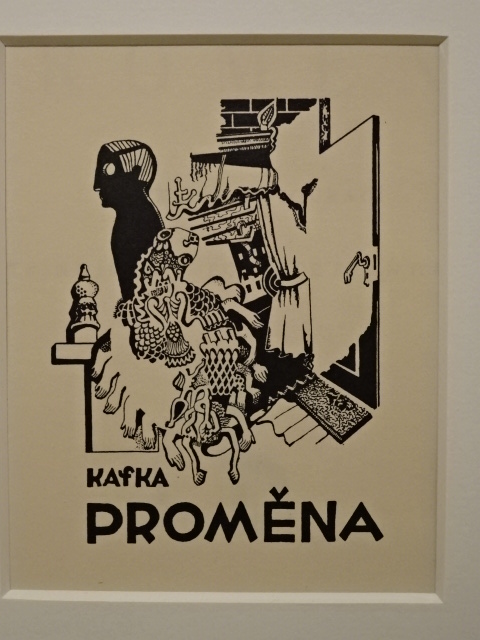
Before heading back to Prague, I took advantage of the beautiful, sunny weather and sat outside at a café on the main square. I also visited an art exhibition called Through the eyes of Franz Kafka, focusing on art in the Czech lands during the time period Kafka was in Prague. There I gazed at Kafka’s drawings, paintings by Czech artist Bohumil Kubišta and sculpture by Czech master František Bílek. I also saw some Japanese art that was popular during that era. I ate lunch in U Salzmannů, the oldest pub in the city and my favorite restaurant in Pilsen. The Czech food at that establishment is top-notch. I also stayed at the restaurant’s pension upstairs for several nights many years ago, during a theatre festival. I was very pleased with the accommodation. Since I only rarely drink alcohol, though, I did not try the legendary Pilsner Urquell beer brewed in this city.

Tracy A. Burns is a writer, proofreader and editor in Prague.

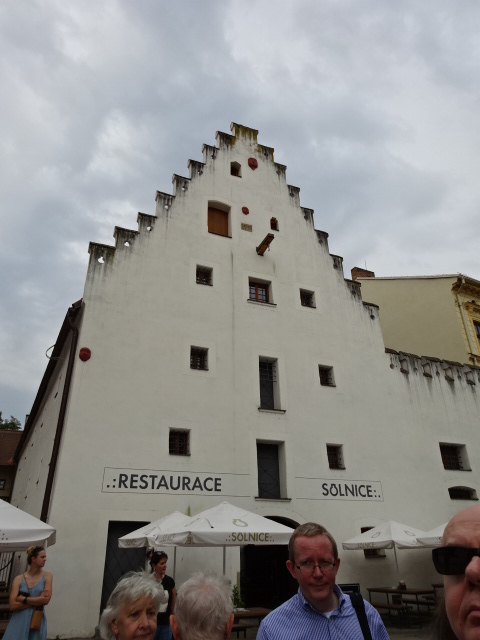
My favorite restaurant in Pilsen – U Salzmannů

From Pilsen art gallery exhibition Through the Eyes of Franz Kafka

From Pilsen art gallery exhibition Through the Eyes of Franz Kafka

From Pilsen art gallery exhibition Through the Eyes of Franz Kafka

Museum of the High-Rises Diary

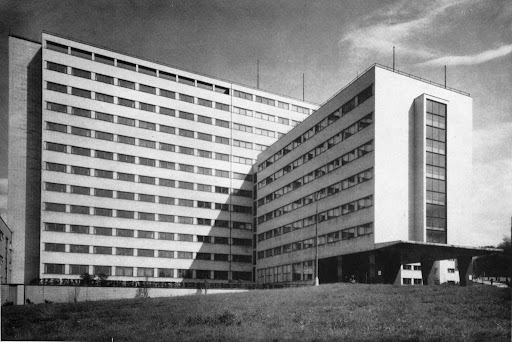
The six buildings designed by Josef Havlíček in Kladno, photo from Vysehradskej.cz

In Kladno, not far from Prague, I visited the Museum of the High-Rises, located in one of the tall buildings designed by Czech functionalist architect Josef Havlíček during the 1950s. The tour consisted of the minimalist lobby and mailboxes, a small museum room, an atomic shelter, roof terraces and a flat that was considered to be luxurious during the 1950s, housing for high-ranking Communist families.

House sign by Marta Jirásková-Havlíčková

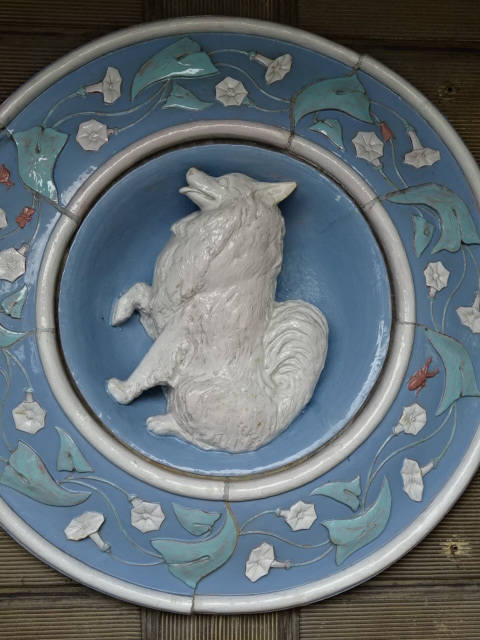
In the Rozdělov neighborhood, the high-rise’s exterior was decorated with two ceramic house signs, one of a cat and the other of a dog, showing circular blue backgrounds with the animals in white. I learned that they had been created by Havlíček’s wife, a sculptor named Marta Jirásková Havlíčková, who originally had made 12 of them for the six buildings in the complex. Other ceramic house sings had featured a hawk, an owl, a rooster, a turkey, sheep and a ram. In the small museum space I saw more of Jirásková-Havlíčková’s work, including a statue of a dignified-looking white cat. She certainly had been talented. Models of some of Havlíček’s designs were also in the space.

I also noticed that the façade consisted of ceramic materials. The use of intriguing materials was a reason that this one-time complex had caught international attention. The French especially were interested in the structures, as Havlíček had been inspired by the architecture of neoclassicist French guru August Perret, who was known for utilizing reinforced concrete in fascinating ways without eliminating the harmony of the design. Perhaps Perret is most renowned for the rebuilding of the port town Le Havre after World War II. His reconstruction helped make Le Havre into a World Heritage Site. Another of his most prominent designs involved the first Art Deco edifice in Paris, the Theatre des Champs-Élysées. 

You can see the various house signs behind the sculpture of the cat.

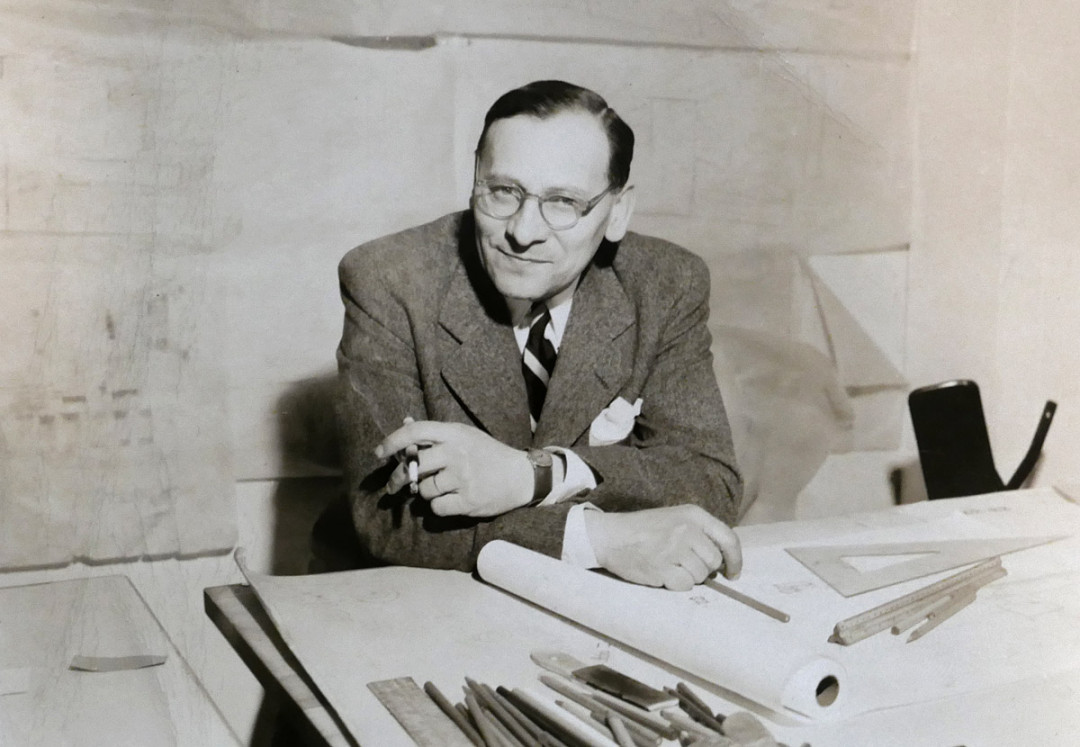
Who was Josef Havlíček? That question was answered in the small museum under the ground floor. Havlíček lived from 1899 to 1961, when he died from exhaustion. As a prominent architect, he was a member of Devětsil, Artěl and SVÚ Mánes, the most influential artistic groups of the time. His mentor at school during the Czechoslovak First Republic of the 1920s was Czech architect Josef Gočár, who designed many important Cubist works in Prague, Hradec Králové and other places. Gočár took Havlíček under his wing and employed him in his studio until 1928.

Josef Havlíček, photo from Muzeum věžáků Kladno webpages.

While Havlíček was given the title of director of the architectural Stavoproject in 1948, he left two years later due to frustration with totalitarian politics. For a while his plans were not realized due to his political stance, but later he used Stalinist social realism architecture that pleased the authorities, even though his style combined creativity while fulfilling the ideology of the times.

Havlíček’s building constructed in Žižkov

Some of his other accomplishments included a building in Prague’s Žižkov, built from 1932 to 1934 with the help of Karel Honzík and dubbed “the first Prague skyscraper.” He also designed the residential development Labská Kotlina in Hradec Králové from 1946 to 1959 and residential buildings in Ostrava. He presented designs for a United Nations building in New York City and a town hall in Toronto, though they were not carried out.

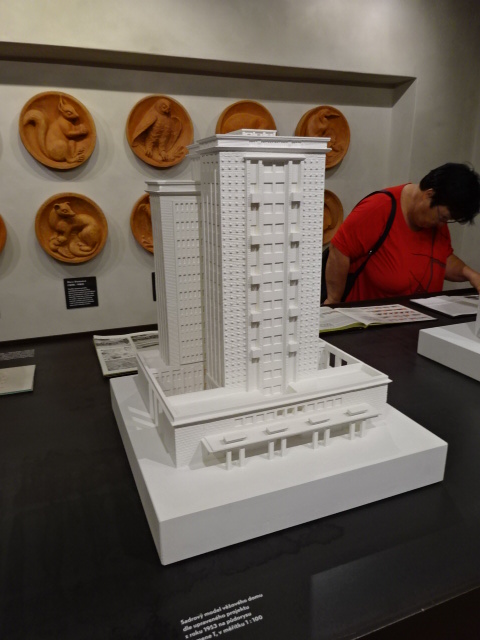
Some models of Havlíček’s creations were on display in the museum.

In the museum space that presented a large timeline and much information about the life and career of Josef Havlíček, we stood around a detailed model of the Rozdělov high-rises in Kladno as they had been planned. In 1946 Havlíček had intended for the project to appear differently – with six buildings of 10 floors each in a Y pattern, flaunting a functionalist style. Due to the political changes in the country during and after 1948, these designs never came to fruition.

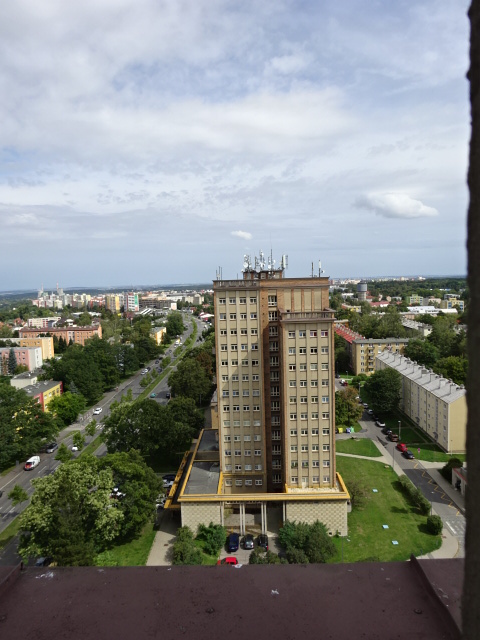
From the roof terrace looking down on another of Havlíček’s designs

During the late forties and fifties Kladno was in dire need of more housing. The city had become much more industrialized after the Communist coup of 1948. For example, Kladno was the prominent home of the Poldi steelworks. Construction of new buildings was necessary to accommodate the new workers who were toiling in the black coal industry.

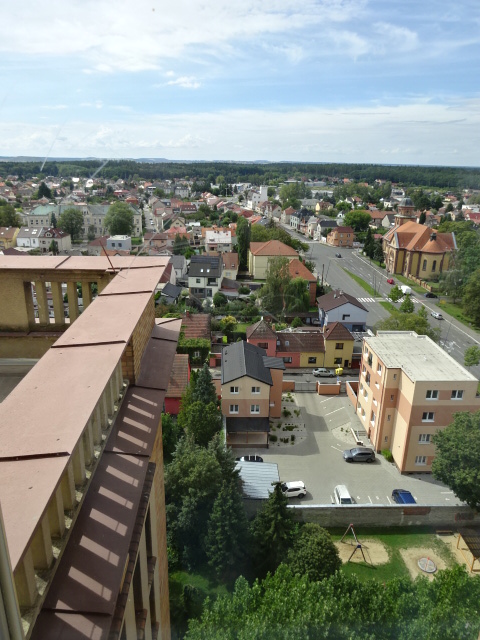
View from the roof terrace

In 1951 Havlíček redid his conception of the suburb, pressured to conform to social realist architectural regulations. He received permission that year. He came up with something that was accepted by the authorities but was also modern and authentic. From 1952 to 1958, Havlíček worked on the design along with Karel Filsák and Karel Bubeníček. Construction began on the project with the first and second buildings. Tenants moved into the first building at the end of 1956 and into the sixth building at the end of the following year.

You can see some of the suburb’s high-rises from the roof terrace.

The six buildings that formed the letter T were inaugurated as the Victorious February suburb to commemorate the February Communist coup of 1948. The building we were in had 13 floors, not including the ground floor and upper ground floor. Each floor consisted of six apartments, two much bigger than the others. The more luxurious flats of that era had balconies.

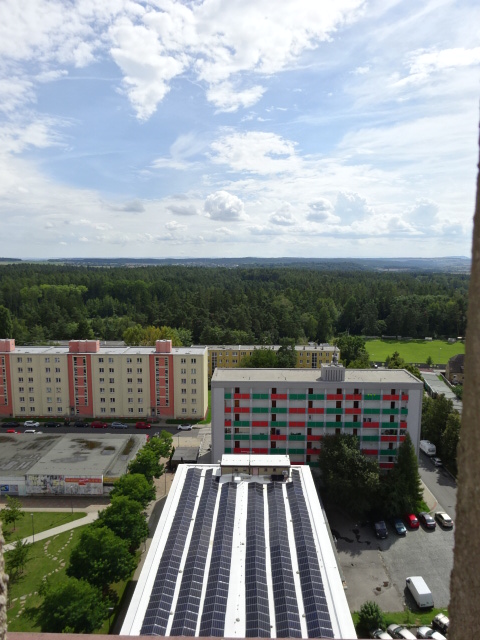
Another view from the roof terrace

The project was planned to be much more elaborate than the 48-meter high residential buildings. Havlíček and his colleagues envisioned the suburb to flourish with cultural and shopping centers. It was slated to become a major hub for cultural activities, such as theatre, and to have much needed impressive stores. While the shopping center plans were carried out, the theatre was never built. Financial problems and other barriers did not allow the designs to be fully developed. From the model it was possible to see how Havlíček had proposed that the suburb become a leading place for activities as well as original housing made from inventive materials.

We went down to the second basement floor, the atomic shelter. I saw many gas masks and rows of hard, wooden benches in several spaces. It would certainly be depressing and frightening to be trapped down there for any reason let alone a nuclear war. Many buildings were constructed with atomic shelters during the 1950s in Czechoslovakia.

Then we visited the roof with impressive terrace, which was a prominent component of the project in its day. Even though now ugly high-rises surrounded the building, during a clear day it was possible to see the historic Říp Hill and the mountains of central Bohemia, even some of the mountains at the German border.

The living room of the flat

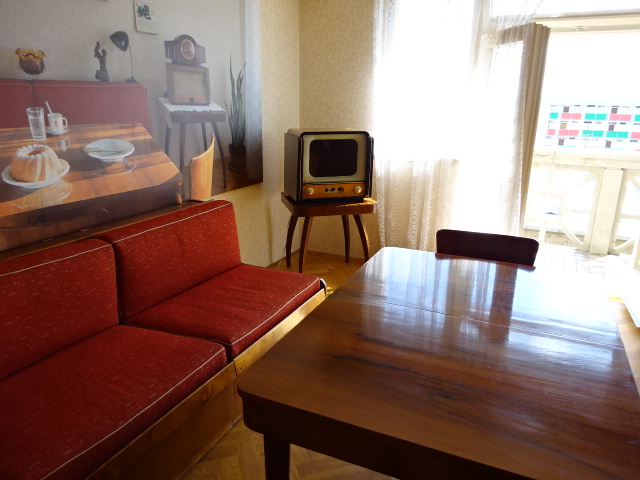
Then we went into a 55 meters squared flat preserved with 1950s furnishings and equipment, looking as it had during its construction as a luxury home for high-ranking Communist families. The living room had a couch and table on which were a cake and mugs. I noticed one cup was adorned with a red Communist star and the other sported a Communist symbol. On the table there was also an open pack of cigarettes and an ashtray filled with cigarette butts. A lace tablecloth covered part of the table. A large radio and a black-and-white TV with three buttons under the screen also stood out in the room. Social realist-styled statuettes decorated cabinets.The bedroom was dominated by a big double bed. On each nightstand was a framed photo. A large mirror adorned the wall above the bed.

The bedroom

The kitchen included a gas stove, a counter and pantry with shelves for storing food as well as cabinets. Although it looked small to me, at that time this type of kitchen had been luxurious, only available to the most prominent families. The flat featured a big balcony, too, something that not many apartments in the building had.

Now the museum, which opened in 2020, is a cultural monument to an innovative style designed during Stalinist times. This was Havlíček’s last big project to be carried out as he died of exhaustion in 1961, exasperated by his discomfort with the country’s Communist ideology of which he had been a critic. It had taken a toll on his physical and mental state.

The kitchen

This is the first Czech museum showing off suburban Czech architecture. The museum was something totally different than the kind I usually visited. I had never been to a museum focusing on a suburb of a city. I had thought of the suburbs of Kladno as eyesores with socialist high-rises that scarred the landscape. This one was different. During the period of its construction, the architecture had forged a new path in suburban appearances. It was a pity that only two of the buildings survive today and that fate had intervened and prevented the project from being completed.

The gas stove in the kitchen

I took all the necessities such as the stove and kitchen space for granted. I thought the flat seemed relatively small. At one time, though, a flat this size had been a luxury. I could see the accomplishments in modern architecture as I viewed all the spaces through a 1950s lens. I could better appreciate the modernity of the present by immersing myself into the past.

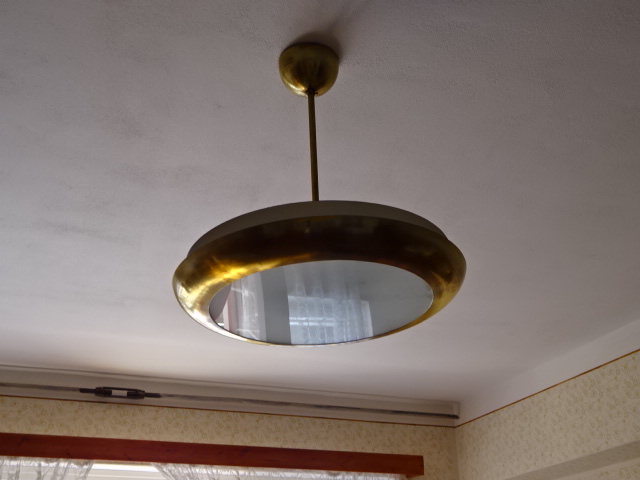
The simple chandelier in the living room

Tracy A. Burns is a writer, proofreader and editor in Prague.

Škoda Museum Diary

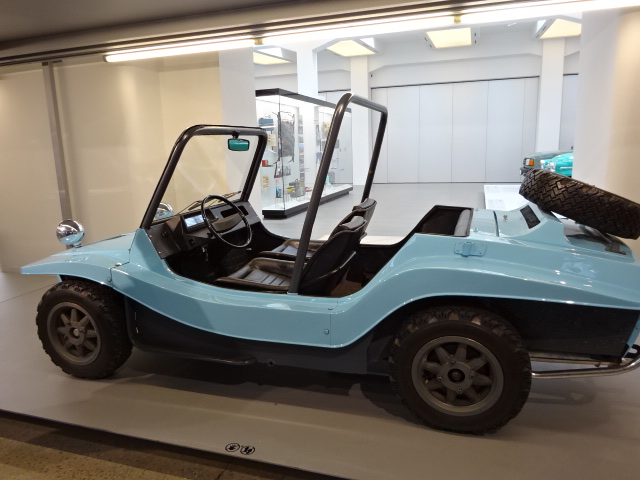
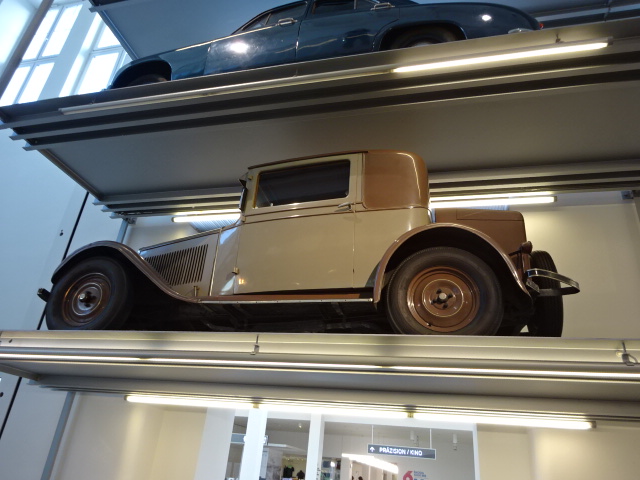
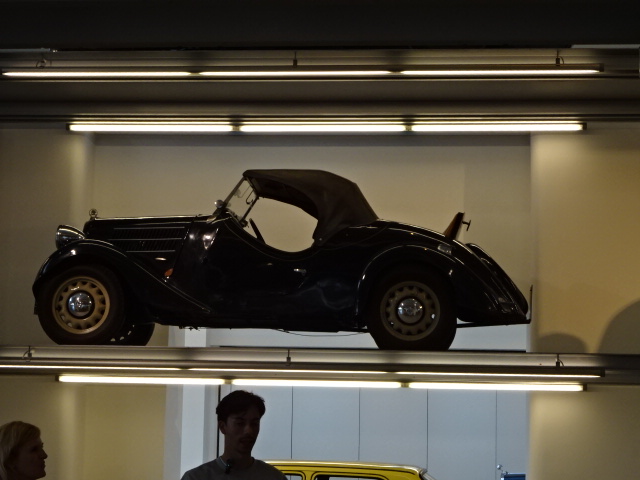
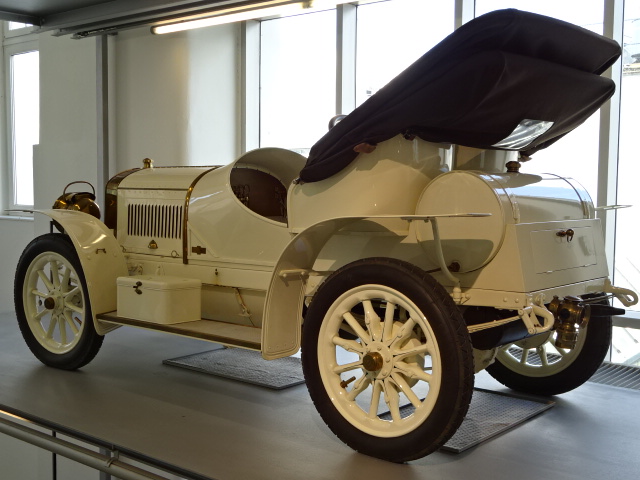
While visiting Mladá Boleslav, a town about 70 kilometers from Prague, I saw many automobiles from various eras in the Škoda Museum, named after a popular Czech car manufacturer that is renowned world-wide. When I walked into the former production halls of the automobile maker, I didn’t know what to expect. I had never been to a museum featuring cars – stagecoaches yes, but cars no. I didn’t have a car and hated driving.

Still, the museum cast a spell on me as I peered at vehicles from the turn of the 19th and 20th century to the present day. The company was established as far back as 1895 by Václav Klement and Václav Laurin, when they focused on bicycles, a few of which were on display. I especially liked the two-seater for postal workers. The unicycle was another delight. I recalled how one Bagatti Valsecchi brother had mastered the unicycle in the early 20th century and how I came across a picture of him posing on one at the Bagatti Valsecchi House Museum in Milan, where Renaissance and Neo-Renaissance art took precedence.

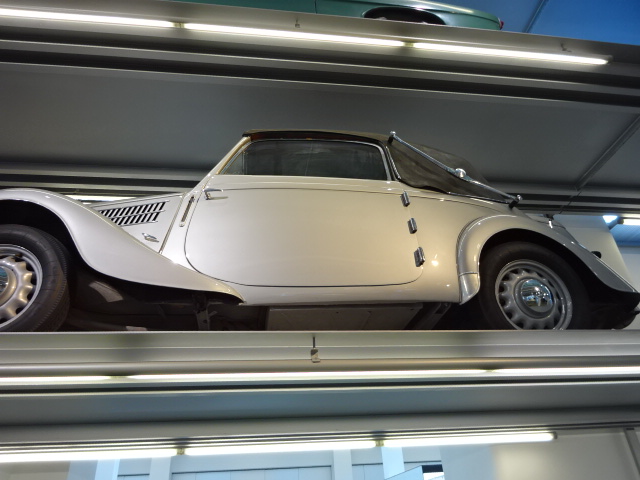
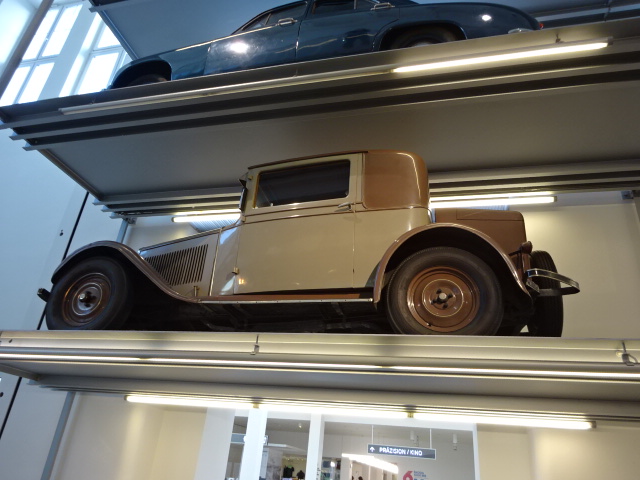
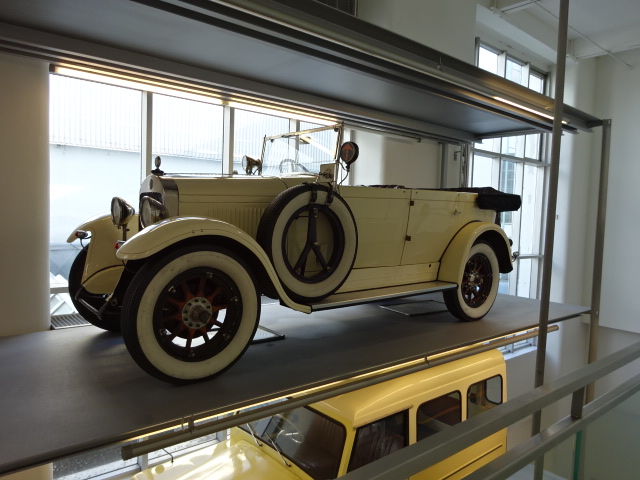
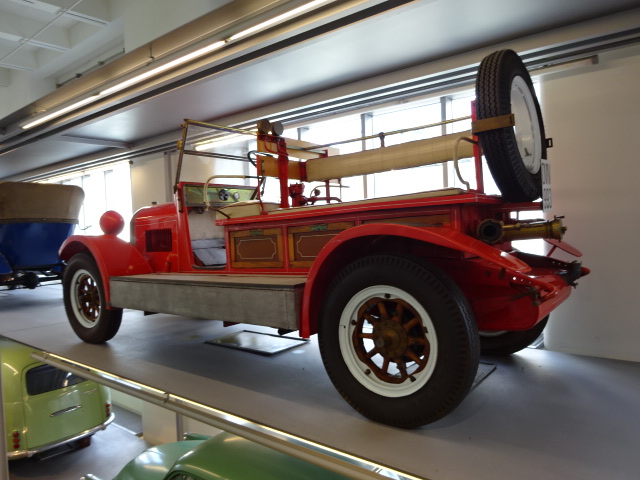
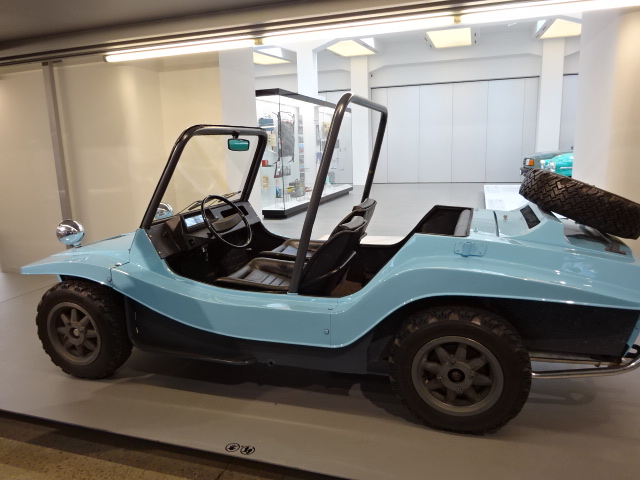
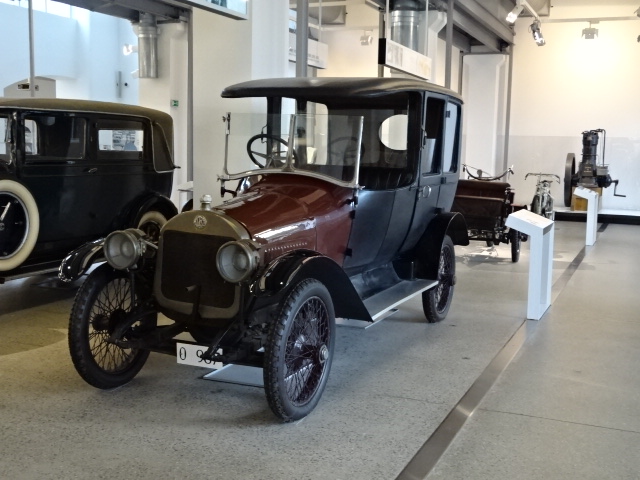
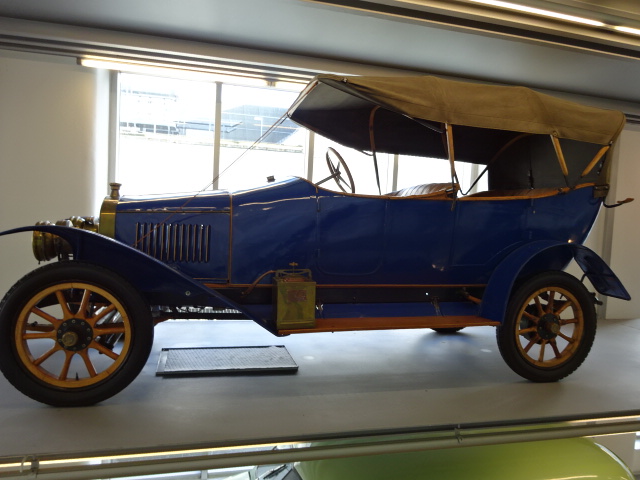
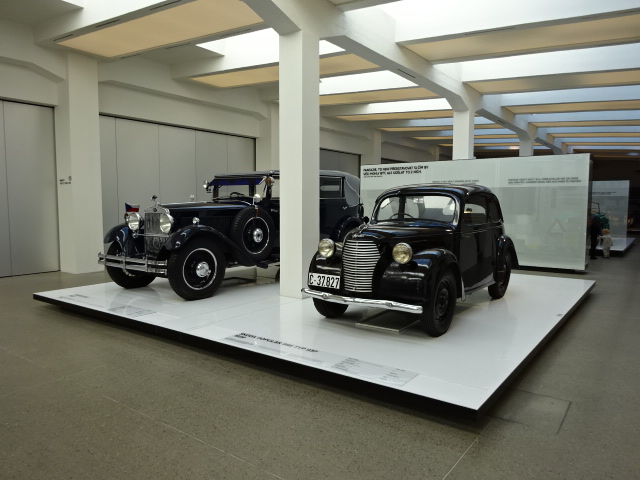
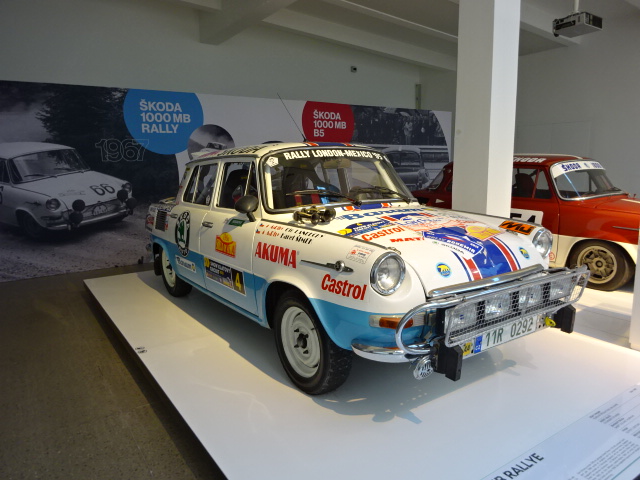
The automobiles that most enamored me were those from the end of the 19th and beginning of the 20th century, although I enjoyed noting how the manufacturing of cars had developed over time. There are cars and bicycles on the ground floor, and after climbing many steps to a viewing platform, more cars are situated on vast shelves.

Here are some photos from bicycles and cars on display in the museum.

Tracy A. Burns is a writer, proofreader and editor in Prague.

The Metoděj Vlach Aviation Museum Diary

I hadn’t visited an aviation museum before fall of 2024 because, quite simply, I had never shown much interest in planes. That all changed when I went to Mladá Boleslav, about 70 kilometers from Prague. The 25 historic planes in this collection – mostly Czechoslovak, German and Soviet – had me hooked.

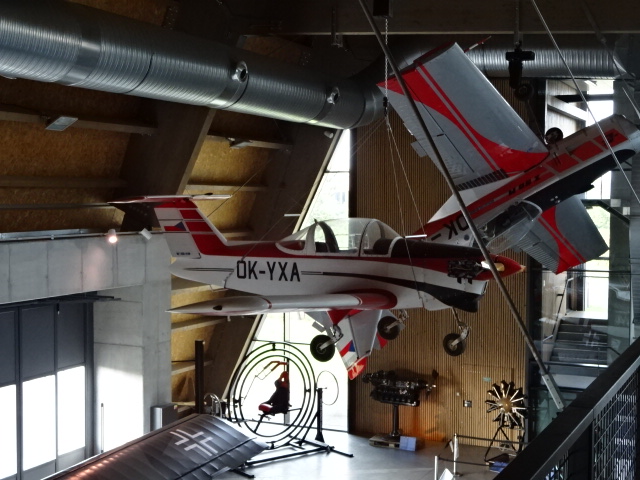
Construction on the museum in a hangar of the Mladá Boleslav airport finished in 2014, and it had been open to the public since 2015. The architecture received much acclaim as it was chosen one of five buildings in the country  to be dubbed “Construction of the Year” for 2014. The museum also included two plane simulators and a gyroscope. I perused period uniforms, radio equipment, watches, photography, aviation trophies and posters. From an observation tower there were excellent views of the environs. After walking up steep stairs to the first floor of the museum, I got a good look at the planes hanging from the ceiling.

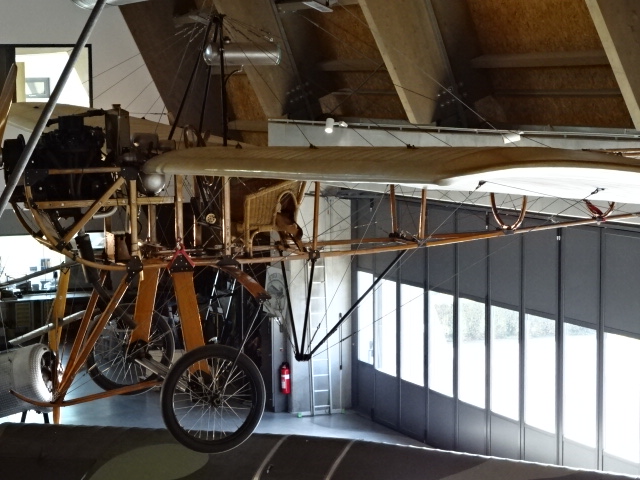
I had not heard of the name Metoděj Vlach before visiting this museum. Vlach had made a name for himself as the first Czech pilot. From 1908 he worked for Mladá Boleslav’s Laurin and Klement business, known for its bicycles and cars, an enterprise that would later become the world famous Škoda automobile manufacturer. He had to use his own money to finance his flying attempts. While his first try was not successful, the second plane he produced in 1909 managed short jumps between 30 and 50 meters. However, the third time was a charm as on November 8, 1912, his aircraft, constructed from 1910 to 1912, made the first flight – reaching 20 meters in the air. It flew a distance of 300 to 500 meters at 100 km/h. The plane weighed 720 kg, and the motor, the kind an automobile used, was 28 kW. The aircraft was successful during five attempts.

One of the aspects about museum-going that I like best is learning about important historical figures and events that I had not known anything about. Learning about Vlach was one of those lessons that certainly enriched my experience at the museum. I spent a lot of time peering at the various specimens, dating from World War I to the later years of the 20th century.

The Little Beetle

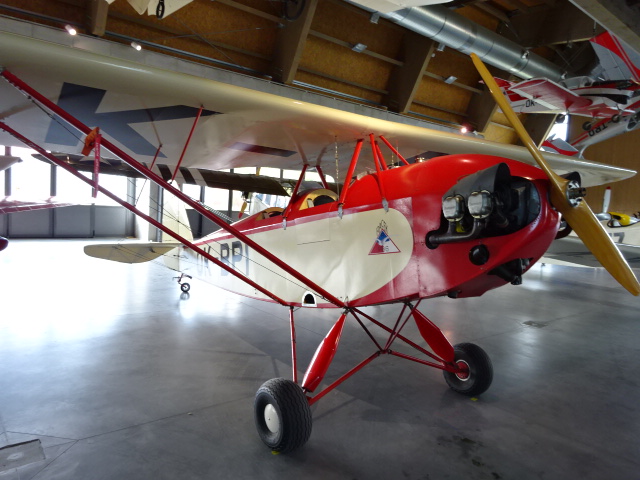
A plane called the Little Beetle captured my attention. The first modern Czechoslovak amateur aircraft, the W-01 Little Beatle was built at the owner’s home in Brandýs nad Labem during the 1960s. The public set eyes on the plane for the first time in 1970. With a wingspan of 6.08 meters and an empty weight of 280 kilograms, the Little Beetle was a frequent participant in Czechoslovak air shows. It was five meters long and could fly up to 180 kilometers per hour.  During the mid-1970s, international audiences took notice of the Little Beetle as it was shown off in airshows that took place in the German Federal Republic, Holland and England. Sadly, an accident in 2003 ended the Little Beetle’s career. During 2015 the specimen was brought to this aviation museum. 

German Bucker Bu 130 Jungmann

I also took notice of the German Bucker Bu 130 Jungmann, a two-seater designed for training and aerobatics. It took off for the first time in May of 1934 and became a popular training aircraft for the Luftwaffe. The Germans were not the only ones to use this model aircraft, though. It received worldwide acclaim in Czechoslovakia, Spain, Japan, Hungary, Switzerland and other countries.

PO-2, The Sewing Machine or The Maize Cutter

Another plane with an interesting history was the PO-2, a prototype of a U-2 biplane that was adopted by the Soviet Air Force. It was also used for civilian aviation. More than 40,000 PO-2 planes were produced. This popular two-seater came into existence during 1927, and production started the following year. During World War II the Germans called the plane “The Sewing Machine,” describing the distinctive sound of the engine. Soviets had a different nickname for the aircraft with an engine of 100 to 115 horsepower. They dubbed it the “Maize Cutter.” It was also historically significant because a regiment of female Soviet pilots conducted nighttime air raids on Germany using this aircraft. The Germans dubbed these female military personnel “Night Witches.” Production did not stop when the war came to a close. The PO-2 was manufactured in Poland post-wartime.

Klemm L 25

I took note of another German plane. The Klemm L 25 aircraft was designed by Dr. Ing. Hanns Klemm, created in 1926. It was possible to use various kinds of engines with these training, sports and aerobatic planes. About 600 planes were manufactured from 1928 to 1939. During the 1930s the Klemm L 25 participated in competitions in Germany.

Zlín Z-50L

I also saw the Zlín Z-50L aerobatic plane made in Moravia. In the 1970s and 1980s its pilots clinched first place in international competitions, both European and world championships, while flying this plane. The last world championship won by this aircraft was as recent as 1989.

Be-60 Bestiola

The two-seater, wooden aircraft called the Be-60 Bestiola was designed in 1935 as a Czechoslovak aircraft to be used for training and tourism purposes. Its life span was relatively short, though, as production was halted not long after the 1939 Nazi Occupation. Some of these planes were flown by the fascist-oriented Slovak State during World War II. Unfortunately, there are no longer any original planes of this type in existence. The replica in the museum is quite impressive, though.

Zlín Tréner

Used for training and aerobatics, the Zlín Tréner captured my attention. It was a two-seater monoplane with low wings and first took off in 1947. Later, it was powered by a four-cylinder engine and was composed of wings and tails made of metal. The career of that prototype began in 1953. The wingspan measured 10.26 meters while the take-off weight was 750 kilograms. The engine was 105 hp, and the maximum speed it could reach was 203 km/h. The aircraft has had a stellar career and is still used for training.

G – III plane

Brothers Gaston and Réné Caudron had been plane designers since 1909. Their G-III did a loop for the first time in December of 1913. In May of 1917 ,it hit another milestone by setting a new record: It flew non-stop for 16 hours and 28 minutes. About 150 planes of this type were produced. The aircraft had a wingspan of 13.4 meters with a take-off weight of 735 kg.

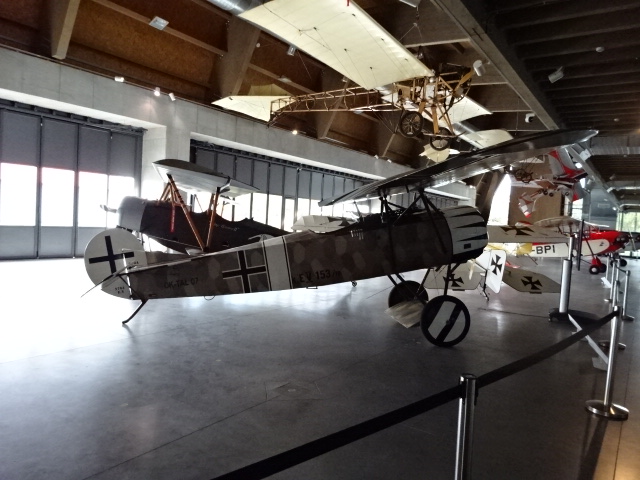
Fokker E.V.

I also saw the Fokker E.V. German fighter plane from World War I. Some 289 aircraft of this model were manufactured. The planes were 5.85 meter long and utilized a 110 hp or 160 hp engine. The wingspan was 8.35 meters while the take-off weight was 605 kg. It could go as fast as 200 km/h.

ŠK – I Trempík

The two-seater ŠK – I Trempík was known for its stability. It was not difficult to take care of, either.  Its wingspan measured 9.3 meters, and it was powered by an engine of 75 hp. The maximum take off weight was 578 kg, and it could fly 185 km/h.

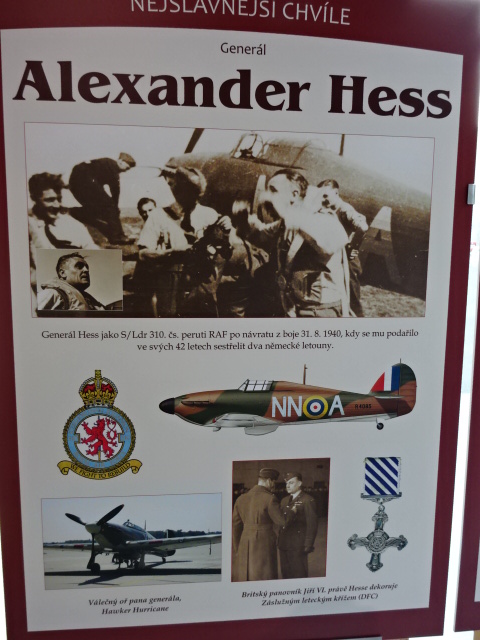
1926 silent film with Alexander Hess as the pilot

General Hess after returning from his service in the RAF when he shot down two German planes; British royal George VI awarding Hess a medal; War plane Hawker Hurricane used by the general

On the first floor there were panels about General Alexander Hess, a pilot I had not heard of before. He also had starred in a 1926 silent Czechoslovak film as well as working as a pilot. Hess was the organizer of the Czechoslovak aircraft for the 1936 Olympics. After the Nazi Occupation in 1939, he helped pilots escape, equipping them with false passports, and General Hess wound up fleeing from the Nazi Protectorate to France and then to the USA in January of 1940. After World War II, he returned to Czechoslovakia but fled again, this time from the Communist regime. General Hess settled in New York City, where he worked as a technical assistant with PAN AM.

So I became acquainted with the career of not only Metoděj Vlach but also that of Alexander Hessman. I found the exhibit most intriguing. In fact, the entire museum was engrossing with so many planes from various countries and eras, each unique with compelling attributes. While I still despised the eight-hour flights from Europe to the USA, I comprehended the historical importance of these aircraft. In Mladá Boleslav for the first time, the city made a good impression on me. After visiting this museum, I would take a look at the Škoda Museum of bicycles and automobiles, another delight.

Tracy A. Burns is a writer, proofreader and editor in Prague.

2024 Travel Diary

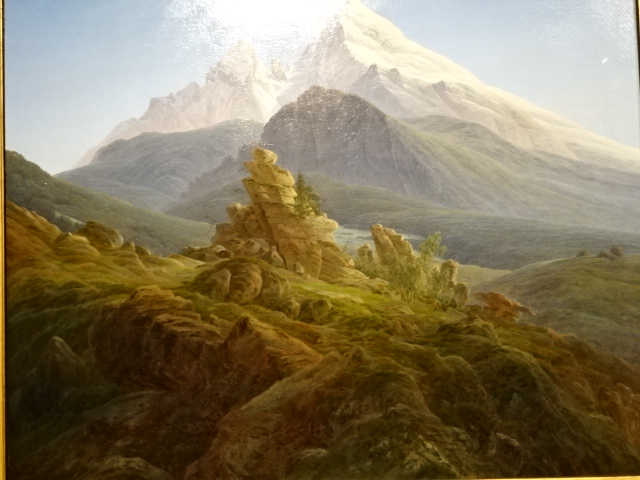
David Caspar Friedrich, The Wanderer

As usual, this past year was punctuated by travel, though most trips only lasted one day or half of a day. Still, I was able to explore many sights within a two-hour distance of Prague. Once again, I realized that the Czech Republic blossoms with beauty in every niche of the country.

Perhaps the painting that best expresses my year of travel is one I saw at an exhibition of David Caspar Friedrich’s paintings from the Romanticist era. While admiring his “The Wanderer,” I saw the back of a male figure in the forefront, standing on a cliff as he peered at the mist-filled mountains beyond. It epitomizes why I love travelling: to discover new worlds, to muddle through that mist, reaching a clarity that allows me better to understand myself as well as to gain historical knowledge.

By David Caspar Friedrich, on display at Albertinum for temporary exhibition

In the Dresden Albertinum, I was mesmerized by Friedrich’s landscapes. Many featured vibrant colors and a brilliant use of light. He also created dark paintings with a chiaroscuro element that gave them a mystical appearance. Some of his landscapes included a solitary figure traveling alone in nature. Friedrich’s gnarled trees in barren environments were symbolic. I felt especially drawn to his portrayal of mountains in shades of pink.

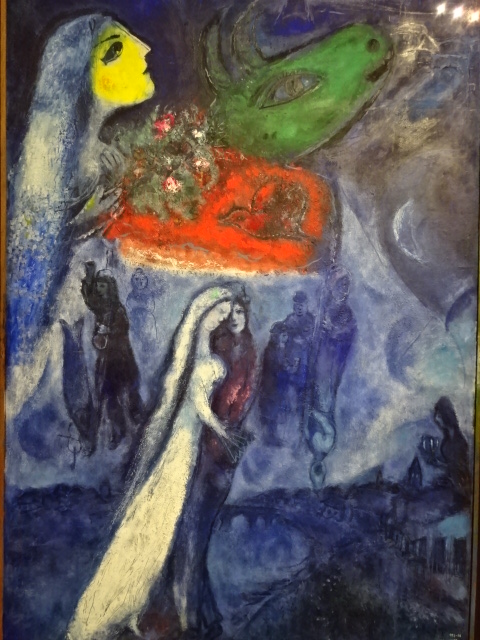
By Marc Chagall, on display at Albertina in Vienna for temporary exhibition

By Paul Gauguin

By Hoogstraten, Rembrandt’s pupil

I spent three days in Vienna going to major exhibitions featuring works by Chagall, Gauguin and Hoogstraten, a star pupil of Rembrandt. I hadn’t realized how many of Chagall’s paintings took on Jewish themes and serious topics. I had always thought of Chagall’s art as fun-loving and colorful. My favorites were those inspired by Paris and the circus, created in bright blues and yellows. The Gauguin retrospective showed his works from various time periods, so it was possible to see his specific artistic developments. I was most impressed with his early landscapes. I had not heard of Hoogstraten, whose portraits brought out the soul in the sitters just as Rembrandt’s did. His intriguing use of perspective in some paintings also impressed me. Works by Rembrandt also enchanted me in this exhibition.

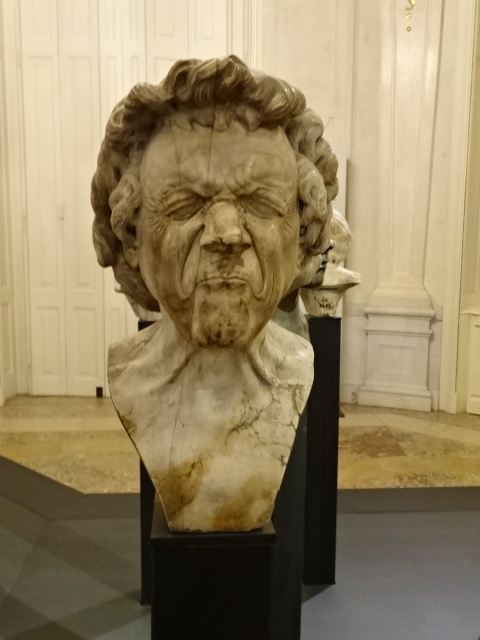
Franz Xaver Messerschmidt, Character Heads

by Gustav Klimt on permanent display at Upper Belvedere

By Václav Špála, on display at Upper Belvedere

City of Vienna Museum, permanent collection

We also visited the Upper Belvedere Palace Museum in Vienna. While it is best known for its Gustav Klimt and Egon Schiele creations, I was entranced with the medieval art in the basement and the Central European collection that featured Czech greats such as Jan Procházka, Bohumil Kubišta and Václav Špála. The Klimt paintings were extremely powerful as were all the Impressionist and Post-Impressionist works. My favorite part of the museum involves the unique Late Baroque Character Heads by Franz Xaver Messerschmidt, who rendered alabaster busts of insane people with unique facial expressions. You could see into their souls. In Vienna I entered the City Museum for the first time. The exhibits trace the history of the city from the beginnings to modern day. I saw intriguing paintings, furnishings, posters and objects, among others.

by Eva Švankmajer

Puppets by Jan Švankmajer

Puppet by Jan Švankmajer

I also went to many exhibitions in the Czech Republic outside of Prague. In Kutná Hora I visited an exhibition of works celebrating the 90th birthday of Jan Švankmajer, a surreal artist, along with creations by his wife Eva. The exhibition Disegno Interno included collages, graphic art, objects, book illustrations, drawings, paintings, animated film creations and puppet theatre of both artists from the 1960s and later. Their creations included works that resemble Rudolfine Mannerist renditions as kinds of cabinet of curiosities and art inspired by Giuseppe Arcimboldo. I also noted the inspiration of the Baroque tradition in puppet theatre. Other works fell into the categories of art-brut, eroticism, fetishes and collages influenced by Max Ernst. Much of their art was deeply rooted in the writings of Edgar Allan Poet and Lewis Carrol. Scenography for Czech film was another section. I realized for the first time that surrealist art had been influenced to a great extent by Mannerist trends.

From Through Kafka’s Eyes, graphic art about The Metamorphosis

Through Kafka’s Eyes, Oto Kubín, Brindisi, 1906

In Pilsen I went to an exhibition called Through Kafka’s Eyes, featuring the art that had surrounded Kafka at the end of the 19th century and the beginning of 20th century. I saw posters for Czech art exhibitions in the early 20th century and those advertising 19th century Japanese art as well as works by stellar Czech artists. Paintings by Kubišta, colorful and vibrant, were represented along with sculpture by František Bílek. Czech artists who spent their interwar years in Paris were included, such as Oto Kubín and Georges Kars. Kafka’s own Jewish-themed drawings were a highlight. German art and literature rounded out the intriguing exhibition.

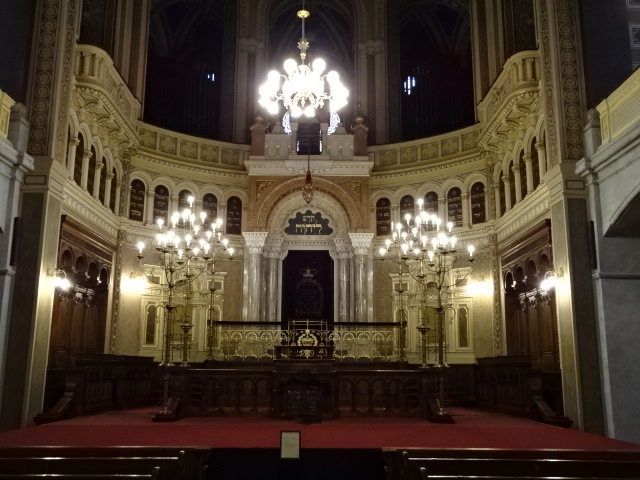
Great Synagogue, Pilsen

Great Synagogue, Pilsen

I also took the time to visit the Great Synagogue in Pilsen, the second largest synagogue in Europe and third largest in the world. On the onion-shaped dome the Star of David stood out. What I admired most was the vaulted ceiling punctuated with blue and gold adornment. Another feature that amazed me was the artistic mastery of the stained glass windows with geometric shapes and figures. The interior is furnished in Oriental style with Neo-Renaissance elements.

Pilsen, U Saltzmannů

We ate at my favorite restaurant in Pilsen, U Saltzmannů, the oldest pub in the city. The Czech food at this establishment cannot be surpassed. I had fried chicken steak this time.

Škoda Museum

In Mladá Boleslav, about 70 kilometers from Prague, I visited for the first time the Škoda Museum, named after the popular Czech automobile manufacturer. The company began making bicycles with Václav Klement and Václav Laurin at the helm in 1895 and soon developed a rich tradition of producing cars. The automobiles on display ranged from vehicles made at the end of the 19th century to those produced in the modern day. I liked the early bicycles, including a two-seater for postal carriers. The cars from the early 20th century were also favorites.

In that same city, we also visited the Aviation museum of Metoděj Vlach, which explored the history of aviation with more than 25 airplanes in the main hall, some hailing from World War I. I saw the 1913 G-III by Gaston and Réné Caudron. It had an open cockpit and 9-cylinder rotary engine. The two-seater wooden plane constructed by the Beneš company called a Be-60 Bestiola featured a 4-cylinder engine and had been flown from 1936 to 1940. The adorable W-01 Little Beetle had been used for airshows in the 1970s.

At that museum, I also learned about the career of pilot Alexander Hessman, who also had starred in a 1926 silent Czechoslovak film. He was the organizer of the Czechoslovak aircraft for the 1936 Olympics. After the Nazi Occupation in 1939, he helped pilots escape with false passports, and he wound up fleeing from the Protectorate to France and then to the USA in January of 1940. After World War II, he returned to Czechoslovakia but fled from the Communist regime, settling in the USA, where he was a technical assistant with PAN AM in New York City.

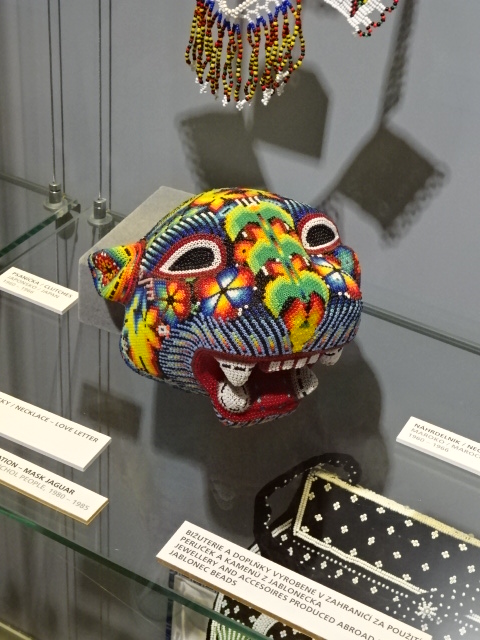
Mexican mask, Museum of Glass and Jewellery, Jablonec nad Nisou

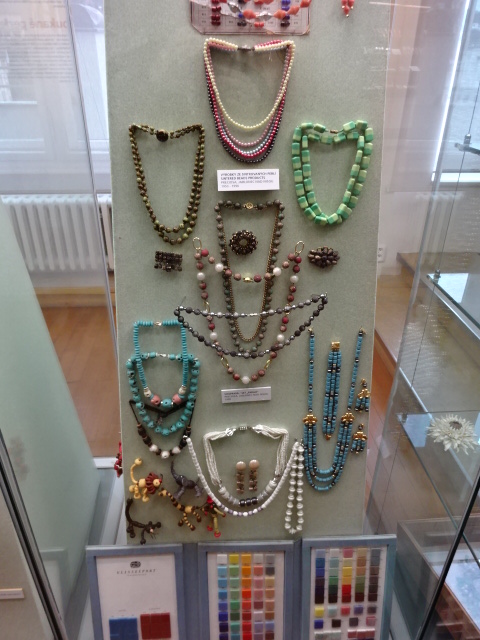
I traveled several times to north Bohemia this past year. One time I went to Jablonec nad Nisou, where the Museum of Glass and Jewellery was located because of the rich local tradition in these fields. I was immersed in the exotic jewellery of strung and woven glass seed beads by North American Indians, using products from north Bohemia. A mask of the jaguar hailed from the Huichol Indian tribe in Mexico. Glass seed beads from Jablonec nad Nisou were used to make a necklace by the South African Zulu tribe, dated from 1880 to 1900. Jablonec has been the location of the mint for the country’s currency, so many commemorative coins were on display.

I also was impressed by buttons made of glass, metal jewellery and black glass jewellery as well as wooden and plastic jewellery. Colorful handbags, masterfully designed, also made up the collection. The Waldes Museum of Buttons and Pins included more than 5,00 buttons, clasps and buckles with the oldest dating from 9 BC. The Bohemian glass exhibition showed off glass in many styles  ranging from medieval and Renaissance to Empire and Biedermeier to Art Nouveau and Art Deco to modernism and contemporary. The museum also has the largest public collection of glass Christmas ornaments in the world with more than 15,000 objects. I saw ornaments of angels, birds, cats, dogs, Santa Clauses, gingerbread men and much more, all contemporary.

Josef Lada’s Villa in Hrusice

I made my first visit to Josef Lada’s Villa in Hrusice, where that author, painter, book illustrator and scenographer had lived while making some 600 paintings and 15, 000 illustrations. I saw his paintings of idyllic village life featuring all four seasons. Children threw snowballs and make snowmen in a quaint village in one painting while a squirrel was perched attentively on a tree branch, overseeing a tranquil village scene in another. Pub scenes showed humorous drunken brawls. I would have loved to have owned one of the charming cottages depicted in his paintings. I loved the paintings of knights and dragons from fairy tales as well as the paintings representing the months of the year. His paintings of scenes from Jaroslav Hašek’s antimilitaristic, multi-volume classic about the Good Soldier Švejk in the First World War caught my attention. Many of his paintings focused on holiday traditions. I also saw his humorous drawings and caricatures.

From the First Republic of Czechoslovakia

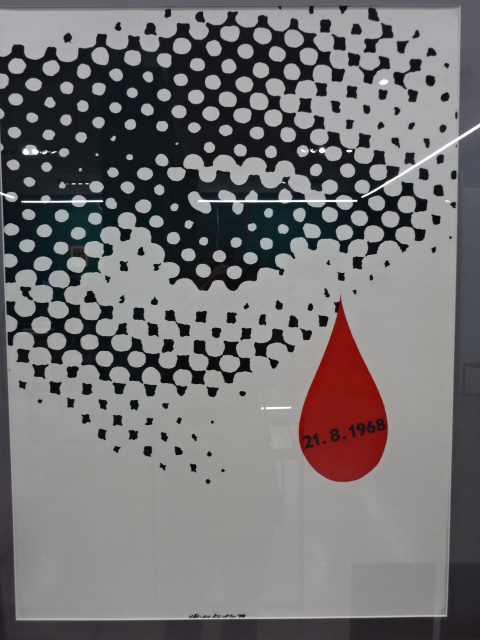
Poster by Václav Ševčík commemorating the day of the invasion by the Warsaw Pact armies, August 21, 1968

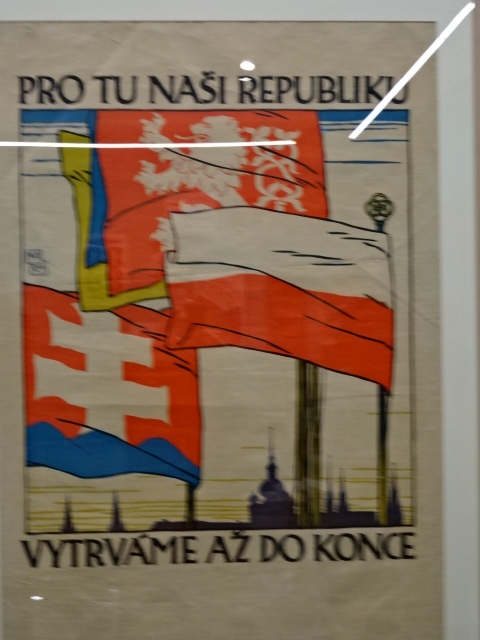
In Prague I took advantage of the stunning exhibitions this past year. I went to two excellent shows at Kampa Museum. One featured Czech graphic art from the founding of Czechoslovakia in 1918 to the present. I saw the first star-studded designs for the Czechoslovak flag as well as many political posters from the World War II era through Communist times to the Velvet Revolution of 1989. Václav Ševčík made a poster focusing on the day of invasion of the Warsaw Pact armies into Czechoslovakia on August 21, 1968, when the country’s liberal reforms were squashed. The poster shows a blood-red tear below an eye outlined in black on a white background.

Vítězslav Nezval, Alphabet, with typography by Karel Teige

Kampa Museum, Identity exhibition of graphic art, Cindy Kutíková

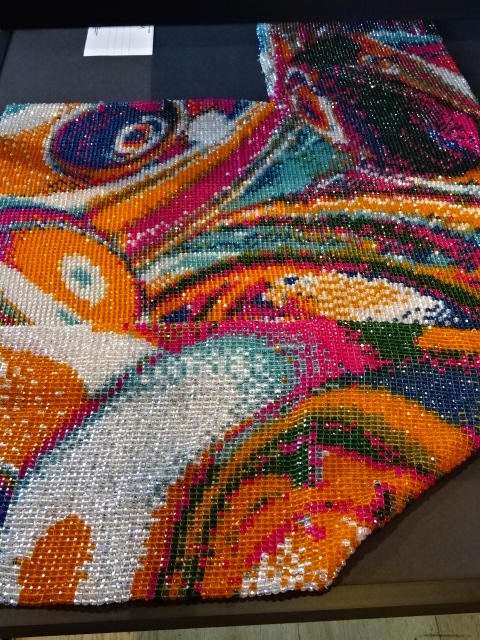
Other sections concentrated on magazine and book design. I saw beautiful children’s volumes illustrated by Lada, Josef Čapek and Jiří Trnka. I was drawn to the covers and typography of Karel Teige, an avantgarde interwar artist. The exhibition showcased contemporary times by displaying a colorful, large Quantum Beaded Sweater created in 2020 and 2021 by Cindy Kutíková, for instance.

Václav Tíkal, 1944

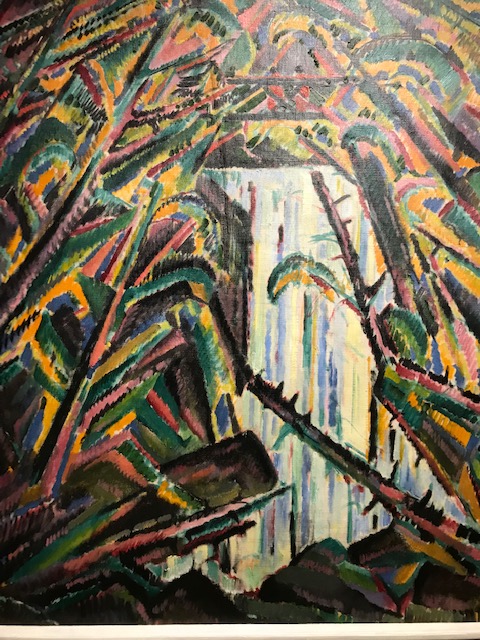
Otakar Nejedlý, Waterfall, 1913-14

Another exhibition at Kampa Museum focused on paintings from the private collection of entrepreneur Vladimír Železný, purchased for his Golden Goose Gallery. Called The Goose on Kampa, the show featured 70 paintings representing works from the beginning of the 20th century through the 1960s, such as creations by Toyen, Jiří Štyrský, Špála, Emil Filla, Jan Zrzavý and Mikuláš Medek. One painting that caught my undivided attention was Václav Tíkal’s 1944. A hand partially covered in a ripped black glove showing the fingertips, thumb and part of the palm was emerging out of the frozen, snow-covered earth in a barren landscape.

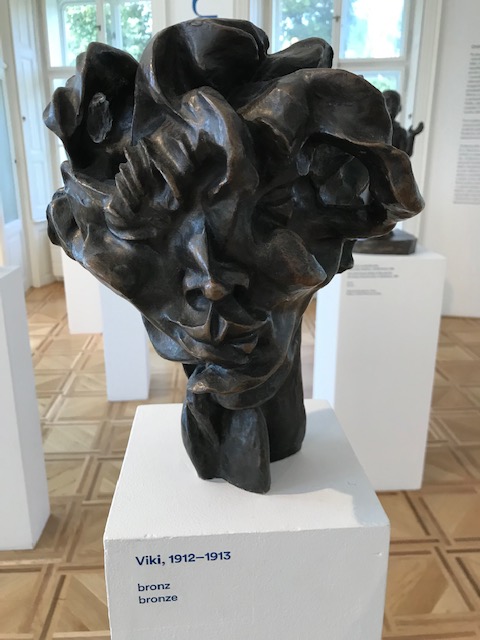
Otto Gutfreund, Viki, 1912-13 from Cubist period

On that day I also explored the Kampa Museum’s permanent collection, specifically the sculptures of Otto Gutfreund, whose early works can be classified as Cubist. His later creations, made after World War I, featured traits of Civilism, which promoted themes of everyday life.

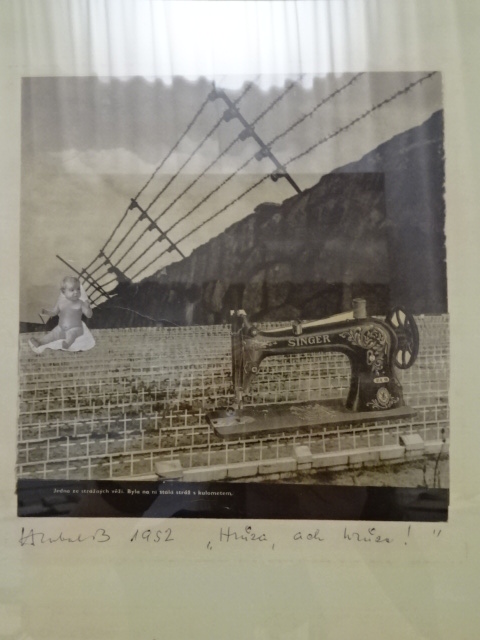
Bohumil Hrabal, 1952, Tragedy! What a Tragedy!

At the Museum of Czech Literature, I greatly appreciated a small exhibition due to my interest in the works of the late 20th century Czech fiction writer Bohumil Hrabal. The modest show emphasized the artistic relationship and friendship of Hrabal and abstract artist Vladimír Boudník, who created the “Explosionism” style. I was most impressed by Hrabal’s collages from the 1950s. One featured a Singer sewing machine, a naked baby and barbed wire heading into the horizon as white crosses in a graveyard punctuated the picture. It was called “Tragedy, What a Tragedy!”

Oto Kubín, Chapel in Simione, 1926

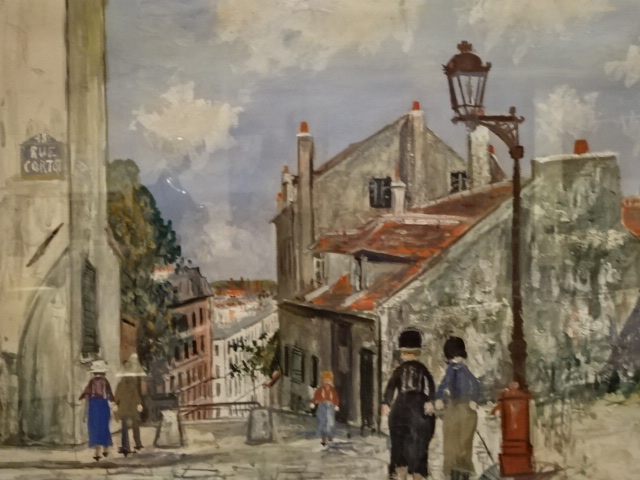
Maurice Utrillo, Chateau de la Seigliere (Aubusson), 1930

The Wallenstein Riding Stables was the site of an intriguing exhibition about artists from Bohemia residing in Paris between the wars. They were part of the “Paris School,” which featured a variety of styles. Czechs Kars, Kubín (Othon Coubine) and Francois Zdeněk Eberl made strong impressions in the lively, vibrant Paris of the 1920s. The themes of the paintings were many: portraits, cityscapes, street life scenes, café and entertainment scenes as well as a focus on the circus and cabaret. I was drawn to Kubín’s landscapes of Provence. The lavender fields were my favorite. Also represented were foreign artists, including Marc Chagall and Maurice Utrillo.

Hendrick Goltzius, The Four Disgracers, 1588

Also at the Wallenstein Riding Stables, the exhibition “From Michelangelo to Callot: The Art of Mannerist Printmaking showed off more than 200 works of 16th and 17th century graphic art, drawings, paintings, jewelry, etchings, lithographs, ceramics and other artistic crafts that hailed from the Netherlands, Germany, France and the Czech lands. The Louvre lent Prague’s National Gallery many works. Some pieces in the collections were being displayed to the public for the first time. A superb small drawing by Michelangelo drew crowds, and art by Hendrick Goltzius, Paul Bril,  Aegidius Sadeler and Niccolo Boldrini stood out to me.

Painting by Karel Kryl, temporary exhibition at House of the Golden Ring

Karel Kryl giving a concert

On my birthday I went to the House of the Golden Ring near Old Town Square. I saw an exhibition about the late dissident singer and songwriter Karel Kryl, whose music had been poetic, profound and political. He had lived in West Germany during much of the Communist era and had worked for Radio Free Europe. I realized how politically-motivated his songs had been and how he had supported the Poles as well as the Czechoslovaks in their fights for freedom. I was engrossed by his artwork, disturbing and grotesque scenes with one-legged clowns and half-human, half-creature figures.

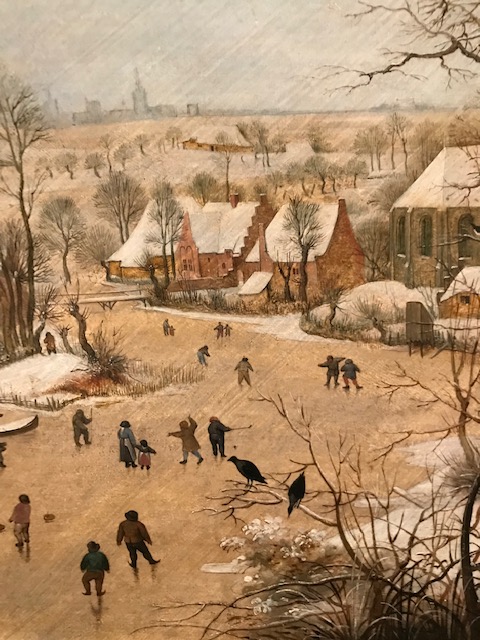
Pieter Brueghel II

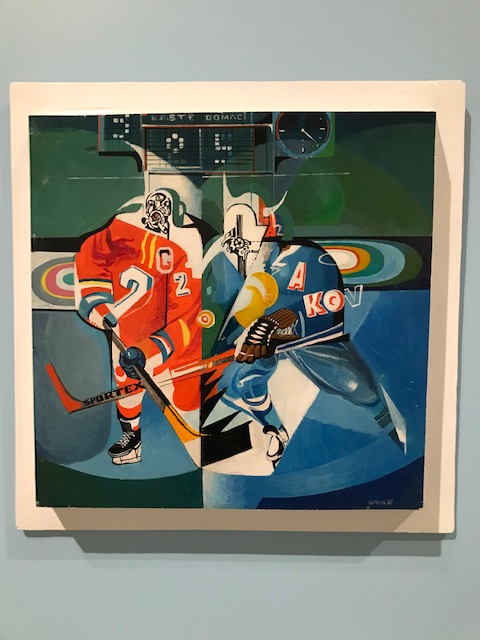
One of my favorite exhibitions of the year, taking place in Kinský Palace, was called “Get on the ice!”, featuring hockey and skating in paintings and other artistic creations. It reinforced the fact that ice hockey and skating have played significant roles in Czech and Slovak identity. I especially was impressed by the works of the Dutch masters who had inspired Czech painting. Pieter Brueghel II’s scene of skating on a pond caught my undivided attention. Czechs first represented skating on the Vltava River and on ice rinks.

Then hockey became the major theme, first portrayed realistically and then in the 1960s expressed in an experimental fashion. I was drawn to František Tavík Šimon’s “Ice Rink Under the Charles Bridge” (1917) with its large falling snowflakes and idyllic, historical setting. One example of the experimentation of the 1960s is Vojtěch Tittlebach’s “Hockey” from 1965, with abstract shapes and simple forms. The players in this painting had no facial traits. Jiří Kolář also added to the experimentation of the 1960s with his “Hockey Sticks,” composed of three wooden sticks decorated with paper collages, many of them maps and some historical scenes. The 1998 Czech Olympic victory at Nagano was celebrated in large photographs, including one that showed the moment Czech Petr Svoboda scored the winning goal while the crowd in Old Town Square erupted in joy.

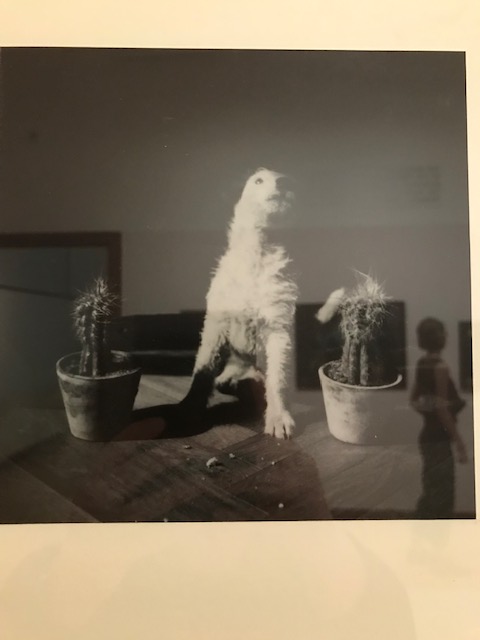
New Realisms, Karel Čapek from series Cactuses, first half of the 1930s

One-Handed Ice Cream Man, Miloslav Holý, 1923

In Prague I also saw the New Realisms exhibition, which focused on modern Realist trends in Czechoslovak art from 1918 to 1945. The more than 600 works hailed from the Czech and Slovak lands as well as Germany and Hungary. I especially liked Karel Čapek’s photographs of cactuses and his dog Dašenka as this field focused on the everyday during this era. I also liked the many café scenes, realistic portraits of people, magic realism in landscapes, the focus on the societal and economic dilemmas in Czechoslovakia and the depiction of modern labor. I have always been interested in the paintings of Group 42 as their works had an existential quality, often punctuated by telegraph wires and deserted streets.

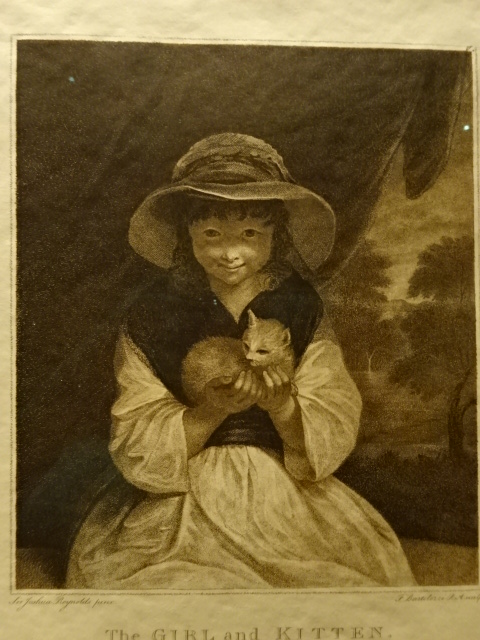
Francesco Bartolozzi, The Girl and the Kitten, 1787

One of my favorite exhibitions in Prague this past year was called “The Good Cat and the Treacherous One,” featuring cats in graphic art from the 16th to the 18th century. The art shows how some people revered cats while others hated felines. They often symbolized something or were shown for entertainment. Some considered them to be a form of the devil. Others gave them positive religious connotations. I especially enjoyed the Mannerist works by Goltzius and the graphic art by Wenceslaus Hollar, who portrayed cats with both positive and negative qualities. I saw pictures of cats symbolizing maternal love, sight, hearing, devotion, courage, yearning for freedom, foolishness, frivolity, cruelty, greed, treachery, lust and adultery. I also noticed cats as protectors against snakes. A French painting showed how, in 18th century France, cats had epitomized personal and political freedom.

Clam-Gallas Palace

I focused mostly on day trips when traveling this past year. While I visited chateaus, castles and monasteries outside of Prague, I did also become acquainted with the renovated Clam-Gallas Palace in the capital city. The Baroque palace became the property of the Gallas family in the 17th century. The palace has a rich musical and theatrical history as Mozart and Beethoven both performed there during the late 18th century. The colossal exterior portal is decorated with statuary by Baroque master Matyáš Bernard Braun, and he also created the fountain portraying Triton.

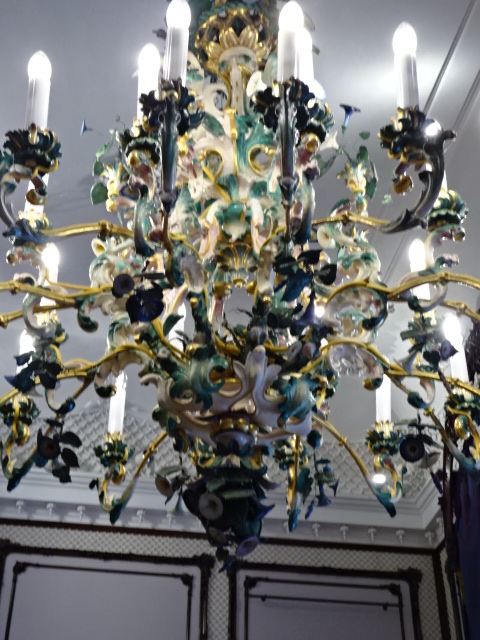
Murano chandelier in Clam-Gallas Palace

The many monumental frescoes amazed as did the chandeliers, especially the 19th century chandelier made of Chinese porcelain cups, saucers and vases. Frescoes depict the triumph of Apollo and gathering of the gods on Olympus, for instance. Allegorical figures representing sculpture, architecture and painting stand out in another fresco. I was very impressed with the former office of the first Czechoslovak Minister of Finance, Alois Rašín, though it was sparsely furnished. He had tried to gather support for the creation of Czechoslovakia during World War I and had even been imprisoned for taking part in the resistance. Rašín was assassinated in Prague during January of 1923 by a 19-year old anarchist.
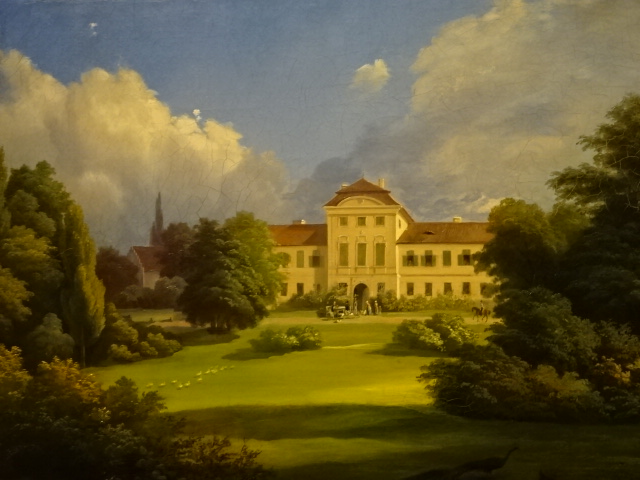
Bohumil Hrabal’s cottage in Kersko

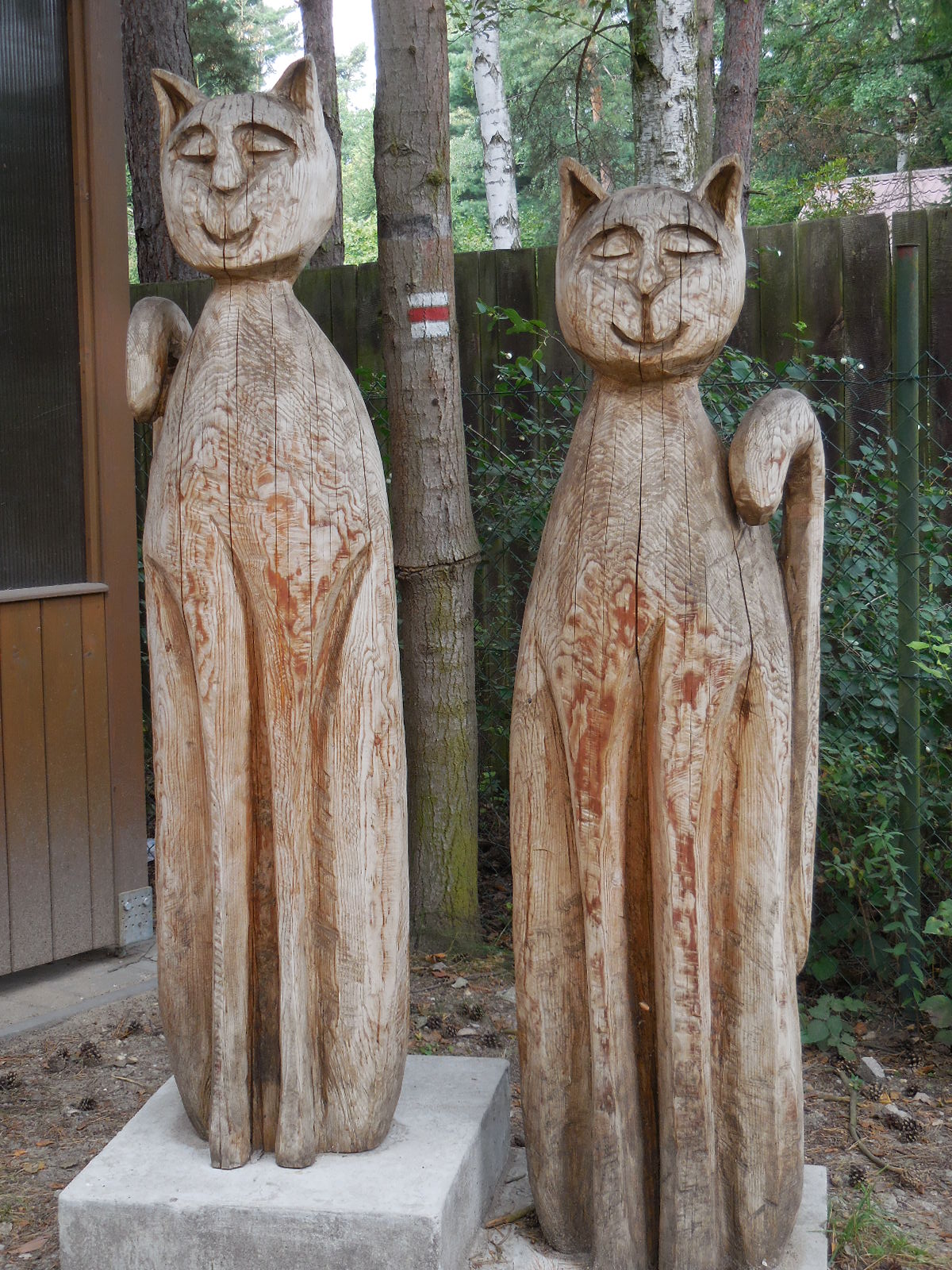
Kersko near Prague is one of my favorite tranquil spots in the country, a village where Hrabal resided from the 1960s until his death in 1997 and where he fed many feral cats daily. Hrabal’s two-story cottage opened to the public for the first time this spring. I saw the garden where he wrote some books and the charming enclosed terrace where he composed his works when weather did not permit him to spend time in his garden. I saw the chair in which Hrabal wrote his last literary piece, during 1995. The top floor was adorned with many paintings – a moving portrait of Hrabal by Jan Jirů, a drawing featuring heads of Hrabal from his youth to old age in a rendition by Jiří Anderle. Another portrayed cats on chairs in a forest setting along with Hrabal himself. Portraits of his family and a collage focusing on one of his books also caught my undivided attention. The place captured the soul of Hrabal, and I was very moved.

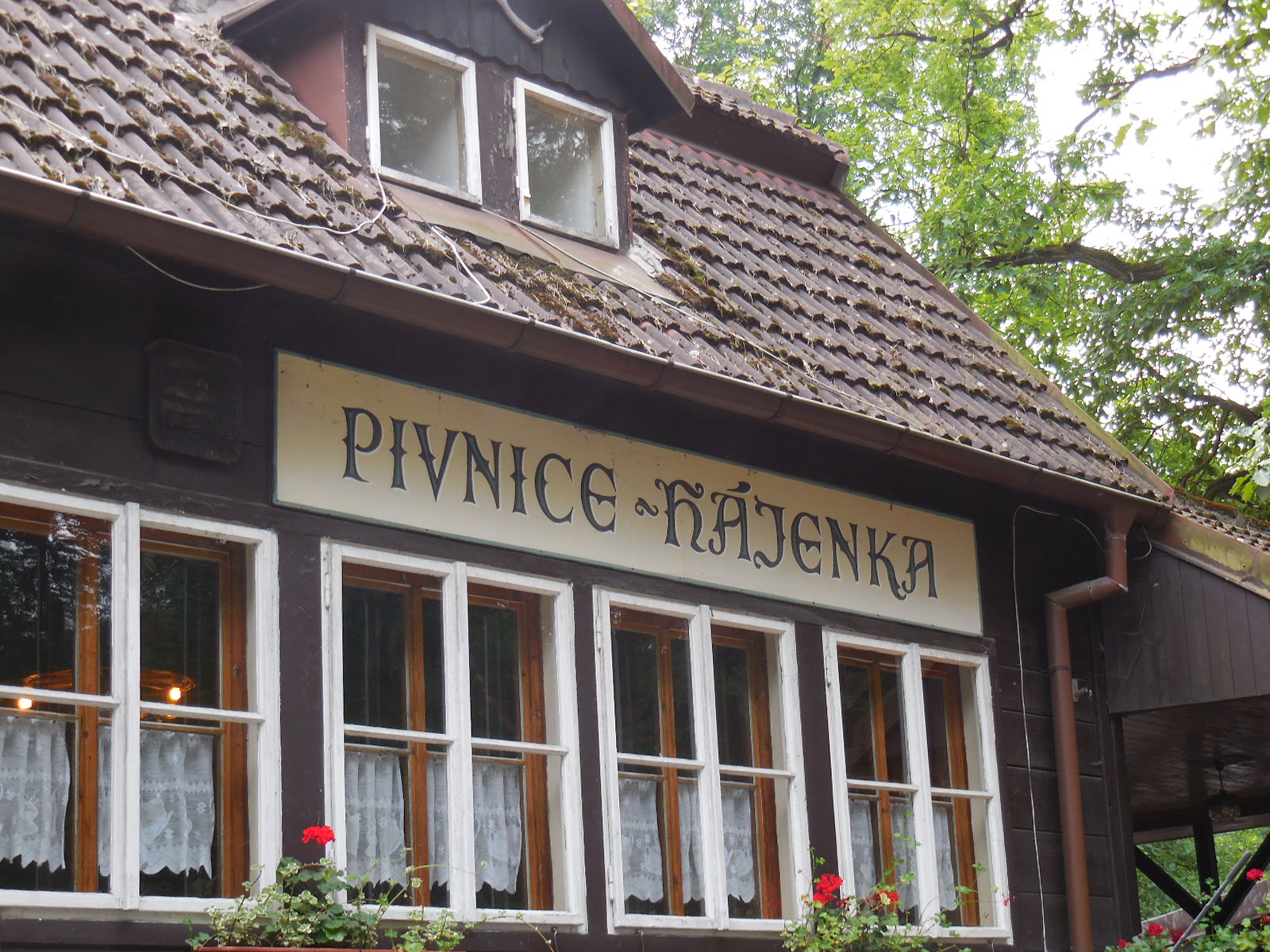
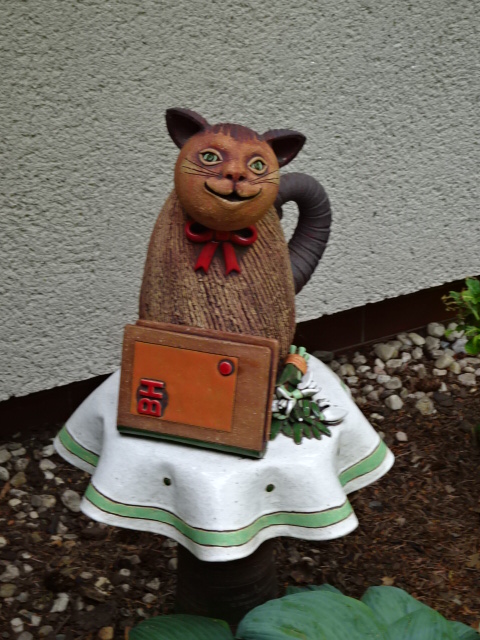
In the local shop, known for its ceramic figures of cats, there was an exhibition of drawings of Hrabal – at the pub, in Heaven, in Kersko, each rendition celebrating the author in a creative way. We ate at my favorite restaurant outside of Prague, Hájenka, a prominent landmark in Kersko. Whether I chose the chicken with cheese sauce, the meat with dumplings or the fried chicken steak, I was always delighted by the meal in a rustic, charming atmosphere.

Mariánská Tynice complex

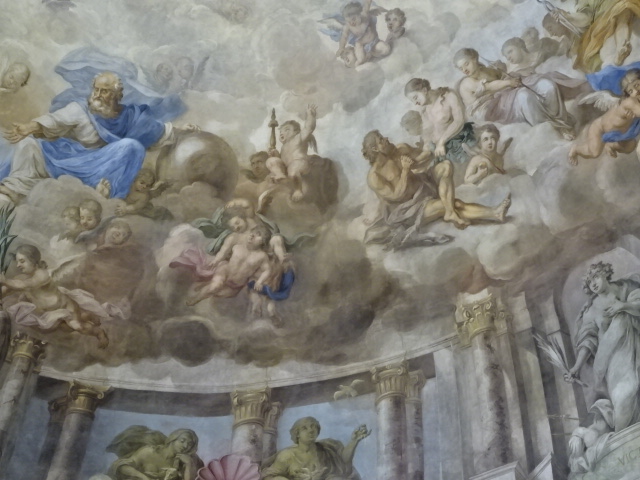
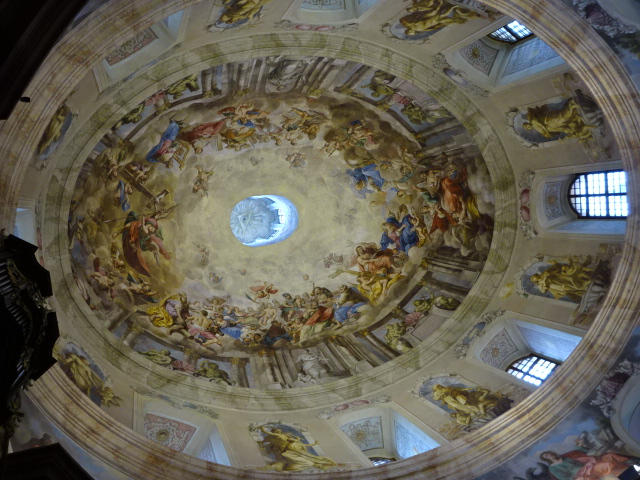
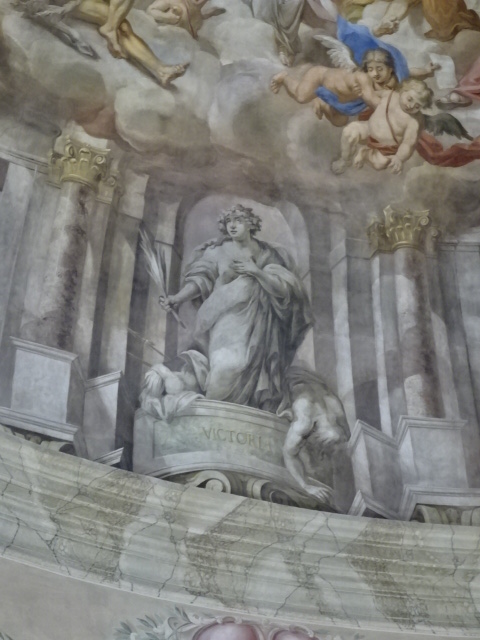
I traveled about 35 kilometers north of Pilsen to pay a second visit to the High Baroque complex with pilgrimage church Mariánská Tynice, an aerial constructed by renowned architect Jan Blažej Santini during the 18th century, using geometric forms such as quadrangles and triangles as features of his Baroque Gothic style. The church with a Greek cross plan had an impressive illusionary main altar of the Holy Trinity while the east and west ambits were constructed with open arcades featuring eight chapels. The masterful painting on the vaulting and walls celebrates the lives of the Virgin Mary and Cistercian saints. The cupola of the church is lit by eight windows.

Frescoes on the walls and vaults of the ambits

Part of the complex was the Museum and gallery of the North Pilsen region. I liked the Gothic altarpieces and Baroque paintings as well as the 19th paintings of pilgrimage sights. The reconstruction of rooms resembling 19th century and early 20th century village life included a classroom, a countryside chapel and a pub.

Museum of the High-Rises, Kladno, ceramic tile on the facade

Gas masks in the nuclear bunker of the Museum of the High-Rises

In Kladno near Prague, I toured the Museum of the High-Rise, which was located in one of the six Rozdělov high-rises designed by Czech functionalist architect Josef Havlíček in the 1950s. He received acclaim during the interwar years as a member of the avantgarde and studied under Cubist architect Josef Gočár. The façade of the 13-floor building was created from ceramic material, and on that particular high-rise were ceramics of a cat and a dog. There was a small museum in one basement floor. We also visited the nuclear bunker, complete with numerous gas masks and many hard benches. The big rooftop terrace was a prominent feature for that time period. In the representative flat for the higher-ups, we saw 1950s furniture and a balcony. The flat measured about 65 meters squared, quite a luxury in that day and age.

Humprecht Chateau

View from Humprecht Chateau

I also visited many chateaus within a two-hour distance of Prague. Seventeenth century Humprecht Chateau in the central Bohemian Paradise region had an elliptical shape. Much of the interior featured hunting themes. I saw paintings of Venice, Biedermeier bookcases in the two libraries of about 4,000 volumes, a black kitchen with an original fireplace and utensils from the 17th century. The main hall featured four frescoes from the 1930s, showing scenes from the life of the Černín family, the long-time owners of the chateau. Baroque furniture decorated several rooms. The picture gallery includes works from the 17th century. What I liked best about the chateau were the panoramic vistas from the top floor.

Volman Villa

Also, not far from Prague, the newly reconstructed Volman Villa, a large, geometric functionalist structure built from 1938 to 1939, featured big terraces, a circular driveway, a monumental winding staircase and outer stairs that lead to a bridge heading into the building. It is possible to access the terrace from each spacious room. Volman used exotic materials such as travertine and marble for the construction. The marble bathrooms with beautiful pink and light blue bathtubs were vast. While there are now many trees obstructing the view, at one time it was possible to see the Labe River in the 40-hectare English park.

Grabštejn Castle, Chapel of Saint Barbara

I visited several castles and chateaus in north Bohemia – Grabštejn Castle, Jezeří Chateau and Červeny Hrádek Chateau. I was shocked at the vast improvements made during the reconstruction of Grabštejn and Jezeří as I had last visited the two about 20 years ago. Grabštejn, originally a 13th century castle, took on the structure of a Renaissance chateau in the 16th century. The 16th century Chapel of Saint Barbara featured exquisite vaulting and wall painting that included 13 apostles. One tour featured the 18th century administrative offices that made up the castle interior during that time period while another showed the rooms of the nobility, including a gigantic wall painting with chateau-like gardens and fountain. I saw furnishings and artifacts from the 16th to 19th centuries.

Jezeří Chateau, painting by Carl Robert Croll

While only a few rooms of Jezeří Chateau were opened about 25 years ago, now there are about 10 impressive spaces on the tour. I loved the paintings of Carl Robert Croll, renditions which showed the interior of the chateau during the early 19th century. I was especially impressed with the room dedicated to Jan Masaryk, the son of the first president of Czechoslovakia and once the Minister of Foreign Affairs. He was thrown out a bathroom window at the Ministry of Foreign Affairs by the Communists after the 1948 coup. The Winter Garden was light and airy, punctuated by much greenery. The lavish Theatre Hall included sculptural and stucco adornment as well as an original fireplace. The paintings throughout were impressive, too.
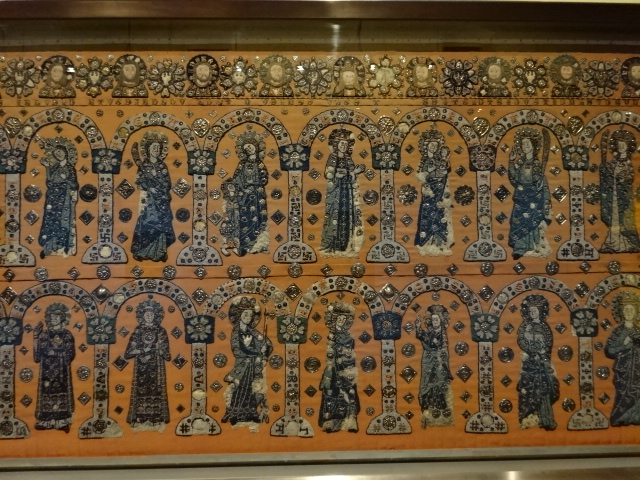
Červený Hrádek, Knights’ Hall

Červený Hrádek dated back to the early 15th century and gets it current appearance from the 17th century. The Knights’ Hall from that era included lavish sculptural decoration with medallions featuring battle scenes and exquisite crystal chandeliers. Other spaces harkened back to the 18th and 19th centuries with period furnishings. Seventeenth century sculptor Jan Brokoff created sculptures, fountains and vases that decorated the monumental staircase. The English style park was beautiful, too. In August of 1938 the Sudeten Party leader Konrad Henlein and English Lord Walter Runciman had a meeting there, shortly before the Munich Agreement was signed.
Dobříš Chateau Park

Dobříš Chateau Park

Because the interior had been recently renovated, I returned to Dobříš Chateau not far from Prague. I was disappointed there were not as many rooms decorated with period furniture. Instead, the self-guided tour mostly featured spaces celebrating the Colloredo-Mansfield family’s accomplishments, which were very intriguing and noteworthy, to be sure. Still, I missed the longer, guided tour and former exciting interior décor of the Rococo and Classicist eras. The Writers’ Room remained on display, decorated the way the space would have looked when the chateau belonged to the Writers’ Union from the 1950s to the 1990s. It was possible to enter one side of the spectacular Hall of Mirrors, although it was roped off and walking through the room was not permitted. The fresco-filled hall amazed with 18th century décor and eight Venetian chandeliers as well as monumental fireplaces.
Illusionary painting on the orangery in Dobříš Chateau Park

The park, measuring nearly two hectares, was the reason to visit the chateau. On that sunny summer day, it was spectacular to stroll through the Rococo style park established in the 1770s. It had five terraces, a fountain with astounding Baroque sculptural grouping and an orangery with illusionary wall painting.

Slatiňany Chateau

Interior of Slatiňany Chateau

I traveled to Slatiňany Chateau for the second time and noted the prominent hunting and horseback riding themes. The Auerspergs held on to the chateau for 200 years and were responsible for the charming interior. I loved the exquisite canopied beds decorated with religious paintings. The tapestries were another delight. In the Big Dining Room I admired a large painting of hunters and their dogs getting ready for the hunt as well as a stunning 18th century Murano chandelier.

Vienna, Albertina, Monet, Waterlillies, in the permanent collection

I had many exciting adventures traveling in 2024 and had many impactful experiences at art exhibitions in the Czech Republic, Germany and Austria. Every time I go on a trip or to an art show, I come away changed, with a sharper perspective on life and with more enthralling knowledge.

Albertinum, Dresden, Hans Grundig, The Thousand-Year Empire, in the permanent collection

Tracy A. Burns is a writer, proofreader and editor in Prague.

Otto Gutfreund Diary

Anxiety, 1911-12.

Whenever I come across a Cubist sculpture by Otto Gutfreund in a Czech gallery or museum, I take some time to appreciate the personal feelings that come to mind as I study the masterful figures. While I was perusing the impressive collection of Gutfreund’s works in Prague’s Kampa Museum, I was reminded that this was not the only style he employed in his career. As I studied the creations by Gutfreund there, I mused over the legendary sculpture’s career and the tragedy that befell him.

Lovers (Embracing Figures), 1913-14, bronze

Born in Dvůr Králové nad Labem in Bohemia during 1889, Gutfreund studied drawing and porcelain painting in Prague before turning to sculpture. In Paris his mentor was Antoine Bourdelle. Gutfreund was greatly influenced by the works of Auguste Rodin, whom he knew personally. While in Paris, he also became fascinated with Gothic art and nature. His travels then took him to England, Belgium and the Netherlands. He became immersed in the Cubist style after 1910 as he simplified natural forms into geometric shapes and showed objects and figures from multiple perspectives.

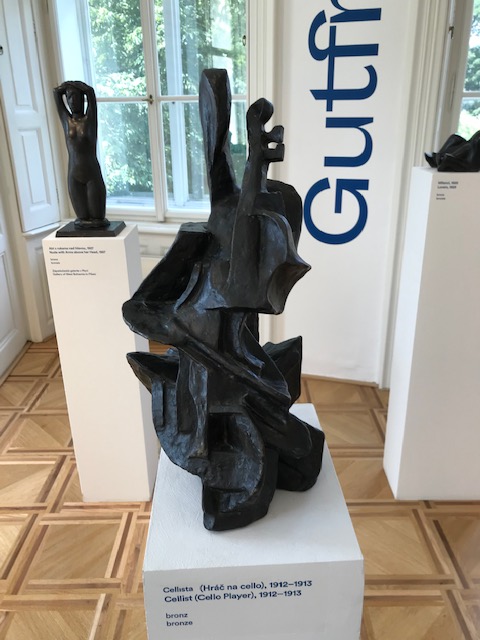
Cellist (Cello Player), 1912-13, bronze.

He made a name for himself as a Cubist guru with his first sculpture in this style, “Anxiety,” of 1911-12. Gutfreund joined the Group of Creative Artists around this time. This emotional and expressive work is my favorite as it stresses the sheer angst and fear that can be debilitating and personally destructive. It reminds me of the anxiety shown in works by Egon Schiele and the German Expressionists of the 1920s. I also see similarities to the emotion-immersed sculptures of František Bílek, a Czech Art Nouveau and Symbolist artist.

Cubist bust, 1913-14, bronze

Some of Gutfreund’s most renowned early Cubist works include his renditions of Don Quixote and Hamlet. Then, becoming more and more inspired by Picasso, he moved to Paris, where he met that artist as well as Apollinaire, to name a few.

World War I brought many changes to Gutfreund’s life. He became a soldier for the Foreign Legion in France and took part in the Battle of the Somme. He wound up in prison during 1916 and wasn’t released until three years later.

Viki, 1912-13, bronze

Two months after being freed, he moved back to Prague and was lauded as a sculptor of the social civilism style, which emphasized the everyday and was very realistic, nothing like the expressive Cubist movement in which he had participated before the war.

In the early 1920s, he received some big commissions. At this time, he created the monument to 19th century writer Božena Němcová in Ratibořice. The sculptural grouping showed off characters in Němcová’s stellar novel, The Grandmother, a 19th century Czech classic.

Industry, Study (sculpture on the right), 1923.

From 1922 to 1923, Gutfreund decorated the Legiobanka Building in Prague with a relief called “The Legions’ Return,” cooperating with renowned Czech architect Josef Gočár. In 1924 he designed a life-size statue of the first president of Czechoslovakia, Tomáš Garrigue Masaryk in Hradec Králové. I greatly admired likenesses of the first Czechoslovak president. Gutfreund held art shows, adding to his résumé of artistic mastery. During 1926 he became a professor of sculpture at Prague’s College of Decorative Arts, and Americans had the chance to admire his works in a New York City exhibition.

Fighters (A Fight, Wrestlers), 1924, bronze.

Unfortunately, his life was short-lived. On June 2, 1927, he drowned in the Vltava River in Prague. He accomplished so much in such a short time. If he had lived, there is no telling how much he could have influenced the Czechoslovak and world art scene. Gutfreund is buried in Prague.

At the Museum Kampa visitors can see a collection of both his Cubist and realistic sculptures as Otto Gutfreund lives on through his incredible art. It is worth traveling to Ratibořice to see the stunning chateau and park dedicated to Němcová and 19th century country life as well as the impressive statuary grouping by Gutfreund. Admirers of sculpture and architecture are sure to be amazed by Prague’s Legiobanka Building in the center of the city.

Tracy A. Burns is a writer, proofreader and editor in Prague.

Statuary grouping from Němcová’s book The Grandmother, by Otto Gutfreund, in Ratibořice

Kersko Diary

Czech legendary writer Bohumil Hrabal. Photo by Karel Kestner. Bought by me in Lesní atélier Kuba, Kersko some years ago.

For me Kersko is a sort of catharsis, easing my anxiety about daily life’s concerns and bringing me a sense of tranquilly. I feel at home here, even though I have no personal connection to this area not far from Prague. I can breathe in the clean air and be at peace with the world and myself. I would love to own a house in Kersko, a forested village dotted with traditional cottages and huge homes built by millionaires.

The Kersko restaurant Hájenka

Every now and then I made the trip to the village restaurant Hájenka, a traditional pub-like establishment with delicious Czech food. On the television in the pub, customers can watch scenes from late legendary Czech author Bohumil Hrabal’s film Snowdrop Festival. Some of the exteriors were shot at Hájenka while the interiors of the pub seen on the film were actually shot at a studio. Directed by the world-renowned Jiří Menzel and based on Hrabal’s 1978 novel, the stellar film remains a Czech classic with many unforgettable scenes.

One of many ceramic cat figures at Lesní atélier Kuba, Kersko.

I also always stop at the souvenir and craft shop Lesní atélier Kuba, where beautiful handmade ceramic cats are sold along with other superb figures. The shop has been open since 1992. While a cat theme plays a major role in the inventory, there is much more to see. I always buy some of their delicious cookies. They sell much more than beautiful ceramics: t-shirts, postcards, books, candles and many other things. During my visit in May of 2024, the downstairs area was home to a fascinating temporary exhibition of witty drawings focusing on Hrabal’s life.

Drawing by Radek Steska showing Hrabal and his cats at The Golden Tiger pub in Prague, exhibited in Kersko at Lesní atélier Kuba.

Indeed, Kersko is intricately tied to the life and career of Hrabal, my favorite Czech writer and the name of my first cat. I penned my master’s thesis on his books, focusing on their historical context. From 1965 until his death in 1997, Hrabal often resided in a quaint, two-floor cottage in the village, fed the semi-feral cats, took walks, rode his bike and frequented the pubs, including Hájenka.

Bohumil Hrabal signing autographs in Spain during the mid-1990s. Photo property of Tracy Burns.

Born in the Austro-Hungarian Empire during 1914, Hrabal was renowned for his grotesque, absurd and irreverent humor and witty anecdotes. While he is mostly  known as an author of fiction, he excelled at poetry early in his career. What I like best about his writing is his creation of the pábitel, a word connoting a dreamer living on the outskirts of society. Although the pábitel has experienced tragedy, he learns how to be content with life and how to find beauty in even the most horrid conditions. The pábitel often tells meandering, absurd anecdotes that make the reader both laugh and cry.

Bohumil Hrabal and Czech writer Arnošt Lustig in Golden Tiger pub, Prague during the 1990s. Photo property of Tracy Burns.

Hrabal held many jobs throughout his writing career. He worked as a train dispatcher in Kostomlaty, where he was almost killed by Nazi soldiers. Hrabal later was employed as an insurance broker and traveling salesman. After the Communist coup of 1948, he took a position at the Poldi steelworks in Kladno, but in 1952 a crane fell on him. Then Hrabal became a paper baler. He would later make a living as a stagehand in a theatre.

Bohumil Hrabal in photo taken by Karel Kestner, bought by me at Lesni atélier Kuba some years ago.

The year 1956 was very significant for Hrabal as he married Eliška Plevová, a German-Czech kitchen worker in Prague’s luxurious Hotel Paris. In 1965 they bought a cottage in Kersko. During the more liberal 1960s, Hrabal was able to spend more time writing, and he was even able to travel abroad. His 1968 film Closely Watched Trains, directed by Menzel, won an Oscar, based on the novel Hrabal had scribed three years previously.

Bohumil Hrabal in photo by Karel Kestner. Property of Tracy Burns and bought at Lesní atélier Kuba some years ago.

After the Warsaw Pact tanks crushed the Prague Spring of liberal reforms in 1968, Hrabal was banned as an author, and his works only appeared in illegal publications. During 1970 his book Buds (Poupata) was burned by the Communists. These were tumultuous years. Hrabal relented to intense pressure and signed the anti-Charter denouncing the Charter 77 document that called for human rights in Czechoslovakia, and he became an “official” author again. Yet his career was still not without its problems.

Bohumil Hrabal writing in photo by Karel Kestner. Photo property of Tracy Burns and bought at Lesní atélier Kuba some years ago.

During the 1980s, he wrote a famous trilogy that was part autobiography and part fiction, depicting times from the late fifties and the turbulent 1970s, for instance. In 1987 his wife died of cancer. He continued writing and traveled to the USA and Moscow at the end of the 1980s. In 1988 his legendary, long-time apartment on Na Hrázi Street in Prague’s eighth district was demolished to make way for the Metro station Palmovka.

Bohumil Hrabal with then Czech Republic President Václav Havel and then US President Bill Clinton at The Golden Tiger pub, January, 1994. Photo property of Tracy Burns

In the 1990s, Hrabal could be seen drinking beer at the Golden Tiger (U zlatého tygra) pub in Old Town and traveling to Kersko to feed his many semi-feral cats. He won the Jaroslav Seifert prize during 1993 and accepted foreign literary awards as well as honorary degrees. He gave lectures and readings abroad. In January of 1994, the acclaimed author met then US President Bill Clinton and Ambassador to the United Nations Madeleine Albright at the Golden Tiger pub.

Drawing of Bohumil Hrabal by Radek Steska, exhibited at Lesní atélier Kuba in 2024

I first met Hrabal at the Golden Tiger pub in 1994, a few months after the author’s meeting with President Clinton and Ambassador Albright. He always ordered me fried chicken or pork steak because that is what President Clinton had eaten there. (I happened to like that food, too.)

Sometimes, he was in a cheerful mood and other times, he was angry and depressed. He could no longer take walks, something he had loved doing. Hrabal had to take a taxi to the pub. He often complained that his entire body hurt.

Cat sculptures in Kersko

At the end of 1996, Hrabal was hospitalized with neuralgia. He was about to be released when he jumped or fell from the fifth floor window on February 3, 1997. He is buried in the cemetery in Hradištko, near Kersko. The irregular gravestone is especially noteworthy for the sculpted arm and hand seemingly emerging out of the stone monument. The top square section of the gravestone has a circle in the middle. Many wooden and ceramic cat figures as well as beer bottles decorate the grave site. I like the gravestone. It is innovative and unique just as Hrabal had been.

Bohumil Hrabal’s grave in Hradištko

Kersko has an intriguing history. Hradištko was first mentioned in writing during the 11th century and at that time included a fortress called Keřsko. In 1376 Eliška from Lichtenburk acquired the territory. She was the grandmother of George of Poděbrady, who would become a Czech king. The fortress area expanded into a village between 1354 and 1357, but it was destroyed during the Hussite wars of the 15th century. A pond was later created on the site of the former fortress. At the beginning of the 20th century, archeological digs in the village unearthed Gothic weapons and other historical objects. Some trees in Kersko are over 200 years old. The oldest oak in Kersko is 193 meters high. The area includes three small ponds and a mineral spring as well as walking trails.

Some feral cats in front of Hájenka restaurant some years ago

Fast-forward to 1934, when private citizens were first allowed to buy property in Kersko. A café dominated by an octagonal tower was built the following year. Later, it would become the restaurant Hájenka. The village aspired to become a forest spa town. Plans were made to build a hotel, two swimming pools and a sports complex. Then World War II took place, and plans were stalled. The Communist coup of 1948 put a halt to the entire project. In the 1950s, small cottages cropped up in the picturesque lanes.

Odkaz, book about the Mašín brothers by Barbara Masin, published by Mladá fronta, 2005.

While Kersko is most famous for being the location of Hrabal’s cottage, it also made a name for itself in the history books long before Hrabal bought a home there, during September of 1951. The Mašín Brothers, an anti-Communist resistance group of young men who fought against the Communists from 1951 to 1953, made some stops in the Kersko forest. Members included Ctirad Mašín, his brother Josef, Milan Paumer, Zbyněk Janata and Václav Švéda. Their objective was to fight their way to freedom, and the two Mašín brothers and Milan Paumer were successful at doing just that in 1953 when they dramatically escaped to American territory in West Berlin. The armed group carried out violent attacks to get money for their cause. To be sure, the Mašín Brothers’ group is very controversial. Some consider them to be heroes who fought against the Communists while others claim they were murderers because they killed innocent people.

Čtyří české osudy, book about Mašín Brothers, by Zdena Mašínová and Rudolf Martin. Published by Ergo, 2018.

Back to their ties with Kersko: In the Kersko forest, Ctirad Mašín and Milan Paumer tied up a taxi driver and stole the cab in order to rob a police station in Chlumec nad Cidlenou. Two weeks later, three Mašín members came to Kersko in an ambulance they had stolen. They tied up the ambulance works in the forest. Then they robbed a police station in Čélakovice, using the stolen ambulance as transportation.

Guide book Odbojová skupina bratří Mašínů, about the Mašín brothers, by Jiří Padevět, published by Academia, 2018.

I had read and written about the Mašín Brothers’ group and was very interested in the anti-Communist resistance movement of the 1950s, so I found these facts to be very intriguing. I also was intrigued with the public’s perception of this armed group because some called them heroes, others cruel killers.

Bohumil Hrabal’s cottage in Kersko, photo from 2024.

Back to Hrabal. In May of 2024, I visited his cottage, which had recently opened to the public. Hrabal’s neighbor had inherited the cottage, and after a while the neighbor’s son sold it to the Central Bohemian Region, which did some reconstruction and made it look like it had during the 1980s. Some of the furnishings were original, some not.

Bohumil Hrabal’s cottage from the back. Photo taken in 2024.

The small, white, two-story structure had an exterior staircase leading to the enclosed balcony surrounded by windows with views of the big garden. Hrabal spent 18 days one July writing the novel I Served The King of England, seated in that garden. He loved to write on his typewriter in the garden.

Bohumil Hrabal’s cottage from one side. Photo taken in 2024.

We entered the tiny ground floor of the house, which was dominated by bunk beds and a table with three chairs. It served as a bedroom and dining room. Hrabal and his wife slept there when it was cold because the heater was in the space. He sometimes wrote in this room. In 1995 Hrabal wrote his last published piece here. I noticed that the date on the Svobodné slovy newspaper on the table was November 29, 1989, not even two weeks after the Velvet Revolution that brought the end of Communist rule. The hats and boxing gloves on a stand made of antlers were authentic. A small TV from the 1980s stood in a corner above the table. A collage by Karel Marysko was one intriguing artwork in the small space. The kitchen was tiny with a wooden stove and hot plate, for instance.

In the beautiful garden of Bohumil Hrabal’s cottage. Photo taken in 2024.

Upstairs there were only two spaces, much larger. Two single beds, decorated old chests and a closet were placed on a red carpet. I noticed the thick brushstrokes in the portrait of Hrabal by Josef Jíra, who was not only a painter but also a graphic artist and illustrator. He also frequented the Golden Tiger pub. The anxiety of people in the modern world often played a role in Jíra’s works. In the painting Hrabal looked sad and serious. Another painting, a collage, showed him in profile with logos of various beers, such as Pilsner Urquell, Primus and Prior. Another collage featured scenes and objects from the novel Cutting It Short, showing a brewery, an old record player and a couple dancing, among other pictures. I also saw portraits of Hrabal’s beautiful wife and parents.

Drawing of Bohumil Hrabal’s cottage with the semi-feral cats he feed, picture exhibited at Lesní atélier Kuba, 2024.

There were other paintings that caught my undivided attention. One showed a bright blue sea with two people looming above the water in a hot air balloon while a man and woman stood on the coast. The bright blue hue gave me a feeling of tranquillity. The drawing “A Loud Monologue” by Jiří Anderle included faces of Hrabal from early childhood to old age. My favorite picture showed Hrabal, sporting a scarf and hat, with cats seated on chairs in a forest. I knew that Hrabal considered his cats to be his children, which is one reason I named my first cat after him.

The street art memorializing Bohumil Hrabal’s home on the former site of Na Hrázi Street, Libeň, Prague, after his home there had been demolished to make way for the Palmovka Metro station.

The enclosed balcony was fabulous because it was so light and airy with views of the garden. I saw two typewriters and a large table with beer glasses and loose pages with handwritten corrections on it. Hrabal wrote here if the weather was bad. He penned Cutting It Short and The Snowdrop Festival here as well as many other works. I didn’t want to leave the balcony because it had such a calming effect on me.

Bohumil Hrabal’s cottage. Photo taken in 2024.

While Hrabal’s cottage was small, it had character. I could see him on the balcony writing while drinking glasses of beer or seated at the table downstairs playing cards or watching the small TV. I could feel his presence during the tour and realized how his writing was tied intricately to Kersko, a tranquil place where I feel at home and at peace.

Tracy A. Burns is a writer, proofreader and editor in Prague.

Bohumil Hrabal’s grave in Hradištko

Cats at Hájenka Restaurant some years ago