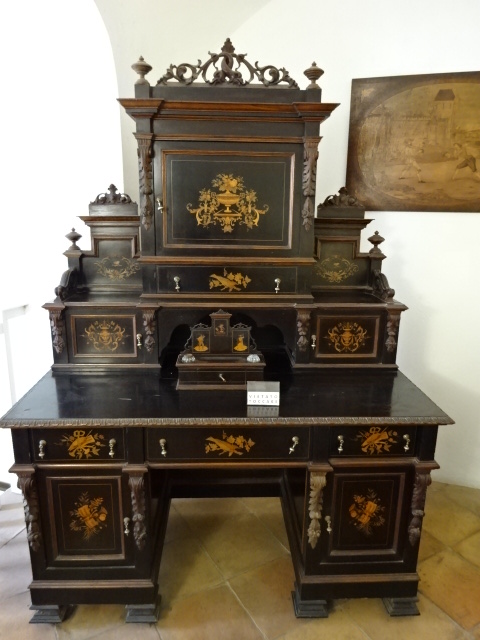
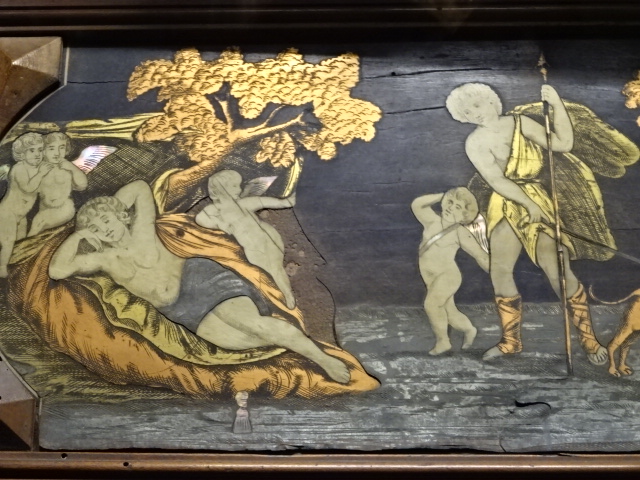
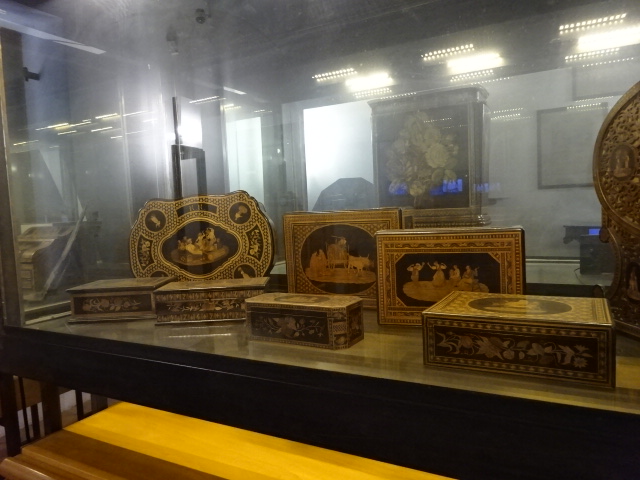
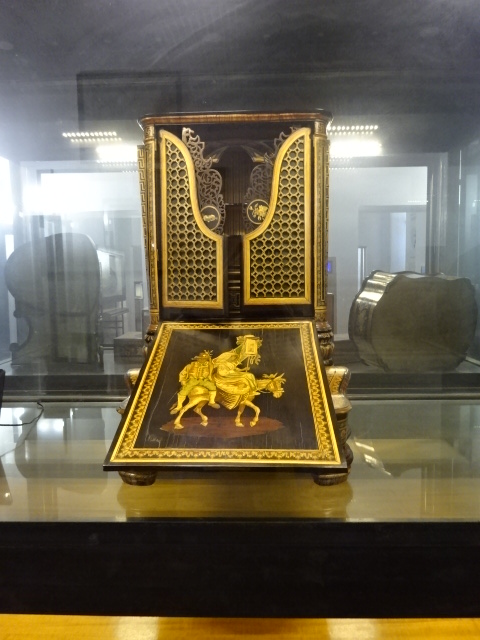
I loved visiting Sorrento during the summer of 2023, and the highlight of my time there was seeing the furniture, paintings, drawings and artifacts at the Museum of Inlaid Wood, known in Italian as Museobottega della Tarsialignea or MUTA. The displays pictorially narrate the history of 19th century intarsia (inlaid wood), the objects all made by local artists who were masters at their trade. The details of the works amazed me.
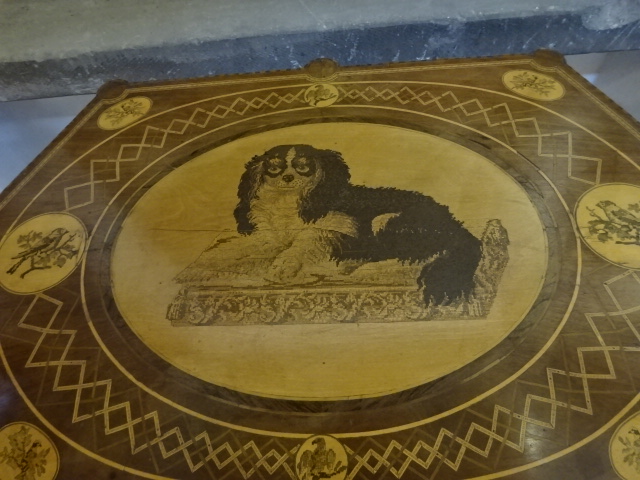
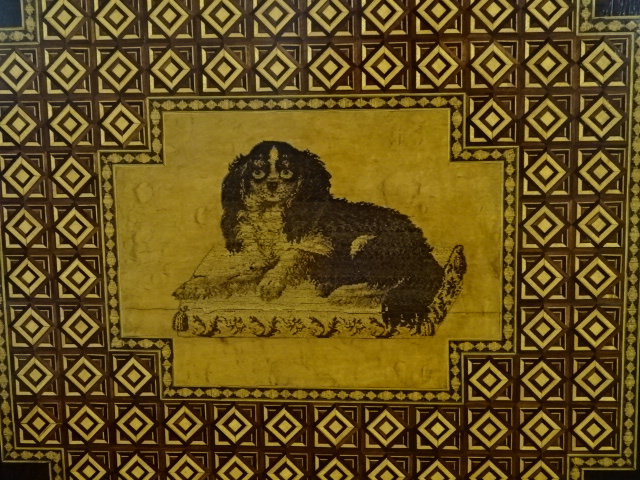
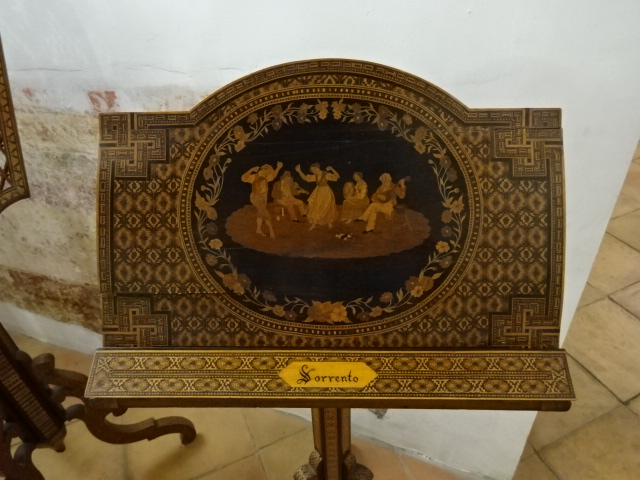
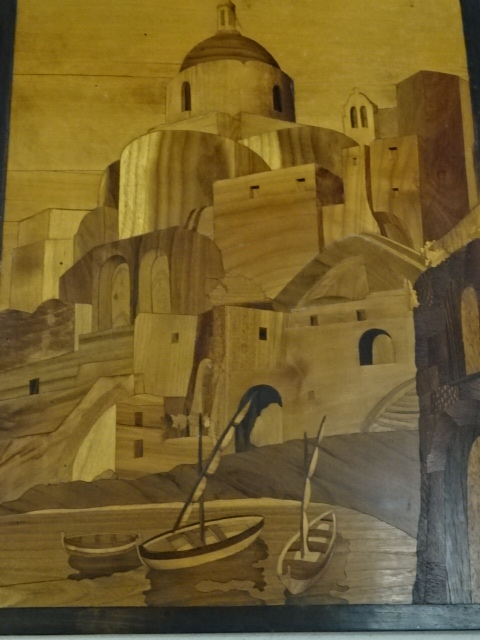
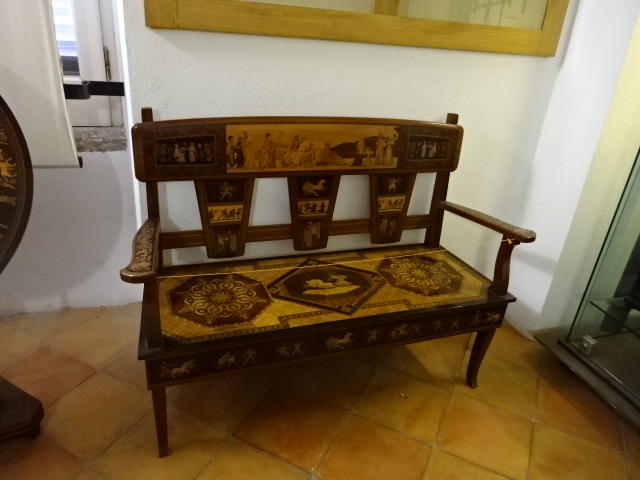
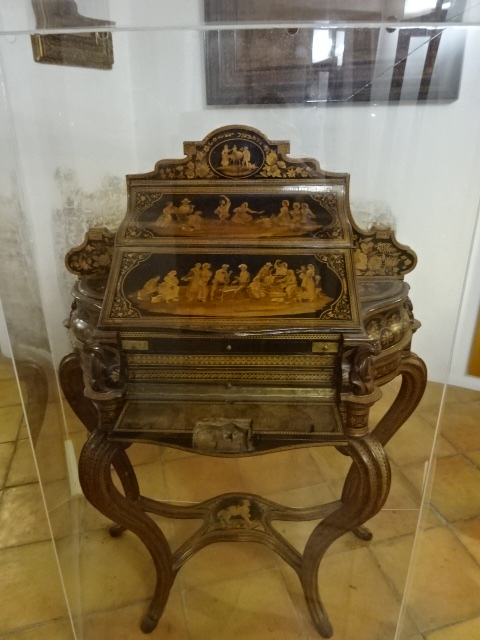
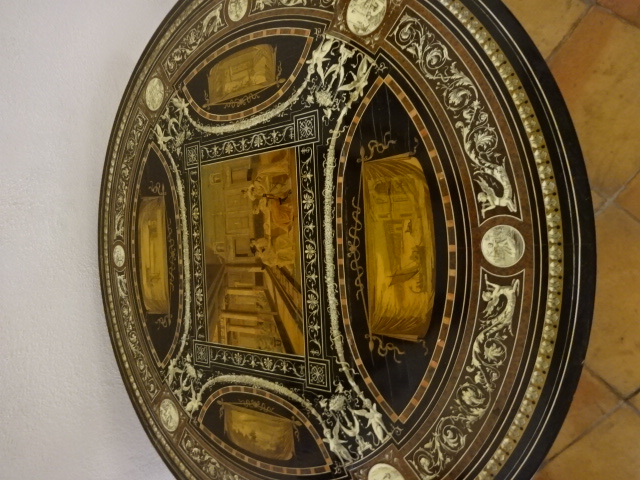
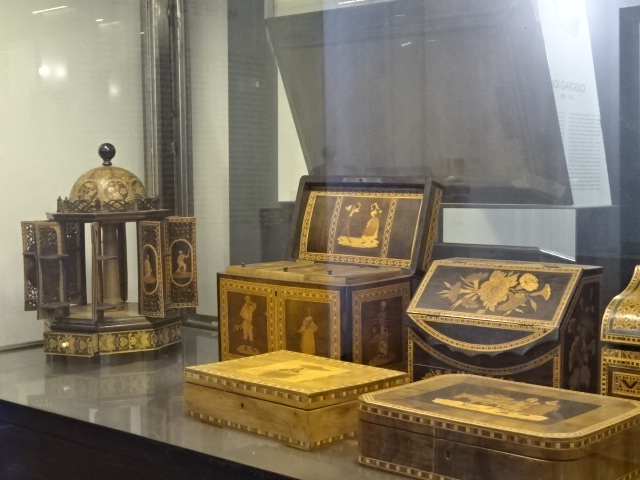
I saw furniture decorated with an inlaid wood rendition of a black-and-white fluffy dog reclining in an adorable pose. Many boxes of various small sizes were decorated with intarsia. I loved the music stand adorned with a scene showing figures dancing and playing instruments on a black background with floral trim. A table depicted a scene of seated women in 19th century attire, positioned next to a columned structure that looked like it belonged in antiquity. The geometric shapes on a intarsia-decorated bench captivated me. I loved another piece of furniture that showed off a scene of three small boats in a tranquil sea. On the shore, a very steep hill was dotted with archways and structures made of geometric shapes.
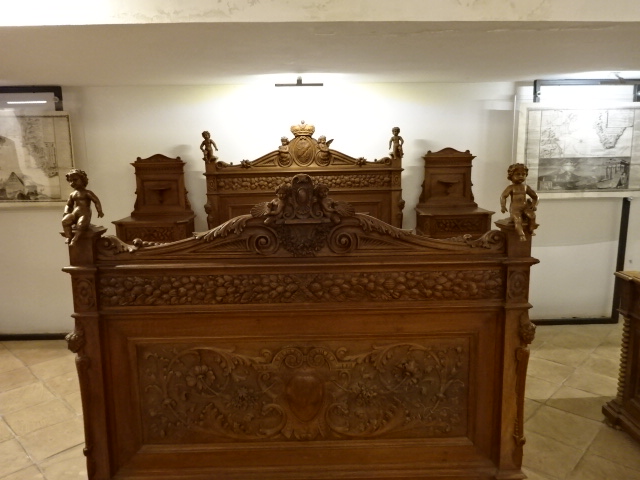
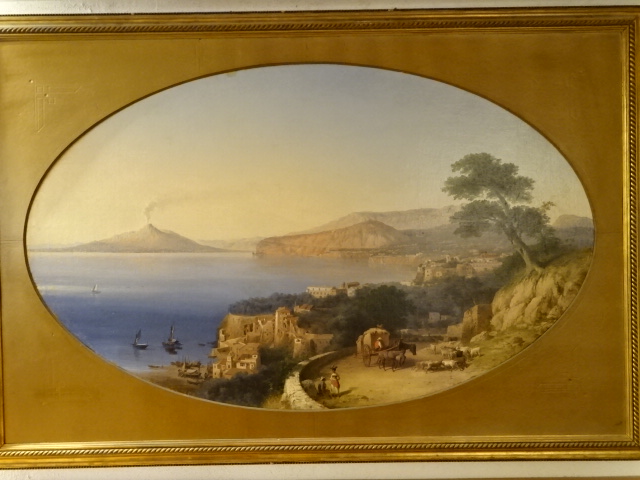
Another section described life in Sorrento during the 19th century. Landscape paintings, portraits, costumes and other objects were the focus. I was especially interested in the tranquil landscapes with portrayals of the soothing sea and craggy terrain. The economy of that era is also featured in this part of the exhibition. I read the impressions of famous artists who had visited Sorrento during that era. I got to know more about the Old Town part of the city, where the museum is located, during the 19th century through these artworks. Placing the objects made with inlaid wood in historical context was one of the many major pluses of this museum. One piece of furniture that I admired in this section was a bed adorned with inlaid wood ornamentation. The headboard was exquisite.
I also saw how such beautiful objects are made as various tools and materials utilized in this trade were on display. The technique of creating works with inlaid wood was well explained. Understanding the process made me even more appreciative of the art itself because it was so painstakingly difficult to create such beauty.
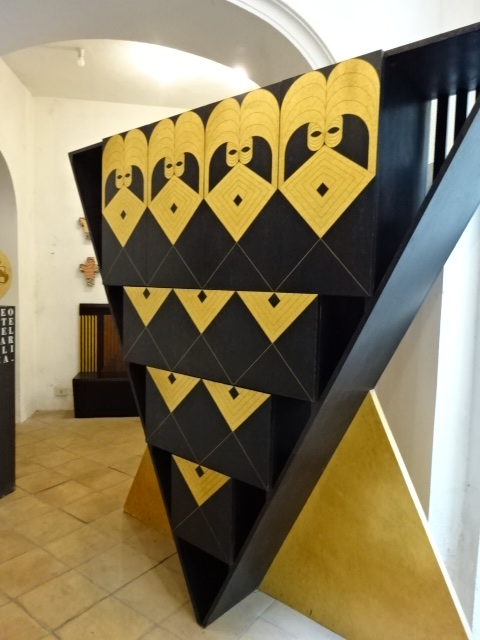
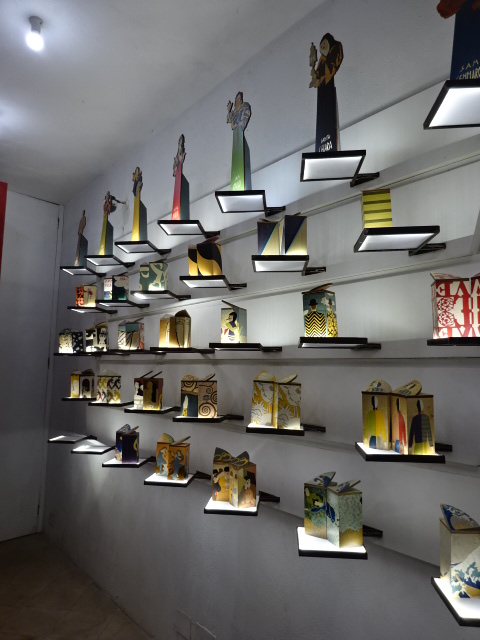
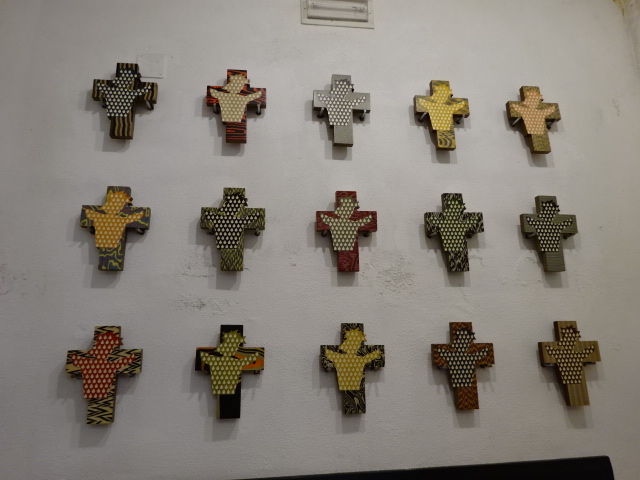
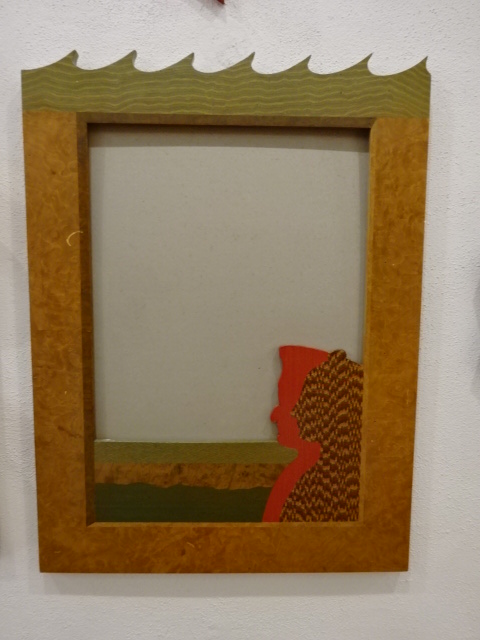
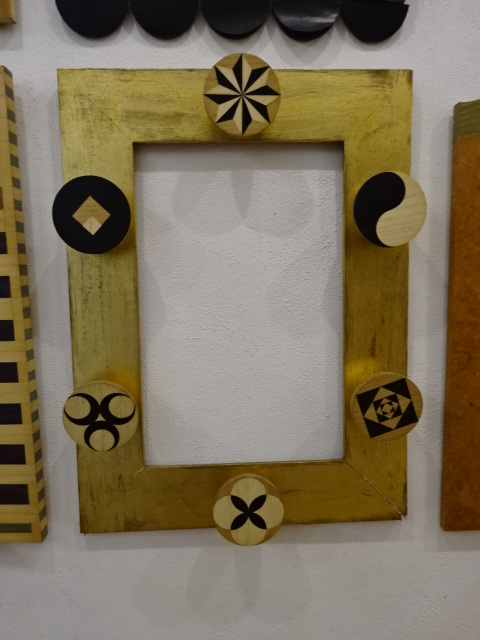
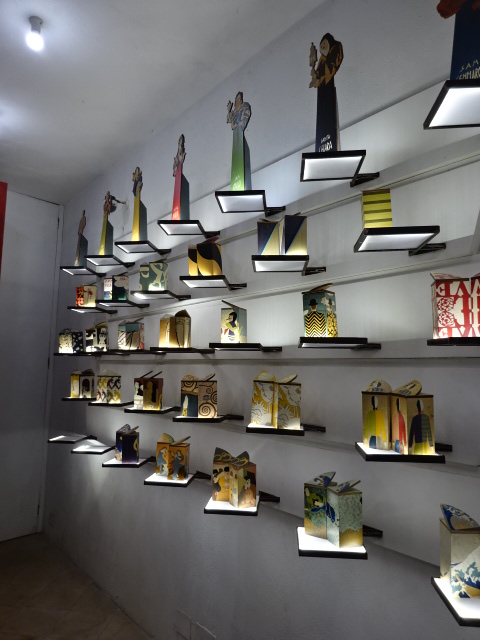
In the basement there was an intriguing collection of contemporary works with intarsia. They spoke to life during the present rather than the past by using this old technique. I saw an amazing room inlaid with intarsia, too. Contemporary-designed boxes were on display, too, showing off abstract features and brightly colored designs. An inlaid cupola was another gem. A creative sideboard consisted of an upside-down black triangle with white adornment. Frames decorated with inlaid wood and modern-looking crosses also made appearances.
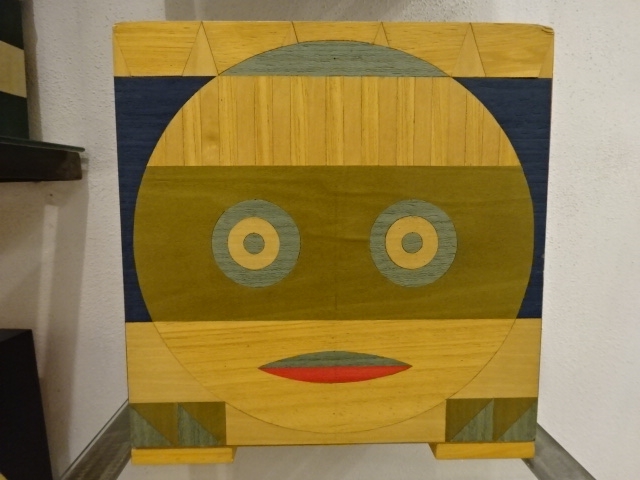
I liked the sculpture of a large circular face on a dark blue and light wood background. The grey at the top of the face seemed to symbolize a small amount of hair. I saw gray circles around light wood-colored eyes that featured gray pupils. The mouth was partially red and partially gray. The lips seemed to be pursed in a blank or unreadable expression. I thought of the mechanization and impersonalization of society when I saw the gray pupils and gray circles around the eyes. There were so many ways to interpret this sculpture. It fascinated me.
Indeed, all of the works at this museum fascinated me. I was thrilled to discover a unique museum in a picturesque city punctuated by seascapes, an amazing cathedral, beautiful churches and romantic streets lined with shops and cafes. This experience took place during my first day visiting the Amalfi Coast, and my trip was off to a remarkable start.
Tracy A. Burns is a proofreader, writer and editor in Prague.
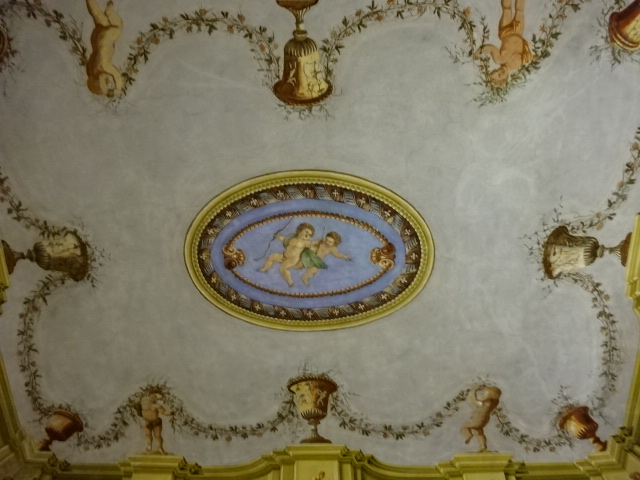
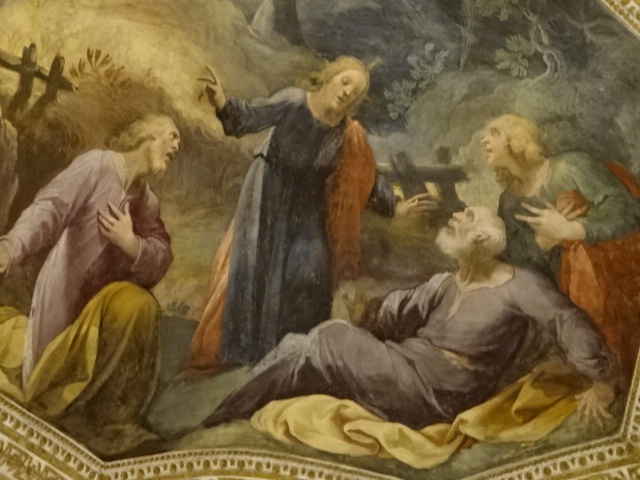
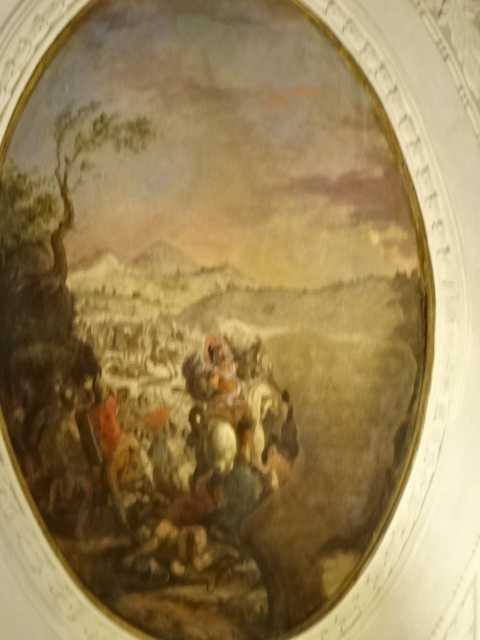
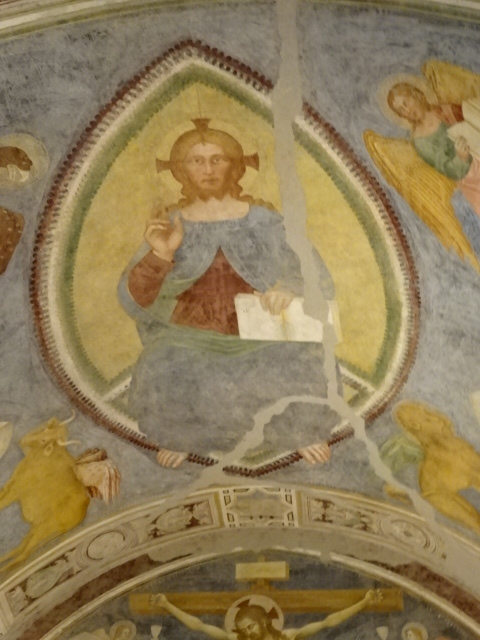
Frescoes decorated the 18th century building housing the collections.
Early in 2023, I went to an exhibition of sculpture by late Croatian sculptor, architect and writer Ivan Meštrović. The art gallery at Prague’s main library hosted the intriguing show. I was familiar with the artist’s name: I had admired his villa, the Ivan Meštrović Gallery, in Split on my last trip to Croatia some years ago. It contained 86 sculptures made with various materials, showing off his dramatic, dynamic and expressive style that was both poetic and poignant. Drawings and reliefs were displayed, too. The bronze statue-dotted garden was delightful. One of my favorite things about traveling was being introduced to the works of various artists. I was enamored with Meštrović’s creations, and his unique, powerful style was forever embedded in my memory.
During Meštrović’s illustrious career that spanned six decades, he had been influenced by a number of styles ranging from Art Nouveau, Symbolism, Impressionism, Art Deco, Neoclassicism and Late Realism. Classicism played a major role in shaping his artistic style, too. Auguste Rodin’s naturalist style, which he had meticulously studied, greatly inspired him. During his extensive travels, Meštrović also saw Michelangelo’s creations, which affected his own work. poignant.
Meštrović’s subjects were diverse as well. He took on religious themes, created portrait busts, made sculptural monuments and delved into studies of figures. A firm believer in promoting Yugoslav national identity, he also presented folk themes and national myths. He fervently advocated for pan-Slavism, and some of his works represented historical events in Slav history.
The sculptor’s career took off when he exhibited his works in Vienna during 1905 as part of the Secession Group. While living in Paris for two years, he received recognition from all over the world and was very prolific. Then he spent four years in Rome, where he was lauded for his design of the Serbian Pavilion at Rome’s1911 International Exhibition. During World War I, he traveled extensively and spoke out against the Habsburg monarchy that controlled his homeland.
He returned to his homeland after the war ended and achieved much success while living in Zagreb. He even created many sculptures for King Alexander I of the Kingdom of Serbs, Croats and Slovenes. He continued to travel, even having an exhibition at the Brooklyn Museum in New York during the 1920s.
During World War II, Meštrović’s life was far from rosy. In 1941, he spent three-and-a-half months in prison. The following year his first wife died, and many of her Jewish relatives perished during the war. Thanks to the Vatican, Meštrović was let out of prison and took off to Venice and then back to Rome. He even met Pope Pius XII.
After World War II, he refused to return to Yugoslavia because the Communists were in control. He wound up in the USA during 1946, when he took a position as a professor at Syracuse University. His works were displayed at the Metropolitan Museum of New York the following year, and he was the first Croatian to do so. He continued to achieve great success and much recognition in the USA and even received the American Academy of Arts and Letters’ Gold Medal in the field of sculpture during1953. American President Dwight D. Eisenhower was so impressed with Meštrović that he gave him US citizenship. Meštrović took a job at the University of Notre Dame in Indiana soon after that. He designed monuments at Notre Dame, and his sculpture is featured in the university’s art museum.
He died in Indiana during 1962 at the age of 79 and was buried in his hometown of Otavice, though the Communists in control of Yugoslavia created many difficulties. His sculptures can be seen all over the world: in Serbia and Romania as well as in the United States, including Louisiana, Indiana, New York and Illinois.
This exhibition focused on Meštrović’s Czechoslovak connection as he had developed an affinity for Czech culture. He befriended the first democratic President of Czechoslovakia, Tomáš Garrigue Masaryk. They both had taken an anti-Habsburg stance during World War I. Also, Meštrović and Masaryk had lived in exile during the first World War. They both admired Slav history. While Meštrović wanted a united Yugoslavia of Croats, Serbs and Slovenes, Masaryk tried to forge a united Czechoslovakia of Czechs and Slovaks. Meštrović sculpted two busts of Masaryk in 1923 as well as busts of his wife Charlotte and his daughter Alice. He created these busts at the Czechoslovak President’s summer residence, Lány Chateau. I recalled spending some sunny afternoons in the park of the chateau in Lány as well as paying my respects at the Masaryk family graves.
Masaryk was by no means the only Czech Meštrović knew. For example, Meštrović was friends with Czech sculptor Bohumil Kafka and even created a portrait bust of Kafka during 1908.
Meštrović’s work was first unveiled in Prague during 1903, when the Habsburgs ruled the Czech lands. His work was included in an exhibition featuring Croatian artists at the Mánes Association in Prague. Mestrovic had another exhibition in Prague during 1933. President Masaryk was so impressed with Meštrović that he presented the Croatian sculptor with the Order of the White Lion award during 1926.
I was enthralled with the Czech connection between Meštrović and artists in Czechoslovakia. Tomáš Garrigue Masaryk was one of my heroes, and I was very interested in life during the First Republic, when Masaryk was president. I felt strong emotions when viewing Meštrović’s powerful works. I also thought back to my introduction to Meštrović’s creations in Split. What a discovery! I was glad to be reacquainted with Meštrović’s sculptures. Seeing his renditions in person was a profound experience.
Tracy A. Burns is a writer, proofreader and editor in Prague.
This past year’s travels included two trips to Italy, one to my beloved Milan and environs and the other to the Amalfi Coast, somewhere I have dreamed of going for many years. I also spent time visiting sights in the Czech Republic, such as Zbiroh and Karlova Koruna chateaus and the towns of Kutná hora and Hradec Králové. I also dined in the traditional Czech pub Hájenka in Kersko. I flew to northern Virginia to see my parents for two weeks in March and had a great time with them as well as with four friends. In Washington, D.C., I visited the National Portrait Gallery and Museum of American Art.
From Petr Brandl Exhibition
I saw many thrilling art exhibitions, including ones focused on the Baroque art of Petr Brandl and the Art Nouveau works of Alphonse Mucha. Karel Teige, Czech avant-garde artist best known for his interwar works, was the focus of an exhibition at the Museum of Czech Literature, which I visited for the first time in 2023.
Campari Tomb at Monumental Cemetery in Milan
My May trip to Italy last year saw me back in Milan, which I had visited for the first time the previous year. I went to several sights I had not seen before. I toured Milan’s Monumental Cemetery to see the architectural gems of tombstones in various styles from the 18th century to contemporary. A colossal sculptural grouping of Da Vinci’s The Last Supper, made for the Campari family, was my favorite. I also saw a structure resembling the Tower of Babel and another looking like Trajan’s Column. An Egyptian pyramid shape made up another monument. Another artistic delight was Italian artist Lucio Fontana’s design of a modern angel. The sculptural decoration throughout the cemetery was astounding.
At National Museum of Science and Technology Leonardo da Vinci in Milan
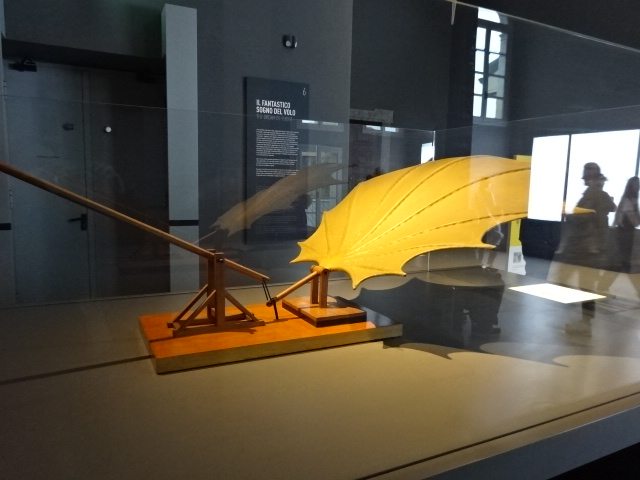
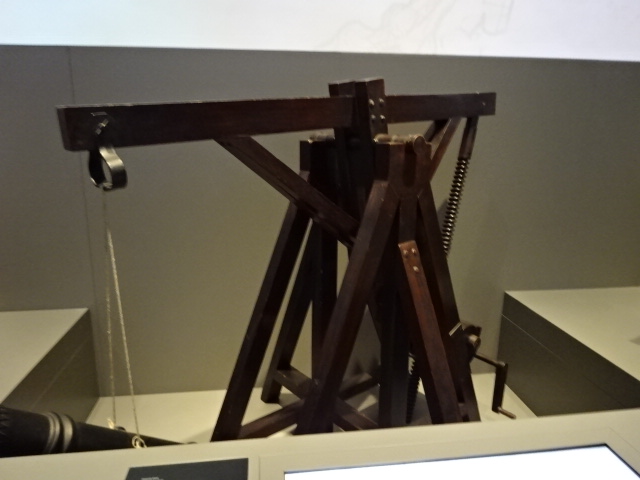
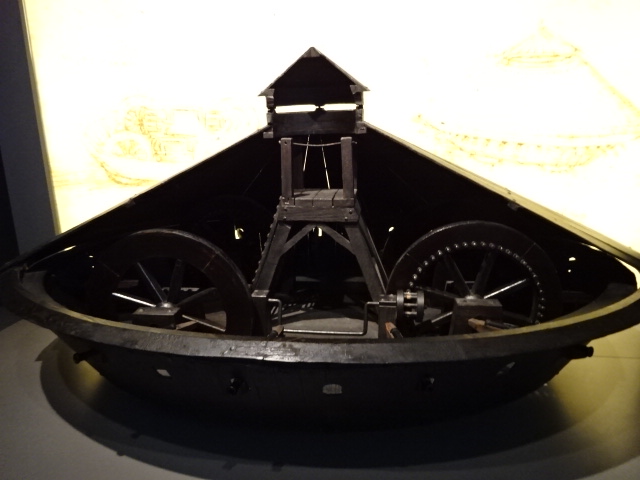
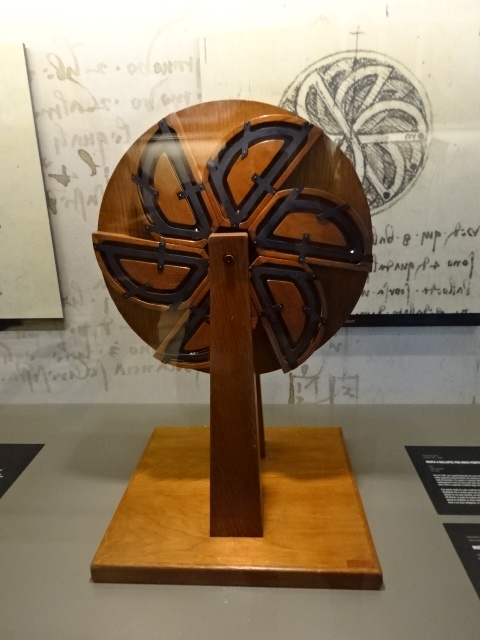
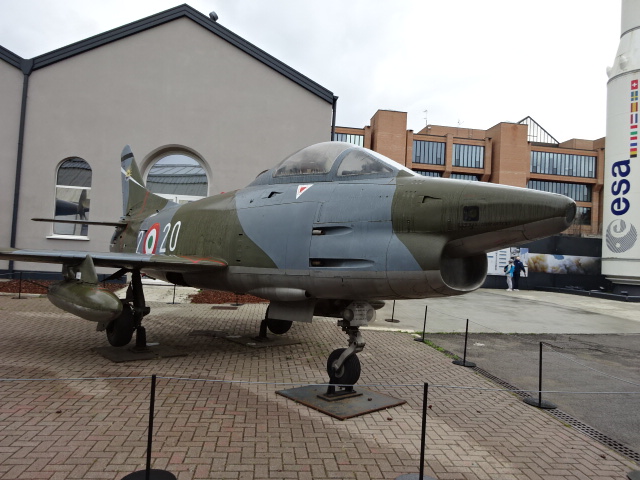
I also visited the National Museum of Science and Technology Leonardo da Vinci, where I was enamored by the 170 models of Da Vinci’s drawings of buildings, machines and weaponry. I also loved the hangars featuring planes, ships and trains. A Vega Launcher hailed from 2012. A submarine also stood outside.
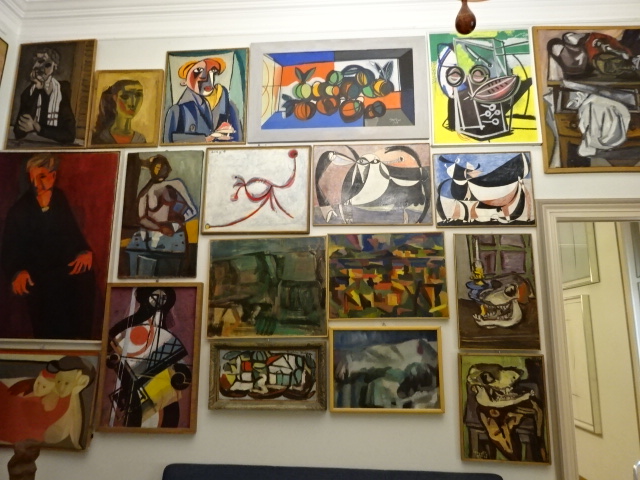
Paintings lined the walls at the House Museum of Boschi Da Stefano in Milan.
The House Museum of Boschi Da Stefano, located in a posh apartment outside the city center, featured 300 works of 20th century art, mostly paintings but also drawings, furniture and sculpture. Most pieces hailed from 1900 to 1960. The walls were covered with art from top to bottom. Some artists represented were Fontana, Giorgio De Chirico, Pablo Picasso and Amadeo Modigliani.
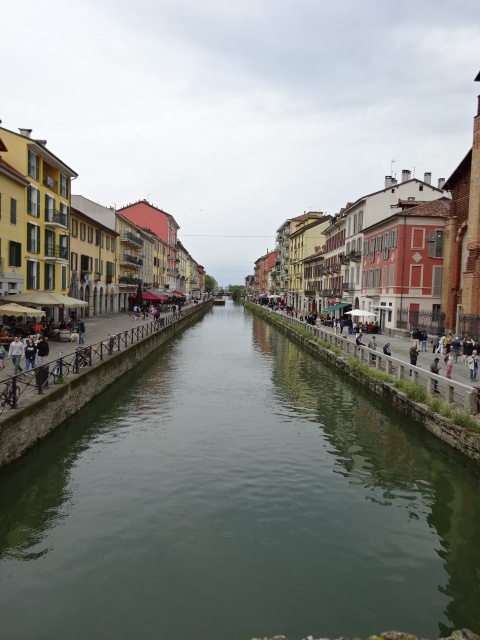
Navigli section of Milan
I also visited the Navigli district of Milan, where two picturesque streets flanked a canal, making for a picturesque setting. The Navigli is dotted with outdoor cafes and stores, including a few intriguing bookshops.
Basilica of Saint Anastasia, Verona
I spent time outside of Milan, too. I traveled to Verona for the second time. I marveled at the Basilica of Saint Anastasia, the largest church in the city as well as the cathedral and three museums – the Castelvecchio Museum, the modern art museum and the House Museum Palace Maffei – my favorite. The Basilica of Saint Anastasia was built in the 13th century and boasted a Late Gothic façade. The main altar was made from light yellow marble while one chapel housed a famous 15th century fresco. Red and white marble columns decorated the interior. The Pelligrini Chapel included a fresco from the 14th and 15th century as well as intriguing sculpture. A fresco at the left transept had been rendered by a disciple of Giotto. A rudder of a 16th century ship added to the splendid interior decoration.
Verona, House Museum Palace Maffei
Verona, House Museum Palace Maffei
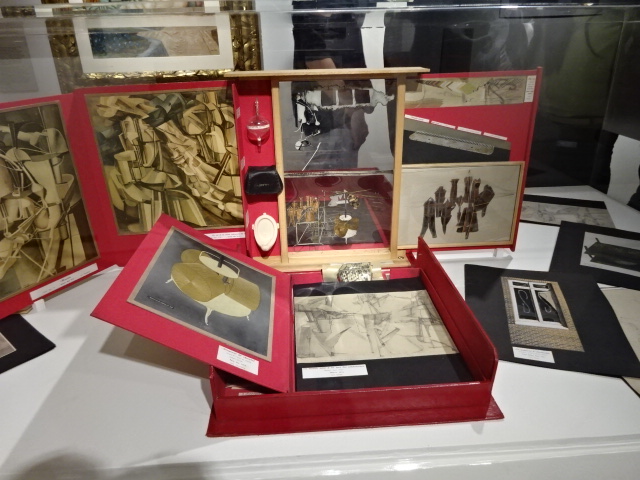
However, it was the House Museum Palace Maffei that captured my heart. Half of the Palace Maffei was designed as a luxurious home punctuated by art from various eras ranging from the 14th century to modern day. The other half was a 20th century art gallery, featuring works by Picasso, Duchamp, De Chirico, Warhol, Ernst, Modigliani, Fontana and others. Paintings, sculpture, drawings, engravings, pottery, bronzes, frescoes and furniture of both Italian and foreign origin dazzled my mind.
In the Castelvecchio Museum, Verona
The Castelvecchio Museum, established in the 14th century, included 30 halls of Italian and European painting and sculpture from the Romanesque days to the 1700s. Not only did I see many paintings but also ancient weapons, ceramics, gold objects and more. The exterior featured panoramic views of the romantic city.
A romantic lane in Bellagio
My other day trip was to Lake Como, where I visited picturesque Como, Bellagio and Mennagio. Unfortunately, it rained all day, but I still had a great time. I also saw the exterior of some noteworthy villas, such as Richard Branson’s waterfront home, the Villa Carlotta and a villa where some episodes of Succession had been filmed. I saw a hotel where Greta Garbo had acted, too. The Villa Olmo in Como had a neoclassical exterior and stunning lake views. Bellagio featured steep, cobblestoned lanes and the Romanesque Basilica of San Giacomo. Mennagio was home to several intriguing churches and had a picturesque lakefront square.
House Museum Bagatti Valsecchi, Milan
House Museum Poldi Pezzoli, Milan
In Milan I also visited beloved sights that I had first seen the previous year. I returned to the House Museum Bagatti Valsecchi with its Renaissance and Neo-Renaissance art and to the House Museum Poldi Pezzoli with its art of various eras, such as medieval triptychs, ceramics, historical pocket watches and other time pieces.
Gallery of Modern Art, Milan
Gallery of Modern Art, Milan
I visited the second floor of the Gallery of Modern Art with its Grassi and Vismara Collections. The Grassi Collection featured both Italian and foreign works ranging from the 14th century to contemporary times. Oriental art was displayed, too. The Vismara Collection concentrated on 20th century masterpieces. On that floor I saw impressive art by Manet, Picasso, Gauguin, Renoir, Van Gogh and Cezanne. Toulouse Lautrec was well-represented, too.
Museum of the Risorgimento, Milan
Brera Art Gallery, Milan, Work of Andrea Mantegna
The Museum of Risorgimento remains another of my favorites with its painting, prints, sculptures and artifacts depicting Italian historical events from 1796 to 1870. The Brera Art Gallery was another highlight, as I gawked at the Italian art from the 13th to 20th century as well as at the foreign works in the 38 vast halls. I loved the paintings from the Netherlands, including those by Peter Paul Rubens and Jacob Jordaens. Other Brera-represented artists dear to my heart included Francesco Hayez, Andrea Montegna, Tintoretto and Caravaggio. I even visited an exhibition of ancient manuscripts in the historical Baroque library. Once again, I was amazed by the 16th century frescoes by Bernardino Luini, his brothers and his son in the Renaissance Church of San Maurizio in downtown Milan.
Sorrento, Nativity Scene, Cathedral of Saints Filippo and Giacomo
During my trip with arsviva travel agency to the Amalfi Coast in June, I fell in love with Sorrento. The streets were picturesque, and the Cathedral of Saints Filippo and Giacomo was Romanesque with a Neo-Gothic façade. Three lunettes showed off beautiful frescoes while a rose window also astounded. Inside, the Latin cross interior boasted three naves with 14 pilasters. The pulpit, hailing from the 16th century, had Doric columns. Stunning frescoes on the cupola, intarsia adornment and a Baroque ceiling were other remarkable elements. The Chapel of Nativity displayed a Neapolitan Nativity scene from the 17th century.
Correale Museum, Sorrento
Museum of Intarsia, Sorrento
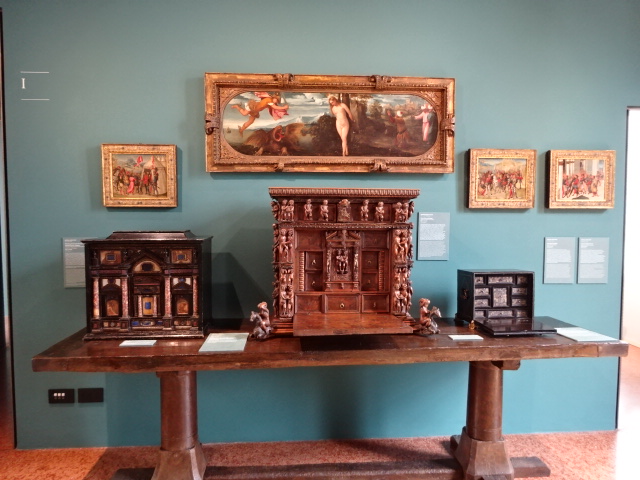
The Correale Museum served as a provincial art gallery, and I was enthralled by the 17th and 18th century Italian landscapes, especially those of Castellammare di Stabia, where we were staying. Greek and Roman fragments, historical furniture, clocks, ceramics and porcelain were also on display. The waterfront boasted spectacular views of the sea, which were very soothing. The highlight of my visit to Sorrento was the Museum of Intarsia, with everything from music stands to large beds showing off intarsia decoration by local artists. Some historical paintings were also on display. Downstairs, I saw the innovative, avantgarde designs of contemporary intarsia artwork.
Pompei
I also visited Pompei for a second time. Even though the day was scorching hot, I enjoyed seeing the small and big theatre, the basilica and three temples, especially the one named after Apollo with its 48 Ionic columns. The amphitheatre with a capacity of 20,000 spectators also caught my undivided attention. The wall paintings and mosaic floors of what had been luxurious homes were sights to behold as well.
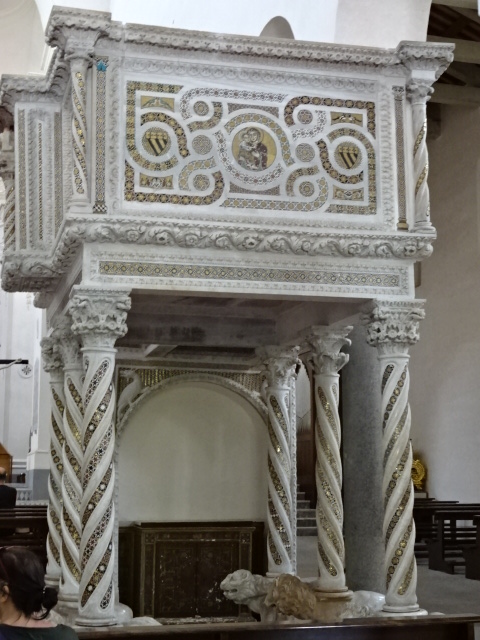
Ravello, pulpit in cathedral
We moved to a nice hotel in the picturesque, tranquil town of Maiori, where I could spend time in a café or restaurant overlooking the beach or savor homemade ice cream. The town that had made it on UNESCO’s list during 1997 was a perfect place to relax after a busy day out. Before arriving at our hotel in Maiori, we saw Ravello’s Romanesque Cathedral of Saint Maria Assunta and Saint Panteleone, hailing from the 11th century. I admired the 12th century bronze doors and remarkable 13th century Pulpit of Gospels adorned with mosaics. One 16th century chapel contained an phial of blood of Saint Panteleone. The views of the sea from the hilly town were spectacular, too. Numerous famous guests, from Richard Wagner to Virginia Woolf and Greta Garbo, had graced the streets of this town.
Ravello Cathedral, bronze doors of central portal
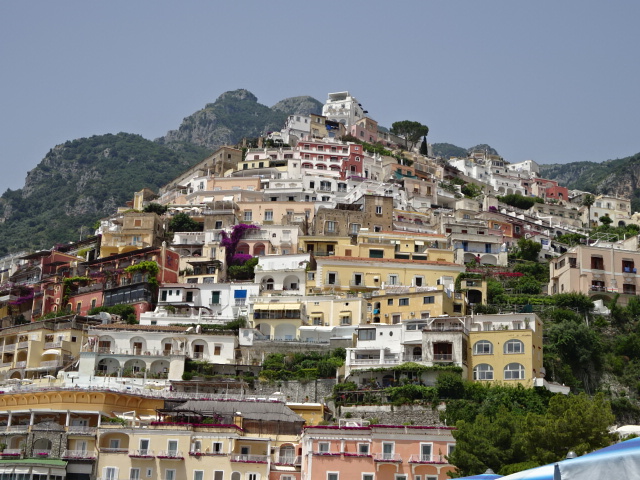
Positano, a UNESCO-listed tourist site since 1997, was a picturesque hillside town, but, unfortunately, during this past June, it was much too crowded to enjoy. I did peek into the church, though. Its main altar showed off a Byzantine icon from the 13th century. The views of the sea were fabulous.
Cathedral of Saint Andrew, Amalfi
Cathedral of Saint Andrew, Amalfi
Another highlight of my trip was visiting the Cathedral of Saint Andrew in Amalfi, which was founded in the ninth century AD and boasted a 13th century Arab-Norman exterior with Italian Neo-Gothic elements. The mosaic adornment in the tympanum is stunning. Sixty-two steep steps led to the bronze doors of the central portal that hailed from Constantinople, made in the 11th century. A cloister included some intriguing fragments of wall paintings while the interior had Baroque features along with Gothic and Renaissance chapels. The Basilica of the Crucifix harkened back to the ninth century and served as a museum of sacral objects, including sculpture and vestments. The crypt, where the relics of Saint Andrew were held, was stunning with much ceiling and wall decoration.
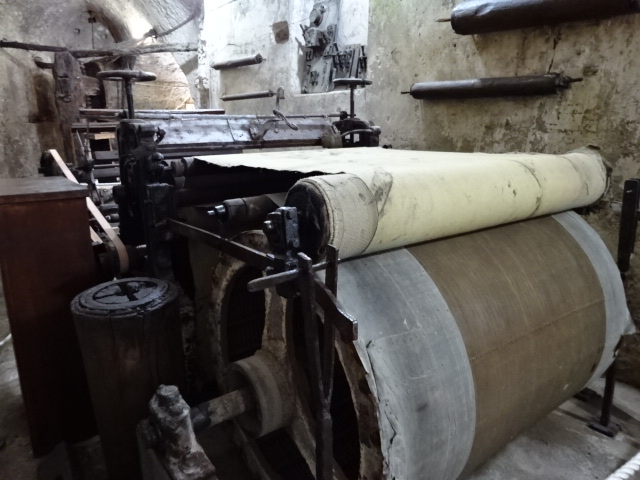
Paper Museum at paper mill, Amalfi
I also was enamored with the still functioning paper mill at the Paper Museum. The Pope used paper made in Amalfi, which held the distinction of being the oldest paper manufacturer in Europe. The machines and the processes of making and drying the paper were enthralling.
Cathedral of Saint Matthew, Salerno
Salerno was a pleasant surprise. The Romanesque Cathedral of Saint Matthew hailed from the 11th century. The tower was a mixture of Byzantine and Norman styles. The central bronze door was made in Constantinople. Two Byzantine mosaic-decorated pulpits with intricate intarsia amazed in the once Romanesque interior that had been mostly transformed into Baroque style. Mosaics throughout the cathedral were stunning. Frescoes in the treasury chapels were accompanied by a silver statue of Pope Gregory VII. The Late Mannerist ceiling and wall frescoes in the crypt were remarkable, hailing from the middle of the 17th century. A reliquary of Saint Matthew’s arm was on display, too.
Diocese Museum, Salerno
I also visited the nearby Diocese Museum, which featured paintings, sculpture and objects from the Middle Ages to the 20th century. I was most drawn to the medieval altarpieces. The provincial picture gallery was small but included an eclectic array of intriguing works from the 15th to 18th century.
Cathedral of Saint Barbara, Kutná hora
Cathedral of Saint Barbara, Kutná hora
I took some day trips in the Czech Republic, too. We visited Kutná hora, the home of prosperous silver mines from the 13th to 15th century, during one stunning fall day. Saint Barbara’s Cathedral, with its Neo-Gothic exterior of buttresses and gargoyles, astounded me. Inside, I admired exquisite stained glass windows as well as remarkable late Gothic frescoes and a 16th century stone pulpit. The Gothic royal chapel with Art Nouveau decoration at the Italian Court was another remarkable gem.
Pub in Kersko
I visited Kersko twice this fall. I dreamed of owning a cottage in the tranquil, wooded village. I had lunch at the traditional Czech pub called Hájenka, where several films based on Bohumil Hrabal’s writings had been shot. Hrabal had lived in a cottage nearby for many years, feeding all the feral cats that would wander hungrily toward his home.
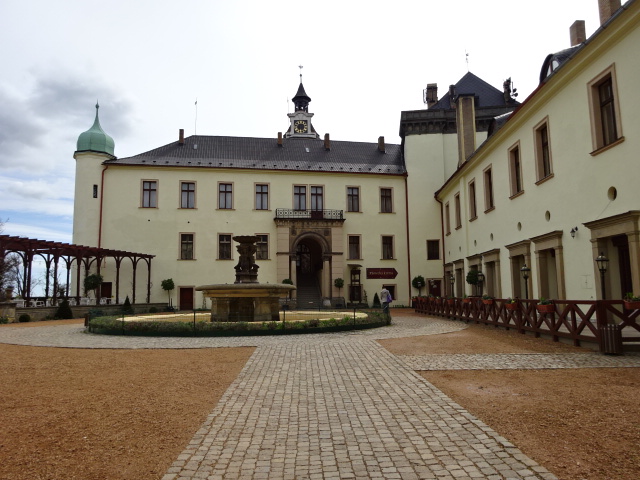
Zbiroh Chateau
I also toured the chateaus of Zbiroh and Karlova Koruna. Zbiroh, built before 1230, for decades served as a top-secret facility for the Czechoslovak army. Its representative rooms were open to the public only in 2005. The chateau boasted many Madonna statues and other sculpture of great interest as well as African masks, tapestries, Empire furnishings and copies of Leonardo da Vinci paintings. Alphonse Mucha had used the spectacular main hall as his studio early in the 20th century. A beautiful skylight, two Czech crystal chandeliers and impressive paintings adorned Mucha’s former studio.
Exterior of Karlova Koruna Chateau
Karlova Koruna Chateau, designed by Santini-Aichel and built during the 18th century, had a roof shaped as a crown. The chateau consisted of two stories in cylindrical shape with three one-floor wings. The interior featured paintings of horses, including the unique gold-colored horses that the Kinský family had bred as well as pictures of steeplechase races. One painting of a horse race was made of 12 pieces of deerskin.
Beneš Villa
We visited the former villa of Edvard Beneš, president of Czechoslovakia during the interwar years and a prominent member of the Czechoslovak governments-in-exile during the First World War. The stunning Neo-Spanish structure included the room where Beneš died, a dark landscape painting by Antonín Slavíček hanging over his single bed. The furnishings and artworks in the house were intriguing, to say the least. Beneš and his wife Hana were buried in a monumental tomb on the premises as well.
Sucharda’s Second Villa, Prague
In Prague I visited the second villa of sculptor and relief artist Stanislav Sucharda in the Bubeneč district. Jan Kotěra designed the structure with many architecturally intriguing elements. Much of the remarkable interior furnishings had been designed by Kotěra and Sucharda. I saw examples of Sucharda’s artwork as well as pieces by Edvard Munch, Auguste Rodin and many Czech artists.
Gallery of Modern Art, Hradec Králové, Work by Emil Filla
Gallery of Modern Art, Hradec Králové, Věra Jičínská, Brittany
I saw many impressive art exhibitions this year. I traveled to Hradec Králové, where I saw the Gallery of Modern Art with its impressive collection of works by 20th century artists including Bohumil Kubišta, Emil Filla, Jaroslav Róna, Ladislav Zívr, Quido Kočian and many others. The temporary exhibition of artist and writer Věra Jičínská’s works included paintings of her travels to Brittany and Paris. Her renderings of Paris showed off orange rooftops and the Eiffel Tower. She also created paintings inspired by folk art and dance. Her photography amazed me as well. Influenced by her work as a journalist, she created a painting dedicated to this genre.
Museum of East Bohemia, designed by Jan Kotěra, Hradec Králové
The museum devoted to the history of Hradec Králové was an architectural gem designed by Kotěra. I especially liked the furnishings and designs by Josef Gočár and Kotěra as well as the sculpture by Sucharda. The mock shops from the First Republic (1918-1938) were very intriguing as I could see goods that were sold during that era and feel the atmosphere of those times.
National Technical Museum, Prague
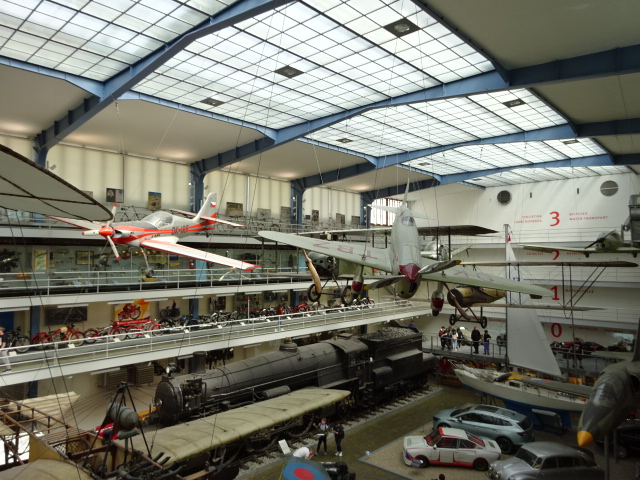
In Prague I saw the National Technical Museum for the first time. The cars, especially the 1935 Tatra 80 vehicle belonging to first Czechoslovak President Tomas G. Masaryk, fascinated me as did the motorcycles, bicycles and planes. The dining car of Habsburg Emperor Franz Joseph I, later used by President Masaryk, was also on display. I also was enamored by the architecture and engineering section and the display of old household items in another section. The TV studio, in use from 1997 to 2011, was another delight. Other areas of interest included astronomy, chemistry, printing, photography, time pieces, metallurgy and mining.
Museum of Czech Literature, book cover by Karel Teige
Another astounding sight in Prague was the newly-located Museum of Czech Literature, which moved to the Petschek Villa in Bubeneč during 2022. The displays cover literary developments from the 19th century National Revival movement through the 20th century. I came to appreciate the significance of the literary and art criticism periodical The Critical Monthly from the 1930s and 1940s as well as the symbolist and mystical paintings of Josef Váchal. I was most enamored by the avantgarde book covers designed by Karel Teige in the 1920s and 1930s. His unique typographical work in Vítězslav Nezval’s The Alphabet book was on display, too. A pantheon of great Czech 19th century artists included objects associated with the writers and their busts.
Karel Teige, Greetings from a Journey
A temporary exhibition focusing on Teige’s youth and early career from 1912 to 1925 was amazing, showing off his artwork, photographs, correspondence and more. I understood very well why this artist, writer, theoretician, critic, translator, book designer, typographer and photographer was considered the leading figure of the Czech avantgarde movement between the wars.
Trade Fair Palace, Prague, Fire by Josef Čapek
At The Trade Fair Palace in Prague, I saw the newly installed End of the Black-and-White Era permanent exhibition of art from 1939 to 2021 in chronological order. More than 300 works, mostly Czech, were displayed with historical context. Josef Čapek’s painting “Fire,” showing a fury of flames behind a woman, presents an anti-Nazi theme. The focus on urban life and factories as well as everyday life was highlighted with the works of Kamil Lhoták. The exhibition featured many works made during the Stalinization period of the 1950s with the style of social realism. Martin Slanský depicted Lenin in a snowy Prague. A model of the design of the monument to Stalin in Prague was on display, too.
Trade Fair Palace, Prague, The Dialogue by Karel Nepráš
The progressive movements of the 1960s made way for the red abstract figures of Karel Nepráš. From the late 1960s to early 1980s art as installation came to the forefront. Action art, performance and body art were often the focus of the times. The late 1980s triggered the impersonal postmodernism movement. After the 1989 Velvet Revolution that toppled the Communist regime in Czechoslovakia, individuality and quests for personal identity came to the fore. Some artists focused on the commercialization of society. This new exhibition was extensive and moving. I felt drawn into each historical period up to the present day. The works displayed well represented the movements expressed. I could see how society and culture kept changing and how art reflected those changes.
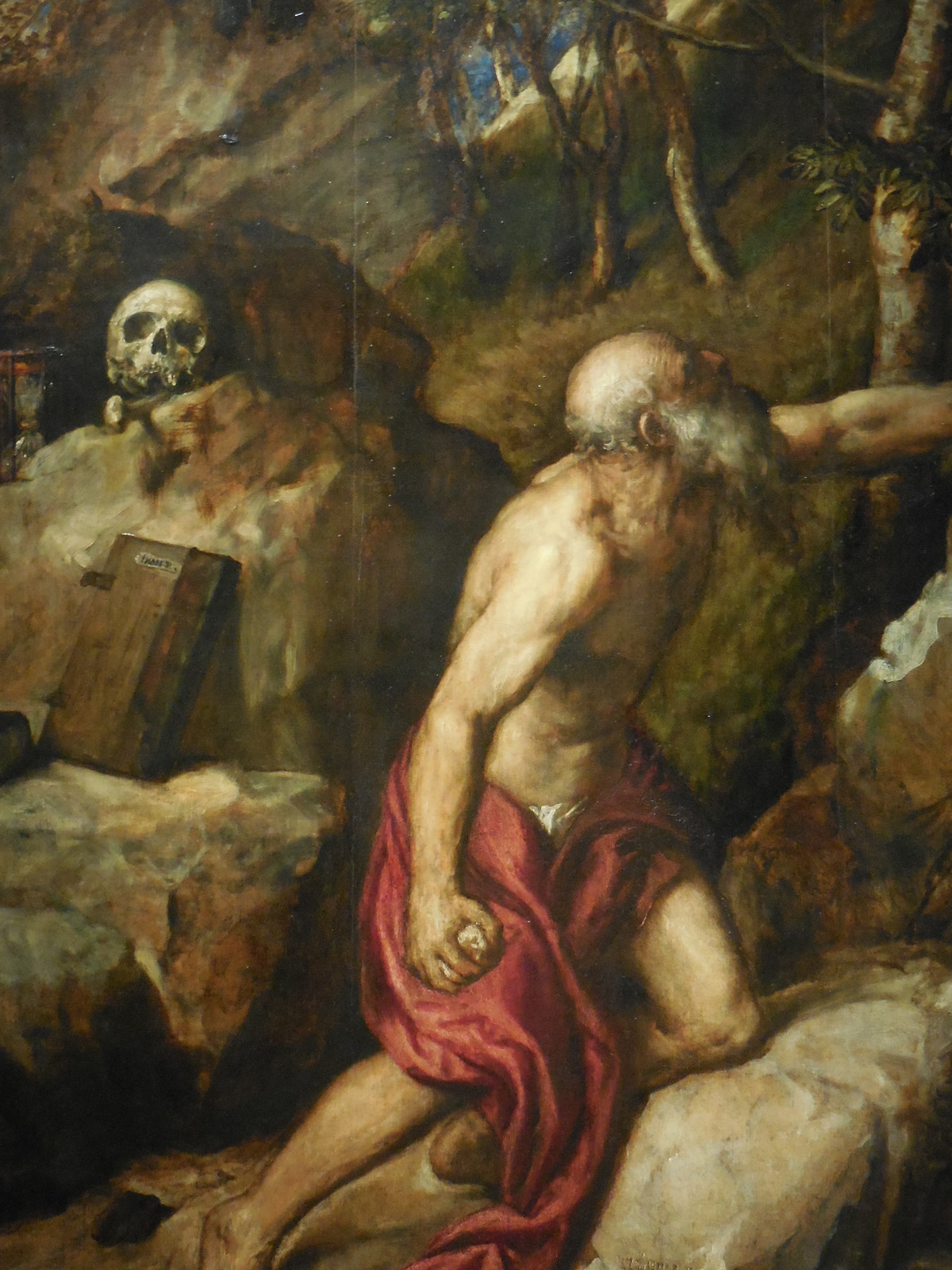
Saint Jerome by Petr Brandl
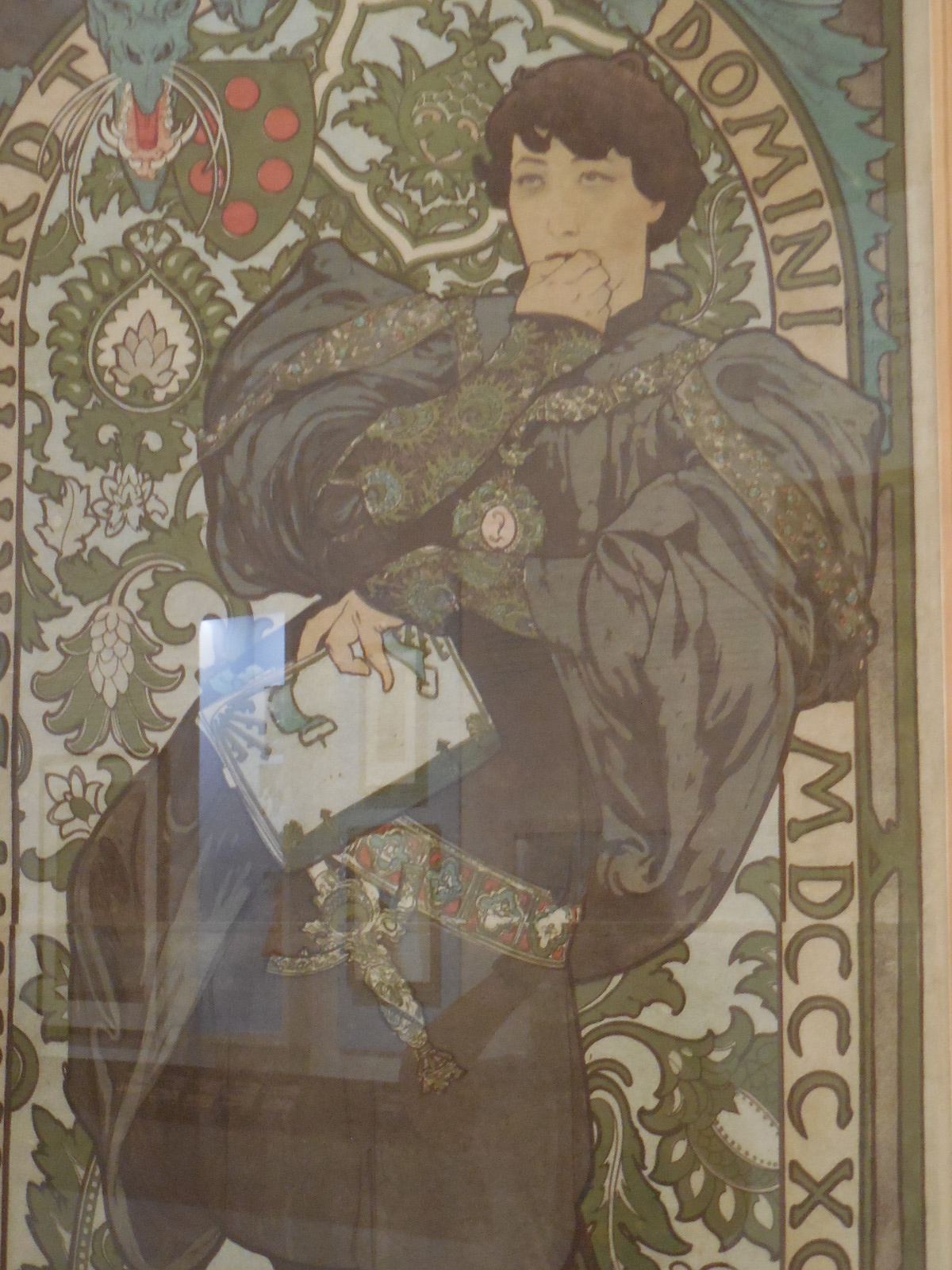
I went to many intriguing temporary exhibitions in Prague, too. I saw 64 religious works, genre paintings and portraits by Czech Baroque artist Petr Brandl. An extensive exhibition of Alphonse Mucha’s versatile works owned by his descendants included some originals never before put on display. Mucha’s ad posters, drawings, paintings, sculptures, photographs and jewelry all captured my undivided attention.
Sculpture by Janouch
I saw sculpture of athletes in motion and busts of illustrious Czechs by Petr Janouch in Prague’s Kooperativa Gallery. An earlier exhibition there featured Czech 19th and 20th century paintings involving water – puddles, lakes, waterfalls, streams, rivers and so on. I especially liked one painting by Josef Čapek showing a fisherman on a boat in a river. Landscapes with water themes by Slavíček and Antonín Hudeček also astounded.
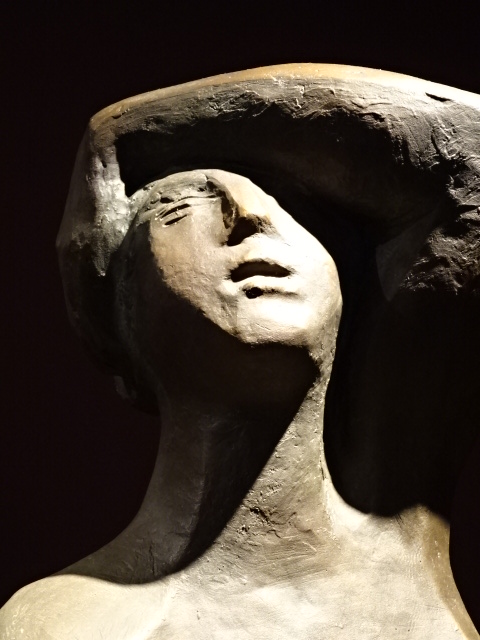
Sculpture by Ivan Mestrovic
At the City Library Gallery I saw an exhibition of sculpture by Croatian Ivan Mestrovic (1883-1962). I had come across his art at his villa in Split during a vacation many years ago. Mestrovic, who had befriended first Czechoslovak President Masaryk and Czech sculptor Bohumil Kafka, had delved into a variety of styles, including Art Nouveau, Symbolism, Impressionism, Art Deco, Neoclassicism and late Realism, while preserving a Classical foundation. He focused on numerous themes – religious motifs, portraits and monumental works as well as studies of figures.
Olinka
However, shortly after I returned from the Amalfi Coast, I had to temporarily halt any traveling so I could be at home with Olinka, who was diagnosed with neurological issues that greatly affected her mobility. A MRI showed that she suffered from inflammation of the middle ear. A terrified Olinka spent a total of four nights in the hospital and was on antibiotics for ten weeks. Every two weeks we went to the vet so she could get her antibiotic shot.
Olinka
The first four days at home after three nights in the hospital she could hardly walk and was very disoriented. Those initial few days she stayed mostly in the bedroom closet, only appearing for food and the use of the litter box. She didn’t play with her toys for three weeks. Before her illness, I had been frustrated with Olinka because she always knocked everything off tables and the kitchen counter. Sometimes it felt like a never-ending battle. At the start of her illness, I came to appreciate even her most frustrating quirks. I just wanted her knocking everything off surfaces again, back to her old self. The broken glass on the screen of my mobile phone is proof that she is once again doing just that.
Olinka
I will never forget her first night back from the hospital. She somehow made her way onto the bed and reclined below my pillow. I rested next to her, my arms around her. We stayed like that for an hour or two, just spending time with each other, appreciating that she was alive and at home. I will always remember that feeling of relief and love more profoundly than any experience during my exciting travels.
Tracy A. Burns is a writer, proofreader and editor in Prague.
Olinka on Christmas Eve
From Alphonse Mucha exhibition
Municipal House, Prague, Mayor’s Hall, decoration by Alphonse Mucha
I toured the Municipal House in Prague. Once again, I was captivated by its Art Nouveau interior.
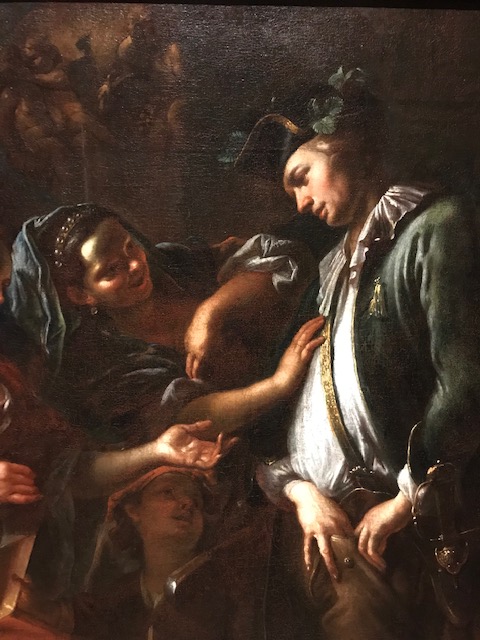
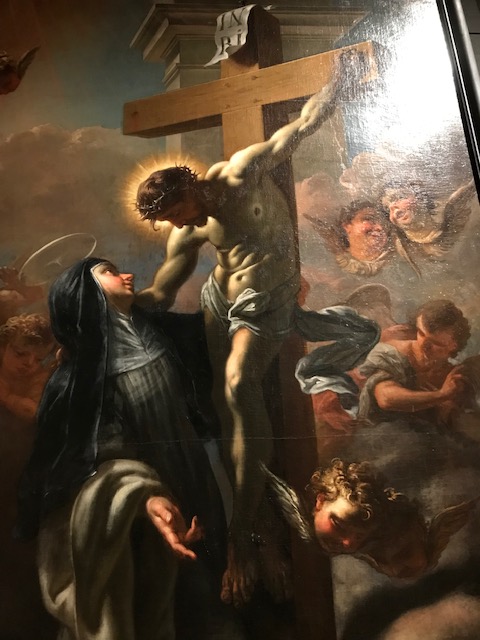
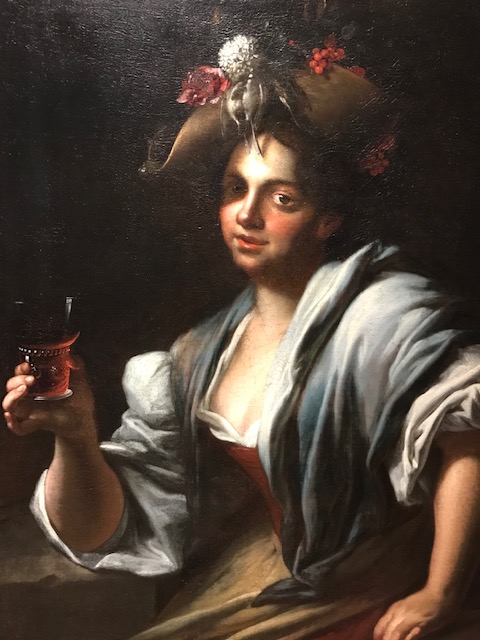
In October of 2023, I saw the comprehensive Prague exhibition “Petr Brandl: Story of a Bohemian” consisting of 64 altar paintings, portraits and genre works by Brandl (1668-1735), a masterful Czech artist during the Late Baroque period.
Self-portrait of Petr Brandl in a wig
I was well familiar with Brandl’s work. Many of the works shown at Wallenstein Palace were creations I had seen at chateaus, churches, cathedrals or monasteries throughout the Czech lands, such as at Břevnov monastery, The Cathedral of the Assumption of the Virgin Mary and Saint John in Sedlec as well as at Jindřichův Hradec Castle and Chateau. Another altar painting hailed from Church of St. John the Baptist near Manětín Chateau. Lnáře was home to another altar painting. I had visited the Baroque chateau and the cat museum in Lnáře a few years previously. The altar paintings on display had been restored over a period of two years.
Brandl was of Czech and German descent, baptized in October of 1668. At age 15, he served as an apprentice to painter Kristián Schroder, who later became custodian of Prague Castle. (Schroder’s work was also represented in this exhibition.) Brandl’s masterpieces showed a distinct influence of Karel Škréta’s dynamic and bold style, which was apparent because Škréta’s creations were displayed, too.
A friend of Brandl’s, legendary sculptor Matthias Bernard Braun utilized one of Brandl’s drawings for his design of the statue of Saint Luitgarda on the Charles Bridge. Coincidentally, Brandl had taken part in the competition to create the statues for the Charles Bridge, but Braun had been the victorious one. (I also saw examples of Braun’s work at this exhibition and couldn’t help thinking about the 24 allegorical statues of vices and virtues for former hospital Kuks in east Bohemia, rendered so masterfully by Braun.
Brandl had worked for some of the most prestigious noble families, including the Černíns, Lobkoviczes and Šporks. Brandl lived in Kuks, working under the guidance of František Antonín Špork, during 1731. The painter created a well-known portrait of his patron there.
Coincidentally, Brandl’s brother had a claim to fame as well. Working as a goldsmith, Brandl’s brother contributed to the building of the Cathedral of Saint Vitus in Prague.
To be sure, Brandl was a prolific painter. In the Church of St. John the Baptist in Manětín, Brandl had designed the painting at the main altar. At the UNESCO-listed cathedral in Sedlec, Brandl was responsible for three paintings in the chapels. I also saw four of his paintings in Lnáře. At Břevnov monastery his works dominated six side altars in the main nave. The themes of the paintings at the monastery, founded in 993 AD, included the dying Saint Benedict, Saint Vojtěch meeting with Prince Boleslav II at a spring, the murder of Saint Wenceslas and the crucified Christ.
I had always been enamored by Brandl’s strong chiaroscuro and thick, energetic brushstrokes. His paintings, dynamic and vibrant in character, told distinct stories. His portraits brought the sitters to life. Those of elderly men, such as St. Jerome, were reminiscent of Rembrandt’s works in their expressive nature. His later works took on darker tones and utilized simpler modelling of shapes.
The exhibition also highlighted Brandl’s personal life, especially his monetary problems. I read descriptions of his troubles as I gazed at his monumental works. Brandl’s marriage was rocky in part due to financial problems. He also cheated on his wife, Helena. Wed to Petr Brandl during 1693, Helen often complained that he was a spendthrift and didn’t provide enough money for the care of his three children. He also owed money to the artist’s guild and was fined accordingly. Brandl was earning money but spent it all on an extravagant lifestyle. Brandl found himself in debt his entire life and even was imprisoned twice as a debtor.
His poor health was also highlighted in the exhibition. Brandl had trouble sleeping and took pills. He had pain in his joints and digestive problems, too. Those were just a few of his many ailments.
Saint Jerome
He was very poor when he died during 1735. Brandl was buried in a church in Kutná hora, a town about an hour from Prague, where he had spent time at the end of his life.
Fire of Troy
Despite his shortcomings as a person, Brandl was my favorite Czech Baroque painter and one of my favorite Baroque painters of all-time. I was enthralled by this exhibition and came away feeling joyous that I had been able to enter Brandl’s artistic worlds.
Tracy A. Burns is a writer, proofreader and editor in Prague.
This library and art gallery in Milan is named after the patron saint of the city, Ambrose. The library harkens back to 1609, when Cardinal Federico Borromeo founded it, and the same year it opened to the public.
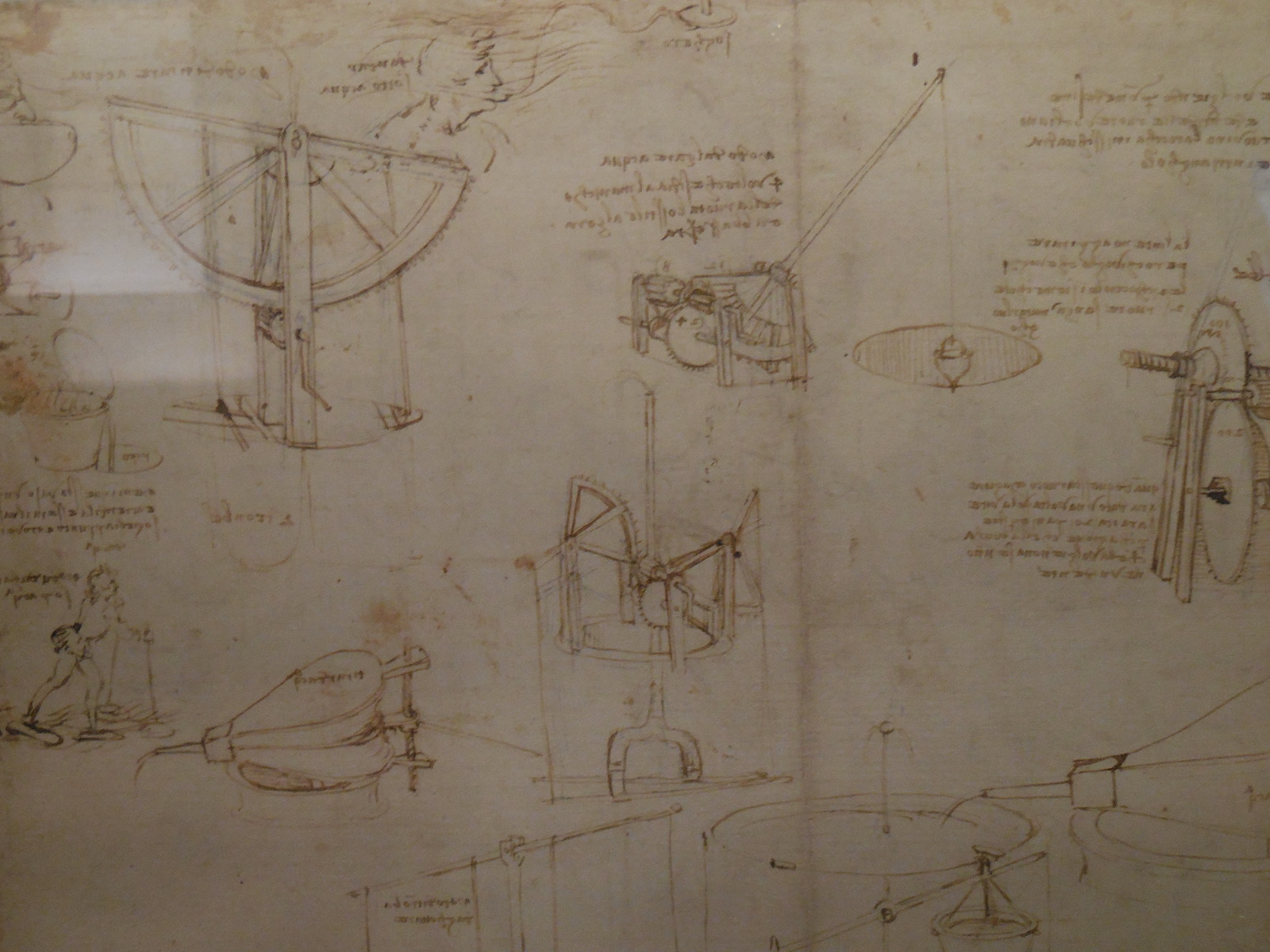
One of Leonardo da Vinci’s drawings of the Codex Atlanticus
The biblioteca houses the Codex Atlanticus by Leonardo da Vinci as well as many of his other manuscripts plus about 12,000 drawings by European artists, ranging from the 14th to 19th century. Raphael and Pisanello are represented in this collection of drawings, too. Many of its more than a million printed volumes hail from the 16th century. There are almost 40,000 manuscripts in numerous languages, including Italian, Latin, Greek and Arabic as well as some 22,000 engravings. Ancient maps, musical manuscripts and parchments also make up the collection. Some prominent guests included poet Lord Byron and novelist Mary Shelley.
Another of Leonardo’s drawings from the Codex Atlanticus
During World War II the library was damaged, and the opera libretti for La Scala Opera House were destroyed. The building was opened again in the early 1950s after undergoing renovations. More reconstruction took place in the 1990s.
When I visited, some of Leonardo’s works for the Codex Atlanticus, the largest collection of da Vinci’s drawings and writings, were on display in the library. The exhibition left me spellbound. I perused studies in aerodynamics and drawings of mechanical wings as well as various types of weapons. Leonardo rendered a large sling to throw stones and a machine to pump water from a well inside a building, for example.
I gazed upwards after studying the drawings by Leonardo, and I was filled with awe. I don’t know if I have ever seen such an incredible library. I just wanted to stand there all day, gazing at the wall-to-wall bookcases as I wondered about the titles and contents of each volume.
Established in 1618 with the collections of Cardinal Federico Borromeo, the pinacoteca was just as impressive as the library. The 24 rooms were dominated by Renaissance artworks but also boasted of renditions by 17th century Lombard artists, 18th century painters and 19th and early 20th century creators. I was especially struck by da Vinci’s 15th century “Portrait of a Musician” as it was the only portrait that he had painted. I noted the musical scroll in one hand of the sitter and was captivated by the detailed curly locks of hair, the musician’s brown eyes and his red cap.
Caravaggio’s insect-infested “Basket of Fruit” tells a story of diminishing beauty by displaying rotting fruit. Bramantino’s “Adoration of the Christ Child” shows the kneeling Bernardino of Siena, Francis of Assisi, Benedict of Nursia and the Virgin Mary making an understandable fuss over baby Jesus. I loved the angels playing musical instruments behind those figures. Emperor Augustus also makes an appearance.
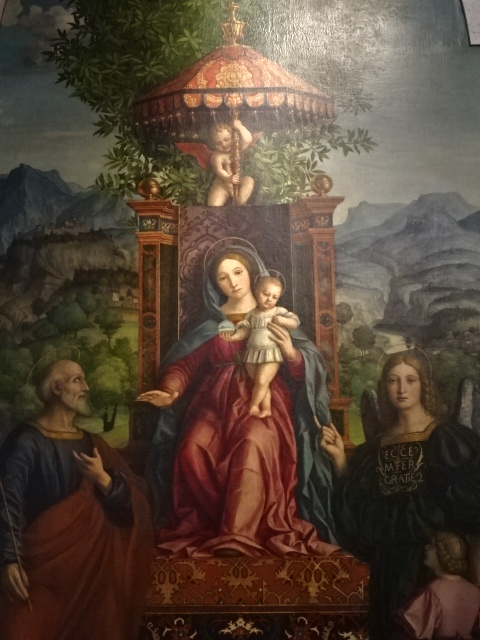
Bergognone’s “Sacred Conversation” shows the Virgin Mary and Christ Child on a massive golden throne, baby Jesus on the Virgin Mary’s lap. Solemn angels flutter in the background. I was struck by the details of the Virgin Mary’s hair and by the material of the clothing worn by the Virgin Mary and baby Jesus. The two were surrounded by saints with captivating headwear, including Saint Ambrose and Saint Jerome.
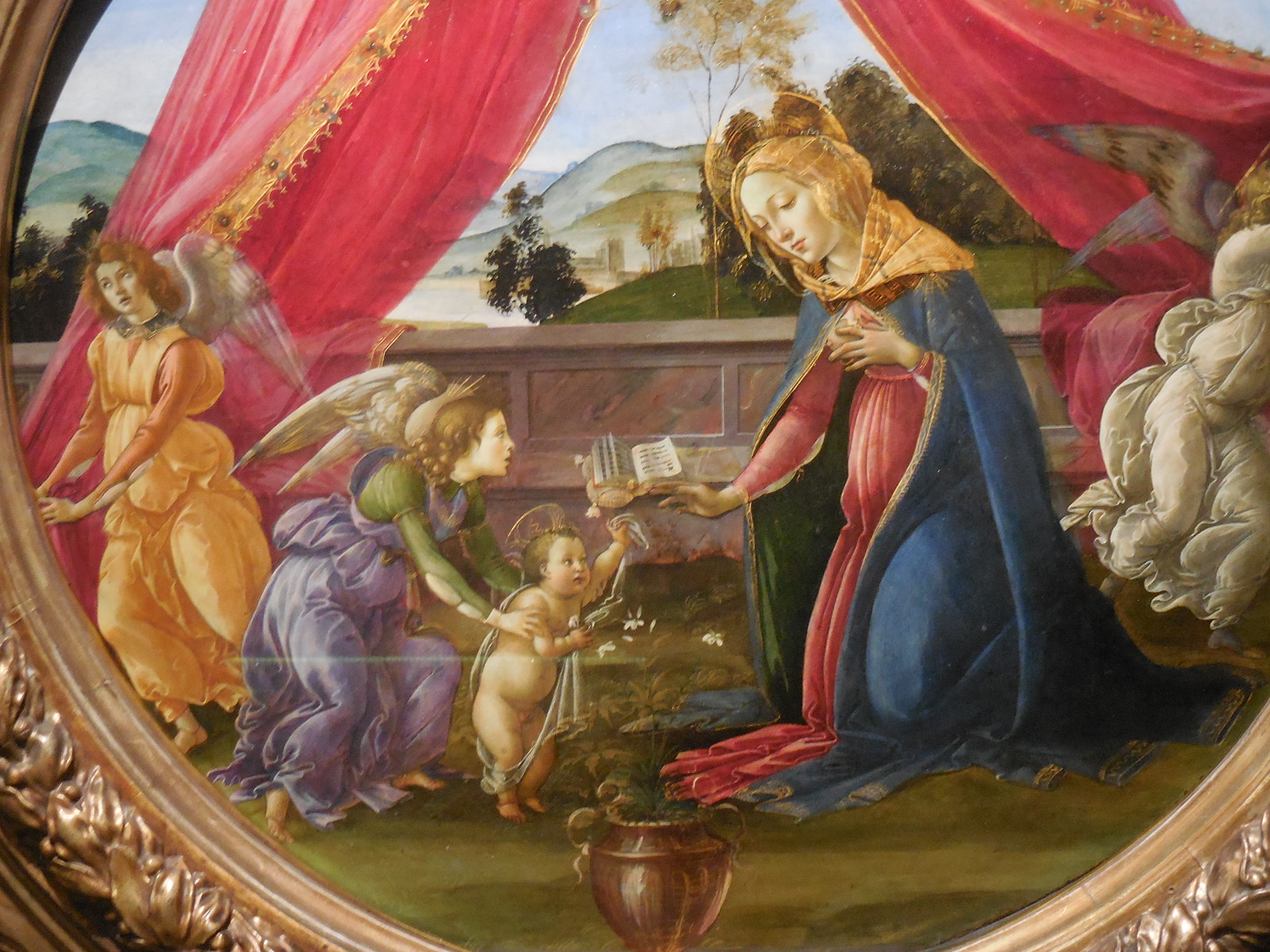
Another painting that left me speechless was Sandro Botticelli’s “The Madonna of the Pavilion.” The artist’s meticulousness was evident. The artwork shows the Virgin and Child with much symbolism. The pavilion that two angels open to reveal the Christ Child is rich in biblical meaning both in the Old and New Testament. I could almost feel the paper of the pages making up the open book in the painting.
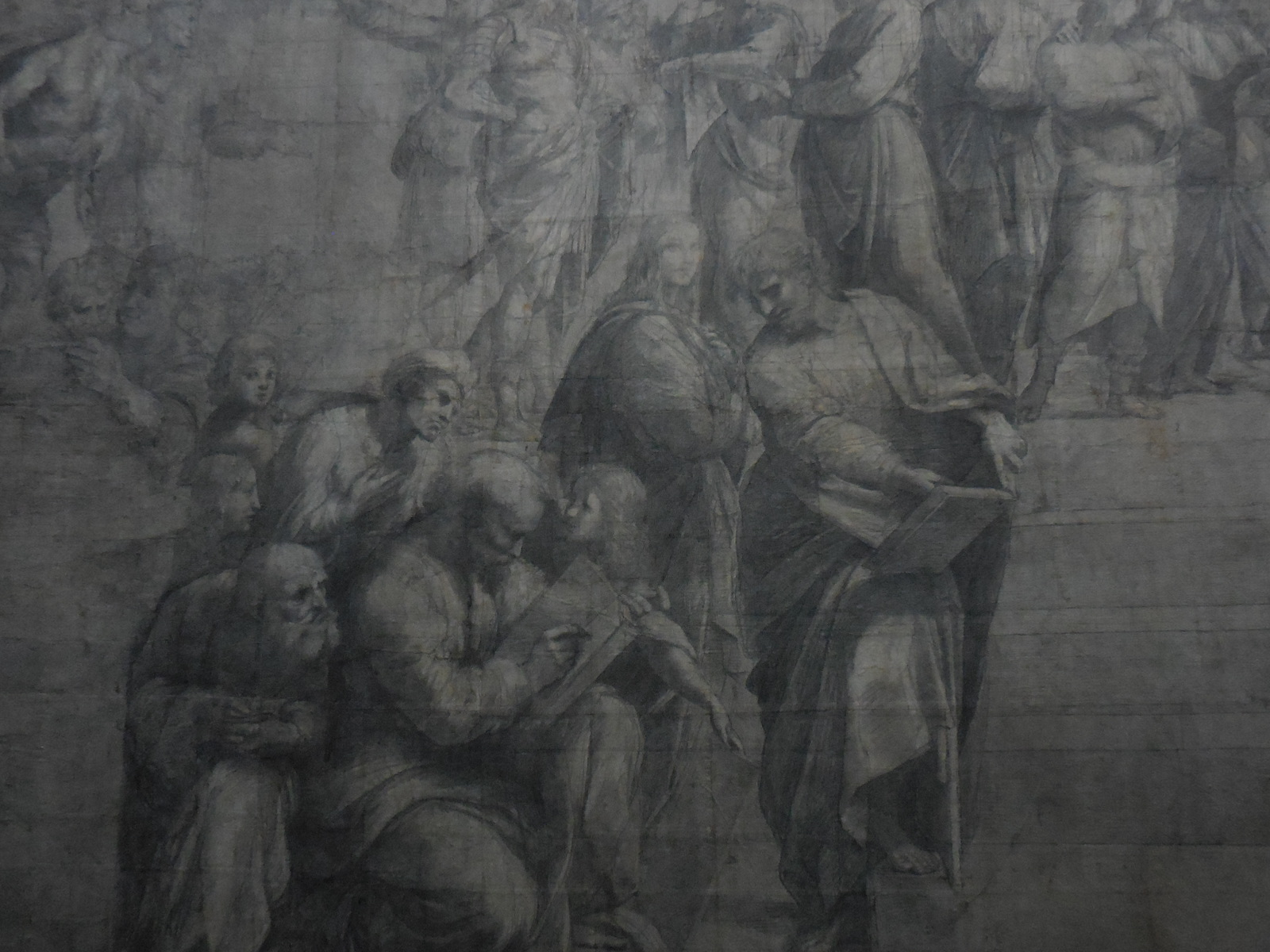
Raphael’s School of Athens
Raphael’s cartoon of the “School of Athens” is a study for the Italian Renaissance fresco painted in the early 1500s for the Raphael Rooms in the Vatican Museum. I recalled seeing the skillful rendition of philosophers and scientists from Ancient Greece at the Vatican on my 40th birthday as I mulled over the dominant role that perspective played in the artwork. Plato, Aristotle and Pythagoras appear in the fresco. Leonardo and Michelangelo are present as Plato and Heraclitus.
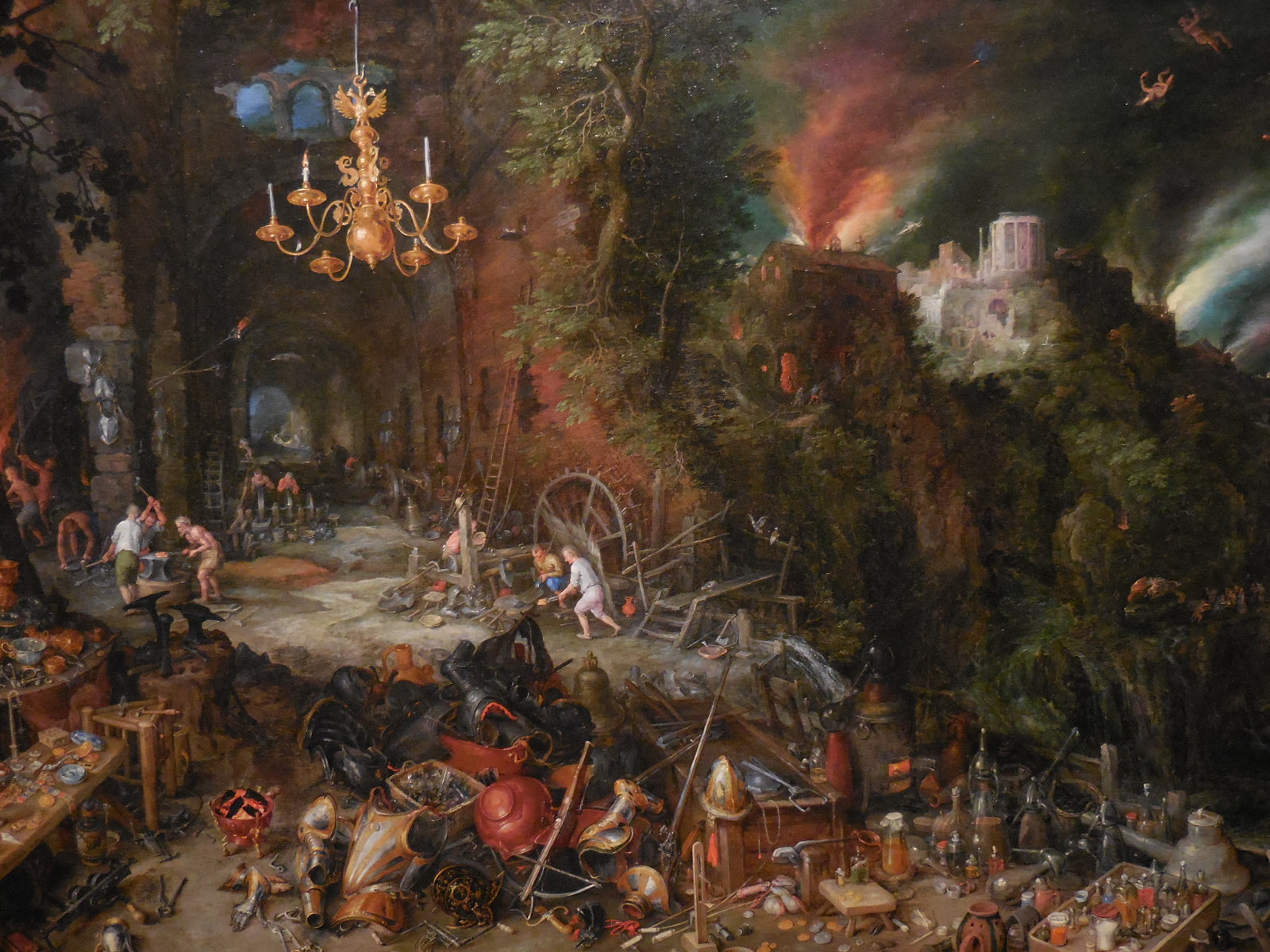
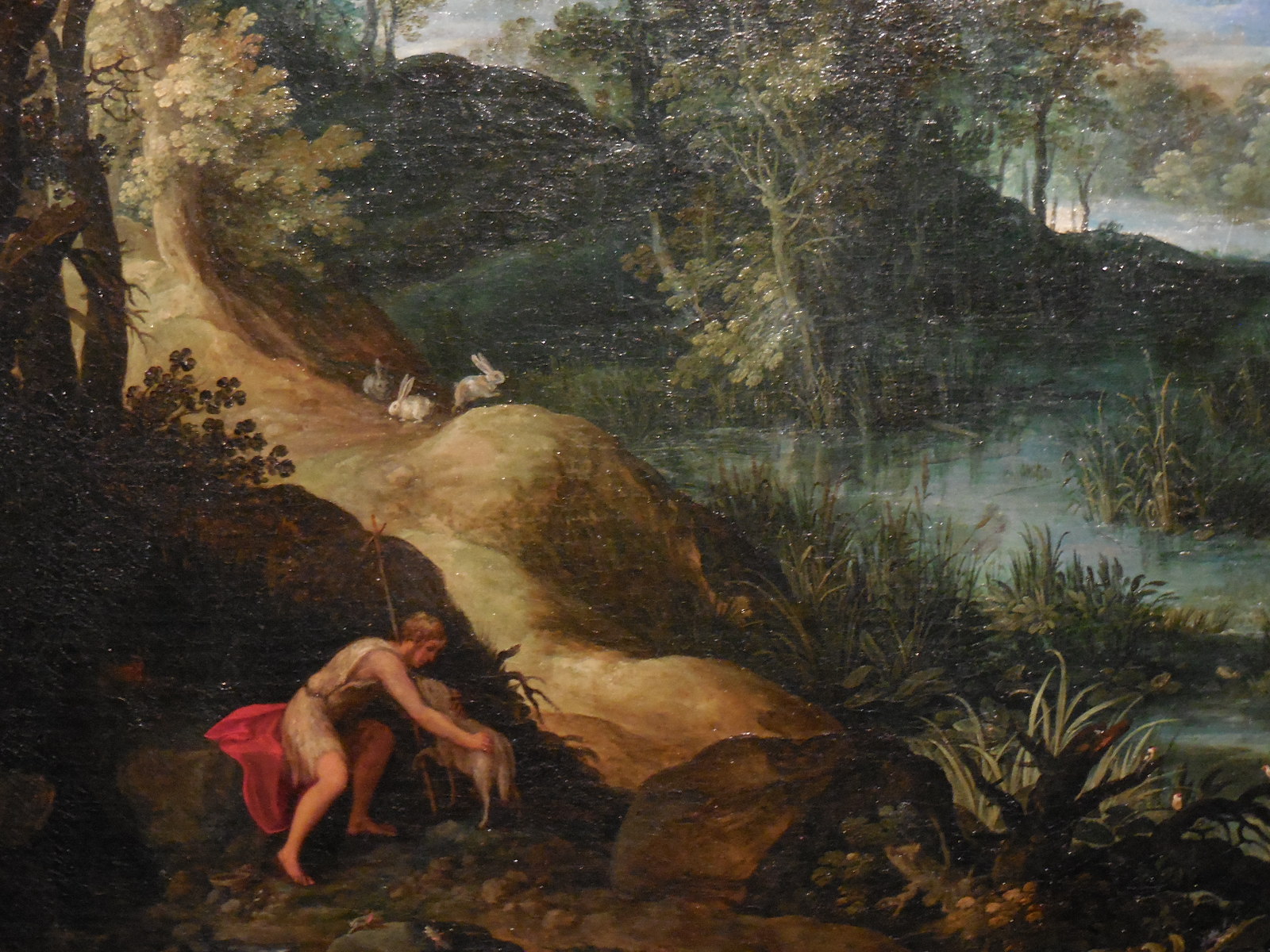
Other paintings that awed me were the fantastic landscapes of Paul Brill, whose works I had discovered some years earlier in Edinburgh. Jan Brueghel’s detailed landscapes and still lifes also are close to my heart, and I adored masterpieces from the Netherlands. I stared at these paintings, losing myself in the fantastical landscapes and details that were so masterfully rendered by both artists. I felt a special connection to these works featuring a dream-like quality as if I could be transported into a fantasy world by merely peering at the canvases.
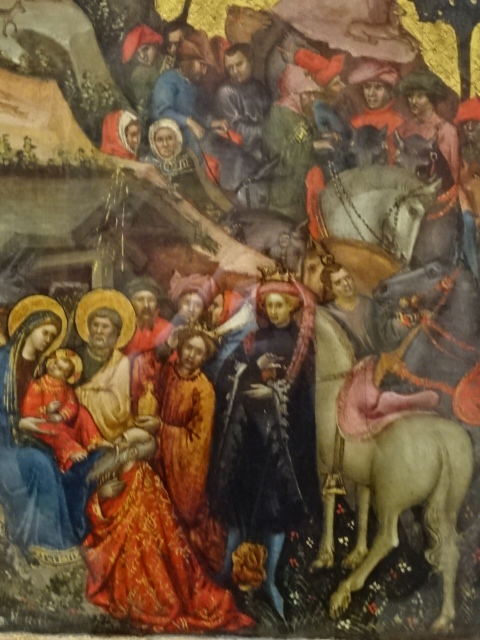
Other paintings that captured my undivided attention had been created by Bernardino Luini (I fondly recalled his paintings in Milan’s Church of Saint Maurizio), Tizian, Jacopo Bassano, Moretto and Daniele Crespi as well as Francesco Hayez, whose works I knew well from the Brera Gallery in the same city. Andrea Bianchi had created “The Last Supper,” imitating da Vinci’s masterpiece. Tizian’s “Adoration of the Magi,” Bramantino’s “Madonna of the Towers” and the locks of hair of Lucrezia Borgia all left me awe-struck.
The sculptures and frescoes from the second to 16th century in the Sala del Bambaia are very noteworthy. The Hindu art of the Berger Collection captivated me. The Flemish and German painting from the 15th to 17th century enthralled. Ceramics also play an intriguing role in the collection.
I was so awed by this gallery and library that I visited it twice during my first trip to Milan. I peered at every painting and sculpture, trying to take in each artistic creation, feeling so blessed to be able to see all these masterpieces with my own eyes.
Tracy A. Burns is a writer, proofreader and editor in Prague.
My first stop in Verona was the Castelvecchio Museum, a sprawling edifice that looks like a medieval fortress. The Castelvecchio hails from 1354 to 1356, when it was built for Cangrande II della Scala as a defensive structure. The Della Scala family lived there for a short time. During Napoleon’s reign, from 1801 to 1806, the building was transformed into barracks, and it served this purpose until 1924. The Castelvecchio was seriously damaged during World War II, during the time when the Germans destroyed all of Verona’s bridges. From 1958 to 1974, architect Carlo Scarpa renovated the Castelvecchio, adding modern elements to the original style that harkens back to the Middle Ages.
The expansive medieval and Renaissance spaces inside house 30 halls of Italian and European painting and sculpture, dating from the Romanesque era to the 1700s. I also saw ancient weapons, ceramics, gold artifacts, bells and miniatures, for instance. I especially liked the walkways outside. They offer panoramic views of romantic Verona.
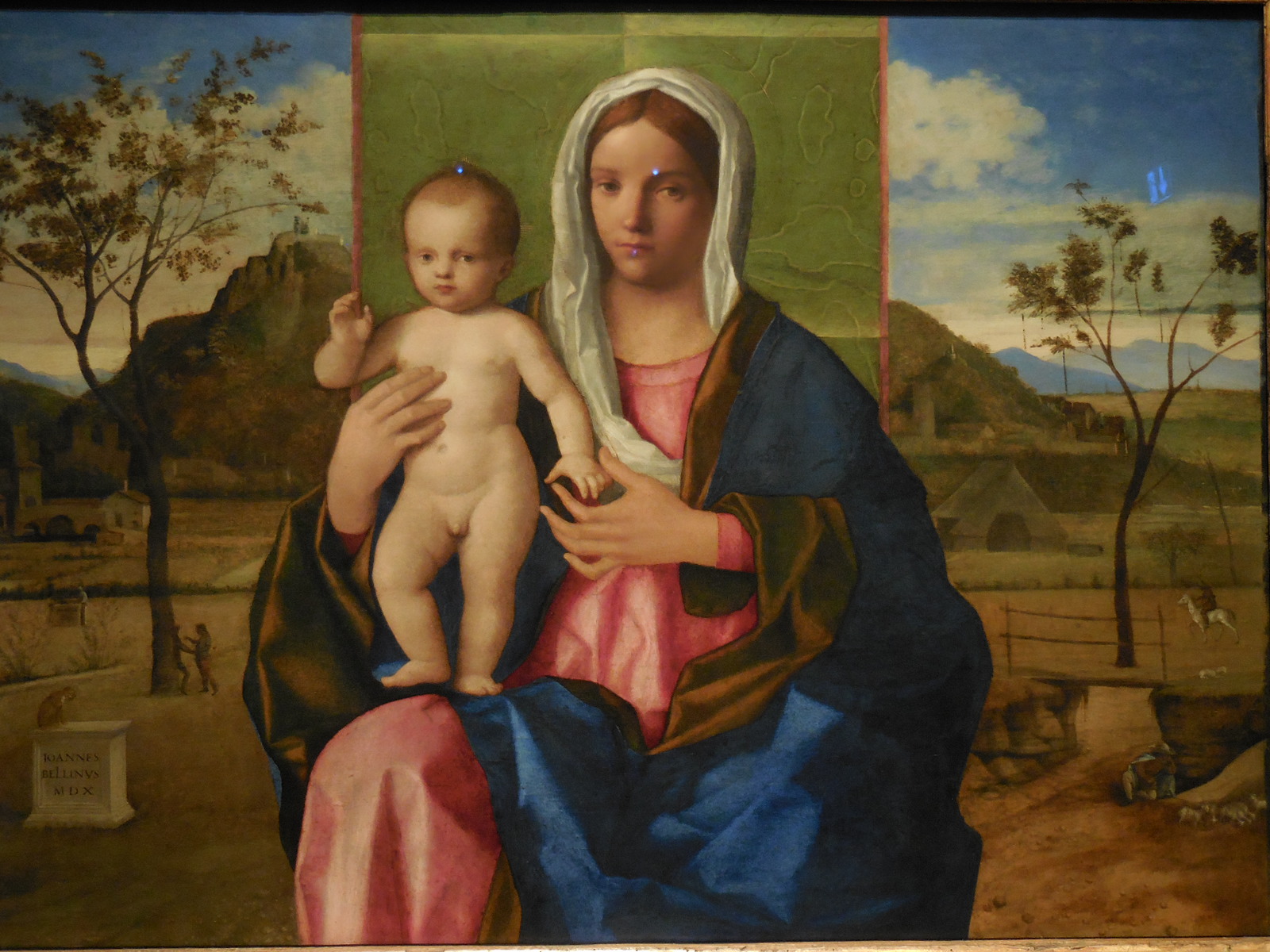
Artists represented in the collection include Pisanello, Giovanni Bellini, Jacopo Bellini, Carlo Crivelli, Andrea Mantegna, Jacopo Tintoretto and Tiepolo. Pisanello’s “Madonna of the Quail,” Jacobo Bellini’s “Madonna of Humility” and Mantegna’s “Holy Family” are a few of the highlights. The Romanesque sculpture also is impressive.
An intriguing true crime story is connected to the museum. In 2015, three thieves made off with 17 paintings, including masterpieces by Jacopo Bellini, Giovanni Bellini, Andrea Mantegna, Tintoretto, Peter Paul Rubens and Hans de Jode. The following year, the museum got the works of art back from Odessa thanks to Ukrainian border guards. It remains one of the most significant art heists to take place in Italy.
Tracy A. Burns is a writer, proofreader and editor in Prague.
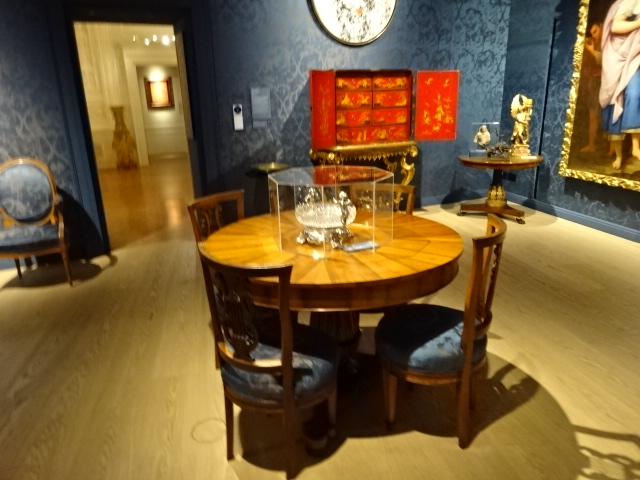
My favorite sight in Verona was this house museum of remarkable art from the 14th century to contemporary times in the collection that entrepreneur Luigi Carlon amassed during a 50-year period. I love museums that have an intimate and personal quality that make them appear as private homes rather than galleries of art. In Milan I was entranced with the Pezzoli Poldi and Bagatti Valsecchi house museums that shared this trait.
In the Palazzo Maffei I appreciated that the art was not displayed in a chronological order but rather looked as if the Maffei family had designed their residence with paintings, sculpture, drawings, engravings, pottery, bronzes, ivories, frescoes, furniture and objects of decorative art. I liked the eclectic nature of the collection – it had a bit of everything, a dash of this, a dash of that.
Art by Marcel Duchamp
The collection that was opened to the public after extensive renovation in 2020 included both Italian and foreign artifacts, though the focus is on Veronese representation. While the first section resembles a private home, the second part looks more like a gallery and highlights modern and 20th century art.
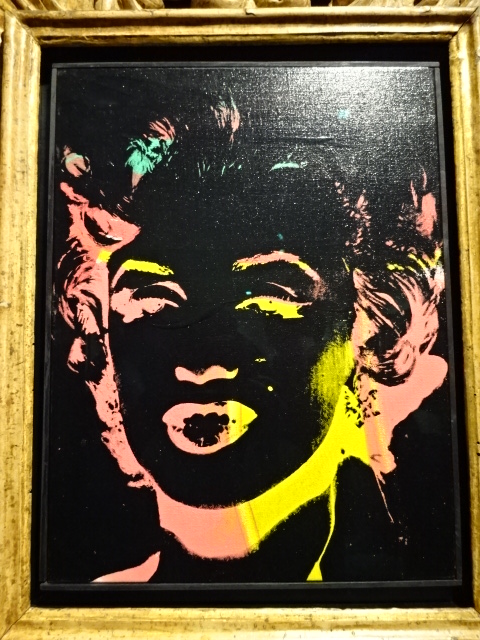
Works by Canaletto, Giacomo Balla, Pablo Picasso, Marcel Duchamp, Giorgio de Chirico, Max Ernst, Andy Warhol, Umberto Boccioni, Rene Magritte, Lucio Fontana and Amedeo Modigliani play significant roles in the collection of more than 500 works. I have always been enamored by Canaletto’s Venice scenes. A slashed canvas by Lucio Fontana made me think of his avant-garde sculpture decorating a tomb in Milan’s Monumental Cemetery. I had only been introduced to Fontana’s works while touring Milan. While I am not usually so enthusiastic about contemporary art, the pieces in this museum caught my attention. The three-dimensional installation by Marcel Duchamp was of special interest.
The three-floor building itself is a masterpiece with its origin in the late Middle Ages, when Verona was governed by the Romans. Renovation in the 17th century was responsible for the remarkable façade, transformed into late Renaissance style with some Baroque features. Ionic columns, large French windows with balconies and floral adornment made the front of the building an elegant structure. Six statues of mythological deities decorated the top of the majestic edifice. A monumental spiral staircase welcomed visitors who have entered via a courtyard.
I was amazed at the poignancy of this unique collection. I felt it was meticulously organized in a dynamic way. Each work made me stop and reflect. This was my favorite of the three art museums I visited during my second visit to Verona.
Tracy A. Burns is a writer, proofreader and editor.
I have visited this phenomenal art gallery in Milan twice. I could go there a million times, and I would be just as amazed as I was on the first two occasions. While the gallery includes Italian art from the 13th to 20th century, some remarkable foreign works are on display in its 38 halls, too. Artists from the Netherlands represented in the gallery include Peter Paul Rubens, Anton van Dyck, Jan de Beer and Jacob Jordaens. The Brera focuses on Venetian and Lombard painting.
The art gallery is situated in a large complex that also houses a stunning library (where I saw an exhibition during my second visit), an observatory, a botanical garden and the Brera Academy of Art. In front of the museum is an equestrian statue of Napoleon by Antonio Canova. While the art academy was established as far back as 1776, the museum was opened in August of 1809. When paintings in Lombardy were confiscated from churches and convents in the early 19th century, they wound up at the Brera, so many religious works make up the collection. Parts of the art gallery were damaged in bombing raids during 1943, but they were fully reconstructed by 1948.
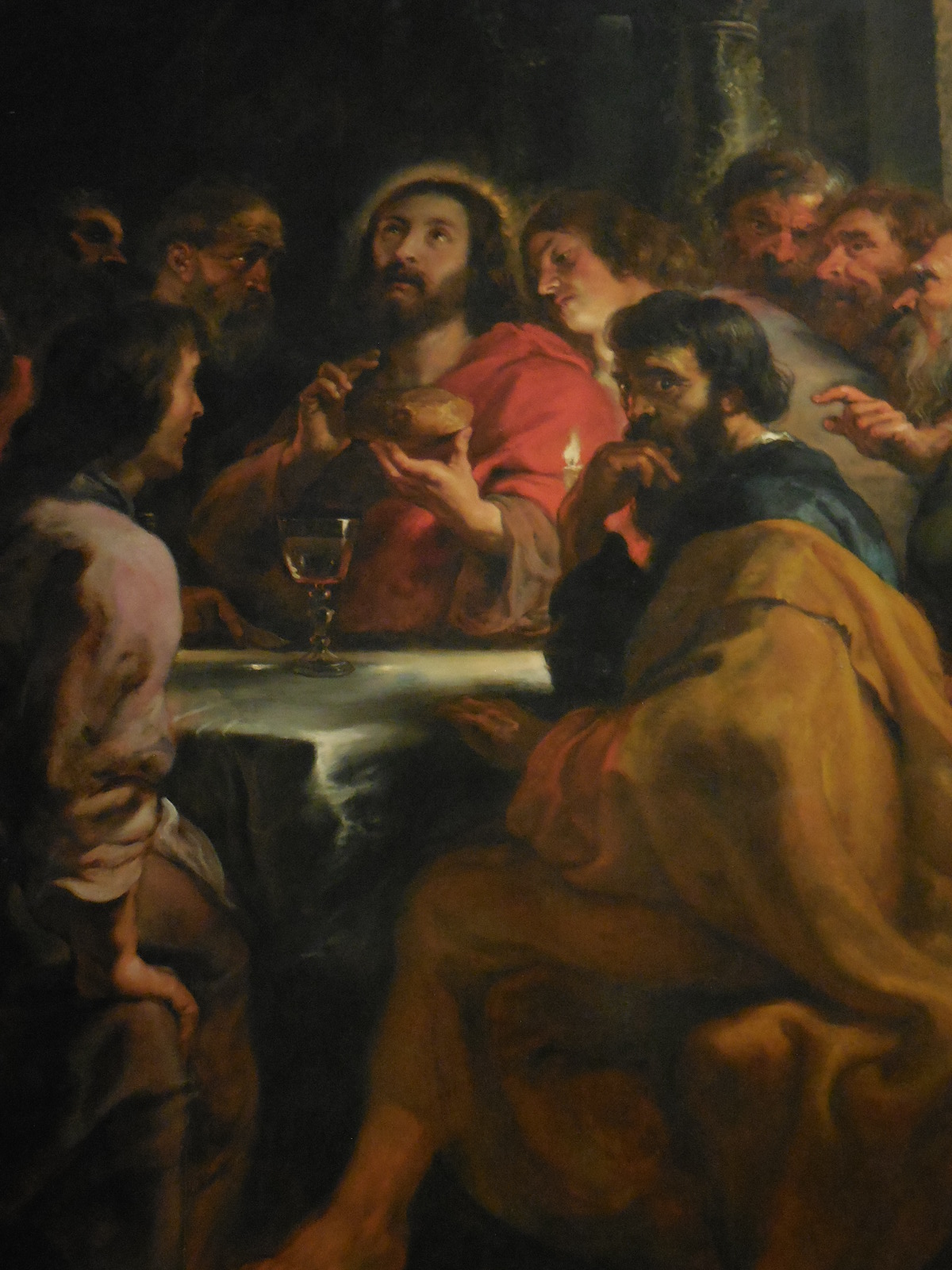
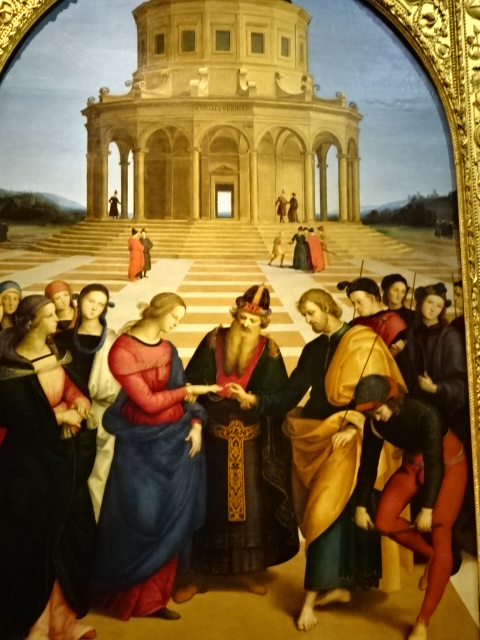
Some of the most famous paintings in the gallery include “The Lamentation of Christ” by Andrea Mantegna, “The Kiss” by Francesco Hayez, “Finding of the Body of St. Mark” by Tintoretto, “The Last Supper” by Rubens and “Supper at Emmaus” by Caravaggio – only one of two Caravaggio paintings in Milan. Also on display are the exquisite “The Marriage of the Virgin” by Raphael and “Christ at the Column” by Donato Bramante. I especially liked the paintings by Canaletto and Hayez as well as the 14th century frescoes. Modern works are exhibited, too. For example, “Enfant gras” by Amedeo Modigliani and “Riot in the Gallery” by Umberto Boccioni take up prominent places in the gallery. The works of Pablo Picasso and Giorgio De Chirico are represented, too.
I was overwhelmed at the beauty and power of the paintings in the Brera. Some of the monumental works just took my breath away. I was moved by all the paintings, each one telling a story.
Tracy A. Burns is a writer, proofreader and editor in Prague.
I visited the National Museum of Science and Technology dedicated to Leonardo da Vinci on my last trip to Milan, and, quite frankly, I didn’t expect I would be too enthusiastic because neither science nor technology is my cup of tea. However, the museum was fascinating. I especially was excited by the models made from drawings of Leonardo da Vinci. They showed machines and buildings he had designed on paper as well as his version of the ideal city. I also was enthralled with the hangars containing planes, ships and trains.
Opened in 1953, the museum is one of the largest scientific and technological museums in Europe. It is located in an ancient monastery not far from the Chiesa di Santa Maria delle Grazie, where I had seen Da Vinci’s Last Supper. Covering science and technology in Italy from the 19th century to the present, the museum holds the biggest collections of models of machines from designs by Leonardo da Vinci found anywhere. It includes 2,500 pictures, designs, sculptures, medals and artistic objects. There are seven sections, including materials, energy, communication, transport, food and science for young people as well as the Leonardo da Vinci Art and Science department. Musical instruments, clocks and jewelry are on display in this part.
The Leonardo da Vinci galleries display 170 military and civilian models, pieces of art and other objects. The models of buildings based on his drawings are architectural gems. Machines made from his drawings also impressed me. I saw a hydraulic saw, a flying machine and a spinning machine, for instance. I was awed with Da Vinci’s vast knowledge of anatomy, physics, mathematics, botany, geology and cartography.
The transport department includes air, rail and water. The trains are located in a pavilion originally built for the 1906 Expo. A façade resembling a 19th century structure has been added to the historic building. One train that caught my attention was the GR 552 036 locomotive from 1900. It had towed the Indian Mail train from Bardonecchia to Brindisi on its journey from London to Bombay. A horse-powered omnibus from 1885 was another delight.
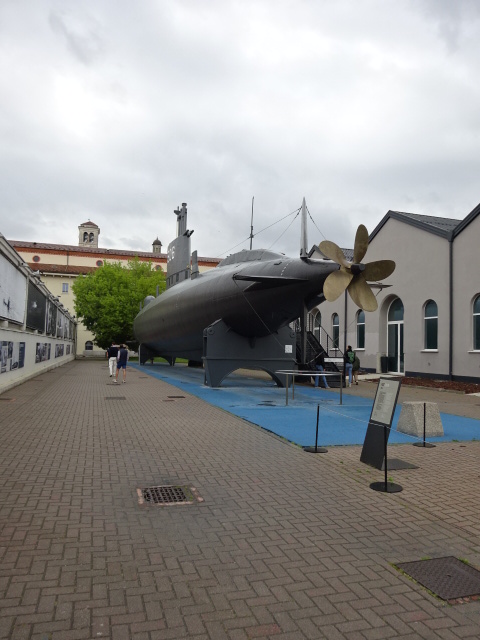
One of the top exhibits is the submarine S 506 Enrico Toti, the first submarine to be constructed in Italy after World War II. It began operation in 1968 and was roaming the seas for 30 years. During the Cold War, it searched for Soviet submarines.
The Vega Launcher from 2012 is a model of the first Vega made by the European Space Agency. It has a height of 30 meters and weighs 37 tons. The Vega can release satellites that weigh up to 2,000 kilograms.
The ships also intrigued me. One of the largest ships in the museum, the Ebe Schooner from 1921 was initially used by merchants to transport their wares through the Mediterranean. In the 1950s it became a training ship. The ballroom and bridge of the Conte Biancamano ocean liner also are worth seeing. They date from 1925. It has traveled extensively, making the journey from Genoa to Naples to New York and also going to South America and the Far East. During World War II it was used by American soldiers.
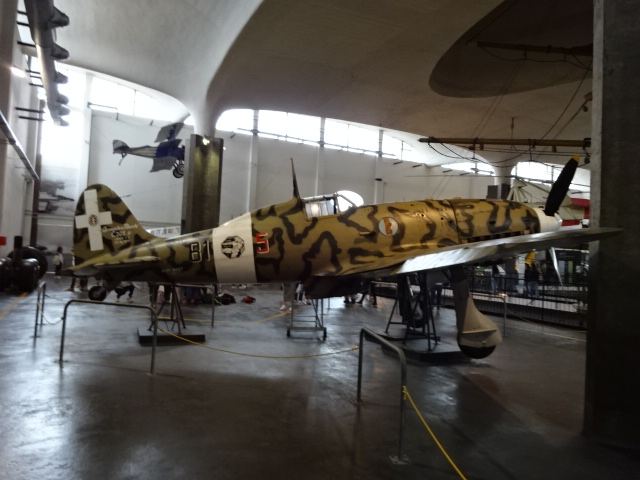
The planes were enthralling. I especially liked the Macchi MC 205 V from 1943. It made a name for itself during World War II. The plane has two machine guns and two cannons. Modern military planes and a modern helicopter also are on display.
Enrico Forlanini’s experimental helicopter from 1877 has the distinction of being the first object to fly. Pilotless, it has a steam engine and two counter-rotating propellors. During its flight, the helicopter rose about 13 meters and stayed in the air for 20 seconds. It also made an impressive landing.
I saw other intriguing exhibits. The Regina Margherita Thermoelectric plant had once provided lighting plus electrical power for 1,800 looms. Even King Umberto I and Margherita of Savoy were present for the opening ceremony. It hails from 1895.
Computers made up a significant part of the collections. I saw the Olivetti Programma 101 from the 1960s, the first personal computer. It was a programmable calculator that was small enough to fit on a desk. NASA utilized this contraption for calculating the Moon landing.
Space is another theme on which the museum focuses. I saw a moonrock that is 3.7 billion years old. Astronauts on Apollo 17 brought it back to Earth in 1972. Another exhibit showed space coveralls from 2014 and 2019. Astronomy plays a role, too. Two 17th century globes and telescopes are on display. Giovanni Schiaparelli used a telescope made in 1866 to study the surface of Mars. Schiaparelli peered through another telescope, this one hailing from 1774, when he discovered the asteroid 69 Hesperia and was able to describe what goes on with falling stars.
The diverse exhibits were a big thrill to see. I was so surprised that I had been so interested in the museum. Unfortunately, it was very crowded, so I didn’t get to peruse everything as well as I would have liked. The museum was definitely a popular destination for tourists and Milan dwellers alike. I could certainly understand why.
Tracy A. Burns is a writer, proofreader and editor in Prague.
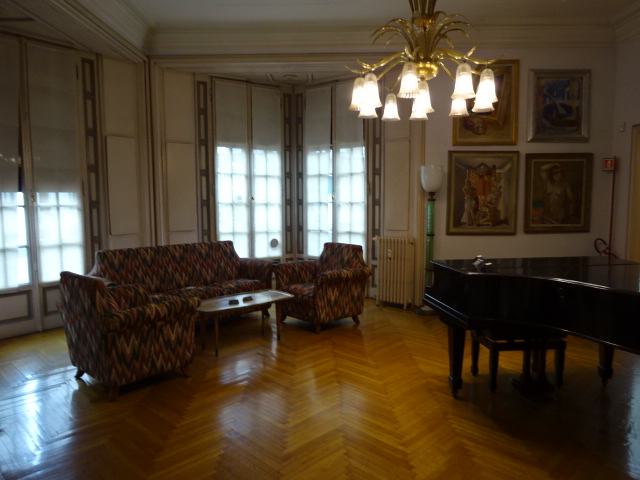
I regretted not having time to visit the house museum Boschi Di Stefano the first time I visited Milan. It was far from the center, where I spent much of my introductory days in the city. During my second visit the following year, I made sure I did not miss this museum.
I got off the metro at the Lima station, in which felt to me like a dangerous area. Yet, five minutes from the metro, I walked down a street lined with elegant buildings, which gave off an altogether different atmosphere – one of calmness and grandeur. The museum was on the second floor of a majestic building built between 1929 and 1931 by Piero Portaluppi, whose name was familiar to me because he had designed Milan’s Villa Necchi Campiglio, a former home with dazzling Art Deco adornment inside. I recalled the works by Pablo Picasso and the lush garden with pool and tennis courts at the Villa Necchi, one of the highlights of my first visit to this remarkable city.
I loved house museums because they had a more intimate quality than bigger, impersonal art spaces. I could sense that these house museums had once been somebody’s home. Trials and tribulations of daily life had taken place here. Private conversations had been voiced here. This particular house museum had once been the home of Antonio Boschi and Marieda Di Stefano, a married couple who had amassed a collection of some 2,000 pieces of art, mostly Italian in origin. They tied the knot in 1927 as Boschi, a veteran of World War I, went on to become a successful engineer. Marieda was an artist herself who had an affinity for ceramics. Many of her artistic creations can be seen here, too. A school of ceramics was situated a floor below.
The Caso Museo Boschi Di Stefano includes 11 spaces and focuses on 20th century art dated from 1900 to 1960 – mostly paintings but also drawings, sculpture and furniture. About 300 works are on display. The museum has been open to the public since 2003.
I felt overwhelmed as I contemplated the paintings that covered the entirety of the walls from the bottom all the way to the top. I was almost dizzy with delight, gazing at all the paintings, some falling into the category of modern art while others showed off a contemporary style. The works were displayed in a chronological fashion, so I could see how styles developed during those 60 years.
I recognized paintings by Giorgio De Chirico, Pablo Picasso, Amadeo Modigliana, Lucio Fontana and Raoul Dufy. Other pictorial treasures included 66 works by Roberto Crippa; 129 renditions by Gianni Dova; and 57 creations by Cesare Peverelli. Giuseppe Ajmone, Piero Manzoni, Arturo Martini and Sandro Martini, among others, were also represented there. I recognized Joe Columbo’s distinct style from an exhibition at the Museum of Modern Art in Milan the previous year.
What once was a guest room is now filled with furnishings for a study, the pieces dating from the 1930s. The dining room was a delight, too. I was fascinated with the Agena ceiling light, a unique round structure with what look like yellow cups protruding from the ball-like form. I didn’t understand what the style of the ceiling light meant, but it was fascinating to see it with my own eyes.
I went through the flat twice to try to take in all the art that surrounded me. It was a mesmerizing and breathtaking experience. The development of 20th century art was on display, each work speaking volumes about artistic creations during a time period in which I had not lived but could now better appreciate.
Tracy A. Burns is a writer, proofreader and editor in Prague.


















































































 Tracy's Travels