Archeological Museum in Naples Diary

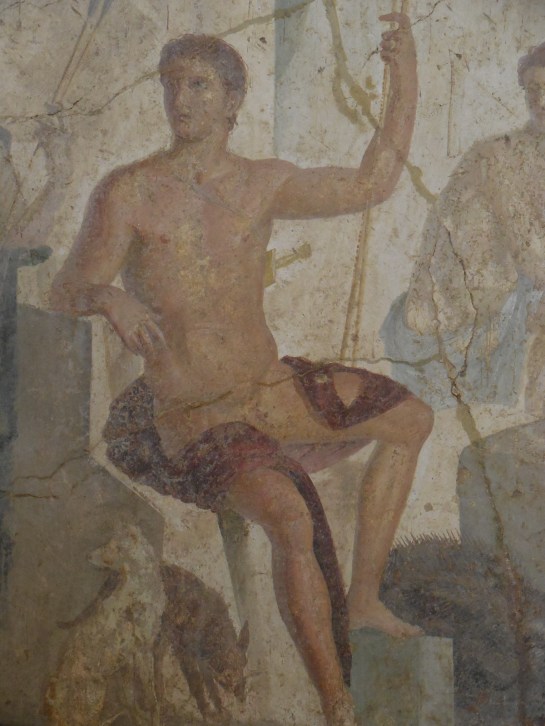
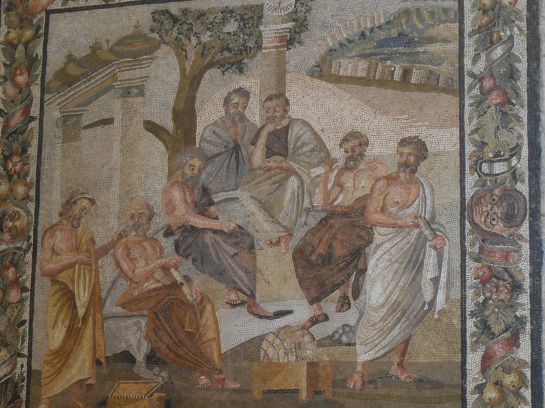
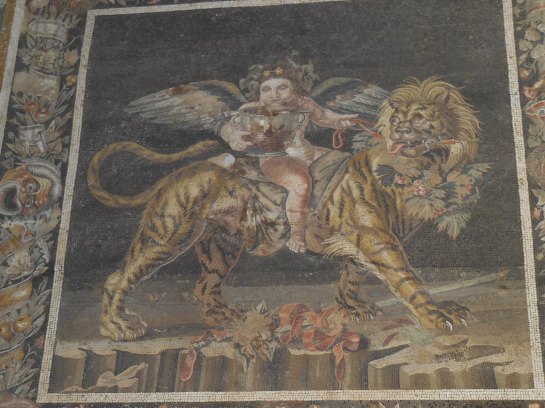
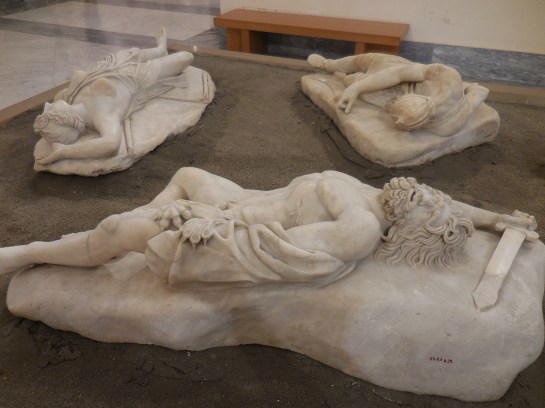
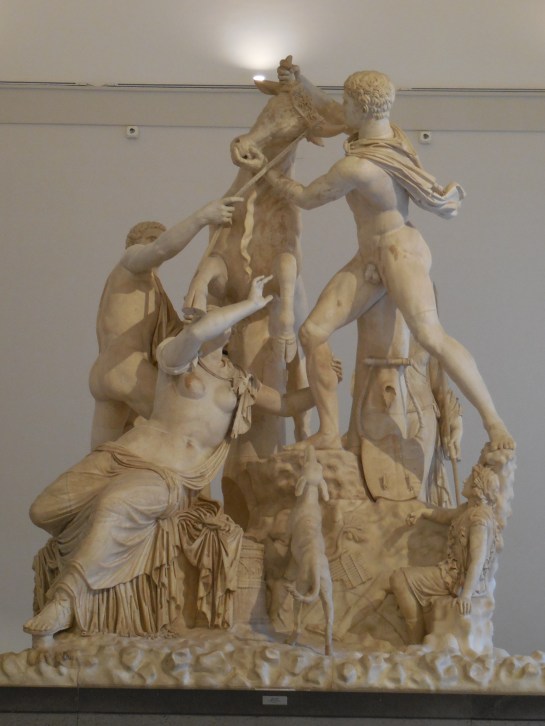
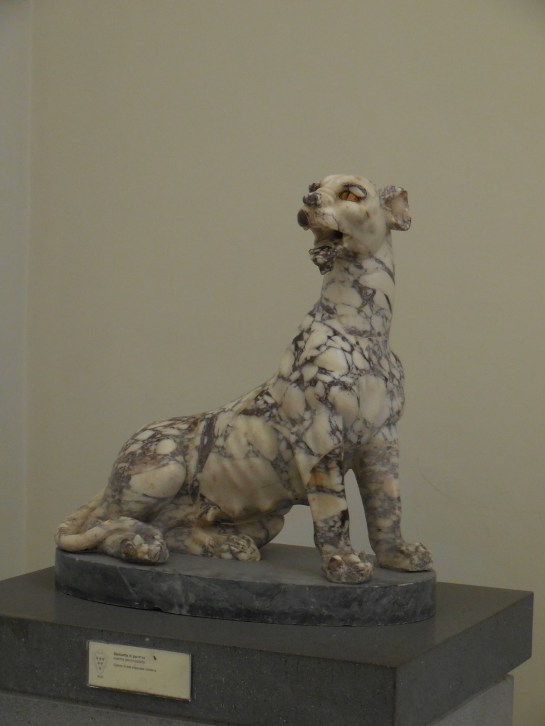
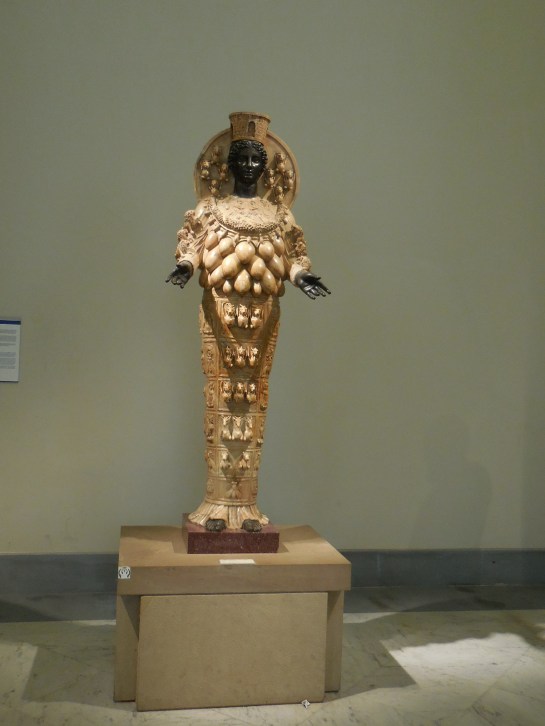
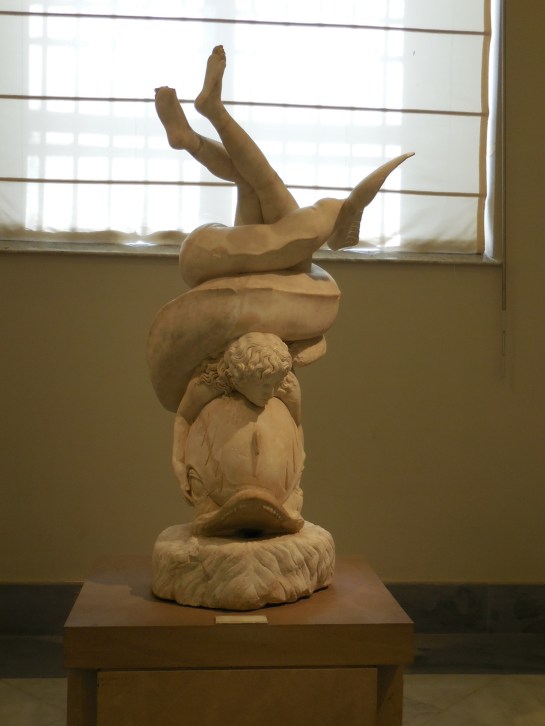
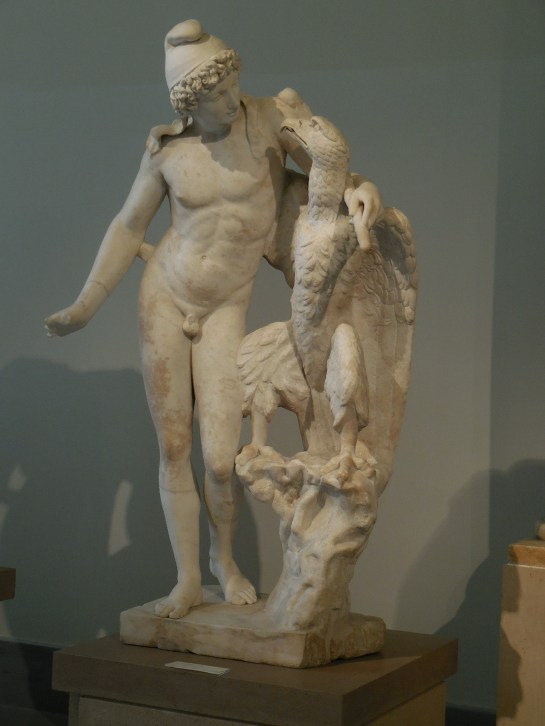
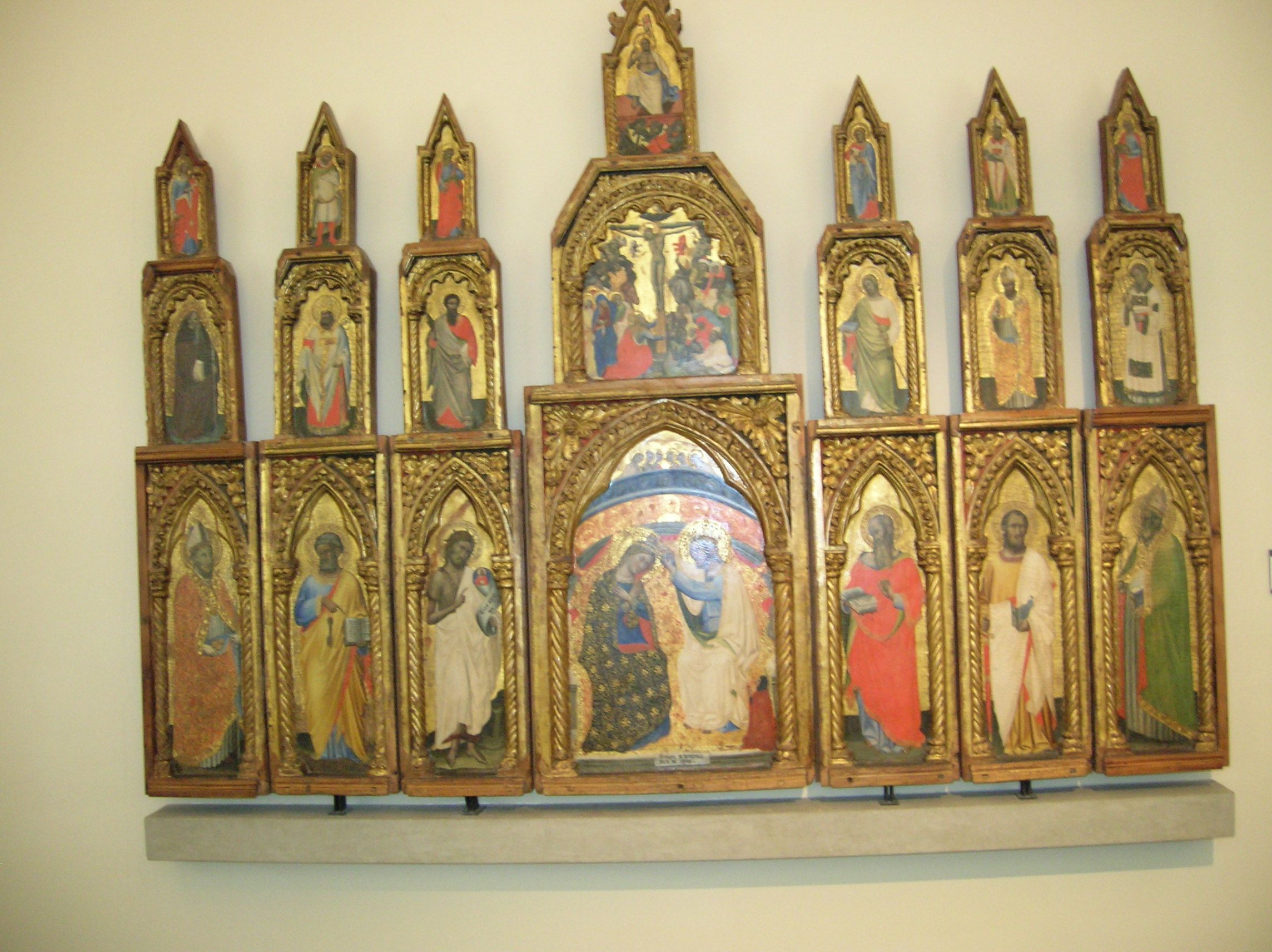
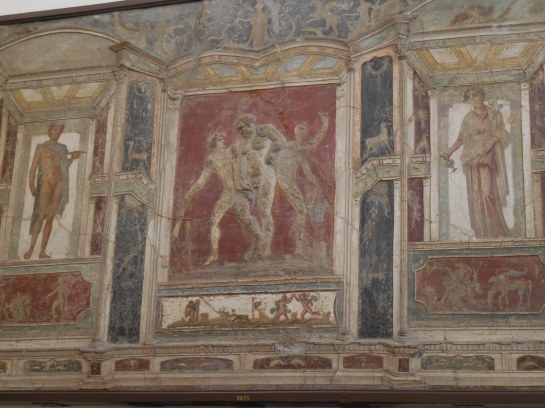
The Archeological Museum in Naples boasts one of the largest collections of antiquities in the world with numerous sculptures, paintings, mosaics, frescoes, jewels, coins and more. Most of the mosaics and frescoes hail from Pompeii and Herculaneum. Items from the Villa dei Papiri in Herculaneum and mosaics from the House of the Faun in Pompeii astound. Discoveries from Cumae also make up the permanent exhibition as do Egyptian artifacts. There is a Secret Cabinet of obscene art, such as statues, paintings and gems, from Herculaneum and Pompeii. Visiting this museum was the highlight of my visit to Naples, and I was most enthralled with the statuary, mosaics and frescoes.

NaplesArchMuseum3

NaplesArchMuseum4

NaplesArchMuseum5

NaplesArchMuseum7

NaplesArchMuseum10

NaplesArchMuseum13

NaplesArchMuseum15

NaplesArchMuseum16

NaplesArchMuseum20

NaplesArchMuseum21

NaplesArchMuseum22

NaplesArchMuseum23

NaplesArchMuseum24

NaplesArchMuseum26

NaplesArchMuseum28

NaplesArchMuseum29

NaplesArchMuseum30

NaplesArchMuseum34

NaplesArchMuseum35

NaplesArchMuseum38

NaplesArchMuseum39

NaplesArchMuseum41

NaplesArchMuseum42

NaplesArchMuseum44

NaplesArchMuseum47

NaplesArchMuseum50

NaplesArchMuseum54

NaplesArchMuseum56

NaplesArchMuseum57

NaplesArchMuseum59

NaplesArchMuseum60

NaplesArchMuseum61

NaplesArchMuseum63

NaplesArchMuseum64

Tracy A. Burns is a writer, editor and proofreader in Prague.


Ravenna Diary

RavennaS.Apollinare8
When I booked a trip with arsviva to Bologna and other towns in the Emilio-Romagna region, I was most interested in seeing the mosaics at Ravenna. I had heard so much about them and yearned to see them with my own eyes. While the other sights did not by any means disappoint, Ravenna proved to be as magical as I had hoped, even more so.

I was fascinated by Ravenna’s glorious history from the 5th to 8th century AD. The golden days of Ravenna began when the city was designated as the capital of the Western Roman Empire in 402. Though the Roman Empire came to an end in 476, it did not at all mean the end of Ravenna’s influence in the world. During the reign of Ostrogoth Theodoric the Great, who had captured the city in 493, Ravenna prospered, though 19th century poetry would present him as a sinner and persecutor. In charge for more than 30 years, Theodoric was set on Romanizing the kingdom, bringing the splendor of Ancient Rome to his own territory. Indeed, Ravenna’s buildings from that era have many Roman features. He was an excellent ruler and a restorer of ancient monuments. Many of the places of worship filled with dazzling mosaics date back to Theodoric’s reign.

Theodoric the Great from www.medievalists.net

Theodoric the Great from http://www.medievalists.net


Theodoric’s tenure also brought peace to Italy. These were good times. For the most part, at least. However, there was more than a little fiction between Theodoric’s religious beliefs and those of the Byzantine Emperor Justinian I. Theodoric promoted Arianism, which focused on the relationship between God the Father and the Son of God. Nonetheless, Theodoric demanded that his people be tolerant of other religion, and he did not attack Catholicism.

Ravenna went through many changes when the Byzantines took over in 553, led by Emperor Justinian I. While the Byzantines brought with them a dramatically different culture and religion, Ravenna still flourished with its mosaics. Ravenna’s magical era came to a definitive halt when the Longobards took charge of the city in 751, but the monuments remain a testimony to the city’s past splendor and significance in Europe.

Ravenna includes eight sites on the UNESCO World Heritage List – the Mausoleum of Theodoric, the Mausoleum of Galla Placidia, the Neonian Baptistery, the Arian Baptistery, the Basilica of Sant’Apollinare Nuovo, the Chapel of San Andrea, the Basilica of San Vitale and the Basilica of Sant’ Apollinare in Classe.

The Mausoleum of Theodoric

The Mausoleum of Theodoric


First we visited the Mausoleum of Theodoric, which the ruler had constructed in 520 AD. A UNESCO World Heritage site since 1996, this structure made of Istrian stone is the only king’s tomb from Theodoric’s era. While I was disappointed that there were no mosaics inside, I was intrigued that the roof was made of one piece of Istrian stone weighing 300 tons. There were two floors, and Theodoric had once been buried on the upper level where a porphyry stood in the middle of the small space. I walked slowly around the porphyry, trying to imagine Goths paying homage to their dearly departed leader. Would they have put flowers on the porphyry? What kind? Or laurel wreaths? I mused that they must have paid elaborate respects here. I imagined the people were pondering over Ravenna’s future, a future without the ruler who had brought peace to Italy and had brought architectural and artistic glory to the city. When the Byzantines came to town, Theodoric’s body was taken away from the mausoleum and the place served as a Christian oratory.
The Neonian Baptistery

The Neonian Baptistery


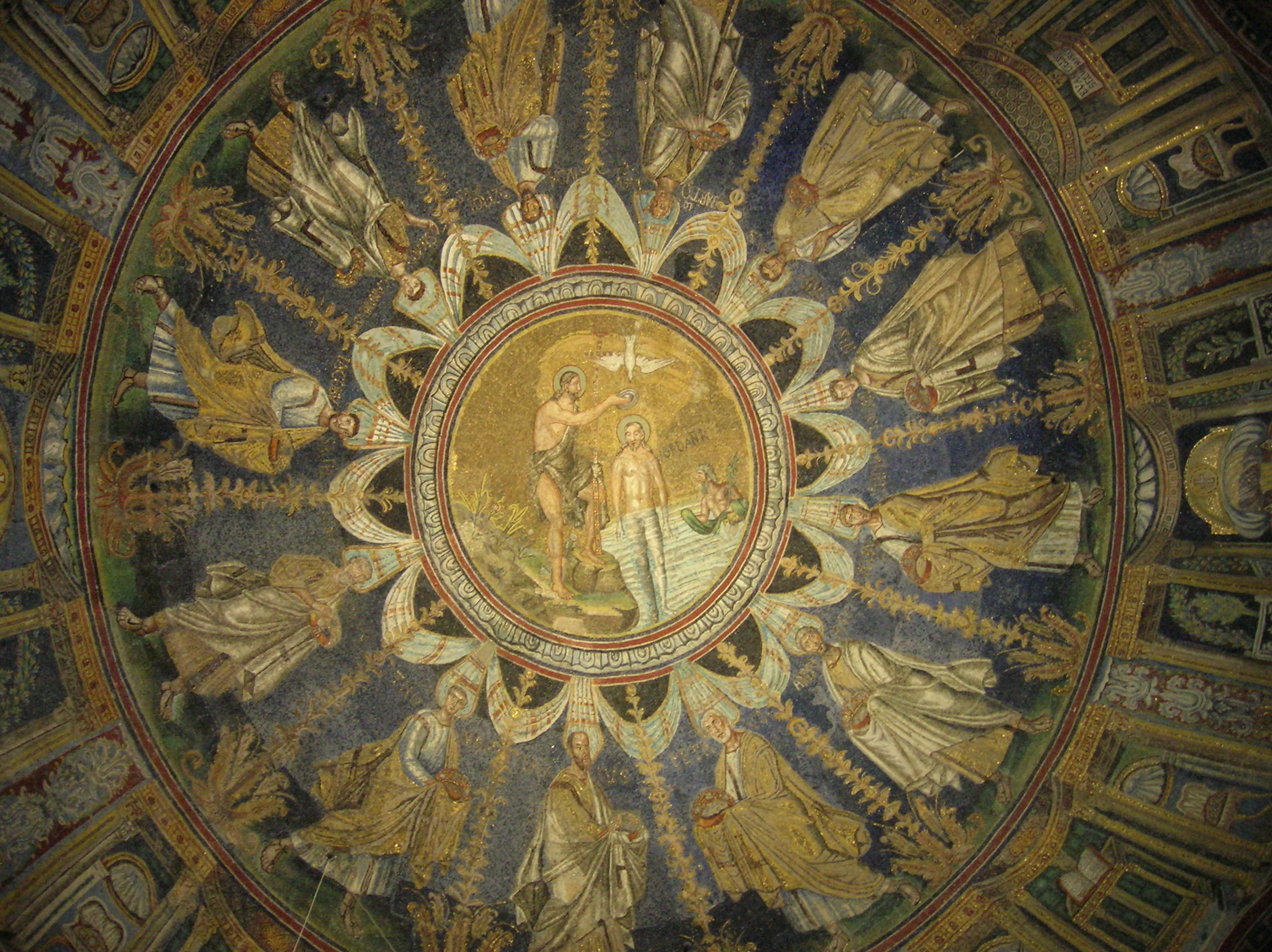
Next we visited the octagonal-shaped Neonian Baptistery, which hailed from the turn of the 5th century. Even though the structure was small, it held so many delights. My introduction to Ravenna’s mosaics was enthralling, to say the least. The mosaic-covered dome features the baptism of Christ in the center as John the Baptist poured water over Christ’s head. Even though only the dome showed off mosaics, it was overwhelming. To think that these mosaics dated back to the end of the 4th or beginning of the 5th century!
The Neonian Baptistery

The Neonian Baptistery


The Mausoleum of Galla Placidia would only make my morning more fascinating. This structure was built to house the tomb of the daughter of Emperor Theodosius, Augusta Galla Placidia, but it never served that purpose as her grave was in Rome. When her brother Emperor Honorius passed away in 423, Galla Placidia took charge because her son was too young to rule. She was a very competent empress, and the city prospered artistically, for instance.

My head was practically spinning. I was standing in a building dating from the 5th century! The Latin cross-shaped mausoleum featured mosaics on vaults, the central dome and lunettes on each end of the four vaults. The central dome was dominated by a cross studded with jewels. Golden stars and angels clad in gold were portrayed against a blue background. In the lunette over the main entrance the mosaic showed Christ gently caressing a sheep. The flock was totally focused on Him. I loved the gold color – Christ was dressed in gold attire and sported a golden halo. The lush green landscape was rocky, and the sky was a beautiful blue. Two lunettes featured deer about to drink baptismal water from a pool. Other details I loved included the red and white clouds on a blue background in the cupola and the books of the four Gospels depicted in one lunette.

What fascinated me most about this mausoleum and about all the mosaics I had seen so far was the use of color. I could not believe that something so many centuries old could survive in such rich, vivid colors. The brilliant colors transported me back way into the past and also invigorated me with an energy to live life to the fullest in the present, making me feel truly alive.

Dante died in Ravenna on September 13-14, 1321.

Dante died in Ravenna on September 13-14, 1321.


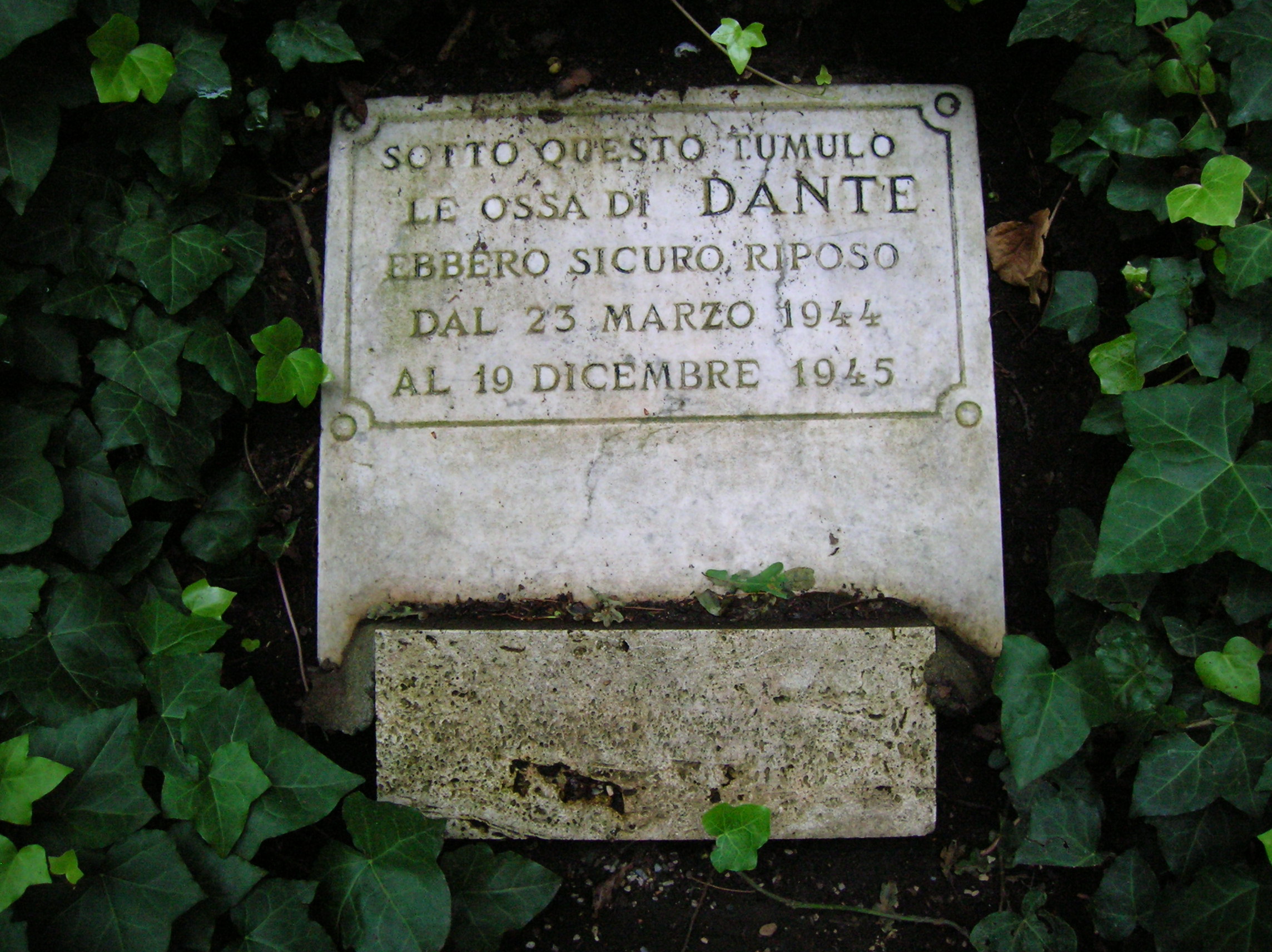
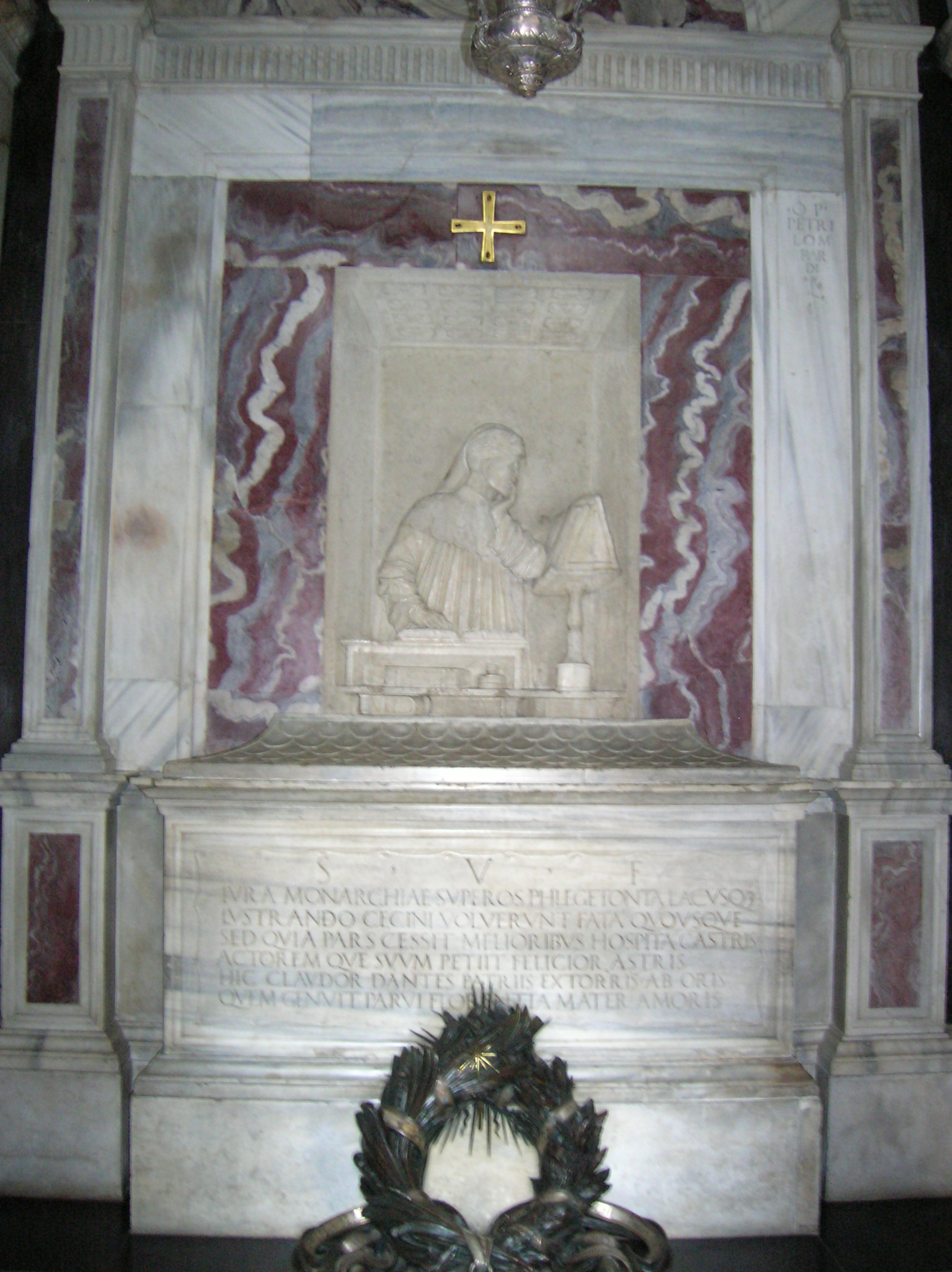
Ravenna has a literary legacy, too. Dante died in Ravenna during the night of September 13 and September 14, 1321 after being exiled from his native Florence for political reasons. The Neo-classical, square-shaped temple that houses the remains of the author of The Divine Comedy and Vita Nova anthology is part of the Church of San Francesco, also called the Church of San Pier Maggiore. A sculpture of “The Supreme Poet” decorates the interior. I was standing in front of the remains of the man whose love for Beatrice had kept him alive. Here were the remains of the man who considered exile a kind of death in itself.

I recalled an intriguing tale concerning Dante’s remains. The Florentines requested that Dante’s remains be returned to them in 1296, 1428, 1476 and 1519. Ravenna refused until 1519. However, when the tomb was opened, the inhabitants of Ravenna discovered that it was empty. It remained a mystery for centuries. Then, in 1885, while reconstruction work was being carried out in the chapel, a small wooden box was found. It included a note explaining that Dante’s remains had been moved there on June 3, 1677. The skeleton was nearly complete. So it seemed that Dante was not destined to leave Ravenna after all.

Small portico of chapel of Church of San Pier Maggiore, where Dante's remains are kept

Small portico of chapel of Church of San Pier Maggiore, where Dante’s remains are kept


Then we visited the Archiepiscopal Museum with its impressive Chapel of San Andrea, which had been recognized by the UNESCO World Heritage List in 1997. The chapel, shaped like a Greek cross, consisted of an oratory and atrium with barrel vault. It hailed back to Theodoric’s reign, when it was privately owned. I was intrigued at seeing Christ clad in armor on the lunette over the entrance. I could not remember seeing many portrayals of Christ in armor. I loved the star-studded sky background behind the cross in the apse. The sky made me feel safe, giving me a feeling of tranquility. Medallions showed Christ, his Apostles and saints. The silver cross in the chapel could be traced all the way back to the 6th century. I was amazed by the attention to detail. No less than 40 images were depicted on embossed silver-plate medallions.

My favorite artifact in the museum, besides the chapel, was Maximian’s ivory throne. I inspected the detail of the ivory reliefs covering the throne. The reliefs included scenes from Christ’s life and much more.

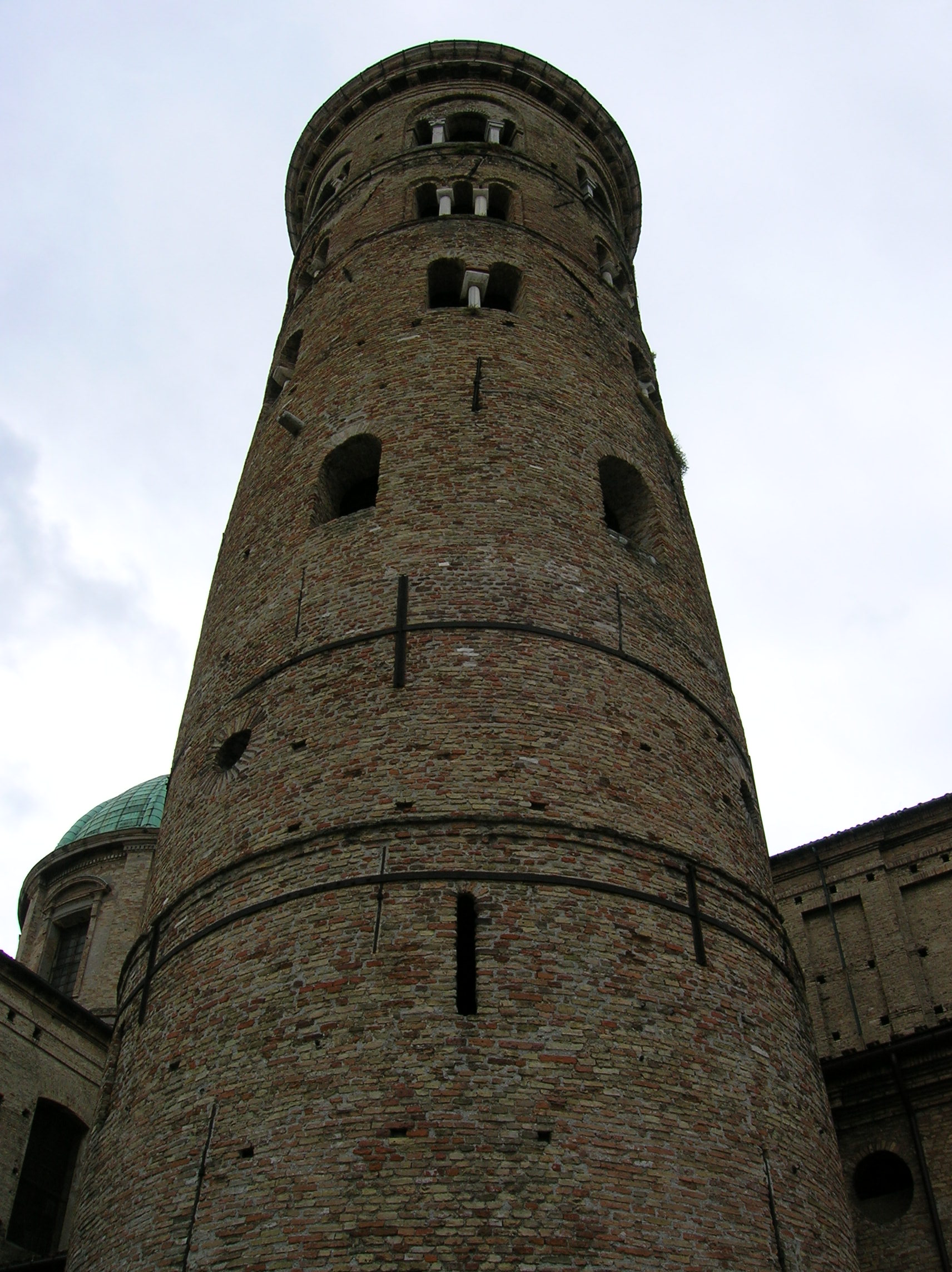
The tower of the Basilica of Sant' Apollinare Nuovo

The tower of the Basilica of Sant’ Apollinare Nuovo


Next we visited what would become my favorite sight, the Basilica of Sant’ Apollinare Nuovo, constructed in the late 5th or early 6th century. Apollinare, sometimes referred to as Apollinaris of Ravenna in English, held a very important place in the history of the town. He was the very first bishop, and his tenure lasted 26 years. It is said he worked miracles. Because he promoted Christian beliefs, he had been banished from Ravenna. Apollinaris paid the ultimate price for his preachings. He was tortured: His persecutors repeatedly stabbed him viciously and poured scalding water over his wounds. He was killed with a sword and martyred. His remains were located in this basilica from the 9th century until they were transferred to the Sant’ Apollinare Basilica in Classe during 1748. The basilica we would visit last, Sant’ Apollinare Basilica in Classe, is located on the spot where Apollinaris was martyred.

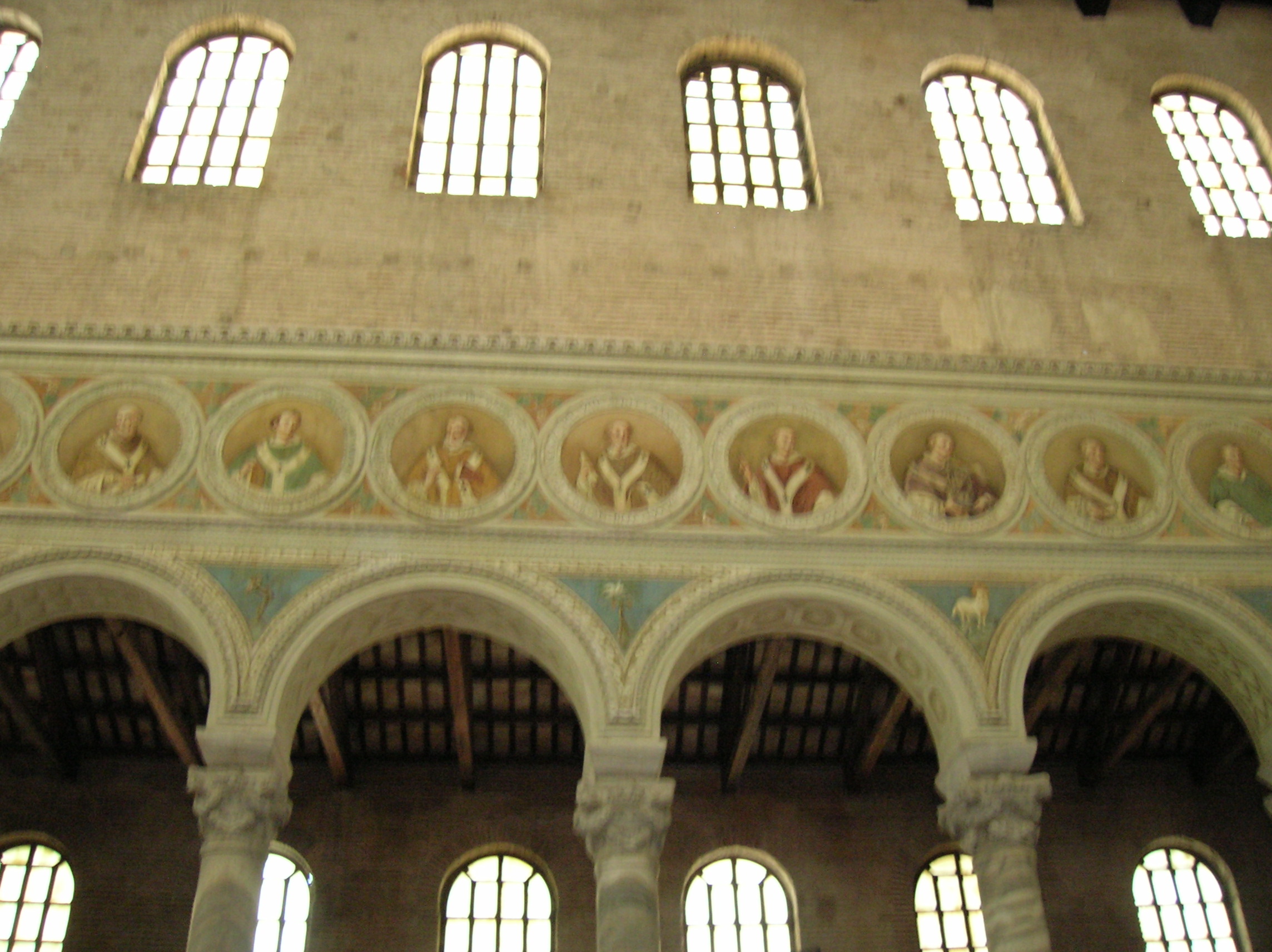
Back to the Basilica of Sant’ Apollinare Nuovo. The exterior was simple in design. I noticed the marble portico, and the cylindrical bell-tower from the 9th or 10th century immediately caught my attention. Inside, the décor was not simple at all. The three-nave structure showed off 24 columns with Corinthian capitals but mostly boasted of the mosaics from Theodoric the Great’s reign. Originally this place had been intended as an Arian place of worship.

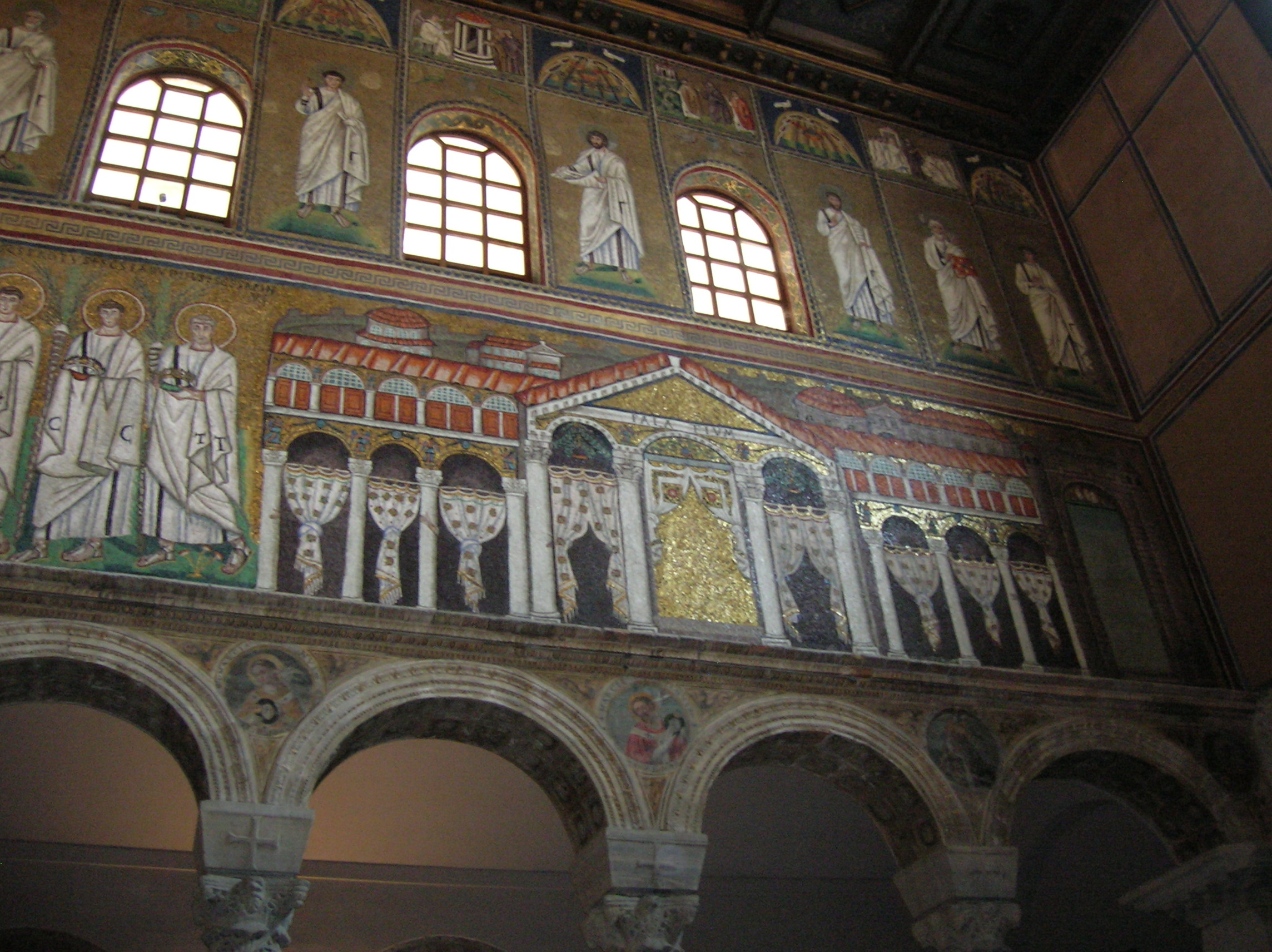
The Basilica of Sant' Apollinare Nuovo

The Basilica of Sant’ Apollinare Nuovo


I concentrated first on the mosaic of Theodoric’s lavish palace with loggias, arcades and a peristyle. I felt as if I could walk into the palace, even though the rendition had some unrealistic spatial characteristics. Still, the palace looked so real to me. I could almost see Theodoric the Great strolling through the loggias.
The Basilica of Sant' Apollinare Nuovo

The Basilica of Sant’ Apollinare Nuovo


On the opposite wall I saw a representation of the port of Classe. One boat had a white checkered sail that looked as though it could be fluttering gently in the wind. It reminded me of those summers in Maine, staring at the boats floating in the bay.
The Basilica of Sant' Apollinare Nuovo

The Basilica of Sant’ Apollinare Nuovo


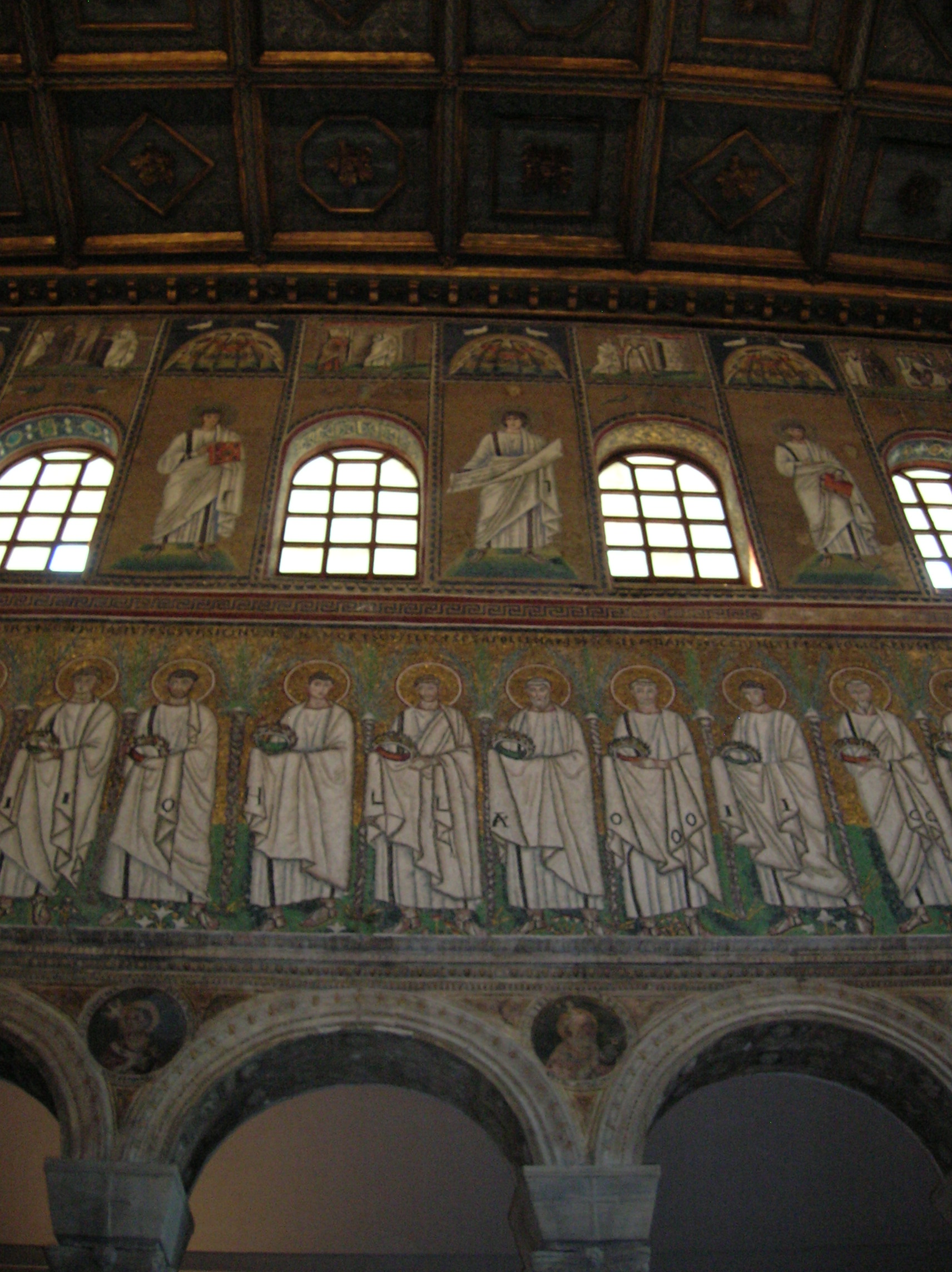
The portrayals of the processions caught my undivided attention. On one side there was a procession of 22 virgins and on the other a procession of 26 martyrs. Because some sections were added much later, it was possible to see Roman characteristics as well as the stylized Byzantine features.
The Basilica of Sant' Apollinare Nuovo

The Basilica of Sant’ Apollinare Nuovo


The 22 virgins were clad in golden tunics and donned crowns. Veils covered their faces. They were headed toward the Virgin Mary who held Jesus on her lap. While the Virgin Mary looked expressionless, staring straight at the viewer, in the four angels surrounding her I saw an attempt at differentiating facial expressions. The Three Kings led the virgins to the Virgin Mary. I noticed how their figures seemed to actually move, as they were bending forward toward the Holy Mother.
The Basilica of Sant' Apollinare Nuovo

The Basilica of Sant’ Apollinare Nuovo


There was much more to see. The octagonal-shaped Arian Baptistery had four apses. Even though only the dome’s mosaics have survived the centuries, it was rich in artistic treasures. In the center Christ stands in hip-high water as John the Baptist baptizes Him. Above Christ’s head is a dove. The outer circle is filled with crown-carrying Apostles separated from each other by palm trees. I liked the detail of the blue precious stones decorating the crowns.

Next we visited Basilica Di San Vitale, which was consecrated by Bishop Maximian in 548. Bishop Maximian, often referred to in English as Maximianus of Ravenna, had served as the 26th bishop of the city. Emperor Justinian I had been his mentor, and the people had resented him for this reason, though he was able to convince them to trust him. Not only did he establish this basilica but he also had Sant’ Apollinare in Classe constructed. He was also a patron of illuminated manuscripts. And who was San Vitale? It is not clear. According to one legend, he was a martyred Roman soldier.

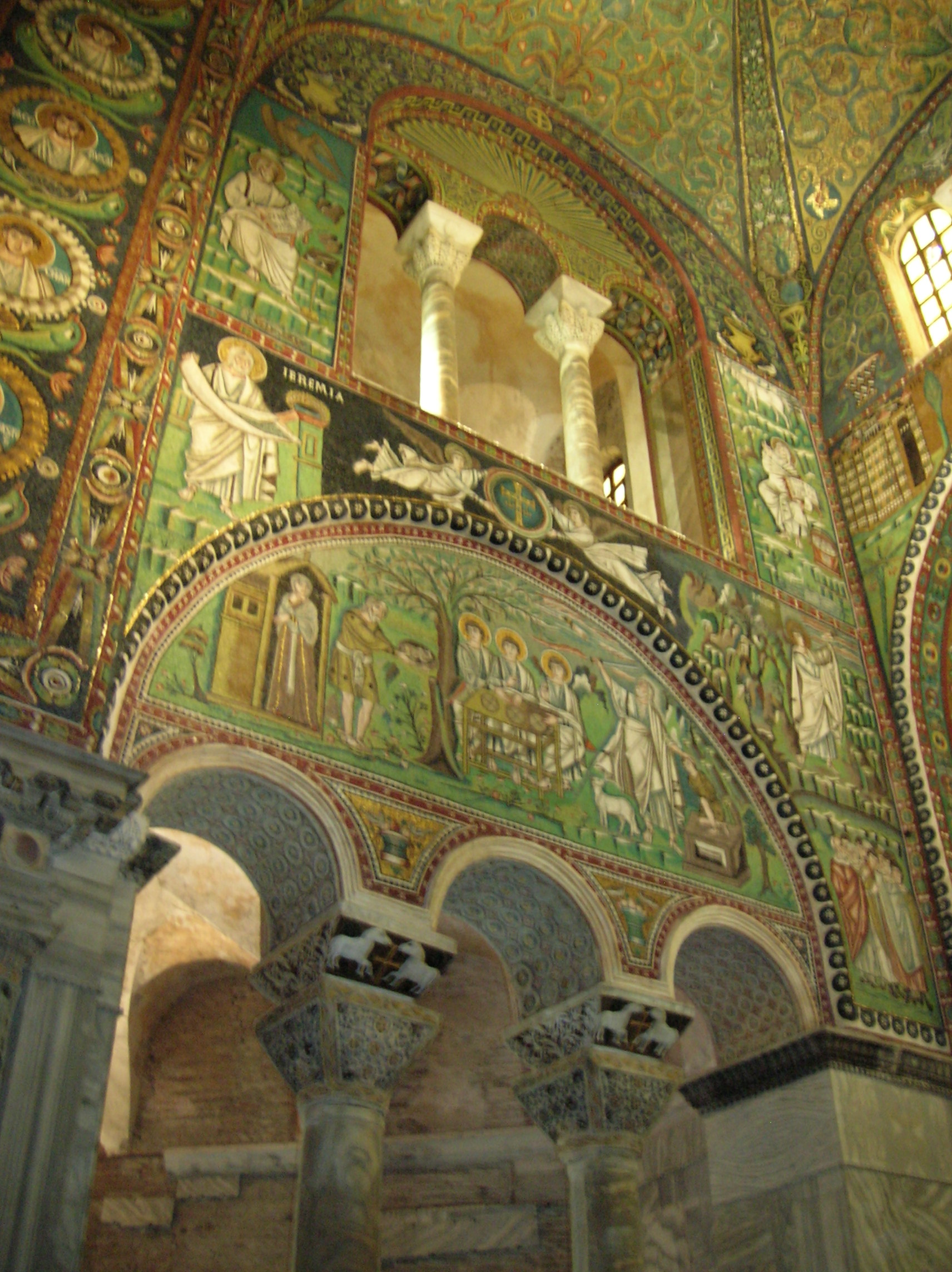
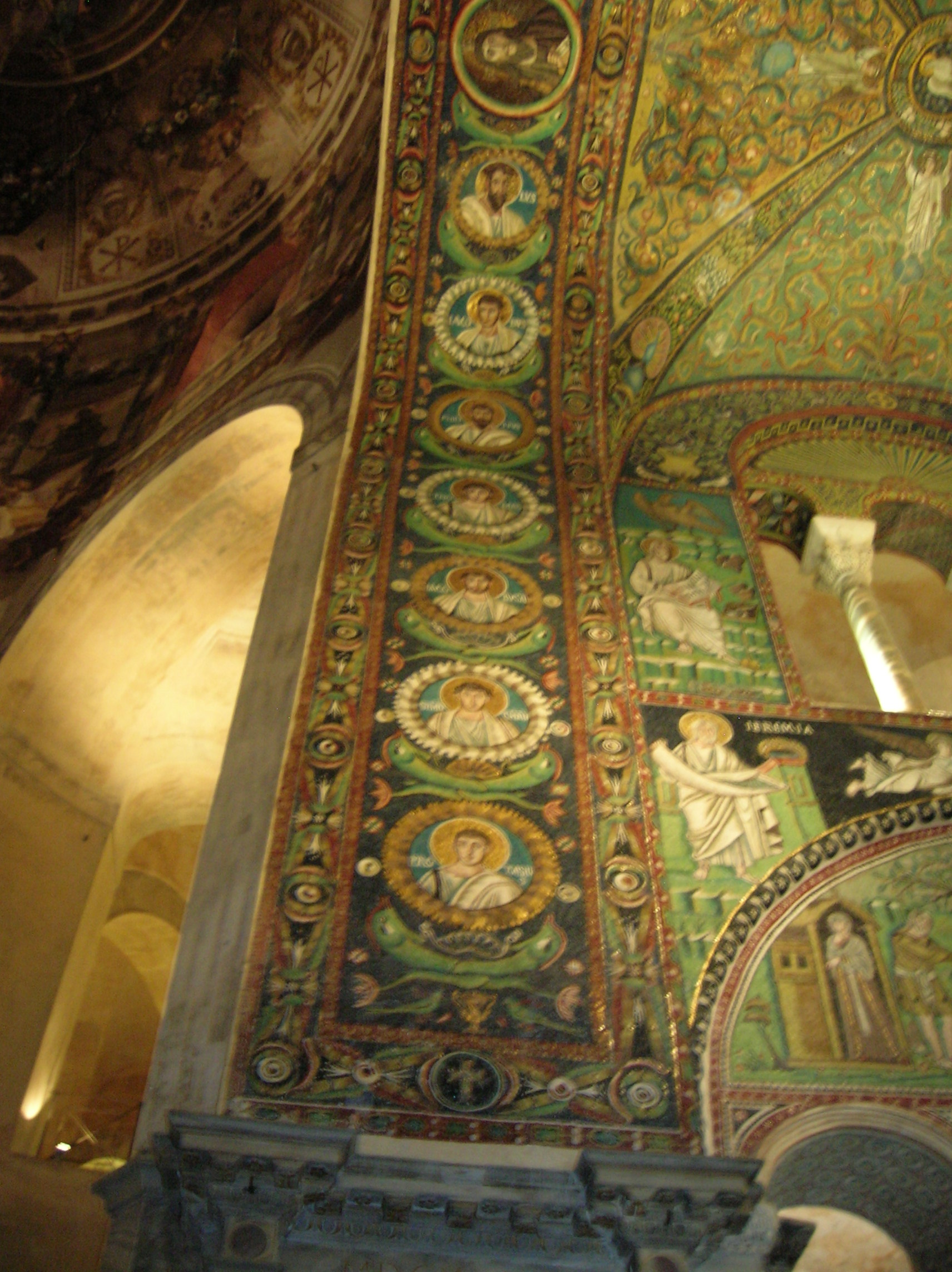
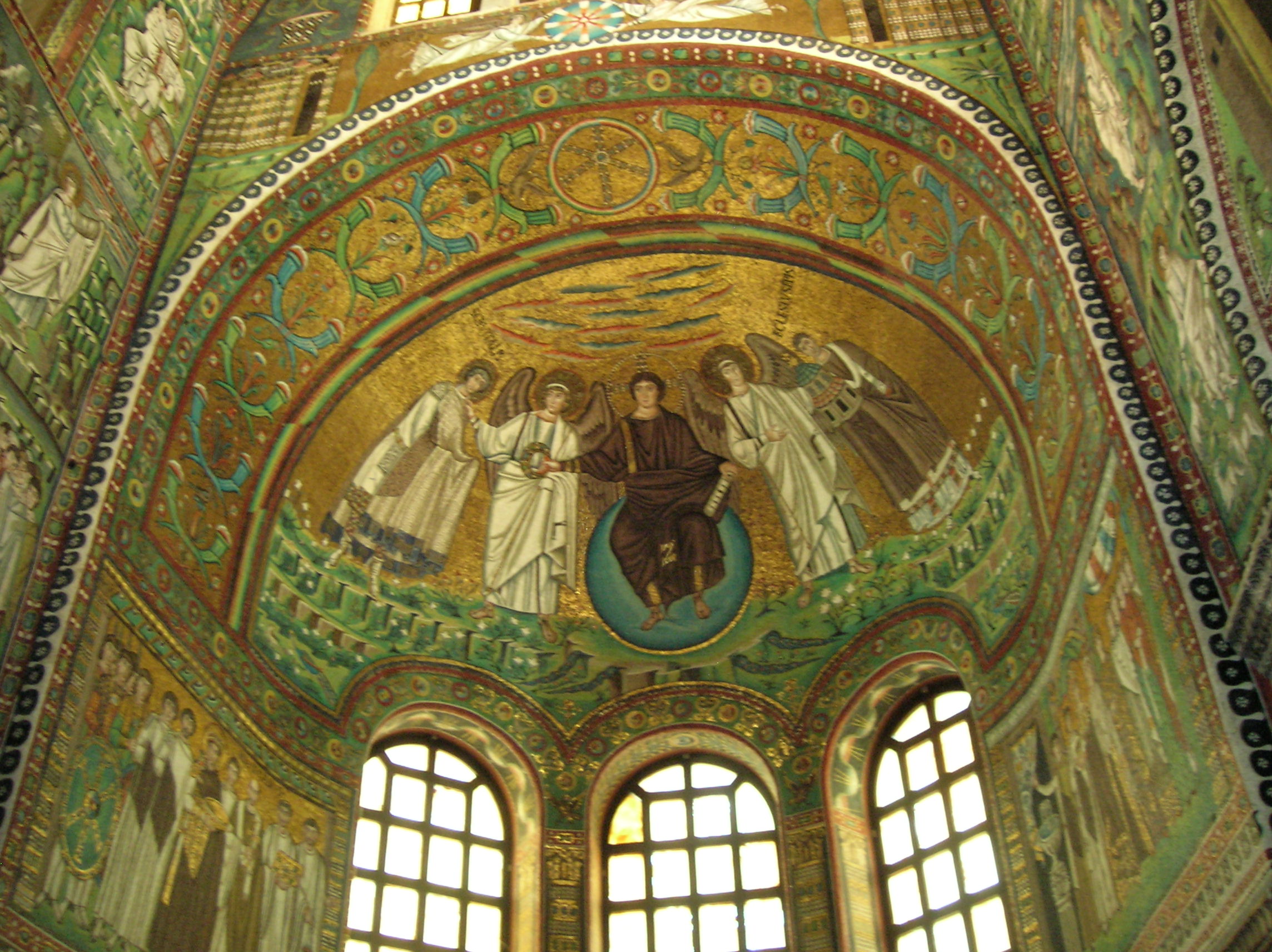
I loved the way the light shined into the basilica. It enhanced the beauty and magic of the mosaics that were found on the walls and in the presbytery and apse, where I marveled at a mosaic depicting Christ, dressed in Roman attire, seated on a blue globe. While he presented Bishop Ecclesio with a scroll, the Bishop held up a model of the church. I noticed how lavish Saint Vitalis’ clothes were. I loved the golden background and especially the detail of the red, blue and white clouds.

The Basilica of San Vitale

The Basilica of San Vitale


Another mosaic showed Emperor Justinian with Bishop Maximian and retinue, and yet another depicted Empress Theodora with her retinue. She was clad in purple, which made the mosaic even more brilliant in color. She wore pearls, a nice detail. I recalled that the empress had once worked in the circus as a dancer or bear-tamer. Who would have thought that this circus performer would become an intelligent politician?
The Basilica of San Vitale

The Basilica of San Vitale


In the panel with Emperor Justinian I, loved the detail of the crown with sparkling emeralds. Bishop Maximian stood by his side gripping a golden cross. The detail of the precious stones that decorated the cross was phenomenal. I also noticed that the soldiers, all decked out in gold, were depicted as individuals rather than sporting the same facial expressions. I mused that they looked like they liked their jobs. It was interesting how the courtiers covered their hands in the presence of their rulers.
The Basilica of San Vitale

The Basilica of San Vitale


At the Basilica of San Vitale the panels with the emperor and empress bore typical traits of Byzantine art. In the rendition of Emperor Justinian and Bishop Maximian et al, the figures faced the viewer, and their faces lacked even the slightest hint of expression. Also, the figures were rigid. Yet this was a realistic portrayal as well because emperors were required to stand or sit completely still to impress on their subjects the divine solemnity of their rule. Still, there were some attempts to differentiate one character from another.

What impressed me the most was the detail that had such historical value. I marveled at how a picture could speak a thousand words. Historians learned about the way people of this period dressed and what kind of hairstyles they had. The jewelry and fabrics of clothing were other helpful features for those interested in the era.

The Basilica of San Vitale

The Basilica of San Vitale


There were also many dazzling mosaics in the presbytery on the wall, loggia, women’s gallery and vault. I especially liked the four peacocks perched on blue and white globes. I liked the detail of the feathers. They brought to mind the peacocks strutting in front of Ploškovice Chateau during that visit to north Bohemia in 2005. I also was drawn to the star-studded sky.

Lastly, we visited the red brick Sant’ Apollinare in Classe with its cylindrical bell-tower. The section of Ravenna called Classe had been situated on the seashore before the sea withdrew. Construction started on the basilica in 532 AD, and it was consecrated in 549 AD. There used to be a cemetery here that included Apollinaris’ grave. Inside there were two rows of 24 elegant marble columns with Byzantine capitals. The apse was filled with mosaics of two parts – those above the cross and those below it. Above the cross we could see the transfiguration of Christ on Mount Tabor. There were 99 gold and silver stars in the background, or so I was told. I was too mesmerized by the stunning artistic treasures to count. The area below the cross was dominated by the figure of Sant’ Apollinare surrounded by 12 sheep among rocks and greenery. Apollinaris was raising his arms, gesticulating as he prayed fervently.

The Basilica of Sant' Apollinare in Classe

The Basilica of Sant’ Apollinare in Classe


Ravenna had more than lived up to my expectations. What captivated me most about the mosaics was the use of bright color schemes. The vividness of the images made the time periods when they were created all the more vivid. I had learned about Roman and Byzantine art and the Arian religion and now knew some of the names of the main players during Ravenna’s glorious days. I had seen Goth culture merge with Roman culture. I had seen red brick structures whose exteriors spoke of simplicity and harmony and whose interiors were complex and dazzling, filled with symbolism and color.

We went back to Bologna, and I was more than satisfied with the day trip. I knew that Ravenna would always hold a special place in the memories of my travels.

Tracy A. Burns is a writer, proofreader and editor in Prague.

The Basilica of Sant' Apollinare Nuovo

The Basilica of Sant’ Apollinare Nuovo

Bologna, Italy Diary

A street in Bologna

A street in Bologna

Note: No photos were allowed to be taken in the Basilica of Saint Petronio and in the Oratory of St. Cecilia.

Before traveling to Bologna, I studied the town’s history and was amazed that so many cultures had made such significant imprints on the city. The Romans, the Etruscans, the Byzantines, the Goths, the Gauls, the Celts, the Franks, the Lombards– they all played major roles in the town’s early history. It fascinated me that Bologna’s history dated all the way back to the Bronze Age of 1200 BC. During 9 BC, as a village called Felsina, it made a name for itself in ceramics and bronze objects. The town was under Etruscan rule during the 6th century BC, then the Gauls took over, followed by the Celts. The Romans defeated the Celts in 202 BC. Under Roman leadership the town was transformed into a wealthy and important Roman colony called Bononia.
After dark days of Barbarian raids, the Byzantines took charge in 553 BC and spread Christianity throughout their realm. The Goths and Longobards also made appearances in later centuries. Charlemagne conquered the town, and the Franks became a major influence. When Charlemagne gave the town to the Church, conflict broke out among the residents who wanted the Church to be in charge and those who wanted the town to be part of the Italian Kingdom. The conflict tied to Church versus State under Charlemagne foreshadowed the many centuries of warfare between the pro-Church Guelphs and pro-Emperor Weilblingen and deeply divided cities and territories. Bologna did, in fact, become part of the Italian Kingdom in 898 AD.

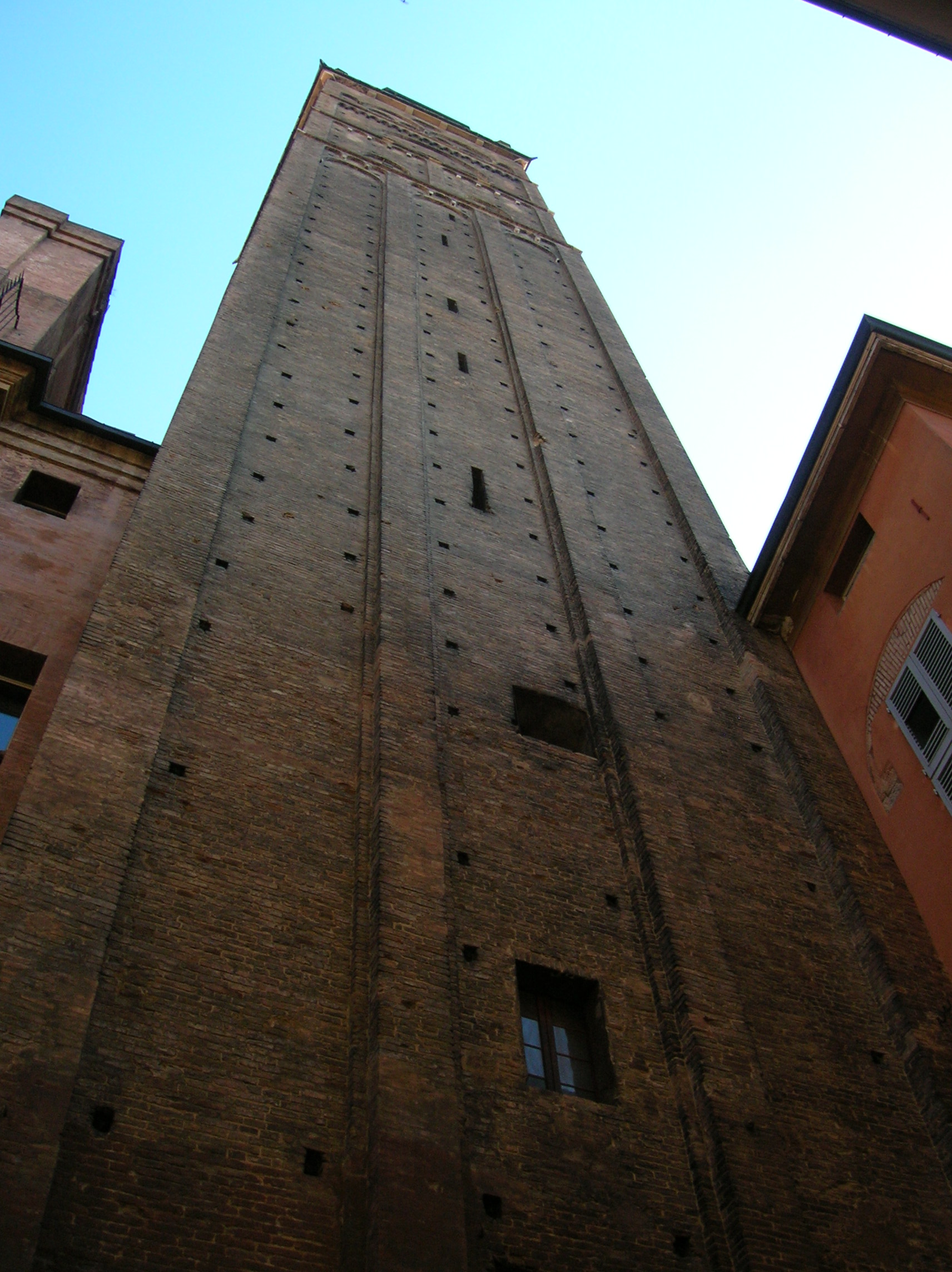
The Asinelli tower is the highest in the city at 98 meters.

The Asinelli tower is the highest in the city at 98 meters.

During the 11th century the first university in Europe was established in Bologna. After some civil unrest, the Church took over in the 13th century, and Bologna became very wealthy. By the end of that century, Bologna had the fifth largest population in Europe. During the 12th and 13th centuries, the most prosperous citizens competed by building towers as lookouts and defense structures in case war broke out. Except for the 1795 to 1815 rule of Napoleon, Bologna was part of the Papal State from 1506 to 1860.
The 19th century was fraught with battles, though. Bologna belonged to the Kingdom of Sardinia and then became part of the Kingdom of Italy. At the end of World War I, the town found itself in dire straits with many unemployed and homeless people. The situation during World War II was no better, and the Nazis took over in 1943, the year that bombs fell on the town twice. In April of 1945, Bologna was liberated by the sole partisan unit in Italy that was officially suited and supplied with arms by the Allies. Now nicknamed La Saggia (the Wise One), La Grassa (the Fat One) and La Rossa (the Red One), Bologna is the capital of the Emilia Romagna region with 410, 000 residents.
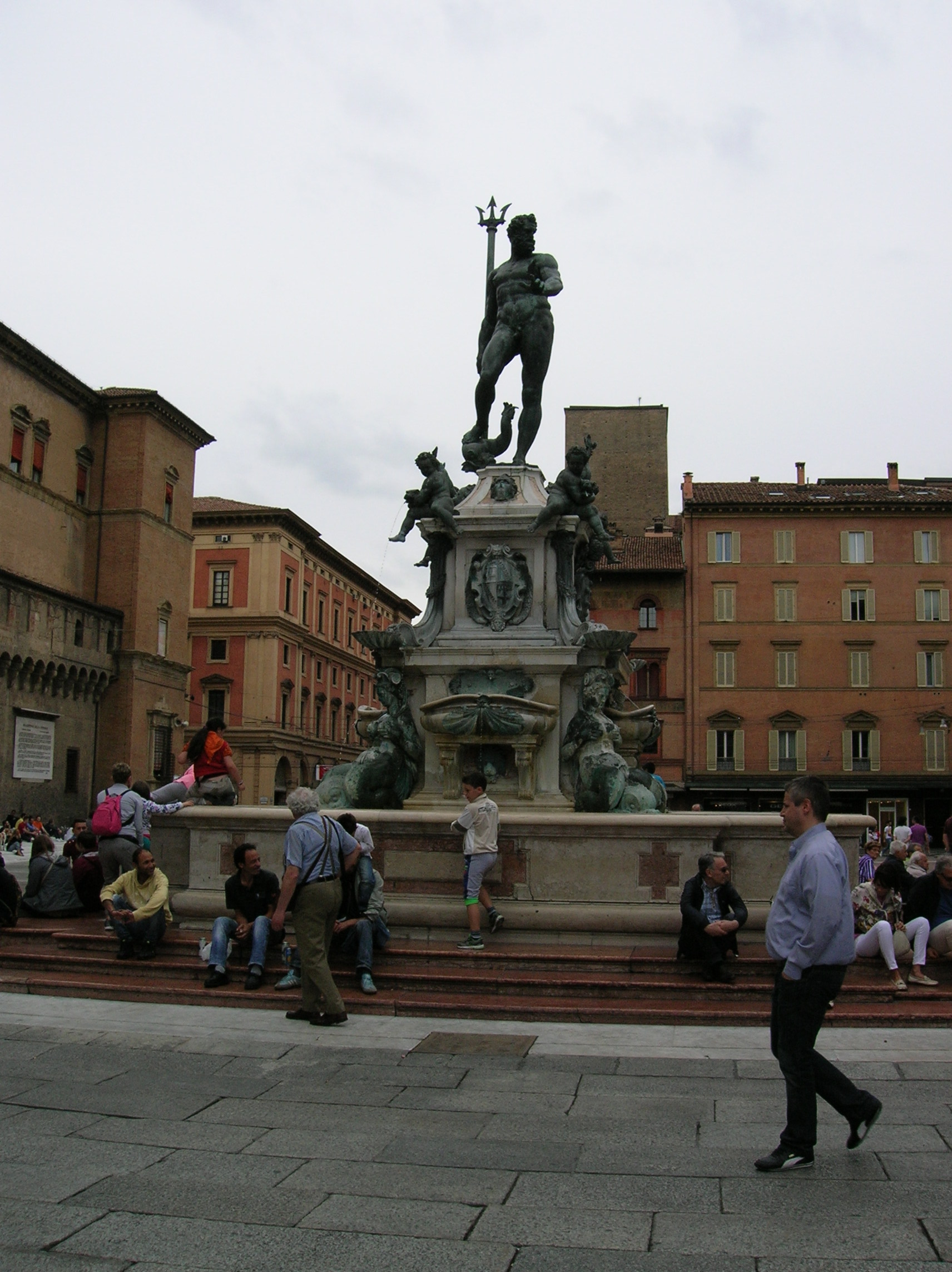
The statue of Neptune is a symbol of the city.

The statue of Neptune is a symbol of the city.

I knew the city was most famous for its food, its university and its towers as well as its red brickwork. Still, I did not have great expectations of Bologna. I thought it would be an intriguing town, but I was most excited about the trip to Ravenna on the itinerary with this five-day tour operated by the Prague-based arsviva travel agency.
I was amazed by the romantic porticos – they spread 59 kilometers and gave the town a unique flavor. And then there were the towers. I stretched my neck and gazed in awe at the imposing structures. The most famous towers in Bologna, the Asinelli (98 meters tall) and the Garisenda (48 meters tall, formerly 61 meters) had been constructed in 1109 and 1119 respectively as two noble families competed to see who could build the highest tower. Garisenda is the “leaning tower” of Bologna with a slant of 3.25 meters. While more than 100 towers were built in Bologna during the 12th and 13th centuries, less than 20 have survived.
But while Bologna represents food, towers and porticos to some, to me the highlights of the city were the magnificent churches. To be sure, Bologna ranks as one of the most romantic and unique cities I have ever visited. Bologna was mystical and mysterious. Bologna was magical.
The exterior of the Basilica of Saint Petronio

The exterior of the Basilica of Saint Petronio

One of the most significant landmarks in the town and one of the most impressive sights for me was the Basilica of Saint Petronio. Built to honor a 5th century bishop of Bologna, the Basilica of Saint Petronio is the largest church in Bologna and the 15th largest in the world at 132 meters long and 66 meters wide. Often depicted holding a model of this very church, Saint Petronio was important in part because he built the Church of Santo Stefano, inspired by his travels to religious sites in Jerusalem.
To stand inside the solemn structure is awe-inspiring and overwhelming. To think that the foundation stone was laid way back in 1390 (though the structure was not completed until 1670) was mind-boggling. Entering the church, I felt as if I had been transported back centuries. It consisted of 22 chapels, 11 on each side. Four carved crosses were supposedly built by Saint Petronio at the four cardinal points of the city. The three-aisled Gothic interior was supported by 10 pillars. The basilica was shaped as a huge cross. The largest sundial in the world, measuring 66.8 meters and hailing from 1655, was inlaid on the floor.

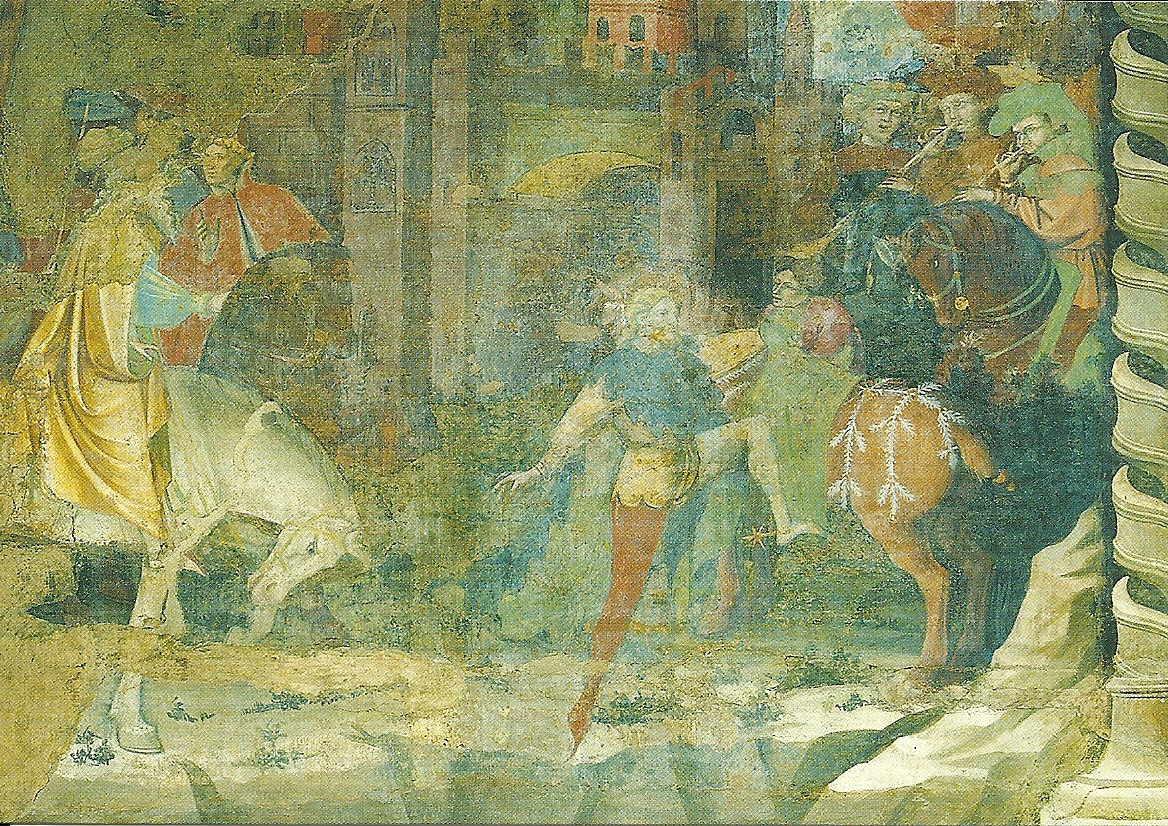
Postcard of Chapel of the Magi, showing the Journeys of the Magi, fresco by Giovanni de Modena, 1410

Postcard of Chapel of the Magi, showing the Journeys of the Magi, fresco by Giovanni da Modena, 1410

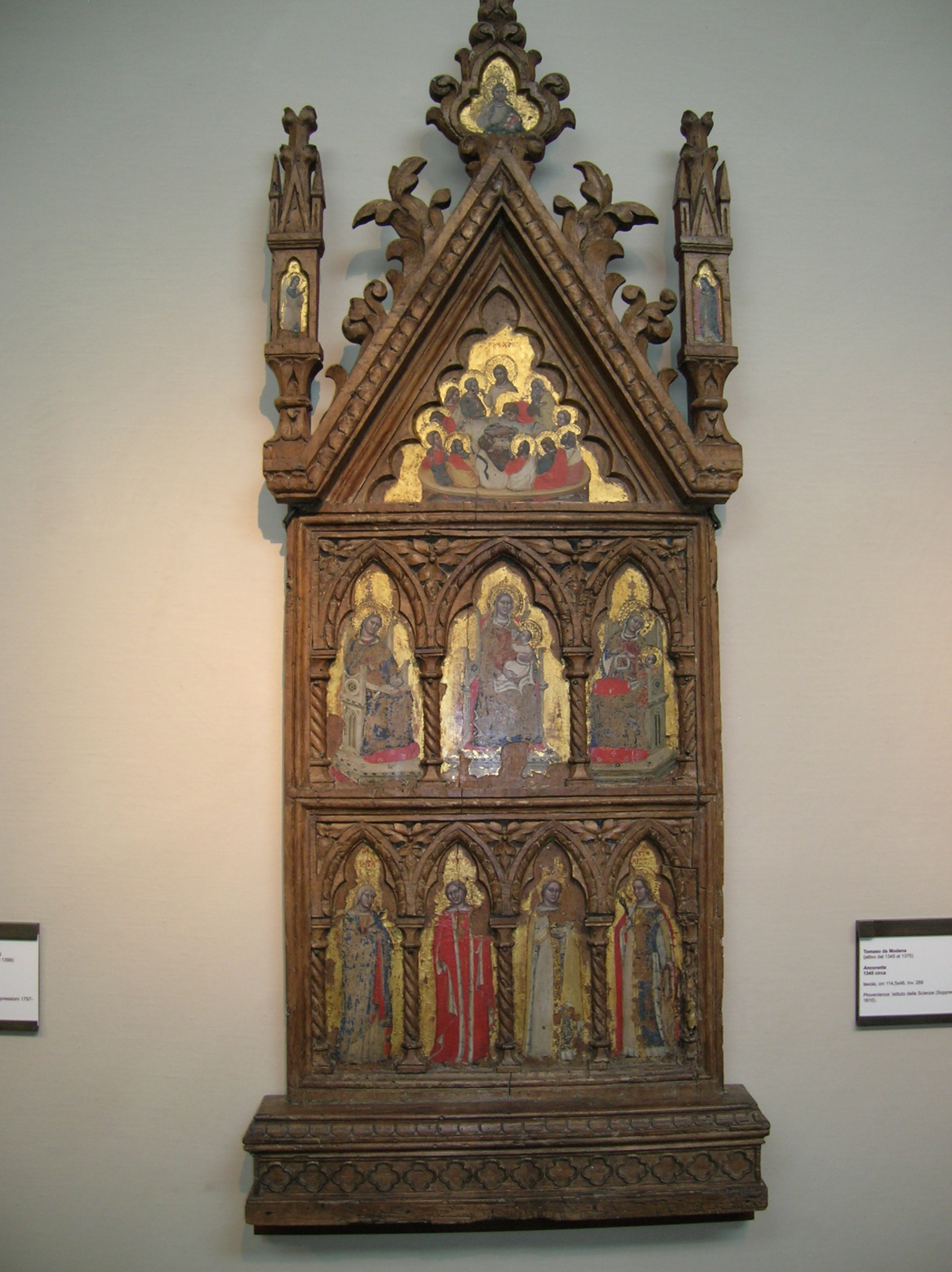
What captivated me the most was the fourth chapel on the left, The Chapel of the Magi. I stared at the Gothic altarpiece with the 27 exquisitely carved, wooden, painted figures, and I was awestruck. Just think of how much work it took to so meticulously carve and paint those figures! I could not peel my eyes away from it. When I finally did, I saw something else magnificent. On the left-hand side wall near the top Heaven was depicted, with the crowned Virgin Mary surrounded by saints.
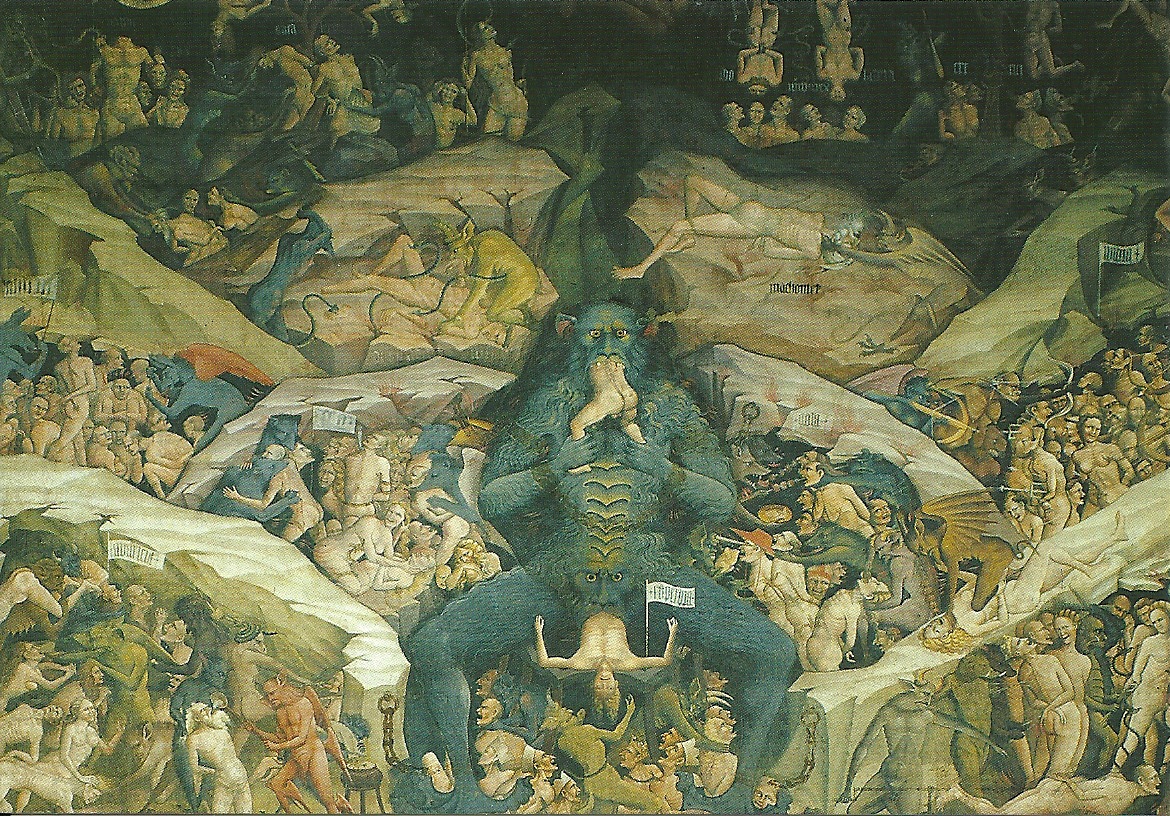
Underneath that idyllic rendition was Hell – right out of Dante’s Divine Comedy. Lucifer, resembling a gigantic monster, was devouring one of the three traitors – though I could not tell if it was Brutus, Cassius or Judas, as described in the 34th canto. The image was much more than grotesque. It was terrifying. For me it represented all the evil in the world. It brought to mind criminal acts, betrayal, hatred. The travels of the Magi were also pictured along with scenes from Saint Petronio’s life. The stained glass in the chapel hailed from the 15th century.

Postcard of the Chapel of the Magi with Lucifer as the central figure in Hell

Postcard of the Chapel of the Magi with Lucifer as the central figure in Hell

The basilica held other delights, too. The frescoes of the Chapel of Saint Abbondio dated from the 15th century. I tried to imagine the festive atmosphere when Charles V was crowned Emperor in this chapel by Pope Clement VII during 1530. What had the invitees worn? What had they talked about while waiting for the coronation to begin? Where had they gone after the historic event?
The second chapel on the left was dedicated to Saint Petronio, and his skull was kept in a silver shrine. The head of this patron saint of Bologna had only been in this basilica since 2000; before that it had been housed in the Basilica of Santo Stefano. Marbles, bronzes, statues and frescoes also decorated the holy space.

Postcard of the Chapel of the Magi, Journeys of the Magi, fresco by Giovanni da Modena, 1410

Postcard of the Chapel of the Magi, Journeys of the Magi, fresco by Giovanni da Modena, 1410

The Chapel of Saint Ivo featured two intriguing clocks. The clock on the left-hand side showed the real time in Bologna. The one on the right, though, depicted the time as seen on Italian clocks from 1857 to 1893, when time started to be counted in the evening. The huge image of Saint Christopher was imposing, too.
The seventh chapel on the left, the Chapel of Saint James, featured a 15th century altarpiece but was perhaps best known for containing the remains of Napoleon’s sister, Elisa Bonaparte, who died in 1845, and those of her husband, a member of the Corsican nobility named Prince Felix Baciocchi, who attained military and political prominence. Elisa served as Princess of Lucca and Piombino, Grand Duchess of Tuscany and Countess of Compignano. She was a patron of the arts who set up academic institutions, had a new hospital built in Piombino, worked with charities and organized free medical help for the poor.

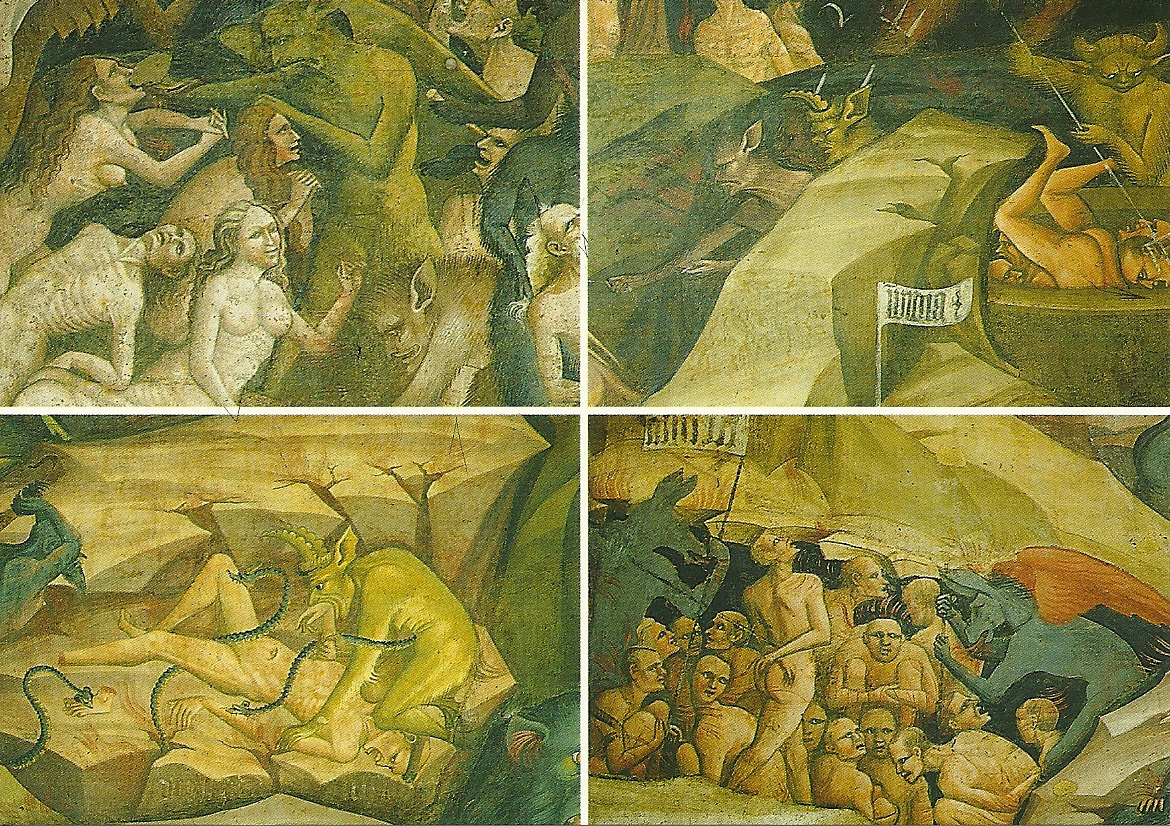
Postcard of Chapel of the Magi, The Inferno, frescoes by Giovanni da Modena, 1410

Postcard of Chapel of the Magi, The Inferno, frescoes by Giovanni da Modena, 1410

The 15th chapel near the left wall was where Pope Clement VIII conducted mass in 1598 before he walked barefoot to greet his followers in the main square, the Piazza Maggiore. The Our Lady of Peace Chapel was connected with an intriguing story. An irate soldier who lost much money while gambling had struck the Madonna in this chapel with his sword, and the sculpture came closing to falling on his head. He was sentenced to death but later pardoned because he had prayed so fervently. There was a 15th century figure of the soldier near the left wall.

All this stunning art work left me dizzy with wonder as I gaped at the interior, not wanting to leave, feeling compelled to stay there forever just gazing at the various chapels, noticing more and more astounding details.
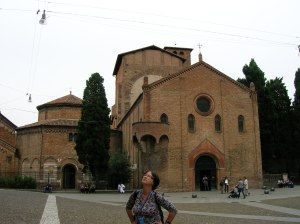
Basilica of Santo Stefano

Basilica of Santo Stefano

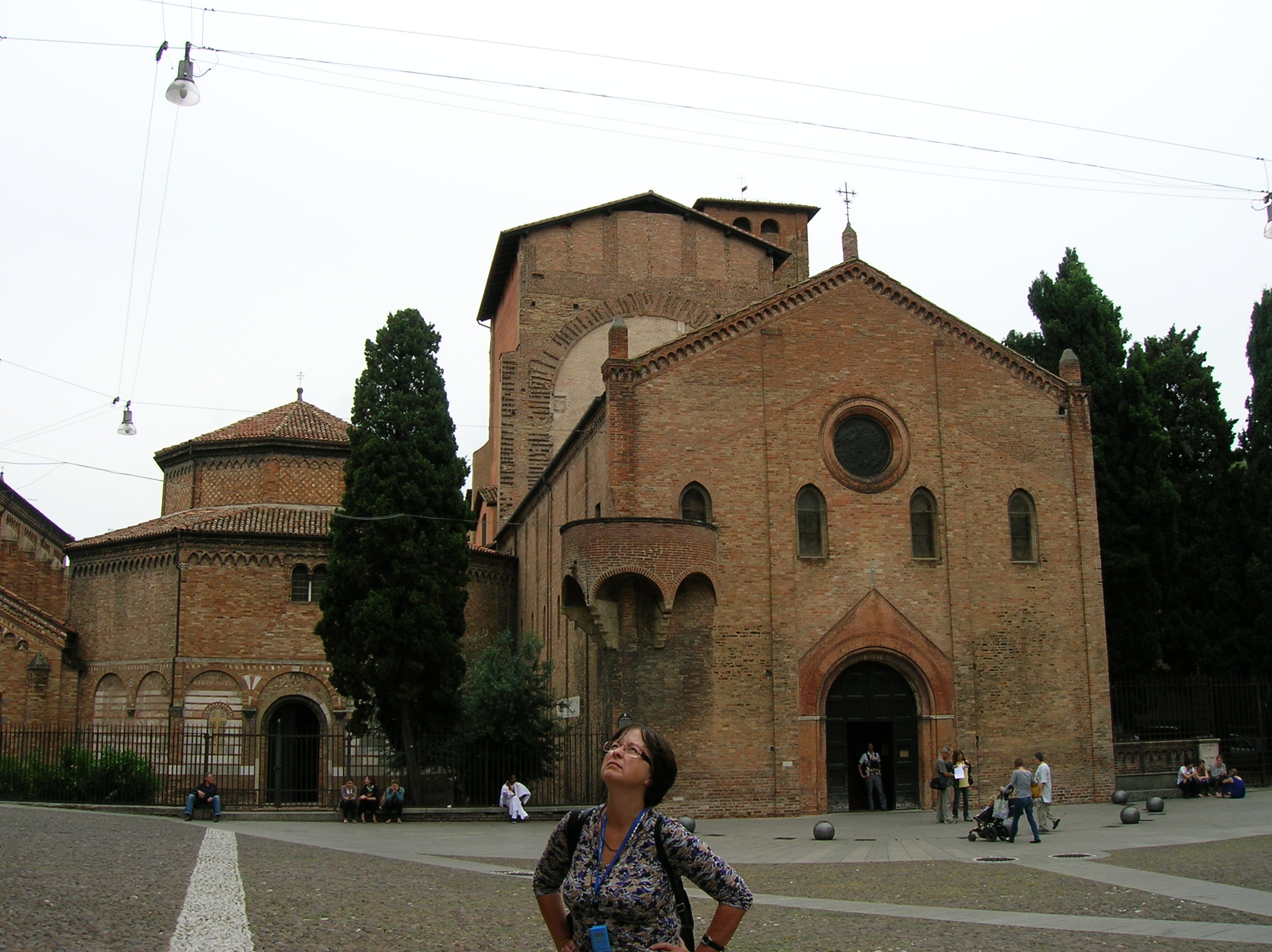
I was also fascinated by the Basilica di Santo Stefano, also called “The Seven Churches,” though now there are only four. It intrigued me so much because so many cultures had played a role in its development over the centuries – Roman, ancient Christian, Byzantine, Lombard, Frank, Ottonian – people of all these cultures had once gathered at the complex that goes back at least 2,000 years.
Founded in the early years of 5 AD by Petronio, the bishop of Bologna who would be buried there and would become canonized. It was built on the site of a first century AD pagan temple dedicated to Isis which was built over a spring. Petronio’s visit to Jerusalem even inspired him to create the only copy in the world of the Holy Sepulchre of Christ. In fact, this complex used to be called “Jerusalem.” Now the Oliveitani Order lives there. Before that Benedictine monks and Lombards had been among the owners of Santo Stefano.

Church of the Crucifix

Church of the Crucifix

I entered the Church of the Crucifix and admired its austere Romanesque style. Once a Lombard church, this holy place has no aisles. A striking papier-mâché Pietà scene stood out on the right side. Stairs led to the presbytery. A yellow marble altar and a fresco of the Crucifixion decorated the church, too.

More stunning decoration at the Basilica of Santo Stefano

More stunning decoration at the Basilica of Santo Stefano

What I loved about the crypt were the various styles of the columns’ capitals that divided the nave and aisles. I saw cubic, Frank and Tuscan styles of capitals. A column with no capitals was connected to an intriguing story. Supposedly, it was forged from two stones that Petronio had taken from Jerusalem. The remains of Saints Vitalis and Agricola, Bologna’s first martyrs from 304 AD, were kept in the crypt, too. Christian Agricola had convinced his slave Vitalis also to take up the Christian faith.

Copy of the Holy Sepulchre in Jerusalem, Basilica of the Holy Sepulchre

Copy of the Holy Sepulchre in Jerusalem, Basilica of the Holy Sepulchre

Next came the outstanding Basilica of the Holy Sepulchre. This was the part that began as a pagan temple, constructed on the site of a spring. I tried to imagine all the people who had entered this place since 1 AD. What had they been thinking about? How had they lived? What had their daily life been like? What were the different kinds of services held here? The model of the Holy Sepulchre in Jerusalem astounded me. Just think: I was looking at the only copy of this holy structure in the world. It was breathtaking. Dimly lit, the space looked mystical and mysterious as if it held many secrets that would never be revealed. Saint Petronio’s remains were under a grill in the center of the model sepulchre, but, as I mentioned earlier, his head was housed in the Chapel of San Petronio.

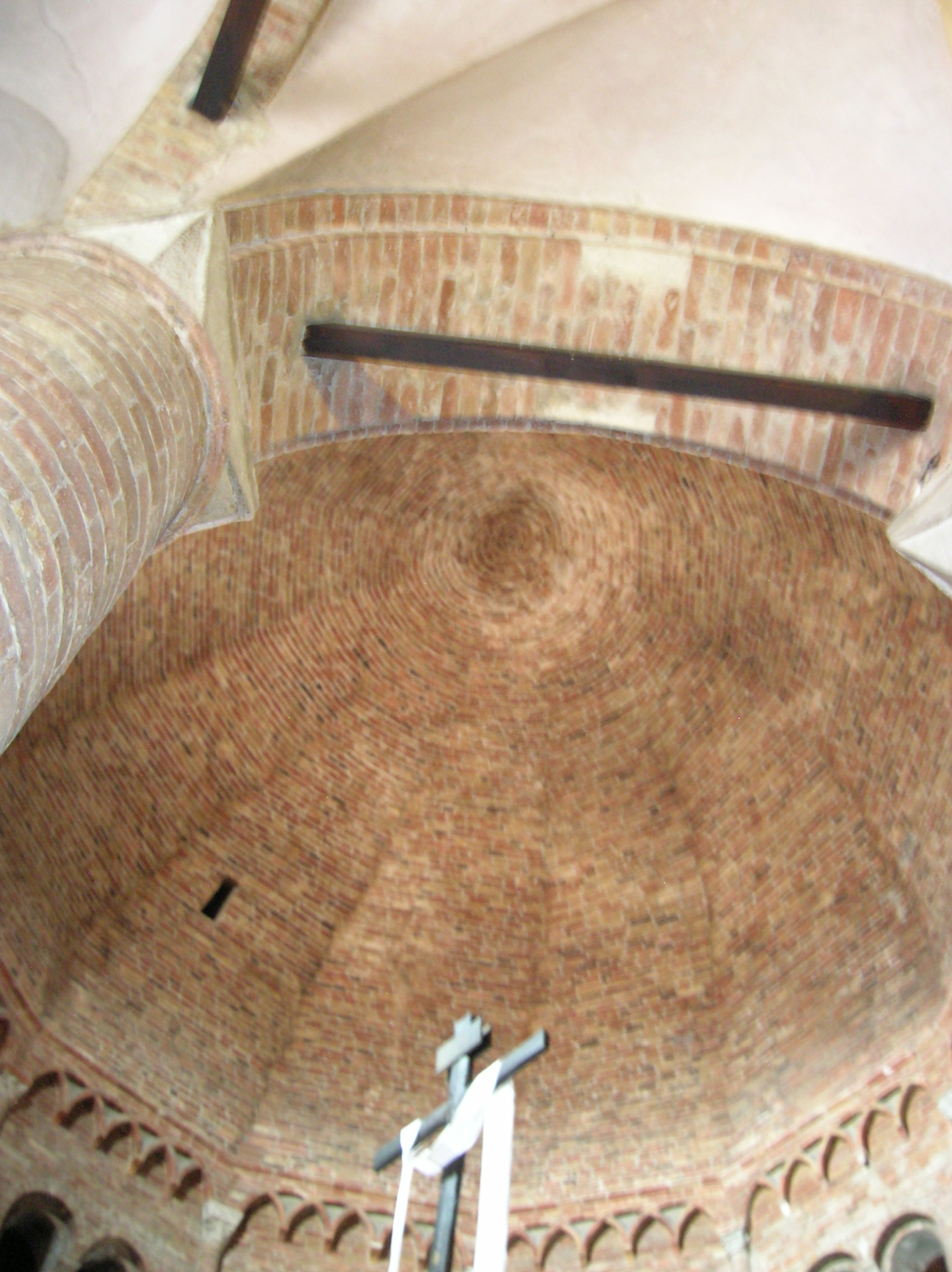
The ceiling at the Basilica of Santo Stefano

The ceiling at the Basilica of Santo Stefano

The Basilica of Saint Vitalis and Saint Agricola was simple and austere in its Romanesque Lombard appearance with one nave and two aisles. I saw remnants of mosaics and frescoes. I noticed figures of lions and deer decorating Saint Agricola’s sarcophagus. Legend says that the cross in this church was the same one on which Saint Agricola was crucified. Again, the various styles of capitals captivated me. I saw Ionic, Byzantine and Frank capitals. I could not stop thinking that so many cultures had worshipped in this one space.
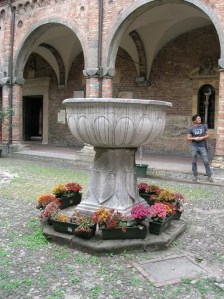
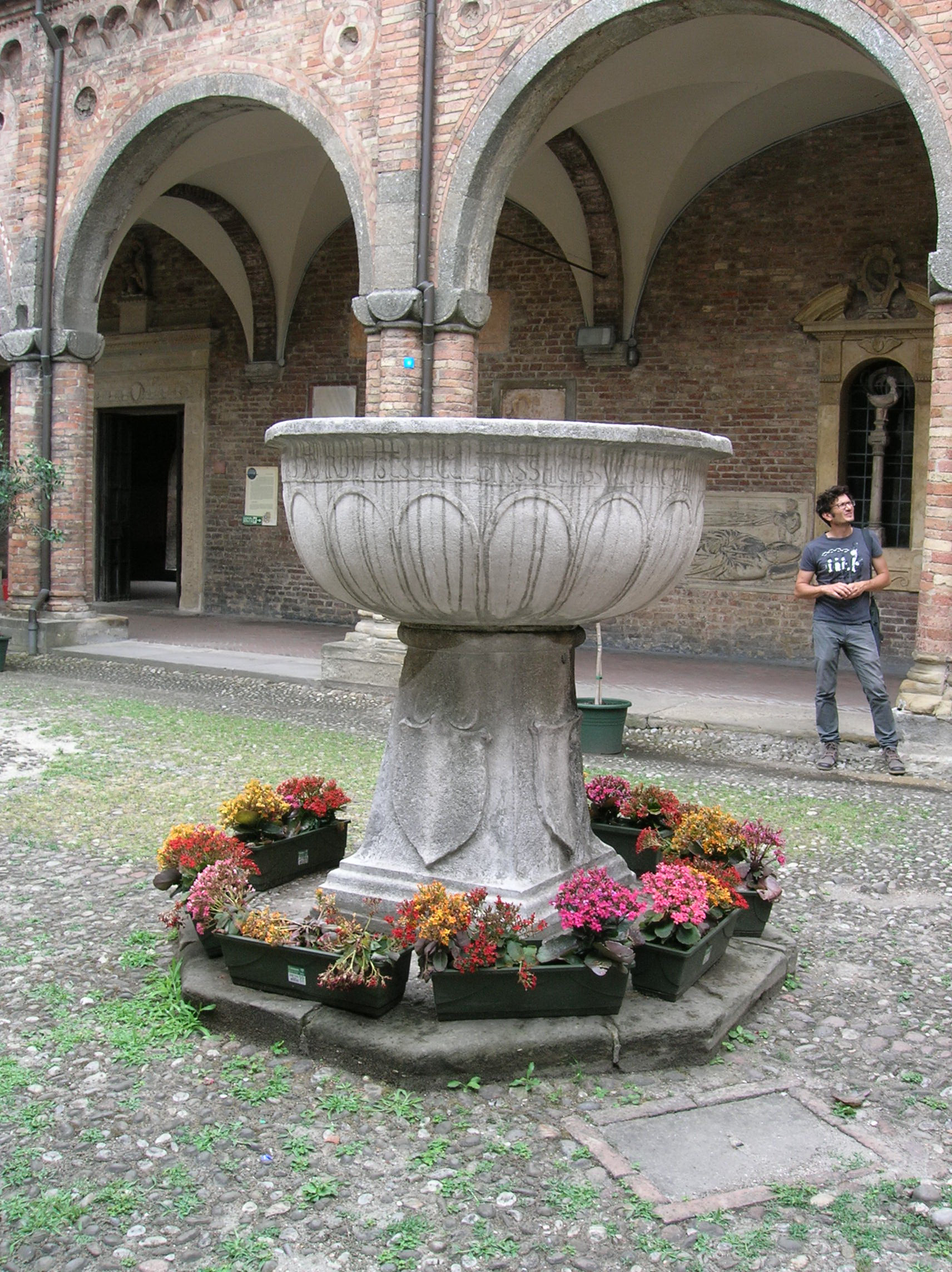
Marble Lombard basin in Pilate's Courtyard

Marble Lombard basin in Pilate’s Courtyard

Referring to Pilate’s washing his hands of Christ’s blood as he declared Christ innocent, Pilate’s Courtyard included Romanesque Lombard style arcades and a marble Lombard basin dating from 730 to 740 AD on a 16th century pedestal in the center. While the arcaded space showed off chapels and tombstones, there was a unique object there as well – a 14th century stone rooster that symbolized Saint Peter’s three-time denial of Christ’s existence during the night of his arrest and interrogation. (People at the bonfire recognized Saint Peter as one of the apostles, but he pretended he did not know Christ.)

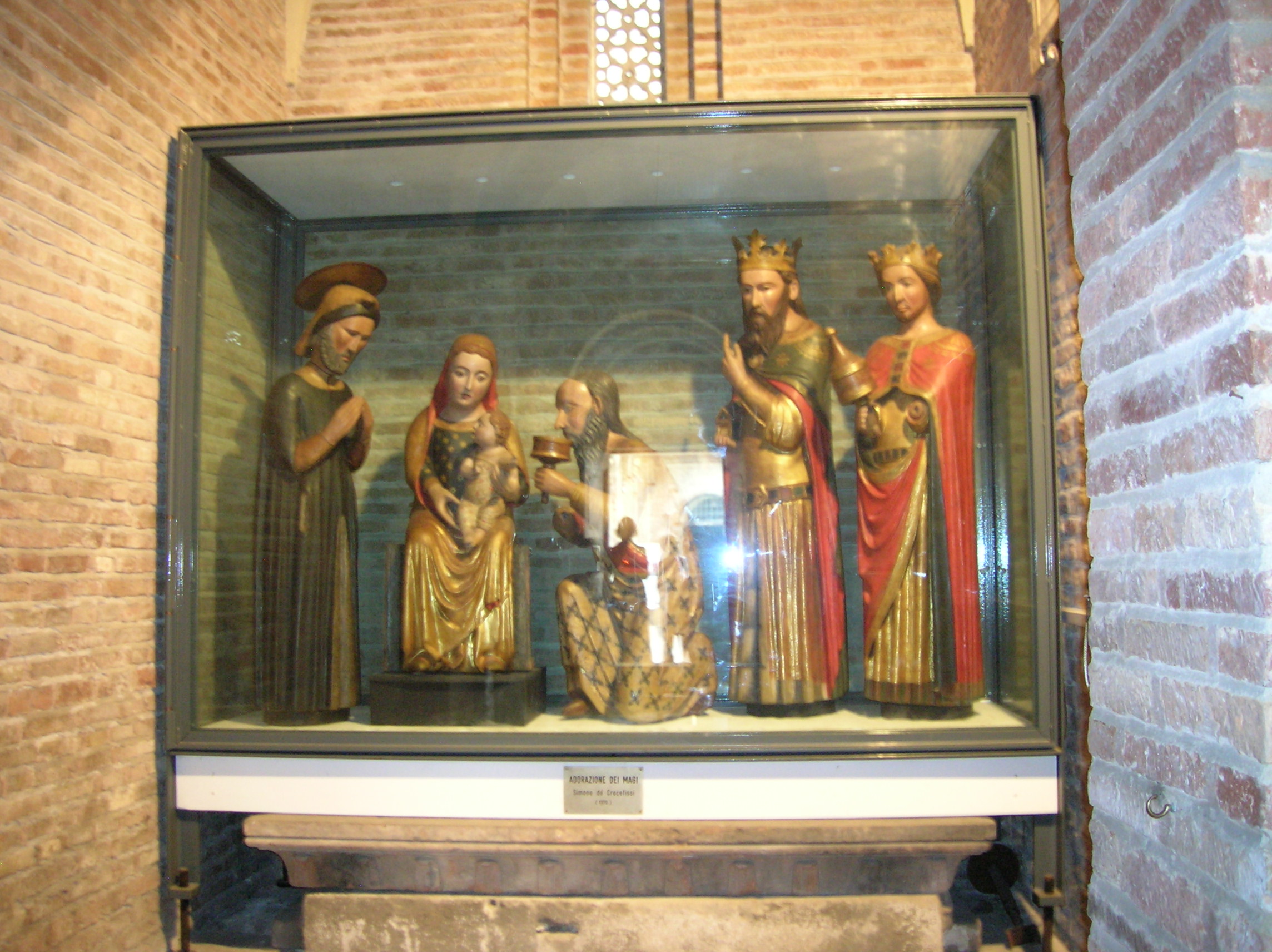
The Adoration of the Magi in the Martyrium Church

The Adoration of the Magi in the Martyrium Church

The Martyrium Church, named after the areas where martyrs were buried, had been restored in the Frank style of the 17th century. It consisted of a nave and double aisles with columns. There were 14th and 15th century frescoes in the apses. I particularly liked the sculptural grouping of the Adoration of the Magi, with its enchanting, bright colors, such as deep red. And it always amazed me to see remnants of Romanesque architecture. I was not disappointed.

The Basilica of Santo Stefano boasts breathtaking artworks.

The Basilica of Santo Stefano boasts breathtaking artworks.

There was a cloister adjacent to the basilica. Supposedly, Dante had been inspired by the animal heads of human faces with scornful, ridiculing expressions. The cloister consisted of two basic sections, the upper part, built at the end of the 17th century and the lower part, constructed around 1000. It was fascinating to see these two greatly different styles side-by-side. I felt as if the human faces with animal characteristics were trying to insult me, as if they were laughing at me. They certainly gave me an uncomfortable feeling.
I was dizzy with delight as I left the basilica. Each church was unique, each church told its own story. I could not believe that I had walked on the same ground that dated back to 1 AD in a structure hailing from 5 AD. I could have spent hours walking through these spaces, taking in the atmosphere, soaking up the ancient history.
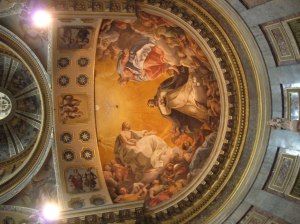
The ceiling of St. Dominic's Basilica

The ceiling of St. Dominic’s Basilica

The three-aisled St. Dominic’s Basilica ranked as another highlight of my time in Bologna. Founded in the 13th century, this holy place housed the marble Ark of Saint Dominic, who founded the Dominican Order and died in 1221 in Bologna, when the basilica had been a church. I could hardly believe that I was looking at the 1264 work of master artist Nicola Pisano. I had admired Pisano’s craftsmanship of the pulpit at the baptistery in Pisa and the pulpit at Siena’s cathedral.

The angel carved by Michelangelo on St. Dominic's sarcophagus

The angel carved by Michelangelo on St. Dominic’s sarcophagus

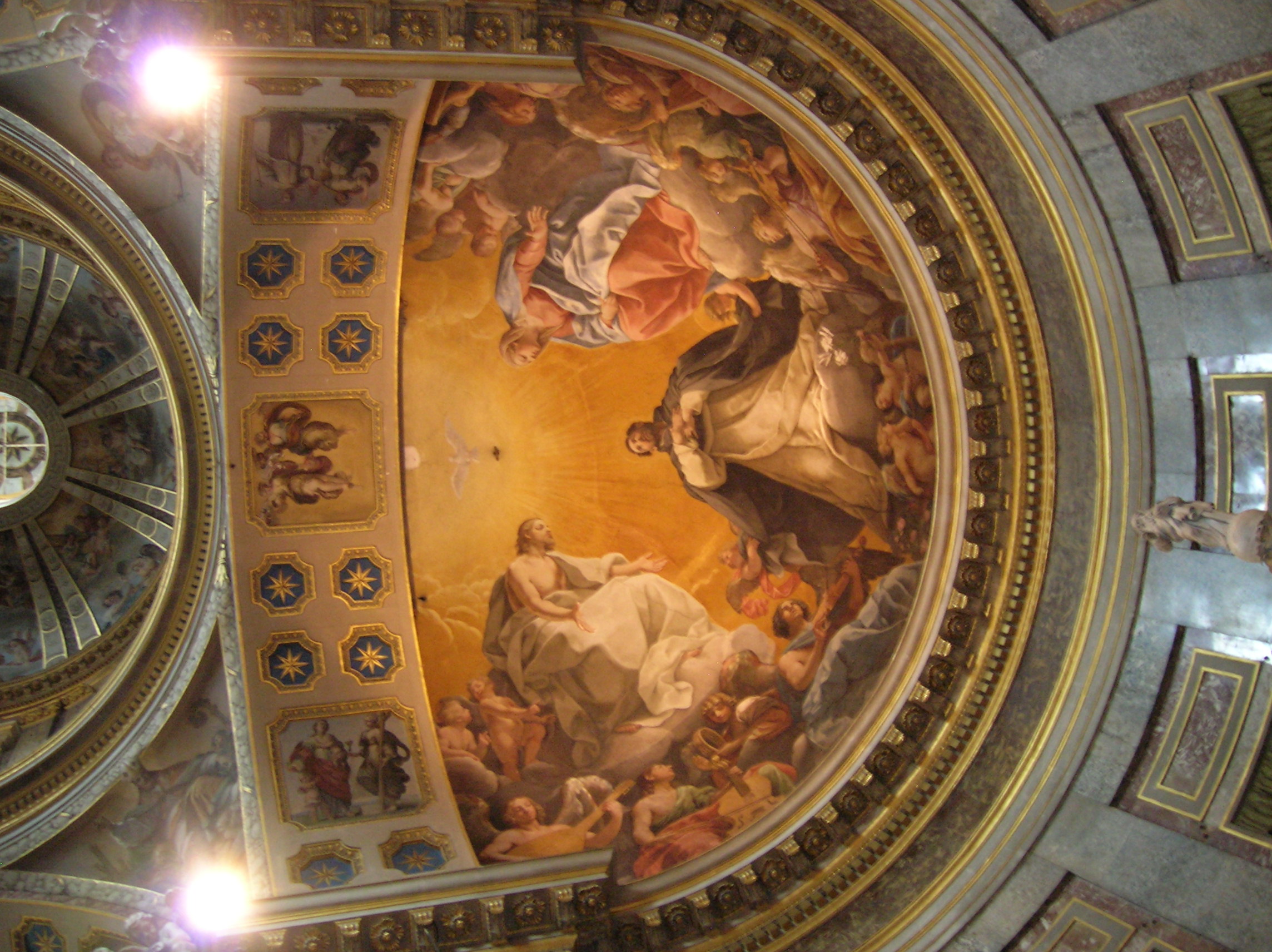
Additions were made from 1469 to 1473, and Michelangelo contributed to the decoration. I was fascinated by the curly-haired angel designed by Michelangelo, who also created the statues of Saint Petronius and Saint Proloco. That angel seemed so lively, as if he could step off the sarcophagus and dance through the aisles. I also admired the gold and silver enameled panels on the reliquary that contained St. Dominic’s head. The statues in niches flanking the reliquary were impressive, too. The ornate spire that crowned the Ark was another delight. Two putti and four dolphins held the candelabrum. The four Evangelists also made appearances.

Saint Dominic's sarcophagus

Saint Dominic’s sarcophagus

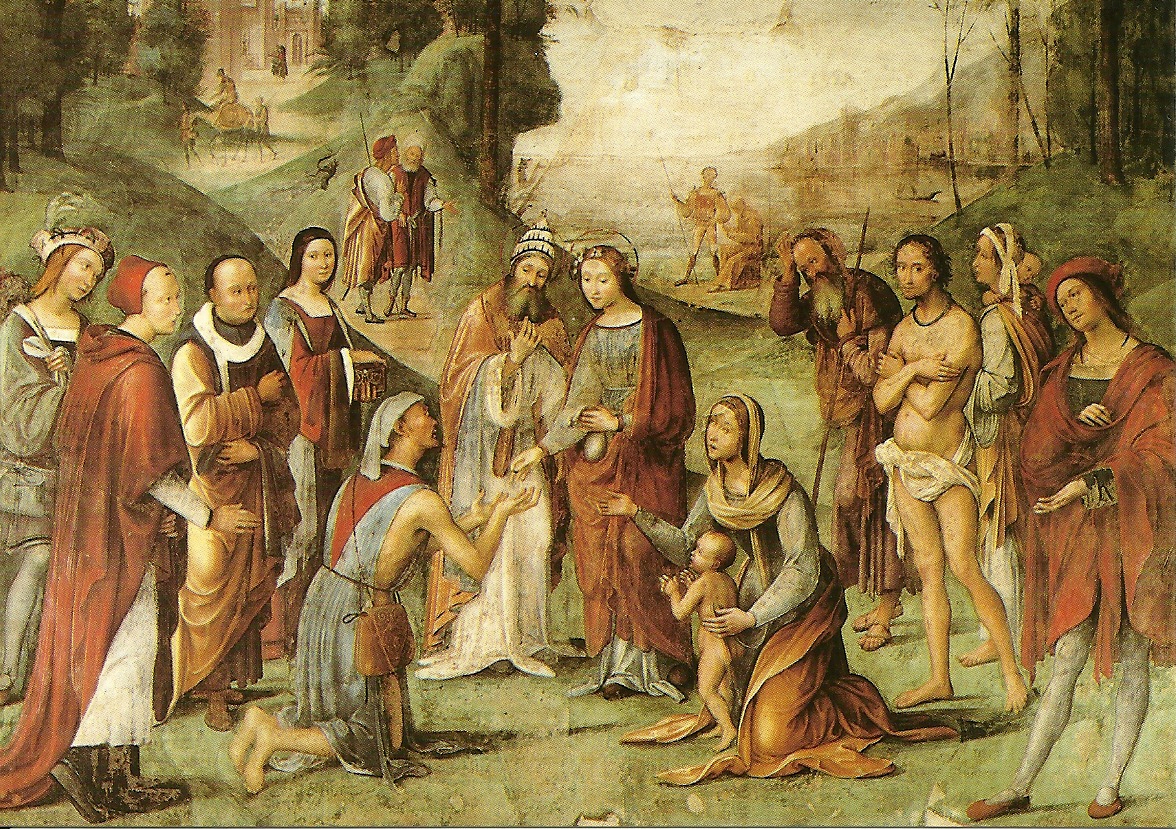
The Oratory of St. Cecilia also caught my undivided attention. The St. Cecilia Church was first mentioned in writing during 1267, and it was moved to its present location in 1359 by Augustinian hermits. Connected to the Church of St. James Major, a 15th century stunning Renaissance structure, the Oratory of St. Cecilia featured paintings from 1505-1506. They told the story of Saint Cecilia’s life.

Oratory of St. Cecilia, St. Cecilia's Trial

Postcard of the Oratory of St. Cecilia, St. Cecilia’s Trial, 1505-1506

The story of Saint Cecilia was intriguing. On her wedding night St. Cecilia told her pagan husband Valerian that an angel would protect her if he tried to take away her virginity. She convinced him to become a Christian and before long he was baptized by Pope St. Urbano. His brother Tiburzio also converted, and together they spread Christianity throughout the land. They were beheaded for their beliefs. Even when St. Cecilia was tortured, she was not injured. She managed to give all her belongings to the poor before she was killed in 230 AD. Interestingly, although St. Cecilia is considered to be the patron of music, there were no references to that art in these renditions.

Postcard of the Oratory of St. Cecilia, St. Cecilia's Charity from 1505-1506

Postcard of the Oratory of St. Cecilia, St. Cecilia’s Charity from 1505-1506

I noticed the classicized angel clad in a fluttering blue drapery in the fourth scene, “Angel bearing the Crowns of Martyrdom” and the gruesome beheading in the “Martyrdom of St. Valerian and St. Tiberius.” I felt the sense of desperation of the naked woman with an emaciated child waiting for alms from St. Cecilia as St. Cecilia gave money to a grateful, kneeling man. I noticed how in “St. Cecilia’s Burial” the bright red garment she was clad in contrasted with the white sheet that held her corpse.
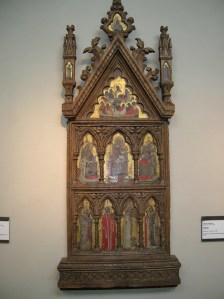
Fascinating medieval art at Bologna's National Gallery

Fascinating medieval art at Bologna’s National Gallery

A museum addict, I also enjoyed my time at the Museo Civico Archeologico, perusing its prehistoric, Etruscan, Roman and Egyptian collections. My favorite museum, though, was the National Picture Gallery and its plethora of art from the Middle Ages. The museum certainly held an impressive collection of 14th century works. When the Church was losing power in Bologna, many of these masterpieces were moved from the churches to the picture gallery. When Napoleon’s reign ended, the museum acquired even more artworks. Its 29 halls were filled with fascinating works by Nicola Pisano, Tintoretto, Titian, the Carraccis and Il Perugino, to name a few. Then there was Raphael with his Ecstasy of St. Cecilia. In addition to medieval art, other periods were covered, such as Mannerism and Baroque.

The National Picture Gallery was full of medieval delights.

The National Picture Gallery was full of medieval delights.

Bologna definitely meant towers, porticos and food. Bologna was the delicious Pizza Margherita – the best I had ever had – at a bar I frequented in the center of town. I loved the bars frequented by locals who came in for cappuccinos or shots of espresso, downing them as they stood at the counter and chatted with the bartender.
Yet most of all, Bologna to me will always be churches and the many cultures that they represented. Bologna was romantic and picturesque, but it was first and foremost mystical and mysterious. The churches seemed to contain so many secrets.

National Picture Gallery, Bologna

National Picture Gallery, Bologna

I had stood in what had been a first century temple to Isis and a church dating back to the 5 AD. I had seen a copy of the Holy Sepulchre in Jerusalem. I had marveled at the exquisite carving of the figures on the Gothic altarpiece in the Chapel of the Magi and at the paintings of Heaven and Hell that adorned it. I had been captivated by St. Dominic’s Ark in the basilica, by the exquisite carving of the statuary and other decorations on the sarcophagus. The story of St. Cecilia fascinated me. The medieval art at the National Picture Gallery left me in awe.
However, most of all, for me Bologna was hope and faith. The city reminded me of the importance of having faith in the world, of having faith in myself. When it was time to say goodbye to Bologna, I left this city with a new and more positive perspective on life.
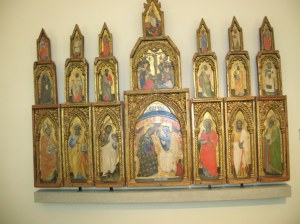
More stunning medieval art at Bologna's National Picture Gallery

More stunning medieval art at Bologna’s National Picture Gallery

Tracy A. Burns is a writer, proofreader and editor in Prague.
 

Segesta, Sicily Diary


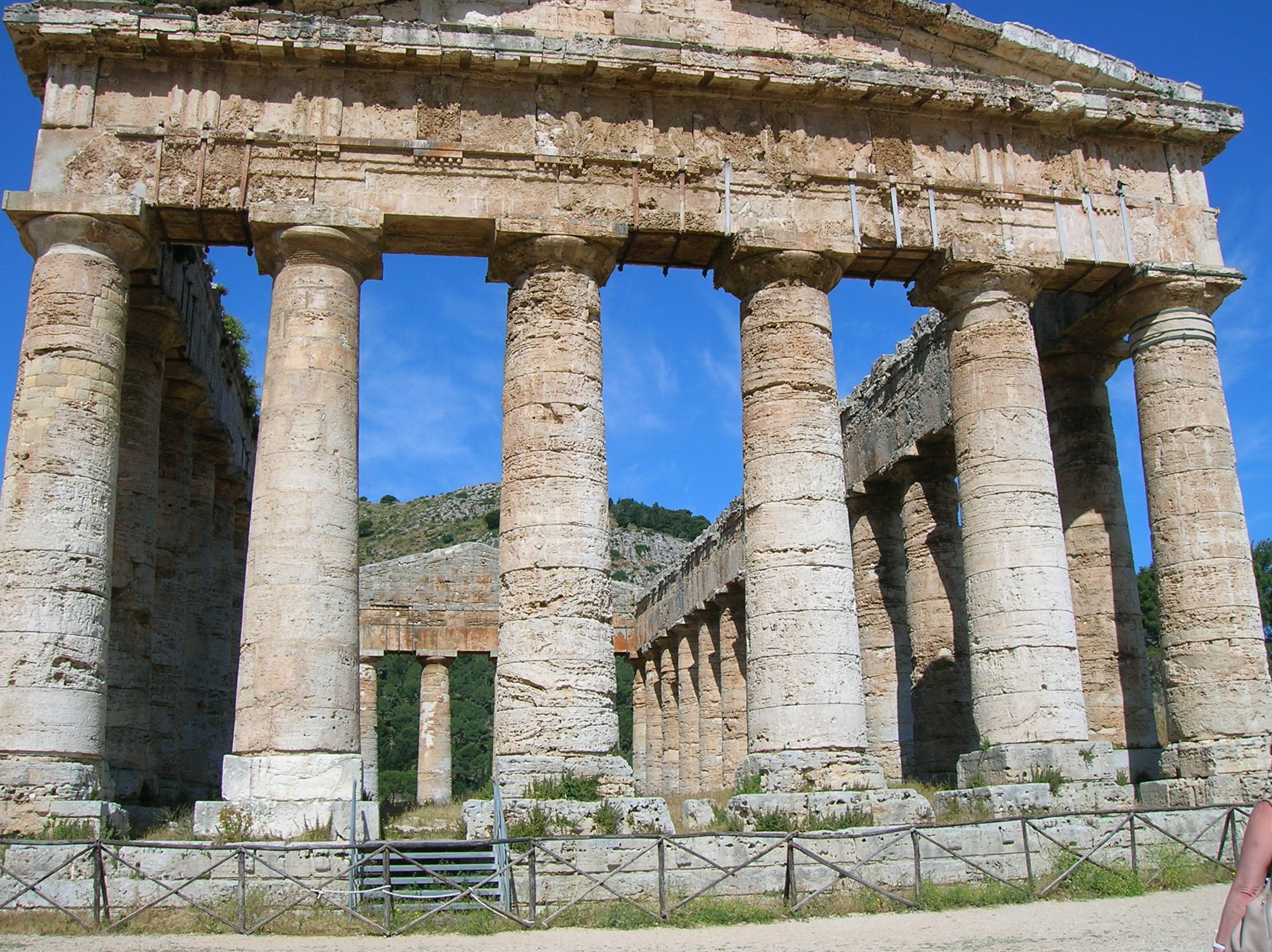
The temple at Segesta

The temple at Segesta


Before I arrived at the ancient monuments of Segesta, Sicily, I acquainted myself with its war-riddled history, which I found fascinating. According to the Aeneid, Aeneas, the hero of the Trojan Wars, founded Segesta on his way to establish the future Rome, and the first settlers came from Troy. During the Greek era, the town fought again the Sicilian towns of Selinute and Syracuse.

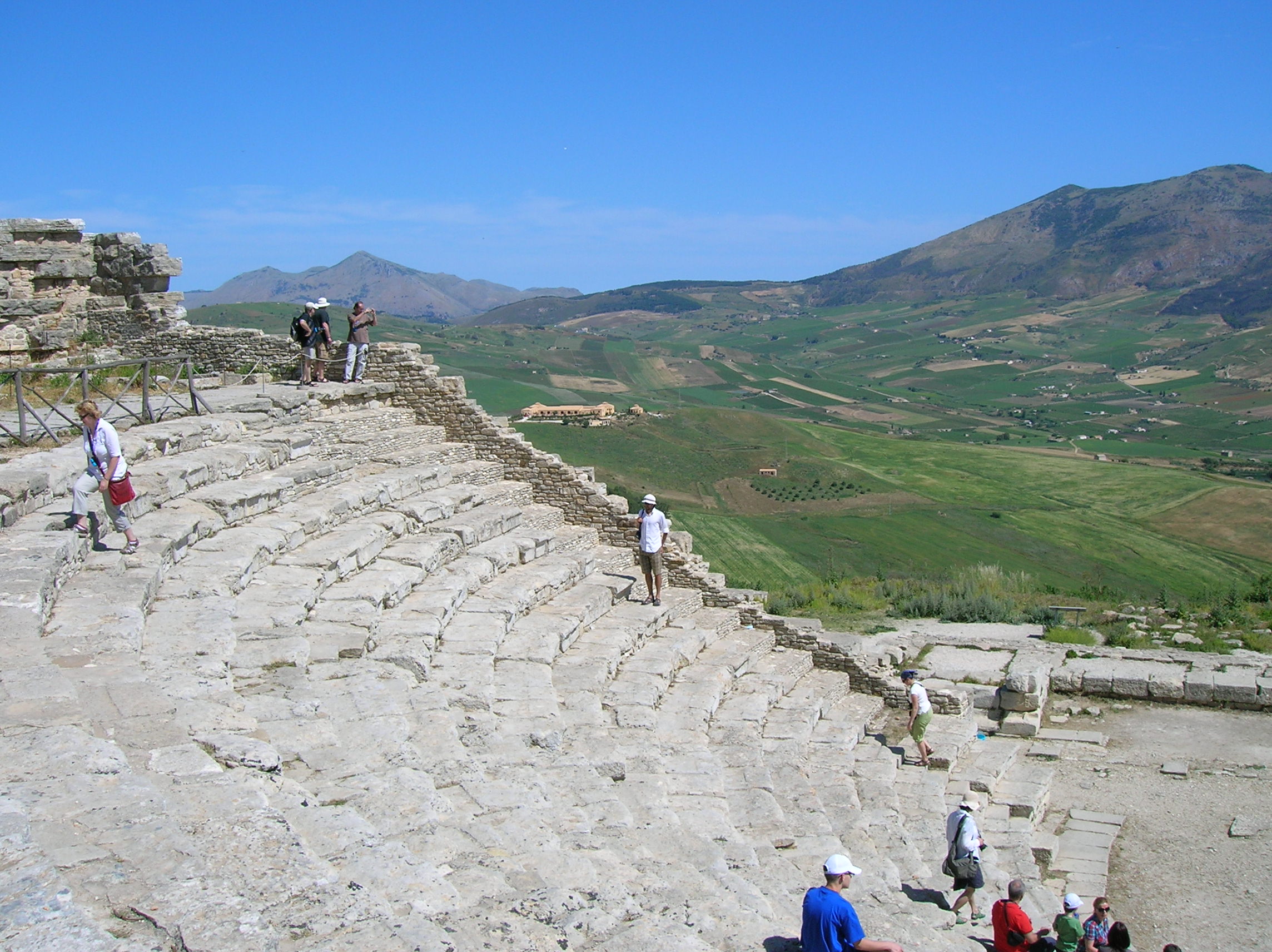
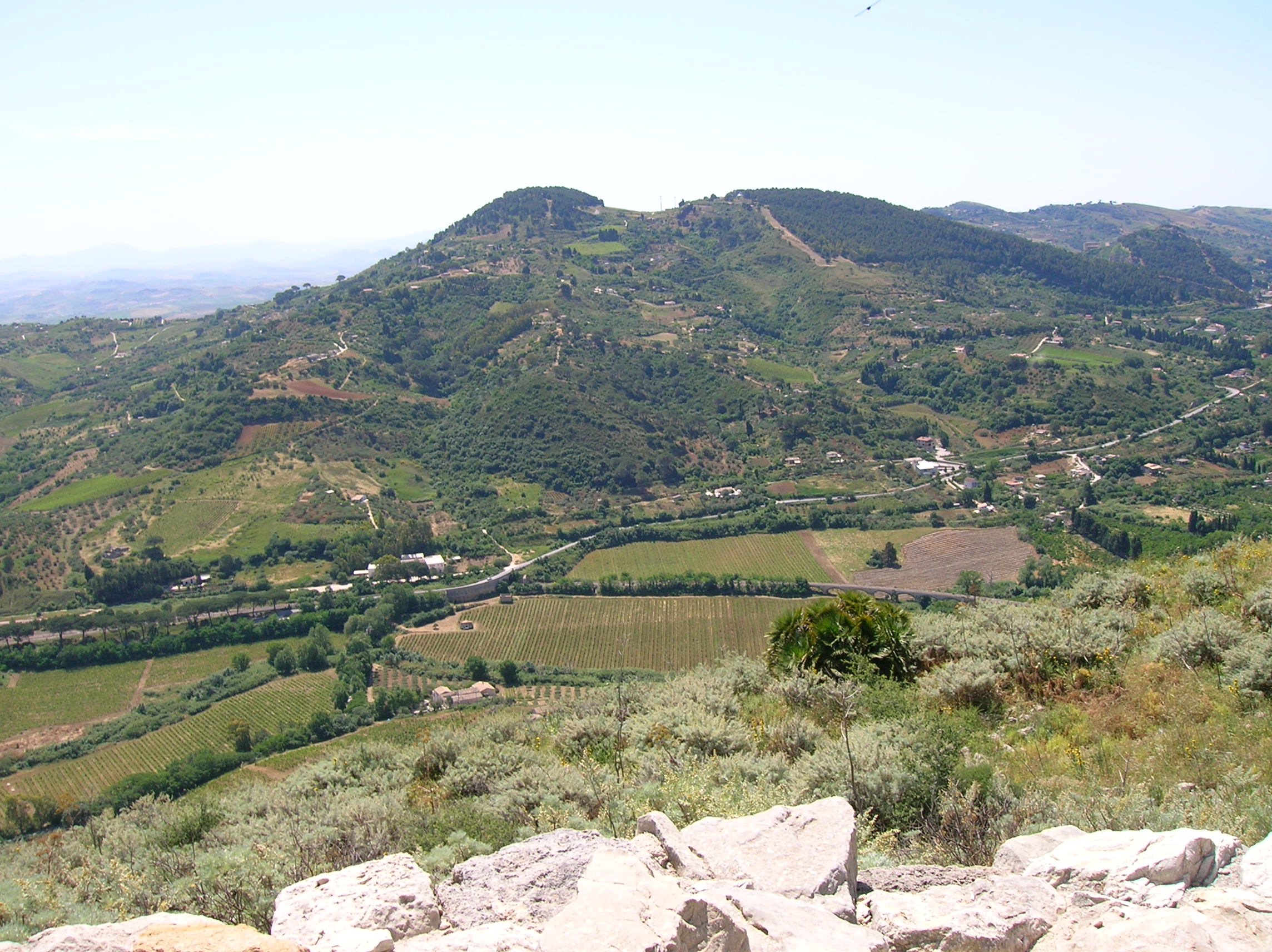
View of the countryside from the amphitheatre

View of the countryside from the amphitheatre

The tyrant Dionysus – not the god – brought terror to Segesta when he took over. One tale that the people used to tell during his tenure as the horror-spreading leader: Dionysus knew that everyone in Segesta prayed that he would die, so his actions became even more ruthless. Then he found out one old woman always prayed that that he would be healthy. He invited her to his palace and asked her why she did not wish him to die as the others did. She told him, “Before you, your predecessor was bad. You’re much worse. So I’m thinking that someone who comes after you might be horrid. That is why I hope you live as long as possible!”

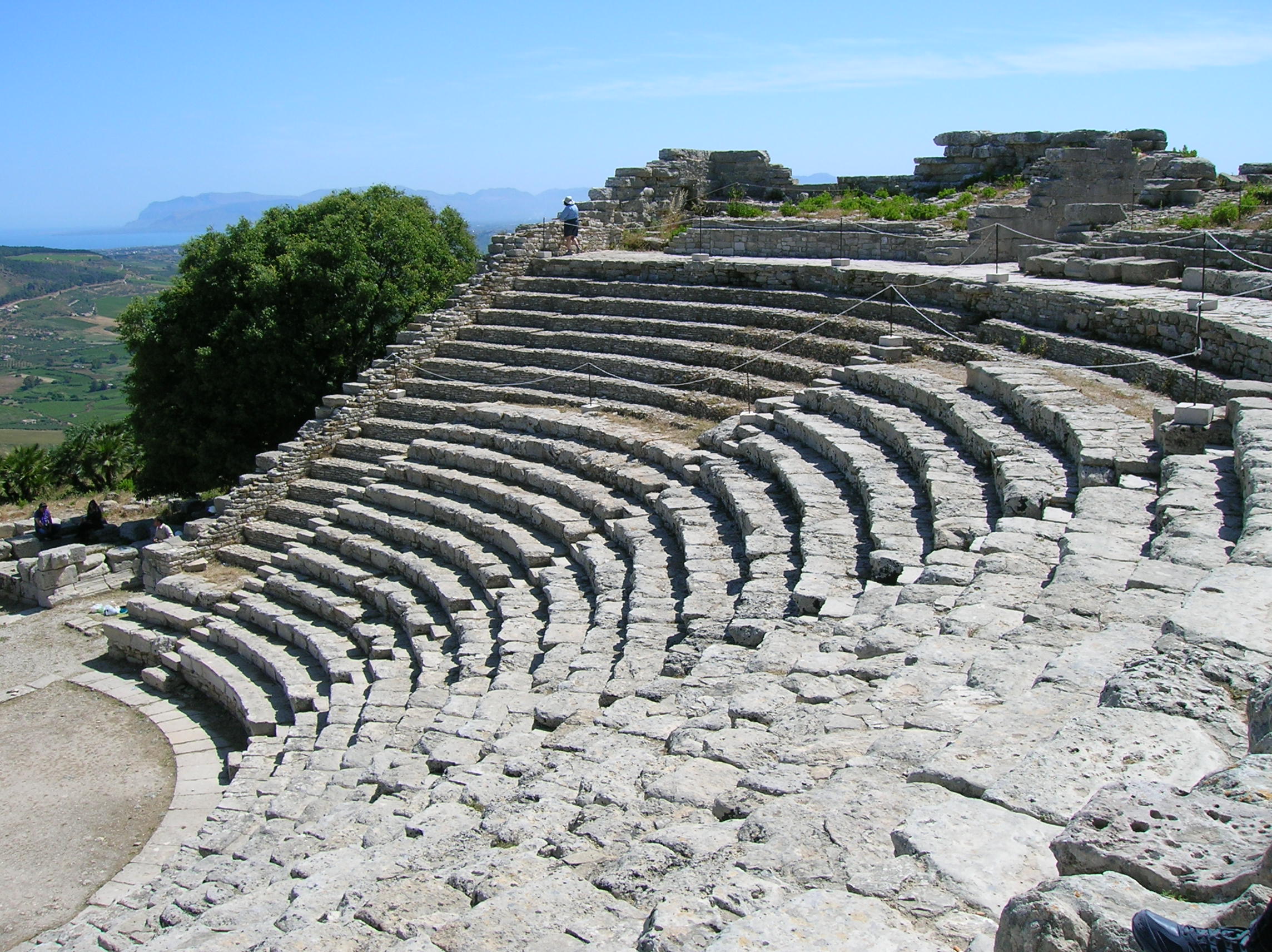
The amphitheatre at Segesta

The amphitheatre at Segesta

In 307 BC, when Segesta refused to give money to the tyrant of Syracuse, Agathocles got revenge on the town. He tied Segesta citizens to chariot wheels pulled by horses, launched inhabitants from catapults and cut off their heels, then ordering them to run. He also placed residents of Segesta on a bronze slab and roasted them alive. The survivors set fire to the city, opting to die by flames rather than by torture. The merciless leader was eventually poisoned with a toothpick and died at the stake after a 20-year tenure of terror.

During the Roman era, slave revolts threatened the stability of the republic. The Segesta leader Gaius Verres stole artistic masterpieces, such as a revered statue of Artemis (Diana). Cicero did not mince words and accused Verres of being corrupt and ruthless.

A view of the countryside from Segesta

A view of the countryside from Segesta

Clearly, Segesta had not had a rosy time in its heyday. Its history made the struggles in my own life seem petty and insignificant. I was worried about things that should not faze me; I felt stress when I should remain calm. I was thankful there were no tyrants like Dionysus or Agathocles in my life.

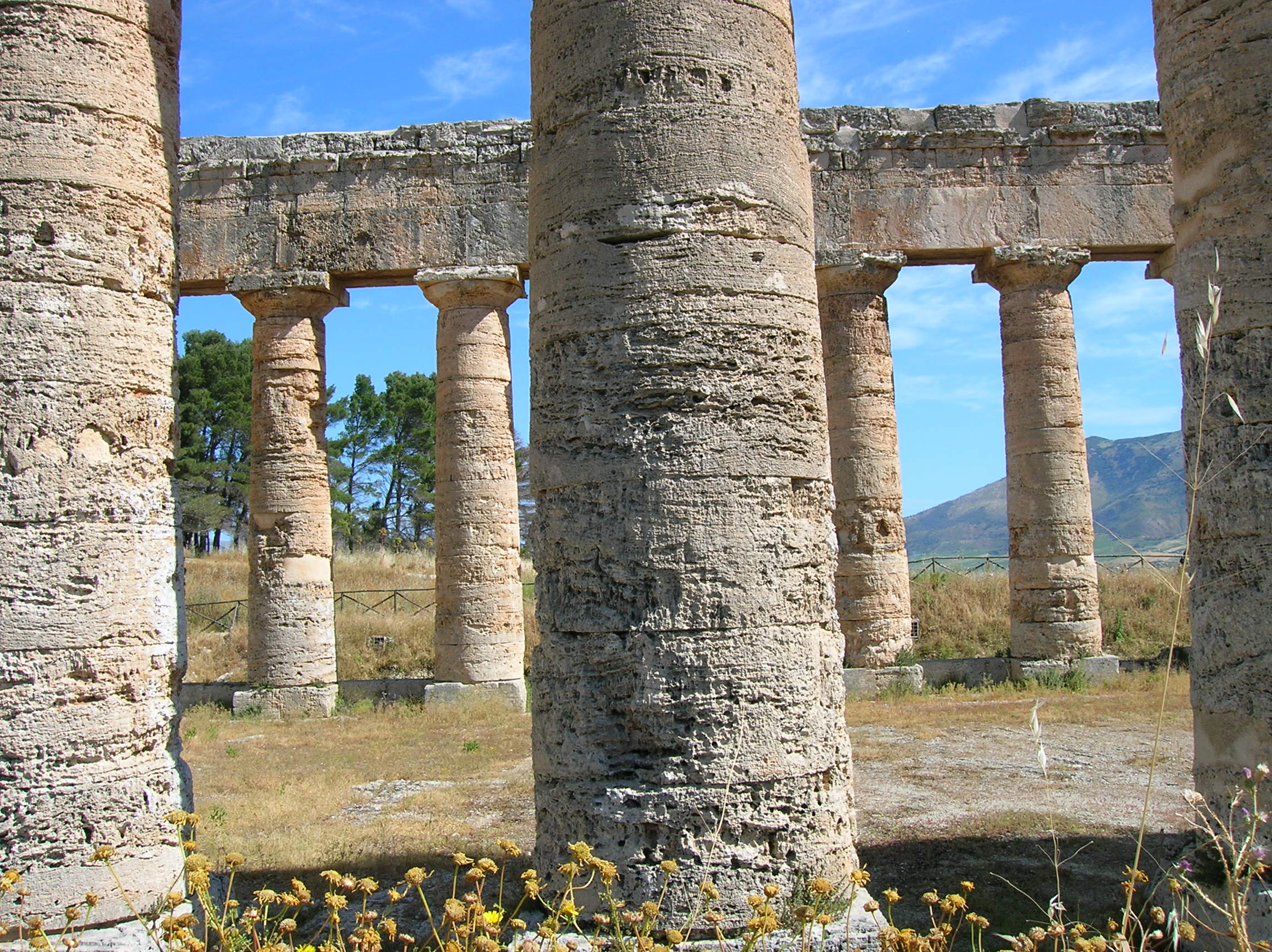
SicilySegesta3When I approached the Doric temple at Segesta, I was speechless. The limestone Doric columns, six on the temple’s short side and 14 on its long side, were crowned by a clear, blue sky as birds fluttered through the empty interior. The backdrop consisted of rich browns and greens, making the well-preserved temple at Segesta resemble a painting that had come alive. The elegant and majestic structure gave me a feeling of freedom, tranquility and independence. The Boston Marathon bombings, the death and destruction in Syria – for the moment it was as if these tragedies had never happened, and the world was a peaceful place.

The temple at Segesta

The temple at Segesta

I still cannot fathom that the temple dates back to 430-420 BC.  The barrenness of the inside cleansed me as the harmony of the Classical Age monument blended in with the natural beauty of the landscape. For a moment I closed my eyes and was convinced I was daydreaming. Then I opened them and realized that this beautiful temple from antiquity did really exist. I wanted to climb to the top of one of the columns and look down on the world with a fresh perspective on all the evils and dangers in the world today. Of course, that was not possible.

The amphitheatre at Segesta

The amphitheatre at Segesta

But the temple would not be the only sight in Segesta to make a profound impression on me. The Greek theatre, built in the third century BC, also boasted artistic mastery with a serene landscape offering views of the gulf of Castellmare. Towns also dotted the countryside. It was if the Greek theatre was one with nature. I could almost see the chorus conductor making a sacrifice to the deity Dionysus (not the tyrant!) on the altar before the plays began at dawn, when the trumpeter would blow his horn to announce the beginning of a full day of tragedies, comedies and satires. I could imagine the artists in their masks in front of painted scenery with the breathtaking landscape as a stunning backdrop.

Now, more than six months after my visit to Segesta, whenever I get stressed or worried, I think of these magnificent sights in Sicily, how they gave me a sense of freedom, as if I were floating over the world, gaining a new perspective. Visions of the Doric columns and amphitheater complementing the awe-inspiring landscape give me a sense of hope when I feel that a dilemma is futile and a sense of calmness when I feel extremely stressed.

Tracy A. Burns is a writer, proofreader and editor in Prague.

A view of the countryside from Segesta

A view of the countryside from Segesta