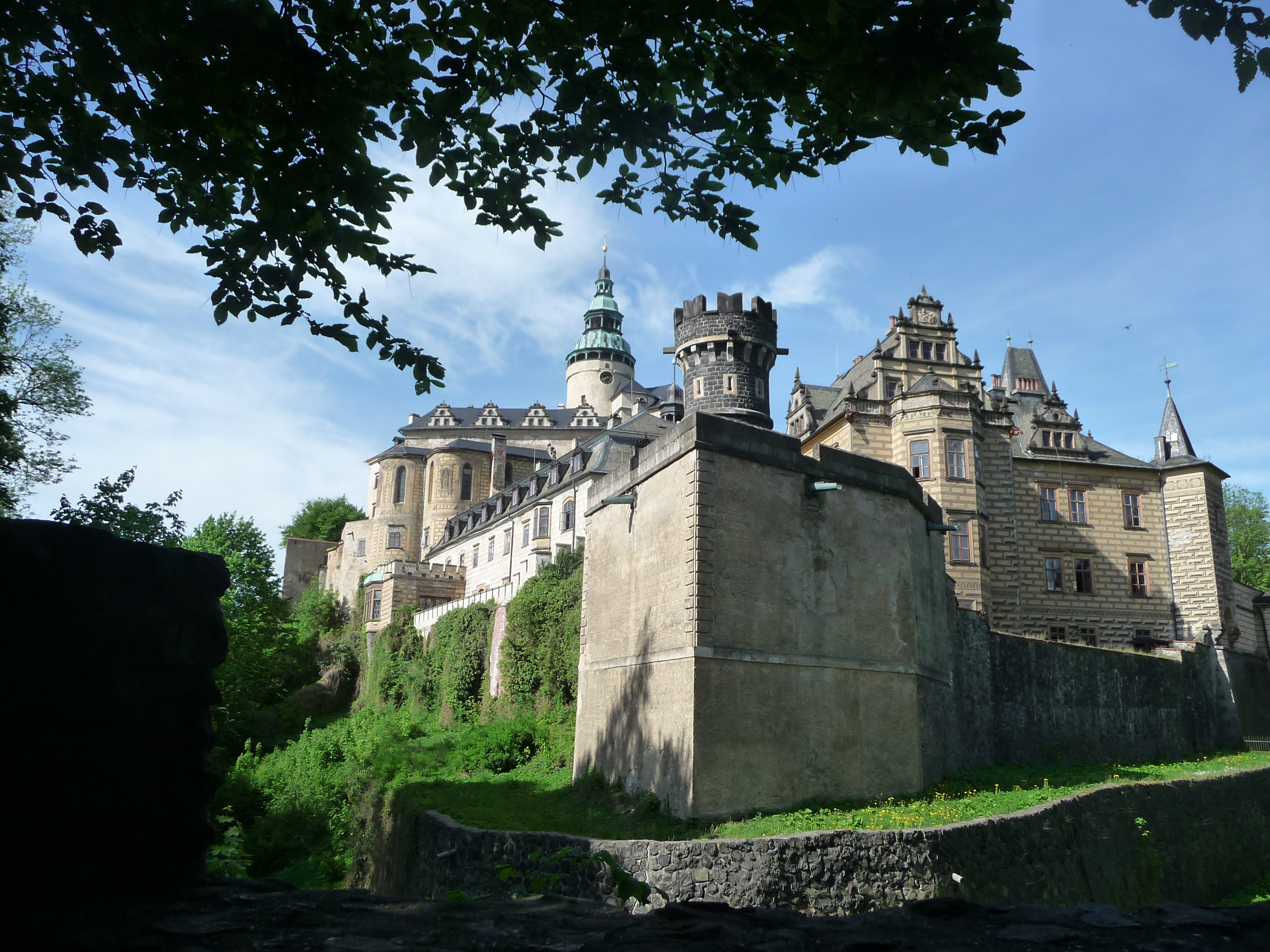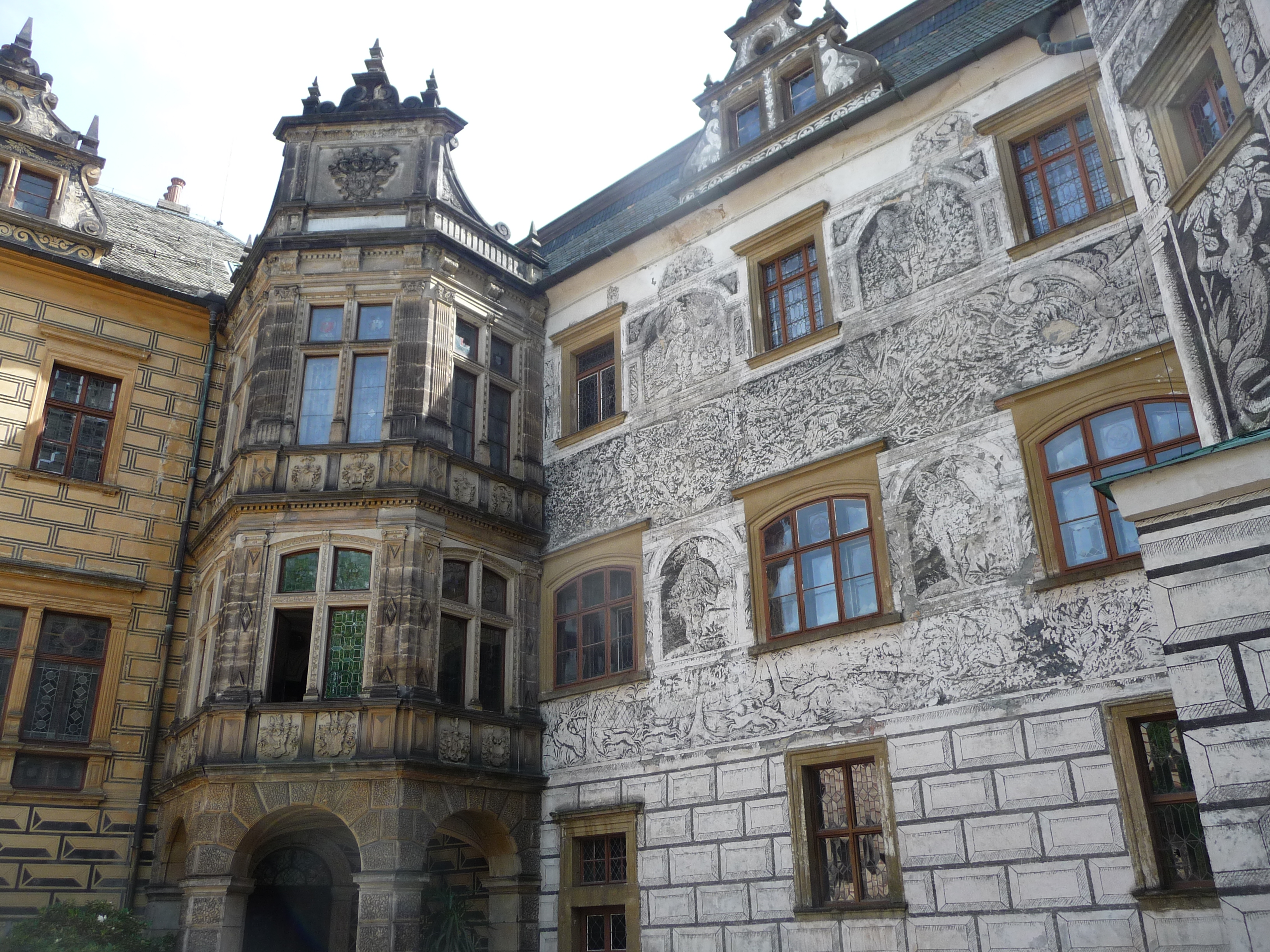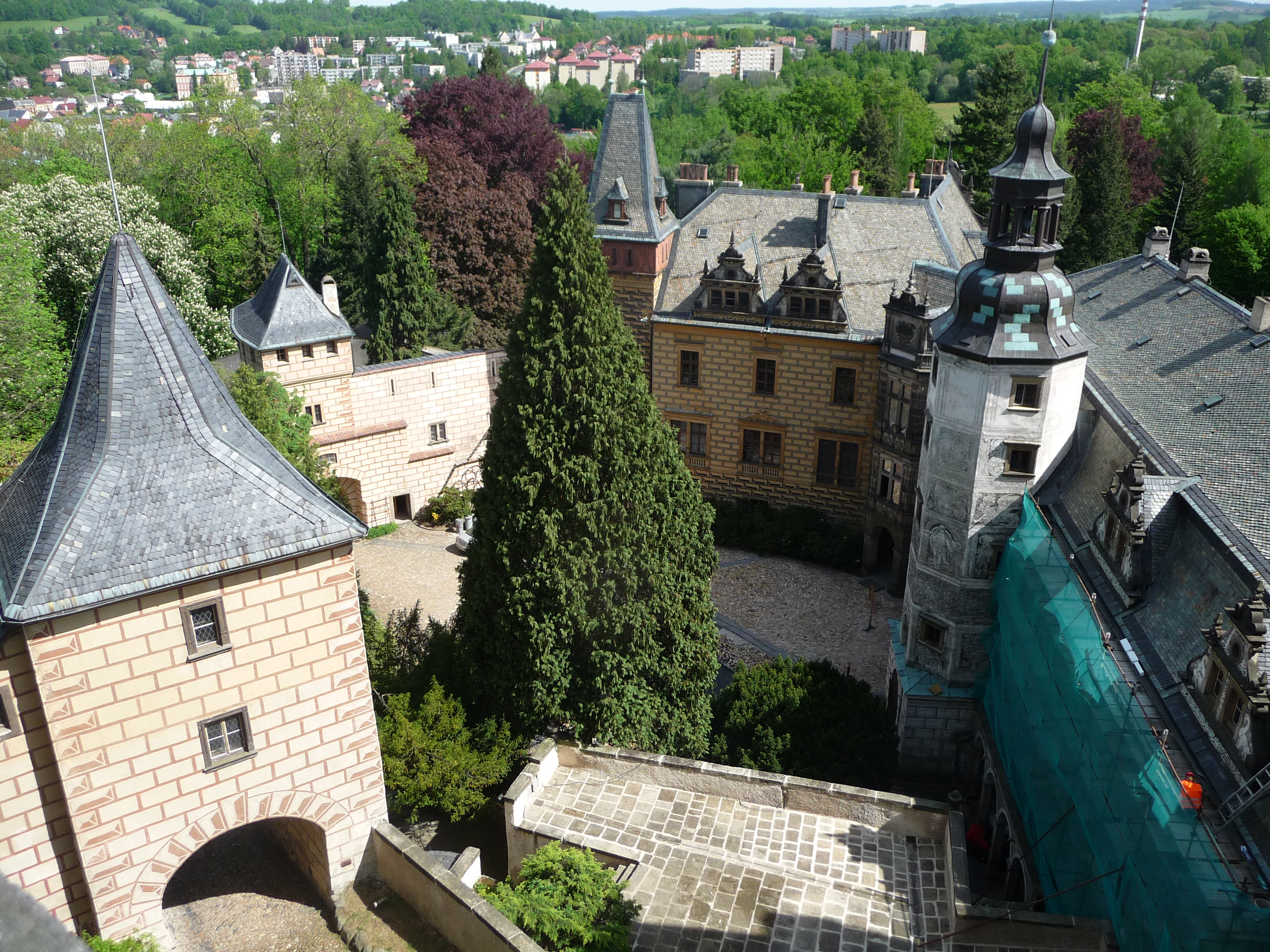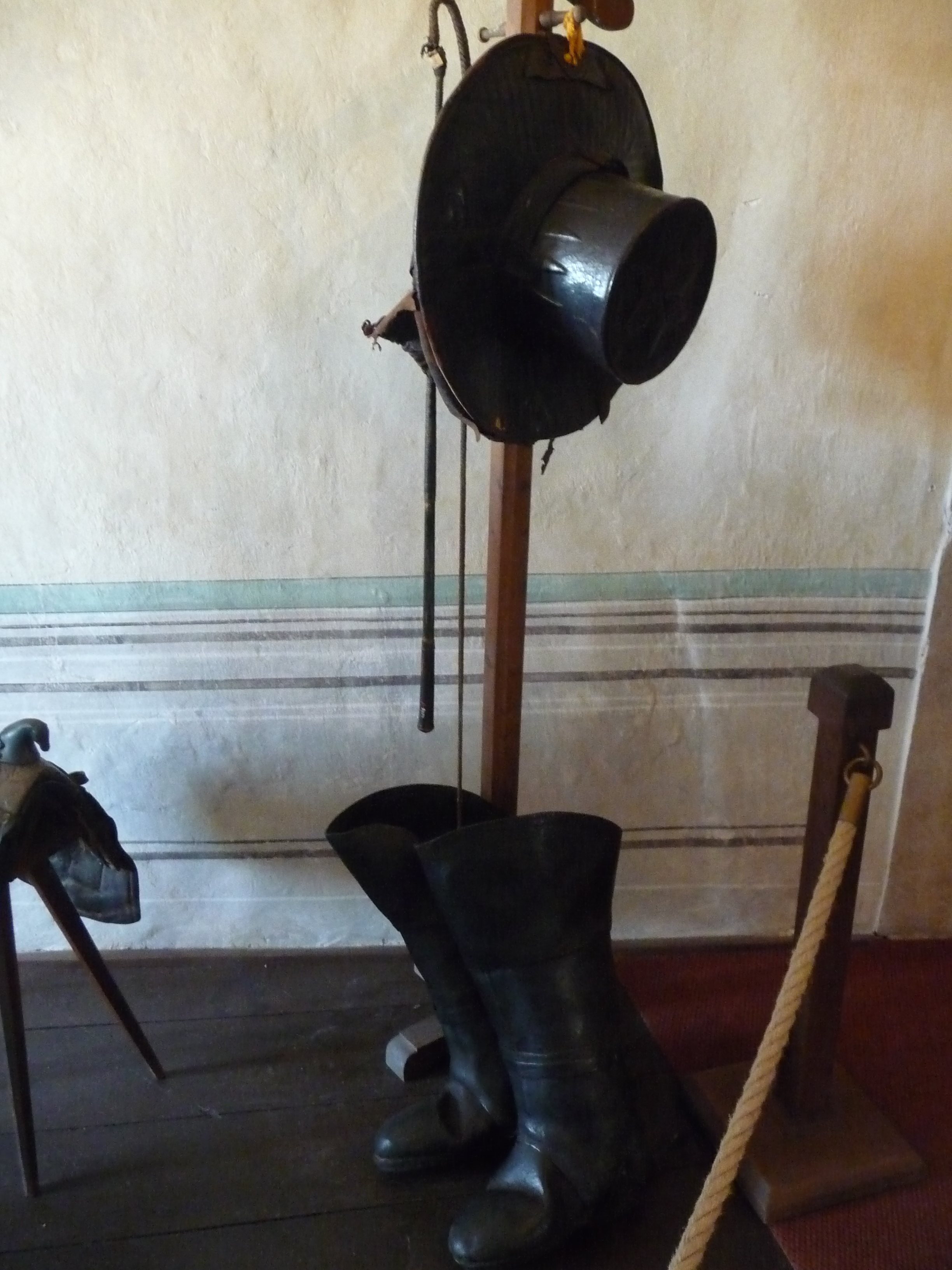
Lednice Chateau and Park Diary

Ledniceext9
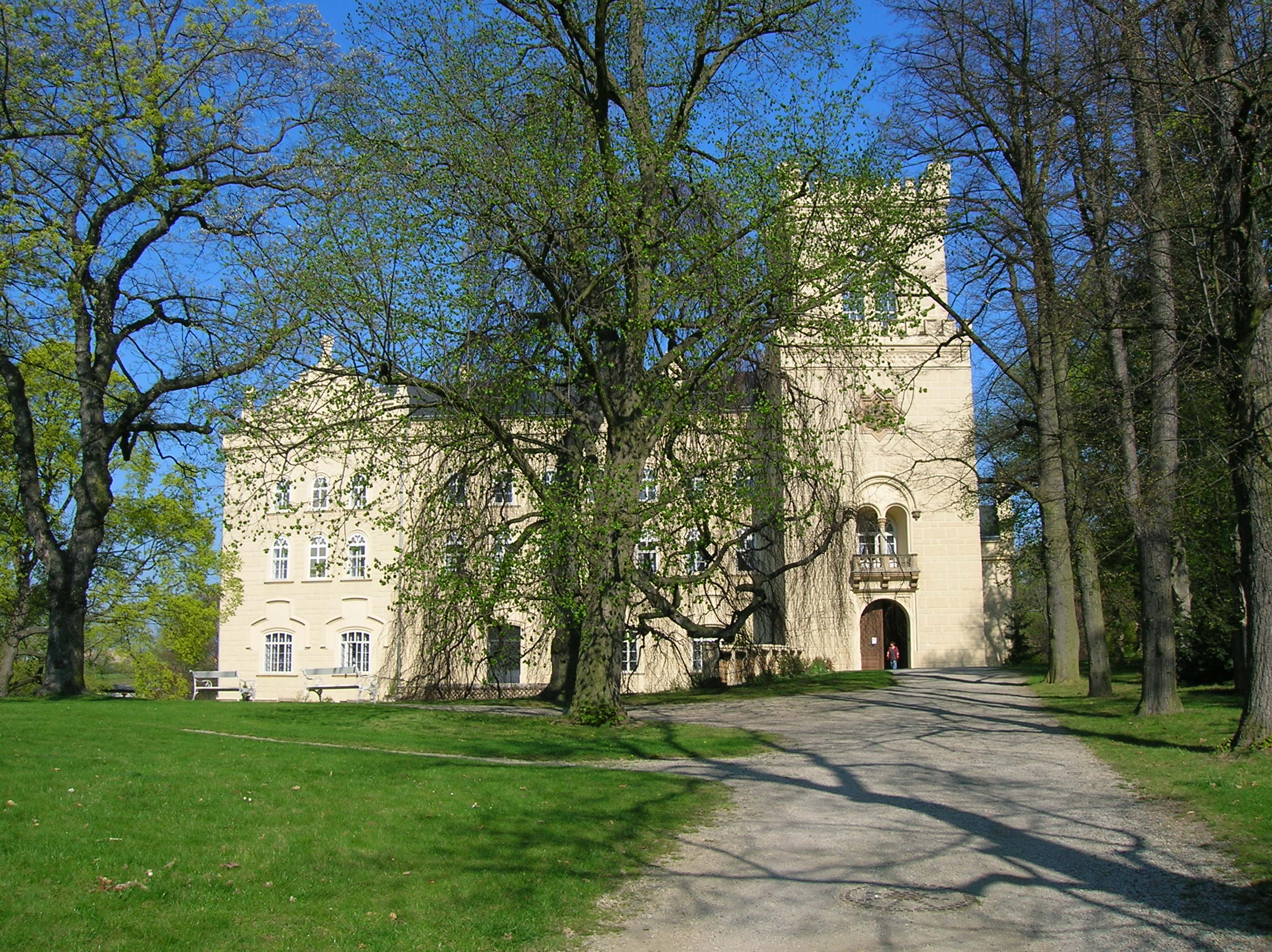
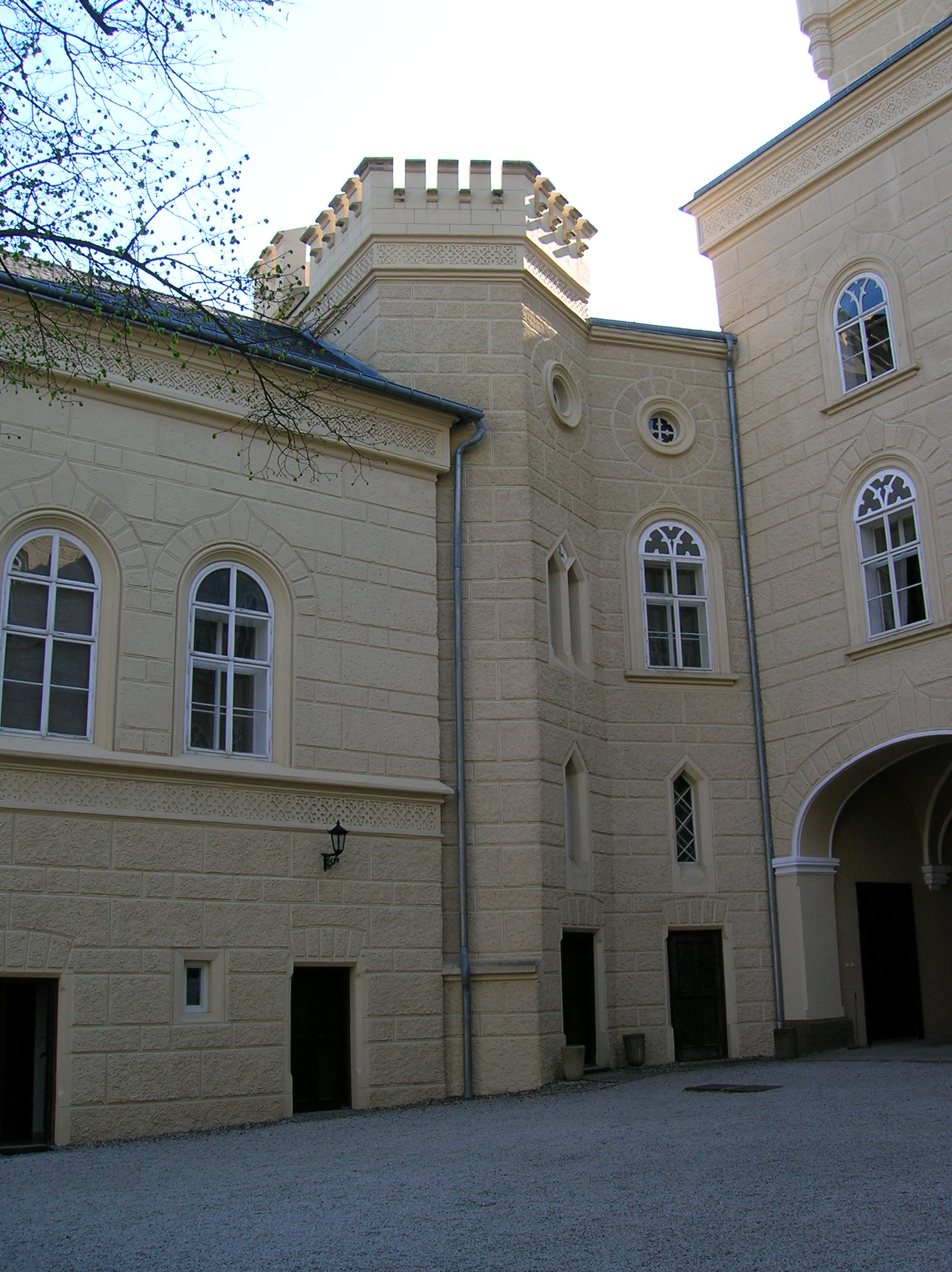
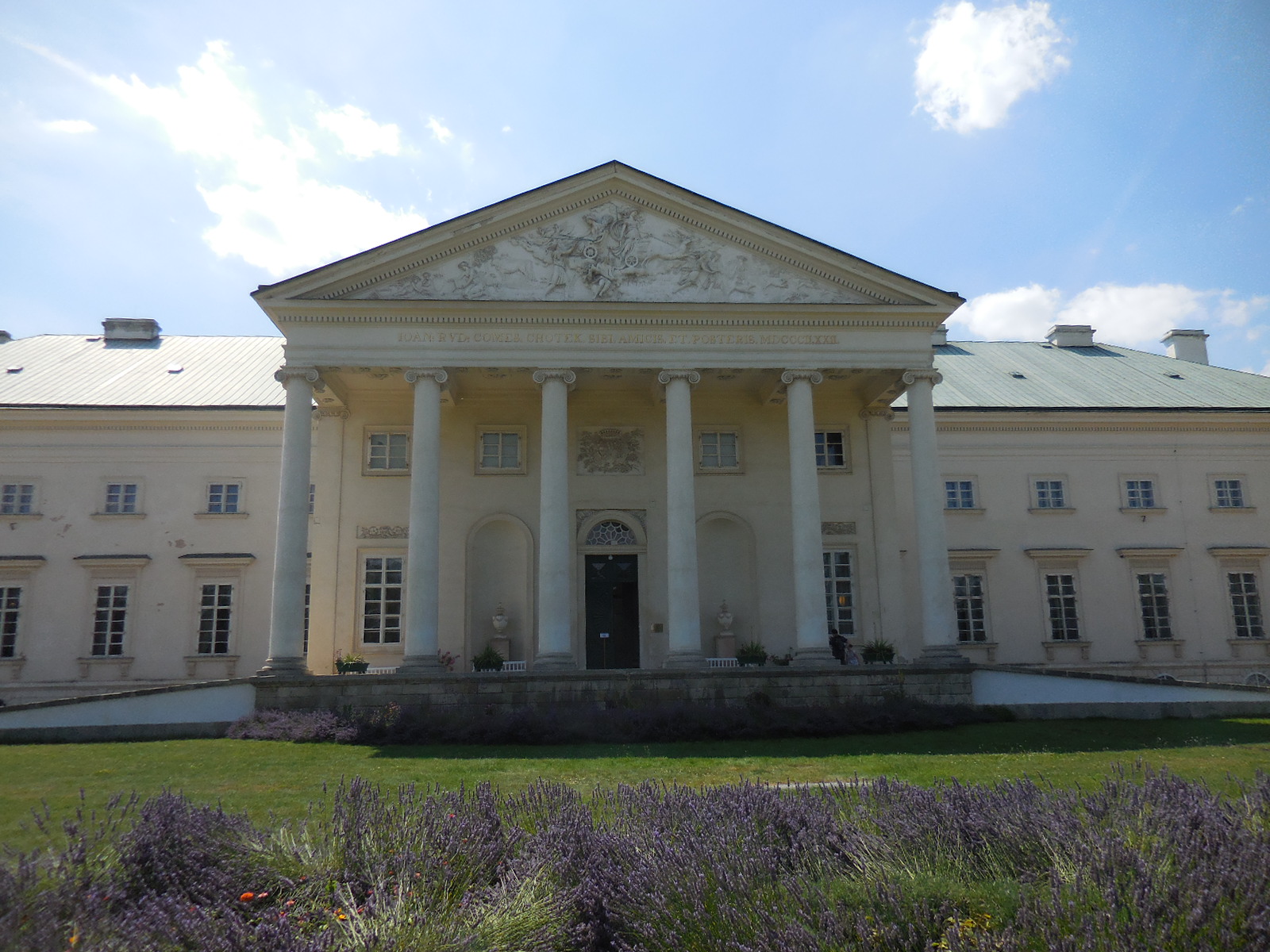
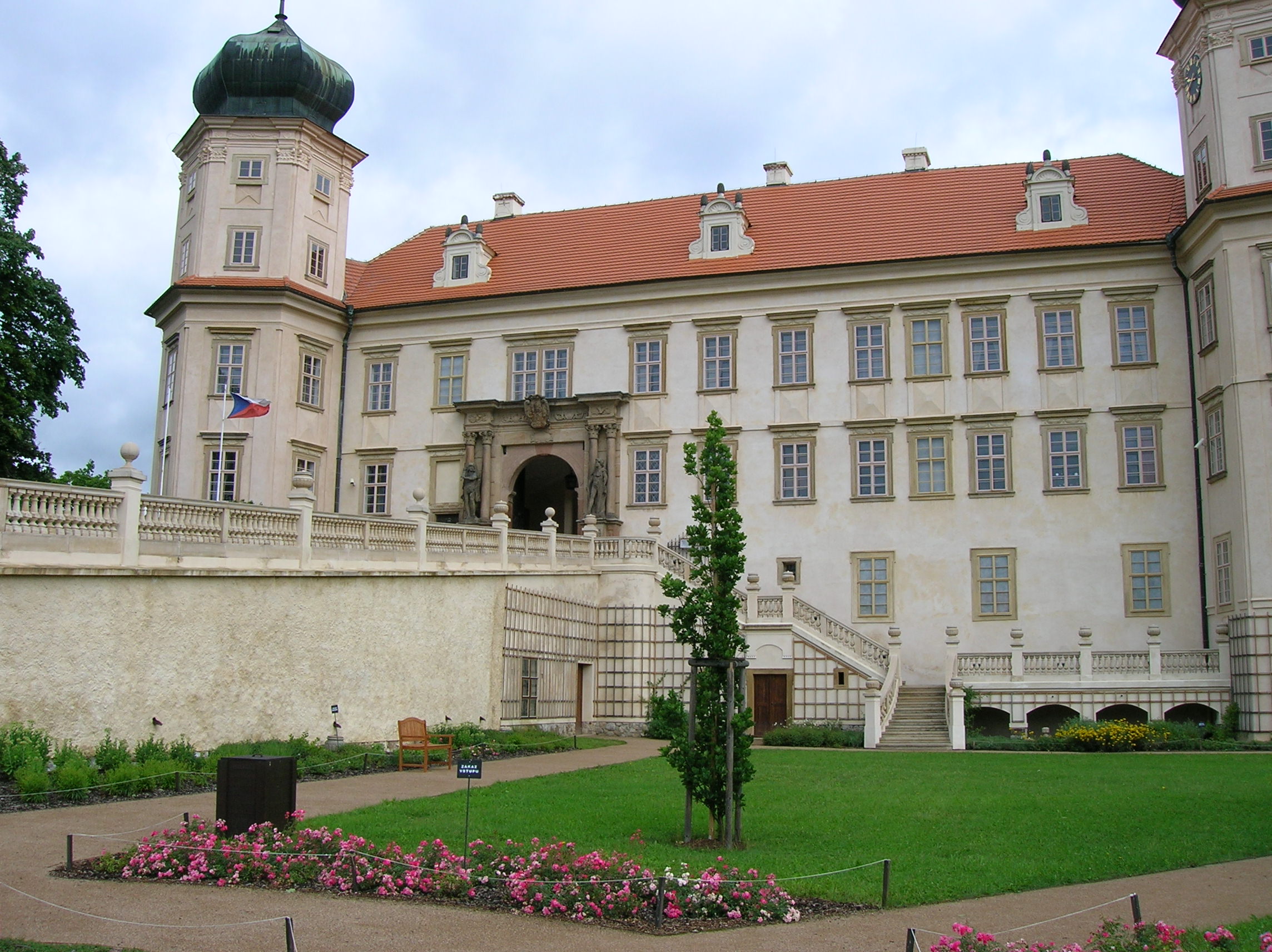
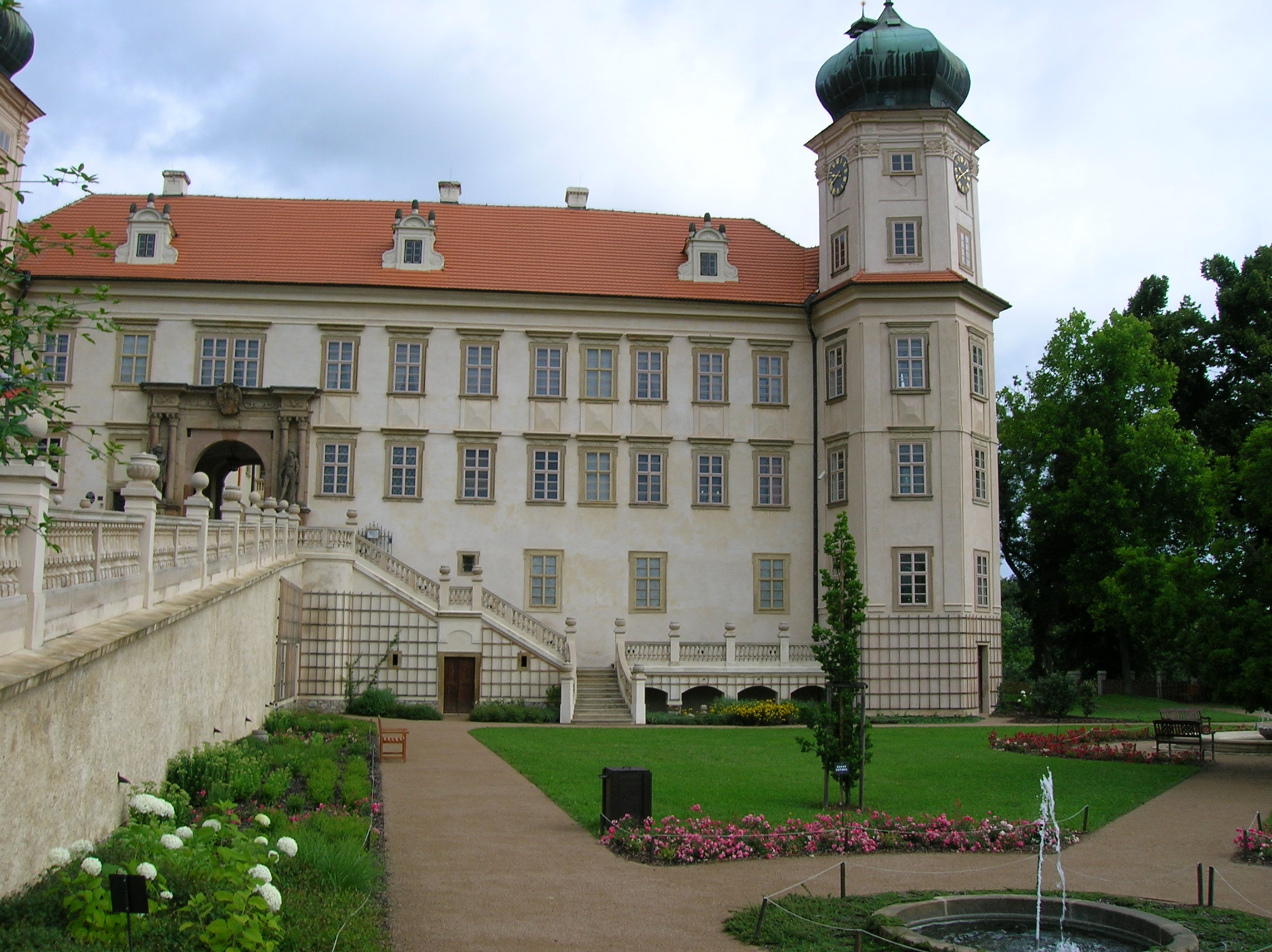
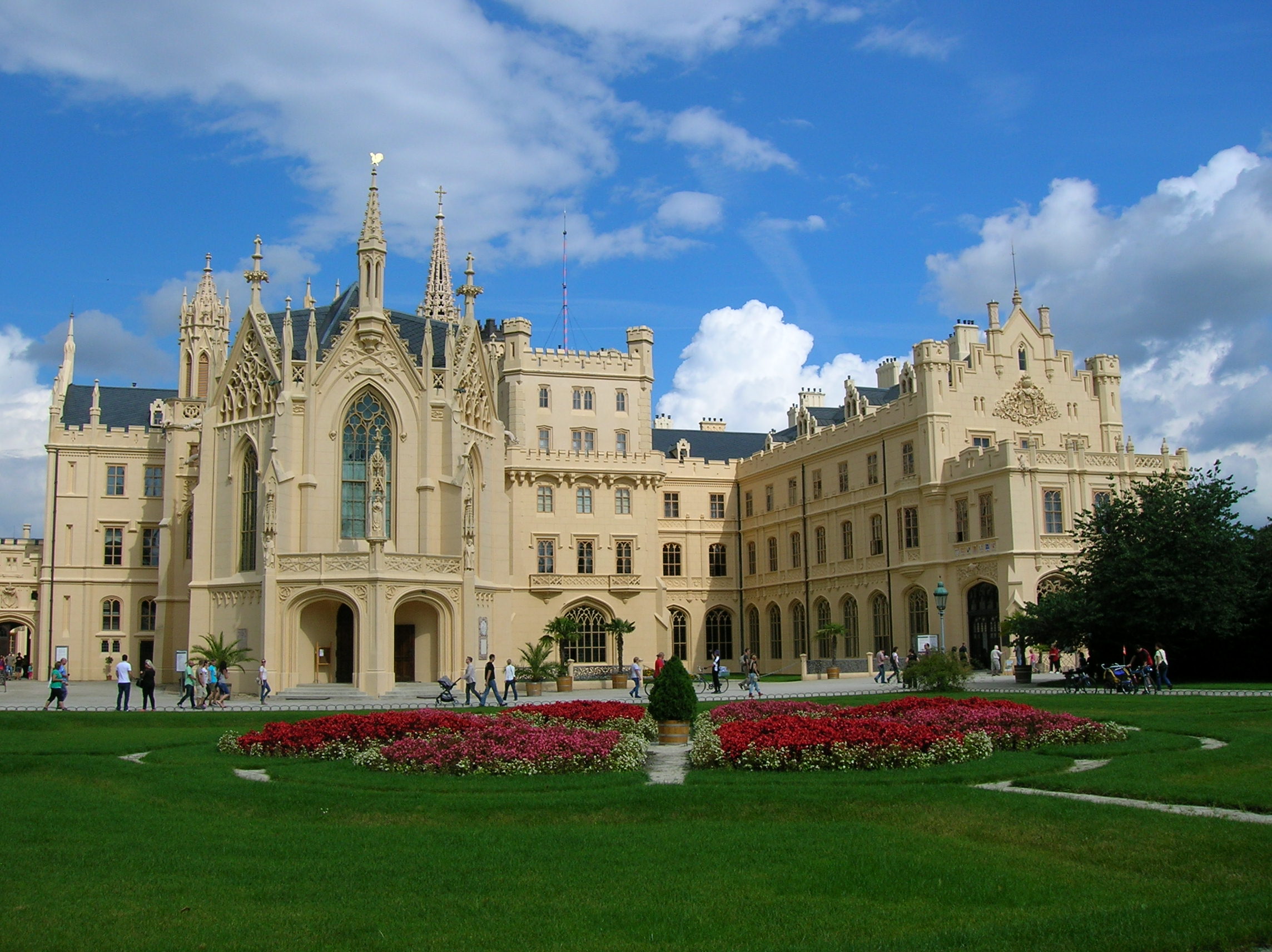
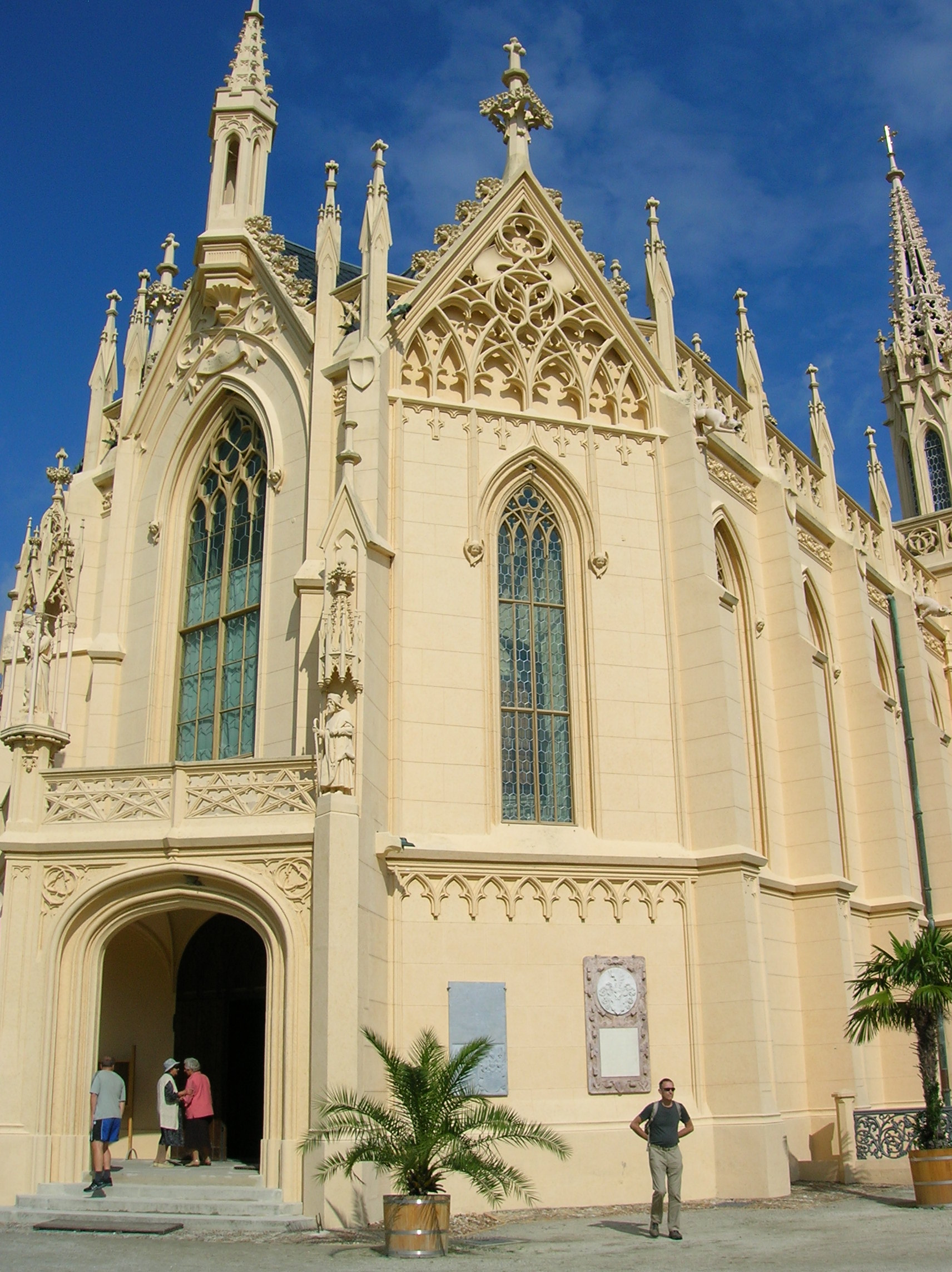
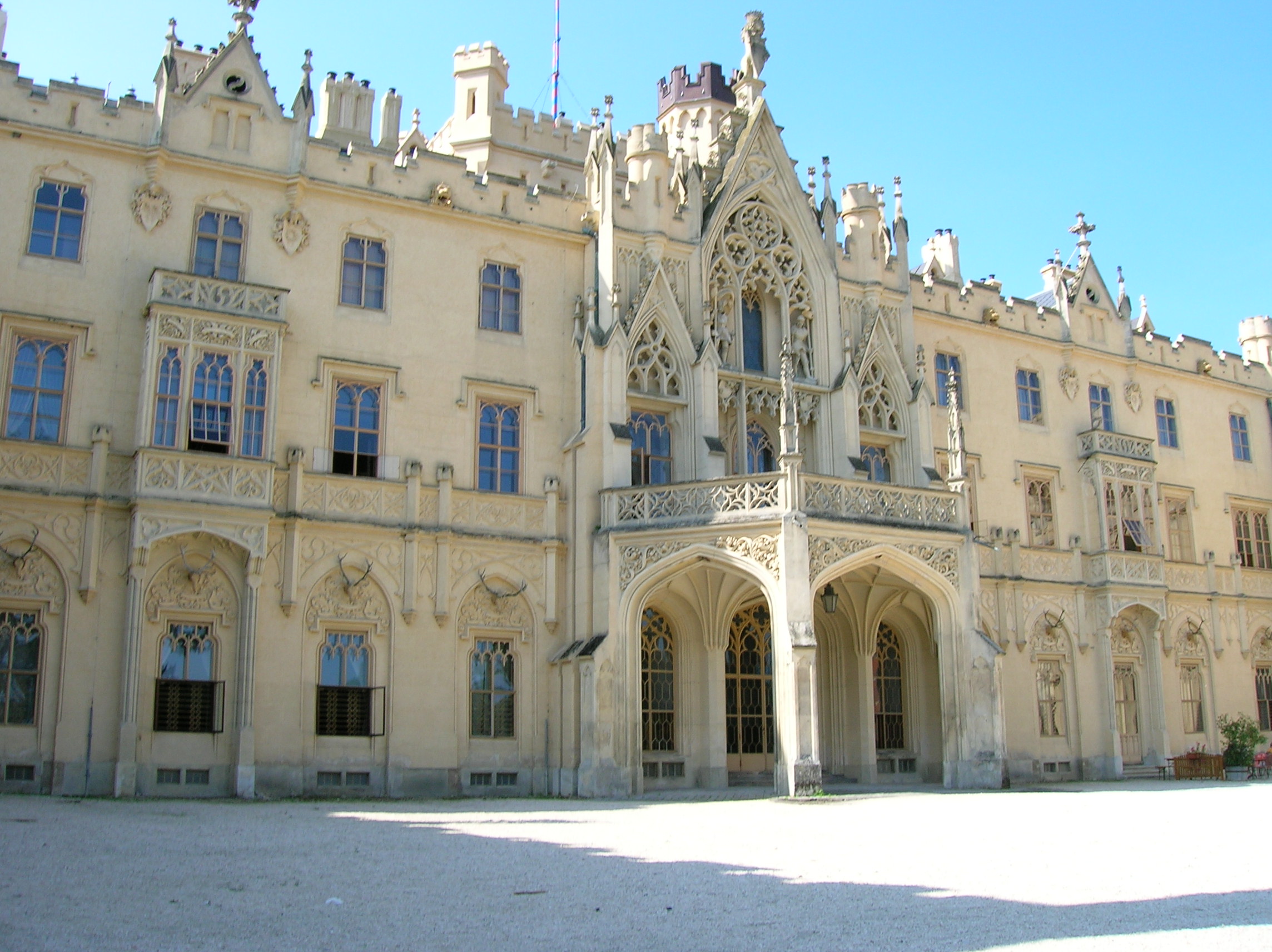
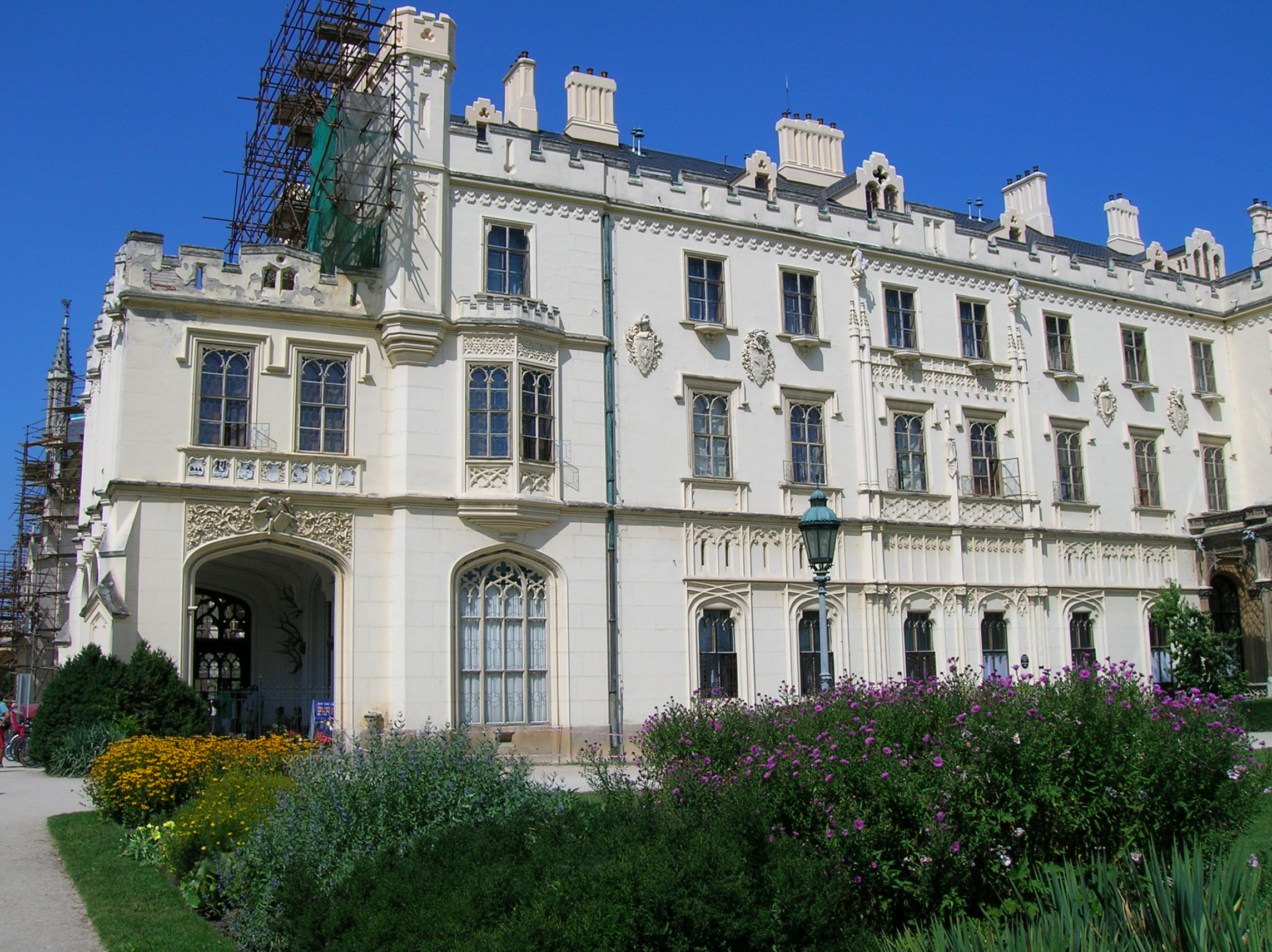
Lednice Chateau in south Moravia has always been one of my favorites because I love Neo-Gothic architecture. Just gazing at the exterior takes my breath away. The interior does not disappoint, either.
Ledniceext6
I was visiting the chateau for the third time. Usually I came alone, but now I was with the arsviva travel agency with whom I had taken tours throughout the Czech Republic and abroad. I had never had time to visit the magnificent park as I was always hurrying to nearby Valtice Chateau to see two chateaus in one day. Now I would not be so rushed. I could enjoy my visit without worrying about catching the bus to Valtice.
Lednice1
I already knew something about the chateau’s background. Lednice was first mentioned in writing as a Gothic fort in 1222. At the end of that century, the Liechtensteins took over Lednice, and they would hold on to it until 1945, for some 700 years. The Liechtensteins would make Lednice their summer residence. Lednice was transformed into a Renaissance chateau during the 16th century. In the following century, when the Czech Protestant nobles revolted against the Catholic Habsburgs, the Liechtensteins took a Catholic stance. Because they supported the Catholics, the chateau remained their property after the Protestants were defeated.
Lednice3
The following years proved to be a golden era for the wealthy family. Lednice was turned into a Baroque masterpiece during the 17th century. It got its Neo-Gothic appearance, inspired by English Gothic architecture, from 1846 to 1858. Fortunately, the family was able to remove most of the furnishings during World War II, so visitors can see much of the original décor today. The Lednice and Valtice area was added to the UNESCO List of World Cultural and Natural Heritage sites in 1996.

Ledniceext5
I had been on all tours of the interior, but this time our visit would focus on the representative rooms, which was my favorite tour. The other tour of the rooms concentrated on the princely apartments. There were also four tours of the park plus two others. We would see the park on one hour-long tour.
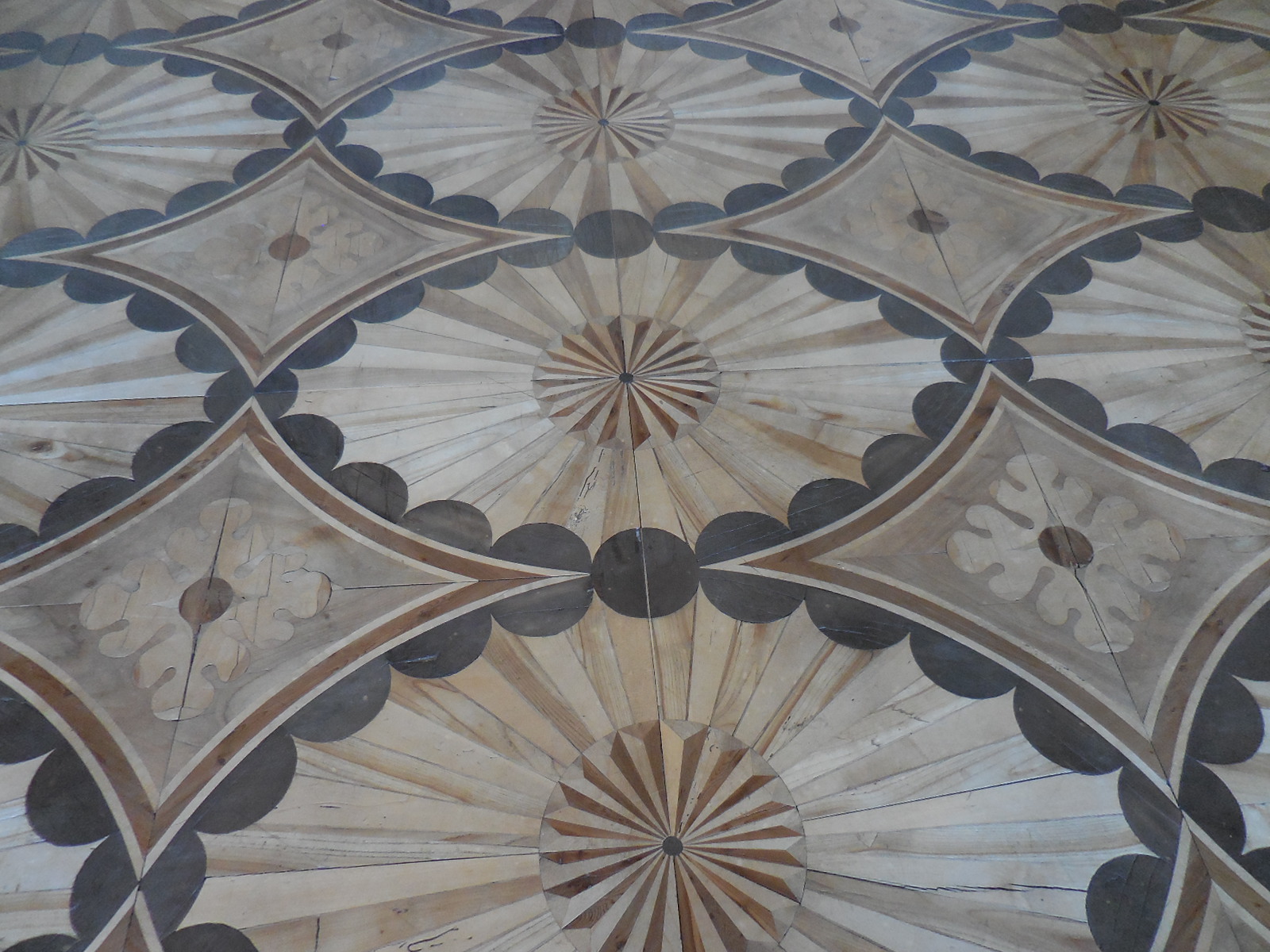
In the hallway we saw the biggest chandelier in the Czech Republic, made in Vienna. It had 116 arms and weighed 690 kilos. I also noticed the richly carved wooden staircase and banister, though I knew an even more impressive staircase awaited me. What I loved most about Lednice was its richly carved woodwork, the most impressive woodcarving in the country, in my opinion. It never failed to astound me. I could stare at it for hours.
Ledniceintdesk
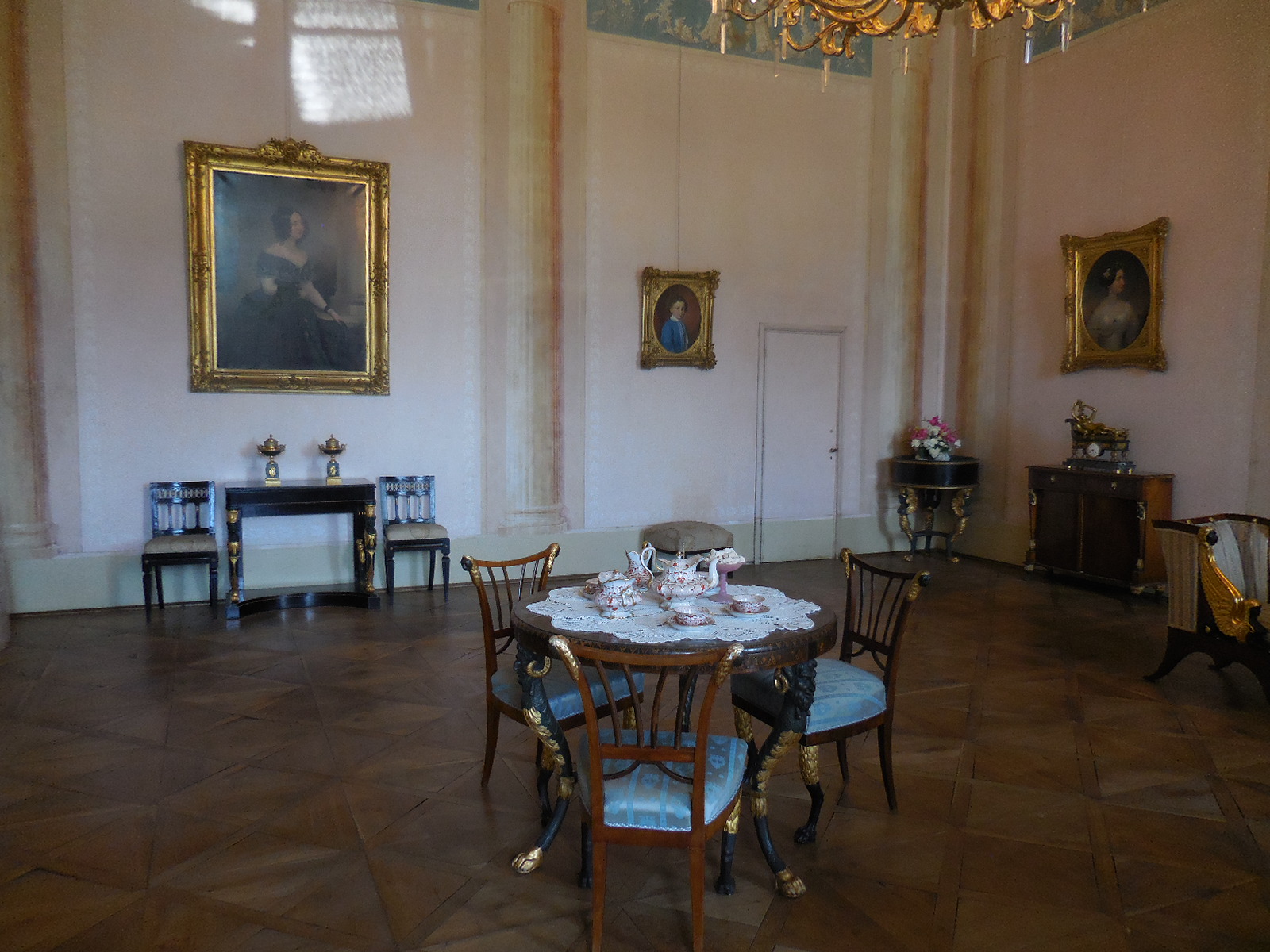
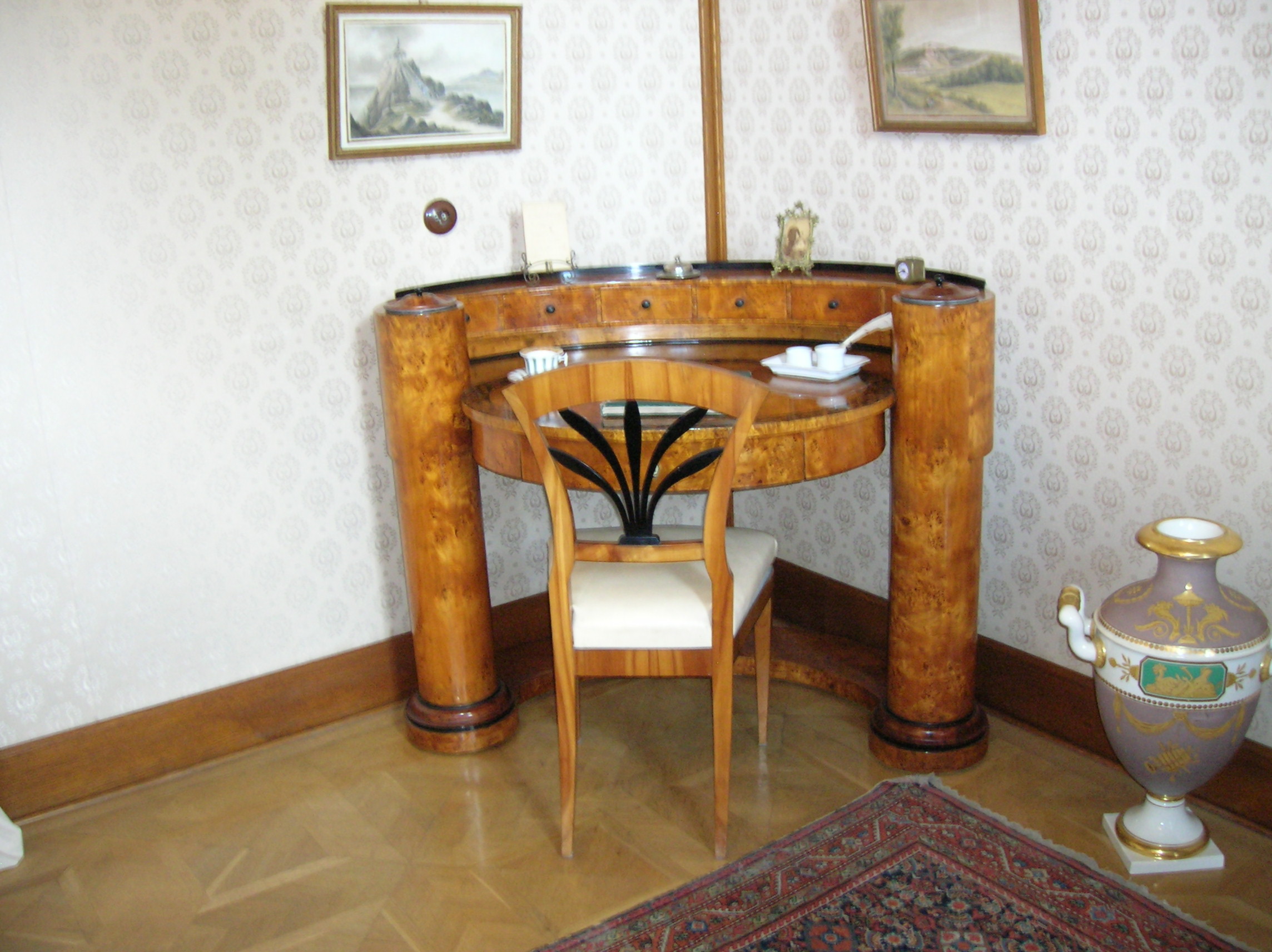
I was impressed by the Viennese porcelain in the Ladies’ Salon. In the Empire style Ladies’ Bedroom a 19th century Mexican cross captivated me. It was so exquisitely and richly decorated with such amazing detail. A splendid desk also took my breath away.
The small Chinese Rooms were two of my favorite spaces in the chateau. The wallpaper of the Oriental Salon was hand-painted, made with Chinese paper during the beginning of the 18th century. It featured an idyllic landscape with figures in a vibrant green color.

LedniceintChcabinet
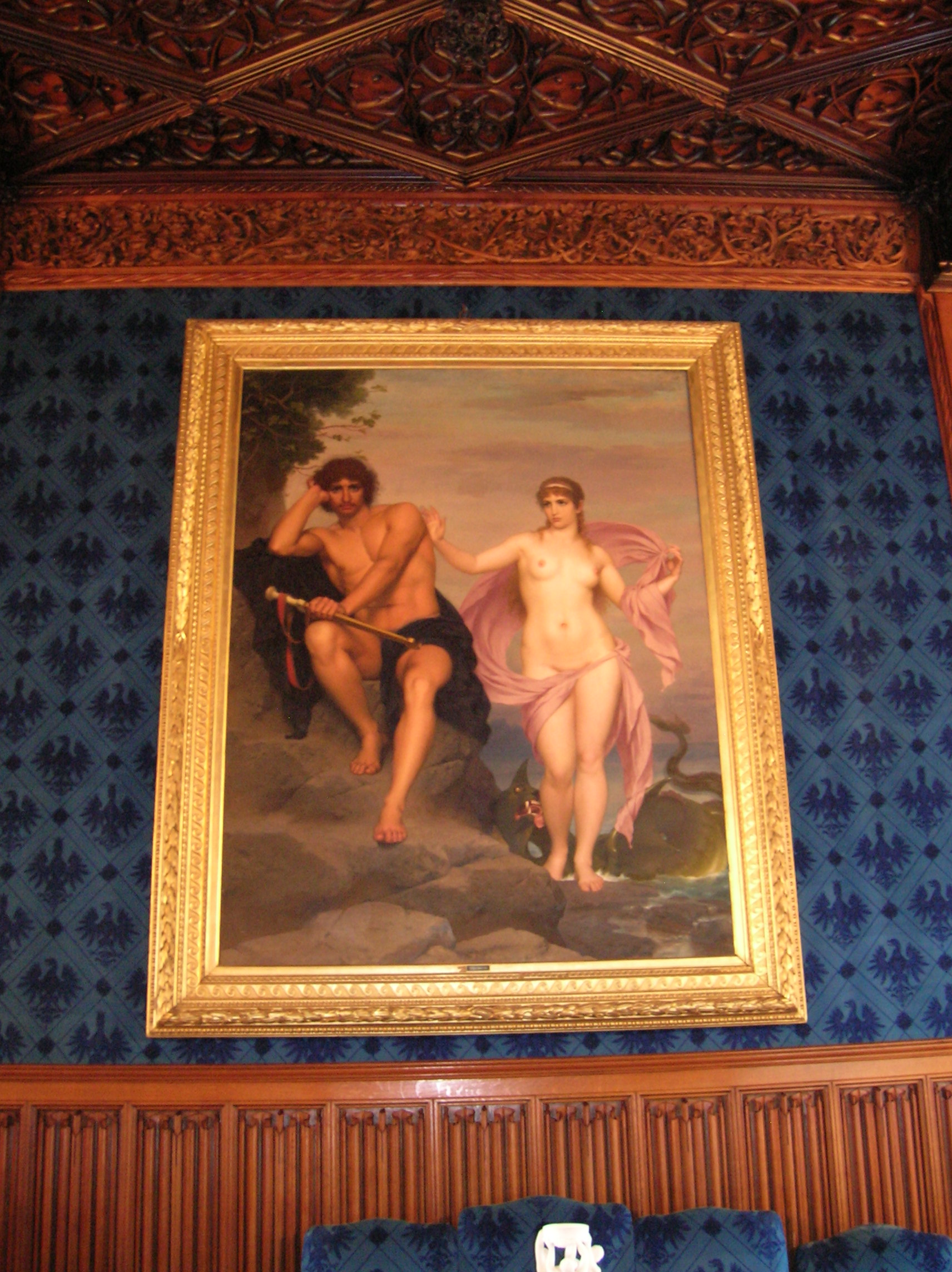
Another space showed off medieval ceiling vaulting and richly carved wood paneling. I found the wood paneling to be comforting. It somehow made me feel safe, as if I were in a place where I could temporarily forget all my worries. I was so awed by the detail of the paneling decoration throughout the chateau. The view was idyllic, too. The room looked out on the garden and a pond. I would explore the park soon. I was psyched.
Ledniceintpainting

The Big Summer Dining Room showed off a Gothic table with pewter dishes. The vaulting was Neo-Gothic, influenced by the Gothic style.
Then came my favorite room, the library. A voracious reader, I have always felt comfortable in libraries, but this one was extra special due to its richly carved oak, self-supporting, spiral staircase, the most exquisite example of richly carved wood I had ever seen. The architectural wonder was created in 1850. The rich blue furnishings and matching blue wallpaper complemented the wood ornamentation perfectly. Even the door boasted an intricate wood design. The library itself held about 2,000 volumes, including many books about architecture, art and travel. The astounding ceiling was made of oak. A 16th century Italian altar showed the genealogy tree of Jesus Christ.
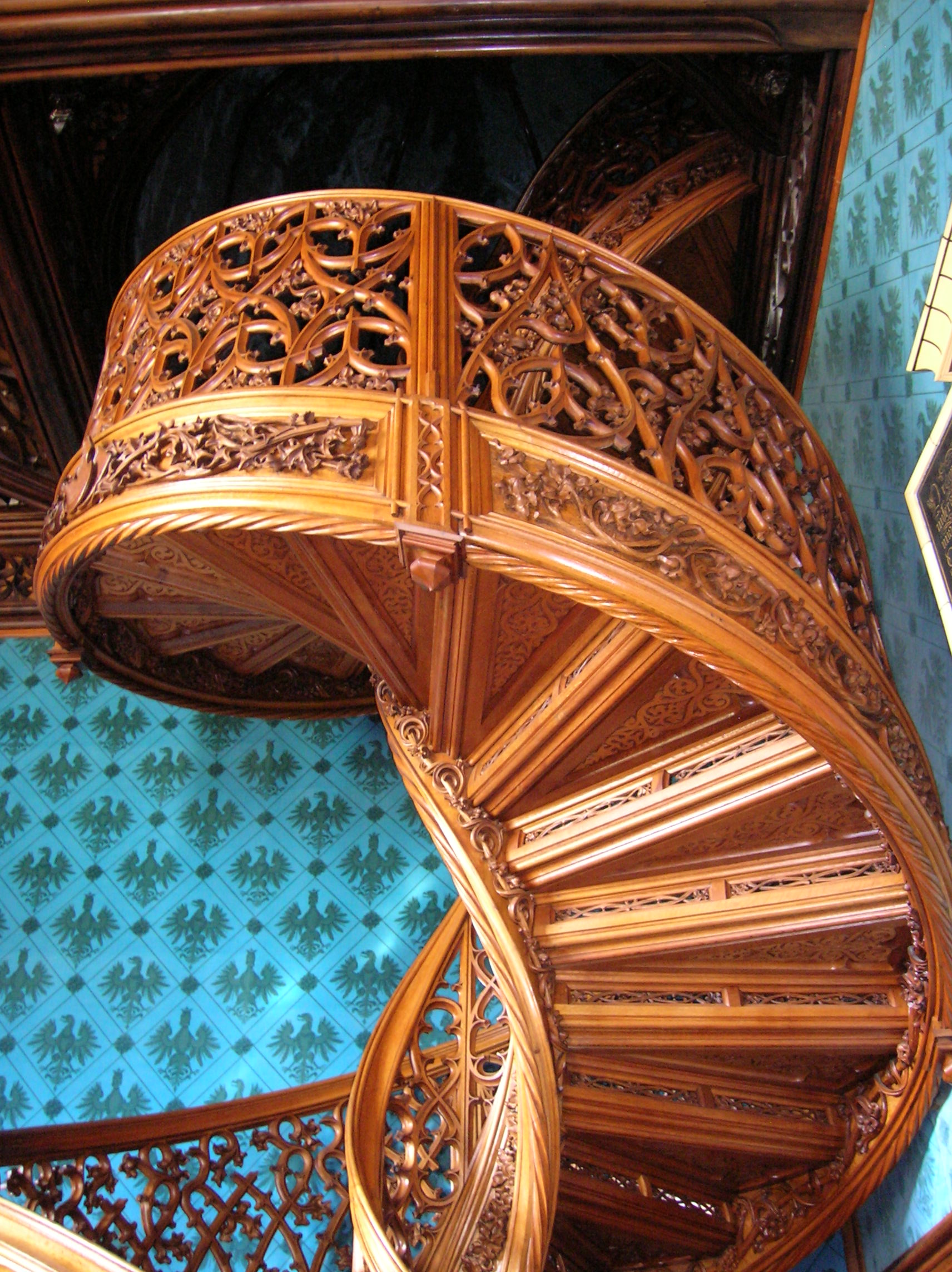
The spiral, self-supporting staircase

The spiral, self-supporting staircase

Ledniceintstaircase2
I loved the wallpaper throughout the chateau, but my favorite was the turquoise with green wallpaper in the Turquoise Hall. The wood furnishings were made from Canadian walnut wood. A copy of a painting by Raphael added to the charm as did an 18th century Chinese vase. Those Neo-Gothic chairs with detailed designs on the backs captivated me not only in this room but also throughout the chateau. The Red Salon or Smoking Salon boasted wallpaper the color of red wine. Coats-of-arms décor was situated high on the walls. Its chandeliers were splendid, too.

The Turquoise Hall

The Turquoise Hall

The Blue Hall was the biggest space in the chateau with crystal candelabras and a ceiling made from linden wood in Neo-Gothic style. I loved the wood ceilings in this chateau, this one especially. This ceiling was extra special because every motif on it was original – no motif was repeated. That made it one of the most impressive ceilings I had seen in chateaus in this country.
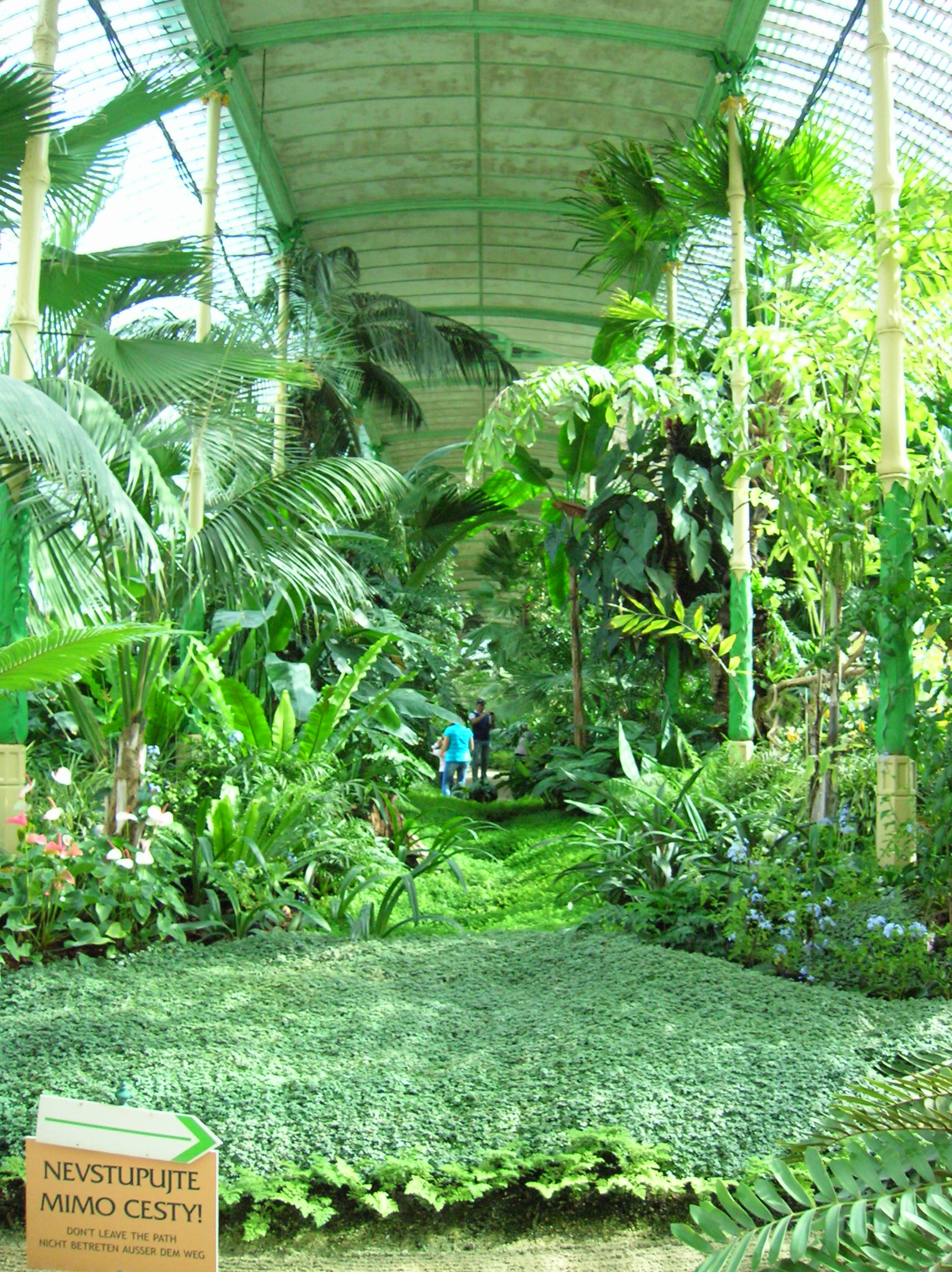
The greenhouse at Lednice

The greenhouse at Lednice

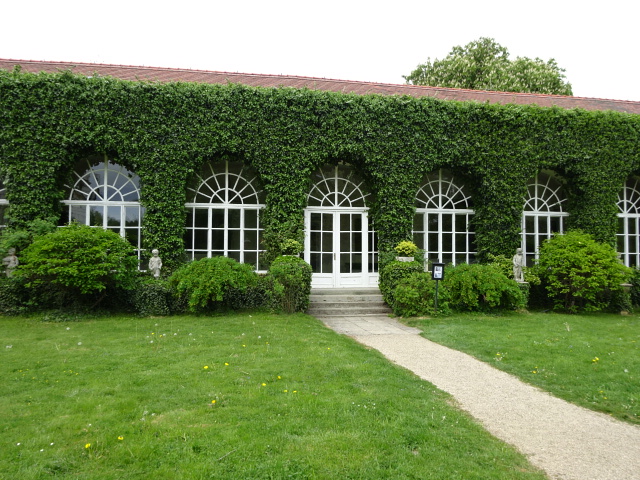
After touring the interior, it was time to explore the park. First, though, I went into the greenhouse to see all the stunning plants. The greenhouse was finished in 1845, restored in 1996 and renovated again in 2002. Yet it retained its early 20th century appearance. It was 92.6 meters long and 13.6 meters wide. Its decoration included 44 pillars showing off a bamboo motif. An elliptical pond was one of the highlights.

The greenhouse

The greenhouse

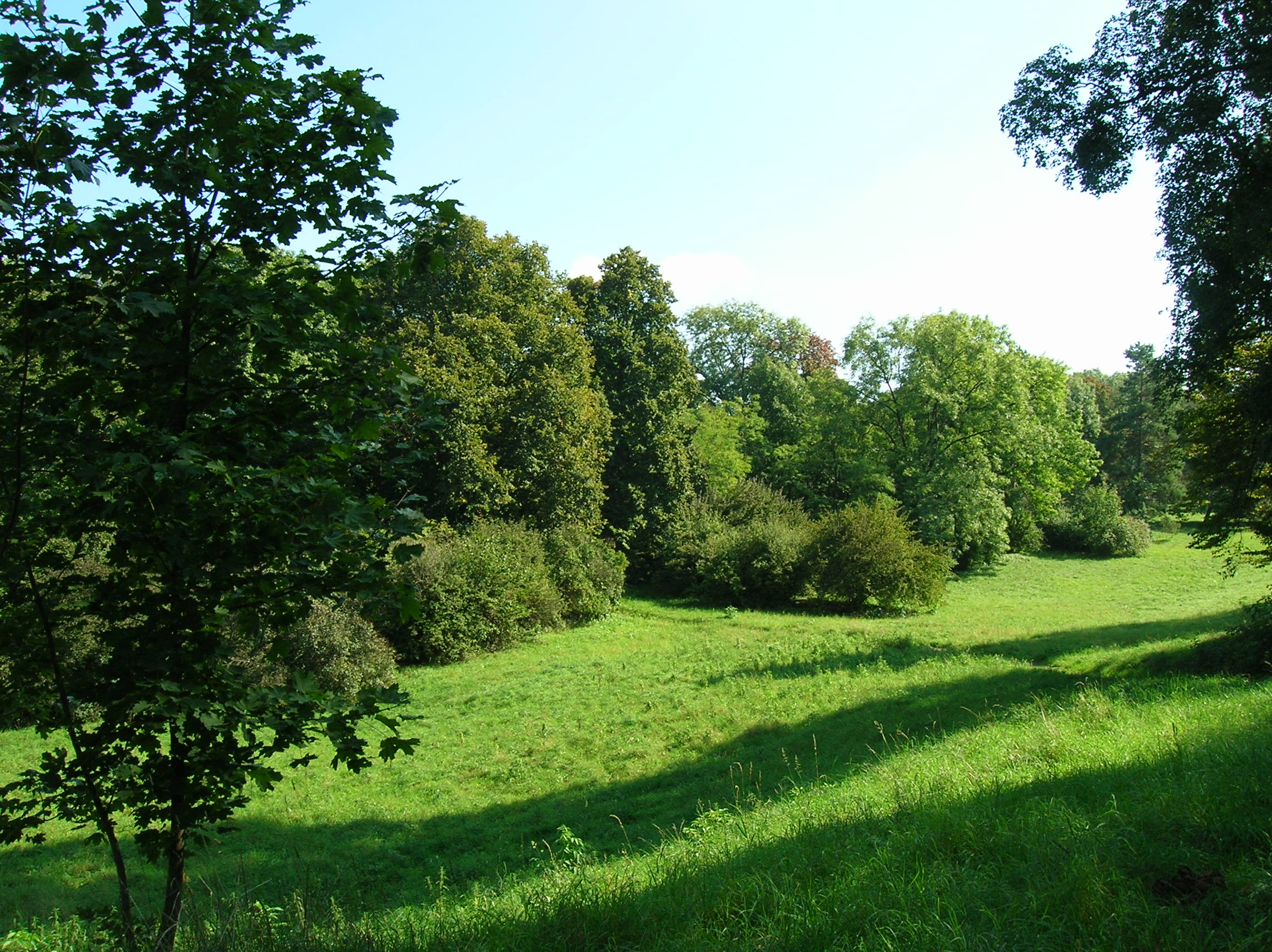
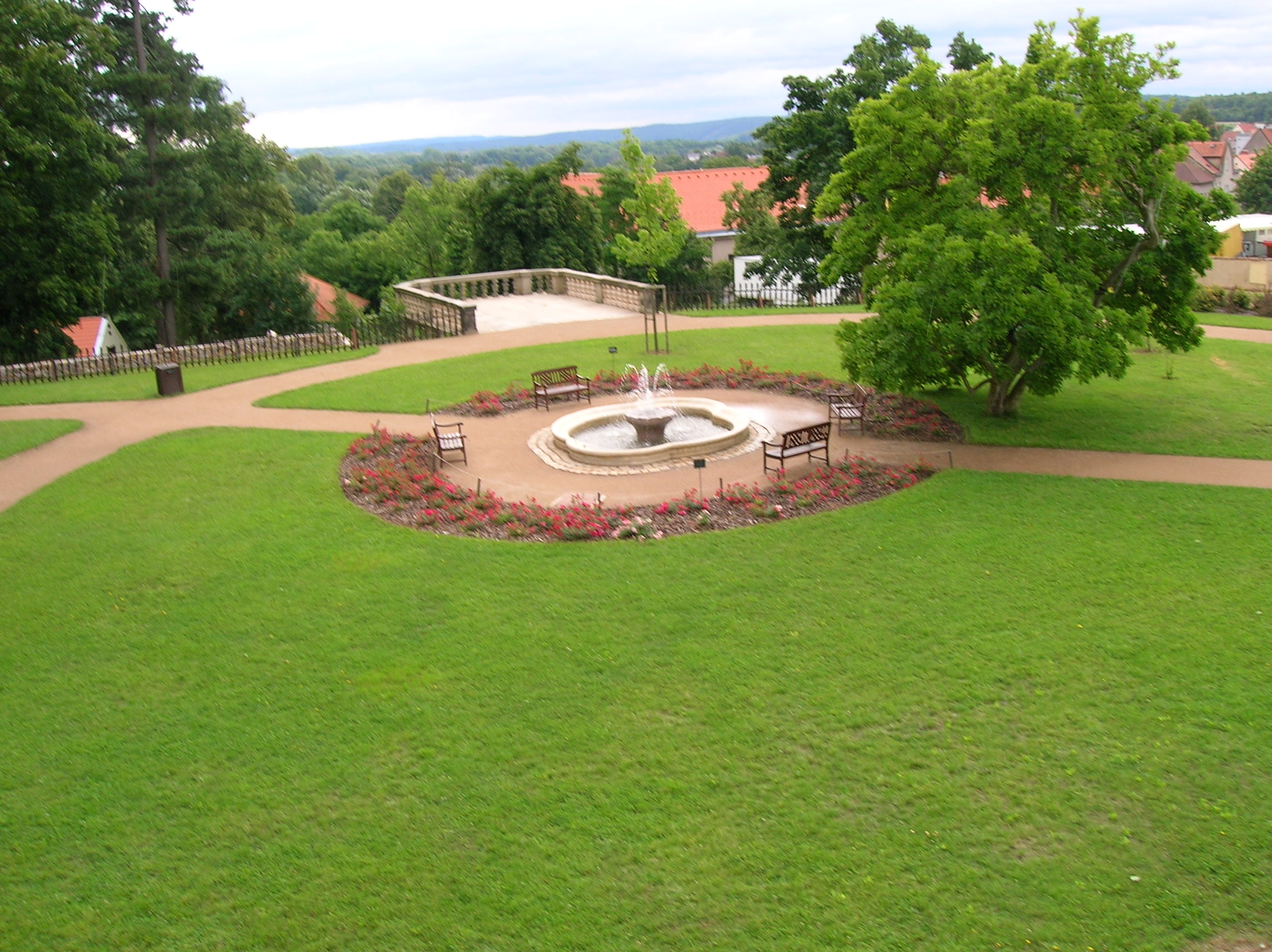
Next we visited the park made up of the natural park and the regular garden. More than 600 types of woody plants now appear in the park. The park harkens back to the 16th century when Lednice was a Renaissance chateau. At the turn of the 18th and 19th centuries, the park took on a Baroque and Classicist look. At the end of the 18th century, exotic plants were added to the park, which has been open to the public since the end of the 18th century. A Chinese pavilion was added by Austrian architect Josef Hardtmuth in 1795, when the park was expanded.

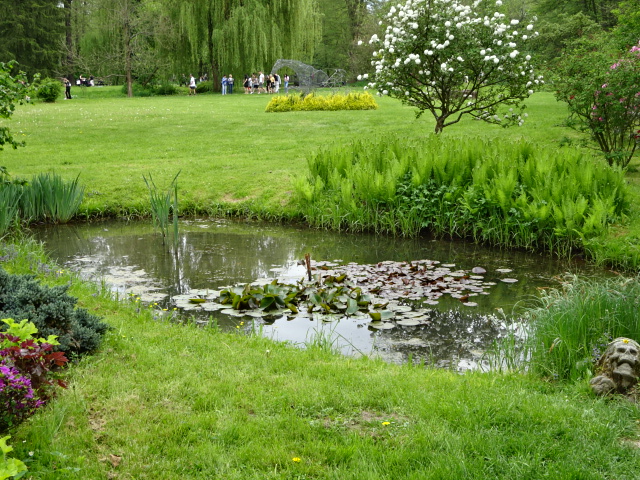
A tranquil stream in Lednice Park

A tranquil stream in Lednice Park

Hardtmuth had served as the prince’s court builder and architect for the Liechtenstein family. He was responsible for the design of many objects in the Lednice – Valtice area. But architecture was not Hardtmuth’s only talent – he also was a skilled inventor, and he came up with the idea of the modern pencil. He even founded a pencil manufacturing company in the late 18th century.

The pond with the Minaret in the distance

The pond with the Minaret in the distance

We gazed across a pond to the Minaret, which was under reconstruction at that time, so there was scaffolding on the lower levels. Built between 1797 and 1804, the Minaret featured a pseudo-Oriental style. It was designed by Hardtmuth as well, and he received much acclaim for his design.
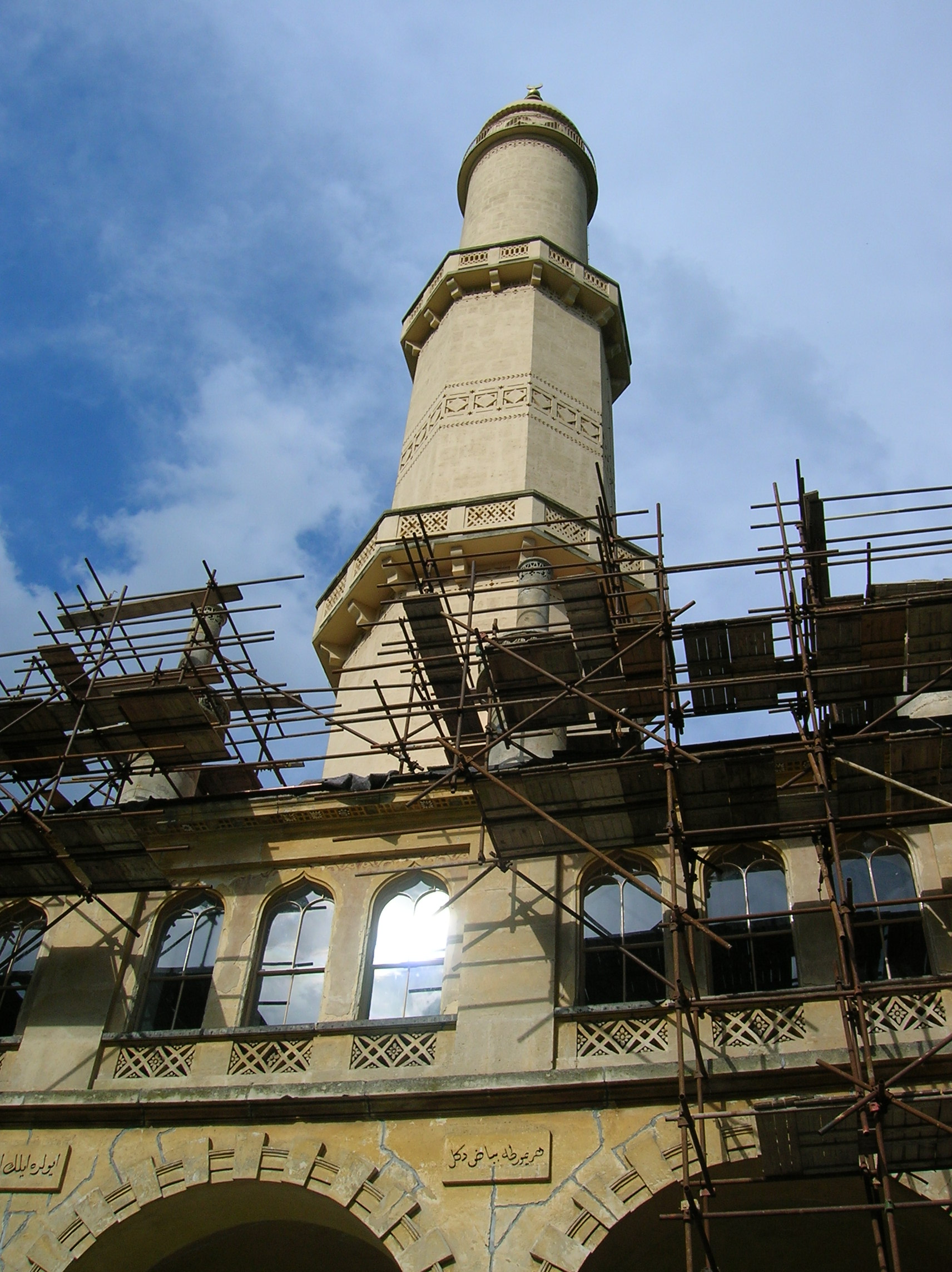
The Minaret was under renovation during my visit.

The Minaret was under renovation during my visit.

Architecturally, the Minaret was composed of a square ground plan that opened with triple axial arcades on the ground floor. The upper floor consisted of eight rooms. The tower was three storeys high, measuring about 60 meters. The Minaret was crowned by a helmet with a half moon. Now the Minaret is the only structure that dates back to the Baroque and Classicist appearance of the park. I wish we had been able to climb to the highest gallery, where it is said that one can see St. Stephen’s Cathedral in Vienna.
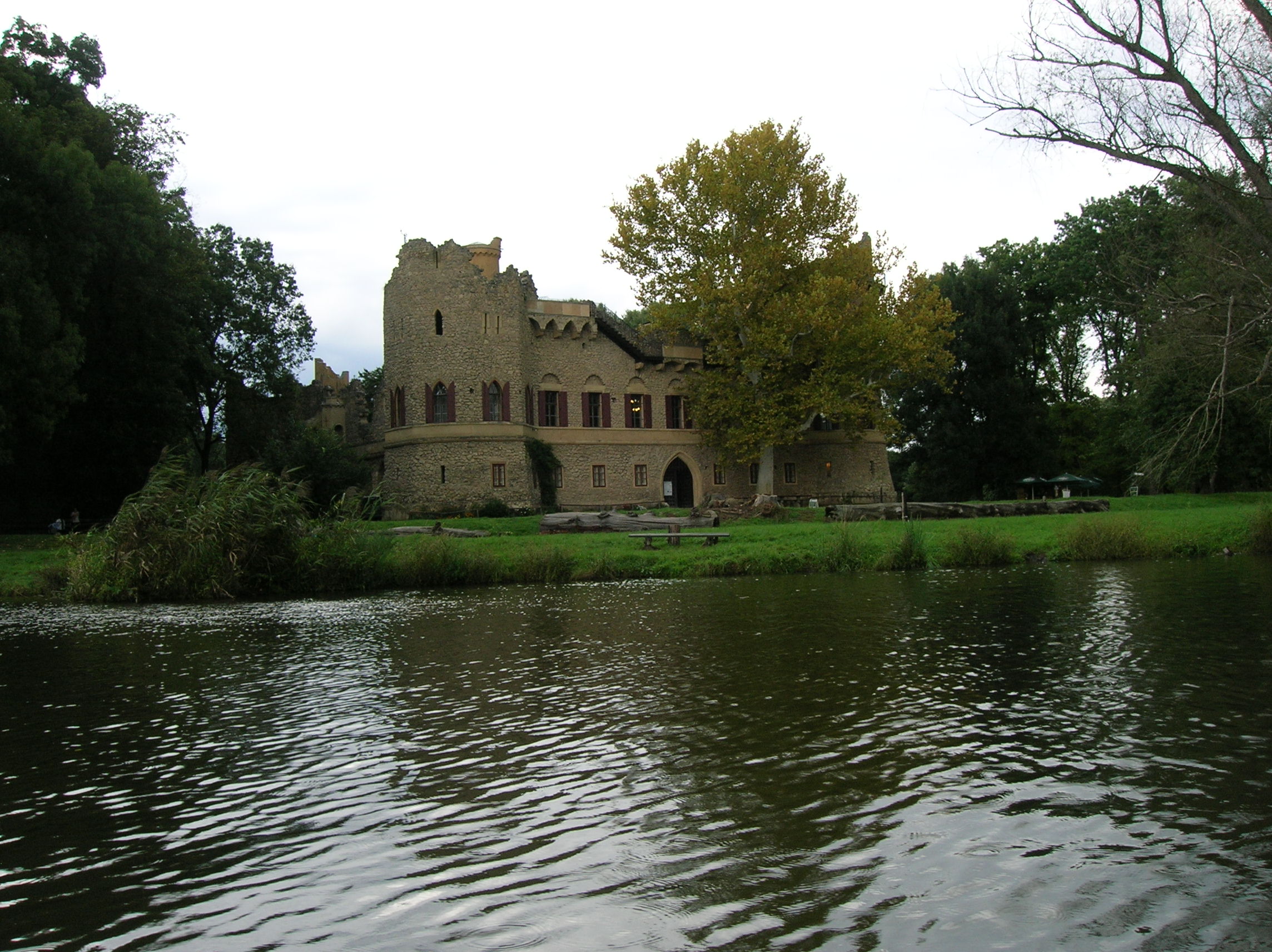
Jan's Castle

Jan’s Castle

Then we took a rickety boat ride to Jan’s Castle, a 19th century copy of Romantic castle ruins created on the banks of the River Dyje, according to Hardtmuth’s design. Inspired by Gothic architecture, it had four wings and three gates. The Knights’ Hall was on the first floor, and banquets had been held there. The southern tower had two floors with a balcony. It exemplified the transition from Classical Romanticism to Early Romanticism that was popular in the 19th century. The castle looked like something out of a Gothic novel. The book Valerie and her Week of Wonders by Vítězslav Nezval came to mind.
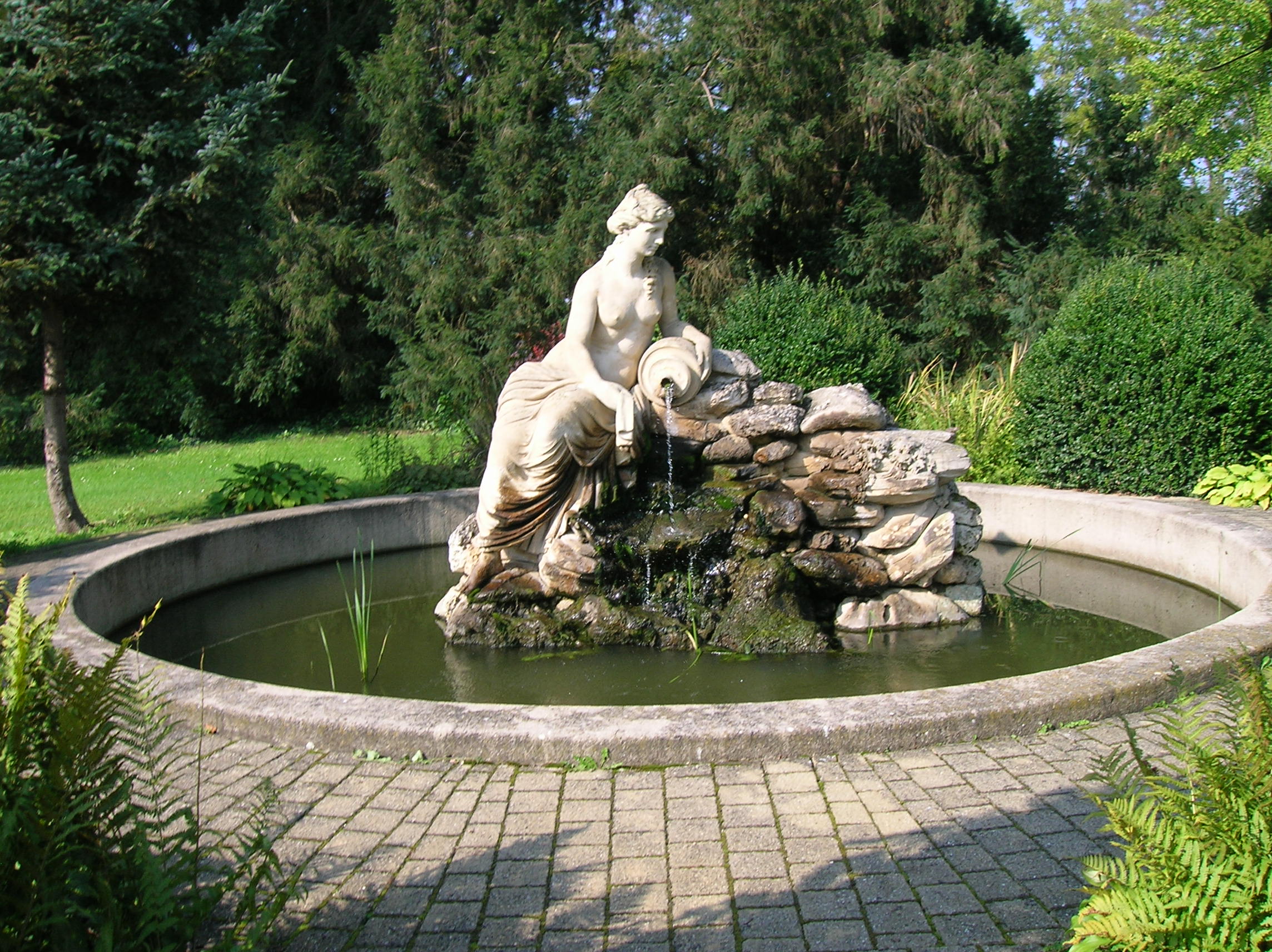
Statue at the Border Chateau

Statue at the Border Chateau

We saw other structures in the Lednice – Valtice area as well. The Border Chateau, created from 1826 to 1827, was situated near the historical border between Austria and the Czech Republic. The historical border of the two countries was a brook that flowed through the vase of a sculpture of a reclining nymph. Then it went under the chateau and into a nearby pond.
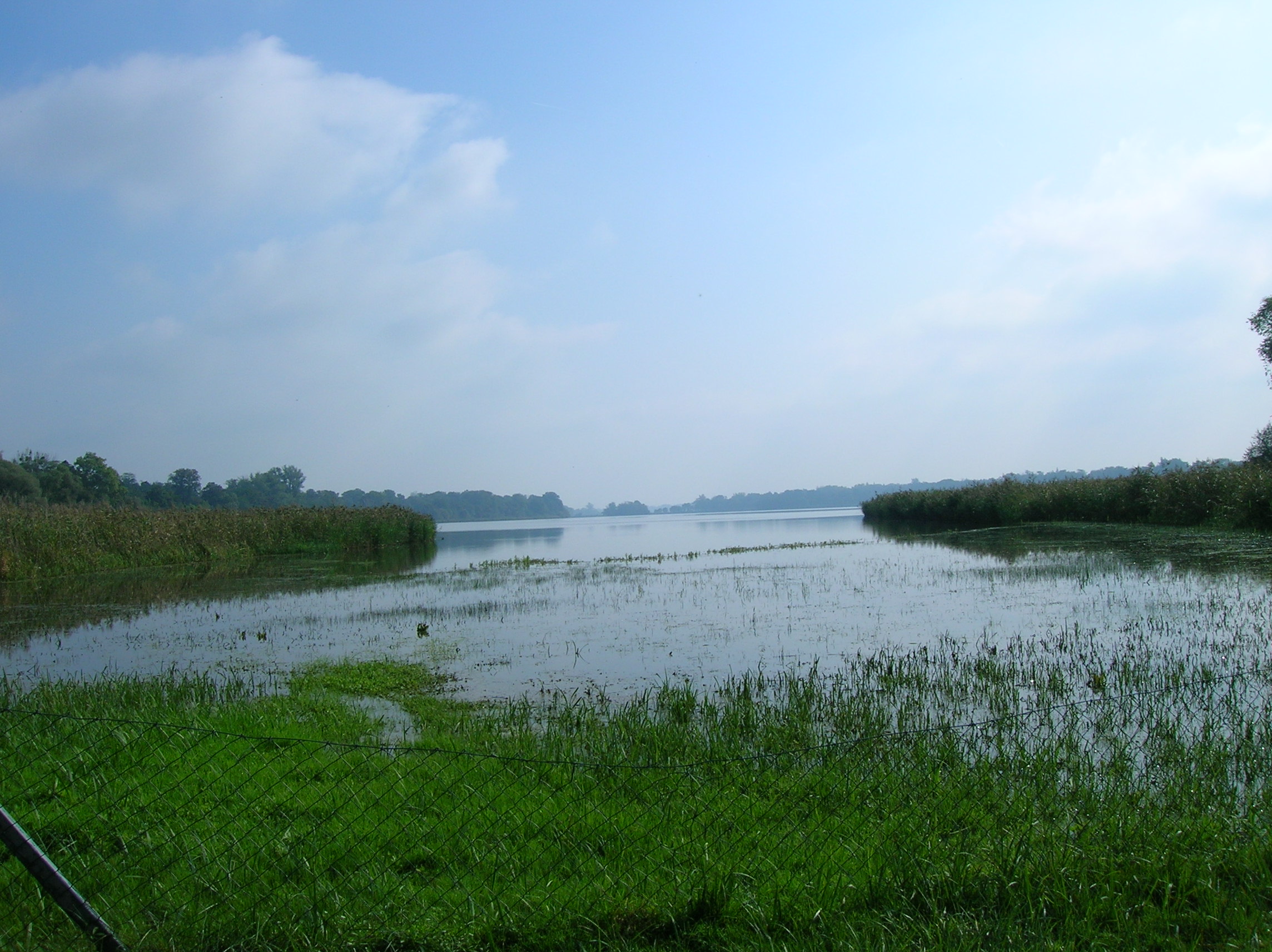
View from the Border Chateau

View from the Border Chateau

It was inspired by Palladian architecture, a style inspired by the designs of 16th century Italian architect Andrea Palladio. The Venice native had focused on symmetry and the characteristics of the formal classical temple from the architecture of the Greeks and Romans in antiquity. This style was often used in the 17th and 18th centuries.
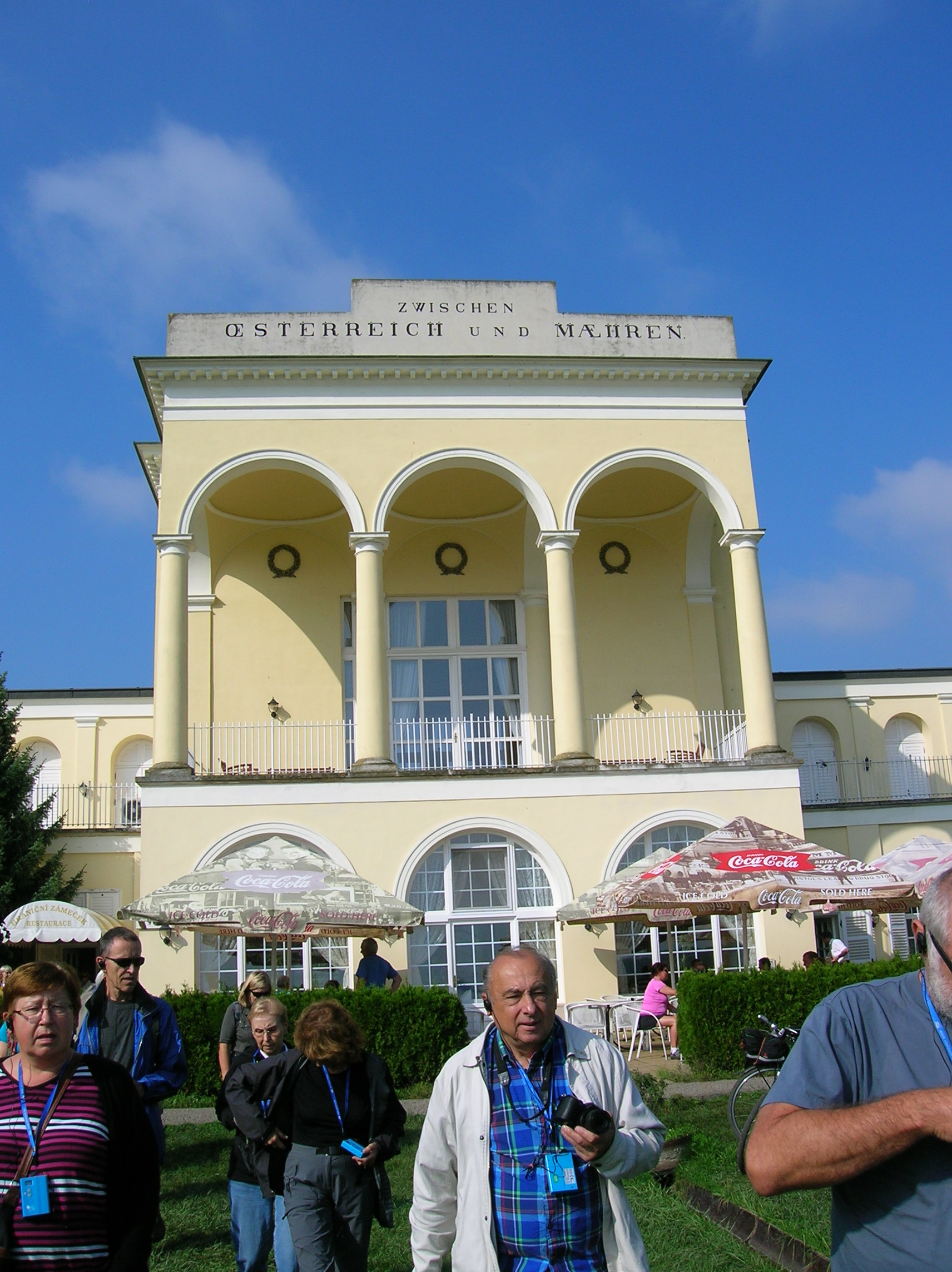
The facade of the Border Chateau

The facade of the Border Chateau

The inside of the chateau featured some Cubist style rooms. The pavilions were connected to wings with a terrace offering spectacular views. It was so harmonious with the nature that surrounded it. Architecturally, it seemed to respect its natural surroundings.

The Rajsná Colonnade

The Rajsná Colonnade

We also saw the Colonnade at Rajsná, which combined a triumphal arch with a colonnade. It was located near the present Austrian and Czech border. You could even see the border buildings from Communist times, and there was an Iron Curtain Museum located there. (Unfortunately, I did not have time to visit it.)

A spectacular view from the Rajsná Colonnade

A spectacular view from the Rajsná Colonnade

Inspired by architecture from Roman and Greek antiquity, this Classicist structure was built from 1810 to 1823 by Hardtmuth and Josef Kornhäusel. The sculptural decoration, designed by Josef Klieber, showed off motifs of triumph and meditation. Reliefs portrayed the allegories of science, art and work. The figures in Roman togas represented the Liechtenstein nobles. The roof terrace offered spectacular views of three countries –the Czech Republic (specifically Moravia), Austria and Slovakia.

The view from the Rajsná Colonnade

The view from the Rajsná Colonnade

The Classicist Diana’s Temple, created from 1810 to 1813 by Hardtmuth, also greatly impressed me. Dedicated to Diana, goddess of the hunt, it looked like a triumphal arch but was really a hunting lodge. Inspired by Roman architecture from antiquity, it had a terrace that must have offered splendid views. Allegories of hunting were portrayed on reliefs. I was surprised how the building was in harmony with nature. It complemented its natural surroundings instead of intruding upon nature.
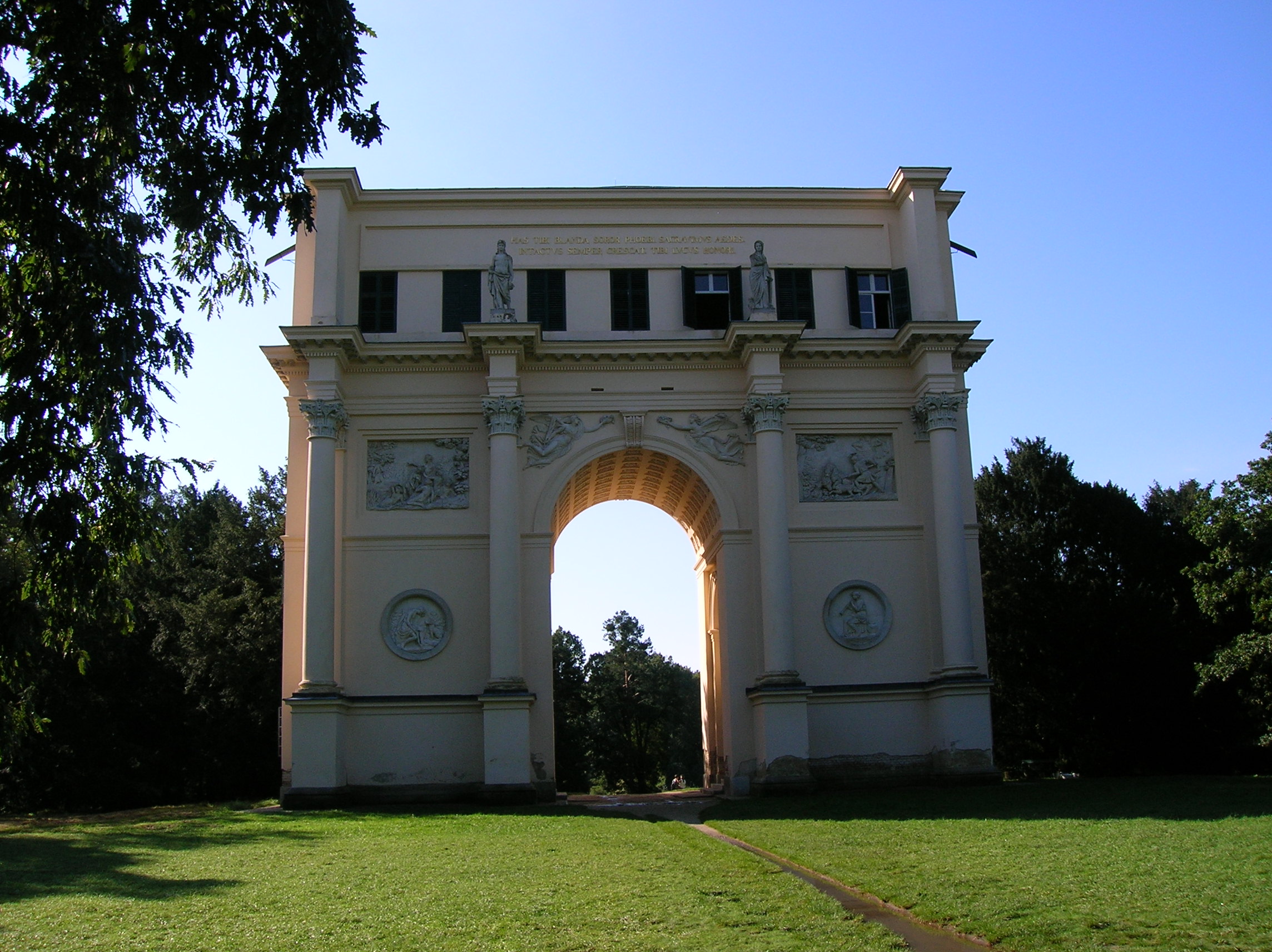
The Diana Temple hunting lodge

The Diana Temple hunting lodge

There were more structures in the park that we did not have time to see. For instance, there was an obelisk, a fountain, more temples, manor houses and a chapel that all belonged to the Lednice – Valtice area. It would take a visitor days to see everything.

The Diana Temple

The Diana Temple

We went by boat to Břeclav and then took a bus back to Prague. The trip was splendid. Our tour guides were excellent and enthusiastic about their work. I was so glad that I was able to devote so much time to the Lednice -Valtice area as opposed to seeing only the interior of the two chateaus that left me in awe every visit. This part of south Moravia was certainly a special and magical place.
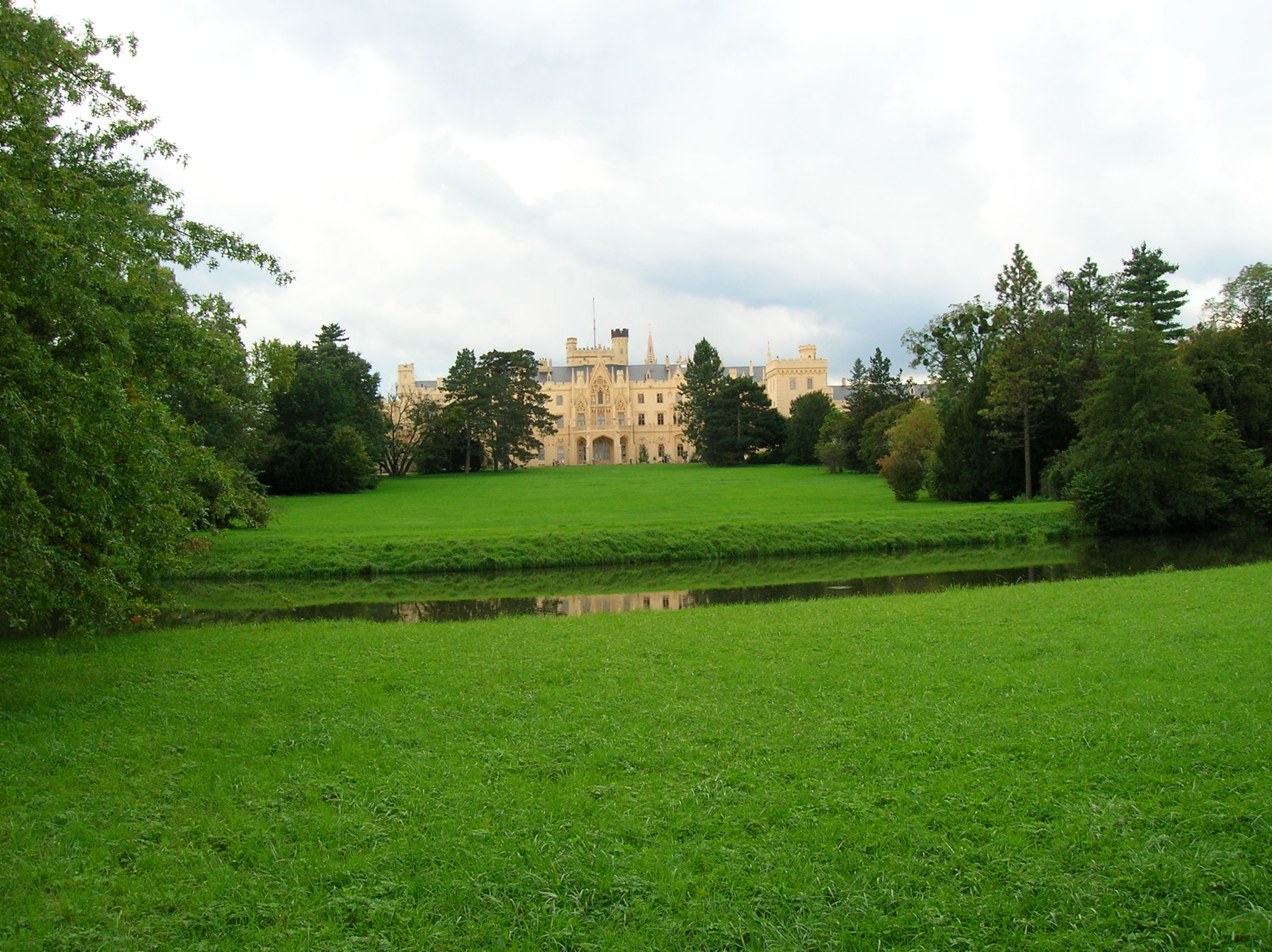
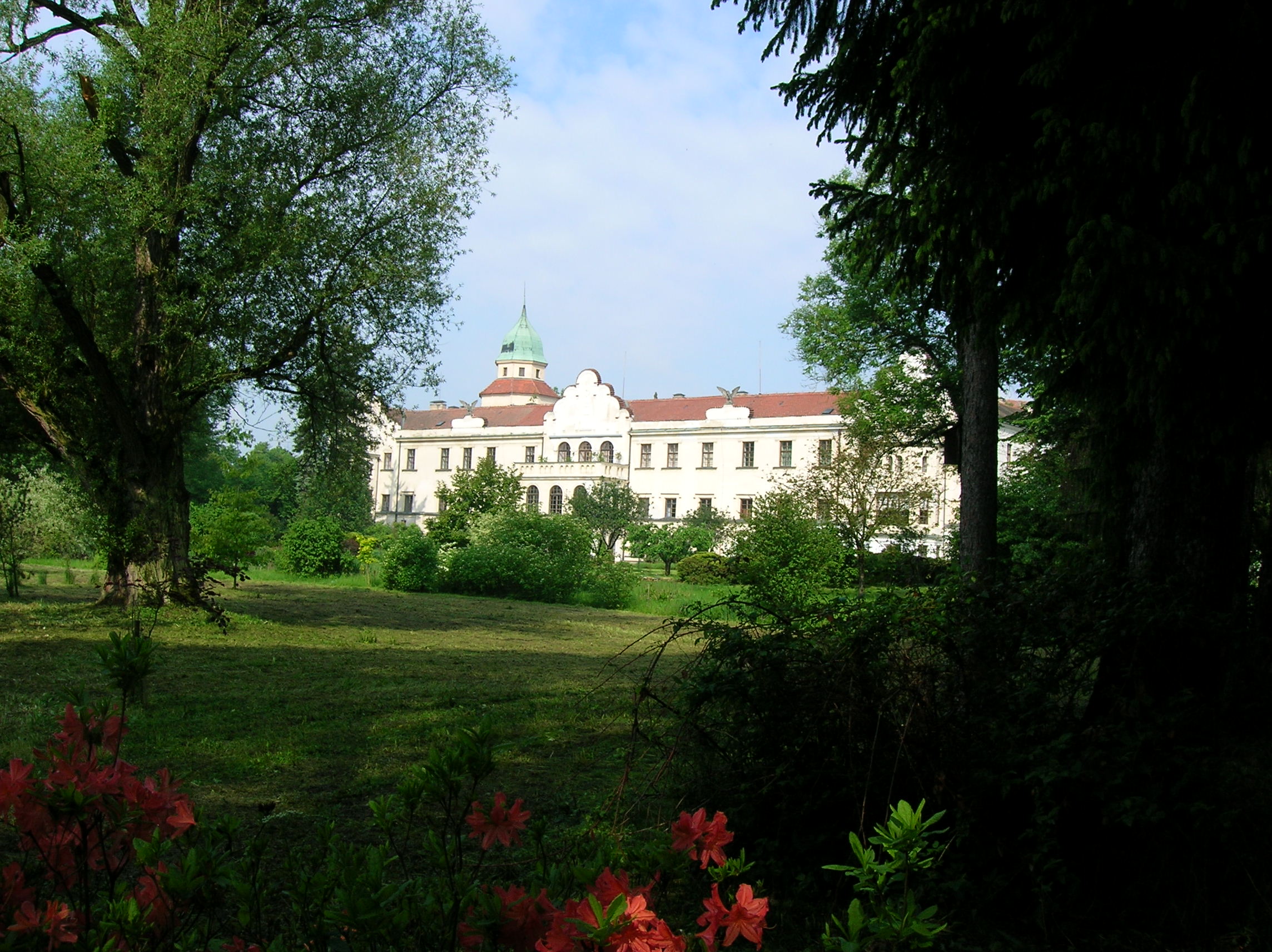
Lednice Chateau from the park

Lednice Chateau from the park

Tracy A. Burns is a writer, proofreader and editor in Prague.
Valtice Chateau Diary

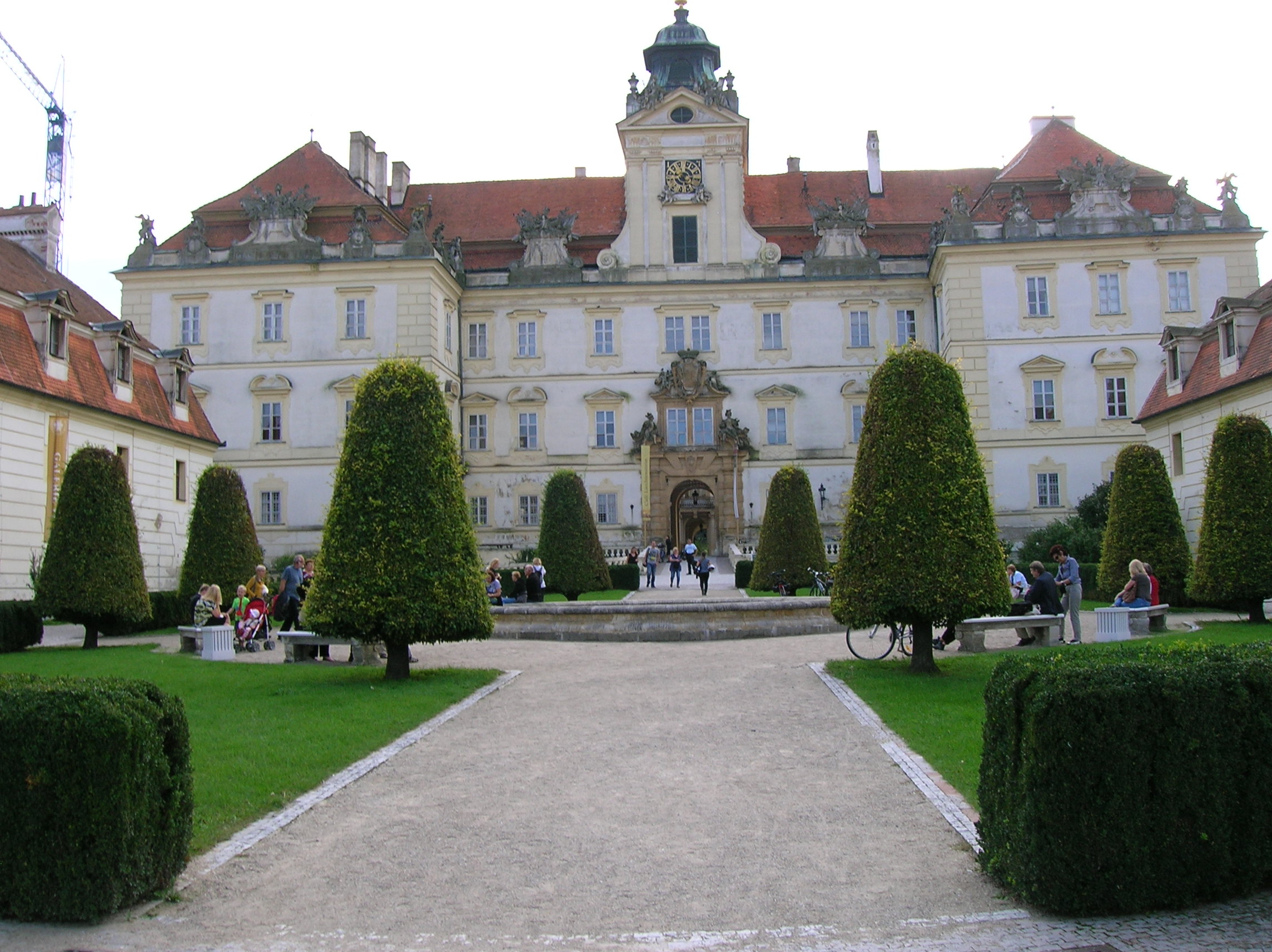
The exterior of Valtice Chateau

The exterior of Valtice Chateau

Often overshadowed by nearby neo-Gothic Lednice, Valtice Chateau is one of the most underrated sights in Moravia. I had visited Valtice Chateau twice before and was bewitched by the Baroque gem both times. The first time I came here, an employee took me quickly through the rooms as she did not want to give a tour to only one person. The Baroque and Rococo interior includes some original 18th century furniture, which never failed to impress me.

Valticeext12
Usually, I traveled to Lednice Chateau and Valtice Chateau by bus from Mikulov, where I had stayed in a hotel. To catch the bus back to Mikulov after visiting Valtice, I always had to hurry and had never had a chance to see the park. This time I was on a tour with the arsviva travel agency, whose tours I had taken to other sights in the Czech Republic and to towns in Germany. Seeing the garden and town were on the itinerary, too.

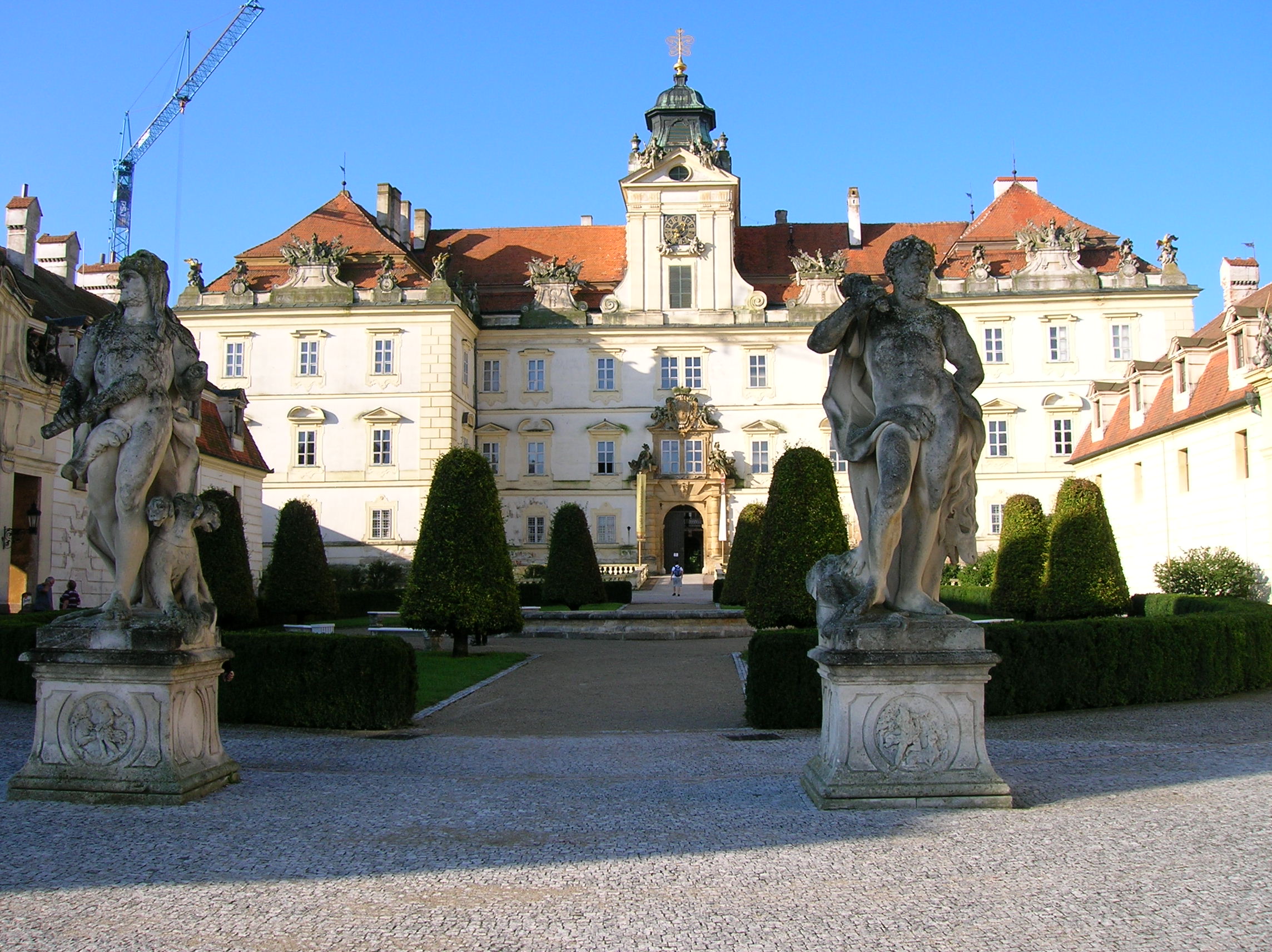
The facade of Valtice Chateau

The facade of Valtice Chateau

I already knew the background information. Valtice originated in the 12the century or earlier as a castle. The Liechtenstein clan would greatly influence the development of Valtice. They bought it in 1387 and kept the chateau in the family until 1945, creating a legacy that survived for almost 600 years. During 1560 they chose Valtice as their main residence. The castle became a Renaissance chateau during the 17th century. During the Thirty Years’ War the Swedes damaged Valtice. Later it got a Baroque makeover. Much construction took place during the 18th century. For example, the stunning chateau chapel was completed in 1729. At the end of that century, the chateau theatre was built. The garden, established during the Baroque reconstruction underwent renovations at that time.
Representative rooms at the chateau have been opened to visitors since the first half of the 19th century. Austro-Hungarian Emperor Franz Josef I and his wife Princess Elizabeth, often called “Sisi,” came to the chateau as did Austrian Chancellor Klemens von Metternich. When the chateau became the property of the Czechoslovak Republic in 1920, there were no changes made.

Valtice5statue
But those golden days did not last forever. World War II came, and after the war the chateau was plundered. Considered to be traitors, Soviet prisoners-of-war were shot at Valtice. Then a section of the chateau became a forced labor camp for women while another part was used for drying hops. The grounds were in poor condition, too. Extensive reconstruction took place in the 1960s, and now Valtice is a Baroque beauty. The chateau even made the UNESCO World Cultural Heritage List during 1996, an honor that is well-deserved.

Valticext7
The mammoth statues of Hercules in front of the chateau gave me an imposing welcome. When I looked up at them, I felt that I played such a small role in the huge, scary world. This feeling was not negative; rather, it was humbling. The comprehensive tour lasted one hour. It covered the representative rooms, the emperor’s apartments and the chapel that had been lauded throughout Central Europe.

Valticext6
Our guide was a very scholarly and enthusiastic woman. She clearly liked her job. In the entranceway I saw Japanese porcelain from the 18th century as well as an impressive carriage. The Antechamber was a real treat – I loved the Oriental pink-and-green wallpaper decorated with pink flower buds. I loved the ceiling paintings throughout the chateau. They featured mythological characters. The Emperor’s Salon featured portraits of the Habsburg family – Maria Theresa and Joseph II were two of those making appearances. In another space I saw paintings of battle scenes from the Napoleonic Wars. In this particular room the Roman gods’ victory over the Titans was the pictorial theme.

The Dining Room

The Dining Room

The Dining Room was the biggest space in the chateau. The pink-and-grey imitation marble on the walls looked so elegant and majestic. Above the doors I saw extraordinary reliefs of musical instruments. It reminded me of college, when music had played such an important role in my life. I adored my private piano lessons, even though I was not very talented. During college I was introduced to the magical world of classical music, which I still listen to today. I even went to the symphony in a nearby town once a month, momentarily escaping university life. I should make music a more significant part of my present, I chided myself. The Baroque 18th century chandelier and the Empire style side tables added to the splendor of the room. The view of the park was superb, too.
In another space I liked the floral and bird motifs on the royal blue upholstery on the chairs. The design was so lively, so energetic. I also noticed a Baroque landscape painting by a Dutch painter. I had been enamored by Dutch and Flemish landscape renditions ever since my first semester of college, when I took a course on Dutch and Flemish art. The chandelier, though, was what fascinated me most. It featured Triton and was decorated with antlers. Somehow the two looked out-of-place together. They did not complement each other. Yet that only made the chandelier more unique and more intriguing.

The unique chandelier and exquisite furnishings

The unique chandelier and exquisite furnishings

The Red Salon or Smoking Room featured an exquisite large mirror. How I would love to look into that mirror every day! Olympic gods looked down on me from the ceiling. Paintings with biblical motifs also decorated the room. The two bureaus made with ivory were stunning, forged in the Florence style and dating from the 17th and 18th century. The jewel chest in the Ladies’ Salon showed off Chinese motifs, and the wings featured a Chinese landscape. The ceiling painting was outstanding; it showed the conquering of Troy. In a bedroom there was an elegant bed with canopy. The Madonna painting hanging behind it was a copy of a work by Raphael.

A captivating bed in Valtice Chateau

A captivating bed in Valtice Chateau

The Marble Salon boasted ornamentation from the 18th century. I loved the pink-and-grey imitation marble on the walls. It was so elegant, so sophisticated! I would love to have walls decorating in that fashion in my house. Floral still lifes dominated the walls, and the god Flora took precedence in the ceiling painting. On one wall in another room there was the shell of a huge tortoise between rifles. I had seen many hunting trophies on walls, but never that of a tortoise. The library featured over a 1,000 volumes, most in French but others also in German and Latin. There was even an old-fashioned elevator in the chateau.

Another exquisite bed in Valtice Chateau

Another exquisite bed in Valtice Chateau

It was a pity we could only see the chapel through a glass partition from one side of the upper level. I admired the richly decorated balcony of the chapel that dated from 1726. The intarsia on the benches below astounded me. Such exquisite detail! There were several paintings in the room from which we peered at the chapel. A 15th century oil painting of Jesus Christ with the Cross proved to be the oldest picture in the chateau. I loved the Baroque Picture Gallery with the paintings set so close together. It was overwhelming, though. There was so much to see on each wall. Hunting themes dominated the room. The ceiling painting carried the same theme – it featured Diana, goddess of the hunt. I loved the Holland Baroque furniture in the Study. It reminded me of the Holland Baroque furnishings I had seen at Český Šternberk Castle in central Bohemia. Other rooms featured ceiling paintings of the Allegory of Morning and the Allegory of Evening.

Valtice Chateau Park

Valtice Chateau Park

In yet another space there was a unique bureau. A section of it opened to reveal a desk, but the bottom part was for storing laundry. It was dazzling, made of ivory with intarsia from various woods. There were also Dutch still lifes of fruit and vegetables and an elegant, light blue bed with a canopy. The ceiling painting focused on the allegory of spring. I wanted to pick some of the flowers out of the basket that was portrayed there. The Reception Room featured pink chairs and wallpaper, giving it a cheerful atmosphere. Baroque landscape paintings dotted one wall.

Valtice Chateau Park

Valtice Chateau Park

Next we saw the Baroque park, built midway through the 18th century. Fascinating architectural objects had been situated there at one time. Perhaps it had been most famous for its gloriette. At the beginning of the 19th century, the park was expanded. There was even an amphitheatre with Baroque statuary built in the park during the early 20th century. Vases and benches had also been part of the park decor. Now those objects are gone, but the park remains intriguing with its many varieties of trees, bushes and flowers.

Valticechurch1
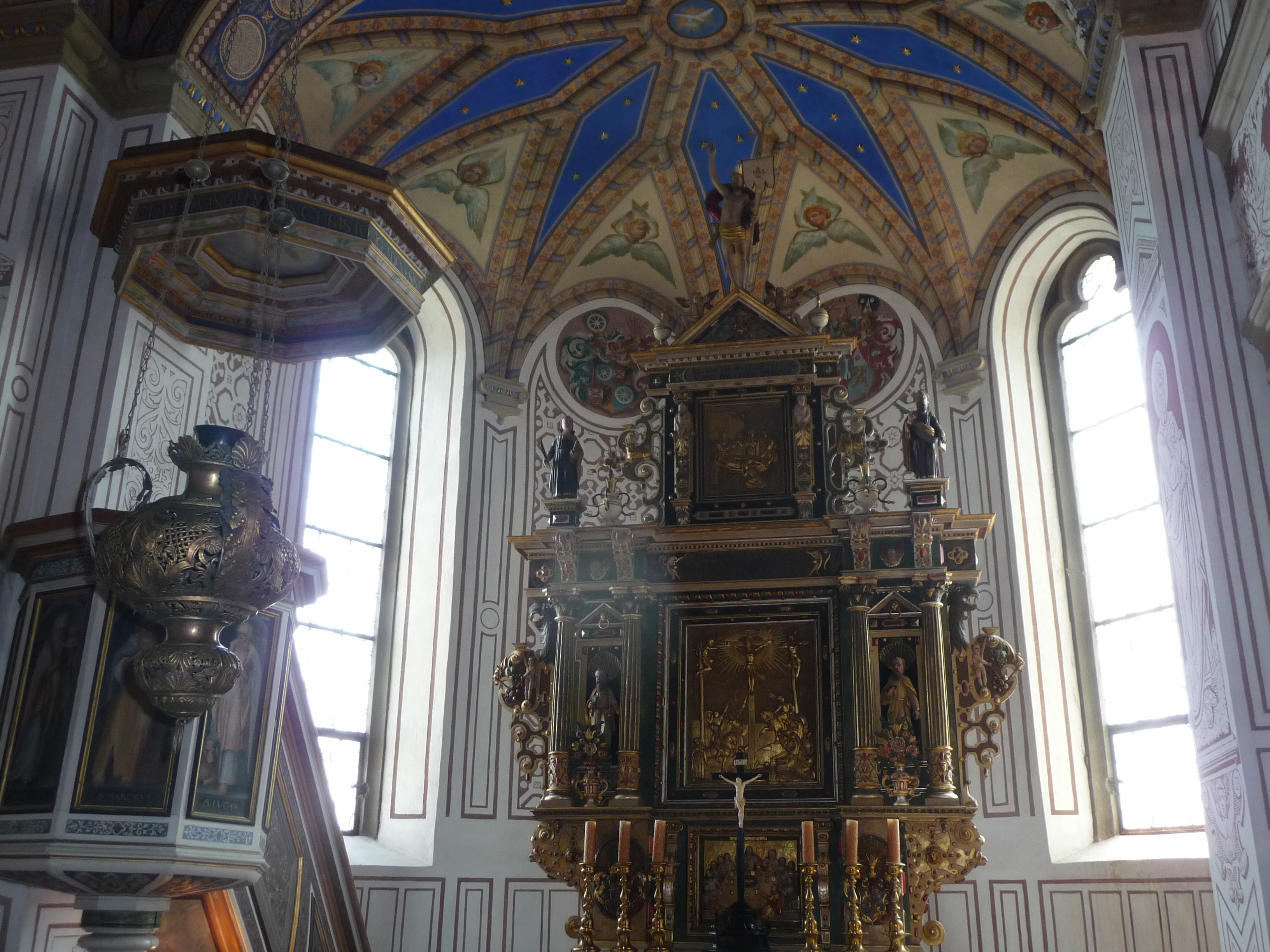
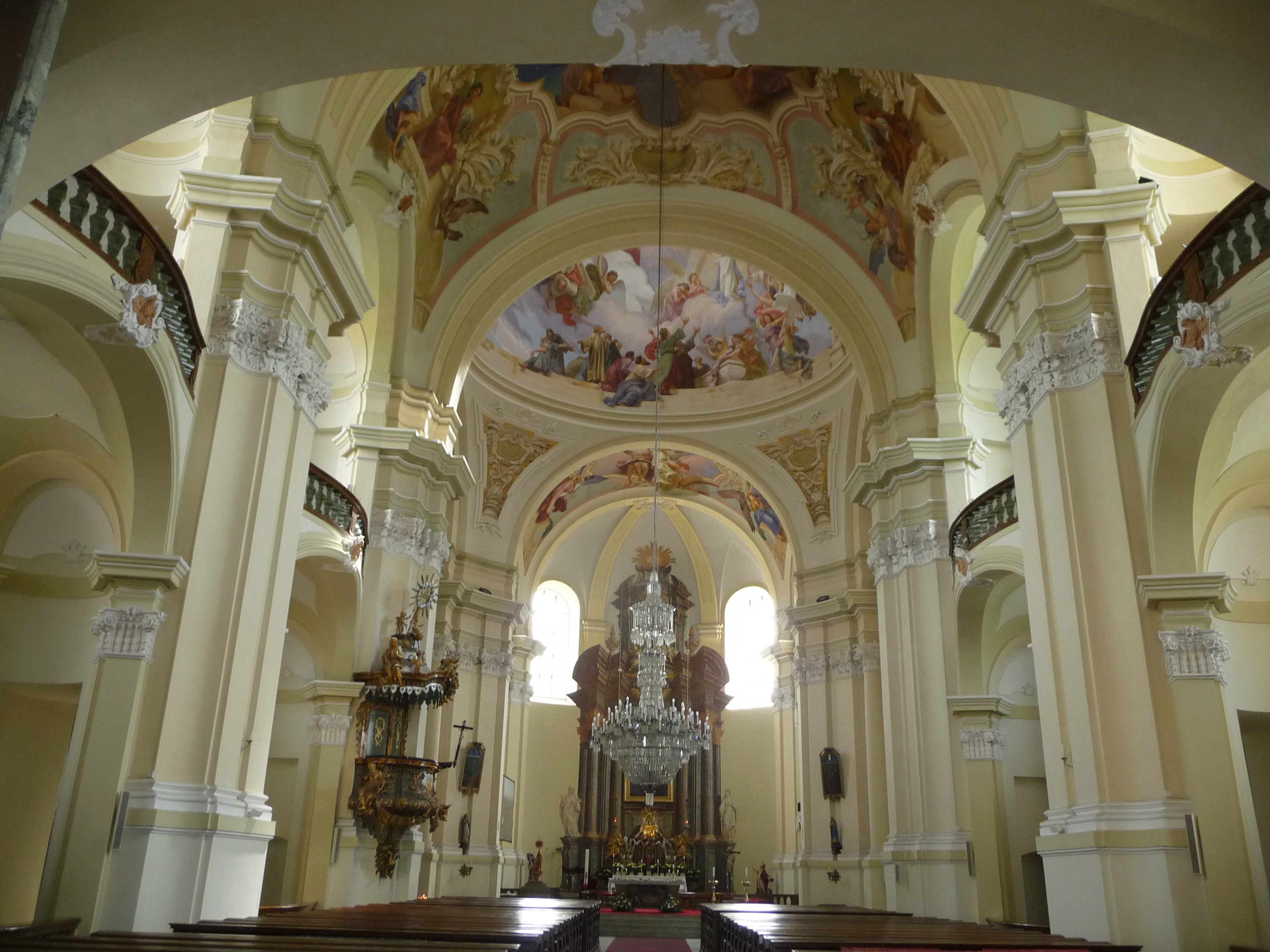
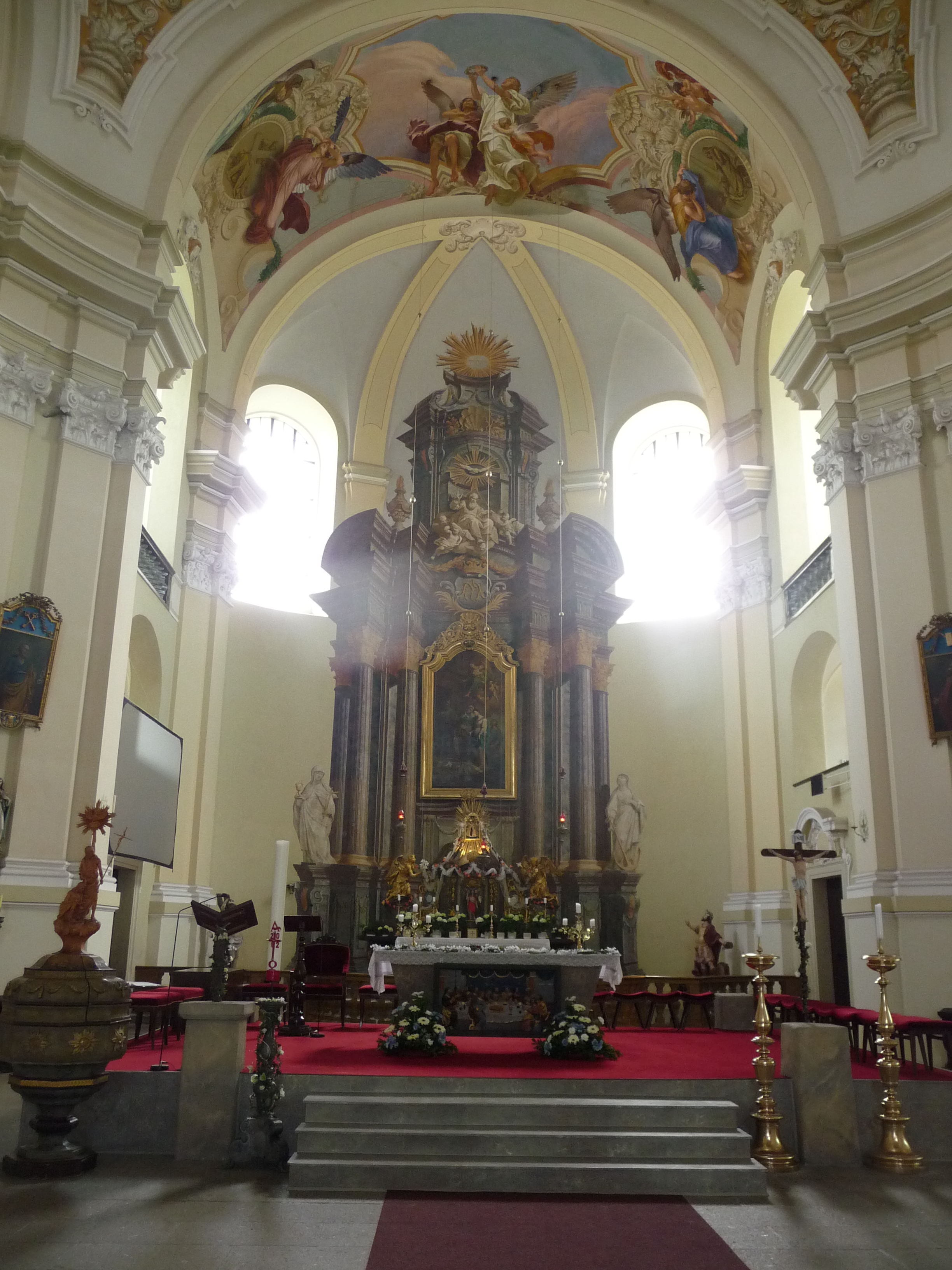
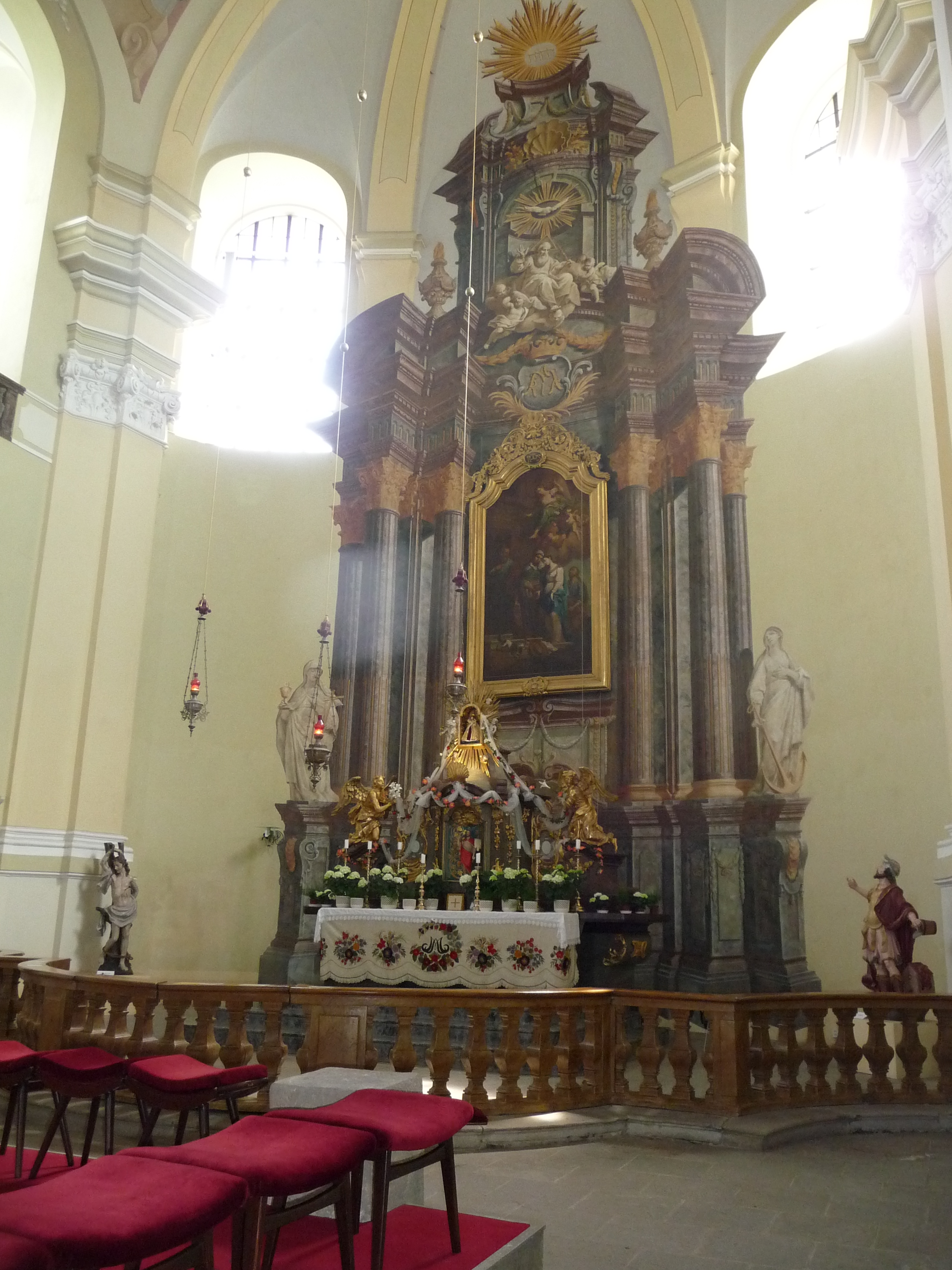
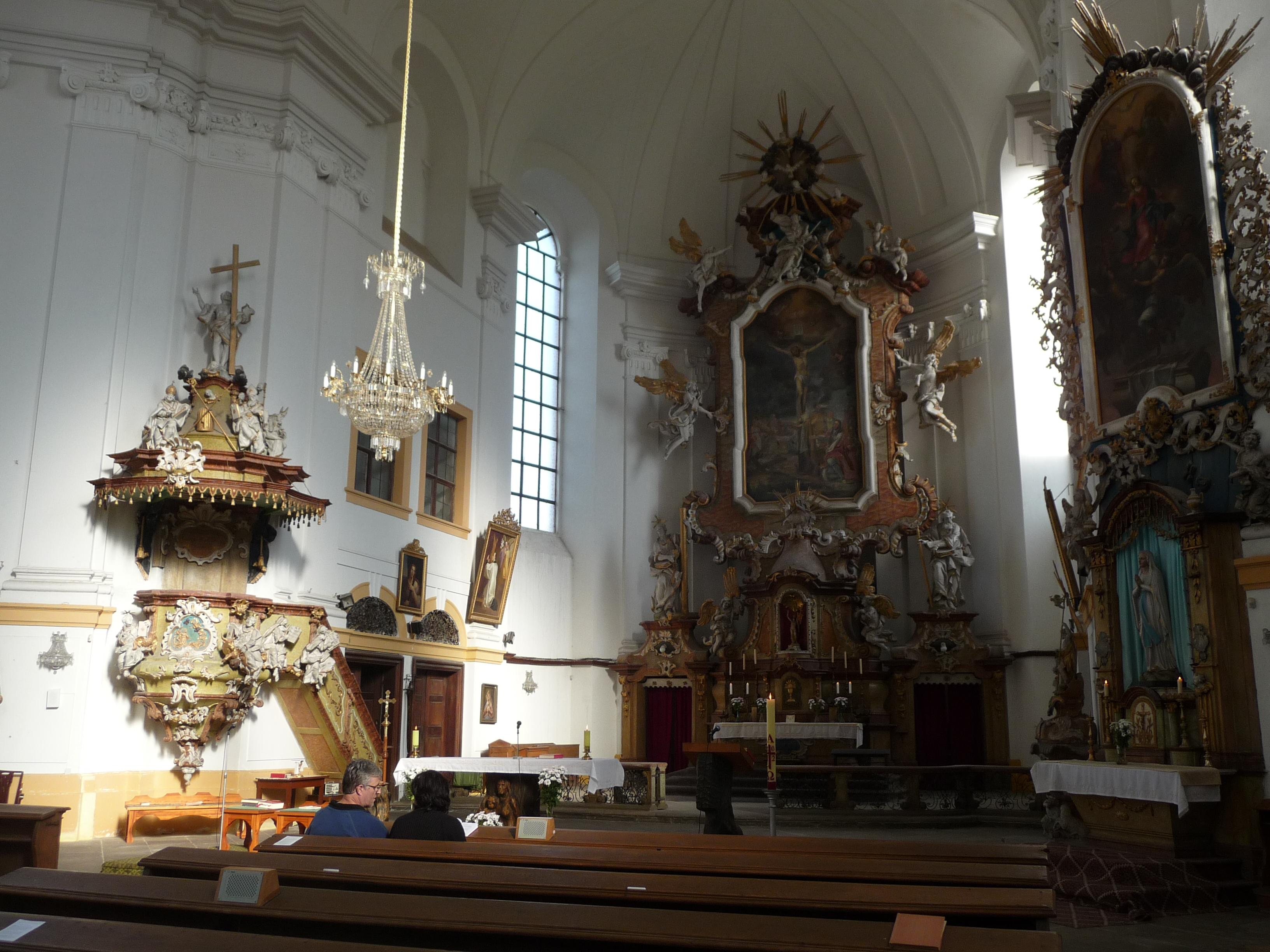
We also visited the small town of Valtice, focusing on the main square. The Church of the The Assumption of the Virgin Mary, situated on the southeast side of the main square, was the most impressive sight in my opinion. The Baroque masterpiece hailed from 1679. It had been built after the earlier church collapsed. The church proved to be a harmonious and tranquil continuation of Roman architecture with significant sculptural decoration. At one time a painting by Peter Paul Rubens adorned the main altar, but it was transferred to Vienna during the Prussian Wars because of the threat of invasion by the Turks. Now it hangs in the National Gallery in London. The church has one rectangular nave with side chapels and a wide main altar. The stucco decoration and sculptural ornamentation is impressive. I was also intrigued by the cupola.

The interior of the Church of the Assumption of the Virgin Mary

The interior of the Church of the Assumption of the Virgin Mary

The interior of the Church of the Assumption of the Virgin Mary

The interior of the Church of the Assumption of the Virgin Mary

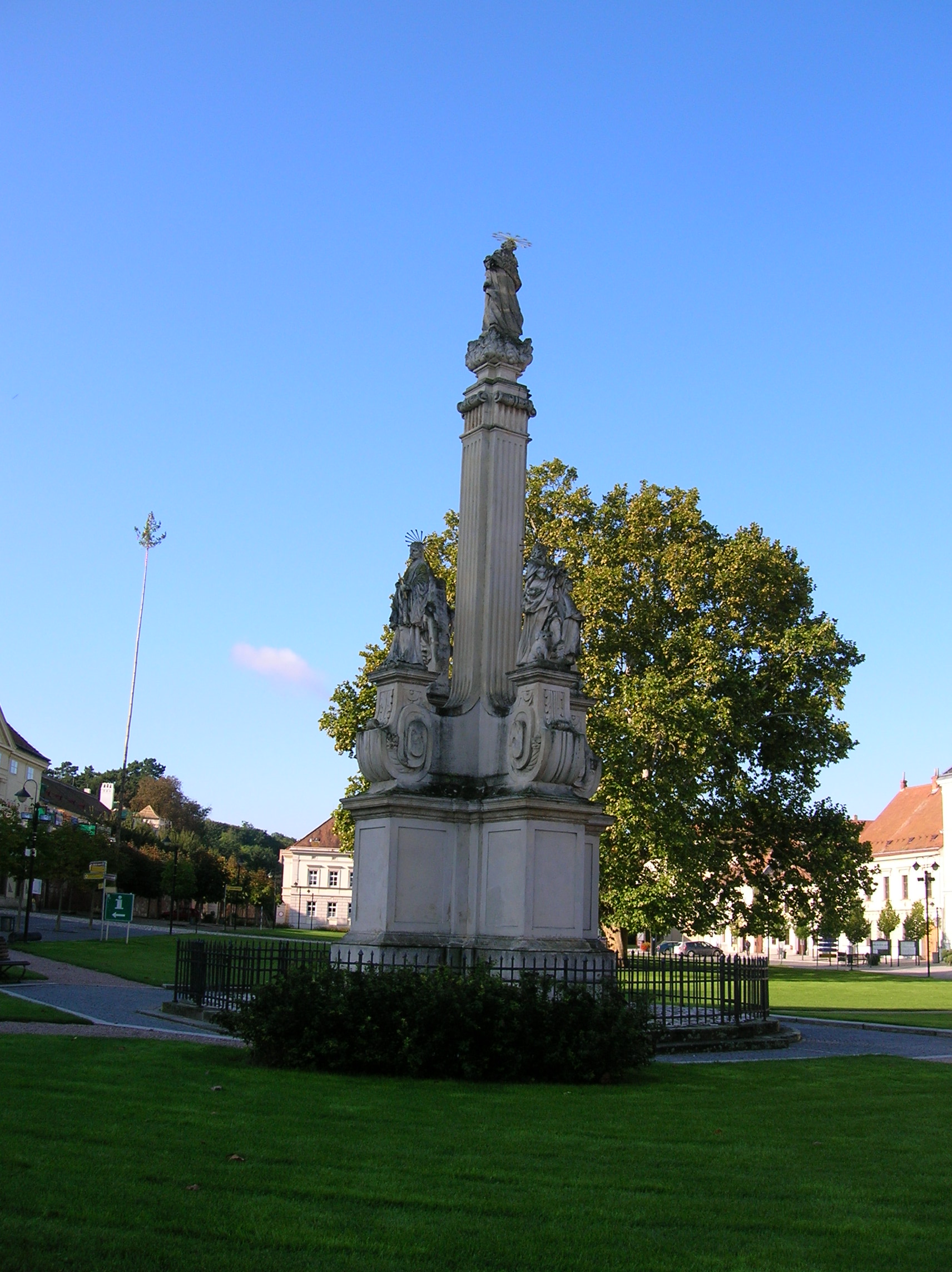
The Baroque Plague Column hails from 1670, when the lands were experiencing a plague epidemic. It was not completed until the second half of the 18th century. The Virgin Mary crowns the column while five saints also make appearances, including Saint Sebastian and John of Nepomuk, who was drowned in the Vltava River on the order of Bohemian King Wenceslas.

The Plague Column in Valtice

The Plague Column in Valtice

I was overjoyed that I had had the opportunity to see all the rooms open to the public plus the garden and town. Thanks to our superb tour guide, I learned information that I would have never known if I had come there by myself. I just wished tourists would appreciate Valtice as much as they did Lednice. Valtice shouldn’t be in second place but tied for first.

Valticeext2


Tracy A. Burns is a writer, proofreader and editor in Prague.
Vysoké Mýto and East Bohemia Diary

The vaulting of the Church of Saint Lawrence in Vysoké Mýto was spectacular.

The vaulting of the Church of Saint Lawrence in Vysoké Mýto was spectacular.

This time I traveled with UNISMA in a small group of 17 participants to see some wonders of east Bohemia. Two wooden churches and the town of Vysoké Mýto were a few places on the itinerary. I had only been to the bus station in Vysoké Mýto long ago. I had not imagined that there was anything interesting in the town.

The fountain with Saint Francis in Vraclav.

The fountain with Saint Francis in Vraclav.

First we visited the Baroque complex of the former spa town of Vraclav. A figure of Saint Francis poured water into a fountain. The Church of St. Nicholas featured 28 Baroque statues made of wood and polychrome plastic by an unknown artist before 1740. It was thought that the creator had been a pupil of Matyáš Bernard Braun, an Austrian sculptor who had worked extensively in the Czech lands and a leading representative of the Baroque style. Three of Braun’s sculptural groupings grace the Charles Bridge in Prague, and he also created a tomb in St. Vitus’ Cathedral. His renditions can be seen throughout churches, palaces and parks in Prague as well as at the former hospital Kuks, the monastery Plasy and the Duchcov Chateau, among other places. The statues had been moved to the Church of Saint Nicholas from a pilgrimage route that had led to a former monastery.

The Church of Saint Nicholas in Vraclav

The Church of Saint Nicholas in Vraclav

At the beginning of the 17th century a chapel and a hermitage were built on the site. From 1724 to 1730 the Baroque church was constructed there. A spring appeared at the chapel under the entranceway, where a statue of Saint Nicholas dominates. A spring flowed underground around the nave from both sides. This former pilgrimage site and spa deteriorated at the end of the 18th century. It was not reconstructed until the 20th century, 1976 to 1986.

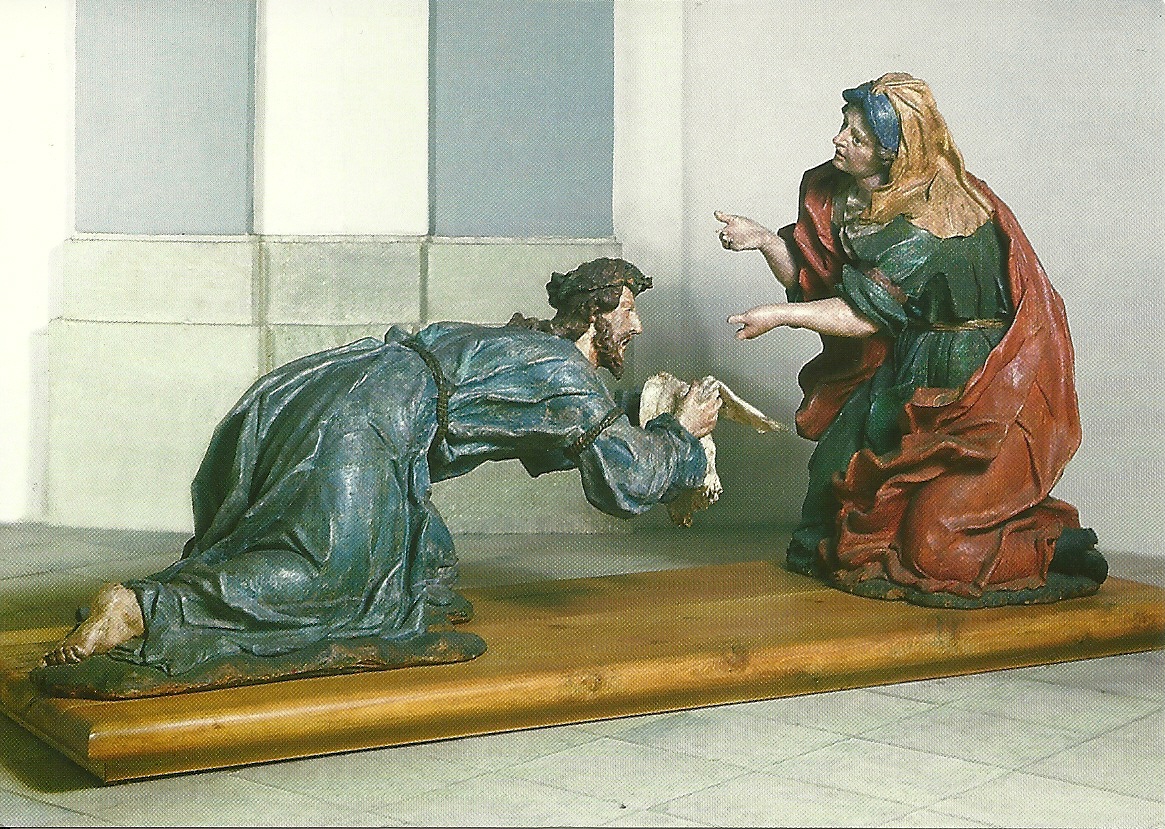
Postcard of a statue in the Church of Saint Nicholas

Postcard of a statue in the Church of Saint Nicholas

At the end of the 17th century and the beginning of the 18th century, a well-known spa had been located nearby. However, its popularity dwindled by the end of the 18th century, and the spa became dilapidated. By the second half of the 19th century, it had been abandoned and for the most part forgotten.
The statues of biblical scenes were expressive and dramatic. I especially loved the details in the depictions. In Ecce Homo I noticed the detailed teeth and tongues. They looked so realistic. One statue showed the Virgin Mary with a pleading expression and what seemed to be fluid hand gestures. I also liked her flowing drapery. In another statuary grouping I took note of the real-looking feathers in the helmets. In yet another sculpture Jesus Christ’s thumb looked so life-like. In one statue of Christ, I admired the artist’s rendition of Christ’s veins on his feet. The detail of this unknown artist was more natural than that in Braun’s sculptures. The Baroque artworks were imbued with strong emotion. Beautiful chandeliers complemented the statuary.

Postcard of a statue in the Church of Saint Nicholas

Postcard of a statue in the Church of Saint Nicholas

There was also a hermitage next to the church. It dated back to 1690. Pilgrims had come here to meditate. There was a legend concerning the bell of the hermitage. If a female rings it while thinking of her love, she will marry him within a year.
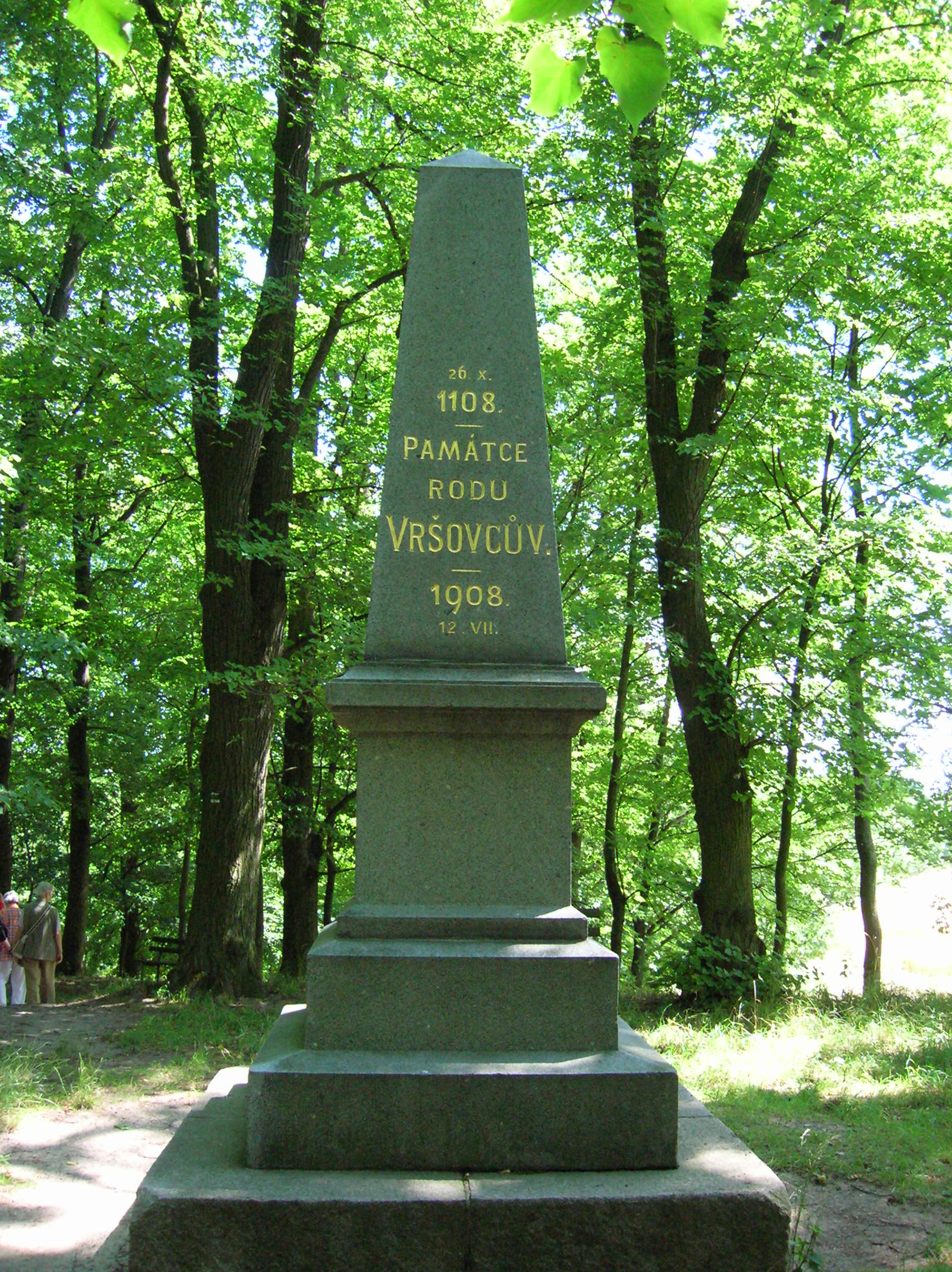
We trekked uphill to a former fortification from the 12th century. Now a monument from 1908 recalling the murdering of the Vršovec clan in 1108 is located on the site. Our guide explained to us why the Vršovices were killed. The tale fascinated me.
At the beginning of the 12th century during the reign of the Přemyslid dynasty, scheming and intrigue prevailed. In 1105 an ambitious Moravian Přemysl named Svatopluk overthrew reigning Bořivoj, and many of Bořivoj’s former supporters switched sides.
While Svatopluk was busy doing battle, Mutina took over the administrative responsibilities of the state. Mutina was a prominent member of the Vršovec clan. The Poles along with Bořivoj invaded the Czech lands, and Mutina did not seem too enthusiastic about fighting them. When Svatopluk returned from war, Mutina was called to the castle in Vraclav, the seat of Svatopluk, who accused Mutina of having ties with Bořivoj. Many members of the Vršovec clan were murdered there in an act of bloody revenge. However, the entire family was not wiped out. The following year one member of the Vršovec family murdered Svatopluk.

The monument honoring the Vršovec clan

The monument honoring the Vršovec clan

I recalled that Bohumil Hrabal had referred to this historical event in one of his books. (The legendary scribe Hrabal was my favorite Czech writer.) I was intrigued by such historical tales. That information alone made the trip worthwhile for me. And I loved the way the guide knew all the information by heart. I could hardly believe that she was able to keep so much information in her mind. It just spewed out of her mouth as if she were an encyclopedia.
Next stop: Vysoké Mýto, a town only six kilometers from the Baroque complex, with a population of 12,000 residents. Vysoké Mýto’s history could be traced back to the Stone Age. The town was created in 1262 by Czech King Přemysl Otakar II. In 1307 it became the property of Czech queens. We walked by the Prague Gate with rich decoration that went back to the Middle Ages, to the 14th century to be precise. A painting of Saint George fighting the dragon adorned the gate. A tower with a broken Gothic portal stood nearby. The main square, also founded by King Přemysl Otakar II, is the biggest in east Bohemia at a width of 152 meters and a length of 152 meters. Forty-seven houses surround it.

Prague Gate in  Vysoké Mýto

Prague Gate in Vysoké Mýto

The tour guide told us that the term Kujebáci or Kujebas enjoyed popularity here. The town’s sports’ teams were even called the Kujebáci. I found the legend about this nickname particularly intriguing. Many centuries ago, the emperor was slated to visit Vysoké Mýto. The townspeople prepared a huge feast, serving trout. However, the emperor did not show up, so the residents all had the delicious fish for themselves. The following day, though, the emperor did arrive in Vysoké Mýto. The inhabitants fed him trout, and when he remarked that the fish was excellent, a townsperson named Kujeba said, “If you think the trout is good today, you should have tasted it yesterday.” The emperor asked the man his name. “Kujeba,” he replied.
The emperor declared, “Then from now on I will call the residents of this town Kujebáci (the Kujebas).” While this term had once been used as a swear word or had referred to a stupid person, the Vysoké Mýto inhabitants were very proud of the legend and asserted that the name stood for someone who is wise.

The exterior of the Church of Saint Lawrence

The exterior of the Church of Saint Lawrence

The differing Kujebáci connotations reminded me of the controversy about Josef Švejk, the seemingly incompetent yet loveable Czech soldier fighting for Austro-Hungary during World War I in Jaroslav Hašek’s satirical, antimilitaristic, mammoth novel, The Good Soldier Švejk. Whether Švejk was really stupid or clever, exhibiting passive resistance, is open to debate.
In Vysoké Mýto we visited the Church of Saint Lawrence, a sight to be remembered. It was probably as old as the town itself, hailing from the 13th century. Several fires plagued the town and the church, in the 15th, 18th and 19th centuries. Consisting of three naves, the church boasted vaulting from 1525 at a height of 21.3 meters. The five-storey tower is 67 meters high.

The altar of Saint Joseph in the Church of Saint Lawrence

The altar of Saint Joseph in the Church of Saint Lawrence

Now it looks as it did after Neo-Gothic reconstruction from 1892 to 1899. There were 10 Neo-Gothic altars and Neo-Gothic wall paintings. The architects of the repairs were František Schmoranz and Josef Mocker. Schmoranz’s résumé included doing Neo-Gothic restoration on Žleby Chateau. Mocker had helped restore many structures in Prague, including the Old-New Synagogue, Prague Gate and St. Vitus’ Cathedral. He had even done some work on Prague Castle. His restorations out of Prague were just as impressive, including Saint Barbara’s Cathedral in Kutná Hora, Karlštejn Castle, Konopiště Chateau, Křivoklát Castle and Saint Bartholomew’s Cathedral in Pilsen.

The largest painting by Petr Brandl - The Assumption of the Virgin Mary from 1728

The largest painting by Petr Brandl – The Assumption of the Virgin Mary from 1728

I was excited to see this church because the painting of the main altar, “The Assumption of the Virgin Mary,” was the largest painting Baroque guru Petr Brandl had ever created, forged in 1728. I recognized his self-portrait in the figure of Saint John. I had admired his creations in many museums, the Prague Chapel of the Holy Mountain pilgrimage site, Jindřichův Hradec Chateau and in numerous churches.
A Late Gothic Madonna – the Vysoké Mýto Madonna – hailed from before 1500. I also marveled at a pewter baptismal font from 1499. Tombstones in the church dated from the 14th to 16th centuries. One of the bells was made in 1466.

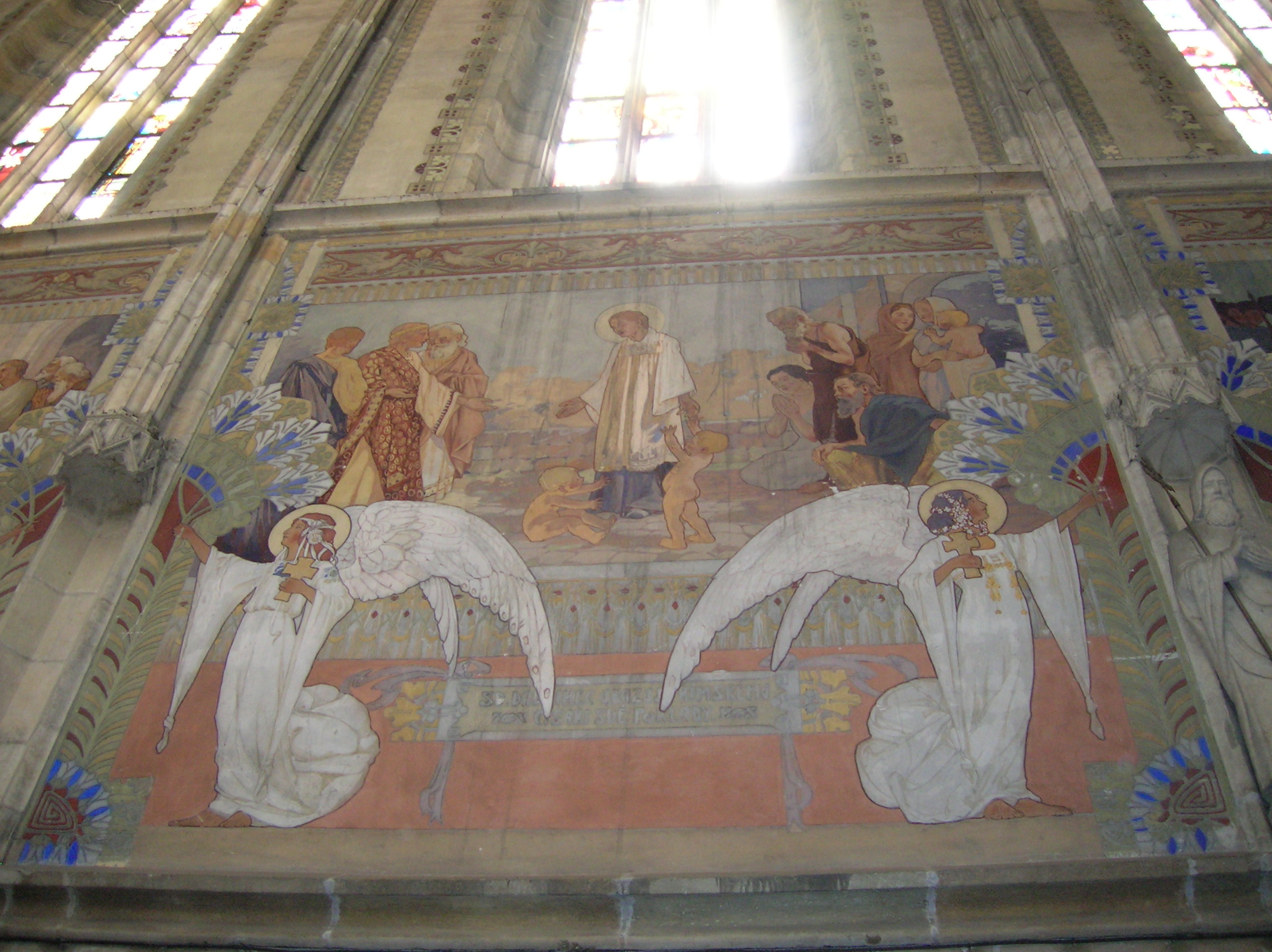
Secession wall paintings in the Church of Saint Lawrence

Secession wall paintings in the Church of Saint Lawrence

I loved the Secession wall paintings, too, especially the angels fluttering near the choir loft and the peacock designs. In the windows motifs included stylized plants. I took note of the Fleeing from Egypt scene at the altar of Saint Joseph. Somehow the Baroque main altar painting and Art Nouveau wall and altar decoration complemented each other.
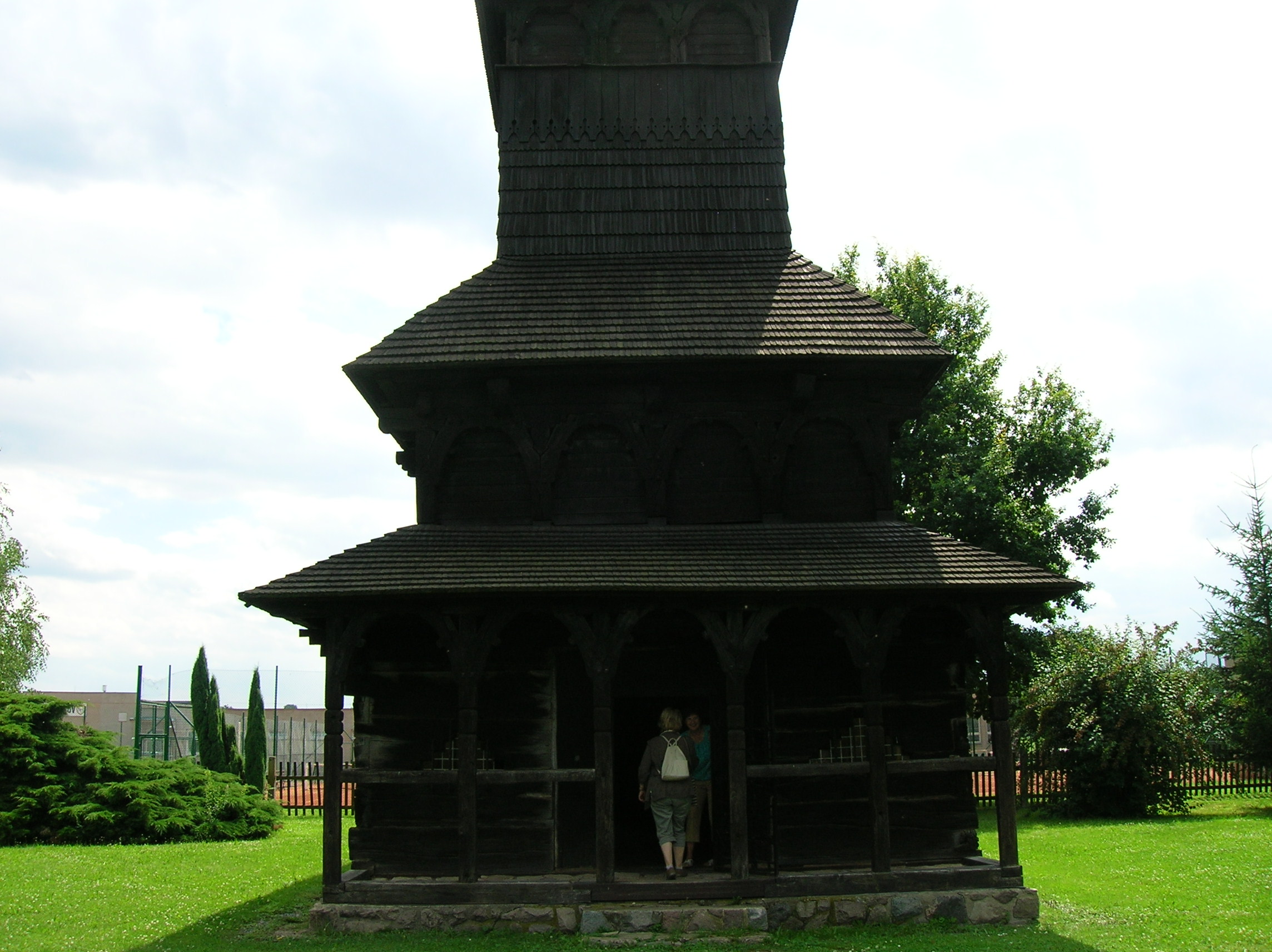
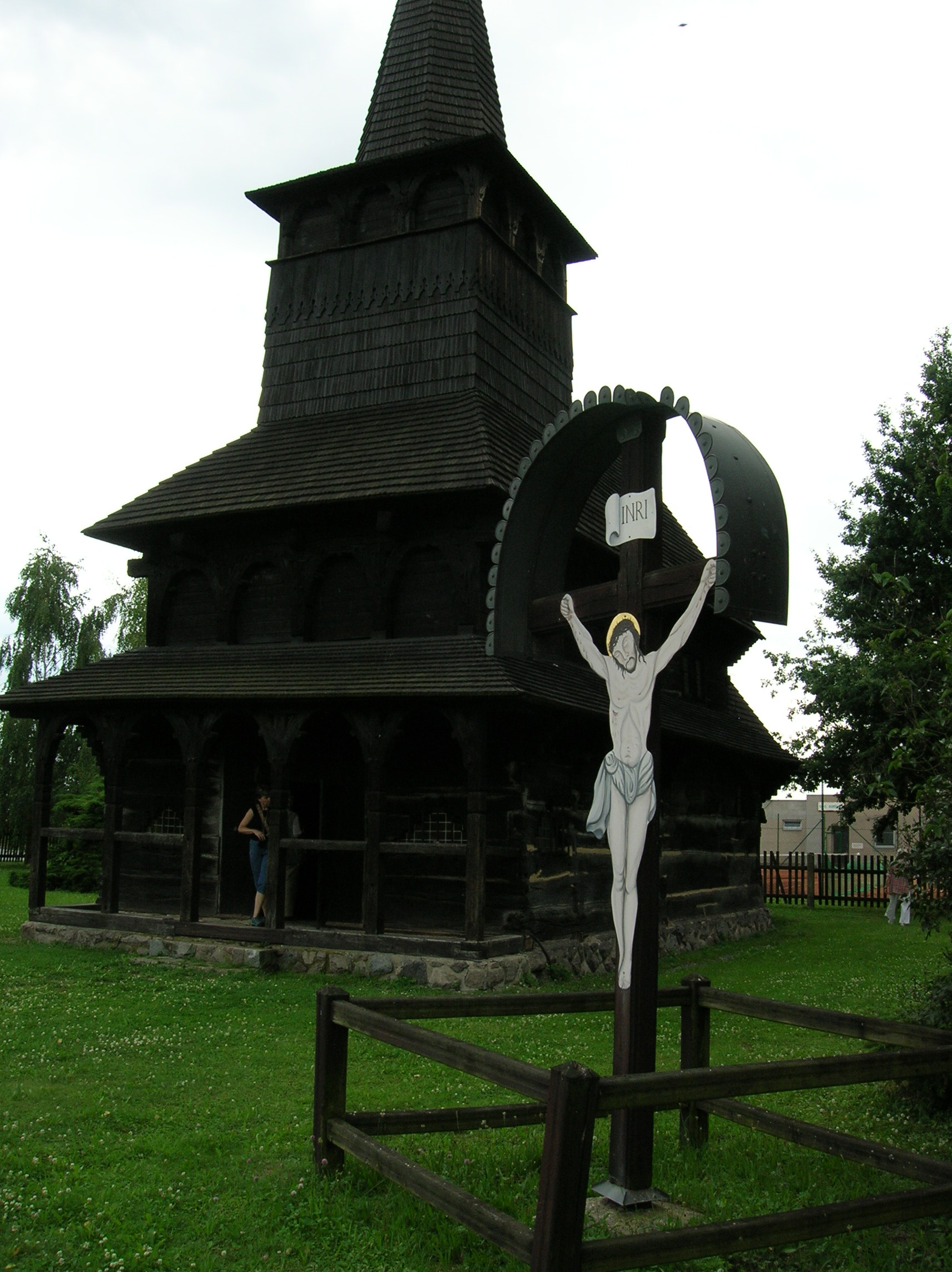
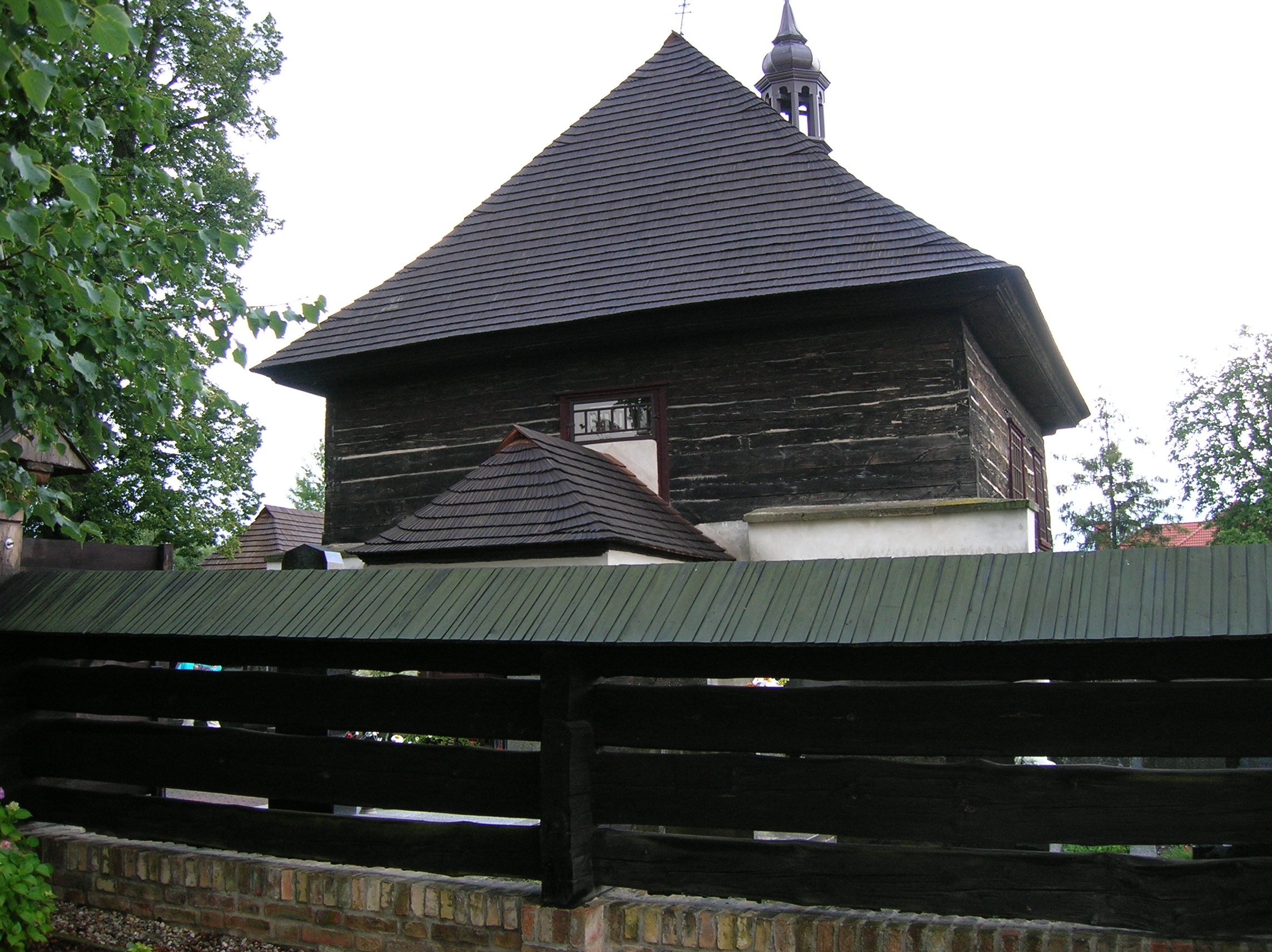
That would not be the most fascinating place I visited on the trip, however. We also saw the romantic wooden Church of All Saints in the village of Dobříkov. Originally located in the Podcarpathian Rus region that is today part of the Ukraine, the church was moved in four train wagons to this village in east Bohemia during 1930 thanks to the initiative of Czech statesman Václav Klofáč.

The Church of All Saints in Dobřikov

The Church of All Saints in Dobřikov

Dating from 1669, the Church of All Saints first moved – 200 years after its creation – to a village situated where the Romanian-Ukrainian border is now located. Then in 1930 it was transported to Dobřikov. Made of all wood, the church was small, with only one nave, 15 meters long and 6 meters wide. Above the entrance front was a 17-meter high tower with a spiked roof.

The icons inside the church amazed me. I felt as if I were in the Russian Museum in Saint Petersburg, only this was a much more intimate experience than gazing at artwork in a large building. The icons in the presbytery hailed from the 18th century. The icons on the sides were even older, dating from the 17th century. All the gold on the icons was overwhelming. On the sides the 12 Apostles appeared in groups of two. Mass was still said here, every other week.
I found it ironic that the church was situated next to a golf course. Wooden churches had been symbols of poverty in villages while golf courses were symbols of wealth. Seeing the two side-by-side was incongruous.

The church in Dobříkov

The church in Dobříkov

The church reminded me of my visit to Broumov a few years earlier, when I visited the Church of the Virgin Mary, the oldest preserved all-wood structure in Central Europe. There had probably been a wooden church on that site as far back as the 12th century, although the church was first mentioned in writing in 1383. It consisted of a single nave with a pyramid steeple and displayed stunning artwork.
Who was Václav Klofáč? I asked myself. I would find out when we walked to a small museum dedicated to the Czech politician. It was run by Klofáč’s granddaughter, a spunky, energetic 94-year old. I wondered if I would live so long, and if so, if I would be blessed to be so lively and communicative at such an elderly age.

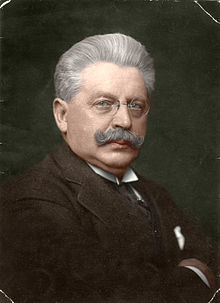
Václav Klofáč Source: WikiMedia

Václav Klofáč Source: WikiMedia

Klofáč, who was born in 1868 and who died in 1942, had been a Czech journalist and politician who had led the Czech National Socialist Party and had worked in the Austro-Hungarian Parliament and later in Czechoslovakia’s Parliament. During World War I he was taken prisoner. After World War I, in 1914, Klofáč was wrongly arrested in Dobříkov and like other Czech heroes, branded a traitor because he had worked in the resistance movement during the war. He was freed in 1917. During 1918, when Czechoslovakia was created, he became the nation’s first Minister of Defense and also served as a senator for a long time. The Czech National Socialist Party, which he co-founded in 1898, was very nationalistic and abhorred Marxism. They sought to foster relations with Americans, for example.
I loved the photos of Klofáč accompanying first Czechoslovak President Tomáš G. Masaryk. If I could meet anyone who was alive or dead, I would probably choose to meet Tomáš G. Masaryk. If I could go back to any time period, I would travel back in time to Czechoslovakia’s First Republic, which lasted from 1918 to 1939. I would have wanted to see the First Republic from 1918 to 1932, before Adolf Hitler came to power in 1933 and the trends of Nazism, Communism and Fascism invaded the country. Masaryk was one of the people I admired the most.

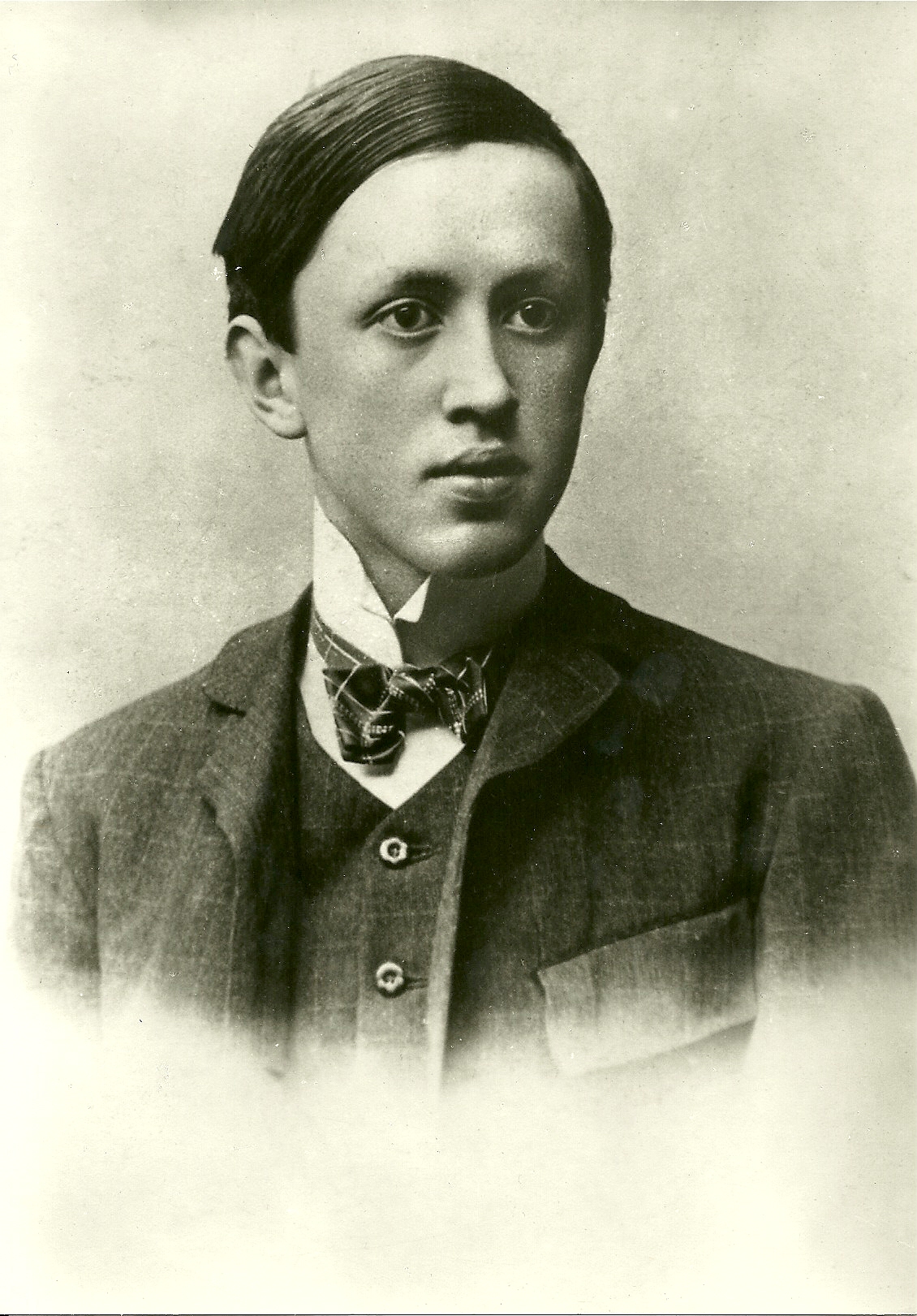
Tomáš Garrigue Masaryk and Karel Čapek

Tomáš Garrigue Masaryk and Karel Čapek

During the First Republic minorities had rights, and all citizens were treated equally. Freedom of the press and universal suffrage existed. Elections were democratic. During Masaryk’s first term from 1918 to 1920, he eased Czech-German tensions. He also stayed in contact with the people. The country had a strong currency and experienced economic success. One of my favorite authors, Karel Čapek, prolific in many genres, was a good friend of Masaryk and even wrote a book about his conversations with him.

The wooden church in Veliny

The wooden church in Veliny

We saw another wooden church, too – the Church of Saint Nicholas in Veliny, which was a prime example of 18th century folk architecture. It was built in 1752 on the site of a former wooden church that hailed from 1576. The timbered church looked so romantic. The one-nave structure had a three-sided presbytery and a flat, wooden ceiling. The choir loft was supported by wooden, carved columns. The interior was sparse, nothing like the Church of All Saints and its dazzling golden icons. The pulpit hailed from 1903. The bareness of the interior emphasized it as a symbol of poverty. I personally liked the interior of the Church of All Saints better, but perhaps a wooden church should be sparsely decorated. It seemed appropriate for to portray such modesty.

The main altar of the Church of Saint Nicholas in Veliny

The main altar of the Church of Saint Nicholas in Veliny

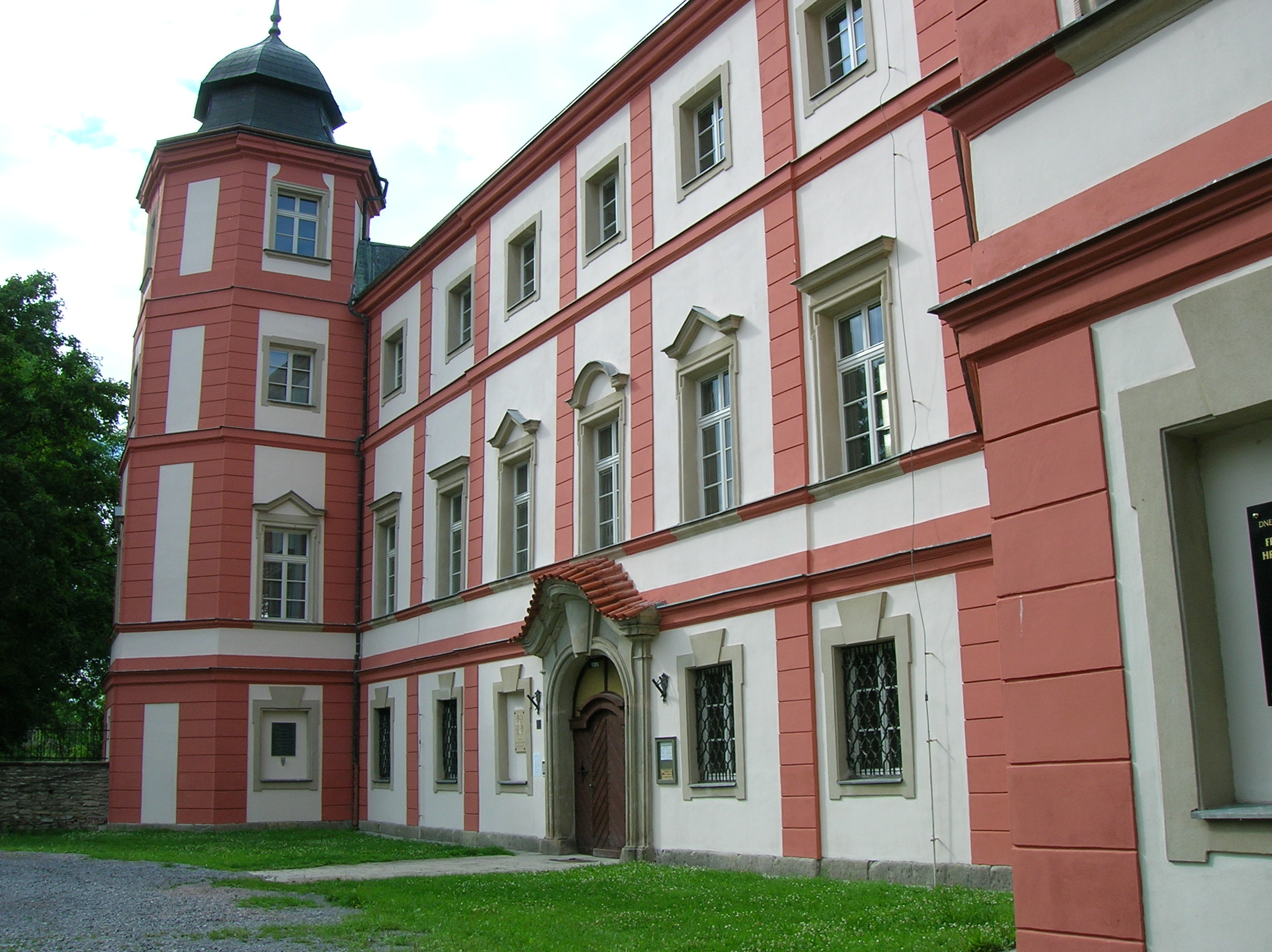
Our last stop was picturesque Zámrsk Chateau with its three-floor, polygon-shaped tower. It was first mentioned in writing as a fortress in 1469 and various owners did restoration work. It burned down in 1924 but was repaired soon thereafter, during 1925 and 1926. There are still remnants of its Gothic days, though, in the east wing and in part of the masonry of both wings. In 1945 it became state property. Under Communism it served as an educational center for youth, and from 1960 to the present it has been the home of regional archives. We were not allowed to go inside, but the exterior was impressive.
The most tragic story concerning the chateau occurred a day after the Nazis took control of the Bohemia and Moravia, on March 16, 1939. At this time Jewish Arnošt and Truda Bondy were the beloved owners of the chateau. Aware that horrific times were beginning, on that day they committed suicide. Arnošt shot his wife and then himself. He fell into the river, where his body was later discovered.

Stories like this always brought to mind the reality of living in that period, and I thought of how I did not think I would have been able to survive living under Nazism, even though I am not Jewish. Living under Nazism and Communism was something I could not even fathom, something too disturbing to ponder.

The chateau in Zámrsk

The chateau in Zámrsk

Jan Blažej Santini-Aichel, of Czech and Italian origin, was considered to be one of the architects contributing to the chateau. His Baroque Gothic style sparkled in a church in the Sedlec area of Kutná Hora and at the pilgrimage church of Green Mountain. His staircase at Plasy Monastery was a gem. A few other sights to which he had contributed included the Kolovrat Palace in Prague’s Lesser Town and the Karlova Koruna Chateau.
Our tour soon ended, but during the ride back to Prague, our excellent and eloquent guide passed around booklets about Slovakia’s wooden churches, some of which I had visited about 14 years earlier. I remembered how my fascination with wooden churches began when I saw the wooden church at Bardejovské Kúpele in east Slovakia. She also let us peruse a book about Václav Klofáč.

The Secession wall paintings in the Church of Saint Lawrence

The Secession wall paintings in the Church of Saint Lawrence

I was more than satisfied with the tour. I had discovered places I have not known existed, such as Vraclav, Dobříkov, Veliny and Zámrsk. I had visited two wooden churches and had become acquainted with some of the splendor of Vysoké Mýto. I had also learned about the Czechoslovak statesman Václav Klofáč, who had greatly contributed to the democratic First Republic. I had been impressed with the historical tales, such as the slaughtering of the Vršovec clan. I was happy with the tour itself. We had an amazing guide. I had met many interesting people on the tour as well.
I came back to Prague richer in my knowledge of the country I loved so much, eager to describe my discoveries to English-speakers who planned on visiting the Czech Republic someday and to Czechs eager to see more sights in their homeland.

The tower of the church in Veliny

The tower of the church in Veliny

Tracy A. Burns is a proofreader, writer and editor in Prague.

Chyše Chateau Diary

Chyse
I had come across Chyše chateau by chance while flipping through my old Kamenný klíč publication of castles and chateaus. When I read that the tour included an exposition about Karel Čapek, I was hooked.
Karel Čapek had been perhaps the greatest Czech writer ever, a master at all kinds of genres – science fiction, mysteries, novels, poetry, fairy tales, nonfiction, travelogues and more. I had studied his works for my master’s degree in Czech literature and was eager to see an exhibition about him. I had never known that he had worked as a tutor at the chateau. Curiously enough, I had never heard of Chyše before that, even though it had been opened to the public since May 30, 1999.

Karel Čapek writing

Karel Čapek writing

The only public transportation was by train through Rakovník, but I would only have five minutes to change trains, or I would have to wait two hours for the next train. The transportation back to Prague was awful as well. So, I went to Karlovy Vary again and took a taxi to the chateau that would charm and bewitch me as soon as I set eyes on its romantic, Neo-Gothic façade (I love Neo-Gothic facades!) and impressive park. I also hoped to visit the brewery next door. I had heard that Chyše made a decent beer.

Chysechateau2
The history of Chyše Chateau was enthralling. It stretched back to the second half of the 12th century, when the then medieval fortress was owned by the Odolenovic clan for 200 years. The castle was destroyed by the Hussites during the Hussite wars in 1422. (Lasting from 1419 to around 1434, the Hussite wars pitted the Radical Hussites against the Moderate Hussites, Holy Roman Empire, the Pope, Hungary and others. Neither party was really victorious.)
Six years later, its new owner Burián z Gutštejn restored it and built a hospital and a church as well. Although he died in 1489, his descendants manned the castle until the 16th century when it fell into the hands of the Lobkovicz family. It was Mikuláš from Lobkovicz who changed the appearance from Gothic castle to Renaissance chateau in 1578, but a year later he sold the chateau to Bohuchval Berka from Dubé.

Chysechateau3
Unfortunately, the chateau was confiscated after Bohuchval revolted against the Emperor in the early 17th century. The Michna family gained control of the chateau and retained it for almost 90 years, though there was a 20-year gap when the family did not own it. The Michnas were responsible for much valuable construction at the chateau and in the town. Thanks to them, a monastery was erected, the Carmelite church was renovated, another church was built and the chateau was transformed into Baroque style. It was under their supervision that legendary Czech Baroque painter Petr Brandl executed the biblical ceiling fresco called “The head of son Saul is brought to King David.”
A turning point in the chateau’s ownership came when Count Prokop Lažanský obtained it during 1766. Chyše would stay in his family until it was confiscated due to the Beneš decrees that took property from German citizens in 1945, as the owners at that time had German citizenship. From 1946 to 1976 the chateau served as several types schools, but in 1976 it was closed and became decrepit and dilapidated. Chyše was put up for sale in 1993. During 1996 it was saved thanks to the efforts of Vladimír Lažanský from Děčín, who bought it for 10 million crowns. The chateau was open to the public in 1999.

Chysechateau4
The first room of the tour presented pictures of the chateau in a dilapidated state during 1996, when Lažanský bought it. It seemed a miracle that it had been transformed into such magical beauty during three years, I thought to myself. Even the well-manicured park had looked like a jungle back then.
We walked through one room that exhibited a spectacular Renaissance ribbed vault as well as black-and-white graphic portraits. The next room would become one of my favorites. Baroque master Brandl’s fresco with a biblical motif swirled above me in vibrant colors. I also was impressed by the enticing stucco work in the space as well as the coat-of-arms above the fireplace. From there we entered the space in which concerts and weddings are held. The white Baroque stucco decoration included cherubs, shells and swirls. I was fond of the pink, Czech tea service. The Baroque closet and dresser also amazed.

Chysechateau5
The Venetian porcelain in the following room was one of the most exquisite and fascinating works I have ever seen in a chateau. The blue tea cups were decorated with white lace, it seemed. Even in a close-up examination, the decoration looked like lace. But it was really painted onto the cups. The wooden chandelier also got my attention.
There was Czech porcelain from the early part of the 19th century in the Summer Dining Room. I saw an exhibition of porcelain and pots in the small space where they prepared food near a hallway that led to the kitchen. In another hallway was a lush carriage from 1913. It had been used for weddings.
Then we went upstairs. I was taken in by the painted, diamond shapes on the ceiling in the hallway. The apartment of Prokop II Lažanský included portraits of his great grandparents and a 400-year old fireplace that dazzled. A clock with what looked like gold griffins on its sides dated back 150 years. A portrait of Count Vladimír Lažanský, who had employed Karel Čapek, hung in the portrait gallery. I noticed that he had a puffy moustache, beard and oblong face. Two tables were set with delicately painted Easter eggs, as it was a few weeks before Easter when I was there.

Chysechateau6
The small library contained 30,000 volumes. In it I saw a black-and-white fireplace in Second Rococo style; it appeared to be made of marble. The piece of furniture that got my attention in the children’s room was a dresser that marked the end of Rococo style and the beginning of Classicism. A bedroom was decorated in white – a white bed, a white dresser, a white chaise lounge. It emitted a feeling of purity. The furniture in this room was about 200 years old.
Then we came to Karel Čapek’s modest room which only got sunlight in the early morning, not providing optimal writing conditions. The furniture consisted of a small, wooden bed and a desk on which was an old bottle of Mattoni water with a German label, a white porcelain cup, about 10 books, an inkpot and a porcelain dog.

A young Karel Čapek

A young Karel Čapek

Čapek had taken the job as home tutor to the often misbehaving 13-year old Prokop IV Lažanský in 1917 when he was 27 years old, a year and a half after finishing his university studies. He had wanted a job that entitled writing, but could not find anything as an editor or journalist. (That fact astonished me and gave me some hope as I at the time could not find much work in writing or publishing.)
Čapek spent five months at Chyše Chateau, having tutored the boy in Prague for two months prior to his stay there. In his letters the to-be renowned author complained about not having time for his writing, though he did get some inspiration. During his tenure there a factory employing 14- and 15-year old teenagers exploded. Perhaps that influenced his decision to write Krakatit in 1933. He also spent time chatting with the gardener, as he was a lover of gardening and even wrote a book about the subject.

The prominent author Karel Čapek

The prominent author Karel Čapek

I could not believe that I was actually seeing a place where Karel Čapek had lived! He had walked on these floors, slept there, wrote there, woken up to the sun shining through the window there. This small, modest room was the highlight of the tour for me. I felt as if I was stepping on holy ground in this almost claustrophobic room.
After leaving Čapek’s room, I saw hunting trophies – a zebra decorated a wall as did the heads of antelopes. A boar hung above the doorway while a leopard skin rug decorated the floor. I am not too fond of anything to do with hunting, though.

Chysechateau7
Soon the tour was over, and it was time to visit the Karel Čapek exposition in part of the chateau’s ground floor. I stared for a long time in awe at the round, wooden desk and blue- with-white decorated chair where Čapek had written the philosophical, third volume of a trilogy called An Ordinary Life. The chair did not look especially comfortable, and I wondered if Čapek had suffered from a bad back.
I read information about Čapek’s tenure at Chyše Chateau on the walls. The then aspiring author had earned 100 crowns monthly for his tutoring of Prokop IV. That was almost nothing today. I wondered if it had been a substantial amount back in 1917. After his seven months in Prague and Chyše, he did become an editor, by the way.
I also saw reproductions of photos of Čapek, the chateau and 13-year old Prokop. Vladimír Lažanský sported a top hat and big moustache. I also looked at an aerial view of the town. The reproductions of Čapek’s letters were intriguing. In one correspondence with Czech writer S.K. Neumann, he complained that he had no time for writing here.

Chyše Chateau park

Chyše Chateau park

Various editions of a book about Capek’s sojourn there, called Kruh mého času and authored by Marie Šulcová, also decorated one wall. On the walls I also took notice of quotations from An Ordinary Life and scenes from his plays such as The White Plague and The Makropolis Thing. His time during 1932 in Karlovy Vary was documented as well. There, Čapek had worked on the second volume of his trilogy, Meteor.

But that was not all Chyše had to offer. I also saw the brewery next door. While beer-brewing in this town dates back to the 16th century, this brewery was constructed between 1839 and 1841. Behind the brewery is what remains of Renaissance walls from the original building. The chateau’s brewery closed down in 1932 due to its inability to keep up with other brands . It was used as a granary and then boiler house. In 1994 the place began to deteriorate.

A statue at Chyše Chateau

A statue at Chyše Chateau

Then, during 2003, the Lažanskýs bought it, and restoration began. Even the cellars were restored to their Renaissance appearance. The brewery opened again June 1, 2006. I found the beer very tasty. It was a golden color, not too light and not too dark. I tend to drink gold-colored or dark beer, so it was perfect for my palette.
After I had walked through the dazzling park, I had lunch in the brewery restaurant as I devoured chicken with ham and cheese and, of course, diet Coke. I was happy that day as I made the journey back to Prague, via taxi and Karlovy Vary, with a two-hour Student Agency bus ride that did not feel long at all.

Chysechateau8
Tracy A. Burns is a writer, proofreader and editor in Prague.

Mělník Chateau Diary


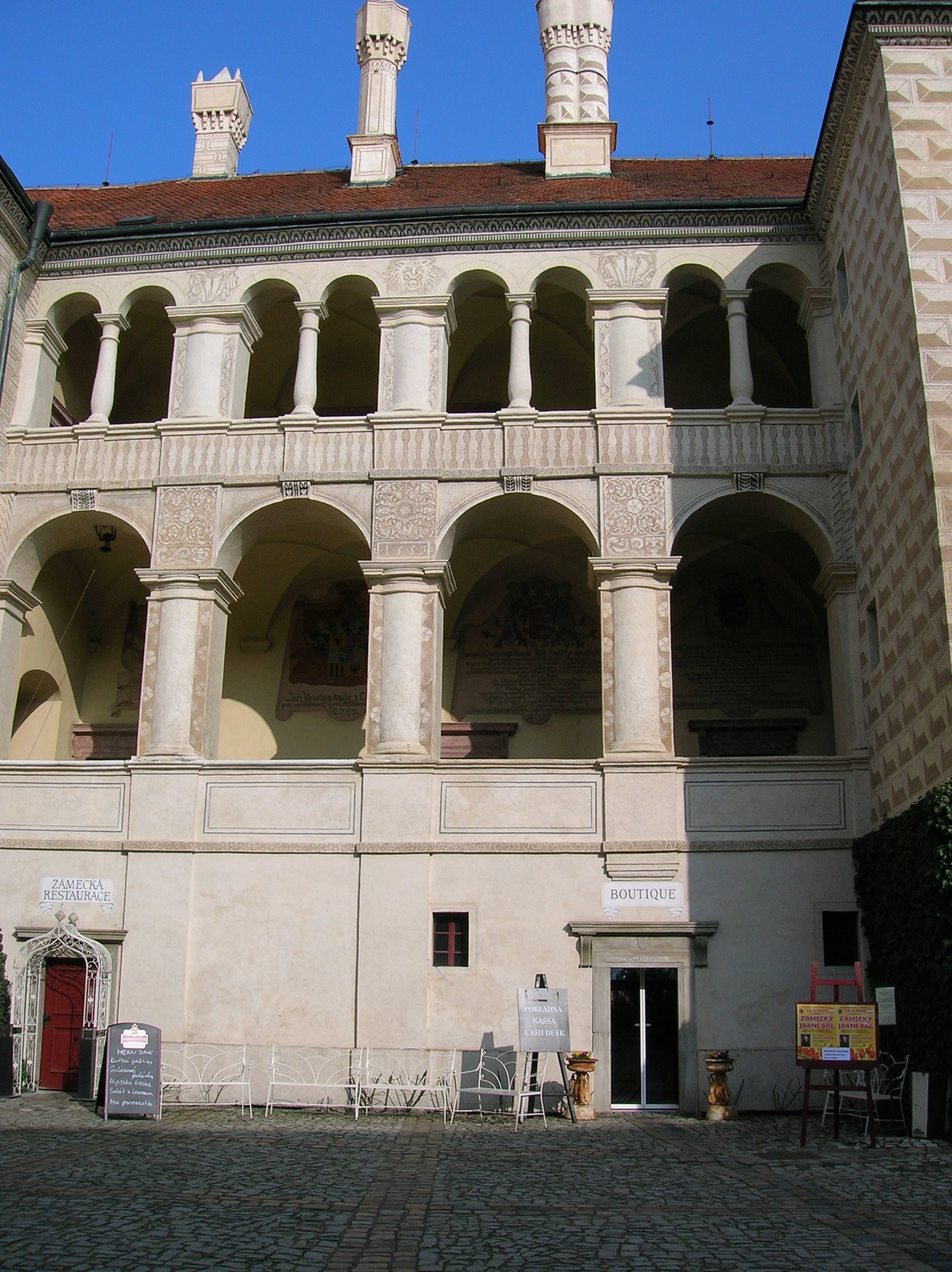
The Renaissance arcades of Mělník Chateau

The Renaissance arcades of Mělník Chateau

This was my second visit to Mělník Chateau, located less than an hour from Prague by bus. I was enthusiastic about getting reacquainted with the interior that I had so admired during my first time here. Back then, there had been no guided tours. Visitors were given a text to read while they walked through the chateau’s rooms. This time I would have a tour, so I was excited about seeing the chateau from a new perspective.
I knew a bit about the history of the chateau already, and what I did not remember I perused in a booklet that I had bought at the box office, which also served as the souvenir shop. Mělník’s history is closely connected with Czech legends. Supposedly, Princess Ludmila often resided in the town while raising her grandson, Wenceslas (Václav), who would later become a well-respected duke of Bohemia and after his death the patron saint of the country. The original wooden structure was changed into a stone castle during the 10th century. Spouses of Bohemian princes owned the castle, which got a Gothic makeover in the second half of the 13th century.
The castle became home to Bohemian queens during Holy Roman Emperor Charles IV’s reign. Emperor Charles IV, who was responsible for building Prague’s New Town, the Charles Bridge and Charles University, supported winemaking in Mělník and the surrounding areas. He even imported burgundy grapes. Queen Elisabeth Přemyslid, the last wife of Emperor Charles IV, resided in the castle for a lengthy period and died there. She was responsible for building the chapel. The Přemyslid dynasty had ruled Bohemia from the 9th century to 1306.
The castle was given Late Gothic features in the late 15th century. During the following century, it was changed into a Renaissance chateau. The reconstruction was finished during the 17th century. While the castle became decrepit during the Thirty Years’ War of the 17th century, it was soon repaired.


One wall of Mělník Chateau

One wall of Mělník Chateau

Then, in 1753, one of the most significant events in the chateau’s history occurred. Marie Ludmila Countess Czernin wed August Anton Eusebius Lobkowicz. The castle would remain in the Lobkowicz family until 1948, when it was nationalized after the Communist coup that instigated 40 years of totalitarianism in Czechoslovakia.
I envied the fact that the Lobkowiczs had played such prominent roles in Czech history. In the early 15th century Nicolas was given the village of Lobkovice nad Labem by King Wenceslas IV, and he took the name of the village. George Popel Lobkowicz of Vysoký Chlumec held the post of the highest chamberlain of Emperor Rudolph II. Zdeněk Vojtěch became the highest chancellor of the Bohemian Kingdom. His son, Wenceslas Eusebius, served as the highest chamberlain in the kingdom and as president of the secret services during the 17th century.
In the following century John George Christian was made a prince due to his military achievements. Anton Isidor was one of the founders of what is now Prague’s National Gallery. George Christian served as supreme marshal of the Bohemian Kingdom and was a member of the Bohemian Parliament during the 19th century.
But there would be dark, turbulent times for the Lobkowicz clan. During World War II the Nazis took over the chateau. The family took refuge in Prague. Then came 1948 and the Communist coup. The Lobkowiczs fled the country, and the chateau was put in the hands of the state. The present owner of the chateau, George John Prince Lobkowicz, moved to the homeland of his ancestors from Switzerland in 1990. He has been owner of the chateau since 1992 and currently resides there.
I also envied the fact that the Lobkowiczs could trace their ancestry so far back. I knew that my Slovak ancestors had been potato farmers in east Slovakia. I even met a few very distant relatives about 10 years ago, but, unfortunately, they do not keep in touch with me anymore. On the Czech side of the family, I know that my great-grandparents were from somewhere near Prague or from Prague itself. They had a common surname – Šimánek. I also know that I had ancestors from somewhere in Moravia, with the popular Czech surname Mareš.
I moved to Czechoslovakia in 1991 partially because I felt a strong association with the country of my roots and intuitively felt that it was a part of my personal identity. If only I knew more about my ancestors, and if only they had played such prominent roles in Czech history as had the Lobkowiczs! Yet, at the same time, I was not sure that I wanted to know more about my ancestors. I had visited the village in east Slovakia where my great aunt had come from, and I was going to look for an inhabitant with the same – not common – last name as my great aunt’s maiden name. But I decided not to because I was scared. While I wanted to meet long lost relatives, I was also scared of finding them. Scared they might not like me or that I might not like them. What if they had been Communists? What if they were mean people? What if they hated Americans or wanted money from me because they thought all Americans were rich?


The elegant Renaissance arcades

The elegant Renaissance arcades

I studied the impressive exterior of the chateau. I loved the elegance of the Renaissance arcades with decorations on the walls. A sundial also adorned the façade. There was sgraffito, too, which I adored. The other wing was built later, in the 17th century, in Baroque style. After admiring the Renaissance arcades for a while, I noticed that it was time for the tour to start and I entered the souvenir shop, ready for what I was sure would be an impressive walk through the ages of Mělník’s top sight.
The guide, a serious and well-dressed woman, described some of the background of the chateau and Lobkowicz family, and it was clear that she was very professional and knowledgeable. The first room was called the Bedroom of George Christian, named after a Lobkowicz who died tragically at the age of 25 in a racing car accident in 1932. I was reminded how we have to treasure each moment in our lives and see the beauty in daily life because we never knew when our time will be up.
I was captivated by a Baroque closet flaunting intarsia. The painted decoration high on the walls showed plant leaves with vases in green and brown. The colors seemed to go well with the 17th century Baroque furniture. On the headboard of the Baroque bed was a painting of a Madonna that appealed to me. I also took note of the richly carved wood of the bed. Portraits of the Lobkowicz family adorned the room, too, and one of the paintings had been executed by master Czech Baroque artist Karel Škréta.
August Longin’s Study was named after a Lobkowicz who had befriended Johann Wolfgang von Goethe, a visitor of Mělník. The room featured two exquisite French desks – one hailing from the 17th century and the other from the 18th century. The older one was inlaid with tortoiseshell, plated brass and tin in ebony wood, made in the Boulle style. The 18th century desk, celebrating the Rococo style, was made of gilded bronze and plated brass. I particularly admired the gold decoration on the younger desk, the one that had been stolen during the totalitarian era. It had wound up in an office at the Ministry of Culture.
However, that was not all the room had to offer. An 18th century table with mother-of-pearl hailed from Japan and had designs of fans on its top. There was also a portable 18th century toilet near the room. Small portraits of Habsburg rulers hung on one wall. I spotted Holy Roman Emperor Joseph II and Empress Maria Theresa right away.


The sundial on the facade

The sundial on the facade

The next room was the Children’s Room with toys from the 19th century, including dolls and a puzzle. Porcelain in a cabinet hailed from Hungary. The 18th century bed in the room was short, but it was standard size for adults at that time. People slept sitting up because they were afraid they would die if they lay down. I admired the rich, wooden carving of the bed and the Madonna on the headboard.
The Big Dining Room featured two Baroque bureaus from the 17th century. They were inlaid with tortoiseshell and adorned with gilded decorations. Some of the pictures painted on them focused on seascapes with ships. The chairs were upholstered with tapestries. The guide pointed out two valuable 17th century lunettes by Škréta; they were part of the story of the life and death of Saint Wenceslas, who, according to legend, had resided in Mělník when he was a child. Other breathtaking paintings rounded out the room’s décor.
The Grand Drawing Room featured 18th century furniture. I noticed two 18th century Rococo tables with gilded brass angels decorating the legs. Portraits of the prominent politician George Christian and his wife Anna were rendered by Czech painter František Ženíšek, who had also decorated the National Theatre. More astounding works of art adorned the walls, some portraits of the Lobkowicz family, others biblical paintings and still others sporting themes from antiquity. I spotted Helen of Troy in one rendition.
I was drawn to the white furniture and pale green walls. It looked airy and light and exuded an atmosphere filled with joy. Chinese and faience porcelain as well as ceramic vases from Asia made up the room, too.


Another view of the sundial

Another view of the sundial

The hallway was adorned with a bust of Parliament member George Christian. It had been created by Josef Václav Myslbek, a master of modern sculpture working in the 19th and early 20th century. Engravings featuring carriages decorated one wall, too. I was drawn to other works of art – the pictures of romantic 18th century Prague, especially to Old Town Square, my favorite part of the capital city. I remember the first time I stepped onto Old Town Square. I felt an unexpected electricity, a strong connection with the city and country. I was only a tourist at the time, but at that moment I knew I had to return to live in the homeland of my ancestors.
Perhaps the most astounding room was the Big Hall with Maps and Vedutas that came next. The maps and vedutas hailed from the 17th century. I noticed maps of Italy, France and the Netherlands. Then there were all the big vedutas of European towns on the walls. It was so breathtaking that it was almost overwhelming. The veduta of Prague featured only one bridge, the Charles Bridge, without any statuary decoration. Strasbourg, Nuremburg, Regensburg, Venice, Florence, Seville, Madrid and Brussels were just a few of the other cities represented. The detail of the maps and vedutas was more than impressive. Most of them were made in Amsterdam.
Perhaps I was so drawn to this room because I loved maps so much. I used to buy maps of Czech towns I had never been to and wondered what each building and each street looked like as I took a an imaginary walk through the town. Two large maps decorated my living room – one of the Czech Republic and another of Slovakia, as I treasured memories of Czechoslovakia. I often traced the routes from Prague to various chateaus and impressive towns and thought about my adventures there.
On the map of Slovakia I found Špišský Castle, below which some very distant ancestors were buried, and traced paths to Poprad, Kežmarok and Bratislava. I found Morské Oko in the Vihorlat, near my great aunt’s home village, and traced the path to Košice and Michalovice, where I had heard that some of my other ancestors had hailed from. I found more places I had visited – Humenné, Levoča and Trenčín, for example, and recalled moments of happiness and discovery.
Melnikchateauarcades5Back to the tour. The Knights’ Hall featured 16th century suits of armor on the walls. An 18th century oak table also caught my attention. In the Small Hall with Vedutas, various weapons from the 17th to 19th century were displayed. However, what really caught my attention where the black-and-white vedutas of European cities during the early 18th century. I was entranced by the vedutas of Prague and Brno. Some military equipment on display came from 17th century Turkey. I also admired the richly carved Chinese furniture. I have always been an admirer of wooden Chinese furniture.
The vast Concert Hall was still used for concerts, balls and other events. It was situated in the Baroque wing of the chateau, but the construction of this part had not been finished until 2005. There was an original 16th century wall with sgraffito decorations that delighted me. I’ve always been a big fan of sgraffito! The opposite wall was a copy made in this century, but, faithful to the original plan, it complemented the authentic side. I looked up and saw a painted coffered ceiling. Vedutas of Versailles and its park from the 17th century adorned another wall. Drawn to these works of art, I thought back to my visit to Versailles, during a warm February afternoon and how impressed I had been with the vast French chateau.
Then we went downstairs, passing by colored lithographs of Prague sights from 1792 and 1793. We wound up on the first floor in the lavish Grand Dining Room. Exquisite Baroque paintings adorned the walls. I loved the gold-and-white decoration on the pink-colored ceiling. The silverware hailed from the 18th century, and the guide pointed out Viennese porcelain as well as white Sèvres porcelain. The highlights of the room, though, were two paintings. One was another lunette from the cycle of Saint Wenceslas by Škréta. There was also a spectacular painting called “Christ with Veronica” by Paolo Veronese. It portrayed Christ on the cross with a self-portrait of the painter as the carrier of the cross.


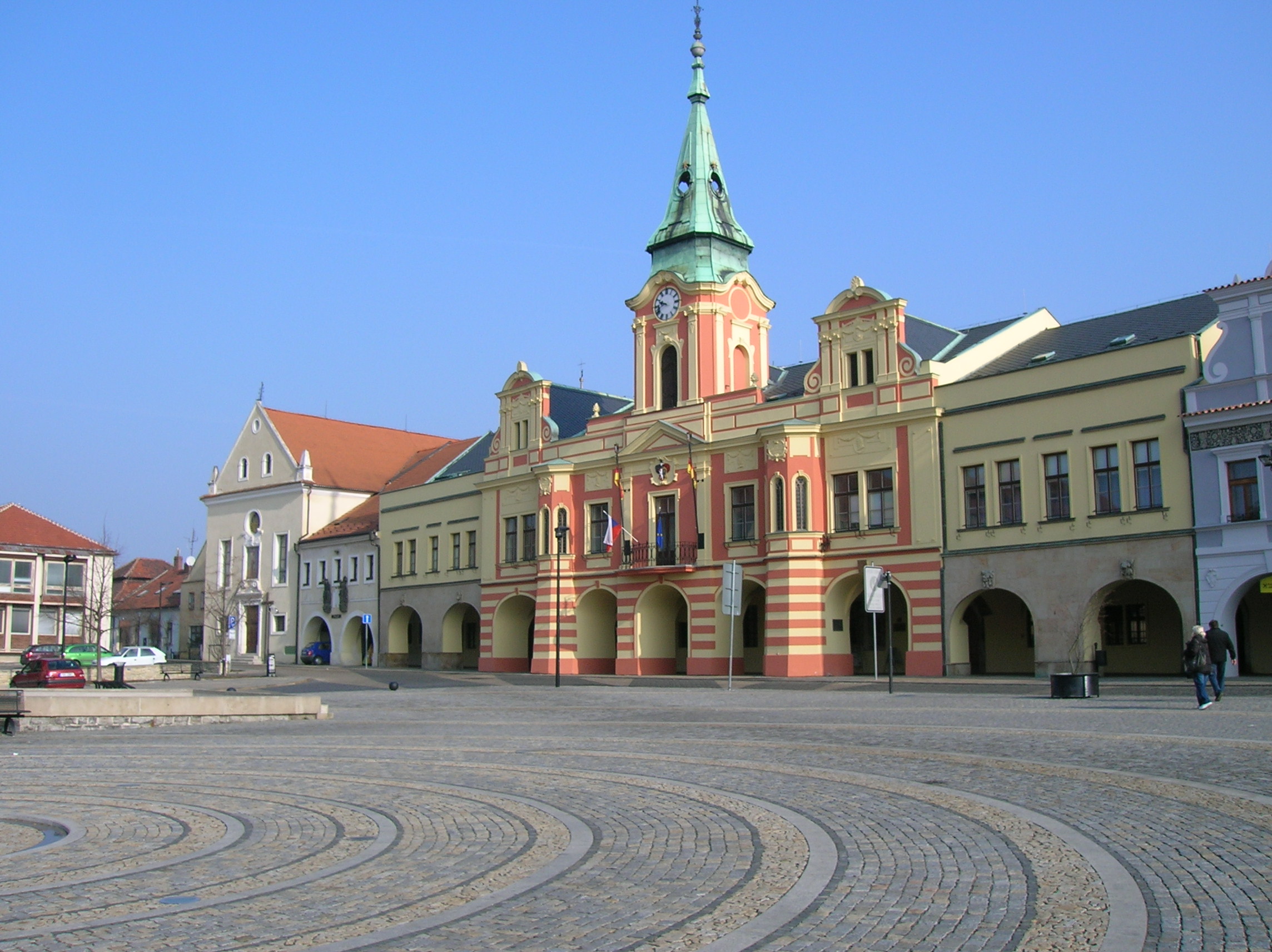
The town hall on the main square

The town hall on the main square

The chapel was last. It hailed from the 14th century, built by Queen Elisabeth, the fourth wife of Emperor Charles IV, and was originally dedicated to Saint Louis. During the Thirty Years’ War, the chapel was so badly damaged that it had to be rebuilt, and this time it was consecrated to Saint Ludmila. A painting of Saint Ludmila’s baptism adorned the main altar. Impressive paintings dotted the chapel. Two portraits – of Saint Andrew and Saint Bartholomew – by my favorite Czech Baroque artist, Petr Brandl decorated the space. There was even a painting of an apostle, created by Peter Paul Rubens.
Then the tour ended, and I was thankful that I had been led through the chateau by such a professional guide who had given such detailed information about each room. I was very impressed with her knowledge and enthusiasm. I knew how disappointing tours could be if the guides were not good, though most of my experiences with tour guides in this country has been positive. It was much better to have a tour guide than to be given a text and walk through the chateau by yourself, I mused. The guide helped bring the chateau alive. Her words gave life to the chateau that had played roles in Czech history and legends.
I think it was possible to tour the wine cellars as well, but I do drink much alcohol and am not very interested in wine. However, there are three floors of historical wine cellars below the chateau: Emperor Charles IV had them built. The Lobkowiczs have a family tradition of presenting a new-born with a new wine barrel. The barrel would be filled a year before the young Lobkowicz turned 18. It was remarkable that wine had played such a prevalent role in the family history.
Winetasting tours were available, and if I had liked alcohol, I would have been enthusiastic about taking one of these trips to the cellars with original, wooden barrels.
Instead of sampling wine, I ate a delicious meal in the chateau’s restaurant, though they did not offer my beloved chicken with peaches and cheese. Still, I was pleased with the food and the service.


The picturesque houses on the main square

The picturesque houses on the main square

I walked around the town and noticed the impressive Renaissance and Baroque houses on the large main square, especially the town hall, which hailed from the late 14th century. Next to the chateau was the Gothic Church of Saints Peter and Paul. Unfortunately, it was closed, but the ossuary was open. I found out that the next tour of the ossuary would not start until after my bus left for Prague. What a pity. I knew I would have to come back someday, to tour the chateau again and to visit this ossuary that I had not known about before this trip.


The Gothic Church of Saints Peter and Paul

The Gothic Church of Saints Peter and Paul

Soon I walked through the decorated gate from 1500 and made my way to the bus station. I immediately caught a bus bound for Prague. When I disembarked at the Holešovice bus station in Prague 7, I was truly happy. I had had another positive experience at another impressive Czech chateau. My day had been filled with making new discoveries and gathering new perspectives on the Lobkowicz family history, the history of the chateau and my own personal history.


Tracy A. Burns is a writer, proofreader and editor in Prague.

The gate dates back to 1500.

The gate dates back to 1500.

In 2022 I visited Mělník again, this time with a friend who was seeing it for the first time. The chateau was awe-inspiring, and I could tell that my friend was very impressed. We took a few moments to take in the views from the chateau. The panorama was riveting.

I was in luck because the Church of Saints Peter and Paul was open. It was Gothic in structure with some Romanesque elements. The altars and pulpit were Baroque, though. In the 16th century, well-renowned architect Benedikt Reid was responsible for reconstructing the church. He had designed part of Prague Castle to much acclaim. I was very impressed with the church. It was a pleasant surprise.

Even though the food and parking downtown were expensive, the trip was enlightening. It was another day well spent.

Častolovice Chateau Diary


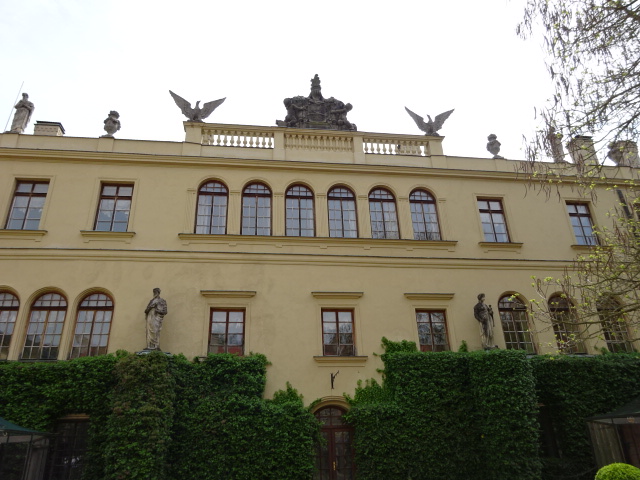
The facade of the chateau

The facade of the chateau

I had visited Častolovice about 10 years earlier, but I did not remember many details of the interior, though I had fond recollections of the picturesque courtyard. For some reason I had fixed in my mind that the chateau was on rather large main square with a pub on one corner, so I expected that the direct bus from Prague would drop me off there.  It turned out to be a three-hour trek to Častolovice, located in northeast Bohemia near the Orlické Mountains, via Hradec Králové, but the trip didn’t actually take so long. There was a 40-minute layover in Hradec Králové, which is only 30 kilometers away.


When the bus arrived in Častolovice, I did not recognize it at all. “This is where I get off?” I asked the elderly woman sitting next to me. She answered affirmatively. I couldn’t believe my eyes. There was no big square with a pub. The main square was hardly a square at all, just a few buildings along the main street with a small parking lot.  I got off the bus, feeling utterly lost. Luckily, a passerby pointed out how to get to the chateau. It was hardly more than a stone’s throw away. I walked by a decent-looking restaurant. I wondered if it was the only one in town. I hoped I would be able to get a table there later in the day.

The Baroque fountain

The Baroque fountain

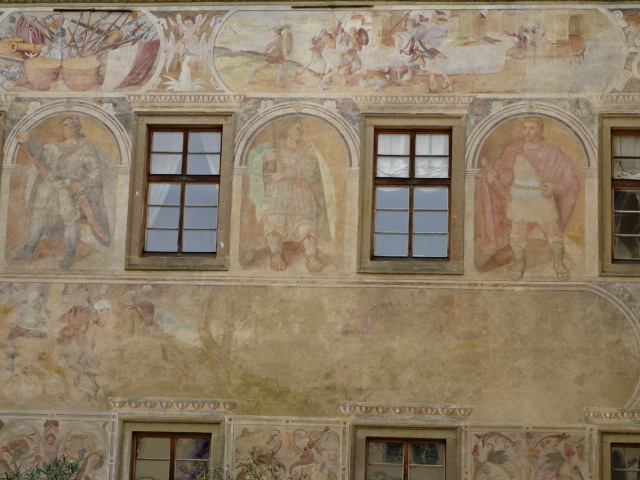
I entered the main gate of the chateau, eager to become reacquainted with the place. A Baroque fountain charmed me in the chateau’s courtyard, where birds in an aviary fluttered while singing pleasant melodies. The gentle, soft tones of classical music also filled the air. The atmosphere made me feel at ease on this sunny, warm, spring day.  I noticed that the wall of the chateau facing the fountain was covered in what I would later find out were 16th and 17th century frescoes depicting six Roman emperors and a battle. Tourists sat idly at the courtyard’s outdoor café.

The 16th and 17th century frescoes of six Roman emperors and a battle

The 16th and 17th century frescoes of six Roman emperors and a battle

After going to the box office, where the attendant announced that I would have a private tour at 11:00 o’clock because I was writing about the chateau, I followed an arcade to the 19th century English park that featured a rose garden, pond and small animal farm with an intriguing combination of ostriches, pheasants and pigs.  I sat on a bench and read a David Hewson mystery in English for a while, feeling relaxed and enthusiastic, after walking to the pond with gazebo. The flowers in the garden were ravishing, in full bloom, bringing vibrant colors to the natural setting.


I still had time to kill, so I went inside the café, as all the outdoor tables were taken. The establishment featured plush couches and armchairs, one of which I sunk into. The pastel colors decorating the space were lively, vibrant. It was also very quaint. I sipped a cappuccino before heading for the box office to start my tour.


The guide told me about the chateau’s long history, much of which was dominated by the Sternberg dynasty. While the first written records of what was then a stronghold dated back to 1342, the chateau was transformed into Renaissance style in the 16th century, renovated into a Neo-Gothic style during the 19th century and then changed back to Renaissance style at the beginning of the 20th century.

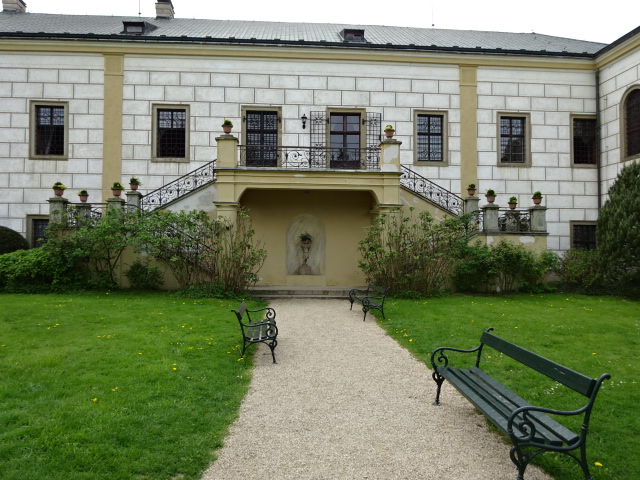
The picturesque courtyard

The picturesque courtyard

The Sternberg family has owned the chateau for 11 generations, dating back to 1694, when Count Adolph Vratislav Sternberg, the Highest Burgrave in Bohemia, purchased it. From 1694 to 1948 – not counting the Nazi Occupation of the country – Sternbergs have lived here. During the 15th century, it was Zdeněk of Sternberg who guided the Catholics in their battles with the Hussites and their king, Jiří of Poděbrady (also a former owner of Častolovice).


I hadn’t realized what a mark the Sternbergs had made on Czech culture. Franz Josef Sternberg founded the National Gallery and, along with his cousin Casper Maria Sternberg, established the National Museum. The chateau was returned to interior designer Diana Phipps Sternberg in 1992, and at that time she was residing in one wing where she also had a pension. Even during Communism visitors had a chance to see the chateau’s interior as one wing of the chateau was open to the public while the other served as a school for refrigerator repairmen and repairwomen.

Soon it was time to see the interior of the Renaissance architectural masterpiece. It featured furnishings from the 16th to the 19th century, and the many family portraits attested to the significant role of the Sternberg dynasty.  To be sure, the interior was more than impressive: Take the Gallery of the Bohemian Kings, for instance. Or the Knight’s Hall, one of the largest of its kind in Bohemia. And I certainly didn’t overlook the small, though exquisite, chapel.

The view from the park

The view from the park

In the Dining Room overwhelming, mammoth portraits of four Bohemian kings filled me with awe. I felt so small compared to the vast portraits. These included the black-armor clad Jiří of Poděbrady, who was King of Bohemia, leader of the Christian Hussite movement and owner of the chateau during the 15th and 16th centuries. Breathtaking as well were the portraits of seven Habsburg Emperors who ruled from 1526 to 1705. Two portraits of the Spanish side of the Habsburg dynasty plus three others hung nearby.  What is more, the painted coffered ceiling, another architectural thrill, illustrated a biblical scene from the Old Testament.


The Knight’s Hall was decked with many portraits of Sternbergs, including one of Kateřina Sternberg, also called the Black Lady of Častolovice, because, as a result of an unhappy love affair, she became the chateau’s ghost. I was particularly drawn to her painting. I gazed up at the coffered ceiling, which shows 24 pictures from the Old Testament.  I noticed that the marble fireplace had a bronze relief in the middle; it showed a woman praying.  Another portrait depicted Emperor Charles V, a Great Dane by his side.  In yet another, a woman donning a serious expression and dressed in black stood next to blooming pink roses. I found the juxtaposition of her black attire and the pink roses intriguing.

The park

The park

The adjoining chapel was a real gem, too. The painted doors depicted the 12 apostles, and the painted pews were adorned with floral decoration, which immediately caught my eye. The green and yellow tiles on the floor were original, some bearing imprints of dogs’ paws. I thought this was an impressive, unique touch. The wooden altar dated from 1601, and one of the frescoes inside the chapel harkened back to the Late Gothic period.

While family portraits were scattered throughout the chateau, there were other intriguing paintings as well. Two noblewomen in shepherds’ attire were the work of Czech Baroque master Karel Škréta or one of his students. Škréta was definitely the artist of the 17th century work, “The Young Huntsman,” who gazed confidently at the viewer. Two small pictures of an elderly woman in the Coat-of-Arms Room were from the Peter Paul Rubens’ School, possibly executed by Jacob Jordaens. A copy of a portrait by Rubens, depicting his second wife, Helen Fourment, hailed from 1640.

One painting that drew me into its artistic power was the head of Medusa, with bulging eyes and blue and golden snakes slithering around her head; it was another painting after Rubens. The gem “The Temptation of Anthony” by Flemish artist David Teniers was painted on wood in the Empire Room.

One huge portrait shows a red-robed Vilém Slavata, who was thrown out a window of Prague Castle during the Defenestration of Prague in 1618, when Protestant nobleman rebelled against the Catholic hardliners in an event that would in part trigger the Thirty Years’ War. Slavata lived through the ordeal as he landed on a pile of manure, but was then arrested. The ordeal reminded me of the black humor in the stories and novels by Czech legendary writer Bohumil Hrabal.

Another shot of the frescoes

Another shot of the frescoes

Paintings of Venice, specifically of St. Mark’s Square, the Doges Palace and the Rialto Bridge, decorated the Tower Room and brought to mind my happy days as a tourist in that jewel of an Italian city. Realistic paintings from the Netherlands adorned the chateau, too. I have been fascinated by art from that country ever since taking a course about it in college. In one small portrait, a poor man is eating fish, the bones and head left on the plate he is holding. This work captured the man’s miserable existence – the despair and hopelessness of his life. Another picture from this era depicted a man reading, though he seems lost in thought.

The guide pointed out four portraits of women representing the four seasons. Dating from the middle of the 18th century, they included a woman holding grapes for autumn and one holding a flower for spring. If you look closely, the guide explained, it was possible to discern that one woman was the subject of all the portraits, and she aged as each season went by. I was intrigued by these four unique works of art.

Numerous other objects of interest cropped up in the chateau.  There was a 150-year old Mignon portable folding typewriter and a portable, folding Napoleonic desk in the Empire Room, both of which caught my attention. The Biedermeier Room boasted furniture of that style. I noticed a small statue of Austro-Hungarian Emperor Franz Joseph I and his wife Elizabeth of Austria along with a large portrait of General Leopold M. Sternberg. I was impressed by the many military medals that the general donned.

The frescoes and the arcades

The frescoes and the arcades

The State Bedroom featured a stirring portrayal of a figure bringing a drink to his guest in the Flemish tapestry “Welcome to Guests” from the end of the 16th century. I loved Flemish tapestries! Two mirrors seemed to be decorated with small gem stones in the frames, but it was just imitation, painted under the glass. In the Ladies Sitting Room, I noticed that Meissen porcelain birds were suspended from the wall. I found it to be a nice, elegant touch to the interior.

The Wallpaper Room gets its name from gold-and-black wallpaper that imitated leather, though it was made of paper. In the library, which contains political and religious books as well as novels and poetry written in Latin, English, German, French and Czech, I saw a tapestry showing Cleopatra and Mark Antony. It was Flemish, from around 1600. Another thrill for me!

The flowers bursting with color in the garden

The flowers bursting with color in the garden

The Renaissance arcaded Gallery, with its vibrant dark pink walls and flourishing plants, featured lavish silver-framed mirrors that dated from the Second Baroque period.  I marveled at the elegance of the elaborate silver frames. The Ladies Sitting Room also was home to an intriguing item – a small watercolor, on the back of which is a note of condolence by Empress consort of the Holy Roman Empire and Queen of Bohemia Maria Theresa of Austria on the occasion of the death of Francis Phillip Sternberg’s wife. The Children’s Room also moved me. It was almost all white, with dolls, portraits of children and a dollhouse, exuding a sense of purity.

After the breathtaking tour, I walked to the only restaurant in sight and found a table outside. Again I was able to order my favorite – chicken with peaches and cheese – plus a Diet Coke. After a delicious lunch, I made my way to the bus stop to wait 20 minutes. I always arrived early because I was always nervous I would miss my  bus. I stood at the small ČSAD sign, watching cars and trucks drive by.

The chateau from the park

The chateau from the park

Finally, after two o’clock, it was time for the bus to come. And it did. I watched it whiz by the other bus stop, without even slowing down. I was at the wrong stop! I chided myself for being so stupid. I had thought the bus would come to this stop and turn around. I sure felt like an idiot!

Then I thought that maybe it was a blessing in disguise. There was another bus in two hours, so I went back to the chateau and sat outside at the café. I read about another murder in front of the Baroque fountain.

The bus was slated to arrive after four o’clock. So, I got there at 3:30, determined not to  miss this bus as it was the last direct one to Prague. Shortly after I arrived, five others with big duffle bags and shopping bags gathered there, too. Then, a little after 3:30, a bus to Prague showed up. Bewildered at the timing of its arrival, I got on and made my way back to Prague. I wondered if it was a bus run by a private company that wasn’t listed on the schedule posted on the Internet.

Curiously enough, the bus driver told me that no bus comes through the town after four o’clock.

Tracy A. Burns is a writer, editor and proofreader in Prague.


The stunning chateau from the park

The stunning chateau from the park


Mnichovo Hradiště Chateau Diary

MnichovoHchateau3

I had taken this train many times before, usually to Turnov, which was one stop further than today’s destination – Mnichovo Hradiště. The last time I had taken this route, the train had been furnished with new, comfortable seats, though the exterior had appeared dilapidated. This time, the seats were the usual ugly, red, vinyl kind divided into compartments that looked dirty. After riding the pleasant Viamont train to Bečov nad Teplou, I guess I had become a bit spoiled concerning train travel.

The trip took about an hour and 45 minutes, and it took another 15 minutes to walk through the pleasant town to get to the chateau. I remembered the chateau’s exterior from my visit here about 10 years ago, but it looked as if the walls had seen a few fresh coats of paint since my first time here. There were three parts to the tour – the Empire style theatre for about 50 or 60 spectators, the interior rooms with mostly 18th century furnishings and the lapidarium where 25 statues were kept in the church and chapel of a former convent.

The guide and I started with the tour of the theatre.  On the way there, we stopped in a hallway where I saw large portraits and Baroque bureaus. A huge painting traced the genealogy of the Waldstein family, the clan who had owned the chateau for generations. I picked out Vilém Slavata from Chlum and Košumberk in a long, red robe and big, red cap in one portrait. I had visited enough chateaus to know that this nobleman and writer had been thrown out a window of Prague Castle during one of Prague’s defenestrations. Thankfully, he had fallen on a heap of manure.  Passing the Hunting Hallway, I glanced at black-and- white graphics of various animals and noticed a depiction of a deer with one antler. Then we came to a machine that made the sound of wind. By turning a lever, the round, wooden contraption with a white sheet over it moved to produce the sound.

MnichovoHchateau6Then we entered the Empire style theatre. I took a seat on a bench that resembled the original seating. While the theatre was first mentioned in archival documents during 1798, it was renovated and given an Empire style appearance in the early 1800s on the occasion of the Holy Alliance negotiations, when Austrian Emperor Franz I, Russian Tsar Nicholas I and Prussian Crown Prince Frederick William discussed how to handle the revolts taking place throughout their lands, during 1833. The first play performed here was Carlo Osvaldo Goldoni’s The Servant of Two Masters, performed in German and Czech by actors who came from Prague. Three theatre groups from Prague’s Theatre of the Estates gave performances here for three nights. In the second half of the 19th century, the theatre fell into disrepair and was used as a furniture warehouse. It was not open for the public until 1999. The curtain was restored in 2001.

 I was enthralled by the romantic landscape backdrop that was currently on display. It gave me a soothing, calm feeling. Some of the 11 plain, flat backdrops that the theatre possessed included a street view, a castle, a hall with columns and Prague Castle with the Lesser Quarter and Charles Bridge. The stage was 32 feet wide, 28 and a half feet deep and four feet high while the proscenium opening was 22 feet wide and 13 and three-fourths feet high. The theatre had one curtain and 54 wings, which were set at an angle to the stage instead of being placed parallel to it, as was the usual custom. The theatre did not use a mechanized wing system or wing trolley, either, but rather employed a groove system that utilizes upper and lower grooves to assure that the wings will stay upright. Also, the wings in this theatre were double-sided and therefore could be reversed easily. On the back wall behind the balcony a large genealogy painting of the Waldstein family, complete with cherubs, caught my attention. It celebrated the family’s pride of its heritage. The theatre is still on occasions used today.

The chateau had an intriguing history. It was built in the 17th century, during Renaissance times. The owner Václav Budovce of Budov joined forces with other nobles in a revolt against the emperor and was executed on Old Town Square in Prague during June of 1621. In 1623 the chateau was confiscated and subsequently bought by Albrecht Eusebius of Waldstein.  In 1675 Arnošt Josef of Waldstein purchased it and kept it until the middle of the 20th century. The chateau was given a Baroque appearance in the early 1700s, although some rooms were given a Rococo makeover around 1750.

In a hallway full of portraits, I spotted the pointed beard of Albrecht of Waldstein, the one who had bought the chateau in 1623. A large painting explained the genealogy of Emanuel Arnošt of Waldstein. The guide said that when the researcher could not find all the ancestors of the Waldsteins, he made them up. The large, grey, puffy wig that Maximilian of Waldstein was wearing caught my attention, too. I also noticed that Count Vincenc had only one eye open. There was also a room to the side, roped off. Leaning over the rope, I glimpsed a tiny chapel with a Baroque altar of Saint John of Nepomuk and a Madonna with child. The altar was flanked by black Corinthian columns with golden tops.

Next came the Countess’ Antechamber. Someone had installed a 20th century telephone and placed it on a Baroque bureau, a sight which vividly contrasted the two eras, so far apart in technology and time. A still life painting adorned one wall, and a laundry basket with an exquisite floral pattern and muted yellow background sat on the floor. The stunning green, blue and brown chandelier symbolized the four seasons. I noticed that grapes stood for fall.

The oldest painting in the chateau, showing an old lecherous man and a young woman whom I suppose was very naive, hung on a wall of the Countess’ Bedroom. I noticed how both figures had baby pink skin. Why a countess would want such a painting in her bedroom is beyond me. In the visitors’ book, a thick, red book on an ancient desk, I could read the names of nobility such as Schwarzenberg and Lobkowicz.

MnichovoHchateau4The Italian Salon enthralled me with its stunning mural spanning three walls. The painter had never visited the Italian town presented; rather, he had painted it from an etching. From the embankment of the town pictured, one could see Naples and Venice in the distance. Two men and a woman were talking in one section, nobles had gathered in another, and in yet another part two men manned the oars of a small boat.

The Study, which later became known as the Music Salon, featured a piano with the white and black keys reversed. I had never seen a piano with this unique trait. The Baroque white tile fireplace was decorated with two sea monsters that were supposed to be dolphins, as they slivered through the water with their heads pointed down.  Small portraits also adorned the Music Salon. One showed Habsburg Empress Maria Theresa dressed in black, mourning the death of her husband.

The small picture gallery was roped off, which disappointed me. I wanted to study each painting in minute detail, but only was afforded a side view of the three walls totally covered in art. I noticed a woman reading while holding a skull and other paintings boasting hunting themes.

Next came the Hunting Salon. The three walls were covered in a mural painted in shades of dark green and featuring a forest, dogs and hunters. I noticed that a backgammon game consisted of pieces with faces carved on them.  The ceiling fresco was devoted to Diana, goddess of the hunt. She held an arrow; one of her plump breasts was bare. The room also boasted a secret door.

The biggest room in the chateau was the Dancing Salon or Reception Salon, Rococo in style. A mirror sat flat on a round table that looked like a three-tier table for cakes wheeled around in luxurious restaurants. Porcelain figures decorated the three tiers while murals decorated two walls. I spotted this very chateau in the background of one part of the mural. Men clad in red with dogs were seen in a forest as a woman stood in the doorway, something having caught her sudden attention.

The Ladies Salon featured murals on four walls. They showed a countess posing in different professions. She was portrayed as a dancer, a flower-seller, a hunter, a fisherwoman and a traveler, among others. In the depiction of the countess as a flower-seller, I took note of the English park in the background and the flowers that decorated her hat. I was enamored by the backs of the chairs on which landscapes had been painted. The floral cushions were exquisite as well.

MnichovoHchateau2The most beautiful room in the chateau, in my opinion, was the Delft Dining Room that is immersed in blue-and-white Delft Faience porcelain from the 17th to 19th century, all original and handmade. I noticed some geometrically shaped vases and admired the wooden compartment ceiling, too. The Waldstein gold with blue coat-of-arms decorated the center of the Renaissance ceiling. I noticed some plates on a wall featuring windmills while a tray depicted a park with a fountain and statue.

The Oriental Salon was full of Japanese and Chinese porcelain. I admired the orange and blue swirls of one Chinese plate hanging on a wall. The table and chairs were made of bamboo. Four vases represented the four seasons. A Japanese painted partition also adorned the room.

The table in the Meissen Dining Room was set for breakfast with its blue-and-white porcelain taking center stage. Yet what astounded me about Meissen craftsmanship were the chandeliers. Hailing from the beginning of the 19th century, this particular chandelier featured floral decoration colored green, pink, yellow and orange.

Although the library was composed of three rooms, a gate with bars prevented visitors from entering. This was the library where Giacomo Casanova had served as librarian during the 18th century, the guide reminded our group. His letters and manuscripts made up a significant part of the chateau archives, as did material from the Thirty Years’ War. I wished I could see more of the 22,000 volumes inside the gate as the shelves were decked with fiction as well as specialized literature, such as legal and historical works. Many books focused on alchemy, too. They were written in a variety of languages, including German, Latin, Czech, Italian and Hebrew. Two big globes stood in the foreground while a smaller globe and telescope could be seen in the background of the closest room.

Walking through a hallway before descending the stairs, I spotted a large portrait of an armor-clad Albrecht of Waldstein on a gray, spotted horse. Then it was time to visit the lapidarium.

The church and chapel of the former Capuchin convent appeared to be plain, nondescript. The exterior was even dilapidated. What was inside, though, proved absolutely stunning and breathtaking. As we first entered the Church of the Three Kings that joined the Chapel of Saint Anne, I saw about six small statues in a dark, small space. This will be disappointing, I remember thinking to myself. Then we turned the corner, and the room came alive with 25 statues of Baroque, Rococo and Empire style twisting and turning, dynamic and vibrant, most made of sandstone.

Home to these statues since 1966, the lapidarium featured monuments that had been deteriorating in the outdoors. Our group stood in front of the headstone of Alburtus de Waldstein, the name engraved prominently on one wall in what looked like marble. Then I walked through the room, my head spinning from all the dynamic and expressive movement flowing from the statues. I inspected the altar of the Saint Anne Chapel and noticed that Saint Anne had a child on her lap as they were reading, cherubs fluttering above. Next to them a figure seemed to be holding a painting.

MnichovoHchateau5Then I took in the statues. In a sandstone work hailing from the third quarter of the 18th century, the Virgin Mary had her hands clasped to her breast. A Saint John of Nepomuk portrayal by Josef Jelínek the Elder, dating from the second quarter of the 18th century and made of polychrome wood, featured that saint as a sort of visionary, peering into the distance, determined and confident. I noticed the dynamic folds in his white drapery. It looked as if they were fluttering in the wind. Another statue, named the Angel with the Attribute of Christ’s Suffering, had been erected in the early 1720s out of sandstone. I was stunned by the angel’s huge wings as the angel seemed to be moving toward the viewer, about to trample him or her. I also noticed the angel’s crushed nose and wished the statues were in better condition. If I was a millionaire, I would donate money to preserving Czech chateaus and castles, so that fascinating statues such as these could be restored.

The Lion and Putto, by master Ignatius Francis Platzer, was made of sandstone and hailed from the 1750s or 1760s. Putto, clutching a shield, was riding on an enormous lion. Perhaps the best known statue in the collection was Matthias Bernard Braun’s Perseus, a sandstone work from the early 1730s. Perseus appeared calm, not at all tormented, and I took note of his fluttering drapery and twisting body. Then I walked over to Saint John of Nepomuk with Two Angels by Karle Josef Hiernle, a sandstone piece from 1727. John of Nepomuk was flanked by two angels. One angel lightly touched the sleeve of John of Nepomuk’s garment. An angel held a finger to his lips, while the other pointed toward Heaven. Cupid heads decorated the bottom of the sculpture. John of Nepomuk ‘s head was leaning to the right, his hands were clasped and his eyes closed as if he were meditating.

After thoroughly enjoying my inspection of the statues, I went to lunch, where I ate my favorite chicken with peaches and cheese. Soon afterwards, I took a bus from the main square directly to Prague. Once again, I was fascinated by everything that I had seen in the chateau, and I needed time to process all the information and all the beauty that had surrounded me.

Tracy A. Burns is a writer, proofreader and editor in Prague.
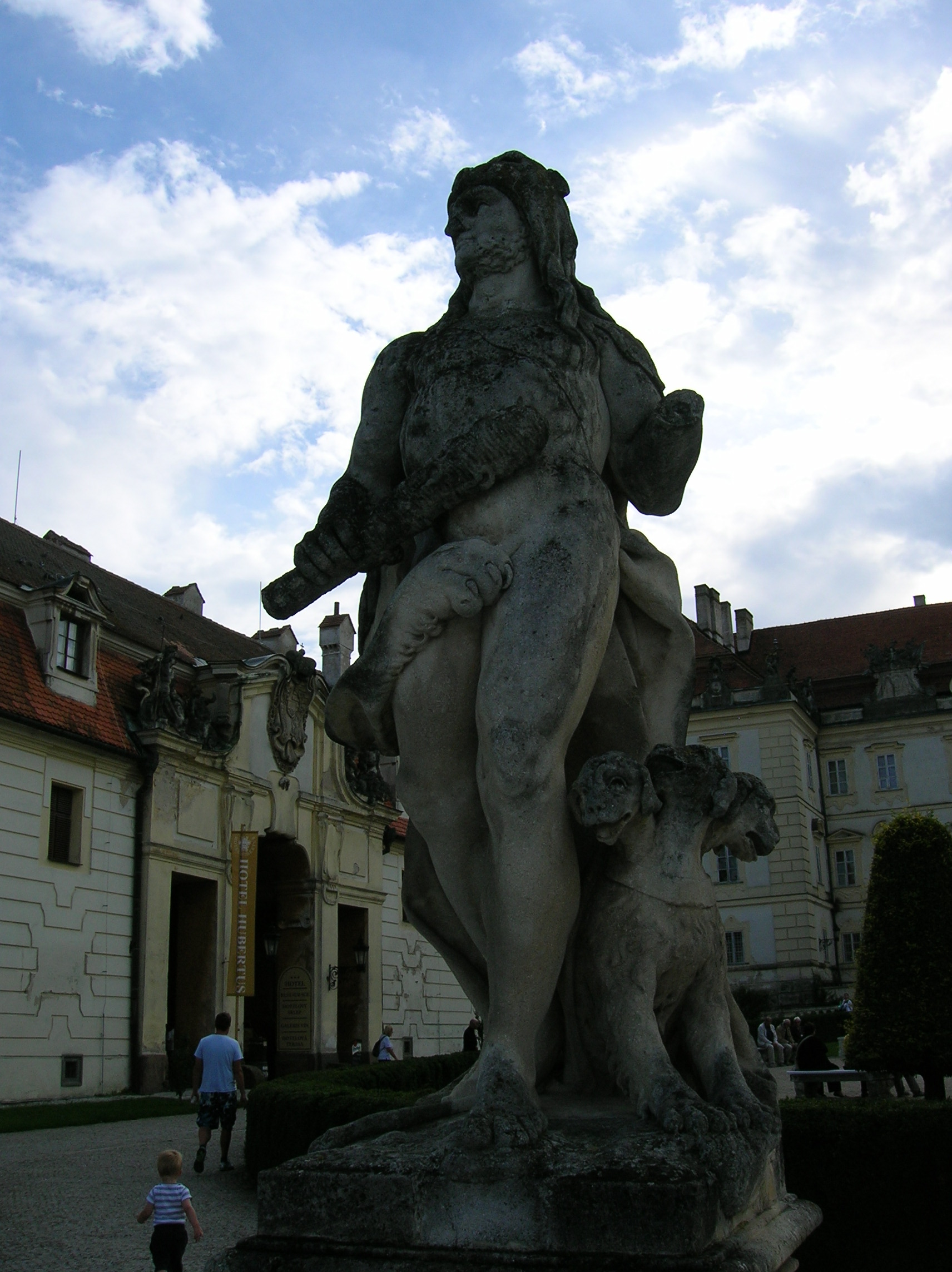
MnichovoHchateau1

Kačina Chateau Diary

Kacina121

My friend and I went to the chateau by car, driving a little over an hour to the sprawling white-columned, two-floor chateau of Kačina, sporting an elegant tympanum on its main façade. I would visit again, in 2020, also by car.

Kacina2020ext11Kacina2020ext13

The huge chateau – the biggest 19th century Empire style chateau in the Czech lands – boasts not only representative rooms in 19th century Empire, Biedermeier and Classicist styles but also a 19th century library, theatre and pharmacy plus an agricultural museum. An unfinished chapel is on the vast grounds as well. The chateau was built from 1802 to 1822.

Kacina2020ext10

The balanced Empire style hails from the early 19th century when symbols and decorations were influenced by ancient Greece and Rome. Biedermeier style, from 1815-1845, refers to furniture that is simple yet elegant with very little decoration. During this period ebony, cherry, ash and oak woods were often used. The Classicist trend can be defined as symmetrical, proportional and geometrical, taking its name from the style utilized in Classical antiquity and that of ancient Rome.  Architecture of this style is very well-organized with columns, pilasters, lintels, hemispheric domes and niches.

Kacina2020ext2

I was lucky that I had a guide who was so enthusiastic and knowledgeable about the place. When I came back in 2020, I had another terrific guide. In fact, I had always had the best guides at this chateau: they were enthusiastic and animated, not merely uttering words they had memorized from a text. Their zeal was contagious. They were exactly the kind of guides I wished I had had on every tour I had taken. The details of each room just spewed spontaneously from this tour guide’s mouth. She even took me to parts of the chateau that were usually off-limits to tourists.

Kacina2020ext15

First, we hit the representative rooms. The ground floor consisted of the spaces used for social occasions and guest rooms while the first floor, which cannot be visited, had been made into a family residence.

Kacina124

The first room we walked into took my breath away. This hallway with a roundel or circular window that is 16 meters high was so light and airy yet elegant that it reminded me a bit of the Pantheon in Rome. I remembered sitting across from the Pantheon at a restaurant for my fortieth birthday dinner, an experience I shared with my parents. That was one of my most treasured travel-related memories. We continued into a hallway with some hunting trophies and black-and-white British lithographs sporting hunting and horse-jumping themes.

Kacina2020int2

The first three rooms, formerly guest rooms, gave background information about the chateau and explained the history of the Chotek family, who had chosen this chateau as their summer residence during the 19th century. Models of chateaus adorned each room, such as the blood red model of Veltrusy, destroyed by the 2002 floods, the chateau where the Choteks had once had their family residence. In a portrait Jan Rudolf Chotek, the founder of Kačina, looked as if he was harboring a secret he would never reveal.

Kacina2020int3

First, you need some background about the Chotek family. Veltrusy Chateau was their family residence from 1716 to the 20th century. Jan Karel served the emperor as an armorer, and his youngest son Rudolf worked as the highest chancellor in the Czech lands. Because he did not have a son, his nephew Jan Rudolf took over in the 18th century. Jan Rudolf was a man of many achievements. He built the magnificent park in Veltrusy and Kačina chateau in the 19th century. He was responsible for the construction of many embankments and parks throughout the Czech lands.

Kacina2020int4chandelier

His youngest son Karel spent 17 years as the highest Czech burgrave and built the highway between Karlovy Vary and Mariánské Lážne. He even learned Czech from legendary historian František Palacký. He also established a residence at Velké Březno chateau, built from 1842-1854, in northern Bohemia – a charming building that looks like a hunting lodge or villa. I fondly recalled my trip to Velké Březno, where I had looked out the window at the park, suddenly feeling free of stress as if I had been cleansed of my worries. Ferdinand Maria Chotek, the fourth son of Jan Rudolf, was the Olomouc archbishop for four years. Žofie Chotková married František Ferdinand d’ Este, both of whom were assassinated in 1914.

Kacina2020int5

The last male Chotek was Karel, who along with his wife Lívie became German citizens after World War II and emigrated to Germany. During the war the chateau was sold to the Germans, and the HitlerJugend resided there. The chateau was nationalized after the war according to the Beneš decrees, which gave property owned by Germans during the war to the state.  In 1950 the chateau belonged to the Ministry of Agriculture, and it became an agricultural museum. Now the chateau looks as it did when Jan Rudolf lived here. The coat-of-arms for the Chotek family shows a half wheel, a gold bear in a blue field and a black imperial eagle on gold.

Kacina2020int6

The ladies’ wing was first, then the men’s wing. The Ladies’ Study boasted pink and grey decor with white ornamentation. Family portraits adorned the walls as did pictures of three summerhouses that once graced the park, founded as far back as 1789 and now composed of 20 hectares with 61 kinds of trees and 20 kinds of bushes. An oil painting depicted knights readying for a tournament on Chotek property. I gazed at a square, gold clock in a gold frame, positioned high on a wall. I was drawn to the geometric symmetry of the square design.

Kacina2020int9

Next was the Pink Salon. The original chandelier was second Rococo in style, gilded with gold and dominated by Czech crystal. An Empire style small black table with gold legs and a circular table with the same decoration got my attention. Pink and white porcelain dominated a circular table in the middle of the room. Corinthian columns were painted on the walls.

Kacina2020int10

The Ladies’ Bedroom included some magnificent intarsia furniture. A picture with cupids was carved into a wooden bedframe.  I immediately took to the Empire style black-and-purple closets for accessories in the Ladies Changing Room. A light pink chair and couch complemented a Venetian mirror decorated with black and pink. The purple, pink and black colors went together superbly, I mused.

Kacina2020int17

The Small Dining Room, still used for concerts, included an Empire style table and a Biedermeier side table plus a gold chandelier. The Dance Hall was 22 meters long, 12 meters wide and 16 meters high with fantastic roundels. A crystal chandelier captivated me. The brown parquets on the floor sported circular and diamond shapes. For a moment we stood on the terrace and took in the vastness of the park land around us.

Kacina2020int11

The Men’s Salon had a Baroque pool table, but it was the Renaissance brown tiled stove that entranced me. The unique feature of the room was the oak leaf motif. I recalled that oak was often utilized in the Biedermeier style. Wooden circles with oak leaf motifs decorated the ceiling and the tops of the walls. Frames were also covered in wooden oak leaf ornamentation. The couch and chairs were Second Rococo in style. I noticed that the armchairs where the Choteks sat when playing cards were very low.  I wondered what sort of conversations had taken place there while the Choteks had played cards. What had they talked about? What were their interests and worries? What events had brought them joy? Vienna porcelain and Czech glass also lit up the room.

Kacina2020int15

The white stove in the Music Room had white décor and hailed from the Second Rococo period. I also noticed a Baroque bureau and two big portraits of Jan Rudolf Chotek and his youngest son Karel, both wearing prestigious golden medals around their necks. Jan Rudolf was holding a plan of Kačina in one hand while Prague dominated the background of Karel’s portrait.

Kacina2020int19


The furniture in the Men’s Study or Smoking Room was captivating as well. The green couch and chairs were Empire style as was the chandelier. The desk hailed from the Biedermeier period. I notice a small statue of Empress Elizabeth, fondly called Sissy, on a desk top. I thought about how she had loathed the strict regimen of royal life and how she danced to the beat of her own drum. She had become a symbol of individual identity during her 44-year reign as the longest reigning Austrian empress. She had been so independent, traveling around the world. And she had had to deal with so many tragedies. A large portrait of her husband, Austro-Hungarian Emperor Frantisek Josef I, also hung here – in the painting he was a young man with many medals on his uniform. The young man in that painting would become the most respected and most beloved member of the Habsburg dynasty, ruling the Austrian Empire and then Austro-Hungarian Empire for 68 years, the third longest reign in the history of Europe.

Kacina2020int26

On another wall was a huge brown map of the Chotek property as of 1734. The guide pointed out that the fields were numbered. There was also a secret door to the south colonnade, but we went downstairs instead to see the former bathroom, which was a large hole in the dilapidated floor. The person taking the bath used to sit on a chair in the tub while servants poured water over him or her.

Kacina2020int29

We trekked upstairs again, this time to the Men’s Bedroom. The prayer stool was made with intarsia, wooden with wood decoration. Paintings with religious themes also adorned the room. Plants made the room come alive. In the Men’s Changing Room there were small paintings of Italian towns on the walls. The chandelier hailed from the Empire period. The Hunting Salon was dominated by a polar bear rug. I noticed the animal’s sharp teeth.  A white tiled stove boasted white ornamentation with two female figures on its sides. Oriental chairs also made up the space. The furniture was Baroque and pseudo-Baroque and included a Baroque bureau.

Kacina2020int30

The Big Dining Room featured a folding table that usually sat 24 guests during the Chotek’s days. The table was decorated with a green clover motif. Each chair had the coat-of-arms of the Chotek family with a crown on top. The rich wooden décor on the wooden sideboard got my attention. Ceramics and the Chotek coat-of-arms were displayed on the superb piece of wooden furniture. A Second Rococo mirror had a lavish gold frame with the coat-of-arms prominent at the top. The high walls were decorated with gilded wood, and an exquisite crystal chandelier hung from the ceiling. There was also a secret door.

Kacina2020intlib1

Next came the library, my favorite part of the tour. Roundels or circular windows with painted cupolas and stylized squares allowed light to stream into the three sections, onto the colored shapes on the floor. The library from the turn of the 19th century reminded me of a structure out of antiquity. The fake grey marble columns gave the place a dignified air. Tall bookcases were crammed with books, some of which looked like they had golden spines. A gallery above held magazines and newspapers. The Chotek coat-of-arms was present on all 40,000 volumes, the guide said. Mostly written in German, the books also included publications in French, Spanish, Italian and old Czech. Some of the volumes were older than 1500 – the oldest was a book of Russian psalms hailing from 1480.

Kacina2020intlib4

Among the most significant in the space was the 18-volume complete set of the French Description of Egypt from 1809-1818, which consisted of encyclopedias that documented everything French military leader and political leader Napoléon Bonaparte had seen in Egypt, from plants to pyramids. There were only two other complete sets in the world: one was in the Louvre and the other in the King’s Library in England. These books were printed specifically for European rulers. 

Kacina2020intlib2

The editions in the breathtaking space also included 398 handwritten manuscripts, 38 handwritten maps and 250 catalogues. Among the books, I saw downstairs in the first part were S. Dionysii Opera, a fat two-volume set and collections of Lumír magazine, established in 1851 and written by Czech patriots such as Karel Havlíček Borovksý, who is considered the founder of Czech journalism, satire and literary criticism. Tall medical books stood nearby.

Kacina2020intlib8

The second part of the library was a study with small statues of Czech rulers and one of Michelangelo. Among the 19th century statues, I spotted the mythical Libuše who prophesized the founding of Prague; Jiří of Poděbrady, a Czech king who ruled from 1458 to 1471; Emperor and Czech king Charles IV, who reigned from 1346 to 1378 and was responsible for founding Charles University, the New Town in Prague and the Charles Bridge; and Holy Roman Emperor and Czech king Rudolf II, who was in charge from 1576 to 1611 and is known for his love of alchemy and cultural pursuits.

Kacina2020intlib19

Then the guide showed me the object that enthralled me the most during my visit. It was a globe put together in eight layers. There were top and bottom layers and then six layers representing the continents. On one side was a picture of a continent, and on the other side there was information about it. I spotted a polar bear on one picture. It seemed to me to be an excellent visual teaching aide for young students.

Kacina2020intlib12

The third part was dominated by a huge vase with ornate décor. I could see Romulus and Remus with a wolf in relief on the exquisite object. Then the guide showed me an Empire style card catalogue, with a card for each book. The golden writing on the cards had been scribed in flowing, fancy script.

Kacina2020intlib17

Then we went up a narrow staircase to the gallery, a part that was usually off-limits to tourists. I spotted editions of the newspaper Prager Zeitung and sheets containing information about new publications in the Austro-Hungarian Empire. Illustrated magazines were also kept here.

Kacina2020intlib16

The guide even led me through the back study rooms. Paintings adorned the walls, and I spotted a grey tiled stove with white ornamentation. Each painting hung in one space had been executed with a different technique. A display case illustrated the technology of painting and materials for painters, such as paraffin. In another display case I saw handmade paper and an ancient book made from handmade paper.

Kacina2020intlib14

Yet another space featured brightly colored, dynamic scenes of Divoká Šárka Park in Prague, one painting for each month, though the set here was not complete. I was entranced by the green hills of the park I loved so much, where I felt so at home, one which reminded me a bit of Vermont. I was glad I lived so close to that park. It made me feel relaxed and worry-free.

Kacina2020intpharmacy1

Soon we came to the 19th century pharmacy. One exhibit showed how to dry herbs, another displayed various baskets. A machine for mixing syrup was on display, too. I saw a press for making fresh herbs and a press for making tablets as well. The jars behind the counter and old scale came in various colors. A large book about herbs dated from 1920. Ceramic jugs also decorated the room.

Kacina2020inttheatre1

The theatre, on the opposite side of the chateau, hailed from 1851. It had never been open to the public. It was used only by the Choteks and their good friends. The Chotek family wrote the plays themselves in German and acted them out. Jan Rudolf’s 15 plays on then current themes are now in Prague’s National Museum. The group had even prepared plays by William Shakespeare, tailoring them to their own needs. How I would have loved to have seen those plays!

Kacina2020inttheatre2

The stage was made of wood, but it was not original. The walls were made of imitation marble on the lower section while stylized painting adorned the upper half. A compartment seated four people in the middle of the back wall. The two balconies boasted gold and black decoration. There was an orchestra pit, and there were pulleys above the stage. A crystal chandelier hung from the ceiling that had been partially damaged by water during the 1960s. Some set designs had been saved. The gallery now contained wooden benches, but it had consisted of comfortable chairs back in the Chotek days. There were bleachers for standing room at the top level. On the relatively new ceiling I spotted the two bears holding a coat-of-arms.

Kacina2020inttheatre3

Last but not least we visited the unfinished chapel, which was occasionally decorated with flowers and candles and used for weddings. What had been initially planned to be a crypt was only a hole because it was never completed. In the 1950s the floor had been cemented. Before that, it was made of earth. The cross-shaped structure was composed of rock with brick so it could be dry. I imagined how breathtaking the chapel would have looked if it had been finished in a simple and elegant Empire style, for instance.

Kacina2020inttheatre4

Then it was time to say goodbye to one of the best guides I had ever met. I thanked her profusely and my friend and I went to nearby Kutná Hora, where a sumptuous chicken lunch awaited me. We walked briefly through the picturesque town, up the hill to Saint Barbara’s Cathedral and along the bridge flanked by statues. All too soon, though, it was time to head back to Prague.

Tracy A. Burns is a writer, proofreader and editor in Prague.
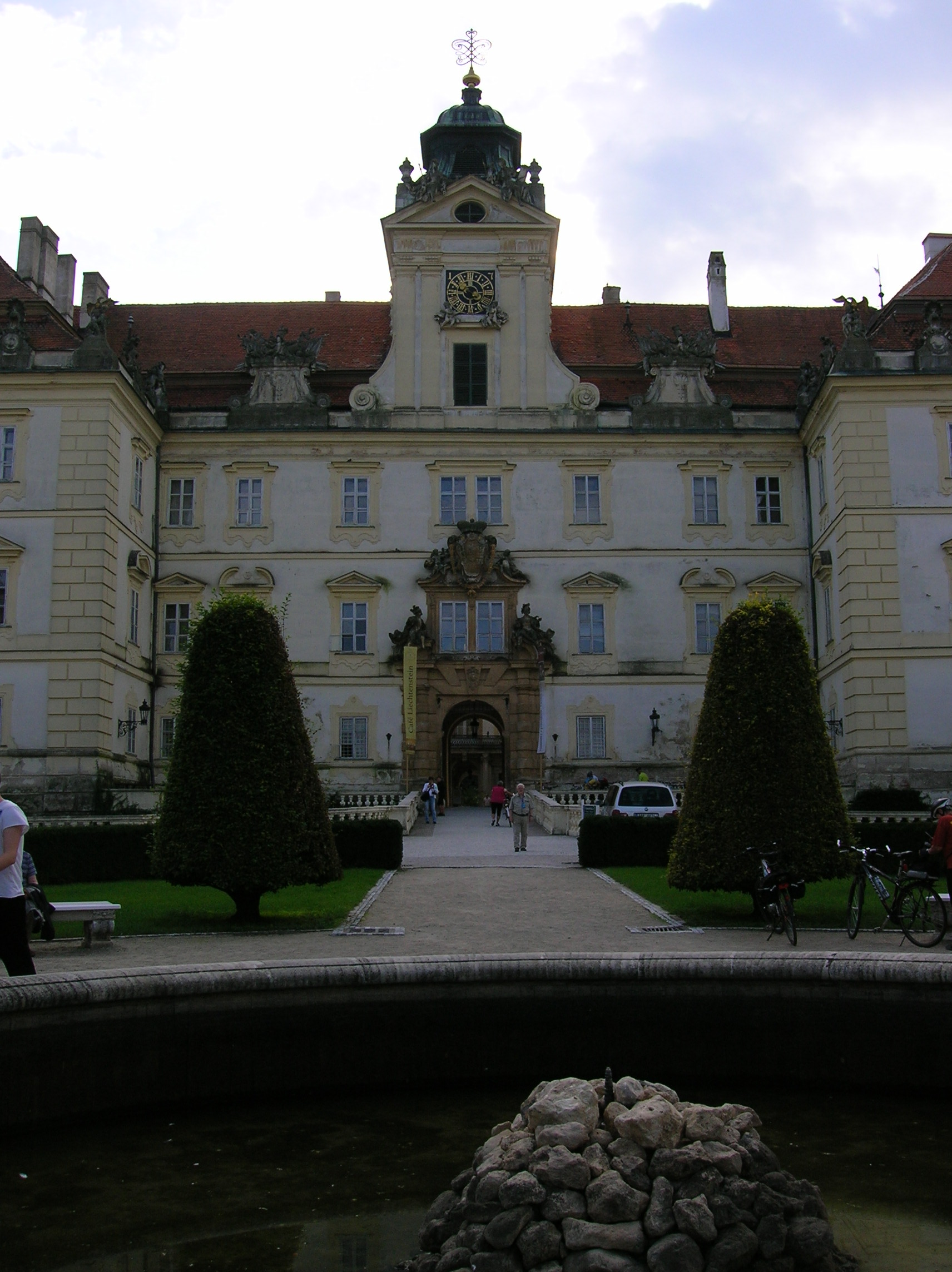
Kacina2020int22Kacina2020intlib5Kacina2020intlib7

Mníšek pod Brdy Chateau Diary

MnisekpodBrdy20124


I took a bus from Prague’s Smíchov train station to Mníšek pod Brdy, where the chateau was close to the main square. The ride lasted only a half hour. It was my second time here. During my first visit in 2004, only one tour had been available. Then, in 2011, the chateau began offering two routes. I was eager to see what awaited me on the new tour.

Because I had already been here, I knew the basic history. The castle was first mentioned in 1348. Jan Vratislav from Mitrovic became its owner during 1487, and Mníšek pod Brdy stayed in his family for 168 years. During the Mitrovic era the castle was turned into a Renaissance chateau. However, the history of Mníšek pod Brdy Chateau was not all rosy. The chateau was almost destroyed in 1639 during the Thirty Years’ War.

Luckily, when Servác Engel from Engelsfluss purchased it in 1655, he transformed the ruins into a Baroque masterpiece.  Several other clans claimed ownership before the Kasts took over. Because Baron Kast had collaborated with the Nazis during World War II, the chateau was put in the hands of the state during 1945. Once utilized as an archive for the Ministry of the Interior, Mníšek pod Brdy Chateau was taken over by the Ministry of Culture in 2000. It was reconstructed in 2001 and opened to the public a few years later.

MnisekpodBrdy20125Even the entranceway did not disappoint. The knight’s armor on the wall hailed from the Thirty Years’ War. A Baroque closet, designed with intarsia, was charming. Portraits of family members who owned the castle during the 19th century also adorned the space.

The moment I set my eyes on the knights’ armor, I thought of my first visit here, with Pavel, whose job involved restoring artifacts in castles and chateaus in central Bohemia. He had proudly pointed out that he had repaired that suit of armor, and he had been the one who told me about this chateau in the first place. We had met at Frýdlant v Čechách Castle and Chateau a month earlier. He had explained that he had a girlfriend, but she did not really like visiting castles. So he often traveled alone. I was alone as well. I appreciated his friendship. Then he had showed me around Kutná Hora, his hometown. The next time we saw each other, we came here. We were captivated by the chateau and then had lunch in a pizzeria in Prague.

The Winter Dining Room was first on the itinerary. I admired a closet that hailed from the second half of the 17th century. The impressive ceiling painting also dated from that period. There were three sculptures in the chapel. An angel in a dramatic pose stood out on black, swirling columns. I was drawn to the landscape paintings on a wall in the Dining Room. I loved landscape paintings and how they depicted nature’s moods. Some works portrayed the land as idyllic while others emphasized that nature could be intimidating and even cruel. I also admired a jewel chest with intarsia. On one wall colorful plates with Oriental motifs dated from the 18th century. The chantry in front of the chapel was the work of legendary Czech artist Karel Škréta.

MnisekpodBrdy20127The Big Dining Room was only used for special occasions. Four huge paintings represented earth, water, air and fire, according to the enthusiastic guide with a contagious smile and strong voice. In the allegory of the earth, the man dominating the picture wielded an axe, looking quite intimidating. The white tiled stove shaped as a pyramid exuded the Classicist style. The bottom part of a closet was false, hiding a stairway. Holy Roman Emperor Charles VI made an appearance, too, in a painting depicting a moment in front of the Czech court, shortly after his coronation during 1722. Candlesticks sported designs of swirls and green leaves. I loved the details in objects found in castles and chateaus. The decoration on the candlesticks was just one example of those details that made the object unique and intriguing.

The Servery, where food was prepared, included a closet made in Baroque style at the beginning of the 20th century. Flowers and birds dominated wall paintings. The delicate porcelain on the table was created in Vienna during the first half of the 19th century. There was also an 18th century depiction of a big, white rooster with a colored face and brilliant feathers. The striking colors of the feathers caught my attention. This certainly was a piece that stood out. I had never seen a rooster portrayed this way. The wall flaunted a floral pattern on a tan background with the delicate flowers appearing in pink and blue hues.

The Great Salon was next. The furniture hailed from the first half of the 19th century. A picture above the door showed Mníšek and its surroundings with a church. The symbols of hunting were very pronounced: A bear, sword, horn and rifle, among others, adorned the landscape. Across the space, on the wall above the entrance to the clock tower, more scenery of Mníšek was portrayed, this time accompanied by medical symbols such as a mask, an arrow and birds. Above the door leading to the following room, I could see what Mníšek Chateau looked like at the beginning of the 20th century.

In the clock tower to one side of the space, there were four grandfather clocks. The one with red, black and brown decoration attracted me the most. The red complemented the black and brown colors and gave the clock a certain vibrancy. In the next room a jewel chest from 18th century Japan was captivating, designed with pictures of the countryside and birds. I marveled at the exquisitely painted drawers.

MnisekpodBrdy20128The stucco ceiling of the Smoking Salon had original plastic ornamentation from the 18th century. A pelican was one dominant figure. I do not think I had ever seen a pelican on a stucco ceiling of a chateau. I loved the surprises this chateau offered, first the rooster with the brilliant feathers and now a depiction of a pelican. I loved tours that held surprises for me. The dark crimson color of the walls was also appealing. A card table with indentations for money hailed from the first half of the 18th century. A still functional bright red gramophone dated from 1890.

Then we entered the Ladies’ Salon. The paintings on the wall were framed in Secession style. The décor on the walls showed putti as well as people relaxing in the countryside alongside red and green flowers. Meissen porcelain went back to the 18th century. A toiletry table intrigued me. If you turned up the central part, there was a mirror. Set down, it became a desk.

The library, with 2,000 books, hailed from the Kast family’s era in the chateau. The volumes were in English, French and German. The decoration on the ceiling captivated me. One section showed Venus’ engagement and the other portrayed Venus and Mars, accompanied by fluttering angels, with their son Eros. I loved how mythology was often represented in castle and chateau decorations. Greek and Roman mythology had intrigued me ever since I took a course on that subject at university. All the different attributes for the gods, the captivating stories and their morals – they fascinated me. A unique bell was also in the room. It was shaped like a round, pudgy woman.

MnisekpodBrdy20129We had a 20-minute break before the second tour. I wondered if Pavel had already been on the second route. He probably had, I mused. I thought back to our conversation in the pizzeria in Prague after we had seen this chateau. He told me that he had broken up with his girlfriend, and he had time to visit me every weekend in Prague.

I had valued our friendship, but I did not want to date him. He was much younger than I was and a bit naïve about the world. I stressed that I was only looking for a friend, not a boyfriend, and he was suddenly quiet as he picked at his lasagna.

How many times had a man I was interested in told me that he just wanted to be friends? Or how many times did a man I like express no interest in me at all? It happened to me all the time, and it was painful. But I could not lie to Pavel because I cared about his feelings.

After some minutes, he smiled – a forced smile – and began talking about a chateau near Brno where he planned to go some time the following month. He did not invite me to go with him. I was so lost in thought that I did not hear the guide announce the beginning of the second tour. I was one of the last people to enter the first room.

MnisekpodBrdy20126The second route featured the private apartments of Theodorich Kast and his wife. Framed embroideries complemented small, family photos. I wondered if his family life had been complicated as were my relationships. The family photos had an idyllic quality about them. It looked like Kast had a happy family, free of worries or tension.

The guide showed us one intriguing invention. A doll with a wide dress could be placed over a kettle to keep the water hot. This was another pleasant surprise for me. I had never seen such an object before. Yes, Mníšek pod Brdy was full  of surprises. I noticed that the woman dressed in blue in one portrait closely resembled legendary 19th century Czech writer Božena Němcová with her fragile, round face. Like Němcová she wore a sad but resilient expression and had sorrowful eyes and straight, black hair. I had read Němcová’s The Grandmother several times and had seen the play by Brno’s Divadlo Husa na provázku and film versions as well.

The following room belonged to the husband Theodorich. A jumble of black-and-white photos decorated the walls. The old telephone had no numbers, only a receiver. A heart with a black outline was carved into the headboard of the wooden bed. This was another example of a detail that captured my attention. The heart decoration made the bed unique and exquisite.

The next room showed off photos and paintings of horses. I had never been enthusiastic about horses. I was afraid of them. I would never ride a horse because I would be too scared that I would fall off or be thrown off. I thought of a friend whose teenage daughter had been thrown from a horse and had died, only 15 years old. Yet I knew many people were enthusiastic about the sport and did not get injured. I focused on the tour again. Two small cases resembled hat boxes, but they weren’t. Instead, they were meant to be used on picnics. One hid a jug that could be kept warm while the other was really a chemical toilet.

MnisekpodBrdy20123The Children’s Room was decorated in white. Three dolls from the beginning of the 20th century sat on a children’s sofa. Two glass parrots that look like owls served as electric lamps above the desk. In a doll house I was drawn to the colorful decorative lamp shades. A model of a school could be seen in one corner of the room. Inside, I noticed wooden benches, a podium, a blackboard and pictures of animals on a miniature wall. I recalled how simple life had seemed when I had been a grade school student and how complex it had become when I had reached adulthood. Sometimes I longed for those simple days when the world was black-and-white, everything was good or evil. There were no gray areas to confuse or upset me.

The next room was meant for a mother and a small baby. I noticed another tea doll. Exquisite clothes for an infant were displayed on the crib. An 18th century Venetian mirror also made an appearance. I admired the simple gold design on the headboard of the bed as well as the gold decoration on a closet.

The Ladies’ Bathroom included not only a flushing toilet, bidet and narrow tub, but also a selection of women’s and children’s shoes. The purple women’s footwear stood out. I remembered my outing to the extraordinary shoe museum in Zlín in Moravia a few years back. I had never realized that footwear could be so fascinating. Hat boxes took up space on the highest shelf.

MnisekpodBrdy20122We left the rooms after passing by graphics in the hallway. Once again, I was charmed by the chateau with its modest, though extremely appealing, décor. Mníšek pod Brdy had a romantic flair. No object in the chateau really stood out from the others. All the artifacts complemented each other to give a breathtaking impression. I loved the small details on the artifacts. Mníšek pod Brdy Chateau was a place I would love to visit once a year, I decided.

It was a sunny, summer day. The weather was perfect. I was happy. I was even happy to be here alone. Part of me missed Pavel’s presence, but I realized that it had to have played out the way it did. At some point during the second tour, I had stopped wishing Pavel and I could have gone on being just friends and had accepted what was. It was fate. Suddenly, for a short time, life seemed simple. As simple as the life represented by the dollhouse and model of the school in the Children’s Room. If only life could always be this simple! I headed to the nearby main square, where I ate my favorite chicken with peaches and cheese before catching a bus back to Prague. Yes, I was happy.

Tracy A. Burns is a writer, proofreader and editor in Prague.

Mnisek pod Brdy

Frýdlant Castle and Chateau and Hejnice Basilica Diary

P1080993

For the first time in a long while I went on a trip by car. Since my friend did not have a highway sticker that permitted her to drive on the highways, we had to take side roads that made the trip to northern Bohemia’s Frýdlant Castle and Chateau more than three hours long but much more scenic and intriguing.

I already was familiar with the history of the mammoth castle and chateau complex, as I had visited it eight years earlier.  The first reference to the impressive sight went back to 1278, when the castle was sold to the Bibrštejn clan who ruled here for 300 years. During the 15th century Hussite wars, the Hussites did not capture the castle, as it was spared the Hussites’ wrath that had destroyed so many sites throughout the Czech lands. The chateau came into existence at the beginning of the 17th century, when Catherine of Redern had it constructed with sgraffito decoration. She also was responsible for adding the exquisite church.

P1080996

Protestant noble Kryštof of Redern participated in the uprising against the Catholics during the Battle of White Mountain in 1620, and after the Protestants lost, Frýdlant was confiscated. Albrecht von Wallenstein, commander of the Habsburg armies and a major player in the Thirty Years’ War, bought the place during 1622. However, Holy Roman Emperor Ferdinand II started to distrust him and in effect gave him a pink slip. When the Protestants notched some victories over the Catholics, Ferdinand asked him for help again, and help he did. Yet, when in 1633 Wallenstein did not attack the enemy during a battle, he was accused of high treason. Unhappy with the way the emperor treated him, he had also been thinking about joining the Protestants. But he would not have the chance. Emperor Ferdinand II had Irish army officer Walter Devereux assassinate Wallenstein in Cheb during 1634.

P1080999

Then Wallenstein’s General Matyáš Gallas took over the castle. The Gallas family owned Frýdlant until 1759, when the Clam-Gallas family became the owners. The castle museum opened in 1801.  In 1945 Frýdlant was confiscated due to the Beneš decrees that ceded all property held by Germans to the state, and it was nationalized.

P1090084

As we approached the castle, it was impossible not to notice the high circular wall that had been built by the Swedes in 1647. After entering the front gate, we walked over the drawbridge to what was called the Swedish courtyard, taking its name from the 17th century occupation by the Swedish army. Then we came to the courtyard of the chateau and negotiated a steep path to the castle. In the castle courtyard we peered at a 13th century round tower and saw Renaissance sgraffito on part of the castle’s wing. One part of the sgraffito portrayed a deer hunting theme.

P1090020

I was glad that my friend and I were the only people on the tour. We went inside. What impressed me the most in the first room were not the huge portraits of the Redern family but rather the richly carved Renaissance chairs and the Renaissance chest. The green and white tiled stove also caught my attention. In the next room a portrait of Albrecht von Wallenstein showed a man with a serious expression, a small beard and moustache. One painting in the room depicted his assassination. In the dramatic rendition Devereux stabs the unarmed Waldstein in the stomach with a halberd.

P1090022

Next came the Portrait Gallery, which boasted of huge paintings of Gallas family members. The Baroque fireplace astounded me with the Clam-Gallas coat-of-arms, cherubs and golden crowns adorning it. In the museum part of the exhibition, the legendary Czech nobleman and Austrian Marshall Jan Radecký of Radče was featured in several displays. His light blue uniform was on display as was a circular portrait of Radecký with gray hair and a gray moustache. A picture of Emperor Franz Joseph I’s wife, Empress Elizabeth (Sissy), who was assassinated in 1898, decorated a cup. A likeness of Emperor of Austria and King of Bohemia Franz Joseph I adorned a silver medal.

P1090031

Then we entered a room featuring many uniforms for the servants during the 19th century. I was surprised that the summer clothing for the carriage driver was so warm and heavy. He must have been burning up inside that thick attire. The embroidery on the sleeves and shoulders for the estate’s clerks was detailed and exquisite as well.

P1090032

Following the guide, we saw a narrow, yellow women’s carriage. A Baroque sleigh was decorated with a dolphin that looked like a dragon – that was how the dolphin was rendered during those days. The Hunting Salon featured a table of 130-year old wood. In the Dining Room I saw a vibrant Baroque light green and yellow tiled stove. I particularly noticed the emperor’s eagle carved on the back of a black chair that also sported a golden crown.

P1090039

The armory was a treat for those interested in weaponry. Even I was enthralled by it, though weapons are certainly not my cup of tea. Helmets, cannons, spears and knights’ armor adorned the rooms. Some of the spears came from the 15th century Hussite wars; it was hard for me to grasp that I was looking at spears that were so old. Muskets also made appearances as did rifles from the 17th century Thirty Years’ War. What intrigued me the most in the spaces was not a weapon but rather the huge hat and large boots that couriers had worn. The hat was so big because the messenger needed to store the letters inside it in order to keep them dry when it rained.

P1090048

Soon we arrived at the exquisite, stunning chapel. The black and gold altar practically glimmered in the space. While the chapel was built in the 16th and 17th centuries, it now had a 19th century appearance. A gold Renaissance altar also greeted me with its ornate Renaissance pulpit. Saints were gathered around the Baroque altar. A stained glass window added even more ambiance to the room.

P1090050

Next we came to the attic of the chateau, where rooms were designed as they had looked in the 19th century. In the servants’ room the 19th century suitcases looked more like bulky chests. The children’s room was intriguing. It included a model of the castle and chateau plus wallpaper made from the comics section of old newspapers, reminding me of today’s wallpaper featuring the Czech Little Mole character or Disney figures.

P1090056

The space below was called the women’s floor, primarily decorated in blue because that was the color attributed to women during the 19th century. One room was fashioned after a military tent with a blue and white painted ceiling and wallpaper of the same design. A blue and white tiled stove also contributed to the atmosphere. A Baroque closet also adorned the space.

P1090066

The Small Salon featured blue and white floral decorated furniture and a display case with women’s hats from the 19th century. What intrigued me most were the two Baroque cabinets with painted drawers. One drawer was decorated with pictures of animals while two others flaunted countryside scenes. The toiletry area was unique as well. There was a lounge chair that reminded me of a chair at a dentist’s office. I had never seen such a piece of furniture in chateau, let alone in a toiletry space. From the space in front of it, I could see all the rooms in the women’s section all the way down to the exquisite Flower Salon at the end.

P1090070

The Flower Salon made me practically dizzy with its blue and white delights. The blue and white floral wallpaper complemented the blue and white striped armchairs, making for an intimate and cozy decor. A while tiled stove also stood in the room. The lovely tea set was Rococo, hailing from the 19th century. To give the room an even more dignified touch, a violin was set on a chair. The marble brown table with white ornamentation also entranced. Plants decorated the room, too, bringing it to life, so that it became more than a museum space.

In the hallway of the Castellan wing, I noticed an engraving of Rome from the 18th century. I could see the Coliseum, which evoked fond memories of showing that sight to my parents a few years earlier. In the entertainment room hung two renderings of battles from antiquity.

P1090069

The Morning Drawing Room would not have been my ideal place to spend my mornings or any other part of the day for that matter, because it was decorated with hunting still lifes that featured dead birds. Birdwatchers would no doubt be enthused, though, as some of the dead birds portrayed were no longer found in the Czech lands. Another painting that did not impress me featured a dead deer. Certainly not my idea of how to start off the day.

But the Women’s Bedroom did not disappoint. The intarsia table, jewel chest and Baroque dresser with intarsia charmed me. Yet another room was decorated with furniture from the 19th century in Biedermeier style.

P1090077

Next was the men’s floor. The Men’s Bedroom featured a hidden door that led to the women’s floor above and a lovely Baroque closet. The leather wallpaper in the Smoking Salon was gold with green in a floral pattern. The next room was decorated with leather wallpaper and English style blue furniture. A red and blue carpet made the room cozy yet lively as well.

The Coat-of-Arms Salon enthralled me. The dark green fireplace with white columns had a dignified air. On the walls I saw the coat-of-arms of the families that had owned the castle and chateau from the Berka and Dub clan to the Clam-Gallas group. I noticed the blue and yellow wheel on the Redern dynasty’s coat-of-arms and the yellow and light blue stripes of the Gallas family’s coat-of-arms.

P1090079

The Dining Room was one of the last rooms on the tour. Velvet chairs with comfortable cushions and a red and blue carpet gave the space a lush appearance. The ornate green tiled stove was decorated with blue and yellow figures. Blue and white porcelain hung from the top of the walls. What I loved most about the space, though, was the richly carved wood paneling. The Baroque bureaus with intarsia greatly impressed me as well. In the still functioning large kitchen areas downstairs I was enamored by what was the largest collection of copper dishes I had ever seen, perhaps the biggest in the Czech Republic.

The tour took almost two hours. I loved long tours of castles! I would be happy to be on a tour that lasted four or five hours! I could spend all day in a castle or chateau. Thanks to our knowledgeable guide, we enjoyed the tour immensely.

P1080992

After visiting Frýdlant, we made our way to the basilica in a village called Hejnice, but we often got lost one-lane roads with two-way traffic. The scenery in the Jizerské Mountains was breathtaking.  At one point we were driving down a narrow road flanked by trees, yellow and green fields surrounding us. It was so peaceful and tranquil, just as I imagined the road to Heaven. So relaxing, putting my mind entirely at ease –until a truck came straight at us on the one-lane road. We moved over to the side, partially on the grass and let it pass us. Still, we did not get much of a warning on that winding road whenever a car would come at us from the other direction.

P1090091

Traveling through the Jizerské Mountains, I realized how devastated the area had been by the floods of the previous year. Whole villages had been practically destroyed, homes in ruins. Barriers put up along rivers were now bent and deformed. The roads were in awful shape, too. I thought back to the floods of 2002 in Prague and the devastation that the natural disaster had unleashed on the capital city.  I felt as if I was riding through an area that had just witnessed a war.

It brought to mind the damaged chairs and tables littering the sidewalks of Prague during 2002, so many homes and businesses destroyed. And thoughts of my good friend’s flat decimated in Prague’s Karlín district. It was still hard for me to believe that the flat where we had spent much time discussing anything and everything over cups of Earl Grey tea had been destroyed. I thought of the damaged theatres where I had worked, too. And I thought of the damage in my own flat because workers had been repairing the roof when the downpour had accompanied the floods. Mold everywhere, wet, wool sweaters destroyed, my cat traumatized – at least my home had survived in one piece, and most of my belongings had been saved. Riding through the destruction wrought by those floods in the Liberec region made me realize how quickly we can lose something precious to us and how we have to value each moment in life because drastic change can come at any time, anywhere.

P1090094

Hejnice Basilica seemed to magically appear in a village nestled in the Jizerské Mountains. The Baroque masterpiece used to be, back in the 13th century, a stone chapel with Gothic vaults. Ambulatories were built around the Gothic church in 1676. By 1725, the church was able to hold 1,000 pilgrims. Between 1699 and 1725 there were 1,381,176 people who came here to pray to Our Lady. After suffering a fire in 1761, the religious site was rebuilt during only 18 months. By the beginning of the 19th century, though, the church was plundered and all its valuable items stolen.

Interior of Hejnice Basilica

Interior of Hejnice Basilica

But restorations took place, and in 1936 the church was proclaimed basilica minor. After the war, however, Germans living in Hejnice were expelled from the country, including the Franciscans who lived in the church’s monastery. In 1950 all monks there were arrested and forced to leave the basilica, and the monastery became a concentration camp of sorts under the Communist government. Later, the monastery served as a school cafeteria and a kindergarten. Not surprisingly, the place that was once a glorious pilgrimage site found itself in ruins during the 1970s and 1980s. Thankfully, the church was renovated and restored after the Velvet Revolution of 1989.

P1090098

One step inside and the frescoes and main altar enthralled me with their beauty and charm. I could hardly believe that the main altar was illusionary. An architectural feat, it was painted onto the wall rather than three-dimensional. The ground plan of the basilica took the form of a long cross. At the entrance I admired the two towers with a central convex buttress. In a niche I noticed the statue of the Hejnice Madonna.

P1090100

The vastness of the space awed me. The basilica is the biggest cathedral in northern Bohemia, measuring 50 meters long in its southward cross and 37 meters wide. The cupola is 35 meters high. The central cupola fascinated me. Supported by four Corinthian columns, it was decorated with frescoes portraying events in the life of the Virgin Mary and Jesus Christ. Above the main cupola scenes depicting the crucifixion and the Assumption bewitch the viewer with a swirl of movement of angels along with clouds and sharp light. A group of Apostles filled with awe watch the Assumption. Some angels raise the lid of the coffin while others carry the Holy Cross to Heaven.

The main altar in Hejnice Basilica

The main altar in Hejnice Basilica

The main altar can be divided into parts. There is the fresco of the illusionary altar, which depicts allegorical figures representing belief, hope and love. In the middle of the altar, a large altar-piece portrays Saint Elizabeth and the Virgin Mother. The lower part is a stone altar that includes relics of saints and a tabernacle. A Madonna made from lime wood dominates, called the Mater Formosa or Sleek Mother. It was hard to believe that the Madonna hailed from as far back as the 13th century. I also took special note of the pulpit, dating from 1740. Along with evangelists there was a hand holding a cross with Christ. A large chandelier also hung from the rafters.

P1090105

Going back through the Jizerské Mountains, along the narrow lane flanked by trees and surrounded by fields, I admired the fantastic scenery that seemed to belong in a film. We made our way to Dubá, where we stopped at an intriguing church and then to Mělník and finally to Prague. It had been a fantastic day during which I had learned how important it was to appreciate what I had in life, to not take anything for granted.

The interior of the church in Dubá

The interior of the church in Dubá

Tracy A. Burns is a writer, proofreader and editor in Prague. Some of the photos in this blog were taken by Lenka Hilbertová.

Some of my photos of Frýdlant from a 2022 visit, which includes pictures from the new Children’s Tour.