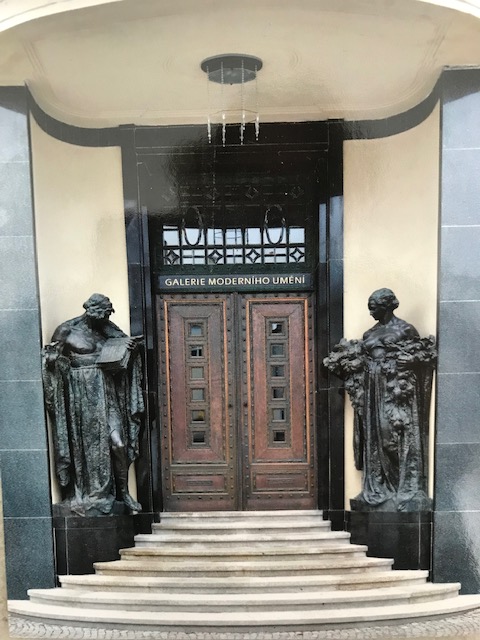
Zbiroh Chateau Diary

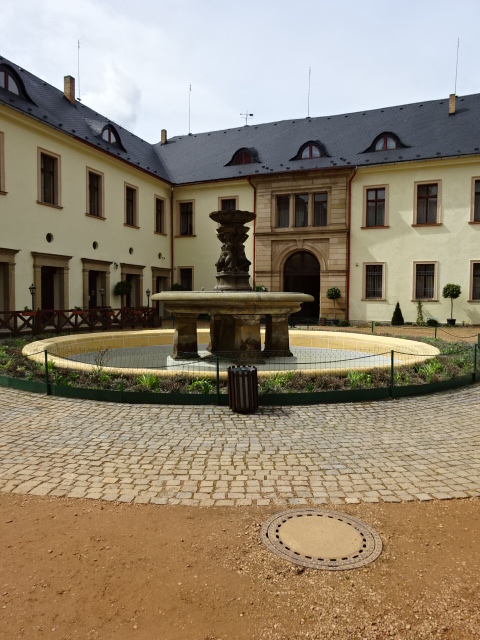
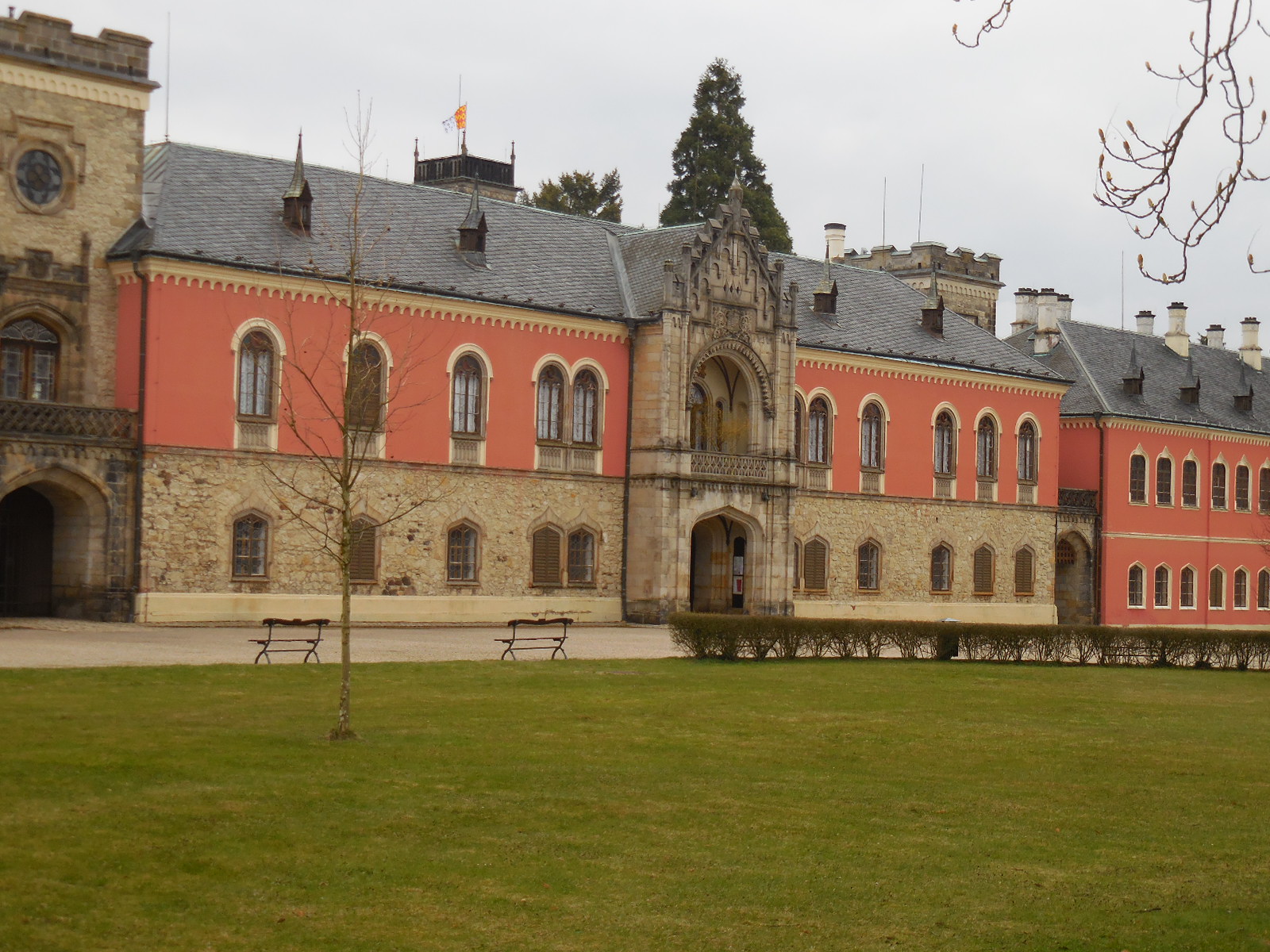
I was very excited to visit Zbiroh Chateau because, even though it had been open to the public since 2005, I was visiting for the first time. It wasn’t far from Prague, either. I knew that the chateau served as a hotel, but I hadn’t realized that there also were tours of the representative spaces. After a steep incline, I approached the two lavish statues of lions that guarded the entrance. The entrance gate seeped with grandeur. Both features hailed from a 19th century renovation.

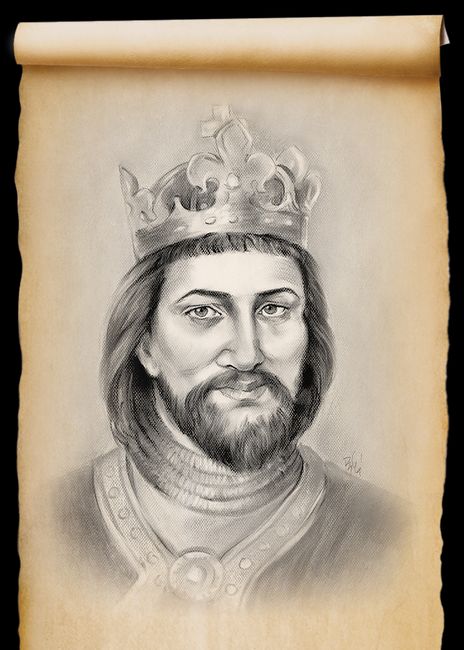
Czech King Přemysl Otakar II, photo from Turistický denník

I learned about the fascinating history of Zbiroh on the tour. It was built before some time before 1230. In the late 13th century, Czech King Přemysl Otakar II conquered Zbiroh. The Přemysl dynasty of Czech rulers was legendary in the Czech lands. Přemysl Otakar II built many towns, among other accomplishments.

Holy Roman Emperor Charles IV, photo from Medieval Histories

In the 1330s, the future Holy Roman Emperor Charles IV gained control of the property. Charles IV would become perhaps the most prominent figure in Czech history. who had controlled the castle after he returned from fighting in France. Charles IV established towns, churches and castles, for instance. He created Prague’s New Town district, what is now called the Charles Bridge and the first university in Prague. He also had Prague’s Saint Vitus’ Cathedral built.

Emperor Sigismund, photo from Quora

During the 14th century, Petr of Rosenberg owned the castle, and it would stay in his family for about 100 years. Emperor Sigismund, the son of Emperor Charles IV, bought the castle from the Rosenbergs during the 15th century. Other famous royal dynasties would take over the chateau from the time of the Hussite wars in the 15th century – first the Kolowrats, then the Lobkowiczes, then the Sternbergs. During the Hussite wars of the 15th century, Zbiroh was not damaged, a fate that did not behold many other Czech monuments.

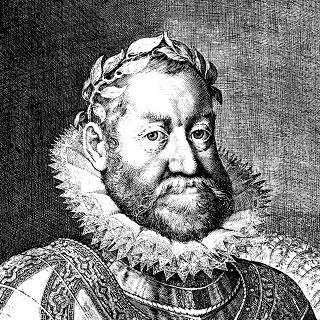
Emperor Rudolf II, photo from Kalendar.beda.cz

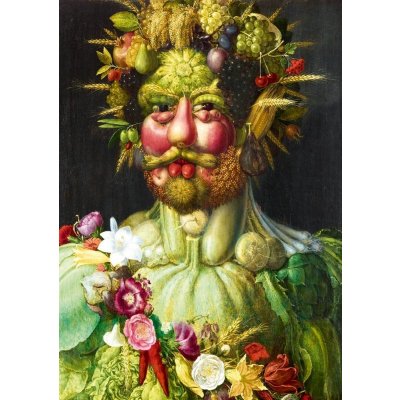
Emperor Rudolf II as Vertumnus, painted by Arcimboldo, photo from Heureka.cz

At the end of the 16th century, Holy Roman Emperor Rudolf II acquired Zbiroh, and he would have a momentous effect on the castle’s history. Emperor Rudolf II had made Prague the center of the Habsburg monarchy. A lover of art, Rudolf II bought many paintings, and, thanks to him, Prague flourish as a cultural center. He made many changes to the Gothic castle, transforming it into a Renaissance chateau. He liked to hunt on the property.

However, this golden age would come to an end. After the Battle of White Mountain, which the Catholics won against the Protestants in November of 1620, the castle was turned into a prison for the defeated soldiers. During the Thirty Years’ War, Swedish troops damaged and pillaged the chateau Until the middle of the 19th century, the chateau was dilapidated.

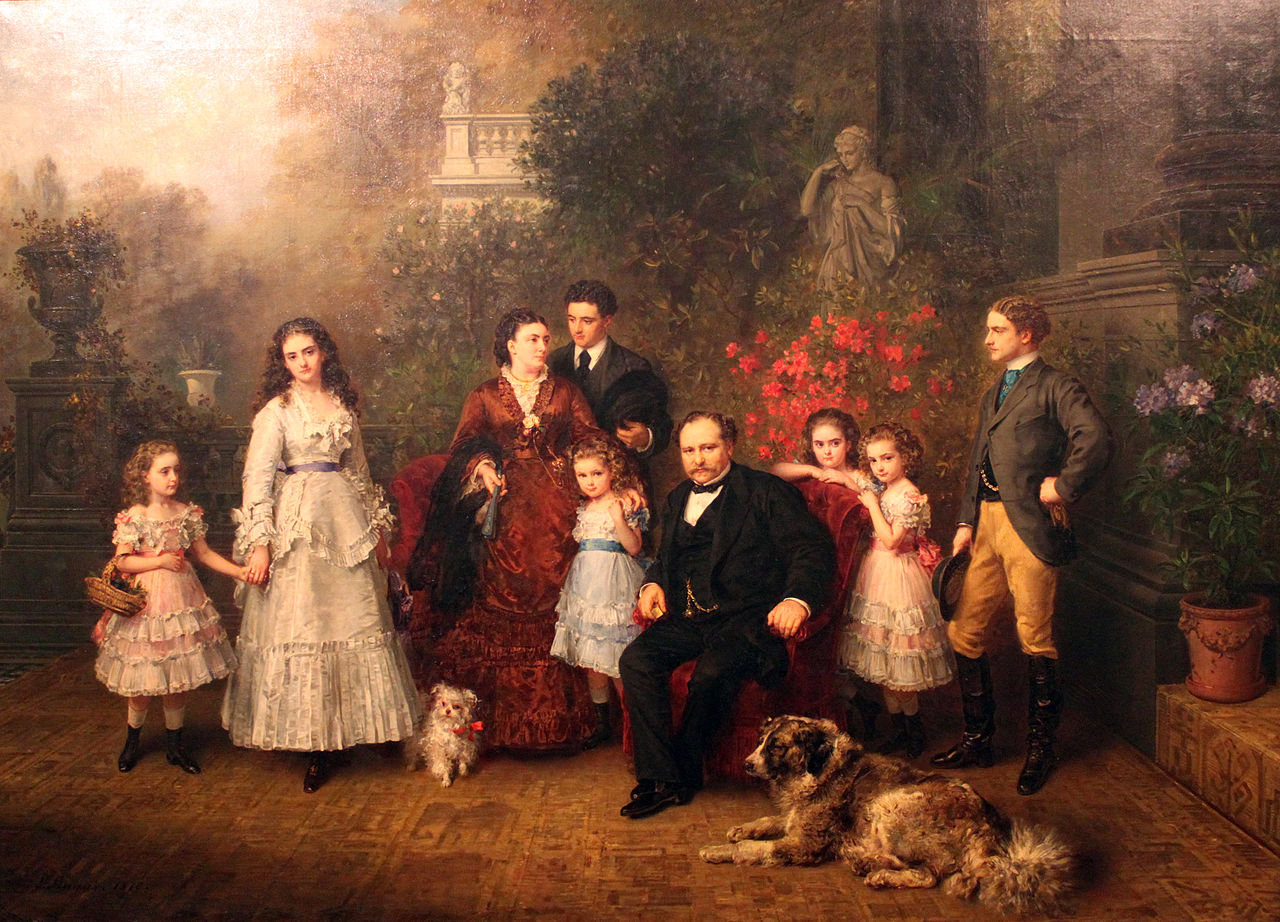
Baron Henry Bethel Strousberg and family, photo from Epochplus.cz

That’s when European entrepreneur Baron Henry Bethel Strousberg came along. He made a name for himself throughout Europe as the owner of iron and coal mines, factories and property, among other things. After he purchased the chateau, he made it a representative seat and modernized it. He envisioned making Zbiroh an industrial center focusing on extracting iron ore and wood coal. However, the ore had phosphorous in it, and the project, thankfully, had to be abandoned. Baron Strousberg wound up going bankrupt. He fled to Russia, where he was incarcerated for two years. Then Strousberg went back to Berlin. His family fled to London. The once influential and wealthy Strousberg called an attic flat owned by his former cook home. He died there, penniless.

The lavish arch built during Strousberg’s tenure at Zbiroh

The next owner of the chateau was Duke Joseph Coloredo-Mansfeld. He rented it to legendary Art Nouveau artist Alphonse Mucha. While residing at Zbiroh, Mucha created some of his most important paintings, such as the 20 Slav Epic depictions that celebrate Slav identity.

View from the terrace at Zbiroh

The Mansfelds hung onto the chateau until the Nazis came and turned the place into a SS headquarters. At the end of the war, the Nazis hid their secret documents in the bottom of the chateau’s well – at 163 meters it was the deepest in Europe. Then they covered it with a metal plate at the 150-meter mark so that their documents would be difficult to retrieve.

View of Zbiroh from postcard

The Czechoslovak army took control after the war, in 1945. Zbiroh was taken off the map as a top-secret facility was placed there. Czechoslovakia gathered information about NATO armies. The soldiers did not take care of the chateau. They even used the unique well as an ashtray. The army didn’t leave until 2004, when a private company bought the chateau and Zbiroh was put back on the map. It was open to the public in 2005. Zbiroh’s history is also connected to the Teutonic Knights as the current owner is a member.

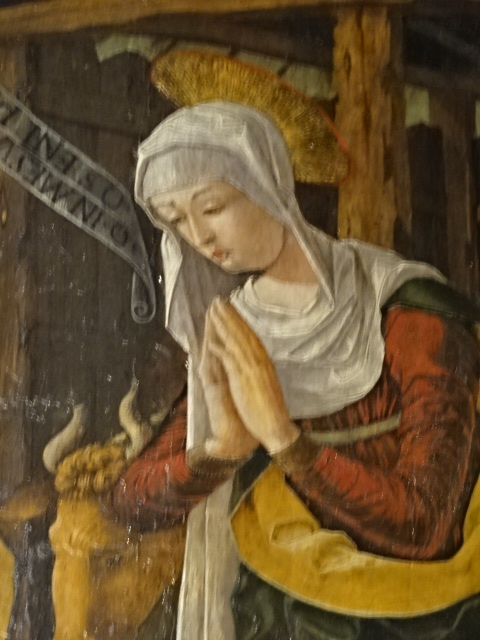
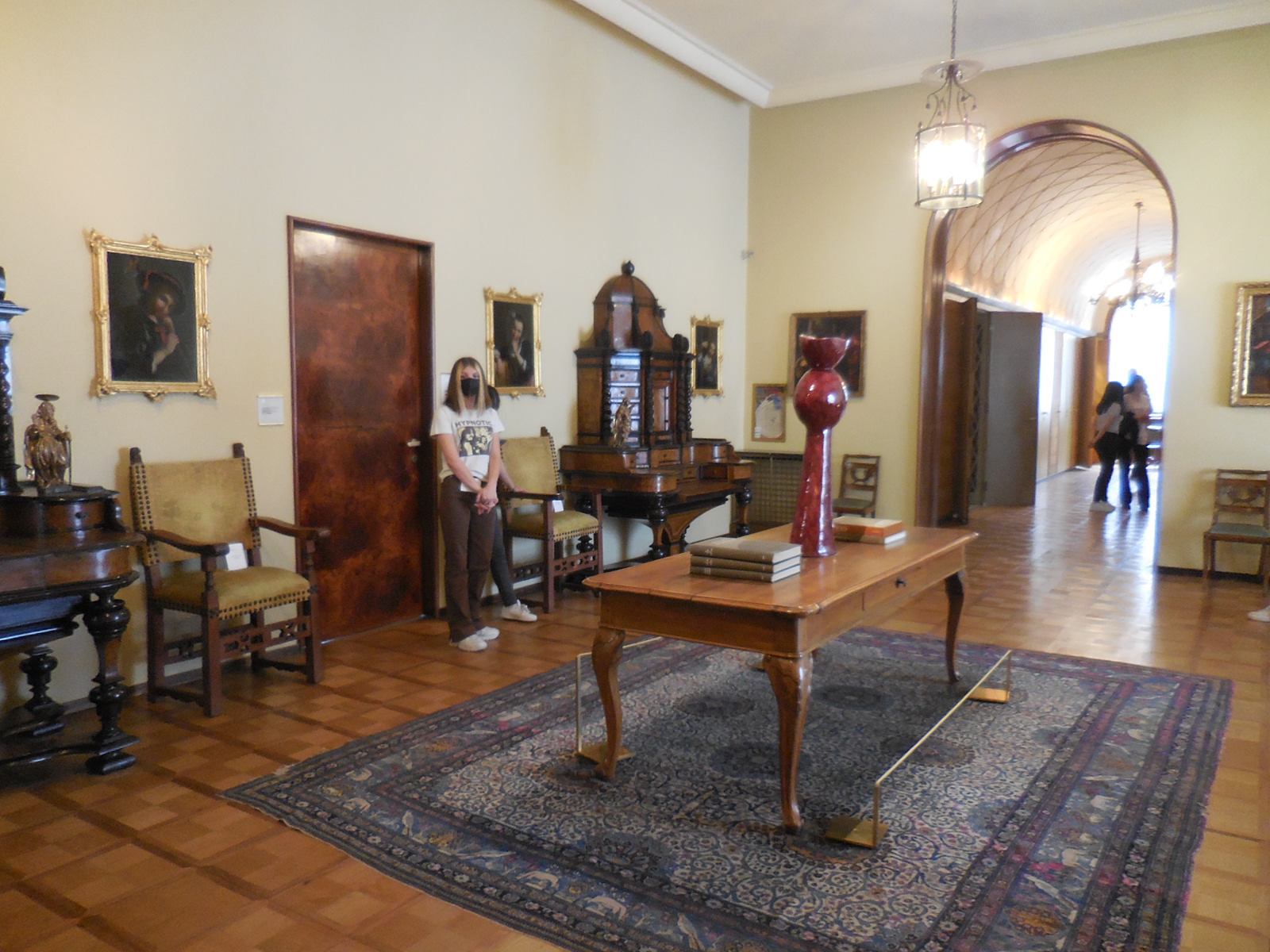
The tour was fascinating. In the first room I liked the collection of African masks on the wall. Remnants of some of the documents the Nazis had tried to destroy in the well were on display in another space. My favorite artifacts were the Madonna statues dotting the representative rooms, some hailing as far back as the Romanesque and Gothic eras. A 650-year old Madonna was the most valuable artifact in the chateau. The Christ child appeared jovial and curious while the Virgin Mary looked like a proud mother. In a Late Gothic Virgin Mary sculpture from the 15th century, the Christ Child was smiling, about to break out in laughter. The Virgin Mary donned an elegant, simple crown. An ivory statue of Saint Nickolas also caught my attention. It hailed from the 14th century.

I saw a masterfully carved 13th century Romanesque chest, too. Chamber tiles from the 15th century showed Saint George battling the dragon. I saw many copies of works by Leonardo DaVinci, including the Mona Lisa, a self-portrait of the painter and a portrait of Mary Magdalene. Even though they were reproductions, these paintings were very impressive. A life-size carving of Saint Vitus from the 18th century was another delight.

On the lavish dining room table gilded silverware hailed from the era of Empress Maria Theresa. The napkins were shaped in the form of a lily, a royal symbol. I also saw a detailed map of Bohemia from 1702. The Empire furnishings bought in the mid-19th century were ravishing, too.

Alphonse Mucha created posters for actress Sarah Bernhardt and achieved worldwide acclaim. Photo taken at Mucha exhibition in Wallenstein Riding Stables, 2022.

Mucha’s Rooms were another highlight. I had been a fan of Mucha’s Art Nouveau works for a long time. I had visited the Mucha Museum in Prague and only months before this visit, I had seen the comprehensive Mucha exhibition in the Wallenstein Riding Stables in Prague. In these spaces, I saw a portrait of Mucha featuring Masonic symbols because he had been a Mason. Also, Masonic medals owned by Mucha were on display. I was entranced by Mucha’s historical painting “Master John of Rokycany at the Council of Basel” from 1933. On one wall, Mucha’s students had painted female figures in their teacher’s style.

From Mucha’s Slav Epic paintings, photo taken at Mucha exhibition in Wallenstein Riding Stables, 2022.

The ballroom was the most beautiful space. This was once Mucha’s studio while the balcony had served as a dark room for his photographs. The large room was built in the second half of the 19th century. It featured a skylight with glazed glass and two elegant crystal chandeliers. I spotted Zbiroh Chateau behind what looked like blue mist in a painting by Mucha. The yellow, blue and red decorative wall painting enthralled me as well.

Another masterpiece by Alphonse Mucha, photo taken at Mucha exhibition at Wallenstein Riding Stables, Prague, 2022

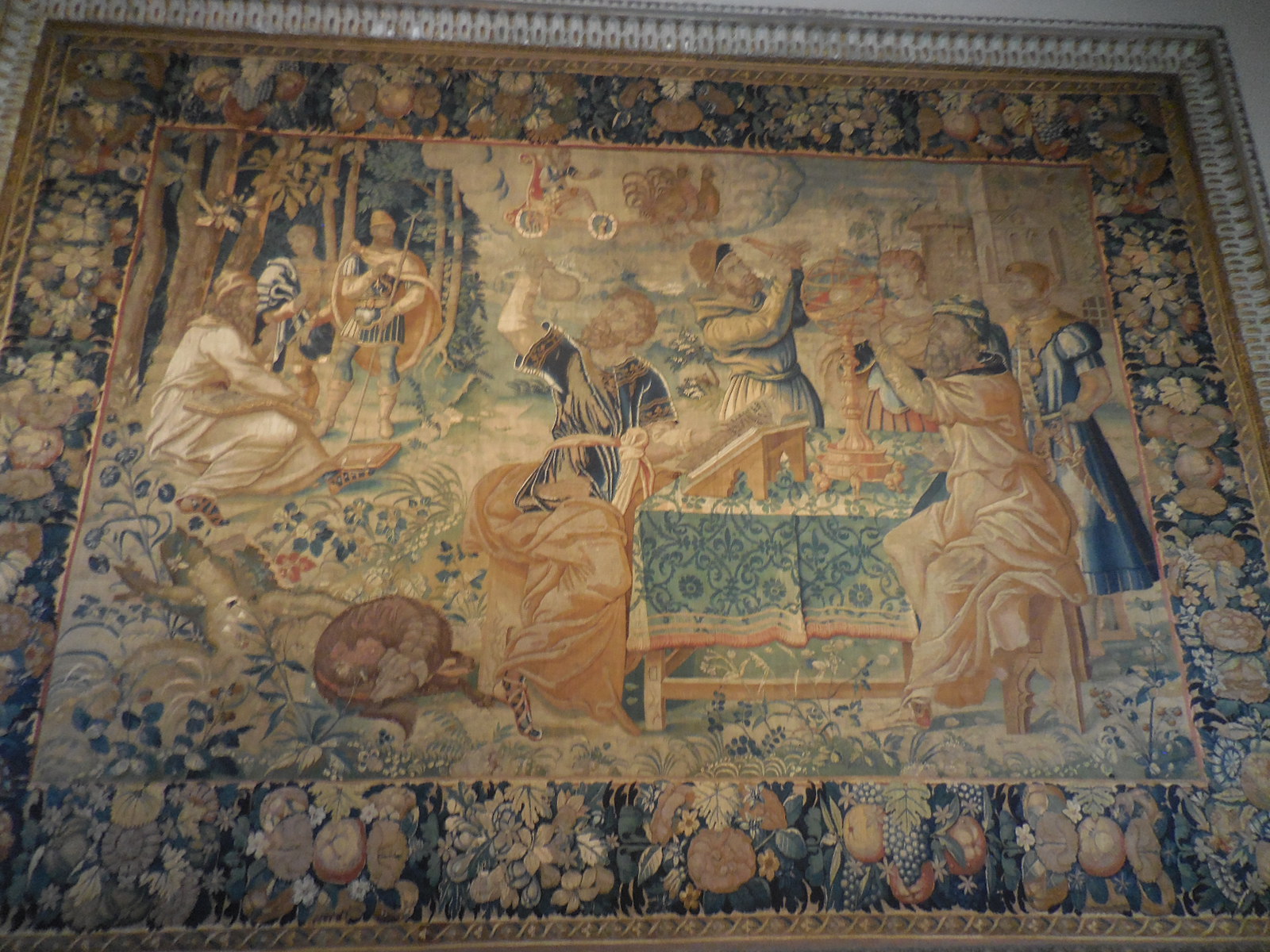
Then we walked down a long hallway with Renaissance, Gothic and Baroque tapestries and armors of knights from various eras. As the tour ended, I was very glad I had finally discovered this gem. The history of the chateau was riveting, and the artifacts in the representative spaces were amazing.

It was time to get something to eat. In the parking lot, I noticed the beech trees that surrounded the chateau and listened to the sound of silence. It was so quiet and tranquil, such a relief from the hustle and bustle of daily life.

Tracy A. Burns is a writer, editor and proofreader in Prague.

Sucharda’s Second Villa Diary

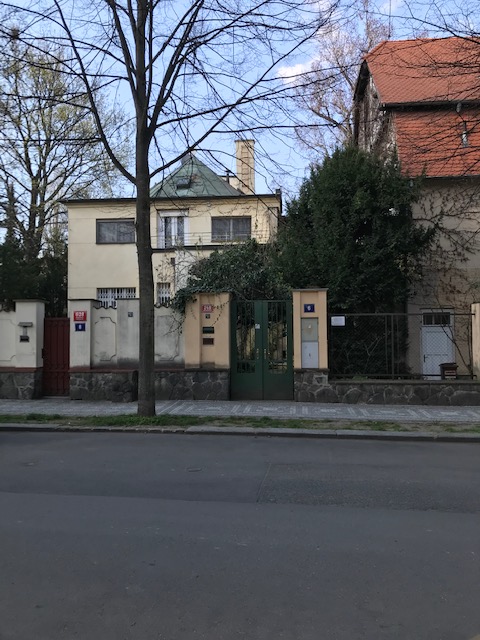
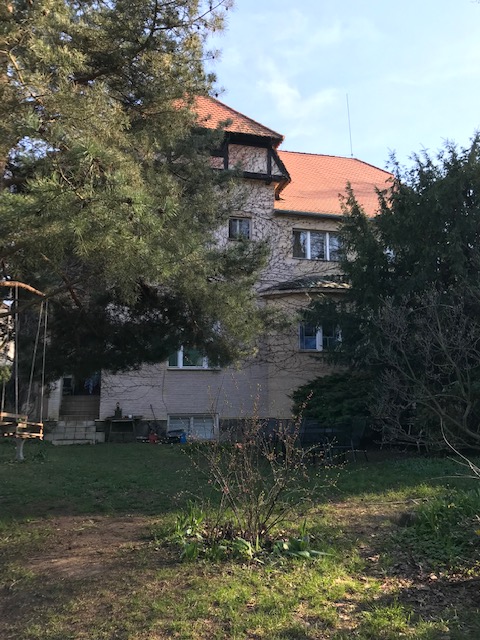
The second Sucharda Villa

I had waited months for the tour of Stanislav Sucharda’s second villa. The first time I had had to cancel due to illness. I had seen the exterior of the Sucharda Villa on Slavíčkova Street for the first time on a tour of Bubeneč in Prague’s sixth district. Constructed for sculptor, designer and medallist Stanislav Sucharda from 1904 to 1907 by architect Jan Kotěra, the villa is shaped like a cube and features a mansard roof, polygonal bay windows and half-timbered gables. To say I was impressed is an understatement.

The studio of the Sucharda Villa, now a separate building

A large studio building, influenced by Cubism, stood next to what was Sucharda’s second villa. A knight figure is featured on its steep roof. This had once been Sucharda’s atelier but now was owned by the government for administrative purposes. Sucharda had needed a large studio after he won the competition for the colossal monument to František Palacký, the founder of Czech historiography as well as a prominent politician. Palacký’s nickname was the Father of the Nation.

Jan Kotěra – Photo from Kralovehradecký architektonický manual

Kotěra received accolades not only as an architect but also as a theoretician of architecture, a furniture designer and a painter. He designed all the interior furnishings for this villa. I was familiar with Kotěra’s National Building in Prostějov, Moravia. The two-winged, L-shaped building in Prostějov was clearly divided into sections for a hall, restaurant and cafes. Kotěra had also designed half of the complex for the Law Faculty of what is now Charles University, which I had often passed on foot or on the tram.

Decoration on Sucharda’s first villa

As I have already pointed out, this was Sucharda’s second villa in Bubeneč. The first one is also on Slavíčkova Street. It is a neo-Renaissance structure that he and his family had inhabited for 10 years. An exquisite painting of the bishop Božetěch is featured on the exterior of this villa. Stanislav sold this building to his brother Vojtěch, who had made a name for himself as an artist, too.

Mašek’s Villa on Slavíčková Street

Indeed, Slavíčkova Street is dotted with villas built for artists, including architect Jan Koula and painter Karel Vítězslav Mašek. The prominent villas on this street were built from 1895 to 1907. On Mašek’s villa there is floral decoration with a painting of the Virgin Mary with Child. Both the Koula and Mašek villas feature motifs of white pigeons. The painting on one side of Koula’s villa is outstanding.

Koula’s Villa on Slavíčkova Street

Back to Stanislav Sucharda: Family members have taken up artistic professions for at least 250 years. Stanislav was brought up in Nová Paka, where his father, Antonín Sucharda, had created and restored sculptures. The five children helped out in their father’s workshop and would continue to pursue artistic careers.

Stanislav Sucharda

Stanislav attended the School of Decorative Arts in Prague, where he studied under the greatest Czech sculptor of the 19th and 20th century, Josef Václav Myslbek. Every Praguer knows Myslbek’s equestrian statue of Saint Wenceslas at the top of Wenceslas Square. I vividly remember the statue being decorated with votive candles and pictures of Václav Havel shortly after the former president and former dissident died in 2011. The sight had made an unforgettable impression of me and filled me with an immense feeling of loss. Many demonstrations have taken place around the statue, too, even under Communism.  

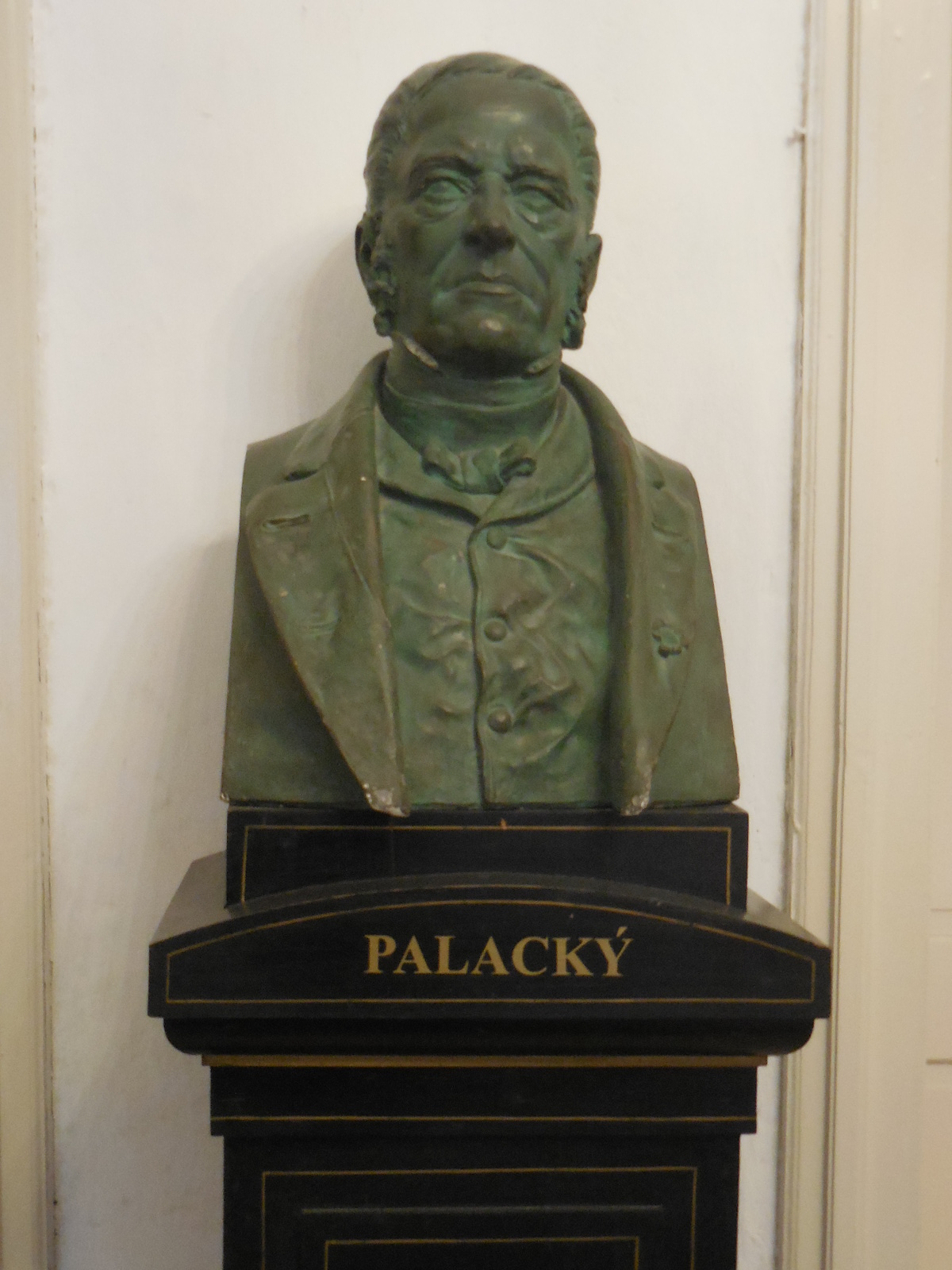
Bust of František Palacký from Maleč Chateau, where Palacky had resided.

Myslbek had been very influenced by the Czech National Revival that promoted Czech culture and the Czech language. I was familiar with Myslbek’s sculptural portrait of František Palacký, who had supported the Czech National Revival, on Palacký’s former home in the street named after him.

Postcard of Sucharda’s Prague and Vltava (1902) printed by Museum of Stanislav Sucharda

It is not surprising that Sucharda’s early creations were greatly influenced by Myslbek’s realism. Sucharda became known for his creations of Czech historical figures and the Slavonic themes in his work, which are two of the reasons his works appeal to me. I love Czech history and studied it in graduate school. After a Prague exhibition of Auguste Rodin’s sculpture in 1902, however, Sucharda’s style became more vibrant and underwent some changes.

Postcard of Sucharda’s Liliana (1909), printed by Museum of Stanislav Sucharda

Sucharda is best known for his sculptural grouping of the monument to Palacký on Palacký Square in Prague’s second district. Many years ago, Palacký’s statue had greeted me every time I took the Metro at the square or rode by on a tram. I had become very interested in Palacký’s work during graduate studies in Czech history, and I found that having a monument dedicated to him near my apartment was refreshing and soothing. The bronze statues of the monument brought to mind the revitalization of Czech history and culture during the Czech National Revival.

Palacký monument on Palacký Square in Prague

The monument also made me think of the Czech nation finally gaining independence after World War I with the creation of Czechoslovakia, even though Palacký had not been alive to see that. I thought of the Czech nation breaking free from the Germanization of the Austro-Hungarian Empire whenever I passed by that sculptural grouping.

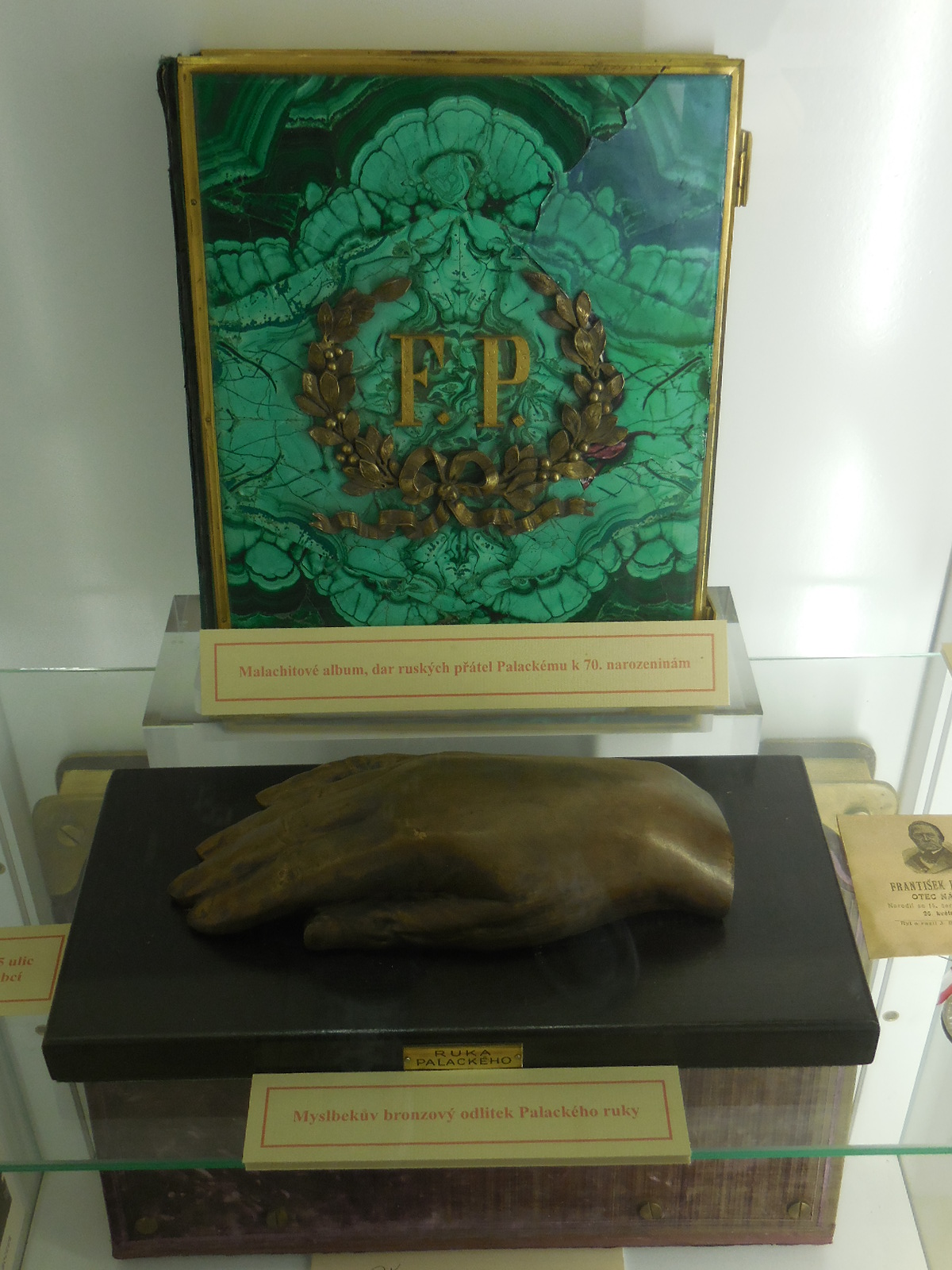
A cast of Palacký’s hand by Myslbek

In the same district as his villa, Sucharda had created a monument to composer Karel Bendl. He also built monuments to Czech historical figures Jan Amos Komenský (Comenius in English) and martyr Jan Hus, for instance. Other designs include sculpture for the study of the mayor of Prague from 1907 to 1909.

Sucharda also authored many reliefs, medals and plaques, and his medal designs were highly praised. His medal works even received international recognition. Stanislav became professor of the first Department of Medal Design of the Academy of Fine Arts in Prague after spending two decades as a professor at the School of Decorative Arts. He had also served for seven years as the chairperson of the Mánes Union of Fine Arts, which organized many influential exhibitions in Prague and was an important promoter of modern art.

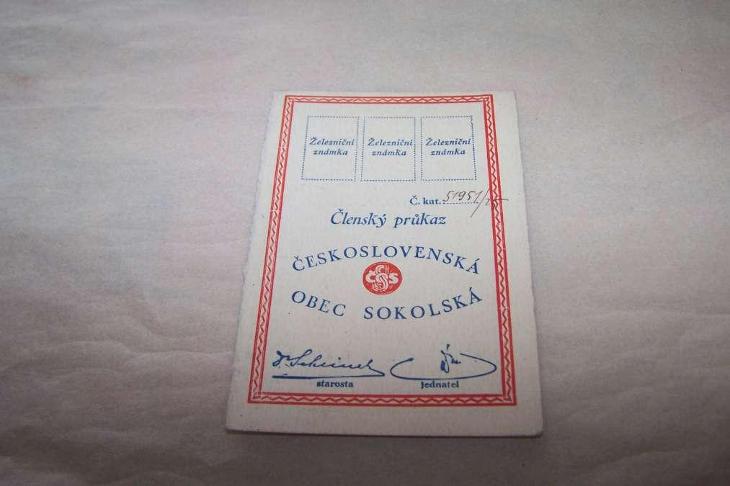
Sokol membership card from 1912. Photo from aukro.cz

For Sucharda there was more to life than artistry. He was an avid member of the legendary Sokol physical education organization, even working as an instructor there. His entire family was involved with this prominent Czech organization.

Then fate intervened. Stanislav served in the military during World War I and did battle on the eastern front. Wounded in the war, he died after returning to the Czech lands in 1916, a year after being chosen to head the medal design department of the Academy of Fine Arts. I thought it was such a shame that he did not get to see the establishment of independent Czechoslovakia with Tomáš Garrigue Masaryk at the helm.

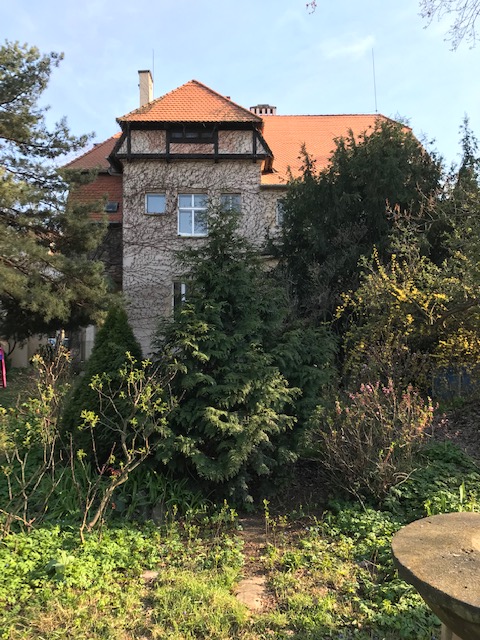
Sucharda’s Second Villa as seen from the garden

The tour of the two-story villa was very impressive as Sucharda’s granddaughter told the group about her father’s work, the pieces of art in the building and the history of the villa. A professional guide was insightful, too. The interior consisted of an English style hall with stained glass decoration on high windows and sculptures, reliefs and paintings. The British architecture of the hall reminded me a bit of Staircase Hall in the Moravian villa of Slovak architect Dušan Jurkovič, who had been inspired by the English Arts and Crafts movement.

Jurkovič’s Villa in Moravia

We saw works by Edvard Munch and Rodin as well as many Czech creations. Small statues and other artworks decorated the top of an elegant decorative fireplace. Behind plush red seating shaped in a semi-circle was a beautiful stained glass window. I especially liked a large relief by Sucharda in the entrance hall and a life-size statue.

In the narrow hallway there was a fountain with sculptural decoration that employed religious motifs. We also saw the dining room with its paintings, statues, busts and ceramics. Works by Stanislav’s daughter were very impressive. The woodcarving of Kotěra furnishings was masterful. A small conservatory was adjoined to the dining room. Intriguing artifacts decorated the piano, and outstanding paintings decorated the walls. I especially liked a rendition of the Roman Forum by Cyril Bouda. It brought to mind my passion for Italy and the time I had showed my parents the Roman Forum

The garden had an intimate feel. I could imagine sitting there, reading a good book and relaxing on a sunny day.

The Muller Villa in Prague

Visiting villas in Prague was one of my favorite pastimes. I recalled touring the František Bílek Villa, the Muller Villa, the Winternitz Villa and the Rothmayer Villa in the capital city. I had also toured several intriguing villas in Brno and the Bauer Villa in central Bohemia. I would definitely recommend touring these villas. I was glad I was able to get to know Stanislav Sucharda better via his villa and the art within it. I developed a much stronger appreciation of Sucharda’s contribution to modern art. The tour was even more impressive than I had imagined it would be.

Tracy A. Burns is a writer, proofreader and editor in Prague. 

Museo Bagatti Valsecchi Diary

This museum of Renaissance and neo-Renaissance decorated apartments in a palace is one of my favorite sights in Milan. It is big enough to include many treasures but yet small enough to have an intimate feel. Because the exhibition focuses on the Renaissance and neo-Renaissance, I didn’t feel overwhelmed as I often do when displays include many styles from numerous eras. 

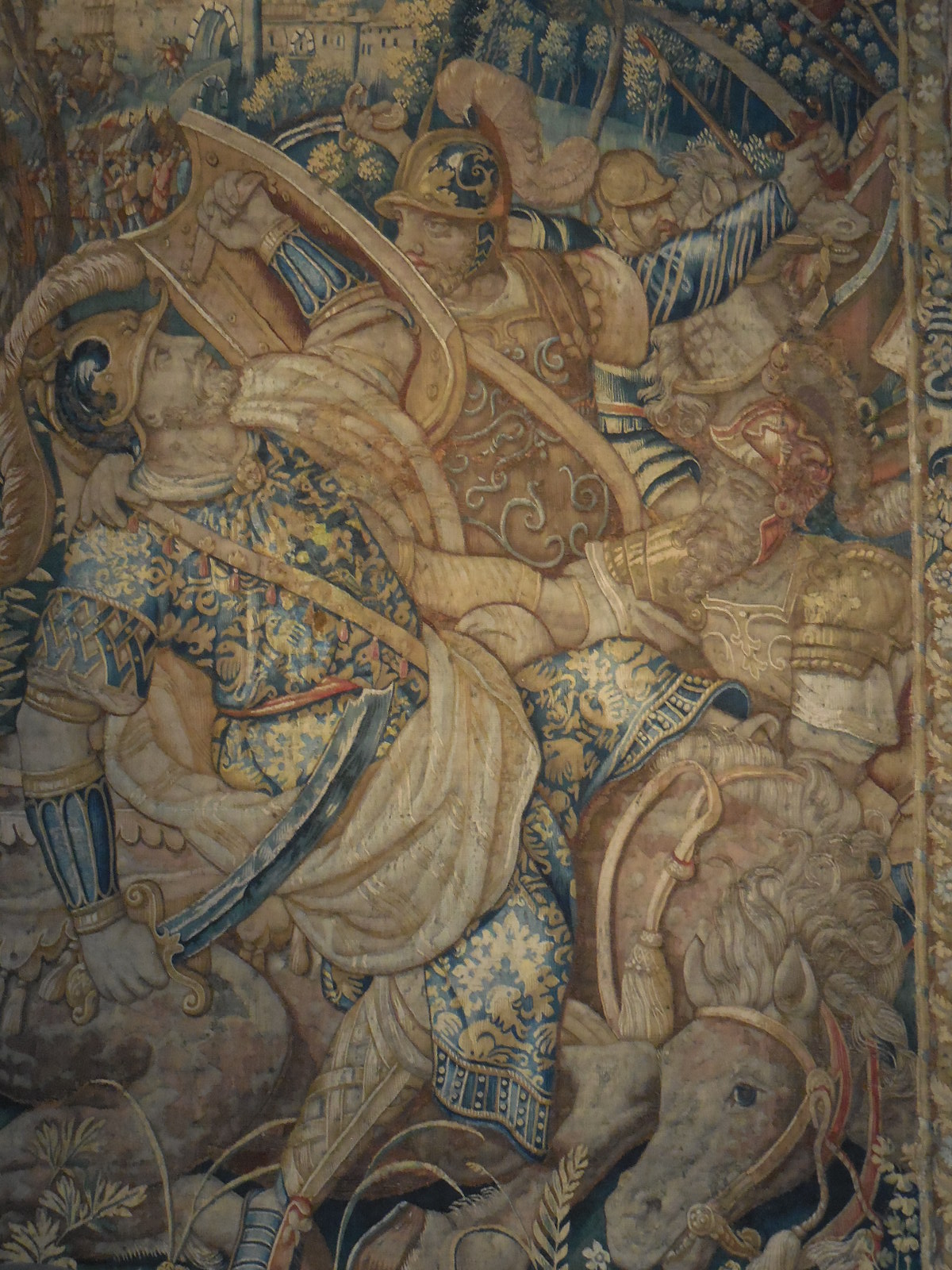
The history of the museum is enthralling. In the second half of the 19th century, Fausto and Giuseppe Bagatti Valsecchi furnished their palace located from via Gesu to via Santo Spirito in Milan with works of Renaissance and Neo-Renaissance art – tapestries, paintings, sculpture and weapons, for example. The furniture hails from Italy, Britain, Japan, France, Germany and Spain. Even though the apartments were transformed into a museum during 1974, the public wasn’t able to view them until 1994.

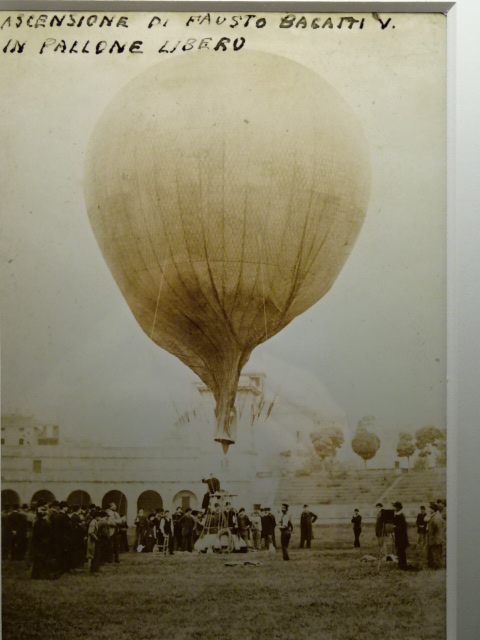
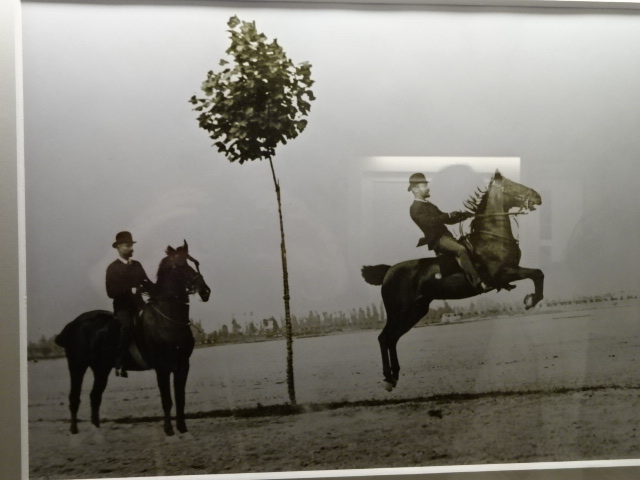
Giuseppe lived in his apartment with his wife. His five children lived on another floor with their nanny. Fausto had his own apartment on the same floor as Giuseppe. While they managed various charities and traveled, they also had some intriguing hobbies. Fausto enjoyed riding in hot-air balloons and Giuseppe was one of the first to ride a velocipede. They used their Renaissance-furnished apartments for daily activities rather than treating the spaces as a museum. Even though it was decorated to look like the Renaissance, the brothers had installed modern amenities, including hot and cold water and electricity. In fact, this palace made a name for itself as one of the first private homes in the world to install electricity.

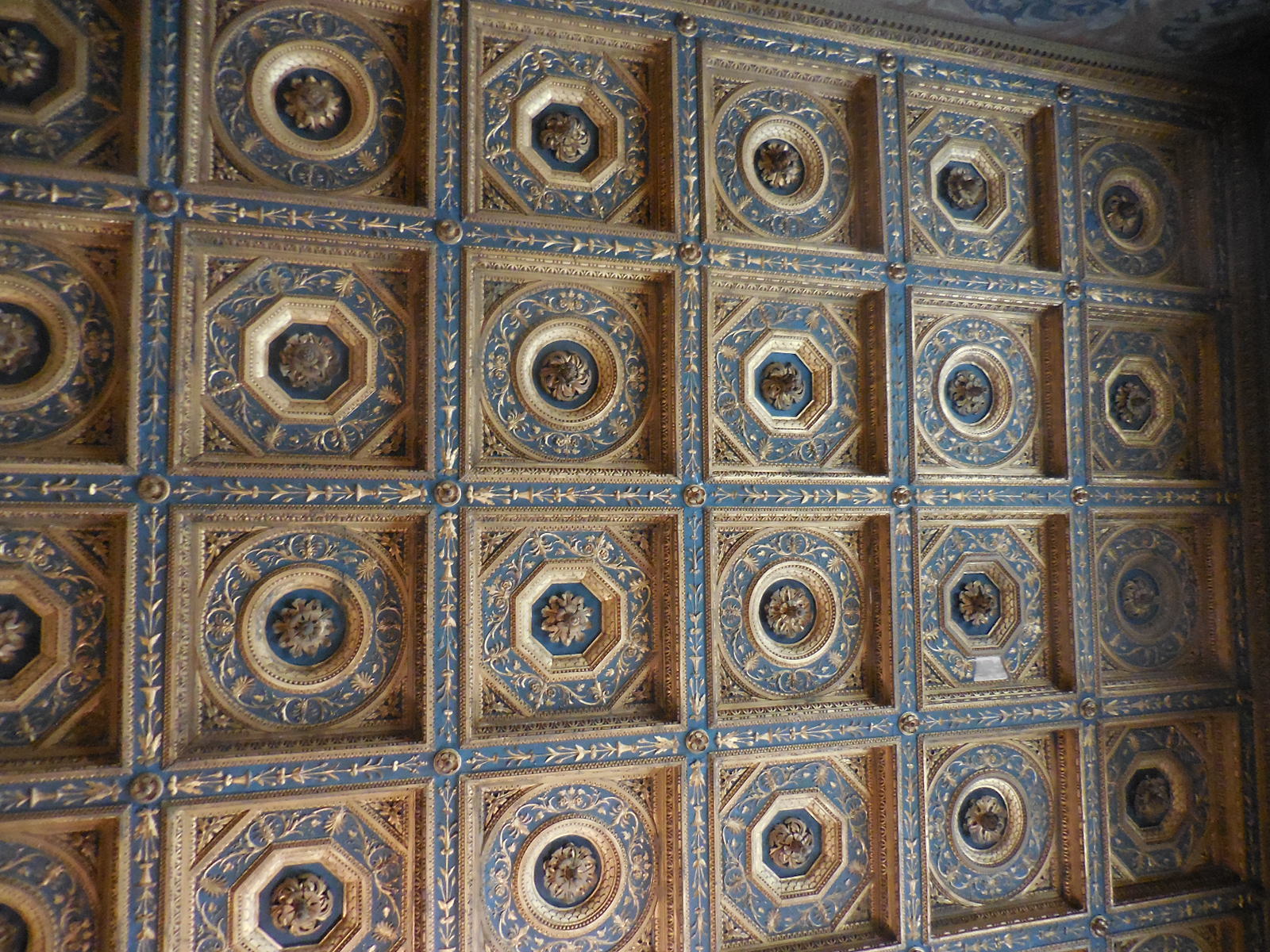
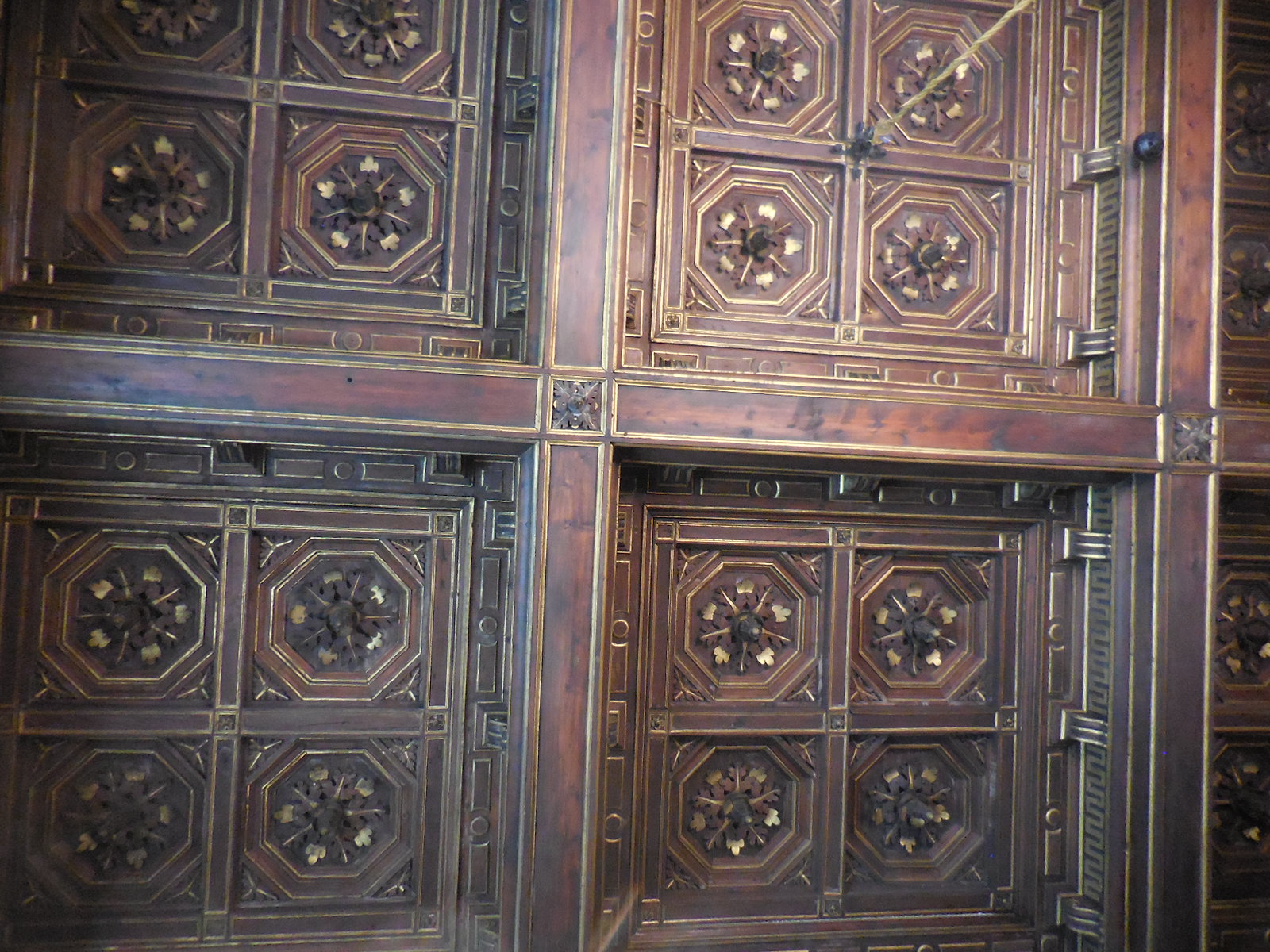
I especially liked the coffered ceilings and Latin inscriptions throughout the flats. Throughout the palace I saw the distinguished family crests of lily and eagle. The Neo-Renaissance frames used to display Renaissance art were appealing, fusing the old with the new or newer.

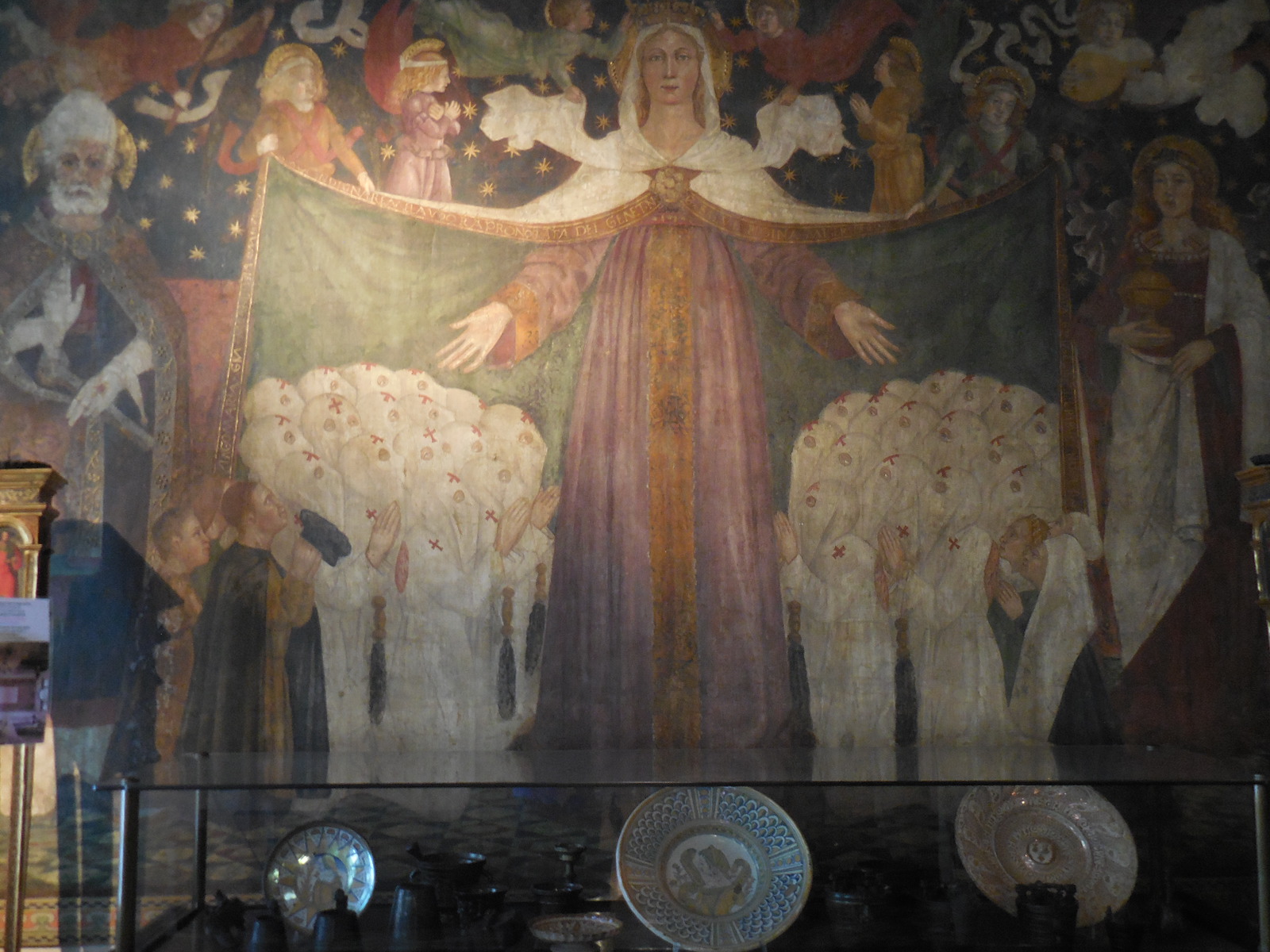
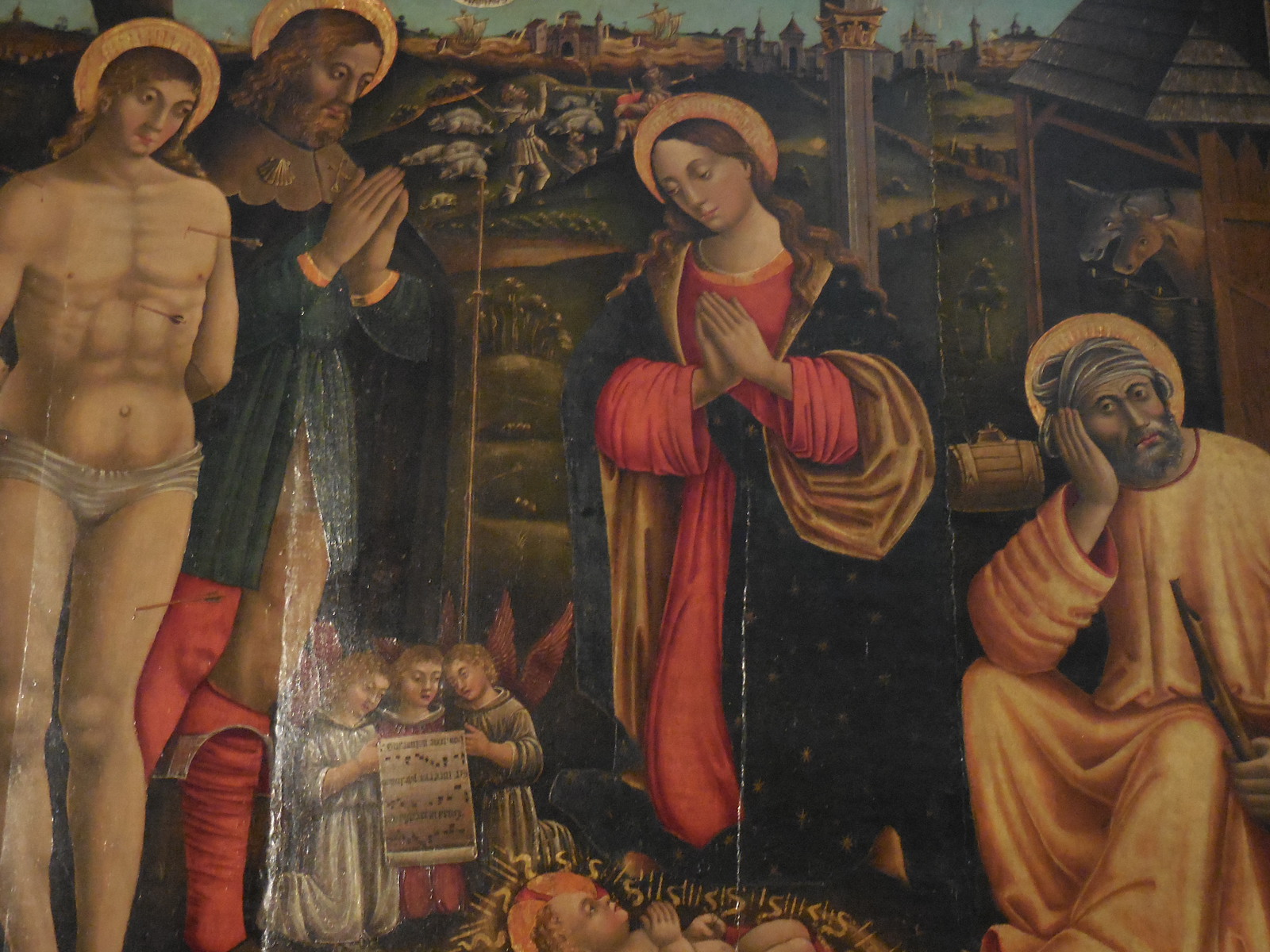
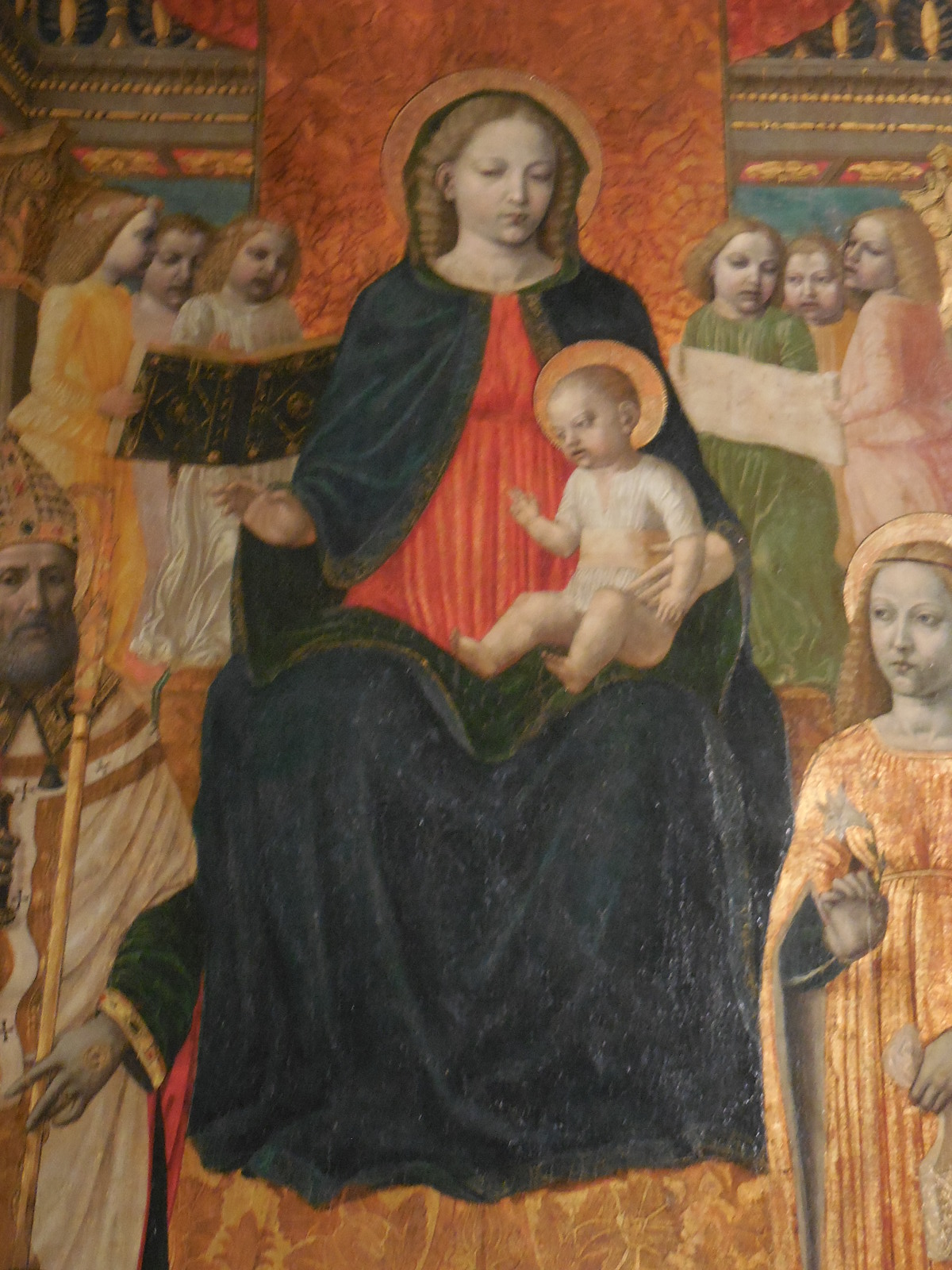
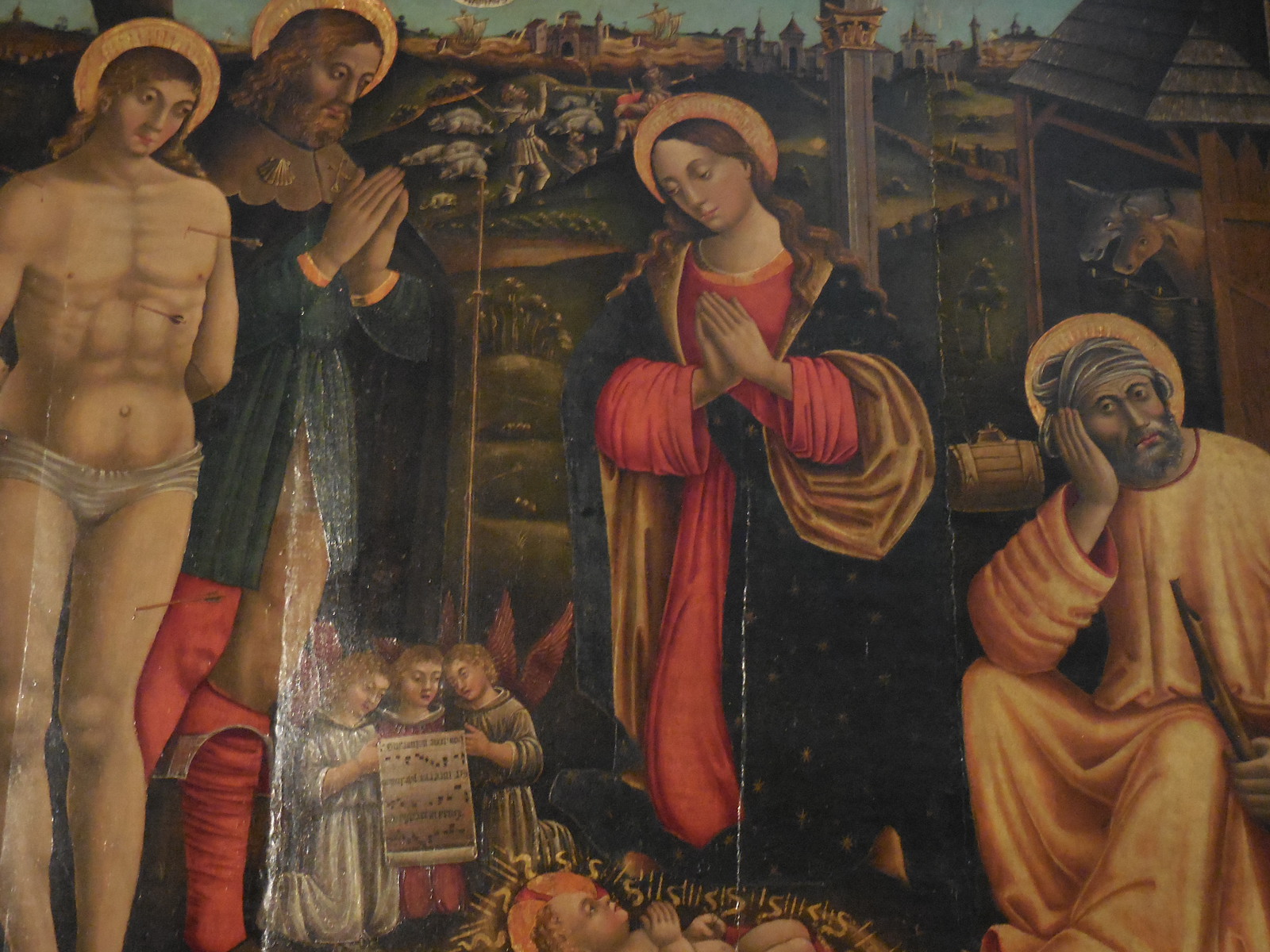
Many spaces captured my attention, including the Fresco Room, where15th century frescoes make a fascinating appearance. The Bevilacqua Room showed off the Madonna and Child by the artist after which the space is named. I took a good look at this innovative work from the 15th century. It was made of glass stones, silver thread, velvet and gold. A coffered ceiling and gold-and-red silk wall coverings added to the elegance of the space.

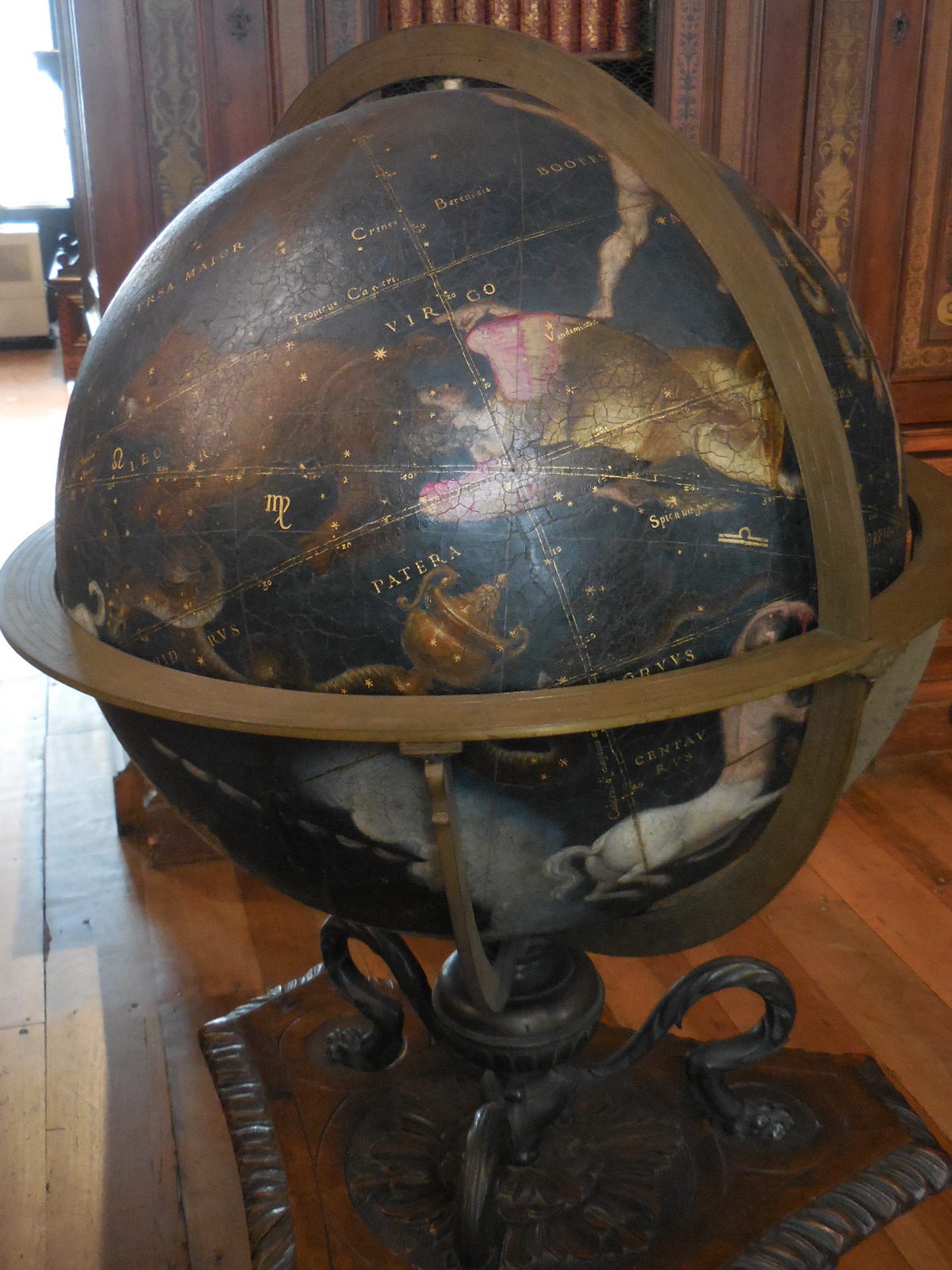
I have always loved libraries, and this library was no exception. On the 16th century terrestrial globe in the library, North America is labeled as “Unknown Territory.”

The largest room was the Grand Salon with a coffered ceiling adorned with pine cone images. Family crests made an appearance as did Latin inscriptions. The frieze featured a theme from Greek mythology and included 16th century frescoes. The red-and-gold décor gave the room a special sense of grandeur. The six stained glass windows were exquisite.

The living room of Giuseppe and Carolina included 16th century decorated paneling, red furniture with velvet upholstery and a piano. The Red Room, which served as the couple’s bedroom, showed off a coffered ceiling and 15th and 16th century paintings as well as a canopied bed with red covering. A door in this room leads to the children’s floor, so the children never had to walk through the Renaissance-decorated apartments.

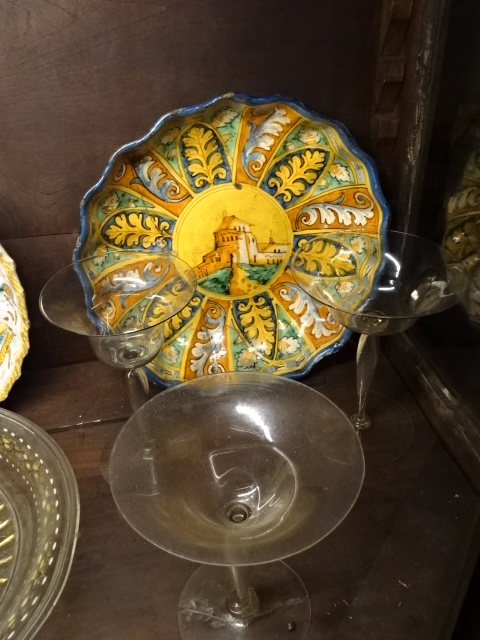
The Dining Room was elegant, too. The wall coverings showed the story of Persian king Cyrus. The majolica plates showed scenes from Alexander the Great’s life.

The bed in Fausto’s Bedroom was adorned with head and foot boards sporting 16th century reliefs. The decorated Neo-Renaissance coffered ceiling was another highlight. A 15th century altarpiece also enthralled. I noticed a clock and a lamp shaped like skulls, too.

I noticed the 16th century ceiling decorated with the two family crests and a Latin inscription in Giuseppe’s Bedroom, called “the Green Room.” The headboard showed off a Pieta scene.

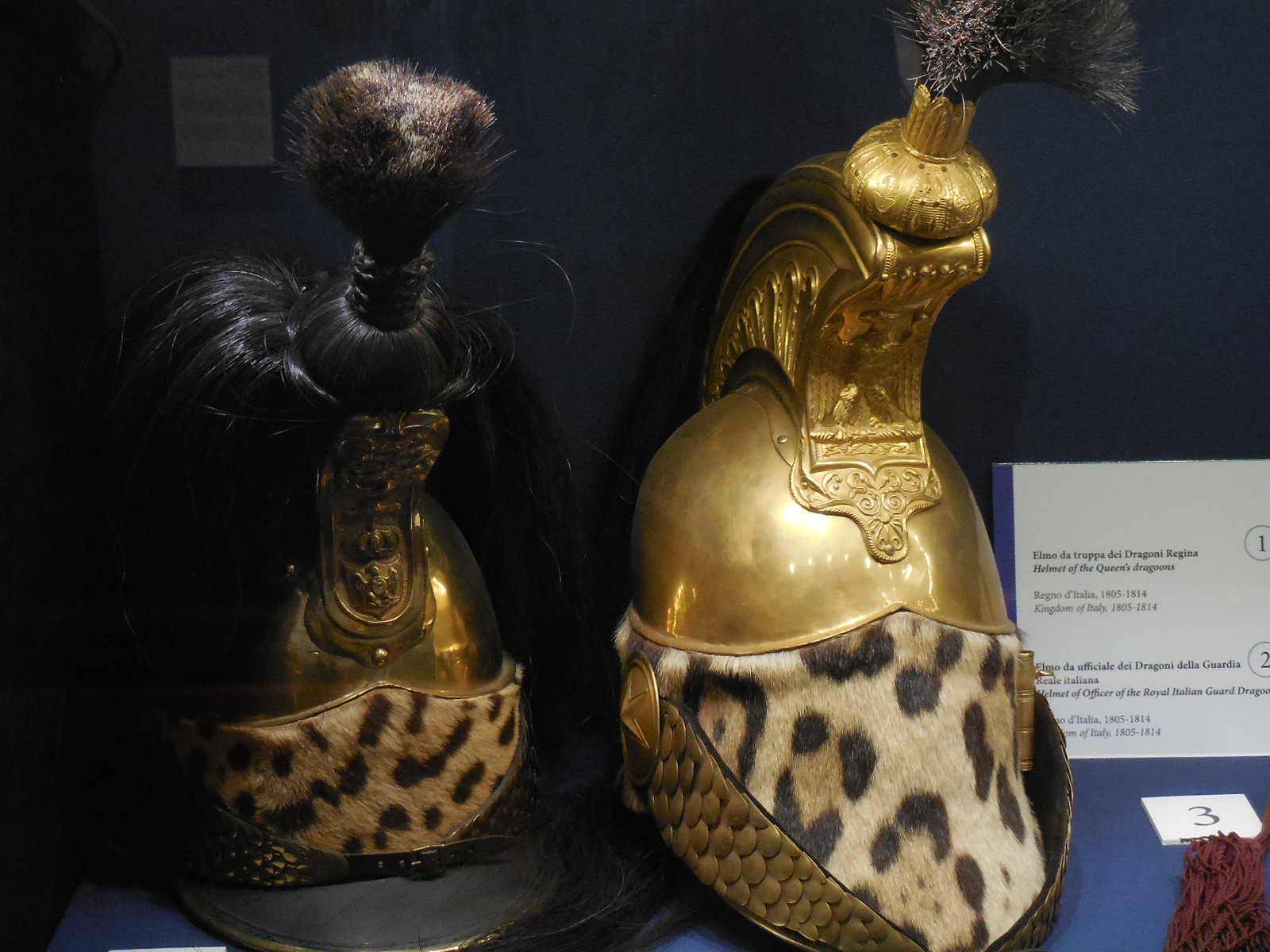
The armory was a long and narrow room with helmets, armor, swords and shields. While I am not especially interested in weaponry, it was impressive.

I liked the Bagatti Valsecchi Room where visitors can open drawers and see photos of the two brothers and some of their personal belongings. One photo that captivated me showed the palace after a section was bombed during the second world war. On another photograph, I saw Giuseppe on a velocipede.

After my visit, I decide that this was my favorite museum in Milan because there was so much to appreciate and yet the flats had an intimacy that larger museums lack. The apartments brought the Renaissance to life with its artifacts. The photos of the two brothers made the apartments feel even more intimate. I was given the chance of having a glimpse of their lives, of getting to know them. That the flat was used for daily life and hadn’t been a museum when the brothers were alive made it all the more appealing. The painted coffered ceilings, the elegant beds with canopies and the 15th and 16th century paintings and frescoes throughout made great impressions on me.

I finally left, knowing someday I would be back because this was a museum I could go back to again and again, greatly enriching my life with each visit.

Tracy A. Burns is a writer, proofreader and editor in Prague.

Museum of the Risorgimento in Milan Diary

Museum of the Risorgimento in Milan Diary 

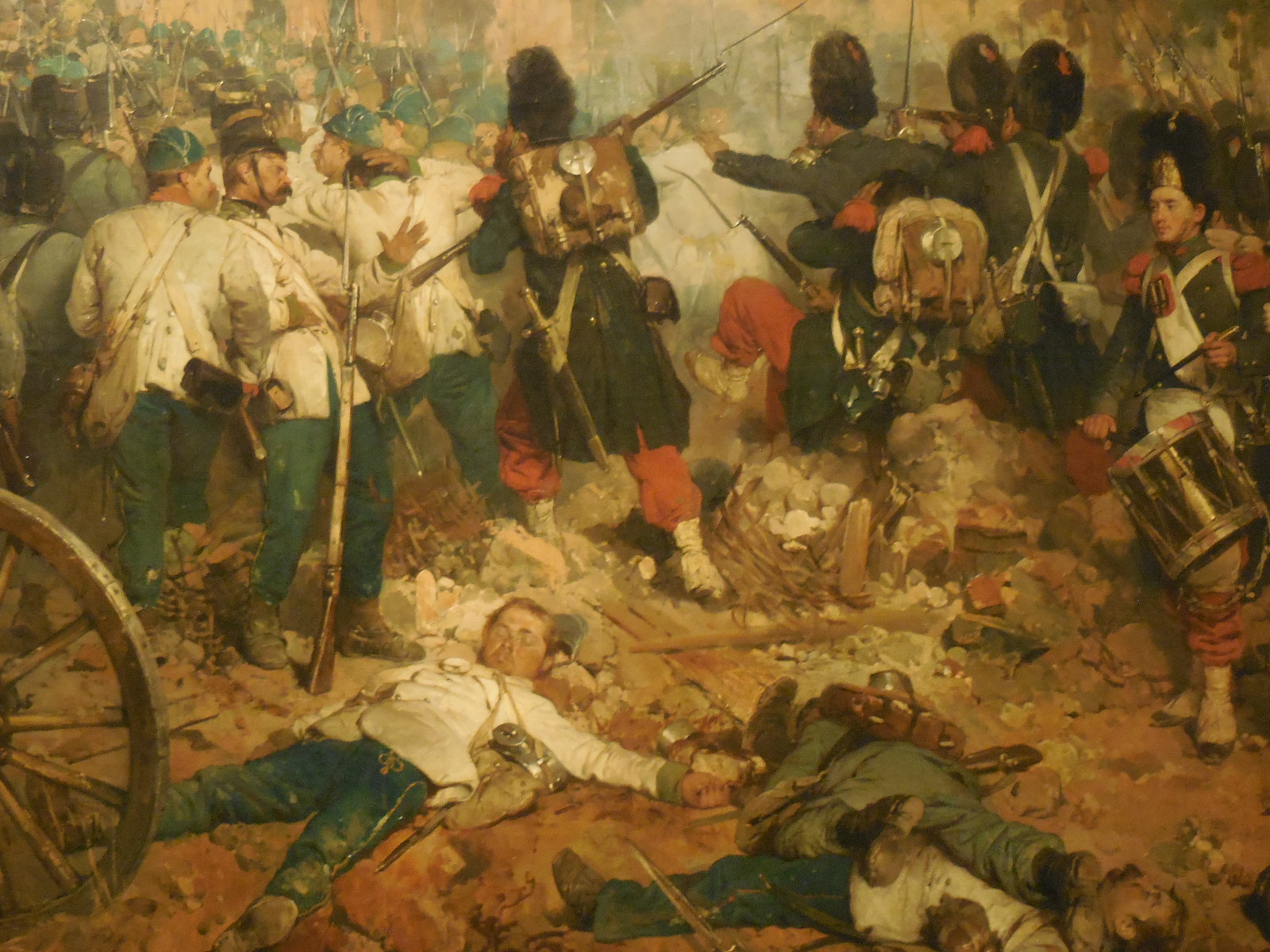
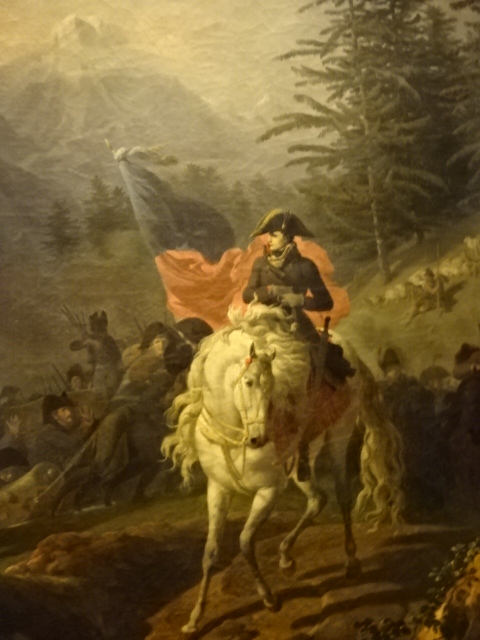
After visiting the Brera Art Gallery in Milan, I walked to the nearby Museo del Risorgimento, which featured 14 rooms of paintings, prints, sculptures and artifacts depicting Italian historical events from 1796 to 1870 as well as arms. It traces the periods from the call for Italian independence to Italian unification. I learned about Napoleon’s reign in Italy as well as the Austrian monarchy’s control. I noticed how prominent Milan’s role had been during the Five Days of Milan, the nickname of the 1848 uprising against the Austrians.

I saw paintings depicting Italian King Victor Emmanuel II, who took the throne in 1861 and reigned until his death in 1878. Two of the paintings were created by Gerolamo Induno. Nicknamed the Father of the Fatherland, Victor Emmanuel II had the distinction of being the first king of a unified Italy since the sixth century. He was born the eldest son of Habsburg Empress Maria Theresa of Austria and made a name for himself in the First Italian War of Independence during 1848-49 before being crowned king.

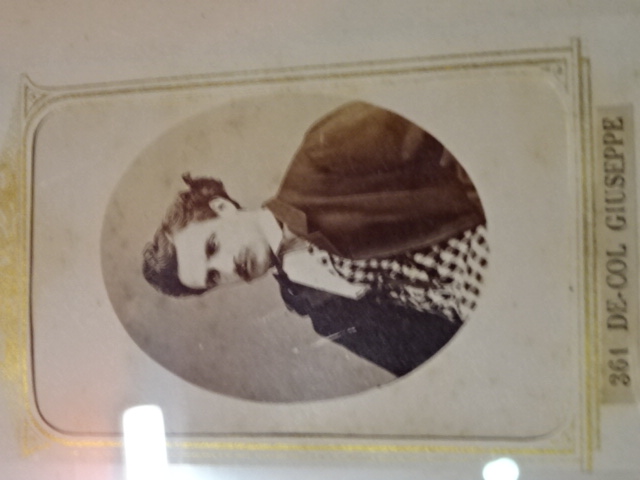
I spent a lot of time staring at the photos of soldiers in the Album of the Thousands, the volunteers in the Expedition of the Thousand, a campaign that took place in 1860. The group of volunteers armed only with out-of-date muskets defeated the more powerful navy of the Kingdom of the Two Sicilies. Portraits of the 1,089 soldiers in business card format made up this album. I saw the volunteers as individuals rather than as a group of soldiers who conquered Bourbon rule in south Italy. Looking at their portraits, I felt as if I could see the personalities of the men.

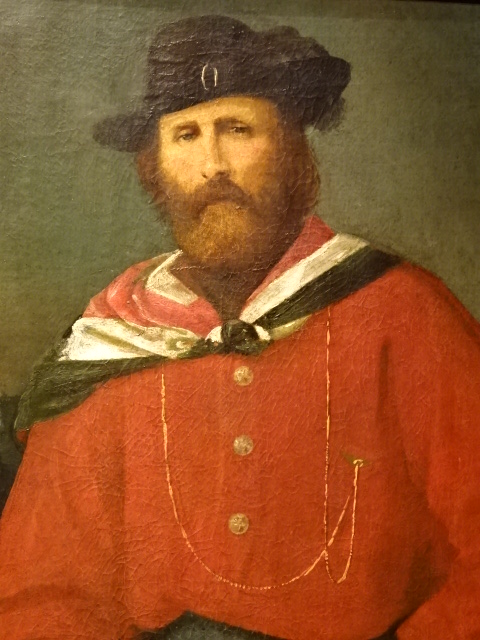
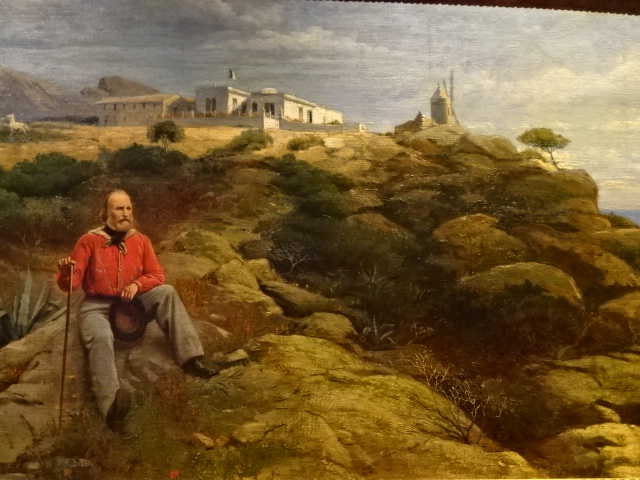
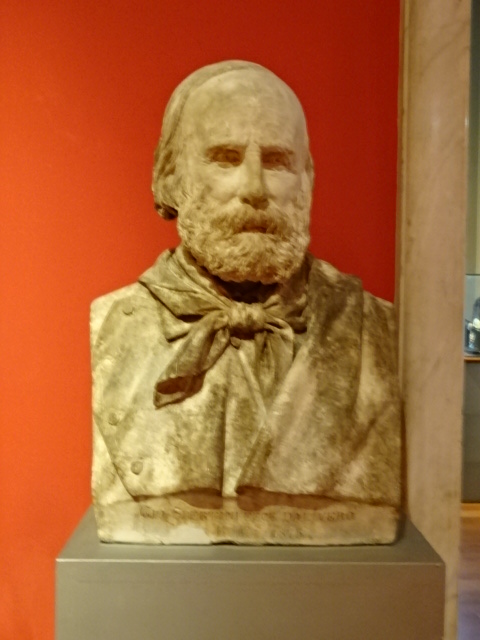
Giuseppe Garibaldi, one of the most prominent generals in modern history, guided the volunteers in the Expedition of the Thousand. Their uniforms were made up of red shirts and grey pants. In the exposition I saw the actual poncho and red shirt donned by Garibaldi, who also had military successes in South Africa and elsewhere in Europe.

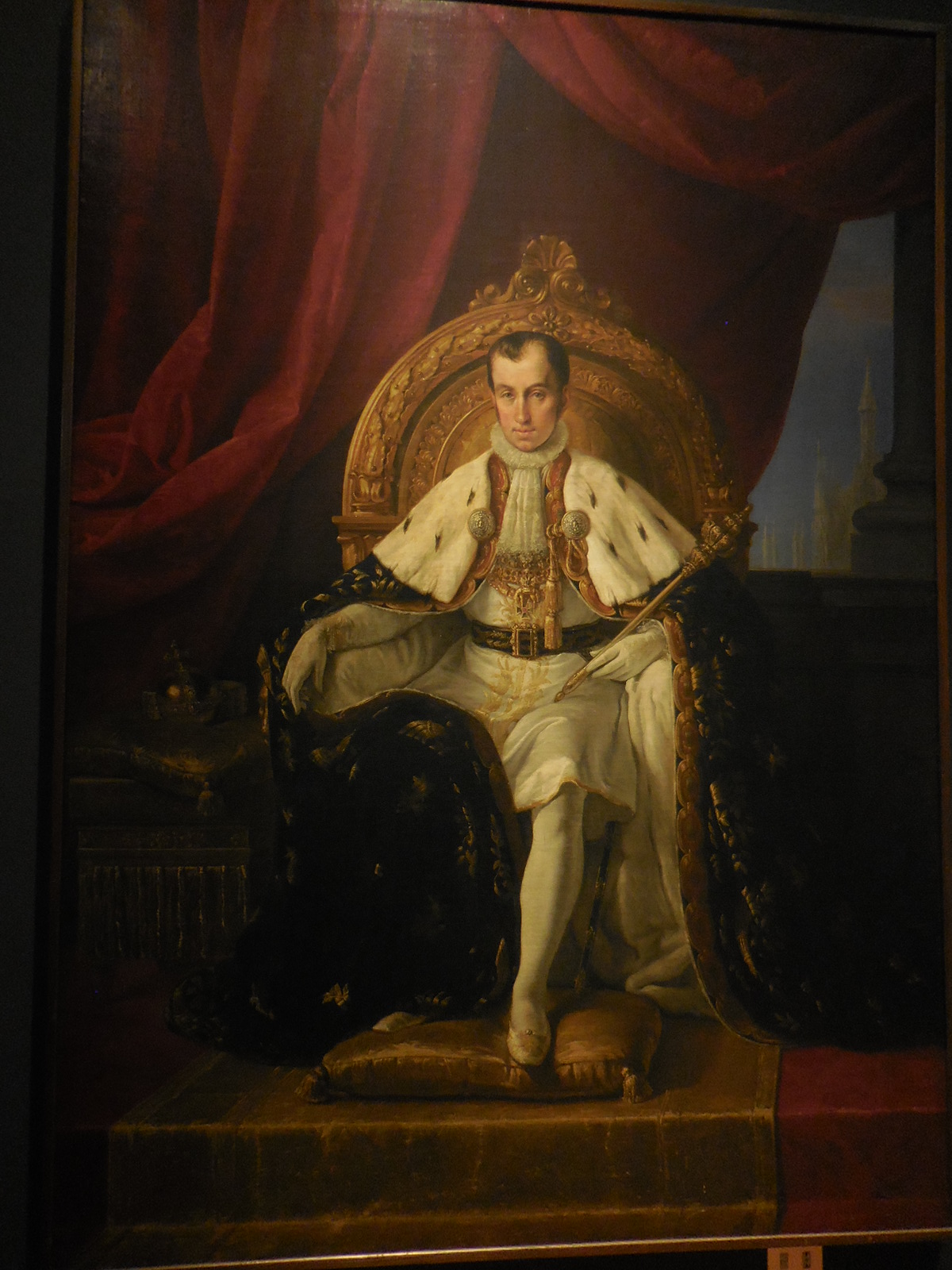
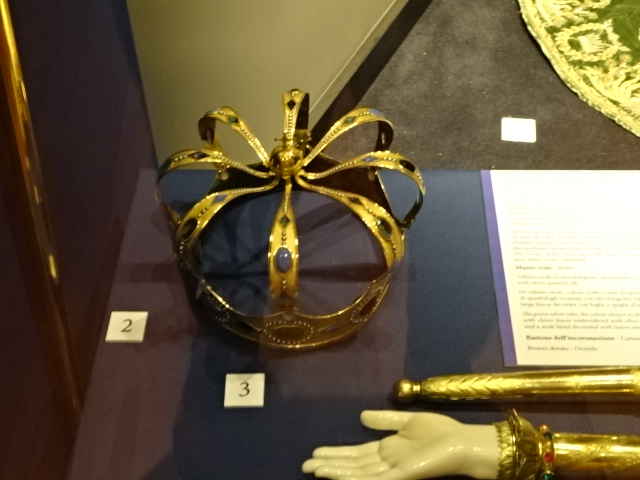
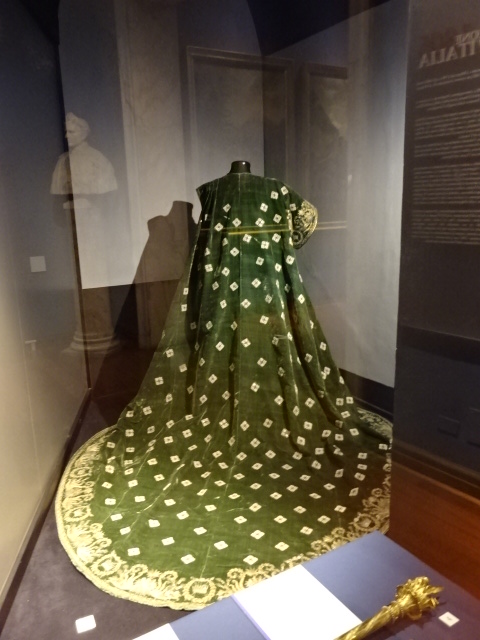
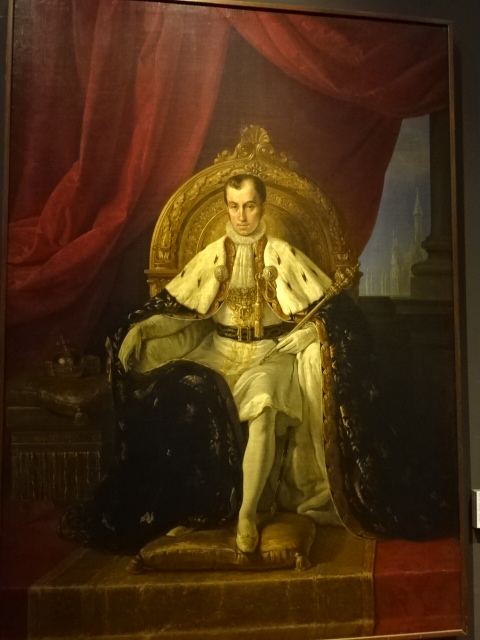
I loved the paintings and sculptures most of all. These collections were especially noteworthy. The collection of paintings depicting the Imperial period from 1804 to 1814 was perhaps the most poignant of all eras represented by this genre. Francesco Hayez, whose works I had seen in the Brera, had depicted Emperor Ferdinand I of Austria in a moving portrait. Also, powerful canvases of the Five Days of Milan had been rendered by Carlo Canelli, Carlo Bossoli and Pietro Bouvier, for example. Gerolamo Induno and Domenico Induno contributed to the paintings depicting the Second War of Independence. The original Italian flag that flew over the Duomo in Milan on March 20, 1848 was another highlight. The cloak and regal insignia from Napoleon’s coronation as King of Italy were also enthralling.

The 18th century Palazzo Moriggio that houses the museum had an intriguing history as well. The museum had been situated there since 1951. Under Napoleon’s reign the Ministry of Foreign Affairs and then the Ministry of Defense had been located in the palace.

This museum really opened my eyes to many events in Italian history. I had known only very basic information about this museum before my visit. It wasn’t on my list of most important places to see. I learned so much about the time periods in which the Risorgimento took place. I had never been a big fan of battle scenes, but I was struck by the details and by the historical significance of these paintings. While the museum is relatively small, it allows visitors to develop much knowledge about poignant eras in Italian history. In this museum I could actually feel the history come to life. Each artifact tells a story.

Tracy Burns is a writer, proofreader and editor in Prague. 

The Church of San Maurizio Diary

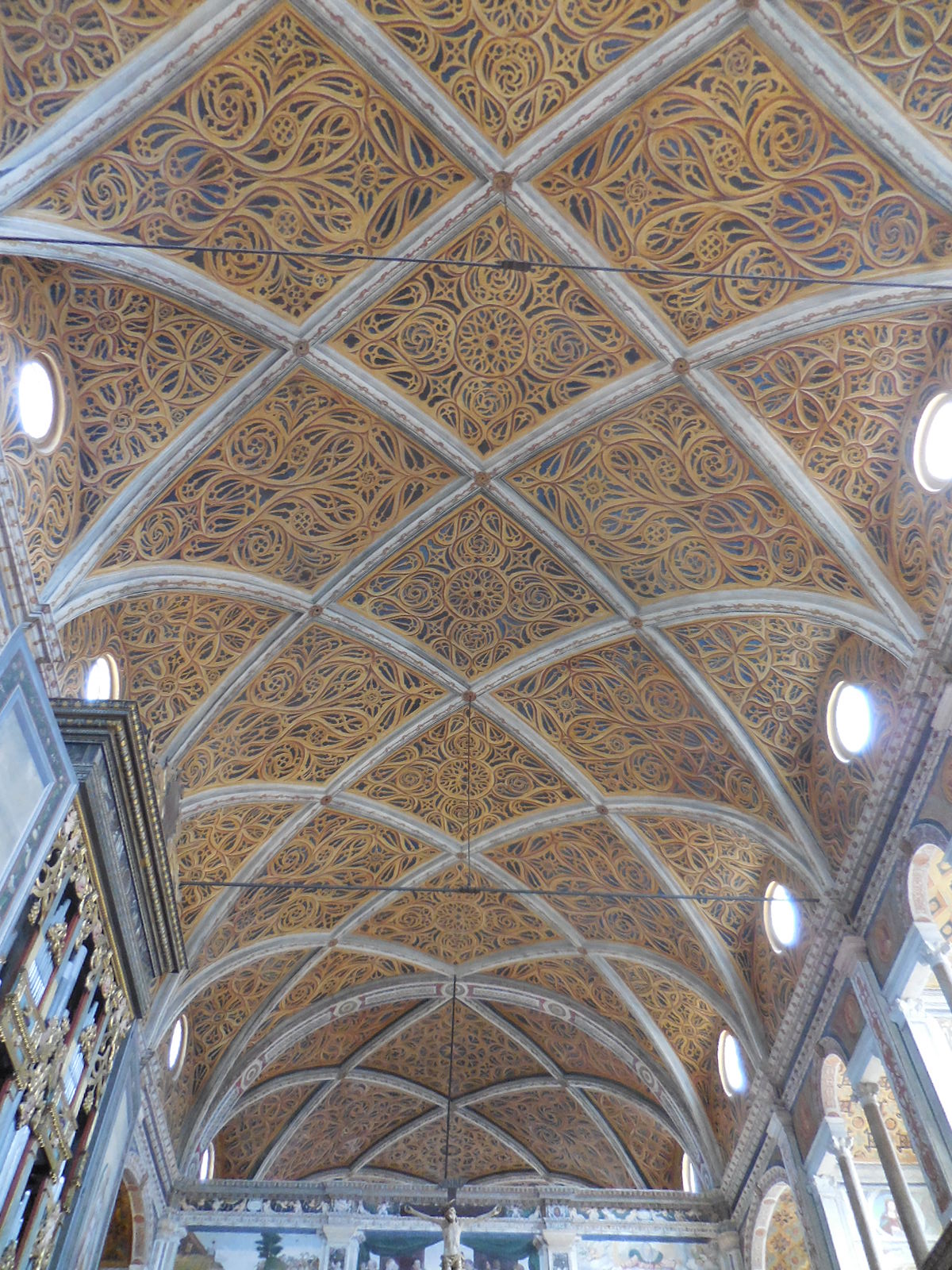
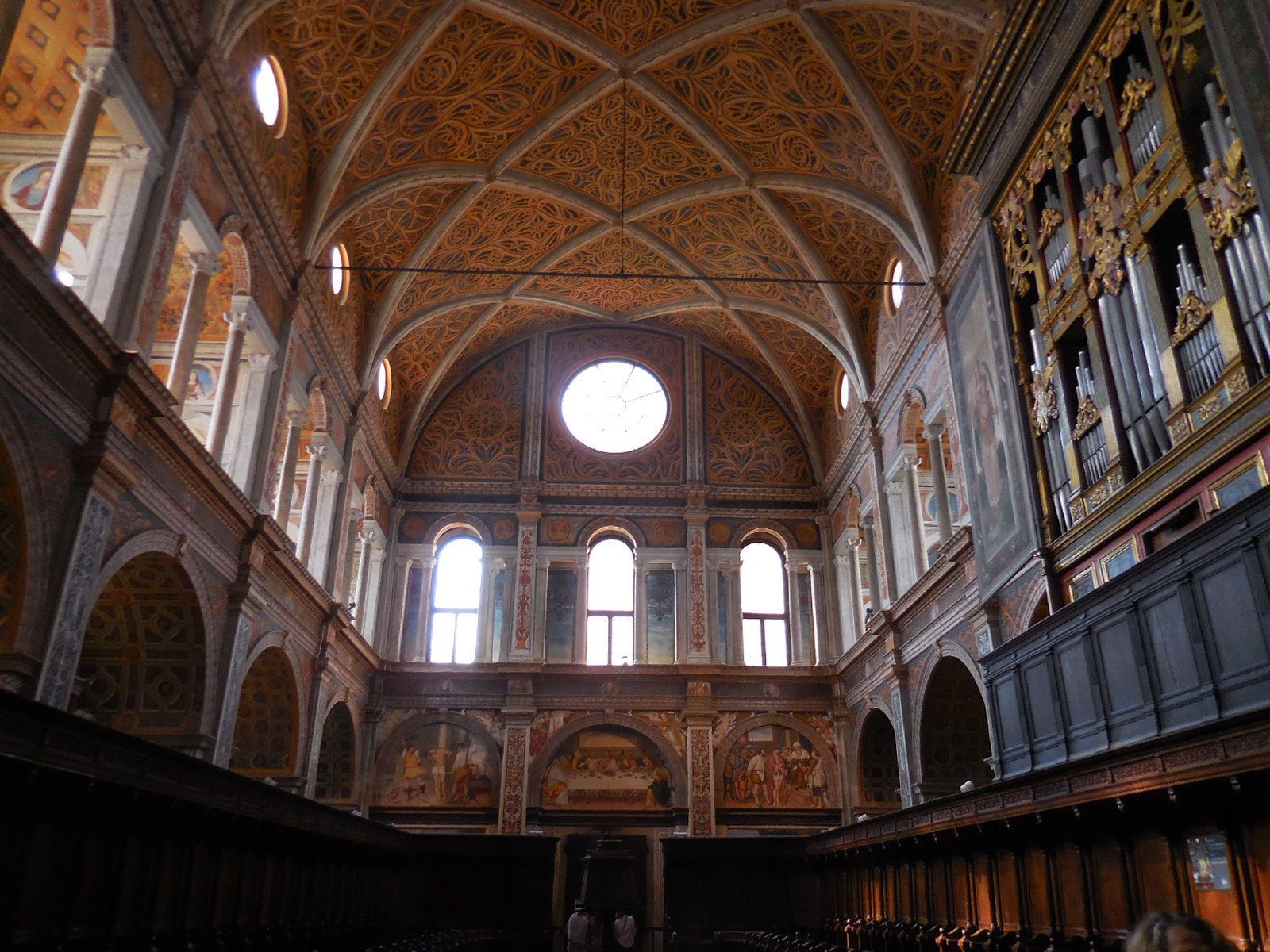
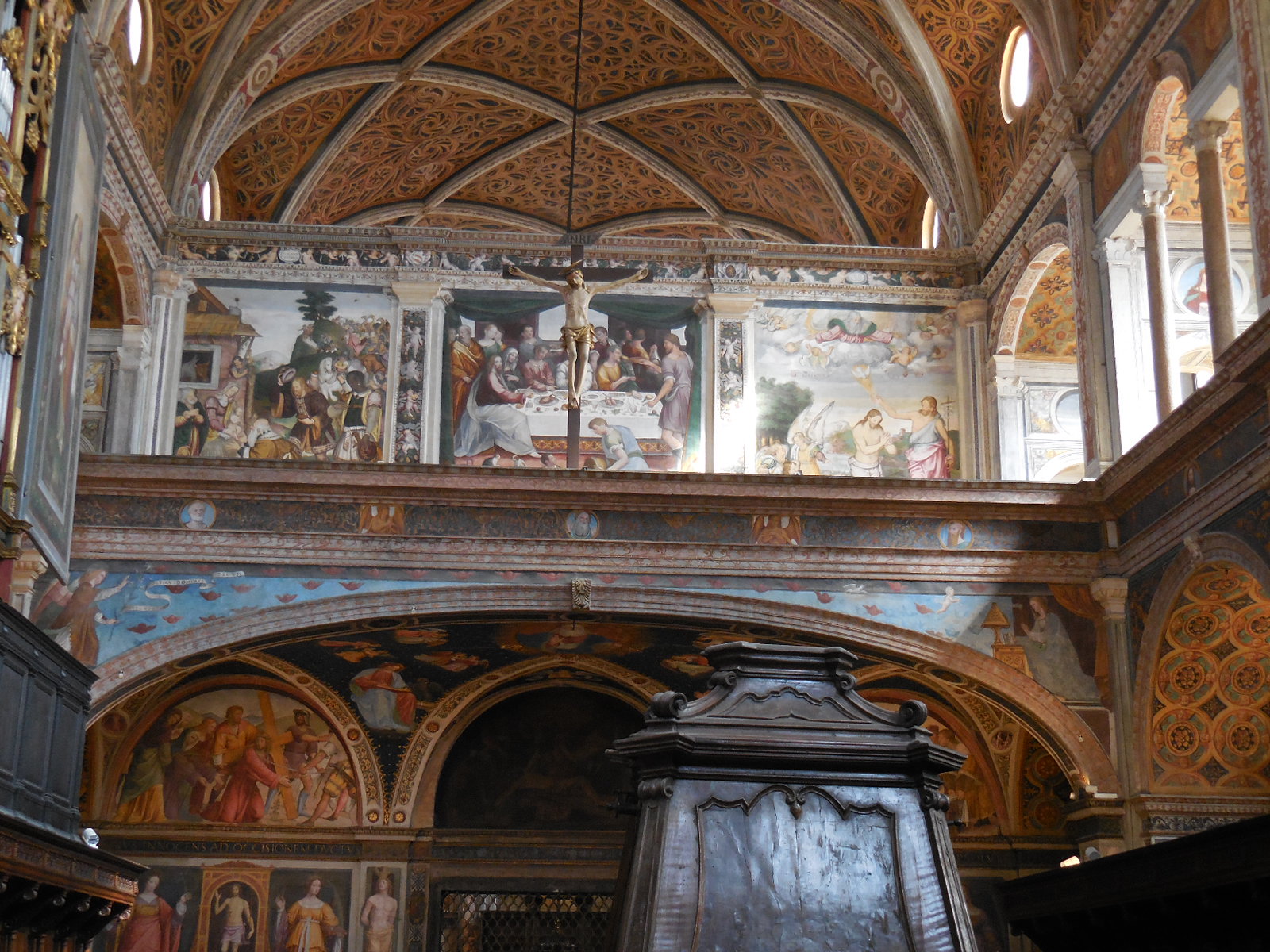
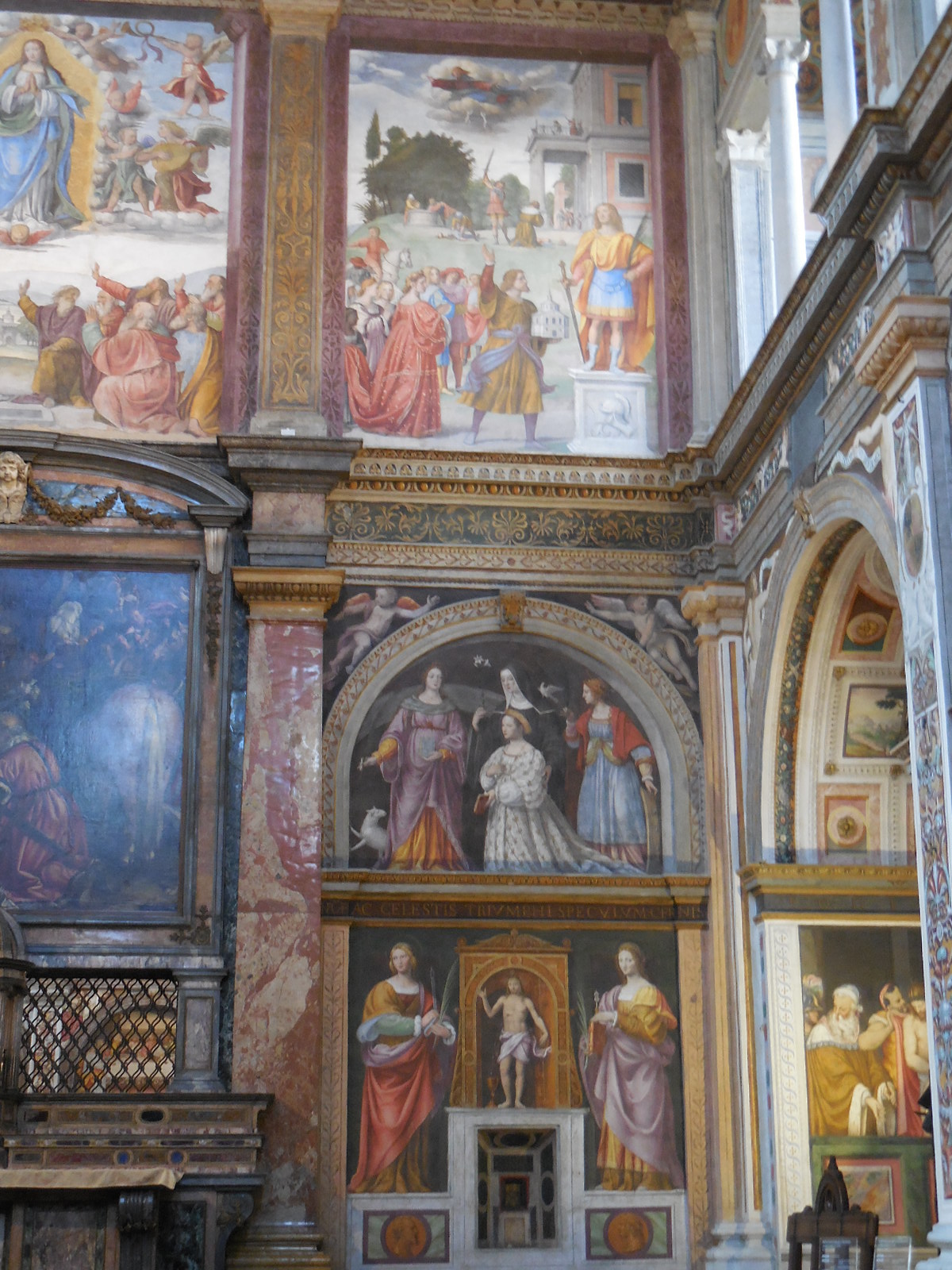
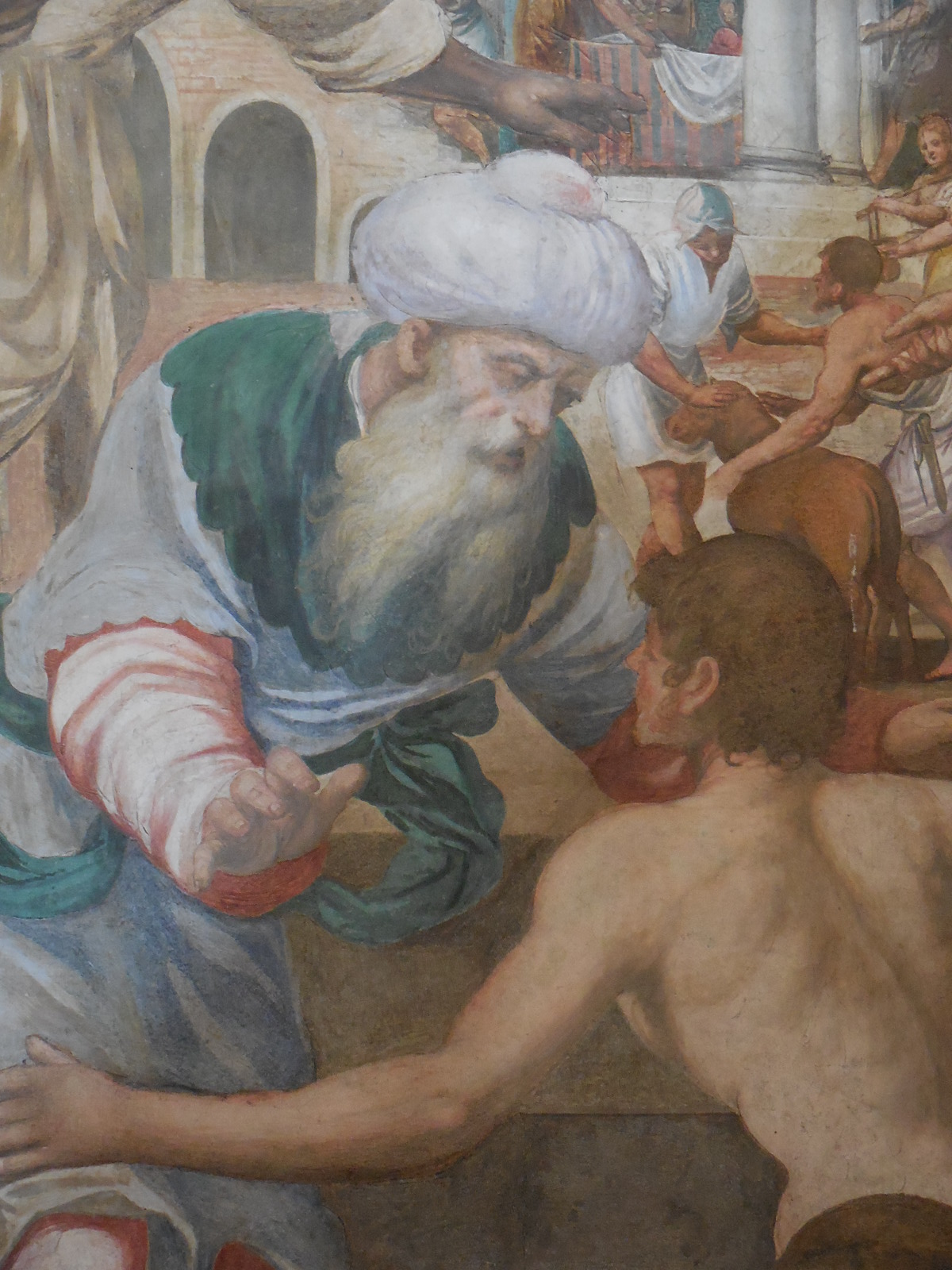
When I left the busy Milan street and stepped inside the Church of San Maurizio al Monastero Maggiore, I could not believe my eyes. The entire interior was a work of art. The Renaissance church featured 16th century frescoes by Bernardino Luini, his brothers and his son. Divided into two parts, it included a worship area for the public and another for the nuns. (An adjacent 17th century former cloister for Benedictine nuns now houses the museum of archeology.) There are eight chapels in the part of the church for the faithful and ten in the section for the nuns. On pilasters between the chapels in the Hall of Nuns, scenes from the life of Christ are portrayed.

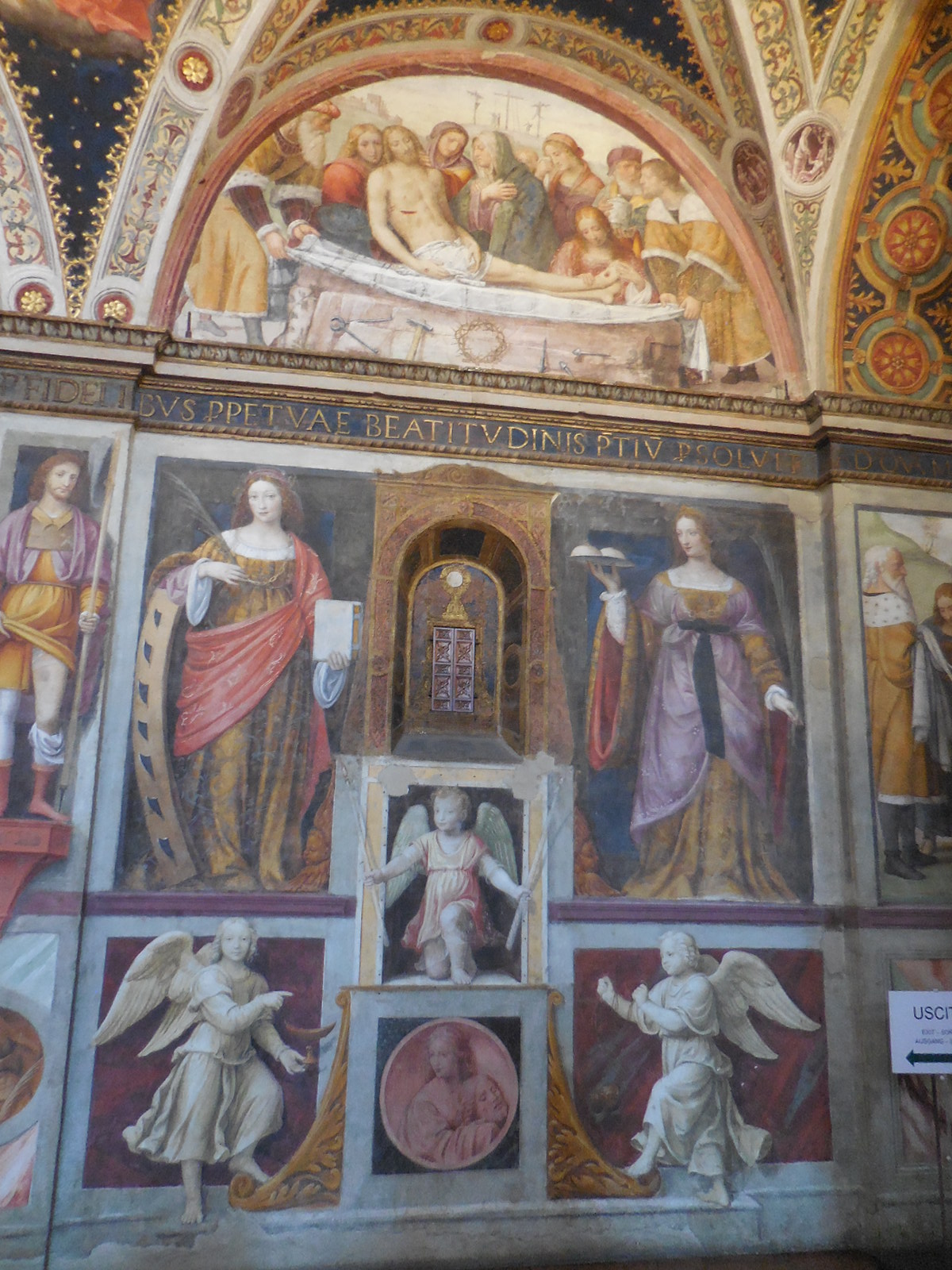
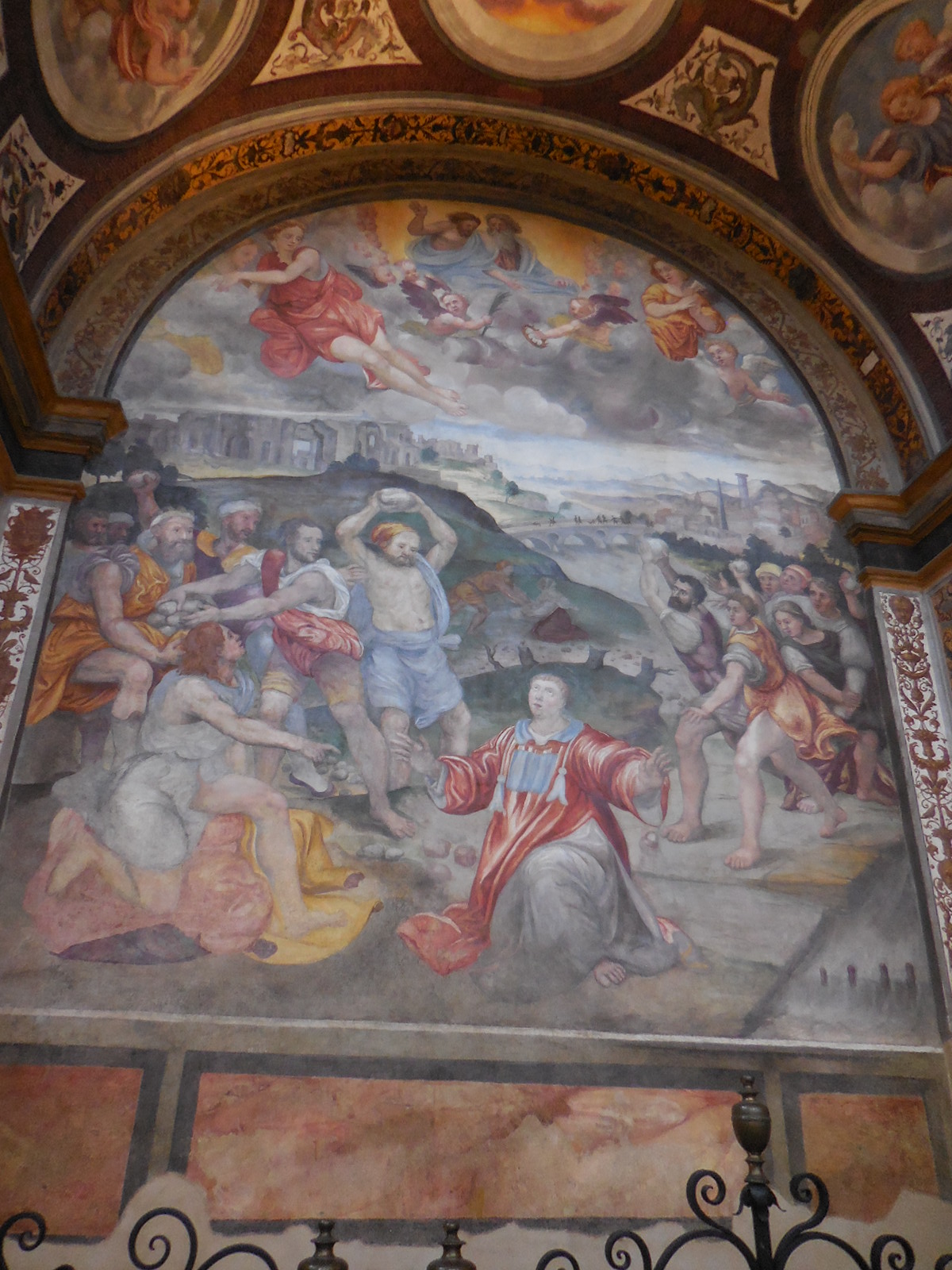
I saw a vaulted nave and vaulted chapels in addition to the Hall of Nuns on the other side of the partition. On the dividing wall in the Hall of Nuns, I gazed at Bernardino Luini’s creations from the 1530s – the figures of Saint Catherine and Saint Agatha as well as scenes from the Marriage at Cana and the Carrying of the Cross of Christ. I also saw his frescoes showing the life of Saint Maurizio. The Martyrdom of Saint Maurice and the Theban Legion, probably by Bernardino Luini, shows Maurice fervently praying as an execution is about to behead him. A decapitated body is seen nearby.

In one chapel, Bernardino Luini rendered the martyrdom of Saint Catherine of Alexandria. In the central panel, blood oozes from Jesus’ collapsing body. The masterful Luini renders the moment of the miracle when Catherine is about to be tortured, but is saved by God.

The main altar of the public area with the painting of the Adoration of the Magi by Antonio Campi took my breath away, too. The high altar dates from the second half of the 16th century. The rear end of a horse plays a prominent role in the foreground of the painting. I had never seen the backside of a horse dominating a canvas in 16th century art.

I especially liked the Chapel of the Flood by the Luini brothers. I gazed at the beasts making their way onto Noah’s Ark. A rainbow flitters across the sky. Yet the landscape is decrepit, in ruins.

Saints are rendered on lunettes of the chapels. For example, on two lunettes flanking the altarpiece, Saint Stephen, Saint Benedict and Saint John the Baptist make appearances.

The Eucharist Chapel boasts illusionist features as putti appear to open a canopy. The depiction deceptively looks three-dimensional.

I saw The Last Supper rendered above a door. It reminded me of the church not far away, where I had seen Leonardo’s Last Supper. I will never forget those masterful gestures and facial expressions of the protagonists as each gesture and expression told a story.

I noticed the organ with many 16th century features. It was a rarity as it had 12 pedals. The cornices of the case were richly decorated with fantasy-like figures, musical instruments and still lifes. Another depiction on the case included Saint Maurice holding a model of the church.

There were so many stories told on these masterful artworks that it was impossible to absorb them all during one visit. The church was one of the most beautiful I had ever seen. It was bewitching, enthralling. I vowed to come back because this church was one that beckoned the viewer to return, to experience its stunning beauty time and time again.

Tracy A. Burns is a writer, proofreader and editor in Prague.

2022 Travel Diary

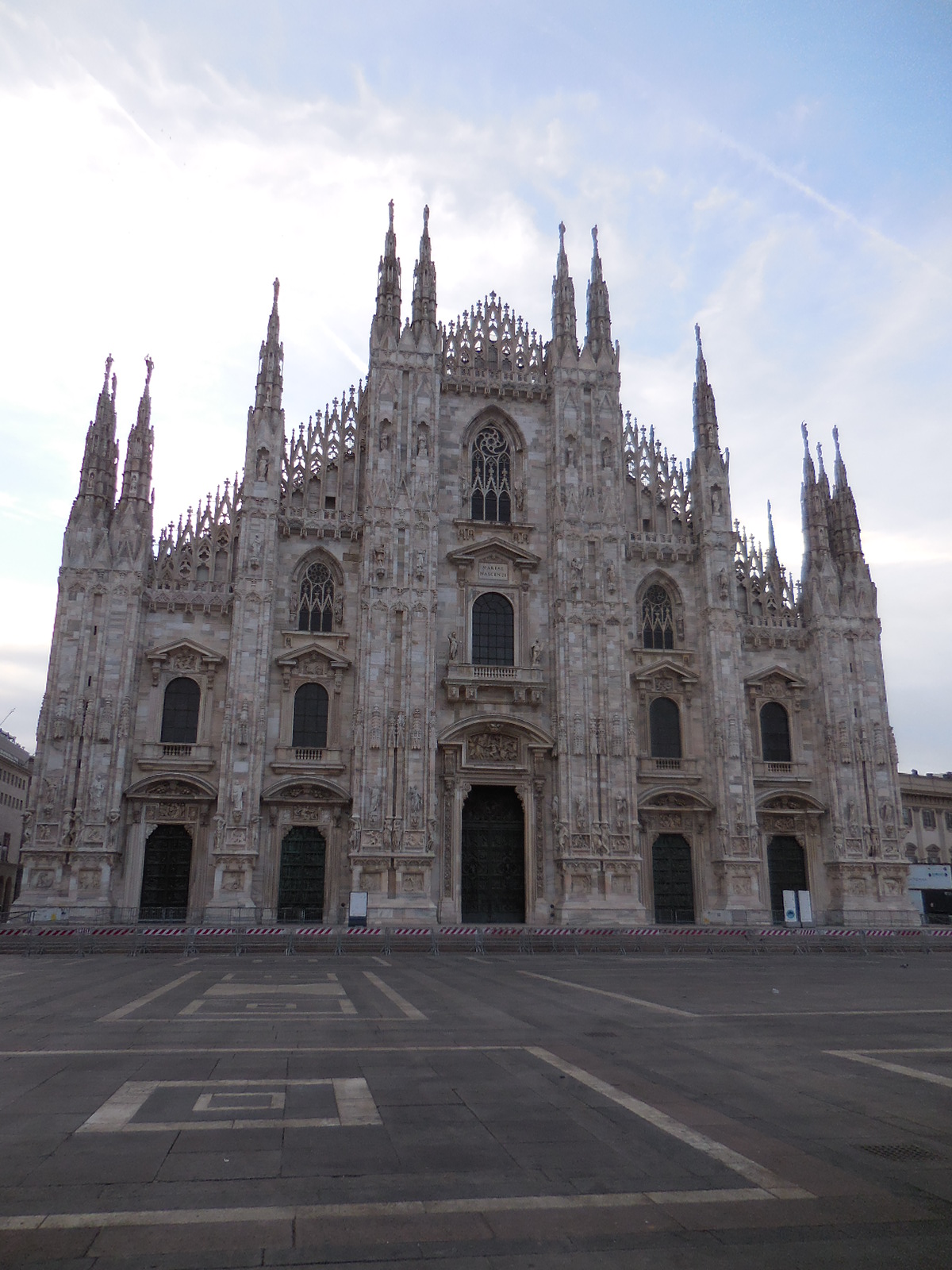
Milan Duomo, one of the highlights of my year of travels

This past year was punctuated by trips to riveting sights in the Czech Republic and Italy. As usual, I went castlehopping on day trips during the spring, summer and fall. My jaunts took me to Sychrov, Mělník, Konopiště and Maleč, to name a few. I visited the former flat of a legendary 19th century historian called The Father of the Nation and his son-in-law, a politician nicknamed The Leader of the Nation. I also visited their chateau out of Prague. I toured the exhibition at the Strž Villa, where Karel Čapek and his wife Olga Scheinpflugová spent three years and three months in the 1930s.

 Exterior of Milan Cathedral

I also enjoyed a week in what is probably my favorite Italian city, Milan, where I saw the most amazing art galleries and stunning architecture. From the Duomo to the Church of Saint Maurizio to the Poldi Pezzoli Gallery to the Ambrosiana to The Last Supper, I was overwhelmed by the incredible artistic creations the city had to offer.

The Last Supper, displayed in Milan

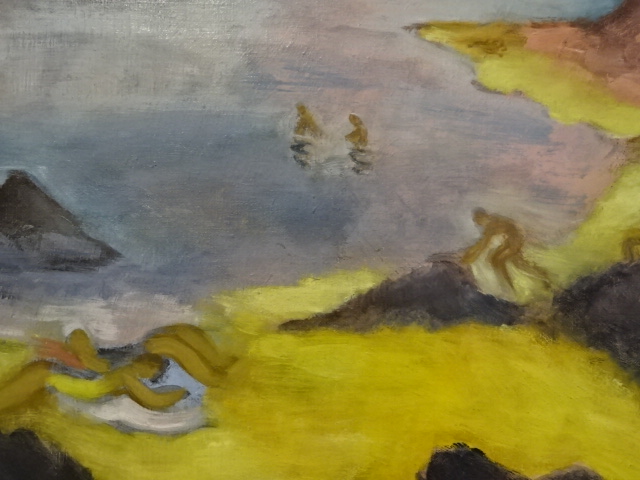
While I did not visit many temporary art exhibitions this past year, the ones I did go to left very positive and powerful impressions. I was lucky to be able to buy tickets for the Titian and Sorella exhibitions in Milan, both so comprehensive and exhilarating. I loved the way Titian masterfully created the material of his models’ clothing; it looked so real. You can almost feel the material just by looking at it. I loved Sorella’s beach scenes and landscapes. I had visited his former home, now a museum, in Madrid, so I was familiar with his work.

From the Kooperativa exhibition

In Prague I went to a few exhibitions. I saw a show at the Kooperativa featuring the theme of water in 19th and 20th century Czech landscapes. Artists such as Julius Mařák, Antonín Hudeček, Václav Špála and Josef Čapek were represented there. My favorite was a tranquil, snowy scene, seemingly out of a Bruegel painting. Čapek’s portrayal of two fishermen also captured my attention. Mařák’s forest landscapes were mystical and magical.

From the East Bohemian Gallery in Pardubice

I also went to Pardubice, where I was immersed in the 19th and 20th century Czech landscape painting at the East Bohemian Art Gallery. The works of Jan Zrzavý, Hudeček, Antonín Slavíček, Antonin Chittussi and Špála all captivated me.

By Peter Paul Rubens from the Prague Castle Gallery

I also saw the temporary exhibition of the Prague Castle Gallery’s permanent collection that had been started by Holy Roman Emperor Rudolf II. I learned about the history of the collection, which was fascinating, and I saw masterpieces by Peter Paul Rubens, Paolo Veronese and many others.

By Alphonse Mucha

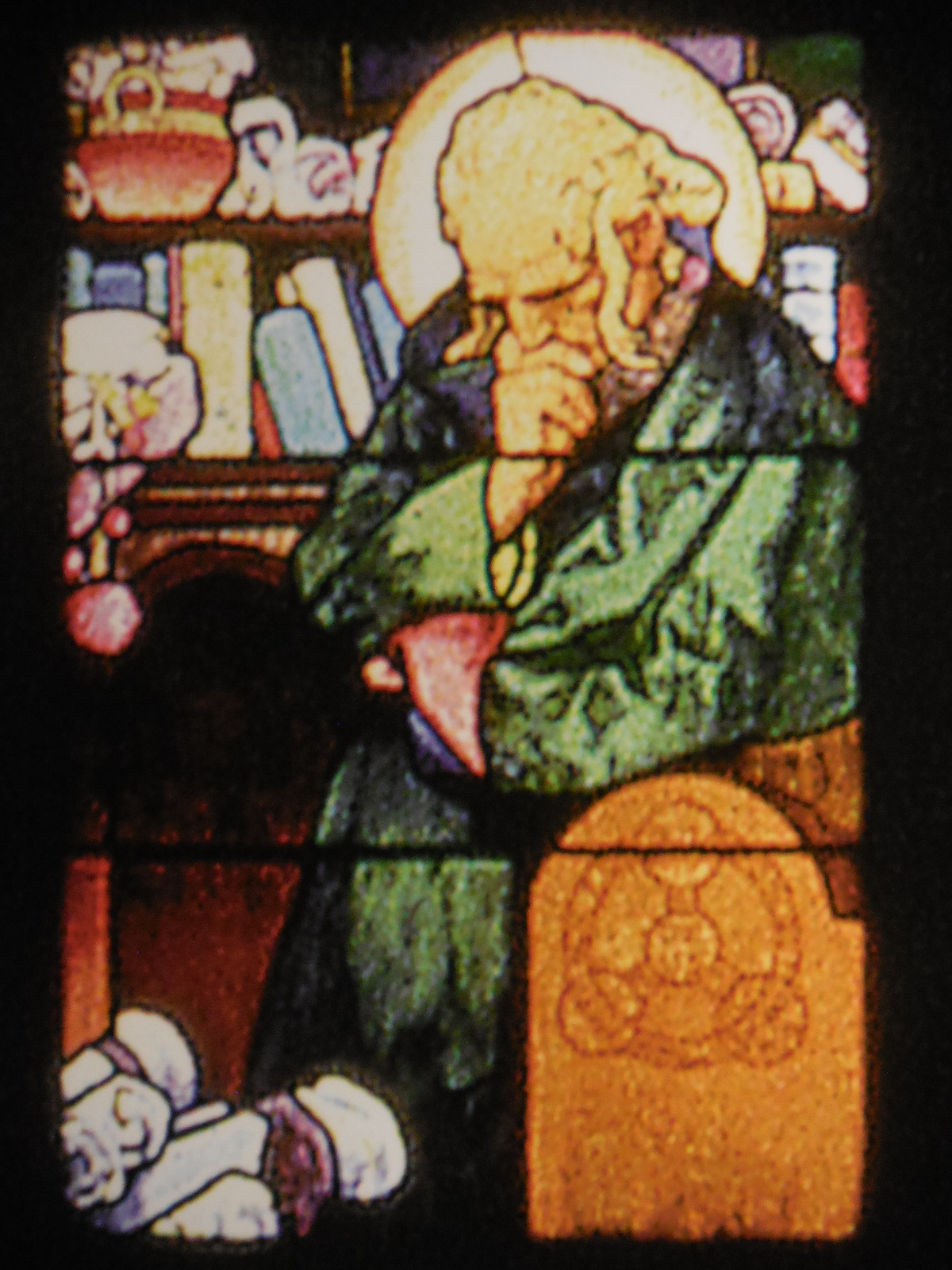
Copy of stained-glass window at St. Vitus’ Cathedral in Prague, created by Alphonse Mucha

I was enamored by the exhibition of Alphonse Mucha’s art in Mucha: The Family Collection at the Wallenstein Riding Stables. While Mucha is best known for his posters featuring Sarah Bernhardt, this exhibition also highlighted his drawings, paintings, sculptures, photos and jewelry. Some works were on display for the first time. I especially loved the reproductions of his stained-glass windows for Saint Vitus’ Cathedral in Prague.

Jan Werich

From furnished rooms at Werich Villa

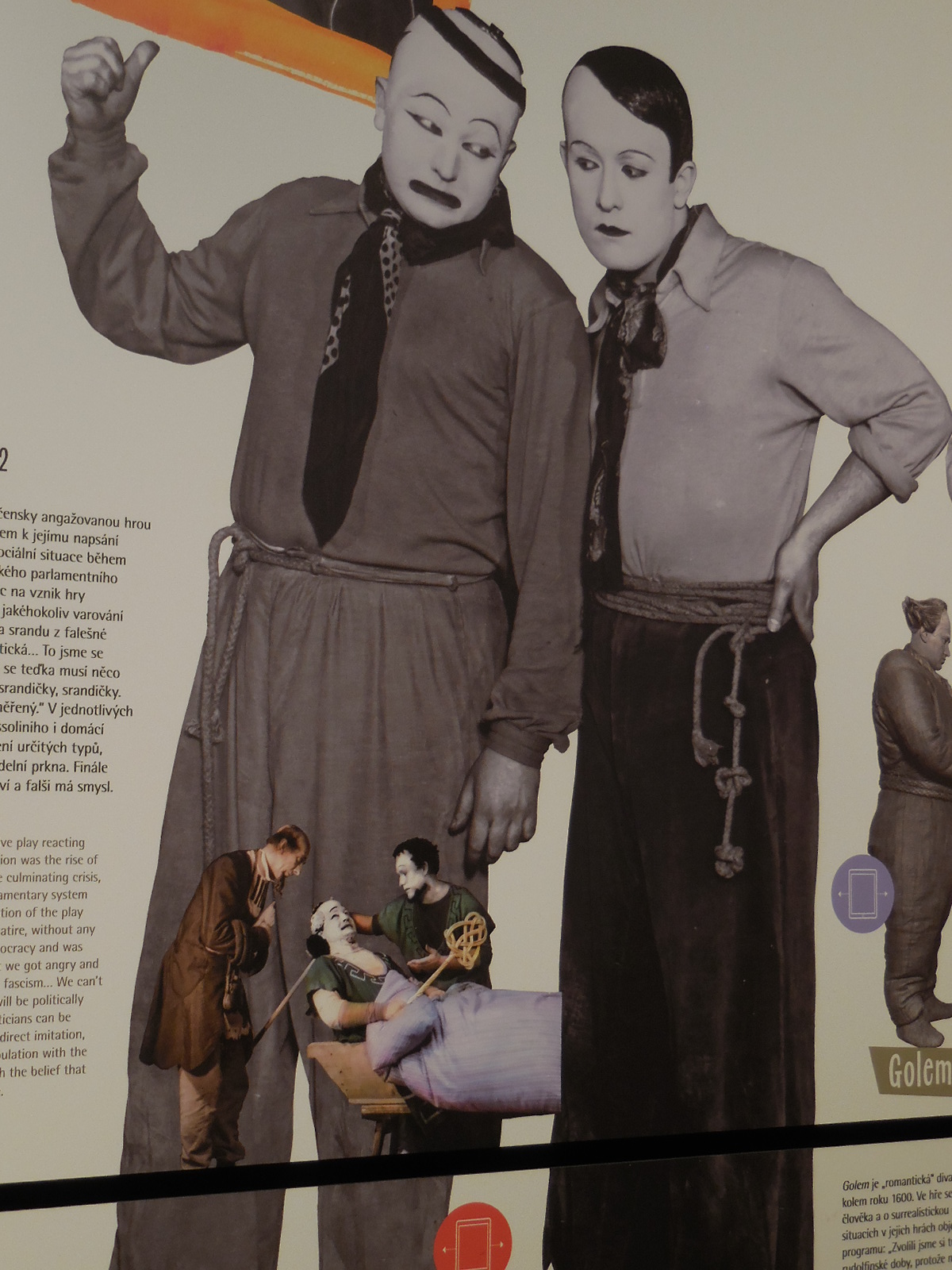
About my day trips: Let’s start in Prague. This year I visited the Werich Villa exhibition for the first time. Located on Prague’s Kampa Island, the villa was the home of actor Jan Werich from 1945 until his death in 1980. I liked the photos from the avant-garde plays of the Liberated Theatre best. The dramatic creations from the 1920s and 1930s were parodies of Dadaistic absurdity inspired by Charlie Chaplin and punctuated by jazz music. I also was captivated by the two rooms made to look as they did when Werich had lived there. Everything from the abstract painting of him and his colleague as actors at the Liberated Theatre to the Ballantine bottle of gin made me feel as if I got a sense of the atmosphere that had prevailed during the decades Werich had lived there.

The legendary Golem in the movie by the same name. Werich starred in the film.

Jan Werich and Jiří Voskovec at the Liberated Theatre

I visited the former flat of the first Czech historian František Palacký on Palacký Street in the city center for the first time in many years. I tried to imagine the bubbling conversations in the 19th century living room as the leaders of the Czech National Revival, who were promoting the Czech language and Czech culture, gathered there with Palacký’s family. I saw the desk where Palacký wrote his History of the Czech Nation as well as intriguing sculptures, paintings and portraits. The guide pointed at a box and told me that Palacký’s brain was inside. I wish the guide would have opened it!

Bust of František Palacký at Maleč Chateau

Bust of F.L. Rieger at Maleč Chateau

His son-in-law František Ladislav Rieger, who organized the first Czech encyclopedia and led a powerful political party, also lived at that address with his family as he had married Palacký’s daughter Marie. I saw the desk where he had labored over the encyclopedia volumes and paintings of his modest birthplace. I also saw the beds in which Palacký and Rieger died.

Piano that was often played by Antonín Dvořák

Funeral of F.L. Rieger

The Main Hall where the leaders of the Czech National Revival often gathered

Then I visited Maleč Chateau outside of Prague, a place where Palacký and Rieger had spent much time. The chateau hosted an exhibition about the two and the time periods in which they lived. There, I saw pictures of visiting Americans from Cleveland and Chicago gathered outside Palacký’s flat in Prague and another showing an American group at the chateau. I liked the portrait of Rieger by František Ženíšek and the piano once played by Antonín Dvořák, a frequent visitor to the chateau. The personalities of the Czech National Revival had once gathered in the main hall, which featured an exquisite chandelier, Renaissance stucco decoration and frescoes depicting landscapes. While looking at the picture of Rieger’s crowded funeral procession, I felt as if I was there among the masses dressed in black, mourning a national figure.

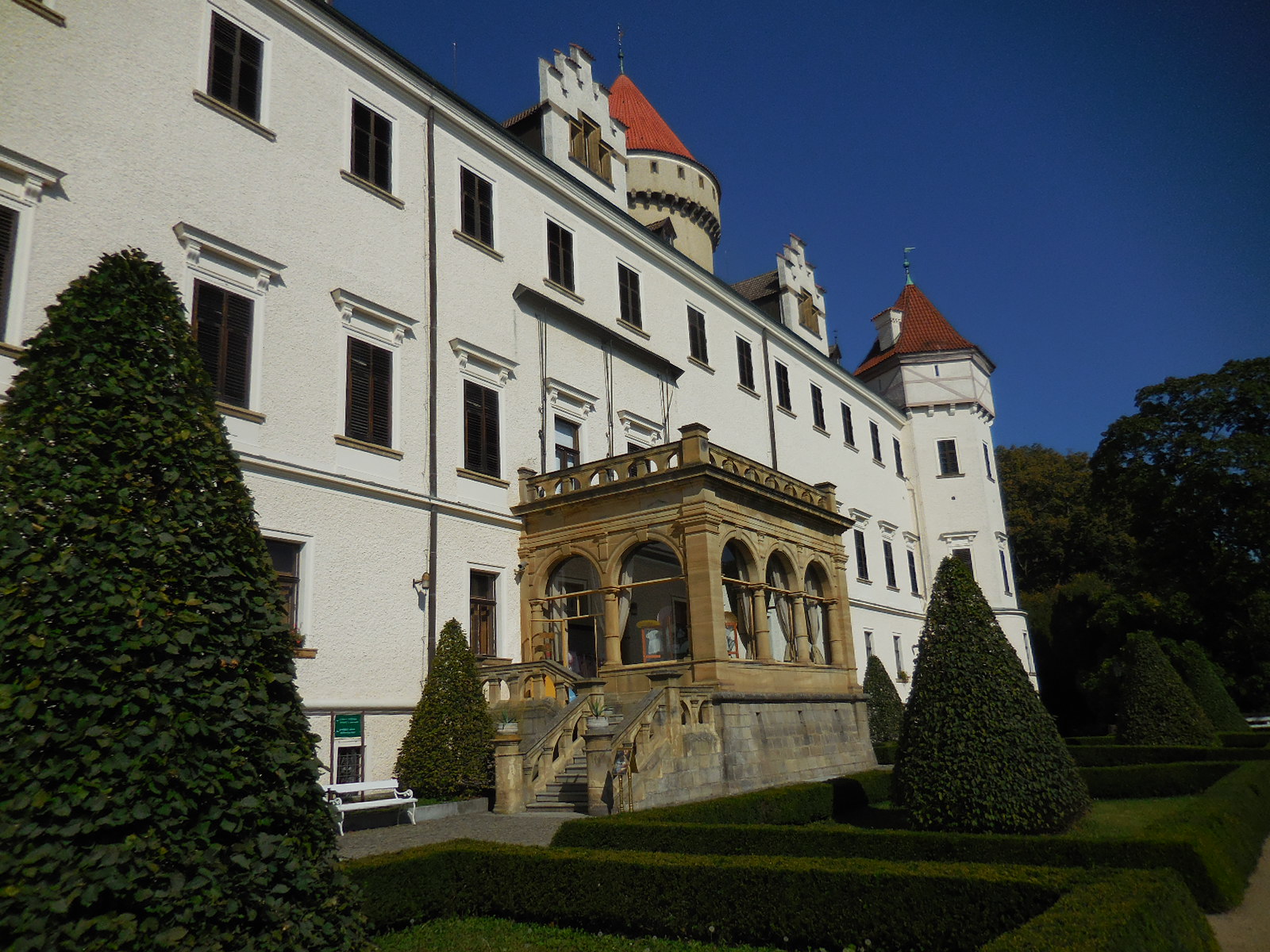
Konopiště Chateau

In the spring I took the third tour at Konopiště Chateau, a place I had visited at least eight or nine times. I hadn’t been on the tour of Franz Ferdinand d’Este’s private apartments for many years. I loved the portraits lining one hallway. The historical figures included Dante Alighieri, Titian and Christopher Columbus. In one room there were 1,307 hunting trophies. I enjoyed seeing the family’s photos from their travels in the late 19th and early 20th century.

View from Konopiště Chateau

We briefly visited the chapel, perhaps my favorite of all Czech chateaus with its gold stars dotting the blue ceiling, stained glass windows and Renaissance sculptures. Near the end of the tour, I was reminded of that tragic day in June of 1914, when Franz Ferdinand and his wife were assassinated in Sarajevo, an event that triggered the first world war. I saw a bloodied handkerchief, one of the bullets from Gavrilo Princip’s pistol and the death masks of the royal married couple.

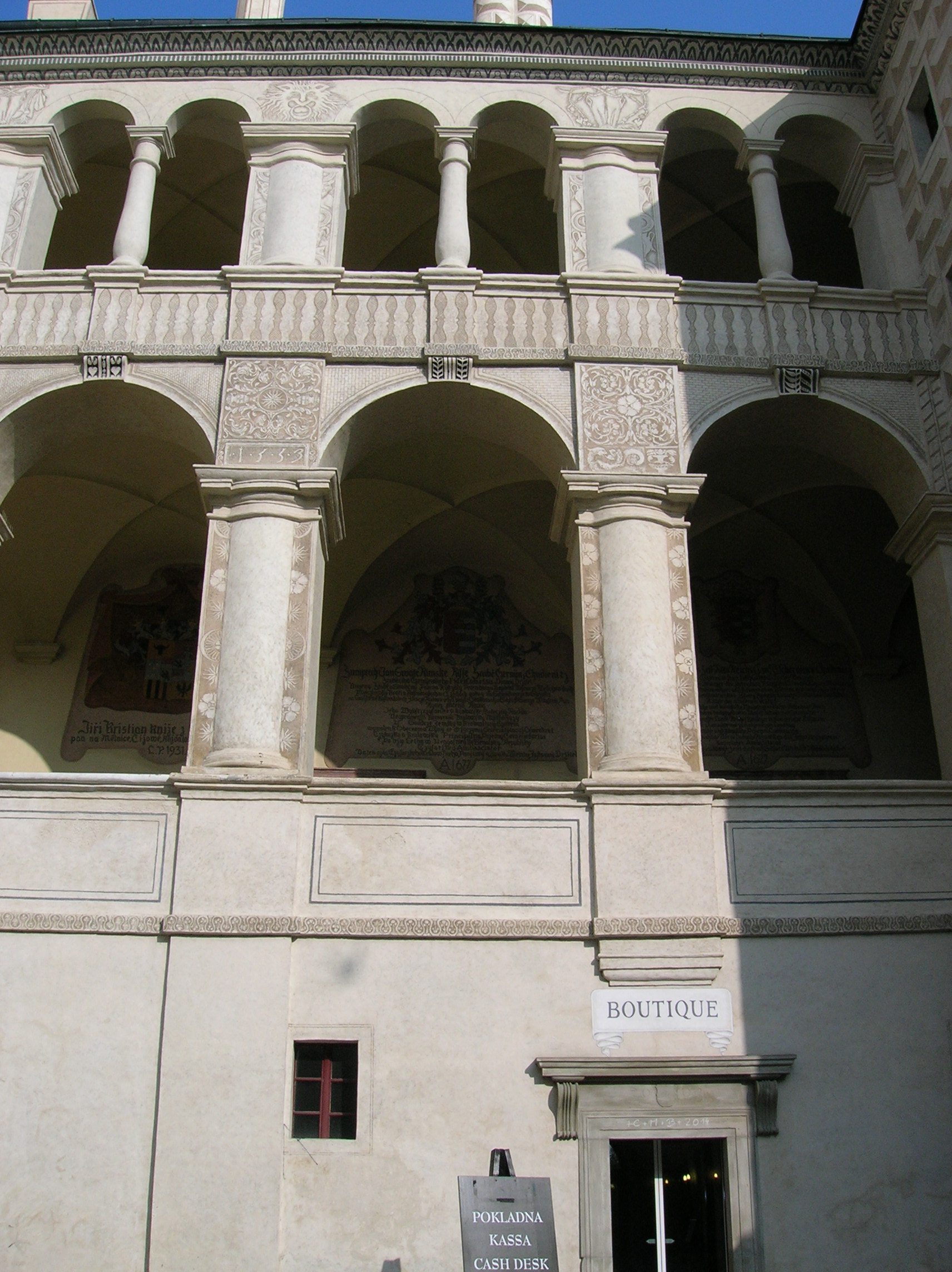
Arcades of Mělnik Chateau

At Mělnik Chateau I was once again overcome with amazement when I peered at detailed 17th century maps of European cities in the Big Hall and the small 18th century black-and-white vedutas of European cities in the Small Hall. The artwork at Mělnik was incredible. I saw paintings by Baroque legendary artists Karel Škréta and Petr Brandl and even a painting by Veronese. I yearned to show this chateau to my parents.

Front page of Lidové noviny announcing Karel Čapek’s death

Karel Čapek and his wife Olga Scheinpflugová

I also visited the museum of the legendary and versatile Czech writer Karel Čapek at what once was his villa in Stará huť. At the Strž Villa I saw 3-D diagrams of stage sets from his plays and the desk where he had written many works. The exhibition included photos of his childhood, pictures of his dogs and cat, and the front page of Lidové noviny newspaper with the large, bold headline announcing his death in 1938. Sections of the exhibition were devoted to his wife, a famous actress, and his brother, a prominent painter and writer.

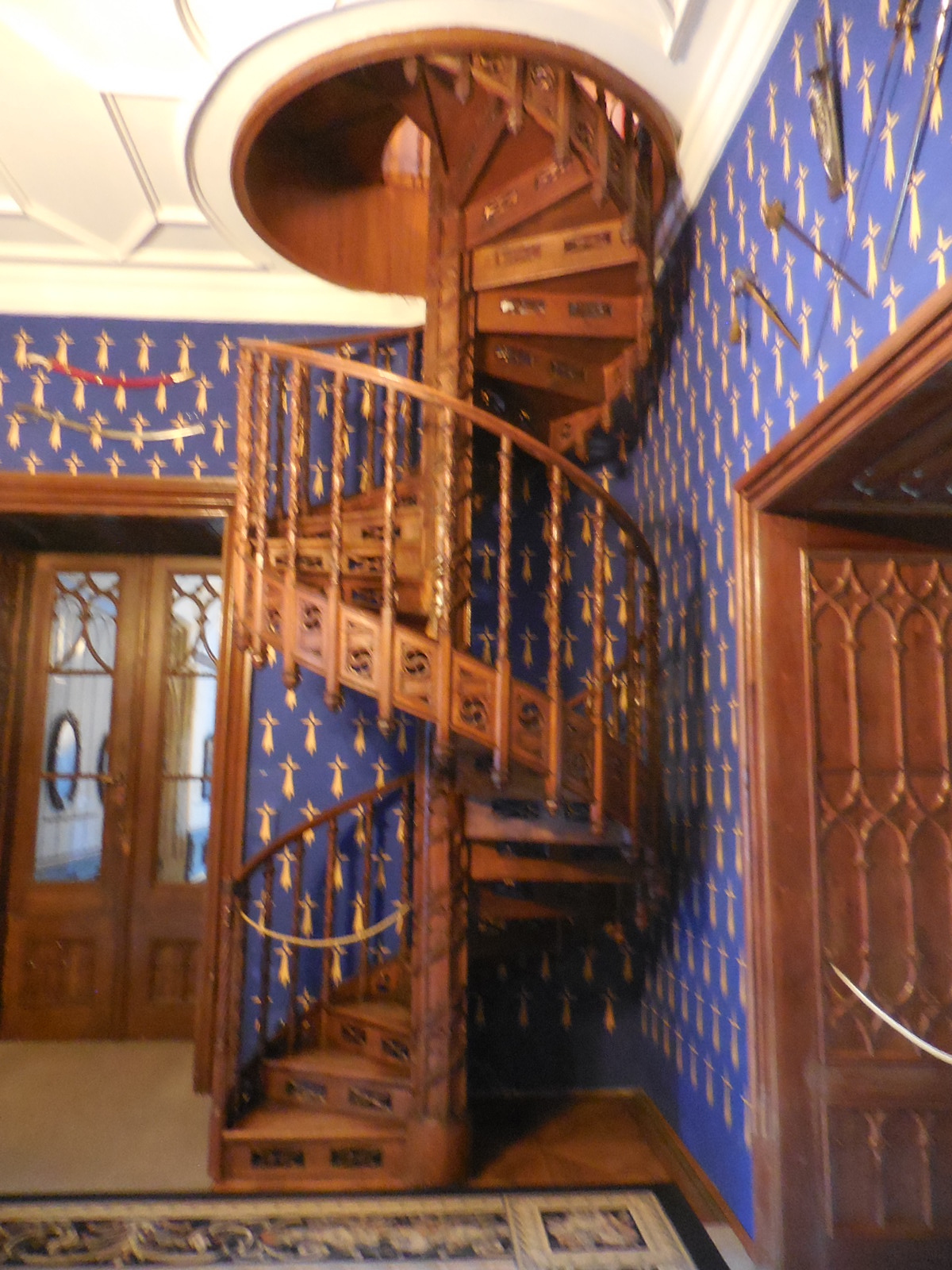
Staircase at Sychrov Chateau

Neo-Gothic facade of Sychrov Chateau

Another chateau I visited for maybe the fourth time was the Neo-Gothic Sychrov in north Bohemia. The Rohan portrait gallery included 242 portraits of French origin, including French kings and queens as well as members of the Rohan family, who owned the chateau for 125 years. It ranks as the biggest collection of French portrait painting in Central Europe. A narrow, spiral, wooden staircase as well as rich wood paneling and leather wallpaper in many rooms also caught my attention.

La Scala Opera House

Finally, this past year I made it to Milan! In this magical city I had so many memorable experiences. I watched some minutes of a rehearsal of Giaconda in the royal box at La Scala Opera House. I finally saw The Last Supper with my own eyes, although we were only allowed to stay in the space for 15 minutes.

Stained-glass window at Milan Cathedral

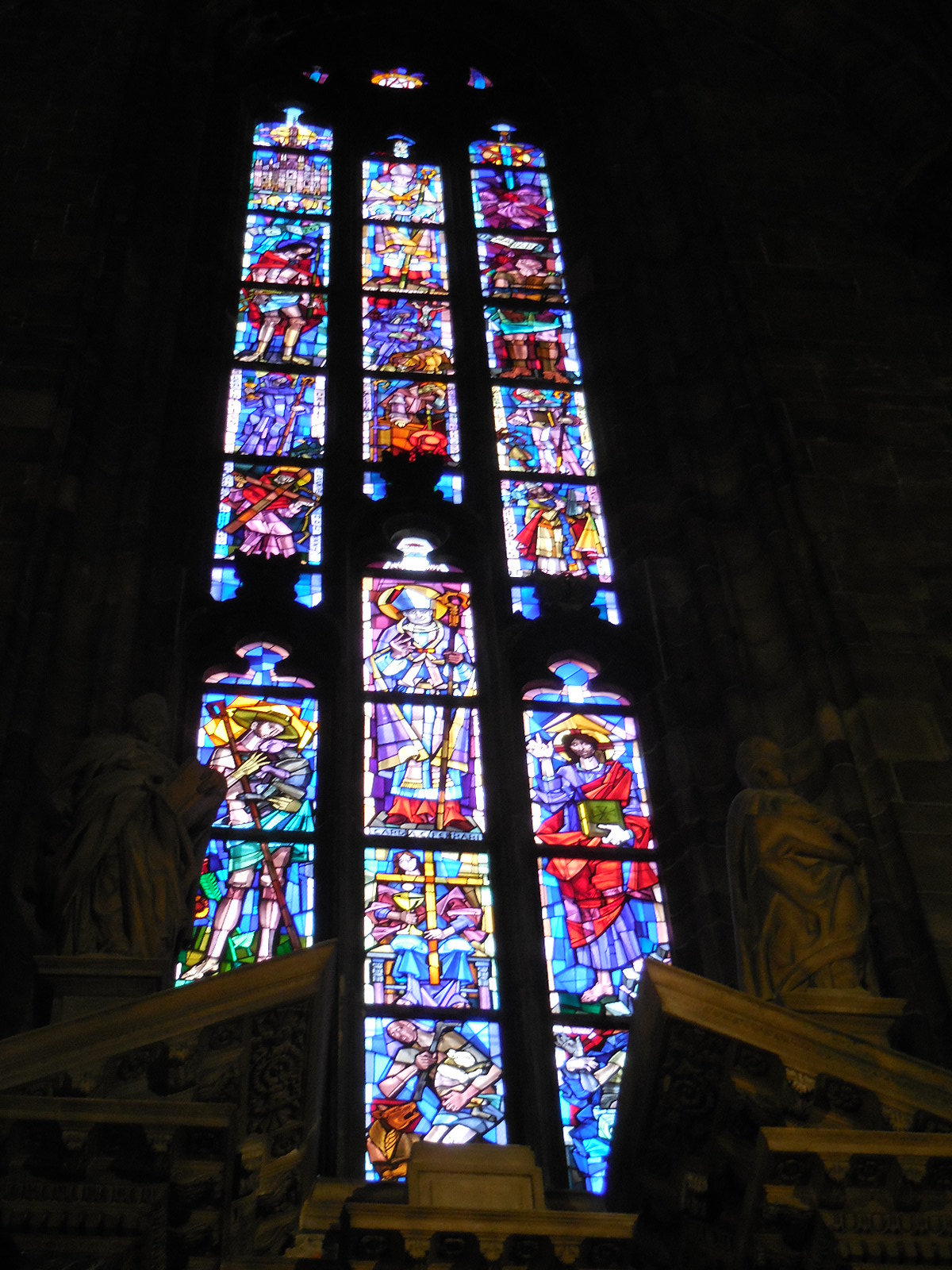
I gazed at the mostly Gothic exterior of the Duomo at six in the morning, when the square was free of pedestrian traffic. The stained-glass windows inside and the views from the rooftop were other highlights. The artifacts of the Museo del Duomo, including the original stained-glass windows, tapestries and gargoyles, added more context to the tour of the Duomo.

The Basilica of Saint Ambrose

The Basilica di Sant’Ambrogio was one of the most beautiful Romanesque buildings in the world, originating in the fourth century AD and getting its current appearance from a 12th century makeover. The 19th century shopping gallery Galleria Vittorio Emaneuele II with its mosaics on the floor and near the dome was stunning. The bookstore in the shopping gallery was comprehensive and huge, just the way I liked them. I saw impressive vedutas of Milan Cathedral, Alpine scenes and paintings of the Navigli district of Milan as well as sculpture by Antonio Canova in the Gallerie d’Italia.

In the Ambrosiana

The Ambrosiana’s library stunned me. I gazed at the Leonardo da Vinci drawings of inventions in the Codice Atlantico exhibition as well as the library itself, such an overwhelming place. I loved the paintings in the Ambrosiana, too. Leonardo da Vinci’s The Musician, Titian’s Adoration of the Magi, Botticelli’s Madonna del Padiglione, the paintings by Francesco Hayez, Paul Brill’s fantastic landscapes and Jan Bruegel’s fantasy-tinged renditions all impressed me. Caravaggio’s superb depiction of a bowl of fruit was another highlight.

At the Brera Art Gallery

The Brera Art Gallery was another superb cultural venue. I was enthralled with the Italian paintings from the 13th to 20th centuries, including works by Raphael, Andrea Mantegna, Donato Bramante, Titian, Veronese, Caravaggio, Giovanni Bellini and Bernardino Luini. Flemish art also made an appearance. I was overwhelmed by the paintings by Rembrandt, Rubens, Jacob Jordaens and Anton van Dyck. And who could forget the vedutas of Venice by Canaletto and the famous painting The Kiss by Francesco Hayez?

Museum of the Risorgimento

Around the corner from the Brera, I stopped in the Museo del Risorgimento, which featured 14 rooms of paintings, prints, sculptures and artifacts depicting Italian historical events from the call for Italian independence to the Italian unification. I learned about Napoleon’s reign in Italy as well as the Austrian monarchy’s control of what would later become a unified and independent Italy. I spent a lot of time staring at the photos of soldiers in the Album of the Thousands, the volunteers in  the Expedition of the Thousand. Portraits of the 1,089 soldiers in business card format made up this album. I loved the paintings that brought the turbulent era to life, such as those by Stragliati and Canella.

At the Bagatti Valsecchi Museum

While I loved these museums, my two favorites had been former homes, the Museo Bagatti Valsecchi and Museo Poldi Pezzoli, the first located in an apartment, the second situated in a palace. Two brothers collected Renaissance and Neo-Renaissance art – tapestries, paintings, sculpture and weapons – at the end of the 1800s to decorate the interior of their apartment, which would later become the Museo Bagatti Valsecchi. It is one of the best-preserved house museums in Europe. The furnishings were diverse – Italian, British, German, French, Japanese and Spanish, for instance. It had a more intimate feel than the Poldi Pezzoli, though that was an amazing museum as well.

At the Museum of Poldi Pezzoli

The art collection in the Museo Poldi Pezzoli came into existence during the 19th century, when the Poldi Pezzoli noble family lived there. Artists represented there included Giovanni Bellini, Mantegna, Michelangelo Buonarroti, Hayez, Tiepolo and Canaletto as well as Lucas Cranach the Elder. Many Renaissance and Baroque works punctuate the collection. An armory, a glass collection, ceramics and tapestries also make up the superb objects on display.

The Villa Necchi Campiglio in Milan was another highlight. The villa, now a museum, was built from 1932 to 1935 and included an enchanting garden, the first private pool in Milan and second pool in the city plus tennis courts. The exterior is an example of Italian rationalism with a no-frills attitude of simplicity.

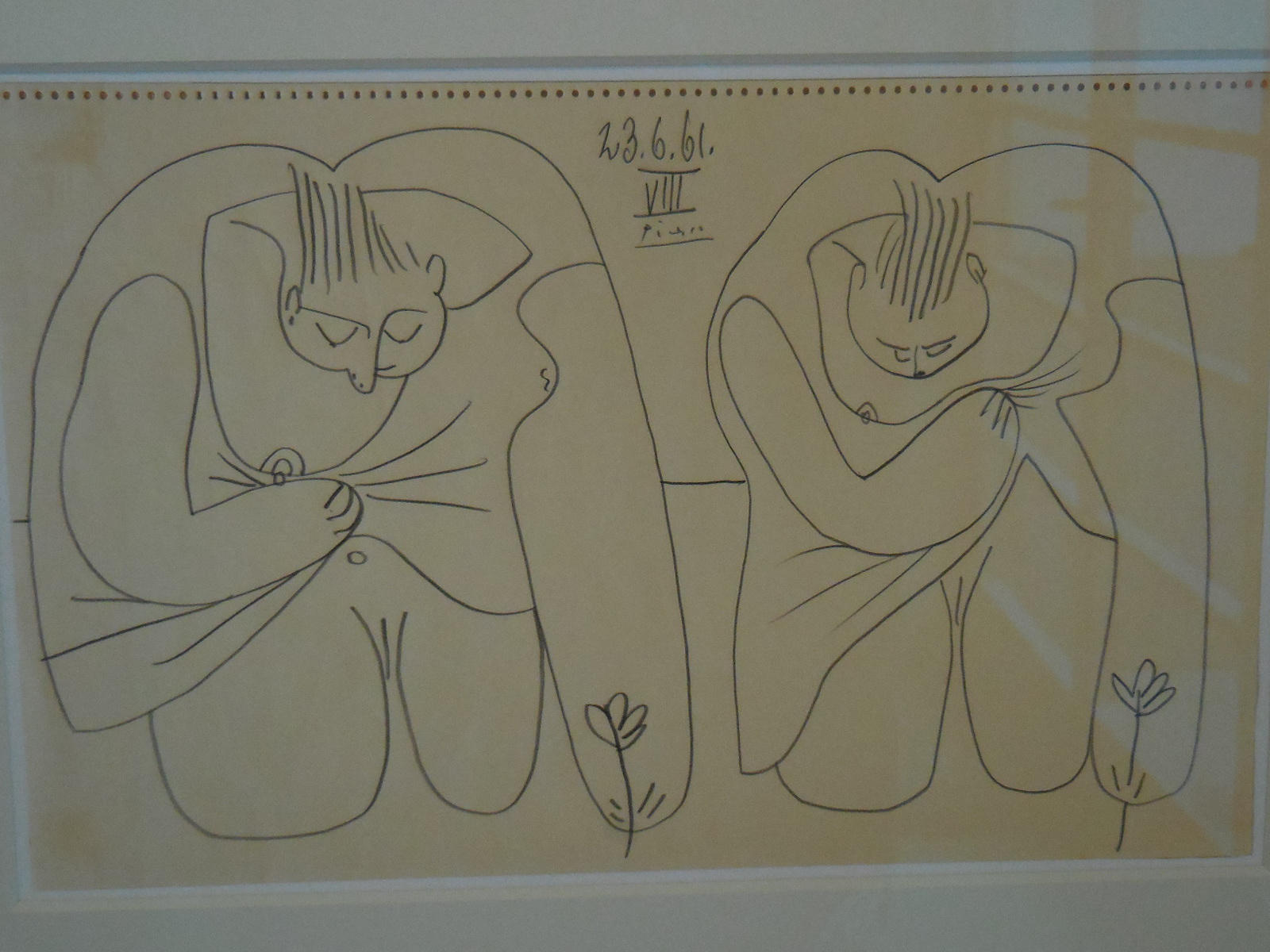
A work by Picasso in the Villa Necchi Campiglio

The interior included Art Deco décor. The Smoking Room featured a large Renaissance fireplace while many paintings and much sculpture from Italian artists in the early 1900s dotted the house museum. Paintings by Pablo Picasso, Giorgio de Chirico and Umberto Boccioni come to mind. Parts of the villa also exuded the atmosphere of the 1800s due to a reconstruction. Some 130 works of art hail from this period – Canaletto and Tiepolo were represented. I also saw intriguing ceramics and Chinese porcelain. The spaces themselves were architecturally evocative.

Main altar at the Church of San Maurizio

The interior of the church of San Maurizio al Monastero Maggiore was a work of art in itself. Divided into two parts, it included a vaulted nave and vaulted chapels plus the Hall of Nuns. The Renaissance church featured 16th century frescoes by Bernardino Luini, his brothers and his son. On the dividing wall in the Hall of Nuns, I gazed at Bernardino Luini’s creations from the 1530s – the figures of Saint Catherine and Saint Agatha as well as scenes from the Marriage at Cana and the Carrying of the Cross of Christ. I also saw his frescoes showing the life of Saint Maurizio. In one chapel Bernardino Luini rendered the martyrdom of Saint Catherine of Alexandria. The main altar with the painting of the Adoration of the Magi by Antonio Campi took my breath away, too.

The Last Supper

At long last I saw The Last Supper in the refectory of the Santa Maria delle Grazie Church. It was a dream come true. The moment following Christ’s assertion that one of those seated at the table would betray him was masterfully portrayed. The facial expressions and body language are works of art in themselves. As Christ utters those immortal words, all the dinner guests look riddled with horror except Judas, who clutches his silver ever so tightly. Even though we were only allowed to be in the room for 15 minutes, I was overcome with amazement at the Renaissance fresco in front of me. It told a complex story so clearly. I was in awe of those gestures and facial expressions.

Gallerie d’Italia in Milan

In the Czech Republic, I had mostly traveled to places I had been before, except for Maleč Chateau, the Strž Villa and the Werich Villa. I saw Milan for the first time, though the trip had been planned and cancelled during two years. I was in awe of the sights I rediscovered and those I experienced for the first time. The visits were eye-opening as I learned new information about Czech and Italian history and culture. The exhibitions of painting, sculpture and more also proved poignant and powerful.

Tracy A. Burns is a proofreader, writer and editor in Prague.

Duomo Museum in Milan

The Interior of the Duomo Milan Cathedral Diary

First, I perused the exterior of the Duomo and walked on the sloping terraces of the roof. Then it was time to see the interior. It certainly did not disappoint. I was aware that the Duomo was the second largest cathedral in Europe and that its size ranked third in the world. To say that construction took a long time was an understatement. Work on the cathedral began in 1386 with the demolition of three buildings and did not finish until 1965.

I noticed that the Duomo featured a Latin cross plan. I knew that the nave was twice as wide as the two side aisles, measuring 45 meters in height. Forty pillars divided five naves. I saw stunning capitals on many pillars. Stunning altars and impressive sarcophagi punctuated the building.

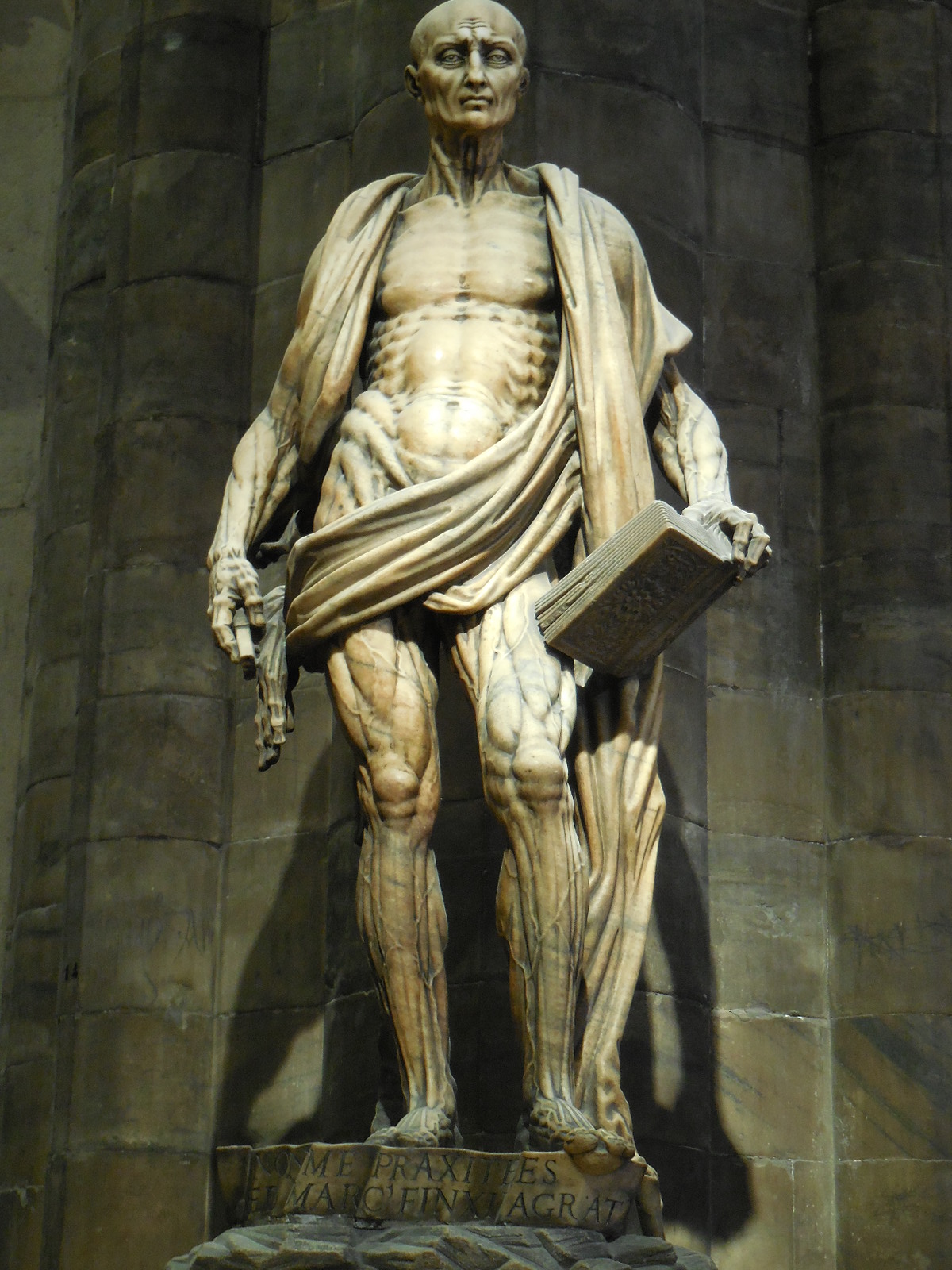
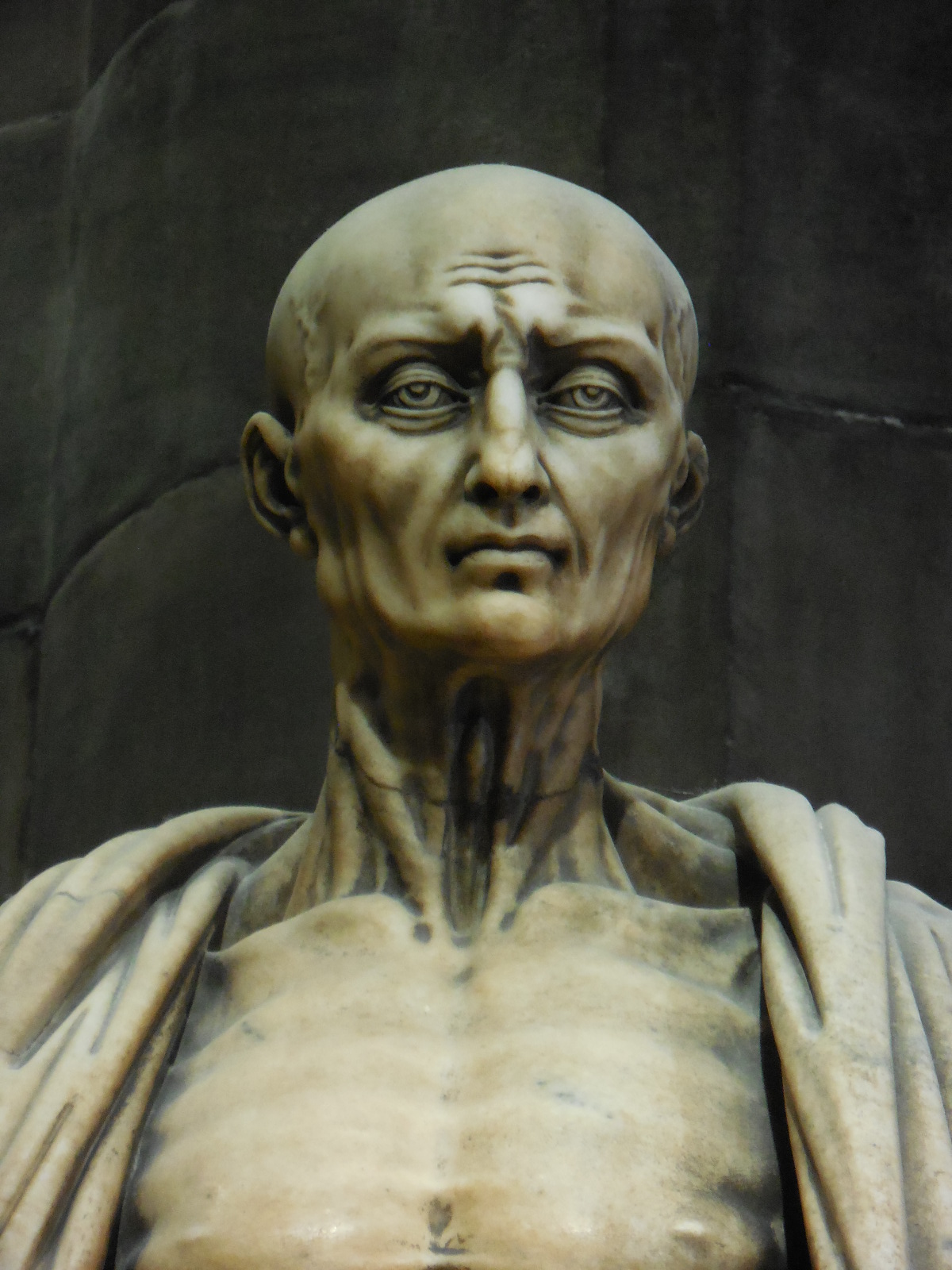
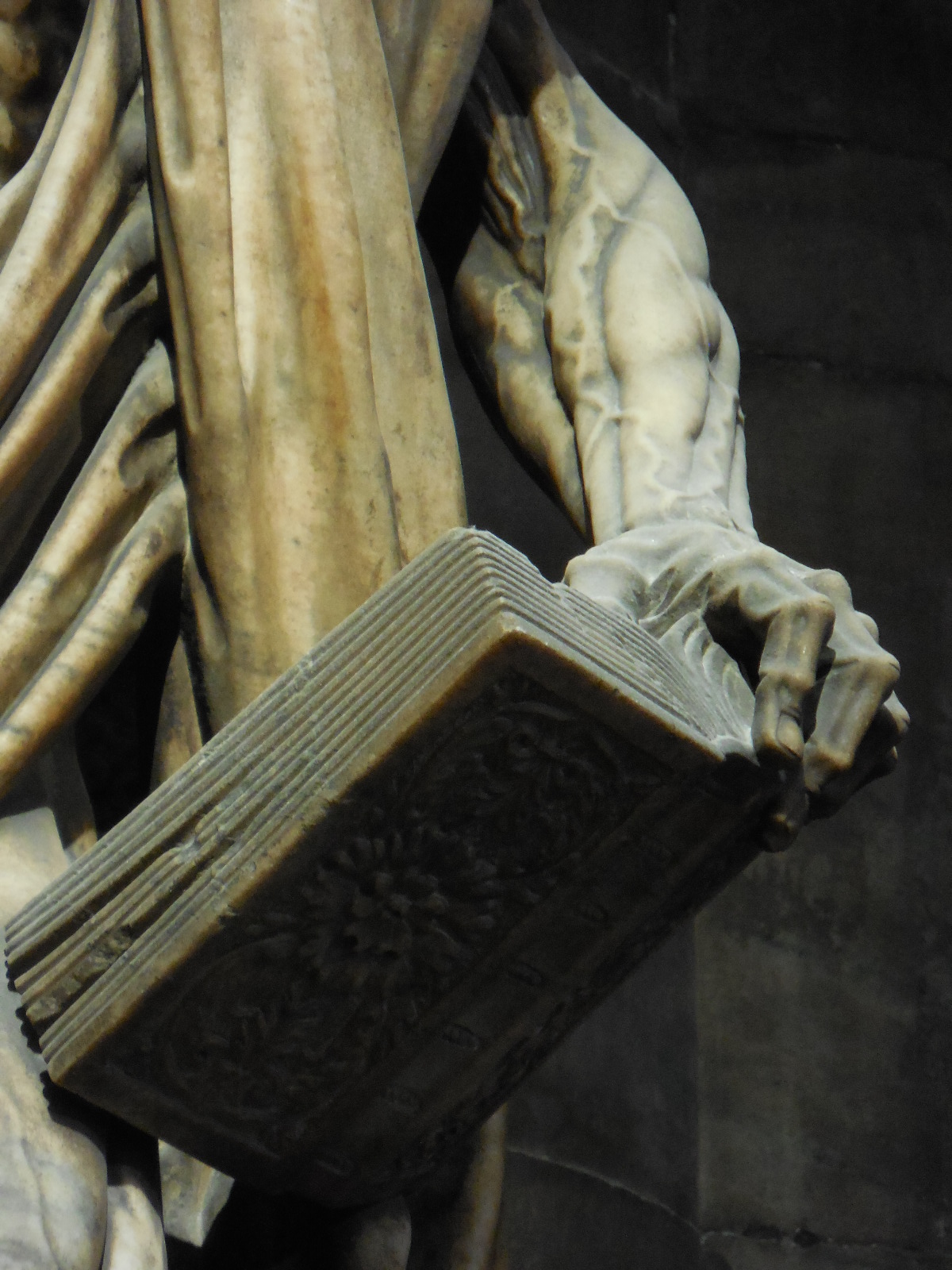
While numerous statues of saints and martyrs dotted the cathedral, the statue which influenced me the most was the one of the flayed Saint Bartholomew, who was depicted holding his skin as a cloak. His ribs and chest, not to mention his whole body, were so anatomically well-defined. The masterful skill of rendering anatomy brought to mind the works of Leonardo da Vinci.  I gazed, almost in a trace, at the 1562-made statue by Marco d’Agrate, that which showed unspeakable suffering and yet a sense of perseverance as well. I thought about those suffering horribly, such as the Ukrainians fighting a war or the mothers and children who have fled to the Czech Republic. I was thankful I did not have to suffer as those people did.

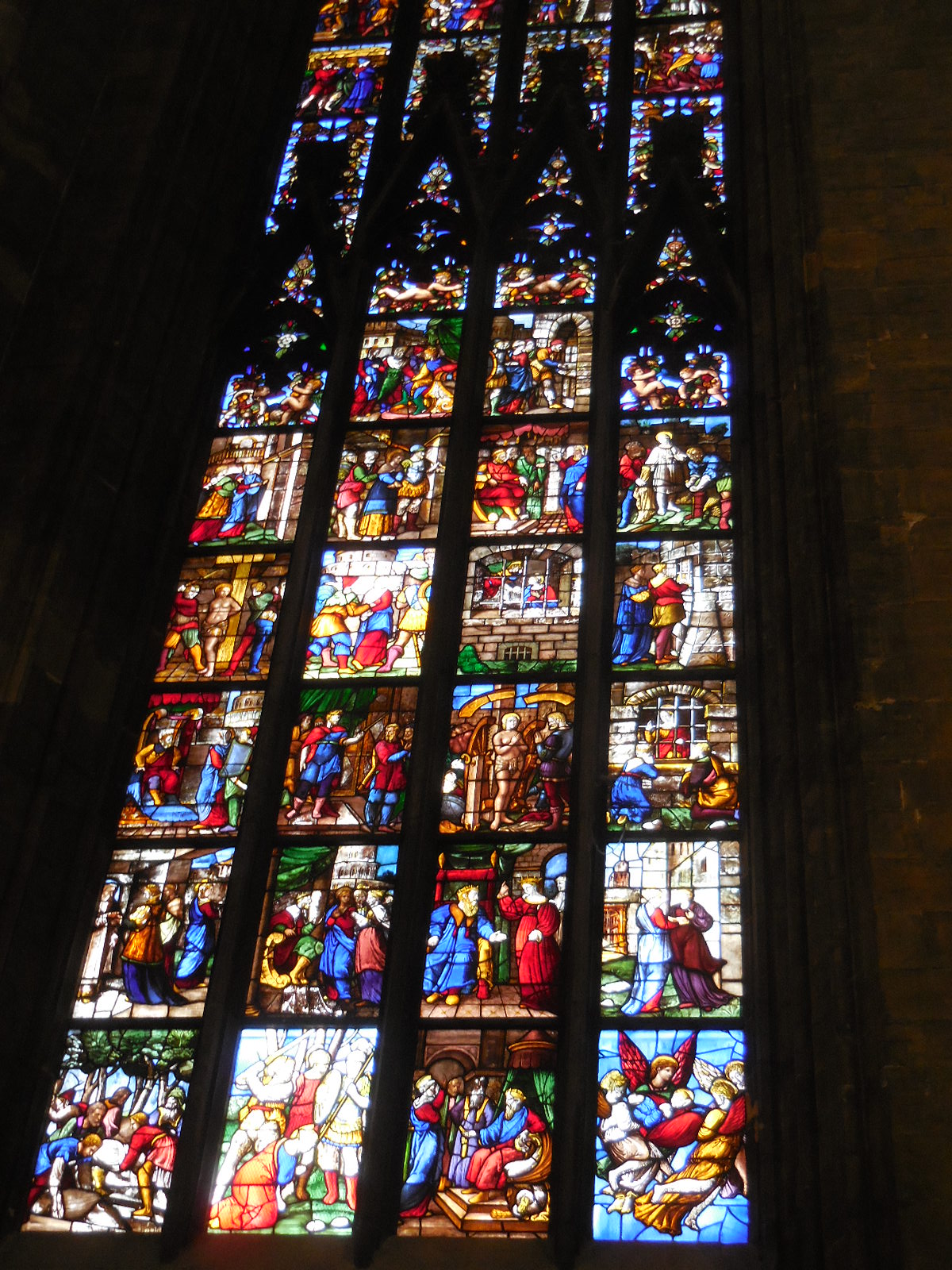
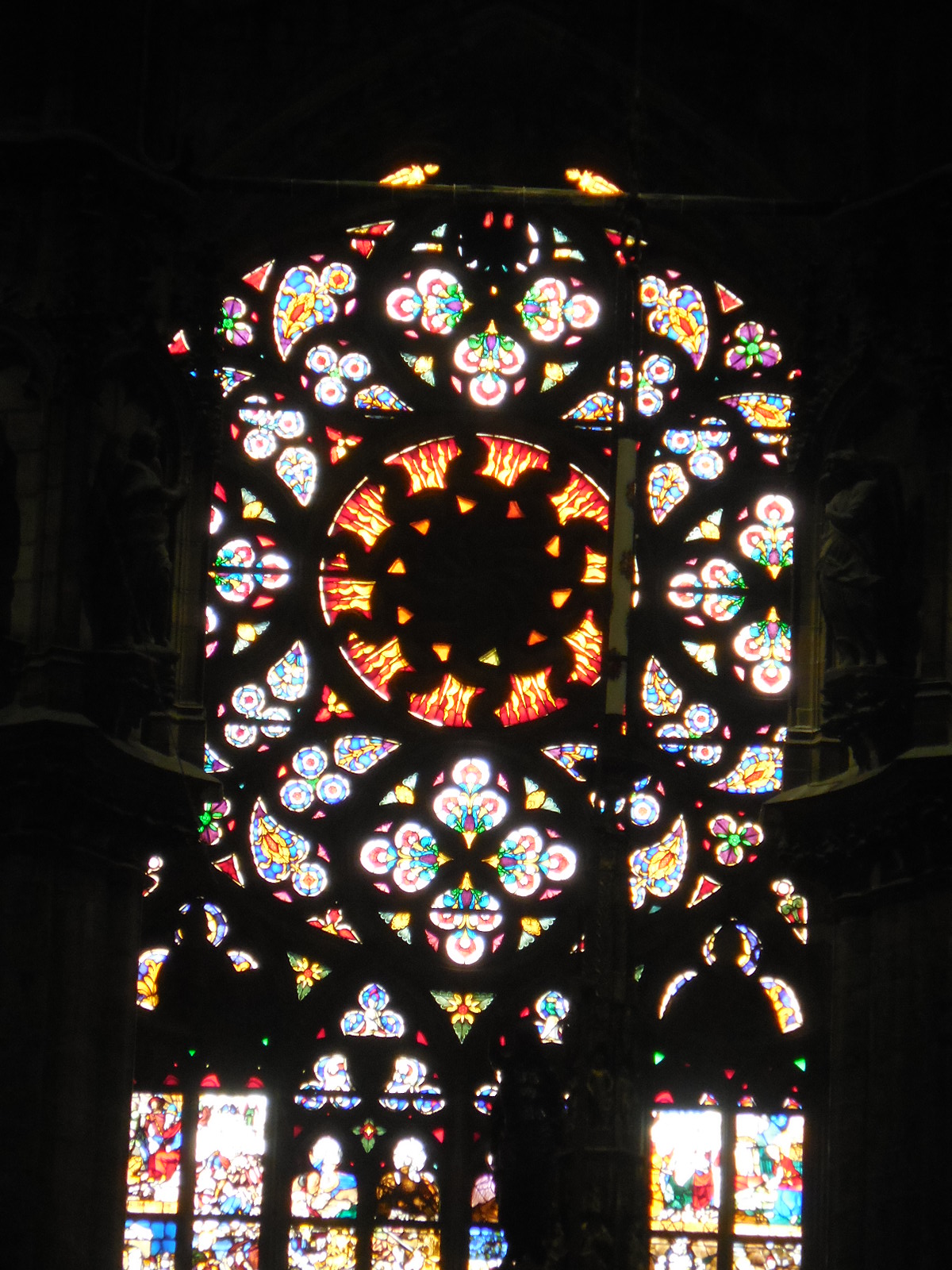
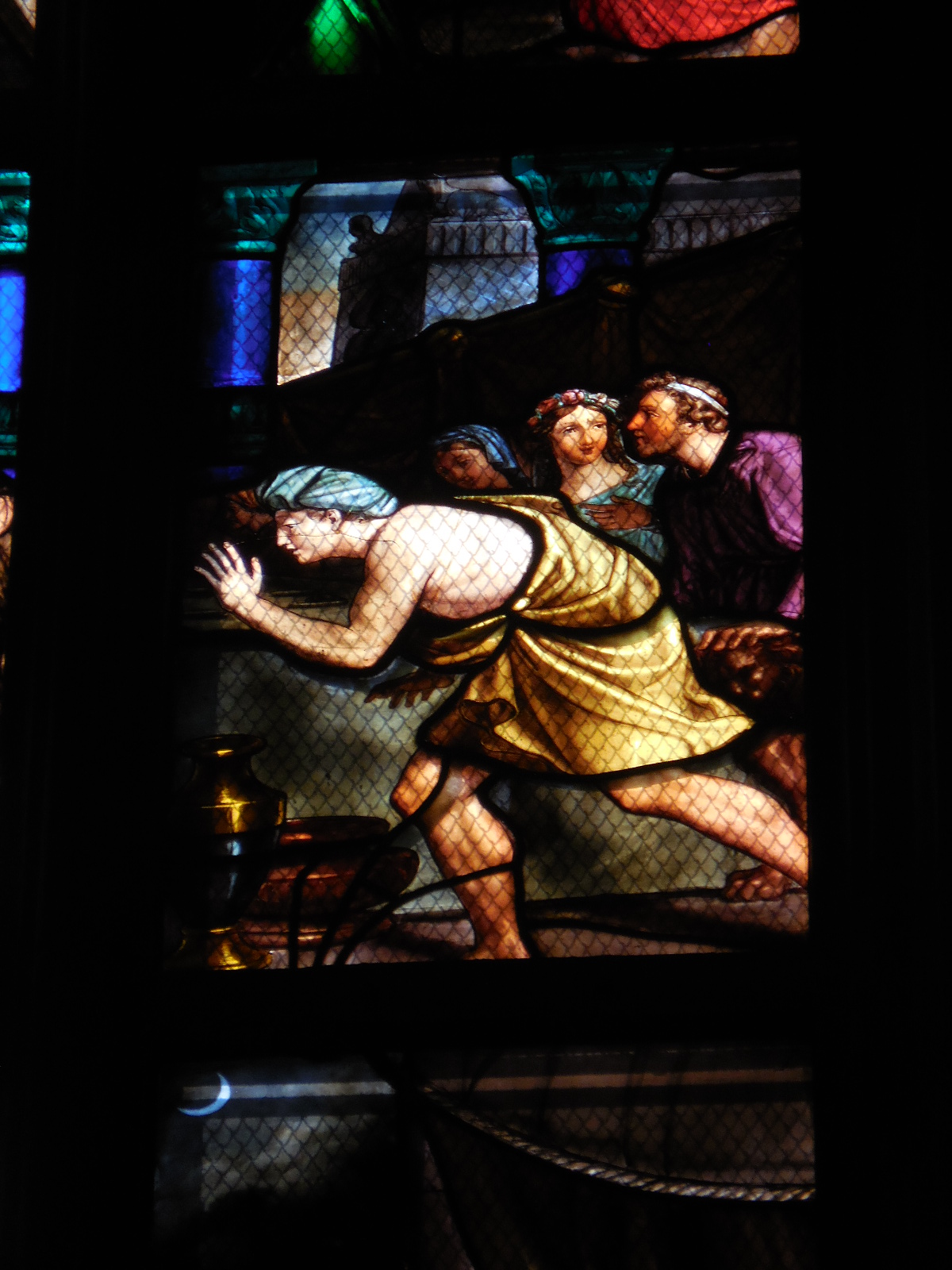
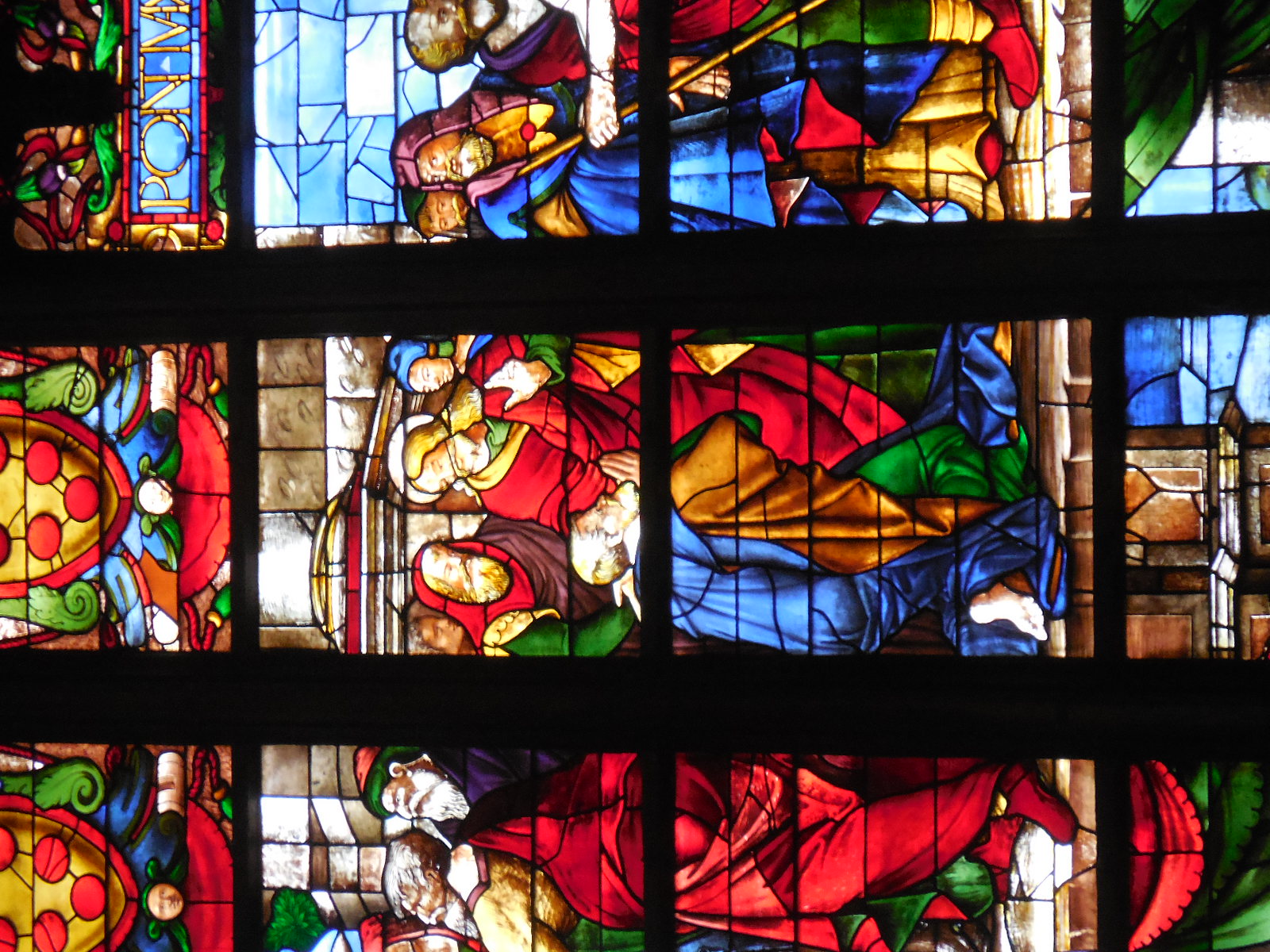
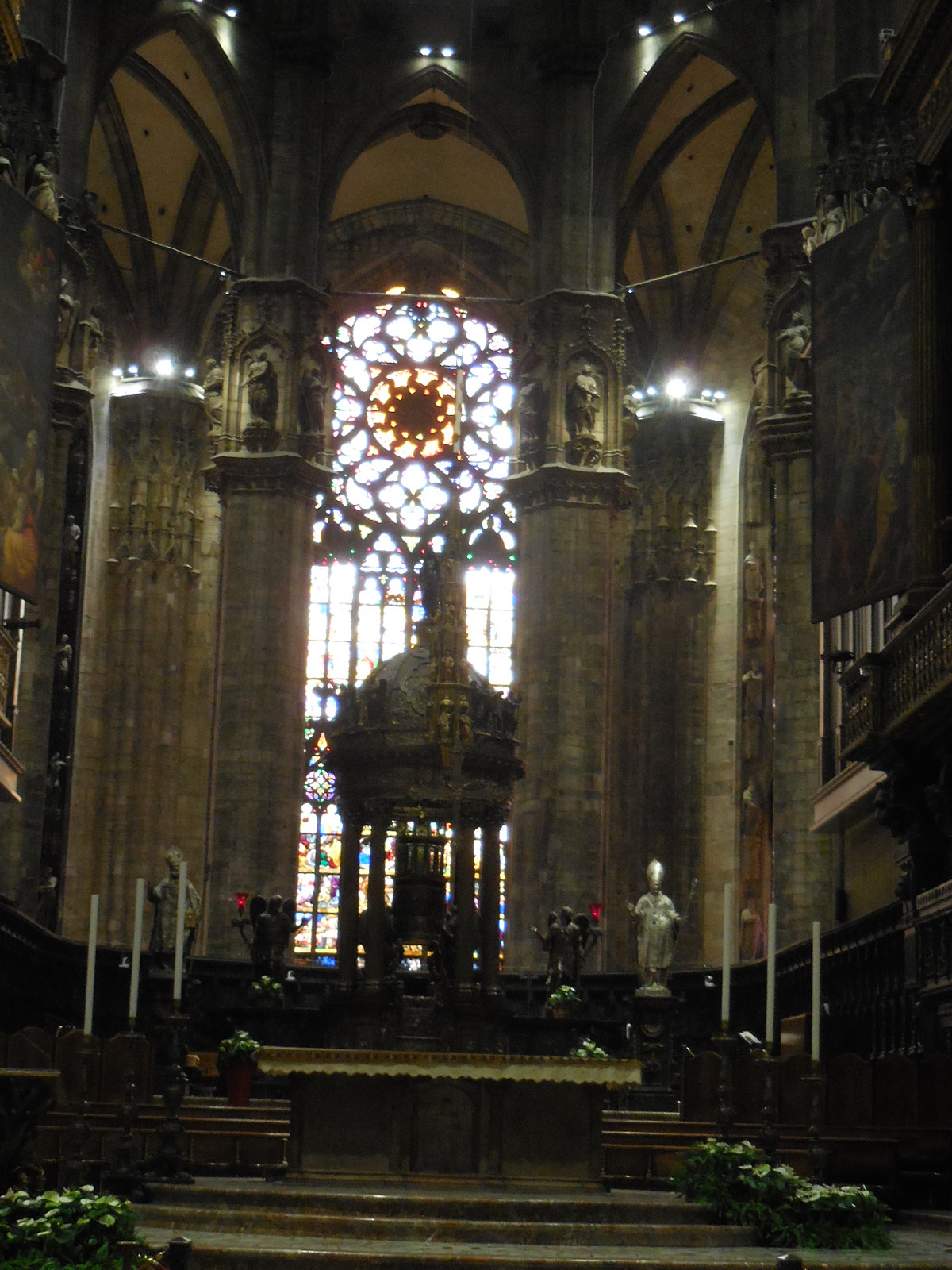
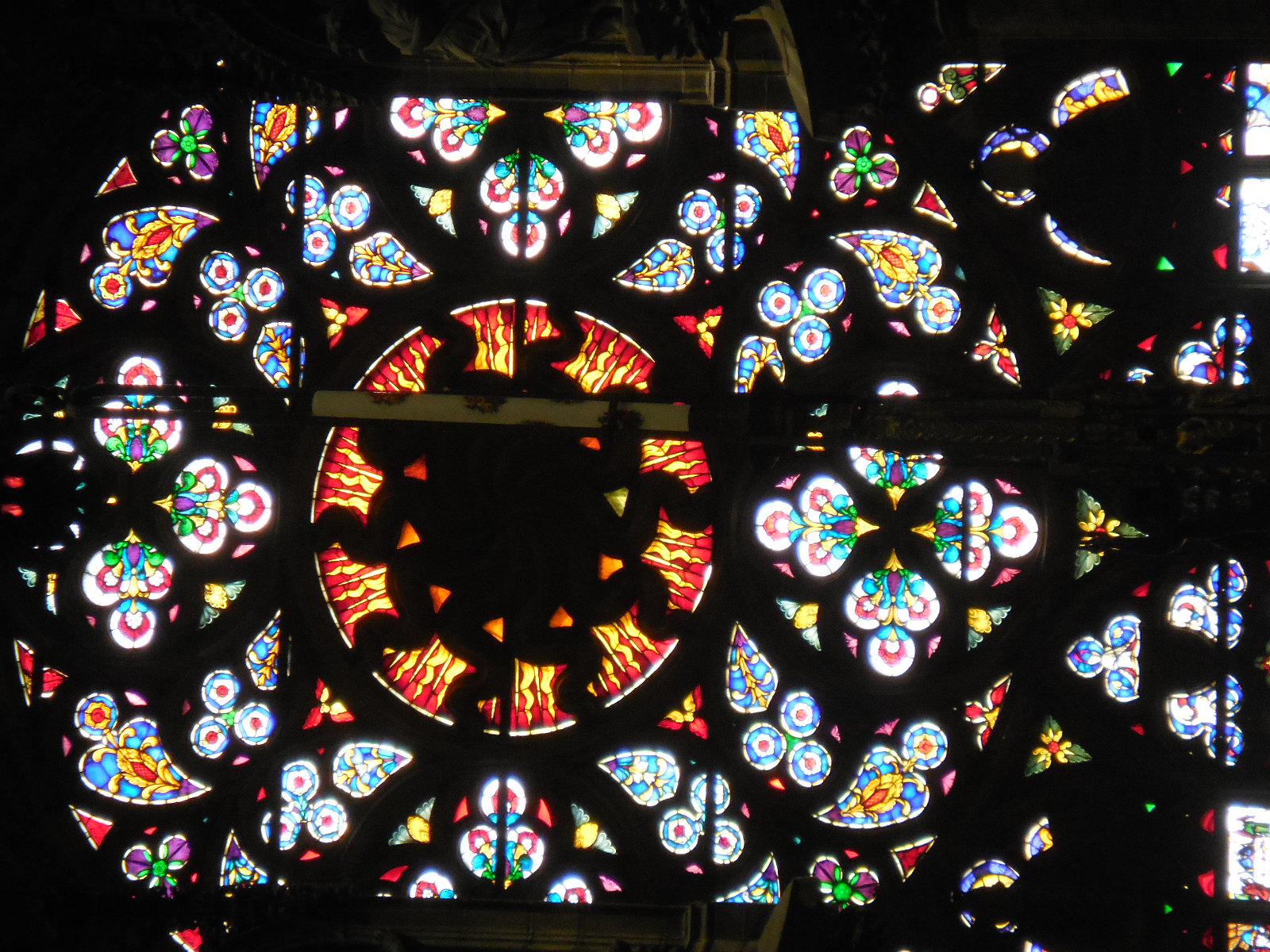
What impressed me just as much as the statue of Saint Bartholomew were the mesmerizing stained-glass windows. All the large windows featured stained glass and served as pictorial narrations of scenes from the Old and New Testaments, the life of Virgin Mary and the lives of various saints. The oldest window dated from the 15th century and was in Renaissance style. In the three walls of the apse, the windows were much younger, hailing from the 19th century while there were even more created in the 20th century. Some windows hailing from the 15th century showed scenes about Saint John Damascene and Saint John the Evangelist.

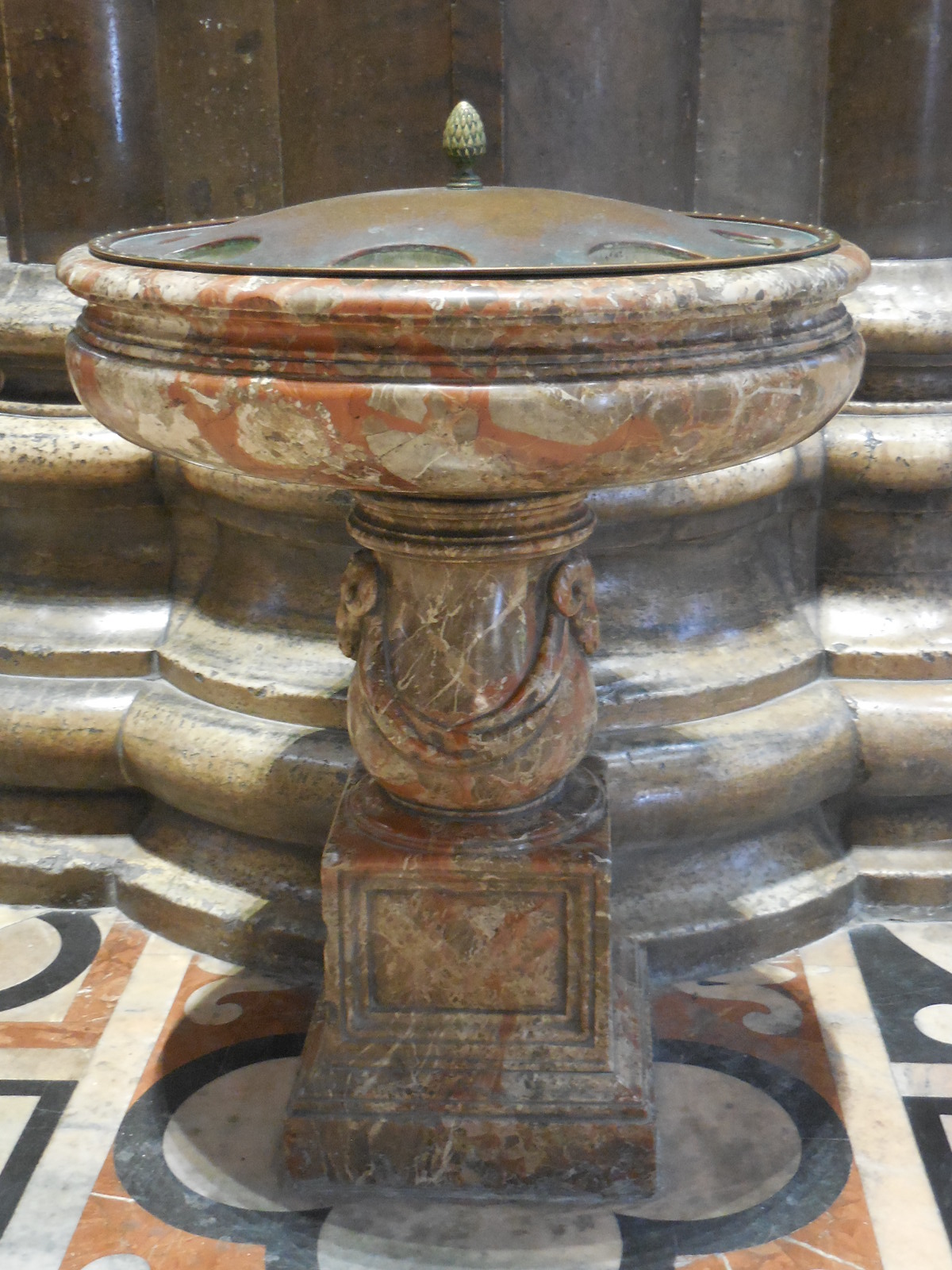
More about the interior: The legendary artist Bramante designed the cupola, which is supported by four pilasters. The baptistery is a 16th century marvel, dominated by an exquisite baptismal font made of porphyry. I also noticed the 18th century sundial. The sun shines on the brass strip exactly at noon. It also displayed the exact time and month.

Several of the sarcophagi were extremely notable. One harkening back to the 15th century and decorated with impressive statues, held the body of Corelli, a merchant who was a patron of the building. In fact, the first spire built in the 18th century was named after him, too.

The transept included three aisles and chapels with splendid altars and artistic creations. The 12th century bronze Trivulzio Candelabrum in Gothic style can be seen here. Its ornamentation was outstanding. The seven-branched Trivulzio Candelabrum was adorned with precious stones. Its height reached five meters. Biblical scenes, allegorical representations of vices and virtues and fantasy-like animals were all represented. One of the Allegory of the Vices appeared as a drunk man.

Gian Giacomo Medici di Marignano, nicknamed the Medeghino, was able to be buried in this cathedral because he had family connections. Appearing pensive and distinguished in his Renaissance likeness, the Medeghino was the brother of Pope Pius IV. His stunning tomb hailed from the 16th century and showed off Roman Renaissance style. Superb allegories of war and peace adorned his tomb.

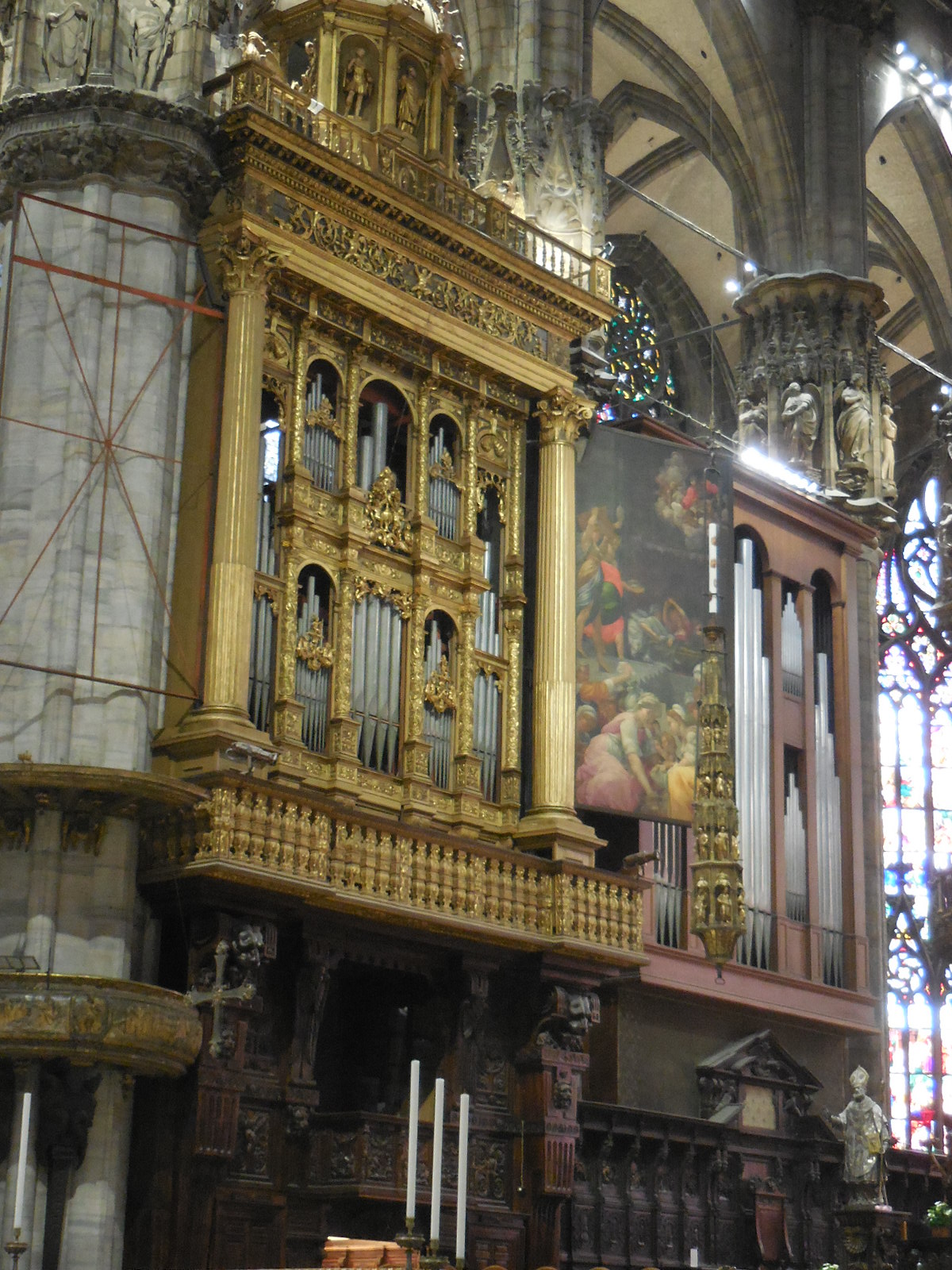
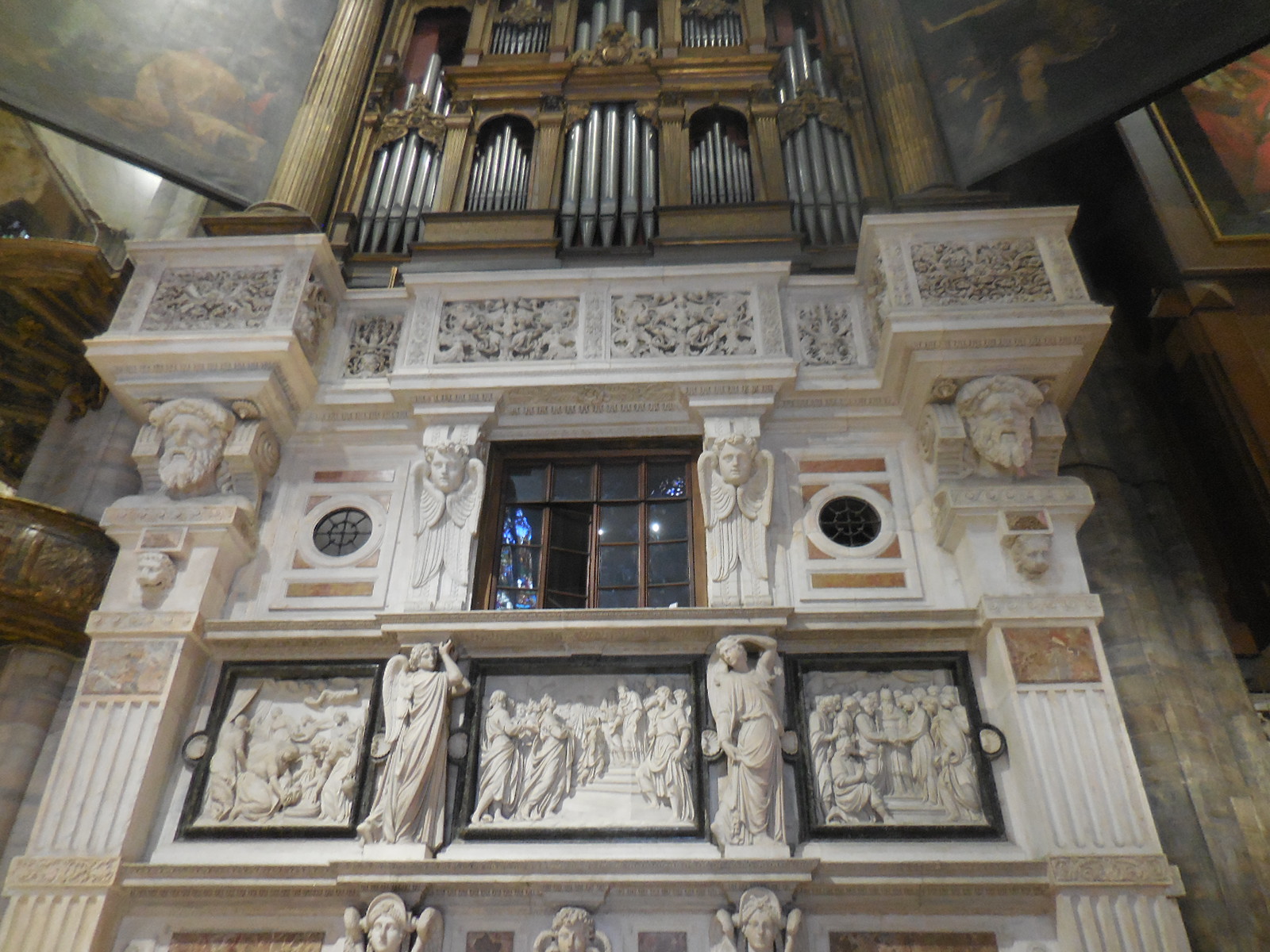
The presbytery harkened back to the 16th century and included a wooden choir, high altar, two pulpits and two large organs, one of which is the largest in Italy. This organ boasted of five manuals and 225 pedals. Silver statues representing saints and a tabernacle made up the ciborium. Above the choir was a large wooden Crucifix with a shrine containing the Holy Nail, supposedly taken from the Cross of the Crucifixion. I mused how intriguing it must be to witness the annual Rite of the Nivola. That’s when the archbishop takes the Holy Nail out of shrine and places it near the main altar. People can pay their respects to it for the following three days.

I made sure I looked down as well. The Candoglia marble floors ranged in age from the 16th to the 20th century. The pink-and-white slabs along with the black-and-red pieces were so beautiful and precious. I stared at the stunning Gothic portals from the 14th century in the sacristies and thought of the many Gothic churches, modest in comparison, that I had visited. The crypt was closed, but I knew that it contained an altar with relics of saints and martyrs.

It took me several hours to familiarize myself with both the exterior and interior of the Duomo. It was an experience that I would never forget. All those centuries of history fused together to make such a grand work of architecture containing so many artistic creations. I was overwhelmed and needed time to process everything that I had seen. I decided to go to lunch over which I could ponder the symbol of the city. Then I would go to a large bookstore, one of my favorite pastimes, and then proceed to the Museum of the Duomo and the Titian exhibition.

Tracy A. Burns is a writer, proofreader and editor in Prague.

Exterior of the Duomo Milan Cathedral Diary

When I arrived at the Duomo in Milan with my camera, it was about six am. I hadn’t been able to sleep because I was so anxious about my exciting itinerary for my first full day in the city. The large square was almost empty, though an occasional jogger passed through. I spent at least an hour walking around the cathedral, gazing at the exterior decoration – the spires, the large windows, the flying buttresses, the rich sculptural adornment, the gargoyles and more.

The Duomo is an architectural gem with a dominating Gothic exterior. It is the symbol of the city I would grow quickly to love. The Milan Cathedral ranks as the largest church in the country, though St. Peter’s Basilica in the Vatican is bigger. The cathedral is one of the largest in the world. Construction started in 1386 and didn’t end until 1965, spanning six centuries. It has 135 spires, the first finished in 1404. Some of its150 gargoyles harken back to the 14th century.

While the style of the cathedral does not correspond to only one type, many features are in French Gothic style, such as the flying buttresses and rib vault. The statuary on the exterior stems from various eras. Some statues were created from 1418 to the middle of the 16th century, placed in niches of capitals of pillars. Many more were created in the 18th century in Late Baroque style. External statuary of the prophets and apostles are in Neo-Classical style. New stained-glass windows were installed in 1470. The construction of the façade started in 1590 in late Mannerist style and was finished in Neo-Gothic style under the guidance of Napoleon Bonaparte’s reign in the 1800s. Using the art of painting on glass, new stained-glass windows were made from 1829 to 1858. During the 19th century more spires were constructed, and the roof terraces were finished. Flying buttresses also appeared as did more statues.

Bombing during August of 1943 damaged the structure, but it was reconstructed. The wooden doors were replaced with bronze ones. The main façade was renovated from 2003 to 2009 in Candoglia marble.

Because the cathedral was not yet open, I was able to study its closed bronze doors. One showed the history of life of Mary with floral reliefs. Another depicted the history of Milan and yet another the history of the cathedral itself. The reliefs on the doors were incredible. I saw the Assumption, the Sacrifice of Cain, David with the Head of Goliath, the Tower of Babel and other biblical pictorial renditions. The floral and animal decoration on the central door was outstanding, too. The tympanium was worth noting, too. The one in the central portal showed off the Creation of Eve.

Later that morning, I walked on the sloping terraces of the roof with its pinnacles and spires on flying buttresses. Gazing at the sheer beauty of the cathedral’s exterior from high up was astounding. I spotted the octagonal lantern from the 15th century with its Madonnina statue from 1769. The Madonnina reaches more than four meters high. The total height of the cathedral is 108.5 meters. The view of the city and spires was phenomenal. It was calming and soothing seeing all the people so far below. Up there I didn’t have a reason to rush or worry. It made me think of how we have to open ourselves to new perspectives when traveling. This applies in daily life as well. Whenever I had a pessimistic attitude, I had to try to see the problem from a fresh perspective that would give me a more positive outlook.

After my visit to the roof terraces, it was time to take a look inside the cathedral. I had expected the cathedral to impress me, even to overwhelm me with its beauty, and it had done just that. I made my way down the narrow spiral staircase to the ground floor, certain I would continue to be amazed at the beauty of such an architectural gem.

Tracy A. Burns is a writer, proofreader and editor in Prague.

Mucha: The Family Collection Exhibition Diary

I have been a fan of Alphonse Mucha’s Art Nouveau works ever since I came to Prague in the 1990s. While he is best known for his exhilarating posters of actress Sarah Bernhardt, Mucha was a very versatile artist – as is evidenced in this comprehensive exhibition of creations owned by his descendants. The first extensive showing of his works in 30 years is housed at Prague’s Waldstein Palace. The exhibition highlights not only the advertising posters but also his drawings, paintings, sculptures, photos and jewelry, for instance. The family displays some originals to the public for the first time.  

Family portraits evoking Mucha’s childhood add an intimate feel to the exhibition. Born in Ivančice, Moravia, Mucha called home a building that also included the town jail. The Czech lands were under Austrian rule when Mucha grew up. They were part of the Habsburg Empire in which German was the official language. Yet, during that era, the Czech National Revival took place, when Czech nationalists promoted Czech culture and the Czech language.

At the end of 1894, Mucha became a star overnight when he designed a poster for Bernhardt’s production of Gismonda. The following year he created posters that decorated calendars, postcards and menus as well as theatre programs. His work would find enthusiastic audiences in Vienna, Prague, Budapest, Munich, London, New York and other cities during subsequent years.

I loved how, in his advertising posters, Mucha utilized folk features not only found in Czech art but also in Byzantine, Islamic, Japanese, Gothic, Judaic, Celtic and Rococo works. Much of this genre focuses on beautiful, young women with an optimistic and cheerful flair. They are wearing flowing robes in pastel colors. I loved the touches of floral and plant ornamentation plus arabesques and naturalistic elements, too.

The exhibition boasted family portraits and photos, such as those of his friends Paul Gaugin and Auguste Rodin. Gaugin even was Mucha’s housemate for a while. During the Paris Exposition Universalle of 1900, Mucha represented Austria-Hungary as the show focused on the accomplishments of the past century. I had not known that in 1899 Mucha had designed a jewelry collection that was featured at this major show. One of the jewelry pieces on display at the exhibition features a snake-shaped broach that Bernhardt wore during her portrayal as Medusa. I also was captivated by Mucha’s decorations for a German theatre in the USA. He would wind up making three trips to the United States, hailed by The New York Daily News as “the world’s greatest decorative artist.”
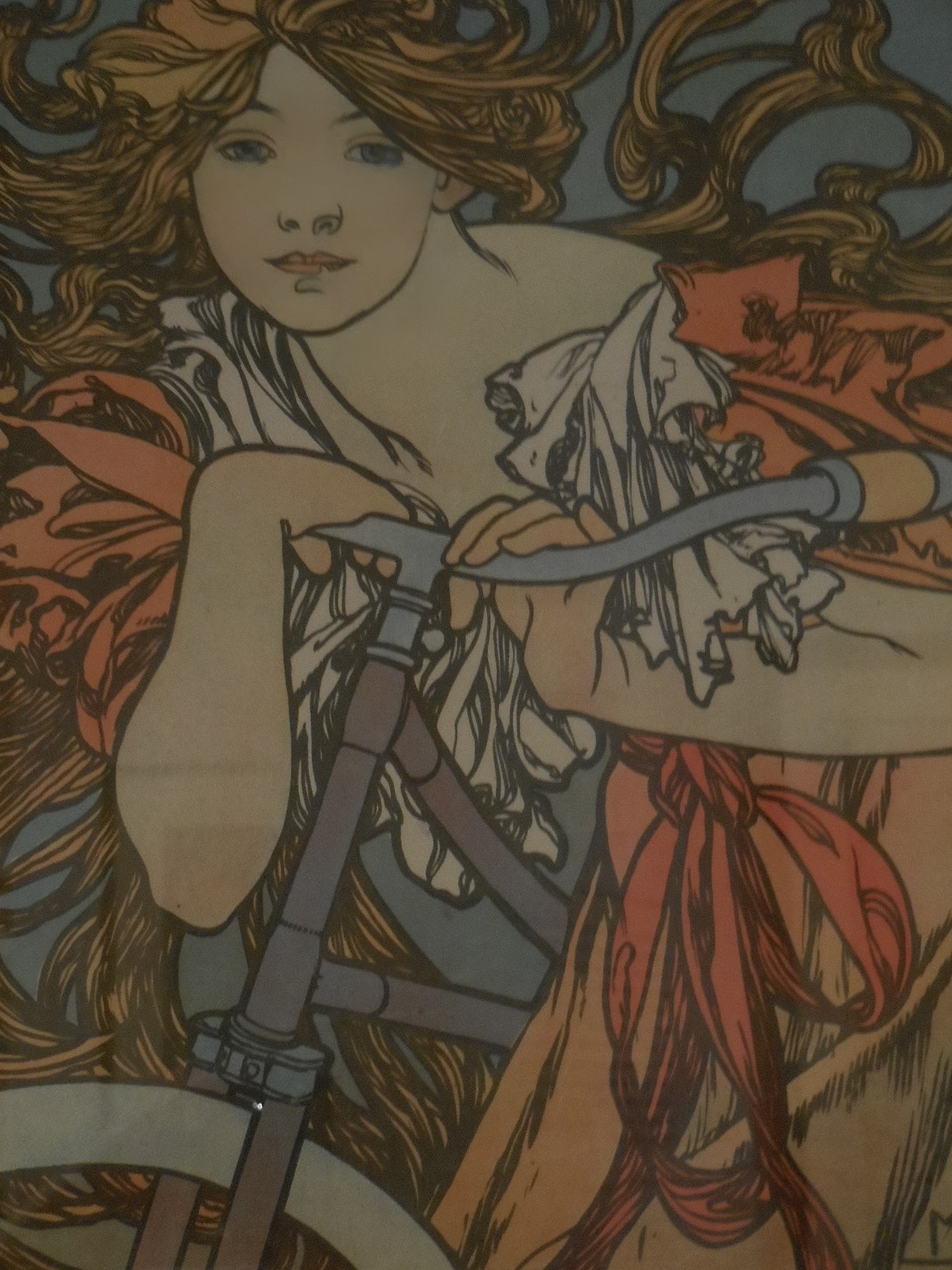
Works in the exhibition illustrated how mysticism had influenced him. His philosophy is also apparent in his creations. For example, he believed in beauty, truth and love to guide him on the spiritual path. For a monument he created a triptych called The Age of Reason, the Age of Wisdom and the Age of Love, fusing these three characteristics into one piece of art. Unfortunately, Mucha didn’t get the chance to finish it.

Perhaps what always captivates me the most about Mucha’s art is his emphasis on Slav identity. Indeed, his phenomenal Slav Epic paintings feature the heroic tales of the Slavs in 20 historical, symbolic canvases. Several reproductions of these works at the exhibition reinforced Mucha’s identity as a Czech and Slav patriot.

I saw panels devoted to Mucha’s decorations in the Municipal House, for which he designed numerous pieces – three wall panels, a ceiling painting depicting prominent Czech personalities, eight pendentives and furnishings. I remember seeing these for myself on tours of the Art Nouveau Municipal House, something I recommend to every Prague visitor. It is notable that, while Mucha’s works often were rooted in Slav identity in the past, he also looked to the future for a prosperous Czech nation.

I was enamored by the reproductions of his stained-glass window designs. The originals decorate the interior of Saint Vitus’ Cathedral at Prague Castle. In 1931 he portrayed Saint Wenceslas, the nation’s patron saint, as a child with his grandmother Saint Ludmila in a central panel along with other panels featuring the lives and work of Saints Cyril and Methodius. Seeing examples of his colorful and vibrant stained glass renditions close-up was for me one of the highlights of this exhibition.

Mucha’s life was cut short by the arrival of the Nazis in Prague, where they set up the Protectorate of Bohemia and Moravia during March of 1939. The 79-year-old Mucha, riddled with health problems, was targeted by the Gestapo. Mucha was a Freemason, Judeophile and a promoter of democratic Czechoslovakia. He was one of the first to be interrogated by the Nazis. Mucha was stricken with pneumonia due to the strain from grueling interrogations and died in Prague 10 days short of his 79th birthday on July 14th, 1939. He is now buried in Prague’s Vyšehrad Cemetery along with other prominent Czechs.

This exhibition takes museumgoers on a unique and unforgettable journey from his childhood roots in Moravia to his time as an outsider in Paris to his experiences in the democratic Czechoslovakia until his untimely death. It stresses his identity as a Moravian, as a Czech, as a Slav and as a European. It shows his accomplishments in the art scene by displaying an eclectic collection of his creations that profoundly punctuated the artistic world.

Tracy A. Burns is a writer, proofreader and editor in Prague.

Museum of Ancient Art and Arms at Sforza Castle Diary

The Sforza Castle in Milan was built for Galeazzo II Visconti in the second half of the 14th century. It was destroyed in the 15th century, but Francesco Sforza rebuilt it. Then the Sforza family used it as a residence. The end of the 1400s was a time of splendor. During the 15th century, Leonardo da Vinci and Bramante created frescoes in the castle. The castle became one of the largest in Europe in the 16th century.

Later, the castle was changed into a citadel. The ducal apartments were used as barracks and stables under Spanish, Austrian, French and again Austrian rule. An armory was for a time also on the premises. At the end of the 1800s, the castle became the property of the city of Milan. When Italy was unified, the castle was in a very dilapidated state, but the complex to be reconstructed and made into a museum. The castle took on the appearance it had when it had been under Sforza control. Though the central tower is not original, it is made to look like it had when built in 1521.

During World War II, the complex suffered much damage but was reconstructed. Now the castle includes museums and cultural institutes.

The collection of the Museum of Ancient Art and Arms features sculpture from the fifth to the 16th century, some from Lombardy and others from Tuscany. Some rooms are decorated with stunning frescoes. An armory containing European weapons from the end of the 14th to the 19th century and an impressive room of tapestries also make up the exhibition. Sixteenth century Flemish tapestries intrigued me. Saint Ambrose dominates another tapestry. Two medieval portals and tombstones are also on display.

Visitors walk through the ducal apartments decorated by Galeazzo Maria Sforza. I was especially impressed with the ducal chapel. Leonardo da Vinci designed and frescoed the Sala delle Asse (Room of Wooden Boards), which was being restored when I was there. I read that the walls and vaulted ceiling of this room are painted with trompe l‘oeil. The vault shows off branches leaves and berries that give the illusion that the space is outside instead of in a castle. In other rooms the Spanish domination is highlighted with sculpture and the remarkable funerary monument of Gaston de Foix, created from 1517 to 1522.

Tracy A. Burns is a writer, proofreader and editor in Prague.