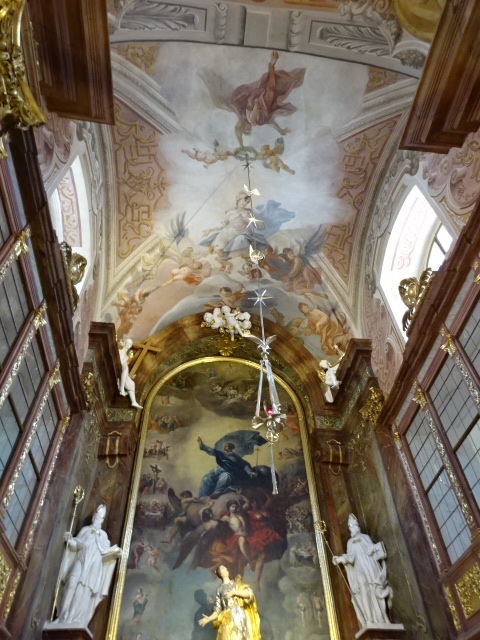
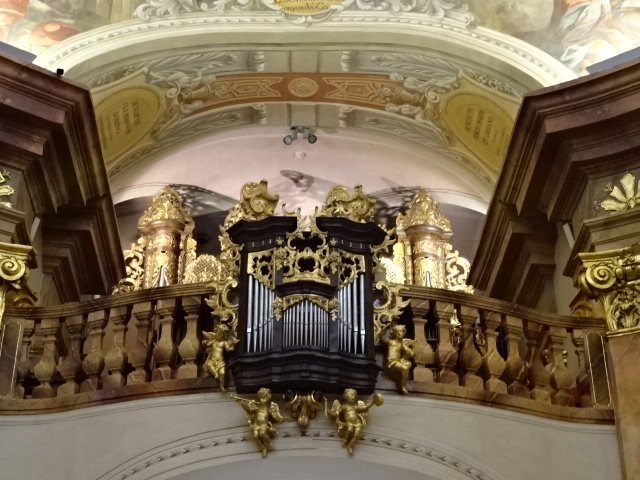
I visited this church, which became a national monument in 2002, for the very first time during 2025. The tour guide, who played for us the exquisite organ, narrated the history of the holy building. The first church on the premises was destroyed by a fire during 1631. The chateau, town hall and some houses also burned down during that catastrophe. There was only one object that survived the fire: a book about the church tower that was erected in 1562. This was not the only fire that would decimate the town during this era. The chateau’s owner Jan Adam of Questenberk, responsible for Jaroměřice’s golden era, promoted the reconstruction for the current church, built in 1737.
The church was in disrepair during the recent 2000s, but much reconstruction occurred from 2019 and lasted until 2022, taking three years to revive the structure that had been so dilapidated. A new sacristy was installed. Electrical and heating systems were redone.
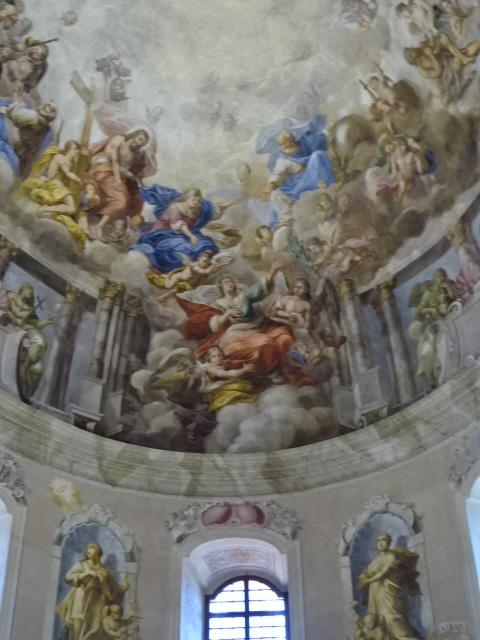
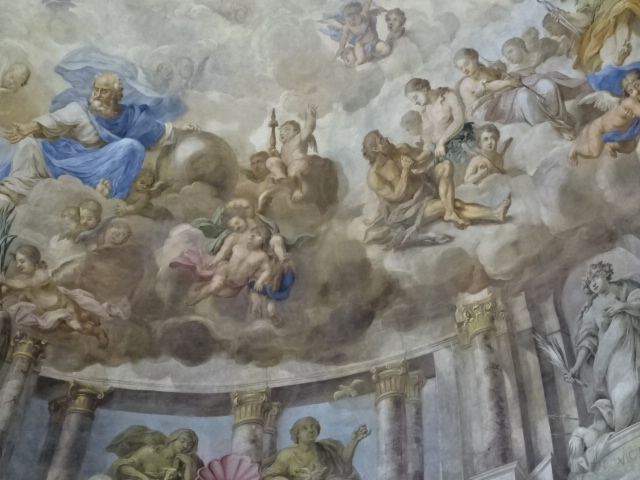
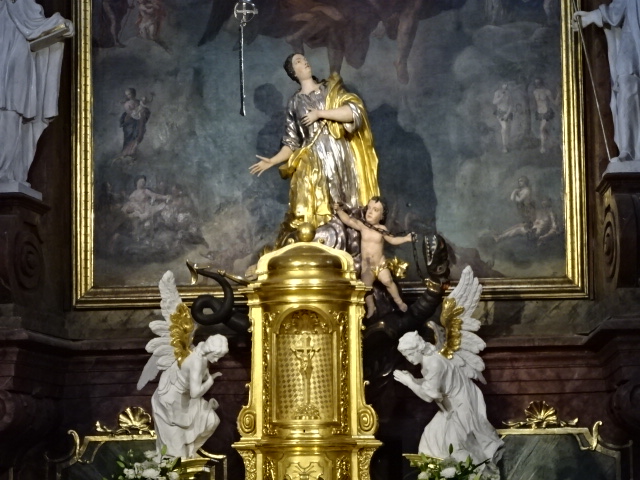
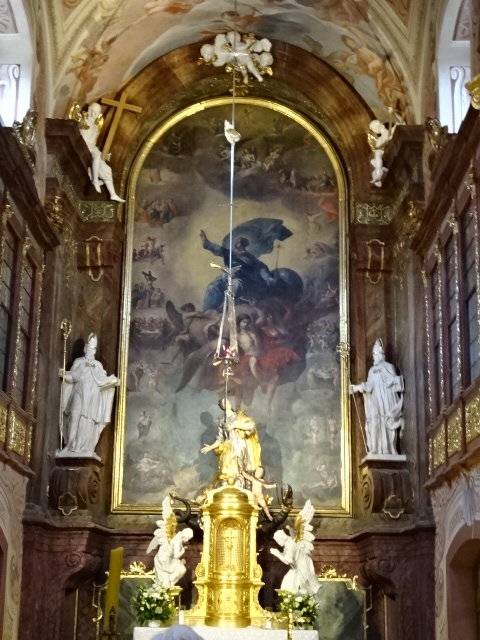
I inspected the main altar. The painting showed fluttering angels surrounding Saint Markéta as they placed laurel wreaths on the holy figure’s head. The creation of light was a major theme in this artwork. I was overwhelmed by the ceiling fresco, which measured 450m2. Painted by Karel František Tepper in 1737, it showed off Saint Markéta in all her glory and celebrated the town of Jaroměřice.
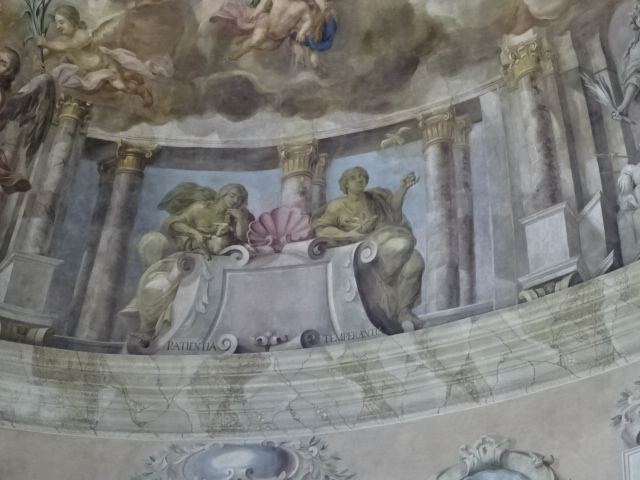
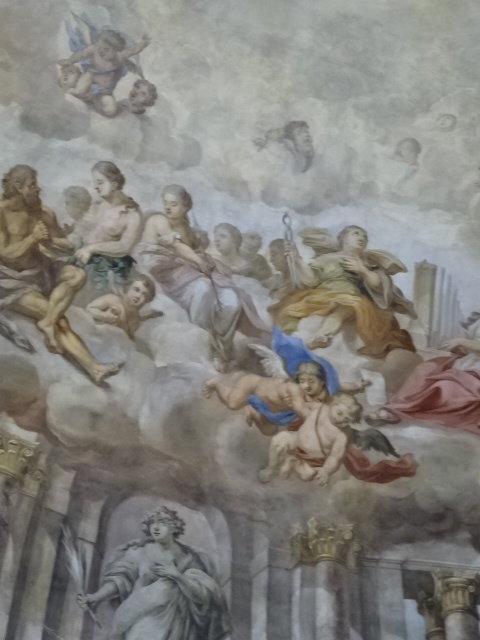
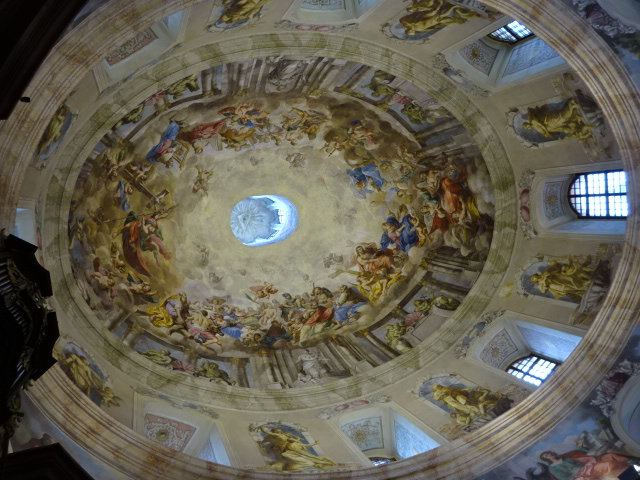
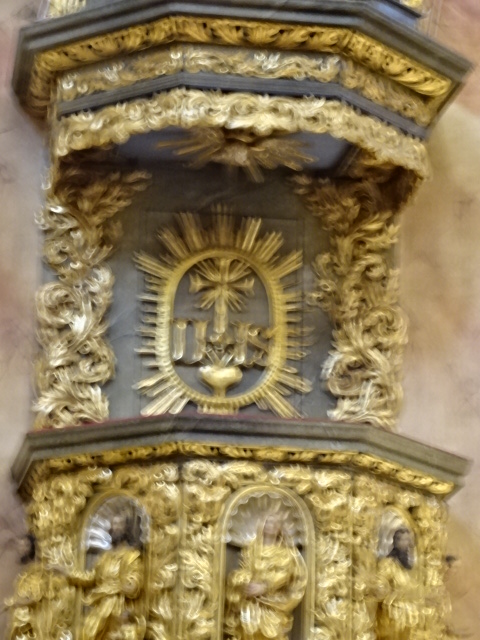
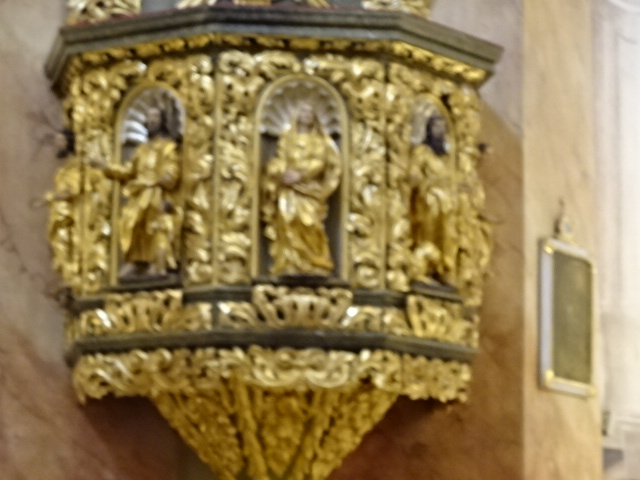
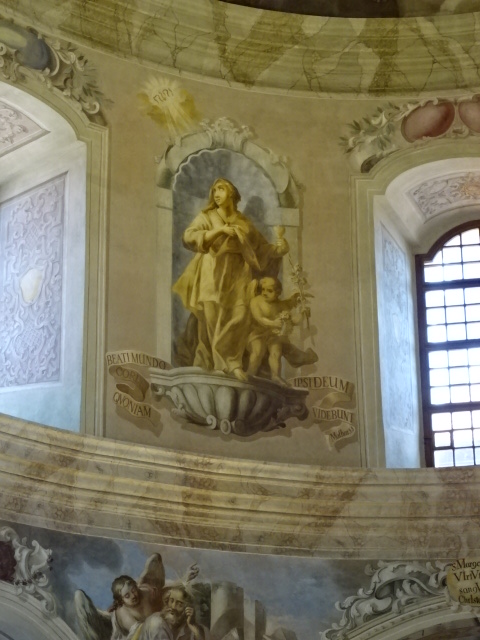
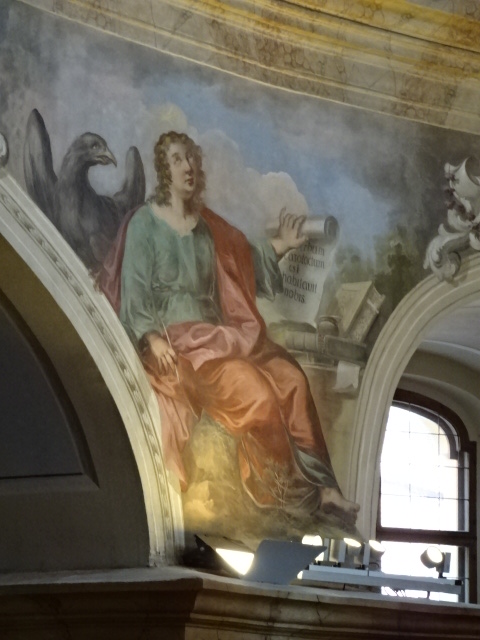
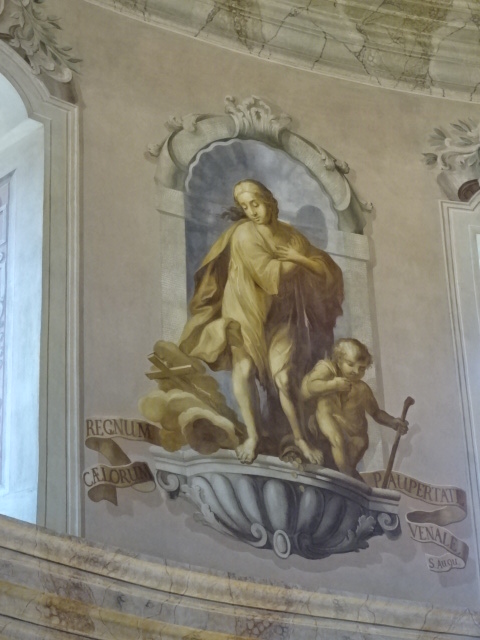
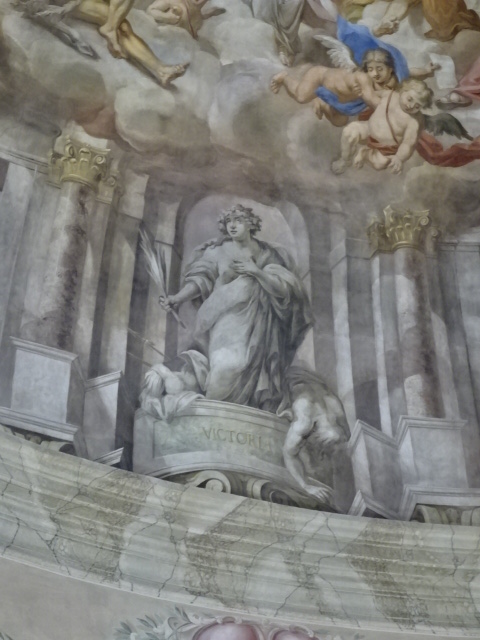
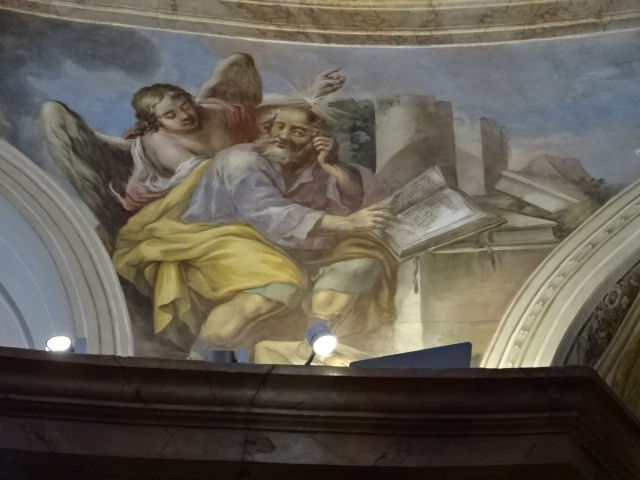
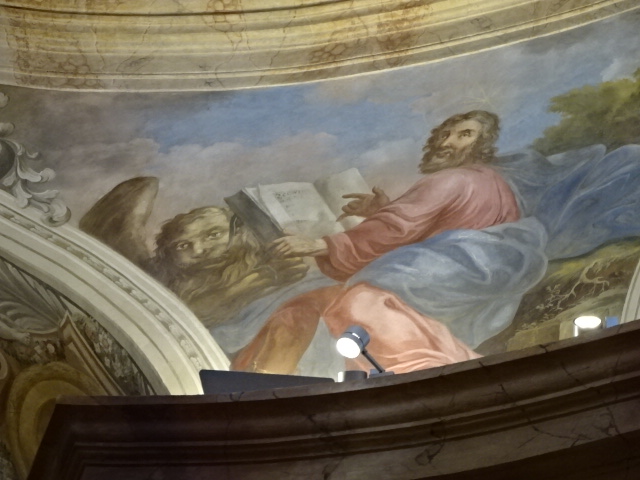
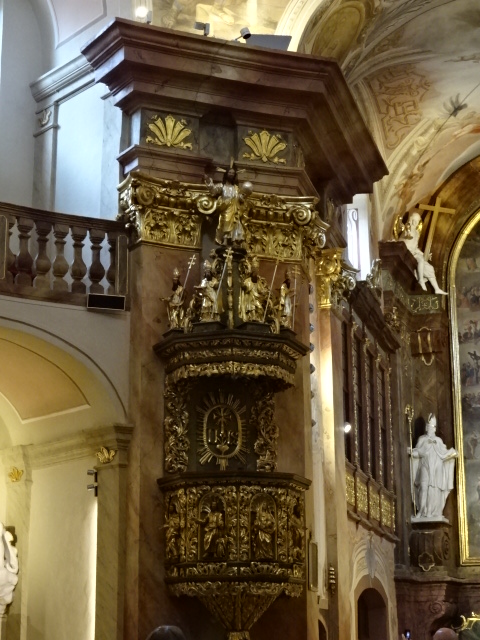
I counted seven side altars and marveled at the paintings of the Evangelists and Roman gods on the upper walls of the church. The remains of Saint Vincent and Saint Rupert were in impressive reliquaries. The pulpit was astounding, too. An astounding altar of Saint Anna took my breath away, too. The church had two square towers, both more than 40 meters in height and each with two floors. I did not overlook the beauty of the exquisitely painted cupola, either. The baptismal font is new, from the most recent reconstruction.
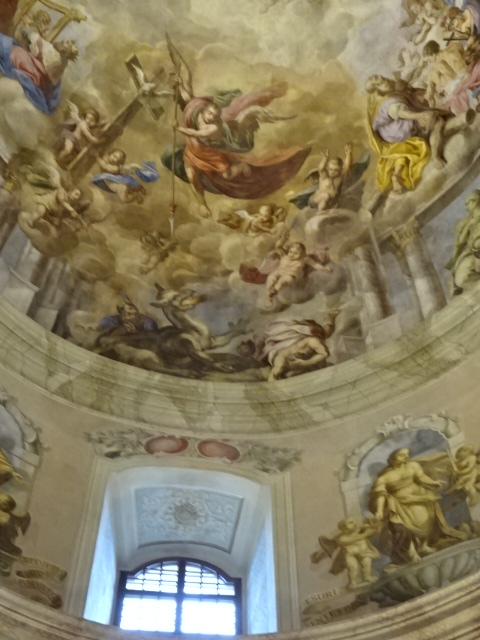
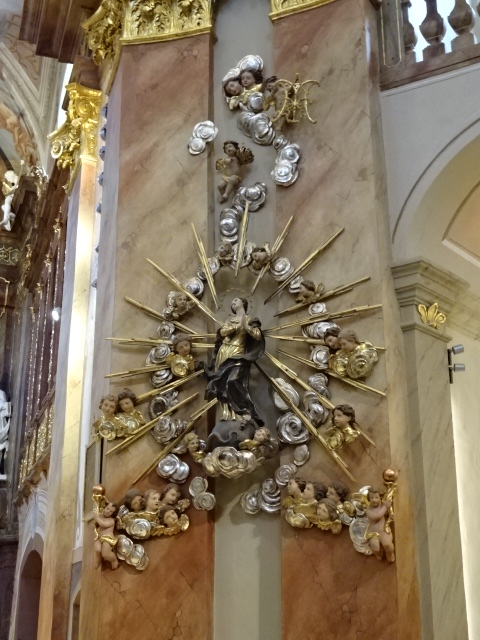
I was dazzled by the church’s overwhelming beauty and was so thankful that I had had this chance to see it. I especially loved the stunning ceiling fresco and decoration on the upper walls. Another highlight was the tour guide playing the organ. The music permeated the church, and I had a great appreciation for the glory days of this church during Questenberk’s Jaroměřice. I was so impressed by the music that seemed to soar through the church and by the town that was seeping with historical importance.
Tracy A. Burns is a writer and proofreader in Prague.
 Tracy's Travels