
The six buildings designed by Josef Havlíček in Kladno, photo from Vysehradskej.cz
In Kladno, not far from Prague, I visited the Museum of the High-Rises, located in one of the tall buildings designed by Czech functionalist architect Josef Havlíček during the 1950s. The tour consisted of the minimalist lobby and mailboxes, a small museum room, an atomic shelter, roof terraces and a flat that was considered to be luxurious during the 1950s, housing for high-ranking Communist families.

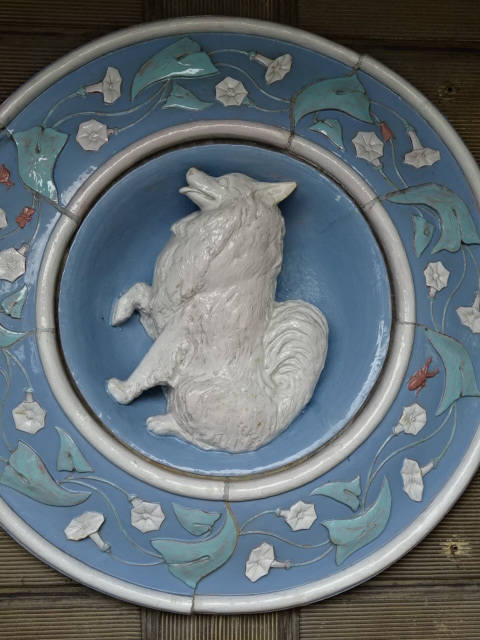
House sign by Marta Jirásková-Havlíčková
In the Rozdělov neighborhood, the high-rise’s exterior was decorated with two ceramic house signs, one of a cat and the other of a dog, showing circular blue backgrounds with the animals in white. I learned that they had been created by Havlíček’s wife, a sculptor named Marta Jirásková Havlíčková, who originally had made 12 of them for the six buildings in the complex. Other ceramic house sings had featured a hawk, an owl, a rooster, a turkey, sheep and a ram. In the small museum space I saw more of Jirásková-Havlíčková’s work, including a statue of a dignified-looking white cat. She certainly had been talented. Models of some of Havlíček’s designs were also in the space.
I also noticed that the façade consisted of ceramic materials. The use of intriguing materials was a reason that this one-time complex had caught international attention. The French especially were interested in the structures, as Havlíček had been inspired by the architecture of neoclassicist French guru August Perret, who was known for utilizing reinforced concrete in fascinating ways without eliminating the harmony of the design. Perhaps Perret is most renowned for the rebuilding of the port town Le Havre after World War II. His reconstruction helped make Le Havre into a World Heritage Site. Another of his most prominent designs involved the first Art Deco edifice in Paris, the Theatre des Champs-Élysées.

You can see the various house signs behind the sculpture of the cat.
Who was Josef Havlíček? That question was answered in the small museum under the ground floor. Havlíček lived from 1899 to 1961, when he died from exhaustion. As a prominent architect, he was a member of Devětsil, Artěl and SVÚ Mánes, the most influential artistic groups of the time. His mentor at school during the Czechoslovak First Republic of the 1920s was Czech architect Josef Gočár, who designed many important Cubist works in Prague, Hradec Králové and other places. Gočár took Havlíček under his wing and employed him in his studio until 1928.
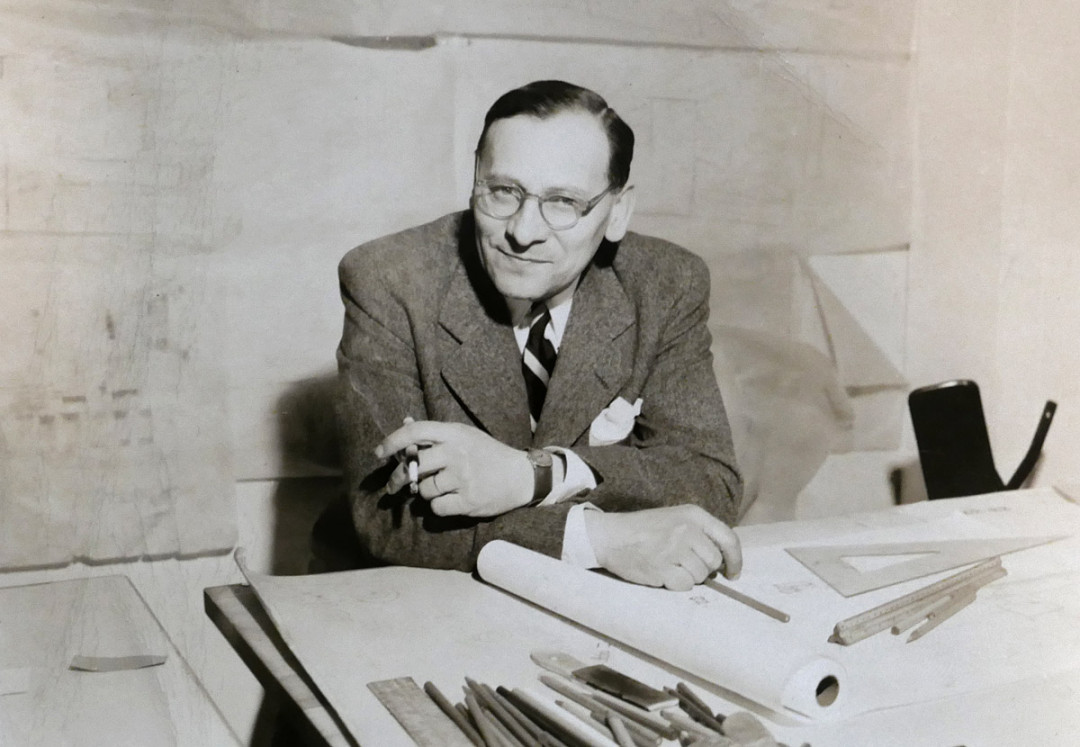
Josef Havlíček, photo from Muzeum věžáků Kladno webpages.
While Havlíček was given the title of director of the architectural Stavoproject in 1948, he left two years later due to frustration with totalitarian politics. For a while his plans were not realized due to his political stance, but later he used Stalinist social realism architecture that pleased the authorities, even though his style combined creativity while fulfilling the ideology of the times.
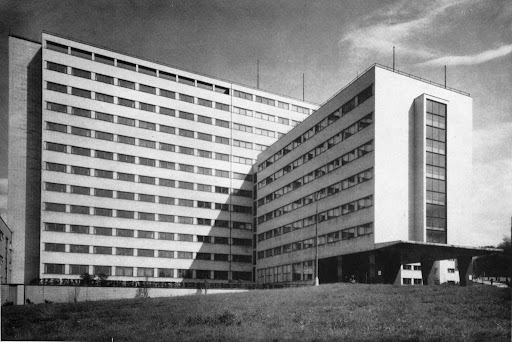
Havlíček’s building constructed in Žižkov
Some of his other accomplishments included a building in Prague’s Žižkov, built from 1932 to 1934 with the help of Karel Honzík and dubbed “the first Prague skyscraper.” He also designed the residential development Labská Kotlina in Hradec Králové from 1946 to 1959 and residential buildings in Ostrava. He presented designs for a United Nations building in New York City and a town hall in Toronto, though they were not carried out.
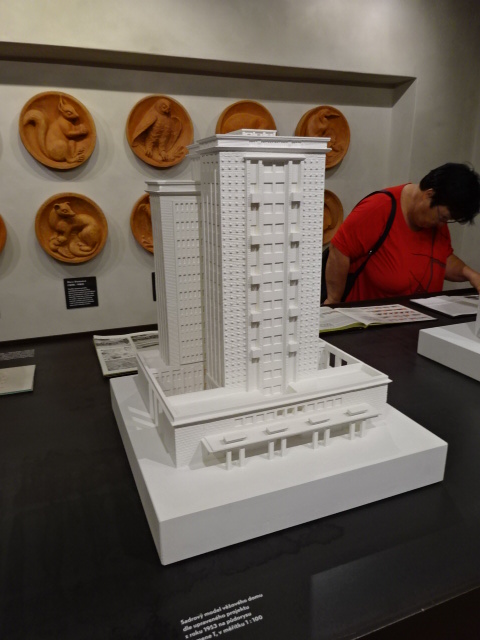
Some models of Havlíček’s creations were on display in the museum.
In the museum space that presented a large timeline and much information about the life and career of Josef Havlíček, we stood around a detailed model of the Rozdělov high-rises in Kladno as they had been planned. In 1946 Havlíček had intended for the project to appear differently – with six buildings of 10 floors each in a Y pattern, flaunting a functionalist style. Due to the political changes in the country during and after 1948, these designs never came to fruition.
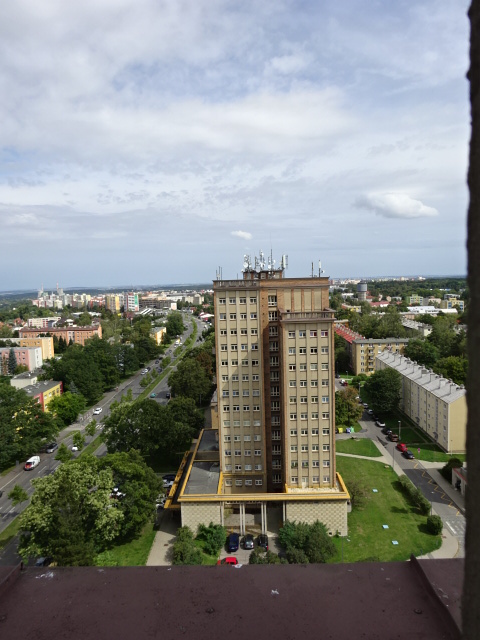
From the roof terrace looking down on another of Havlíček’s designs
During the late forties and fifties Kladno was in dire need of more housing. The city had become much more industrialized after the Communist coup of 1948. For example, Kladno was the prominent home of the Poldi steelworks. Construction of new buildings was necessary to accommodate the new workers who were toiling in the black coal industry.
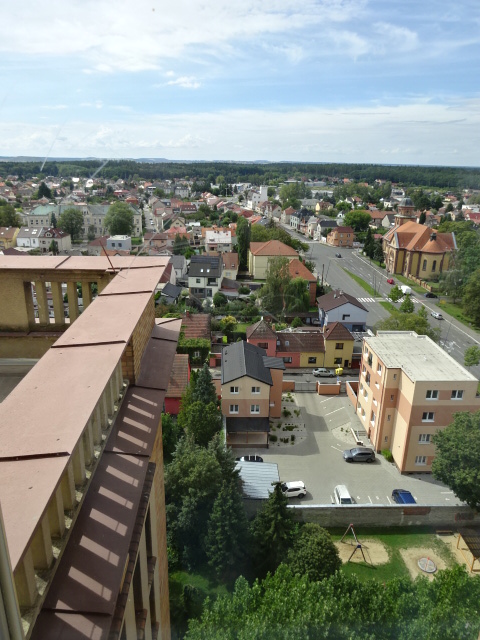
View from the roof terrace
In 1951 Havlíček redid his conception of the suburb, pressured to conform to social realist architectural regulations. He received permission that year. He came up with something that was accepted by the authorities but was also modern and authentic. From 1952 to 1958, Havlíček worked on the design along with Karel Filsák and Karel Bubeníček. Construction began on the project with the first and second buildings. Tenants moved into the first building at the end of 1956 and into the sixth building at the end of the following year.

You can see some of the suburb’s high-rises from the roof terrace.
The six buildings that formed the letter T were inaugurated as the Victorious February suburb to commemorate the February Communist coup of 1948. The building we were in had 13 floors, not including the ground floor and upper ground floor. Each floor consisted of six apartments, two much bigger than the others. The more luxurious flats of that era had balconies.
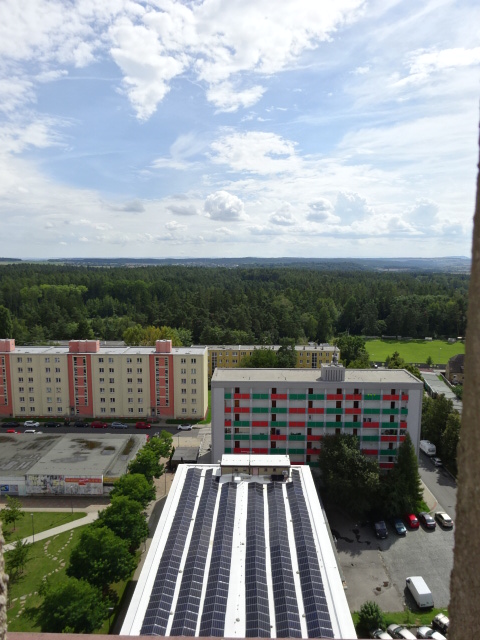
Another view from the roof terrace
The project was planned to be much more elaborate than the 48-meter high residential buildings. Havlíček and his colleagues envisioned the suburb to flourish with cultural and shopping centers. It was slated to become a major hub for cultural activities, such as theatre, and to have much needed impressive stores. While the shopping center plans were carried out, the theatre was never built. Financial problems and other barriers did not allow the designs to be fully developed. From the model it was possible to see how Havlíček had proposed that the suburb become a leading place for activities as well as original housing made from inventive materials.

We went down to the second basement floor, the atomic shelter. I saw many gas masks and rows of hard, wooden benches in several spaces. It would certainly be depressing and frightening to be trapped down there for any reason let alone a nuclear war. Many buildings were constructed with atomic shelters during the 1950s in Czechoslovakia.
Then we visited the roof with impressive terrace, which was a prominent component of the project in its day. Even though now ugly high-rises surrounded the building, during a clear day it was possible to see the historic Říp Hill and the mountains of central Bohemia, even some of the mountains at the German border.
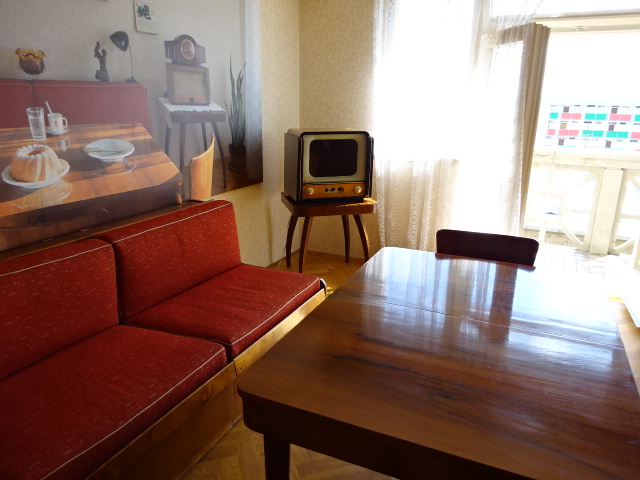
The living room of the flat
Then we went into a 55 meters squared flat preserved with 1950s furnishings and equipment, looking as it had during its construction as a luxury home for high-ranking Communist families. The living room had a couch and table on which were a cake and mugs. I noticed one cup was adorned with a red Communist star and the other sported a Communist symbol. On the table there was also an open pack of cigarettes and an ashtray filled with cigarette butts. A lace tablecloth covered part of the table. A large radio and a black-and-white TV with three buttons under the screen also stood out in the room. Social realist-styled statuettes decorated cabinets.The bedroom was dominated by a big double bed. On each nightstand was a framed photo. A large mirror adorned the wall above the bed.

The bedroom
The kitchen included a gas stove, a counter and pantry with shelves for storing food as well as cabinets. Although it looked small to me, at that time this type of kitchen had been luxurious, only available to the most prominent families. The flat featured a big balcony, too, something that not many apartments in the building had.
Now the museum, which opened in 2020, is a cultural monument to an innovative style designed during Stalinist times. This was Havlíček’s last big project to be carried out as he died of exhaustion in 1961, exasperated by his discomfort with the country’s Communist ideology of which he had been a critic. It had taken a toll on his physical and mental state.

The kitchen
This is the first Czech museum showing off suburban Czech architecture. The museum was something totally different than the kind I usually visited. I had never been to a museum focusing on a suburb of a city. I had thought of the suburbs of Kladno as eyesores with socialist high-rises that scarred the landscape. This one was different. During the period of its construction, the architecture had forged a new path in suburban appearances. It was a pity that only two of the buildings survive today and that fate had intervened and prevented the project from being completed.

The gas stove in the kitchen
I took all the necessities such as the stove and kitchen space for granted. I thought the flat seemed relatively small. At one time, though, a flat this size had been a luxury. I could see the accomplishments in modern architecture as I viewed all the spaces through a 1950s lens. I could better appreciate the modernity of the present by immersing myself into the past.
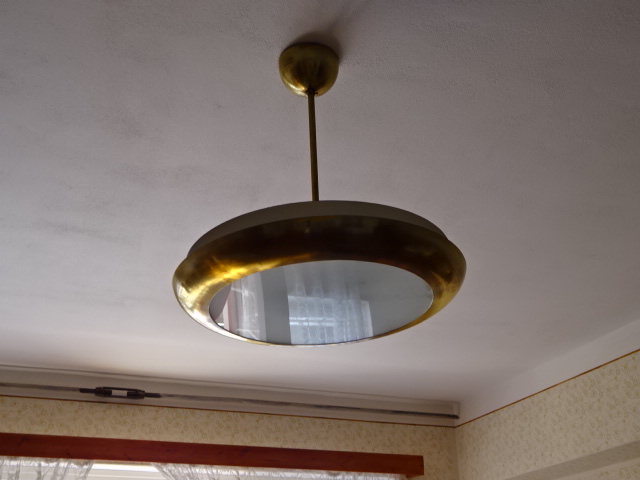
The simple chandelier in the living room
Tracy A. Burns is a writer, proofreader and editor in Prague.
 Tracy's Travels