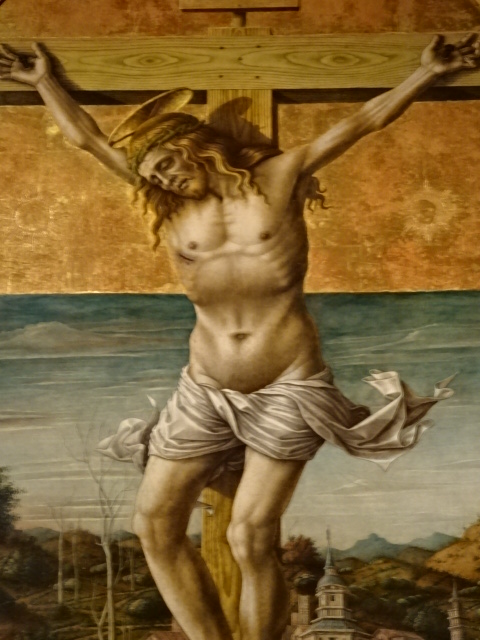
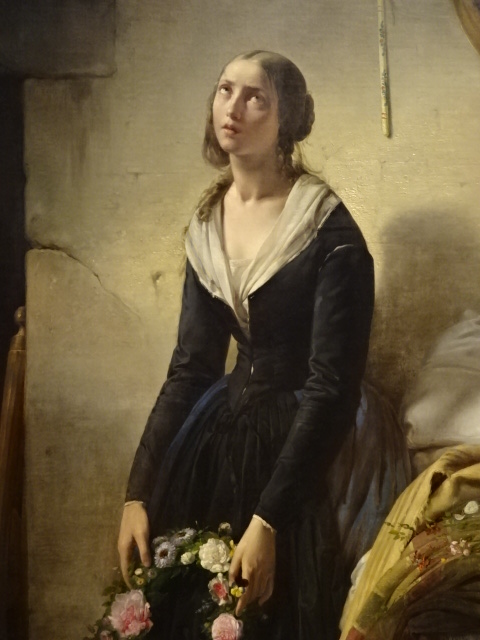
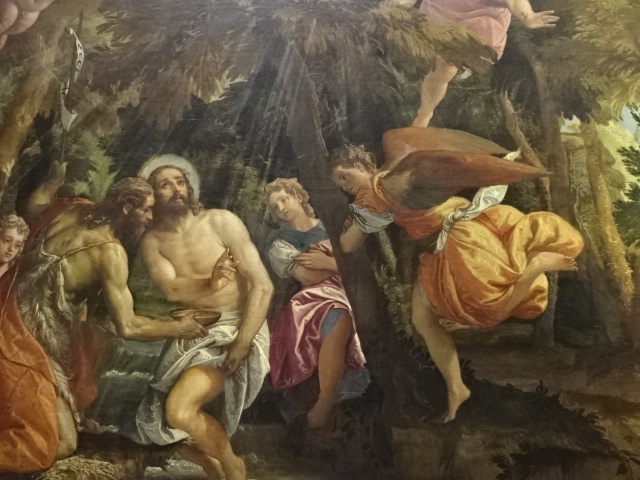
The Art of Mannerist Printmaking Exhibition Diary

Caricature of Laocoon, Niccolo Boldrini, 1540-45, woodcut.

In the exhibition “From Michelangelo to Callot: The Art of Mannerist Printmaking,” held at Prague’s Wallenstein Riding Stables, I studied more than 200 works of 16th and 17th century graphic art, drawings, paintings, jewelry, etchings, lithographs, ceramics and other artistic crafts that hailed from the Netherlands, Germany, France and the Czech lands. The Louvre lent Prague’s National Gallery many works. Some pieces in the collections were being displayed to the public for the first time. A superb small drawing by Michelangelo drew crowds, and art by Hendrick Goltzius, Paul Bril,  Aegidius Sadeler and Niccolo Boldrini stood out to me.

The Great Hercules, Hendrick Goltzius, 1589, engraving.

While Mannerism became a major trend during the 16th century in Italy, Northern Mannerism lasted into the 17th century. Because European artists north of the Alps did not have as many opportunities to travel to Italy in order to familiarize themselves with Mannerism, they often studied the style through prints and books. The decoration at the Chateau of Fontainebleau impressed many artists utilizing this style, and France was the center of the Mannerist movement. The Northern Mannerists also looked to da Vinci, Raphael, Vasari and Michelangelo for inspiration.

The Martyrdom of Saint Lawrence, Cornells Cort, 1571.

The Northern Mannerist style was very visible in Holy Roman Emperor Rudolf II’s collection in Prague, then the capital city. Influenced by prints, Mannerism appeared in Prague during 1576. An avid art collector, Emperor Rudolf II had hired the Flemish painter Bartholomeus Spranger and German artist Hans von Aachen to work for him, and they produced some works in Northern Mannerist style. Both Spranger and von Aachen were known for their Mannerist mythological scenes while von Aachen also concentrated on portraits of the emperor. Rudolf II’s father, Emperor Maximillian II, had chosen Giuseppe Arcimboldo as one of his painters, and Arcimboldo’s fantasy-filled still lifes and portraits feature Mannerist traits. This style also suited Rudolf II when he took over for his father.

The Combat of the Monkey and the Rat, Christoph Jamnitzer.

Mannerist art often included mythological scenes, the grotesque and fantasy. Harmony, symmetry and rationality were notably absent. While Mannerists showed a great interest in anatomy, the figures were often elongated, and many forms had a sculptural quality. Clothing was elaborate. Attention to detail prevailed. Complex and unstable poses as well as dramatic lighting also characterized the Mannerist style. Artists of this era liked to employ symbols and utilize hidden meanings in their works. Black backgrounds were common. A distorted perspective was employed. Mannerism did not often feature religious themes. After Mannerism came the Baroque style, which focused heavily on religious art.

The Last Judgment, Michelangelo, 1536-1541.

The Last Judgment, Michelangelo.
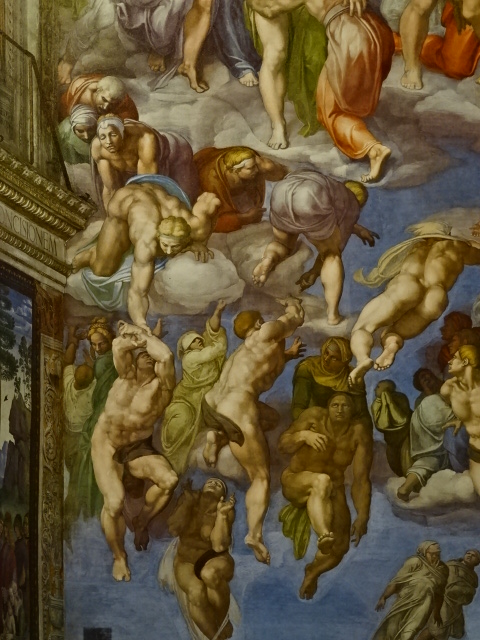
The Last Judgment, Michelangelo.
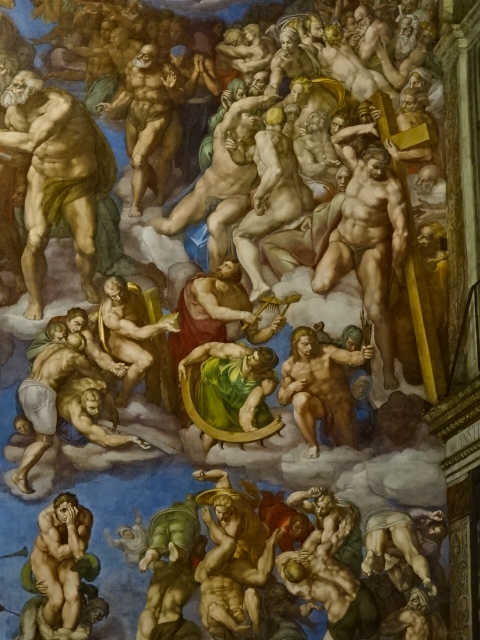
The Last Judgment, Michelangelo.

A copy of a section of “The Last Judgment” as seen in the Sistine Chapel was on display at this exhibition, as this masterpiece greatly influenced Mannerist art. This fresco at The Vatican portrayed more than 300 figures as the dead made their way to idyllic Heaven or horrific Hell. Mythological figures and devils appeared along with a beardless Jesus Christ, the Virgin Mary and saints. I noticed the looks of horror on descending figures. Details in superb portrayals of human anatomy greatly impressed me.

Head of a 12-Year Old Christ, Albrecht Durer, 16th century.

For me, German Albrecht Durer’s 16th century “Head of the 12-year old Christ” was one of the highlights in the exhibition. Durer was a master of High Renaissance printmaking, especially of woodcuts and engravings. He inspired Raphael and Titian. I realized how Durer’s portrayal of human anatomy had impressed Mannerists. While most works displayed did not focus on religion, the Mannerist engraving “The Martyrdom of Saint Lawrence” from 1571 also caught my attention. Cornells Cort created it in the style of Titian.
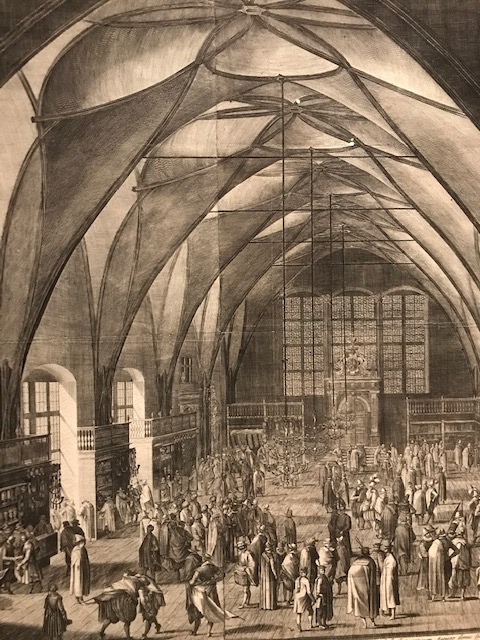
Vladislav Hall, Aegidius Sadeler, 1607.

Some prints showed off specific architectural structures, such as Aegidius Sadeler’s Vladislav Hall from 1607. A fan of Czech architectural history, I was especially engrossed in this rendition of the late 15th century and early 16th century section of Prague Castle built by Benedikt Reid. I loved its complex vaulting system. I noticed Late Gothic and Renaissance elements of the building. This was one of my favorite buildings in Prague due to its exquisite vaulting and its past use for historical events, such as coronations and knights’ tournaments.
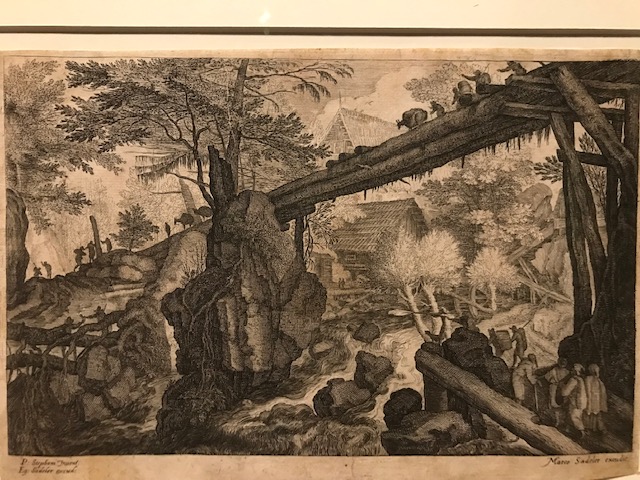
Wooden Bridge from Series Eight Bohemian Landscapes, Aegidius Sadeler, 1605, engraving.

Mountain Landscape, Paul Bril.

Another work by Sadeler, created in the style of Pieter Stevens, was the landscape “Wooden Bridge from Series Eight Bohemian Landscapes.” The 1605 engraving of the idyllic, romantic bridge reminded me of picturesque Vermont, where I had lived for a while. I was also enamored with “Mountain Landscape” by Flemish painter and printmaker Paul Bril. Inspired by my favorite artist Pieter Bruegel the Elder, Bril authored works in the Vatican and Italy. I appreciated the power and beauty of nature as I peered at these two tranquil landscapes.
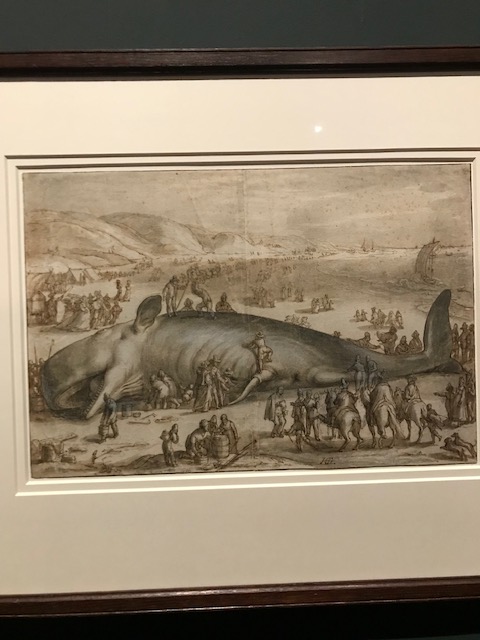
Beached Sperm Whale near Berkhey, Hendrick Goltzius, 1598.

A prominent name in the exhibition, Henrick Goltzius was a stellar printmaker whose works were influenced by drawings he acquired from Prague. My favorite of his contributions was “Beached Sperm Whale near Berkhey” from 1598. People gathered around the gigantic, deceased animal. This artwork was inspired by a real event as a 58-foot long whale had washed up on that shore.
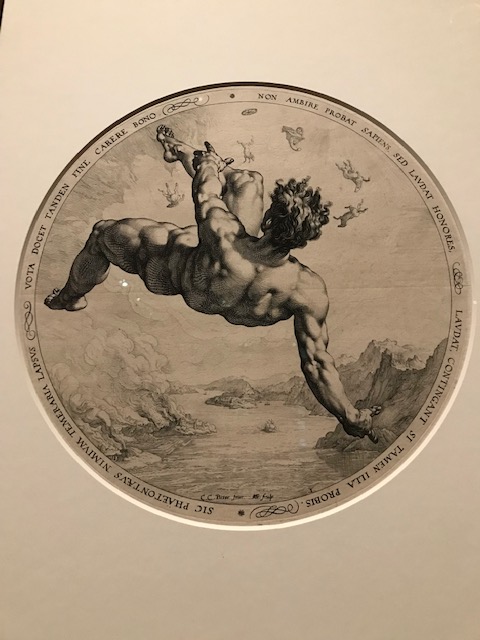
The Four Disgracers, Hendrick Goltzius, 1588, engraving.
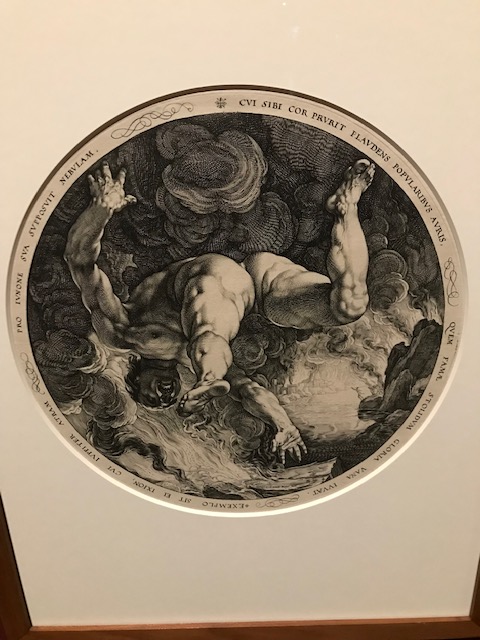
The Four Disgracers, Henrick Goltzius, 1588, engraving.

Goltzius also took on mythological themes, such as his rendition of “The Four Disgracers (Tantalus, Icarus, Phaethon and Ixion).” This engraving appeared to have a three-dimensional quality. The illusion of three-dimensional features, mastered by engravers in the Netherlands during the late 16th century,  was often featured in Northern Mannerist art. Goltzius was the author of “The Great Hercules,” an engraving from 1589. The detailed anatomy, though not correct, interested me. Other works with mythological themes that caught my attention were “Diana and Actaeon” by Joseph Heintz the Elder from 1597 to 1598 and Niccolo Boldrini’s “Caricature of Laocoon,” a woodcut from 1540 to 1545.

The Pairs of Grotesque Heads, Philippe Soye, 1550-65.

The grotesque played a significant role in Northern Mannerist creations. Philippe Soye rendered “The Pairs of Grotesque Heads” after a masterpiece by da Vinci. Soye’s portrayal hailed from 1550 to 1565. Christoph Jamnitzer also stressed grotesque features in his “The Combat of the Monkey and the Rat.” I was also impressed with the masked figures in “Venetian Carnival,” a 1595 engraving by Pieter de Jode the Elder. Seeing the grotesque made me think of gargoyles on cathedrals, such as Milan’s Duomo or Saint Vitus’ Cathedral in Prague.

Fantastic Sea Creatures, Nicolaes de Bruyn, 1594, engraving.

Prints with scenes immersed in the fantasy world made numerous appearances. At the end of the 16th century, Nicolaes de Bruyn became known for his portrayal of animals and fictional sea creatures. His “Fantastic Sea Creatures,” depicted here from a series, was an engraving that made up part of a book about fish. Engravers often worked with fantasy themes in this style.
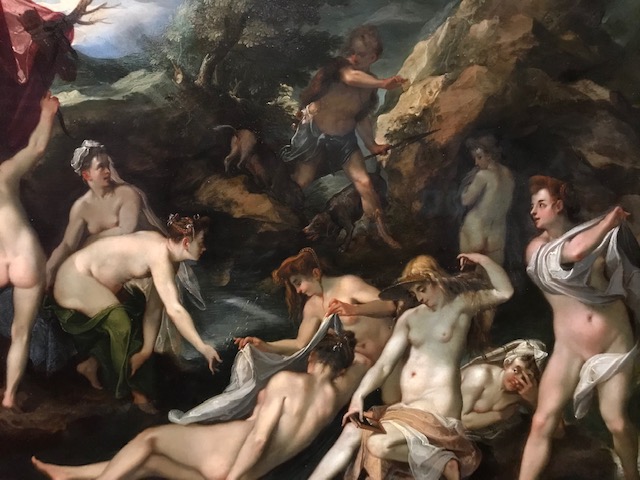
Diana and Actaeon, Joseph Heintz the Elder, 1597-98.

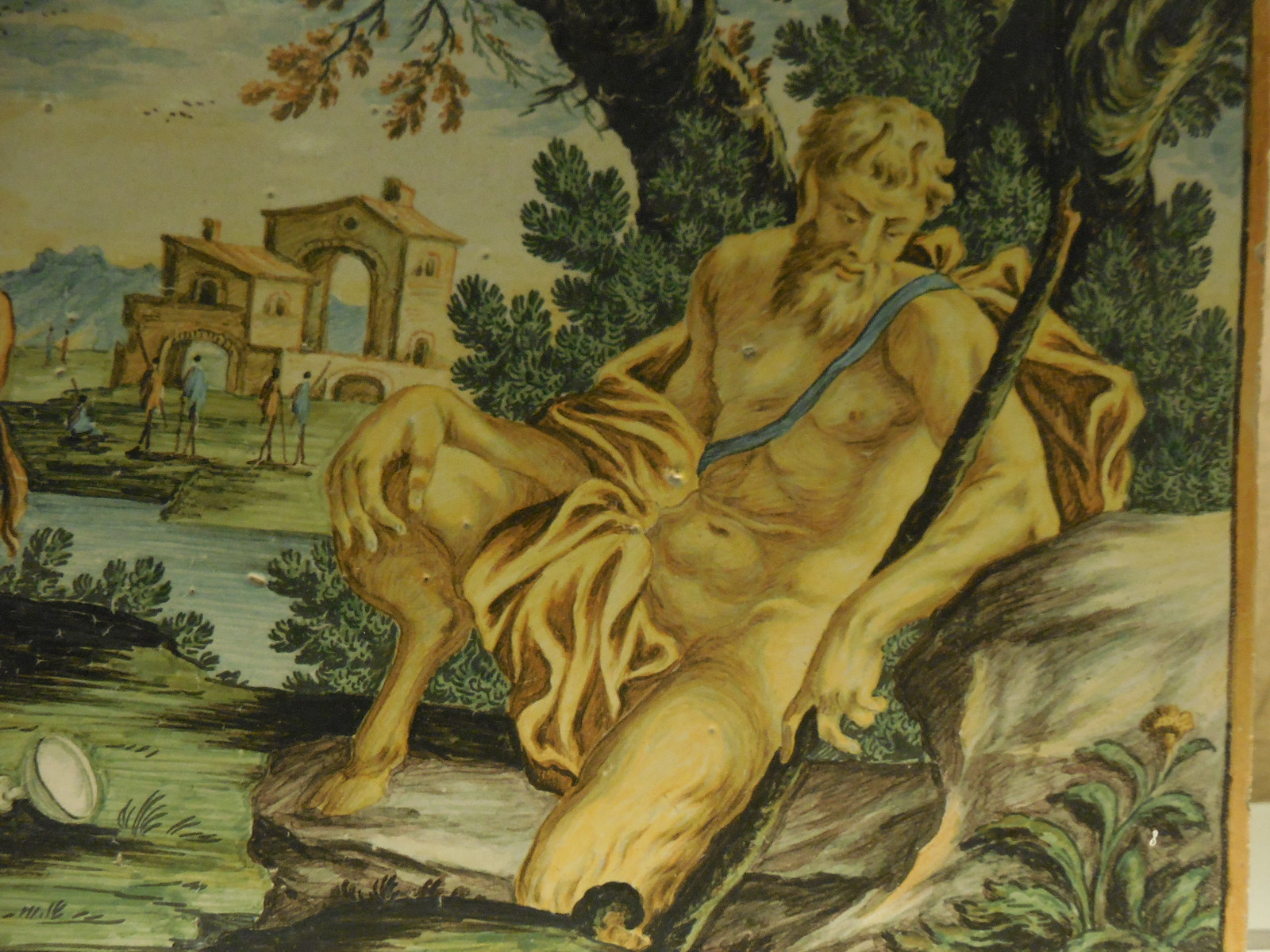
A section of the exhibition was devoted to Northern Mannerist decoration of objects such as vases, plates, mirrors and jewelry. Adornment was often floral or geometric, and I noted similarities to illuminated manuscripts. Artists of this sort of ornamentation were inspired by the grotesque, mythological figures and Roman wall paintings, for instance. I saw examples of mythological themes and the grotesque in the decoration of a majolica plate from the second half of the 16th century. A 16th century black enamel mirror exuded elegance with Mannerist designs.

Venetian Carnival, Pieter de Jode the Elder, 1596, engraving.

The exhibition was comprehensive, divided into clear sections. I was drawn most to the landscapes as I was reminded of the work of Pieter Bruegel the Elder. I also thought of Paul Bril’s creations in Milan’s Ambrosiana Picture Gallery. It was intriguing that the scenes on many prints showed the main figures in the background and the lesser important ones in the foreground. I liked the decorative patterns that were influenced by illuminated manuscripts. I spent my fortieth birthday gazing at the Sistine Chapel and mulled over the experience of seeing those writhing, terrified souls guided by devils and the blessed blissfully ascending into Paradise. I also thought of the awe-inspiring experience of walking into Vladislav Hall because I loved Late Gothic vaulting. That print captured the daunting atmosphere perfectly. Seeing a masterpiece by Durer brought me back to an exhibition of his works at the Albertina in Vienna some years ago. I could hardly catch my breath because I had been so impressed. I had learned a lot about Mannerism from this exhibition and had discovered works that I would never forget.

Tracy A. Burns is a writer, proofreader and editor in Prague.

Biblioteca and Pinacoteca Ambrosiana Diary

This library and art gallery in Milan is named after the patron saint of the city, Ambrose. The library harkens back to 1609, when Cardinal Federico Borromeo founded it, and the same year it opened to the public.

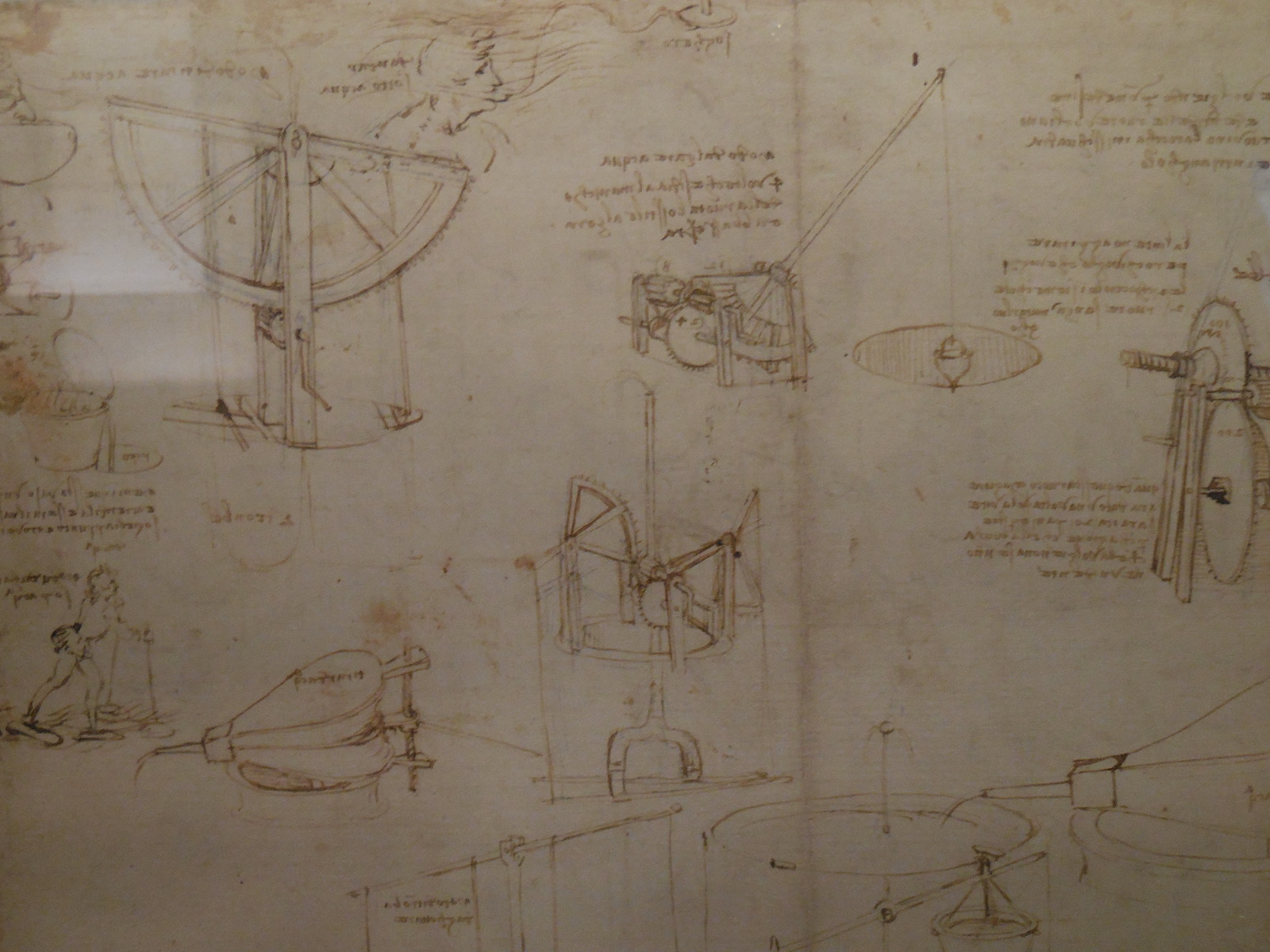
One of Leonardo da Vinci’s drawings of the Codex Atlanticus

The biblioteca houses the Codex Atlanticus by Leonardo da Vinci as well as many of his other manuscripts plus about 12,000 drawings by European artists, ranging from the 14th to 19th century. Raphael and Pisanello are represented in this collection of drawings, too. Many of its more than a million printed volumes hail from the 16th century. There are almost 40,000 manuscripts in numerous languages, including Italian, Latin, Greek and Arabic as well as some 22,000 engravings. Ancient maps, musical manuscripts and parchments also make up the collection. Some prominent guests included poet Lord Byron and novelist Mary Shelley.

Another of Leonardo’s drawings from the Codex Atlanticus

During World War II the library was damaged, and the opera libretti for La Scala Opera House were destroyed. The building was opened again in the early 1950s after undergoing renovations. More reconstruction took place in the 1990s.

When I visited, some of Leonardo’s works for the Codex Atlanticus, the largest collection of da Vinci’s drawings and writings, were on display in the library. The exhibition left me spellbound. I perused studies in aerodynamics and drawings of mechanical wings as well as various types of weapons. Leonardo rendered a large sling to throw stones and a machine to pump water from a well inside a building, for example.

I gazed upwards after studying the drawings by Leonardo, and I was filled with awe. I don’t know if I have ever seen such an incredible library. I just wanted to stand there all day, gazing at the wall-to-wall bookcases as I wondered about the titles and contents of each volume.

Established in 1618 with the collections of Cardinal Federico Borromeo, the pinacoteca was just as impressive as the library. The 24 rooms were dominated by Renaissance artworks but also boasted of renditions by 17th century Lombard artists, 18th century painters and 19th and early 20th century creators. I was especially struck by da Vinci’s 15th century “Portrait of a Musician” as it was the only portrait that he had painted. I noted the musical scroll in one hand of the sitter and was captivated by the detailed curly locks of hair, the musician’s brown eyes and his red cap.

Caravaggio’s insect-infested “Basket of Fruit” tells a story of diminishing beauty by displaying rotting fruit. Bramantino’s “Adoration of the Christ Child” shows the kneeling Bernardino of Siena, Francis of Assisi, Benedict of Nursia and the Virgin Mary making an understandable fuss over baby Jesus. I loved the angels playing musical instruments behind those figures. Emperor Augustus also makes an appearance.

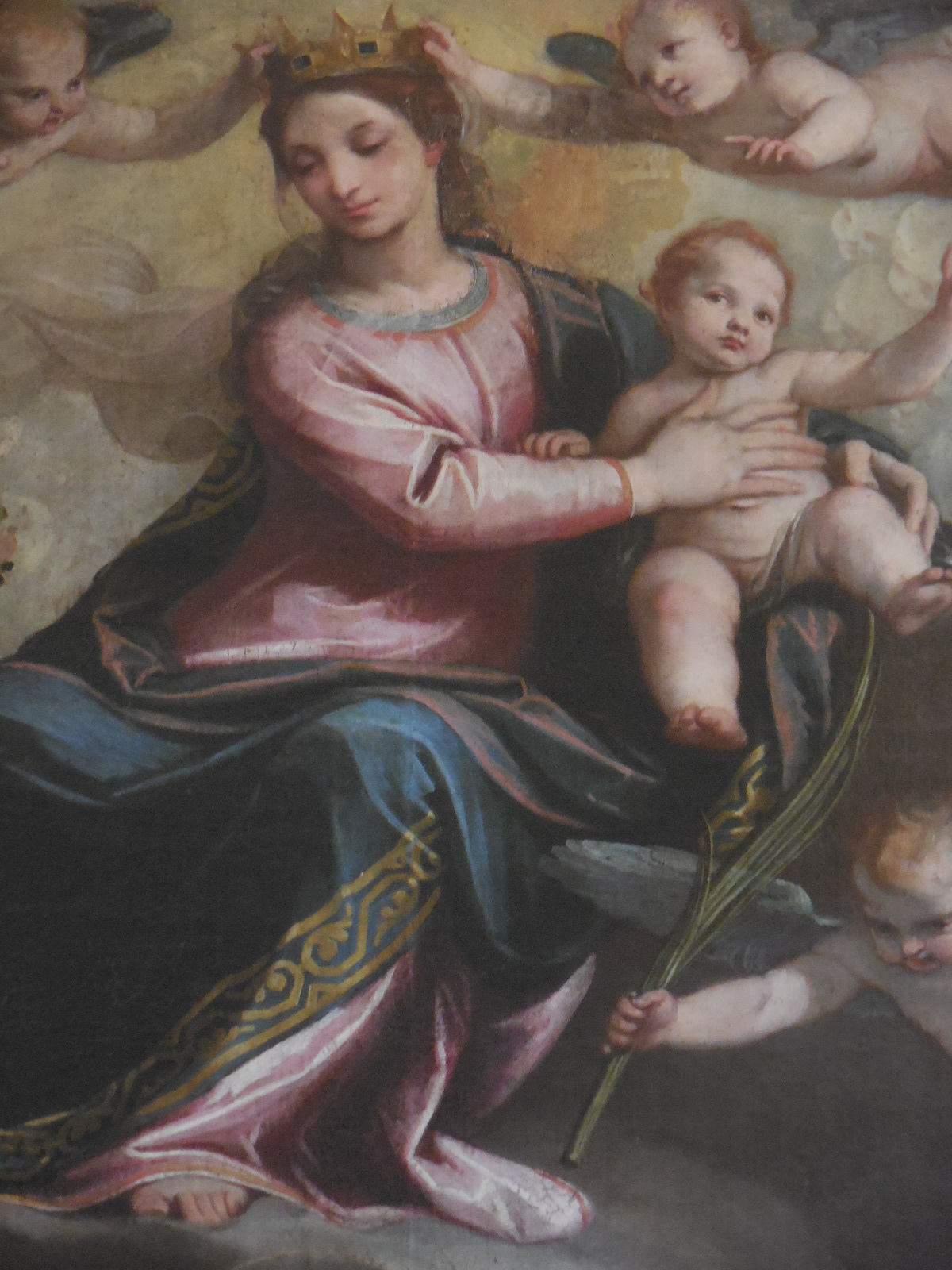
Bergognone’s “Sacred Conversation” shows the Virgin Mary and Christ Child on a massive golden throne, baby Jesus on the Virgin Mary’s lap. Solemn angels flutter in the background. I was struck by the details of the Virgin Mary’s hair and by the material of the clothing worn by the Virgin Mary and baby Jesus. The two were surrounded by saints with captivating headwear, including Saint Ambrose and Saint Jerome.

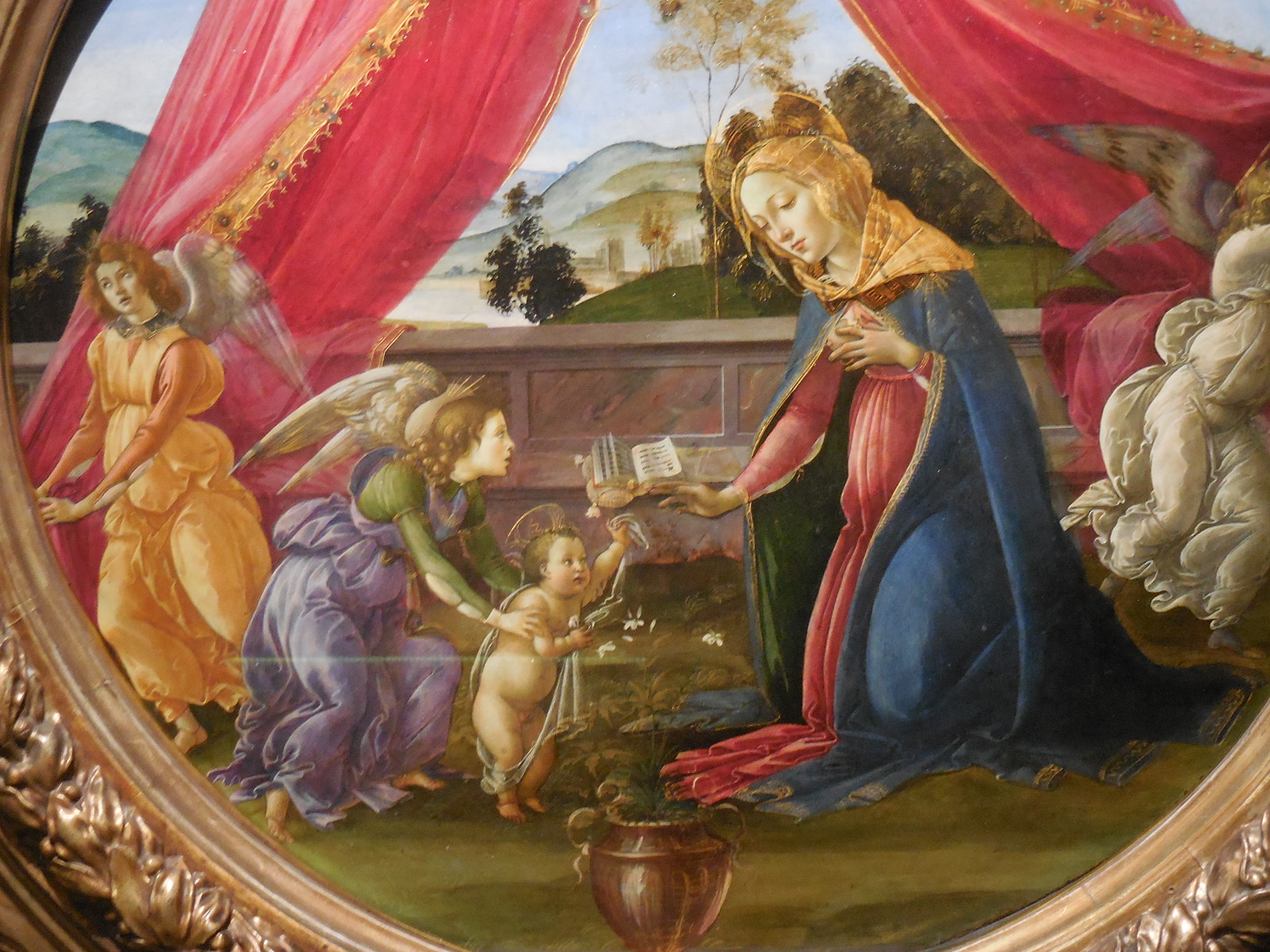
Another painting that left me speechless was Sandro Botticelli’s “The Madonna of the Pavilion.” The artist’s meticulousness was evident. The artwork shows the Virgin and Child with much symbolism. The pavilion that two angels open to reveal the Christ Child is rich in biblical meaning both in the Old and New Testament. I could almost feel the paper of the pages making up the open book in the painting.

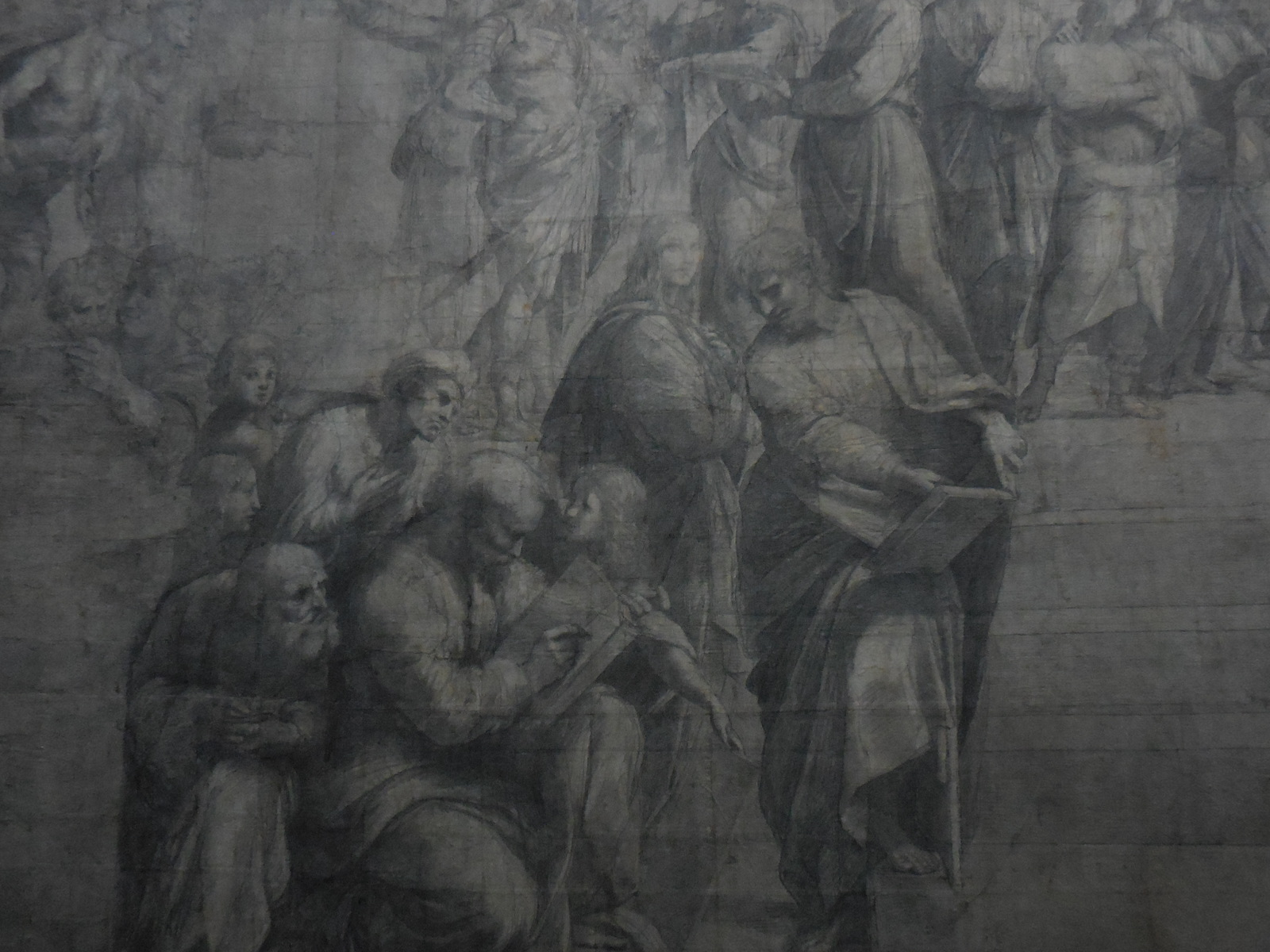
Raphael’s School of Athens

Raphael’s cartoon of the “School of Athens” is a study for the Italian Renaissance fresco painted in the early 1500s for the Raphael Rooms in the Vatican Museum. I recalled seeing the skillful rendition of philosophers and scientists from Ancient Greece at the Vatican on my 40th birthday as I mulled over the dominant role that perspective played in the artwork. Plato, Aristotle and Pythagoras appear in the fresco. Leonardo and Michelangelo are present as Plato and Heraclitus.

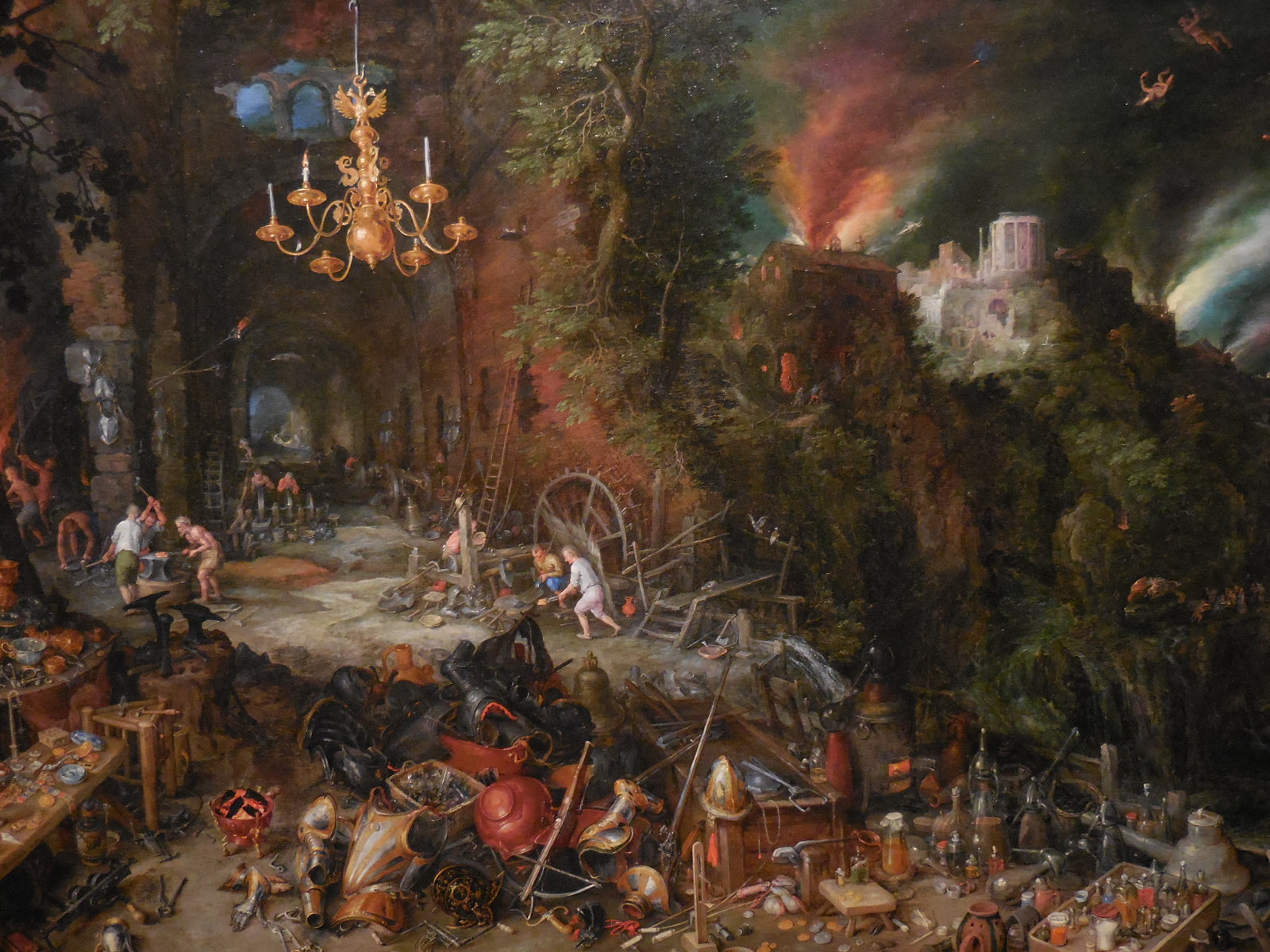
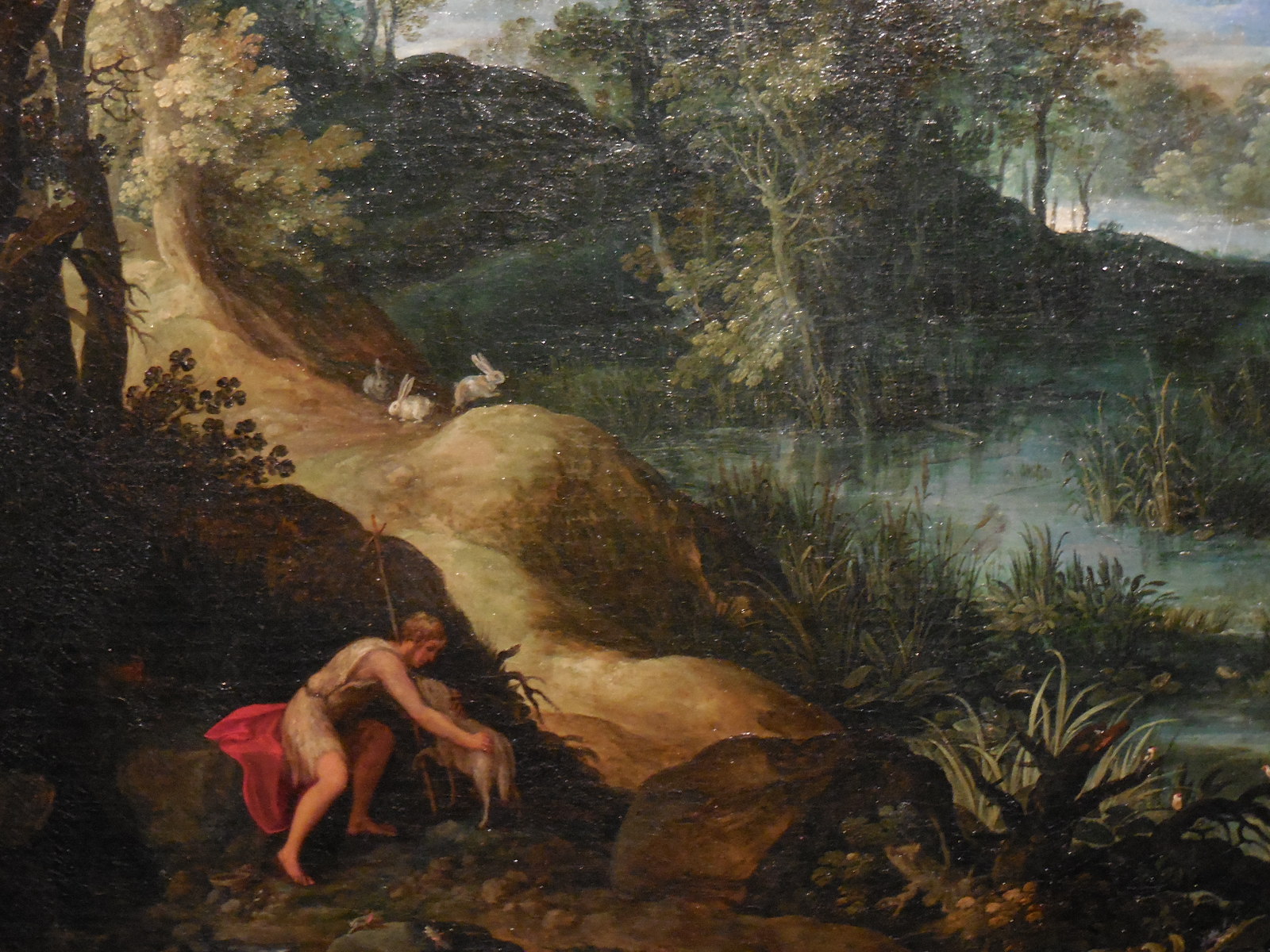
Other paintings that awed me were the fantastic landscapes of Paul Brill, whose works I had discovered some years earlier in Edinburgh. Jan Brueghel’s detailed landscapes and still lifes also are close to my heart, and I adored masterpieces from the Netherlands. I stared at these paintings, losing myself in the fantastical landscapes and details that were so masterfully rendered by both artists. I felt a special connection to these works featuring a dream-like quality as if I could be transported into a fantasy world by merely peering at the canvases.

Other paintings that captured my undivided attention had been created by Bernardino Luini (I fondly recalled his paintings in Milan’s Church of Saint Maurizio), Tizian, Jacopo Bassano, Moretto and Daniele Crespi as well as Francesco Hayez, whose works I knew well from the Brera Gallery in the same city. Andrea Bianchi had created “The Last Supper,” imitating da Vinci’s masterpiece. Tizian’s “Adoration of the Magi,” Bramantino’s “Madonna of the Towers” and the locks of hair of Lucrezia Borgia all left me awe-struck.

The sculptures and frescoes from the second to 16th century in the Sala del Bambaia are very noteworthy. The Hindu art of the Berger Collection captivated me. The Flemish and German painting from the 15th to 17th century enthralled. Ceramics also play an intriguing role in the collection.

I was so awed by this gallery and library that I visited it twice during my first trip to Milan. I peered at every painting and sculpture, trying to take in each artistic creation, feeling so blessed to be able to see all these masterpieces with my own eyes.

Tracy A. Burns is a writer, proofreader and editor in Prague.
Pinacoteca di Brera Diary

I have visited this phenomenal art gallery in Milan twice. I could go there a million times, and I would be just as amazed as I was on the first two occasions. While the gallery includes Italian art from the 13th to 20th century, some remarkable foreign works are on display in its 38 halls, too. Artists from the Netherlands represented in the gallery include Peter Paul Rubens, Anton van Dyck, Jan de Beer and Jacob Jordaens. The Brera focuses on Venetian and Lombard painting.

The art gallery is situated in a large complex that also houses a stunning library (where I saw an exhibition during my second visit), an observatory, a botanical garden and the Brera Academy of Art. In front of the museum is an equestrian statue of Napoleon by Antonio Canova. While the art academy was established as far back as 1776, the museum was opened in August of 1809. When paintings in Lombardy were confiscated from churches and convents in the early 19th century, they wound up at the Brera, so many religious works make up the collection. Parts of the art gallery were damaged in bombing raids during 1943, but they were fully reconstructed by 1948.

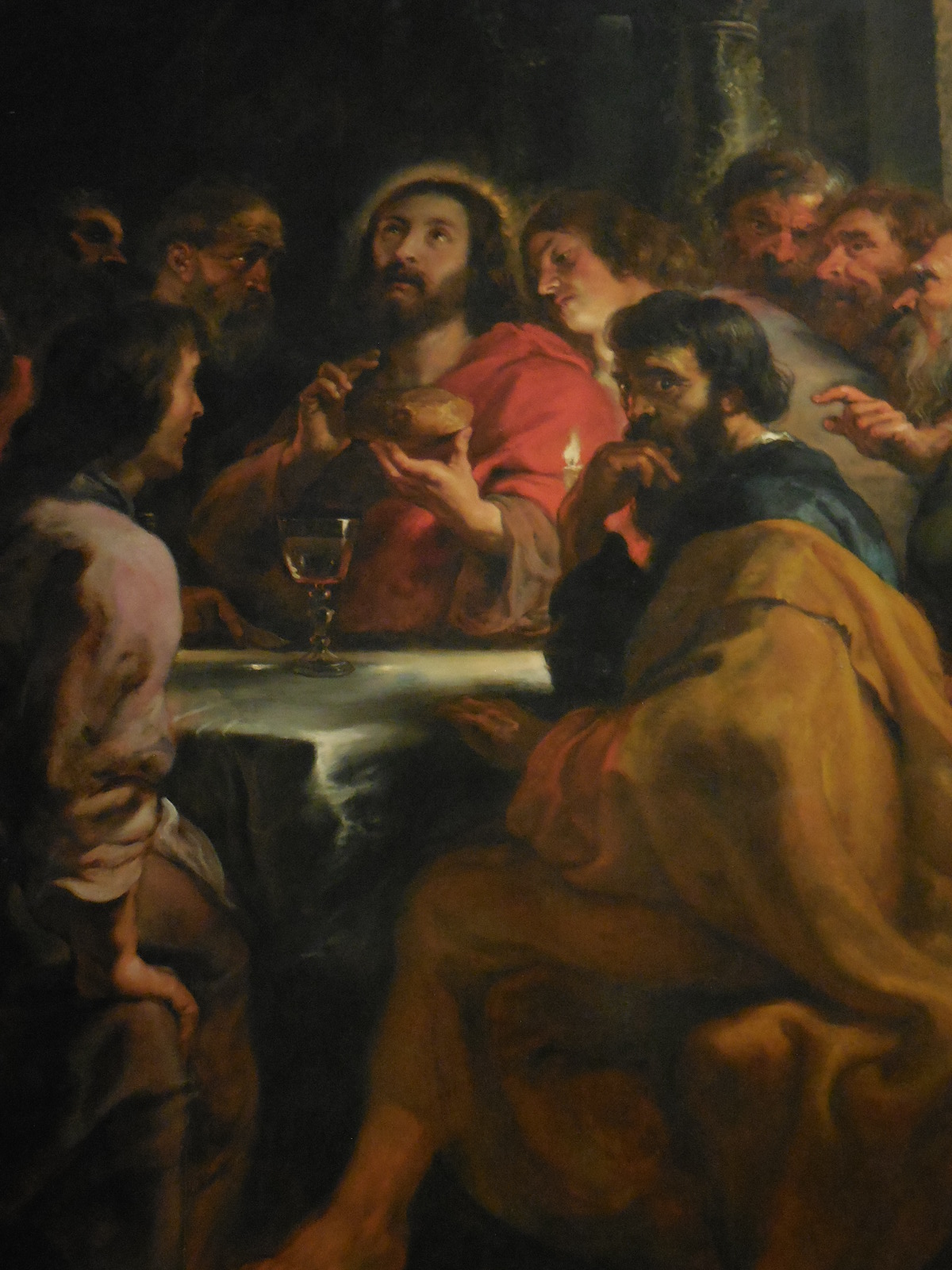
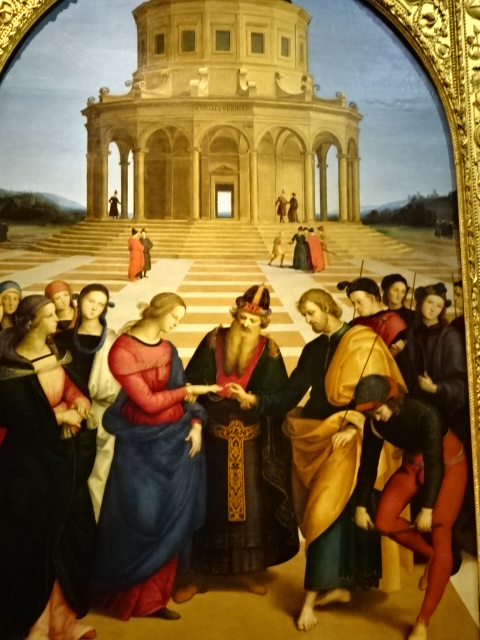
Some of the most famous paintings in the gallery include “The Lamentation of Christ” by Andrea Mantegna, “The Kiss” by Francesco Hayez, “Finding of the Body of St. Mark” by Tintoretto, “The Last Supper” by Rubens and “Supper at Emmaus” by Caravaggio – only one of two Caravaggio paintings in Milan. Also on display are the exquisite “The Marriage of the Virgin” by Raphael and “Christ at the Column” by Donato Bramante. I especially liked the paintings by Canaletto and Hayez as well as the 14th century frescoes. Modern works are exhibited, too. For example, “Enfant gras” by Amedeo Modigliani and “Riot in the Gallery” by Umberto Boccioni take up prominent places in the gallery. The works of Pablo Picasso and Giorgio De Chirico are represented, too.

I was overwhelmed at the beauty and power of the paintings in the Brera. Some of the monumental works just took my breath away. I was moved by all the paintings, each one telling a story.

Tracy A. Burns is a writer, proofreader and editor in Prague. 

Gemäldegalerie Diary

BerlinGemald49

BerlinGemald48

BerlinGemald2

BerlinGemald3

BerlinGemald5

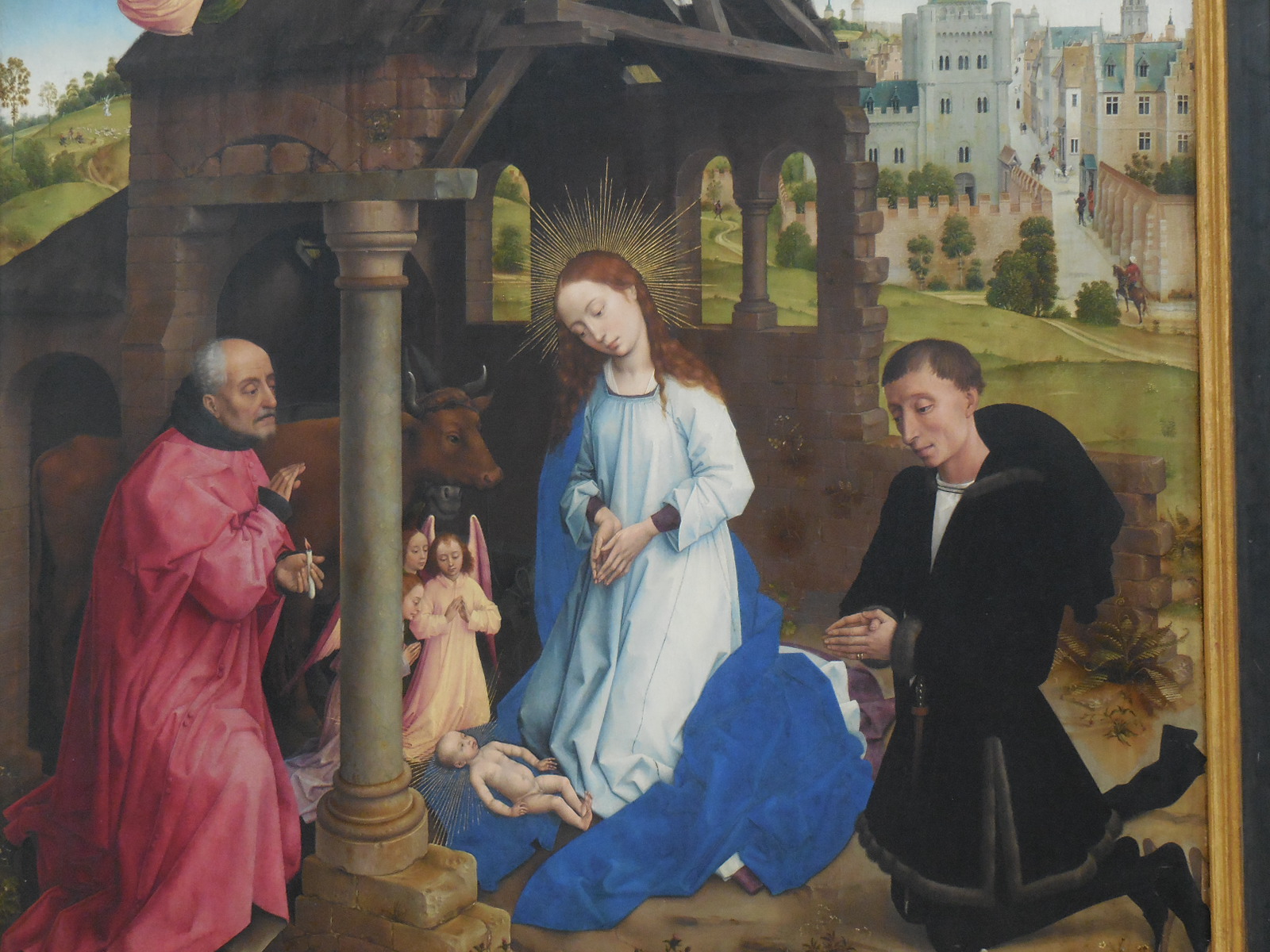
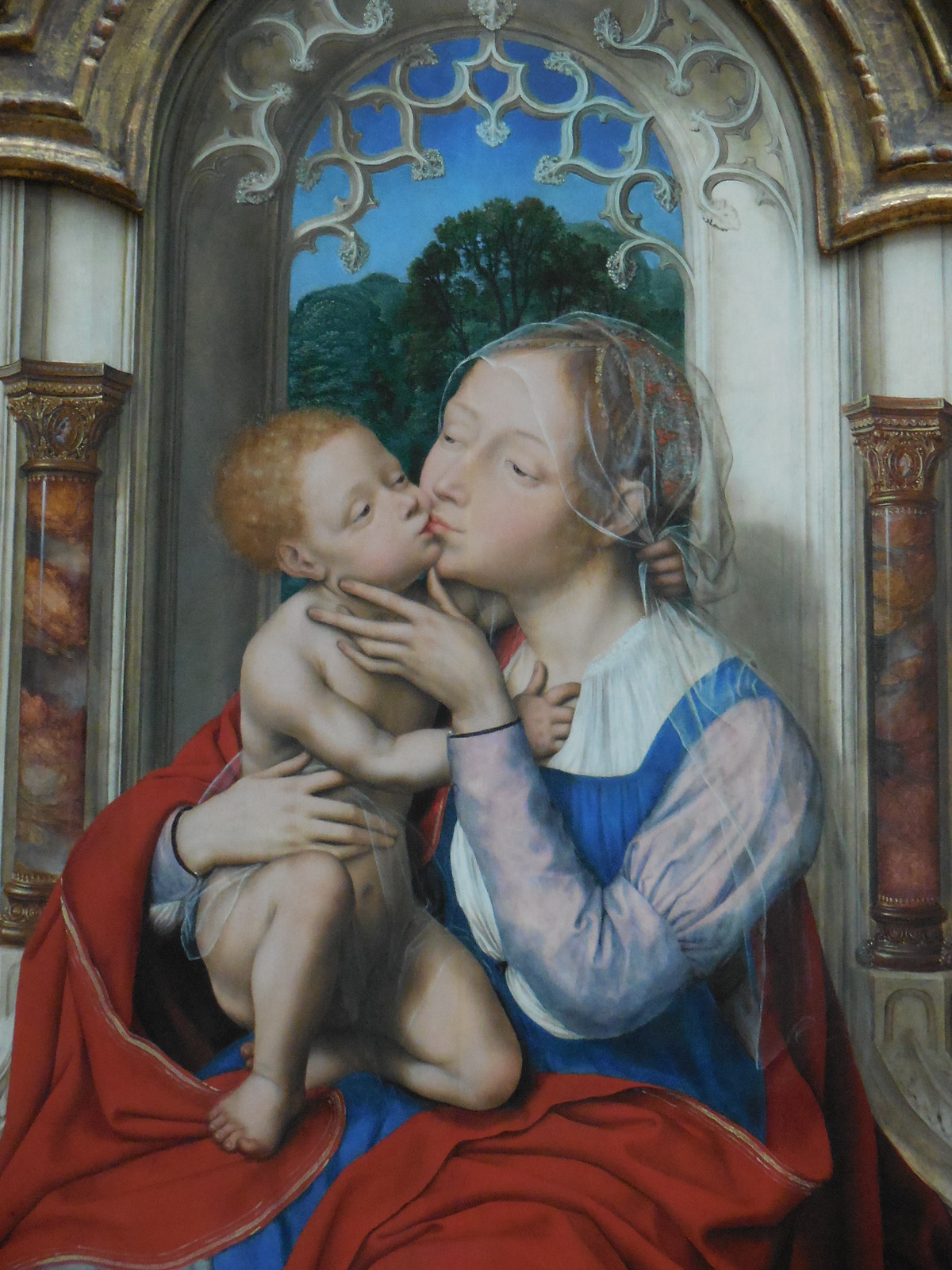
I visited the Gemäldegalerie in Berlin for the second time during 2018 and was just as enamored with the museum as I had been when I first came there. It was clear to me that this gallery hosting paintings from first years of medieval art to Neoclassism in 1800 has one of the best collections of European art in the world.

BerlinGemald18

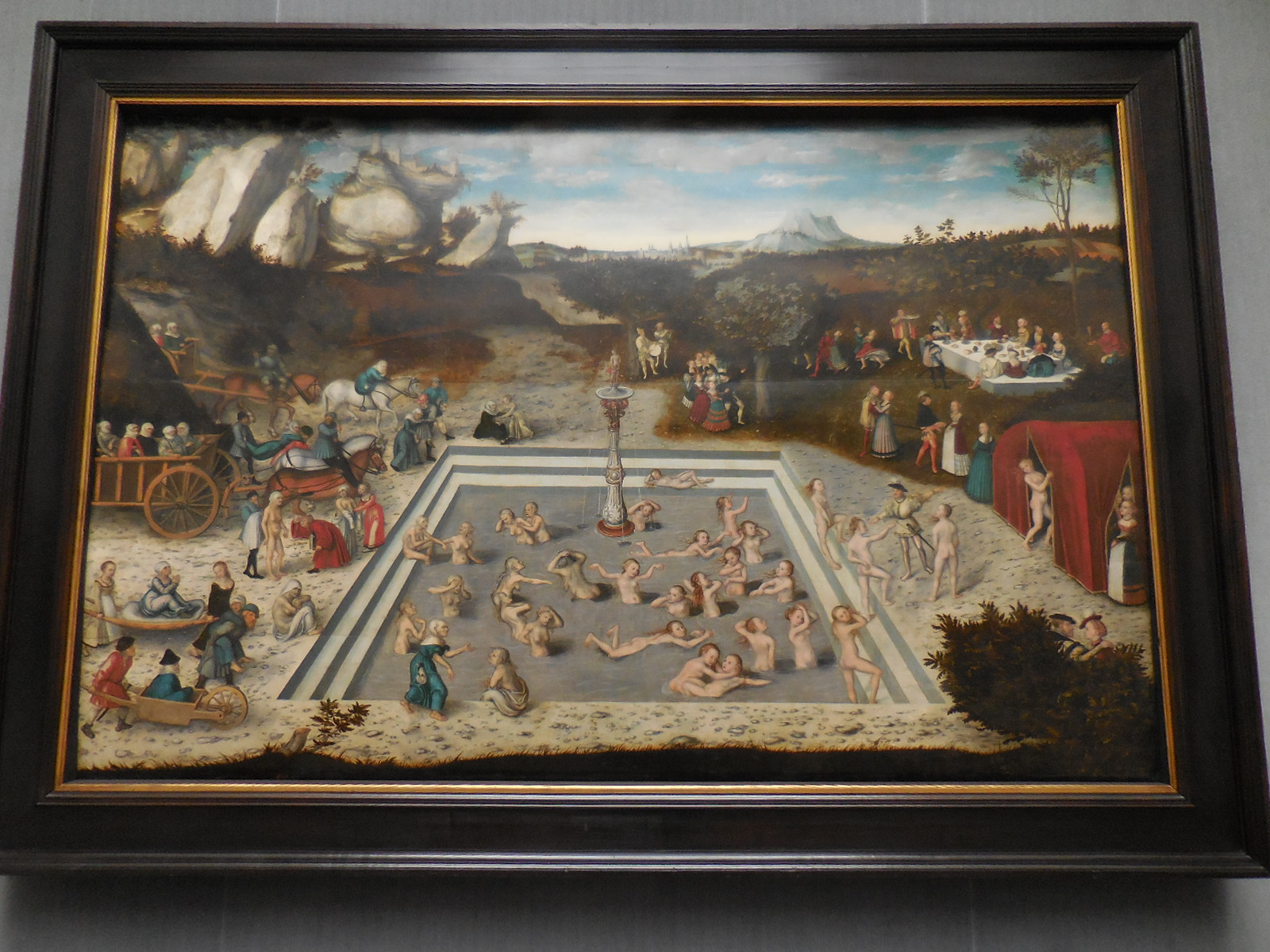
The Fountain of Youth by Lucas Cranach the Elder

BerlinGemald16

BerlinGemald21

BerlinGemald22

BerlinGemald24

The German art, especially the paintings by Albrecht Dürer and Lucas Cranach the Elder, was a true delight. I loved studying Dürer’s The Madonna with the Siskin from 1506. With a scenic landscape in the background, Mary has a cheerful and curious Jesus on her lap as he plays with a bird perched on his arm. Two putti hold a laurel crown over Mary’s head.

BerlinGemald30

BerlinGemald31

BerlinGemald32

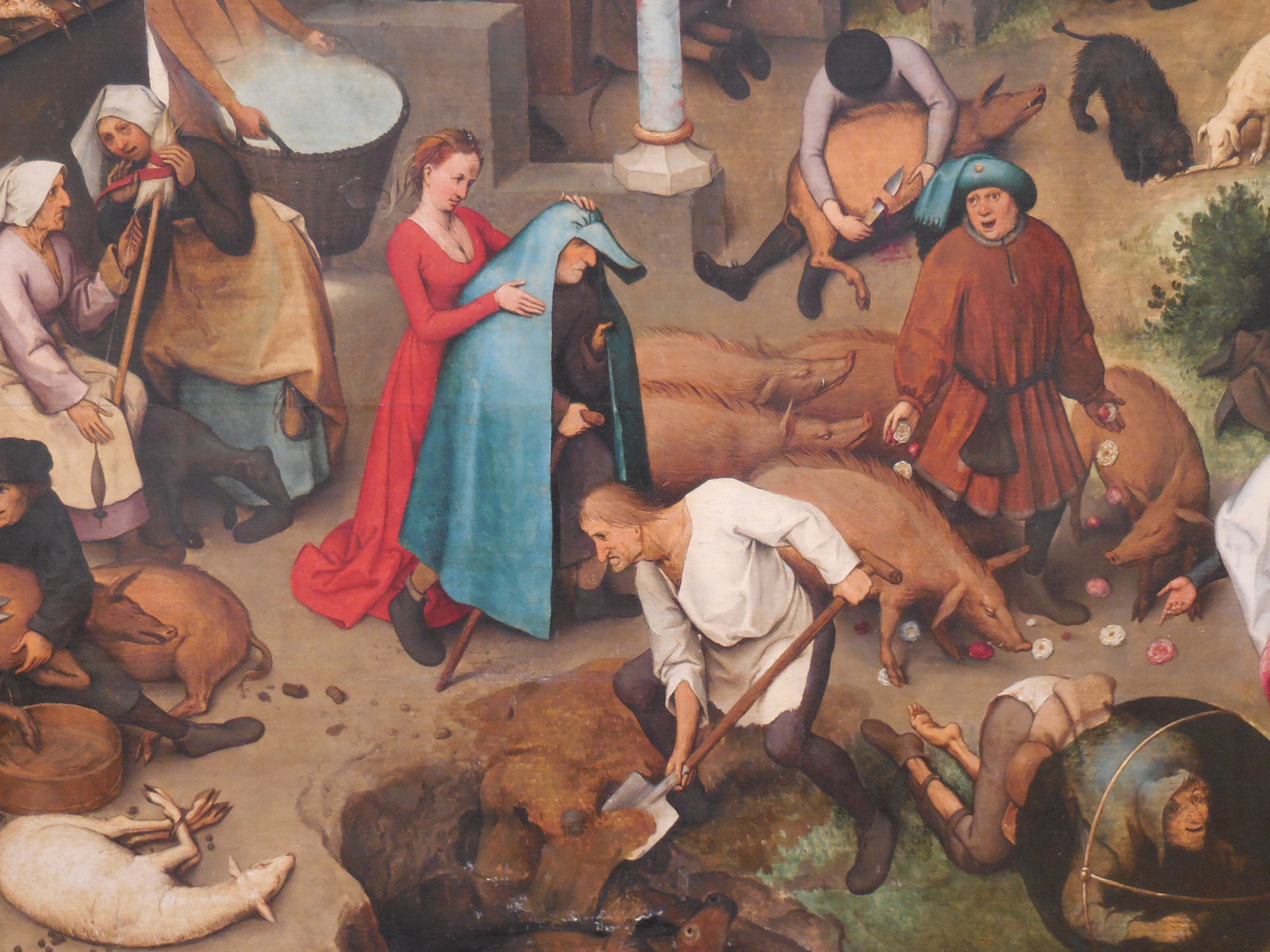
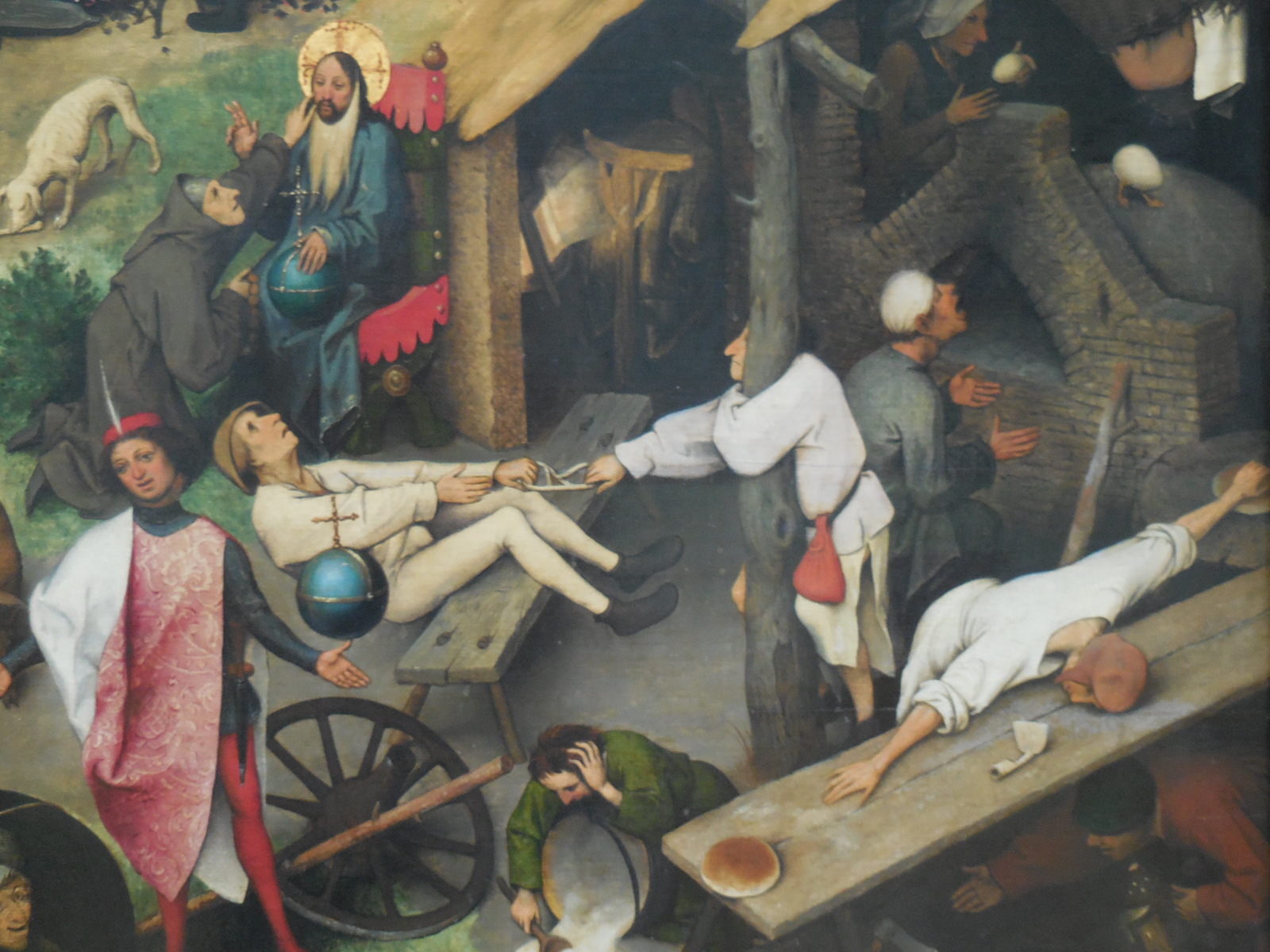
However, it was the collection of Netherlandish work that I was drawn to like a magnet. Ever since taking a class at Smith College in Dutch and Flemish art, I have been a Netherlandish art fanatic. One of my favorites was Pieter Bruegel the Elder’s Dutch Proverbs from 1559, which showcases 100 proverbs in a realistic village setting.

BerlinGemald40

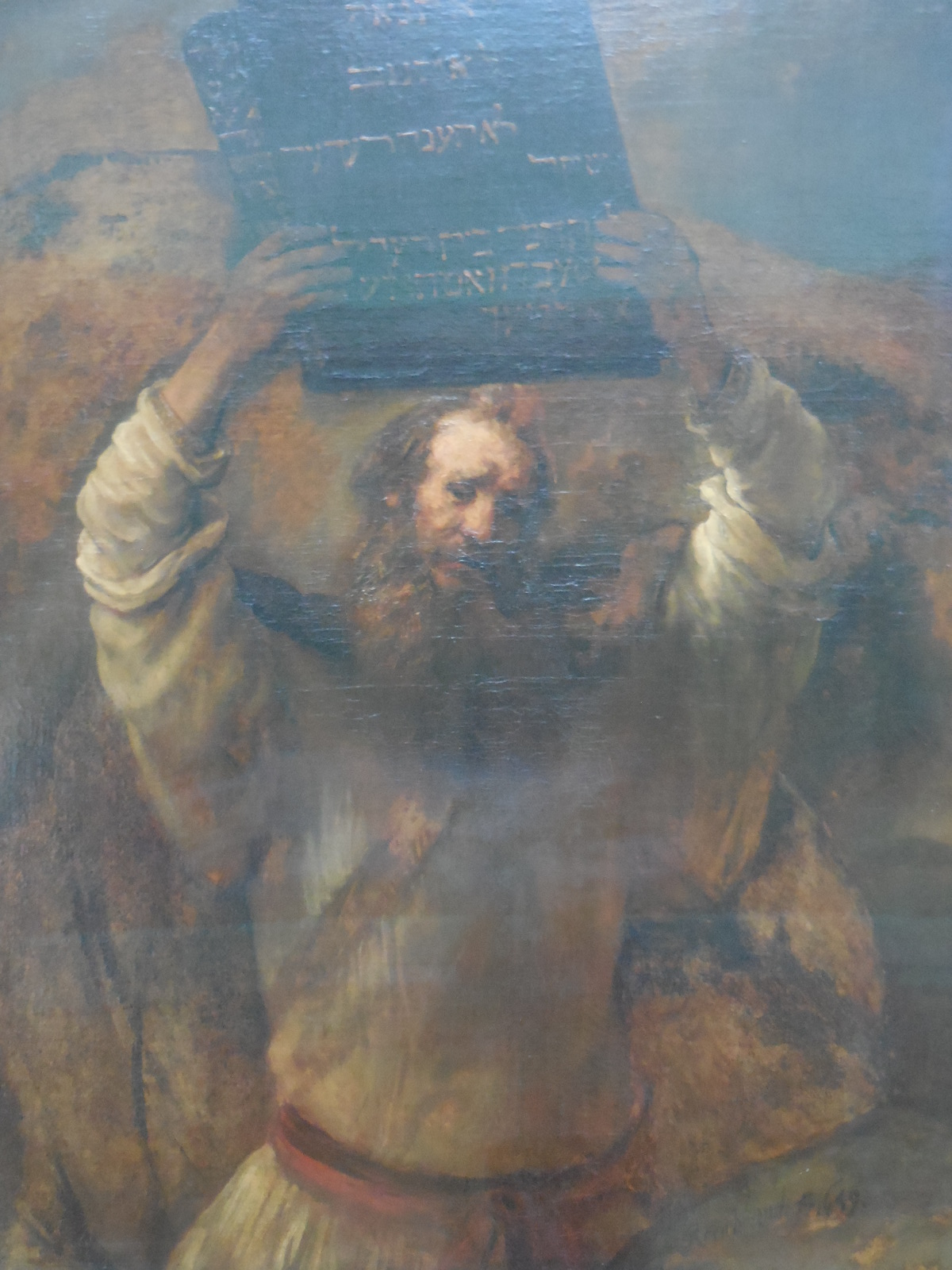
Moses with the Ten Commandments by Rembrandt, 1659

BerlinGemald42

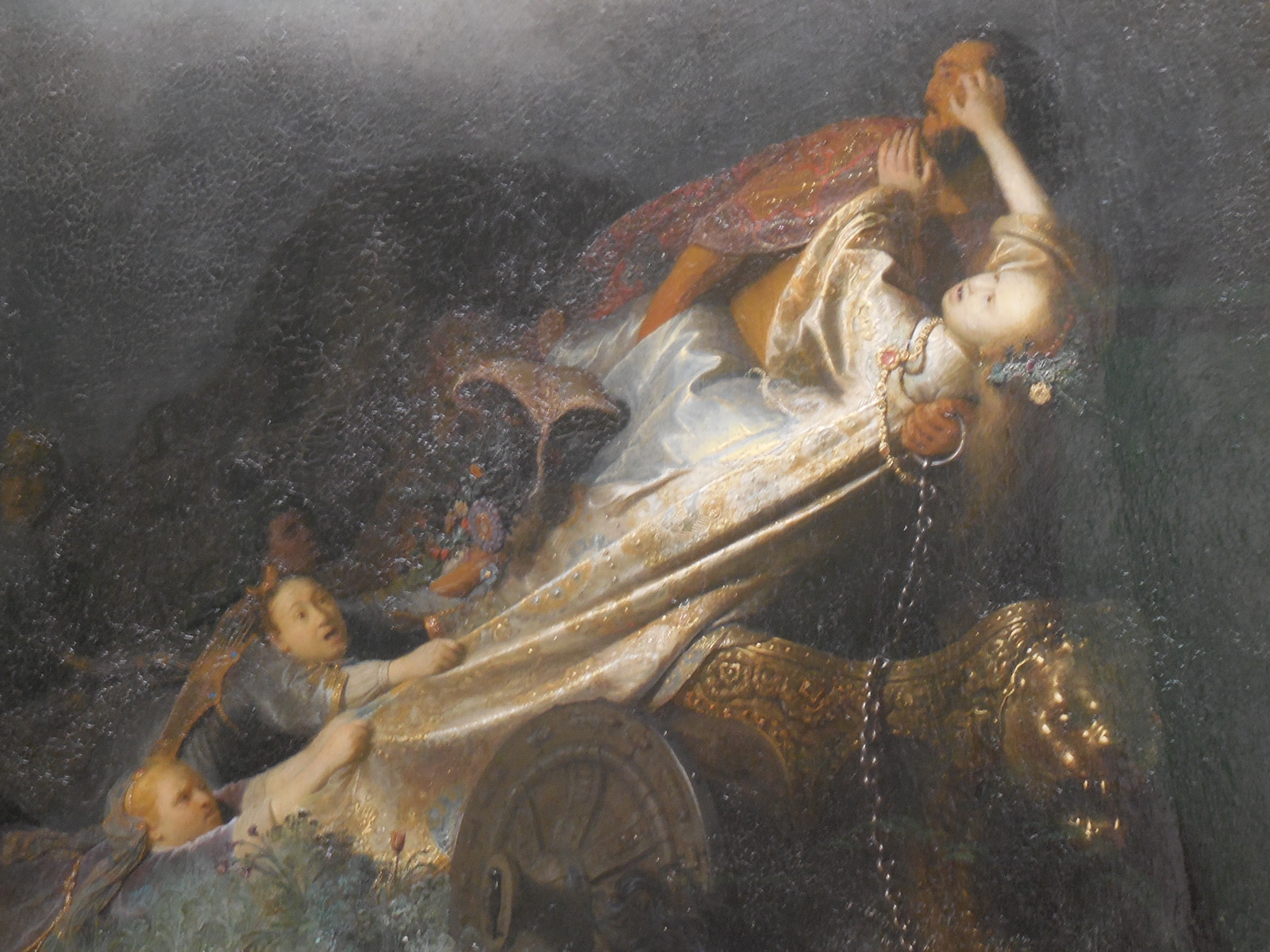
Susanna and the Elders by Rembrandt, 1647

BerlinGemald41

BerlinGemald45

BerlinGemald46

One entire room is devoted to Rembrandt’s art, and I spent a long time studying Rembrandt’s creations. While staring at Moses about to destroy the tablets in Moses with the Ten Commandments from 1659, I felt Moses’ ire and inner turmoil. In Rembrandt’s Susanna and the Elders from 1647, Susanna is swathed in light as the letch pulls her backwards toward him. Susanna draws viewers into the picture by looking straight at them, making them a witness to the physical abuse by the elderly, uncouth man and his accomplice.

BerlinGemald25

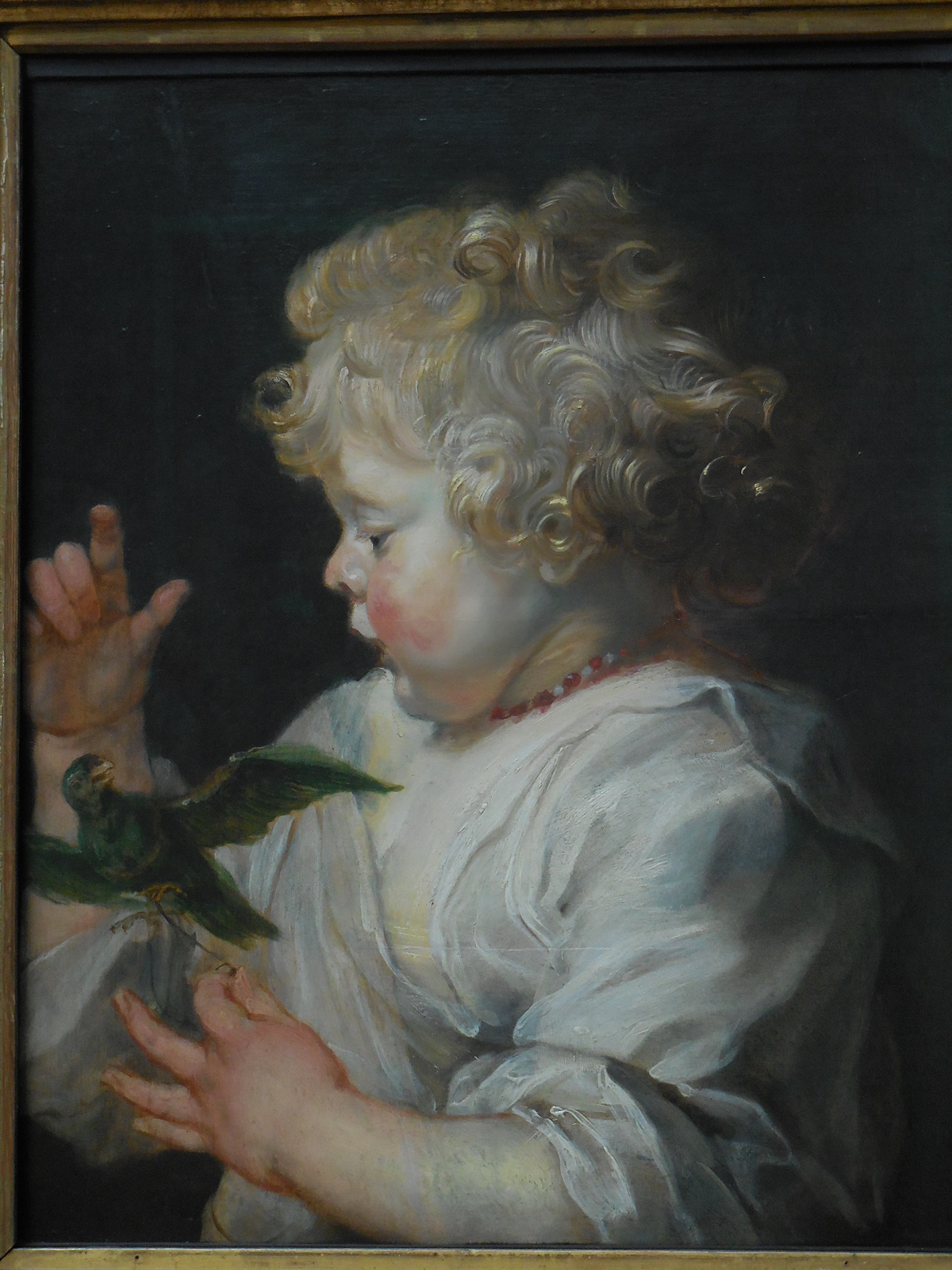
Child with a Bird by Rubens, 1624-25

BerlinGemald23

Saint Sebastian by Rubens, 1618

BerlinGemald34

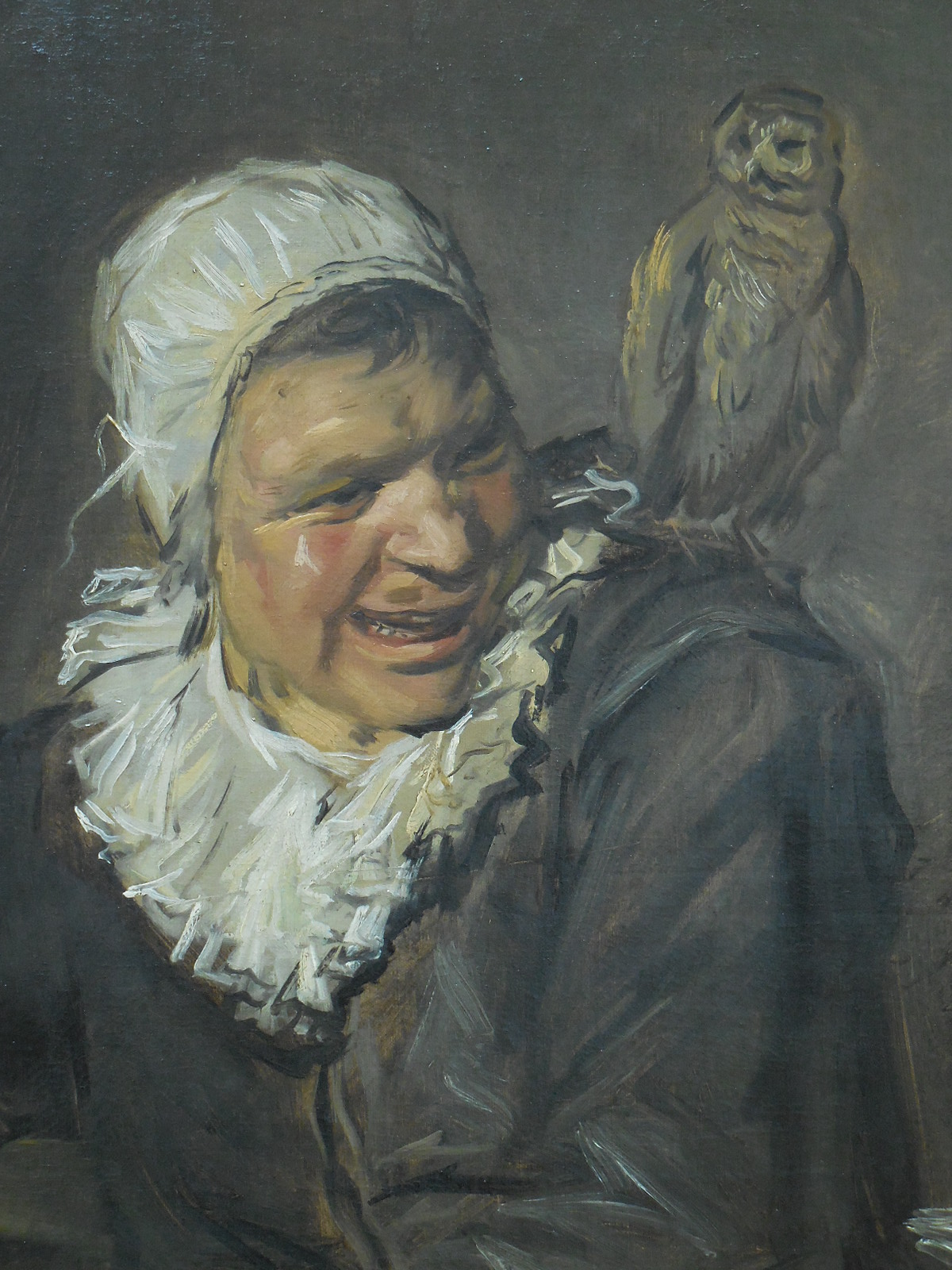
Malle Babe by Hals, 1633-35

I also was overjoyed at seeing again Paul Rubens’ Child with a Bird from 1624-25 and felt the pure joy that the child must have experienced when first noticing the bird. Rubens’ Saint Sebastian from 1618 is riddled with arrows as his face is turned toward the sky, toward Heaven. Emotion and turmoil seep from the twisted figure. Frans Hal’s Malle Babe from 1633-35 shows an inebriated woman with an owl on her shoulder. I could almost hear her mad, raucous, and disturbing laughter roar through the exhibition space.

BerlinGemald50

Cupid as Victor by Caravaggio, 1601-02

BerlinGemald26

BerlinGemald29

BerlinGemald28

Other highlights for me included Jan Vermeer van Delft’s Young Woman with a Pearl Necklace. I loved the yellow of the curtain and her jacket. I adored Vermeer’s depictions of people going about their everyday routines. Even the simplest and smallest of gestures or movements acquires a poetic quality. Of course, I did not overlook Caravaggio’s works. His Cupid as Victor from 1601-02 displays his mastery at chiaroscuro as Cupid mocks the audience with a sly, cunning smile that announces love as victorious over science, art, fame and power. The five Madonnas by Raphael also stood out, and I remembered touring Raphael’s birthplace in Urbino.

BerlinGemald47

BerlinGemald54

BerlinGemald55

BerlinGemald56

Overall, there are 72 rooms displaying masterpieces in the Gemäldegalerie. The main galleries house about 850 works. The history of the museum, harkening back to 1830, intrigued me. During World War II, many of its paintings were saved because they were hidden in the Thuringian salt mines, from which US soldiers rescued them. Other items in the collection were stored in air raid shelters during the war. During the Cold War, the works were divided into two galleries – one in West Berlin, the other in the East. The two collections have only been housed in one building since 1998. The Old Master Paintings are located at the Kulturforum with the Museum of Decorative Arts as its neighbor. I was dazzled by the works in that museum as it, too, is well worth a visit.

BerlinGemald59

BerlinGemald60

BerlinGemald63

BerlinGemald64

Tracy A. Burns is a writer, proofreader and editor in Prague.

Bassano del Grappa Diary

BassanodelGrappa3

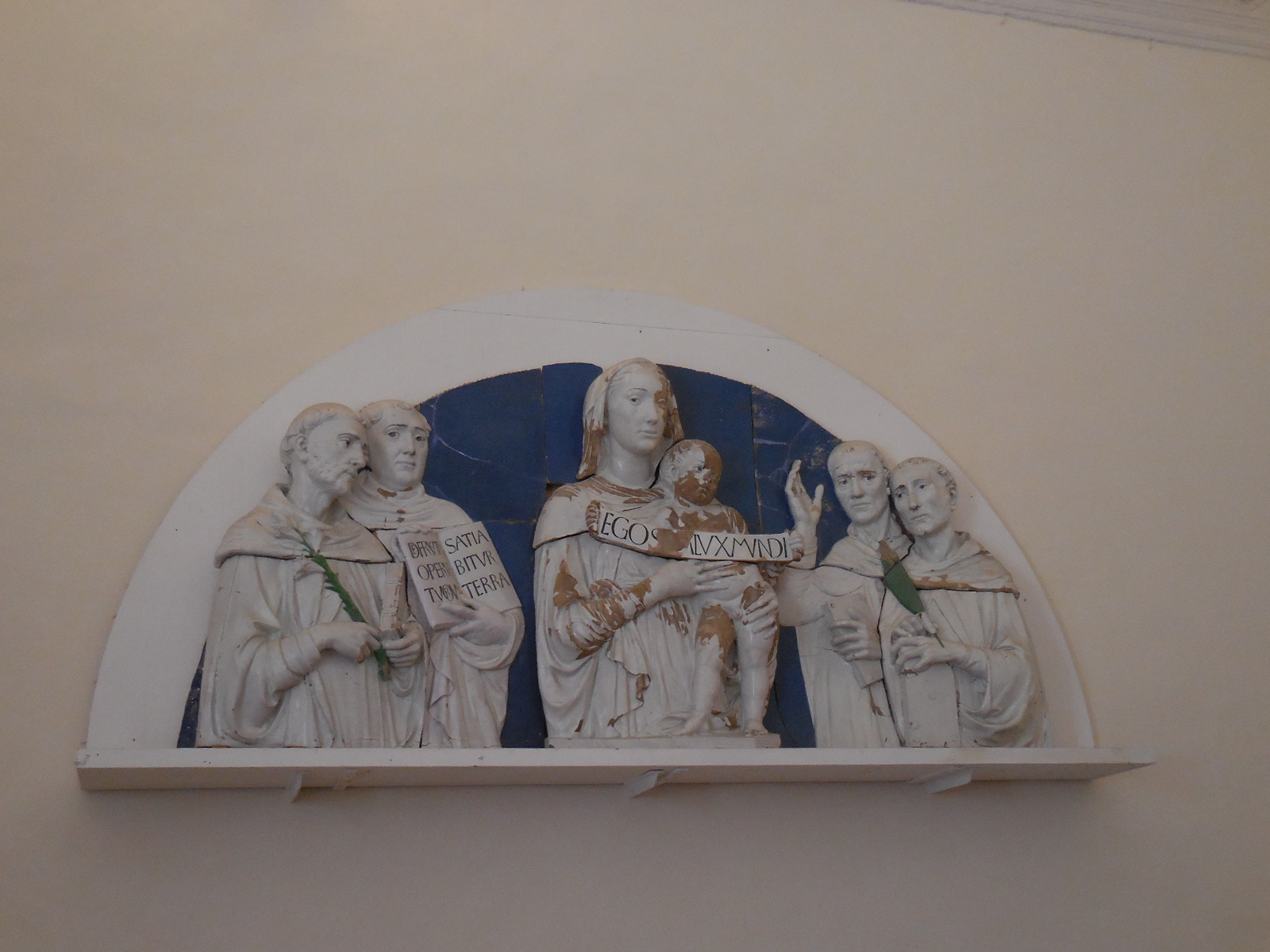
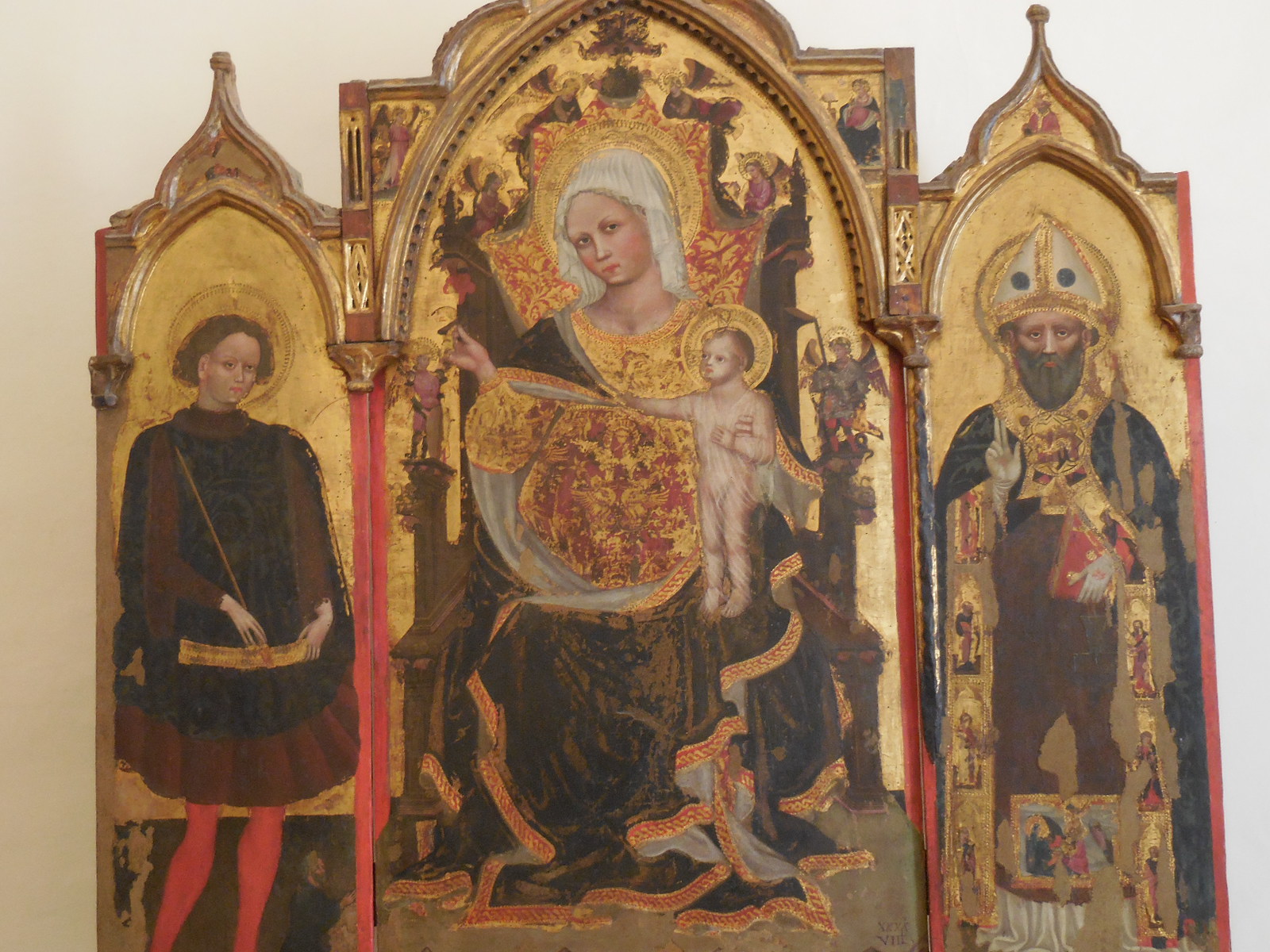
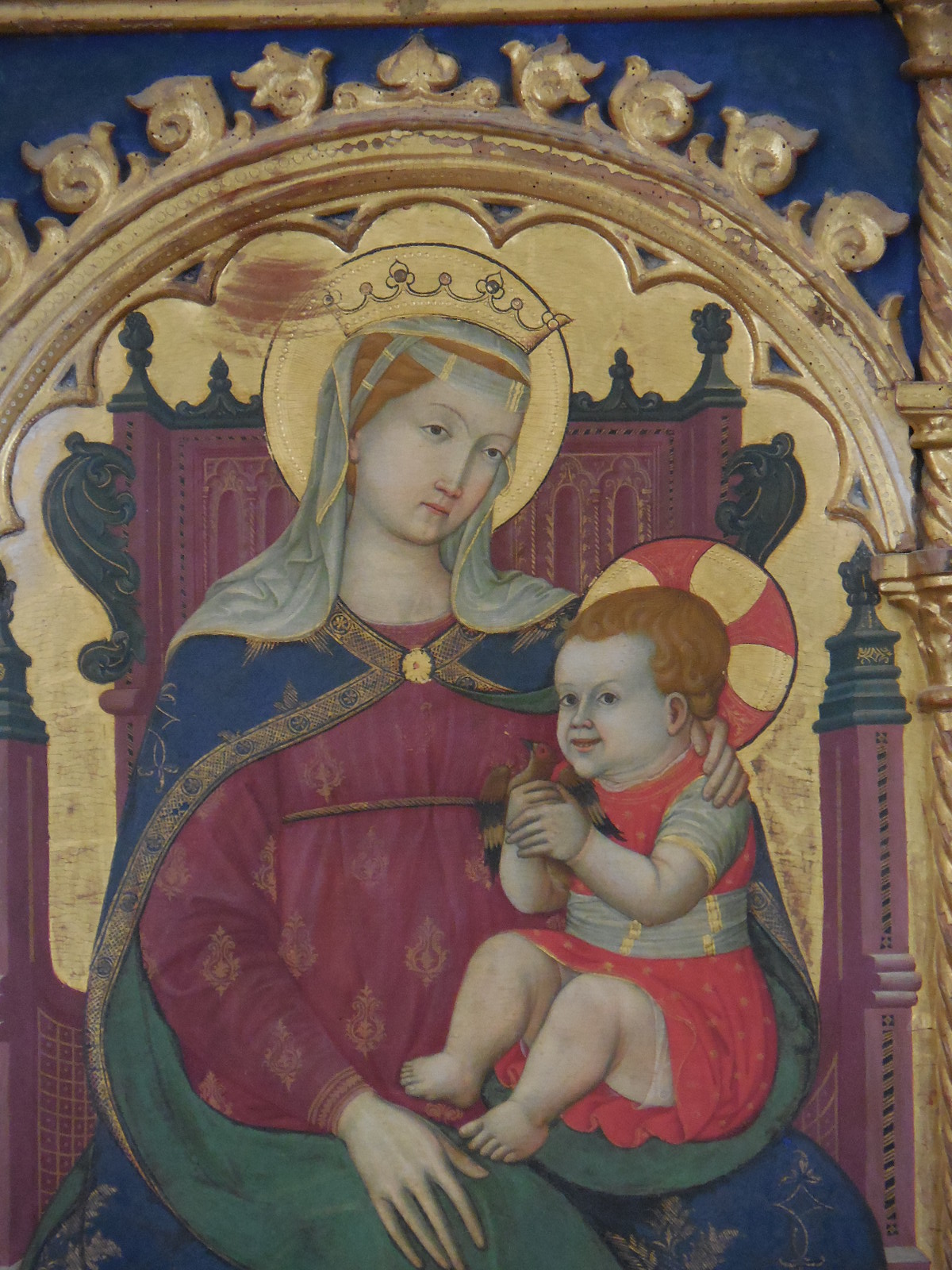
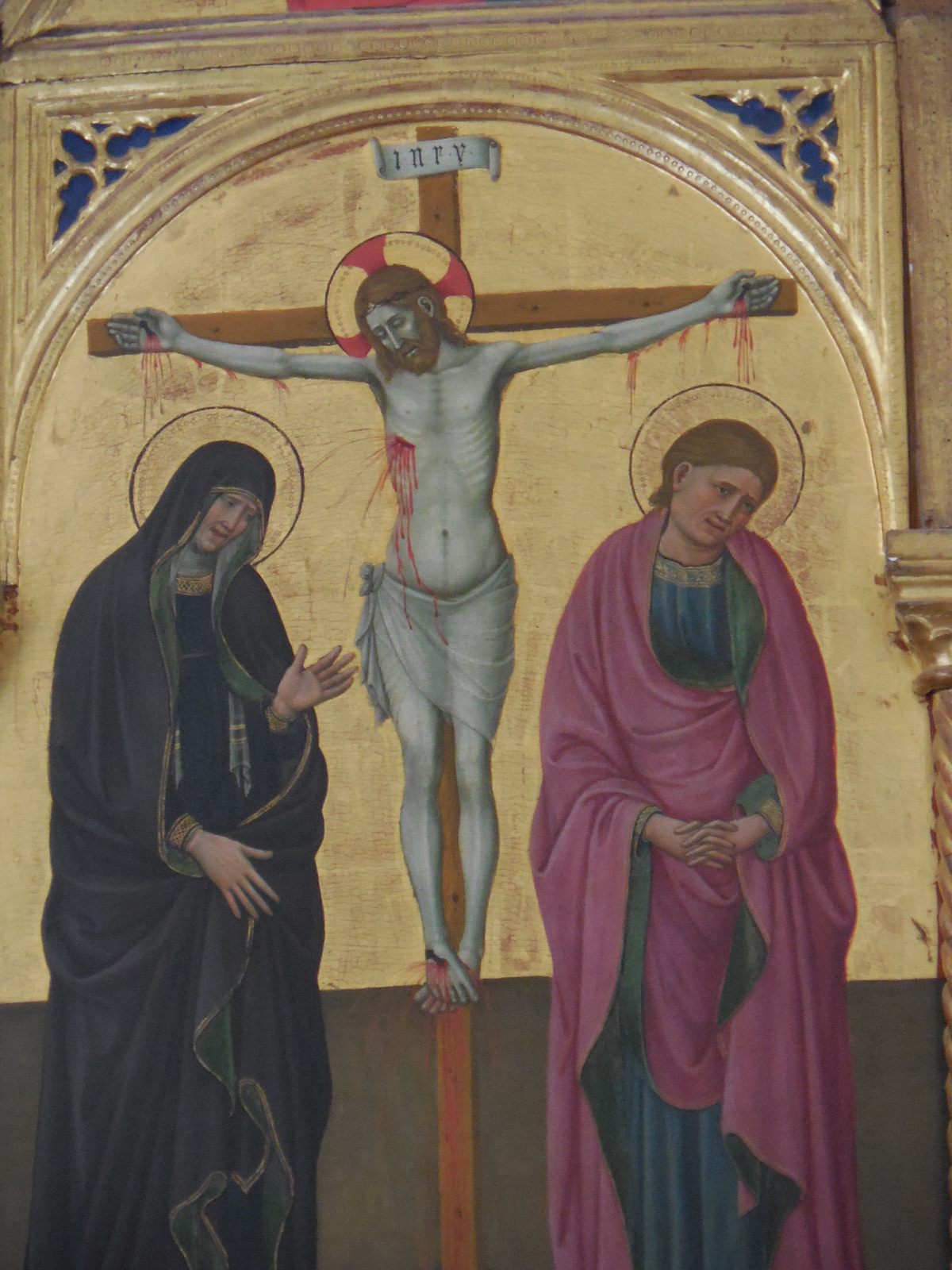
During my four-day excursion to north Italy with the arsviva travel agency, we visited the picturesque town of Bassano del Grappa, located 65 kilometers from Venice. It is known not only for its vineyards and Venetian villas but also for its Palladian wooden bridge and for the impressive collection of paintings by Jacopo Bassano (also referred to as Jacopo dal Ponte) in its Civic Museum.

BassanodelGrappa4

First, a bit about the town: Bassano del Grappa was first mentioned in writing as far back as 998 AD. The symbol of the city, the Ponte Vecchio was designed by the renowned architect Palladio in 1569. A wartime casualty and a victim of floods, the bridge has been rebuilt several times, but the current structure remains faithful to Palladio’s original design.

BassanodelGrappa7

The town does not lack a castle or a cathedral, either. Ezzelini Castle has not been in use for six centuries. Hailing from 998 A.D., the cathedral now boasts a 17th century appearance, Two of Jacopo’s paintings adorn the interior. Historical monuments abound. The Civic Tower was constructed around 1312. The Loggia of the Mayor dates back to the 15th century. The elegant blue clock has decorated its façade since 1430, though the current one was built in 1747. The loggia features frescoes. The squares of the town are picturesque, though there was a large market on the main square while we were there. Intriguing churches of various architectural styles also dot the town.

BassanodelGrappa10clock

The Civic Museum captured my undivided attention for more than two hours. The museum boasts the largest collection of renditions by Jacopo in the world. There was much more to see than Bassano’s masterpieces, however. The art gallery displays some 500 paintings from the 13th to 20th century. Sculptures also delight. There is a 17th century cloister, too.

BassanodelGrappa8

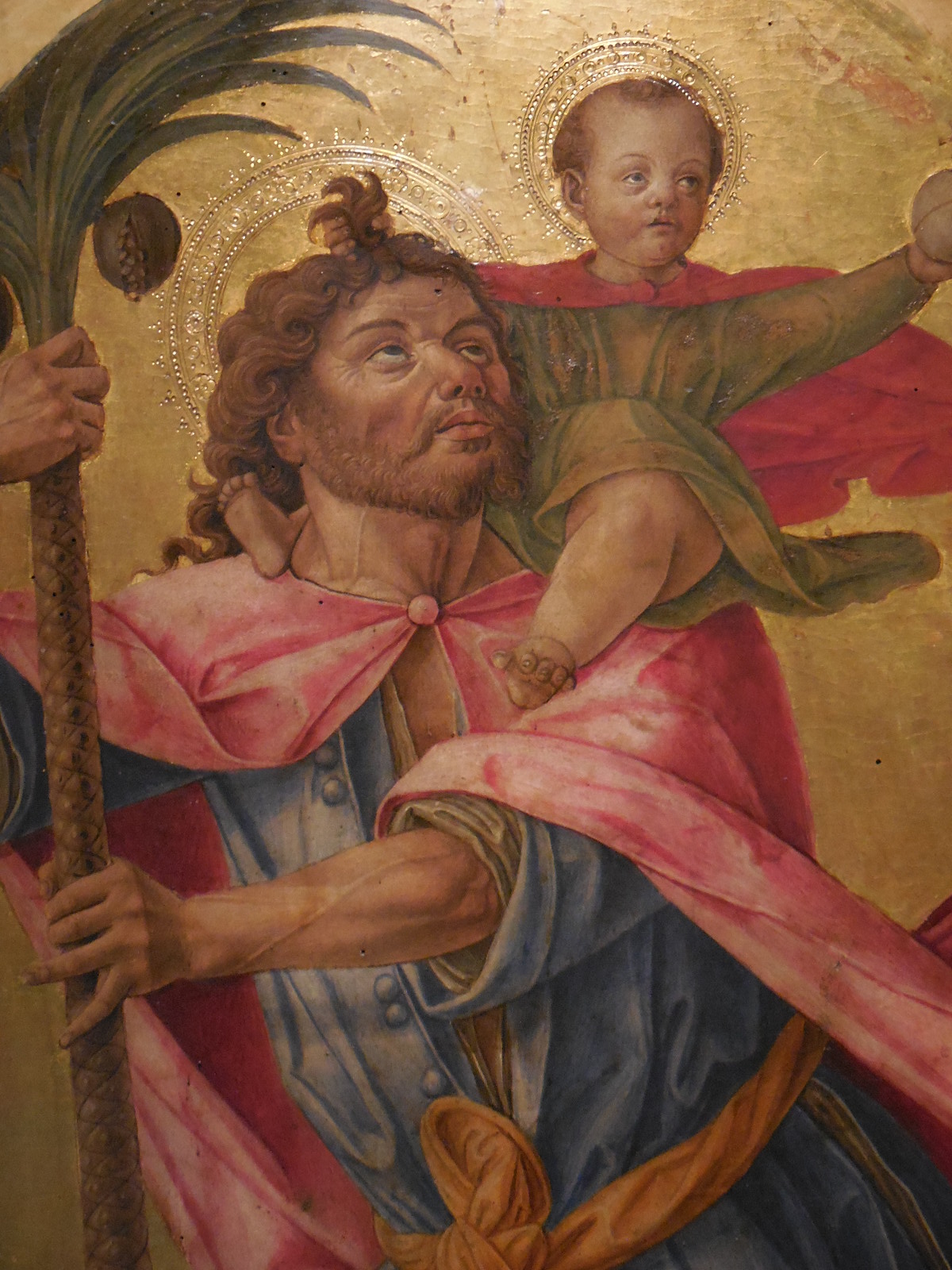
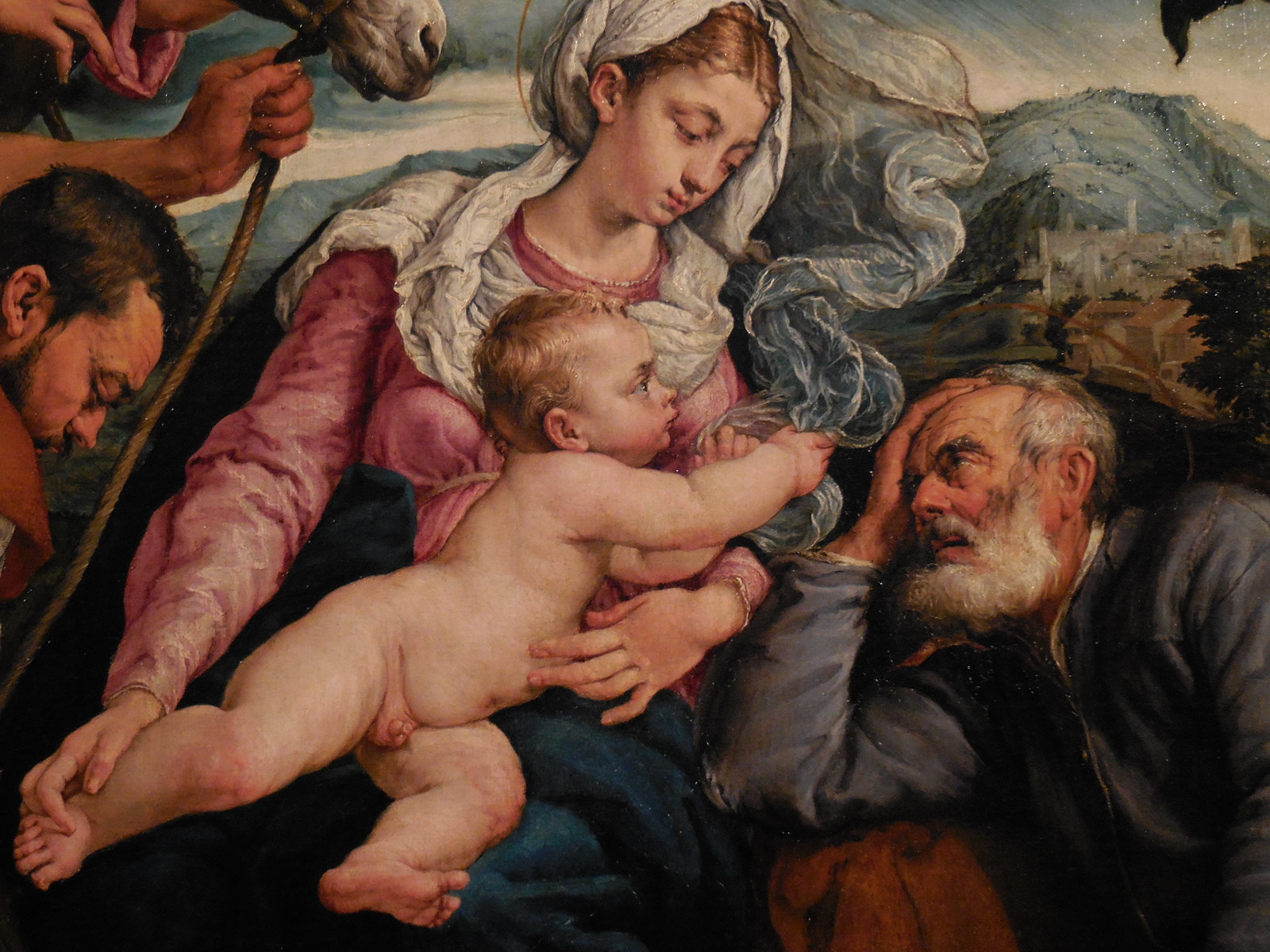
Jacopo Bassano lived from 1510 or 1515 to 1592. He was a Renaissance Venetian painter whose later works fall into the category of Mannerism. Born in Bassano del Grappa, he resided in Venice during the 1530s before returning to his hometown for good in 1539. Often experimenting with various styles, Jacopo was influenced by Titian, Tintoretto, Durer, Raphael and Roman art, for example. The painting guru is known for his religious paintings rendered in natural landscapes. He also studied the role of light and created significant nocturnal scenes.

BassanodelGrappa10

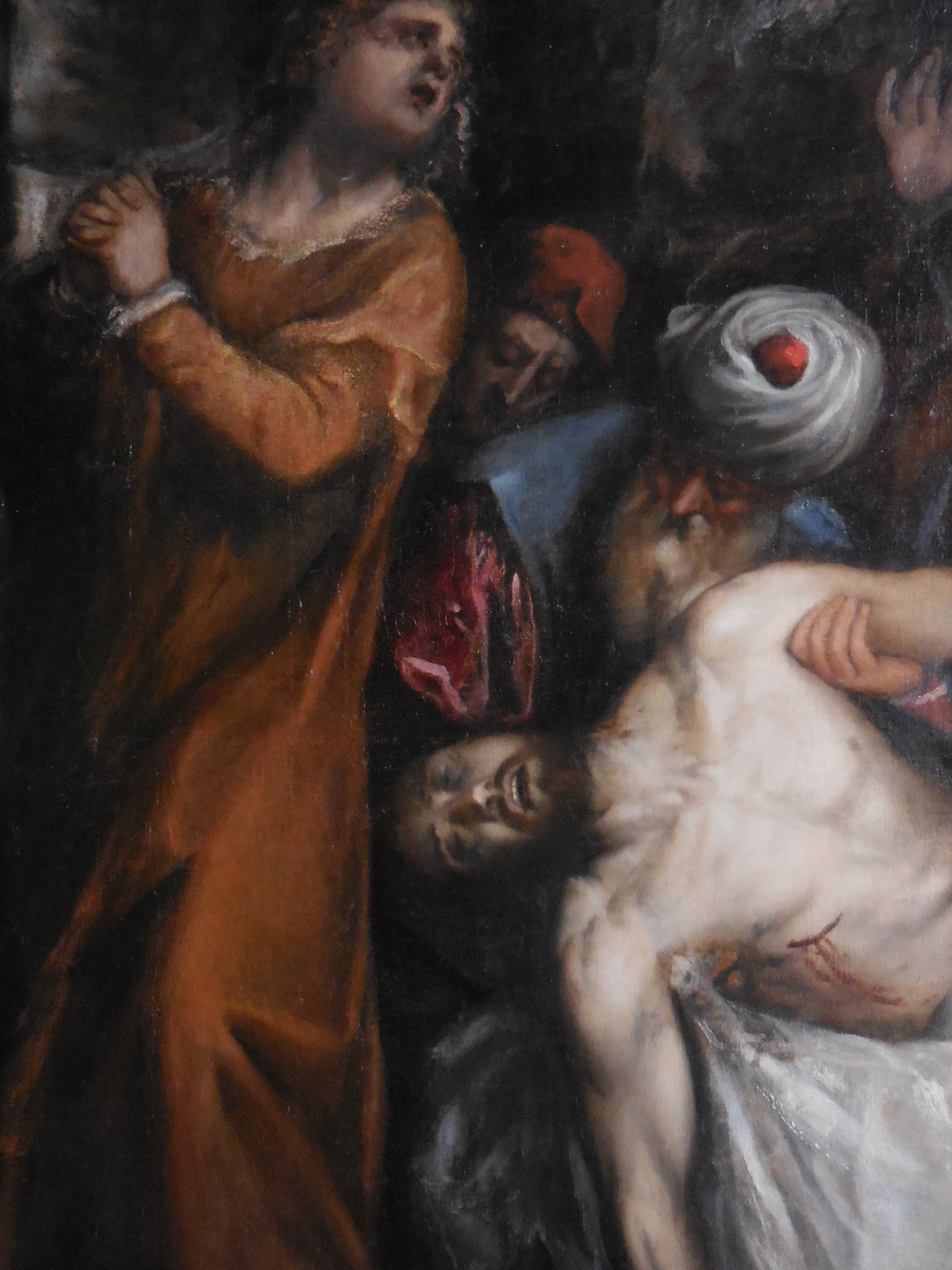
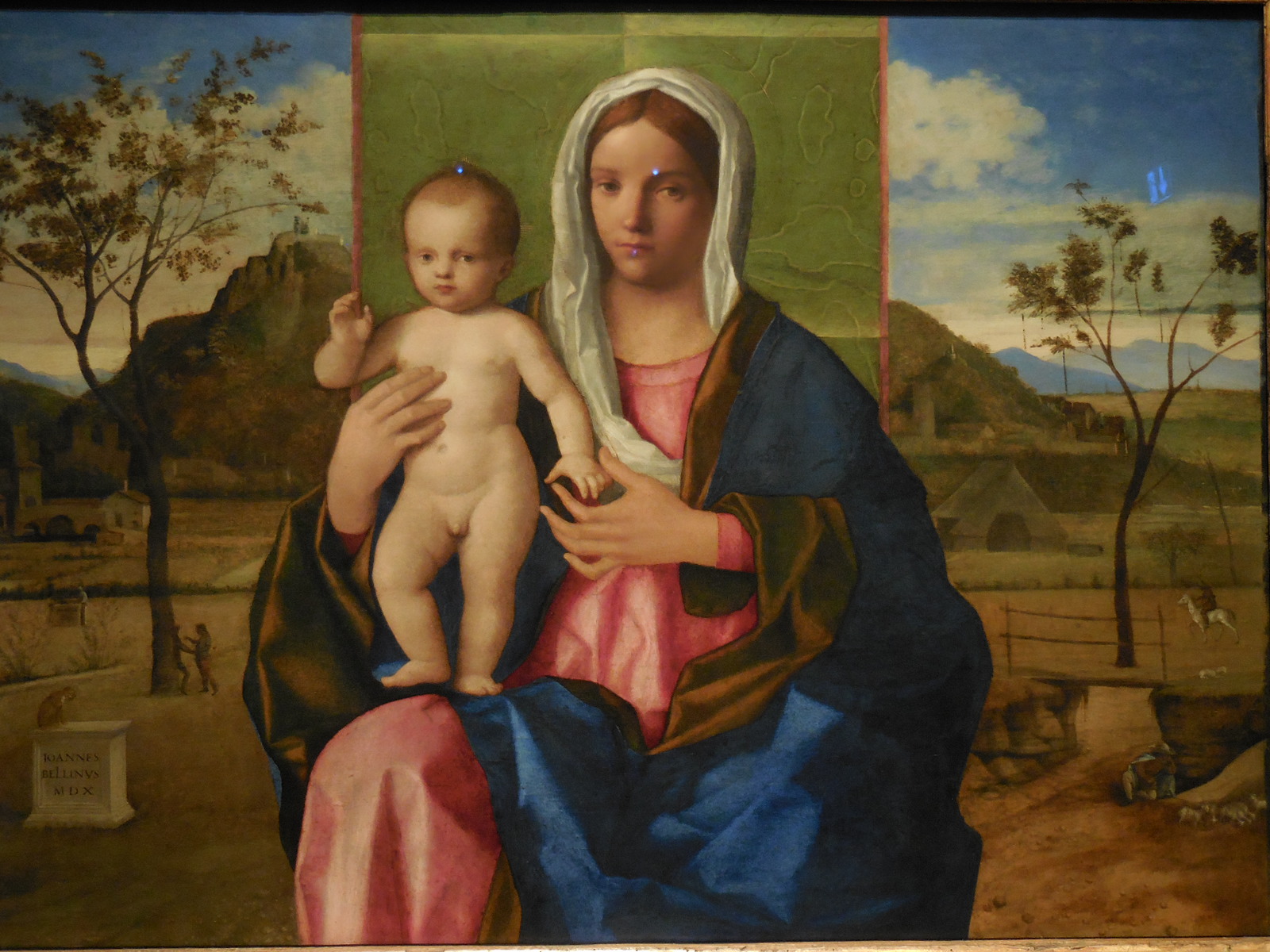
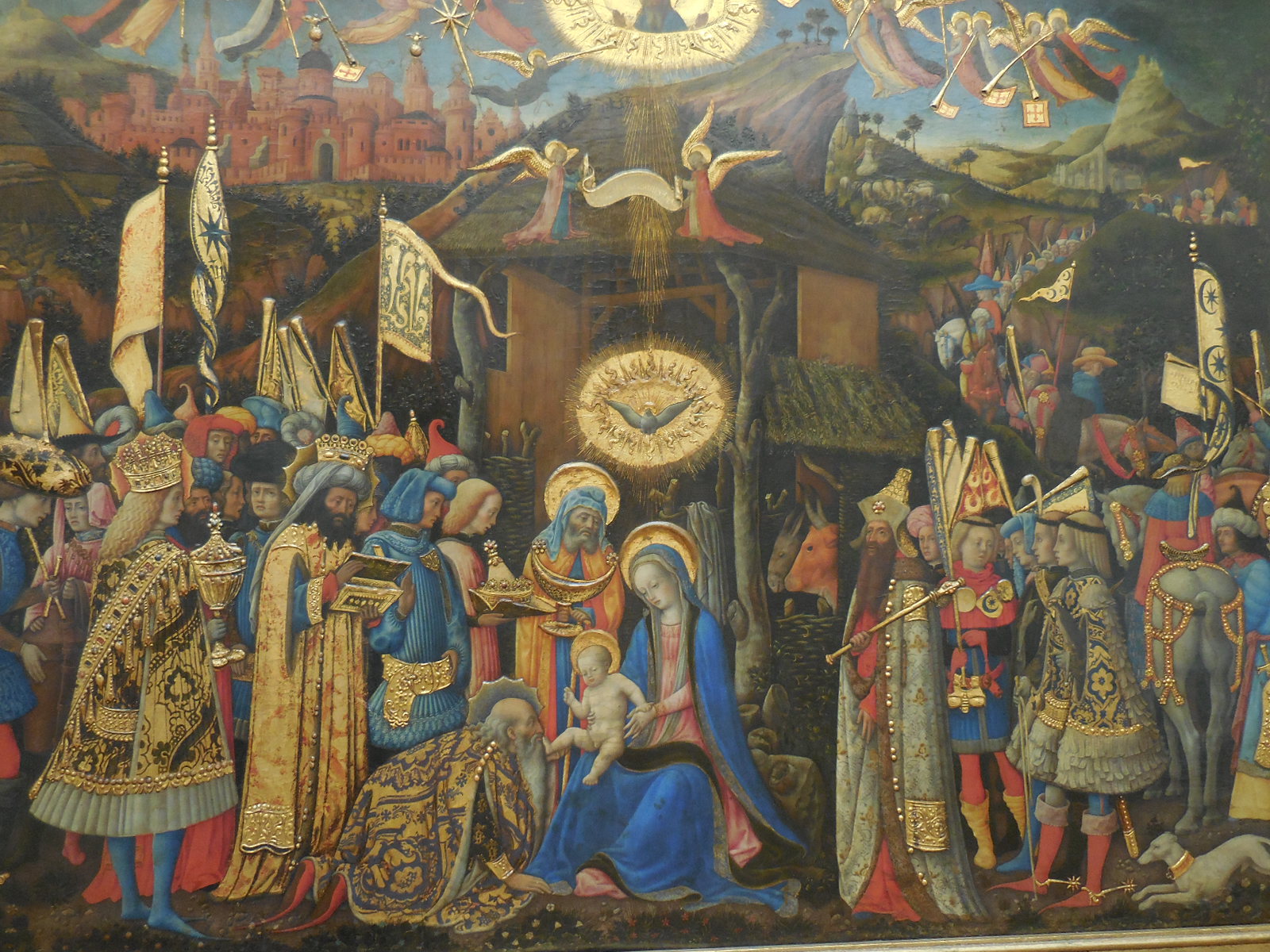
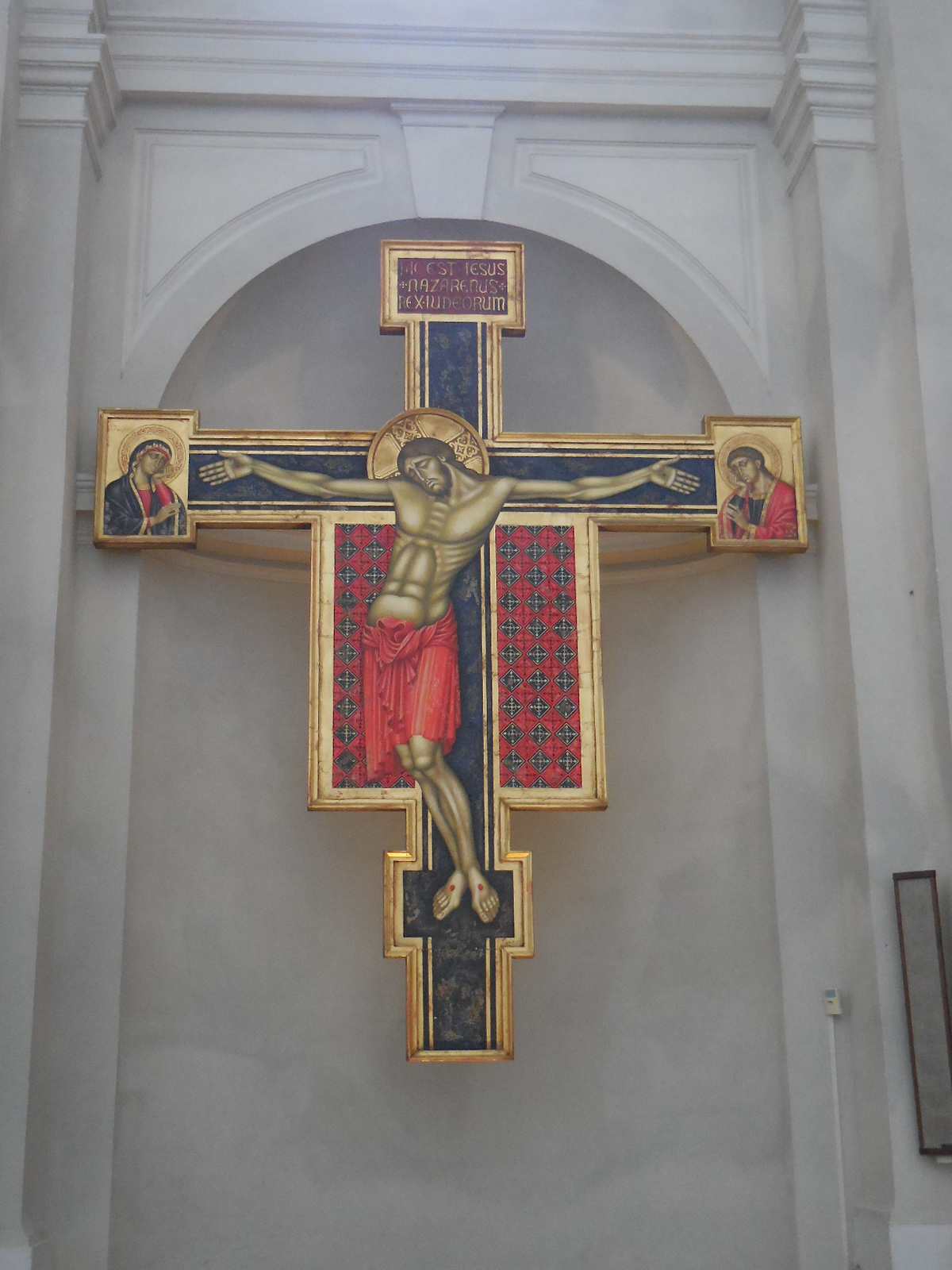
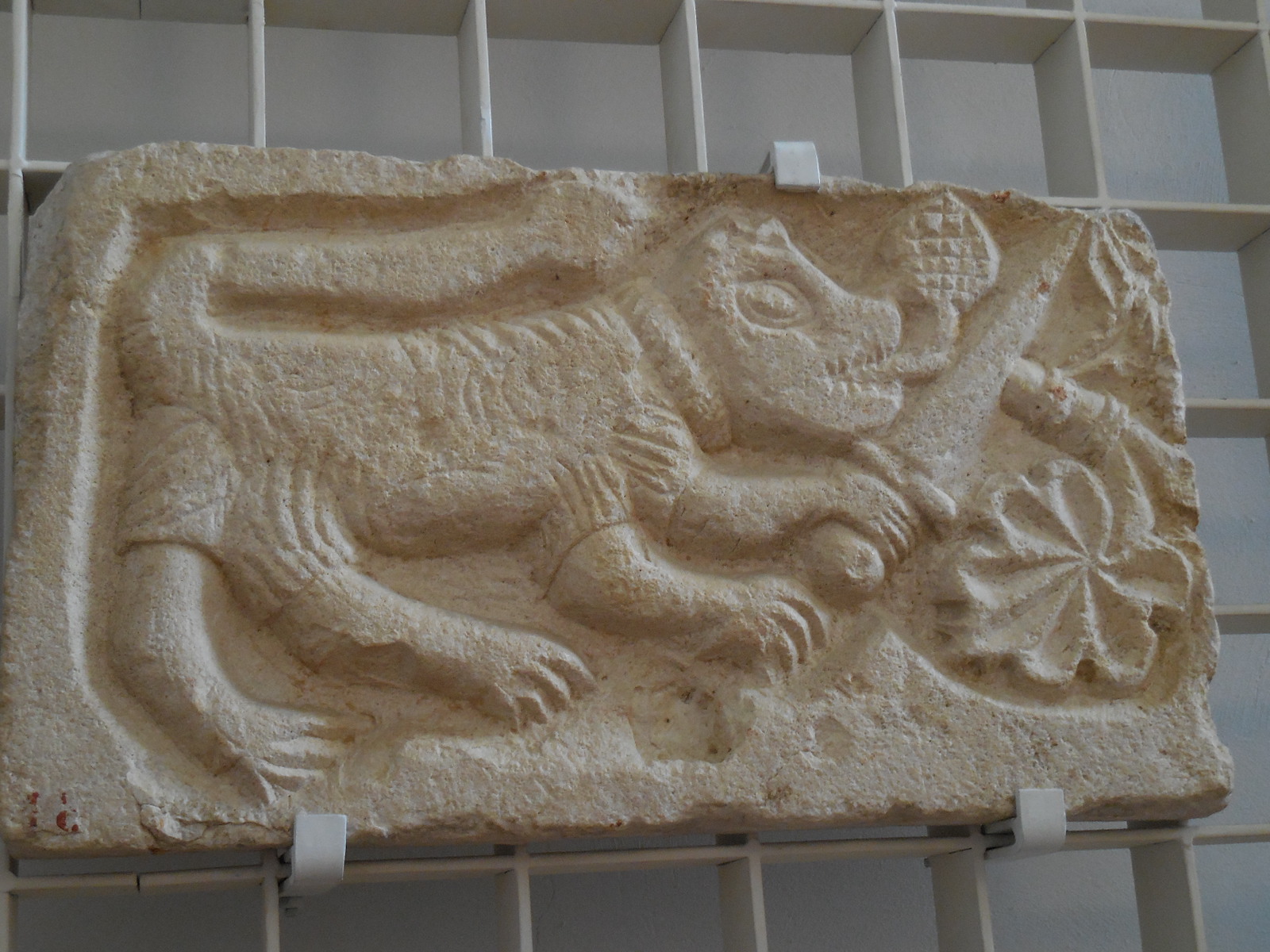
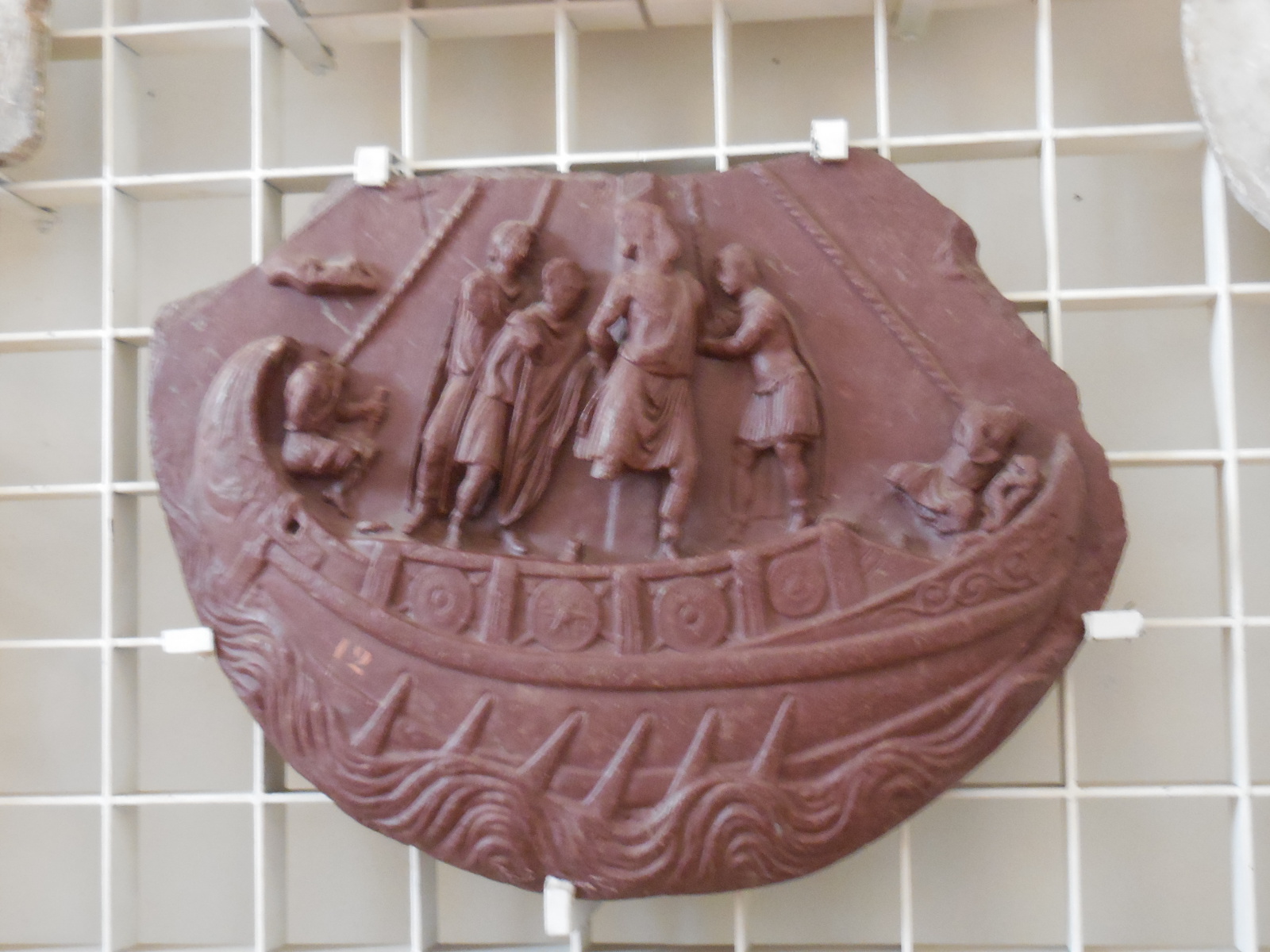
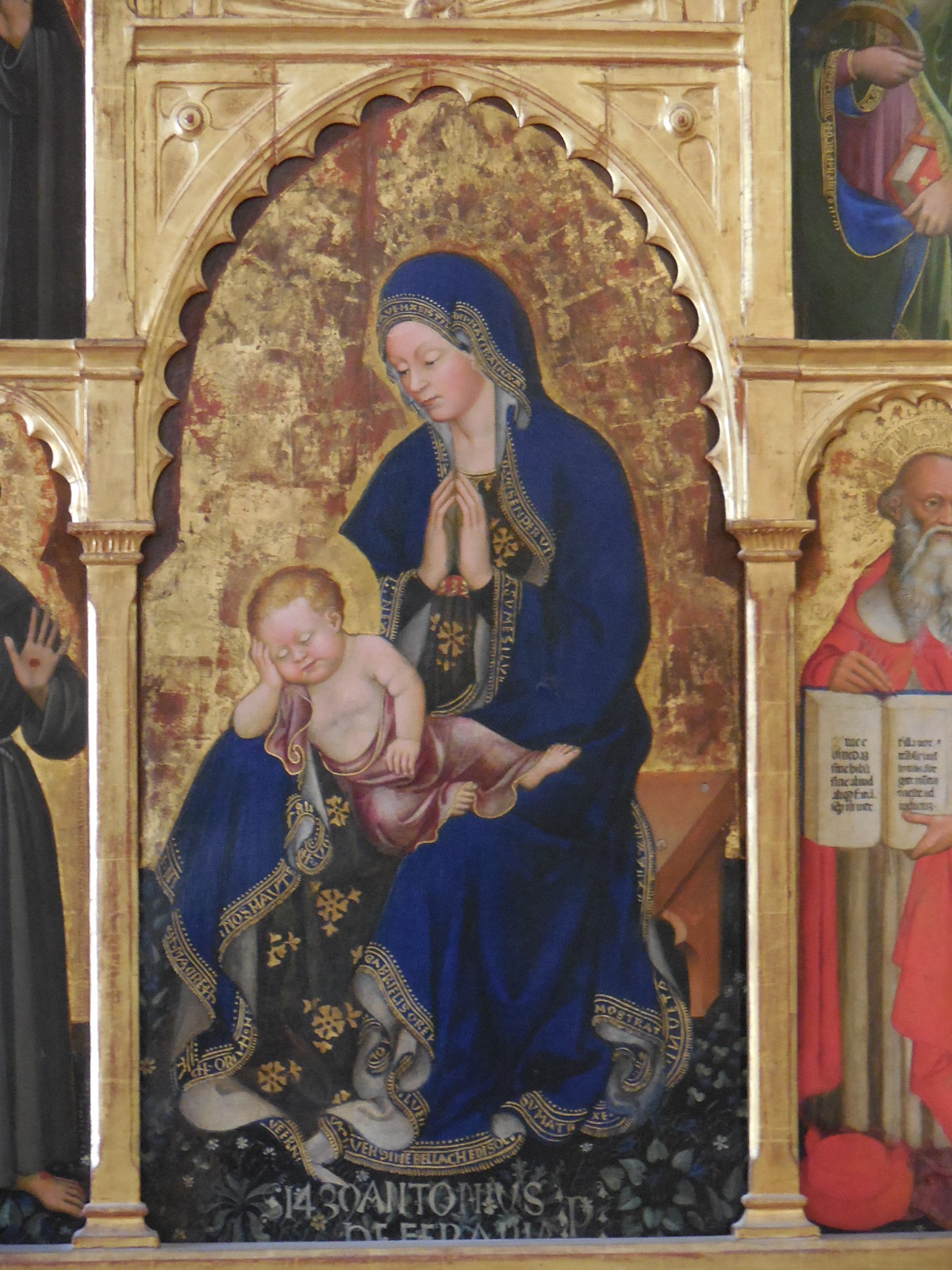
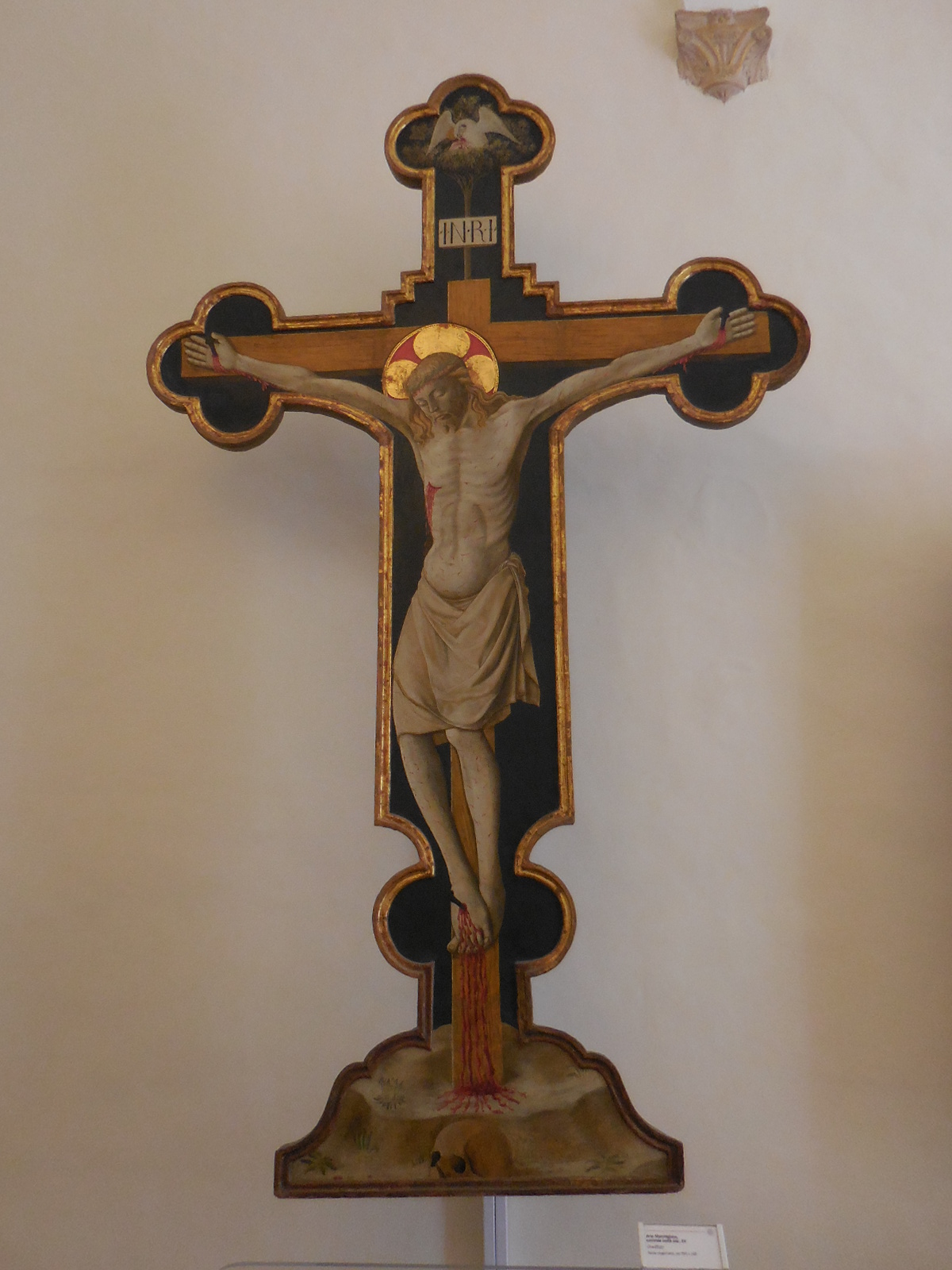
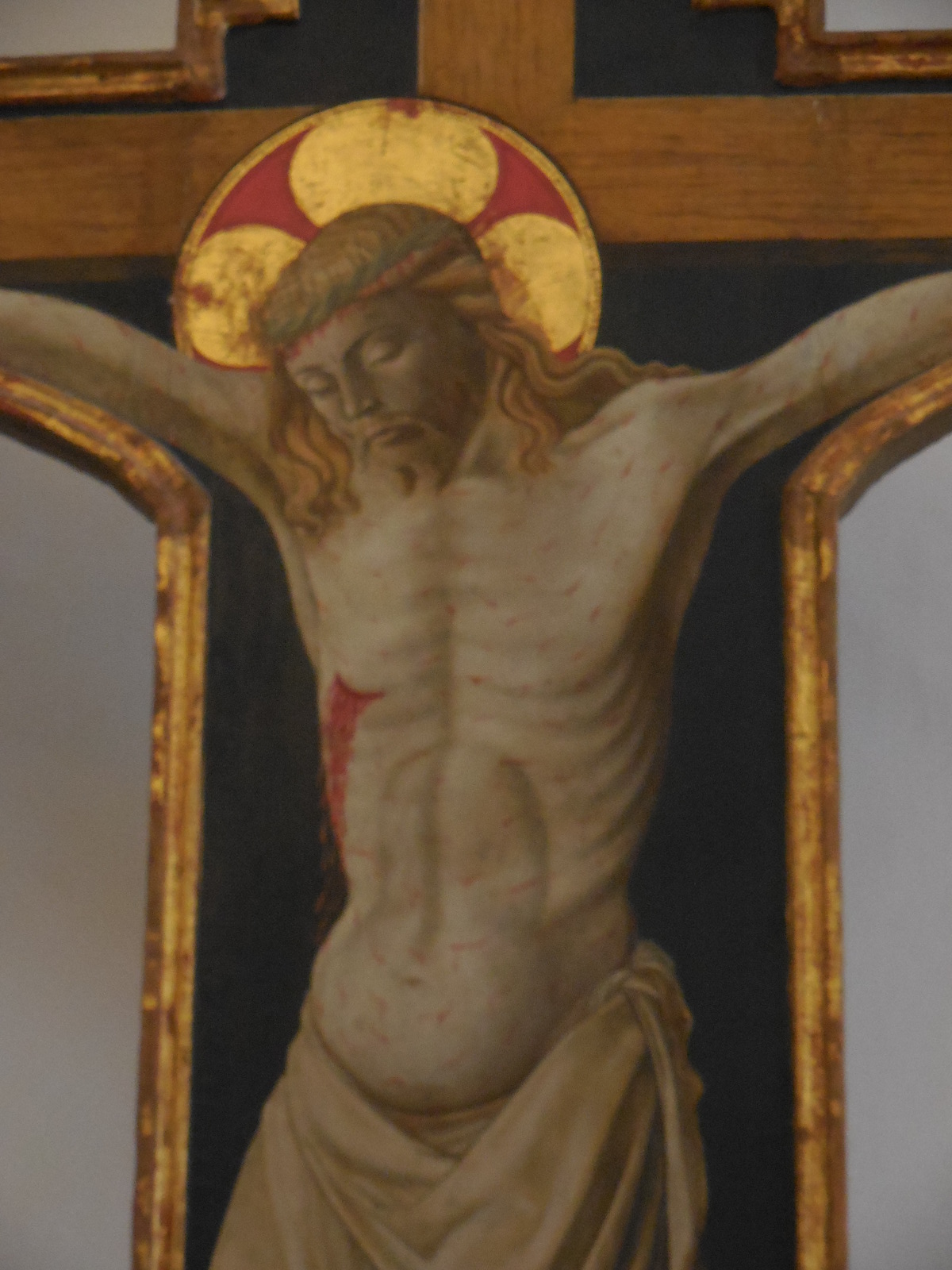
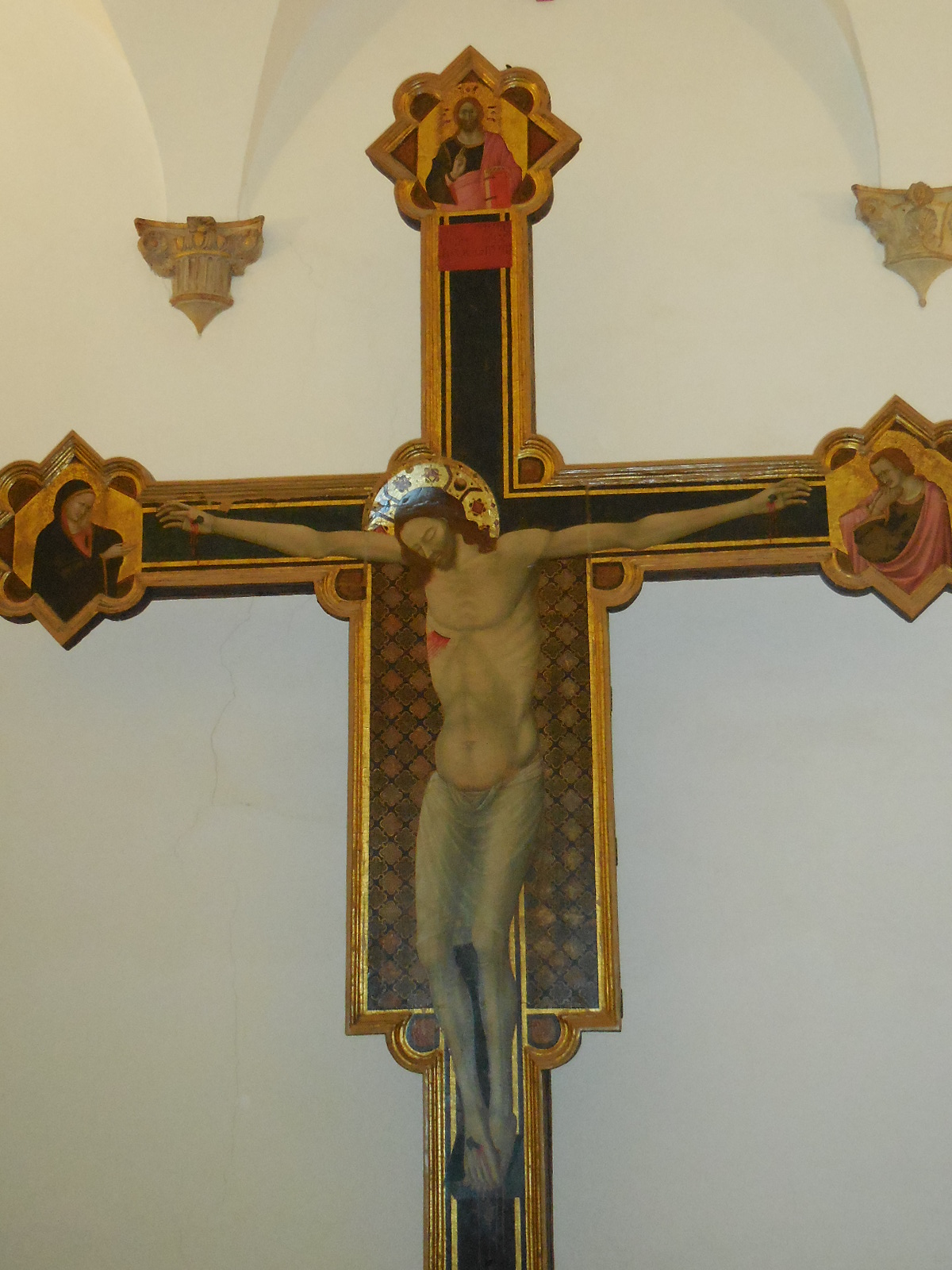
Here are some examples of the artwork in the Civic Museum that kept me entranced for two hours. Some of the paintings, but not all of them, are by Jacopo Bassano.

BassanodelGrappaCM2

BassanodelGrappaCM7

BassanodelGrappaCM8

BassanodelGrappaCM9

BassanodelGrappaCM3

BassanodelGrappaCM4

BassanodelGrappaCM6

BassanodelGrappaCM11

BassanodelGrappaCM12

BassanodelGrappaCM15

BassanodelGrappaCM17

BassanodelGrappaCM19

BassanodelGrappaCM20

BassanodelGrappaCM21

BassanodelGrappaCM22

BassanodelGrappaCM23

BassanodelGrappaCM24

BassanodelGrappaCM25

BassanodelGrappaCM26

BassanodelGrappaCM27

BassanodelGrappaCM30

BassanodelGrappaCM31

BassanodelGrappaCM34

BassanodelGrappaCM39

BassanodelGrappaCMdome28

BassanodelGrappaCMdome29

BassanodelGrappacrucifx35

Tracy A. Burns is a writer, proofreader and editor in Prague.

National Gallery of Le Marche in Urbino Diary

Urbinoart3

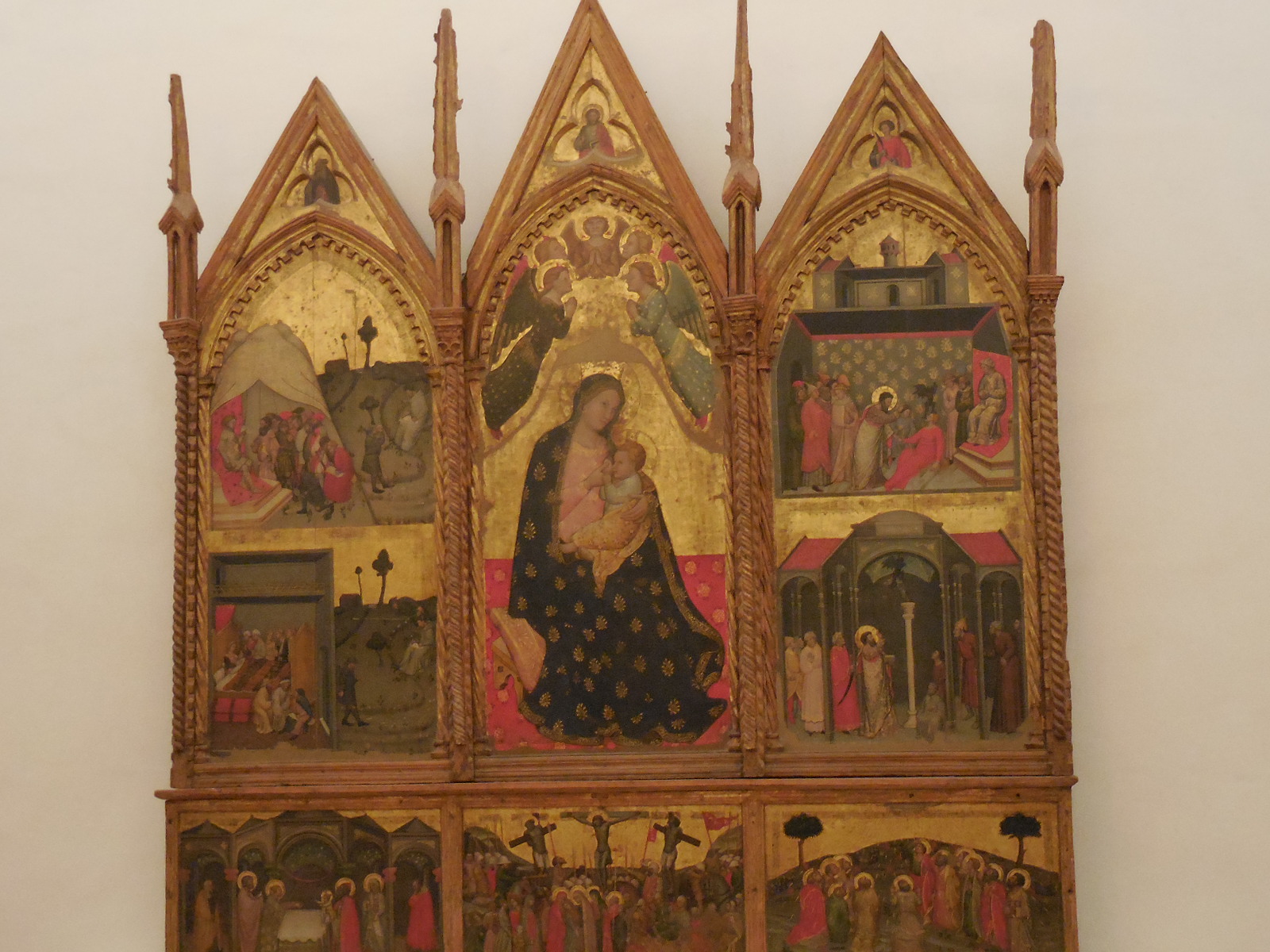
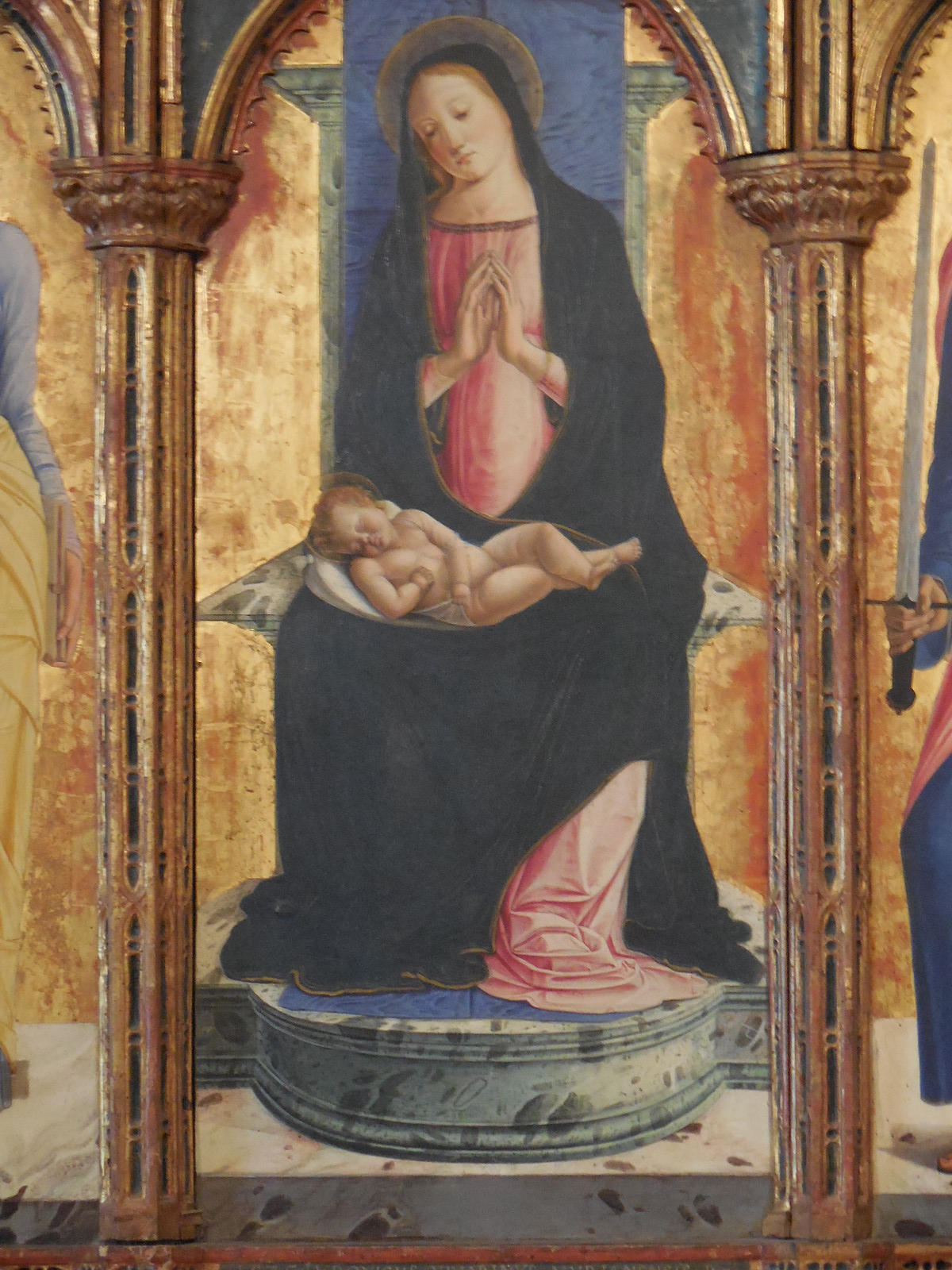
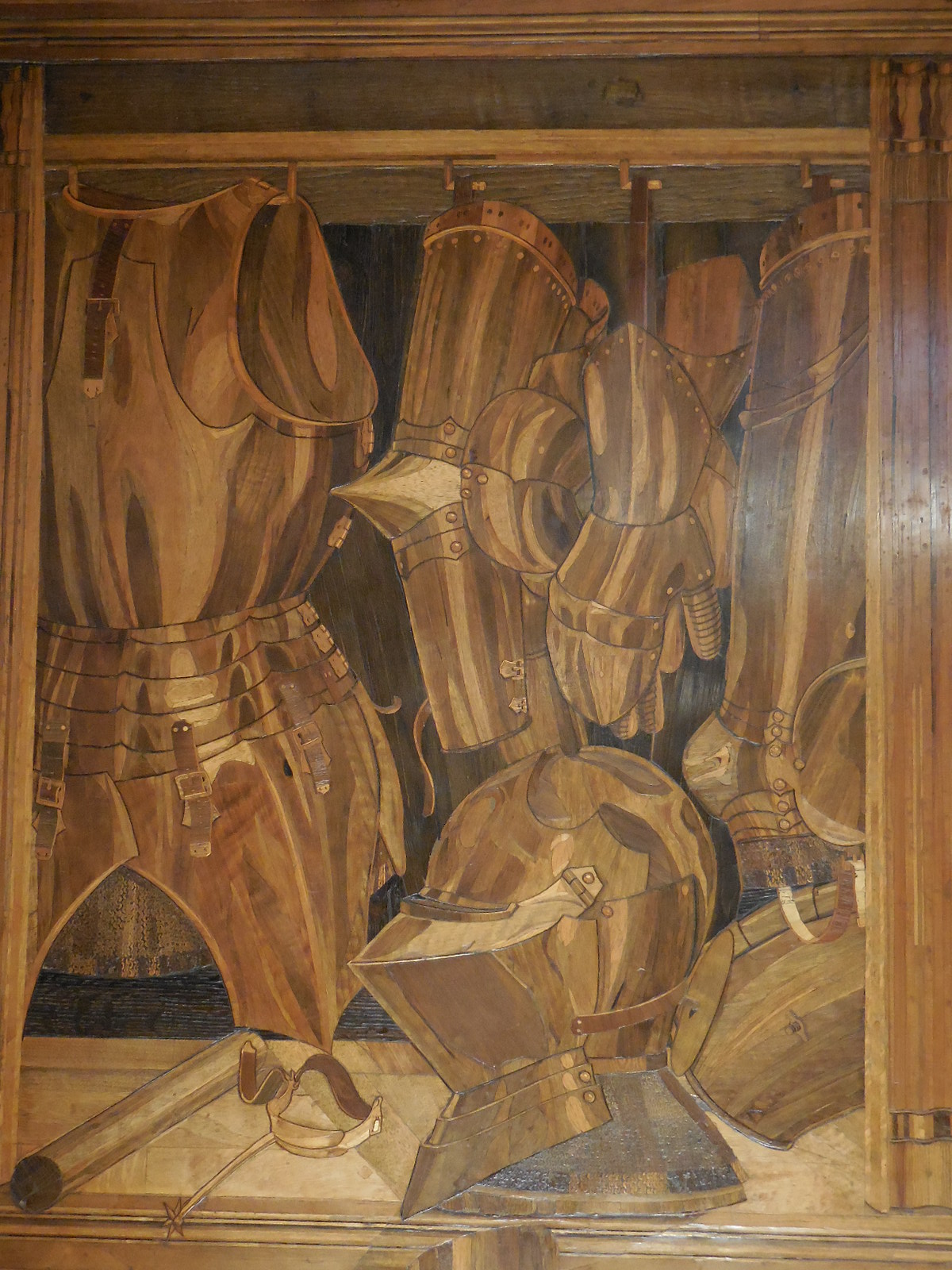
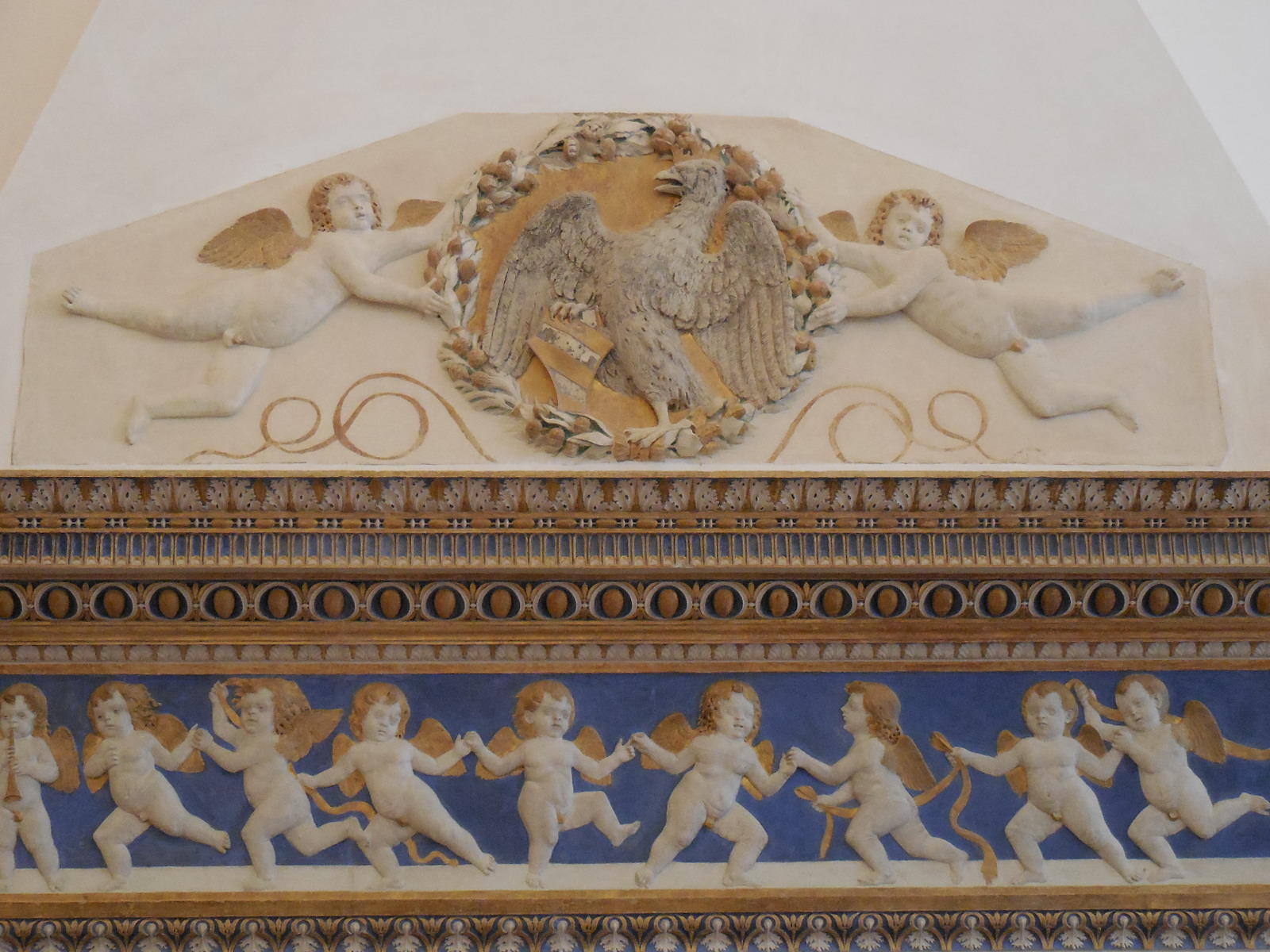
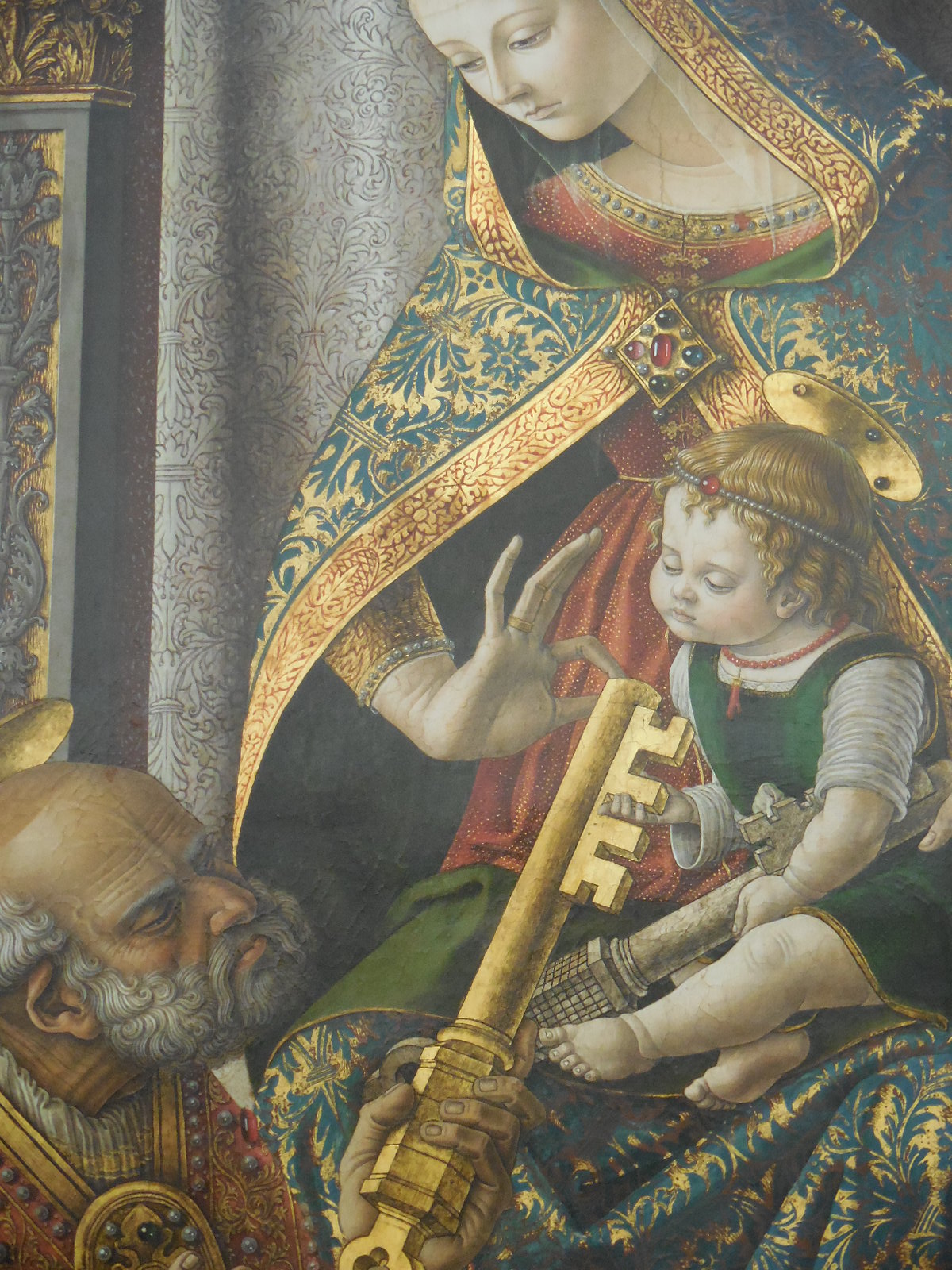
One of my most memorable experiences of my trip with arsviva to Le Marche and Umbria was my visit to the National Gallery of Le Marche in Urbino, a medieval town with steep, romantic streets, a stunning cathedral and the intriguing museum at the birthplace of master painter Raphael. The gallery is located in a majestic building – the Renaissance Palazzo Ducale, built in the 15th century and now a UNESCO World Heritage Site. We entered a elegant porticoed courtyard. The collection focuses on the Renaissance period, with works by Raphael, Piero della Francesca, Paolo Uccello and Titian, for instance. Raphael’s masterpiece La Muta, Uccello’s six-panel Miracle of the Desecrated Host and Titian’s The Resurrection are three of the many gems in this collection. The building also includes a small study that is decorated in trompe-l’oel style. The intarsia work is this room is remarkable. I especially love the squirrel! The doors boast latticework.
Urbinoart4

Urbinoart5

Urbinoart7

Urbinoart10

Urbinoart11

Urbinoart12

Urbinoart13

Urbinoart15

Urbinoart17

Urbinoart18

Urbinoart19

Urbinoart21

Urbinoart22

Urbinoart23

Urbinoart27

Urbinoart28

Urbinoart29

Urbinoart30

Urbinoart35

Urbinoart36

Urbinoart37

Urbinoart39

Urbinoart40

Urbinoart45

Urbinoart51

Tracy A. Burns is a writer, proofreader and editor in Prague.