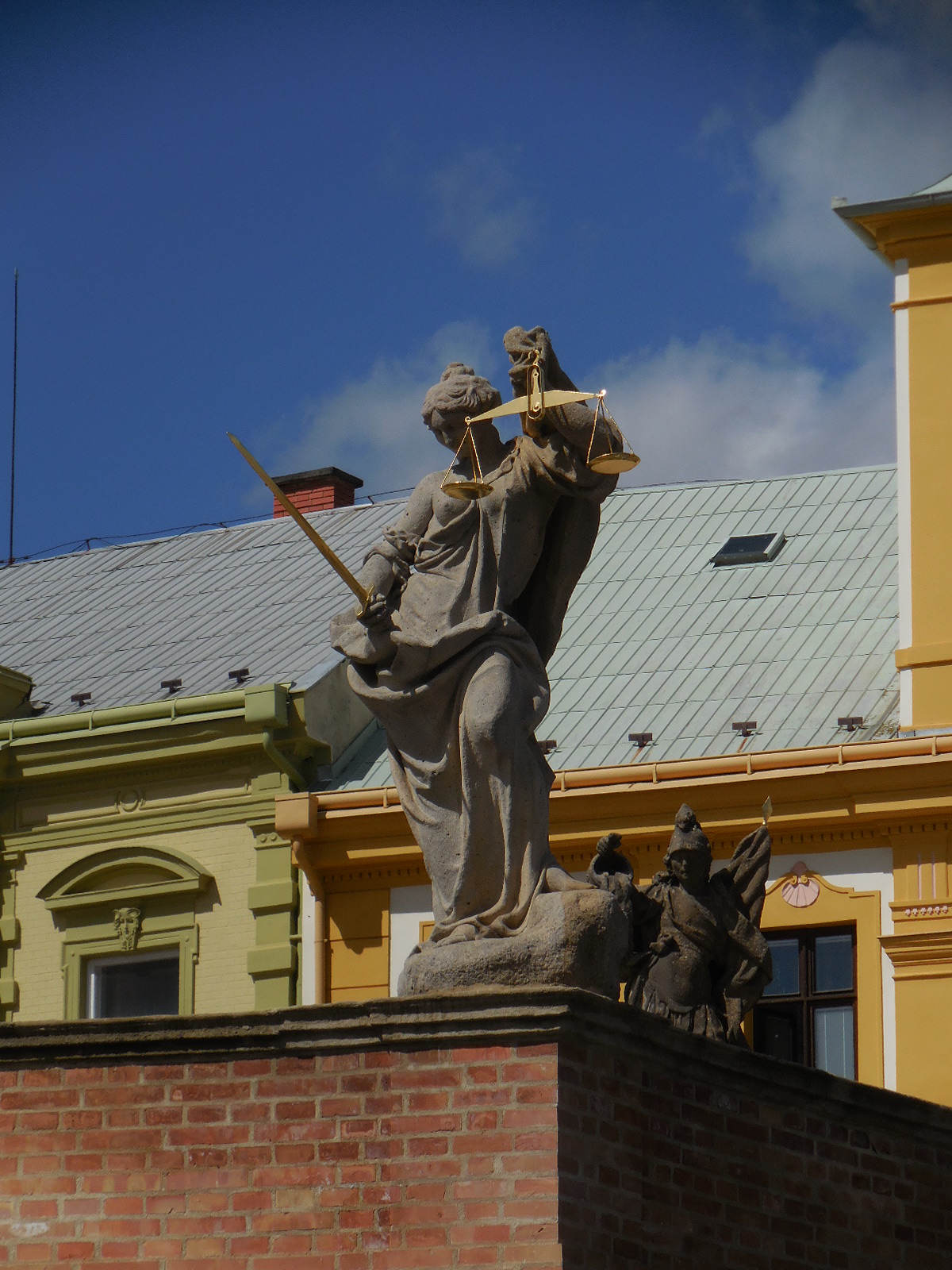
Radim Chateau Diary

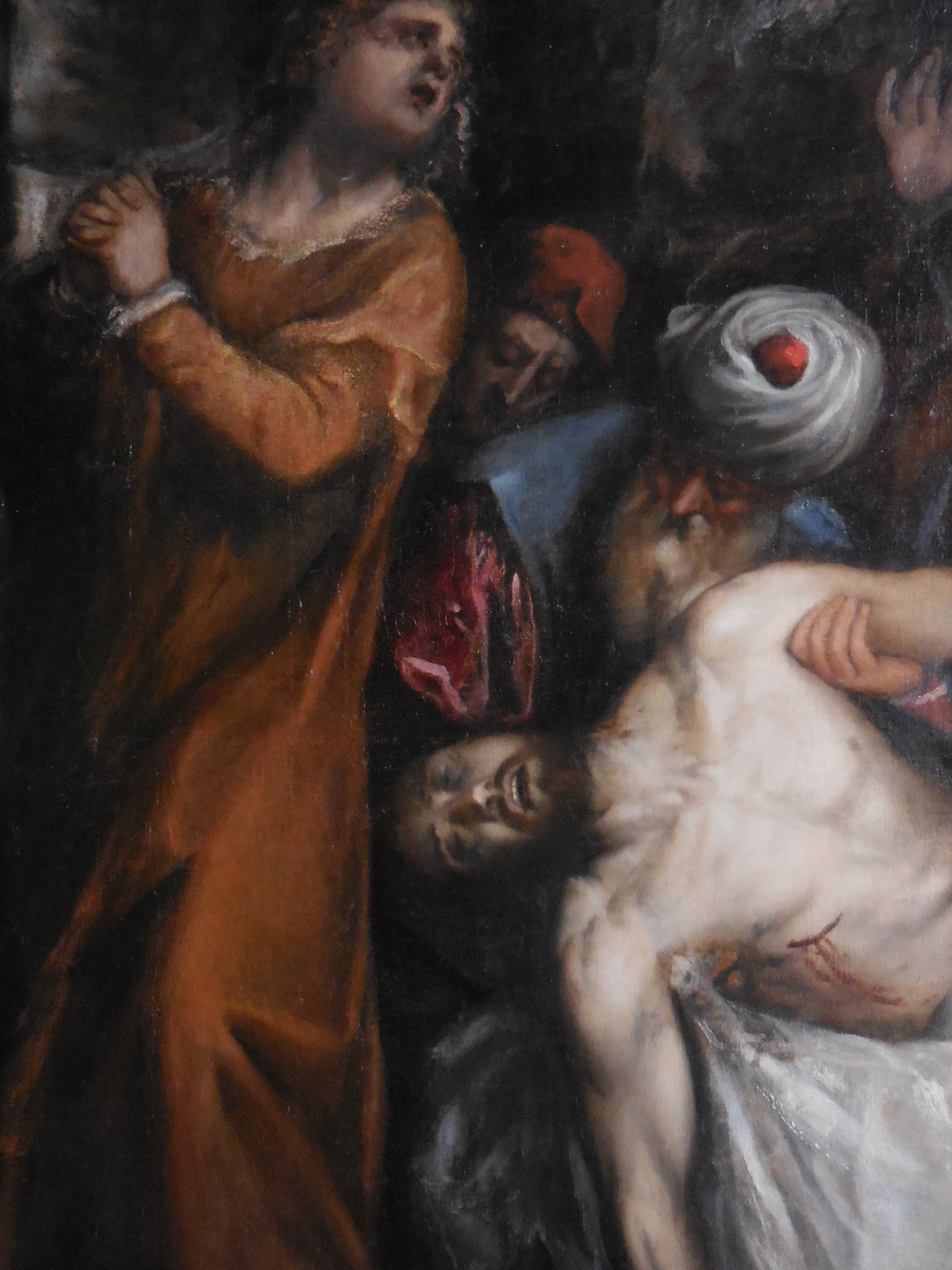
Peering at the paintings in the third floor art gallery and the furnishings on the first floor representative rooms, I came quickly to the conclusion that Radim Chateau was a hidden gem among sights near Prague. While there were not numerous spaces to visit, the ones viewed on tours of the representative rooms were outstanding in their content and beauty. Everywhere I looked in the gallery and on the representative floor, I saw magnificent artwork. Even the 19th century tapestries and Romantized furnishings in the hallways told intriguing stories of centuries gone by.

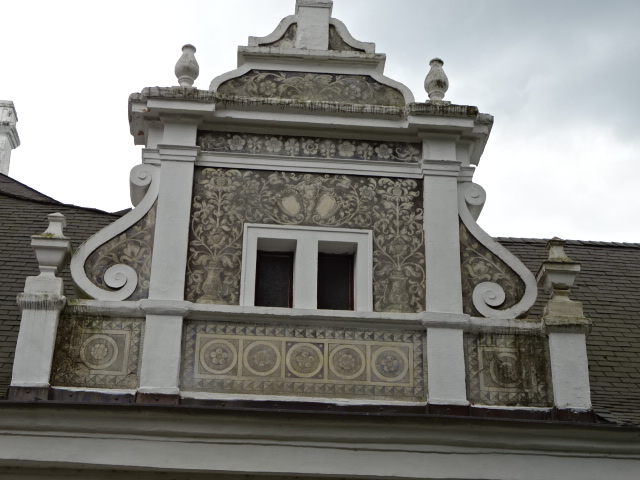
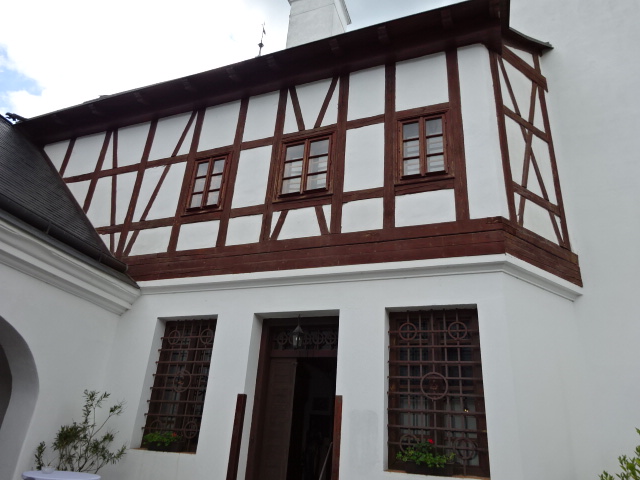
I was stunned by the masterful artistry of Radim Chateau during my first visit in 2025. This Renaissance chateau in central Bohemia was built next to a fortress that was first mentioned in writing during the early 14th century. The fortress had various owners. Then Karel Záruba from Hustířan had the chateau constructed in the early 17th century. The two-floor structure was ready for use by nobles in 1610. However, Karel passed two years later, and the property became the possession of his son Jan, who took the side of the defeated Protestants during the Thirty Years’ War. Because the Catholics triumphed, the chateau was confiscated, and Jan had to flee the country. However, when Adam the Younger of Wallenstein took over the chateau and property, he returned it to Jan Záruba. Soon it was purchased by the legendary Šternberk clan. At that time, Radim became an administrative seat where clerks rather than nobles occupied the chateau.
Several owners came and went after 1634. Then, in 1685, the well-known Gallas family took over Radim and held onto it until the 18th century. I thought back to the Clam-Gallas Palace in Prague, where the ceiling frescoes and ballroom with crystal chandeliers are superb. Getting back to Radim history: The next owner was a notable pioneer in the Czech publishing industry, the knighted František Jan Brahier. He printed breaking news in German. When Brahier died in 1721, he did not leave any heirs.
That is when the Kinský family came into the picture. A family that had had so much influence on horse breeding and horseracing, the Kinskýs sold the chateau to Prince Alois Josef Lichtenstein in 1783. This was an important purchase because the chateau stayed in this family for 143 years. During the Lichtenstein reign, the chateau once again served administrative purposes for a significant period of time.

A momentous occasion could have taken place in 1791, if fate had not gotten in the way. The Czech king Leopold II was returning to Vienna from his coronation in Prague and wanted to see Radim Chateau and take in some hunting there. However, plans had to be changed as Leopold II had to hurry back to Vienna without a hunting break. In the early 19th century, there was much reconstruction.
The Lichtenstein’s parted ways with Radim in 1927, when Dr. Jaroslav Bukovský took charge. Many changes took place as he used the chateau for representative purposes. Electricity was added to the chateau, and what was once a French park came to flourish in English style.

During the Nazi Occupation, the German army used the premises, although the owner’s wife, Mrs. Bukovská, was still allowed to have a small apartment there. After May of 1945, the Russian military took control of the chateau. The Communists held it from 1950, when Mrs. Bukovská was still permitted to reside on the premises in a tiny abode. Most of the chateau was changed into offices, and a few apartments were installed. District offices remained in the chateau until the 1990s. Then in restitution the Bukovský family got the chateau back. After selling the chateau in 2005 to Antonín Dotlačil, much reconstruction took place.
The chateau was sold again, this time to the present owner, Bohuslav Opatrý, who is a music and art lover, having restored many of the paintings in his third floor collection. The park and garden underwent reconstruction as did part of the chateau. It was not until this century that Radim Chateau was open to the public.

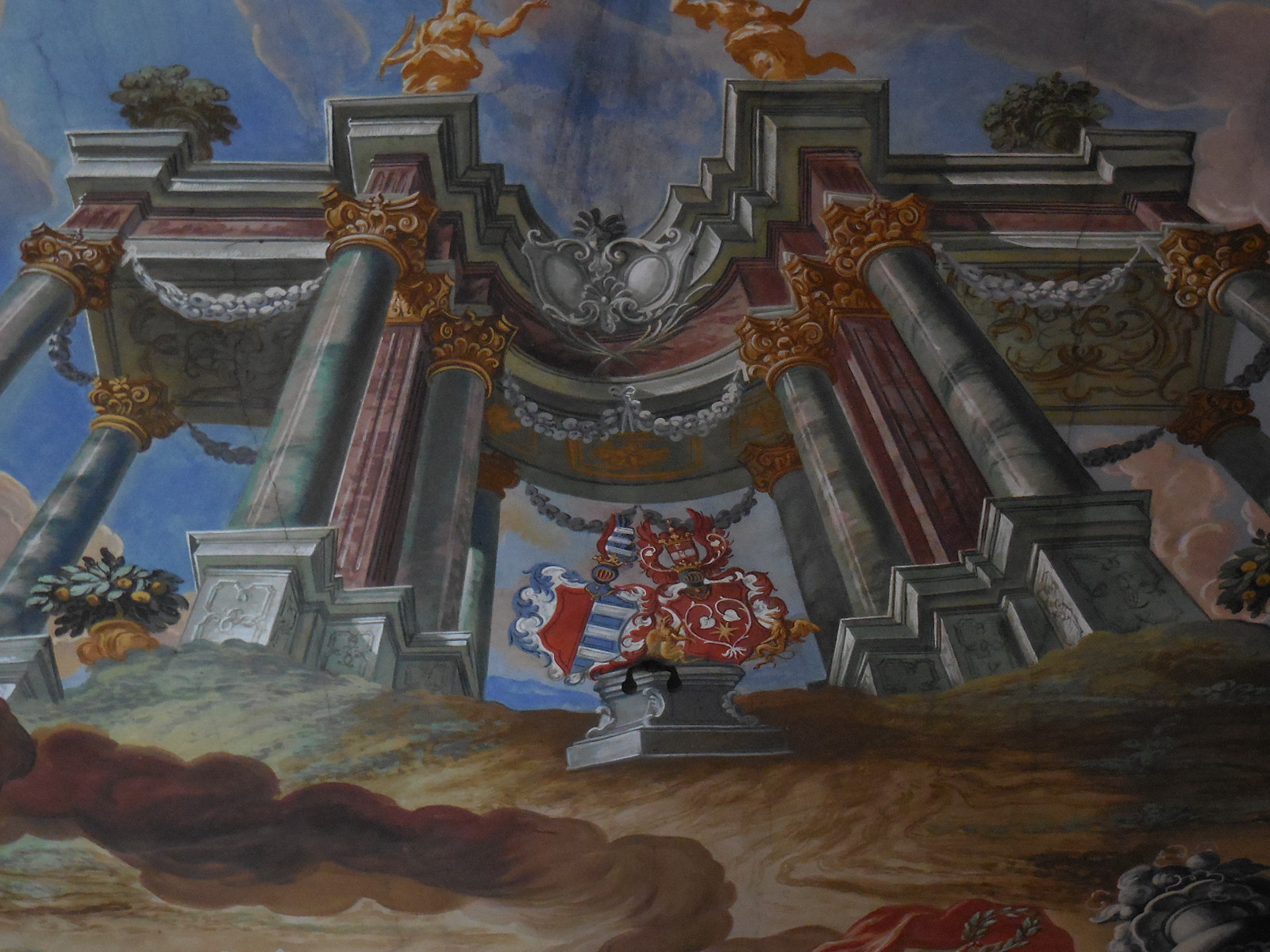
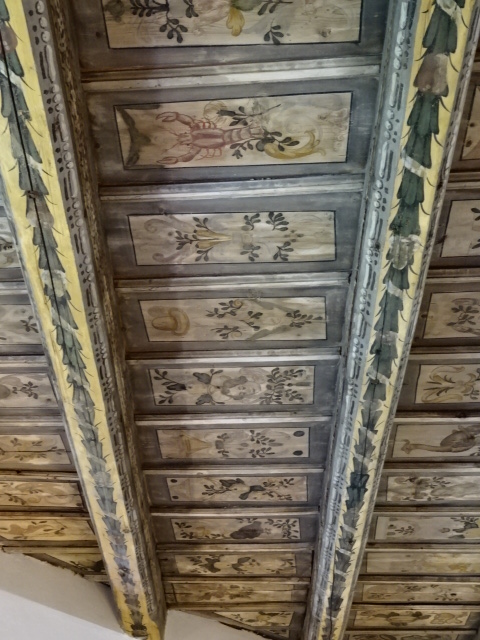
While most of the furnishings are not original due to the Nazi occupation of the chateau and the dereliction that occurred during socialist times, it does boast original 19th century flooring in the main hall. To be sure, the Communists destroyed most of the chateau interior. Yet, decades later, Radim would be resurrected by painstaking efforts that made it into the gem it is today. The painted ceilings in the bedroom, main hall and gallery have been preserved to a great extent. The painted decoration on several ceilings, such as a lobster and a horse, hails from 1607 to 1610.

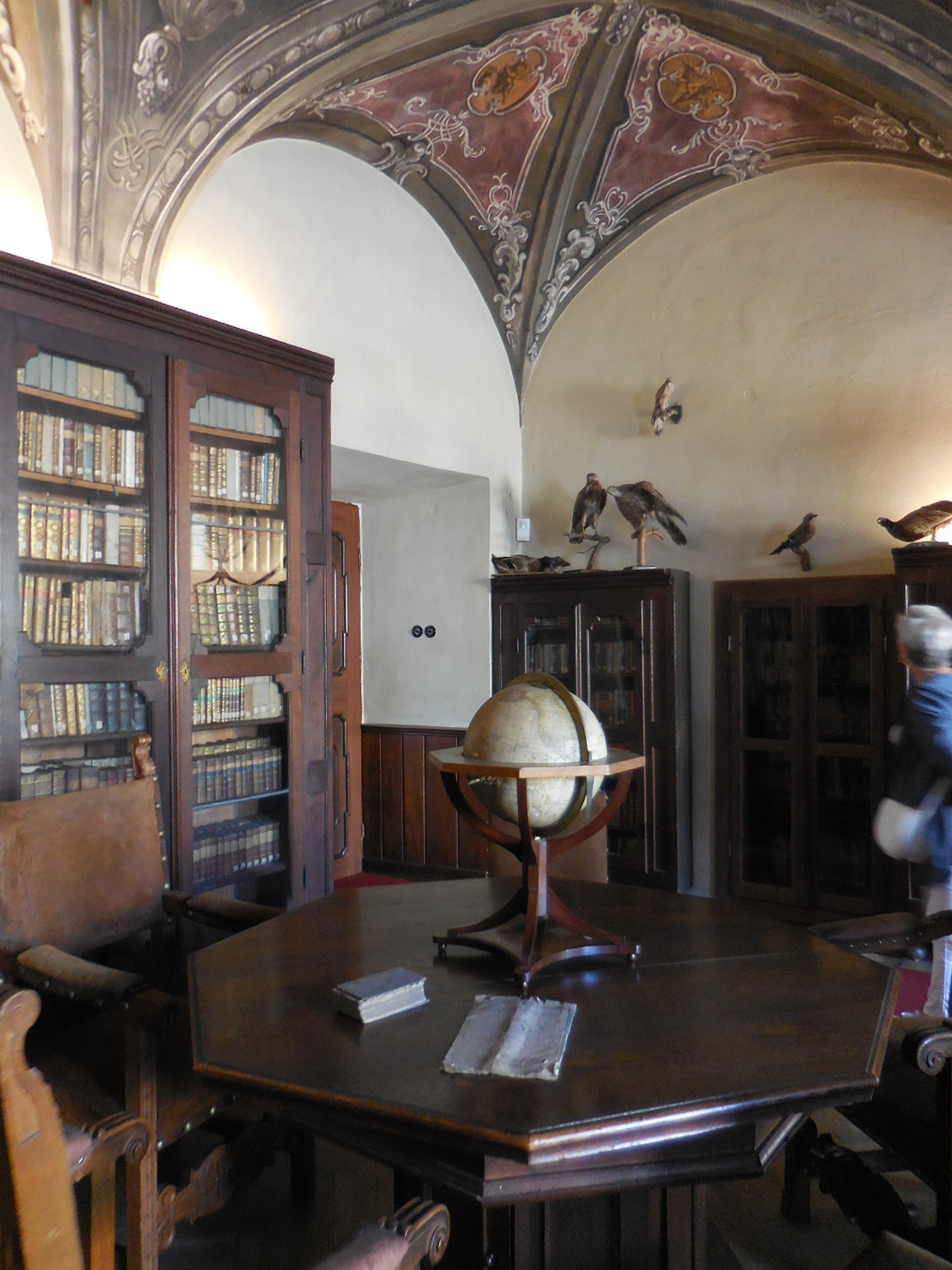
In the bedroom that we entered first, I was intriguing by the Baroque bed with exquisite carving. In the dining room, I was speechless at the sight of low Renaissance chairs around a Renaissance table. In other rooms, I saw many Gothic chairs, often Romanticized into 19th century style. A Mannerist cabinet with exquisite woodwork of figures and columns was a delight in one space. I spotted a portrait of Rudolf II among the pictures of rulers that decorated a high wall in the bedroom. I also saw in one space a 18th century globe decorated with allegorical figures of zodiac signs instead of continents. The ceiling decoration of a green-and-white pattern in the bedroom also awed me. So delicate and so much attention to detail.

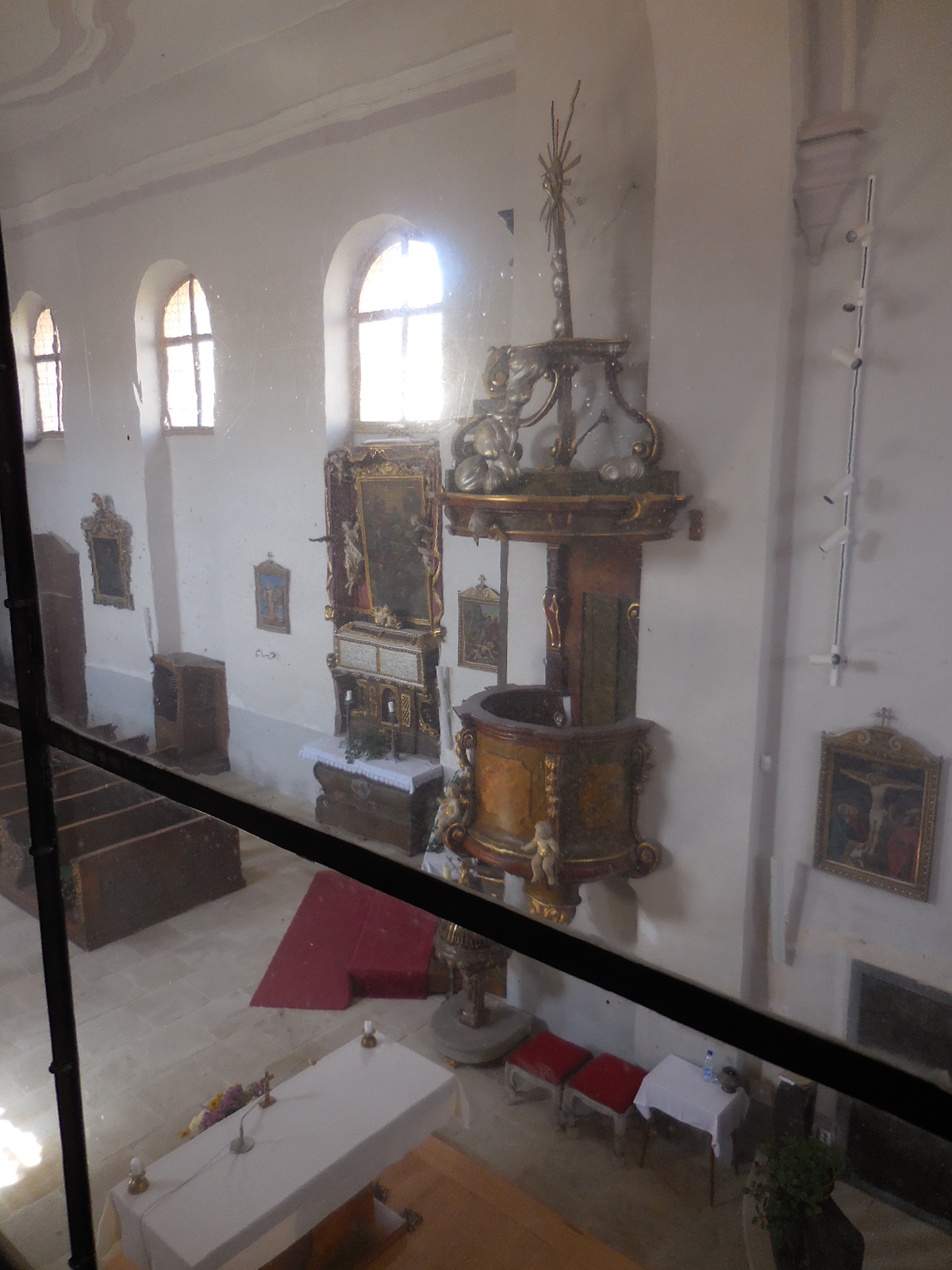
In the administrative office of the Lichtensteins, I saw pictures of Austro-Hungarian generals. In the study, portraits of past owners as well as the current owner hung on the walls. I recognized Adam the Younger Wallenstein as well as Adam Kinský. There was even a portrait of Octavian Kinský, who was never the owner of this chateau but had made a name for himself with that clan, specifically in horse breeding and horseracing. Work related to his successes could be seen in Karlova Koruna Chateau, which I had visited several times. A more modern likeness of the current owner also decorated one wall. In an isolated space, I peered at a Neo-Gothic altar with medieval elements. Tapestries from the 19th century were present throughout the chateau’s first floor and hallways.
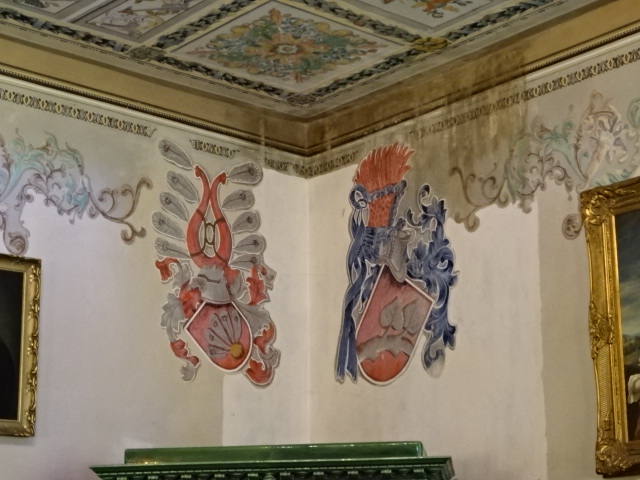
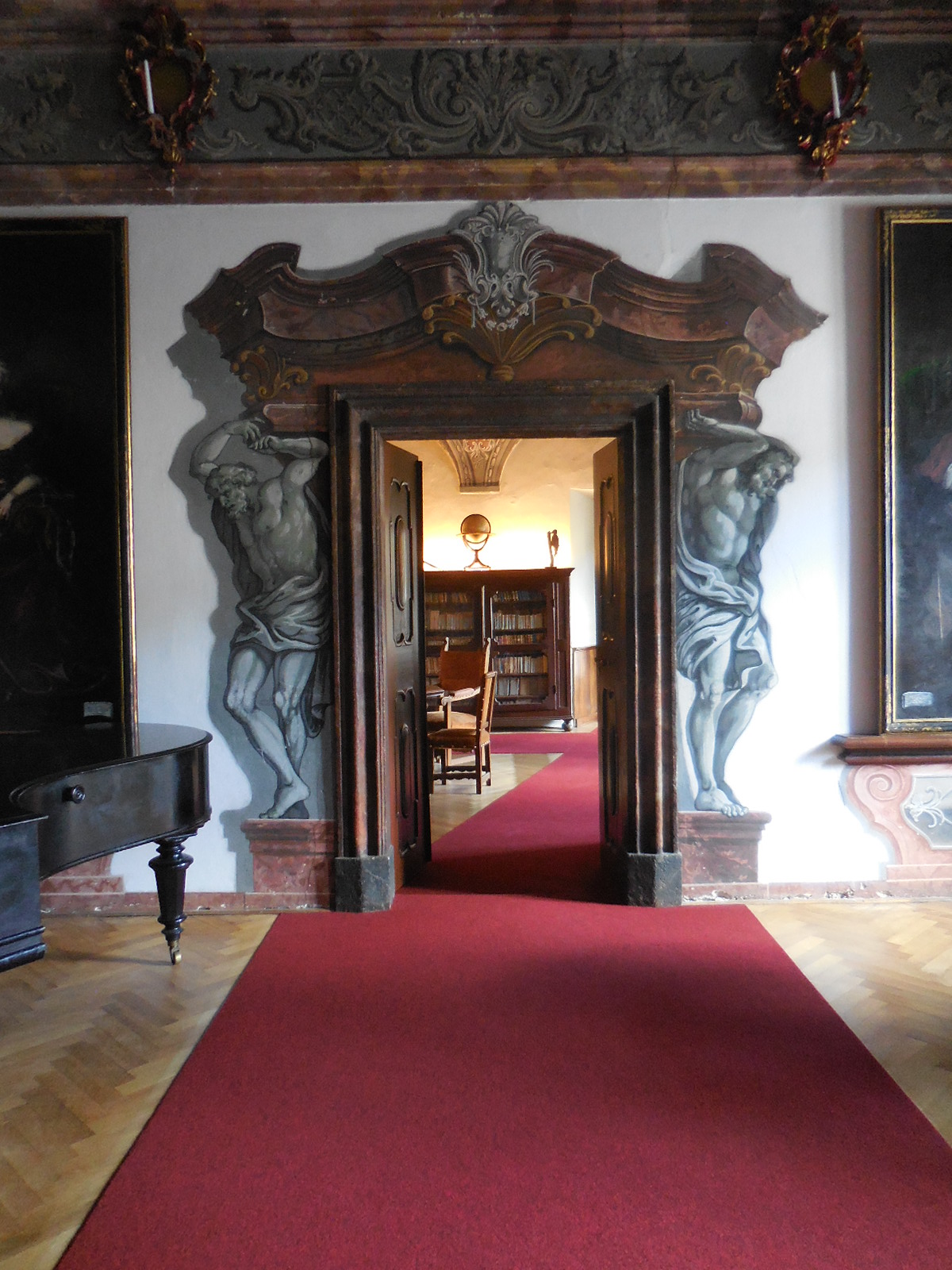
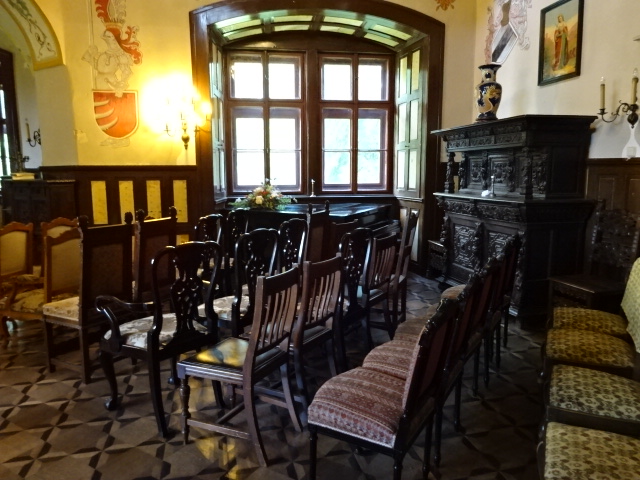
The main hall, often used for weddings, was one highlight of the tour. The painted ceiling featured various objects and animals in bright colors. A 19th century Petrov Grand piano also adorned the space. Paintings from various periods added to the décor.

Close-ups of the Mannerist cabinet

On a tour of the cellar places it was possible to see a Black Kitchen that was still functional as well as an armory and some bedrooms once used by princesses. This was another intriguing tour.

Portrait of Austrian general

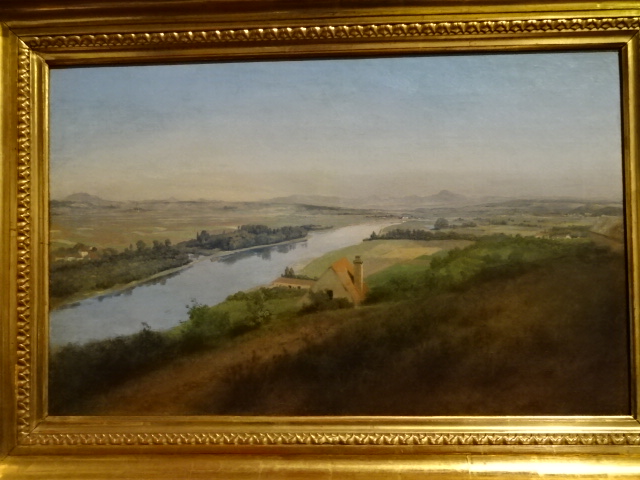
However, the biggest highlight for this art lover was the gallery on the third floor. Nineteenth and early 20th century landscapes dotted the hallway. I saw images of the slowly flowing Berounka River, the snow-covered Alps, charming cottages tucked into woodlands, the tranquil landscape in the Pilsen region, sights of Prague, portrayals of sheep, folk dancing figures and haymakers doing laborious work in the fields, mystical forests and other scenes. I was enamored by each painting as landscapes from this time period were my favorite. While most of the paintings were authored by lesser known artists who deserved much praise, one work was painted by the well-known Otakar Nejedlý.
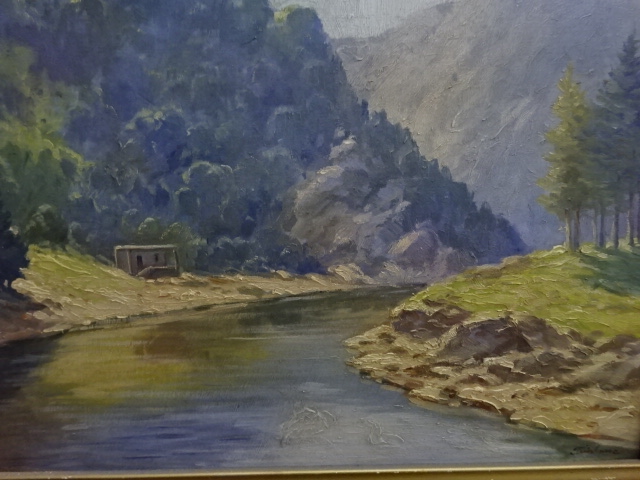
Landscape with Berounka River, not by Nejedlý

This renowned Czech painter lived from 1883 to 1957. He was a pupil of the master landscape artist Antonín Slavíček. His travels to India greatly influenced his works. During World War I, he was mobilized to France where he painted places the Czech legionnaires had fought. After the war, he became an esteemed professor in Prague. He adored the south Bohemian countryside and was inspired by Romanticism, Impressionism and Expressionism.
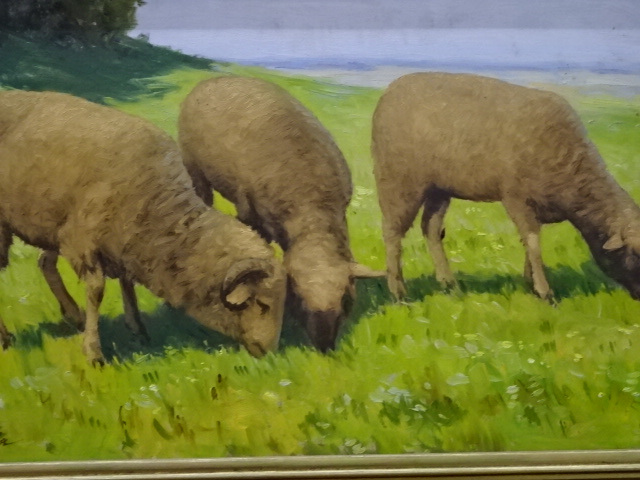
Painting of sheep by Popelka

Vojtěch Hyněk Popelka created the renditions of moving sheep, and it was no surprise that he specialized in painting animals. He brought to life landscapes and animals in his works during the early 20th century.

Painter Otto Stein, who also was an accomplished graphic artist, lived from 1877 to 1958. Several of his works were displayed in this gallery. After studying in Prague and settling in Munich, he took part in Munich New Secession exhibitions in the early 20th century. During the war, he painted material used to promote the Austro-Hungarian Army. After the war, he became part of the Berlin Secession, having to move to that city. In 1922 his renditions were on display in Prague’s Rudolfinum. He gained acclaim in Germany and the USA.
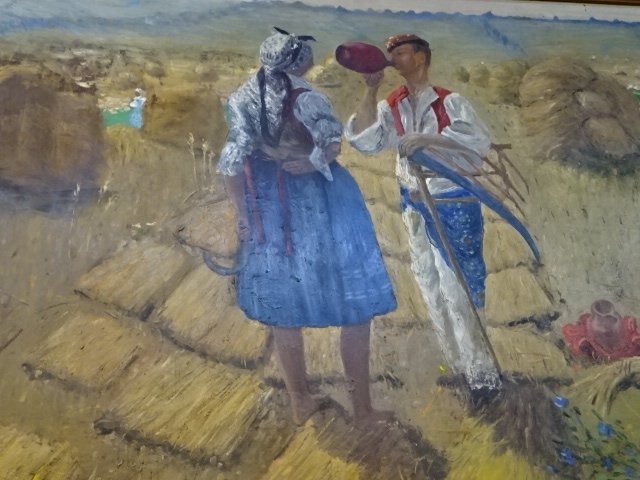
In 1942 tragedy struck, and he and his family were deported to the Terezín concentration camp. He toiled in the technical department there and bided his free time with drawing. Miraculously, he and his entire family were spared, and, after the war, he moved to Prague. Then he went to live in the north Bohemian countryside, where he did a great deal of painting. He died there in 1958.
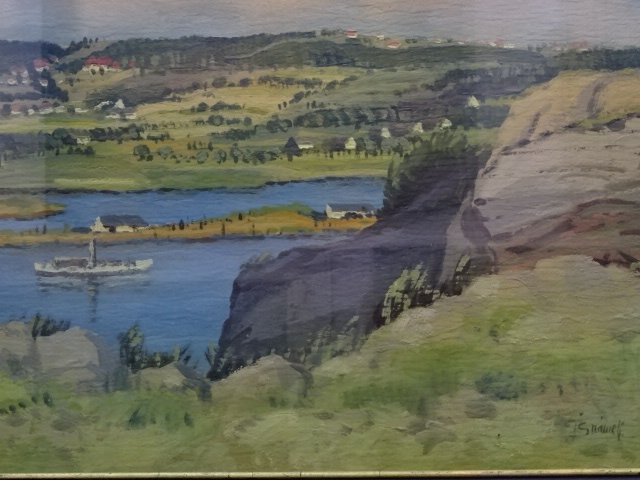
The German painter Adrian Ludwig Richter also had works on display in this gallery. He lived from 1803 to 1884 and also succeeded as a illustrator. His paintings featured the Romanticist style, inspired by Caspar David Friedrich. He was especially enamored with the countryside of north Bohemia and the ruins of Střekov Castle in that region. Richter also made 3,000 creations out of wood.

Vlastimil Toman (1930 – 2015) was a painter, graphic artist, illustrator, poet and photographer as well as professor. Several of his landscapes were represented in the gallery. He worked mainly in Třebíč, painting the Vyšocany and Moravian countryside. In the 1960s, he explored the styles of cubism, fauvism, expressionism and lyrical realism. In total, he had 24 solo exhibitions in Třebíč plus 50 collective exhibitions around the country.

Prague Castle in the distance
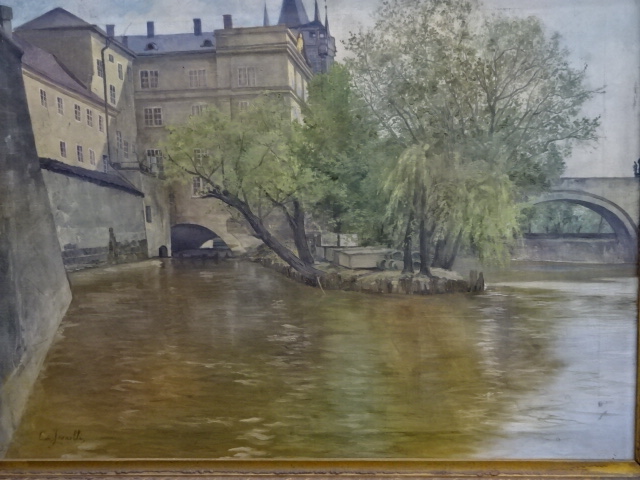
Čertovka on Kampa Island, Prague

My favorites were the renditions of Prague. One painting featured Prague Castle in the horizon, another showed the Charles Bridge. Yet another displayed the Judith Bridge, which preceded the Charles Bridge. One portrayed Čertovka on Kampa Island.

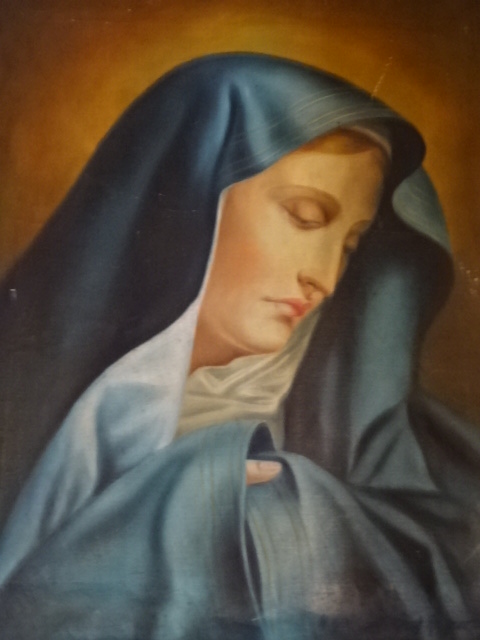
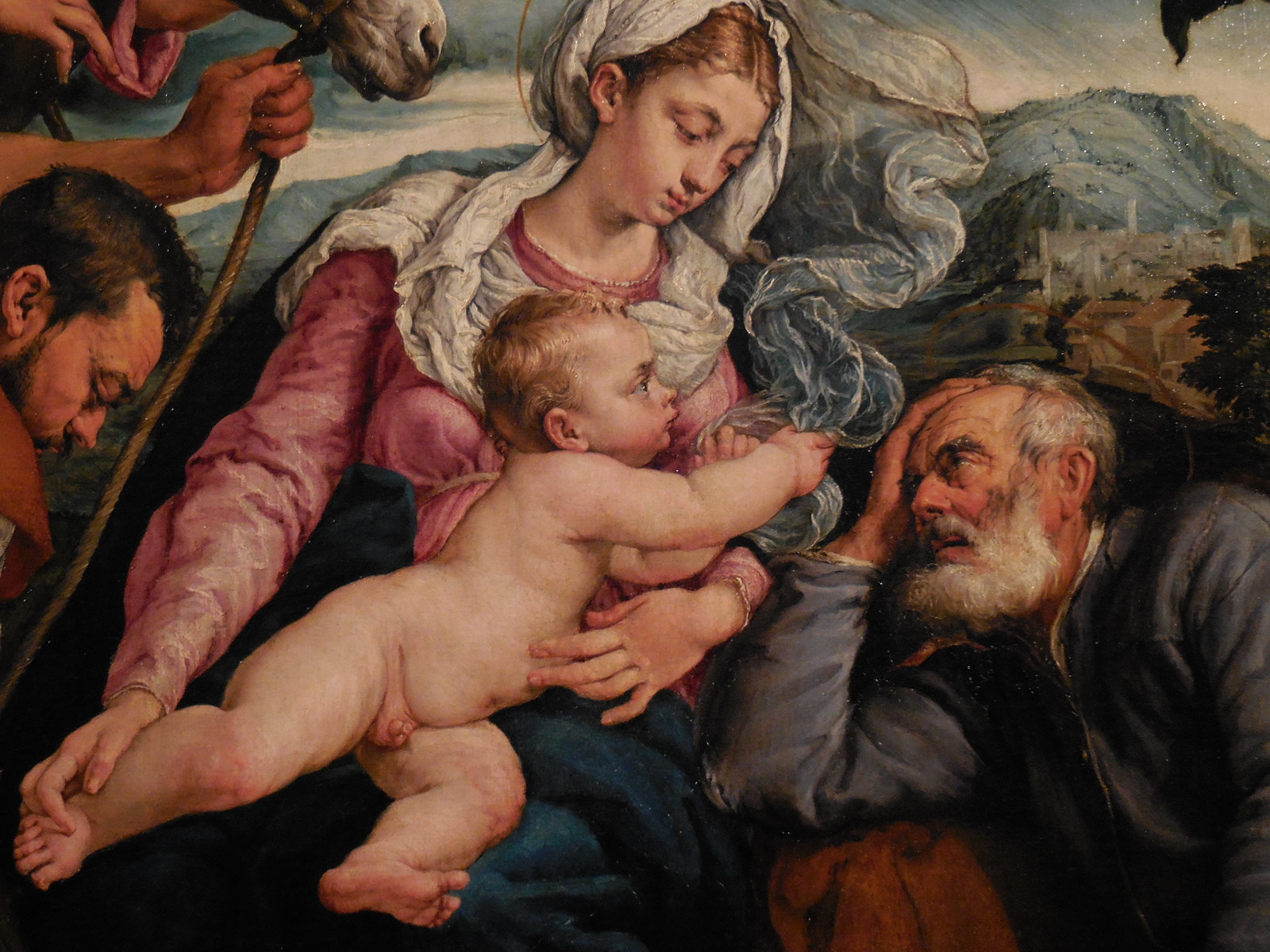
But there was more. A rather large space featured religious art. I saw numerous madonnas, scenes from the Bible and pictures of saints here as well as Gothic furniture. There was a range of styles, and works hailed from various eras, though none were modern. My head was swimming with this immersion into religious art.

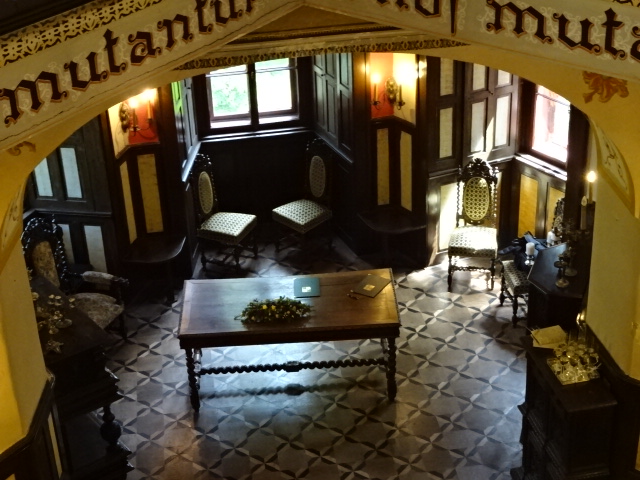
From the third floor, it was easy to read the motto of Saint Benedict on the balustrade. “Tempora matuntur et nos matumar cum illus,” it read. It meant that times change, and we change with them. Other black-painted letters read “Ora et labora,” which translates from the Latin into “Pray and work.” The ceiling on the third floor was richly decorated with depictions of objects and animals.
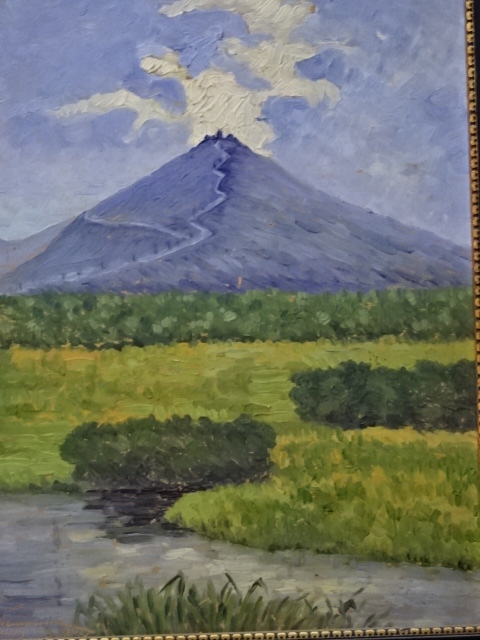
Not only had I peered at masterfully carved furnishings and other notable objects in the representative rooms but I had also viewed numerous paintings in my preferred landscape genre. The religious art was very impressive, too. While the chateau’s representative spaces are not large, it is worth seeing for those interested in Czech history and sights with artifacts from various eras. Art enthusiasts are sure to love the third floor displays.

On that day there was a wedding, and the café offered various cakes and pastries outside as well as sausages that were cooked over a fire. Delicious bread was available, too.

I went to lunch at U Marka restaurant in Pecky, a small town nearby. The rustic interior was suitable for the delicious Czech food, which cost so much less than that in Prague. I had had a great day.

Tracy A. Burns is a writer, proofreader and editor in Prague.
Josef Mánes Exhibition Diary

Prague’s Wallenstein Riding Stables hosted a comprehensive exhibition of Josef Mánes’ portraits, genre paintings, landscapes, drawings, prints, designs and illustrations of Slav history from the Czech Romanticism and Realism eras of the 19th century. Some 400 of his creations captured my undivided attention. He also created standards, insignia and uniforms for the Sokol physical education organization, some of which were also on display.

I knew the name well because Josef Mánes had been born into an artistic family: His father, Antonín, created landscapes while his brother and two sisters also became painters. Josef – I will refer to him by his first name so readers do not confuse him with his father or siblings – grew up in the Habsburg Empire when German was the official language of the Czech lands. He spoke only German as a youth. He didn’t learn Czech until he was grown up, even though he was one of the leading figures in the Czech National Revival that promoted the Czech language.

This prominent artist was inspired by his time in Munich, where he spent three years as a young man. For many years he resided in Moravia, including at the Čechy pod Košířem Chateau. In addition to making portraits, landscapes and Second Rococo style genre paintings, Josef developed a strong interest in folk costume, rendering portraits of Czechs in traditional dress. He created many works portraying villagers and everyday life in the Hana region of Moravia.

Inspired by Prague’s Old Town, Josef created portraits of its residents and even painted two genre paintings for Prague brothels. His work also decorated much more elegant structures, such as the Žofín concert hall in the center of Prague, for instance. When I first set foot in Prague, I fell in love with the Old Town. I could sense the history of the nation on its streets and in Josef Mánes’ paintings of that historical quarter.

His portraits are stunning because they are characterized by immense psychological depth and sensitivity. The viewer almost is looking into the sitter’s soul. Each portrait told an individual story of a unique life. Before this exhibition, I had considered him to be first and foremost a portrait painter, but I learned at the Wallenstein Riding Stables that he had been much more versatile in his accomplishments.

I was most enamored by his landscapes because I was fascinated by landscape painting in general, especially by Czech art in this field. I had seen many exciting Czech landscapes in galleries throughout the country as well as in chateaus. Josef’s work utilized subtle colors and masterful brushwork that portrayed both the Czech and Slovak countryside with elements of Romanticism and Realism. He was one of my favorite landscape painters, excelling at employing light and atmosphere in his renderings of the Hana region, the Czech Paradise region, the Krkonoše Mountains and the Šumava Mountains, for instance. I had traveled extensively throughout these parts of the country. Josef’s travels in the Austrian Alps also inspired the creations of some masterful landscapes. While I had never been there in person, I always wound up gawking at the sheer power, beauty and seemingly invincibility of the Austrian Alps. In several other works, he depicted nymphs, using the Šumava Mountains and Moravia’s Čechy pod Košířem as backdrops.

On Astronomical Clock

Astronomical Clock

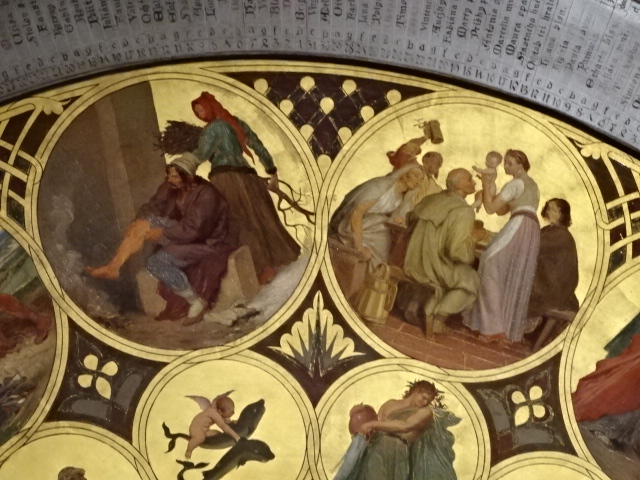
Perhaps Josef’s greatest achievement was creating 12 medallions for Prague’s Astronomical Clock. I recalled how so many tourists crowded around the clock to watch its hourly show in the late morning and afternoon. I always came to admire the clock in the early morning to avoid the crowds and the possibility of getting pickpocketed. Painted in 1865, the original calendar dial was on display at this exhibition. The allegories of the months of the year dealt with agriculture themes. I often had admired the calendar in the Museum of the City of Prague, where it was usually on display.

Astronomical Clock

I looked closely at the calendar dial, which consisted of circular rings. Standing for the 12 months, figures dressed in folk costume glorified Slav identity. September was represented by the ruins of Troský Castle, which I had seen on my trips numerous times. The Czech village tradition of pig-slaughtering was the focus of December. I remember one irate acquaintance telling me that he did not support the European Union because its regulations did not allow citizens to slaughter their own pigs at home.

Bezděz Castle was in the background of March. I recalled the four-kilometer walk up to the castle ruins that had fascinated me, even though I was not usually so enthusiastic about ruins. A young farmer used a plough in the foreground of the March portrayal. Josef had also painted allegories of zodiac signs. I noticed dolphins and a plump cherub for Pisces. Capricorn was represented by a cherub leading a goat. Romanesque features were evident in Josef’s pictorial work for the dial. 

Designed for Sokol physical education organization

Josef’s personal life had not been so rosy, however. After he got a servant pregnant, his parents made him marry her. Josef also was plagued by mental illness from 1866, when he began to lose much weight, to pronounce words badly and behave in a strange manner. It is possible that he suffered from syphilis affecting the brain or tuberculosis. He died in 1871 at the age of 51.

The exhibition also included explanations of how Josef’s work has been perceived throughout the centuries. After his death, he achieved fame because of his work for the Czech National Revival. As the 20th century approached, Josef became known as an artistic pioneer of new trends and advancements in his field. During Communism, though, his works took on an ideological meaning. It was not until after the downfall of Communism that people interested in art could once again express the masterful skill and individuality of his paintings as his works became appreciated in the cultural sphere.

While I had seen many works by Josef throughout the country, I was overwhelmed by viewing so many in one large exhibition hall. I had not truly understood the mastery of Josef’s art and realized that he had been so talented at many genres. For a long time, I had admired the works of his siblings and father, too. Now I knew that Josef was the most skilled in his family. I was fascinated by all aspects of this exhibition.

Tracy A. Burns is a writer, proofreader and editor in Prague.
Josef Mánes

Biblioteca and Pinacoteca Ambrosiana Diary

This library and art gallery in Milan is named after the patron saint of the city, Ambrose. The library harkens back to 1609, when Cardinal Federico Borromeo founded it, and the same year it opened to the public.

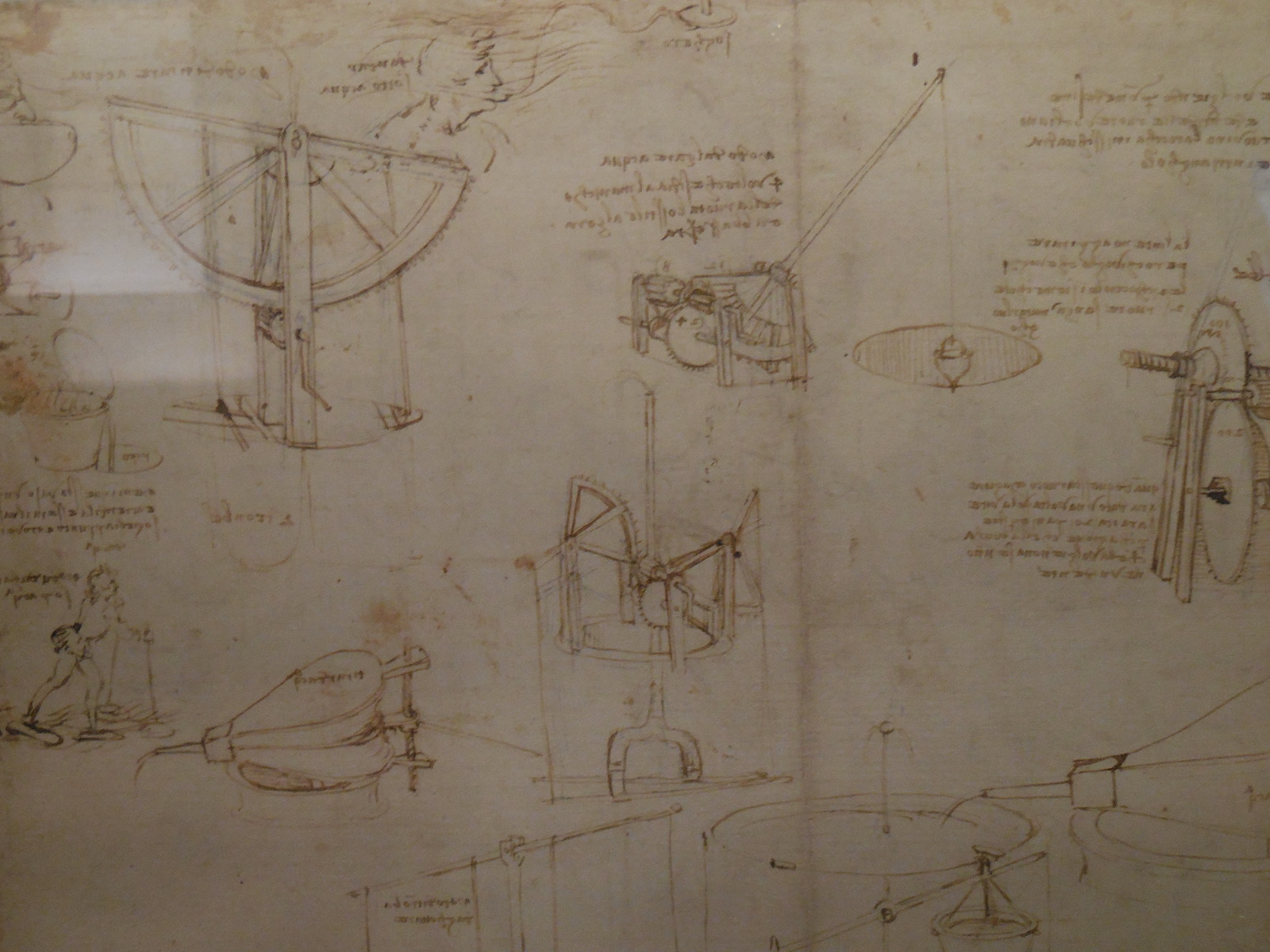
One of Leonardo da Vinci’s drawings of the Codex Atlanticus

The biblioteca houses the Codex Atlanticus by Leonardo da Vinci as well as many of his other manuscripts plus about 12,000 drawings by European artists, ranging from the 14th to 19th century. Raphael and Pisanello are represented in this collection of drawings, too. Many of its more than a million printed volumes hail from the 16th century. There are almost 40,000 manuscripts in numerous languages, including Italian, Latin, Greek and Arabic as well as some 22,000 engravings. Ancient maps, musical manuscripts and parchments also make up the collection. Some prominent guests included poet Lord Byron and novelist Mary Shelley.

Another of Leonardo’s drawings from the Codex Atlanticus

During World War II the library was damaged, and the opera libretti for La Scala Opera House were destroyed. The building was opened again in the early 1950s after undergoing renovations. More reconstruction took place in the 1990s.

When I visited, some of Leonardo’s works for the Codex Atlanticus, the largest collection of da Vinci’s drawings and writings, were on display in the library. The exhibition left me spellbound. I perused studies in aerodynamics and drawings of mechanical wings as well as various types of weapons. Leonardo rendered a large sling to throw stones and a machine to pump water from a well inside a building, for example.

I gazed upwards after studying the drawings by Leonardo, and I was filled with awe. I don’t know if I have ever seen such an incredible library. I just wanted to stand there all day, gazing at the wall-to-wall bookcases as I wondered about the titles and contents of each volume.

Established in 1618 with the collections of Cardinal Federico Borromeo, the pinacoteca was just as impressive as the library. The 24 rooms were dominated by Renaissance artworks but also boasted of renditions by 17th century Lombard artists, 18th century painters and 19th and early 20th century creators. I was especially struck by da Vinci’s 15th century “Portrait of a Musician” as it was the only portrait that he had painted. I noted the musical scroll in one hand of the sitter and was captivated by the detailed curly locks of hair, the musician’s brown eyes and his red cap.

Caravaggio’s insect-infested “Basket of Fruit” tells a story of diminishing beauty by displaying rotting fruit. Bramantino’s “Adoration of the Christ Child” shows the kneeling Bernardino of Siena, Francis of Assisi, Benedict of Nursia and the Virgin Mary making an understandable fuss over baby Jesus. I loved the angels playing musical instruments behind those figures. Emperor Augustus also makes an appearance.

Bergognone’s “Sacred Conversation” shows the Virgin Mary and Christ Child on a massive golden throne, baby Jesus on the Virgin Mary’s lap. Solemn angels flutter in the background. I was struck by the details of the Virgin Mary’s hair and by the material of the clothing worn by the Virgin Mary and baby Jesus. The two were surrounded by saints with captivating headwear, including Saint Ambrose and Saint Jerome.

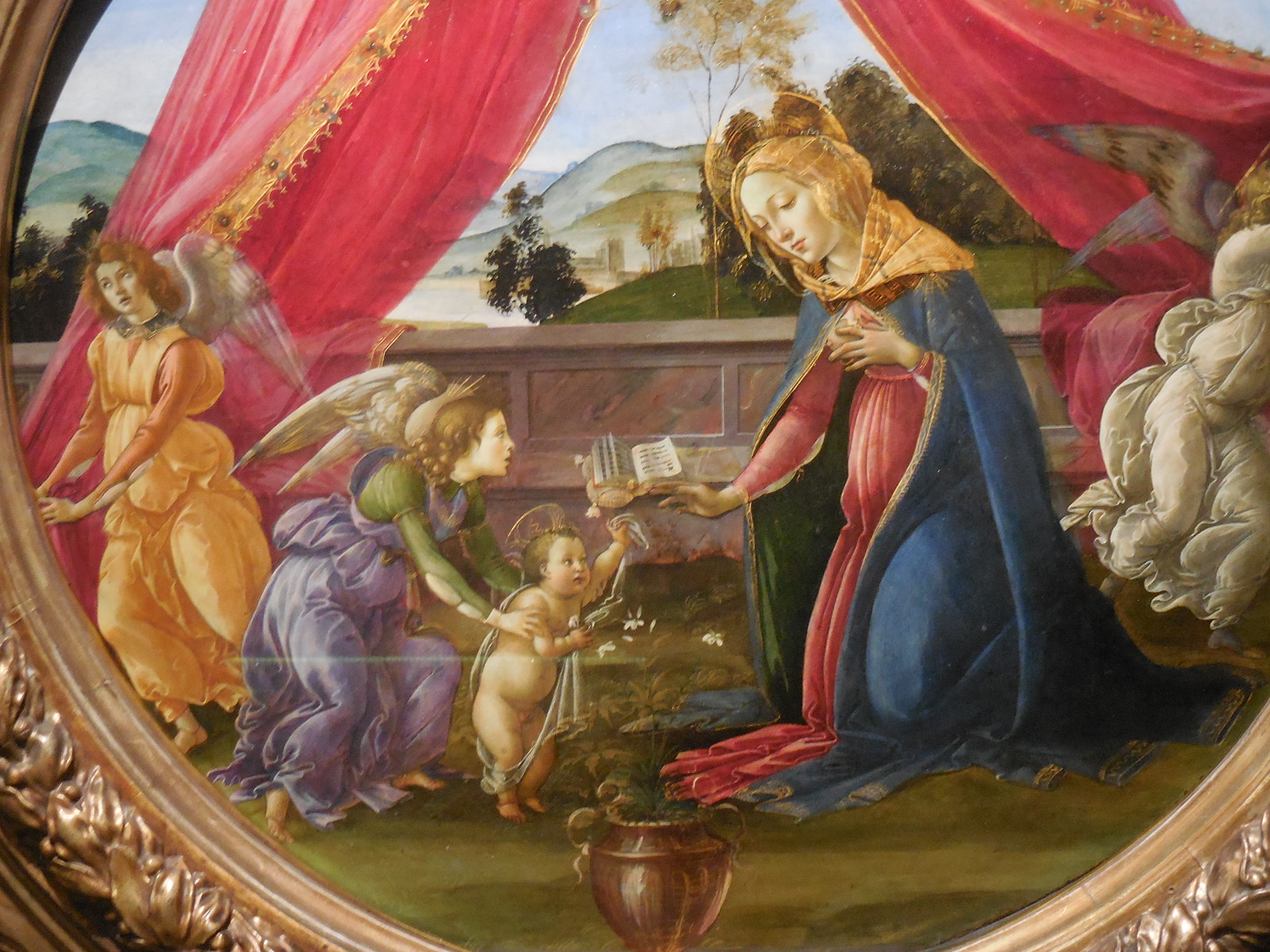
Another painting that left me speechless was Sandro Botticelli’s “The Madonna of the Pavilion.” The artist’s meticulousness was evident. The artwork shows the Virgin and Child with much symbolism. The pavilion that two angels open to reveal the Christ Child is rich in biblical meaning both in the Old and New Testament. I could almost feel the paper of the pages making up the open book in the painting.

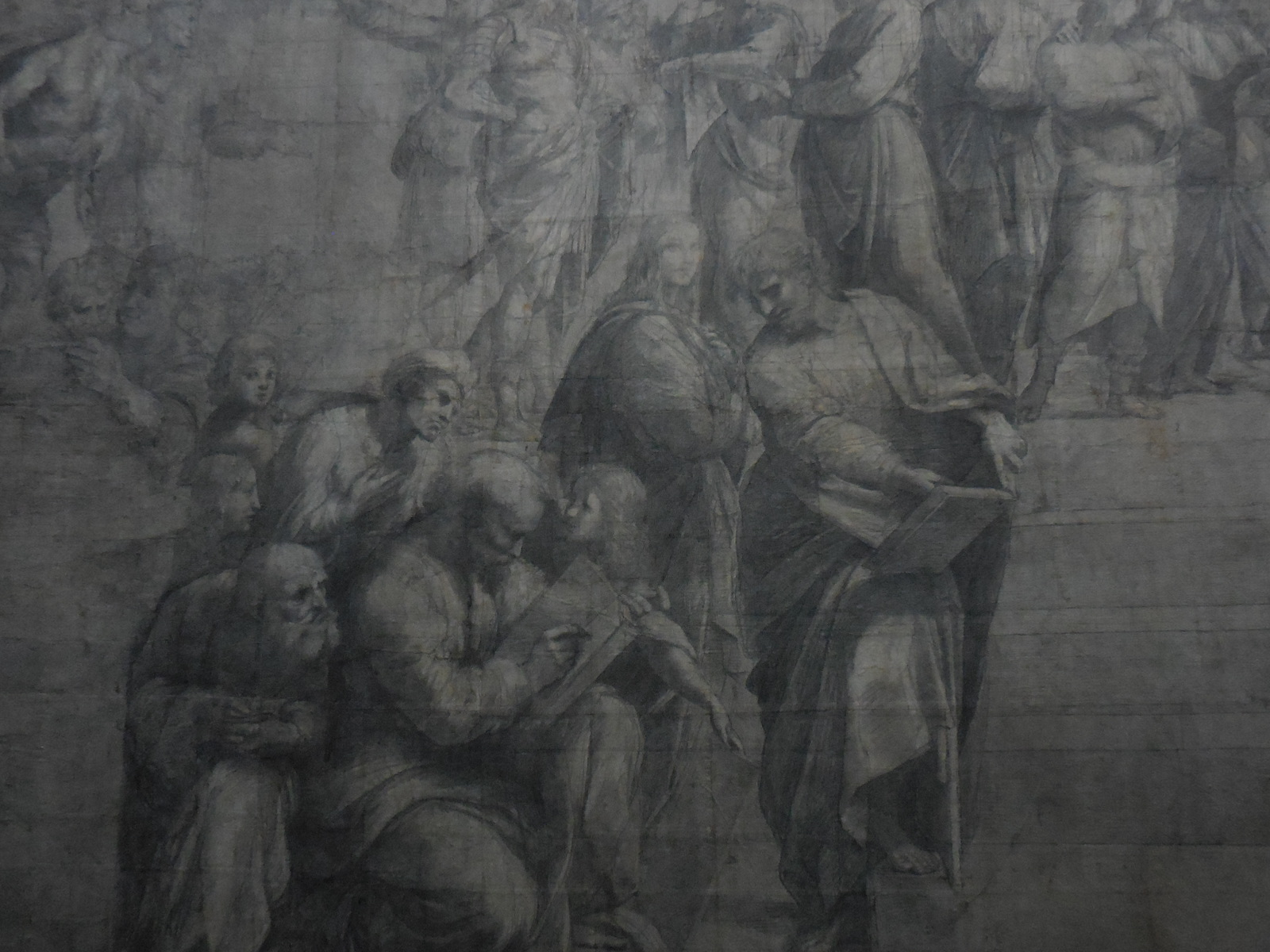
Raphael’s School of Athens

Raphael’s cartoon of the “School of Athens” is a study for the Italian Renaissance fresco painted in the early 1500s for the Raphael Rooms in the Vatican Museum. I recalled seeing the skillful rendition of philosophers and scientists from Ancient Greece at the Vatican on my 40th birthday as I mulled over the dominant role that perspective played in the artwork. Plato, Aristotle and Pythagoras appear in the fresco. Leonardo and Michelangelo are present as Plato and Heraclitus.

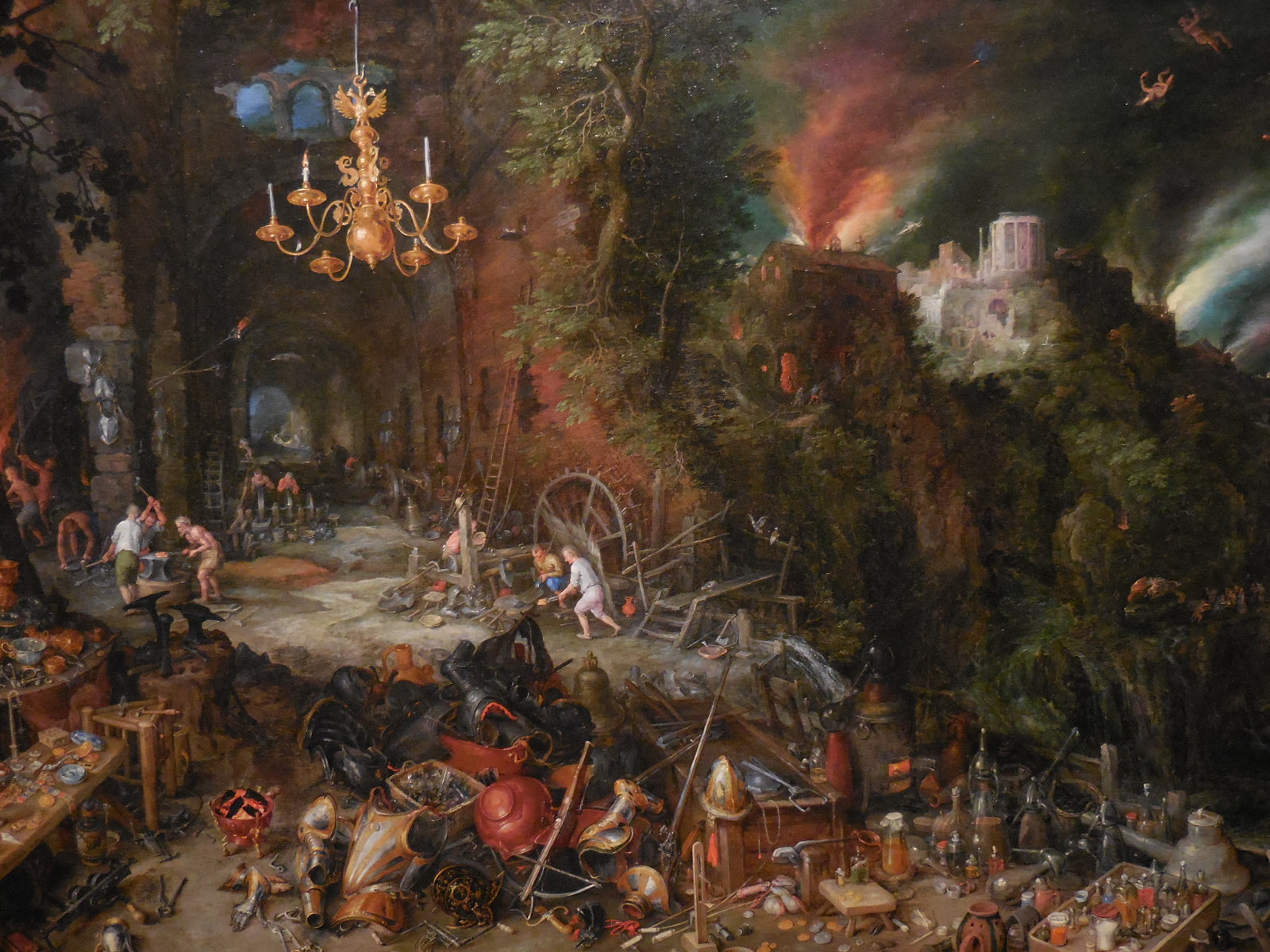
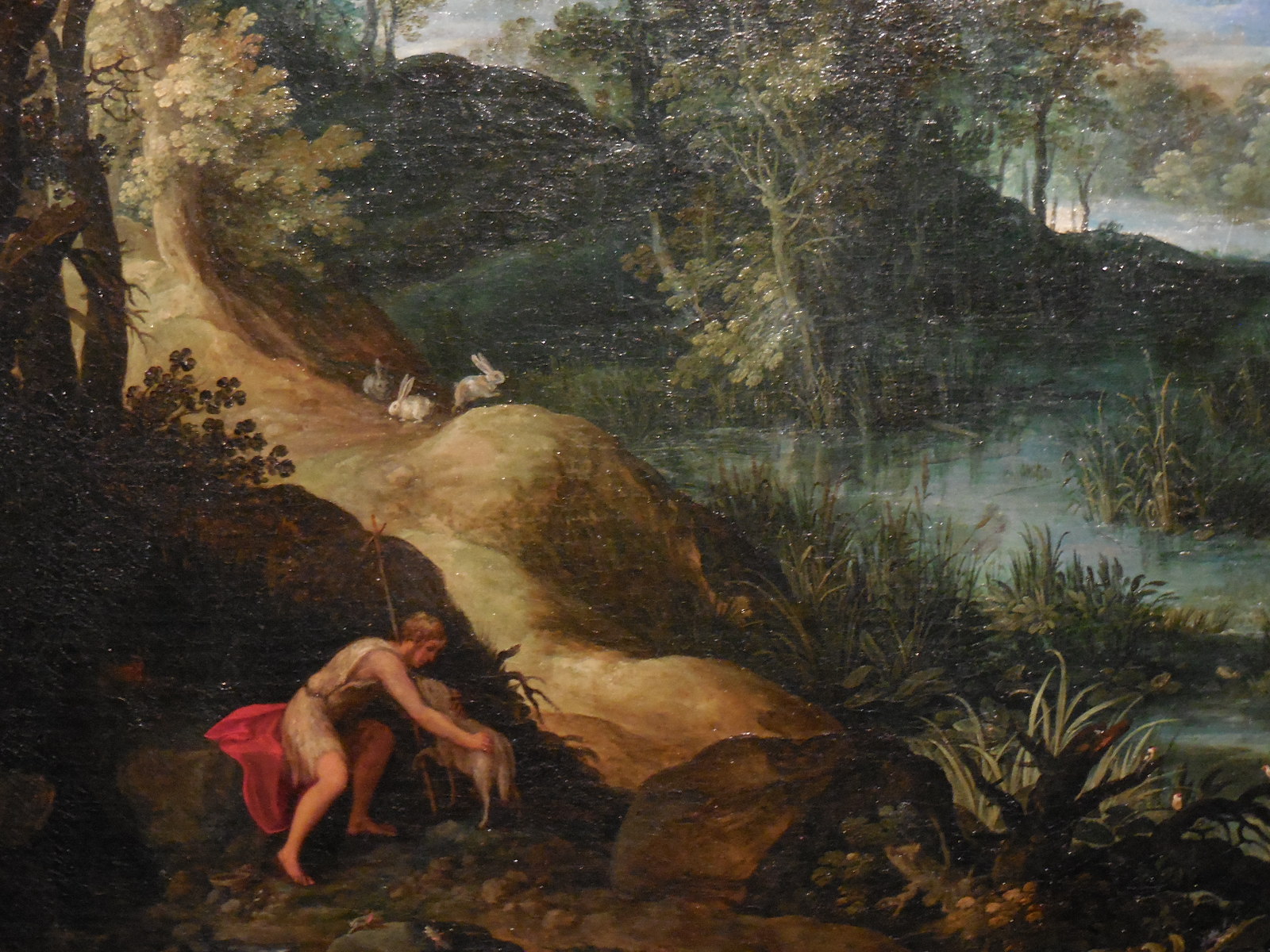
Other paintings that awed me were the fantastic landscapes of Paul Brill, whose works I had discovered some years earlier in Edinburgh. Jan Brueghel’s detailed landscapes and still lifes also are close to my heart, and I adored masterpieces from the Netherlands. I stared at these paintings, losing myself in the fantastical landscapes and details that were so masterfully rendered by both artists. I felt a special connection to these works featuring a dream-like quality as if I could be transported into a fantasy world by merely peering at the canvases.

Other paintings that captured my undivided attention had been created by Bernardino Luini (I fondly recalled his paintings in Milan’s Church of Saint Maurizio), Tizian, Jacopo Bassano, Moretto and Daniele Crespi as well as Francesco Hayez, whose works I knew well from the Brera Gallery in the same city. Andrea Bianchi had created “The Last Supper,” imitating da Vinci’s masterpiece. Tizian’s “Adoration of the Magi,” Bramantino’s “Madonna of the Towers” and the locks of hair of Lucrezia Borgia all left me awe-struck.

The sculptures and frescoes from the second to 16th century in the Sala del Bambaia are very noteworthy. The Hindu art of the Berger Collection captivated me. The Flemish and German painting from the 15th to 17th century enthralled. Ceramics also play an intriguing role in the collection.

I was so awed by this gallery and library that I visited it twice during my first trip to Milan. I peered at every painting and sculpture, trying to take in each artistic creation, feeling so blessed to be able to see all these masterpieces with my own eyes.

Tracy A. Burns is a writer, proofreader and editor in Prague.

Mucha: The Family Collection Exhibition Diary

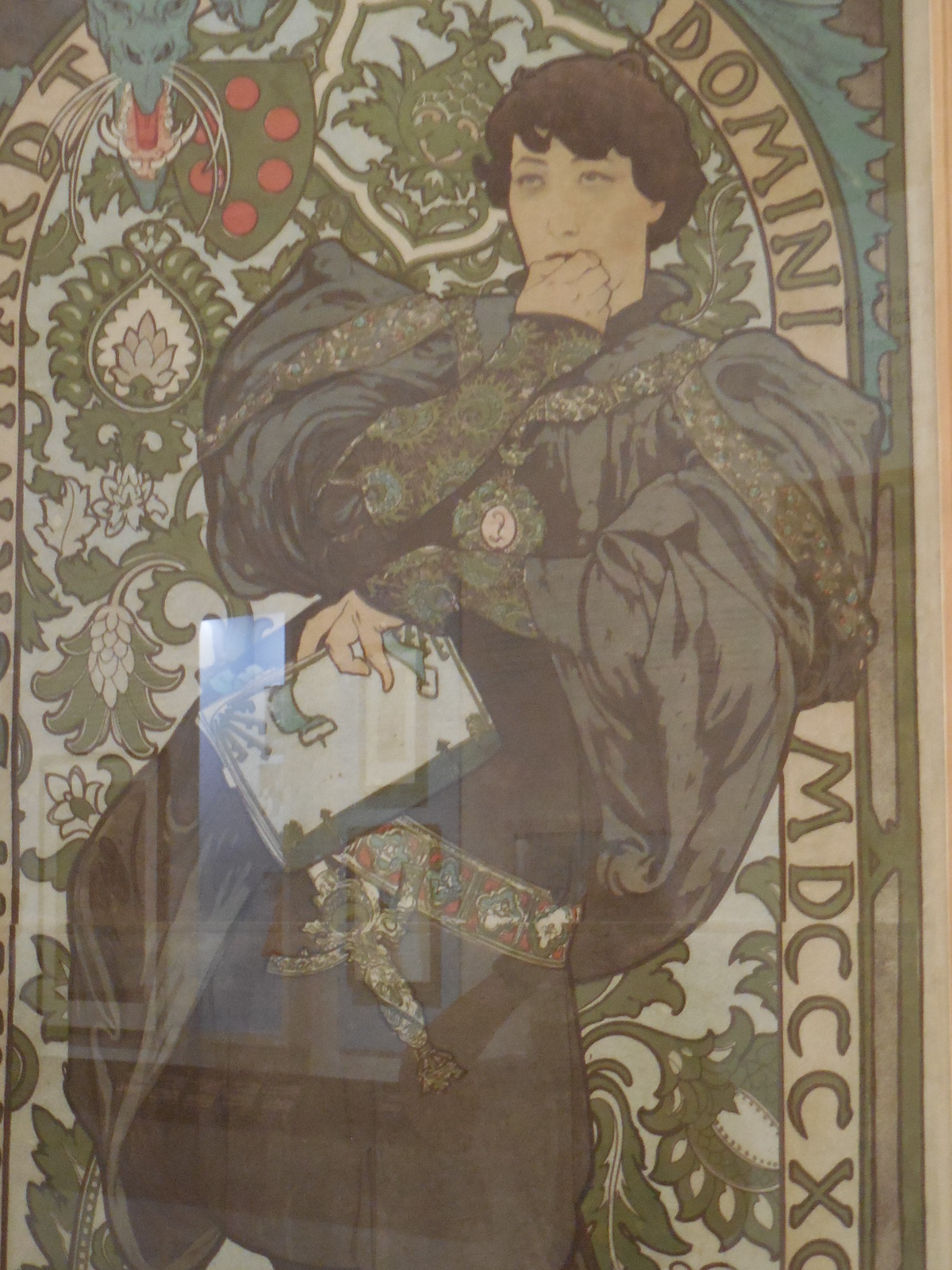
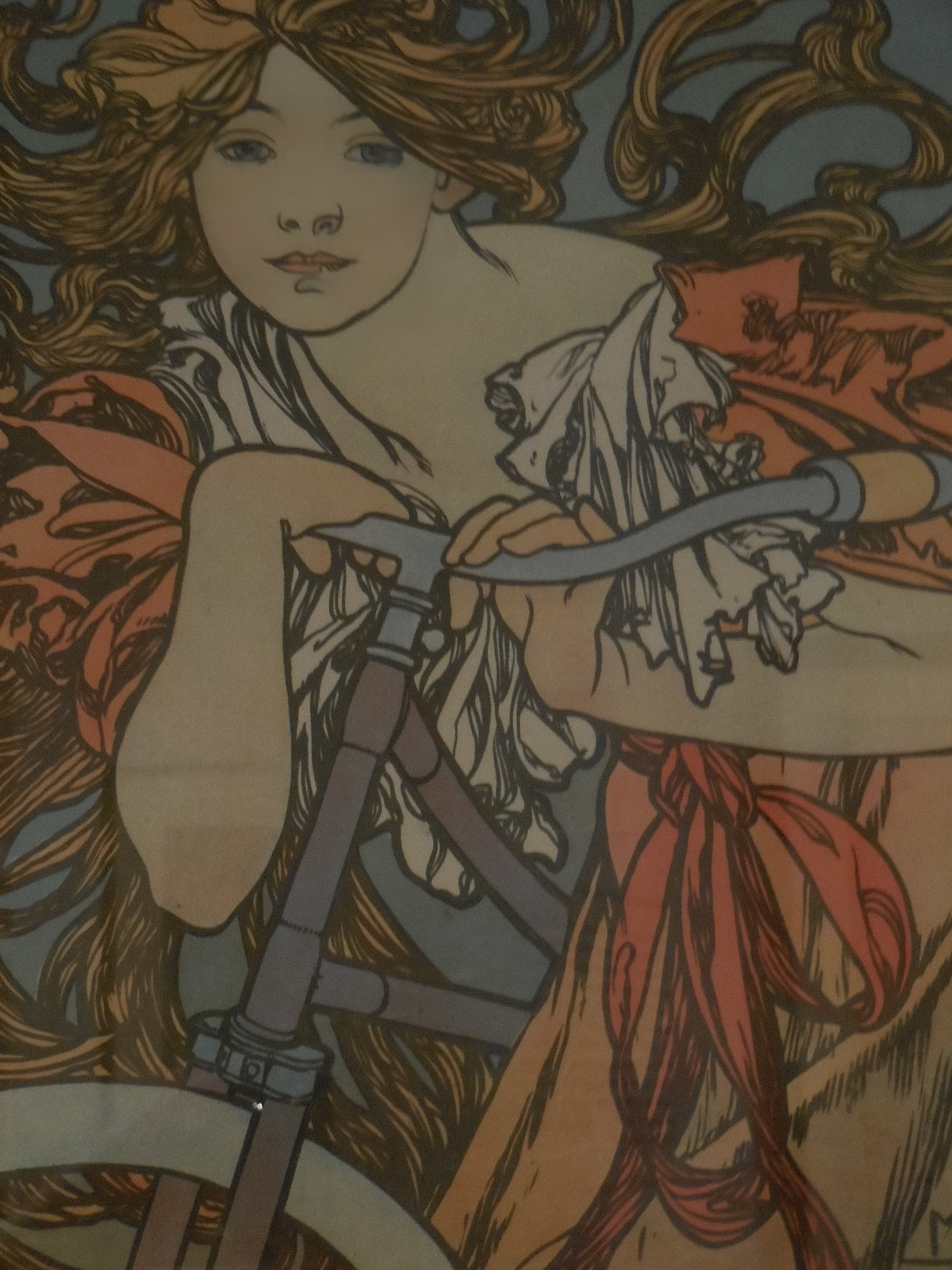
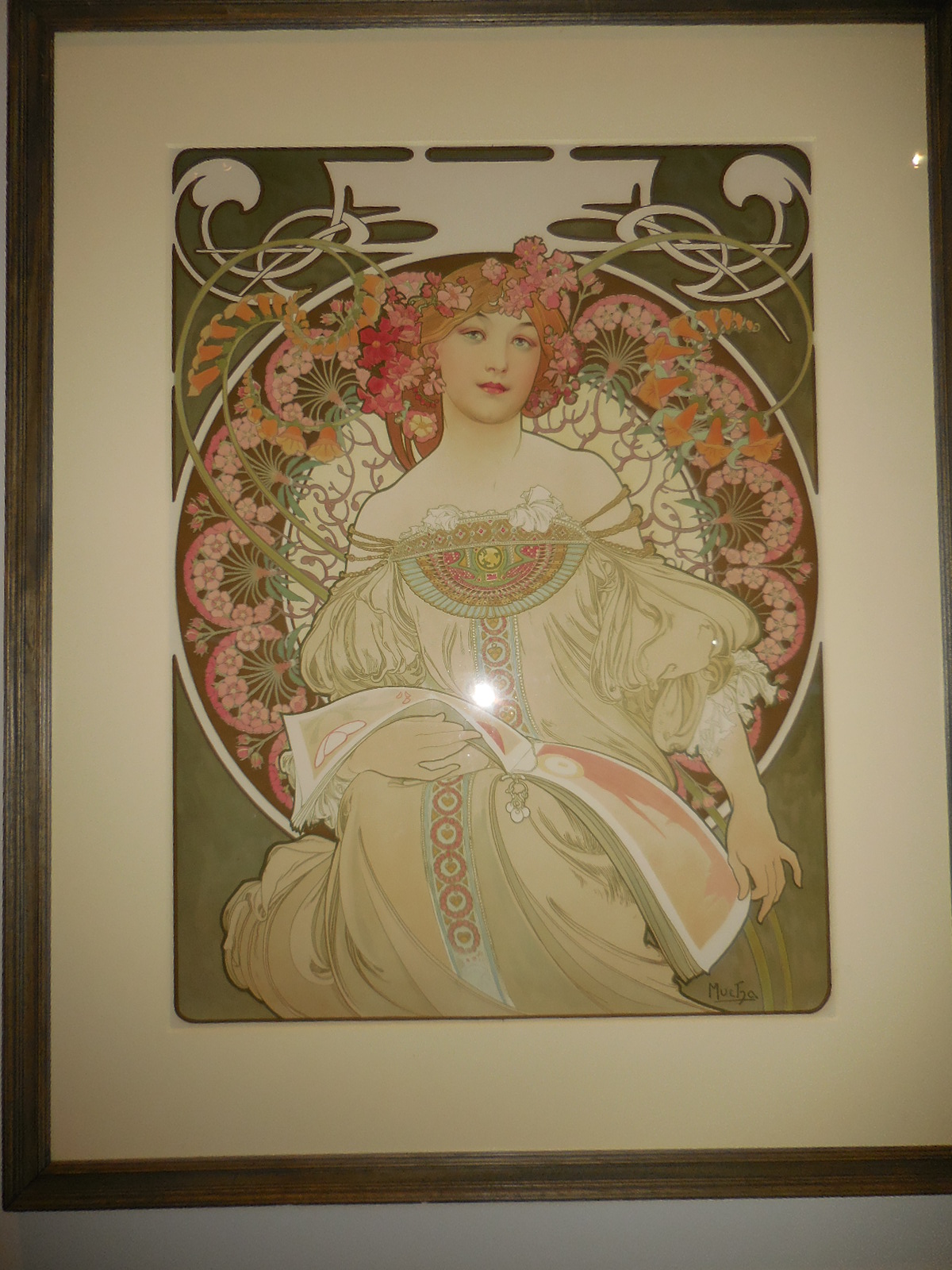
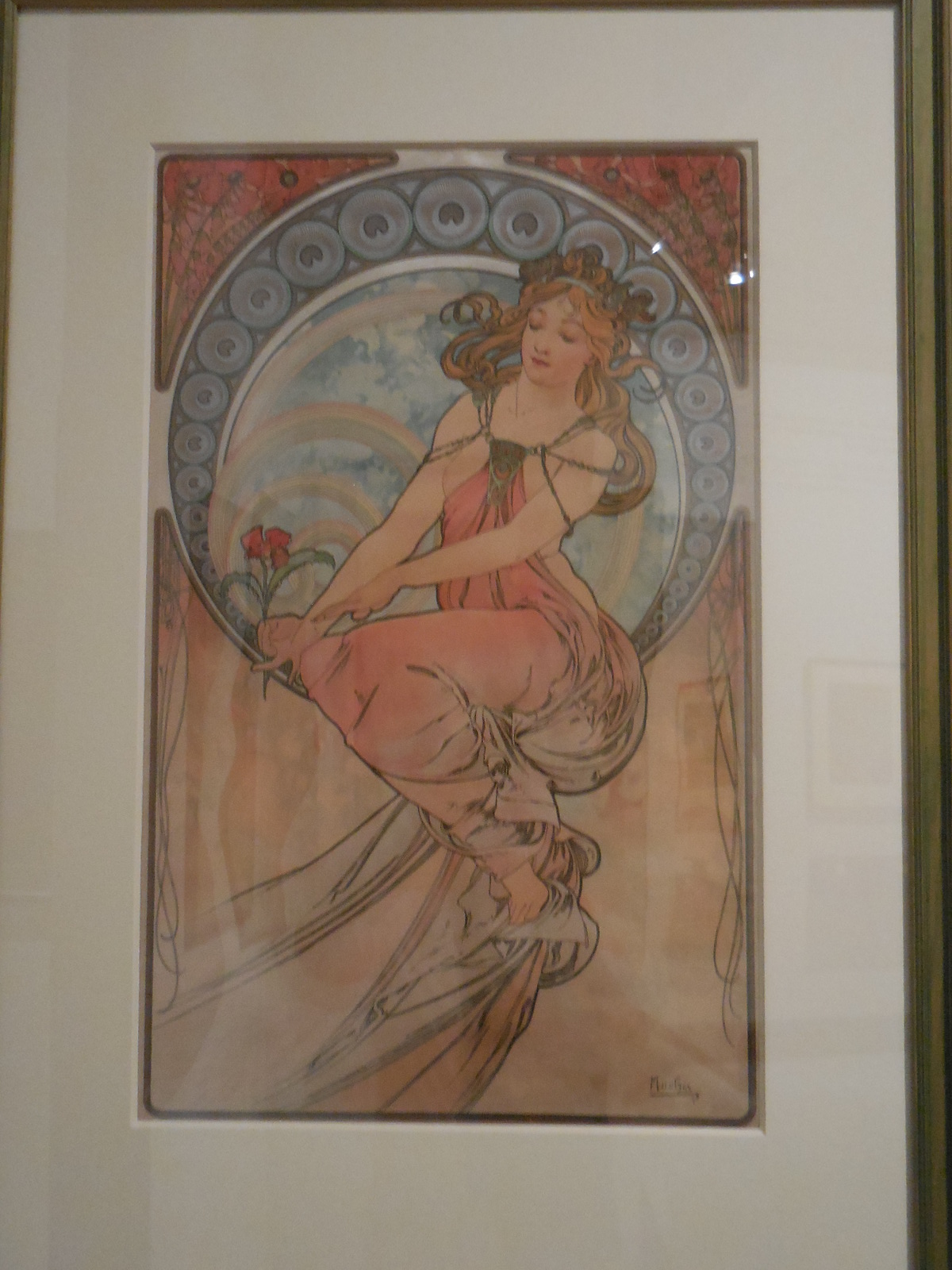
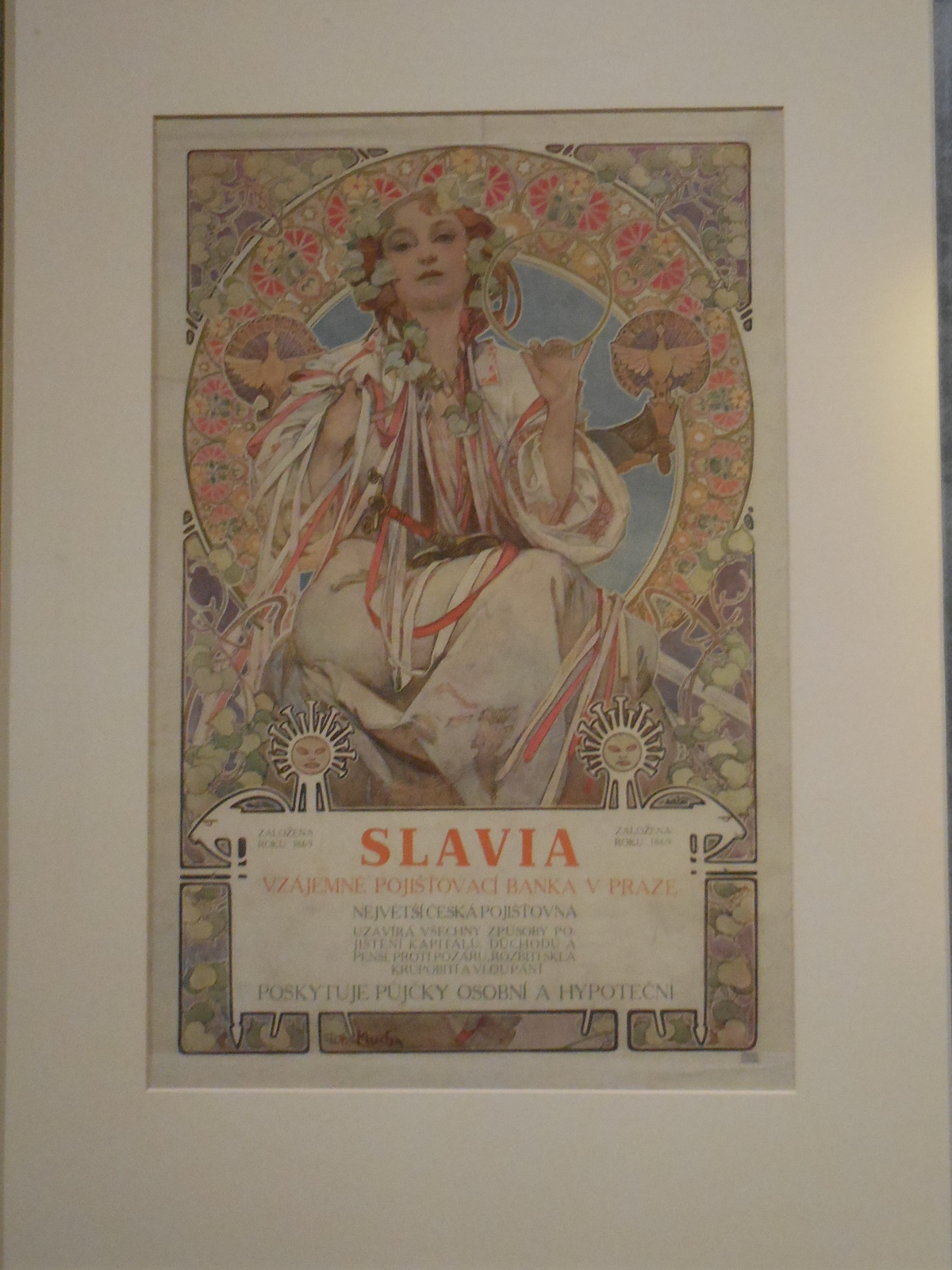
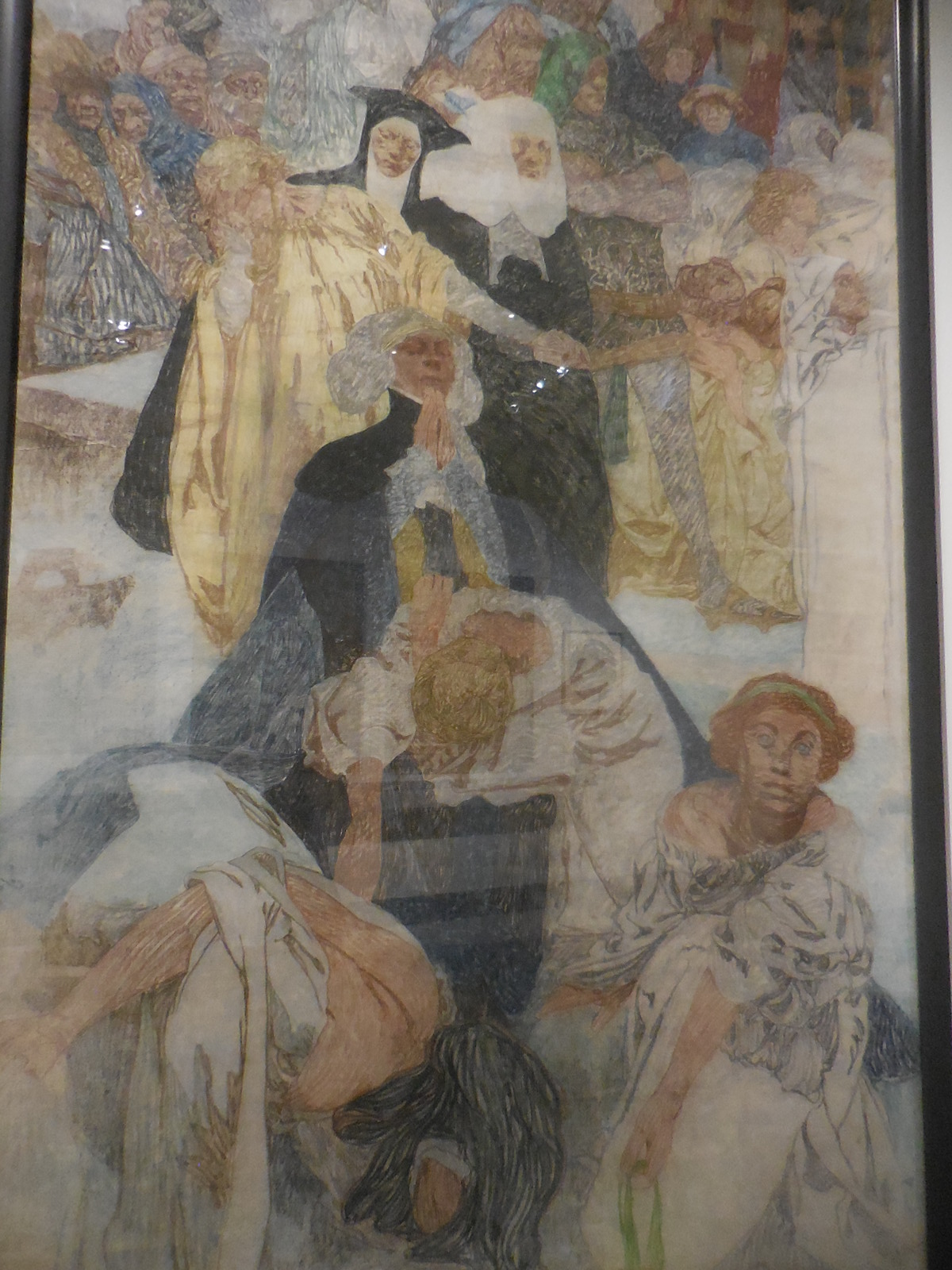
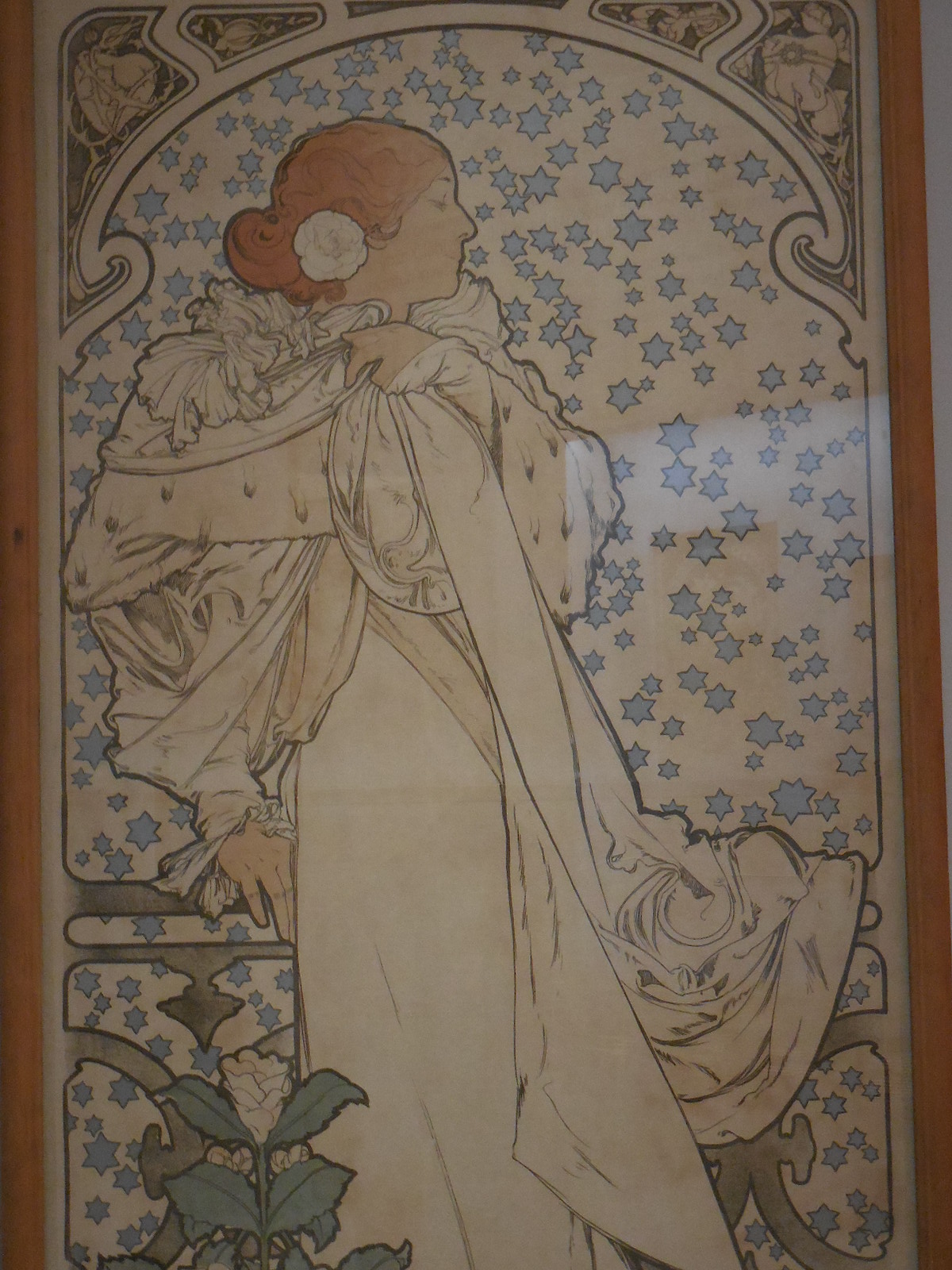
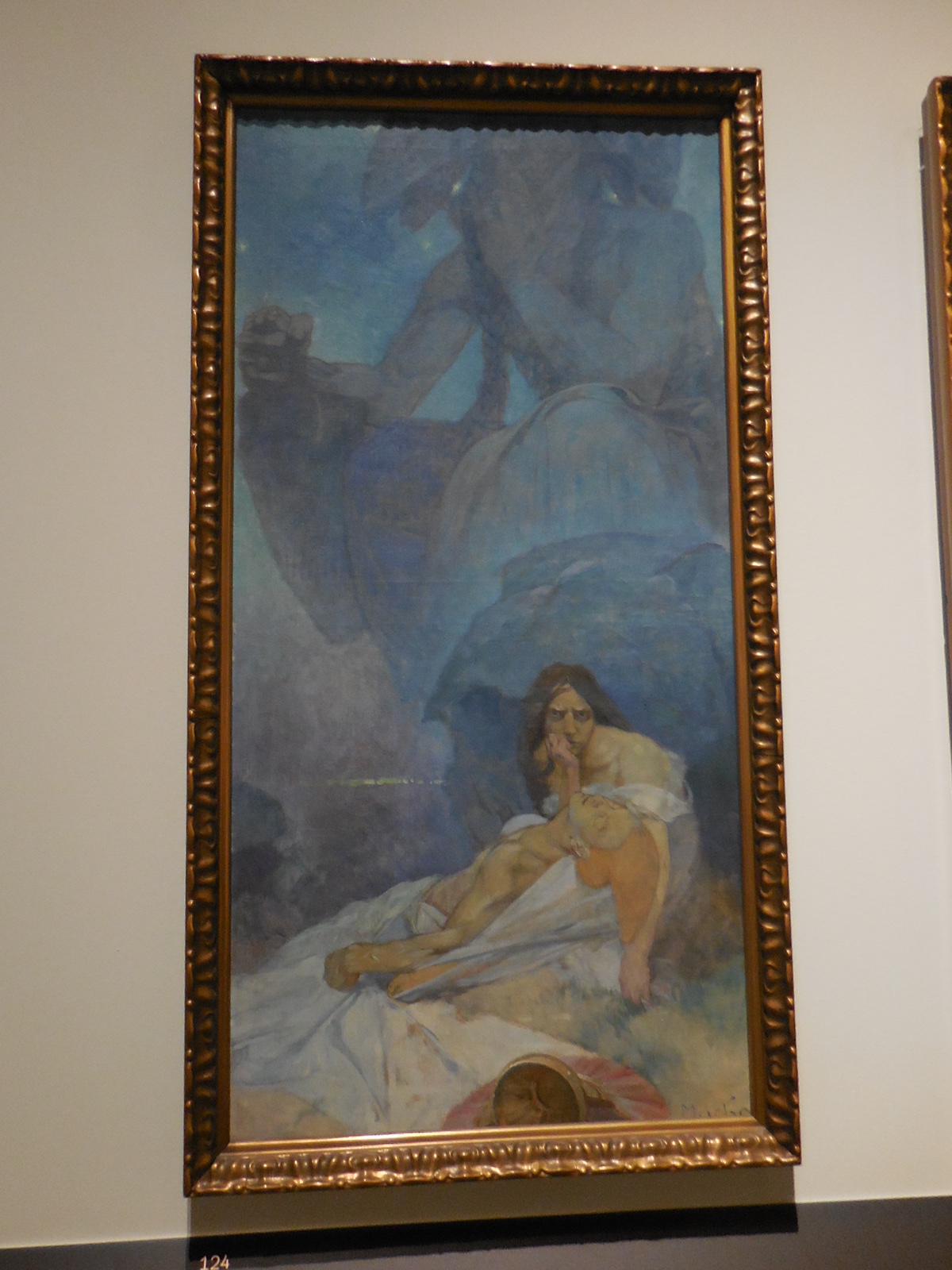
I have been a fan of Alphonse Mucha’s Art Nouveau works ever since I came to Prague in the 1990s. While he is best known for his exhilarating posters of actress Sarah Bernhardt, Mucha was a very versatile artist – as is evidenced in this comprehensive exhibition of creations owned by his descendants. The first extensive showing of his works in 30 years is housed at Prague’s Waldstein Palace. The exhibition highlights not only the advertising posters but also his drawings, paintings, sculptures, photos and jewelry, for instance. The family displays some originals to the public for the first time.  

Family portraits evoking Mucha’s childhood add an intimate feel to the exhibition. Born in Ivančice, Moravia, Mucha called home a building that also included the town jail. The Czech lands were under Austrian rule when Mucha grew up. They were part of the Habsburg Empire in which German was the official language. Yet, during that era, the Czech National Revival took place, when Czech nationalists promoted Czech culture and the Czech language.

At the end of 1894, Mucha became a star overnight when he designed a poster for Bernhardt’s production of Gismonda. The following year he created posters that decorated calendars, postcards and menus as well as theatre programs. His work would find enthusiastic audiences in Vienna, Prague, Budapest, Munich, London, New York and other cities during subsequent years.

I loved how, in his advertising posters, Mucha utilized folk features not only found in Czech art but also in Byzantine, Islamic, Japanese, Gothic, Judaic, Celtic and Rococo works. Much of this genre focuses on beautiful, young women with an optimistic and cheerful flair. They are wearing flowing robes in pastel colors. I loved the touches of floral and plant ornamentation plus arabesques and naturalistic elements, too.

The exhibition boasted family portraits and photos, such as those of his friends Paul Gaugin and Auguste Rodin. Gaugin even was Mucha’s housemate for a while. During the Paris Exposition Universalle of 1900, Mucha represented Austria-Hungary as the show focused on the accomplishments of the past century. I had not known that in 1899 Mucha had designed a jewelry collection that was featured at this major show. One of the jewelry pieces on display at the exhibition features a snake-shaped broach that Bernhardt wore during her portrayal as Medusa. I also was captivated by Mucha’s decorations for a German theatre in the USA. He would wind up making three trips to the United States, hailed by The New York Daily News as “the world’s greatest decorative artist.”

Works in the exhibition illustrated how mysticism had influenced him. His philosophy is also apparent in his creations. For example, he believed in beauty, truth and love to guide him on the spiritual path. For a monument he created a triptych called The Age of Reason, the Age of Wisdom and the Age of Love, fusing these three characteristics into one piece of art. Unfortunately, Mucha didn’t get the chance to finish it.

Perhaps what always captivates me the most about Mucha’s art is his emphasis on Slav identity. Indeed, his phenomenal Slav Epic paintings feature the heroic tales of the Slavs in 20 historical, symbolic canvases. Several reproductions of these works at the exhibition reinforced Mucha’s identity as a Czech and Slav patriot.

I saw panels devoted to Mucha’s decorations in the Municipal House, for which he designed numerous pieces – three wall panels, a ceiling painting depicting prominent Czech personalities, eight pendentives and furnishings. I remember seeing these for myself on tours of the Art Nouveau Municipal House, something I recommend to every Prague visitor. It is notable that, while Mucha’s works often were rooted in Slav identity in the past, he also looked to the future for a prosperous Czech nation.

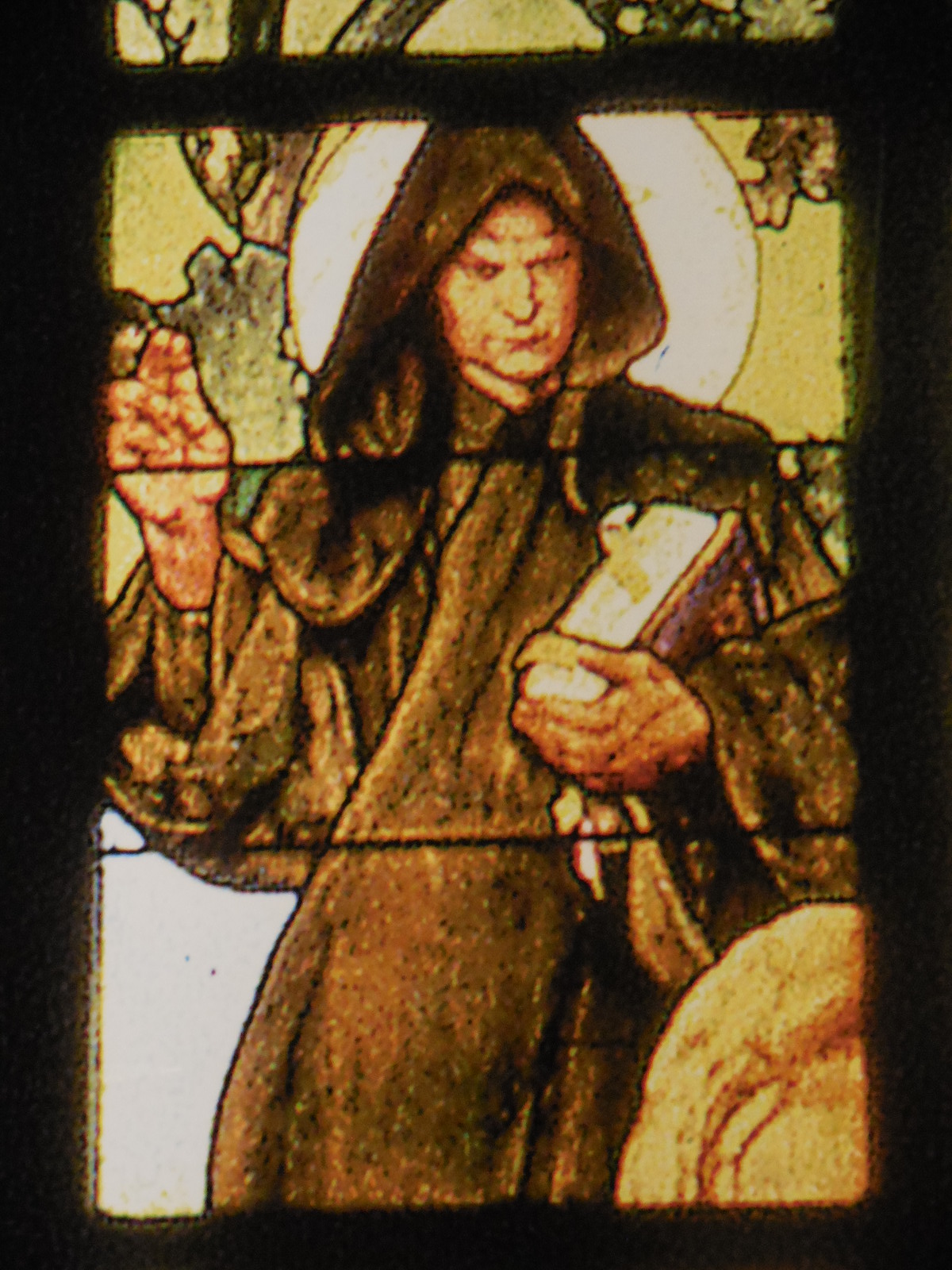
I was enamored by the reproductions of his stained-glass window designs. The originals decorate the interior of Saint Vitus’ Cathedral at Prague Castle. In 1931 he portrayed Saint Wenceslas, the nation’s patron saint, as a child with his grandmother Saint Ludmila in a central panel along with other panels featuring the lives and work of Saints Cyril and Methodius. Seeing examples of his colorful and vibrant stained glass renditions close-up was for me one of the highlights of this exhibition.

Mucha’s life was cut short by the arrival of the Nazis in Prague, where they set up the Protectorate of Bohemia and Moravia during March of 1939. The 79-year-old Mucha, riddled with health problems, was targeted by the Gestapo. Mucha was a Freemason, Judeophile and a promoter of democratic Czechoslovakia. He was one of the first to be interrogated by the Nazis. Mucha was stricken with pneumonia due to the strain from grueling interrogations and died in Prague 10 days short of his 79th birthday on July 14th, 1939. He is now buried in Prague’s Vyšehrad Cemetery along with other prominent Czechs.

This exhibition takes museumgoers on a unique and unforgettable journey from his childhood roots in Moravia to his time as an outsider in Paris to his experiences in the democratic Czechoslovakia until his untimely death. It stresses his identity as a Moravian, as a Czech, as a Slav and as a European. It shows his accomplishments in the art scene by displaying an eclectic collection of his creations that profoundly punctuated the artistic world.

Tracy A. Burns is a writer, proofreader and editor in Prague.

Rembrandt Exhibition Portrait of a Man Diary

I had enthusiastically sought out Rembrandt’s works at various galleries throughout Europe. I had marveled at his masterful chiaroscuro at the Rijksmuseum in Amsterdam, at the Hermitage in St. Petersburg, at the Gemaldegalerie in Berlin, at the Gemaldegalerie Alte Meister in Dresden, at the Louvre in Paris and at the National Gallery of Art in Washington, DC, to name a few.

One of my favorite memories of traveling with my parents was visiting the Rembrandt House Museum in Amsterdam, which included a printmaking studio as well as some of his paintings and prints. Rembrandt lived there from 1639 until 1656, when financial woes forced him to move. None of the furnishings is original because he had sold them, but the 17th century interior still delighted and awed both my parents and myself. We were happy. I had recently turned 30 while my parents were still young enough to travel abroad without health concerns. Therefore, Rembrandt’s works had a personal meaning for me, evoking such memories of joy.

I was very excited when the Rembrandt exhibition of his portraits came to Kinský Palace on Old Town Square in Prague on September 25, 2020. The palace’s space for the exhibition took up one floor and was considerable in size. Even though it didn’t end until January 31, 2021, I was eager to see the masterpieces. I went there shortly after it opened, on September 28. Many of the works were normally displayed in Prague, Olomouc, Brno, New York, Antwerp, London, Dresden and Vienna while others had been loaned from private collections. The exhibition featured both his paintings and drawings as well as modern works inspired by the masterful artist. It was a good thing I went so soon after its opening because soon the gallery would be closed due to the high number of coronavirus cases. We had to wear masks, and it was quite crowded, even though only a limited number of people could be in the gallery at the same time. (The gallery would reopen in December.)

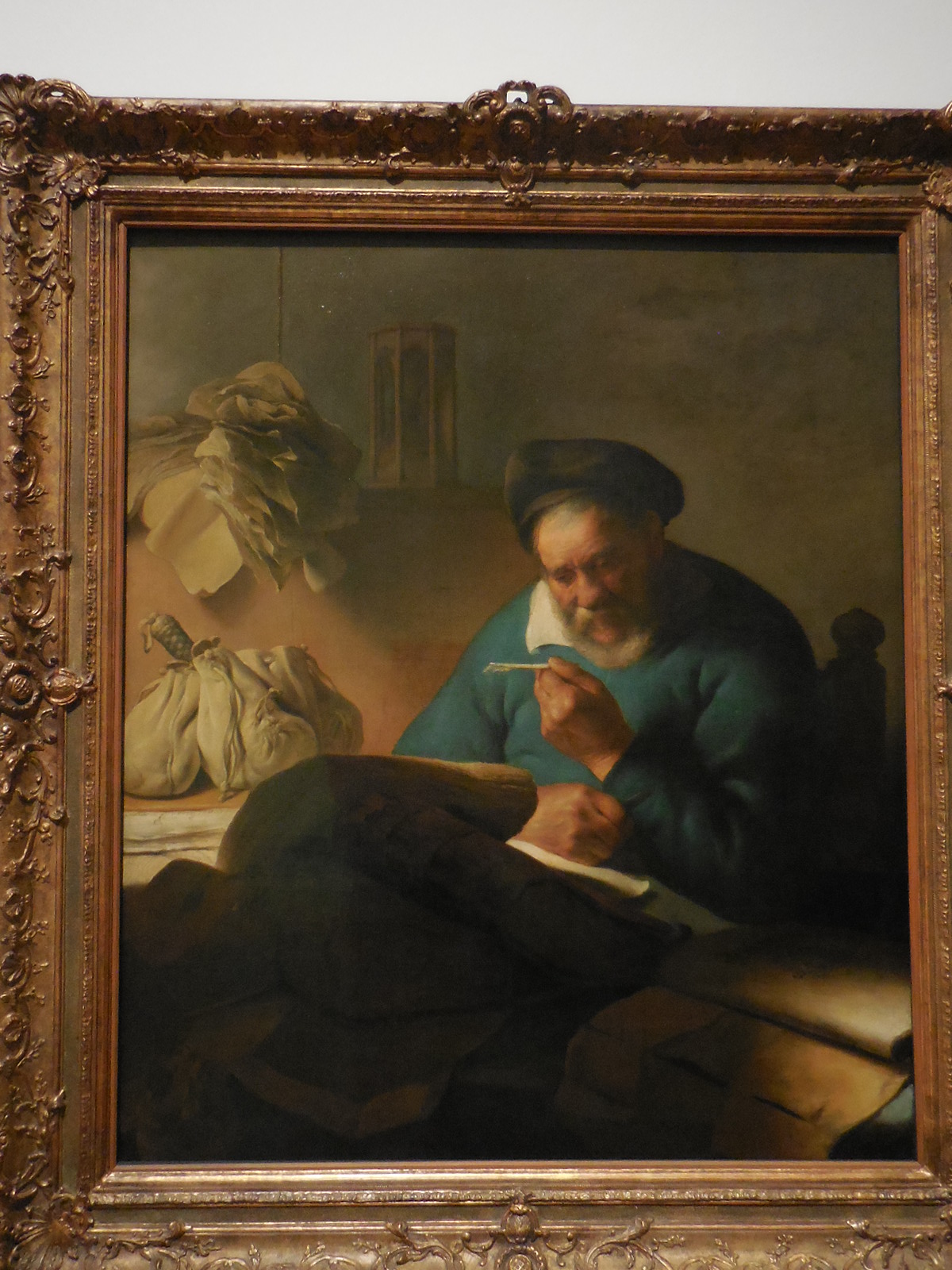
The highlight of the exhibition was the painting A Scholar in His Study, permanently housed in Prague’s National Gallery. The painting exemplifies how Rembrandt achieved great success at portraiture. His work shows not only the physical characteristics of the subject but also the psychological nature of the man in a dramatic way that is unique to Rembrandt’s style.

I was most entranced by Rembrandt’s portraits because they showed the soul of the person. The subject was not standing rigidly. The appearance was very lifelike. Moreover, there was much more to his paintings than the appearance. I felt as if I could look deep into the people in the portraits as his works narrated a visual story of the subject’s life. His portraits showed that he truly cared about the subject.

I especially was keen on the self-portraits as Rembrandt showed his inner self, capturing his psychological state. It was as if he could be objective about himself. I could read the self-portraits as a sort of visual autobiography – as a young man Rembrandt looked a bit insecure, at the peak of his career he appeared successful and confident and finally I saw a sadness and resignation that was both touching and tragic. I recalled his sad fate – a poor man when he died, he was buried in an unknown grave in a church, and his remains were destroyed after resting there for 20 years.

I liked the portraits in which he was making faces. In one particular work, he looked surprised and amazed. I noticed his clothes from bygone eras in some works as he dressed as a historical figure for some self-portraits. A theatre major, I loved the sense of drama in these works.

The self-portraits were dynamic and powerful. This effect was in part achieved by his mastery of light and shadow. I also appreciated the details. His works featured great attention to detail, and that helped bring the portraits to life.

While I made sure I didn’t stand too close to anyone, I perused the works with a sense of enthusiasm that I had missed since early September, when my friend and I stopped visiting castles, chateaus and caves because the number of coronavirus cases had greatly increased. I reveled in that enthusiasm.

I thought I would have the chance to visit other exhibitions in the near future. Alas, soon the museums and galleries closed for a lengthy period, only opening again in December. I missed the excitement of peering at an artwork that spoke to me, that was powerful and poignant.

The Portrait of a Man exhibition was one of my favorite all-time exhibitions. Rembrandt’s works never cease to amaze me, and seeing so many in one place was phenomenal.

Tracy A. Burns is a writer, proofreader and editor in Prague.

Manětín Chateau Diary


Image

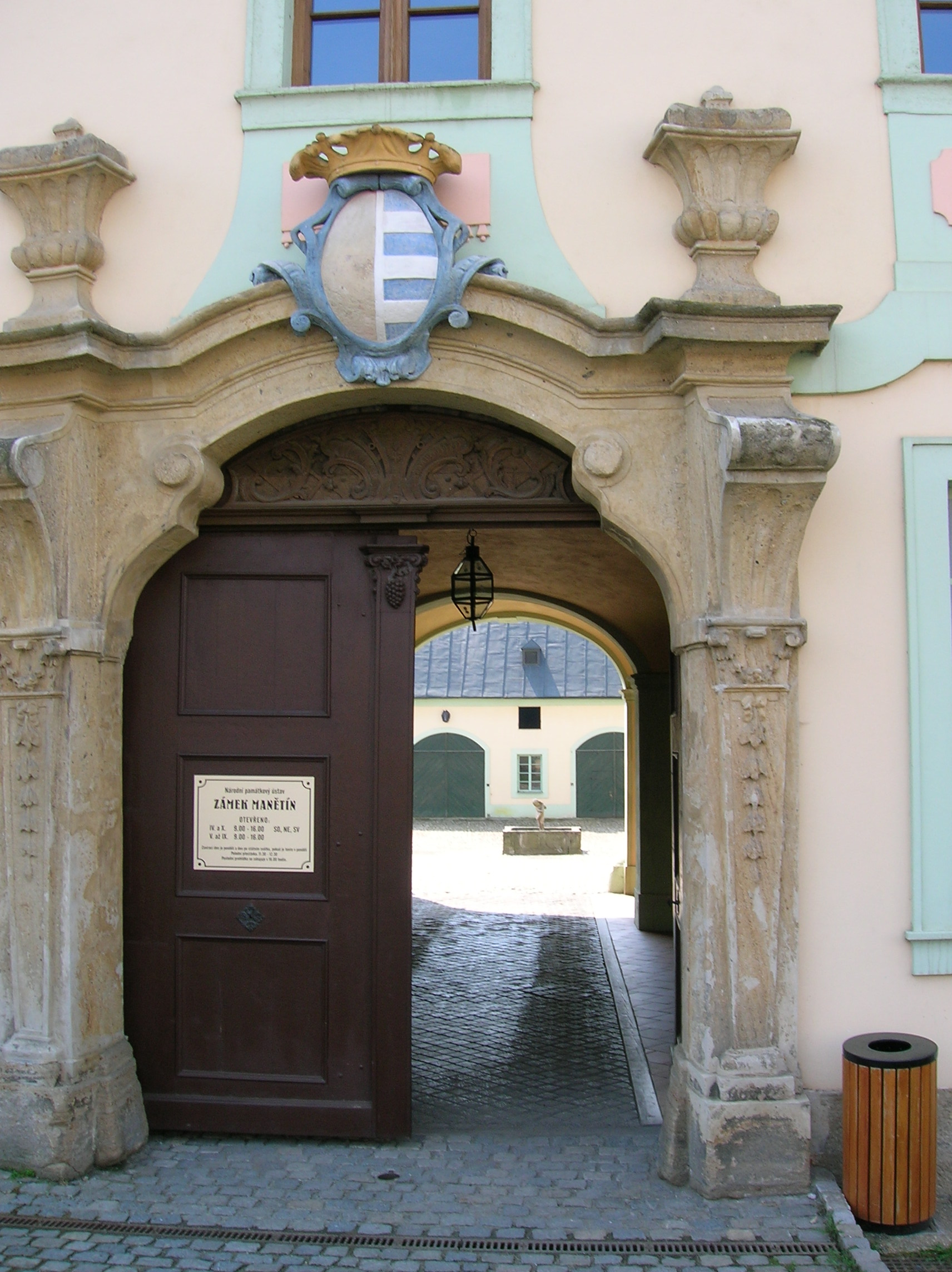
I had wanted to visit the Baroque chateau Manětín, about 45 minutes from Plzeň by car in Western Bohemia, for many years, but for some reason I had been under the impression that it was closed to the public. Only while I was at Chyše Chateau did I find out that Manětín had been open to the public since 1997. Today I would finally see it with my own eyes. I was very excited about the trip. I had to go by car as there was no public transportation that went to Manětín. We drove through the bewitching countryside and passed many haystack-dotted fields.

Manetin1

When I arrived at Manětín, I was bewitched by the Baroque statues and a sculptural grouping of the Holy Trinity in front of the main square. A road led down to the Baroque chateau itself, situated behind the statues. At the small white church next to the chateau a group of six or seven musicians were playing funereal music on trumpets. People dressed in black walked solemnly into the church.

Image

It was almost 10 am, and my tour began at the top of the hour. I had a few minutes to pop into the park. The Baroque and English park looked elegant and well-kept, very different than it must have looked between 1945 and the 1990s, when it was in a decrepit state. It had been restored in the 1990s to appear like it had during 1790.

Manetinext4

Then it was time for the tour. The knowledgeable young man acquainted me with the history of the chateau that had been first mentioned in 1169. The chateau that had begun as a medieval fortress had been transformed into Renaissance style before 1600. After a devastating fire in 1712, it was reconstructed with a Baroque appearance thanks to the then owner, Marie Gabriela Lažanská.

Manetinext3

The chateau had been confiscated several times.  Volf Krajíř z Krajku owned the place from 1544 to 1547, when it was confiscated because he had rebelled against Holy Roman Emperor Ferdinand I.  Following The Battle of White Mountain in 1620, which pitted the Protestant nobles against the Emperor and Catholic Habsburgs, the defeated nobles lost their property. The chateau was confiscated for the second time in 1622.

ImageThat was when Ester Mitrovská from Nemyšle, born Lažanská from Bukova, bought the chateau. When she died, the chateau came into the hands of her brother, Ferdinand Rudolf Lažanský. The Lažanský family would keep the chateau for more than 300 years. Times of cultural prosperity followed, especially when Václav Josef Lažanský and Marie Gabriela Lažanská manned the chateau.

Manetinext9


After World War II, though, the chateau was confiscated for the third time, becoming the property of the state because two Lažanská women in charge of the chateau had married two Austrian brothers.  Thus, the chateau had been in part the property of the Austrian family. Due to the Beneš decrees that took away property from Germans and even expelled them from the country, Terezie Lažanská, one of the women who had married an Austrian, was deported to Austria. Some rooms were open to the public as early as 1959, and the chateau became a national monument in 2002.

Manetinint4Manetinint5

Upon entering the hallway, I was enthralled by the sculptures dotting the staircase as well as the ceiling fresco.  The four statues with putti on the staircase represented the four elements. One cherub was holding a fish, representing water. Another was depicted with a cannonball and decked in an old-fashioned fireman’s helmet that looked more like military headgear. This was Fire. Earth was portrayed by a cherub with a melon and snake, and Air was depicted by a putti flying on a bird. I could almost imagine the cherub whizzing through the cold, damp chateau air on the big bird.

Manetinint3Manetinint2

A portrayal of what the chateau was supposed to look like in the 18th century took centerstage in the ceiling fresco. Allegories of architecture and painting also adorned the fresco as did the coat-of-arms of Marie Gabriela Lažanská, perhaps the most influential of the Lažanský owners. (The guide mentioned that Marie Gabriela had been addicted to card playing. In fact, more than once she had put the chateau at stake when she had made her bet.)

Manetinint6

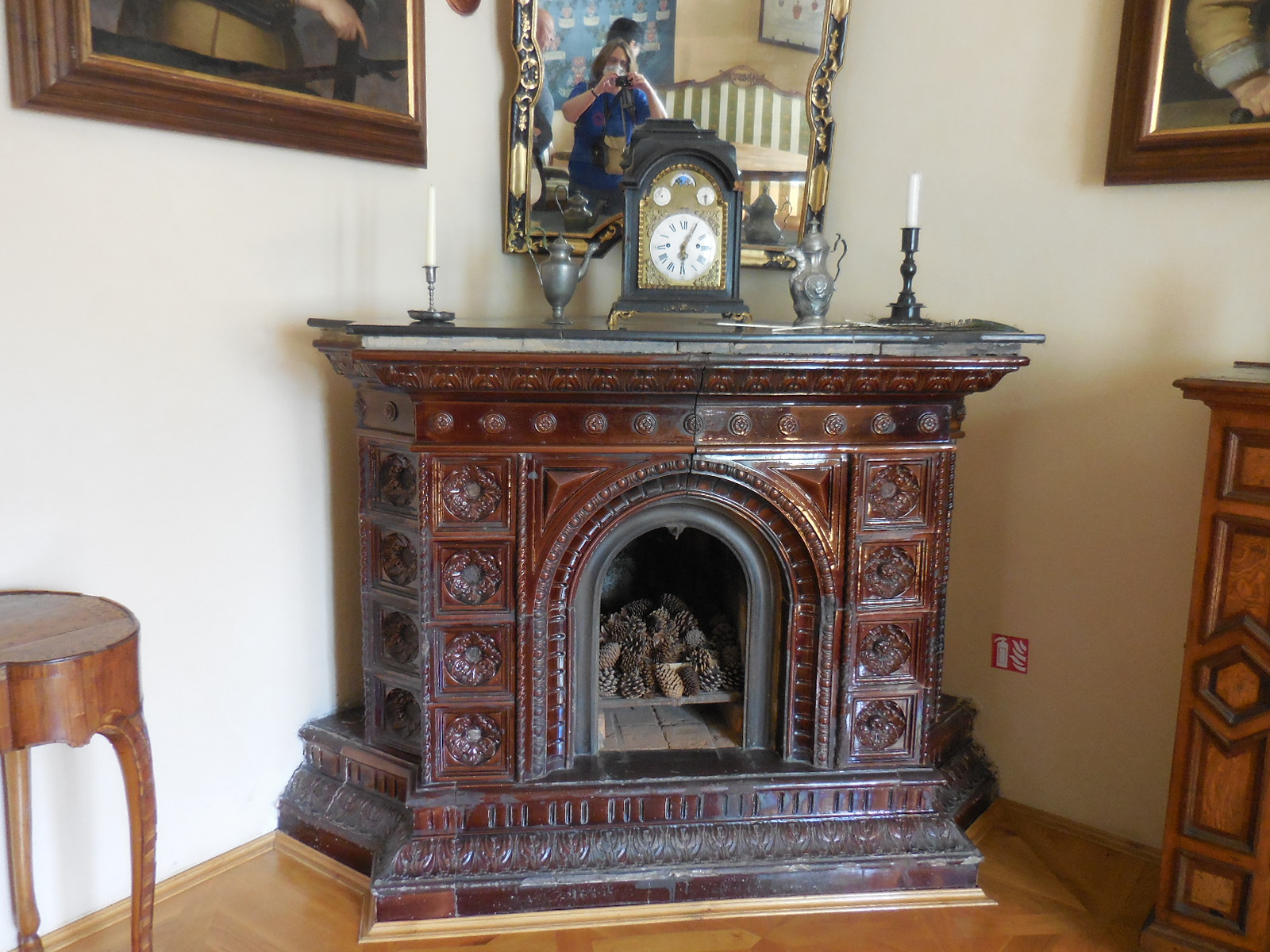
In the Reception Room there were four paintings depicting soldiers during the Thirty Years’ War, which lasted from 1618 to 1648 and started due to religious disputes. One held a spear, another a sword. The oldest piece of furniture in the chateau stood in this room as well; it was a 1640 bureau, dating from the Thirty Years’ War as well. I paid particular attention to the elegant, brown fireplace and gold with black clock and vases, all in lavish Rococo style. I liked the gold with black décor.

Manetinint7Manetinint8

The portrait of the young woman depicted in black was Terezie, who was killed in a hunting accident when she was 21 years old. (Note that this is a different Terezie than the one who was deported to Austria.) But perhaps it hadn’t been an accident at all, the guide conceded. Some say she was killed on purpose so she could not get married. Supposedly, her lover hated the man to whom she was engaged.

Manetinint12Manetinint13

In a corner of the next room, a window was painted onto the wall. The guide explained that there had been originally a window there, but it had been filled when new rooms had been added in the 19th century. An 18th century chaise lounge, a Venetian mirror made in Morano and a group of white, Viennese porcelain also adorned the room. On the ceiling there was a small fresco of part of a boat, dating from the first part of the 18th century; most of the fresco had been destroyed, though. I tried to imagine what it would have looked like if the entire fresco had been visible. A port with boats and nobility strolling along an embankment on a crisp afternoon? I wondered.

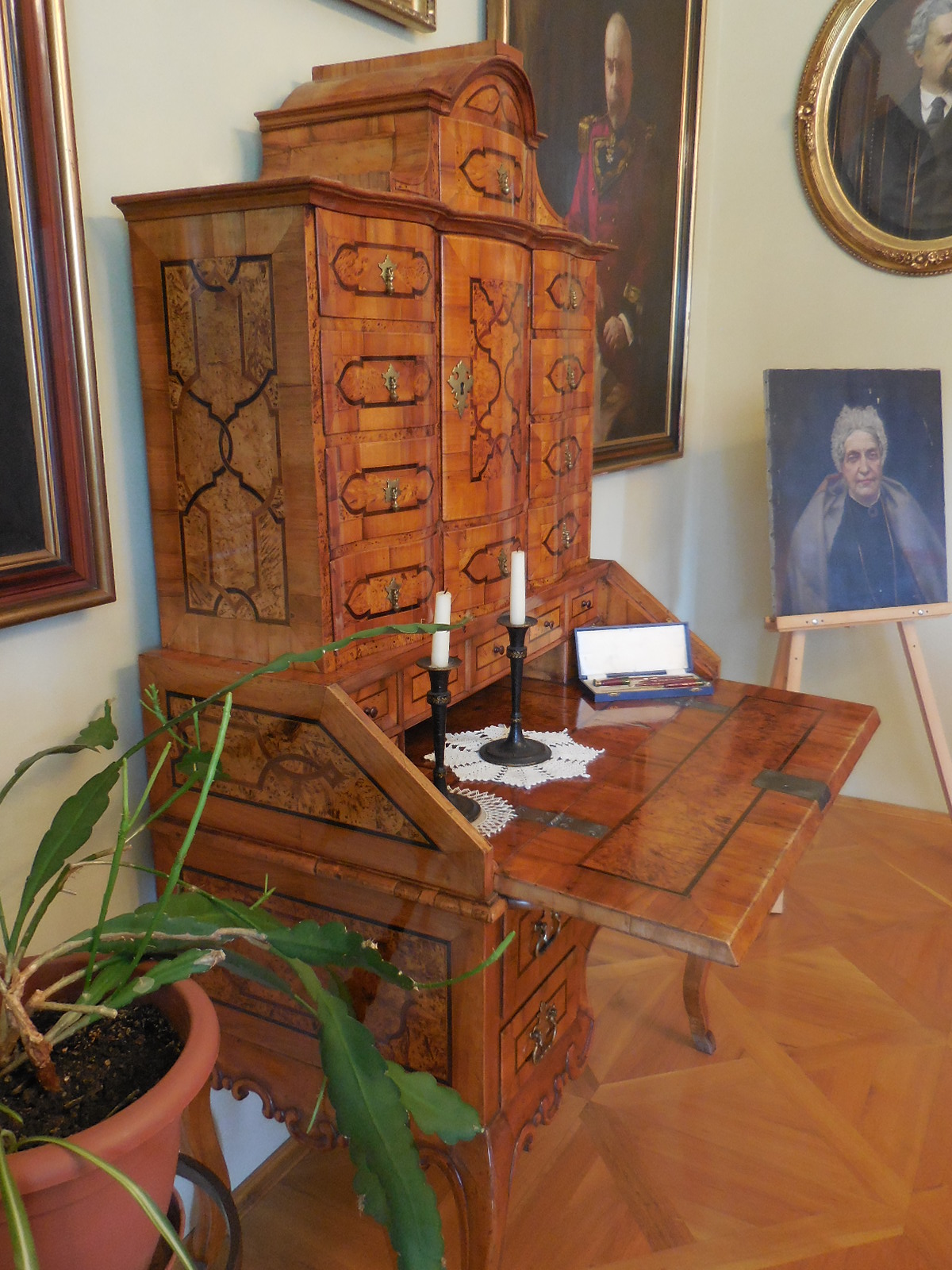
I loved the way the porcelain cups were displayed on small black shelves set at different levels on the wall. In a round portrait Marie Gabriela, clad in a silver dress, appeared strong-willed and somber with a no-nonsense expression. A light wood, Baroque desk hailed from the 18th century while the tapestry covering one wall showed a scene from the Old Testament with Moses. The two dressers, both green with floral patterns, were intriguing, for their irregular, curving shapes and color. A view of Venice was painted on each one. I recognized the Doges Palace on one and thought back to the thrilling time I toured the palace during my first day in that magical city.

Manetinint14

The next hallway was decorated with green pictures of castles, chateaus and various places – the pictures had been cut out of magazines. I recognized the chateau of Blatná, as two people rowed a small boat around it. Another scene showed woods in Karlovy Vary. Still others showed the castles Orlík, Točník and Žebrák. Then we came to a room with a hunting theme. Nineteenth century guns, petrified hawks and a woodpecker made up the décor. The Baroque desk, closet and dresser looked out of place.

Manetinint20

In the room where the nobility had gathered, the paintings on the wall showed boats at sea and hailed from 18th century Holland. A black Baroque table and bureau from the same era also adorned the room. The glass chandelier caught my attention.  It was exquisite. Made in Venice’s Morano, the chandelier was decorated with glass flower buds that looked almost as if they were icicles taking on decorative shapes. There was also an Italian mirror with a simple, gold frame.

Manetinint19

Decorating another hallway were more green pictures of castles, chateaus and places. I saw Plzeň, a major city now, as a 19th century village and Roundice nad Labem before its chateau had become dilapidated. A room with a horses’ theme was decked with small paintings of horses, a clock with four, white columns, a desk with cards and a German newspaper dated 1859.

Manetinint21

Then we came to a room with unique paintings on the walls. They did not depict the nobility, but instead the servants and clerks who had worked at the chateau. A rarity in chateaus, this collection included 13 portraits from 1716 to 1717 hanging in several rooms and in a hallway. They were painted by Václav Dvořák, whose life remains mostly a mystery. All the people portrayed in this room were dressed in black. Two carriage drivers next to a carriage wore tall, fluffy hats with big feathers. In one portrait a solemn-looking priest stared back at me. He had written a chronicle of Manětín in three languages, the guide said.

Manetinint22

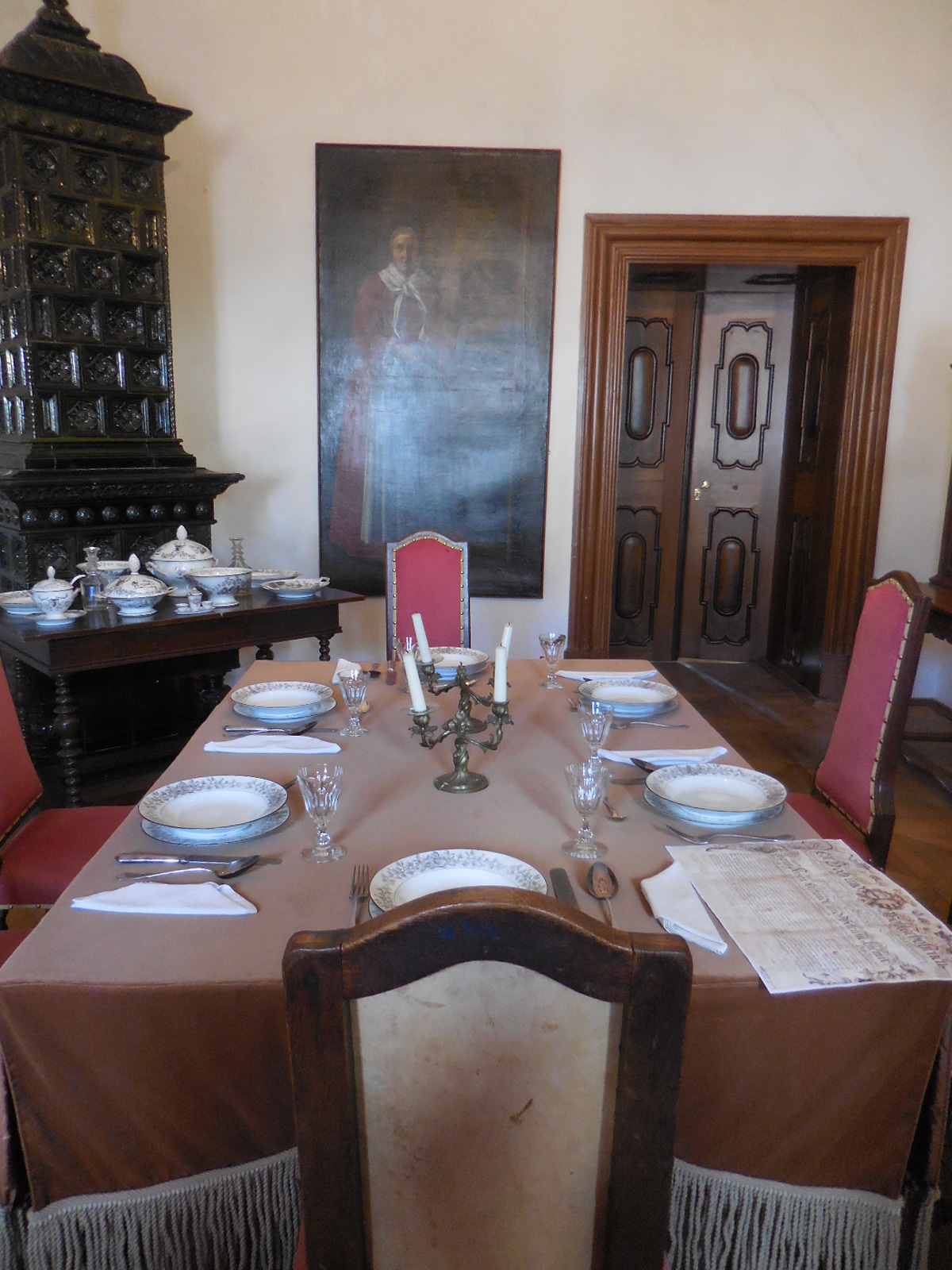
Objects in the next room proved to be rarities as well. The space boasted a complete collection of porcelain, plates with tea and coffee service sporting white with brown decoration. It was not often that a chateau had a complete collection; usually there were only pieces of a collection featured.  In the former Billiards’ Room, there was no table, but there were more paintings of servants and clerks. Three men donning large, white wigs gazed at me. There were also portraits of a doctor, the chateau’s caretaker and the priest who was also a historian. An elderly woman held keys in one hand; she was responsible for the keys to the chateau and to the food storage rooms. The yellow tile stove with squiggly brown vertical lines appealed to me. A small device that functioned as a bell was there, too.

Manetinint26Manetinint28

The biggest room was now used for weddings and concerts. The 1730 ceiling fresco boasted its original, vibrant colors and portrayed three figures showing God’s qualities in the center. I spotted the one in red with the heart as Love. The female clad in blue represented Strength. The third portrayed a girl pouring water from a jug onto a coat-of-arms. This was symbolic of Luck or Fortune. In the corners of the ceiling, the painted figures represented the four seasons.  Fall showed a naked girl with grapes and Bacchus, the god of wine. Summer was represented by a girl donning a big, straw hat and weilding a sickle as well as a woman holding a parasol. Spring: One girl was pouring water while another was holding a parrot.

Manetinint30

Winter had two symbols. One was Death as an angel, but there was also a woman in a black mask to depict winter as a time of social gatherings and parties. When I went back to the chateau in 2020, the black mask triggered thoughts of the coronavirus pandemic as cases were increasing in the Czech Republic. In America, where my octogenarian parents lived, the situation was horrendous with over 1,000 dying every day. In the Czech Republic we didn’t have to wear masks anymore, though I still did because I wanted to be as careful as possible. I had spent the first three weeks of lockdown in my apartment, afraid to go out, before I started taking walks and calming down. Thoughts of the coronavirus and my parents’ and friends’ health often kept me up at night.

Manetinint32

Mythological events were also portrayed on the ceiling. I spotted Poseidon and a falling Icarus. There were two portraits of the Lažanský family in this room as well. One showed Marie Gabriela and her daughter along with a black servant. In the portrait of her husband with their sons, the painter put himself in the work, holding a palette and brushes.

Manetinint31Manetinint40

 Painted Baroque statues flanked the doorway that led to the magnificent library, which held 5,000 books, many with golden spines.  Most were in German and dealt with economy, but books by Johann Wolfgang von Goethe and Johann Christoph Friedrich von Schiller also graced the shelves. There were also books in English, Italian and French, for example. Only two books in Czech were in the collection, and both described how to make beer. Topics of other books included fishing, fruit growing, history and theatre. There was even a Turkish textbook. Above me was a fresco of Zeus and his daughter Pallas Athena, the goddess of war. The ceiling had been reconstructed in the 20th century due to a fire that had erupted because a tile stove had not been closed properly.

I found the remaining two portraits of servants in the hallway. One showed a cook and woman washing dishes in the chateau kitchen. Another showed a woman pouring water into a basin. Since there was no hot or cold water back then, the water had to be boiled in the kitchen, the guide explained. The woman pouring the water was decked in a traditional folk costume.

Manetinint45Manetinint44

We saw the chapel from the oratory behind glass. The main altar painting was by Baroque master Petr Brandl, my favorite Baroque artist. He also created two paintings on side altars. Brandl actually came to the chateau to paint the works during 1716.

Manetinint42Manetinint41

After the intriguing tour I went outside to take photos of some of the 30 Baroque statues that sprinkled the town and hailed from 1680 to 1780. I still could not enter the Baroque church next door. A simple, wooden coffin was placed in a black van, followed by a procession of people dressed in black, along with two decked in purple and white robes. I did not see the Church of Saint Barbara, either, though I later read it was Baroque in style and featured eight wooden statues of saints.

The St. John the Baptist statue, now situated at a church, had suffered much turmoil. It originally stood in front of an administrative building. Then it was placed on a small bridge. In 1944 it was severely damaged by the Nazis. Then children did more damage to the statue. After the Russians came in 1945, it was tied to a telephone pole. In 1954 it was moved to its current location.
Manetinstatue3

I went to the chateau restaurant and had my favorite excursion lunch of chicken with peaches and Cola light. Then I got back in the taxi and headed for the smallest town in Europe called Rabštejn nad Střelou, situated only nine kilometers away.

Manetinext6

Tracy A. Burns is a writer, editor and proofreader in Prague.