The Metoděj Vlach Aviation Museum Diary

I hadn’t visited an aviation museum before fall of 2024 because, quite simply, I had never shown much interest in planes. That all changed when I went to Mladá Boleslav, about 70 kilometers from Prague. The 25 historic planes in this collection – mostly Czechoslovak, German and Soviet – had me hooked.
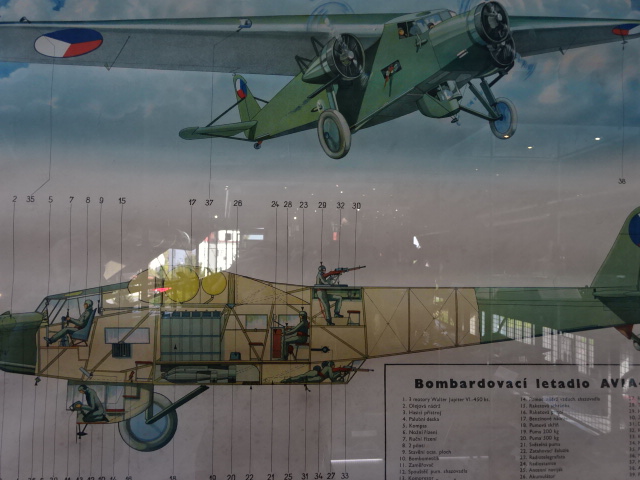
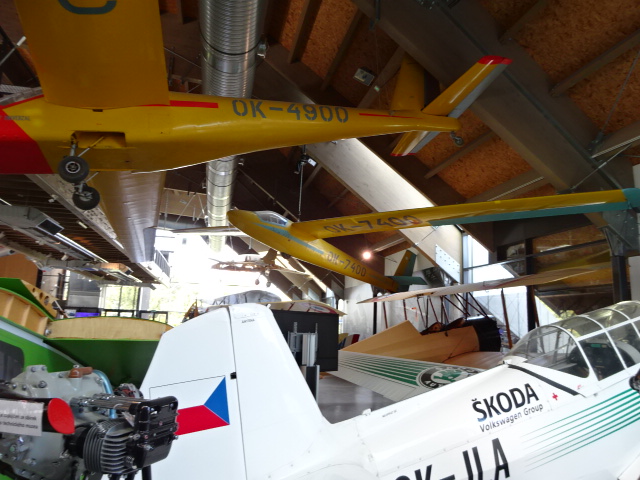
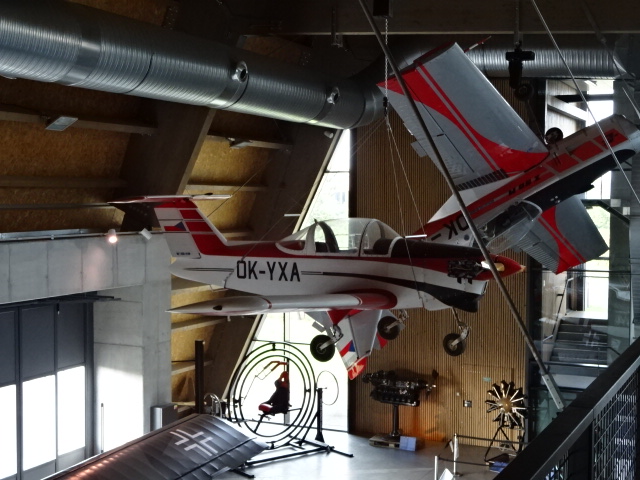
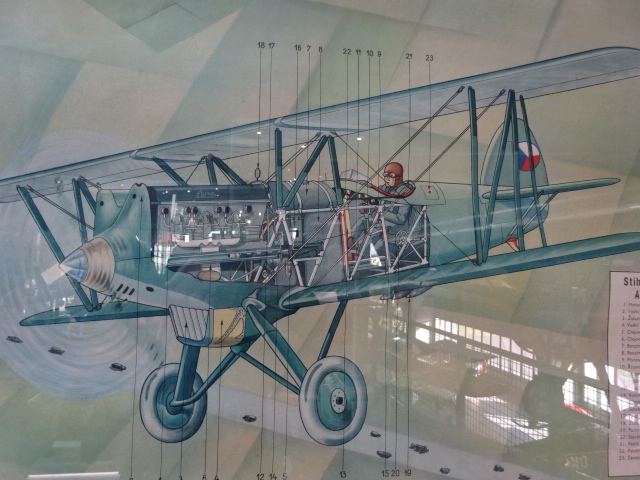
Construction on the museum in a hangar of the Mladá Boleslav airport finished in 2014, and it had been open to the public since 2015. The architecture received much acclaim as it was chosen one of five buildings in the country  to be dubbed “Construction of the Year” for 2014. The museum also included two plane simulators and a gyroscope. I perused period uniforms, radio equipment, watches, photography, aviation trophies and posters. From an observation tower there were excellent views of the environs. After walking up steep stairs to the first floor of the museum, I got a good look at the planes hanging from the ceiling.

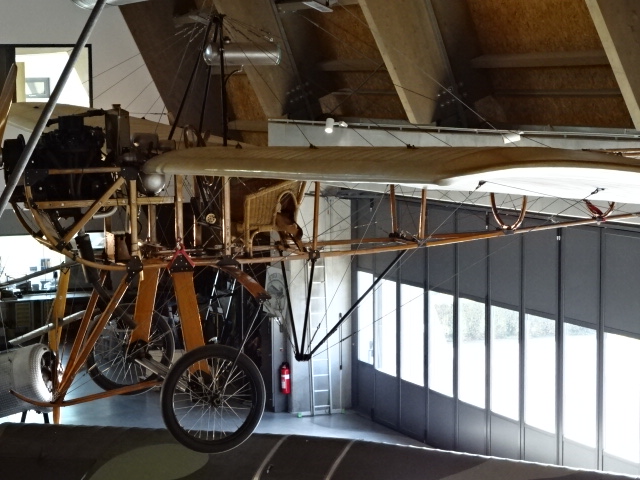
I had not heard of the name Metoděj Vlach before visiting this museum. Vlach had made a name for himself as the first Czech pilot. From 1908 he worked for Mladá Boleslav’s Laurin and Klement business, known for its bicycles and cars, an enterprise that would later become the world famous Škoda automobile manufacturer. He had to use his own money to finance his flying attempts. While his first try was not successful, the second plane he produced in 1909 managed short jumps between 30 and 50 meters. However, the third time was a charm as on November 8, 1912, his aircraft, constructed from 1910 to 1912, made the first flight – reaching 20 meters in the air. It flew a distance of 300 to 500 meters at 100 km/h. The plane weighed 720 kg, and the motor, the kind an automobile used, was 28 kW. The aircraft was successful during five attempts.
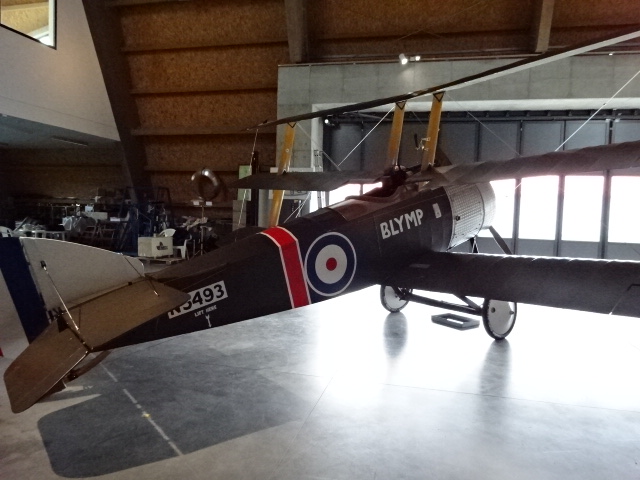
One of the aspects about museum-going that I like best is learning about important historical figures and events that I had not known anything about. Learning about Vlach was one of those lessons that certainly enriched my experience at the museum. I spent a lot of time peering at the various specimens, dating from World War I to the later years of the 20th century.

The Little Beetle

A plane called the Little Beetle captured my attention. The first modern Czechoslovak amateur aircraft, the W-01 Little Beatle was built at the owner’s home in Brandýs nad Labem during the 1960s. The public set eyes on the plane for the first time in 1970. With a wingspan of 6.08 meters and an empty weight of 280 kilograms, the Little Beetle was a frequent participant in Czechoslovak air shows. It was five meters long and could fly up to 180 kilometers per hour.  During the mid-1970s, international audiences took notice of the Little Beetle as it was shown off in airshows that took place in the German Federal Republic, Holland and England. Sadly, an accident in 2003 ended the Little Beetle’s career. During 2015 the specimen was brought to this aviation museum. 
German Bucker Bu 130 Jungmann

I also took notice of the German Bucker Bu 130 Jungmann, a two-seater designed for training and aerobatics. It took off for the first time in May of 1934 and became a popular training aircraft for the Luftwaffe. The Germans were not the only ones to use this model aircraft, though. It received worldwide acclaim in Czechoslovakia, Spain, Japan, Hungary, Switzerland and other countries.

PO-2, The Sewing Machine or The Maize Cutter

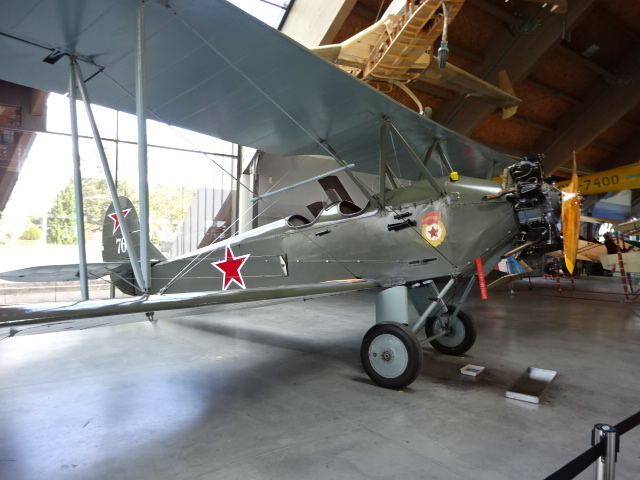
Another plane with an interesting history was the PO-2, a prototype of a U-2 biplane that was adopted by the Soviet Air Force. It was also used for civilian aviation. More than 40,000 PO-2 planes were produced. This popular two-seater came into existence during 1927, and production started the following year. During World War II the Germans called the plane “The Sewing Machine,” describing the distinctive sound of the engine. Soviets had a different nickname for the aircraft with an engine of 100 to 115 horsepower. They dubbed it the “Maize Cutter.” It was also historically significant because a regiment of female Soviet pilots conducted nighttime air raids on Germany using this aircraft. The Germans dubbed these female military personnel “Night Witches.” Production did not stop when the war came to a close. The PO-2 was manufactured in Poland post-wartime.

Klemm L 25

I took note of another German plane. The Klemm L 25 aircraft was designed by Dr. Ing. Hanns Klemm, created in 1926. It was possible to use various kinds of engines with these training, sports and aerobatic planes. About 600 planes were manufactured from 1928 to 1939. During the 1930s the Klemm L 25 participated in competitions in Germany.
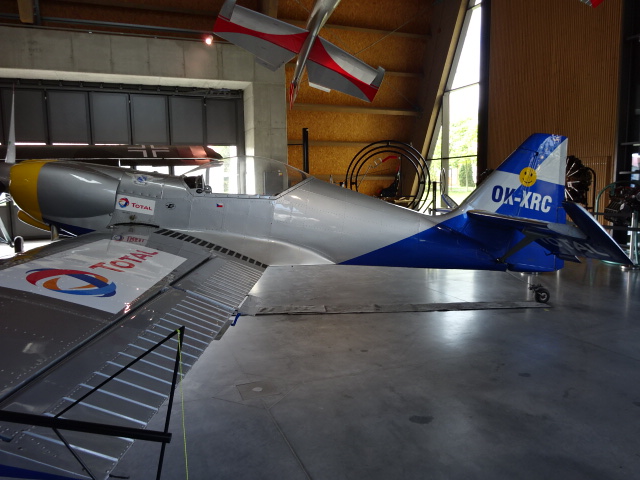
Zlín Z-50L

I also saw the Zlín Z-50L aerobatic plane made in Moravia. In the 1970s and 1980s its pilots clinched first place in international competitions, both European and world championships, while flying this plane. The last world championship won by this aircraft was as recent as 1989.
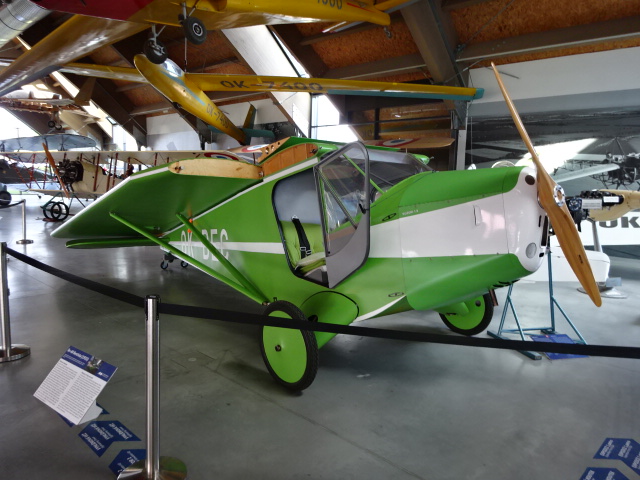
Be-60 Bestiola

The two-seater, wooden aircraft called the Be-60 Bestiola was designed in 1935 as a Czechoslovak aircraft to be used for training and tourism purposes. Its life span was relatively short, though, as production was halted not long after the 1939 Nazi Occupation. Some of these planes were flown by the fascist-oriented Slovak State during World War II. Unfortunately, there are no longer any original planes of this type in existence. The replica in the museum is quite impressive, though.
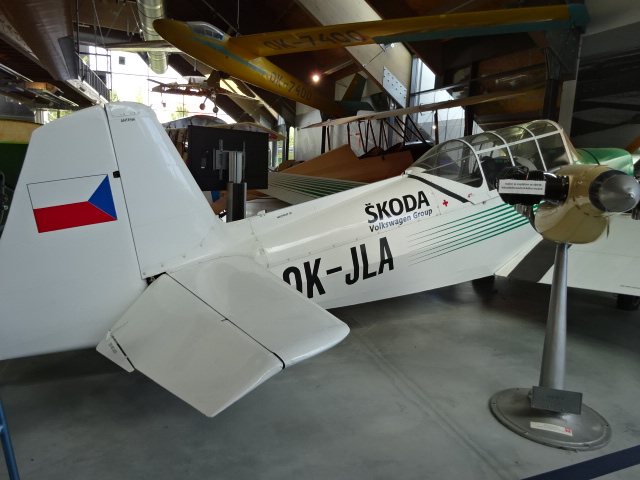
Zlín Tréner

Used for training and aerobatics, the Zlín Tréner captured my attention. It was a two-seater monoplane with low wings and first took off in 1947. Later, it was powered by a four-cylinder engine and was composed of wings and tails made of metal. The career of that prototype began in 1953. The wingspan measured 10.26 meters while the take-off weight was 750 kilograms. The engine was 105 hp, and the maximum speed it could reach was 203 km/h. The aircraft has had a stellar career and is still used for training.
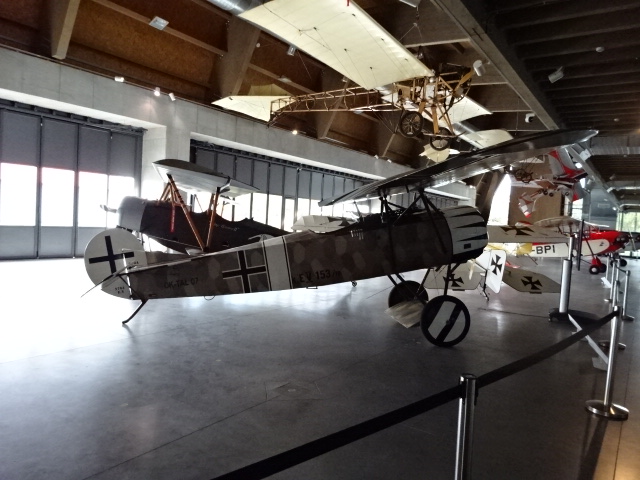
G – III plane

Brothers Gaston and Réné Caudron had been plane designers since 1909. Their G-III did a loop for the first time in December of 1913. In May of 1917 ,it hit another milestone by setting a new record: It flew non-stop for 16 hours and 28 minutes. About 150 planes of this type were produced. The aircraft had a wingspan of 13.4 meters with a take-off weight of 735 kg.

Fokker E.V.

I also saw the Fokker E.V. German fighter plane from World War I. Some 289 aircraft of this model were manufactured. The planes were 5.85 meter long and utilized a 110 hp or 160 hp engine. The wingspan was 8.35 meters while the take-off weight was 605 kg. It could go as fast as 200 km/h.

ŠK – I Trempík

The two-seater ŠK – I Trempík was known for its stability. It was not difficult to take care of, either.  Its wingspan measured 9.3 meters, and it was powered by an engine of 75 hp. The maximum take off weight was 578 kg, and it could fly 185 km/h.

1926 silent film with Alexander Hess as the pilot
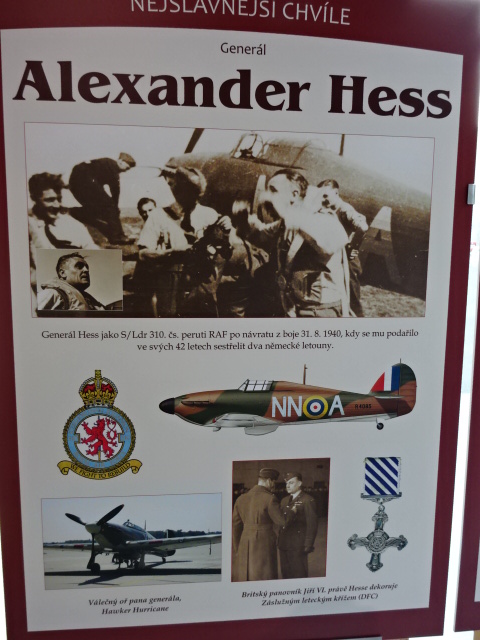
General Hess after returning from his service in the RAF when he shot down two German planes; British royal George VI awarding Hess a medal; War plane Hawker Hurricane used by the general

On the first floor there were panels about General Alexander Hess, a pilot I had not heard of before. He also had starred in a 1926 silent Czechoslovak film as well as working as a pilot. Hess was the organizer of the Czechoslovak aircraft for the 1936 Olympics. After the Nazi Occupation in 1939, he helped pilots escape, equipping them with false passports, and General Hess wound up fleeing from the Nazi Protectorate to France and then to the USA in January of 1940. After World War II, he returned to Czechoslovakia but fled again, this time from the Communist regime. General Hess settled in New York City, where he worked as a technical assistant with PAN AM.
So I became acquainted with the career of not only Metoděj Vlach but also that of Alexander Hessman. I found the exhibit most intriguing. In fact, the entire museum was engrossing with so many planes from various countries and eras, each unique with compelling attributes. While I still despised the eight-hour flights from Europe to the USA, I comprehended the historical importance of these aircraft. In Mladá Boleslav for the first time, the city made a good impression on me. After visiting this museum, I would take a look at the Škoda Museum of bicycles and automobiles, another delight.

Tracy A. Burns is a writer, proofreader and editor in Prague.

Museo Nazionale Scienza e Tecnologia Leonardo da Vinci

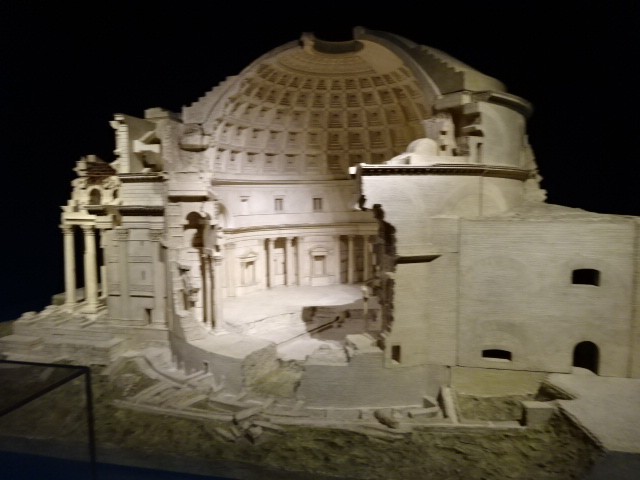
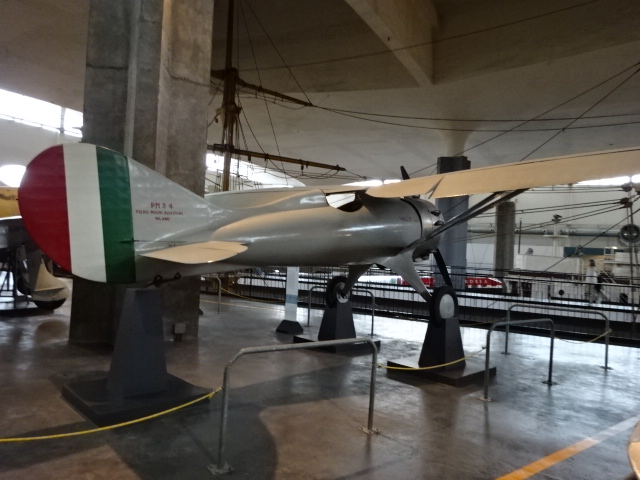
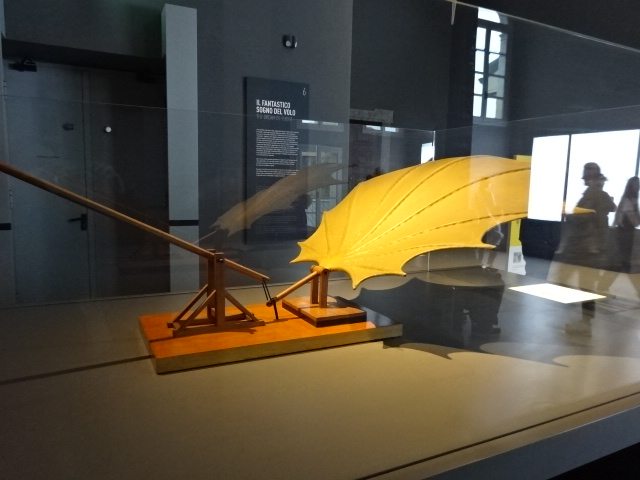
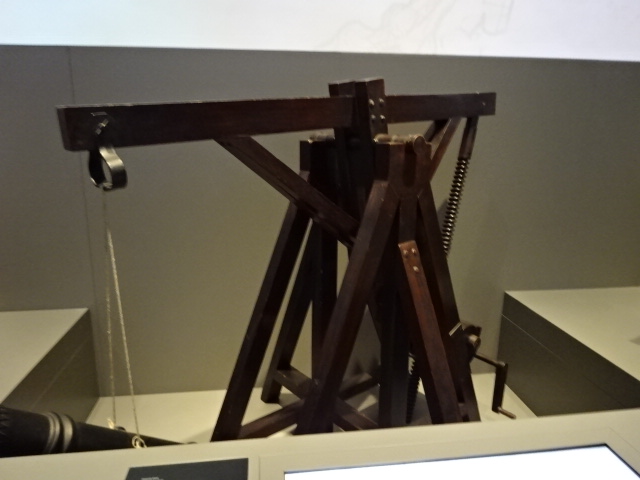
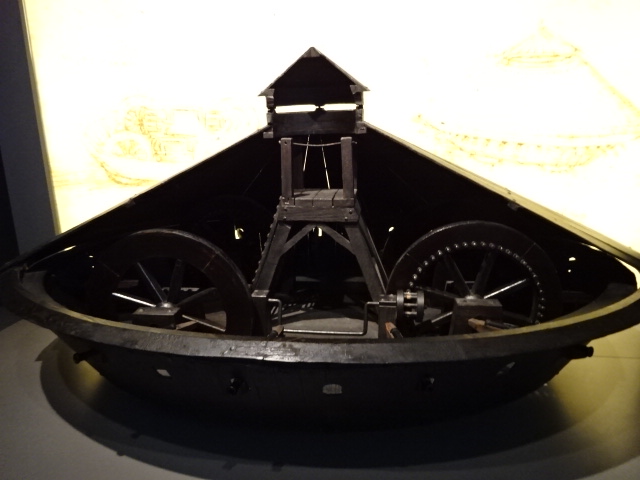
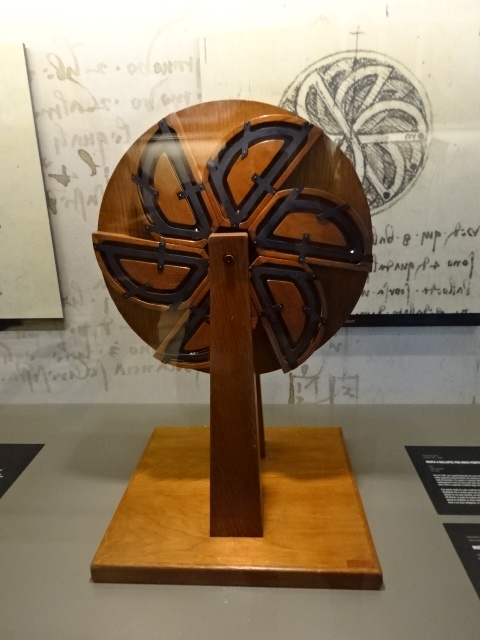
I visited the National Museum of Science and Technology dedicated to Leonardo da Vinci on my last trip to Milan, and, quite frankly, I didn’t expect I would be too enthusiastic because neither science nor technology is my cup of tea. However, the museum was fascinating. I especially was excited by the models made from drawings of Leonardo da Vinci. They showed machines and buildings he had designed on paper as well as his version of the ideal city. I also was enthralled with the hangars containing planes, ships and trains.

Opened in 1953, the museum is one of the largest scientific and technological museums in Europe. It is located in an ancient monastery not far from the Chiesa di Santa Maria delle Grazie, where I had seen Da Vinci’s Last Supper. Covering science and technology in Italy from the 19th century to the present, the museum holds the biggest collections of models of machines from designs by Leonardo da Vinci found anywhere. It includes 2,500 pictures, designs, sculptures, medals and artistic objects. There are seven sections, including materials, energy, communication, transport, food and science for young people as well as the Leonardo da Vinci Art and Science department. Musical instruments, clocks and jewelry are on display in this part.

The Leonardo da Vinci galleries display 170 military and civilian models, pieces of art and other objects. The models of buildings based on his drawings are architectural gems. Machines made from his drawings also impressed me. I saw a hydraulic saw, a flying machine and a spinning machine, for instance. I was awed with Da Vinci’s vast knowledge of anatomy, physics, mathematics, botany, geology and cartography.

The transport department includes air, rail and water. The trains are located in a pavilion originally built for the 1906 Expo. A façade resembling a 19th century structure has been added to the historic building. One train that caught my attention was the GR 552 036 locomotive from 1900. It had towed the Indian Mail train from Bardonecchia to Brindisi on its journey from London to Bombay. A horse-powered omnibus from 1885 was another delight.

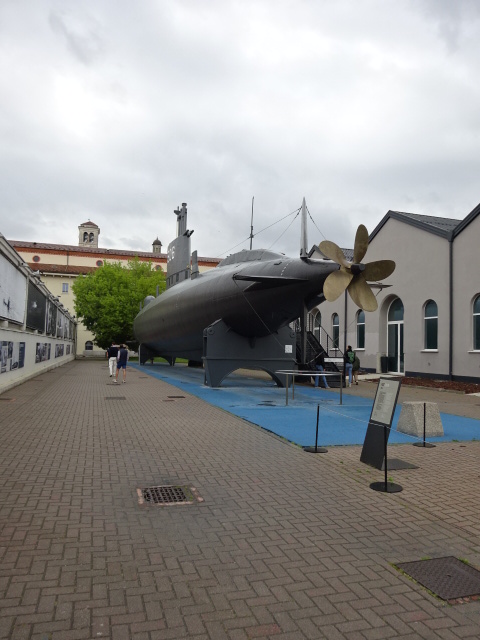
One of the top exhibits is the submarine S 506 Enrico Toti, the first submarine to be constructed in Italy after World War II. It began operation in 1968 and was roaming the seas for 30 years. During the Cold War, it searched for Soviet submarines.

The Vega Launcher from 2012 is a model of the first Vega made by the European Space Agency. It has a height of 30 meters and weighs 37 tons. The Vega can release satellites that weigh up to 2,000 kilograms.

The ships also intrigued me. One of the largest ships in the museum, the Ebe Schooner from 1921 was initially used by merchants to transport their wares through the Mediterranean. In the 1950s it became a training ship. The ballroom and bridge of the Conte Biancamano ocean liner also are worth seeing. They date from 1925. It has traveled extensively, making the journey from Genoa to Naples to New York and also going to South America and the Far East. During World War II it was used by American soldiers.

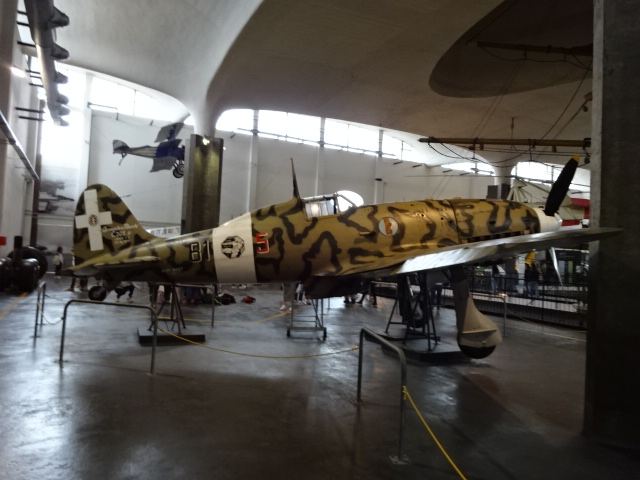
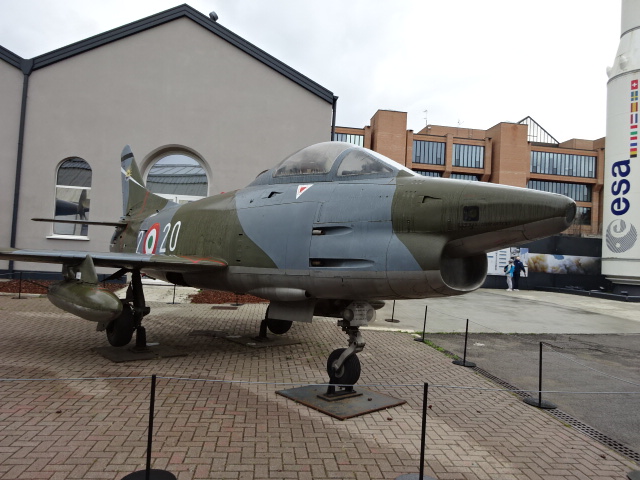
The planes were enthralling. I especially liked the Macchi MC 205 V from 1943. It made a name for itself during World War II. The plane has two machine guns and two cannons. Modern military planes and a modern helicopter also are on display.

Enrico Forlanini’s experimental helicopter from 1877 has the distinction of being the first object to fly. Pilotless, it has a steam engine and two counter-rotating propellors. During its flight, the helicopter rose about 13 meters and stayed in the air for 20 seconds. It also made an impressive landing.

I saw other intriguing exhibits. The Regina Margherita Thermoelectric plant had once provided lighting plus electrical power for 1,800 looms. Even King Umberto I and Margherita of Savoy were present for the opening ceremony. It hails from 1895.

Computers made up a significant part of the collections. I saw the Olivetti Programma 101 from the 1960s, the first personal computer. It was a programmable calculator that was small enough to fit on a desk. NASA utilized this contraption for calculating the Moon landing.

Space is another theme on which the museum focuses. I saw a moonrock that is 3.7 billion years old. Astronauts on Apollo 17 brought it back to Earth in 1972. Another exhibit showed space coveralls from 2014 and 2019. Astronomy plays a role, too. Two 17th century globes and telescopes are on display. Giovanni Schiaparelli used a telescope made in 1866 to study the surface of Mars. Schiaparelli peered through another telescope, this one hailing from 1774, when he discovered the asteroid 69 Hesperia and was able to describe what goes on with falling stars.

The diverse exhibits were a big thrill to see. I was so surprised that I had been so interested in the museum. Unfortunately, it was very crowded, so I didn’t get to peruse everything as well as I would have liked. The museum was definitely a popular destination for tourists and Milan dwellers alike. I could certainly understand why.

Tracy A. Burns is a writer, proofreader and editor in Prague.
Prague’s National Technical Museum Diary

I visited Prague’s National Technical Museum for the first time in 2023, even though I have been living in Prague for more than 25 years. I am not a big technology fan and didn’t think I would be very interested in the exhibits.

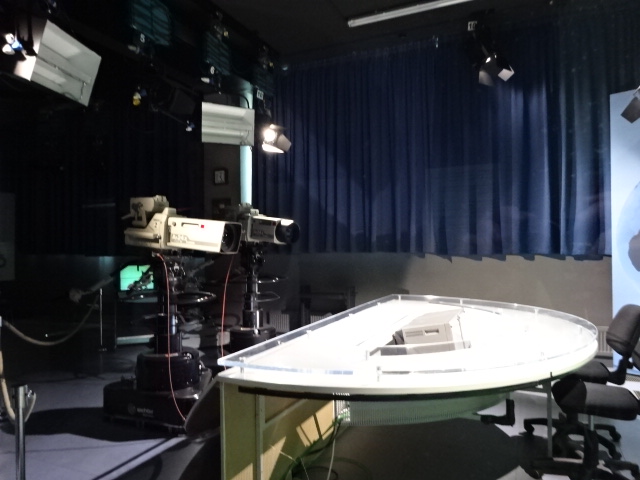
I couldn’t have been more wrong. The museum includes sections on astronomy; chemistry; sugar and chocolate; transportation; printing; household items; photography; the measurement of time; architecture, civil engineering and design; metallurgy and mining, for instance.  A TV studio used by Czech television from 1997 to 2011 allows visitors to sit behind a news desk and see how the TV technology works. A mock mine from the 1950s makes up another exposition. In this post I will concentrate on my two favorite parts – transportation and architecture, civil engineering and design.

Television studio in National Technical Museum

The history of the museum itself is intriguing. Vojtěch Náprstek, a Czech patriot and world-traveler, established the Czech Industrial Museum in 1862. While many exhibits from this museum are now in the Náprstek Museum, some pieces in the collection found their way to the National Technical Museum, which was founded in 1908. Two years later, the museum opened in Prague’s Schwarzenberg Palace near the Castle. After Czechoslovakia was founded in 1918, it moved to the Letná district of Prague, where it is situated today. Construction took place from 1938 to 1941, but, during the Nazi Occupation, the building was used as the ministry of the postal service. After World War II, the museum was located on Letná again, though it was not allocated the entire building. In 1951, new expositions were created, such as transportation, mining, astronomy and photography.

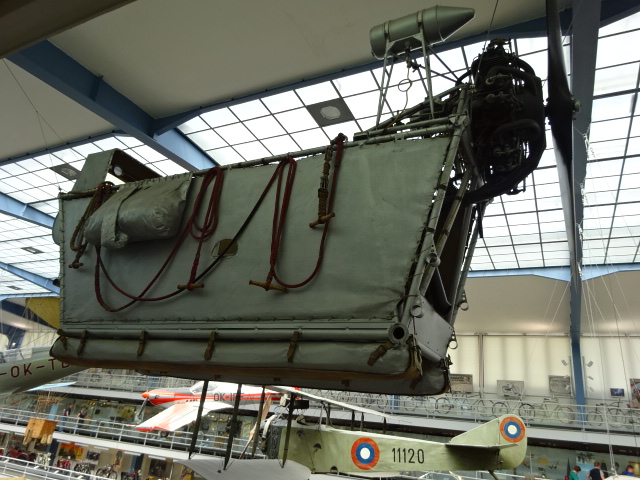
Wicker seat for passengers from Czechoslovak Aria BH-25 airliner, 1920

After the Velvet Revolution that had brought democracy to Czechoslovakia, the museum was able to utilize the entire building. However, there were difficult times ahead. During the 2002 floods, the museum’s depository in the Karlín district was heavily damaged, and some of the artifacts were ruined. Reconstruction started in 2003. In 2011, five expositions were opened. Still, construction wasn’t totally finished until 2013.

Masaryk’s presidential car

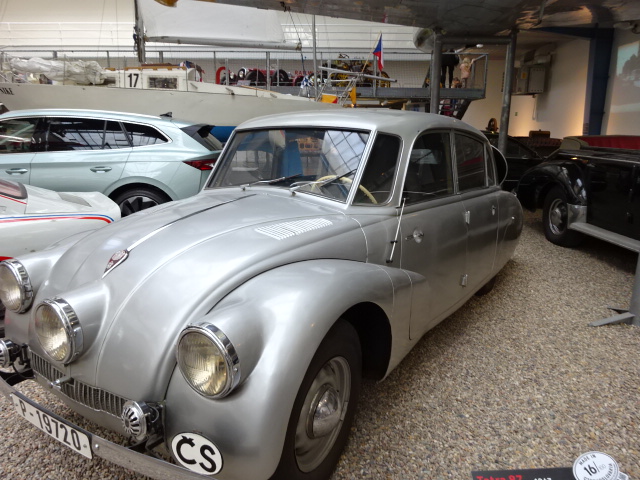
Zigmund and Hazelka’s car in which they traveled throughout Africa and South America

The main hall housing the transportation section is vast and overwhelming. Automobiles, a train dining car, planes, a boat, motorcycles and bicycles all make up the breathtaking exhibition. I liked the Tatra 80 car from 1935, the automobile of the first president of democratic Czechoslovakia, Tomáš Garrigue Masaryk, because I was interested in the First Republic era from 1918 to 1938. I also was excited to see the Tatra 87 car of world travelers Jiří Hanzelka and Miroslav Zigmund. They traveled around Africa and South America in that car from 1947 to 1950 and did more than 700 reports for radio broadcasts about their trips. The two had been the dynamic duo of travel: They visited more than 100 countries. They also made films, mostly documentaries, and wrote books together.

The dining car of Habsburg Emperor Franz Joseph I and later of President Masaryk

I was enamored by the dining car of Habsburg Emperor Franz Joseph I, which in 1923 became part of Masaryk’s presidential train. When President Edvard Beneš returned to his homeland from exile after the war in 1945, this dining car was part of his train. The dining car was put out of commission in 1959.

A sailing boat called Nike was on display, too. Czech Richard Kankolski had sailed around the world in it during 1972, and, at that time, it earned the distinction of being the second smallest boat to sail around the world.

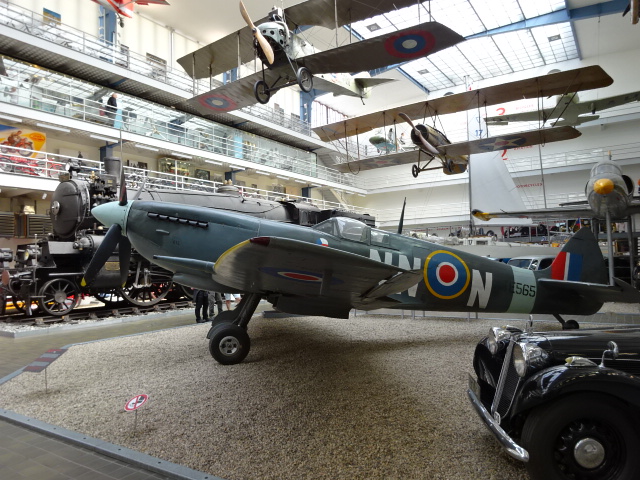
British Spitfire

Three planes that saw action in World War I also are displayed, including an American one. Dating from 1911, the plane manned by the first Czech pilot Jan Kašpar is part of the exhibition. I was drawn to the British Spitfire that members of a Czechoslovak squadron of the RAF had flown during World War II.

Germans drove this kind of motorcycle when they occupied Czechoslovakia in 1939.

I was very interested in the various bicycles and motorcycles, too, even though I vow never to ride either of them. A bamboo-made Slavia bike hails from 1905. The BMW R11 from 1932 caught my undivided attention because the Germans had driven these motorcycles when they occupied Czechoslovakia on March 15, 1939. I tried to imagine seeing so many of these motorcycles at Prague Castle with the flag of the Third Reich fluttering from the flagpole. The very thought was chilling.

Milan Špinka’s bike

The first series-manufactured motorcycle in the world

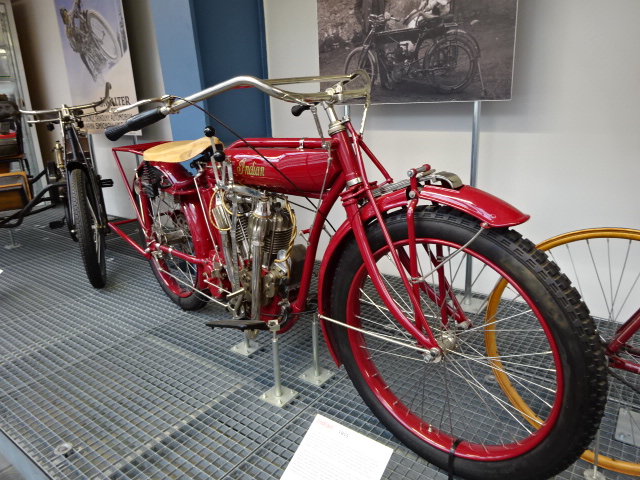
I also saw the Jawa 500 – 891 from 1973. While the Soviet Union had excelled on ice speedway competitions, this is the motorcycle on which Czech Milan Špinka defeated the USSR in the world championships of 1974. Another motorcycle that interested me was the Hildebrand & Wolfmuller from 1894. It was the first series-manufactured motorcycle in the world. The one on display is the first motorcycle manufactured for the Austro-Hungarian Empire.

Indian brand, 1915, manufactured in America

Czechoslovak observation balloon, 1934

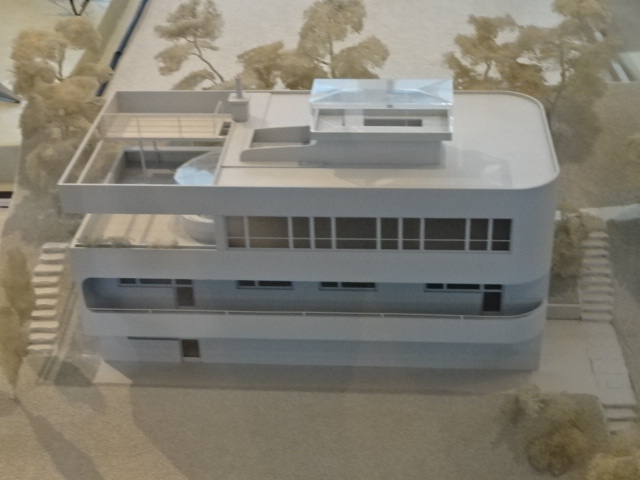
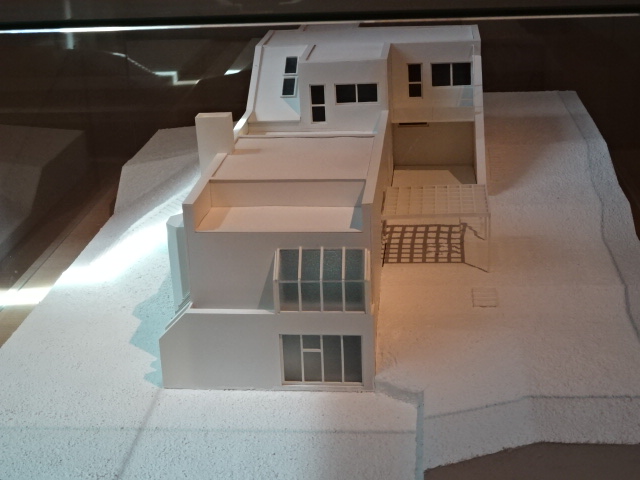
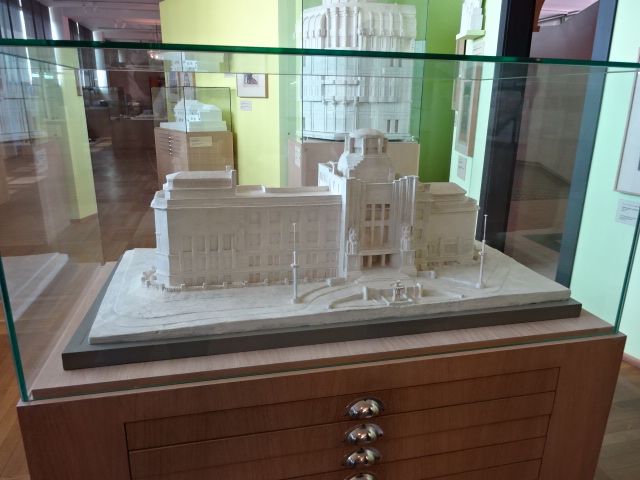
The architectural part of the museum covers the developments in the Czech lands from the second half of the 19th century to the present. Styles of historicism, secession, cubism, constructivism, functionalism and socialist realism as well as modern works are all represented. I loved the architectural models, especially those of villas in Prague, the Czech Pavilion at Expo 58 in Brussels and the Czechoslovak exhibition pavilion at the World Arts and Technology Exhibition in Paris during 1936. I loved to take walks through the villa-dotted sections of Prague’s Baba, Ořechovka and Hanspaulka quarters. In this museum, I saw models of famous villas in the Hodkovičky, Podolí and Troja districts of Prague, for instance.

Czechoslovak World Arts and Technology pavilion, Paris, 1936

Director Martin Frič’s villa in Hodkovičky, 1934-35

Top: Stýblo’s villa in Podolí quarter of Prague, 1935-36, Bottom: Villa of film director Věra Chytilová in Troja quarter of Prague, 1970-75

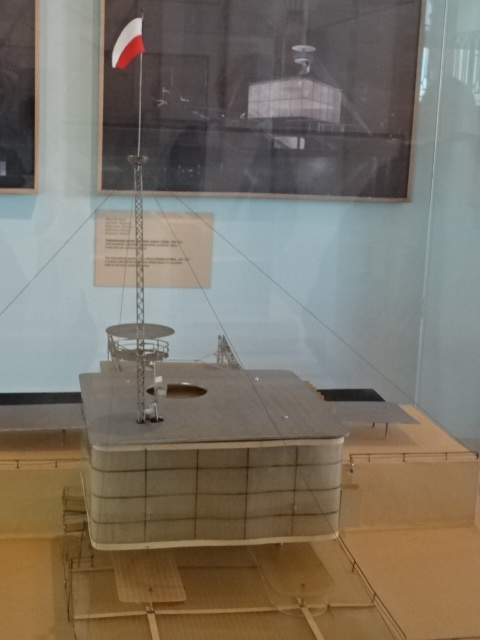
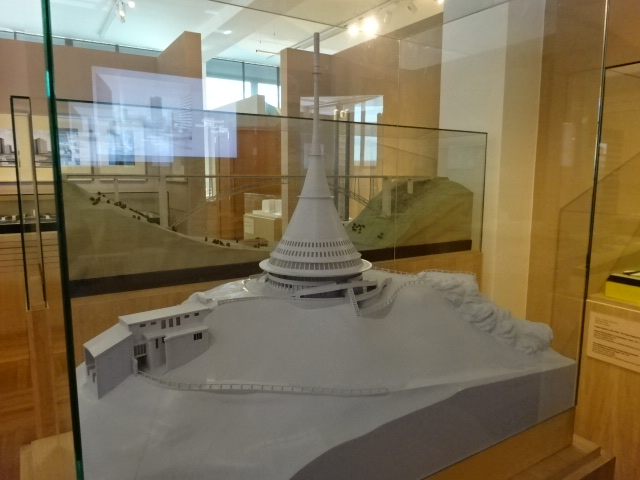
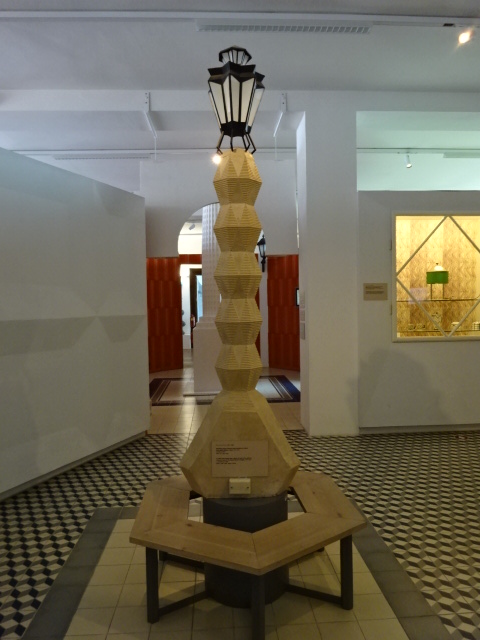
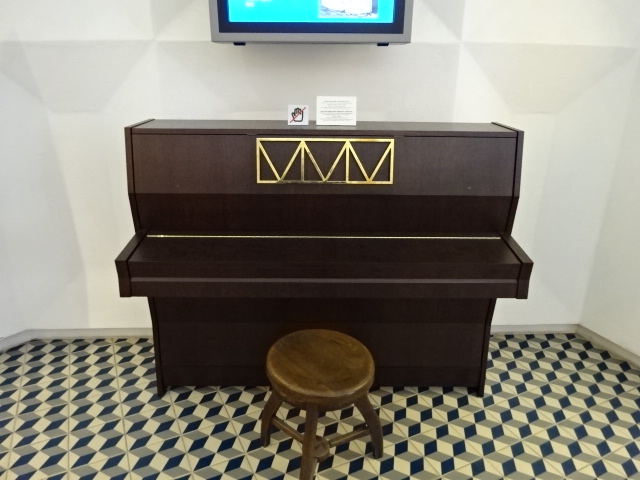
I liked the model of the column with lantern in front of Our Lady of the Snows Church in Prague because it was unique, Cubist in style. I also took notice of the Cubist Petrof BB upright piano. The model of the television transmitter and hotel on Ještěd Hill in Liberec brought back memories of the magnificent views from the observation point at the restaurant and hotel. Some models showed off designs by masterful Czech architect Jan Kotěra, including the East Bohemia Museum in Hradec Králové, which had extremely impressed me about a month previously, and the reconstruction of Saint George’s Church in Doubravka near Pilsen in west Bohemia. The museum in Hradec Králové was constructed from 1906 to 1913 while the church hails from 1899. Architectural plans and photography rounded out the exposition.

Ještěd Hill Hotel and Restaurant

Cubist column in front of church – top photo, Cubist piano – bottom photo

I was glad I had finally visited this museum that offers valuable insights into the technical world. The main hall with various exhibits of transportation was amazing, and my interest in architecture compelled me to take a close look at the exhibits in that section. Overall, it was a day well spent.

Tracy A. Burns is a writer, proofreader and editor in Prague.
Museum of East Bohemia designed by Jan Kotěra

St. George’s Church designed by Jan Kotěra