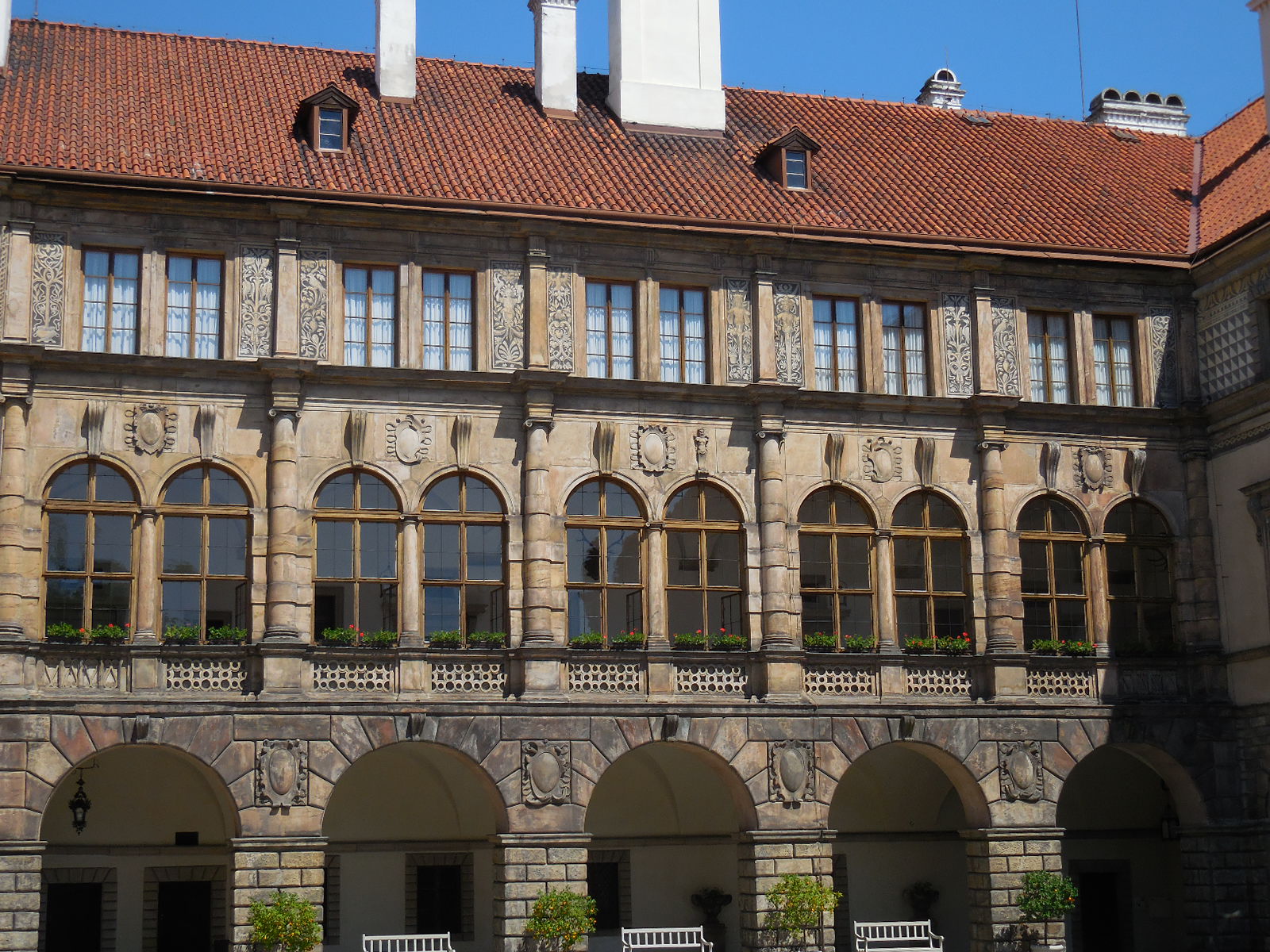
2025 Art Exhibitions Diary

Barberini Museum, Potsdam

During 2025 I visited many art exhibitions, and each one opened up a new world for me, giving me a new perspective on the time periods represented in the shows. I took two days trips abroad. I went to the Barberini Museum in Potsdam to see temporary exhibitions of works by Wassily Kandinsky and another of paintings by Camille Pissarro. I especially liked Kandinsky’s early works, in which color played such a symbolic role. Vasari, Stella and Mondrian were also represented.
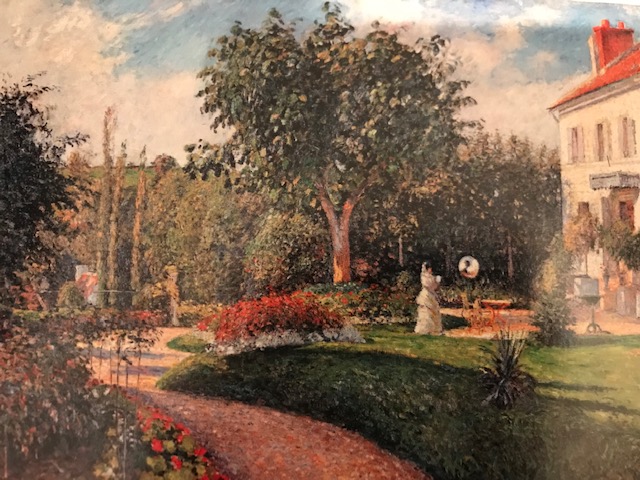
Camille Pissarro, The Garden of Les Mathurins at Pontoise, 1876, Postcard from exhibition.

The Pissarro exhibition was close to my heart. I was overwhelmed by his landscapes, some punctuated by workers in the fields. His early Caribbean scenes and his renditions of Paris made significant impressions on me. His bold and vivacious colors amazed me and gave me a sense of serenity about the often chaotic and problematic world.
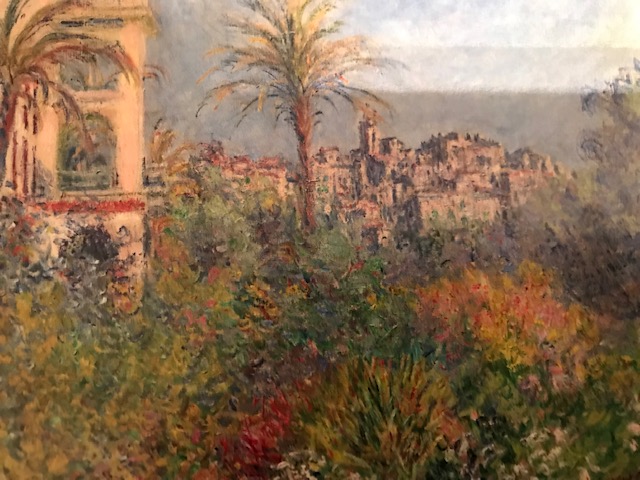
Claude Monet, Villas at Bordighera, 1884, Postcard

I loved the permanent exhibition at the Barberini with its vast Impressionist collection that included 40 works by Claude Monet, one of my favorite all-time artists. Most fascinating for me were Monet’s landscapes of Bordighera, Italy and his renditions of Venice. Paintings by Alfred Sisley and Auguste Renoir also captured my undivided attention. I was overwhelmed by the astounding Impressionist art in this museum. Seeing the permanent collection was a dream come true.
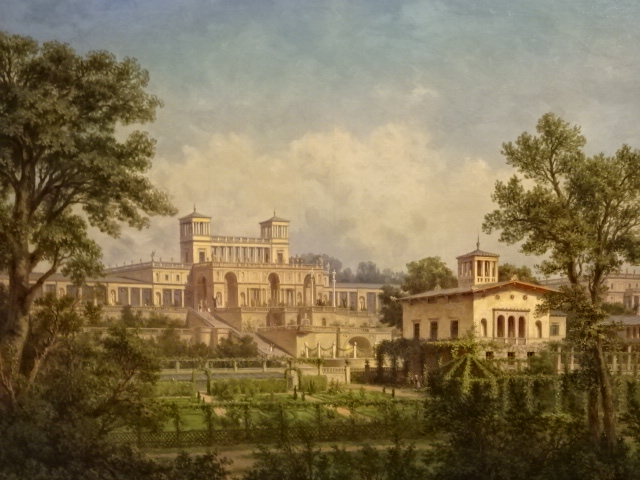
An early rendition of the palace in Potsdam
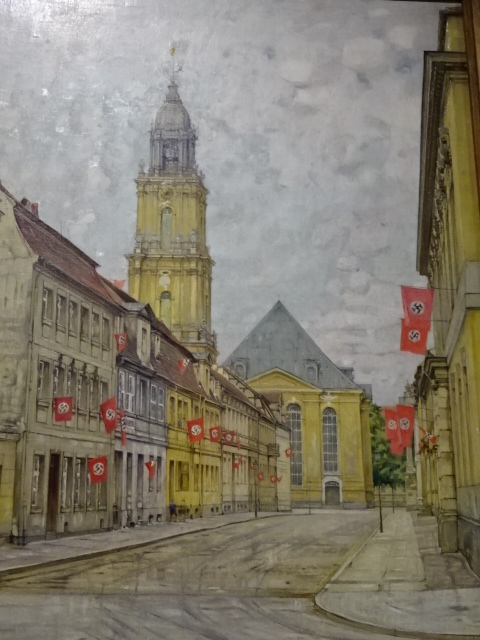
Potsdam City Museum, painting of the Third Reich era

Nearby was the Museum of the City of Potsdam, which I visited twice. I saw the developments of the city via paintings of villas, monuments and the luxurious palace from the glorious era of Frederick III. The furnishings and objects that accompanied each historical display were poignant. I especially was drawn to the exhibitions on the city during the Nazi and Communist eras.
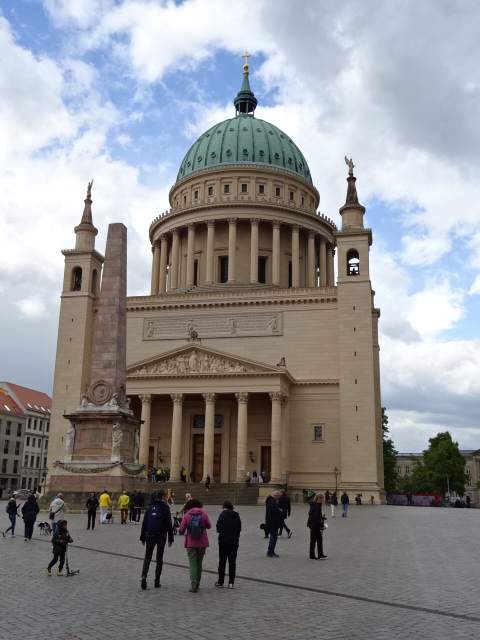
Potsdam, Church of Saint Nicholas
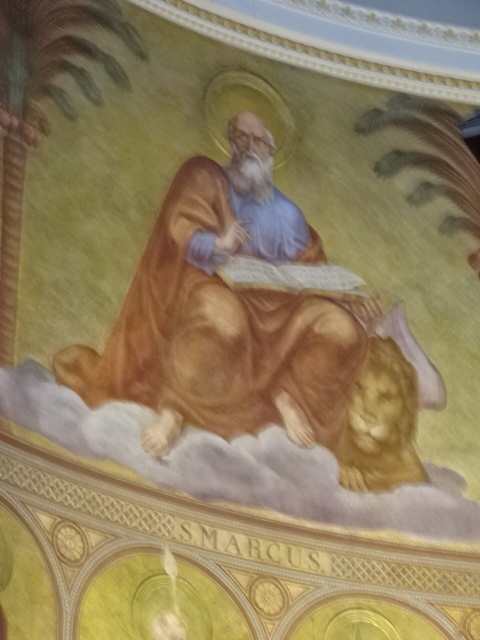
Potsdam, interior of the Church of Saint Nicholas

I also visited Saint Nicholas’ Church across the square from the museum. Its colorful frescoes inside represented the Evangelists and Apostles. The exterior featured Corinthian columns, and the church stood 42 meters high. The reconstruction after World War II was laudable. In addition, I saw the Dutch section of Potsdam. It resembled a backdrop of a Vermeer painting.
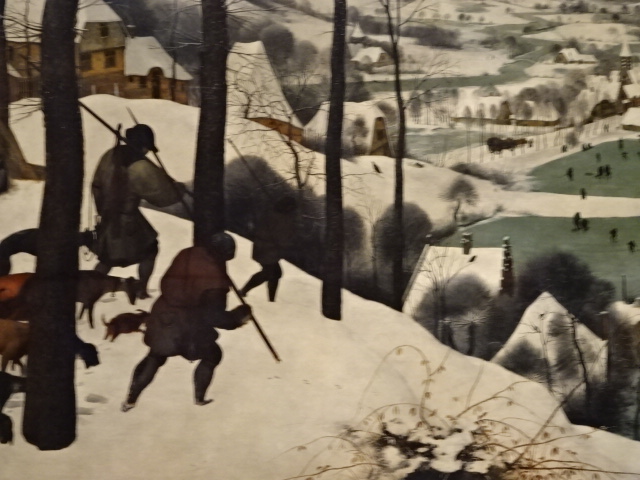
Kunsthistorisches Museum, Vienna, Pieter Bruegel the Elder, Hunters in the Snow
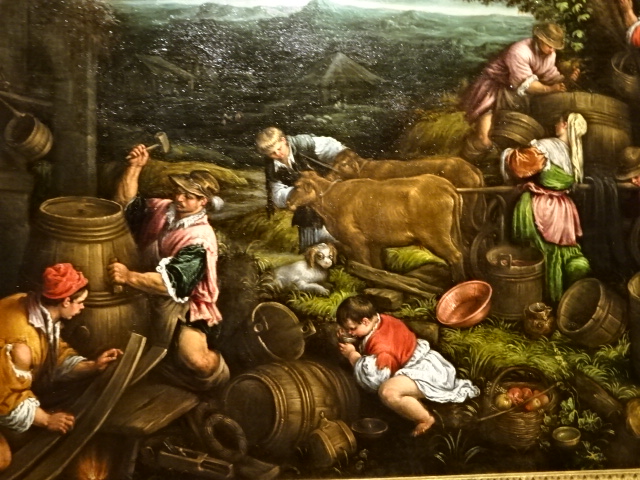
Kunsthistorisches Museum, Vienna, work by the Bassano family

At the Kunsthistorisches Museum in Vienna, Austria I enjoyed the exhibition of works by Pieter Bruegel the Elder, the Bassano family and Giuseppe Arcimboldo along with some by the master of North Renaissance style Albrecht Durer. Bruegel the Elder is my all-time favorite (along with Monet) painter. I loved his landscapes, peasant scenes and religious works. His attention to detail was amazing as the many figures in his paintings were all engaged in various activities. The Kunsthistorisches Museum was known for their permanent collection of his Dutch Renaissance renditions. Arcimboldo, who worked for Habsburg emperors, was a significant painter in the 16th century Italian Mannerist style. He is best known for his unique portrait heads made of objects, such as fruit, vegetables, flowers and fish. His works were the epitome of the grotesque, and nature was a recurrent theme in his paintings. The High Renaissance style was visible in his portrait heads, too.
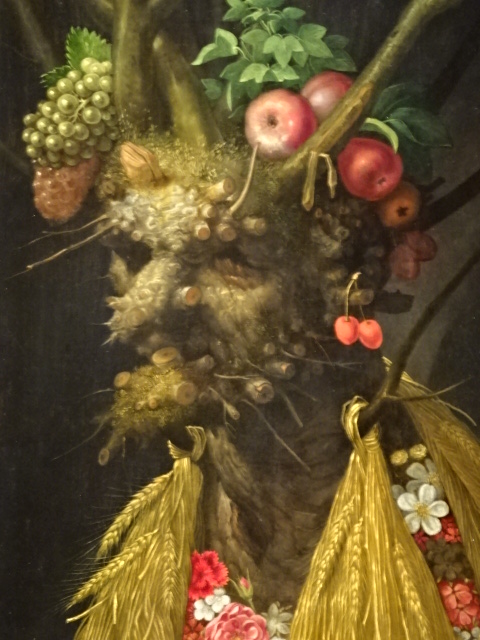
Giuseppe Arcimboldo, portrait of a head
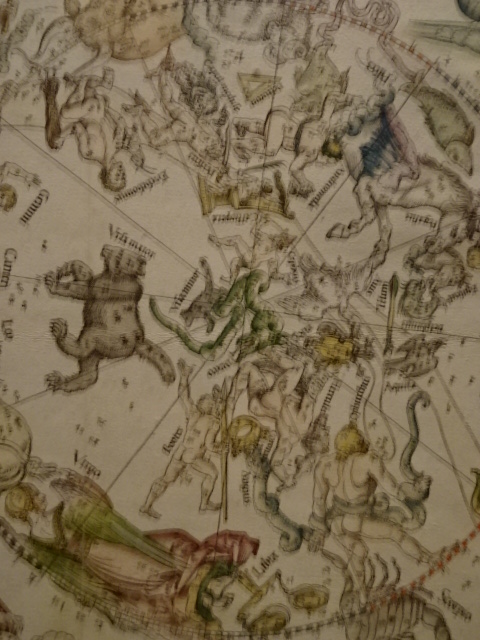
By Albrecht Durer during the German Renaissance

A prominent painter during the German Renaissance, Durer was a master at engravings, prints and watercolors, for instance. I loved his still lifes of nature as well as his portrayal of praying hands.
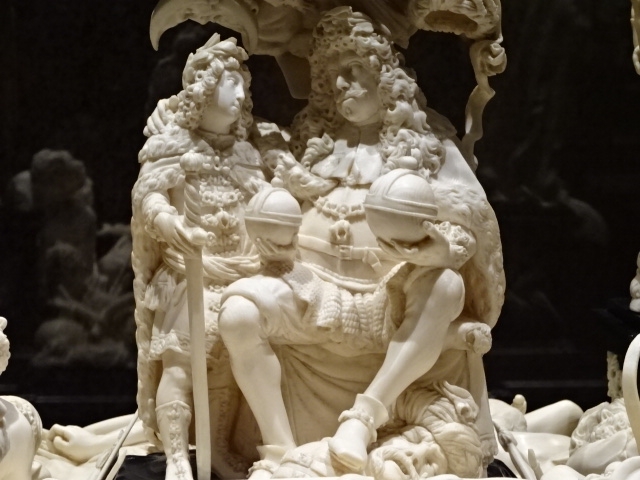
Kunstkammer, Kunsthistorisches Museum, Vienna
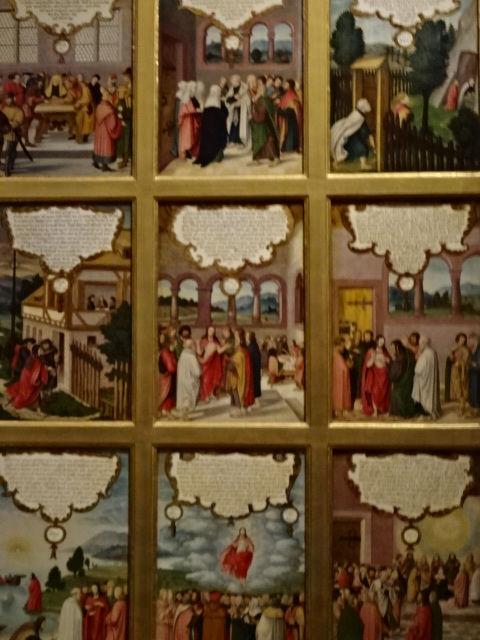
Kunstkammer, Kunsthistorisches Museum, Vienna

I also gazed at the artifacts in the permanent exhibitions – Egyptian and near Eastern art, Greek and Roman antiquities and masterpieces of European painting, such as those by Vermeer and Rembrandt. The Kunstkammer world of curiosities focused on gold, silver and ivory objects as well as paintings, sculptures, scientific instruments and miniatures. The art showed off a variety of styles courtesy of the Habsburg rulers. I couldn’t resist a cappuccino in the museum’s restaurant, permeating with a sense of grandeur as well as elegance. The restaurant was a work of art in itself.
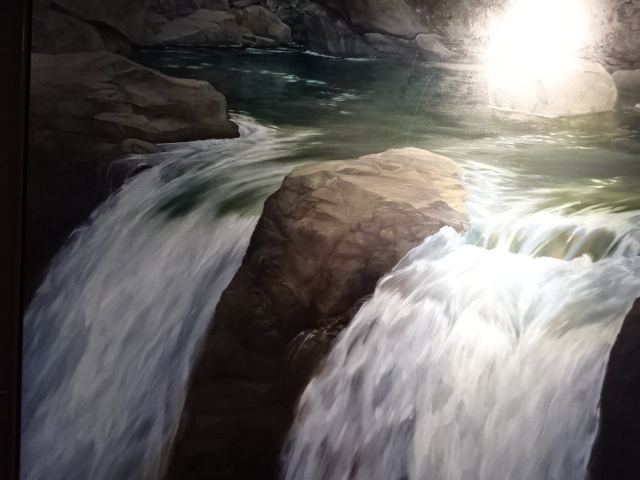
Ivana Bachová, 1995, Fairy Pools
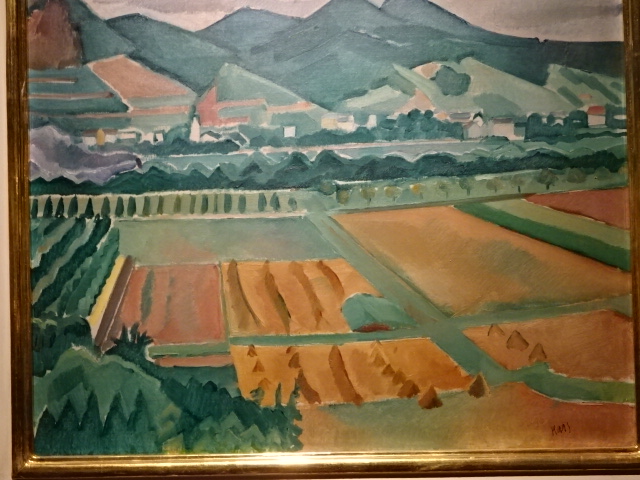
Jiří Kars, French Landscape, 1910-1914

Back in Prague, I went to another exhibition of 19th and 20th century Czech art at the Kooperativa Gallery, an intimate space located in an office building. The landscapes enthralled me, especially the French landscape by Jiří Kars. Artists Otakar Lebeda, Amálie Mánesová and Vojtěch Preissig were just a few of the painters represented in the thrilling exhibition. Sculptures by Ladislav Janouch and Jaroslav Horejš also were on display.
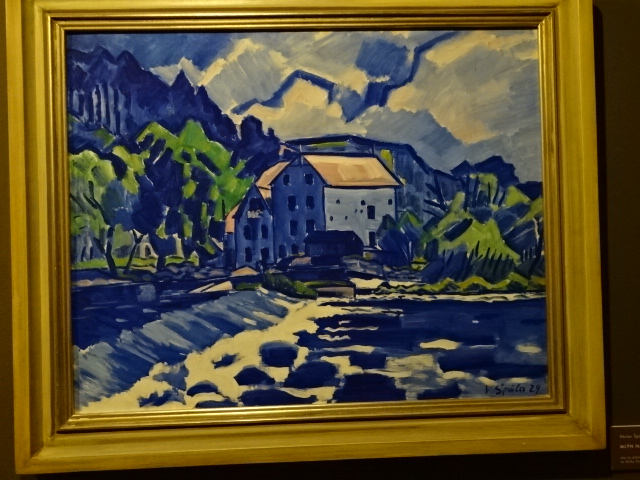
Václav Špála, Mill at Otava, 1929
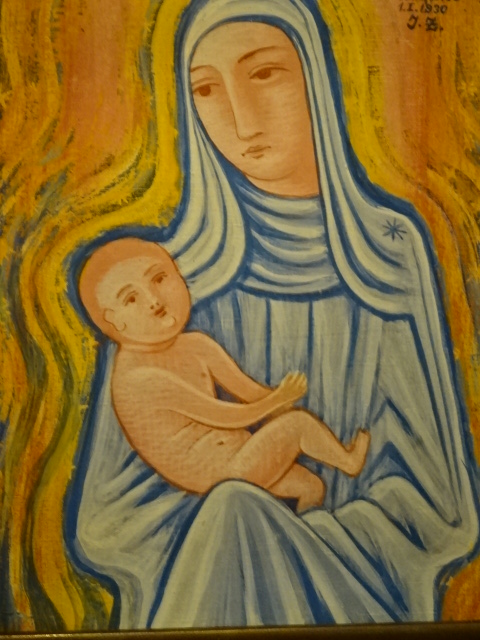
Jan Zrzavý, Madonna, 1930

Also at the Kooperativa during 2025 was a stunning exhibition of modern 20th century art. Václav Špála’s brilliant blues caught my attention in his rendition of a mill at Otava from 1929. Jan Zrzavý’s elements of Primitivism awed me in his Madonna from 1930. Vincenc Beneš’ view of Kampa Island and Preissig’s rendition of a village also enthralled me.
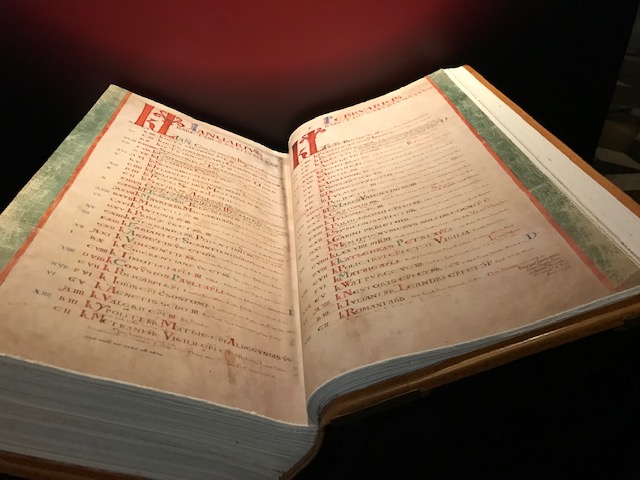
Cosmas Chronicle

At the chapel in the Clementinum, I viewed various editions of the Cosmas Chronicle, one of the most important books in Czech history, These medieval manuscripts narrated stories about Czech rulers of Bohemia and Moravia, for example. It remains the most significant story of the Czechs told through a historical lens. The oldest, the Chronicle of Leipzig, hailed from the 12th century while the Chronicle of Vienna dated from the 13th century.

National Museum, 100 Treasures, 100 Stories exhibition of artifacts from Chinese emperors

The illustrated manuscripts enthralled me. Each one was unique and remarkable. I have always been fascinated by illustrated manuscripts. (One of the highlights of my visit to Dublin, in fact, was seeing the Book of Kells and the manuscripts at the Chester Beatty Library Museum.) With a master’s in Czech literature, I am very enamored by Czech medieval works and could stare at them for hours, if allowed.
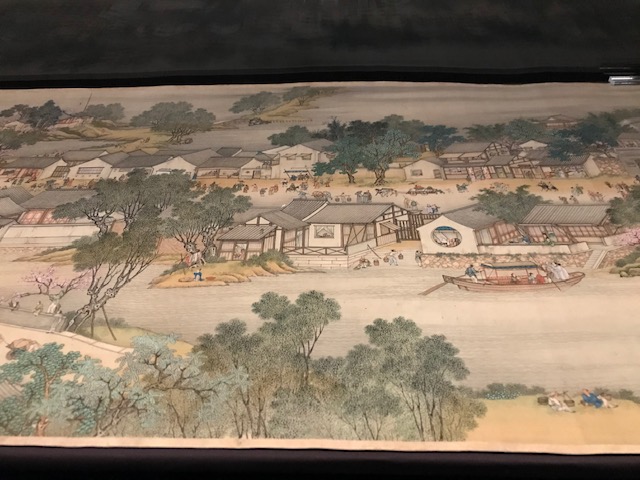
National Museum, 100 Treasures, 100 Stories

I also made a trip to the National Museum on Wenceslas Square. I saw the “100 Treasures, 100 Stories” exhibition on artifacts from the dynasties of Chinese emperors. The paintings and figurines of cats were my favorite. I also loved the renditions of villas, the sea and scenes from daily life during the eras of the emperors. The objects with dragons and elephants also enthralled me.
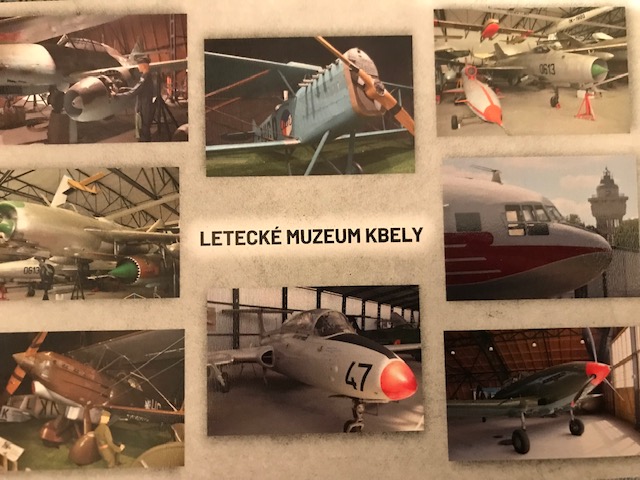
Military Aviation Museum, Kbely, Postcard

A vast museum that I visited for the first time was the Military Aviation Museum in the Kbely district of Prague. I was fascinated by the contents of the five large hangars – the war planes, the show planes, the training planes, the passenger planes. There was so much to see from so many eras. I was most drawn to the planes and bicycles from World War I. It was so intriguing to see how aviation had developed in the military sphere ever since the first planes were designed. One of the most significant objects for me was the space capsule in which a Czech astronaut had returned to Earth during the 1970s. The American Douglas planes also were very noteworthy. The sleek modern military helicopters also gave me sense of awe.
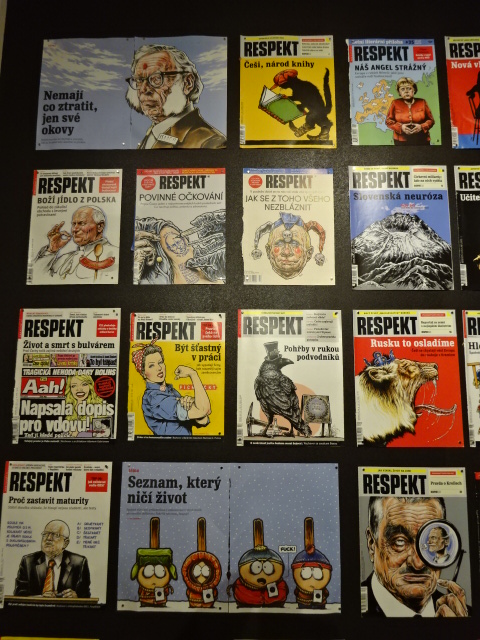
Covers of the magazine Respekt, Pavel Reisenauer

Painting by Pavel Reisenauer

The Kampa Museum in Prague hosted amazing exhibitions this past year. I admired paintings, photos, drawings, illustrations and covers of the magazine Respekt as well as his art for Lidové noviny’s supplement Orientace by the late Pavel Reisenauer. His paintings captured so many themes, including the periphery of Prague, solitude and emptiness. His magazine covers prominently commented on political and societal topics of the well-reputed magazine.

Václav Špála, The roofs of Malá strana
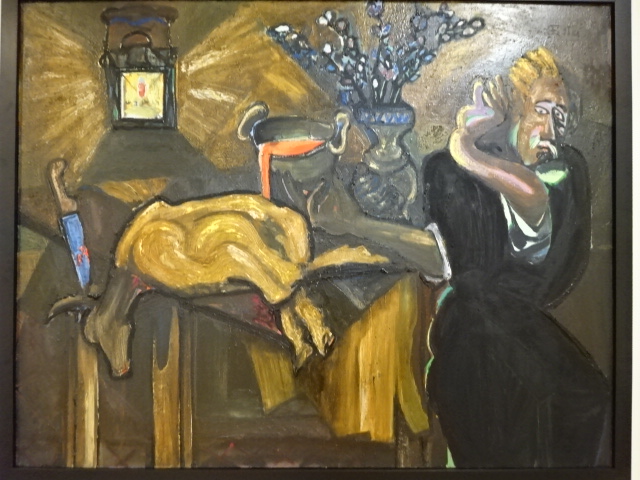
Emil Filla painting

Kampa also showed off the permanent collection of a Pilsen art gallery with significant Cubist works, such as those by Bohumil Kubišta and Špála, who painted the roofs of Malá strana with such excellence. Kubišta’s colorful religious works played a prominent role in the exhibition. Sculpture by Otto Gutfreund, such as his tortured Hamlet, was not lost upon me, either. Because there are often temporary exhibitions at this Pilsen gallery, the permanent collection is not often on display. One floor was filled with mythological paintings and still lifes by the stellar artist Emil Filla. I saw monsters in his works representing the dangers of Nazism and other grotesque figures playing prominently in his renditions. I especially enjoyed seeing the characteristics of Fauvism in Filla’s works.

Caricatures from French magazines, created by František Kupka, made up another exhibition at Kampa Museum. The publications were printed at the end of the 19th century and beginning of the 20th century. Through grotesque images, such as those of monkeys, I came to understand better the political and societal tensions in France and in the world.
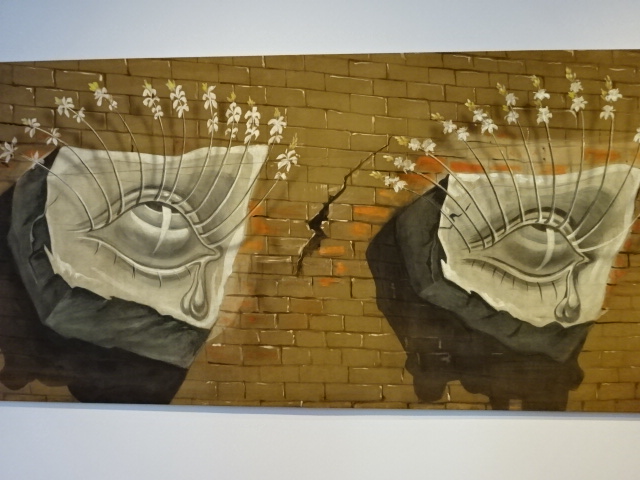
Salvidor Dali painting in Eye to Eye exhibition

Franz Kafka by Andy Warhol

Another exhibition that I admired at Kampa was the “Eye to Eye” show of works with motifs of eyes. I saw how the eye can symbolize the soul and be an open door to the internal world. Vision was sometimes portrayed as a religious miracle. I was so moved by the paintings at this exhibition. The portrait of a curious Franz Kafka by Andy Warhol was one of many that affected me. Two works by Salvidor Dali also held my attention. Czech artists such as Toyen, František Muzika and Antonín Hudeček were represented, too. Sculpture by Karel Nepráš and Ladislav Zívr also were moving. A distorted head by Picasso was another masterpiece.
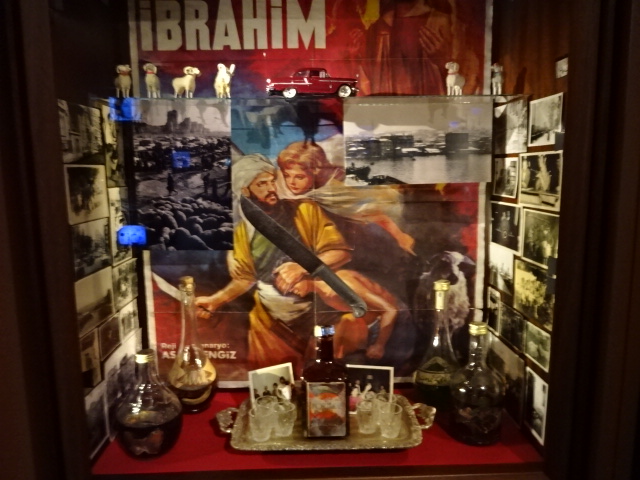
From Wunderkammer by Orhan Pomuk

At the contemporary art museum DOX, I was fascinated by the Cabinet of curiosities or Wunderkammer designed by famous writer Orhan Pomuk. The three-dimensional works in collage form told the story of Istanbul from 1950 to 2000 as well as events in Turkish history. I learned about the history of a country I knew little about. I had had no idea that Pomuk’s talent included more than writing.

A puppet of the Good Soldier Švejk saluting
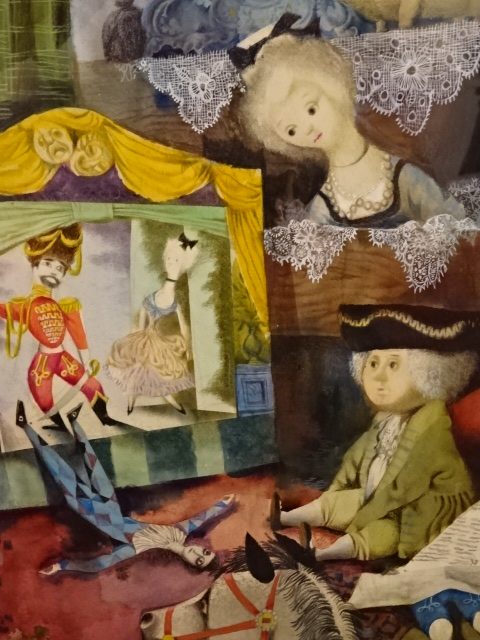
By Jiří Trnka

At the Villa Pellé there was an astounding exhibition of the art of Jiří Trnka, who had been a puppet maker, sculptor, painter and director of animated film. He also held the distinction of being the co-founder of Czech animated film. I especially enjoyed seeing the puppet of the Good Soldier Švejk, based on the antimilitaristic, novel by Jaroslav Hašek, a Czech class that took place during the Austro-Hungarian Empire. The humor and satire in the book are brilliant and profound.
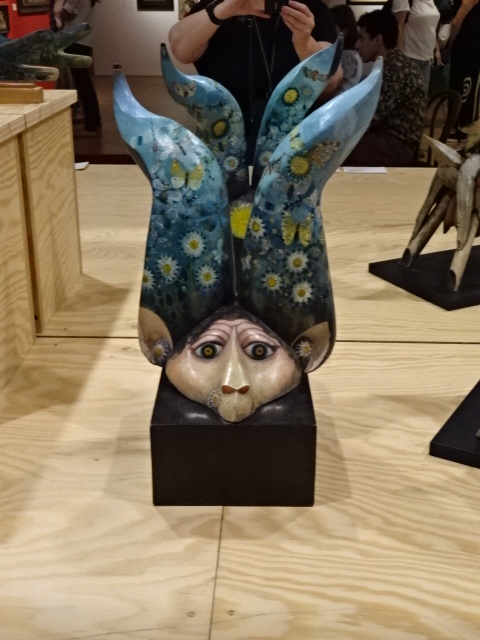
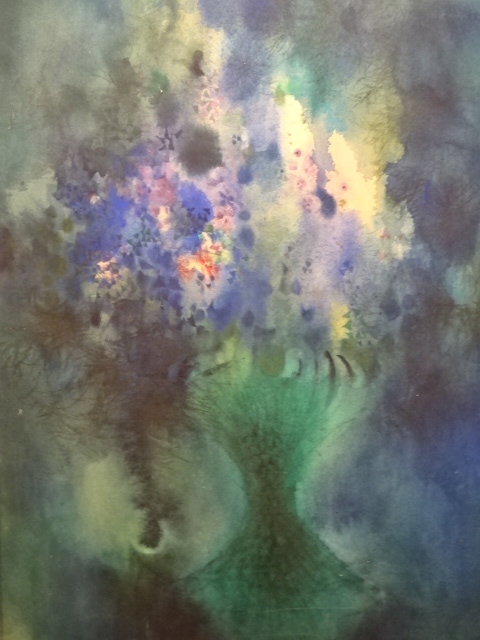
Yet Trnka was known for so much more than his masterful puppetry. I loved his paintings of a fantastical, dreamy and fairy tale-like world. I admired his utilization of the grotesque in his sculptures and paintings. Illustrations from children’s books also were prominently displayed. I saw depictions from American, British and Czech fairy tales, for instance. I especially admired the illustrations from Trnka’s own book, The Garden, in which gnomes, bespectacled whales and naughty cats made appearances. His illustrations for Jan Werich’s children’s book Finfarum were very noteworthy, too.
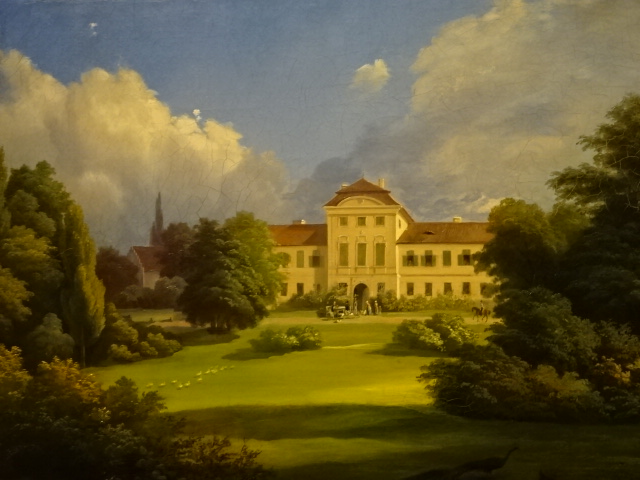
Amálie Mánesová, Vrbičany Chateau, 1846
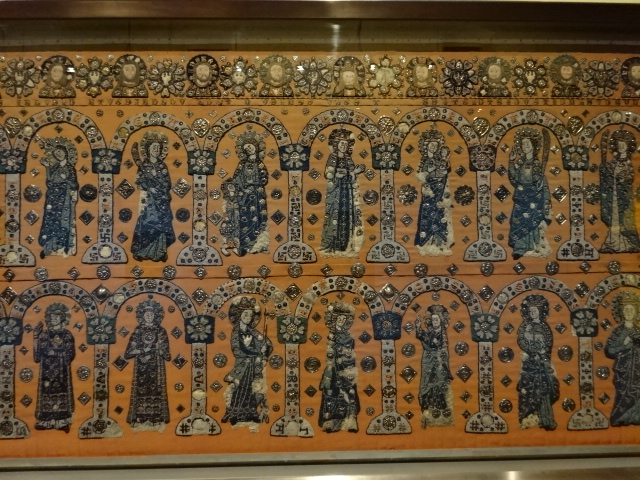
Cheb Antependium from Přemyslid Dynasty era

One excellent exhibition at the Wallenstein Riding Stables venue was a comprehensive showcase of women in art from 1300 to 1900. I marveled at the medieval works, tapestries, portraits and landscapes, for instance. I was drawn to the paintings of Venice’s Bridge of Sighs and the Ducal Palace because of my love for Italy. The religious Italian art was intense and dynamic. The prints from the 16th and 17th centuries made strong impressions on me, too. One Dutch painting influenced by the work of Frans Hals stood out for me, too. My favorites were the renditions by Amálie Mánesová, who hailed from the legendary Mánes family. Her painting of a chateau with landscape and her portraits were especially to my liking.
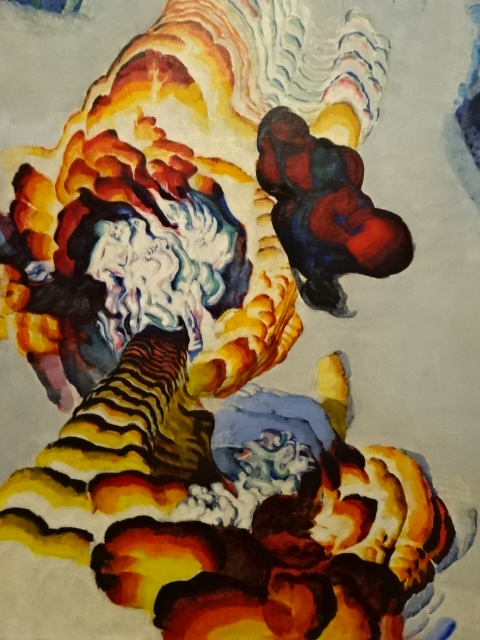
From Silent Spring Exhibition, František Kupka, Tale of Pistils and Stamens I, 1919-20
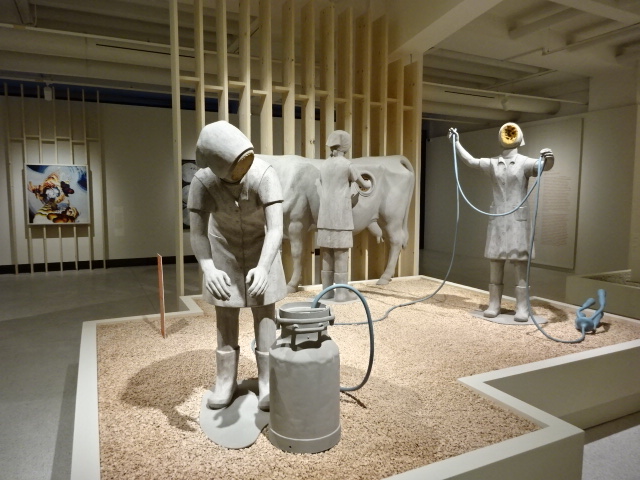
From Silent Spring Exhibition, Anna Hulačová, After Bugonia, 1984

At the Trade Fair Palace, I saw the exhibition “Silent Spring” about man’s relationship with nature from 1930 to 1970 and beyond. The surrealistic paintings and abstract sculpture from the 1960s captured my undivided attention. I also perused the permanent exhibition “The Long Century,” which focused on artistic tendencies from 1796 to 1918. Portraits of artists, landscapes, sculpture and art with a theme of the progress in transportation all were very moving. I especially was thrilled by František Bílek’s sculpture “The Blind Leading the Blind” This colossal work always made a strong impression on me. Auguste Rodin’s sculpture also enthralled me. Paintings by Monet, Pablo Picasso and Paul Signac greatly influenced me as did the works by many Czech artists.
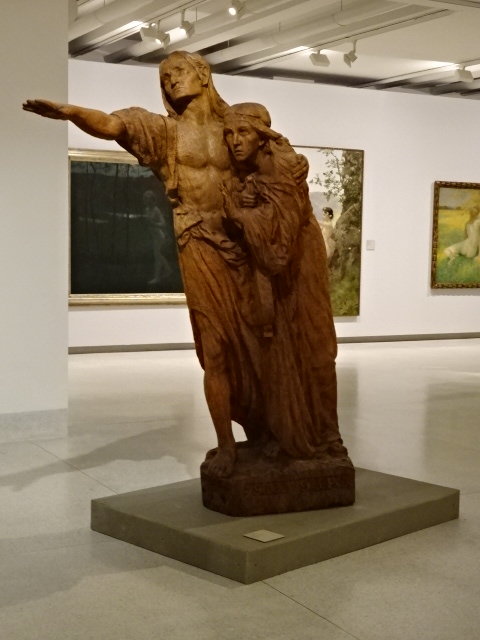
From The Long Century, František Bílek, The Blind Leading the Blind
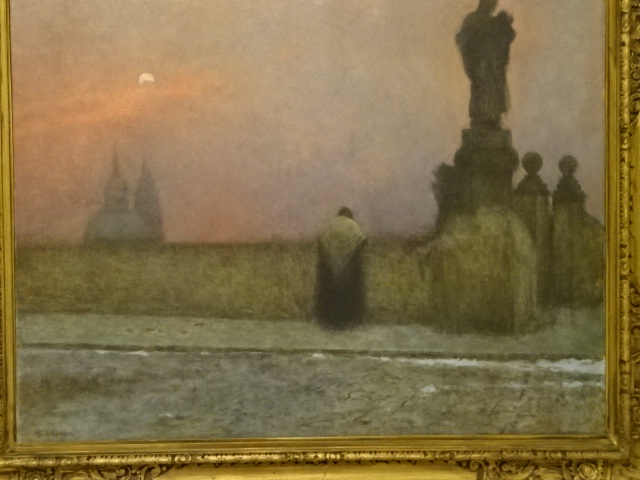
From the Long Century, Jakub Schikander, Early Evening at Hradčany, 1910-1915

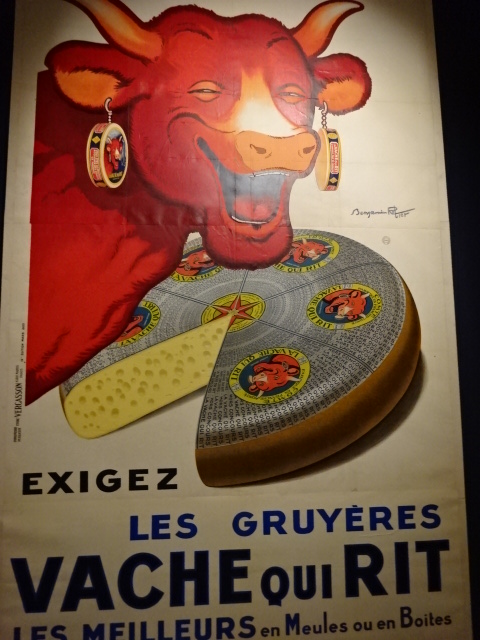
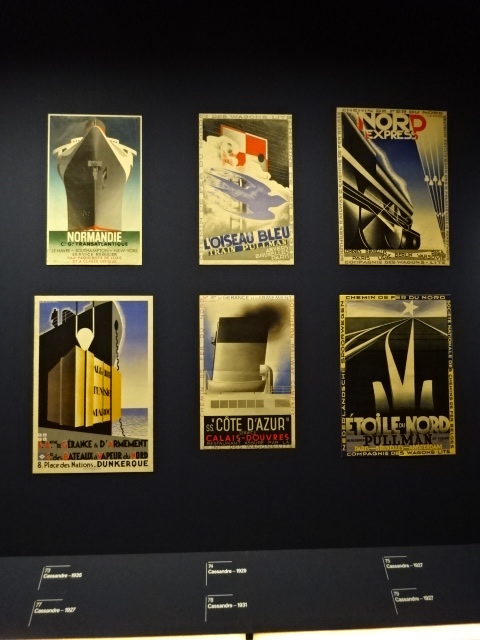
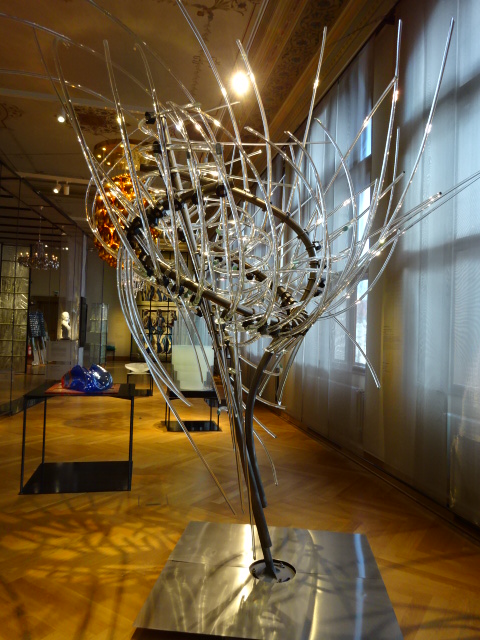
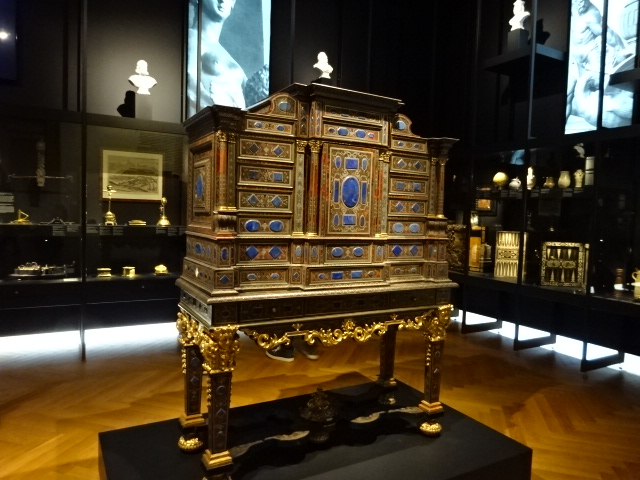
At the end of 2025, I visited an exhibition of French advertising posters from the 1920s and 1930s at the Museum of Decorative Arts in Prague. The 25 posters were bold, vivacious, grotesque and humorous. Many utilized caricature. I saw posters advertising progress in forms of transportation – trains, planes and ships. The travel posters were close to my heart. I gazed at the beaches of France and a townscape of Nice, for instance. I recognized the ad for cheese promoted by a gigantic red cow. The glass designs in the permanent exhibition at the museum also captured my attention. The dresses, shoes, ties and other garments were noteworthy. The interior of the building itself with stunning paintings on the walls and ceiling gave the museum such personality and a sense of grandeur.
I was thrilled with all the exhibitions that helped shape my year in a positive way. The exhibitions gave me solace and hope during a year riddled with sadness despite the excellent cultural events I experienced. Gazing at the art filled my heart with joy and gave me mental strength. I was thankful that I had been able to see so many influential exhibitions during 2025.
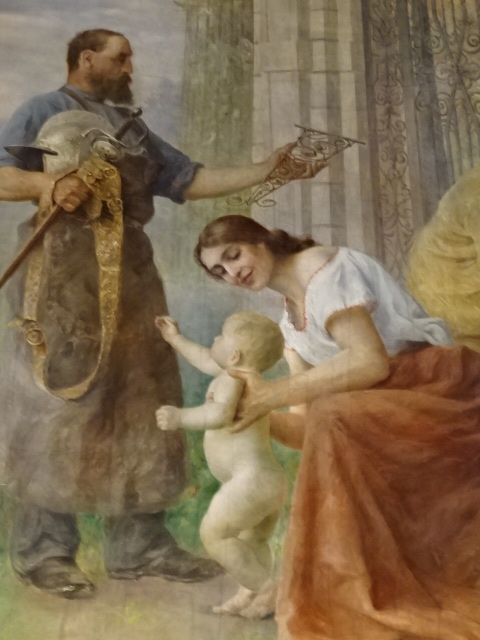
Museum of Decorative Arts, Prague
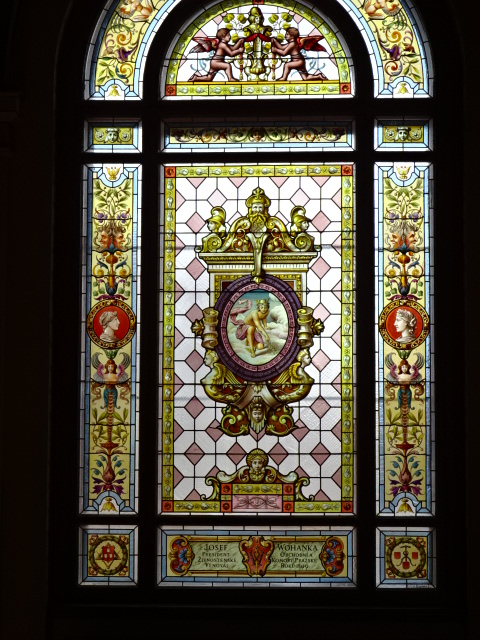
Museum of Decorative Arts, Prague
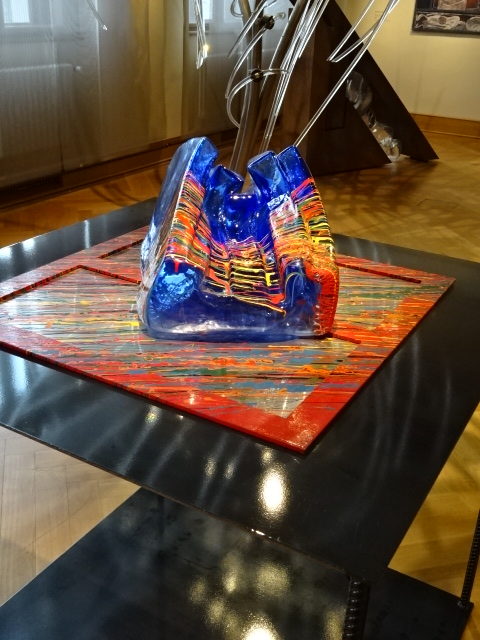
Museum of Decorative Arts, Prague
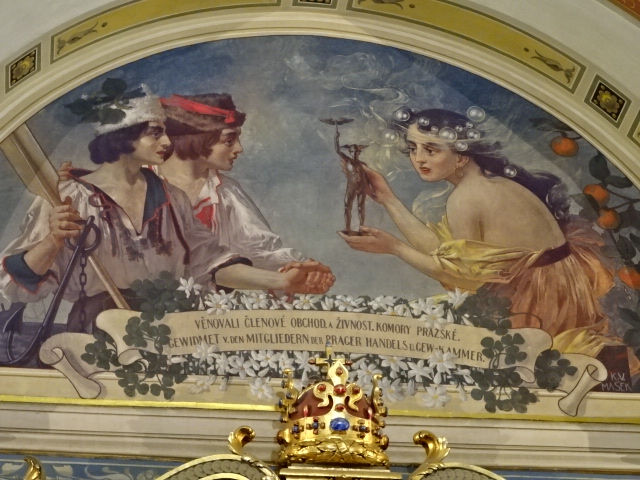
Museum of Decorative Arts, Prague
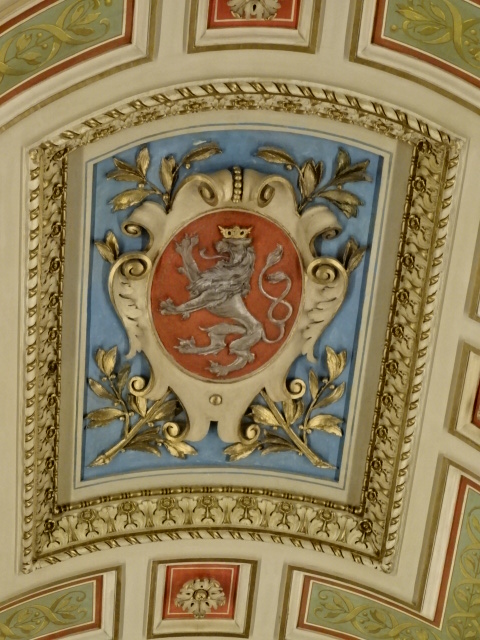
Museum of Decorative Arts, Prague
Museum of Decorative Arts, Prague
Museum of Decorative Arts, Prague

Gemäldegalerie Diary

BerlinGemald49

BerlinGemald48

BerlinGemald2

BerlinGemald3

BerlinGemald5

I visited the Gemäldegalerie in Berlin for the second time during 2018 and was just as enamored with the museum as I had been when I first came there. It was clear to me that this gallery hosting paintings from first years of medieval art to Neoclassism in 1800 has one of the best collections of European art in the world.

BerlinGemald18

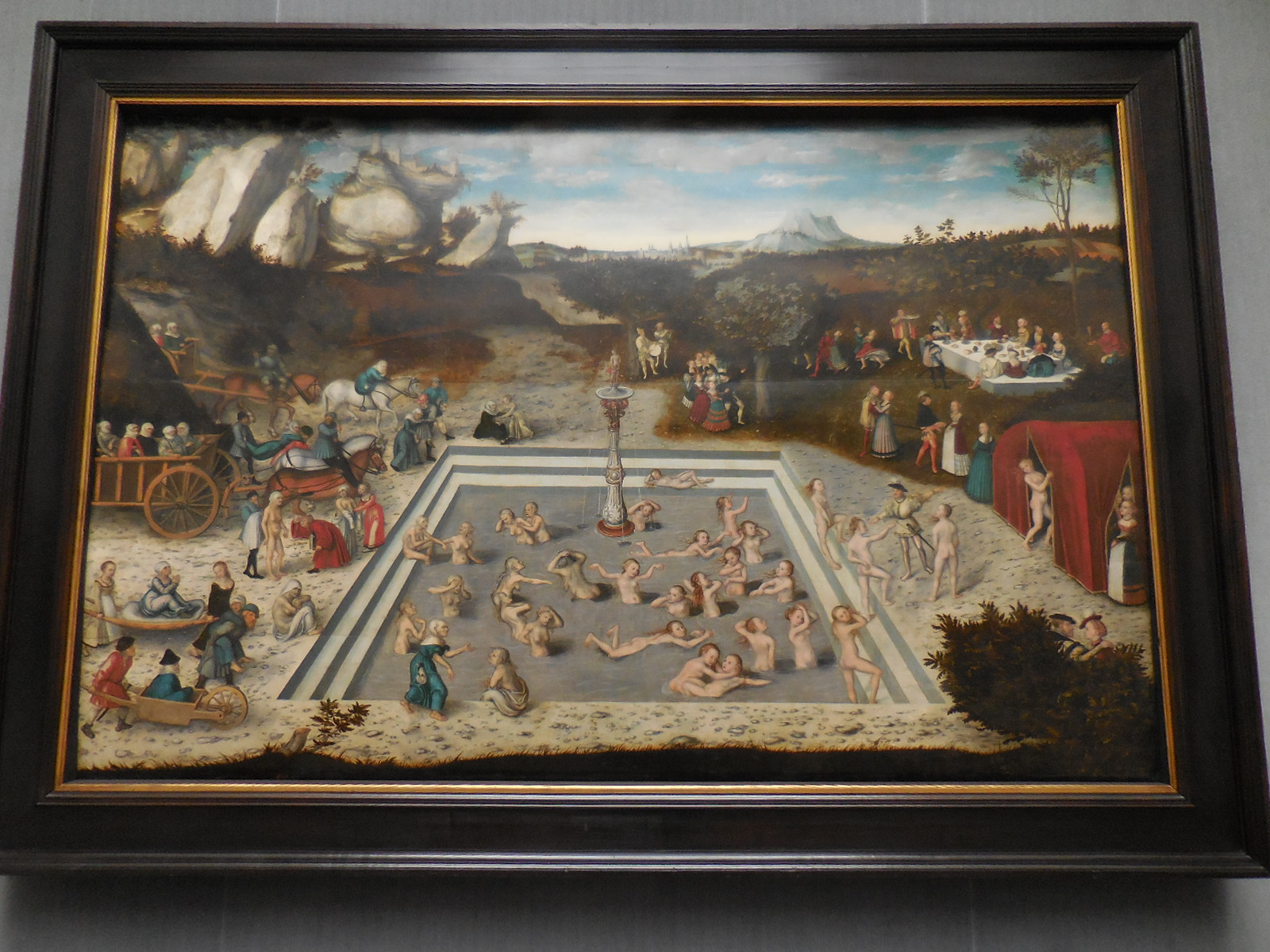
The Fountain of Youth by Lucas Cranach the Elder

BerlinGemald16

BerlinGemald21

BerlinGemald22

BerlinGemald24

The German art, especially the paintings by Albrecht Dürer and Lucas Cranach the Elder, was a true delight. I loved studying Dürer’s The Madonna with the Siskin from 1506. With a scenic landscape in the background, Mary has a cheerful and curious Jesus on her lap as he plays with a bird perched on his arm. Two putti hold a laurel crown over Mary’s head.

BerlinGemald30

BerlinGemald31

BerlinGemald32

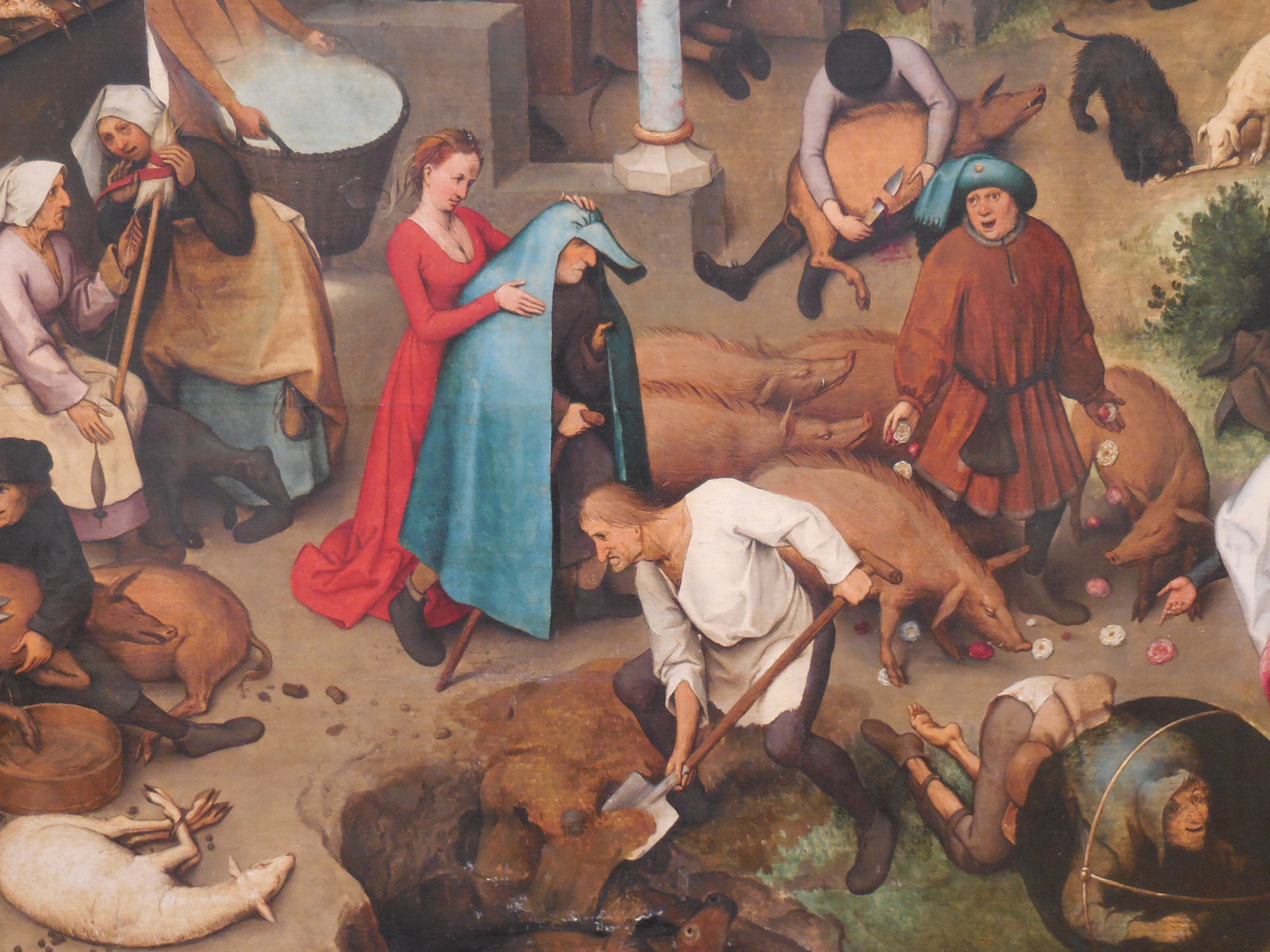
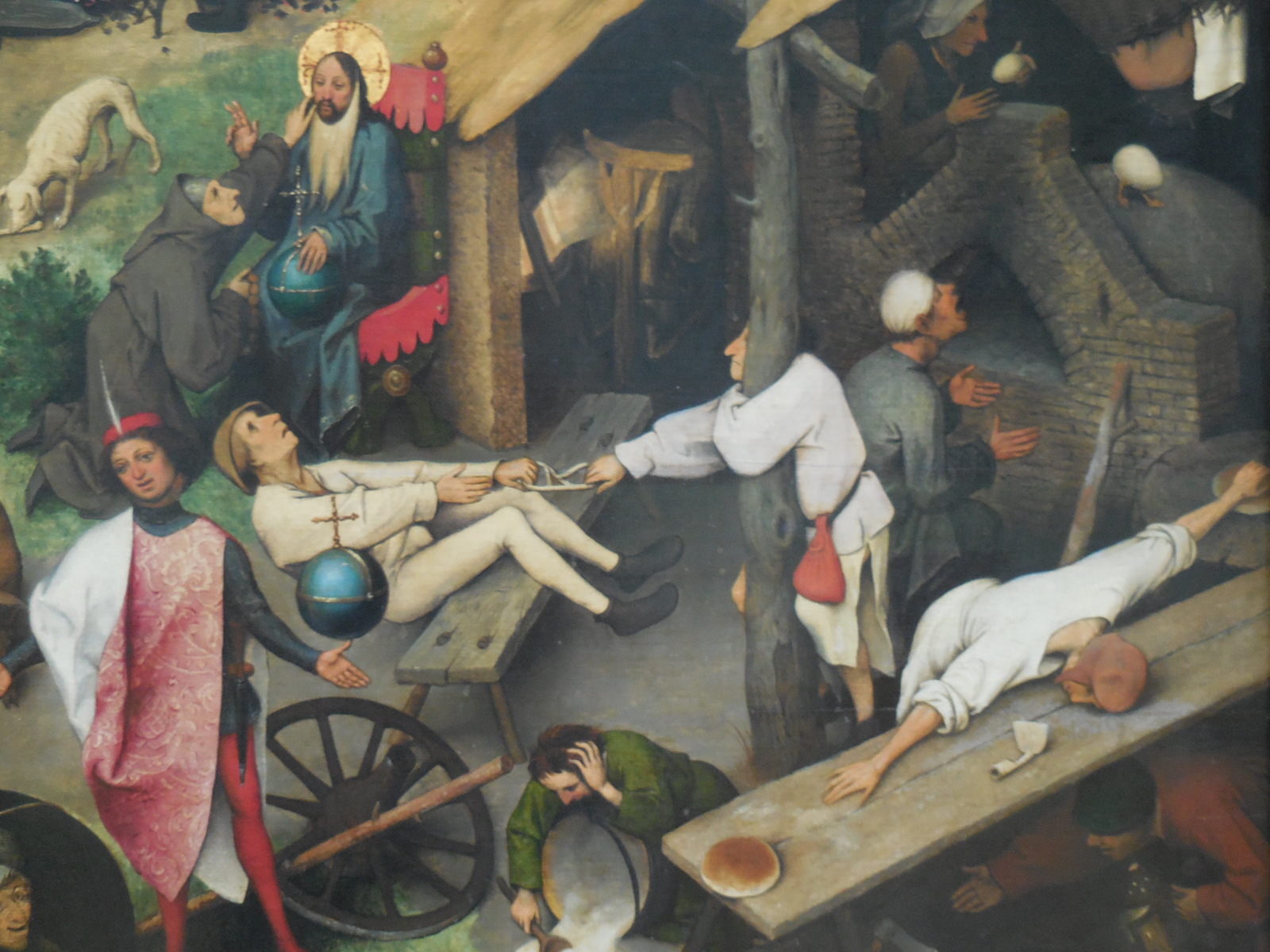
However, it was the collection of Netherlandish work that I was drawn to like a magnet. Ever since taking a class at Smith College in Dutch and Flemish art, I have been a Netherlandish art fanatic. One of my favorites was Pieter Bruegel the Elder’s Dutch Proverbs from 1559, which showcases 100 proverbs in a realistic village setting.

BerlinGemald40

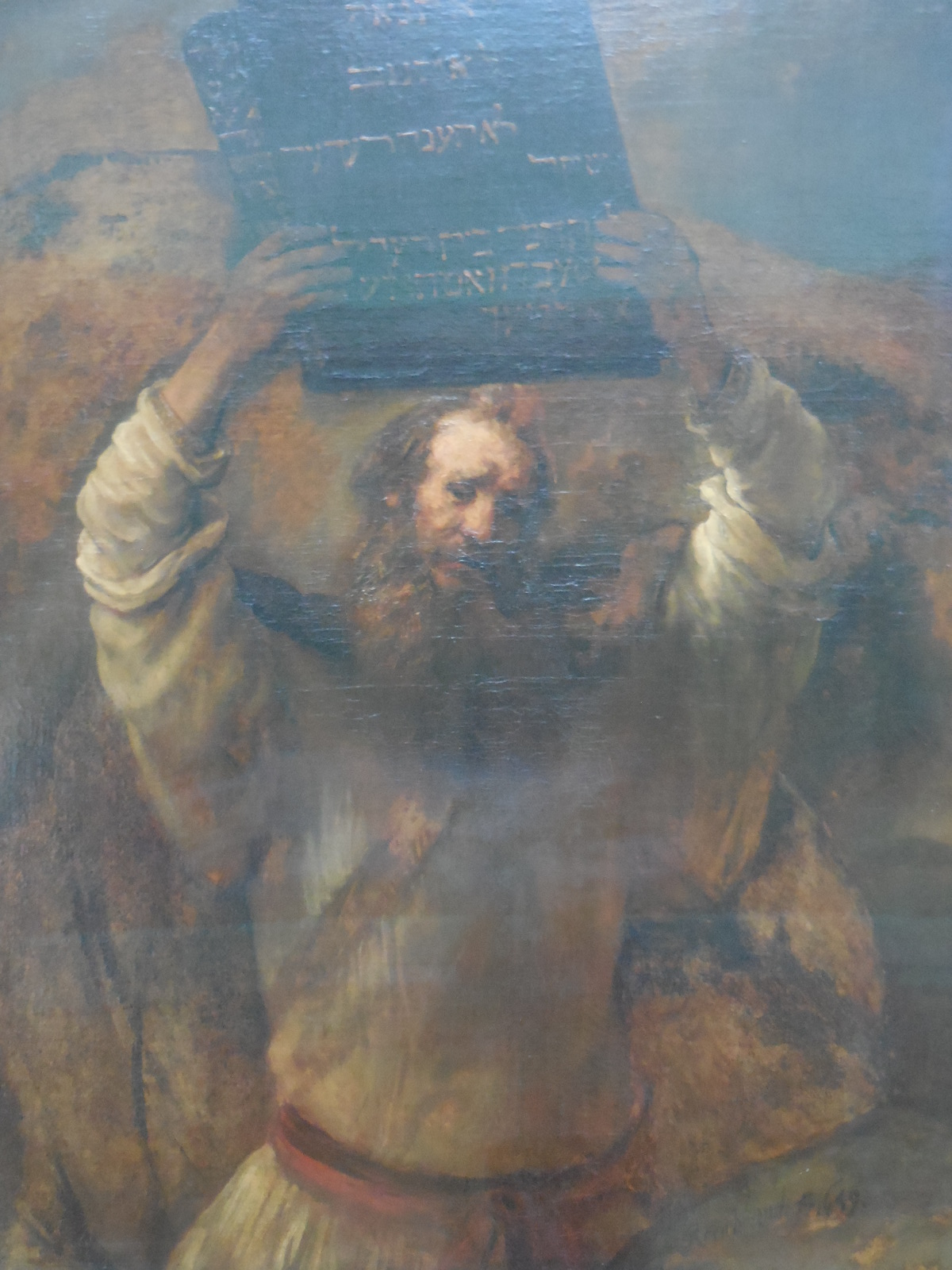
Moses with the Ten Commandments by Rembrandt, 1659

BerlinGemald42

Susanna and the Elders by Rembrandt, 1647

BerlinGemald41

BerlinGemald45

BerlinGemald46

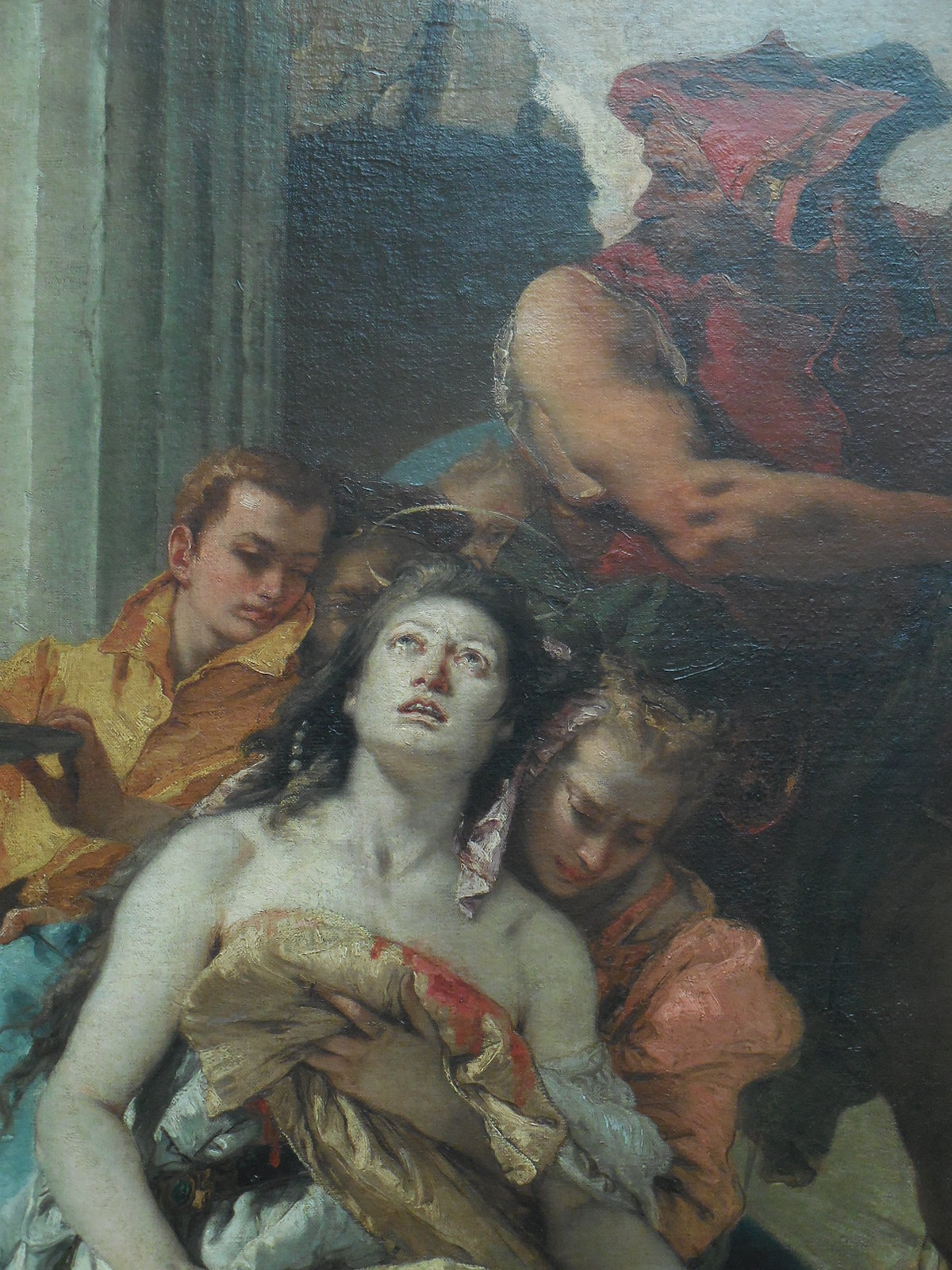
One entire room is devoted to Rembrandt’s art, and I spent a long time studying Rembrandt’s creations. While staring at Moses about to destroy the tablets in Moses with the Ten Commandments from 1659, I felt Moses’ ire and inner turmoil. In Rembrandt’s Susanna and the Elders from 1647, Susanna is swathed in light as the letch pulls her backwards toward him. Susanna draws viewers into the picture by looking straight at them, making them a witness to the physical abuse by the elderly, uncouth man and his accomplice.

BerlinGemald25

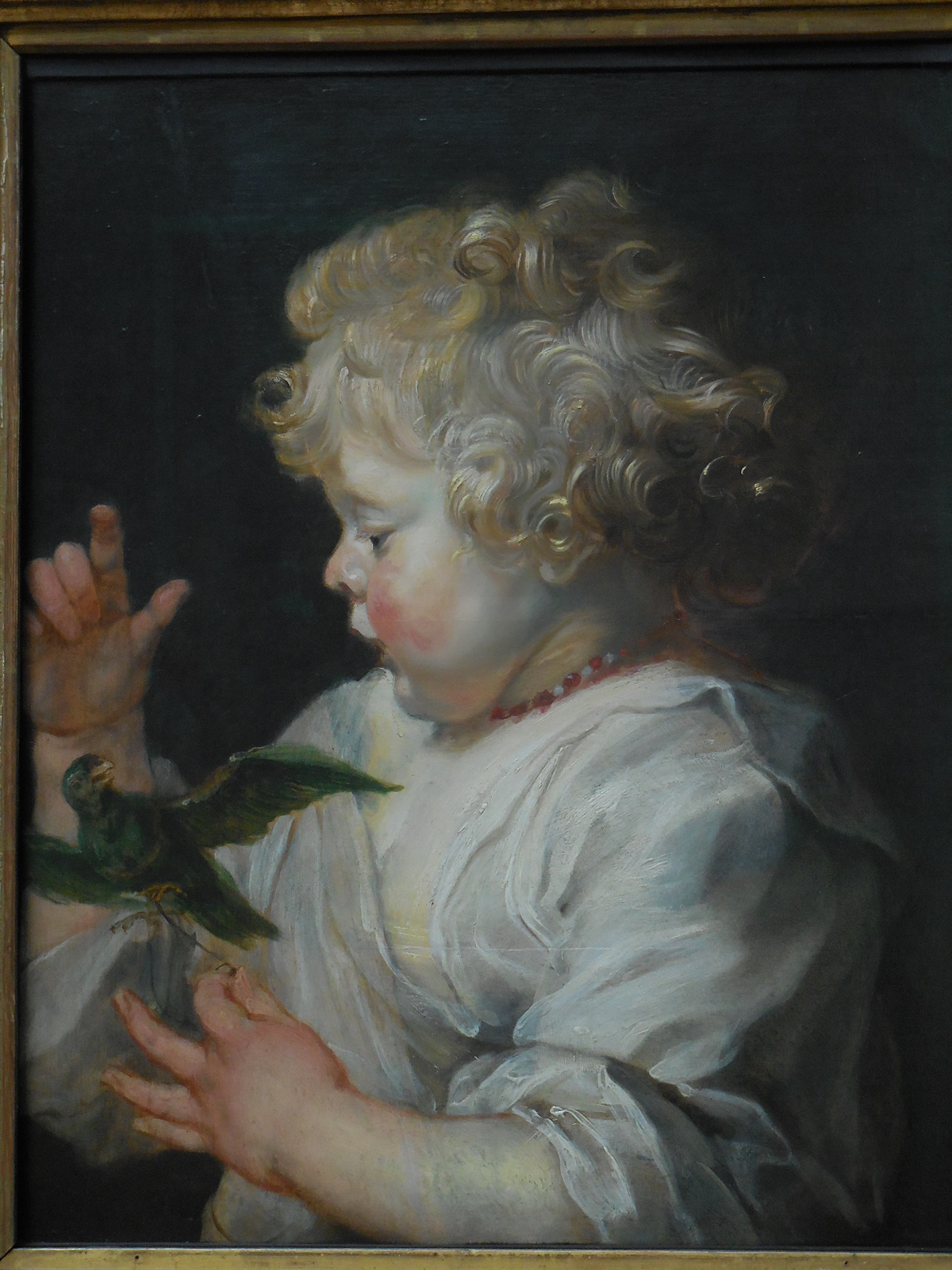
Child with a Bird by Rubens, 1624-25

BerlinGemald23

Saint Sebastian by Rubens, 1618

BerlinGemald34

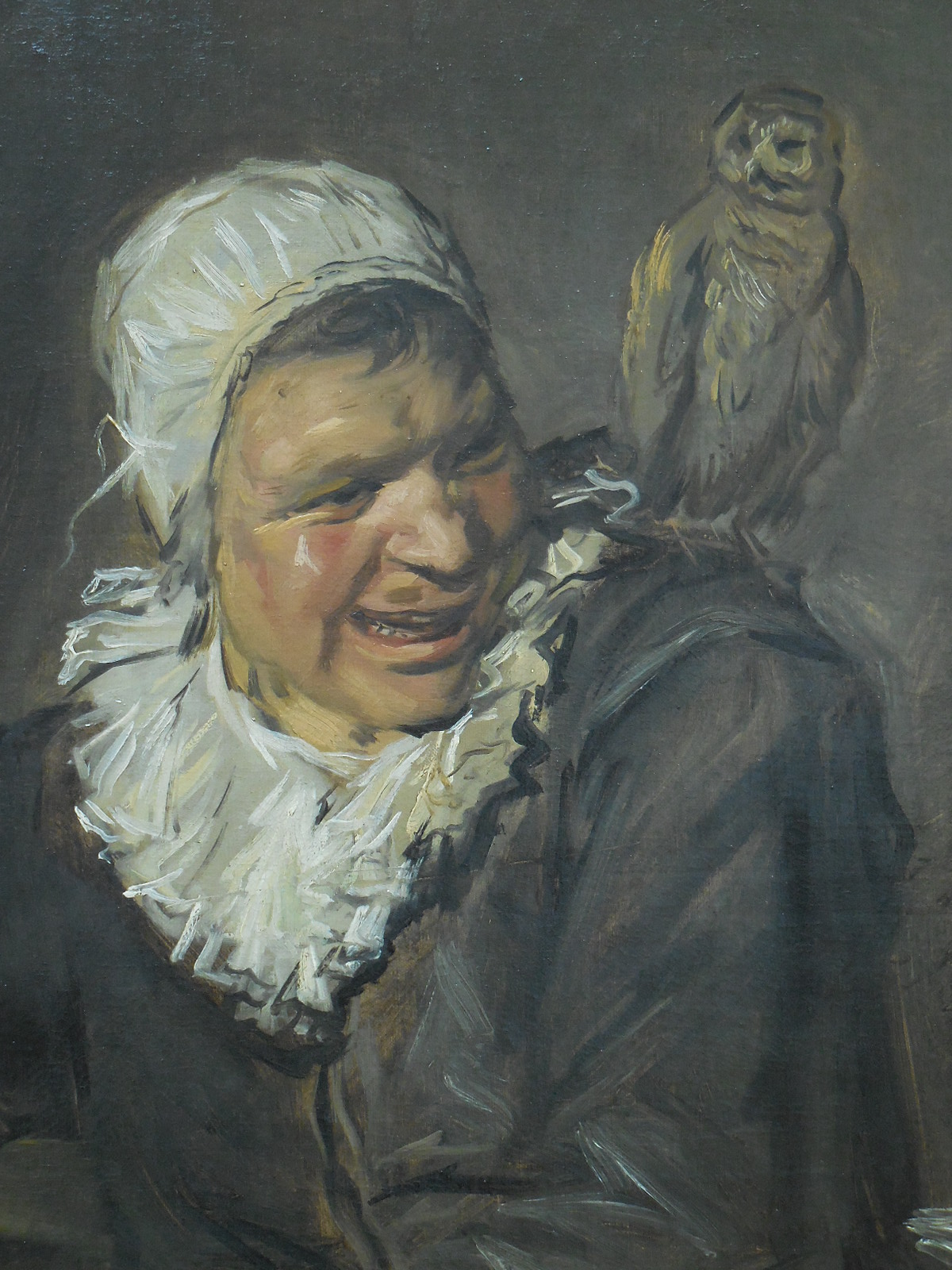
Malle Babe by Hals, 1633-35

I also was overjoyed at seeing again Paul Rubens’ Child with a Bird from 1624-25 and felt the pure joy that the child must have experienced when first noticing the bird. Rubens’ Saint Sebastian from 1618 is riddled with arrows as his face is turned toward the sky, toward Heaven. Emotion and turmoil seep from the twisted figure. Frans Hal’s Malle Babe from 1633-35 shows an inebriated woman with an owl on her shoulder. I could almost hear her mad, raucous, and disturbing laughter roar through the exhibition space.

BerlinGemald50

Cupid as Victor by Caravaggio, 1601-02

BerlinGemald26

BerlinGemald29

BerlinGemald28

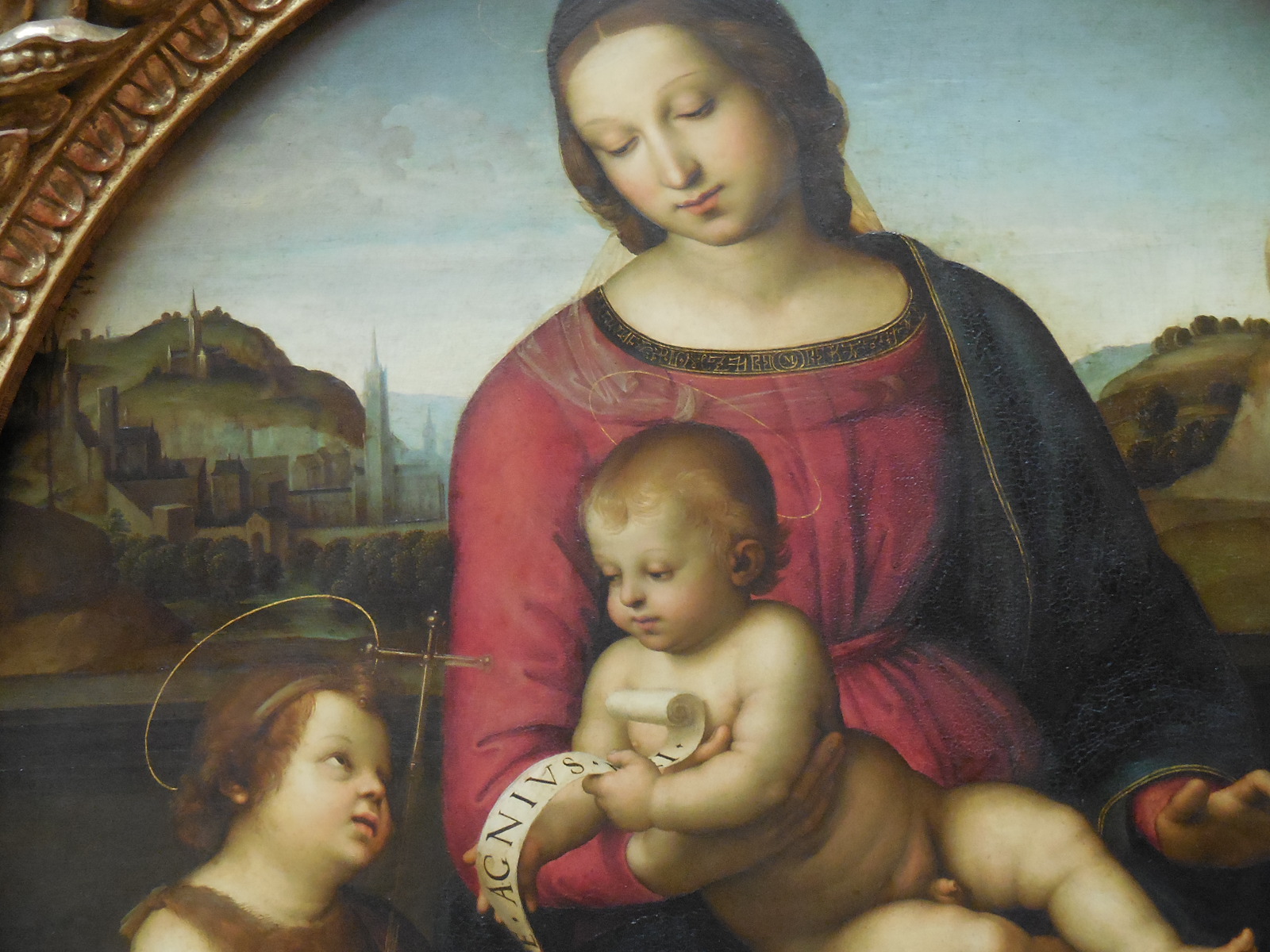
Other highlights for me included Jan Vermeer van Delft’s Young Woman with a Pearl Necklace. I loved the yellow of the curtain and her jacket. I adored Vermeer’s depictions of people going about their everyday routines. Even the simplest and smallest of gestures or movements acquires a poetic quality. Of course, I did not overlook Caravaggio’s works. His Cupid as Victor from 1601-02 displays his mastery at chiaroscuro as Cupid mocks the audience with a sly, cunning smile that announces love as victorious over science, art, fame and power. The five Madonnas by Raphael also stood out, and I remembered touring Raphael’s birthplace in Urbino.

BerlinGemald47

BerlinGemald54

BerlinGemald55

BerlinGemald56

Overall, there are 72 rooms displaying masterpieces in the Gemäldegalerie. The main galleries house about 850 works. The history of the museum, harkening back to 1830, intrigued me. During World War II, many of its paintings were saved because they were hidden in the Thuringian salt mines, from which US soldiers rescued them. Other items in the collection were stored in air raid shelters during the war. During the Cold War, the works were divided into two galleries – one in West Berlin, the other in the East. The two collections have only been housed in one building since 1998. The Old Master Paintings are located at the Kulturforum with the Museum of Decorative Arts as its neighbor. I was dazzled by the works in that museum as it, too, is well worth a visit.

BerlinGemald59

BerlinGemald60

BerlinGemald63

BerlinGemald64

Tracy A. Burns is a writer, proofreader and editor in Prague.

Lobkowicz Palace Diary

Lobkowicz2
It was one of those places I had been meaning to visit for a long time, but I had just never gotten around to it. Tomorrow. . .this week. . .next week. . .I would always stay home and write instead of visiting the Lobkowicz Palace. Friends and family raved about the museum. In August of 2015, I finally went to check out the Lobkowicz Museum, which opened in 2007.

The beginning of the audio guide tour had me hooked. William Lobkowicz, the current owner of the palace, did most of the narrating. His grandfather Max was married to a British citizen, Gillian. When World War I started, Max had been a very affluent man. During World War II he served as ambassador of the Czech government in exile in London. He was fervently against the Nazis and was an avid supporter of the democratic First Republic of Czechoslovakia. The Nazis disliked Max not only for his anti-Nazi activities but also because he had a British wife. After the Communists took control of the country in 1948, Max found himself trapped in Czechoslovakia. His wife sent him a letter from London, telling him she was gravely ill. She wasn’t, but the ploy worked. The Communists gave Max two days to visit her. With only his coat and the clothes he was wearing, Max fled from his homeland to join his wife in London. He left behind 13 castles. William’s father had been 10 years old at the time and had been sent to live in the USA.

Max Lobkowicz from lobkowicz-palace.com

Max Lobkowicz from lobkowicz-palace.com


What a story! It sounded like something out of a spy novel or film! It must have been so difficult to leave so much property and so many possessions behind. Thirteen castles! It must have been heartwrenching.

Then I found myself in a large room full of family portraits, starting with those of nobility from the house of Pernštejn. The portraits were not merely faces staring at me. Each portrait told a story about an individual thanks to the information on the audio guide. The people came alive as I listened to intriguing facts about their lives. When I was looking at the Pernštejns, I fondly recalled my visits to Pernštejn Castle in Moravia. It was one of my all-time favorites. I wonder if that had been one of the 13 castles grandfather Max left behind.
Lobkowiczportrait
Vratislav Pernštejn, born in 1530, held the distinction of being the first Czech to receive the Order of the Golden Fleece, achieving this feat at the tender age of 25. Later, many more Lobkowiczs would be honored with the award. The Lobkowicz clan was related to King Philip II of Spain, whose tenure on the throne lasted 40 years. His territories even included Central America, the Caribbean and parts of what is today the USA. At one time he was even the King of England. Nicknamed “Philip the Prudent,” he was the son of Holy Roman Emperor Charles V and Infanta Isabella of Portugal. The Philippine Islands were named after him. He founded the first trans-Pacific trade route between America and Asia. He also made sure the Ottomans would no longer be a formidable enemy of his lands. He also helped his empire get back on its feet in times of financial crises.
Lobkowiczint1
I wished I could trace my family tree back so many centuries. I knew that I was of Slovak heritage on one side of the family, had a grandmother of Czech ancestry and a grandfather of Scottish origin, but I did not know any details. My ancestors from Moravia were named Mareš, a common Czech surname. My grandmother’s maiden name had been Šimánek, also a common name. I think my decision to move to Prague had something to do with filling up a vast emptiness about my family’s past, wondering who my ancestors were and what they were like. In Prague I felt in touch with a past I had never known, and that was one of the reasons Prague felt like home.
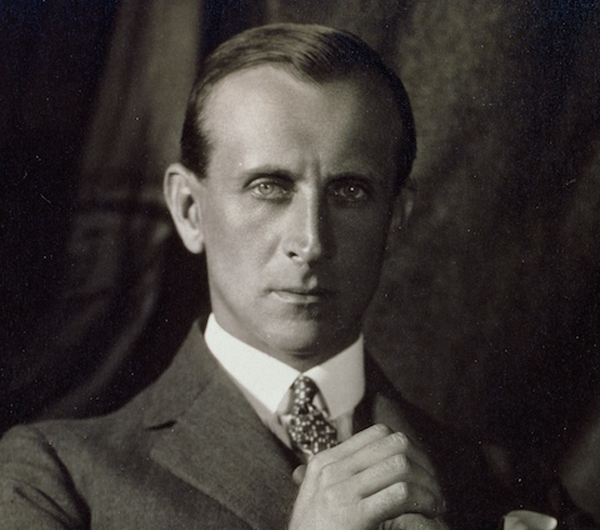
I was reminded of a Diego Velázquez exhibition I had seen in Vienna about a year ago when I gazed at the portrait of Infanta Margarita, then a four-year old member of the Spanish royal family. I recognized her from Velázquez’s masterpiece, Las Meninas. While Margarita was immortalized in portraiture, she did not enjoy a long life. She died during childbirth when she was only 22 years old.

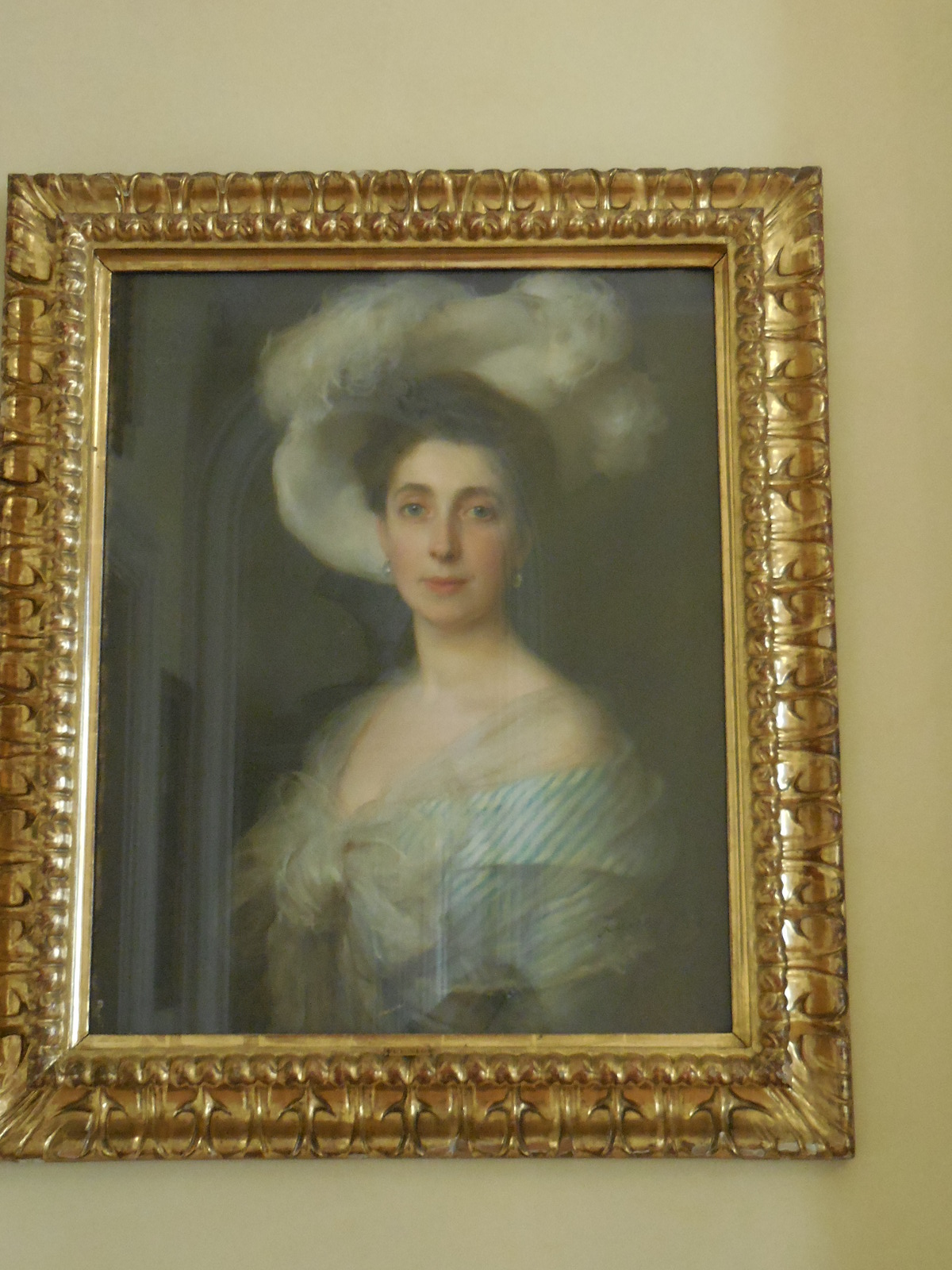
I found the Lobkowicz’s involvement in the Defenestration of Prague fascinating. One painting showed the historical event, when Protestant nobles revolted against the Catholics and threw two Catholic ministers and a secretary out a window. This event triggered the Thirty Years’ War. Luckily, the three fell onto a pile of dung and did not die. Two of them took refuge in Lobkowicz Palace. According to legend, Polyxana Lobkowicz hid them under her skirts.
Lobkowiczint4
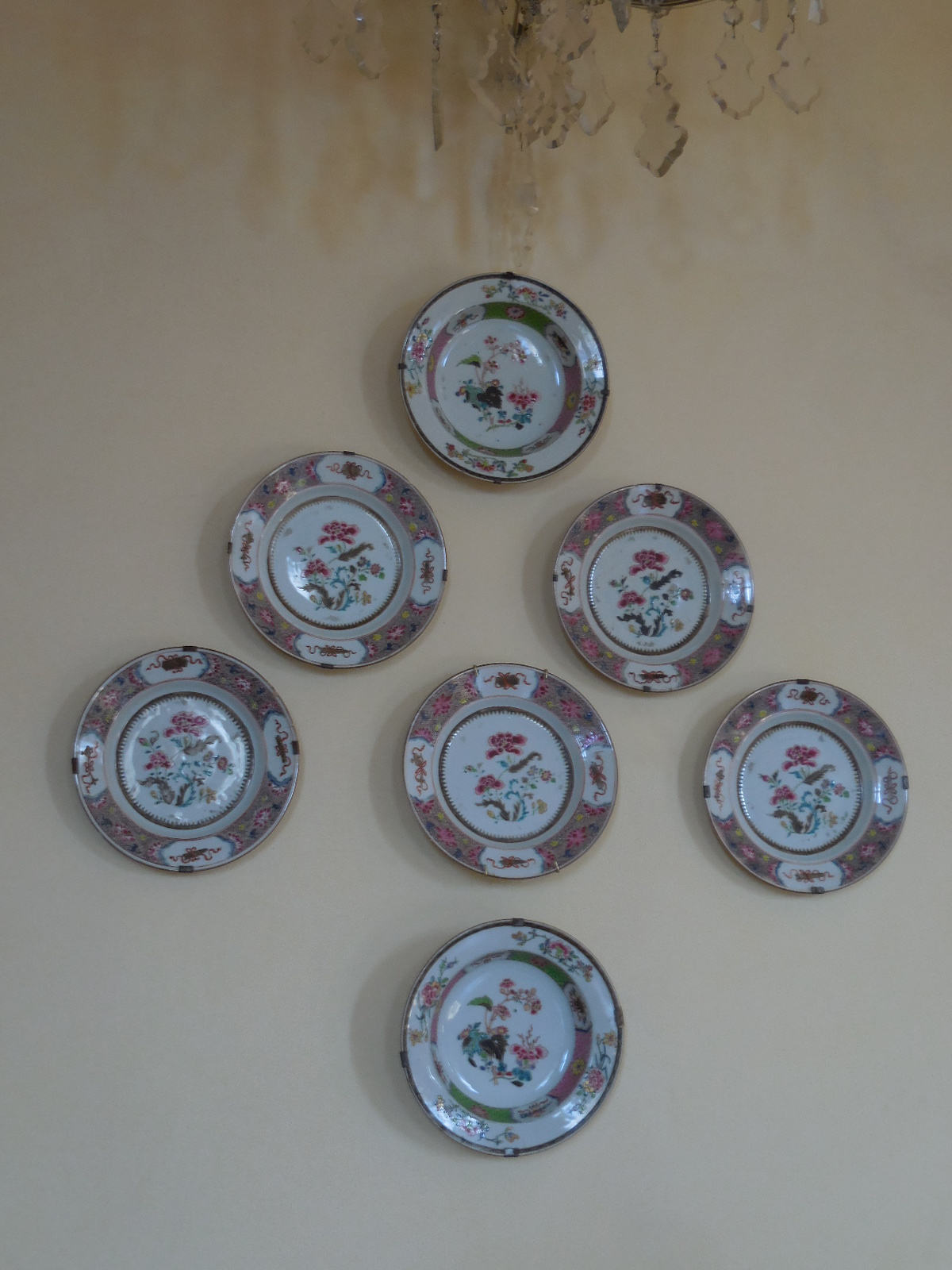
In the next room I was surrounded by fine porcelain. I saw majolica service from Lombardy picturing a calming landscape of coastal scenes with mountains. It dated back to the 17th century and was made in Italy. I was also enamored by service from Delft, dating back to the late 17th century. I had always been fond of porcelain made in Delft.

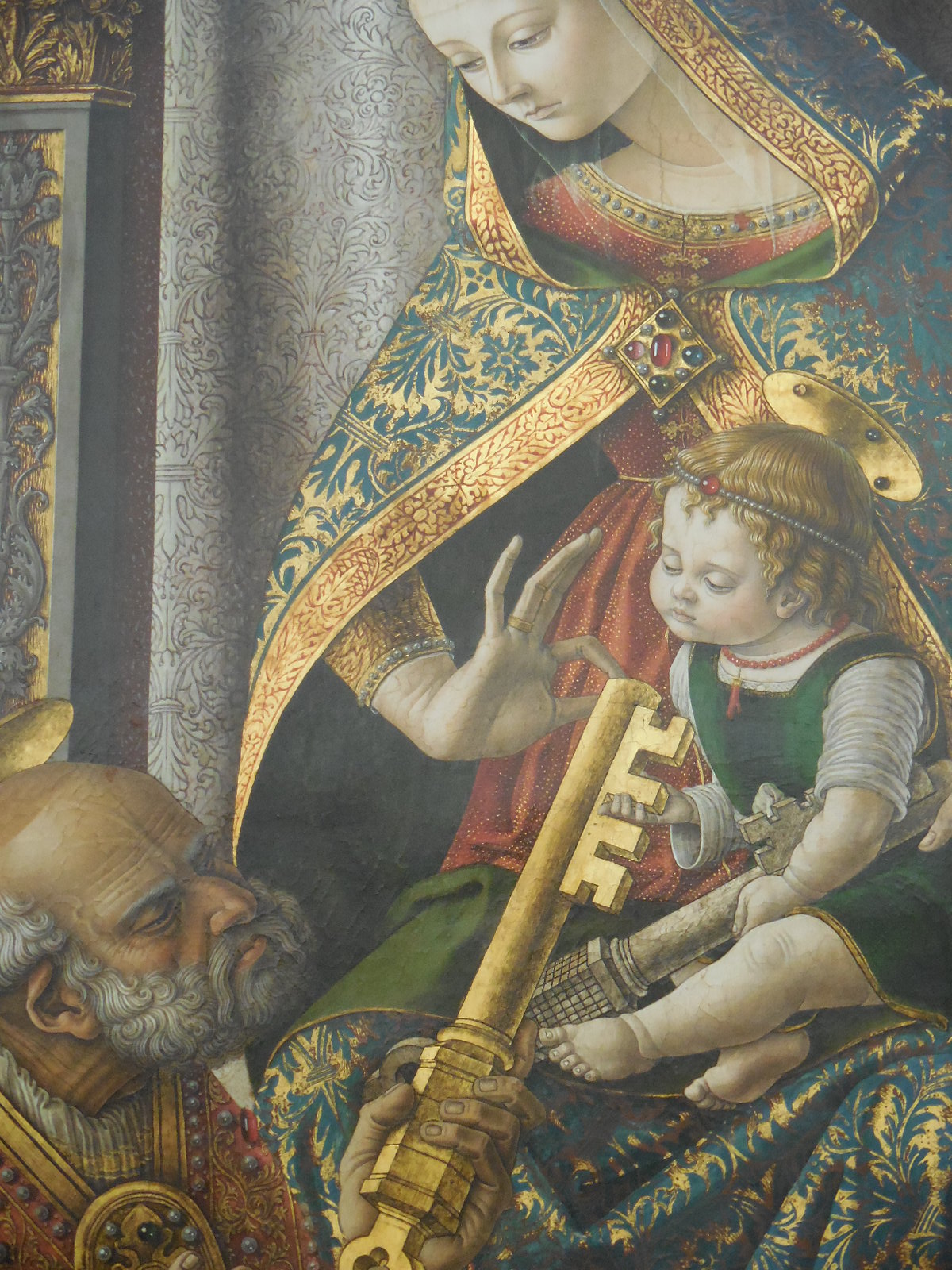
The painting in the next room captivated me. Lucas Cranach the Elder had rendered Mary and the Christ child in a painting hailing from 1520. Saint Catherine and Saint Barbara also made appearances. I found out that Ferdinand Lobkowicz had been an avid art collector.
Lobkowiczint3
In a separate space stood a processional reliquary cross, Romanesque in style. Hailing from north Germany in the beginning of the 12th century, it was made of gilded copper and adorned with 30 crystal cabochons. I couldn’t believe I was looking at something that ancient and in such good condition. Whenever I saw Romanesque churches, for instance, I could not believe I was standing in a structure built so many centuries ago. I briefly thought back to the Romanesque church with the fascinating façade in Regensburg.

Then I entered a room filled with weapons and knights’ armor. While I was impressed that the Lobkowiczs possessed such a superb armory, weapons were certainly not my cup of tea. I moved on and soon found myself surrounded by musical instruments, especially violins. I love classical music, and the room calmed me while the armory had made me anxious.

I stared for some minutes at the original score of Part III of the Messiah by Handel as arranged by Mozart. I also saw original scores by Beethoven and Mozart, two of my favorites. The first printed edition, dating from 1800, of the score for the oratorio of The Creation by Haydn also caught my attention. My mind wandered back to those classical music classes at Smith College, where I first became enamored with the above-mentioned composers and many more. An entire new world had opened up for me. I also spent some time gazing at the violins and clarinets, wishing I could play an instrument. I had taken beginners’ piano lessons in college for a year, but that was it. In college I always dreamed of being able to play an instrument well enough to major in music. But it had been just a dream. I wasn’t talented enough, and I had concentrated on my writing.

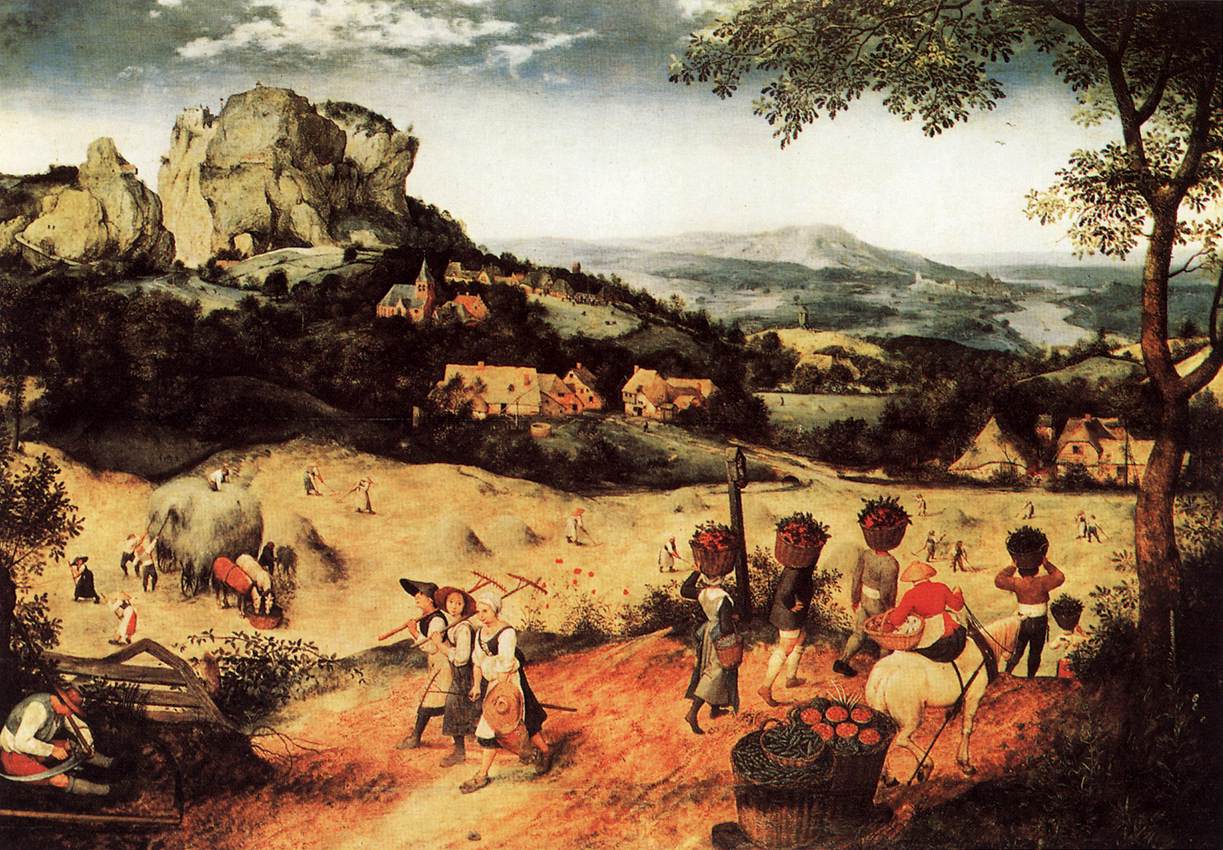
Haymaking by Pieter Bruegel the Elder, 16th century. Photo from www.wga.hu

Haymaking by Pieter Bruegel the Elder, 16th century. Photo from http://www.wga.hu


Soon I set my eyes on one of my all-time favorite paintings by my favorite artist, Pieter Bruegel the Elder. It was his rendition of Haymaking, one of only six panels representing the 12 months of the year. Each panel represented two months. Haymaking depicted June and July. I remembered gaping at the Bruegel collection in Vienna’s Kunsthistoriches Museum, where I had admired The Gloomy Day (Early Spring), The Return of the Herd (Autumn) and the Hunters in the Snow (Winter.) Bruegel’s paintings of the seasons had played a significant role in Western art. It was the first time that landscape was the main subject of the painting. Before, landscape had been utilized as a backdrop for religious figures. I admired how nature played a role in the lives of the people depicted in the paintings. Their daily activities were dictated by the seasons. I loved the way Bruegel depicted the common man in everyday activities and put so many details in his paintings. The landscape was stunning and idyllic, too.

The Croll Room was breathtaking. Carl Robert Croll had painted over 50 works for Ferdinand Joseph Lobkowicz during six years in the 1840s. I recognized Jezeří Castle, which the Lobkowiczs sold to the Czech state in 1996. I had visited Jezeří some years ago, but the chateau was in need of major reconstruction. Its location on a cliff was romantic, but restoring the interiors was going to take a lot of time. I wondered how far the restoration work had come during the past years. I also recognized Roudnice Chateau, shown Italian Baroque style from reconstruction that took place from 1653 to 1677. I had been to the art gallery at Roudnice Chateau some years ago, but most of the chateau was under reconstruction. Nelahozeves, also seen here, was one of my favorite chateaus due to its impressive art collection. Not far from Prague, I always recommended that visitors take a day trip there. I had even written a post about it for my blog.

City of London from River Thames with St. Paul's Cathedral on Lord Mayor's Day by Canaletto

City of London from River Thames with St. Paul’s Cathedral on Lord Mayor’s Day by Canaletto, Photo from http://www.wikiart.com


LobkowiczDogRm
Then I saw what have to be two of the most beautiful paintings in the world – two views of London by Antonio Canaletto. I loved Canaletto’s work because he brought out the atmosphere of the place he was painting. I could really feel as if I were looking at London and the Thames in his City of London from River Thames with St. Paul’s Cathedral on Lord Mayor’s Day from 1748 and in The River Thames Looking Toward Westminster from Lambeth from 1746-47. I recalled the extensive Canaletto exhibition I had seen in Aix-en-Provence during June. I loved the details of the boats and sails.
LobkowiczBirdRm
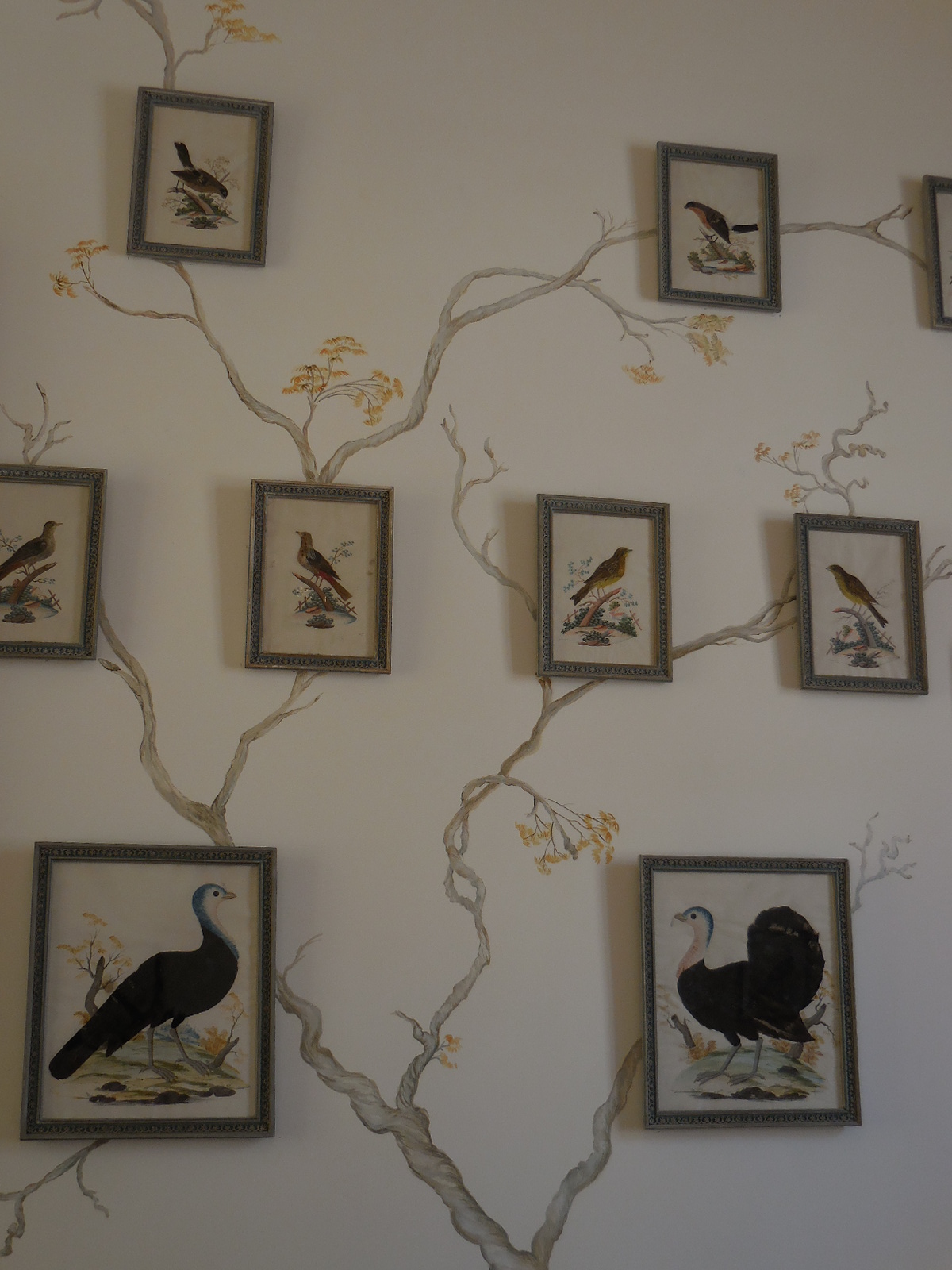
On the first floor I saw a portrait of Princess Ernestine Lobkowicz clad in brilliant red and portraits painted by the princess in the 17th century. I wondered how many female portrait painters there had been in the 17th century. The Bird Room featured pictures of birds made with real feathers. On the audio guide William’s wife, Alexandra Lobkowicz, mentioned that she had found the pictures infested with insects and that they took almost a year to conserve. In the Dog Room I focused on a painting of two dogs proudly seated on velvet cushions in 1700. They looked so spoiled with their luxurious light blue and gold collars. Then again, I had always spoiled my cats.
Lobkowiczint2
Lobkowiczint5
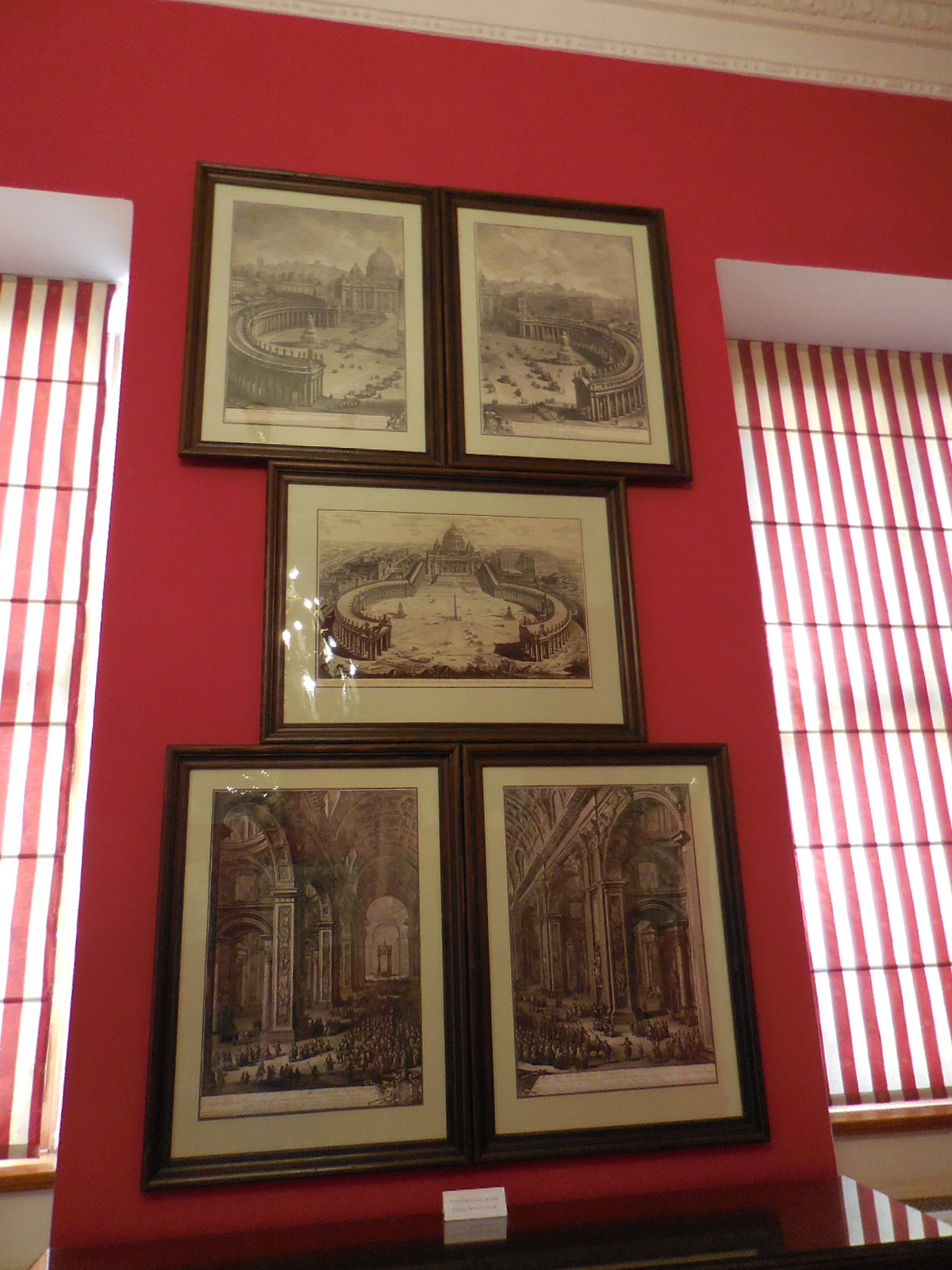
The Firanesi Room was filled with engravings of ancient and modern Rome, one of my favorite cities in the world. I recalled showing my parents the Colosseum, one of my most treasured memories of time spent with my Mom and Dad. The Oriental Room proved a delight as well. It featured nine Chinese embroidered silk panels hailing from the 18th century. I loved Oriental rooms in castles and chateaus. They were so elegant, and the wallpaper was always so beautiful. There was also a Chinese Room in the palace. It had a distinctive Oriental flair and dated from 1900. I loved the bright colors, too.
LobkowiczRococo1
Meissen porcelain in a Rococo cabinet

Meissen porcelain in a Rococo cabinet


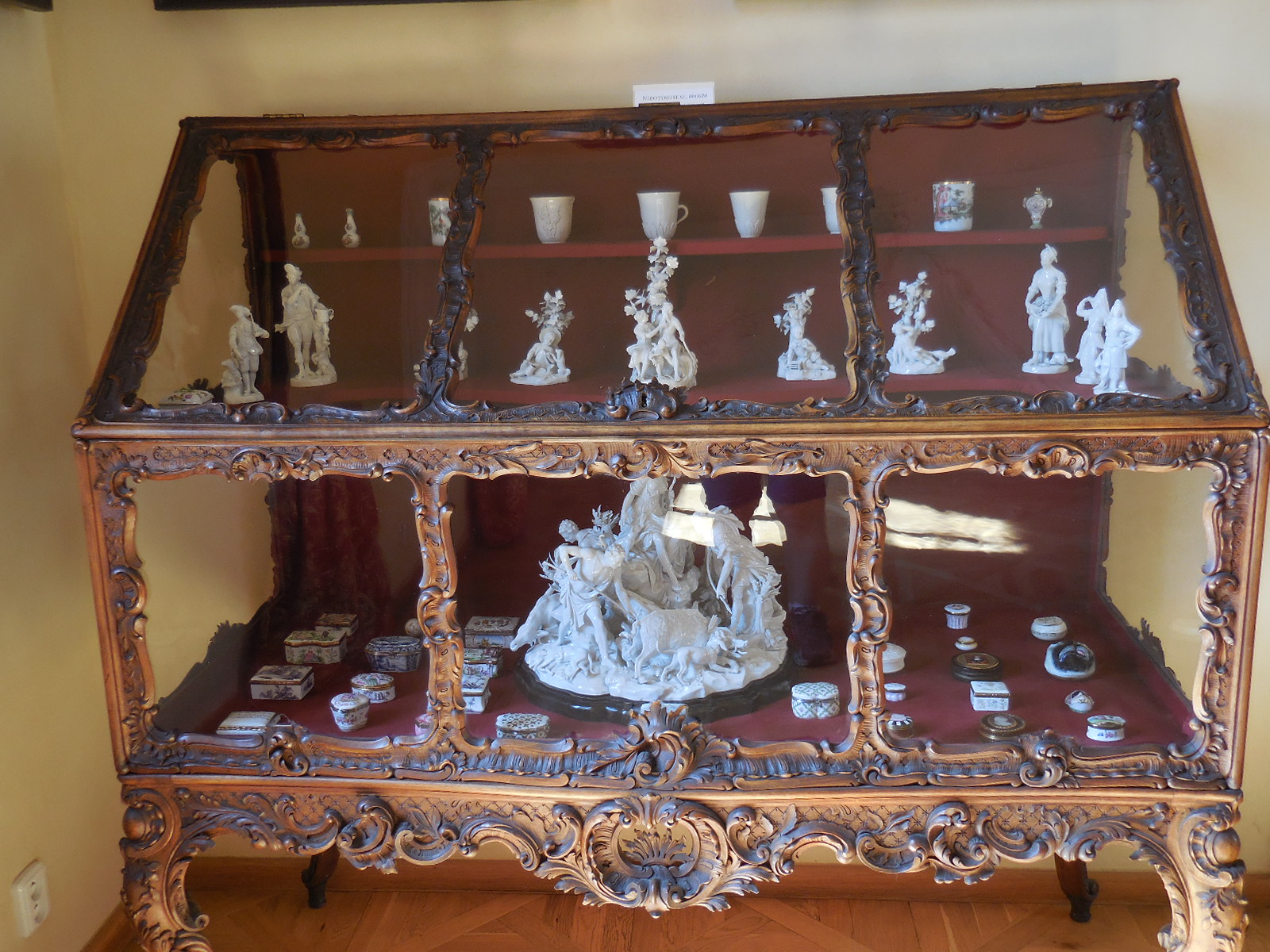
Next came the Rococo Room, where two Rococo display cabinets displayed various objects, such as snuff boxes, exquisite fans and Meissen porcelain. I admired the rich carving of the woodwork on the cabinets. Seeing the Meissen porcelain reminded me of the Museum of Porcelain in Dresden, where there was so much Meissen to behold that it had been overwhelming for me. The superb display cases dated from the 18th century.
An allegorical fresco in the Dining Room

An allegorical fresco in the Dining Room


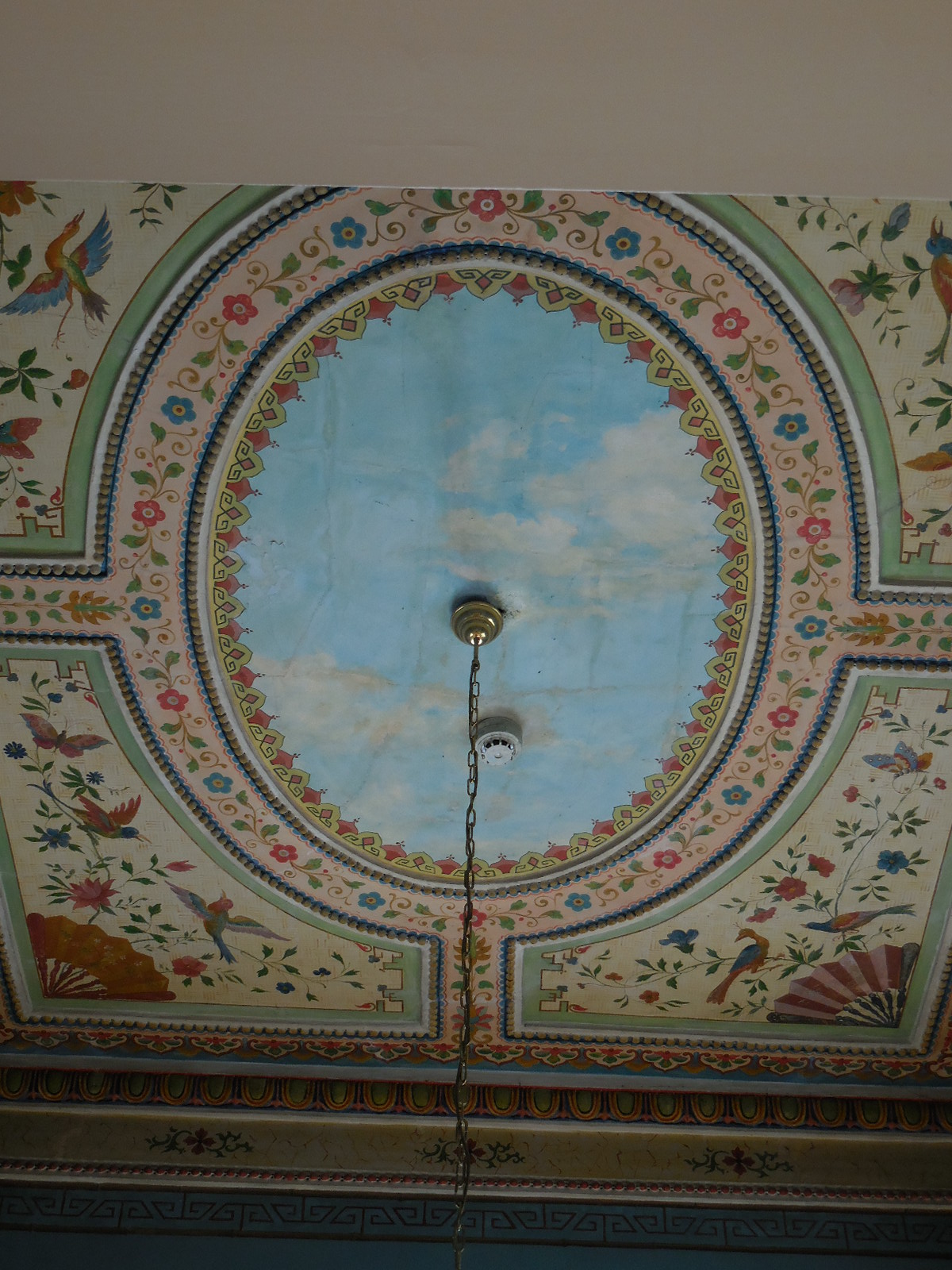
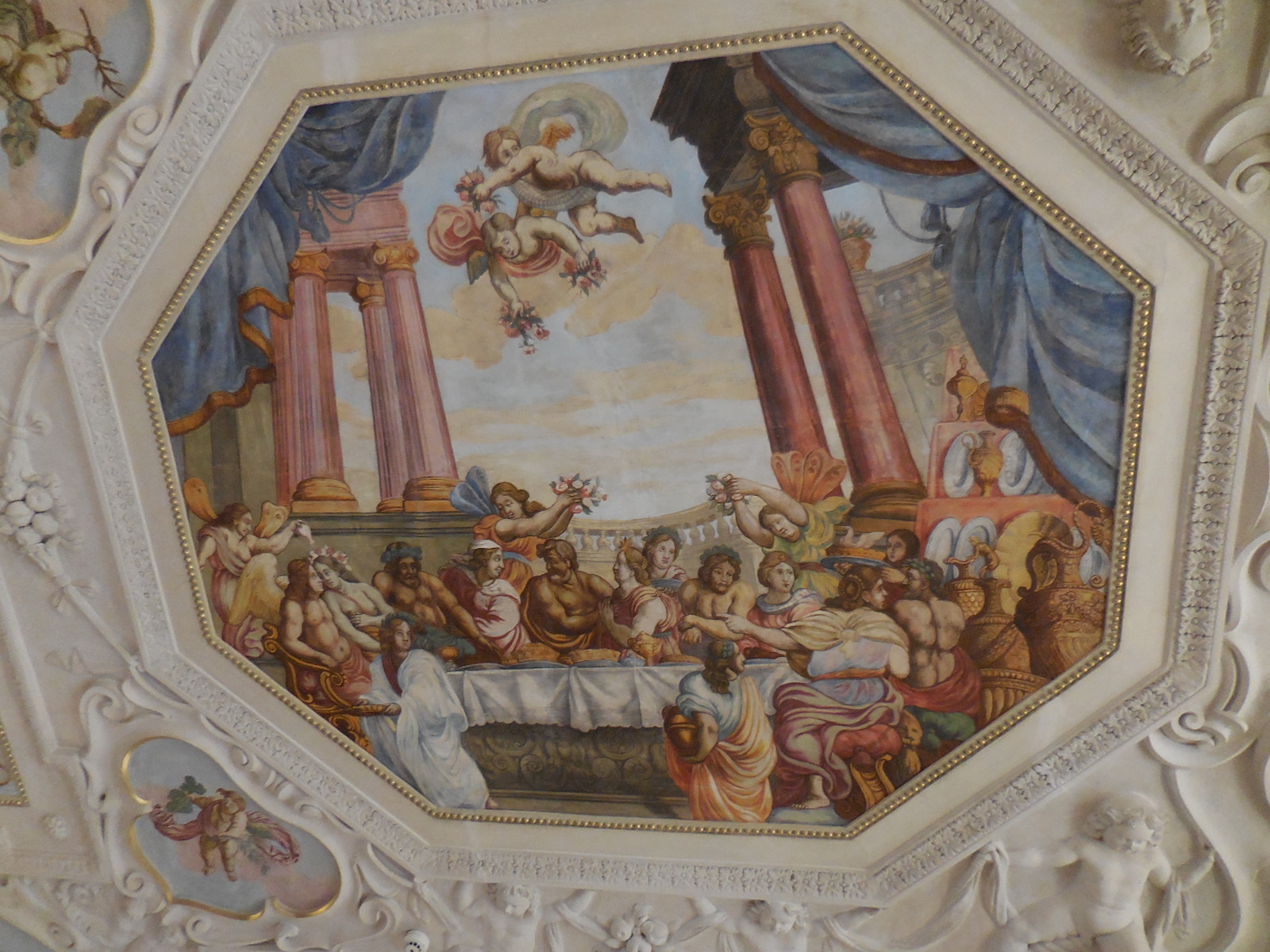
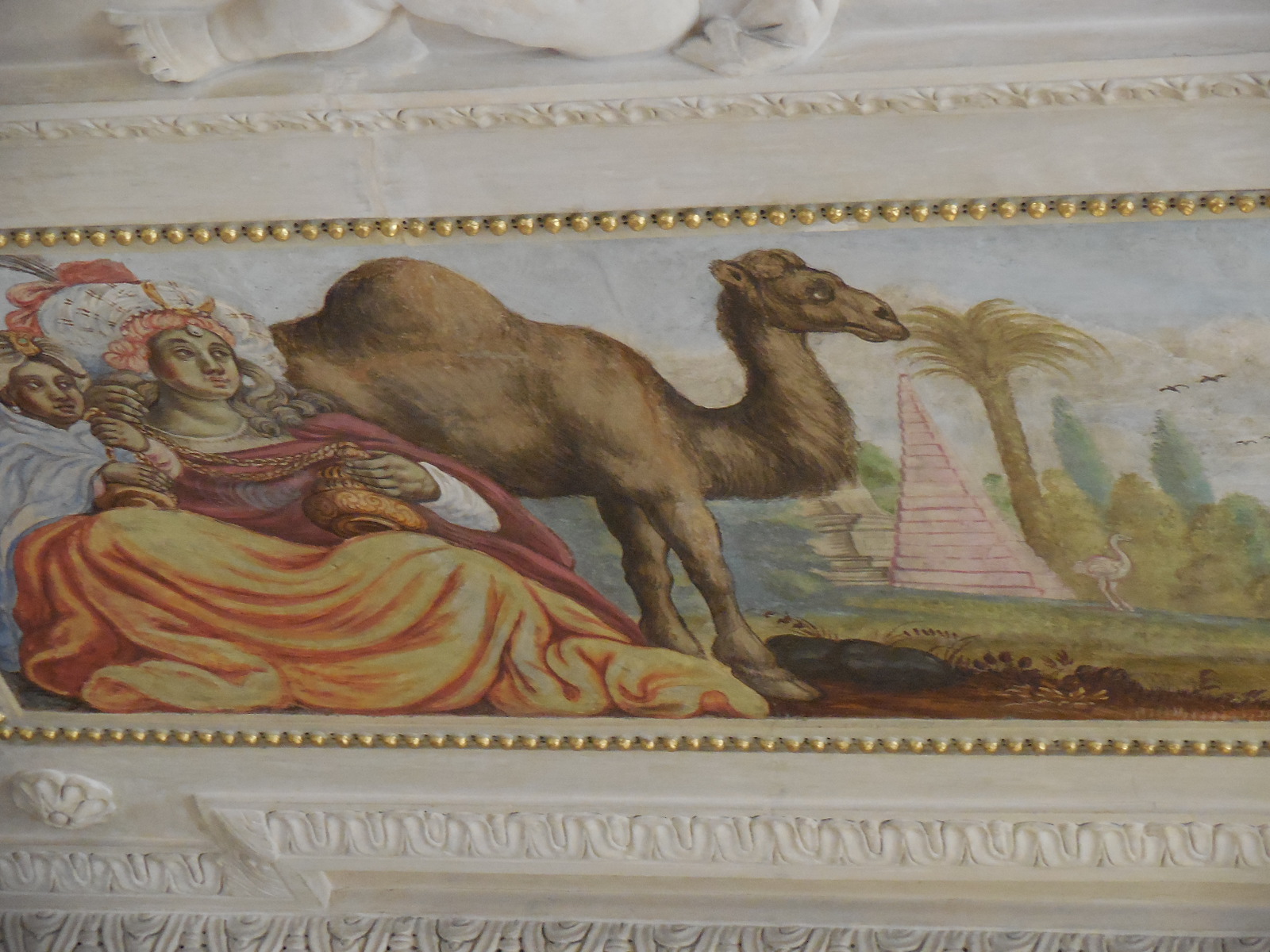
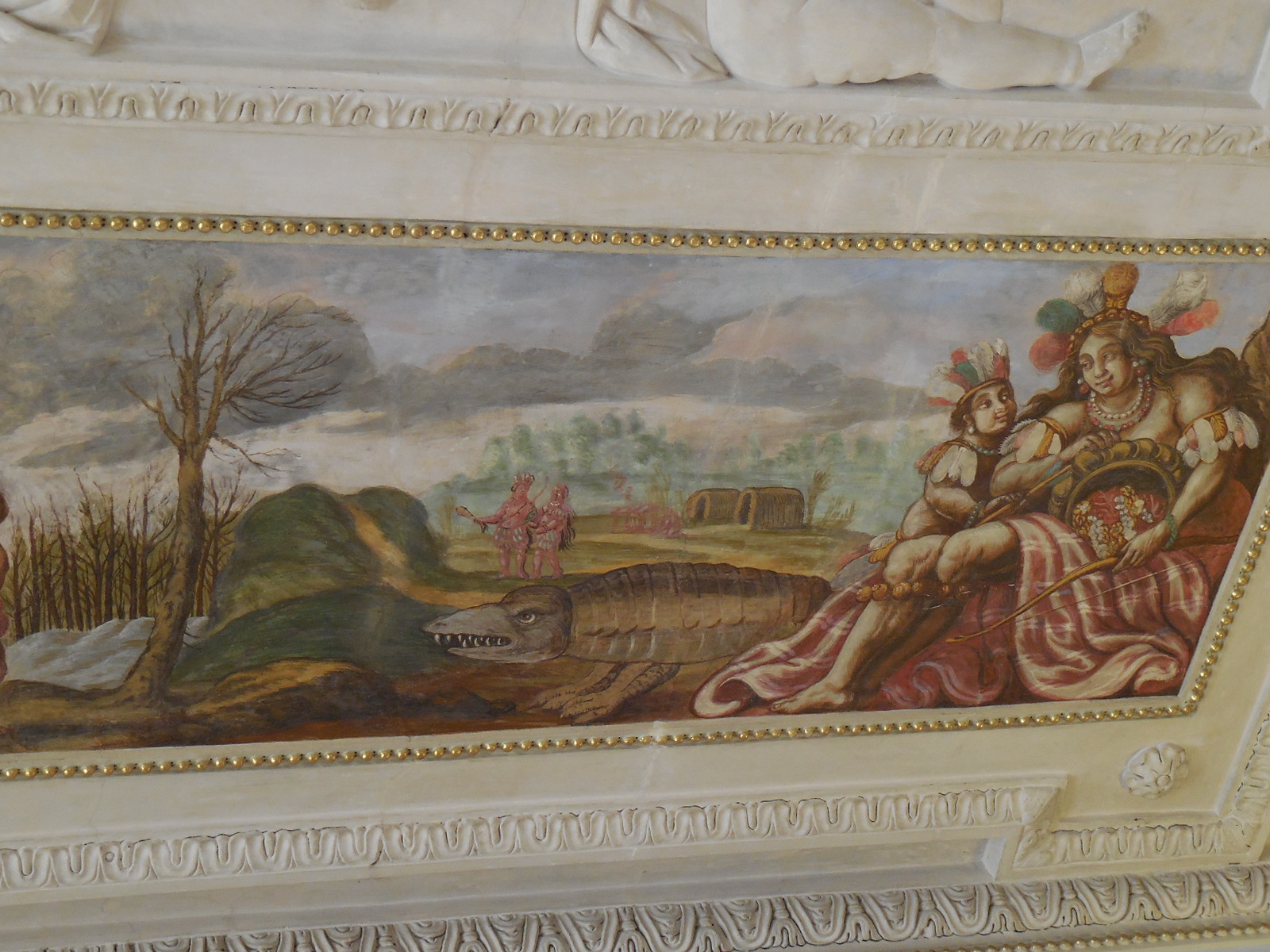
The Dining Room flaunted portraits and ceiling frescoes that enthralled me. I saw the Allegory of Europe, the Allegory of Asia and the Allegory of America, for instance. Poseidon and Bacchus appeared in several frescoes. I loved ceiling frescoes in chateaus, especially ones with mythological figures. The elderly attendant in the room described the various frescoes to me enthusiastically. It was nice to meet a museum attendant proud of the place where she was working.
Lobkowiczfresco2
I punched in a number on the audio guide and listened to how the Lobkowiczs watched the Berlin Wall fall and the Velvet Revolution unfold on television. They returned to Czechoslovakia in 1990 and wanted to make the country their home. Under the first law of restitution, the Lobkowiczs had less than a year to find all the objects that belonged to their family and to make a list of them. It certainly had not been an easy process, but, luckily it had a happy ending.

At the end of the tour I walked by a small concert hall. It would be delightful to attend a concert in such an intimate space in a lavish palace. I would have to come back again to go to a concert. Classical music had played a role in the family history, so perhaps it was only fitting that they had a space for concerts.
Lobkowiczfresco4
I was very impressed with both the palace and the narration on the audio guide. Lobkowicz Palace had a bit of everything – exceptional artwork from various centuries, impressive furnishings, ceiling frescoes, porcelain, musical instruments, original musical scores, weaponry and of course, portraits. I liked the variety of furnishings and pieces of art that I was able to see from various eras – a Romanesque processional reliquary cross and Rococo display cases, for instance. And the family history was so intriguing! What an ordeal William Lobkowicz’s grandfather had gone through! His possessions had not been taken away from him once, but twice – first by the Nazis and then by the Communists.

Now that I knew what an intriguing place the palace was, I was sure I would be coming back for another visit and for a concert sometime soon.
Lobkowiczfresco6
Tracy A. Burns is a proofreader, writer and editor in Prague.
NOTE: No photos were allowed on the second floor, only on the first.

Rychnov nad Kněžnou Diary


Image

My journey started at 6:30 a.m. on a bus from a Metro station on the other side of Prague, about an hour from my home. We arrived in the east Bohemian town of Hradec Králové, where I was to change buses, on time at 7:45. Then I had to wait. But for how long? The information on the Internet stated that the bus to Rychnov nad Kněžnou would leave at 10 a.m., but the woman at the information desk in Hradec Králové confirmed that the time of my next departure was 9:30 a.m.

It took another hour and a half to get to Rychnov nad Kněžnou, situated in the foothills of the Orlické (Eagle) Mountains northeast of Prague, near the Polish border. While it was a sunny day in Prague, in the mountainous terrain it was much cooler, though still pleasant. The bus station was only minutes away from the chateau, so I didn’t have to worry about getting lost on my way back to the 15:05 bus to Hradec Králové. (Actually, I did get lost. I was about two streets away from the bus station on my attempt to return there. I always seem to get lost!)

I had already visited Rychnov once, about 10 years earlier. While the chateau may not have outdone those nearby in Častolovice and Opočno, it certainly ranked right up there. The chateau had an intriguing past.  The town had been home to a castle or fortress as early as 1258, but it became a ruin, and a church was built over it in the late 16th century. This chateau was built between 1670 and 1690, under the guidance of František Karel Kolowrat. The well-known noble Kolowrat family had purchased the estate during the Thirty Years’ War in 1640, and their descendants even live in the chateau today. (It was returned to the family in 1992.) The residence underwent a Baroque transformation between 1713 and 1727. The architect of what was once the riding hall was the well-renowned Gothic Baroque master Jan Blažej Santini Aichel. In the late 16th century a bell tower had been constructed in the town. It was the third biggest in Bohemia, weighing almost seven tons.

As I approached the chateau, I noticed the column with the Virgin Mary, dating from 1692 to 1694. Soon I was one of three people on the 60-minute tour. The first thing I saw was the coat-of-arms of an eagle on the hallway floor. Above the red and silver eagle was the word “faithfully;” below it, the word “always.” I paid special attention to the crown above the eagle; Emperor Charles IV gave the Kolowrat family the crown on their coat-of-arms after one member of the family had saved the ruler’s life during an assassination attempt in Pisa, Italy.

ImageMy favorite room was the picture gallery. The chateau boasted more than 300 paintings on display and furniture from as far back as the 17th century.  The picture gallery’s collection of about 400 paintings consisted mostly of portraits of the Kolowrat family members, still lifes and hunting scenes by Dutch and Italian masters, and there were also landscapes. Some works took up religious themes as well. The dark-haired, tall man who was giving the tour mentioned that at one time, the collection held 1,218 paintings. This gallery also traced the development of the nobility in portraiture from the 16th to the 19th century. The biggest delight for me was the masterpiece by legendary Czech artist Karel Škréta – his portrait of Ignác Vitanoský of Vlčkovice. However, not only paintings abounded in the chateau; decorated ceramic stoves were situated in each room, dating from the 17th to 20th century.

Other paintings of note included “Esther before Ahasuerus” from the South Netherlandish School of the 16th century. I noticed the luxury of the palace, where the scene took place. In the background, through an open door, I could see greenish-blue mountains and a winding stairway leading up to a mysterious building. What intrigued me the most, though, were the loud, red stockings of Ahasuerus.

In one room a large painting showed the execution of noblemen on Prague’s Old Town Square during 1621, after the Protestant Bohemian States lost to the Holy Roman Empire, Spain and the Catholic League in the Battle of White Mountain during November of 1620. Edison light bulbs were featured in a chandelier decorating another space.
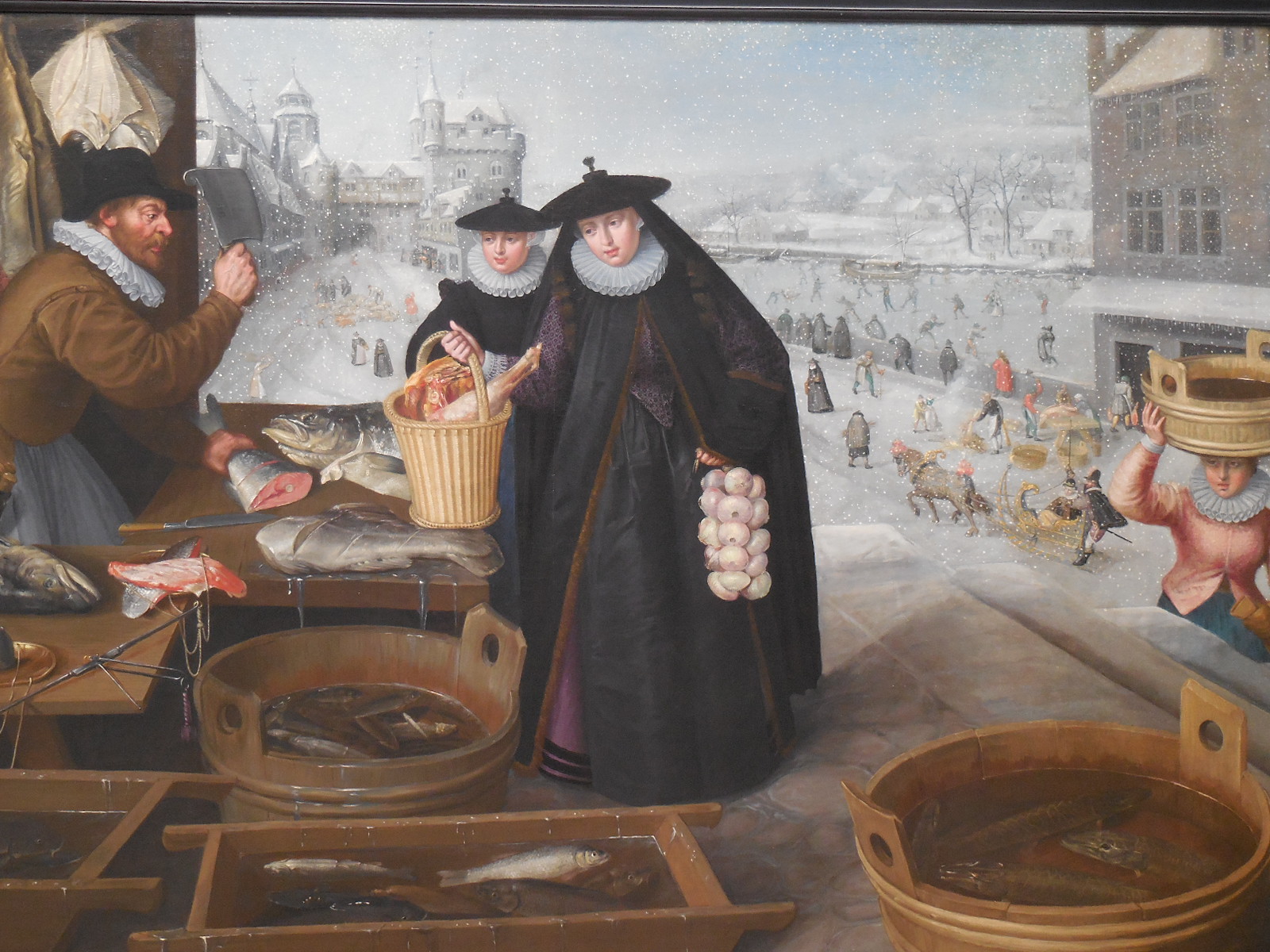
One of my favorite artifacts was a painting of a winter landscape with figures on the ice in a quaint village scene. Several people rode a sleigh, and another was falling down. It reminded me of the wintry creations by my favorite Dutch master, Pieter Brueghel the Elder.

The Škréta portrait was certainly a highlight of the tour. Ignác Vitanovský of Vlčkovice had a gentle yet determined look in his eyes as he gazed at the viewer. I also saw Baroque furniture employing a green and tan leaf motif. In one space a pink and white Venetian chandelier greeted me. The guide pointed out that there was an engraving in the middle of one bureau. It showed Boleslav murdering his brother, the future Czech patron saint Václav (Wenceslas), in Stará Boleslav on September 28, 935.
ImageThen we came to the Knights’ Hall with life-size portraits of members of the Kolowrat family. The chapel was quaint with its ceiling fresco and altar featuring a very pensive Saint Mary of the Snow. Another room was filled with various fans of different colors, some of them made of silk. The guide explained how fans had been used to set up meetings or ask someone out on a date. For example, a gesture with a fan could tell a man if the woman was single or married. A Buddha also decorated that room. The head and hands could move, and it stuck out its tongue at the viewer.

In the Dining Room I saw Viennese, Empire style, Meissen and other styles of porcelain. What interested me the most were the paintings of dead animals on the walls. It seemed to be inappropriate décor for a place where people ate. Looking at those paintings during dinner would certainly ruin my appetite.

The tour was over too soon. Then I went to lunch on the main square, where I had my favorite chicken with peaches and cheese. I also checked out the Holy Trinity Church, erected on the site of what was once a castle or fortress. The church was closed, but I did see an intriguing fresco on one wall.

There was even more to see at the chateau. The Hladík Gallery featured statues of former Prague professor of the arts Karel Hladík, who lived from 1912 to 1967 and hailed from the Rychnov area. I was impressed. His busts, torsos, decorated totem pole-like sculptures and figures in agony spoke to me as they relayed strong emotions. I felt as if I really knew the people whose busts I saw, as if I almost could understand them. Another intriguing work was his portrait of a gaunt Franz Kafka.

The upstairs portion of the Orlická Gallery awaited me. There I saw the landscapes by Jan Trampota. These were landscapes in bright pastels, mostly of scenes in the Orlické Mountains. One of Trampota’s works showed the beautiful countryside with gentle hills and lush trees. The terrain was sprinkled with a few cottages. This watercolor “At the End of Summer” was executed during 1928-29 in soothing pastels and greens and browns, and was my favorite of his paintings on display. In another room landscape paintings by one of my favorite Czech artists, Antonín Hudeček, were hung. I wanted to take Hudeček’s field of pink flowers home.

There were many rooms in the gallery, all boasting intriguing paintings, plus a temporary photography exhibition. By the time I got through the gallery, it was time to hurry back to the station to get the bus back to Hradec Králové. I did get lost during what should have been a five-minute trek, but I still made it in time.

On the bus I noticed a sign stating that passengers must fasten their seat belts. But I didn’t have a seat belt. In fact, the other seats near me didn’t, either. Both buses coming to Rychnov nad Kněžnou had been equipped with seat belts. Luckily, there was no accident and upon arriving to Hradec Králové, I immediately got on a 16:30 bus to Prague. Image

Nelahozeves Chateau Diary

Nelahozeves courtyard

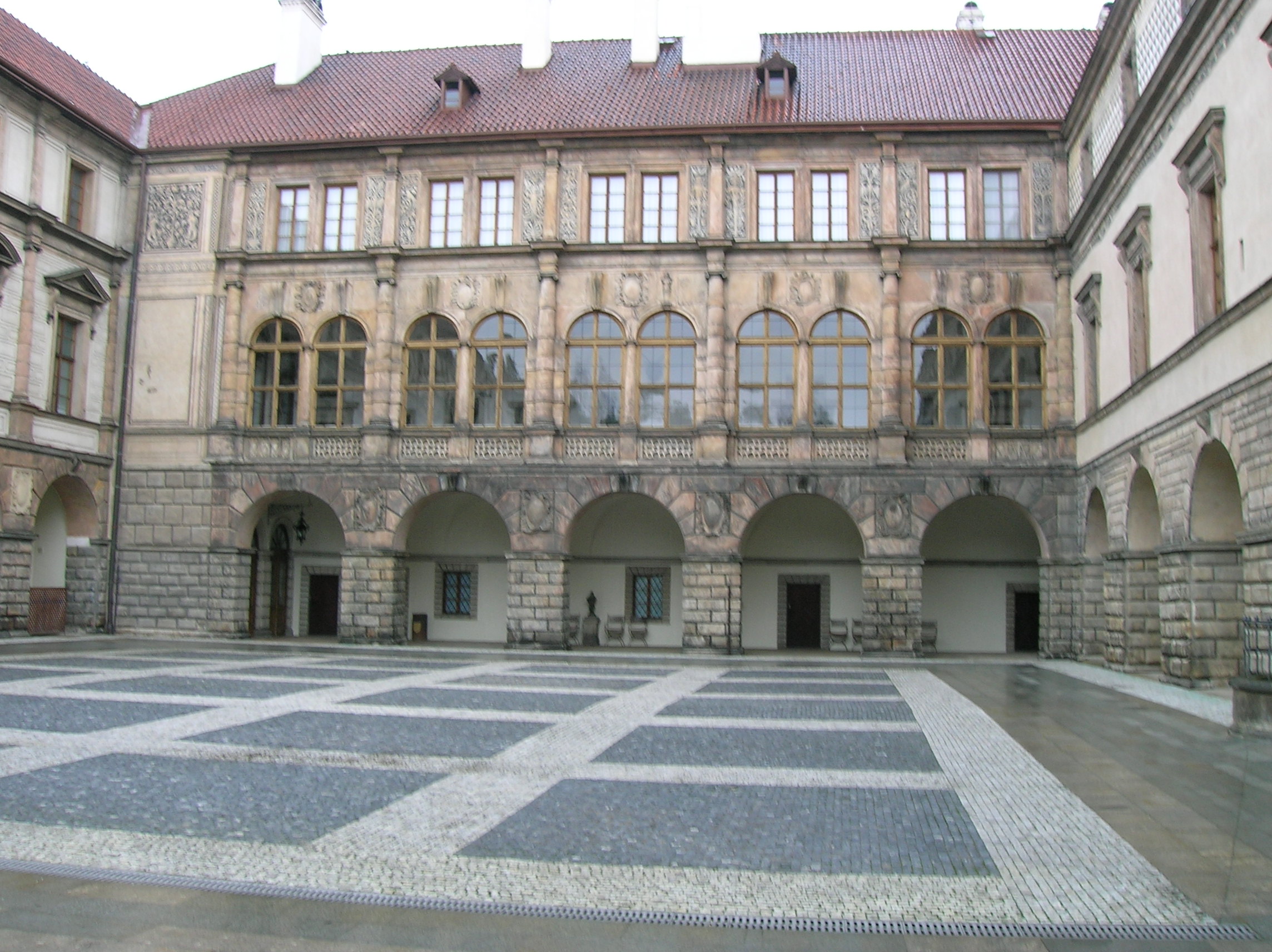
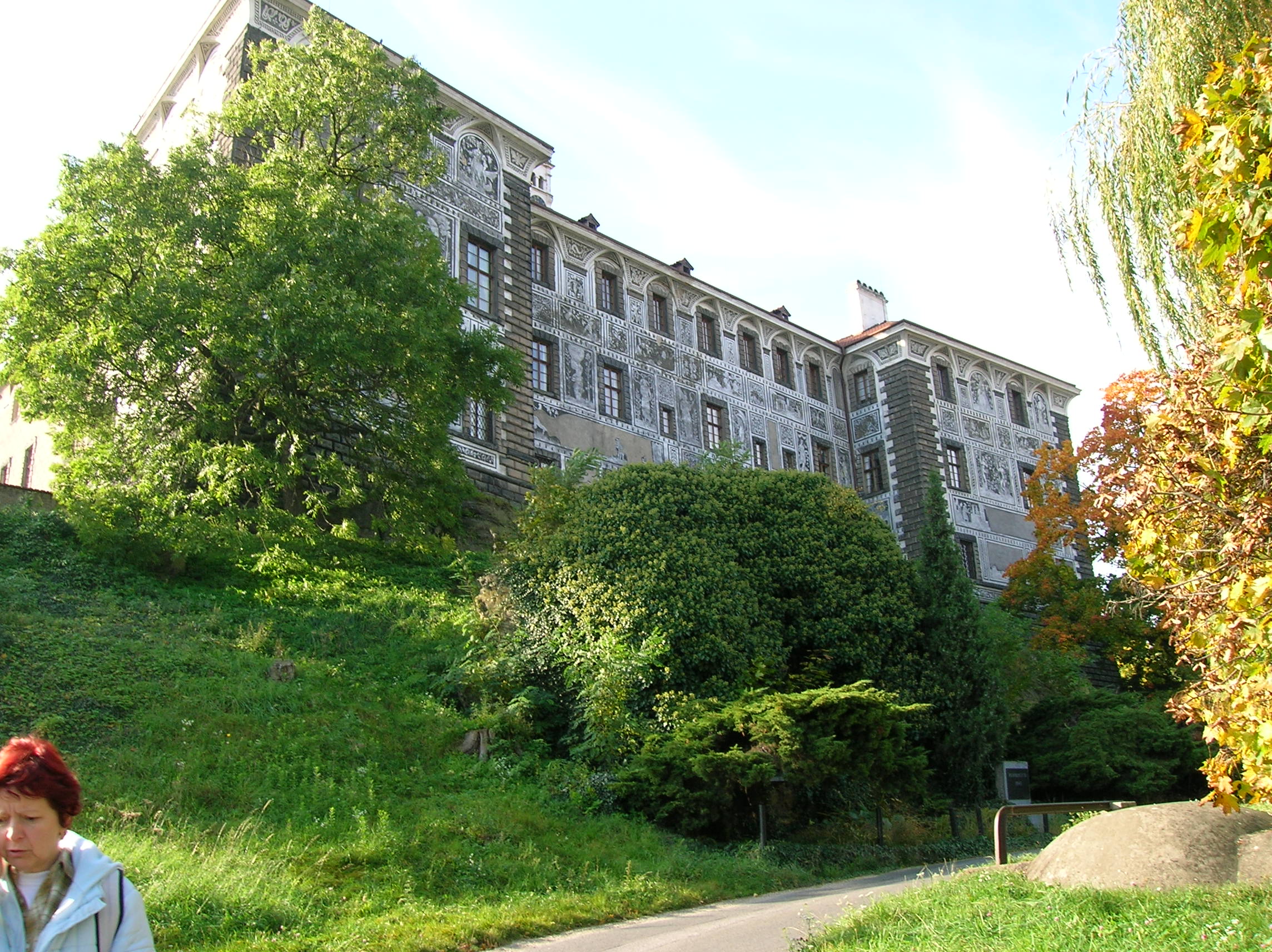
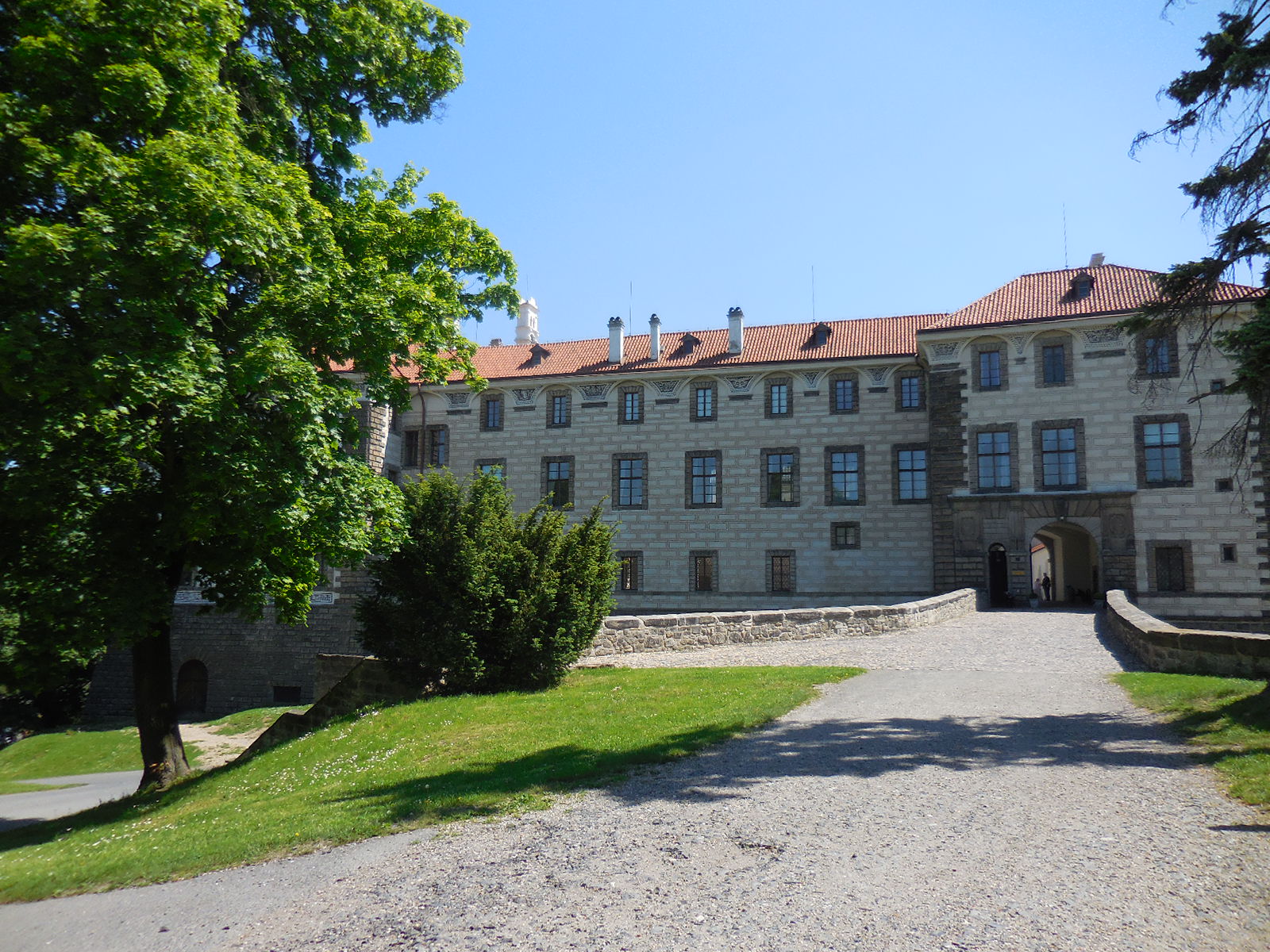
A comfortable 40-minute ride in a new, clean train. That’s all it took to get from Prague’s Masaryk station to Nelahozeves chateau in the village by the same name as it is a mere 30 kilometers from the capital city. Then it is only a short walk to the two-storey chateau. It was my third time here. I especially love the plethora of art work in the Italian Renaissance three-winged structure. Even from the train I could see the chateau, appearing as a sort of fortress looming above me, with its enchanting sgraffito-decorated northern wall facing me. I crossed under the oldest railway tunnel in Bohemia, dating from 1851 to 1855 and constructed in Neo Romanesque style, and then wound up gazing at the beautiful sgraffito on the façade.

Floral motifs decorate the northern wall as do scenes from The Old Testament. For example, on the wall Judith holds the head of Holofernes, Hercules fights the giant Antacus and Isaac is sacrificed. Virgil Solis, a follower of the master artist Albrecht Dürer, is responsible for the design. After crossing a stone bridge, I went through a gateway flanked by Ionic columns and arrived at a rectangular courtyard. The box office was straight ahead.

Nelahoz22

The history of the chateau intrigued me, as it had become intertwined with the Lobkowicz family, who bought the chateau in 1623. Bavarian aristocrat Florian Griespek of Griespek constructed it, and his successor Blažej put on the finishing touches in 1614. It took 60 years to build the chateau. Griespek had an interesting background. A former court official of the Holy Roman Emperor and King of Bohemia Ferdinand I, he had spent time in Prague’s White Tower for charges of high treason. Thanks to Ferdinand I, though, he became a free man again. It was his granddaughter Veronika who sold the chateau to Polyxena of Lobkowicz. The intriguing history does not end there. Not at all. During the Thirty Years’ War, the chateau was occupied by Swedish troops and those of other nationalities as well. Then it served as a military hospital during the Austrian-Prussian War. Later it was the home of a girls’ boarding school. During World War II and under the Communist regime the items in the chateau were scattered in various locations.

Restoration did take place after World War II when it became the property of the Czechoslovak state. Then, finally, in the early 1990s, the Lobkowicz family became its owners once again. The current owners live in the USA, while their son William takes care of the noble residence. To be sure, many of the Lobkowicz clan had been active in Czech politics and culture. For example, Polyxena’s son Václav Eusebius worked as an advisor to Holy Roman Emperor and King of Bohemia Ferdinand III and Holy Roman Emperor and King of Bohemia Leopold I. Also, Max Lobkowicz focused his energy on the Czechoslovak exile government in England during the Second World War. During that time he also served as Czechoslovak ambassador to Great Britain.

NelahozevesMay176

Perhaps the chateau is best known for its paintings.  In the Gallery of Portraits I saw paintings of members of the Lobkowitz family from the 19th and early 20th century. In my favorite, a woman in a stunning blue dress holds a budding pink rose. An admirer of Lucas Cranach the Elder’s works, I spent some time gazing at his “Madonna with Child, Saint Barbora and Saint Kateřina” from around 1520. I noticed the calming green and blue colors in the horizon as a saint in the foreground read a black book. The Madonna looked pensive while the child appeared defiant. I liked the detail of the baby’s little fingers.

There is a Peter Paul Rubens’ masterpiece on display as well. It is called “Hygieia feeds a sacred snake” and dates from circa 1614. The Baroque gem shows a snake with its mouth open, appearing famished. I could almost see its tongue flicking in anticipation.

NelahozevesMay17

My beloved Bruegel clan is among those represented in the chateau’s art work, too. Pieter Bruegel the Elder’s “Haymaking” dates from 1565 and depicts women walking in the foreground, gripping hoes, while others carry baskets on their heads. Horses, used for carting hay, drink from a bucket in the middle of the foreground as people toil in a vast field. The gigantic cliff to the left in the background caught my attention just as the blue and green mountains and river did. The painting depicted two months of the year, illustrating June and July. Then there’s a winter village scene, idyllic and calming, by Pieter Bruegel the Younger around 1615.

NelahozevesMay1712

But that’s not all. In Canaletto’s “Thames with Westminster Bridge” from 1746 I noticed the gentle frolicking of the waves and appreciated the details of the boards, sails and oarsmen. Hundreds of black-and-white prints depicting hunting themes also line the walls of a hallway.

My favorite three paintings, though, made up a satirical series of cats posing as female nobles and monkeys representing the male nobility. They are located in a small room filled with 47 paintings. The works by Sebastian Vrancx, who lived from 1573 to 1647, include one depiction of monkeys sword-fighting. I was drawn to the bright red clothing with the stiff collar of one particular monkey as he lunges forward to strike another monkey that had fallen onto the ground. A cat on the sidelines flails her arms, as if saying, “Enough already!”

NelahozevesMay172

Another shows cats and monkeys at a banquet. Two monkeys working as waiters had a well-ironed cloth over one arm. A plain chandelier is overhead while one monkey brings a kettle to a table full of chattering cats. I could almost hear the chit-chat of the seated felines.

In the third rendition cats and monkeys are on a boat in a river. A palace or manor house and another boat make up the background. One monkey reads aloud from a book while another plays the piccolo. I thought it was intriguing that the painter chose to place a monkey with his back to the viewer in the center of the foreground.

On the tour I saw much more than paintings. For example, the library contained 65,000 books, written in German, Latin, Hebrew, Italian, German, French, Spanish and Czech. There were 679 manuscripts, and 114 of them date from the Middle Ages. Subjects ranged from history, medicine, architecture, literature, law and travelogues. However, only a small portion of the books are on display in the chateau. Still, I was fascinated by the 1696 French first edition of The Art of Swimming, which ranked as one of the earliest books on the subject.

NelahozevesMay1711

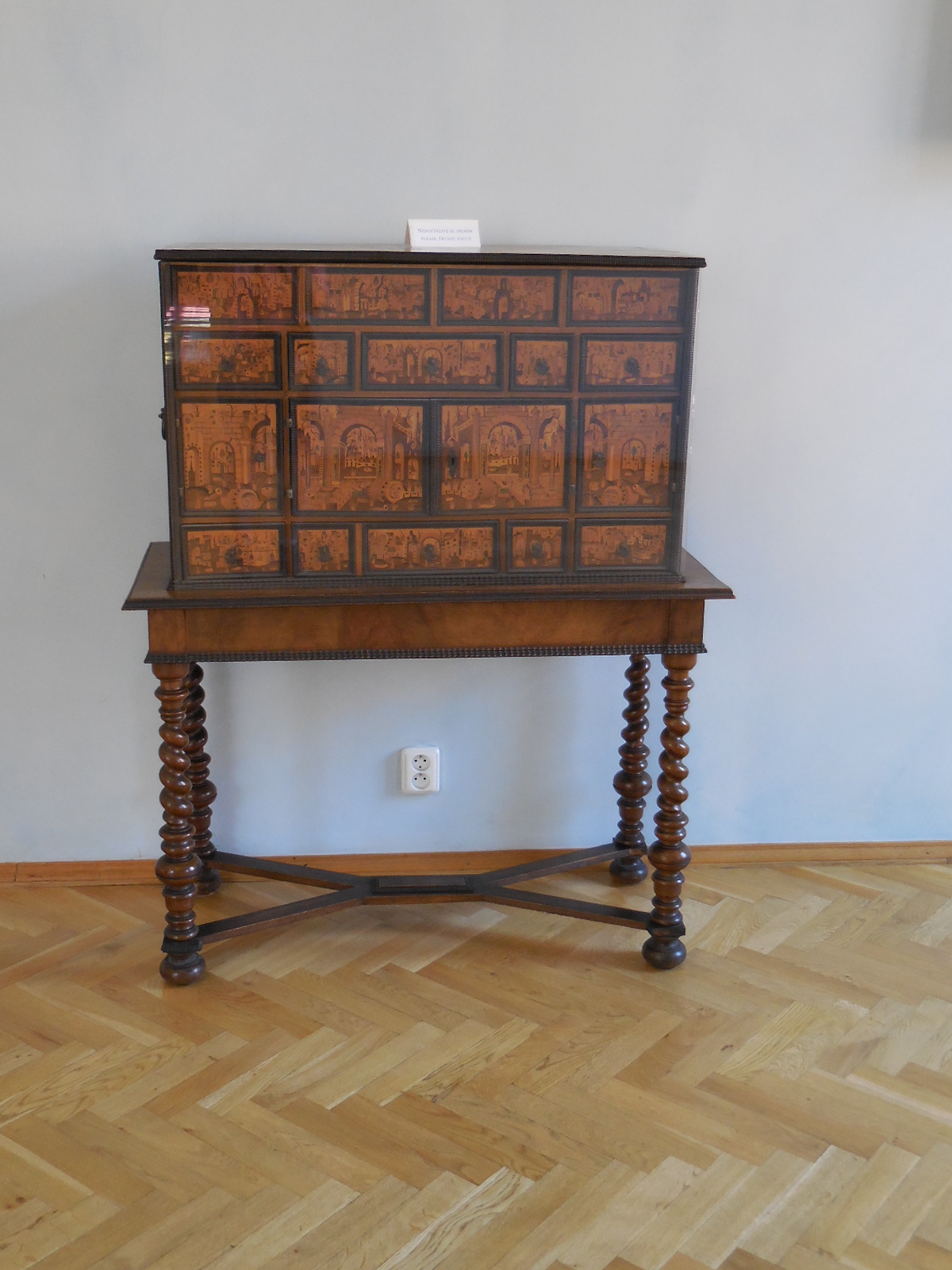
In the Drawing Room I set my eyes on a gold Empire-style table, made with gems and decorated with intarsia. On the black table were pictures of apples, birds, and fruit and flowers in ornate bowls. In the room where the prince welcomes guests, I saw a black cabinet from the 17th century, decorated with pictures of biblical themes, birds and flowers.  In the chapel there was a three-winged altar with pictures of an angel, a man on a chariot with a skeleton to his side and a man in a long robe pointing at a manuscript on a podium.

The Dining Room exhibited exquisite Venetian decoration encased in glass. I was also impressed by the desk made out of antlers, located in the armory. In the middle of the room was a rifle for bird-hunting, decorated with a grotesque brown mask, a black ball in the creature’s mouth. Then there was the beautiful Knights’ Hall with paintings of knights on the walls and a sandstone fireplace from the 16th century. Stucco reliefs adorned the ceiling. At one time, many centuries ago, this room used to be the social center of the chateau, with its Renaissance décor.

Nelahoz23

After the tour I wanted to get something to eat in the delightful restaurant upstairs, but it was open only to groups who book it in advance. In past years, it had been open to the public. I made my way back to the train station- a small, brick building that was more of a stop than a station. I passed Antonín Dvořák’s birthplace, a white house that was open odd hours. It was a pity the house-turned-museum was not open; I would have liked to have visited the place again as I had not been there for many years.

A comfortable, clean train came on time, and I headed back to Prague in the early afternoon.


Image