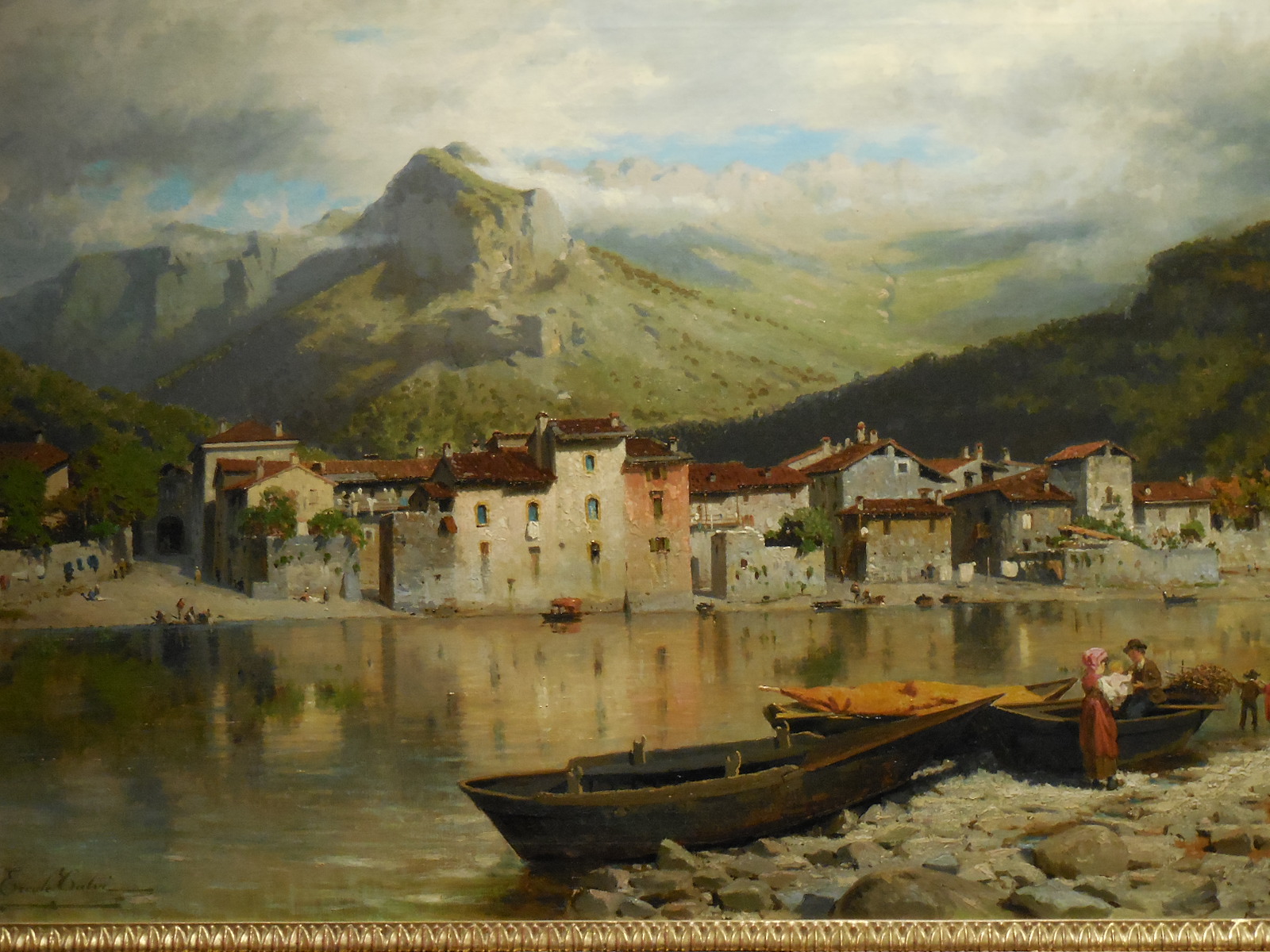
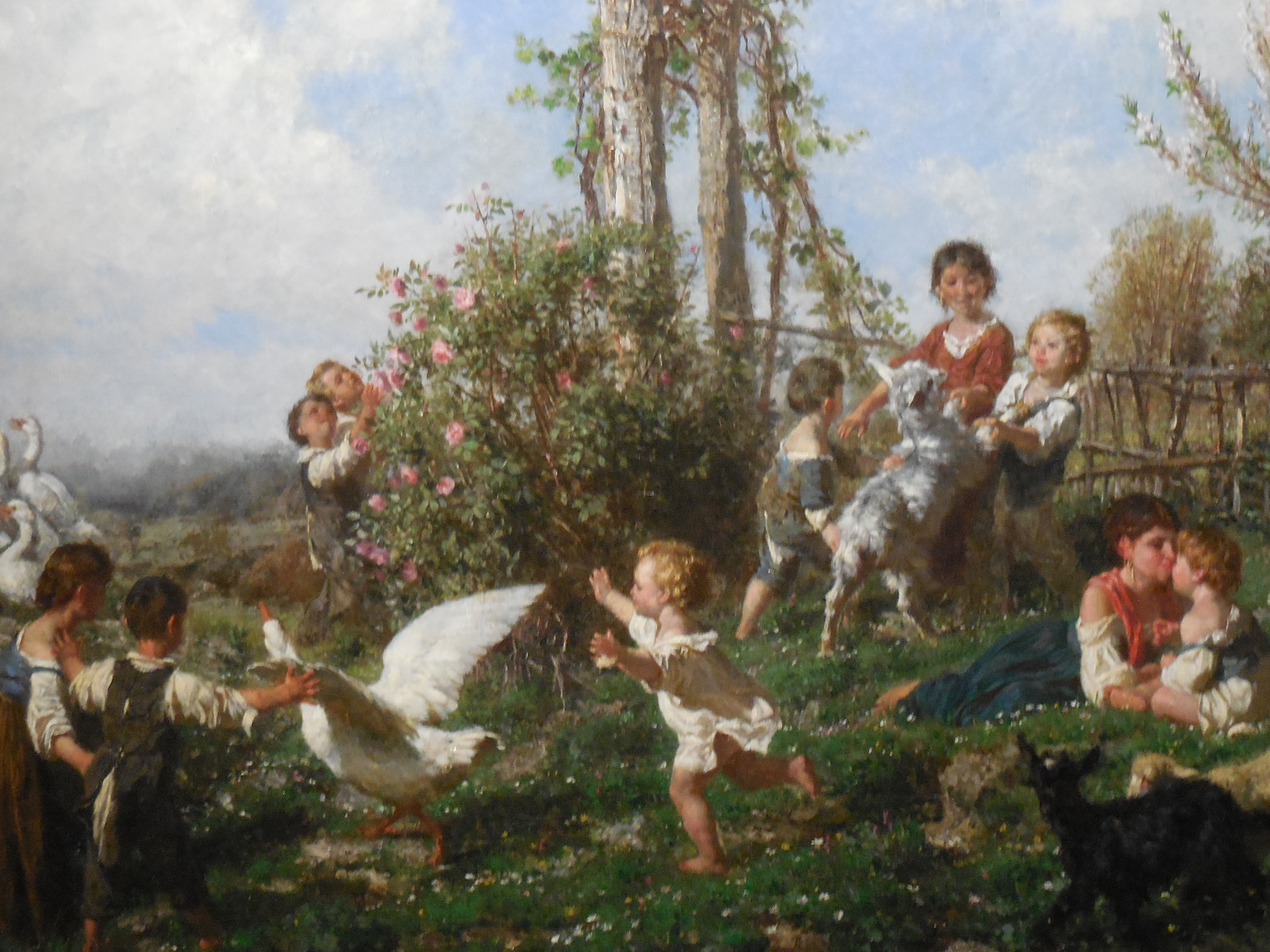
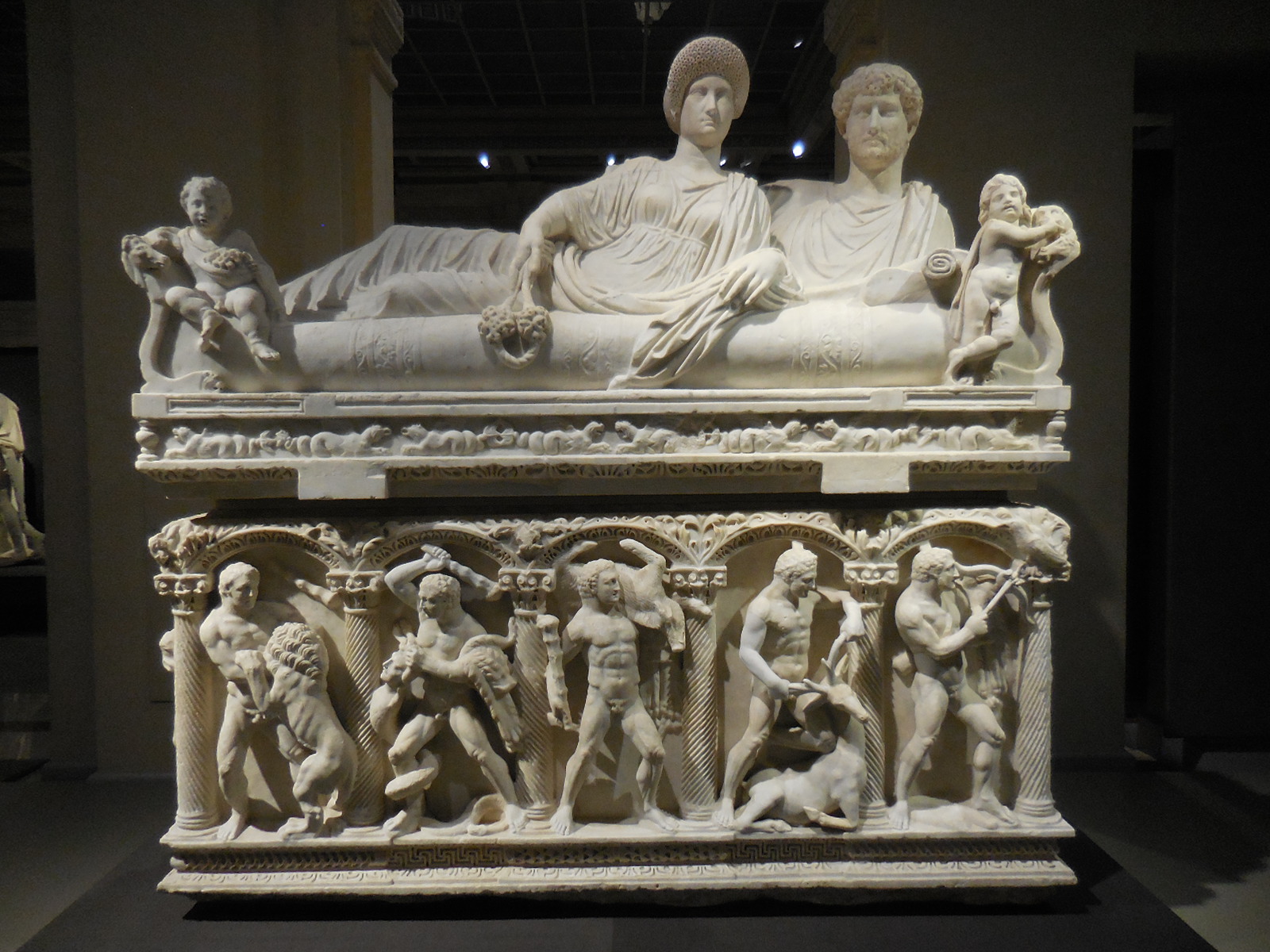
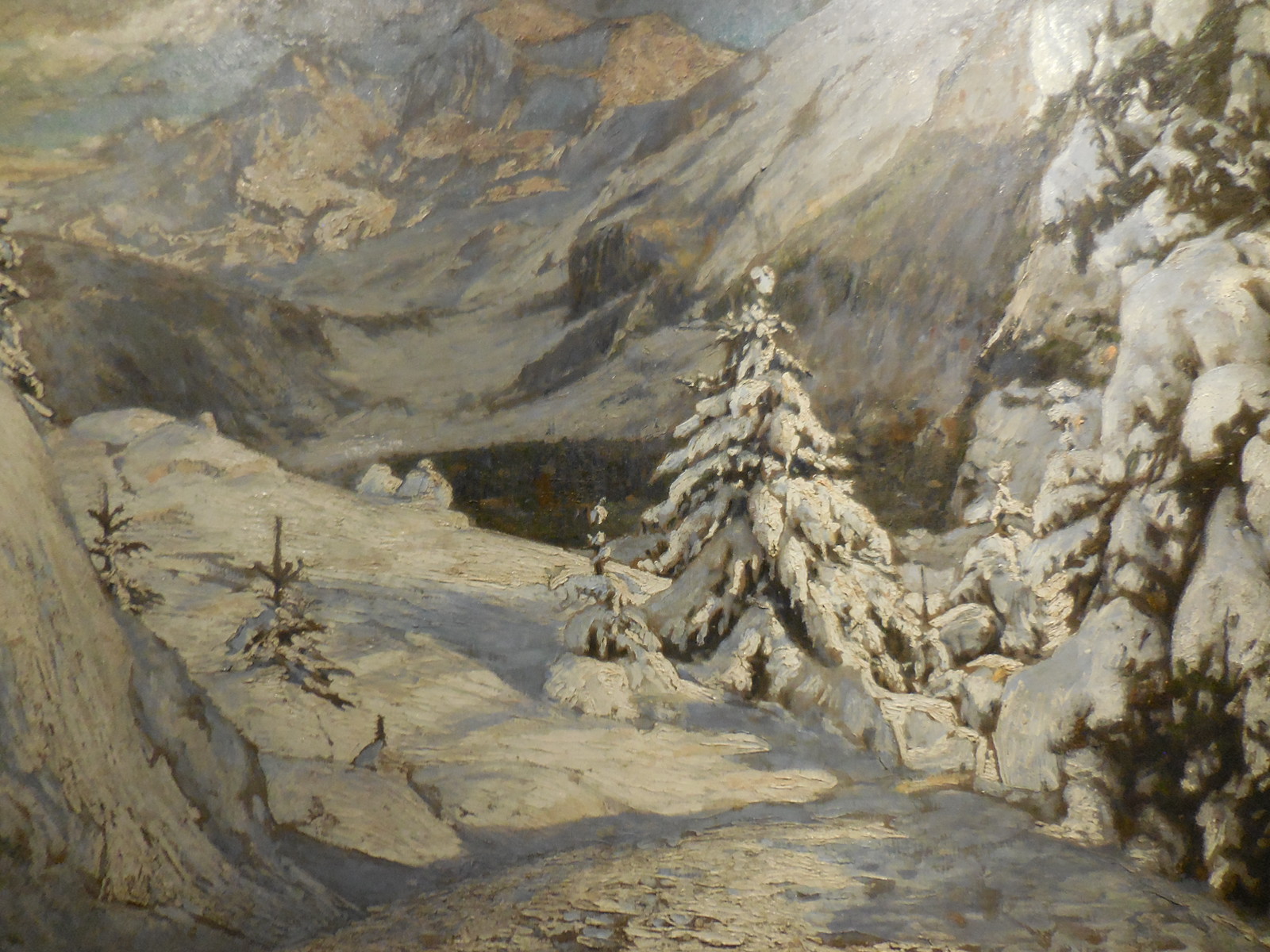
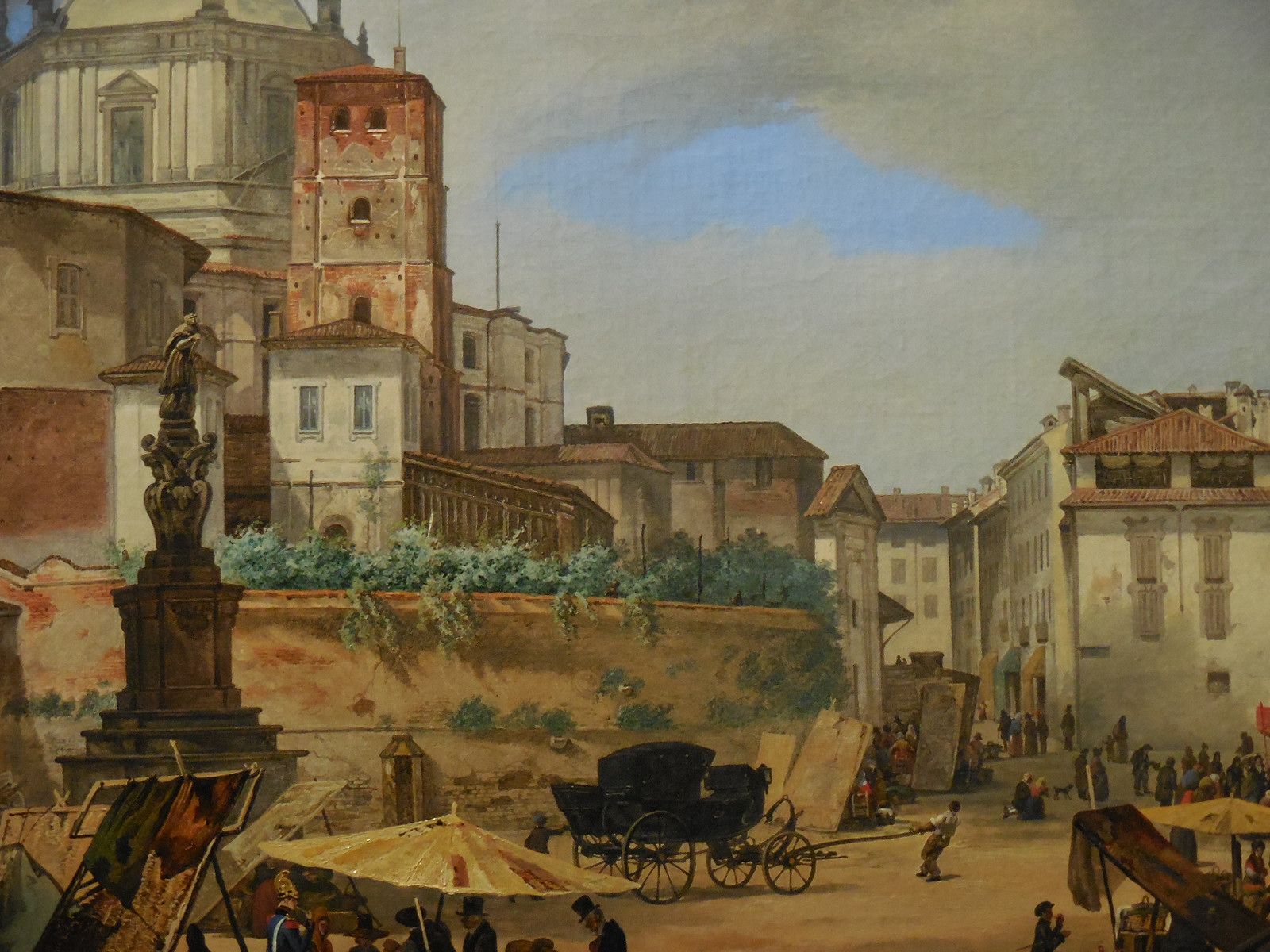
These three palaces, located on the Piazza della Scala near the Scala Theatre, displayed extraordinary artworks of the 19th and 20th century. In the 19th century sections, I was amazed at the vedutas of Milan Cathedral, the system of canals in Milan called Navigli and the Alpine scenes. I found myself thinking of vedutas I had seen in the Czech Republic, such as the masterful ones at Mělník Chateau near Prague.
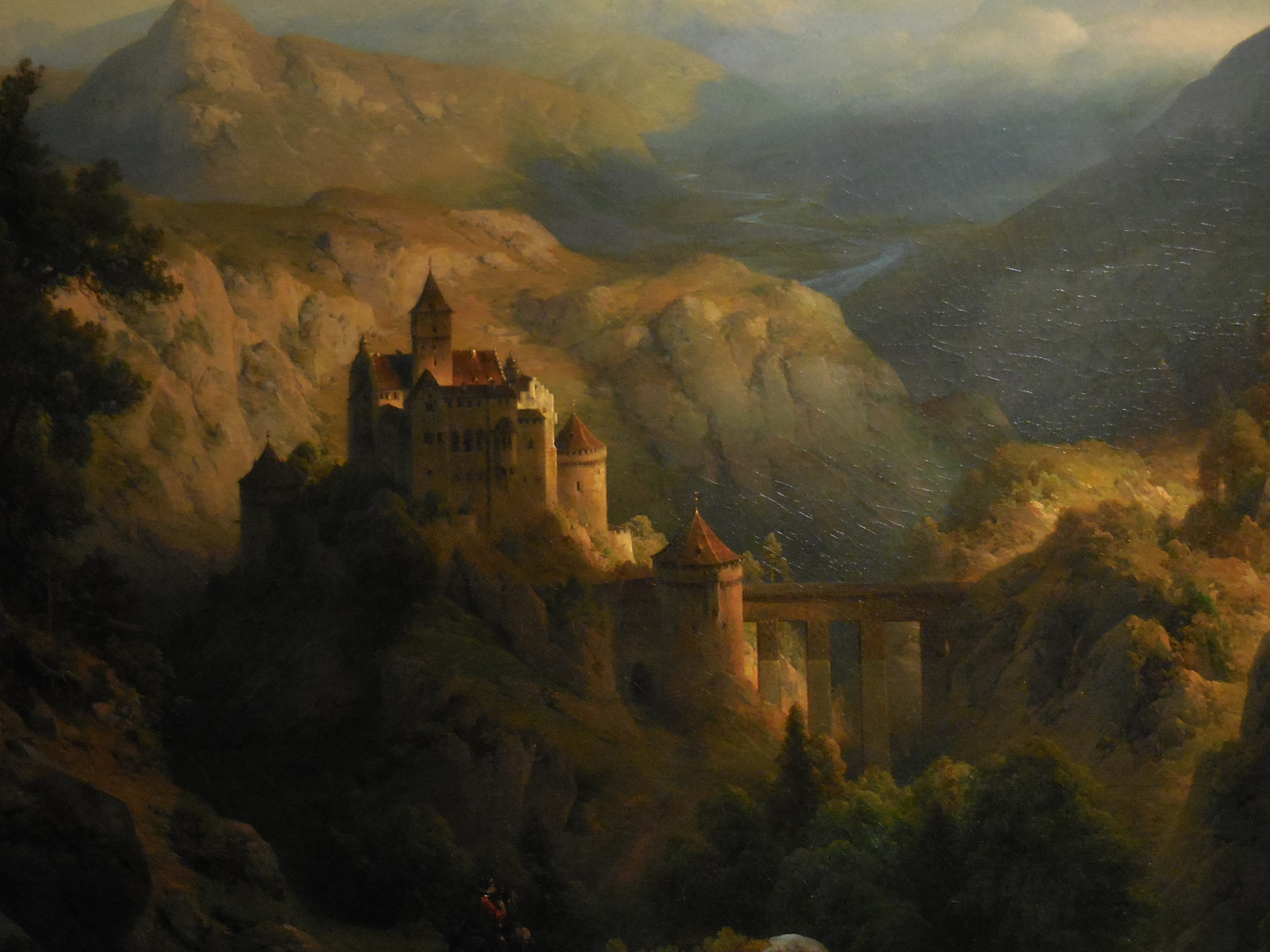
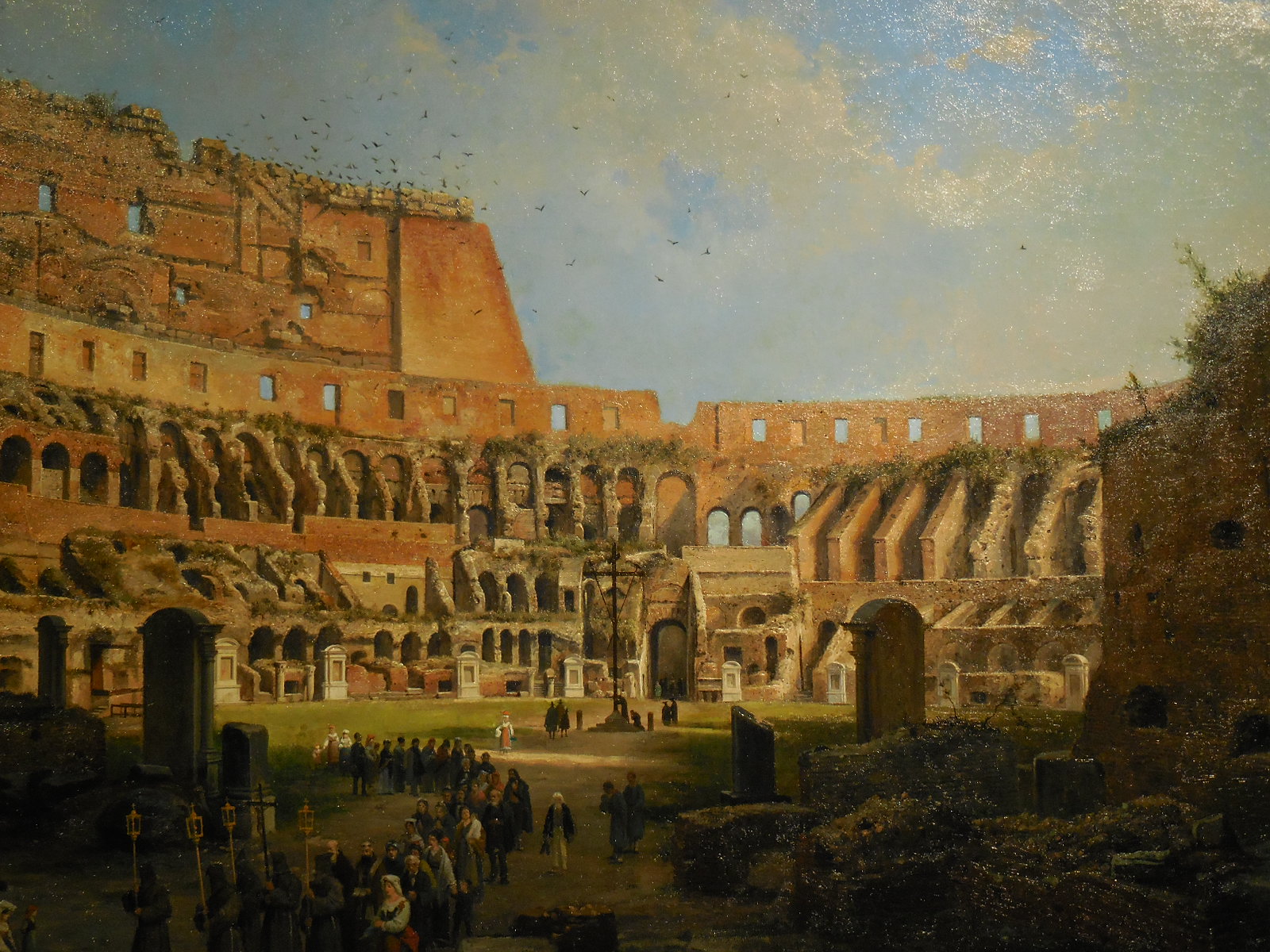
The landscapes from the second half of the 19th century gave me a tranquil feeling. I especially liked the landscape with a magnificent yet mysterious castle perched in the mountains. The painting of the Colosseum reminded me of showing that sight to my parents some years ago, watching them gaze with awe and amazement at the historic monument. That was one of the happiest moments of my life.

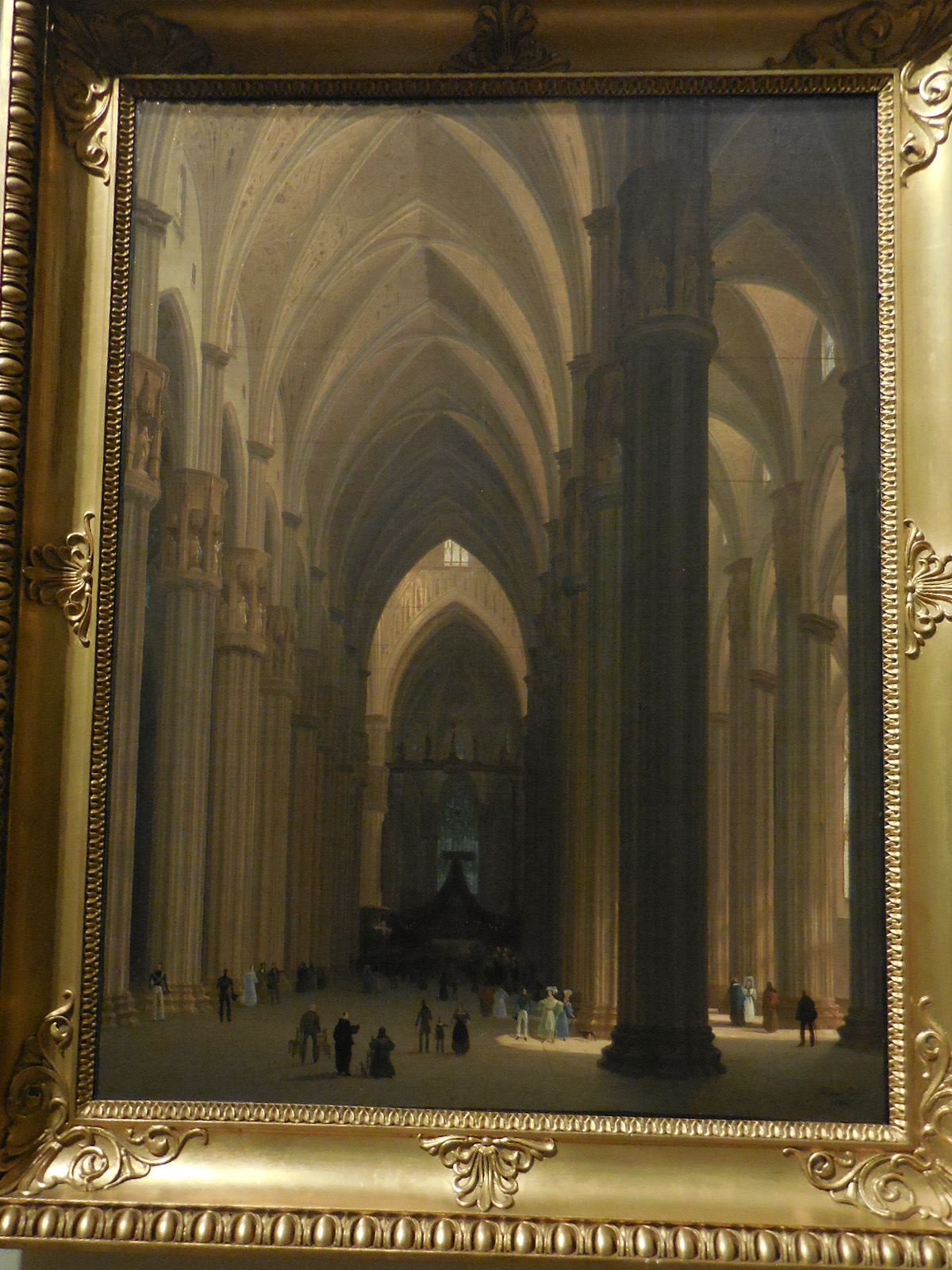
The paintings of Milan’s Duomo allowed me to appreciate the exterior and interior of that sight to an even greater extent. I recalled walking down from the roof to the ground floor of the cathedral. I had been worried I would fall because I had nursed a bad leg for nine months not long before my trip.
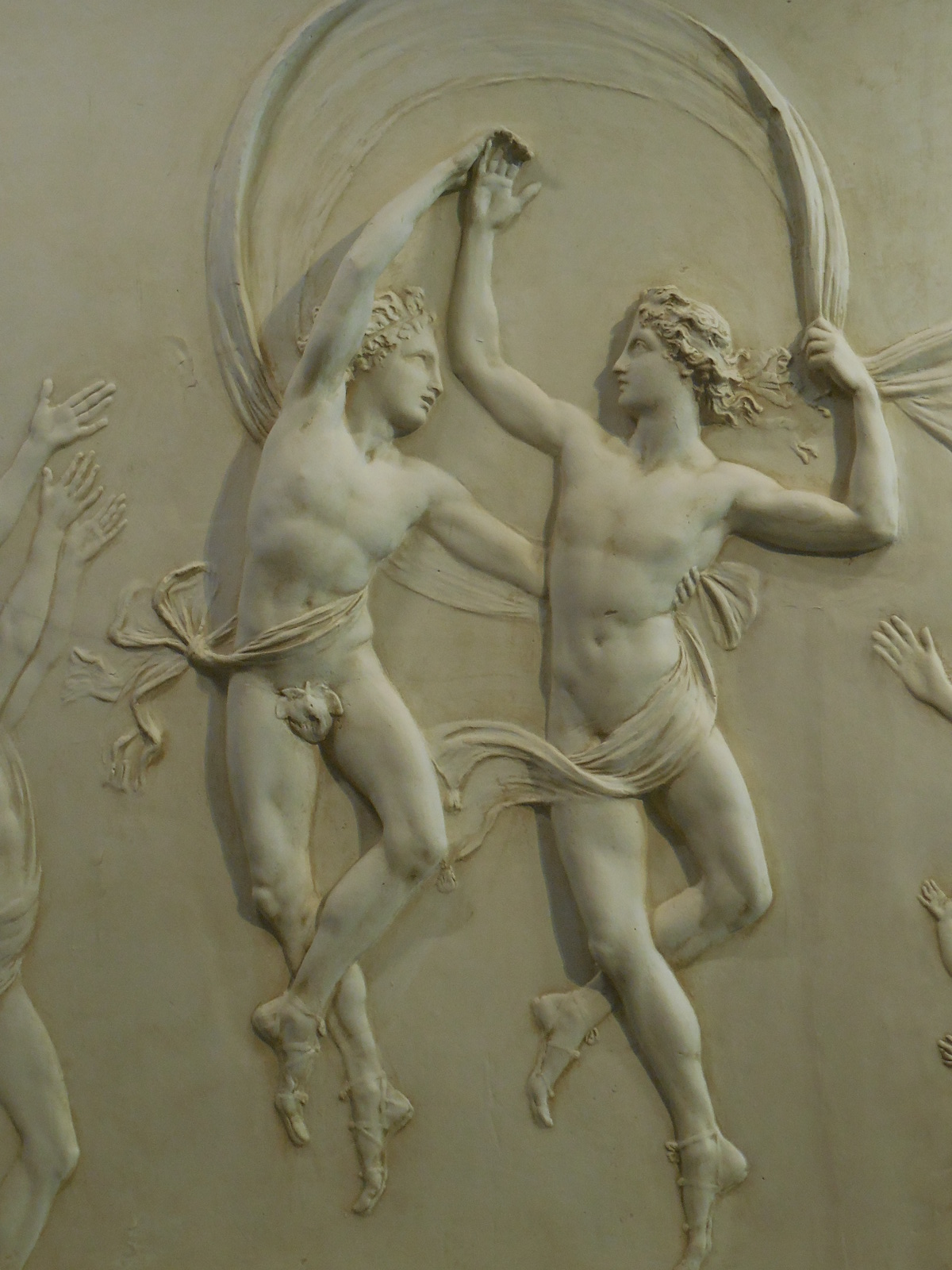
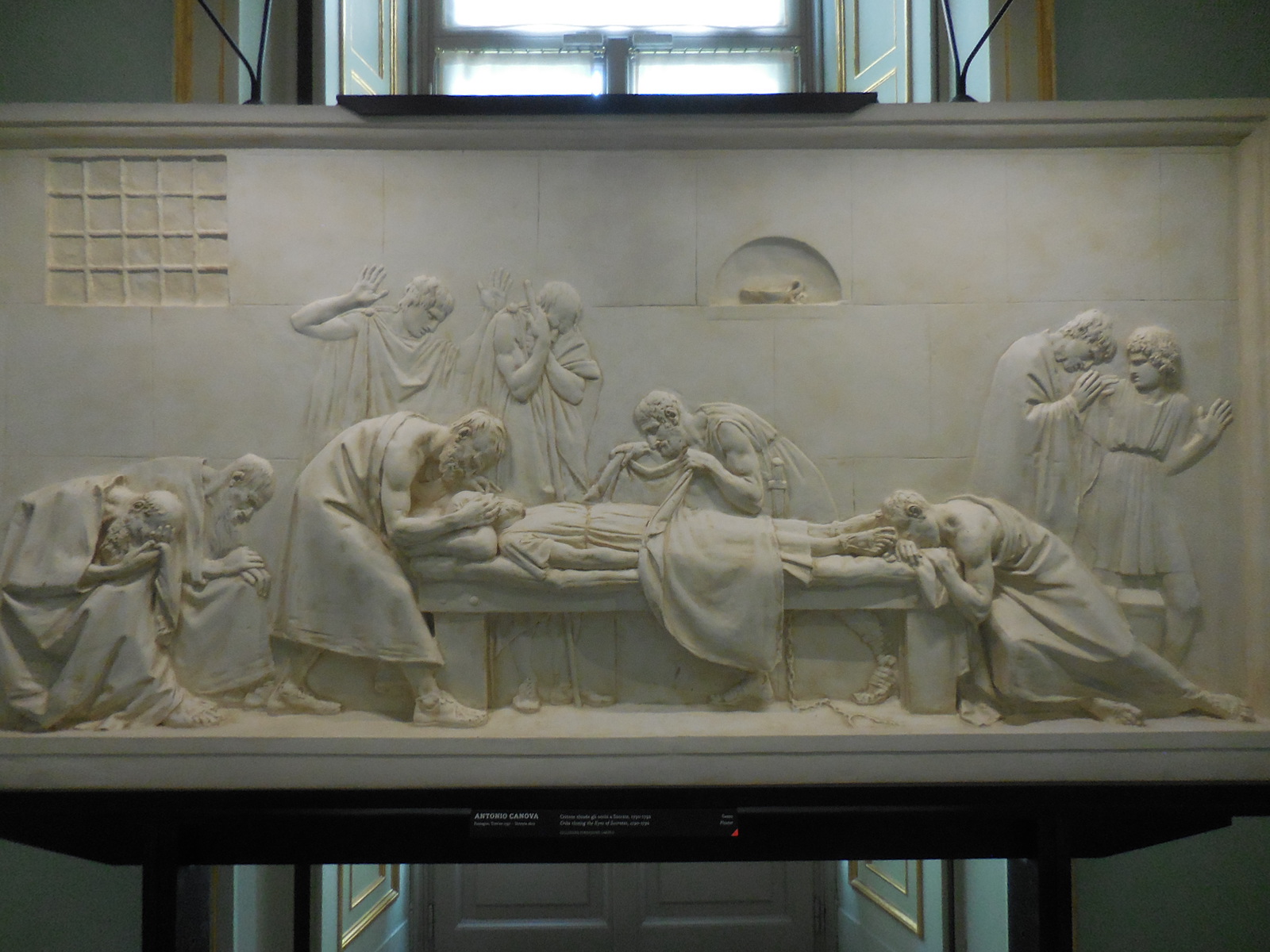
The bas reliefs of Antonio Canova were delights as well. They were inspired by the works of Homer, Virgil and Plato. I remembered seeing Canova’s works at the Borghese Gallery in Rome.


The Lombard painting of the 19th century showed Milan as a vibrant artistic hub and often told pictorial tales of a rapidly changing society. I saw works by Francesco Hayez and other Romanticist artists. Giovanni Migliara focused on ancient monuments.
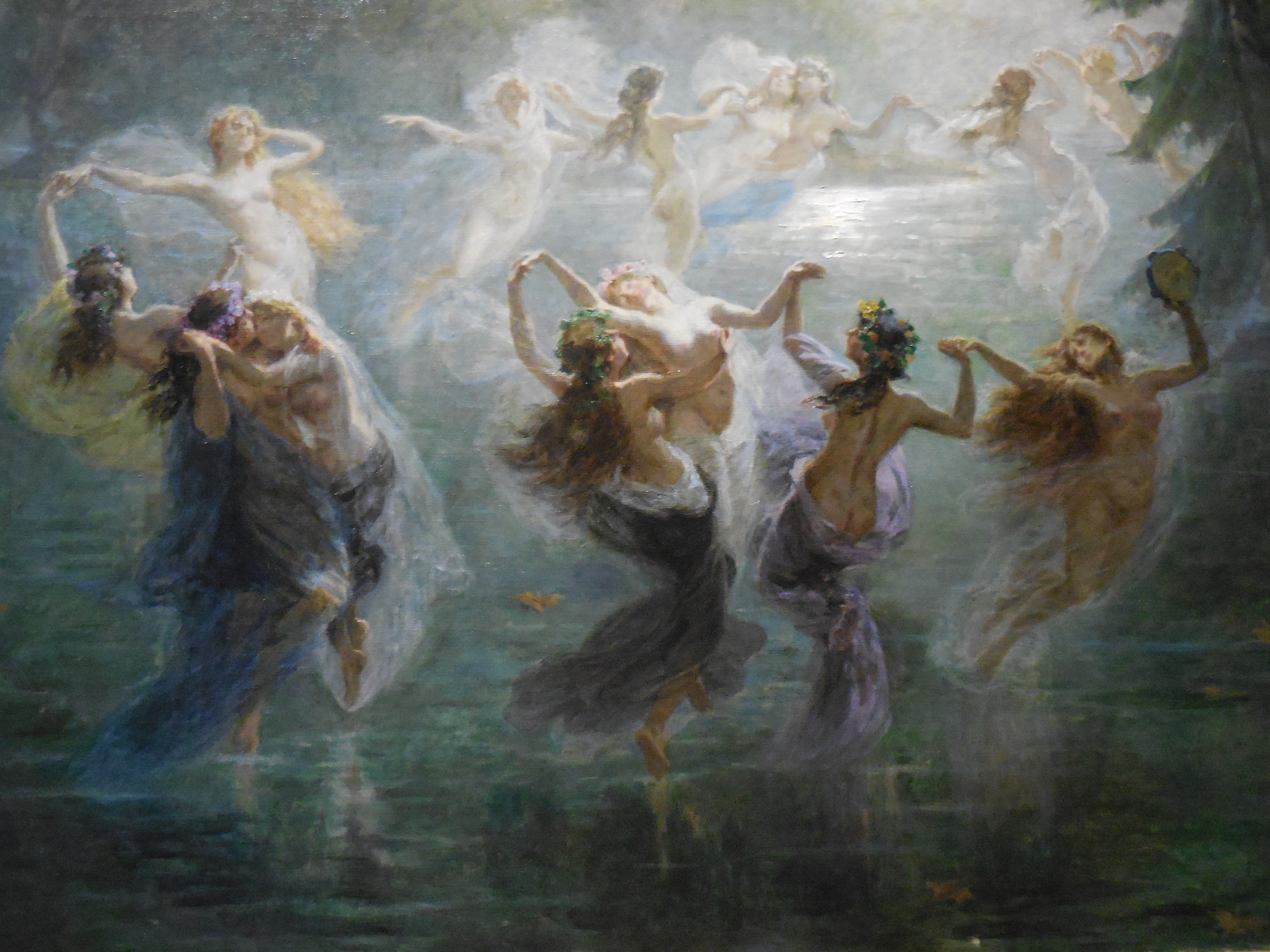
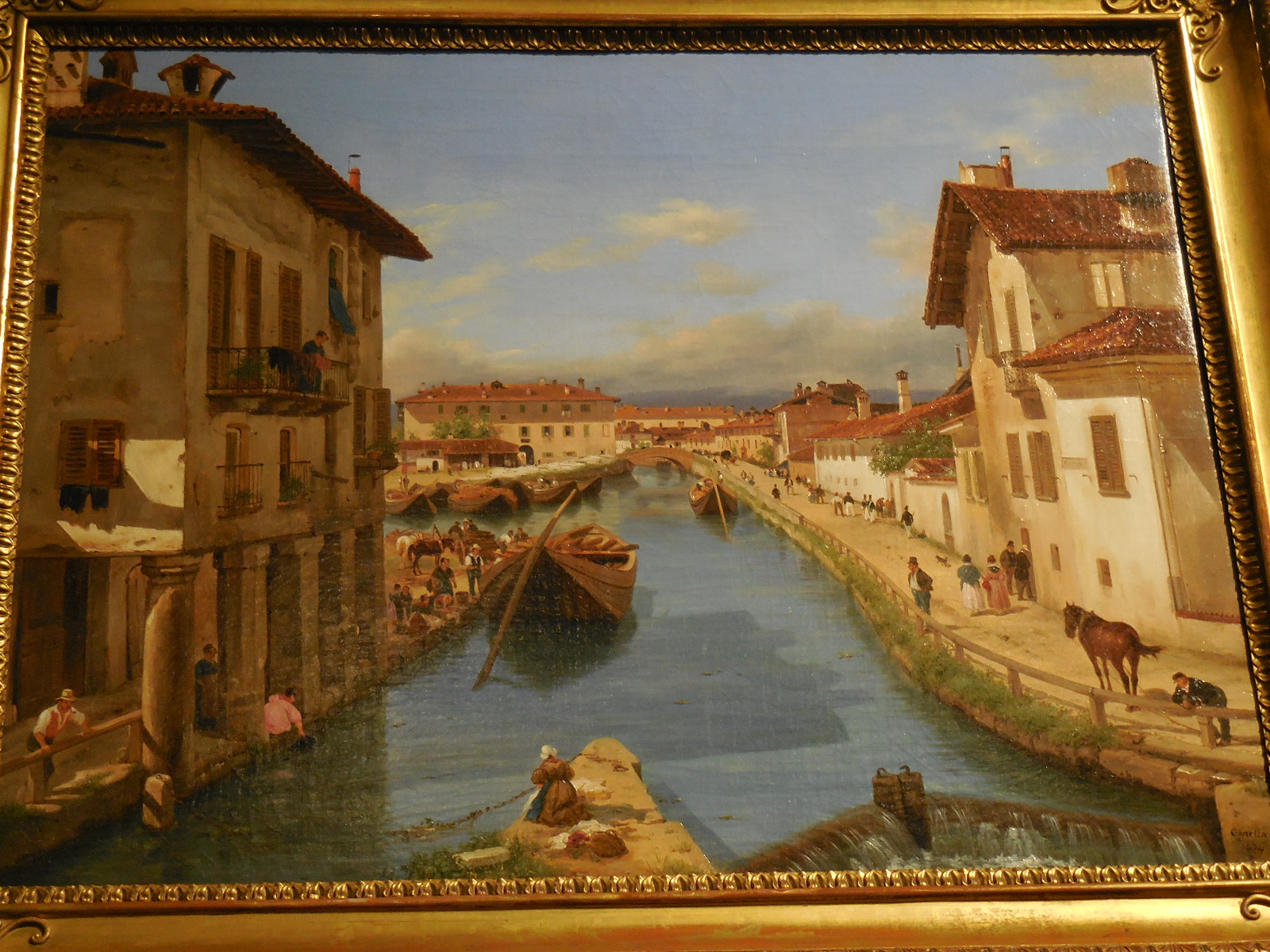
Works representing Symbolism, Pointillism and Futurism also made up highlights of this museum’s collections. The historical paintings of fight for the unification of Italy profoundly expressed this political and social movement called the Risorgimento, which led to the formation of the Kingdom of Italy. Genre painting showcased people’s daily lives.


The Divisionism of Neo-Impressionist painting that separates colors into dots played a large role, too. The works falling into the Futurism category centered on technology and modernity, for instance. Often cars, airplanes and the industrial city figured in works of this nature.


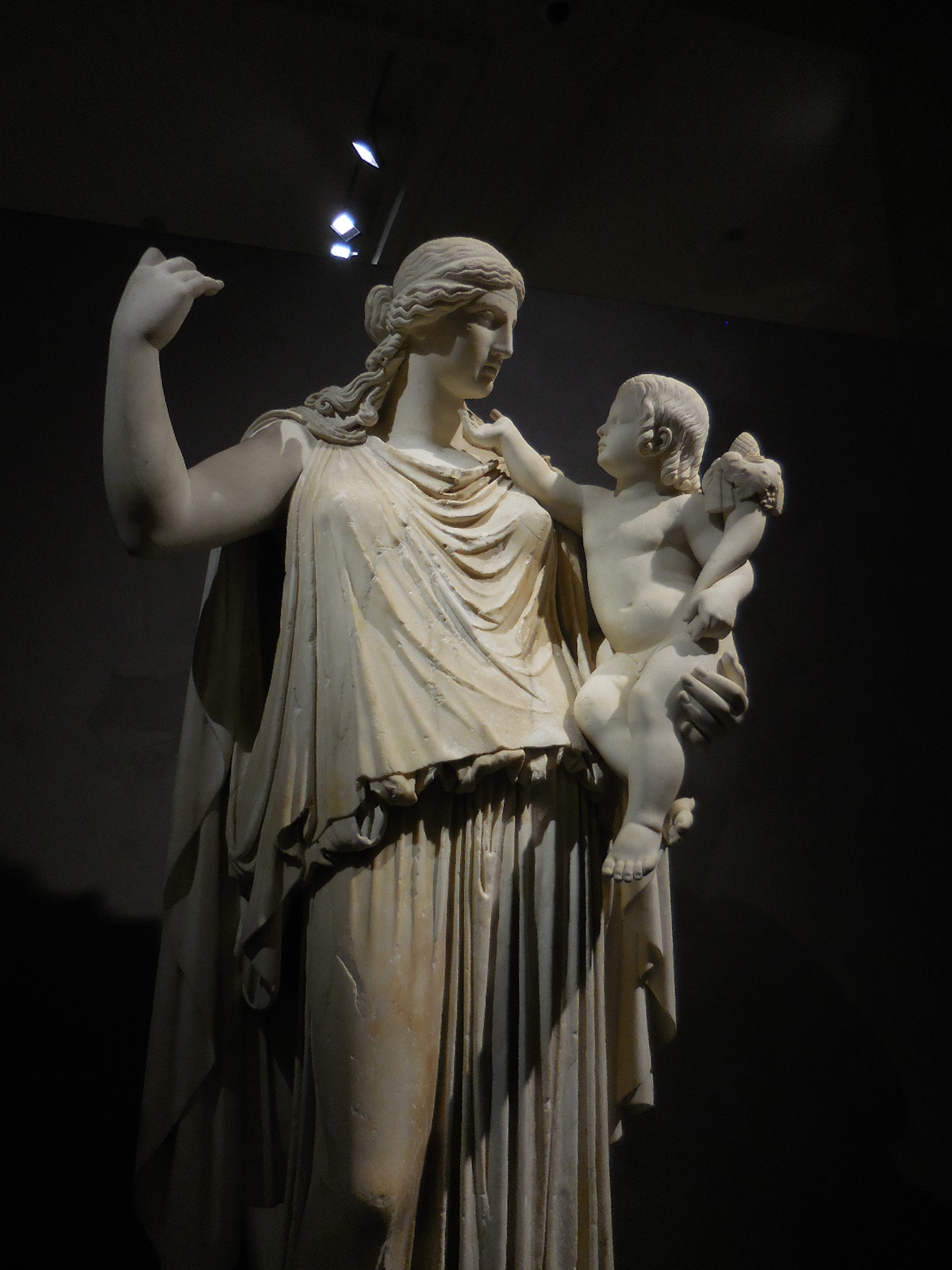

A special exhibition displayed the Torlonia Marbles, a very significant private collection of Roman statuary with many busts. I loved how the busts, though dating back many centuries, brought out the character of the person sculpted.

The 20th century was highlighted as well. Five halls housed artwork from the 1950s to 1980s. Abstract art between the 1940s and 1950s stood out, too. The Sixties were emphasized with a focus on signs, words and images. Kinetic art also was displayed.
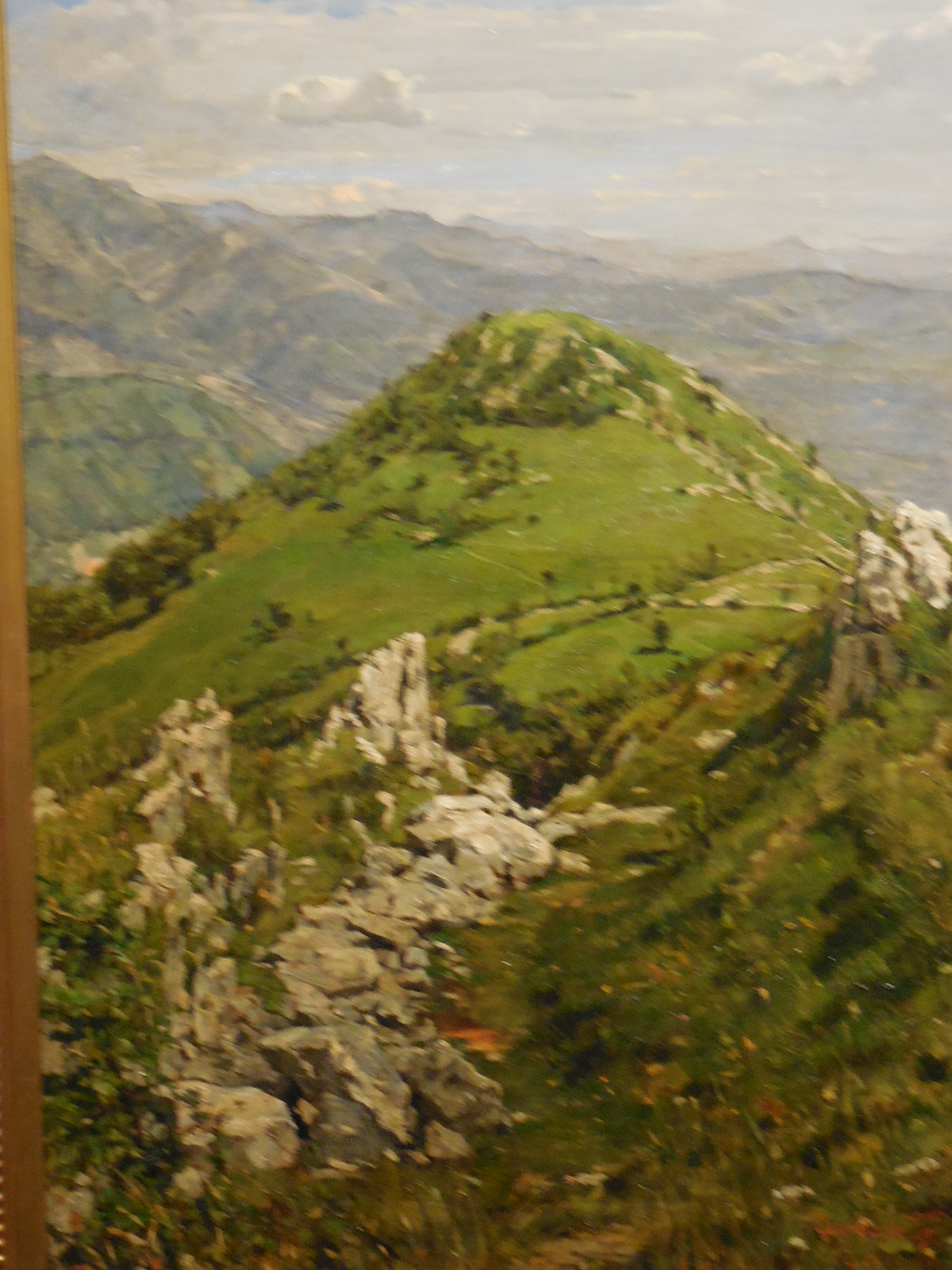

While I was most impressed by the landscapes and pictures of Milan’s cathedral, I gazed at each and every piece of art with awe and wonderment. This was truly a great museum.
Tracy A. Burns is a writer, editor and proofreader in Prague.



 Tracy's Travels