House Museum Poldi Pezzoli Diary

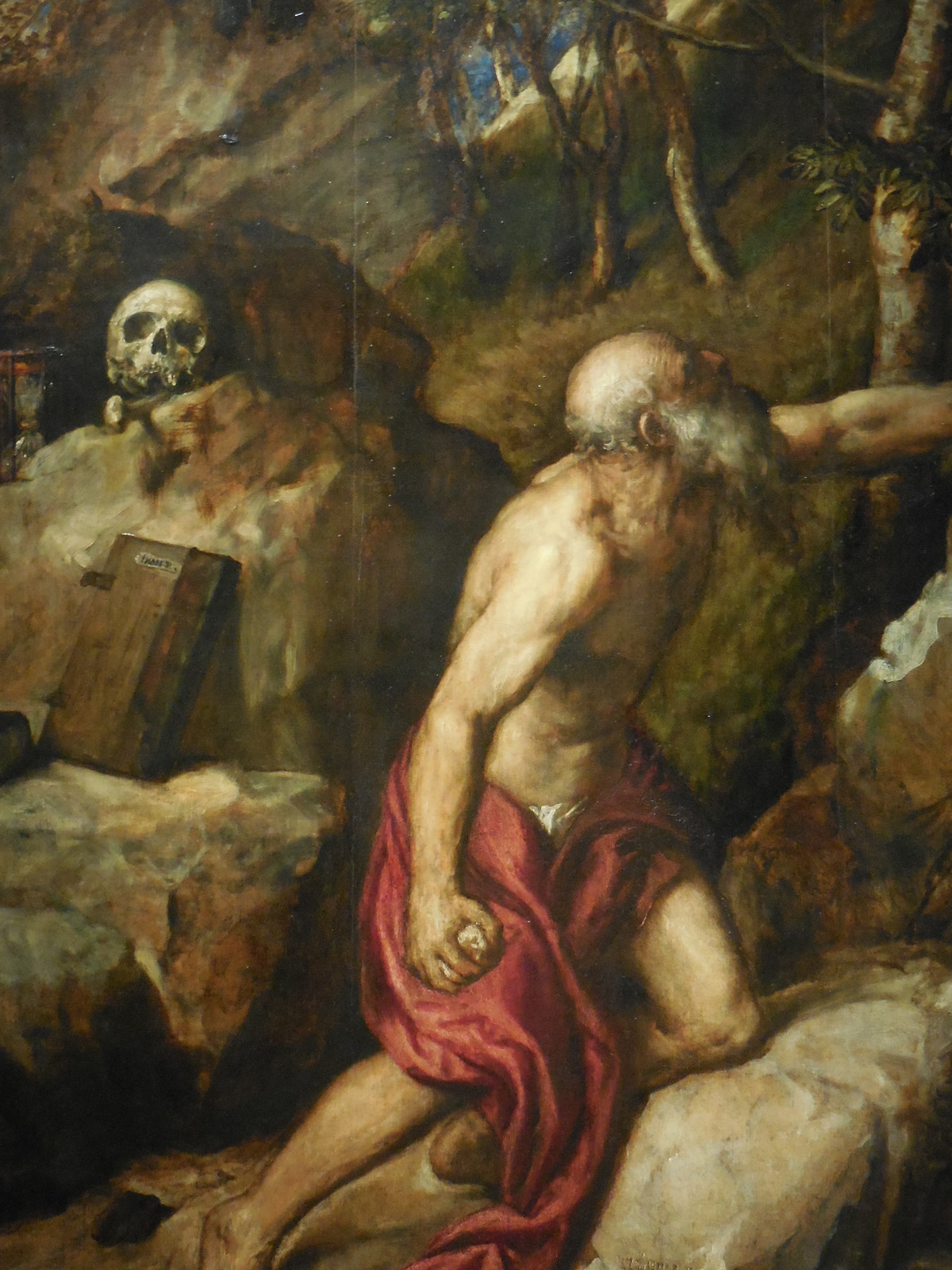
One of Milan’s four house museums, the Poldi Pezzoli was a highlight of my two trips to the city I love so much. The variety of art exhibited made this a top attraction for me. The collections include paintings, sculpture, weapons, tapestries, furniture, glass, ceramics, watches, clocks, goldsmiths’ work and jewelry, for instance. Artists whose works are represented  include Andrea Mantegna, Giovanni Bellini, Sandro Botticelli, Michelangelo Buonarroti, Canaletto, Francesco Hayez and Lucas Cranach the Elder.

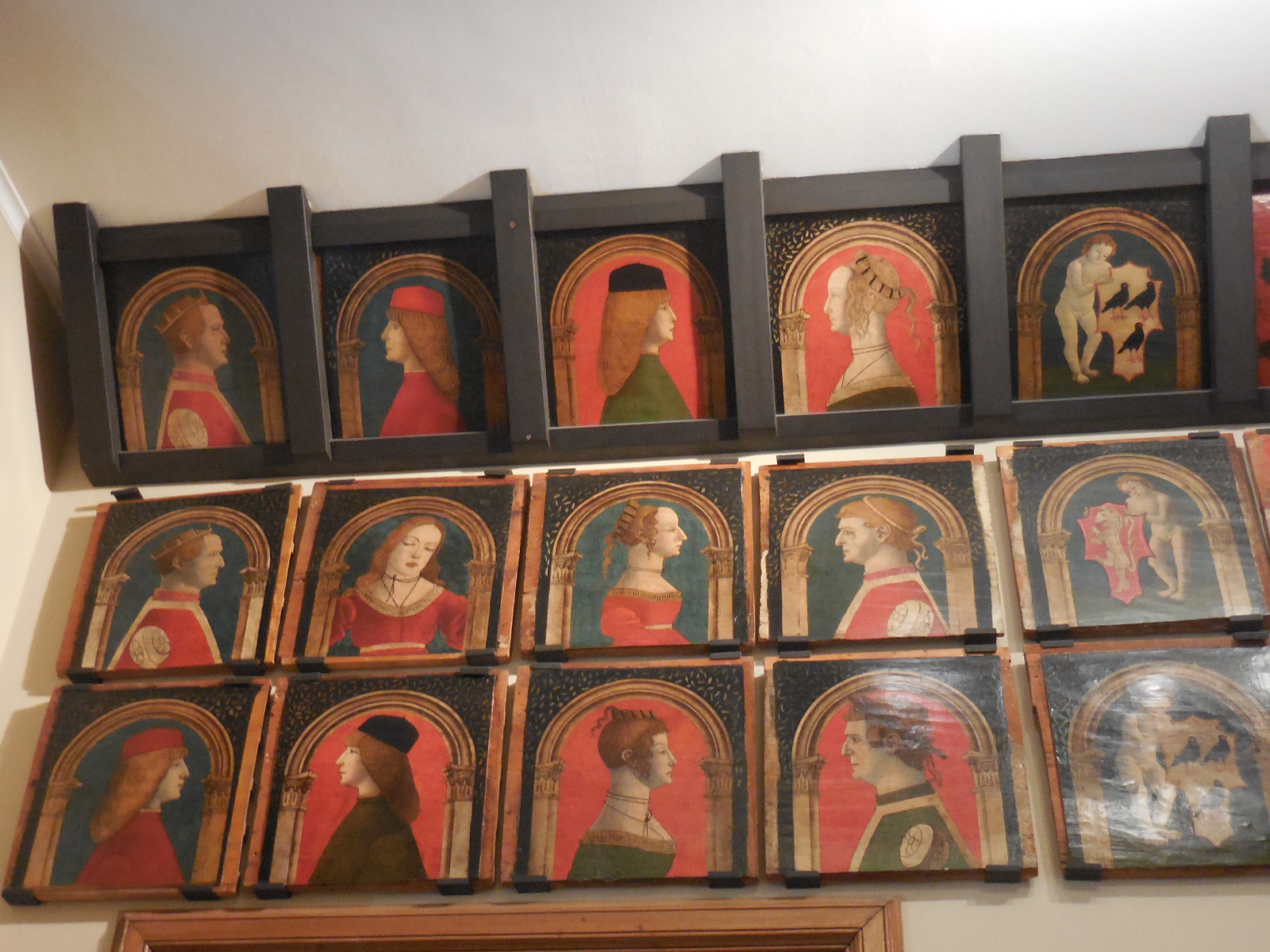
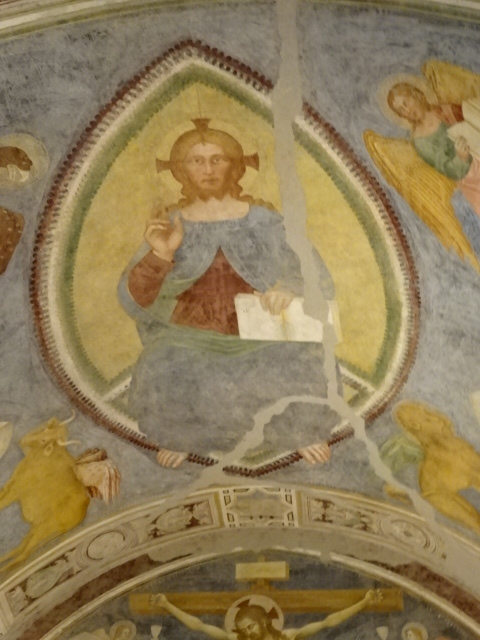
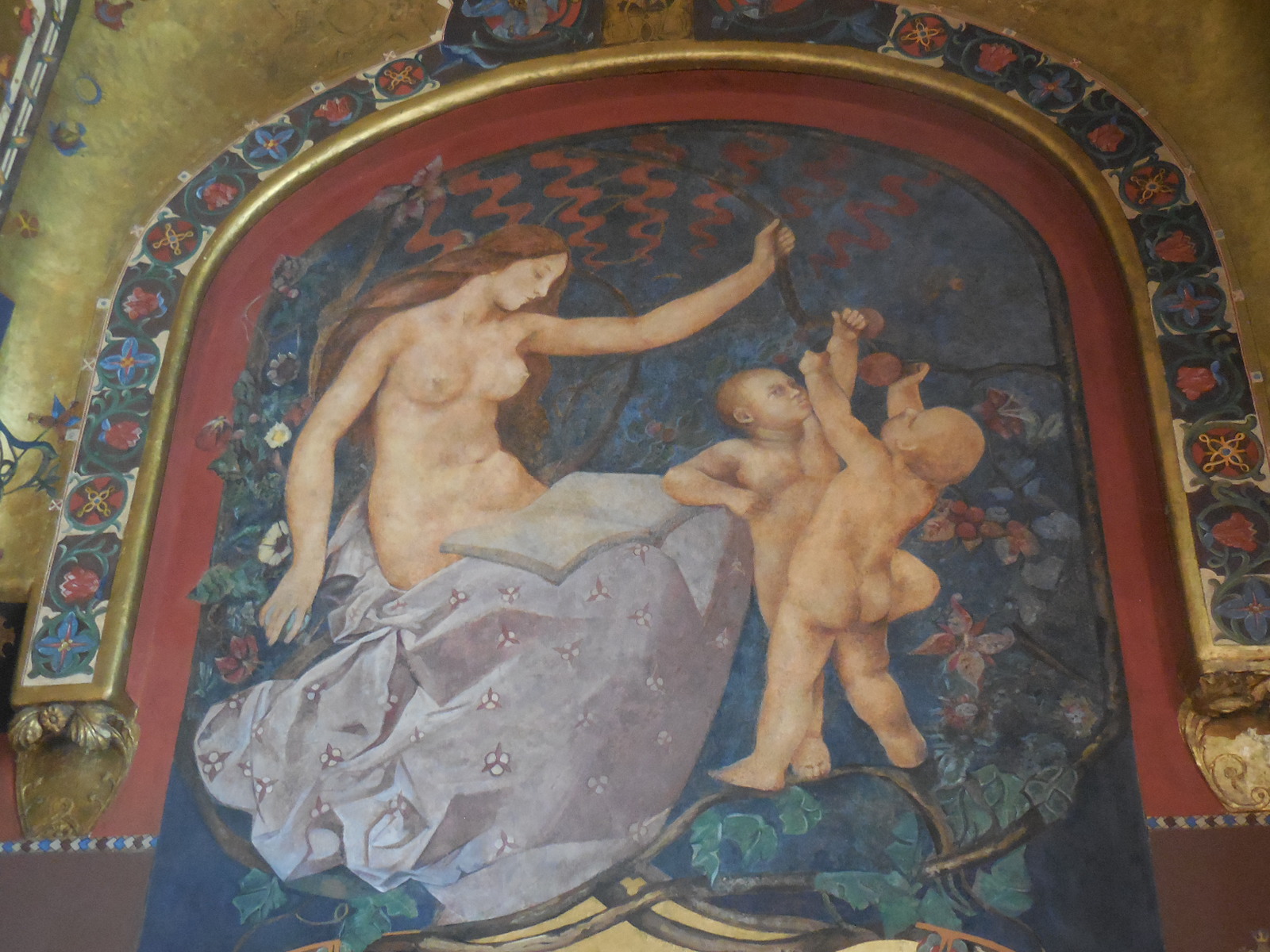
I favored the medieval paintings, but each space had something extraordinary to offer. The Golden Room with its 15th century collection enamored me as did the elaborate, superb furnishings of the Dante Room. The Black Room had six masterfully crafted mahogany and walnut doors. The Lombard Room dazzled with north Italian Renaissance paintings.

The collections were amassed during the 19th century by Gian Giacomo Poldi Pezzoli, who had inherited much money. The Austrians exiled Gian Giacomo from Milan for one year after he supported the revolutionaries during a Risorgimento battle in Milan. He spent that year traveling, but then returned to Milan. Sadly, Gian Giacomo’s life was cut short in 1879, when, at the age of 57, he passed away in the palace’s Dante Study. The museum was opened to the public in 1881. During World War Two the palace was severely damaged. For example, the Neo-Gothic armory was destroyed. Many artifacts were lost. The museum underwent much restoration, not opening its doors again until 1951. The new armory opened much later, in 2000.

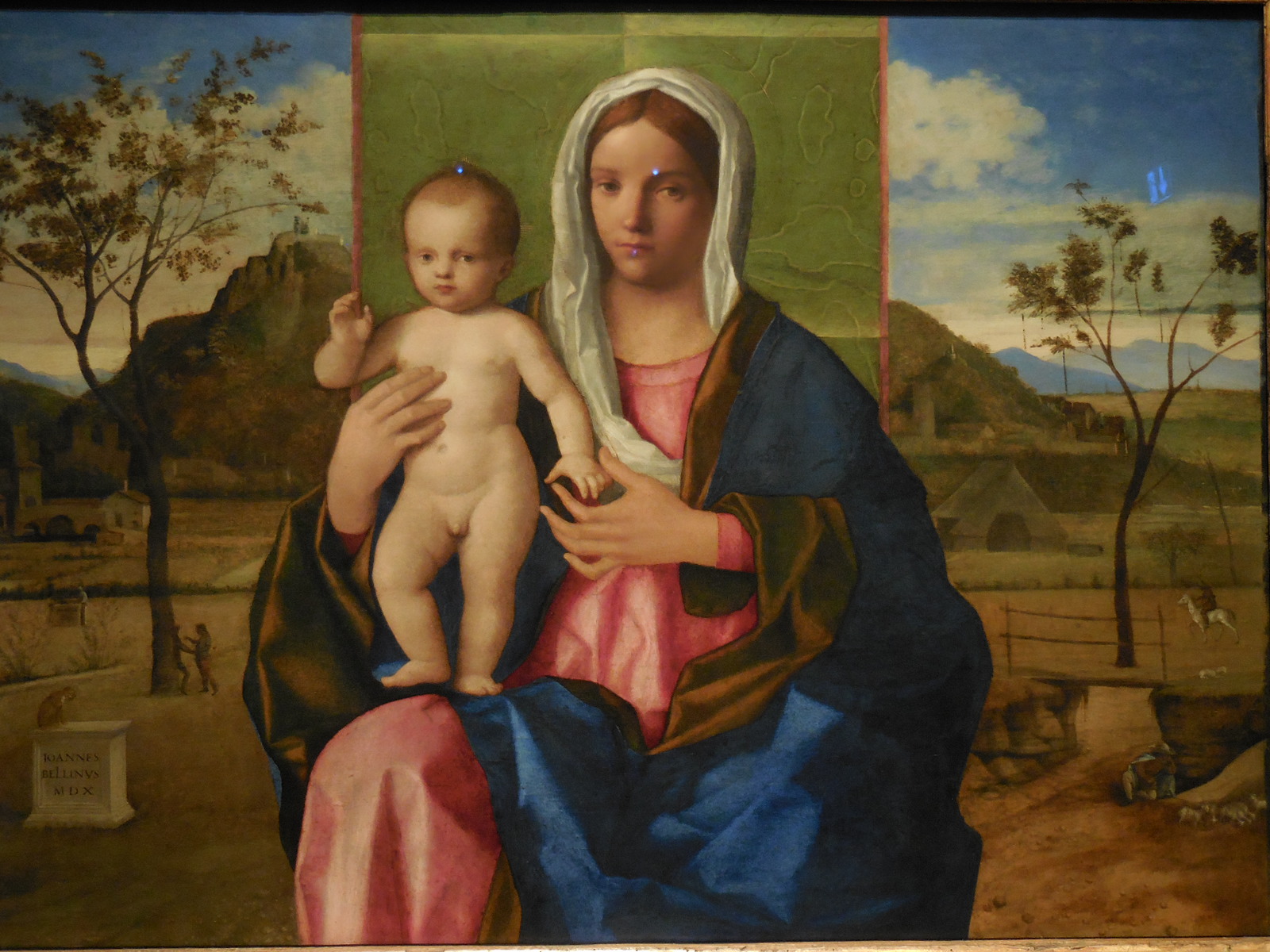
Numerous artworks enthralled me, but I would like to concentrate on several of the many that were remarkable. Some paintings that caught my undivided attention included Sandra Botticelli’s The Virgin and Child (the Madonna of the Book), dating from 1482-83. Showing the Virgin and Child reading, the painting reminded me of how important reading and literature have been in my life. The scene had a mystical appearance due to the superb lighting. I could understand how the act of reading has a sort of mystical power. The painting also exuded elegance.

Another religious rendition that left me in awe was The Madonna of Humility with Musician Angels by Zanobi Strozzi, hailing from 1448 to 1450. In this painting the Christ Child is seated on the Virgin’s lap as I can almost hear the musicians playing a sorrowful tune. Strozzi masterfully portrayed the texture of the clothing, such as Virgin’s red garment with its green lining and blue mantle. I felt as if I could touch the fabric of the veil on the Virgin’s head as it was also superbly rendered. The background was dominated by a stunning gold material.

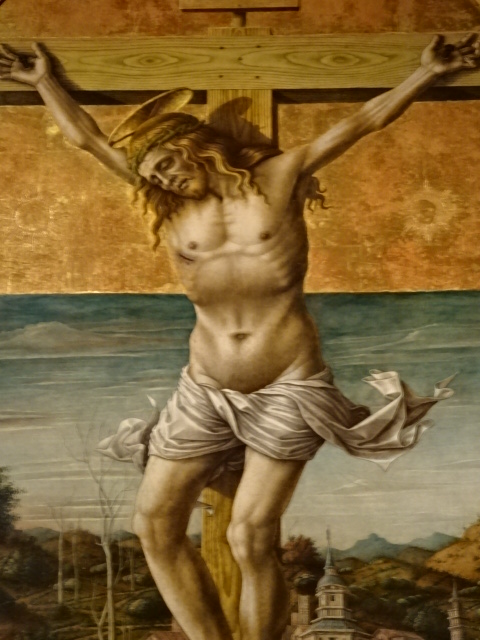
My admiration of medieval art in the Poldi Pezzoli continued as I became enthralled with Filippo Lippi’s The Pieta (1440) in which the Virgin and Saint John the Evangelist hold up the limp Christ figure who has a gray complexion reminiscent of death. In the distance I saw a mountainous landscape.

Antonio Vivarini and his brother-in-law Giovanni D’Alemagna captivated me with their work, The Virgin and Child Enthroned with Two Angels. In this painting, perhaps part of a polyptych, the Madonna and Child’s throne is pleasantly situated in a garden, giving off a tranquil vibe. The late Gothic and Renaissance features of the throne, figures and landscape were striking.
A sculpture that particularly caught my attention was labelled The Virgin and Child, a Florentine masterpiece from 1280 with many Byzantine elements. While Jesus’ body parts aren’t all proportional, the two figures are nevertheless masterfully sculpted.

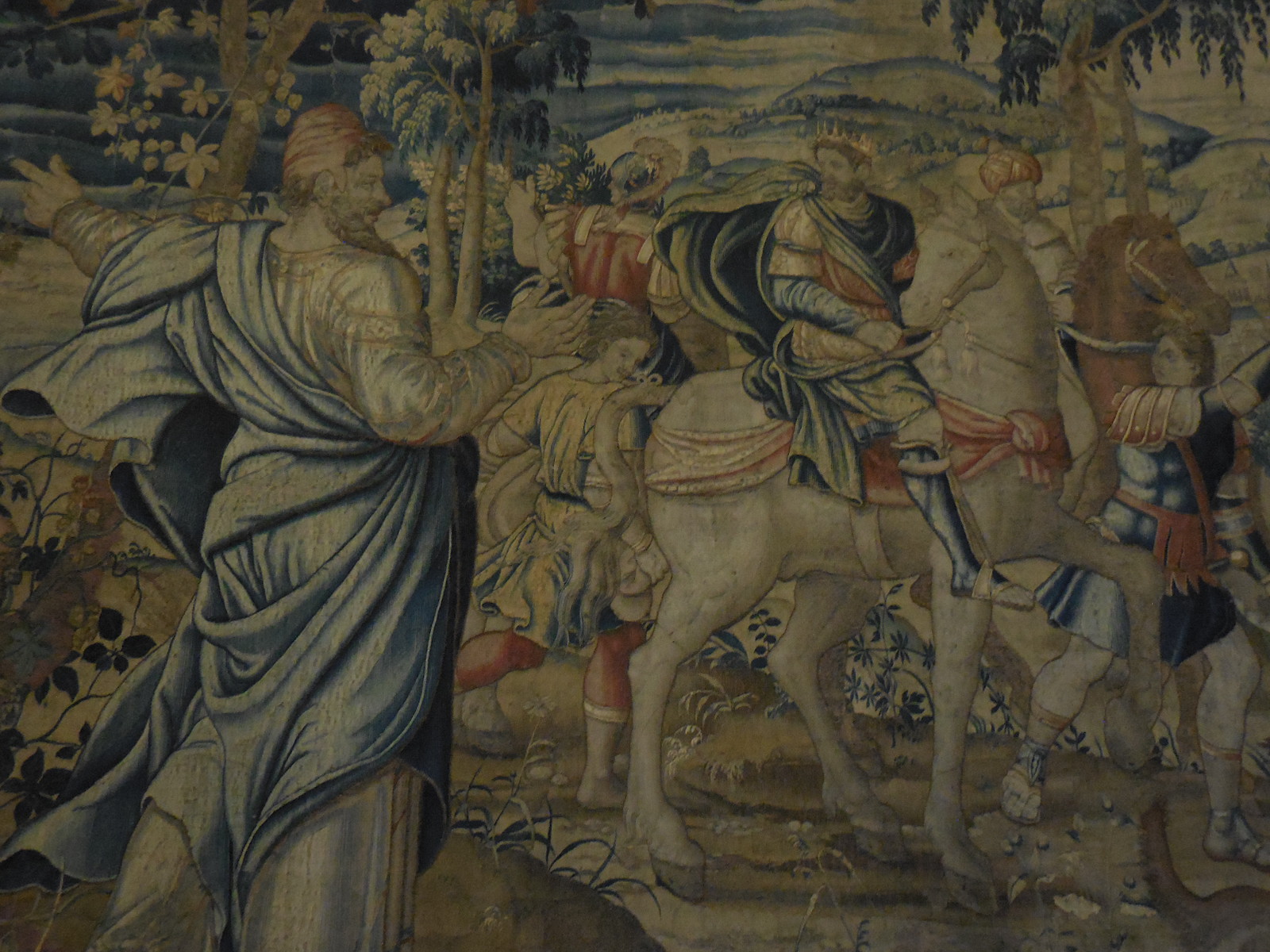
I was also enthusiastic about the tapestries. For instance, I saw the Tapestry with Esther Presented to Ahasuerus, made in Brussels in the late 15th and early 16th century. The stunning fabrics included wool, silk, silver and gold. One of the most significant Flemish tapestries in Italy, the masterful work takes its theme from the Old Testament. I noted the characters’ luxurious costumes, especially the king’s extravagant hat. The variety of colors also caught my attention.

I also admired the Canaletto landscapes of Padua and Venice with all the architectural features of the cities. Looking at Canaletto’s works gave me a sense of Italian history as if I could go back in time and look deep into the painting as a witness of the scene portrayed. I fondly recalled the extensive exhibition of Canaletto’s work I had seen in Aux-en-Provence a number of years ago.

The armory, refurbished in 2000, included many 16th century weapons, such as a Borromeo helmet from the 16th century. Its exquisite gilded decoration was made up of designs of a unicorn and Saint Justine. The Gonzaga Helmet, also from the 16th century, was also gilded and showed off adornment of a crescent moon, leaves and flowers. I loved the meticulousness and precision of the designs.
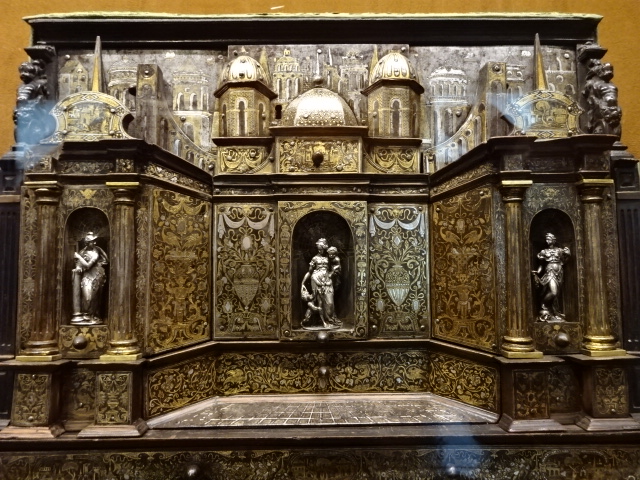
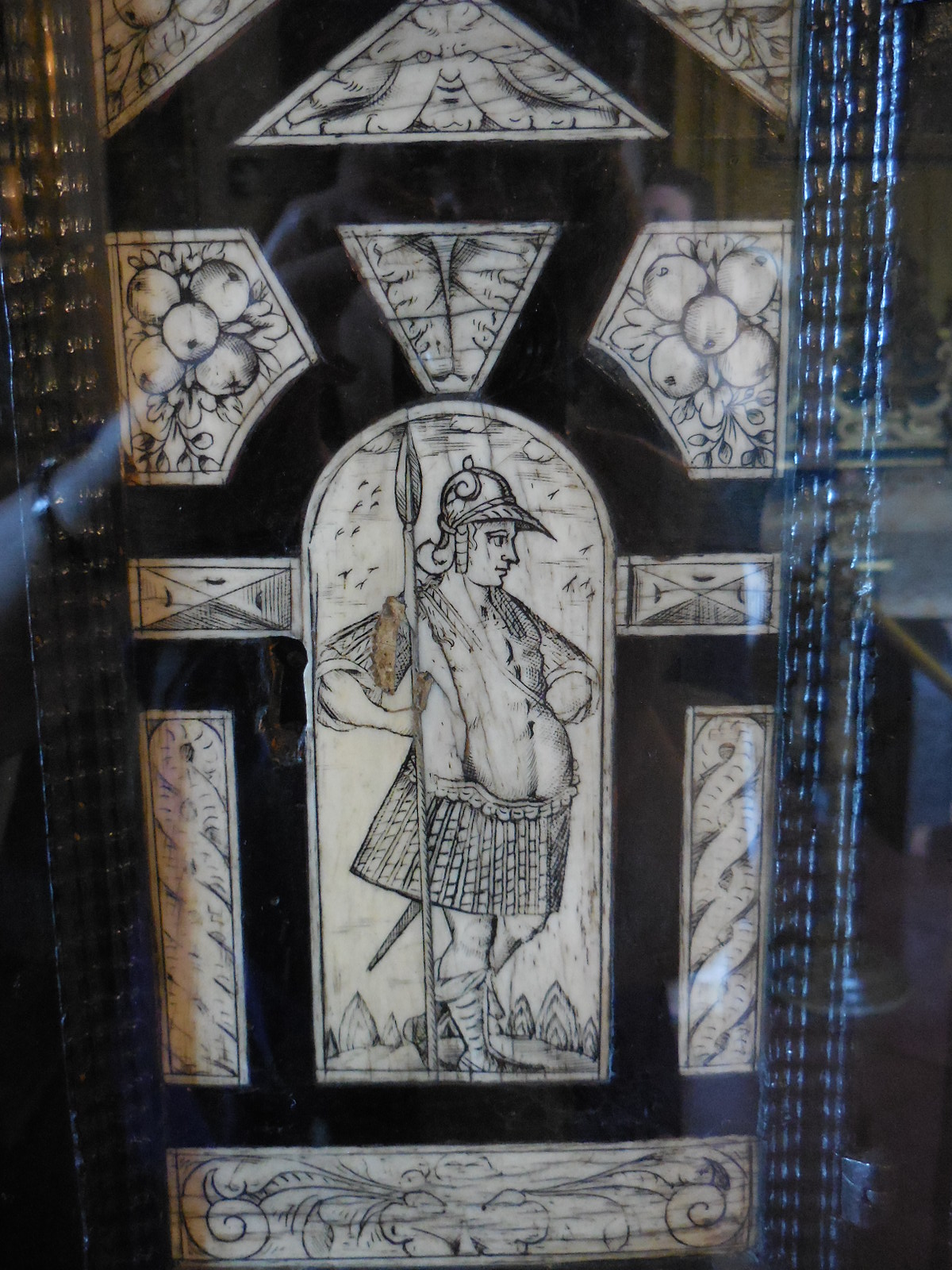
I admired the many stunning pieces of furniture, including the cabinets. One cabinet from the mid-17th century was made of ebony, bronze, silver and semi-precious stones. The small drawers were exquisitely decorated.

My favorite piece of porcelain was a Meissen called The Tooth-Puller from 1750. The woman looked terrified as the evil man held her jaw in an almost violent manner. The facial expressions of terror and evil were well-crafted. I liked the use of the color purple in the designs: the wig-clad tooth-puller was dressed in purple, and the woman wore a purple jacket. Her white skirt was decorated with a purple floral design. The collection included over 80 European porcelain pieces from the 18th century.
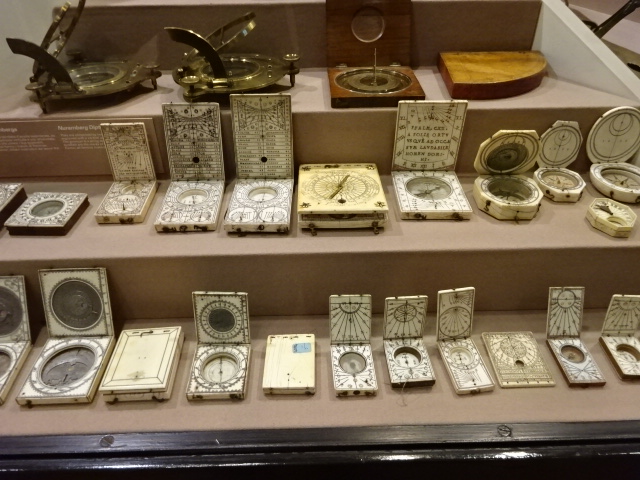
I also admired the decorations on the watches hailing from the 16th to 18th centuries and the various designs of the many clocks and sundials. The jewelry and Murano glassware also captured my undivided attention.
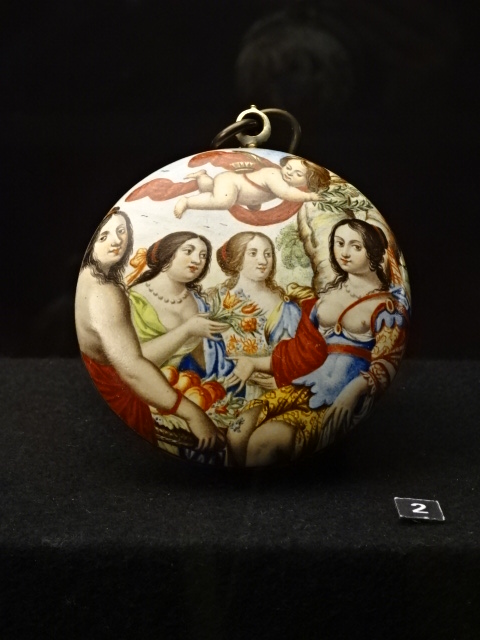
This museum housed such a wide array of stunning artifacts in an intimate setting. I loved the house museums in Milan, and visiting the Poldi Pezzoli was certainly one of my most treasured memories of the Italian city that I hold so dear to my heart.

Tracy A. Burns is a writer, proofreader and editor in Prague.

Como, Bellagio and Menaggio Diary

One of my dreams was to visit the romantic towns on Lake Como, so I took a day trip to Como, Bellagio and Menaggio when I was in Milan during May of 2023. Unfortunately, the tour did not go to Varenna, a place I longed to see. Maybe next time. The tour only took us to one villa’s grounds, which were open to visitors. I saw the exteriors of many villas from the boat, but it was drizzling, and I was seated on the wrong side to get pictures. I hope to go back one day and visit Villa Carlotta, an architectural gem that includes a botanical garden with 150 types of azaleas, rhododendrons, tropical plants, cedars, palms and more. I heard that its interior is filled with superb art. Antonio Canova and Francesco Hayez are two of the artists represented in the villa’s art-dotted spaces. Maybe next time.

First, we visited the charming town of Como, located only 40 kilometers from the Swiss border. Our guide pointed out that former Fascist Prime Minister Benito Mussolini and his mistress had gone through Como while trying to flee to Switzerland and eventually to Spain. However, in April of 1945 he was arrested in Dingo, a town near Como and a day later shot in Giulino di Mezzegra.

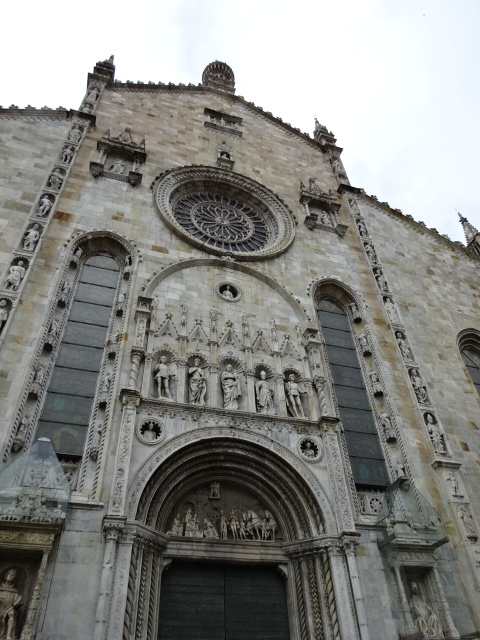
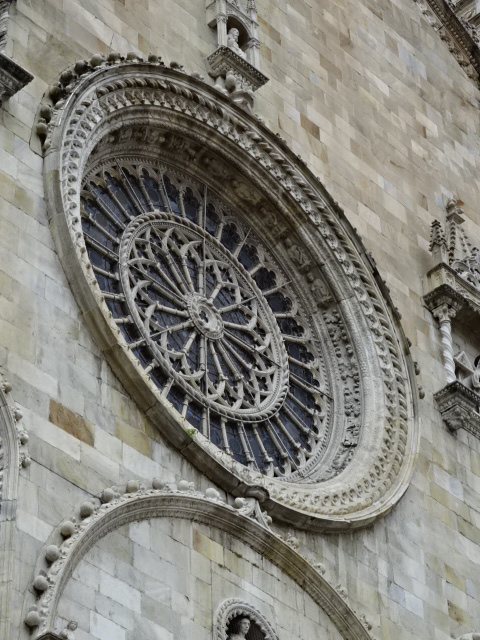
Upon reaching the center, I first noticed the cathedral, dedicated to the Assumption of the Blessed Virgin Mary. It had an impressive Late Gothic façade with sculptural decoration. The construction took a considerable amount of time; in fact, it took four centuries to build. I took note of the statues of writers Pliny the Elder and Pliny the Younger, natives of Como.

Inside, the cathedral had a Latin cross configuration with three naves divided by pilasters. The Romanesque sculpture was noteworthy. Three of Bernardino Luini’s paintings from the 16th century hang inside. Stained glass windows hail from the Gothic and Renaissance eras. The stunning cupola is Rococo while the main altar harkens back to the 14th century. What impressed me the most were the nine tapestries woven in the 16th century. They focused on themes such as the Eucharist, the Sacrifice of Isaac, the Adoration of the Magi and the Pentecost, for example.

The Basilica of Saint Abbondio is another sight worth seeing in Como. This Romanesque edifice included 14th century frescoes. Como also boasted of a very unique building designed during totalitarian times, the Caso del Fascio, which was erected from 1933 to 1936. The functionalist structure lacked any ornamentation. The Caso del Fascio served as an example of Italian architecture designed during totalitarian times. The Como-based building had four geometrical and opaque facades. Designed by Guiseppe Terragni, the place was occupied by the National Fascist Party until 1945, when various political parties had their offices there. Now the Finance Police calls the curious structure home.

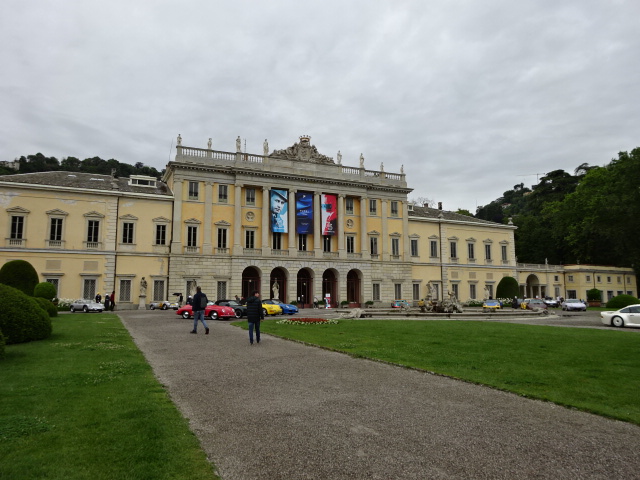
Walking around the center of Como, taking in the romantic atmosphere, was a real thrill. We also visited the grounds of the Villa Olmo, an impressive neoclassical structure dating from the 18th century. The lake views were outstanding, and the English style garden was beautiful.

Bellagio was next on the itinerary. I ate a delicious lunch in an costly restaurant in this charming town with steep cobblestoned lanes dotted with some expensive shops. The historic center was made up of only three streets but also sported a park and marina. I walked up one steep street that had a medieval aura and found myself on the main square looking at the Basilica of San Giacomo and a tower. The basilica hailed from the Romanesque days of the 11th and 12th centuries and featured a Romanesque cross and Gothic triptych.

While I didn’t have the chance to visit any of the villas there, the Villa Melzi with its English style garden is worth mentioning. The luxurious structure inspired many of the rich to build villas on Lake Como during the 19th century. Franz Liszt composed many piano works there, inspired by the romantic atmosphere.

We also visited the quaint town of Menaggio with its quaint waterfront square. The three-naved Church of Santo Stefano Protomartire, built on a Paleochristian site, showed off frescoes from the 16th and 17th centuries. The Chiesa di Santa Maria had a neo-Gothic façade and included an artistic rendition of Saint Ambrogio as a young man. Other churches in the town are noteworthy, too. There are many villas in Menaggio, including the neoclassical Villa Vigoni. Goethe often traveled to that villa.

I did get a look at some villas where movies and some episodes of the show Succession had been filmed, and I saw a hotel where Greta Garbo had made a movie. Unfortunately, it wasn’t possible to take good pictures due to the rain slivering down the window and the location of my seat on the boat. I did like Richard Branson’s villa with its fairy-tale appearance, though.

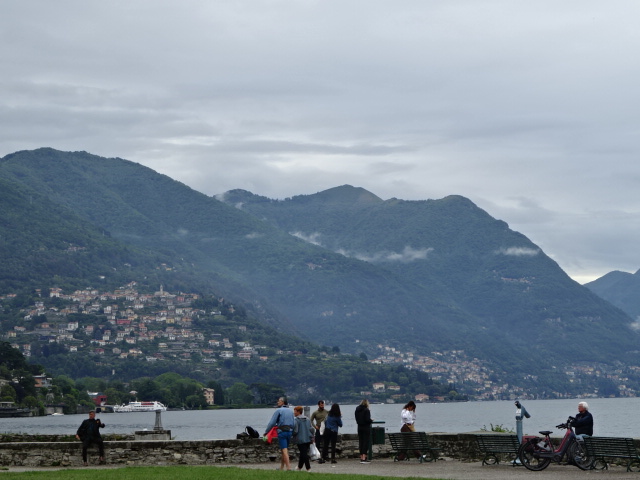
Even though it rained often while I was exploring the towns surrounding Lake Como, I enjoyed the romantic atmosphere that had inspired Liszt, Goethe and so many more. The towns were very crowded even on a rainy day. I could only imagine how crowded they must be in the summer on sunny days. I hope to return to Lake Como sometime, heading to Varenna or Villa Carlotta.

Tracy A. Burns is a writer, proofreader and editor in Prague.

Pinacoteca di Brera Diary

I have visited this phenomenal art gallery in Milan twice. I could go there a million times, and I would be just as amazed as I was on the first two occasions. While the gallery includes Italian art from the 13th to 20th century, some remarkable foreign works are on display in its 38 halls, too. Artists from the Netherlands represented in the gallery include Peter Paul Rubens, Anton van Dyck, Jan de Beer and Jacob Jordaens. The Brera focuses on Venetian and Lombard painting.

The art gallery is situated in a large complex that also houses a stunning library (where I saw an exhibition during my second visit), an observatory, a botanical garden and the Brera Academy of Art. In front of the museum is an equestrian statue of Napoleon by Antonio Canova. While the art academy was established as far back as 1776, the museum was opened in August of 1809. When paintings in Lombardy were confiscated from churches and convents in the early 19th century, they wound up at the Brera, so many religious works make up the collection. Parts of the art gallery were damaged in bombing raids during 1943, but they were fully reconstructed by 1948.

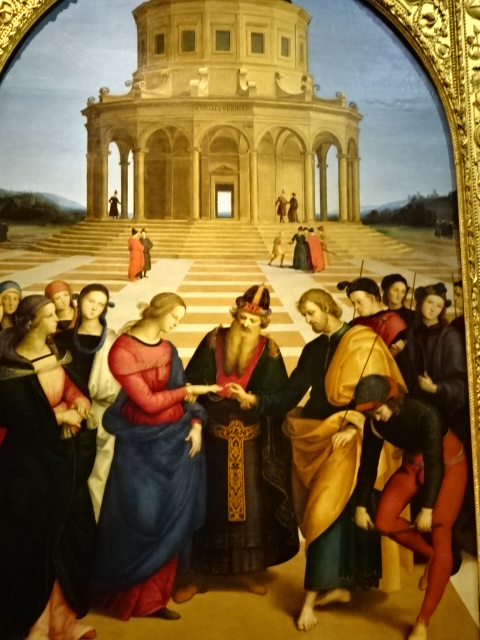
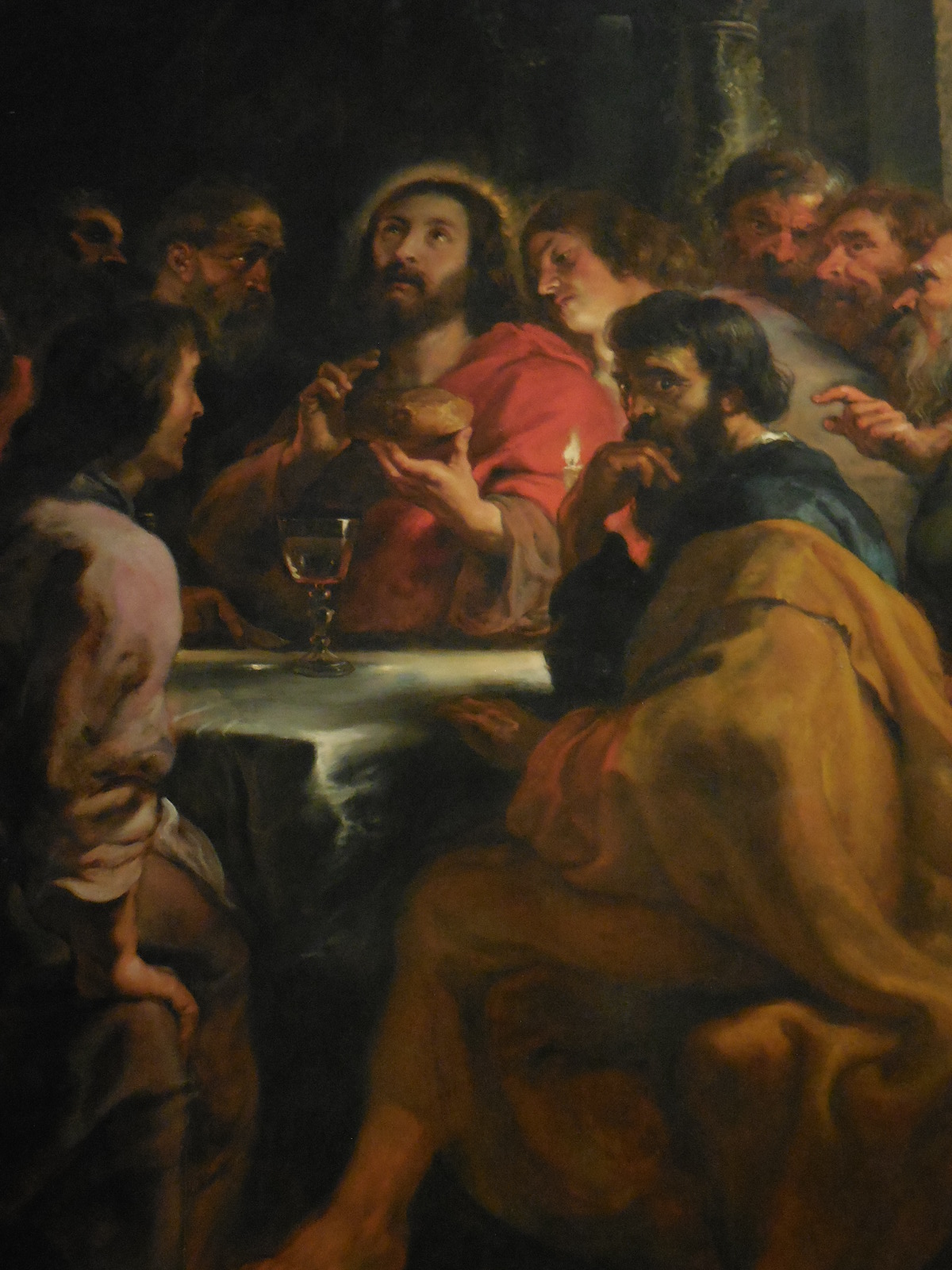
Some of the most famous paintings in the gallery include “The Lamentation of Christ” by Andrea Mantegna, “The Kiss” by Francesco Hayez, “Finding of the Body of St. Mark” by Tintoretto, “The Last Supper” by Rubens and “Supper at Emmaus” by Caravaggio – only one of two Caravaggio paintings in Milan. Also on display are the exquisite “The Marriage of the Virgin” by Raphael and “Christ at the Column” by Donato Bramante. I especially liked the paintings by Canaletto and Hayez as well as the 14th century frescoes. Modern works are exhibited, too. For example, “Enfant gras” by Amedeo Modigliani and “Riot in the Gallery” by Umberto Boccioni take up prominent places in the gallery. The works of Pablo Picasso and Giorgio De Chirico are represented, too.

I was overwhelmed at the beauty and power of the paintings in the Brera. Some of the monumental works just took my breath away. I was moved by all the paintings, each one telling a story.

Tracy A. Burns is a writer, proofreader and editor in Prague. 

Museum of Ancient Art and Arms at Sforza Castle Diary

The Sforza Castle in Milan was built for Galeazzo II Visconti in the second half of the 14th century. It was destroyed in the 15th century, but Francesco Sforza rebuilt it. Then the Sforza family used it as a residence. The end of the 1400s was a time of splendor. During the 15th century, Leonardo da Vinci and Bramante created frescoes in the castle. The castle became one of the largest in Europe in the 16th century.

Later, the castle was changed into a citadel. The ducal apartments were used as barracks and stables under Spanish, Austrian, French and again Austrian rule. An armory was for a time also on the premises. At the end of the 1800s, the castle became the property of the city of Milan. When Italy was unified, the castle was in a very dilapidated state, but the complex to be reconstructed and made into a museum. The castle took on the appearance it had when it had been under Sforza control. Though the central tower is not original, it is made to look like it had when built in 1521.

During World War II, the complex suffered much damage but was reconstructed. Now the castle includes museums and cultural institutes.

The collection of the Museum of Ancient Art and Arms features sculpture from the fifth to the 16th century, some from Lombardy and others from Tuscany. Some rooms are decorated with stunning frescoes. An armory containing European weapons from the end of the 14th to the 19th century and an impressive room of tapestries also make up the exhibition. Sixteenth century Flemish tapestries intrigued me. Saint Ambrose dominates another tapestry. Two medieval portals and tombstones are also on display.

Visitors walk through the ducal apartments decorated by Galeazzo Maria Sforza. I was especially impressed with the ducal chapel. Leonardo da Vinci designed and frescoed the Sala delle Asse (Room of Wooden Boards), which was being restored when I was there. I read that the walls and vaulted ceiling of this room are painted with trompe l‘oeil. The vault shows off branches leaves and berries that give the illusion that the space is outside instead of in a castle. In other rooms the Spanish domination is highlighted with sculpture and the remarkable funerary monument of Gaston de Foix, created from 1517 to 1522.

Tracy A. Burns is a writer, proofreader and editor in Prague.

Bergamo Diary

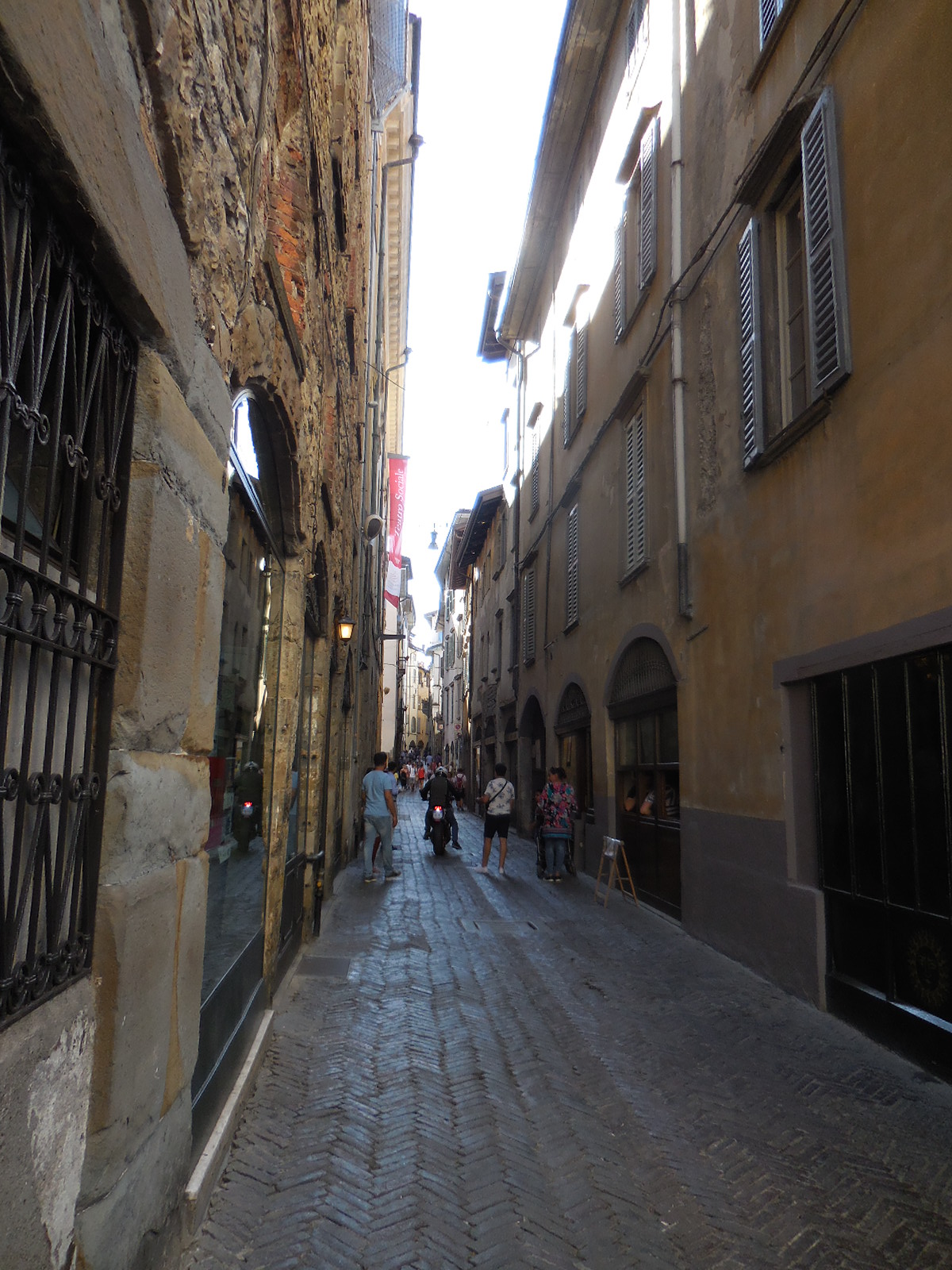
Bergamostreet1

I was only in Bergamo for a short time, but it stole my heart just the same. We only had time to explore the Upper Town for part of a day, so I did not get to visit the Lower Town’s Accademia Carrara with its fantastic art collection.

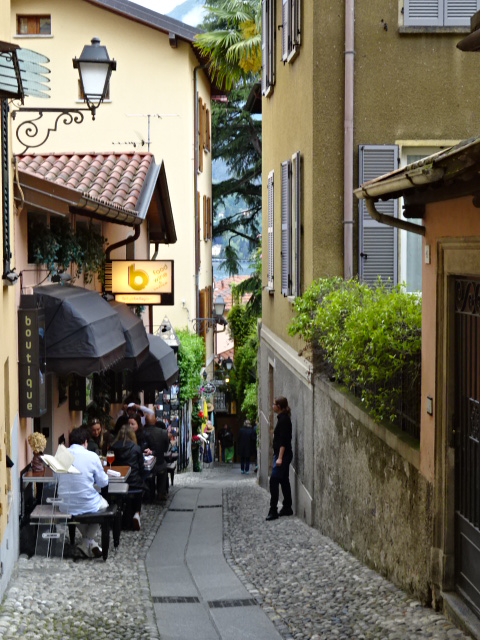
The Upper Town was magical. What I loved more than the sights were the winding, narrow, hilly streets – so romantic and picturesque. I felt as if I had time-traveled back centuries while walking down those streets. In fact, the entire Upper Town made me feel as if I had gone back in time. I saw medieval houses and houses with 16th and 17th century facades. The atmosphere reminded me of that in Urbino, where I had visited a fabulous art gallery and Raphael’s birthplace as well as strolled down hilly, narrow streets.

Bergamostreet2

First, a few things about Bergamo’s history. Bergamo was founded as Bergomum by the Celts. It was given the status of municipality under the Romans in 49 BC, but then it was destroyed in the fifth century. It was rebuilt and blossomed into a significant town in Lombardy. I found out that Bergamo had been one of the stops on the mail courier route created by the Thun and Taxis dynasty during the 13th century in what was considered the first modern postal service. I remember hearing about this when I visited the palace in Regensburg.

Bergamochurch5

Bergamo was under Venetian domination as of 1428. During the period of Venetian rule, the middle class came into being, and Bergamo flourished artistically. Peace – something we experience little of in the world today – reigned over the awe-inspiring city for no less than three-and-a-half centuries. During the 16th century, the Venetians had defense systems built around the city. These structures have been recognized by UNESCO as a World Heritage Site.

Bergamotower

Then came Napoleon. The French troops took over the city on March 13, 1797. The Austrians didn’t take control of the territory until June of 1814. Some Italians were not satisfied with Austrian rule, and, in 1848, they rebelled against the monarchy. During 1861 Bergamo joined the Kingdom of Italy. The 20th century saw a major increase in industry. Three years ago, in 2017, Bergamo hosted the G7 summit. That’s when the Charter of Bergamo came into being, a proclamation focusing on reducing hunger in the world and helping agricultural development in Africa.

Bergamo1

We went to the Upper Town by funicular and headed for Piazza Vecchia, the main square. I admired the Baroque fountain in the middle, studying its adornment of tritons and lions. One of the most impressive buildings was the Palazzo della Ragione, constructed in the second half of the 12th century and housing administrative offices during the Middle Ages. The porticoes were elegant while the arches and three-mullioned windows above them were remarkable. I also admired the 18th century sundial on the pavement. The Torre Campanaria or Tower of the Big Bell harkened back to the 11th century. Every evening it tolls 100 times.

Bergamo4

The Palazzo del Podestà Veneto (Palace of the Mayor of Venice) is another architectural gem, built in the 14th century and now serving as a university. The Civic Library across the street was erected according to plans by Vincenzo Scamozzi, whose name I remember from my tour of Vicenza and its Palladian architecture. This structure in Bergamo dates from the early 17th century. The town hall was located on its premises from 1648 to 1873.

Bergamo2

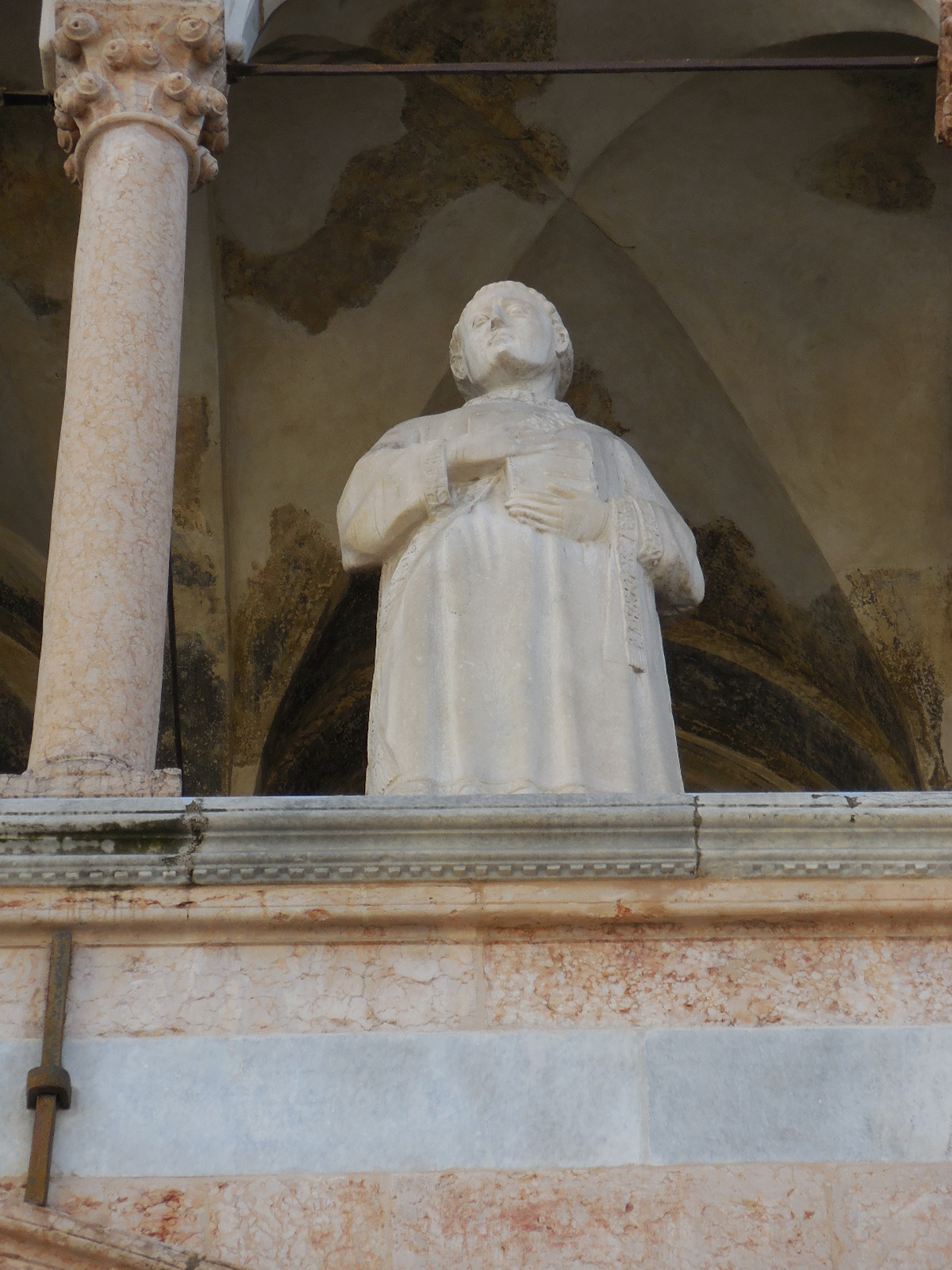
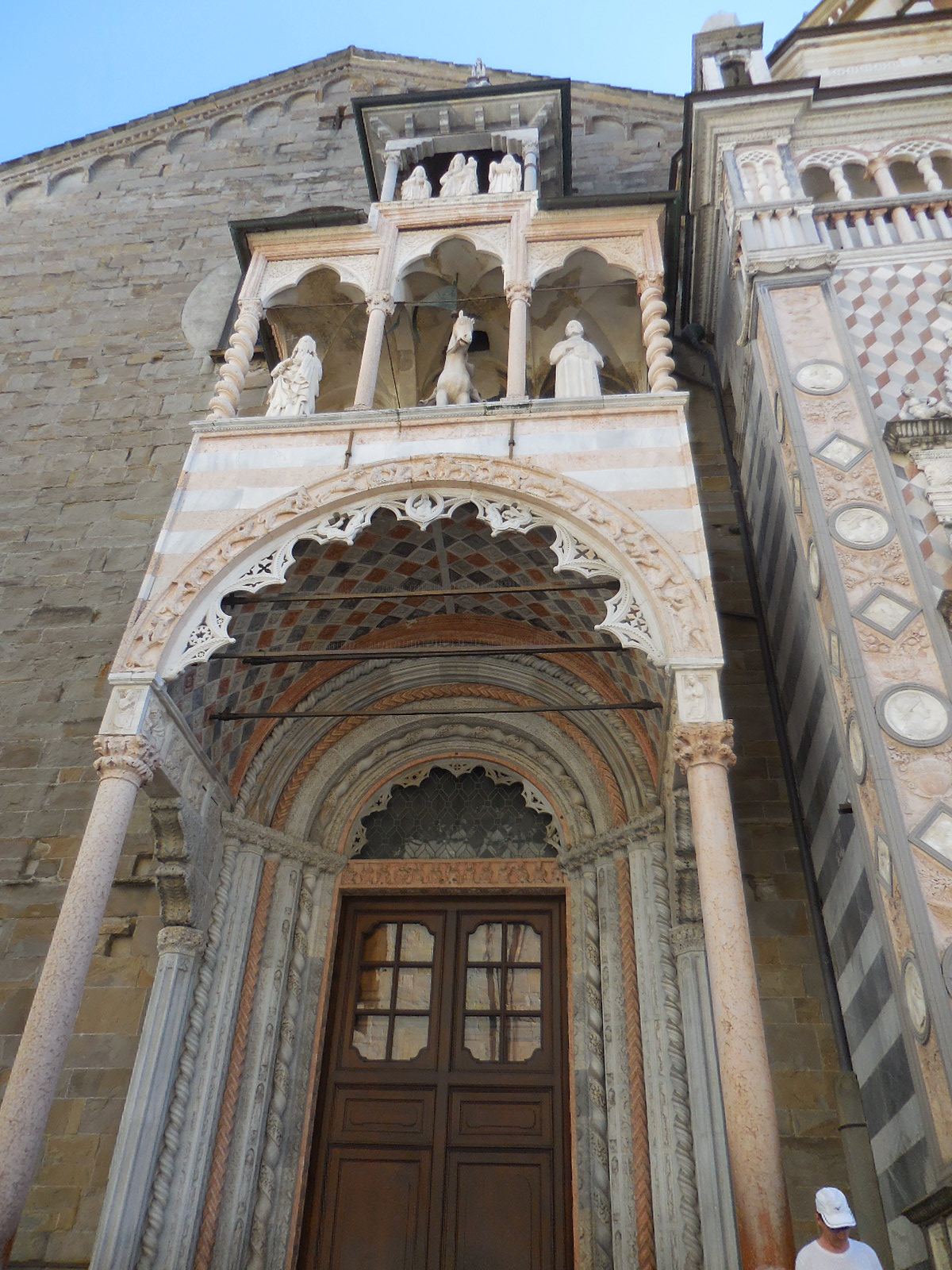
The cathedral and Basilica of Santa Maria Maggiore are situated on the Piazza del Duomo, a small square where markets took place during the Middle Ages. The Baptistery includes eight bas-reliefs portraying the life of Christ. The basilica dates from 1137 and still has some Romanesque features. The loggias are very elegant. The interior was refurbished in the 16th and 17th centuries.

Bergamochurch1

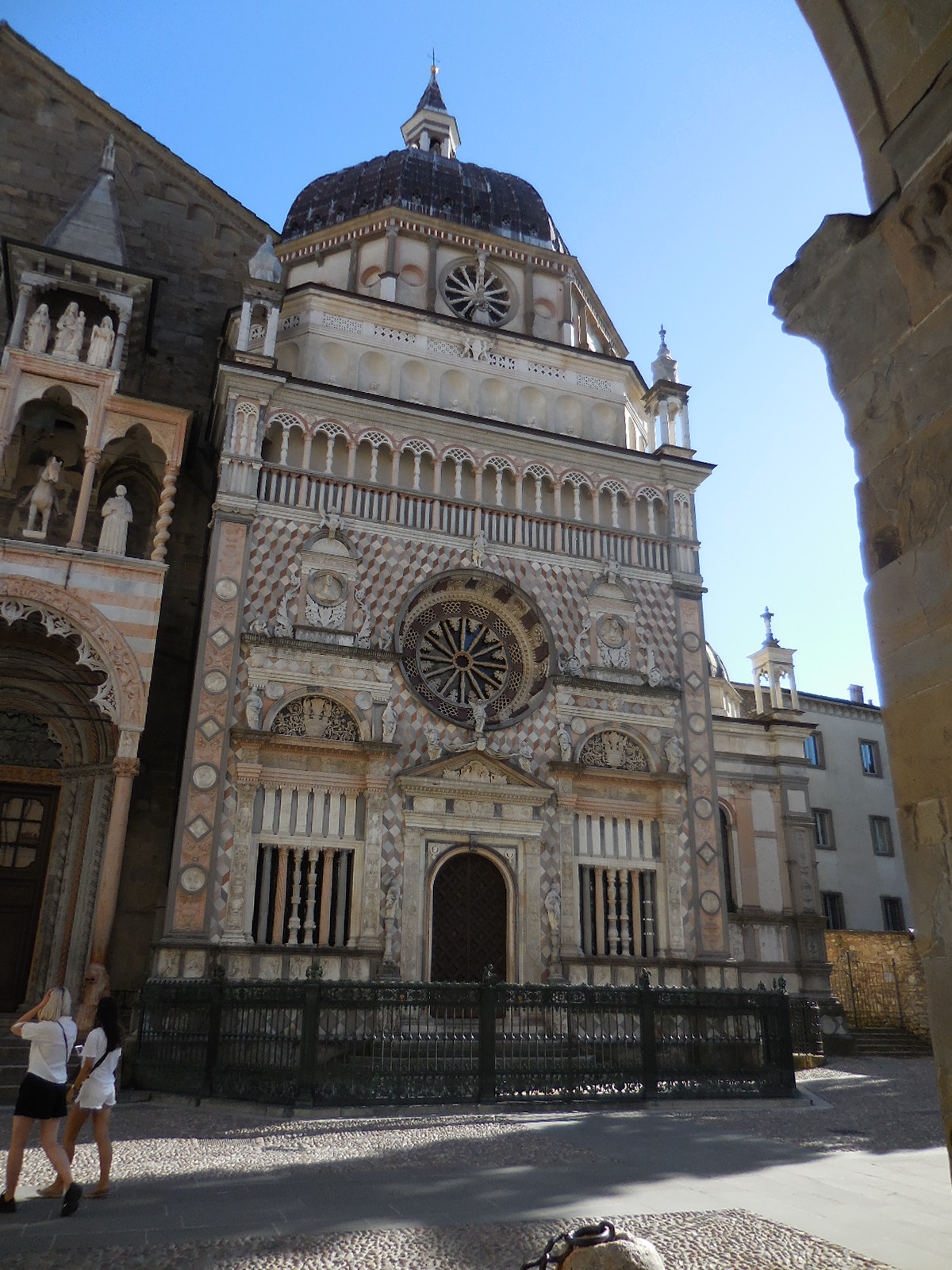
What impressed me most of all was the Colleoni Chapel, where the sarcophagi of Bartolomeo Colleoni and his daughter Medea rested. Colleoni had been captain-general of the Republic of Venice and hailed from the Bergamo area. The church-mausoleum was built between 1472 and 1476 and is one of the most intriguing Renaissance structures in north Italy. The façade overwhelmed me with its tarsia and polychrome marble in red, white and black. The marble designs on the facade exuded a feeling of vivaciousness and a sense of harmony.

Bergamochurch2

The rose window took my breath away. I recalled the rose window in the cathedral of Altamura in Puglia – it had also put me in a sort of trance. Unfortunately, the Colleoni Chapel was closed when we were there, so I could only admire one of the most beautiful facades I had ever seen. I later read that inside there were remarkable ceiling frescoes by Giambattista Tiepolo from the 1730s.

Bergamochurch3

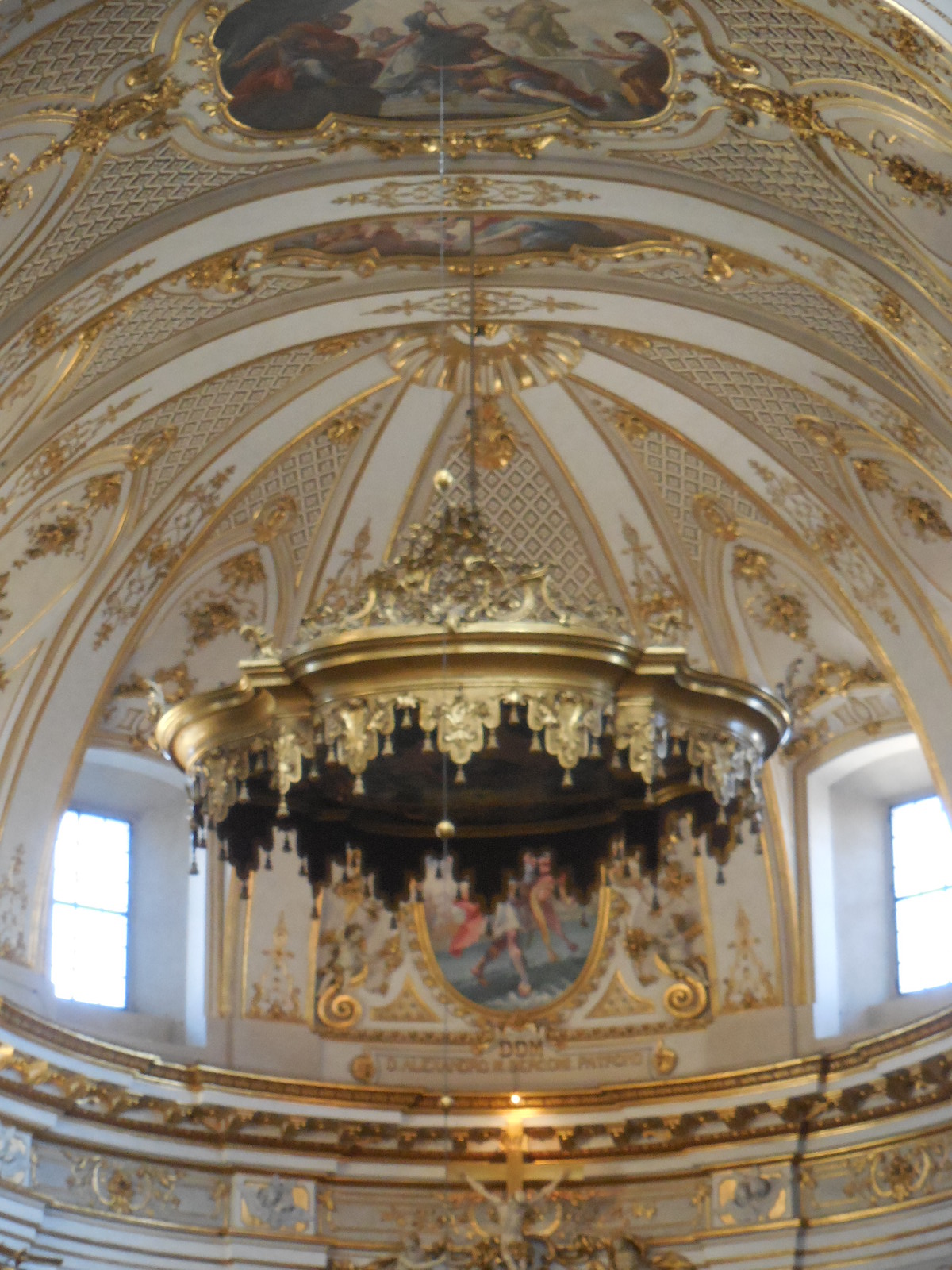
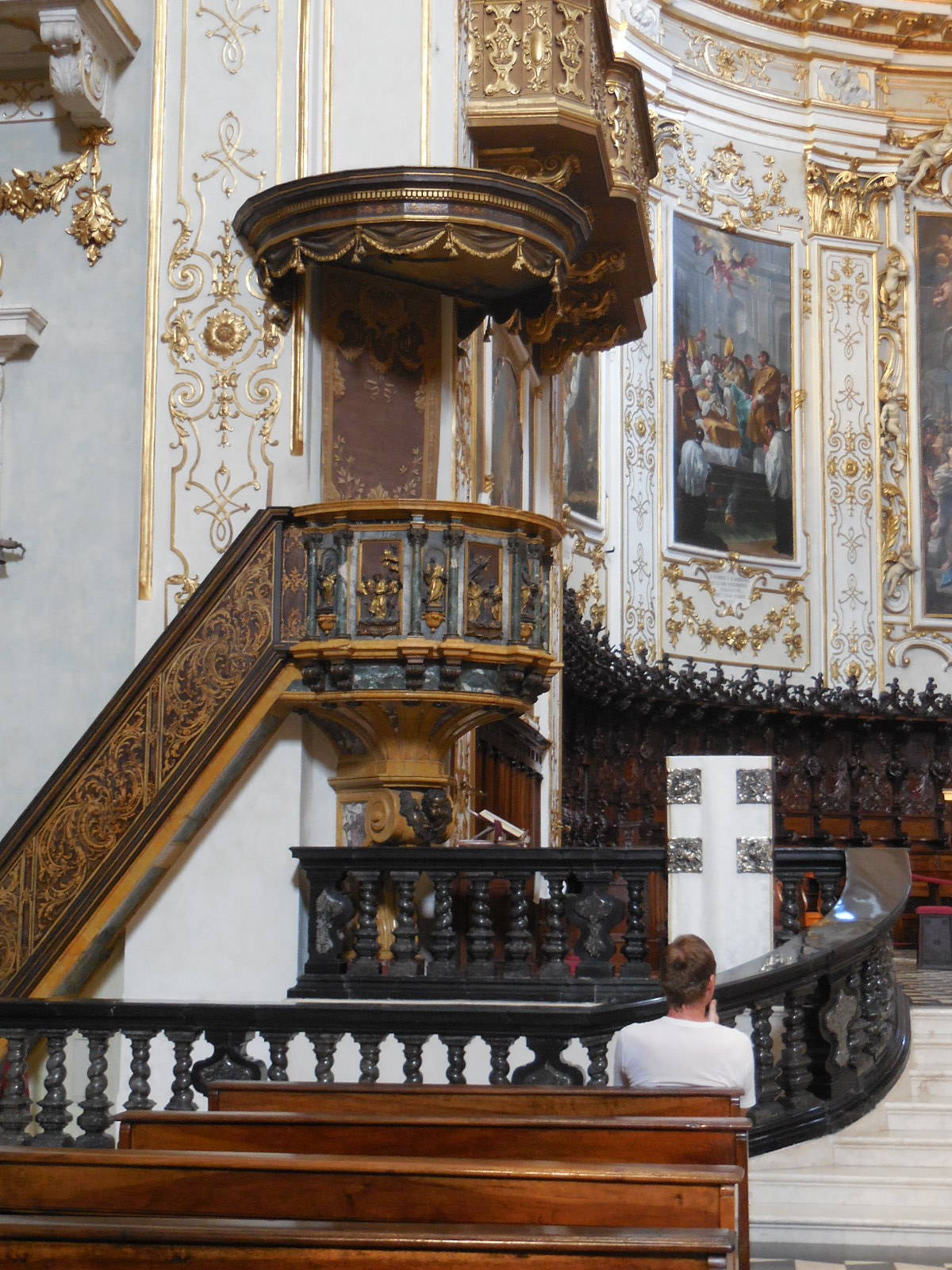
The cathedral was built in the 17th century on the site of another cathedral. The façade on the west side was Neoclassical, a 19th century renovation. The cathedral got major makeovers in the late 17th century and in the 19th century. With a Latin cross ground plan, the interior was impressive, each altar enthralling in its own unique way. There was only one nave. A painting by Tiepolo adorned the apse. The baptistery dated from the Middle Ages with a font from 1340. On the upper level a colonnade included 14th century statues of virtues. The Diocese Museum was closed, unfortunately.

Bergamocathint3Bergamocathint10

The medieval houses that we passed on the way to the fortress included walled-up areas that are referred to as the doors of the dead. These entrances are opened only for a funeral of a family member. The fortress was built for John of Bohemia in 1331, and the tower, which we did not have time to go up, was sure to offer spectacular views. We also saw a 12th century tower. We did not have time to see San Michele al Pozzo Bianco, a 12th century church with impressive frescoes. I had also heard that the botanical garden was worth visiting.

Bergamocathint6

As I sat with a friend at a café on the main square, she told me it was her birthday. What a fantastic place to spend a birthday in! The evening was tranquil, the weather pleasant, without crowds as we had experienced in Verona in the morning. It was as if time stood still in Bergamo, as if peace momentarily reigned in the world just as it had in Bergamo for three and a half centuries.

Bergamocathint7

While we only had time to sample the city’s atmosphere, Bergamo made a distinct impression on me. One of the most admirable features of the Upper Town was the absence of souvenir shops. I wish Prague’s Old Town would ban souvenir shops. I remembered Prague of the early 1990s, when there were not so many souvenir shops and the center had yet to be overrun by tourists. Bergamo’s streets sported shops with local delicacies – I bought some tasty biscotti in one of them. There were also bookstores and stores for paper goods, for instance.

Bergamostreet3

What first comes to mind when I think of Bergamo are those streets, small and narrow yet romantic and poetic. I could walk down those streets for hours, around and around and around from dawn until dusk, getting lost and finding my way and myself over and over again.

Tracy A. Burns is a writer, proofreader and editor in Prague.

Bergamocathint12

Isola Madre Diary

IsolaMadreview7

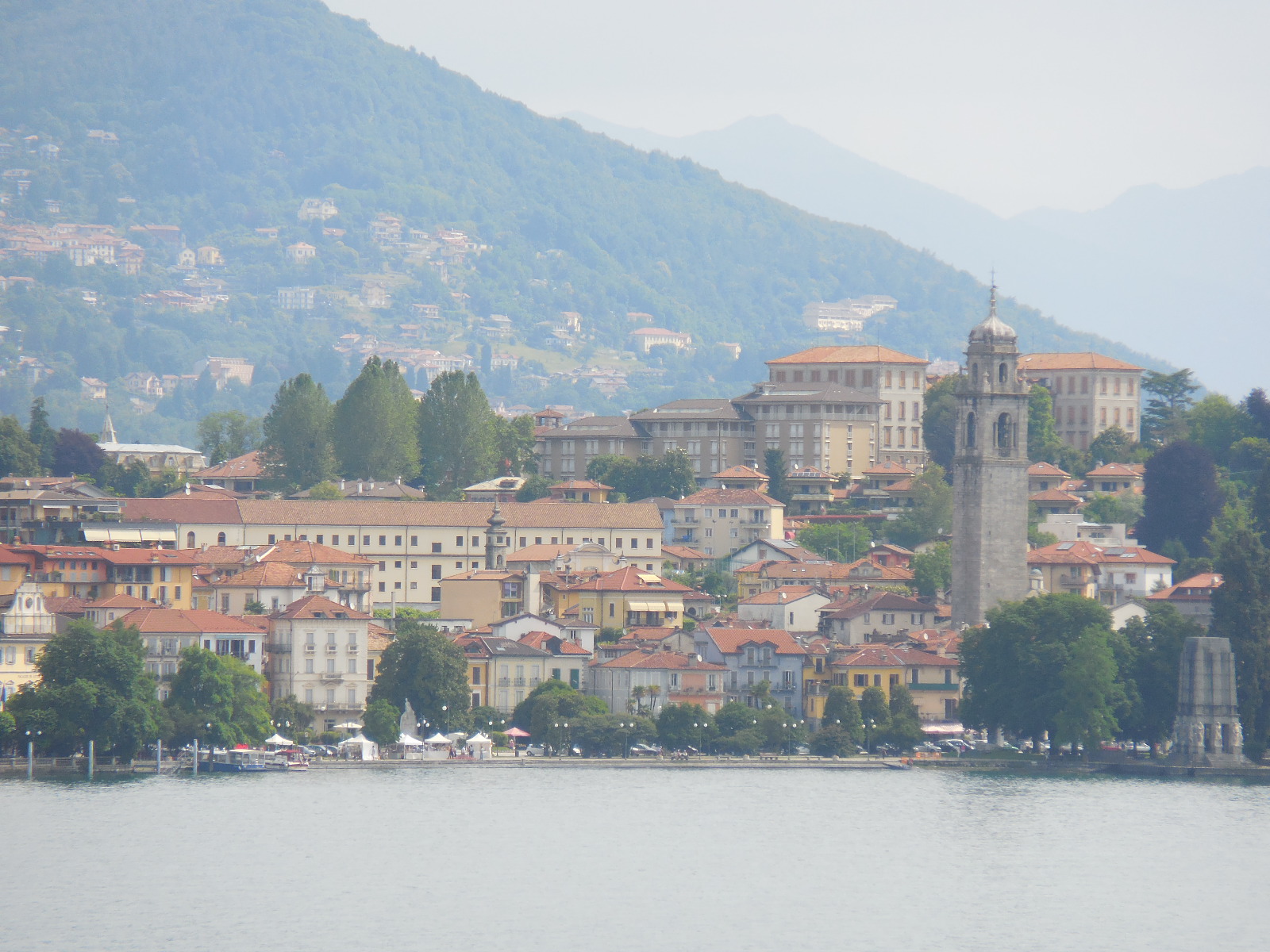
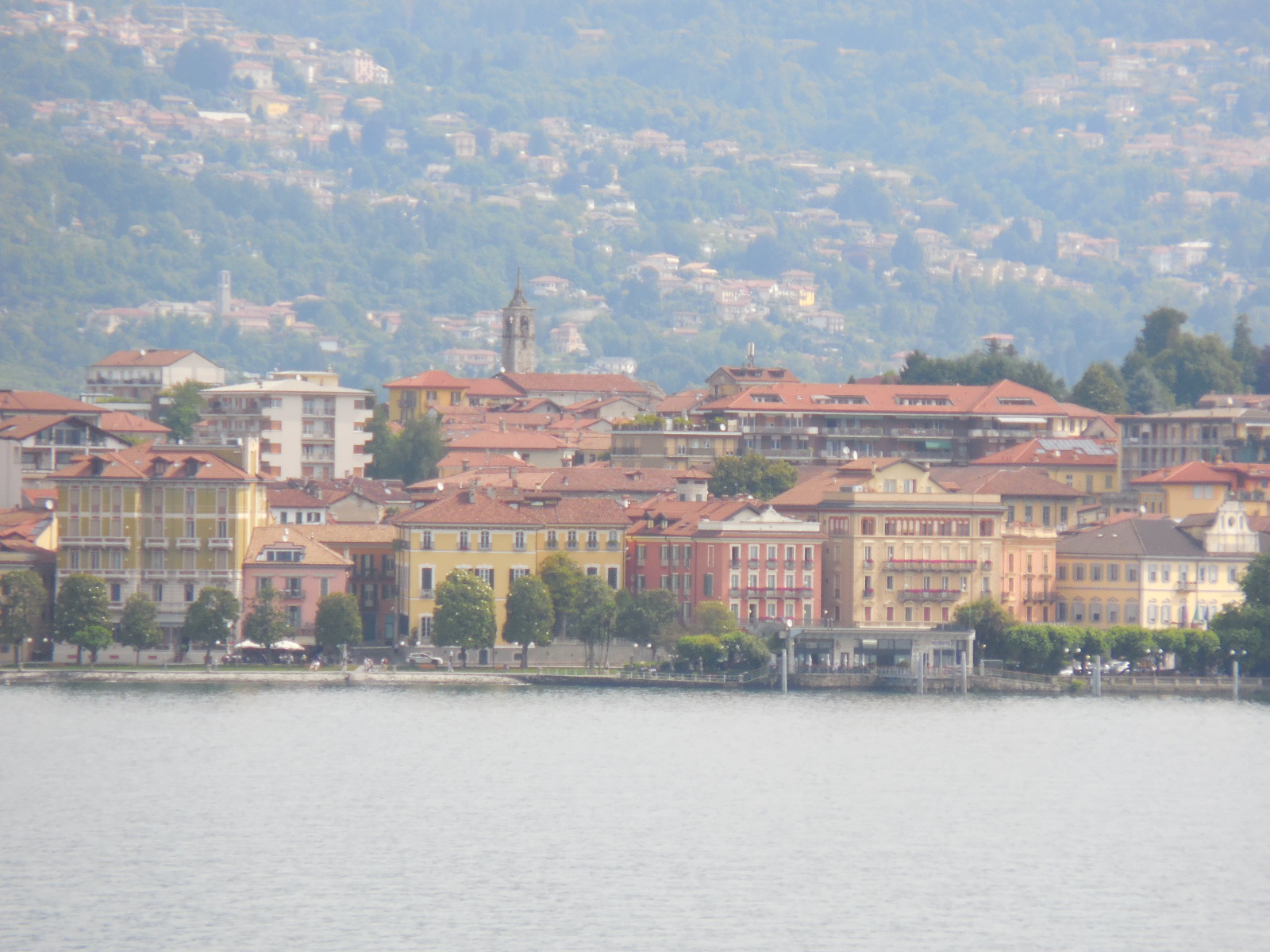
View from Isola Madre

On a tour of the Italian Lakes, we spent the last day at Lake Maggiore, visiting three Borromean islands – Isola Madre, Isola dei Pescatori and Isola Bella.

First, something about the name Borromeo. Indeed, the Borromeo dynasty played a major role in the history of the islands. In fact, the Borromeo clan still owns the islands, except for Isola dei Pescatori, today. They first gained control of the islands back in the 1500s. The wealthy family worked as merchants during the 1300s until they took up banking in Milan sometime after 1370. The most renowned Borromeos were cardinals and archbishops. Carlo was even canonized as a saint.

IsolaMadreview3

View from Isola Madre

First, we took a small covered boat from Stresa to Isola Madre. This island was the largest of the three and featured a botanical park with exotic plants and flowers as well as a palace that boasted an intriguing collection of 16th to 19th century furnishings and paintings as well as marionettes and puppet theatre sets. The palace especially showed off 17th century Lombard paintings.
IsolaMadre5

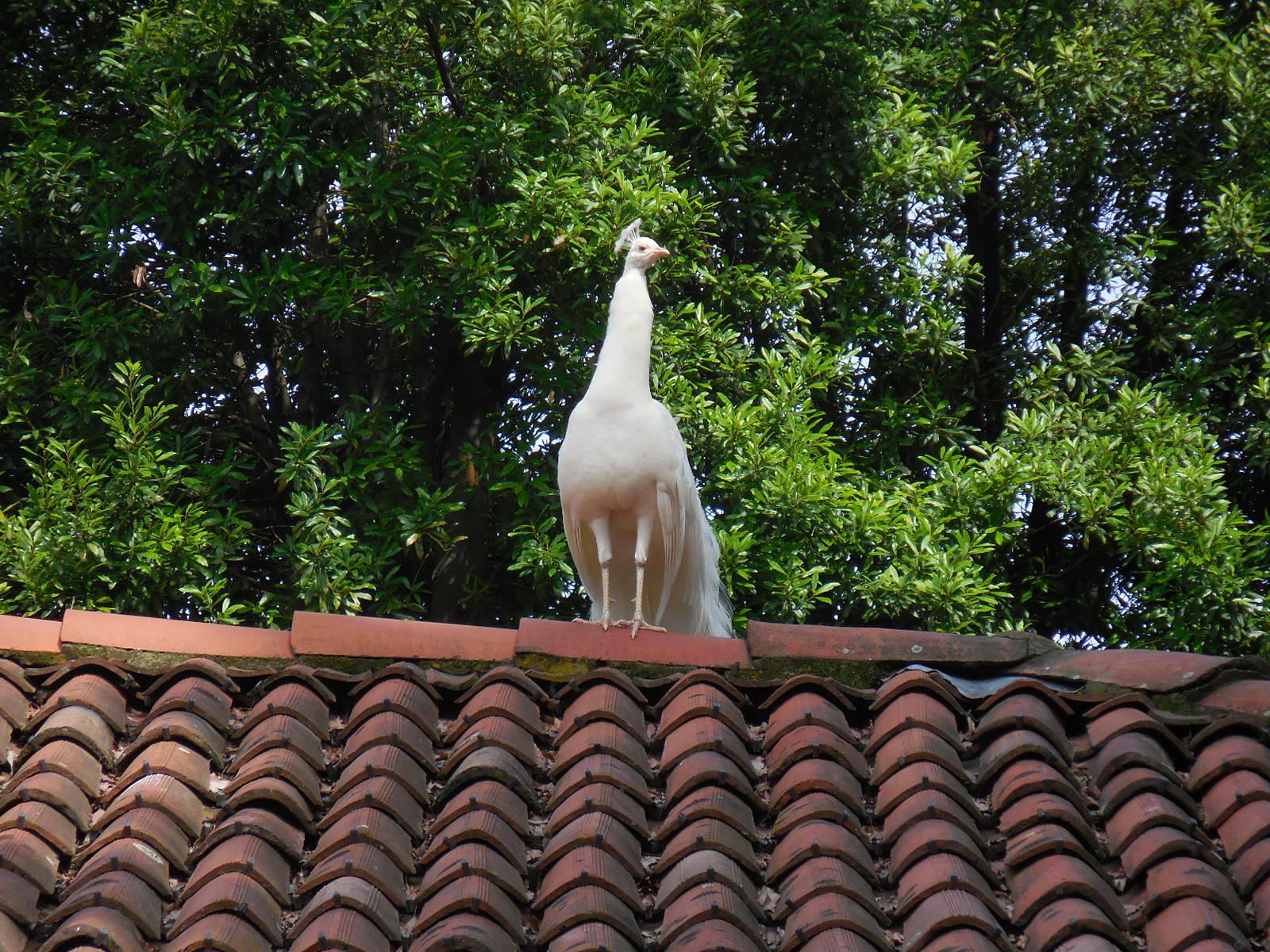
I did justice to the five-terraced garden before entering the villa. The rare birds were a real treat. White peacocks proudly strutted on the grounds. The flowers were striking. I spotted rhododendrons, azaleas and magnolias, for instance. There was an entire section of camellias, a kind of flower that has been nurtured on the island since 1830. I loved the pond adorned with water lilies. It reminded me of the Monet paintings I had seen at The Orangerie in Paris so many years ago, on that warm February morning, shortly after it first opened following a lengthy period of reconstruction.

IsolaMadre10

I also saw a banana tree that measured more than three meters in height. Palm trees appeared in the lush park. On the Gobbi Lawn stood a conifer tree that was still rather young, only about 200 years old. These types of tree can have a lifespan of 4,000 years.

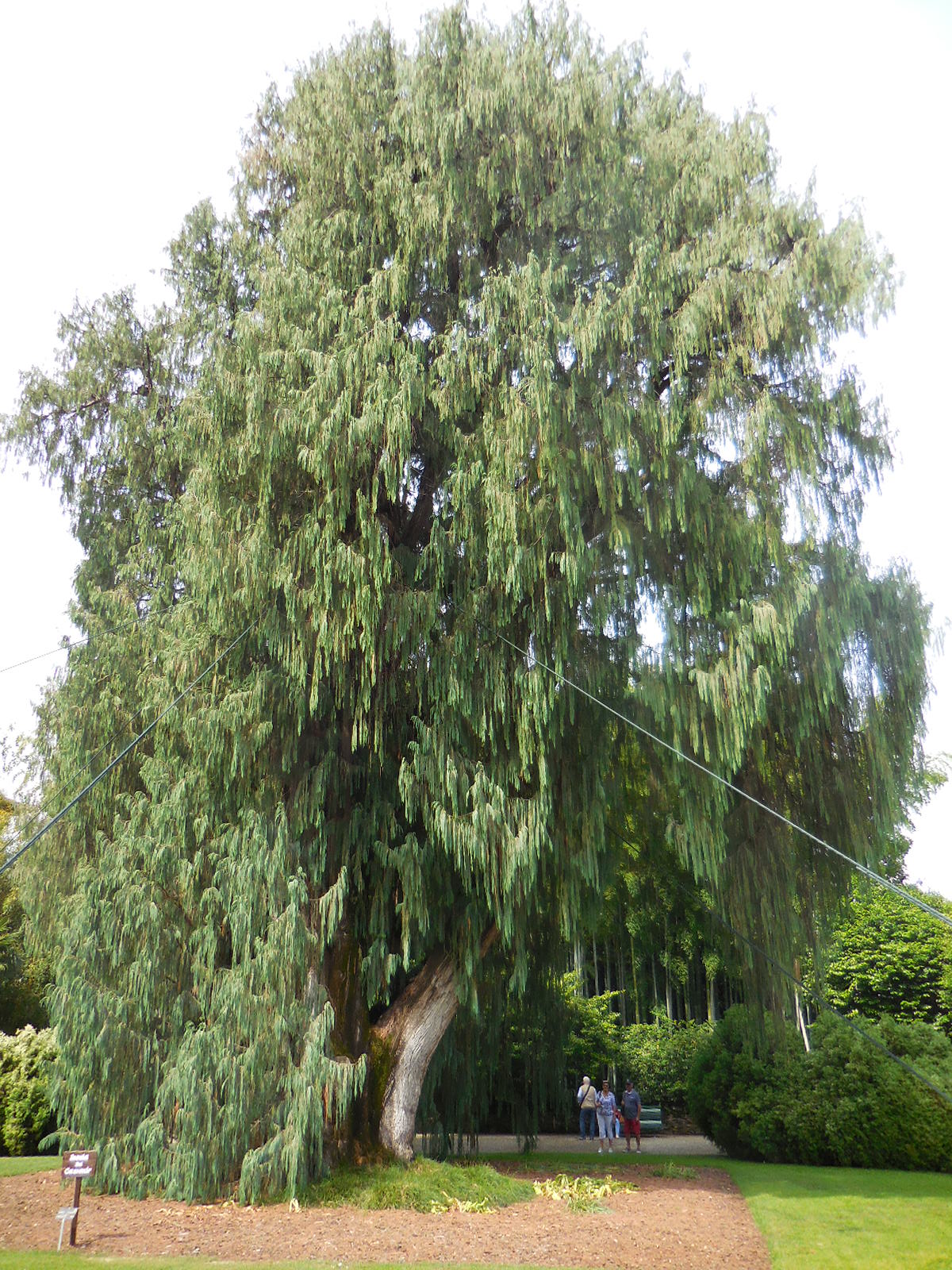
Perhaps my favorite sight in the park was the Cashmir cypress tree because it had a fascinating past. The cypress tree was brought here from the Himalayas, presented to the Borromeos by an acquaintance in 1862. Initially a packet of seeds, the tree grew and grew and grew, finally weighing a total of 70 tons and becoming the largest of its kind in Europe.

IsolaMadretree1

Fate would put an end to the tree’s claim to fame. During the tornado of 2006, the cypress fell. Still, it was not destroyed. The tree was pulled up again, thanks to cables and winches. It is truly an amazing sight that astounded me.

IsolaMadre6

Later, I would read in depth about the history of the island, which was the first of the three to be populated. (No one lives there anymore.) A document from 846 provides written evidence of Isola Madre’s existence. It is not clear why the name Madre was chosen. Perhaps it was because the island was the first one that people called home. It is also possible that the name refers to Count Renato Borromeo’s mother. The appearance of the island has changed little since the end of the 18th century.

IsolaMadrepalace2

Then I entered the palace with a double arcade that made it look light and airy. The furnishings of the palace had been transported there from homes owned by the Borromeo family. I noticed the mannequins dressed in intriguing uniforms from several centuries ago, attire relating to their professions.

IsolaMadrepalace4

The Fireplace’s Room included Milanese paintings from the 1600s and octagons decorated with portraits of kings, but what I really liked were the two Lombard cabinets, intricate and detailed craftsmanship on display. The front panels looked like they were made from semiprecious stones, but it was actually a visual effect of the scagliola technique, which involves using a substance made with colored plaster. They hailed from the late 17th century.

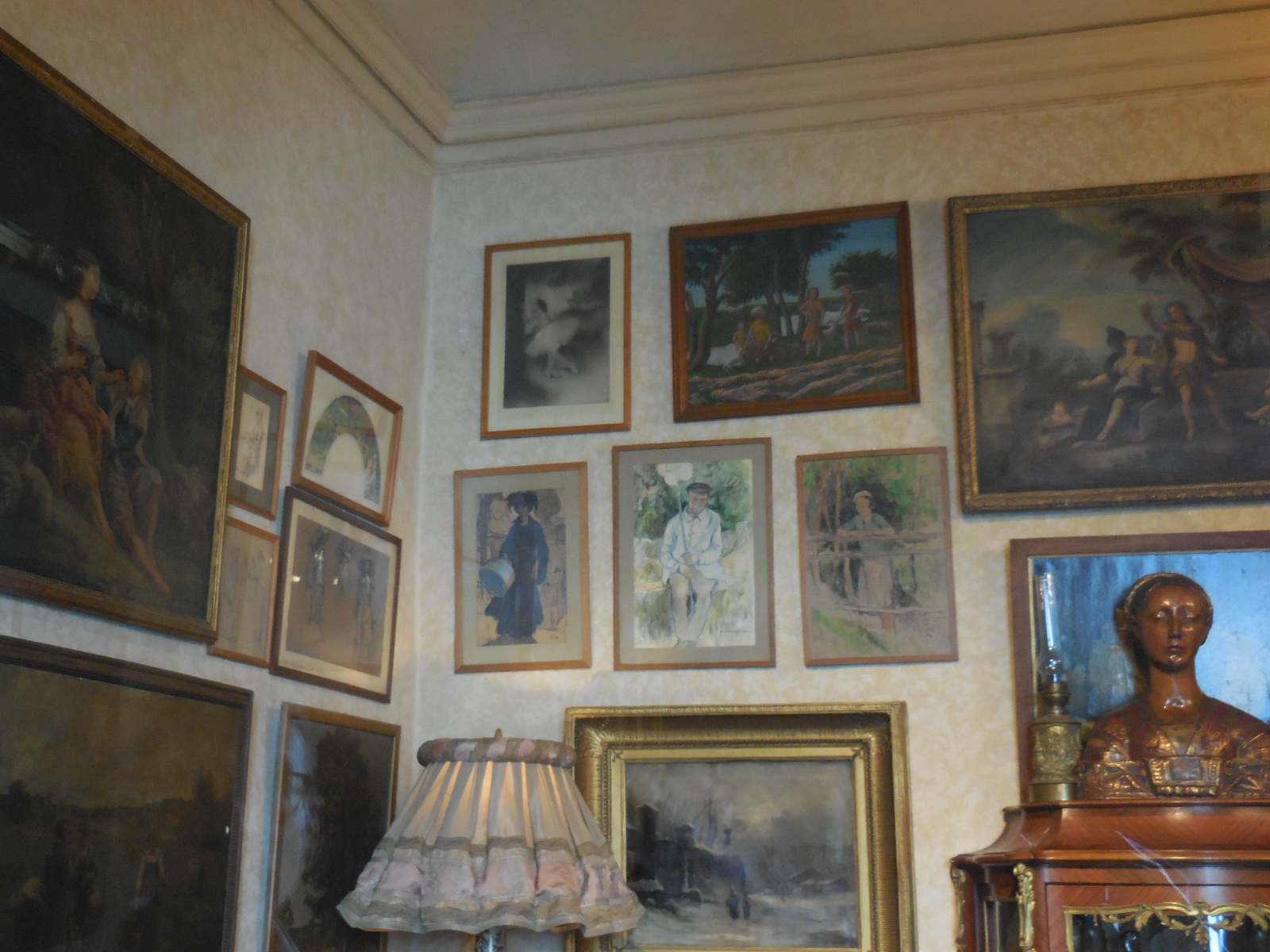
Scagliola was also present in the Room of the Four Seasons in the form of an octagonal table dating from the 17th century. Its intricate decoration awed me. The Collector’s Room included impressionist landscape paintings that caught my eye. My favorite style was Impressionism, my favorite genre of painting landscape. I noticed some Buddha figures, too among the many, various artifacts.

IsolaMadrepalace9IsolaMadrepalace10

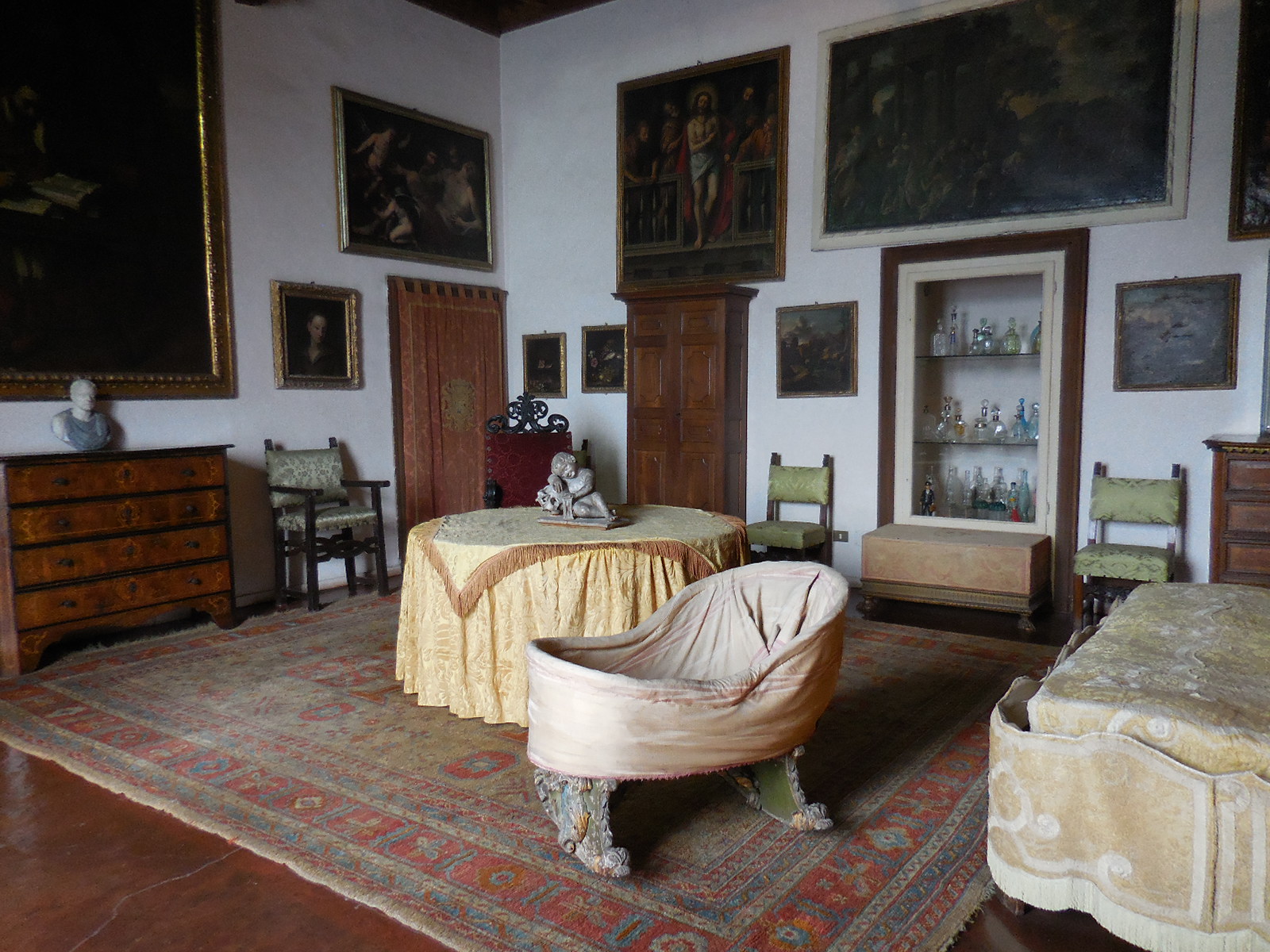
The Green Bedroom did not disappoint with its scagliola-adorned tabletop, hailing from the 17th century. The Yellow Bedroom was named after its four-poster bed with yellow damask lining. There was also a cradle shaped like a boat and a strange sculptural grouping on a table made from silver-plated terracotta. A baby, fast asleep, had placed one hand on an hourglass, symbolizing the countdown to death. The other hand was touching a skull. The 17th century object seemed so macabre, but the macabre had been in fashion during that era, I mused. It reminded me of the grotesque Cycle of Death frescoes at Kuks, a former hospital, which showed off many skeletons. The Baroque era was fascinated by death.

IsolaMadrepalace12

Then we came to my favorite rooms, the three displaying puppet theatre settings, puppets, machinery and plays. In the first room, the curtains and wings did a good job of hiding the machinery from the audience. The stage seems much more spacious than it really is. The wings and backdrop were created by Alessandro Sanquirico, a scenic designer who created stage set for more than 300 productions for La Scala Opera House in Milan. His sets were made in the Romantic style. He even designed the decorations for the crowning of Ferdinando I of Austria as king of Lombardy and the Veneto and was responsible for some ceiling adornment in the cathedral of Milan.

IsolaMadrepalace13

The next room focused on marionettes and machinery. One puppet had a metal head, allowing it to breathe fire through its mouth like a grotesque attraction of a circus performer or a mythical dragon. Some creative machinery included pipes that could simulate fog and lamps that were used for fire, lightning and thunder. It fascinated me how such objects could simulate sounds used in plays. It was ingenious to use these contraptions to make the sounds seem real.

IsolaMadrepalace14

The stage setting in the third room was grotesque, to say the least. Dragons, devils and skeletons all made appearances in this ghoulish design. There also was an organ with three pipes that served the purpose of creating terrifying noises. I could easily imagine the audience being frightened by a play with this hellish stage set. I wondered about the plot of the play for which it had been used. Maybe it was for something Dante-ish in which the marionettes wound up in Hell.

IsolaMadrepalace15

In the hallway, I saw more stage sets, including one of a Chinese temple and another showing a Renaissance building.

Because I had studied theatre in college and often went to the theatre in Prague, I was very interested in the history of theatre on the islands. The drama tradition of the islands can be found in writing as far back as 1657, when a theatre – for people, not for puppets – was built in the gardens of Isola Bella. Then a theatre building where comedies were presented was constructed in the garden. The thespians put a halt to their theatre activities in 1690. The puppet theatre tradition was initiated at the end of the 18th century.

IsolaMadrepalace16IsolaMadrepalace17

I soon came to Federico VI’s Bedroom. While other Federicos in the family had become cardinals and archbishops, this one contributed to the cultural sphere in Milan during the 1700s. Playwright Carlo Goldoni even dedicated his play The Antiquarian’s Family to Federico. The room included a 17th century four-poster bed, but I found Federico more fascinating than any of its furnishings.

IsolaMadrepalace18diningrm

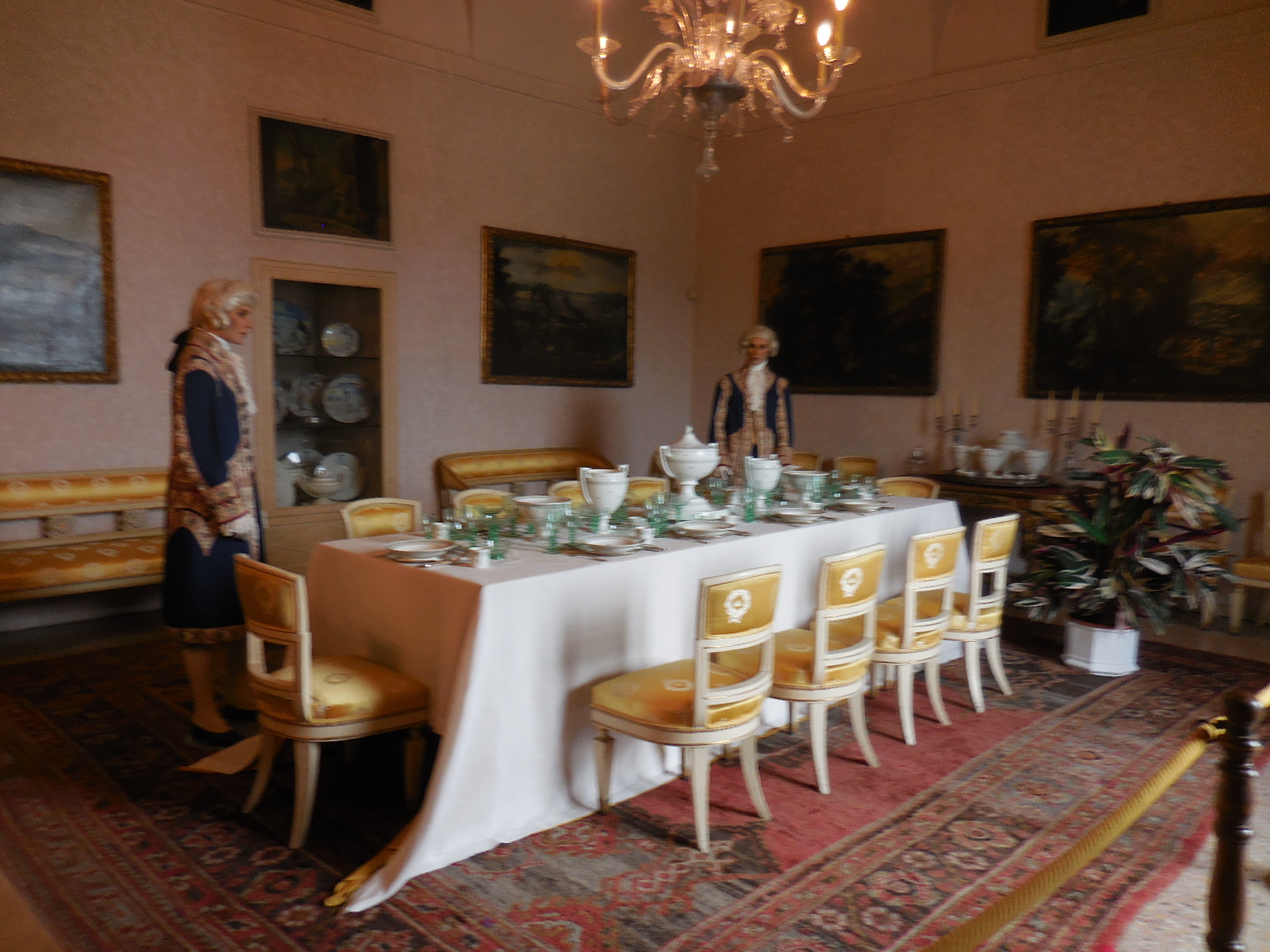
The Dining Room was elegant. I loved the delicate decoration of ivy leaves on the 19th century set of Viennese china adorning the long table. Some paintings included three landscapes of architecture that showed off ruins and neglected terrain.

In The Family Drawing Room, there were portraits of the dignified Borromeos. The portrait of Gilberto Borromeo and his wife Maria Elisabetta Cusani featured the dome of St. Peter’s Basilica in the background. It made me think back to my fortieth birthday, when I walked to St. Peter’s Basilica at sunset. Seeing the sun rise over the dome was stunning and gave me strength to be positive about turning forty and to look ahead and move onward rather than look back and get depressed. Another portrait that caught my eye showed four children and dog, the kids immersed in a game of backgammon. It brought back memories of playing board games – Monopoly, getting a get out of jail free card or buying up hotels and chess, which I took up briefly to impress a boy I liked in grade school. The room itself was not without impressive décor. Lunettes at the top of walls showed off allegories of youth, old age, honor and nobility, for instance.

IsolaMadrepalace23IsolaMadrepalace24IsolaMadrepalace25

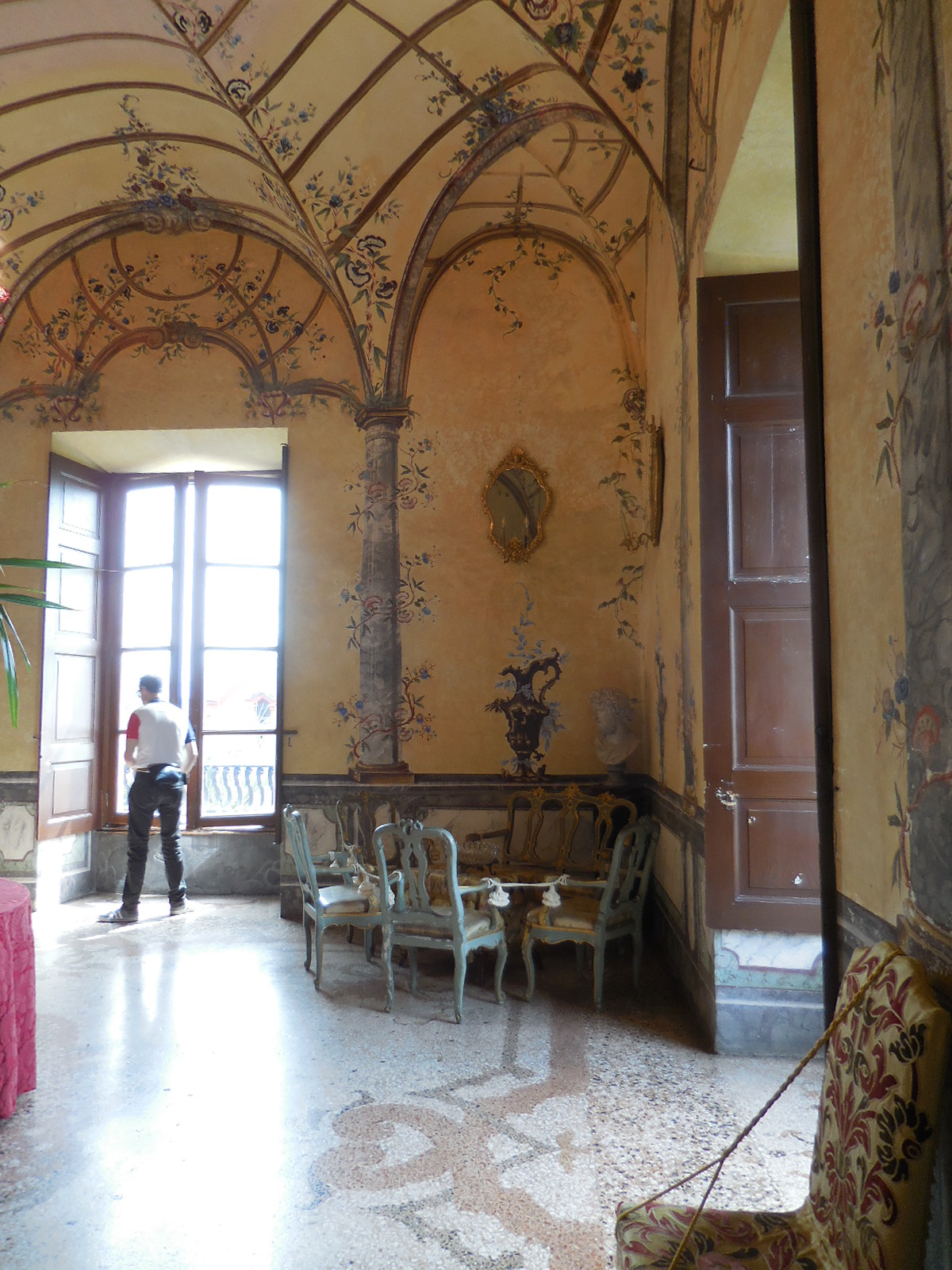
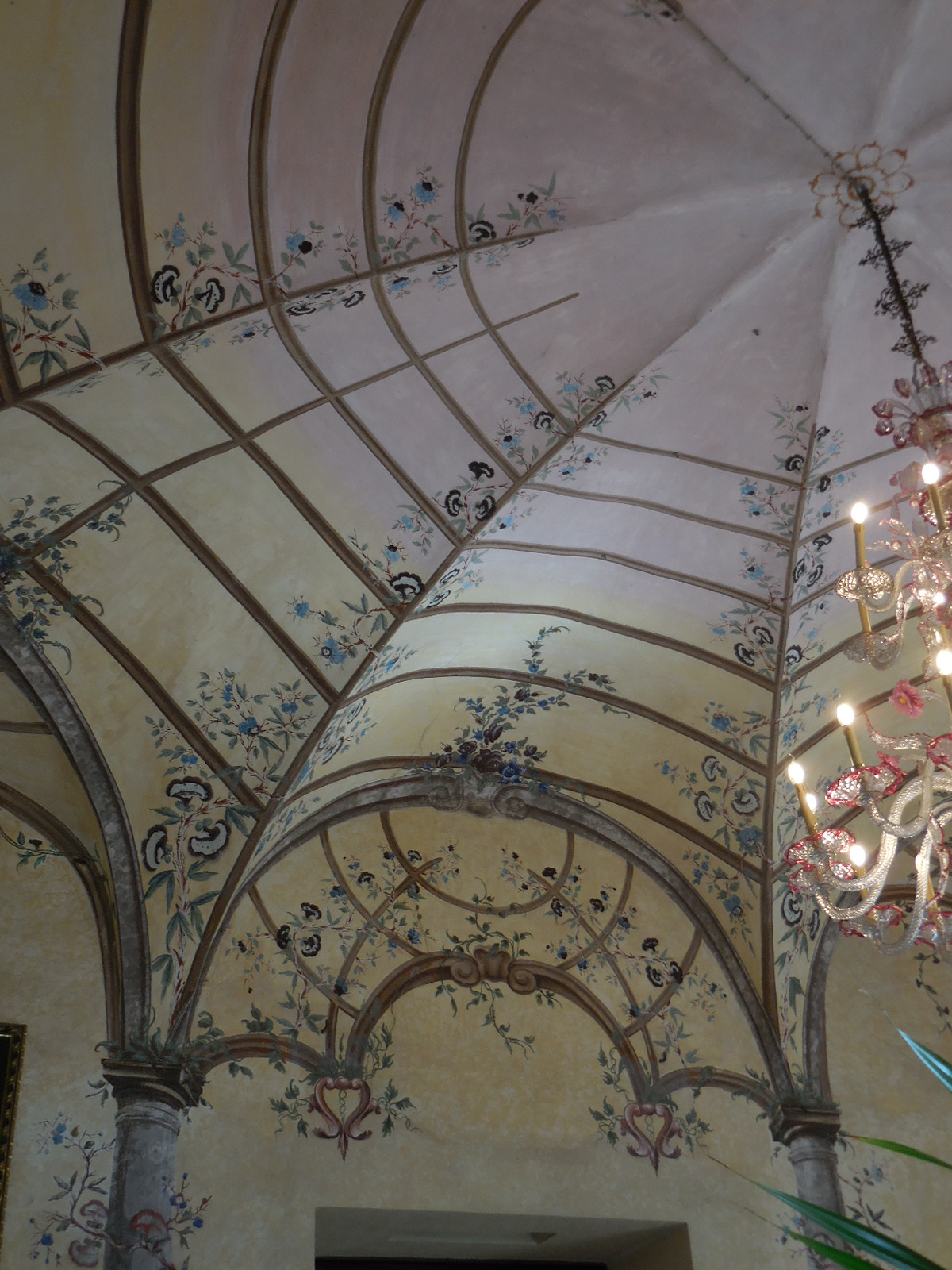
Besides the puppet theatre rooms, my favorite was the Venetian Drawing Room. The painted decoration on the walls made it resemble a pavilion with columns sporting plants and flowers. The door panels were adorned with vines as well. Even the mosaic flooring boasted a detailed pattern. The Rococo décor gave it a certain elegance. It was a light and airy room, perfect for morning tea, pondering over daily life and setting the world to rights as well as jotting notes for a new story or essay. It was a tranquil space where one could relax and get away from the stress and problems of the outside world. It was a sort of haven in which only my dreams and I existed.

IsolaMadrechapel1IsolaMadrechapel2

In the gardens near the palace, I also peaked into the family chapel, simple yet elegant. The small space included only one room, yet it had a certain charm and appeal.

I walked through the garden to the exit and joined my friend at a café with a terrific view of the lake. Throughout the gardens I had seen breathtaking views of other islands and the calm waters. I had a pistachio gelato while we waited for the boat to Isola dei Pescatori, a fishing village that now was filled with shops, stands, restaurants and cafes.

Tracy A. Burns is an editor, proofreader and writer.

IsolaMadreview1

View from Isola Madre