Radim Chateau Diary

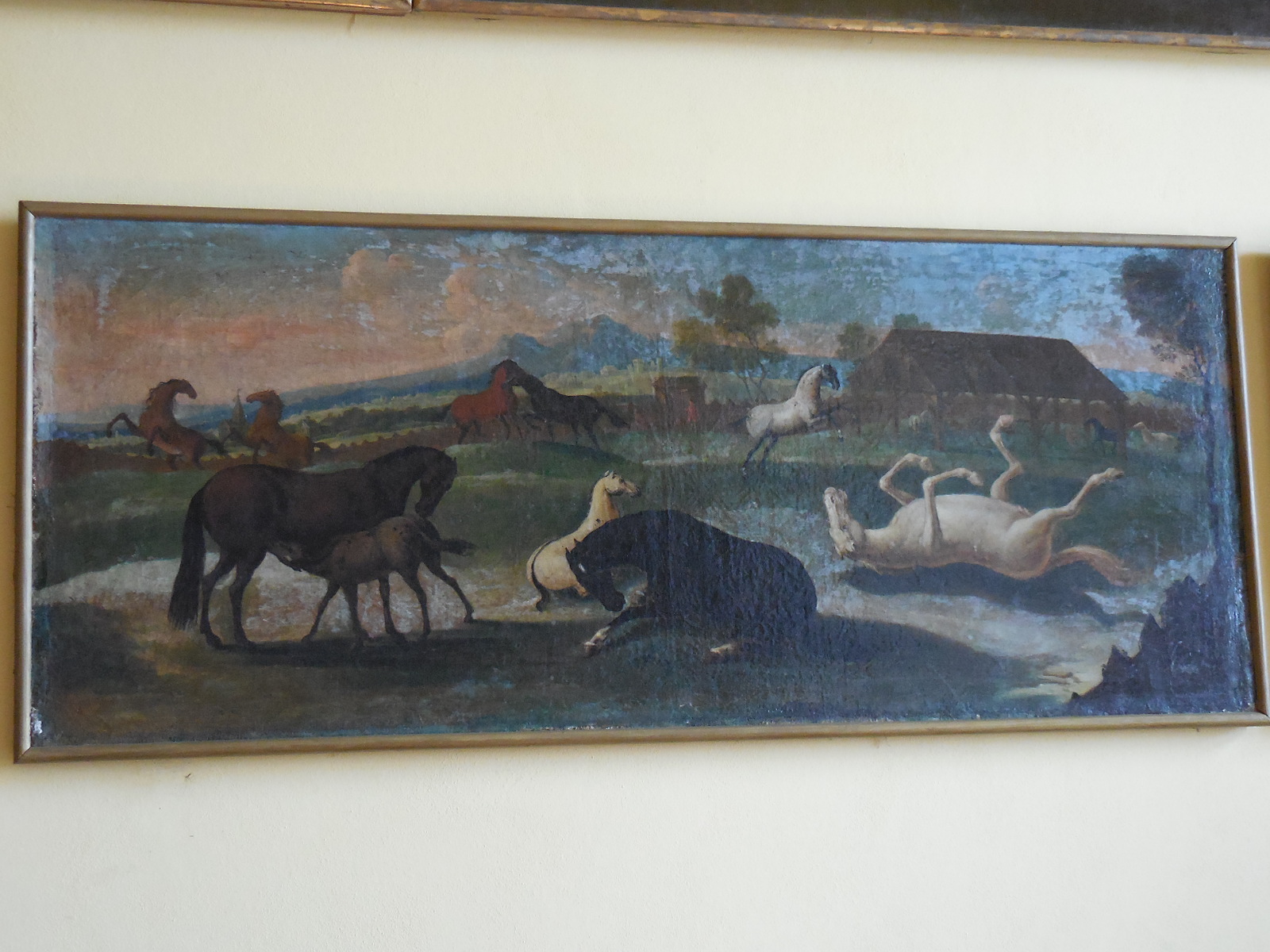
Peering at the paintings in the third floor art gallery and the furnishings on the first floor representative rooms, I came quickly to the conclusion that Radim Chateau was a hidden gem among sights near Prague. While there were not numerous spaces to visit, the ones viewed on tours of the representative rooms were outstanding in their content and beauty. Everywhere I looked in the gallery and on the representative floor, I saw magnificent artwork. Even the 19th century tapestries and Romantized furnishings in the hallways told intriguing stories of centuries gone by.

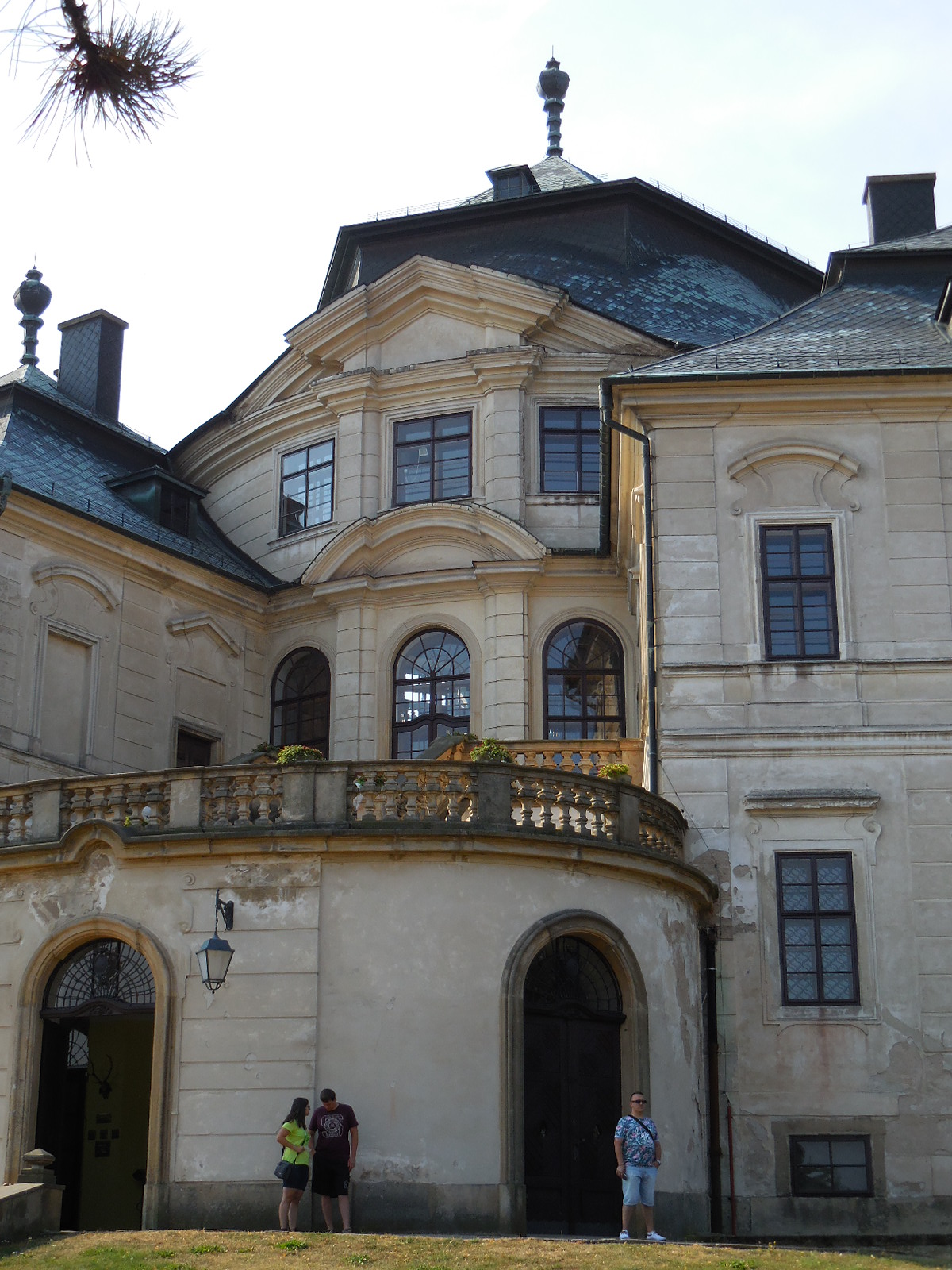
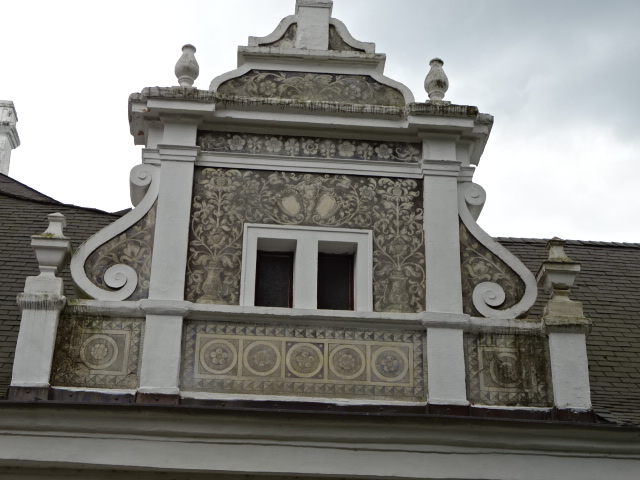
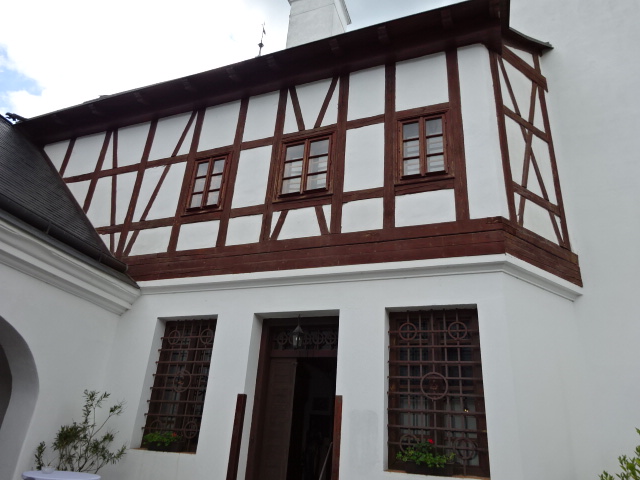
I was stunned by the masterful artistry of Radim Chateau during my first visit in 2025. This Renaissance chateau in central Bohemia was built next to a fortress that was first mentioned in writing during the early 14th century. The fortress had various owners. Then Karel Záruba from Hustířan had the chateau constructed in the early 17th century. The two-floor structure was ready for use by nobles in 1610. However, Karel passed two years later, and the property became the possession of his son Jan, who took the side of the defeated Protestants during the Thirty Years’ War. Because the Catholics triumphed, the chateau was confiscated, and Jan had to flee the country. However, when Adam the Younger of Wallenstein took over the chateau and property, he returned it to Jan Záruba. Soon it was purchased by the legendary Šternberk clan. At that time, Radim became an administrative seat where clerks rather than nobles occupied the chateau.
Several owners came and went after 1634. Then, in 1685, the well-known Gallas family took over Radim and held onto it until the 18th century. I thought back to the Clam-Gallas Palace in Prague, where the ceiling frescoes and ballroom with crystal chandeliers are superb. Getting back to Radim history: The next owner was a notable pioneer in the Czech publishing industry, the knighted František Jan Brahier. He printed breaking news in German. When Brahier died in 1721, he did not leave any heirs.
That is when the Kinský family came into the picture. A family that had had so much influence on horse breeding and horseracing, the Kinskýs sold the chateau to Prince Alois Josef Lichtenstein in 1783. This was an important purchase because the chateau stayed in this family for 143 years. During the Lichtenstein reign, the chateau once again served administrative purposes for a significant period of time.

A momentous occasion could have taken place in 1791, if fate had not gotten in the way. The Czech king Leopold II was returning to Vienna from his coronation in Prague and wanted to see Radim Chateau and take in some hunting there. However, plans had to be changed as Leopold II had to hurry back to Vienna without a hunting break. In the early 19th century, there was much reconstruction.
The Lichtenstein’s parted ways with Radim in 1927, when Dr. Jaroslav Bukovský took charge. Many changes took place as he used the chateau for representative purposes. Electricity was added to the chateau, and what was once a French park came to flourish in English style.

During the Nazi Occupation, the German army used the premises, although the owner’s wife, Mrs. Bukovská, was still allowed to have a small apartment there. After May of 1945, the Russian military took control of the chateau. The Communists held it from 1950, when Mrs. Bukovská was still permitted to reside on the premises in a tiny abode. Most of the chateau was changed into offices, and a few apartments were installed. District offices remained in the chateau until the 1990s. Then in restitution the Bukovský family got the chateau back. After selling the chateau in 2005 to Antonín Dotlačil, much reconstruction took place.
The chateau was sold again, this time to the present owner, Bohuslav Opatrý, who is a music and art lover, having restored many of the paintings in his third floor collection. The park and garden underwent reconstruction as did part of the chateau. It was not until this century that Radim Chateau was open to the public.

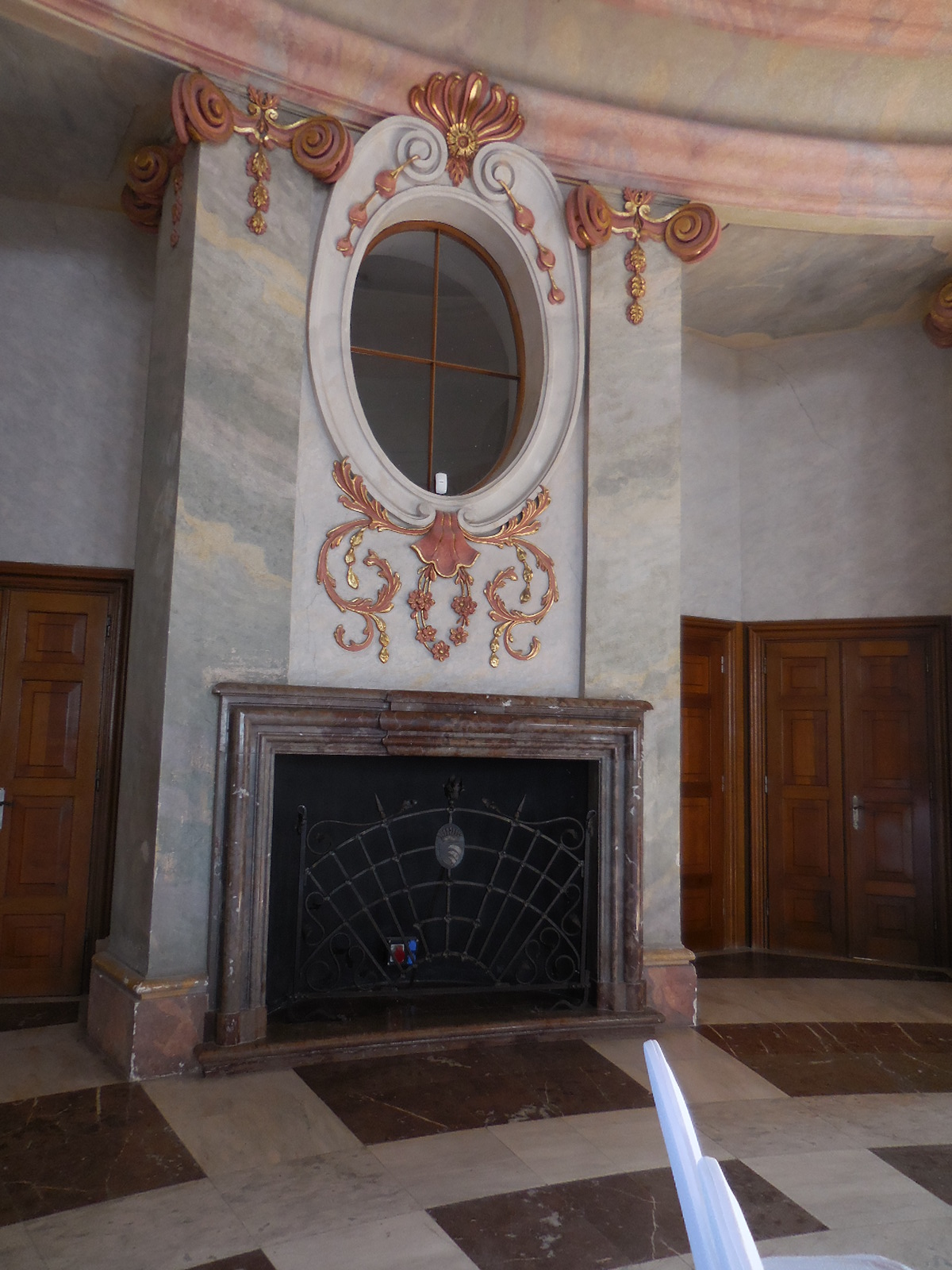
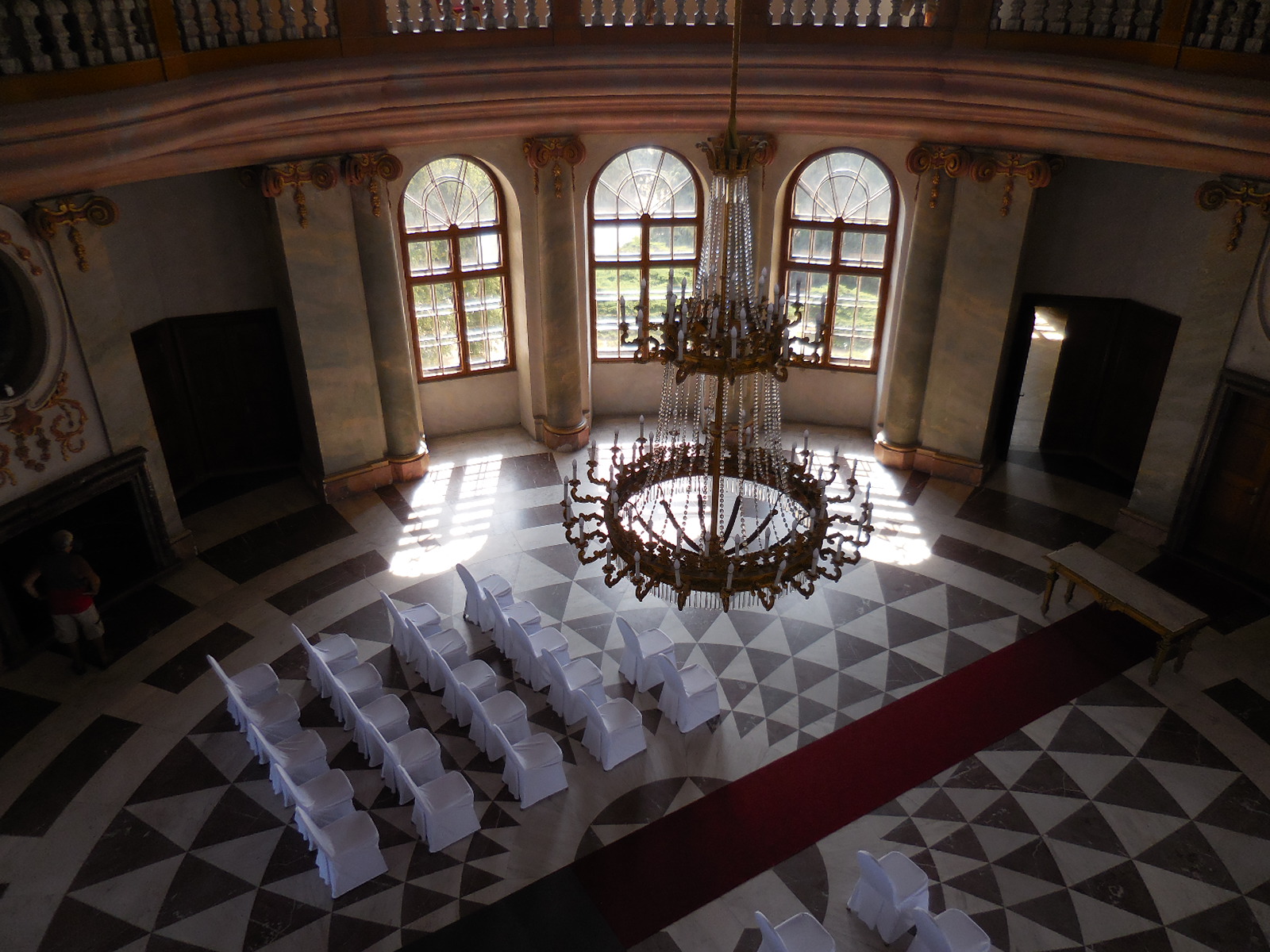
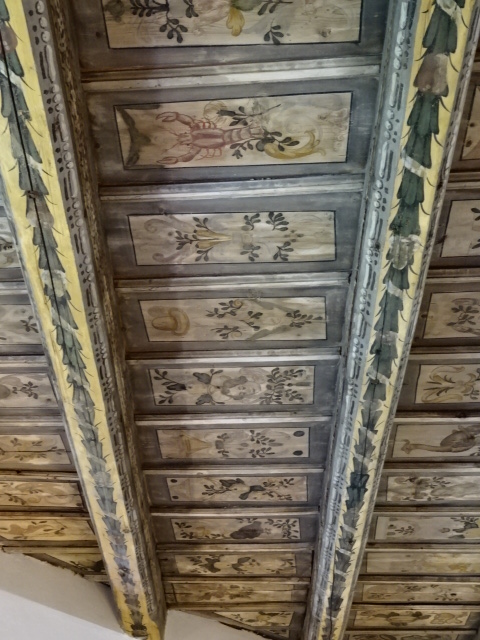
While most of the furnishings are not original due to the Nazi occupation of the chateau and the dereliction that occurred during socialist times, it does boast original 19th century flooring in the main hall. To be sure, the Communists destroyed most of the chateau interior. Yet, decades later, Radim would be resurrected by painstaking efforts that made it into the gem it is today. The painted ceilings in the bedroom, main hall and gallery have been preserved to a great extent. The painted decoration on several ceilings, such as a lobster and a horse, hails from 1607 to 1610.

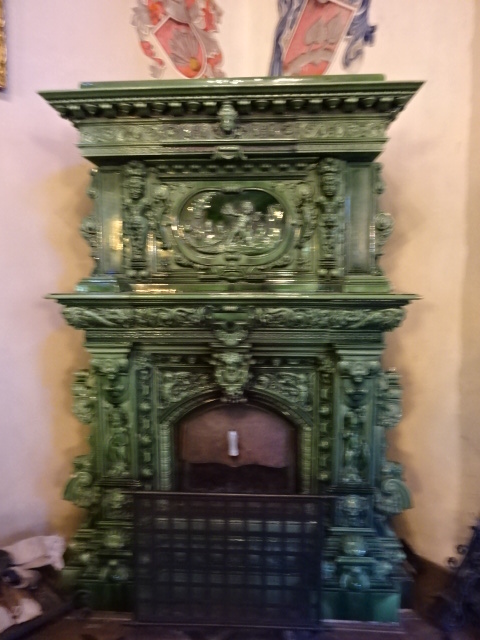
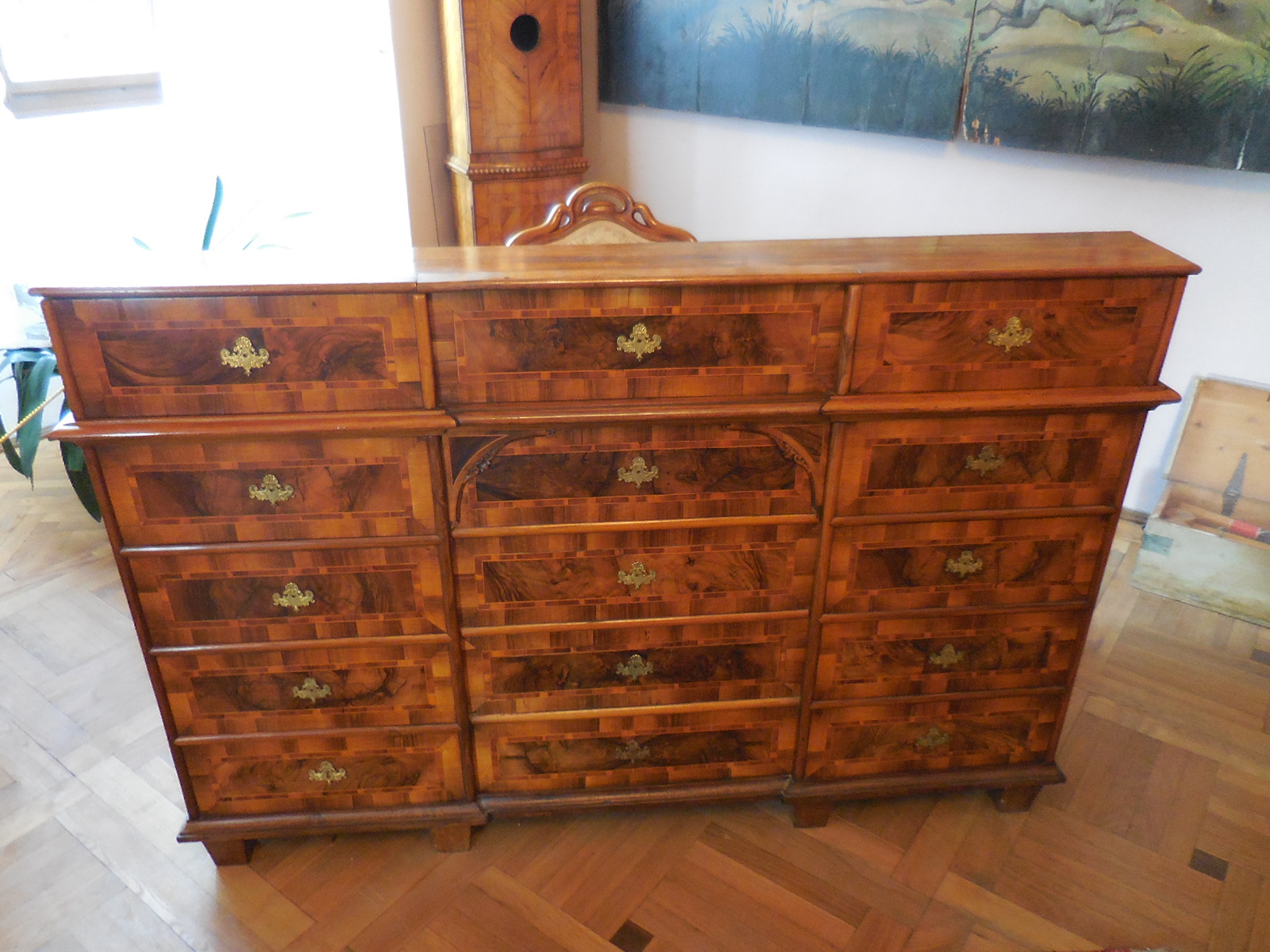
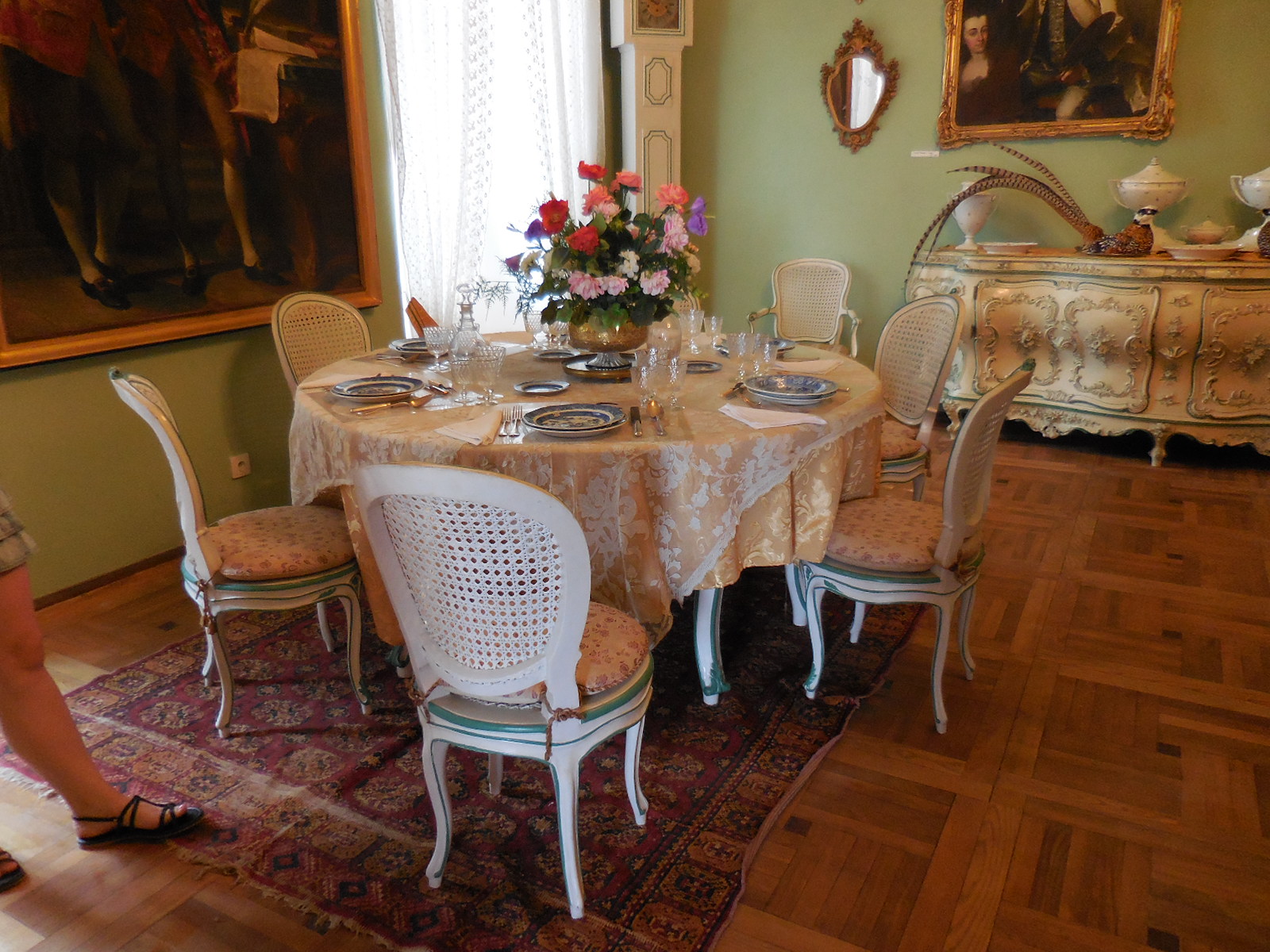
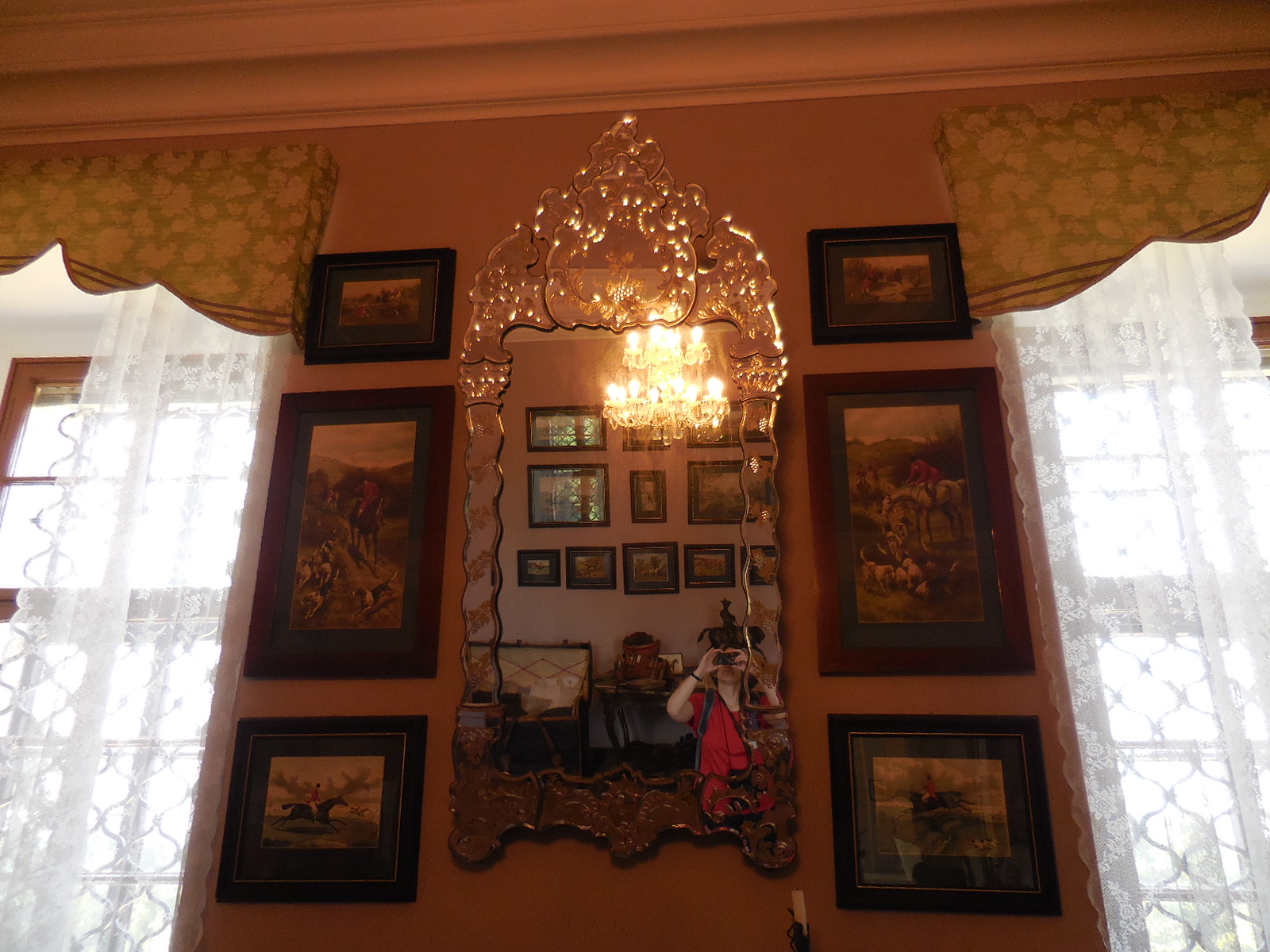
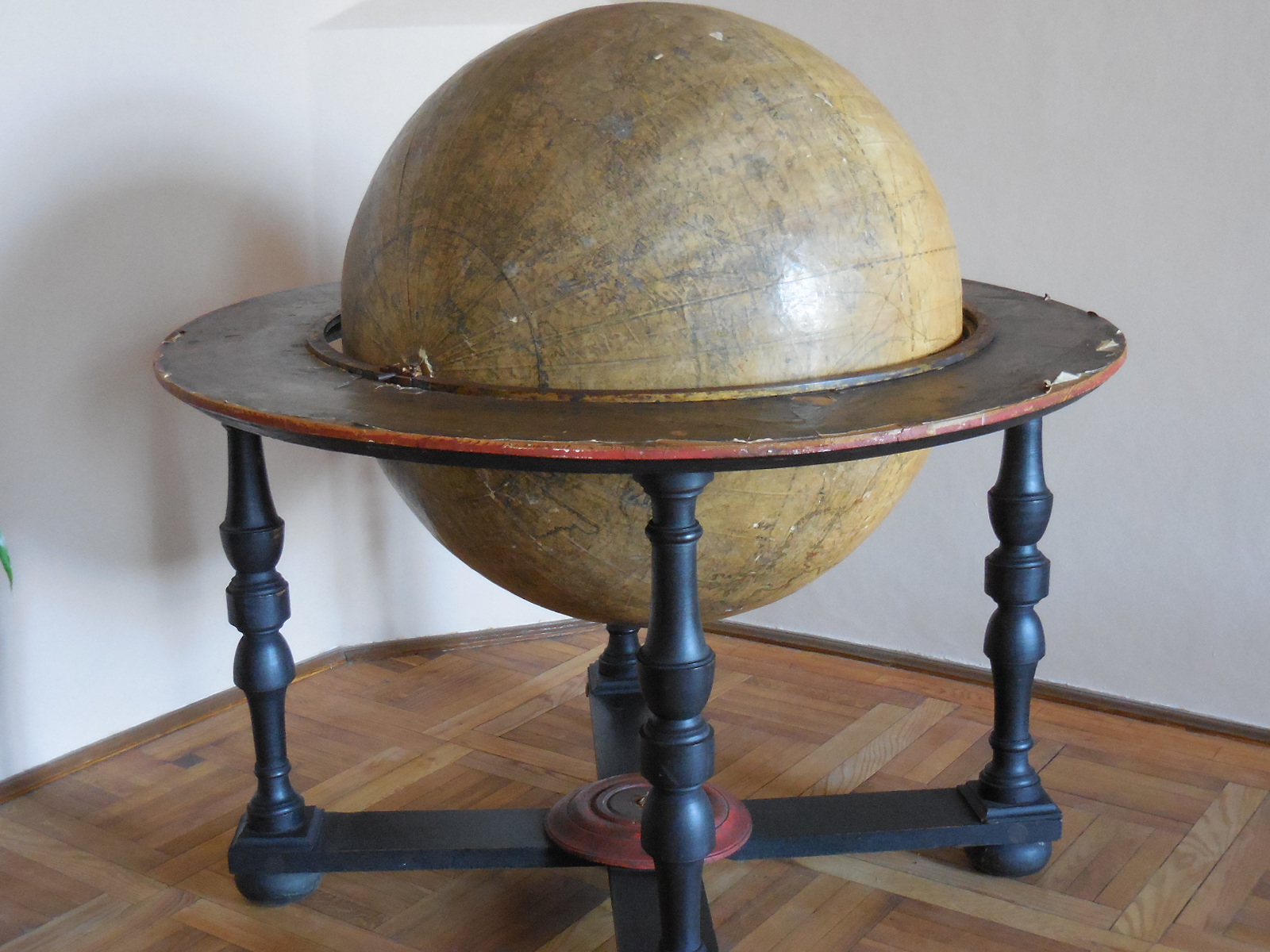
In the bedroom that we entered first, I was intriguing by the Baroque bed with exquisite carving. In the dining room, I was speechless at the sight of low Renaissance chairs around a Renaissance table. In other rooms, I saw many Gothic chairs, often Romanticized into 19th century style. A Mannerist cabinet with exquisite woodwork of figures and columns was a delight in one space. I spotted a portrait of Rudolf II among the pictures of rulers that decorated a high wall in the bedroom. I also saw in one space a 18th century globe decorated with allegorical figures of zodiac signs instead of continents. The ceiling decoration of a green-and-white pattern in the bedroom also awed me. So delicate and so much attention to detail.

In the administrative office of the Lichtensteins, I saw pictures of Austro-Hungarian generals. In the study, portraits of past owners as well as the current owner hung on the walls. I recognized Adam the Younger Wallenstein as well as Adam Kinský. There was even a portrait of Octavian Kinský, who was never the owner of this chateau but had made a name for himself with that clan, specifically in horse breeding and horseracing. Work related to his successes could be seen in Karlova Koruna Chateau, which I had visited several times. A more modern likeness of the current owner also decorated one wall. In an isolated space, I peered at a Neo-Gothic altar with medieval elements. Tapestries from the 19th century were present throughout the chateau’s first floor and hallways.
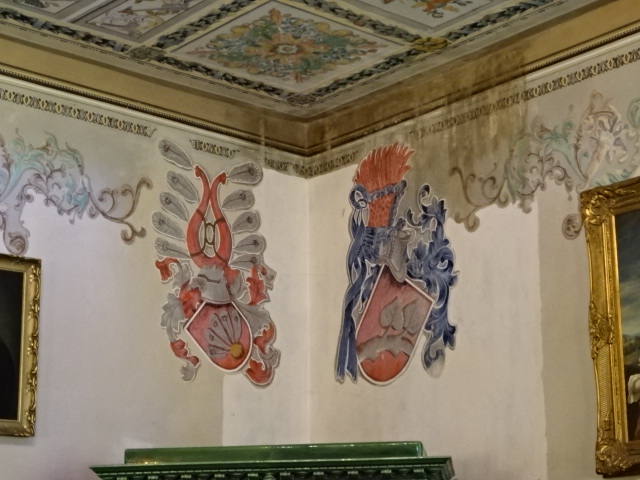
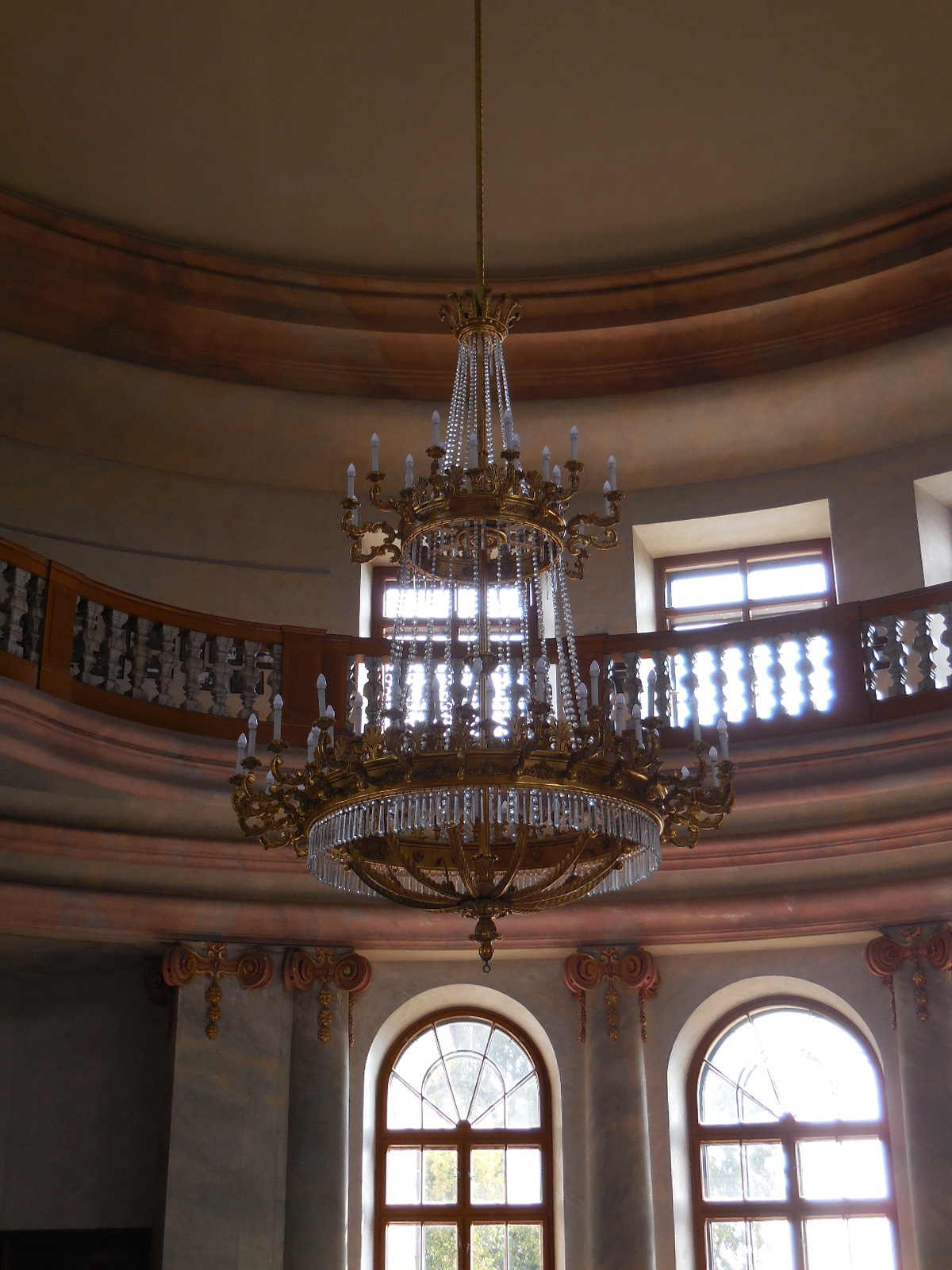
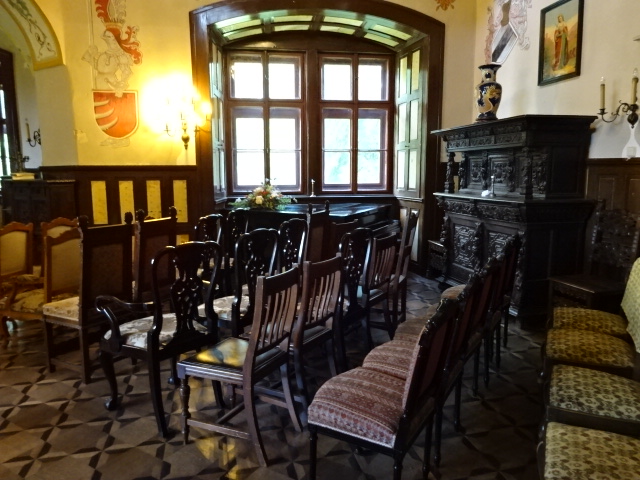
The main hall, often used for weddings, was one highlight of the tour. The painted ceiling featured various objects and animals in bright colors. A 19th century Petrov Grand piano also adorned the space. Paintings from various periods added to the décor.

Close-ups of the Mannerist cabinet

On a tour of the cellar places it was possible to see a Black Kitchen that was still functional as well as an armory and some bedrooms once used by princesses. This was another intriguing tour.

Portrait of Austrian general

However, the biggest highlight for this art lover was the gallery on the third floor. Nineteenth and early 20th century landscapes dotted the hallway. I saw images of the slowly flowing Berounka River, the snow-covered Alps, charming cottages tucked into woodlands, the tranquil landscape in the Pilsen region, sights of Prague, portrayals of sheep, folk dancing figures and haymakers doing laborious work in the fields, mystical forests and other scenes. I was enamored by each painting as landscapes from this time period were my favorite. While most of the paintings were authored by lesser known artists who deserved much praise, one work was painted by the well-known Otakar Nejedlý.
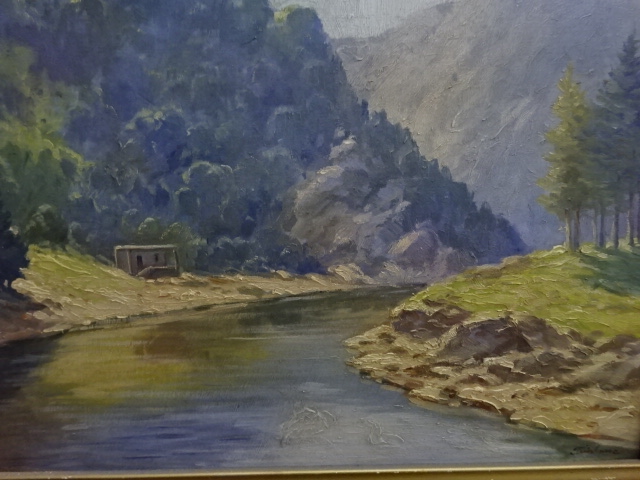
Landscape with Berounka River, not by Nejedlý

This renowned Czech painter lived from 1883 to 1957. He was a pupil of the master landscape artist Antonín Slavíček. His travels to India greatly influenced his works. During World War I, he was mobilized to France where he painted places the Czech legionnaires had fought. After the war, he became an esteemed professor in Prague. He adored the south Bohemian countryside and was inspired by Romanticism, Impressionism and Expressionism.
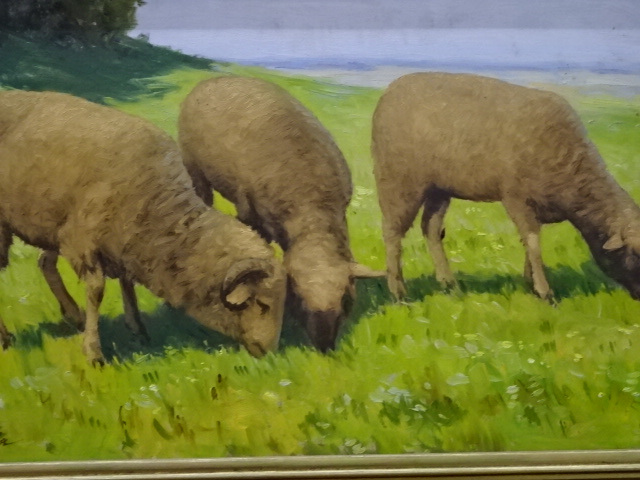
Painting of sheep by Popelka

Vojtěch Hyněk Popelka created the renditions of moving sheep, and it was no surprise that he specialized in painting animals. He brought to life landscapes and animals in his works during the early 20th century.

Painter Otto Stein, who also was an accomplished graphic artist, lived from 1877 to 1958. Several of his works were displayed in this gallery. After studying in Prague and settling in Munich, he took part in Munich New Secession exhibitions in the early 20th century. During the war, he painted material used to promote the Austro-Hungarian Army. After the war, he became part of the Berlin Secession, having to move to that city. In 1922 his renditions were on display in Prague’s Rudolfinum. He gained acclaim in Germany and the USA.
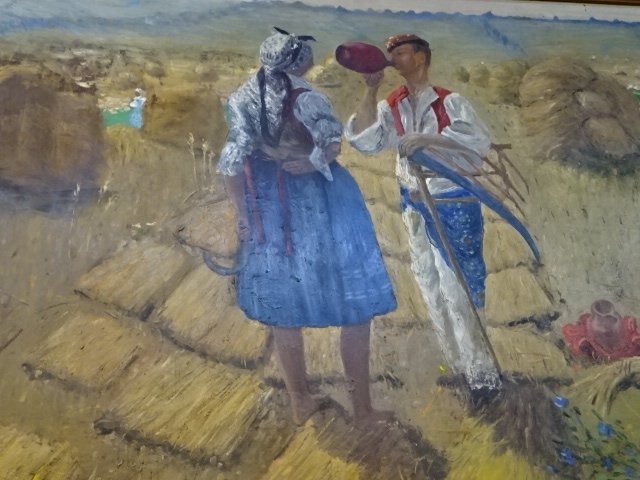
In 1942 tragedy struck, and he and his family were deported to the Terezín concentration camp. He toiled in the technical department there and bided his free time with drawing. Miraculously, he and his entire family were spared, and, after the war, he moved to Prague. Then he went to live in the north Bohemian countryside, where he did a great deal of painting. He died there in 1958.
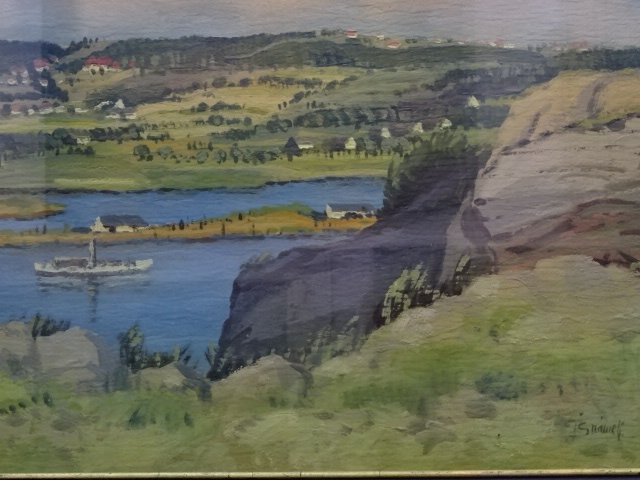
The German painter Adrian Ludwig Richter also had works on display in this gallery. He lived from 1803 to 1884 and also succeeded as a illustrator. His paintings featured the Romanticist style, inspired by Caspar David Friedrich. He was especially enamored with the countryside of north Bohemia and the ruins of Střekov Castle in that region. Richter also made 3,000 creations out of wood.

Vlastimil Toman (1930 – 2015) was a painter, graphic artist, illustrator, poet and photographer as well as professor. Several of his landscapes were represented in the gallery. He worked mainly in Třebíč, painting the Vyšocany and Moravian countryside. In the 1960s, he explored the styles of cubism, fauvism, expressionism and lyrical realism. In total, he had 24 solo exhibitions in Třebíč plus 50 collective exhibitions around the country.

Prague Castle in the distance
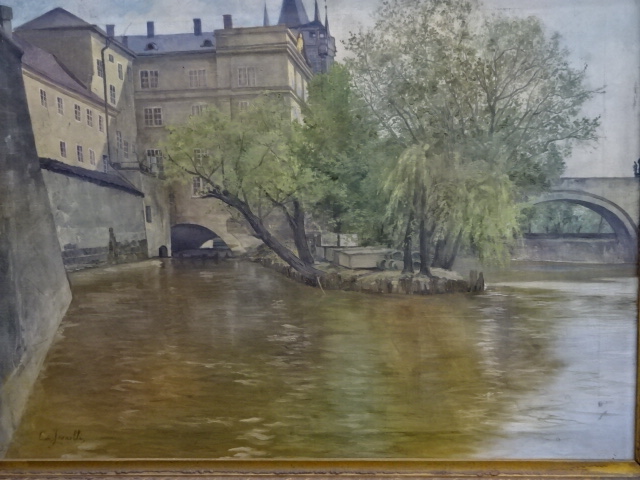
Čertovka on Kampa Island, Prague

My favorites were the renditions of Prague. One painting featured Prague Castle in the horizon, another showed the Charles Bridge. Yet another displayed the Judith Bridge, which preceded the Charles Bridge. One portrayed Čertovka on Kampa Island.

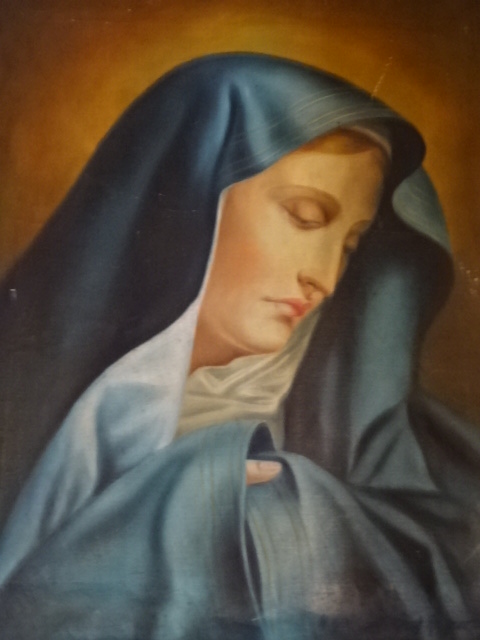
But there was more. A rather large space featured religious art. I saw numerous madonnas, scenes from the Bible and pictures of saints here as well as Gothic furniture. There was a range of styles, and works hailed from various eras, though none were modern. My head was swimming with this immersion into religious art.

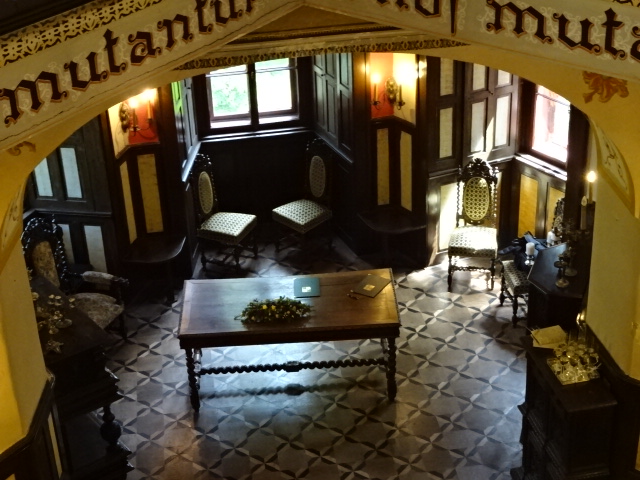
From the third floor, it was easy to read the motto of Saint Benedict on the balustrade. “Tempora matuntur et nos matumar cum illus,” it read. It meant that times change, and we change with them. Other black-painted letters read “Ora et labora,” which translates from the Latin into “Pray and work.” The ceiling on the third floor was richly decorated with depictions of objects and animals.
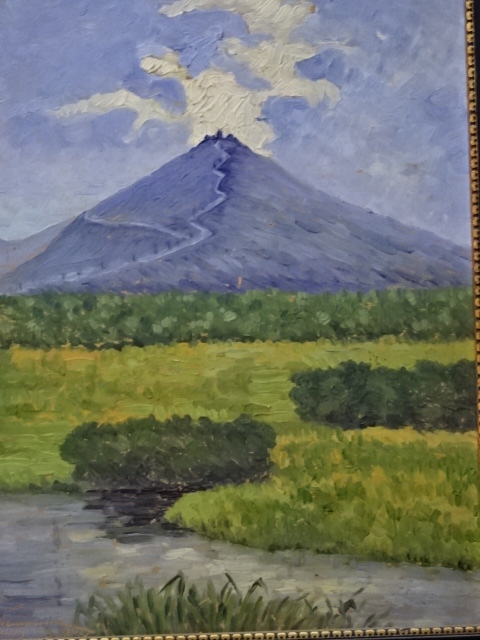
Not only had I peered at masterfully carved furnishings and other notable objects in the representative rooms but I had also viewed numerous paintings in my preferred landscape genre. The religious art was very impressive, too. While the chateau’s representative spaces are not large, it is worth seeing for those interested in Czech history and sights with artifacts from various eras. Art enthusiasts are sure to love the third floor displays.

On that day there was a wedding, and the café offered various cakes and pastries outside as well as sausages that were cooked over a fire. Delicious bread was available, too.

I went to lunch at U Marka restaurant in Pecky, a small town nearby. The rustic interior was suitable for the delicious Czech food, which cost so much less than that in Prague. I had had a great day.

Tracy A. Burns is a writer, proofreader and editor in Prague.
Karlova Koruna Chateau Diary

KarlovaKoruna1
A little over an hour on a fast train and a ten-minute walk was all it took to get to Karlova Koruna Chateau, which I had seen for the first time about 10 years ago. It was high time for a return visit.

Karlova Koruna Chateau, in English “Charles’ Crown,” is named in honor of Emperor Charles IV who visited there after his coronation in Prague during 1723. (He would visit a second time as well.) It was constructed for František Ferdinand Kinský from 1721 to 1723. During the Thirty Years’ War the imperial army, the Saxons and the Swedes took turns occupying it. When the castle was inherited by Václav Norbert Oktavián Kinský, he made it his main residence and built greenhouses there. This count was responsible for obtaining the services of architect Jan Santini Aichel and builder František Maxmilian Kaňka in 1721, when construction on the chateau began.

I was a big fan of Santini’s architecture, and this was no exception. I had even toured Santini’s dazzling structures in east Bohemia and Moravia earlier in 2015. The architectural design of the building was unique. I enthusiastically took snapshots. In the middle there are two stories in a cylindrical shape, and three one-floor wings are connected to them. Both floors divide into 10 main areas. I saw three-layered gables above a cornice. The chateau had a central composition, which reminded me of the Shrine of St. John of Nepomuk on Green Mountain (Zelená hora). Karlova Koruna also brought to mind the Gothic Parish Church of Saint Wenceslas in Zvole, in the Vysočina region, which was reconstructed by Santini from 1713 to 1717. I recalled my visit there in October. Its roof was shaped as a crown in honor of the Czech patron saint Wenceslas.
KarlovaKoruna3
I had always been enthralled with Santini’s Baroque Gothic style. I loved Santini’s penchant for mathematical symbolism and geometric forms. I thought his designs were rational yet radical. The outbuildings dated from the early 20th century, and the orangerie was designed in Empire style during the 19th century. The nearby Chapel of Saint John the Baptist had a hexagonal shape, but it was not possible to go inside.

I was familiar with some of Kaňka’s designs in Prague and outside the capital city.
Like Santini the builder Kaňka, who also worked as an architect, excelled at his field. He had reconstructed many palaces, chateaus and churches, mostly in Bohemia. One of his most famous works was Konopiště Chateau, where Archduke Franz Ferdinand of Austria had lived. In the early 18th century he designed parts of the Clementinum, including the Mirror Chapel, where I had been to many concerts had viewed illuminated manuscripts that had been on temporary display. He also did renovation work on Prague’s Karolinum. He even worked on St. Vitus’ Cathedral. I knew that he had built Loučeň Chateau, which I had recently visited.

The church at Karlova Koruna

The church at Karlova Koruna

I brushed up my knowledge of the Kinský family history in Chlumec. General František Josef Kinský, who became a colonel at age 29, greatly influenced the development of hunting and horsebreeding at the chateau during the 18th century. He began to have hunts called in Czech “parforsní hony,” taken from the French expression “par force.” In this type of hunting, the animal was hunted until it was exhausted and then killed. However, after the Napoleonic Wars, in 1836, a new type of hunting, inspired by the British, came about at Chlumec, thanks to Oktavián Kinský. This type of hunting did not involve killing the animal, which was usually a deer. The rider on horseback would have to overcome natural barriers to catch the deer. Then it was returned to the forest.
KarlovaKorunaint23ptng
The first long steeplechase took place in Chlumec in 1846, a mere nine years after the first one ever in Liverpool. The famous Pardubice steeplechase has its roots in Chlumec. Zdeňko Radslav Kinský won the Big Pardubice steeplechase. And he would not be the last Kinský to nab first place there. Rudolf and Karel Kinský also triumphed at the race. The niece of Oktavián Kinsky, Lata Brandisová, was the first woman to win this event, in 1937. Count Karel Kinský even won the Grand National race at Aintree, England in 1883. Many famous Kinský horses participated in this race.
KarlovaKorunaint10ptng
Oktavián Kinský also had played a significant role in Karlova Koruna’s history. He was a talented horse breeder. He had bred a unique gold-colored horse that he called isabela but would be later referred to as the Kinský breed of horse. It was the best horse for sport in Europe, lauded for its talent at steeplechasing, fox hunting and show jumping. While many are gold-colored, others have bay or chestnut hues. Otkavián started his own studbook, which is still in use today. Another unique breed at Chlumec was the dun horse or buckskin.

When Zdeňko Radslav inherited the property, he made Karlova Koruna his main residence. He had two sons, Norbert and Radslav and a daughter named Genilda. He was ardently against the Munich Agreement and in 1939 signed a declaration against the Nazi Occupation. As a result, Karlova Koruna and his other properties were taken over by the Nazi administration. Disaster came to the chateau when a fire broke out in 1943. I saw an article about this disaster in the hallway on the way to the women’s restroom. The roof of the chateau caved in, and the chateau was destroyed. It was rebuilt, though.
KarlovaKorunaint9portraits
Zdeňko’s oldest son, Norbert, was forced to work in the Reich, but he managed to flee and ride his bike back to Bohemia. After some negotiations, he was allowed to work as an interpreter at Orlík Chateau. In February of 1948, Norbert left his motherland for Italy, where he married Anna Marie dal Borgo-Netolická, an Italian who had spent her childhood at Kost Castle, which I had also visited earlier that year. When Norbert’s parents came to Italy for their son’s wedding, the Communists took stripped them of all their property. Penniless, they wound up staying in Pisa. Genilda and her two sons made a daring escape across the border, finding shelter in several refugee camps. Finally, they came to Pugnana, and then Genilda continued to Switzerland.
KarlovaKorunaint12ptng
Only Zdeňko’s son Radslav stayed in Czechoslovakia. He was allowed to work at the State Stud Farm, the famous breeding ground for Kinský horses. He is credited with keeping the Kinský horse alive during the Communist era. The Kinský horse was a dominant breed through the middle of the 20th century. Now, however, Kinský horses are very rare. At the time Radslav lived in a very small and claustrophobic space at Karlova Koruna. In 1958 he was allowed to travel to France and did not return to Czechoslovakia. Instead, he studied at the Sorbonne and later taught in Tunis, Algeria and Morocco. He died in 1975.

His son Dr. Norbert Kinský was given the property back after the Velvet Revolution of 1989. When he became a member of the Knights of Malta, Dr. Norbert Kinský gave his property to his two sons, who established the company Kinský dal Borgo, which now takes care of Karlova Koruna, Kost Castle and other properties. Radslav Kinský lives in Žďár nad Sázavou, where he owns property.
KarlovaKorunaint15
Now it was time for the tour of the interior that I remembered as dazzling from my first visit here so many years ago. In the central area that breaks off into three wings, I saw 12 exquisite armchairs and antler hunting trophies on the wall. Paintings on the walls featured Slovak motifs. Because my ancestry was part Slovak and I had a soft spot in my heart for Slovakia, I was interested in the paintings.
KarlovaKorunaint8
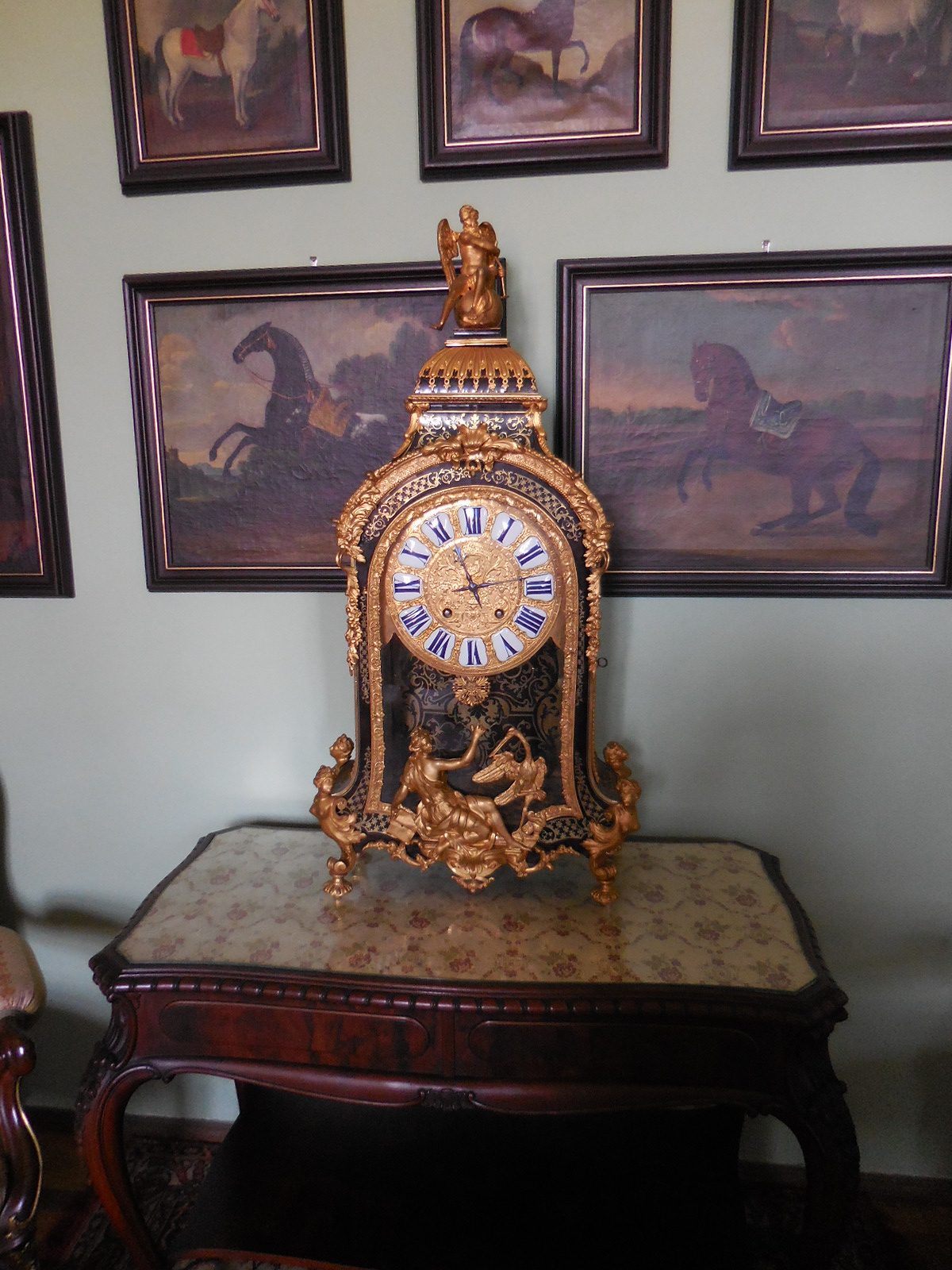
In the first room I saw the Kinský coat-of-arms – three silver boar horns on a red field. I recalled finding my Burns’ family coat-of-arms in Scotland. It featured a boar sticking out its tongue. I liked the Kinský coat-of-arms better. The guide explained to us that the Kinský dynasty could be traced back to the 13th century. I wished I could trace my Czech, Slovak and Scottish ancestors back to the 13th century. I was fascinated by an intarsia-made bureau forged with seven kinds of wood. A French gilded clock also caught my attention. In the next room I saw a Venetian mirror, and I was surprised to find out that it had not been manufactured in Venice. Rather, it hailed from Sloup in the Czech lands.
KarlovaKorunaint5clock
The Dining Room showed off distinguished portraits of the Kinský family as well as portraits of Emperor Joseph II and Emperor Leopold II. Another space boasted elegant Viennese porcelain. I loved the exquisite chairs, some of which were decorated with green roses on the tops of the backs. Those sporting the roses were designated for women while the ones without floral adornment were meant for men.

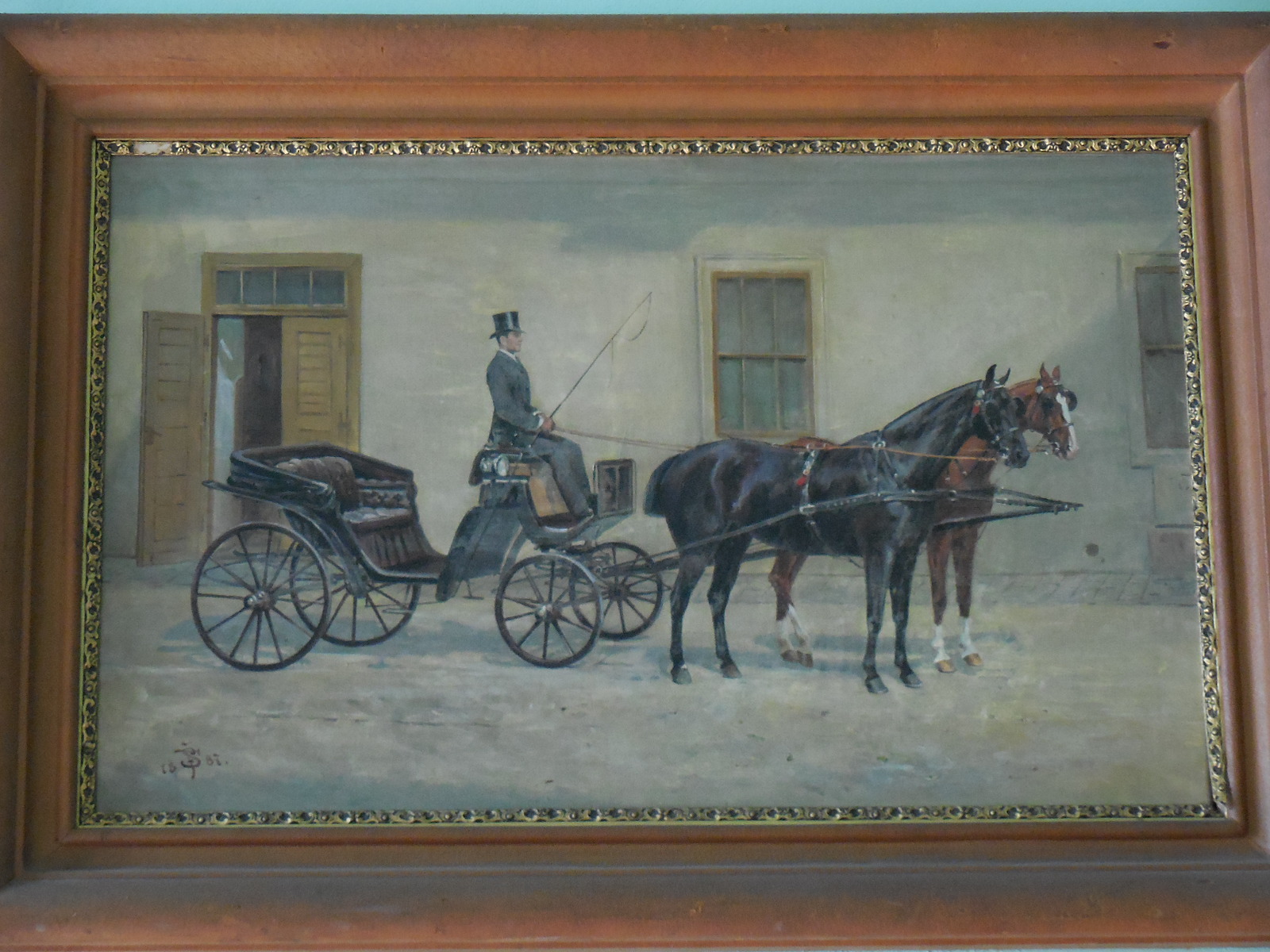
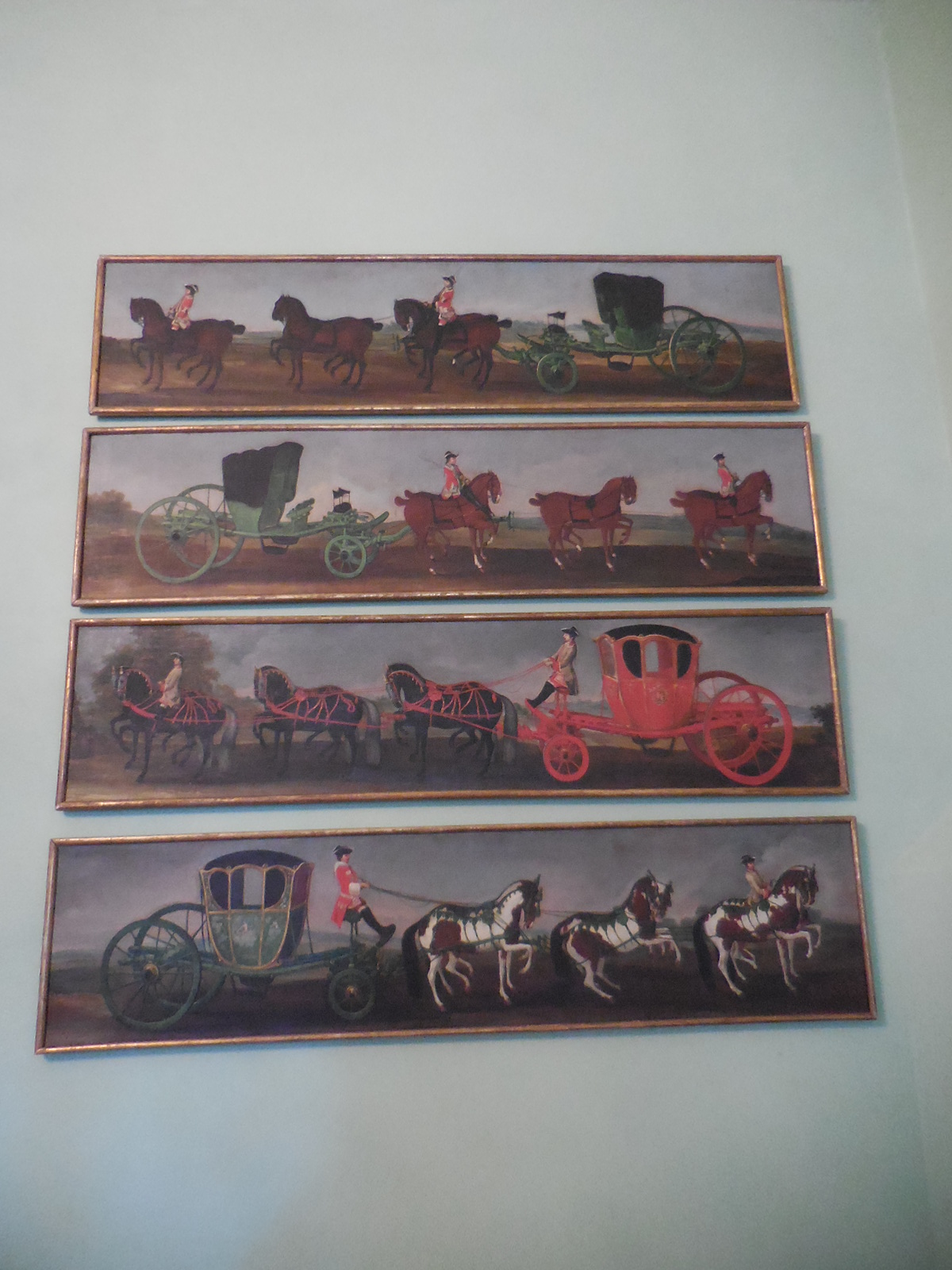
The next section was devoted to the Kinskýs’ love of horses as numerous pictures of horses adorned the walls. I saw dun horses bred at the Kinský’s studfarm and English horses. Other renditions showed horses from the Spanish Riding School. Paintings of horses jumping over barriers in steeplechase races also decorated the walls, and the guide proudly told us that the Pardubice steeplechase originated here. Other paintings showed horses and dogs going on hunts. A saddle hailed from World War I. I would never ride a horse because I would be too scared that the animal would bolt. Also, large animals frightened me, even big dogs. I knew many people who loved riding, but my fear did not allow me to share their excitement. I had not been very interested in horseracing or horsebreeding until I came here and learned about the Kinskýs’ passion for horses. They had certainly played a major role in horsebreeding.
KarlovaKorunaint11ptng
In the next room I saw Oktavián Kinský on the clan’s best horse, and other works featured representations of the isabela or Kinský beige horse. Another space featured paintings of hunts. The guide told us about the two types of hunting in which nobles had participated here – the French “par force” style during which the animal was killed and the English style during which the animal was returned to the forest. In paintings I saw the hunters sporting red jackets, black hats and white riding breeches. There was more than art featuring horses here, though. I marveled at a desk made with intarsia, hailing from the 18th or 19th century. A Venetian mirror also caught my eye.
KarlovaKorunaint13
In the third wing we learned about Zdeňko Kinský and his family of nine children while we gazed at black-and-white engravings of horses. One large, long painting got my undivided attention. It showed horses in motion as they raced. The artist had really captured the moment in the way a photograph would. That the painting was made of 12 pieces of deerskin intrigued me.
KarlovaKorunaint18ptng
Bookcases held volumes in various languages, such as Hungarian, French and German, but there were only a few books in Czech. The Kinskýs had spoken numerous languages. Laura Kinská, whose portrait was in the room, had managed to learn nine languages. In the portrait her expression looked gentle, but somehow I sensed an inner sadness as well. Gazing at a portrait of Tereza Kinská, I admired her beauty. It was sad to learn that she had died young and childless. A small painting showed two Kinský women without their wigs or elaborate hairstyles. I had never seen such intimate portraits of female nobility.
KarlovaKorunaint17
In the next room the guide talked about how the Kinský family had been enemies of the Germans during World War II and how the chateau had been used for the Nazi administration. He explained why Norbert Kinský stayed in Italy after coming there for his son’s wedding and said that after Norbert’s wife died, he had joined the Knights of Malta. Since Norbert had to give up his property, he passed it on to his two sons. In one photo Norbert sported his red Knights of Malta uniform.
KarlovaKorunaint19globe
After touring the three wings, we went upstairs to the Marble Hall. It was so elegant that I was speechless. The two lavish fireplaces were made of real marble, while most of the other marble in the large space was imitation. An exquisite chandelier was 2.2 meters high. The floor was decorated with geometric shapes, and I was reminded of Santini’s fondness for mathematical symbolism.
KarlovaKorunaint21chandelier
In the gallery above the Marble Hall I saw pictures of the chateau and its surroundings from the 1930s. I spotted a photo of Karel Schwarzenberg on a horse in 1934, Zdeňko Radslav Kinský in a historic uniform and the Kinský family playing tennis on the courts that were once on chateau grounds. The pictures brought the family to life. They were not merely names spouted out by the tour guide or found in a brochure about the chateau, but rather real people who skied, played tennis and went rowing. The photos of the interiors of the chateau from that time period were also intriguing. I wondered what it would have been like to have lived in Czechoslovakia during the 1930s with the democratic era of the Second Czechoslovak Republic as well as the threats that Adolf Hitler and the Nazi Party posed.

A fireplace in Marble Hall

A fireplace in Marble Hall

Marble Hall

Marble Hall

I ate marinated chicken at the chateau restaurant. I was seated outside, even though it was scorching hot. I recalled the days when I could almost always find my favorite food on Czech menus – it was chicken with peaches and cheese. How many years had it been since I had seen it offered at a restaurant? After lunch I went for a stroll in the park with its exotic species of woody plants and then wanted to read on a bench, but it was sweltering hot. I wound up going back to Prague in an uncomfortably hot train. Luckily, it was not a long ride back to the city I considered home. When I set foot in Prague’s main station, I smiled. Despite the heat and humidity, I had had a superb day and had a new appreciation for horseracing and horsebreeding.
KarlovaKorunaint14pink
Tracy A. Burns is a writer, proofreader and editor in Prague.