Through the Eyes of Franz Kafka Exhibition in Pilsen Diary

During the summer and fall of 2024, the West Bohemian Gallery in Pilsen showed off the riveting exhibition “Through the Eyes of Franz Kafka: Between Picture and Language.” It focused on the ways in which the visual world around Kafka had been influential in the language Kafka chose for his writings. There was a direct connection between the visual world and the literary world in Prague, Kafka would have seen the works on display in his everyday Prague life that boasted of a multilingual society immersed in the languages of Czech, German and Hebrew. Kafka resided in Prague his entire life – from July 3, 1883 to June 3, 1924, when he died at the age of 40 from tuberculosis. He spoke German as well as Czech and wrote in German. His parents spoke German mingled with Yiddish.
At the end of the 19th and beginning of the 20th century, posters were displayed all over the city. Designed in the Art Nouveau style, they showed off art exhibitions, cabaret shows, literary events, advertisements and much more. Japanese art played a role in the decoration of these posters. Later, the artistic focus was Cubist features. German-Czech spiritualism also was influenced by the time period. Silent films, both European and American, were popular in Prague. Going to the cabaret, ballet and theatre were pastimes of Praguers.

Exhibition Wordwede in Kinská Garden, Prague, 1903.

Modern French Art exhibition, Kinská Garden, Prague, 1902.

I would like to highlight several of the artists represented in the show, including the posters of Jan Preisler, a Czech painter and university professor. For a while his works promoted the Art Nouveau style, which is evident in this poster for an art exhibition. He also decorated Art Nouveau buildings in Prague. For example, the Hotel Central in Prague features his ornamentation. The triptych Spring was made for the Peterka building in the capital city. Preisler made a name for himself as a Secession artist, even though he would take on a different style later in his career.

Girl in Flowers, 1922, by Anton Bruder

Many of his works could be designated as Neo-Romantic, punctuated with allegorical Symbolism. His art often showed a fondness for fairy tales or moods characterized by depression and sadness. Preisler attempted to reveal the depth of one’s soul. Early in his career he became friends with Czech landscape painter Antonín Hudeček. Preisler was also influenced by the art of Edvard Munch as he helped plan the 1905 exhibition of Munch’s depictions in Prague. Preisler also had developed friendships with painters Bohumil Kubišta and Vincenc Beneš. He was very inspired by the poetry of Otakar Březina, a Czech artist who wrote in a complex, symbolist style and was nominated for the Nobel Prize eight times. Vitezslav Nezval and Josef Suk were other poets who made an impression on him. Perhaps his best known painting is the triptych “Spring,” from the turn of the century. It depicted the complex feelings of someone entering the 20th century. Man experienced a nostalgia for the past, but, at the same time, was looking forward to adventures awaiting him in the new century. A person’s connection to nature was another theme promoted in this triptych.
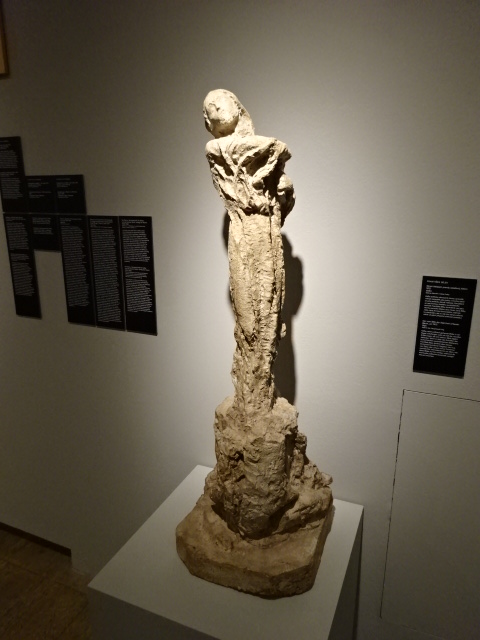
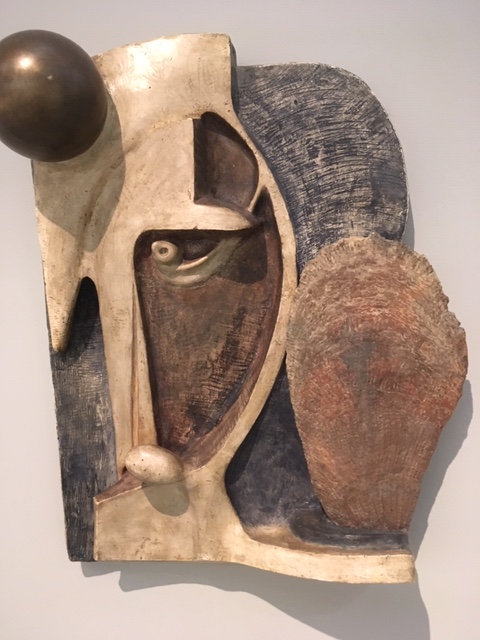
Sculpture by František Bílek
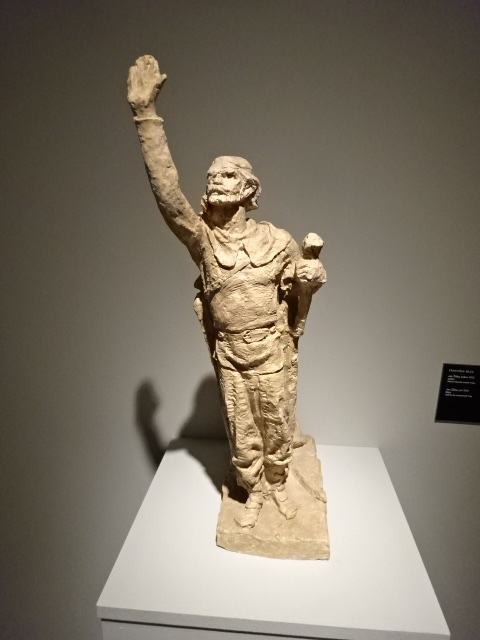
Jan Žižka, by František Bílek, 1912

Sculpture that permeated the exhibition included that of Art Nouveau symbolist František Bílek, whose Secession homes in Prague and Chýnov I had visited. Miniature versions of several of his sculptures were on display. He utilized mostly religious themes with a sense of mysticism. While Bílek was best known as a sculptor, he also designed furniture and created graphic art, drawings and illustrations. An architect as well, he designed cemeteries and made gravestones, for instance. His woodcarving skills were astounding, too. A year later, in 2025, I would see Bílek’s amazing works in the former flat of Czech poet Otakar Březina, incorporated into a museum for the symbolist poet in Jaroměřice of the Vysočany region. To be sure, Bílek’s creations caught the attention of society during the Art Nouveau age.
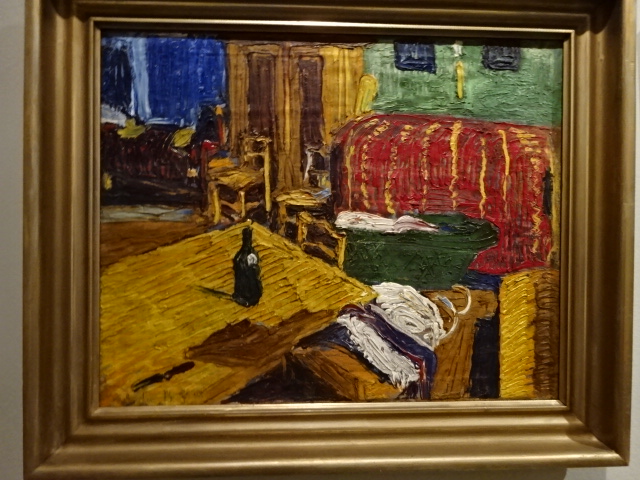
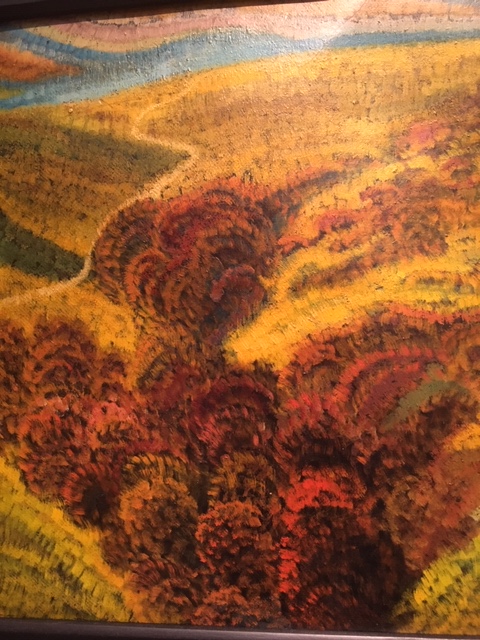
The Interior, by Bohumil Kubišta, 1908

One of my favorite Czech painters of this period, Bohumil Kubišta played a role in the exhibition. One of the first to paint in a modern Czech style, Kubišta created a new path for artists as he helped establish the significant Osma group of painters who were oriented toward Munch’s style. In Kubišta’s paintings, bright color played a large role as did mysticism and symbolism. At times he took up religious themes. Kubišta often concentrated on the spiritual as the symbolism of life and death featured in many of his works. He emphasized the spiritual meaning of the countryside, too. The styles that made an impact on his work included Fauvism, Futurism and Surrealism. Self-portraits and still lives were common in his repertoire, too.

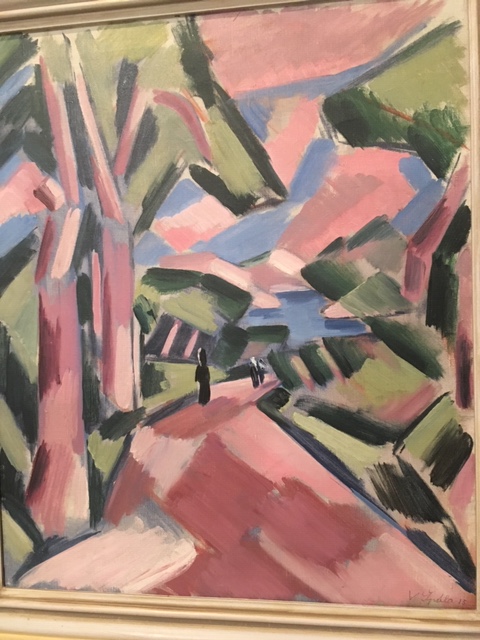
Landscape, by Georges Kars, 1910

I knew the name Czech-French painter Georges Kars from a Prague exhibition of Czech artists in Paris between the wars. While initially taken with Impressionism, Cubism and Fauvism, he found his own path with dynamic and vibrant compositions. He made a lot of women’s portraits, self-portraits, nudes and half-nudes in his figural works. Sometimes he rendered still lifes and landscapes. Kars utilized the neoclassicist style for his portraits, nudes and still lifes. His paintings were world-renowned, displayed throughout Europe, the USA and Japan.

During World War I he served for the Austro-Hungarian army and even was captured by the Russians. He survived the experience and continued painting after the war.

A Walk in a Park in Florence, by Bohumil Kubišta, 1907

Of Jewish origin, Kars escaped France during 1942 and settled in Switzerland. However, he was so traumatized by the persecution of the Jews that he took his own life, jumping to his death from the fifth floor of the Geneva Hotel. During 1949 he was buried with his family in Prague’s New Jewish Cemetery.

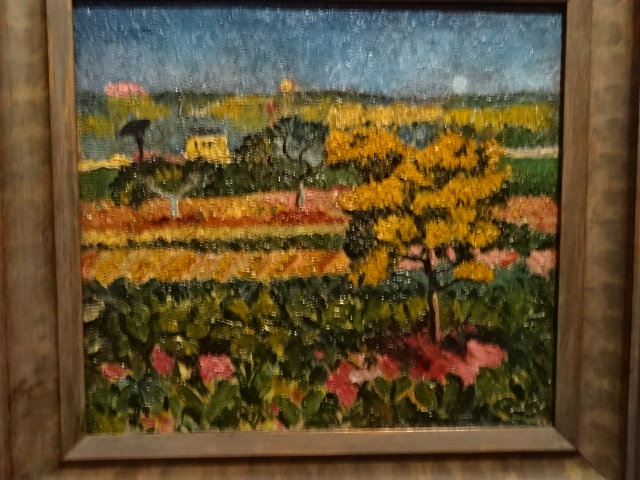
Brindisi, by Otakar Kubín, 1906

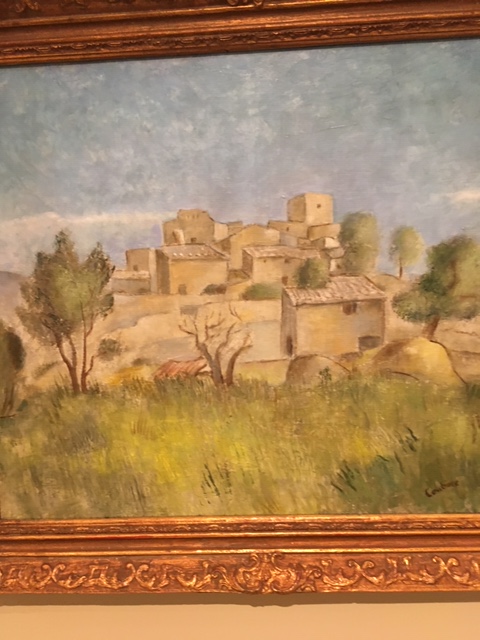
Another artist who was well-known while residing in Paris between the wars, Otakar Kubín, who also went by the name Othon Coubin, worked as a painter, sculptor and graphic artist, mostly living in France. Holding citizenship from France and Czechoslovakia, he made a name for himself rendering landscapes, mostly of Provence but also of Moravia. I loved his landscapes of Provence in the exhibition of Czech artists between the wars. These paintings were perhaps the highlight of his career.
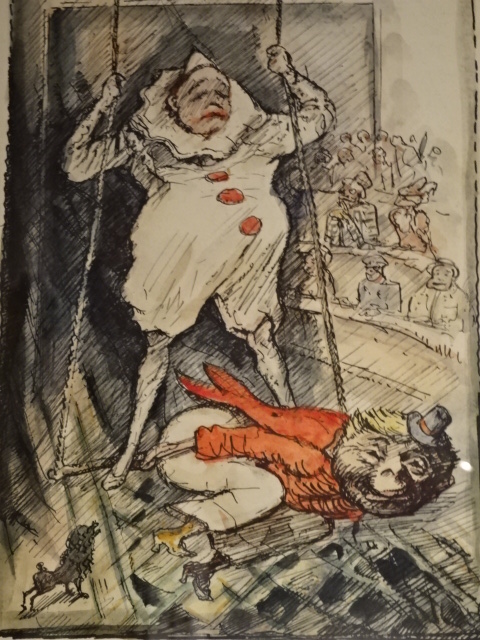
While living in France during World War I, Kubín and his wife were interred in a camp imprisoning foreigners in Bordeaux. However, they were not held for long. In the 1920s, he held exhibitions in Paris with Pablo Picasso and Henri Matisse. Kubin was impressed with the Expressionism of Vincent Van Gogh. His depictions with figural motifs often were influenced by the death of his wife and son. His works were also seen in Japan, Switzerland and the USA. Some of his praiseworthy portrayals include a portrait of Kubišta, House in the Countryside, Cemetery Chapel in Boskovice, Imaginary Likeness of Edgar Alan Poe, Moravian Landscape and Auvergne Landscape.
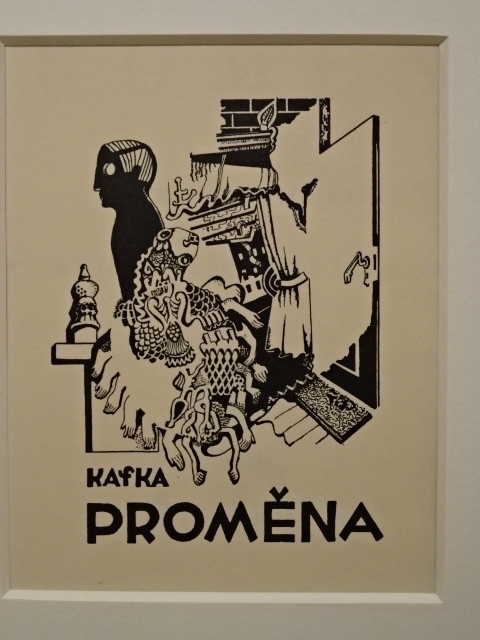
The Metamorphosis, by Otto Coester, 1920

One of Kafka’s small black-and-white drawings as a young child was on display, and art promoting his various books also had a prominent place in the exhibition. Artistic renditions of The Metamorphosis were represented, for instance. German art and literature at this time also played prominent roles in society. An antisemitic attitude was seeping into some of the publications.  The exhibition did not only concentrate on works in Prague but also art that had immersed itself into European society as well, providing a European context for these powerful renditions.
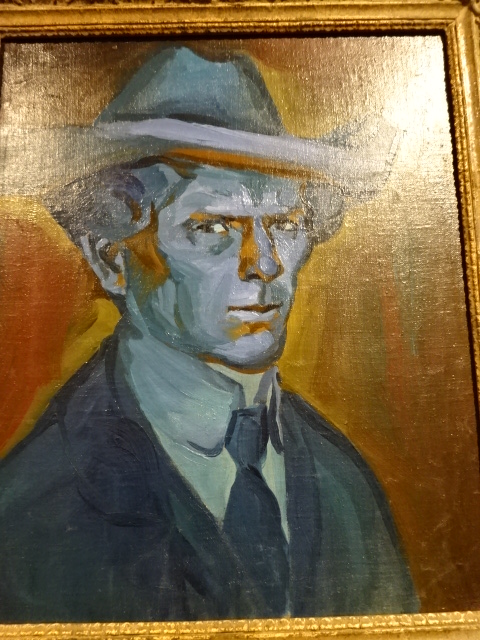
The Metamorphosis, by Wilhelm Wessel, 1924.

This exhibition took up my favorite Czech era of art – the end of the 19th and beginning of the 20th century. The Art Nouveau and symbolic nature of the works greatly impressed me as did emphasis on color in many paintings. I loved the expressionistic qualities of Munch’s artistic creations. Several paintings were by Japanese artists, and I saw a direct connection between the Czech Art Nouveau and the Japanese style. I could see the influence of Cubism in some paintings with many geometrical traits. I loved the Art Nouveau posters advertising exhibitions. The multifaceted visual experience of a person living in Prague during that era reminded me of the mixture of languages that had permeated culture and society.

The exhibition was thrilling as I thought back to that age and the various cultures people were experiencing. I felt that time period come alive through the artistic creations. Some of my favorite artists were represented, such as Bílek and Kubišta.

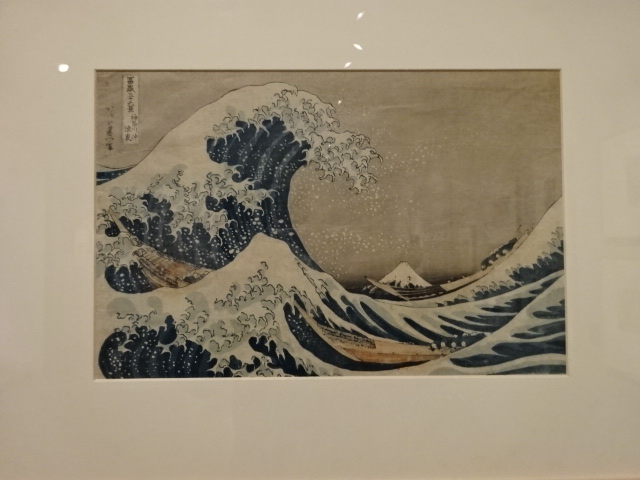
A Wave at Kanagawy, by Hokusai Kacušika, 1831

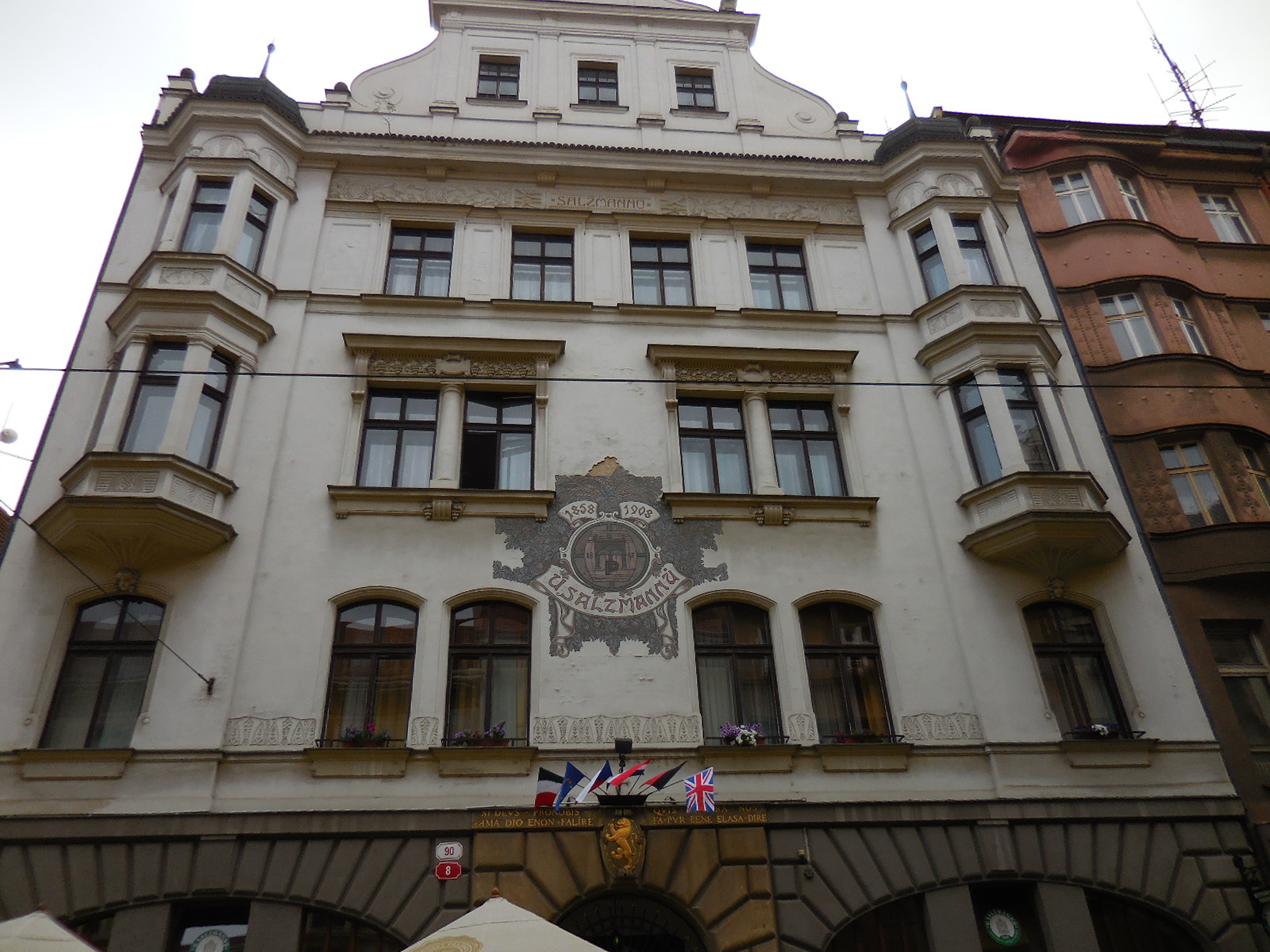
I also was enamored by the building in which the West Bohemian Gallery was housed. It had been used as a market place during the Middle Ages and boasted of a unique architectural style. I longed to learn even more about the end of the 19th and early 20th century as I left the exhibition and made my way to my favorite restaurant in Pilsen, U Salzmannů.

Tracy A. Burns is a writer, proofreader and editor in Prague.

Restaurant U Salzmannů, Pilsen

The First Republic Art Exhibition Diary

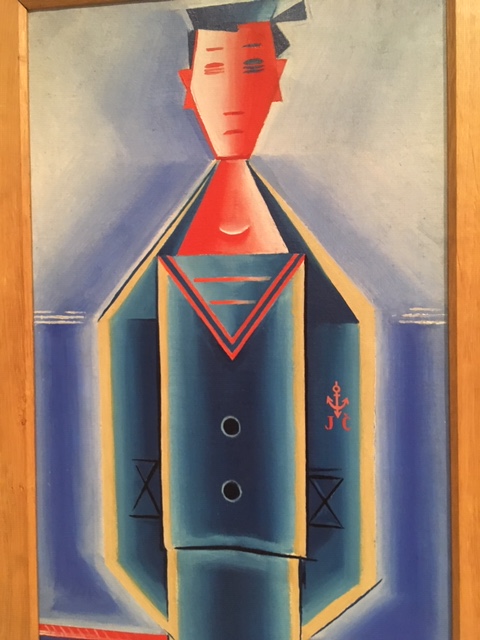
FirstRepublicexhibitSailorCapek14

Josef Čapek, The Sailor

A long-term temporary exhibition, the First Republic art exhibition in Prague’s Trade Fair Palace showcases mostly Czechoslovak paintings and sculpture from 1918 to 1938, when Czechoslovakia was a democratic state under the guidance of President Tomáš Garrigue Masaryk. Czechoslovakia was founded in 1918, and Masaryk, who had been living in exile, was welcomed back into the Czech lands with much celebration and fanfare. The Munich Agreement, signed in September of 1938, proved a dark and dismal event in Czechoslovakia’s history, as the country ceded its German-minority Sudetenland to Hitler’s Third Reich. On March 15, 1939, the Nazis would march into Prague, and Hitler would set up the Protectorate of Bohemia and Moravia, starting a horrific chapter in Czech and Central European history.

FirstRepublicexhibitCapek34

Josef Čapek

FirstRepublicexhibitMyslbek31

Myslbek

The exhibition examines the flourishing of art in the various cultural centers of Czechoslovakia, first and foremost in Prague but also in Brno, the capital of Moravia. In Slovakia the cultural hubs were located in Bratislava and eastern Košice. Zarkarpattia was a section of Czechoslovakia from 1920 to 1938, and its city of Užhorod was the setting of some intriguing exhibitions. The exhibition not only features Czech art but also Czech-German production and Slovak artistic endeavors.

FirstRepublicexhibit22

Antonín Slavíček, House in Kameničky, 1904

FirstRepublicexhibit24

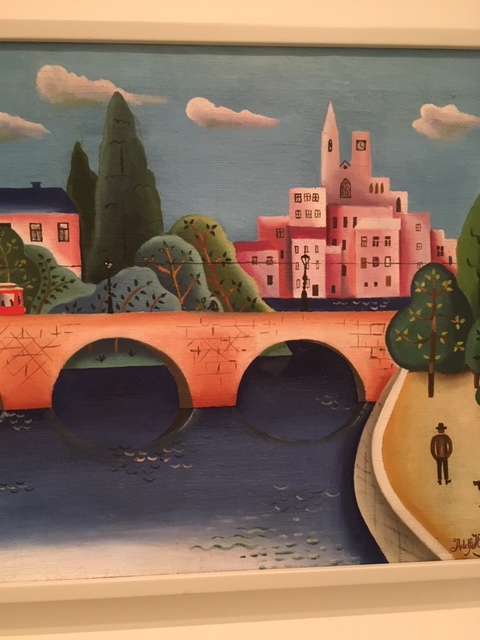
Adolf Hoffmeister, Bridge, 1922

FirstRepublicexhibit26

Bohumil Kubišta, Quarry in Braník, 1910-11

Some of the Czech and Slovak artists whose works shine in the exhibition are Antonin Slavíček, Max Švabinský, Josef Čapek, Václav Špála, Jan Zrzavý, Jan Preisler, Ľudovít Fulla, Martin Benka, Bohumil Kubišta and Josef Šíma as well as Toyen and Jindřich Štyrský. The German and Austrian artists represented include August Bromse, Max Pechstein and Oskar Kokoschka, a favorite of mine.

Sculpture by Auguste Rodin, Paul Cezanne, House in Aix, 1885-87

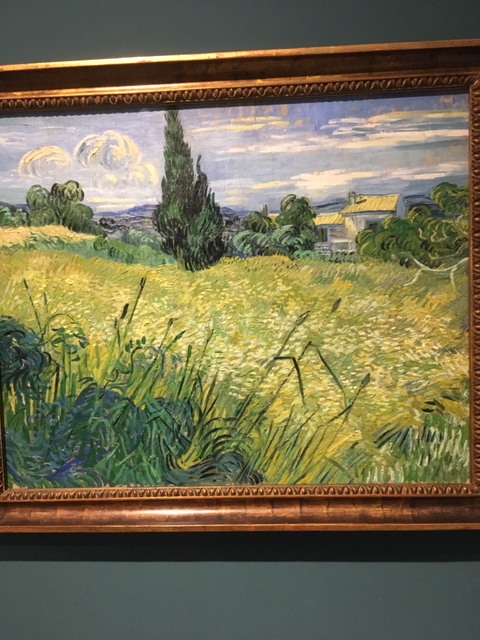
French art from the 19th and 20th century is also on display as the Mánes Association in Prague held an important exhibition of French art at the Municipal House during 1923. The dynamic renditions of Monet, Matisse, Renoir, Van Gogh, Seurat, Gauguin, Rodin, Rousseau and others are in the limelight, too. The paintings of Georges Braque and Pablo Picasso explore Cubist tendencies.

FirstRepublicexhibit11

Vincent Van Gogh, Green Wheat Field, 1889

FirstRepublicexhibit13

Henri Rousseau, Self-Portrait – Me. Portrait – Landscape, 1890

FirstRepublicexhibit15

Paul Cezanne

FirstRepublicexhibitSeurat20

Georges Seurat, Harbor in Honfleur, 1886

I was particularly impressed by the works of a Czech artistic group called the Obstinates, established at the Municipal House. It included artists who spent World War I in Prague. I liked to eat chicken with potatoes at the Art Nouveau Municipal House, and I sometimes would imagine what it had been like for those artists to discuss their ideas and theories of art there. Three of my favorite Czech painters belonged to this group of avant-garde art that had traits of Cubism and Expressionism: Josef Čapek, Špála and Zrzavý. The Municipal House at that time was one of the most prominent exhibition spaces. It still houses art exhibitions and nowadays also includes a concert hall.

On right: Jan Zrzavý, Lady in the Loge, 1918

I also tried to imagine the avant-garde Devětsil group having its first exhibition during 1922 at the Union of Fine Arts in the Rudolfinum, now the main concert house for the Czech Philharmonic. I have attended many concerts there, even seeing my favorite violinist Joshua Bell on its stage twice. I wondered what it had been like to see the works of Karel Teige, Adolf Hoffmeister and Štyrský in that majestic building during 1922 and 1923.

FirstRepublicexhibit19

Jindřich Štyrský, The Puppeteer, 1921

My favorite painting in the exhibition was called “Woman with a Cat” by František Zdeněk Eberl. I am a cat fanatic, and the woman in the painting is holding her cat on her shoulder so lovingly. You can sense that the cat is an important part of her family just as my Šarlota Garrigue Masaryková Burnsová is for me. (My cat is named after President Masaryk’s wife, the First Republic’s First Lady of Czechoslovakia.)

FirstRepublicexhibitPtngwithcat25

František Zdeněk Eberl, Woman with a Cat, around 1929

The exhibition also highlighted the importance of the Mánes Association of Fine Artists, which had been established by Prague students in 1887. It had many functions, organizing exhibitions and lectures as well as editing magazines, for instance.

FirstRepublicexhibit9FirstRepublicexhibit10

Karl Schmidt-Rottluff, Village Square, 1920

FirstRepublicexhibit16

Václav Špála

VFirstRepublicexhibit17

Vincenc Beneš, Behind the Mill in Písek, 1928

There were African art relics in the exhibition as well. I thought of Josef Čapek, who had been greatly influenced by African art. The exhibition informed museumgoers that Emil Filla’s paintings had been on display with African art at the Mánes in 1935. Filla had a strong interest in non-European art and was an avid supporter of the surrealist trends in Czechoslovakia.

FirstRepublicexhibitAfricanart29

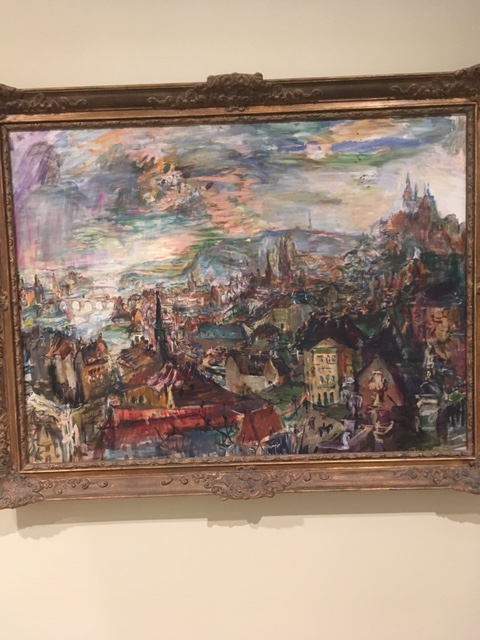
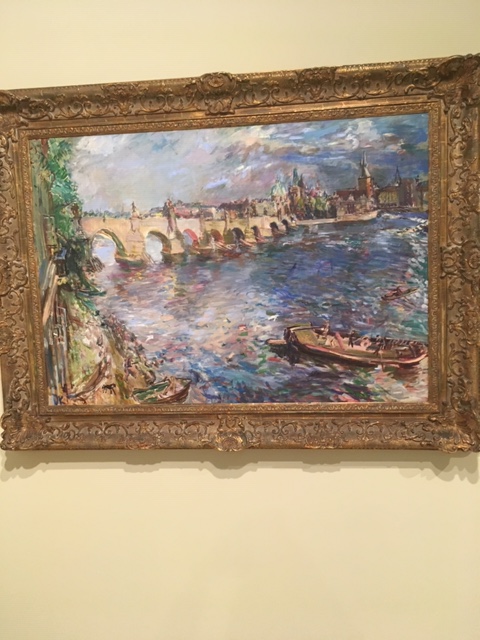
Another significant exhibition space during that era was the Dr. Feigl Gallery. Hugo Feigl made quite a name for himself as a private gallery owner. The exhibitions he put together did not only display Czech art but also highlighted Czech-German, Jewish and artists from around the world. He did not only organize exhibitions at his own gallery. One art show that interested me was Feigl’s exhibition of German and Austrian artists who had come to Prague as refugees, fleeing Hitler as the dictator amassed more and more power. Oskar Kokoschka, one of my favorite painters, was a refugee who had made his home in Prague. I loved his view of the Charles Bridge and his view of Prague on display. They captured the magical spell of Prague using avant-garde techniques.

FirstRepublicexhibit27

Oskar Kokoschka, Prague – View from Kramář’s Villa, 1934-35

FirstRepublicexhibit28

Oskar Kokoschka, Prague – Charles Bridge, 1934

FirstRepublicexhibition23

August Bromse, Descent from the Cross, before 1922

In 1937, Feigl even organized a daring exhibition of German Expressionist works from a German collection of which the Nazis were by no means fans. This exhibition encouraged people to protest against an exhibition in Munich, one that glorified the Nazi regime with its display of Nazi-approved art.

Václav Špála, By the River – Vltava near Červená, 1927, sculpture by Otto Gutfreund

I was also enthralled by the exhibitions that had taken place in Brno, Zlín and Bratislava. I had poignant memories of all three places. I had helped out at the first international theatre festival organized by the Theatre on a String in Brno many years ago. People in Brno had been so friendly, and my Czech really improved thanks to my time spent there. I had also visited some villas in Brno and knew the city’s sights well.

FirstRepublicexhibit5

Max Švabinský, In the Land of Peace, 1922

FirstRepublicexhibit8

Otto Gutfreund, Business, 1923

FirstRepublicexhibit12

I had spent several days of one vacation in Zlín, where I had toured the fascinating Báťa shoe museum, which probably featured every kind of shoe imaginable. More than a decade ago, I had visited Bratislava once a month to help take care of my favorite Slovak writer’s grave. I had also visited the Slovak National Theatre, learning Slovak in part thanks to its performances. I loved the Slovak language and felt at peace hearing people around me speak it. I also felt this way when I heard Czech. I especially liked the works of Slovak painter Ľudovít Fulla. His use of bright colors, in his work “Balloons” for example, gave his paintings a dynamism and vitality that was unforgettable.

On right: Ľudovít Fulla, Balloons, 1930

Košice and Užhorod were featured as artistic centers, too. I had spent a lot of time in Košice during my travels to Slovakia as some of my ancestors had been from that region, and I had also used Košice as a starting point to visit other places in east Slovakia, such as Humenné and the Vihorlat. I had never been to Užhorod, which Czechoslovakia had begun to modernize during the early days of the country’s existence. I was surprised that architect Josef Gočár had designed some functionalist buildings there. I often walked by some of Gočár’s architectural achievements in the Baba quarter of functionalist individual family homes.

FirstRepublicexhibit33

Anton Jaszusch, Landscape, 1920-24

FirstRepublicexhibit36

Pablo Picasso, Still Life with a Goblet, 1922

The exhibition also informed me that between 1933 and 1938, about 10,000 refugees from Germany and Austria had officially made their way to Czechoslovakia while the number of unofficial refugees was about the same. Many significant artists came to Czechoslovakia to flee Hitler’s hold on Germany and Austria.

FirstRepublicexhibitHitler2

Caricature of Hitler, John Heartfield, Adolf the Superman: Swallows Gold and Spouts Junk, 1932

I was surprised to discover that as early as 1934 an exhibition of caricatures and humor protested Hitler’s ascent to power. It took place at the Mánes Association of Fine Artists. The caricatures were not limited to Hitler and even included some of the “good guys.” For instance, artists also poked fun at Masaryk. I was very moved by Josef Čapek’s versions of the painting “Fire,” showing a person unable to escape the dancing flames, artworks providing a stark warning about the danger of Hitler’s ideology and reign. The caricature of Hitler was chilling. Hitler’s head was perched atop a chest x-ray. His spine was made up of coins. His heart was shaped like a swastika.

FirstRepublicexhibit4

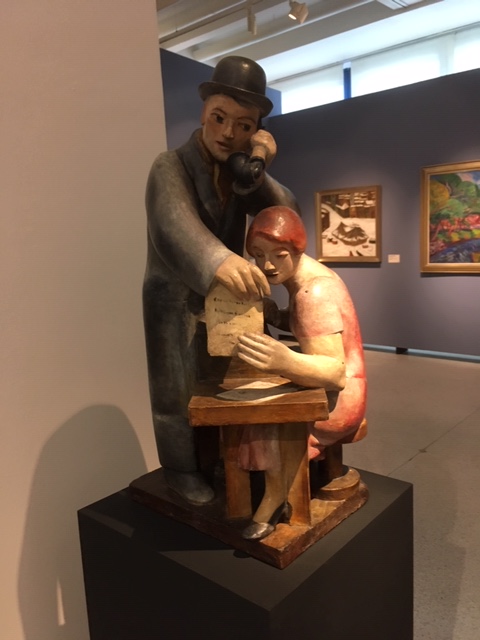
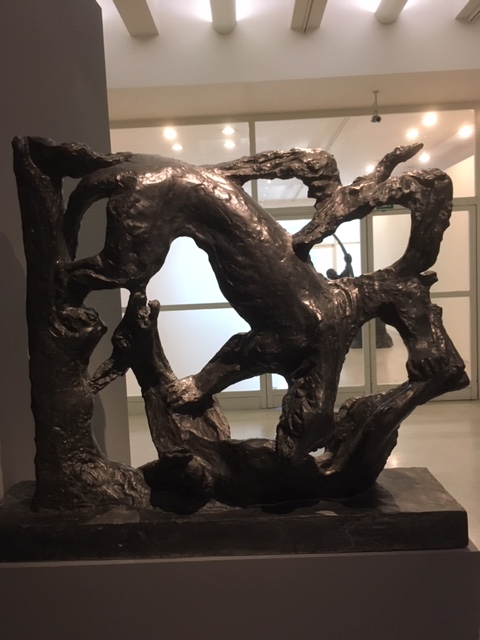
A sculpture commenting on the Munich Agreement of 1938

FirstRepublicexhibitFireCapek3

Josef Čapek, Fire, 1938

The exhibition ended with those works commenting Hitler’s control of the region, specifically on the Munich Agreement of 1938. While those paintings and the sculpture profoundly affected me, I preferred to concentrate on the avant-garde creations that had been featured in an artistically flourishing democratic Czechoslovakia, when artists boldly experimented with their artistic visions, during an era that I had always wanted to visit if I could go back in time. I would have loved to experience the atmosphere of the country when democracy was fresh, the state new and full of promise. Little did anyone know at its inception that the First Republic would not last long and that such a chilling chapter would follow.

Tracy A. Burns is a writer, proofreader and editor in Prague.
FirstRepublicexhibitfurniture35

Furniture set from First Republic, Jan Vaněk