Biblioteca and Pinacoteca Ambrosiana Diary

This library and art gallery in Milan is named after the patron saint of the city, Ambrose. The library harkens back to 1609, when Cardinal Federico Borromeo founded it, and the same year it opened to the public.
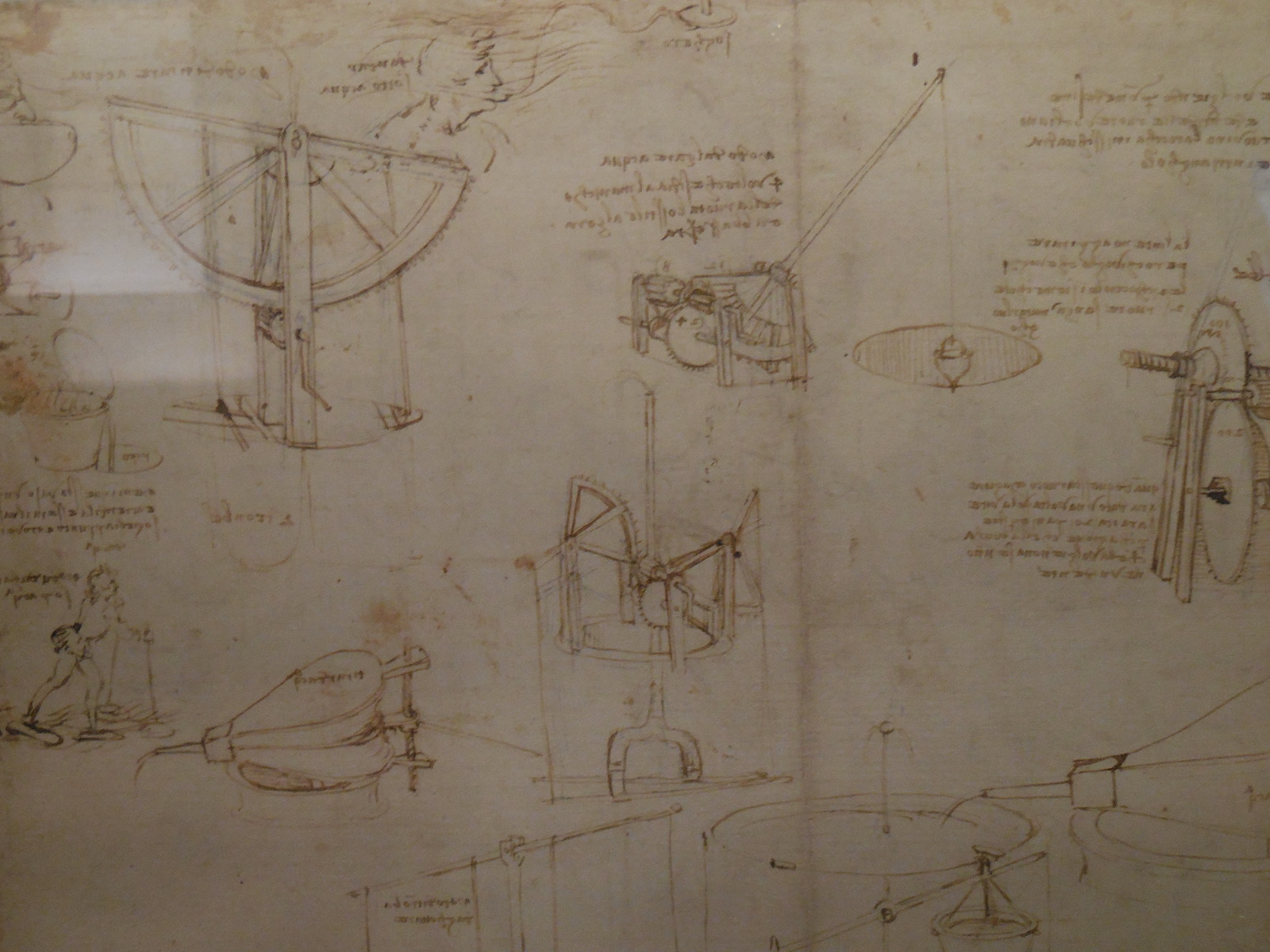
One of Leonardo da Vinci’s drawings of the Codex Atlanticus

The biblioteca houses the Codex Atlanticus by Leonardo da Vinci as well as many of his other manuscripts plus about 12,000 drawings by European artists, ranging from the 14th to 19th century. Raphael and Pisanello are represented in this collection of drawings, too. Many of its more than a million printed volumes hail from the 16th century. There are almost 40,000 manuscripts in numerous languages, including Italian, Latin, Greek and Arabic as well as some 22,000 engravings. Ancient maps, musical manuscripts and parchments also make up the collection. Some prominent guests included poet Lord Byron and novelist Mary Shelley.

Another of Leonardo’s drawings from the Codex Atlanticus

During World War II the library was damaged, and the opera libretti for La Scala Opera House were destroyed. The building was opened again in the early 1950s after undergoing renovations. More reconstruction took place in the 1990s.

When I visited, some of Leonardo’s works for the Codex Atlanticus, the largest collection of da Vinci’s drawings and writings, were on display in the library. The exhibition left me spellbound. I perused studies in aerodynamics and drawings of mechanical wings as well as various types of weapons. Leonardo rendered a large sling to throw stones and a machine to pump water from a well inside a building, for example.

I gazed upwards after studying the drawings by Leonardo, and I was filled with awe. I don’t know if I have ever seen such an incredible library. I just wanted to stand there all day, gazing at the wall-to-wall bookcases as I wondered about the titles and contents of each volume.

Established in 1618 with the collections of Cardinal Federico Borromeo, the pinacoteca was just as impressive as the library. The 24 rooms were dominated by Renaissance artworks but also boasted of renditions by 17th century Lombard artists, 18th century painters and 19th and early 20th century creators. I was especially struck by da Vinci’s 15th century “Portrait of a Musician” as it was the only portrait that he had painted. I noted the musical scroll in one hand of the sitter and was captivated by the detailed curly locks of hair, the musician’s brown eyes and his red cap.

Caravaggio’s insect-infested “Basket of Fruit” tells a story of diminishing beauty by displaying rotting fruit. Bramantino’s “Adoration of the Christ Child” shows the kneeling Bernardino of Siena, Francis of Assisi, Benedict of Nursia and the Virgin Mary making an understandable fuss over baby Jesus. I loved the angels playing musical instruments behind those figures. Emperor Augustus also makes an appearance.

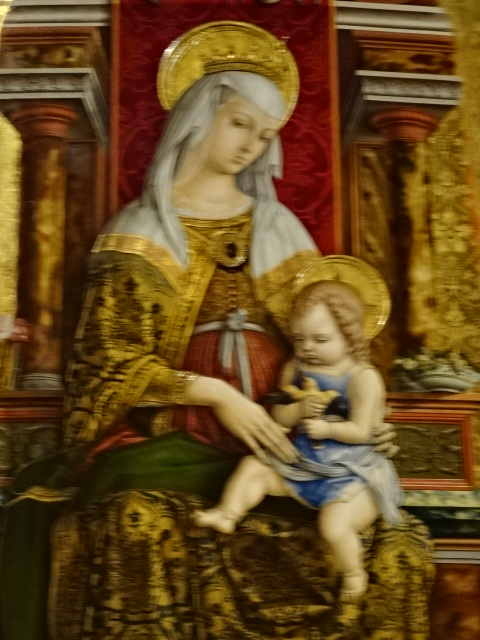
Bergognone’s “Sacred Conversation” shows the Virgin Mary and Christ Child on a massive golden throne, baby Jesus on the Virgin Mary’s lap. Solemn angels flutter in the background. I was struck by the details of the Virgin Mary’s hair and by the material of the clothing worn by the Virgin Mary and baby Jesus. The two were surrounded by saints with captivating headwear, including Saint Ambrose and Saint Jerome.
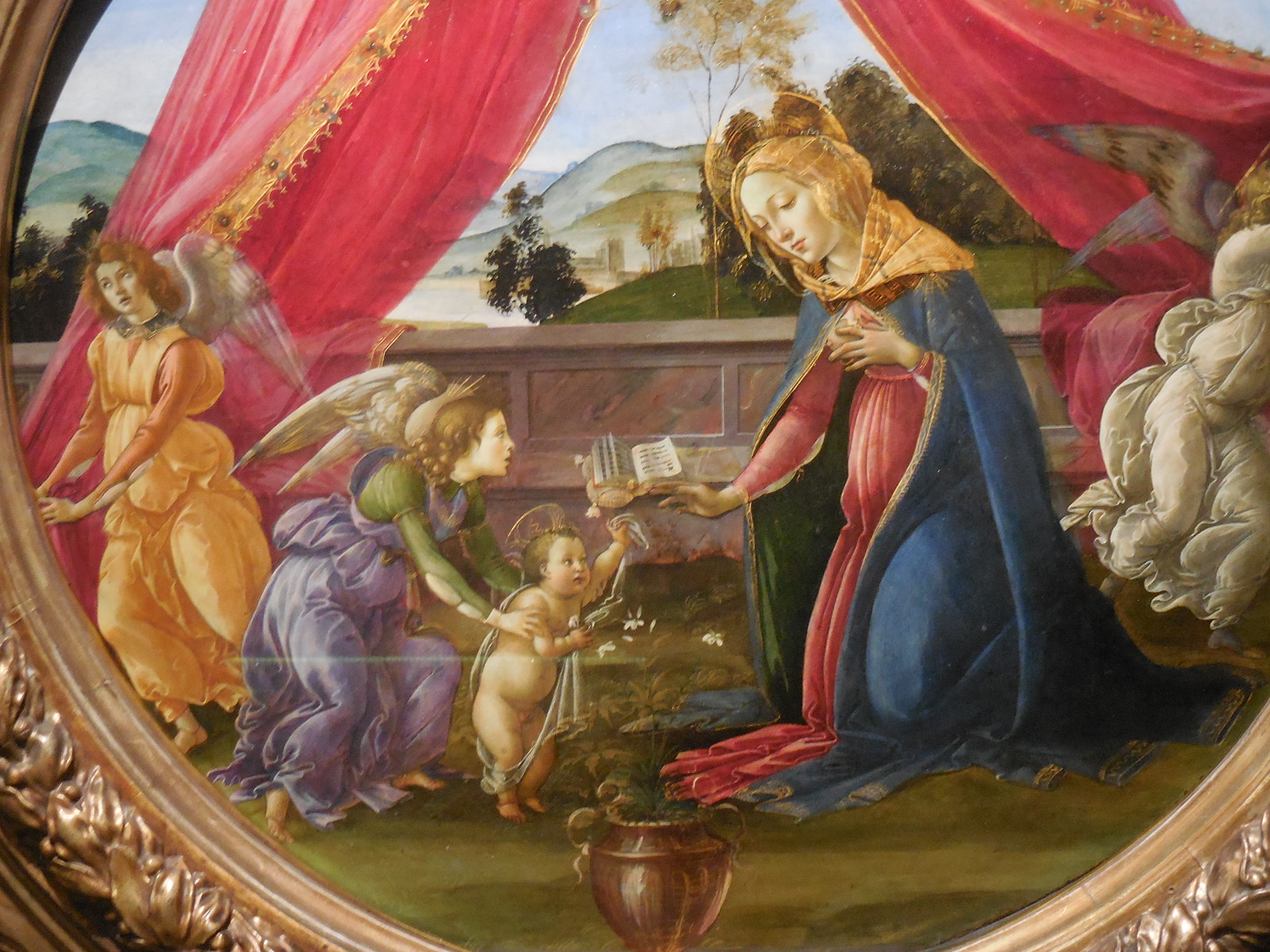
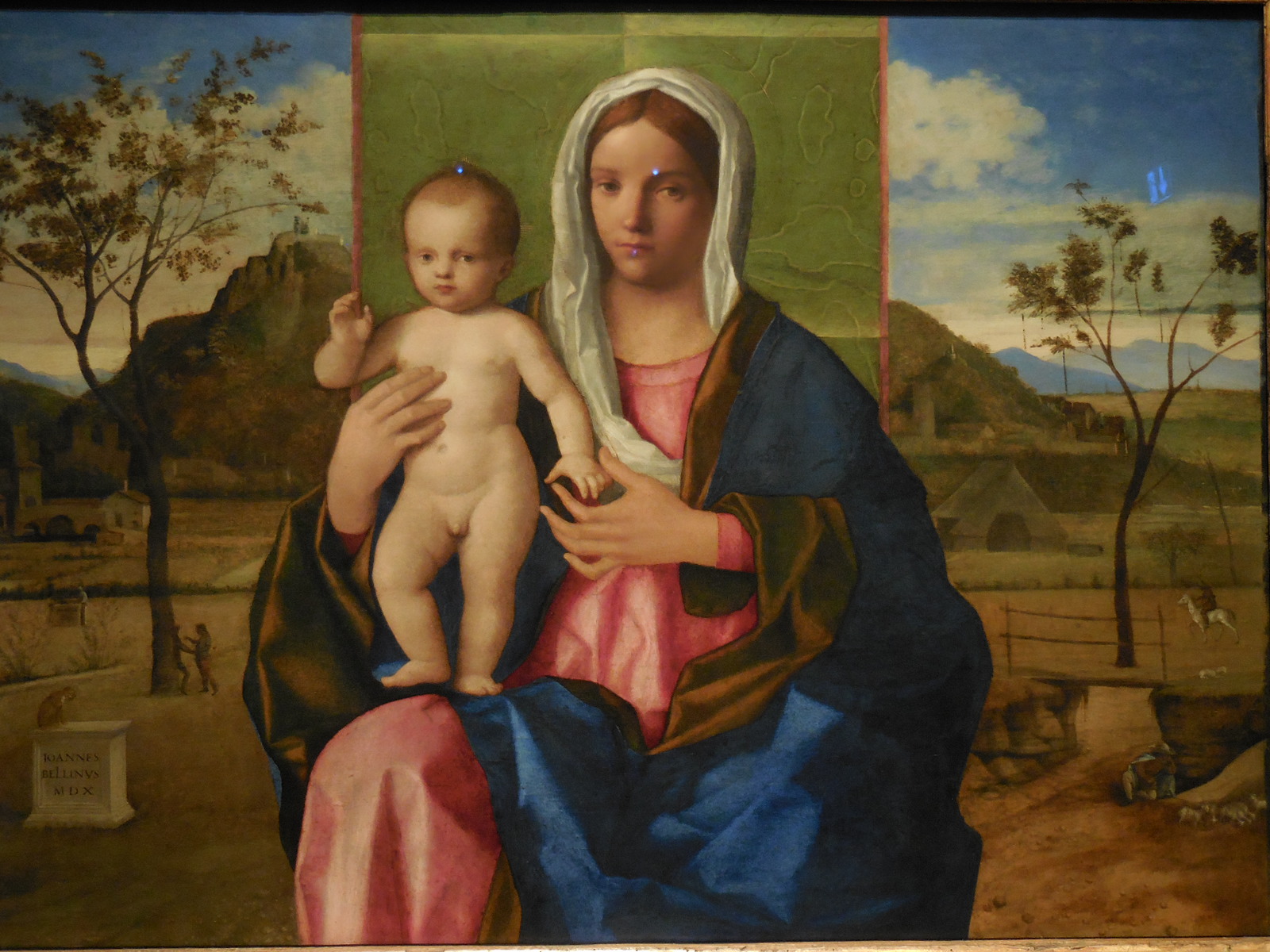
Another painting that left me speechless was Sandro Botticelli’s “The Madonna of the Pavilion.” The artist’s meticulousness was evident. The artwork shows the Virgin and Child with much symbolism. The pavilion that two angels open to reveal the Christ Child is rich in biblical meaning both in the Old and New Testament. I could almost feel the paper of the pages making up the open book in the painting.

Raphael’s School of Athens
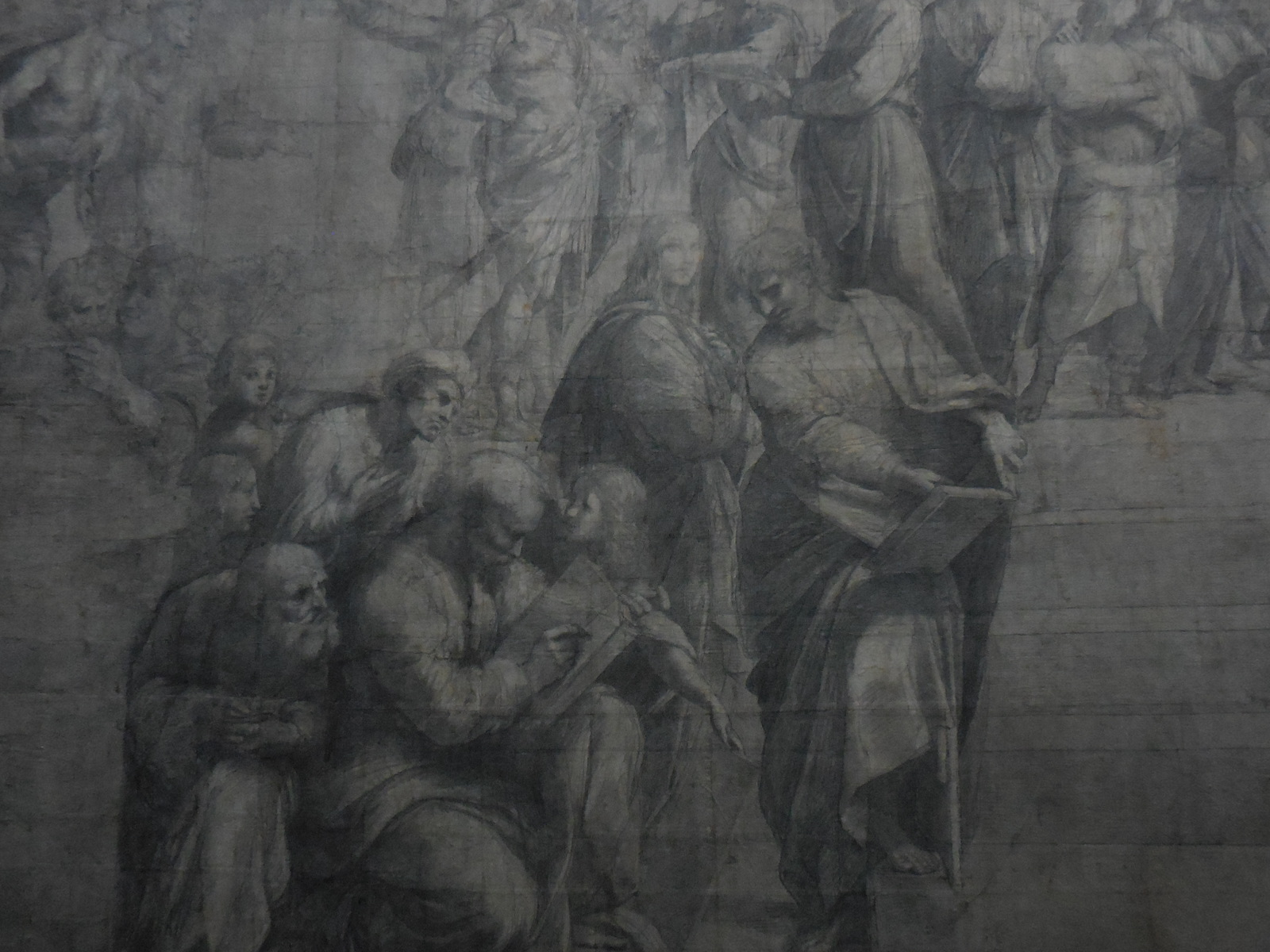
Raphael’s cartoon of the “School of Athens” is a study for the Italian Renaissance fresco painted in the early 1500s for the Raphael Rooms in the Vatican Museum. I recalled seeing the skillful rendition of philosophers and scientists from Ancient Greece at the Vatican on my 40th birthday as I mulled over the dominant role that perspective played in the artwork. Plato, Aristotle and Pythagoras appear in the fresco. Leonardo and Michelangelo are present as Plato and Heraclitus.
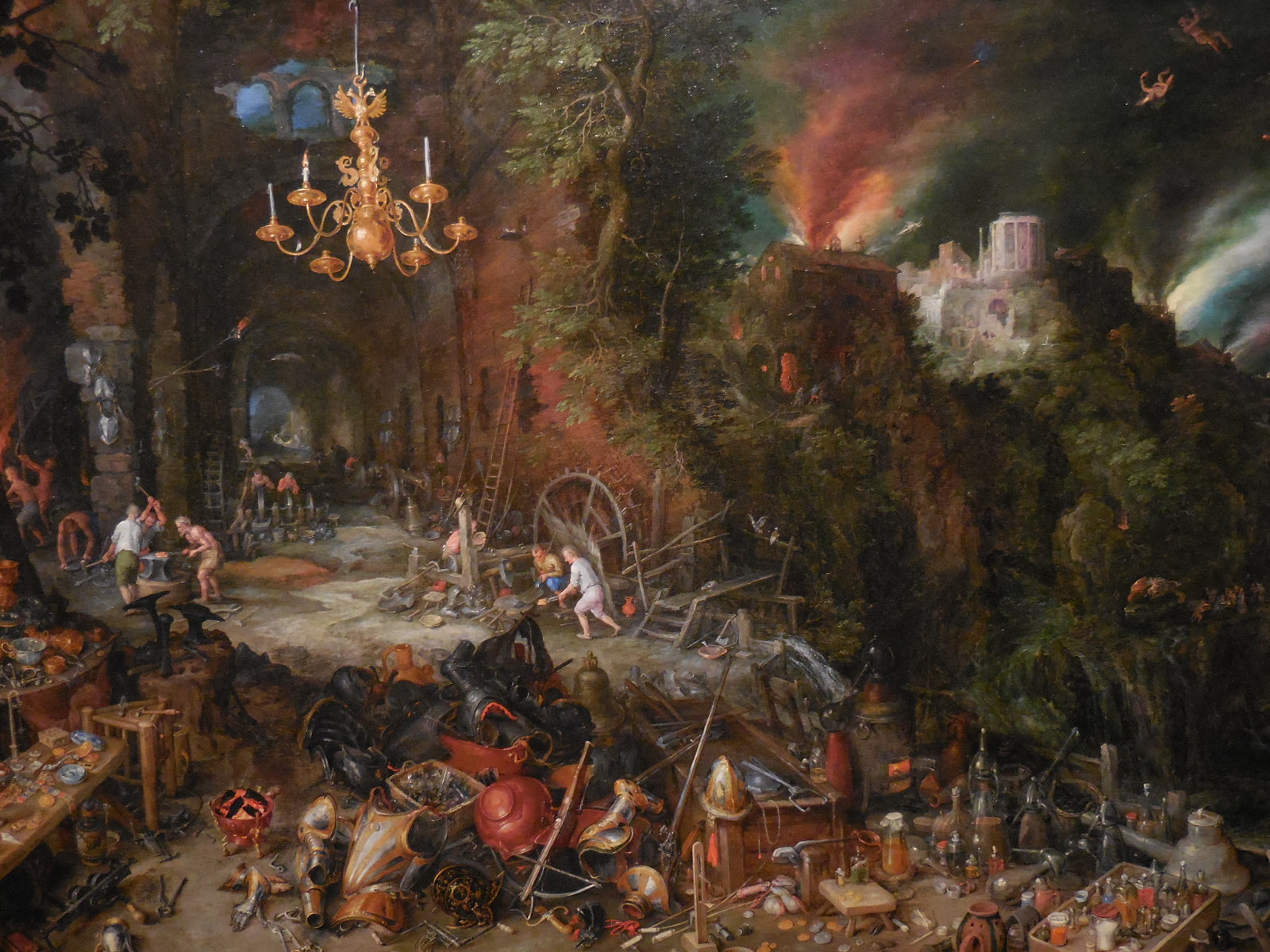
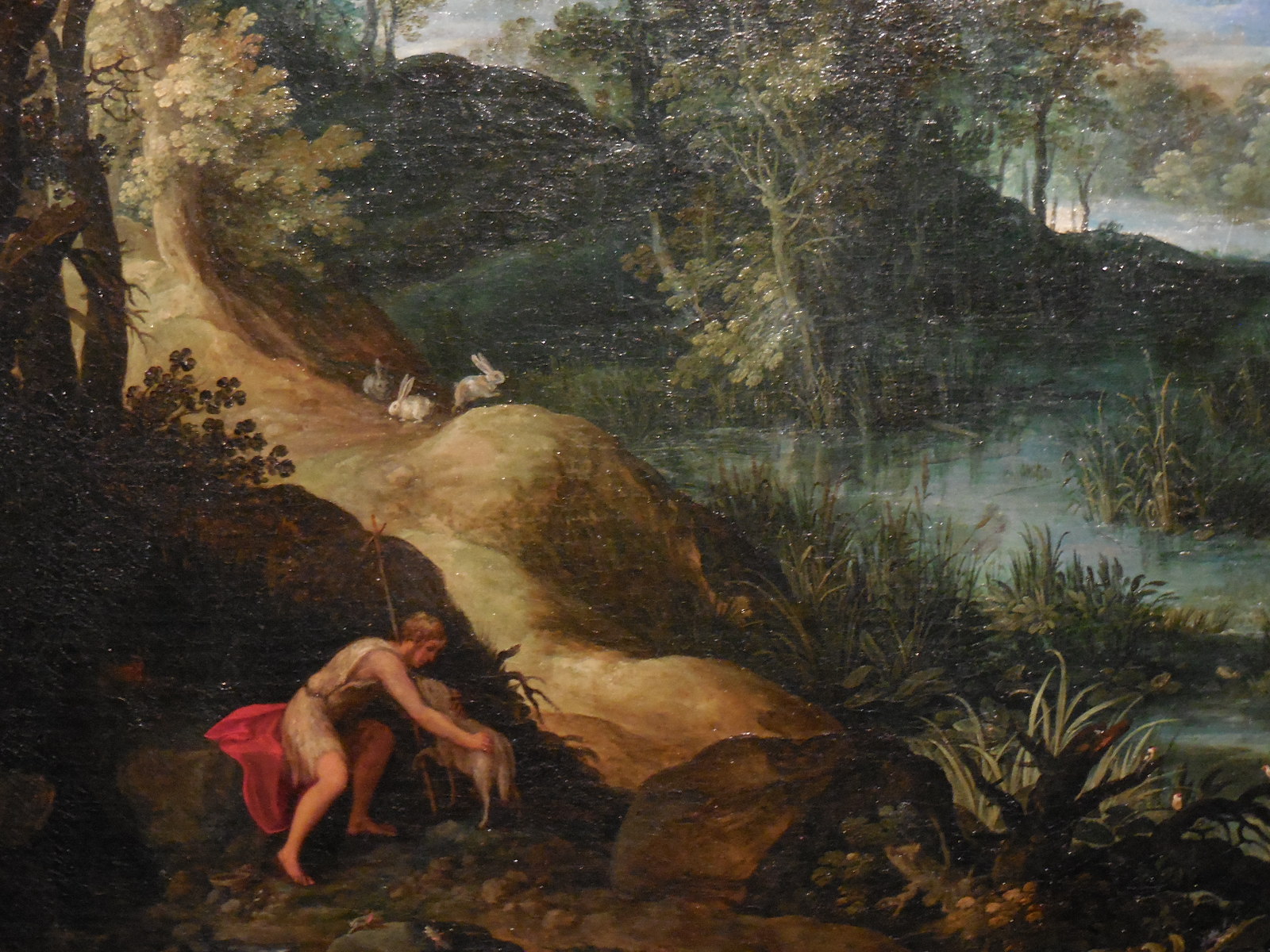
Other paintings that awed me were the fantastic landscapes of Paul Brill, whose works I had discovered some years earlier in Edinburgh. Jan Brueghel’s detailed landscapes and still lifes also are close to my heart, and I adored masterpieces from the Netherlands. I stared at these paintings, losing myself in the fantastical landscapes and details that were so masterfully rendered by both artists. I felt a special connection to these works featuring a dream-like quality as if I could be transported into a fantasy world by merely peering at the canvases.

Other paintings that captured my undivided attention had been created by Bernardino Luini (I fondly recalled his paintings in Milan’s Church of Saint Maurizio), Tizian, Jacopo Bassano, Moretto and Daniele Crespi as well as Francesco Hayez, whose works I knew well from the Brera Gallery in the same city. Andrea Bianchi had created “The Last Supper,” imitating da Vinci’s masterpiece. Tizian’s “Adoration of the Magi,” Bramantino’s “Madonna of the Towers” and the locks of hair of Lucrezia Borgia all left me awe-struck.

The sculptures and frescoes from the second to 16th century in the Sala del Bambaia are very noteworthy. The Hindu art of the Berger Collection captivated me. The Flemish and German painting from the 15th to 17th century enthralled. Ceramics also play an intriguing role in the collection.

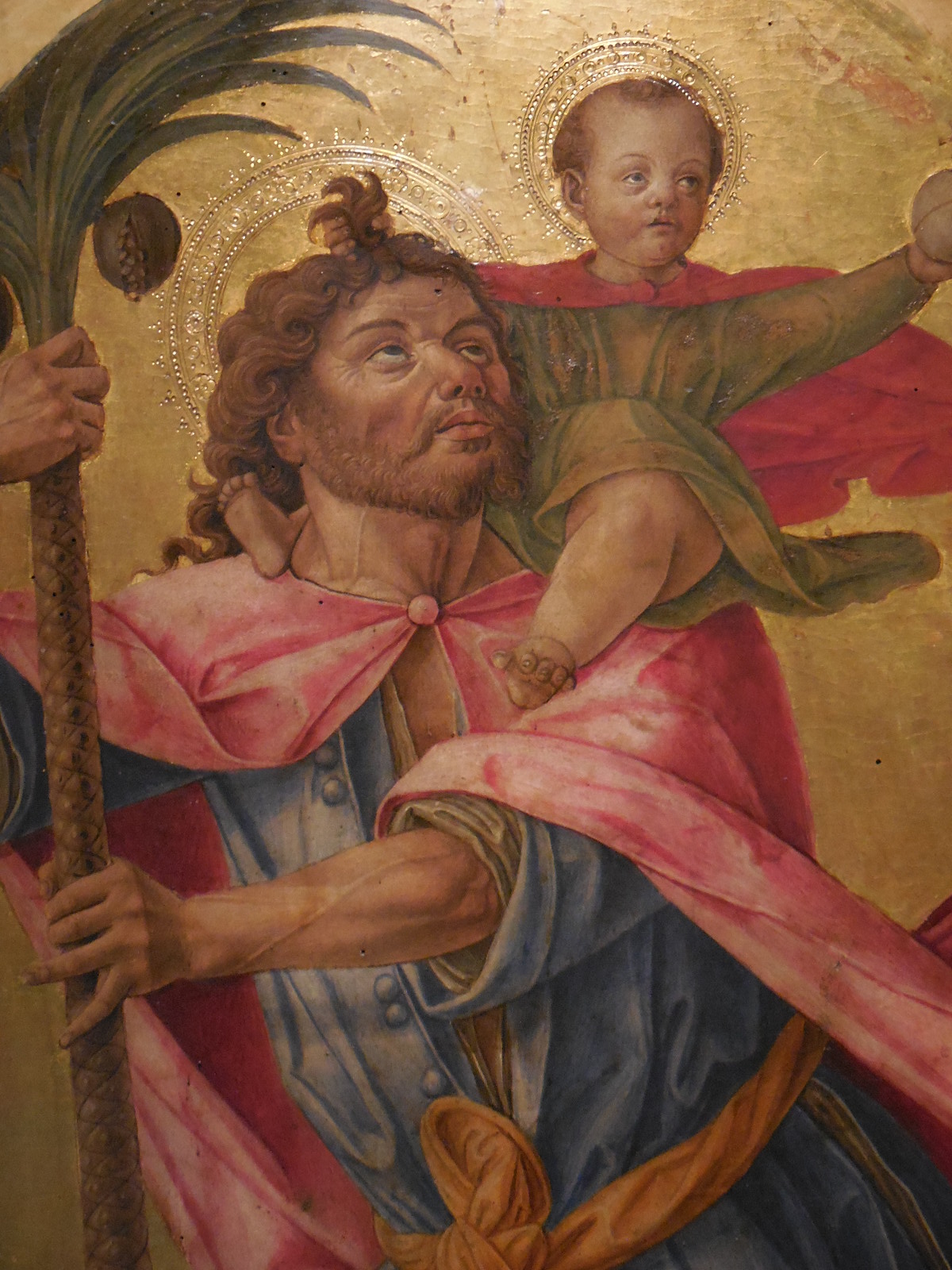
I was so awed by this gallery and library that I visited it twice during my first trip to Milan. I peered at every painting and sculpture, trying to take in each artistic creation, feeling so blessed to be able to see all these masterpieces with my own eyes.

Tracy A. Burns is a writer, proofreader and editor in Prague.

Pinacoteca di Brera Diary

I have visited this phenomenal art gallery in Milan twice. I could go there a million times, and I would be just as amazed as I was on the first two occasions. While the gallery includes Italian art from the 13th to 20th century, some remarkable foreign works are on display in its 38 halls, too. Artists from the Netherlands represented in the gallery include Peter Paul Rubens, Anton van Dyck, Jan de Beer and Jacob Jordaens. The Brera focuses on Venetian and Lombard painting.

The art gallery is situated in a large complex that also houses a stunning library (where I saw an exhibition during my second visit), an observatory, a botanical garden and the Brera Academy of Art. In front of the museum is an equestrian statue of Napoleon by Antonio Canova. While the art academy was established as far back as 1776, the museum was opened in August of 1809. When paintings in Lombardy were confiscated from churches and convents in the early 19th century, they wound up at the Brera, so many religious works make up the collection. Parts of the art gallery were damaged in bombing raids during 1943, but they were fully reconstructed by 1948.

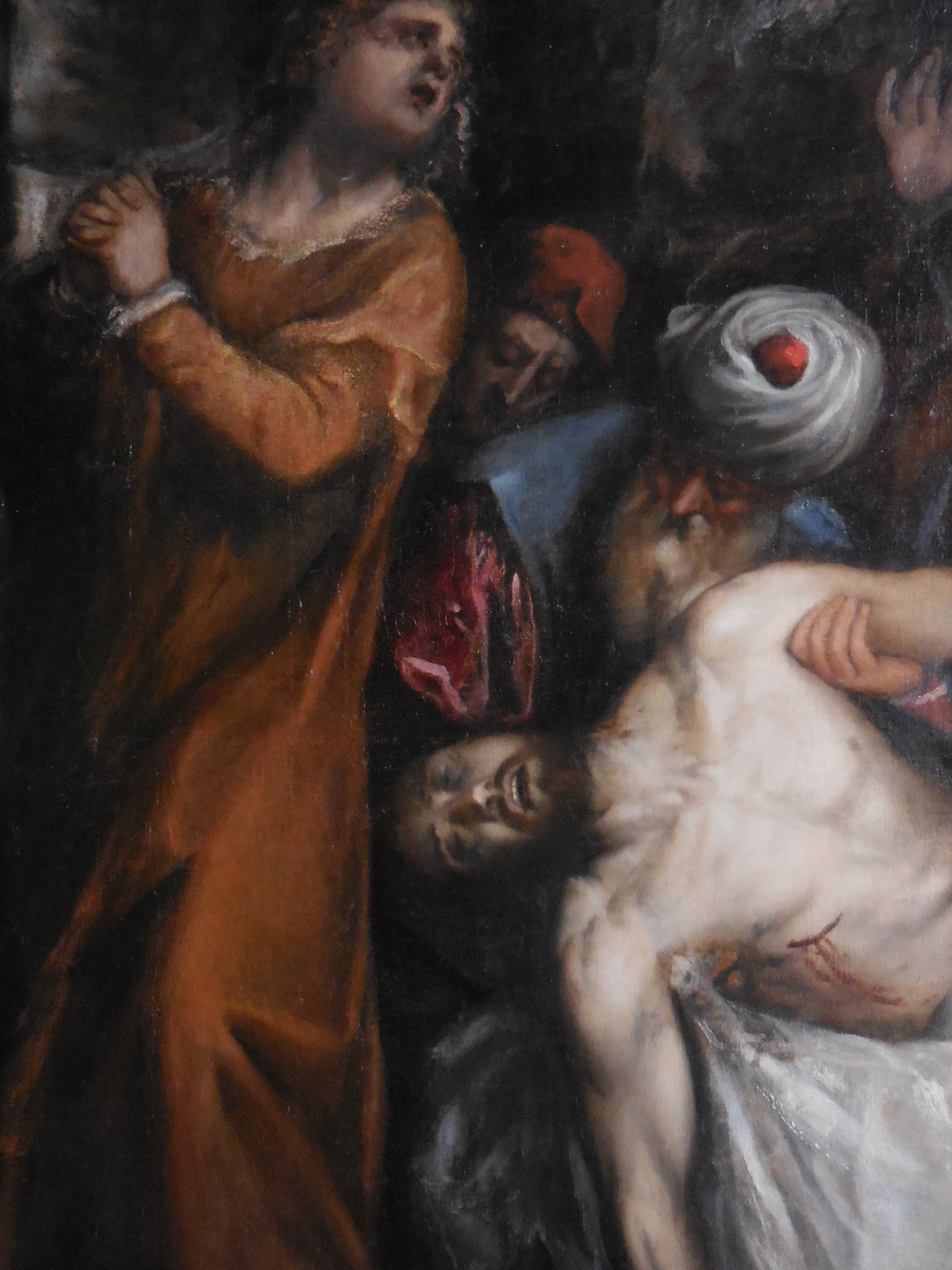
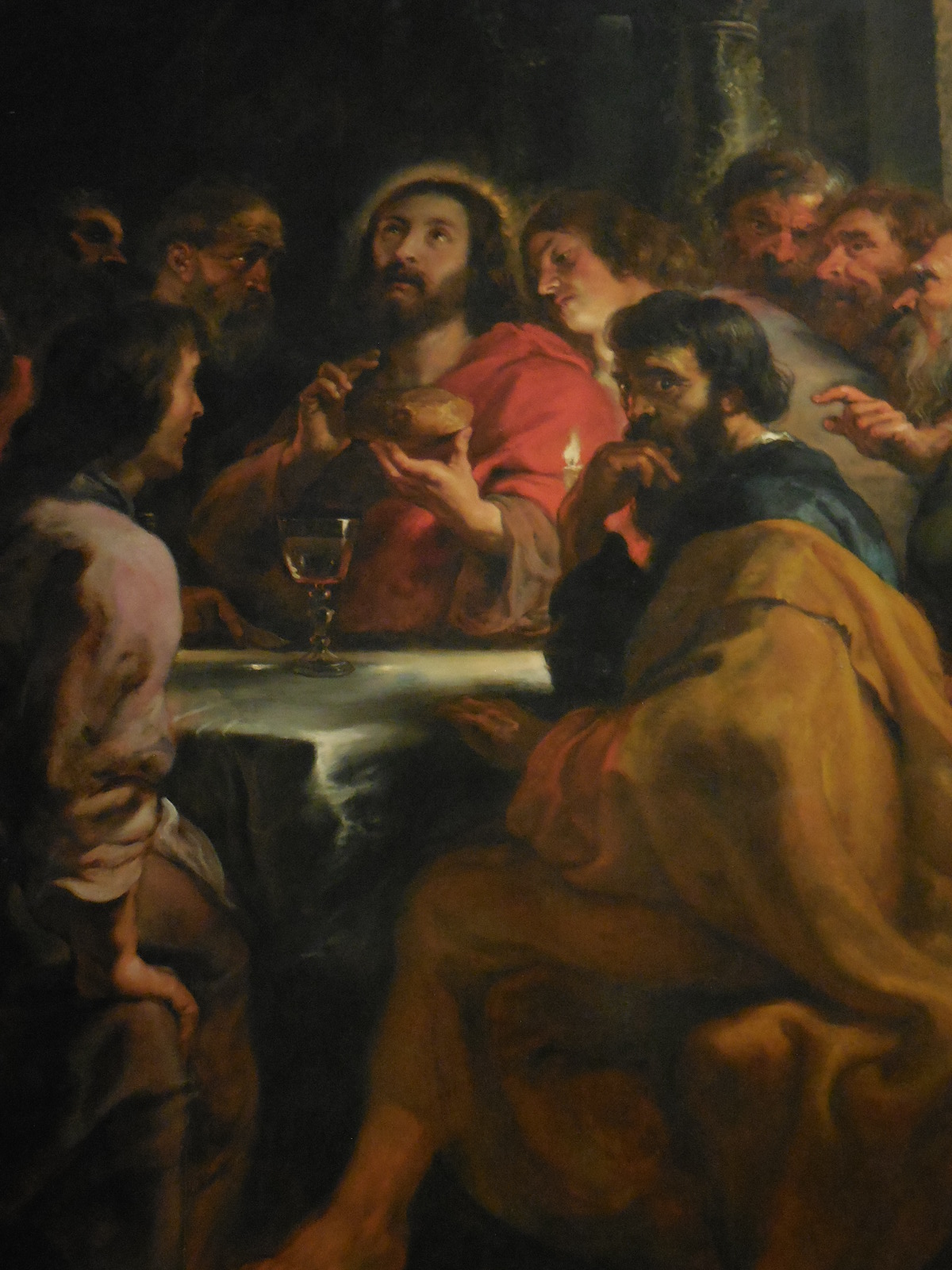
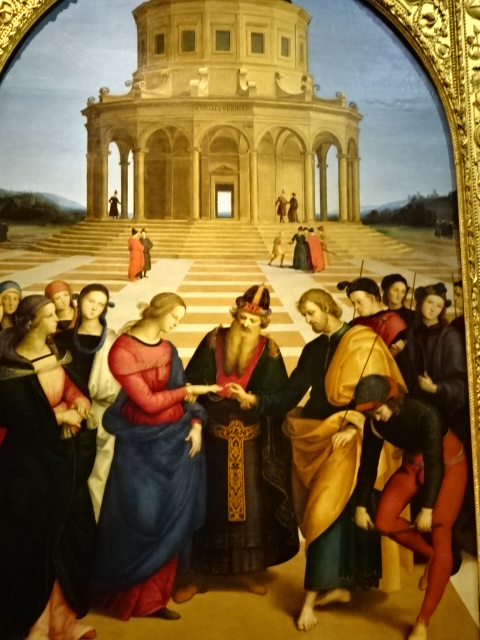
Some of the most famous paintings in the gallery include “The Lamentation of Christ” by Andrea Mantegna, “The Kiss” by Francesco Hayez, “Finding of the Body of St. Mark” by Tintoretto, “The Last Supper” by Rubens and “Supper at Emmaus” by Caravaggio – only one of two Caravaggio paintings in Milan. Also on display are the exquisite “The Marriage of the Virgin” by Raphael and “Christ at the Column” by Donato Bramante. I especially liked the paintings by Canaletto and Hayez as well as the 14th century frescoes. Modern works are exhibited, too. For example, “Enfant gras” by Amedeo Modigliani and “Riot in the Gallery” by Umberto Boccioni take up prominent places in the gallery. The works of Pablo Picasso and Giorgio De Chirico are represented, too.

I was overwhelmed at the beauty and power of the paintings in the Brera. Some of the monumental works just took my breath away. I was moved by all the paintings, each one telling a story.

Tracy A. Burns is a writer, proofreader and editor in Prague. 
Caso Museo Boschi Di Stefano Diary

I regretted not having time to visit the house museum Boschi Di Stefano the first time I visited Milan. It was far from the center, where I spent much of my introductory days in the city. During my second visit the following year, I made sure I did not miss this museum.

I got off the metro at the Lima station, in which felt to me like a dangerous area. Yet, five minutes from the metro, I walked down a street lined with elegant buildings, which gave off an altogether different atmosphere – one of calmness and grandeur. The museum was on the second floor of a majestic building built between 1929 and 1931 by Piero Portaluppi, whose name was familiar to me because he had designed Milan’s Villa Necchi Campiglio, a former home with dazzling Art Deco adornment inside. I recalled the works by Pablo Picasso and the lush garden with pool and tennis courts at the Villa Necchi, one of the highlights of my first visit to this remarkable city.

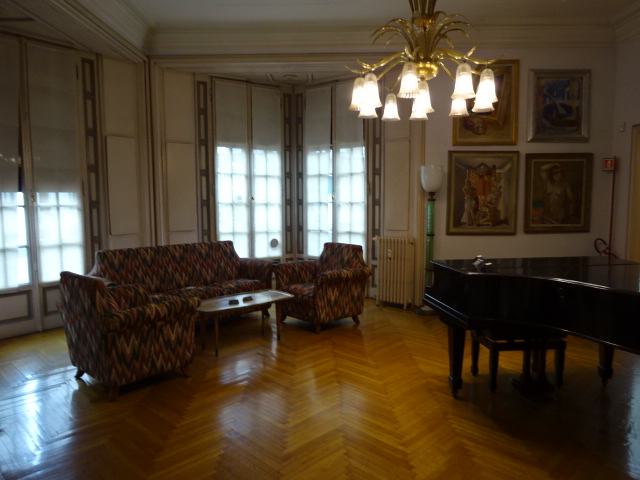
I loved house museums because they had a more intimate quality than bigger, impersonal art spaces. I could sense that these house museums had once been somebody’s home. Trials and tribulations of daily life had taken place here. Private conversations had been voiced here. This particular house museum had once been the home of Antonio Boschi and Marieda Di Stefano, a married couple who had amassed a collection of some 2,000 pieces of art, mostly Italian in origin. They tied the knot in 1927 as Boschi, a veteran of World War I, went on to become a successful engineer. Marieda was an artist herself who had an affinity for ceramics. Many of her artistic creations can be seen here, too. A school of ceramics was situated a floor below.

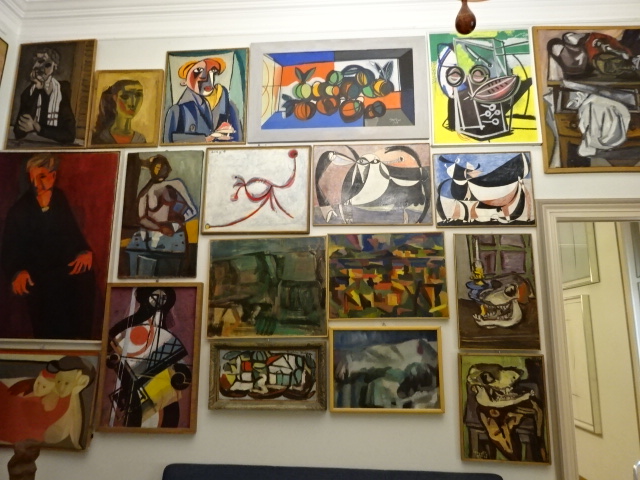
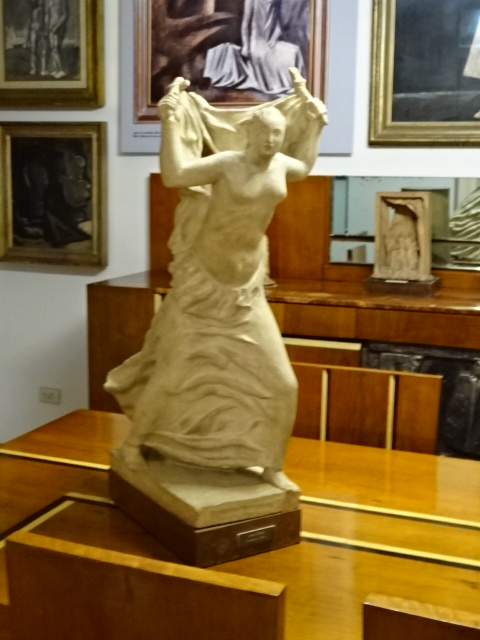
The Caso Museo Boschi Di Stefano includes 11 spaces and focuses on 20th century art dated from 1900 to 1960 – mostly paintings but also drawings, sculpture and furniture. About 300 works are on display. The museum has been open to the public since 2003.

I felt overwhelmed as I contemplated the paintings that covered the entirety of the walls from the bottom all the way to the top. I was almost dizzy with delight, gazing at all the paintings, some falling into the category of modern art while others showed off a contemporary style. The works were displayed in a chronological fashion, so I could see how styles developed during those 60 years.

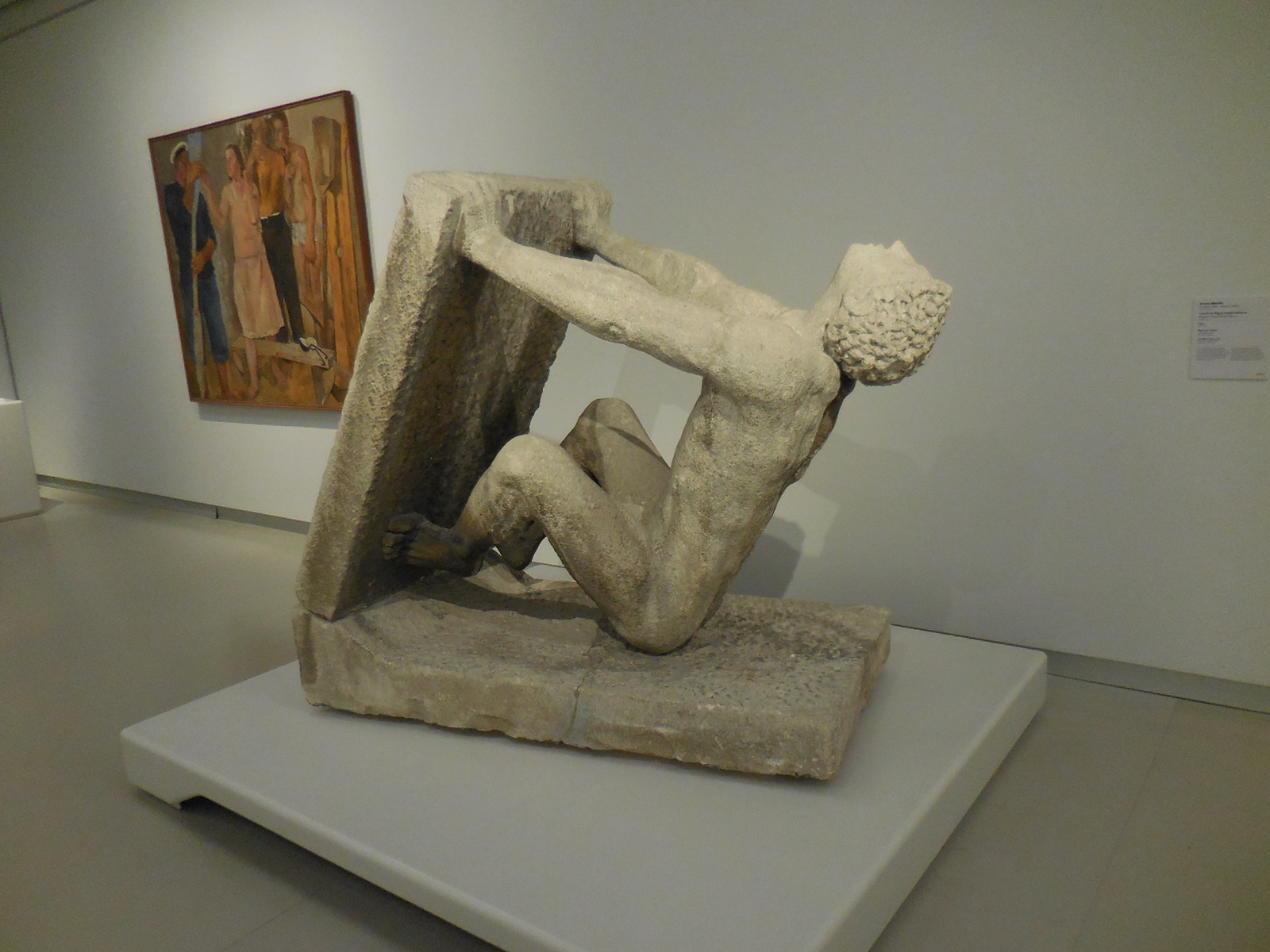
I recognized paintings by Giorgio De Chirico, Pablo Picasso, Amadeo Modigliana, Lucio Fontana and Raoul Dufy. Other pictorial treasures included 66 works by Roberto Crippa; 129 renditions by Gianni Dova; and 57 creations by Cesare Peverelli. Giuseppe Ajmone, Piero Manzoni, Arturo Martini and Sandro Martini, among others, were also represented there. I recognized Joe Columbo’s distinct style from an exhibition at the Museum of Modern Art in Milan the previous year.

What once was a guest room is now filled with furnishings for a study, the pieces dating from the 1930s. The dining room was a delight, too. I was fascinated with the Agena ceiling light, a unique round structure with what look like yellow cups protruding from the ball-like form. I didn’t understand what the style of the ceiling light meant, but it was fascinating to see it with my own eyes.

I went through the flat twice to try to take in all the art that surrounded me. It was a mesmerizing and breathtaking experience. The development of 20th century art was on display, each work speaking volumes about artistic creations during a time period in which I had not lived but could now better appreciate.

Tracy A. Burns is a writer, proofreader and editor in Prague.

Museum of the Risorgimento in Milan Diary

Museum of the Risorgimento in Milan Diary 

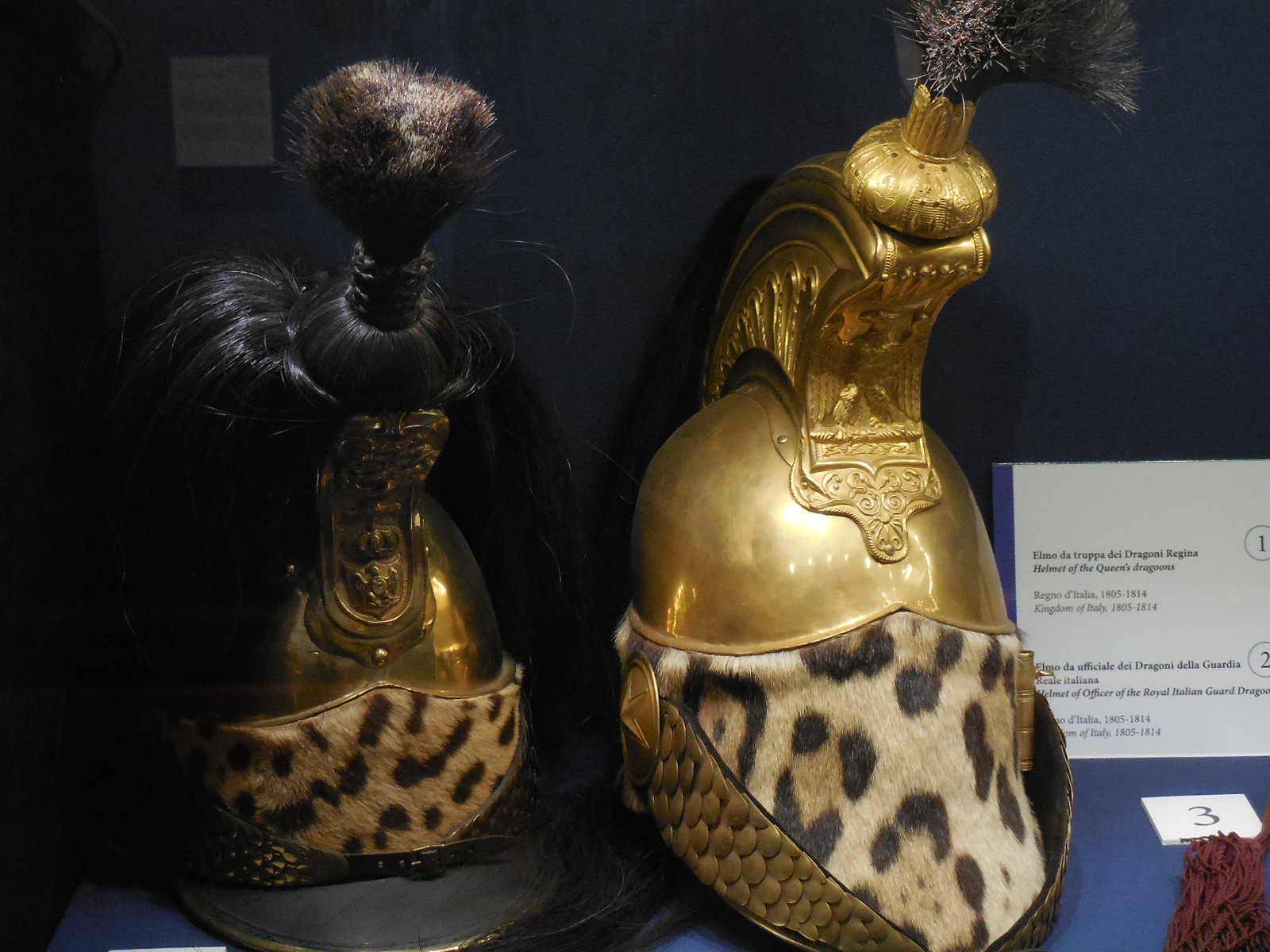
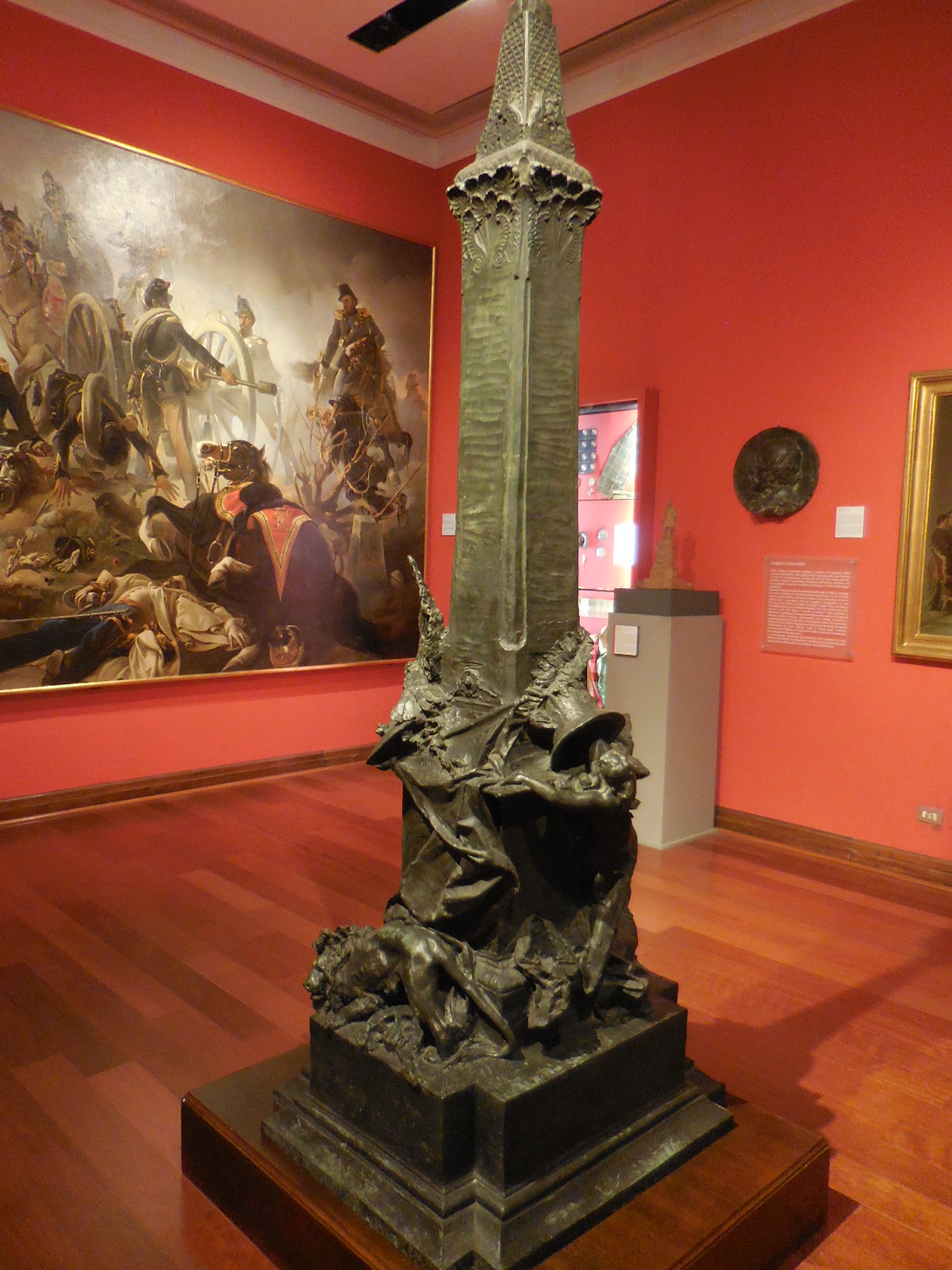
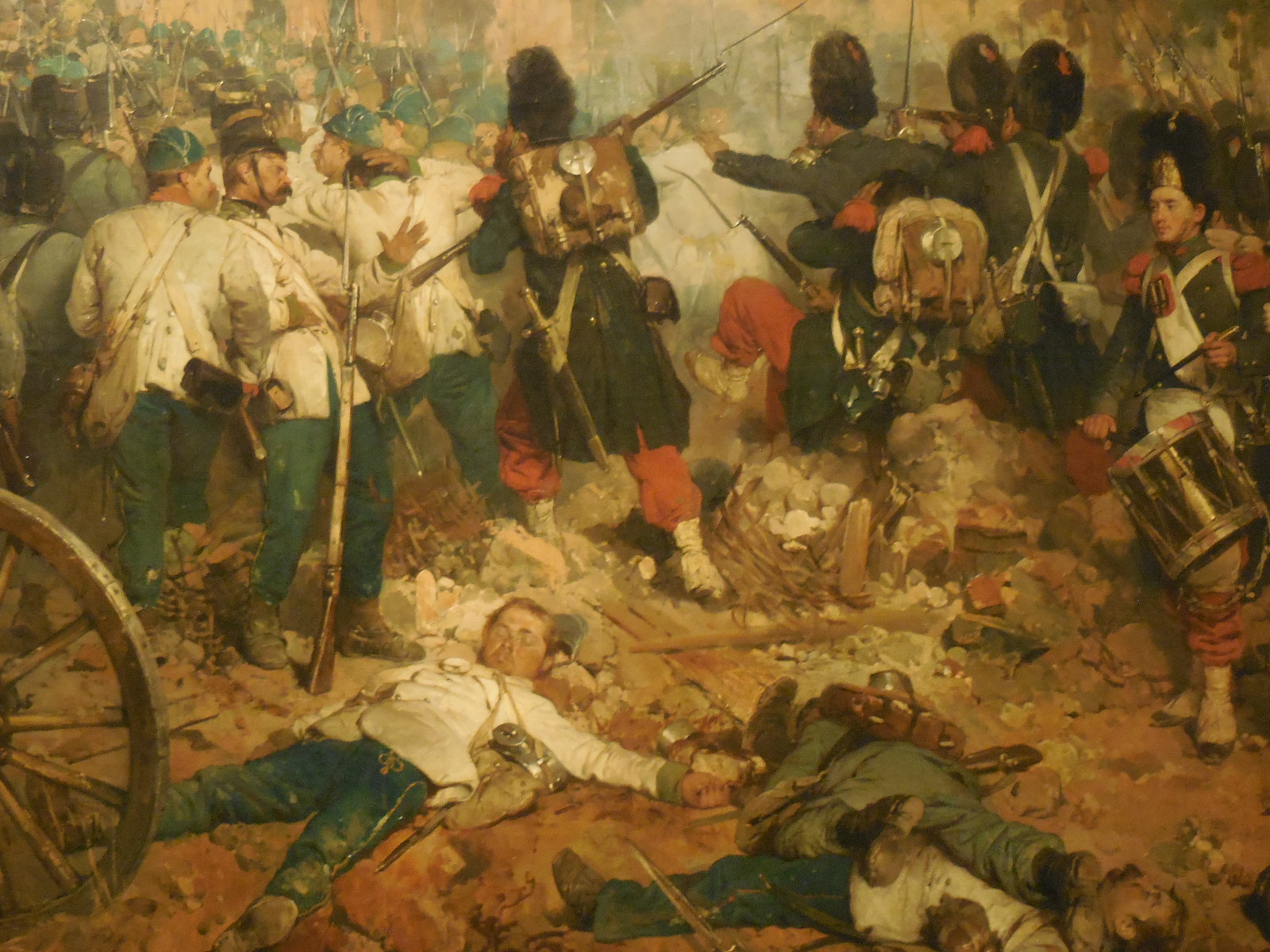
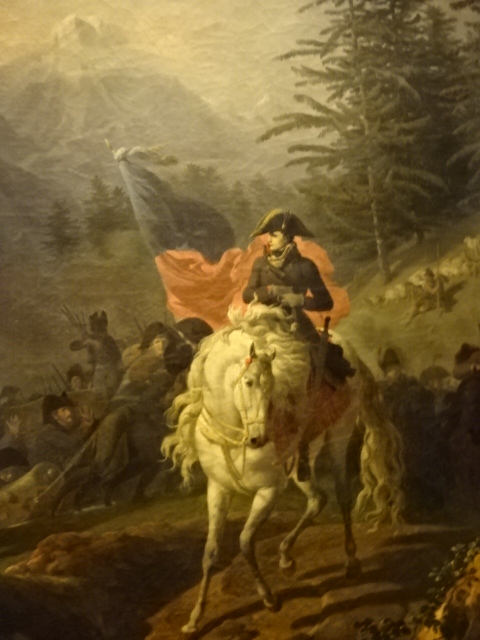
After visiting the Brera Art Gallery in Milan, I walked to the nearby Museo del Risorgimento, which featured 14 rooms of paintings, prints, sculptures and artifacts depicting Italian historical events from 1796 to 1870 as well as arms. It traces the periods from the call for Italian independence to Italian unification. I learned about Napoleon’s reign in Italy as well as the Austrian monarchy’s control. I noticed how prominent Milan’s role had been during the Five Days of Milan, the nickname of the 1848 uprising against the Austrians.

I saw paintings depicting Italian King Victor Emmanuel II, who took the throne in 1861 and reigned until his death in 1878. Two of the paintings were created by Gerolamo Induno. Nicknamed the Father of the Fatherland, Victor Emmanuel II had the distinction of being the first king of a unified Italy since the sixth century. He was born the eldest son of Habsburg Empress Maria Theresa of Austria and made a name for himself in the First Italian War of Independence during 1848-49 before being crowned king.

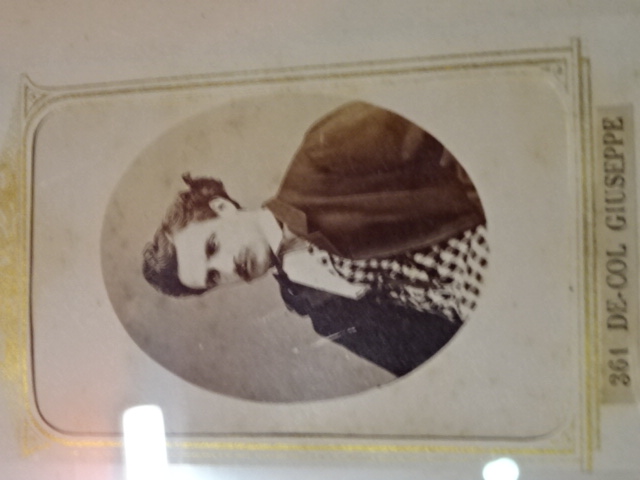
I spent a lot of time staring at the photos of soldiers in the Album of the Thousands, the volunteers in the Expedition of the Thousand, a campaign that took place in 1860. The group of volunteers armed only with out-of-date muskets defeated the more powerful navy of the Kingdom of the Two Sicilies. Portraits of the 1,089 soldiers in business card format made up this album. I saw the volunteers as individuals rather than as a group of soldiers who conquered Bourbon rule in south Italy. Looking at their portraits, I felt as if I could see the personalities of the men.

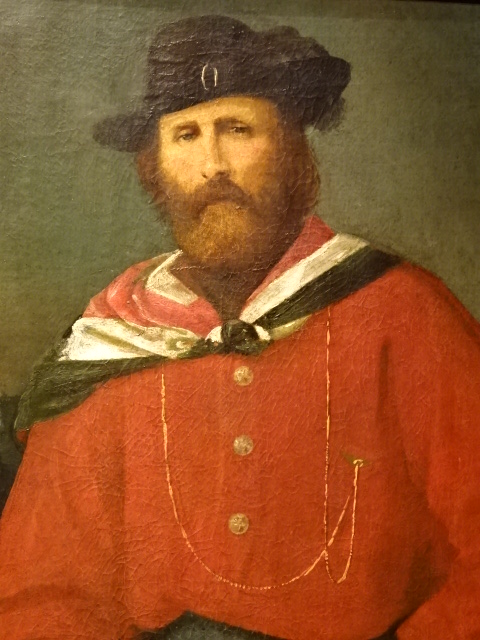
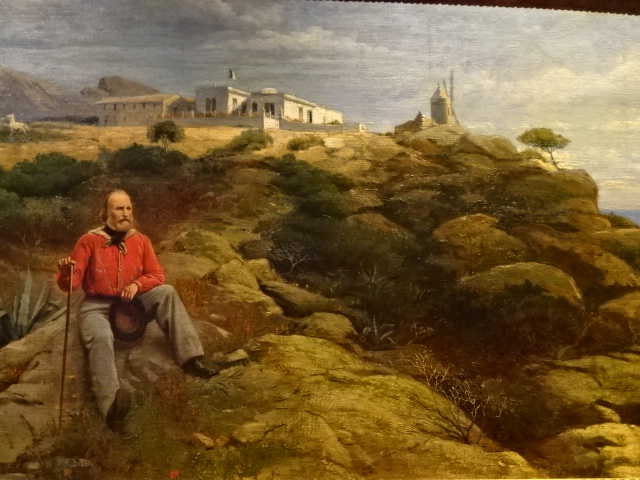
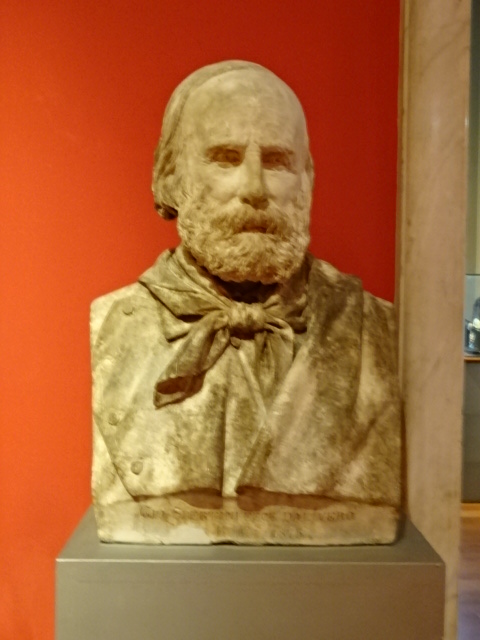
Giuseppe Garibaldi, one of the most prominent generals in modern history, guided the volunteers in the Expedition of the Thousand. Their uniforms were made up of red shirts and grey pants. In the exposition I saw the actual poncho and red shirt donned by Garibaldi, who also had military successes in South Africa and elsewhere in Europe.

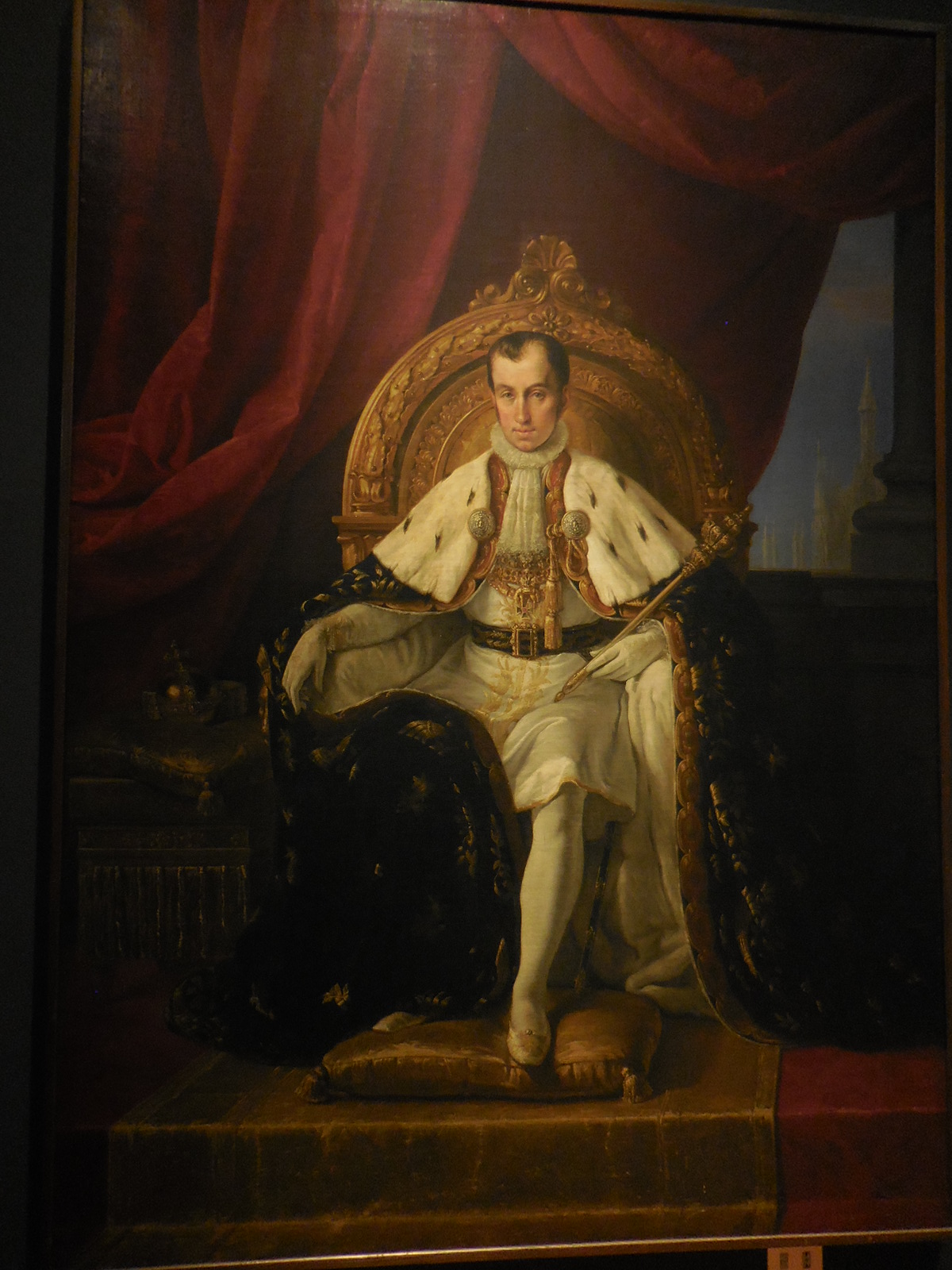
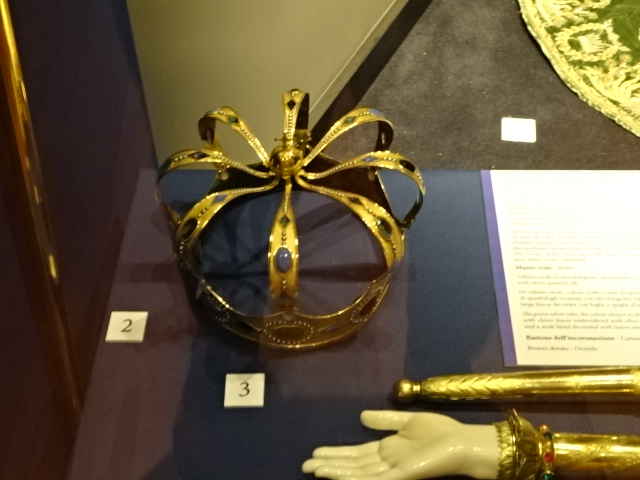
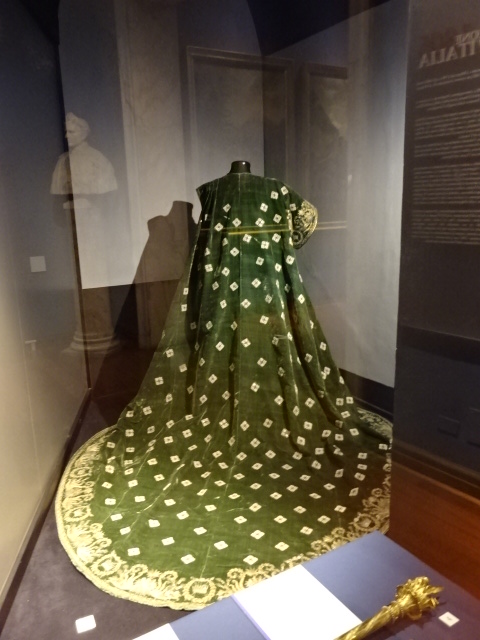
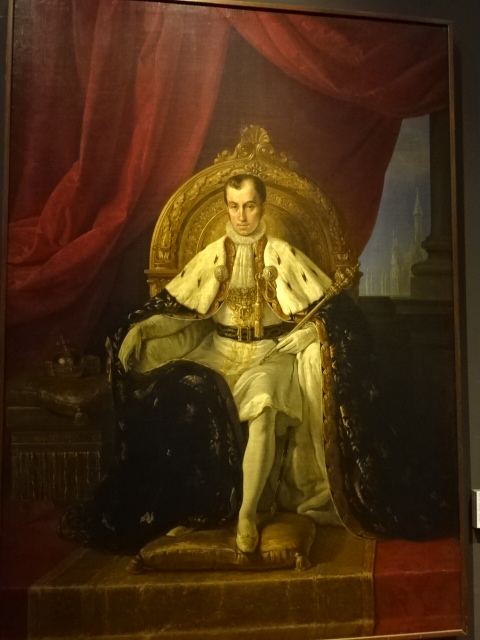
I loved the paintings and sculptures most of all. These collections were especially noteworthy. The collection of paintings depicting the Imperial period from 1804 to 1814 was perhaps the most poignant of all eras represented by this genre. Francesco Hayez, whose works I had seen in the Brera, had depicted Emperor Ferdinand I of Austria in a moving portrait. Also, powerful canvases of the Five Days of Milan had been rendered by Carlo Canelli, Carlo Bossoli and Pietro Bouvier, for example. Gerolamo Induno and Domenico Induno contributed to the paintings depicting the Second War of Independence. The original Italian flag that flew over the Duomo in Milan on March 20, 1848 was another highlight. The cloak and regal insignia from Napoleon’s coronation as King of Italy were also enthralling.

The 18th century Palazzo Moriggio that houses the museum had an intriguing history as well. The museum had been situated there since 1951. Under Napoleon’s reign the Ministry of Foreign Affairs and then the Ministry of Defense had been located in the palace.

This museum really opened my eyes to many events in Italian history. I had known only very basic information about this museum before my visit. It wasn’t on my list of most important places to see. I learned so much about the time periods in which the Risorgimento took place. I had never been a big fan of battle scenes, but I was struck by the details and by the historical significance of these paintings. While the museum is relatively small, it allows visitors to develop much knowledge about poignant eras in Italian history. In this museum I could actually feel the history come to life. Each artifact tells a story.

Tracy Burns is a writer, proofreader and editor in Prague. 

The Interior of the Duomo Milan Cathedral Diary

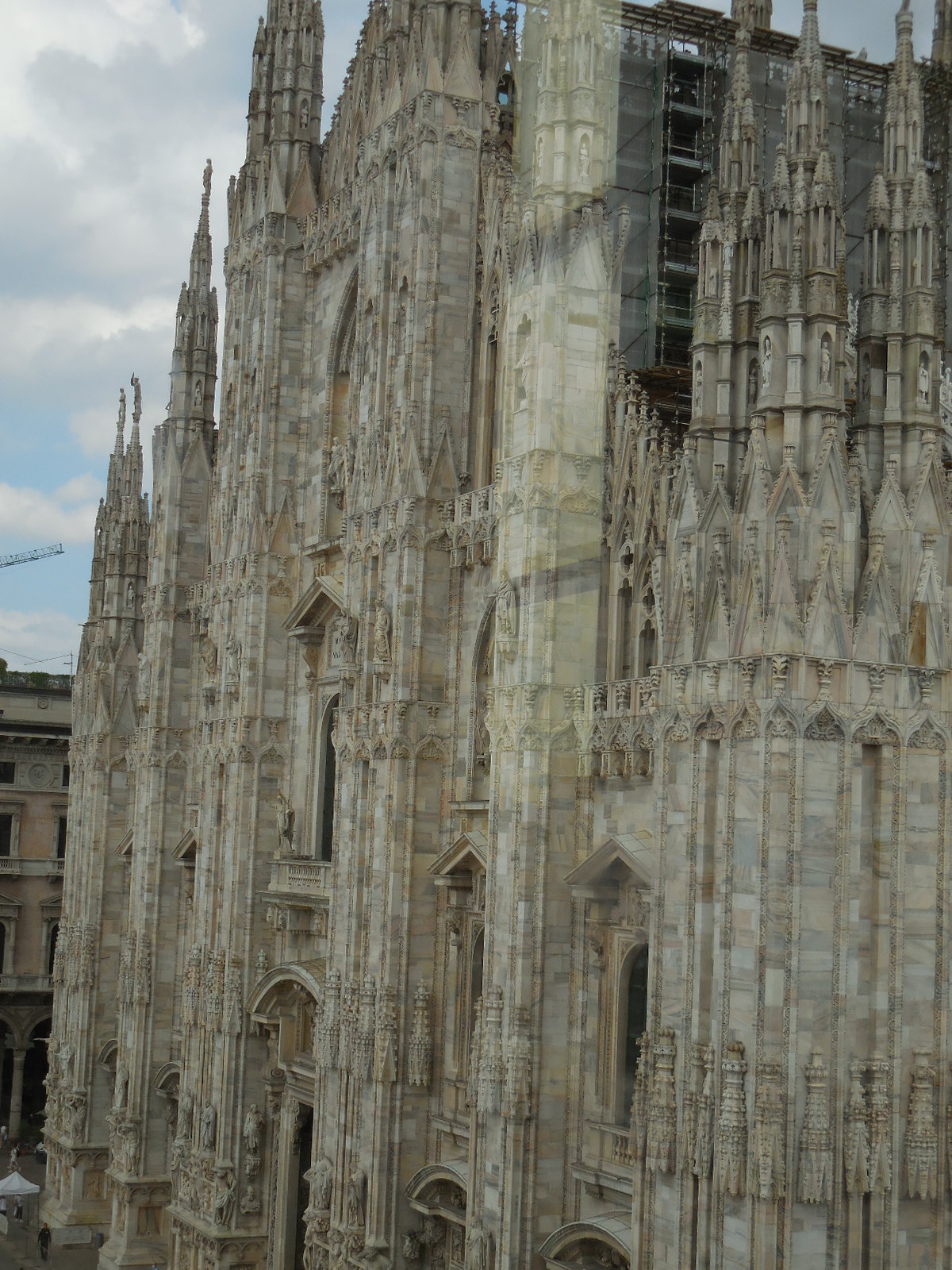
First, I perused the exterior of the Duomo and walked on the sloping terraces of the roof. Then it was time to see the interior. It certainly did not disappoint. I was aware that the Duomo was the second largest cathedral in Europe and that its size ranked third in the world. To say that construction took a long time was an understatement. Work on the cathedral began in 1386 with the demolition of three buildings and did not finish until 1965.

I noticed that the Duomo featured a Latin cross plan. I knew that the nave was twice as wide as the two side aisles, measuring 45 meters in height. Forty pillars divided five naves. I saw stunning capitals on many pillars. Stunning altars and impressive sarcophagi punctuated the building.

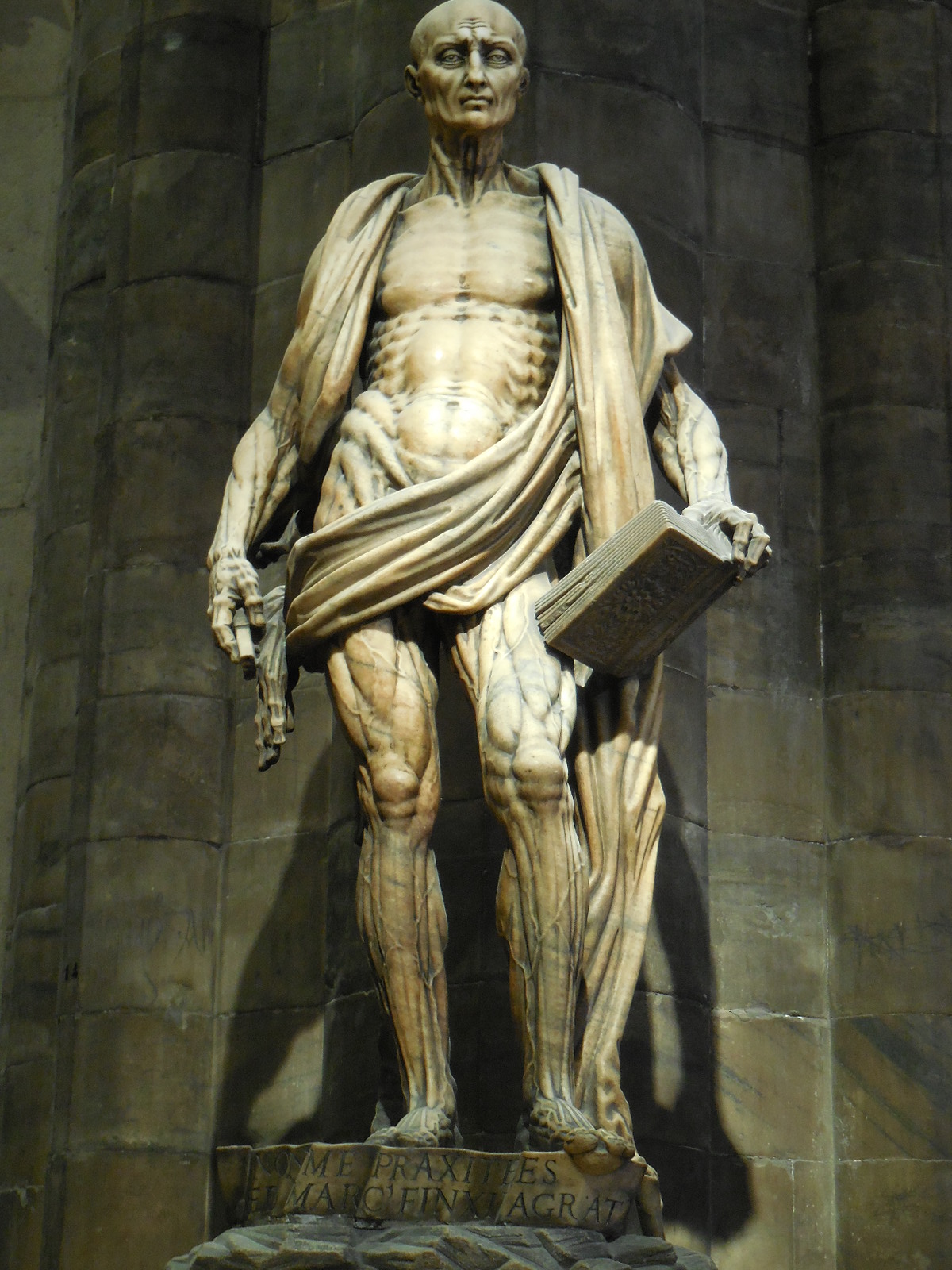
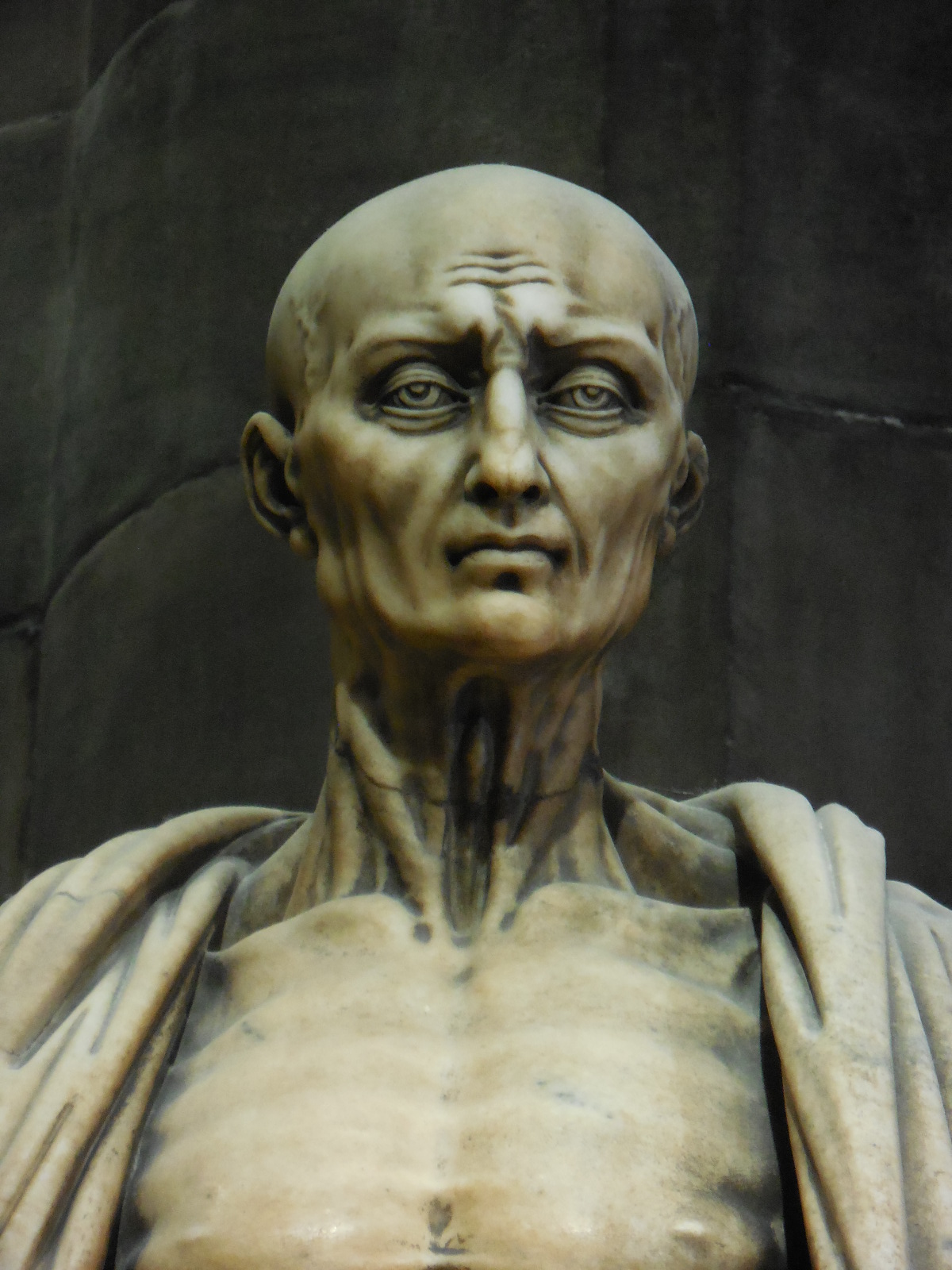
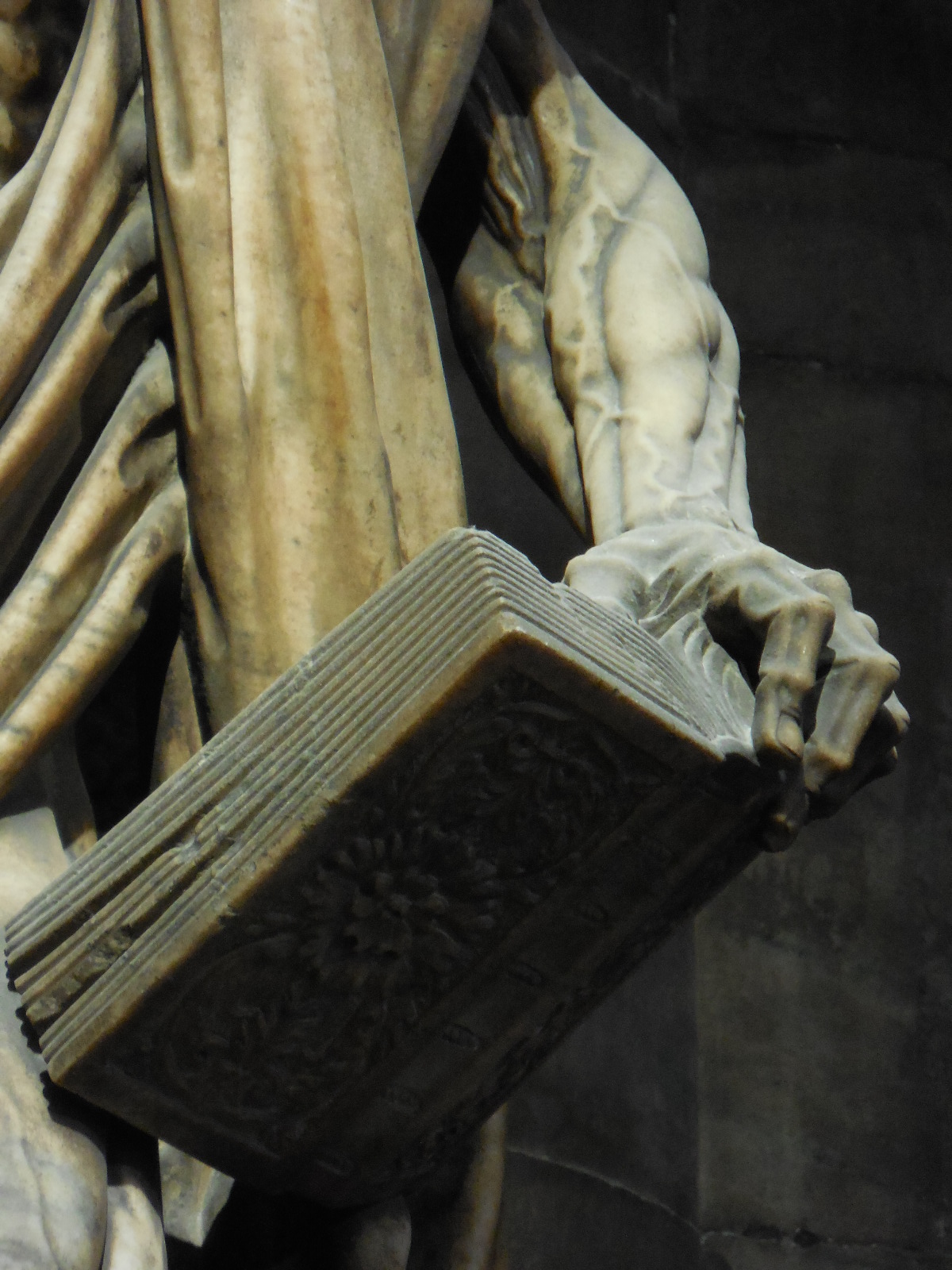
While numerous statues of saints and martyrs dotted the cathedral, the statue which influenced me the most was the one of the flayed Saint Bartholomew, who was depicted holding his skin as a cloak. His ribs and chest, not to mention his whole body, were so anatomically well-defined. The masterful skill of rendering anatomy brought to mind the works of Leonardo da Vinci.  I gazed, almost in a trace, at the 1562-made statue by Marco d’Agrate, that which showed unspeakable suffering and yet a sense of perseverance as well. I thought about those suffering horribly, such as the Ukrainians fighting a war or the mothers and children who have fled to the Czech Republic. I was thankful I did not have to suffer as those people did.

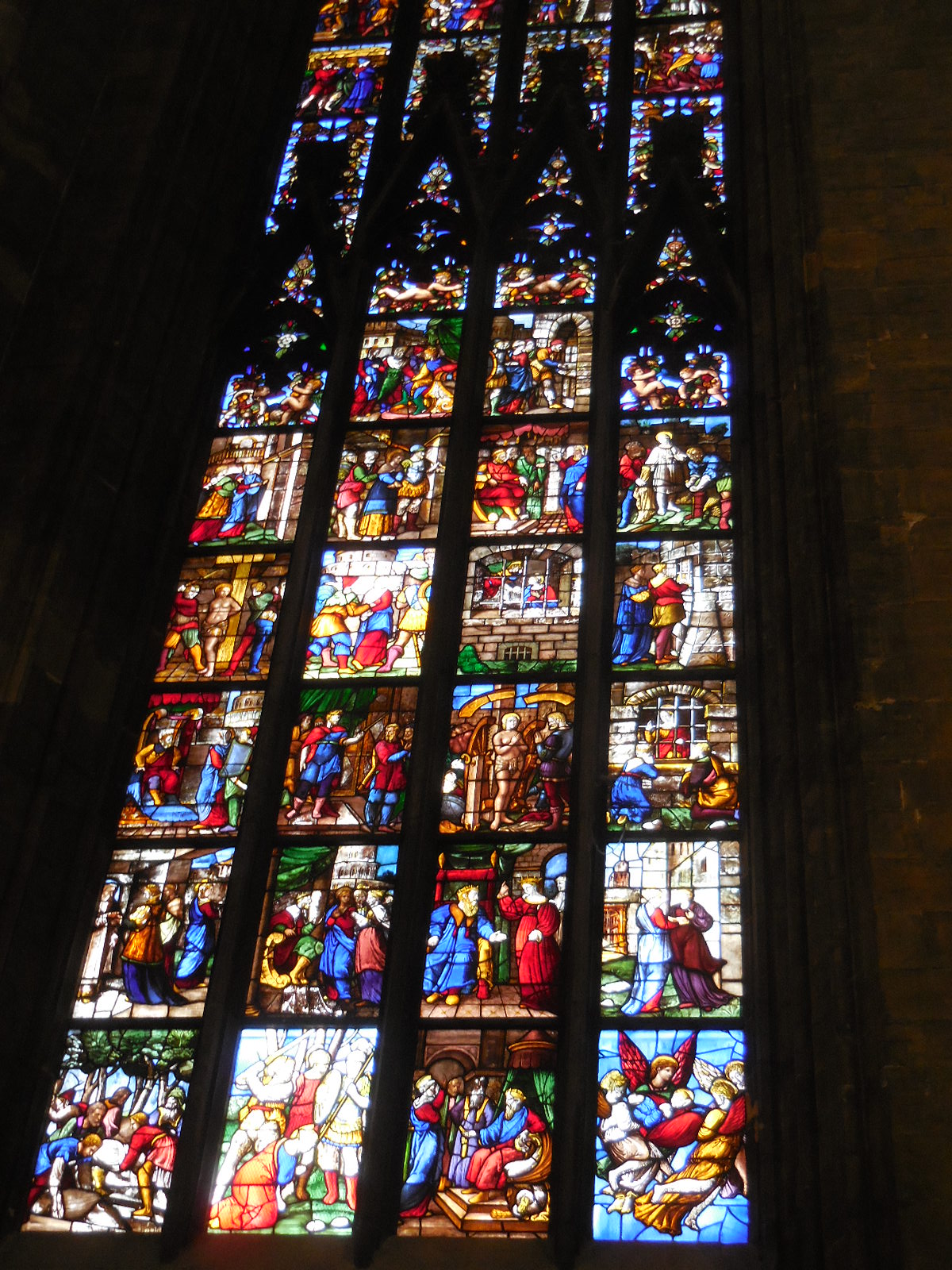
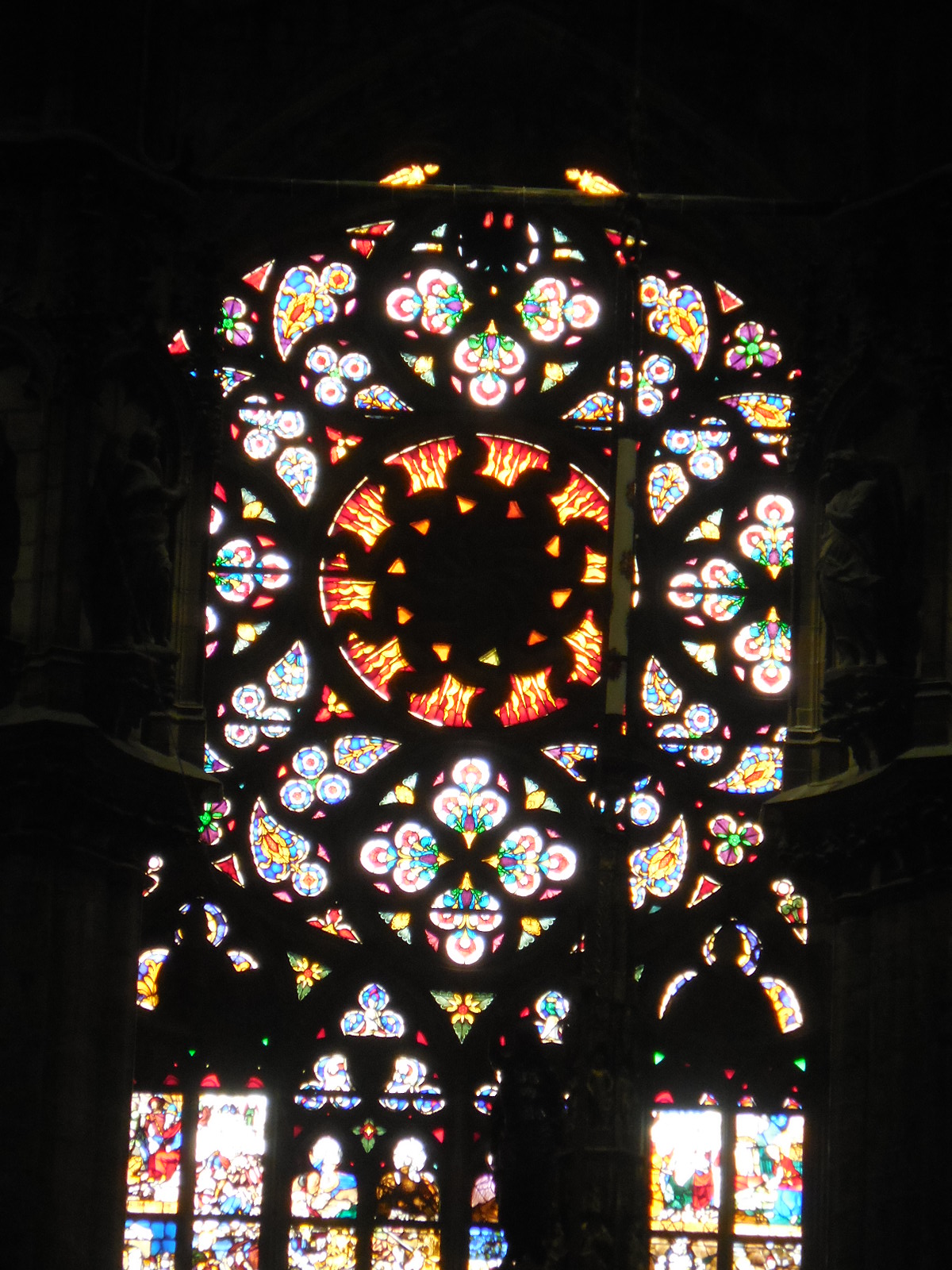
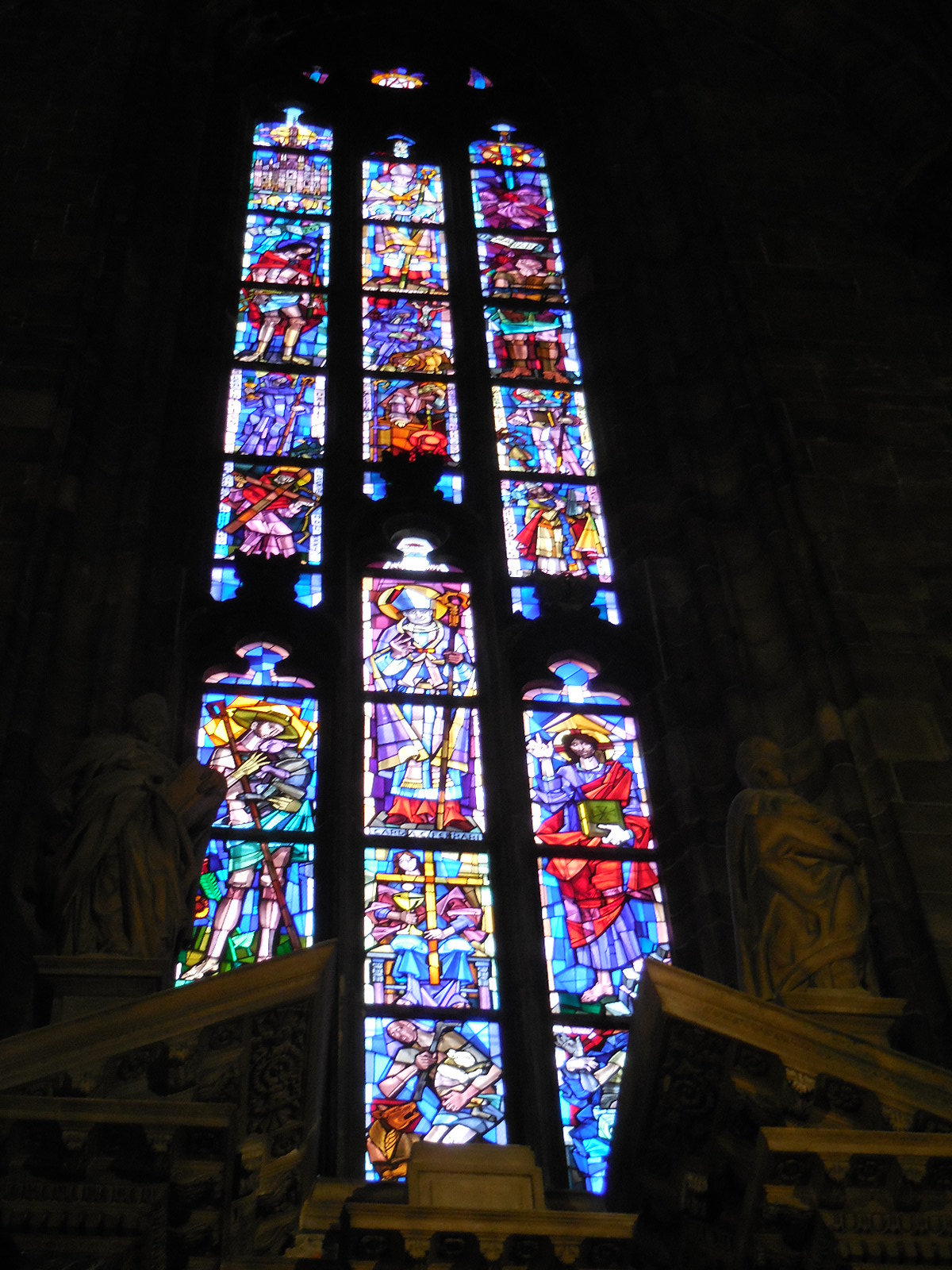
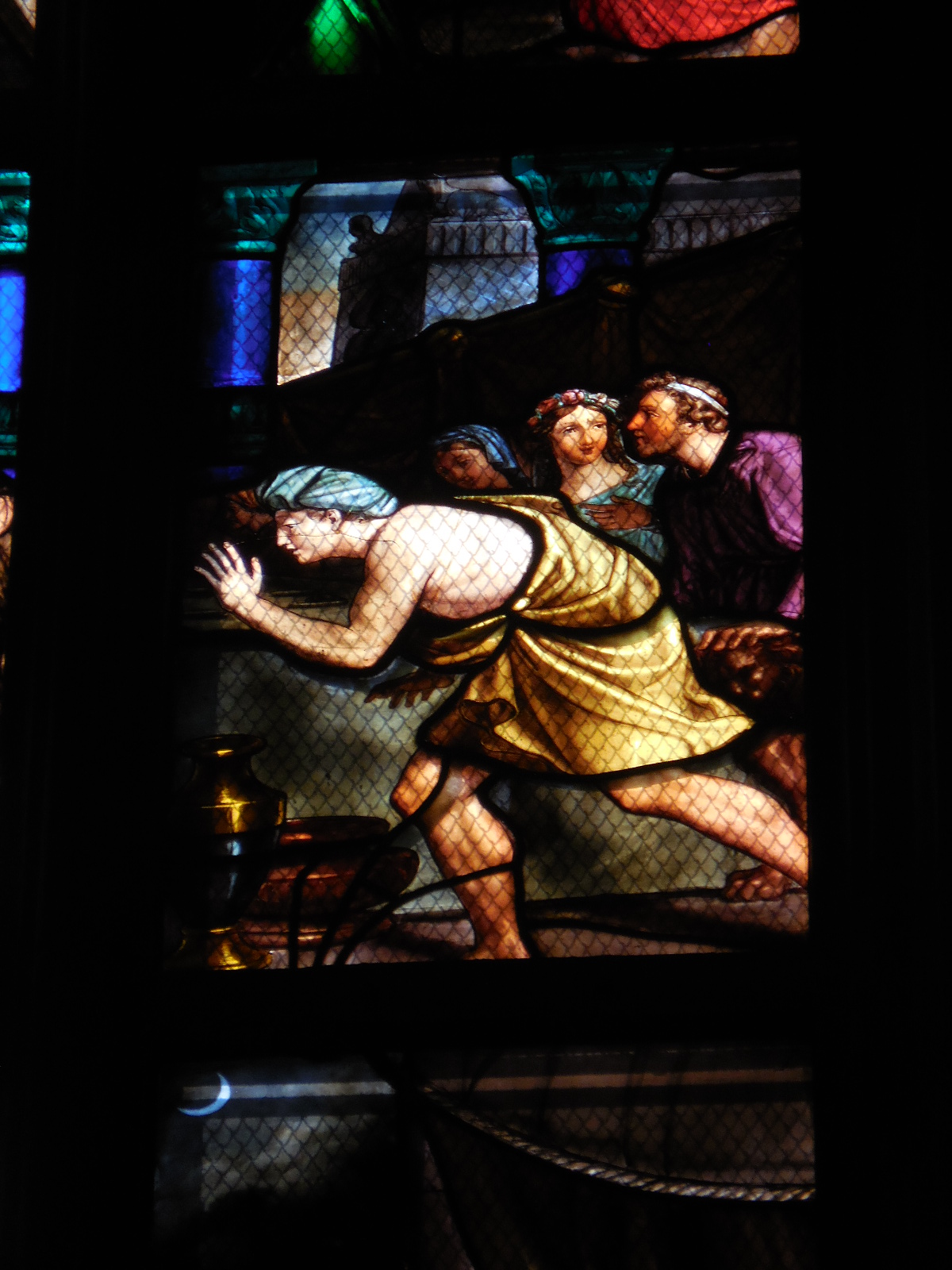
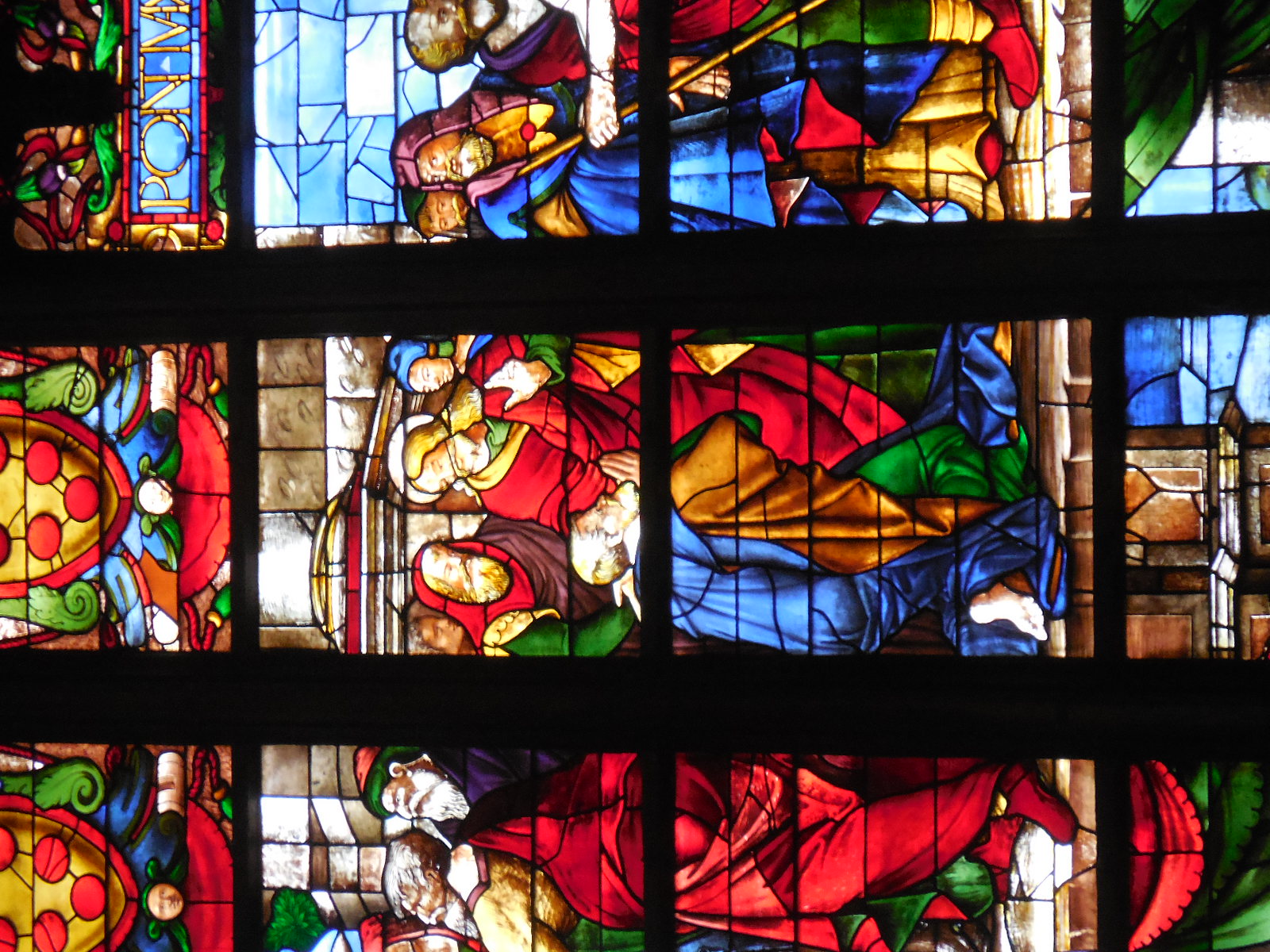
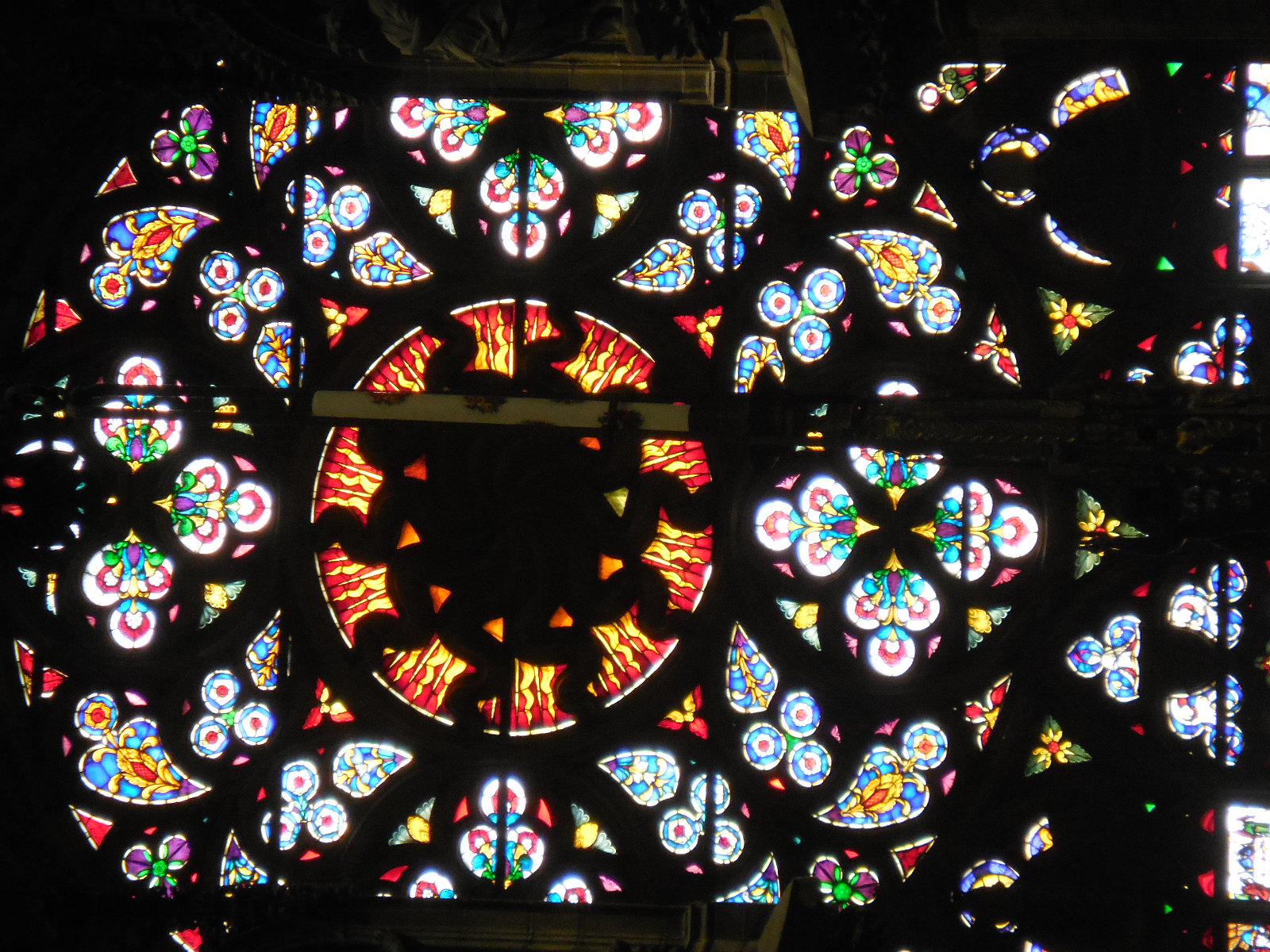
What impressed me just as much as the statue of Saint Bartholomew were the mesmerizing stained-glass windows. All the large windows featured stained glass and served as pictorial narrations of scenes from the Old and New Testaments, the life of Virgin Mary and the lives of various saints. The oldest window dated from the 15th century and was in Renaissance style. In the three walls of the apse, the windows were much younger, hailing from the 19th century while there were even more created in the 20th century. Some windows hailing from the 15th century showed scenes about Saint John Damascene and Saint John the Evangelist.

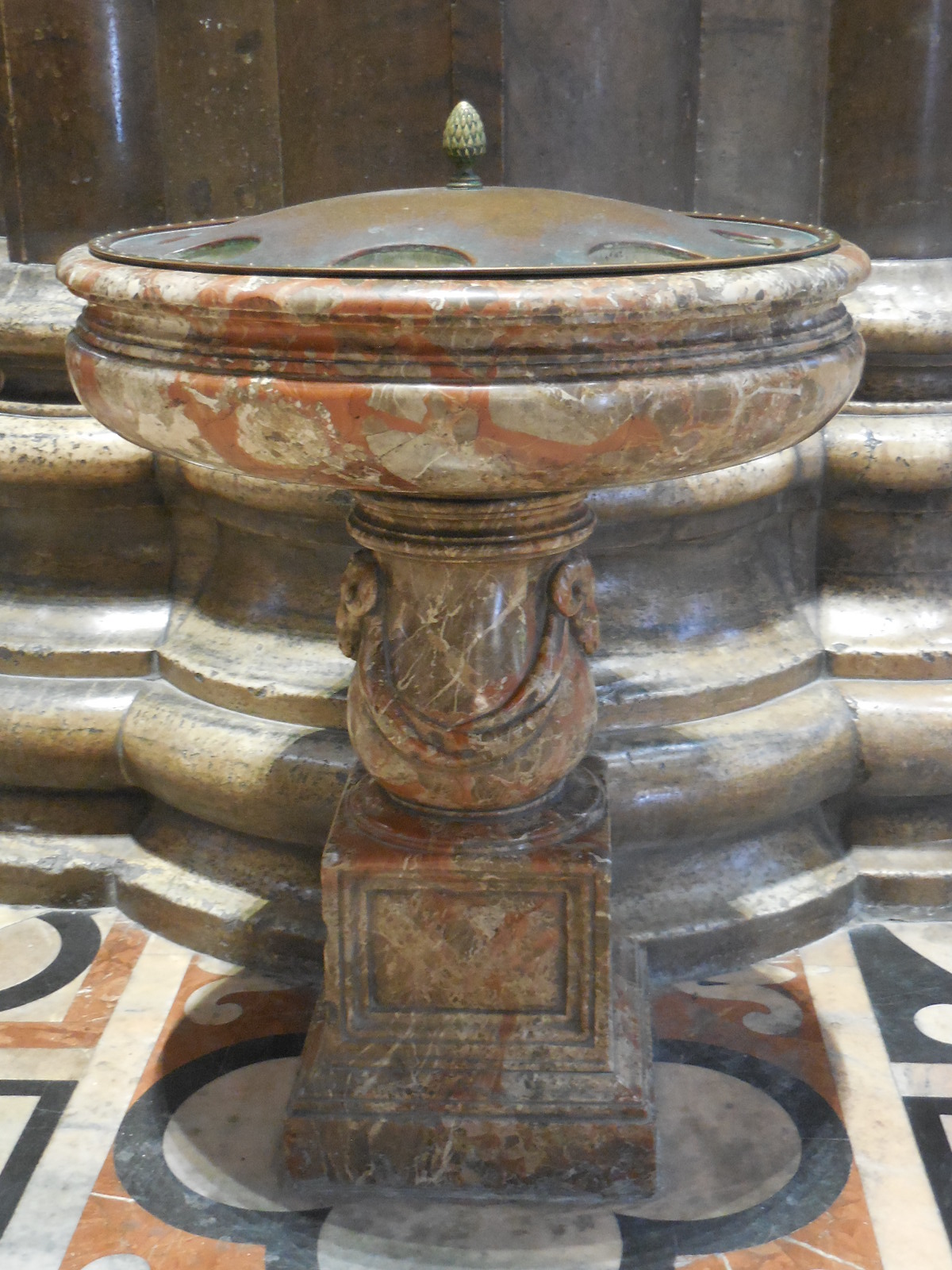
More about the interior: The legendary artist Bramante designed the cupola, which is supported by four pilasters. The baptistery is a 16th century marvel, dominated by an exquisite baptismal font made of porphyry. I also noticed the 18th century sundial. The sun shines on the brass strip exactly at noon. It also displayed the exact time and month.

Several of the sarcophagi were extremely notable. One harkening back to the 15th century and decorated with impressive statues, held the body of Corelli, a merchant who was a patron of the building. In fact, the first spire built in the 18th century was named after him, too.

The transept included three aisles and chapels with splendid altars and artistic creations. The 12th century bronze Trivulzio Candelabrum in Gothic style can be seen here. Its ornamentation was outstanding. The seven-branched Trivulzio Candelabrum was adorned with precious stones. Its height reached five meters. Biblical scenes, allegorical representations of vices and virtues and fantasy-like animals were all represented. One of the Allegory of the Vices appeared as a drunk man.

Gian Giacomo Medici di Marignano, nicknamed the Medeghino, was able to be buried in this cathedral because he had family connections. Appearing pensive and distinguished in his Renaissance likeness, the Medeghino was the brother of Pope Pius IV. His stunning tomb hailed from the 16th century and showed off Roman Renaissance style. Superb allegories of war and peace adorned his tomb.

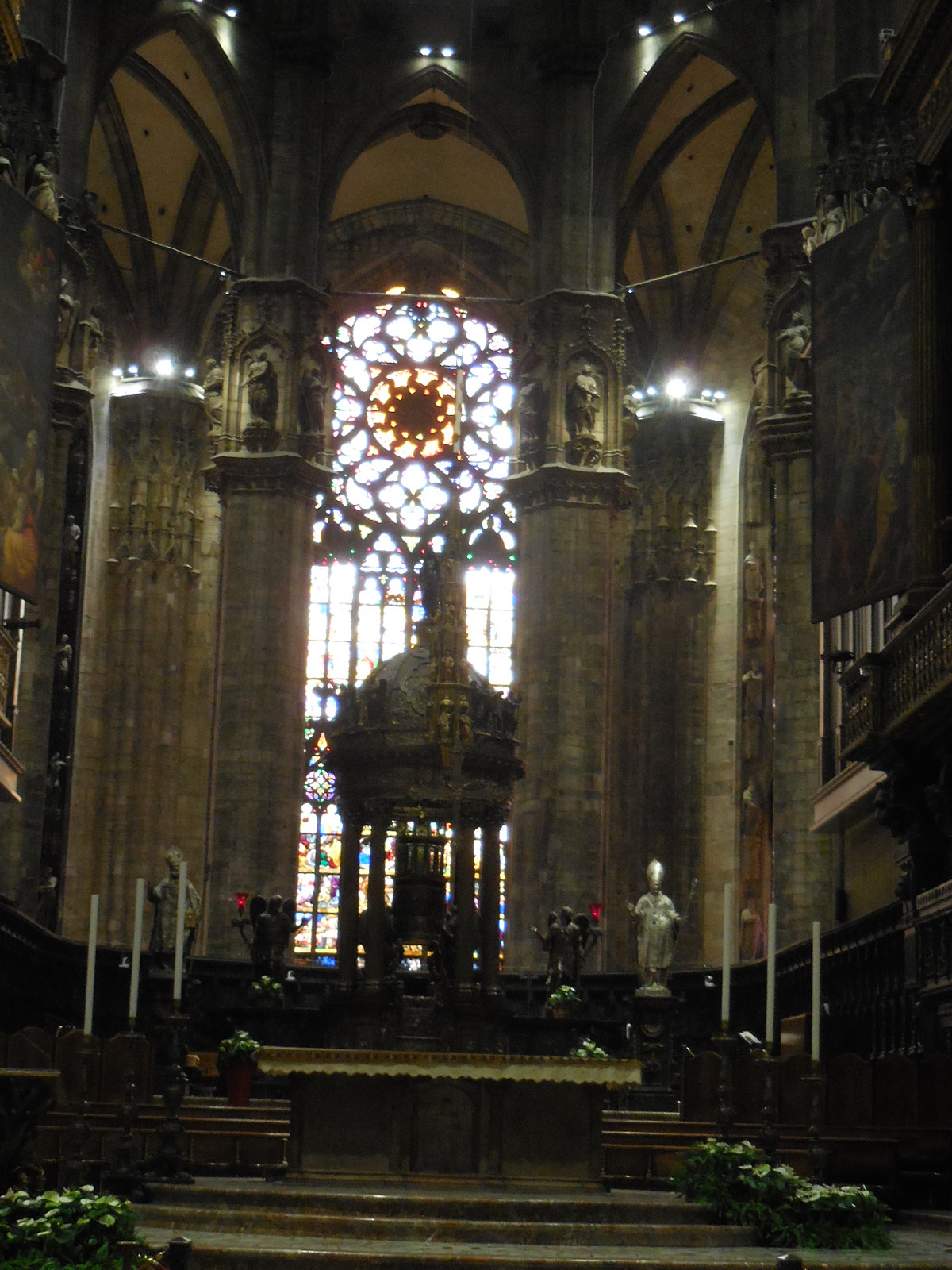
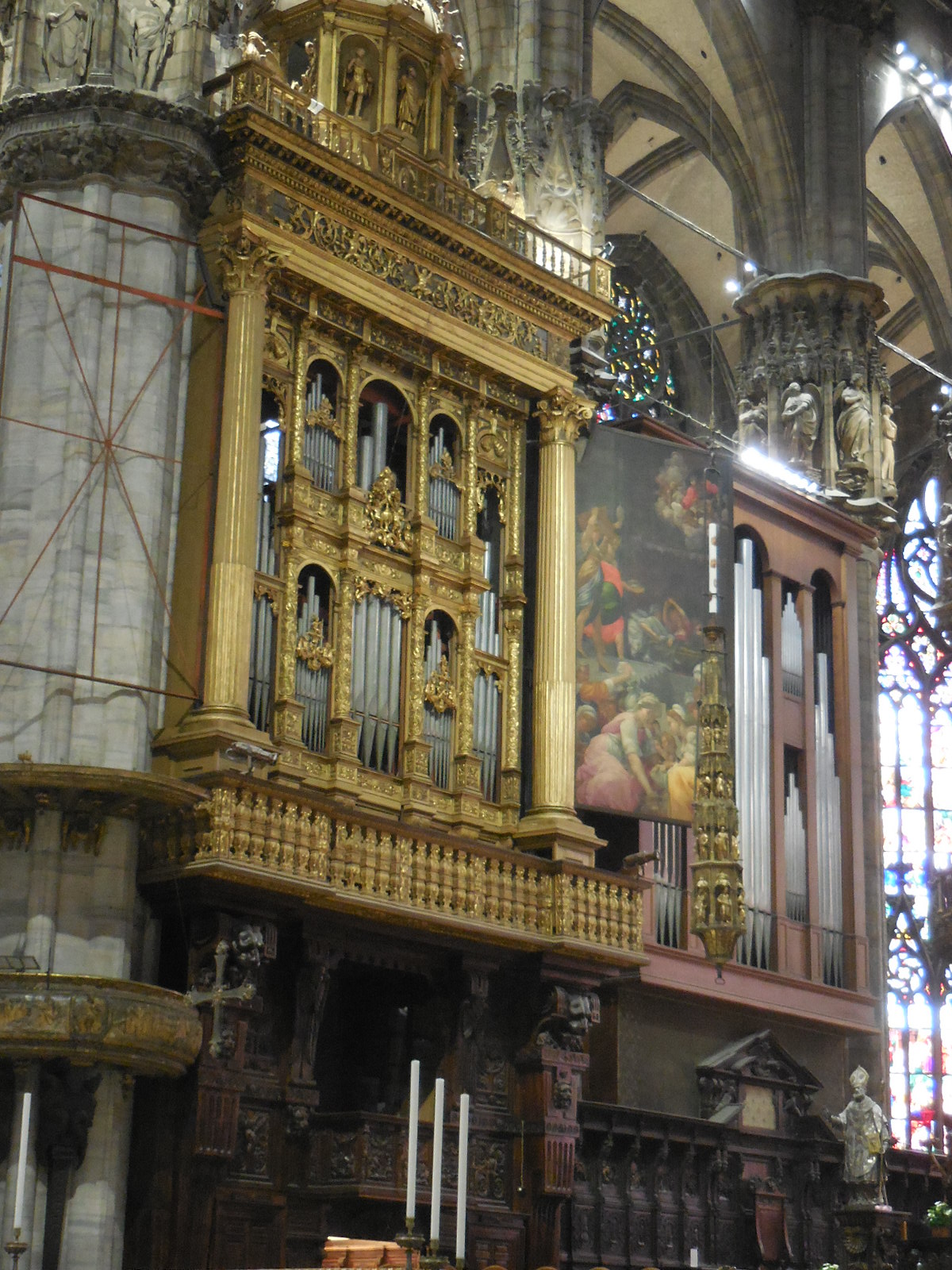
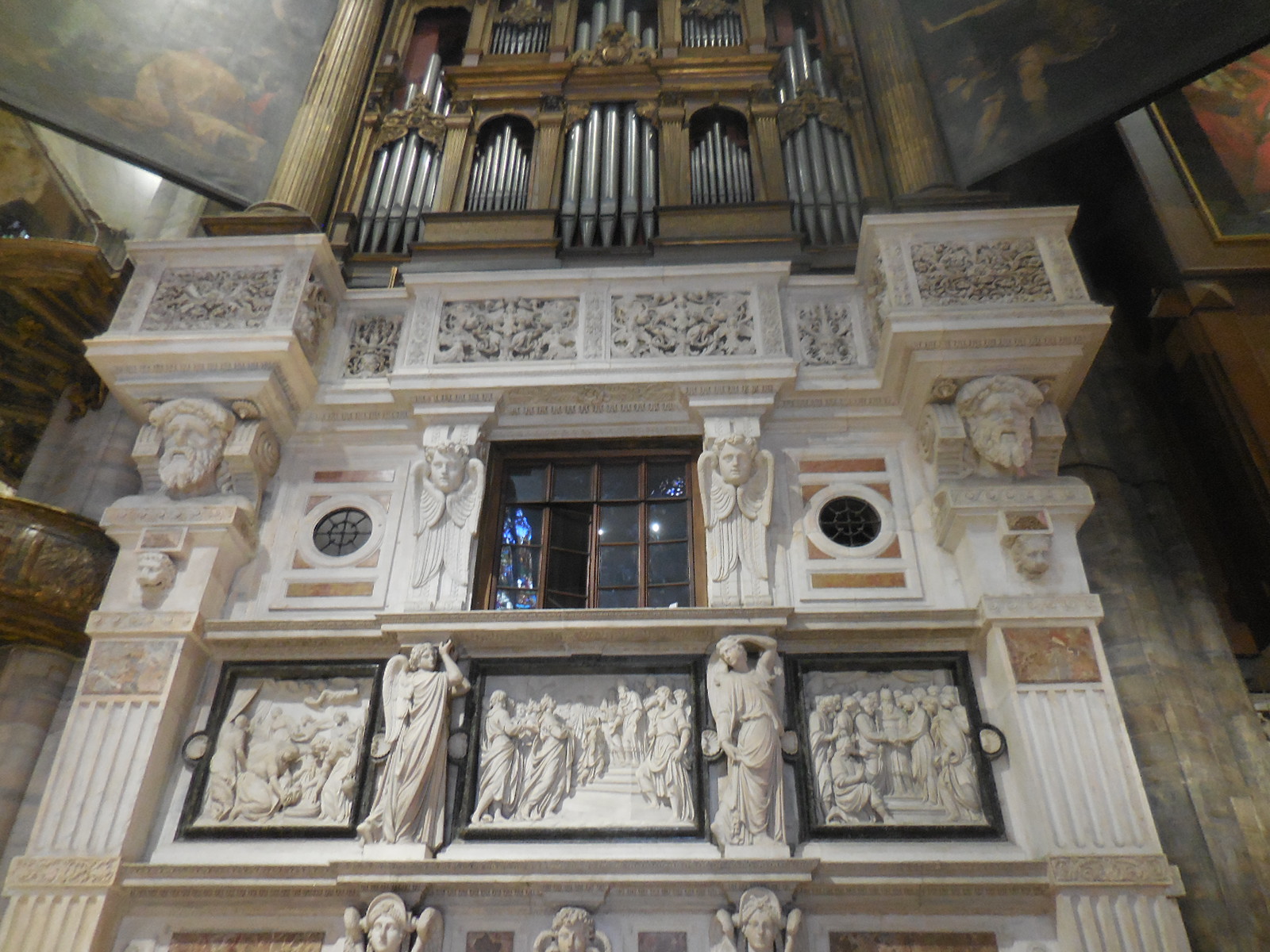
The presbytery harkened back to the 16th century and included a wooden choir, high altar, two pulpits and two large organs, one of which is the largest in Italy. This organ boasted of five manuals and 225 pedals. Silver statues representing saints and a tabernacle made up the ciborium. Above the choir was a large wooden Crucifix with a shrine containing the Holy Nail, supposedly taken from the Cross of the Crucifixion. I mused how intriguing it must be to witness the annual Rite of the Nivola. That’s when the archbishop takes the Holy Nail out of shrine and places it near the main altar. People can pay their respects to it for the following three days.

I made sure I looked down as well. The Candoglia marble floors ranged in age from the 16th to the 20th century. The pink-and-white slabs along with the black-and-red pieces were so beautiful and precious. I stared at the stunning Gothic portals from the 14th century in the sacristies and thought of the many Gothic churches, modest in comparison, that I had visited. The crypt was closed, but I knew that it contained an altar with relics of saints and martyrs.

It took me several hours to familiarize myself with both the exterior and interior of the Duomo. It was an experience that I would never forget. All those centuries of history fused together to make such a grand work of architecture containing so many artistic creations. I was overwhelmed and needed time to process everything that I had seen. I decided to go to lunch over which I could ponder the symbol of the city. Then I would go to a large bookstore, one of my favorite pastimes, and then proceed to the Museum of the Duomo and the Titian exhibition.

Tracy A. Burns is a writer, proofreader and editor in Prague.

Prague Castle Picture Gallery Diary

Joseph Heintz the Elder – The Last Judgement

The permanent collection of the Prague Castle Picture Gallery has been closed since 2019 due to an air-conditioning defect and a lack of financial means for repairs. A special exhibition of about half of the collection’s works opened at the Castle’s Imperial Stables during July of 2022 and will last for three months.

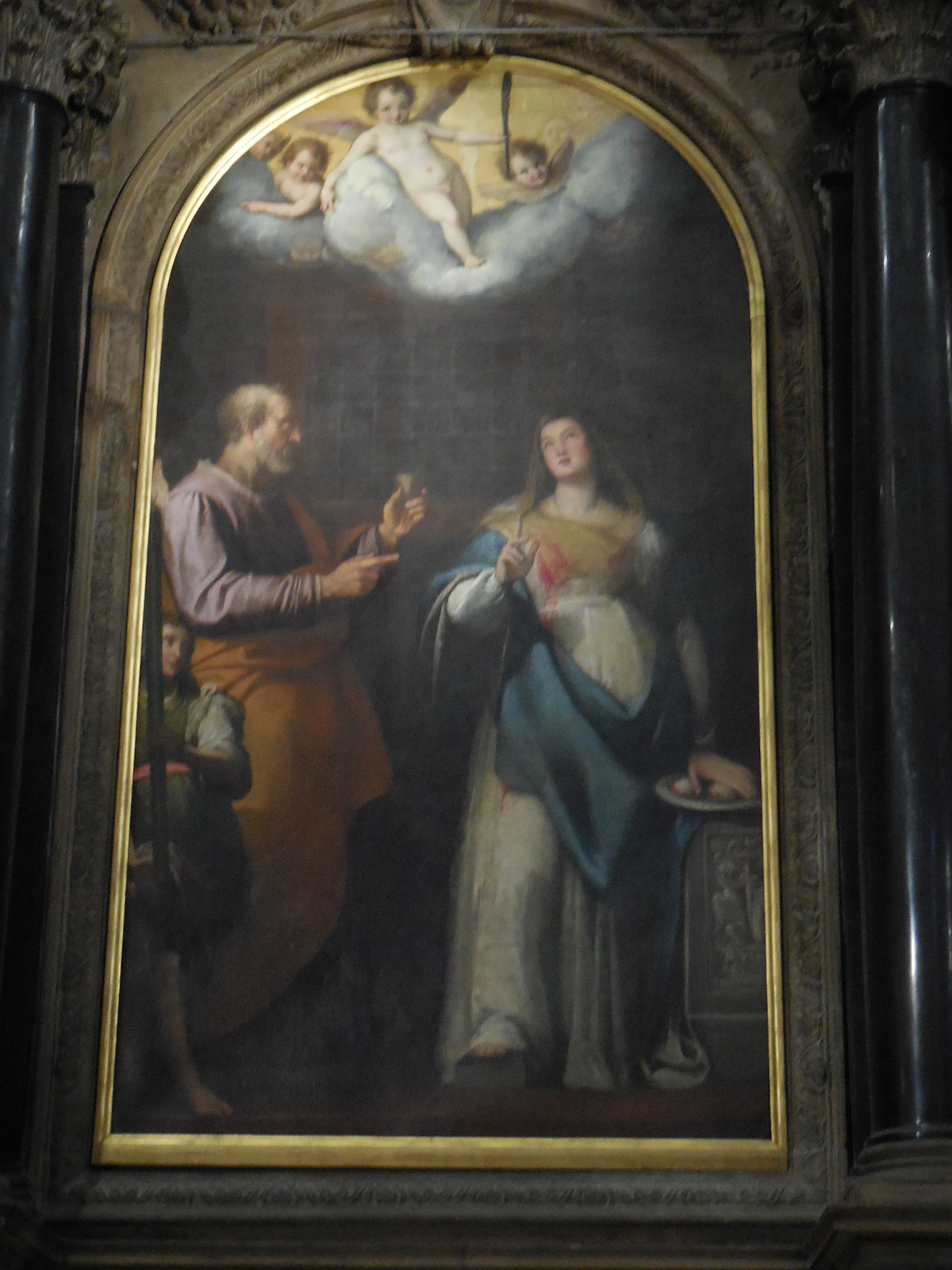
Veronese – Saint Catherine of Alexandria with an Angel

The Picture Gallery originated during the reign of Emperor Rudolf II, at the end of the 16th century. Rudolf II chose Prague as his residence when he was Holy Roman Emperor. The ruler was passionate about collecting works of art – paintings, curiosities, statues and more. For almost 30 years, Rudolf II amassed artifacts, and inherited other pieces. He exhibited his vast art collection in the then newly constructed north wing of the Castle, the part of the complex where he built the Spanish Hall. The majority of his painting collection was Italian in origin.

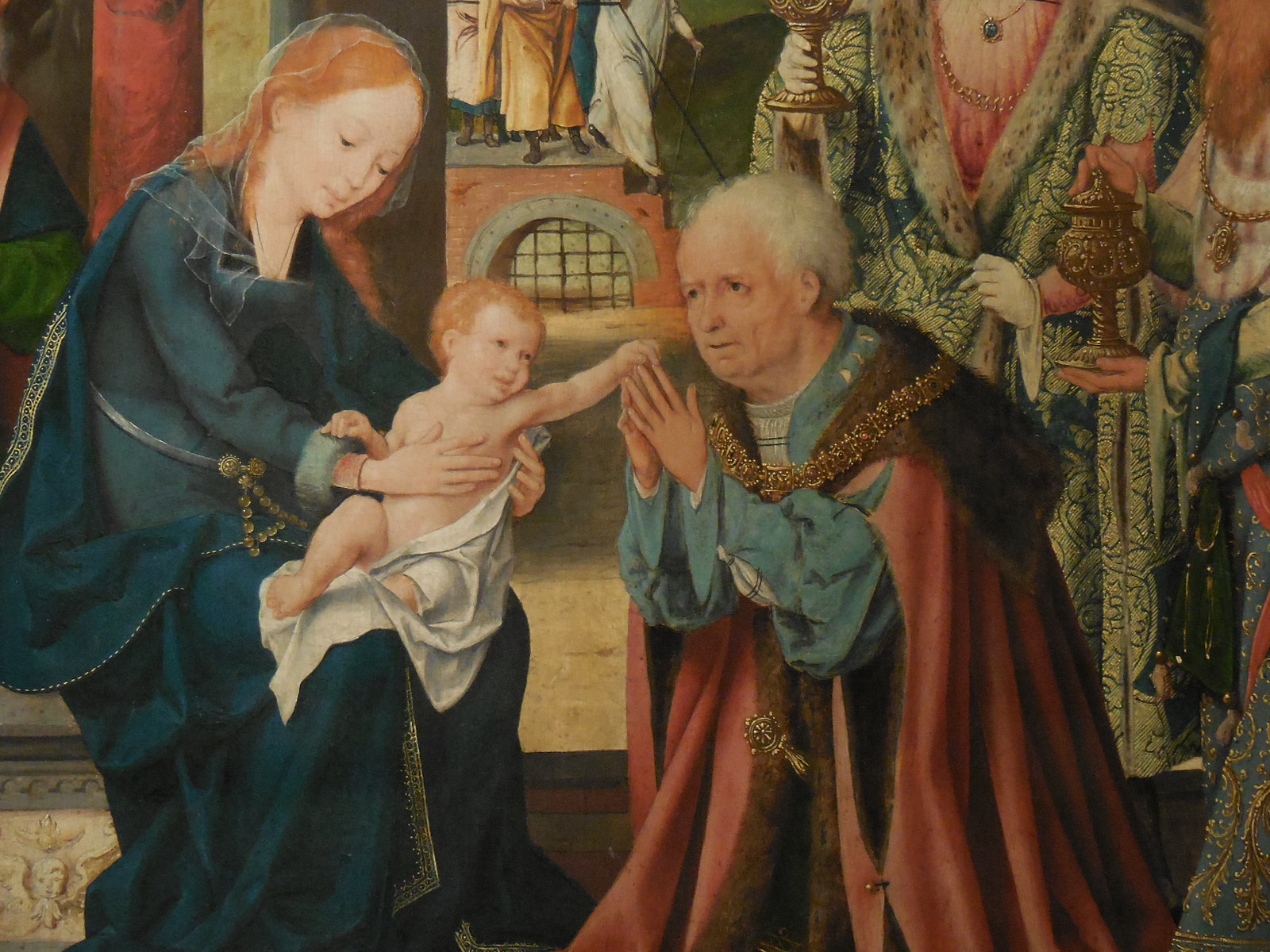
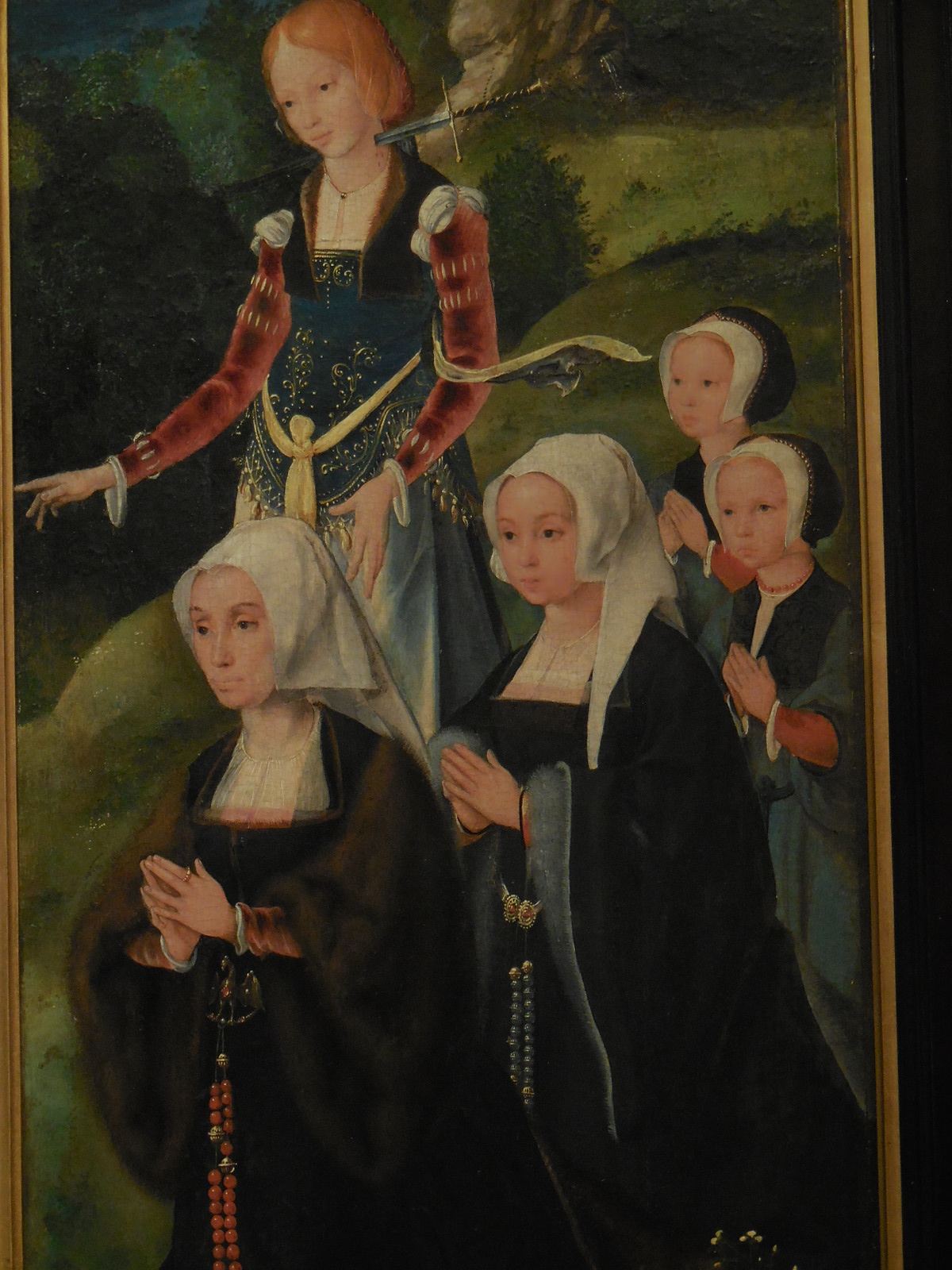
Joos van Cleve – Altarpiece with the Adoration of the Shephards, Saint Jerome with the Donor and Three Sons and Saint Lucy with the Donor and Three Daughters

Stellar artists worked as court painters in Prague: Hans von Aachen, Bartholomeus Spranger, Pieter Stevens and many others. First, allow me to mention Giuseppe Arcimboldo, a portrait painter serving Emperor Maximilian II and Emperor Ferdinand I. Arcimboldo began serving the emperor in 1562. Rudolf, the son of the emperor, was very taken with his work. He composed still lifes for Rudolf, and, after Arcimboldo returned to Milan in 1587 due to illness, he had a now famous portrait of Rudolf, called Vertumnus, sent to Prague. Arcimboldo’s portraits were allegorical, often composed of various objects that would make up the person’s head, for instance.

Lucas Cranach the Elder – Saint Catherine, Saint Barbara and fragments of the figures of Saint Dorothea and Saint Margaret, from Prague Altarpiece

Hans von Aachen was Rudolf II’s favorite when he was emperor. He began painting for Rudolf II in 1592 and wound up making Prague his home, where he created his best portraits. The painter became good friends with Rudolf II, too. The picture gallery still has von Aachen’s portrait of his daughter Maria Maxmiliana. His style was a precursor to the Baroque features that would later dominate Czech art.

Bartholomeus Spranger – Allegory on the Triumph of Fedelity over Destiny

Spranger’s tenure in Prague lasted from 1580 to 1590. His often complicated and ornate works displayed Mannerist features. Spranger created numerous paintings for the Rudolfine collection. In 1607, Spranger created Allegory on the Triumph of Fidelity over Destiny – Allegory on the Fate of Hans Mont, referring to the sculpture to worked for Rudolf II until an eye injury prevented him from doing so. Mont’s whereabouts were unknown. This is one of Spranger’s paintings that has remained at the Castle throughout the centuries. He also created a masterful portrait of Jacob König, a German goldsmith who was selling antiques in Italy.

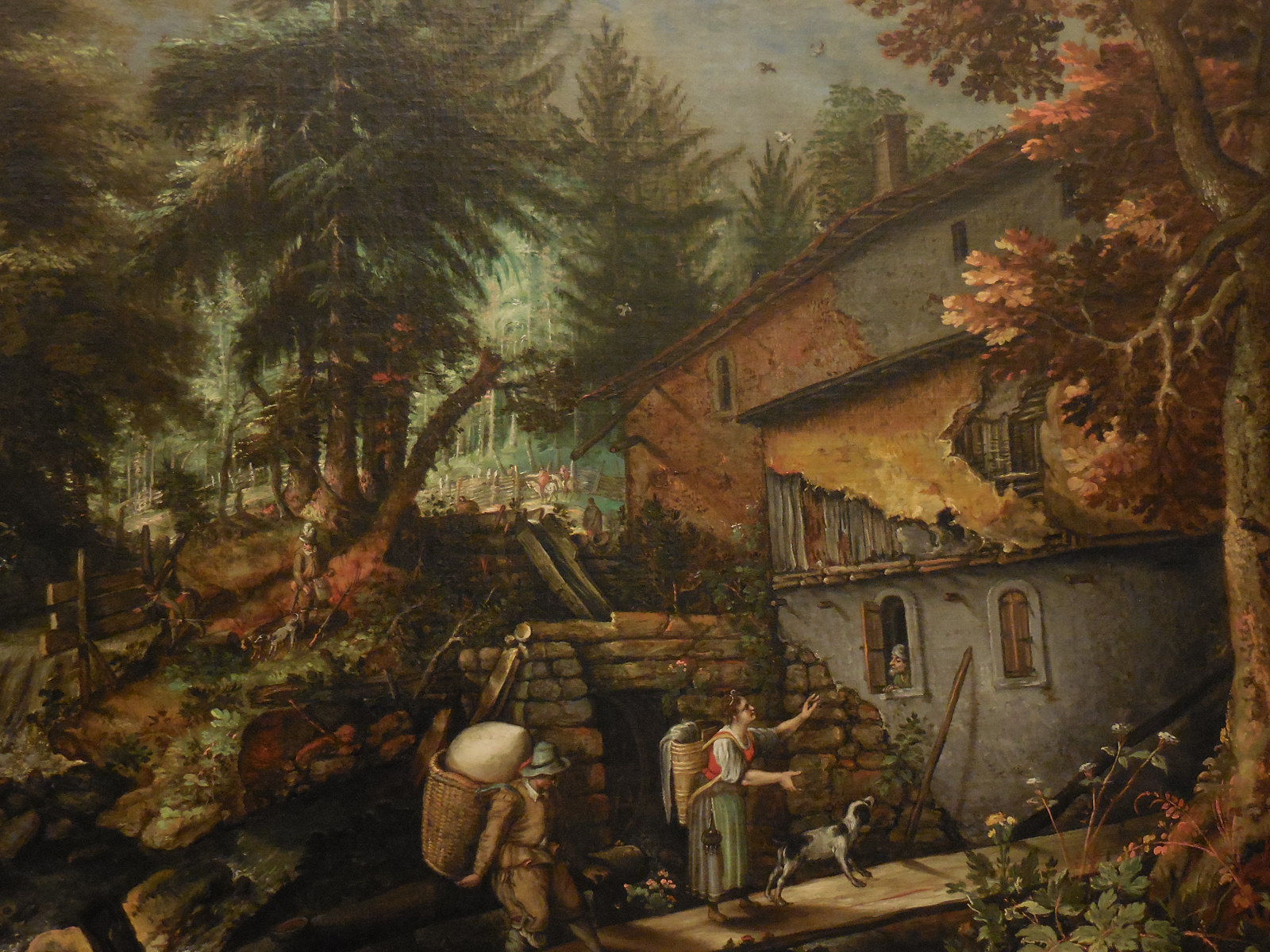
Pieter Stevens – Forest Landscape with a Water Mill

Pieter Stevens was another masterful court painter. He resided in Bohemia with his family and excelled at landscapes, influenced by Paul Brill and Hans Bol. He often portrayed village scenes or rendered forests and mountains in his unique way.

In 1585, Rudolf II’s collection was comprised of 3,000 paintings, including many Italian, Dutch, Flemish and German works, not to mention the numerous curiosities and statues.

Lucas Cranach the Elder – The Ill-Matched Couple

After Rudolf II died in 1612, his successor Emperor Matthias had many of Rudolf’s paintings taken to Vienna, where he had his imperial residence. The Bohemian Estates sold some of Rudolf’s works so they had enough money to pay their soldiers. After the Catholics defeated the Protestant nobles in the Battle of White Mountain during 1620, Archduke Maximilian of Bavaria confiscated many of the works. Others were destroyed. During 1630, while the Thirty Years’ War was raging, Saxon soldiers took over Prague Castle and stole much of the artwork.

Bassano – The Good Samaritan

When the Swedes occupied Prague Castle in 1648, they took some of Rudolf’s collection to Queen Christina in Stockholm, but the most significant works had already been sent to Vienna. The queen sold some of the artwork and gave away others. She also took her favorites to her residence in Italy. Part of the collection was destroyed in a fire at the Royal Palace of Stockholm. Some works stayed in Prague when the Swedes took control because they were hidden.

Tintoretto – Christ and the Woman taken in Adultery

A few paintings made their way to England, becoming part of Lord Buckingham’s collection. Several were returned to Prague from Vienna. Other paintings were sold in Europe. Empress Maria Theresa had the picture gallery at the Castle shut down. In 1782 many of the Rudolfine artworks were sold at auction.

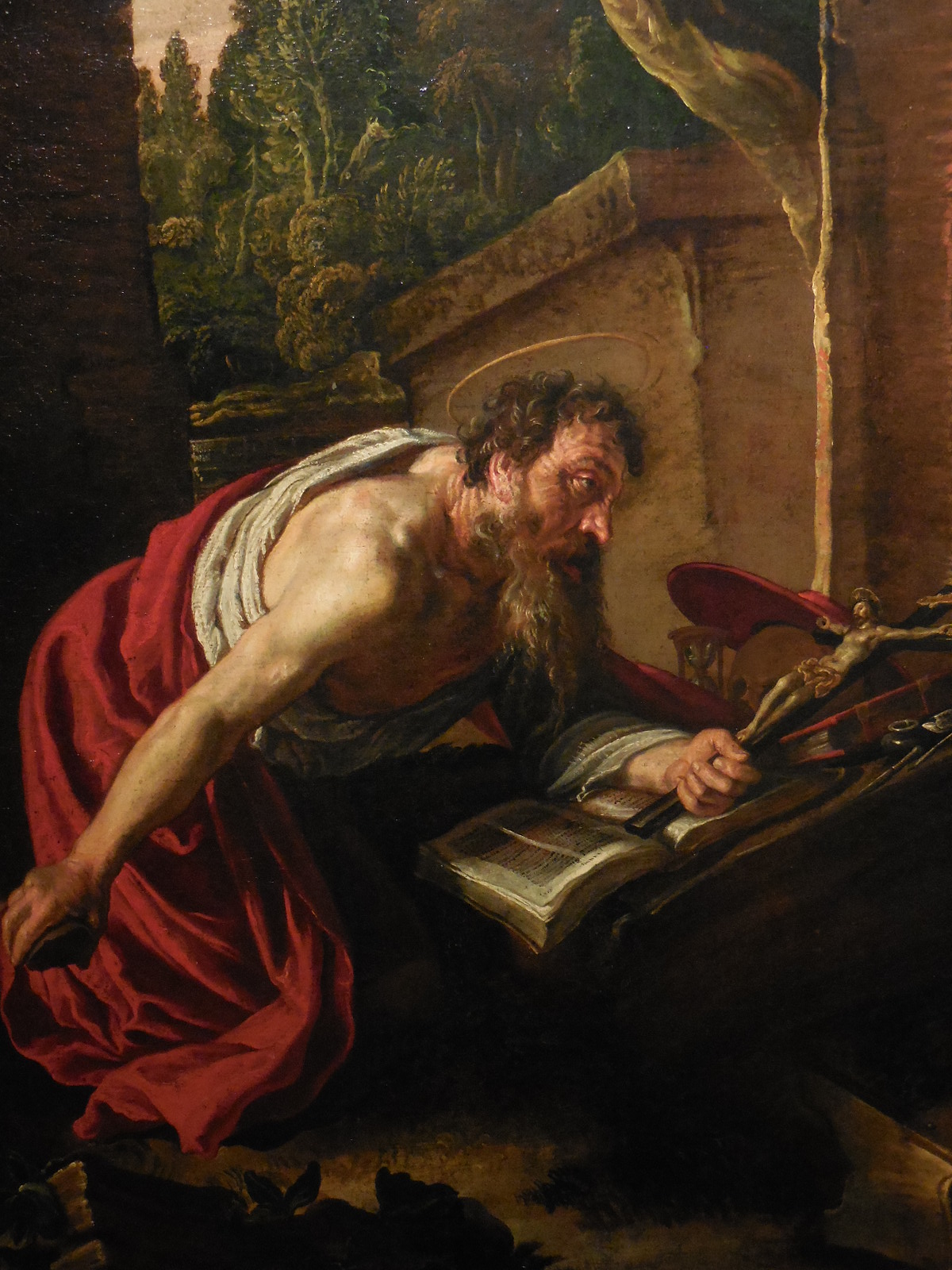
Domenico Fetti – Saint Jerome

Some paintings have perhaps miraculously remained at Prague Castle throughout the trials and tribulations of history. Paolo Veronese’s Portrait of Jakob König and Christ Washing the Feet of his Disciples as well as The Adoration of the Shepherds became property of the gallery in the middle of the 17th century and never left. Titian’s Young Woman at Her Toilet has called Prague Castle home since the 18th century. Several of the paintings by the Bassano brothers have remained in Prague, though many were transported to Vienna.

Bassano – September

In 1796, Czech aristocrats and burghers organized the Picture Gallery of Patriotic Friends of the Arts in Prague, which would later become the National Gallery. Some paintings were not sent to Vienna because they were on loan at the time to this Prague society. The year after its creation, the group was able to get 67 of Rudolf’s paintings back from Vienna. Gradually, they obtained more and more paintings from Vienna.

In 1918 Czechoslovakia was formed, and Prague Castle became the office of the president. In 1930 the Masaryk Fund began to purchase paintings for Prague Castle. During the Nazi Occupation some of the paintings hung at the president’s summer residence of Lány and others stayed at Prague Castle.

Peter Paul Rubens – The Annunciation to the Virgin

Much reconstruction took place at Prague Castle from 1960 to 1961. The National Gallery Commission brought many paintings to the National Gallery and the Museum of Decorative Arts in Prague. Many paintings were stored in a depository at Opočno Chateau during 1961. After the reconstruction, the Prague Castle Painting Gallery was established, taking up six rooms and including works of Titian, Rubens, Veronese and Tintoretto. German masters and Baroque artists from the Czech lands and the Netherlands also made up the collection.

Titian – The Virgin and Child with the Young Saint John the Baptist

The Velvet Revolution of November of 1989 triggered the downfall of Communism. A few years later, in 1993, the Prague Castle Administration was set up. One of its purposes was to organize new exhibitions at the painting gallery. From 1995 to 1998, much reconstruction took place at the Castle, and the Prague Castle Administration bought more paintings from Rudolf’s collection.

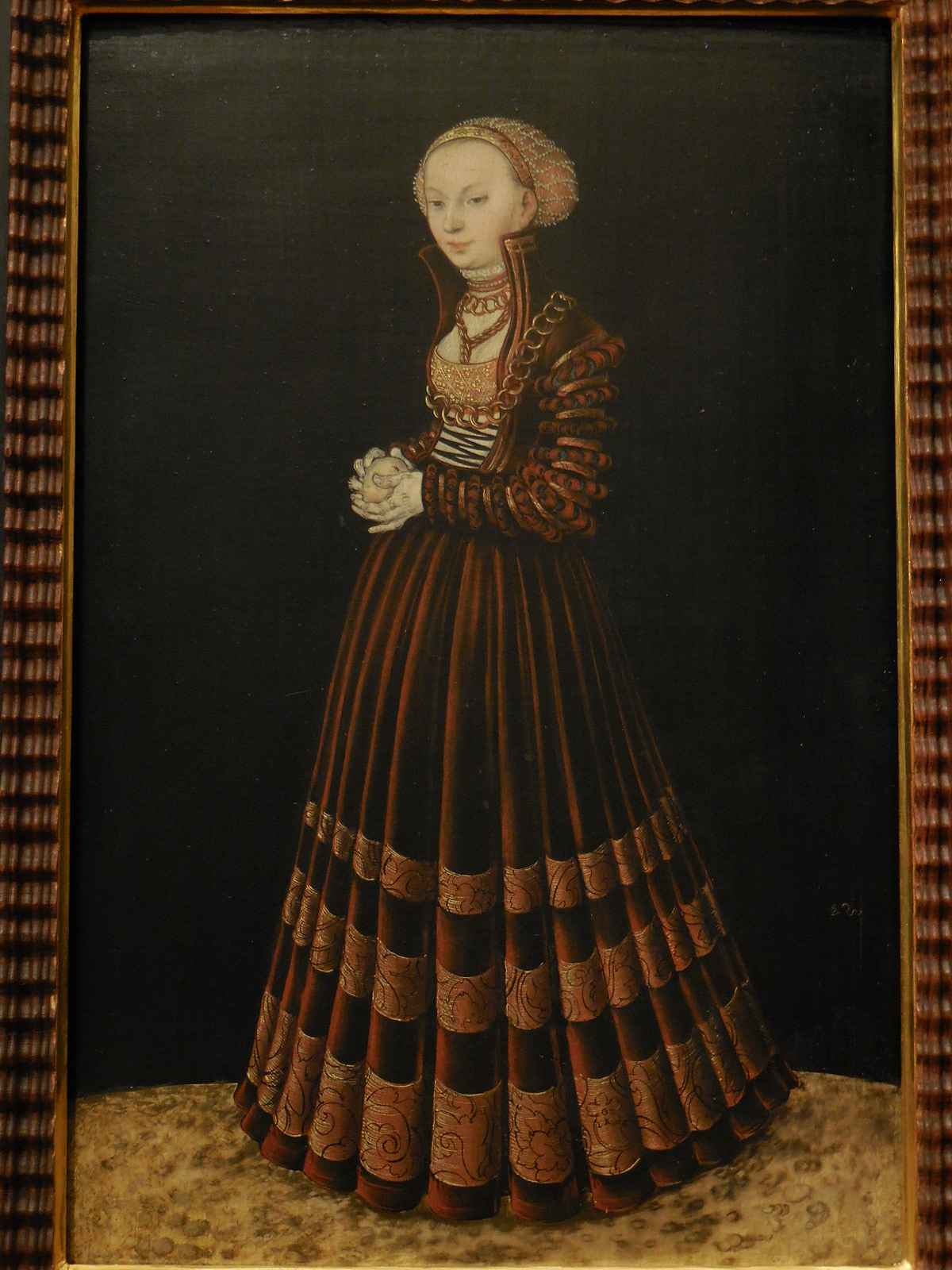
Lucas Cranach the Elder – Portrait of a Lady with an Apple

There has not been such a vast collection at Prague Castle since Rudolf’s death. It is impossible to faithfully recreate the Rudolfine collection because there are not enough inventories. Many of the paintings taken during the Thirty Years’ War have disappeared. Still, the Prague Castle Picture Gallery houses 120 outstanding works, including ones from the original collection.

Tracy A. Burns is a writer, editor and proofreader in Prague.
Veronese – Christ Washing the Feet of the Disciples
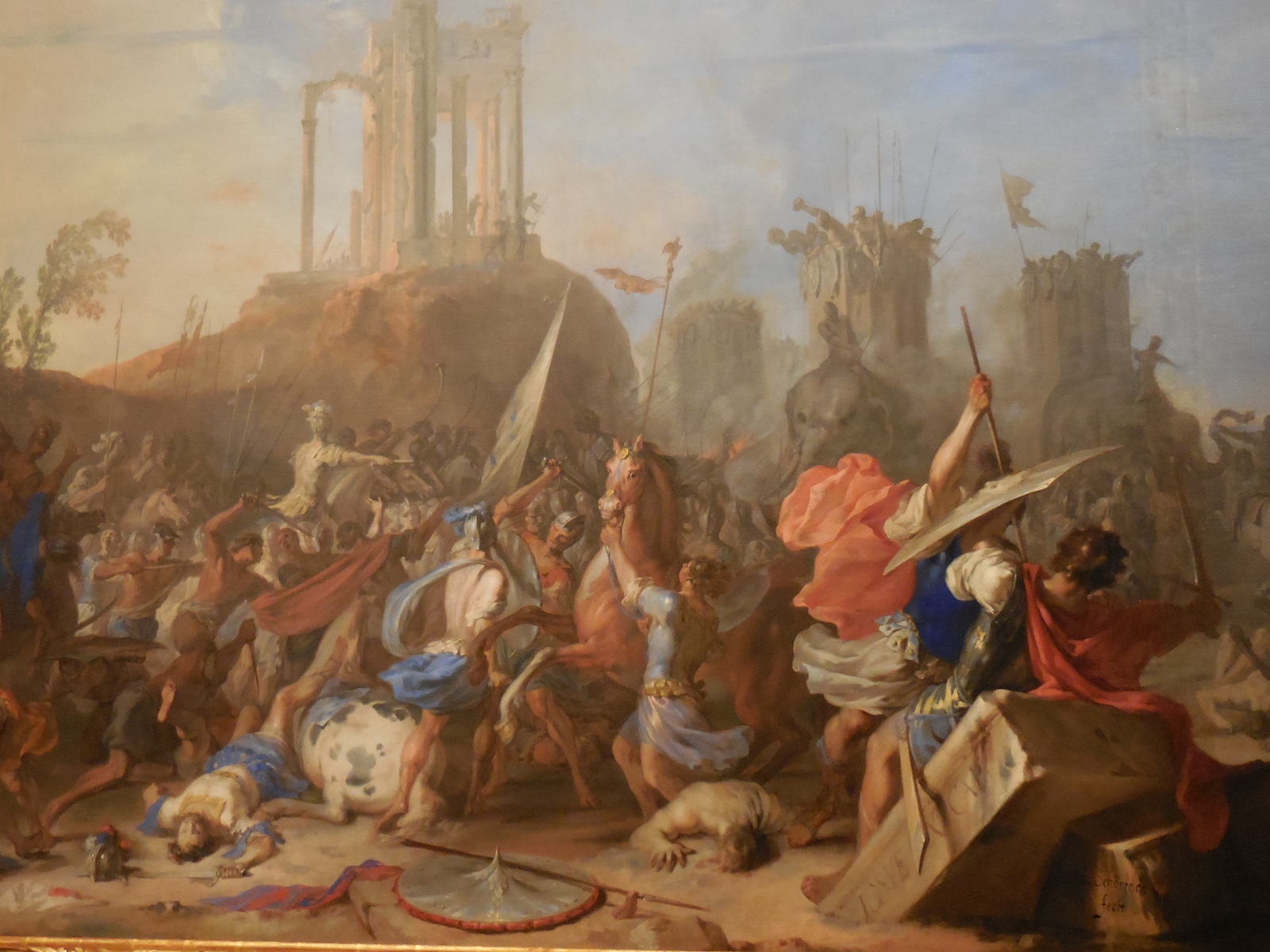
Johann Heinrich Schonfeld – Battle of Jericho
Peeter Snayer – An Ambush in a Village

Museo del Novecento Diary

When I looked at the Palazzo dell’Arengario, which houses the Museo del Novecento, I thought that the exterior was an eyesore as it was punctuated by a Fascist style of architecture. It was intriguing, nonetheless. The two symmetrical buildings each had three tiers. Arcades made an appearance as well as did bas reliefs. Even though construction commenced in 1936, the palace was not completed until 1956. During World War II, bombs severely damaged the edifice. In the early years of the 21st century, it was renovated. The museum opened in 2010. About 400 works by mostly Italian artists are on display in chronological order, decade-by-decade.

A spiral ramp takes the visitors to the first three floors. It may look like something out of science fiction, but I thought the ramp interrupted the space. I thought it was more of a hassle rather than a unique and innovative feature. In the Hirschhorn or Guggenheim, the ramp and the locations of the artwork complement each other. I felt that at the Museo del Novecento the ramp and pieces of art worked against each other, dividing rather than complementing.

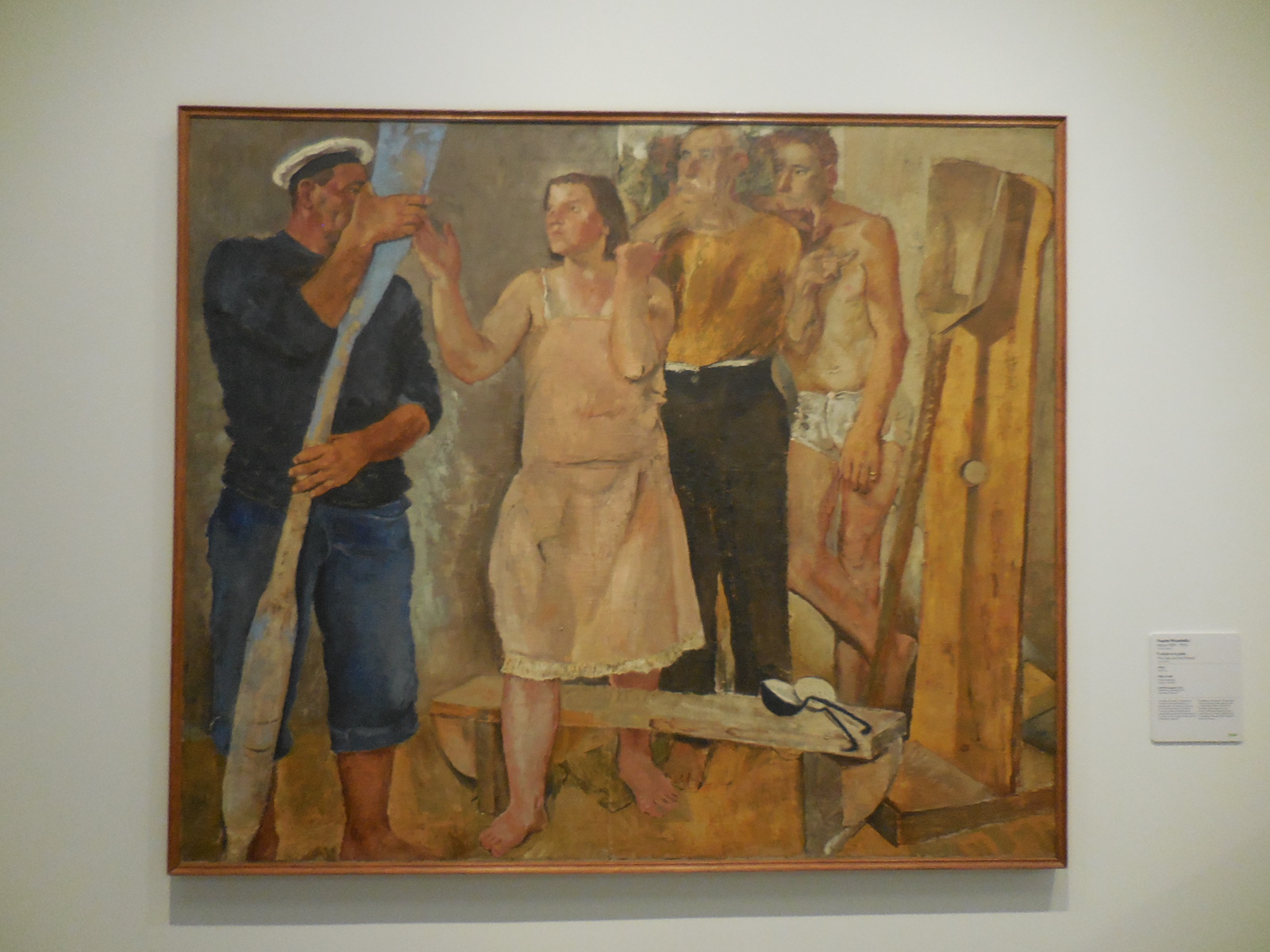
The first painting that caught my attention was the large canvas called The Fourth Estate by Giuseppe Pellizza da Volpedo. It was lcreated from 1898 to 1902 in Divisionist style. This kind of painting utilizes individual points of color in a neo-Impressionist fashion. Depicting workers on strike, the painting gets its name from the working class that embodies the meaning of “the fourth estate.” Out of the crowd of demonstrators and into the light step three figures, two men and a woman holding a baby. They are walking toward the viewer confidently, not at all in a hurry. They are clearly there to try to reach a deal with their employer. But they are not panicked or nervous. They have terms and conditions that have to be met. The colors in the painting have a cold quality, but the light gives the group a vibrancy that makes them look powerful and in control of the situation.

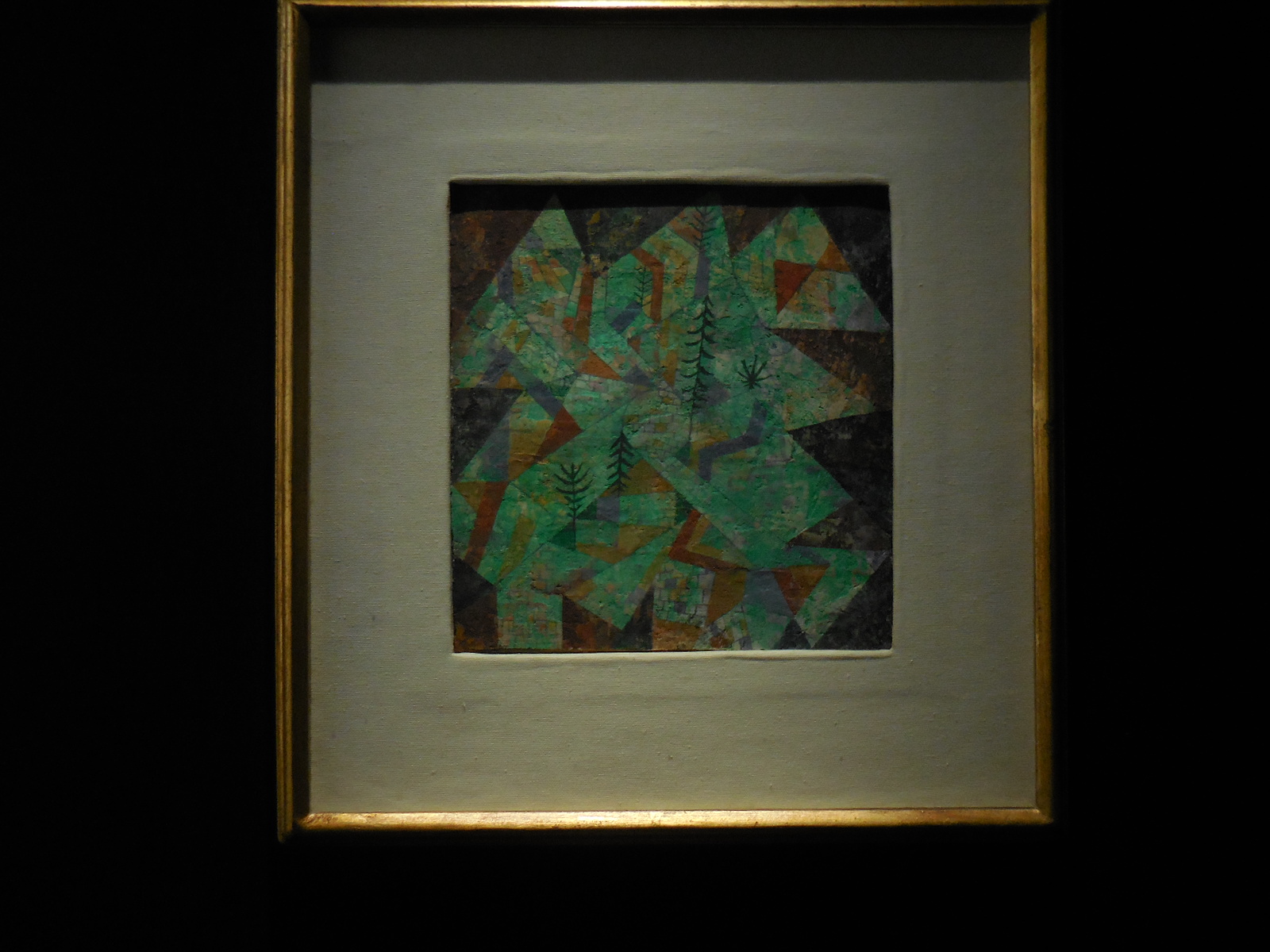
Paul Klee’s artwork holds a prominent place in the museum.

Foreign artists represented included Georges Braque, Wassily Kandinsky, Henri Matisse, Paul Klee, Pablo Picasso and Piet Mondrian. Indeed, these works are some of the most significant in the collection. Klee’s Wald Bau from 1919 and Kandinsky’s Composition 1916 stand out, for example.

One section of the museum focuses on Italian Futurists, such as Umberto Boccioni, Giacomo Balla and Fortunato Depero. In fact, one room is dedicated to Boccioni’s works. I had visited a museum featuring Depero’s works in Rovereto a few years earlier, so I was familiar with the Futurist style. Born in Italy during the early 20th century, Futurism looked to the future rather than to the past. It praised modernity and technological advances. Industrial cities, cars and airplanes were often subjects of Futurist artworks. Depero’s creations certainly looked like they were in motion. I recalled some people depicted in one work as resembling machines.

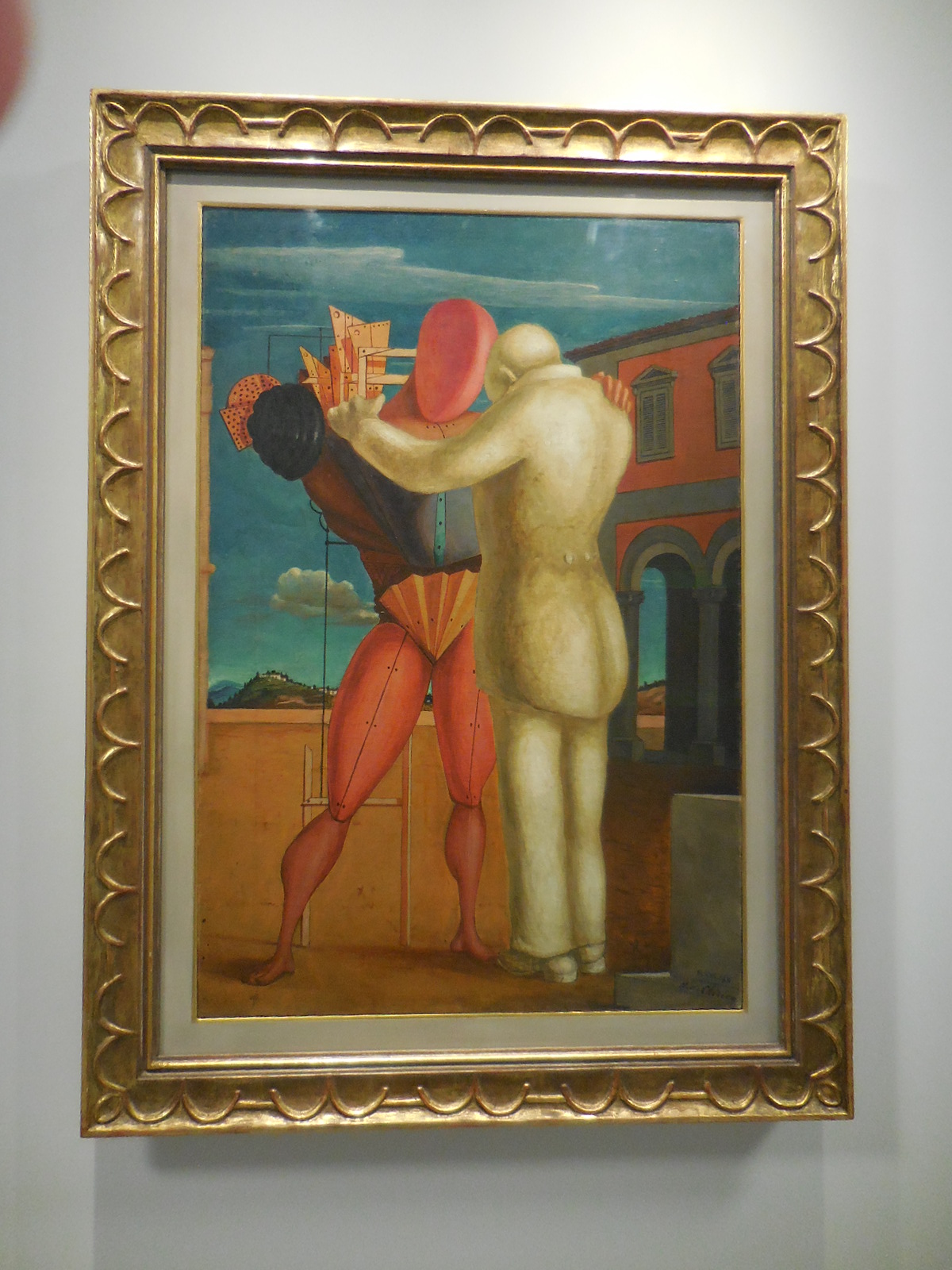
The Novecento of the 1920s is well represented with a style that was inspired by ancient Roman art and Renaissance art, which are meshed together in an abstract way. Giorgio de Chirico’s surrealism is on display, too. In fact, his creations take up an entire room. Art Informel by Italian artists and the Azimeth group are featured in the museum, too. The last section follows trends from the Sixties to the Eighties with exhibits of Kinetic Art, Programmed Art, Pop Art, Analytical Painting and Conceptual Art. Lucio Fontana’s works take up the top floor. Take a look at his neon sculpture and you’ll realize what an artistic journey you have taken from the social realism of The Fourth Estate floors below.

A few works worth mentioning include Giacomo Balla’s Ragazza che corre sul balcone from 1912 and Umberto Boccioni’s Svilippo di una bottiglia nello spazio from 1913-35. Balla’s painting showing a boy running on a balcony is dynamic and vivacious as it shows spontaneous movement and the joy and innocence of childhood. The colors of blue, brown and green with white help to create the sense of motion that is central to the painting. Futurism is all about movement as opposed to the static and still life qualities of Cubism.

While Boccioni was also a Futurist, his bronze sculpture Sviluppo di una bottiglia nello spazio showcased a bottle on a plate in unique way that is reminiscent of a natura morta. This kind of still life was not at all typical for Boccioni’s style because of its lack of movement.

Another painting by Paul Klee

Amedeo Modigliani’s portraits were on display, too. He painted the Parisian art collector Paul Guillaume with one eye, for instance. In Arturo Martini’s sculpture La convalescente from 1932, the sick, young woman who is the subject of the work has been forgotten and abandoned. Her empty gaze and lost look practically ripped through my heart. It reminded me of when I was taken downstairs on a stretcher to have my gallbladder operation. The nurses left me on the stretcher in the empty space next to the operating room. I could hear the doctor trying to wake up the patient. At first she didn’t respond. He had to talk to her several times. For a few minutes, I thought that I had been abandoned and that the woman having the operation before me had died. I wanted to run out of there, but I was drugged and could hardly move. Finally, she regained consciousness.

One of the surrealist works by De Chirico

I particularly liked De Chirico’s surrealist works with vibrant colors. His I bagni misteriosi was inspired by a 16th century work by Lucas Cranach. Ever since I was a child, I have loved Klee’s abstract art. For me Klee’s art has a sense of rationality and logic that I often find absent in abstract works.

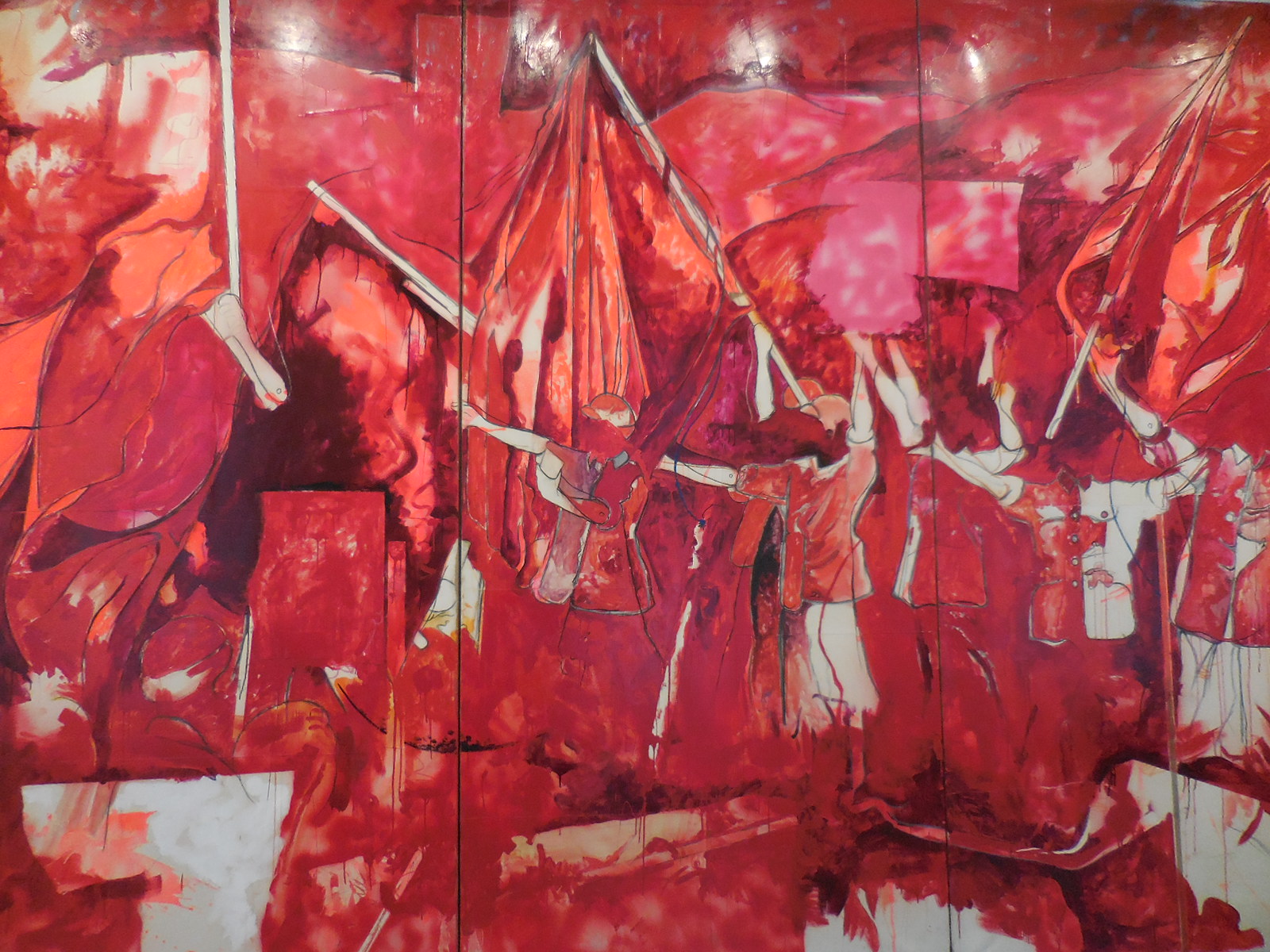
A painting with a theme of Chinese revolutions

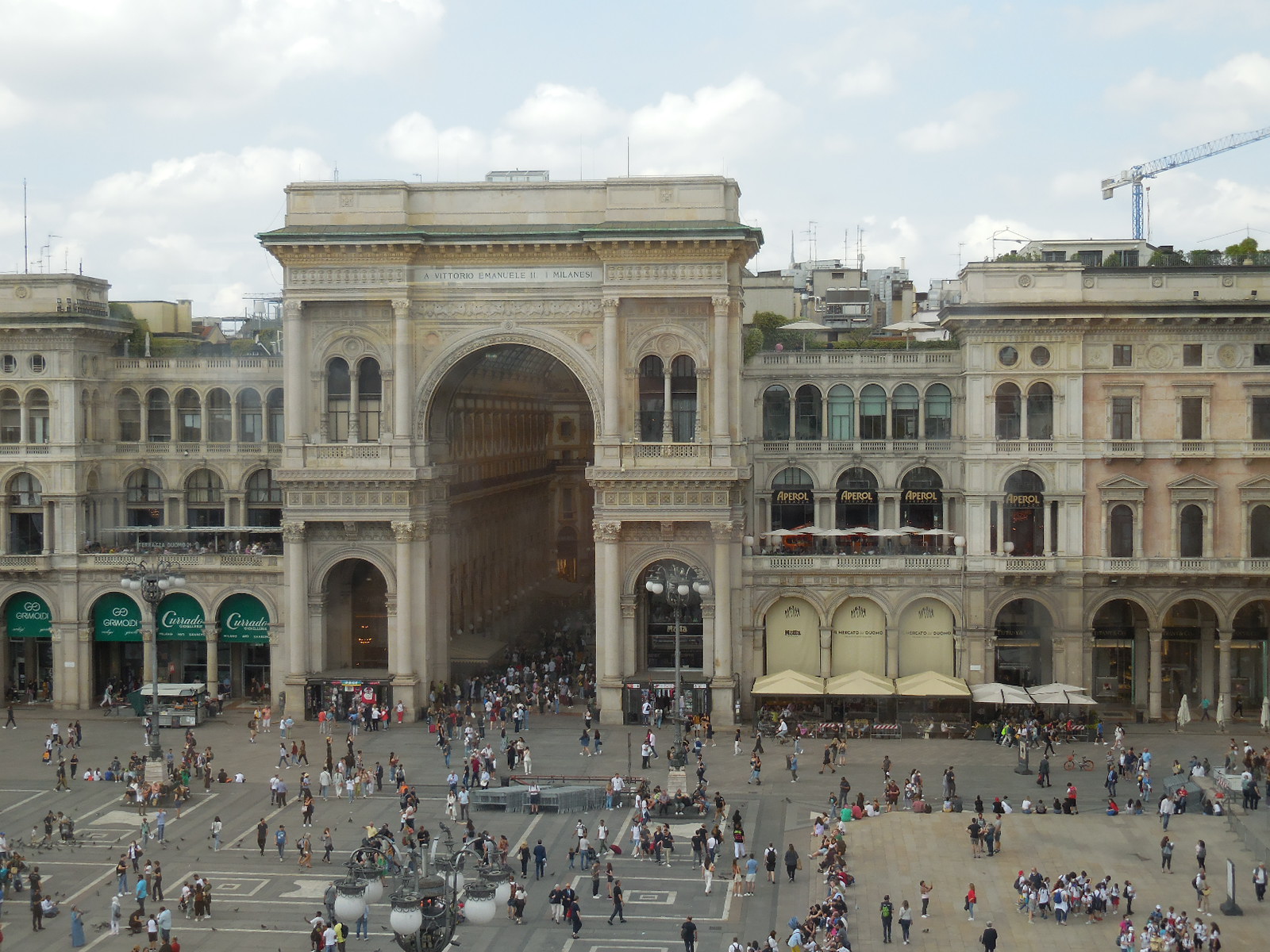
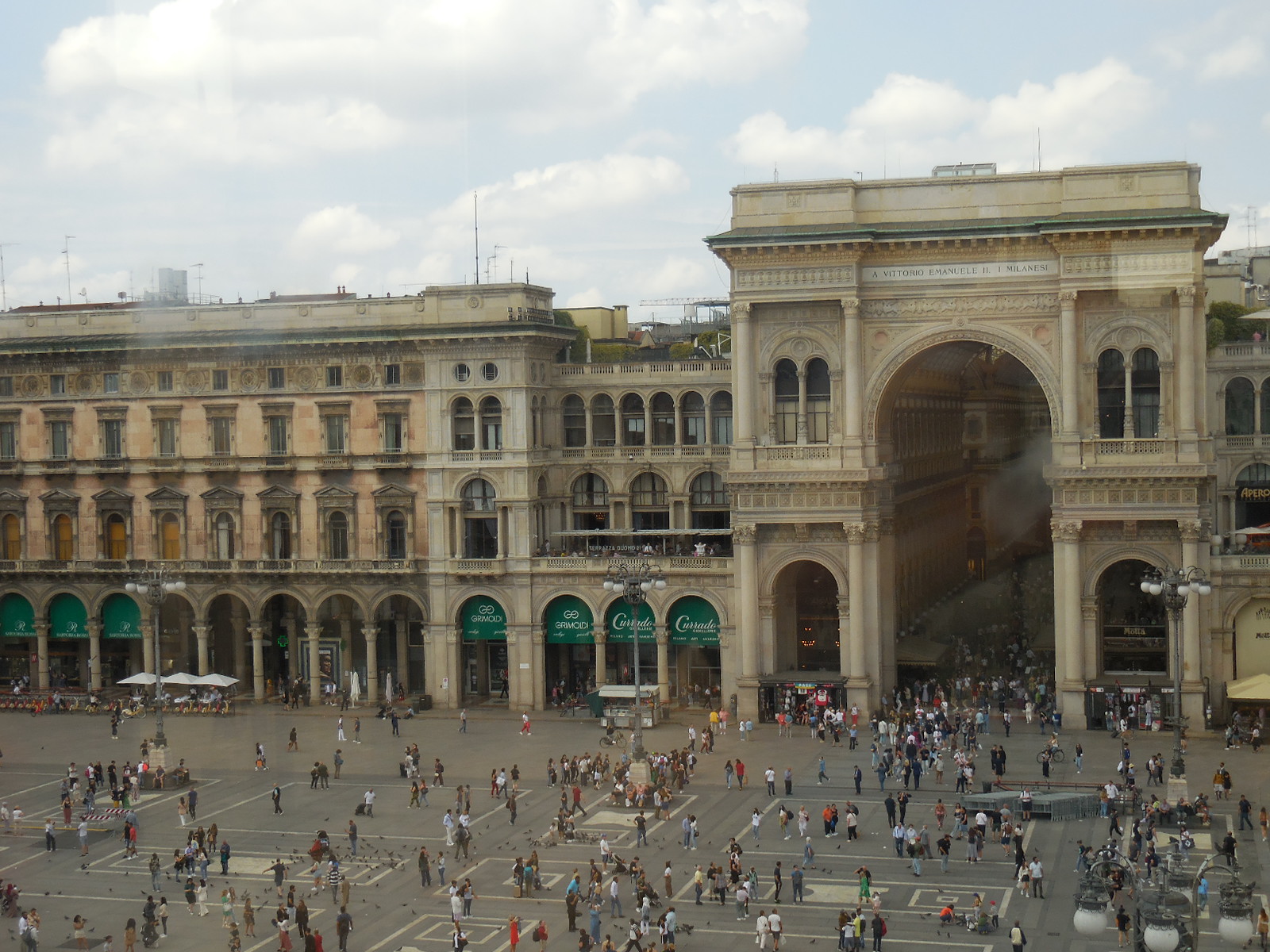
On the third floor there are glass walls that provide great views of the Duomo Square and the cathedral as well as Galleria Vittorio Emanuele II shopping arcade. I stood in that room for a long time, surveying the passersby walking to and fro below me, gazing at the long line to enter the cathedral and the people having lunch at expensive restaurants on the square. It was nice to be up there, looking down at the crowds on that scorching hot May day.

Tracy A. Burns is a writer, editor and proofreader in Prague.