The six buildings designed by Josef Havlíček in Kladno, photo from Vysehradskej.cz
In Kladno, not far from Prague, I visited the Museum of the High-Rises, located in one of the tall buildings designed by Czech functionalist architect Josef Havlíček during the 1950s. The tour consisted of the minimalist lobby and mailboxes, a small museum room, an atomic shelter, roof terraces and a flat that was considered to be luxurious during the 1950s, housing for high-ranking Communist families.
House sign by Marta Jirásková-Havlíčková
In the Rozdělov neighborhood, the high-rise’s exterior was decorated with two ceramic house signs, one of a cat and the other of a dog, showing circular blue backgrounds with the animals in white. I learned that they had been created by Havlíček’s wife, a sculptor named Marta Jirásková Havlíčková, who originally had made 12 of them for the six buildings in the complex. Other ceramic house sings had featured a hawk, an owl, a rooster, a turkey, sheep and a ram. In the small museum space I saw more of Jirásková-Havlíčková’s work, including a statue of a dignified-looking white cat. She certainly had been talented. Models of some of Havlíček’s designs were also in the space.
I also noticed that the façade consisted of ceramic materials. The use of intriguing materials was a reason that this one-time complex had caught international attention. The French especially were interested in the structures, as Havlíček had been inspired by the architecture of neoclassicist French guru August Perret, who was known for utilizing reinforced concrete in fascinating ways without eliminating the harmony of the design. Perhaps Perret is most renowned for the rebuilding of the port town Le Havre after World War II. His reconstruction helped make Le Havre into a World Heritage Site. Another of his most prominent designs involved the first Art Deco edifice in Paris, the Theatre des Champs-Élysées.
You can see the various house signs behind the sculpture of the cat.
Who was Josef Havlíček? That question was answered in the small museum under the ground floor. Havlíček lived from 1899 to 1961, when he died from exhaustion. As a prominent architect, he was a member of Devětsil, Artěl and SVÚ Mánes, the most influential artistic groups of the time. His mentor at school during the Czechoslovak First Republic of the 1920s was Czech architect Josef Gočár, who designed many important Cubist works in Prague, Hradec Králové and other places. Gočár took Havlíček under his wing and employed him in his studio until 1928.
Josef Havlíček, photo from Muzeum věžáků Kladno webpages.
While Havlíček was given the title of director of the architectural Stavoproject in 1948, he left two years later due to frustration with totalitarian politics. For a while his plans were not realized due to his political stance, but later he used Stalinist social realism architecture that pleased the authorities, even though his style combined creativity while fulfilling the ideology of the times.
Havlíček’s building constructed in Žižkov
Some of his other accomplishments included a building in Prague’s Žižkov, built from 1932 to 1934 with the help of Karel Honzík and dubbed “the first Prague skyscraper.” He also designed the residential development Labská Kotlina in Hradec Králové from 1946 to 1959 and residential buildings in Ostrava. He presented designs for a United Nations building in New York City and a town hall in Toronto, though they were not carried out.
Some models of Havlíček’s creations were on display in the museum.
In the museum space that presented a large timeline and much information about the life and career of Josef Havlíček, we stood around a detailed model of the Rozdělov high-rises in Kladno as they had been planned. In 1946 Havlíček had intended for the project to appear differently – with six buildings of 10 floors each in a Y pattern, flaunting a functionalist style. Due to the political changes in the country during and after 1948, these designs never came to fruition.
From the roof terrace looking down on another of Havlíček’s designs
During the late forties and fifties Kladno was in dire need of more housing. The city had become much more industrialized after the Communist coup of 1948. For example, Kladno was the prominent home of the Poldi steelworks. Construction of new buildings was necessary to accommodate the new workers who were toiling in the black coal industry.
View from the roof terrace
In 1951 Havlíček redid his conception of the suburb, pressured to conform to social realist architectural regulations. He received permission that year. He came up with something that was accepted by the authorities but was also modern and authentic. From 1952 to 1958, Havlíček worked on the design along with Karel Filsák and Karel Bubeníček. Construction began on the project with the first and second buildings. Tenants moved into the first building at the end of 1956 and into the sixth building at the end of the following year.
You can see some of the suburb’s high-rises from the roof terrace.
The six buildings that formed the letter T were inaugurated as the Victorious February suburb to commemorate the February Communist coup of 1948. The building we were in had 13 floors, not including the ground floor and upper ground floor. Each floor consisted of six apartments, two much bigger than the others. The more luxurious flats of that era had balconies.
Another view from the roof terrace
The project was planned to be much more elaborate than the 48-meter high residential buildings. Havlíček and his colleagues envisioned the suburb to flourish with cultural and shopping centers. It was slated to become a major hub for cultural activities, such as theatre, and to have much needed impressive stores. While the shopping center plans were carried out, the theatre was never built. Financial problems and other barriers did not allow the designs to be fully developed. From the model it was possible to see how Havlíček had proposed that the suburb become a leading place for activities as well as original housing made from inventive materials.
We went down to the second basement floor, the atomic shelter. I saw many gas masks and rows of hard, wooden benches in several spaces. It would certainly be depressing and frightening to be trapped down there for any reason let alone a nuclear war. Many buildings were constructed with atomic shelters during the 1950s in Czechoslovakia.
Then we visited the roof with impressive terrace, which was a prominent component of the project in its day. Even though now ugly high-rises surrounded the building, during a clear day it was possible to see the historic Říp Hill and the mountains of central Bohemia, even some of the mountains at the German border.
The living room of the flat
Then we went into a 55 meters squared flat preserved with 1950s furnishings and equipment, looking as it had during its construction as a luxury home for high-ranking Communist families. The living room had a couch and table on which were a cake and mugs. I noticed one cup was adorned with a red Communist star and the other sported a Communist symbol. On the table there was also an open pack of cigarettes and an ashtray filled with cigarette butts. A lace tablecloth covered part of the table. A large radio and a black-and-white TV with three buttons under the screen also stood out in the room. Social realist-styled statuettes decorated cabinets.The bedroom was dominated by a big double bed. On each nightstand was a framed photo. A large mirror adorned the wall above the bed.
The bedroom
The kitchen included a gas stove, a counter and pantry with shelves for storing food as well as cabinets. Although it looked small to me, at that time this type of kitchen had been luxurious, only available to the most prominent families. The flat featured a big balcony, too, something that not many apartments in the building had.
Now the museum, which opened in 2020, is a cultural monument to an innovative style designed during Stalinist times. This was Havlíček’s last big project to be carried out as he died of exhaustion in 1961, exasperated by his discomfort with the country’s Communist ideology of which he had been a critic. It had taken a toll on his physical and mental state.
The kitchen
This is the first Czech museum showing off suburban Czech architecture. The museum was something totally different than the kind I usually visited. I had never been to a museum focusing on a suburb of a city. I had thought of the suburbs of Kladno as eyesores with socialist high-rises that scarred the landscape. This one was different. During the period of its construction, the architecture had forged a new path in suburban appearances. It was a pity that only two of the buildings survive today and that fate had intervened and prevented the project from being completed.
The gas stove in the kitchen
I took all the necessities such as the stove and kitchen space for granted. I thought the flat seemed relatively small. At one time, though, a flat this size had been a luxury. I could see the accomplishments in modern architecture as I viewed all the spaces through a 1950s lens. I could better appreciate the modernity of the present by immersing myself into the past.
The simple chandelier in the living room
Tracy A. Burns is a writer, proofreader and editor in Prague.
Whenever I come across a Cubist sculpture by Otto Gutfreund in a Czech gallery or museum, I take some time to appreciate the personal feelings that come to mind as I study the masterful figures. While I was perusing the impressive collection of Gutfreund’s works in Prague’s Kampa Museum, I was reminded that this was not the only style he employed in his career. As I studied the creations by Gutfreund there, I mused over the legendary sculpture’s career and the tragedy that befell him.
Lovers (Embracing Figures), 1913-14, bronze
Born in Dvůr Králové nad Labem in Bohemia during 1889, Gutfreund studied drawing and porcelain painting in Prague before turning to sculpture. In Paris his mentor was Antoine Bourdelle. Gutfreund was greatly influenced by the works of Auguste Rodin, whom he knew personally. While in Paris, he also became fascinated with Gothic art and nature. His travels then took him to England, Belgium and the Netherlands. He became immersed in the Cubist style after 1910 as he simplified natural forms into geometric shapes and showed objects and figures from multiple perspectives.
Cellist (Cello Player), 1912-13, bronze.
He made a name for himself as a Cubist guru with his first sculpture in this style, “Anxiety,” of 1911-12. Gutfreund joined the Group of Creative Artists around this time. This emotional and expressive work is my favorite as it stresses the sheer angst and fear that can be debilitating and personally destructive. It reminds me of the anxiety shown in works by Egon Schiele and the German Expressionists of the 1920s. I also see similarities to the emotion-immersed sculptures of František Bílek, a Czech Art Nouveau and Symbolist artist.
Cubist bust, 1913-14, bronze
Some of Gutfreund’s most renowned early Cubist works include his renditions of Don Quixote and Hamlet. Then, becoming more and more inspired by Picasso, he moved to Paris, where he met that artist as well as Apollinaire, to name a few.
World War I brought many changes to Gutfreund’s life. He became a soldier for the Foreign Legion in France and took part in the Battle of the Somme. He wound up in prison during 1916 and wasn’t released until three years later.
Viki, 1912-13, bronze
Two months after being freed, he moved back to Prague and was lauded as a sculptor of the social civilism style, which emphasized the everyday and was very realistic, nothing like the expressive Cubist movement in which he had participated before the war.
In the early 1920s, he received some big commissions. At this time, he created the monument to 19th century writer Božena Němcová in Ratibořice. The sculptural grouping showed off characters in Němcová’s stellar novel, The Grandmother, a 19th century Czech classic.
Industry, Study (sculpture on the right), 1923.
From 1922 to 1923, Gutfreund decorated the Legiobanka Building in Prague with a relief called “The Legions’ Return,” cooperating with renowned Czech architect Josef Gočár. In 1924 he designed a life-size statue of the first president of Czechoslovakia, Tomáš Garrigue Masaryk in Hradec Králové. I greatly admired likenesses of the first Czechoslovak president. Gutfreund held art shows, adding to his résumé of artistic mastery. During 1926 he became a professor of sculpture at Prague’s College of Decorative Arts, and Americans had the chance to admire his works in a New York City exhibition.
Fighters (A Fight, Wrestlers), 1924, bronze.
Unfortunately, his life was short-lived. On June 2, 1927, he drowned in the Vltava River in Prague. He accomplished so much in such a short time. If he had lived, there is no telling how much he could have influenced the Czechoslovak and world art scene. Gutfreund is buried in Prague.
At the Museum Kampa visitors can see a collection of both his Cubist and realistic sculptures as Otto Gutfreund lives on through his incredible art. It is worth traveling to Ratibořice to see the stunning chateau and park dedicated to Němcová and 19th century country life as well as the impressive statuary grouping by Gutfreund. Admirers of sculpture and architecture are sure to be amazed by Prague’s Legiobanka Building in the center of the city.
Tracy A. Burns is a writer, proofreader and editor in Prague.
Statuary grouping from Němcová’s book The Grandmother, by Otto Gutfreund, in Ratibořice
This past year’s travels included two trips to Italy, one to my beloved Milan and environs and the other to the Amalfi Coast, somewhere I have dreamed of going for many years. I also spent time visiting sights in the Czech Republic, such as Zbiroh and Karlova Koruna chateaus and the towns of Kutná hora and Hradec Králové. I also dined in the traditional Czech pub Hájenka in Kersko. I flew to northern Virginia to see my parents for two weeks in March and had a great time with them as well as with four friends. In Washington, D.C., I visited the National Portrait Gallery and Museum of American Art.
From Petr Brandl Exhibition
I saw many thrilling art exhibitions, including ones focused on the Baroque art of Petr Brandl and the Art Nouveau works of Alphonse Mucha. Karel Teige, Czech avant-garde artist best known for his interwar works, was the focus of an exhibition at the Museum of Czech Literature, which I visited for the first time in 2023.
Campari Tomb at Monumental Cemetery in Milan
My May trip to Italy last year saw me back in Milan, which I had visited for the first time the previous year. I went to several sights I had not seen before. I toured Milan’s Monumental Cemetery to see the architectural gems of tombstones in various styles from the 18th century to contemporary. A colossal sculptural grouping of Da Vinci’s The Last Supper, made for the Campari family, was my favorite. I also saw a structure resembling the Tower of Babel and another looking like Trajan’s Column. An Egyptian pyramid shape made up another monument. Another artistic delight was Italian artist Lucio Fontana’s design of a modern angel. The sculptural decoration throughout the cemetery was astounding.
At National Museum of Science and Technology Leonardo da Vinci in Milan
I also visited the National Museum of Science and Technology Leonardo da Vinci, where I was enamored by the 170 models of Da Vinci’s drawings of buildings, machines and weaponry. I also loved the hangars featuring planes, ships and trains. A Vega Launcher hailed from 2012. A submarine also stood outside.
Paintings lined the walls at the House Museum of Boschi Da Stefano in Milan.
The House Museum of Boschi Da Stefano, located in a posh apartment outside the city center, featured 300 works of 20th century art, mostly paintings but also drawings, furniture and sculpture. Most pieces hailed from 1900 to 1960. The walls were covered with art from top to bottom. Some artists represented were Fontana, Giorgio De Chirico, Pablo Picasso and Amadeo Modigliani.
Navigli section of Milan
I also visited the Navigli district of Milan, where two picturesque streets flanked a canal, making for a picturesque setting. The Navigli is dotted with outdoor cafes and stores, including a few intriguing bookshops.
Basilica of Saint Anastasia, Verona
I spent time outside of Milan, too. I traveled to Verona for the second time. I marveled at the Basilica of Saint Anastasia, the largest church in the city as well as the cathedral and three museums – the Castelvecchio Museum, the modern art museum and the House Museum Palace Maffei – my favorite. The Basilica of Saint Anastasia was built in the 13th century and boasted a Late Gothic façade. The main altar was made from light yellow marble while one chapel housed a famous 15th century fresco. Red and white marble columns decorated the interior. The Pelligrini Chapel included a fresco from the 14th and 15th century as well as intriguing sculpture. A fresco at the left transept had been rendered by a disciple of Giotto. A rudder of a 16th century ship added to the splendid interior decoration.
Verona, House Museum Palace Maffei
Verona, House Museum Palace Maffei
However, it was the House Museum Palace Maffei that captured my heart. Half of the Palace Maffei was designed as a luxurious home punctuated by art from various eras ranging from the 14th century to modern day. The other half was a 20th century art gallery, featuring works by Picasso, Duchamp, De Chirico, Warhol, Ernst, Modigliani, Fontana and others. Paintings, sculpture, drawings, engravings, pottery, bronzes, frescoes and furniture of both Italian and foreign origin dazzled my mind.
In the Castelvecchio Museum, Verona
The Castelvecchio Museum, established in the 14th century, included 30 halls of Italian and European painting and sculpture from the Romanesque days to the 1700s. Not only did I see many paintings but also ancient weapons, ceramics, gold objects and more. The exterior featured panoramic views of the romantic city.
A romantic lane in Bellagio
My other day trip was to Lake Como, where I visited picturesque Como, Bellagio and Mennagio. Unfortunately, it rained all day, but I still had a great time. I also saw the exterior of some noteworthy villas, such as Richard Branson’s waterfront home, the Villa Carlotta and a villa where some episodes of Succession had been filmed. I saw a hotel where Greta Garbo had acted, too. The Villa Olmo in Como had a neoclassical exterior and stunning lake views. Bellagio featured steep, cobblestoned lanes and the Romanesque Basilica of San Giacomo. Mennagio was home to several intriguing churches and had a picturesque lakefront square.
House Museum Bagatti Valsecchi, Milan
House Museum Poldi Pezzoli, Milan
In Milan I also visited beloved sights that I had first seen the previous year. I returned to the House Museum Bagatti Valsecchi with its Renaissance and Neo-Renaissance art and to the House Museum Poldi Pezzoli with its art of various eras, such as medieval triptychs, ceramics, historical pocket watches and other time pieces.
Gallery of Modern Art, Milan
Gallery of Modern Art, Milan
I visited the second floor of the Gallery of Modern Art with its Grassi and Vismara Collections. The Grassi Collection featured both Italian and foreign works ranging from the 14th century to contemporary times. Oriental art was displayed, too. The Vismara Collection concentrated on 20th century masterpieces. On that floor I saw impressive art by Manet, Picasso, Gauguin, Renoir, Van Gogh and Cezanne. Toulouse Lautrec was well-represented, too.
Museum of the Risorgimento, Milan
Brera Art Gallery, Milan, Work of Andrea Mantegna
The Museum of Risorgimento remains another of my favorites with its painting, prints, sculptures and artifacts depicting Italian historical events from 1796 to 1870. The Brera Art Gallery was another highlight, as I gawked at the Italian art from the 13th to 20th century as well as at the foreign works in the 38 vast halls. I loved the paintings from the Netherlands, including those by Peter Paul Rubens and Jacob Jordaens. Other Brera-represented artists dear to my heart included Francesco Hayez, Andrea Montegna, Tintoretto and Caravaggio. I even visited an exhibition of ancient manuscripts in the historical Baroque library. Once again, I was amazed by the 16th century frescoes by Bernardino Luini, his brothers and his son in the Renaissance Church of San Maurizio in downtown Milan.
Sorrento, Nativity Scene, Cathedral of Saints Filippo and Giacomo
During my trip with arsviva travel agency to the Amalfi Coast in June, I fell in love with Sorrento. The streets were picturesque, and the Cathedral of Saints Filippo and Giacomo was Romanesque with a Neo-Gothic façade. Three lunettes showed off beautiful frescoes while a rose window also astounded. Inside, the Latin cross interior boasted three naves with 14 pilasters. The pulpit, hailing from the 16th century, had Doric columns. Stunning frescoes on the cupola, intarsia adornment and a Baroque ceiling were other remarkable elements. The Chapel of Nativity displayed a Neapolitan Nativity scene from the 17th century.
Correale Museum, Sorrento
Museum of Intarsia, Sorrento
The Correale Museum served as a provincial art gallery, and I was enthralled by the 17th and 18th century Italian landscapes, especially those of Castellammare di Stabia, where we were staying. Greek and Roman fragments, historical furniture, clocks, ceramics and porcelain were also on display. The waterfront boasted spectacular views of the sea, which were very soothing. The highlight of my visit to Sorrento was the Museum of Intarsia, with everything from music stands to large beds showing off intarsia decoration by local artists. Some historical paintings were also on display. Downstairs, I saw the innovative, avantgarde designs of contemporary intarsia artwork.
Pompei
I also visited Pompei for a second time. Even though the day was scorching hot, I enjoyed seeing the small and big theatre, the basilica and three temples, especially the one named after Apollo with its 48 Ionic columns. The amphitheatre with a capacity of 20,000 spectators also caught my undivided attention. The wall paintings and mosaic floors of what had been luxurious homes were sights to behold as well.
Ravello, pulpit in cathedral
We moved to a nice hotel in the picturesque, tranquil town of Maiori, where I could spend time in a café or restaurant overlooking the beach or savor homemade ice cream. The town that had made it on UNESCO’s list during 1997 was a perfect place to relax after a busy day out. Before arriving at our hotel in Maiori, we saw Ravello’s Romanesque Cathedral of Saint Maria Assunta and Saint Panteleone, hailing from the 11th century. I admired the 12th century bronze doors and remarkable 13th century Pulpit of Gospels adorned with mosaics. One 16th century chapel contained an phial of blood of Saint Panteleone. The views of the sea from the hilly town were spectacular, too. Numerous famous guests, from Richard Wagner to Virginia Woolf and Greta Garbo, had graced the streets of this town.
Ravello Cathedral, bronze doors of central portal
Positano, a UNESCO-listed tourist site since 1997, was a picturesque hillside town, but, unfortunately, during this past June, it was much too crowded to enjoy. I did peek into the church, though. Its main altar showed off a Byzantine icon from the 13th century. The views of the sea were fabulous.
Cathedral of Saint Andrew, Amalfi
Cathedral of Saint Andrew, Amalfi
Another highlight of my trip was visiting the Cathedral of Saint Andrew in Amalfi, which was founded in the ninth century AD and boasted a 13th century Arab-Norman exterior with Italian Neo-Gothic elements. The mosaic adornment in the tympanum is stunning. Sixty-two steep steps led to the bronze doors of the central portal that hailed from Constantinople, made in the 11th century. A cloister included some intriguing fragments of wall paintings while the interior had Baroque features along with Gothic and Renaissance chapels. The Basilica of the Crucifix harkened back to the ninth century and served as a museum of sacral objects, including sculpture and vestments. The crypt, where the relics of Saint Andrew were held, was stunning with much ceiling and wall decoration.
Paper Museum at paper mill, Amalfi
I also was enamored with the still functioning paper mill at the Paper Museum. The Pope used paper made in Amalfi, which held the distinction of being the oldest paper manufacturer in Europe. The machines and the processes of making and drying the paper were enthralling.
Cathedral of Saint Matthew, Salerno
Salerno was a pleasant surprise. The Romanesque Cathedral of Saint Matthew hailed from the 11th century. The tower was a mixture of Byzantine and Norman styles. The central bronze door was made in Constantinople. Two Byzantine mosaic-decorated pulpits with intricate intarsia amazed in the once Romanesque interior that had been mostly transformed into Baroque style. Mosaics throughout the cathedral were stunning. Frescoes in the treasury chapels were accompanied by a silver statue of Pope Gregory VII. The Late Mannerist ceiling and wall frescoes in the crypt were remarkable, hailing from the middle of the 17th century. A reliquary of Saint Matthew’s arm was on display, too.
Diocese Museum, Salerno
I also visited the nearby Diocese Museum, which featured paintings, sculpture and objects from the Middle Ages to the 20th century. I was most drawn to the medieval altarpieces. The provincial picture gallery was small but included an eclectic array of intriguing works from the 15th to 18th century.
Cathedral of Saint Barbara, Kutná hora
Cathedral of Saint Barbara, Kutná hora
I took some day trips in the Czech Republic, too. We visited Kutná hora, the home of prosperous silver mines from the 13th to 15th century, during one stunning fall day. Saint Barbara’s Cathedral, with its Neo-Gothic exterior of buttresses and gargoyles, astounded me. Inside, I admired exquisite stained glass windows as well as remarkable late Gothic frescoes and a 16th century stone pulpit. The Gothic royal chapel with Art Nouveau decoration at the Italian Court was another remarkable gem.
Pub in Kersko
I visited Kersko twice this fall. I dreamed of owning a cottage in the tranquil, wooded village. I had lunch at the traditional Czech pub called Hájenka, where several films based on Bohumil Hrabal’s writings had been shot. Hrabal had lived in a cottage nearby for many years, feeding all the feral cats that would wander hungrily toward his home.
Zbiroh Chateau
I also toured the chateaus of Zbiroh and Karlova Koruna. Zbiroh, built before 1230, for decades served as a top-secret facility for the Czechoslovak army. Its representative rooms were open to the public only in 2005. The chateau boasted many Madonna statues and other sculpture of great interest as well as African masks, tapestries, Empire furnishings and copies of Leonardo da Vinci paintings. Alphonse Mucha had used the spectacular main hall as his studio early in the 20th century. A beautiful skylight, two Czech crystal chandeliers and impressive paintings adorned Mucha’s former studio.
Exterior of Karlova Koruna Chateau
Karlova Koruna Chateau, designed by Santini-Aichel and built during the 18th century, had a roof shaped as a crown. The chateau consisted of two stories in cylindrical shape with three one-floor wings. The interior featured paintings of horses, including the unique gold-colored horses that the Kinský family had bred as well as pictures of steeplechase races. One painting of a horse race was made of 12 pieces of deerskin.
Beneš Villa
We visited the former villa of Edvard Beneš, president of Czechoslovakia during the interwar years and a prominent member of the Czechoslovak governments-in-exile during the First World War. The stunning Neo-Spanish structure included the room where Beneš died, a dark landscape painting by Antonín Slavíček hanging over his single bed. The furnishings and artworks in the house were intriguing, to say the least. Beneš and his wife Hana were buried in a monumental tomb on the premises as well.
Sucharda’s Second Villa, Prague
In Prague I visited the second villa of sculptor and relief artist Stanislav Sucharda in the Bubeneč district. Jan Kotěra designed the structure with many architecturally intriguing elements. Much of the remarkable interior furnishings had been designed by Kotěra and Sucharda. I saw examples of Sucharda’s artwork as well as pieces by Edvard Munch, Auguste Rodin and many Czech artists.
Gallery of Modern Art, Hradec Králové, Work by Emil Filla
Gallery of Modern Art, Hradec Králové, Věra Jičínská, Brittany
I saw many impressive art exhibitions this year. I traveled to Hradec Králové, where I saw the Gallery of Modern Art with its impressive collection of works by 20th century artists including Bohumil Kubišta, Emil Filla, Jaroslav Róna, Ladislav Zívr, Quido Kočian and many others. The temporary exhibition of artist and writer Věra Jičínská’s works included paintings of her travels to Brittany and Paris. Her renderings of Paris showed off orange rooftops and the Eiffel Tower. She also created paintings inspired by folk art and dance. Her photography amazed me as well. Influenced by her work as a journalist, she created a painting dedicated to this genre.
Museum of East Bohemia, designed by Jan Kotěra, Hradec Králové
The museum devoted to the history of Hradec Králové was an architectural gem designed by Kotěra. I especially liked the furnishings and designs by Josef Gočár and Kotěra as well as the sculpture by Sucharda. The mock shops from the First Republic (1918-1938) were very intriguing as I could see goods that were sold during that era and feel the atmosphere of those times.
National Technical Museum, Prague
In Prague I saw the National Technical Museum for the first time. The cars, especially the 1935 Tatra 80 vehicle belonging to first Czechoslovak President Tomas G. Masaryk, fascinated me as did the motorcycles, bicycles and planes. The dining car of Habsburg Emperor Franz Joseph I, later used by President Masaryk, was also on display. I also was enamored by the architecture and engineering section and the display of old household items in another section. The TV studio, in use from 1997 to 2011, was another delight. Other areas of interest included astronomy, chemistry, printing, photography, time pieces, metallurgy and mining.
Museum of Czech Literature, book cover by Karel Teige
Another astounding sight in Prague was the newly-located Museum of Czech Literature, which moved to the Petschek Villa in Bubeneč during 2022. The displays cover literary developments from the 19th century National Revival movement through the 20th century. I came to appreciate the significance of the literary and art criticism periodical The Critical Monthly from the 1930s and 1940s as well as the symbolist and mystical paintings of Josef Váchal. I was most enamored by the avantgarde book covers designed by Karel Teige in the 1920s and 1930s. His unique typographical work in Vítězslav Nezval’s The Alphabet book was on display, too. A pantheon of great Czech 19th century artists included objects associated with the writers and their busts.
Karel Teige, Greetings from a Journey
A temporary exhibition focusing on Teige’s youth and early career from 1912 to 1925 was amazing, showing off his artwork, photographs, correspondence and more. I understood very well why this artist, writer, theoretician, critic, translator, book designer, typographer and photographer was considered the leading figure of the Czech avantgarde movement between the wars.
Trade Fair Palace, Prague, Fire by Josef Čapek
At The Trade Fair Palace in Prague, I saw the newly installed End of the Black-and-White Era permanent exhibition of art from 1939 to 2021 in chronological order. More than 300 works, mostly Czech, were displayed with historical context. Josef Čapek’s painting “Fire,” showing a fury of flames behind a woman, presents an anti-Nazi theme. The focus on urban life and factories as well as everyday life was highlighted with the works of Kamil Lhoták. The exhibition featured many works made during the Stalinization period of the 1950s with the style of social realism. Martin Slanský depicted Lenin in a snowy Prague. A model of the design of the monument to Stalin in Prague was on display, too.
Trade Fair Palace, Prague, The Dialogue by Karel Nepráš
The progressive movements of the 1960s made way for the red abstract figures of Karel Nepráš. From the late 1960s to early 1980s art as installation came to the forefront. Action art, performance and body art were often the focus of the times. The late 1980s triggered the impersonal postmodernism movement. After the 1989 Velvet Revolution that toppled the Communist regime in Czechoslovakia, individuality and quests for personal identity came to the fore. Some artists focused on the commercialization of society. This new exhibition was extensive and moving. I felt drawn into each historical period up to the present day. The works displayed well represented the movements expressed. I could see how society and culture kept changing and how art reflected those changes.
Saint Jerome by Petr Brandl
I went to many intriguing temporary exhibitions in Prague, too. I saw 64 religious works, genre paintings and portraits by Czech Baroque artist Petr Brandl. An extensive exhibition of Alphonse Mucha’s versatile works owned by his descendants included some originals never before put on display. Mucha’s ad posters, drawings, paintings, sculptures, photographs and jewelry all captured my undivided attention.
Sculpture by Janouch
I saw sculpture of athletes in motion and busts of illustrious Czechs by Petr Janouch in Prague’s Kooperativa Gallery. An earlier exhibition there featured Czech 19th and 20th century paintings involving water – puddles, lakes, waterfalls, streams, rivers and so on. I especially liked one painting by Josef Čapek showing a fisherman on a boat in a river. Landscapes with water themes by Slavíček and Antonín Hudeček also astounded.
Sculpture by Ivan Mestrovic
At the City Library Gallery I saw an exhibition of sculpture by Croatian Ivan Mestrovic (1883-1962). I had come across his art at his villa in Split during a vacation many years ago. Mestrovic, who had befriended first Czechoslovak President Masaryk and Czech sculptor Bohumil Kafka, had delved into a variety of styles, including Art Nouveau, Symbolism, Impressionism, Art Deco, Neoclassicism and late Realism, while preserving a Classical foundation. He focused on numerous themes – religious motifs, portraits and monumental works as well as studies of figures.
Olinka
However, shortly after I returned from the Amalfi Coast, I had to temporarily halt any traveling so I could be at home with Olinka, who was diagnosed with neurological issues that greatly affected her mobility. A MRI showed that she suffered from inflammation of the middle ear. A terrified Olinka spent a total of four nights in the hospital and was on antibiotics for ten weeks. Every two weeks we went to the vet so she could get her antibiotic shot.
Olinka
The first four days at home after three nights in the hospital she could hardly walk and was very disoriented. Those initial few days she stayed mostly in the bedroom closet, only appearing for food and the use of the litter box. She didn’t play with her toys for three weeks. Before her illness, I had been frustrated with Olinka because she always knocked everything off tables and the kitchen counter. Sometimes it felt like a never-ending battle. At the start of her illness, I came to appreciate even her most frustrating quirks. I just wanted her knocking everything off surfaces again, back to her old self. The broken glass on the screen of my mobile phone is proof that she is once again doing just that.
Olinka
I will never forget her first night back from the hospital. She somehow made her way onto the bed and reclined below my pillow. I rested next to her, my arms around her. We stayed like that for an hour or two, just spending time with each other, appreciating that she was alive and at home. I will always remember that feeling of relief and love more profoundly than any experience during my exciting travels.
Tracy A. Burns is a writer, proofreader and editor in Prague.
Olinka on Christmas Eve
From Alphonse Mucha exhibition
Municipal House, Prague, Mayor’s Hall, decoration by Alphonse Mucha
I toured the Municipal House in Prague. Once again, I was captivated by its Art Nouveau interior.
This permanent exhibition at the Gallery of Modern Art in Hradec Králové showcases the works of some of the most influential Czech artists of the 20th century. I liked the fact that the works were organized by person with commentary about the artists’ backgrounds and styles. I will highlight the creations that most influenced me, although all the painters and sculptors are important.
First, about the building housing the Gallery of Modern Art: Like many edifices in Hradec Králové, the museum is an architectural gem. Facing the town’s main square, the building that was completed in 1912 by Osvald Polívka is impressive with two statues flanking the façade. These sculptures were made by Ladislav Šaloun in 1908 and show allegories of commerce and the harvest. Reliefs of atlases with dogs at their feet also make up the external ornamentation. Polívka’s Art Nouveau designs can be found in Prague’s Municipal House, which he decorated from 1905 to 1912. I tell everyone coming to Prague to tour the Art Nouveau Municipal House, as it is certain to be a highlight of any visit. Šaloun created the statue of Jan Hus that dominates Prague’s Old Town Square.
Several banks were housed in this building before and during the First Republic. For many years under Communism, the Cotton Industry Association and an agricultural company called the place home. Renovations took place in the late 1960s. In 1987, the totalitarian regime transformed the building into the Museum of Revolutionary Traditions. This totalitarian exhibition was closed after the 1989 Velvet Revolution that freed Czechoslovakia from Communist control.
In 1990, the Gallery of Modern Art took up residence there. From 2014 to 2016, both the interior and exterior underwent a vast renovation. A walkway was formed around the central atrium, for example. The interior boasts geometric shapes, floral designs and Art Nouveau-styled adornment of garlands and cherubs. I especially liked the stained glass window decoration.
Here are some of my favorite artists represented in this exhibition:
Fate of the Artist, 1909
Quido Kocián
The expressive sculpture of Quido Kocián was influenced by symbolism and Art Nouveau. I love how he was able to express basic emotions like love and suffering. I went to a superb exhibition of his work about 15 years ago on Husova Street in Prague. In some statues I could see the turmoil and anguish of the persons depicted. Other sculptures triggered feelings of happiness and fulfillment. Kocián had a knack for depicting various psychological states and the depths of the human soul. He studied under legendary artist Josef Václav Myslbek but wound up rebelling against Myslbek’s traditional style, opting for expressiveness instead. Kocián’s works were not fully appreciated in the Czech art history sphere for a long time.
Ladislav Zívr
Surgeon, 1961
A member of the artist Group 42, Zívr focused on everyday life, a feature that is dear to me in all art forms. Inspired by Cubism and the creations of Otto Gutfreund, he made sculptures that have machine-like qualities as well as human traits. He had a penchant for surrealism. After the world wars, Zívr was influenced by nature, and his works portrayed strong symbolism. I liked the way he was able to express a person’s soul through primitive forms.
Jiří Kolář
I had been to a large exhibition of Kolář’s works in Prague’s Kinský Palace some years ago and was very familiar with his collages that included cut out images and words from publications. (See my article about the exhibition in a much earlier post called Jiří Kolář Exhibition Diary) He was a poet and prose writer as well as a fierce critic of Communism. Kolář emigrated to Paris in 1979. He often used phrases from books or created his own poems in his collages. His works lingered on the border of the dream realm and reality, a trait I found very intriguing. A staunch supporter of democracy, Kolář was also one of the first Czechs to sign Charter 77, a document written by dissidents to promote human rights in the normalization era of Communist Czechoslovakia. He played a major role in publishing literature banned by the regime. Kolář was also one of the founders of the influential Group 42.
Jaroslav Róna
Scene by the Fire, 1984
I know Róna’s sculptures well, but I was not familiar with his paintings. Róna designed the abstract Franz Kafka Monument in Prague’s Jewish Quarter, an important sculpture to see in the Jewish Town. He is, indeed, a man of many talents: He has also worked as a painter, illustrator, screenwriter, author of books, actor, singer and educator. His works have a certain dynamic energy. He has been inspired by the Expressionism style of Edvard Munch, Oskar Kokoschka, Max Beckmann, Egon Schiele and Pablo Picasso. A supporter of democracy, he drew brochures for the Velvet Revolution during 1989. Rona is also an avid traveler. His sculptures can be found at Prague Castle as well as on the island of Crete and in many other places.
Josef Váchal
Sacrifice, undated
I liked the mystical quality in Váchal’s works. He was a graphic designer, wood engraver, bookmaker, writer and painter who excelled in all those genres. Váchal was inspired by expressionism. His works featured symbolism, naturalism and Art Nouveau tendencies. A soldier during World War I, he fought in 12 battles. The Communist coup brought hard times for Váchal, who remained isolated after 1948. People did not show much interest in his work then. In the 1960s, he received some acclaim. Much later people recognized that Váchal had created some of the most significant works of Czech graphic design in the 20th century.
Augusta Nekolová
Four Seasons, 1914
Because Nekolová was female, she had limited educational opportunities during the 19th and early 20th century. She did, however, study unofficially under the prominent Czech artist, Jan Preisler. Nekolová worked as a painter, illustrator and graphic artist. She steered away from representations of modern life in her works. She was known for her landscapes and for her emphasis on motherhood. Nekolová strove to promote the national identity of the Slav nation. She developed a strong interest in folk culture. At the end of World War I, Nekolová was hospitalized. She died in 1919 at the age of 29.
Bohumil Kubišta
In the Kitchen, 1908
Café, 1910
A prominent avant-garde artist, Kubišta helped found the Expressionist group the Osma (The Eight). He was a painter, graphic designer and theoretician and is considered to be the founder of Czech modern painting. His works dealt with existential issues. Kubišta’s expressionism was inspired by Munch. He was also influenced by Braque and Picasso’s Cubism. Kubišta analyzed the works of Eugene Delacroix and Vincent Van Gogh. His works also contain elements of Futurism and Fauvism. Kubišta often explored themes dealing with modern technology and nature. While serving in the Austrian army during World War I, he won the distinguished Leopold Order. He died of the Spanish flu at the age of 34 in 1918.
Emil Filla
Dance of Salome, 1911
Hej hore háj, Folk Song, 1948
Along with Kubišta, Filla established the Osma group. He also was known for his writings about art theory. During his early artistic endeavors, he drew inspiration from Edvard Munch’s Expressionism. Later he took up Cubism, influenced by Picasso and Braque. He also was captivated by Baroque still lifes by Dutch painters. El Greco and his symbolism fascinated Filla. In the 1930s, he became enthralled with surrealism. His landscapes demonstrate his knowledge of Chinese calligraphy. My favorite trait in his paintings involves his use of a harmony of colors.
Repression (Anxiety) by Josef Wagner – temporary exhibition
I especially liked the exhibition’s pieces of art influenced by Expressionism and Cubism. The colors and shapes in Kubišta’s and Filla’s works caught my undivided attention. I was introduced to Nekolová’s art and intriguing background at this exhibition. I was fascinated how Quido Kocián captured the emotions of the human soul in his sculptures while Zívr concentrated on simple forms to create profound meaning. Kolář’s collages were a sort of visual poetry. Váchal and Róna’s creations displayed impressive energy.
Moscow Diary, 1989 by Anna Daučíková
It was my first visit to Hradec Králové, except for brief stops at the train station and bus station. The Gallery of Modern Art with its poignant exterior and interior decoration and use of space was one of the most impressive buildings I saw.
Tracy A. Burns is a writer, proofreader and editor in Prague.
Landscape, 1962 by Vladimír Boudník
Apollo and Dionysus, 2013 by Anna Hulačová
The gallery also has an impressive collection of contemporary art.
Beach in Crimea (In A Small Bay), 1936 by Věra Jičínská, temporary exhibition
See my post Věra Jičínská Exhibition Diary for more information on this temporary show.
Věra Jičínská – On the Terrace, 1934. Photo from webpages of Gallery of Modern Art, Hradec Králové.
What I like most about visiting Czech museums outside of Prague is that I often find an exhibition dedicated to an artist who is underrated and has been overlooked by the capital city’s art scene.I was in luck when I visited the Gallery of Modern Art in east Bohemia’s Hradec Králové because I came across an exhibition dedicated to the late artist and writer Věra Jičínská, who had made a name for herself in Europe during the interwar years. While she is best known as a painter, the thrilling show also emphasized her penchant for traveling and her talent as a journalist, photographer and designer. Back then, women were not expected to have careers but rather to dedicate their lives to raising a family. Jičínská demonstrated her independence by concentrating on an artistic career, smoking and sporting short hair.
Beach in Crimea (In a Small Bay), 1936.
Jičínská grew up near Brno and later studied in Prague at the School of Decorative Arts. She spent the following years living abroad, exhibiting her art during a seven-year sojourn in Paris after spending two years in Munich. In Paris she became steadfast friends with Czech painter Jan Zrzavý and composer Bohuslav Martinů. Her early career was influenced by Purism and Cubism, but during 1925 she developed a Neoclassical style. By the 1930s, her works were imbued with bright colors.
Parisian rooftops, 1923-24.
The exhibition’s display of paintings inspired by her travels was my favorite section. Jičínská’s paintings of Brittany’s landscape and fishing tradition captured my attention. That was one place I longed to see. Her romantic rendition of Paris’ rooftops and the Eiffel Tower brought back memories of my visits to the French capital. I went up the Eiffel Tower for the first time when I was a junior in college.As my friend and I enjoyed the sights from early morning until night every day, we drew energy from the electric atmosphere of the city and its many wonders. Her works showing places in Hungary and Czechoslovakia also captured my attention.
The Eiffel Tower, 1927.
Jičínská also became known for painting female nudes, a subject that, up until then, only had been taken up by male artists. She celebrated the female body in her works, even painting pregnant women. Dance was another theme she dealt with. The bright colors of her painting “Alexander Sakharov in a Fantastic Burlesque” captured the vibrancy of the dance. She was fascinated by folk culture. Her “Girl in Folk Costume” emphasized the beauty of the people, their costumes and folk traditions. Some of her art focused on Hindu dance themes, too.
Journalism by Věra Jičínská
In the early 1930s, she took up journalism. Her articles examined modern culture – theatre, film and architecture, for instance. The profession of journalism was also the theme of some of her paintings. I had spent time as a culture writer for various publications, and her thirst for knowledge in the cultural sphere made me feel a certain kinship.
In 1930 she married a former classmate. The following year the couple moved to Prague, though her work was still exhibited throughout Europe. Together, the two trekked to Slovakia during 1933 and 1934, and she documented her trip with masterful photographs. Her pictures from Slovakia brought out the character of the people photographed. There was no exaggeration or embellishment to the photos. She emphasized everyday activities in her snapshots. This feature made me think of my favorite Czech writer, Bohumil Hrabal, who, in his fiction, stressed the beauty of everyday life. Ever since I read his books, I have become more appreciative of the little things in life that, up until that time, I would often take for granted, the small joys that take on so much meaning when they are gone.
Gulls, 1933.
Still, the one photograph that impressed me the most featured gulls swooping around Prague Castle. I was reminded of one of the many views that had made me fall in love with the city – Prague Castle from several of the bridges, Prague Castle from the Vltava embankment, Prague Castle from the window of a flat I had rented long ago. After the attacks on September 11, 2001, I found great solace in that postcard perfect view from the apartment where I was living at the time. It helped me deal with the tragedy of that day, which would be forever etched in so many minds. Jičínská also took poignant photos during trips to Poland, Russia and Ukraine.
Brittany, 1928.
In 1937, her life changed again. Jičínská gave birth to a daughter whom she named Dana. While she devoted much time to motherhood, she did not give up her career. She even exhibited works during World War II. By 1941, she was concentrating on working with pastels to create a colorful dynamic and rendering many landscapes. In 1946, the couple bought a cottage in Říčky, a village nestled in the Orlické Mountains. Jičínská often painted there, and many Czech artists visited the couple during the 1950s.
The Communist coup of 1948 had had a devastating effect on Jičínská and her family. Her husband’s publishing house was nationalized, and he was no longer the boss but rather one of the employees. Her parents had lived in a villa in Brno, but the Communists only let them occupy several rooms. To make matters worse, her father saw his pension dwindle.
Girl in Folk Costume, 1929.
Due to the financial hardships, Jičínská branched out into more artistic fields. She designed postcards and became a designer who often worked with ceramics. In 1952 she was restoring a ceiling fresco at the Czechoslovak Academy of Arts and Sciences when the scaffolding collapsed. She was severely injured and could not continue as a painter. She focused on her work as a designer. On March 27, 1961, a year after her daughter married, Jičínská died in Prague.
Before this exhibition I had not even heard of Věra Jičínská. After seeing her works, I appreciated the obstacles she must have come across pursuing a career as a female artist, journalist and traveler during the interwar years. I grew up playing baseball and ice hockey with boys, and I often was the only girl in the baseball league. But that was nothing compared to what Jičínská had accomplished as a woman breaking down barriers and living an independent life the way she chose to live it, not allowing herself to be dictated by society’s norms.
Alexander Sakharov in a Fantastic Burlesque, 1932.
The Gallery of Modern Art’s permanent exhibitions were also fascinating, and I will write about that in a separate post. Twenty artists from the last century were featured in one section, and contemporary art played a role in the collections, too. But what stood out most for me was the exhibition of Věra Jičínská’s artistic accomplishments.
Tracy A. Burns is a writer, proofreader and editor in Prague.
I had visited Častolovice about 10 years earlier, but I did not remember many details of the interior, though I had fond recollections of the picturesque courtyard. For some reason I had fixed in my mind that the chateau was on rather large main square with a pub on one corner, so I expected that the direct bus from Prague would drop me off there. It turned out to be a three-hour trek to Častolovice, located in northeast Bohemia near the Orlické Mountains, via Hradec Králové, but the trip didn’t actually take so long. There was a 40-minute layover in Hradec Králové, which is only 30 kilometers away.
When the bus arrived in Častolovice, I did not recognize it at all. “This is where I get off?” I asked the elderly woman sitting next to me. She answered affirmatively. I couldn’t believe my eyes. There was no big square with a pub. The main square was hardly a square at all, just a few buildings along the main street with a small parking lot. I got off the bus, feeling utterly lost. Luckily, a passerby pointed out how to get to the chateau. It was hardly more than a stone’s throw away. I walked by a decent-looking restaurant. I wondered if it was the only one in town. I hoped I would be able to get a table there later in the day.
The Baroque fountain
I entered the main gate of the chateau, eager to become reacquainted with the place. A Baroque fountain charmed me in the chateau’s courtyard, where birds in an aviary fluttered while singing pleasant melodies. The gentle, soft tones of classical music also filled the air. The atmosphere made me feel at ease on this sunny, warm, spring day. I noticed that the wall of the chateau facing the fountain was covered in what I would later find out were 16th and 17th century frescoes depicting six Roman emperors and a battle. Tourists sat idly at the courtyard’s outdoor café.
The 16th and 17th century frescoes of six Roman emperors and a battle
After going to the box office, where the attendant announced that I would have a private tour at 11:00 o’clock because I was writing about the chateau, I followed an arcade to the 19th century English park that featured a rose garden, pond and small animal farm with an intriguing combination of ostriches, pheasants and pigs. I sat on a bench and read a David Hewson mystery in English for a while, feeling relaxed and enthusiastic, after walking to the pond with gazebo. The flowers in the garden were ravishing, in full bloom, bringing vibrant colors to the natural setting.
I still had time to kill, so I went inside the café, as all the outdoor tables were taken. The establishment featured plush couches and armchairs, one of which I sunk into. The pastel colors decorating the space were lively, vibrant. It was also very quaint. I sipped a cappuccino before heading for the box office to start my tour.
The guide told me about the chateau’s long history, much of which was dominated by the Sternberg dynasty. While the first written records of what was then a stronghold dated back to 1342, the chateau was transformed into Renaissance style in the 16th century, renovated into a Neo-Gothic style during the 19th century and then changed back to Renaissance style at the beginning of the 20th century.
The picturesque courtyard
The Sternberg family has owned the chateau for 11 generations, dating back to 1694, when Count Adolph Vratislav Sternberg, the Highest Burgrave in Bohemia, purchased it. From 1694 to 1948 – not counting the Nazi Occupation of the country – Sternbergs have lived here. During the 15th century, it was Zdeněk of Sternberg who guided the Catholics in their battles with the Hussites and their king, Jiří of Poděbrady (also a former owner of Častolovice).
I hadn’t realized what a mark the Sternbergs had made on Czech culture. Franz Josef Sternberg founded the National Gallery and, along with his cousin Casper Maria Sternberg, established the National Museum. The chateau was returned to interior designer Diana Phipps Sternberg in 1992, and at that time she was residing in one wing where she also had a pension. Even during Communism visitors had a chance to see the chateau’s interior as one wing of the chateau was open to the public while the other served as a school for refrigerator repairmen and repairwomen.
Soon it was time to see the interior of the Renaissance architectural masterpiece. It featured furnishings from the 16th to the 19th century, and the many family portraits attested to the significant role of the Sternberg dynasty. To be sure, the interior was more than impressive: Take the Gallery of the Bohemian Kings, for instance. Or the Knight’s Hall, one of the largest of its kind in Bohemia. And I certainly didn’t overlook the small, though exquisite, chapel.
The view from the park
In the Dining Room overwhelming, mammoth portraits of four Bohemian kings filled me with awe. I felt so small compared to the vast portraits. These included the black-armor clad Jiří of Poděbrady, who was King of Bohemia, leader of the Christian Hussite movement and owner of the chateau during the 15th and 16th centuries. Breathtaking as well were the portraits of seven Habsburg Emperors who ruled from 1526 to 1705. Two portraits of the Spanish side of the Habsburg dynasty plus three others hung nearby. What is more, the painted coffered ceiling, another architectural thrill, illustrated a biblical scene from the Old Testament.
The Knight’s Hall was decked with many portraits of Sternbergs, including one of Kateřina Sternberg, also called the Black Lady of Častolovice, because, as a result of an unhappy love affair, she became the chateau’s ghost. I was particularly drawn to her painting. I gazed up at the coffered ceiling, which shows 24 pictures from the Old Testament. I noticed that the marble fireplace had a bronze relief in the middle; it showed a woman praying. Another portrait depicted Emperor Charles V, a Great Dane by his side. In yet another, a woman donning a serious expression and dressed in black stood next to blooming pink roses. I found the juxtaposition of her black attire and the pink roses intriguing.
The park
The adjoining chapel was a real gem, too. The painted doors depicted the 12 apostles, and the painted pews were adorned with floral decoration, which immediately caught my eye. The green and yellow tiles on the floor were original, some bearing imprints of dogs’ paws. I thought this was an impressive, unique touch. The wooden altar dated from 1601, and one of the frescoes inside the chapel harkened back to the Late Gothic period.
While family portraits were scattered throughout the chateau, there were other intriguing paintings as well. Two noblewomen in shepherds’ attire were the work of Czech Baroque master Karel Škréta or one of his students. Škréta was definitely the artist of the 17th century work, “The Young Huntsman,” who gazed confidently at the viewer. Two small pictures of an elderly woman in the Coat-of-Arms Room were from the Peter Paul Rubens’ School, possibly executed by Jacob Jordaens. A copy of a portrait by Rubens, depicting his second wife, Helen Fourment, hailed from 1640.
One painting that drew me into its artistic power was the head of Medusa, with bulging eyes and blue and golden snakes slithering around her head; it was another painting after Rubens. The gem “The Temptation of Anthony” by Flemish artist David Teniers was painted on wood in the Empire Room.
One huge portrait shows a red-robed Vilém Slavata, who was thrown out a window of Prague Castle during the Defenestration of Prague in 1618, when Protestant nobleman rebelled against the Catholic hardliners in an event that would in part trigger the Thirty Years’ War. Slavata lived through the ordeal as he landed on a pile of manure, but was then arrested. The ordeal reminded me of the black humor in the stories and novels by Czech legendary writer Bohumil Hrabal.
Another shot of the frescoes
Paintings of Venice, specifically of St. Mark’s Square, the Doges Palace and the Rialto Bridge, decorated the Tower Room and brought to mind my happy days as a tourist in that jewel of an Italian city. Realistic paintings from the Netherlands adorned the chateau, too. I have been fascinated by art from that country ever since taking a course about it in college. In one small portrait, a poor man is eating fish, the bones and head left on the plate he is holding. This work captured the man’s miserable existence – the despair and hopelessness of his life. Another picture from this era depicted a man reading, though he seems lost in thought.
The guide pointed out four portraits of women representing the four seasons. Dating from the middle of the 18th century, they included a woman holding grapes for autumn and one holding a flower for spring. If you look closely, the guide explained, it was possible to discern that one woman was the subject of all the portraits, and she aged as each season went by. I was intrigued by these four unique works of art.
Numerous other objects of interest cropped up in the chateau. There was a 150-year old Mignon portable folding typewriter and a portable, folding Napoleonic desk in the Empire Room, both of which caught my attention. The Biedermeier Room boasted furniture of that style. I noticed a small statue of Austro-Hungarian Emperor Franz Joseph I and his wife Elizabeth of Austria along with a large portrait of General Leopold M. Sternberg. I was impressed by the many military medals that the general donned.
The frescoes and the arcades
The State Bedroom featured a stirring portrayal of a figure bringing a drink to his guest in the Flemish tapestry “Welcome to Guests” from the end of the 16th century. I loved Flemish tapestries! Two mirrors seemed to be decorated with small gem stones in the frames, but it was just imitation, painted under the glass. In the Ladies Sitting Room, I noticed that Meissen porcelain birds were suspended from the wall. I found it to be a nice, elegant touch to the interior.
The Wallpaper Room gets its name from gold-and-black wallpaper that imitated leather, though it was made of paper. In the library, which contains political and religious books as well as novels and poetry written in Latin, English, German, French and Czech, I saw a tapestry showing Cleopatra and Mark Antony. It was Flemish, from around 1600. Another thrill for me!
The flowers bursting with color in the garden
The Renaissance arcaded Gallery, with its vibrant dark pink walls and flourishing plants, featured lavish silver-framed mirrors that dated from the Second Baroque period. I marveled at the elegance of the elaborate silver frames. The Ladies Sitting Room also was home to an intriguing item – a small watercolor, on the back of which is a note of condolence by Empress consort of the Holy Roman Empire and Queen of Bohemia Maria Theresa of Austria on the occasion of the death of Francis Phillip Sternberg’s wife. The Children’s Room also moved me. It was almost all white, with dolls, portraits of children and a dollhouse, exuding a sense of purity.
After the breathtaking tour, I walked to the only restaurant in sight and found a table outside. Again I was able to order my favorite – chicken with peaches and cheese – plus a Diet Coke. After a delicious lunch, I made my way to the bus stop to wait 20 minutes. I always arrived early because I was always nervous I would miss my bus. I stood at the small ČSAD sign, watching cars and trucks drive by.
The chateau from the park
Finally, after two o’clock, it was time for the bus to come. And it did. I watched it whiz by the other bus stop, without even slowing down. I was at the wrong stop! I chided myself for being so stupid. I had thought the bus would come to this stop and turn around. I sure felt like an idiot!
Then I thought that maybe it was a blessing in disguise. There was another bus in two hours, so I went back to the chateau and sat outside at the café. I read about another murder in front of the Baroque fountain.
The bus was slated to arrive after four o’clock. So, I got there at 3:30, determined not to miss this bus as it was the last direct one to Prague. Shortly after I arrived, five others with big duffle bags and shopping bags gathered there, too. Then, a little after 3:30, a bus to Prague showed up. Bewildered at the timing of its arrival, I got on and made my way back to Prague. I wondered if it was a bus run by a private company that wasn’t listed on the schedule posted on the Internet.
Curiously enough, the bus driver told me that no bus comes through the town after four o’clock.
Tracy A. Burns is a writer, editor and proofreader in Prague.
About eight years ago I mentioned to several English students how I loved traveling to castles and chateaus on the weekends. “Have you been to Nové Hrady near Litomyšl? You have to go there!” my 25-year old female student blurted out, explaining that she was from a nearby town. I had visited Nové Hrady Castle in south Bohemia, but I had never heard of a Nové Hrady Chateau in east Bohemia. I could not find any public transportation at a convenient time, so I put this chateau on the back burner and explored others. Then, on a Friday in 2011, I was so eager to see the Rococo chateau I had looked up on the Internet, that I took the Student Agency bus to Hradec Králové, and then made the one-hour trip to Litomyšl. From there a friend who owned a cottage nearby gave me a lift to Nové Hrady.
The history of Nové Hrady began with the construction of a church on this site in the 12th century. After the Hussite Wars in the 15th century, a Gothic castle called “Nový Hrad” or “New Castle” was erected there. In the 16th century the castle was transformed into a Renaissance chateau, but during The Thirty Years’ War it was plundered and destroyed. Duchess Anna Barbara Harbuval de Chamaré bought it in 1750, and Nové Hrady got its Rococo appearance from 1773 to 1777, when her son, French nobleman Jean-Antoine Harbural de Chamaré made it his summer residence.
Back then it was dubbed the “Small Schonbrunn” or “Czech Versailles.” The French garden, English park and chateau chapel were created at this time, too. In 1935 Knight Bartoň of Dobenín purchased it and carried out the needed repairs. During the Second World War, the SS and Hitlerjugend occupied the chateau. In 1948 it became the property of the state. One wing of the chateau was turned into an elementary school, which existed here until the 1980s. An exhibition of Rococo art was placed in another wing. During the 1950s the chateau’s situation became even more desolate: Its basement was transformed into a fattening farm for pigs.
Reconstruction was carried out in various phases, but the chateau was still in a very decrepit state when it was returned to its original owner’s grandson, Josef Bartoň, in 1990. Unfortunately, he did not renovate the chateau. Instead, he put it up for sale. In 1997 the Kučera family from Prague purchased it. It finally opened to the public in 2001.
Now it looked so majestic that it was impossible for me to imagine the chateau in such terrible condition. After going through a three-part gate, I walked through a Rococo garden with fountains and ascended a lavish staircase studded with statues. I liked the coral orangish color of the chateau that made the exterior appear playful, cheerful and vibrant.
I had visited enough chateaus to I know a little about the Rococo period. The key word for this style was ornate. Small sculptures often appeared as did lavish mirrors and tapestries. Rococo was even more extravagant than the Baroque style that had preceded it.
The tour began in the hallway below a monumental staircase enriched with putti statues. The side walls of the entrance hall were decorated with hunting trophies. We entered the large Main Hall with its creamy yellow walls and white rich stucco décor. The yellow and white colors made for an airy, joyful combination. The white tile stove was original, in Late Baroque style, and a white piano stood nearby. The crystal chandelier from Empress Marie Theresa’s era used 64 light bulbs and weighed 180 kilograms.
One window looked out to the Classicist circular gazebo with Baroque theatre of evenly sheared high bushes. In the wall the guide showed us two doors that opened outward to reveal a bar. From the terrace I saw the Rococo garden I had passed through to get to the box office. The staircase looked even more elegant from this perspective.
Next we entered a Baroque bedroom. The pillowcases on the Baroque bed had delicate, lace patterns. A brown table, oak closet and desk featured intarsia. A kneeler also hailed from the Baroque era. In the following room there was a grandfather clock that the guide claimed was impossible to repair. A kneeler featured an engraving of a house and trees using the intarsia technique. A Baroque intarsia table from Holland with motifs of flowers, birds, butterflies and vases rounded out the room.
Then came the Rococo Salon. The table and armchairs had a white floral design. The table impressed me the most with the ornate, gold ornamentation of its legs and sides. A white wardrobe decorated with green laurels was pleasing to the eye. The couch and chairs were pea green with yellow, flaunting a floral pattern. The green color combined with yellow gave the furniture a cheerful appearance.
Unfortunately, original Rococo chapel had been destroyed. The present chapel was sparse. It featured two stained glass windows and a large carving of Jesus Christ on a cross.
Then it was time for another Rococo style room featuring intarsia. The tops of two dressing tables were decorated with beads shaped into green swirls on a blue and black background. The space also contained two intarsia dressers decorated with floral motifs and a kneeler boasting intarsia.
In the former kitchen the 18th century grandfather clock, varnished in red, was engraved with Oriental themes, one feature of the Rococo period. A desk featuring Oriental themes, depicting Chinese people and nature, caught my eye. The two jewelry boxes were Chinese, too.
The next room was called the Classicism Room. Classicism relied on order, symmetry and simplicity and began after 1765 as a reaction to Baroque and Rococo. It was connected with the French Revolution. The striped grey with tan couch and two chairs certainly fit the Classicist description. In a display case there were two elegant fans.
However, a clock glittering with gold made me think of the Empire Style that would be featured in the next room. After all, the gold and black color combination was one trait of the Empire style that corresponded with the era of Emperor Napoleon and his military maneuvers into Egypt during 1796. Oriental themes also played a part in the Empire style. Sure enough, in The Empire style room, black and gold freely mingled. A black clock featured two black men wearing gold loincloths and sporting heads of golden hair. Another gold clock was decorated with a seated angel. The furniture featured Oriental and animal themes.
The next room was set up in the Biedermeier style, from the first half of the 19th century. Carving and intarsia still appeared in smaller objects. A picture of a semi-circular square flanked by columns showed a passion for symmetry and order. I wondered if the painting depicted a place in Rome. The striped chairs and couch featured a simple yet elegant style.
The Smokers’ Salon was all about green. The rug was green, the cushions on the brown chairs were green, a partition was green, and a loveseat was decorated with green and tan stripes. This room was designed in the Art Nouveau style from the beginning of the 20th century.
After the tour I explored the garden. There was a pond to my left, near the road. One part consisted of trees and plants on a slope, rising in tiers. It looked wild and untamed. Purple flowers lined a path behind the back gate that had its private garden. I spotted the Baroque theatre of shrubbery and the Classicist garden summerhouse. Further on, there was a hotel, an orangery, a paddock for horses, and an area where deer were bred.
I was very impressed with the Rococo exterior of the chateau, and it had been intriguing for me to see furniture and objects from various periods inside. The tour enlightened me as to the differences between eras. My understanding of the various time periods was enriched. I loved the black with gold combination of some objects. I wish the chateau had more paintings, though. A painting gallery of Baroque and Rococo art would have really added to the already stunning tour.
Soon I got back to Litomyšl, where I ate some chicken with peaches and cheese – my favorite – and then hurried to catch the 1 pm bus back to Hradec Králové. Upon arriving there, I ran to the other side of the terminal, where the Student Agency bus was about to leave for Prague. I made it just in time.
Tracy A. Burns is a writer, proofreader and editor living in Prague.
My journey started at 6:30 a.m. on a bus from a Metro station on the other side of Prague, about an hour from my home. We arrived in the east Bohemian town of Hradec Králové, where I was to change buses, on time at 7:45. Then I had to wait. But for how long? The information on the Internet stated that the bus to Rychnov nad Kněžnou would leave at 10 a.m., but the woman at the information desk in Hradec Králové confirmed that the time of my next departure was 9:30 a.m.
It took another hour and a half to get to Rychnov nad Kněžnou, situated in the foothills of the Orlické (Eagle) Mountains northeast of Prague, near the Polish border. While it was a sunny day in Prague, in the mountainous terrain it was much cooler, though still pleasant. The bus station was only minutes away from the chateau, so I didn’t have to worry about getting lost on my way back to the 15:05 bus to Hradec Králové. (Actually, I did get lost. I was about two streets away from the bus station on my attempt to return there. I always seem to get lost!)
I had already visited Rychnov once, about 10 years earlier. While the chateau may not have outdone those nearby in Častolovice and Opočno, it certainly ranked right up there. The chateau had an intriguing past. The town had been home to a castle or fortress as early as 1258, but it became a ruin, and a church was built over it in the late 16th century. This chateau was built between 1670 and 1690, under the guidance of František Karel Kolowrat. The well-known noble Kolowrat family had purchased the estate during the Thirty Years’ War in 1640, and their descendants even live in the chateau today. (It was returned to the family in 1992.) The residence underwent a Baroque transformation between 1713 and 1727. The architect of what was once the riding hall was the well-renowned Gothic Baroque master Jan Blažej Santini Aichel. In the late 16th century a bell tower had been constructed in the town. It was the third biggest in Bohemia, weighing almost seven tons.
As I approached the chateau, I noticed the column with the Virgin Mary, dating from 1692 to 1694. Soon I was one of three people on the 60-minute tour. The first thing I saw was the coat-of-arms of an eagle on the hallway floor. Above the red and silver eagle was the word “faithfully;” below it, the word “always.” I paid special attention to the crown above the eagle; Emperor Charles IV gave the Kolowrat family the crown on their coat-of-arms after one member of the family had saved the ruler’s life during an assassination attempt in Pisa, Italy.
My favorite room was the picture gallery. The chateau boasted more than 300 paintings on display and furniture from as far back as the 17th century. The picture gallery’s collection of about 400 paintings consisted mostly of portraits of the Kolowrat family members, still lifes and hunting scenes by Dutch and Italian masters, and there were also landscapes. Some works took up religious themes as well. The dark-haired, tall man who was giving the tour mentioned that at one time, the collection held 1,218 paintings. This gallery also traced the development of the nobility in portraiture from the 16th to the 19th century. The biggest delight for me was the masterpiece by legendary Czech artist Karel Škréta – his portrait of Ignác Vitanoský of Vlčkovice. However, not only paintings abounded in the chateau; decorated ceramic stoves were situated in each room, dating from the 17th to 20th century.
Other paintings of note included “Esther before Ahasuerus” from the South Netherlandish School of the 16th century. I noticed the luxury of the palace, where the scene took place. In the background, through an open door, I could see greenish-blue mountains and a winding stairway leading up to a mysterious building. What intrigued me the most, though, were the loud, red stockings of Ahasuerus.
In one room a large painting showed the execution of noblemen on Prague’s Old Town Square during 1621, after the Protestant Bohemian States lost to the Holy Roman Empire, Spain and the Catholic League in the Battle of White Mountain during November of 1620. Edison light bulbs were featured in a chandelier decorating another space.
One of my favorite artifacts was a painting of a winter landscape with figures on the ice in a quaint village scene. Several people rode a sleigh, and another was falling down. It reminded me of the wintry creations by my favorite Dutch master, Pieter Brueghel the Elder.
The Škréta portrait was certainly a highlight of the tour. Ignác Vitanovský of Vlčkovice had a gentle yet determined look in his eyes as he gazed at the viewer. I also saw Baroque furniture employing a green and tan leaf motif. In one space a pink and white Venetian chandelier greeted me. The guide pointed out that there was an engraving in the middle of one bureau. It showed Boleslav murdering his brother, the future Czech patron saint Václav (Wenceslas), in Stará Boleslav on September 28, 935.
Then we came to the Knights’ Hall with life-size portraits of members of the Kolowrat family. The chapel was quaint with its ceiling fresco and altar featuring a very pensive Saint Mary of the Snow. Another room was filled with various fans of different colors, some of them made of silk. The guide explained how fans had been used to set up meetings or ask someone out on a date. For example, a gesture with a fan could tell a man if the woman was single or married. A Buddha also decorated that room. The head and hands could move, and it stuck out its tongue at the viewer.
In the Dining Room I saw Viennese, Empire style, Meissen and other styles of porcelain. What interested me the most were the paintings of dead animals on the walls. It seemed to be inappropriate décor for a place where people ate. Looking at those paintings during dinner would certainly ruin my appetite.
The tour was over too soon. Then I went to lunch on the main square, where I had my favorite chicken with peaches and cheese. I also checked out the Holy Trinity Church, erected on the site of what was once a castle or fortress. The church was closed, but I did see an intriguing fresco on one wall.
There was even more to see at the chateau. The Hladík Gallery featured statues of former Prague professor of the arts Karel Hladík, who lived from 1912 to 1967 and hailed from the Rychnov area. I was impressed. His busts, torsos, decorated totem pole-like sculptures and figures in agony spoke to me as they relayed strong emotions. I felt as if I really knew the people whose busts I saw, as if I almost could understand them. Another intriguing work was his portrait of a gaunt Franz Kafka.
The upstairs portion of the Orlická Gallery awaited me. There I saw the landscapes by Jan Trampota. These were landscapes in bright pastels, mostly of scenes in the Orlické Mountains. One of Trampota’s works showed the beautiful countryside with gentle hills and lush trees. The terrain was sprinkled with a few cottages. This watercolor “At the End of Summer” was executed during 1928-29 in soothing pastels and greens and browns, and was my favorite of his paintings on display. In another room landscape paintings by one of my favorite Czech artists, Antonín Hudeček, were hung. I wanted to take Hudeček’s field of pink flowers home.
There were many rooms in the gallery, all boasting intriguing paintings, plus a temporary photography exhibition. By the time I got through the gallery, it was time to hurry back to the station to get the bus back to Hradec Králové. I did get lost during what should have been a five-minute trek, but I still made it in time.
On the bus I noticed a sign stating that passengers must fasten their seat belts. But I didn’t have a seat belt. In fact, the other seats near me didn’t, either. Both buses coming to Rychnov nad Kněžnou had been equipped with seat belts. Luckily, there was no accident and upon arriving to Hradec Králové, I immediately got on a 16:30 bus to Prague.
It was almost 6:30 a.m., and the music on the bus was funereal – so depressing that I felt as if a heavy weight had descended upon my shoulders. It had taken me almost an hour to get to the Černý Most Metro and bus station, after leaving home on the 5:04 tram.
We made it to the Hradec Králové bus station in about an hour and 15 minutes. There, I had enough time to get the 8:20 to Kuks, a village where a former hospital, Baroque in style, was surrounded by 24 statues by legendary Czech sculptor Matyáš Braun. It also housed one of the oldest and most valuable pharmacies in the land.
The bus to Kuks took half an hour. I only knew I was there because I saw a sign with the name of the village on a small wooden shack along the highway. I got off the bus and felt lost. I looked to my right: there was a large field, nobody in sight. To my left a building and a road. I reasoned that the village must be down the road; there must someone in the area to ask for directions. I was right: it only took only 15 minutes to come to the end of the big park in front of Kuks’ former hospital. I walked on the long path and up the stairs flanked by Matthias Bernard Braun’s 24 Late Baroque statues of Virtues and Vices.
I walked around Braun’s Baroque statues that seemed to be swirling and twisting and turning as I snapped photos of Love, Despair, Sloth, Sincerity, Faith, Virtue, Jealousy and Hope, to name a few. Then I went to the garden behind the hospital and took shots of the eight statues of the muses and the dominating statue, that of the Big Christian Fighter, wielding a sword and shield, with a godlike appearance as he defended Christianity against religious violence.
There were three tours. I took the one concentrating on the historical interior first. In the first room there were portraits on the walls. An intriguing one showed a woman on her death bed, which was surrounded by candles. I could almost see them flickering.
The second room featured a model of the former Kuks hospital for veterans and the spa that used to be across from it, until it was destroyed by a flood in 1740. The model harkened back to 1725, when the spa was flourishing. The guide pointed out a church, a wooden theatre and astronomical clock that used to be part of the village as well as the pub, erected in 1699 and still operating on the other side of the village. She also pointed out the River Labe that separated the monastery hospital from the spa as well as the Philosophers’ House, a two-storey Baroque villa, where the founder of the hospital and spa, Count František Antonín Špork, had kept his library of 40,000 volumes.
Then we went out in the courtyard, where the guide pointed out the statue of the Small Christian Fighter gripping a sword that had turned green with age. From there we stepped into the lapidarium, where the original 24 sandstone statues by Braun were displayed. The swirling maelstrom of gigantic Baroque images left me in awe. I always seem to feel overwhelmed when face-to-face with Baroque artworks. Dating from 1718-1720, the statues included Faith, who leaned against a cross, donning lush drapery. Hope had an anchor and was gazing upwards. Patience featured a girl with a ram as she held one hand to her bosom. Wisdom had faces on both sides of the head, one looking back and the other looking forward, one face gazing into a mirror. Sincerity, clad in fantastically swirling drapery, was portrayed as a girl with a heart in the palm of her hand, gripping it to her own heart.
The Annunciation of the Virgin Mary Chapel was next. Two exquisite reliquaries with Baroque golden frames were placed on either side of a wooden Christ on the cross. On one wall there was a huge tabular of Bethlehem, painted in the 19th century. A figure of a sheep was curled up, asleep, next to Jesus’ crib.
Next door was the church – The Holy Trinity. The altar featured the resurrection of Lazarus. Images of God the Father and the Holy Ghost sparkled in gold. On one side of the main columned altar stood a golden Saint Peter, holding a key. On the other side was a golden Saint Paul, armed with a sword. The Rococo pulpit glinted in gold as well. Four other altars took up space, two bigger ones and two smaller. The organ above was Baroque and the columns in the church Corinthian.
There was much to see in the hallway. From the old worn-away frescoes I could make out the figures in “Death with a Madman” that portrayed a dancing skeleton with the insane figure and “Death with a Cardinal,” in the other. I wondered how appealing This “Dance of Death” cycle must have been to the patients who may have strolled down the corridors.
The ancient pharmacy was next on the list. Called the Granat Apples, it featured various medicine jars on shelves behind the counter. The colorful display consisted of jars made from glass, ceramics and wood, for example. On the counter was a figure of a tree with golden apples and hanging scales. There were weighing scales on the counter as well as a bottle of Atropen, a poison that makes the user go blind if it is used for a lengthy period of time.
The pharmaceutical museum was the highlight of the second tour. A prescription for eye drops, written out for the first democratic president of Czechoslovakia, Tomáš Garrigue Masaryk, was displayed under glass on one counter. The paper was scribed in fancy, black lettering. The guide pointed out various poisons, which were marked in white letters on black labels. As I went through centuries of pharmaceutical history in the museum, I stopped to look at a cash register with paper numbers that came up. It hailed from the beginning of the 20th century. You could stir mixes for medicines in bowls yourself, if you so desired. Machines from various pharmacies were also featured in the museum. In a cabinet I saw a jar full of bones from an Egyptian mummy.
The guide was careful to point out the cabinet for poisons, such as Strychnitr. I was impressed with the traveling first aid kit from the 19th century. Small glass bottles had been placed in a wooden case that had a floral decoration on the underside of the lid. I didn’t understand why boxes of the contemporary medicine of Jox spray were there for viewing. They were situated next to a pale green box marked Vomitin. Then the guide demonstrated how to make tablets smaller by using a machine and also showed us how to mix tablets with another machine. It was quite intriguing. She also demonstrated how to prepare a tablet from powder with a hammer.
For the third tour I went into the crypt below the church. The group was ushered down a dark corridor toward the main altar, decorated with cherubs holding one hand over their eyes and holding skulls in their hands. In the center of the altar was a skull. Looming behind and above the altar was Braun’s masterpiece of Christ on the Cross. In the darkness, thanks to the guide’s flashlight, we were able to make out coffins of the Špork family members. Only one coffin did not belong to a member of the clan. In a small coffin lay the midget Anežka Tarnovská, who died at age 90 and had worked as a cook on the estate. She saved František Špork’s life when she informed him about a plan to poison him. Finally, we were ushered out of the dark, damp space.
Famished at noon because I had eaten breakfast at 3 a.m., I walked to the Chateau Restaurant, only to find that it had been replaced by a small snack bar offering sausages and other fatty foods I did not like. I went for the ham and cheese sandwich, which wasn’t bad. Since it had started raining, I headed for the waiting room near the box office and wrote postcards there. I had wanted to trek the three kilometers to Braun’s outdoor Bethlehem statues called “The Nativity,” but I wasn’t about to venture into a forest when it was raining so hard. I had walked through a forest to get to and from Rožmberk Castle in the Šumava region during a severe thunderstorm some years ago; I didn’t care to repeat the experience. I had read that the biblical statues were carved directly into the sandstone rock. It certainly would have been an amazing sight to behold.
So, without seeing Braun’s Bethlehem, I wound my way back to the wooden shack on the highway, waiting for the bus that would take me back to Hradec Králové. It came on time, but the bus going to Prague didn’t. The 15:13 didn’t show up. Instead there was a 15:35. While it took an hour and 15 minutes to get to Hradec Králové from Prague, the return trip lasted at least two hours, a good half hour in Prague itself, going from the Černý Most Metro and bus station to the Florenc main bus station. There was a positive side to the ride back, though. During the trip home, before reaching Prague, I saw field after field of sunflowers, postcard perfect scenes of ravishing nature.
Tracy A. Burns is a writer, proofreader and editor in Prague.
On a hot Friday morning in August, I went to one of my favorite chateaus, the small yet enchanting Hrádek u Nechanic, situated west of Hradec Králové, a major town in east Bohemia. Once again, I changed buses at Hradec Králové, a station I now felt I knew intimately. (Note: I would visit it again in July of 2020 and be just as amazed by its exterior and interior.)
When I reached the chateau, I was struck by its cheerful, romantic, dark orange façade that made it look like it belonged in a fairy tale. After getting my ticket, I walked to the back of the chateau and noticed that this part of the park bordered on a golf course. What struck me most, though, was how the back side was not a playful orange but a mundane grey that was badly in need of a paint job. It even looked a bit dilapidated. A wire fence was set up in front of this side of the chateau. To the far left, though, I climbed a few stairs that led up to the chateau as another wing was painted that dynamic dark orange.
At the beginning of the tour, the guide pointed out the lantern lamps hanging on the walls. They harkened back to the 16th and 17th centuries and had been created in Venice. Hunting trophies also adorned the walls. Then the guide acquainted the group with the chateau’s history. While the village dated back to at least the 14th century, the chateau was young, a 19th century construction built in the Neo-Gothic style of English aristocratic homes reminiscent of the times when Queen Elizabeth I and King James I reigned during the 16th and 17th centuries. Count František Arnošt Harrach of the prominent Harrach family was responsible for building this intimate chateau in 1839. A patron of the arts, he also supported the construction of the National Theatre in Prague.
From the July 3, 1866 battle of Hradec Králové during the Prussian-Austrian war to November of that year, the chateau served as a military hospital for the Prussians and was subsequently heavily damaged. Tents had been set up outside the chateau. In 1884 František Arnošt’s son Jan Nepomuk Harrach took over. A distinguished Czech politician, he also was keen on the arts, giving his support to Czech artists such as Karel Jaromír Erben and Bedřich Smetana.
When Jan died, the property was passed on to his brother Otto and then on to Otto’s son Jan, who lived there until 1945, when the Beneš decrees declared the property be handed over to the state. The controversial Beneš decrees declared Germans, Hungarians and collaborators living in the Czech lands and Slovakia would have to relinquish their Czechoslovak citizenship and property without compensation. Approximately three million ethnic Germans and Hungarians were expelled from the country from 1945 to 1947. The chateau was open to the public as early as 1953. It did not become a National Cultural Monument, though, until 2001.
After putting large slippers over my shoes, I followed the group into the Knights’ Hall, a small room that happened to be the biggest in the chateau. I noticed that the floor had a black-and-white diamond pattern. Coats-of-arms decorated the space above the two doors and just below the ceiling. Portraits of Harrach family members dotted the walls. I noted the exquisitely carved backs of the chairs – there were nine of them. I remembered how this entire chateau had always enchanted me with superbly and ornately carved wooden furniture. That was one of the reasons I liked it so much. I found the dark wood appealing, and it made the small rooms feel cozy, perfect for a cup of hot ginger tea on a windy, wintry night. This is definitely a chateau I would not mind living in, if it were not so far from Prague. In the center of the room stood a stone table from the 16th century, decorated with writing and coats-of-arms. Looking up again, I spotted the Lobkowitz family’s coat-of-arms just below the ceiling near the door we had come through. It boasted two black eagles complemented with red and white colors.
The Golden Hall next on the list was the most riveting space in the entire chateau. Its gold-plated leather wallpaper that featured golden swirls on a dark red background astounded me. The marble fireplace weighed 11 tons, and the tableware was 16th century, from Italy. What looked like a roll-up desk was revealed to be an upright piano. The guide lifted the lid to reveal a keyboard. Opening the two doors above the lid revealed the piano strings. But that was not the only object in that room that amazed me. A figure of a black eagle with a crown had a golden clock on its breast. It used to be able to wave its wings, too. This was the clock of Emperor Leopold I from the 17th century, the one a Russian tsar had given him. It is one of two in the world; the other graces the Hermitage Museum in Saint Petersburg.
I was also entranced by the chandelier in the Breakfast Room. It featured a figure with a head and body. Its legs had been replaced by antlers that branched out to all sides. It reminded me of a creature from a fairy tale, one that was on the side of good rather than evil. Again, I admired the richly carved backs of the chairs.
The Dining Room featured plates and ceramics situated on high shelves around the walls. They hailed from 16th and 17th century Italy and Germany. What looked like a brown and white water fountain once had been used to pour wine on tap. Predictably, in the Billiards’ Room there was a big pool table. Yet the holes had been covered over. A brown with gold décor grandfather clock hailed from 18th century Berlin. The dominant 16th century painting “Celebration in the Spa” by Dutch artist Lucas van Valckenborgh featured hills and a forest dotted with people. The picture was so detailed that if you looked closely, you could see a couple holding hands far in the background.
I marveled at the next room, the library, which housed an impressive collection of 19th century Czech and Slovak books. Usually chateau libraries held few, if any, books in Czech, and I had not heard of any carrying works in Slovak. The room was also home to many publications in English, French, Latin and Greek. There was even one book in Hungarian. But the books were not what caught my undivided attention in the library: The portraits hanging high on the walls did. There were 12 portraits of people’s faces, all with various diseases that resulted in deformities. I had to turn away when I saw the swollen warts on one man’s neck. Another had evil, demented eyes, his mouth open as if screeching in pain and anguish. The portraits also reflected the anti-Semitism and racism of those times by portraying an Arab, a Black man and a Jew. I was relieved that society no longer condoned such revolting prejudices. At the same time, I knew that society still had far to go in the anti-Semitism and racism departments. (When I visited in 2020, seeing the portrait of the Black man reminded me of the systemic racism in America and the murder of George Floyd as well as many others. Even though I was living in Prague, I had watched part of the protests and the moving funeral of Floyd on TV.)
Now on the first floor, we came to the Count’s Hall. The gold, blue and green leather wallpaper immediately caught my eye. The guide pointed out a faded pink armchair that was adjustable, able to move up and down. When the back of the chair was in the down position, it looked like a coffin. It so happened that František Arnošt died in that chair.
The Count’s Study featured a chandelier from Murano and a Renaissance desk. The guide showed our group what looked like a golden miniature telegraph but was really an alarm clock. Even the trash can was elaborate; it was made of carved wood. How I would love to have a garbage can like that!
We continued to a bedroom with an icon from the 15th century, the oldest object in the chateau. I liked its bright colors; it had a distinctive vibrancy. The guide showed us a chandelier that was electric; electricity had been installed in the chateau in the early 20th century. It hung from a flexible band that could be pulled up and down.
We walked through the guest rooms, where historical personalities such as Czech ethnographer and patron Vojta Náprstek had stayed. The exquisite carving on the doors also drew my attention. On one wall I noticed the black-and-white engravings of an ancient city’s ruins – was it Rome? I saw a lovely, light blue bed frame with floral decoration in one of the rooms as well. Finally, we entered the Family Halls. Landscapes covered one wall. I noticed an impressively carved jewelry box with detailed wooden drawers. On the walls were black-and-white engravings of portraits of Habsburg generals. One of the earliest digital clocks was on display, too. It had a white square and a number in black on top of one other. The top number read two, the bottom one 59.
Almost last but certainly not least was the Oriental Hall, which I don’t seem to have pictures of from my 2020 visit. I could hardly believe my eyes when I saw the ornate, detailed craftsmanship of the wooden furniture from China. I could not recall being more impressed by any other wooden furniture in all of the chateaus I had visited.
The chapel was dedicated to Saint Anna, who was depicted reading to a child in the altarpiece that consisted of lively, red, blue and tan colors. The stained glass windows were also a sight to behold. The men’s oratory was made of finely carved wood.
The tour ended as a thunderstorm ensued. I wanted to take refuge in the cozy rooms of the chateau with dark wood lining. Yes, this chateau was still one of my favorites. I ventured outside and into the downpour, unable to get the images of all that exquisitely carved wooden furniture and lovely leather wallpaper out of my mind. (By the way, during my visit in 2020, it rained as well, but was an awe-inspiring trip nonetheless.)
Tracy A. Burns is a writer, proofreader and editor in Prague.


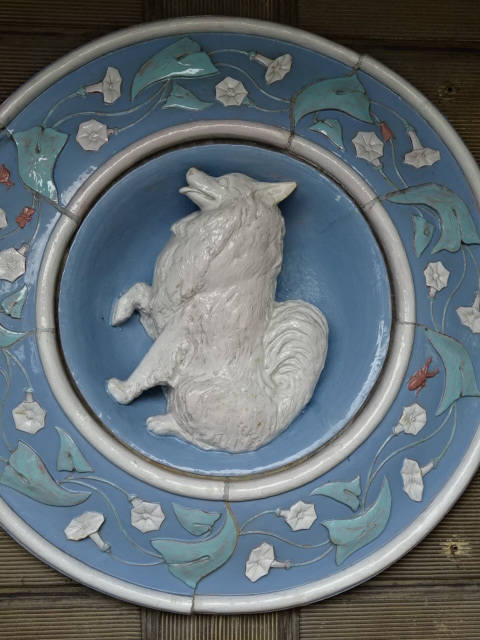

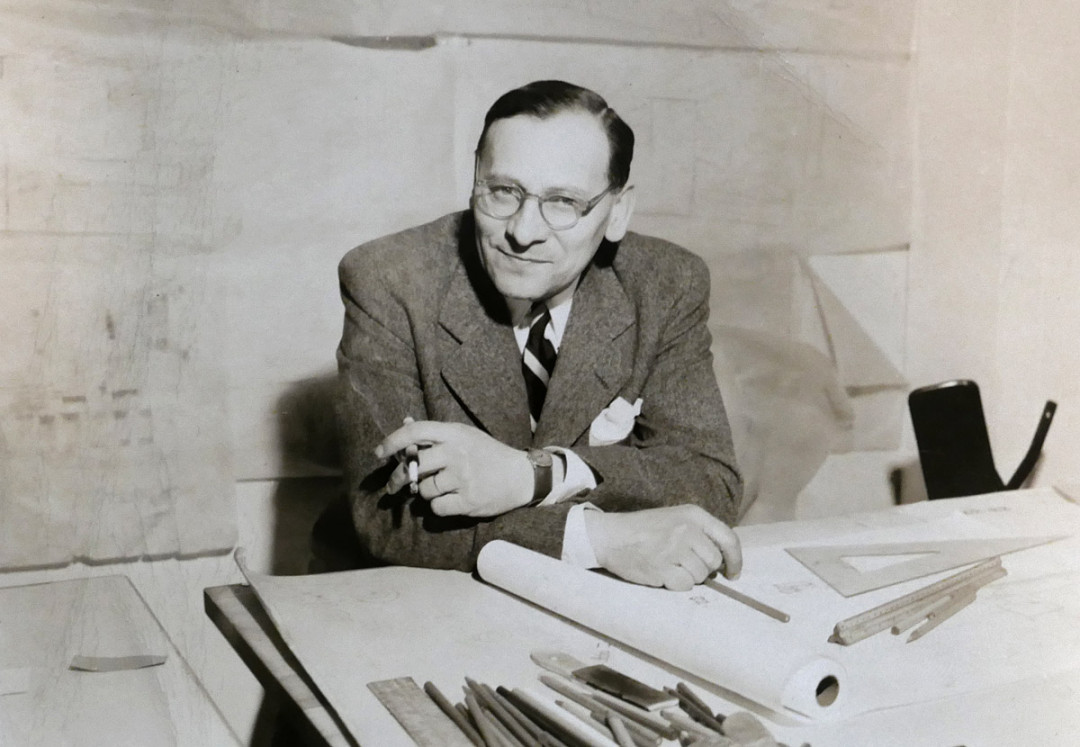
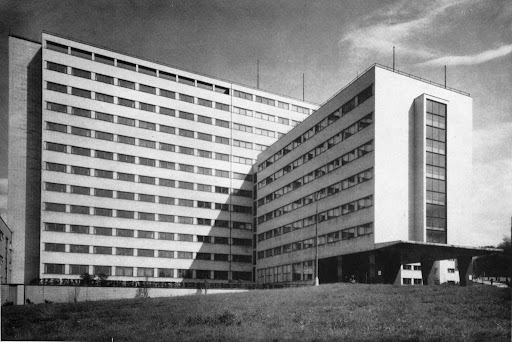
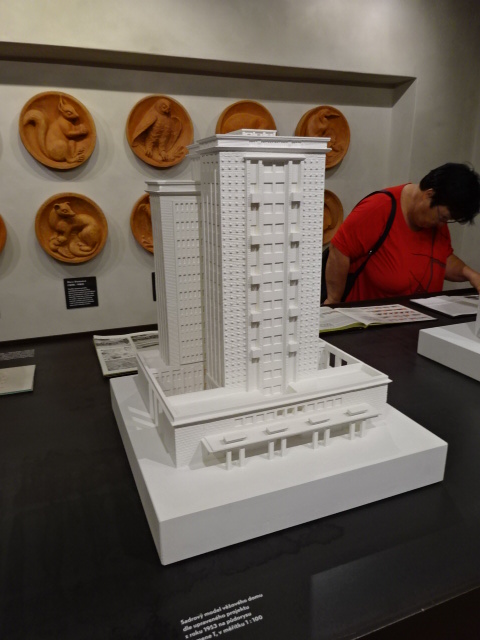
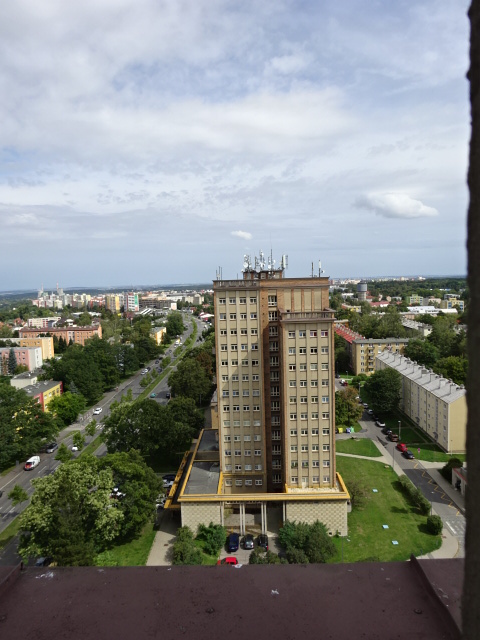
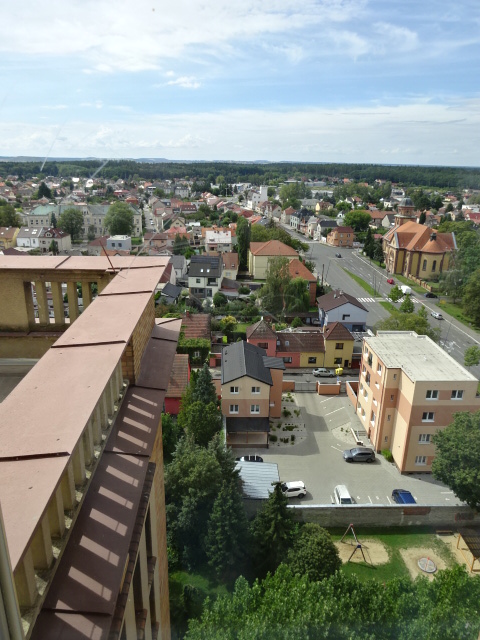

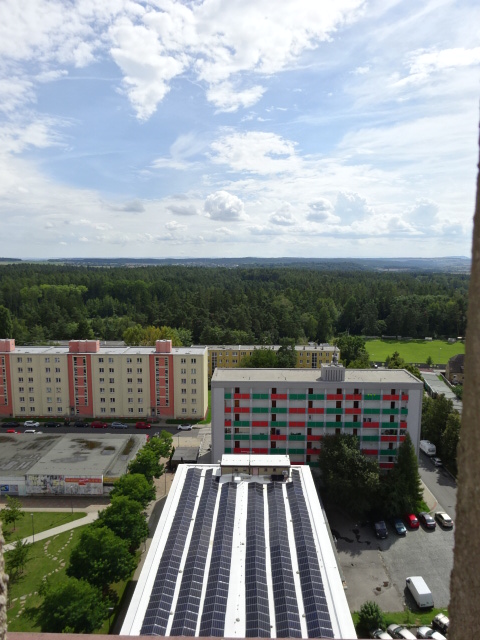

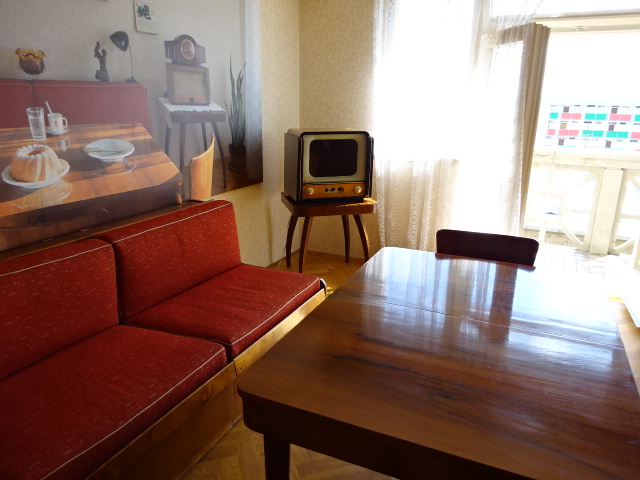


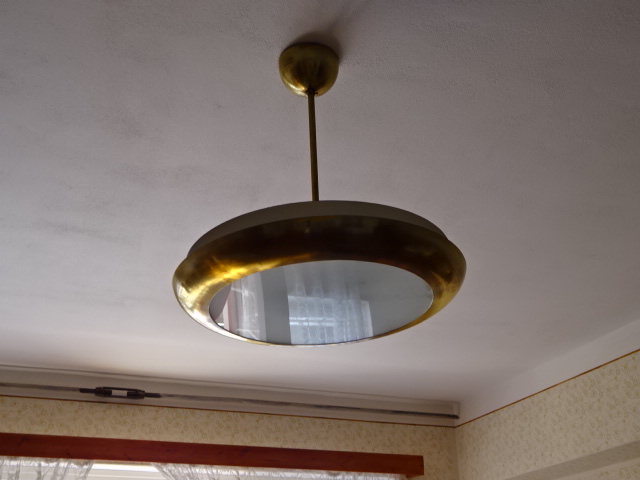
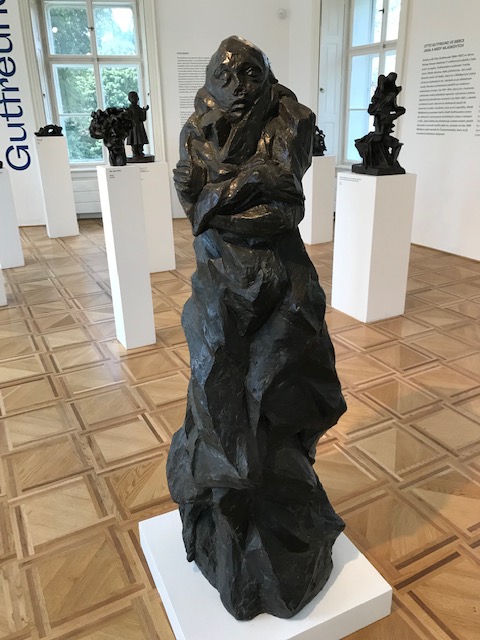

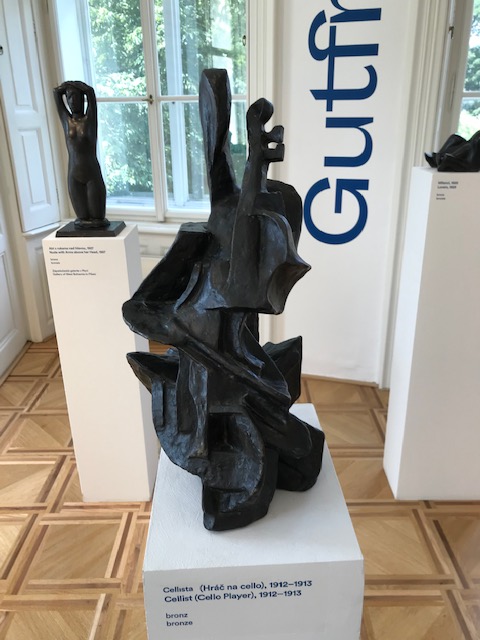

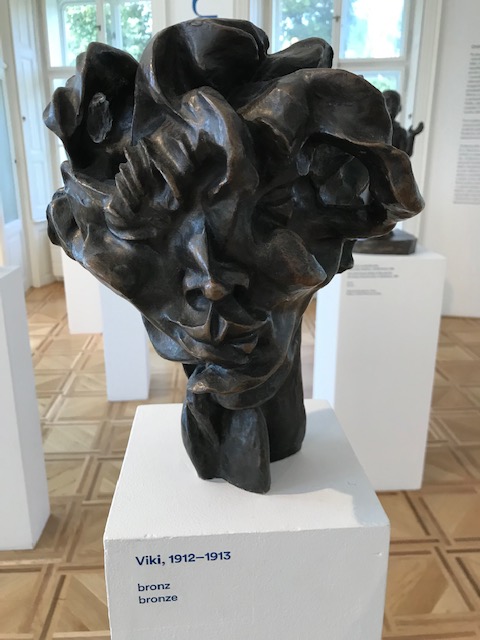

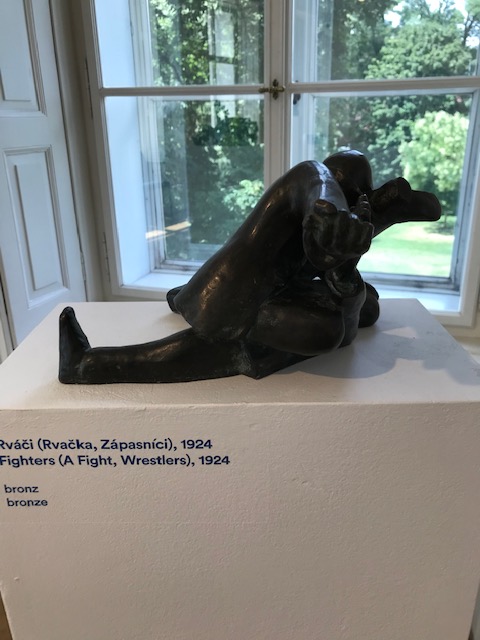
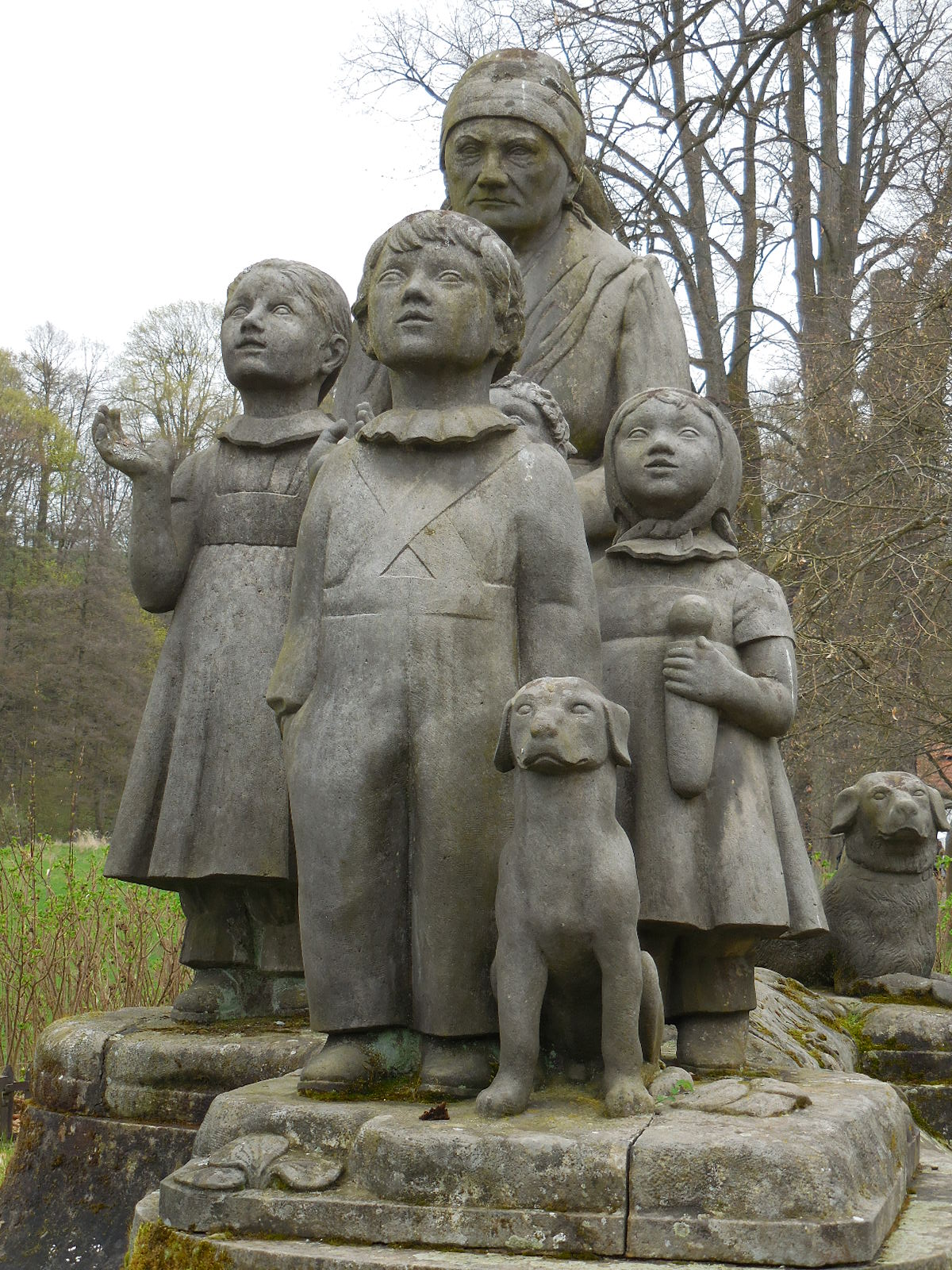

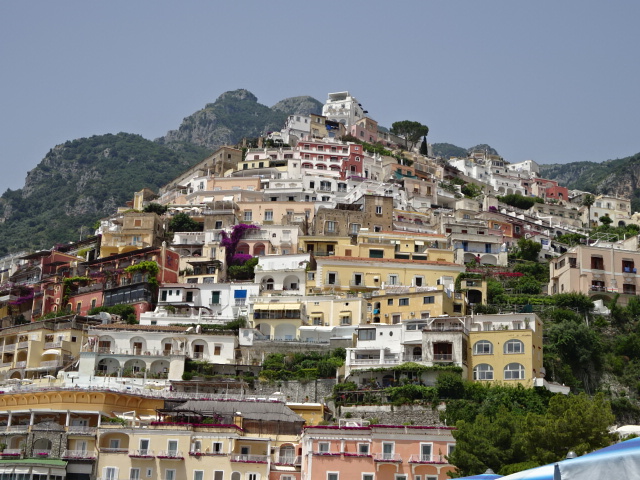


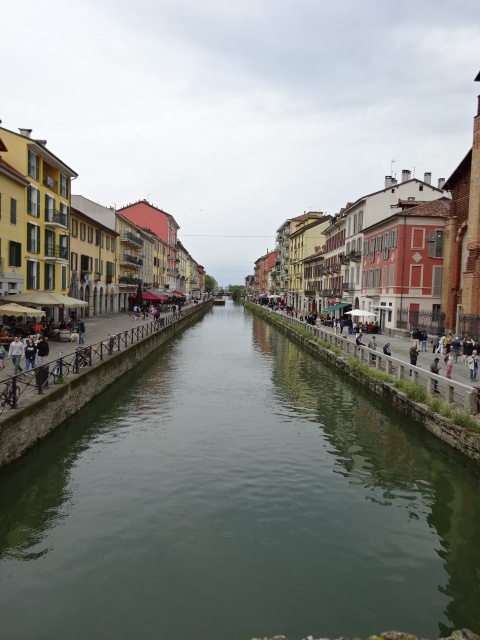


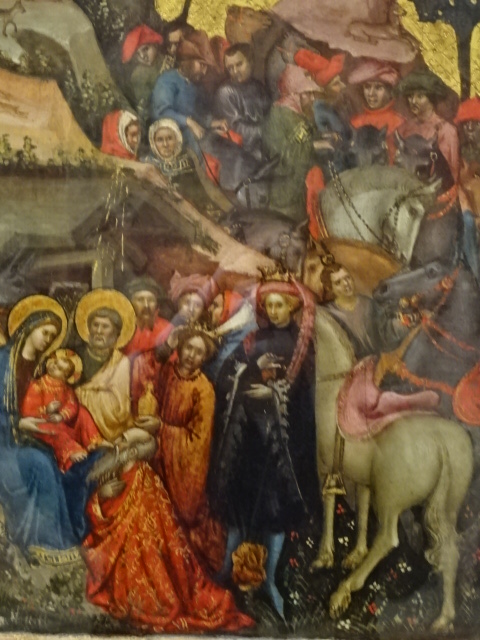


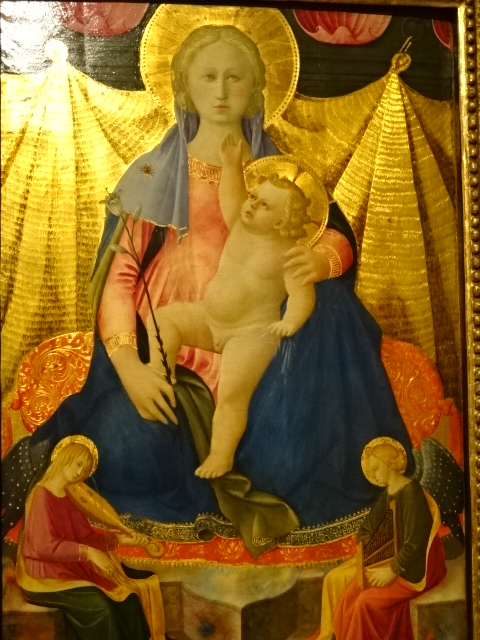


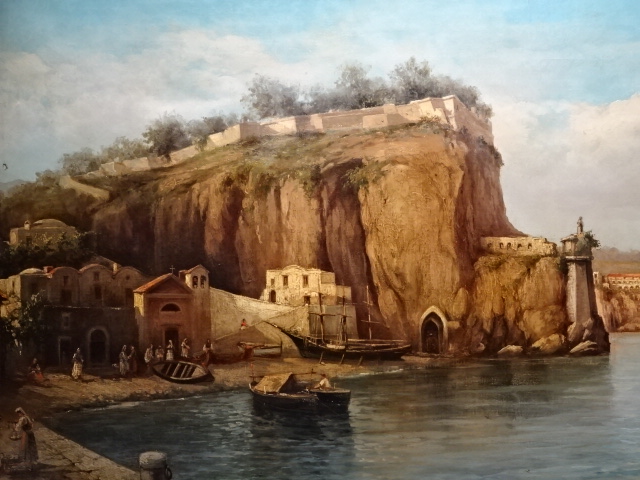

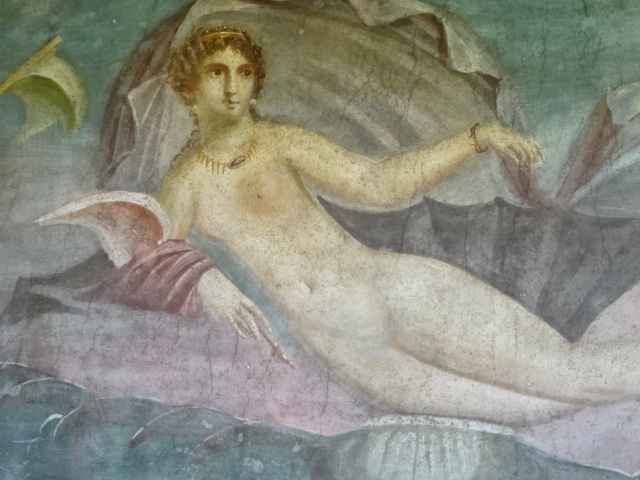
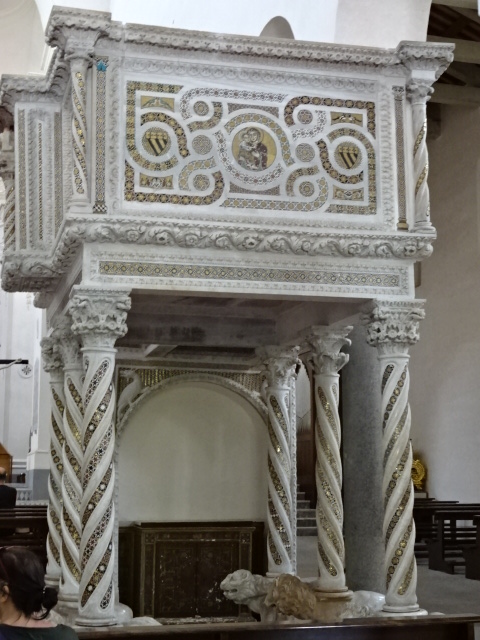

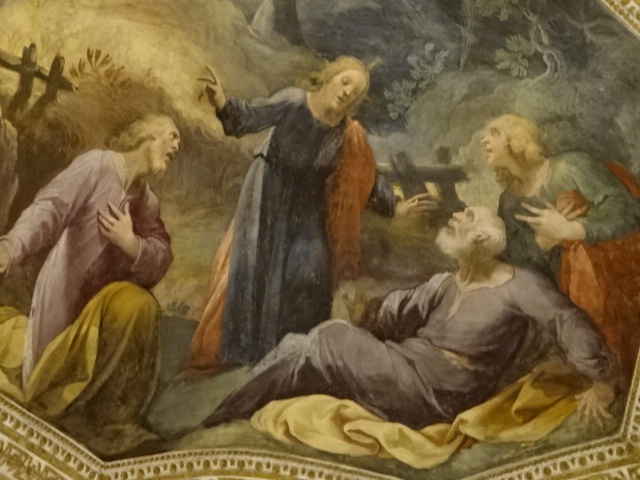

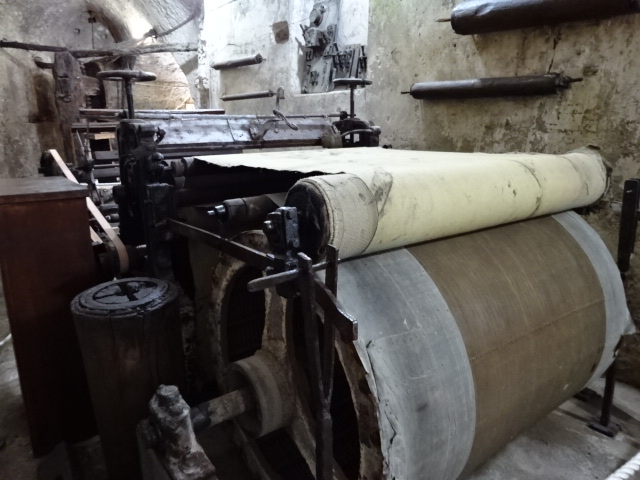


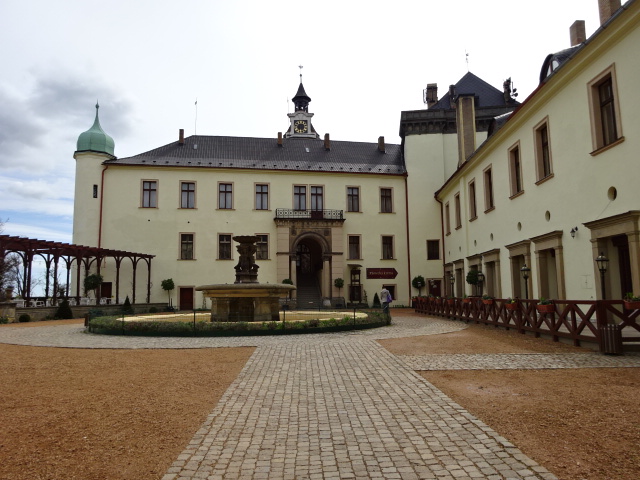


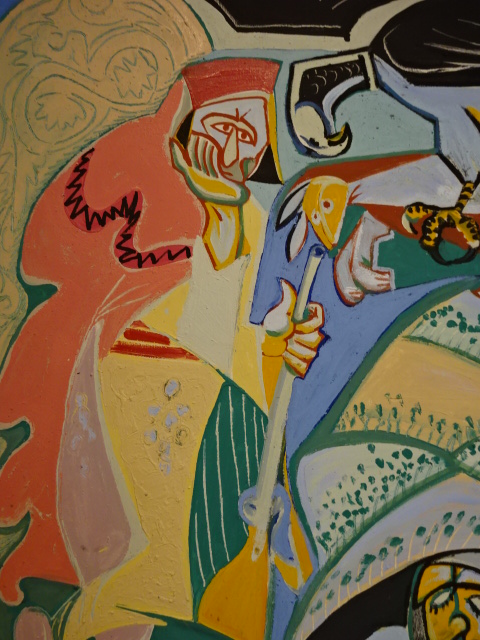


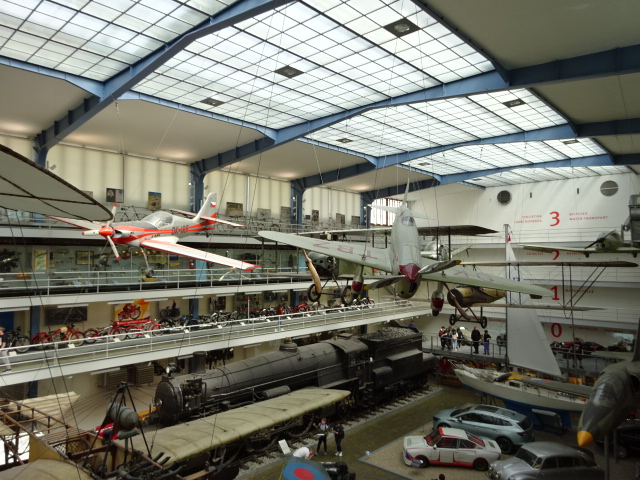


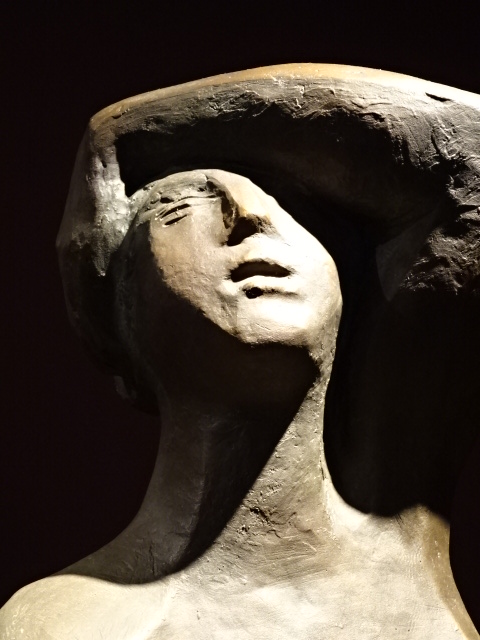


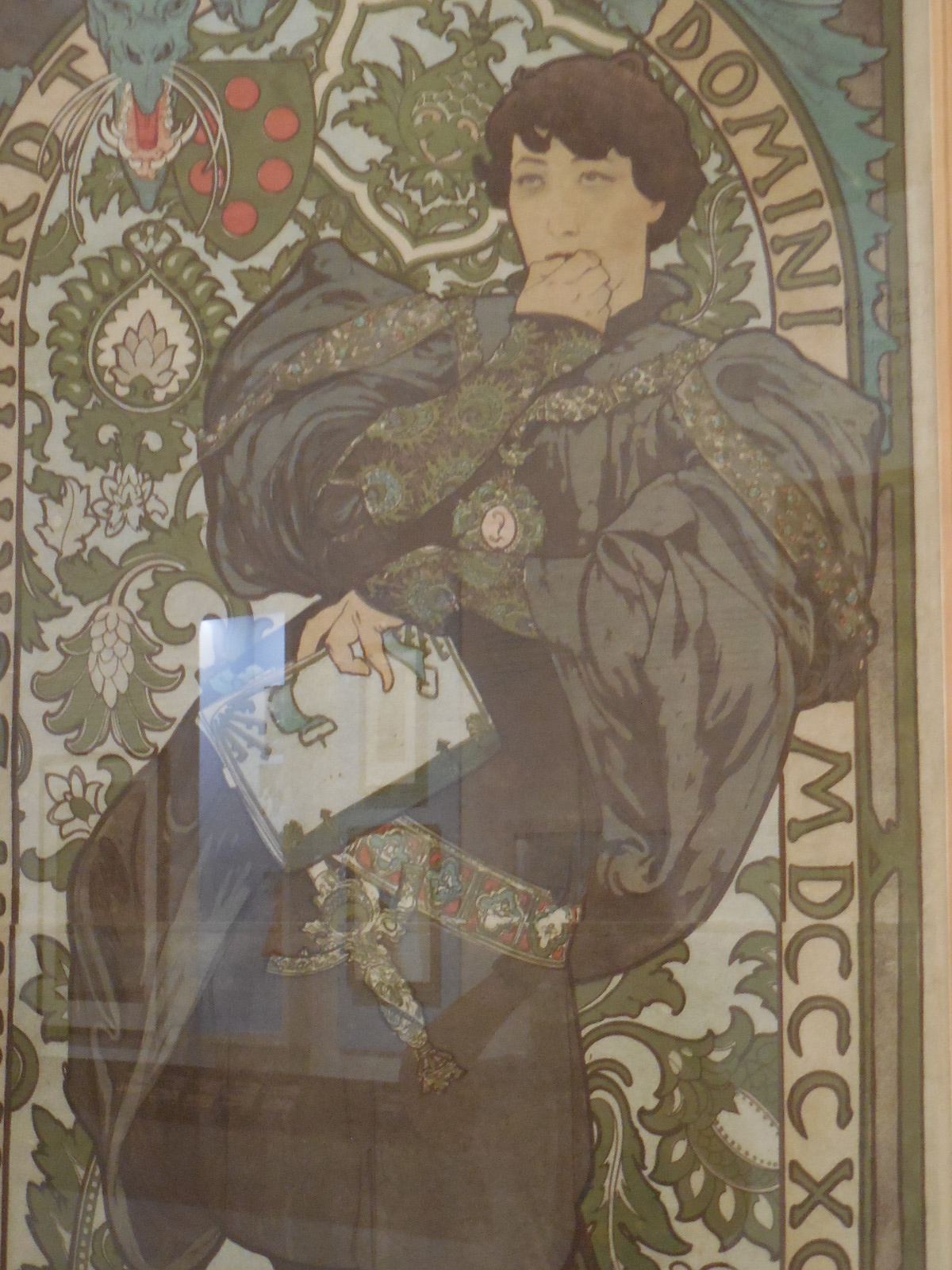

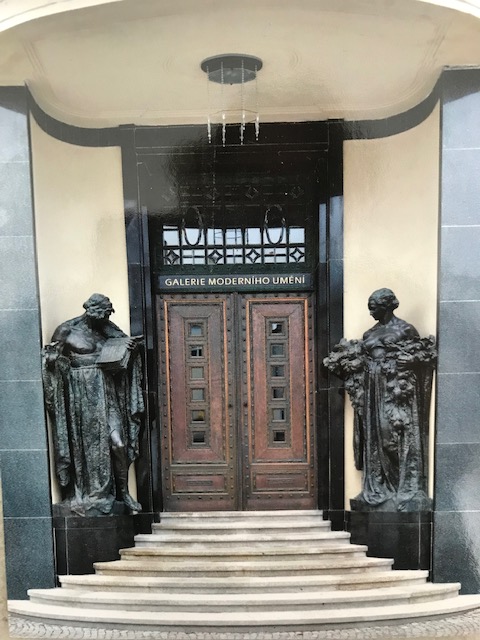


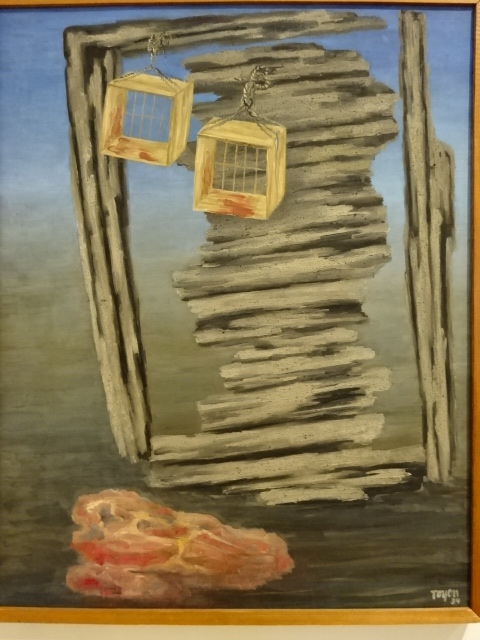

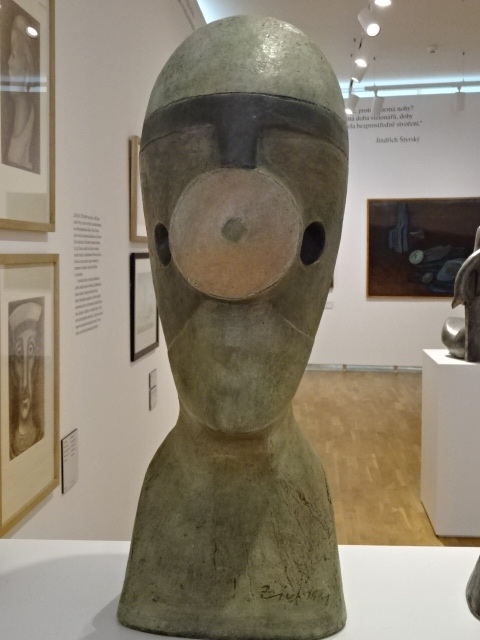

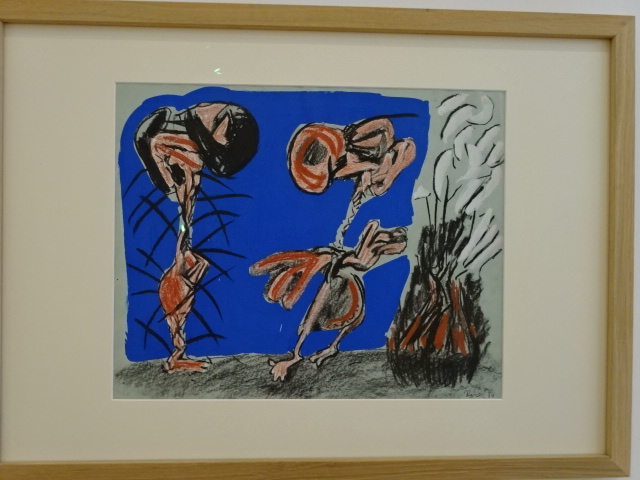


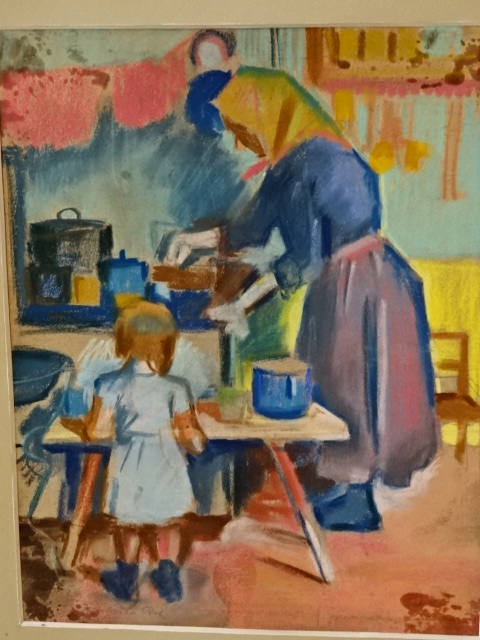
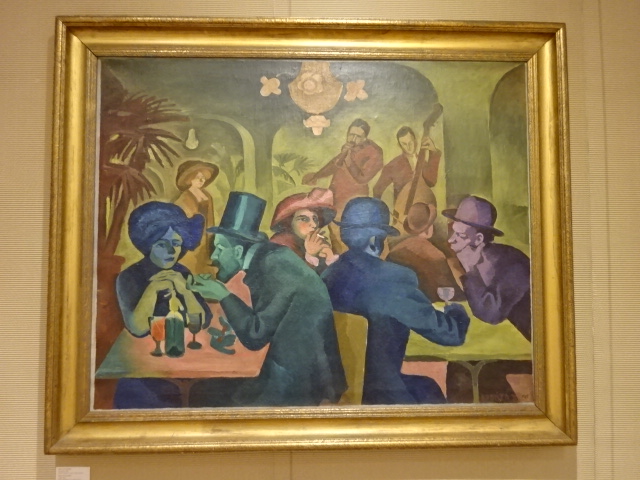


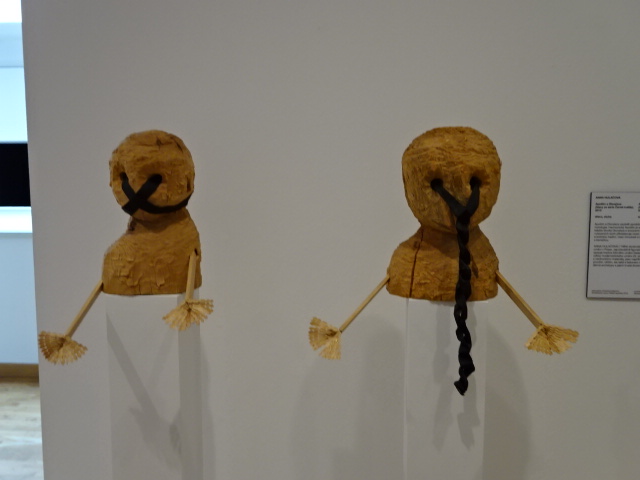
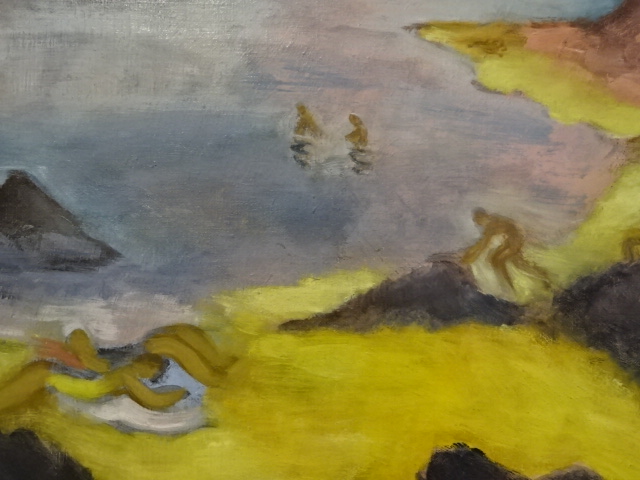


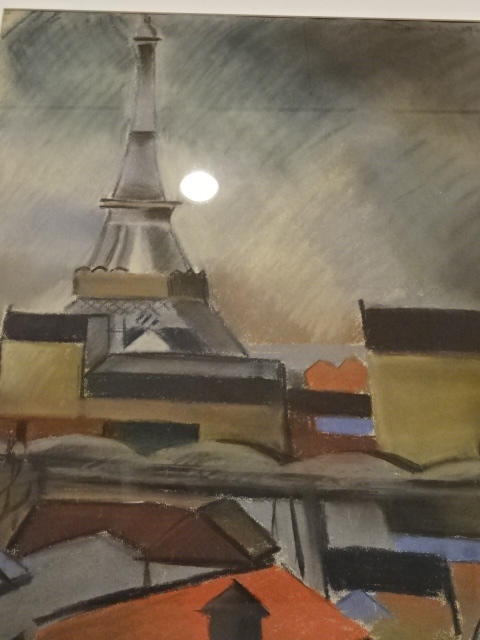
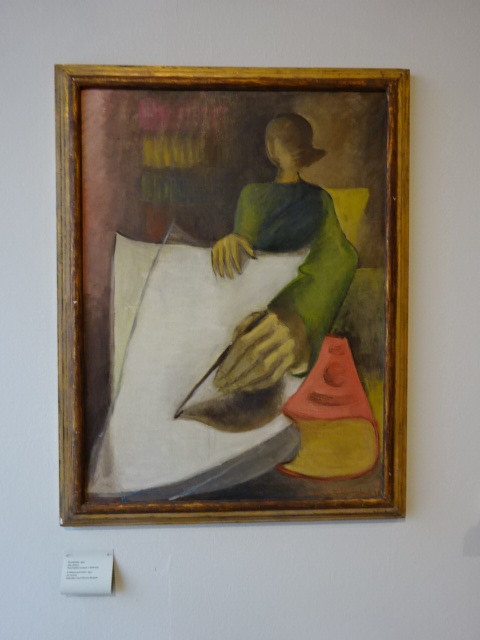
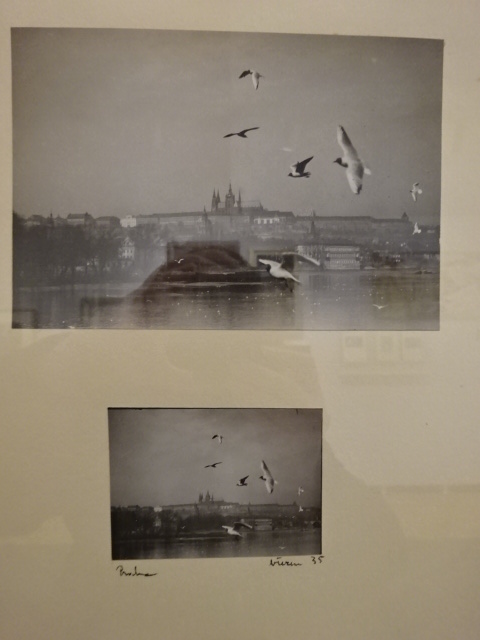

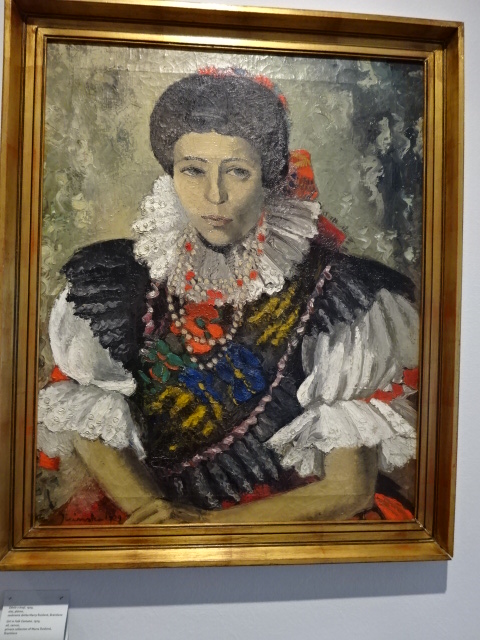


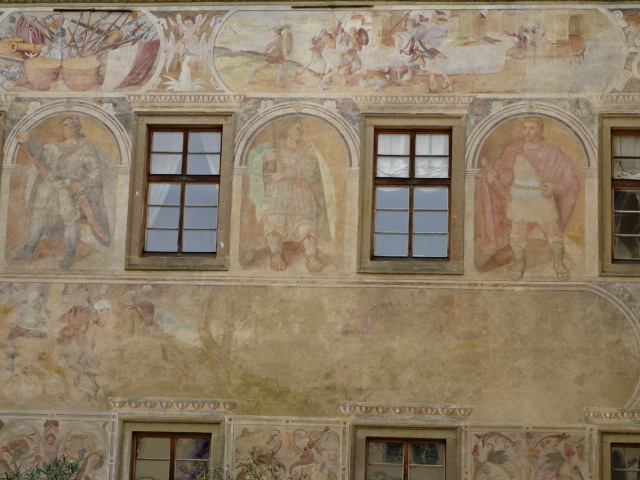


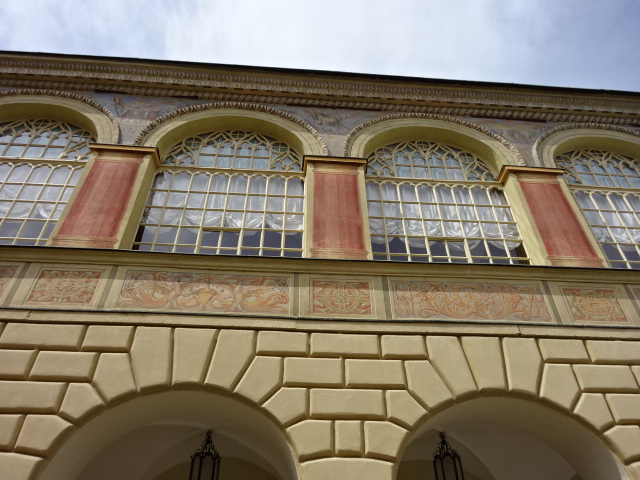
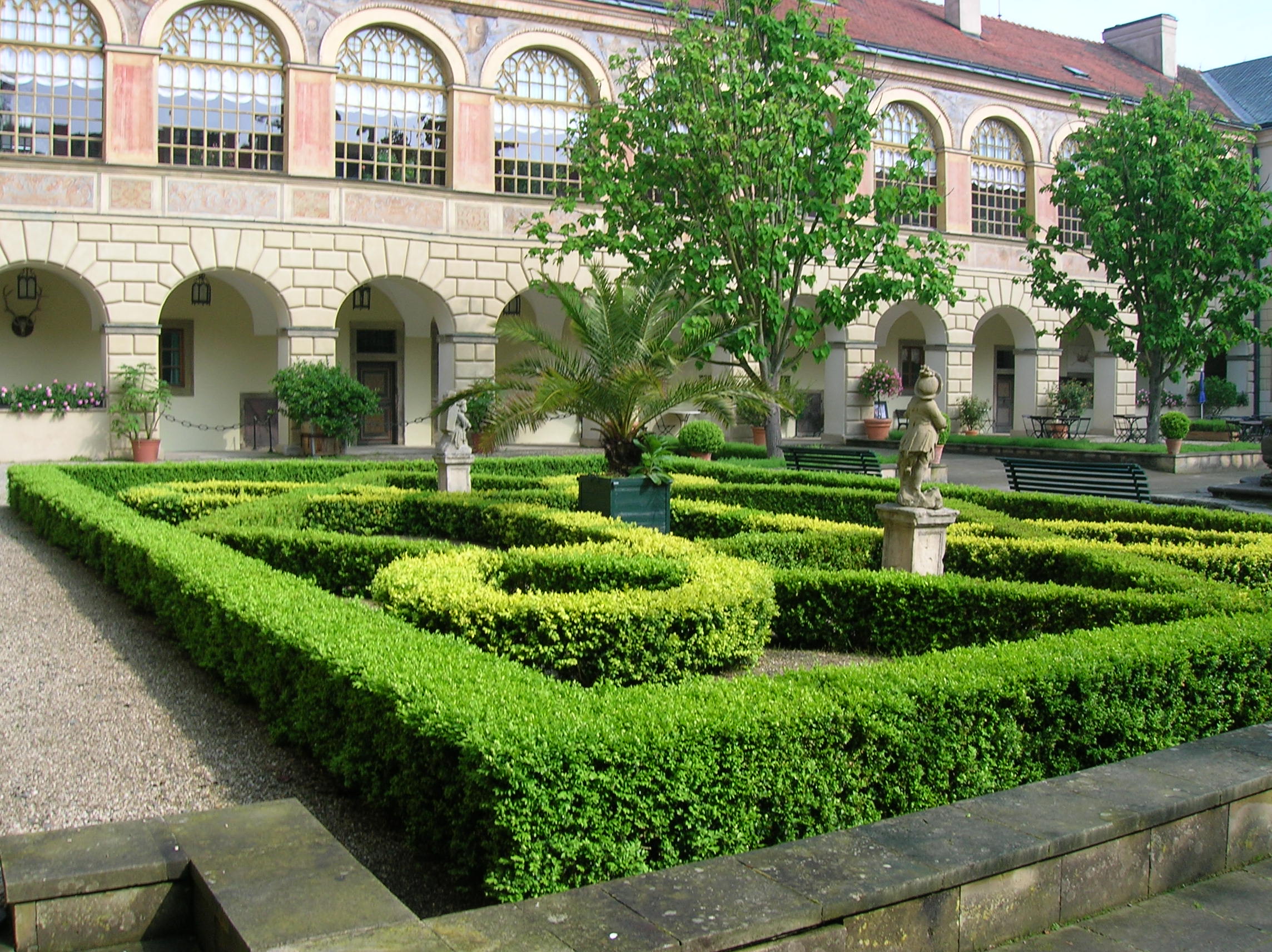

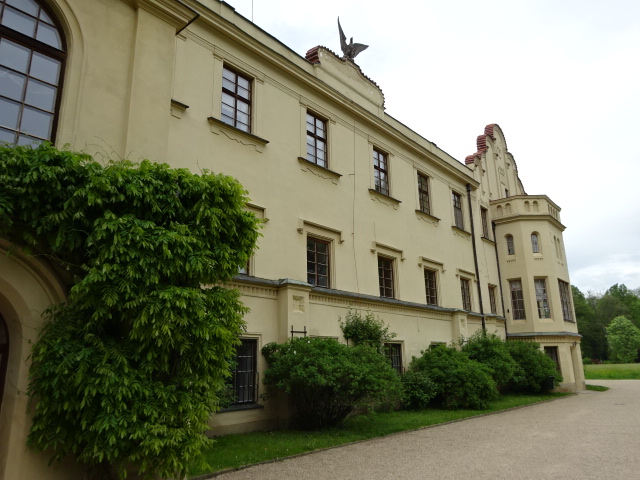

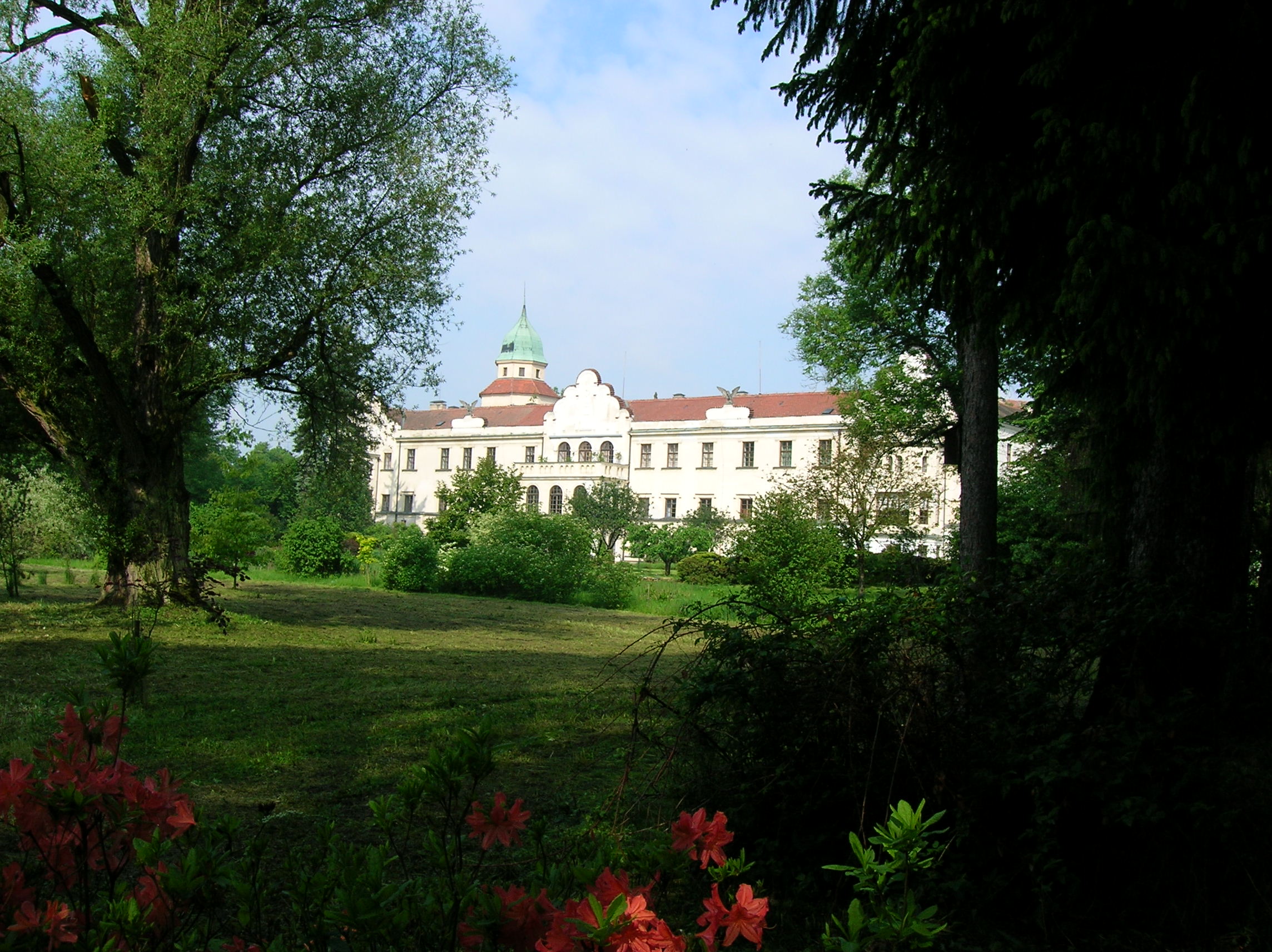
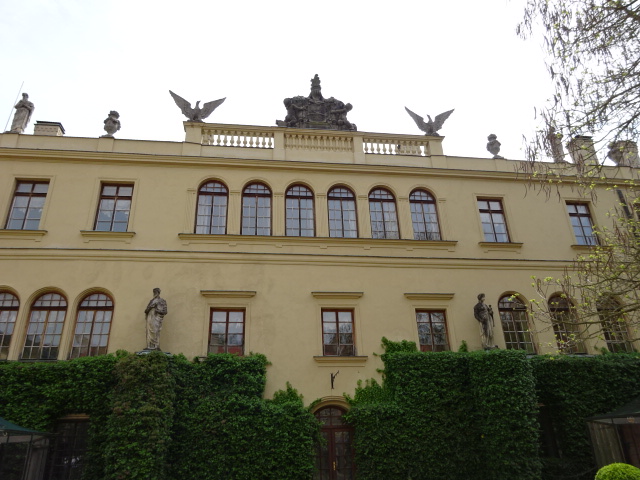
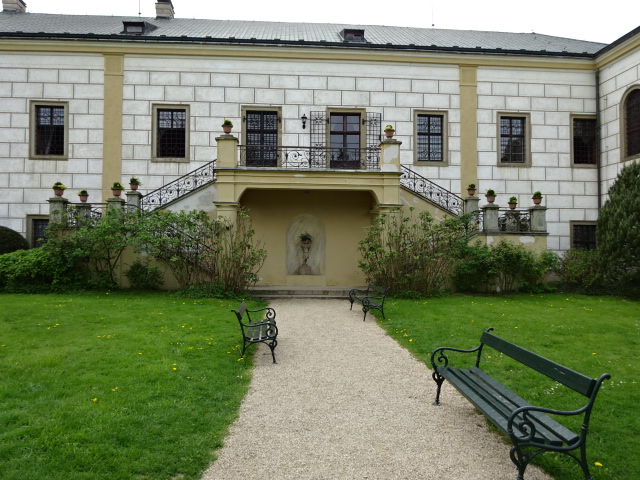

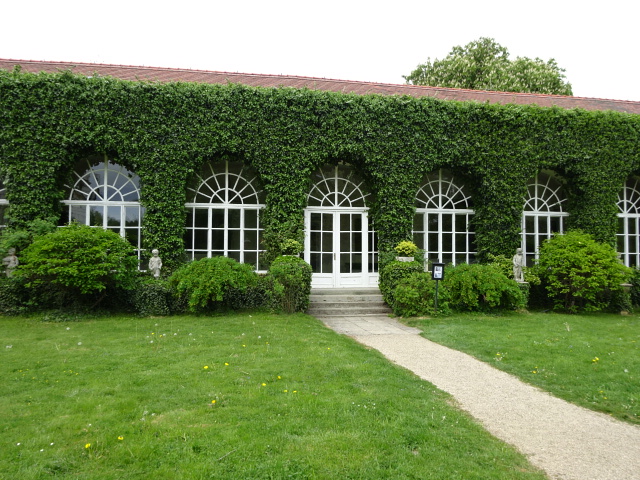
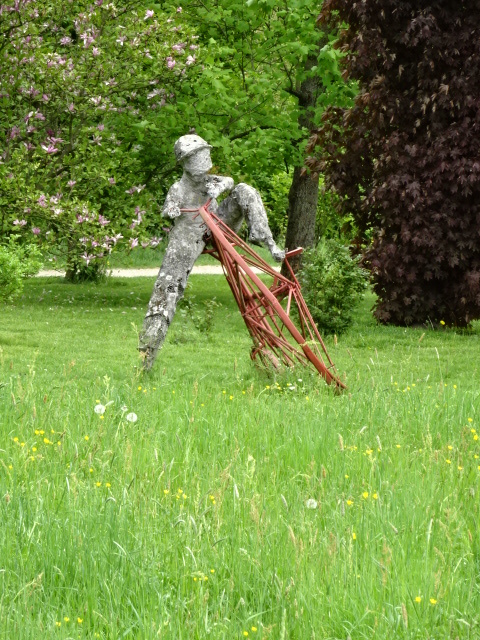
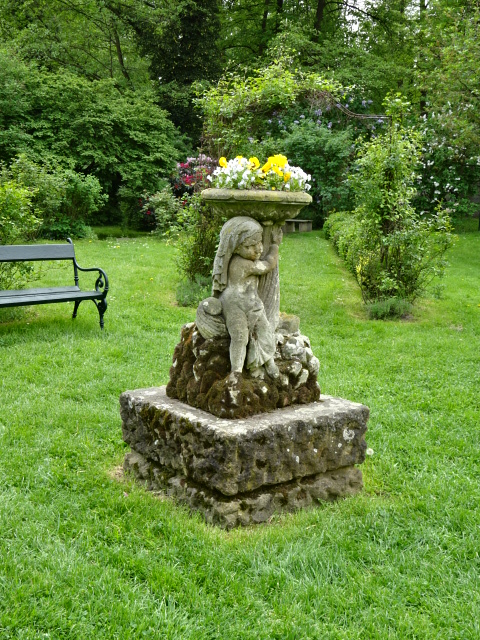


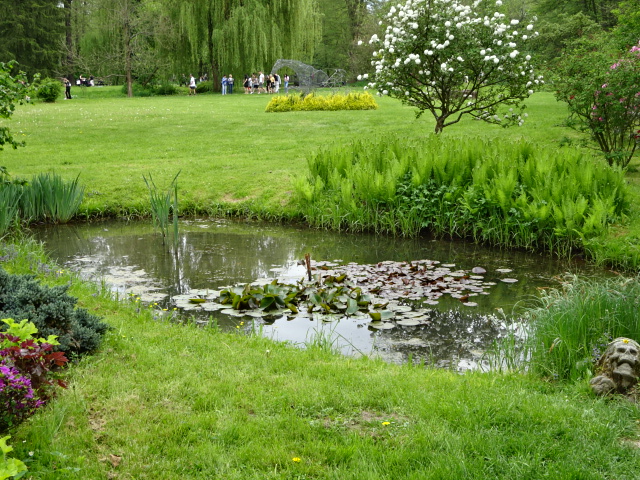
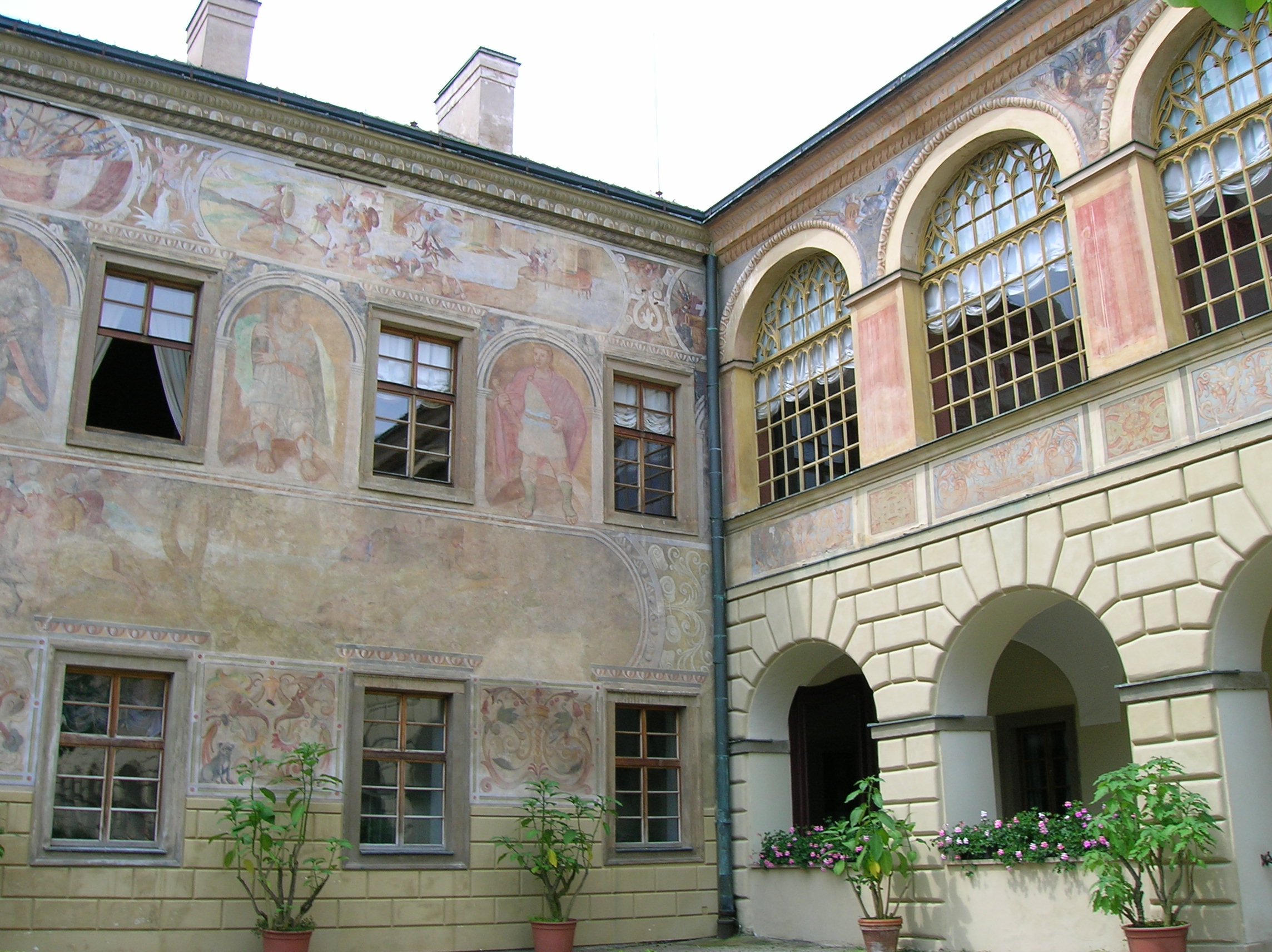



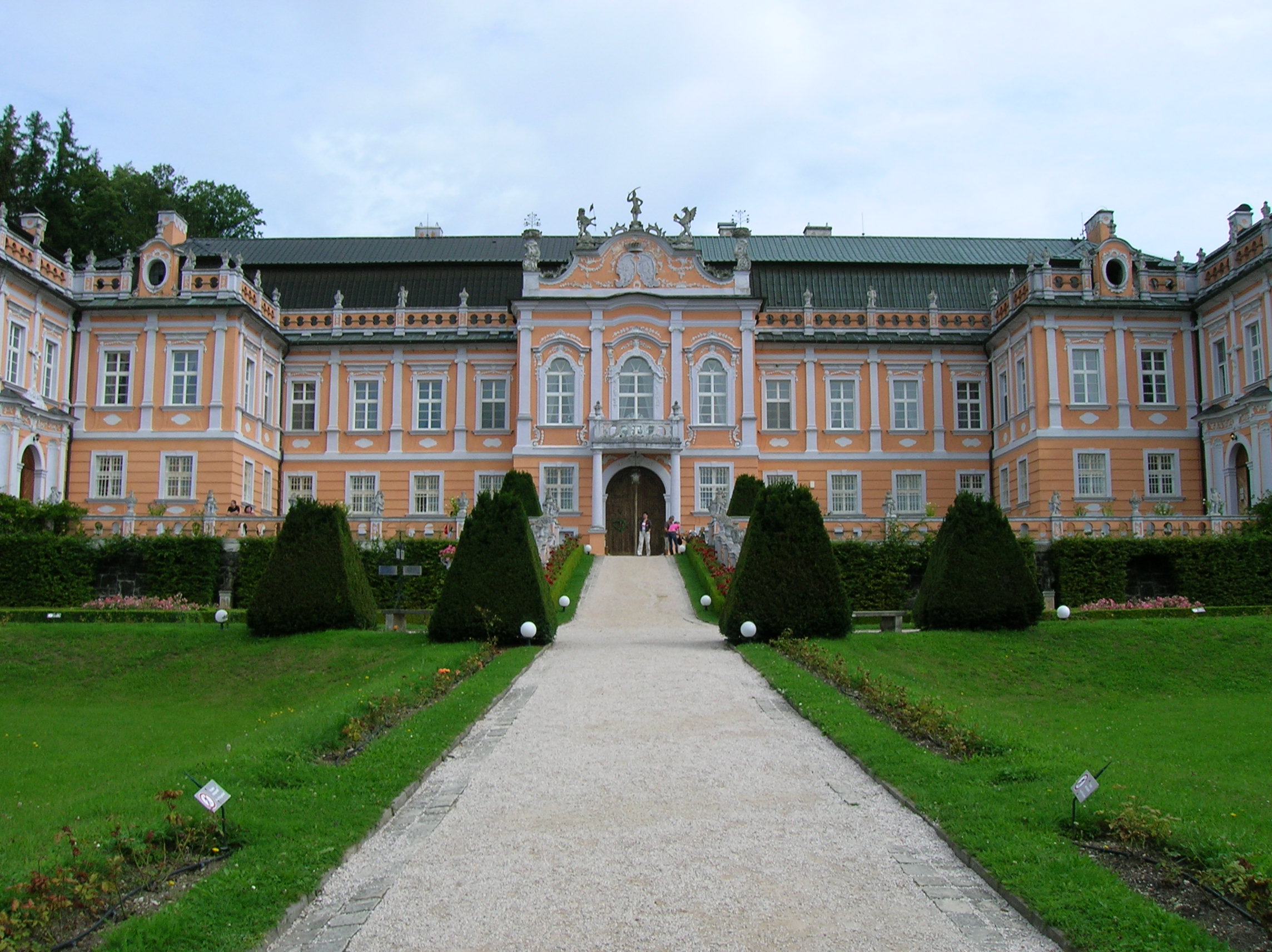

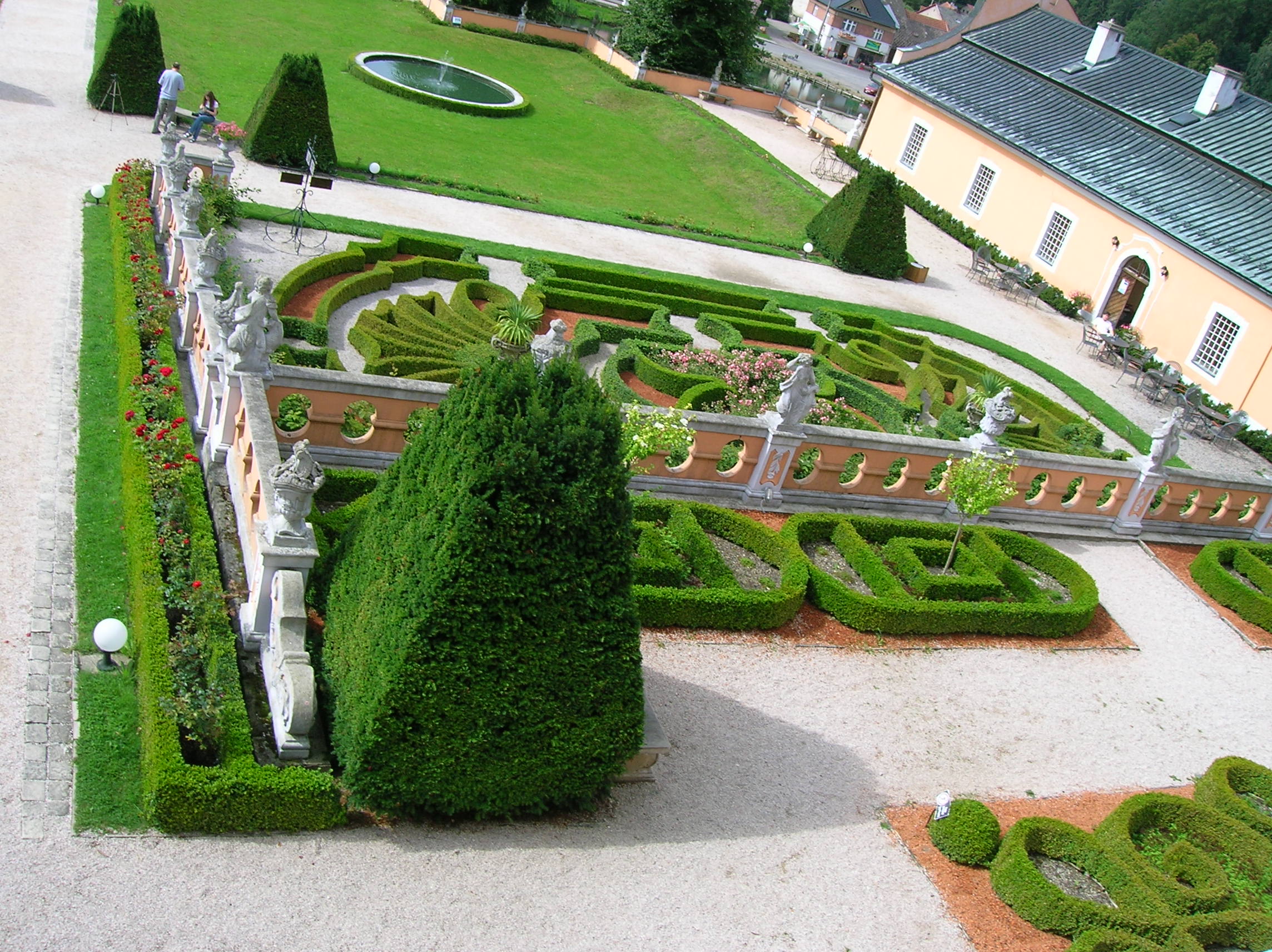
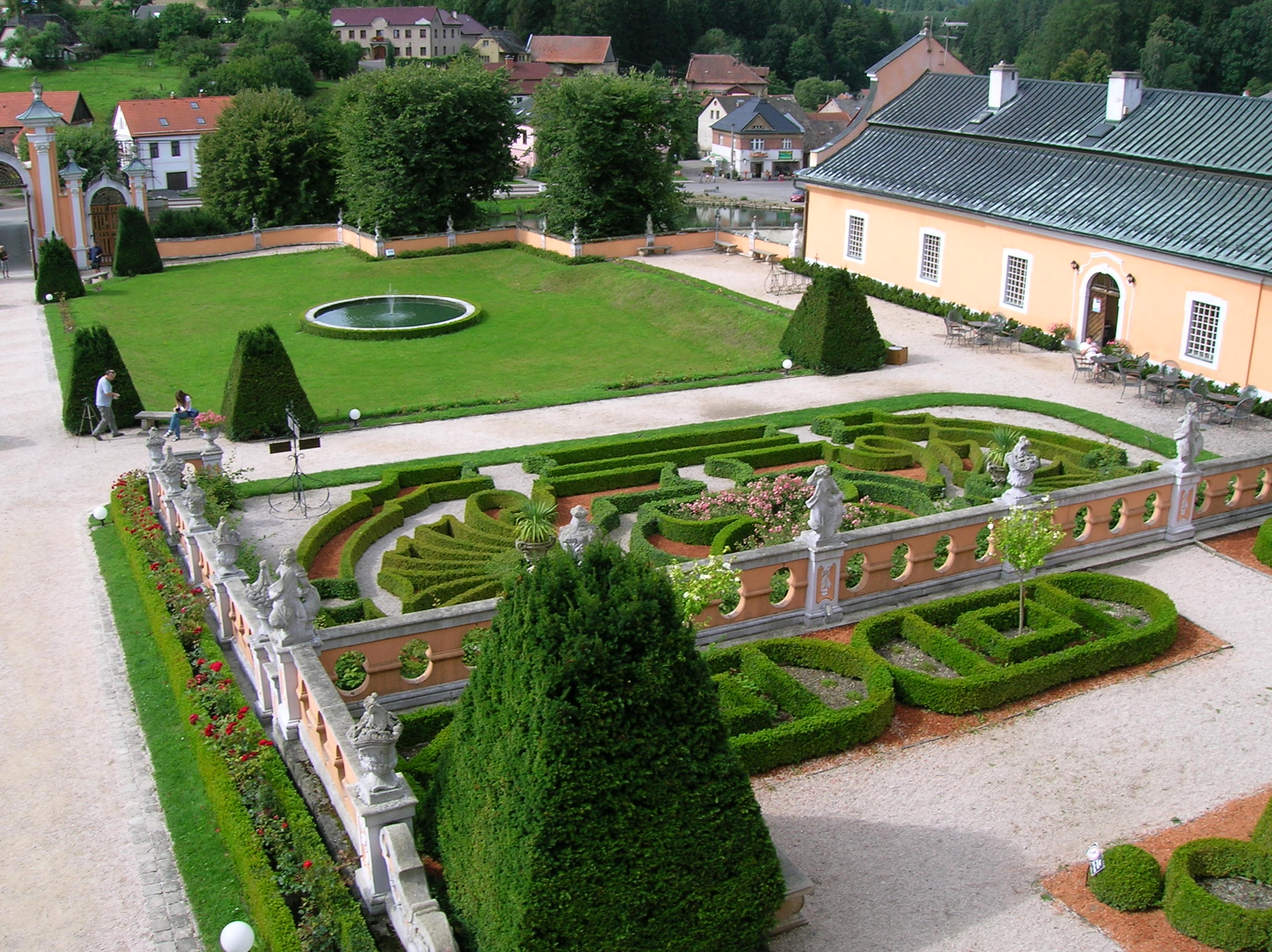
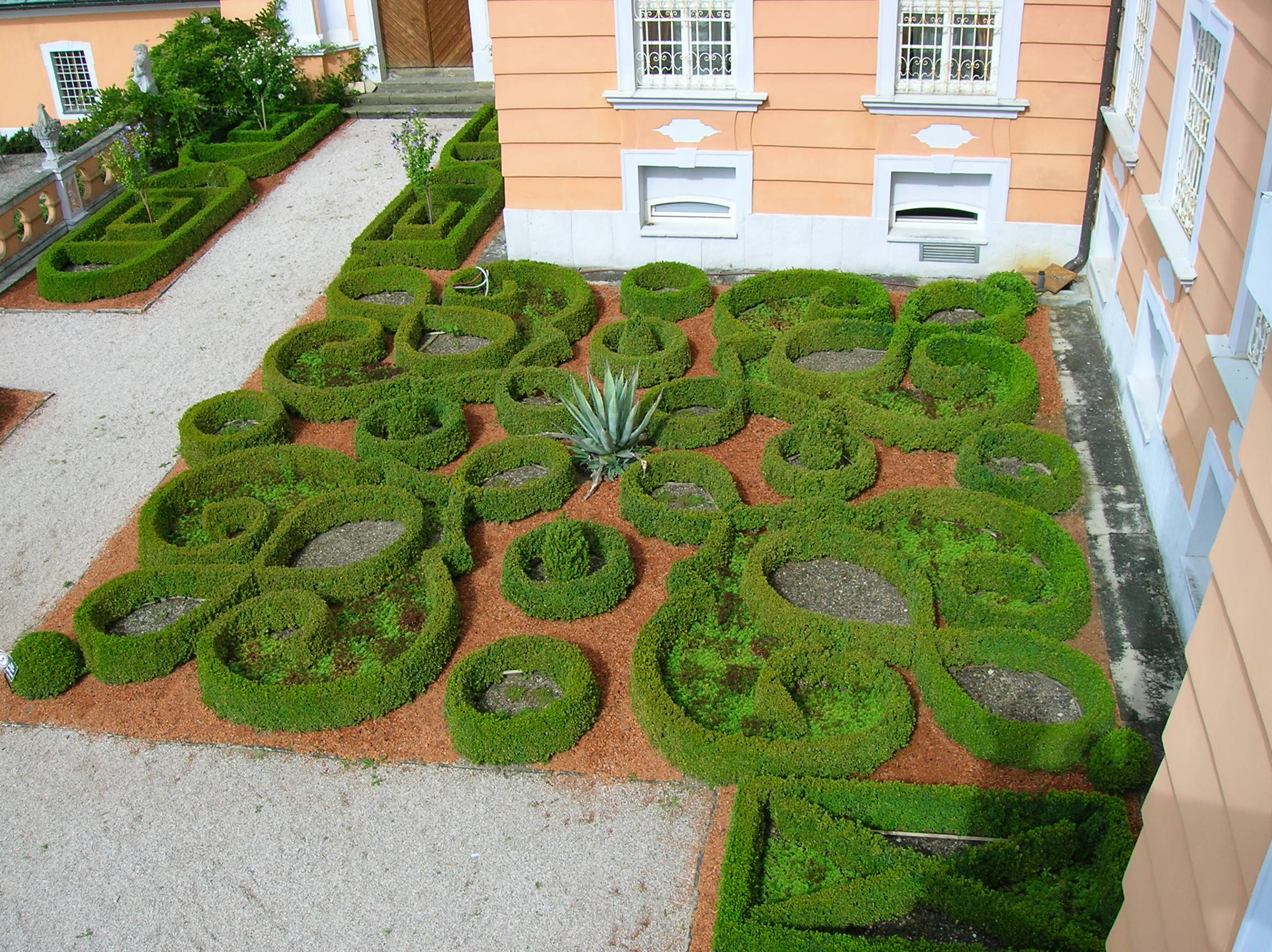
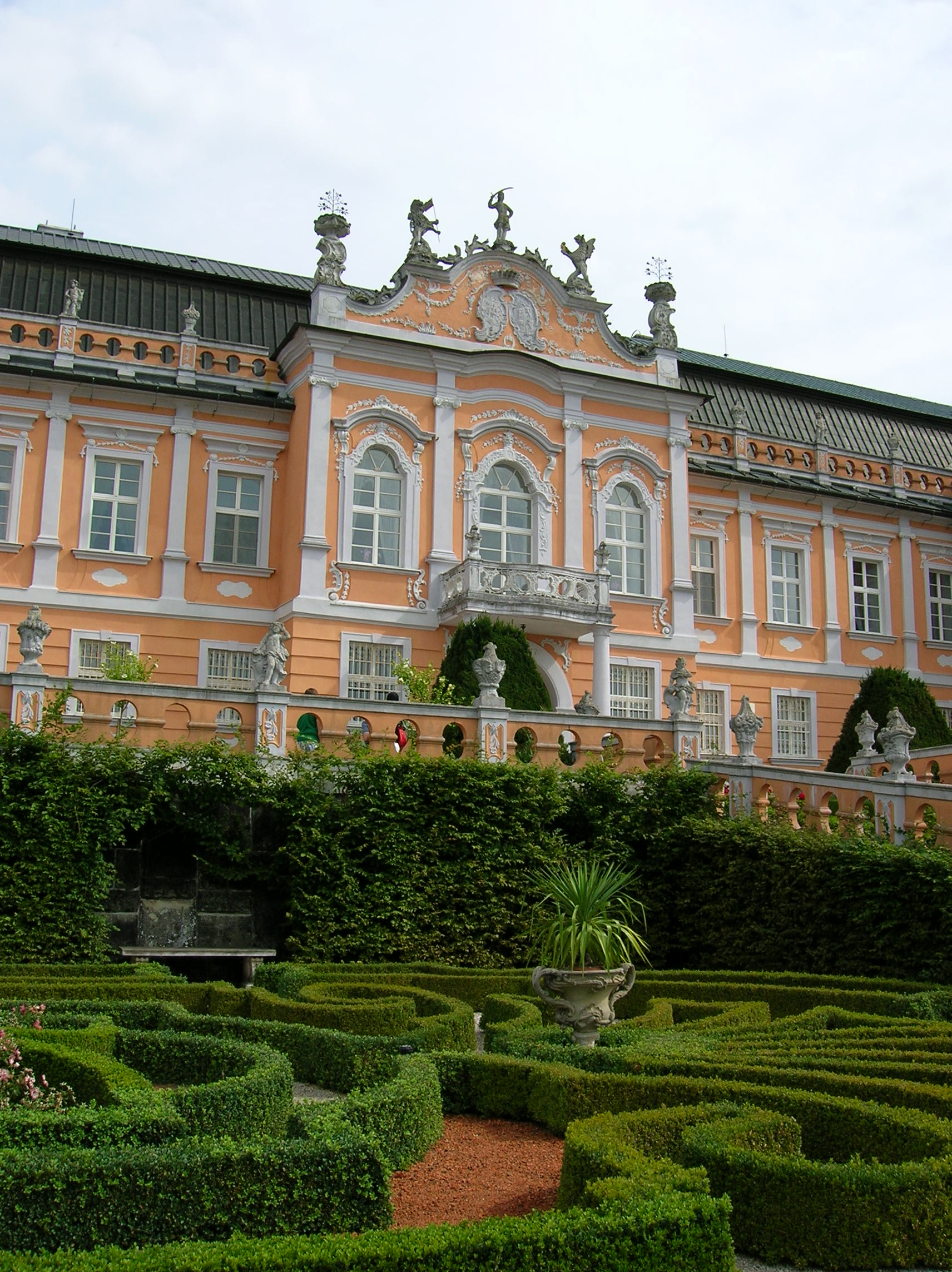


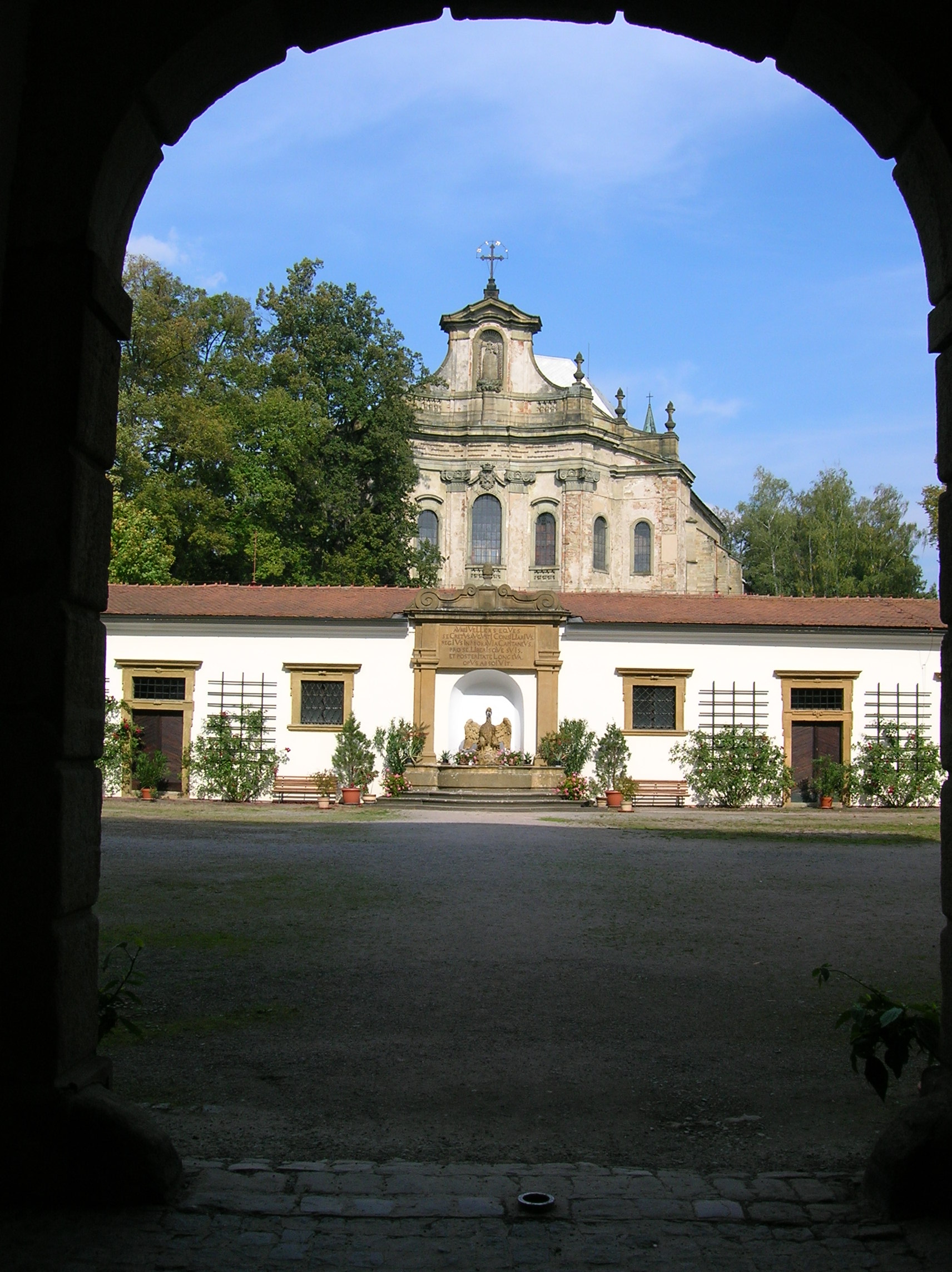
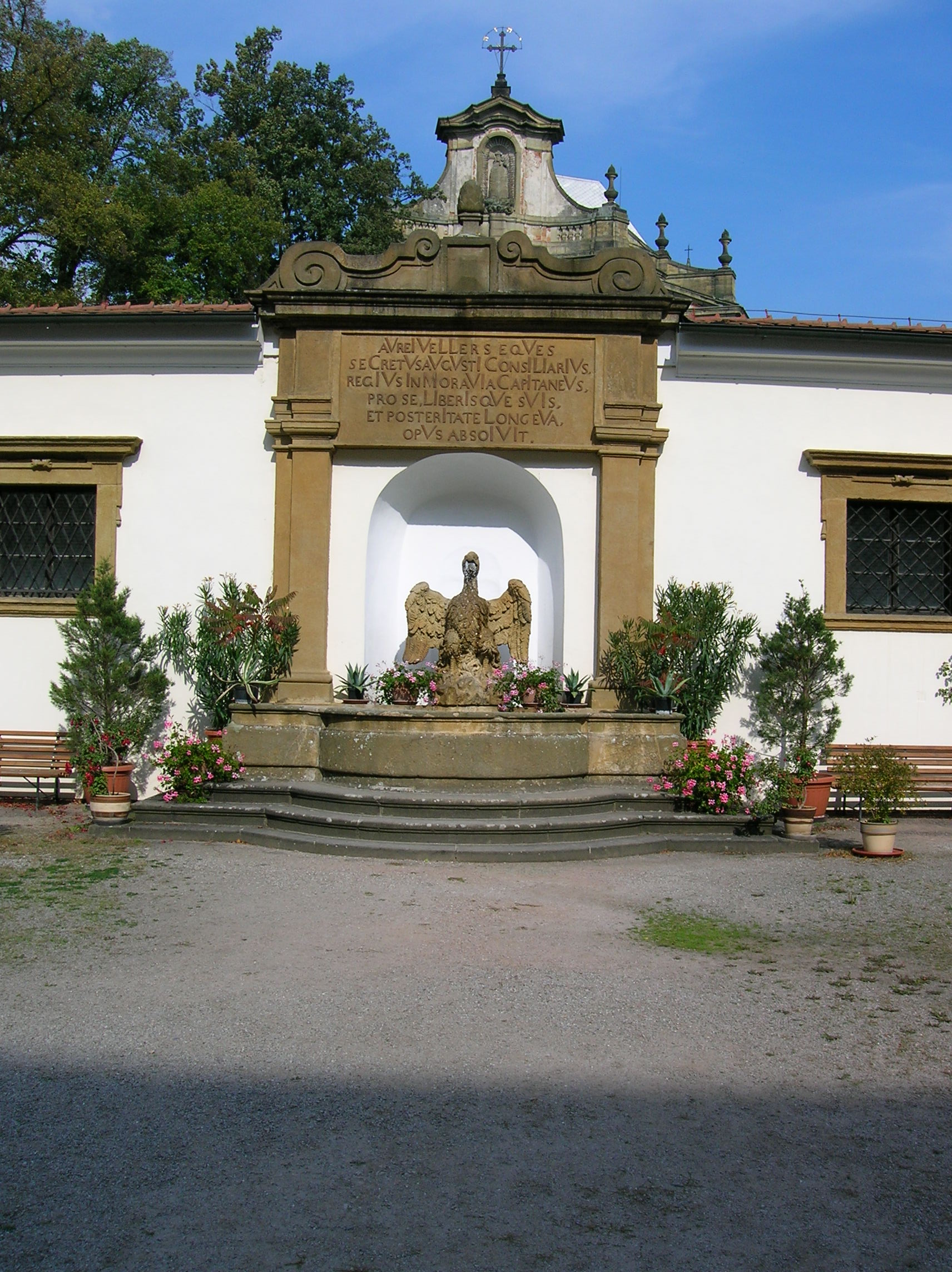
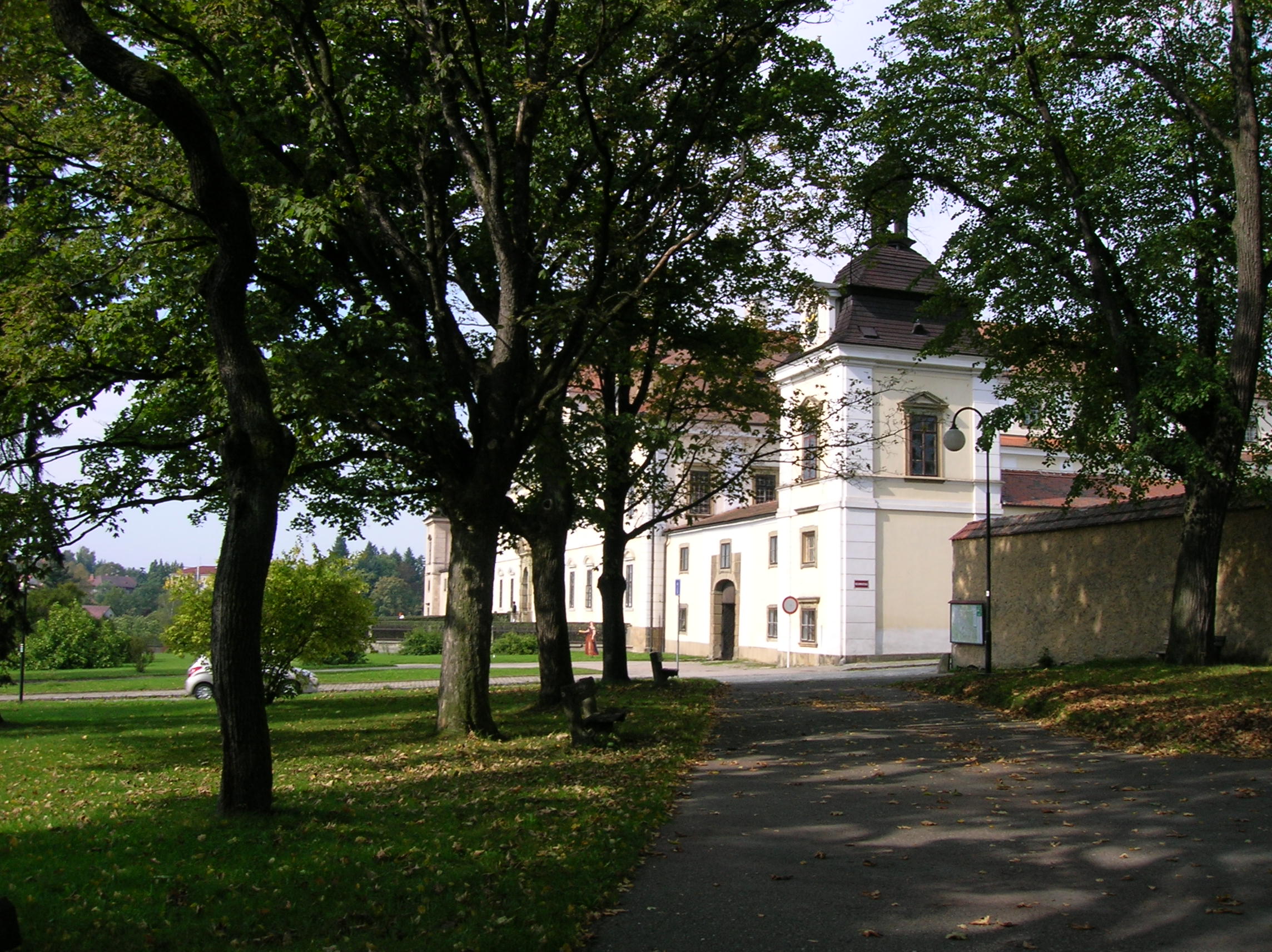


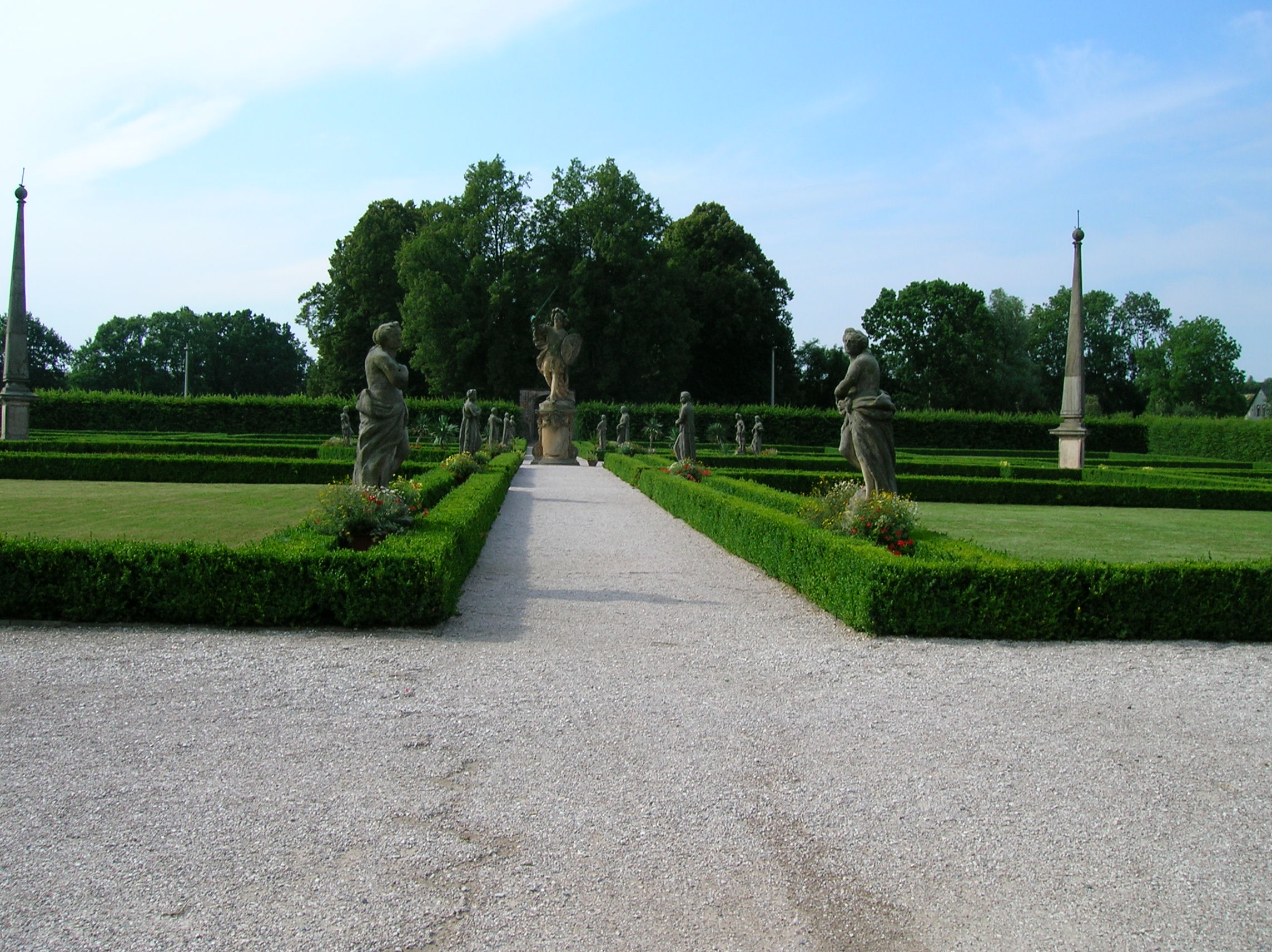


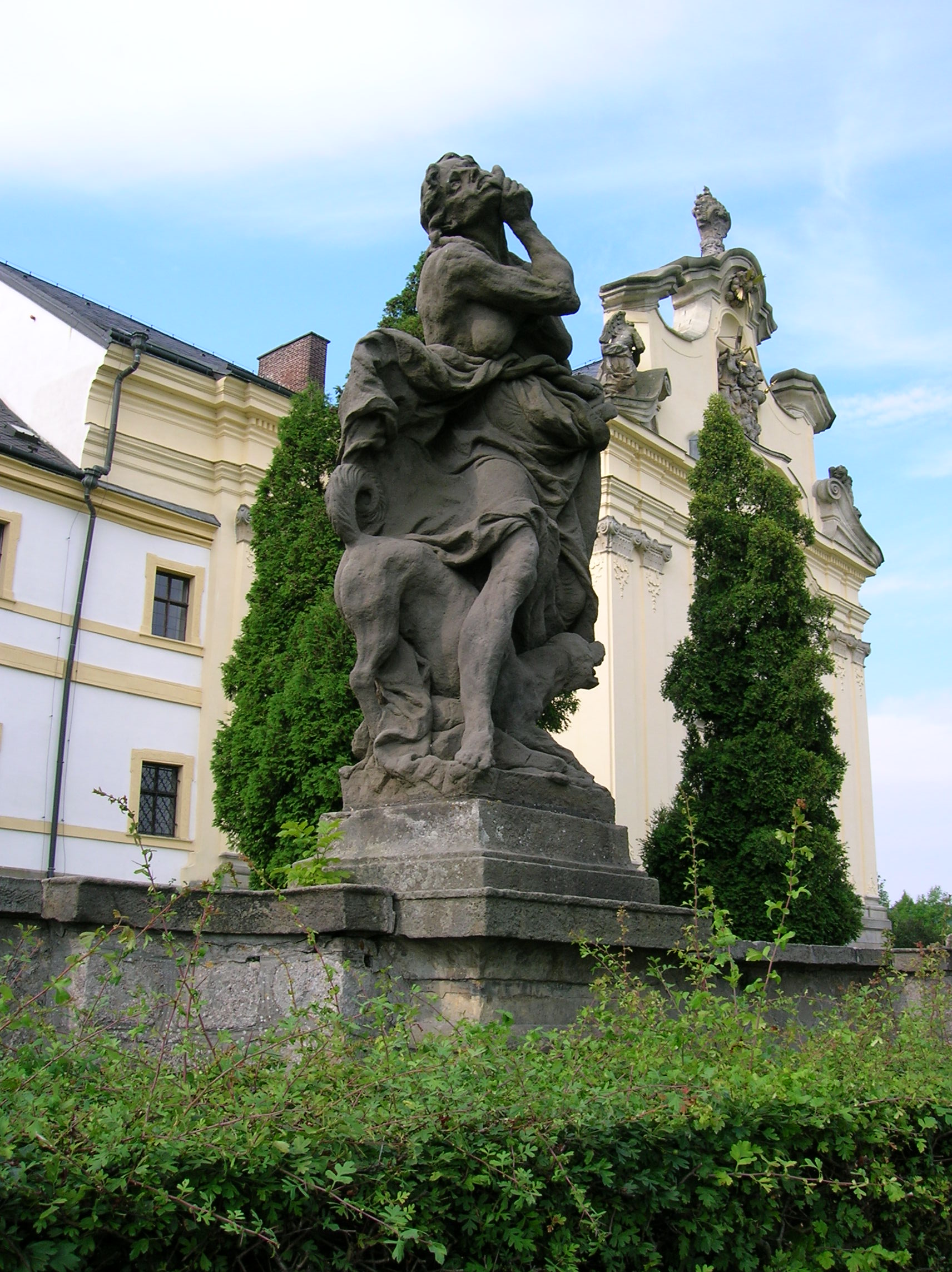
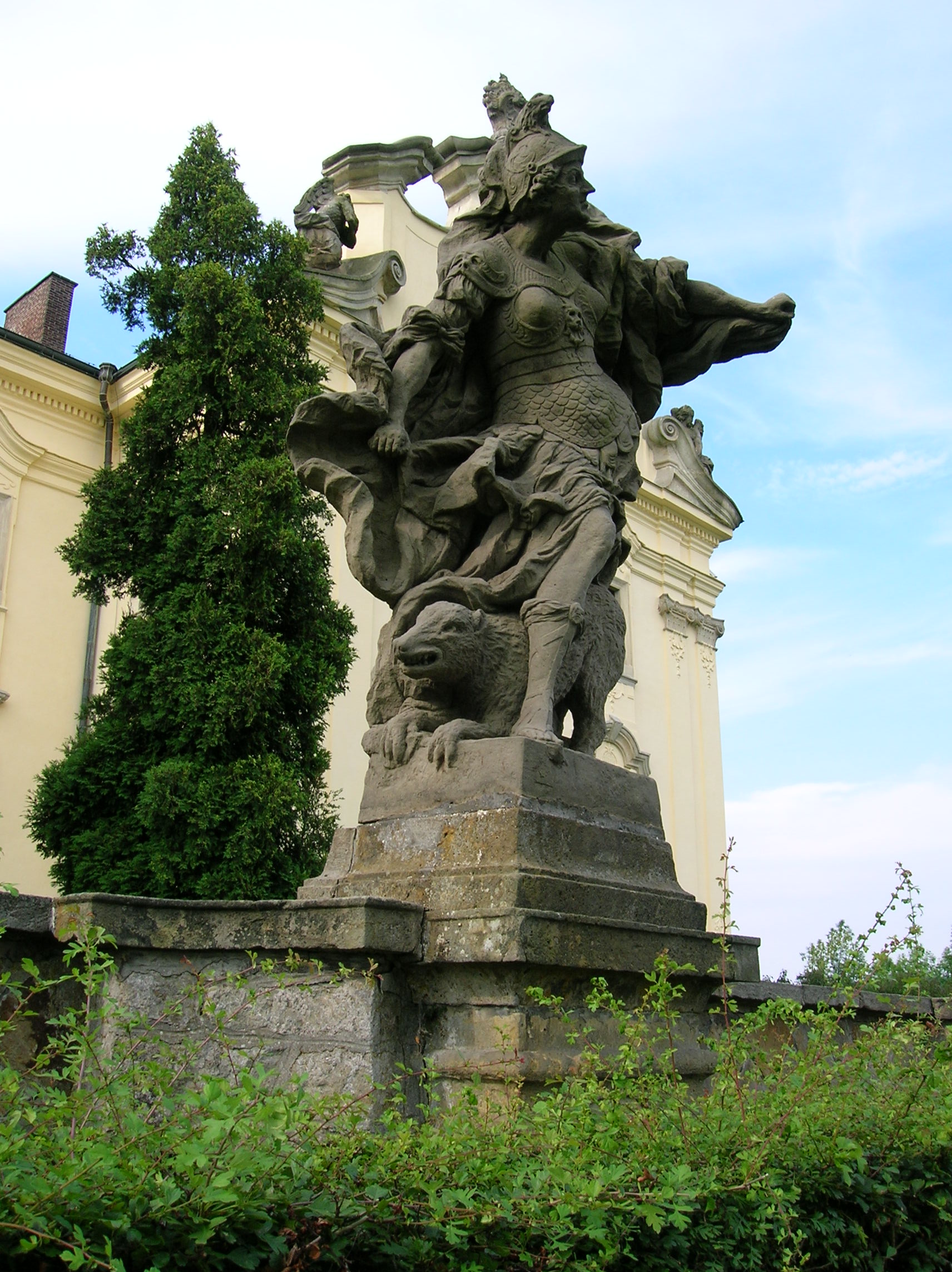


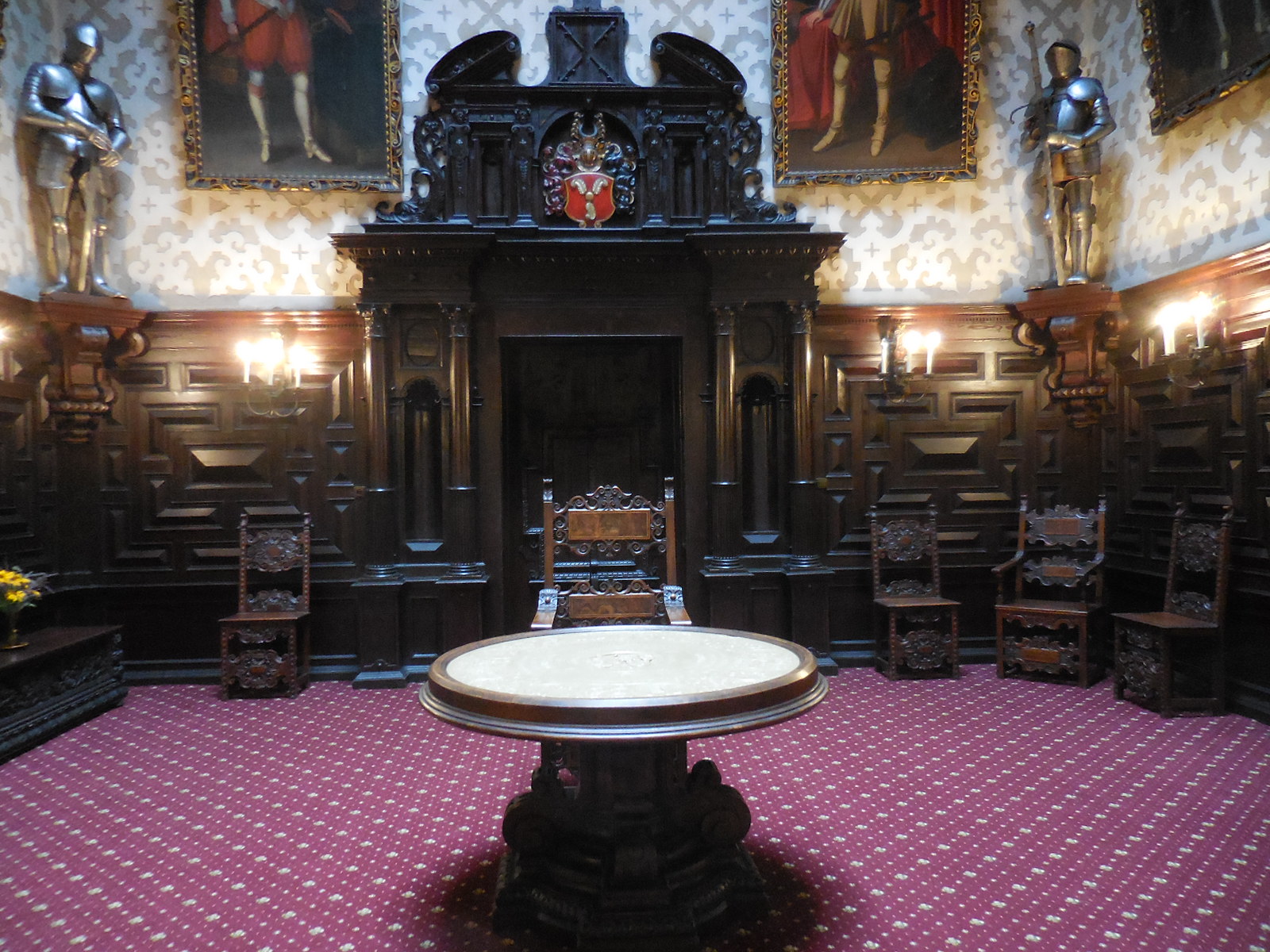





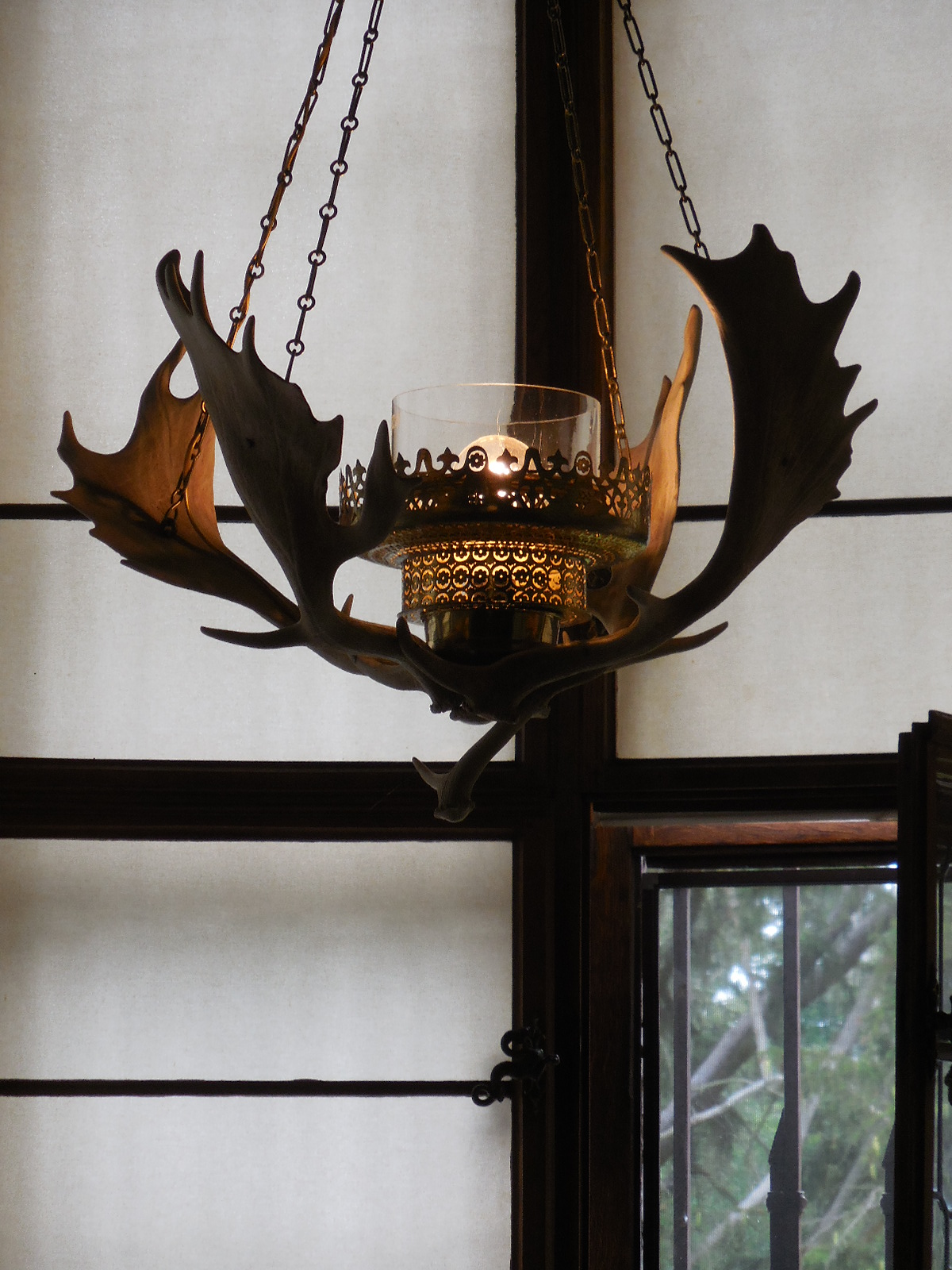


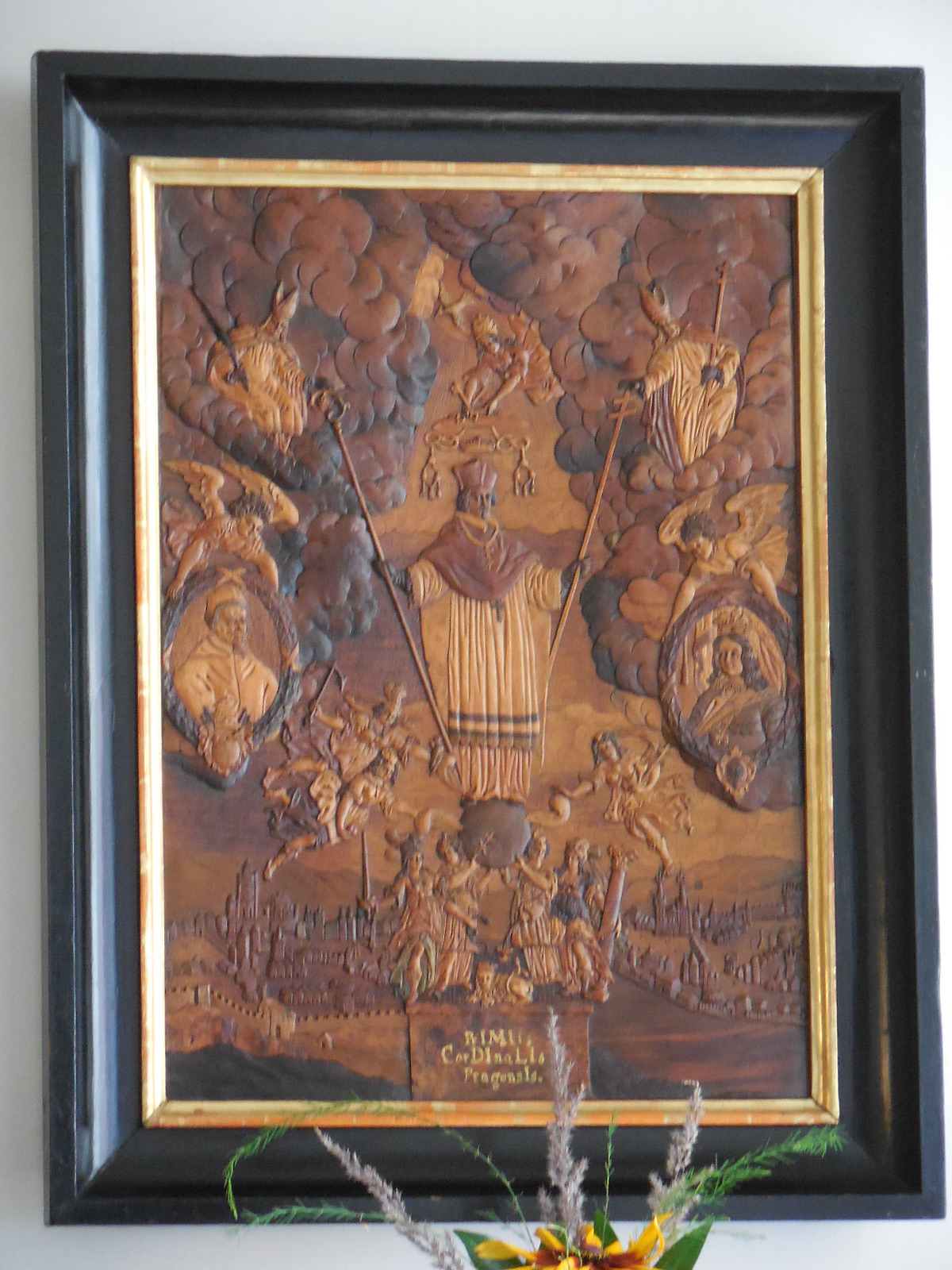
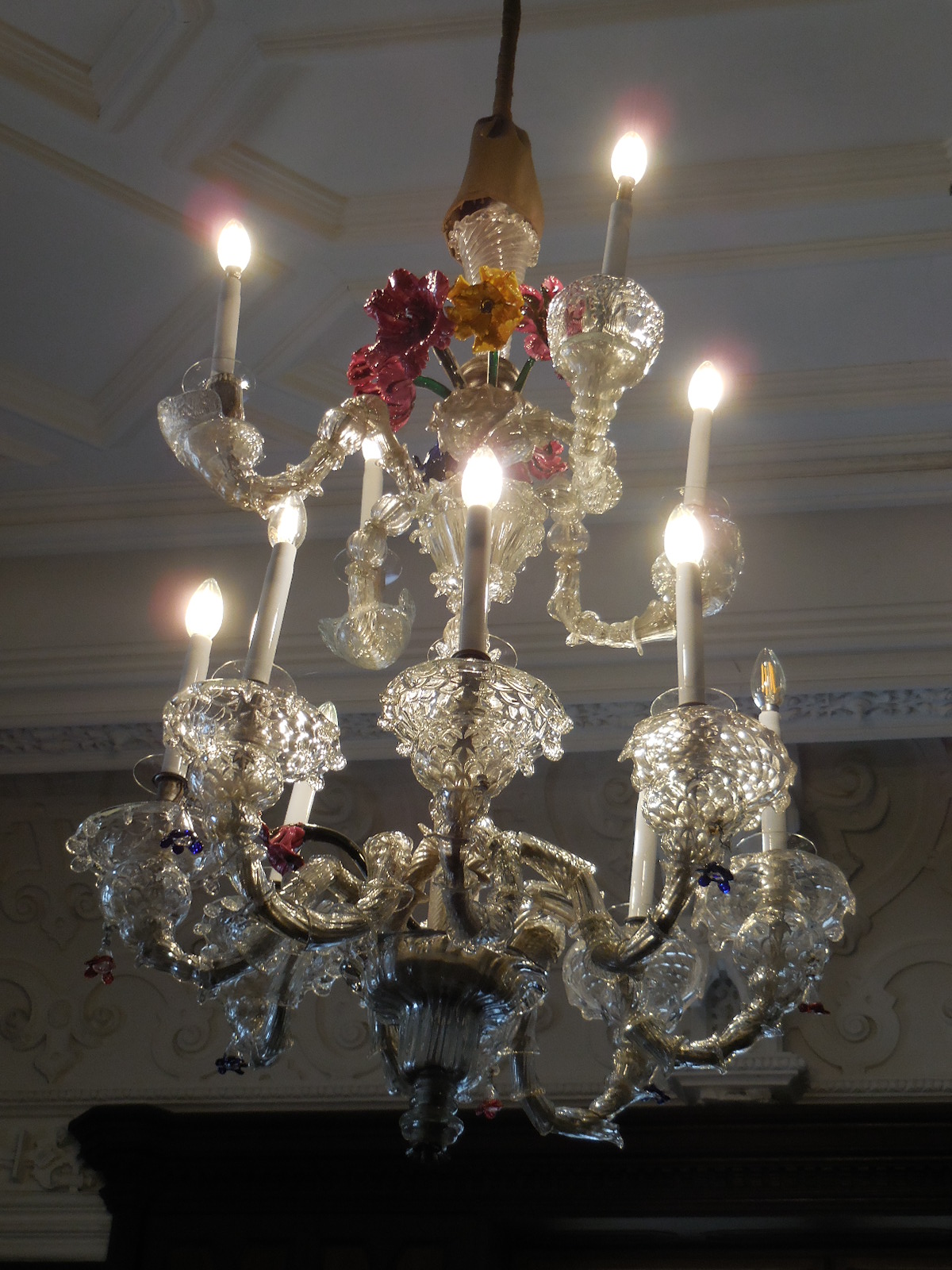


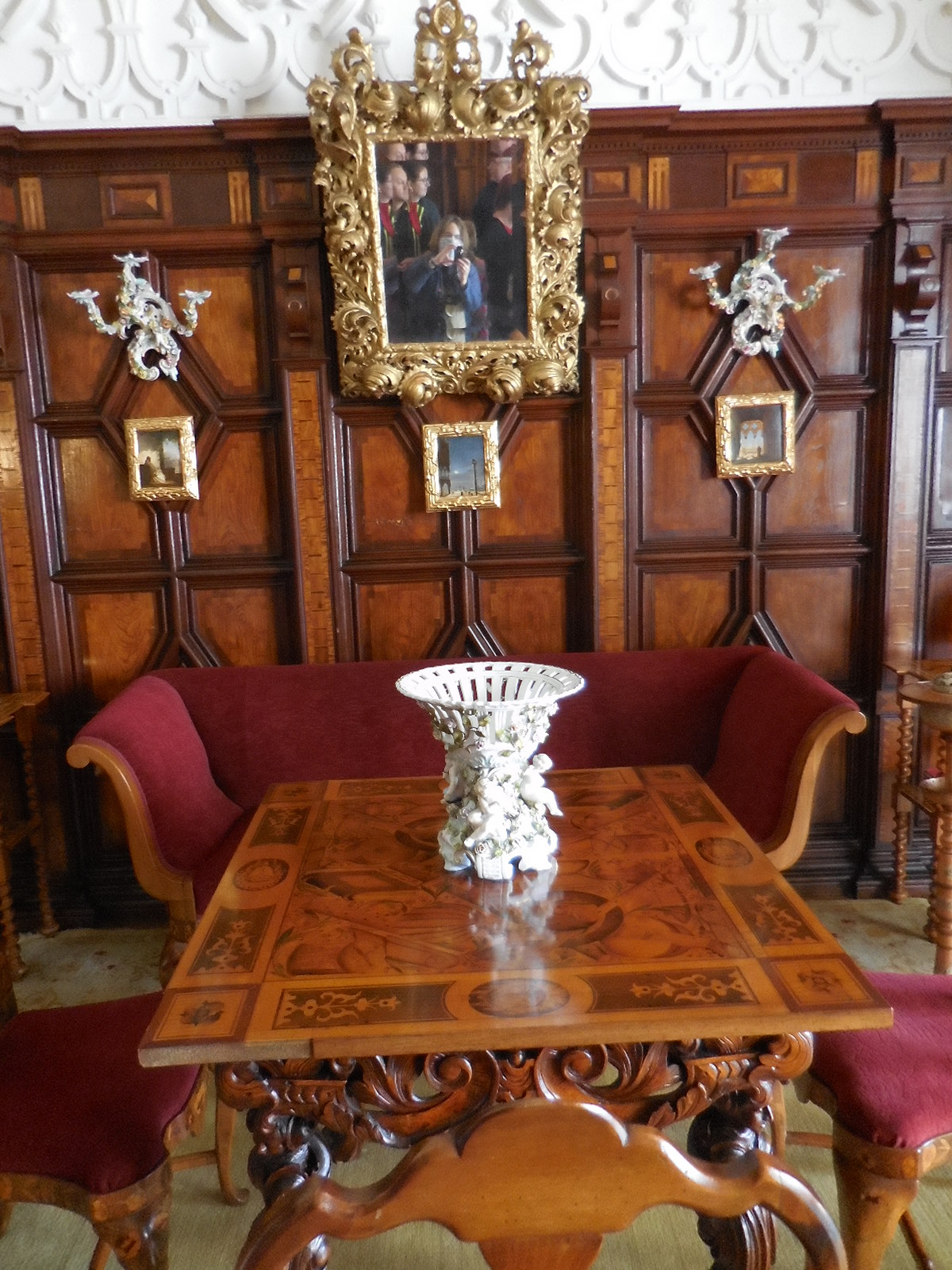

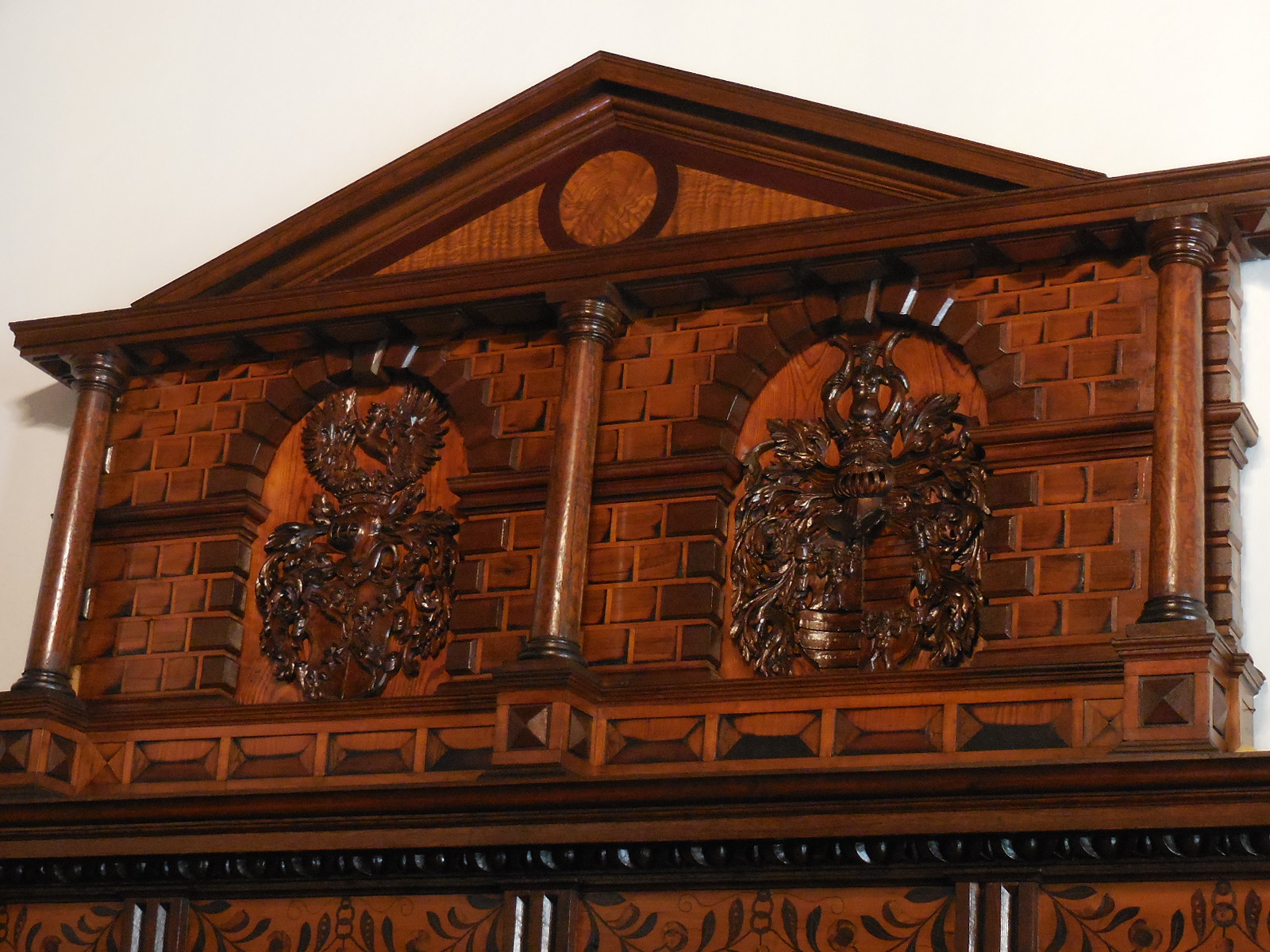
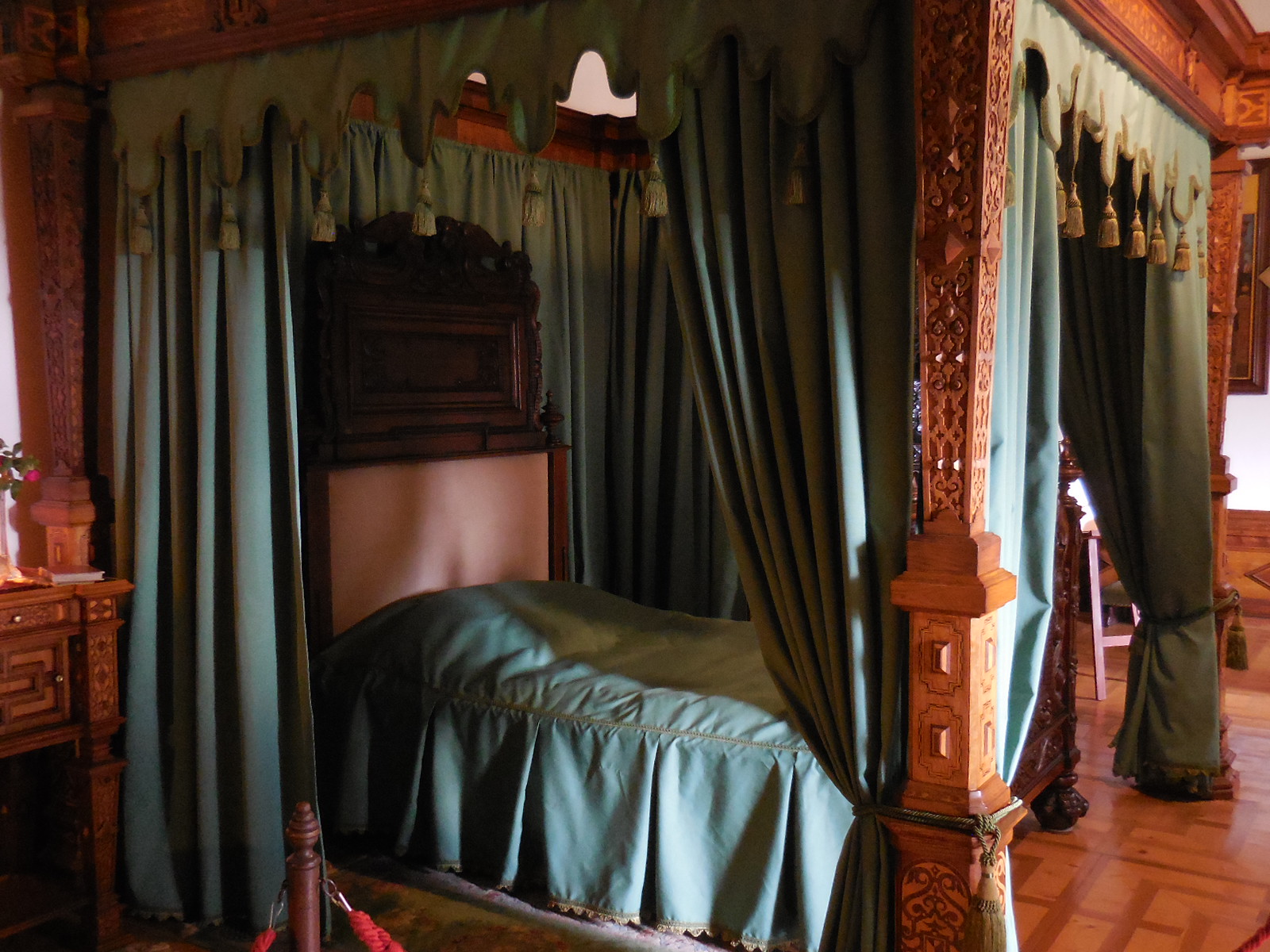

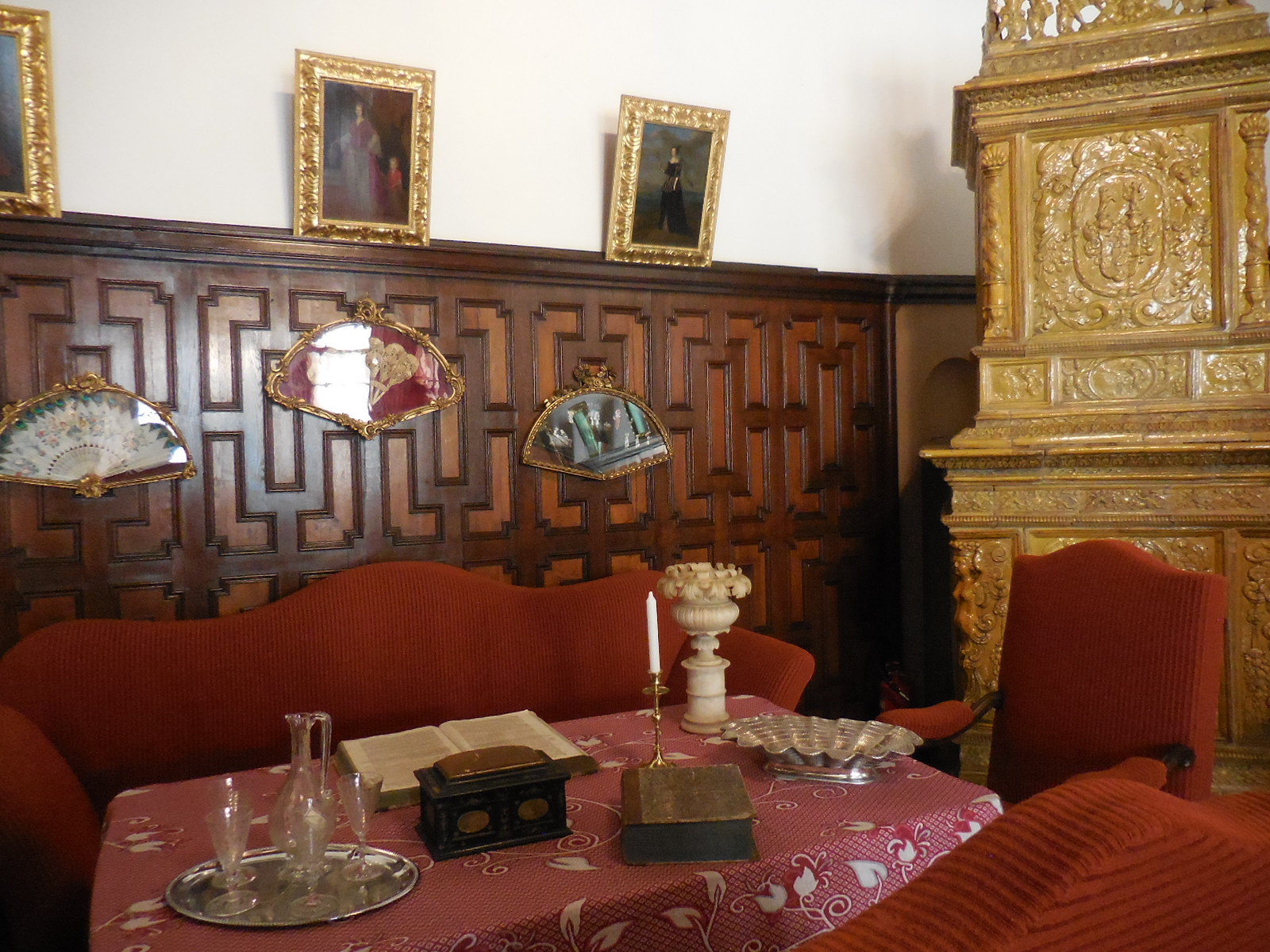

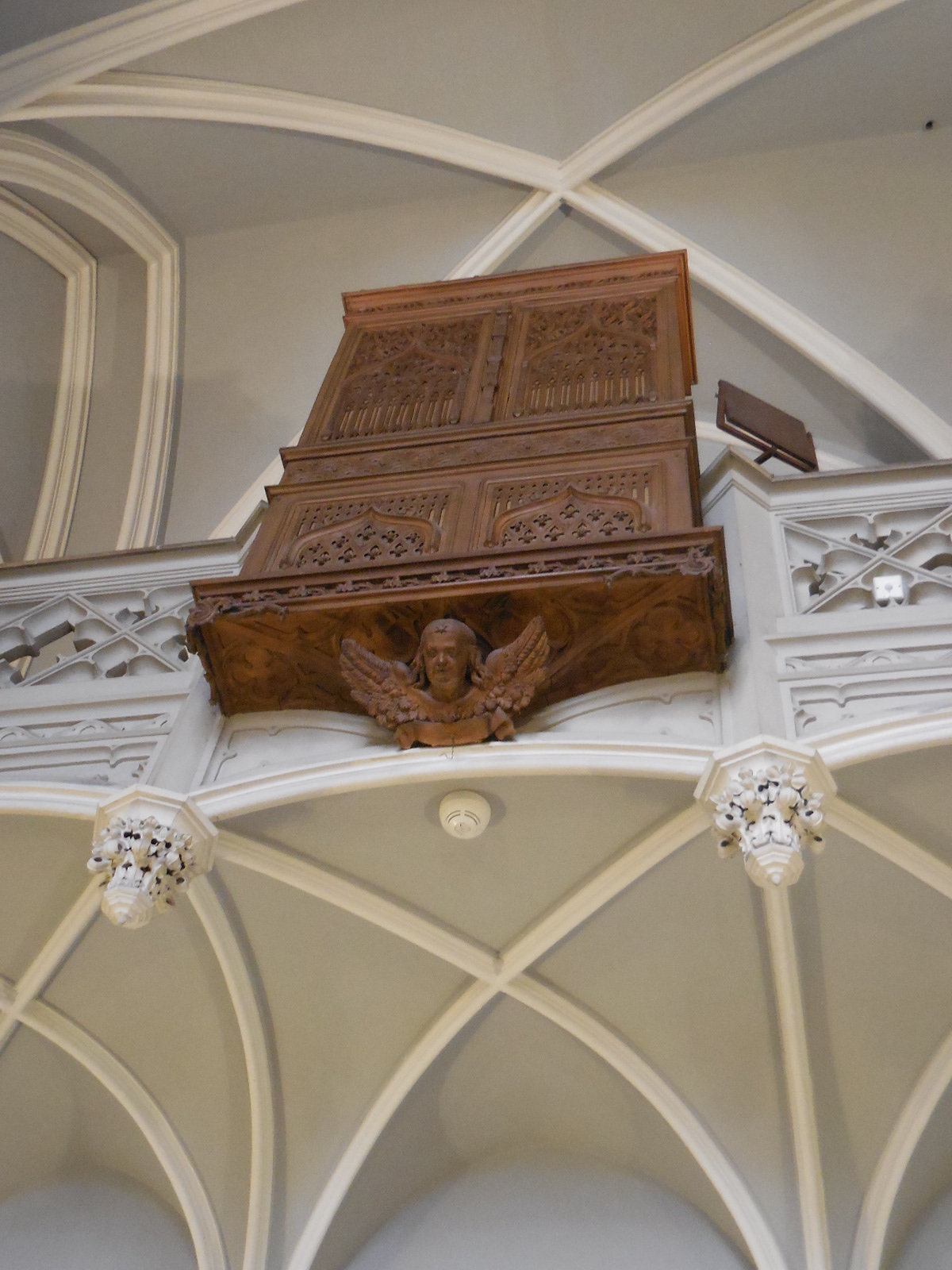

 Tracy's Travels