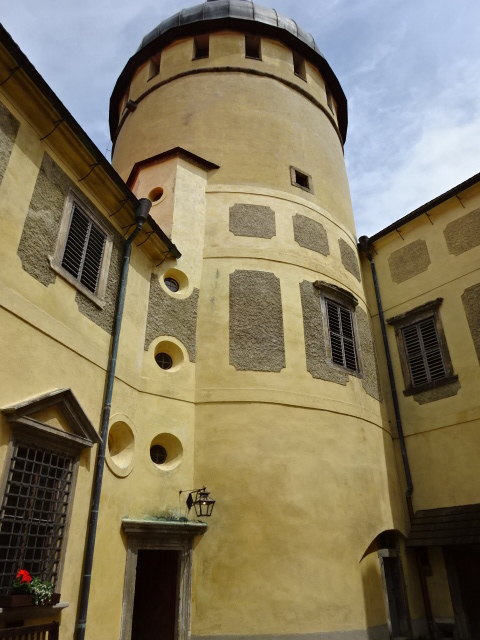
I visited Grabštejn Castle for the third time in 2024. Situated in north Bohemia near the Polish border, Grabštejn has come a long way since my first two visits some 20 years ago, when only a few rooms were open to the public because major reconstruction was taking place. Back then, I had seen Grabštejn Castle as a place with much potential, but I wondered if I would ever see the upper and lower castle with more than several spaces open to the public.

The first thing I noticed was that there was no scaffolding near the entrance to the castle perched on a rocky hill, where it dominated the scenic landscape. I read that there were two tour routes available and many rooms on display.
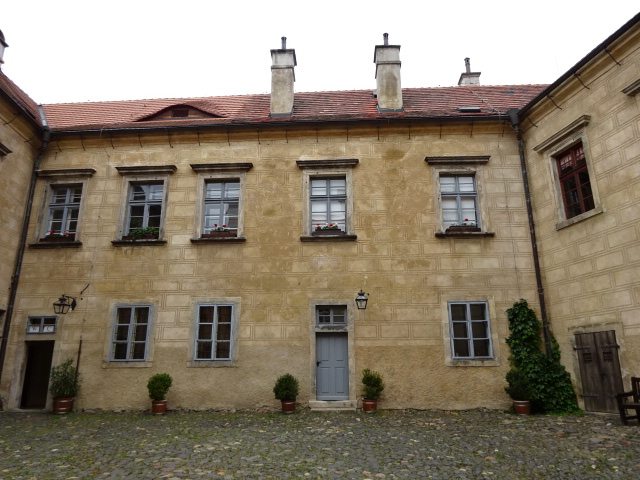
I recalled the history of Grabštejn, which was originally a 13th century Gothic castle, first mentioned in writing during 1286. It was transformed into a Renaissance chateau during the 16th century and still has many Renaissance features. During that Renaissance transformation, the Chapel of Saint Barbara was constructed. It became an architectural gem due to its superb vaulting as well as exquisite wall and ceiling painting. The chapel was consecrated to Saint Barbara, the patron saint of miners, because miners worked on the Grabštejn property. The chapel’s décor included a masterfully crafted statue of that saint.

Things fell apart during the Thirty Year’s War, when the Swedes conquered the castle. After Grabštejn was sold to Jan Václav Gallas in 1704, reconstruction work was carried out. Then the castle was used as an administrative seat instead of a residence. In 1781 a fire destroyed the castle, but Filip Josef Gallas restored Grabštejn’s impressive appearance. The chateau was again used for administrative work.
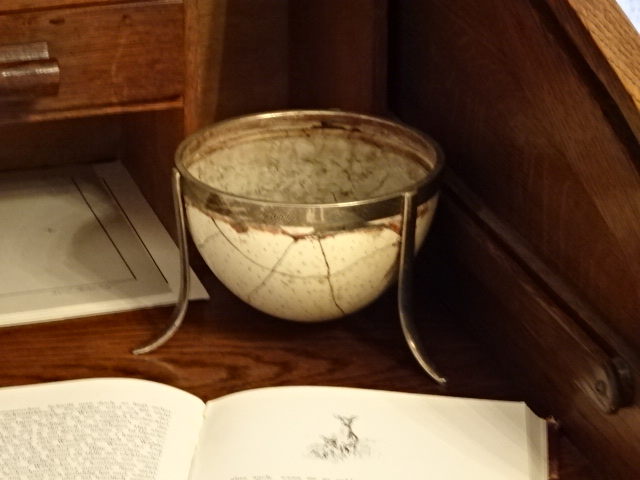
Elephant foot used as trash can
When Kristián Kryštof Clam-Gallas became owner, he rebuilt the administrative building as a Classicist chateau. His family used Grabštejn as a summer seat. In 1843, lightning hit the castle, causing a large fire. The damage was repaired, though.

Marie Clam-Gallas set up a small family museum in the castle after World War I, and during 1934, Grabštejn was open to the public while the family also used the premises. However, the castle was nationalized in 1945, after World War II. The Clam-Gallas family that had contributed so much to the development of the castle was forced to leave in a cattle wagon.

During 1953, the Czechoslovak army took over the castle, which was already in poor condition. The army stayed there until after the Velvet Revolution, exiting for good in 1990. Vandalized, the castle was in ruins. Major repairs took place until 2010, and reconstruction even continues today. The public has been allowed to visit since 1993. It was possible to preserve a section of the Renaissance sgraffito that decorates Grabštejn’s western façade. The original statue of Saint Barbara was restored. The installation of the interior lighting ended in 2023 while the cobblestones in the main courtyard were repaired during 2024.

Clerk’s office at the castle
The tours show rooms from the 16th to 19th century as well as the spaces dedicated to the Clam-Gallas museum. I saw the administrative offices of the 18th century as well as rooms made for nobility. The clerks’ offices displayed quills, large historical maps, portraits and shelves with document-filled cubby holes. It was intriguing to see rooms used for administrative purposes at a castle. I learned about the clerks’ work during that time period. Usually, I only saw rooms decorated for nobility.
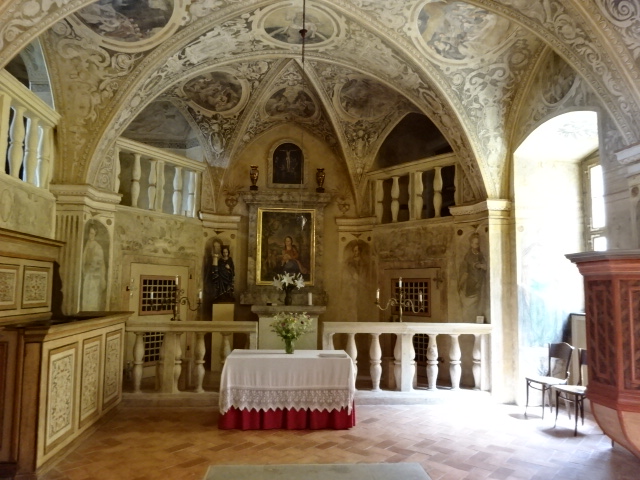
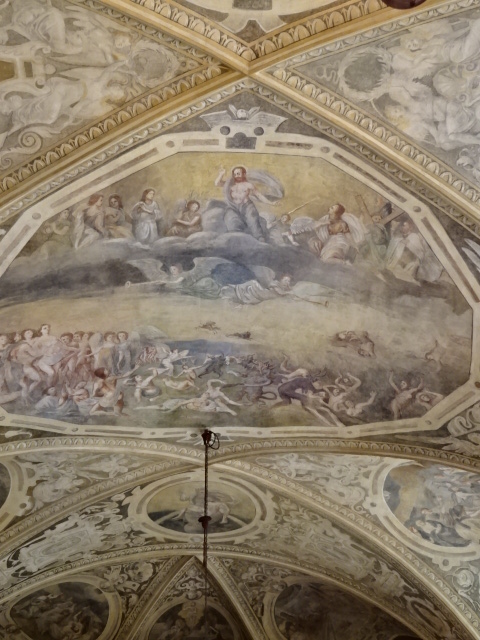
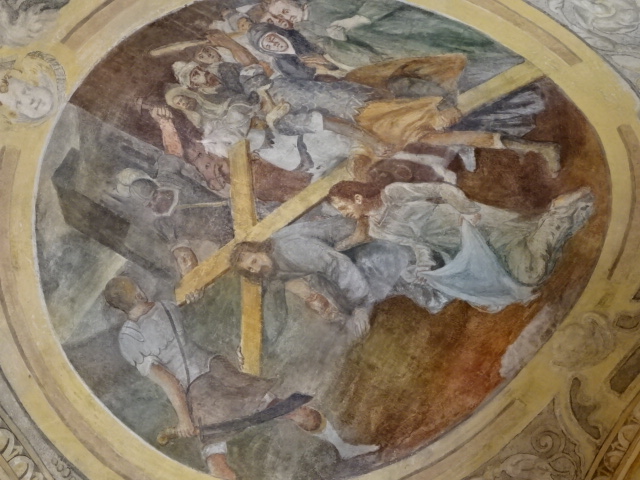
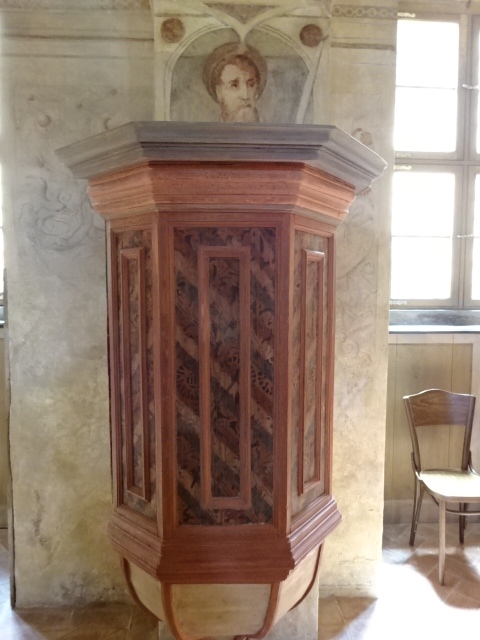
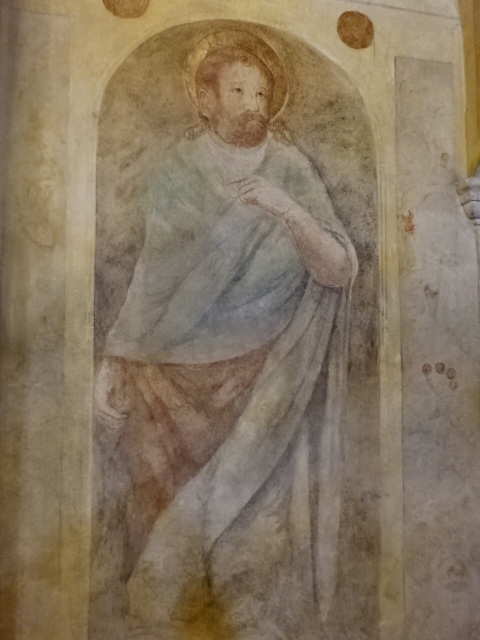
The highlight of the tour was the Renaissance Chapel of Saint Barbara. I admired the superb vaulting and the wall and ceiling paintings, one of which showed a 13th apostle with no attributes. Whom the image represented was unclear. I noticed a poignant Last Judgment scene on the ceiling as well as an exquisite rendition of the Last Supper. The statue of Saint Barbara was breathtaking in its original form. The Renaissance altar painting showed Jesus squirming on Mary’s lap. I noted the splendid blue drapery of the Virgin Mary and the lush green landscape in the background. The wooden pulpit was truly unique.

In the castle rooms devoted to the nobility, I saw old photographs of the Clam-Gallas family. The photos reminded me that Grabštejn had once been a busy family home, full of vitality. I saw many paintings of nobles on horseback as well as landscapes. A gigantic wall painting was stunning. It showed lush chateau-like gardens with a monumental fountain as nobles strolled by. I noticed that the fountain in the painting dazzled with a gilded statue of Poseidon.


I also admired black-and-white graphic art. A tapestry depicted idyllic scenery. The masterfully carved, wine red canopied bed was striking. I loved the trash can made out of an elephant’s foot and the elegant, gilded grandfather clock.


It was intriguing to see part of a castle as an 18th century work space for clerks and another section as home for a noble family. The various styles of furnishings from the 16th century to the 19th century made Grabštejn’s interiors refreshingly eclectic. The chapel was an architectural and artistic gem in Renaissance style. The detailed painting, the vaulting, the impressive altarpiece and the well-preserved statue of Saint Barbara were only some of the astounding features of this breathtaking space. The decoration throughout was stunning.
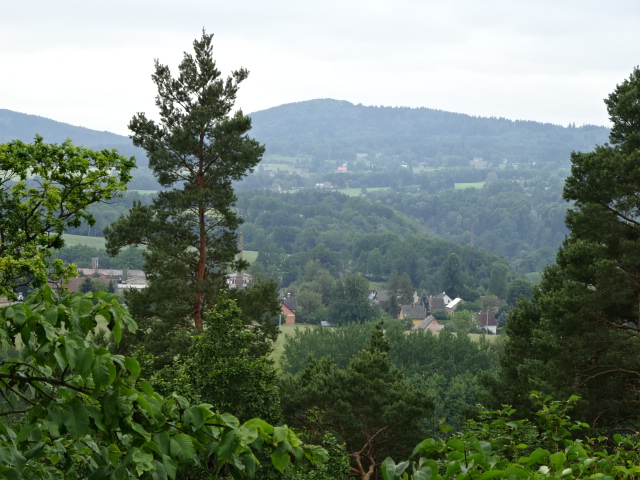
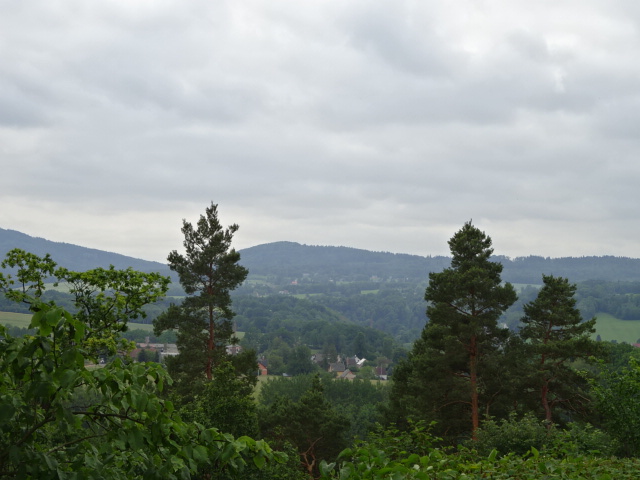
I was so surprised that Grabštejn Castle had gone through a major transformation since my first two visits. The exterior was just as imposing, and the interiors were captivating. I also spent some time on the castle grounds, staring at breathtaking views into Poland and Germany.
Tracy A. Burns is a writer, proofreader and editor in Prague.

 Tracy's Travels