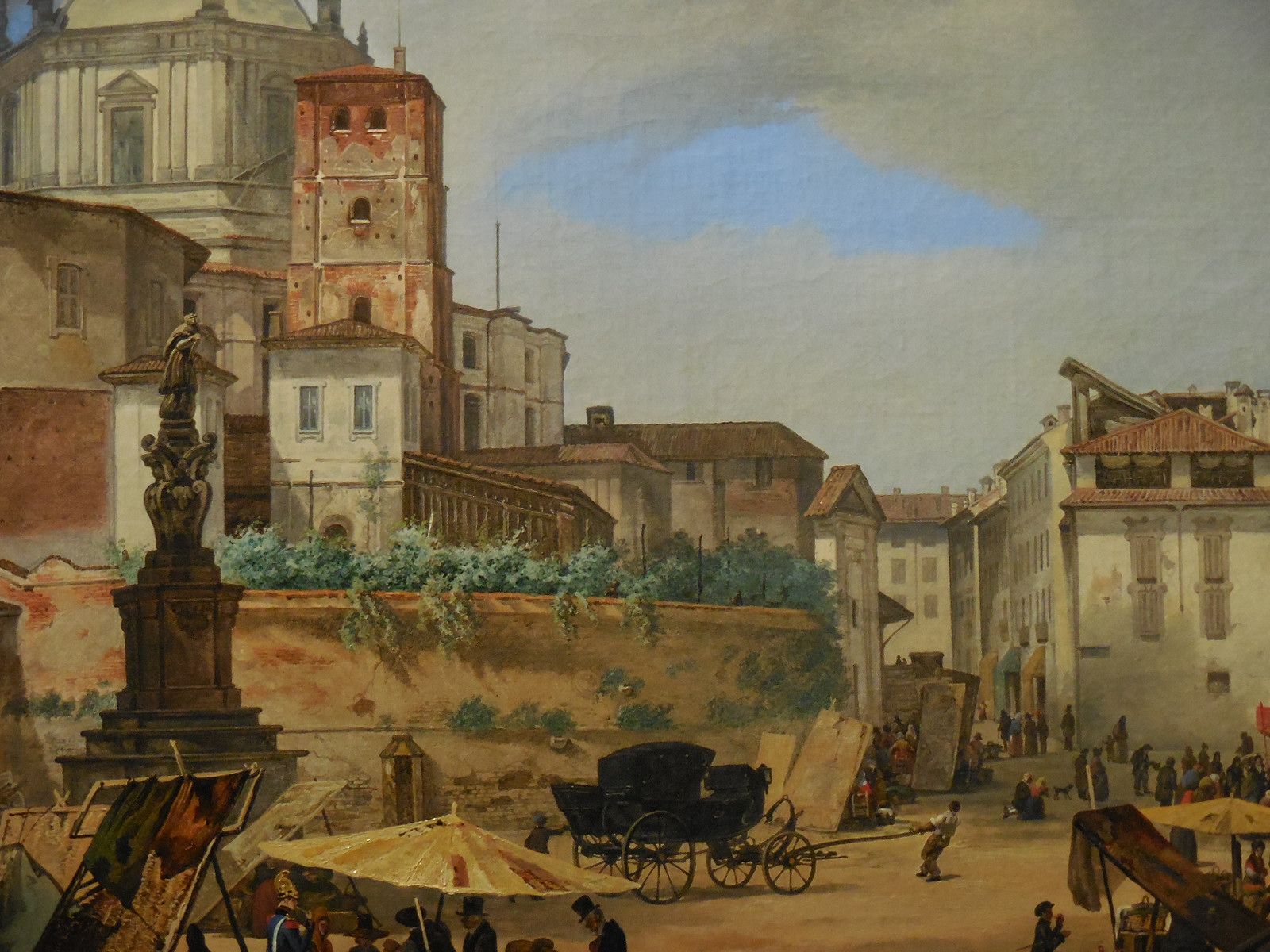
Biblioteca and Pinacoteca Ambrosiana Diary

This library and art gallery in Milan is named after the patron saint of the city, Ambrose. The library harkens back to 1609, when Cardinal Federico Borromeo founded it, and the same year it opened to the public.
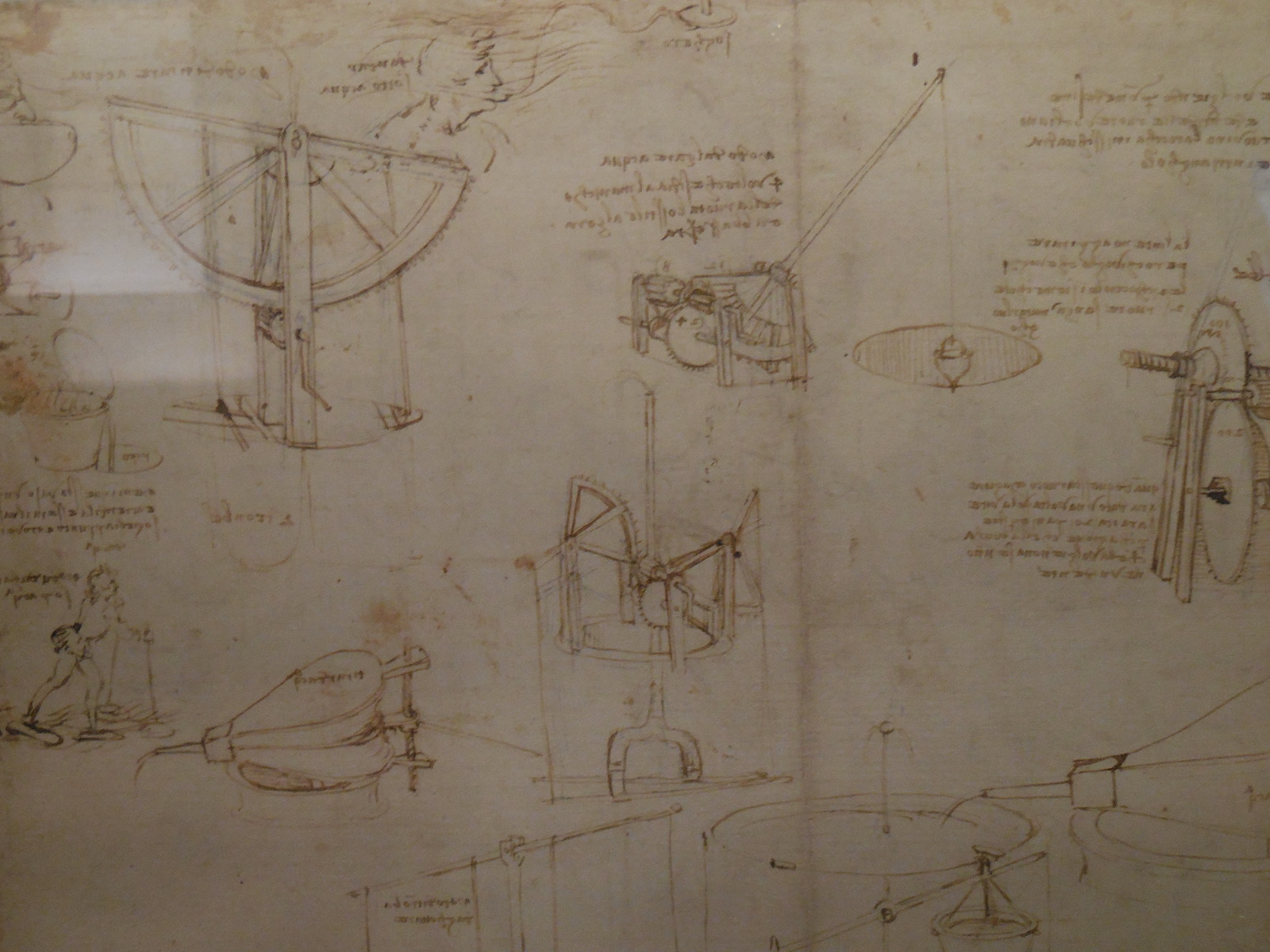
One of Leonardo da Vinci’s drawings of the Codex Atlanticus

The biblioteca houses the Codex Atlanticus by Leonardo da Vinci as well as many of his other manuscripts plus about 12,000 drawings by European artists, ranging from the 14th to 19th century. Raphael and Pisanello are represented in this collection of drawings, too. Many of its more than a million printed volumes hail from the 16th century. There are almost 40,000 manuscripts in numerous languages, including Italian, Latin, Greek and Arabic as well as some 22,000 engravings. Ancient maps, musical manuscripts and parchments also make up the collection. Some prominent guests included poet Lord Byron and novelist Mary Shelley.

Another of Leonardo’s drawings from the Codex Atlanticus

During World War II the library was damaged, and the opera libretti for La Scala Opera House were destroyed. The building was opened again in the early 1950s after undergoing renovations. More reconstruction took place in the 1990s.

When I visited, some of Leonardo’s works for the Codex Atlanticus, the largest collection of da Vinci’s drawings and writings, were on display in the library. The exhibition left me spellbound. I perused studies in aerodynamics and drawings of mechanical wings as well as various types of weapons. Leonardo rendered a large sling to throw stones and a machine to pump water from a well inside a building, for example.

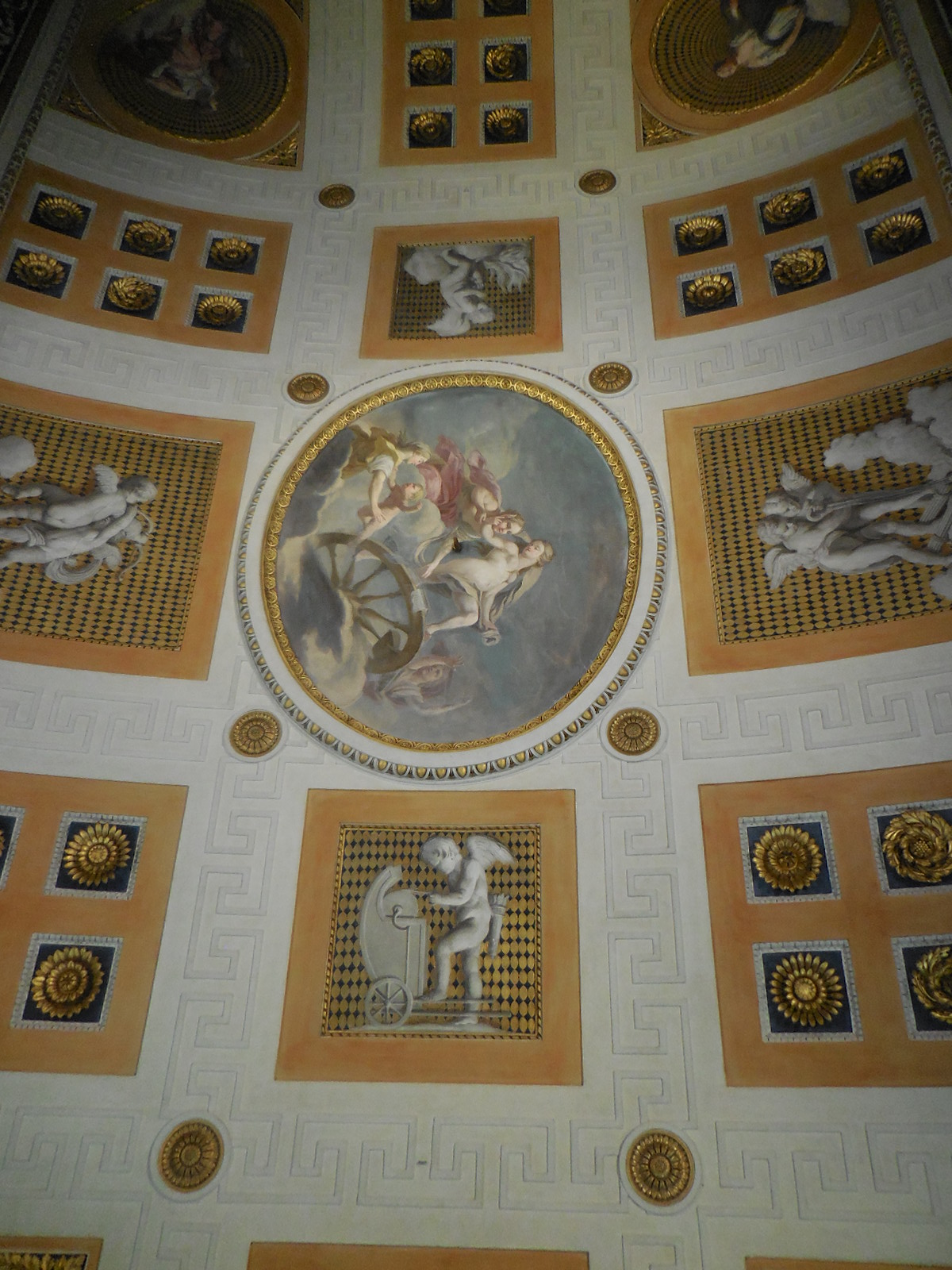
I gazed upwards after studying the drawings by Leonardo, and I was filled with awe. I don’t know if I have ever seen such an incredible library. I just wanted to stand there all day, gazing at the wall-to-wall bookcases as I wondered about the titles and contents of each volume.

Established in 1618 with the collections of Cardinal Federico Borromeo, the pinacoteca was just as impressive as the library. The 24 rooms were dominated by Renaissance artworks but also boasted of renditions by 17th century Lombard artists, 18th century painters and 19th and early 20th century creators. I was especially struck by da Vinci’s 15th century “Portrait of a Musician” as it was the only portrait that he had painted. I noted the musical scroll in one hand of the sitter and was captivated by the detailed curly locks of hair, the musician’s brown eyes and his red cap.

Caravaggio’s insect-infested “Basket of Fruit” tells a story of diminishing beauty by displaying rotting fruit. Bramantino’s “Adoration of the Christ Child” shows the kneeling Bernardino of Siena, Francis of Assisi, Benedict of Nursia and the Virgin Mary making an understandable fuss over baby Jesus. I loved the angels playing musical instruments behind those figures. Emperor Augustus also makes an appearance.

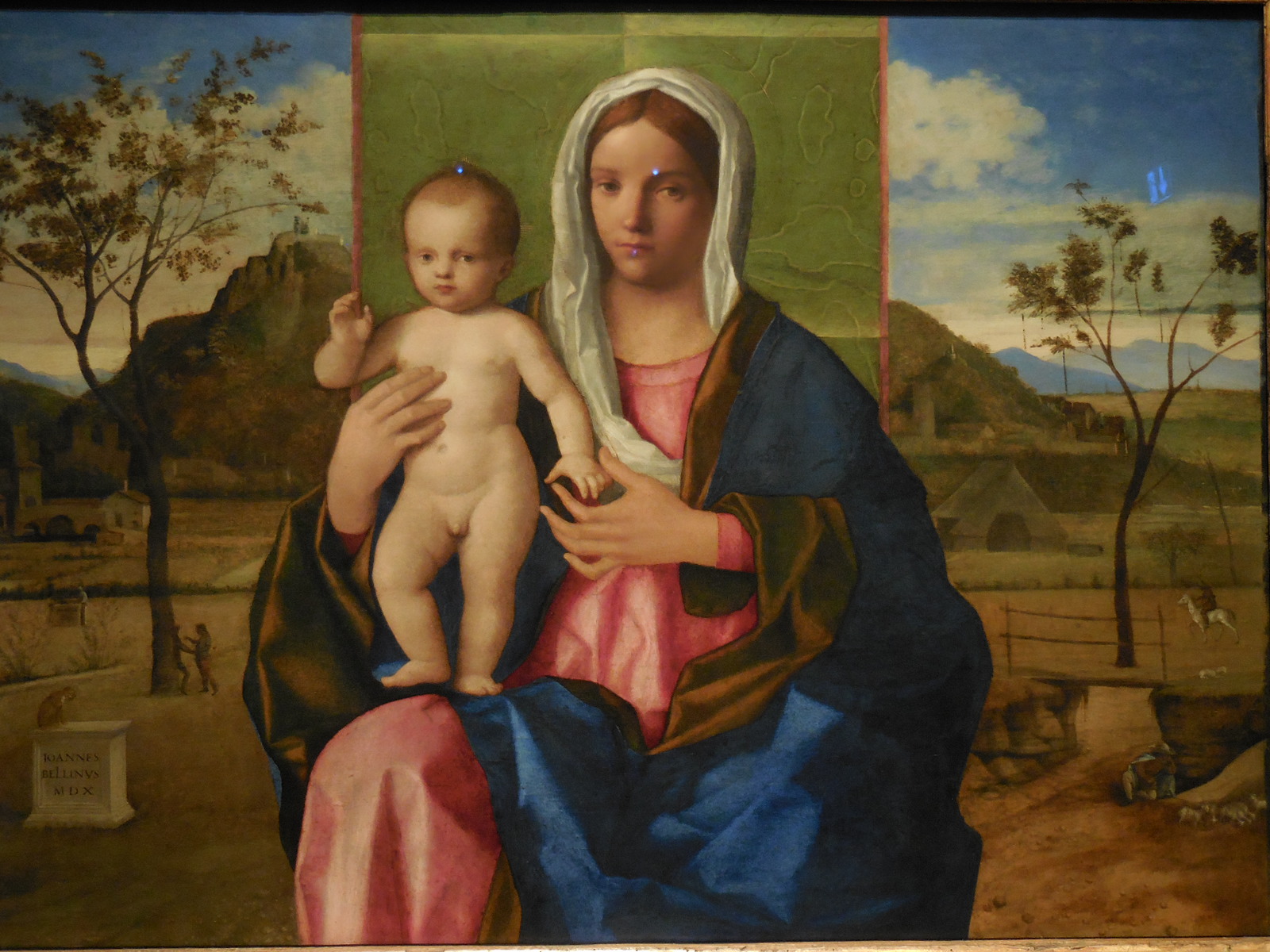
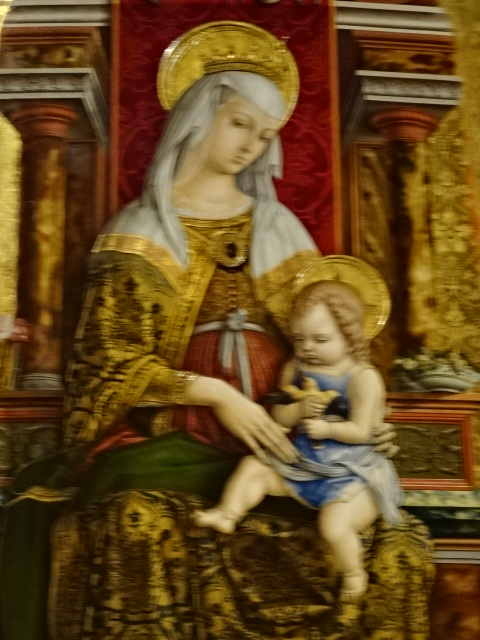
Bergognone’s “Sacred Conversation” shows the Virgin Mary and Christ Child on a massive golden throne, baby Jesus on the Virgin Mary’s lap. Solemn angels flutter in the background. I was struck by the details of the Virgin Mary’s hair and by the material of the clothing worn by the Virgin Mary and baby Jesus. The two were surrounded by saints with captivating headwear, including Saint Ambrose and Saint Jerome.
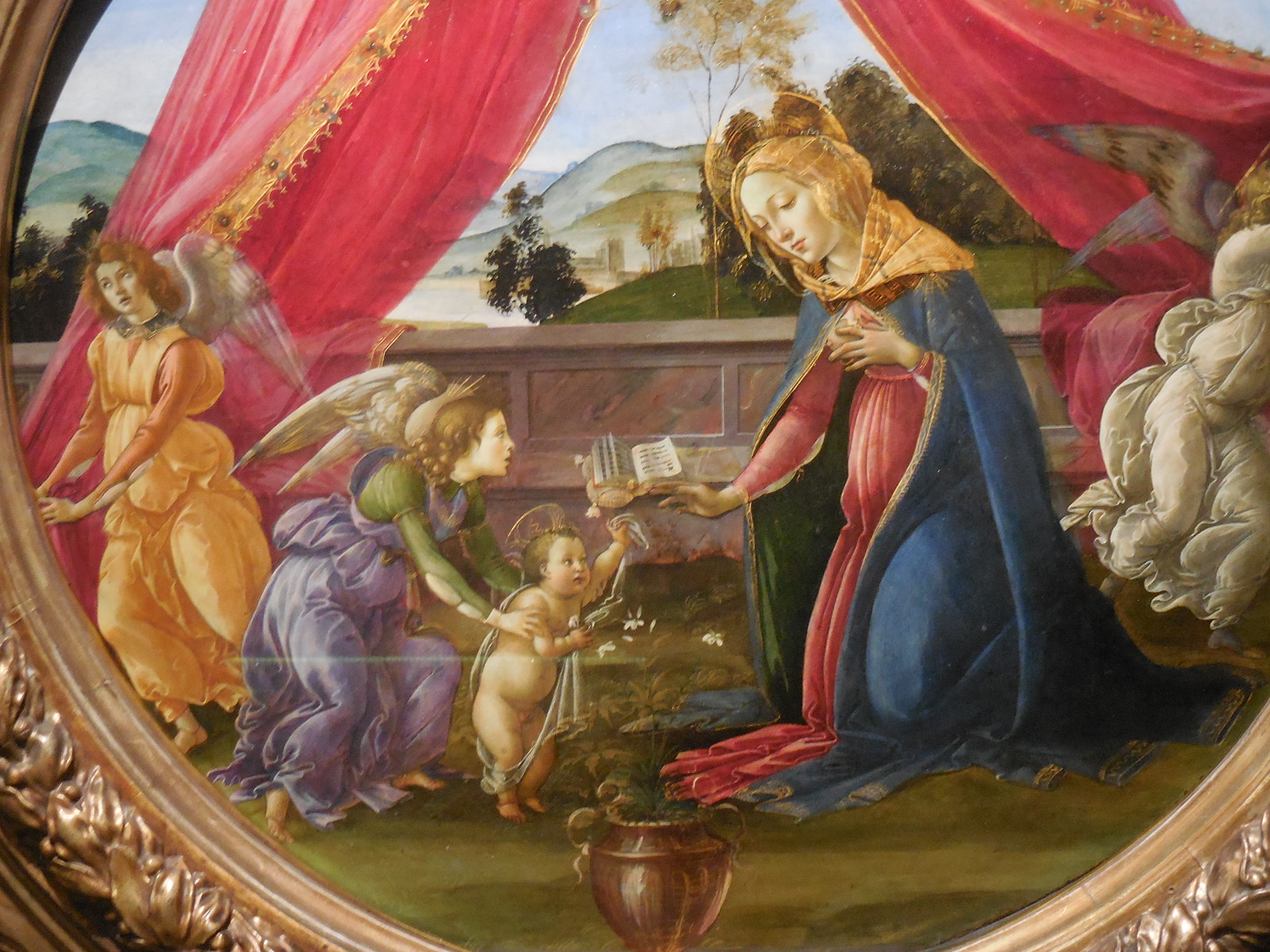
Another painting that left me speechless was Sandro Botticelli’s “The Madonna of the Pavilion.” The artist’s meticulousness was evident. The artwork shows the Virgin and Child with much symbolism. The pavilion that two angels open to reveal the Christ Child is rich in biblical meaning both in the Old and New Testament. I could almost feel the paper of the pages making up the open book in the painting.

Raphael’s School of Athens
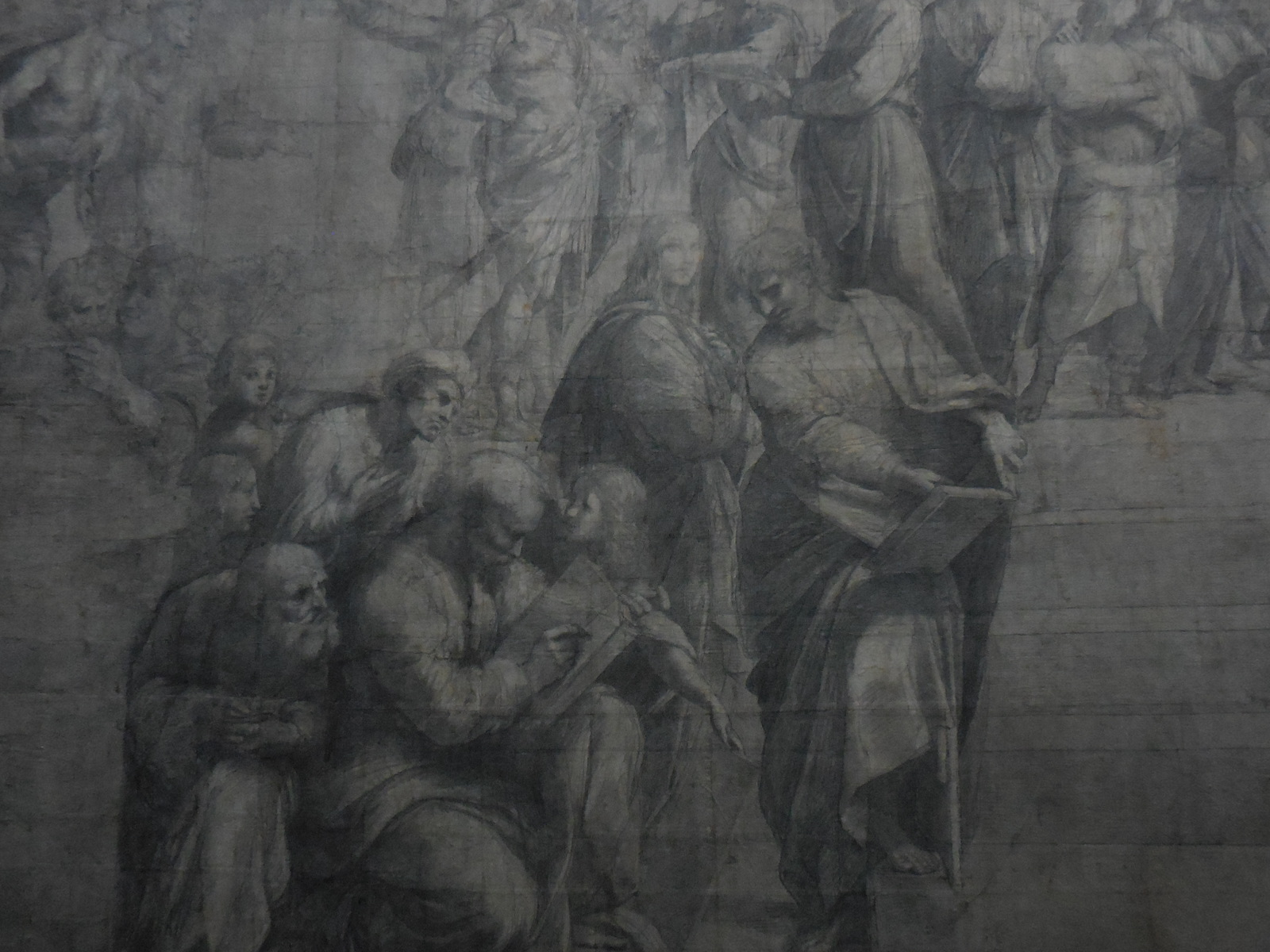
Raphael’s cartoon of the “School of Athens” is a study for the Italian Renaissance fresco painted in the early 1500s for the Raphael Rooms in the Vatican Museum. I recalled seeing the skillful rendition of philosophers and scientists from Ancient Greece at the Vatican on my 40th birthday as I mulled over the dominant role that perspective played in the artwork. Plato, Aristotle and Pythagoras appear in the fresco. Leonardo and Michelangelo are present as Plato and Heraclitus.
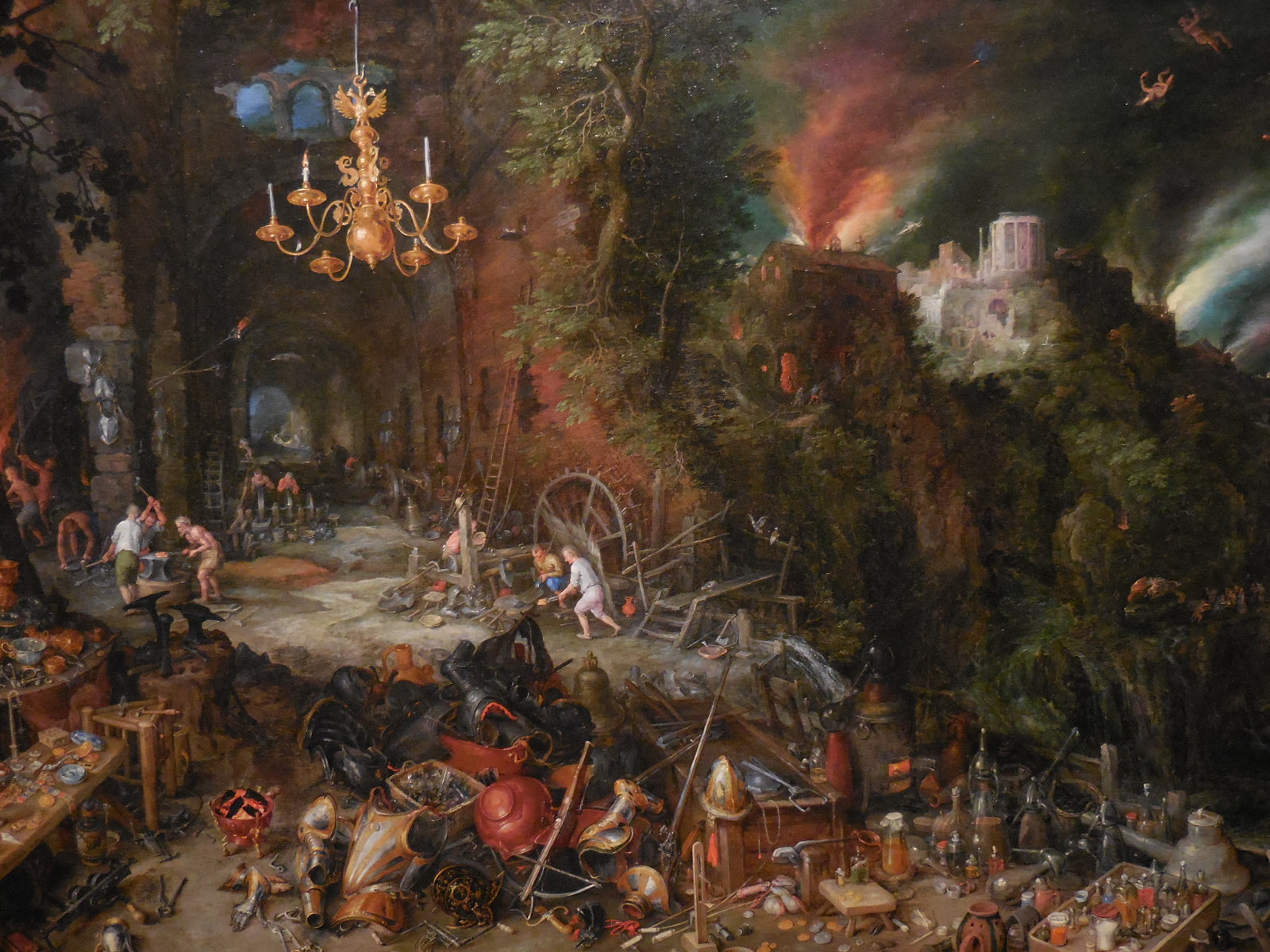
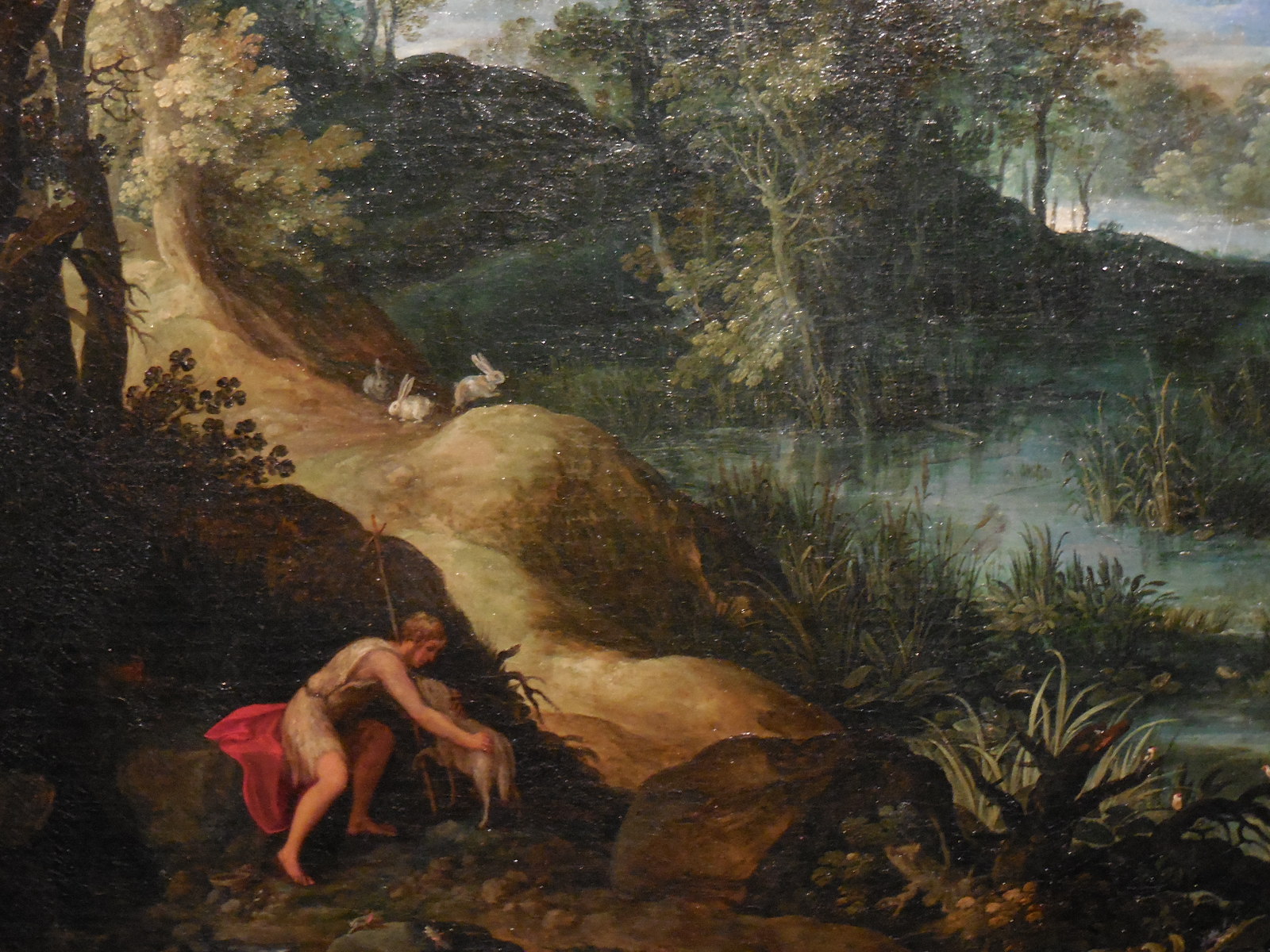
Other paintings that awed me were the fantastic landscapes of Paul Brill, whose works I had discovered some years earlier in Edinburgh. Jan Brueghel’s detailed landscapes and still lifes also are close to my heart, and I adored masterpieces from the Netherlands. I stared at these paintings, losing myself in the fantastical landscapes and details that were so masterfully rendered by both artists. I felt a special connection to these works featuring a dream-like quality as if I could be transported into a fantasy world by merely peering at the canvases.

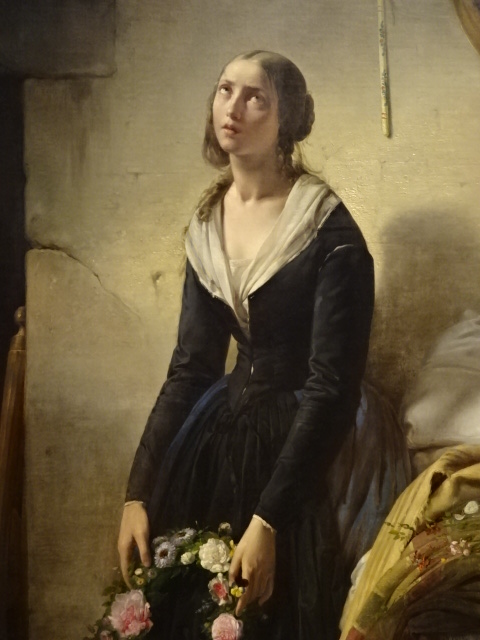
Other paintings that captured my undivided attention had been created by Bernardino Luini (I fondly recalled his paintings in Milan’s Church of Saint Maurizio), Tizian, Jacopo Bassano, Moretto and Daniele Crespi as well as Francesco Hayez, whose works I knew well from the Brera Gallery in the same city. Andrea Bianchi had created “The Last Supper,” imitating da Vinci’s masterpiece. Tizian’s “Adoration of the Magi,” Bramantino’s “Madonna of the Towers” and the locks of hair of Lucrezia Borgia all left me awe-struck.

The sculptures and frescoes from the second to 16th century in the Sala del Bambaia are very noteworthy. The Hindu art of the Berger Collection captivated me. The Flemish and German painting from the 15th to 17th century enthralled. Ceramics also play an intriguing role in the collection.

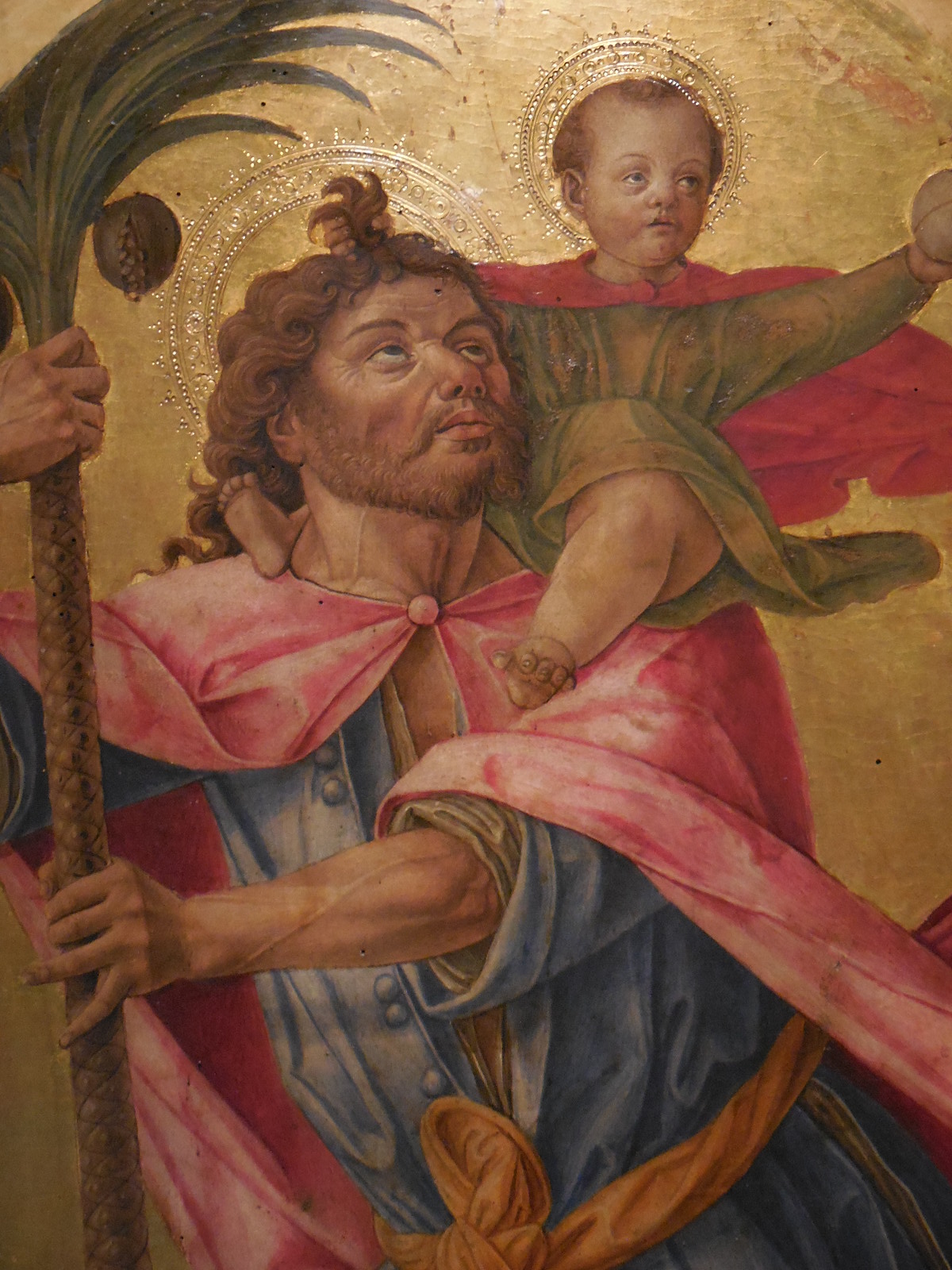
I was so awed by this gallery and library that I visited it twice during my first trip to Milan. I peered at every painting and sculpture, trying to take in each artistic creation, feeling so blessed to be able to see all these masterpieces with my own eyes.

Tracy A. Burns is a writer, proofreader and editor in Prague.

Pinacoteca di Brera Diary

I have visited this phenomenal art gallery in Milan twice. I could go there a million times, and I would be just as amazed as I was on the first two occasions. While the gallery includes Italian art from the 13th to 20th century, some remarkable foreign works are on display in its 38 halls, too. Artists from the Netherlands represented in the gallery include Peter Paul Rubens, Anton van Dyck, Jan de Beer and Jacob Jordaens. The Brera focuses on Venetian and Lombard painting.

The art gallery is situated in a large complex that also houses a stunning library (where I saw an exhibition during my second visit), an observatory, a botanical garden and the Brera Academy of Art. In front of the museum is an equestrian statue of Napoleon by Antonio Canova. While the art academy was established as far back as 1776, the museum was opened in August of 1809. When paintings in Lombardy were confiscated from churches and convents in the early 19th century, they wound up at the Brera, so many religious works make up the collection. Parts of the art gallery were damaged in bombing raids during 1943, but they were fully reconstructed by 1948.

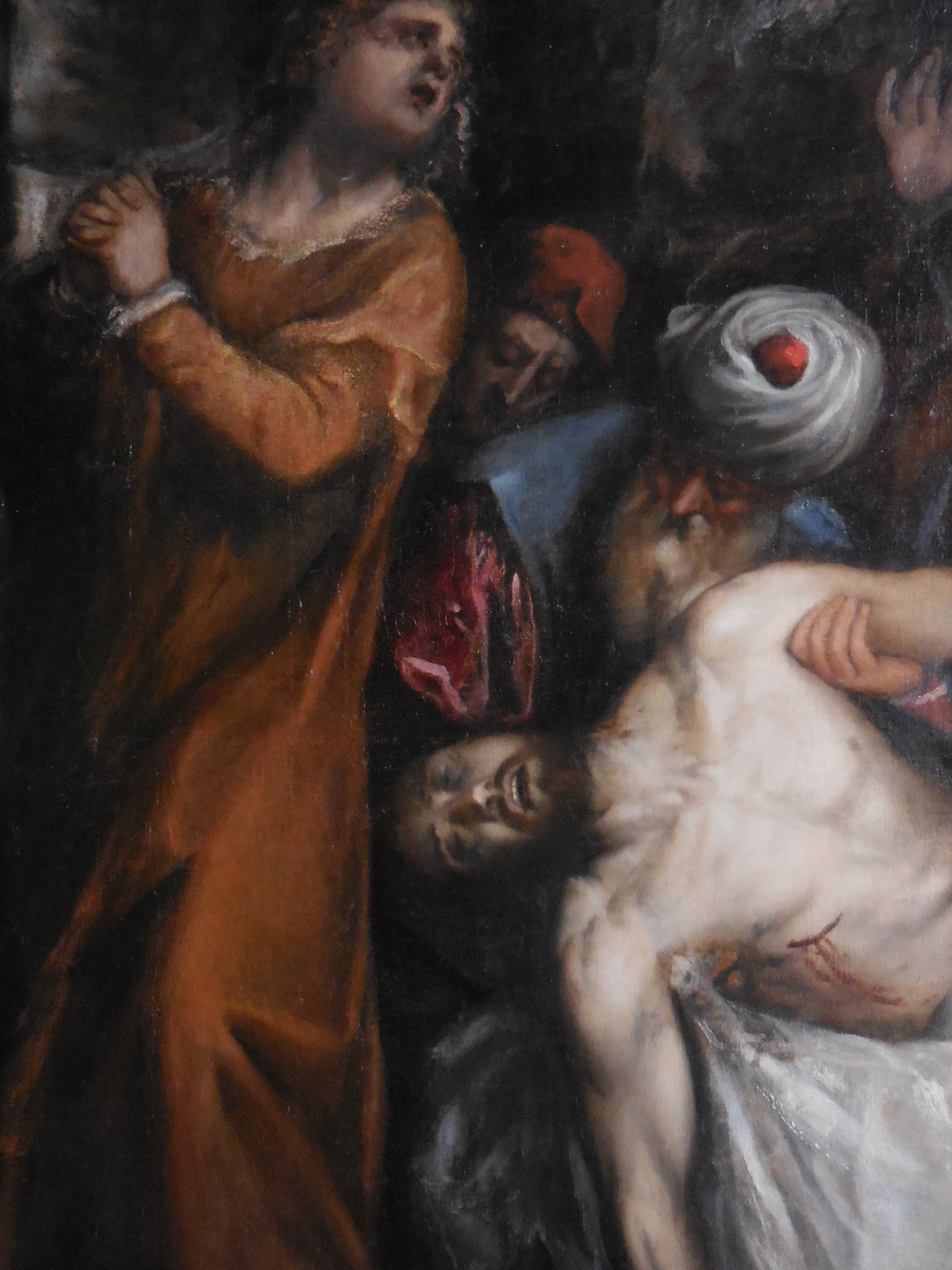
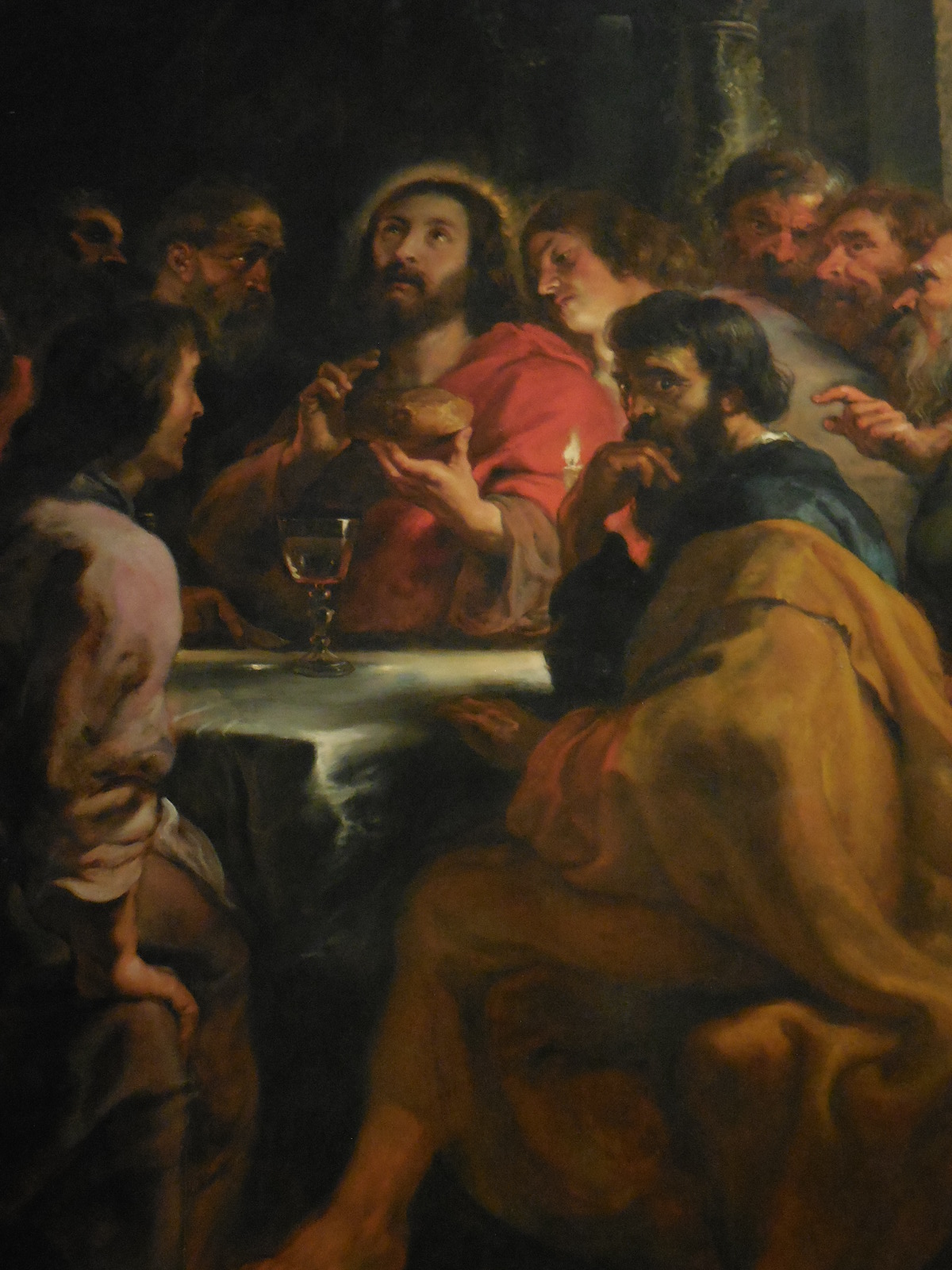
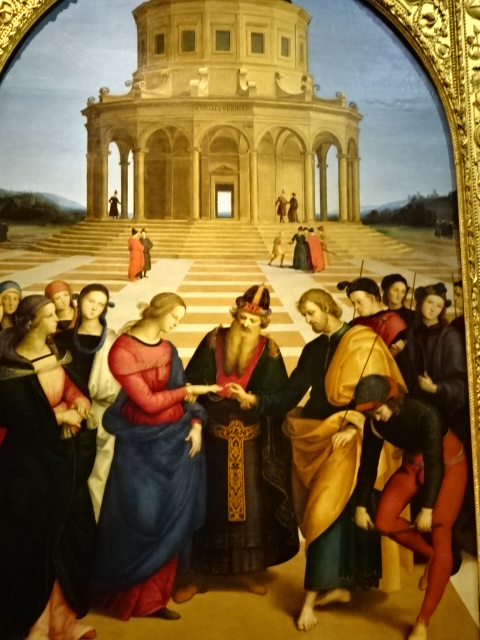
Some of the most famous paintings in the gallery include “The Lamentation of Christ” by Andrea Mantegna, “The Kiss” by Francesco Hayez, “Finding of the Body of St. Mark” by Tintoretto, “The Last Supper” by Rubens and “Supper at Emmaus” by Caravaggio – only one of two Caravaggio paintings in Milan. Also on display are the exquisite “The Marriage of the Virgin” by Raphael and “Christ at the Column” by Donato Bramante. I especially liked the paintings by Canaletto and Hayez as well as the 14th century frescoes. Modern works are exhibited, too. For example, “Enfant gras” by Amedeo Modigliani and “Riot in the Gallery” by Umberto Boccioni take up prominent places in the gallery. The works of Pablo Picasso and Giorgio De Chirico are represented, too.

I was overwhelmed at the beauty and power of the paintings in the Brera. Some of the monumental works just took my breath away. I was moved by all the paintings, each one telling a story.

Tracy A. Burns is a writer, proofreader and editor in Prague. 
Monumental Cemetery in Milan Diary

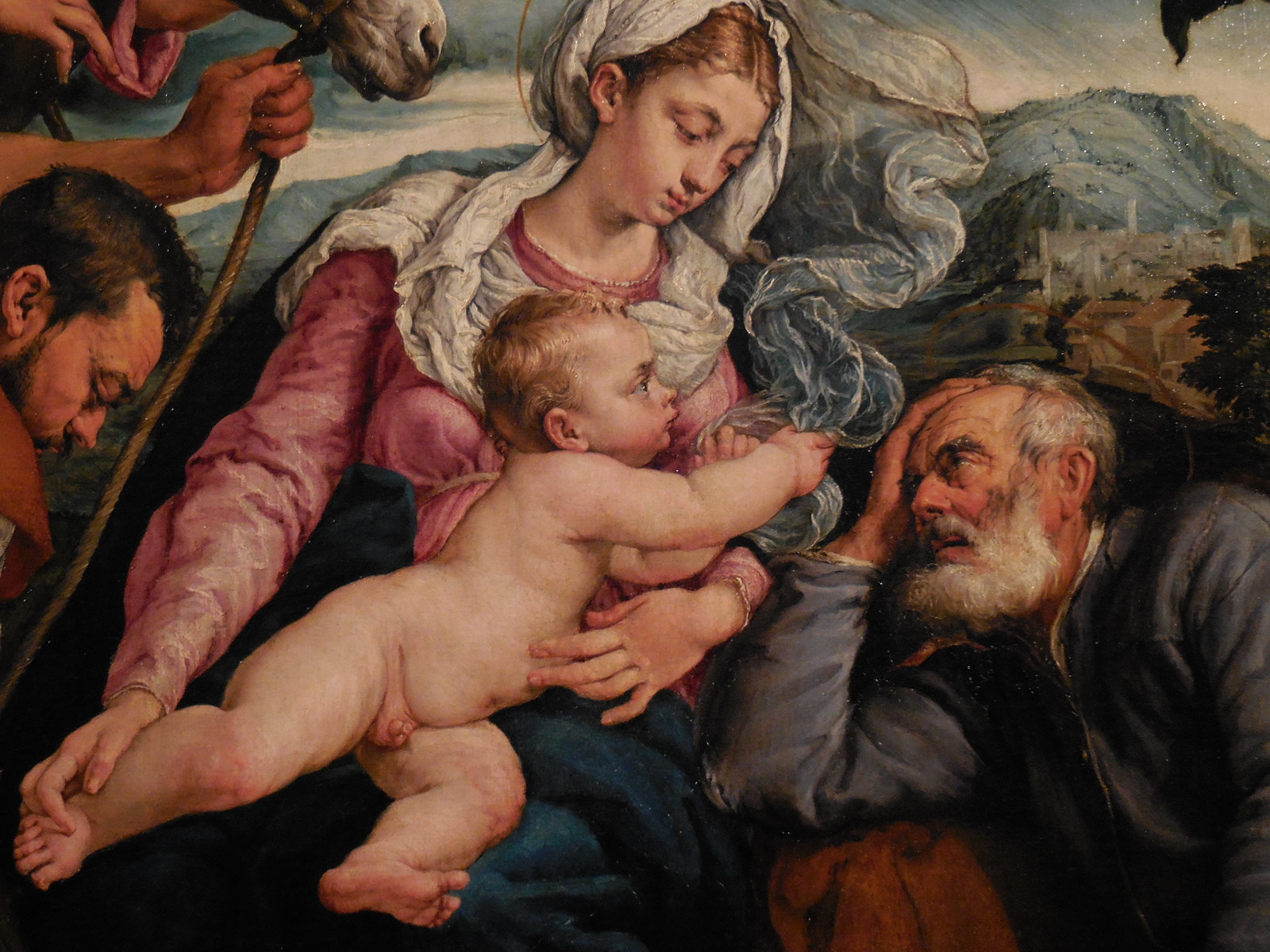
During my first trip to Milan, I didn’t have time to see the Monumental Cemetery, where graves adorned with magnificent sculpture abound. Designed by master architect Carlo Maciachini in various styles, it was open to the public during 1866. The tombstones are elaborate works of art showing off styles from the end of the 18th century through the 19th century and beyond. For example, I saw a tombstone shaped as an Egyptian pyramid and another resembling Trajan’s Column. I even found some graves decorated with modern architecture.

The Neo-Gothic Famidio, which looks like a church but houses tombstones of eight famous Italians, was the first place I entered. One wall is covered with names of others who are buried on the premises. Smack in the center of the Famedio is the tombstone of Alessandro Manzoni, a 19th century Italian author who wrote the patriotic worldwide masterpiece, The Betrothed. I knew he had been instrumental in creating the modern Italian language and had been admired during the Risorgimento, the movement that culminated in Italy’s unification. I had seen displays dedicated to him in the Museum of the Risorgimento in Milan and had viewed editions of The Betrothed in a temporary exhibition at the Brera Art Gallery’s historical library. I also had visited the museum dedicated to his life and work, though I hadn’t been that well-schooled in his background and literary works to appreciate everything I saw. In that museum, I especially liked the paintings showing scenes from his works.

Many famous Italians are buried in this cemetery – the painter Francesco Hayez whose creation “The Kiss” I had admired in the Brera along with many other of his works; Dario Fo, a playwright whose literary contributions I had read with great enthusiasm; and conductor and cellist Arturo Toscanni as well as pianist Vladimir Horowitz. I had been introduced to their classical music accomplishments when I had studied classical music in college.

The cemetery has three main sections – one for Catholics, one for non-Catholics and one for Jews. The central edifice in the Jewish section boasts beautiful windows that symbolize the 12 tribes of Israel. Inaugurated during 1876, the Greek Revival styled Cremation Temple has the distinction of being the first crematorium used in the Western world. It was in service until 1992. I also saw a moving monument to those 800-some Milanese who died in Nazi concentration camps. It was created in 1945.

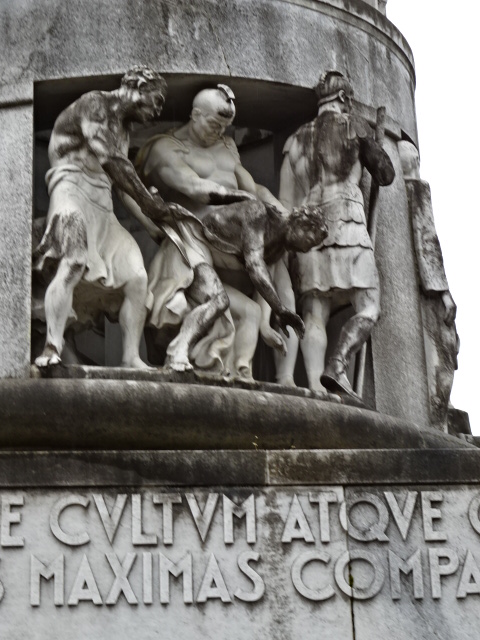
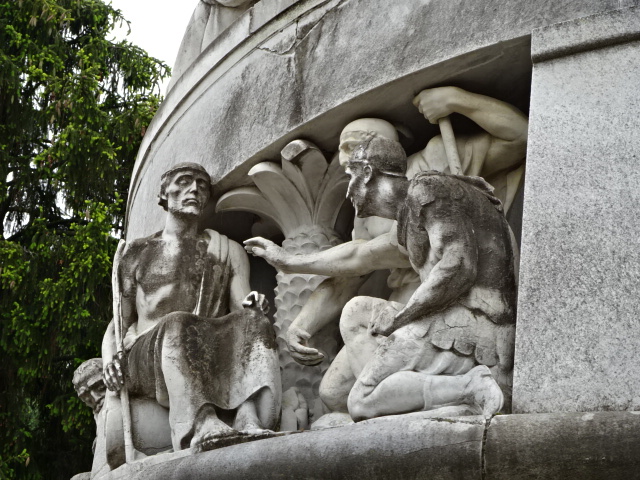
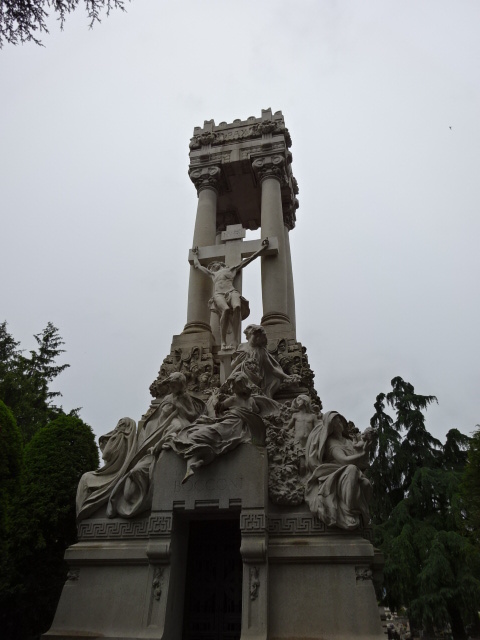
All the tombstones I viewed were outstanding works of art. I saw a tall tombstone that symbolized the Tower of Babel in the center of the cemetery. Looking like a tower with many sculpted figures on the outside, the tombstone was empty on the inside. Designed by architect Alessandro Minali and sculpture Giannino Castiglioni in 1936, it featured numerous biblical scenes. I recalled viewing Peter Bruegel’s painting called “The Tower of Babel” at an exhibition in Vienna. Though markedly different, both works contained an amazing amount of detail in the various scenes portrayed.

Another tombstone on the central path was nubbed “Work” because it extolled an allegory on that subject, played out in a scene devoted to agriculture. The female figure looking down on the scene symbolizes Mother Nature, her face so well-sculpted by Enrico Butti in 1912. The episode shows a male figure pulling his cattle with some difficulty. He is leaning in one direction due to the heavy weight of the animals. The two cattle and male figure are made of bronze while Mother Nature above is made of red-colored rock. I found this tombstone to be very compelling, especially with Mother Nature looming over the scene.

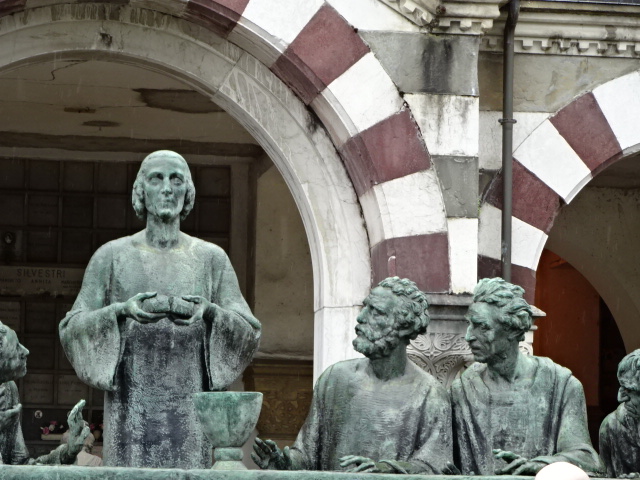
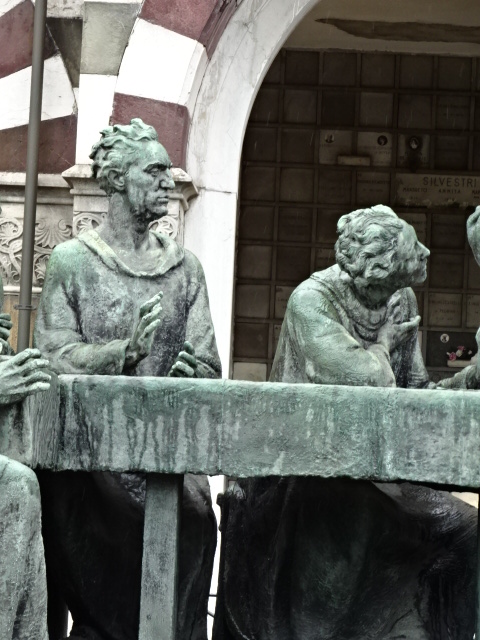
My favorite sculptural grouping represents Leonardo da Vinci’s “Last Supper.” I had viewed the painting in Milan during my previous visit and had been drawn to the details in the work, especially the facial expressions and gestures of each character that was portrayed uniquely and exquisitely in the unfolding drama. In this sculptural rendition, the bronze larger-than-life-sized figures share the same theme as the painting, though there are some differences from the masterpiece in the Church of Santa Maria delle Grazie. This tombstone overwhelmed me with its dramatic and vibrant qualities. It had been made for David Campari and the Campari family and designed by Giannino Castiglioni in 1935. Representing a painting in sculptural form was audacious and formidable. I especially noticed the detail in Judas’ bag of money.

I also saw a more modern work, dated from 1949 and created by modern Italian artist Lucio Fontana for the Chinelli family. The large sculpture of a headless blue angel was made in paper mâché, hovering over the earth. I took notice of the vibrant color.

After an hour and a half, I had to leave the cemetery because it was just too depressing looking at graves, even though they were masterfully made. Every one told a unique story. I was glad I had finally made it to the cemetery and certainly was not disappointed.

Tracy A. Burns is a writer, proofreader and editor in Prague.

Museum of the Risorgimento in Milan Diary

Museum of the Risorgimento in Milan Diary 

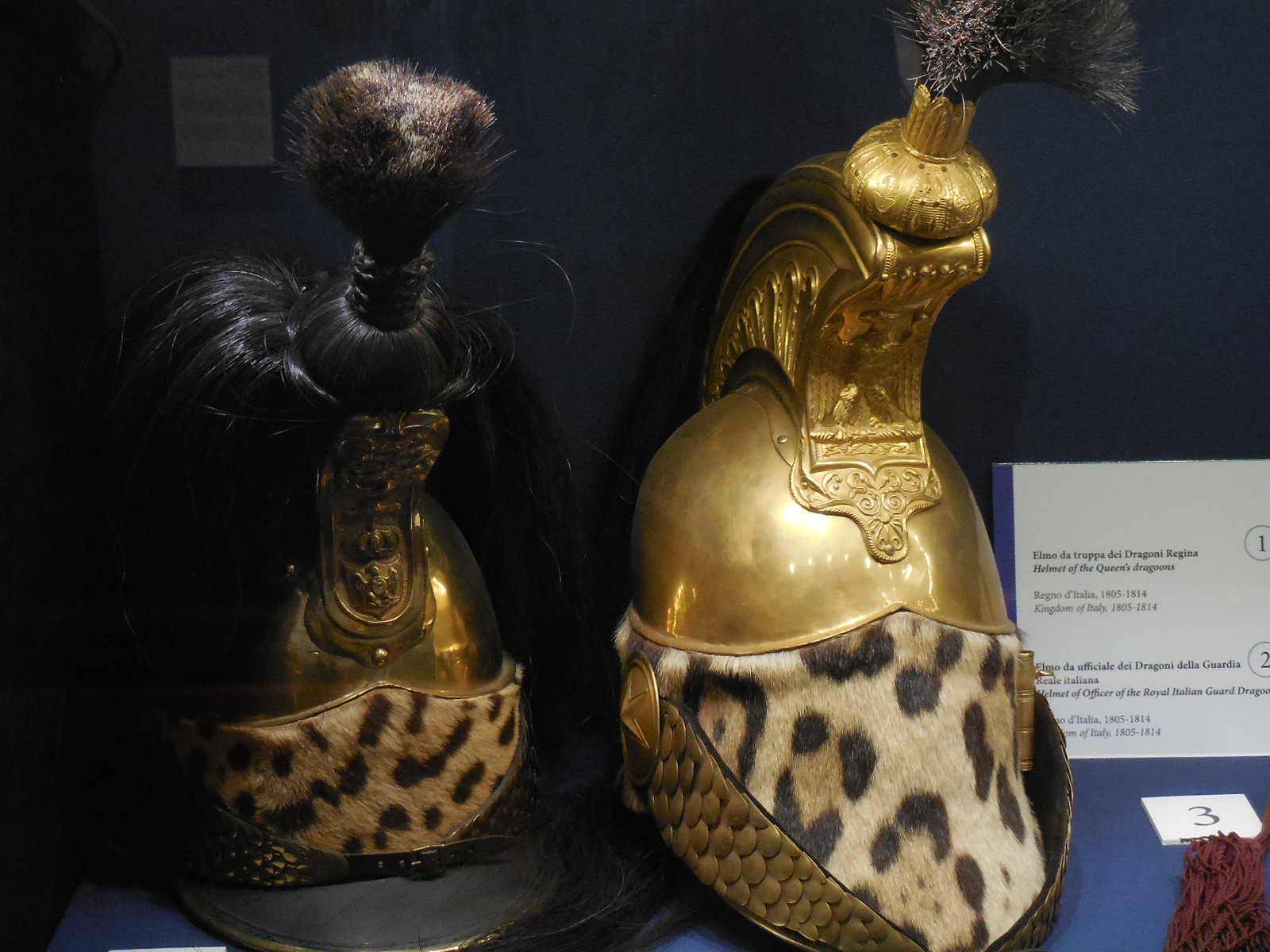
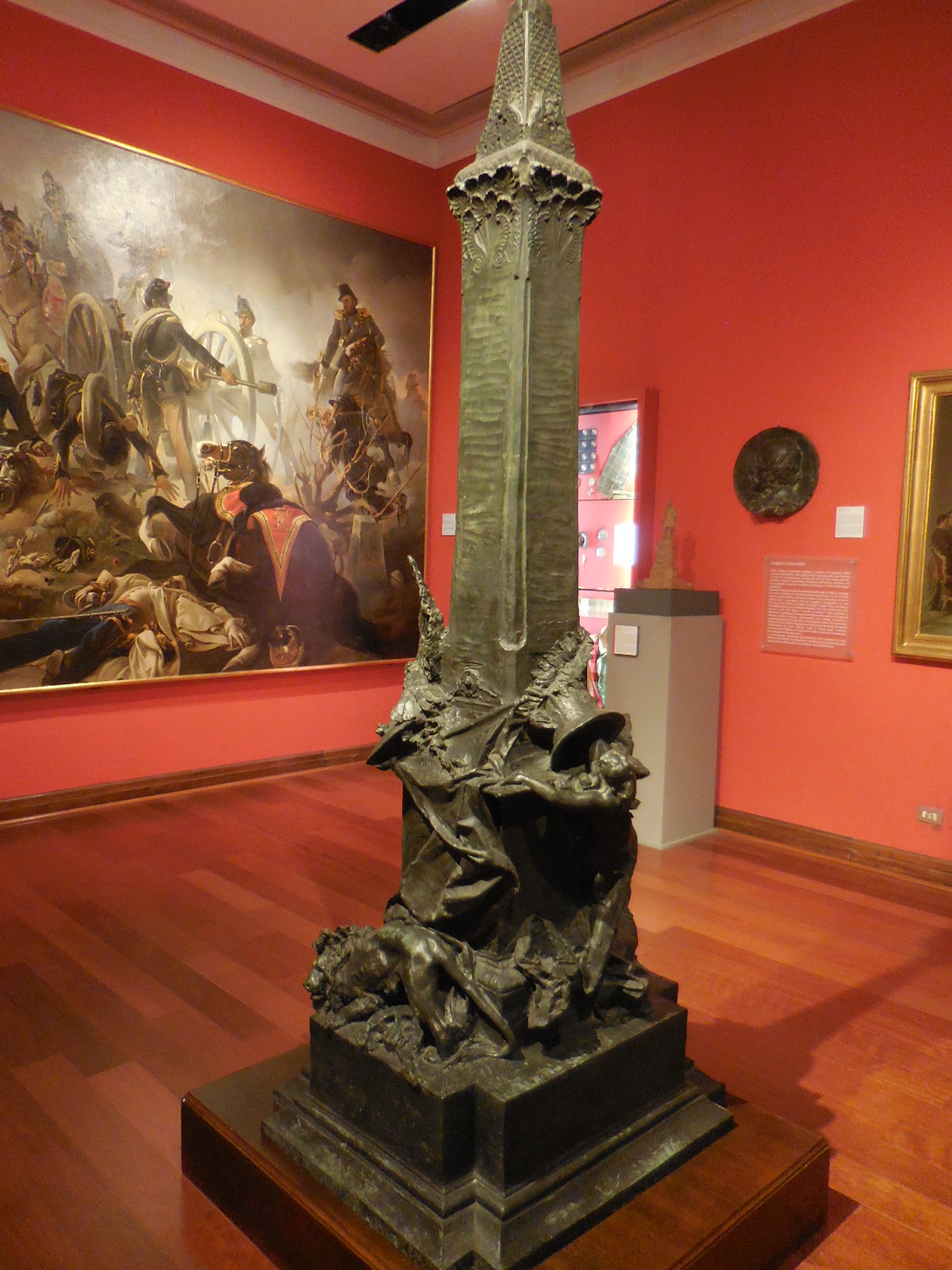
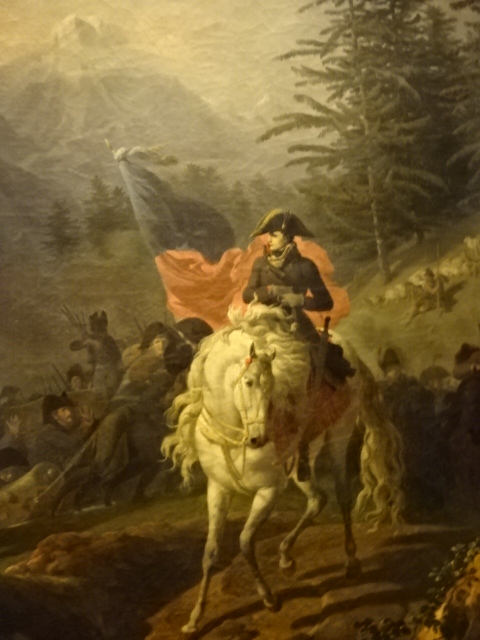
After visiting the Brera Art Gallery in Milan, I walked to the nearby Museo del Risorgimento, which featured 14 rooms of paintings, prints, sculptures and artifacts depicting Italian historical events from 1796 to 1870 as well as arms. It traces the periods from the call for Italian independence to Italian unification. I learned about Napoleon’s reign in Italy as well as the Austrian monarchy’s control. I noticed how prominent Milan’s role had been during the Five Days of Milan, the nickname of the 1848 uprising against the Austrians.

I saw paintings depicting Italian King Victor Emmanuel II, who took the throne in 1861 and reigned until his death in 1878. Two of the paintings were created by Gerolamo Induno. Nicknamed the Father of the Fatherland, Victor Emmanuel II had the distinction of being the first king of a unified Italy since the sixth century. He was born the eldest son of Habsburg Empress Maria Theresa of Austria and made a name for himself in the First Italian War of Independence during 1848-49 before being crowned king.

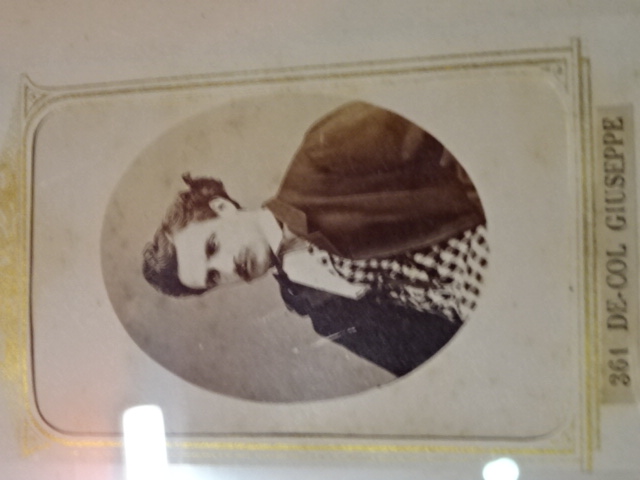
I spent a lot of time staring at the photos of soldiers in the Album of the Thousands, the volunteers in the Expedition of the Thousand, a campaign that took place in 1860. The group of volunteers armed only with out-of-date muskets defeated the more powerful navy of the Kingdom of the Two Sicilies. Portraits of the 1,089 soldiers in business card format made up this album. I saw the volunteers as individuals rather than as a group of soldiers who conquered Bourbon rule in south Italy. Looking at their portraits, I felt as if I could see the personalities of the men.

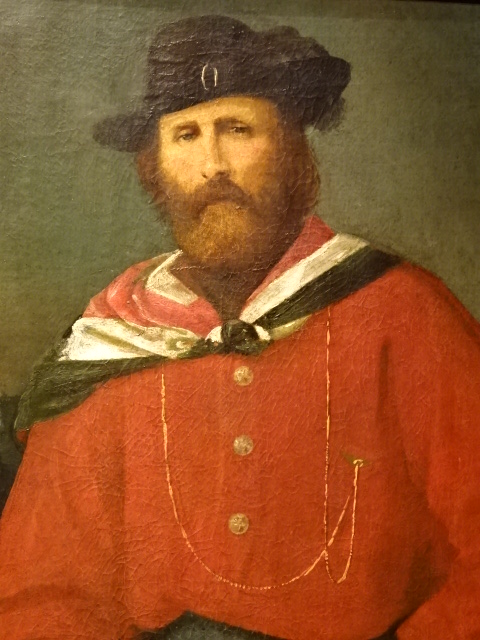
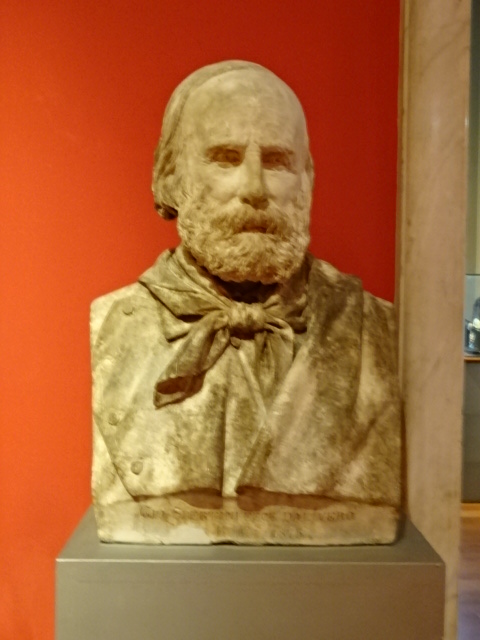
Giuseppe Garibaldi, one of the most prominent generals in modern history, guided the volunteers in the Expedition of the Thousand. Their uniforms were made up of red shirts and grey pants. In the exposition I saw the actual poncho and red shirt donned by Garibaldi, who also had military successes in South Africa and elsewhere in Europe.

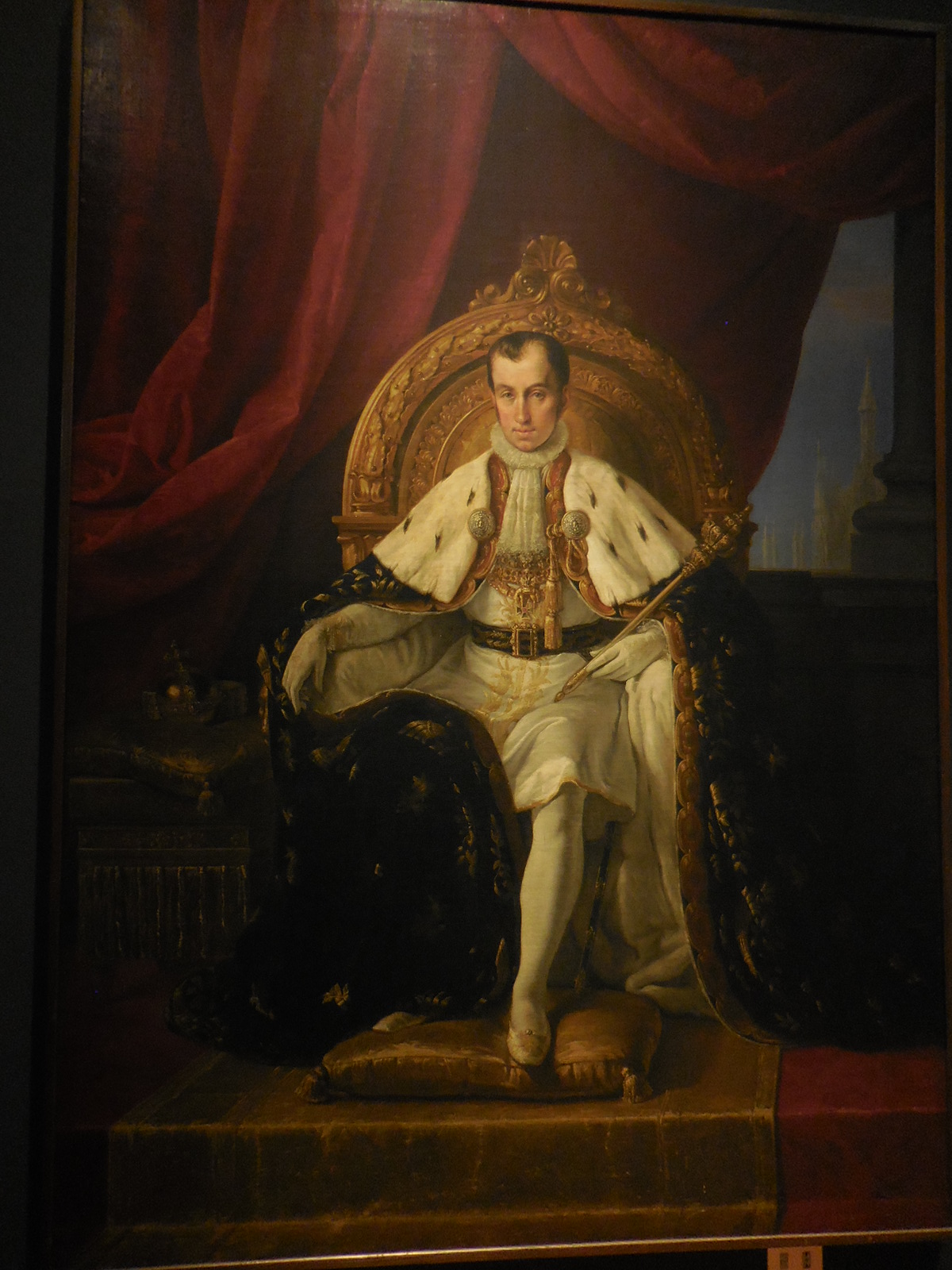
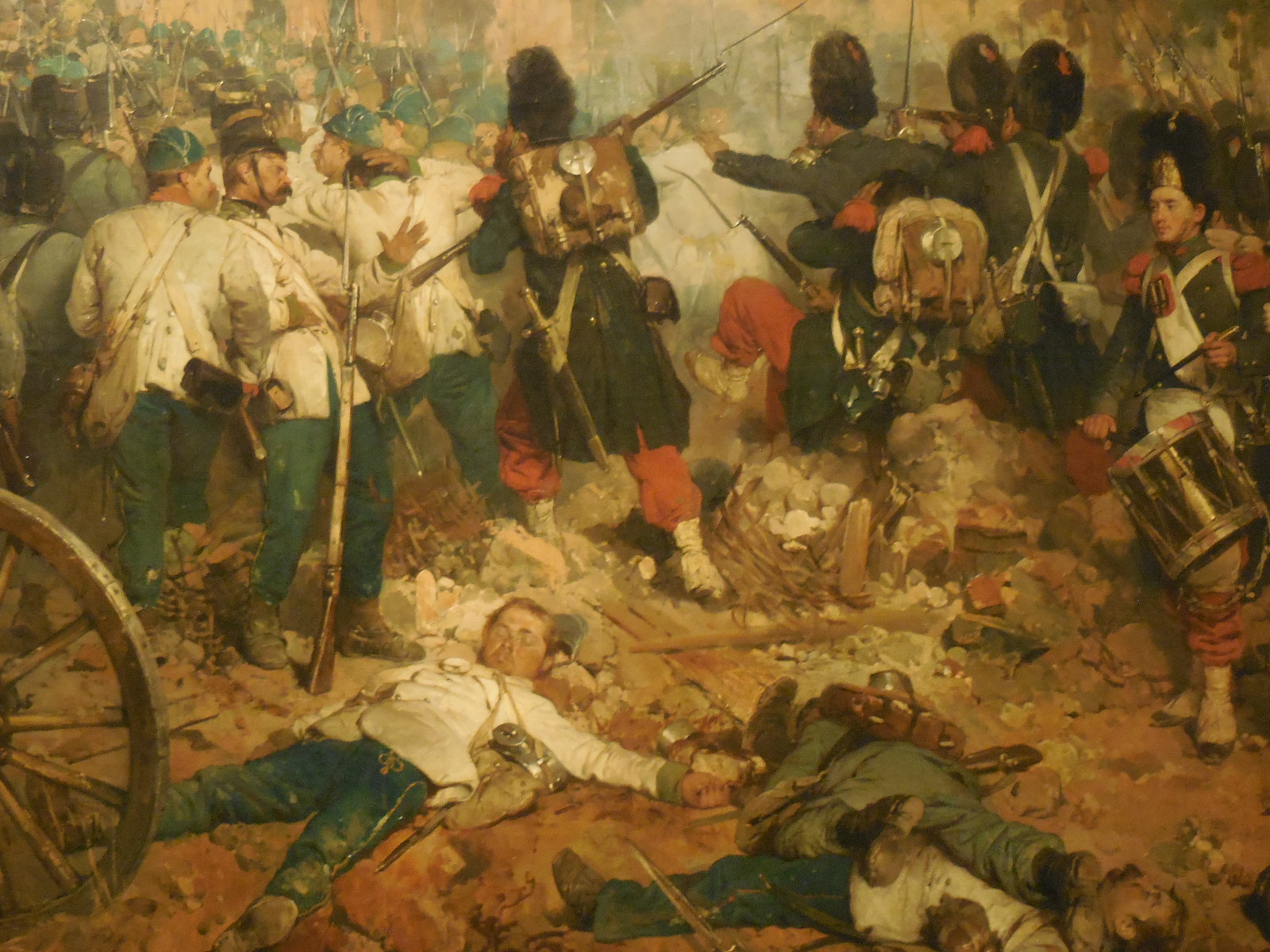
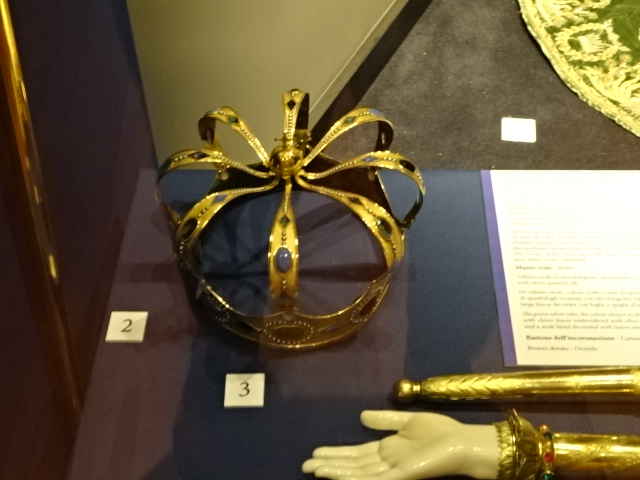
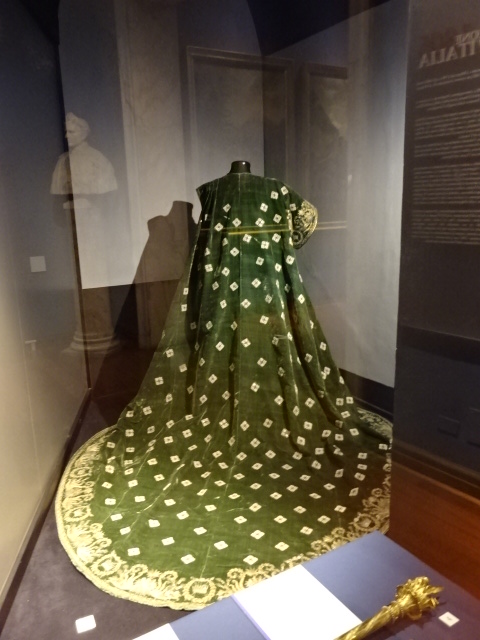
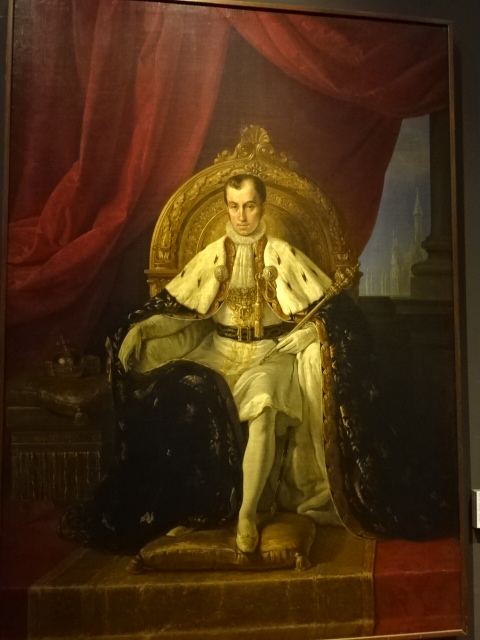
I loved the paintings and sculptures most of all. These collections were especially noteworthy. The collection of paintings depicting the Imperial period from 1804 to 1814 was perhaps the most poignant of all eras represented by this genre. Francesco Hayez, whose works I had seen in the Brera, had depicted Emperor Ferdinand I of Austria in a moving portrait. Also, powerful canvases of the Five Days of Milan had been rendered by Carlo Canelli, Carlo Bossoli and Pietro Bouvier, for example. Gerolamo Induno and Domenico Induno contributed to the paintings depicting the Second War of Independence. The original Italian flag that flew over the Duomo in Milan on March 20, 1848 was another highlight. The cloak and regal insignia from Napoleon’s coronation as King of Italy were also enthralling.

The 18th century Palazzo Moriggio that houses the museum had an intriguing history as well. The museum had been situated there since 1951. Under Napoleon’s reign the Ministry of Foreign Affairs and then the Ministry of Defense had been located in the palace.

This museum really opened my eyes to many events in Italian history. I had known only very basic information about this museum before my visit. It wasn’t on my list of most important places to see. I learned so much about the time periods in which the Risorgimento took place. I had never been a big fan of battle scenes, but I was struck by the details and by the historical significance of these paintings. While the museum is relatively small, it allows visitors to develop much knowledge about poignant eras in Italian history. In this museum I could actually feel the history come to life. Each artifact tells a story.

Tracy Burns is a writer, proofreader and editor in Prague. 

Gallerie d’Italia of Milan Diary

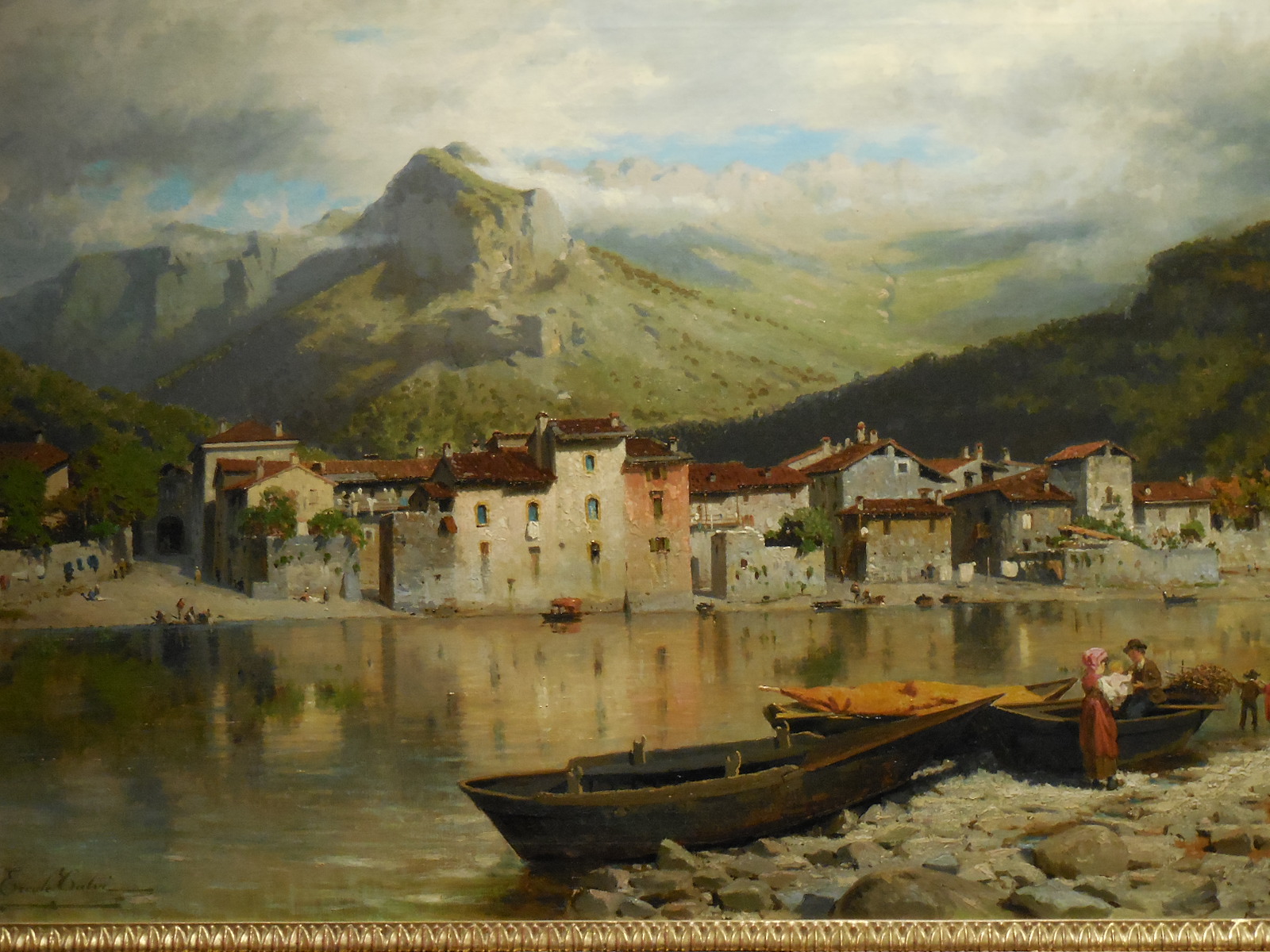
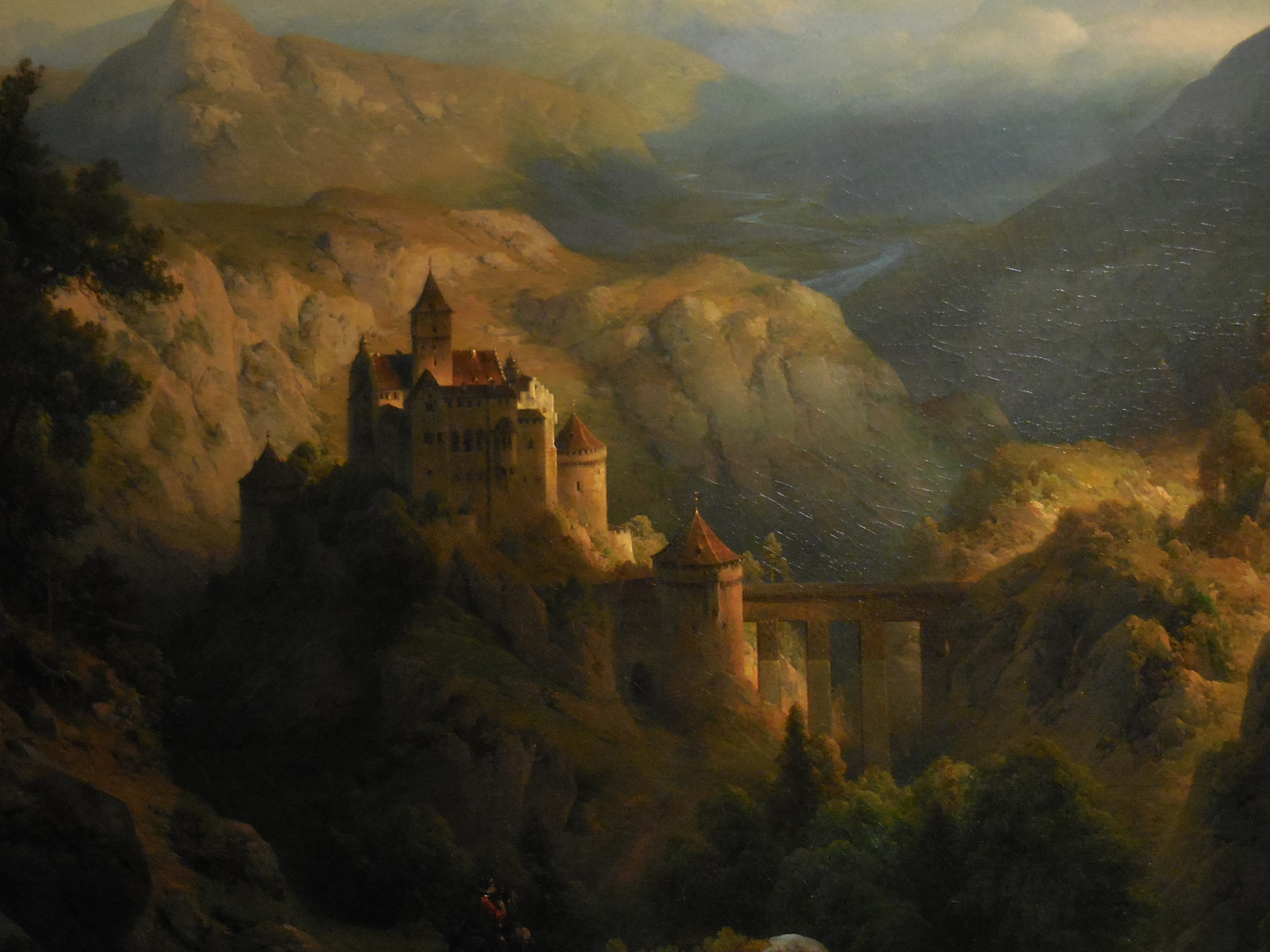
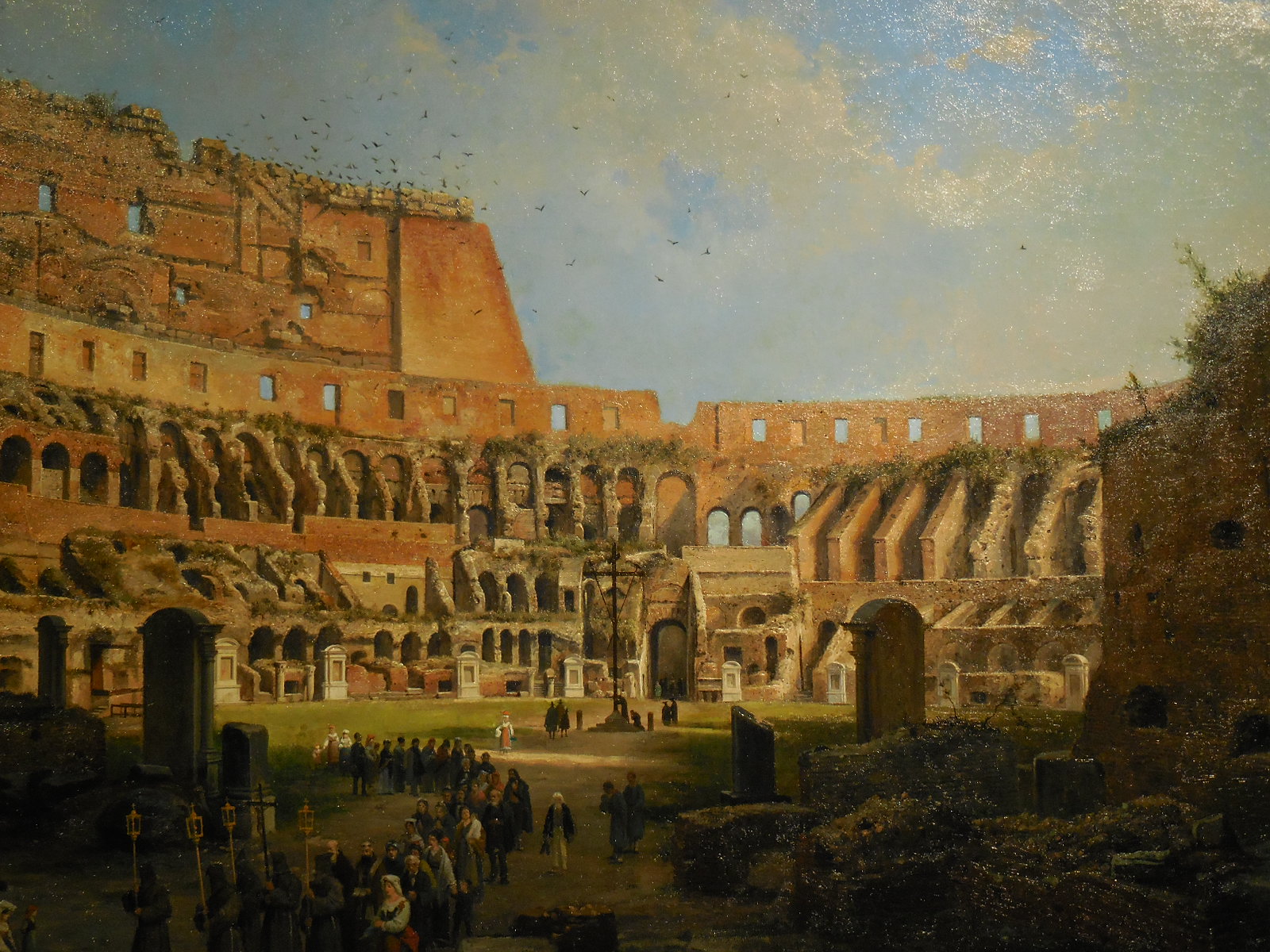
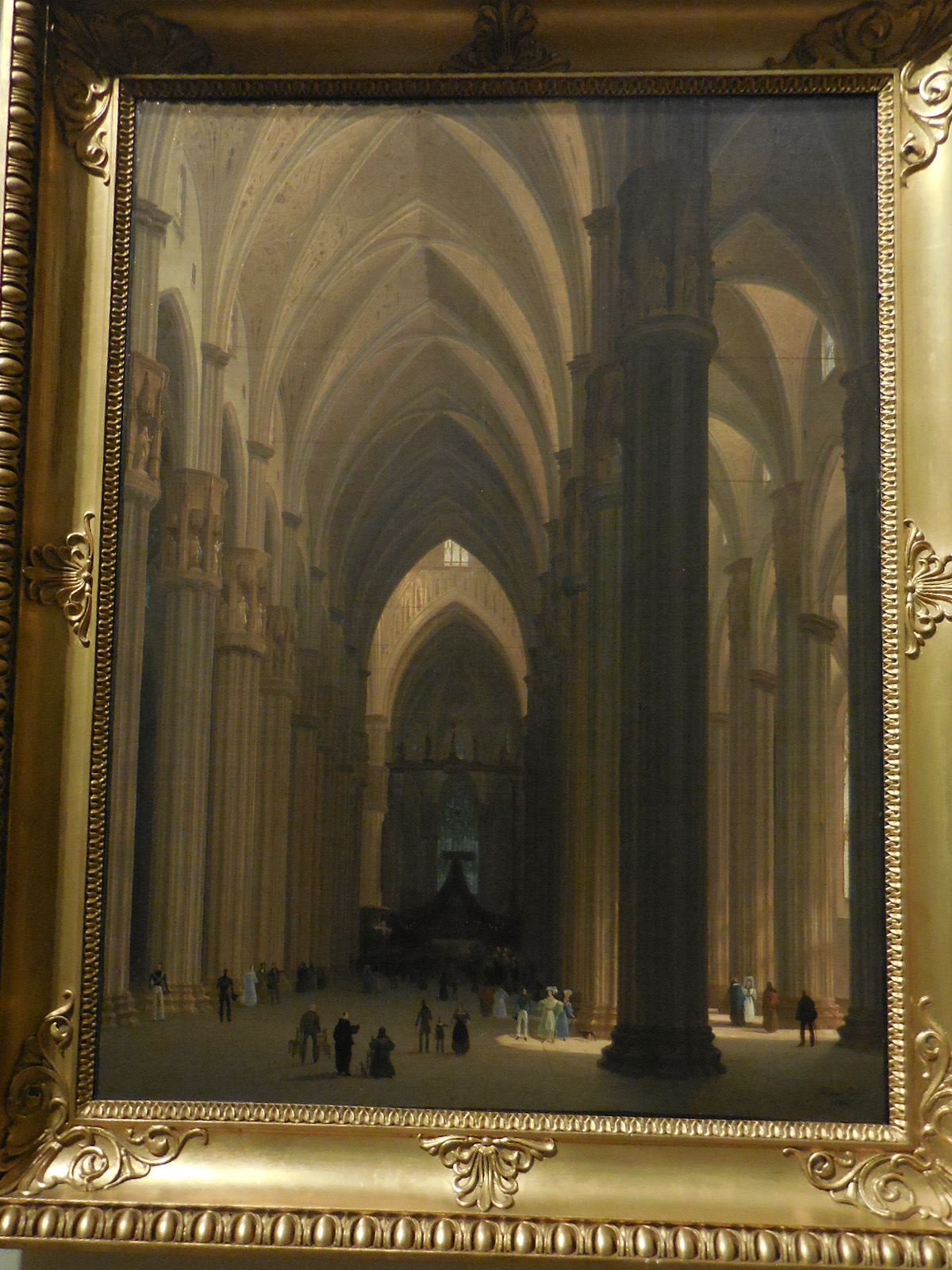
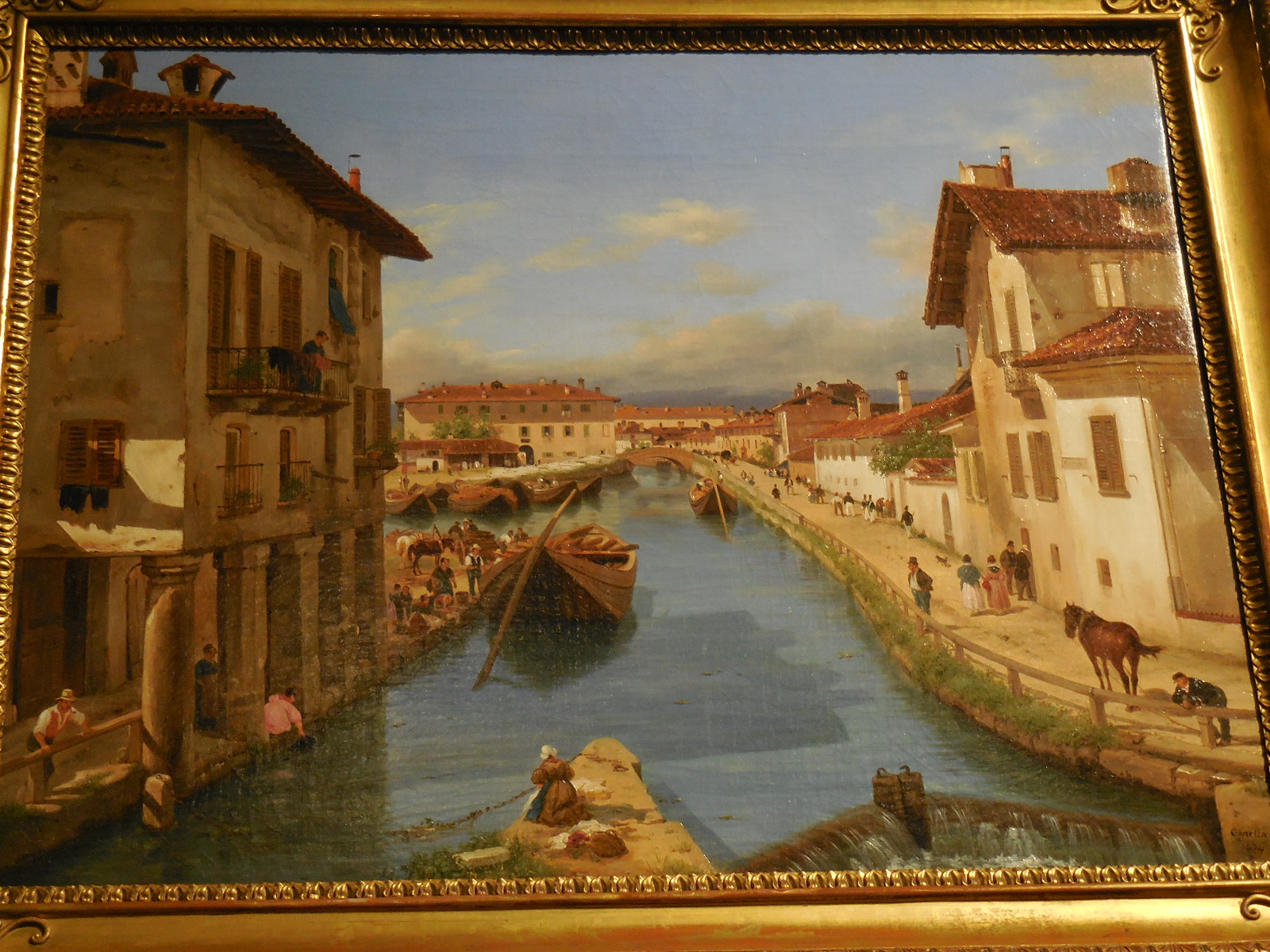
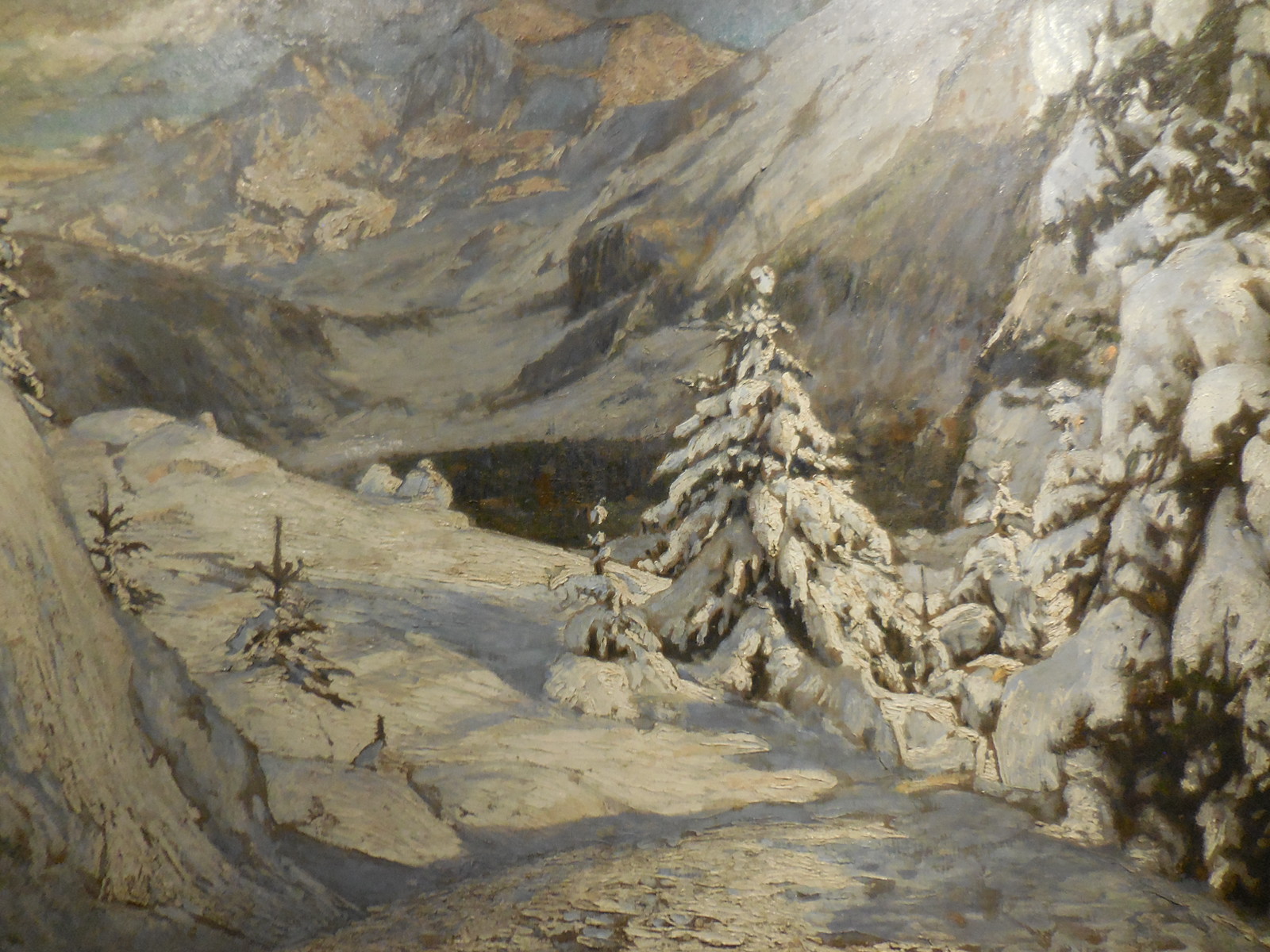
These three palaces, located on the Piazza della Scala near the Scala Theatre, displayed extraordinary artworks of the 19th and 20th century. In the 19th century sections, I was amazed at the vedutas of Milan Cathedral, the system of canals in Milan called Navigli and the Alpine scenes. I found myself thinking of vedutas I had seen in the Czech Republic, such as the masterful ones at Mělník Chateau near Prague.  

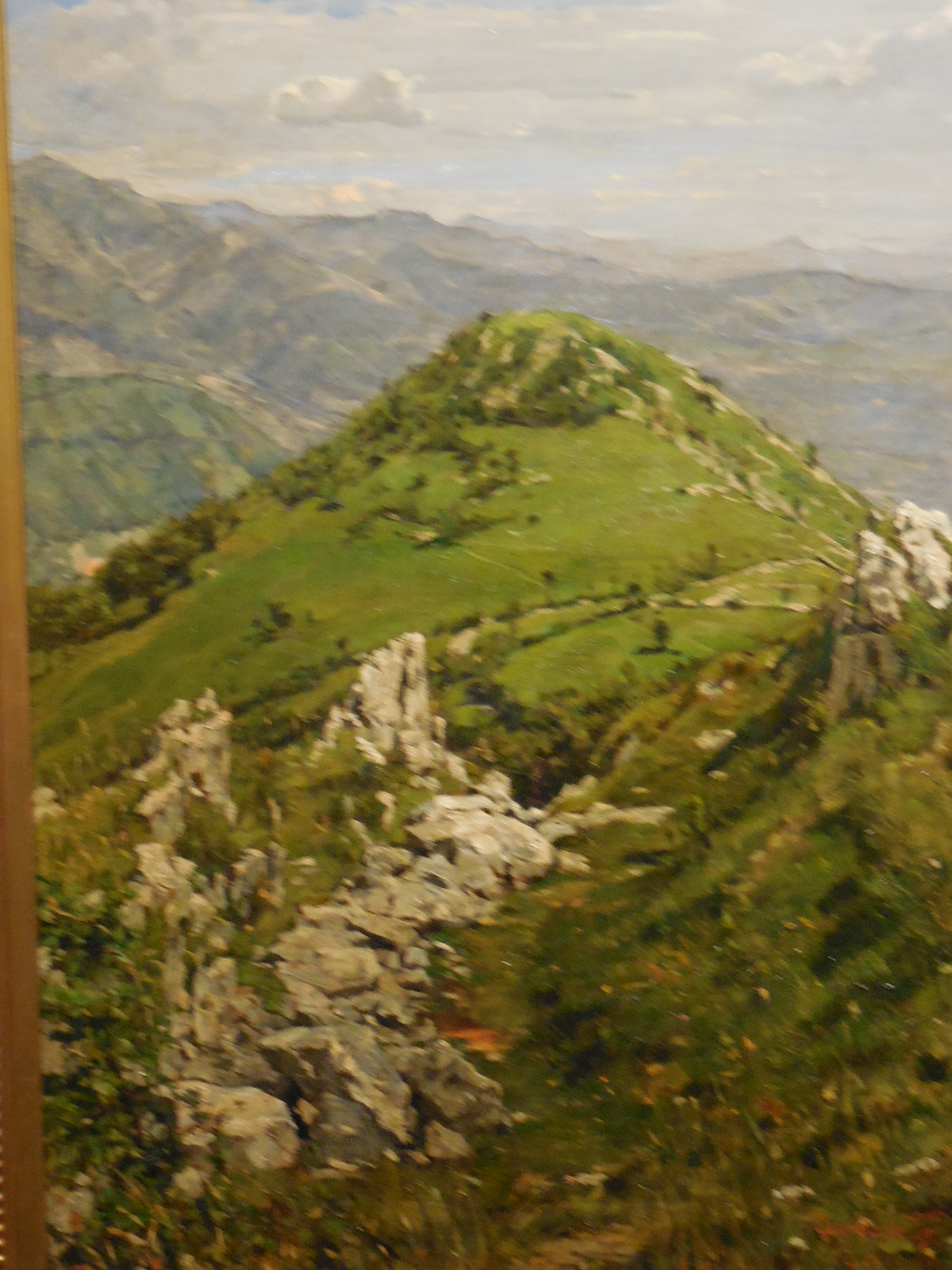
The landscapes from the second half of the 19th century gave me a tranquil feeling. I especially liked the landscape with a magnificent yet mysterious castle perched in the mountains. The painting of the Colosseum reminded me of showing that sight to my parents some years ago, watching them gaze with awe and amazement at the historic monument. That was one of the happiest moments of my life.

The paintings of Milan’s Duomo allowed me to appreciate the exterior and interior of that sight to an even greater extent. I recalled walking down from the roof to the ground floor of the cathedral. I had been worried I would fall because I had nursed a bad leg for nine months not long before my trip.

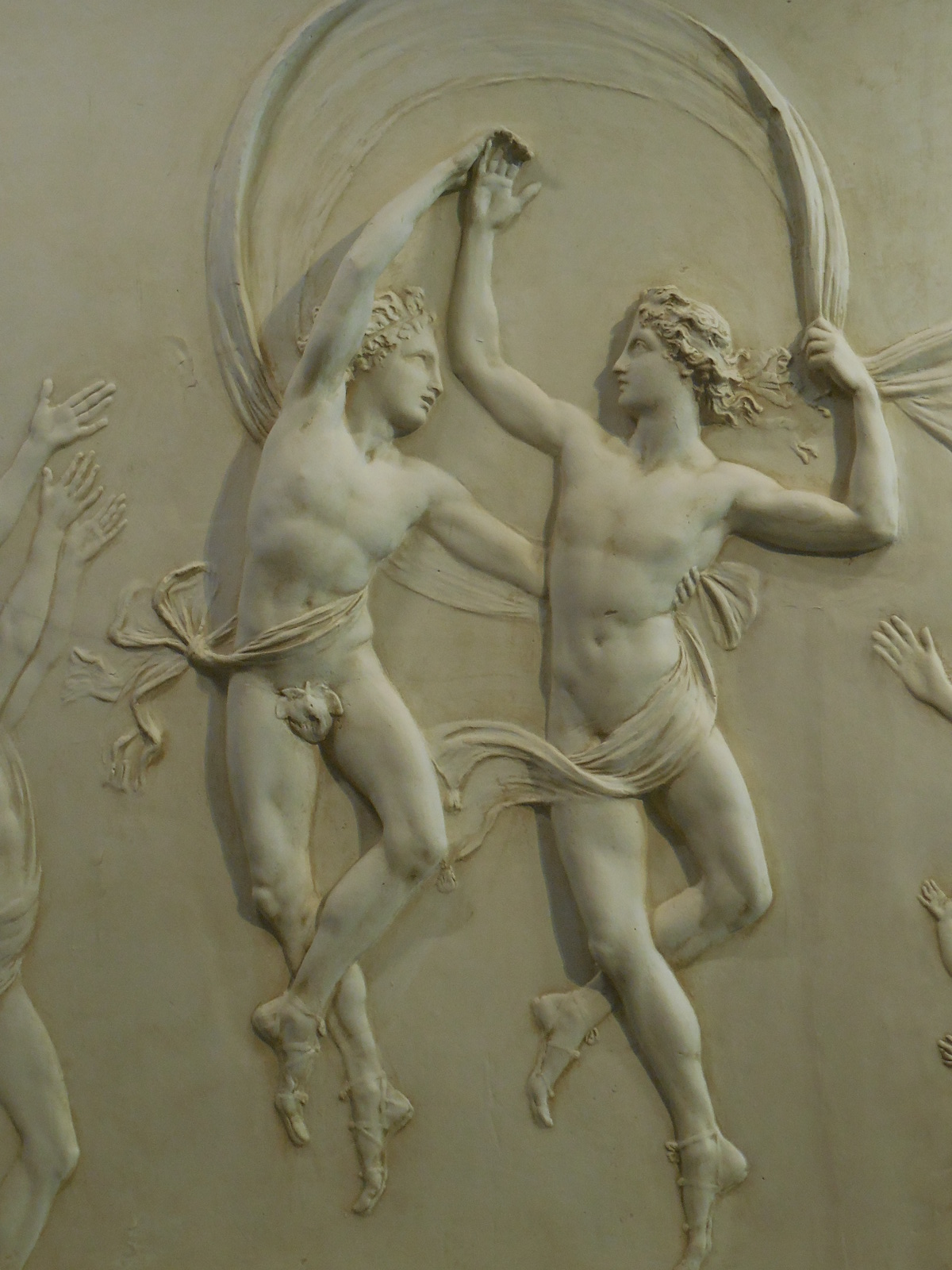
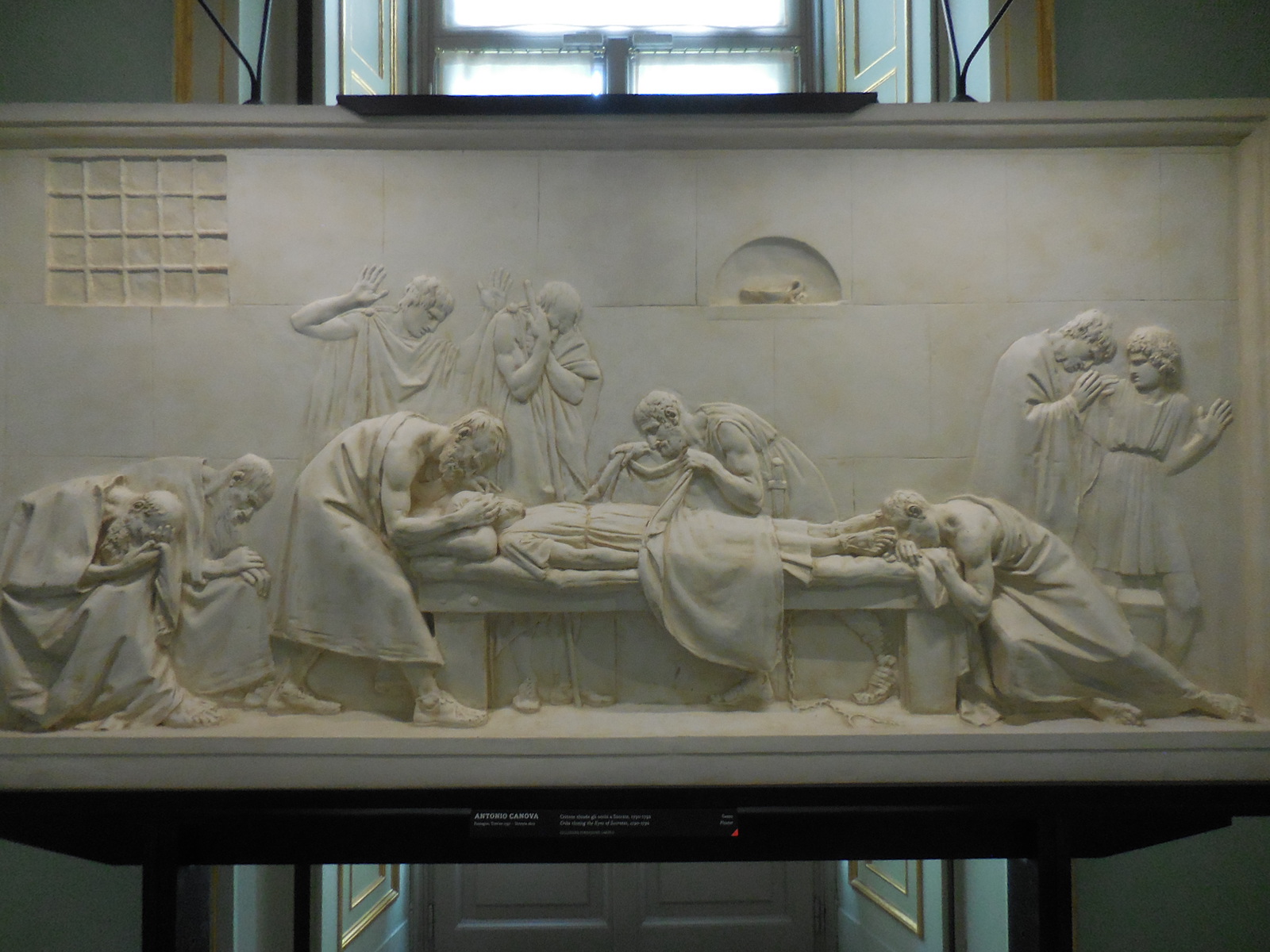
The bas reliefs of Antonio Canova were delights as well. They were inspired by the works of Homer, Virgil and Plato. I remembered seeing Canova’s works at the Borghese Gallery in Rome.
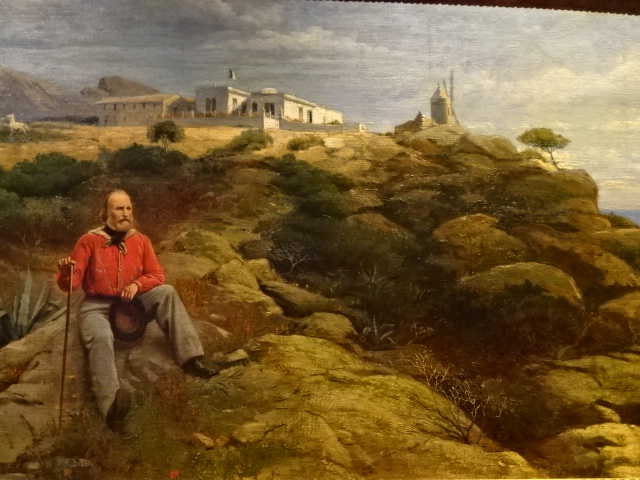
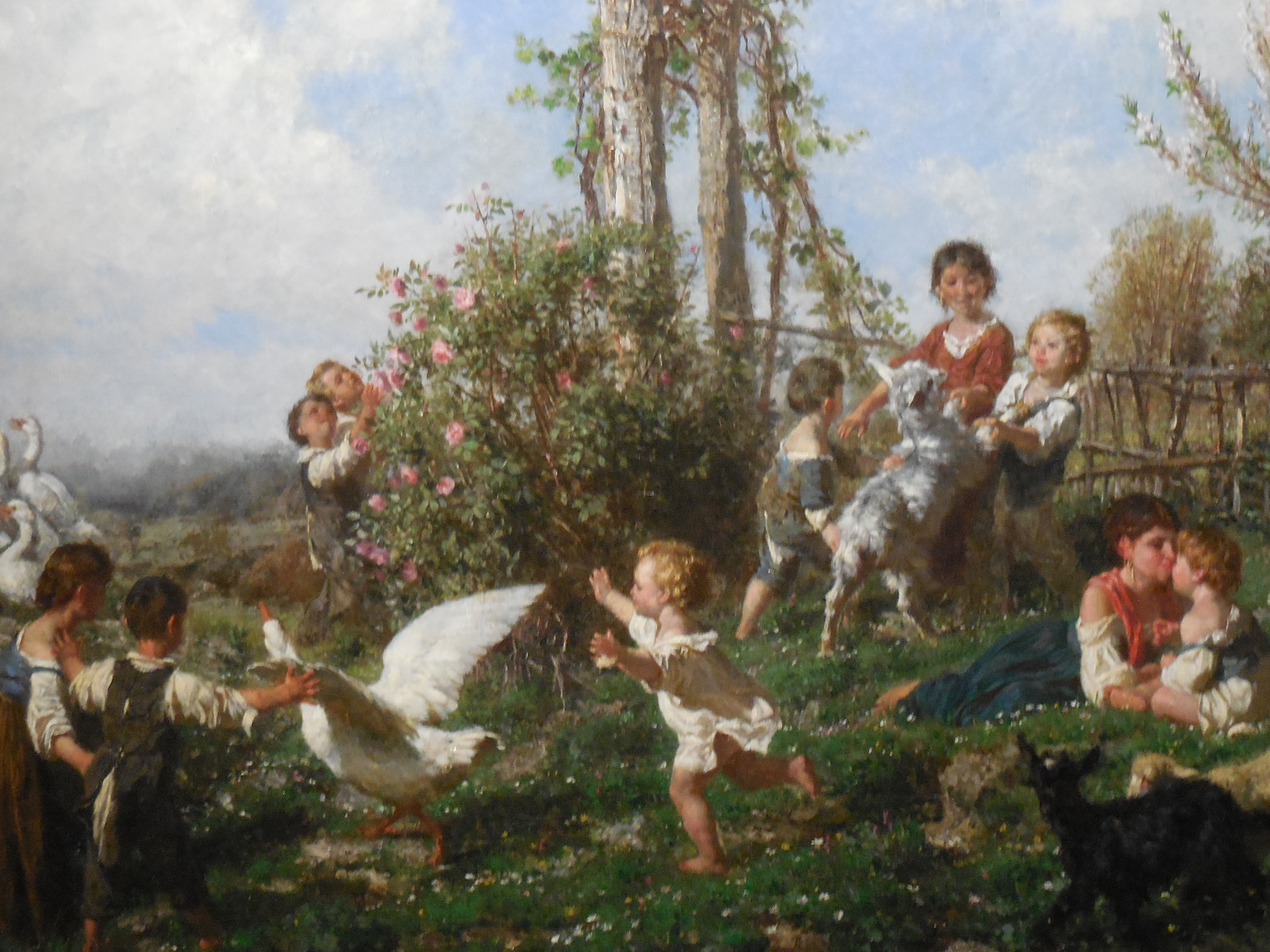
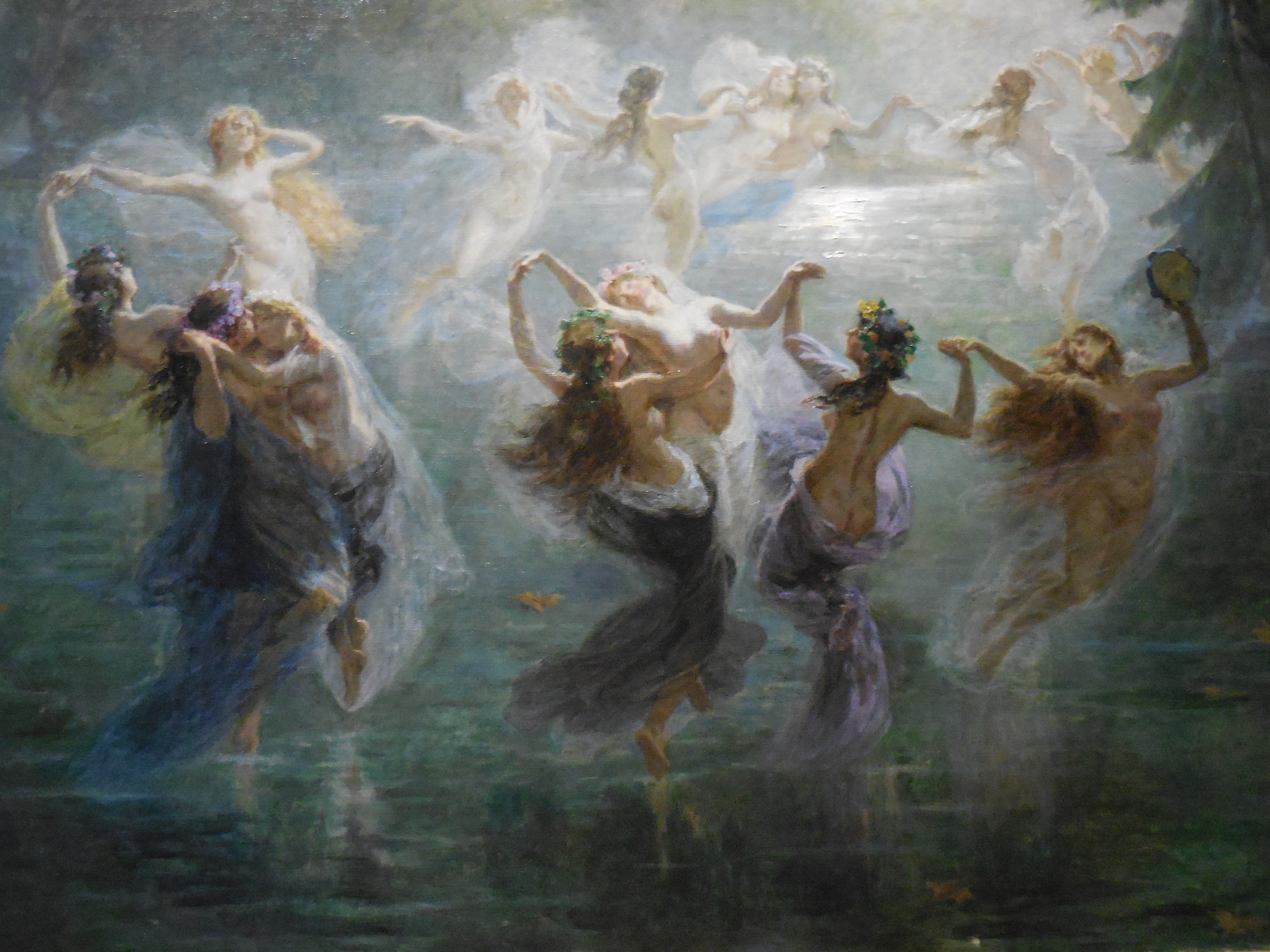
The Lombard painting of the 19th century showed Milan as a vibrant artistic hub and often told pictorial tales of a rapidly changing society. I saw works by Francesco Hayez and other Romanticist artists. Giovanni Migliara focused on ancient monuments.
Works representing Symbolism, Pointillism and Futurism also made up highlights of this museum’s collections. The historical paintings of fight for the unification of Italy profoundly expressed this political and social movement called the Risorgimento, which led to the formation of the Kingdom of Italy. Genre painting showcased people’s daily lives.

The Divisionism of Neo-Impressionist painting that separates colors into dots played a large role, too. The works falling into the Futurism category centered on technology and modernity, for instance. Often cars, airplanes and the industrial city figured in works of this nature.

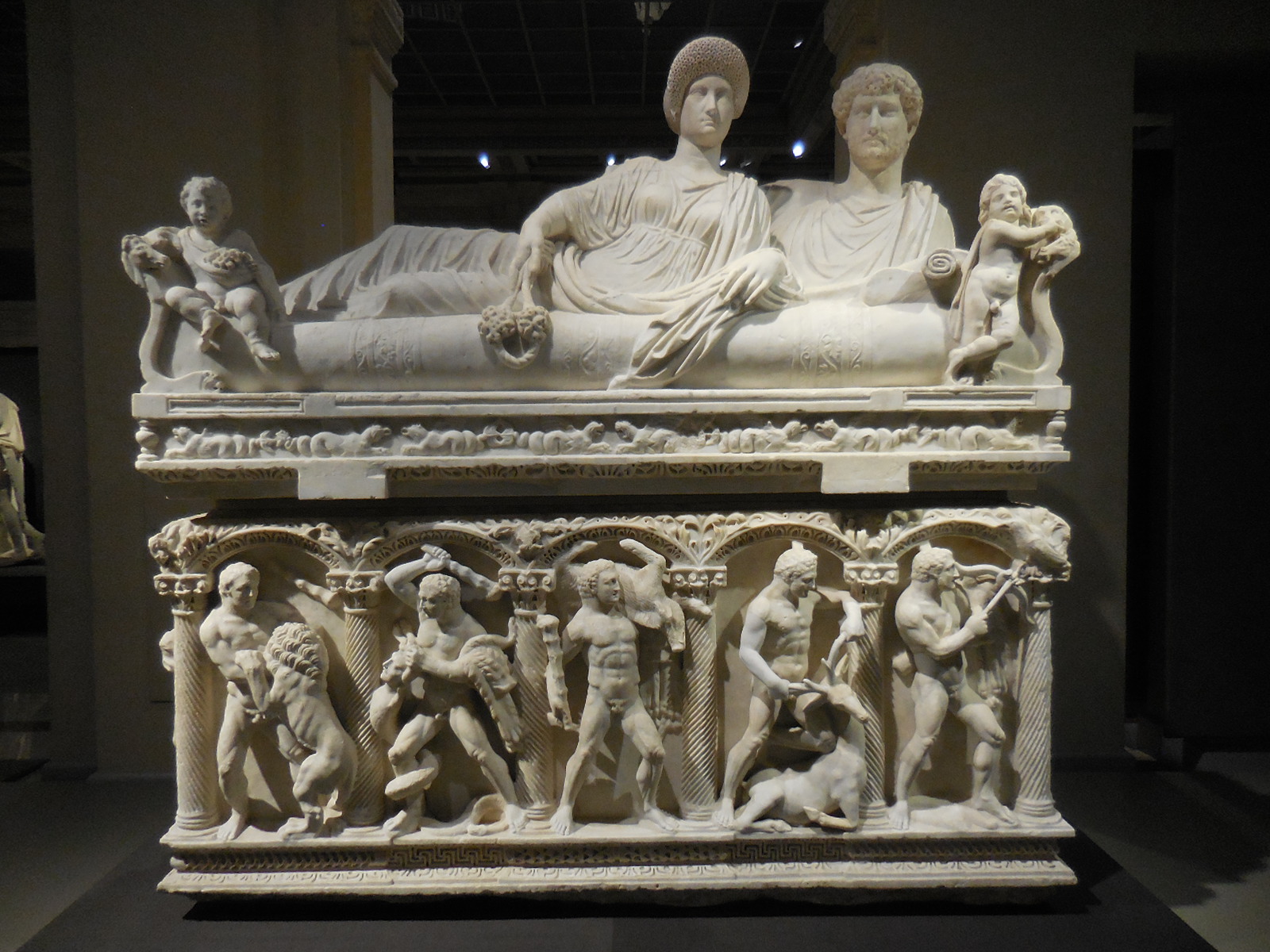
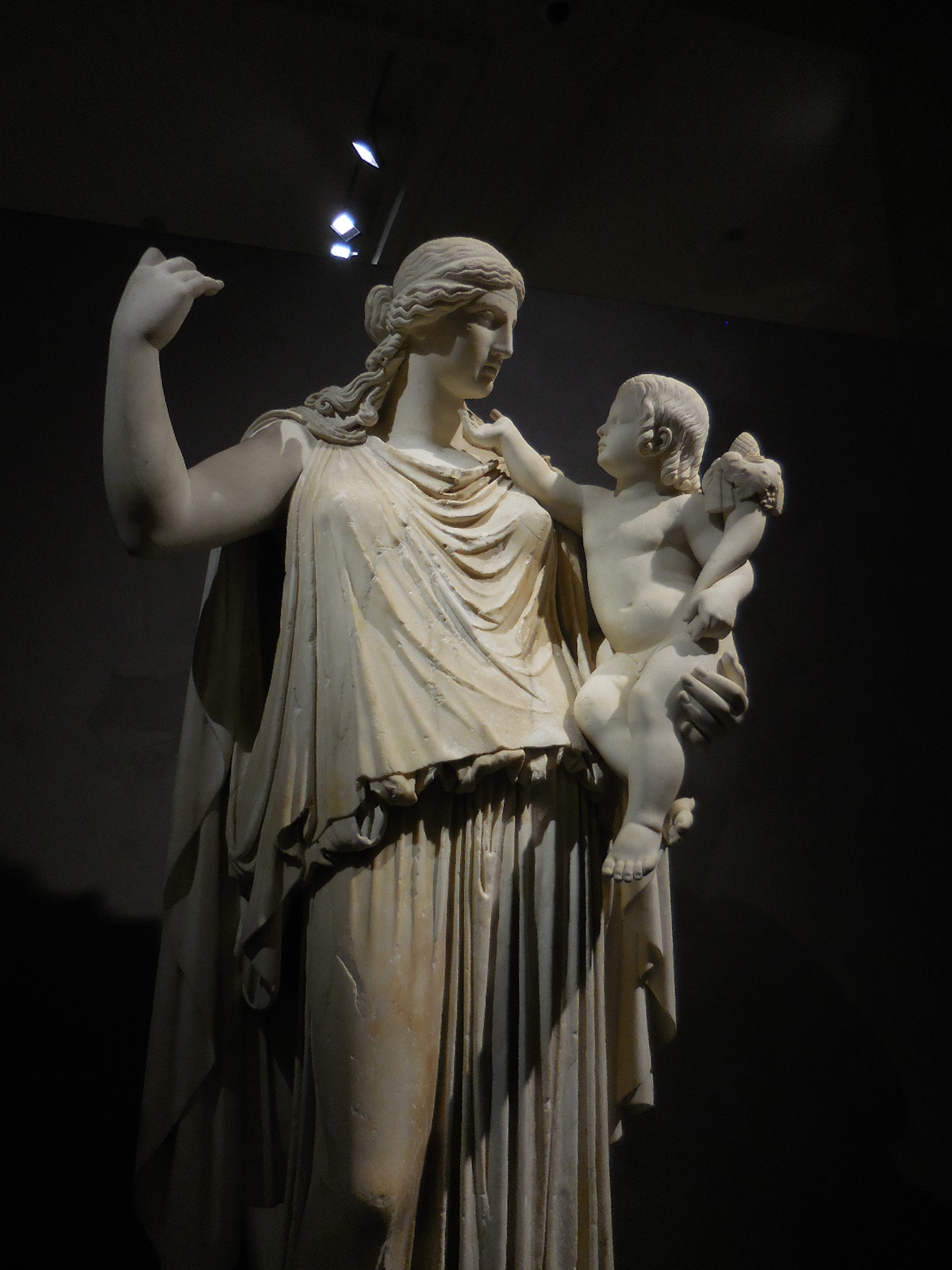
A special exhibition displayed the Torlonia Marbles, a very significant private collection of Roman statuary with many busts. I loved how the busts, though dating back many centuries, brought out the character of the person sculpted.

The 20th century was highlighted as well. Five halls housed artwork from the 1950s to 1980s. Abstract art between the 1940s and 1950s stood out, too. The Sixties were emphasized with a focus on signs, words and images. Kinetic art also was displayed.

While I was most impressed by the landscapes and pictures of Milan’s cathedral, I gazed at each and every piece of art with awe and wonderment. This was truly a great museum.

Tracy A. Burns is a writer, editor and proofreader in Prague.